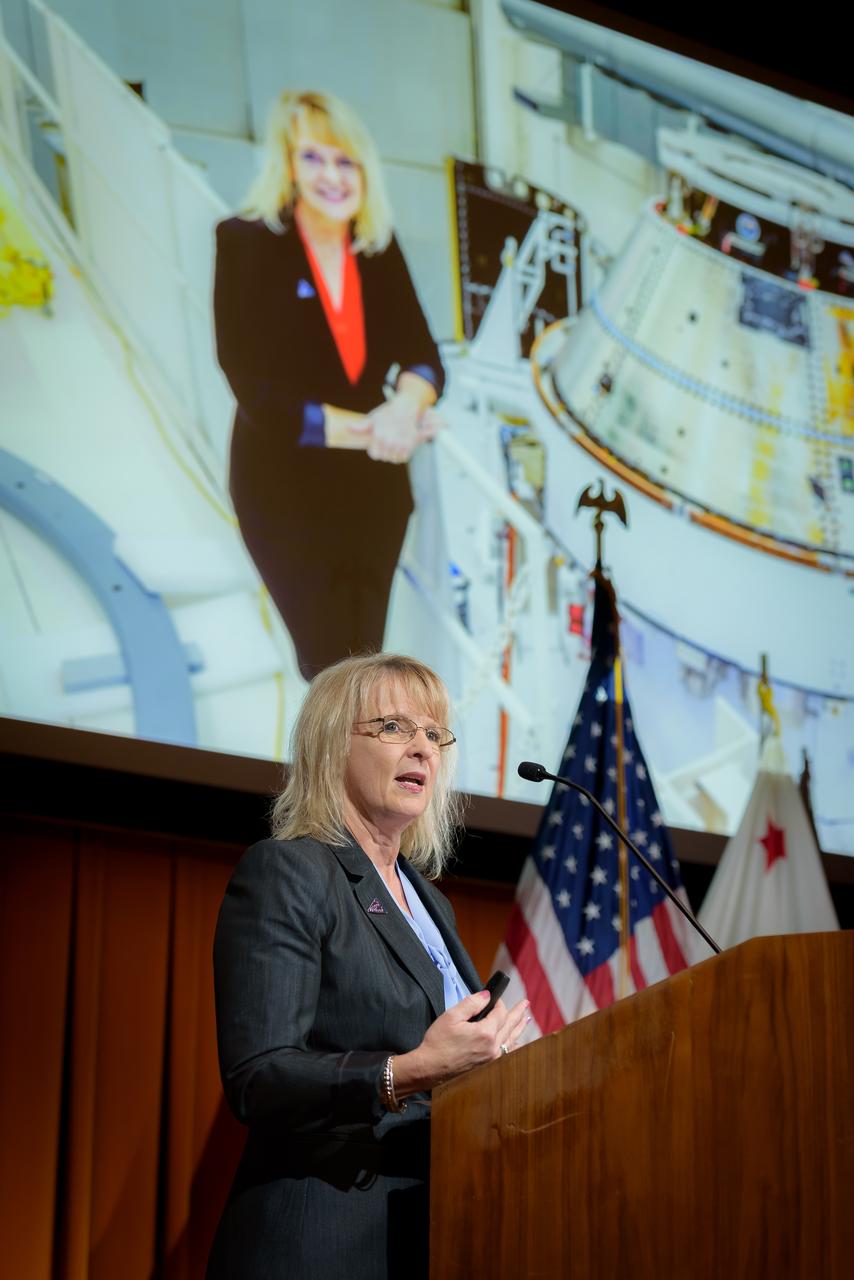
Rosie Rios, the 43rd Treasurer of the United States explores how understanding our history will provide a clearer roadmap for understanding where the country's future is heading.  Presented by the Ames Women's Influence Network (WIN) and the Hispanic Advisory Committee for Employees (HACE) in the Syvertson Auditorium (N-201) at Ames Research Center.
Rosie Rios, Presented by NASA WIN and HACE Advisory Groups.
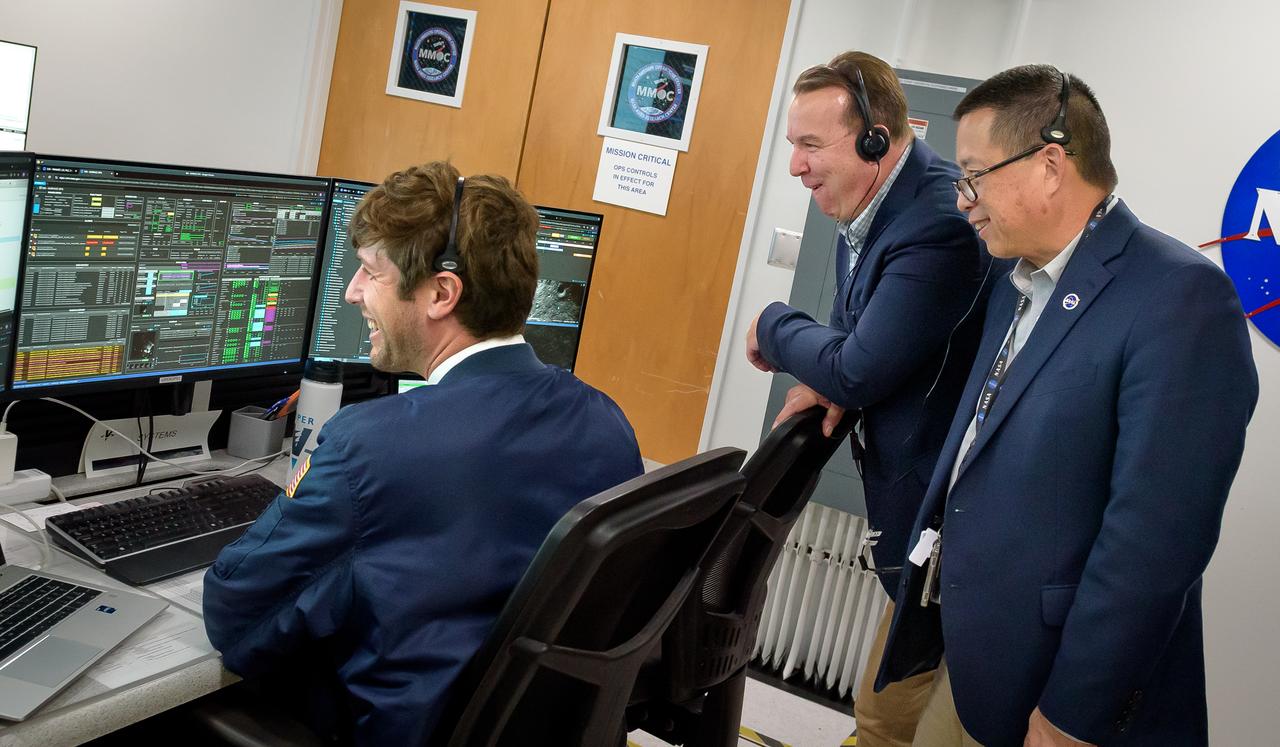
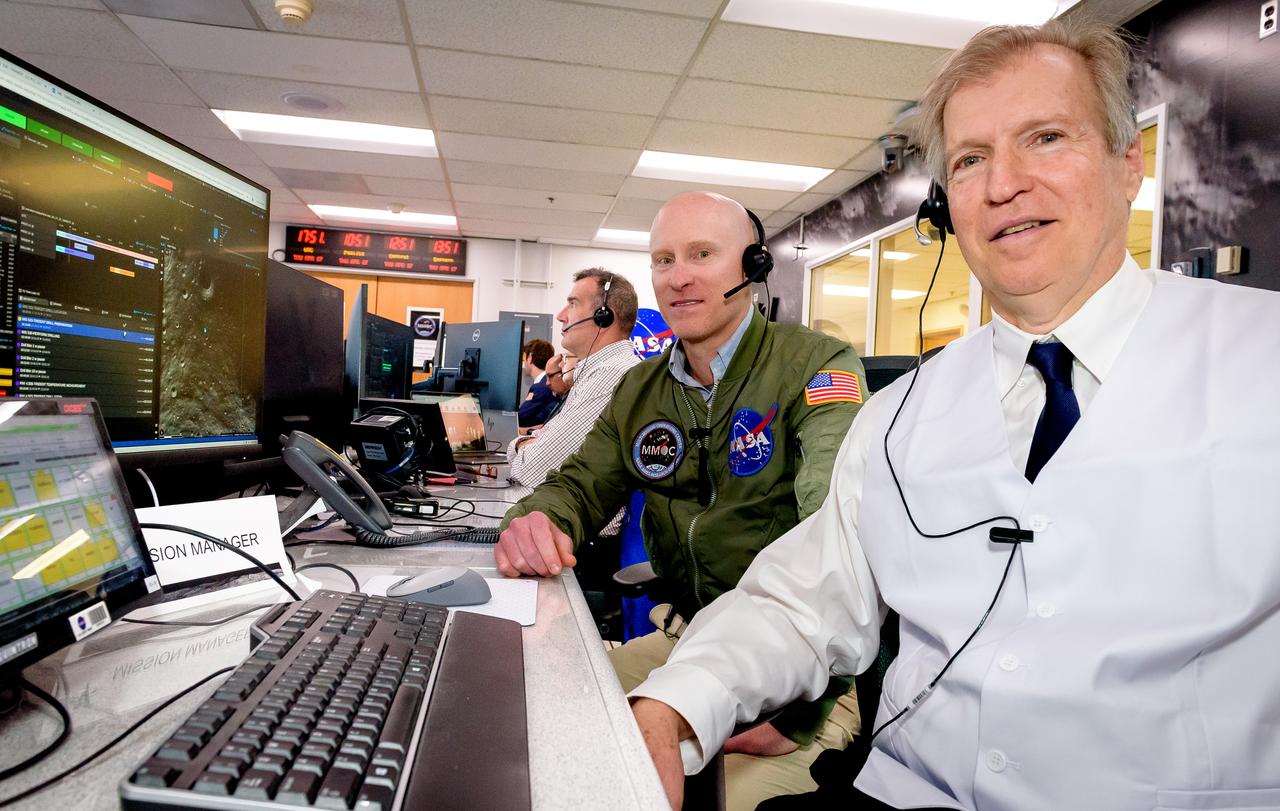
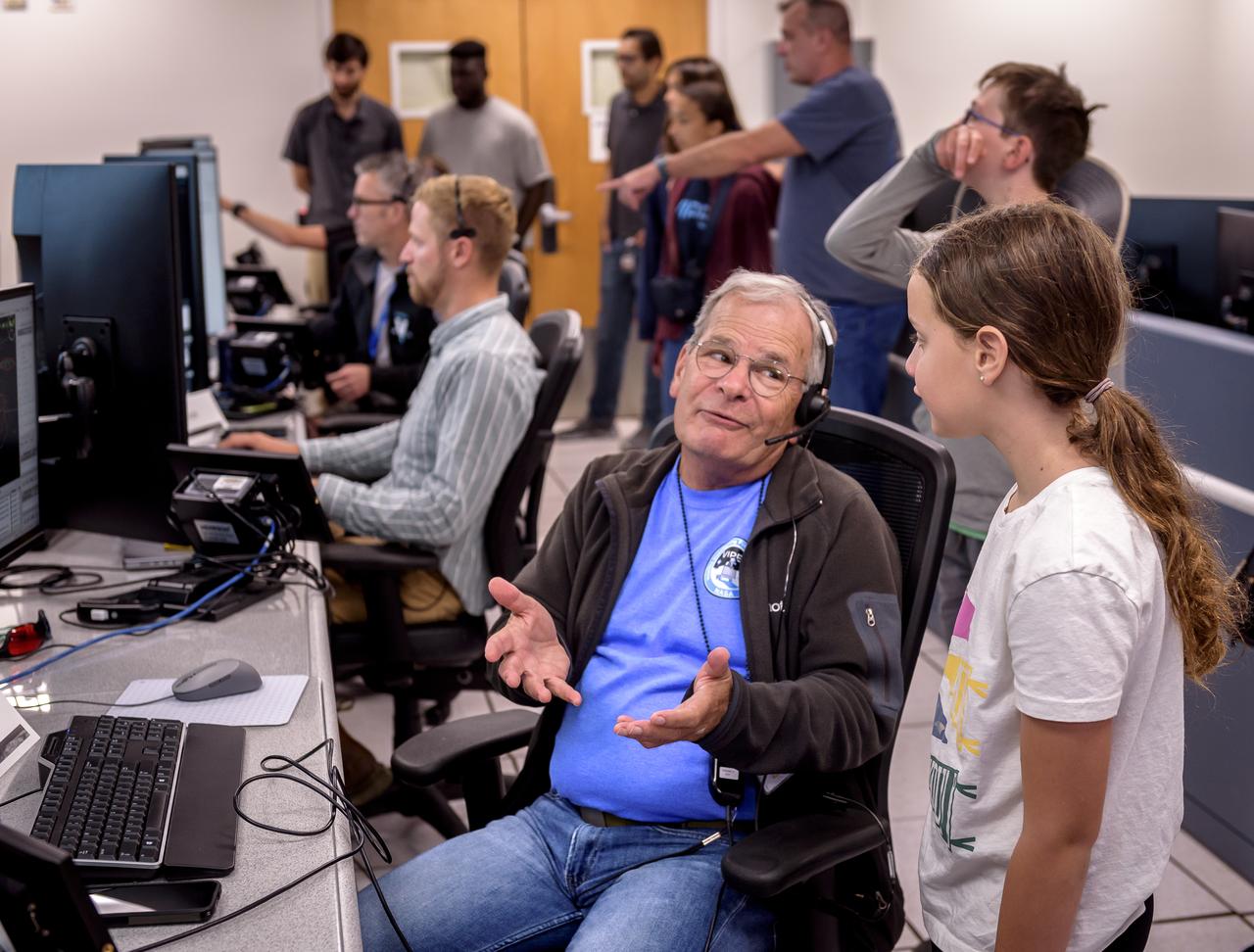
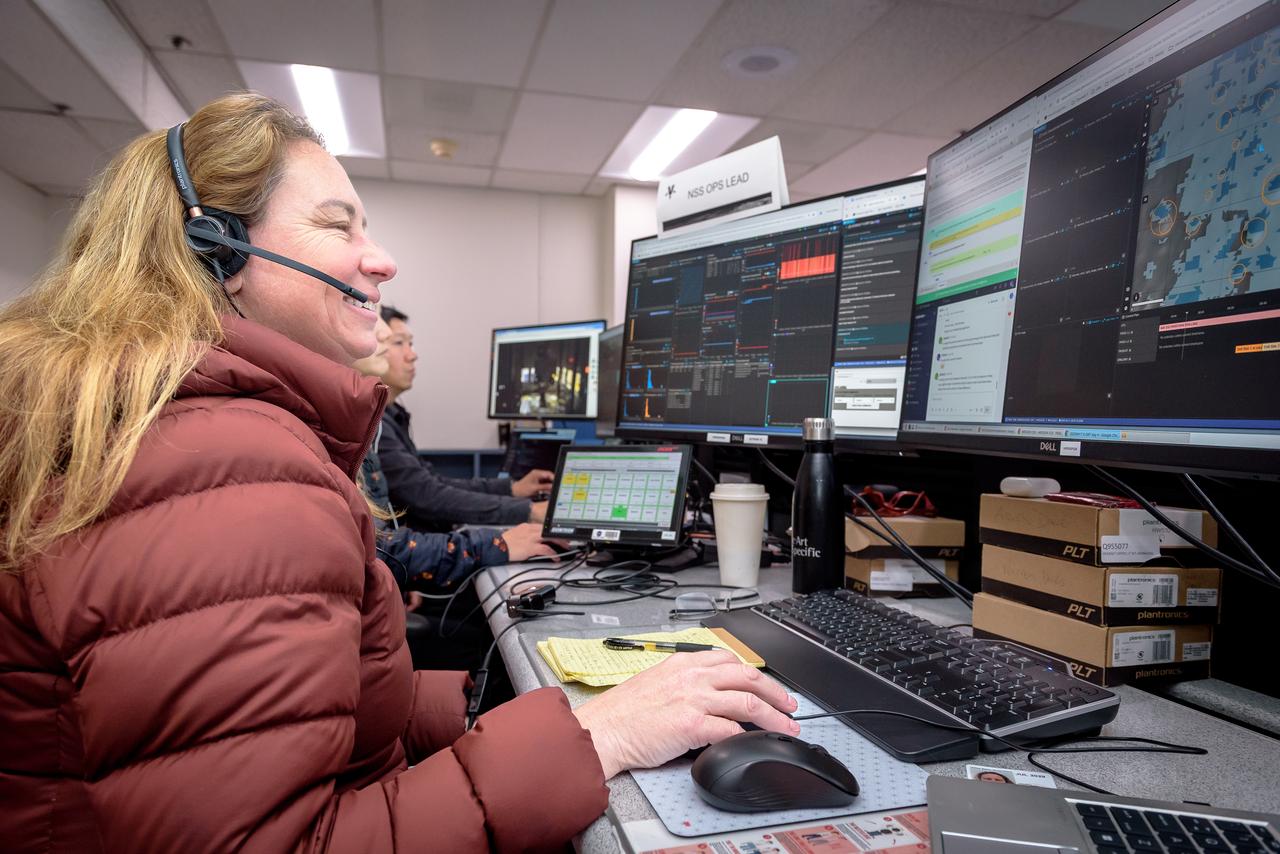
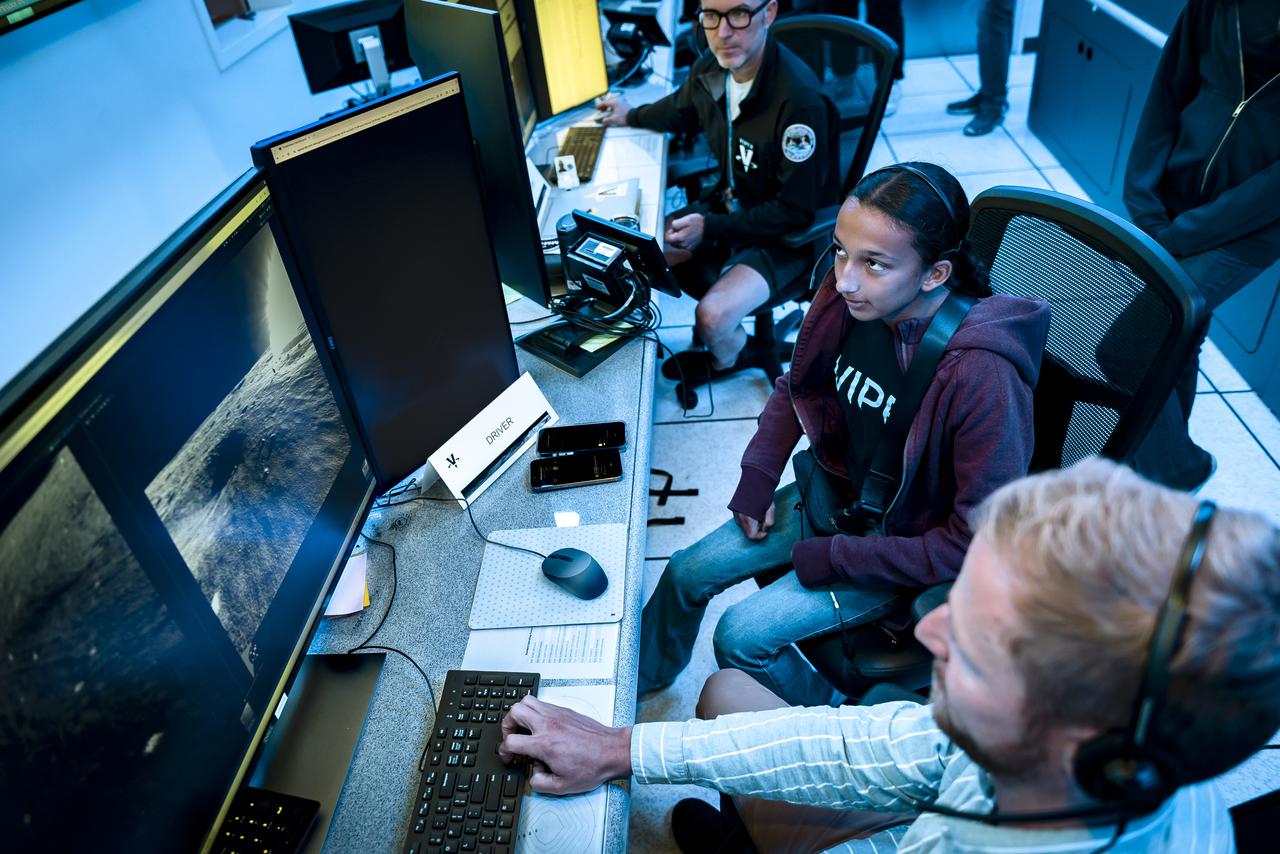
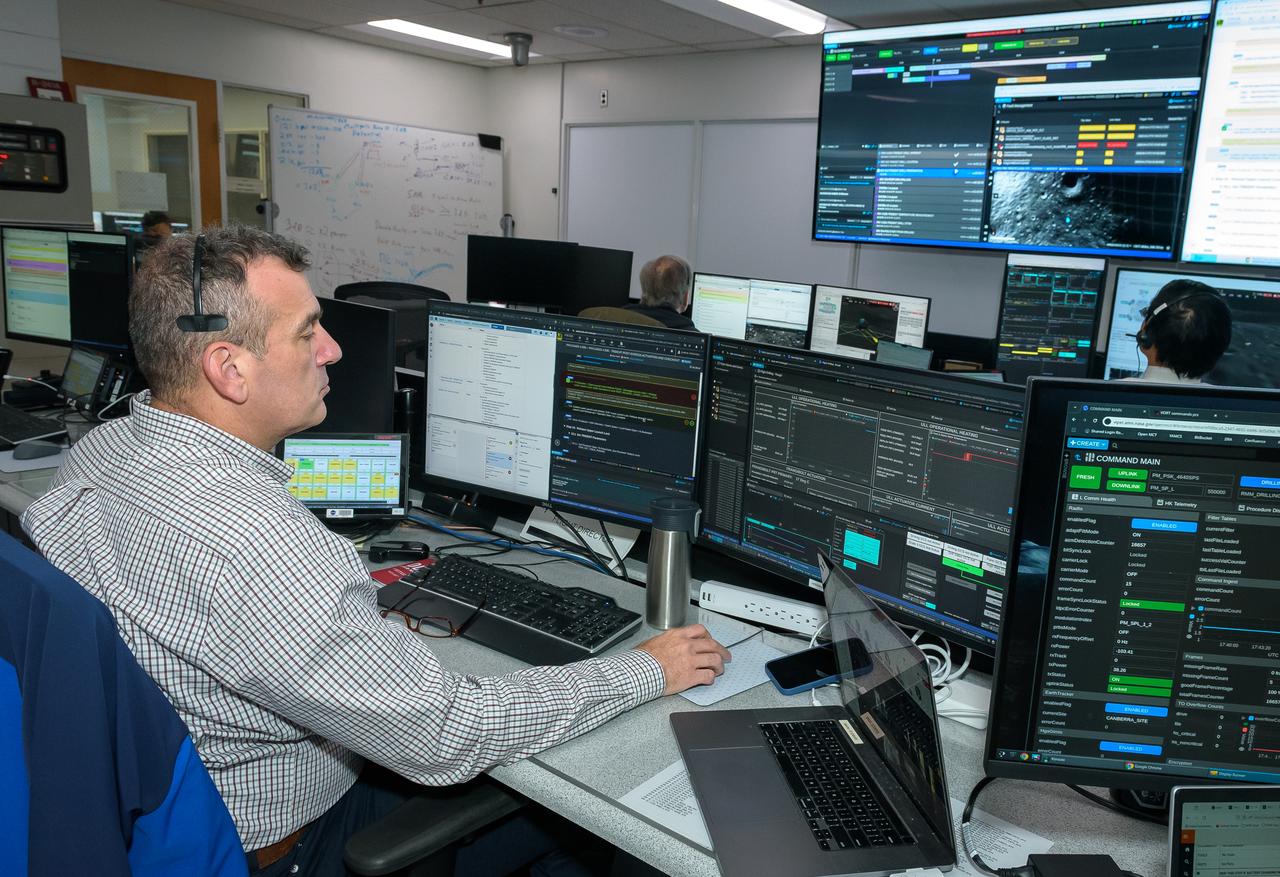
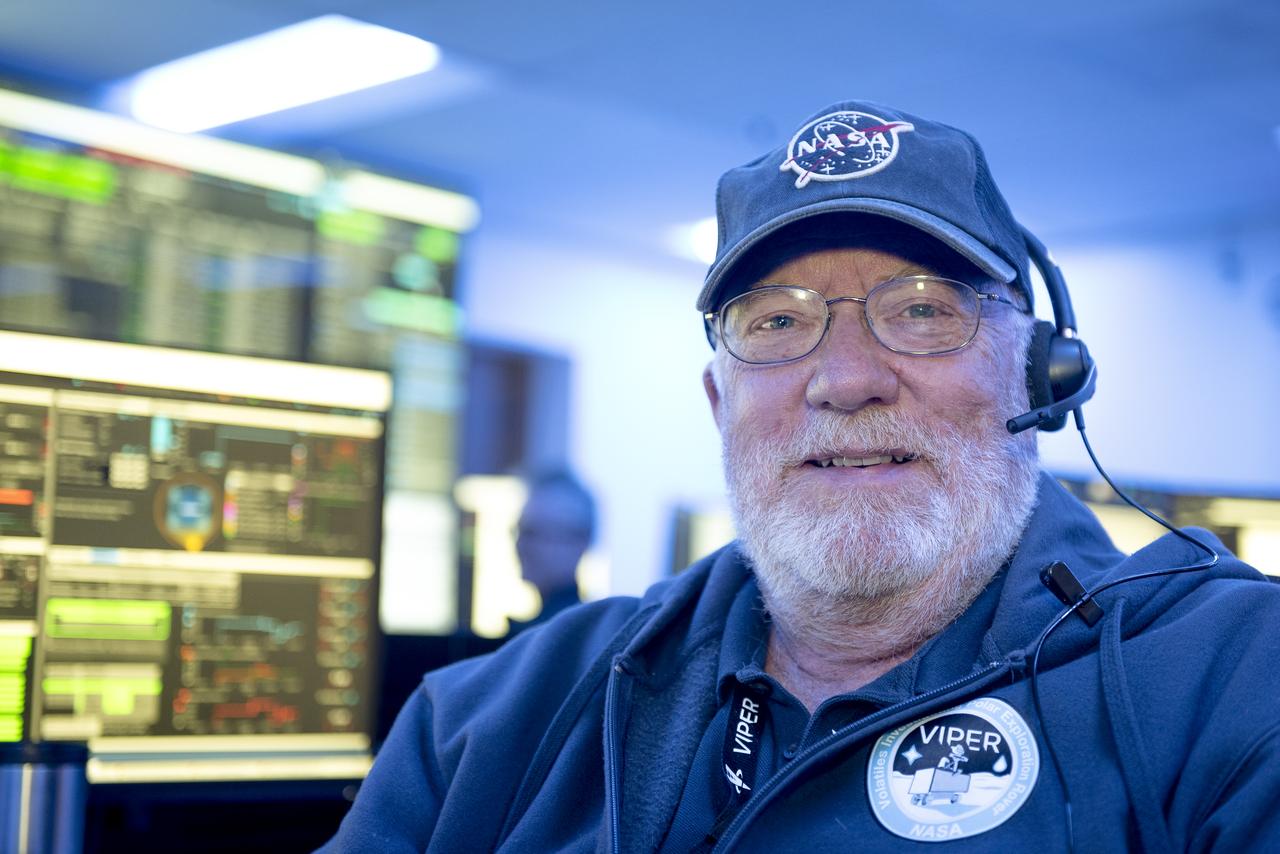
Erin Fritzler during the Volatiles Investigating Polar Exploration Rover (VIPER) vehicle operational readiness test in the Multi-Mission Operations Center (MMOC), N240A.
VIPER Vehicle Operational Readiness Test
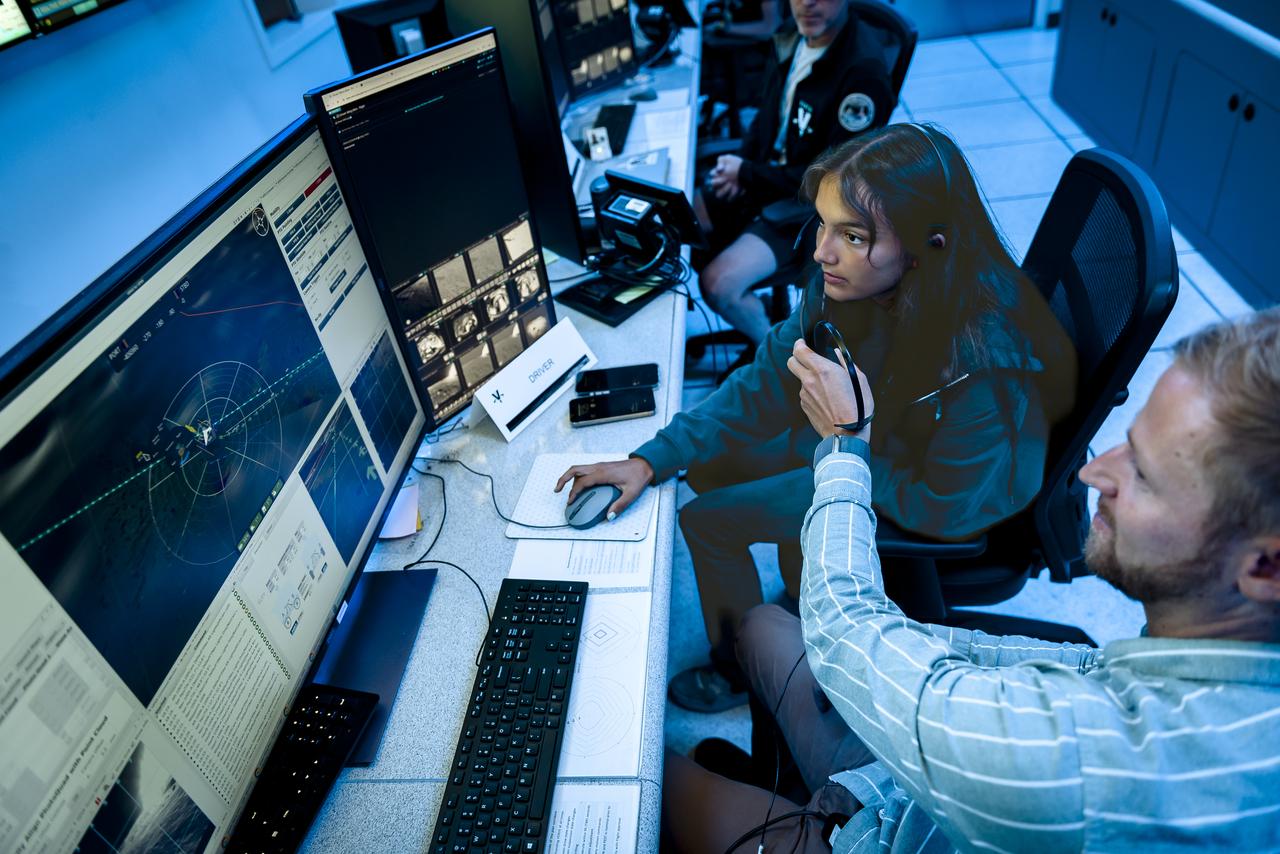
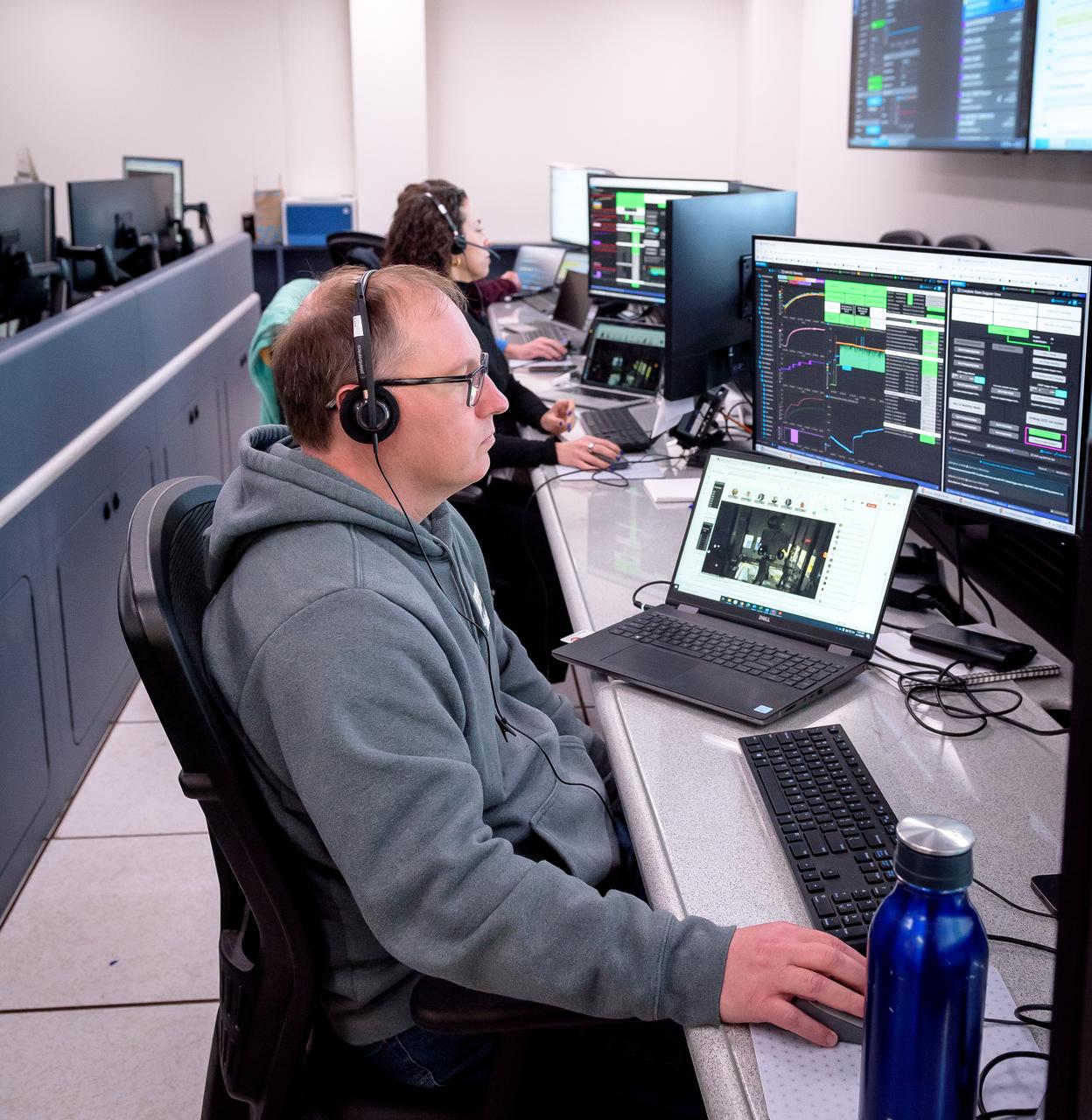
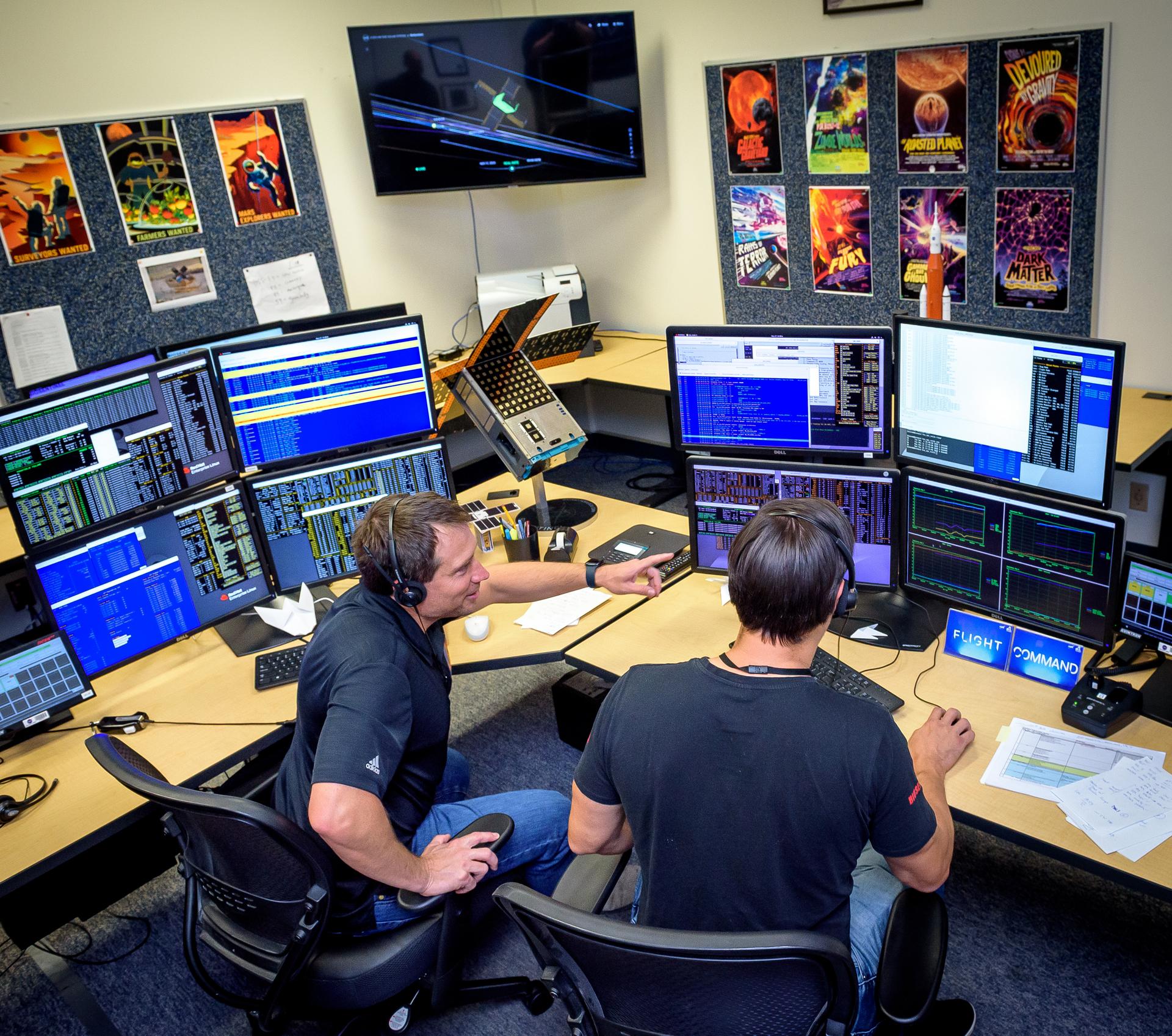
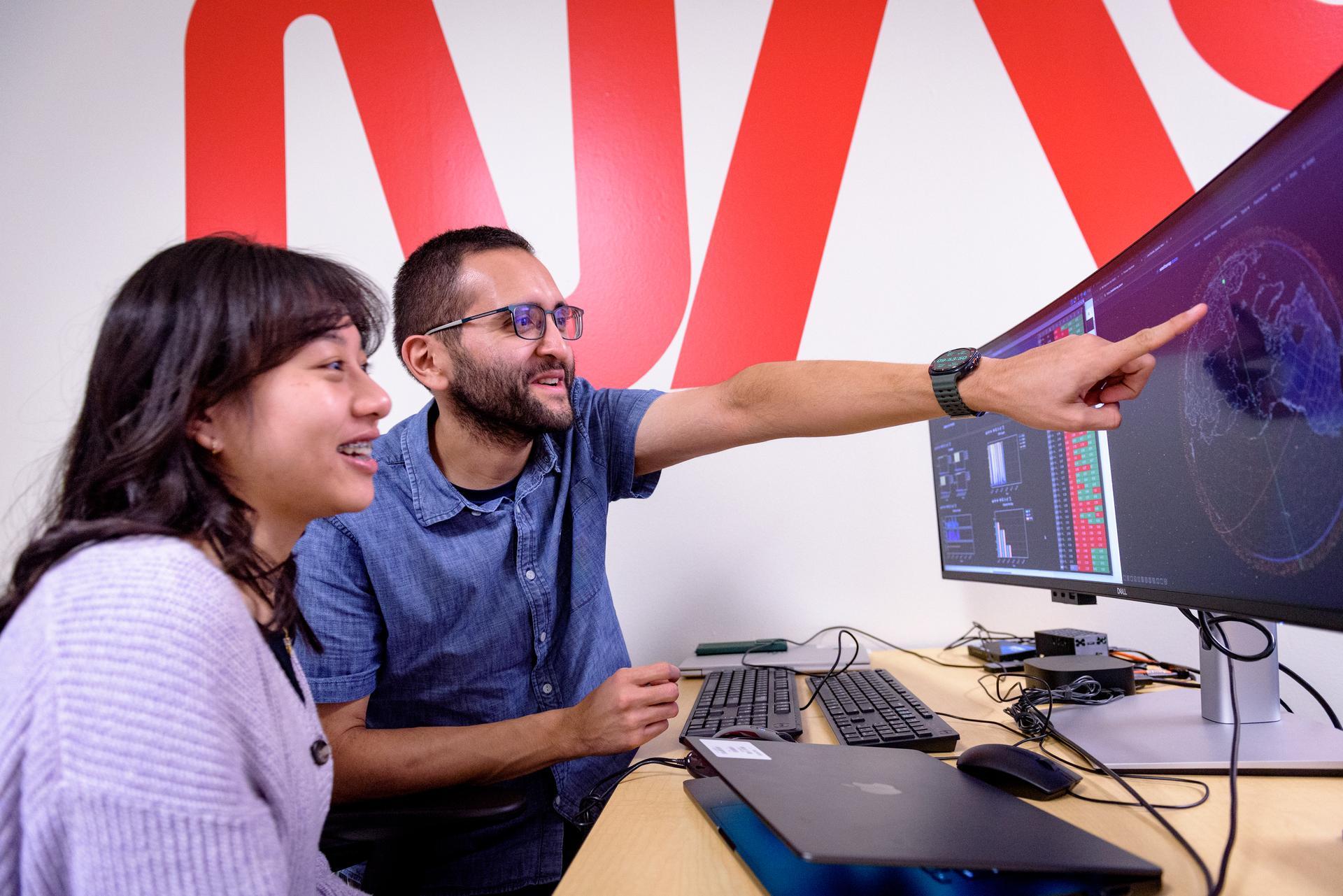
TechEdSat-11 operators Daphne Dao, left, and Alejandro Salas, in the Ames Multi-Mission Operations Center (MMOC), N240 Annex, Eros control room 162. The team monitors the spacecraft's status during the Exo-Brake “parachute” deployment.   The ExoBrake is a drag device that increases the total surface area of the spacecraft to assist with a quicker deorbit. This maneuver is deployed at the end of mission to satisfy NASA's deorbit requirement and prevent space debris. TechEdSat has spent the last several months coordinating with NASA’s Conjunction Assessment Risk Analysis (CARA) team to ensure the spacecraft can safely deploy the ExoBrake without colliding into any other objects.
TechEdSat-11 Deploys the ExoBrake
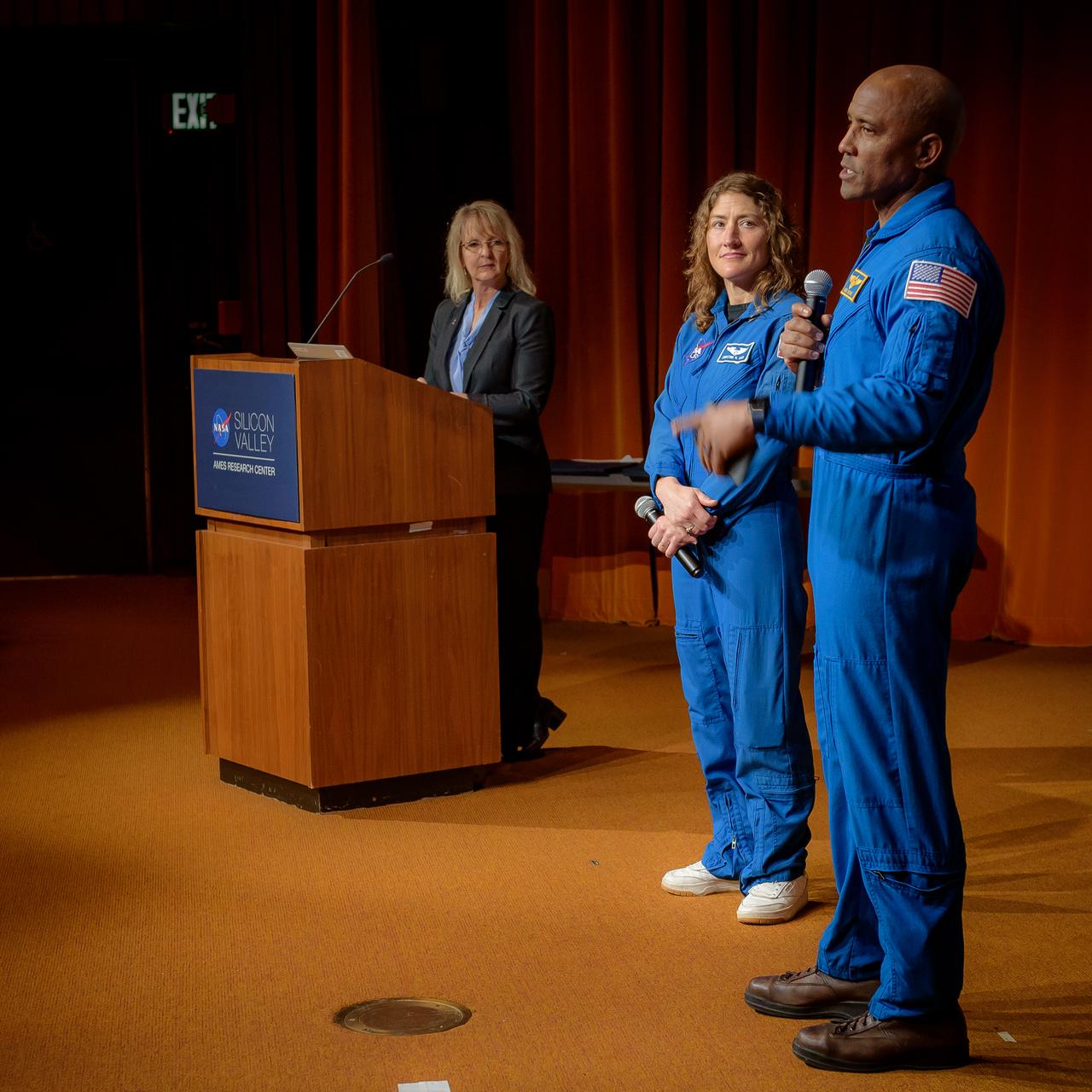
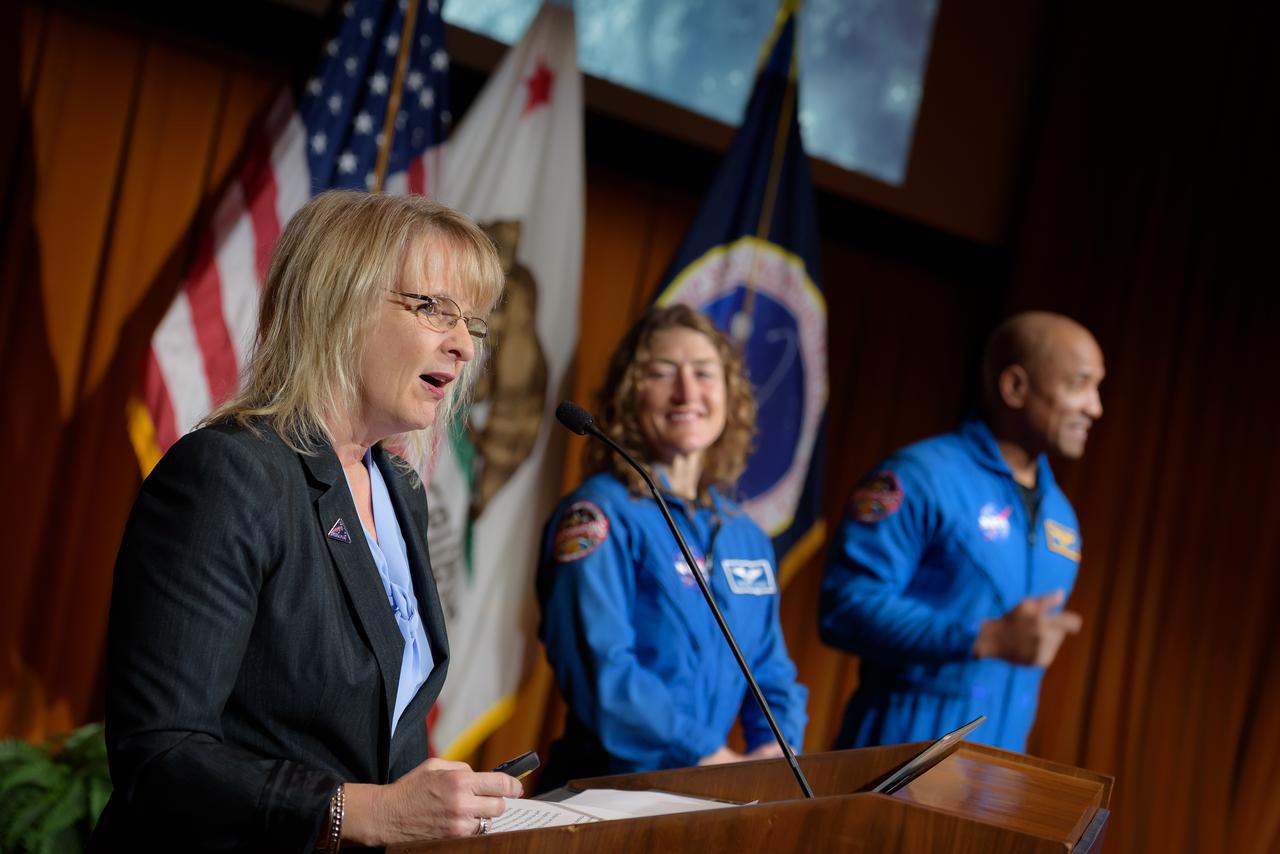
Orion Deputy Program Manager Debbie Korth, at the podium, leads a question-and-answer session with NASA astronauts Christina Koch and Victor J. Glover, right, with Ames employees following the Orion Circle of Excellence Award Ceremony in the Syvertson Auditorium, N201.
Orion Astronauts Visit Ames Entry Systems and Technology Divisio
Group photo of the Orion astronauts with the staff of the Ames Arc Jet Complex in N238.  Front row: Luis Saucedo, left, Debbie Korth, Christina Koch, Victor J. Glover, and George Raiche, right.
Orion Astronauts Visit Ames Entry Systems and Technology Divisio
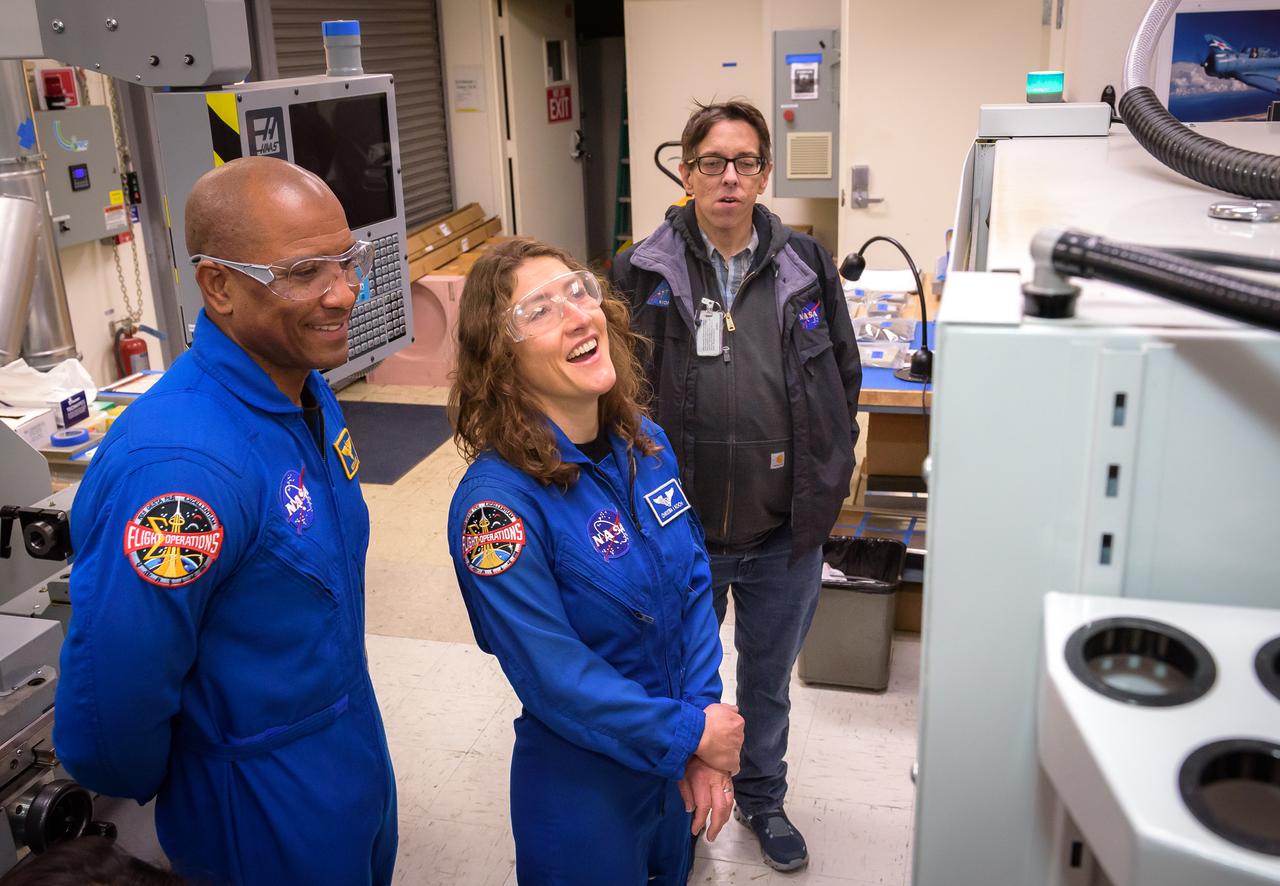
NASA astronauts Victor J. Glover, left, and Christina Koch, with Joe Mach as they tour STAR Labs, N238
Orion Astronauts Visit Ames Entry Systems and Technology Divisio
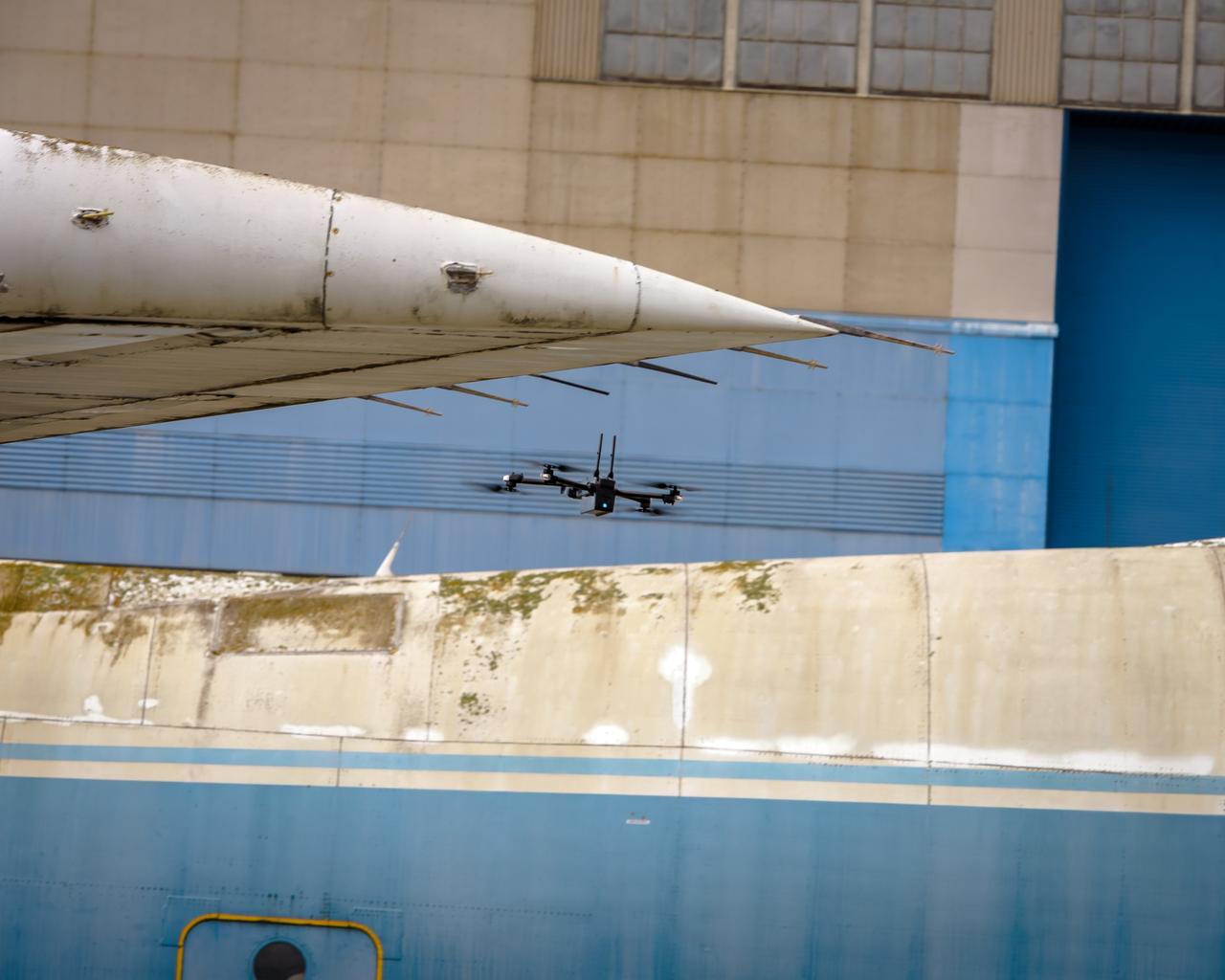
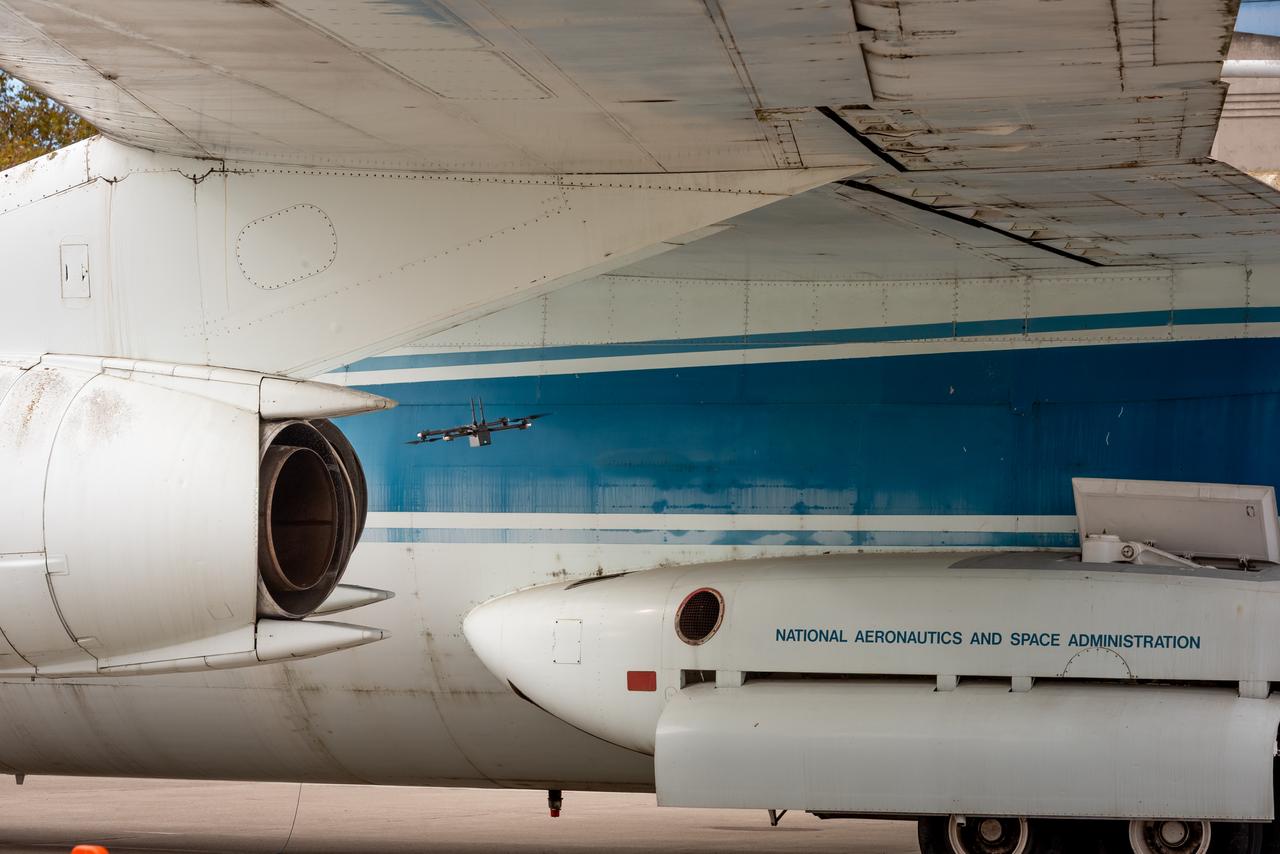
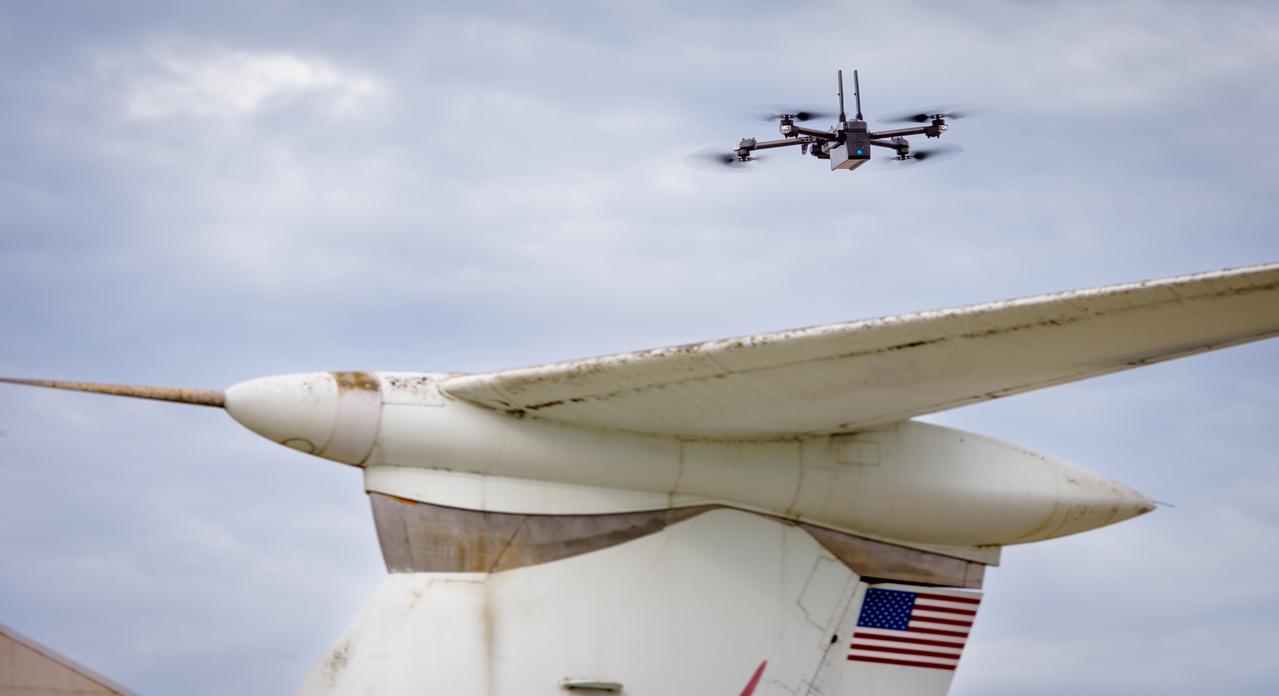
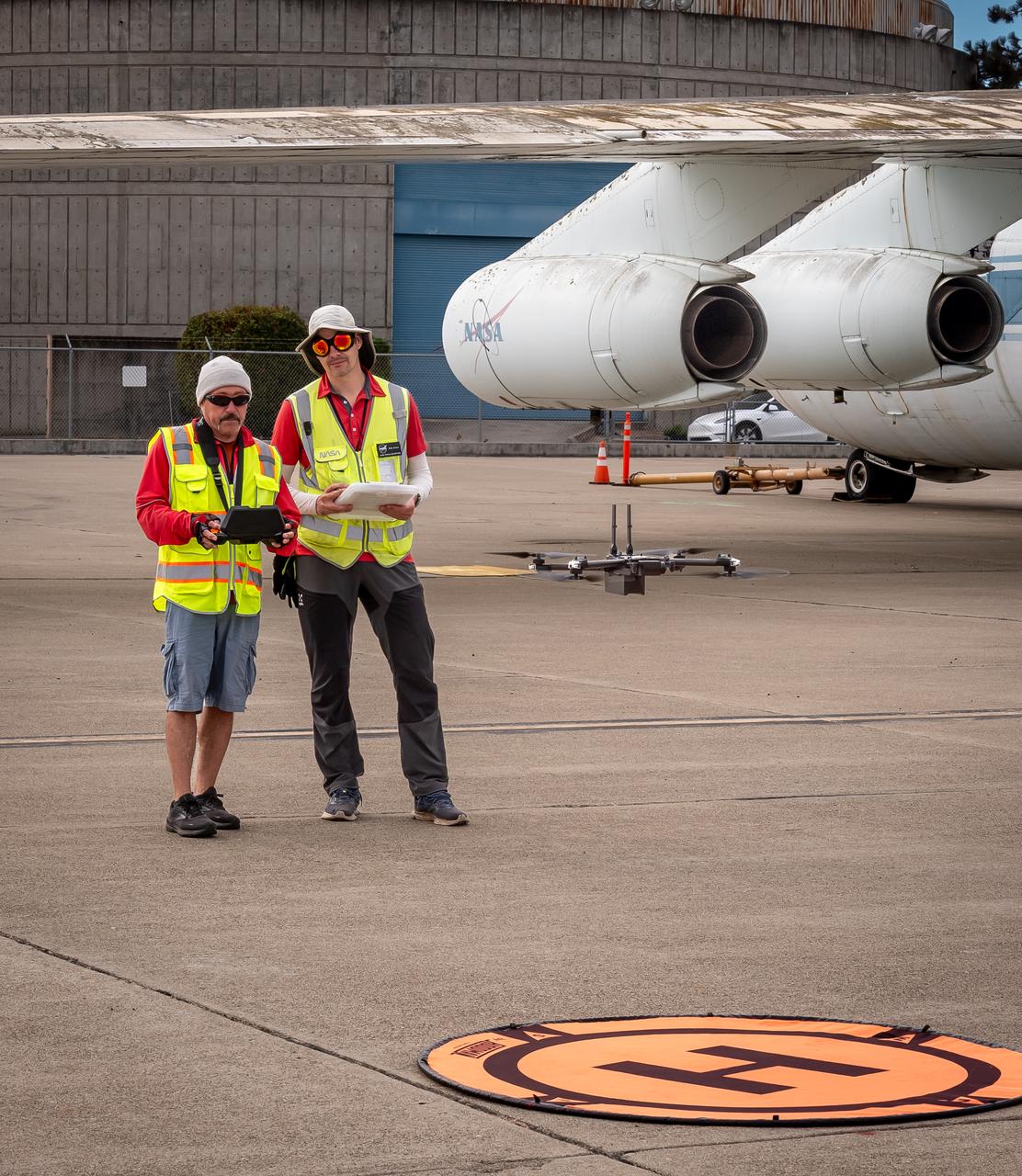
The drone follows an autonomously defined path around the modified C-141 Kuiper Airborne Observatory, (KAO) (NASA-714), on the N211 apron.  The drone photographs the aircraft with a visible and infrared camera which are processed using a photogrammetry software package called Pix4D that converts them into a 3D model.  Scanning the aircraft is the first phase of documenting the aircraft demolition as well as an opportunity to train pilots to operate the Pix4D software.
Kuiper Airborne Observatory (KAO) Demolition
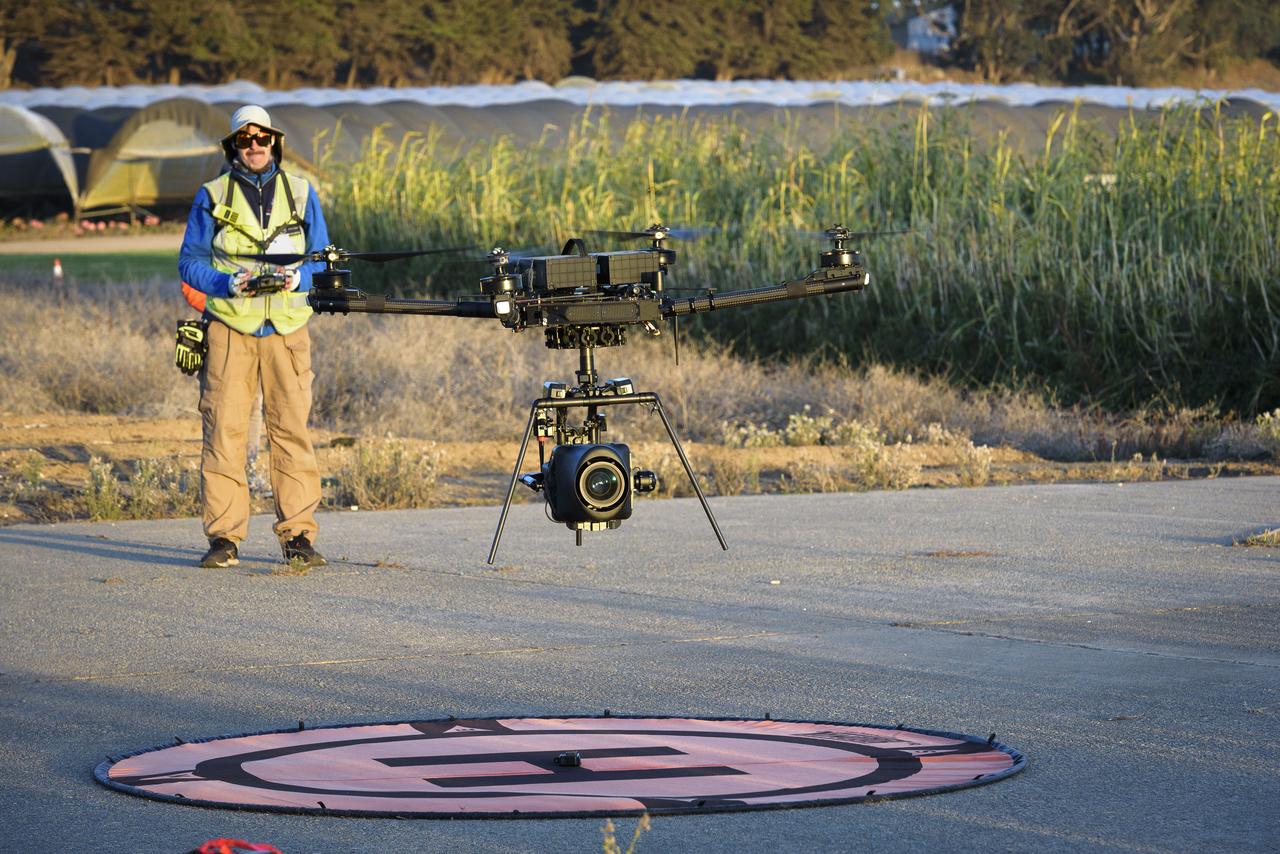
Silhouette view of Jonas Jonsson with the Alta-X Unmanned Aerial Vehicle (UAV) on the landing pad as the sun sets at the Monterey Bay Academy Airport near Watsonville, California.
Advanced Capabilities for Emergency Response Operations (ACERO)
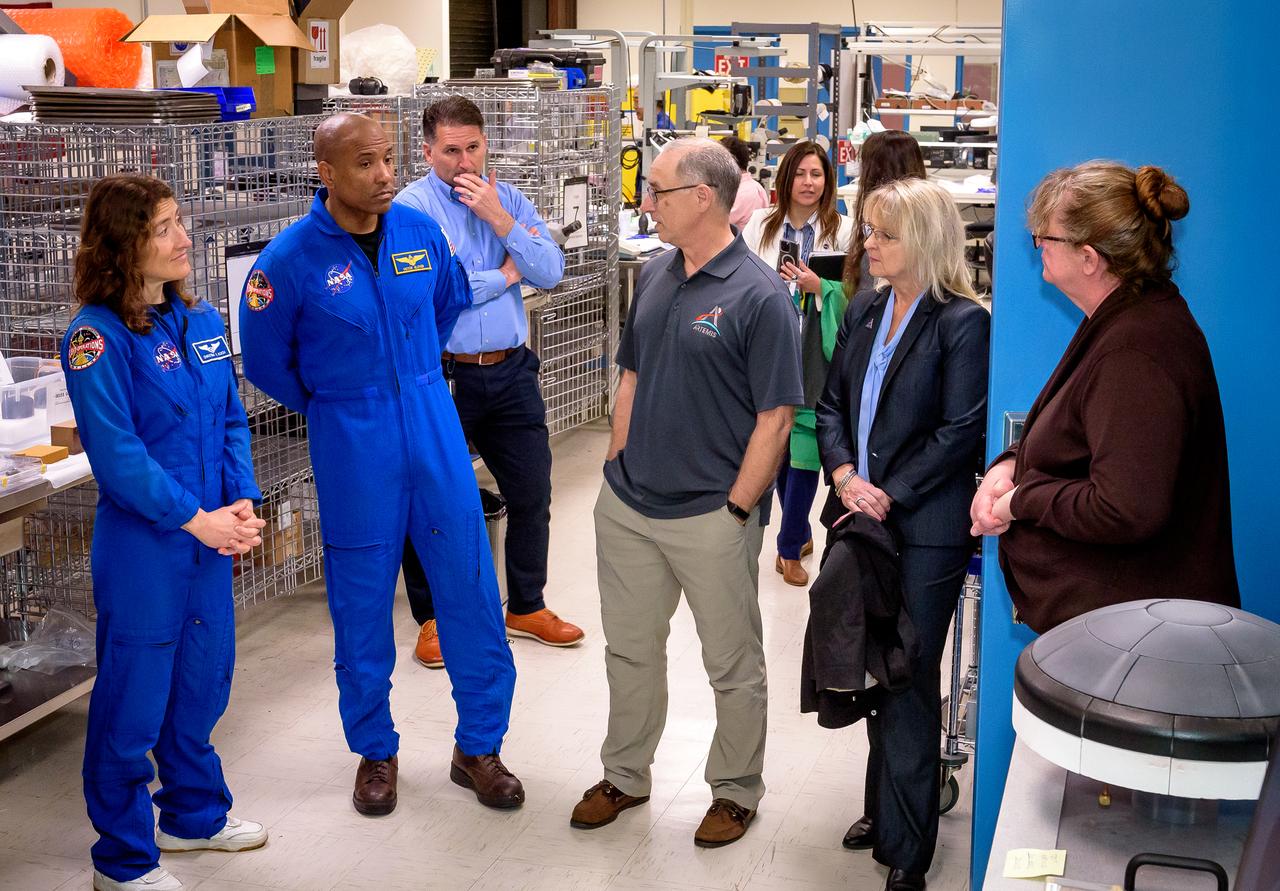
Group photo in STAR Labs in N242 with NASA astronauts Christina Koch and Victor J. Glover.
Orion Astronauts Visit Ames Entry Systems and Technology Divisio
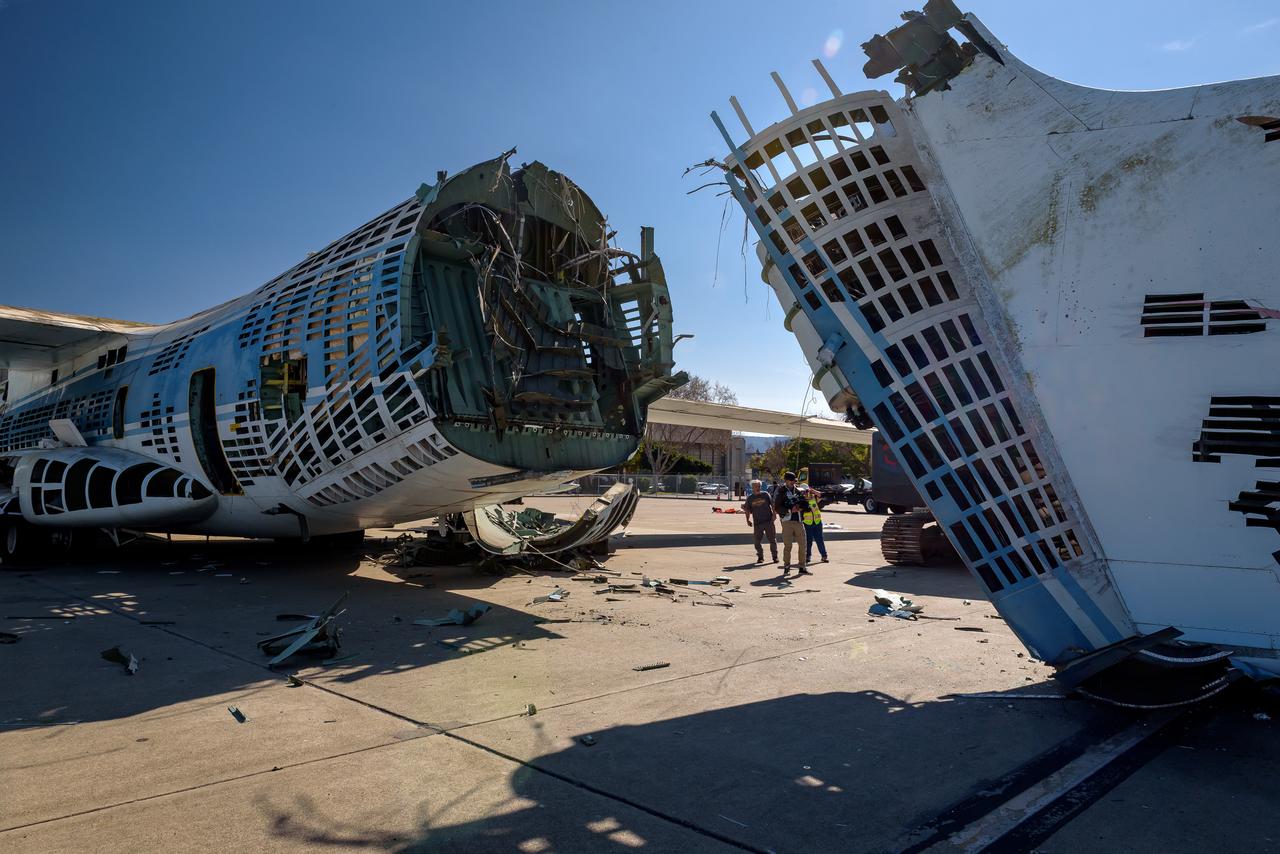
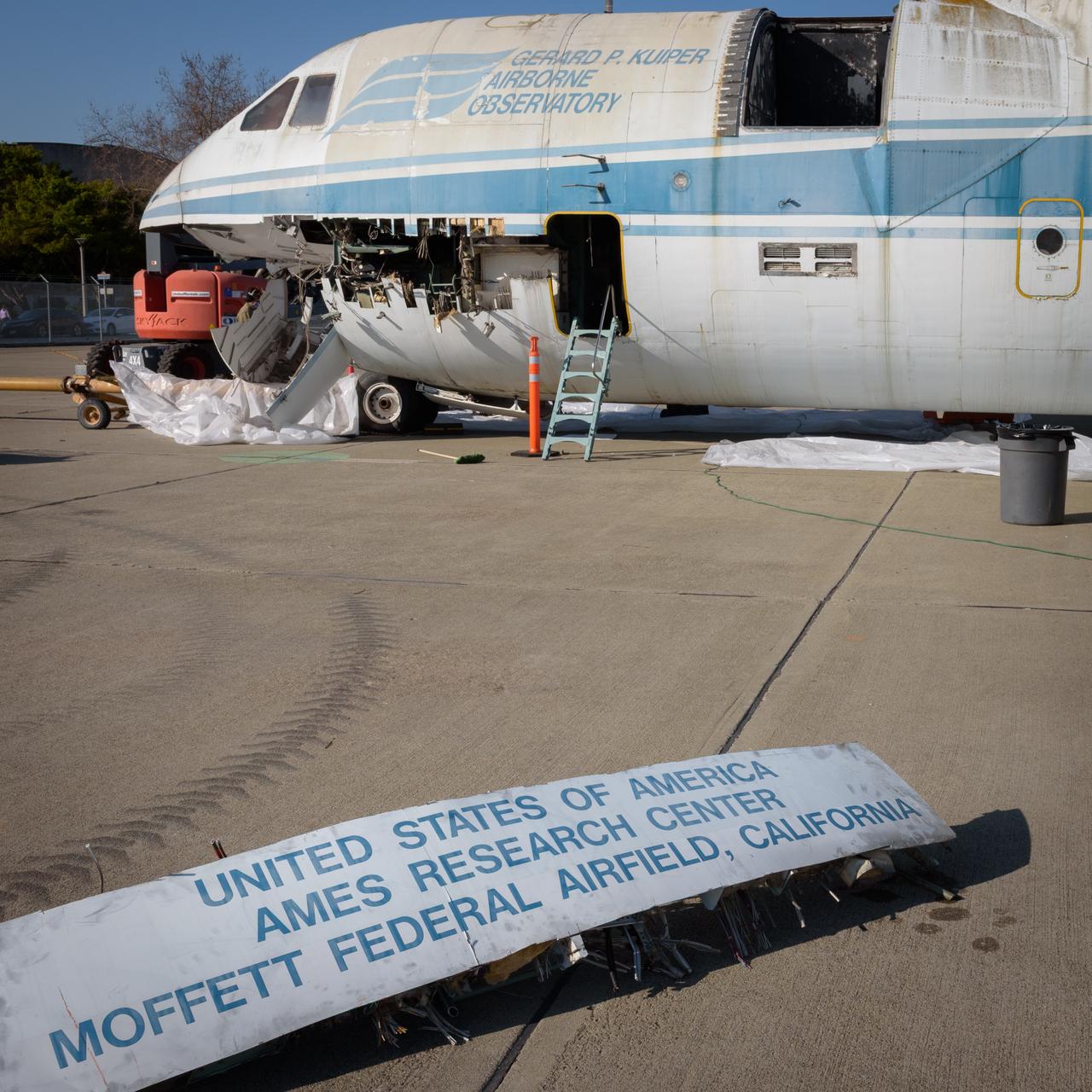
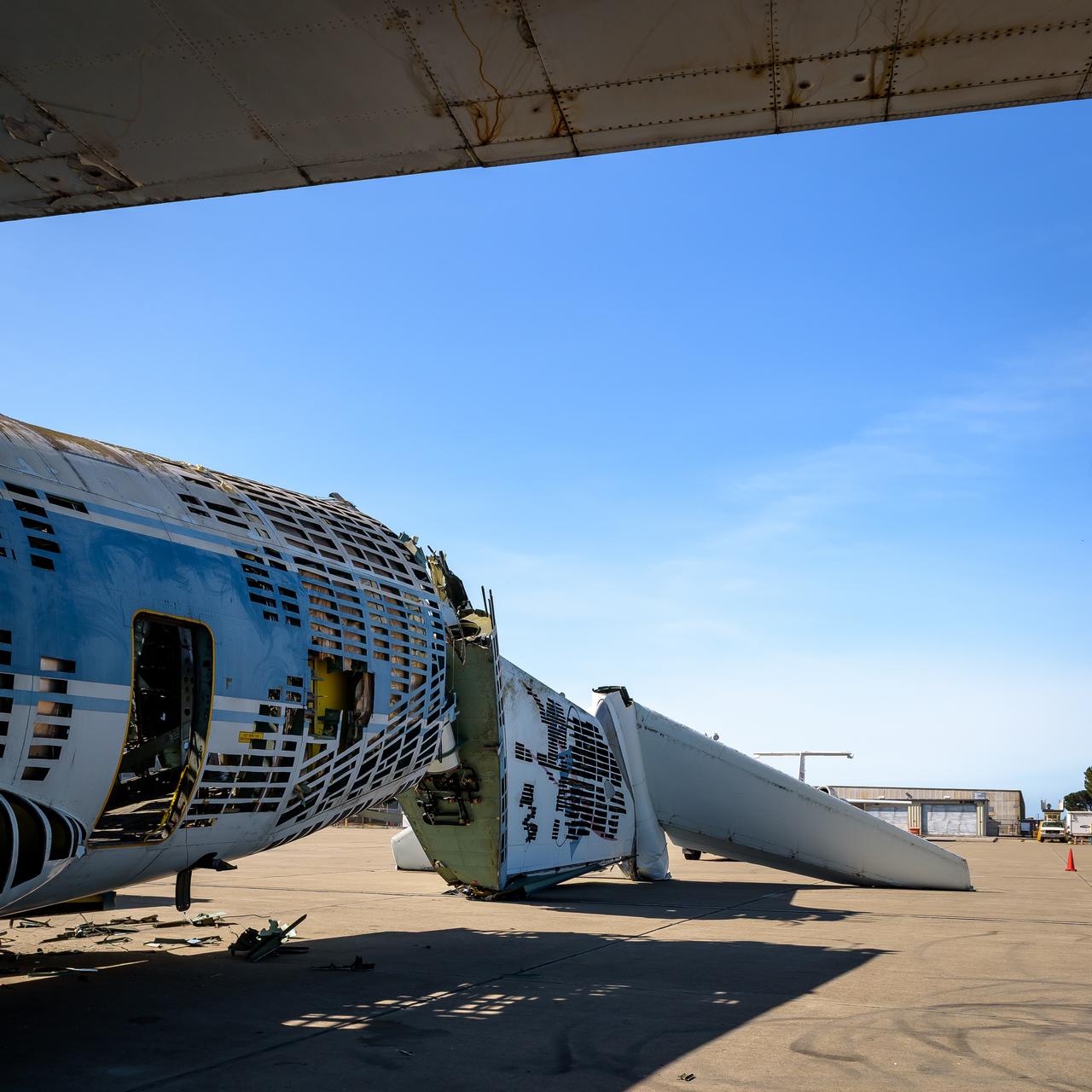
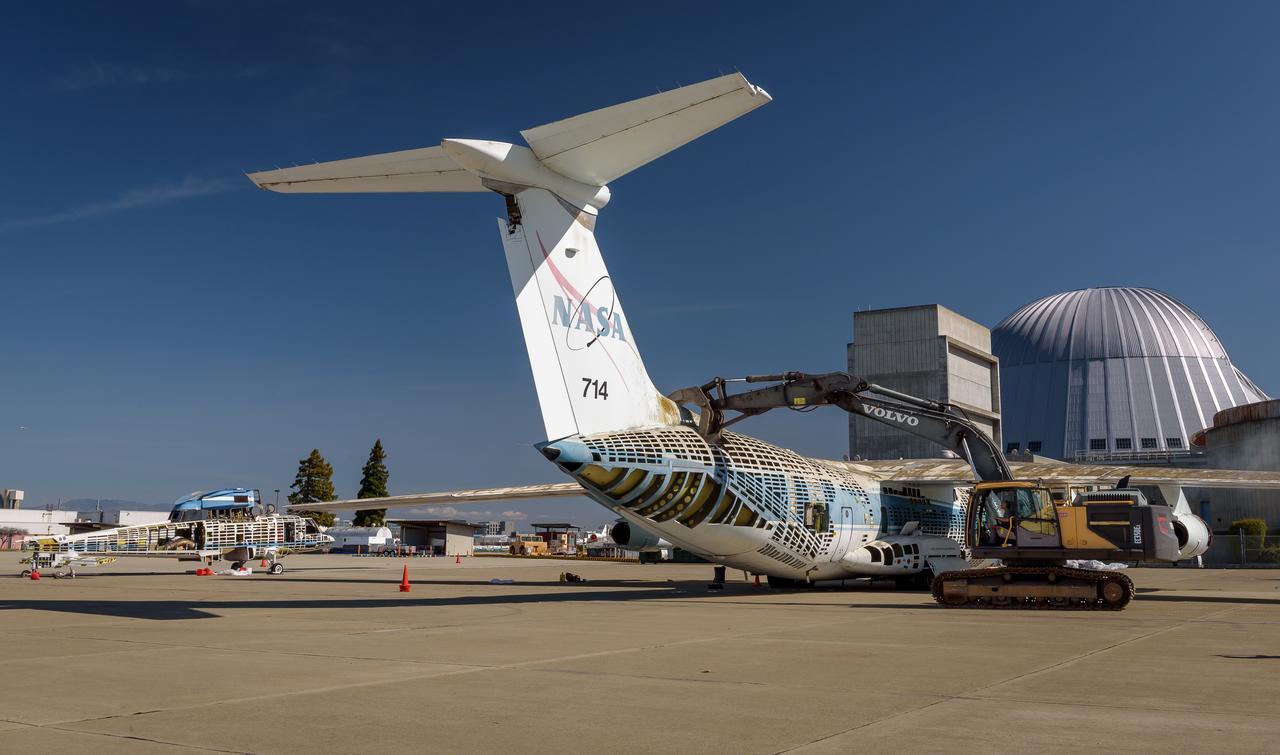
A Volvo Crawler Excavator severs the airframe, separating the tail section from the fuselage, of the modified C-141 Kuiper Airborne Observatory, (KAO) (NASA-714), on the N211 apron of Moffett Field, California.
Kuiper Airborne Observatory (KAO) Demolition
Zachary Burkland, left, Justin Pane, and Jay Trimble, right during the Volatiles Investigating Polar Exploration Rover (VIPER) vehicle operational readiness test in the Multi-Mission Operations Center (MMOC), N240A.
VIPER Vehicle Operational Readiness Test
Antoine Tardy explains the operation of the Moon Gravity Representative Unit (MGRU3) at the Roverscape during Family Day for team members of the Volatiles Investigating Polar Exploration Rover (VIPER).  MGRU3 is a weight equivalent mobility and navigation test platform for VIPER. It is used to test, develop and validate the different mobility and navigation techniques and capabilities of the VIPER rover, to safely and efficiently map water at the Moon’s South Pole.
VIPER Family Day
A Volvo Crawler Excavator severs the airframe, separating the tail section from the fuselage, of the modified C-141 Kuiper Airborne Observatory, (KAO) (NASA-714), on the N211 apron of Moffett Field, California.
Kuiper Airborne Observatory (KAO) Demolition
David Korsmeyer welcomes Ames employees to the Orion Circle of Excellence Award Ceremony in the Syvertson Auditorium, N201.
Orion Astronauts Visit Ames Entry Systems and Technology Divisio
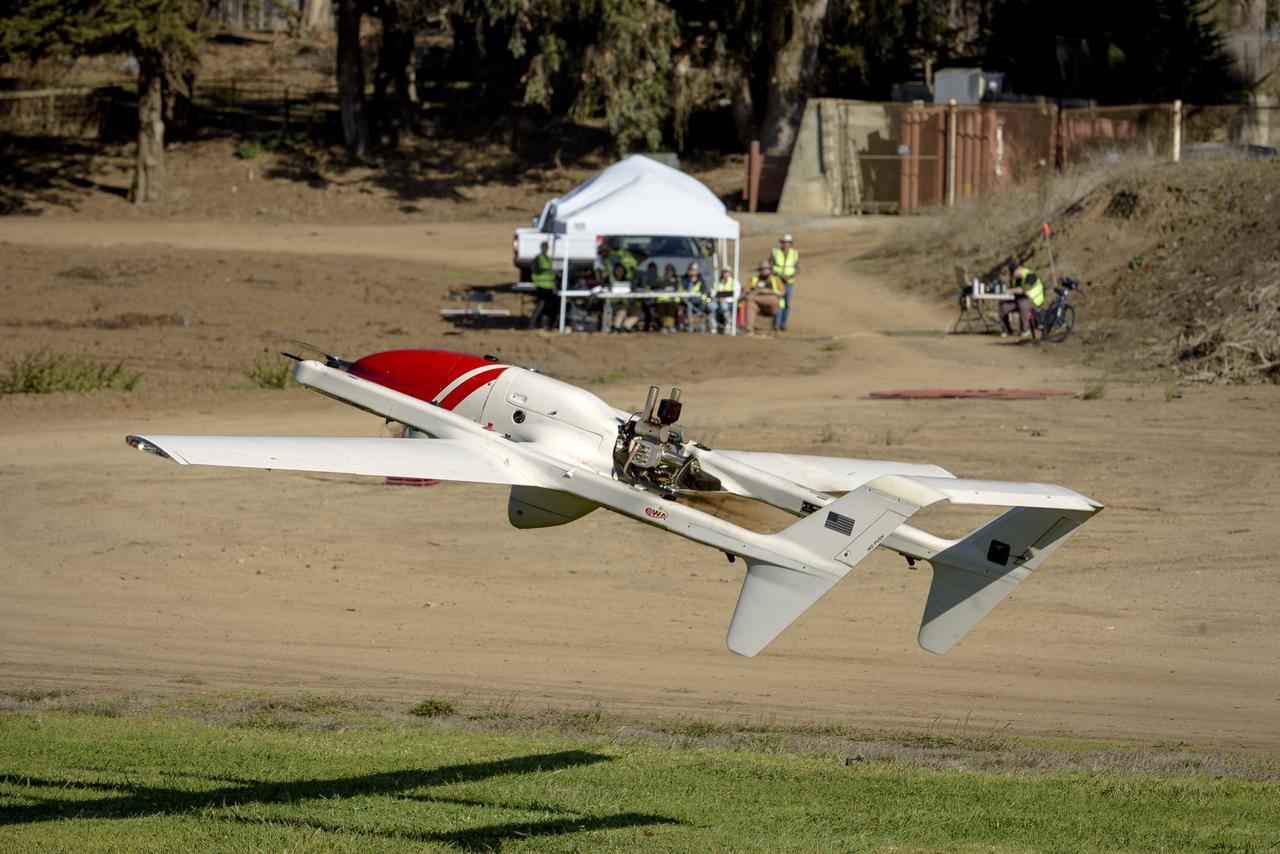
The SuperVolo XL Unmanned Aerial Vehicle (UAV) lifts off at the Monterey Bay Academy Airport near Watsonville, California.
Advanced Capabilities for Emergency Response Operations (ACERO)
Megan MacDonald, left, leads NASA astronauts Christina Koch and Victor J. Glover, right, on a tour of the Laser Enhanced Arc Jet Facility (LEAF) laboratory, in N238.  The LEAF laser augments the hypersonic shock heating experienced by a test sample during an arc jet test and provides improved test simulation quality by supplying an intense source of optical heating while the arc jet flow provides shock-driven convective heating.
Orion Astronauts Visit Ames Entry Systems and Technology Divisio
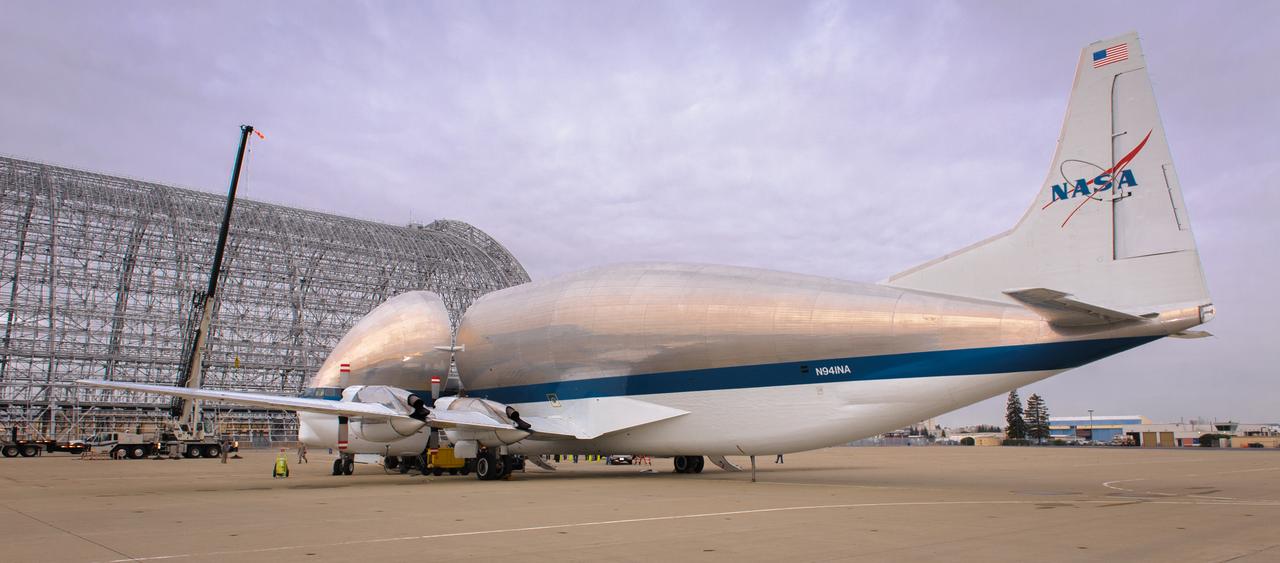
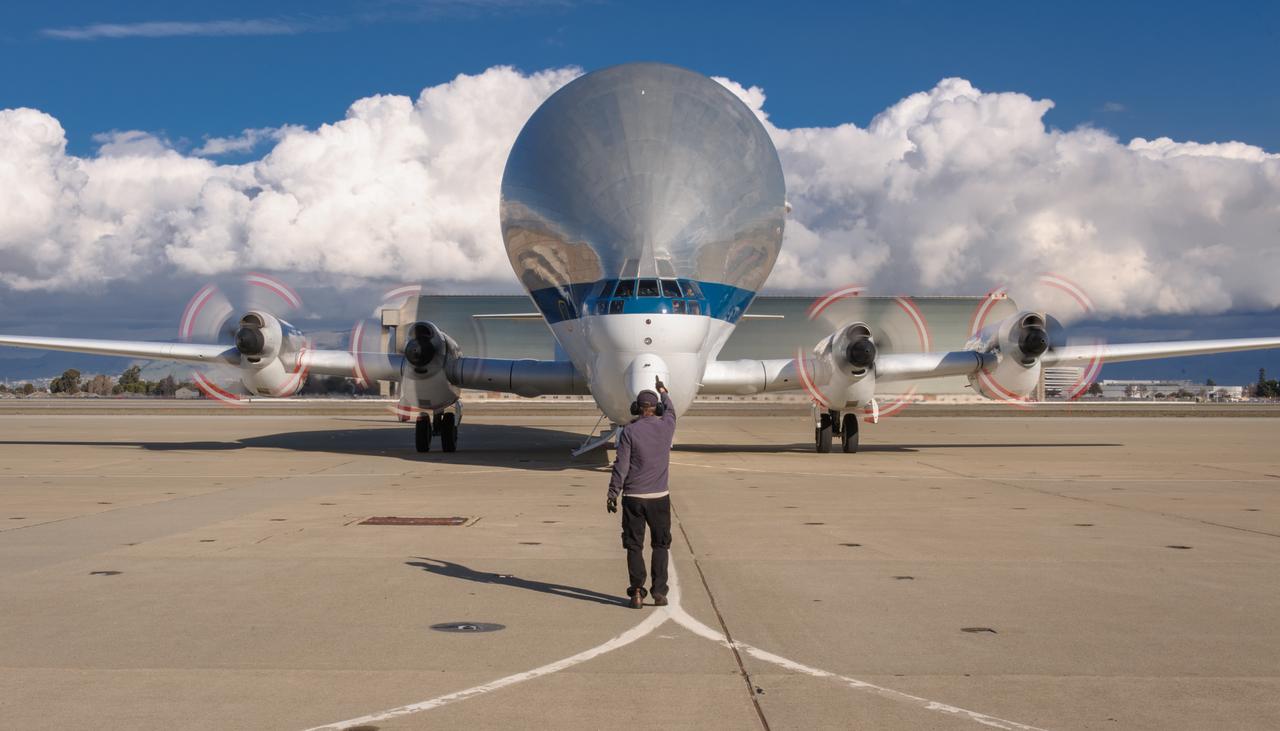
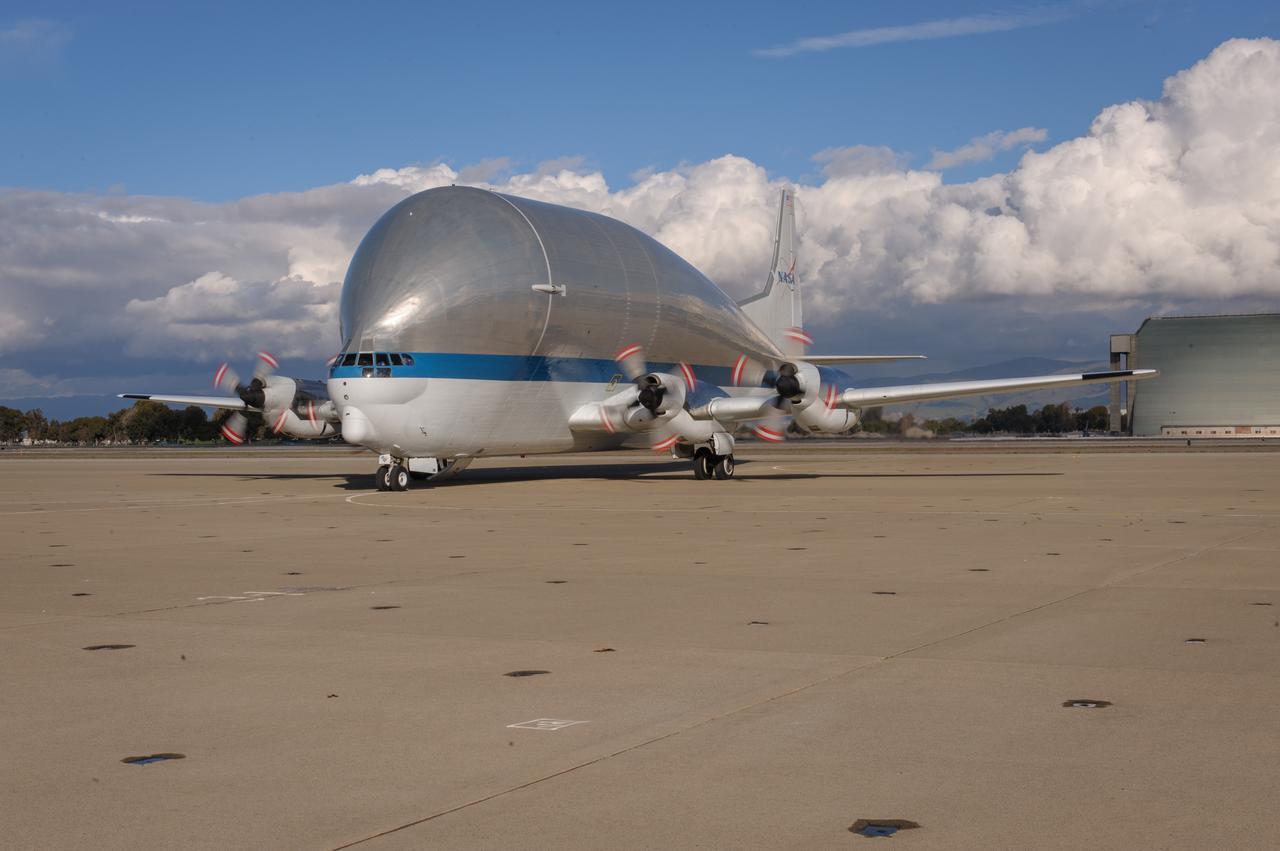
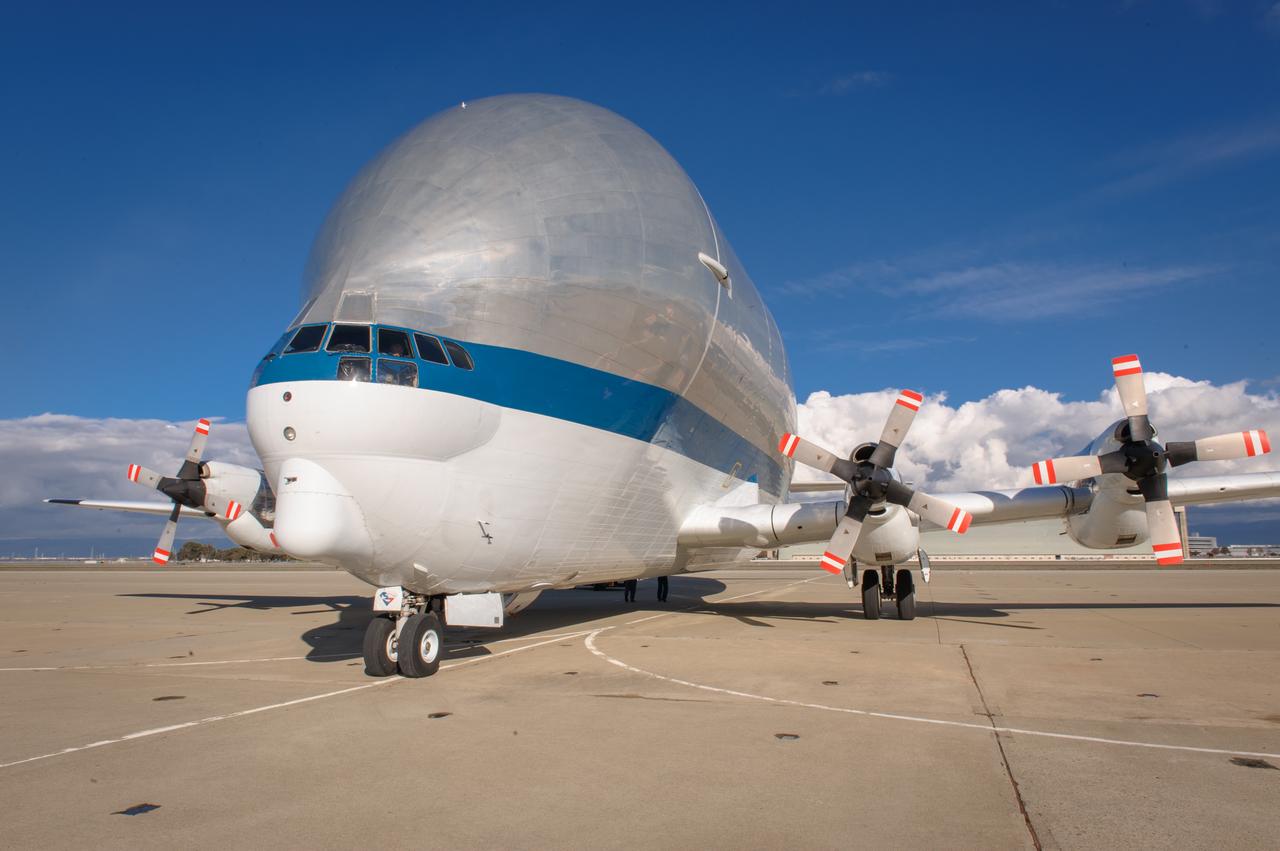
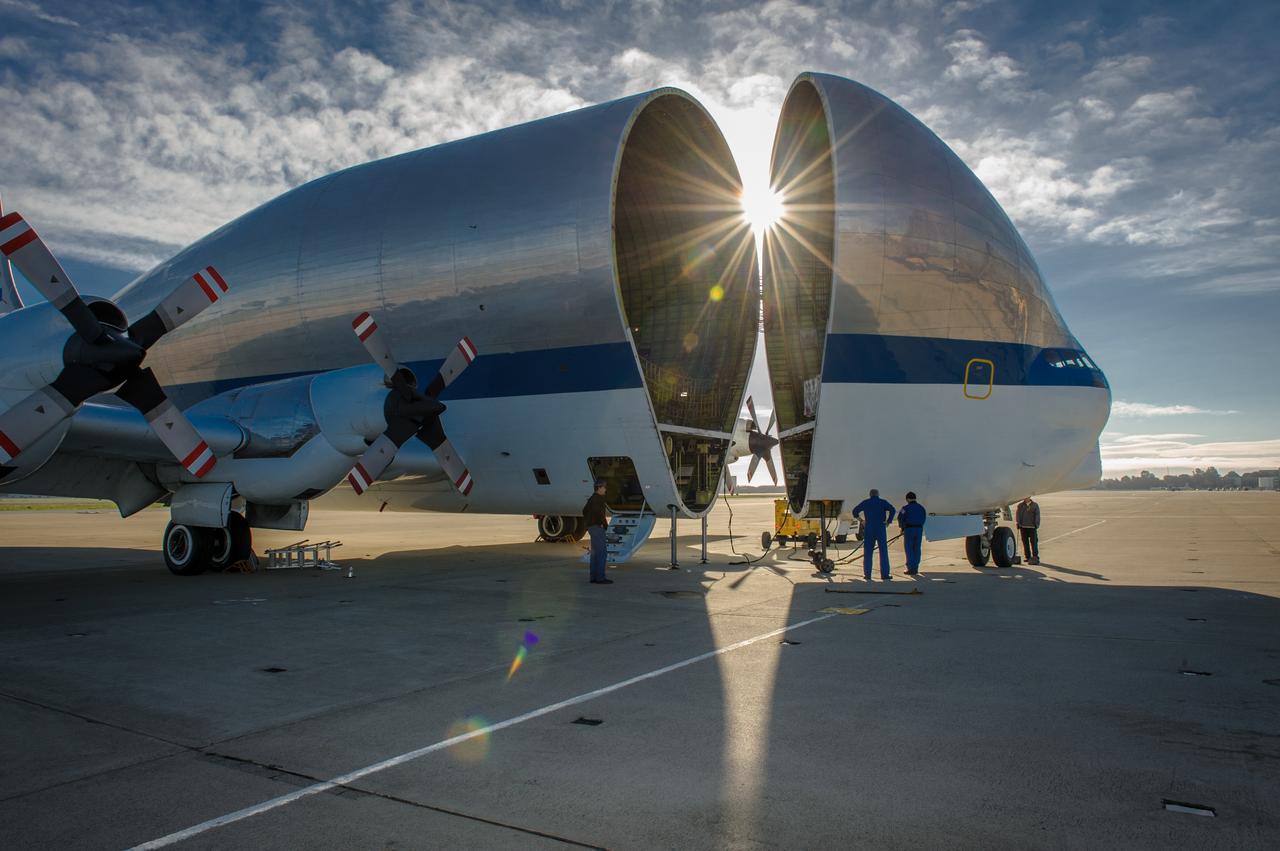
NASA N941NA Superguppy at Moffett Field.  Cargo is loaded into the Super Guppy when the aircraft's "fold-away" nose rotates 110 degrees to the left, allowing unobstructed access to the 25 foot diameter fuselage.
NASAs B377SGT Super Guppy Turbine Cargo Airplane lands at Moffett Field at NASA Ames.
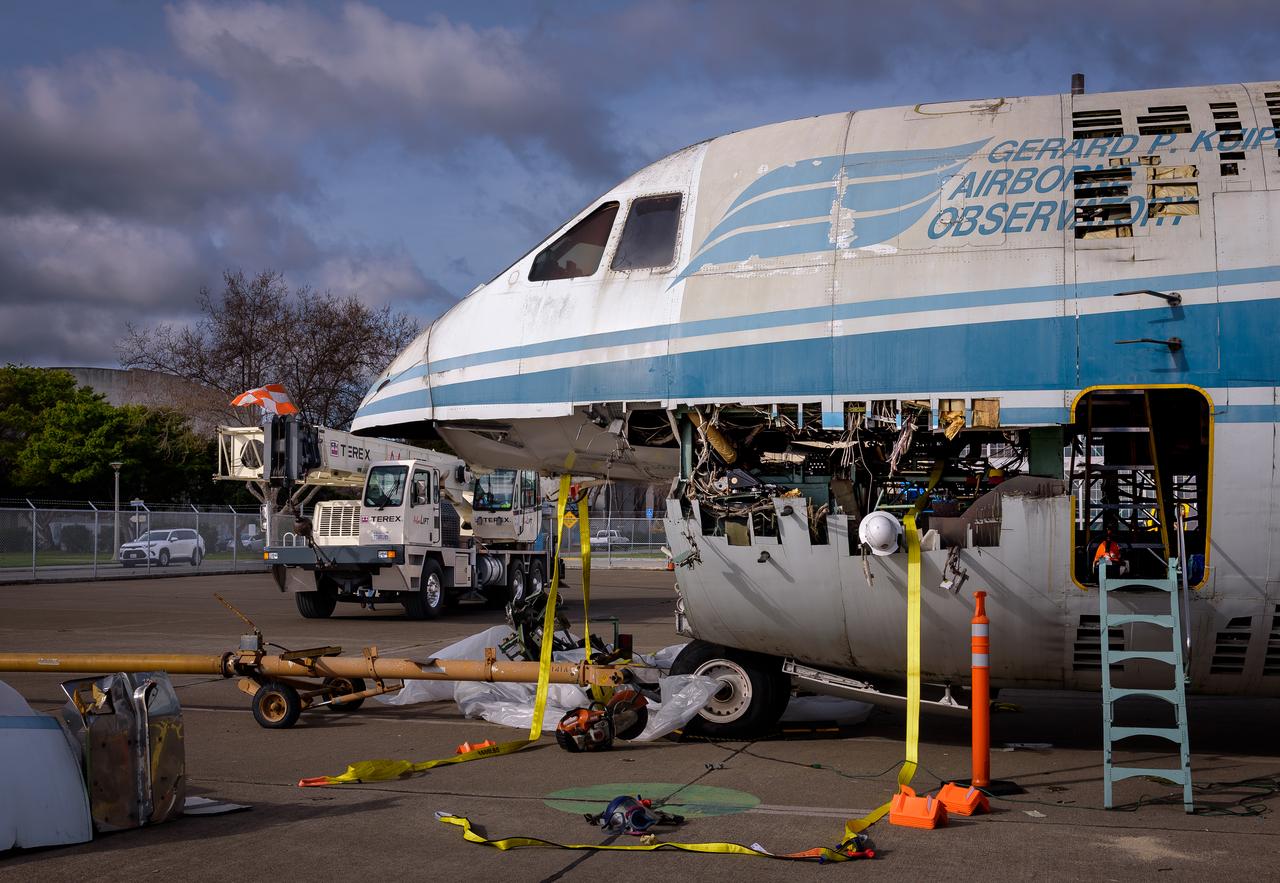
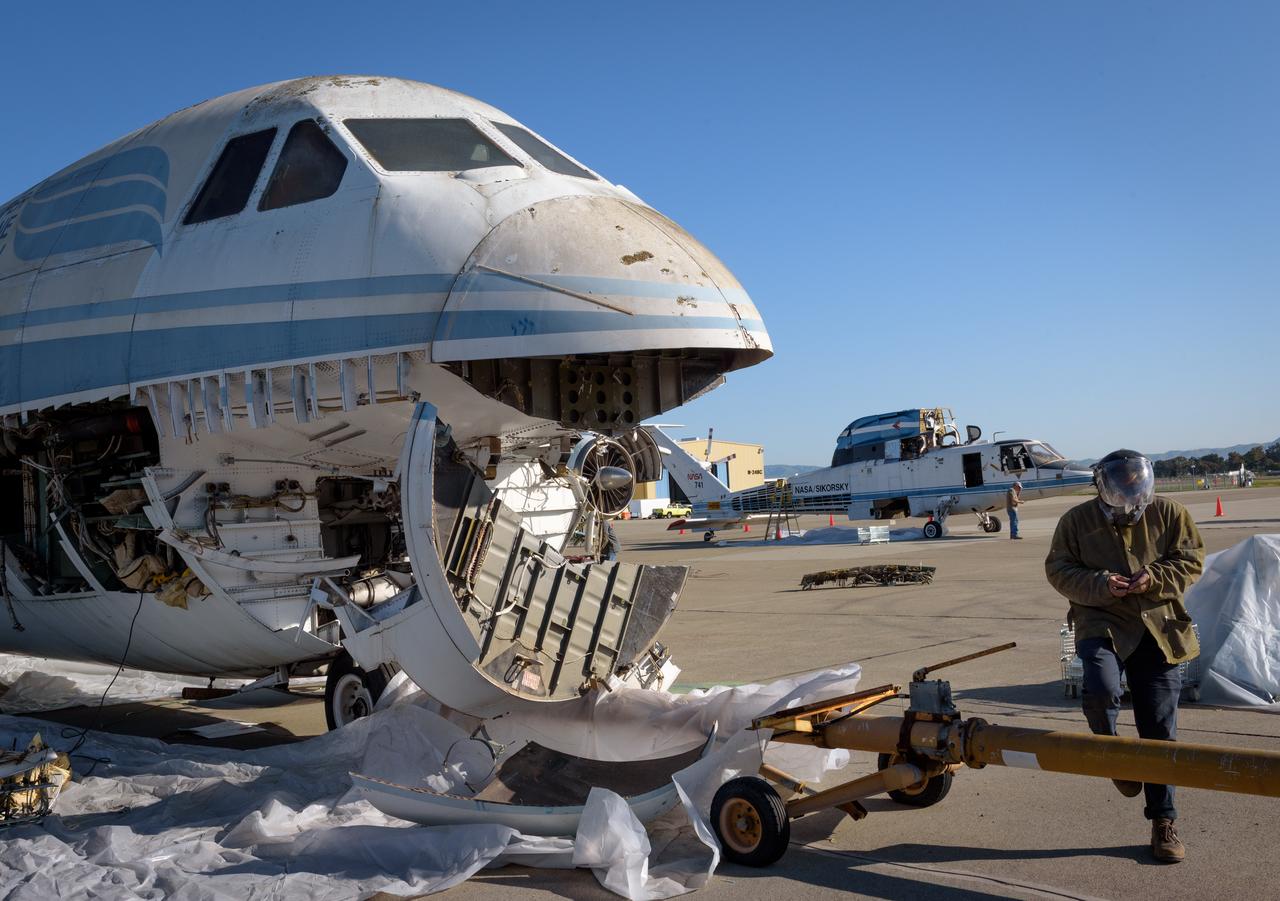
The cockpit of the modified C-141 Kuiper Airborne Observatory, (KAO) (NASA-714), is separated from the airframe on the N211 apron at Moffett Field, California.
Kuiper Airborne Observatory (KAO) Demolition
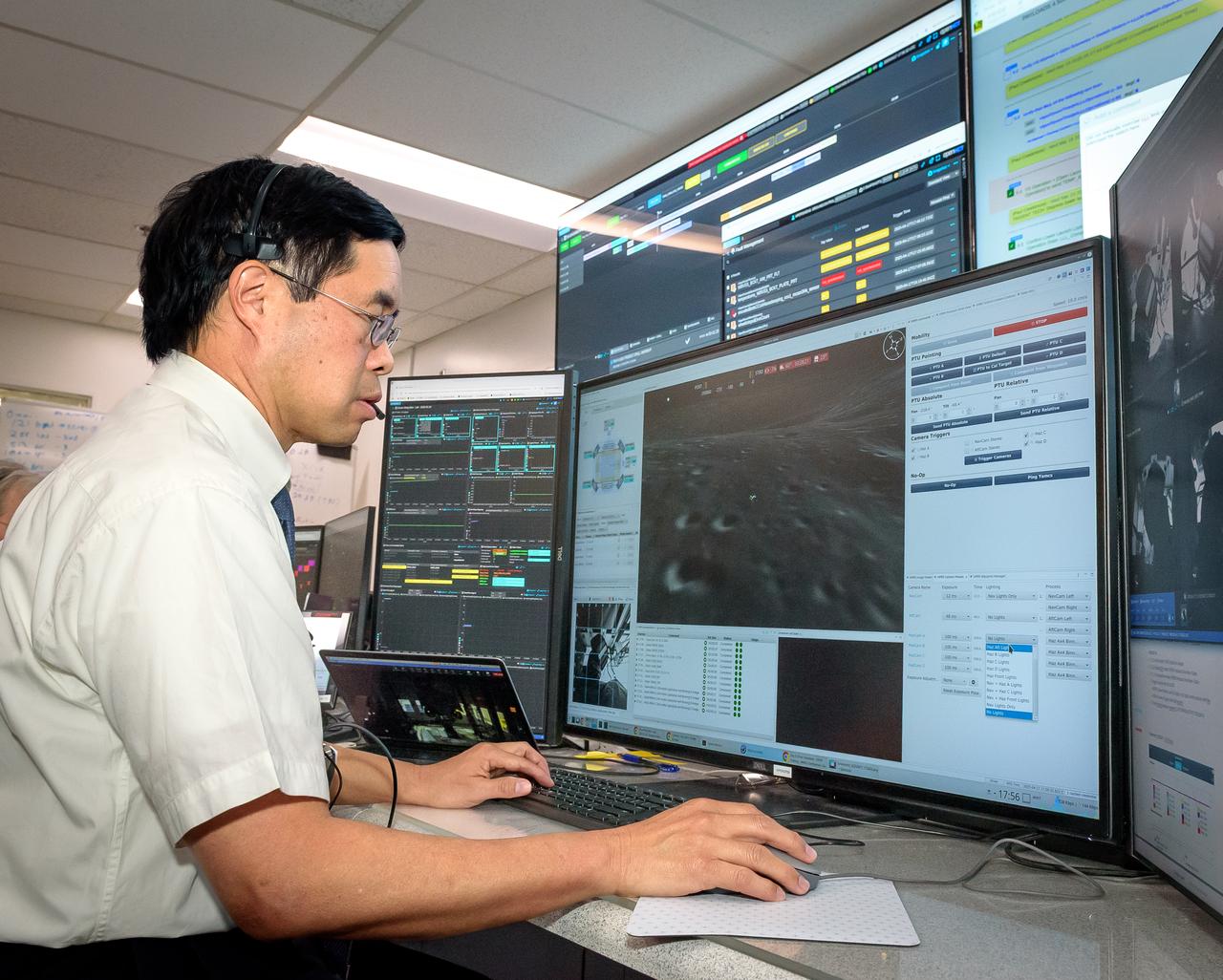
Sybil Adams during the Volatiles Investigating Polar Exploration Rover (VIPER) vehicle operational readiness test in the Multi-Mission Operations Center (MMOC), N240A.
VIPER Vehicle Operational Readiness Test
L3Harris FVR90 Unmanned Aerial Vehicle (UAV) lifts off from the Monterey Bay Academy Airport near Watsonville, California, during the Advanced Capabilities for Emergency Response Operations (ACERO) Shakedown Test as NASA researchers observe in the background.
Advanced Capabilities for Emergency Response Operations (ACERO)
Zachary Burkland, left, and Jay Trimble, during the Volatiles Investigating Polar Exploration Rover (VIPER) vehicle operational readiness test in the Multi-Mission Operations Center (MMOC), N240A.
VIPER Vehicle Operational Readiness Test
NASA astronaut Victor J. Glover, left, Orion Deputy Program Manager Debbie Korth, Deputy Center Director David Korsmeyer, Luis Saucedo, Parul Agrawal, and NASA astronaut Christina Koch, left, in the lobby of N200.
Orion Astronauts Visit Ames Entry Systems and Technology Divisio
Chris Provencher during the Volatiles Investigating Polar Exploration Rover (VIPER) vehicle operational readiness test in the Multi-Mission Operations Center (MMOC), N240A.
VIPER Vehicle Operational Readiness Test
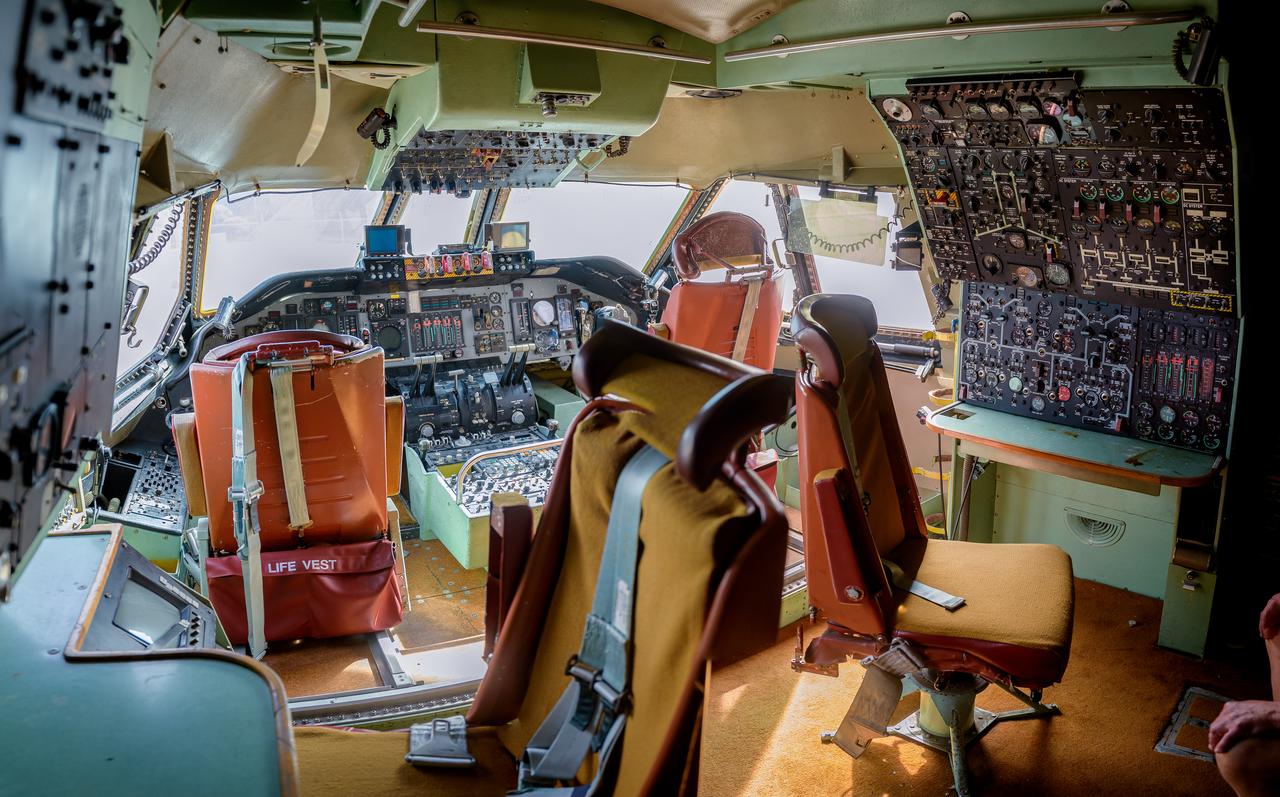
Photo composite (8 frames) of the flight deck of the modified C-141 Kuiper Airborne Observatory, (KAO) (NASA-714), with stations for the flight engineer, co-pilot, pilot, and navigator, who typically only flew on long overseas flights.
Kuiper Airborne Observatory (KAO) Demolition
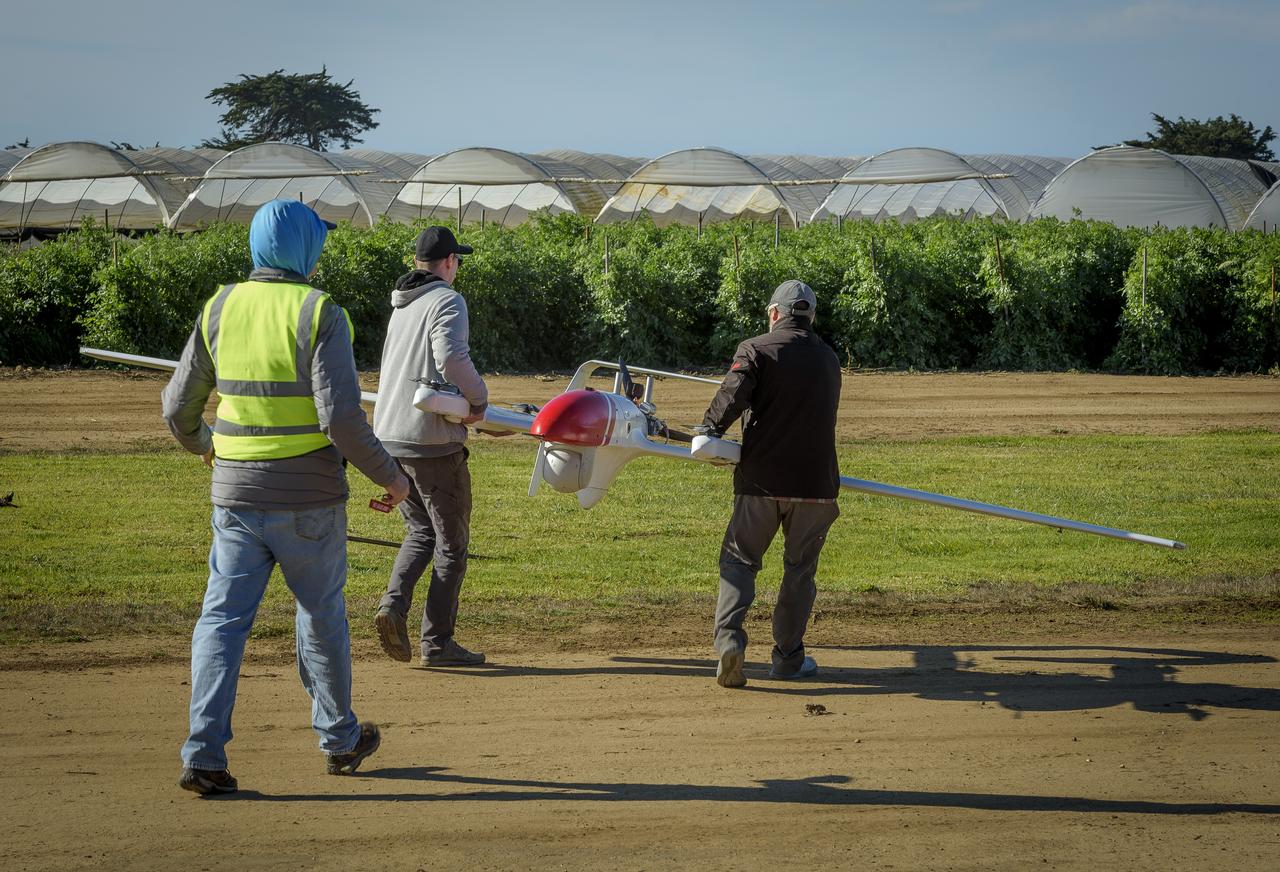
Richard Kolyer, left, with Jonas Jonsson guide the drone to land behind the modified C-141 Kuiper Airborne Observatory, (KAO) (NASA-714), on the N211 apron.
Kuiper Airborne Observatory (KAO) Demolition
Arno Rogg explains the Volatiles Investigating Polar Exploration Rover (VIPER) mission to visitors in the Multi-Mission Operations Center (MMOC), N240, during VIPER Family Day.
VIPER Family Day
Terry Fong, left, and Chris Provencher during the Volatiles Investigating Polar Exploration Rover (VIPER) vehicle operational readiness test in the Multi-Mission Operations Center (MMOC), N240A.
VIPER Vehicle Operational Readiness Test
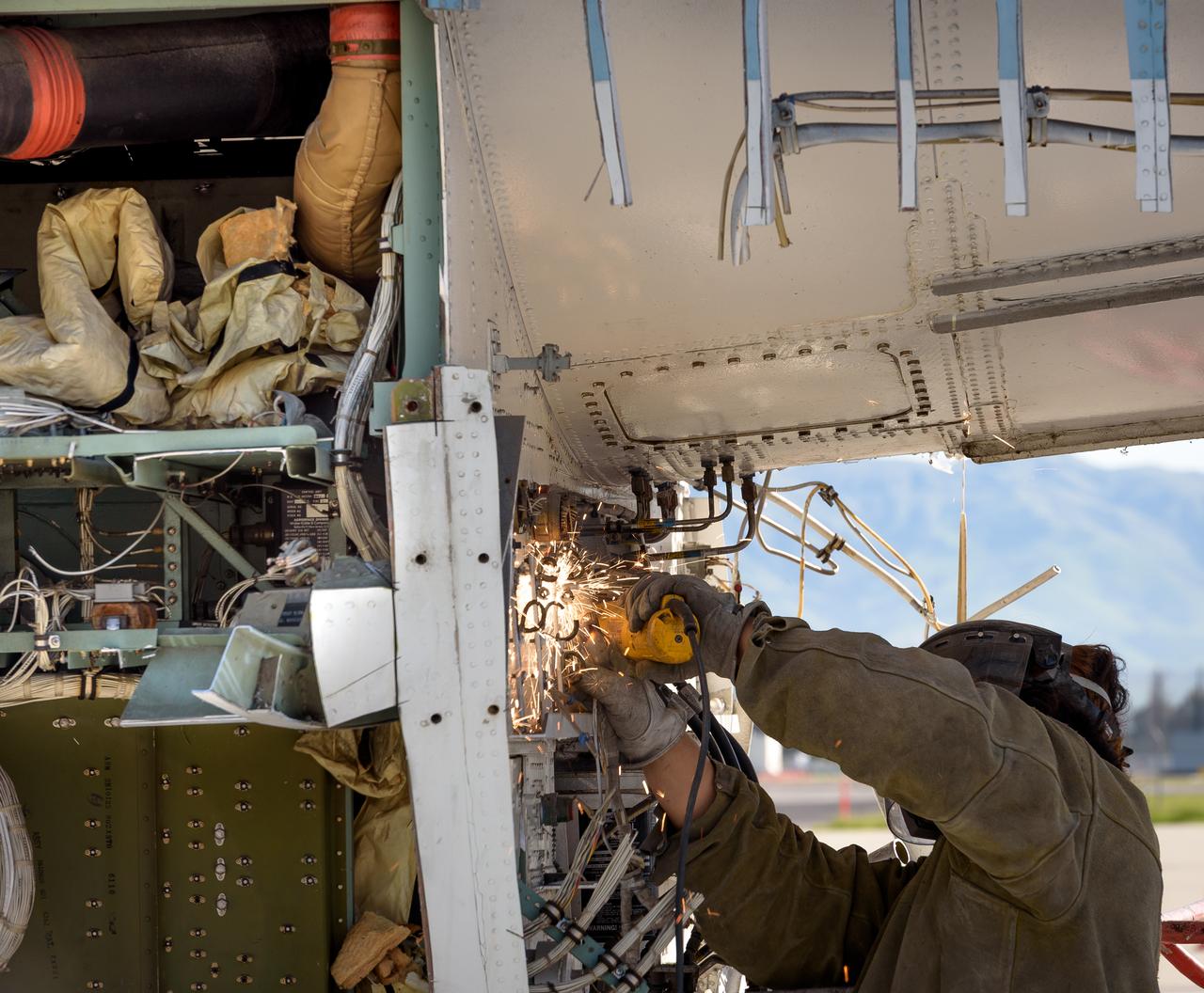
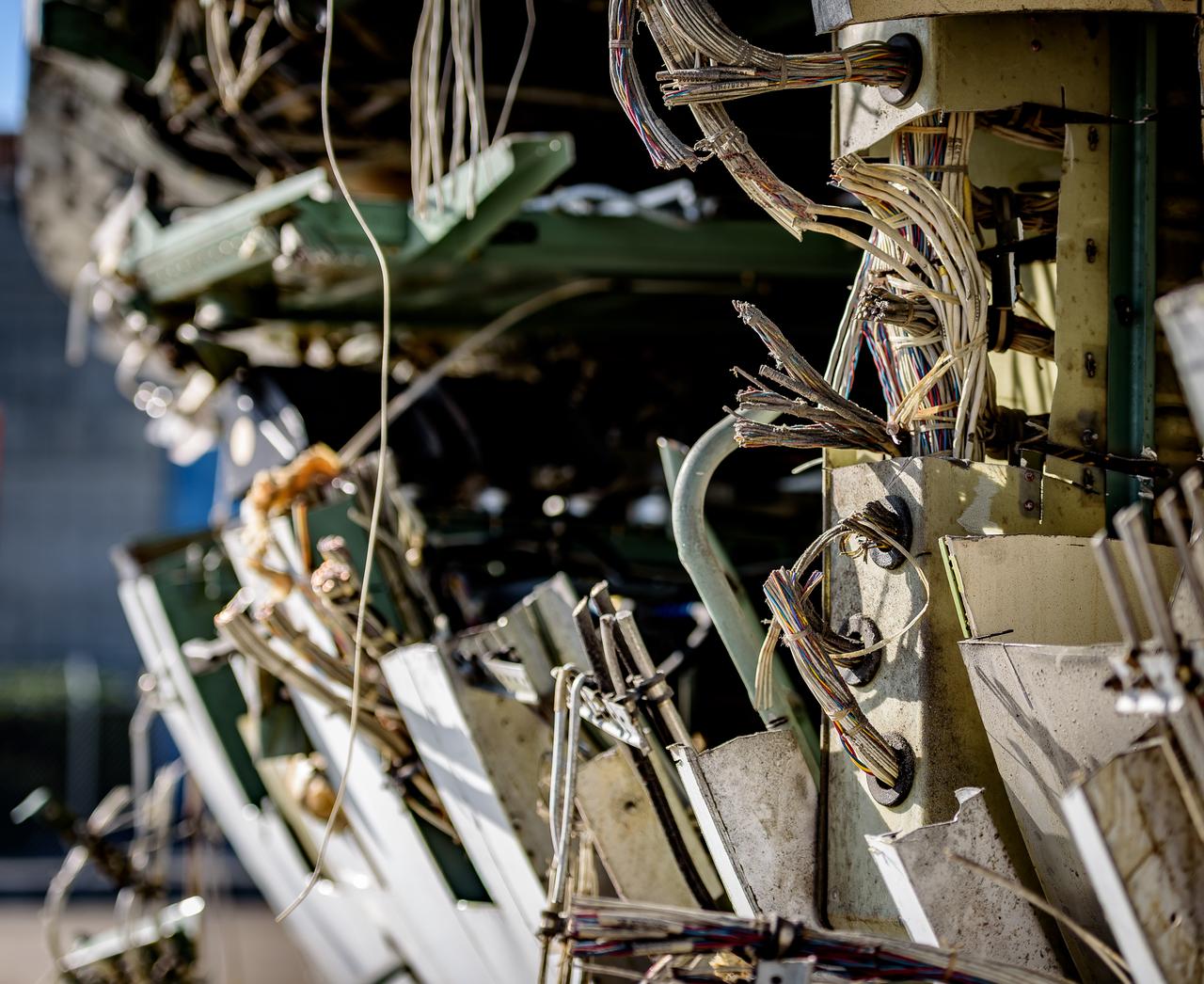
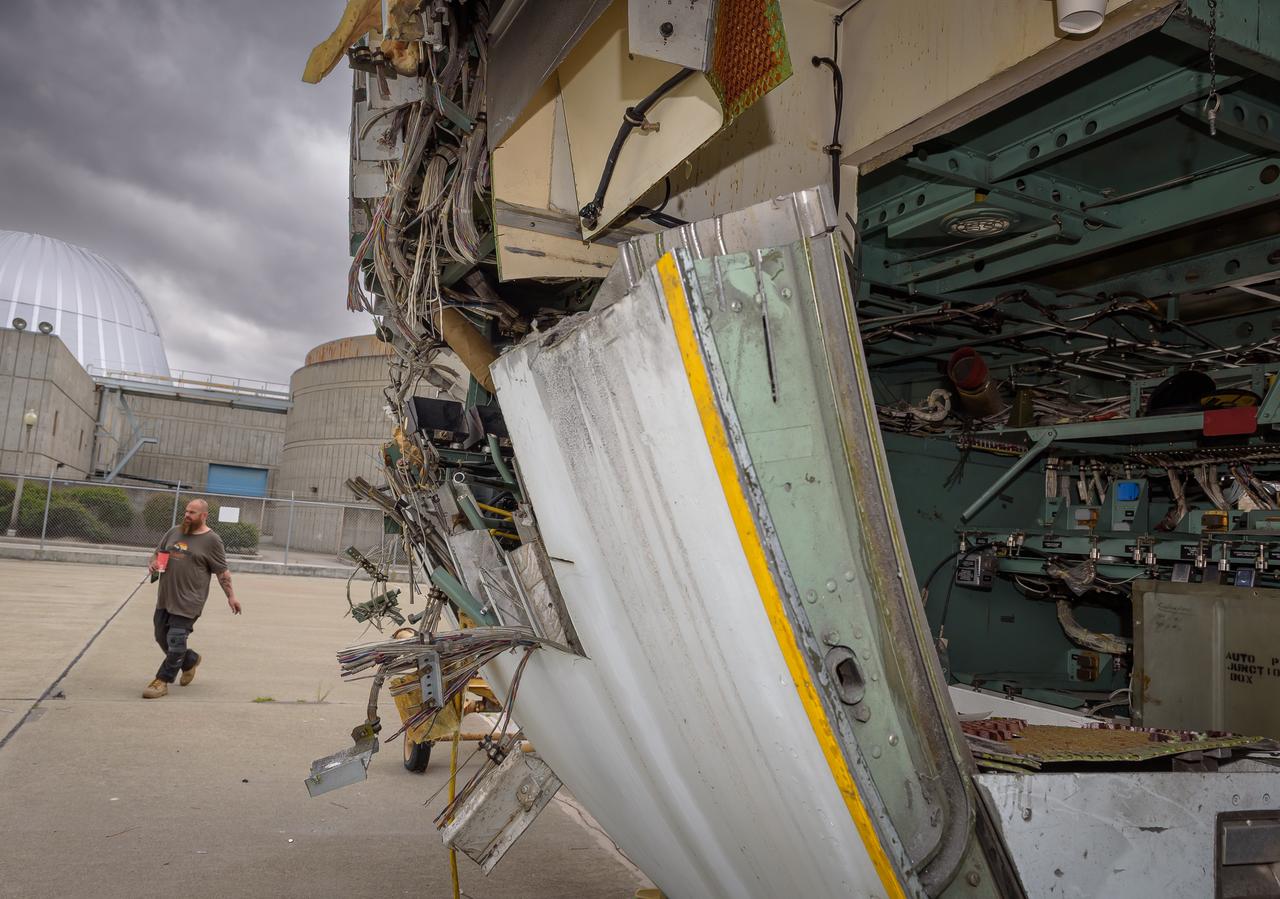
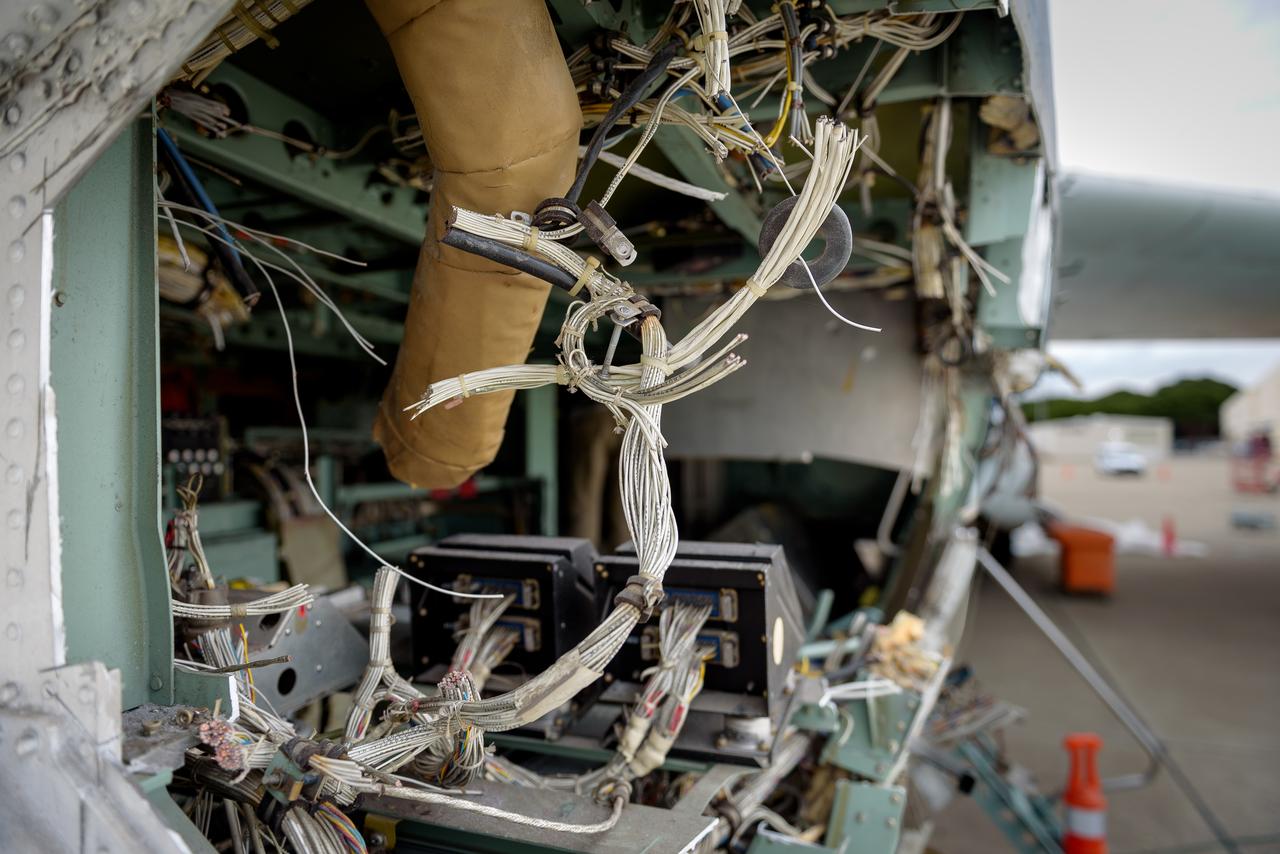
Cables in the modified C-141 Kuiper Airborne Observatory, (KAO) (NASA-714), severed prior to removing the cockpit on the N211 apron at Moffett Field, California.
Kuiper Airborne Observatory (KAO) Demolition
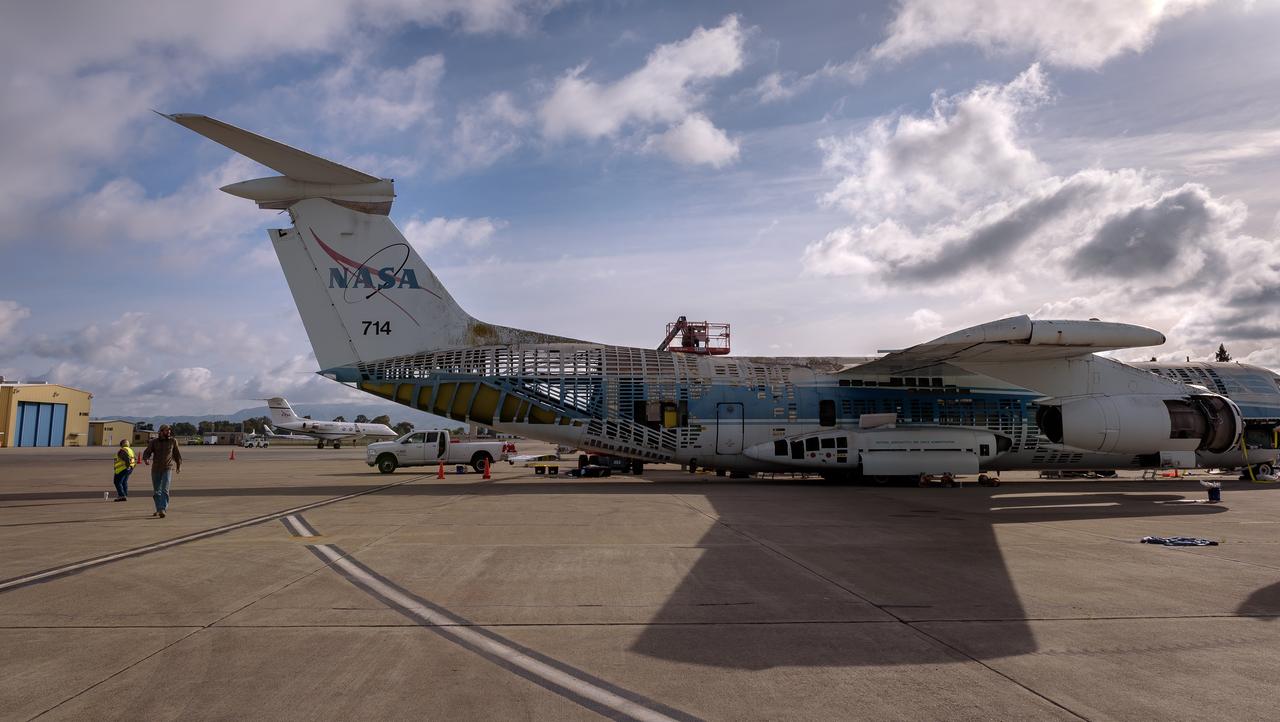
Aircraft demolition of the modified C-141 Kuiper Airborne Observatory, (KAO) (NASA-714), on the N211 apron at Moffett Field, California.
Kuiper Airborne Observatory (KAO) Demolition
Ames Center Director, Eugene Tu (Left) with Rosie Rios, the 43rd Treasurer of the United States explores how understanding our history will provide a clearer roadmap for understanding where the country's future is heading.  Presented by the Ames Women's Influence Network (WIN) and the Hispanic Advisory Committee for Employees (HACE) in the Syvertson Auditorium (N-201) at Ames Research Center. Eugene Tu, Ames Director with Rosie Rios
Rosie Rios, Presented by NASA WIN and HACE Advisory Groups.
Hans Thomas during the Volatiles Investigating Polar Exploration Rover (VIPER) vehicle operational readiness test in the Multi-Mission Operations Center (MMOC), N240A.
VIPER Vehicle Operational Readiness Test
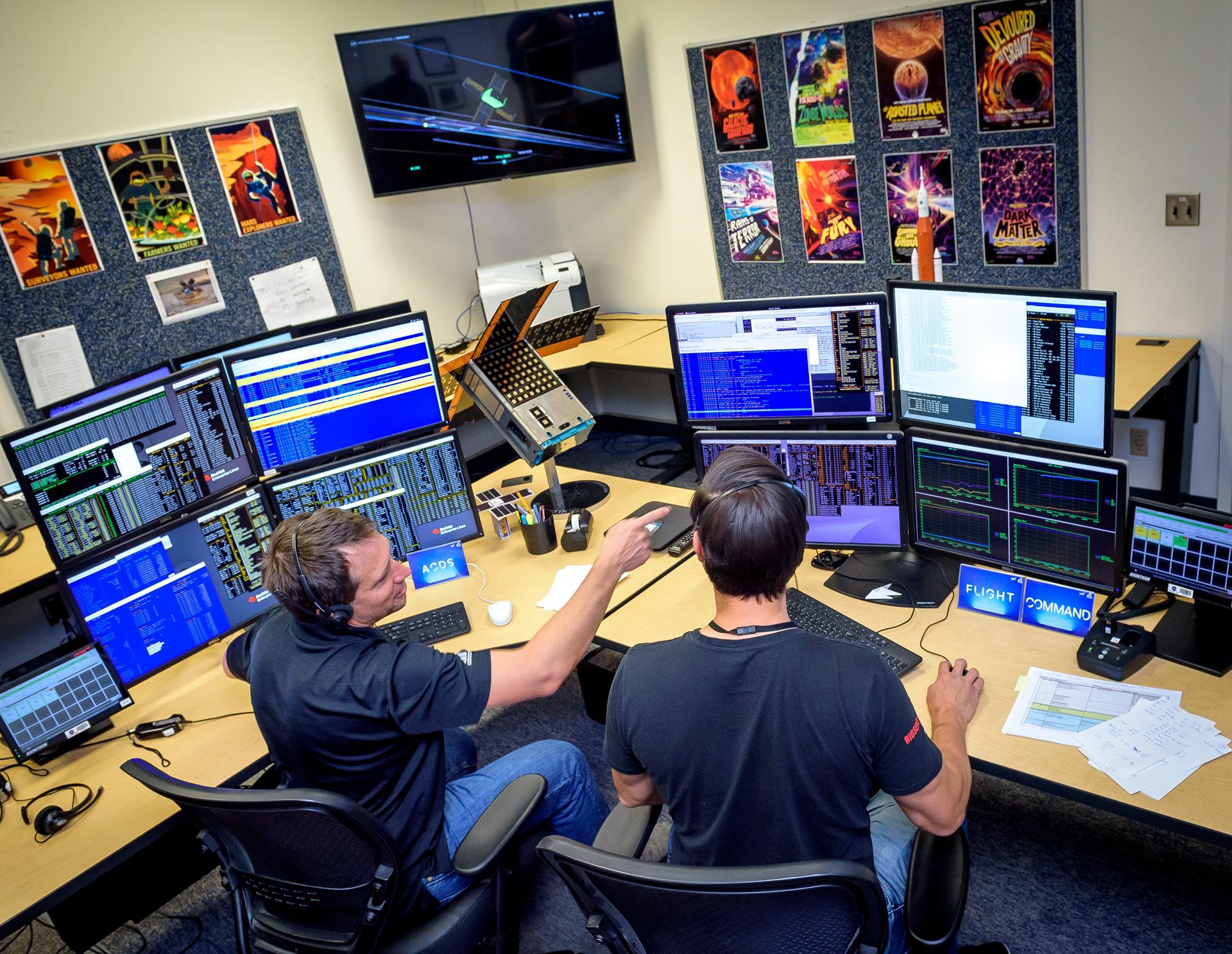
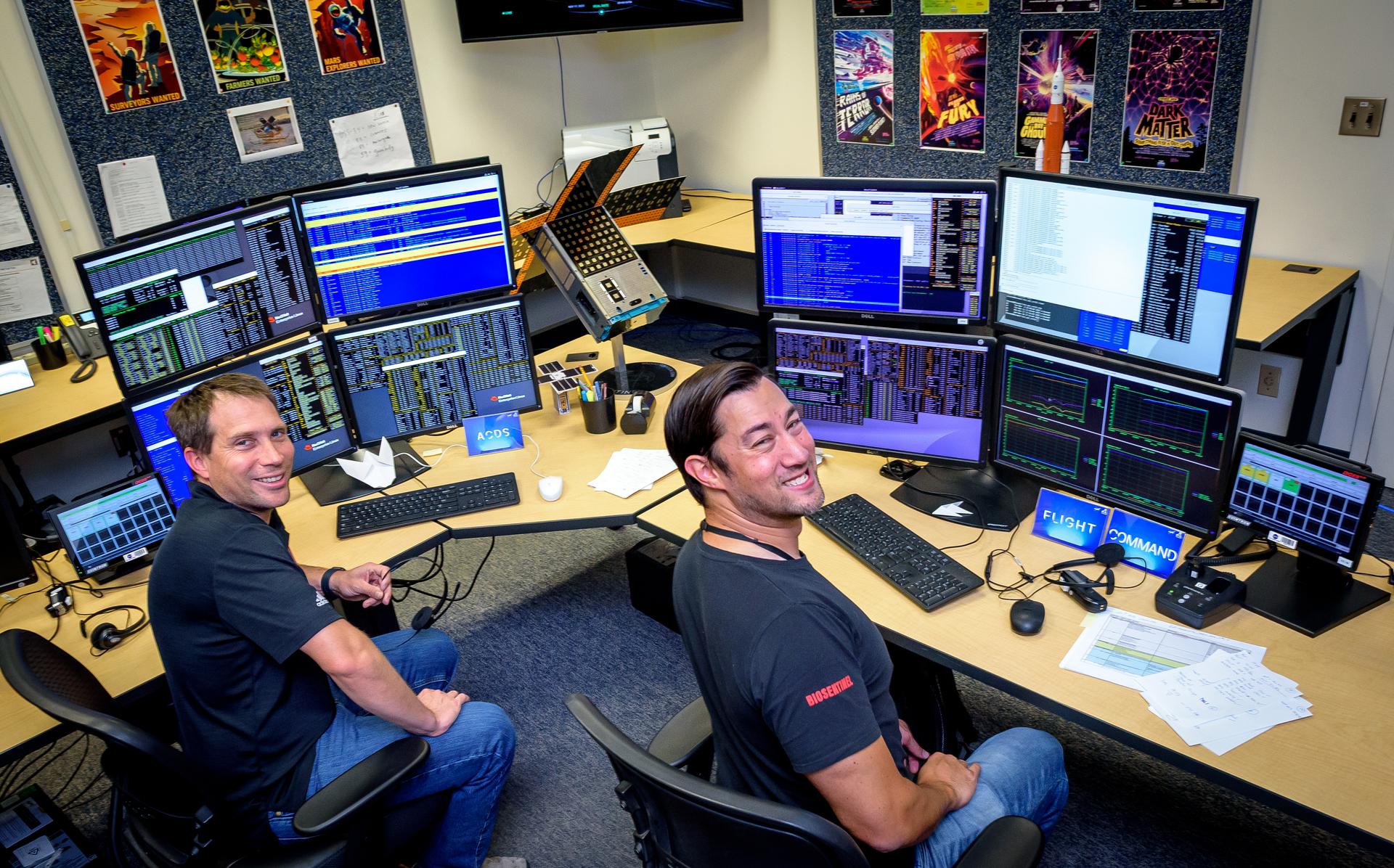
Jesse Fusco, left, and James Milsk at the BioSentinel command console in the Ames Multi-Mission Operations Center (MMOC), N240 Annex, Ceres control room 172, receiving spacecraft telemetry at the 3-year anniversary since launch on Artemis I.
BioSentinel - 3 Year Mission Milestone
Terry Fong during the Volatiles Investigating Polar Exploration Rover (VIPER) vehicle operational readiness test in the Multi-Mission Operations Center (MMOC), N240A.
VIPER Vehicle Operational Readiness Test
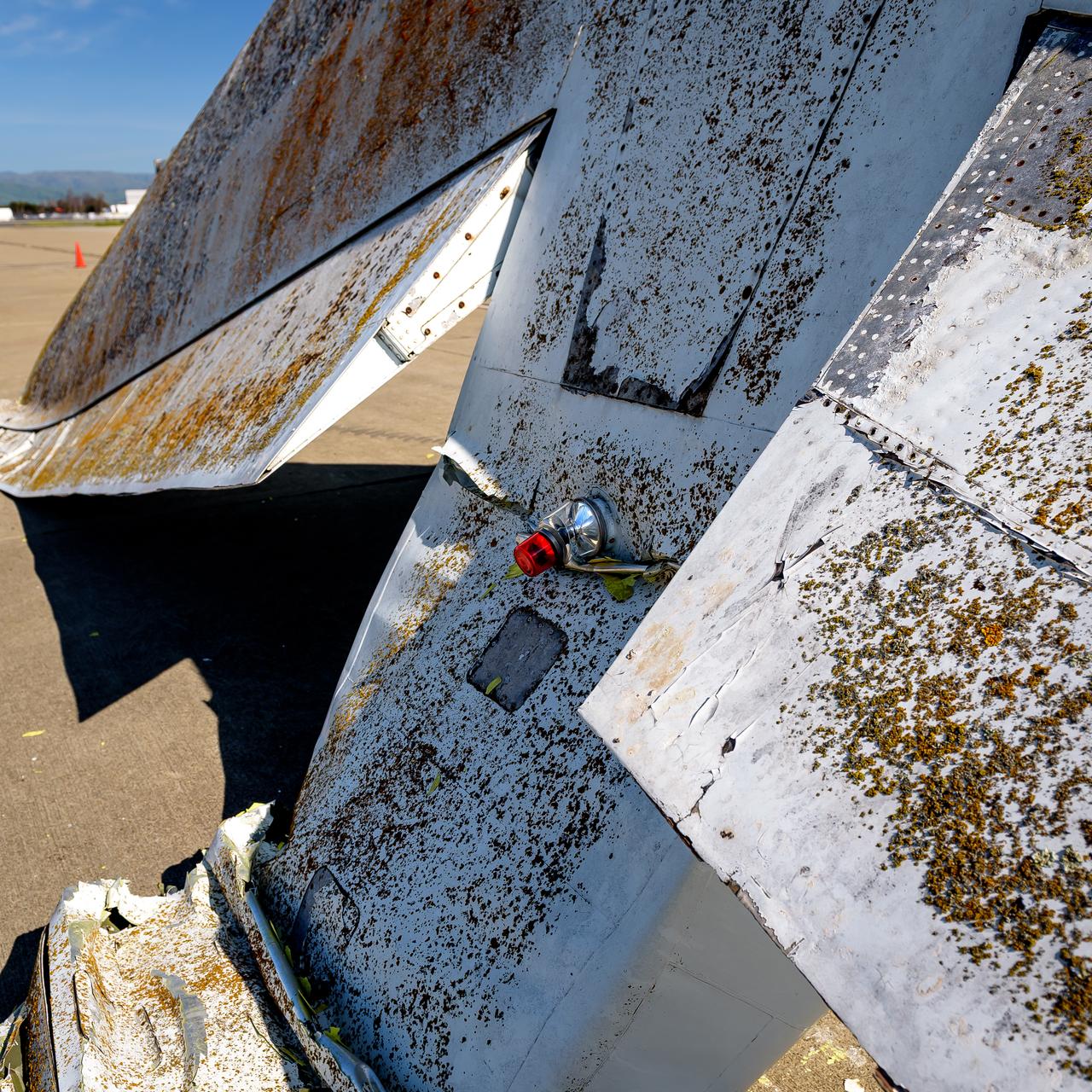
Close-up view of the tail section of the modified C-141 Kuiper Airborne Observatory, (KAO) (NASA-714), during its demolition on the N211 apron at Moffett Field, California.
Kuiper Airborne Observatory (KAO) Demolition
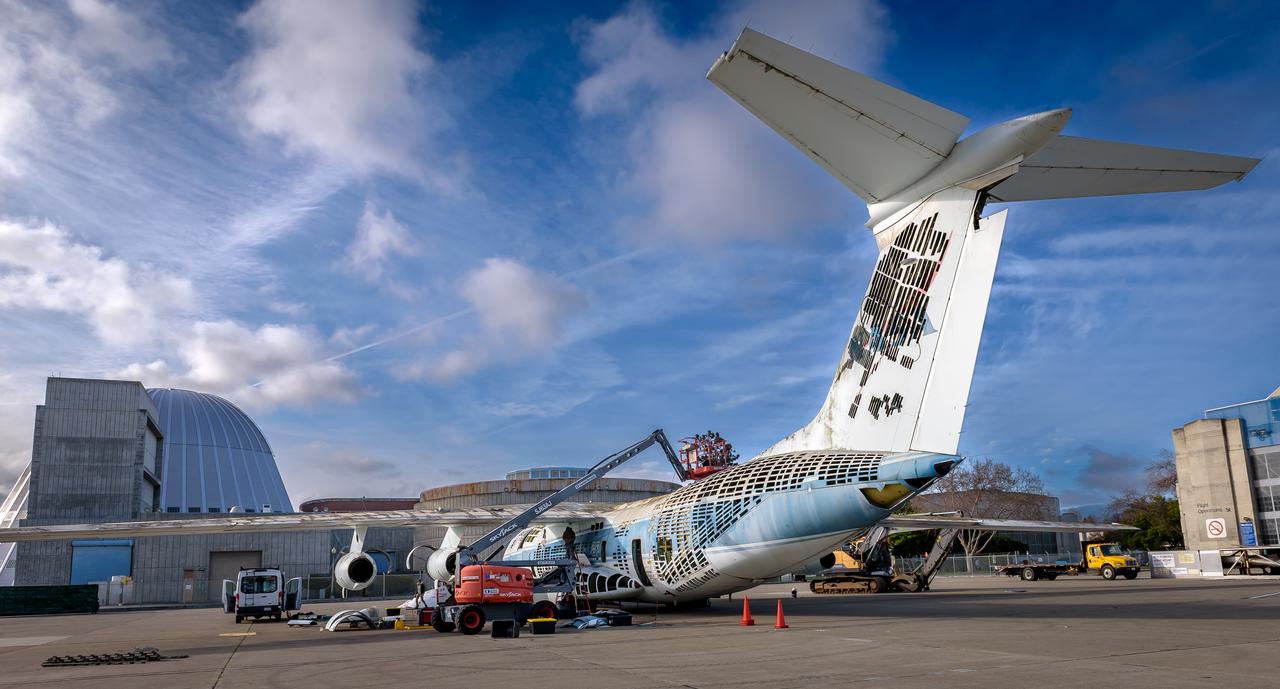
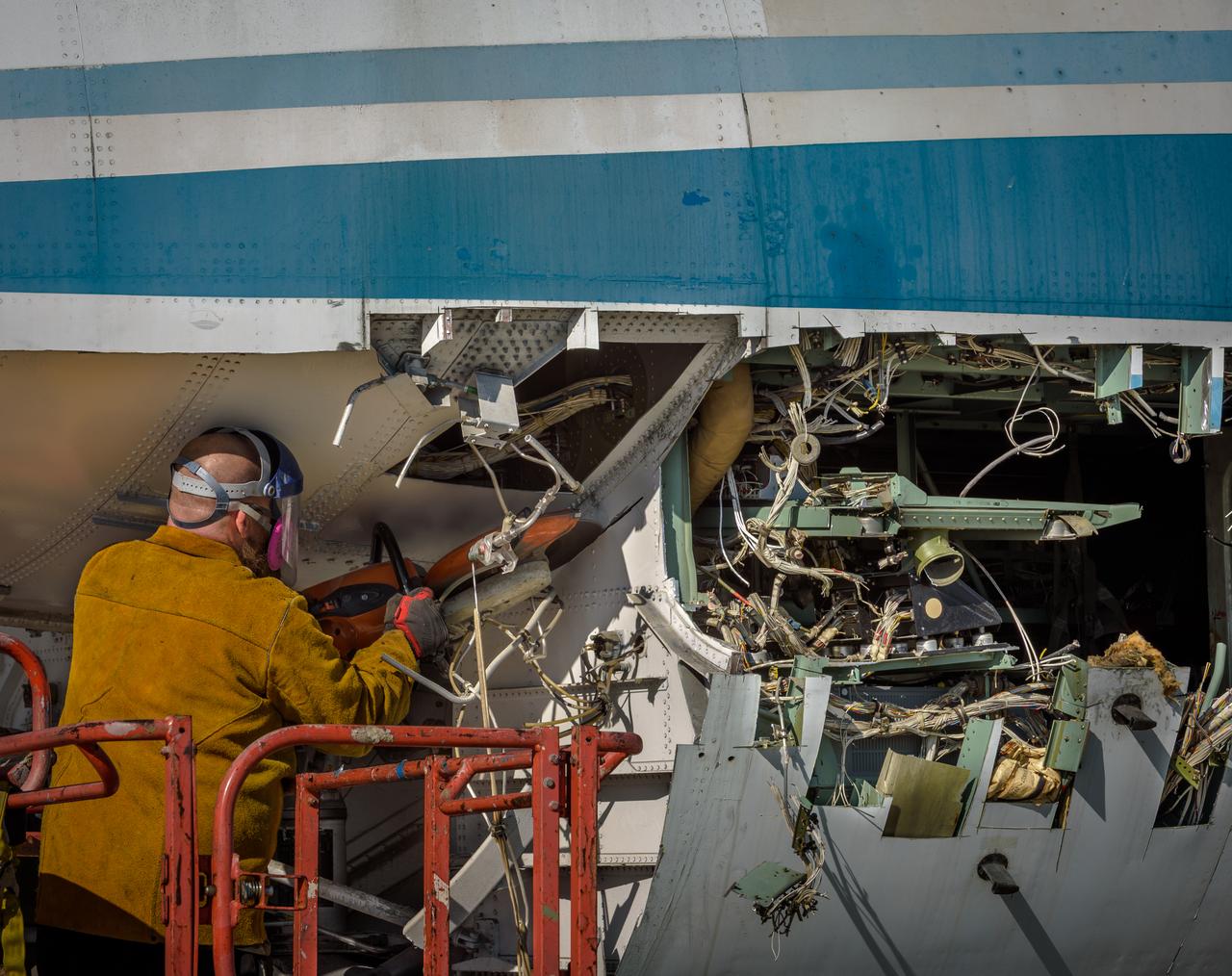
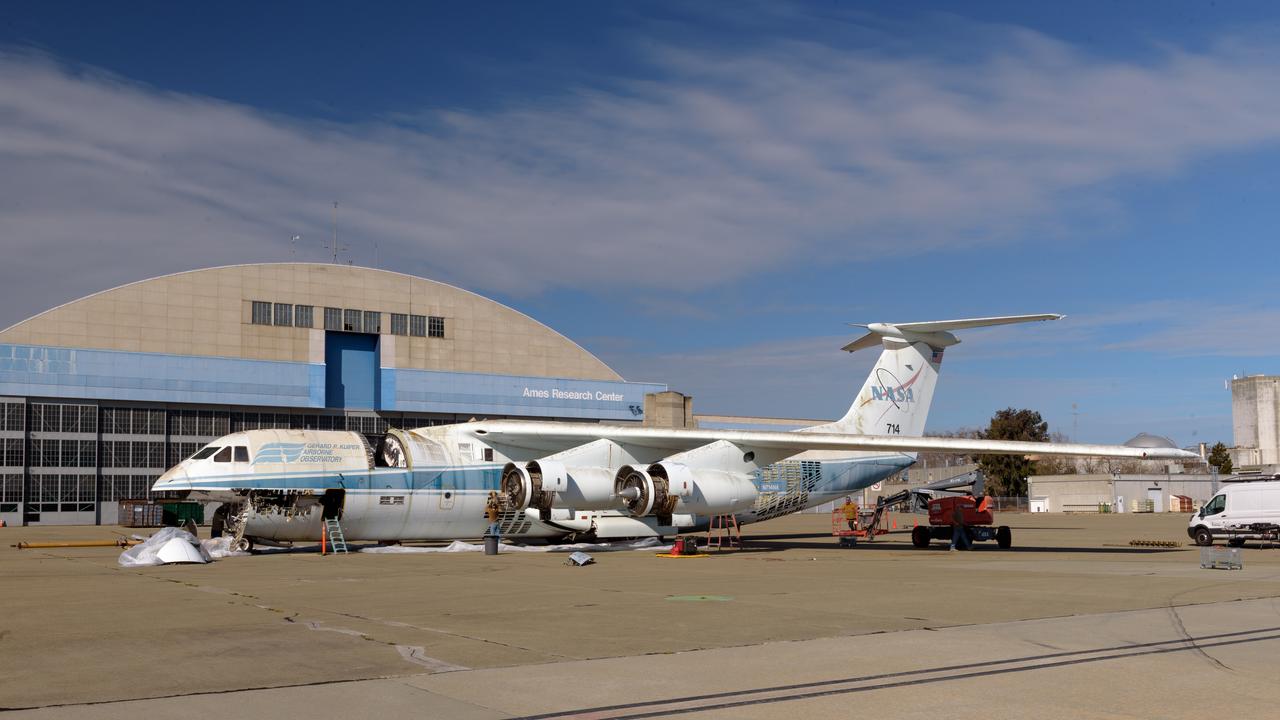
Removing the skin from the airframe of the modified C-141 Kuiper Airborne Observatory, (KAO) (NASA-714), on the N211 apron at Moffett Field, California.
Kuiper Airborne Observatory (KAO) Demolition
L3Harris FVR90 Unmanned Aerial Vehicle (UAV) lifts off from the Monterey Bay Academy Airport near Watsonville, California, during the Advanced Capabilities for Emergency Response Operations (ACERO) Shakedown Test as NASA researchers observe in the background.
Advanced Capabilities for Emergency Response Operations (ACERO)
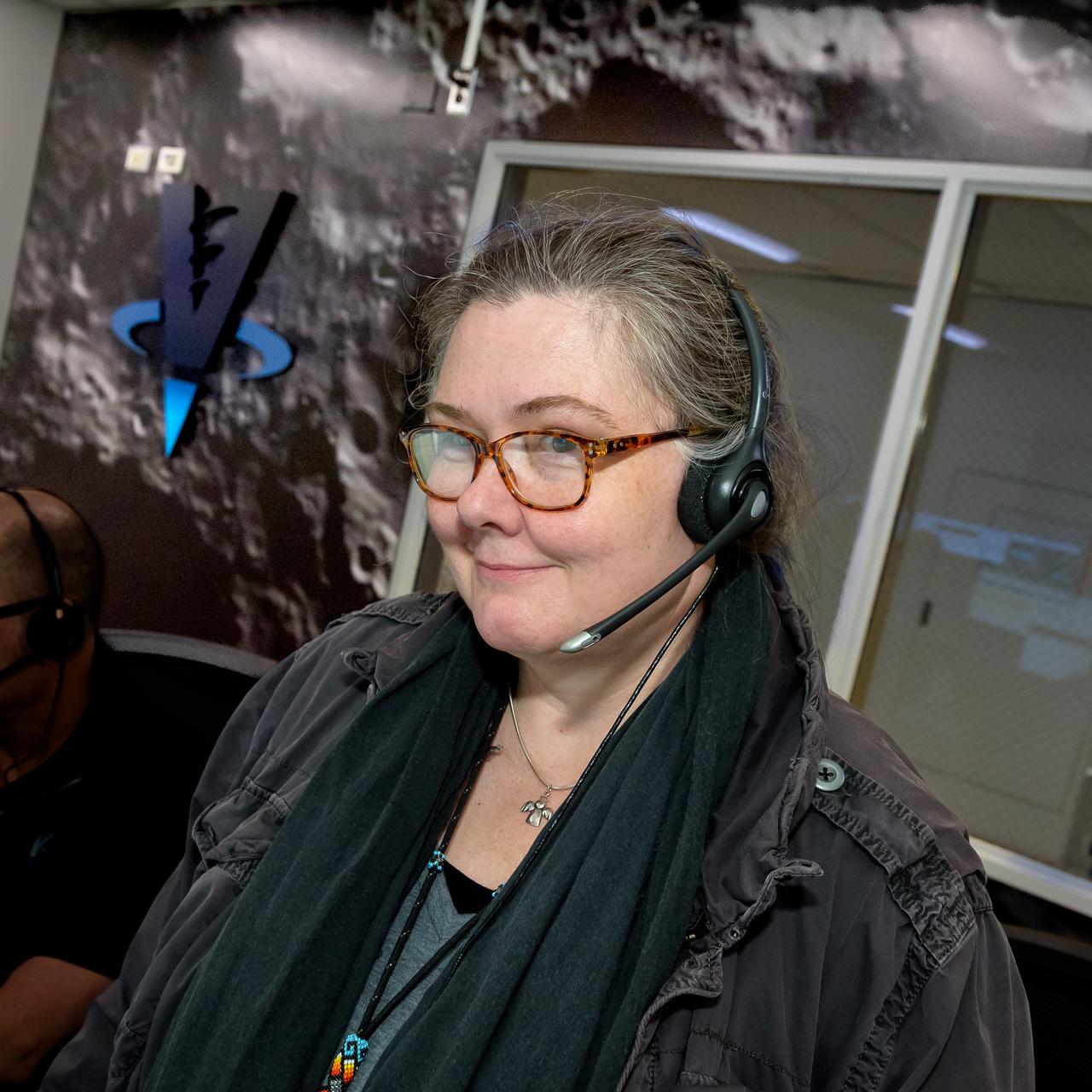
Location portrait of Rusty Hunt in the Multi-Mission Operations Center (MMOC), N240, for the Volatiles Investigating Polar Exploration Rover (VIPER) mission.
VIPER Family Day
Rusty Hunt during the Volatiles Investigating Polar Exploration Rover (VIPER) vehicle operational readiness test in the Multi-Mission Operations Center (MMOC), N240A.
VIPER Vehicle Operational Readiness Test
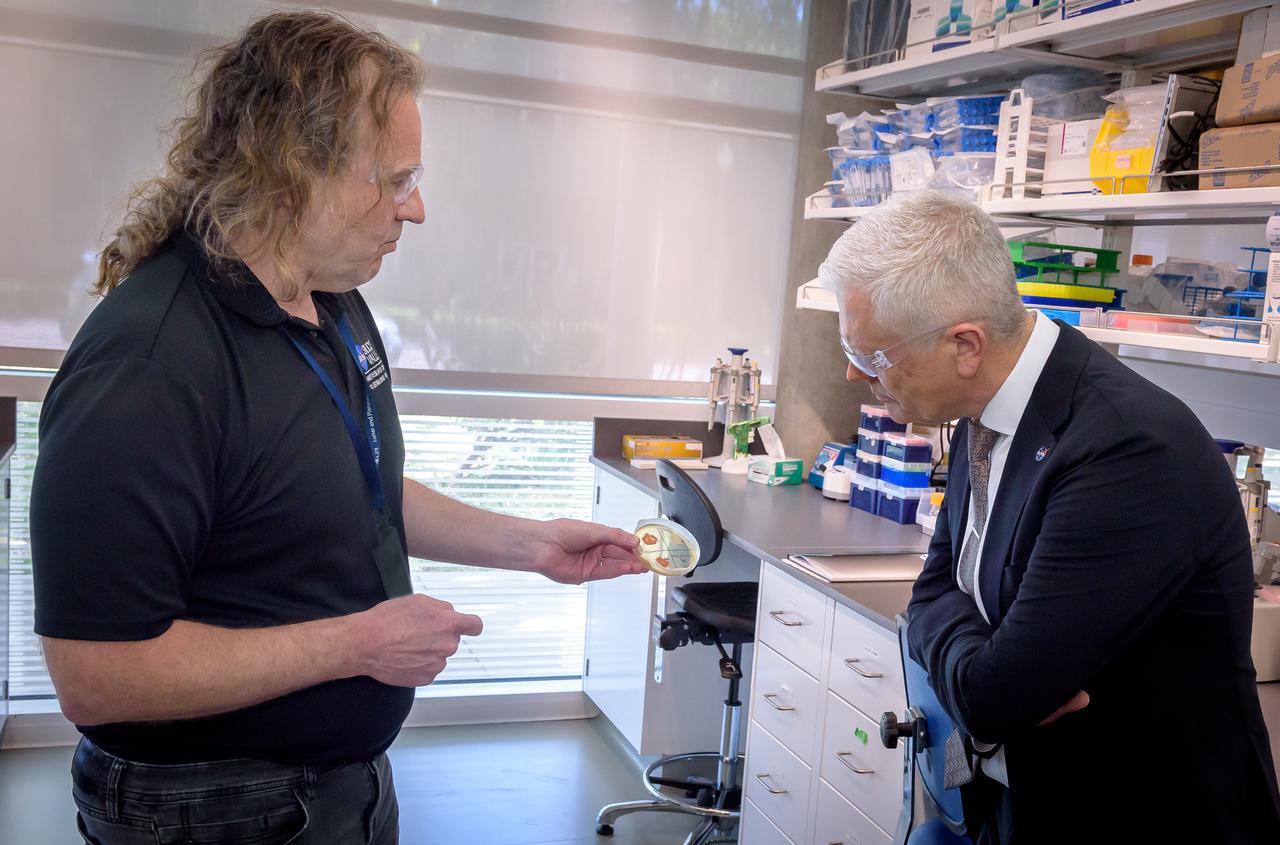
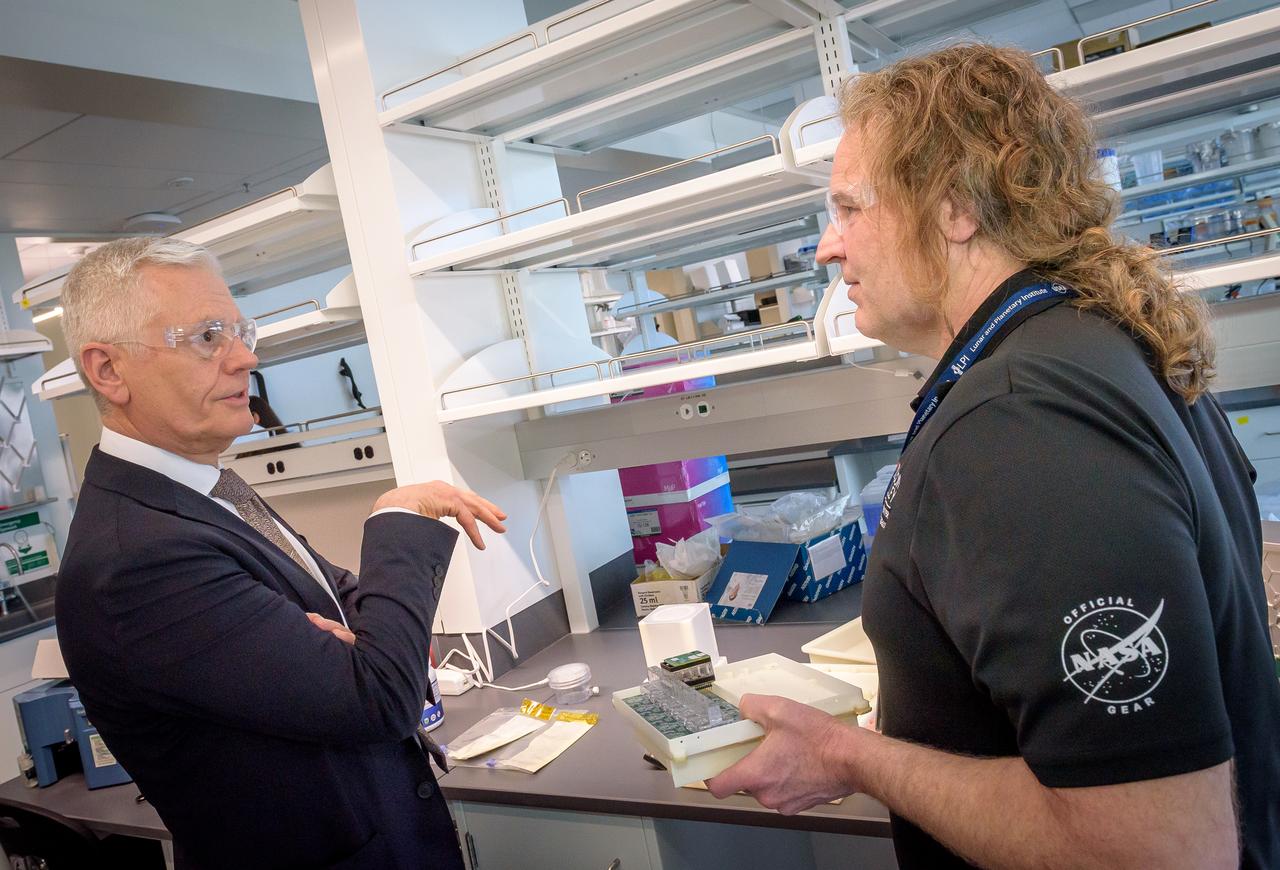
Director of Science Michael Hesse, right, presents an overview of Lunar Explorer Instrument for space biology Applications (LEIA) to Acting Deputy Associate Administrator (DAA) for the Science Mission Directorate (SMD) Mark Clampin in the Bioscience Collaborative Laboratory, N288.
Mark Clampin Tours the Bioscience Collaborative Laboratory
Sybil Adams during the Volatiles Investigating Polar Exploration Rover (VIPER) vehicle operational readiness test in the Multi-Mission Operations Center (MMOC), N240A.
VIPER Vehicle Operational Readiness Test
Cables in the modified C-141 Kuiper Airborne Observatory, (KAO) (NASA-714), severed prior to removing the cockpit on the N211 apron at Moffett Field, California.
Kuiper Airborne Observatory (KAO) Demolition
Thermophysics Facilities Branch Chief George Raiche, right, leads NASA astronauts Victor J. Glover, left, and Christina Koch through the Arc Jet Complex in N238.
Orion Astronauts Visit Ames Entry Systems and Technology Divisio
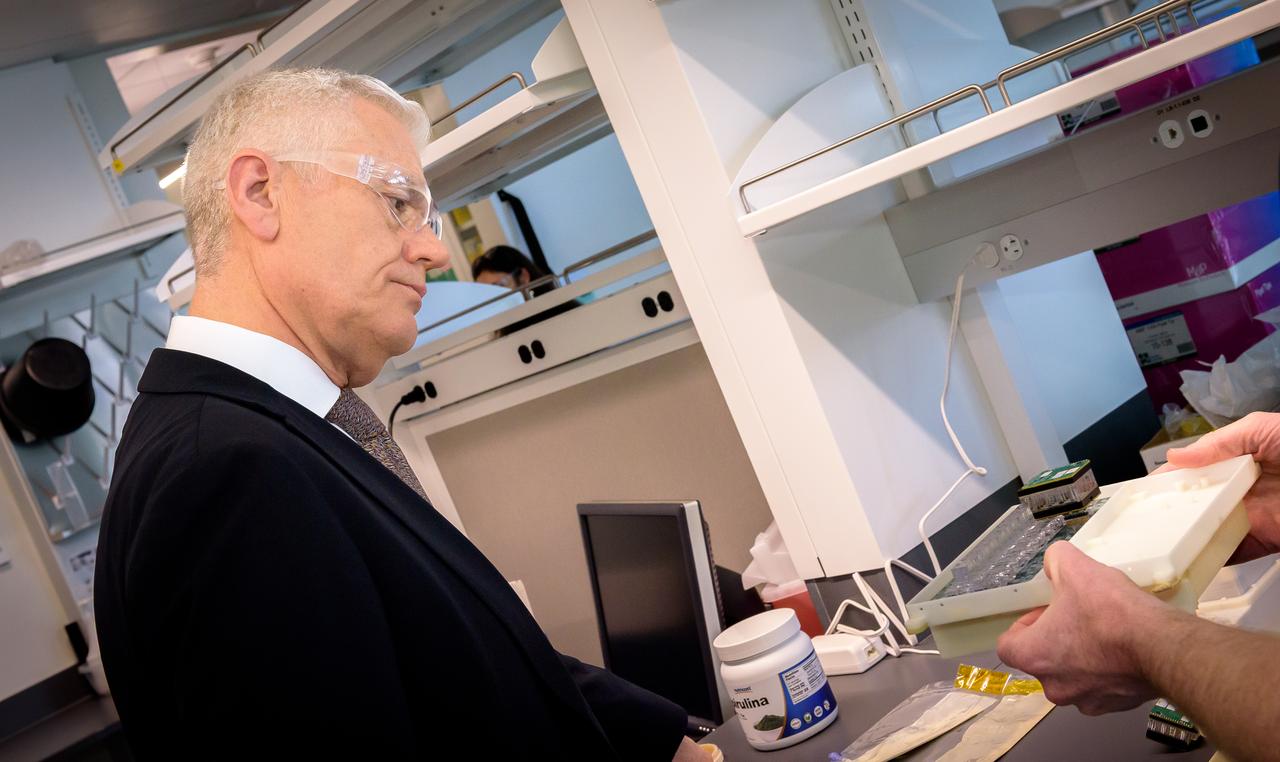
Acting Deputy Associate Administrator (DAA) for the Science Mission Directorate (SMD) Mark Clampin learns about the Lunar Explorer Instrument for space biology Applications (LEIA) the Bioscience Collaborative Laboratory, N288.
Mark Clampin Tours the Bioscience Collaborative Laboratory
The drone follows an autonomously defined path around the modified C-141 Kuiper Airborne Observatory, (KAO) (NASA-714), on the N211 apron.  The drone photographs the aircraft with a visible and infrared camera which are processed using a photogrammetry software package called Pix4D that converts them into a 3D model.  Scanning the aircraft is the first phase of documenting the aircraft demolition as well as an opportunity to train pilots to operate the Pix4D software.
Kuiper Airborne Observatory (KAO) Demolition
A Volvo Crawler Excavator severs the airframe, separating the tail section from the fuselage, of the modified C-141 Kuiper Airborne Observatory, (KAO) (NASA-714), on the N211 apron of Moffett Field, California.
Kuiper Airborne Observatory (KAO) Demolition
Cables in the modified C-141 Kuiper Airborne Observatory, (KAO) (NASA-714), severed prior to removing the cockpit on the N211 apron at Moffett Field, California.
Kuiper Airborne Observatory (KAO) Demolition
Victoria Moore outside the Volatiles Investigating Polar Exploration Rover (VIPER) vehicle operational readiness test in the Multi-Mission Operations Center (MMOC), N240A.
VIPER Vehicle Operational Readiness Test
Yellow straps are threaded through the airframe of the modified C-141 Kuiper Airborne Observatory, (KAO) (NASA-714), before removing the cockpit on the N211 apron at Moffett Field, California.
Kuiper Airborne Observatory (KAO) Demolition
TechEdSat-11 operator Malachi Mooney-Rivkin, in the Ames Multi-Mission Operations Center (MMOC), N240 Annex, Eros control room 162. Malachi monitors the spacecraft's status during the Exo-Brake “parachute” deployment.   The ExoBrake is a drag device that increases the total surface area of the spacecraft to assist with a quicker deorbit. This maneuver is deployed at the end of mission to satisfy NASA's deorbit requirement and prevent space debris. TechEdSat has spent the last several months coordinating with NASA’s Conjunction Assessment Risk Analysis (CARA) team to ensure the spacecraft can safely deploy the ExoBrake without colliding into any other objects.
TechEdSat-11 Deploys the ExoBrake
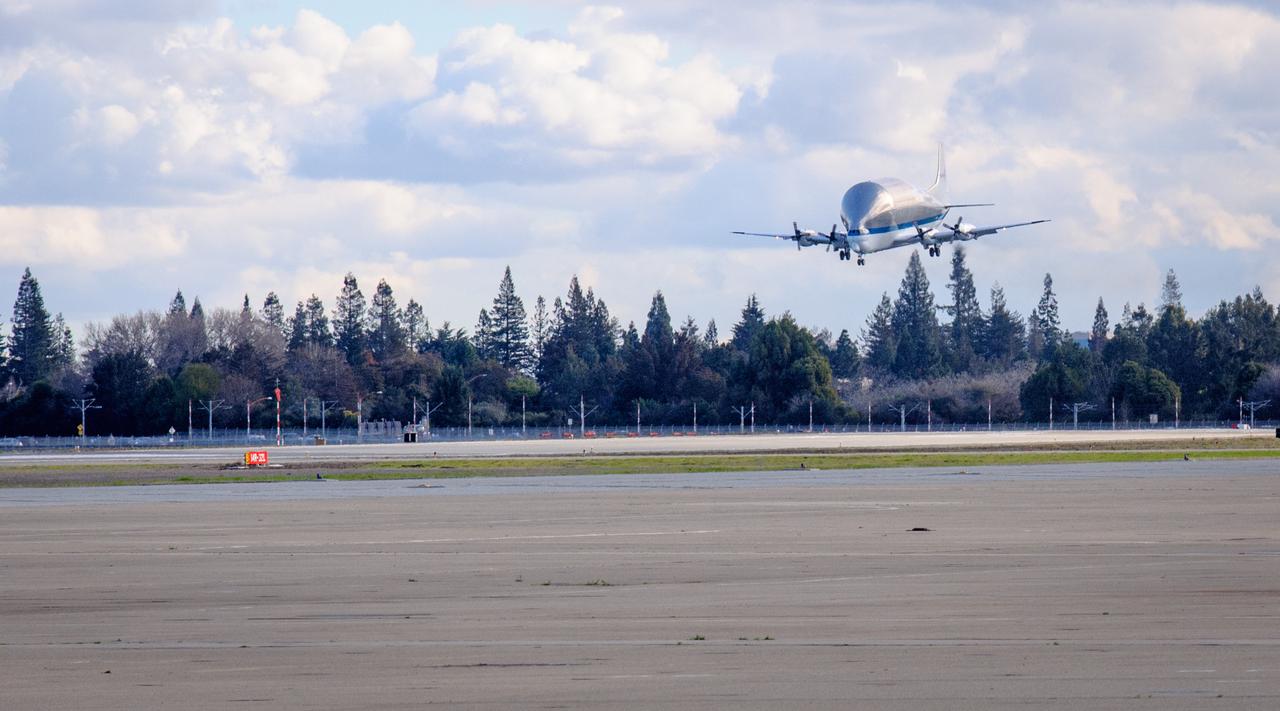
NASA N941NA Superguppy lands at the Moffett Field.  Cargo is loaded into the Super Guppy when the aircraft's "fold-away" nose rotates 110 degrees to the left, allowing unobstructed access to the 25 foot diameter fuselage.
NASAs B377SGT Super Guppy Turbine Cargo Airplane lands at Moffett Field at NASA Ames.
Kaden Jeppsen during the Volatiles Investigating Polar Exploration Rover (VIPER) vehicle operational readiness test in the Multi-Mission Operations Center (MMOC), N240A.
VIPER Vehicle Operational Readiness Test
Loretta Falcone during the Volatiles Investigating Polar Exploration Rover (VIPER) vehicle operational readiness test in the Multi-Mission Operations Center (MMOC), N240A.
VIPER Vehicle Operational Readiness Test
Jesse Fusco, left, and James Milsk at the BioSentinel command console in the Ames Multi-Mission Operations Center (MMOC), N240 Annex, Ceres control room 172, receiving spacecraft telemetry at the 3-year anniversary since launch on Artemis I.
BioSentinel - 3 Year Mission Milestone
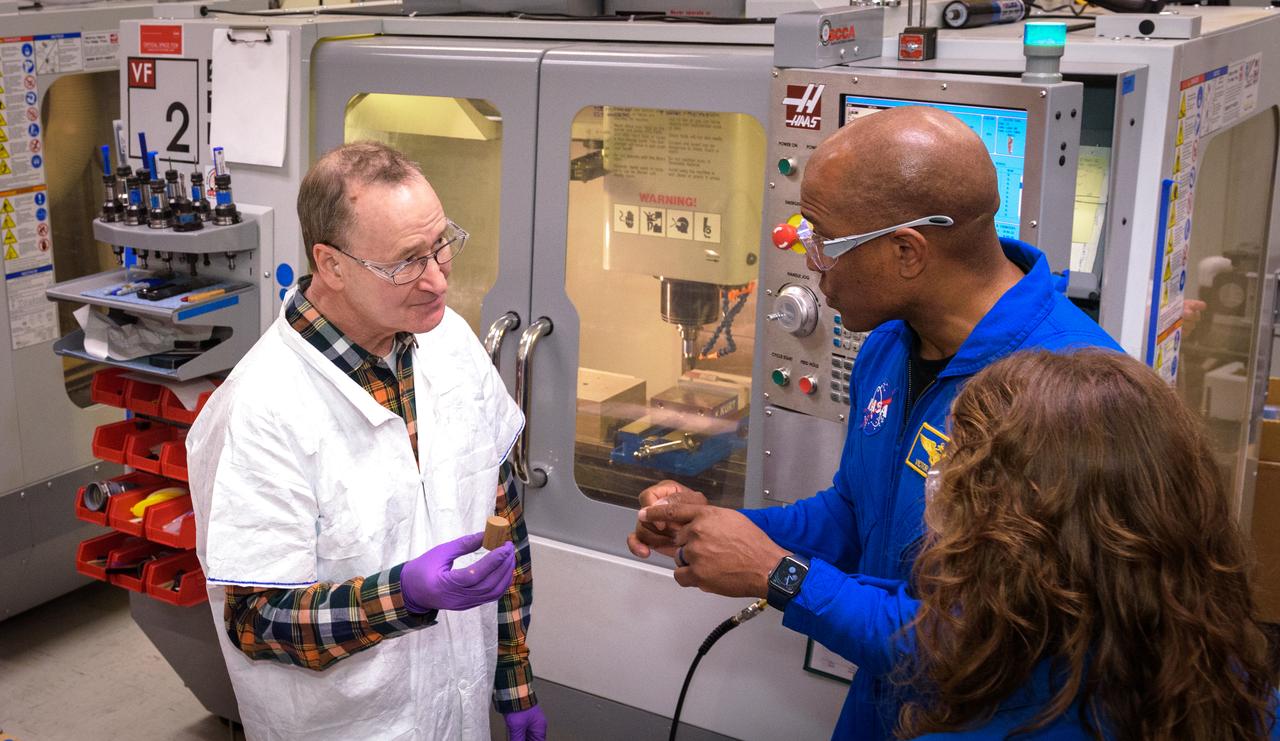
NASA Astronaut Christina Koch, left, holds a test sample for Victor J. Glover to photograph.  The sample is a half-inch steel plate with a hole that was drilled by a 12-second burst from a 30kW laser in the Laser Enhanced Arc Jet Facility (LEAF) laboratory, N238.
Orion Astronauts Visit Ames Entry Systems and Technology Divisio
The cockpit of the modified C-141 Kuiper Airborne Observatory, (KAO) (NASA-714), is separated from the airframe on the N211 apron at Moffett Field, California.
Kuiper Airborne Observatory (KAO) Demolition
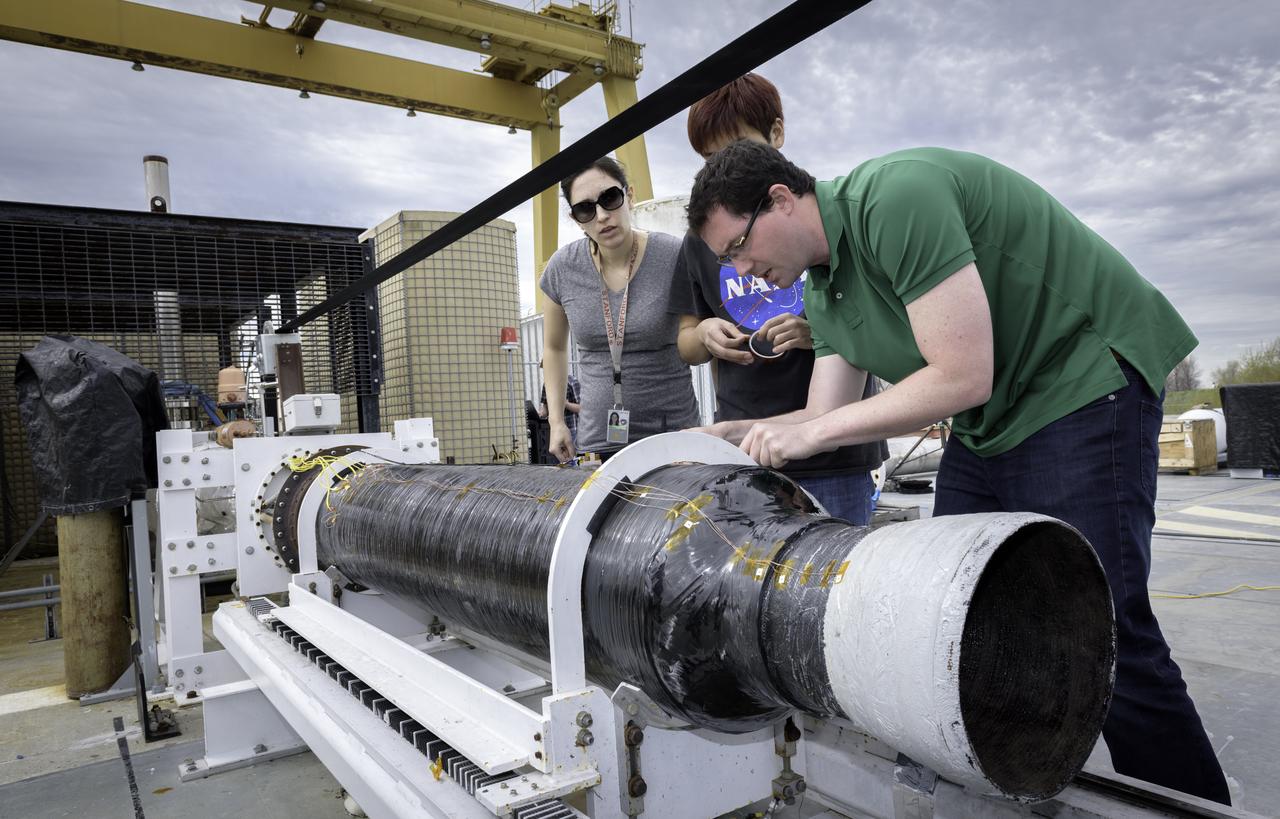
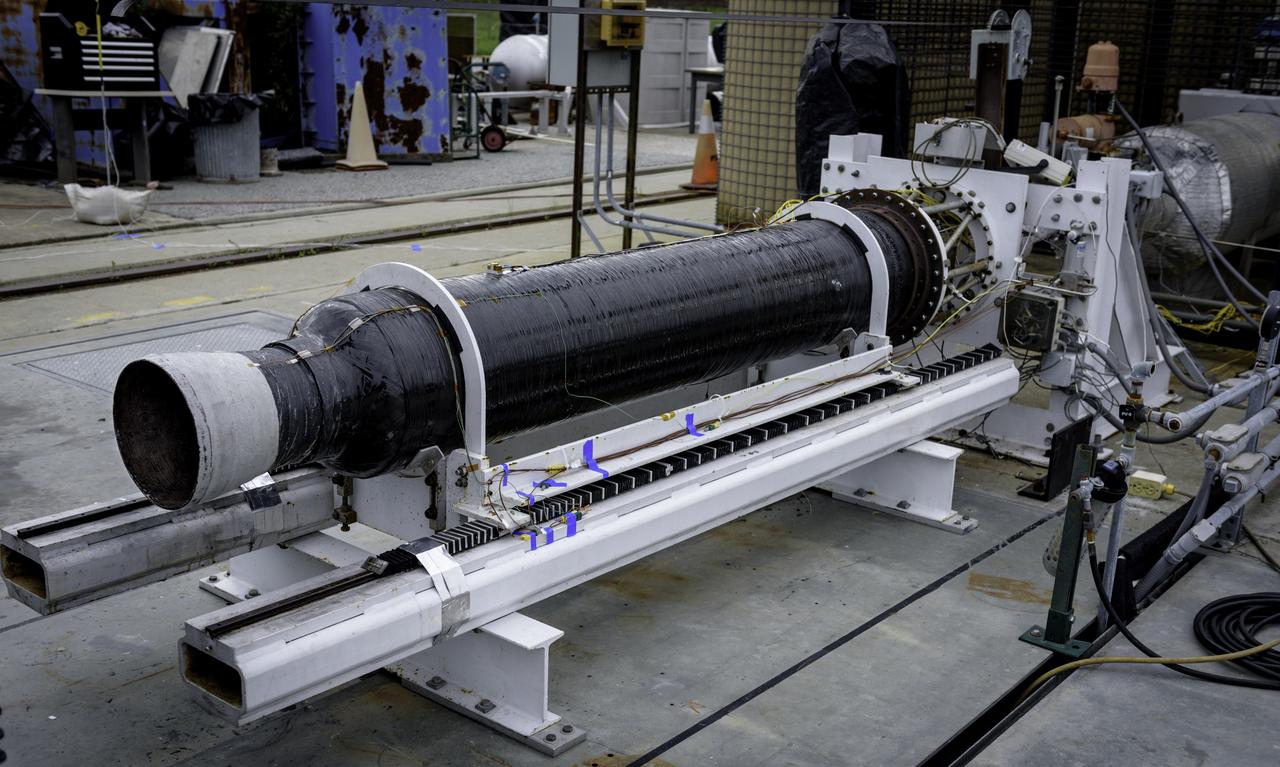
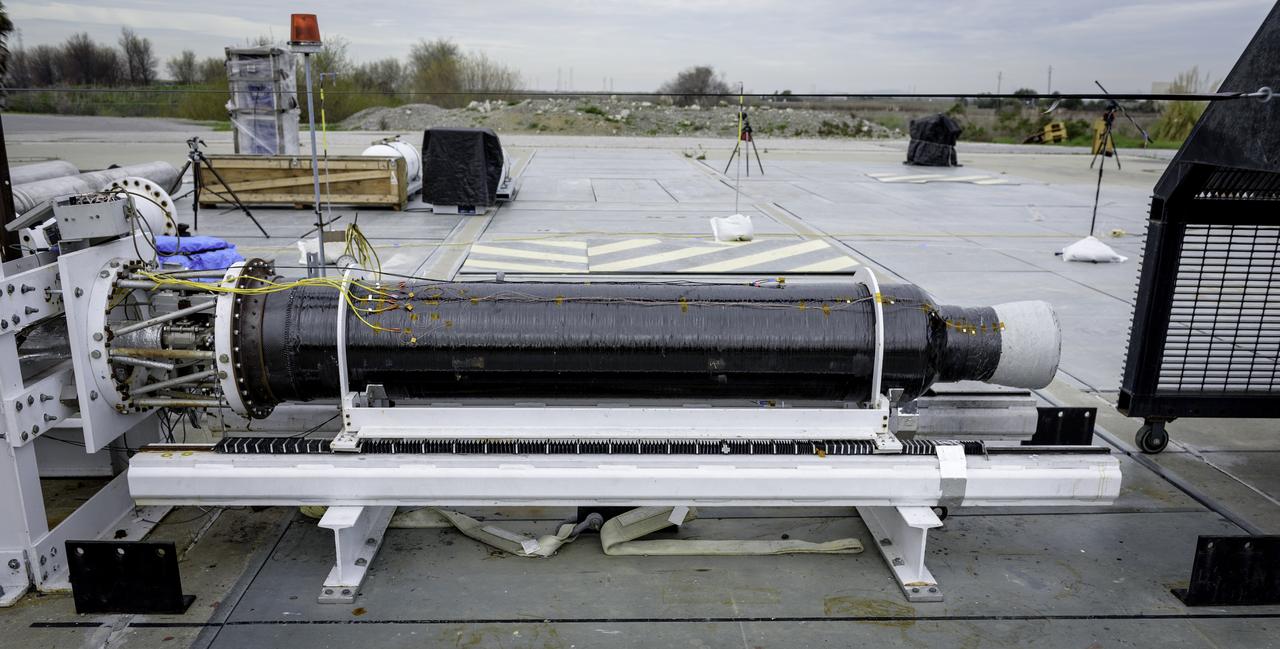
Ashley Karp, NASA JPL (Left) and Hunjoo Kim, NASA JPL (Right) attaching heat sensors the Peregrine Hybrid Rocket Engine prior to its test at the Outdoor Aerodynamic Research Facility (OARF, N-249) at NASA's Ames Research Center.
Peregrine Rocket Motor Test at the Ames Outdoor Aerodynamic Research Facility (OARF).
Jack Boyd (Left) with Rosie Rios, the 43rd Treasurer of the United States explores how understanding our history will provide a clearer roadmap for understanding where the country's future is heading.  Presented by the Ames Women's Influence Network (WIN) and the Hispanic Advisory Committee for Employees (HACE) in the Syvertson Auditorium (N-201) at Ames Research Center. Jack Boyd with Rosie Rios
Rosie Rios, Presented by NASA WIN and HACE Advisory Groups.
NASA astronauts Christina Koch, left, Victor J. Glover,  Matt Switzer, Orion Deputy Program Manager Debbie Korth, and Margaret Stackpoole.
Orion Astronauts Visit Ames Entry Systems and Technology Divisio
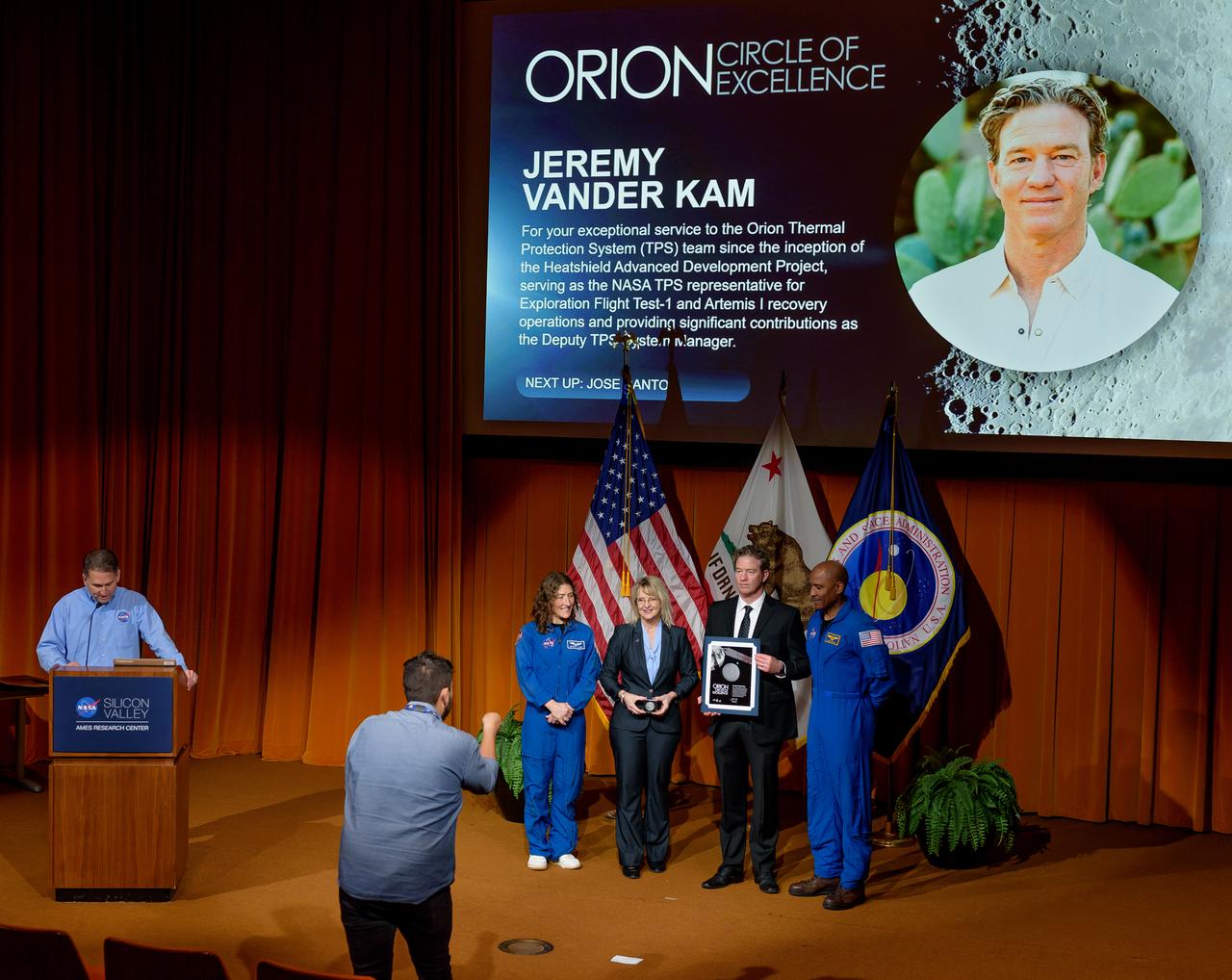
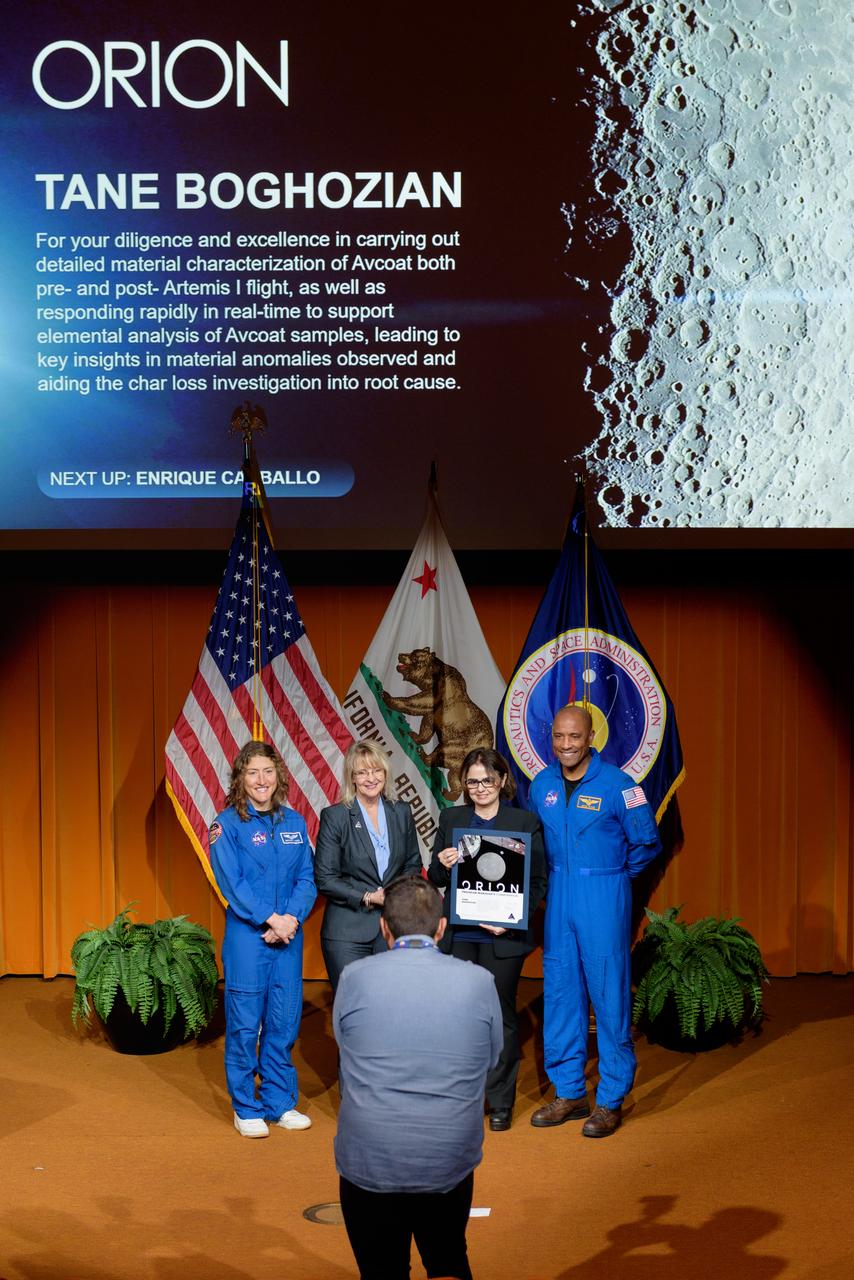
NASA Ames staff photographer Brandon Torres Navarette, front, photographs Orion Circle of Excellence Award being presented to Jeremy Vander Kam (ACD25-0023-001), center, by Orion Deputy Program Manager Debbie Korth, left, NASA astronauts Victor J. Glover, right, and Christina Koch, left.  Luis Saucedo is the master of the ceremonies at the podium on the far left, in the Syvertson Auditorium, N201.
Orion Astronauts Visit Ames Entry Systems and Technology Divisio
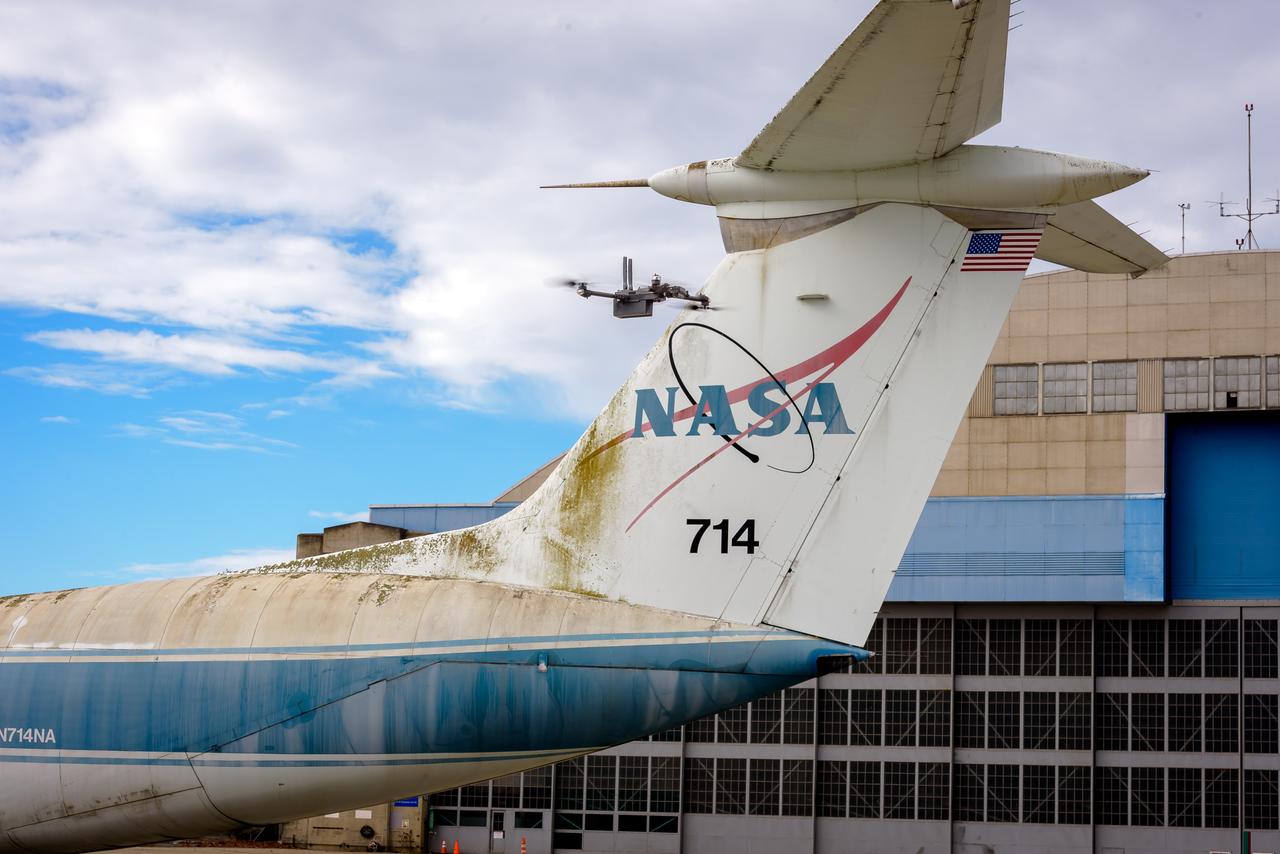
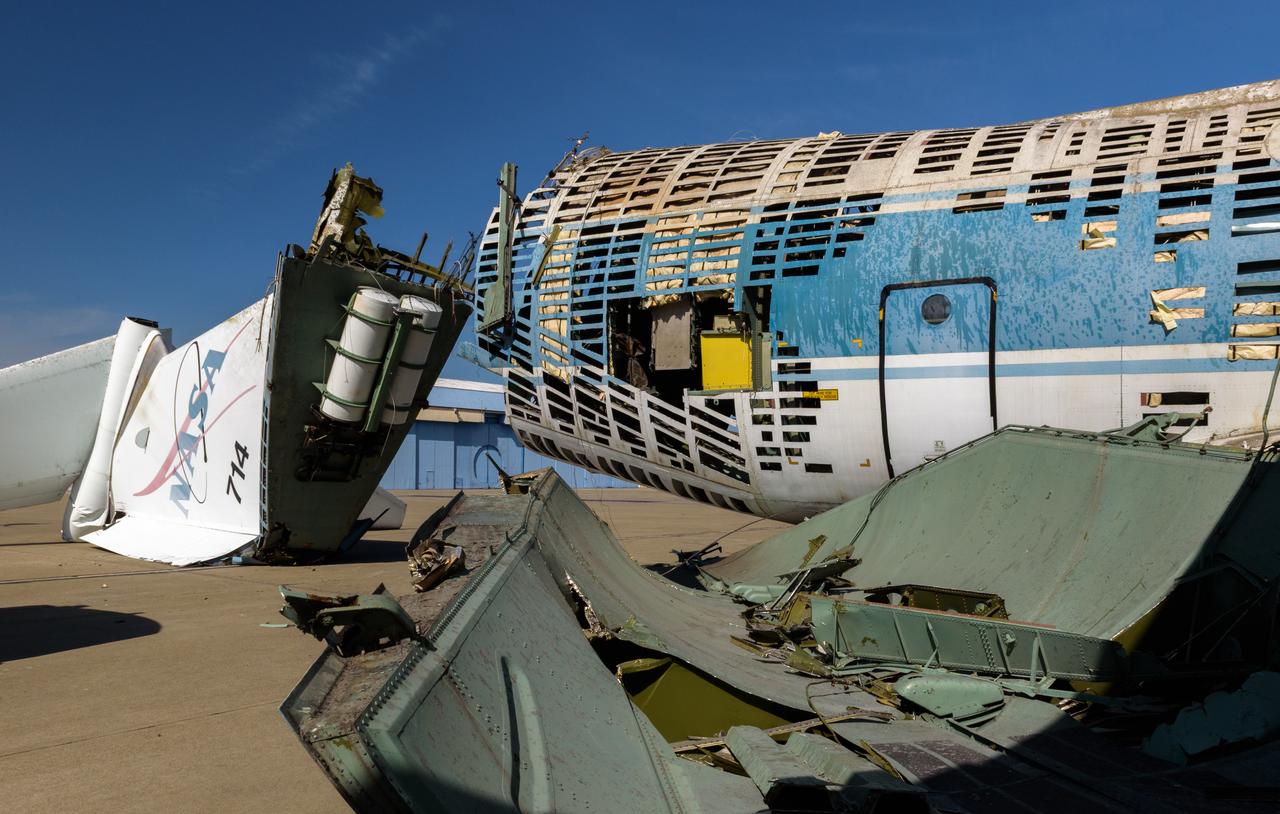
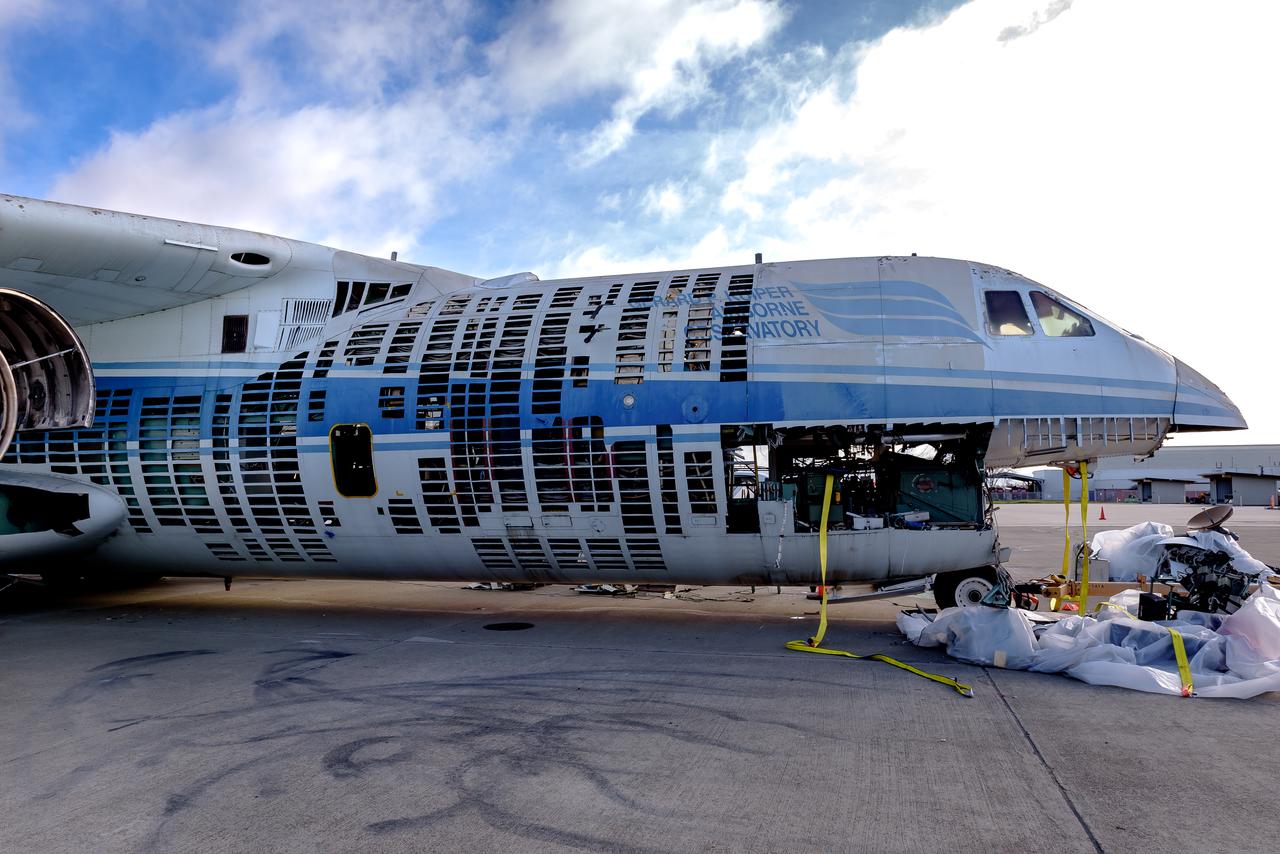
The tail section of the modified C-141 Kuiper Airborne Observatory, (KAO) (NASA-714), severed from the fuselage on the N211 apron of Moffett Field, California.
Kuiper Airborne Observatory (KAO) Demolition
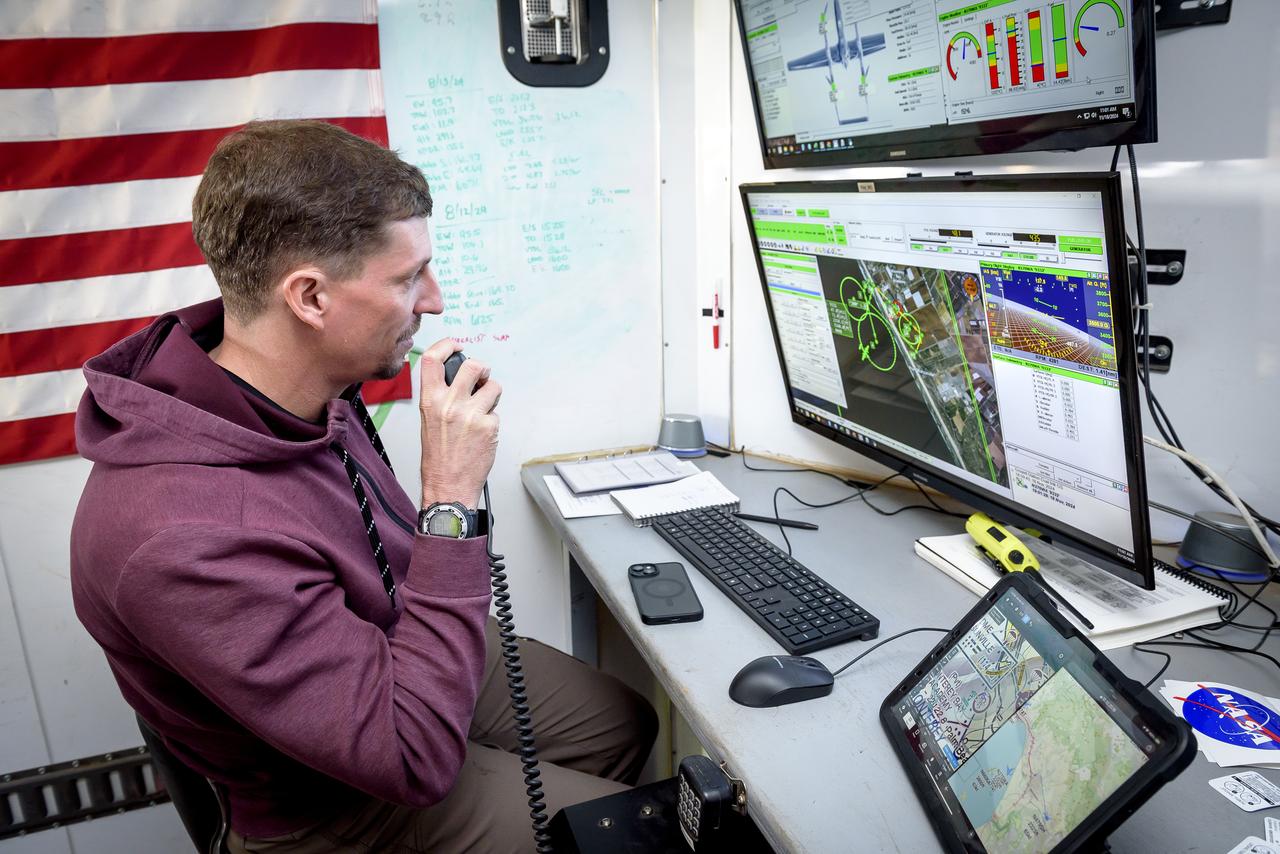
Co-founders of Overwatch Aero Chase Pietenpol, at the Ground Control Station (GCS) monitoring the flight of the L3Harris FVR90 Unmanned Aerial Vehicle (UAV) at the Monterey Bay Academy Airport near Watsonville, California.
Advanced Capabilities for Emergency Response Operations (ACERO)
Orion Deputy Program Manager Debbie Korth welcomes Ames employees to the Orion Circle of Excellence Award Ceremony in the Syvertson Auditorium, N201.
Orion Astronauts Visit Ames Entry Systems and Technology Divisio
Daylight shines through the airframe of the fuselage onto the mission director’s and telescope operator’s workstations of the modified C-141 Kuiper Airborne Observatory, (KAO) (NASA-714), during its demolition on the N211 apron at Moffett Field, California.
Kuiper Airborne Observatory (KAO) Demolition
Close-up view of the tail section of the modified C-141 Kuiper Airborne Observatory, (KAO) (NASA-714), severed from the fuselage on the N211 apron at Moffett Field, California.
Kuiper Airborne Observatory (KAO) Demolition
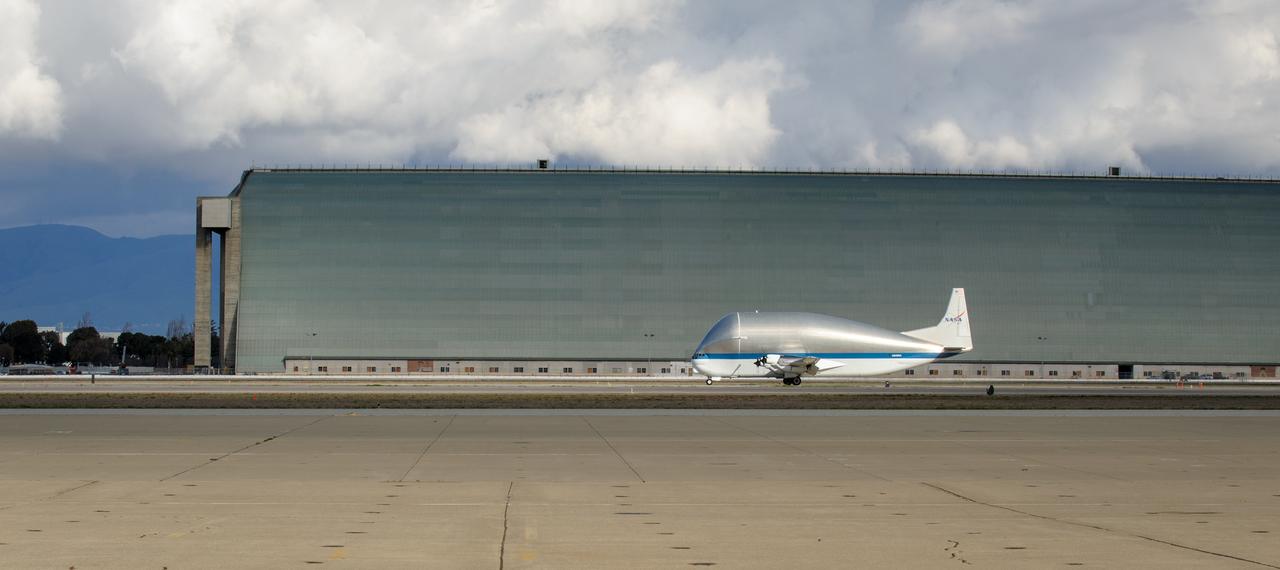
NASA N941NA taxies in front of Hangar 2 at Moffett Field.
NASAs B377SGT Super Guppy Turbine Cargo Airplane lands at Moffett Field at NASA Ames.
NASA N941NA is the last Super Guppy Turbine Cargo Airplane in service.
NASAs B377SGT Super Guppy Turbine Cargo Airplane lands at Moffett Field at NASA Ames.
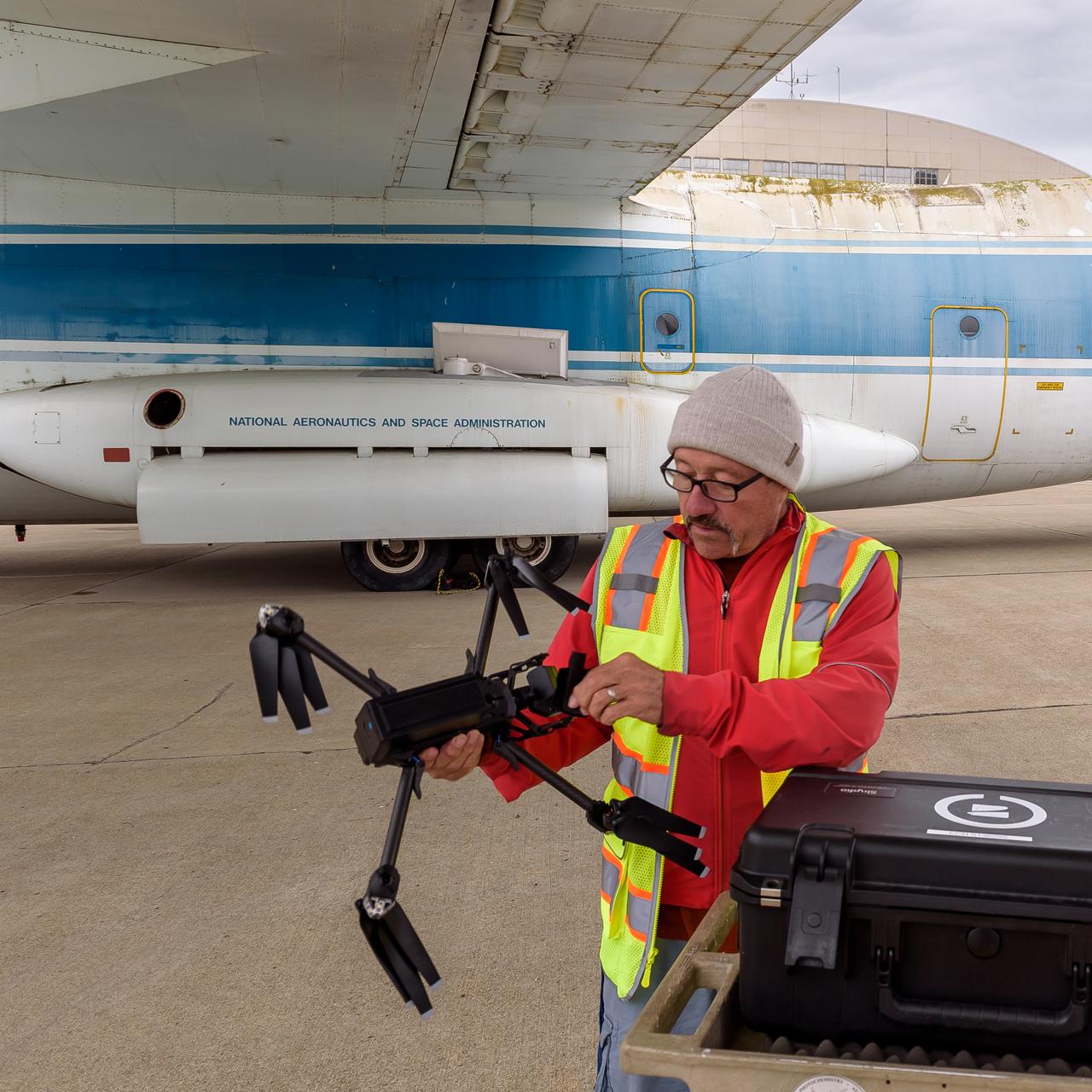
Richard Kolyer unfolds the drone and prepares it for flight around the modified C-141 Kuiper Airborne Observatory, (KAO) (NASA-714).
Kuiper Airborne Observatory (KAO) Demolition
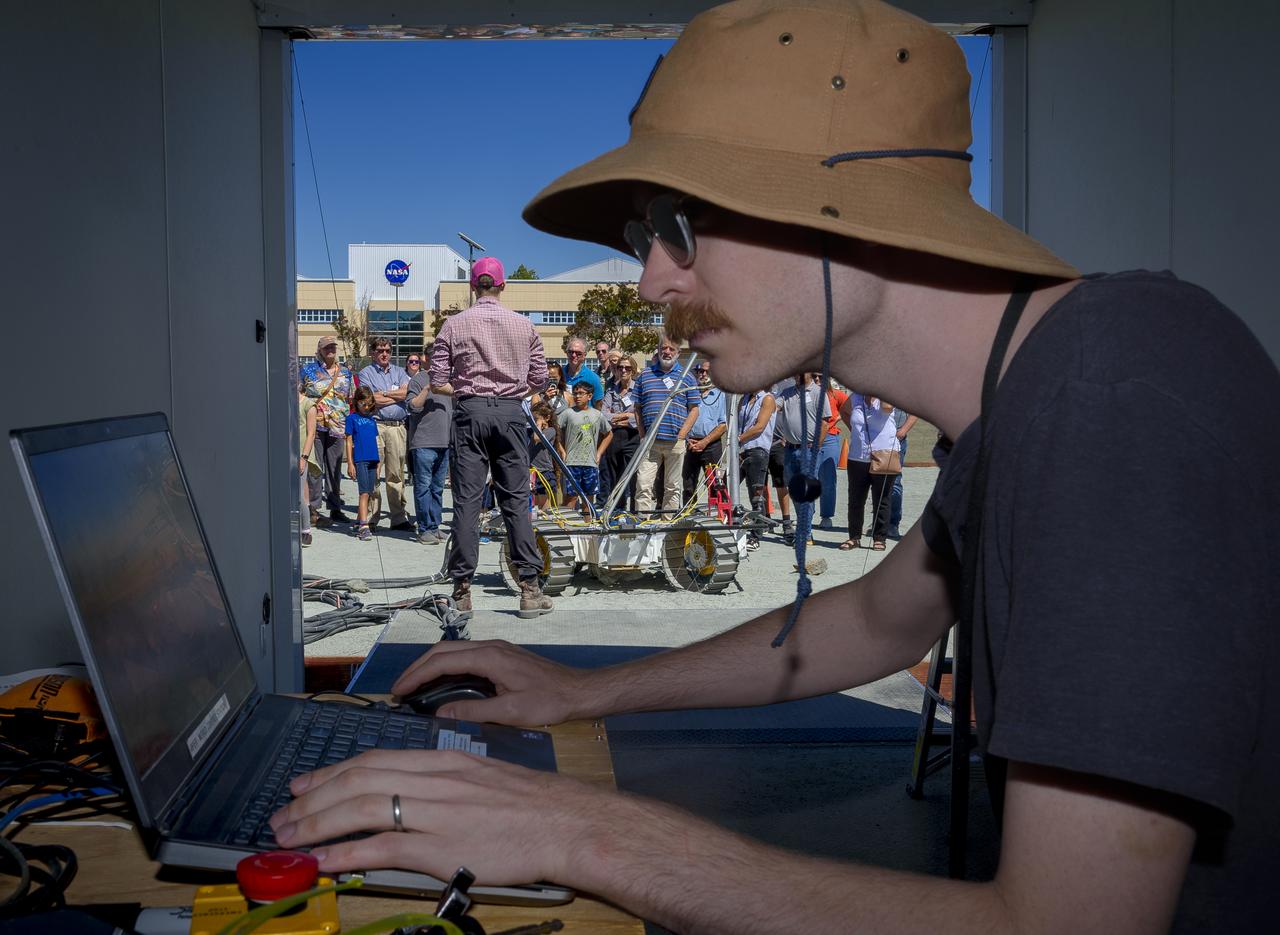
Ethan Massey, in the control booth, sends commands that control the movement of the Moon Gravity Representative Unit (MGRU3) at the Roverscape during Family Day for team members of the Volatiles Investigating Polar Exploration Rover (VIPER).  MGRU3 is a weight equivalent mobility and navigation test platform for VIPER. It is used to test, develop and validate the different mobility and navigation techniques and capabilities of the VIPER rover, to safely and efficiently map water at the Moon’s South Pole.
VIPER Family Day
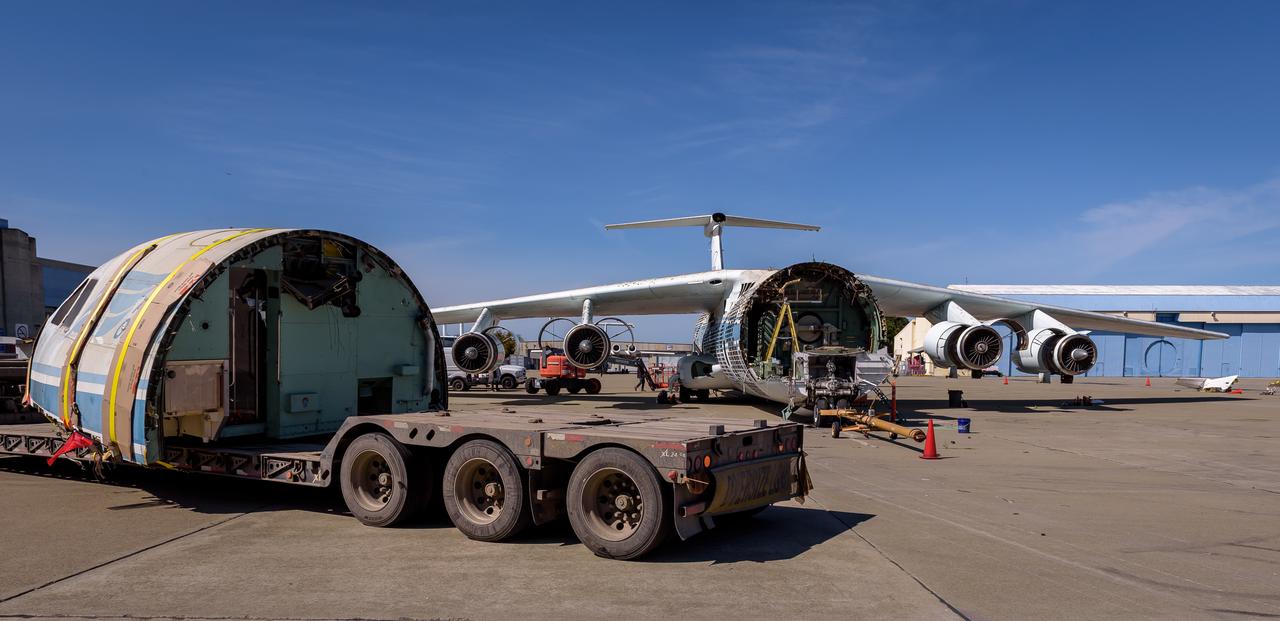
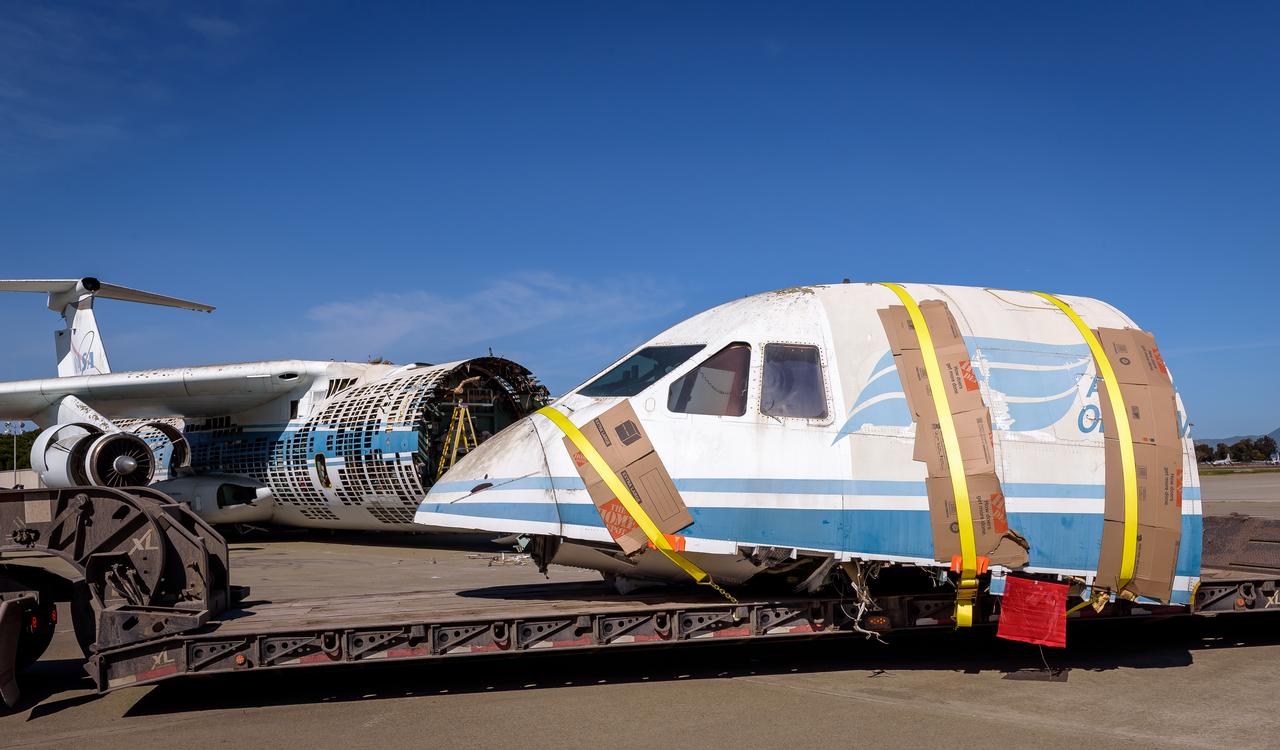
Yellow straps fasten the cockpit of the modified C-141 Kuiper Airborne Observatory, (KAO) (NASA-714), to the trailer that carries it off the N211 apron at Moffett Field, California.
Kuiper Airborne Observatory (KAO) Demolition
Removing the skin from the airframe of the modified C-141 Kuiper Airborne Observatory, (KAO) (NASA-714), on the N211 apron at Moffett Field, California.
Kuiper Airborne Observatory (KAO) Demolition
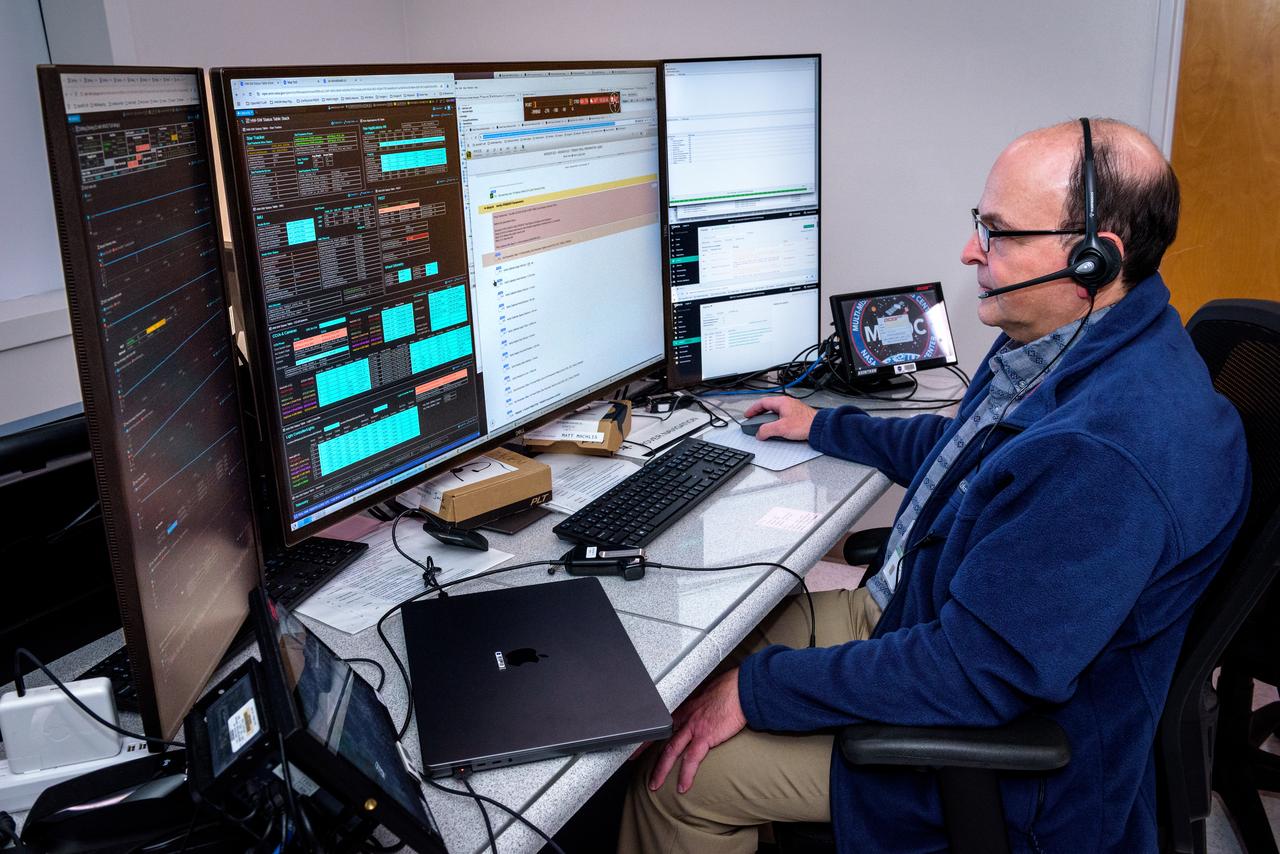
Matt Machlis during the Volatiles Investigating Polar Exploration Rover (VIPER) vehicle operational readiness test in the Multi-Mission Operations Center (MMOC), N240A.
VIPER Vehicle Operational Readiness Test
The drone follows an autonomously defined path around the modified C-141 Kuiper Airborne Observatory, (KAO) (NASA-714), on the N211 apron.  The drone photographs the aircraft with a visible and infrared camera which are processed using a photogrammetry software package called Pix4D that converts them into a 3D model.  Scanning the aircraft is the first phase of documenting the aircraft demolition as well as an opportunity to train pilots to operate the Pix4D software.
Kuiper Airborne Observatory (KAO) Demolition
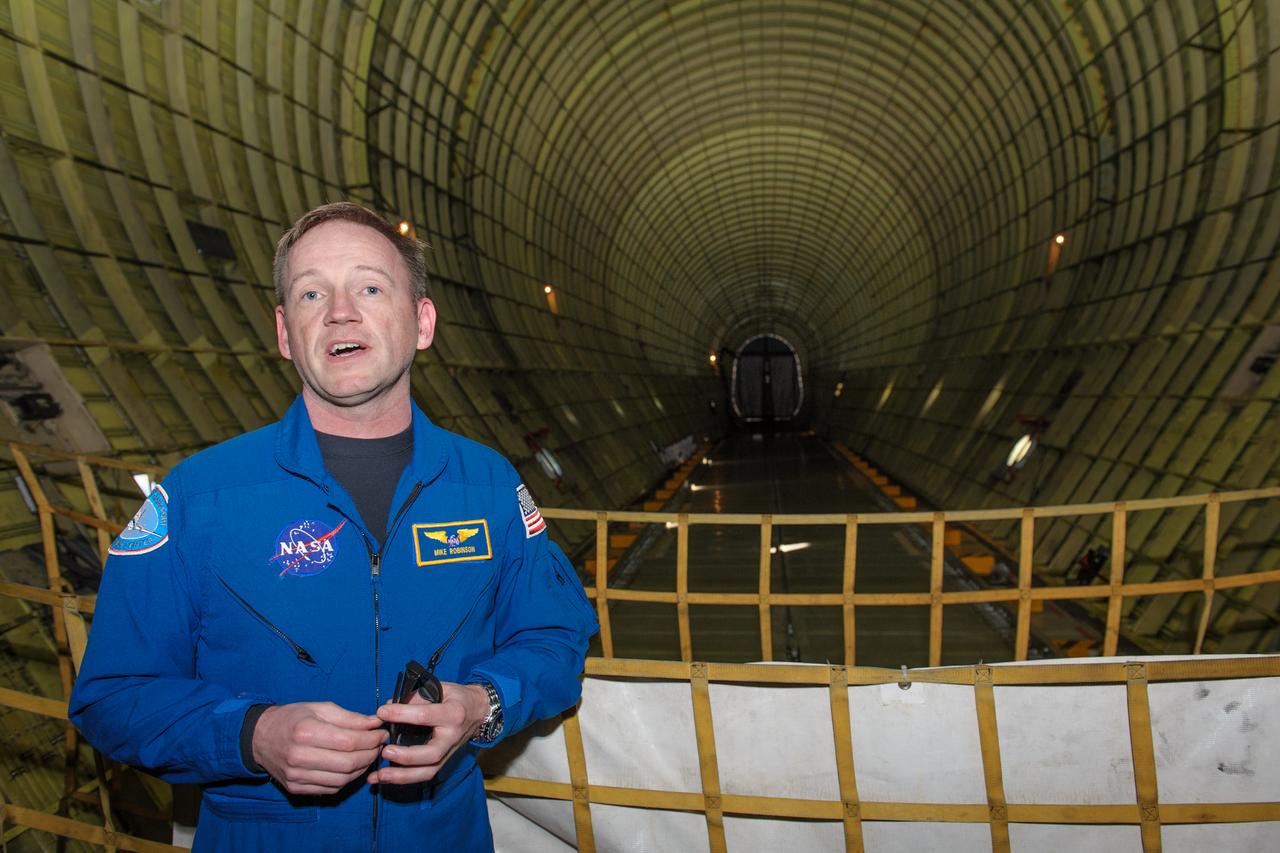
Super Guppy Flight Engineer Michael Robinson inside the Cargo Hold.  The Super Guppy's cargo hold has a useable volume of 39,000 cubic feet and can fly up to 52,000 pounds as far as 564 miles and has a cruising speed of 290 MPH.
Super Guppy Flight Engineer Michael Robinson inside the Cargo Hold.
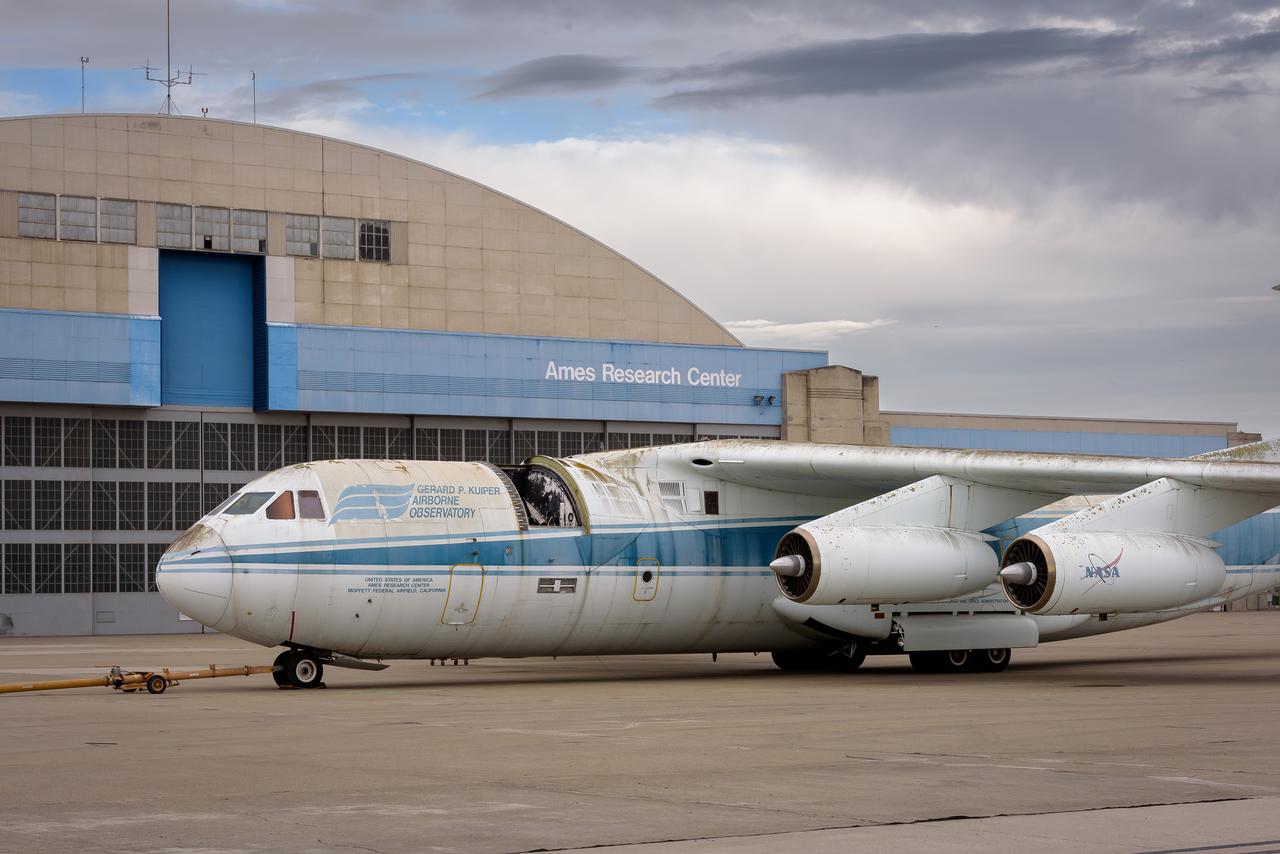
Three-quarter front view of the modified C-141 Kuiper Airborne Observatory, (KAO) (NASA-714), with the telescope aperture open on the N211 apron at Moffett Field, California.
Kuiper Airborne Observatory (KAO) Demolition
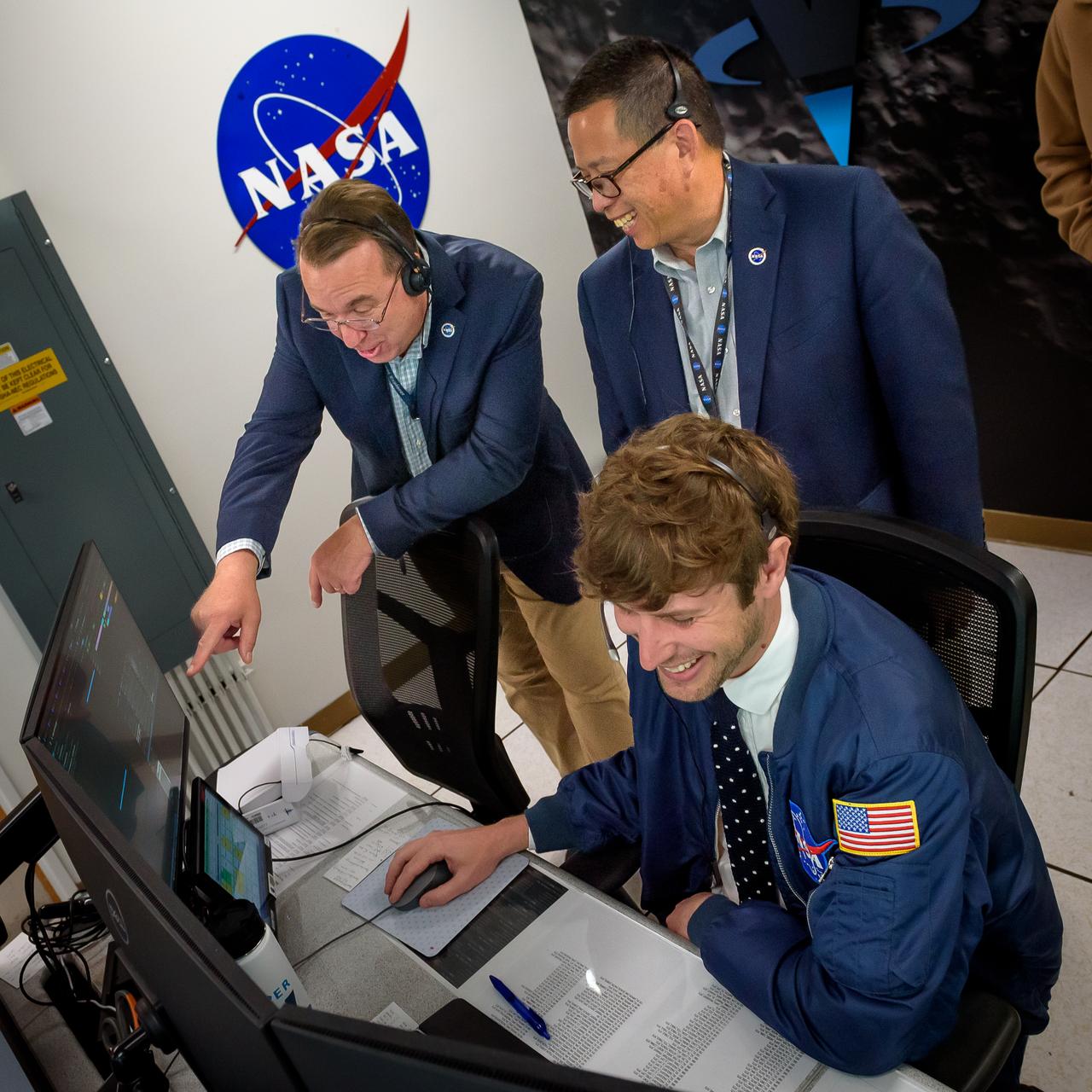
Volatiles Investigating Polar Exploration Rover (VIPER) vehicle operational readiness test in the Multi-Mission Operations Center (MMOC), N240A.  Jasper Wolfe, left, with David Korsmeyer, and Eugene Tu, right.
VIPER Vehicle Operational Readiness Test
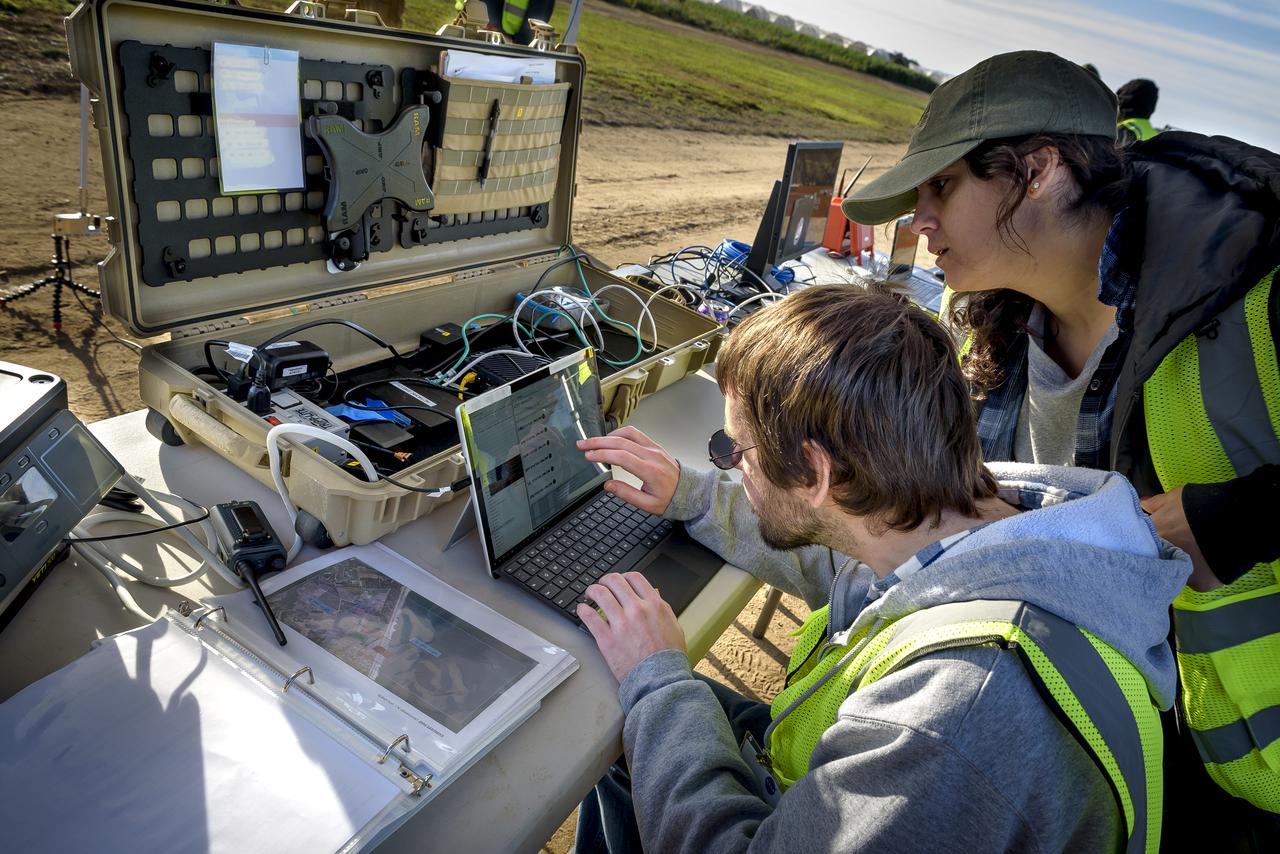
Joshua Kaurich, front, and Yasmin Arbab, works with the Advanced Capabilities for Emergency Response Operations (ACERO) Portable Airspace Management System (PAMS) case at the Monterey Bay Academy Airport near Watsonville, California.
Advanced Capabilities for Emergency Response Operations (ACERO)
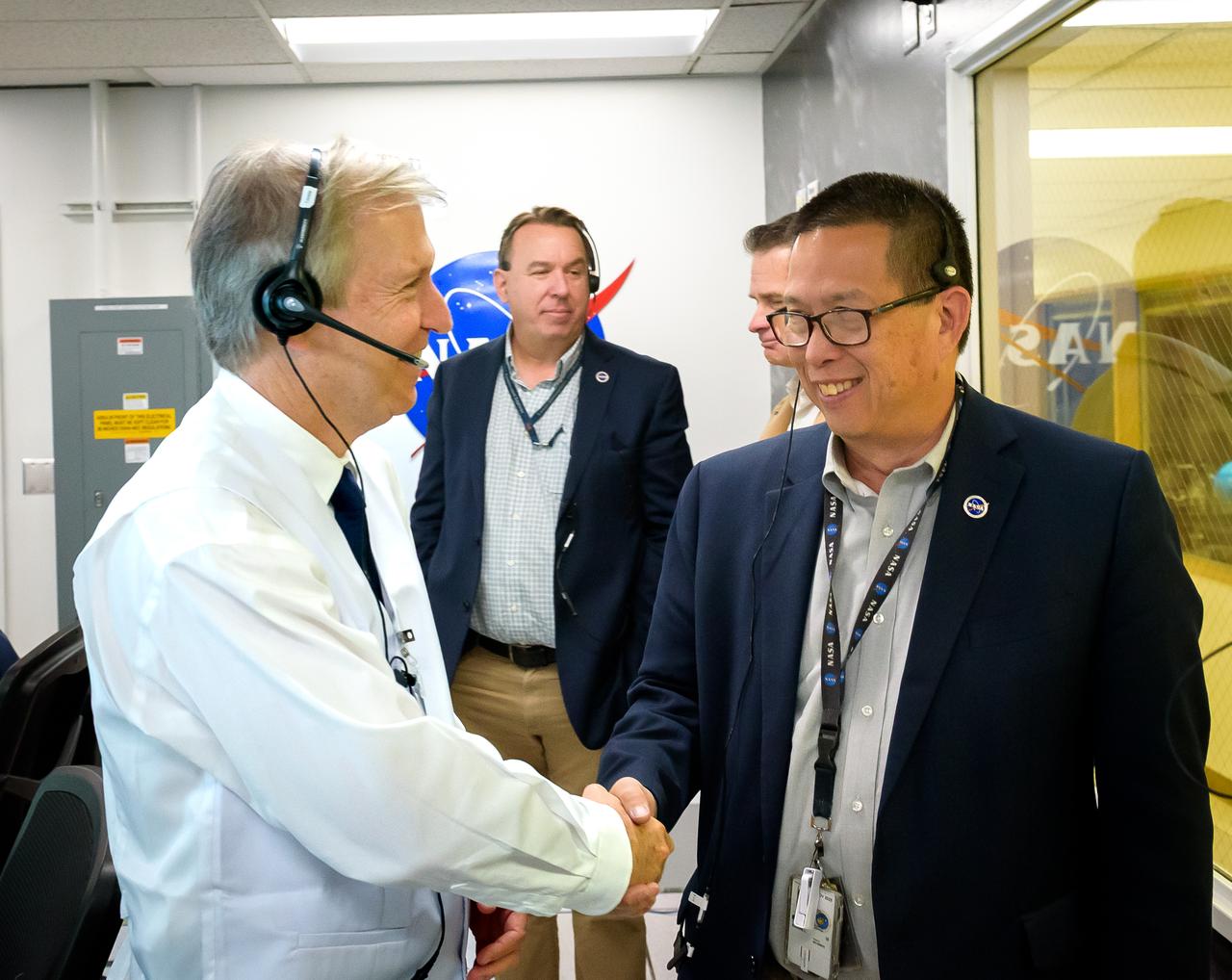
Volatiles Investigating Polar Exploration Rover (VIPER) mission systems manager Jay Trimble, left, with Center Director Eugene Tu during the vehicle operational readiness test in the Multi-Mission Operations Center (MMOC), N240A.  Deputy Center Director David Korsmeyer, behind.
VIPER Vehicle Operational Readiness Test
The cockpit of the modified C-141 Kuiper Airborne Observatory, (KAO) (NASA-714), is separated from the airframe on the N211 apron at Moffett Field, California.
Kuiper Airborne Observatory (KAO) Demolition
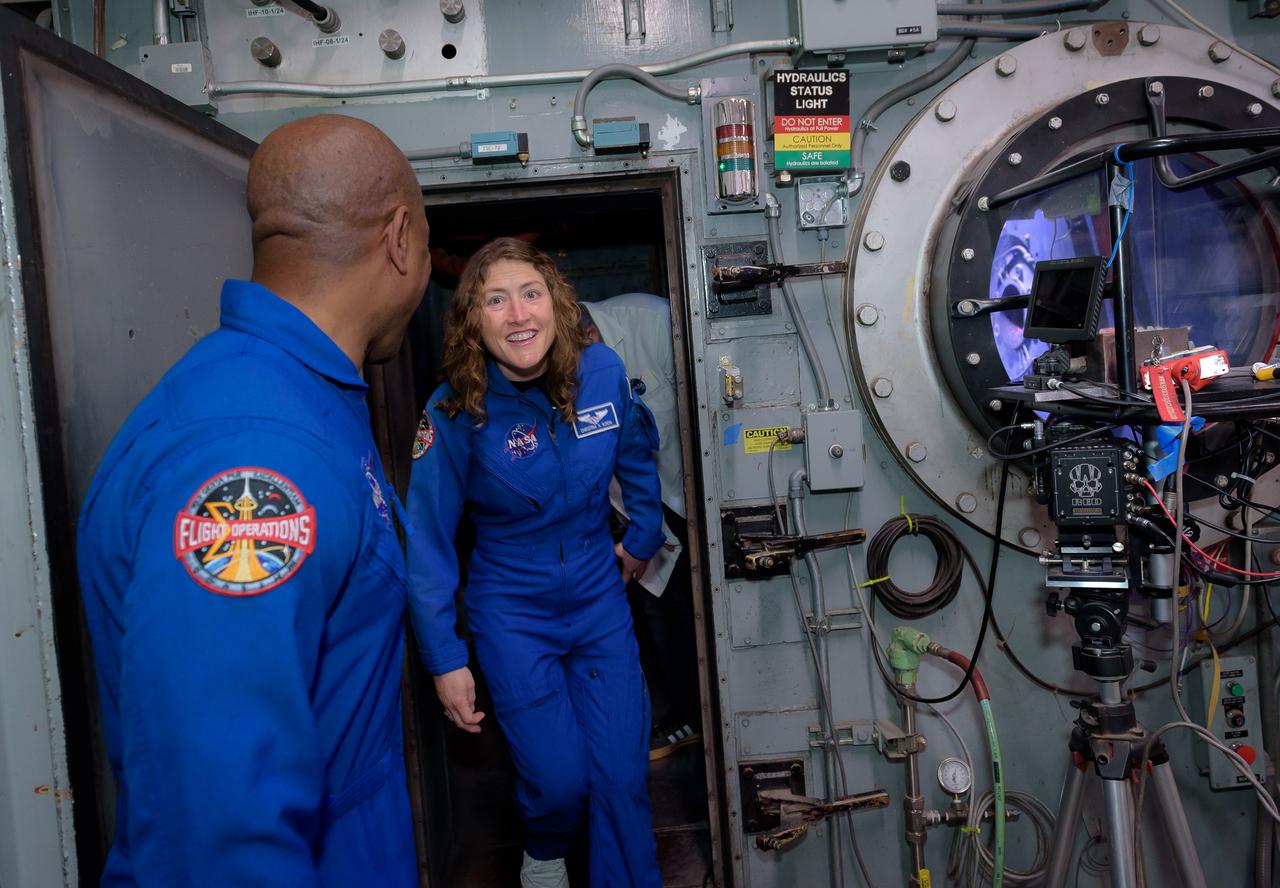
NASA astronaut Christina Koch exits the vacuum test chamber for the Interaction Heating Facility (IHF) of the Ames Arc Jet Complex, N238, following Victor J. Glover, left. During a test, a TPS test sample is suspended in the hypersonic flow produced by IHF’s arc heater. The shock heating produced by the interaction between the hypersonic flow and the stationary test sample simulates the heating and other forces the spacecraft will encounter during atmospheric hypersonic entry.
Orion Astronauts Visit Ames Entry Systems and Technology Divisio
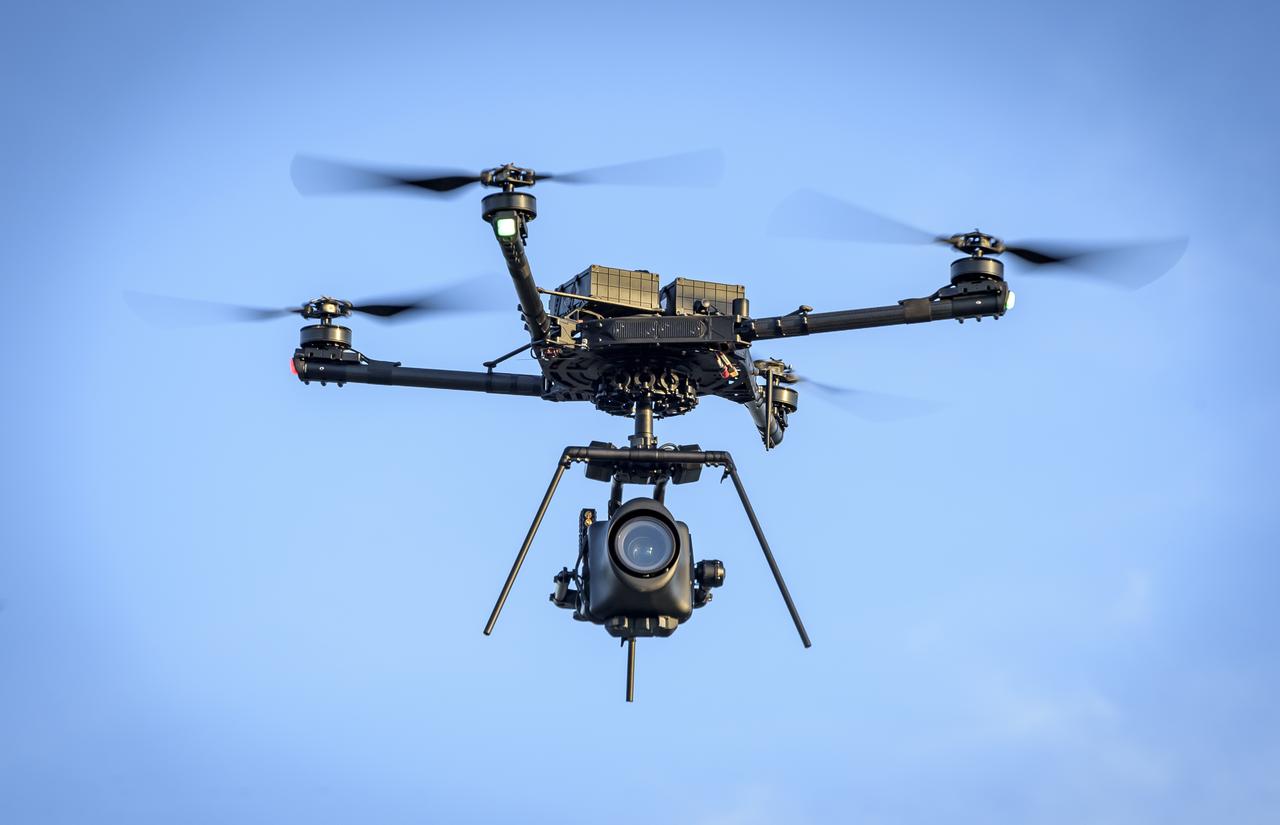
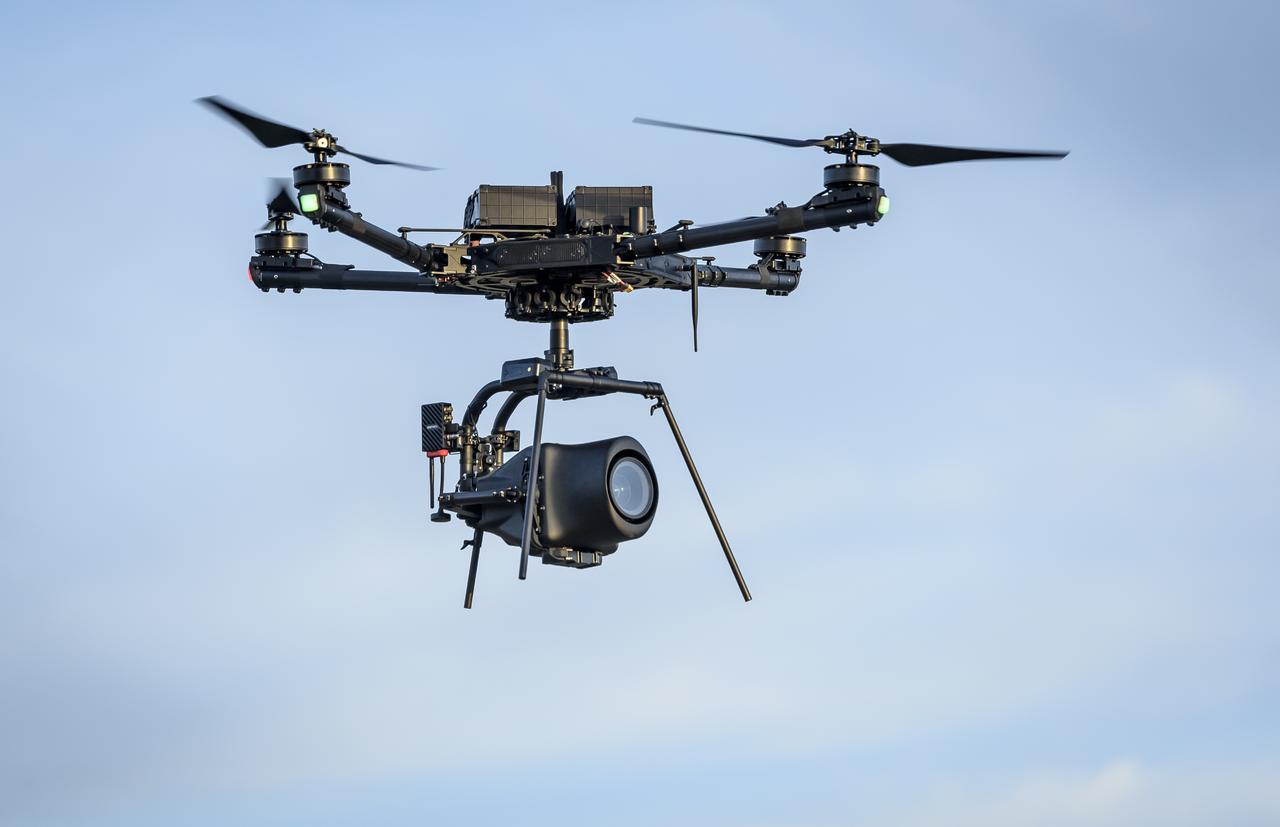
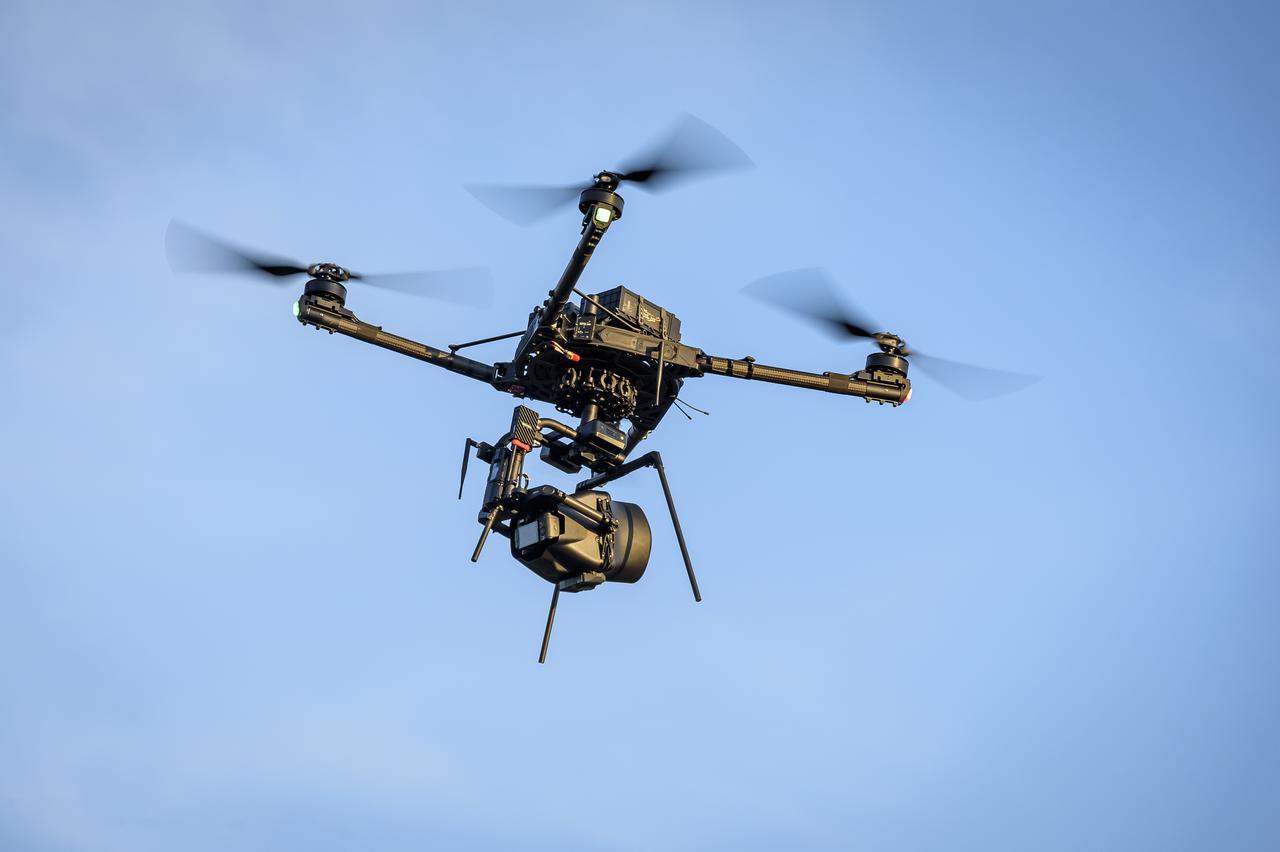
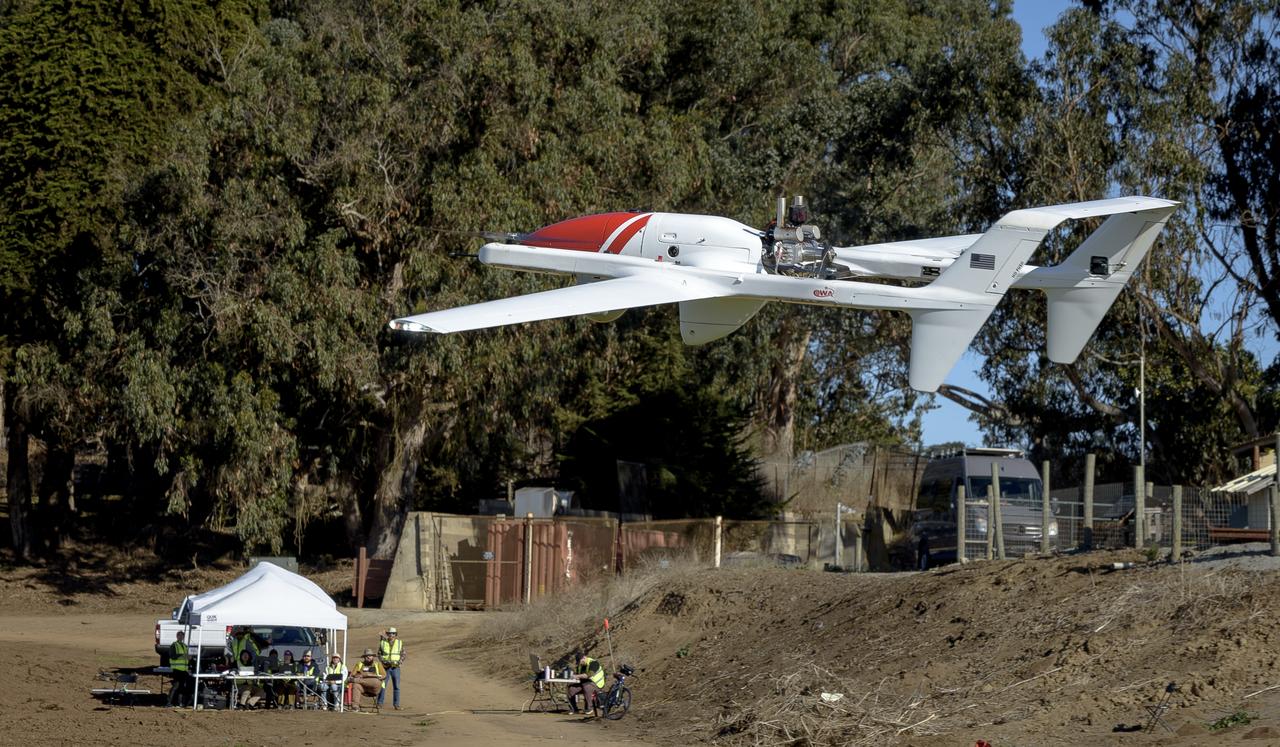
The Alta-X Unmanned Aerial Vehicle (UAV) with camera payload in flight at the Monterey Bay Academy Airport near Watsonville, California.
Advanced Capabilities for Emergency Response Operations (ACERO)
Director of Science Michael Hesse, left, presents an overview of Lunar Explorer Instrument for space biology Applications (LEIA) to Acting Deputy Associate Administrator (DAA) for the Science Mission Directorate (SMD) Mark Clampin in the Bioscience Collaborative Laboratory, N288.
Mark Clampin Tours the Bioscience Collaborative Laboratory
The tail section of the modified C-141 Kuiper Airborne Observatory, (KAO) (NASA-714), severed from the fuselage on the N211 apron of Moffett Field, California.
Kuiper Airborne Observatory (KAO) Demolition
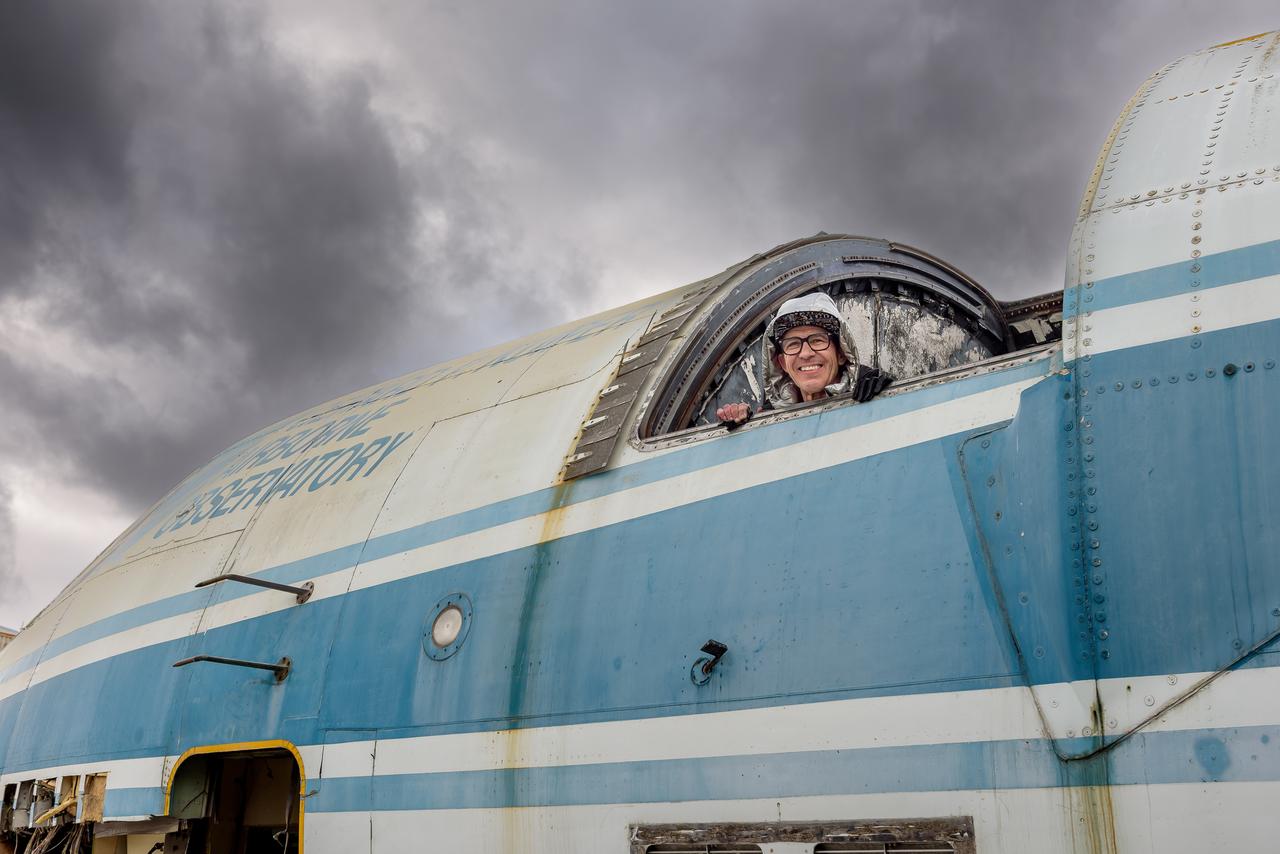
Monty Miranda in the telescope reticle during the demolition of the modified C-141 Kuiper Airborne Observatory, (KAO) (NASA-714), on the N211 apron at Moffett Field, California.
Kuiper Airborne Observatory (KAO) Demolition
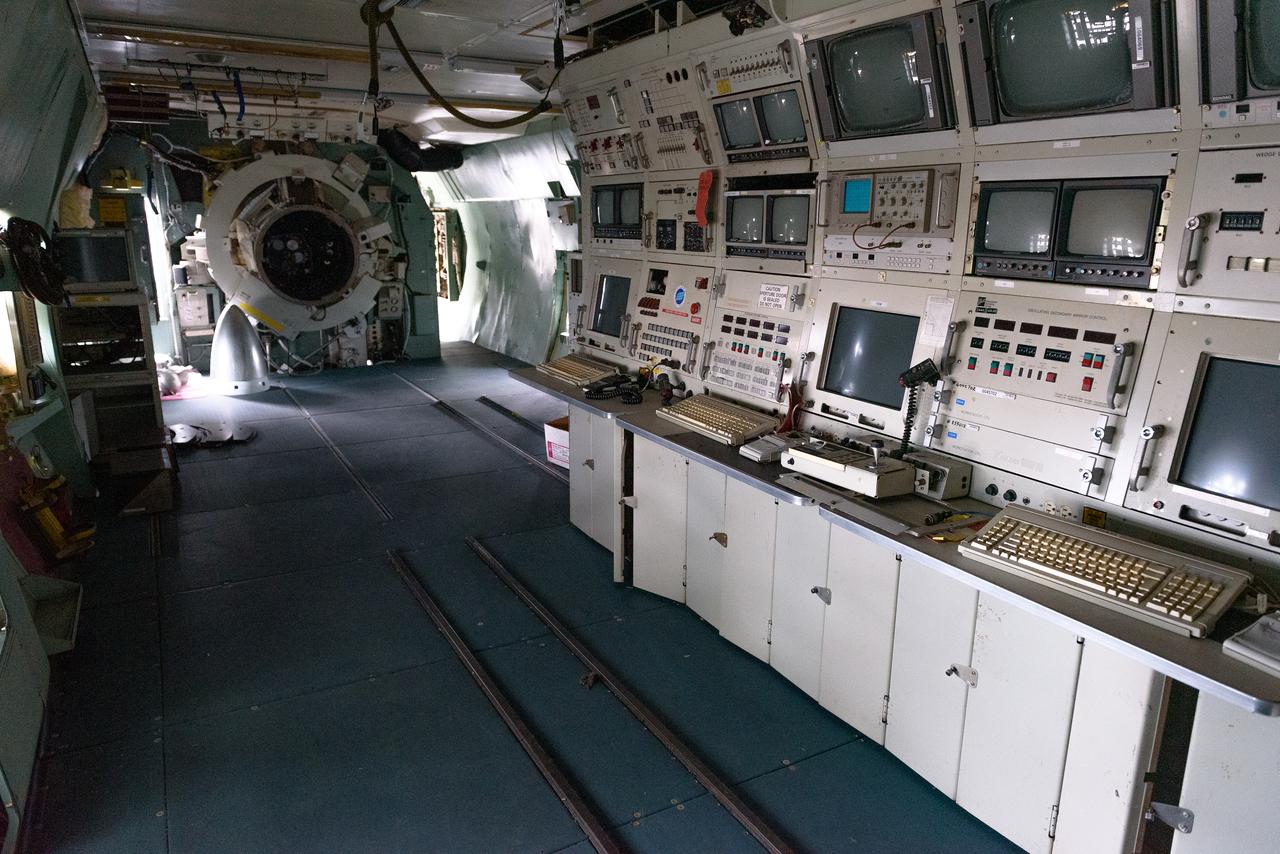
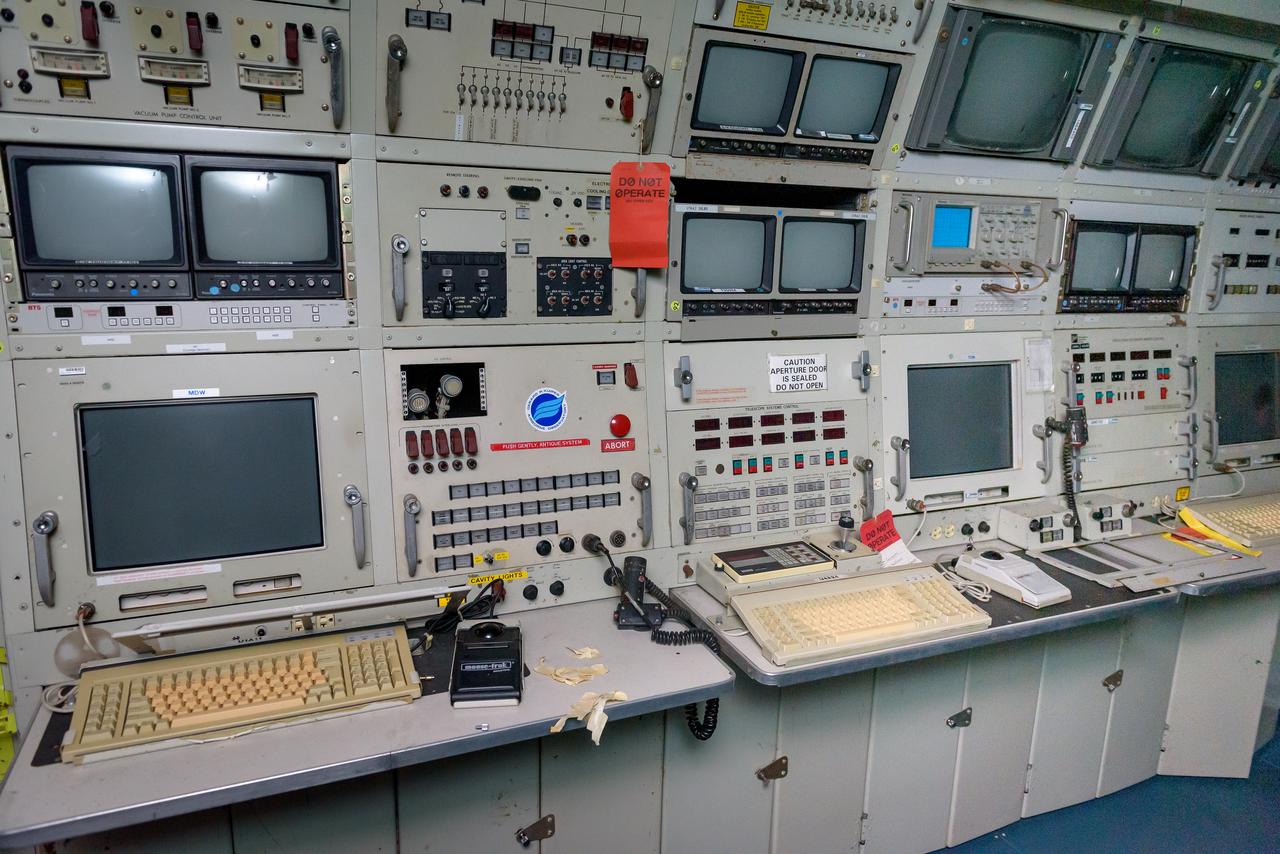
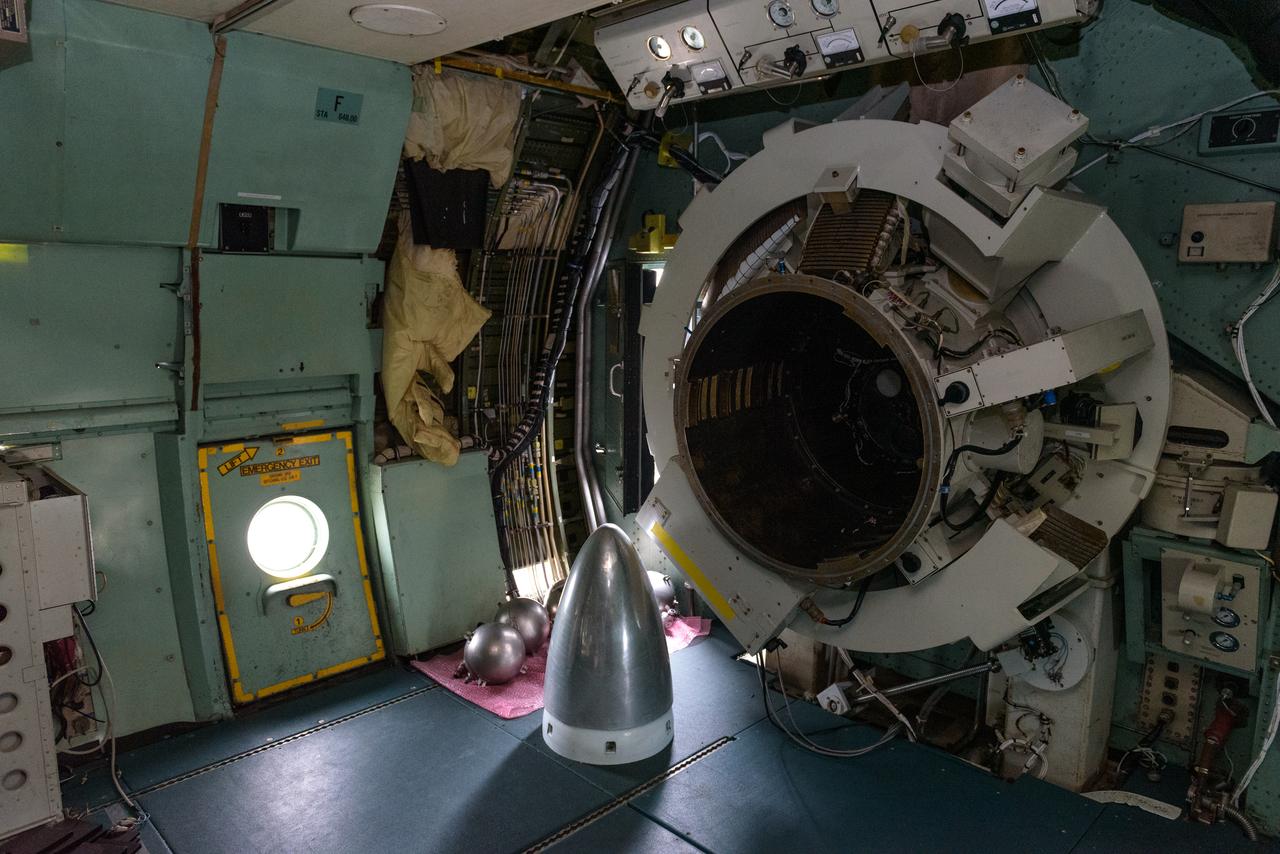
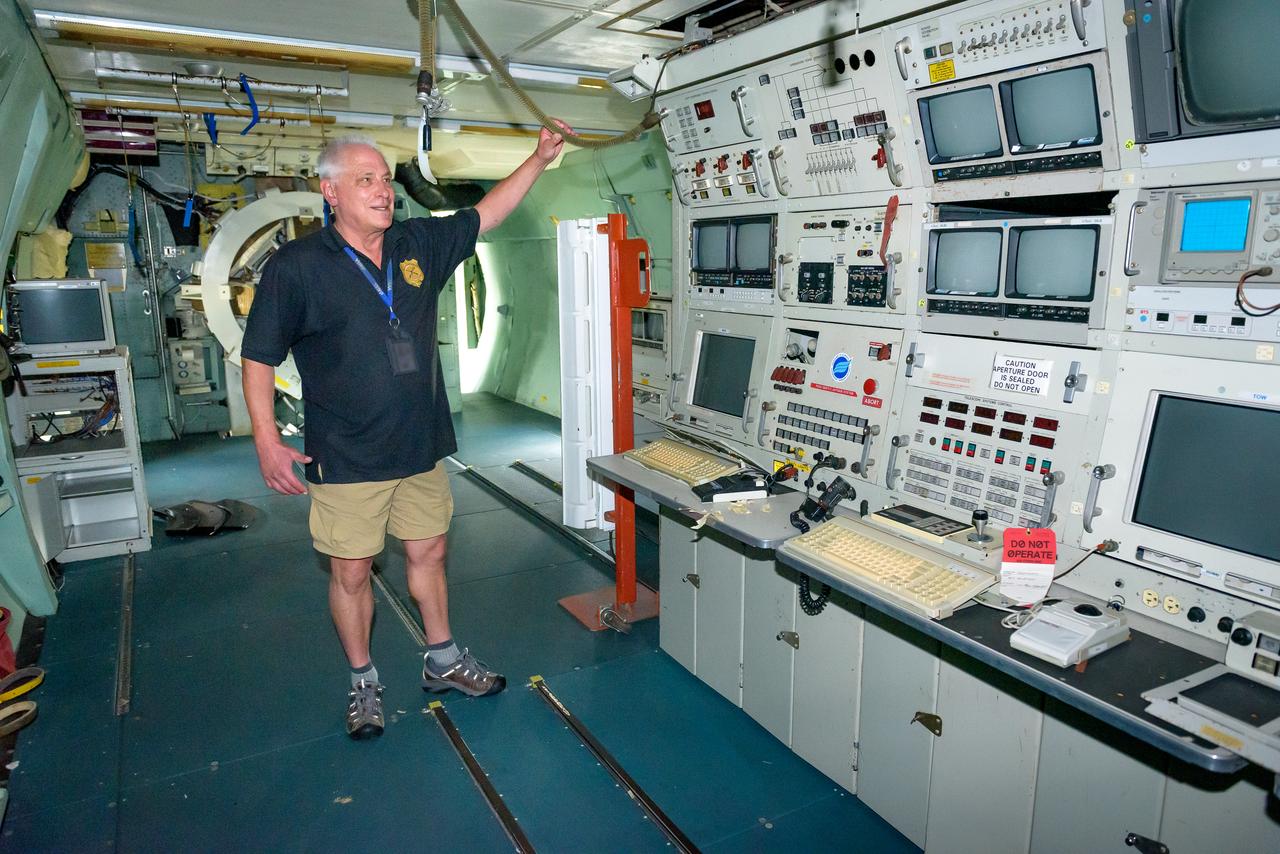
The console holds the mission director’s workstation, left, the telescope operator’s station, and the data systems operator’s station, right, of the Kuiper Airborne Observatory, (KAO) (NASA-714).
Kuiper Airborne Observatory (KAO) Demolition
Orion Deputy Program Manager Debbie Korth, at the podium, leads a question-and-answer session with NASA astronauts Christina Koch and Victor J. Glover, right, with Ames employees following the Orion Circle of Excellence Award Ceremony in the Syvertson Auditorium, N201.
Orion Astronauts Visit Ames Entry Systems and Technology Divisio
Jesse Fusco, left, and James Milsk at the BioSentinel command console in the Ames Multi-Mission Operations Center (MMOC), N240 Annex, Ceres control room 172, receiving spacecraft telemetry at the 3-year anniversary since launch on Artemis I.
BioSentinel - 3 Year Mission Milestone
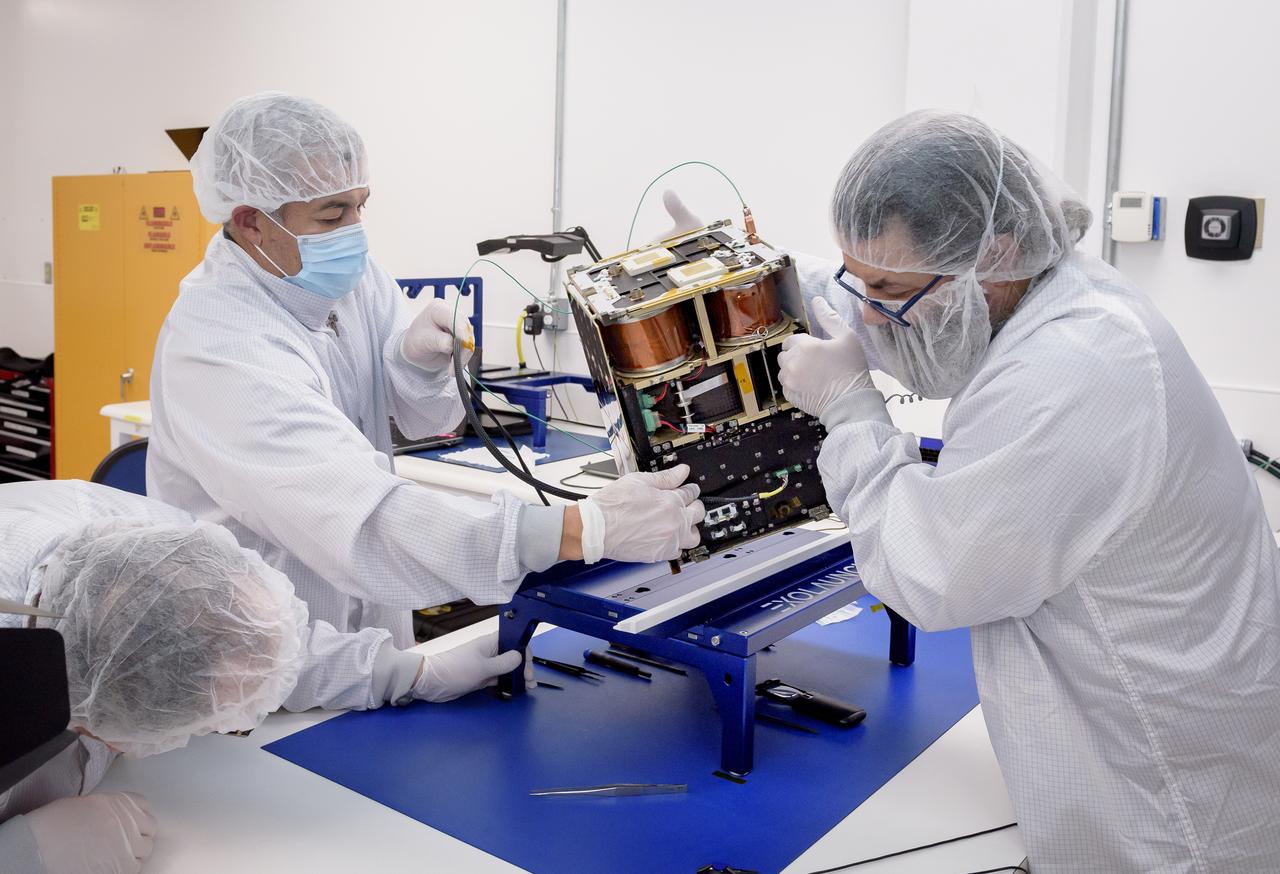
(Left to Right) Ashley Karp, NASA JPL, Hunjoo Kim, NASA JPL and Brian Schratz (NASA JPL) preparing the Peregrine rocket motor at the Outdoor Aerodynamic Research Facility (OARF, N-249).
Peregrine Rocket Motor Test at the Ames Outdoor Aerodynamic Research Facility (OARF).
Volatiles Investigating Polar Exploration Rover (VIPER) vehicle operational readiness test in the Multi-Mission Operations Center (MMOC), N240A.  Jasper Wolfe, front, with David Korsmeyer, and Eugene Tu.
VIPER Vehicle Operational Readiness Test
The cockpit of the modified C-141 Kuiper Airborne Observatory, (KAO) (NASA-714), is separated from the airframe on the N211 apron at Moffett Field, California.
Kuiper Airborne Observatory (KAO) Demolition
The drone follows an autonomously defined path around the modified C-141 Kuiper Airborne Observatory, (KAO) (NASA-714), on the N211 apron.  The drone photographs the aircraft with a visible and infrared camera which are processed using a photogrammetry software package called Pix4D that converts them into a 3D model.  Scanning the aircraft is the first phase of documenting the aircraft demolition as well as an opportunity to train pilots to operate the Pix4D software.
Kuiper Airborne Observatory (KAO) Demolition
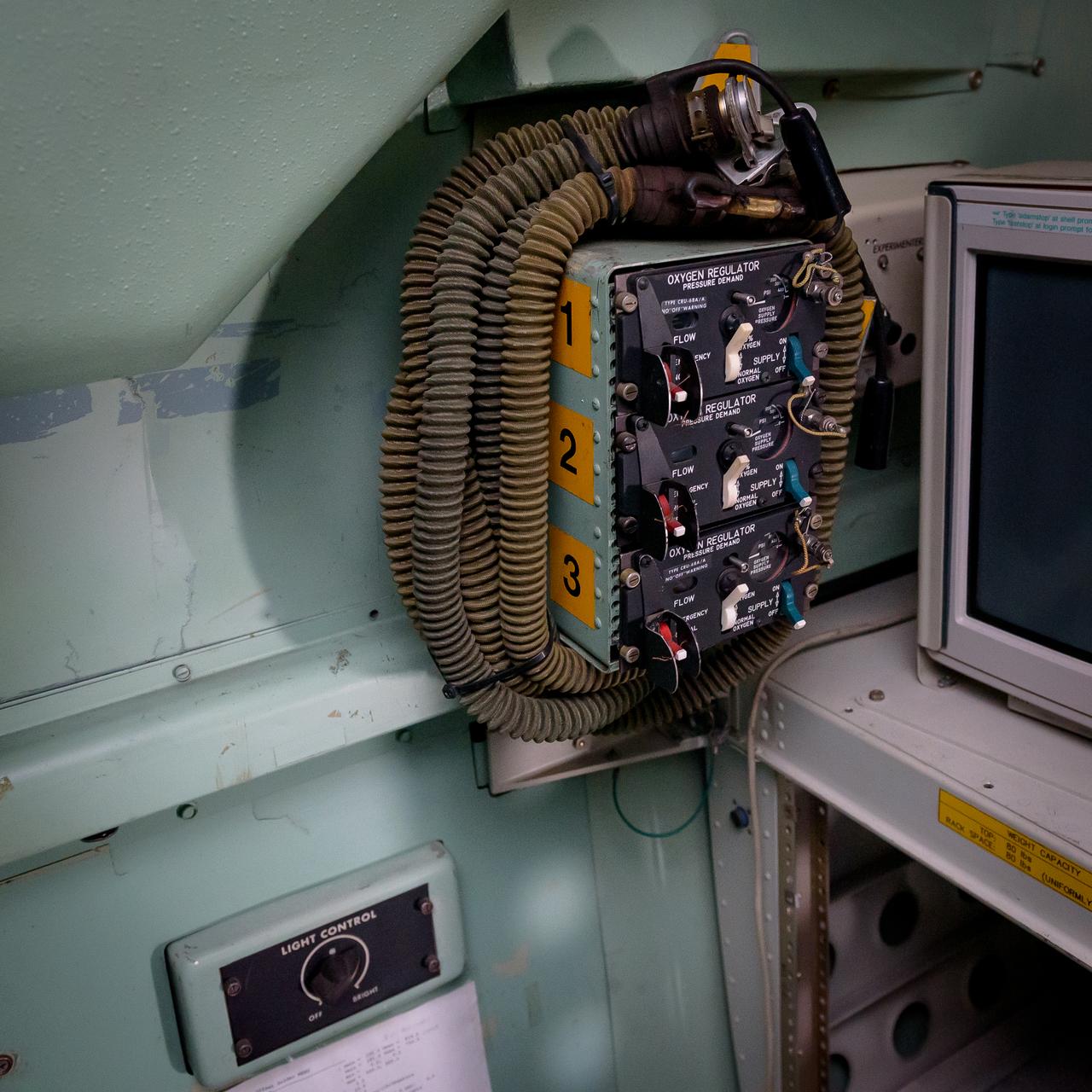
Oxygen regulator pressure demand.  Aft of the port side work area.  Everyone flying on the Kuiper Airborne Observatory, (KAO) (NASA-714), needed to have their own oxygen mask and operate their regulator.
Kuiper Airborne Observatory (KAO) Demolition
The telescope mount in the modified C-141 Kuiper Airborne Observatory, (KAO) (NASA-714), during its demolition on the N211 apron at Moffett Field, California.
Kuiper Airborne Observatory (KAO) Demolition
Mission Director Stephen Patterson at his workstation at the console of the modified C-141 Kuiper Airborne Observatory, (KAO) (NASA-714).
Kuiper Airborne Observatory (KAO) Demolition
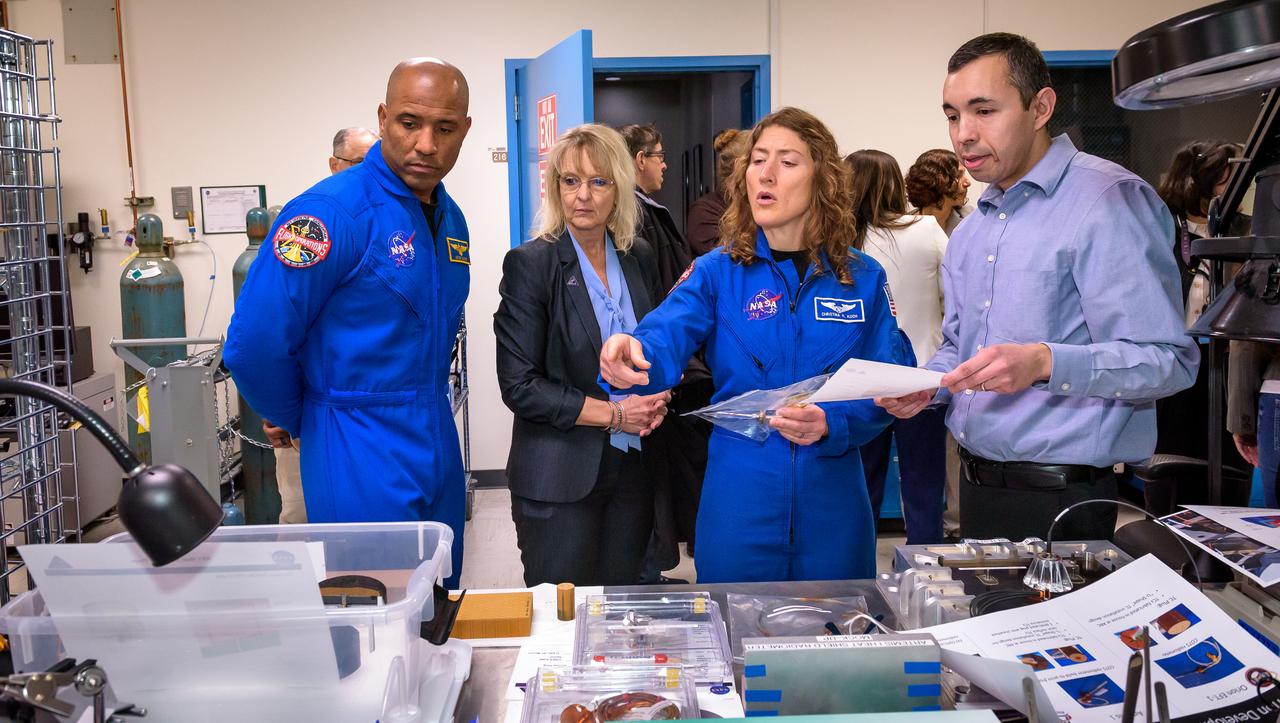
Jose A. B. Santos, right, discusses thermal protection materials with NASA astronaut Victor J. Glover, Orion Deputy Program Manager Debbie Korth, and NASA astronaut Christina Koch in STAR Labs in N242.
Orion Astronauts Visit Ames Entry Systems and Technology Divisio
The SuperVolo XL Unmanned Aerial Vehicle (UAV) lifts off at the Monterey Bay Academy Airport near Watsonville, California.
Advanced Capabilities for Emergency Response Operations (ACERO)
Acting Deputy Associate Administrator (DAA) for the Science Mission Directorate (SMD) Mark Clampin learns about the Lunar Explorer Instrument for space biology Applications (LEIA) the Bioscience Collaborative Laboratory, N288.
Mark Clampin Tours the Bioscience Collaborative Laboratory
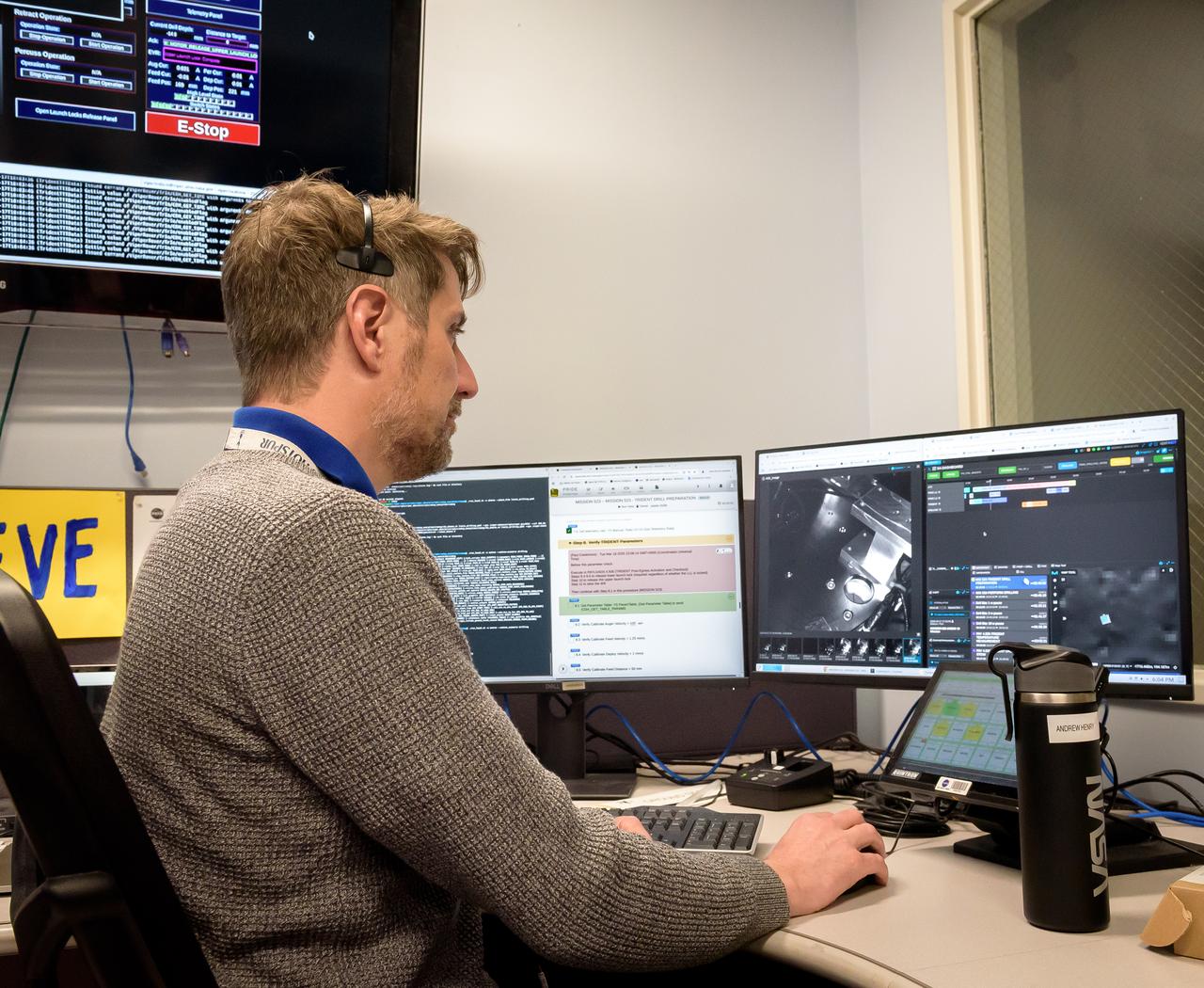
Andrew Henry during the Volatiles Investigating Polar Exploration Rover (VIPER) vehicle operational readiness test in the Multi-Mission Operations Center (MMOC), N240A.
VIPER Vehicle Operational Readiness Test
Aircraft demolition of the modified C-141 Kuiper Airborne Observatory, (KAO) (NASA-714), on the N211 apron at Moffett Field, California.
Kuiper Airborne Observatory (KAO) Demolition
Jody Miller, left, Alex Godwin, and Jeff Strebler, right, prepares the L3Harris FVR90 Unmanned Aerial Vehicle (UAV) at the Monterey Bay Academy Airport near Watsonville, California.
Advanced Capabilities for Emergency Response Operations (ACERO)
NASA N941NA is the last Super Guppy Turbine Cargo Airplane in service.
NASAs B377SGT Super Guppy Turbine Cargo Airplane lands at Moffett Field at NASA Ames.