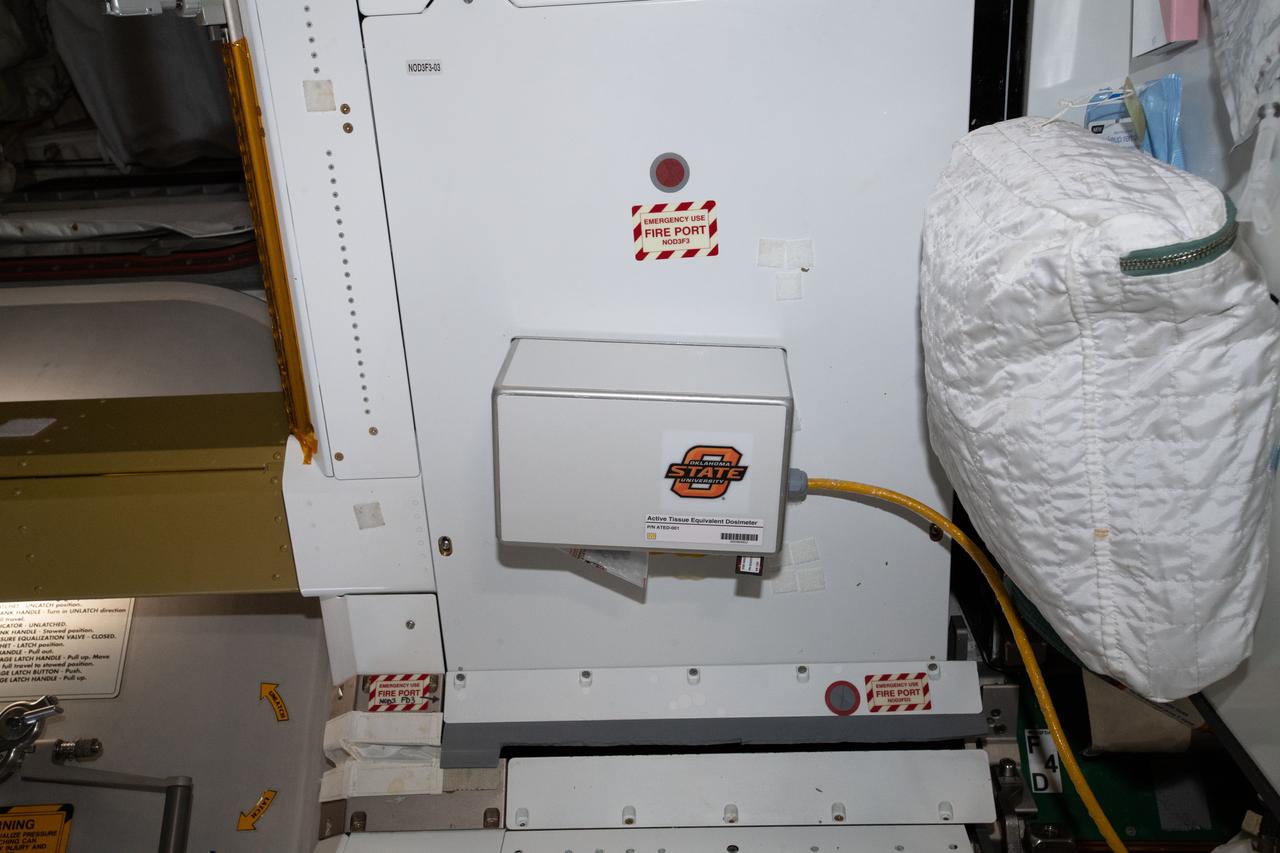
iss056e097010 (7/17/2018) --- Photographic documentation of Active Tissue Equivalent Dosimeter during deployment aboard the International Space Station (ISS). The Active Tissue Equivalent Dosimeter investigation uses an Active Tissue Equivalent Dosimeter aboard the International Space Station to collect data on crew radiation exposure and to characterize the space radiation environment.
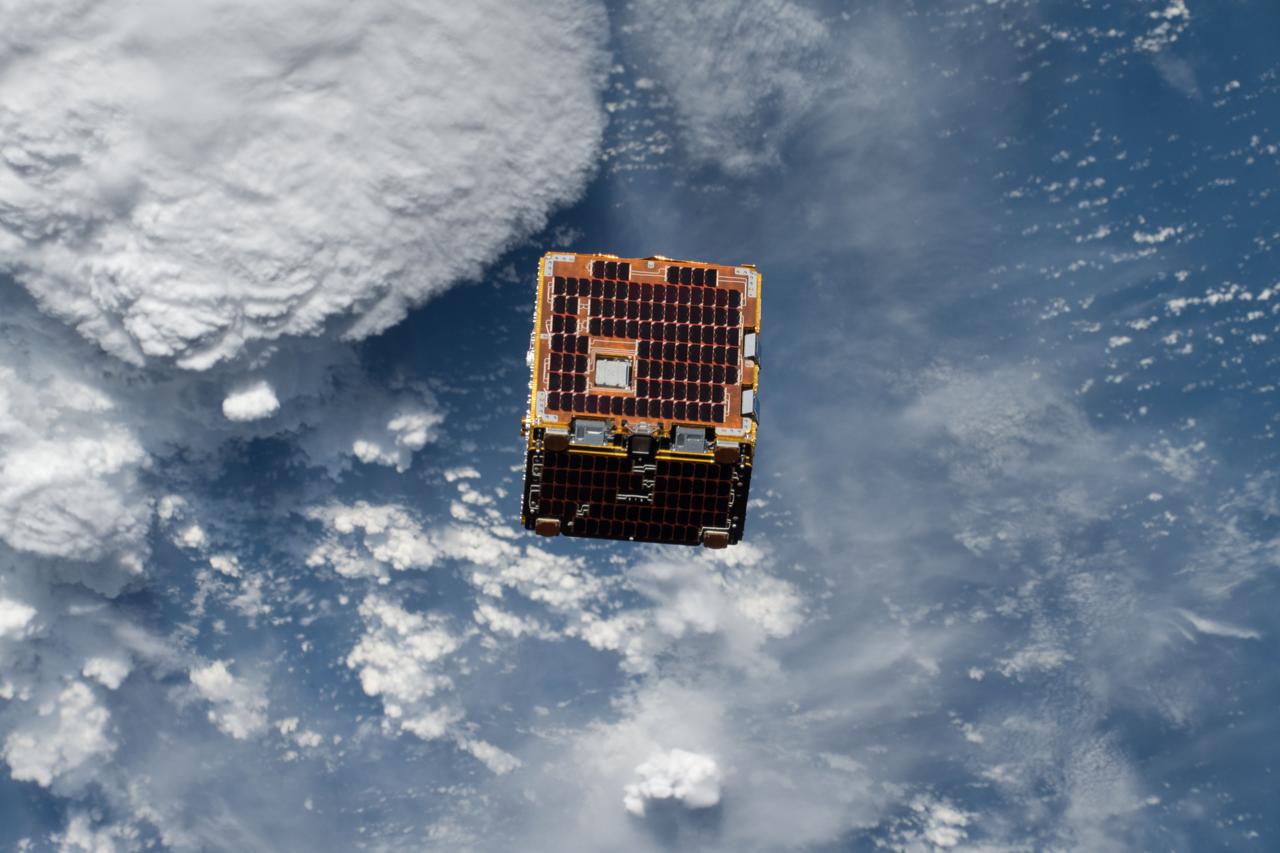
iss056e025387 (6/20/2018) --- Deployment of the NanoRacks-Remove Debris Satellite from the International Space Station (ISS). NanoRacks-Remove Debris aims to demonstrate key technologies for Active Debris Removal to reduce the risks presented by space debris
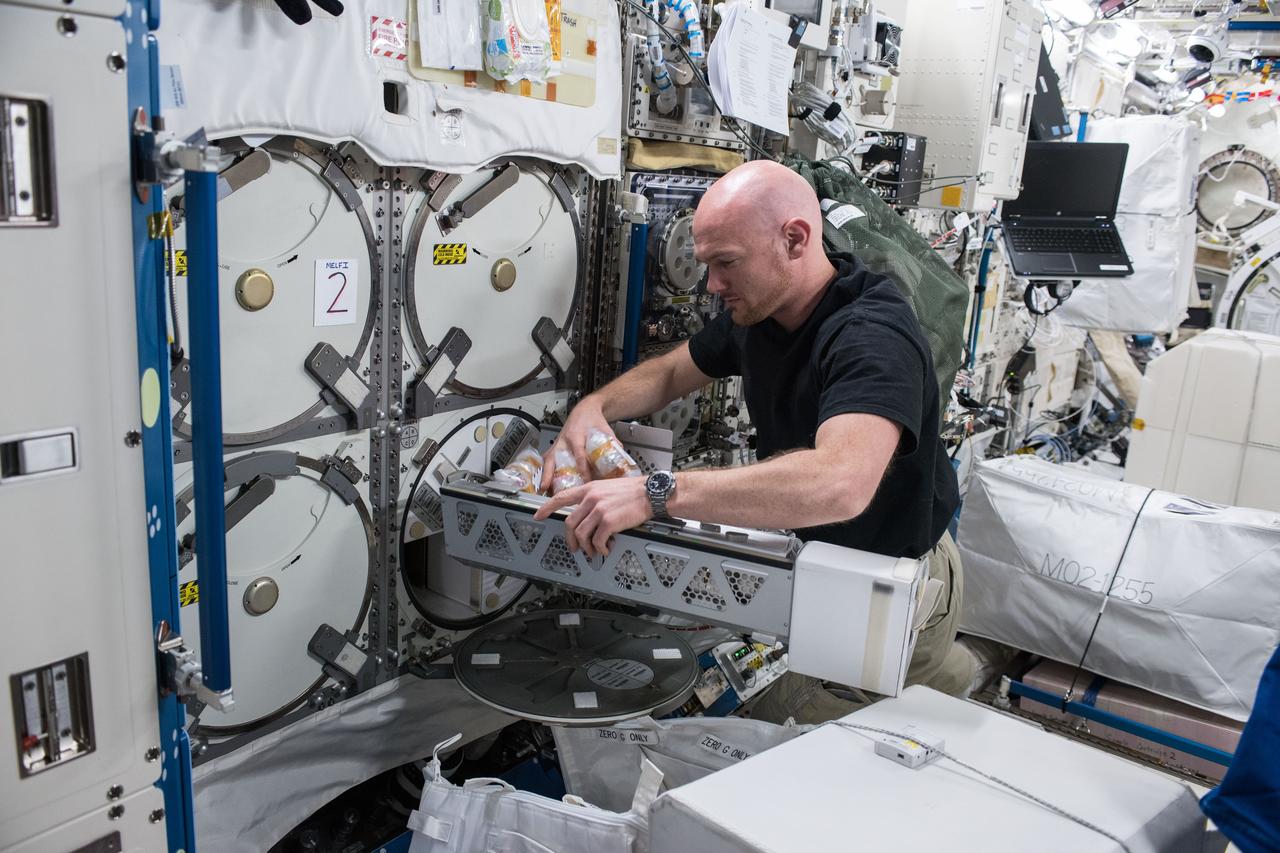
iss056e075950 (July 3, 2018) --- Astronaut Alexander Gerst of ESA (European Space Agency) works inside the Japanese Kibo laboratory module retrieving Protein Crystal Growth samples from a science freezer, also known as the Minus Eighty-Degree Laboratory Freezer for ISS (MELFI).

iss056e181758 (9/21/2018) --- A view of the Japanese Experiment Module (JEM) Pressurized Module (JPM) aboard the International Space Station (ISS). The Japanese Experiment Module, or JEM, called Kibo -- which means "hope" in Japanese -- is Japan's first human space facility and enhances the unique research capabilities of the International Space Station. Kibo consists of several components: two research facilities -- the Pressurized Module and Exposed Facility; a Logistics Module; a Remote Manipulator System; and an Inter-Orbit Communication System unit. Kibo also has a scientific airlock through which experiments are transferred and exposed to the external environment of space.
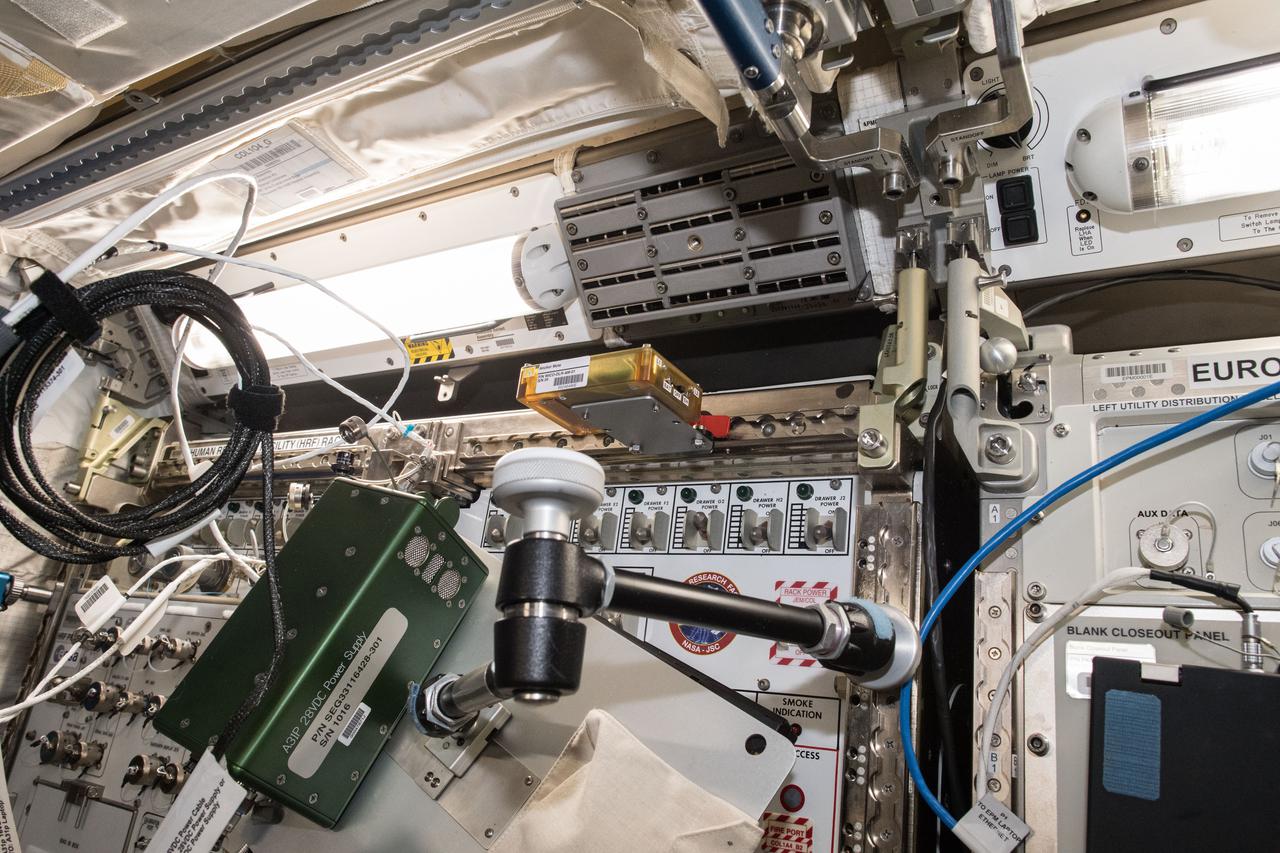
iss056e005285 (June 6, 2018) --- The small, yellow box in the middle of the picture is a module for the Wireless Compose-2 investigation from ESA (European Space Agency). Wireless Compose-2 is a technology demonstration that aims to provide a flexible and adaptable wireless network infrastructure to conduct and execute low-power, low-weight, and wireless experiments on the International Space Station. Building on technology used for the German Space Agency's (DLR) first Wireless Compose technology demonstrator in 2018, it shows the capabilities of Wireless Networks for scientific, localization, and medical experiments in the Columbus module.
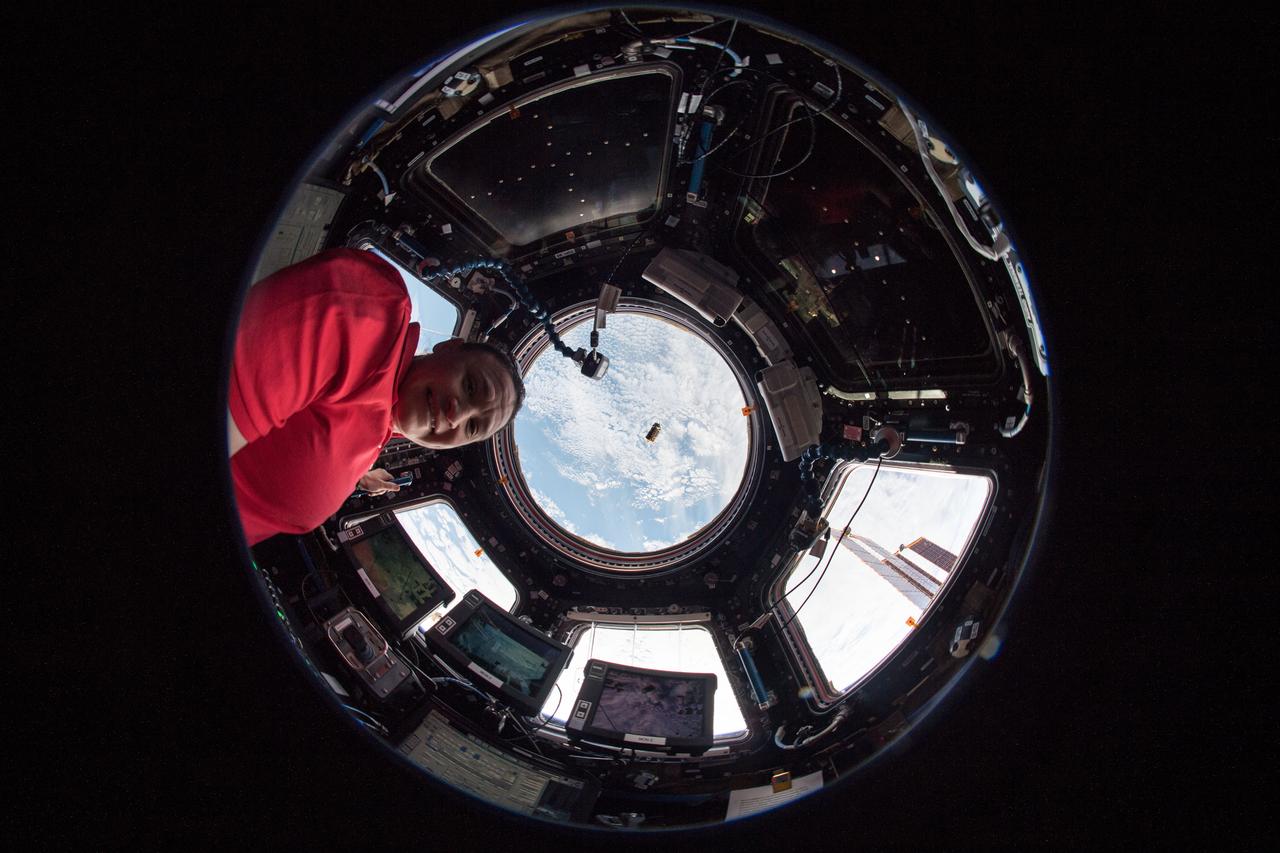
iss056e195892 (Sept. 27, 2018) --- Flight Engineer Serena Auñón-Chancellor of NASA monitors the arrival of the H-II Transfer Vehicle-7 (HTV-7) before it was captured during Expedition 56 by Commander Drew Feustel operating the Canadarm2 robotic arm. The HTV-7 from the Japan Aerospace Exploration Agency (JAXA) delivered six new lithium-ion batteries and adapter plates to upgrade the International Space Station's power systems. The Japanese resupply ship also delivered science experiments and research hardware including a new sample holder for the Electrostatic Levitation Furnace (JAXA-ELF), a protein crystal growth experiment at low temperatures (JAXA LT PCG), an investigation that looks at the effect of microgravity on bone marrow (MARROW), a Life Sciences Glovebox, and additional EXPRESS Racks.
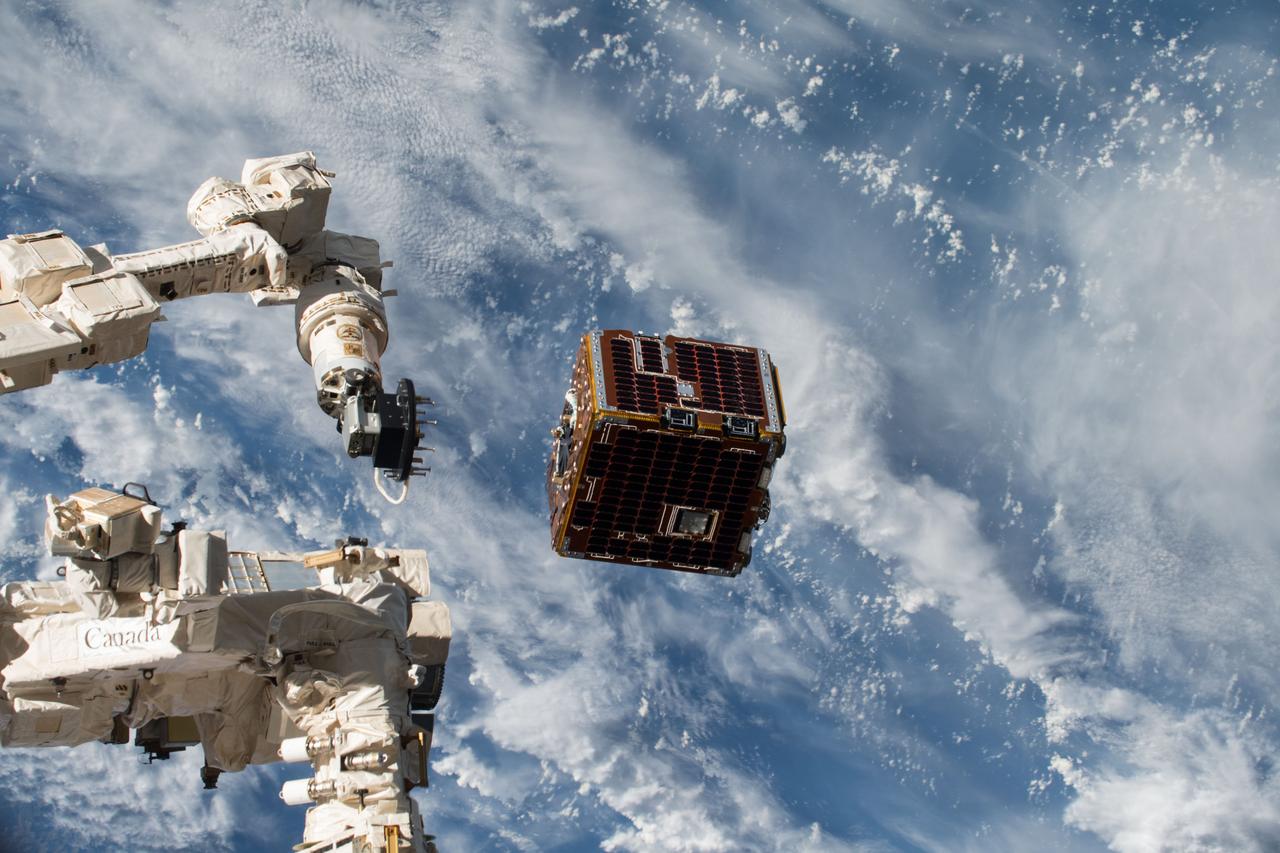
iss056e025331 (6/20/2018) --- Deployment of the NanoRacks-Remove Debris Satellite from the International Space Station (ISS) using the NanoRacks Kaber MicroSat Deployer. NanoRacks-Remove Debris aims to demonstrate key technologies for Active Debris Removal to reduce the risks presented by space debris
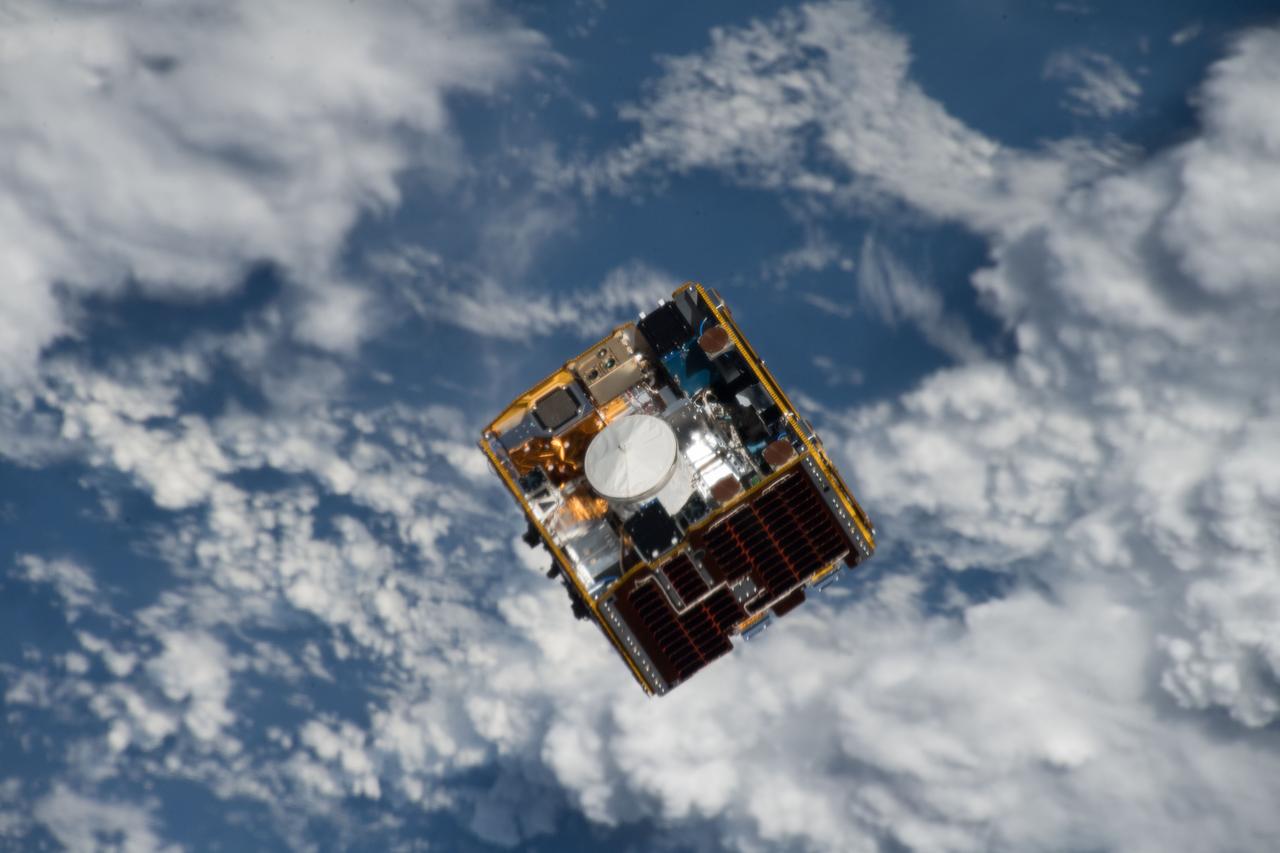
iss056e025425 (6/20/2018) --- Deployment of the NanoRacks-Remove Debris Satellite from the International Space Station (ISS). NanoRacks-Remove Debris aims to demonstrate key technologies for Active Debris Removal to reduce the risks presented by space debris
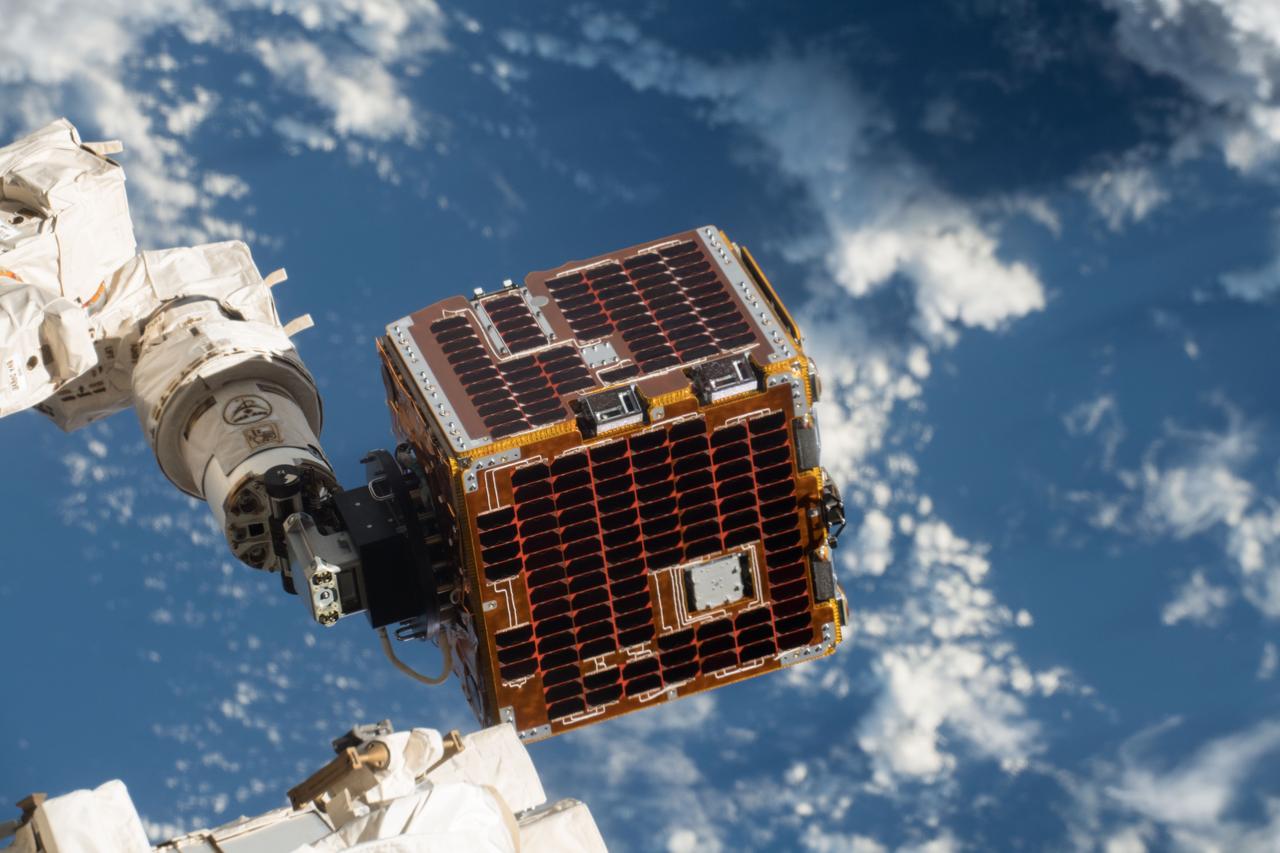
iss056e025305 (6/20/2018) --- Deployment of the NanoRacks-Remove Debris Satellite from the International Space Station (ISS) using the NanoRacks Kaber MicroSat Deployer. NanoRacks-Remove Debris aims to demonstrate key technologies for Active Debris Removal to reduce the risks presented by space debris
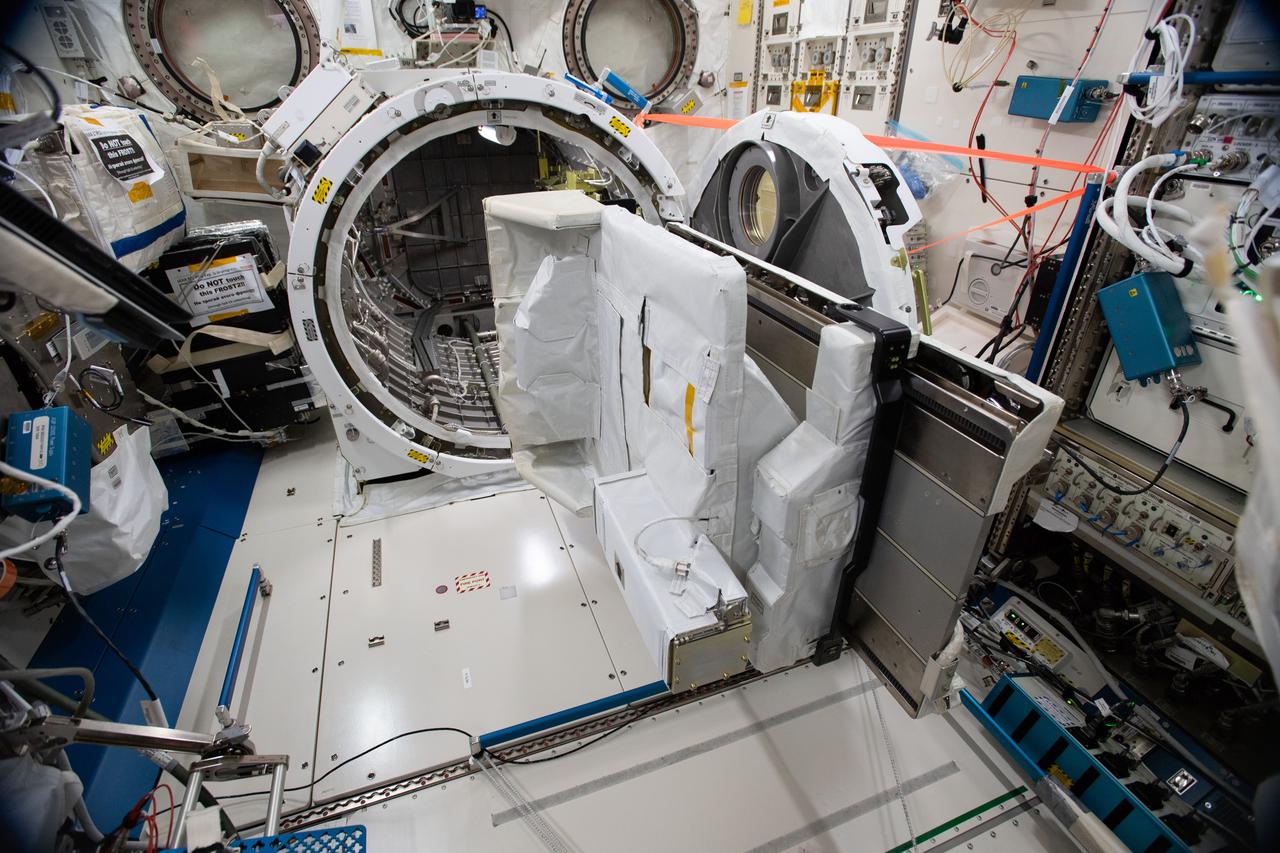
iss056e100542 (7/3/2018) --- A view of the Japanese Experiment Module (JEM) Airlock (AL) slide table retraction from Japanese Experiment Module (JPM) Side during JSSOD-9 operations. The JEM Small Satellite Orbital Deployer (J-SSOD) provides a novel, safe, small satellite launching capability to the International Space Station (ISS). Once the J-SSOD including satellite install cases with small satellites are installed on the Multi-Purpose Experiment Platform (MPEP) by crewmembers, it is passed through the JEM airlock for retrieval, positioning and deployment by the JEMRMS.
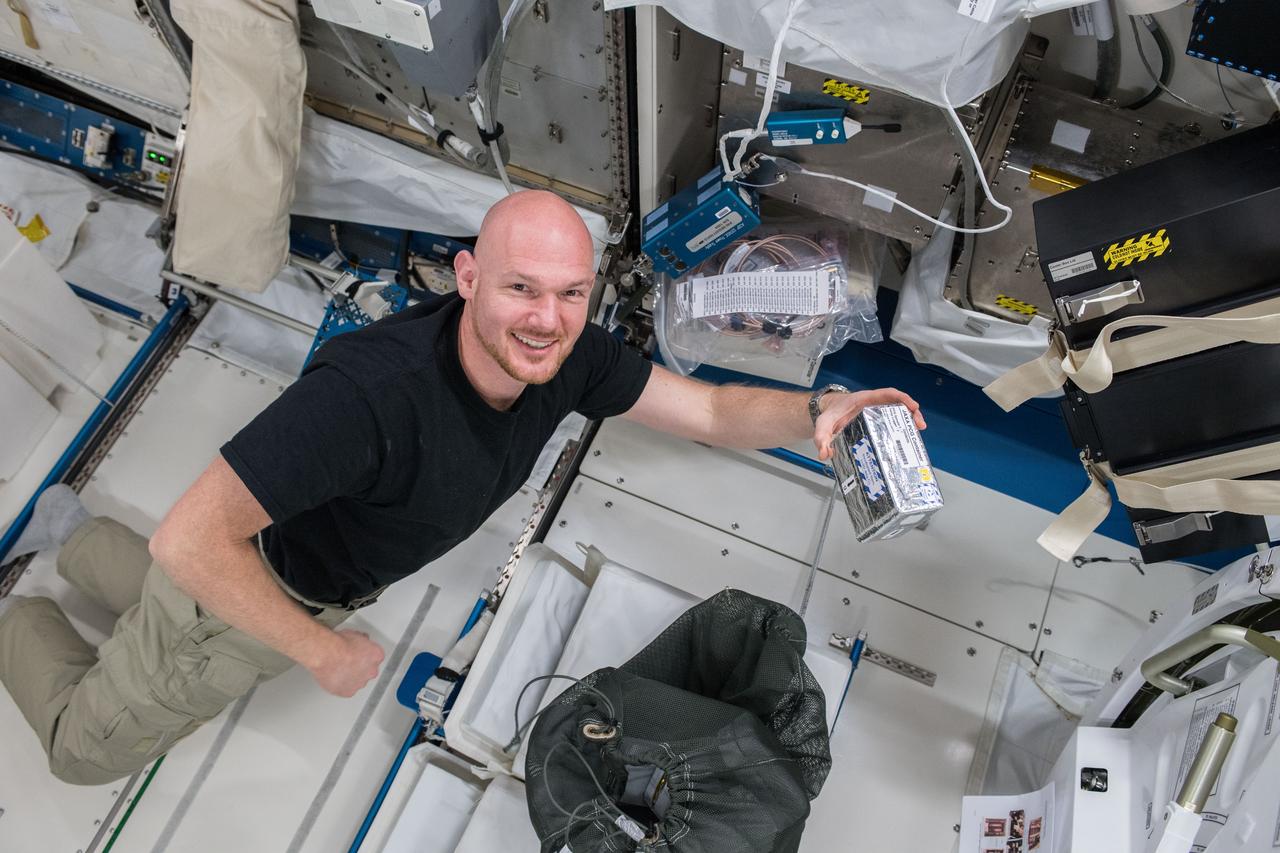
iss056e075928 (7/3/2018) --- Astronaut Alexander Gerst of ESA (European Space Agency), during the JAXA Protein Crystal Growth (PCG) sample retrieval from the Freezer-Refrigerator Of Stirling Cycle 2 (FROST2) and initiation of the crystallization of the samples before inserting them back into the FROST2, where crystallization will continue.
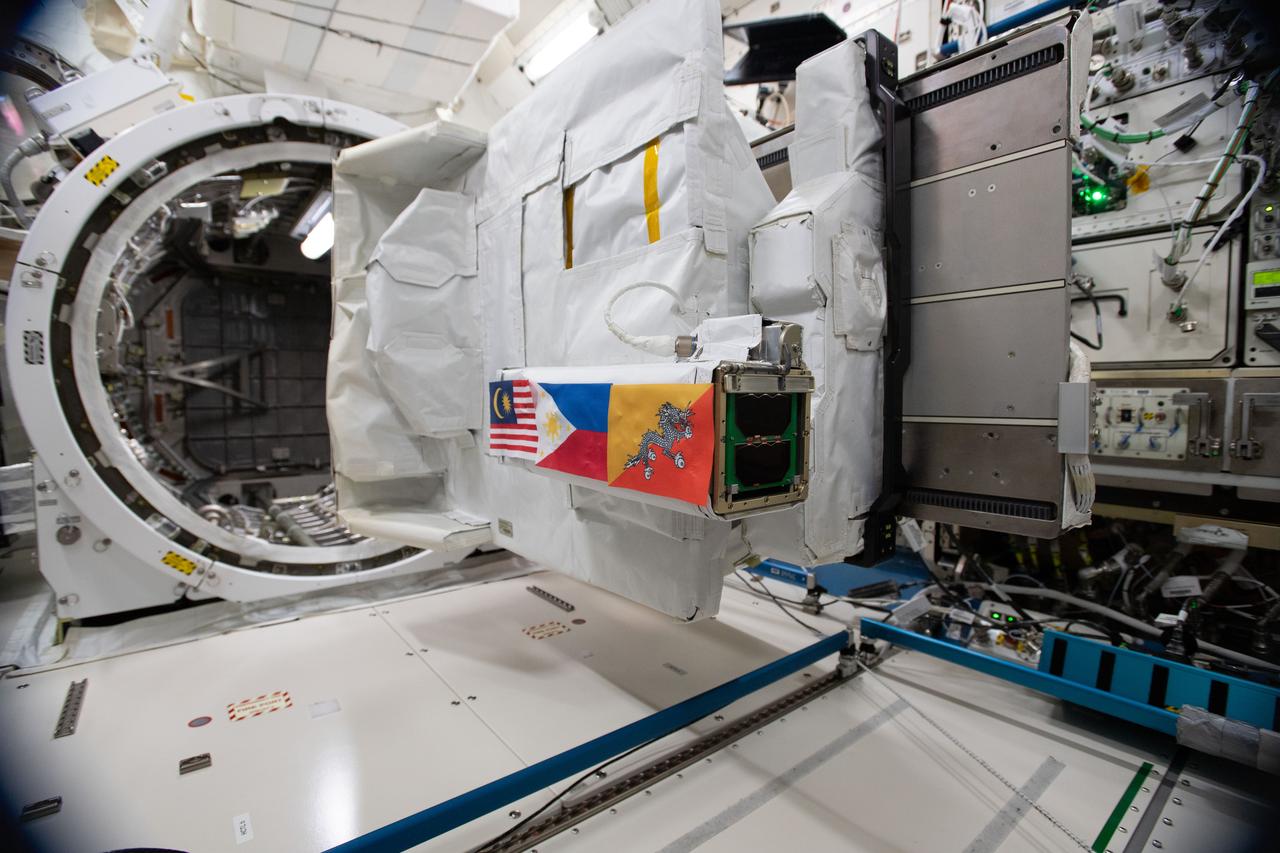
iss056e100586 (7/30/2018) --- A view of the Japanese Experiment Module (JEM) Airlock (AL) slide table retraction from Japanese Experiment Module (JPM) during JSSOD-9 operations. The JEM Small Satellite Orbital Deployer (J-SSOD) provides a novel, safe, small satellite launching capability to the International Space Station (ISS). Once the J-SSOD including satellite install cases with small satellites are installed on the Multi-Purpose Experiment Platform (MPEP) by crewmembers, it is passed through the JEM airlock for retrieval, positioning and deployment by the JEMRMS.
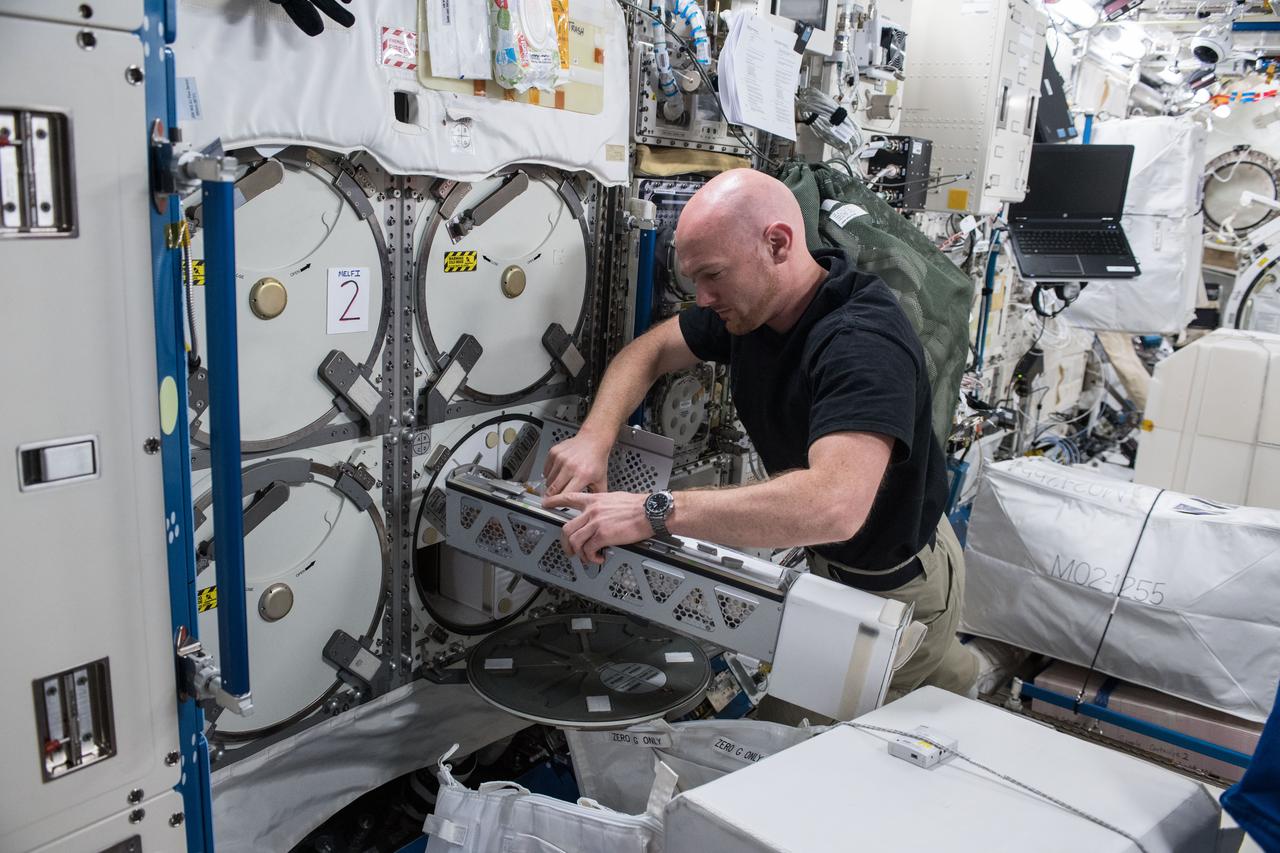
iss056e075951 (July 3, 2018) --- Astronaut Alexander Gerst of ESA (European Space Agency) works inside the Japanese Kibo laboratory module retrieving Protein Crystal Growth samples from a science freezer, also known as the Minus Eighty-Degree Laboratory Freezer for ISS (MELFI).
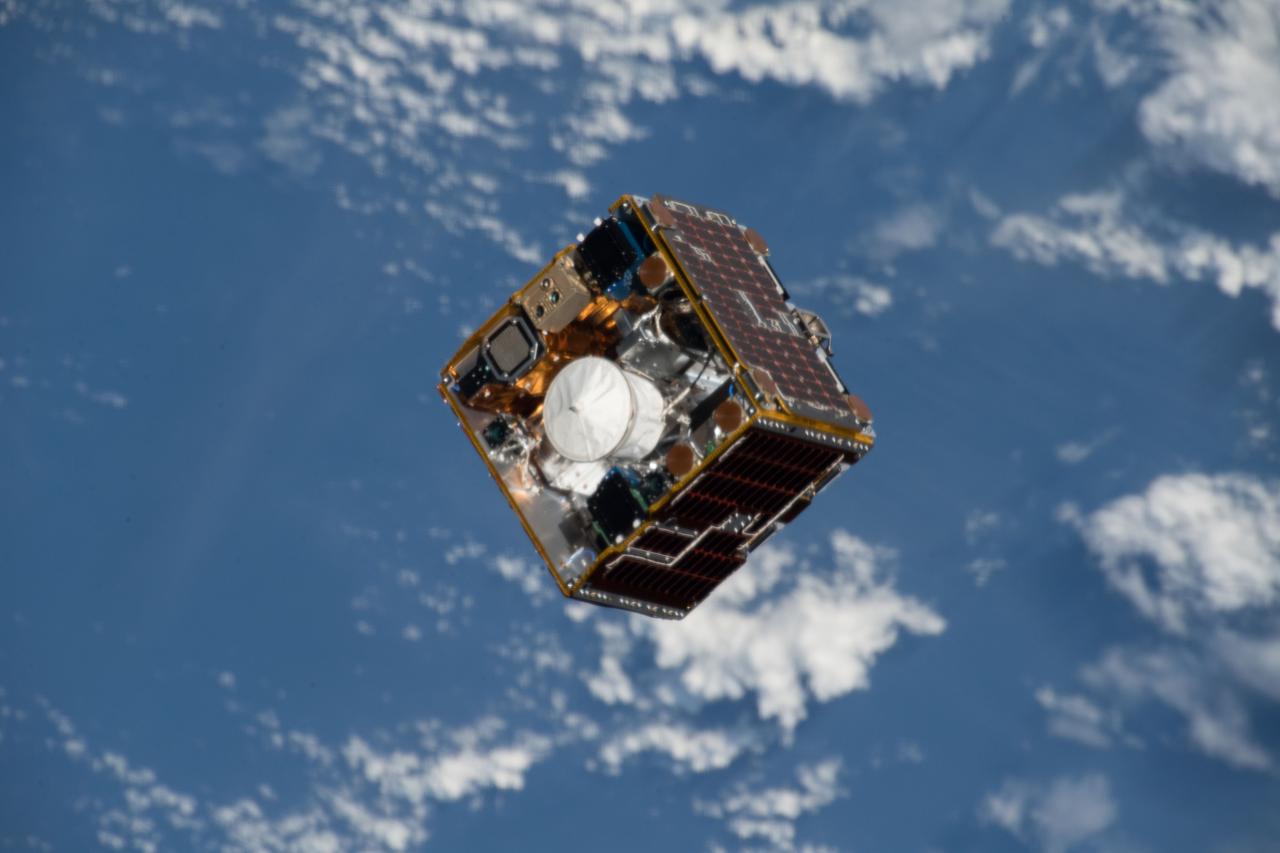
iss056e025423 (6/20/2018) --- Deployment of the NanoRacks-Remove Debris Satellite from the International Space Station (ISS). NanoRacks-Remove Debris aims to demonstrate key technologies for Active Debris Removal to reduce the risks presented by space debris