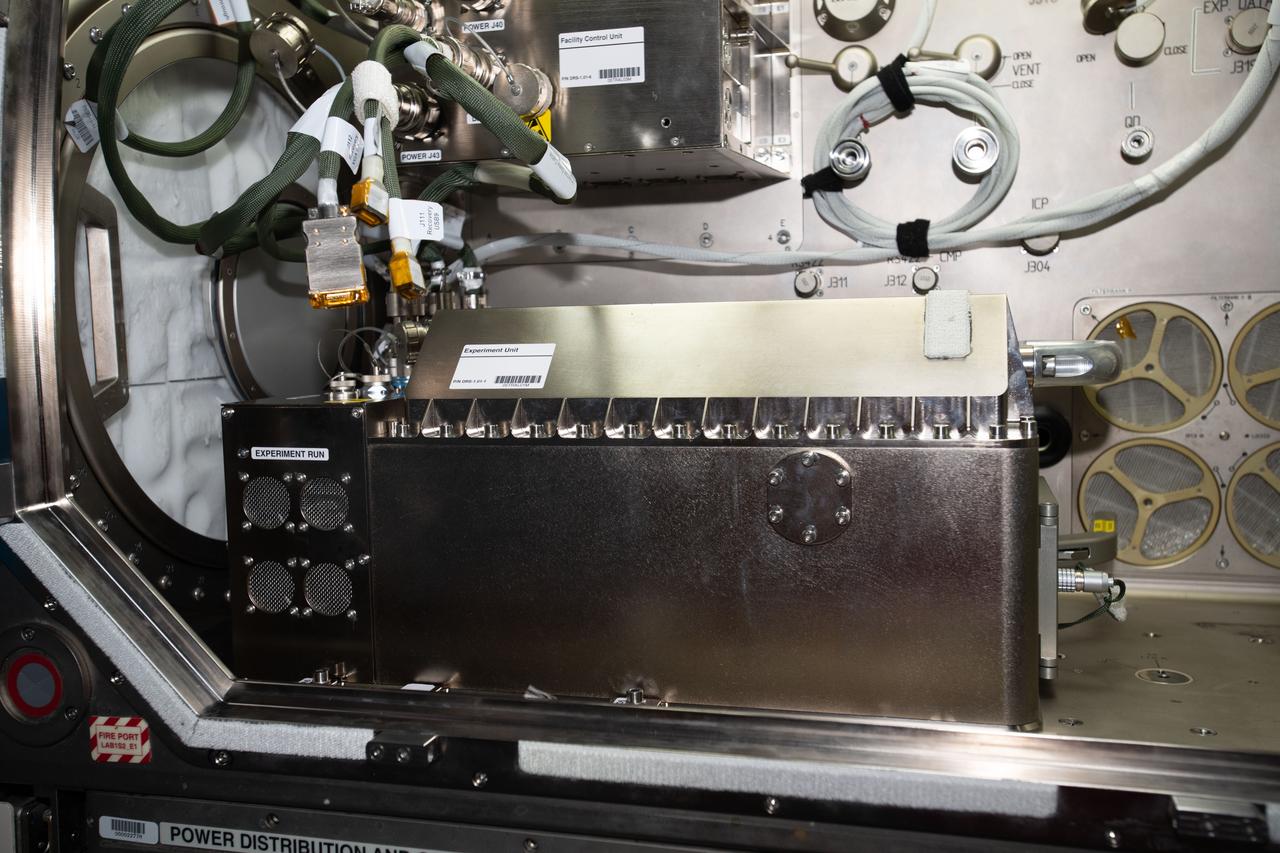
iss062e081047 (3/5/2020) --- A view of the Transparent Alloys Hardware Setup in the Microgravity Sciences Glovebox (MSG) Work Volume (WV) in the U.S. Destiny Laboratory aboard the International Space Station (ISS).
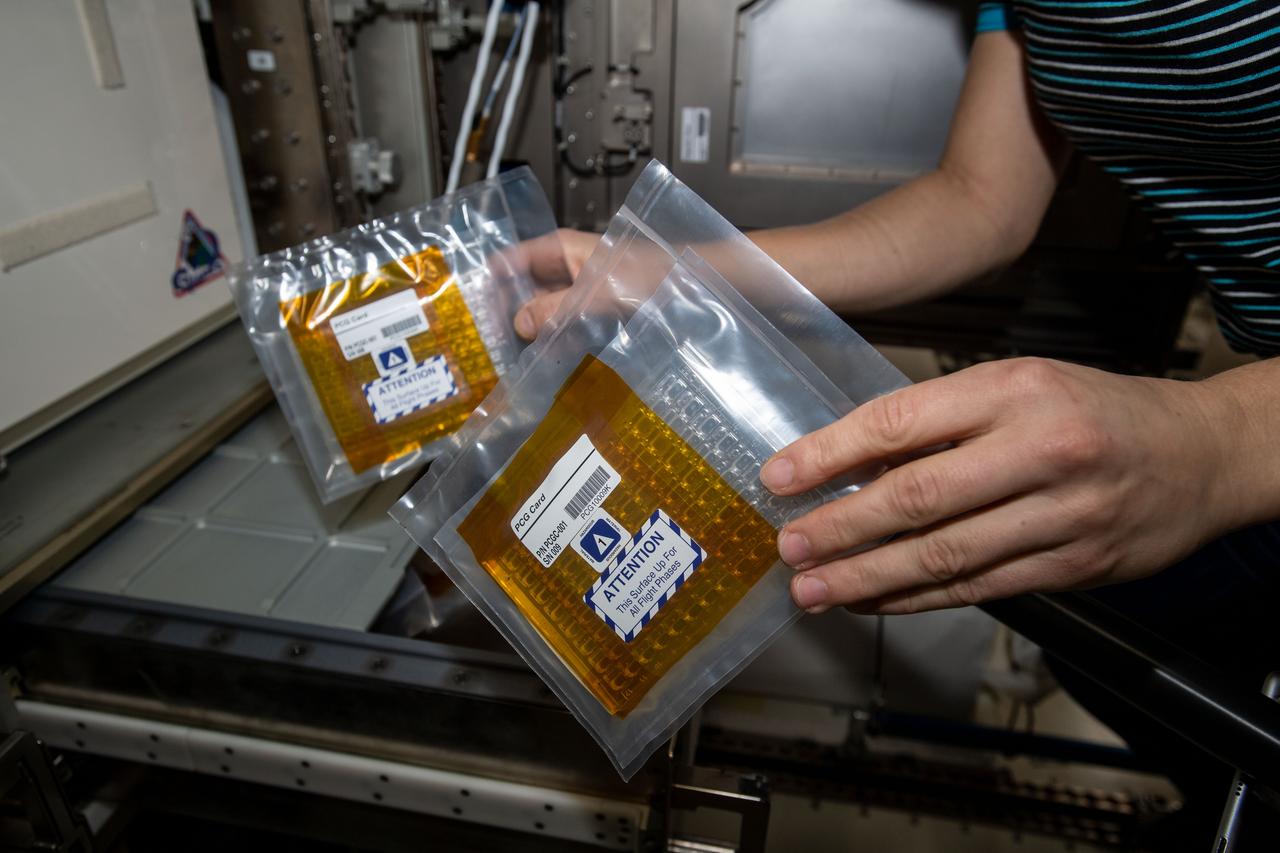
iss062e087808 (3/11/2020) --- A view of Protein Crystal Growth-10 experiment hardware inside JAXA's (Japan Aerospace Exploration Agency) Kibo laboratory module aboard the International Space Station (ISS). Microgravity Crystallization of Glycogen Synthase-Glycogenin Protein Complex (CASIS PCG 10) crystallizes human glycogen synthase proteins on the space station. Determining the structure of the human glycogen synthase and full-length glycogenin protein complex could facilitate the development of treatments on Earth for metabolic disorders such as Type 2 diabetes, obesity, rare genetic disorders, and some forms of cancer.
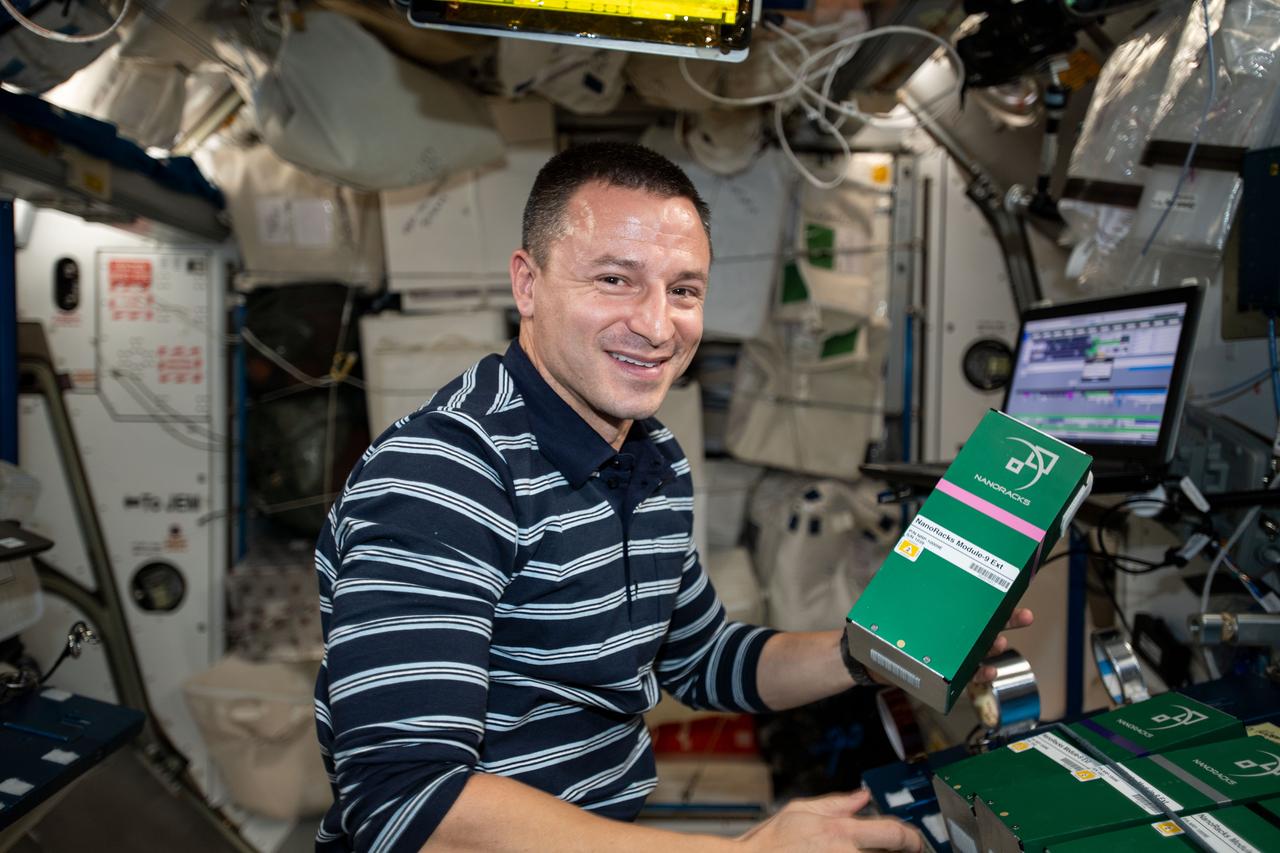
iss060e035409 (8/13/2019) --- A view of NASA astronaut Drew Morgan during the deactivation and/or shaking designated mixture tubes of NanoRacks-NCESSE-Gemini NanoRacks-National Center for Earth and Space Science-Gemini (SSEP Mission 13) - Part of NanoRacks Module-9 Ext. aboard the International Space Station (ISS). The experiments range from examinations of water filtration and purification to synthetic soil production, rust formation, antibiotic effectiveness, growth and development of microacquatic organisms, and growth of plant, fungi, and bacteria. Each was chosen from more than 3,000 entries submitted by more than 23,000 U.S., Canadian, and Brazilian students. The experiments use NanoRacks MixStix, miniature laboratories activated by space station crew and eventually returned to the student teams on Earth for analysis.
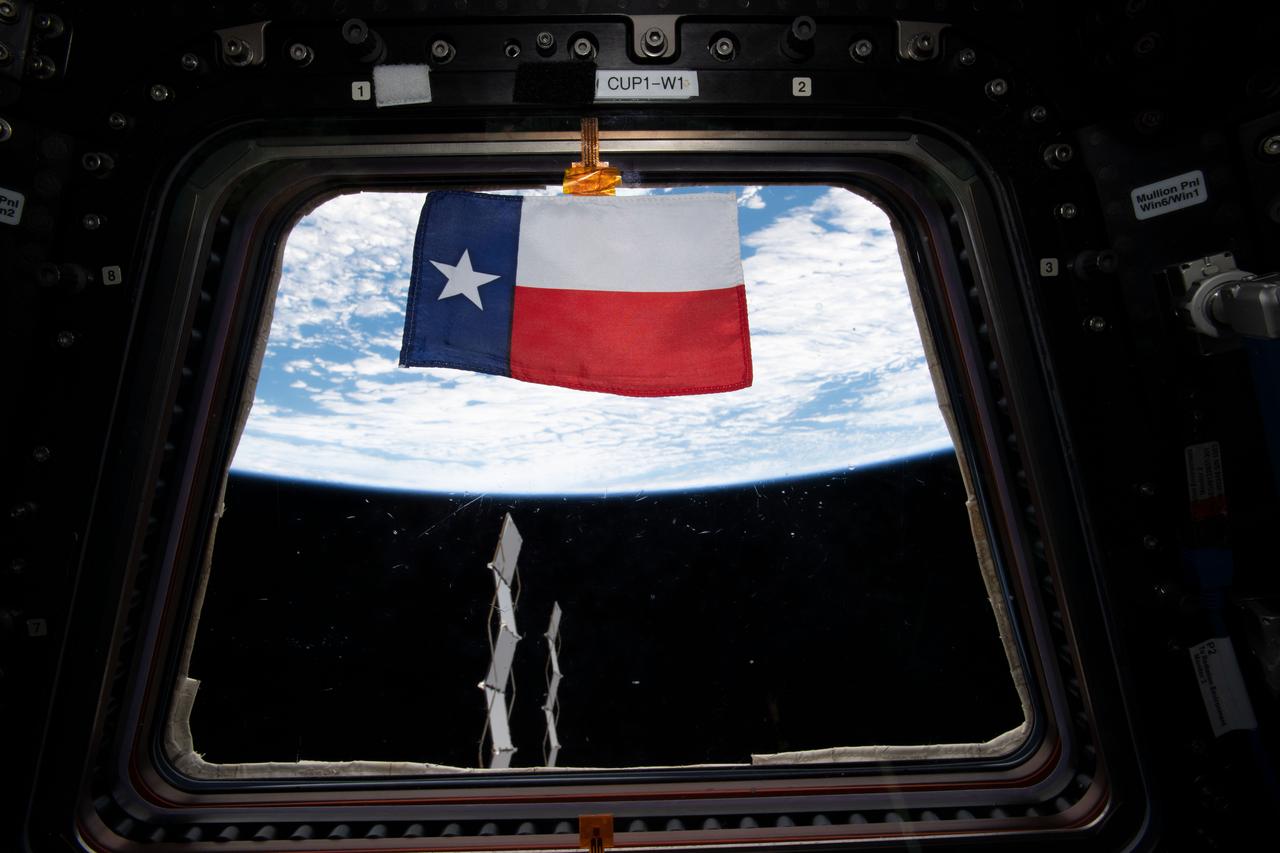
A state flag of Texas floats in front of a window in the Cupola module.
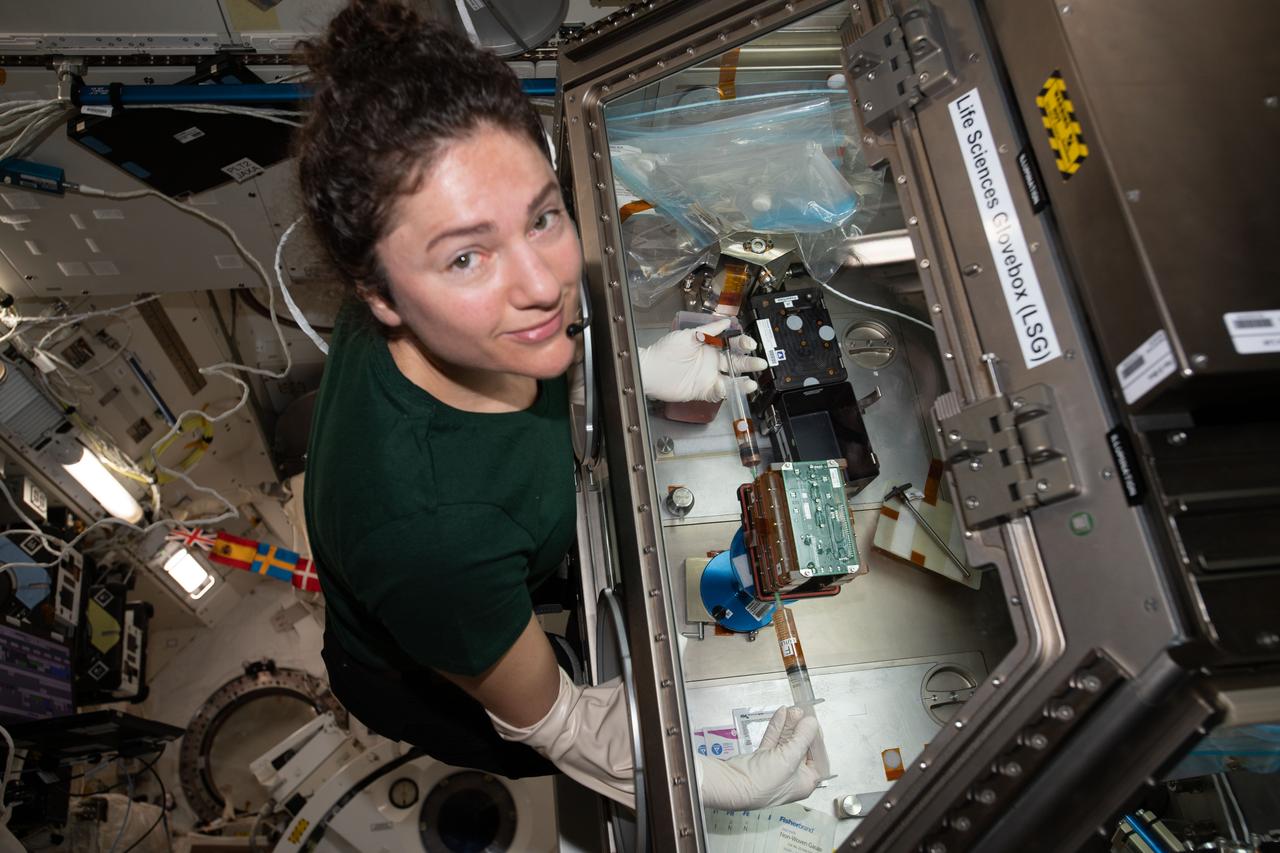
iss062e115343 (March 26, 2020) --- NASA astronaut and Expedition 62 Flight Engineer Jessica Meir conducts cardiac research inside the Life Sciences Glovebox, a biology research facility located in Japan's Kibo laboratory module. The Engineered Heart Tissues investigation is exploring cardiac function in weightlessness that may provide new drug developments for astronauts and Earthlings.
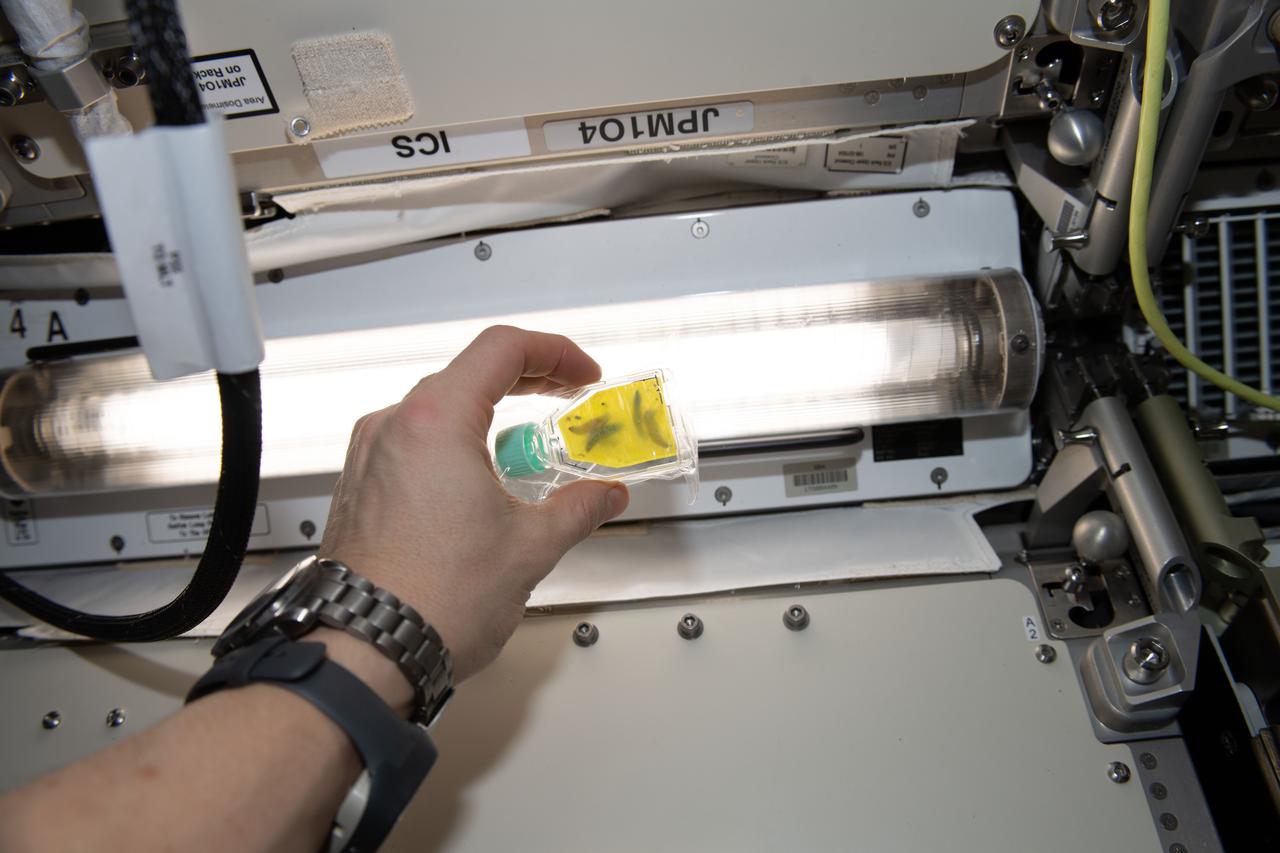
iss062e112447 (3/25/2020) --- A View of the ISSET-Nanoracks-Mission Discovery 4 investigation aboard the International Space Station (ISS). The Degradation of plastic by wax worms in microgravity sub-investigation studies wax worms and their capability to degrade plastic in a space environment. The experiment is contained in a culture flask with wax worms sealed inside a typical supermarket bag made from polyethylene Successful degradation of polyethylene using wax worms may lead to a new method of mitigating plastic waste accumulation in future space missions.
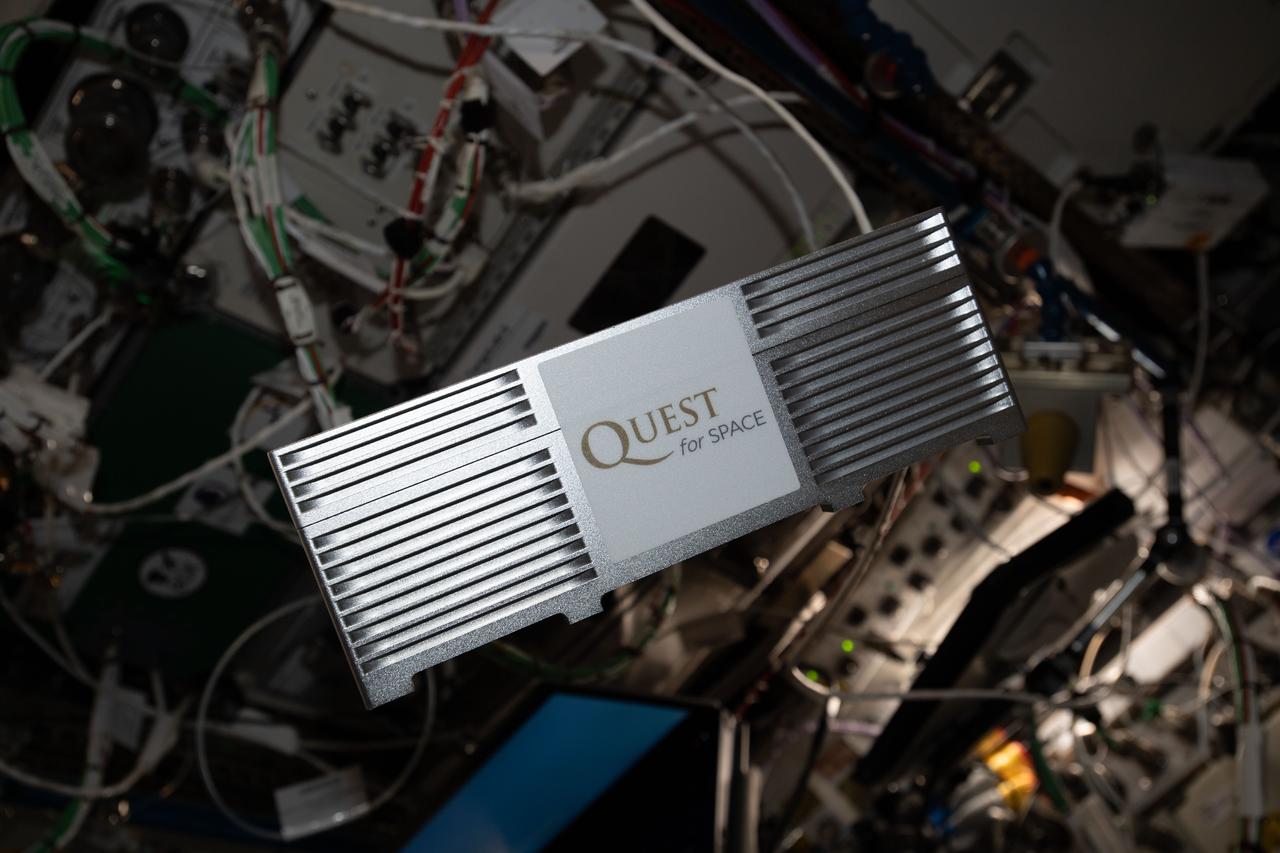
iss062e034557 (2/19/2020) --- A view of the Quest Institute-NanoLab Unit 3 investigation aboard the International Space Station (ISS). Quest Institute-NanoLab Unit 3 contains 15 Nano-Lab experiments from students in the United States and Singapore. Student-developed spaceflight experiments empower students with real-world science experience.
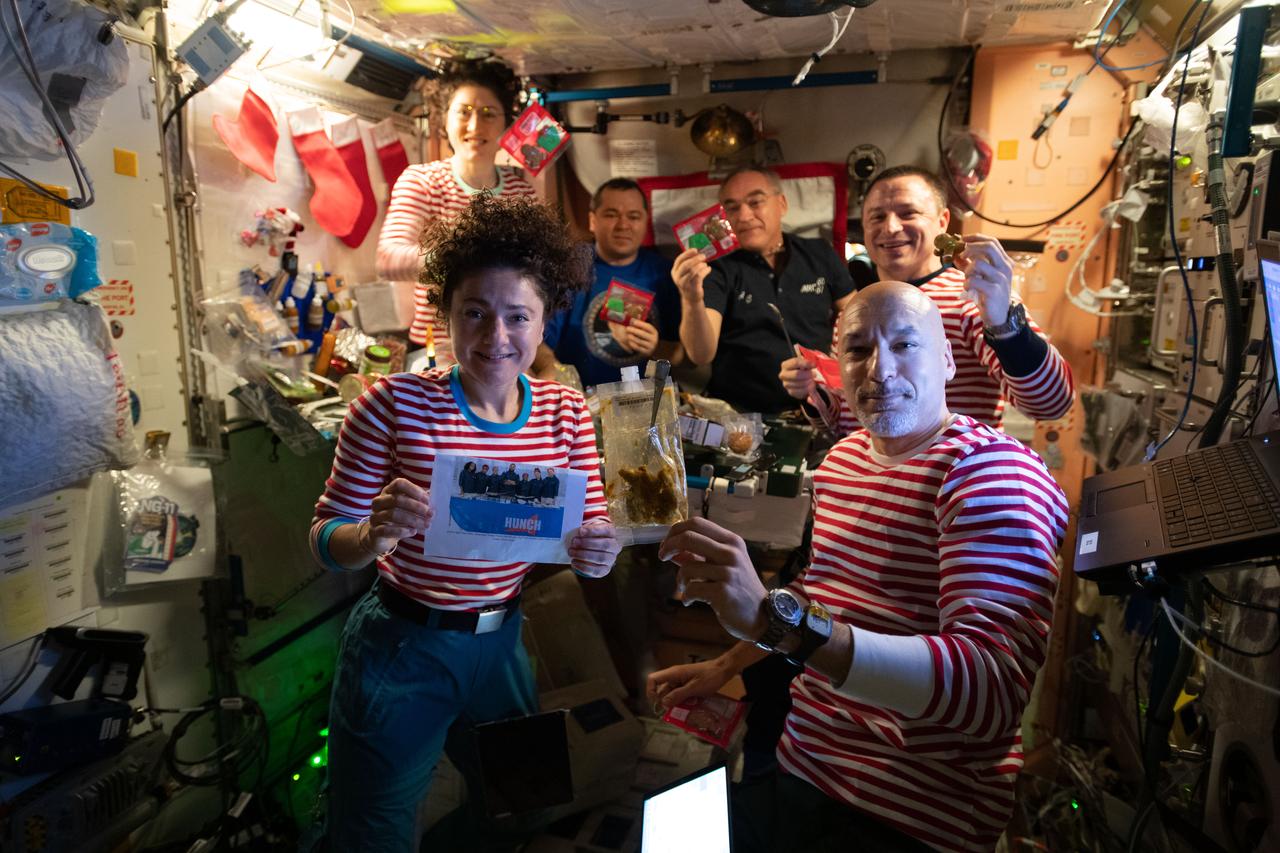
iss061e096558 (Dec. 25, 2019) --- The Expedition 61 crew celebrates Christmas day with a brunch inside the International Space Station's Unity module decorated with stockings, flashlight "candles" and a Christmas tree banner. Clockwise from bottom left are, NASA Flight Engineers Jessica Meir and Christina Koch, Roscosmos Flight Engineers Oleg Skripochka and Alexander Skvortsov, NASA Flight Engineer Drew Morgan, and Commander Luca Parmitano of the European Space Agency (ESA).
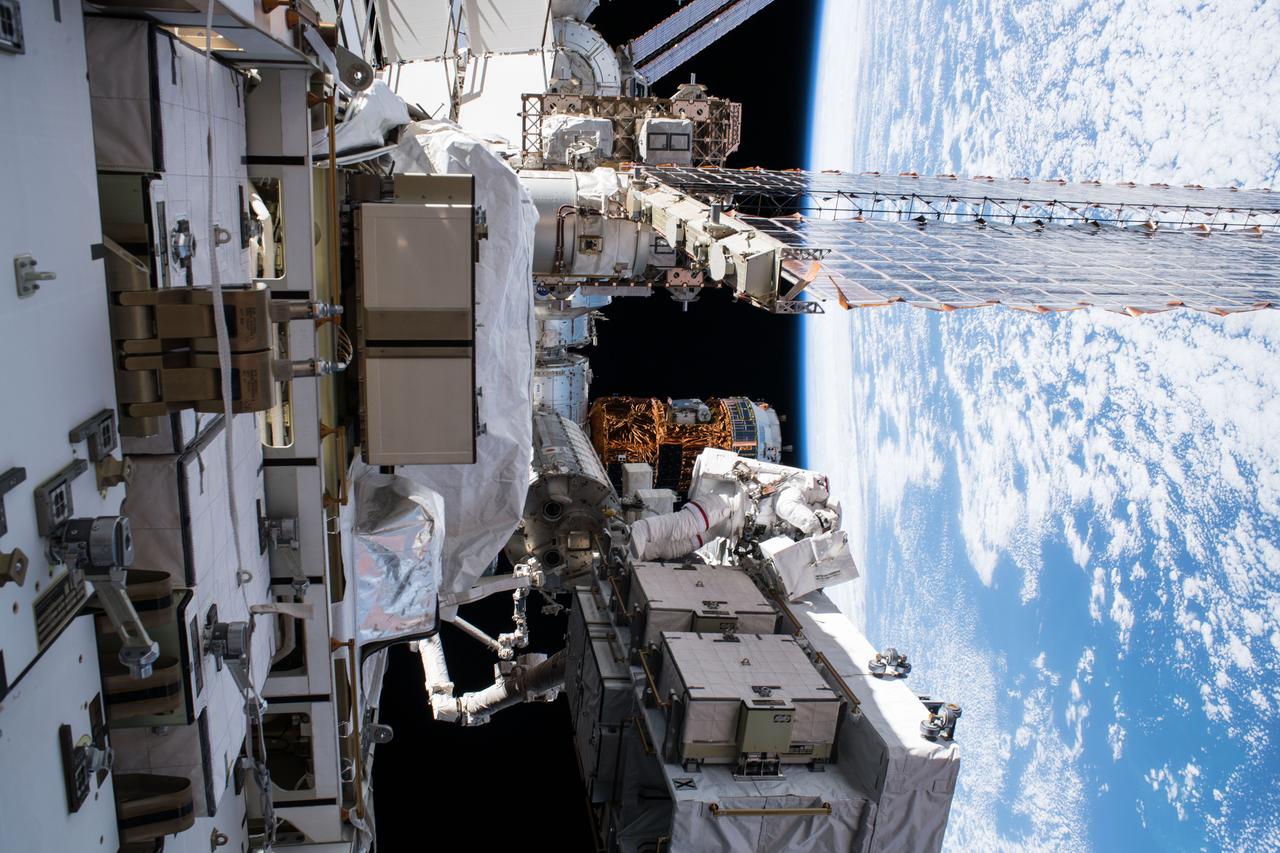
iss061e003491 (10/6/2019) --- A view of extravehicular crewmember 1 (EV1) Christina Koch on the Exposed Pallet (EP) during Extravehicular Activity 56 (EVA 56) cleanup operations (OPS). The Earth limb is in the background. Extravehicular activity (EVA) is any activity done by an astronaut or cosmonaut outside a spacecraft beyond the Earth's appreciable atmosphere. The term most commonly applies to a spacewalk made outside a craft orbiting Earth (such as the International Space Station).
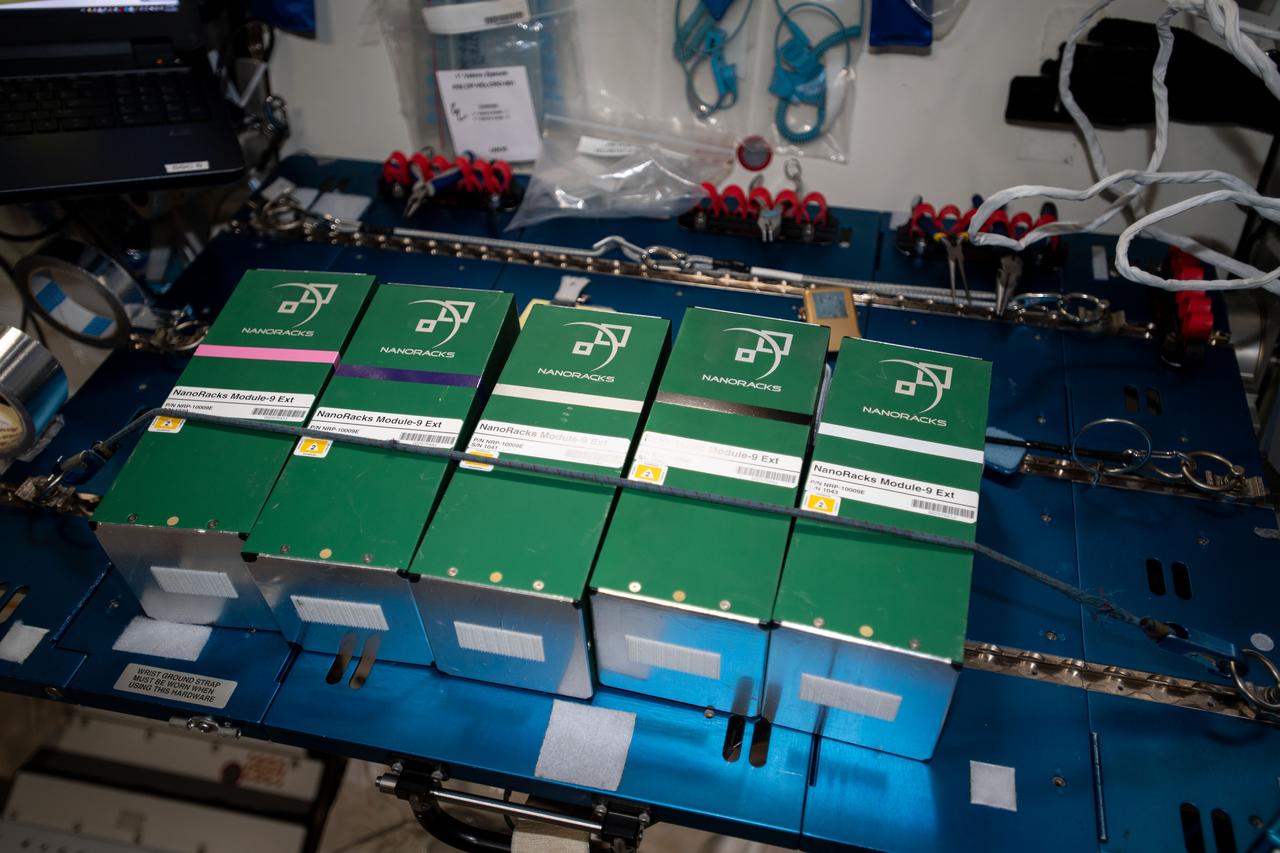
iss060e035405 (8/13/2019) --- A view the NanoRacks-NCESSE-Gemini NanoRacks-National Center for Earth and Space Science-Gemini (SSEP Mission 13) - Part of NanoRacks Module-9 Ext. aboard the International Space Station (ISS). The experiments range from examinations of water filtration and purification to synthetic soil production, rust formation, antibiotic effectiveness, growth and development of microacquatic organisms, and growth of plant, fungi, and bacteria. Each was chosen from more than 3,000 entries submitted by more than 23,000 U.S., Canadian, and Brazilian students. The experiments use NanoRacks MixStix, miniature laboratories activated by space station crew and eventually returned to the student teams on Earth for analysis.
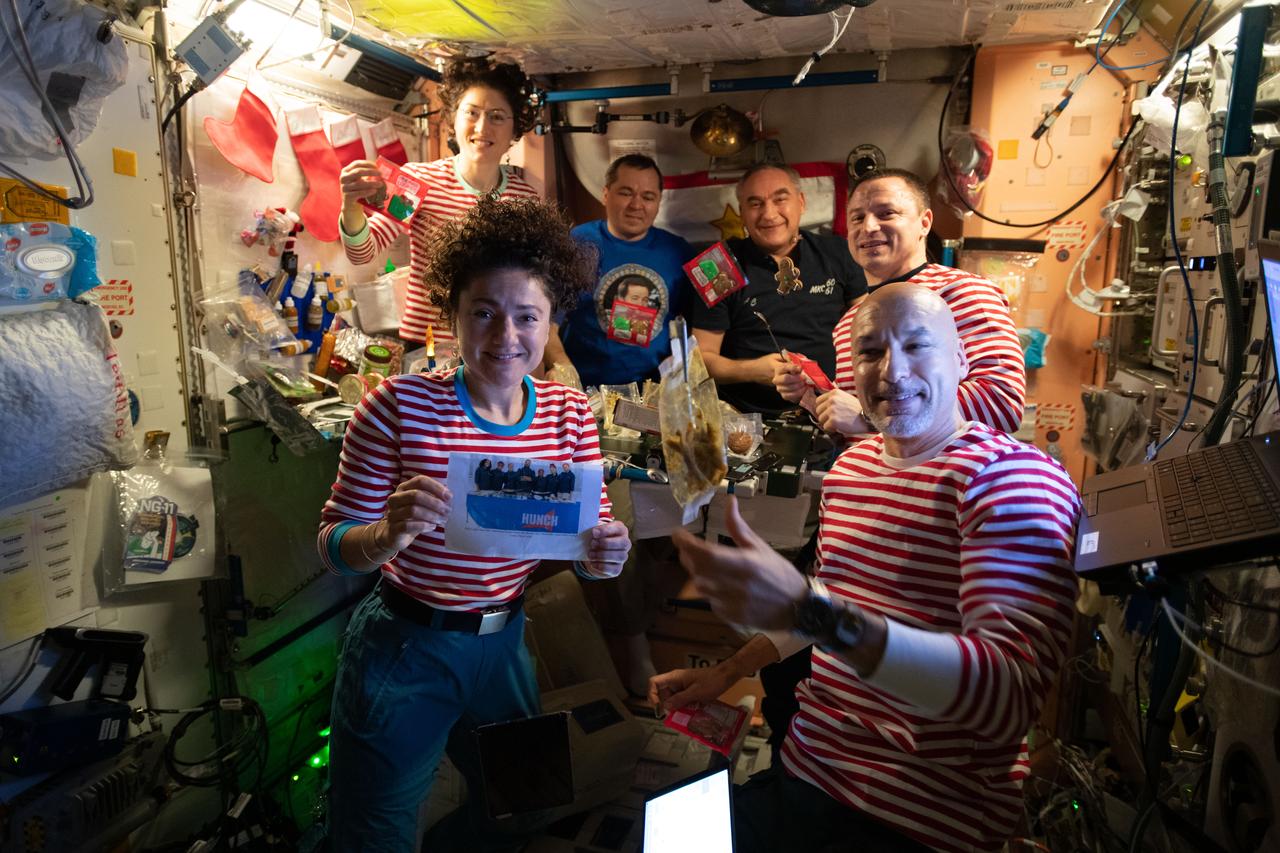
iss061e096558 (Dec. 25, 2019) --- The Expedition 64 crew celebrates Christmas day with a brunch inside the International Space Station's Unity module decorated with stockings, flashlight "candles" and a Christmas tree banner. Clockwise from bottom left are, NASA Flight Engineers Jessica Meir and Christina Koch, Roscosmos Flight Engineers Oleg Skripochka and Alexander Skvortsov, NASA Flight Engineer Drew Morgan, and Commander Luca Parmitano of the European Space Agency (ESA).
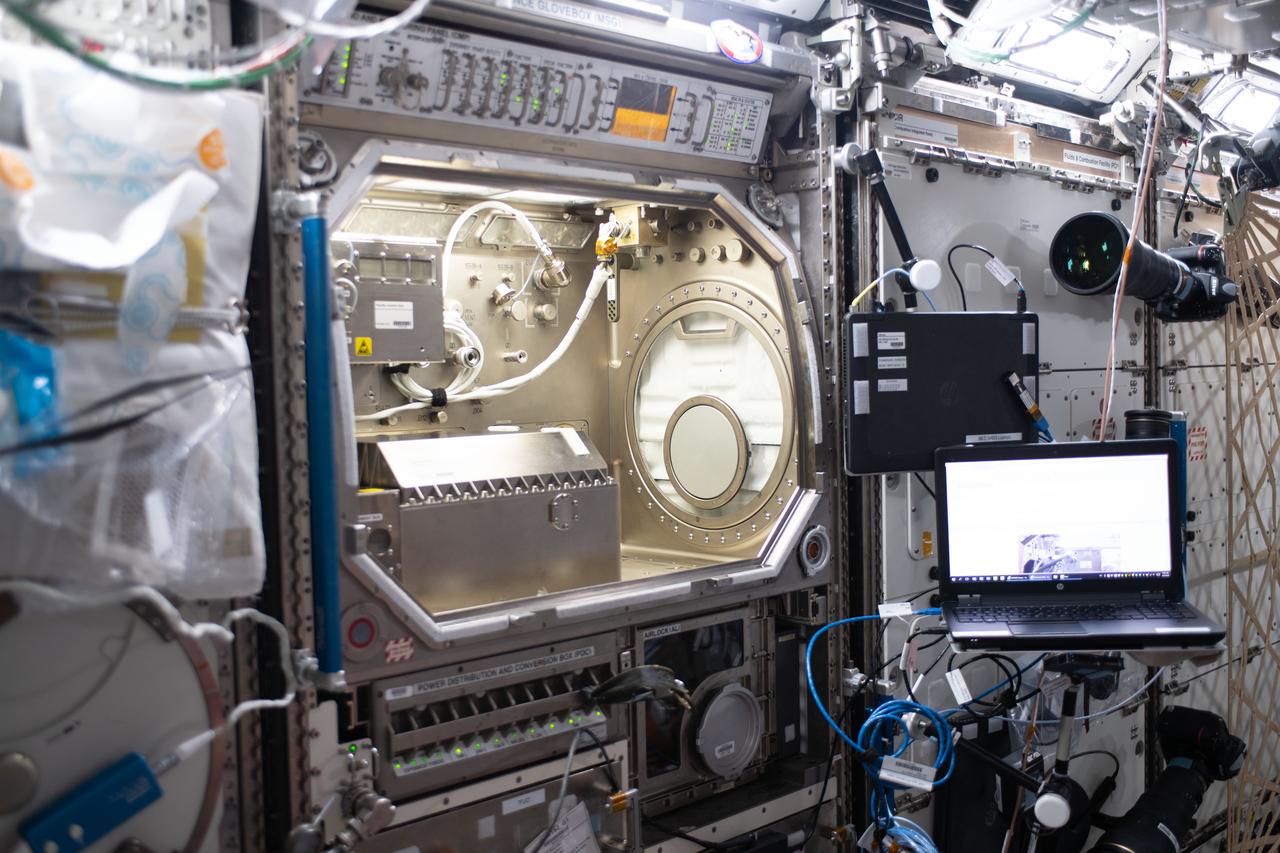
iss062e080867 (3/5/2020) --- A view of the Transparent Alloys Hardware Setup in the Microgravity Sciences Glovebox (MSG) Work Volume (WV) in the U.S. Destiny Laboratory aboard the International Space Station (ISS).
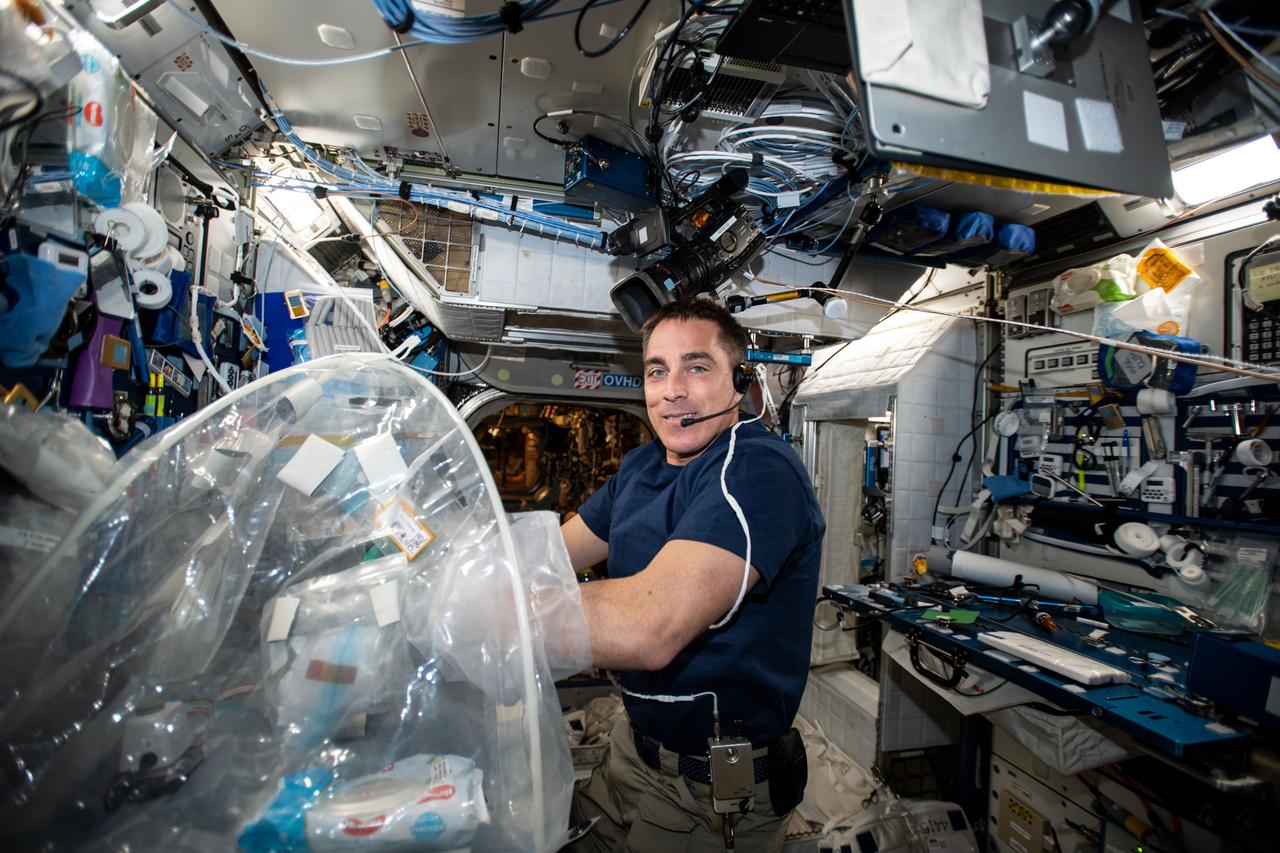
iss062e151901 (April 7, 2020) --- NASA astronaut Chris Cassidy services biological samples in a glovebag for the Food Physiology experiment to characterize the key effects of an enhanced spaceflight diet on immune function, the gut microbiome, and nutritional status indicators.
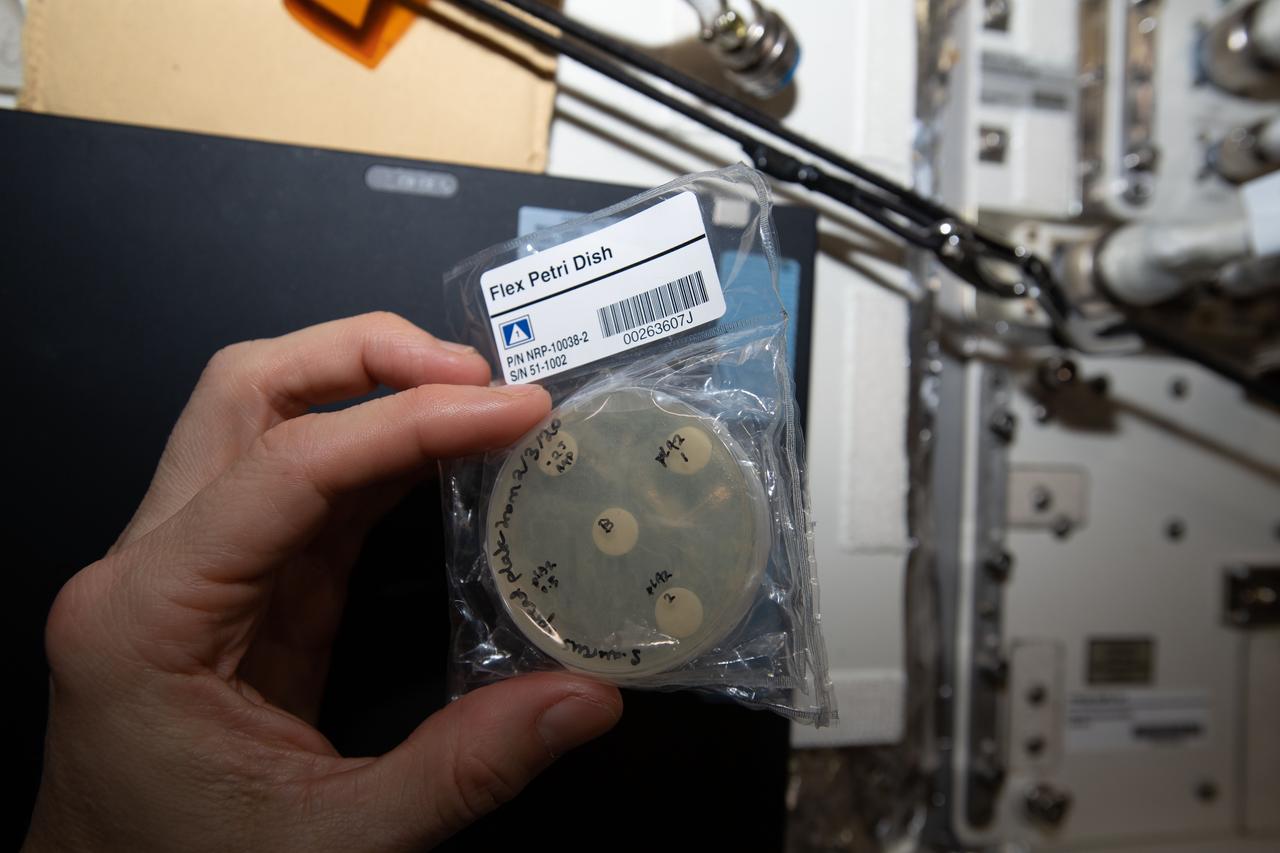
iss062e098352 (3/17/2020) --- A View of the ISSET-Nanoracks-Mission Discovery 4 investigation aboard the International Space Station (ISS). The Antibacterial properties of Phospholipase A2 (PLA2; bee venom) sub-investigation seeks to evaluate the antibacterial properties of PLA2 on Staphylococcus Aureus bacteria in a space environment.
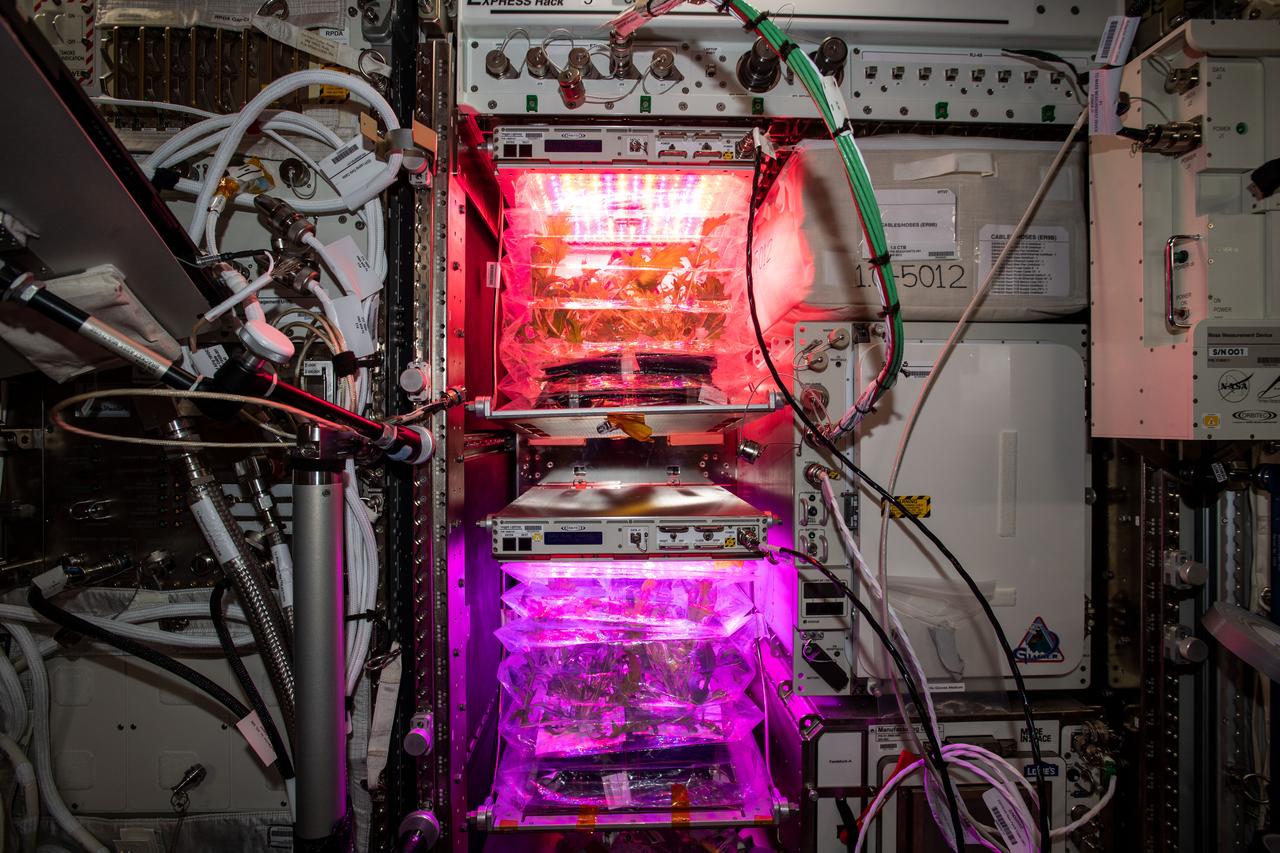
Documentation (overall view) of the Vegetable Production System (Veggie) taken during Pillow watering operations (OPS) for the Veg-04B experiment. Plant Pillows contain Mizuna mustard plants.
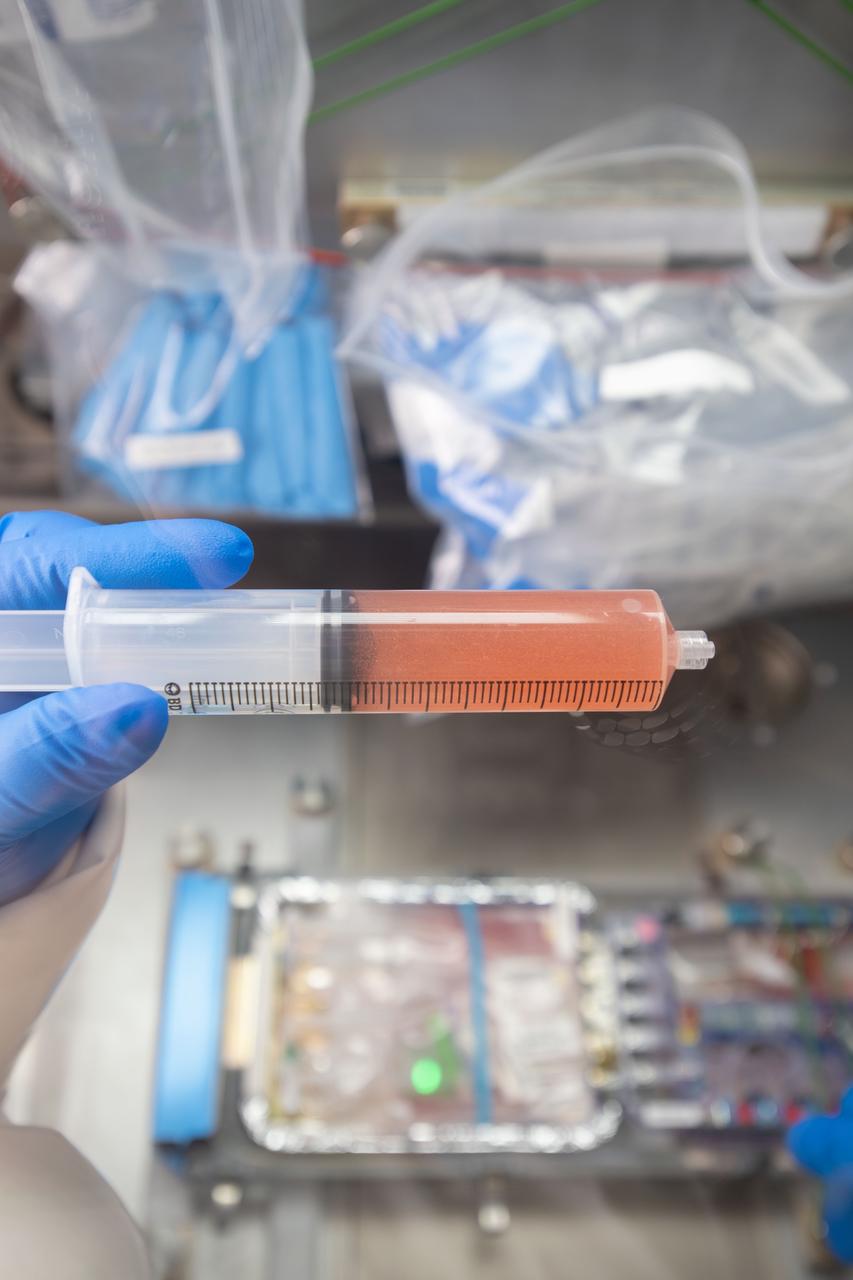
iss060e021649 (8/3/2019) --- Photo documentation of the Cell Science-02 investigation aboard the International space Station (ISS). The Cell Science-02 (CS-02) investigation compares the ability of two different bone inducing growth factors, one novel and one currently used in bone healing therapies, to stimulate growth, differentiation, and related cellular functions of osteoblast cells in culture.
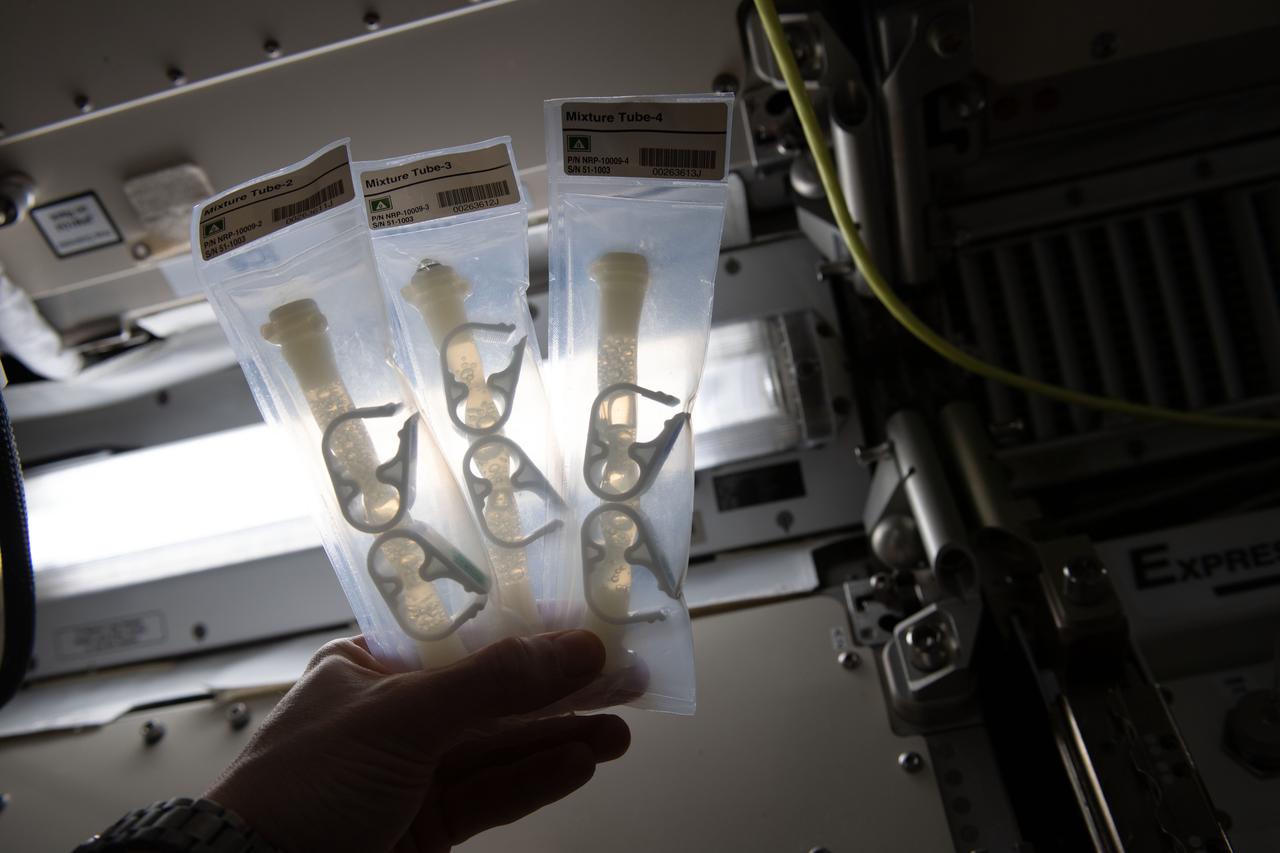
iss062e112422 (3/25/2020) --- A View of the ISSET-Nanoracks-Mission Discovery 4 investigation aboard the International Space Station (ISS). The Reproduction of yeast in microgravity sub-investigation studies whether yeast (Saccharomyces cerevisiae) is able to sexually reproduce in a microgravity environment.
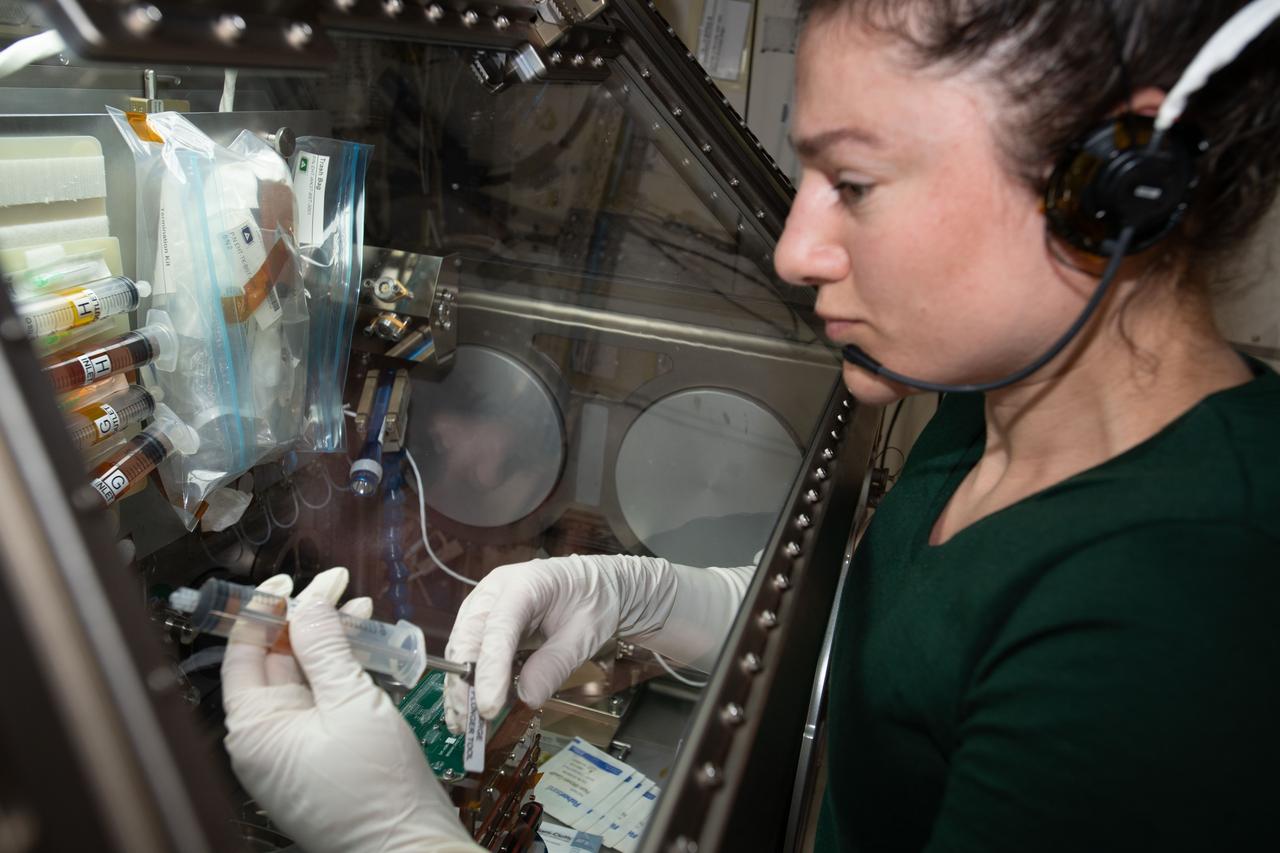
iss062e115355 (March 26, 2020) --- NASA astronaut and Expedition 62 Flight Engineer Jessica Meir conducts cardiac research inside the Life Sciences Glovebox, a biology research facility located in Japan's Kibo laboratory module. The Engineered Heart Tissues investigation is exploring cardiac function in weightlessness that may provide new drug developments for astronauts and Earthlings.
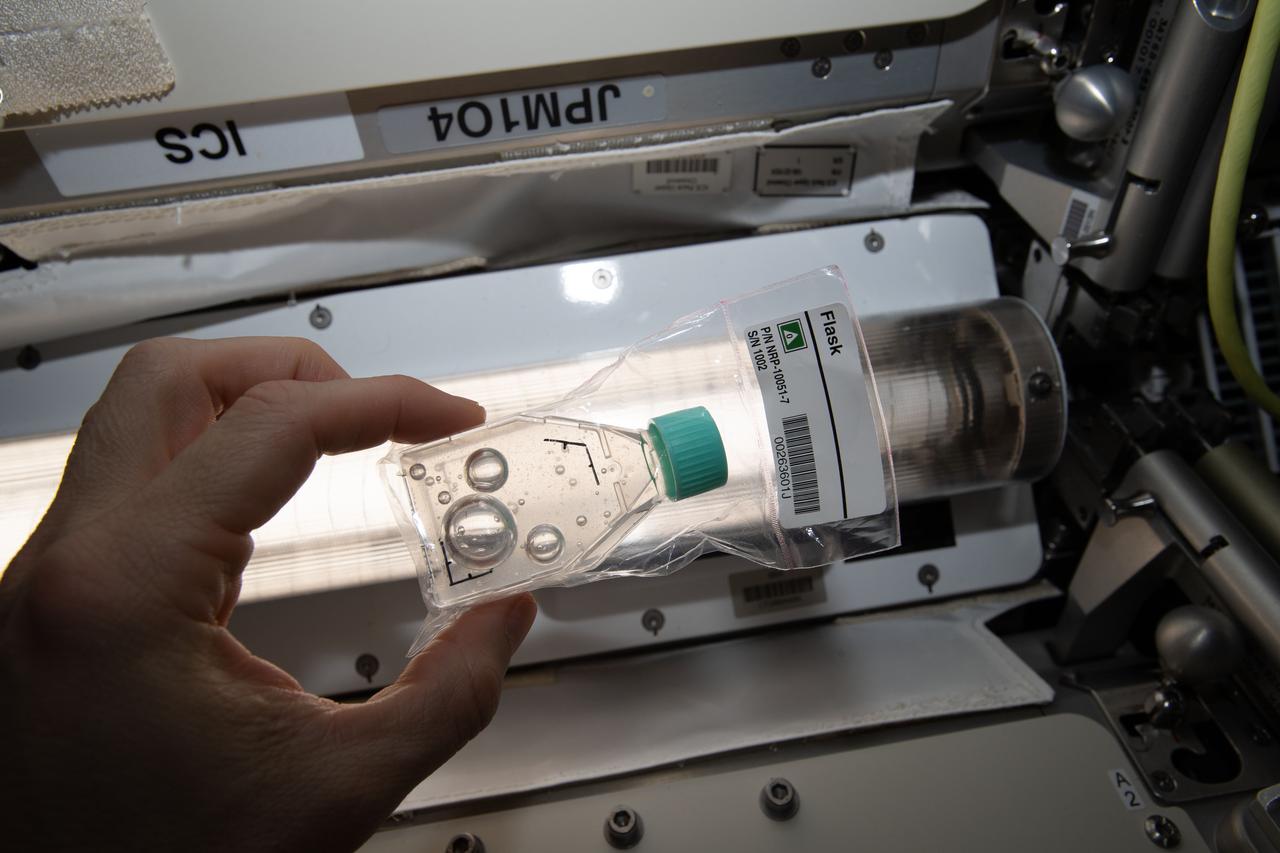
iss062e098366 (3/17/2020) --- A View of the ISSET-Nanoracks-Mission Discovery 4 investigation aboard the International Space Station (ISS). The Flatworm regeneration sub-investigation studies how cells in flatworms communicate with each other to enable them to regenerate in microgravity. This experiment may allow investigators to learn why certain species are able to regenerate.
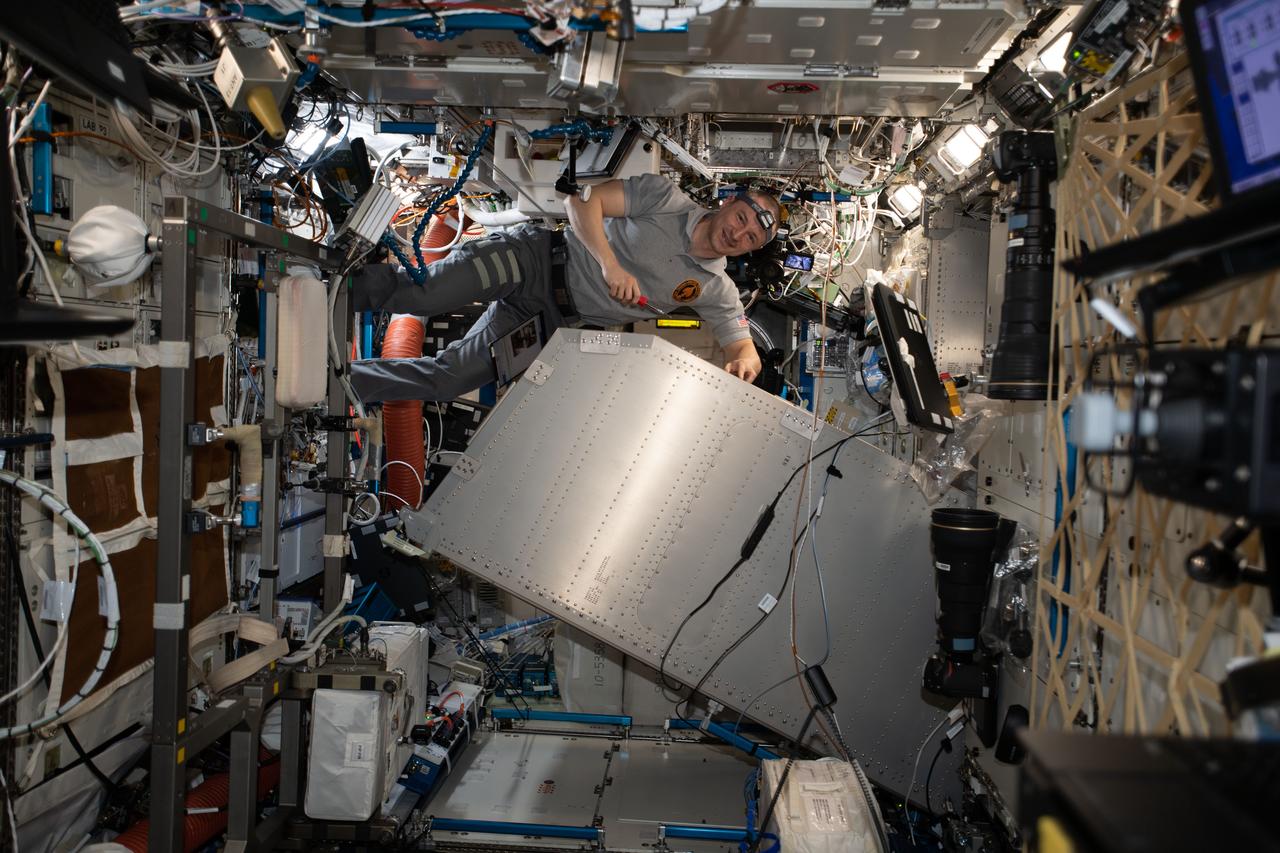
iss062e014085 (Feb. 22, 2020) --- NASA astronaut and Expedition 62 Flight Engineer Andrew Morgan services the Microgravity Science Glovebox (MSG) inside the U.S. Destiny laboratory module. Morgan was cleaning and lubricating the MSG components and photographing the maintenance work for inspection.
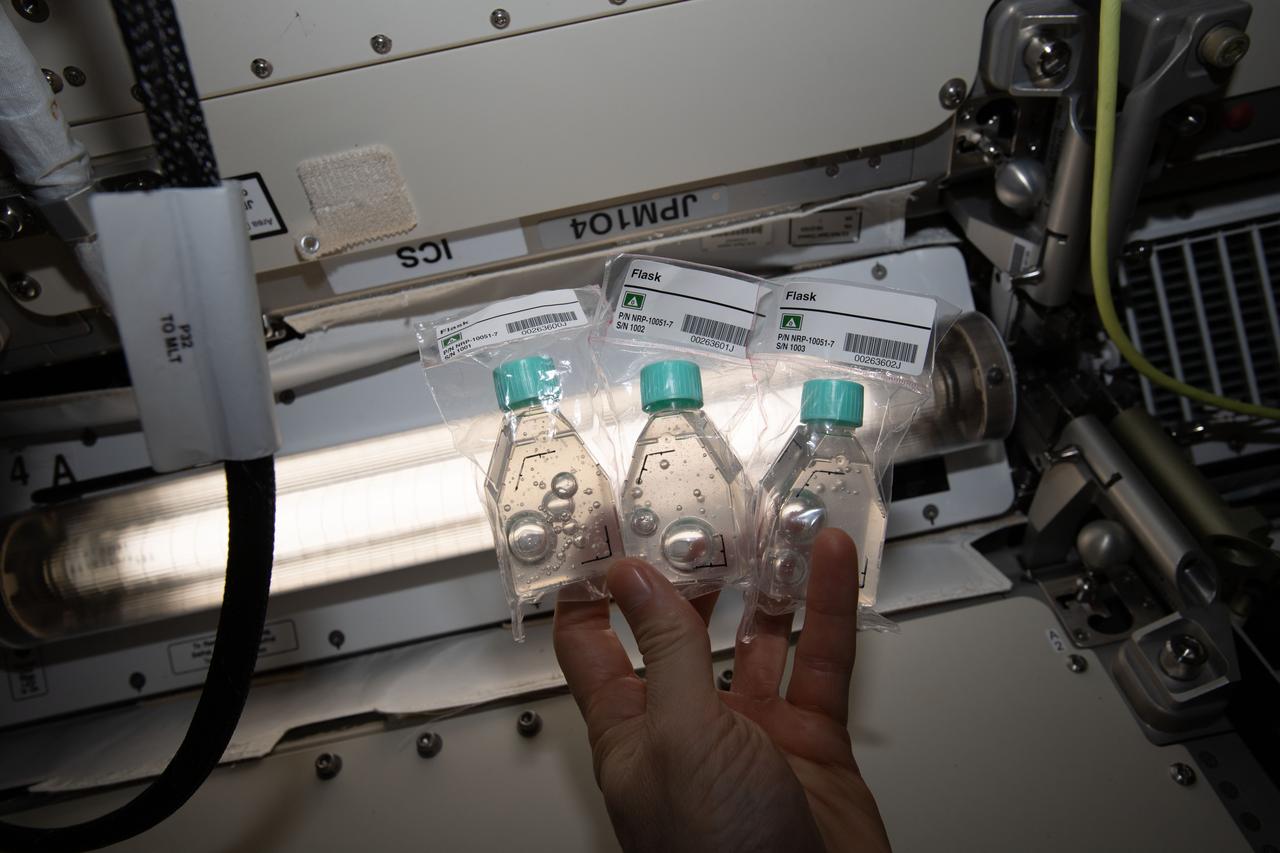
iss062e098361 (3/17/2020) --- A View of the ISSET-Nanoracks-Mission Discovery 4 investigation aboard the International Space Station (ISS). The Flatworm regeneration sub-investigation studies how cells in flatworms communicate with each other to enable them to regenerate in microgravity. This experiment may allow investigators to learn why certain species are able to regenerate.
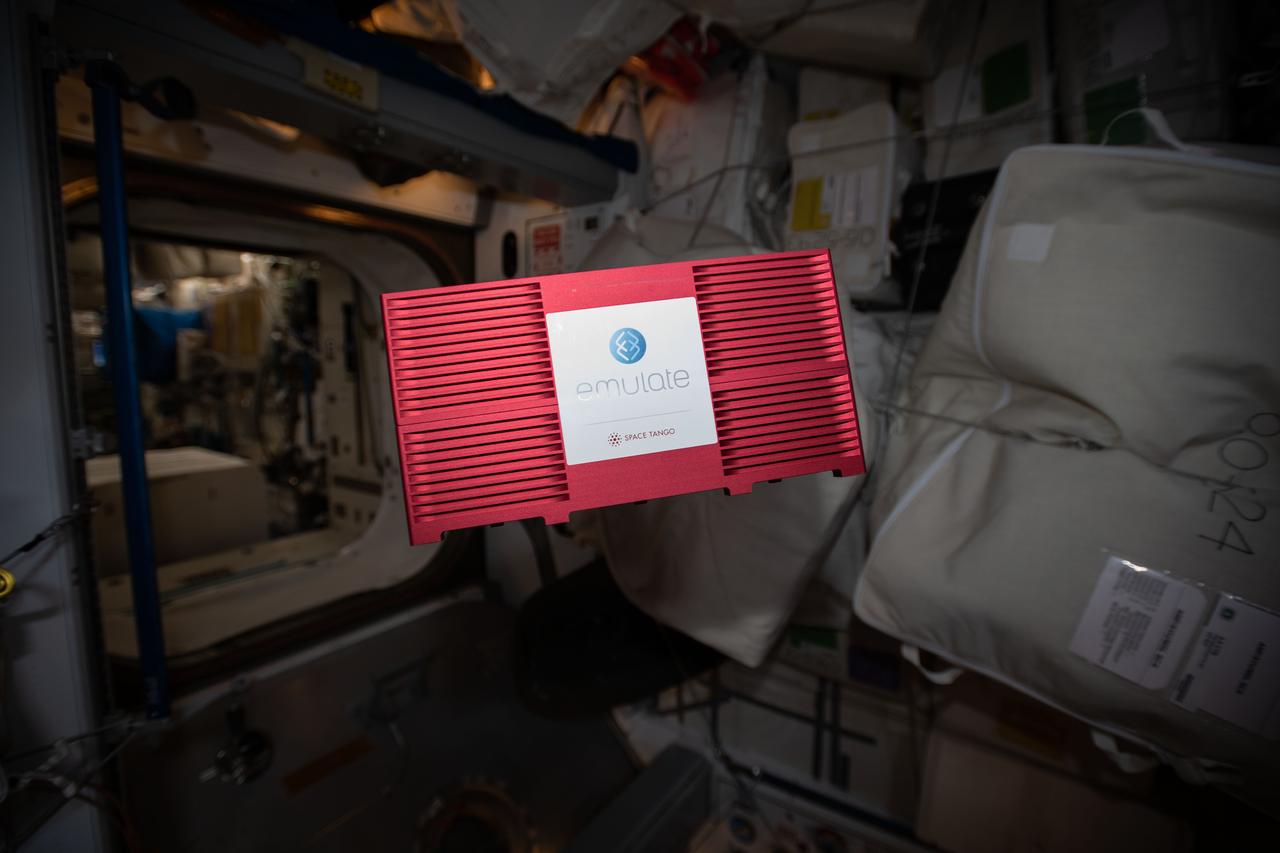
iss062e102157 (3/18/2020) --- A view of the Gut on Chip CubeLab aboard the International Space Station (ISS). Organ-Chips as a Platform for Studying Effects of Space on Human Enteric Physiology (Gut on Chip) examines the effect of microgravity and other space-related stress factors on Emulate’s human innervated Intestine-Chip (hiIC). Results could contribute to prevention methods and treatments for these effects, helping to protect astronaut health on future long-term missions.
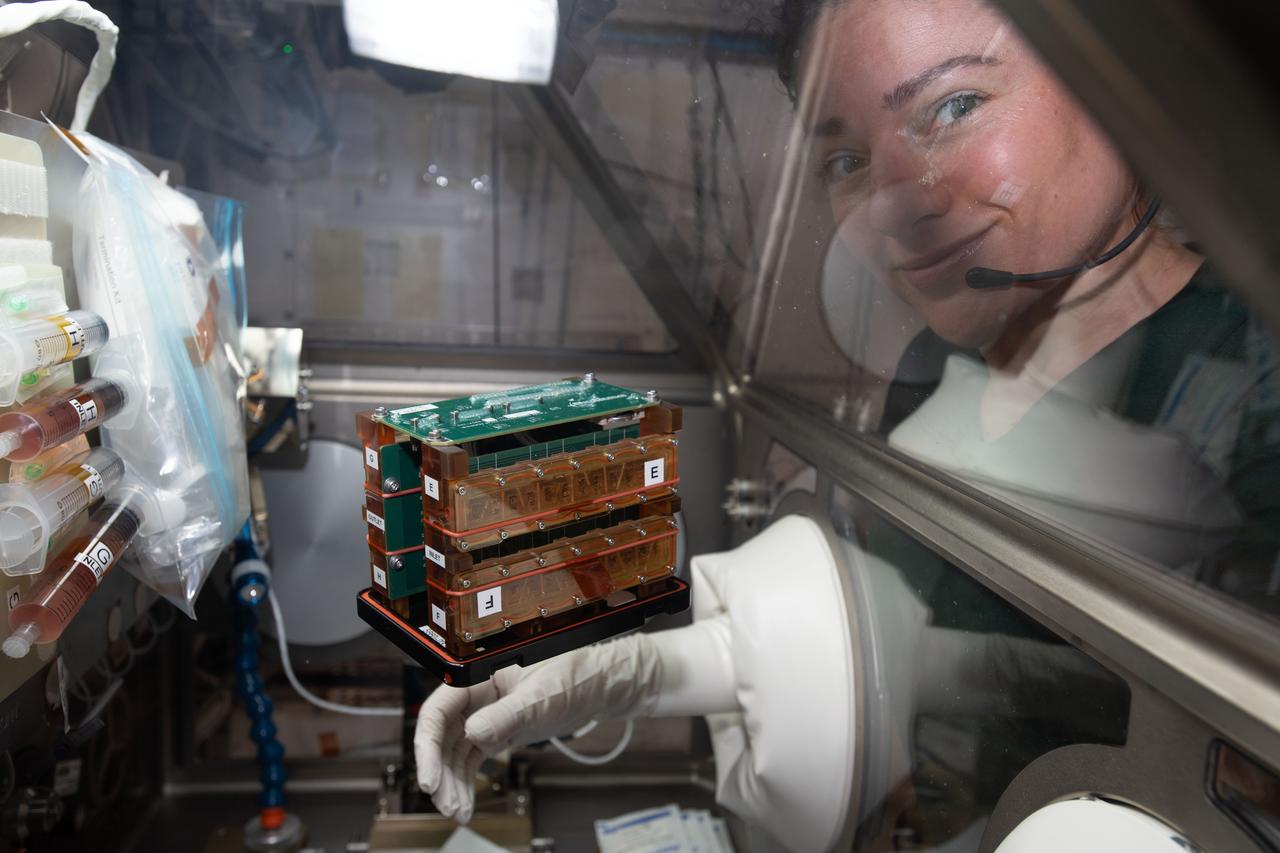
iss062e115369 (March 26, 2020) --- NASA astronaut and Expedition 62 Flight Engineer Jessica Meir conducts cardiac research in the Life Sciences Glovebox located in the Japanese Kibo laboratory module. The Engineered Heart Tissues investigation could promote a better understanding of cardiac function in microgravity which would be useful for drug development and other applications related to heart conditions on Earth.
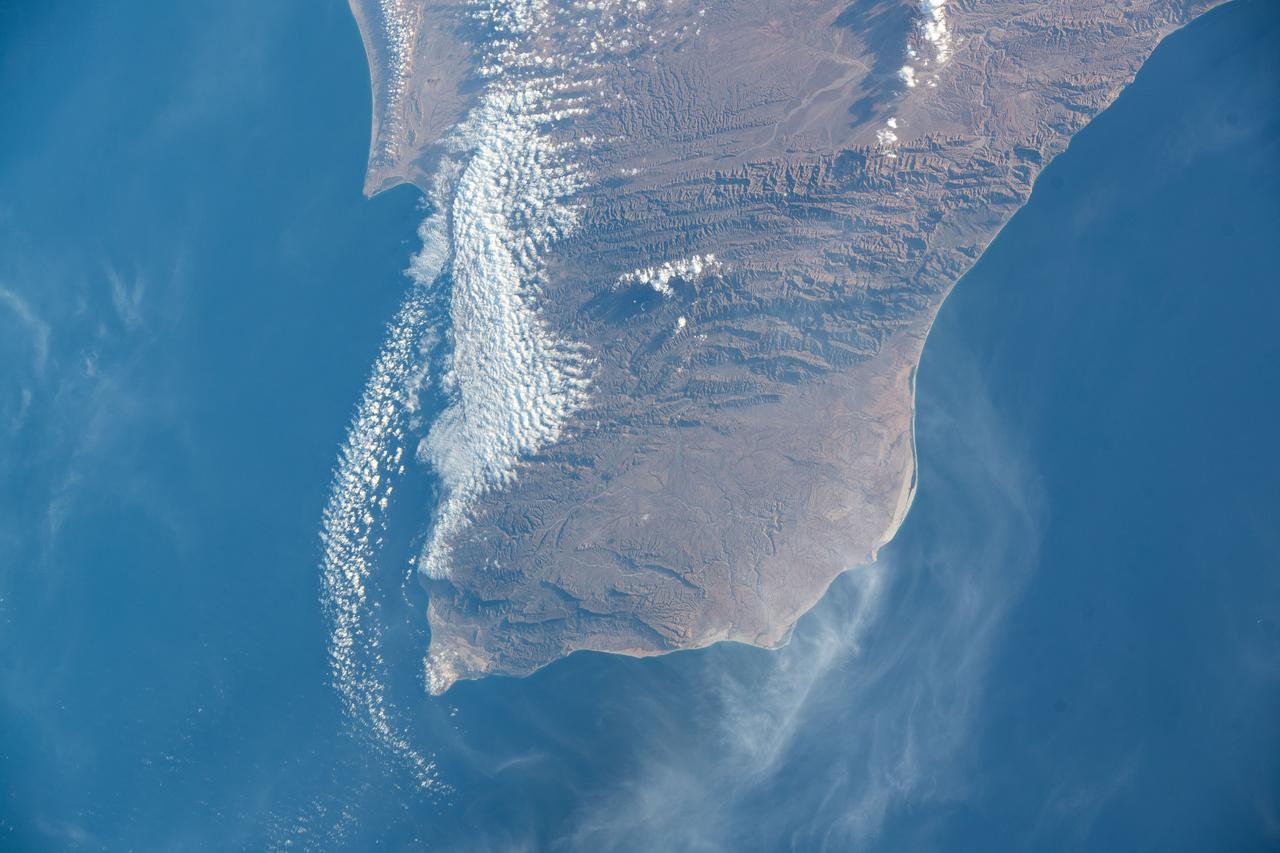
iss062e103524 (March 20, 2020) --- The northeast coast of Somalia is pictured as the International Space Station orbited above the Gulf of Aden.
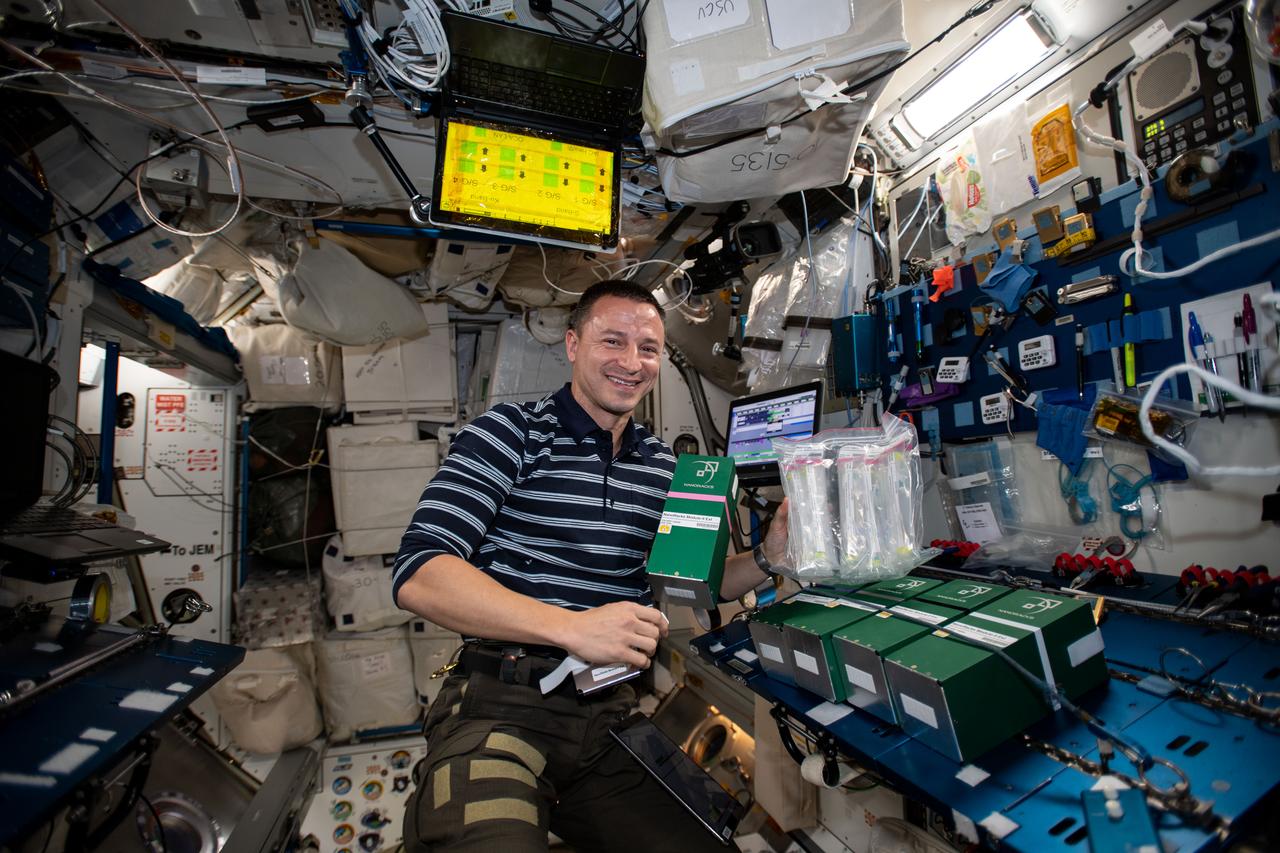
iss060e035415 8/13/2019) --- A view of NASA astronaut Drew Morgan during the deactivation and/or shaking designated mixture tubes of NanoRacks-NCESSE-Gemini NanoRacks-National Center for Earth and Space Science-Gemini (SSEP Mission 13) - Part of NanoRacks Module-9 Ext. aboard the International Space Station (ISS). The experiments range from examinations of water filtration and purification to synthetic soil production, rust formation, antibiotic effectiveness, growth and development of microacquatic organisms, and growth of plant, fungi, and bacteria. Each was chosen from more than 3,000 entries submitted by more than 23,000 U.S., Canadian, and Brazilian students. The experiments use NanoRacks MixStix, miniature laboratories activated by space station crew and eventually returned to the student teams on Earth for analysis.
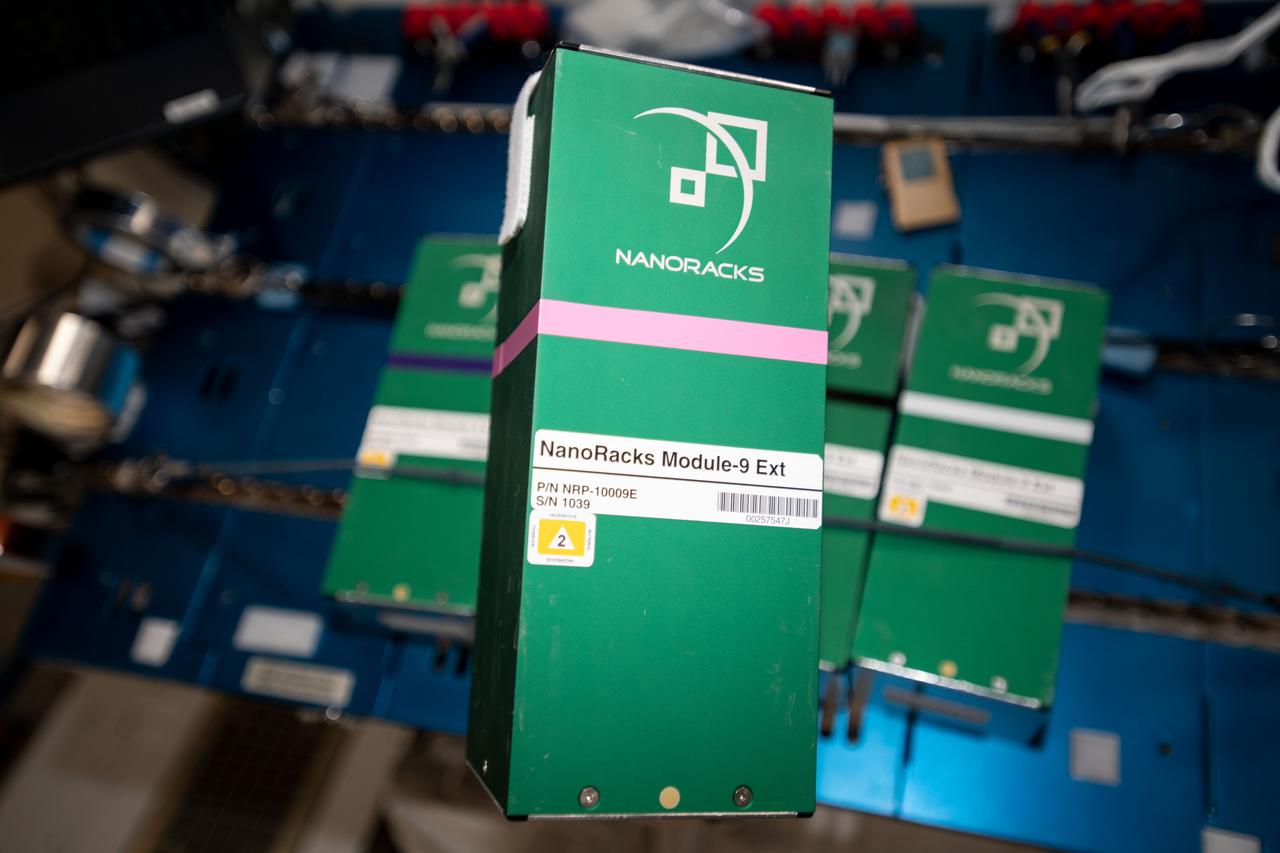
iss060e035407 (8/13/2019) --- A view the NanoRacks-NCESSE-Gemini NanoRacks-National Center for Earth and Space Science-Gemini (SSEP Mission 13) - Part of NanoRacks Module-9 Ext. The experiments range from examinations of water filtration and purification to synthetic soil production, rust formation, antibiotic effectiveness, growth and development of microacquatic organisms, and growth of plant, fungi, and bacteria. Each was chosen from more than 3,000 entries submitted by more than 23,000 U.S., Canadian, and Brazilian students. The experiments use NanoRacks MixStix, miniature laboratories activated by space station crew and eventually returned to the student teams on Earth for analysis.

iss062e078990 (March 4, 2020) --- The Dead Sea was pictured from the International Space Station as it orbited 263 miles above the Middle East.
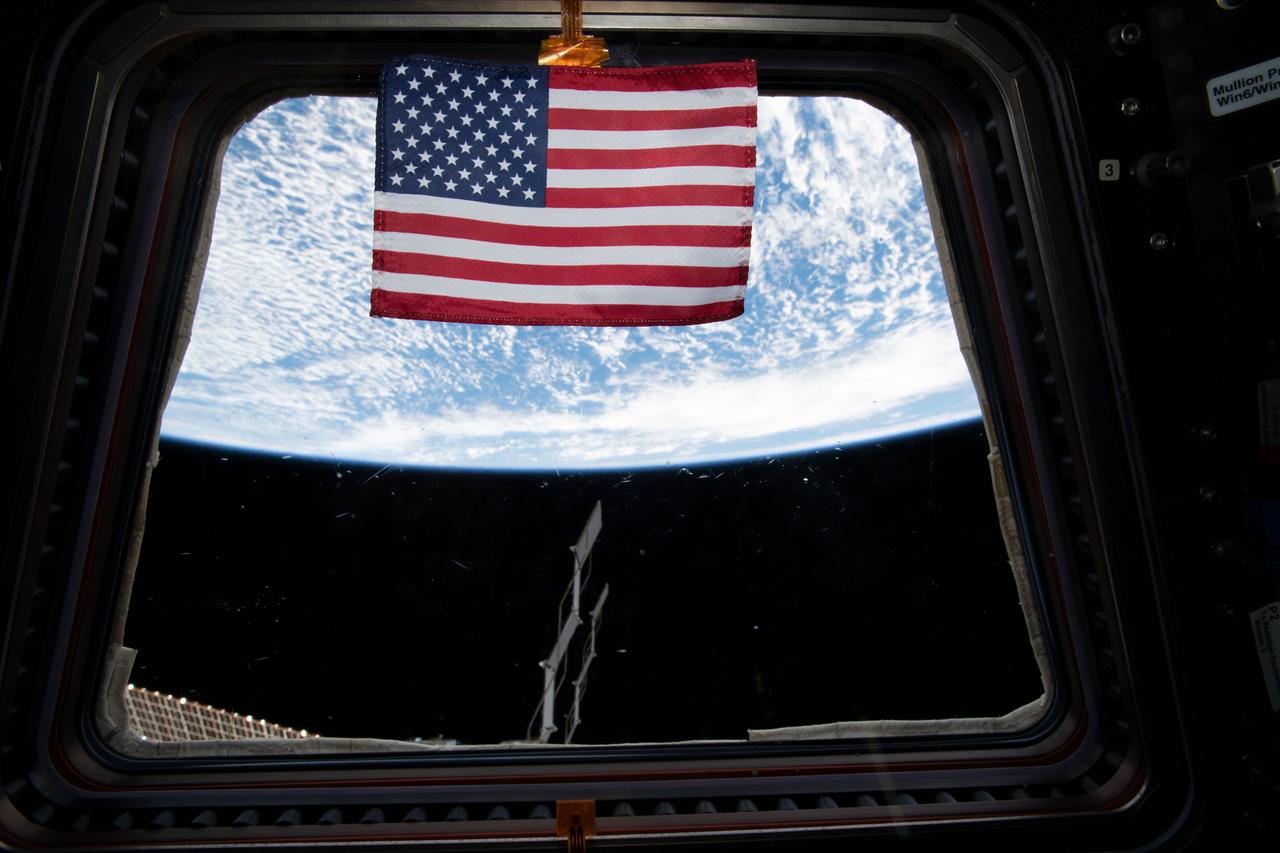
A United States flag floats in front of a window in the Cupola module.
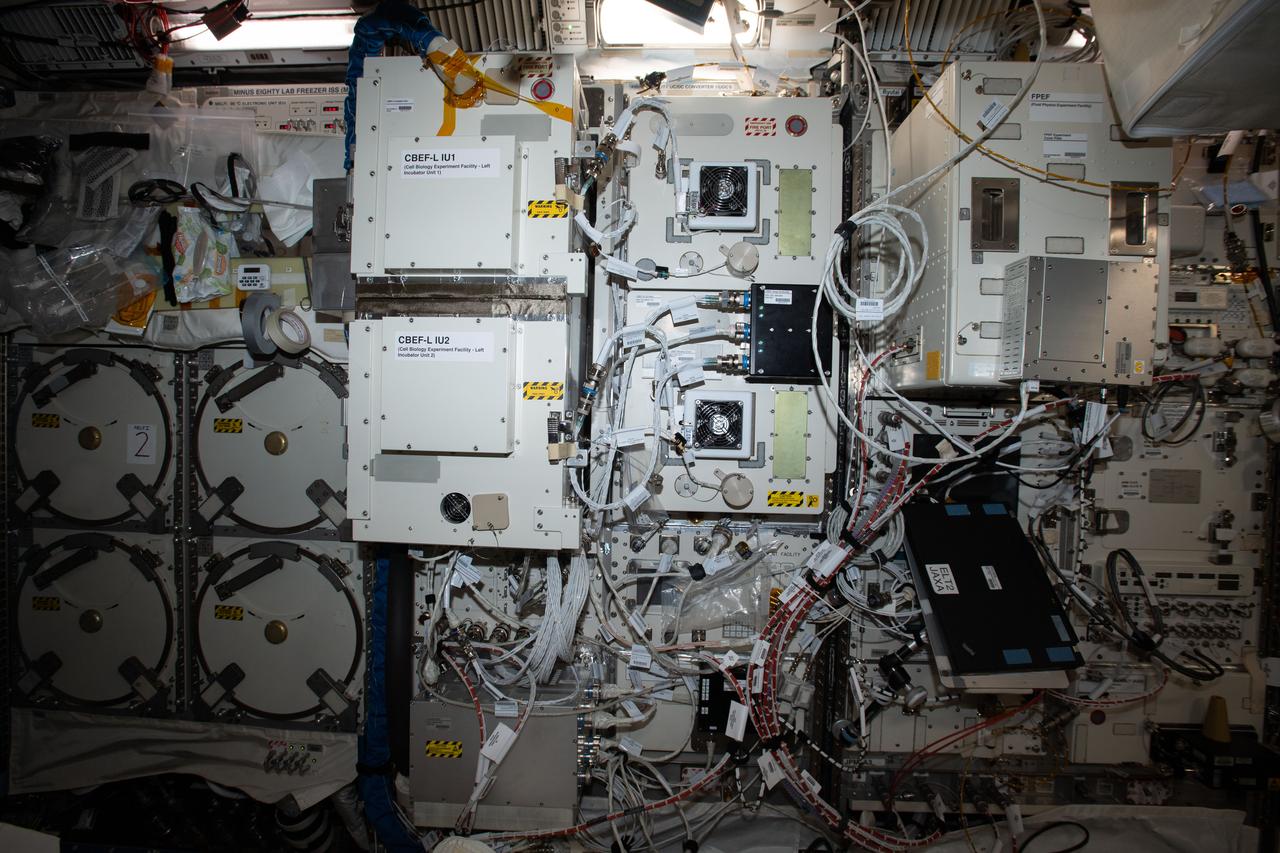
iss062e103684 (3/21/2020) --- A view of the rack containing CBEF-L (Cell Biology Experiment Facility-L) IU1 and CBEF-L IU2 in the Japanese Experiment Module (JEM) Pressurized Module (JPM). aboard the International Space Station (ISS). Cell Biology Experiment Facility-L (CBEF-L) is a Japan Aerospace Exploration Agency (JAXA) new subrack facility, which is an upgraded facility of the original Cell Biology Experiment Facility (CBEF) currently aboard the International Space Station (ISS). CBEF-L provides new capabilities with additional new resources such as Full High Definition video interface, Ethernet, 24 VDC power supply, and a larger diameter centrifugal test environment. By using the original CBEF and CBEF-L as one facility for the same experiment, the payload user is provided with an upgraded experimental environment that can handle the processing of more experimental samples for a wider array of experiments.
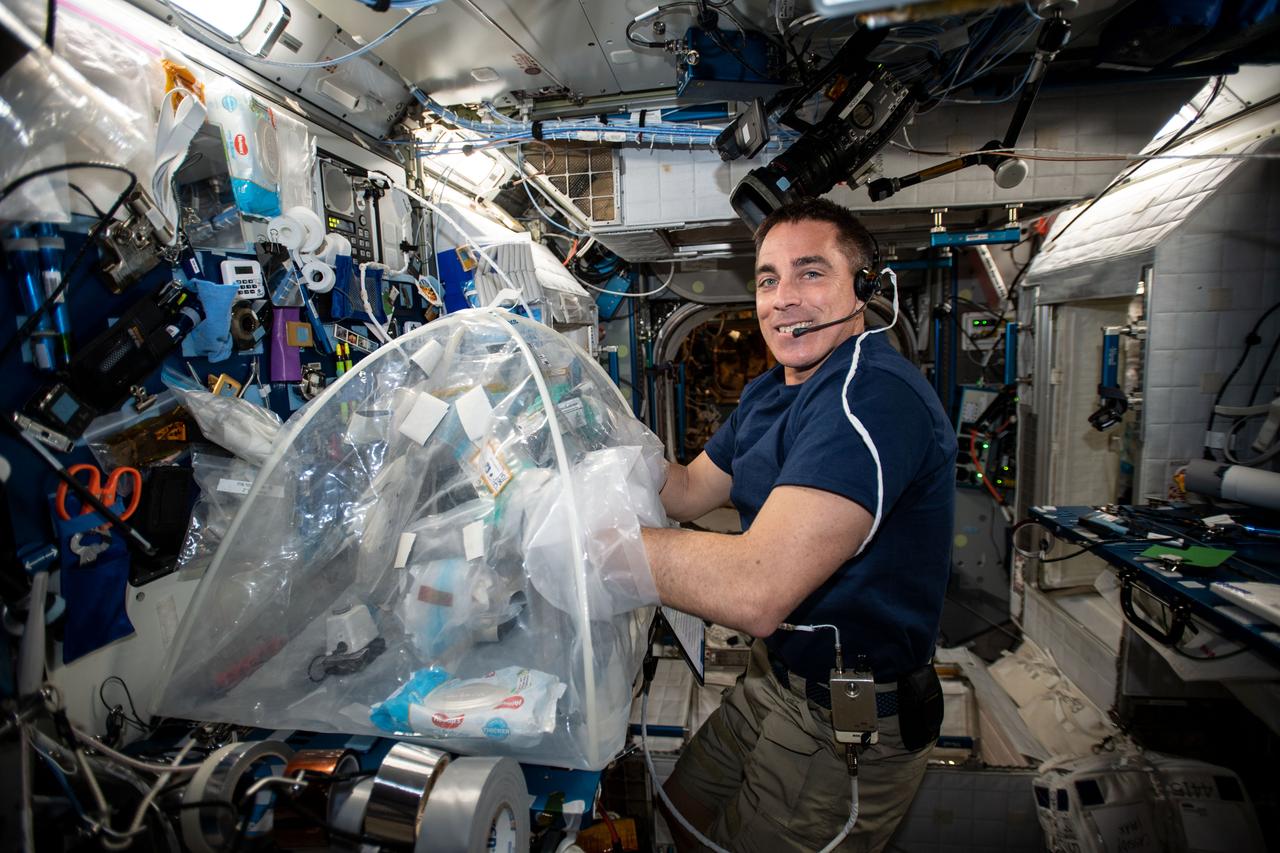
ss062e151904 (April 16, 2020) --- NASA astronaut Chris Cassidy services biological samples in a glovebag aboard the International Space Station (ISS) for the Food Physiology experiment to characterize the key effects of an enhanced spaceflight diet on immune function, the gut microbiome, and nutritional status indicators.
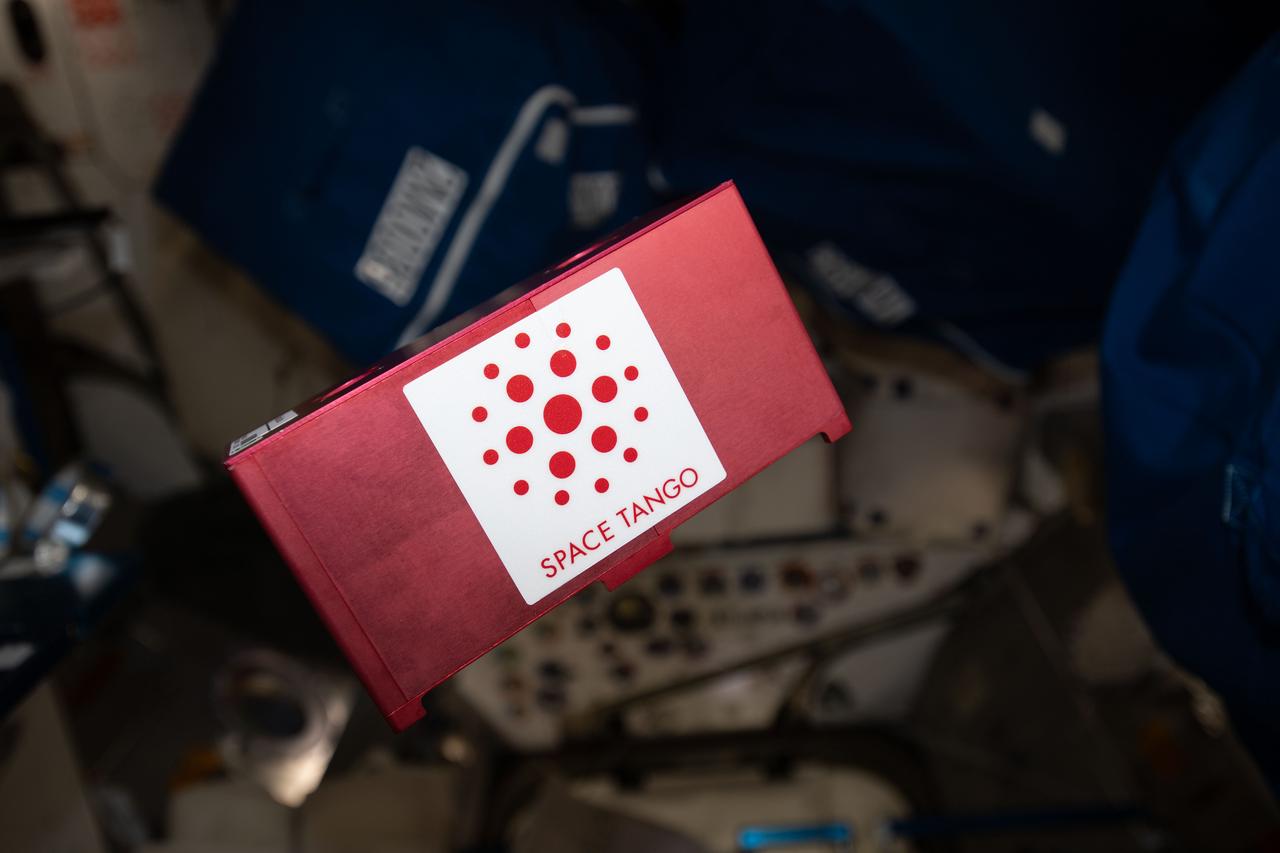
iss062e115956 (3/28/2020) --- A view of the Space Tango CubleLab for the the Microgravity Exposure on Medicinal Plant Seeds investigation aboard the International Space Station (ISS). The Microgravity Exposure on Medicinal Plant Seeds evaluates microgravity’s effects on Cannibis sativa (Victoria) seeds. The cannabinoid content of plants grown from seeds exposed to microgravity conditions aboard the International Space Station (ISS) are compared to plants grown from seeds maintained on the ground.