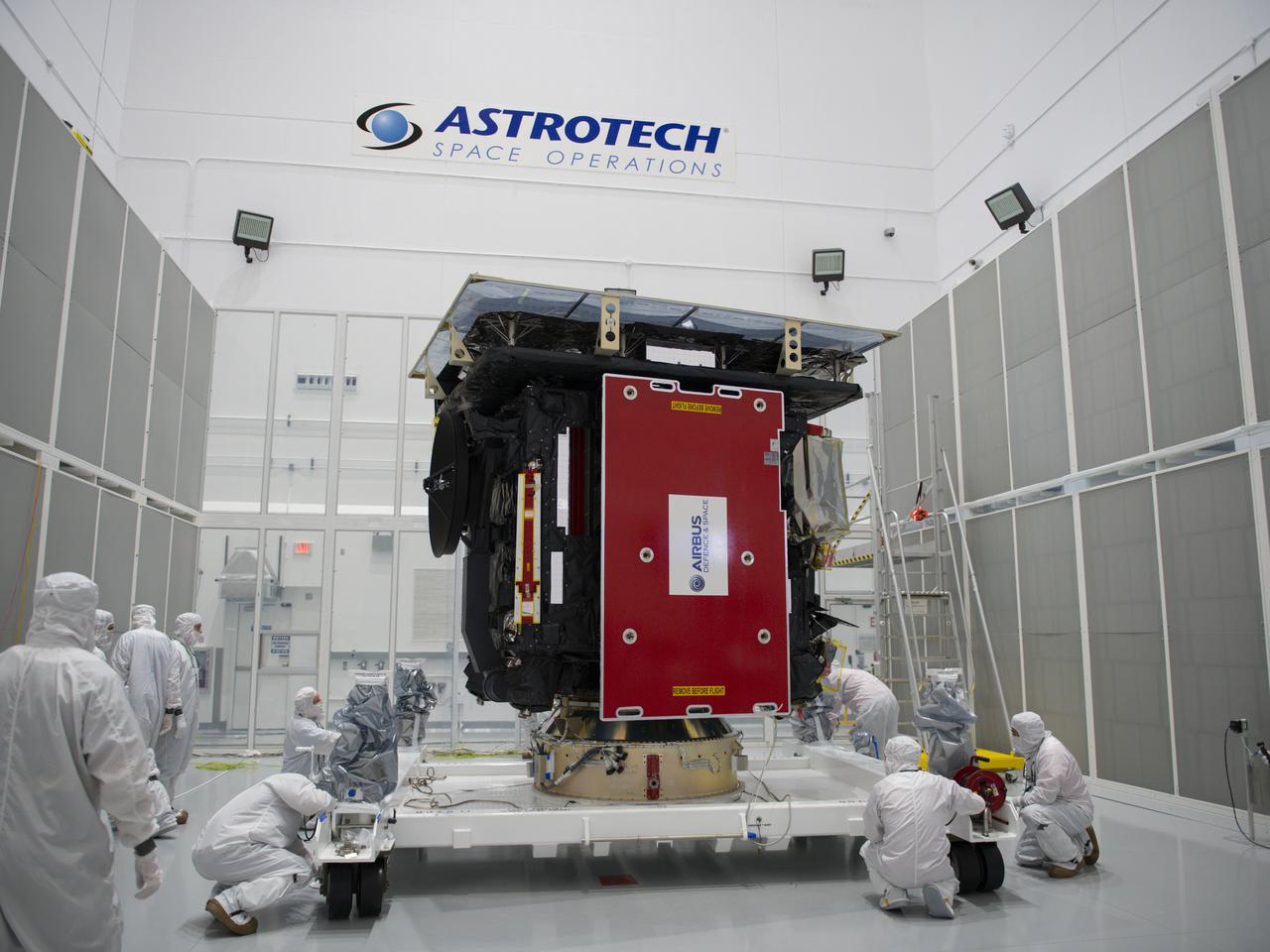
The Solar Orbiter spacecraft is mated to the payload adapter and secured onto the ground transport vehicle inside Astrotech Space Operations in Titusville, Florida on Jan. 16, 2020. Solar Orbiter is an international cooperative mission between ESA (European Space Agency) and NASA. The mission aims to study the Sun, its outer atmosphere and solar wind. The spacecraft will provide the first images of the Sun’s poles. NASA’s Launch Services Program based at Kennedy is managing the launch. The spacecraft has been developed by Airbus Defence and Space. Solar Orbiter will launch in February 2020 aboard a United Launch Alliance Atlas V rocket from Space Launch Complex 41 at Cape Canaveral Air Force Station in Florida.
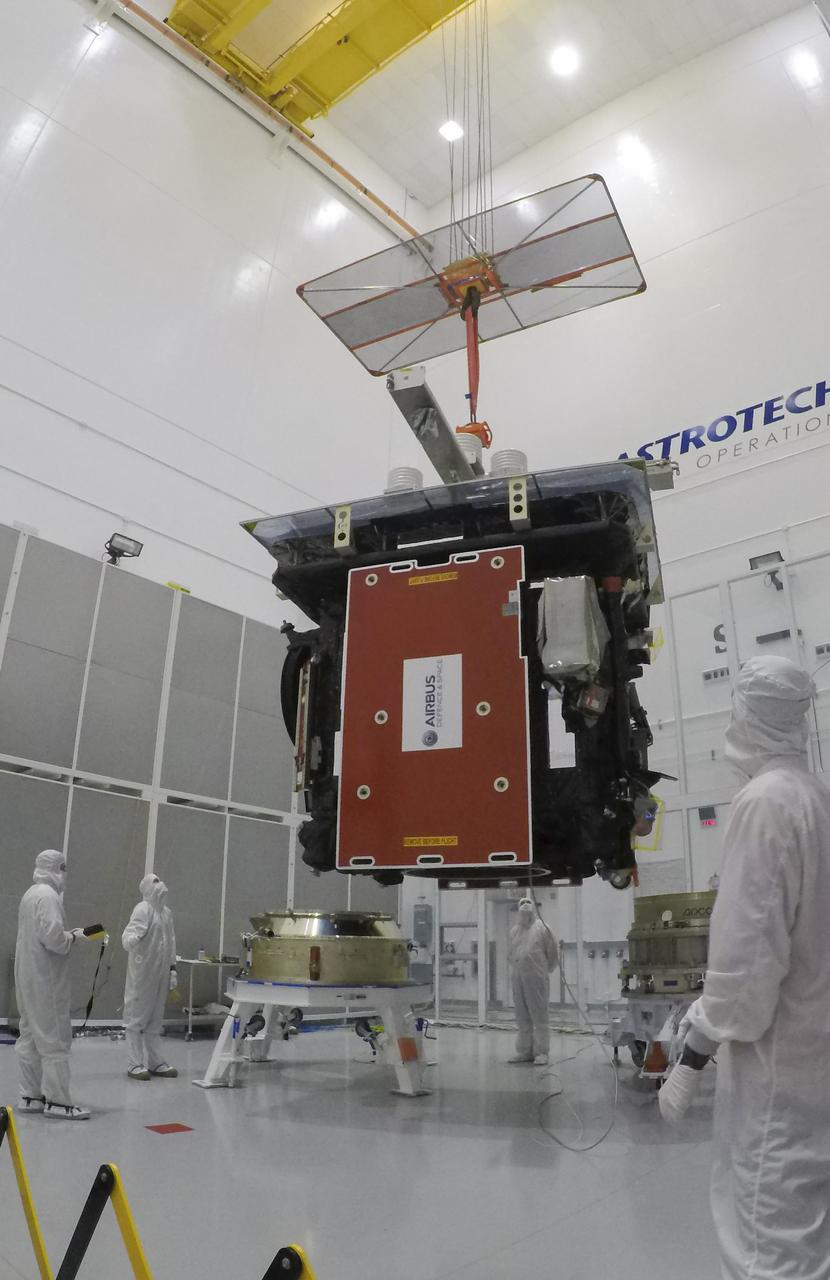
The Solar Orbiter spacecraft is lifted and moved by crane from a work stand for mating to the payload adapter inside Astrotech Space Operations in Titusville, Florida on Jan. 16, 2020. Solar Orbiter is an international cooperative mission between ESA (European Space Agency) and NASA. The mission aims to study the Sun, its outer atmosphere and solar wind. The spacecraft will provide the first images of the Sun’s poles. NASA’s Launch Services Program based at Kennedy is managing the launch. The spacecraft has been developed by Airbus Defence and Space. Solar Orbiter will launch in February 2020 aboard a United Launch Alliance Atlas V rocket from Space Launch Complex 41 at Cape Canaveral Air Force Station in Florida.
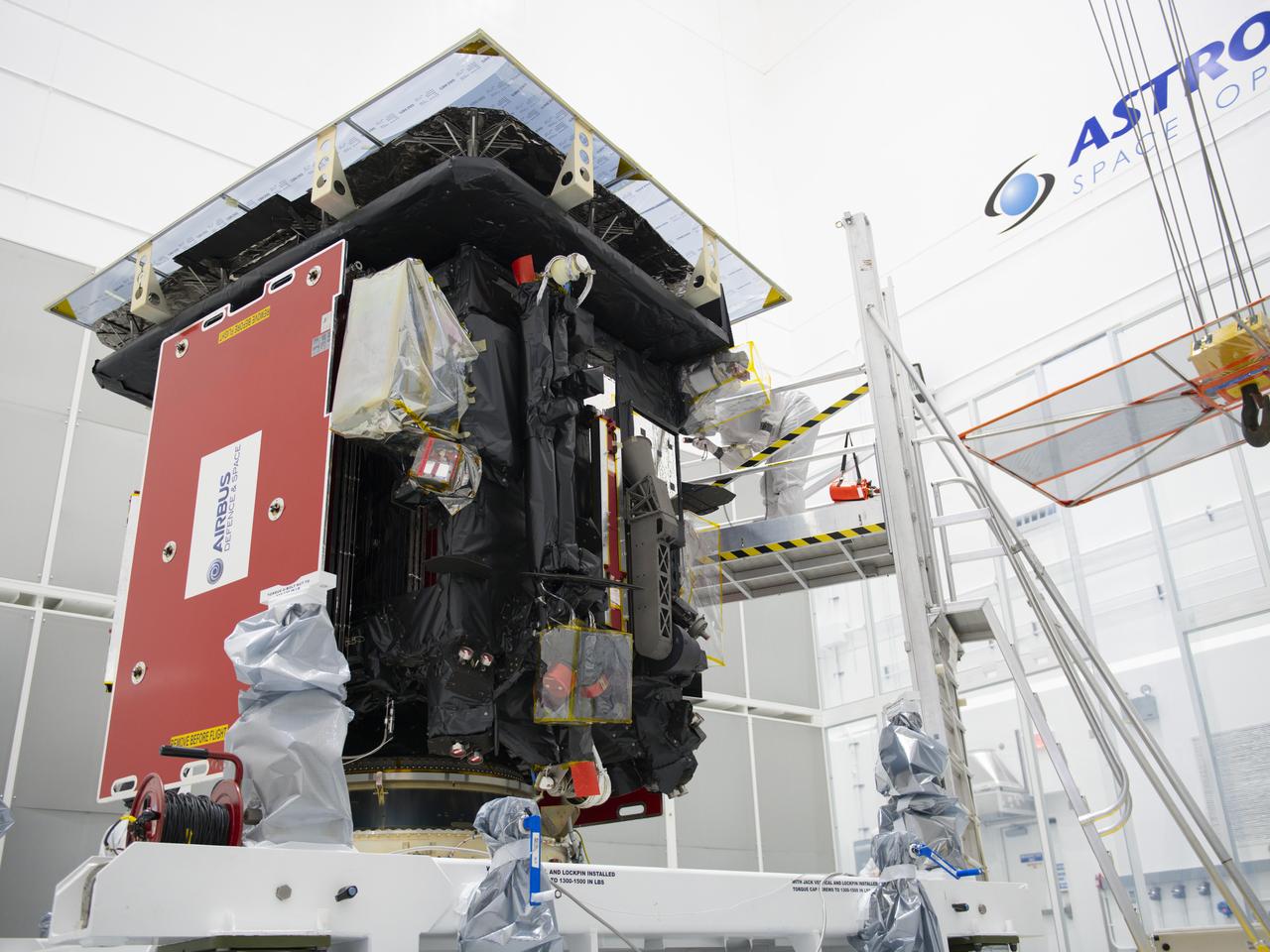
The Solar Orbiter spacecraft is mated to the payload adapter and secured onto the ground transport vehicle inside Astrotech Space Operations in Titusville, Florida on Jan. 16, 2020. Solar Orbiter is an international cooperative mission between ESA (European Space Agency) and NASA. The mission aims to study the Sun, its outer atmosphere and solar wind. The spacecraft will provide the first images of the Sun’s poles. NASA’s Launch Services Program based at Kennedy is managing the launch. The spacecraft has been developed by Airbus Defence and Space. Solar Orbiter will launch in February 2020 aboard a United Launch Alliance Atlas V rocket from Space Launch Complex 41 at Cape Canaveral Air Force Station in Florida.
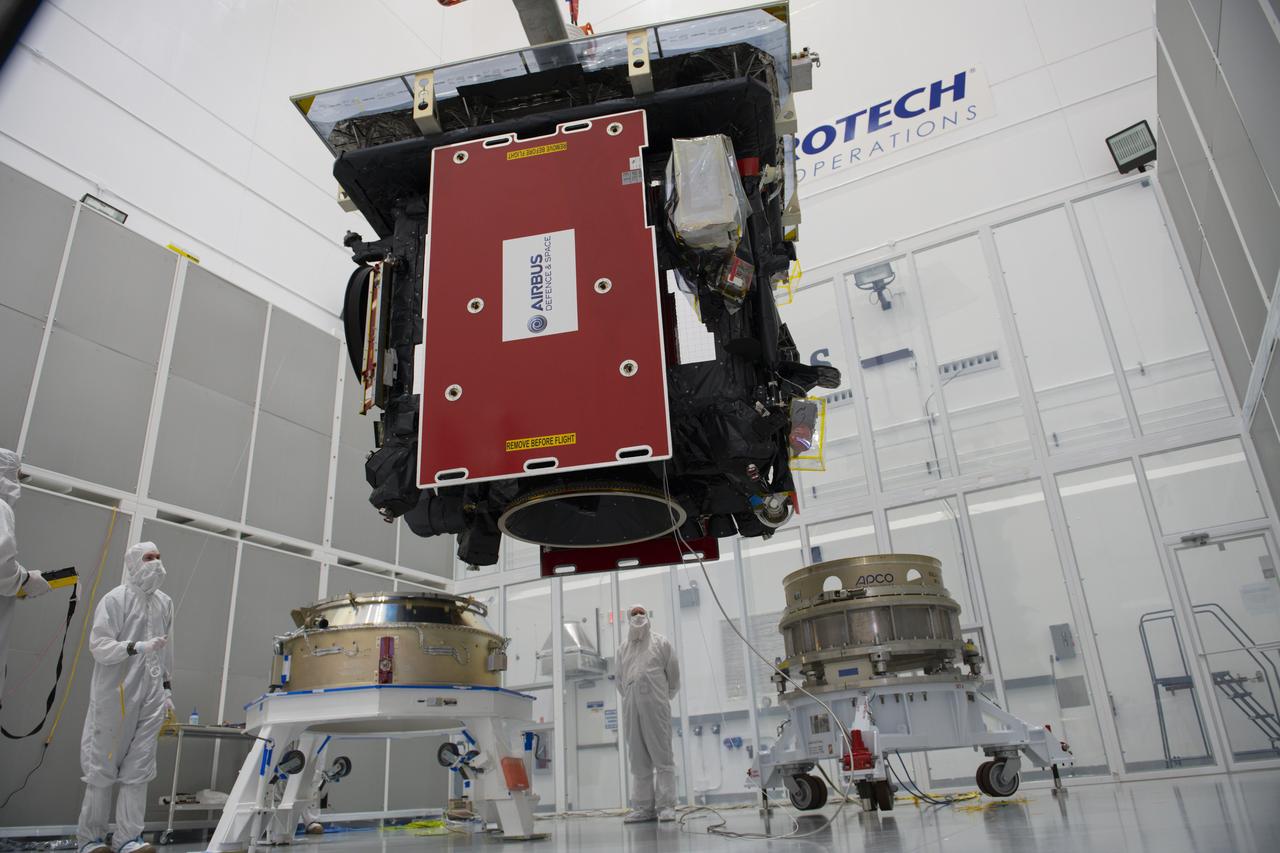
The Solar Orbiter spacecraft is moved by crane from a work stand to the payload adapter inside Astrotech Space Operations in Titusville, Florida on Jan. 16, 2020. Solar Orbiter is an international cooperative mission between ESA (European Space Agency) and NASA. The mission aims to study the Sun, its outer atmosphere and solar wind. The spacecraft will provide the first images of the Sun’s poles. NASA’s Launch Services Program based at Kennedy is managing the launch. The spacecraft has been developed by Airbus Defence and Space. Solar Orbiter will launch in February 2020 aboard a United Launch Alliance Atlas V rocket from Space Launch Complex 41 at Cape Canaveral Air Force Station in Florida.
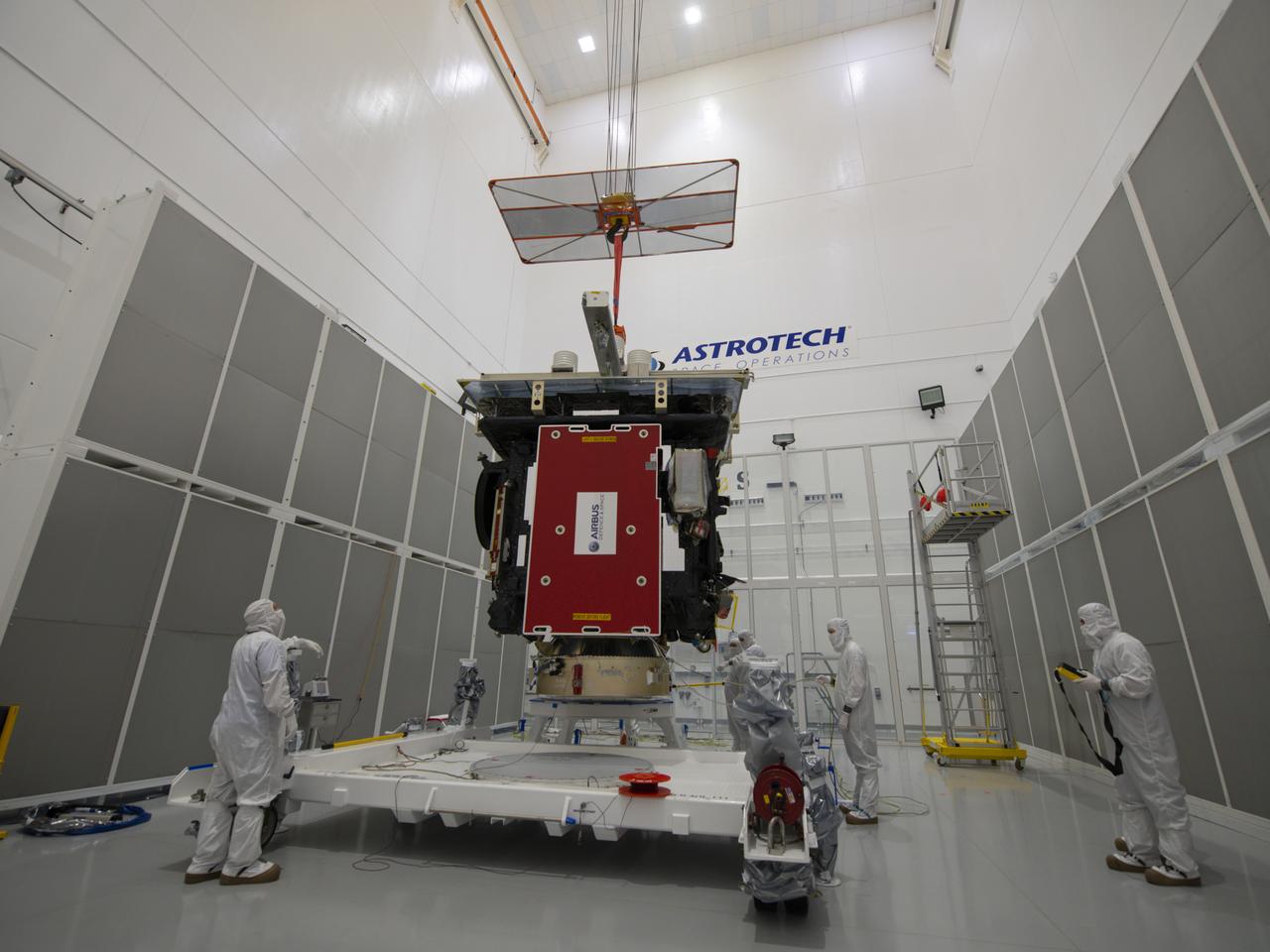
The Solar Orbiter spacecraft and payload adapter are lowered onto the ground transport vehicle inside Astrotech Space Operations in Titusville, Florida on Jan. 16, 2020. Solar Orbiter is an international cooperative mission between ESA (European Space Agency) and NASA. The mission aims to study the Sun, its outer atmosphere and solar wind. The spacecraft will provide the first images of the Sun’s poles. NASA’s Launch Services Program based at Kennedy is managing the launch. The spacecraft has been developed by Airbus Defence and Space. Solar Orbiter will launch in February 2020 aboard a United Launch Alliance Atlas V rocket from Space Launch Complex 41 at Cape Canaveral Air Force Station in Florida.
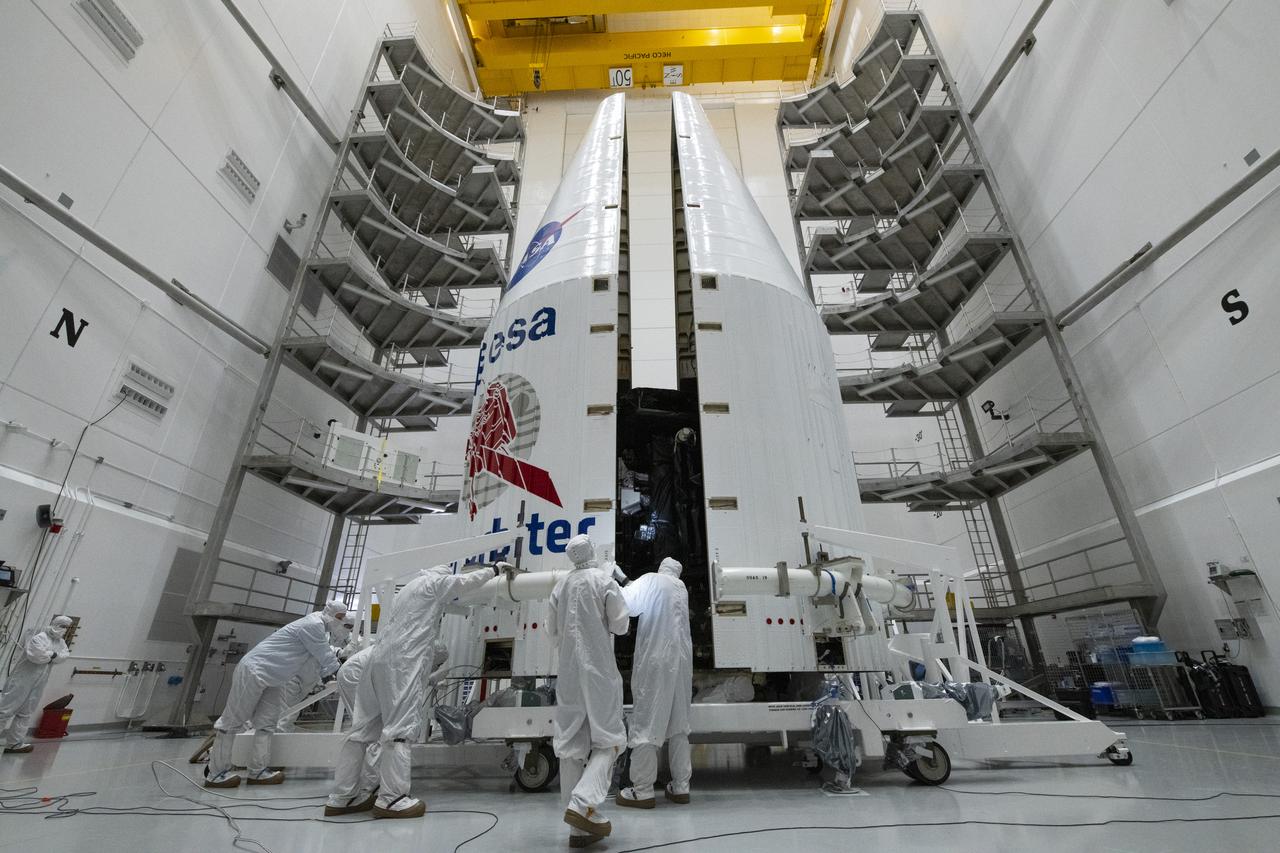
The Solar Orbiter spacecraft is secured inside the United Launch Alliance payload fairing in the Astrotech Space Operations facility in Titusville, Florida on Jan. 20, 2020. Solar Orbiter is an international cooperative mission between ESA (European Space Agency) and NASA. The mission aims to study the Sun, its outer atmosphere and solar wind. The spacecraft will provide the first images of the Sun’s poles. NASA’s Launch Services Program based at Kennedy is managing the launch. The spacecraft has been developed by Airbus Defence and Space. Solar Orbiter will launch in February 2020 aboard a United Launch Alliance Atlas V rocket from Space Launch Complex 41 at Cape Canaveral Air Force Station in Florida.
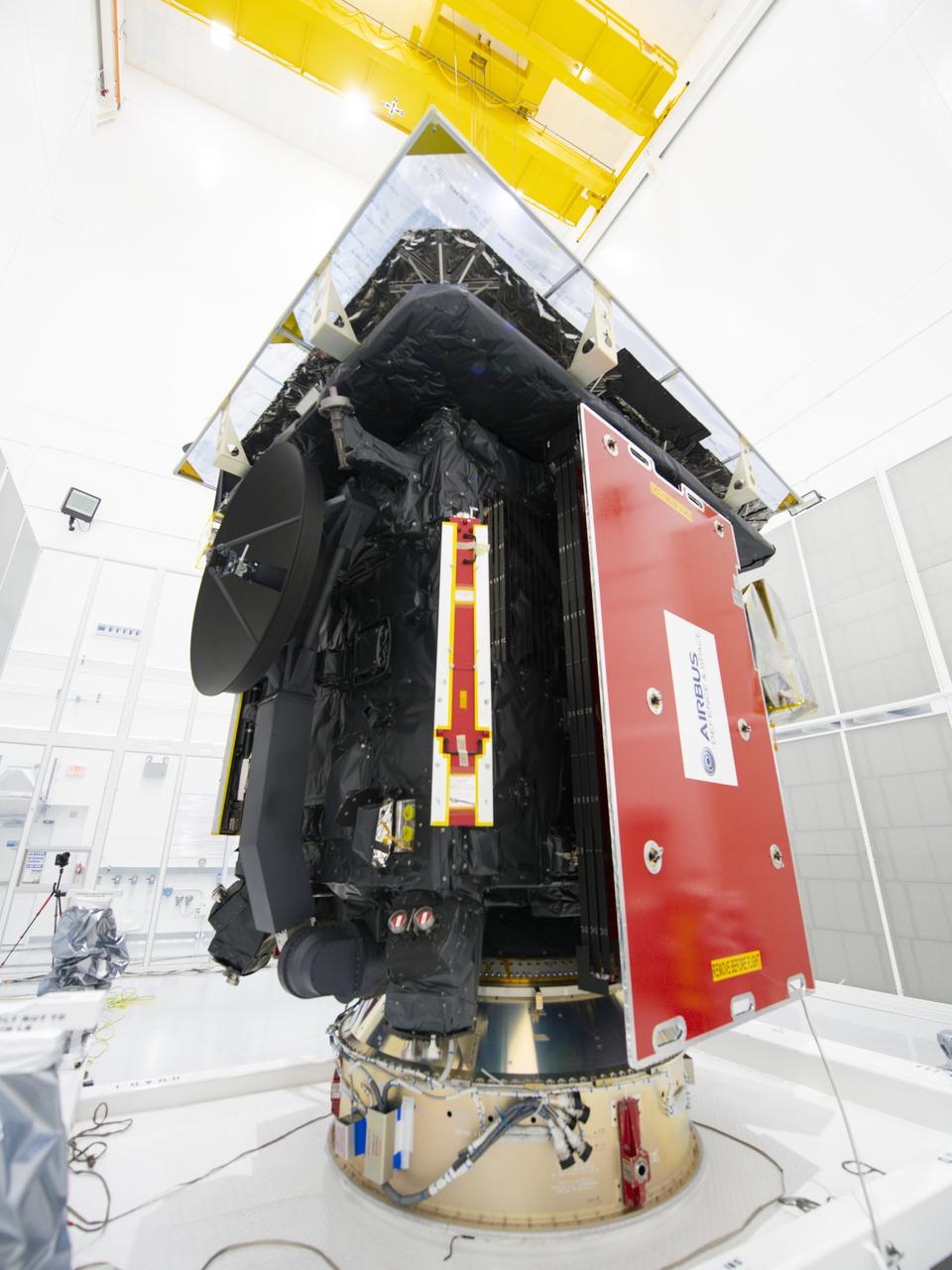
The Solar Orbiter spacecraft is mated to the payload adapter and lowered onto the ground transport vehicle inside Astrotech Space Operations in Titusville, Florida on Jan. 16, 2020. Solar Orbiter is an international cooperative mission between ESA (European Space Agency) and NASA. The mission aims to study the Sun, its outer atmosphere and solar wind. The spacecraft will provide the first images of the Sun’s poles. NASA’s Launch Services Program based at Kennedy is managing the launch. The spacecraft has been developed by Airbus Defence and Space. Solar Orbiter will launch in February 2020 aboard a United Launch Alliance Atlas V rocket from Space Launch Complex 41 at Cape Canaveral Air Force Station in Florida.
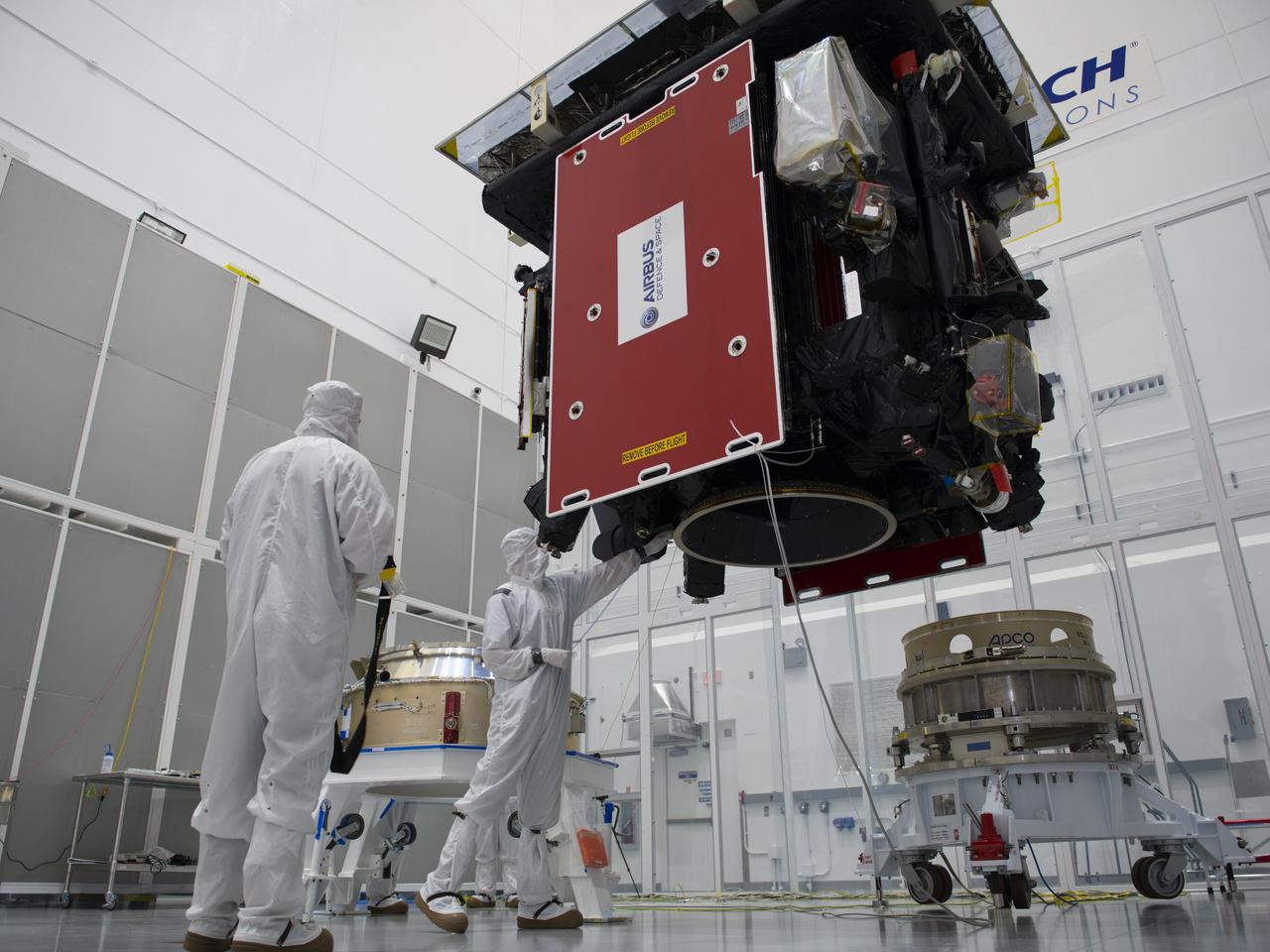
The Solar Orbiter spacecraft is moved by crane from a work stand to the payload adapter inside Astrotech Space Operations in Titusville, Florida on Jan. 16, 2020. Solar Orbiter is an international cooperative mission between ESA (European Space Agency) and NASA. The mission aims to study the Sun, its outer atmosphere and solar wind. The spacecraft will provide the first images of the Sun’s poles. NASA’s Launch Services Program based at Kennedy is managing the launch. The spacecraft has been developed by Airbus Defence and Space. Solar Orbiter will launch in February 2020 aboard a United Launch Alliance Atlas V rocket from Space Launch Complex 41 at Cape Canaveral Air Force Station in Florida.
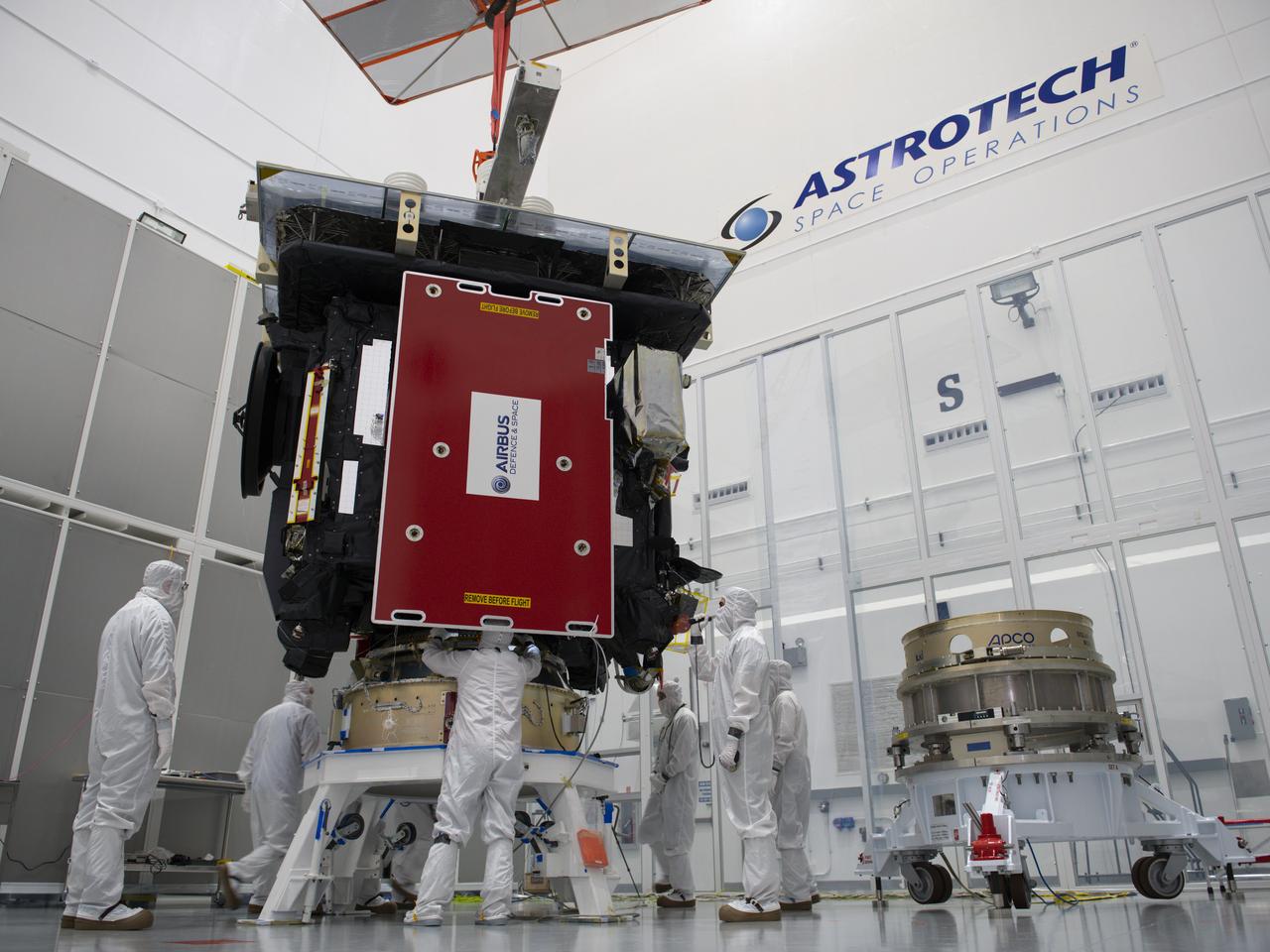
European Space Agency workers assist as a crane lowers the Solar Orbiter spacecraft onto the payload adapter inside the Astrotech Space Operations facility in Titusville, Florida on Jan. 17, 2020. Solar Orbiter is an international cooperative mission between ESA (European Space Agency) and NASA. The mission aims to study the Sun, its outer atmosphere and solar wind. The spacecraft will provide the first images of the Sun’s poles. NASA’s Launch Services Program based at Kennedy is managing the launch. The spacecraft has been developed by Airbus Defence and Space. Solar Orbiter will launch in February 2020 aboard a United Launch Alliance Atlas V rocket from Space Launch Complex 41 at Cape Canaveral Air Force Station in Florida.
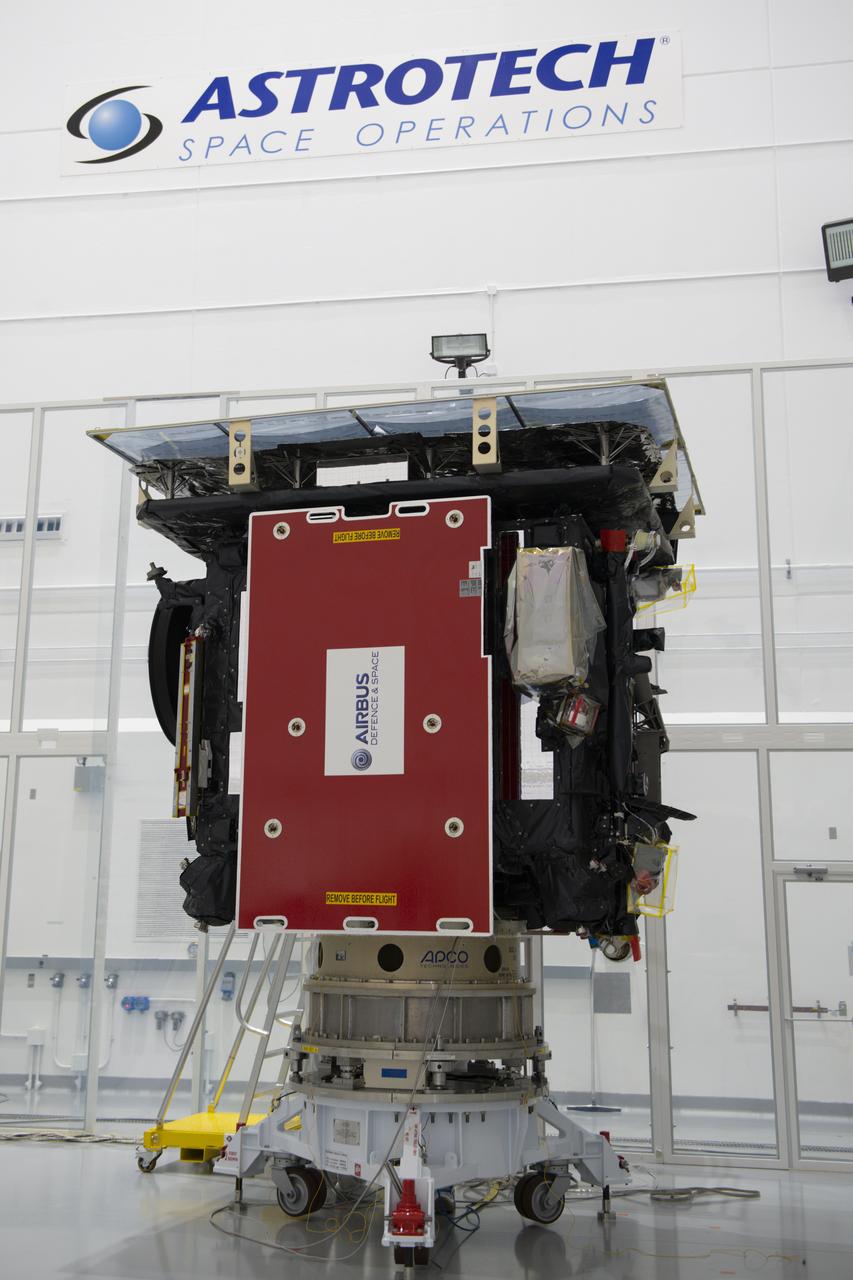
The Solar Orbiter spacecraft is secured on a work stand for processing inside Astrotech Space Operations in Titusville, Florida on Jan. 16, 2020. Solar Orbiter is an international cooperative mission between ESA (European Space Agency) and NASA. The mission aims to study the Sun, its outer atmosphere and solar wind. The spacecraft will provide the first images of the Sun’s poles. NASA’s Launch Services Program based at Kennedy is managing the launch. The spacecraft has been developed by Airbus Defence and Space. Solar Orbiter will launch in February 2020 aboard a United Launch Alliance Atlas V rocket from Space Launch Complex 41 at Cape Canaveral Air Force Station in Florida.
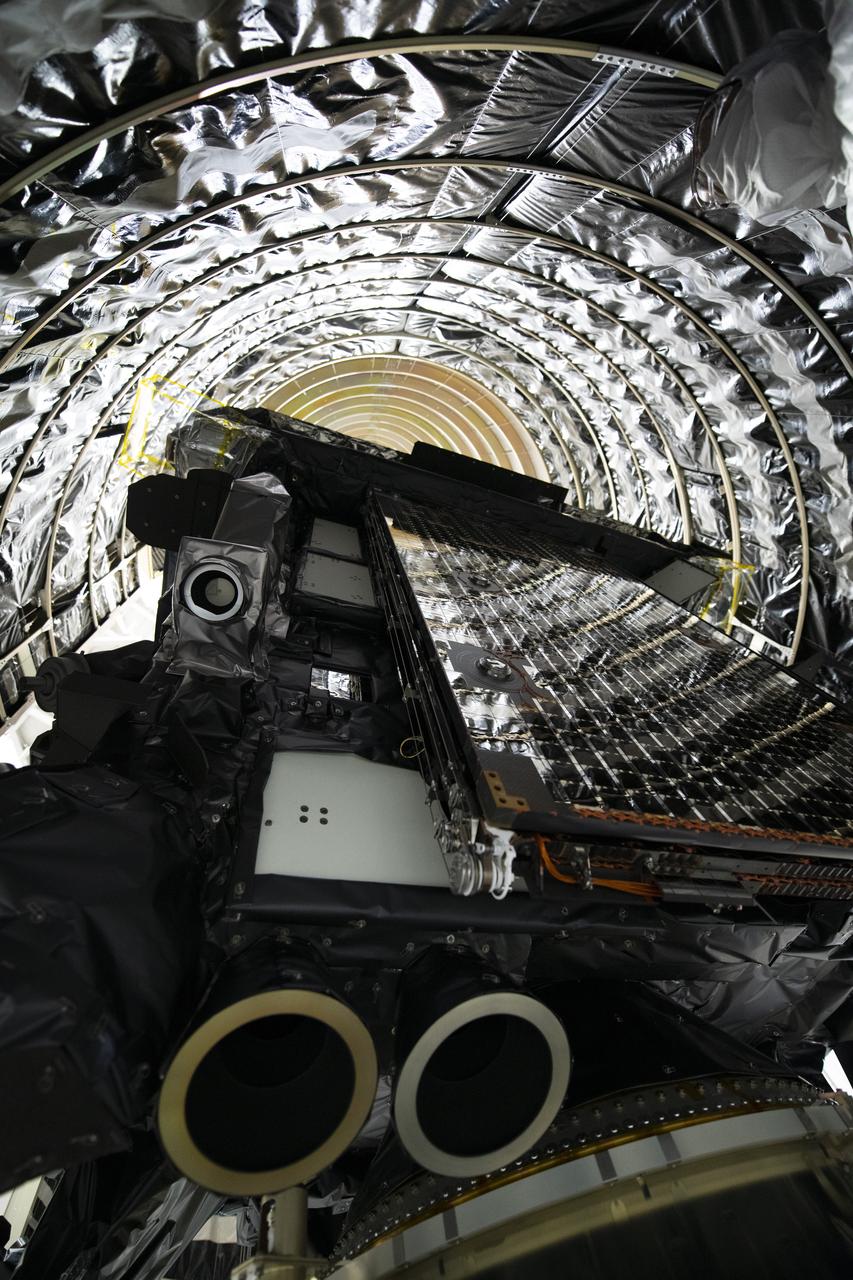
A view of the inside of the United Launch Alliance payload fairing as it is being secured around the Solar Orbiter spacecraft inside the Astrotech Space Operations facility in Titusville, Florida on Jan. 20, 2020. Solar Orbiter is an international cooperative mission between ESA (European Space Agency) and NASA. The mission aims to study the Sun, its outer atmosphere and solar wind. The spacecraft will provide the first images of the Sun’s poles. NASA’s Launch Services Program based at Kennedy is managing the launch. The spacecraft has been developed by Airbus Defence and Space. Solar Orbiter will launch in February 2020 aboard a United Launch Alliance Atlas V rocket from Space Launch Complex 41 at Cape Canaveral Air Force Station in Florida.
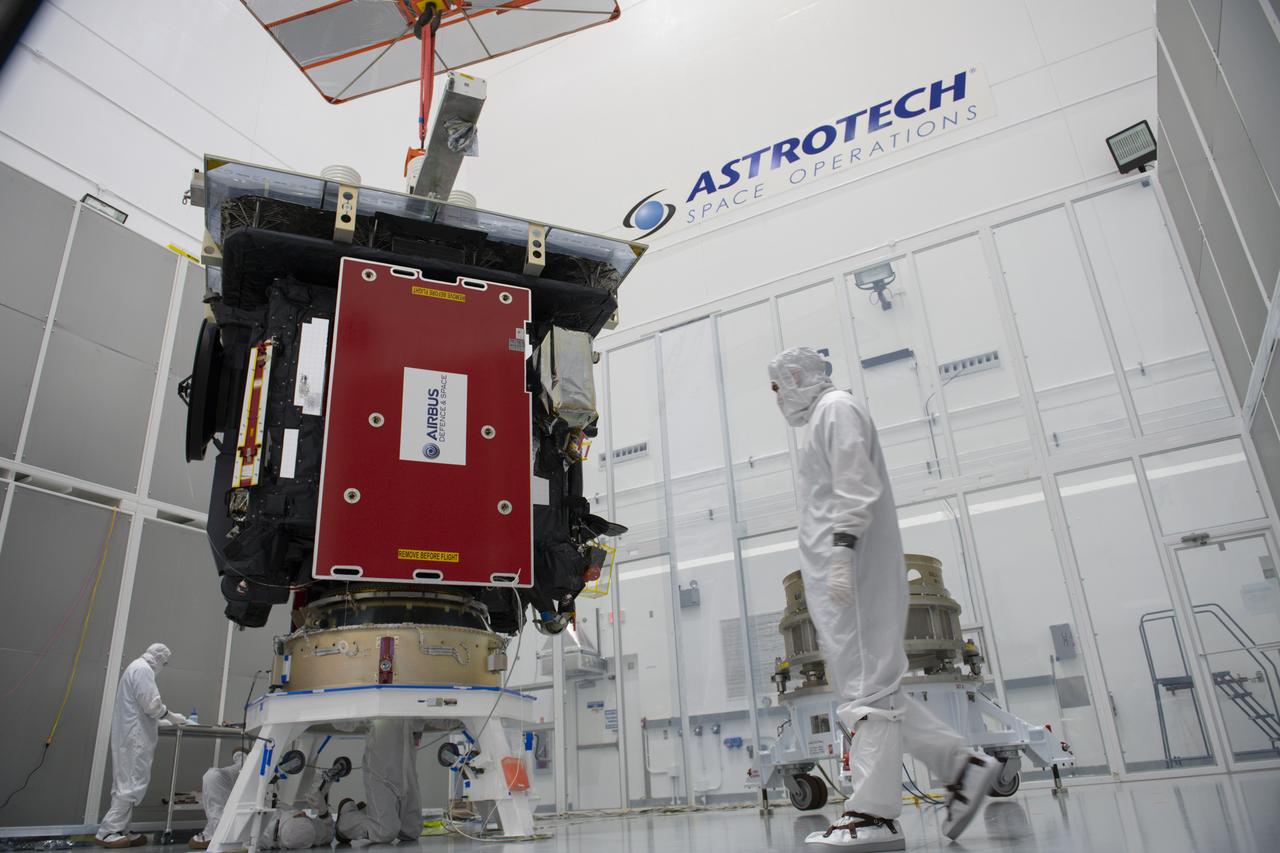
The Solar Orbiter spacecraft is mated to the payload adapter inside Astrotech Space Operations in Titusville, Florida on Jan. 16, 2020. Solar Orbiter is an international cooperative mission between ESA (European Space Agency) and NASA. The mission aims to study the Sun, its outer atmosphere and solar wind. The spacecraft will provide the first images of the Sun’s poles. NASA’s Launch Services Program based at Kennedy is managing the launch. The spacecraft has been developed by Airbus Defence and Space. Solar Orbiter will launch in February 2020 aboard a United Launch Alliance Atlas V rocket from Space Launch Complex 41 at Cape Canaveral Air Force Station in Florida.