
This imagery shows how technicians at NASA’s Michoud Assembly Facility moved the aft dome of the liquid oxygen tank for NASA’s SLS (Space Launch System) rocket for the next phase of production inside the Vertical Assembly center Dec. 18. The dome will form part of the core stage that will power NASA’s Artemis III mission. Engineers rotate the dome to attach it to the previously joined forward dome and aft barrel segments using friction-stir welding. The liquid oxygen tank is one of five major components that make up the SLS rocket’s core stage. Together with the forward skirt, intertank, liquid hydrogen tank, engine section, along with the four RS-25 engines at its base, the 212-foot core stage will help power NASA’s Artemis missions to the Moon.

This imagery shows how technicians at NASA’s Michoud Assembly Facility moved the aft dome of the liquid oxygen tank for NASA’s SLS (Space Launch System) rocket for the next phase of production inside the Vertical Assembly center Dec. 18. The dome will form part of the core stage that will power NASA’s Artemis III mission. Engineers rotate the dome to attach it to the previously joined forward dome and aft barrel segments using friction-stir welding. The liquid oxygen tank is one of five major components that make up the SLS rocket’s core stage. Together with the forward skirt, intertank, liquid hydrogen tank, engine section, along with the four RS-25 engines at its base, the 212-foot core stage will help power NASA’s Artemis missions to the Moon.
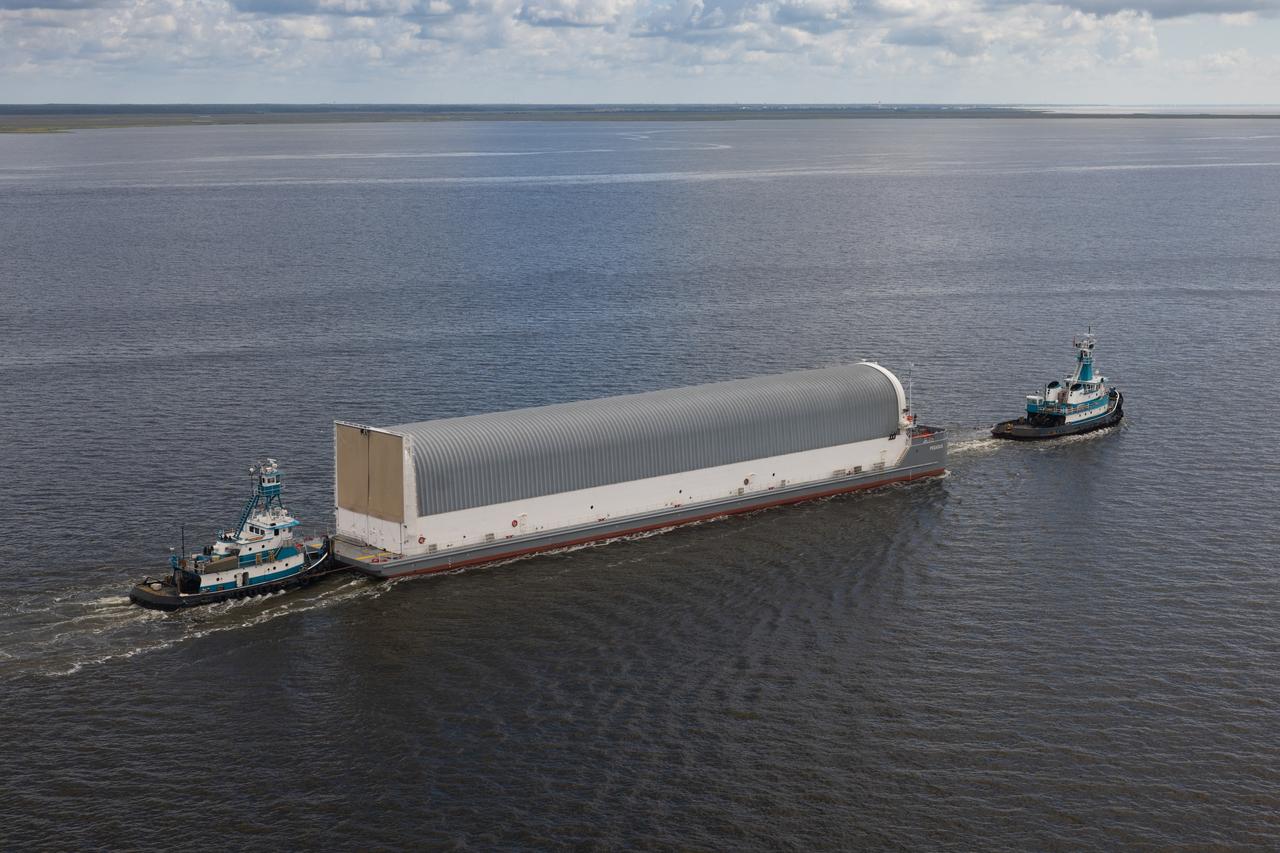
NASA photographers Evan Deroche and Brandon Hancock joined the U.S. Coast Guard in an HH-60 Jayhawk helicopter to capture aerial views of NASA’s Pegasus barge just after it departed NASA’s Michoud Assembly Facility in New Orleans July 17 with the core stage of NASA’s SLS (Space Launch System) rocket for Artemis II. These photos and videos show the barge as it traveled down the Intracoastal Waterway to the Gulf of Mexico. Pegasus ferried the Artemis II core stage more than 900 miles to NASA’s Kennedy Space Center in Florida. It arrived with the flight hardware July 22. The barge is maintained at NASA’s Michoud Assembly Facility in New Orleans, where the core stage is fully manufactured. NASA is working to land the first woman, first person of color, and its first international partner astronaut on the Moon under Artemis. SLS is part of NASA’s backbone for deep space exploration, along with the Orion spacecraft, supporting ground systems, advanced spacesuits and rovers, the Gateway in orbit around the Moon, and commercial human landing systems. SLS is the only rocket that can send Orion, astronauts, and supplies to the Moon in a single launch.
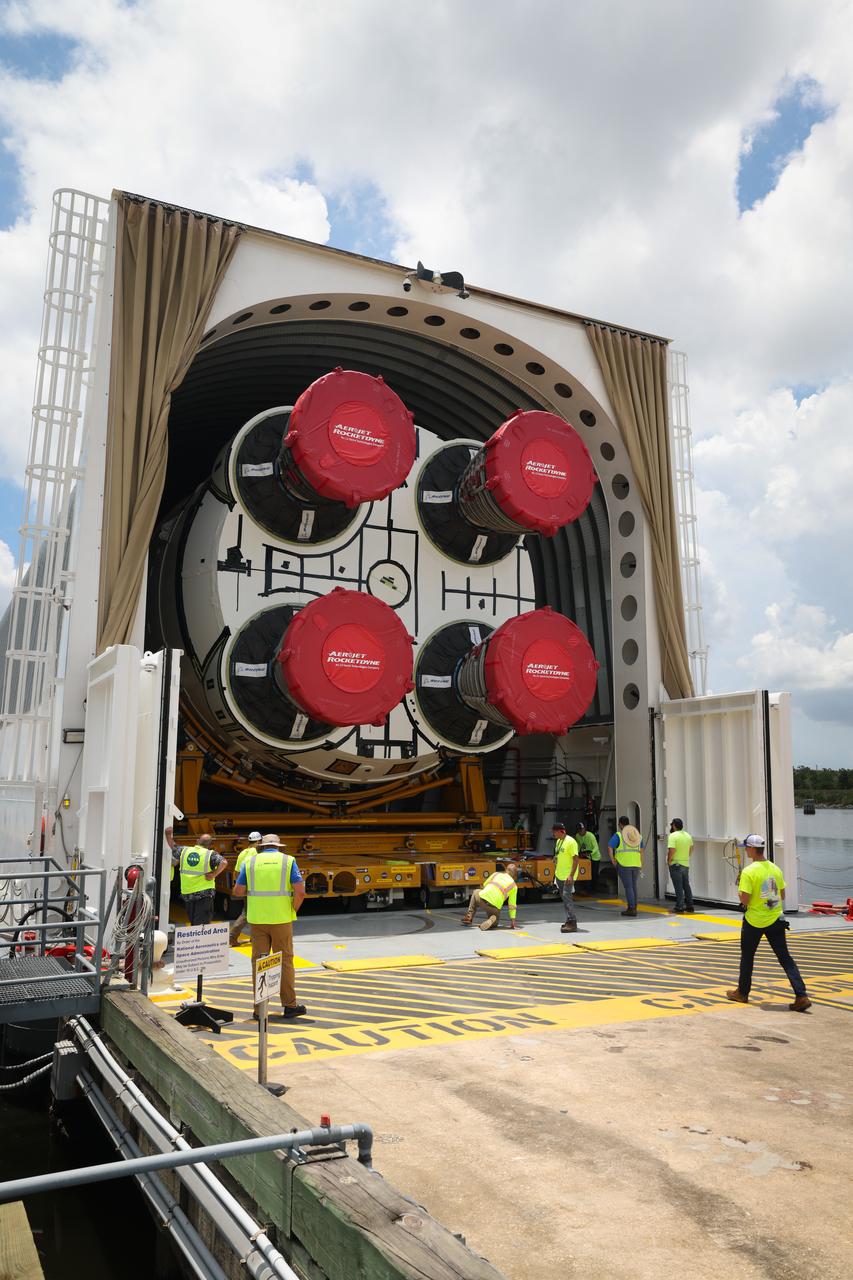
These images and videos show team members at Michoud Assembly Facility loading the first core stage that will help launch the first crewed flight of NASA’s SLS (Space Launch System) rocket for the agency’s Artemis II mission onto the Pegasus barge on Tuesday, July 16, 2024. The barge will ferry the core stage on a 900-mile journey from the agency’s Michoud Assembly Facility in New Orleans to its Kennedy Space Center in Florida. The core stage for the SLS mega rocket is the largest stage NASA has ever produced. At 212 feet tall, the stage consists of five major elements, including two huge propellant tanks that collectively hold more than 733,000 gallons of super chilled liquid propellant to feed four RS-25 engines at its base. During launch and flight, the stage will operate for just over eight minutes, producing more than 2 million pounds of thrust to help send a crew of four astronauts inside NASA’s Orion spacecraft onward to the Moon. All the major structures for every SLS core stage are fully manufactured at NASA Michoud. NASA is working to land the first woman, first person of color, and its first international partner astronaut on the Moon under Artemis. SLS is part of NASA’s backbone for deep space exploration, along with the Orion spacecraft and Gateway in orbit around the Moon and commercial human landing systems, next-generation space, next-generational spacesuits, and rovers on the lunar surface. SLS is the only rocket that can send Orion, astronauts, and supplies to the Moon in a single launch.

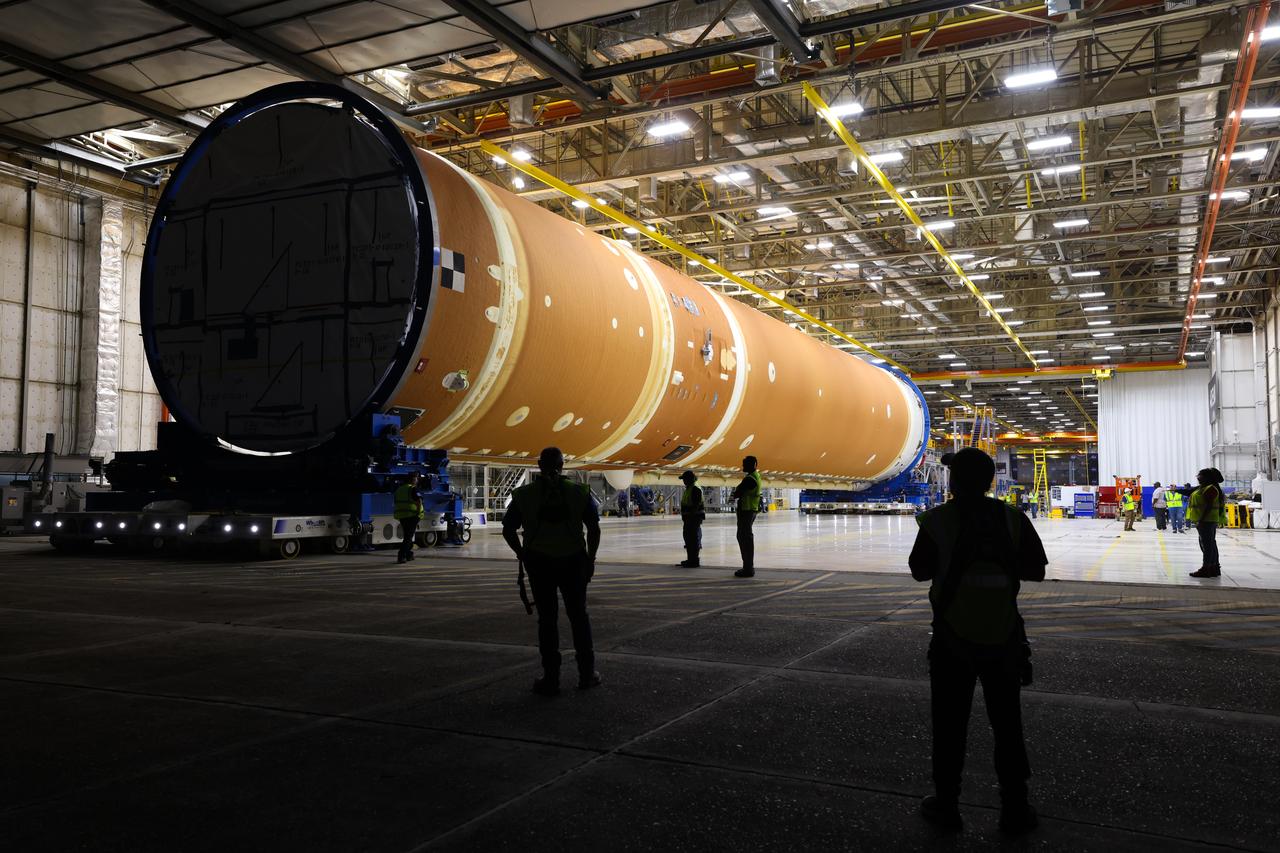
This image shows NASA’s Michoud Assembly Facility move crew lifting a completed liquid hydrogen tank barrel off the Vertical Weld Center on Feb. 10. The barrel, which will be used on the core stage of NASA’s SLS (Space Launch System) rocket, is one of the first pieces of flight hardware manufactured for the agency’s Artemis V mission. The 22-foot-tall barrel section is one of five barrels, which – along with two end domes – make up the 130.8-foot-tall liquid hydrogen fuel tank. The SLS core stage liquid hydrogen tank holds 537,000 gallons of super-cooled propellant and is one of five unique elements that make up the SLS core stage. Together with the forward skirt, liquid oxygen tank, intertank, and engine section, the liquid hydrogen tank will provide propellant to the four RS-25 engines to produce more than two million pounds of thrust to help launch NASA’s Orion spacecraft, astronauts, and supplies beyond Earth’s orbit to the Moon.
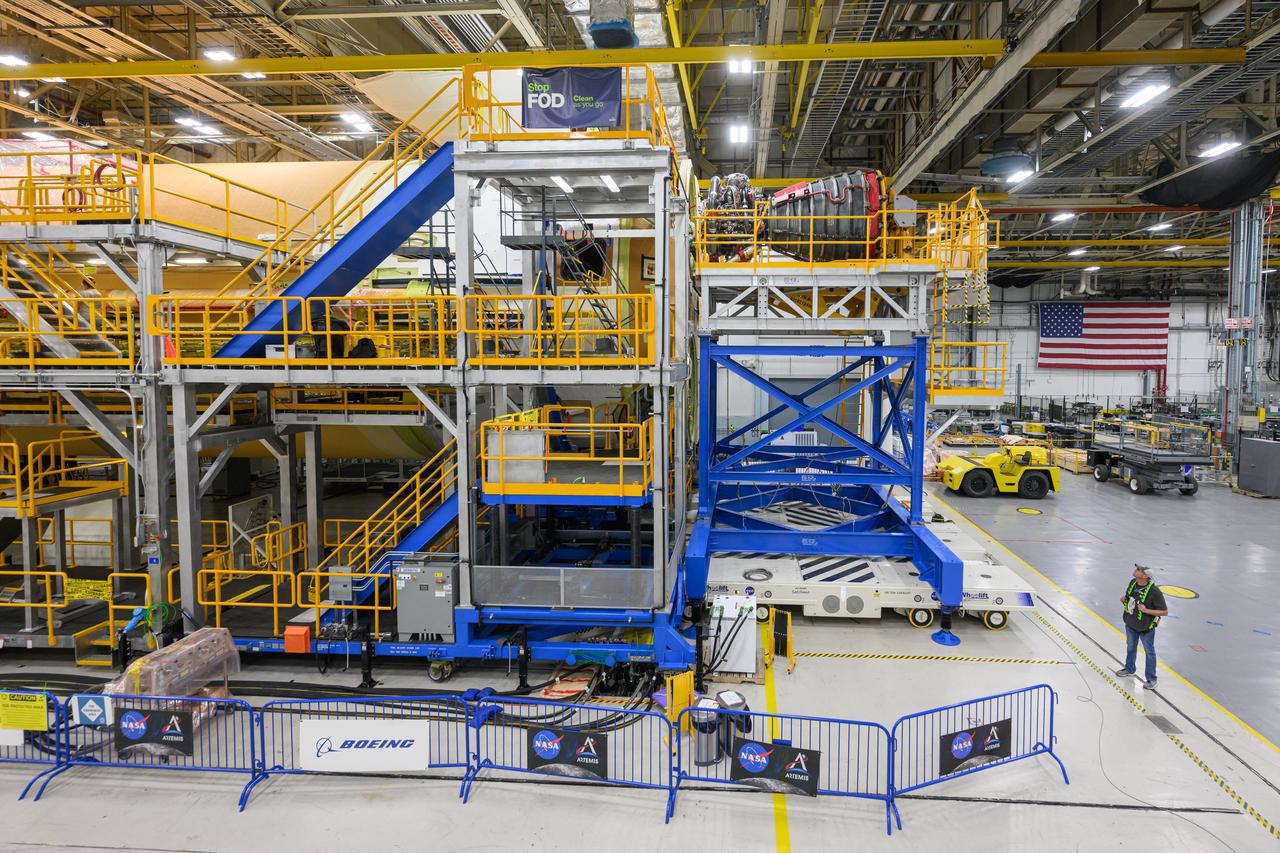
This photo shows NASA and Boeing, the SLS core stage lead contractor, preparing the SLS (Space Launch System) rocket core stage for shipment at NASA’s Michoud Assembly Facility in New Orleans. On July 6, NASA and Boeing moved the Artemis II rocket stage to Building 110. The move comes as teams prepare to roll the massive rocket stage with its four RS-25 engines to the agency’s Pegasus barge for delivery to NASA’s Kennedy Space Center in Florida in mid-July. Prior to the move, technicians began removing external access stands, or scaffolding, surrounding the core stage to assess the interior elements, including its complex avionics and flight propulsion systems. The stage is fully manufactured at NASA Michoud. NASA is working to land the first woman, first person of color, and its first international partner astronaut on the Moon under Artemis. SLS is part of NASA’s backbone for deep space exploration, along with the Orion spacecraft, supporting ground systems, advanced spacesuits and rovers, the Gateway in orbit around the Moon, and commercial human landing systems. SLS is the only rocket that can send Orion, astronauts, and supplies to the Moon in a single launch.
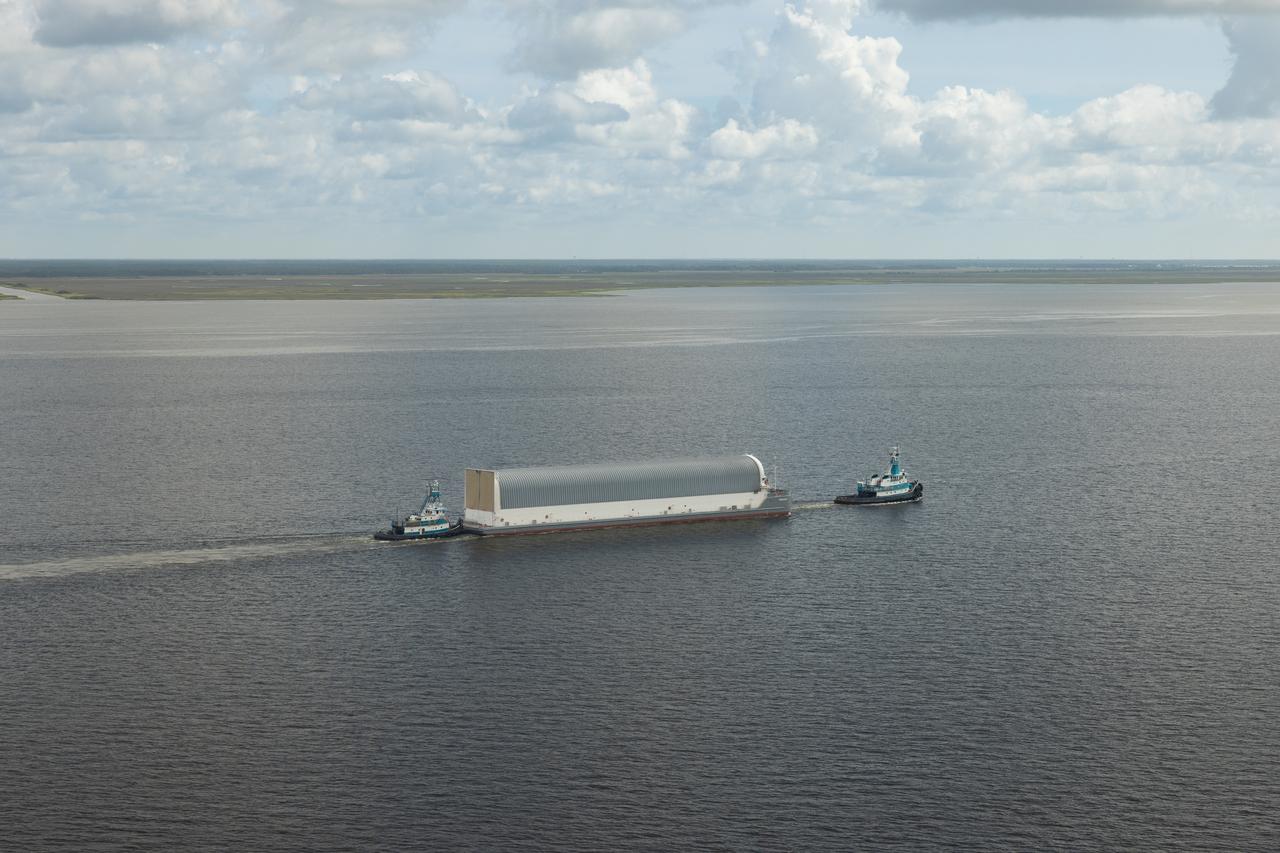
NASA photographers Evan Deroche and Brandon Hancock joined the U.S. Coast Guard in an HH-60 Jayhawk helicopter to capture aerial views of NASA’s Pegasus barge just after it departed NASA’s Michoud Assembly Facility in New Orleans July 17 with the core stage of NASA’s SLS (Space Launch System) rocket for Artemis II. These photos and videos show the barge as it traveled down the Intracoastal Waterway to the Gulf of Mexico. Pegasus ferried the Artemis II core stage more than 900 miles to NASA’s Kennedy Space Center in Florida. It arrived with the flight hardware July 22. The barge is maintained at NASA’s Michoud Assembly Facility in New Orleans, where the core stage is fully manufactured. NASA is working to land the first woman, first person of color, and its first international partner astronaut on the Moon under Artemis. SLS is part of NASA’s backbone for deep space exploration, along with the Orion spacecraft, supporting ground systems, advanced spacesuits and rovers, the Gateway in orbit around the Moon, and commercial human landing systems. SLS is the only rocket that can send Orion, astronauts, and supplies to the Moon in a single launch.
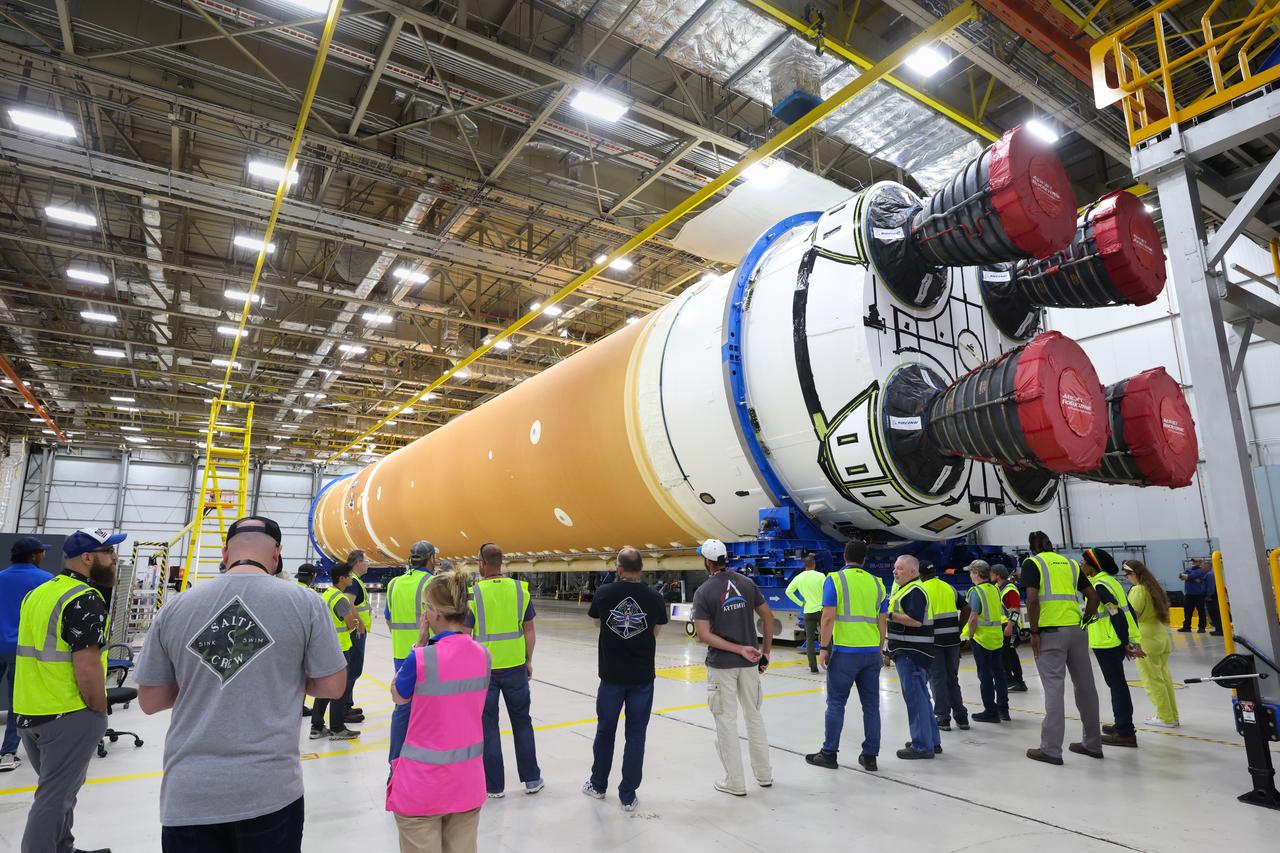
This photo shows NASA and Boeing, the SLS core stage lead contractor, preparing the SLS (Space Launch System) rocket core stage for shipment at NASA’s Michoud Assembly Facility in New Orleans. On July 6, NASA and Boeing moved the Artemis II rocket stage to Building 110. The move comes as teams prepare to roll the massive rocket stage with its four RS-25 engines to the agency’s Pegasus barge for delivery to NASA’s Kennedy Space Center in Florida in mid-July. Prior to the move, technicians began removing external access stands, or scaffolding, surrounding the core stage to assess the interior elements, including its complex avionics and flight propulsion systems. The stage is fully manufactured at NASA Michoud. NASA is working to land the first woman, first person of color, and its first international partner astronaut on the Moon under Artemis. SLS is part of NASA’s backbone for deep space exploration, along with the Orion spacecraft, supporting ground systems, advanced spacesuits and rovers, the Gateway in orbit around the Moon, and commercial human landing systems. SLS is the only rocket that can send Orion, astronauts, and supplies to the Moon in a single launch.

This imagery shows how technicians at NASA’s Michoud Assembly Facility moved the aft dome of the liquid oxygen tank for NASA’s SLS (Space Launch System) rocket for the next phase of production inside the Vertical Assembly center Dec. 18. The dome will form part of the core stage that will power NASA’s Artemis III mission. Engineers rotate the dome to attach it to the previously joined forward dome and aft barrel segments using friction-stir welding. The liquid oxygen tank is one of five major components that make up the SLS rocket’s core stage. Together with the forward skirt, intertank, liquid hydrogen tank, engine section, along with the four RS-25 engines at its base, the 212-foot core stage will help power NASA’s Artemis missions to the Moon.

This imagery shows how technicians at NASA’s Michoud Assembly Facility moved the aft dome of the liquid oxygen tank for NASA’s SLS (Space Launch System) rocket for the next phase of production inside the Vertical Assembly center Dec. 18. The dome will form part of the core stage that will power NASA’s Artemis III mission. Engineers rotate the dome to attach it to the previously joined forward dome and aft barrel segments using friction-stir welding. The liquid oxygen tank is one of five major components that make up the SLS rocket’s core stage. Together with the forward skirt, intertank, liquid hydrogen tank, engine section, along with the four RS-25 engines at its base, the 212-foot core stage will help power NASA’s Artemis missions to the Moon.

These images and videos show team members at Michoud Assembly Facility loading the first core stage that will help launch the first crewed flight of NASA’s SLS (Space Launch System) rocket for the agency’s Artemis II mission onto the Pegasus barge on Tuesday, July 16, 2024. The barge will ferry the core stage on a 900-mile journey from the agency’s Michoud Assembly Facility in New Orleans to its Kennedy Space Center in Florida. The core stage for the SLS mega rocket is the largest stage NASA has ever produced. At 212 feet tall, the stage consists of five major elements, including two huge propellant tanks that collectively hold more than 733,000 gallons of super chilled liquid propellant to feed four RS-25 engines at its base. During launch and flight, the stage will operate for just over eight minutes, producing more than 2 million pounds of thrust to help send a crew of four astronauts inside NASA’s Orion spacecraft onward to the Moon. All the major structures for every SLS core stage are fully manufactured at NASA Michoud. NASA is working to land the first woman, first person of color, and its first international partner astronaut on the Moon under Artemis. SLS is part of NASA’s backbone for deep space exploration, along with the Orion spacecraft and Gateway in orbit around the Moon and commercial human landing systems, next-generation space, next-generational spacesuits, and rovers on the lunar surface. SLS is the only rocket that can send Orion, astronauts, and supplies to the Moon in a single launch.

This image shows NASA’s Michoud Assembly Facility move crew lifting a completed liquid hydrogen tank barrel off the Vertical Weld Center on Feb. 10. The barrel, which will be used on the core stage of NASA’s SLS (Space Launch System) rocket, is one of the first pieces of flight hardware manufactured for the agency’s Artemis V mission. The 22-foot-tall barrel section is one of five barrels, which – along with two end domes – make up the 130.8-foot-tall liquid hydrogen fuel tank. The SLS core stage liquid hydrogen tank holds 537,000 gallons of super-cooled propellant and is one of five unique elements that make up the SLS core stage. Together with the forward skirt, liquid oxygen tank, intertank, and engine section, the liquid hydrogen tank will provide propellant to the four RS-25 engines to produce more than two million pounds of thrust to help launch NASA’s Orion spacecraft, astronauts, and supplies beyond Earth’s orbit to the Moon.
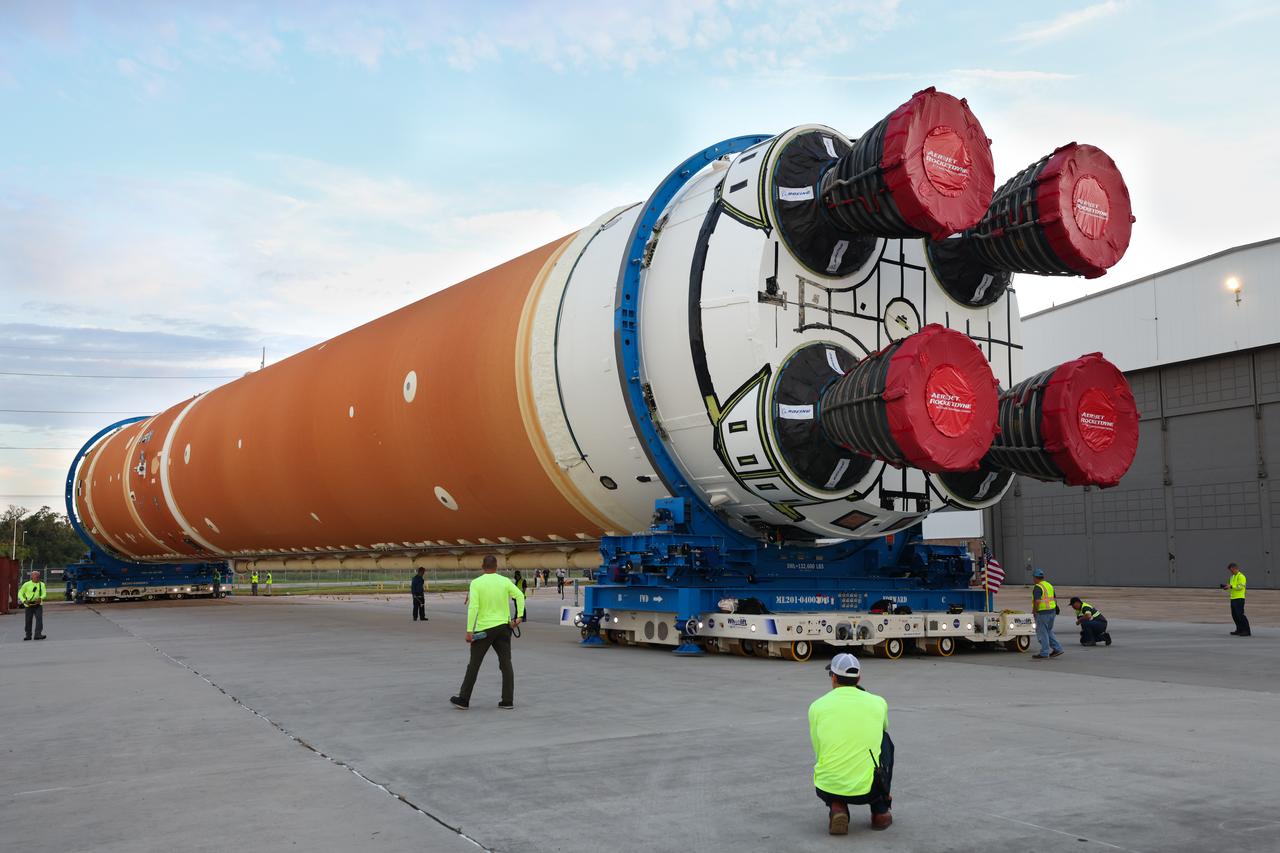
This photo shows NASA and Boeing, the SLS core stage lead contractor, preparing the SLS (Space Launch System) rocket core stage for shipment at NASA’s Michoud Assembly Facility in New Orleans. On July 6, NASA and Boeing moved the Artemis II rocket stage to Building 110. The move comes as teams prepare to roll the massive rocket stage with its four RS-25 engines to the agency’s Pegasus barge for delivery to NASA’s Kennedy Space Center in Florida in mid-July. Prior to the move, technicians began removing external access stands, or scaffolding, surrounding the core stage to assess the interior elements, including its complex avionics and flight propulsion systems. The stage is fully manufactured at NASA Michoud. NASA is working to land the first woman, first person of color, and its first international partner astronaut on the Moon under Artemis. SLS is part of NASA’s backbone for deep space exploration, along with the Orion spacecraft, supporting ground systems, advanced spacesuits and rovers, the Gateway in orbit around the Moon, and commercial human landing systems. SLS is the only rocket that can send Orion, astronauts, and supplies to the Moon in a single launch.
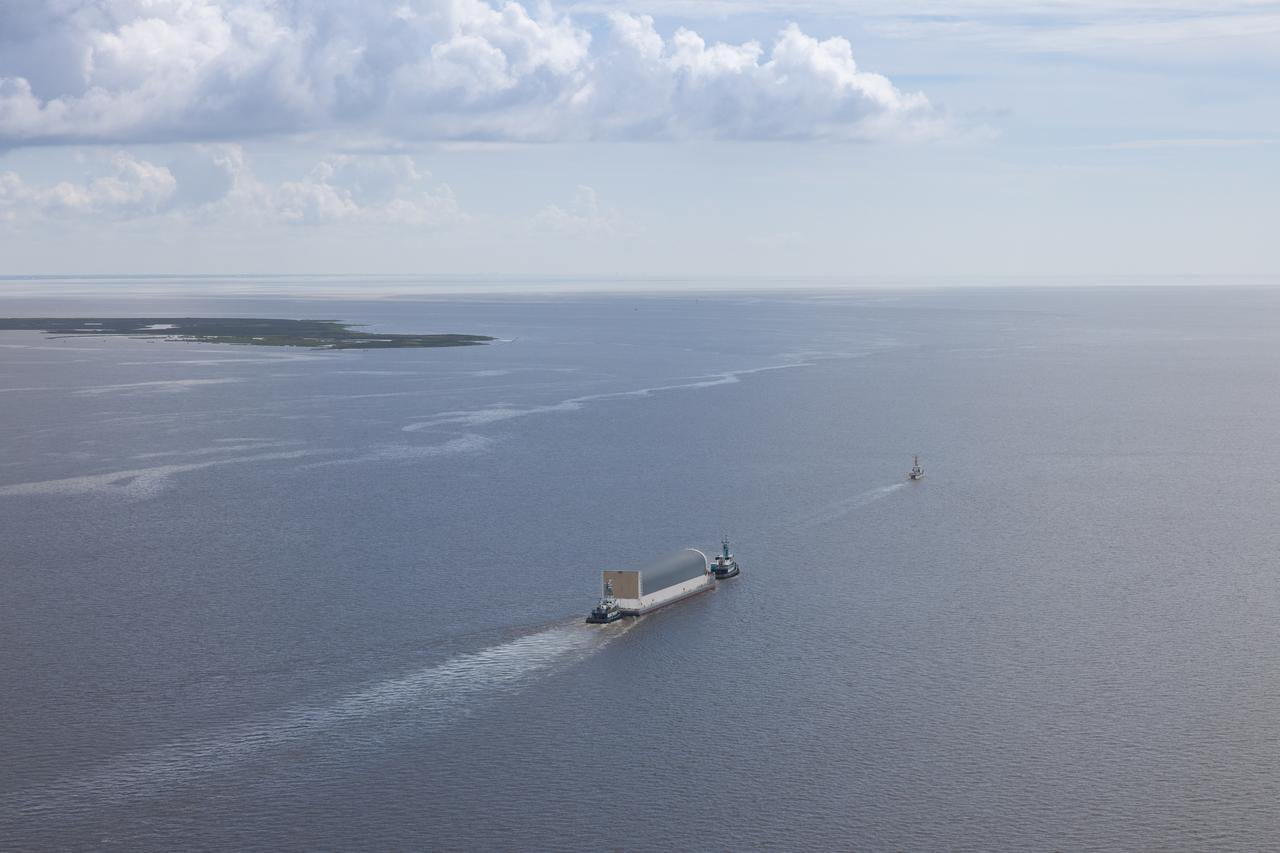
NASA photographers Evan Deroche and Brandon Hancock joined the U.S. Coast Guard in an HH-60 Jayhawk helicopter to capture aerial views of NASA’s Pegasus barge just after it departed NASA’s Michoud Assembly Facility in New Orleans July 17 with the core stage of NASA’s SLS (Space Launch System) rocket for Artemis II. These photos and videos show the barge as it traveled down the Intracoastal Waterway to the Gulf of Mexico. Pegasus ferried the Artemis II core stage more than 900 miles to NASA’s Kennedy Space Center in Florida. It arrived with the flight hardware July 22. The barge is maintained at NASA’s Michoud Assembly Facility in New Orleans, where the core stage is fully manufactured. NASA is working to land the first woman, first person of color, and its first international partner astronaut on the Moon under Artemis. SLS is part of NASA’s backbone for deep space exploration, along with the Orion spacecraft, supporting ground systems, advanced spacesuits and rovers, the Gateway in orbit around the Moon, and commercial human landing systems. SLS is the only rocket that can send Orion, astronauts, and supplies to the Moon in a single launch.

This imagery shows how technicians at NASA’s Michoud Assembly Facility moved the aft dome of the liquid oxygen tank for NASA’s SLS (Space Launch System) rocket for the next phase of production inside the Vertical Assembly center Dec. 18. The dome will form part of the core stage that will power NASA’s Artemis III mission. Engineers rotate the dome to attach it to the previously joined forward dome and aft barrel segments using friction-stir welding. The liquid oxygen tank is one of five major components that make up the SLS rocket’s core stage. Together with the forward skirt, intertank, liquid hydrogen tank, engine section, along with the four RS-25 engines at its base, the 212-foot core stage will help power NASA’s Artemis missions to the Moon.
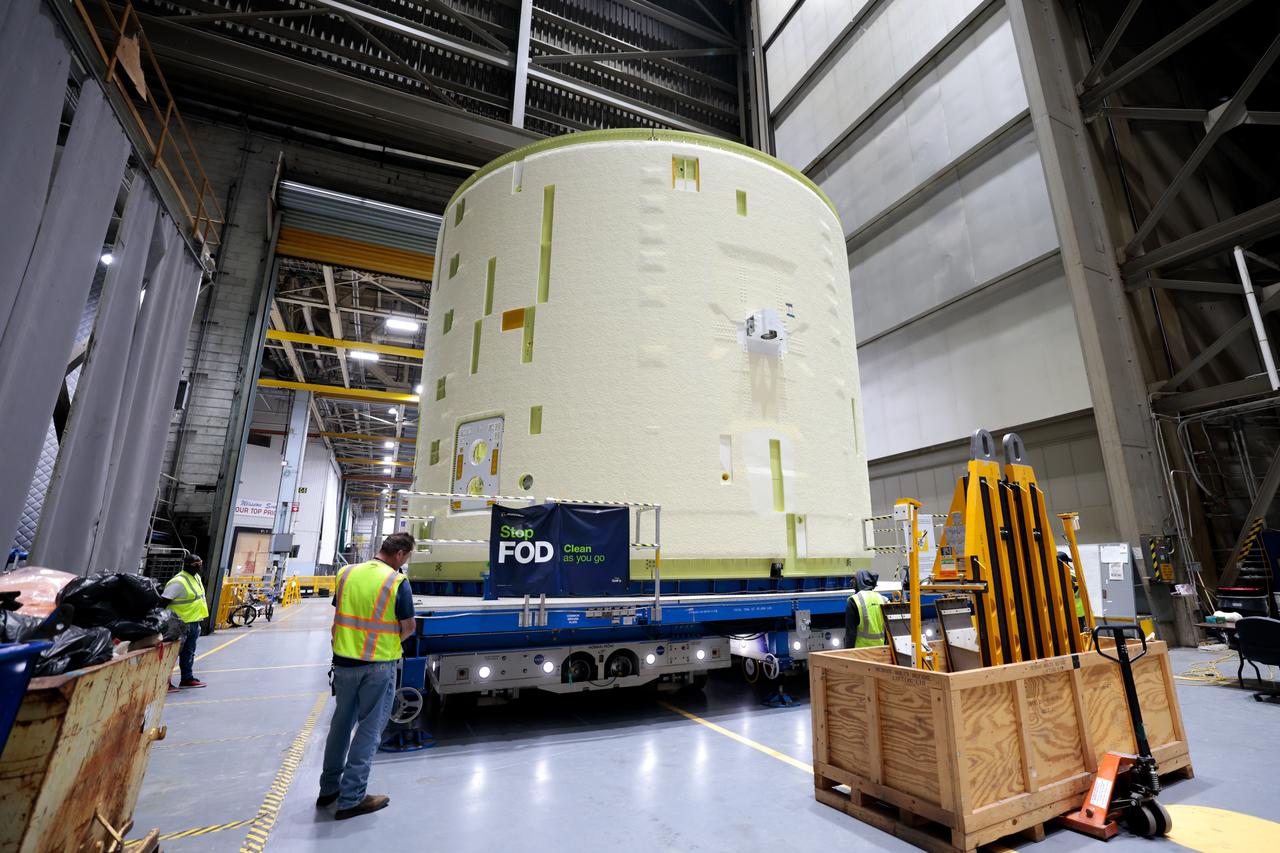
Technicians at NASA’s Michoud Assembly Facility in New Orleans lift the intertank of the SLS (Space Launch System)’s core stage for NASA’s Artemis III mission to move it to another location in the 43-acre factory for further inspection and production. The intertank is the backbone of the rocket’s core stage and is located between the mega rocket’s liquid hydrogen tank and liquid oxygen tank. In addition to joining the rocket’s two massive propellant tanks, the intertank houses avionics and electronics and serves as an attachment point for the rocket’s two solid rocket boosters positioned on either side of the core stage. The liquid hydrogen tank and liquid oxygen tank hold 733,000 gallons of super-cold propellant to power the stage’s four RS-25 engines needed for liftoff. Together, the rocket’s four RS-25 engines and two solid rocket boosters provide more than 8.8 million pounds to launch NASA’s and Artemis missions to the Moon. NASA is working to land the first woman and first person of color on the Moon under Artemis. SLS is part of NASA’s backbone for deep space exploration, along with Orion and the Gateway in orbit around the Moon. SLS is the only rocket that can send Orion, astronauts, and supplies to the Moon in a single mission.

This image shows NASA’s Michoud Assembly Facility move crew lifting a completed liquid hydrogen tank barrel off the Vertical Weld Center on Feb. 10. The barrel, which will be used on the core stage of NASA’s SLS (Space Launch System) rocket, is one of the first pieces of flight hardware manufactured for the agency’s Artemis V mission. The 22-foot-tall barrel section is one of five barrels, which – along with two end domes – make up the 130.8-foot-tall liquid hydrogen fuel tank. The SLS core stage liquid hydrogen tank holds 537,000 gallons of super-cooled propellant and is one of five unique elements that make up the SLS core stage. Together with the forward skirt, liquid oxygen tank, intertank, and engine section, the liquid hydrogen tank will provide propellant to the four RS-25 engines to produce more than two million pounds of thrust to help launch NASA’s Orion spacecraft, astronauts, and supplies beyond Earth’s orbit to the Moon
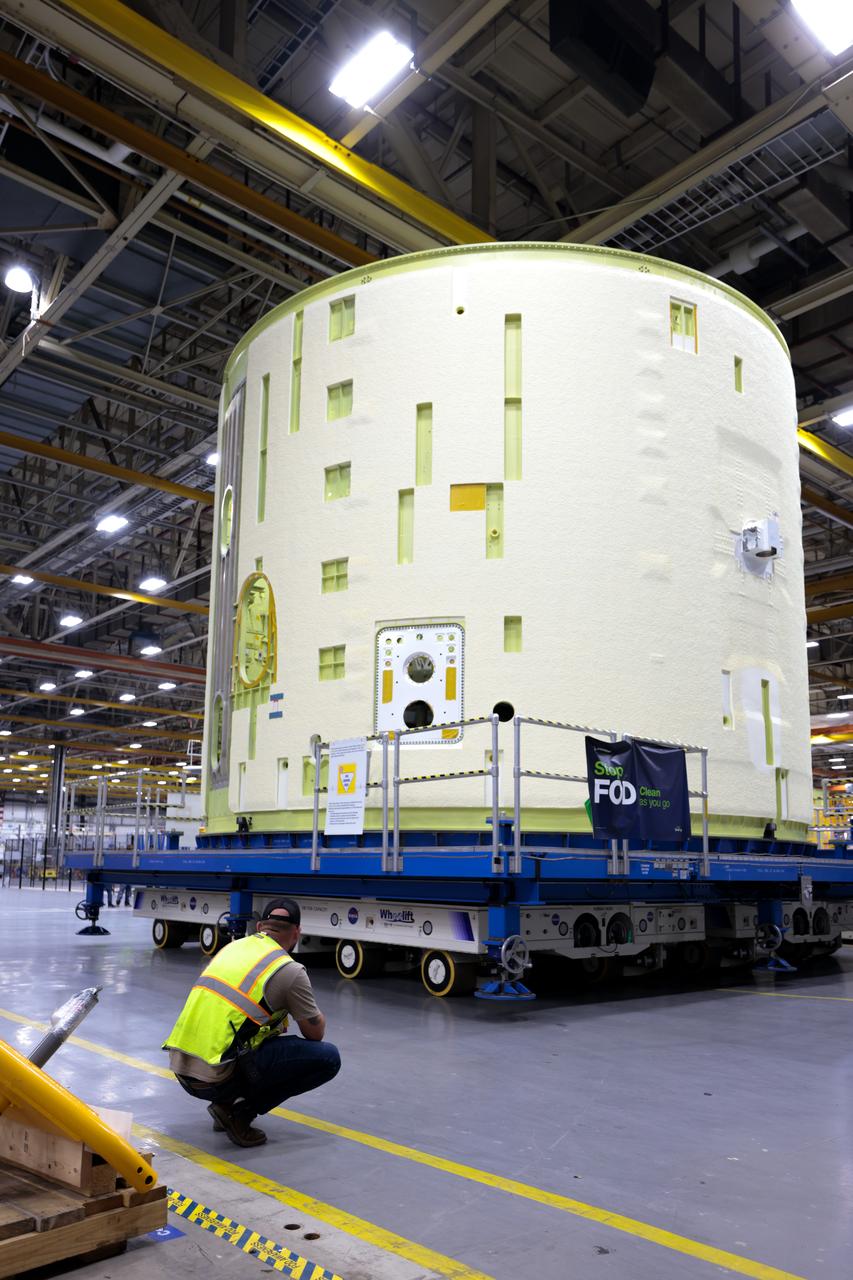
Technicians at NASA’s Michoud Assembly Facility in New Orleans lift the intertank of the SLS (Space Launch System)’s core stage for NASA’s Artemis III mission to move it to another location in the 43-acre factory for further inspection and production. The intertank is the backbone of the rocket’s core stage and is located between the mega rocket’s liquid hydrogen tank and liquid oxygen tank. In addition to joining the rocket’s two massive propellant tanks, the intertank houses avionics and electronics and serves as an attachment point for the rocket’s two solid rocket boosters positioned on either side of the core stage. The liquid hydrogen tank and liquid oxygen tank hold 733,000 gallons of super-cold propellant to power the stage’s four RS-25 engines needed for liftoff. Together, the rocket’s four RS-25 engines and two solid rocket boosters provide more than 8.8 million pounds to launch NASA’s and Artemis missions to the Moon. NASA is working to land the first woman and first person of color on the Moon under Artemis. SLS is part of NASA’s backbone for deep space exploration, along with Orion and the Gateway in orbit around the Moon. SLS is the only rocket that can send Orion, astronauts, and supplies to the Moon in a single mission.

This imagery shows how technicians at NASA’s Michoud Assembly Facility moved the aft dome of the liquid oxygen tank for NASA’s SLS (Space Launch System) rocket for the next phase of production inside the Vertical Assembly center Dec. 18. The dome will form part of the core stage that will power NASA’s Artemis III mission. Engineers rotate the dome to attach it to the previously joined forward dome and aft barrel segments using friction-stir welding. The liquid oxygen tank is one of five major components that make up the SLS rocket’s core stage. Together with the forward skirt, intertank, liquid hydrogen tank, engine section, along with the four RS-25 engines at its base, the 212-foot core stage will help power NASA’s Artemis missions to the Moon.
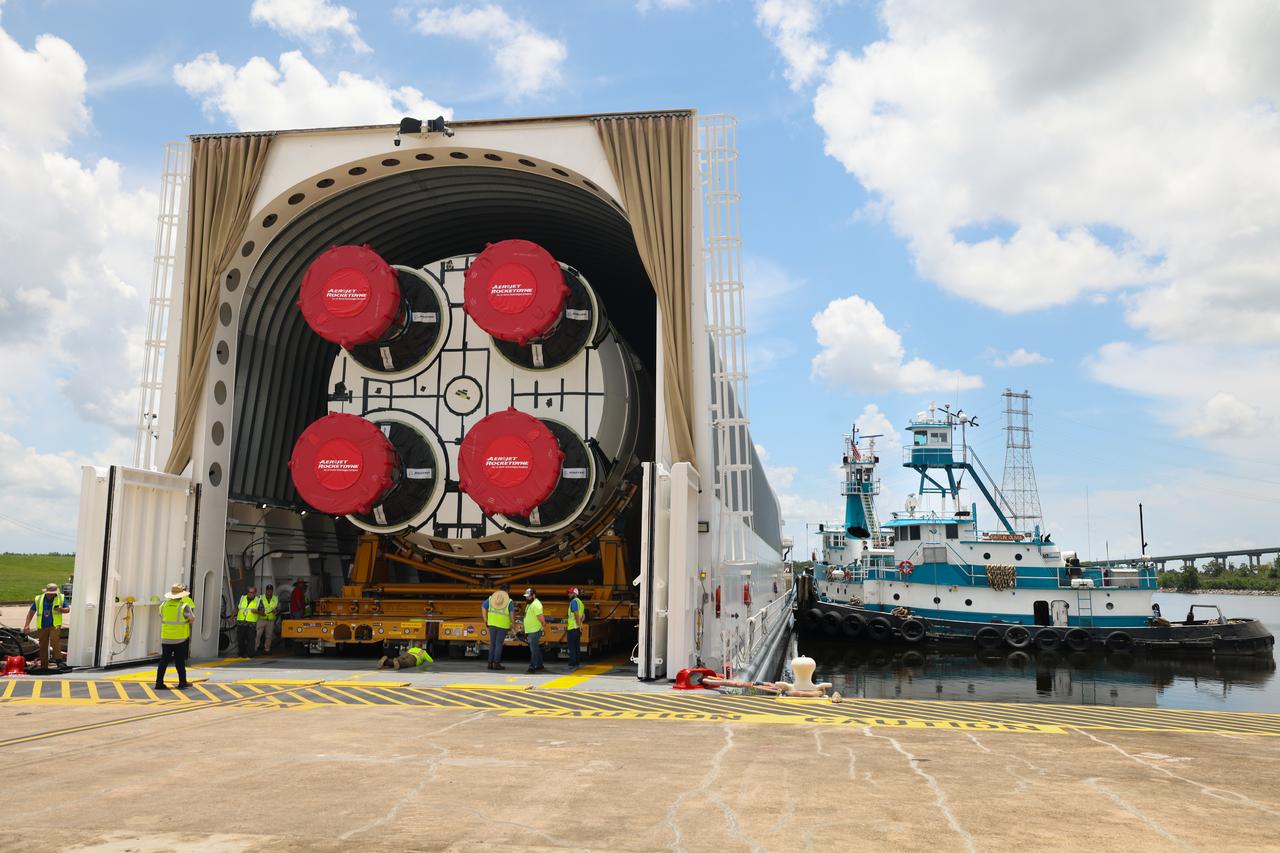
These images and videos show team members at Michoud Assembly Facility loading the first core stage that will help launch the first crewed flight of NASA’s SLS (Space Launch System) rocket for the agency’s Artemis II mission onto the Pegasus barge on Tuesday, July 16, 2024. The barge will ferry the core stage on a 900-mile journey from the agency’s Michoud Assembly Facility in New Orleans to its Kennedy Space Center in Florida. The core stage for the SLS mega rocket is the largest stage NASA has ever produced. At 212 feet tall, the stage consists of five major elements, including two huge propellant tanks that collectively hold more than 733,000 gallons of super chilled liquid propellant to feed four RS-25 engines at its base. During launch and flight, the stage will operate for just over eight minutes, producing more than 2 million pounds of thrust to help send a crew of four astronauts inside NASA’s Orion spacecraft onward to the Moon. All the major structures for every SLS core stage are fully manufactured at NASA Michoud. NASA is working to land the first woman, first person of color, and its first international partner astronaut on the Moon under Artemis. SLS is part of NASA’s backbone for deep space exploration, along with the Orion spacecraft and Gateway in orbit around the Moon and commercial human landing systems, next-generation space, next-generational spacesuits, and rovers on the lunar surface. SLS is the only rocket that can send Orion, astronauts, and supplies to the Moon in a single launch.
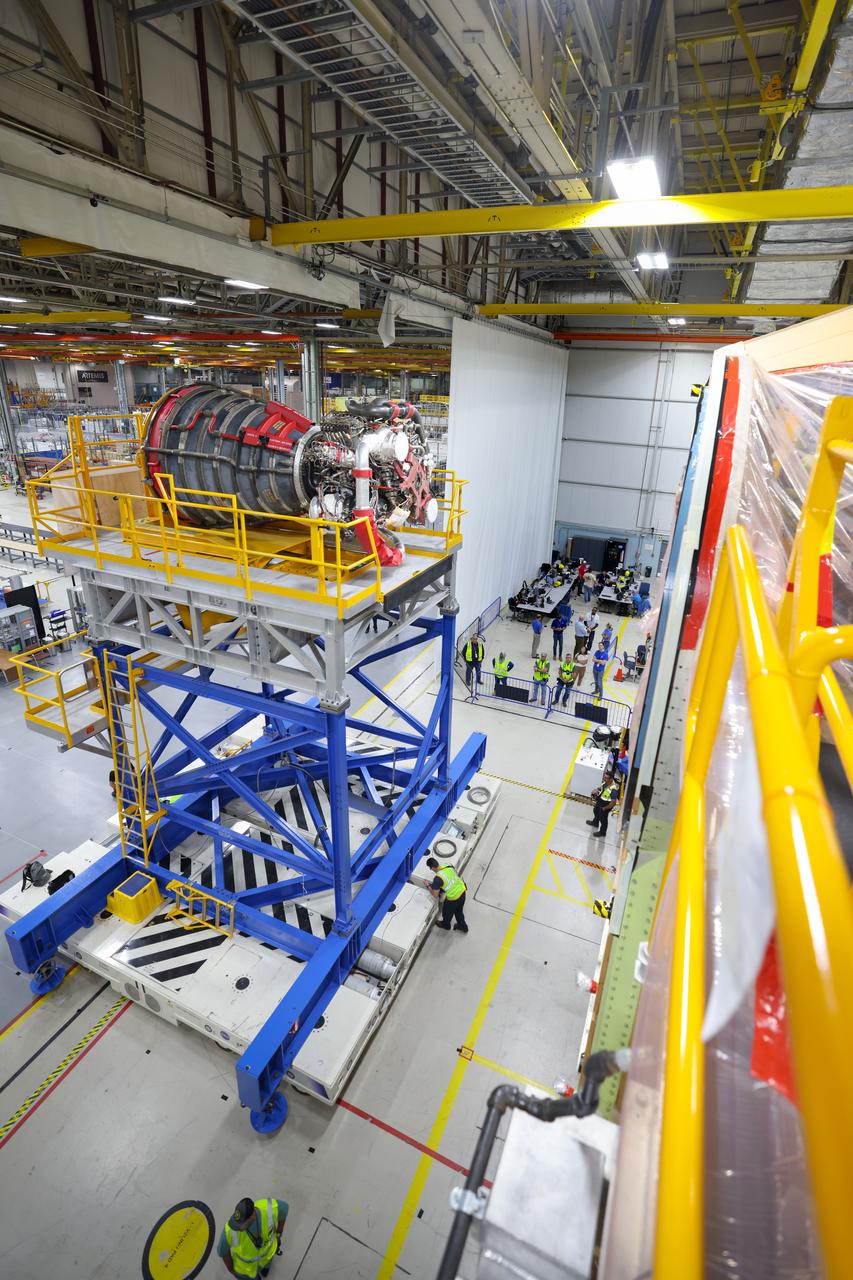
Technicians at NASA’s Michoud Assembly Facility in New Orleans have installed the first of four RS-25 engines on the core stage of the agency’s SLS (Space Launch System) rocket that will help power NASA’s first crewed Artemis mission to the Moon. The Sept. 11 engine installation follows the joining of all five major structures that make up the SLS core stage earlier this spring. NASA, lead RS-25 engines contractor Aerojet Rocketdyne, an L3 Harris Technologies company, and Boeing, the core stage lead contractor, will continue integrating the remaining three engines into the stage and installing the propulsion and electrical systems within the structure. All four RS-25 engines are located at the base of the core stage within the engine section. NASA is working to land the first woman and first person of color on the Moon under Artemis. SLS is part of NASA’s backbone for deep space exploration, along with Orion and the Gateway in orbit around the Moon. SLS is the only rocket that can send Orion, astronauts, and supplies to the Moon in a single mission.

This imagery shows how technicians at NASA’s Michoud Assembly Facility moved the aft dome of the liquid oxygen tank for NASA’s SLS (Space Launch System) rocket for the next phase of production inside the Vertical Assembly center Dec. 18. The dome will form part of the core stage that will power NASA’s Artemis III mission. Engineers rotate the dome to attach it to the previously joined forward dome and aft barrel segments using friction-stir welding. The liquid oxygen tank is one of five major components that make up the SLS rocket’s core stage. Together with the forward skirt, intertank, liquid hydrogen tank, engine section, along with the four RS-25 engines at its base, the 212-foot core stage will help power NASA’s Artemis missions to the Moon.

This image shows NASA’s Michoud Assembly Facility move crew lifting a completed liquid hydrogen tank barrel off the Vertical Weld Center on Feb. 10. The barrel, which will be used on the core stage of NASA’s SLS (Space Launch System) rocket, is one of the first pieces of flight hardware manufactured for the agency’s Artemis V mission. The 22-foot-tall barrel section is one of five barrels, which – along with two end domes – make up the 130.8-foot-tall liquid hydrogen fuel tank. The SLS core stage liquid hydrogen tank holds 537,000 gallons of super-cooled propellant and is one of five unique elements that make up the SLS core stage. Together with the forward skirt, liquid oxygen tank, intertank, and engine section, the liquid hydrogen tank will provide propellant to the four RS-25 engines to produce more than two million pounds of thrust to help launch NASA’s Orion spacecraft, astronauts, and supplies beyond Earth’s orbit to the Moon.

This imagery shows how technicians at NASA’s Michoud Assembly Facility moved the aft dome of the liquid oxygen tank for NASA’s SLS (Space Launch System) rocket for the next phase of production inside the Vertical Assembly center Dec. 18. The dome will form part of the core stage that will power NASA’s Artemis III mission. Engineers rotate the dome to attach it to the previously joined forward dome and aft barrel segments using friction-stir welding. The liquid oxygen tank is one of five major components that make up the SLS rocket’s core stage. Together with the forward skirt, intertank, liquid hydrogen tank, engine section, along with the four RS-25 engines at its base, the 212-foot core stage will help power NASA’s Artemis missions to the Moon.
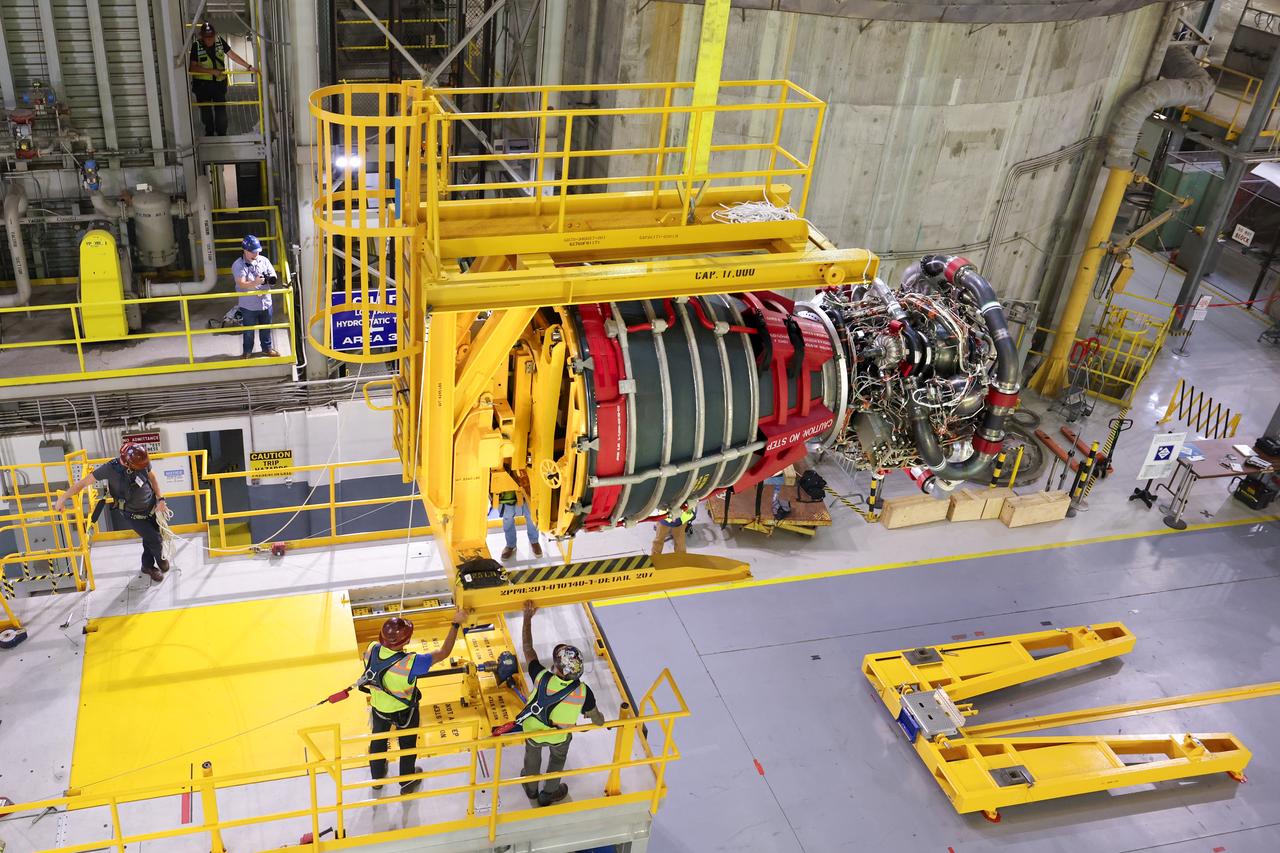
These photos and videos show how technicians at NASA’s Michoud Assembly Facility in New Orleans installed the third and fourth RS-25 engines onto the core stage for the agency’s SLS (Space Launch System) rocket that will help power NASA’s first crewed Artemis mission to the Moon. Technicians added the first engine to the SLS core stage Sept. 11. The second engine was installed onto the stage Sept. 15 with the third and fourth engines following Sept. 19 and Sept. 20. Engineers consider the engines to be “soft” mated to the rocket stage. Technicians with NASA, Aerojet Rocketdyne, an L3Harris Technologies company and the RS-25 engines lead contractor, along with Boeing, the core stage lead contractor, will now focus efforts on the complex tax of fully securing the engines to the stage and integrating the propulsion and electrical systems within the structure. NASA is working to land the first woman and first person of color on the Moon under Artemis. SLS is part of NASA’s backbone for deep space exploration, along with Orion and the Gateway in orbit around the Moon. SLS is the only rocket that can send Orion, astronauts, and supplies to the Moon in a single mission.
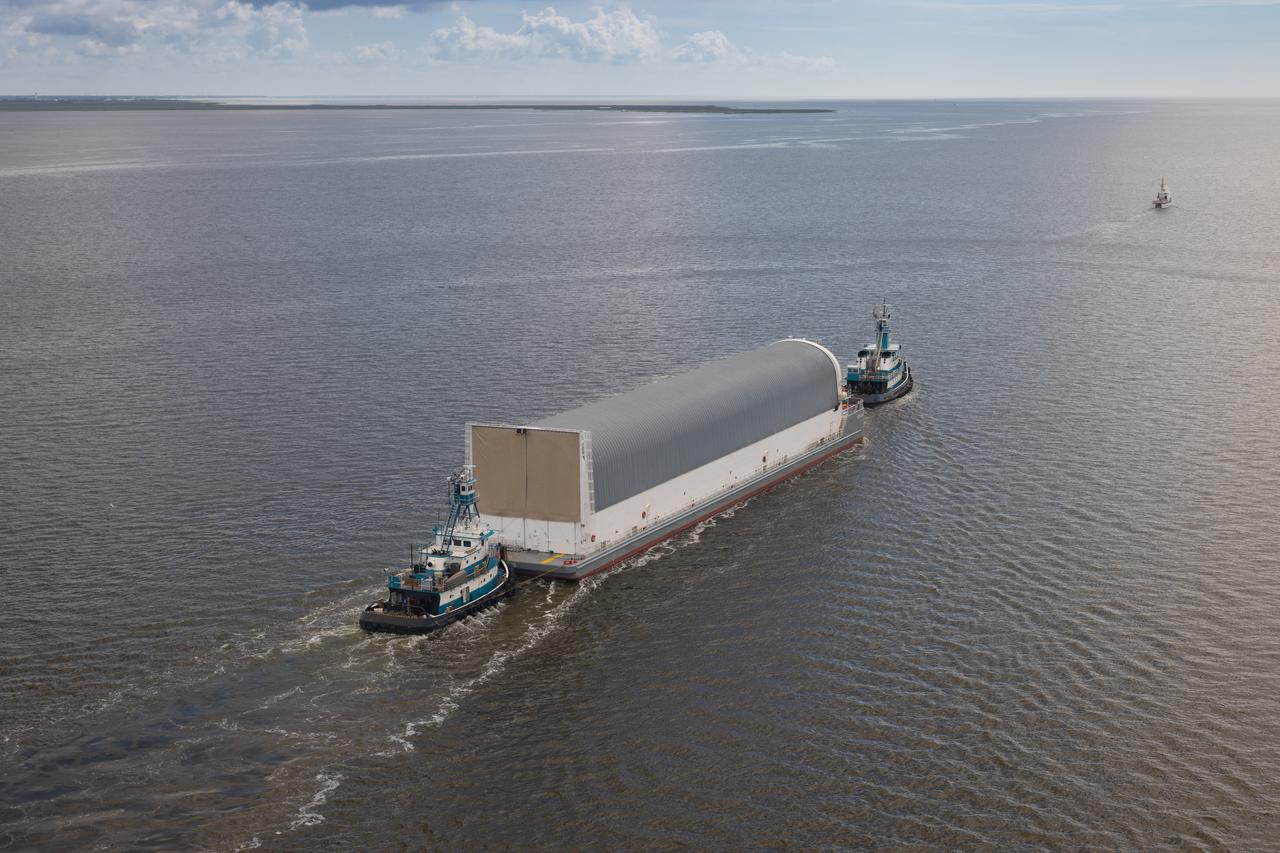
NASA photographers Evan Deroche and Brandon Hancock joined the U.S. Coast Guard in an HH-60 Jayhawk helicopter to capture aerial views of NASA’s Pegasus barge just after it departed NASA’s Michoud Assembly Facility in New Orleans July 17 with the core stage of NASA’s SLS (Space Launch System) rocket for Artemis II. These photos and videos show the barge as it traveled down the Intracoastal Waterway to the Gulf of Mexico. Pegasus ferried the Artemis II core stage more than 900 miles to NASA’s Kennedy Space Center in Florida. It arrived with the flight hardware July 22. The barge is maintained at NASA’s Michoud Assembly Facility in New Orleans, where the core stage is fully manufactured. NASA is working to land the first woman, first person of color, and its first international partner astronaut on the Moon under Artemis. SLS is part of NASA’s backbone for deep space exploration, along with the Orion spacecraft, supporting ground systems, advanced spacesuits and rovers, the Gateway in orbit around the Moon, and commercial human landing systems. SLS is the only rocket that can send Orion, astronauts, and supplies to the Moon in a single launch.
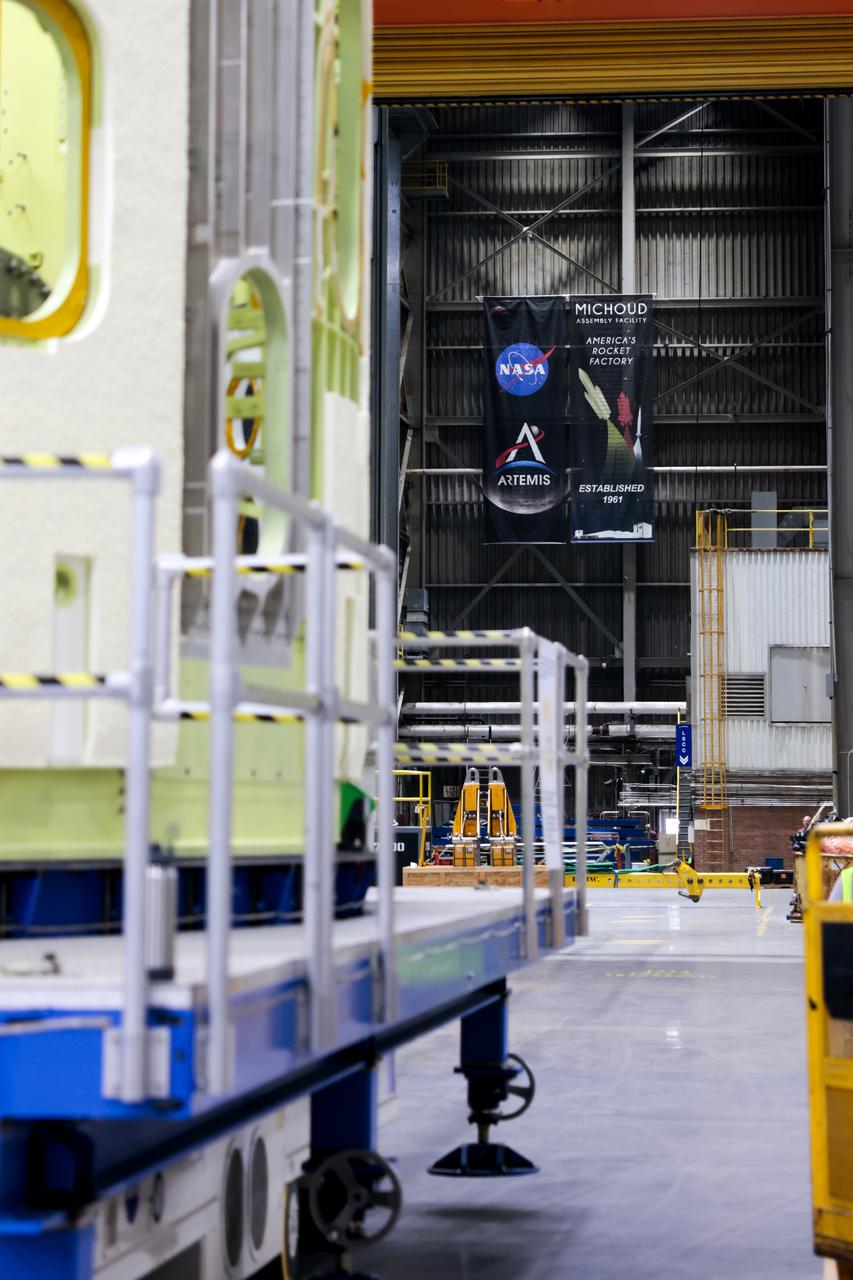
Technicians at NASA’s Michoud Assembly Facility in New Orleans lift the intertank of the SLS (Space Launch System)’s core stage for NASA’s Artemis III mission to move it to another location in the 43-acre factory for further inspection and production. The intertank is the backbone of the rocket’s core stage and is located between the mega rocket’s liquid hydrogen tank and liquid oxygen tank. In addition to joining the rocket’s two massive propellant tanks, the intertank houses avionics and electronics and serves as an attachment point for the rocket’s two solid rocket boosters positioned on either side of the core stage. The liquid hydrogen tank and liquid oxygen tank hold 733,000 gallons of super-cold propellant to power the stage’s four RS-25 engines needed for liftoff. Together, the rocket’s four RS-25 engines and two solid rocket boosters provide more than 8.8 million pounds to launch NASA’s and Artemis missions to the Moon. NASA is working to land the first woman and first person of color on the Moon under Artemis. SLS is part of NASA’s backbone for deep space exploration, along with Orion and the Gateway in orbit around the Moon. SLS is the only rocket that can send Orion, astronauts, and supplies to the Moon in a single mission.
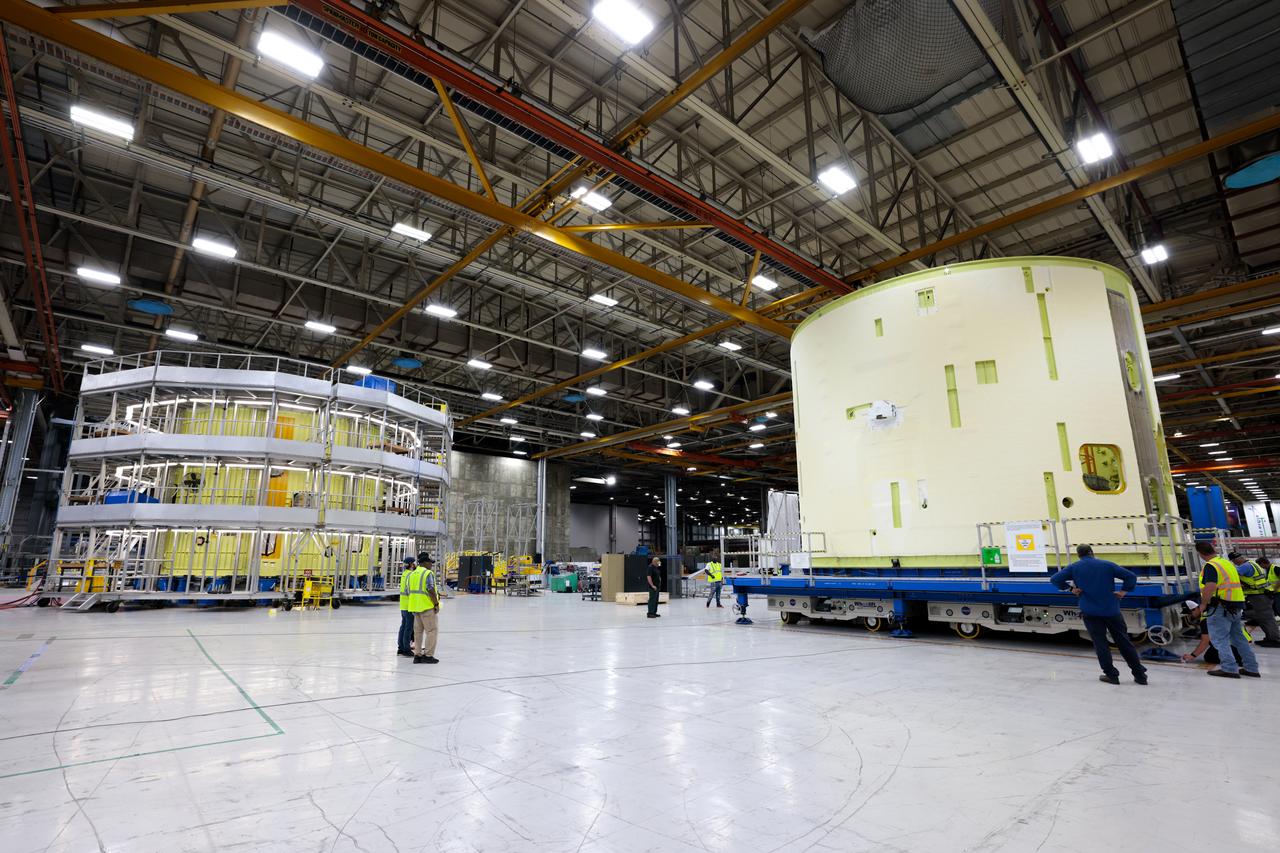
Technicians at NASA’s Michoud Assembly Facility in New Orleans lift the intertank of the SLS (Space Launch System)’s core stage for NASA’s Artemis III mission to move it to another location in the 43-acre factory for further inspection and production. The intertank is the backbone of the rocket’s core stage and is located between the mega rocket’s liquid hydrogen tank and liquid oxygen tank. In addition to joining the rocket’s two massive propellant tanks, the intertank houses avionics and electronics and serves as an attachment point for the rocket’s two solid rocket boosters positioned on either side of the core stage. The liquid hydrogen tank and liquid oxygen tank hold 733,000 gallons of super-cold propellant to power the stage’s four RS-25 engines needed for liftoff. Together, the rocket’s four RS-25 engines and two solid rocket boosters provide more than 8.8 million pounds to launch NASA’s and Artemis missions to the Moon. NASA is working to land the first woman and first person of color on the Moon under Artemis. SLS is part of NASA’s backbone for deep space exploration, along with Orion and the Gateway in orbit around the Moon. SLS is the only rocket that can send Orion, astronauts, and supplies to the Moon in a single mission.
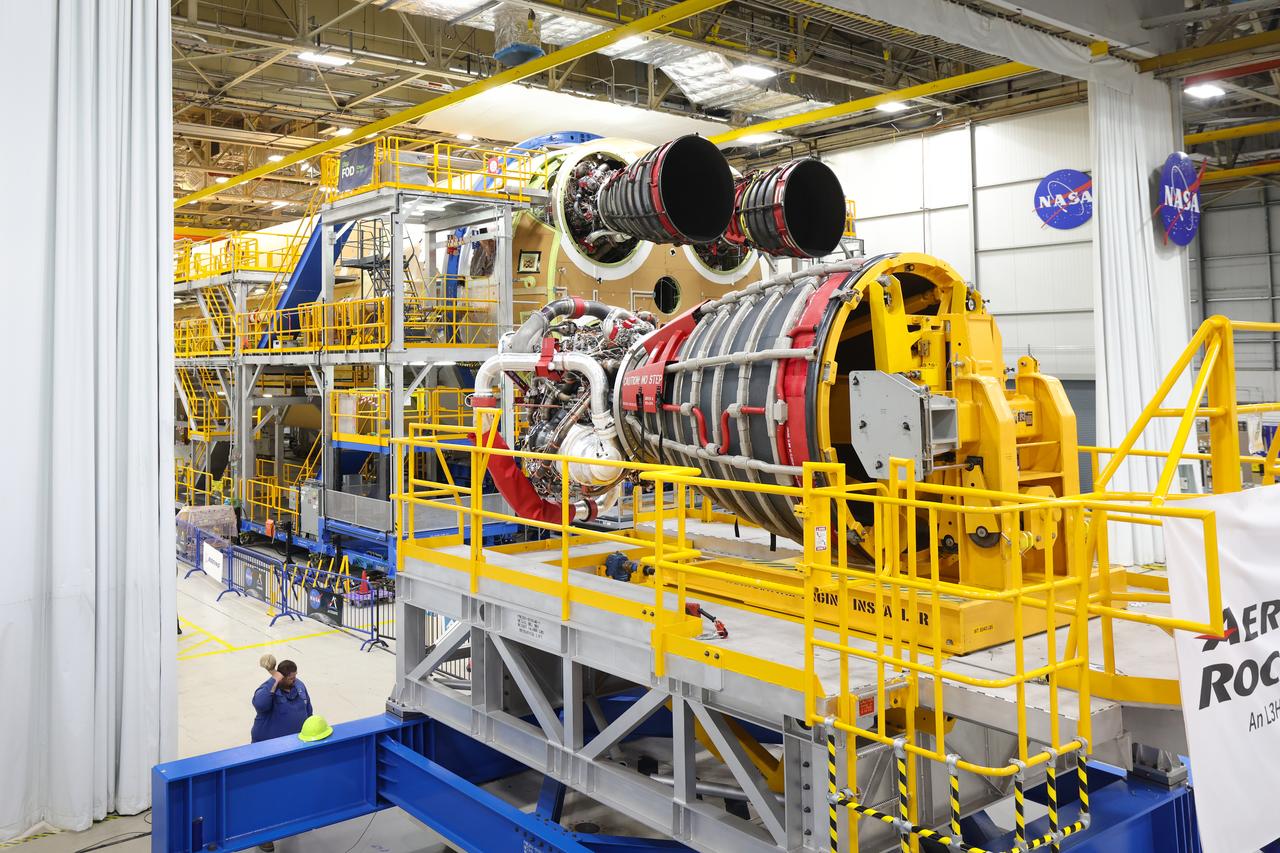
These photos and videos show how technicians at NASA’s Michoud Assembly Facility in New Orleans installed the third and fourth RS-25 engines onto the core stage for the agency’s SLS (Space Launch System) rocket that will help power NASA’s first crewed Artemis mission to the Moon. Technicians added the first engine to the SLS core stage Sept. 11. The second engine was installed onto the stage Sept. 15 with the third and fourth engines following Sept. 19 and Sept. 20. Engineers consider the engines to be “soft” mated to the rocket stage. Technicians with NASA, Aerojet Rocketdyne, an L3Harris Technologies company and the RS-25 engines lead contractor, along with Boeing, the core stage lead contractor, will now focus efforts on the complex tax of fully securing the engines to the stage and integrating the propulsion and electrical systems within the structure. NASA is working to land the first woman and first person of color on the Moon under Artemis. SLS is part of NASA’s backbone for deep space exploration, along with Orion and the Gateway in orbit around the Moon. SLS is the only rocket that can send Orion, astronauts, and supplies to the Moon in a single mission.

This image shows NASA’s Michoud Assembly Facility move crew lifting a completed liquid hydrogen tank barrel off the Vertical Weld Center on Feb. 10. The barrel, which will be used on the core stage of NASA’s SLS (Space Launch System) rocket, is one of the first pieces of flight hardware manufactured for the agency’s Artemis V mission. The 22-foot-tall barrel section is one of five barrels, which – along with two end domes – make up the 130.8-foot-tall liquid hydrogen fuel tank. The SLS core stage liquid hydrogen tank holds 537,000 gallons of super-cooled propellant and is one of five unique elements that make up the SLS core stage. Together with the forward skirt, liquid oxygen tank, intertank, and engine section, the liquid hydrogen tank will provide propellant to the four RS-25 engines to produce more than two million pounds of thrust to help launch NASA’s Orion spacecraft, astronauts, and supplies beyond Earth’s orbit to the Moon.
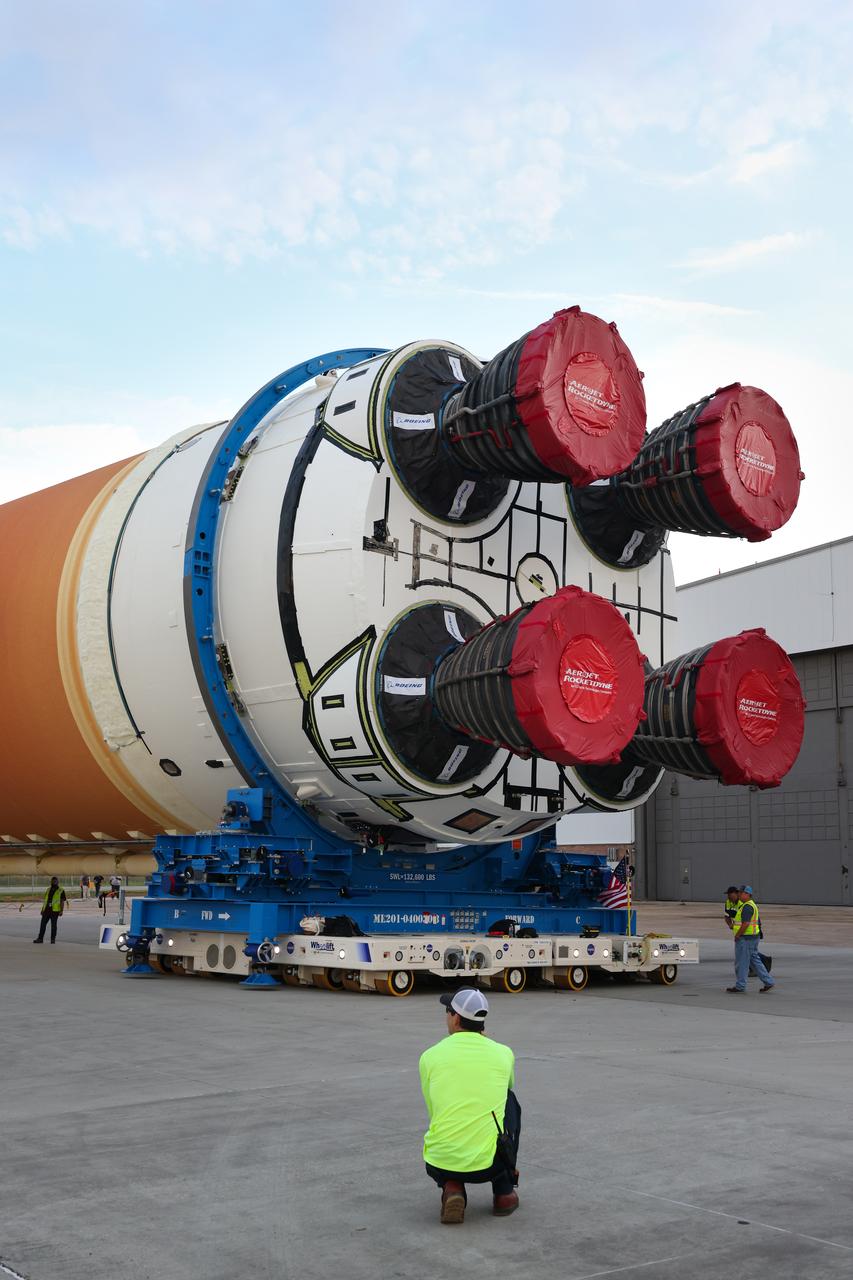
This photo shows NASA and Boeing, the SLS core stage lead contractor, preparing the SLS (Space Launch System) rocket core stage for shipment at NASA’s Michoud Assembly Facility in New Orleans. On July 6, NASA and Boeing moved the Artemis II rocket stage to Building 110. The move comes as teams prepare to roll the massive rocket stage with its four RS-25 engines to the agency’s Pegasus barge for delivery to NASA’s Kennedy Space Center in Florida in mid-July. Prior to the move, technicians began removing external access stands, or scaffolding, surrounding the core stage to assess the interior elements, including its complex avionics and flight propulsion systems. The stage is fully manufactured at NASA Michoud. NASA is working to land the first woman, first person of color, and its first international partner astronaut on the Moon under Artemis. SLS is part of NASA’s backbone for deep space exploration, along with the Orion spacecraft, supporting ground systems, advanced spacesuits and rovers, the Gateway in orbit around the Moon, and commercial human landing systems. SLS is the only rocket that can send Orion, astronauts, and supplies to the Moon in a single launch.
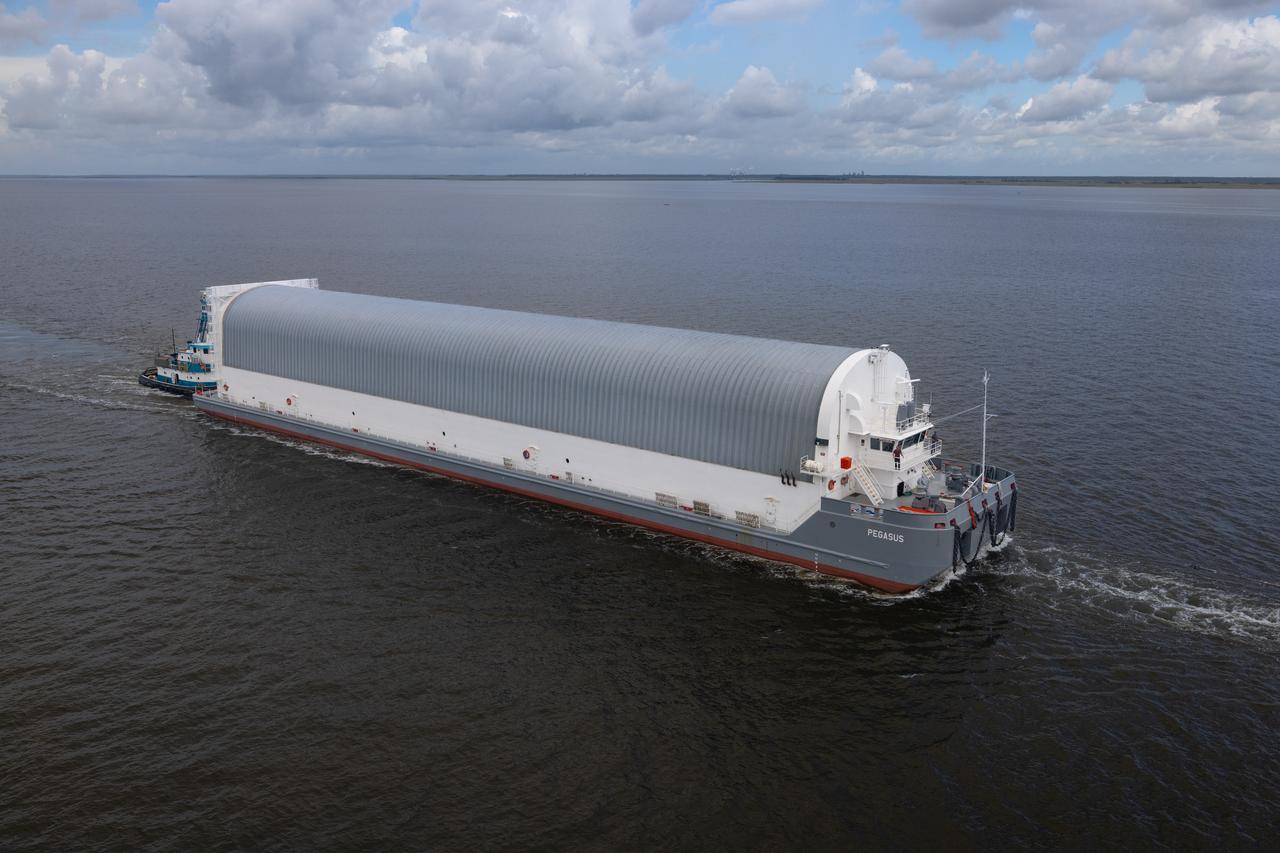
NASA photographers Evan Deroche and Brandon Hancock joined the U.S. Coast Guard in an HH-60 Jayhawk helicopter to capture aerial views of NASA’s Pegasus barge just after it departed NASA’s Michoud Assembly Facility in New Orleans July 17 with the core stage of NASA’s SLS (Space Launch System) rocket for Artemis II. These photos and videos show the barge as it traveled down the Intracoastal Waterway to the Gulf of Mexico. Pegasus ferried the Artemis II core stage more than 900 miles to NASA’s Kennedy Space Center in Florida. It arrived with the flight hardware July 22. The barge is maintained at NASA’s Michoud Assembly Facility in New Orleans, where the core stage is fully manufactured. NASA is working to land the first woman, first person of color, and its first international partner astronaut on the Moon under Artemis. SLS is part of NASA’s backbone for deep space exploration, along with the Orion spacecraft, supporting ground systems, advanced spacesuits and rovers, the Gateway in orbit around the Moon, and commercial human landing systems. SLS is the only rocket that can send Orion, astronauts, and supplies to the Moon in a single launch.

This image shows NASA’s Michoud Assembly Facility move crew lifting a completed liquid hydrogen tank barrel off the Vertical Weld Center on Feb. 10. The barrel, which will be used on the core stage of NASA’s SLS (Space Launch System) rocket, is one of the first pieces of flight hardware manufactured for the agency’s Artemis V mission. The 22-foot-tall barrel section is one of five barrels, which – along with two end domes – make up the 130.8-foot-tall liquid hydrogen fuel tank. The SLS core stage liquid hydrogen tank holds 537,000 gallons of super-cooled propellant and is one of five unique elements that make up the SLS core stage. Together with the forward skirt, liquid oxygen tank, intertank, and engine section, the liquid hydrogen tank will provide propellant to the four RS-25 engines to produce more than two million pounds of thrust to help launch NASA’s Orion spacecraft, astronauts, and supplies beyond Earth’s orbit to the Moon.

Technicians at NASA’s Michoud Assembly Facility in New Orleans lift the intertank of the SLS (Space Launch System)’s core stage for NASA’s Artemis III mission to move it to another location in the 43-acre factory for further inspection and production. The intertank is the backbone of the rocket’s core stage and is located between the mega rocket’s liquid hydrogen tank and liquid oxygen tank. In addition to joining the rocket’s two massive propellant tanks, the intertank houses avionics and electronics and serves as an attachment point for the rocket’s two solid rocket boosters positioned on either side of the core stage. The liquid hydrogen tank and liquid oxygen tank hold 733,000 gallons of super-cold propellant to power the stage’s four RS-25 engines needed for liftoff. Together, the rocket’s four RS-25 engines and two solid rocket boosters provide more than 8.8 million pounds to launch NASA’s and Artemis missions to the Moon. NASA is working to land the first woman and first person of color on the Moon under Artemis. SLS is part of NASA’s backbone for deep space exploration, along with Orion and the Gateway in orbit around the Moon. SLS is the only rocket that can send Orion, astronauts, and supplies to the Moon in a single mission.

This imagery shows how technicians at NASA’s Michoud Assembly Facility moved the aft dome of the liquid oxygen tank for NASA’s SLS (Space Launch System) rocket for the next phase of production inside the Vertical Assembly center Dec. 18. The dome will form part of the core stage that will power NASA’s Artemis III mission. Engineers rotate the dome to attach it to the previously joined forward dome and aft barrel segments using friction-stir welding. The liquid oxygen tank is one of five major components that make up the SLS rocket’s core stage. Together with the forward skirt, intertank, liquid hydrogen tank, engine section, along with the four RS-25 engines at its base, the 212-foot core stage will help power NASA’s Artemis missions to the Moon.
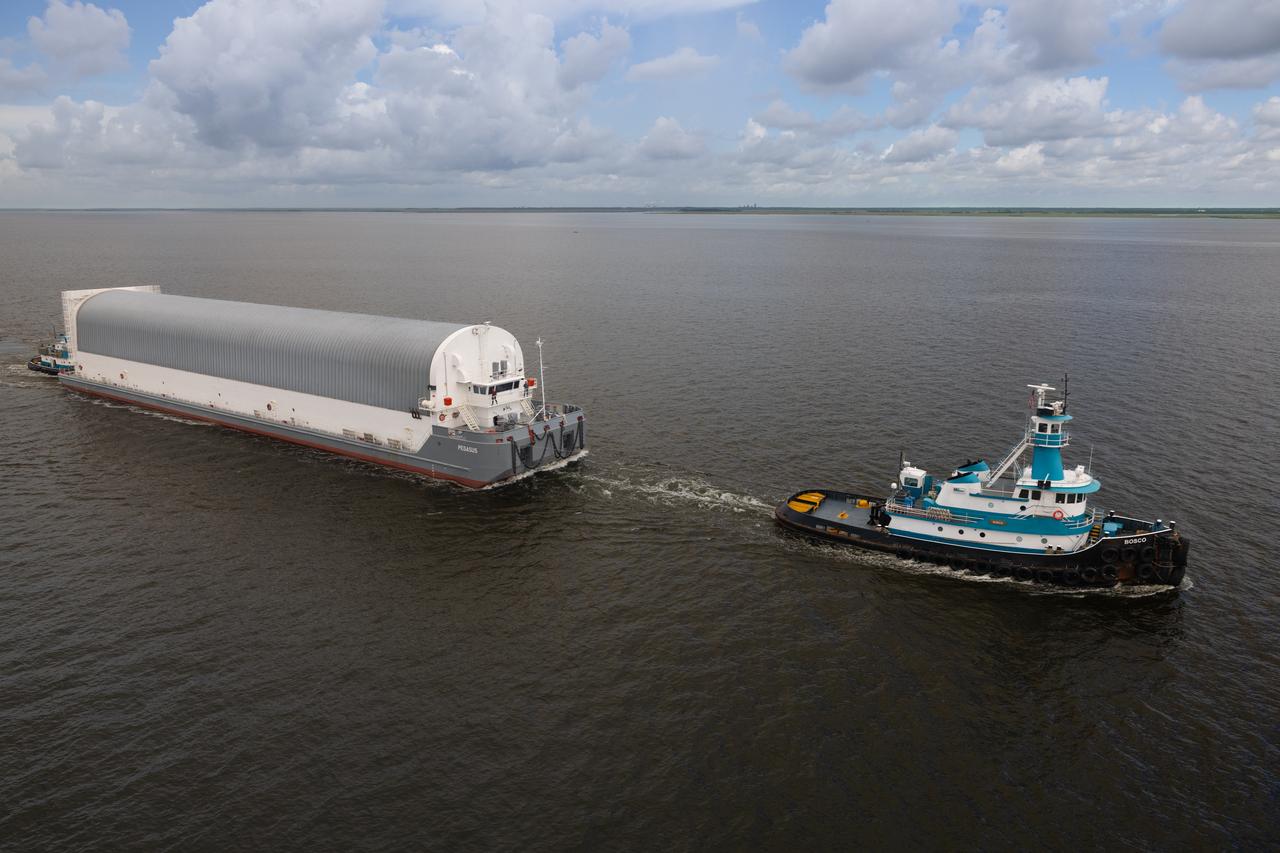
NASA photographers Evan Deroche and Brandon Hancock joined the U.S. Coast Guard in an HH-60 Jayhawk helicopter to capture aerial views of NASA’s Pegasus barge just after it departed NASA’s Michoud Assembly Facility in New Orleans July 17 with the core stage of NASA’s SLS (Space Launch System) rocket for Artemis II. These photos and videos show the barge as it traveled down the Intracoastal Waterway to the Gulf of Mexico. Pegasus ferried the Artemis II core stage more than 900 miles to NASA’s Kennedy Space Center in Florida. It arrived with the flight hardware July 22. The barge is maintained at NASA’s Michoud Assembly Facility in New Orleans, where the core stage is fully manufactured. NASA is working to land the first woman, first person of color, and its first international partner astronaut on the Moon under Artemis. SLS is part of NASA’s backbone for deep space exploration, along with the Orion spacecraft, supporting ground systems, advanced spacesuits and rovers, the Gateway in orbit around the Moon, and commercial human landing systems. SLS is the only rocket that can send Orion, astronauts, and supplies to the Moon in a single launch.
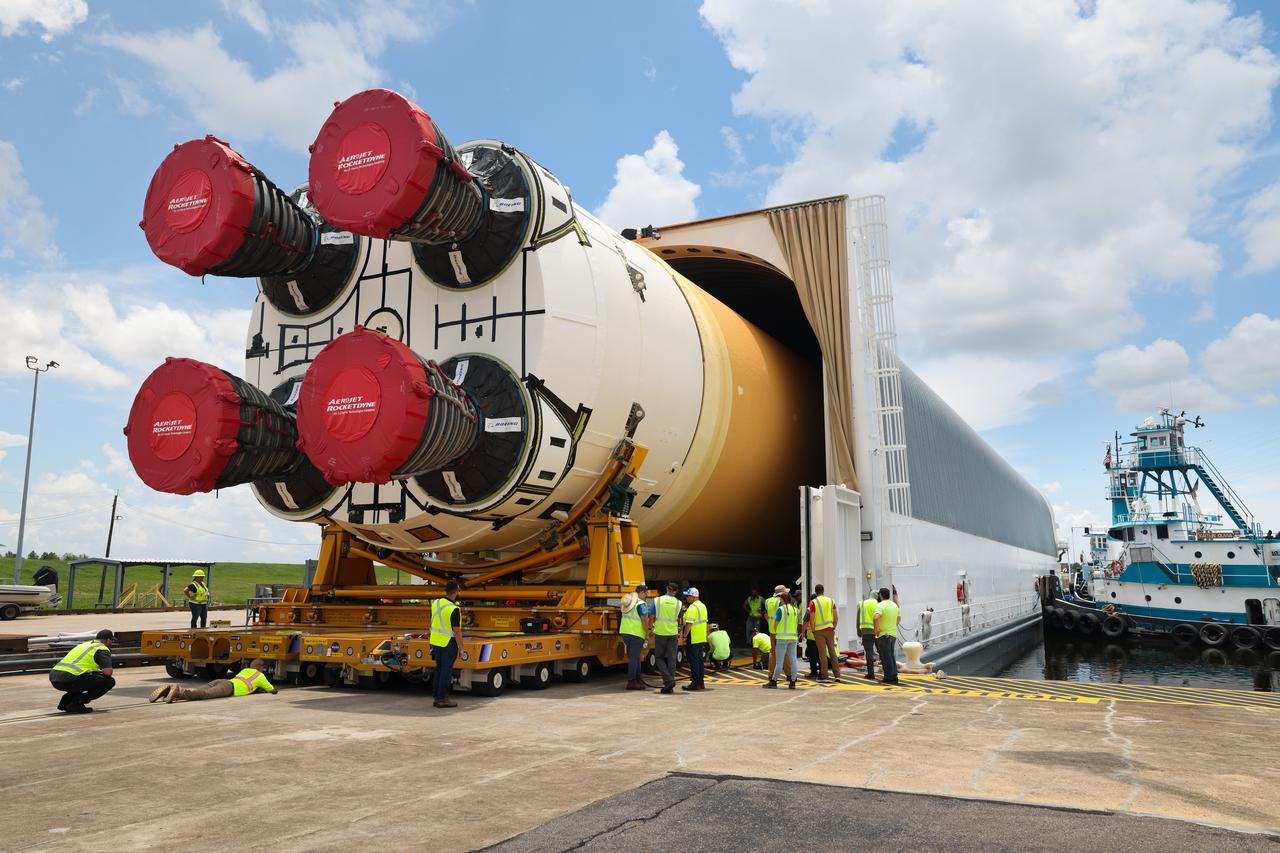
These images and videos show team members at Michoud Assembly Facility loading the first core stage that will help launch the first crewed flight of NASA’s SLS (Space Launch System) rocket for the agency’s Artemis II mission onto the Pegasus barge on Tuesday, July 16, 2024. The barge will ferry the core stage on a 900-mile journey from the agency’s Michoud Assembly Facility in New Orleans to its Kennedy Space Center in Florida. The core stage for the SLS mega rocket is the largest stage NASA has ever produced. At 212 feet tall, the stage consists of five major elements, including two huge propellant tanks that collectively hold more than 733,000 gallons of super chilled liquid propellant to feed four RS-25 engines at its base. During launch and flight, the stage will operate for just over eight minutes, producing more than 2 million pounds of thrust to help send a crew of four astronauts inside NASA’s Orion spacecraft onward to the Moon. All the major structures for every SLS core stage are fully manufactured at NASA Michoud. NASA is working to land the first woman, first person of color, and its first international partner astronaut on the Moon under Artemis. SLS is part of NASA’s backbone for deep space exploration, along with the Orion spacecraft and Gateway in orbit around the Moon and commercial human landing systems, next-generation space, next-generational spacesuits, and rovers on the lunar surface. SLS is the only rocket that can send Orion, astronauts, and supplies to the Moon in a single launch.

This imagery shows how technicians at NASA’s Michoud Assembly Facility moved the aft dome of the liquid oxygen tank for NASA’s SLS (Space Launch System) rocket for the next phase of production inside the Vertical Assembly center Dec. 18. The dome will form part of the core stage that will power NASA’s Artemis III mission. Engineers rotate the dome to attach it to the previously joined forward dome and aft barrel segments using friction-stir welding. The liquid oxygen tank is one of five major components that make up the SLS rocket’s core stage. Together with the forward skirt, intertank, liquid hydrogen tank, engine section, along with the four RS-25 engines at its base, the 212-foot core stage will help power NASA’s Artemis missions to the Moon.