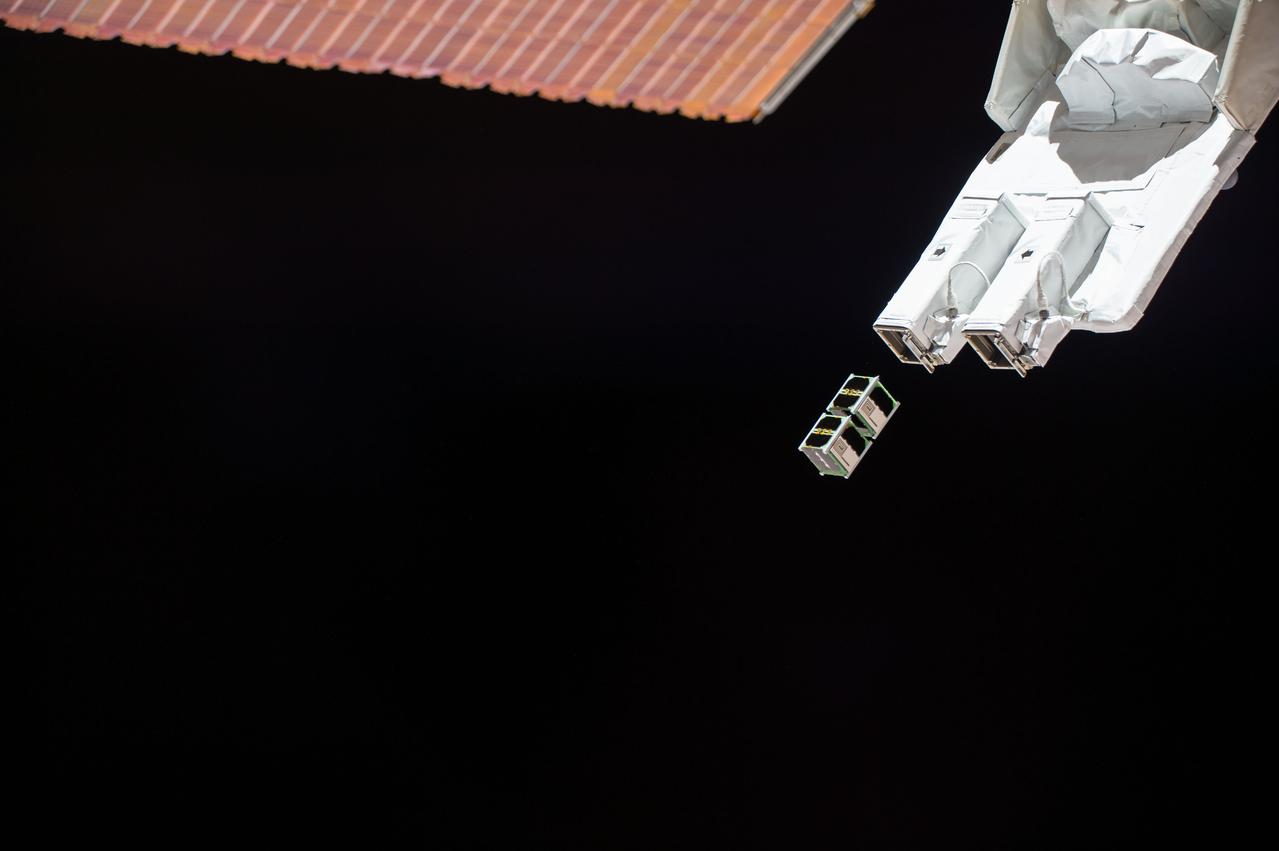
iss052e011283 (7/7/2017) --- A view taken of CubeSats from Japan, Ghana, Mongolia, Bangladesh and Nigeria deployed from the Japanese Experiment Module (JEM) Satellite Orbital Deployer 7 (J-SSOD 7) (with Earth visible in the background). These satellites are part of the Joint Global Multi-Nation Birds Satellite project (BIRDS-1), a cross-border interdisciplinary satellite project for non-space faring countries supported by Japan. During this 2-year project, students from the Graduate School of Engineering of the Kyushu Institute of Technology design, develop and operate CubeSats belonging to the five participating countries.
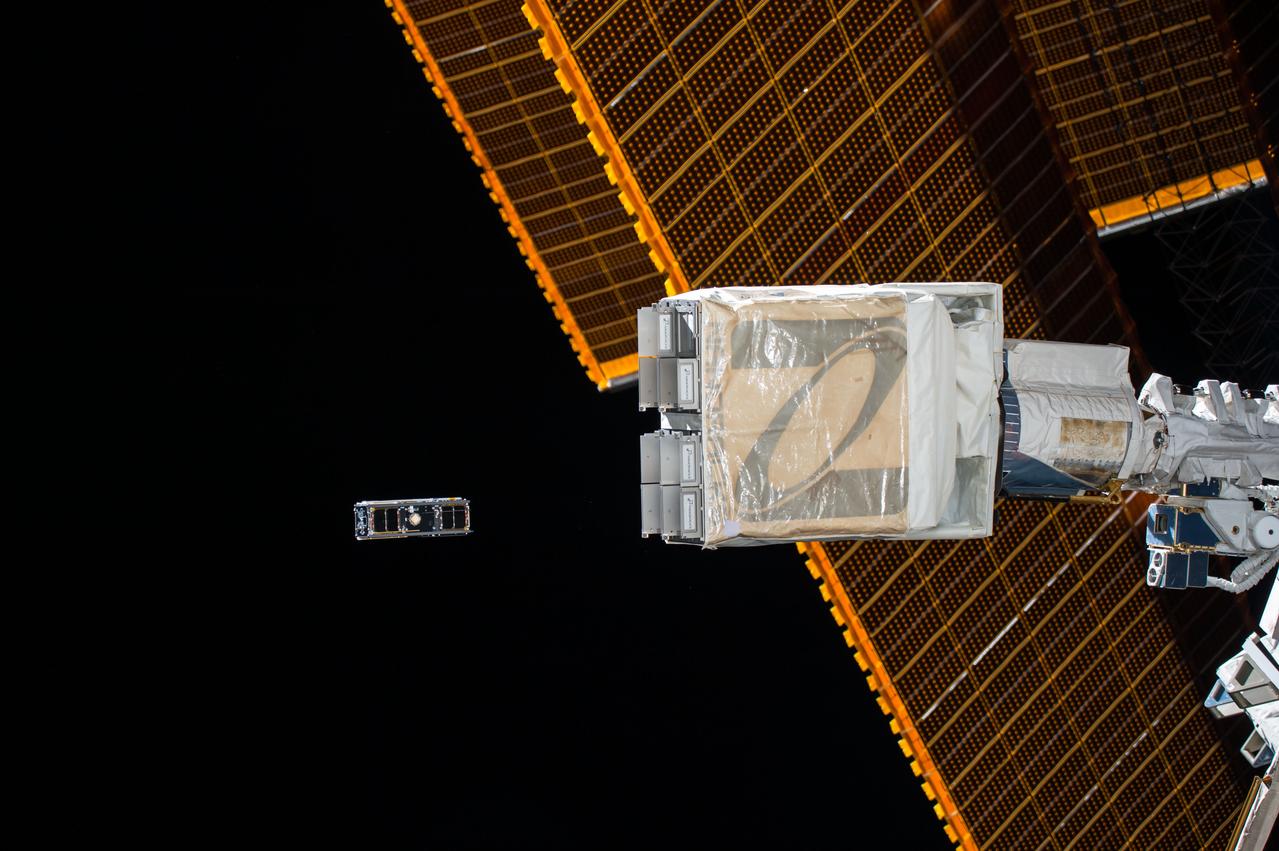
iss051e049985 )5/26/2017) --- A view of the NanoRacks CubeSat Deployer (NRCSD) 12 during the release of ExAlta-1, part of the NanoRacks-QB50 group of CubeSats. The NanoRacks CubeSat Deployer is a stackable, modular, ground loaded launch case. Each NanoRacks CubeSat Deployer accommodates up to 6.5U and eight launch cases are stacked for each JEM Airlock opening.
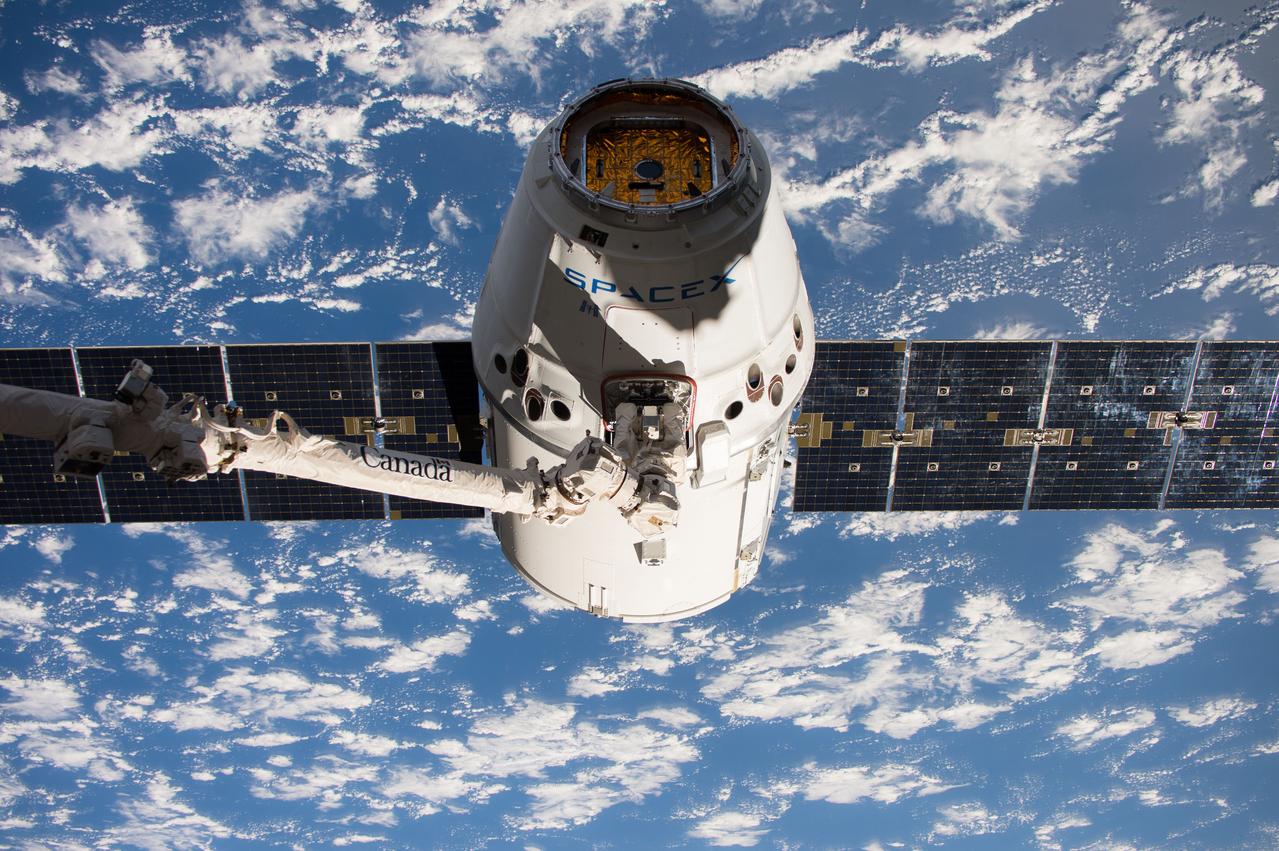
iss052e000436 (June 5, 2017) --- The SpaceX Dragon cargo craft is pictured in the grips of the Canadarm2 robotic arm moments after it was captured early Monday June 5, 2017.
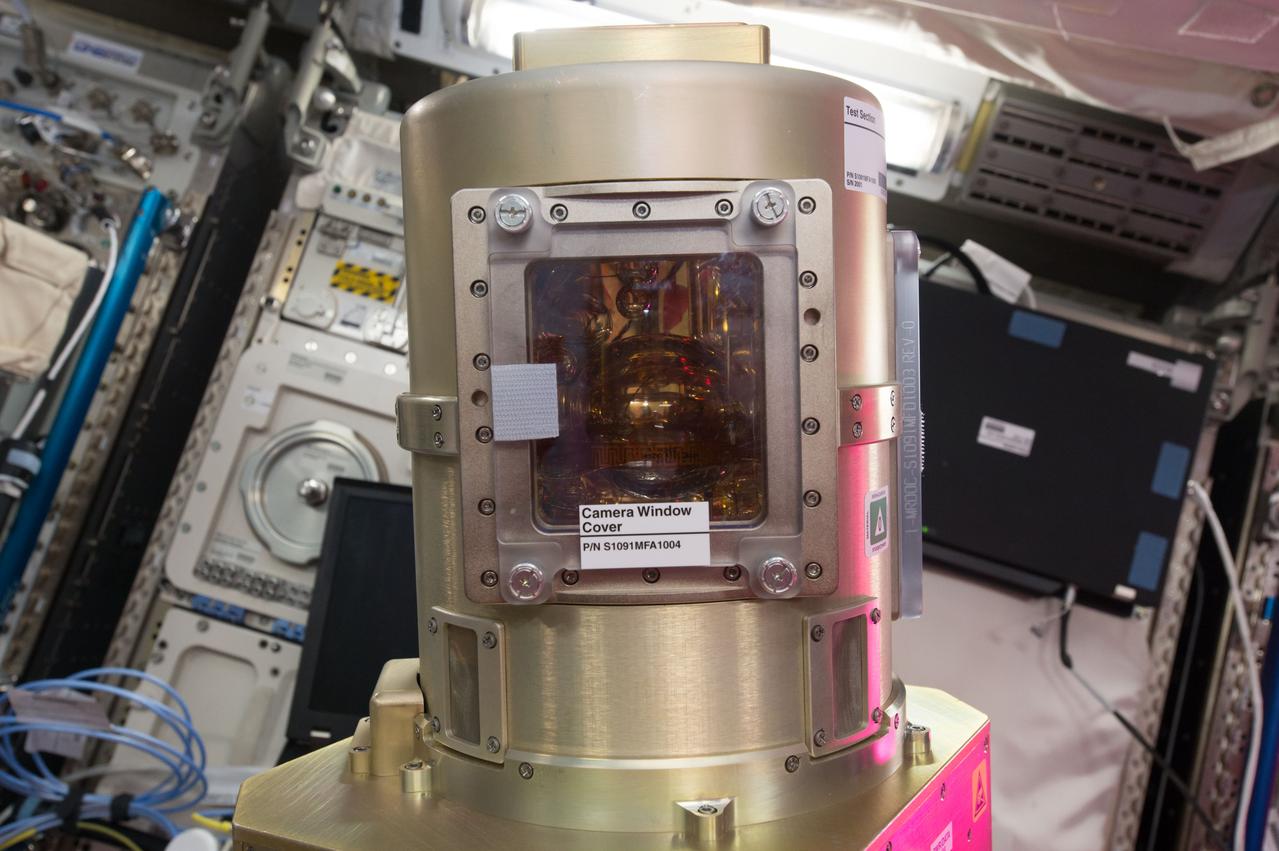
iss051e028301 (4/25/2017) --- A view of the Zero Boil-Off Tank (ZBOT) experiment Vacuum Jacket Camera Window Cover hardware. Zero Boil-Off Tank (ZBOT) uses an experimental fluid to test active heat removal and forced jet mixing as alternative means for controlling tank pressure for volatile fluids. Results from the investigation improve models used to design tanks for long-term cryogenic liquid storage, which are essential in biotechnology, medicine, industrial, and many other applications on Earth.
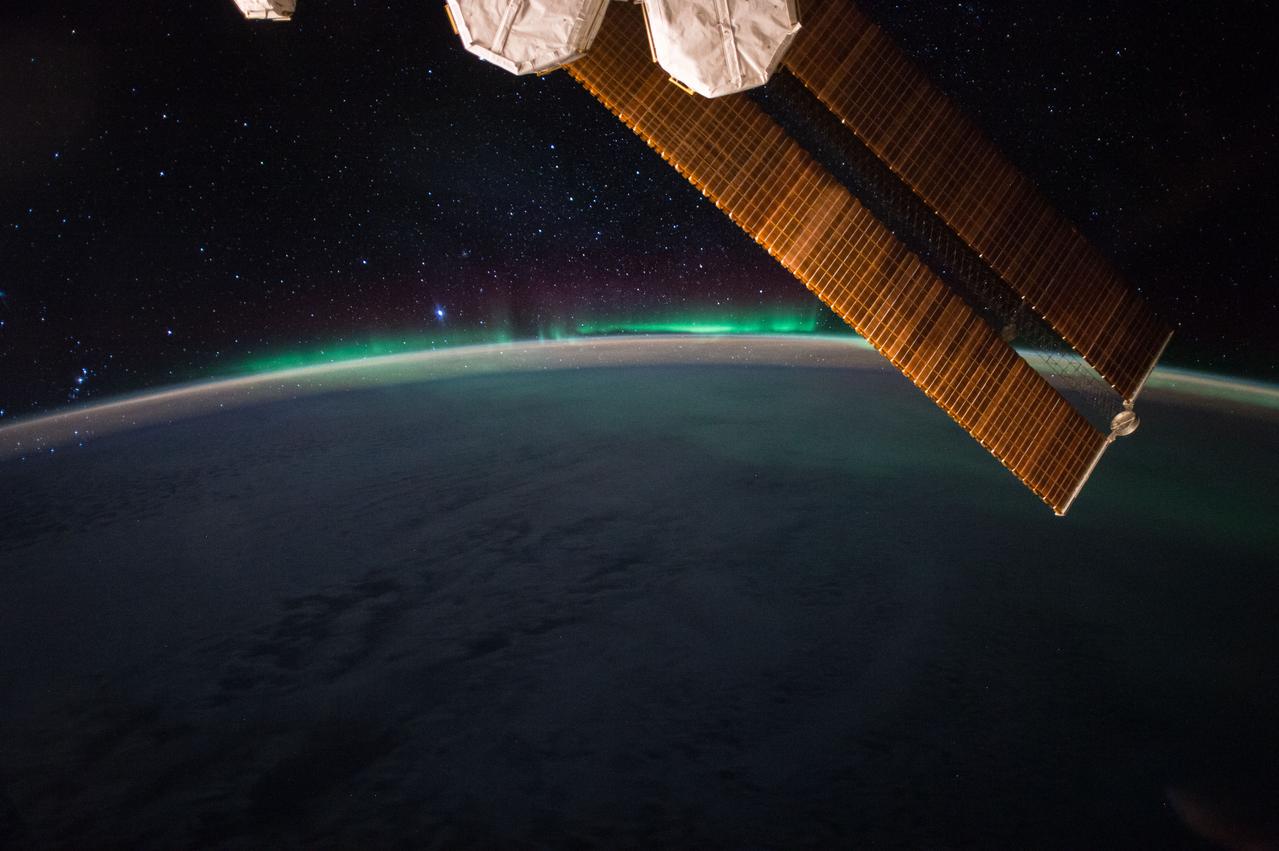
iss052e004913 (June 19, 2017) --- The aurora and the night sky above Earth’s atmosphere are pictured from the space station. A portion of the station’s solar arrays and a pair of nitrogen/oxygen recharge system tanks are pictured in the foreground.
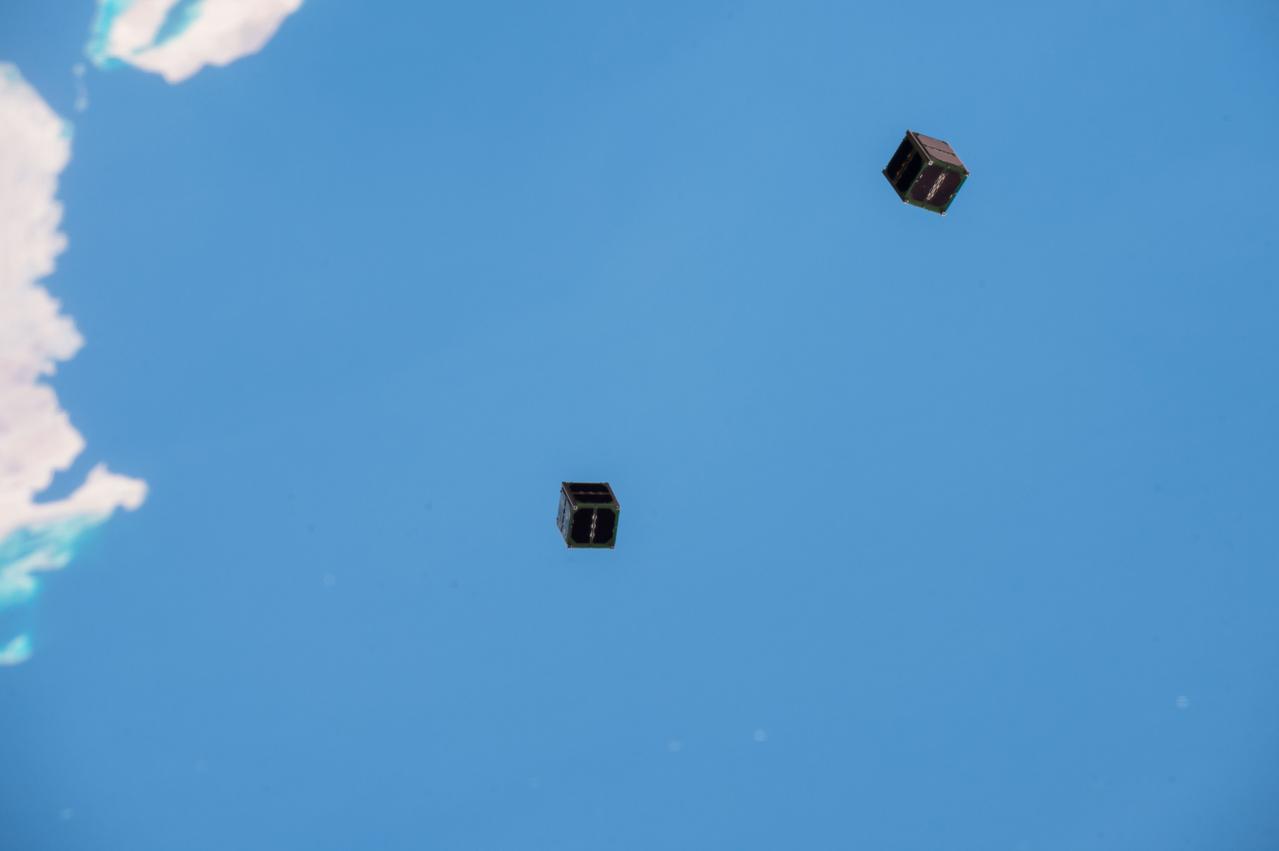
iss052e011306 (7/7/2017) --- A view taken of CubeSats from Japan, Ghana, Mongolia, Bangladesh and Nigeria deployed from the Japanese Experiment Module (JEM) Satellite Orbital Deployer 7 (J-SSOD 7) (with Earth visible in the background). These satellites are part of the Joint Global Multi-Nation Birds Satellite project (BIRDS-1), a cross-border interdisciplinary satellite project for non-space faring countries supported by Japan. During this 2-year project, students from the Graduate School of Engineering of the Kyushu Institute of Technology design, develop and operate CubeSats belonging to the five participating countries.
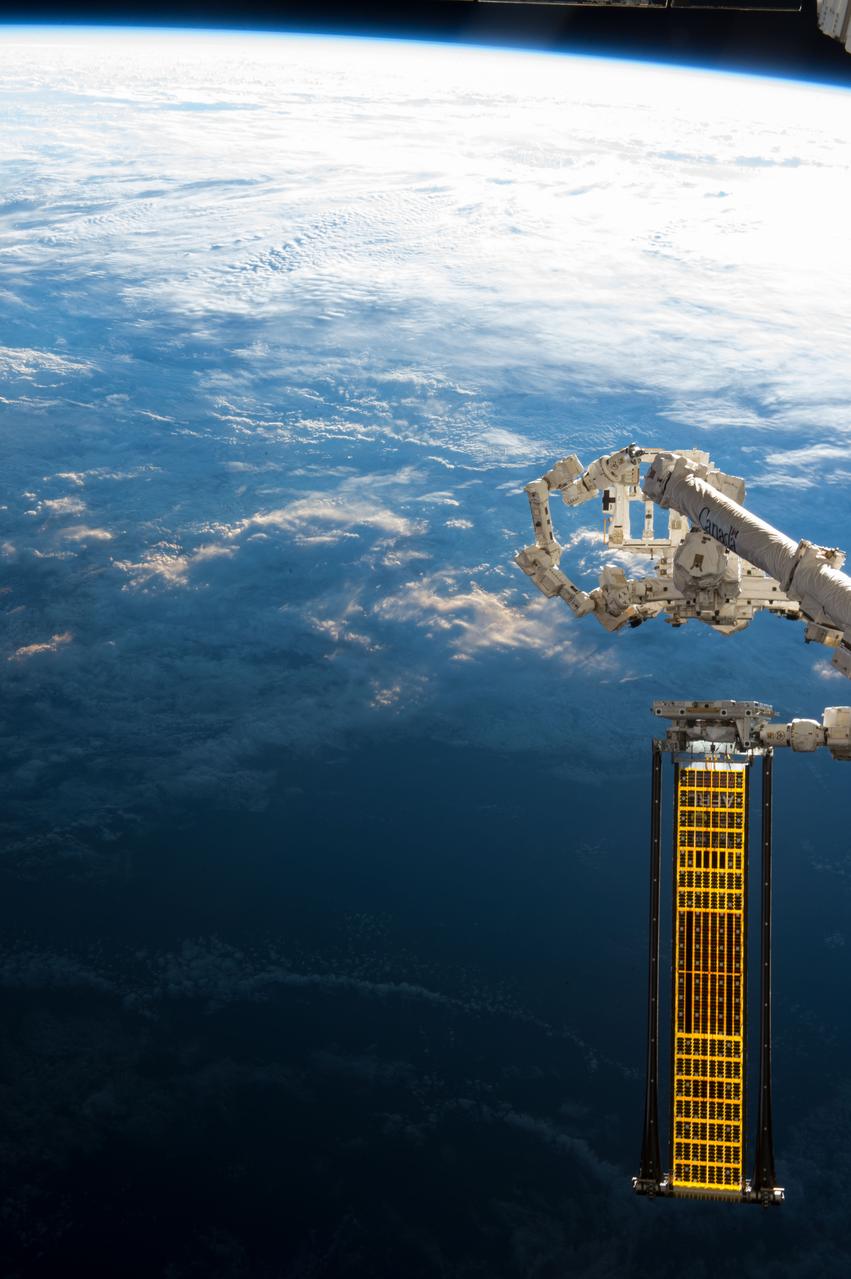
iss052e004379 (6/18/2017) --- The Roll-Out Solar Array (ROSA) is a new type of solar panel that rolls open in space like a party favor and is more compact than current rigid panel designs. The ROSA investigation tests deployment and retraction, shape changes when the Earth blocks the sun, and other physical challenges to determine the array’s strength and durability. ROSA has the potential to replace solar arrays on future satellites, making them more compact and lighter weight. Satellite radio and television, weather forecasting, GPS and other services used on Earth would all benefit from high-performance solar arrays.
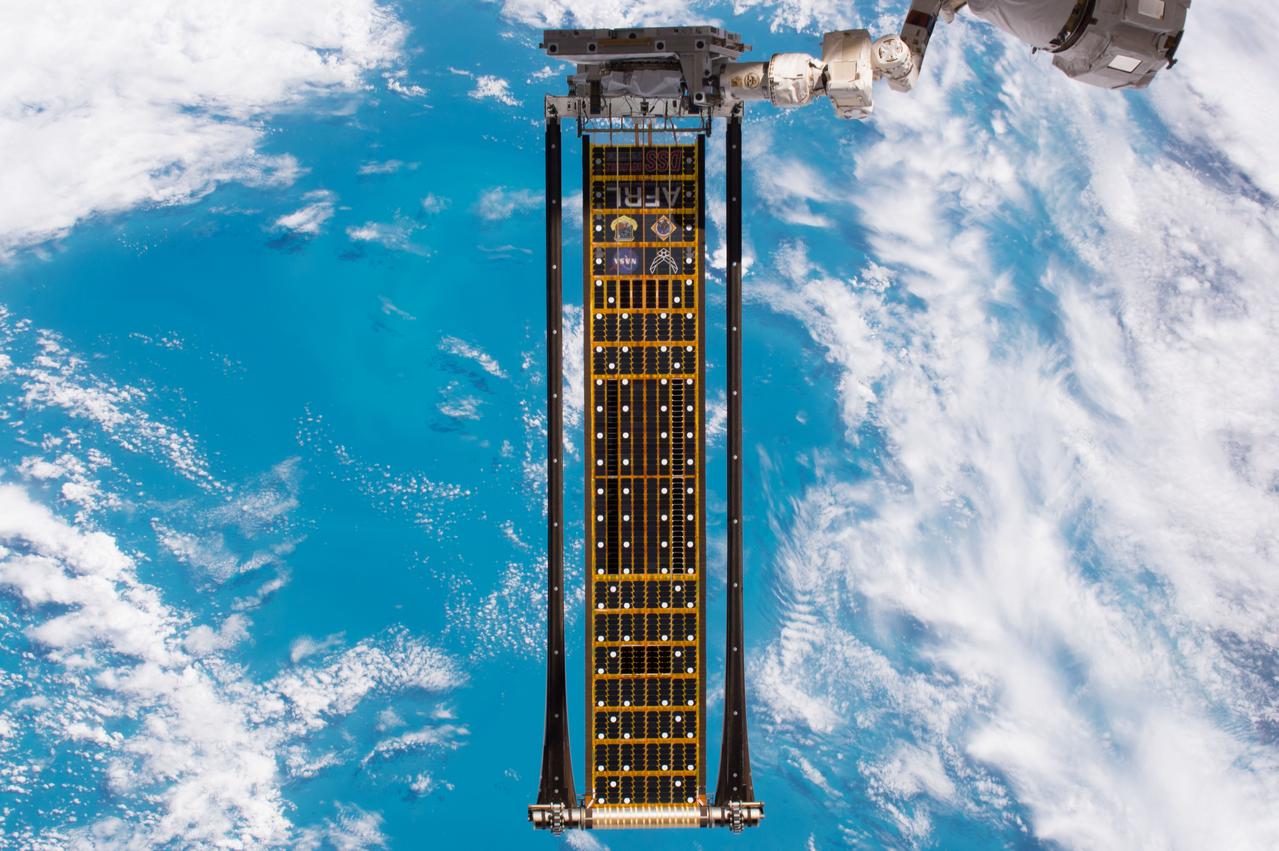
iss052e002871 (6/18/2017) --- The Roll-Out Solar Array (ROSA) is a new type of solar panel that rolls open in space like a party favor and is more compact than current rigid panel designs. The ROSA investigation tests deployment and retraction, shape changes when the Earth blocks the sun, and other physical challenges to determine the array’s strength and durability. ROSA has the potential to replace solar arrays on future satellites, making them more compact and lighter weight. Satellite radio and television, weather forecasting, GPS and other services used on Earth would all benefit from high-performance solar arrays.
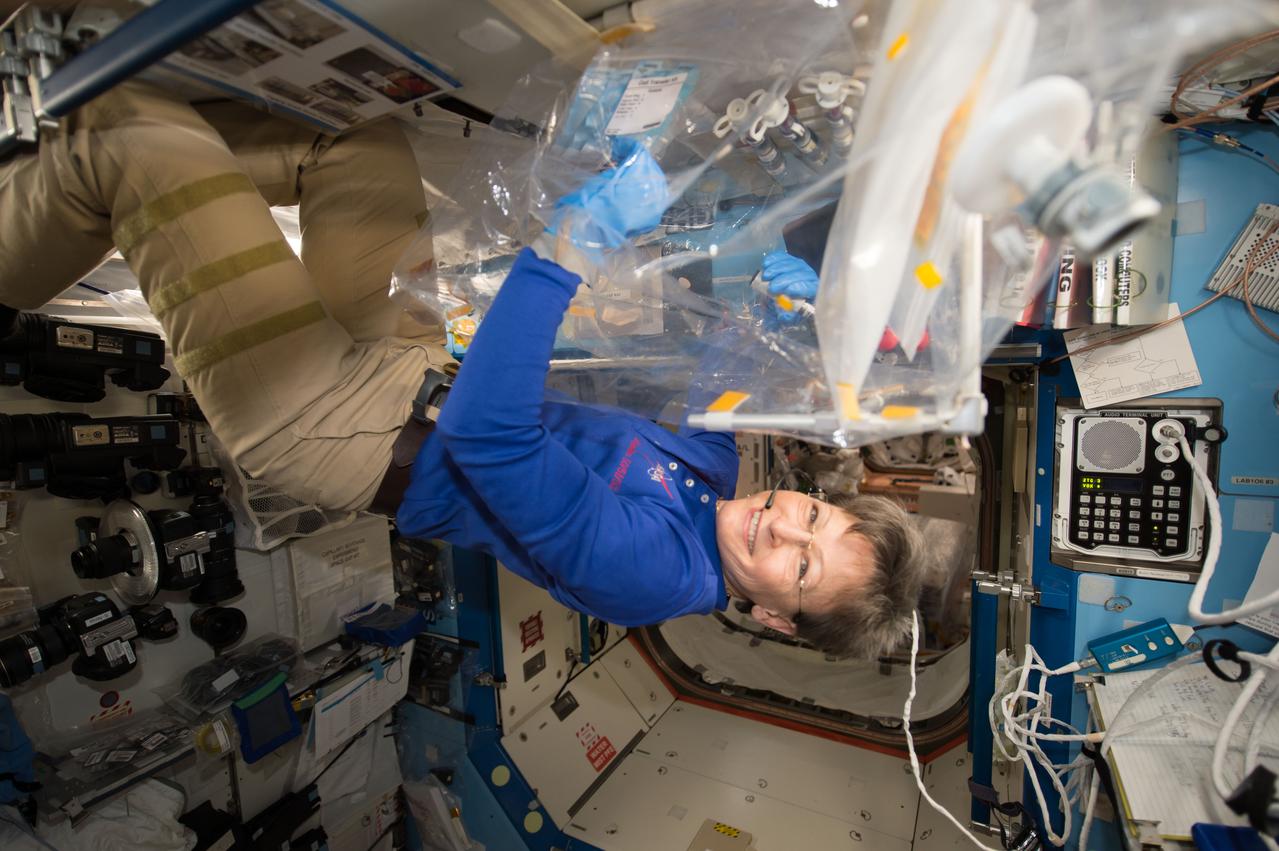
iss052e062035 (8/9/2017) --- NASA astronaut Peggy Whitson is photographed performing Cardiac Myocytes investigation operations. The Conversion of Adipogenic Mesenchymal Stem Cells into Mature Cardiac Myocytes (Cardiac Myocytes) investigation uses the microgravity environment of space to examine how stem cells differentiate into specialized heart cells (cardiac myocytes).

iss051e039977 (May 8, 2017) --- The Moon, the Earth's limb and thin blue atmosphere are seen in this photograph taken by an Expedition 51 crew member.
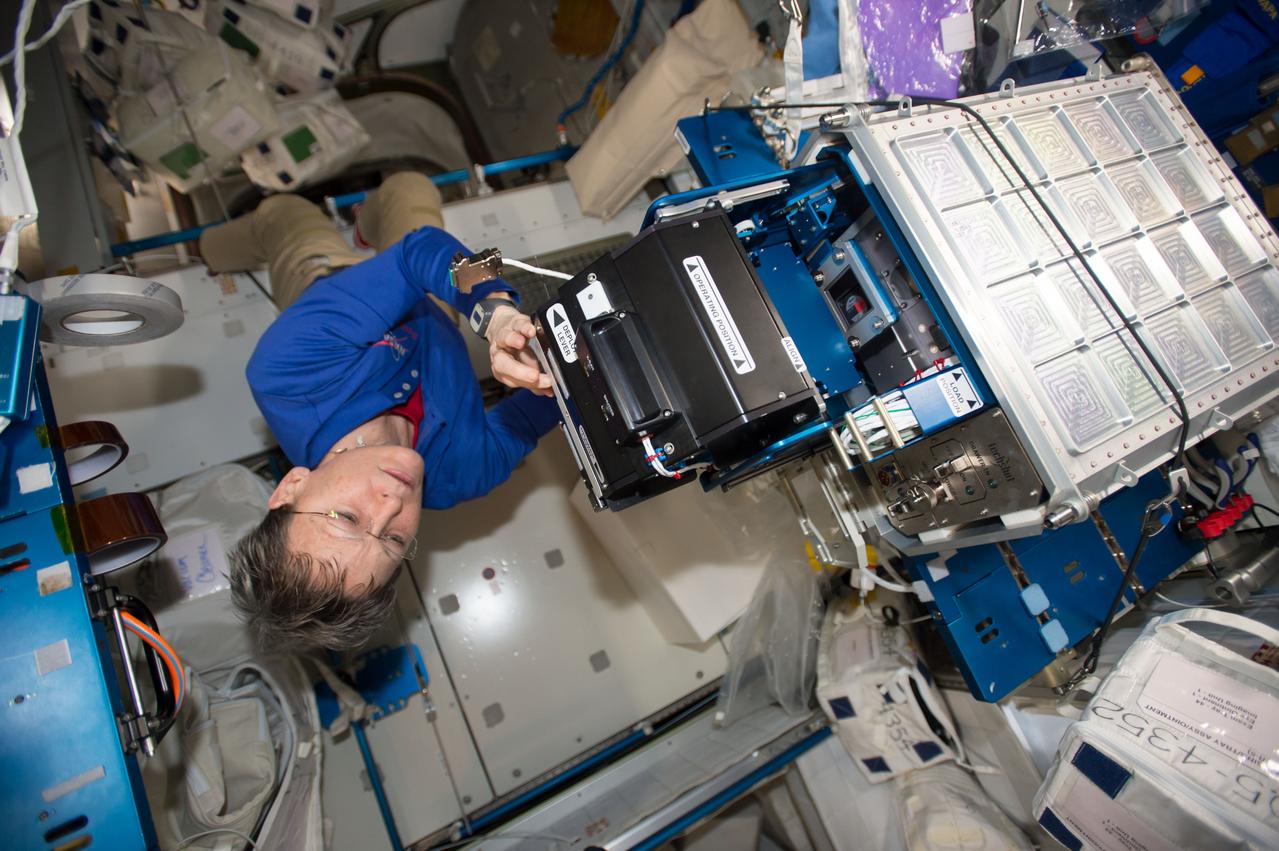
iss052e004180 (6/19/2017) --- Photo of NASA astronaut Peggy Whitson performing change out of Imaging Unit on the Bone Densitometer (BD) located in Node 2.

iss052e062004 (8/9/2017) --- NASA astronaut Peggy Whitson is photographed performing Cardiac Myocytes investigation operations. The Conversion of Adipogenic Mesenchymal Stem Cells into Mature Cardiac Myocytes (Cardiac Myocytes) investigation uses the microgravity environment of space to examine how stem cells differentiate into specialized heart cells (cardiac myocytes).
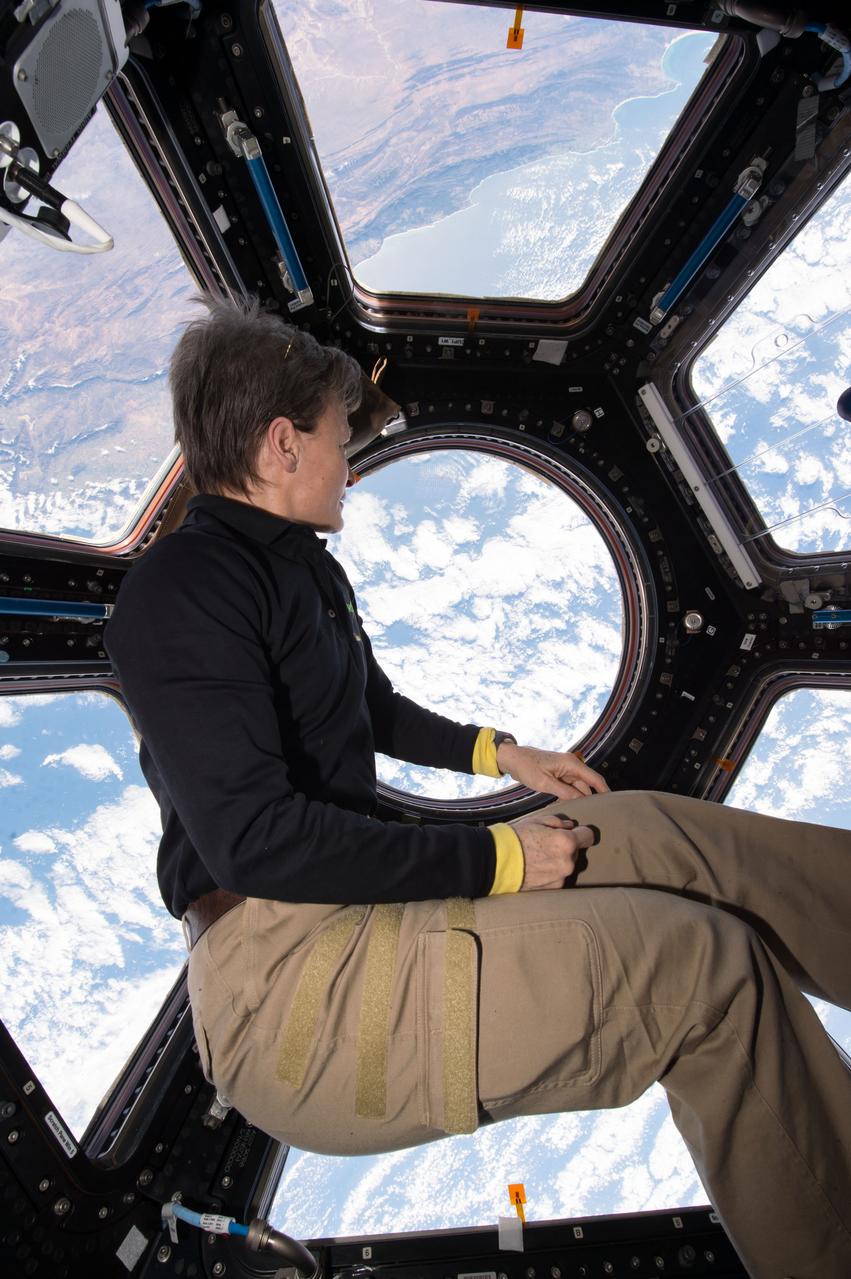
iss052e016190 (July 18, 2017) --- Astronaut Peggy Whitson is photographed sitting in front of the Cupola windows during the final Crew Autonomous Scheduling Test (CAST) session. The CAST investigation analyzes whether crews can develop plans in a reasonable period of time with appropriate input, whether proximity of planners to the planned operations increases efficiency, and if crew members are more satisfied when given a role in plan development.
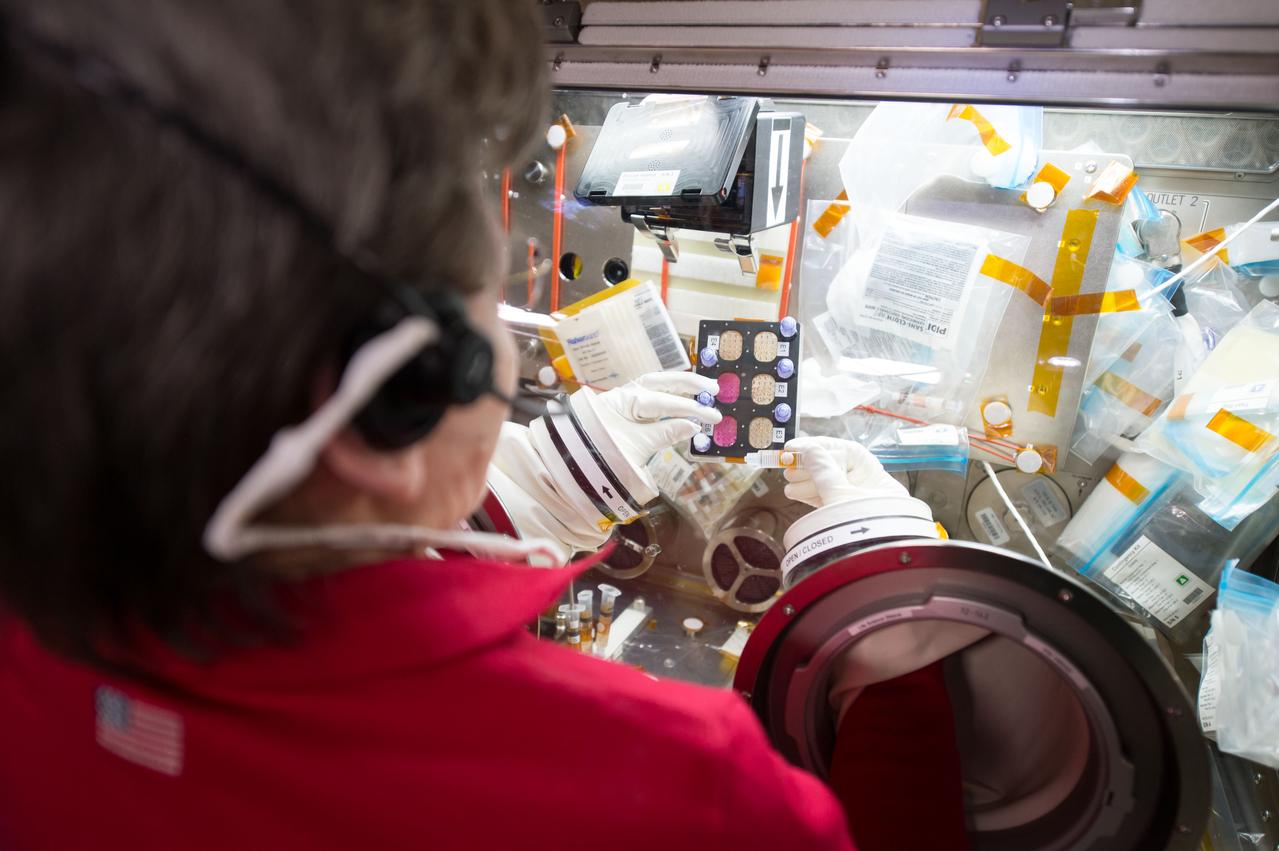
iss052e018939 (7/24/2017) --- NASA astronaut Peggy Whitson working with the Efficacy and Metabolism of Azonafide Antibody-Drug Conjugates in Microgravity (ADCs in Microgravity). The ADCs in Microgravity investigation evaluates new antibody-drug conjugates that combine an immune-activating drug with antibodies in order to target only cancer cells, increasing the effectiveness of chemotherapy and reducing its side effects. In microgravity, cancer cells grow in three-dimensional, spheroid structures that closely resemble their form in the human body, allowing for better drug testing. This investigation may accelerate development of targeted therapies for cancer patients.
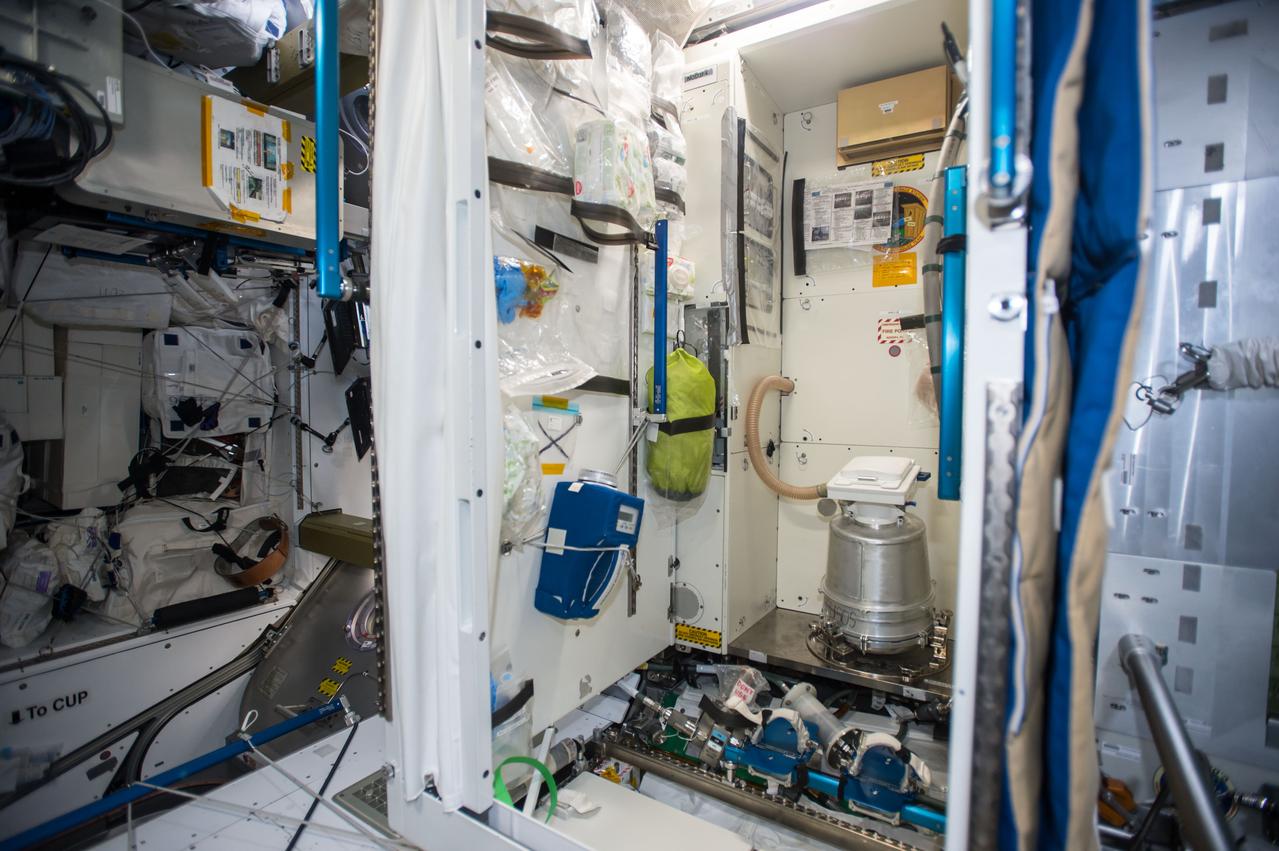
iss052e006450 (Jun. 23, 2017) --- Microbial Tracking-2 by the toilet in the node 3 module monitoring microbes present to assess the health environment on the International Space Station (ISS) and understand the effects of the spaceflight environment on viral and microbial pathogen dynamics.

iss052e002495 (6/15/2017) --- A view of the Japanese Experiment Module (JEM) Internal Ball Camera aboard the International Space Station (ISS). This device is a free-flying camera robot that provides real time video downlink and photographs. It is expected to reduce the crew time requirements to support video recording of activities, especially at the blind spot of existing JEM internal cameras.
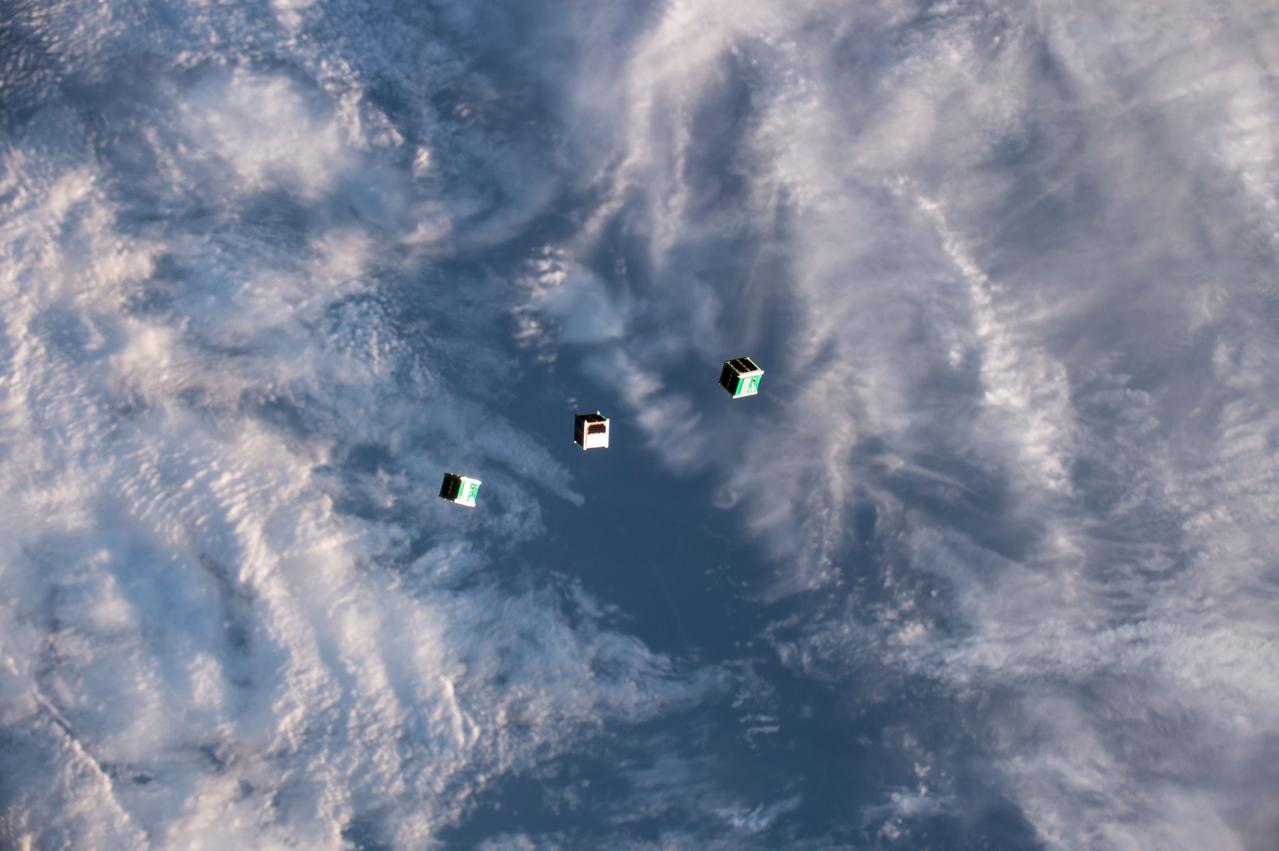
iss052e011205 (7/7/2017) --- A view taken of CubeSats from Japan, Ghana, Mongolia, Bangladesh and Nigeria deployed from the Japanese Experiment Module (JEM) Satellite Orbital Deployer 7 (J-SSOD 7) (with Earth visible in the background). These satellites are part of the Joint Global Multi-Nation Birds Satellite project (BIRDS-1), a cross-border interdisciplinary satellite project for non-space faring countries supported by Japan. During this 2-year project, students from the Graduate School of Engineering of the Kyushu Institute of Technology design, develop and operate CubeSats belonging to the five participating countries.

iss052e002482 (6/15/2017) --- A view of the Japanese Experiment Module (JEM) Internal Ball Camera aboard the International Space Station (ISS). This device is a free-flying camera robot that provides real time video downlink and photographs. It is expected to reduce the crew time requirements to support video recording of activities, especially at the blind spot of existing JEM internal cameras.
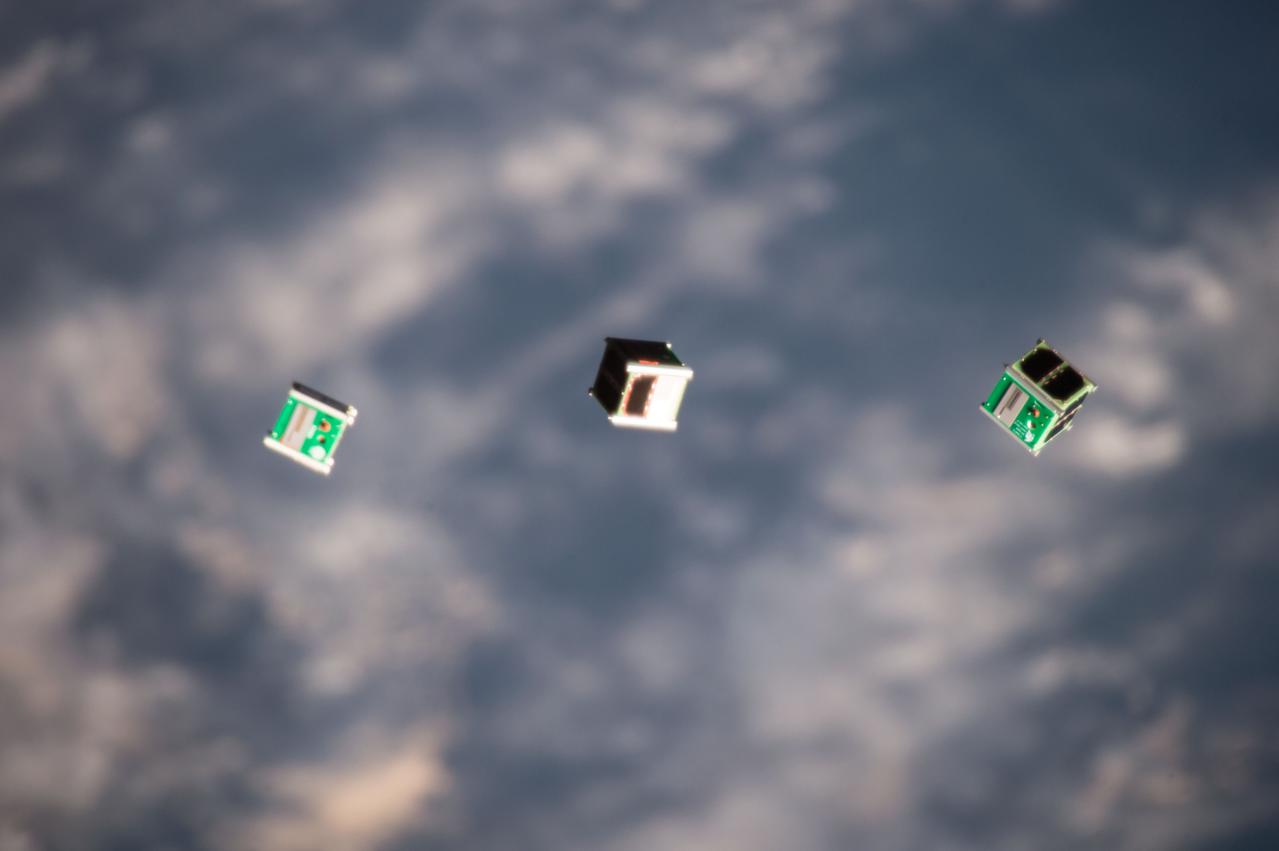
iss052e011217 (7/7/2017) --- A view taken of CubeSats from Japan, Ghana, Mongolia, Bangladesh and Nigeria deployed from the Japanese Experiment Module (JEM) Satellite Orbital Deployer 7 (J-SSOD 7) (with Earth visible in the background). These satellites are part of the Joint Global Multi-Nation Birds Satellite project (BIRDS-1), a cross-border interdisciplinary satellite project for non-space faring countries supported by Japan. During this 2-year project, students from the Graduate School of Engineering of the Kyushu Institute of Technology design, develop and operate CubeSats belonging to the five participating countries.
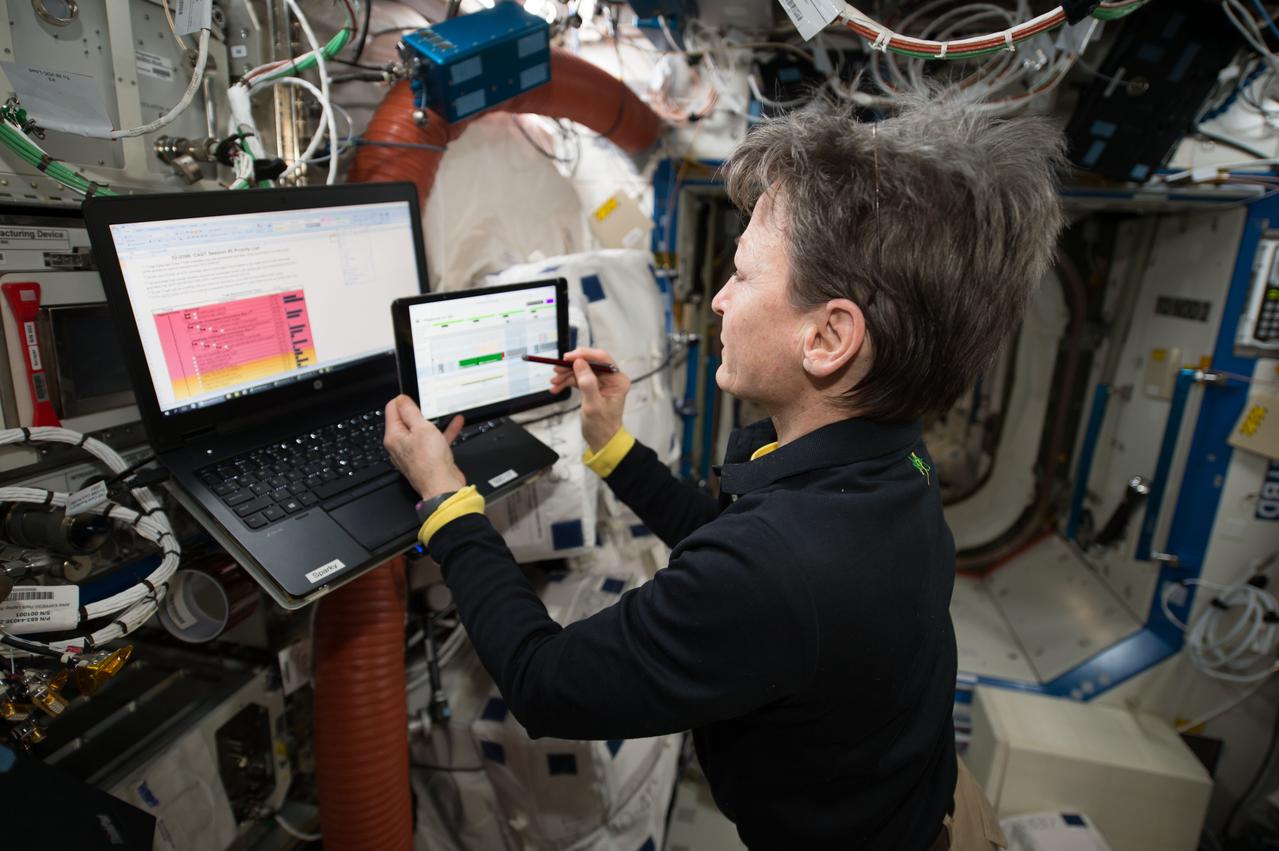
iss052e016214 (7/18/2017) --- NASA astronaut Peggy Whitson completing the final of five Crew Autonomous Scheduleing test (CAS) sessions using an iPad to schedule future work day. The CAST investigation analyzes whether crews can develop plans in a reasonable period of time with appropriate input, whether proximity of planners to the planned operations increases efficiency, and if crew members are more satisfied when given a role in plan development.
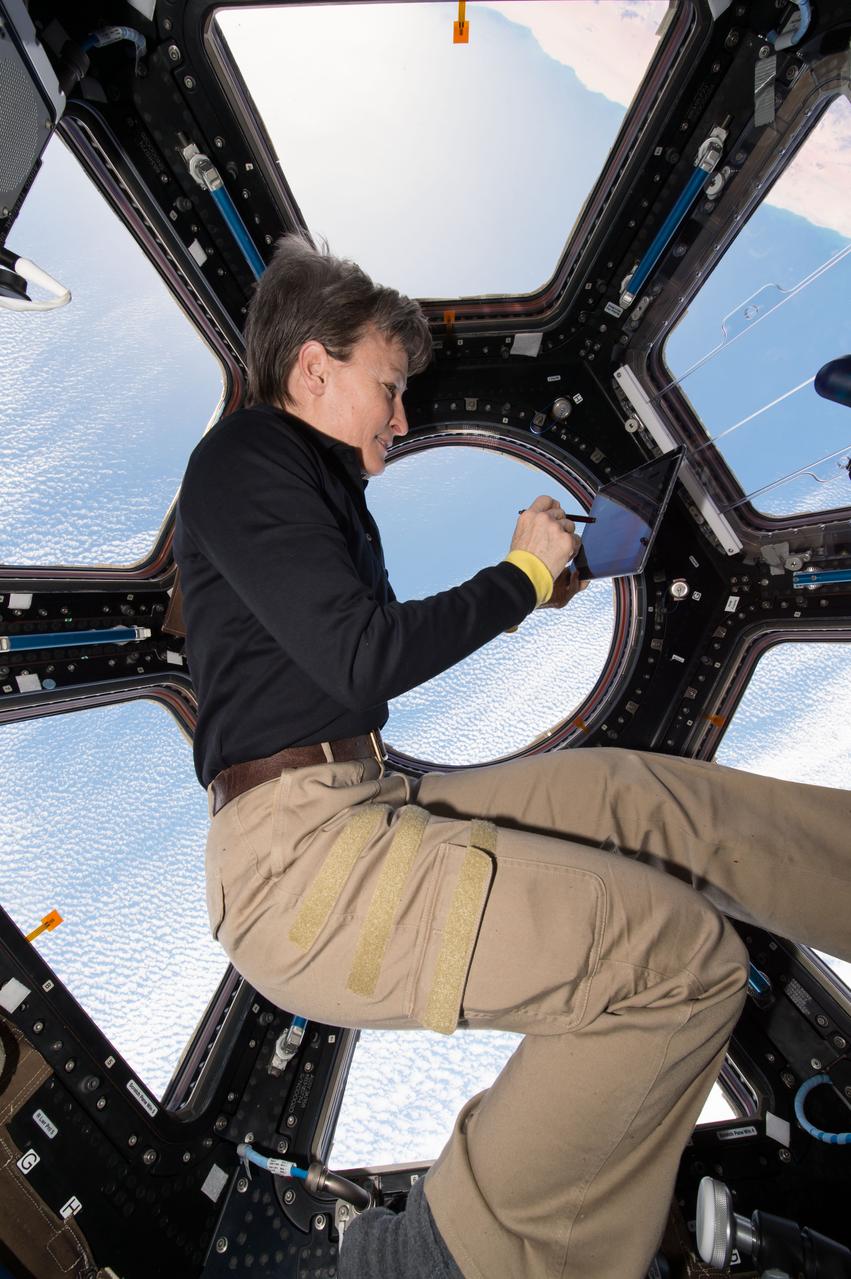
iss052e016179 (7/18/2017) --- NASA astronaut Peggy Whitson is photographed sitting in front of the Cupola windows during the final Crew Autonomous Scheduling Test (CAST) session. The CAST investigation analyzes whether crews can develop plans in a reasonable period of time with appropriate input, whether proximity of planners to the planned operations increases efficiency, and if crew members are more satisfied when given a role in plan development
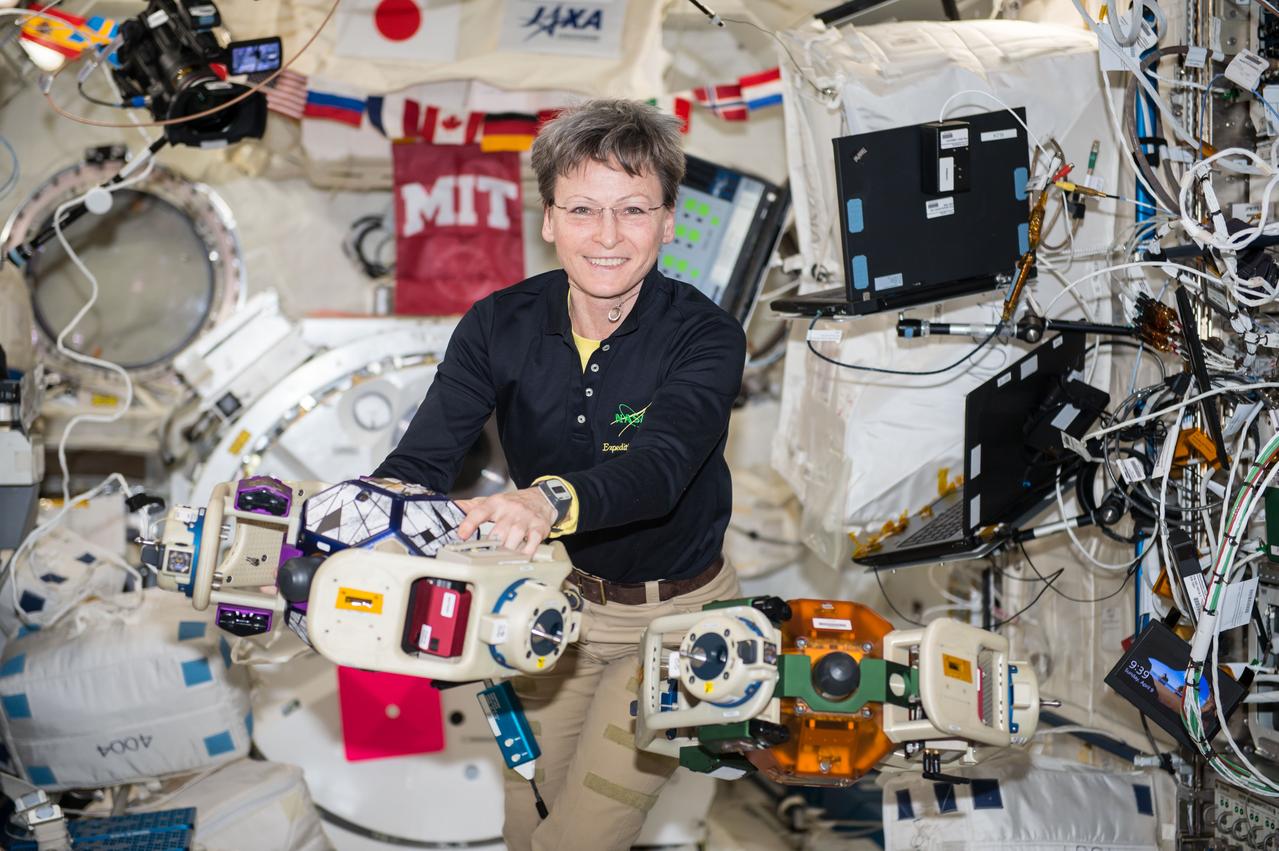
iss052e006482 (6/23/2017) --- Astronaut Peggy Whitson is photographed during a test session of the Synchronized Position Hold, Engage, Reorient, Experimental Satellites (SPHERES) Halo investigation in the Kibo module. The SPHERES Halo investigation studies the possibility of launching several separate components and then attaching them once they are in space. The investigation upgrades the International Space Station’s fleet of SPHERES to enable each SPHERE to communicate with six external objects at the same time, testing new control and remote assembly methods.

iss052e046695 (8/15/2020) --- A view of NASA astronaut Peggy Whitson aboard the International Space Station (ISS) with the Japanese Experiment Module (JEM) Internal Ball Camera. This device is a free-flying camera robot that provides real time video downlink and photographs. It is expected to reduce the crew time requirements to support video recording of activities, especially at the blind spot of existing JEM internal cameras.
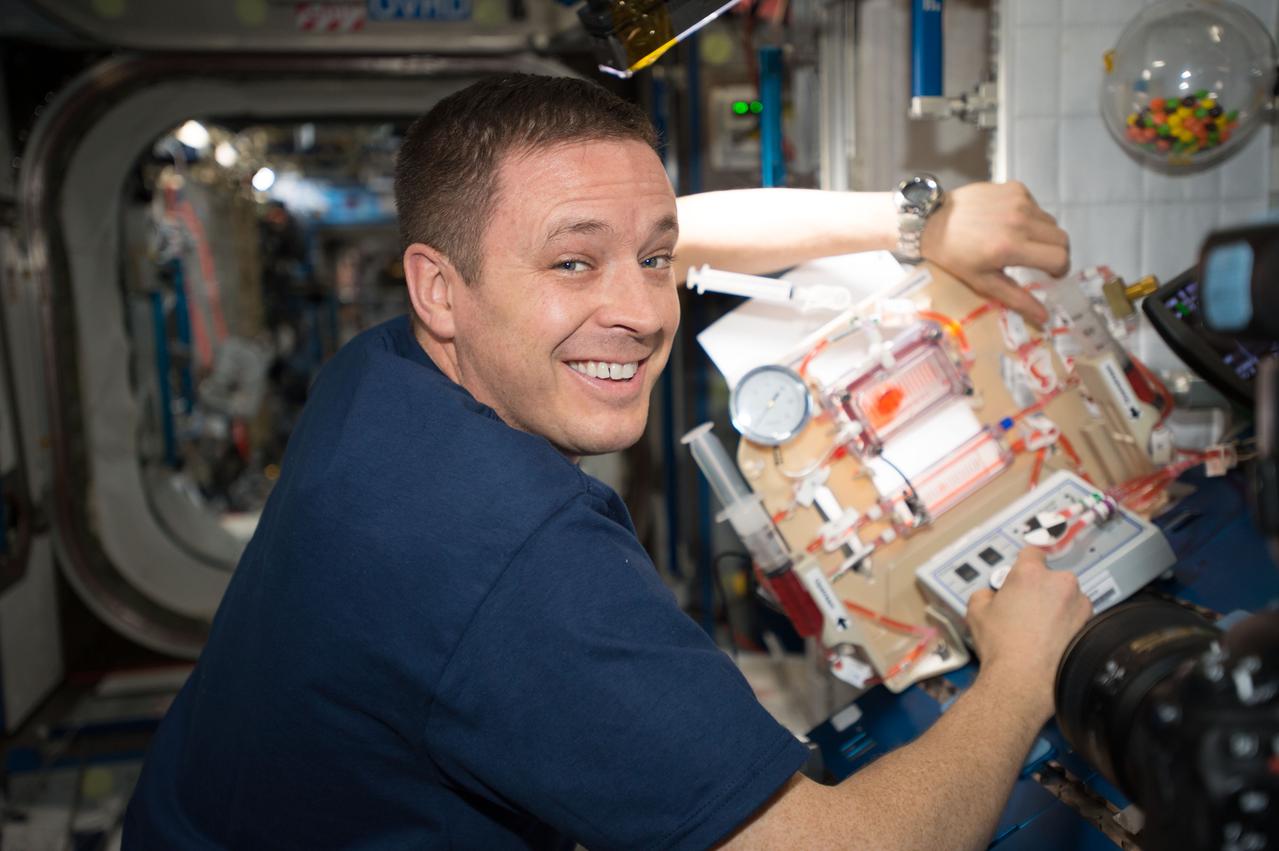
iss052e013146 (July 10, 2017) --- Astronaut Jack Fischer is photographed during setup of hardware for the Capillary Structures for Exploration Life Support (Capillary Structures) two sorbent demonstrations. The Capillary Structures for Exploration Life Support (Capillary Structures) investigation studies a new method using structures of specific shapes to manage fluid and gas mixtures. The investigation studies water recycling and carbon dioxide removal, benefiting future efforts to design lightweight, more reliable life support systems for future space missions.
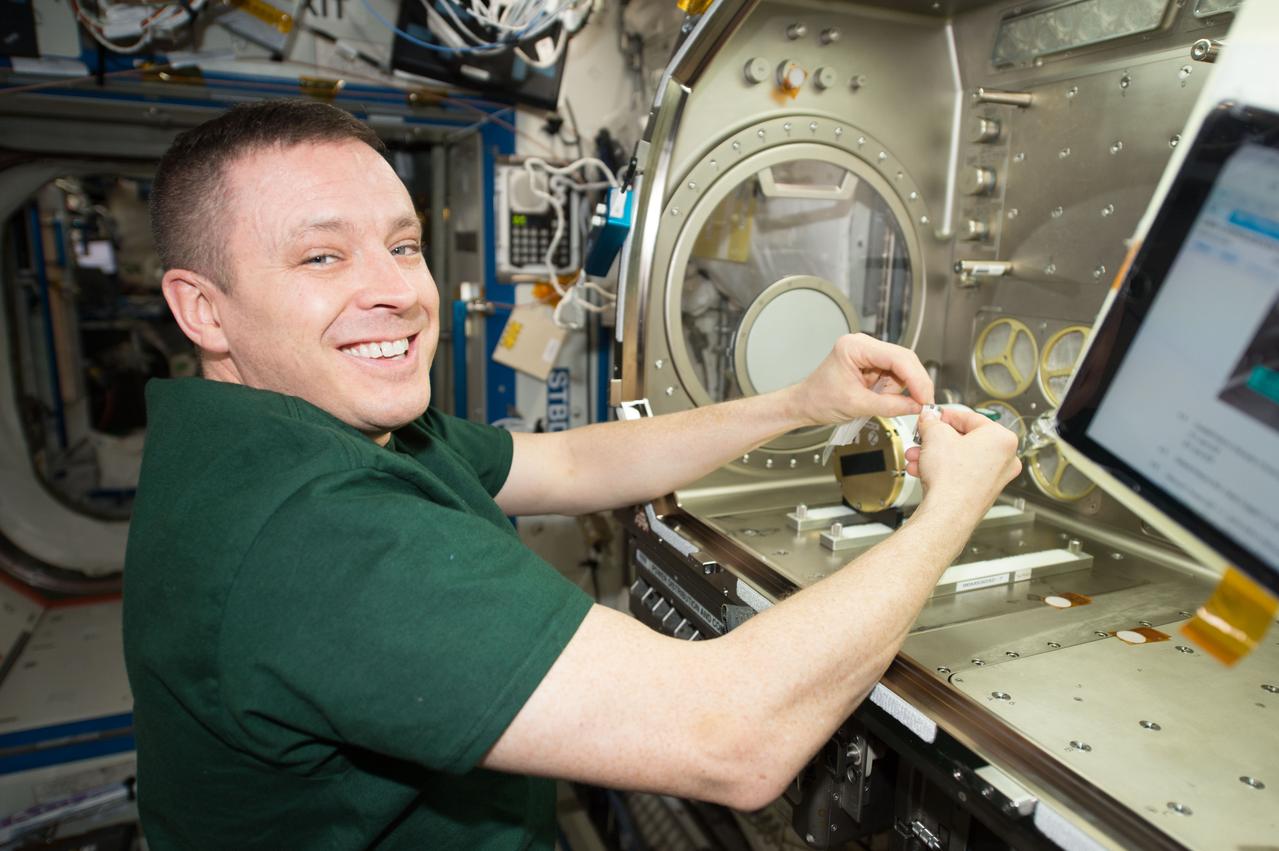
iss052e075804 (Aug. 30, 2017) --- NASA astronaut Jack Fischer working in the Microgravity Sciences Glovebox (MSG) work volume to set up the Eli Lily-Lyophilization experiment. Eli Lily-Lyophilization examines freeze-drying processes in the microgravity environment aboard the International Space Station (ISS) to improve the understanding of how food, drugs and other compounds are preserved in space.

iss052e046674 (8/15/2020) --- A view of NASA astronaut Peggy Whitson aboard the International Space Station (ISS) with the Japanese Experiment Module (JEM) Internal Ball Camera. This device is a free-flying camera robot that provides real time video downlink and photographs. It is expected to reduce the crew time requirements to support video recording of activities, especially at the blind spot of existing JEM internal cameras.
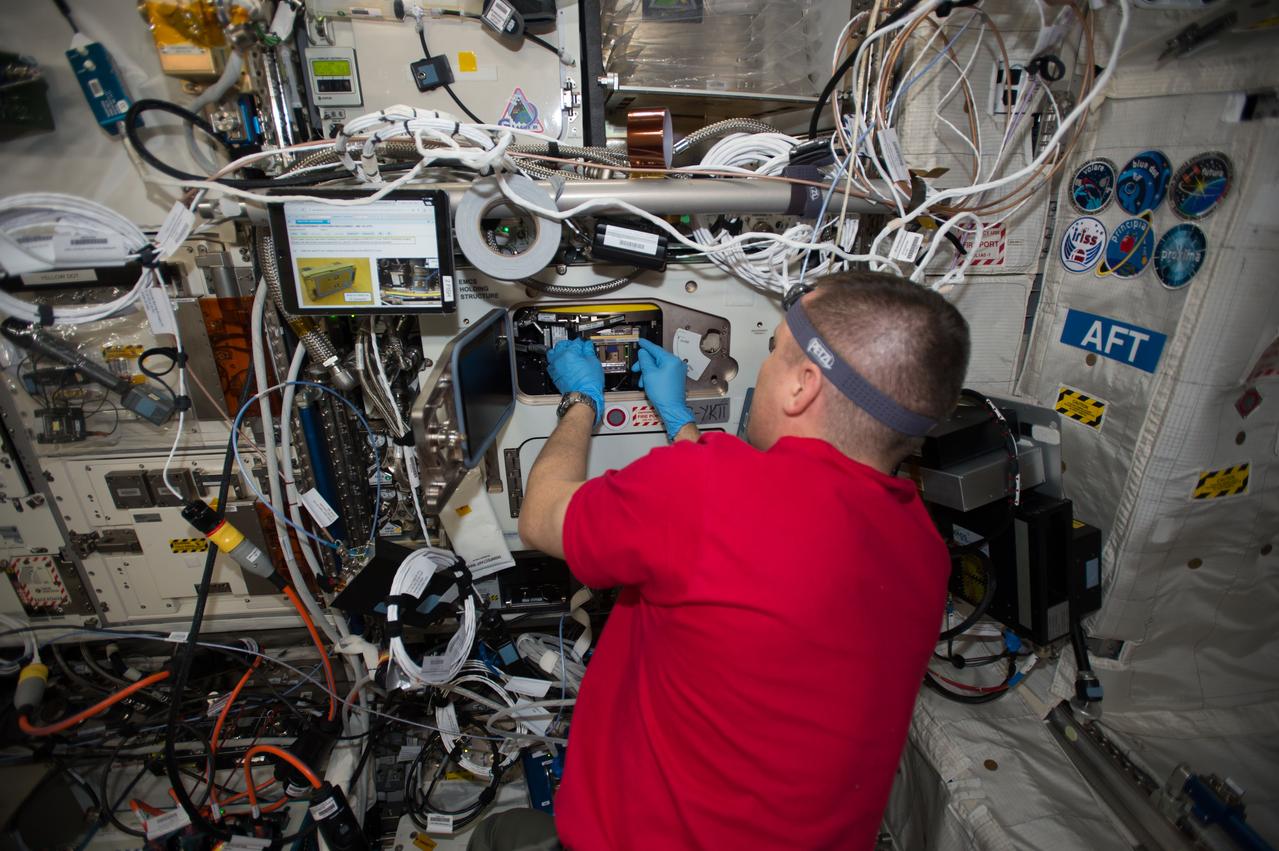
iss052e002352 (6/12/2017) --- A view of NASA astronaut Jack Fischer replacing the European Modular Cultivation System (EMCS) Experiment Containers (ECs) with new ECs prepared for the Seedling Growth 3 experiment. Seedling Growth-3 is the third part of the Seedling Growth Experiment series, using the plant Arabidopsis thaliana to investigate the effects of gravity on the cellular signaling mechanisms of light sensing in plants (phototropism), and to investigate cell growth and proliferation responses to light stimulation under microgravity conditions.
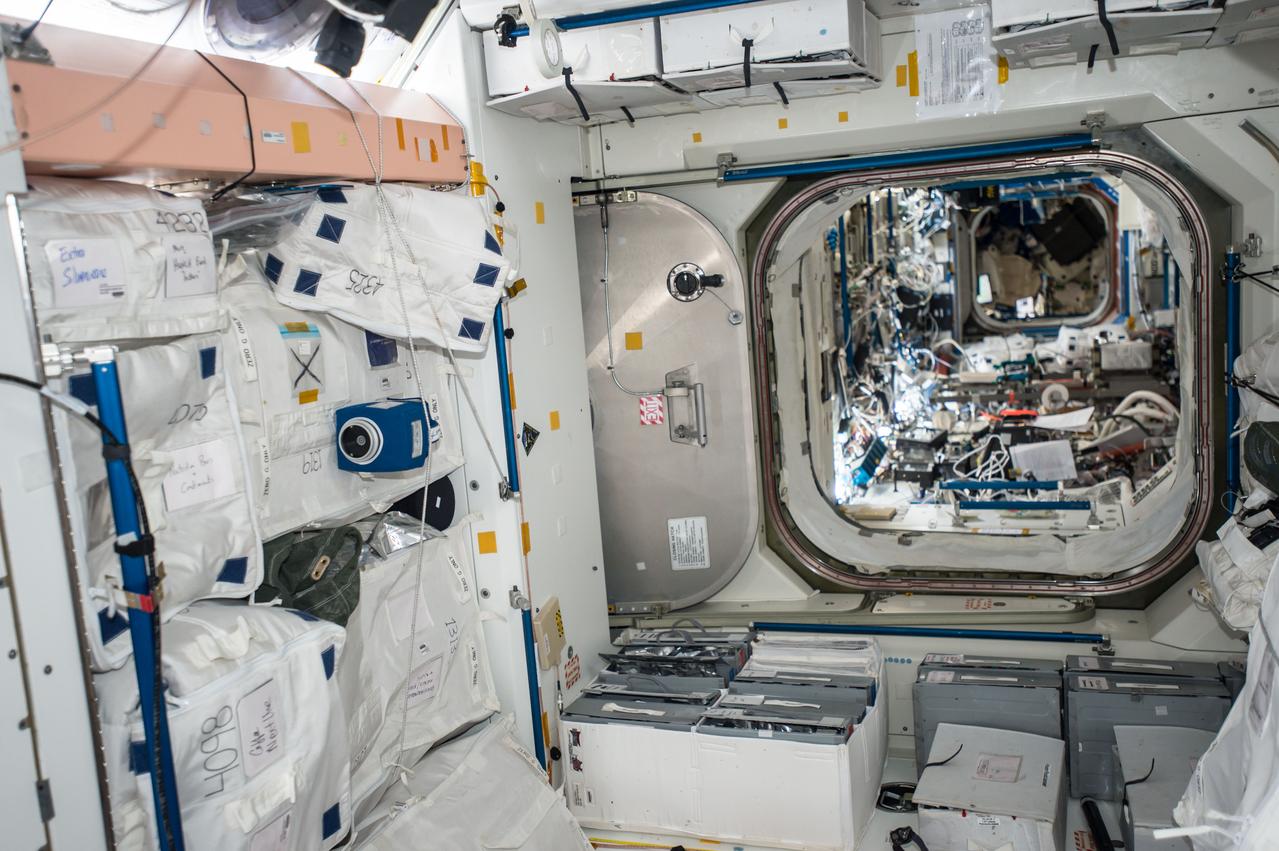
iss052e006446 (Jun. 23, 2017) --- Microbial Tracking-2 in the Node 2 module at air sampling location number 5 monitoring microbes present to assess the health environment on the International Space Station (ISS) and understand the effects of the spaceflight environment on viral and microbial pathogen dynamics. Destiny and Node 1 modules are seen in the background.

iss052e004198 (June 19, 2017) ---- Astronaut Peggy Whitson changes out the Imaging Unit on the Bone Densitometer inside the Harmony module. The SpaceX Dragon is attached to the Earth-facing port of Harmony.
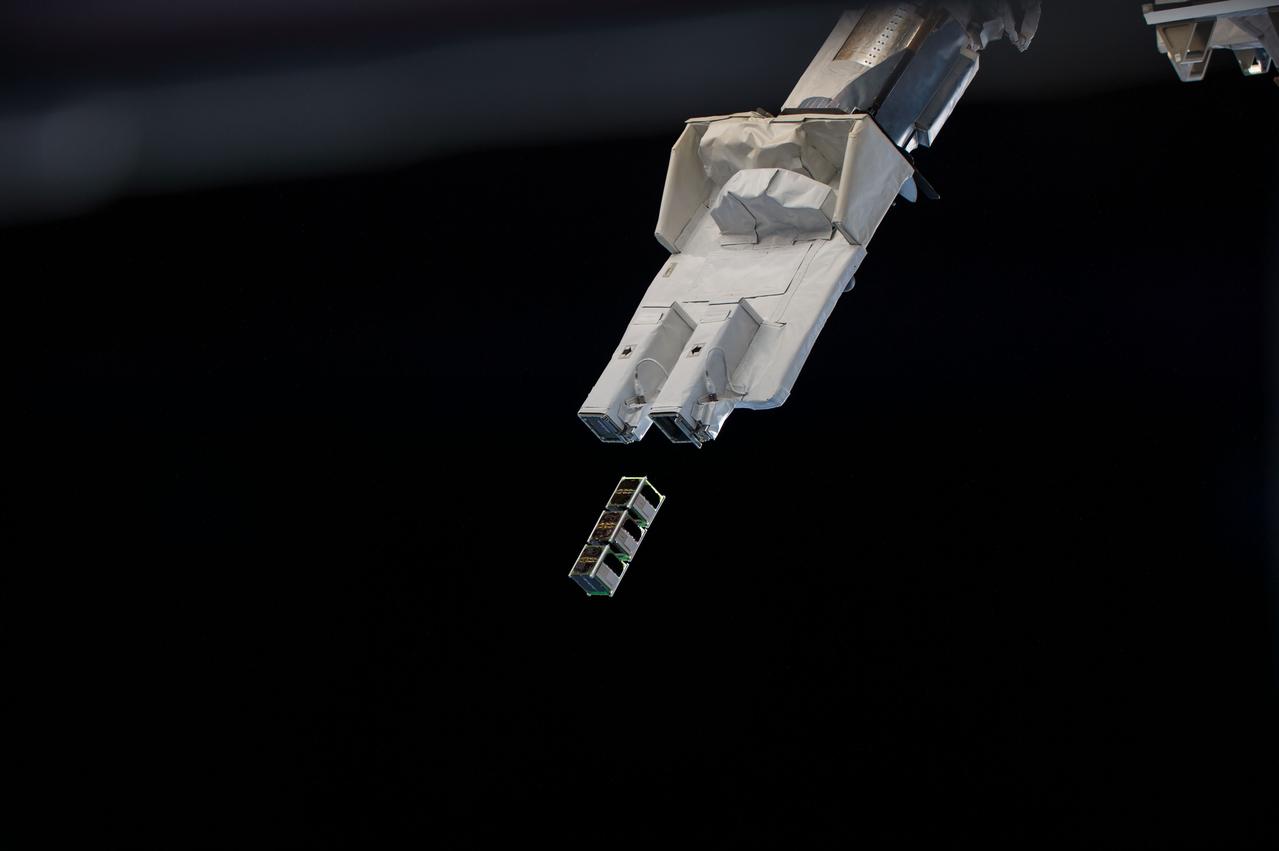
iss052e011185 (7/7/2017) --- A view taken of CubeSats from Japan, Ghana, Mongolia, Bangladesh and Nigeria deployed from the Japanese Experiment Module (JEM) Satellite Orbital Deployer 7 (J-SSOD 7) (with Earth visible in the background). These satellites are part of the Joint Global Multi-Nation Birds Satellite project (BIRDS-1), a cross-border interdisciplinary satellite project for non-space faring countries supported by Japan. During this 2-year project, students from the Graduate School of Engineering of the Kyushu Institute of Technology design, develop and operate CubeSats belonging to the five participating countries.
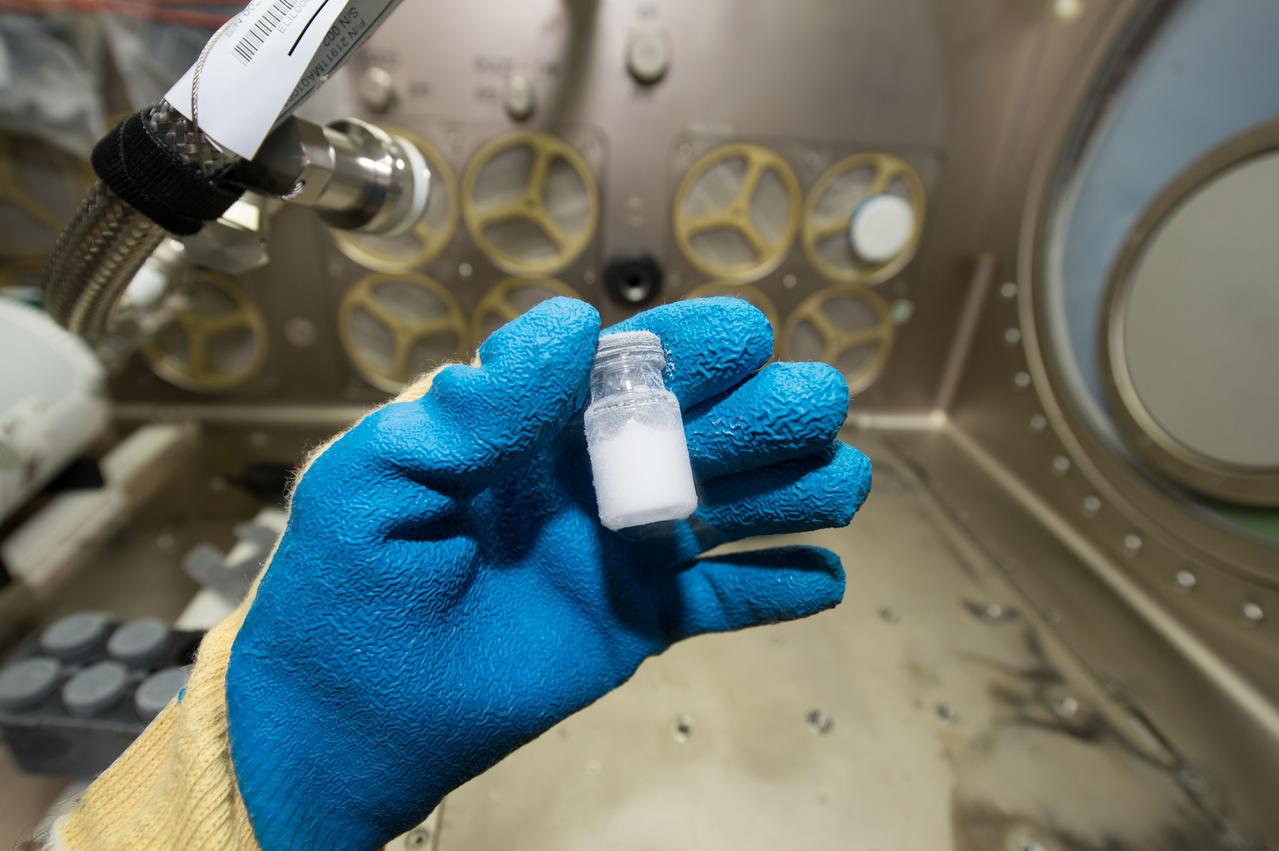
iss052e075812 (Aug. 30, 2017) --- Eli Lily-Lyophilization hardware setup in the Migrogravity Science Glovebox (MSG) work volume. Eli Lily-Lyophilization examines freeze-drying processes in the microgravity environment aboard the International Space Station (ISS) to improve the understanding of how food, drugs and other compounds are preserved in space.
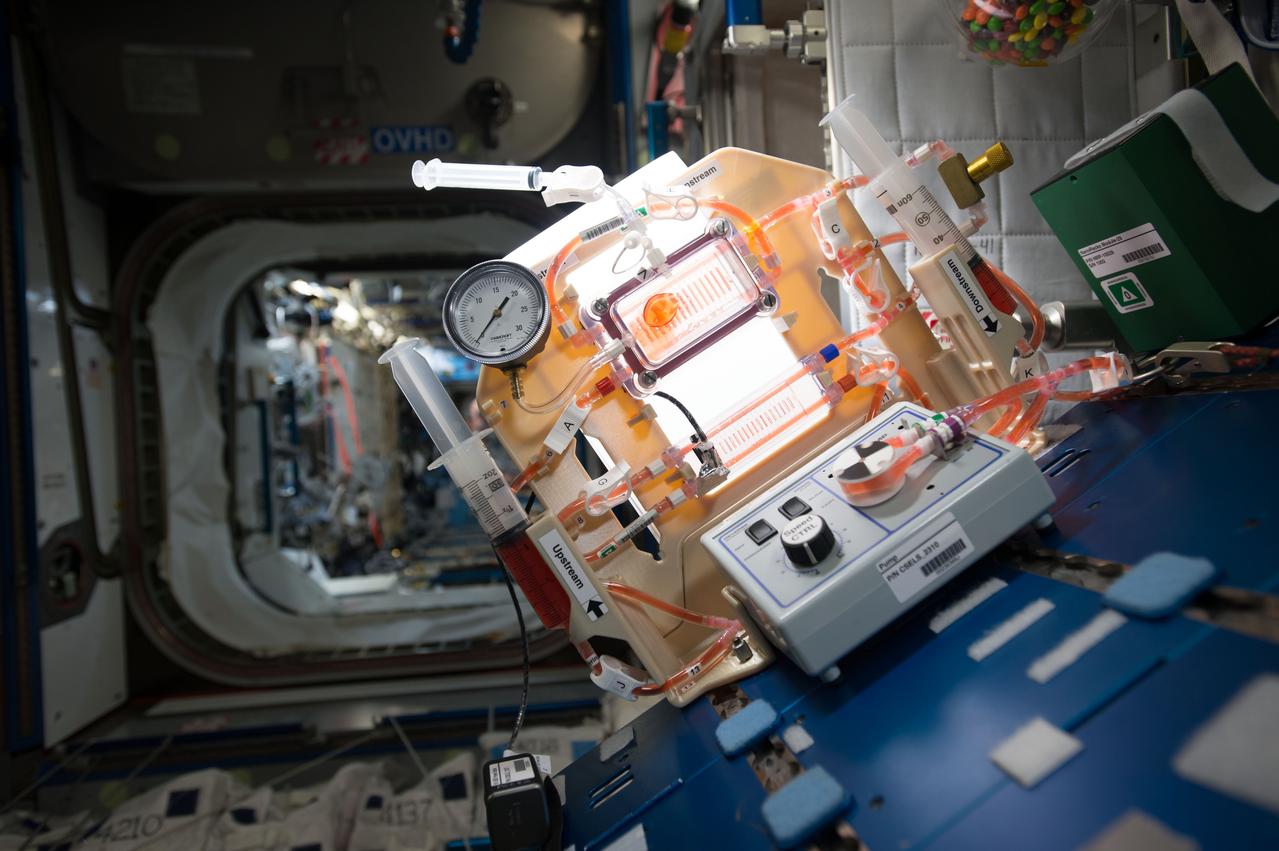
iss052e013081 (7/10/2017) --- The Capillary Structures for Exploration Life Support (Capillary Structures) investigation studies a new method using structures of specific shapes to manage fluid and gas mixtures. The investigation studies water recycling and carbon dioxide removal, benefiting future efforts to design lightweight, more reliable life support systems for future space missions.
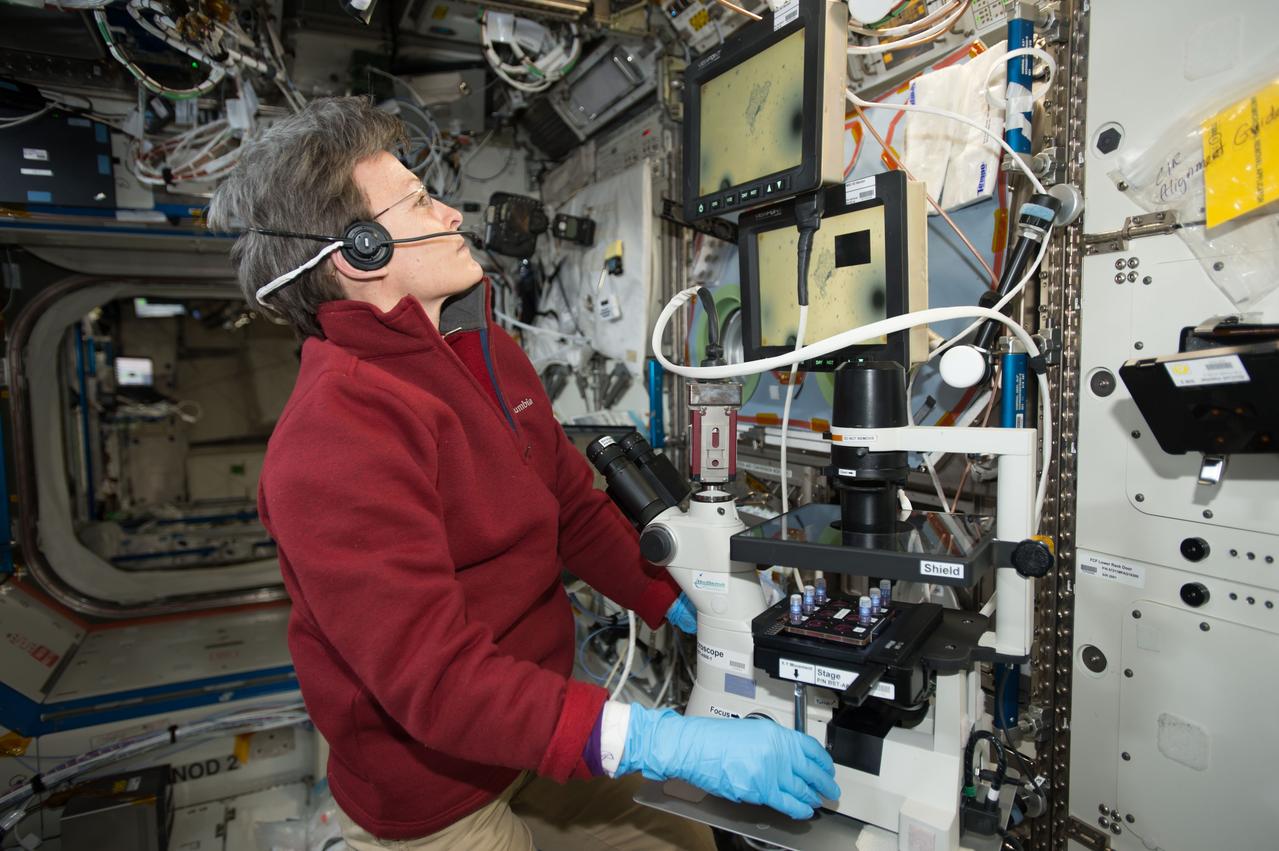
iss052e014201 (7/11/2017) --- NASA astronaut Peggy Whitson uses a microscope to view Magnetic 3D Biocells. This investigation uses magnetized cells and tools to make it easier to handle cells and cultures and to improve the reproducibility of experiments.
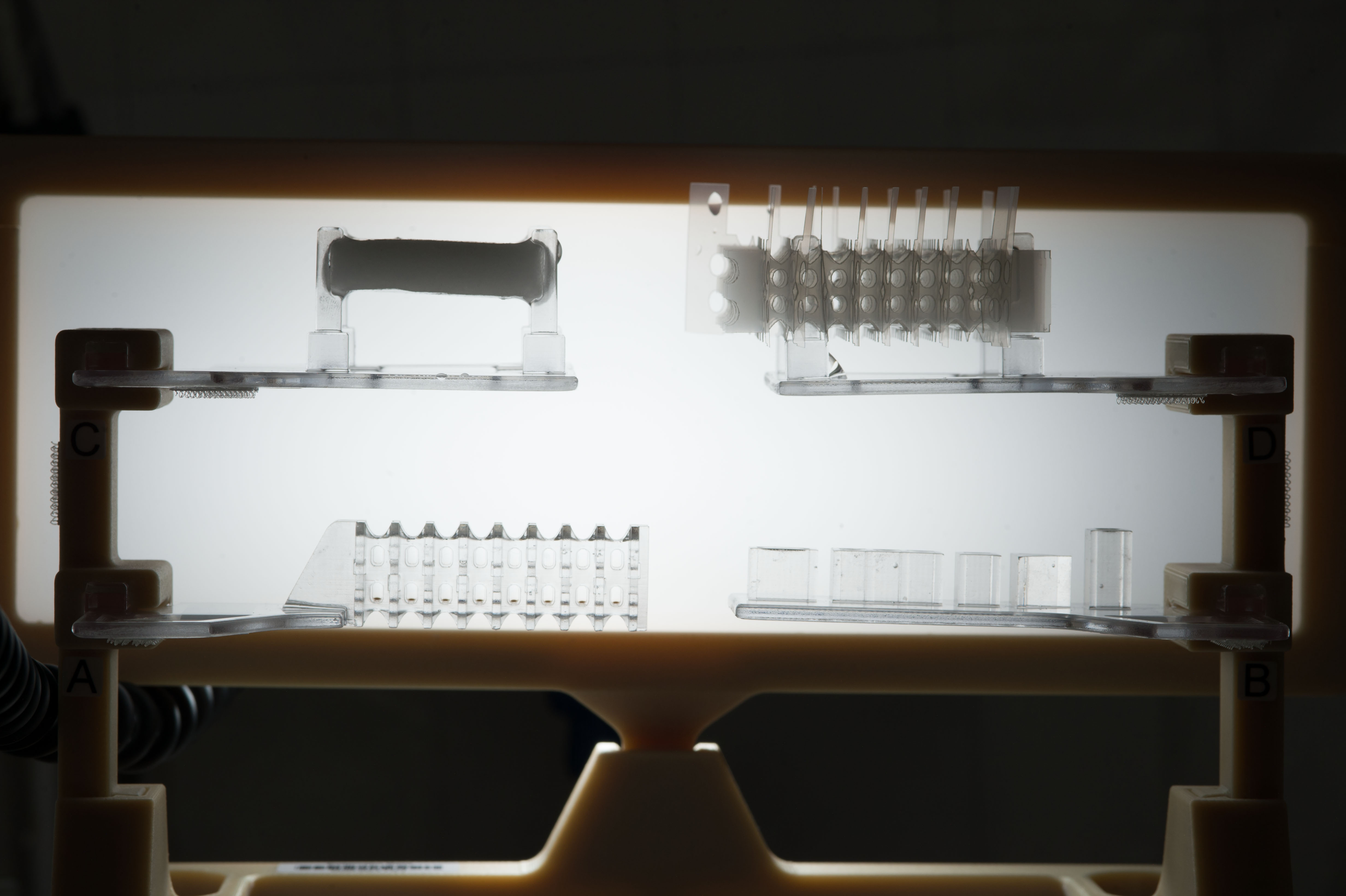
iss052e017187 (7/22/2017) --- A view taken of hardware for the Capillary Structures investigation in the Japanese Experiment Module (JEM). This investigation studies a new method using structures of specific shapes to manage fluid and gas mixtures. It also studies water recycling and carbon dioxide removal, benefiting future efforts to design lightweight, more reliable life support systems for future space missions.
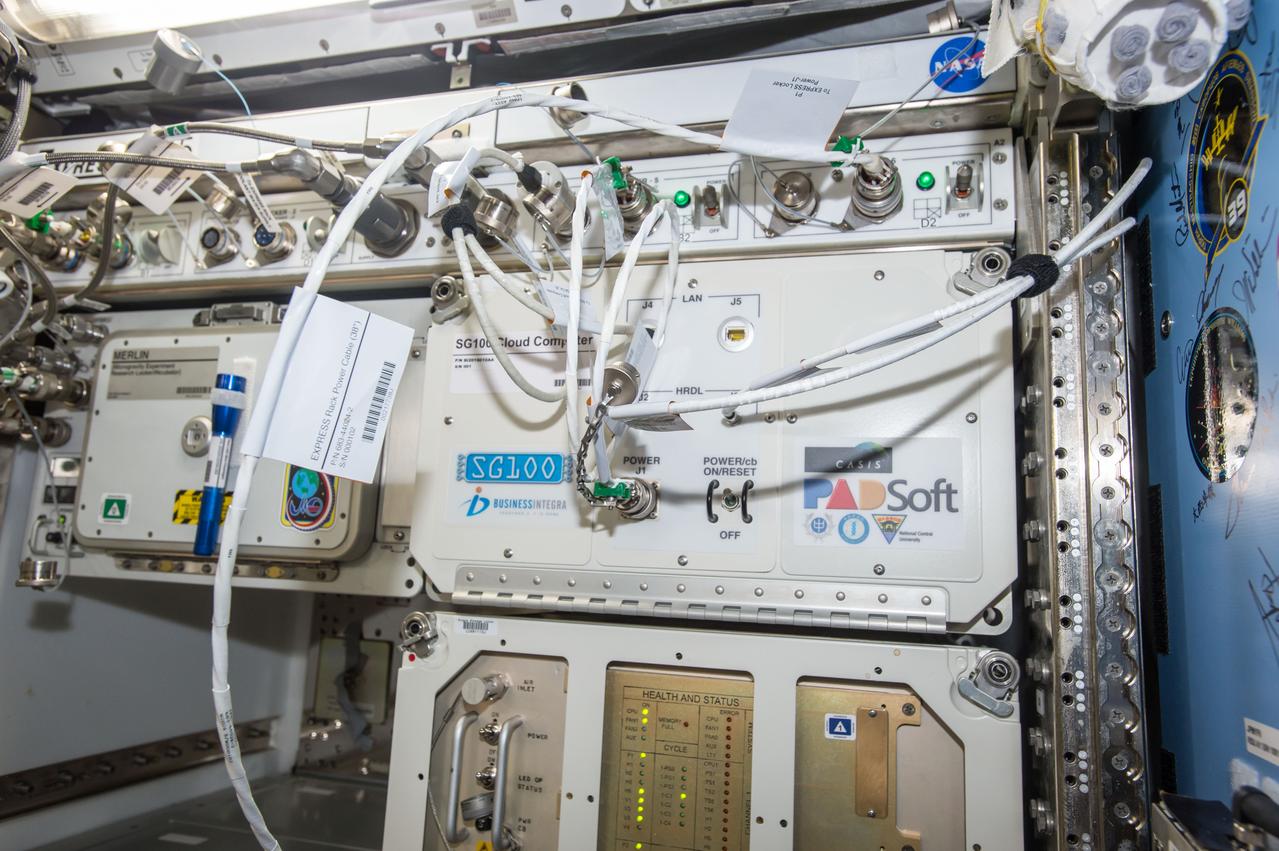
iss051e045046 (5/17/2017) --- The SG100 Cloud Computing Payload, shown here installed in the Kibo Japanese Pressurized Module (JPM) aboard the International Space Station (ISS), tests a space-rated, single-board computer designed to allow engineers, scientists and researchers to perform significant amounts of onboard analysis prior to downlink to the ground.
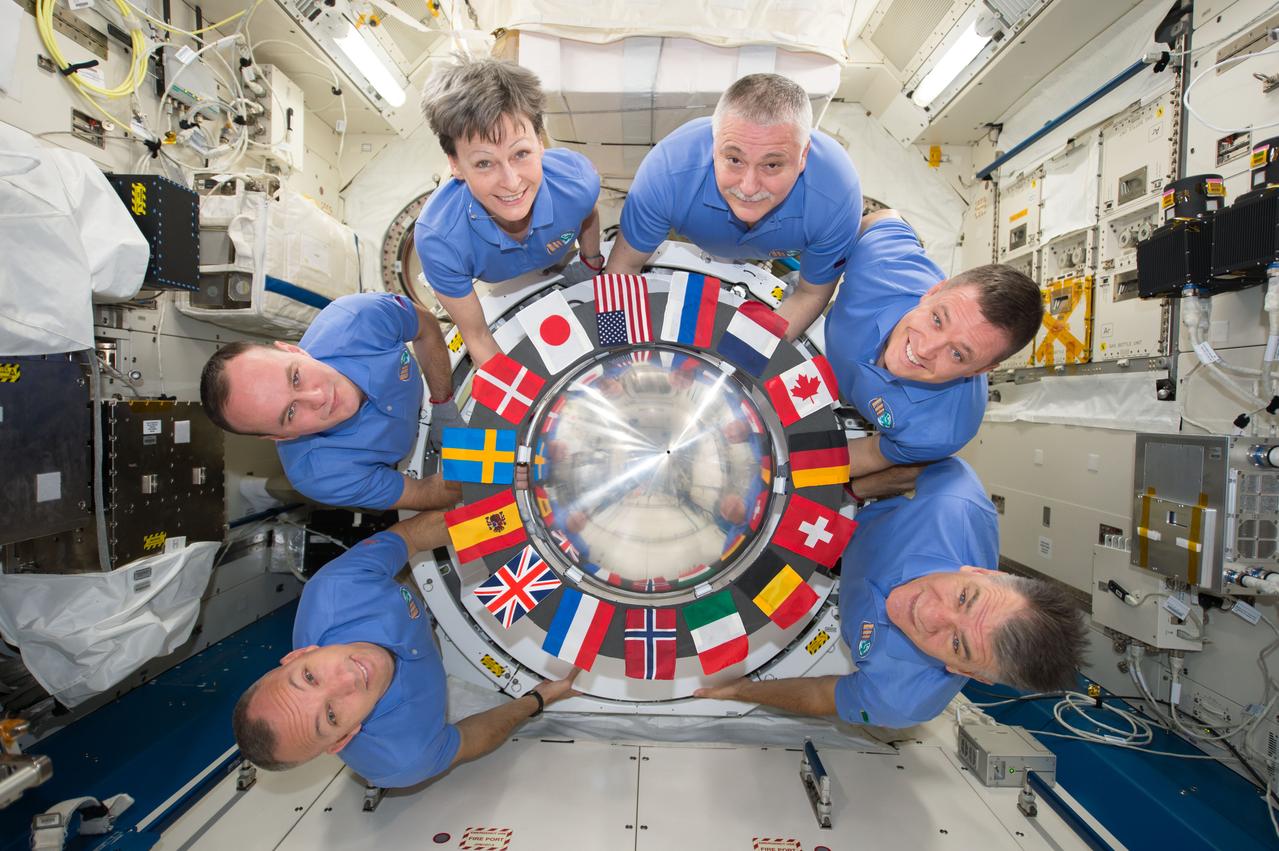
iss052e031832 (8/5/2017) --- Expedition 52 crew pose for their on-orbit crew portrait gathered around the Japanese Experiment Module (JEM) internal airlock aboard the International Space Station (ISS). Flags from all the International Partners are visible around the airlock hatch. From left to right: Astronaut Randy Bresnik, Cosmonaut Sergey Ryzanskiy, Astronaut Peggy Whitson, Cosmonaut Fyodor Yurchikhin, Astronaut Jack Fischer and European Space Agency (ESA) astronaut Paolo Nespoli.
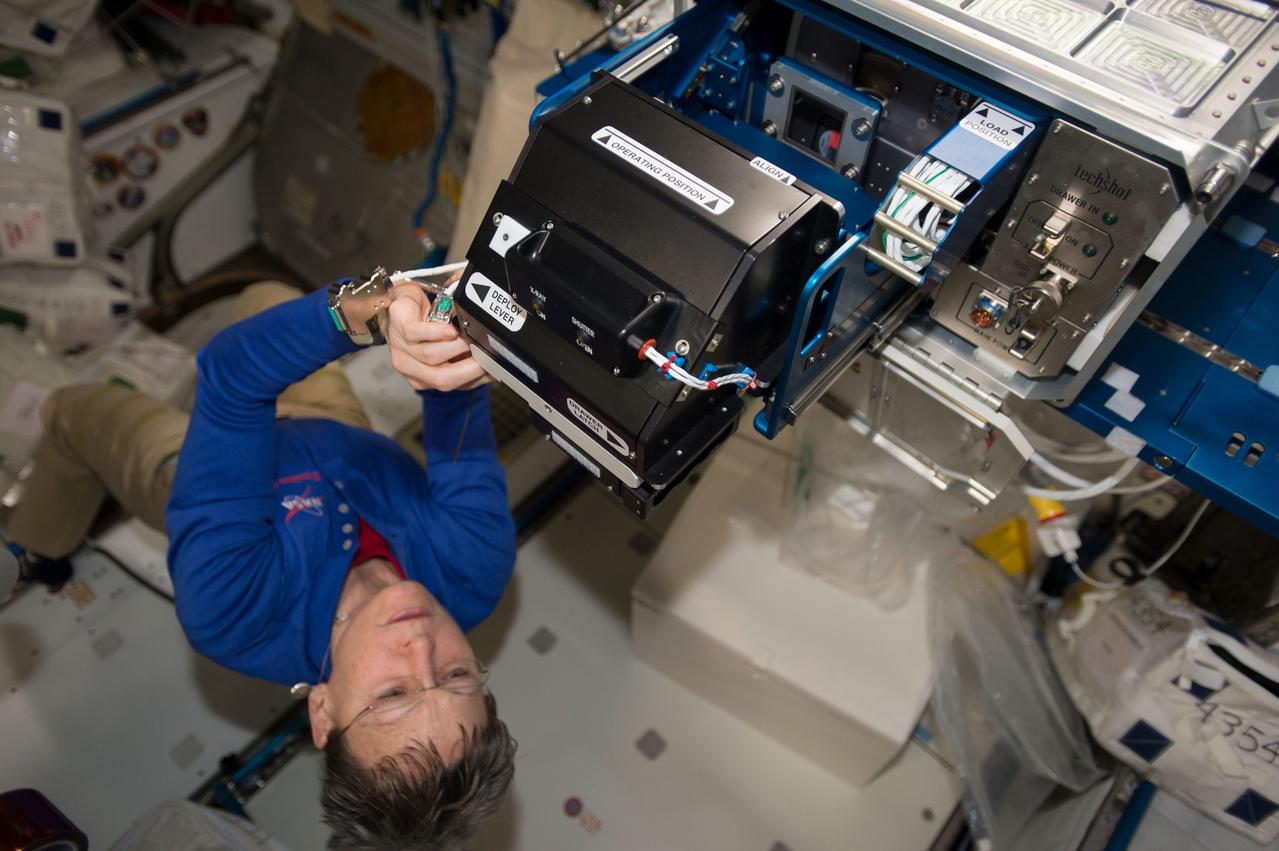
iss052e004182 (6/19/2017) --- Photo of NASA astronaut Peggy Whitson performing change out of Imaging Unit on the Bone Desitometer (BD) located in Node 2.
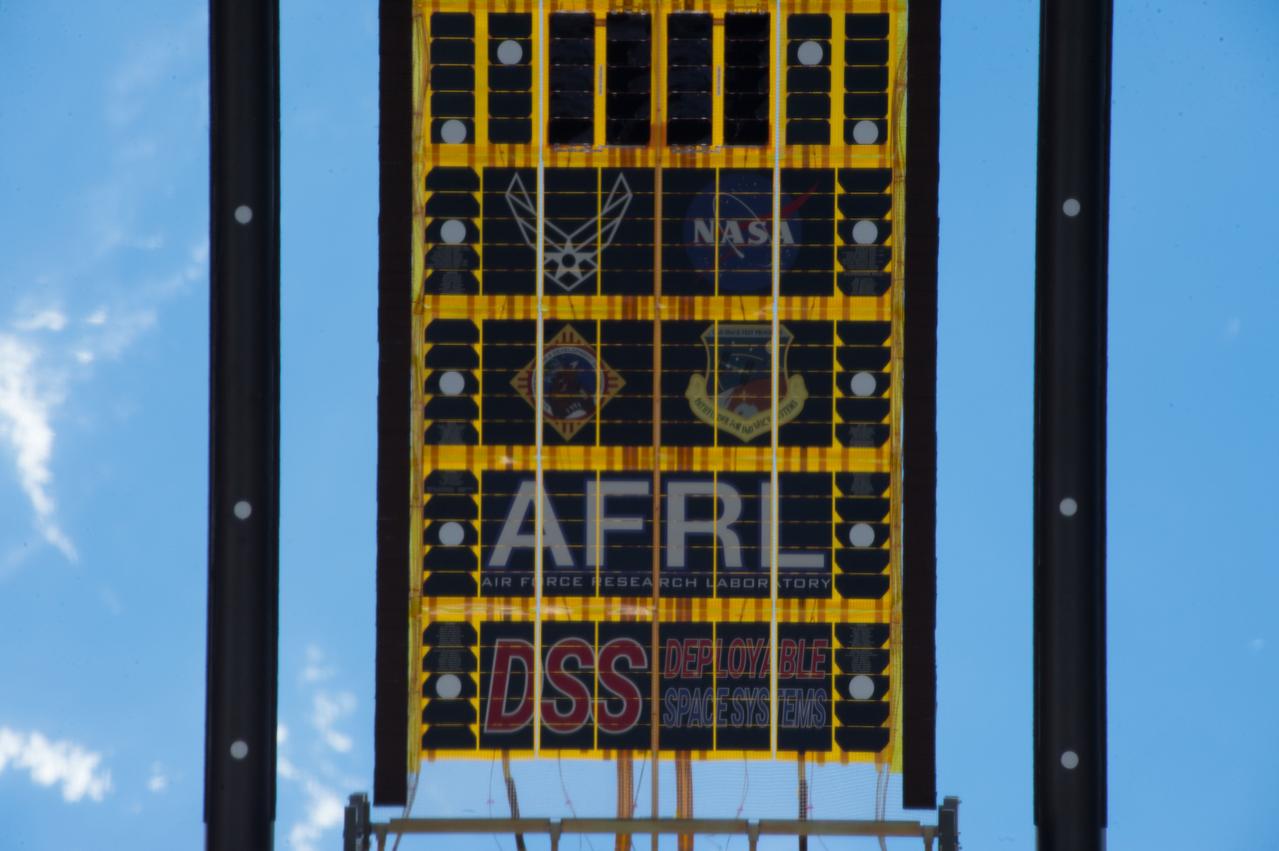
iss052e002857 (6/18/2017) --- The Roll-Out Solar Array (ROSA) is a new type of solar panel that rolls open in space like a party favor and is more compact than current rigid panel designs. The ROSA investigation tests deployment and retraction, shape changes when the Earth blocks the sun, and other physical challenges to determine the array’s strength and durability. ROSA has the potential to replace solar arrays on future satellites, making them more compact and lighter weight. Satellite radio and television, weather forecasting, GPS and other services used on Earth would all benefit from high-performance solar arrays.
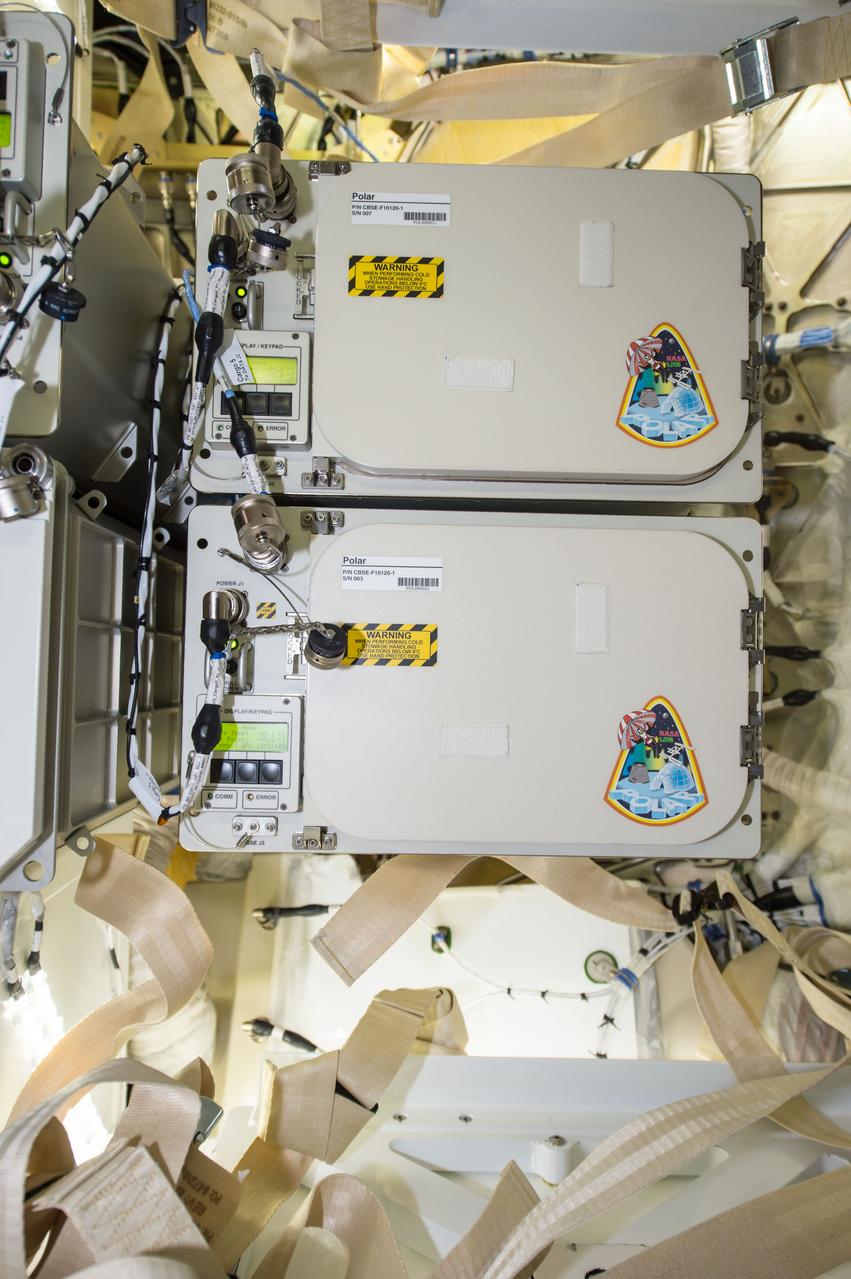
iss052e010012 (6/30/2017) --- A view of the final configuration of the Polar 7 after installation in SpaceX Dragon-11 module. Polar is a Cold Stowage managed facility that provides transport and storage of science samples at cryogenic temperatures (-80ºC) to and from the International Space Station (ISS).
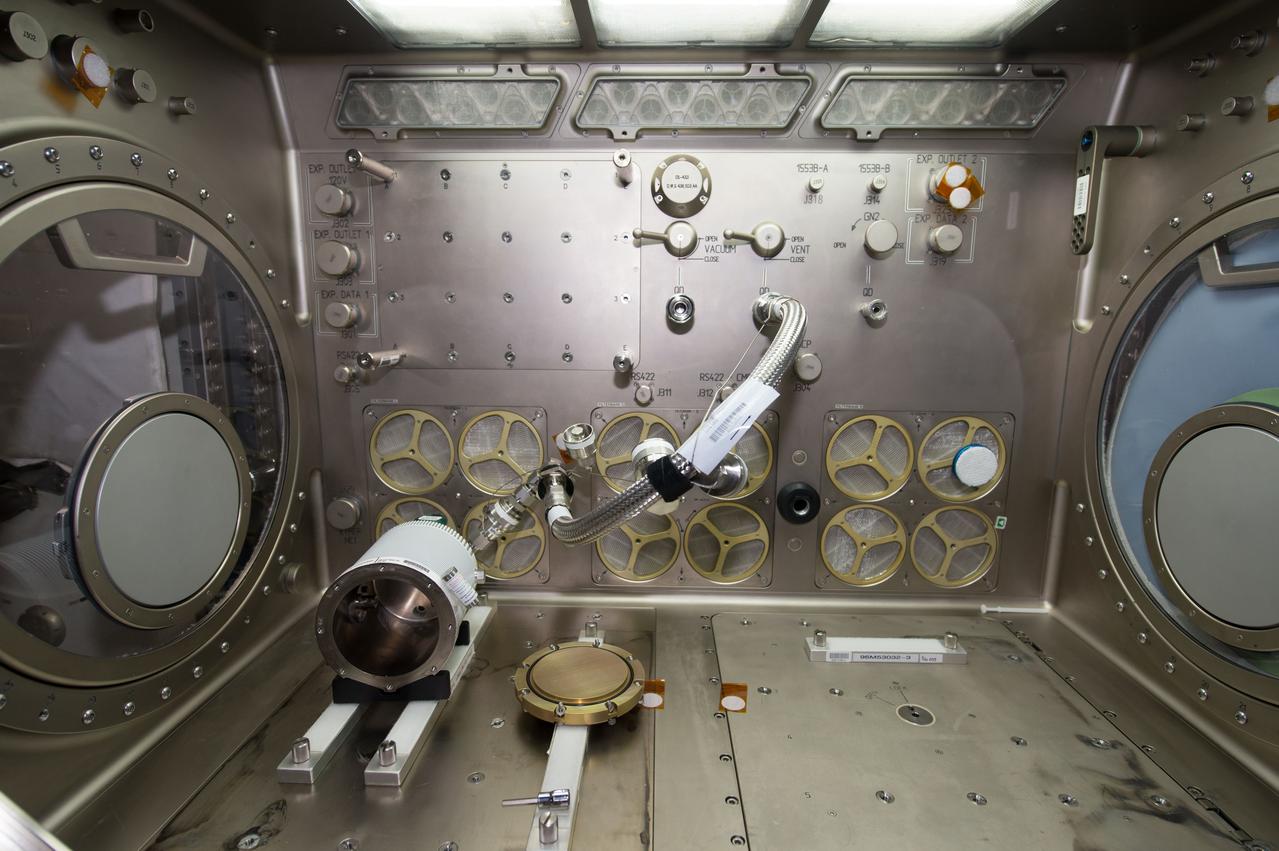
iss052e075807 (Aug. 30, 2017) --- Eli Lily-Lyophilization hardware setup in the Migrogravity Science Glovebox (MSG) work volume. Eli Lily-Lyophilization examines freeze-drying processes in the microgravity environment aboard the International Space Station (ISS) to improve the understanding of how food, drugs and other compounds are preserved in space.
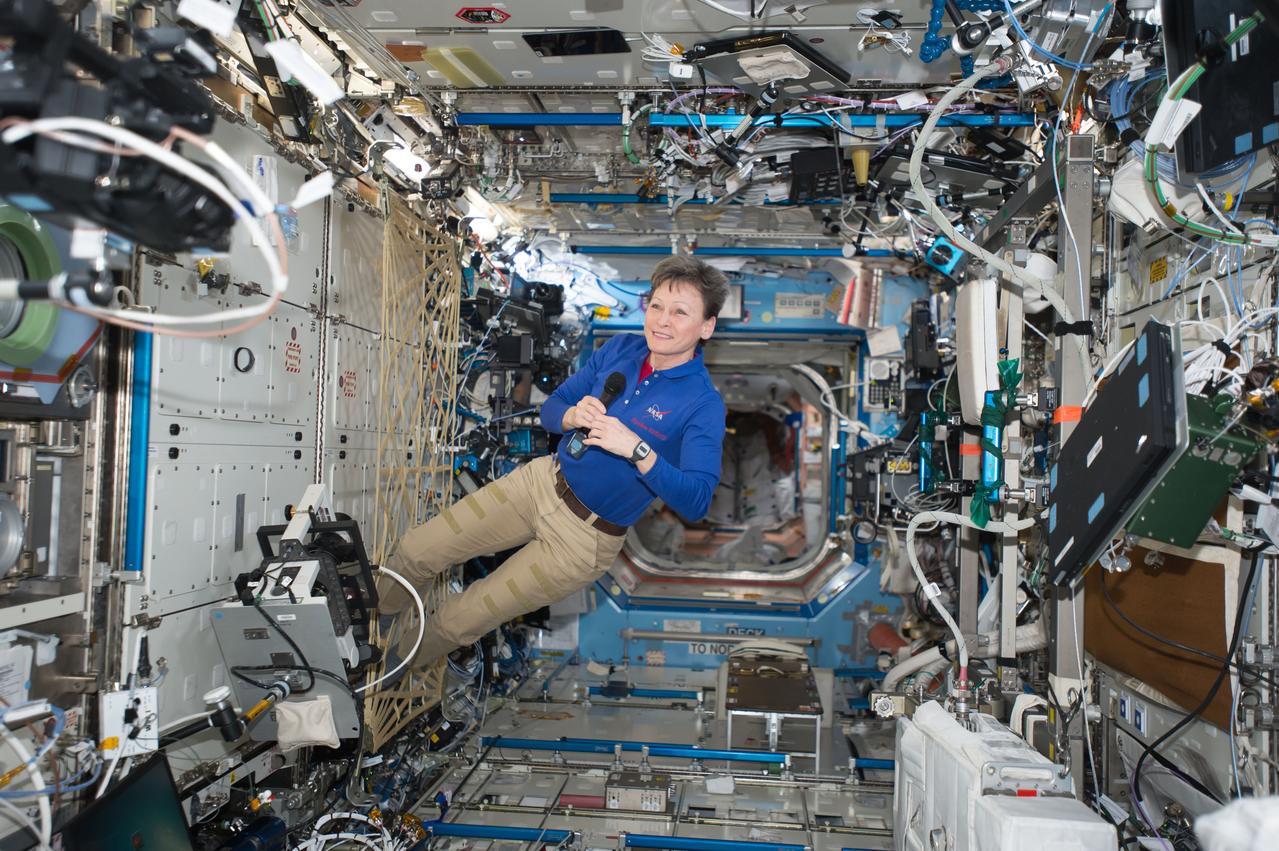
iss052e009298 (Junr 28, 2017) --- Astronaut Peggy Whitson was pictured June 28 conducting a live video interview with reporters on Earth.
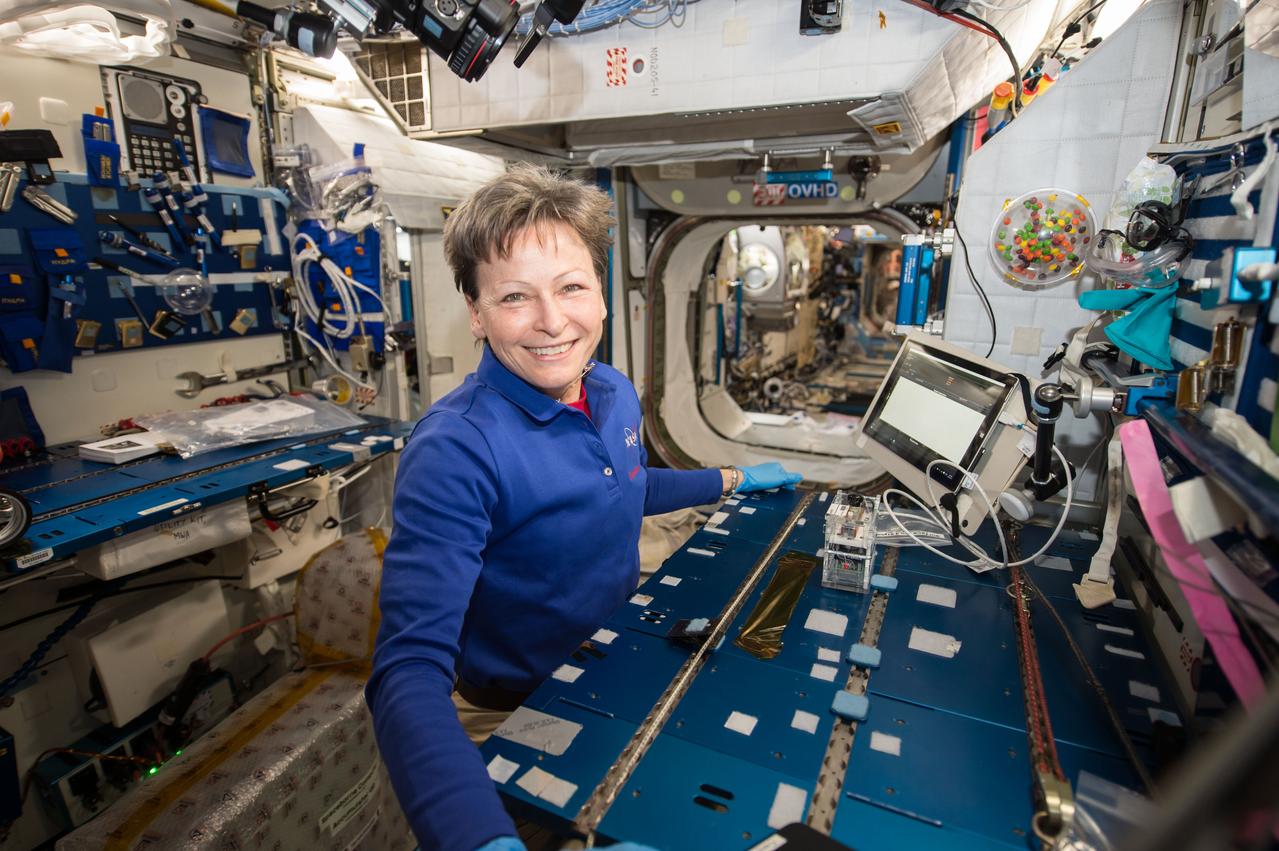
iss052e061925 (8/21/2017) --- NASA astronaut Peggy Whitson is photographed working with the Genes In Space experiment in the Node 2 module. Genes in Space is an innovation challenge including students and teachers across the United States from grades 7 through 12. Students design a pioneering DNA-related experiment to fly on the ISS, providing real-world training in science, technology, engineering and math (STEM) fields and connecting students to the space program.
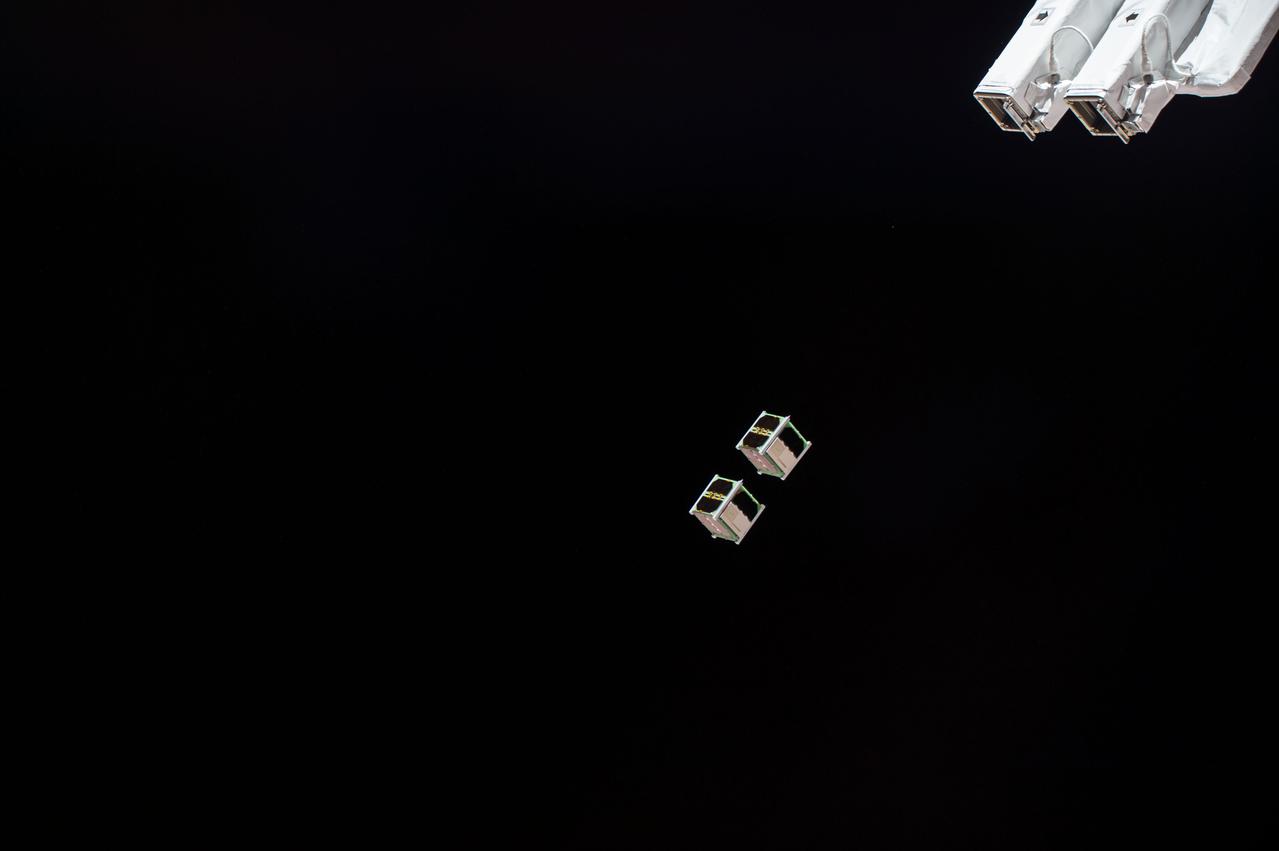
iss052e011289 (7/7/2017) --- A view taken of CubeSats from Japan, Ghana, Mongolia, Bangladesh and Nigeria deployed from the Japanese Experiment Module (JEM) Satellite Orbital Deployer 7 (J-SSOD 7) (with Earth visible in the background). These satellites are part of the Joint Global Multi-Nation Birds Satellite project (BIRDS-1), a cross-border interdisciplinary satellite project for non-space faring countries supported by Japan. During this 2-year project, students from the Graduate School of Engineering of the Kyushu Institute of Technology design, develop and operate CubeSats belonging to the five participating countries.
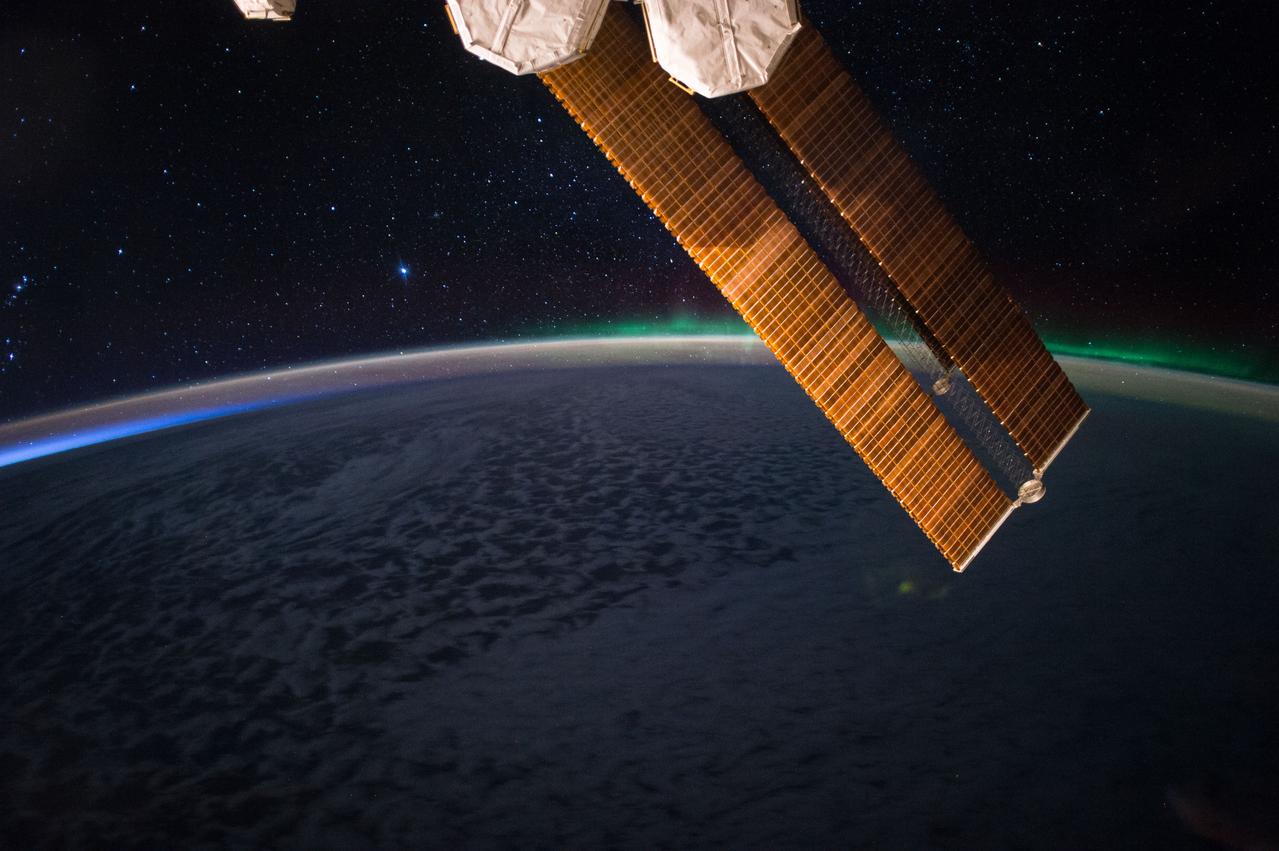
iss052e004998 (June 19, 2017) --- The aurora and the starry night are pictured above Earth’s atmosphere in this photograph taken from the space station’s cupola June 19, 2017.
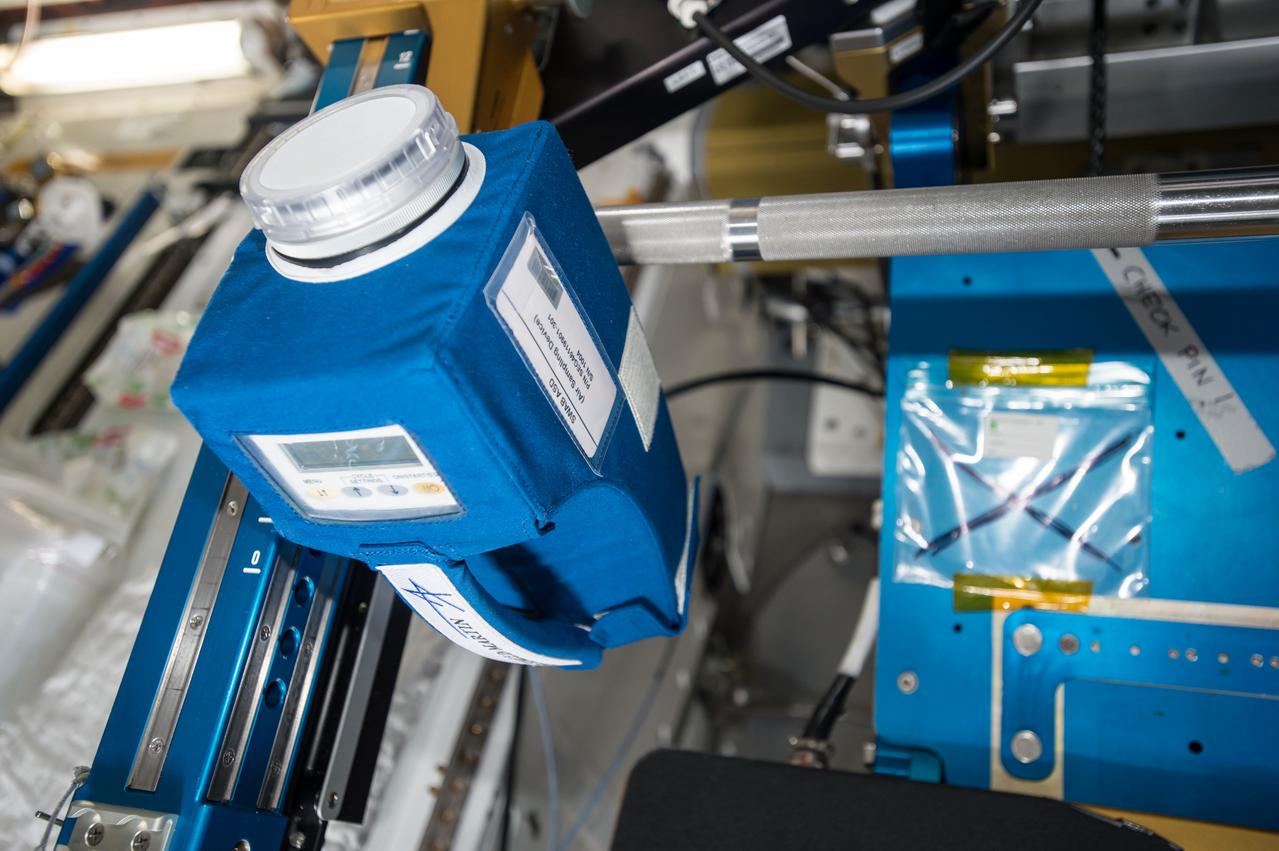
iss052e006453 (Jun. 23, 2017) --- Microbial Tracking-2 in the Node 2 module at air sampling location number 2 monitoring microbes present to assess the health environment on the International Space Station (ISS) and understand the effects of the spaceflight environment on viral and microbial pathogen dynamics.

iss052e010507 (July 4, 2017) --- This long-exposure photograph of Earth and a starry sky was taken during a night pass by the Expedition 52 crew aboard the International Space Station. The Japanese Kibo module and part of the station’s solar array are visible at the top.
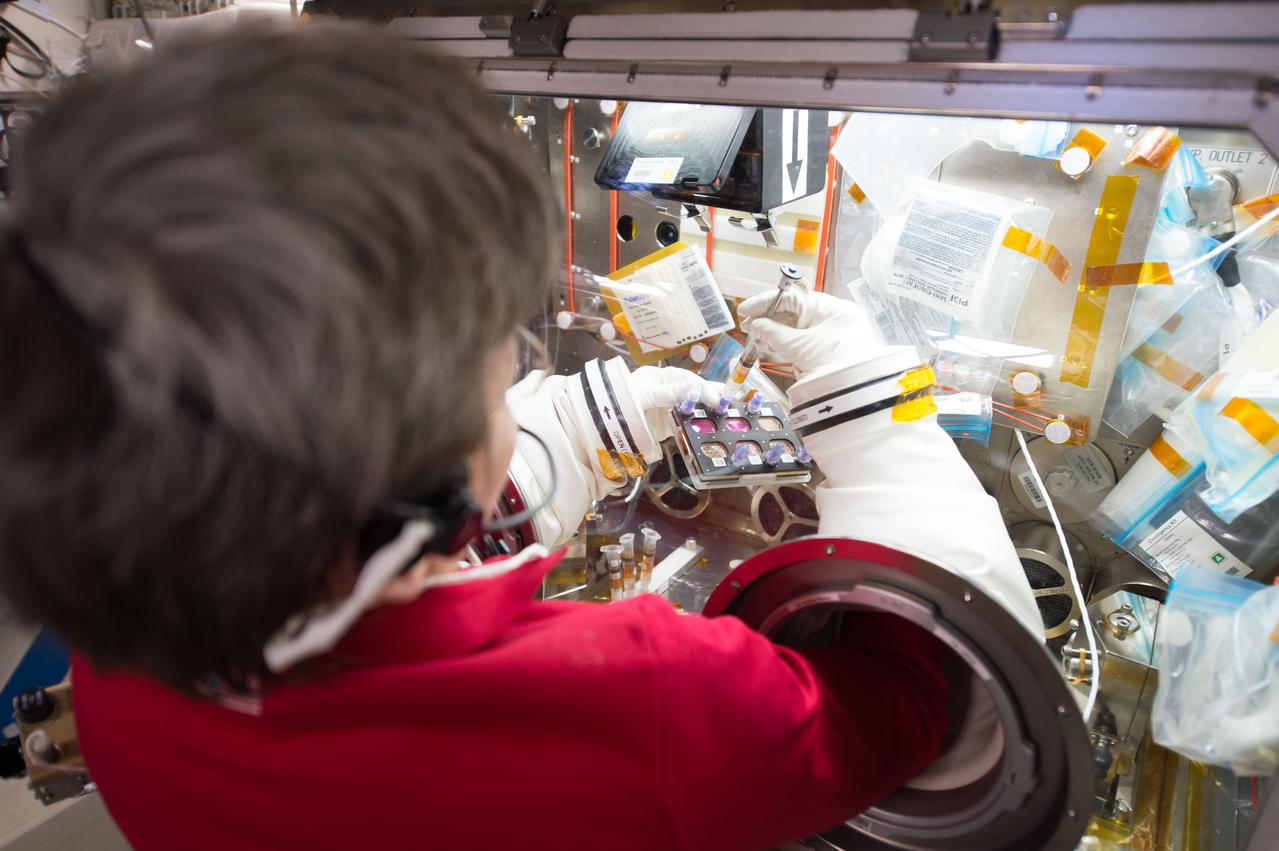
iss052e018944 (7/24/2017) --- NASA astronaut Peggy Whitson working with the Efficacy and Metabolism of Azonafide Antibody-Drug Conjugates in Microgravity (ADCs in Microgravity). The ADCs in Microgravity investigation evaluates new antibody-drug conjugates that combine an immune-activating drug with antibodies in order to target only cancer cells, increasing the effectiveness of chemotherapy and reducing its side effects. In microgravity, cancer cells grow in three-dimensional, spheroid structures that closely resemble their form in the human body, allowing for better drug testing. This investigation may accelerate development of targeted therapies for cancer patients.
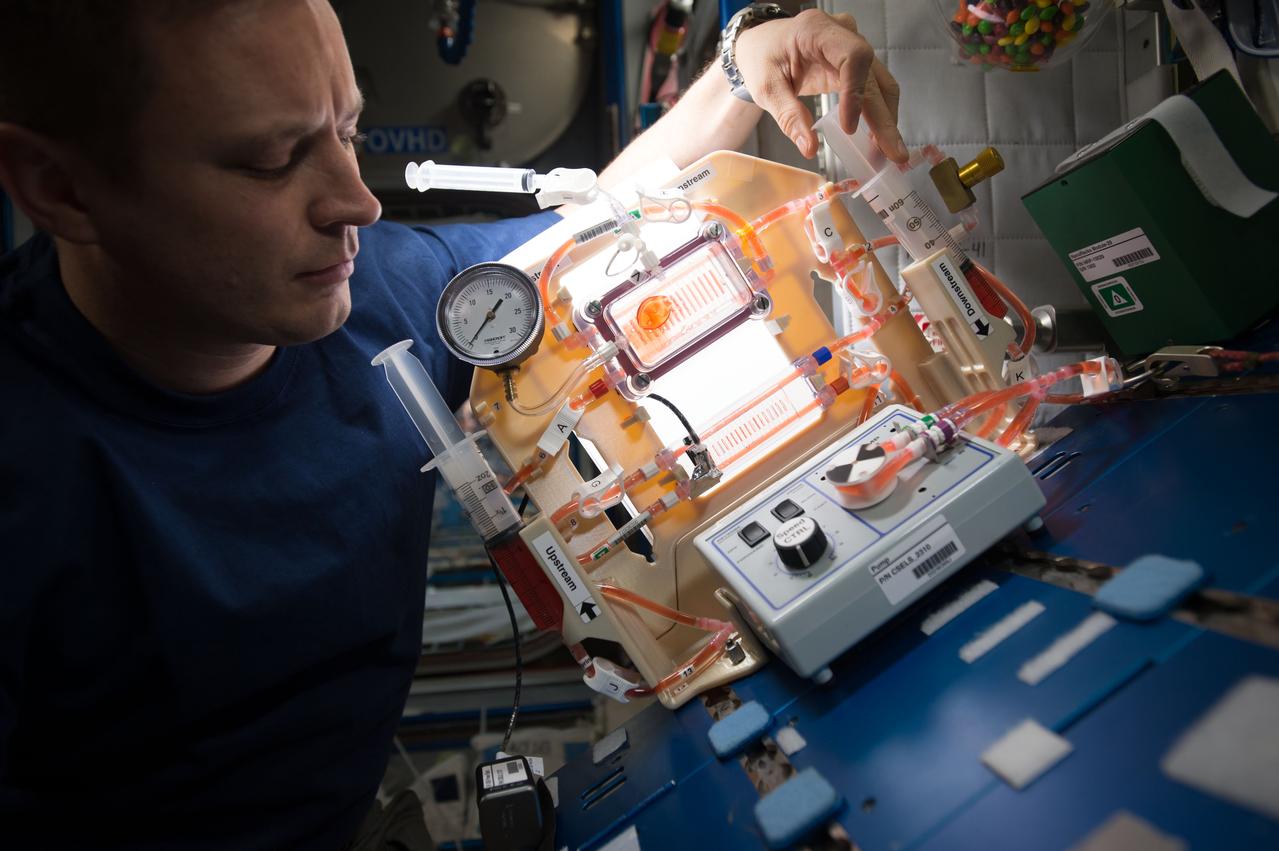
iss052e013087 (7/10/2017) NASA astronaut Jack Fischer is photographed during setup of hardware for the Capillary Structures for Exploration Life Support (Capillary Structures) two sorbent demonstrations. The Capillary Structures for Exploration Life Support (Capillary Structures) investigation studies a new method using structures of specific shapes to manage fluid and gas mixtures. The investigation studies water recycling and carbon dioxide removal, benefiting future efforts to design lightweight, more reliable life support systems for future space missions.