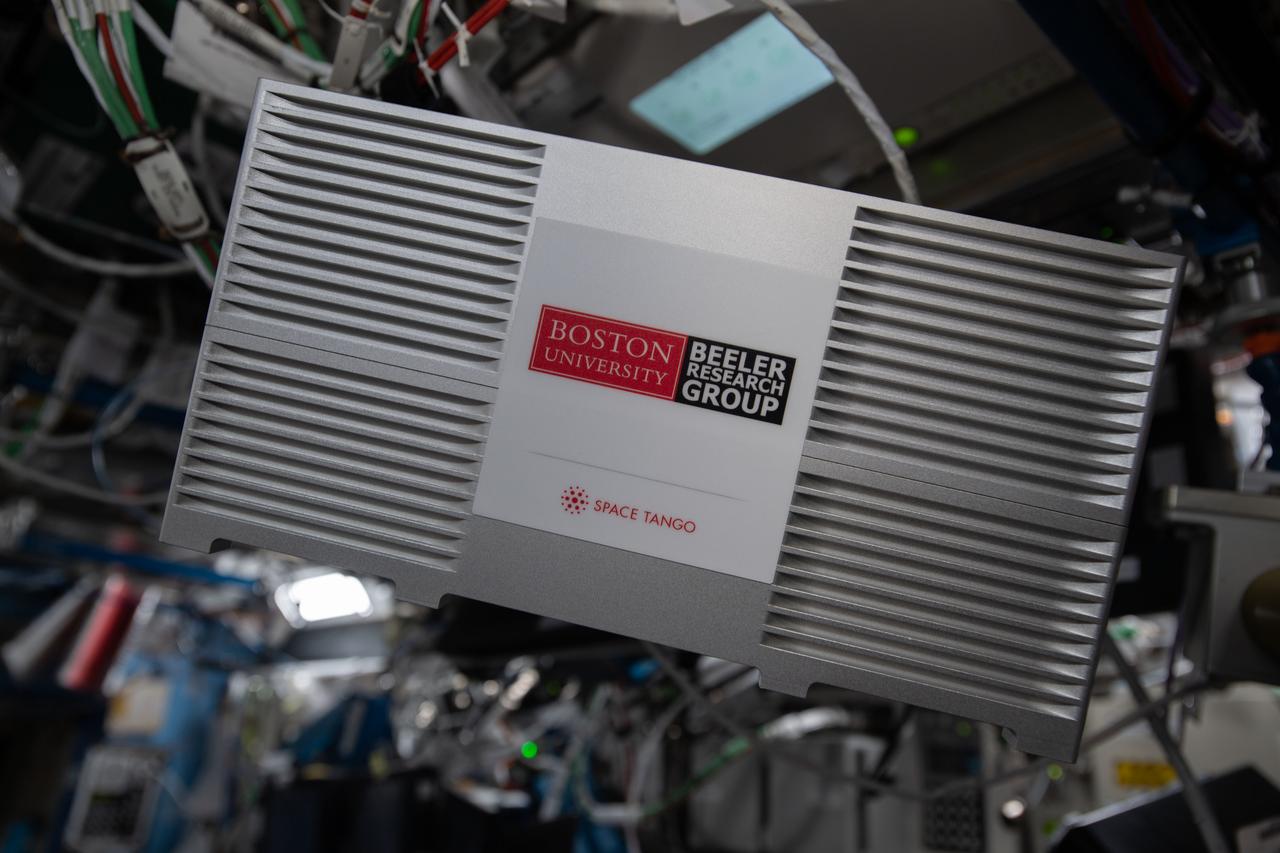
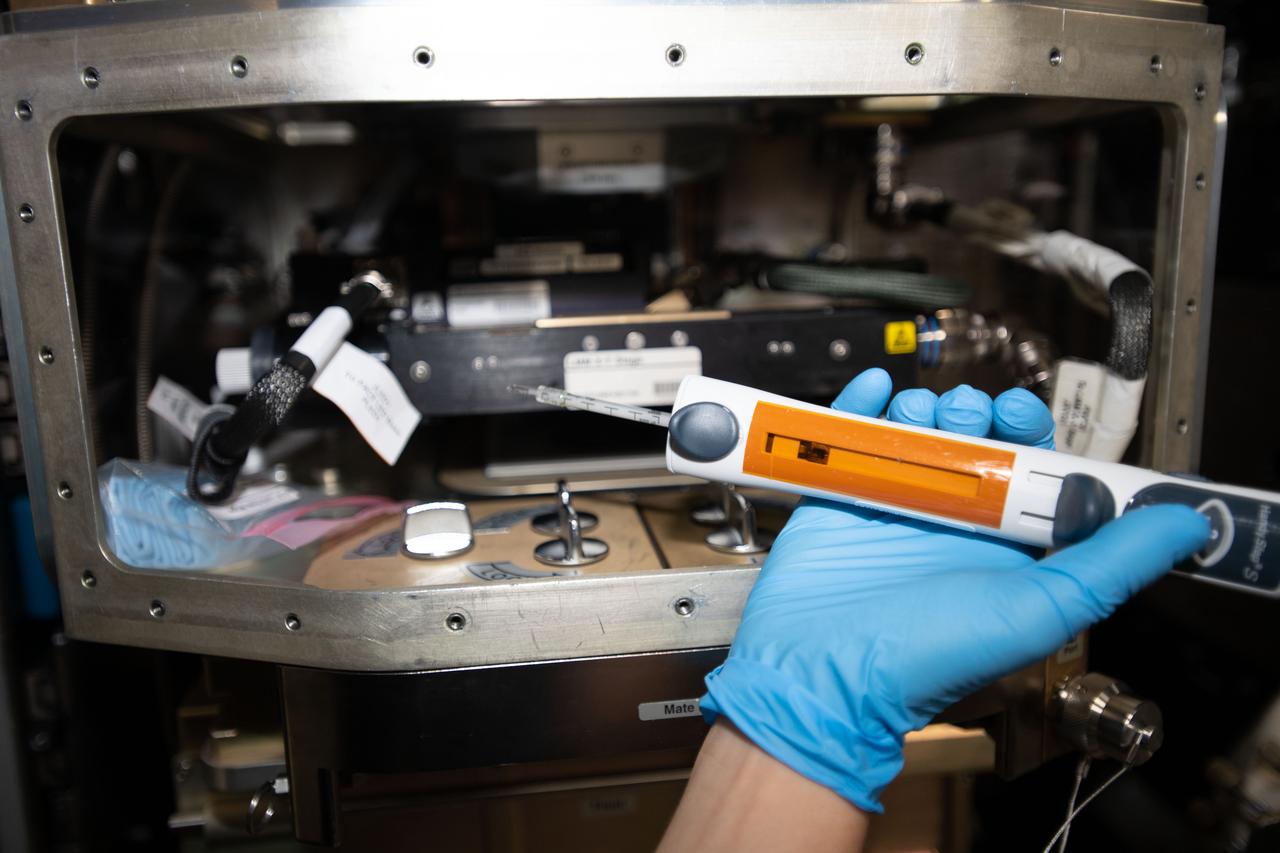
iss062e123434 (4/5/2020) --- A view of the Flow Chemistry Platform for Synthetic Reactions on ISS investigation aboard the International Space Station (ISS). The Flow Chemistry Platform for Synthetic Reactions on ISS investigation studies the effects of microgravity on synthetic chemical reactions as a step toward on-demand production of chemicals and materials in space.
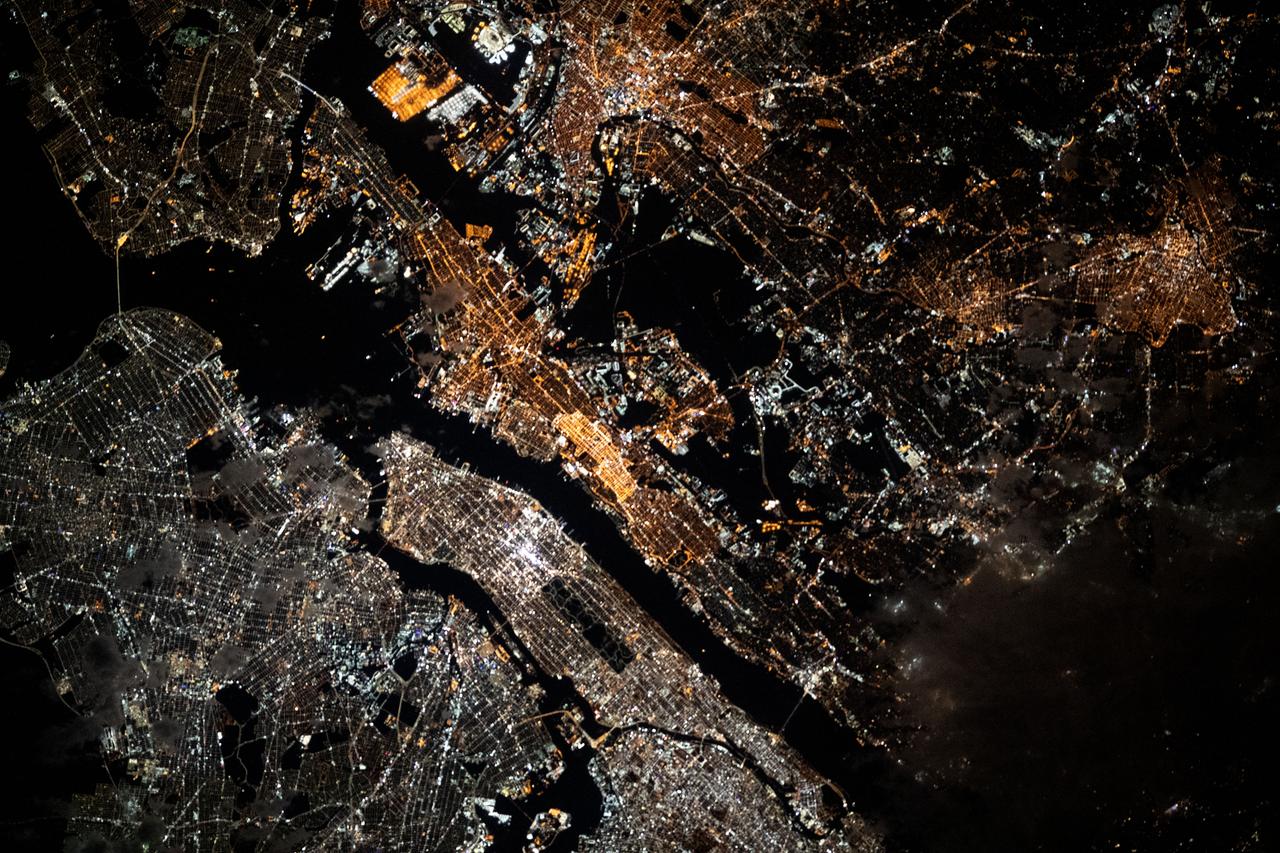
iss062e062036 (Feb. 28, 2020) --- The well-lit New York/New Jersey metropolitan area is viewed during the early morning hours as the International Space Station orbited 263 miles above the northeastern United States. Landmarks include the dark rectangular area (lower center) that is Central Park in Manhattan.
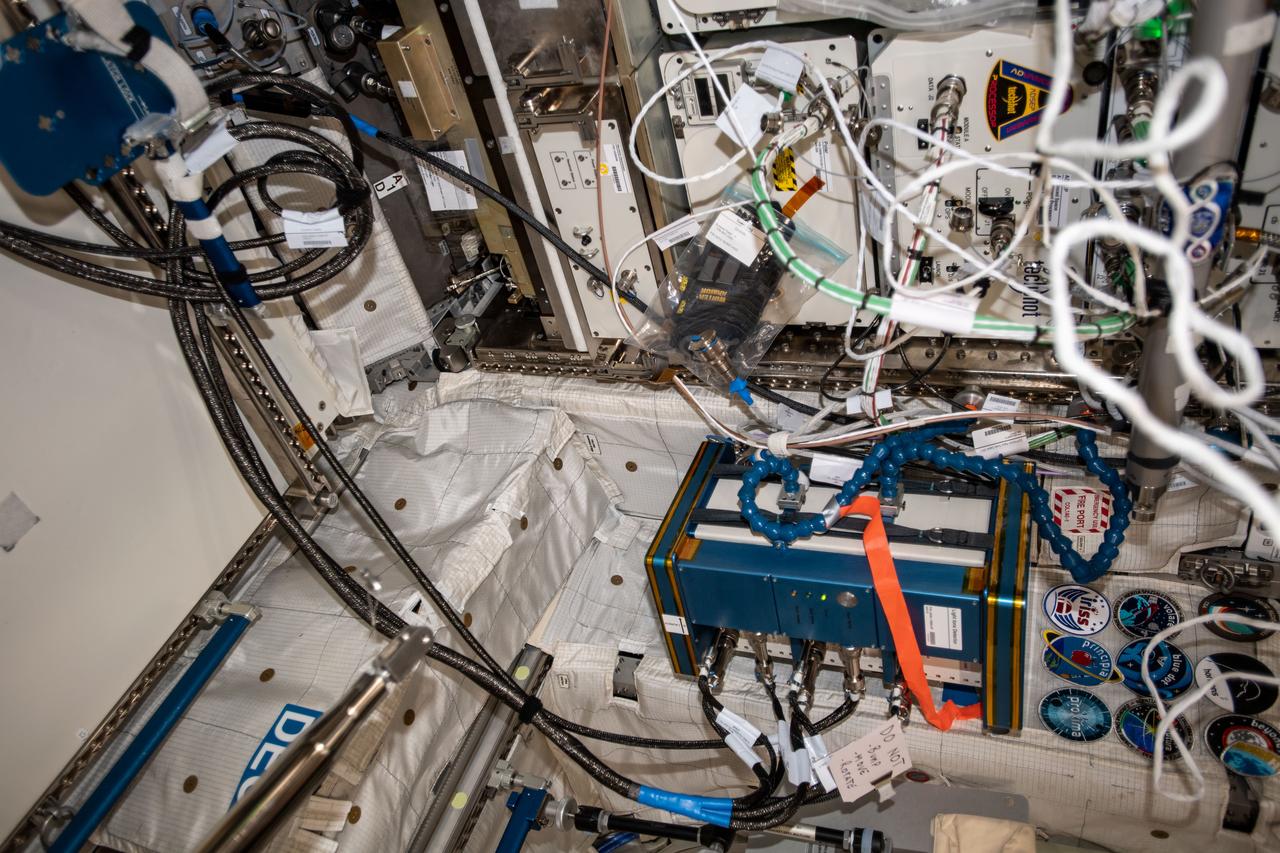
iss062e075413 (3/4/2020) --- A view taken aboard the International space Station (ISS) during the LIDAL Data Acquisition Unit (DAU) move. LIDAL supports ALTEA by helping to provide real-time environmental radiation measurements and monitoring, radiation risk assessment, and radiation models validation aboard the International Space Station. This system could also be of use aboard future manned spacecraft on future exploration missions to the Moon, Mars, and beyond.
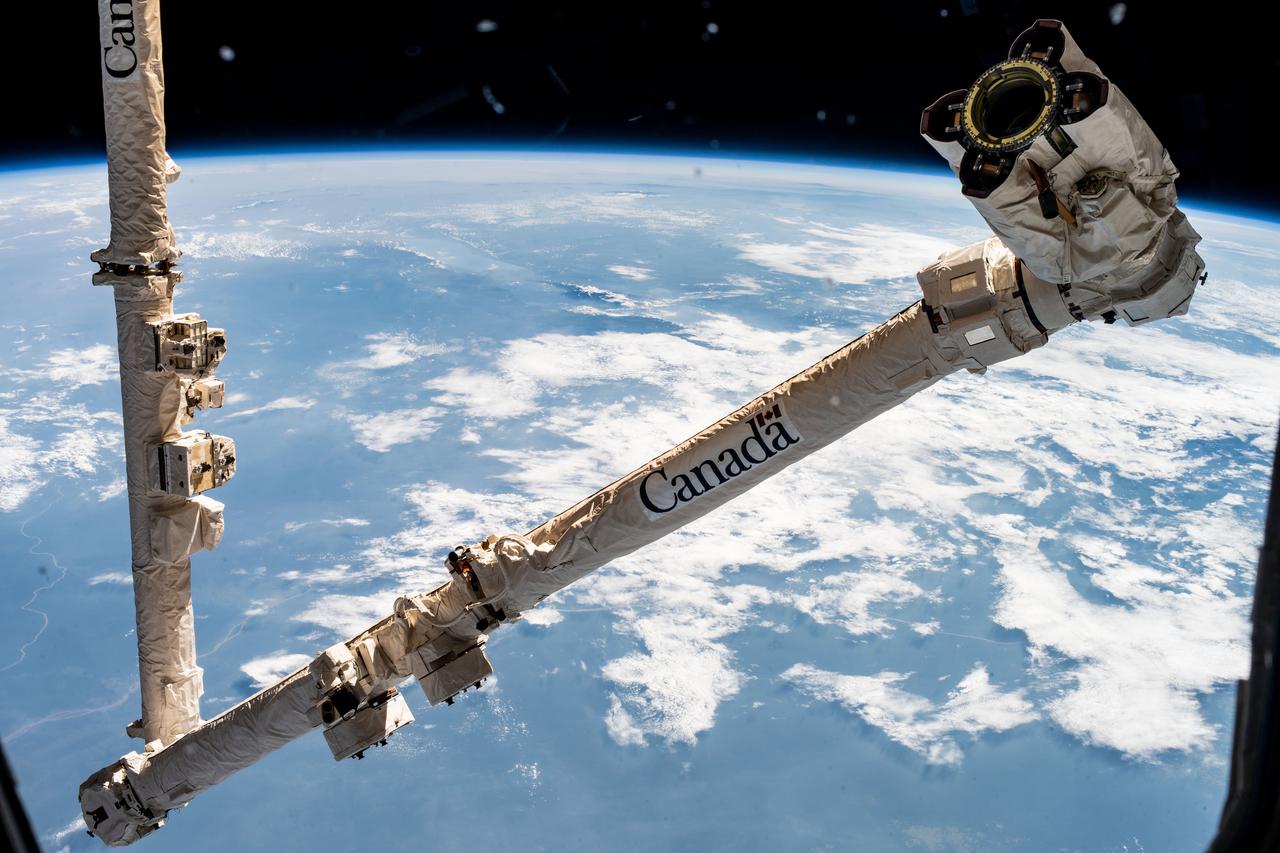
iss062e000422 (Feb. 7, 2020) --- The Canadarm2 robotic arm, from the Canadian Space Agency, is poised to capture the Cygnus space freighter from Northrop Grumman with NASA astronaut Andrew Morgan at the robotics controls in the cupola on Sunday, Feb. 16, 2020. Ground controllers will take over afterward and remotely command the Canadarm2 to install Cygnus to the Unity module where it will stay for three months.
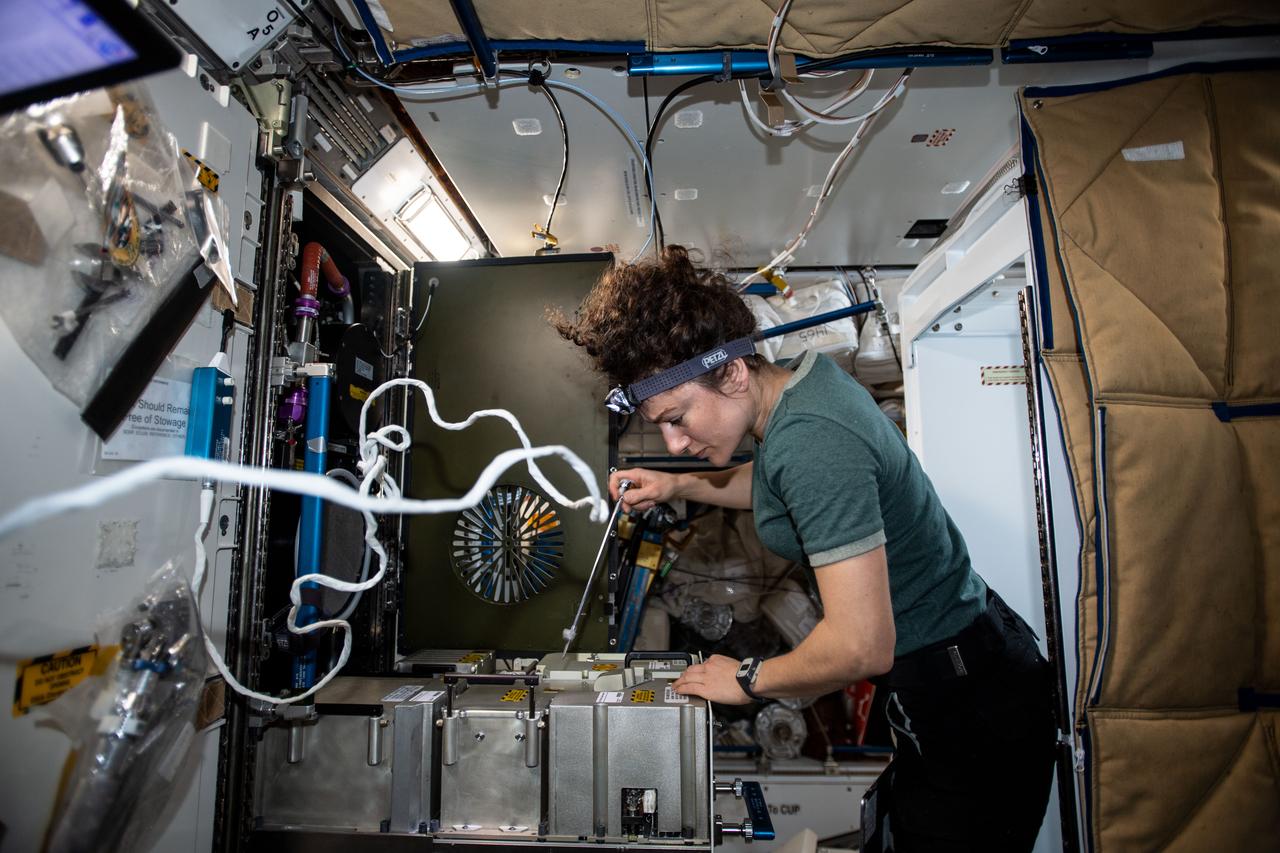
iss062e103552 (March 20, 2020) --- NASA astronaut and Expedition 62 Flight Engineer Jessica Meir works on the Major Constituent Analyzer, a device that measures the orbiting lab’s atmosphere. The life support gear monitors a variety of major constituents, such as nitrogen, carbon dioxide and water vapor to ensure a safe breathing environment for the crew.
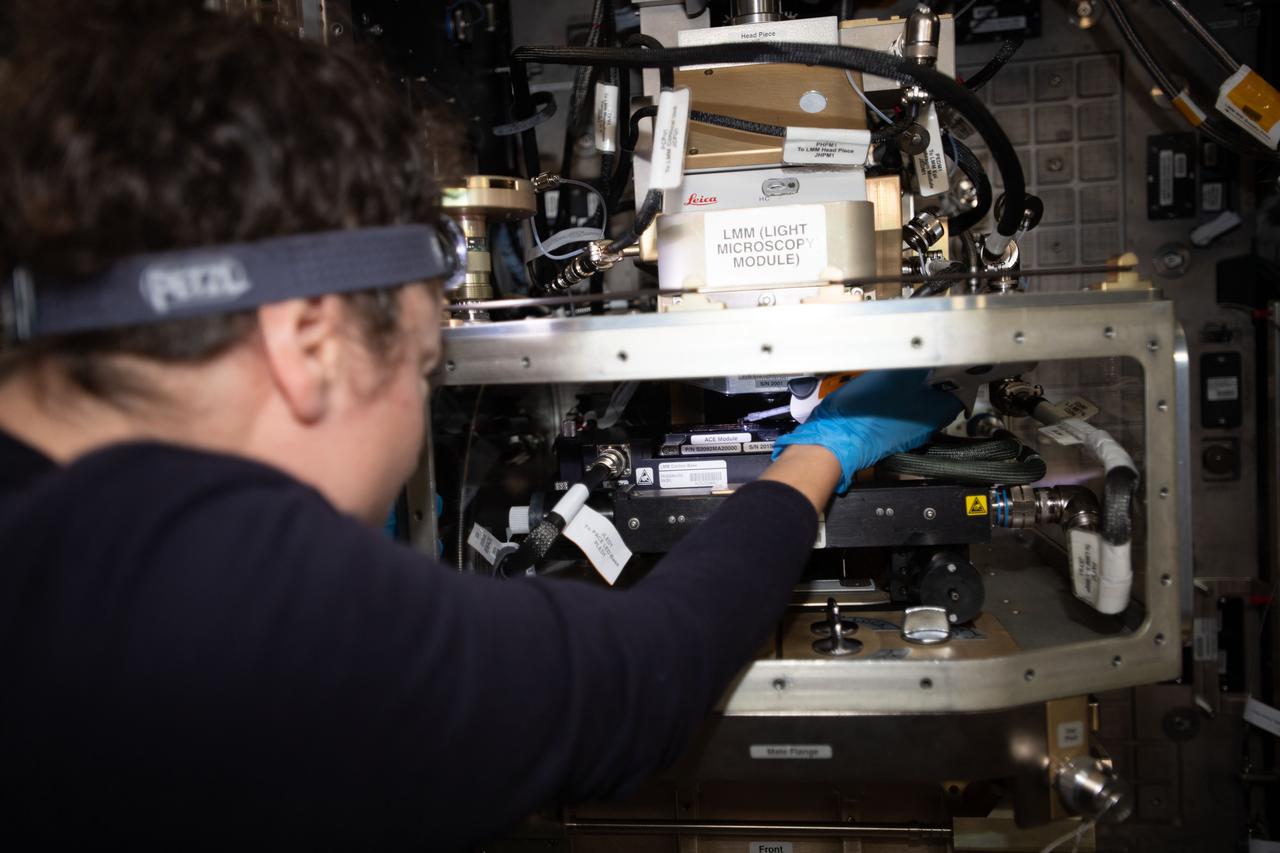
iss062e014345 (2-16-2020) --- A view of NASA astronaut Jessica Meir configuring the Light Microscopy Module (LMM) for the Advanced Colloids Experiment-Temperature-4 (ACE-T-4) science run in the Destiny module aboard the International Space Station (ISS). Introducing disorder to a crystalline system in a controlled way can form glass. Advanced Colloids Experiment-Temperature-4 (ACE-T-4) examines the transition of an ordered crystal to a disordered glass to determine how increasing disorder affects structural and dynamic properties
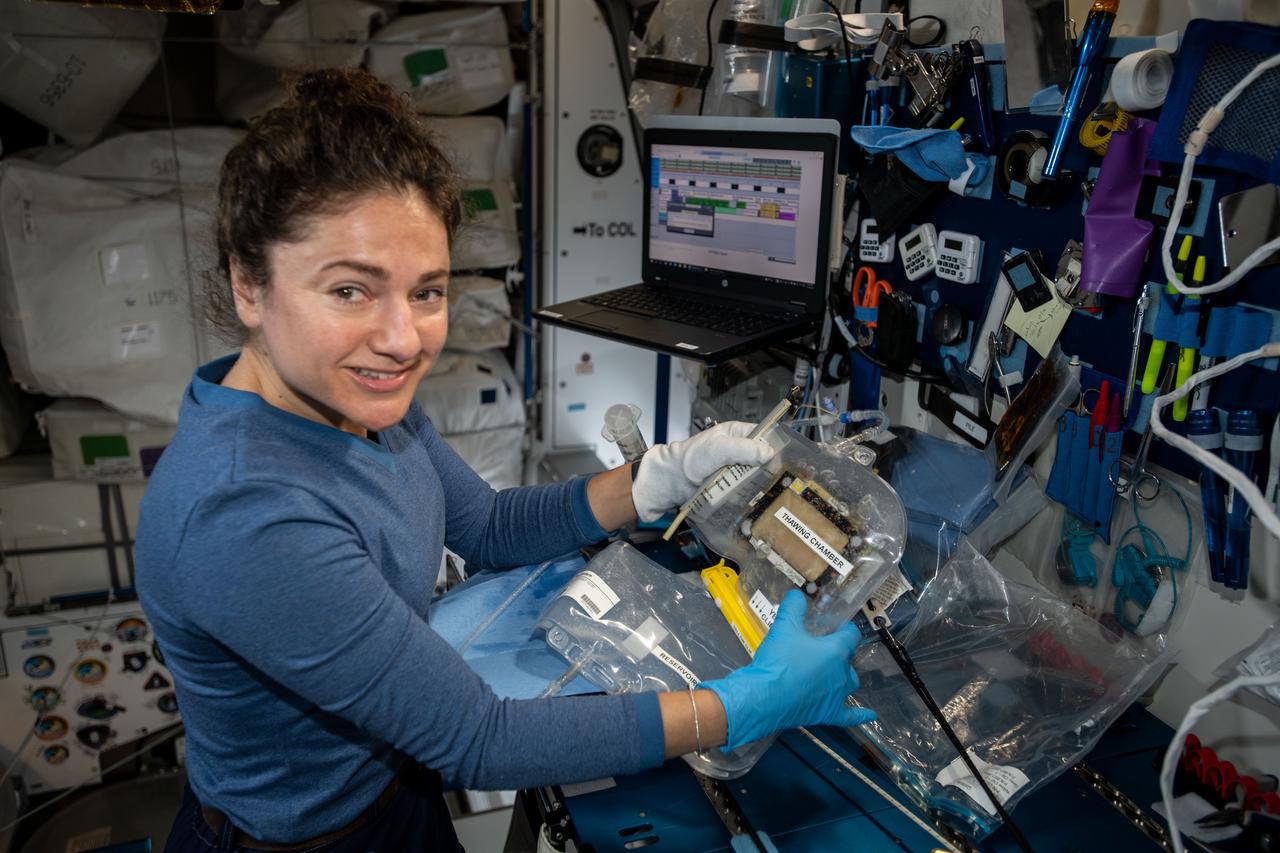
iss062e039026 (Feb. 21, 2020) --- NASA astronaut and Expedition 62 Flight Engineer Jessica Meir works with research hardware to support the OsteoOmics-02 bone investigation. The experiment is helping doctors to compare bone cells in space with samples on Earth that are levitated magnetically. Observations from the study could provide deeper insights into bone ailments on Earth, including osteoporosis.
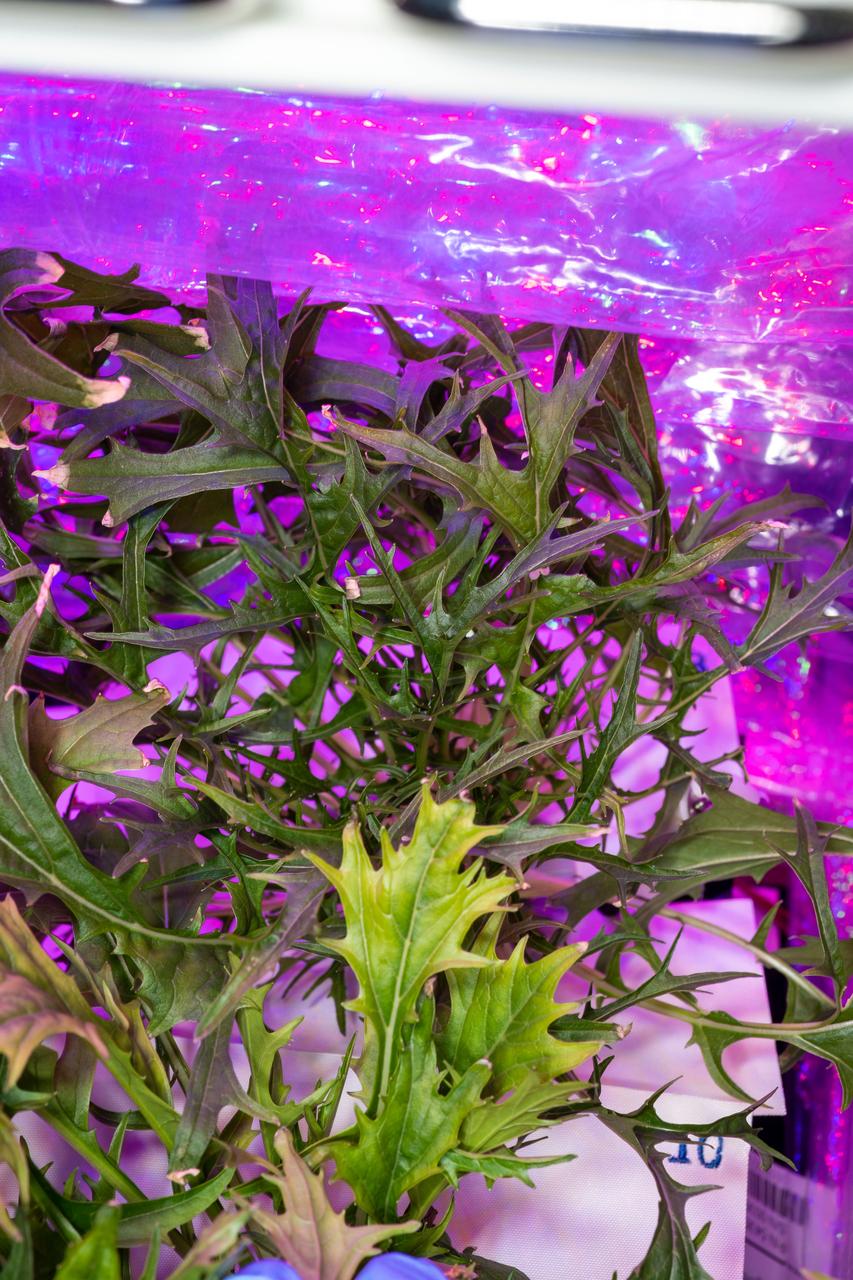
Documentation of a Mizuna mustard plant growing in Plant Pillow 8 in the Vegetable Production System (Veggie). Photo was taken prior to plant harvesting operations (OPS) for the Veg-04B experiment.
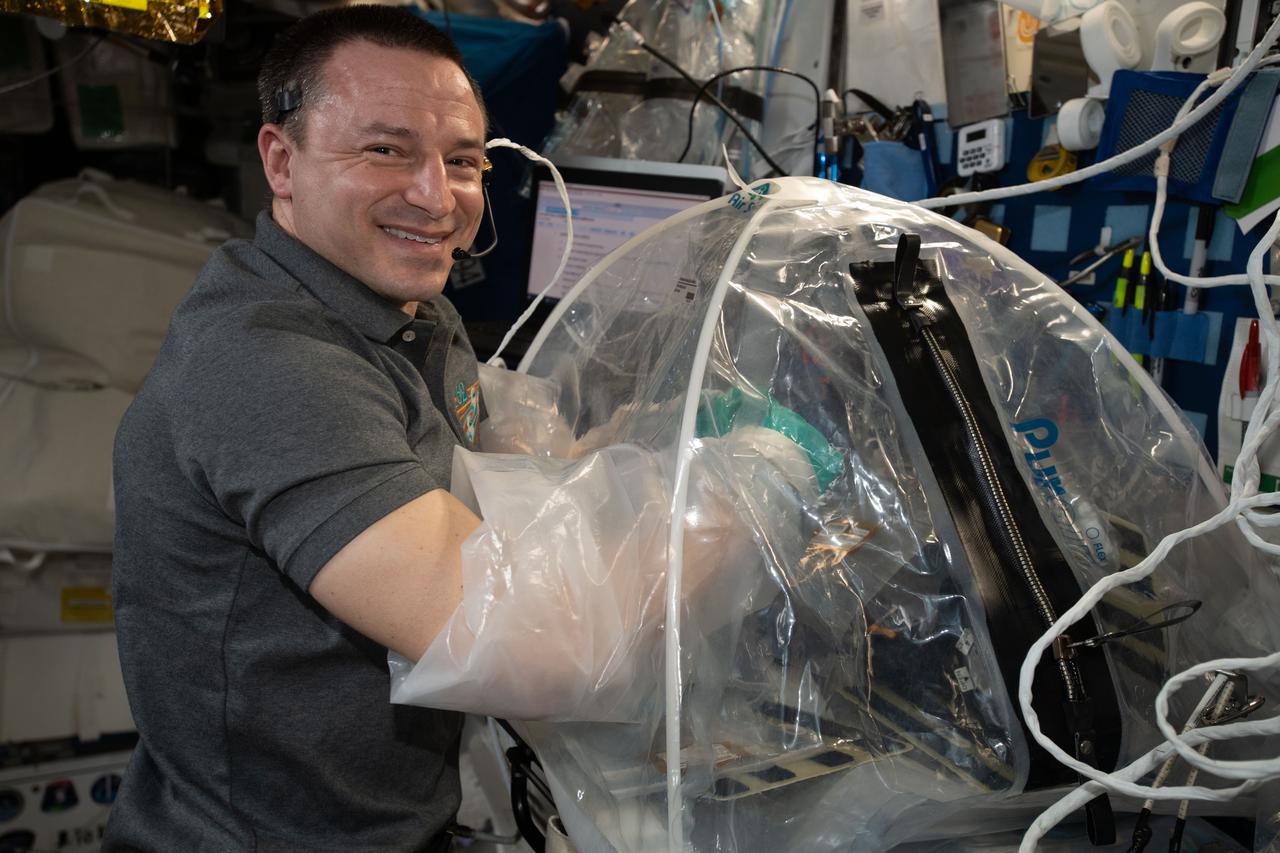
iss062e098371 (March 17, 2020) --- NASA astronaut and Expedition 62 Flight Engineer Andrew Morgan conducts cardiac research activities inside the portable glovebag. Morgan was servicing heart cell samples for the Multi-use Variable-g Platform-02 Cell-03 experiment. The investigation induces stem cells to generate heart precursor cells and cultures those cells on the space station to analyze and compare with cultures grown on Earth. Results may help treat spaceflight-induced cardiac abnormalities and accelerate development and reduce costs of drug therapies on Earth.
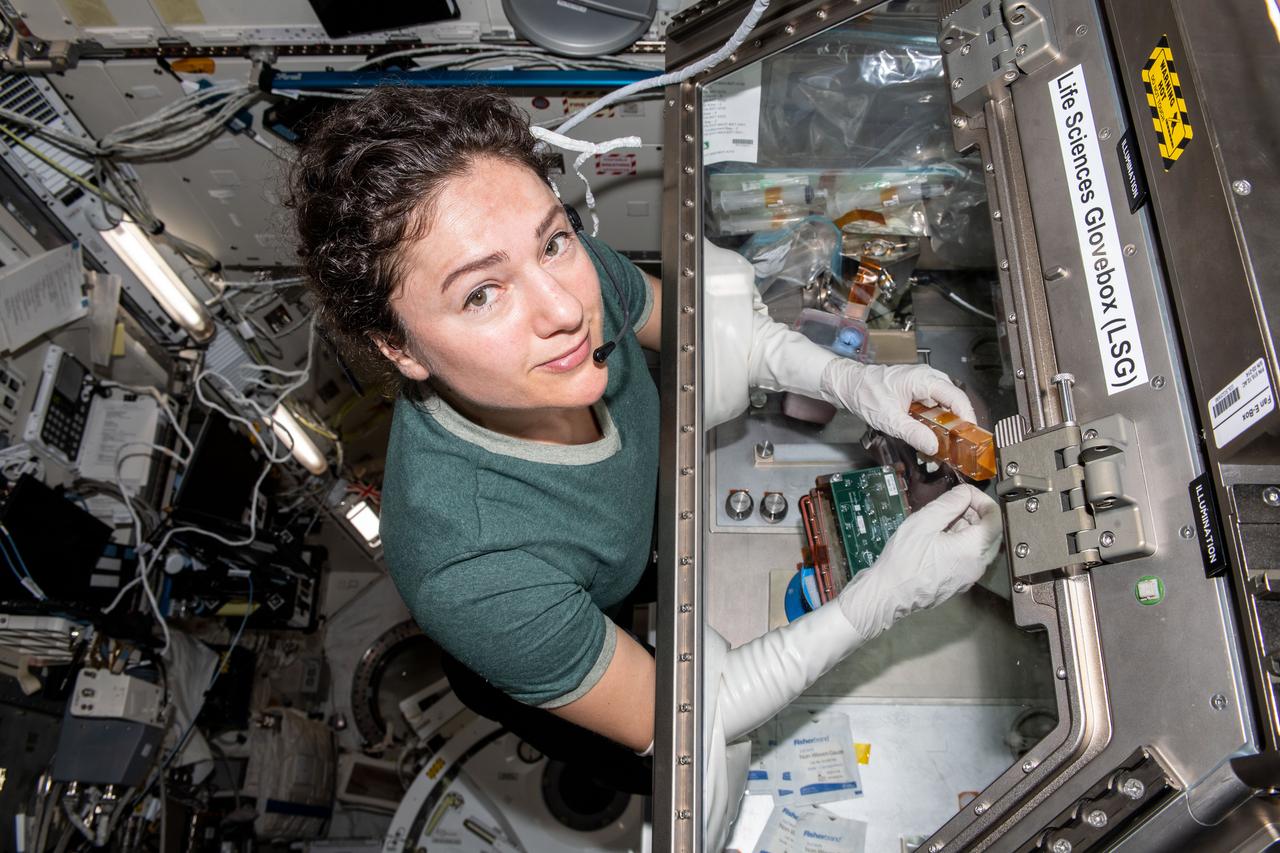
iss062e120658 (April 2, 2020) --- NASA astronaut and Expedition 62 Flight Engineer conducts cardiac research in the Life Sciences Glovebox located in the Japanese Kibo laboratory module. The Engineered Heart Tissues investigation could promote a better understanding of cardiac function in microgravity which would be useful for drug development and other applications related to heart conditions on Earth.
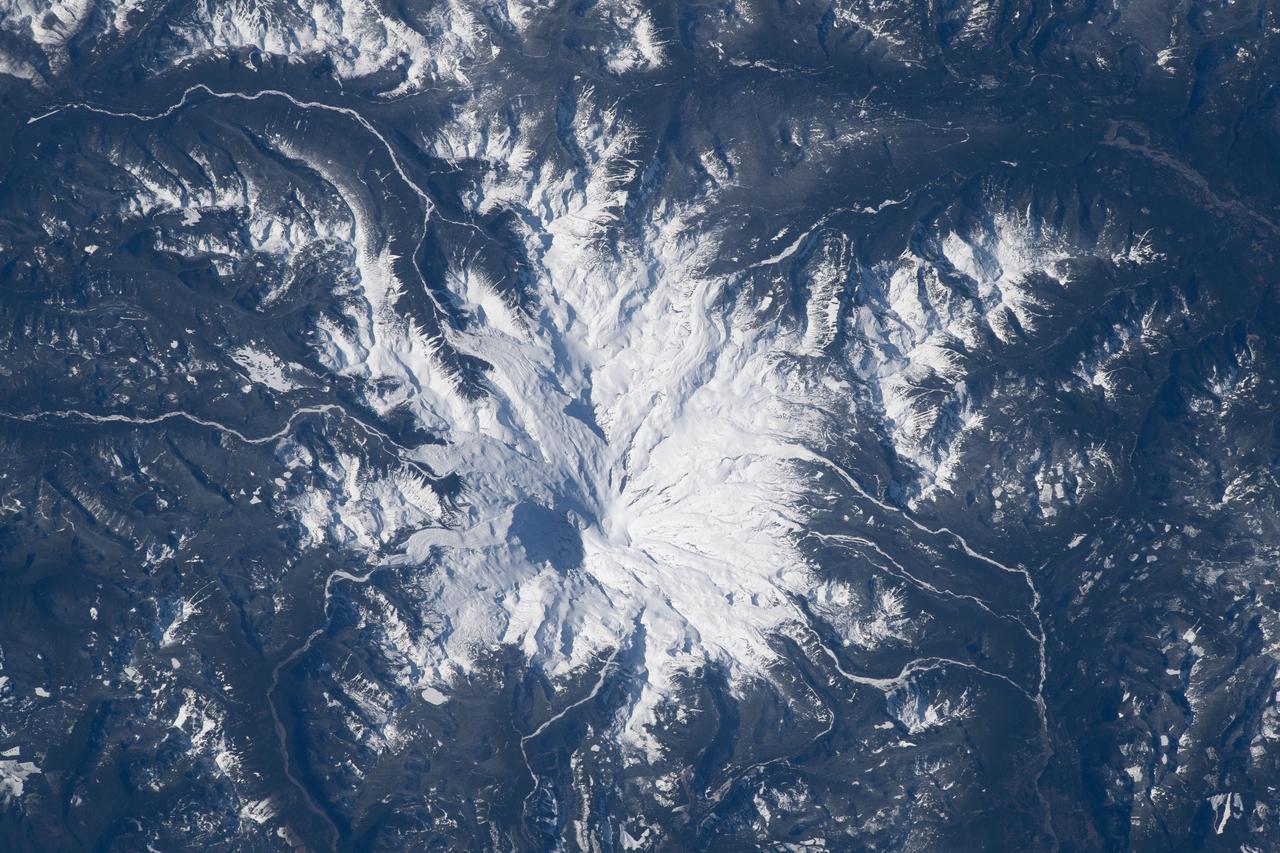
iss062e039503 (Feb. 19, 2020) --- Mount Rainier is viewed from the International Space Station as it orbited 266 miles above Washington state.
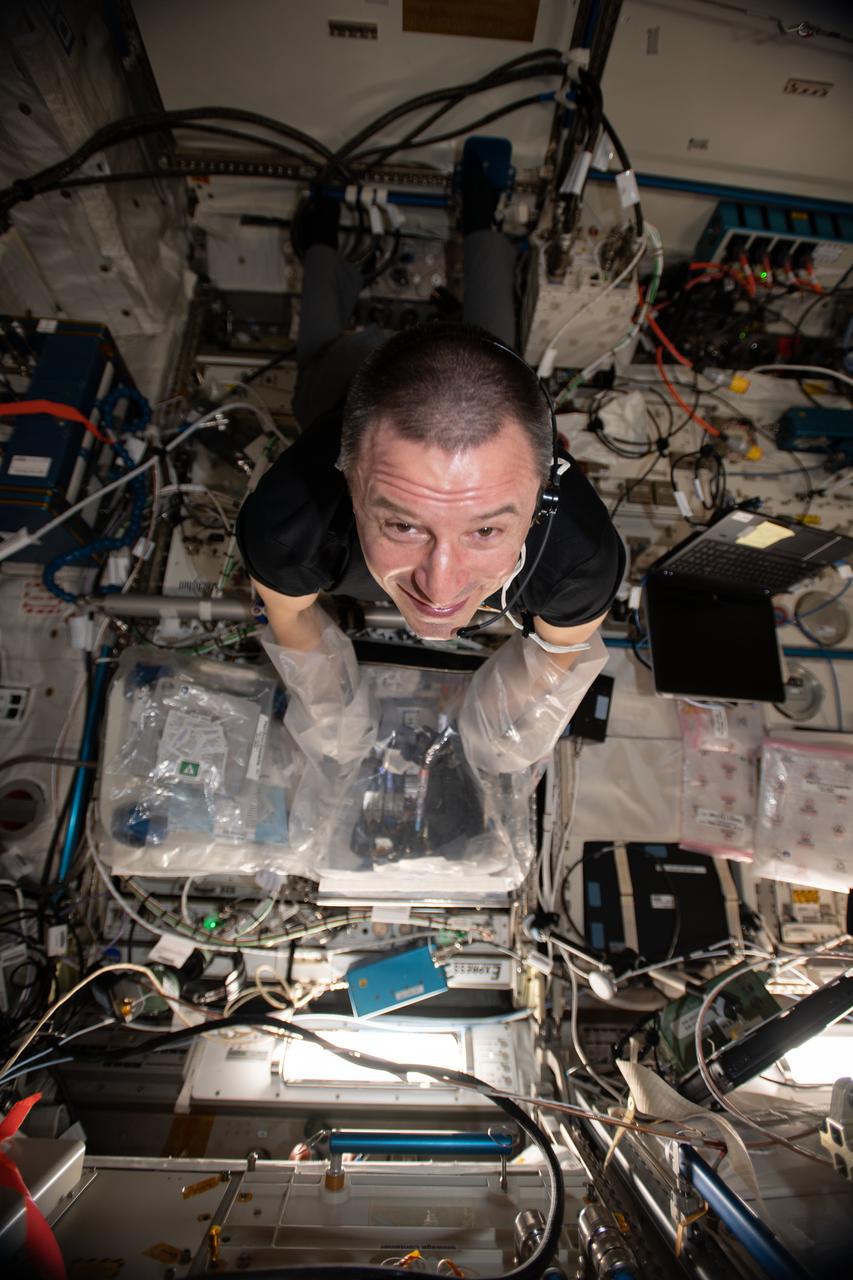
iss062e115402 (March 26, 2020) --- NASA astronaut and Expedition 62 Flight Engineer Andrew Morgan services the Bio-Fabrication Facility (BFF), a 3D bioprinter that seeks to demonstrate manufacturing human organs in space to help patients on Earth. The BFF may even lead to future crews printing their own food and medicines on missions farther away from Earth.
iss062e014342 (2-16-2020) --- A view of NASA astronaut Jessica Meir configuring the Light Microscopy Module (LMM) for the Advanced Colloids Experiment-Temperature-4 (ACE-T-4) science run in the Destiny module aboard the International Space Station (ISS). Introducing disorder to a crystalline system in a controlled way can form glass. Advanced Colloids Experiment-Temperature-4 (ACE-T-4) examines the transition of an ordered crystal to a disordered glass to determine how increasing disorder affects structural and dynamic properties
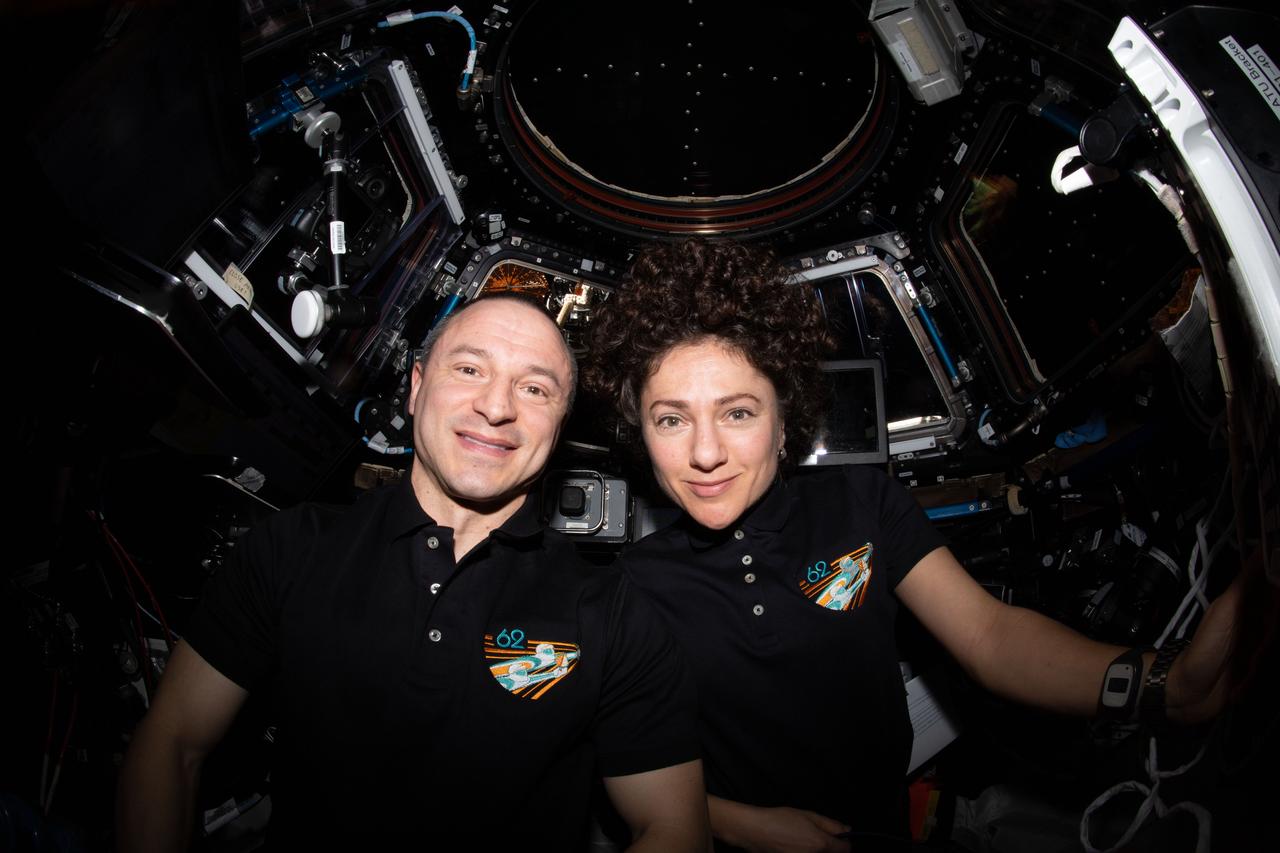
iss062e024073 (Feb. 18, 2020) --- NASA astronauts Andrew Morgan and Jessica Meir pose for a portrait inside the cupola, the International Space Station's "window to the world." The two Expedition 62 Flight Engineers were participating in the capture activities of Northrop Grumman's Cygnus cargo craft.
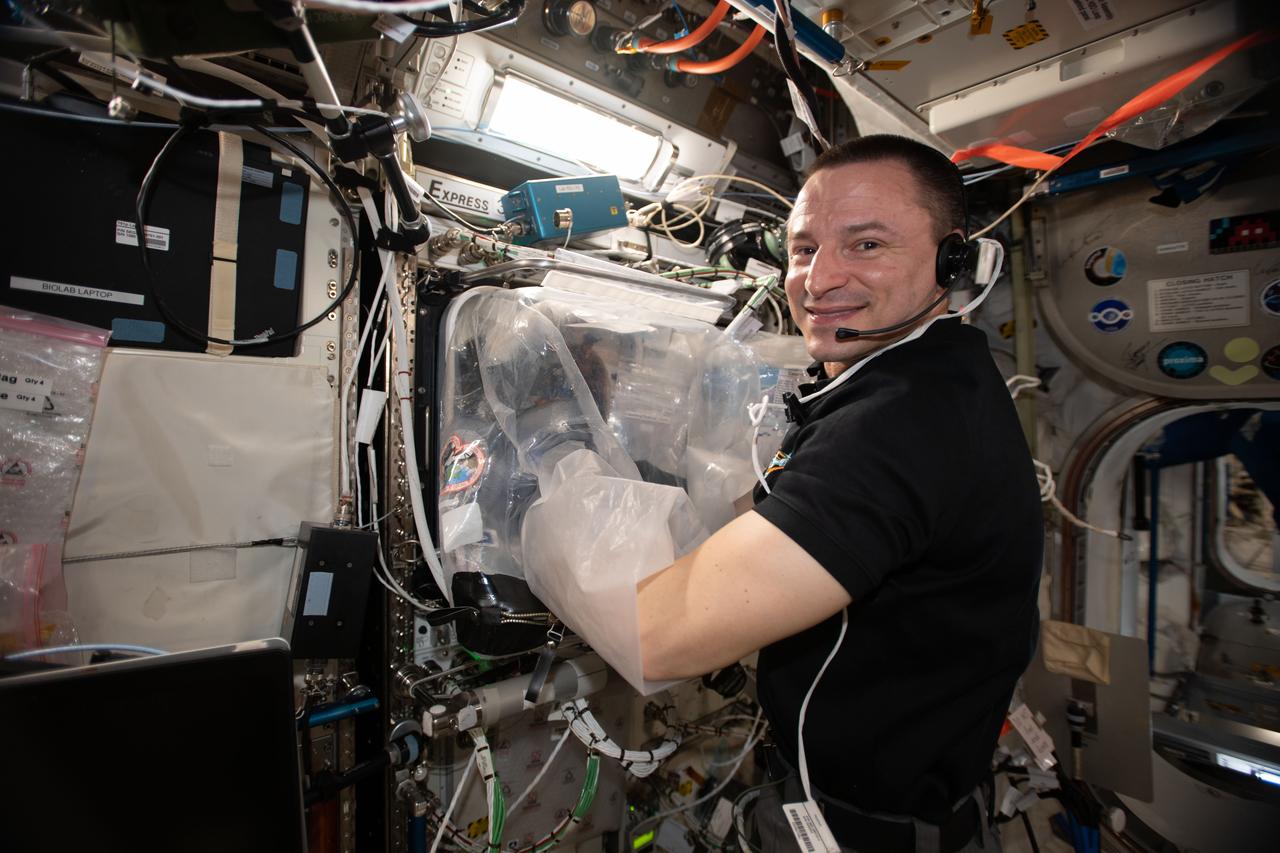
iss062e115396 (March 26, 2020) --- NASA astronaut and Expedition 62 Flight Engineer Andrew Morgan services the Bio-Fabrication Facility (BFF), a 3D bioprinter that seeks to demonstrate manufacturing human organs in space to help patients on Earth. The BFF may even lead to future crews printing their own food and medicines on missions farther away from Earth.
iss062e102715 (3/19/2020) --- A view of the Symbiotic Leguminous Nitrogen Fixation CubeLab onboard the International Space Station (ISS). Nitrogen Fixation of Leguminous Species in MicroG (Symbiotic Leguminous Nitrogen Fixation) explores microgravity’s effects on the growth and development of Vigna unguiculata, a legume capable of biological nitrogen fixation.
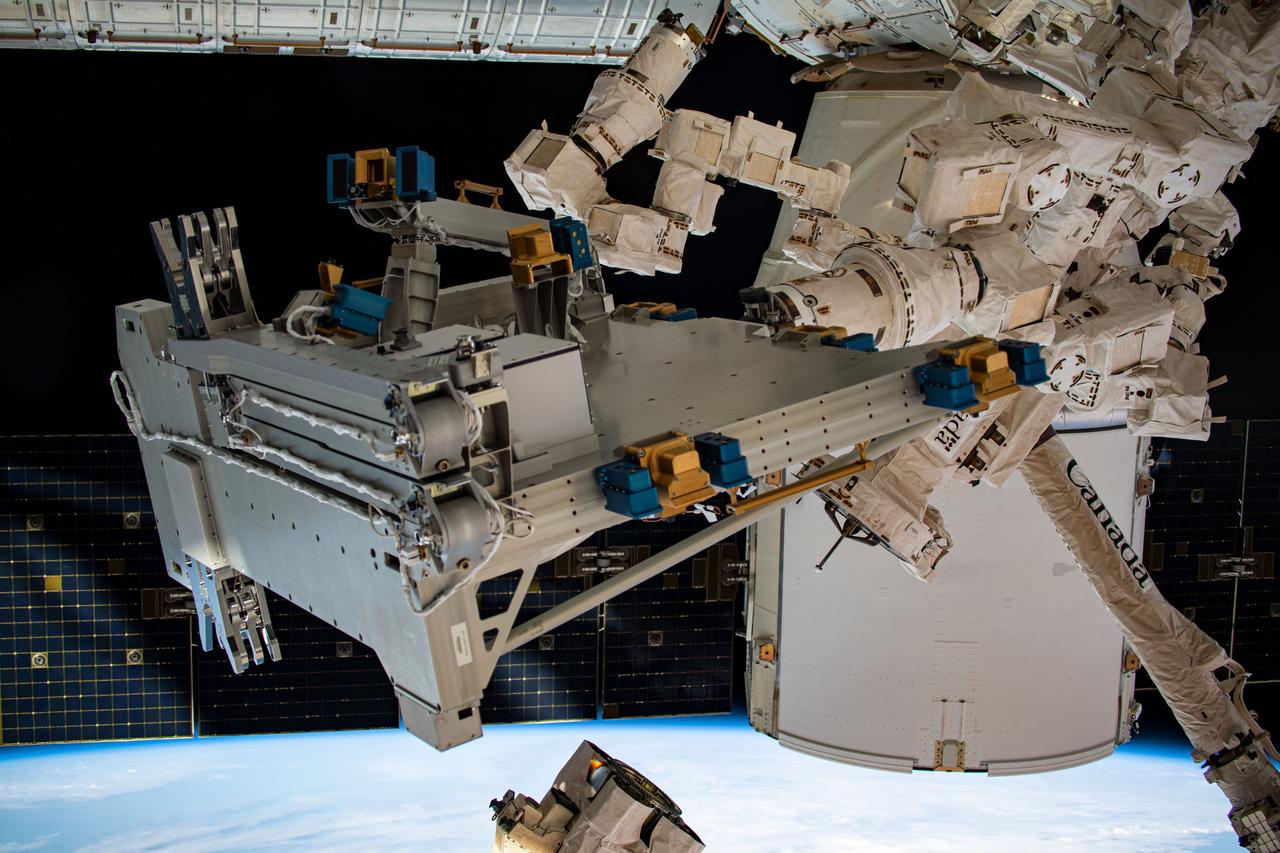
iss062e115840 (3/27/2020) --- Bartolomeo in the parking position below the Destiny module on the International Space Station (ISS). The European external platform Bartolomeo is an enhancement of the International Space Station (ISS) European Columbus Module and its infrastructure. Designed to meet user requirements from the commercial and institutional sector, Bartolomeo is a new external payload hosting facility on the ram side of Columbus.
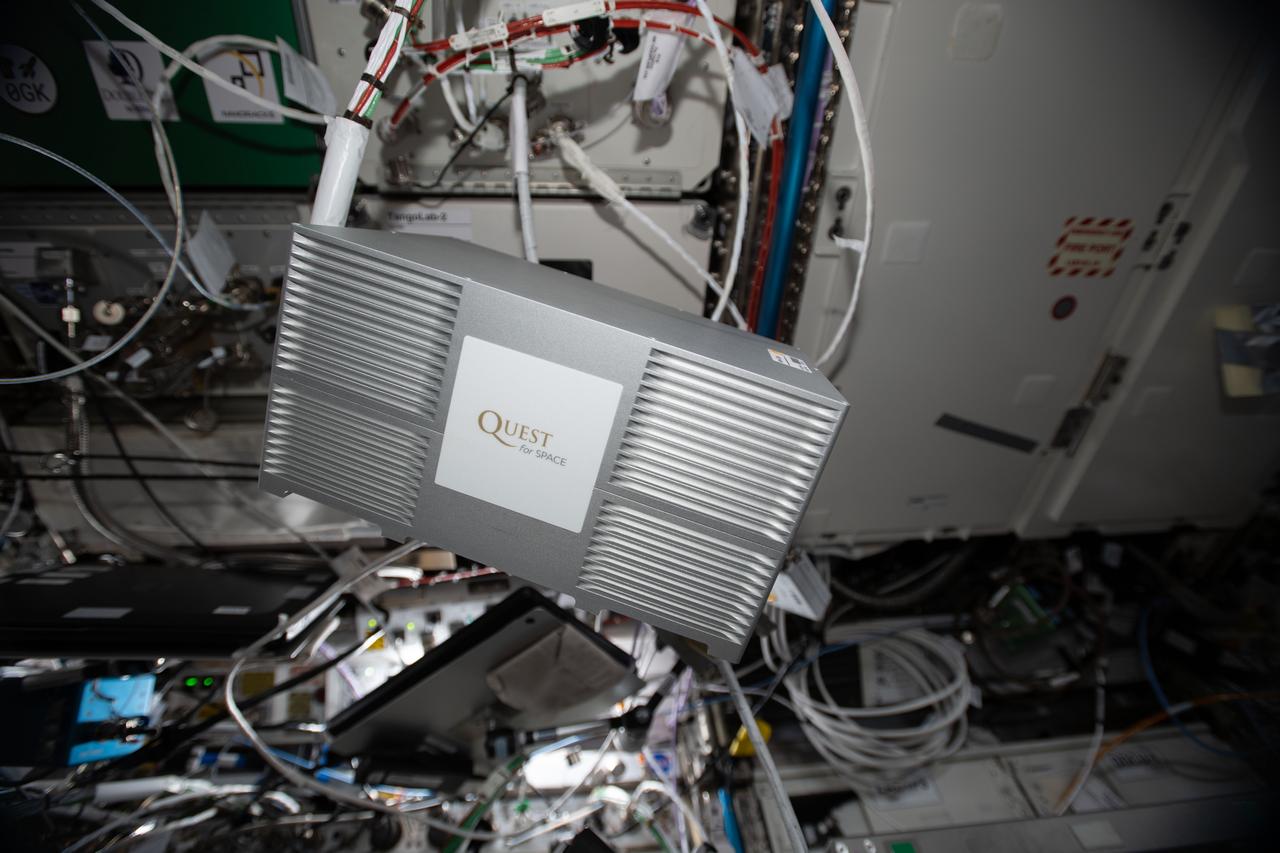
iss062e102749 (3/19/2020) --- A view of the Quest Institute-NanoLab Unit 3 investigation aboard the International Space Station (ISS). Quest Institute-NanoLab Unit 3 contains 15 Nano-Lab experiments from students in the United States and Singapore. Student-developed spaceflight experiments empower students with real-world science experience.
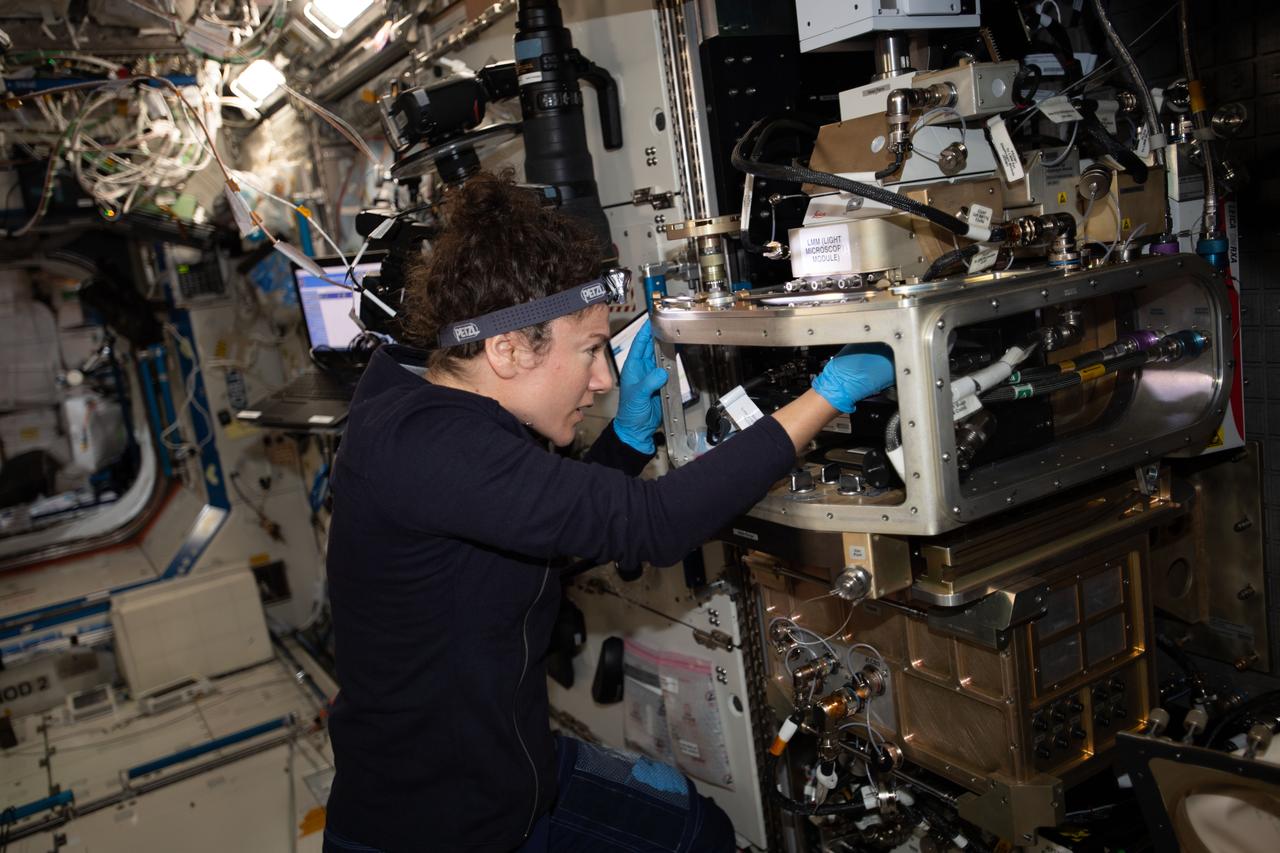
iss062e014339 (Feb. 16, 2020) --- NASA astronaut and Expedition 62 Flight Engineer Jessica Meir configures the Light Microscopy Module inside the Fluids Integrated Rack. The specialized microscope is being readied to examine the transition of an ordered crystal to a disordered glass to determine how increasing disorder affects structural and dynamic properties. The Advanced Colloids Experiment-Temperature-4 (ACE-T-4) investigation controls disorder by controlling temperature in a series of samples and observes the microscopic transition in three dimensions.
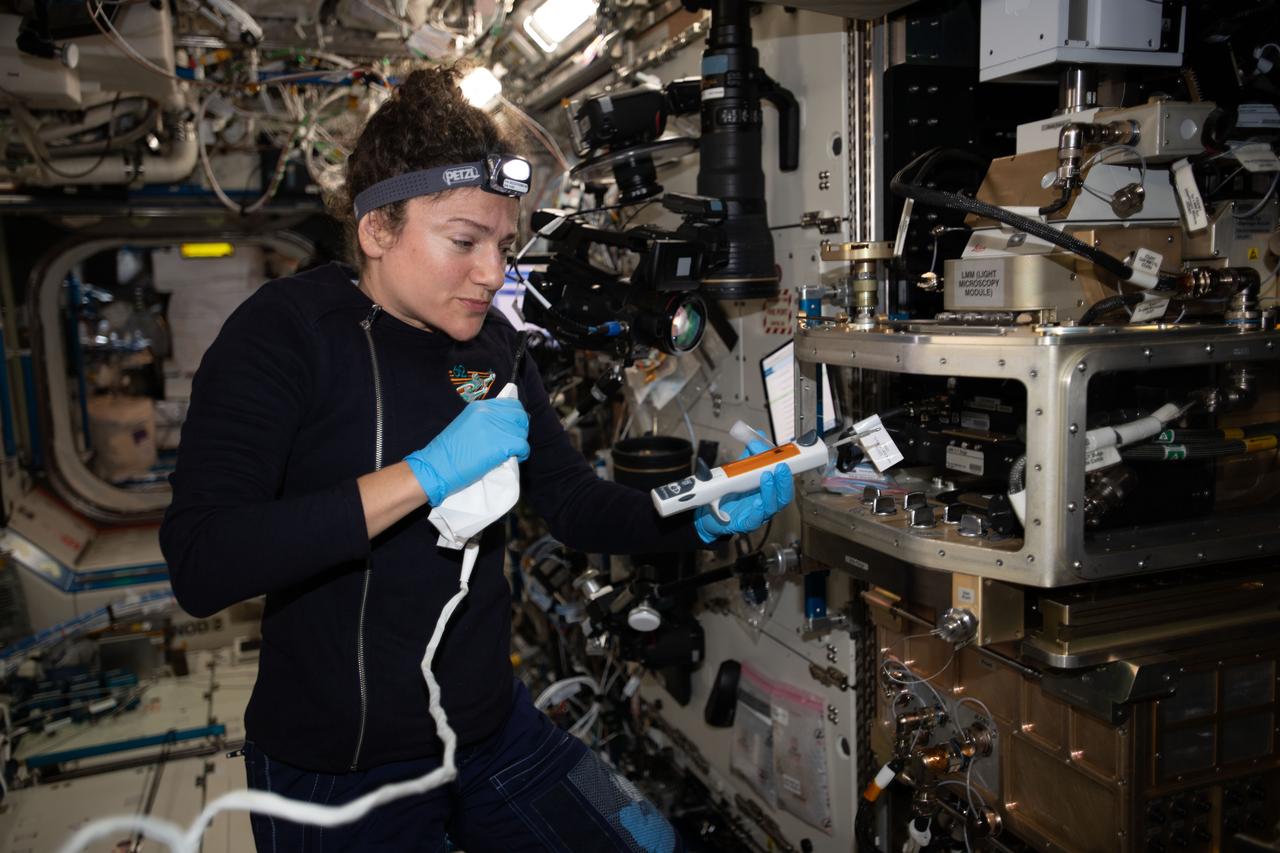
iss062e014349 (Feb. 16, 2020) --- A view of NASA astronaut Jessica Meir configuring the Light Microscopy Module (LMM) for the Advanced Colloids Experiment-Temperature-4 (ACE-T-4) science in the Destiny module aboard the International Space Station (ISS). Introducing disorder to a crystalline system in a controlled way can form glass. Advanced Colloids Experiment-Temperature-4 (ACE-T-4) examines the transition of an ordered crystal to a disordered glass to determine how increasing disorder affects structural and dynamic properties.
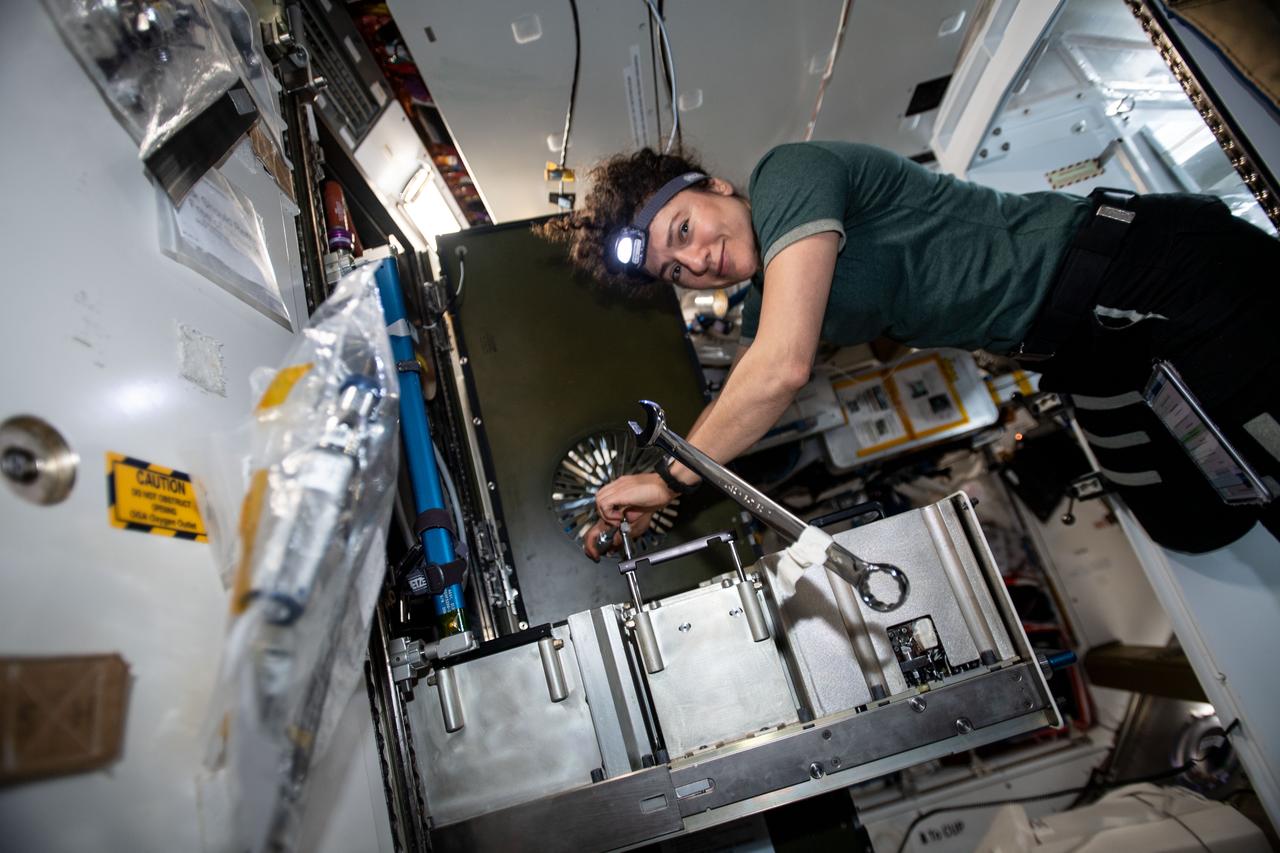
iss062e103558 (March 20, 2020) --- NASA astronaut and Expedition 62 Flight Engineer Jessica Meir works on the Major Constituent Analyzer, a device that measures the orbiting lab’s atmosphere. The life support gear monitors a variety of major constituents, such as nitrogen, carbon dioxide and water vapor to ensure a safe breathing environment for the crew.

ISS062e1866 (2/8/2020) — Earth observation photograph of Costa Rica taken during day pass by the Expedition 62 crew aboard the International Space Station (ISS). The image includes the the capital San Jose, Gulf of Nicoya , and the Tilmaran Mountains.