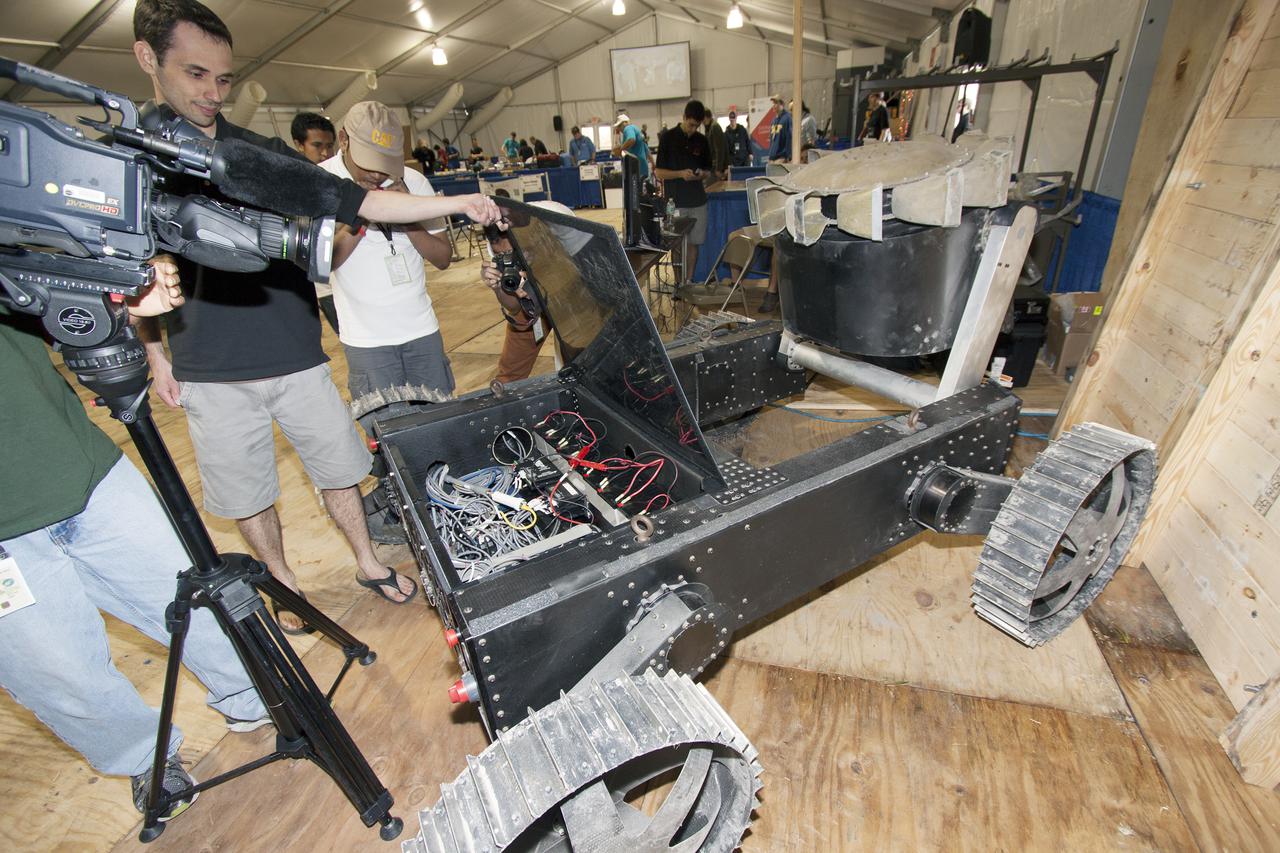
CAPE CANAVERAL, Fla. – A team from Astrobotic Technology, Inc., demonstrates the Polaris rover at a robotics mining competition at NASA's Kennedy Space Center. Astrobotic developed the Polaris to prospect water at the lunar poles. Photo credit: Jim Grossmann
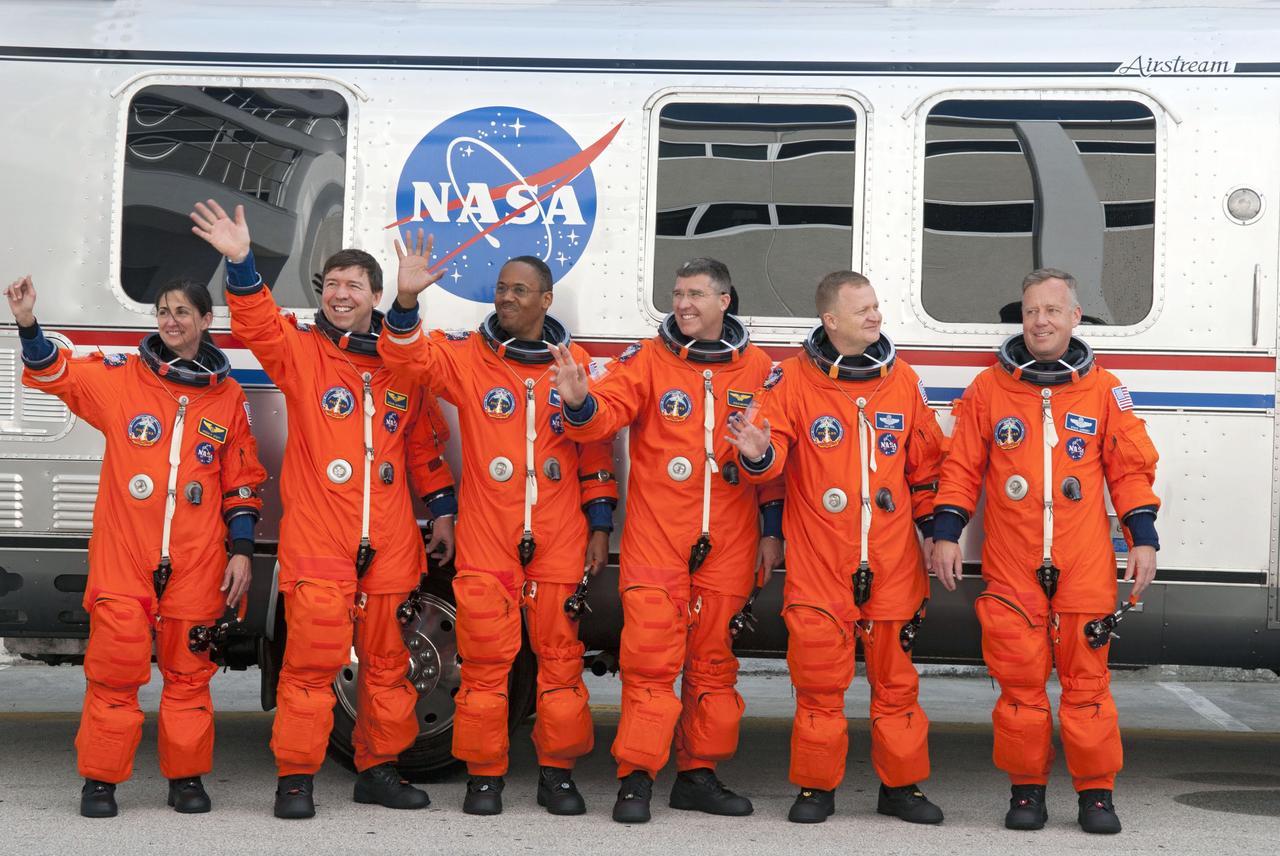
STS133-S-007 (24 Feb. 2011) --- After suiting up, the STS-133 crew members pause alongside the Astrovan to wave farewell to onlookers before heading for launch pad 39A for the launch of space shuttle Discovery on the STS-133 mission. From the right are NASA astronauts Steve Lindsey, commander; Eric Boe, pilot; Steve Bowen, Alvin Drew, Michael Barratt and Nicole Stott, all mission specialists. Discovery and its six-member crew will deliver the Permanent Multipurpose Module, packed with supplies and critical spare parts, as well as Robonaut 2, the dexterous humanoid astronaut helper, to the International Space Station. Discovery, which will fly its 39th mission, is scheduled to be retired following STS-133. This will be the 133rd Space Shuttle Program mission and the 35th shuttle voyage to the space station. Photo credit: NASA or National Aeronautics and Space Administration
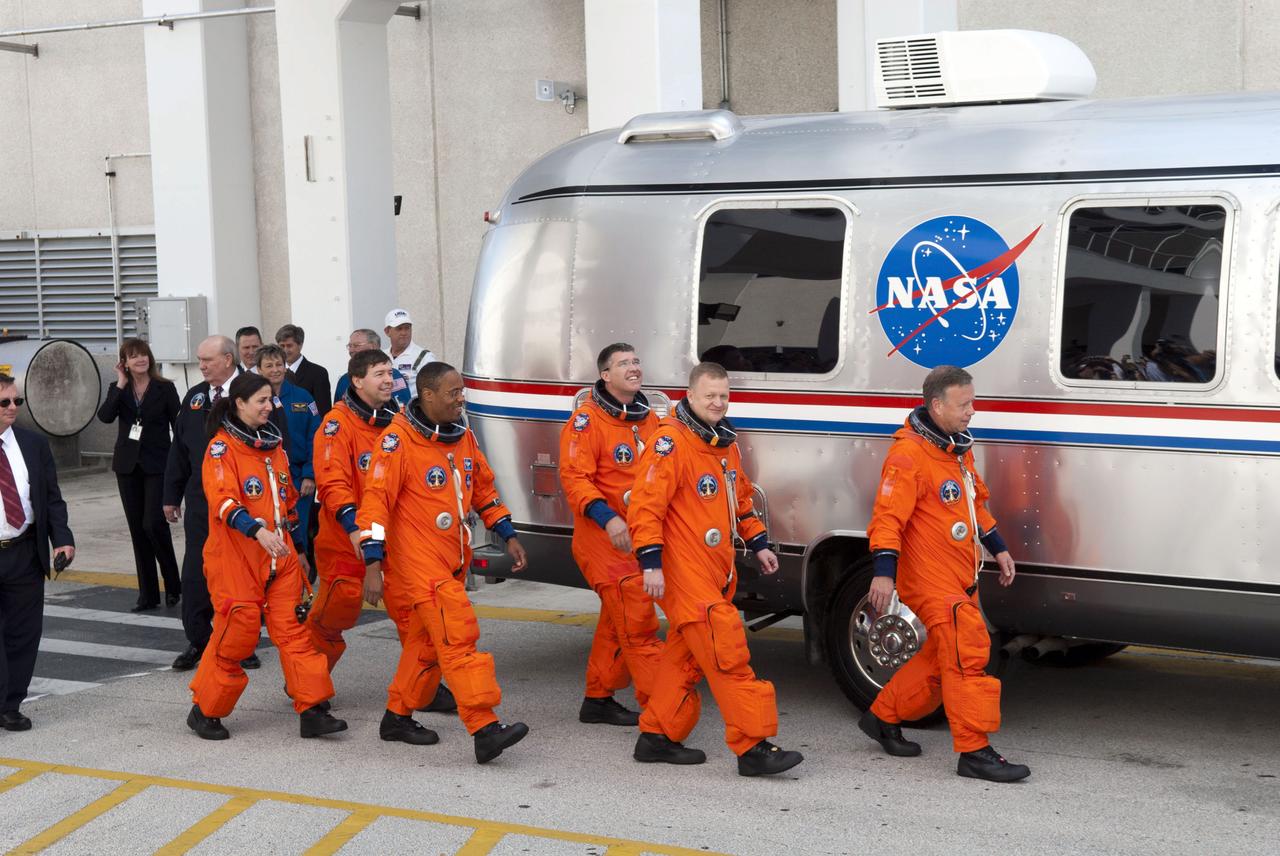
STS133-S-006 (24 Feb. 2011) --- After suiting up, the STS-133 crew members exit the Operations and Checkout Building to board the Astrovan, which will take them to launch pad 39A for the launch of space shuttle Discovery on the STS-133 mission. From the right are NASA astronauts Steve Lindsey, commander; Eric Boe, pilot; Steve Bowen, Alvin Drew, Michael Barratt and Nicole Stott, all mission specialists. Discovery and its six-member crew will deliver the Permanent Multipurpose Module, packed with supplies and critical spare parts, as well as Robonaut 2, the dexterous humanoid astronaut helper, to the International Space Station. Discovery, which will fly its 39th mission, is scheduled to be retired following STS-133. This will be the 133rd Space Shuttle Program mission and the 35th shuttle voyage to the space station. Photo credit: NASA or National Aeronautics and Space Administration
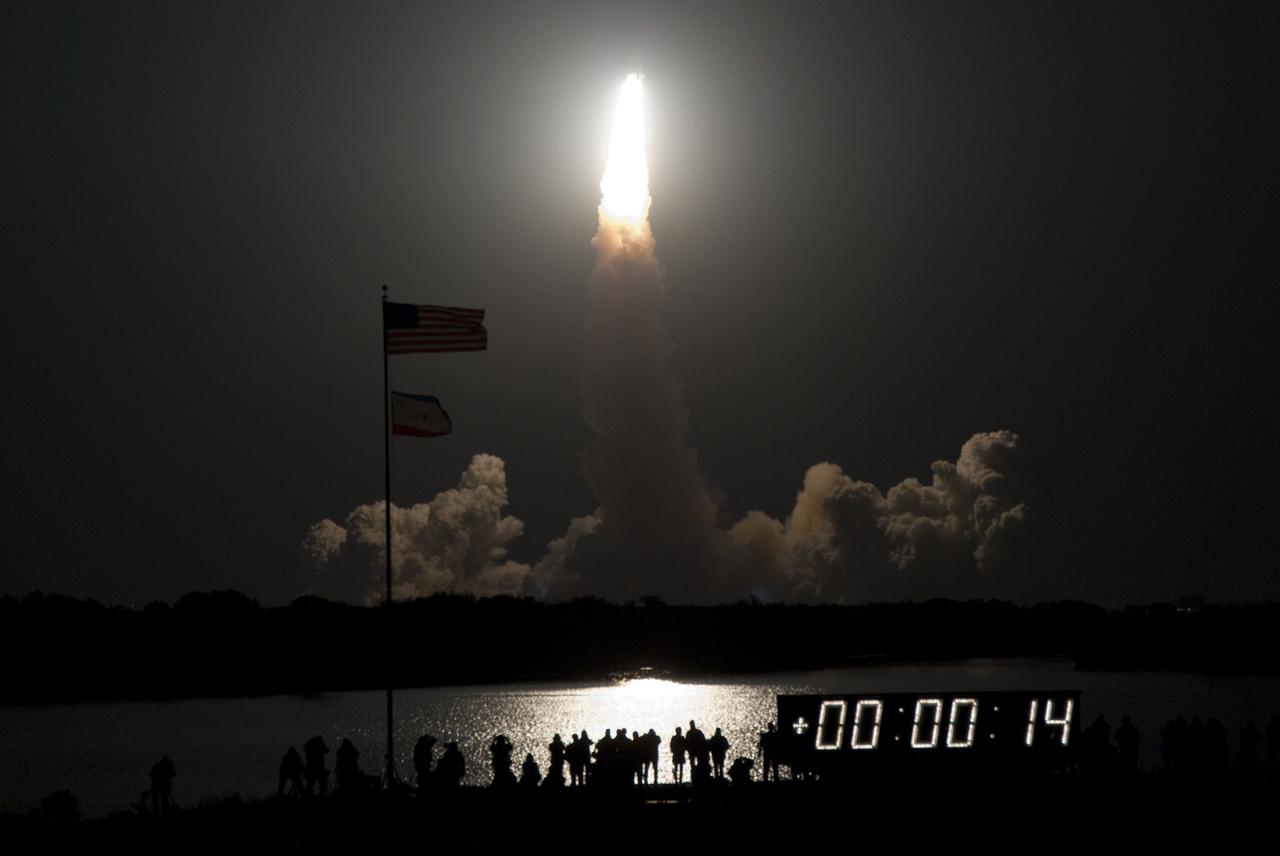
STS130-S-018 (8 Feb. 2010) --- Against a black night sky, space shuttle Endeavour and its six-member STS-130 crew head toward Earth orbit and rendezvous with the International Space Station. Liftoff was at 4:14 a.m. (EST) on Feb. 8, 2010 from launch pad 39A at NASA's Kennedy Space Center. Onboard are NASA astronauts George Zamka, commander; Terry Virts, pilot; Robert Behnken, Kathryn Hire, Nicholas Patrick and Stephen Robinson, all mission specialists. This was the second launch attempt for Endeavour's STS-130 crew and the final scheduled space shuttle night launch. The first attempt on Feb. 7 was scrubbed due to unfavorable weather. The primary payload for the STS-130 mission to the International Space Station is the Tranquility node, a pressurized module that will provide additional room for crew members and many of the station's life support and environmental control systems. Attached to one end of Tranquility is the Cupola module, a unique work area with six windows on its sides and one on top. The Cupola resembles a circular bay window and will provide a vastly improved view of the station's exterior. The multi-directional view will allow the crew to monitor spacewalks and docking operations, as well as provide a spectacular view of Earth and other celestial objects. The module was built in Turin, Italy, by Thales Alenia Space for the European Space Agency.
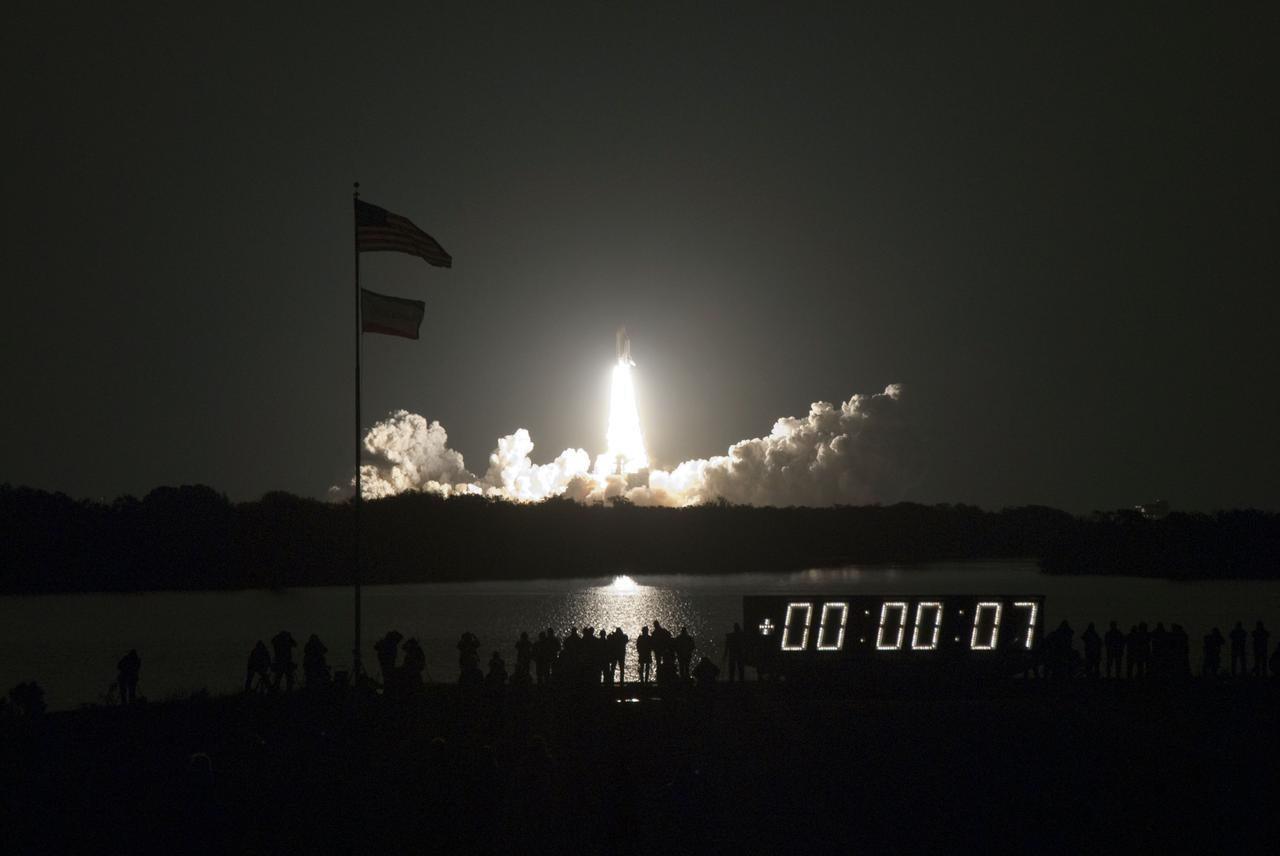
STS130-S-017 (8 Feb. 2010) --- Against a black night sky, space shuttle Endeavour and its six-member STS-130 crew head toward Earth orbit and rendezvous with the International Space Station. Liftoff was at 4:14 a.m. (EST) on Feb. 8, 2010 from launch pad 39A at NASA's Kennedy Space Center. Onboard are NASA astronauts George Zamka, commander; Terry Virts, pilot; Robert Behnken, Kathryn Hire, Nicholas Patrick and Stephen Robinson, all mission specialists. This was the second launch attempt for Endeavour's STS-130 crew and the final scheduled space shuttle night launch. The first attempt on Feb. 7 was scrubbed due to unfavorable weather. The primary payload for the STS-130 mission to the International Space Station is the Tranquility node, a pressurized module that will provide additional room for crew members and many of the station's life support and environmental control systems. Attached to one end of Tranquility is the Cupola module, a unique work area with six windows on its sides and one on top. The Cupola resembles a circular bay window and will provide a vastly improved view of the station's exterior. The multi-directional view will allow the crew to monitor spacewalks and docking operations, as well as provide a spectacular view of Earth and other celestial objects. The module was built in Turin, Italy, by Thales Alenia Space for the European Space Agency.
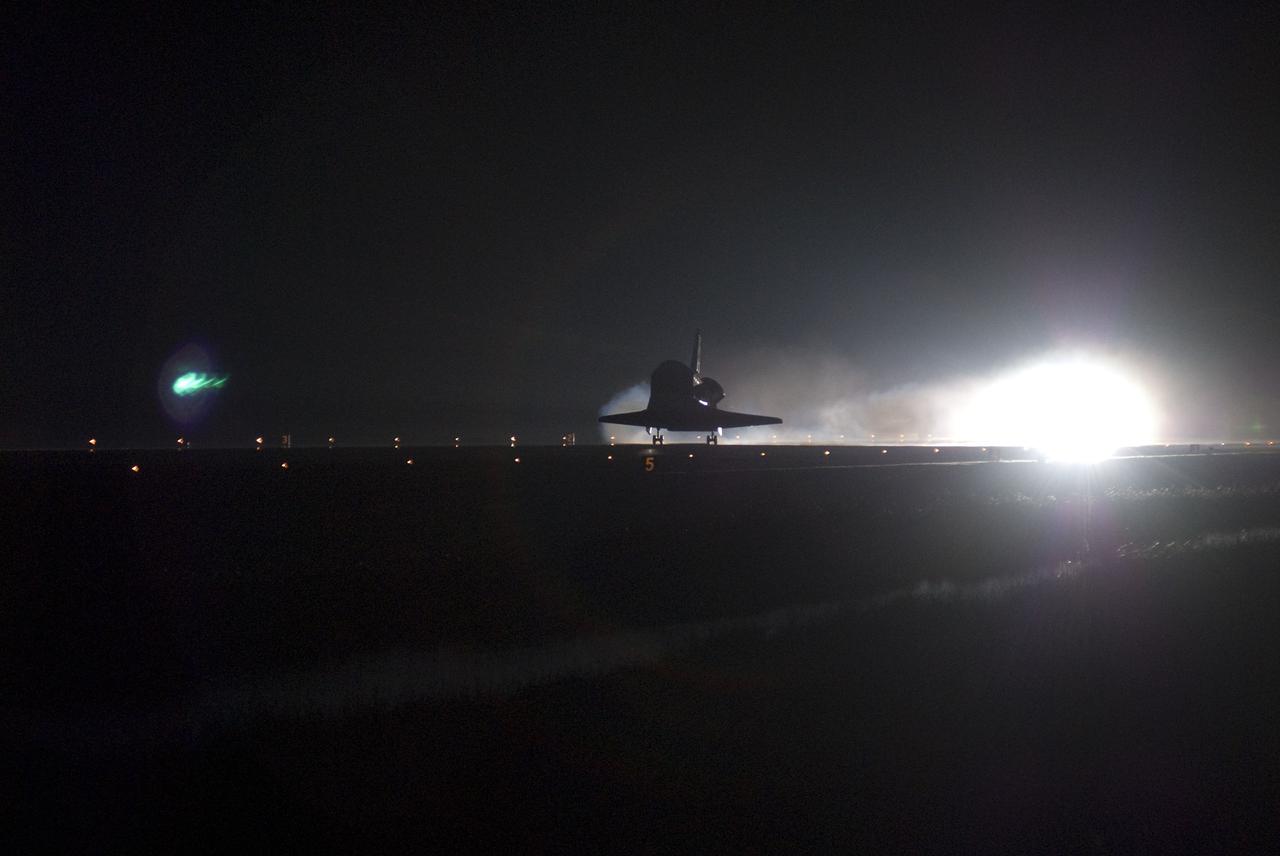
STS130-S-094 (21 Feb. 2010) --- Space shuttle Endeavour lands on Runway 15 at the Shuttle Landing Facility at NASA's Kennedy Space Center in Florida after 14 days in space, completing the 5.7-million-mile STS-130 mission to the International Space Station on orbit 217. Main gear touchdown was at 10:20:31 p.m. (EST) on Feb. 21, 2010; followed by nose gear touchdown at 10:20:39 p.m. and wheels stop at 10:22:10 p.m. It was the 23rd night landing in shuttle history and the 17th at Kennedy. Aboard are NASA astronauts George Zamka, commander; Terry Virts, pilot; Robert Behnken, Nicholas Patrick, Kathryn Hire and Stephen Robinson, all mission specialists. During Endeavour's STS-130 mission, astronauts installed the Tranquility node, a module that provides additional room for crew members and many of the station's life support and environmental control systems. Attached to Tranquility is a Cupola with seven windows that provide a panoramic view of Earth, celestial objects and visiting spacecraft. The module was built in Turin, Italy, by Thales Alenia Space for the European Space Agency. The orbiting laboratory is approximately 90 percent complete now in terms of mass. STS-130 was the 24th flight for Endeavour, the 32nd shuttle mission devoted to ISS assembly and maintenance, and the 130th shuttle mission to date.
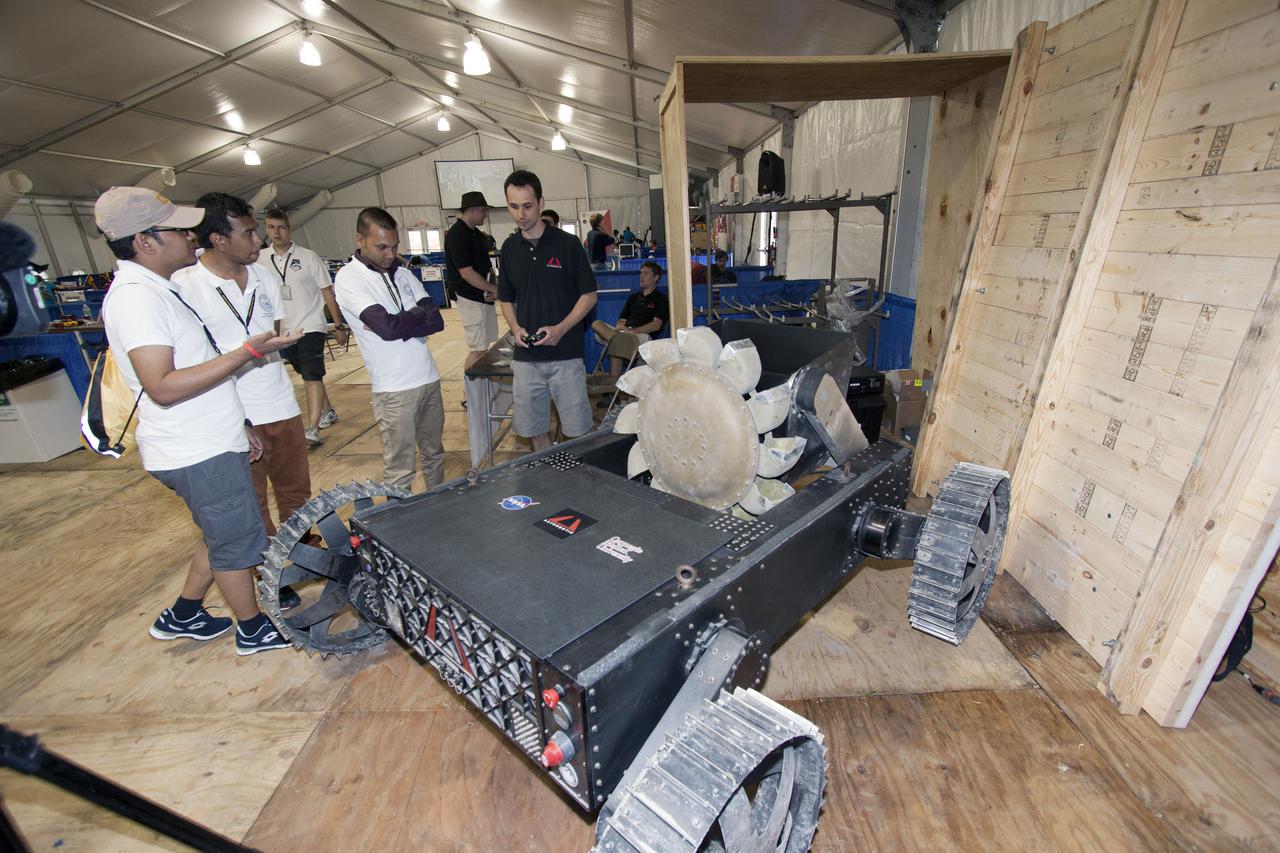
CAPE CANAVERAL, Fla. – A team from Astrobotic Technology, Inc., demonstrates the Polaris rover at a robotics mining competition at NASA's Kennedy Space Center. Astrobotic developed the Polaris to prospect water at the lunar poles. Photo credit: Jim Grossmann