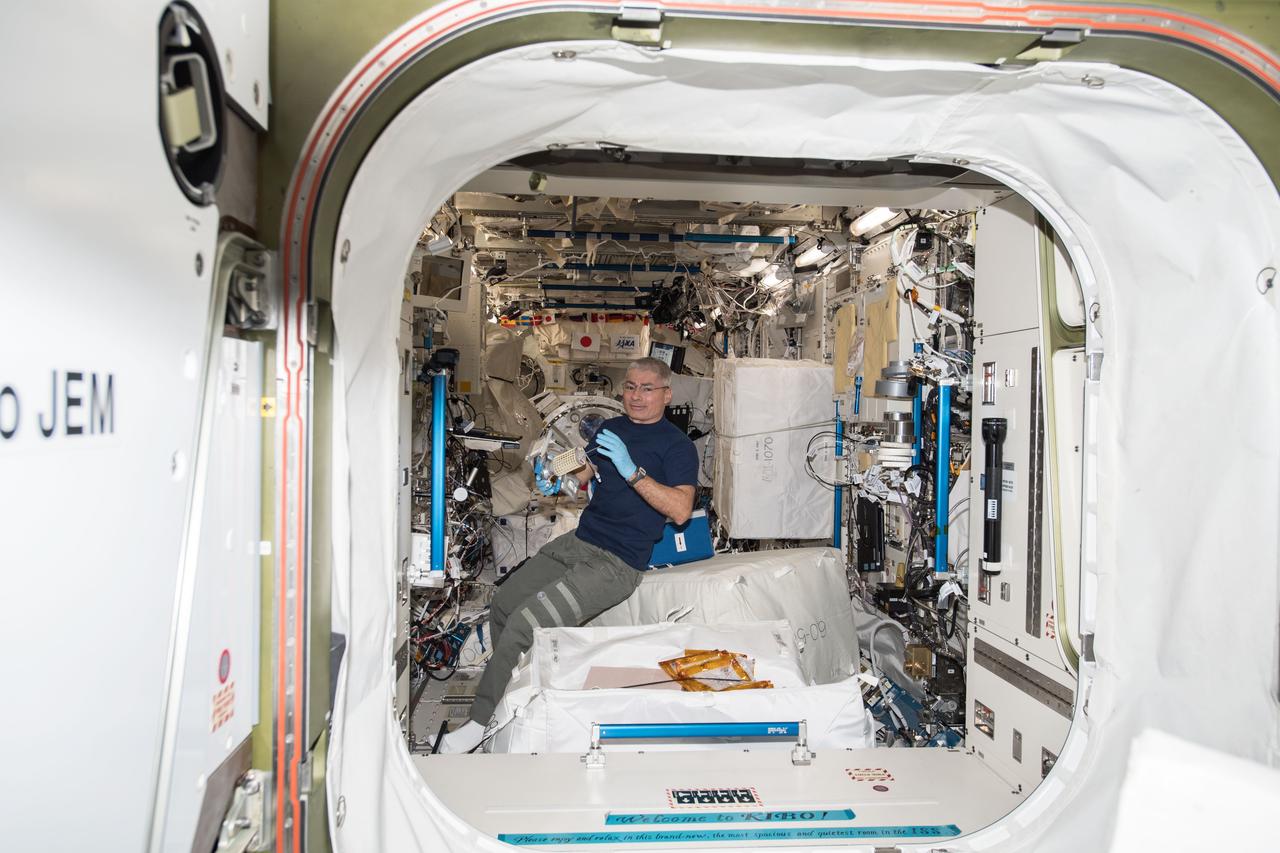
iss054e001244 (Dec. 18, 2017) --- NASA astronaut Mark Vande Hei installs a sample for the Zebrafish Muscle 2 experiment in the Kibo Japanese Experiment Pressurized Module (JPM) to study the effects of muscle atrophy in space.
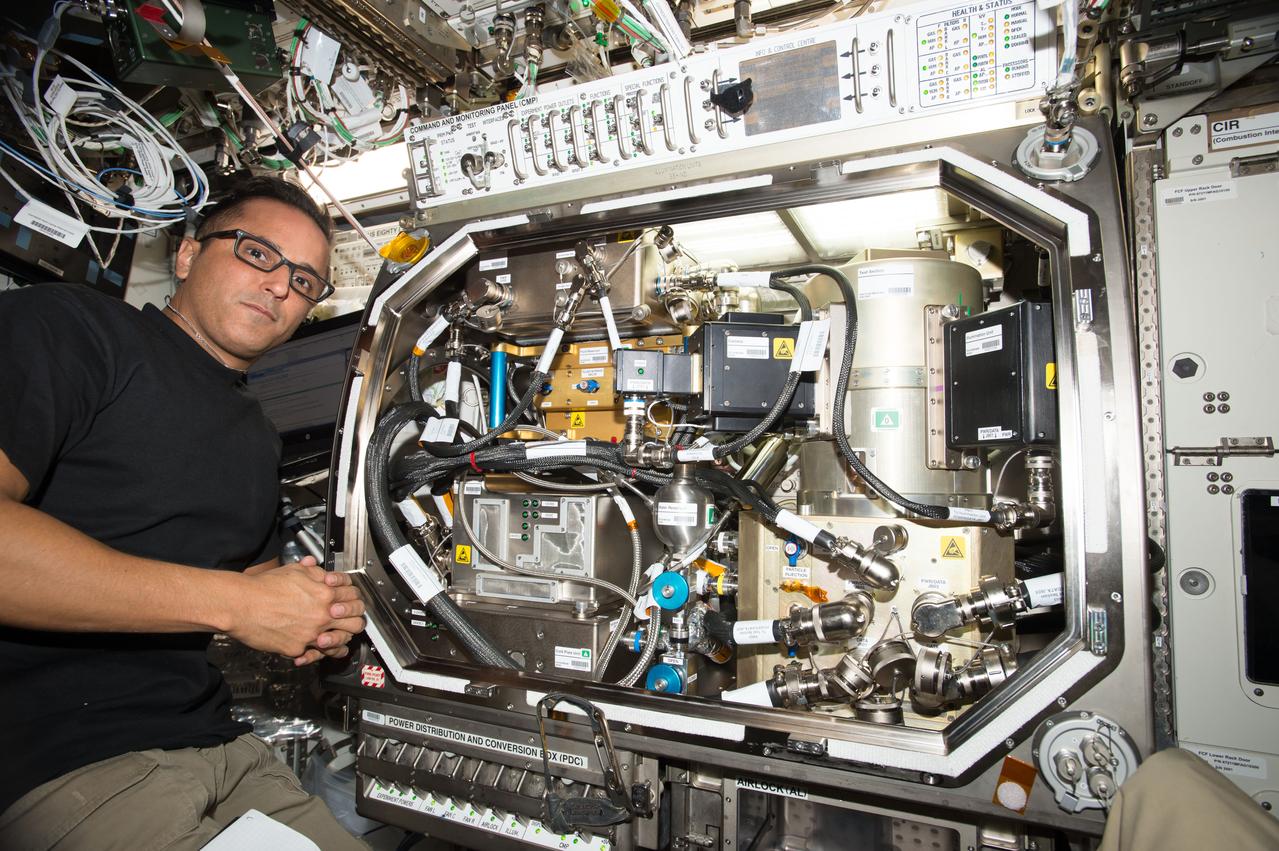
iss053e027051 (Sept. 19, 2017) --- Flight Engineer Joe Acaba works in the U.S. Destiny laboratory module setting up hardware for the Zero Boil-Off Tank (ZBOT) experiment. ZBOT uses an experimental fluid to test active heat removal and forced jet mixing as alternative means for controlling tank pressure for volatile fluids. Rocket fuel, spacecraft heating and cooling systems, and sensitive scientific instruments rely on very cold cryogenic fluids. Heat from the environment around cryogenic tanks can cause their pressures to rise, which requires dumping or "boiling off" fluid to release the excess pressure, or actively cooling the tanks in some way.
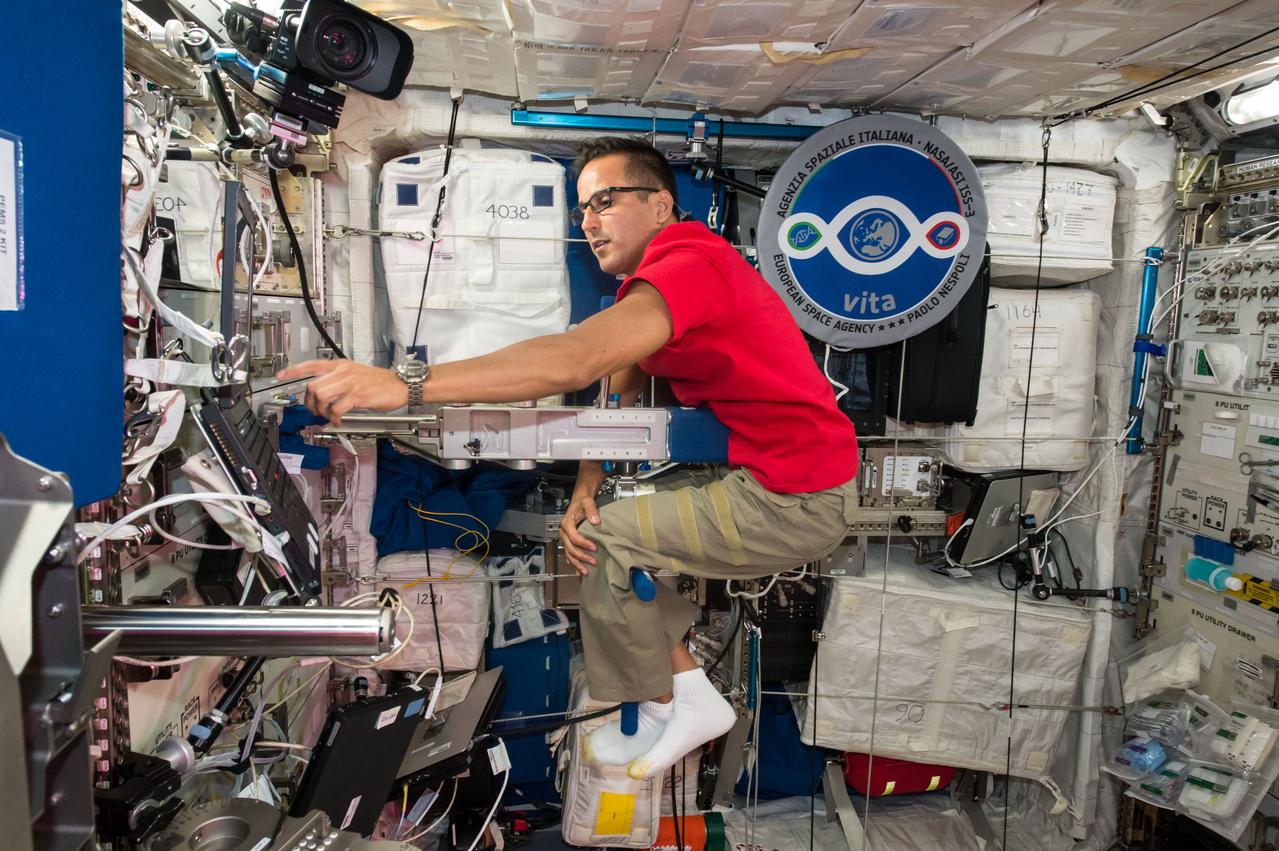
iss053e059889 (Sept. 28, 2017) --- Astronaut Joe Acaba calculates his mass inside the Columbus laboratory module using the Space Linear Acceleration Mass Measurement Device (SLAMMD). The device generates a known force against a crew member mounted on an extension arm with the resulting acceleration used to calculate the subject’s mass.
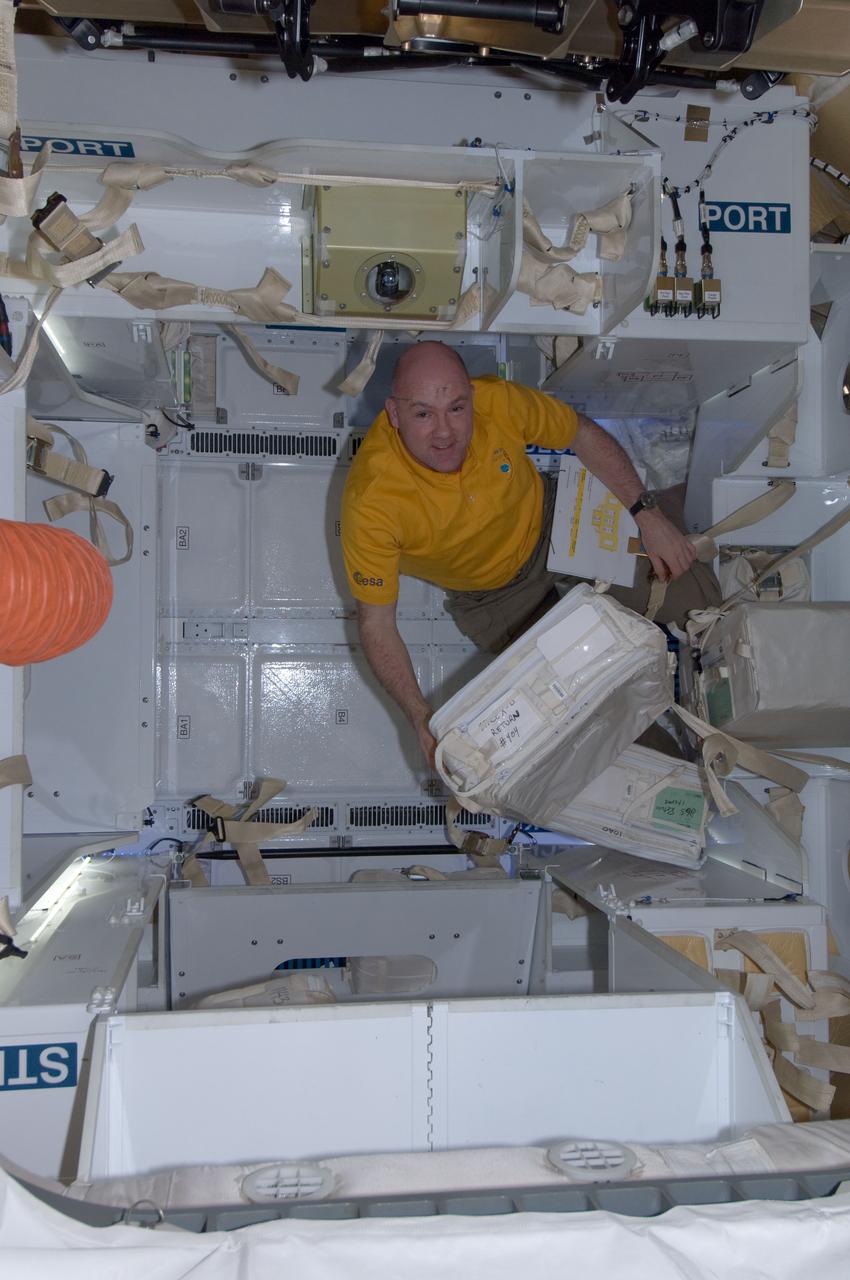
ISS031-E-070968 (28 May 2012) --- This view of European Space Agency astronaut Andre Kuipers, Expedition 31 flight engineer, is among the first set of imagery from the crew showing the freshly opened SpaceX Dragon spacecraft. Expedition 31 Flight Engineers Kuipers and Don Pettit, NASA astronaut, grappled Dragon at 9:56 a.m. (EDT) on May 25 with the Canadarm2 robotic arm and used the robotic arm to berth Dragon to the Earth-facing side of the station’s Harmony node at 12:02 p.m. May 25, 2012. Dragon became the first commercially developed space vehicle to be launched to the station to join Russian, European and Japanese resupply craft that service the complex while restoring a U.S. capability to deliver cargo to the orbital laboratory. Dragon is scheduled to spend about a week docked with the station before returning to Earth on May 31 for retrieval.
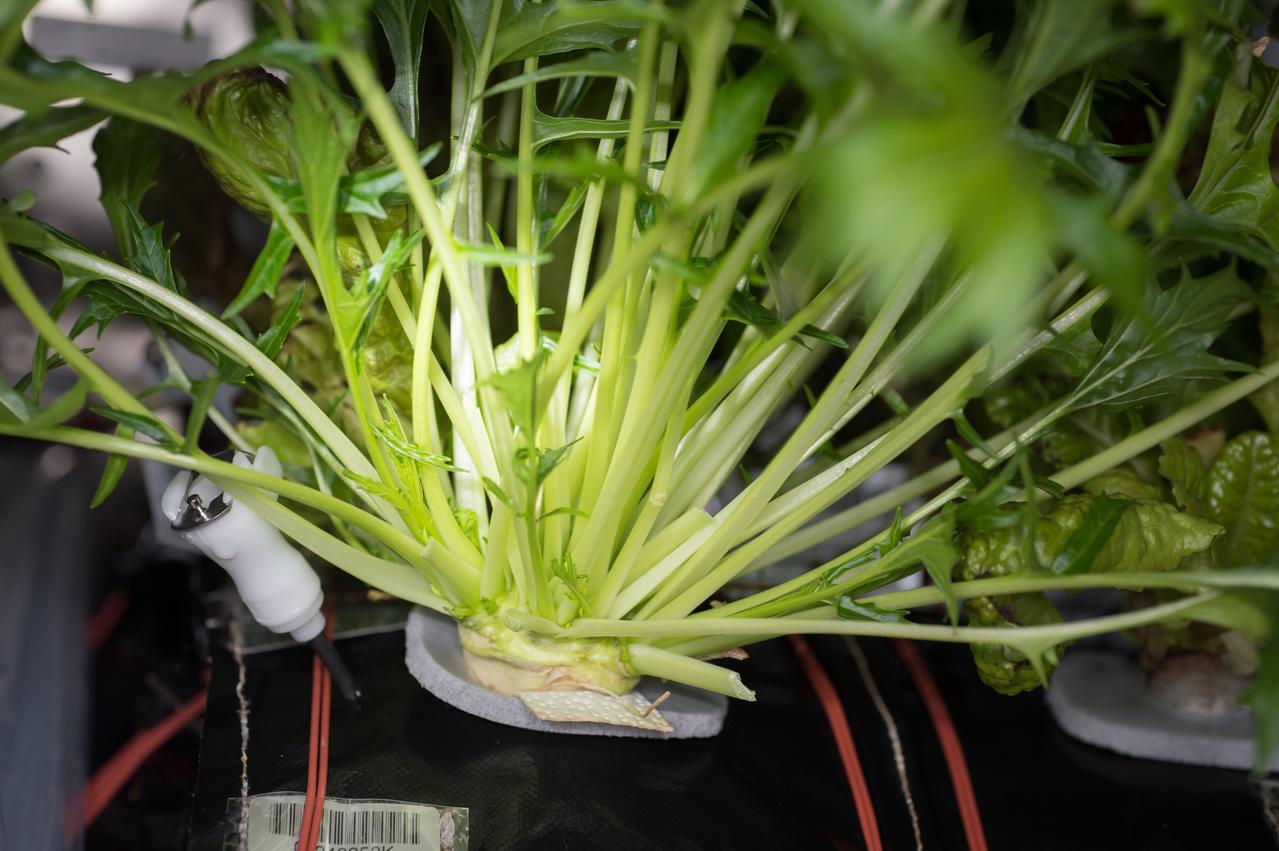
iss053e180041 (Nov. 14, 2017) --- Mizuna is pictured being cultivated inside the Veggie facility for the Veg-03 botany experiment. Future long-duration missions will look to have crew members grow their own food, so understanding how plants respond to microgravity is an important step toward that goal. Veg-03 uses the Veggie plant growth facility to cultivate a type of cabbage, lettuce and mizuna which are harvested on-orbit with samples returned to Earth for testing.
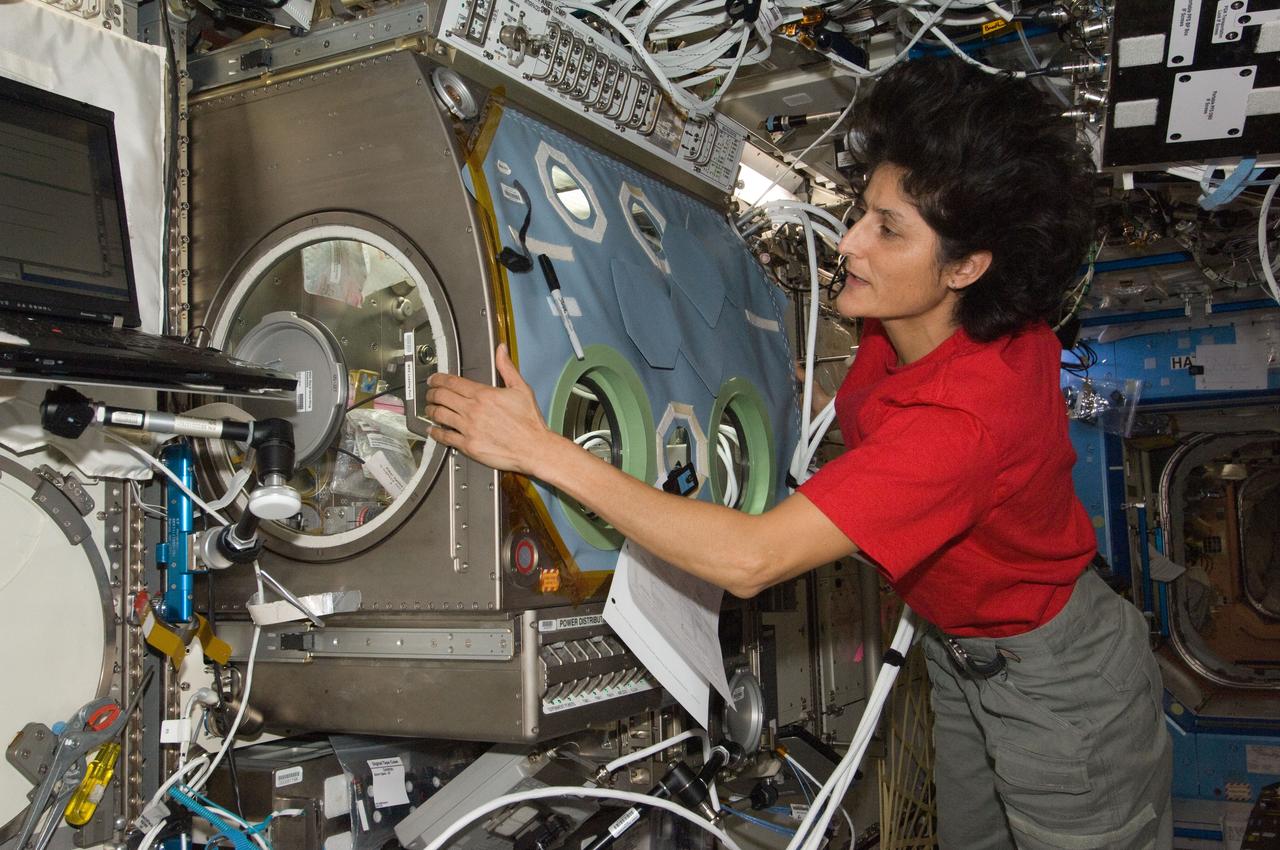
ISS032-E-022628 (23 Aug. 2012) --- NASA astronaut Sunita Williams, Expedition 32 flight engineer, works at the Microgravity Science Glovebox (MSG) in the Destiny laboratory of the International Space Station.
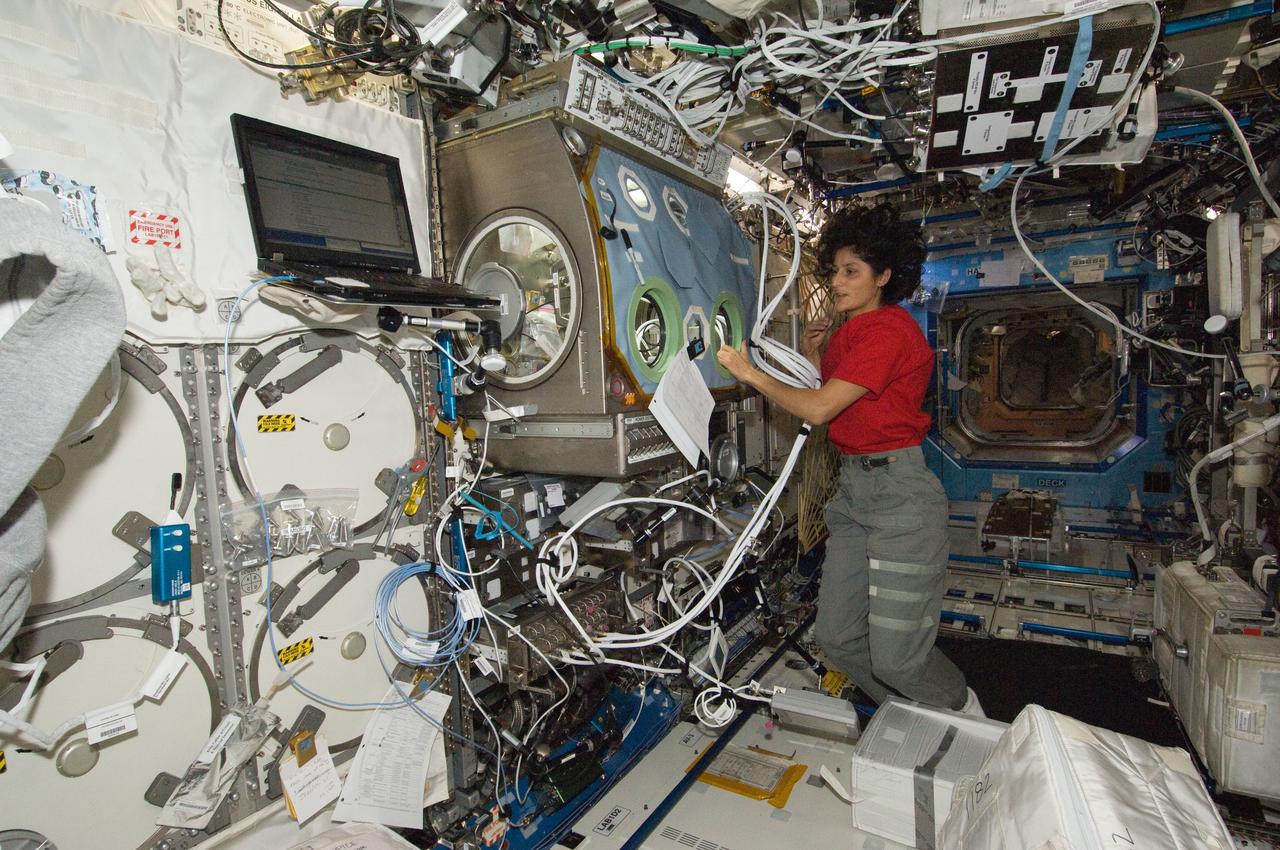
ISS032-E-022630 (23 Aug. 2012) --- NASA astronaut Sunita Williams, Expedition 32 flight engineer, works at the Microgravity Science Glovebox (MSG) in the Destiny laboratory of the International Space Station.
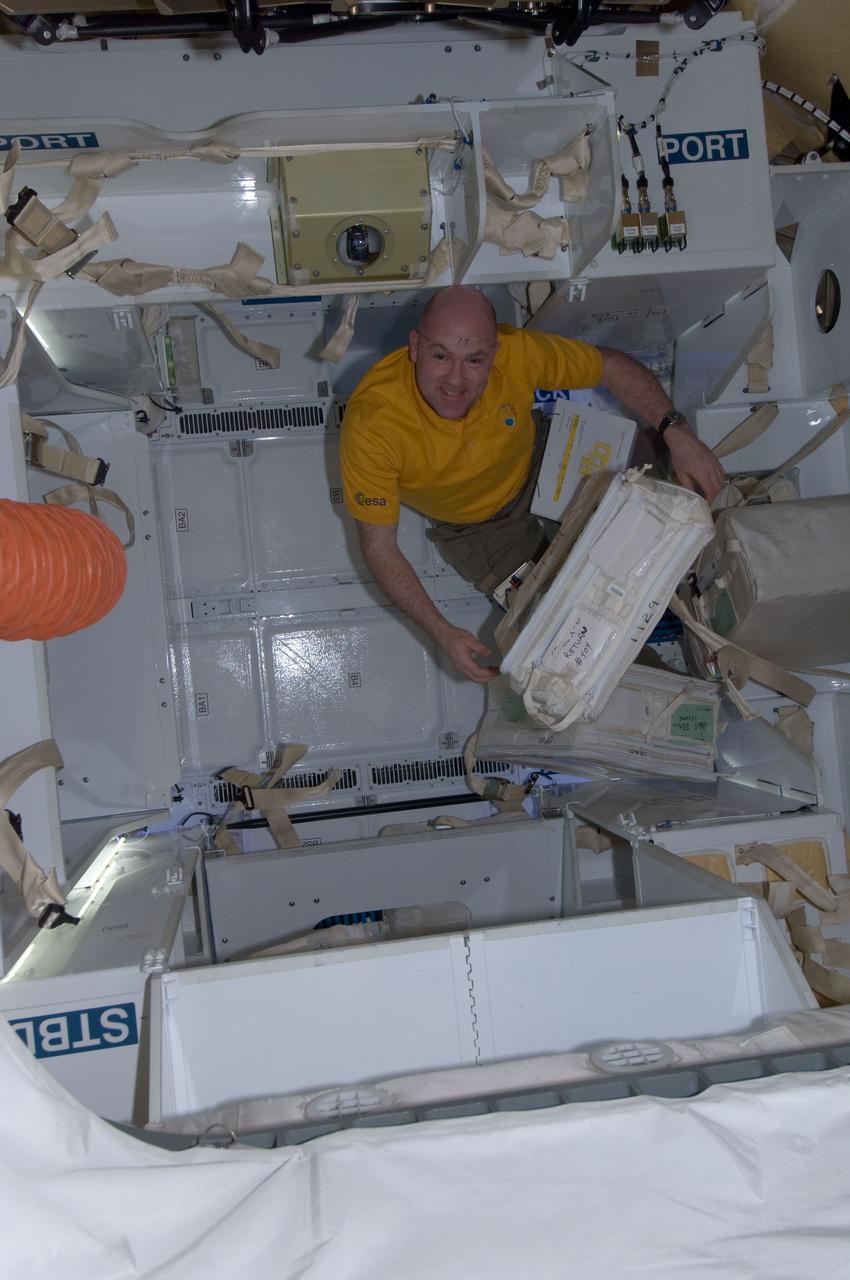
ISS031-E-070969 (28 May 2012) --- This view of European Space Agency astronaut Andre Kuipers, Expedition 31 flight engineer, is among the first set of imagery from the crew showing the freshly opened SpaceX Dragon spacecraft. Expedition 31 Flight Engineers Kuipers and Don Pettit, NASA astronaut, grappled Dragon at 9:56 a.m. (EDT) on May 25 with the Canadarm2 robotic arm and used the robotic arm to berth Dragon to the Earth-facing side of the station’s Harmony node at 12:02 p.m. May 25, 2012. Dragon became the first commercially developed space vehicle to be launched to the station to join Russian, European and Japanese resupply craft that service the complex while restoring a U.S. capability to deliver cargo to the orbital laboratory. Dragon is scheduled to spend about a week docked with the station before returning to Earth on May 31 for retrieval.
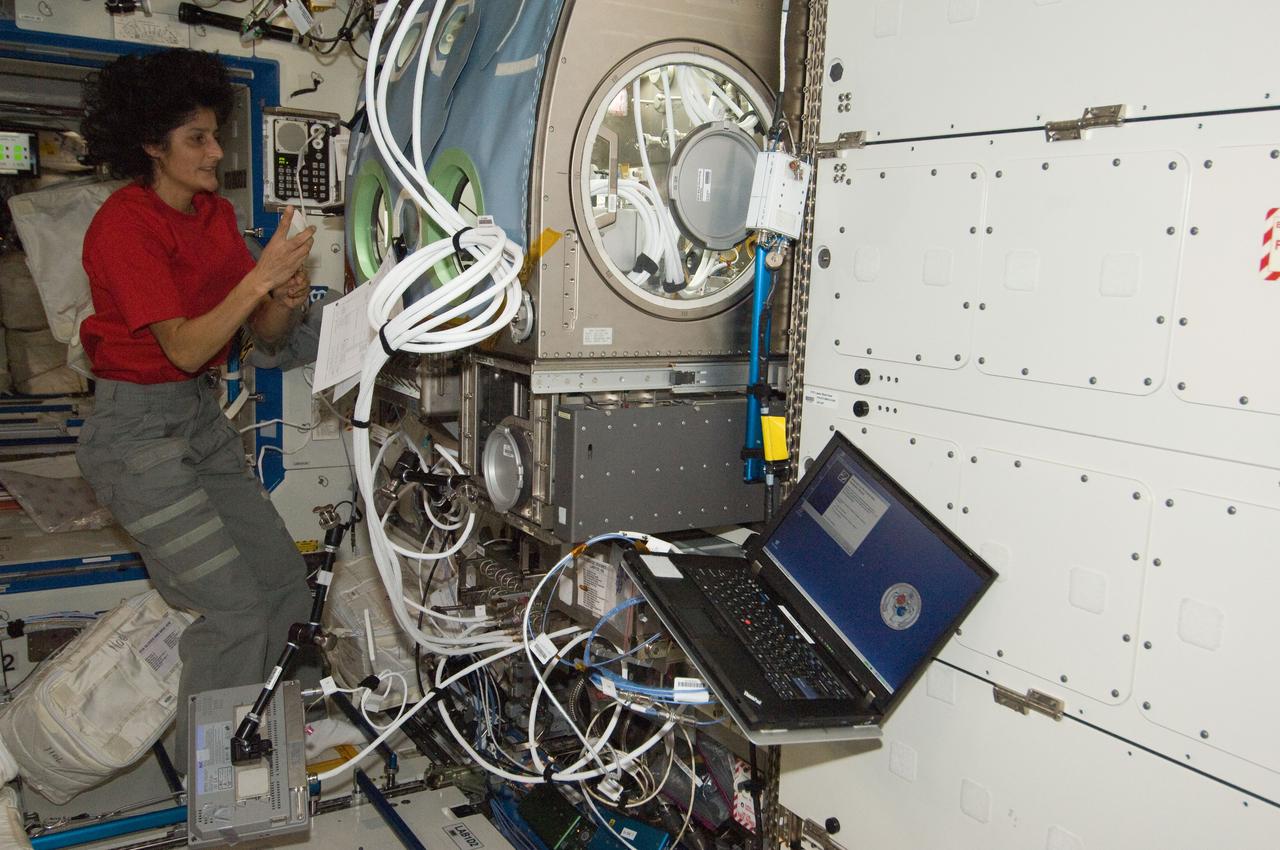
ISS032-E-022637 (23 Aug. 2012) --- NASA astronaut Sunita Williams, Expedition 32 flight engineer, works at the Microgravity Science Glovebox (MSG) in the Destiny laboratory of the International Space Station.
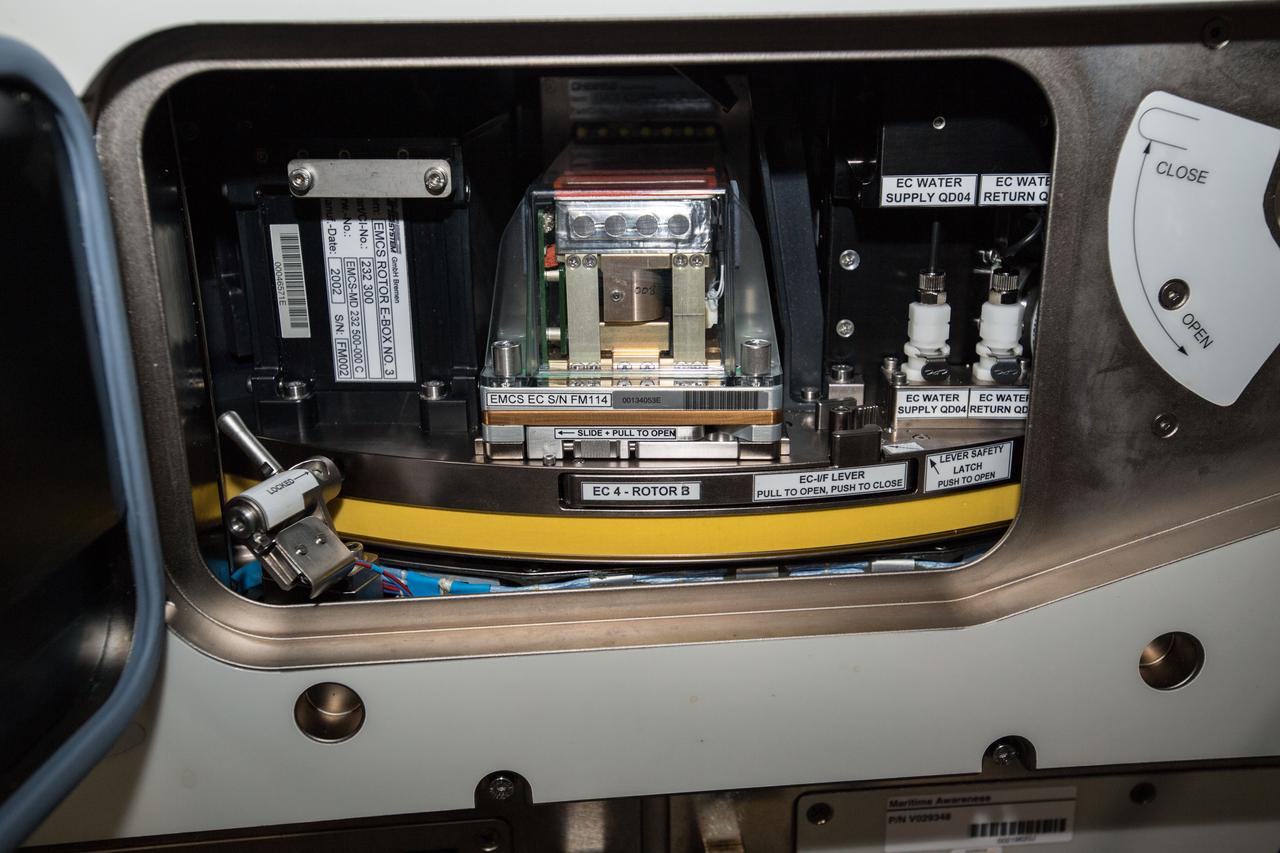
iss054e037079 (Feb. 8, 2018) --- Plant Gravity Perception experiment in a centrifuge on a European Modular Cultivation System (EMCS) Experiment Container (EC) to test the gravity-sensing ability of plants in microgravity.
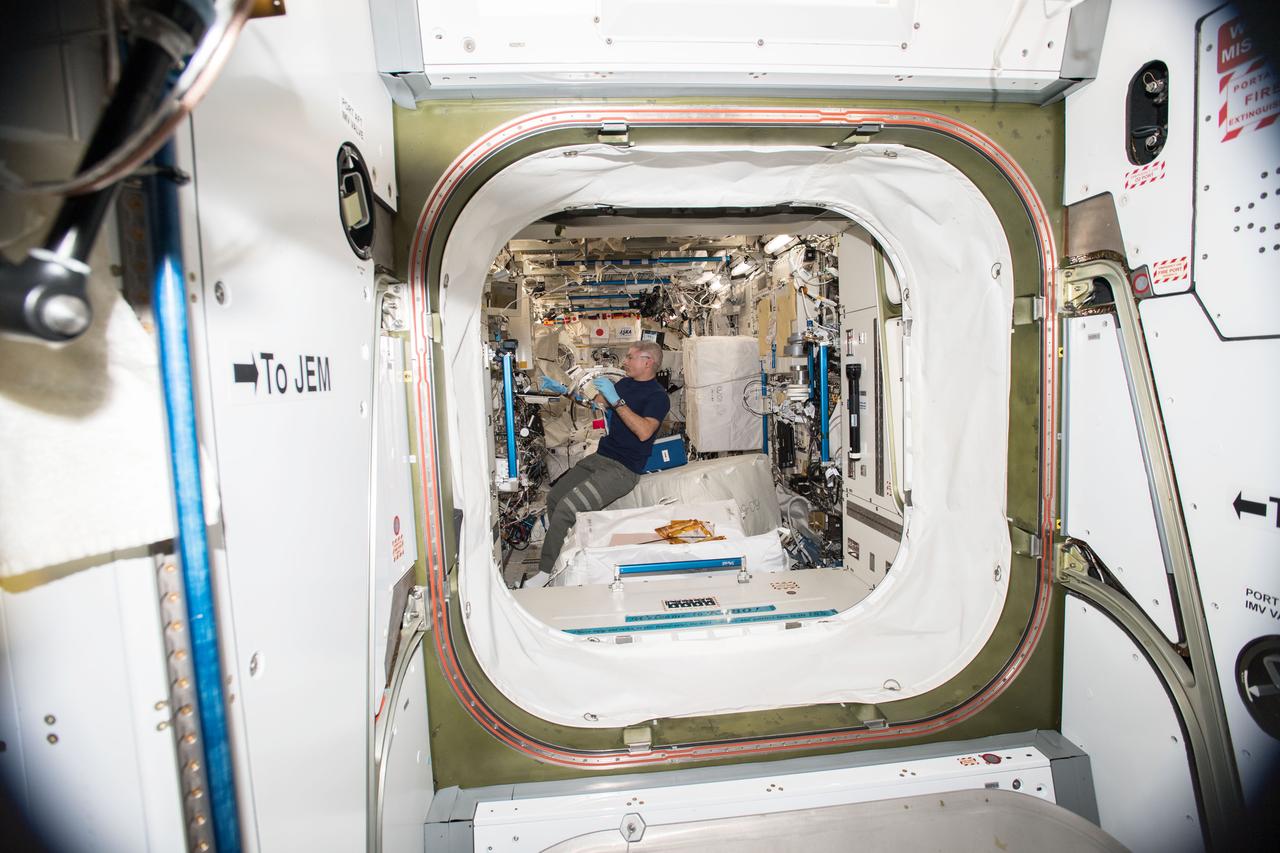
iss054e001241 (Dec. 18, 2017) --- NASA astronaut Mark Vande Hei installs a sample for the Zebrafish Muscle 2 experiment in the Kibo Japanese Experiment Pressurized Module (JPM) to study the effects of muscle atrophy in space.
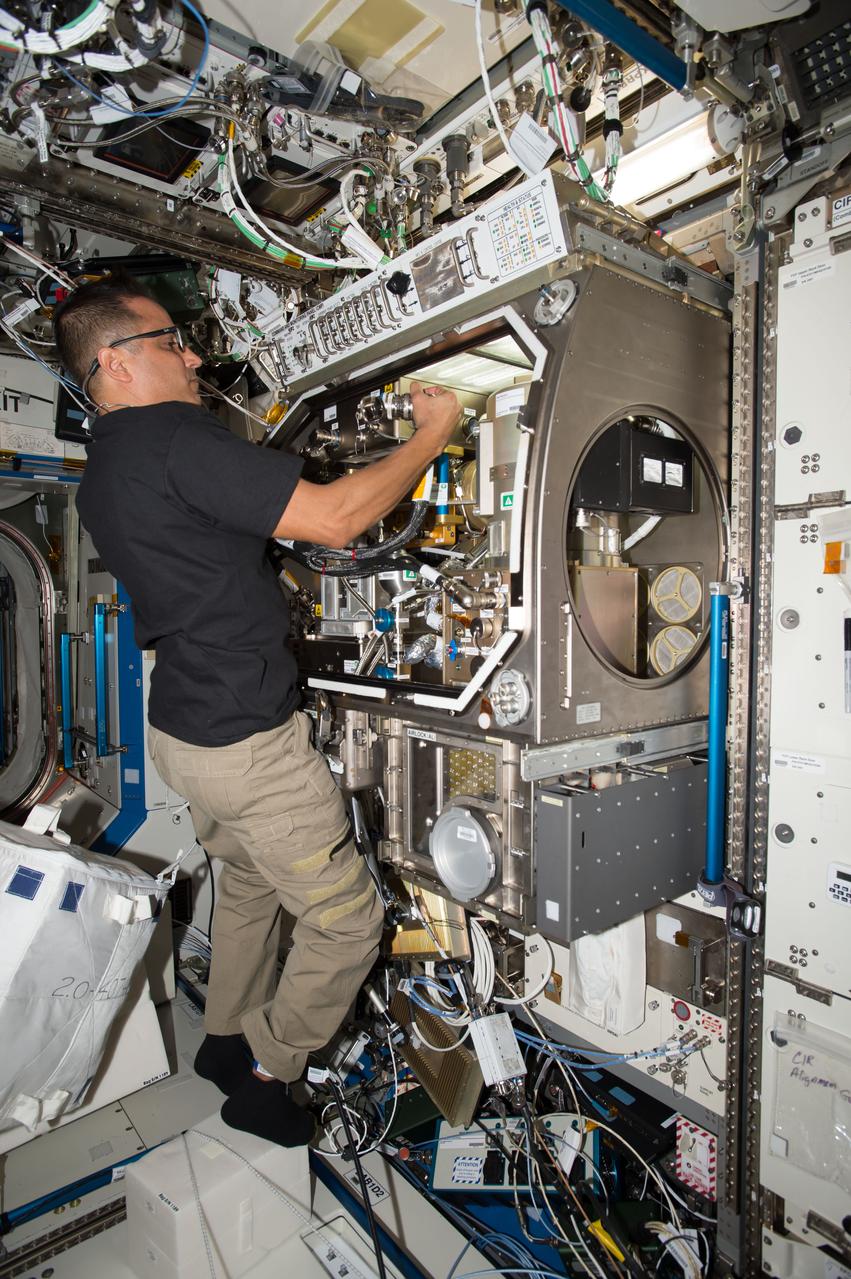
iss053e027113 (9/18/2017) --- NASA astronaut Joe Acaba during the Zero Boil-Off Tank Hardware Setup in the Microgravity Science Glovebox (MSG). Zero Boil-Off Tank (ZBOT) uses an experimental fluid to test active heat removal and forced jet mixing as alternative means for controlling tank pressure for volatile fluids. Results from the investigation improve models used to design tanks for long-term cryogenic liquid storage, which are essential in biotechnology, medicine, industrial, and many other applications on Earth.
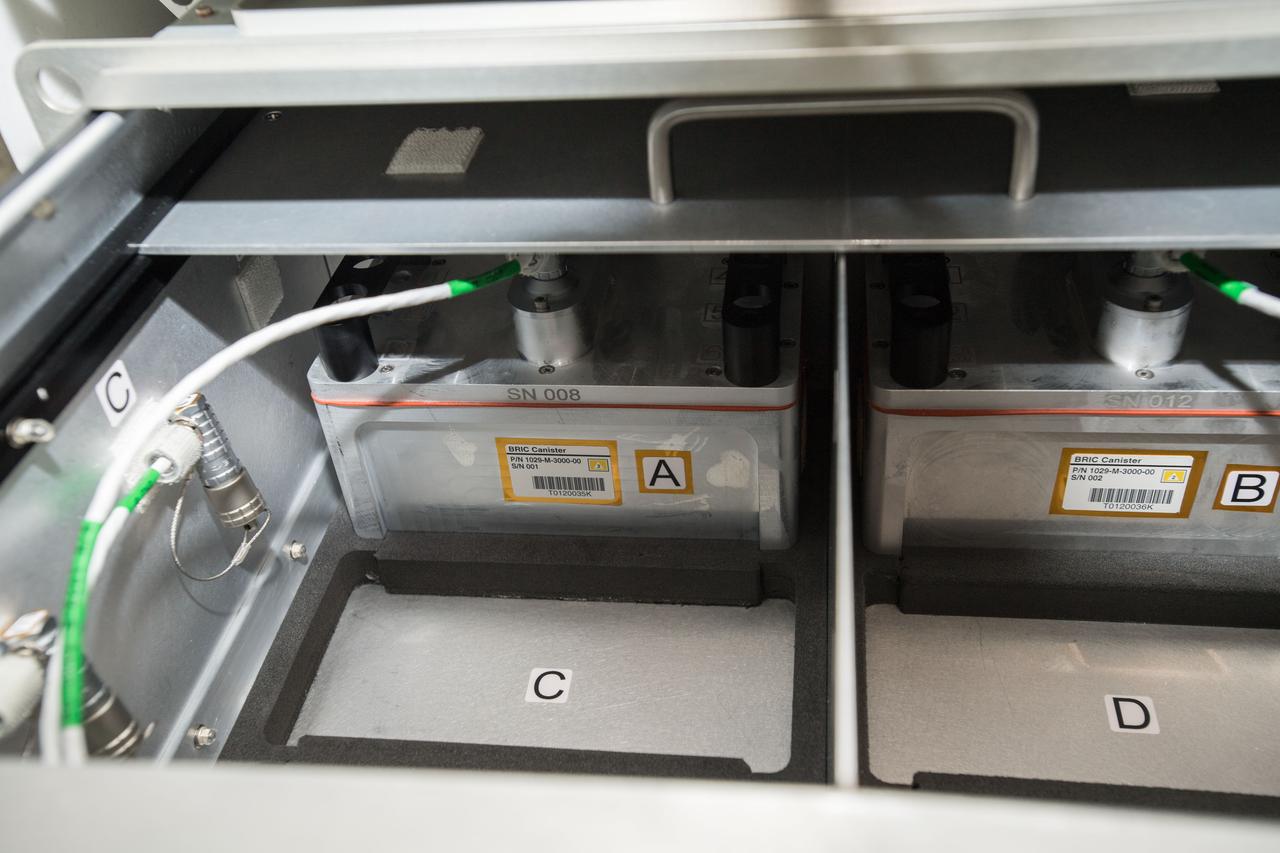
iss054e001490 (Dec. 19, 2017) --- Biological Research in Canisters - Light Emitting Diode (BRIC-LED) locker installed in the Destiny Laboratory to provide capabilities for seedling, microbial, or fungal growth investigations.
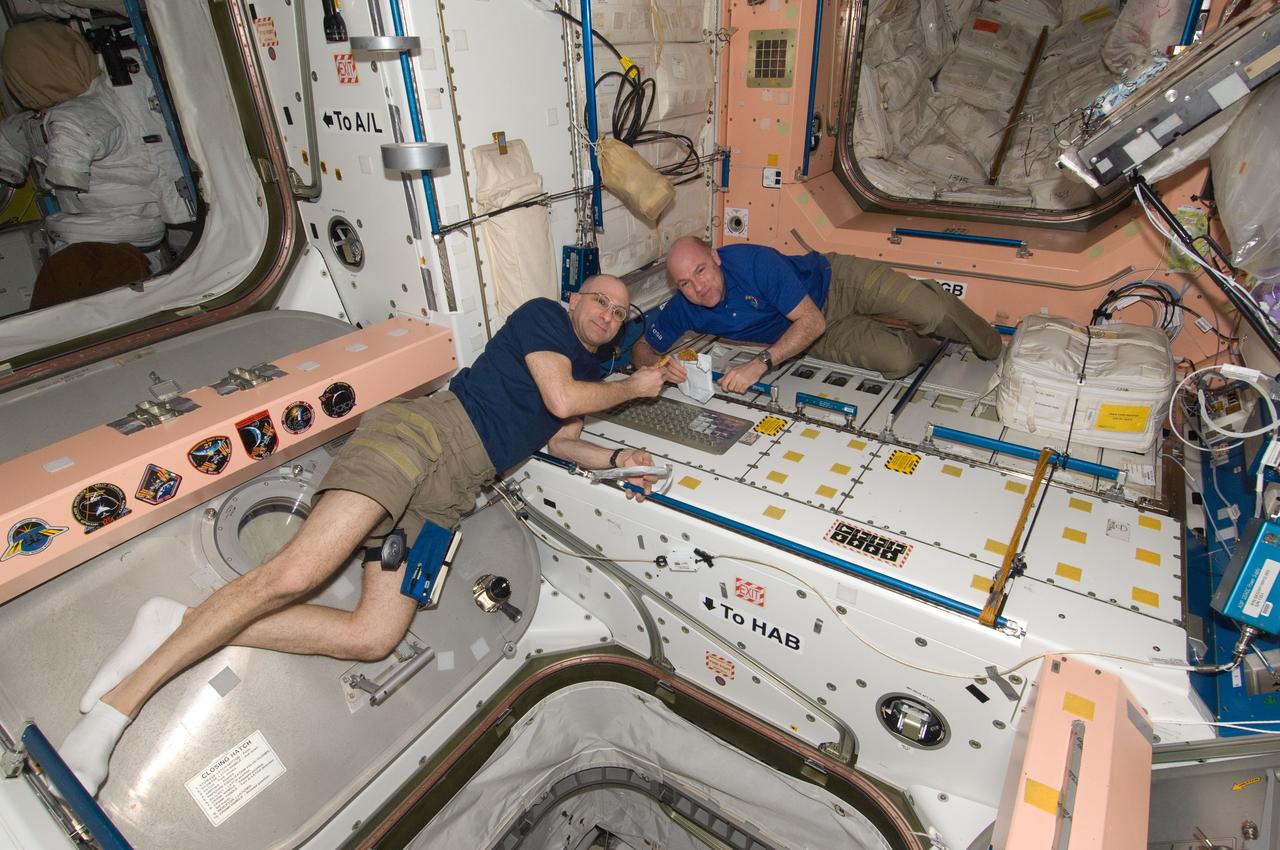
ISS031-E-095943 (9 June 2012) --- NASA astronaut Don Pettit (left) and European Space Agency astronaut Andre Kuipers, both Expedition 31 flight engineers, eat a snack in the Unity node of the International Space Station.
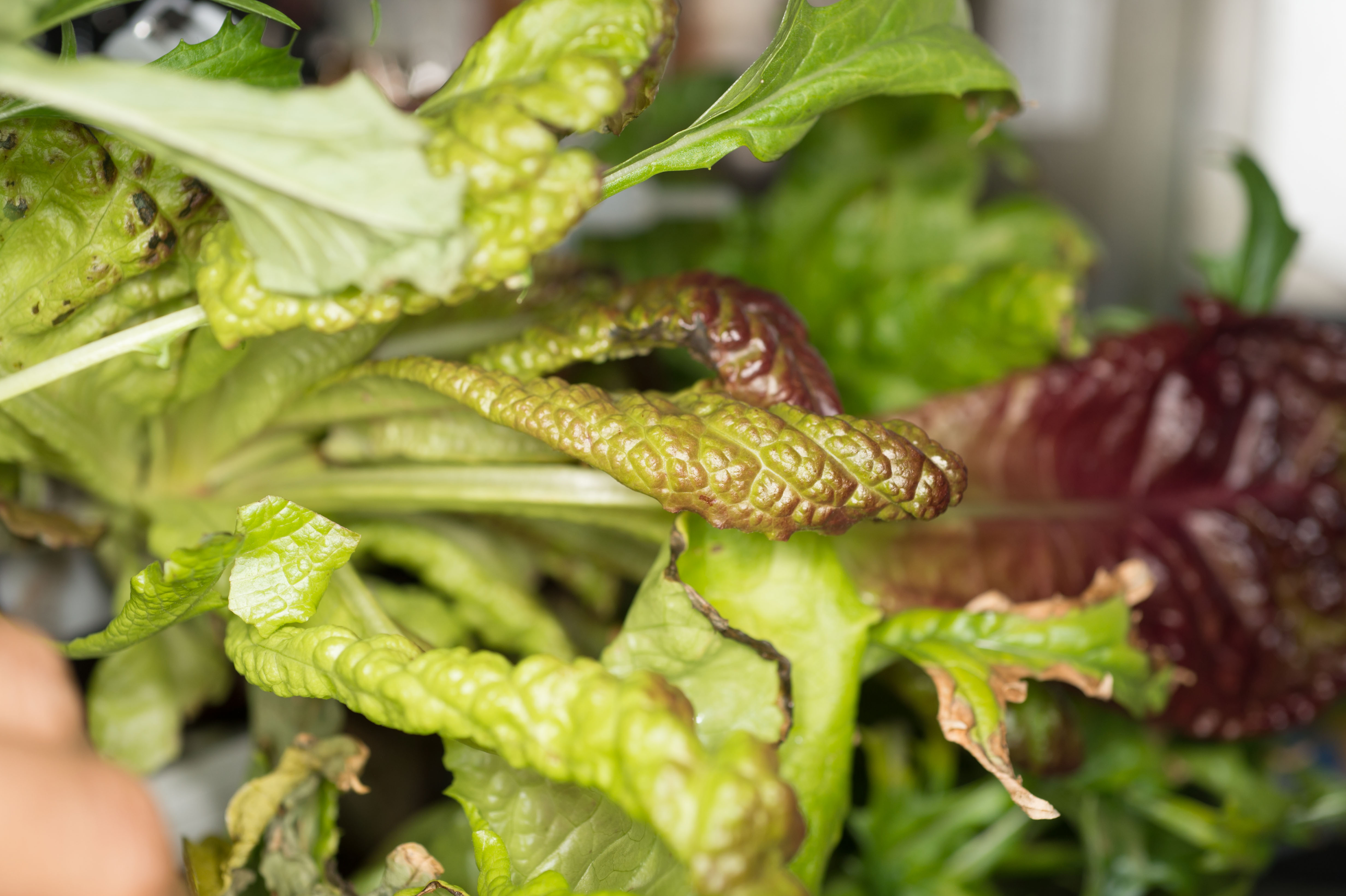
iss053e143976 (Nov. 11, 2017) --- Red lettuce is pictured being cultivated inside the Veggie facility for the Veg-03 botany experiment. Future long-duration space missions will look to have crew members grow their own food, so understanding how plants respond to microgravity is an important step toward that goal. Veg-03 uses the Veggie plant growth facility to cultivate a type of cabbage, lettuce and mizuna which are harvested on-orbit with samples returned to Earth for testing.