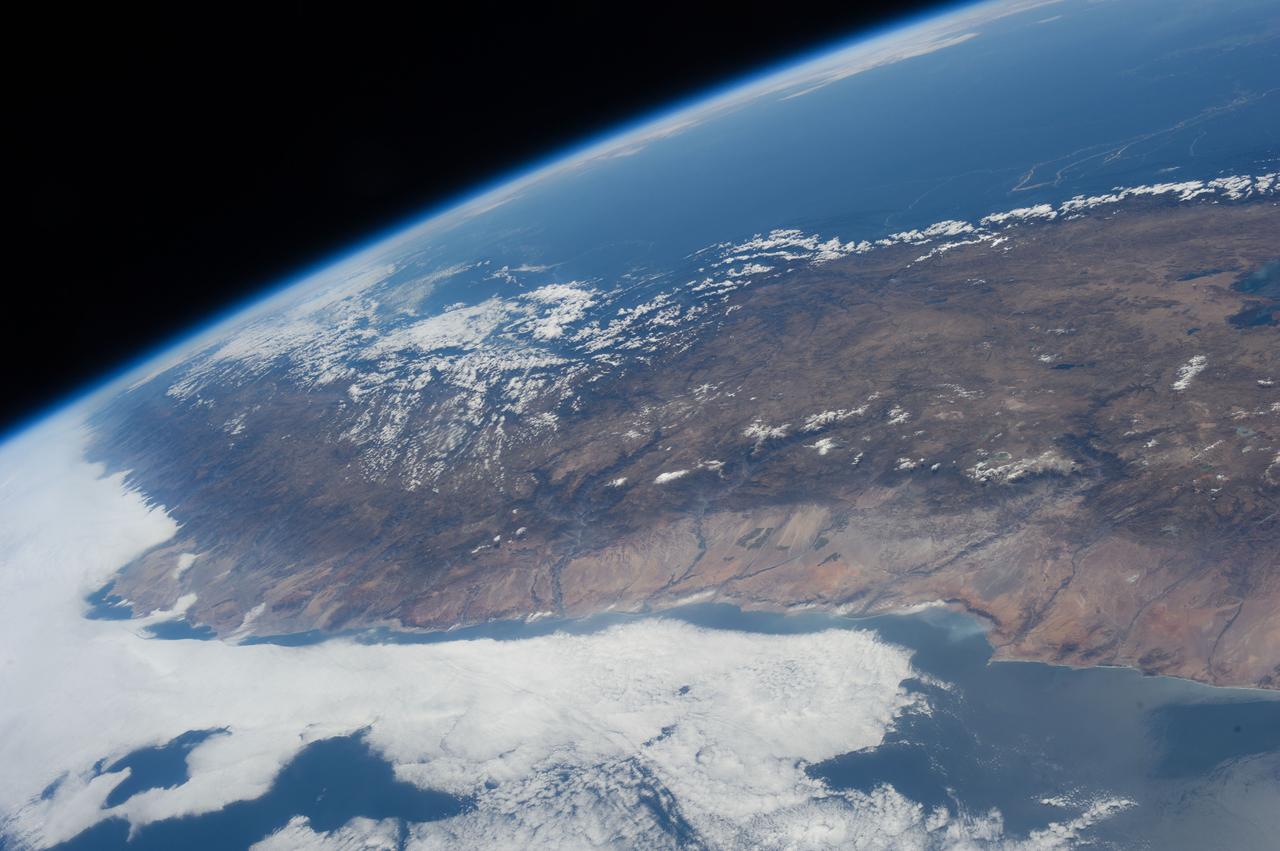
Earth observation taken during day pass by an Expedition 36 crew member on board the International Space Station (ISS). Per Twitter message: Southwest coast of Peru.
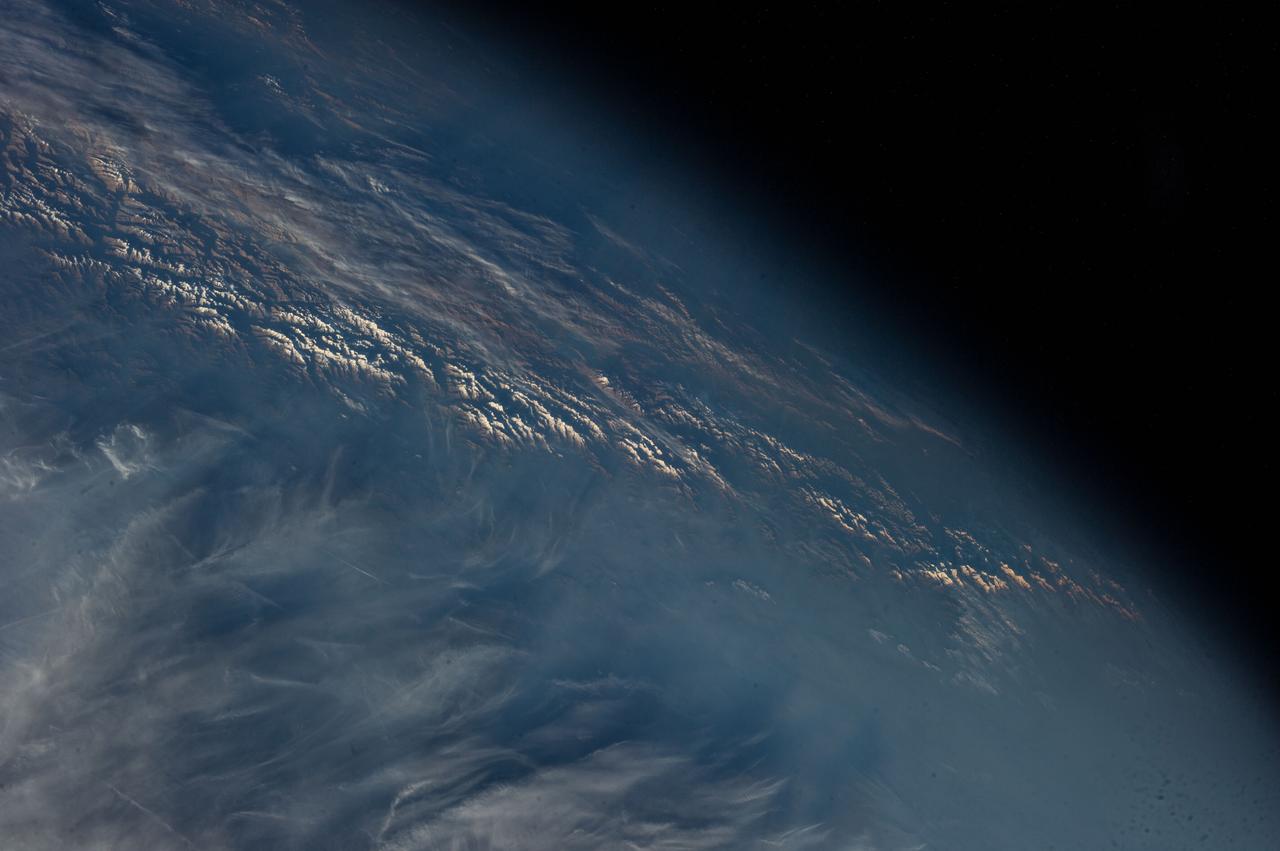
Earth observation taken during a day pass by an Expedition 37 crew member on board the International Space Station (ISS). Identified via Twitter message as dusk on the Himalayas.
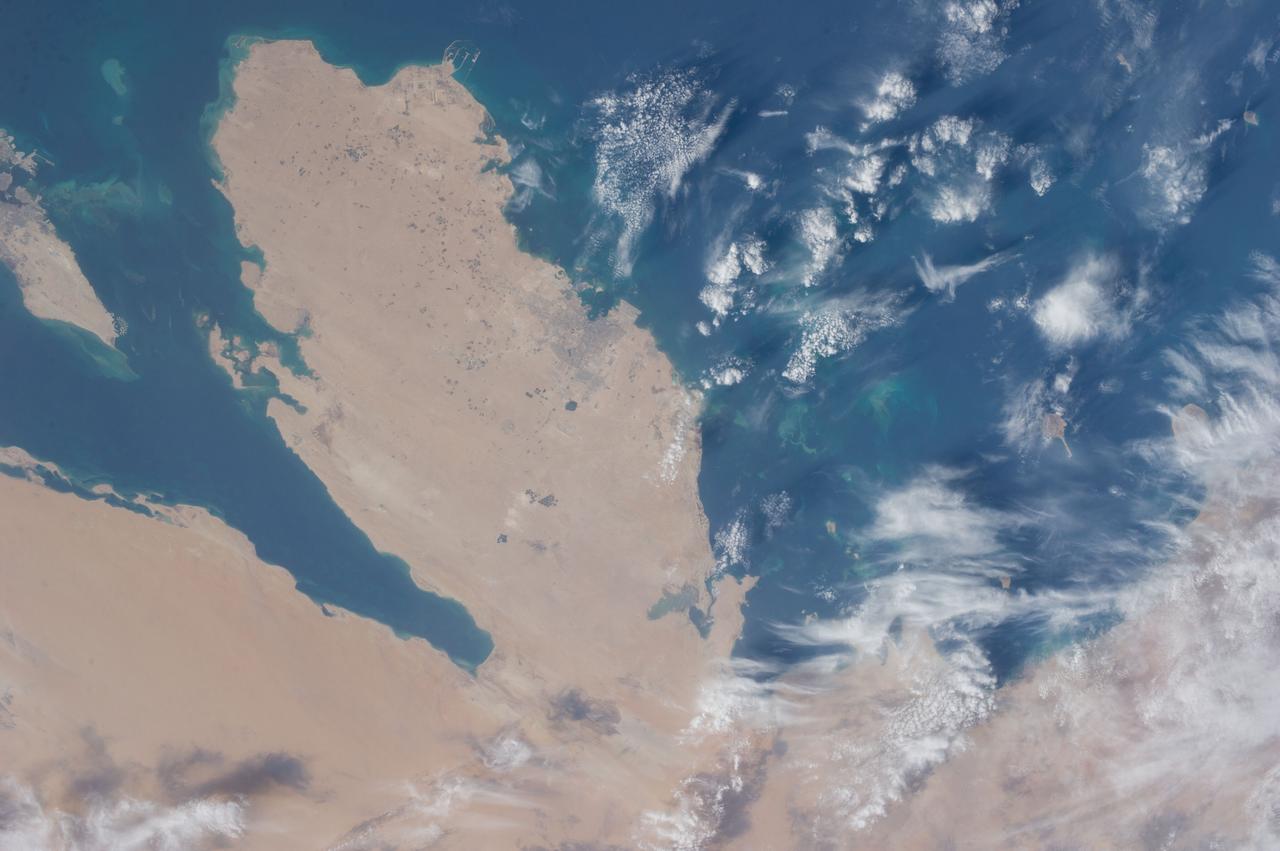
Earth observation taken during a day pass by an Expedition 36 crew member on board the International Space Station (ISS).
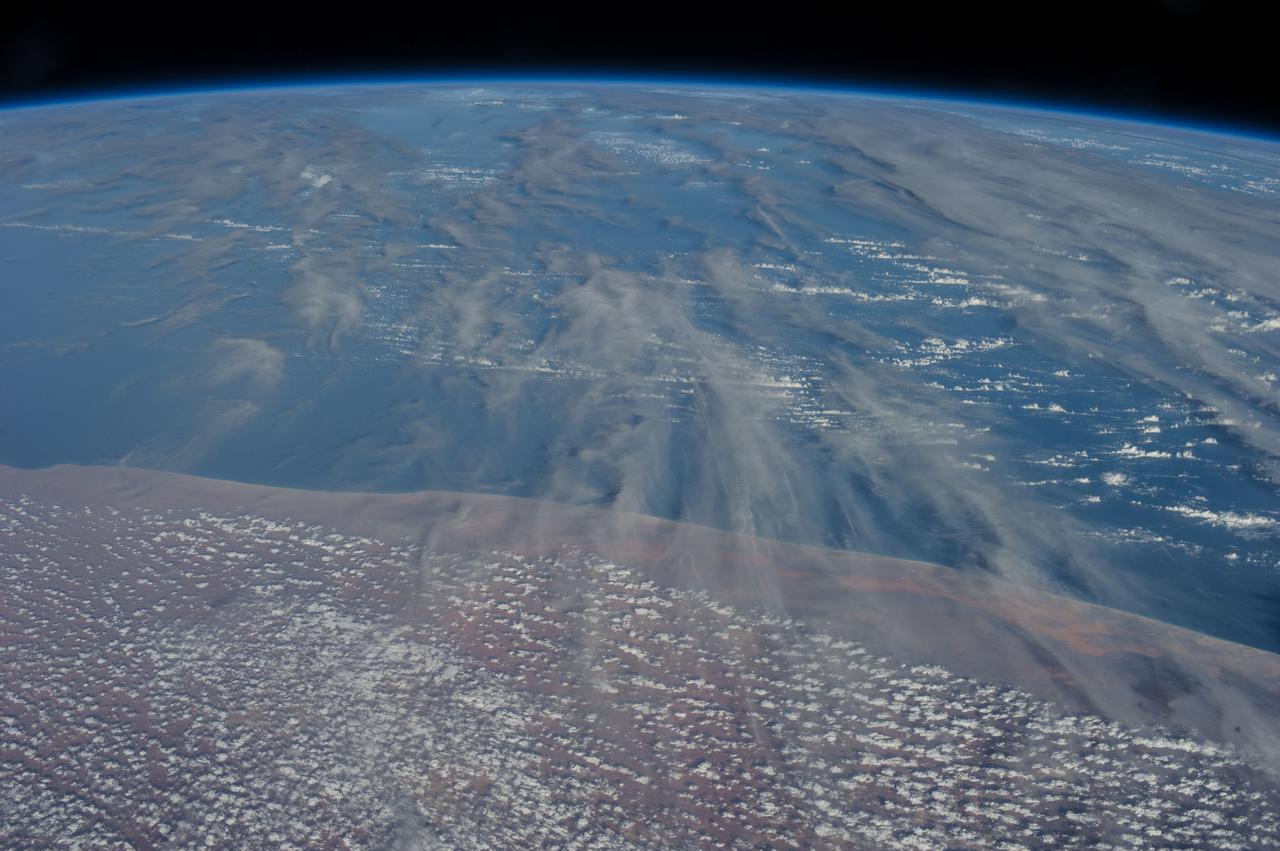
Earth observation taken during a day pass by an Expedition 36 crew member on board the International Space Station (ISS). Per Twitter message: Coast of Somalia on the Indian Ocean.
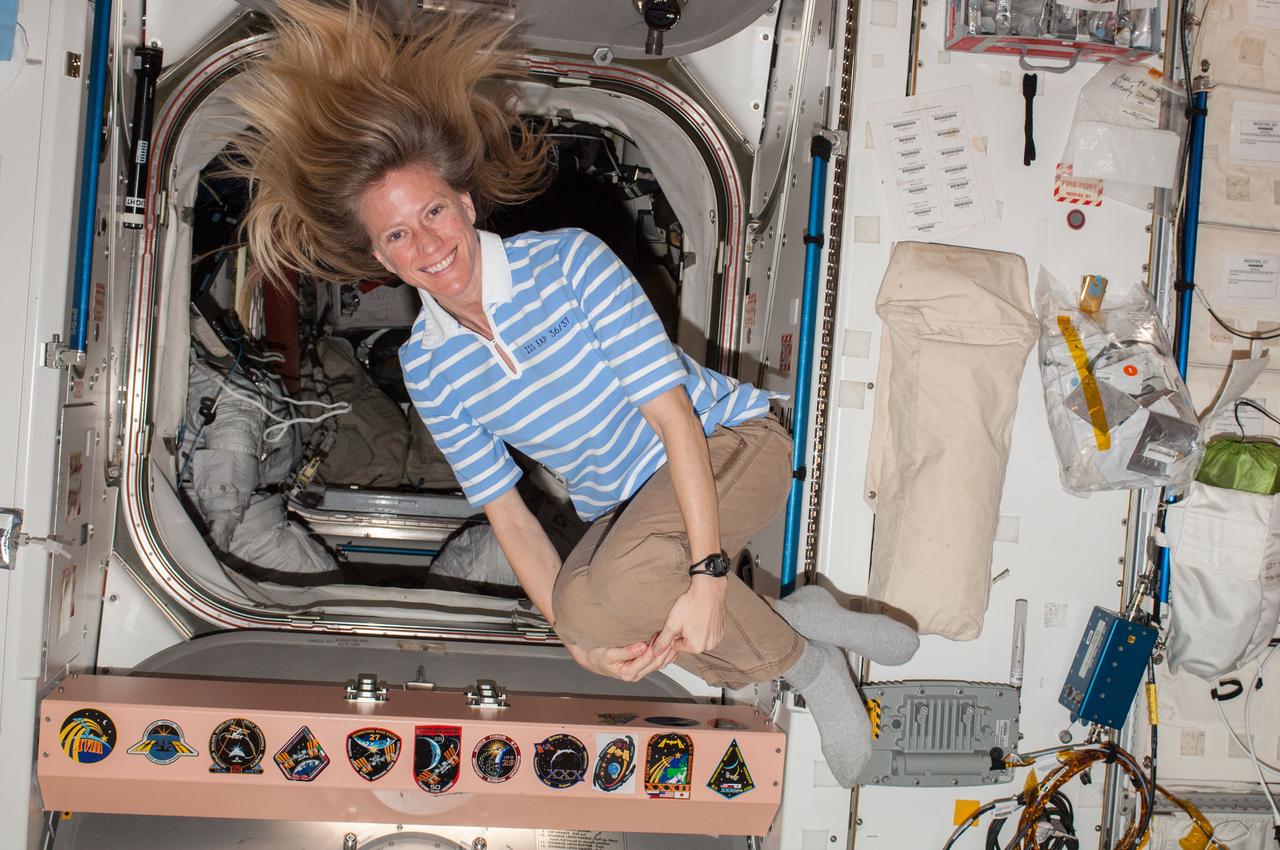
ISS037-E-001092 (16 Sept. 2013) --- NASA astronaut Karen Nyberg, Expedition 37 flight engineer, poses for a photo while floating freely in the Unity node of the International Space Station.
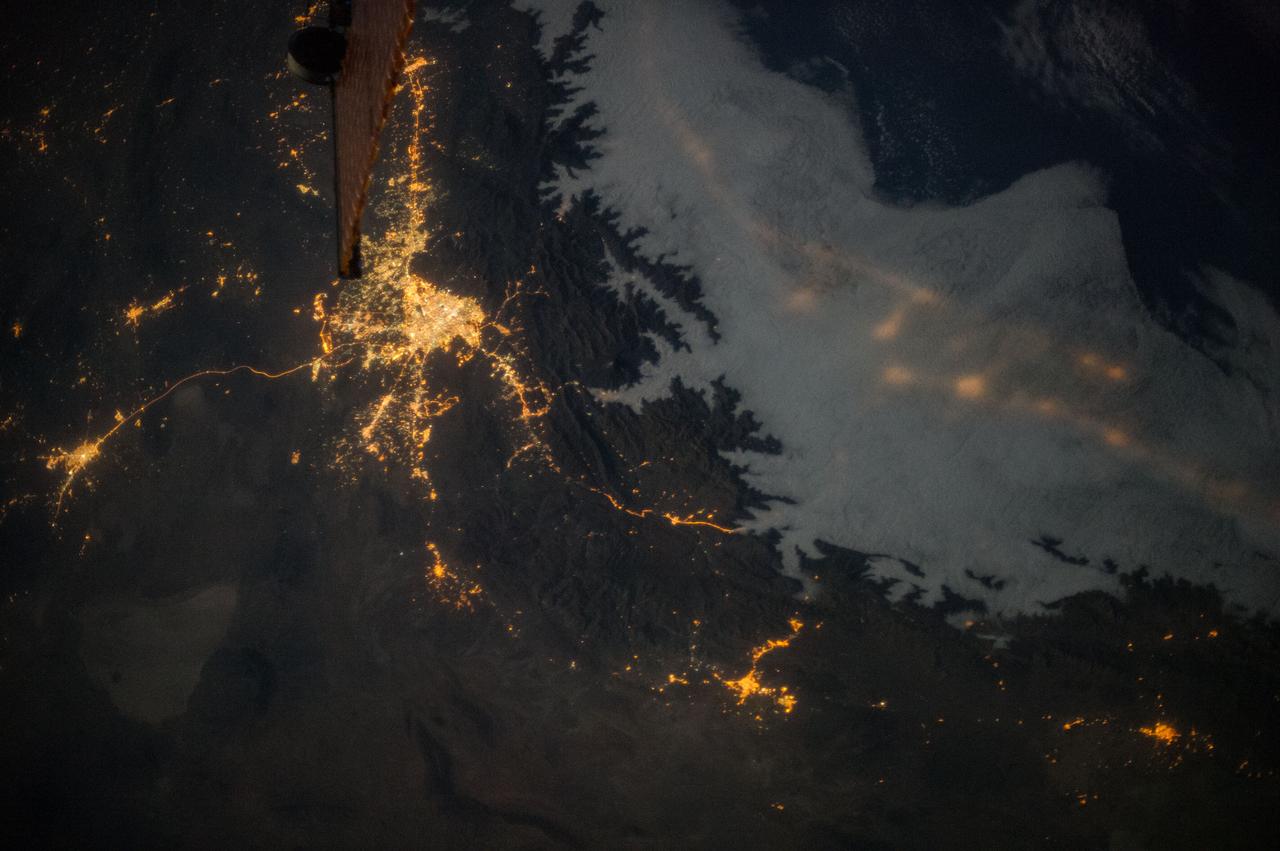
Earth observation taken during night pass by an Expedition 36 crew member on board the International Space Station (ISS). Per Twitter message this is labeled as : Tehran, Iran. Lights along the coast of the Caspian Sea visible through clouds. July 21.
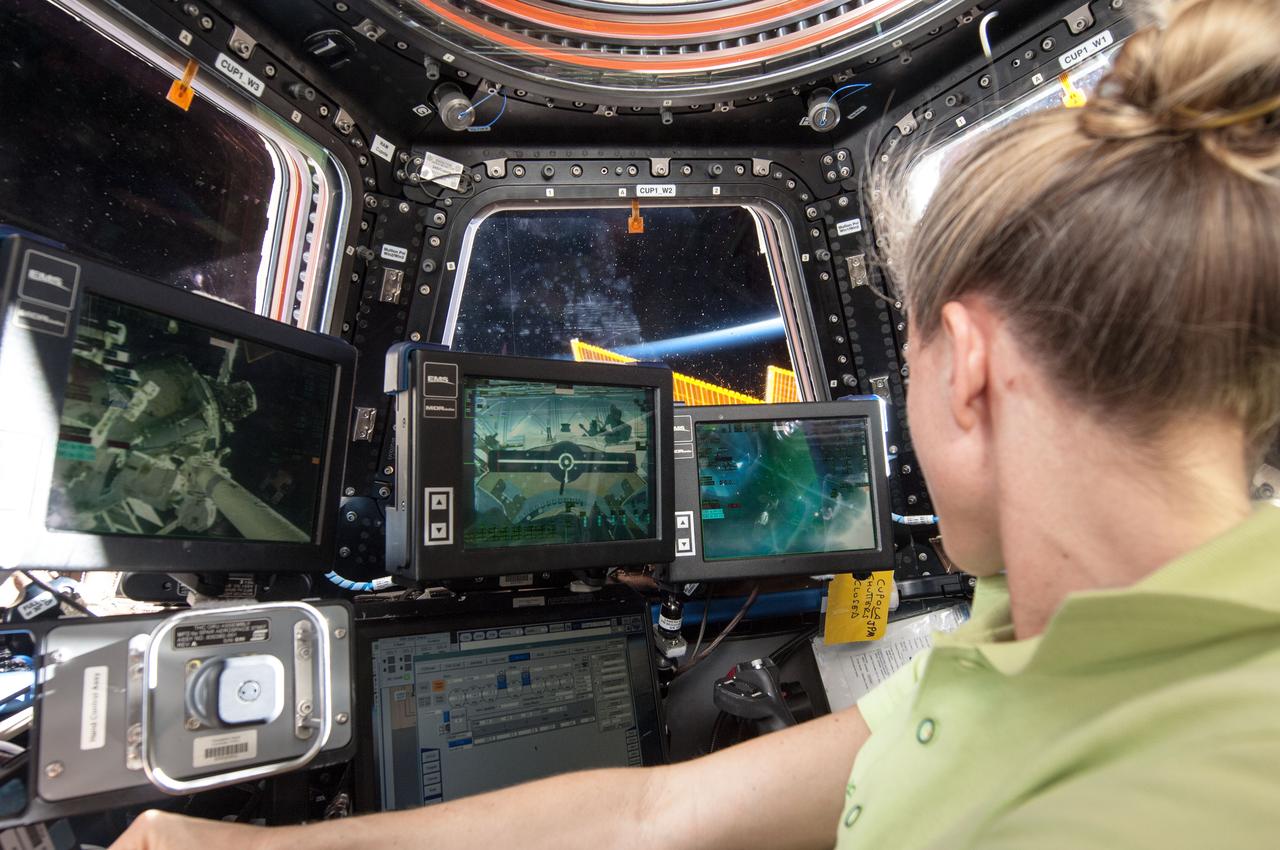
ISS036-E-029229 (5 Aug. 2013) --- At the robotics workstation in the International Space Station?s Cupola, NASA astronaut Karen Nyberg, Expedition 36 flight engineer, participates in onboard training activity in preparation for the grapple and berthing of the Japanese "Kounotori" H2 Transfer Vehicle-4 (HTV-4) set for August 9. Nyberg and NASA astronaut Chris Cassidy will use Canadarm2, the station's Canadian Space Agency-provided robotic arm, to reach out and capture the vehicle for its installation on the Earth-facing port of the Harmony node
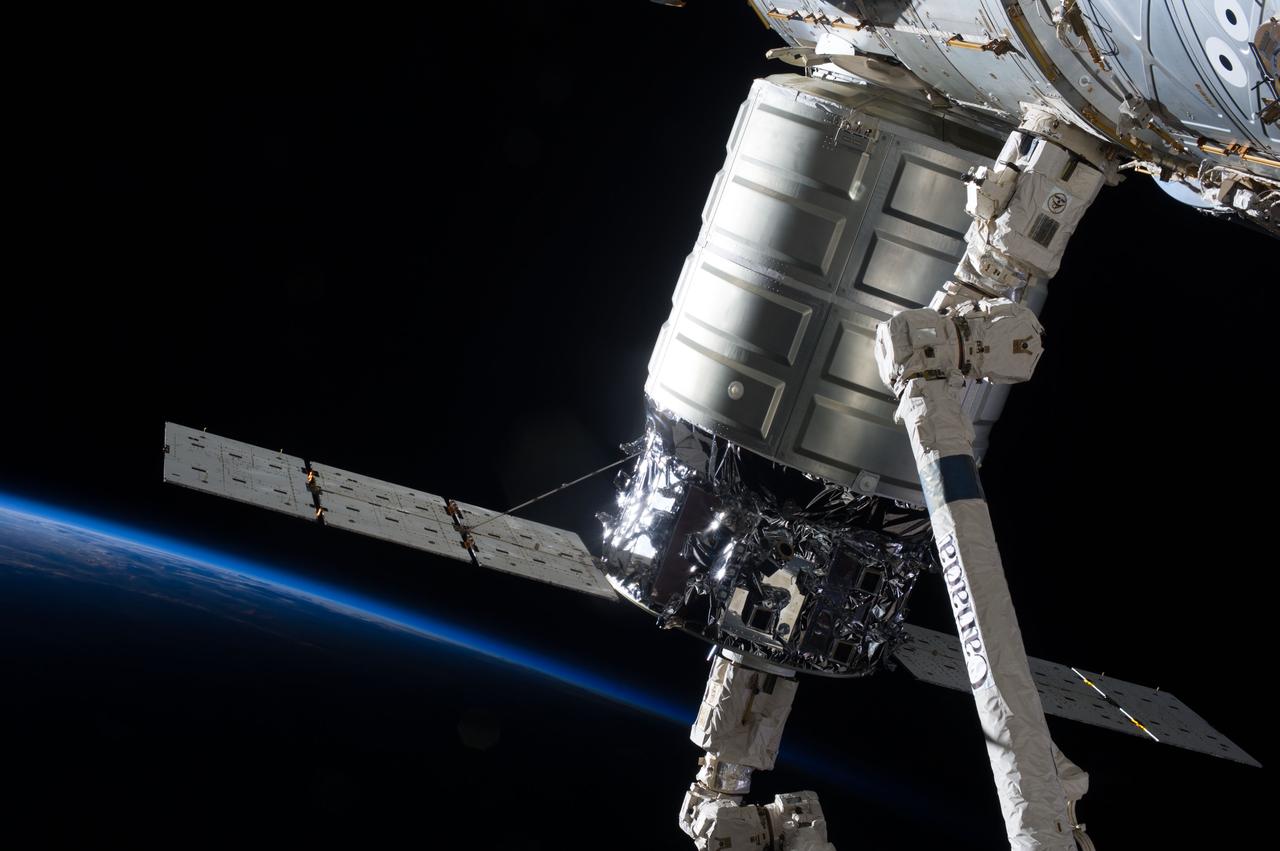
ISS037-E-006296 (5 Oct. 2013) --- Attached to the Harmony node, the first Cygnus commercial cargo spacecraft built by Orbital Sciences Corp., in the grasp of the Canadarm2, is photographed by an Expedition 37 crew member on the International Space Station. The two spacecraft converged at 7:01 a.m. EDT on Sept. 29, 2013. The thin line of Earth's atmosphere provides the backdrop for the scene.
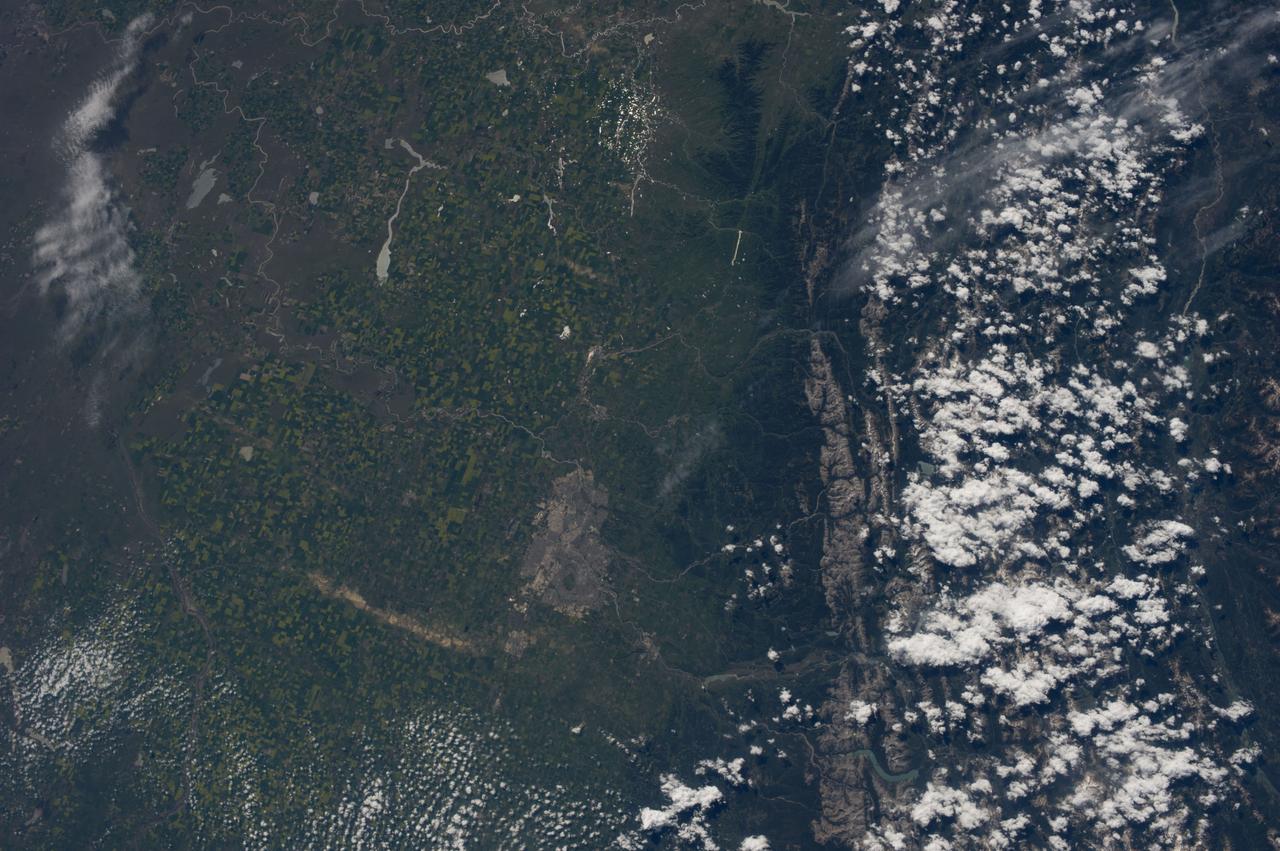
Earth observation taken during a day pass by an Expedition 36 crew member on board the International Space Station (ISS).
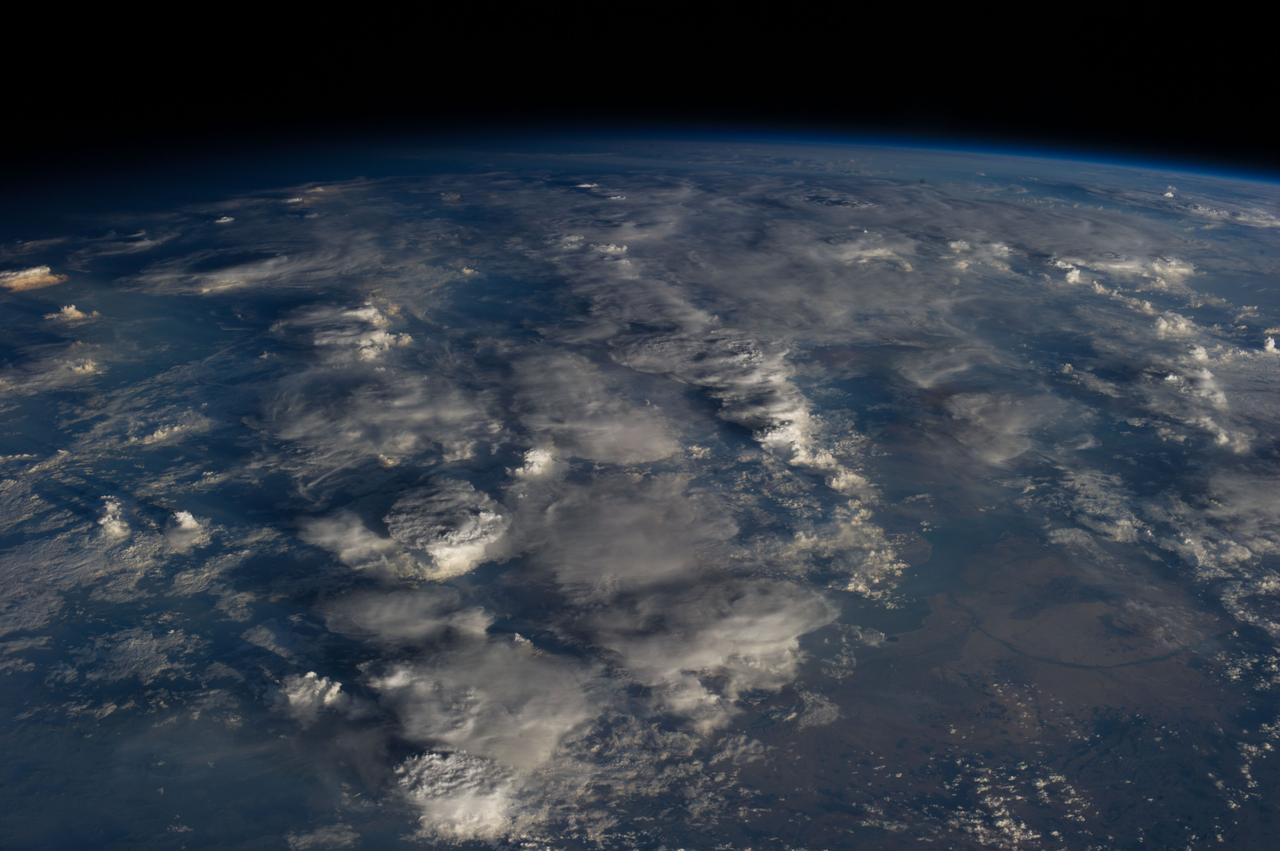
Earth observation taken during day pass by an Expedition 37 crew member on board the International Space Station (ISS). Identified via Twitter message as over Eastern Africa.
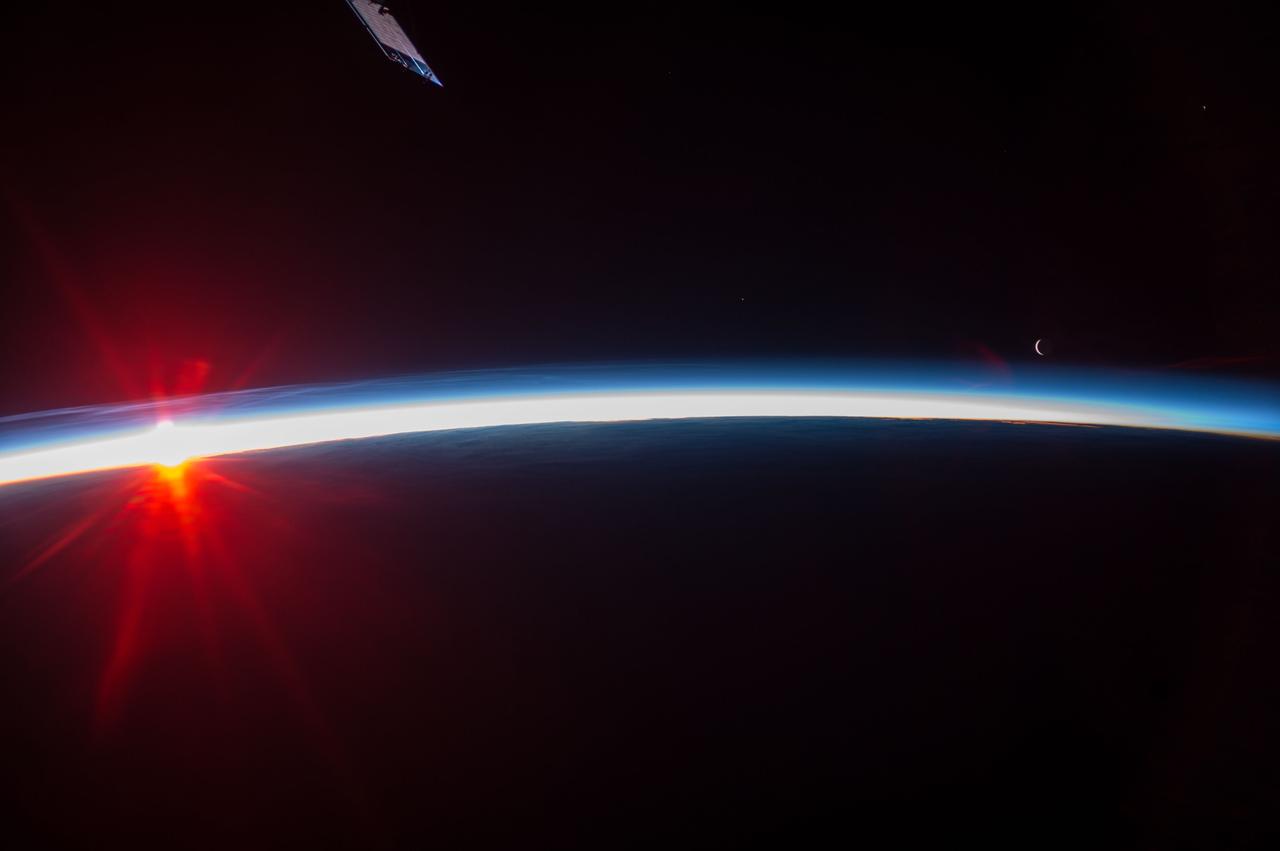
A sunset over the Aleutian Islands,with noctilucent clouds,as documented by the Expedition 36 crew. Per Twitter message: Sunrise and moonrise.
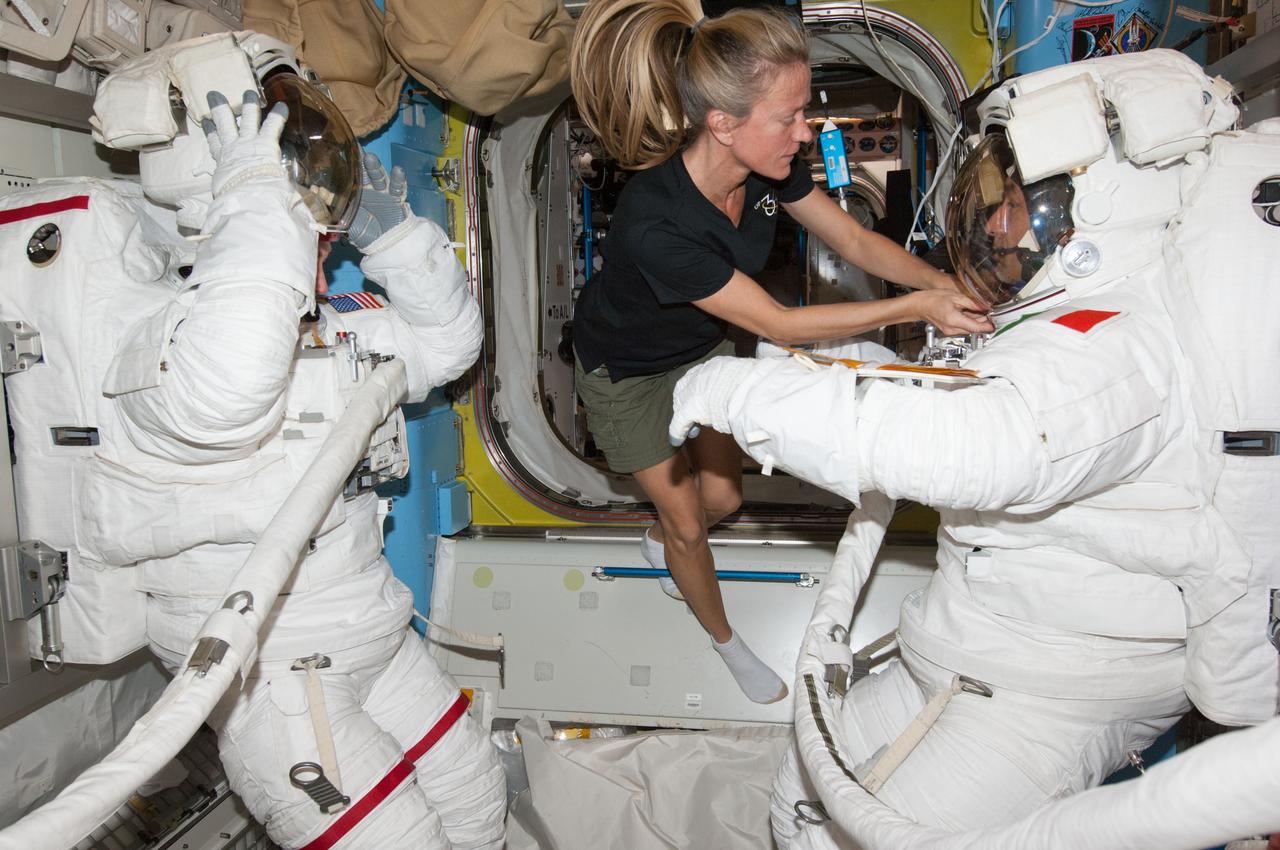
View of NASA astronaut Chris Cassidy (left) and European Space Agency astronaut Luca Parmitano (right), Expedition 36 flight engineers, preparing for a dry run in the International Space Stations Quest airlock in preparation for the first of two sessions of extravehicular (EVA) scheduled for July 9 and July 16. Both have donned their EMUs. Astronaut Karen Nyberg, Expetition 36 flight engineer, is visible in the center.
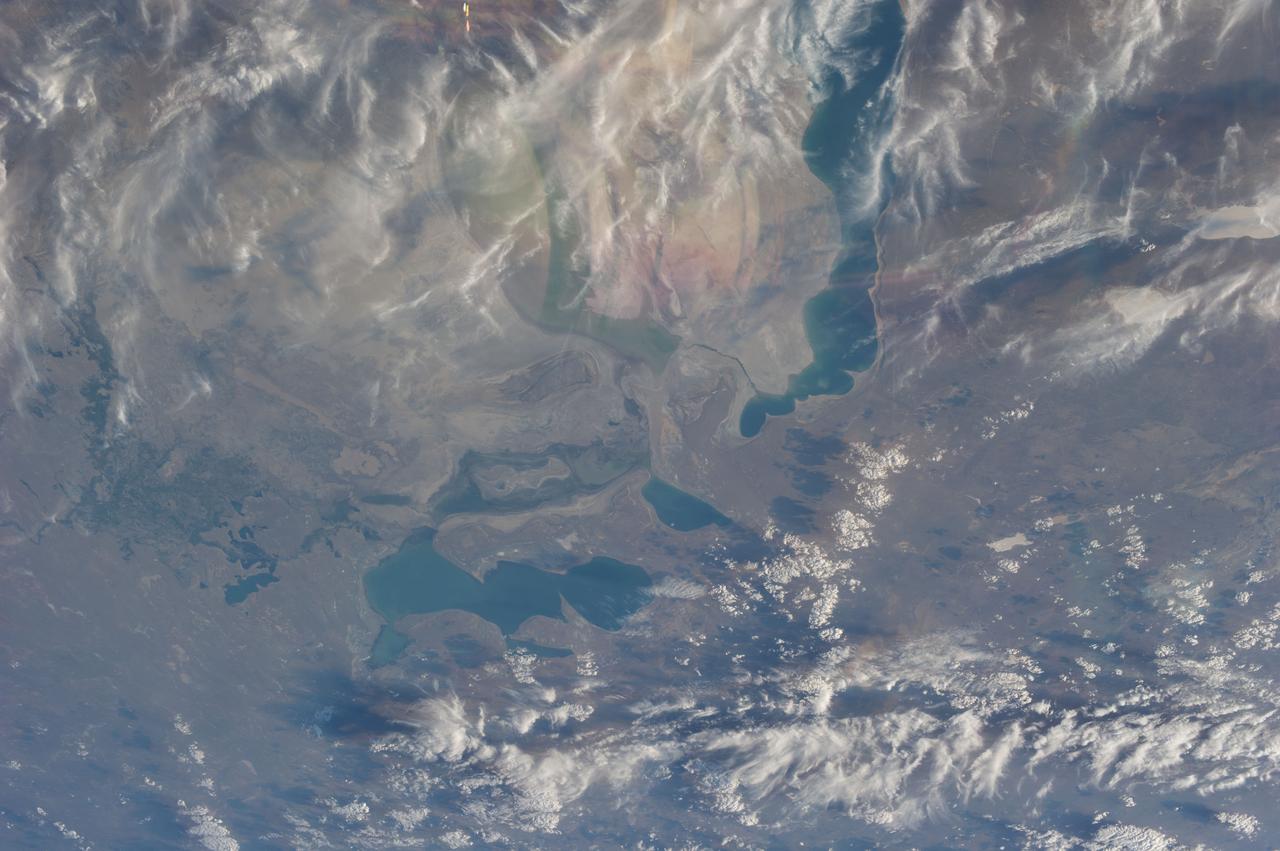
Earth observation taken during a day pass by an Expedition 36 crew member on board the International Space Station (ISS).
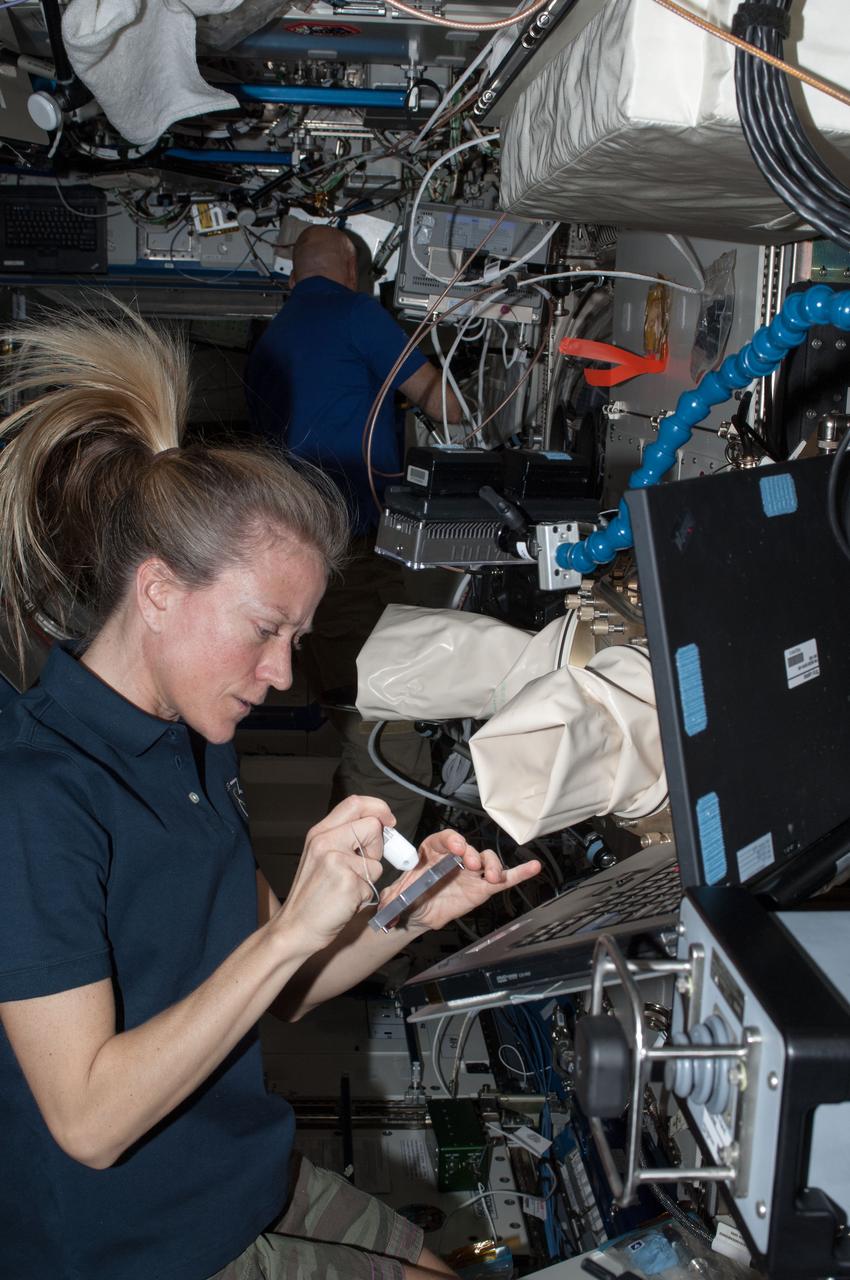
ISS036-E-035770 (18 Aug. 2013) --- NASA astronaut Karen Nyberg, Expedition 36 flight engineer, works with new test samples for the Advanced Colloids Experiment, or ACE, housed in the Light Microscopy Module (LMM) inside the Fluids Integrated Rack of the International Space Station?s Destiny laboratory. Results from ACE will help researchers understand how to optimize stabilizers to extend the shelf life of products like laundry detergent, paint, ketchup and even salad dressing.
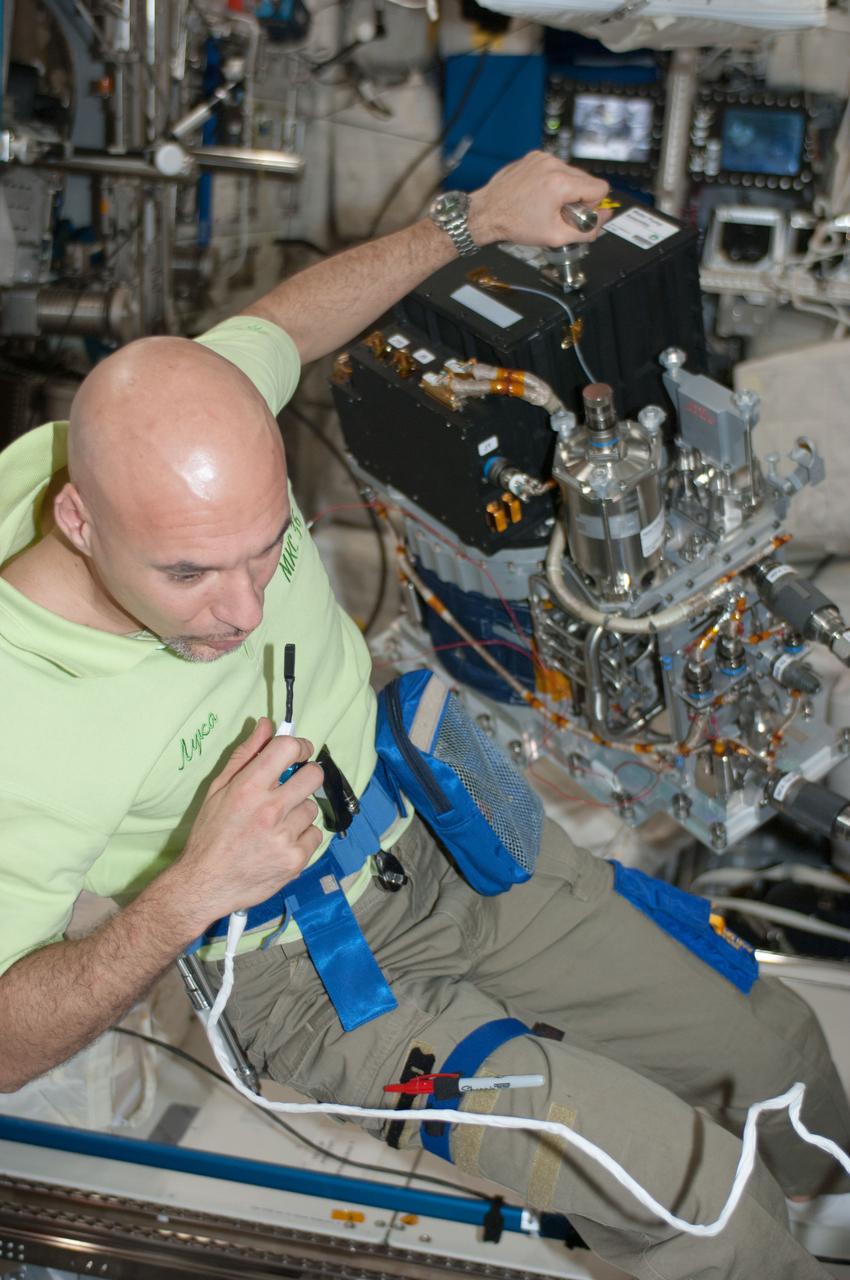
ISS036-E-015512 (5 July 2013) --- European Space Agency astronaut Luca Parmitano, Expedition 36 flight engineer, speaks into a microphone while performing routine servicing of the Water Pump Assembly 2 (WPA2) in the Columbus laboratory of the International Space Station.
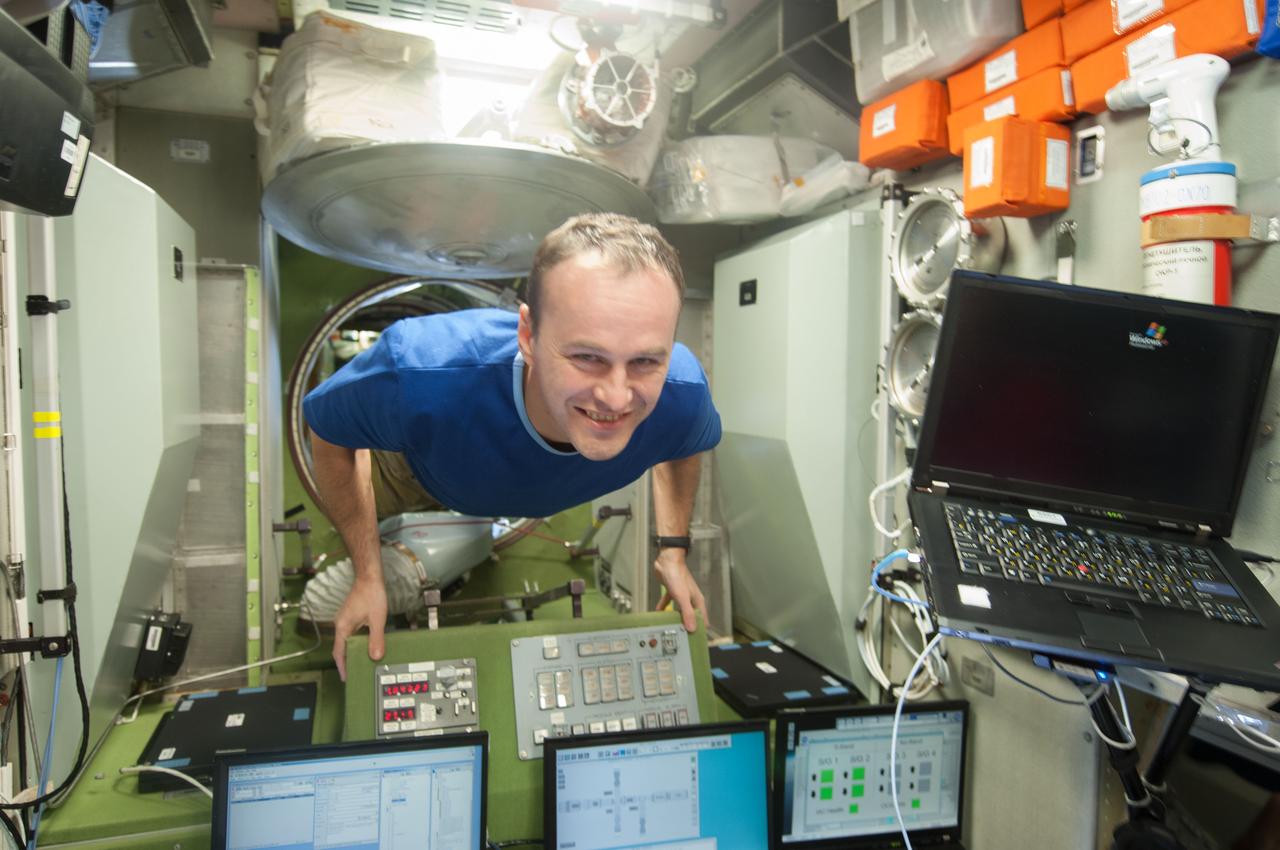
ISS037-E-016947 (19 Oct. 2013) --- Russian cosmonaut Sergey Ryazanskiy, Expedition 37 flight engineer, floats through a hatch in the Russian segment of the International Space Station.
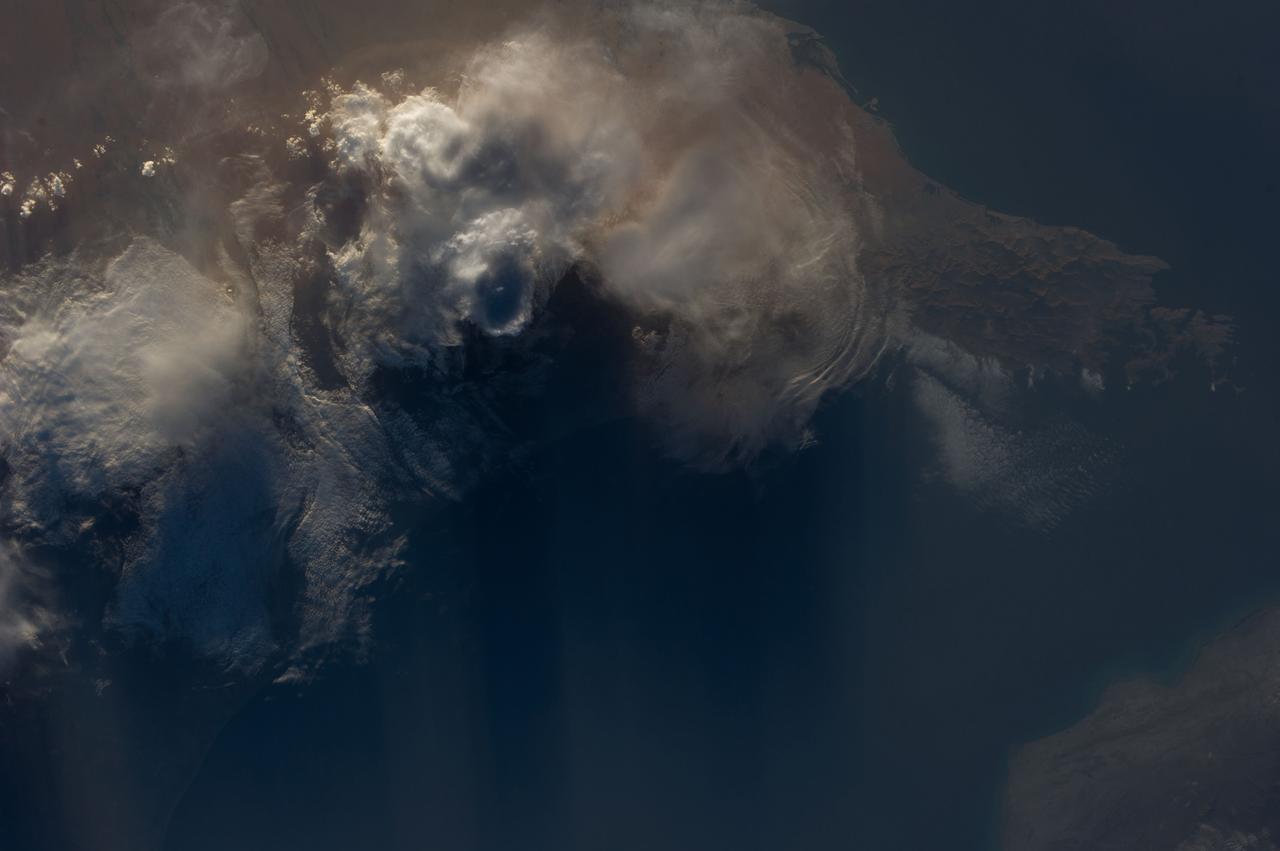
Earth observation taken by an Expedition 36 crew member on board the International Space Station (ISS). Per Twitter message: Evening storms over Oman & United Arab Emirates.
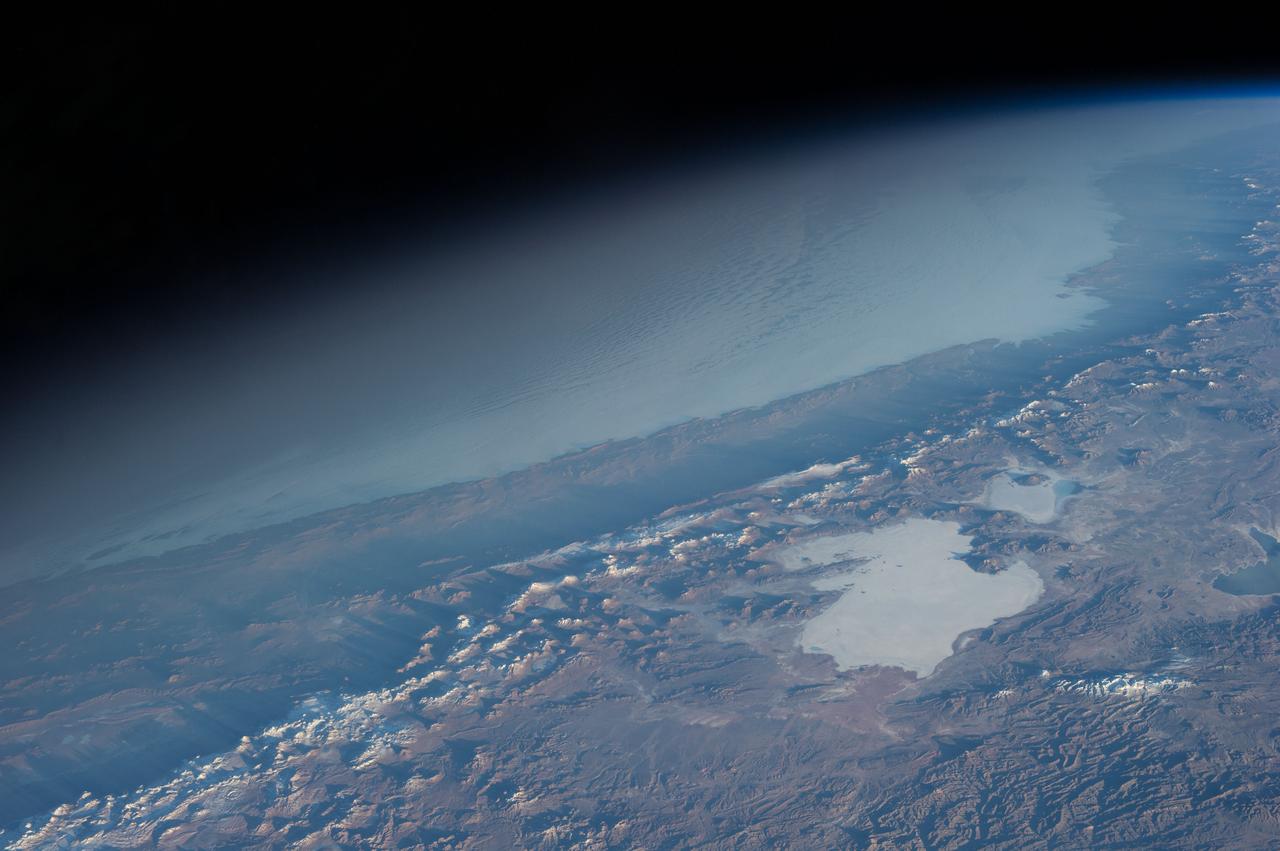
Earth observation taken during a day pass by an Expedition 36 crew member on board the International Space Station (ISS).
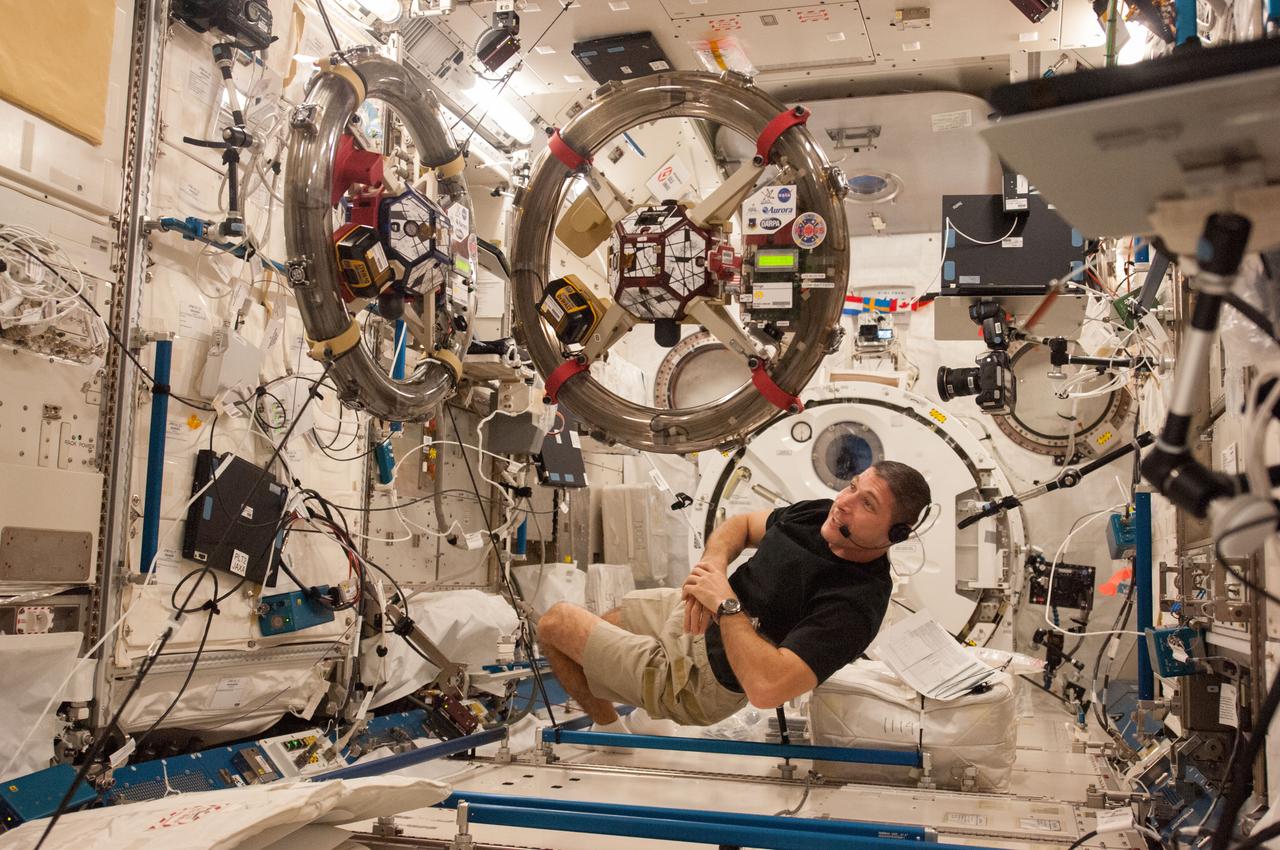
ISS037-E-025868 (4 Nov. 2013) --- In the International Space Station?s Kibo laboratory, NASA astronaut Michael Hopkins, Expedition 37 flight engineer, conducts a session with a pair of bowling-ball-sized free-flying satellites known as Synchronized Position Hold, Engage, Reorient, Experimental Satellites, or SPHERES. Surrounding the two SPHERES mini-satellites is ring-shaped hardware known as the Resonant Inductive Near-field Generation System, or RINGS. SPHERES-RINGS seeks to demonstrate wireless power transfer between satellites at a distance for enhanced operations.
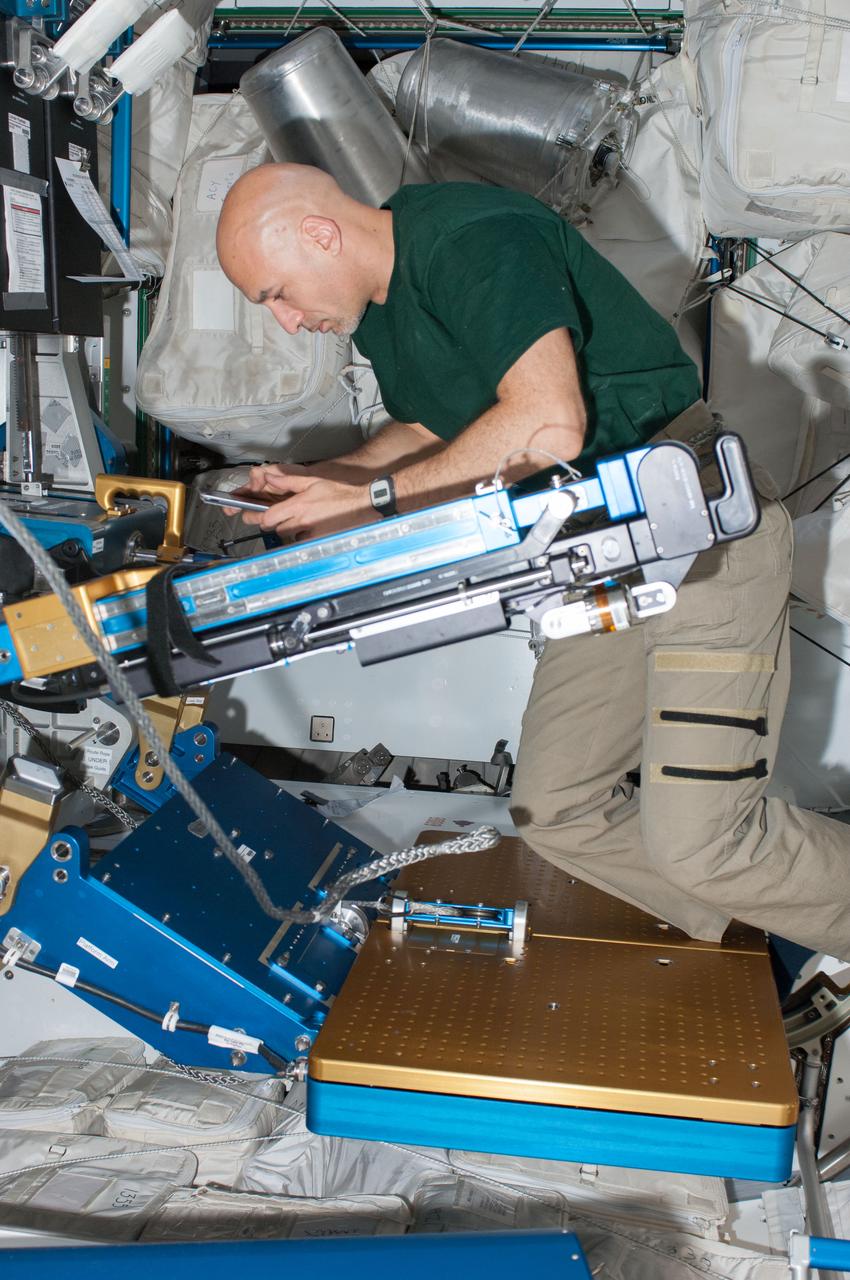
ISS036-E-008912 (17 June 2013) --- European Space Agency astronaut Luca Parmitano, Expedition 36 flight engineer, performs in-flight maintenance on the advanced Resistive Exercise Device (aRED) in the Tranquility node of the International Space Station.
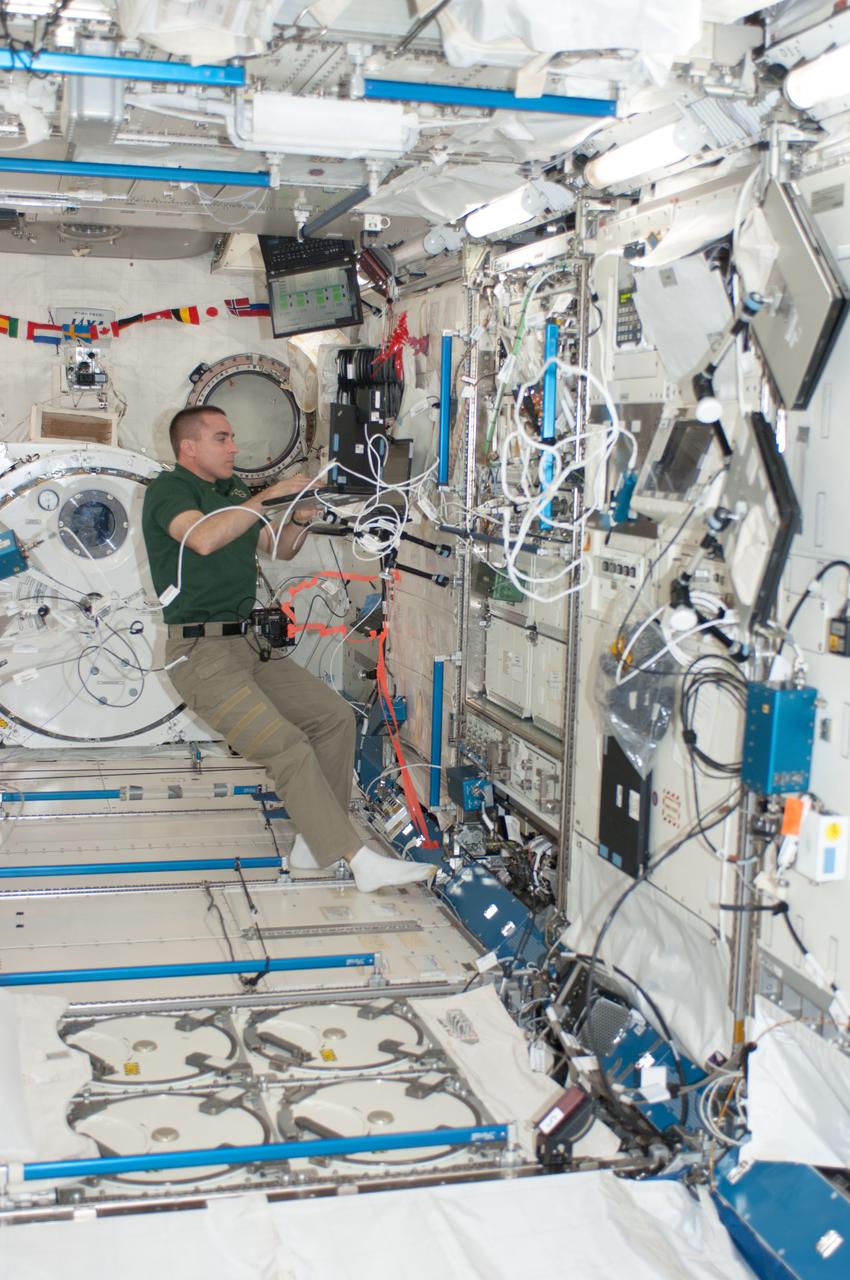
ISS036-E-015510 (5 July 2013) --- NASA astronaut Chris Cassidy, Expedition 36 flight engineer, uses a computer in the Kibo laboratory of the International Space Station.
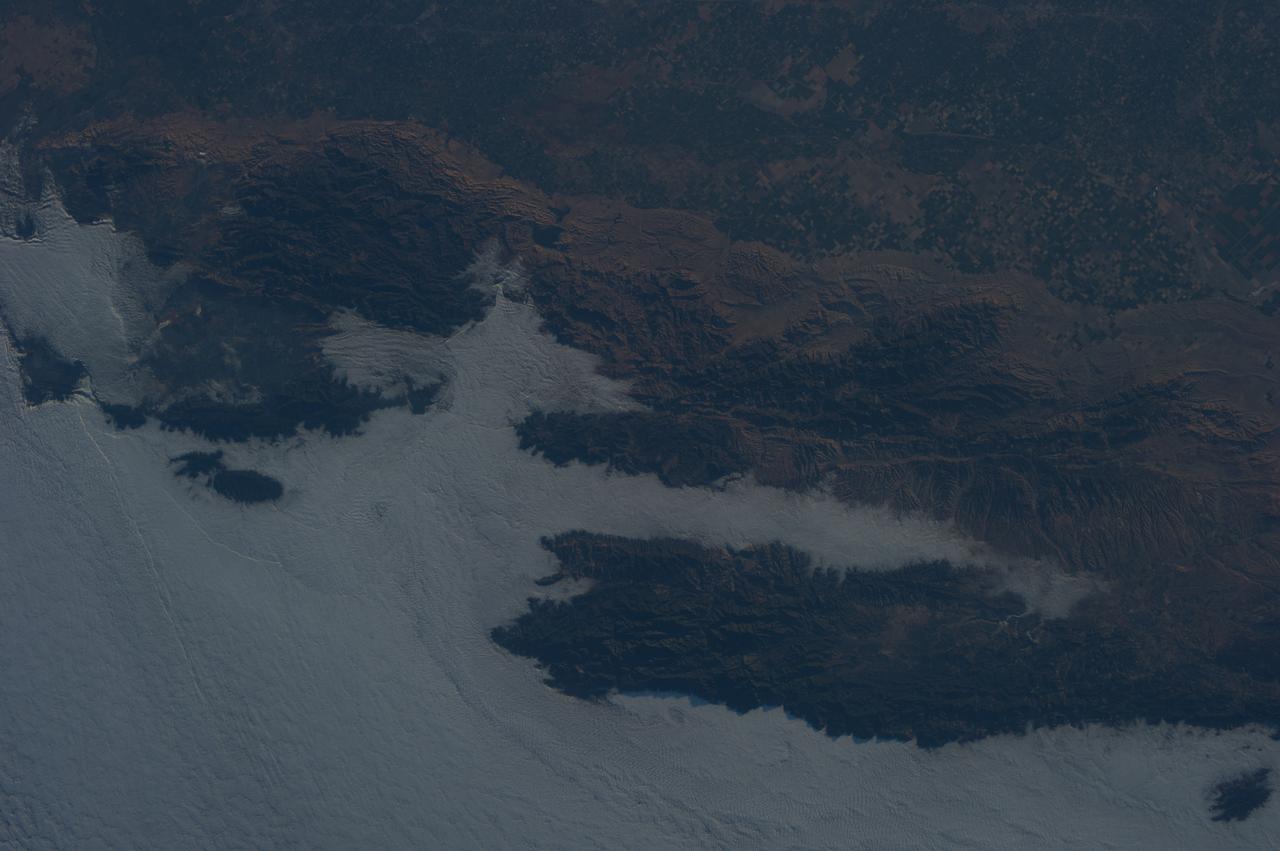
Earth observation taken during a day pass by an Expedition 36 crew member on board the International Space Station (ISS).
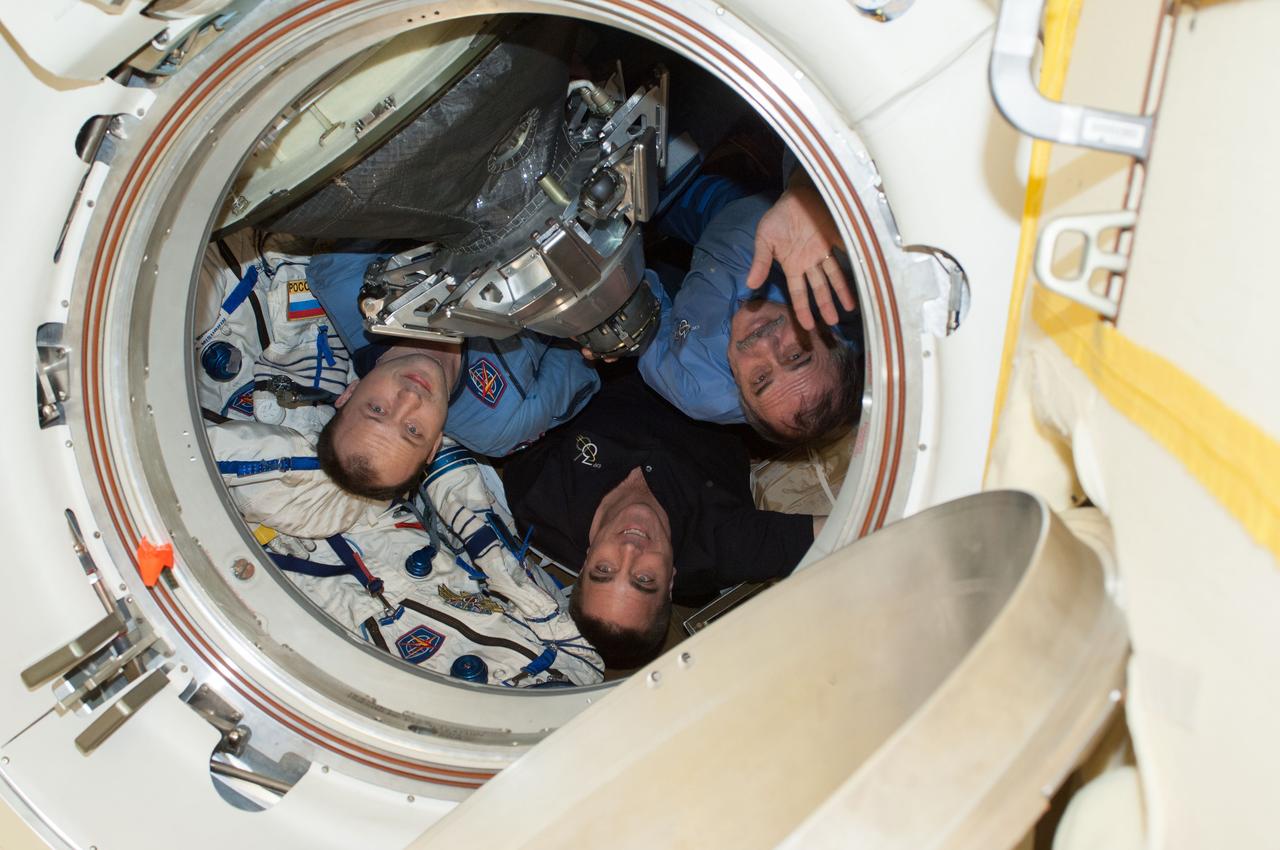
ISS036-E-048267 (10 Sept. 2013) --- Russian cosmonaut Pavel Vinogradov (right), Expedition 36 commander; along with NASA astronaut Chris Cassidy (center) and Russian cosmonaut Alexander Misurkin, both flight engineers, are pictured in the Soyuz TMA-08M spacecraft currently docked to the Poisk Mini-Research Module 2 (MRM2) of the International Space Station. The trio is preparing to undock from Poisk in their Soyuz spacecraft, ending a five-and-a-half month stay at the station.
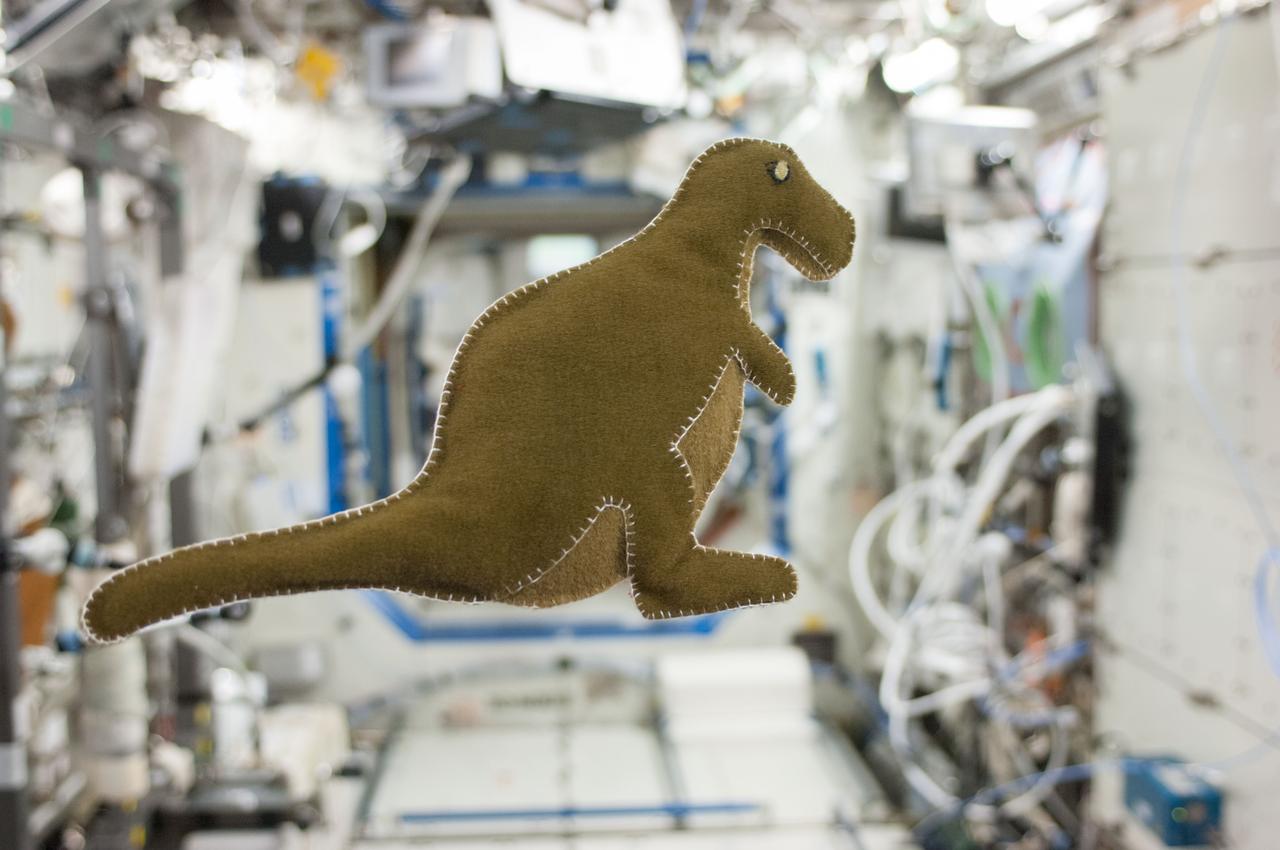
ISS037-E-002783 (22 Sept. 2013) --- NASA astronaut Karen Nyberg, Expedition 37 flight engineer, made this stuffed dinosaur toy aboard the International Space Station, using scraps of food-packaging liners and a T-shirt. She sent images of it to her young son on Sept. 22. Many of the astronaut’s hobbies lean toward artistic pursuits. She has let it be known that she loves to create different things through quilting, sewing and sketching. Nyberg took four “fat quarters” (pieces of fabric that are 18 by 22 inches) with her to the International Space Station along with needles, thread and a sketchbook when she launched to space on May 28.
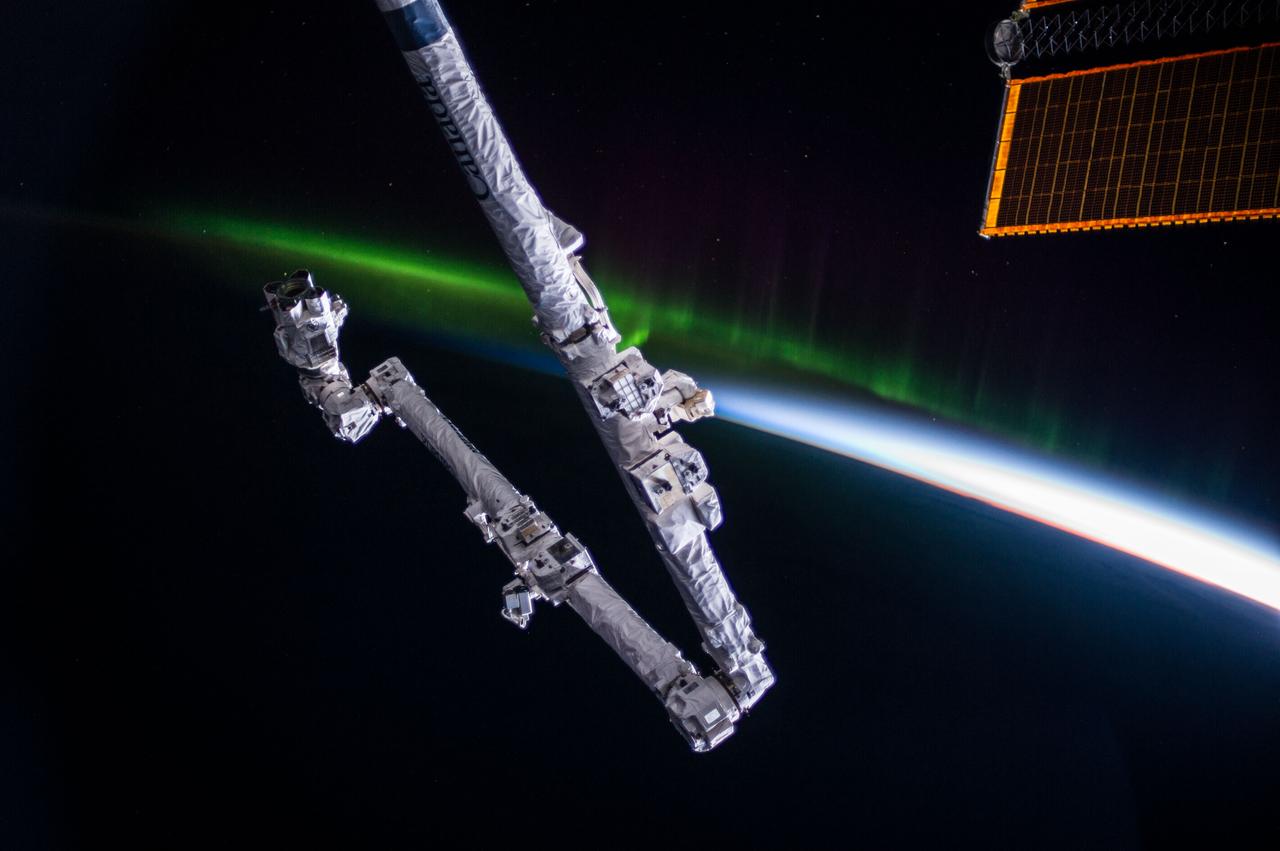
ISS037-E-026746 (4 Nov. 2013) --- One of the Expedition 37 crew members aboard the Earth-orbiting International Space Station took this photograph looking toward Earth's horizon when the complex was 228 miles above a point located 46.6 degrees south latitude and 146.6 degrees east longitude. The space station remote manipulator system arm or Canadarm2 dominates the foreground. A relatively small appearance of Aurora Australis or the Southern Lights runs from upper left to frame center. One of the space station's solar array panels is seen in upper right.
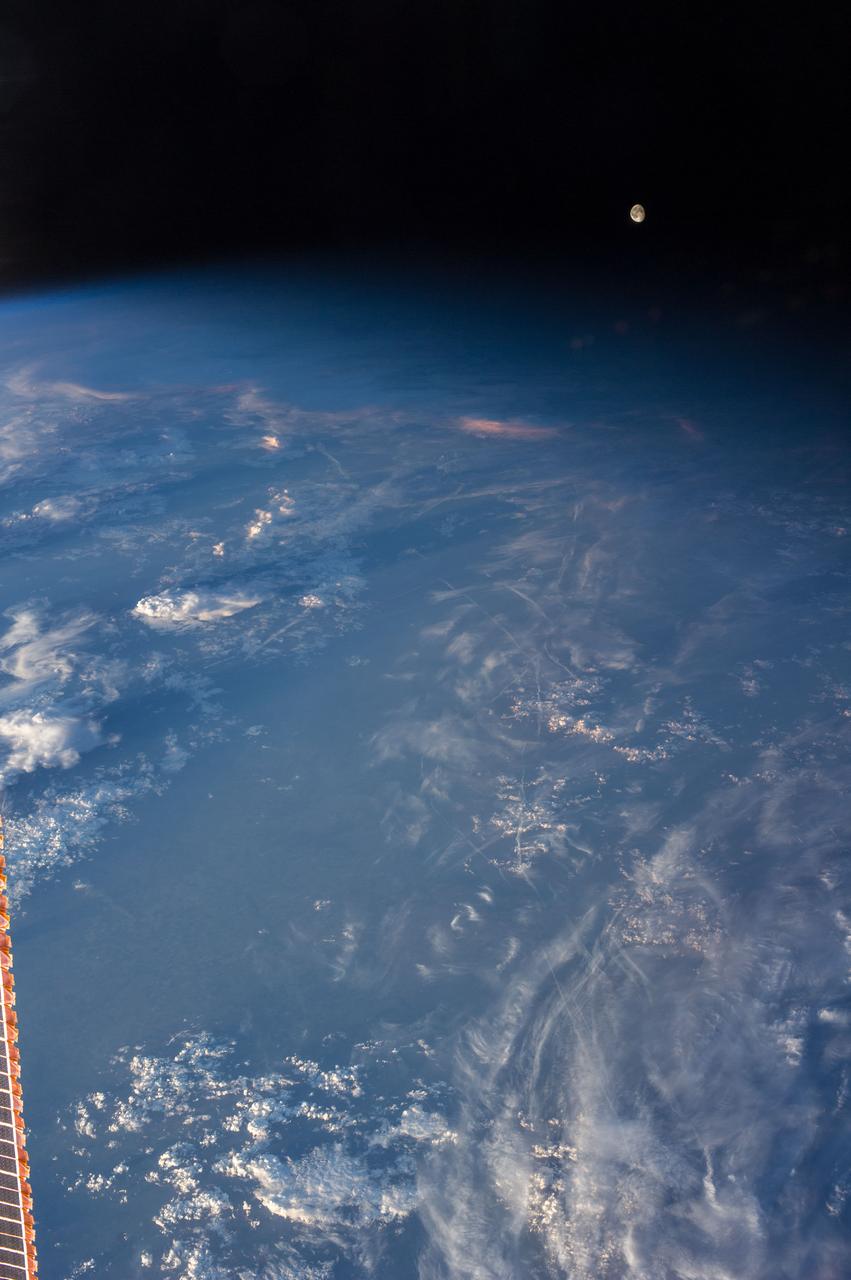
Earth observation taken during a day pass by the Expedition 36 crew. Per Twitter message: The waning gibbous moon and the Earth's terminator.
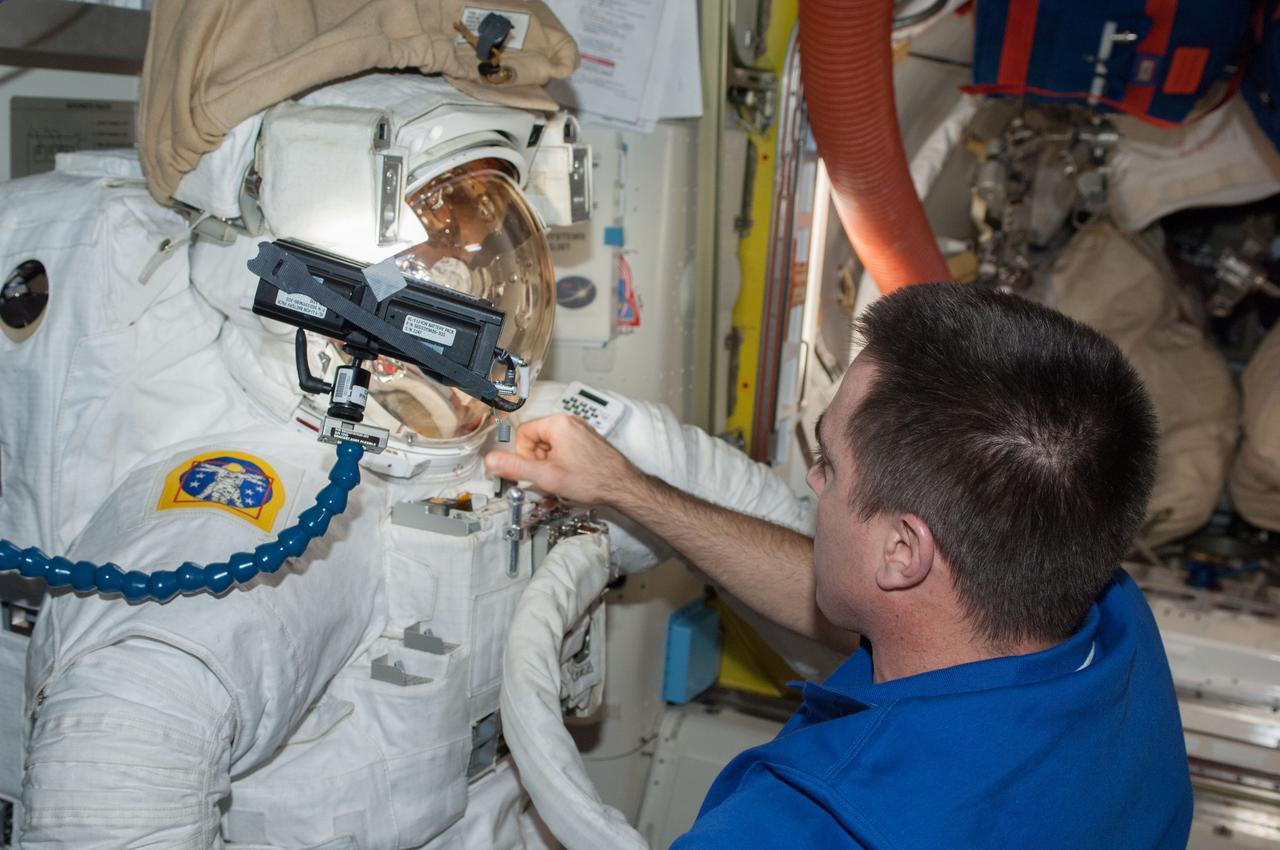
ISS036-E-037231 (27 Aug. 2013) --- NASA astronaut Chris Cassidy, Expedition 36 flight engineer, works with an Extravehicular Mobility Unit (EMU) spacesuit in the Quest airlock of the International Space Station. Cassidy is performing a checkout of the spacesuit worn by European Space Agency astronaut Luca Parmitano during a July 16 spacewalk that was cut short when its helmet began to fill with water. After assembling and powering up the empty suit as if it were about to go out on another spacewalk, Cassidy and Parmitano (out of frame) observed water once again leaking into the helmet. With the issue reproduced, NASA now has a baseline configuration for the crew to begin swapping out parts for additional tests to pinpoint the problem. There are also opportunities to either launch replacement parts on upcoming cargo flights or return parts to Earth for further study once more is known about the cause of the issue.
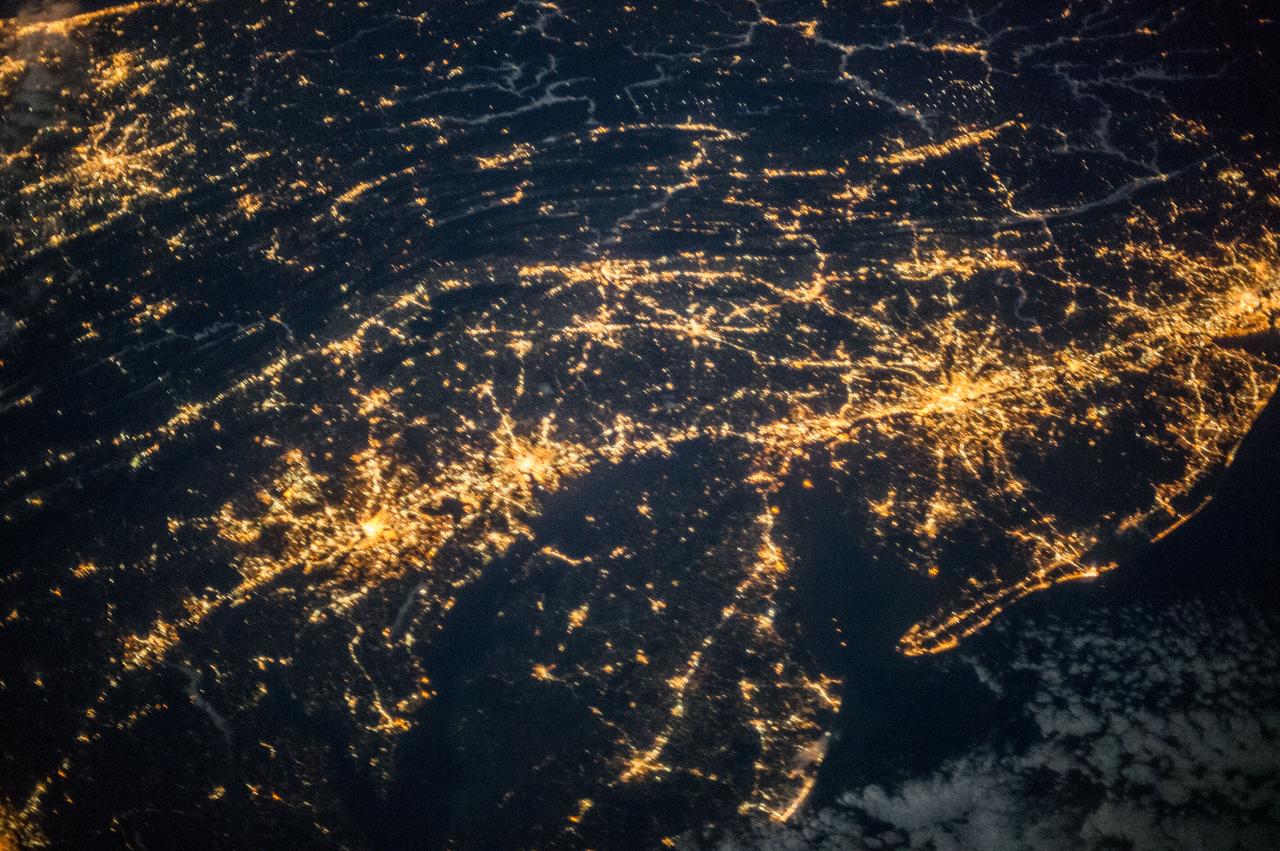
ISS037-E-002212 (18 Sept. 2013) ---
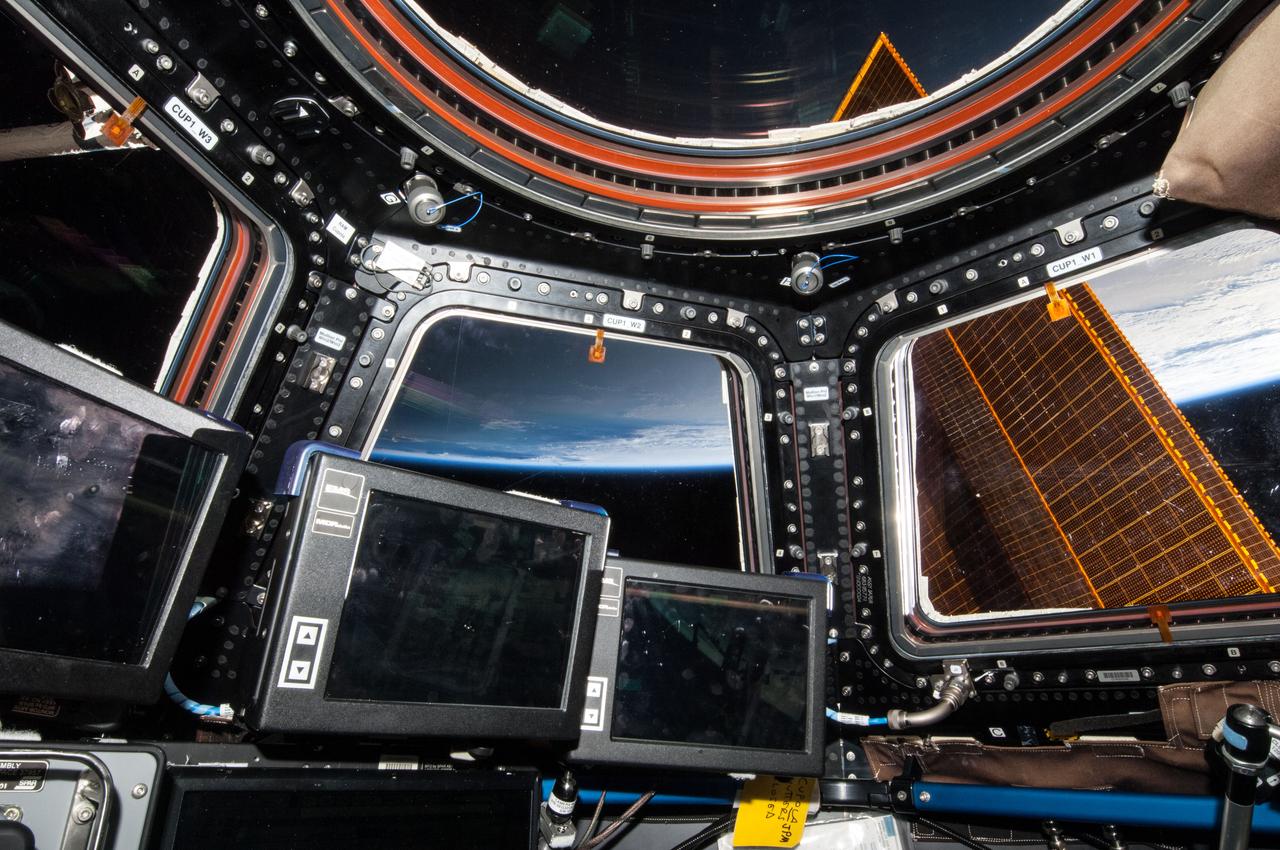
ISS036-E-029203 (5 Aug. 2013) --- The International Space Station?s Cupola robotics workstation is featured in this image photographed by an Expedition 36 crew member during onboard training activity as they prepare for the grapple and berthing of the Japanese "Kounotori" H2 Transfer Vehicle-4 (HTV-4) set for August 9. A station solar array and Earth?s horizon are visible through Cupola?s windows.
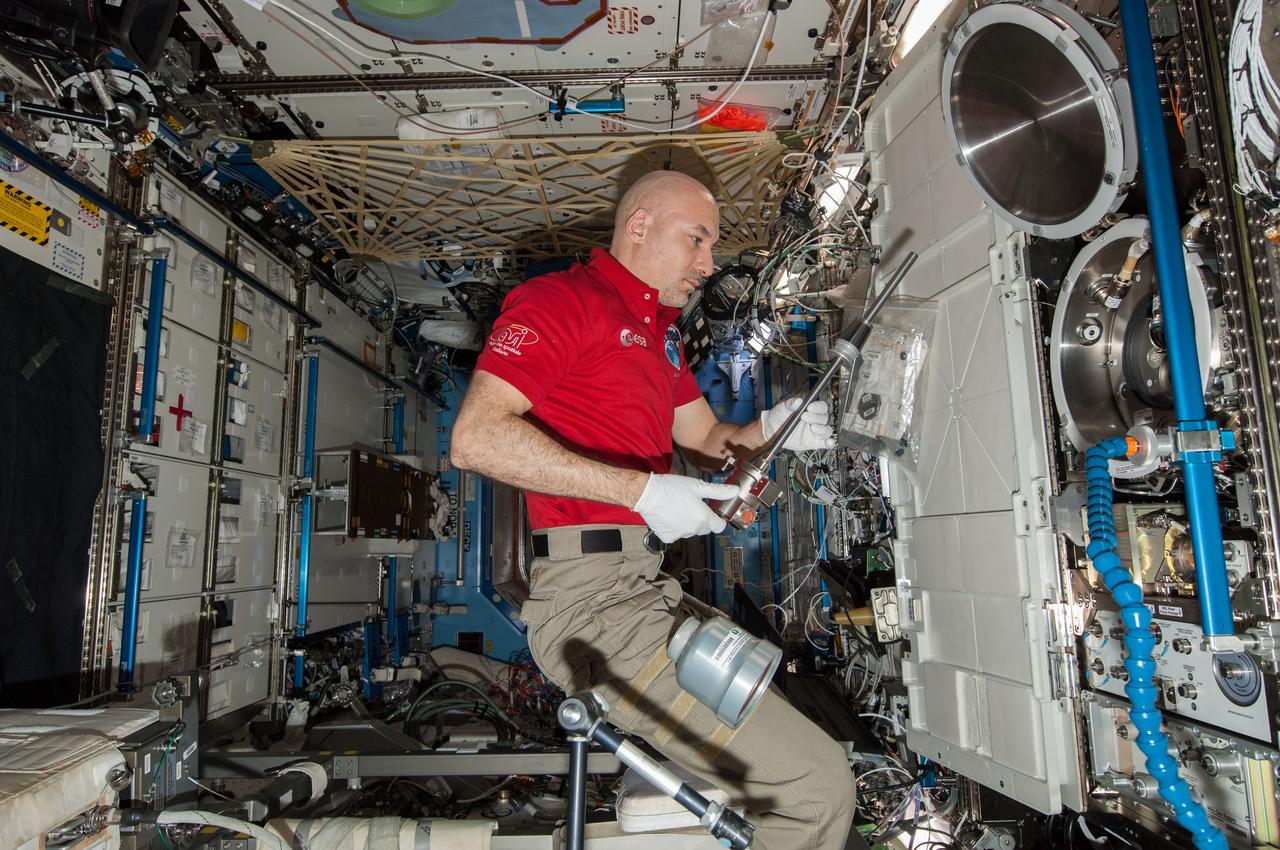
ISS037-E-026919 (4 Nov. 2013) --- European Space Agency astronaut Luca Parmitano, Expedition 37 flight engineer, works with the Combustion Integrated Rack (CIR) Multi-user Drop Combustion Apparatus (MDCA) in the Destiny laboratory of the International Space Station.
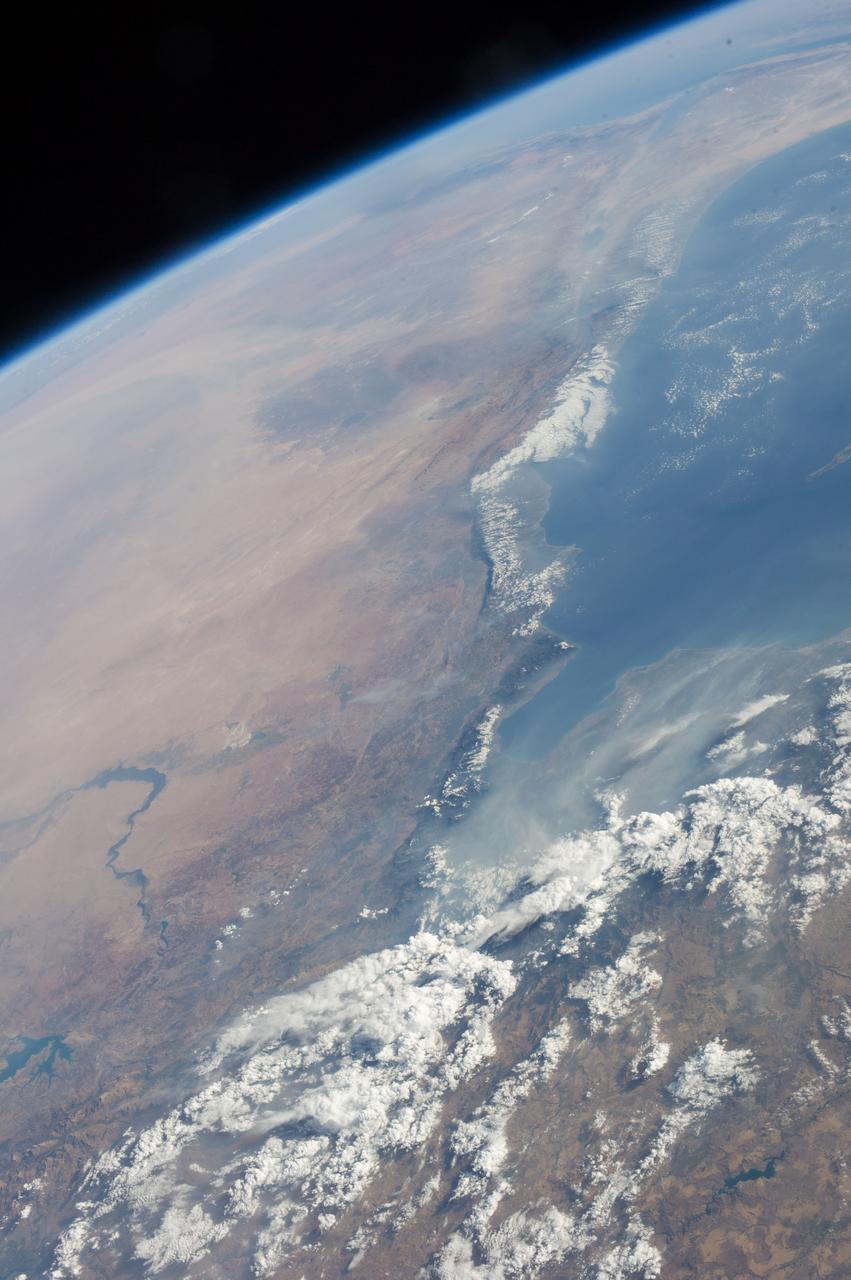
Earth observation taken by an Expedition 36 crew member on board the International Space Station (ISS). Per Twitter message: Eastern Mediterranean Sea coast, Turkey, Syria, Lebanon, Israel.
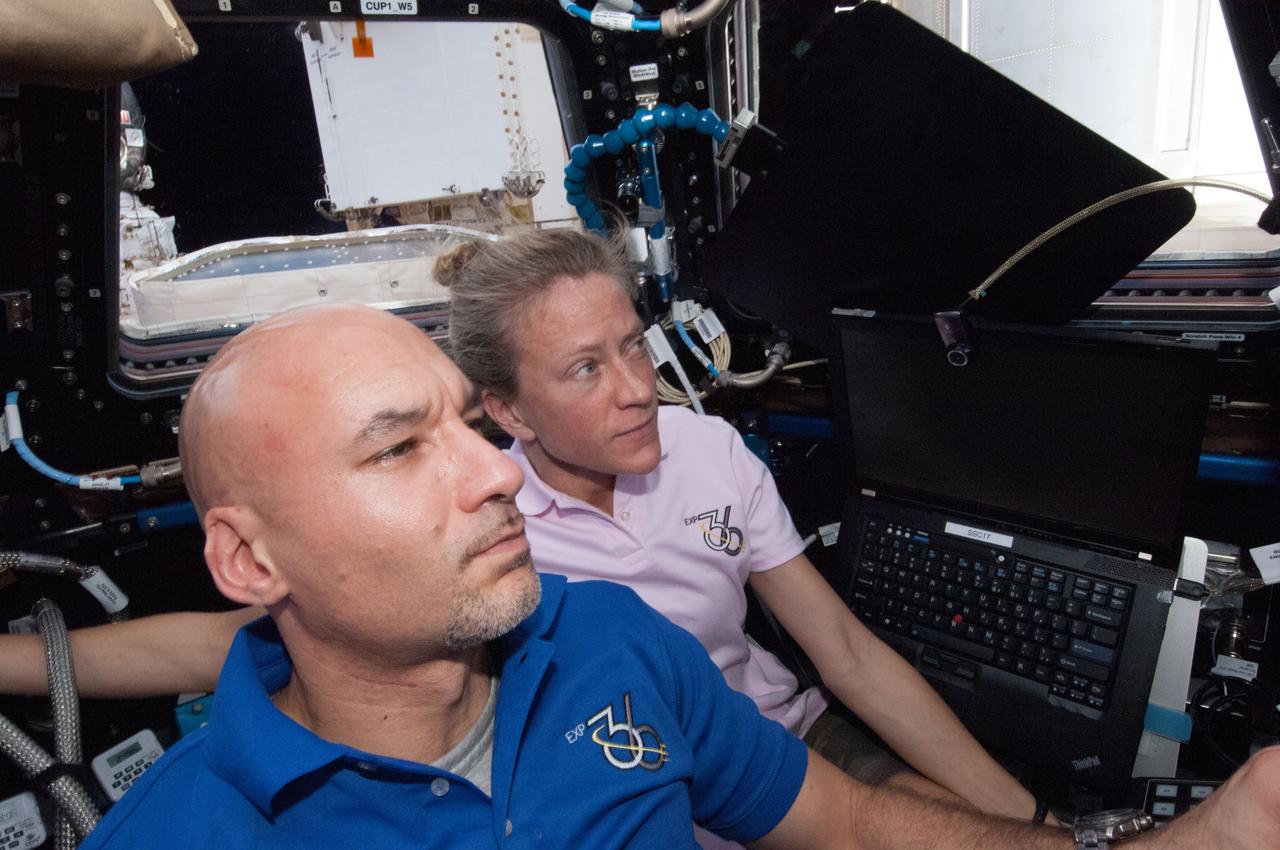
ISS036-E-026332 (29 July 2013) --- In the International Space Station?s Cupola, European Space Agency astronaut Luca Parmitano and NASA astronaut Karen Nyberg, both Expedition 36 flight engineers, participate in an onboard training activity in preparation for the grapple and berthing of the Japanese ?Kounotori? H2 Transfer Vehicle-4 (HTV-4) set for August 9.
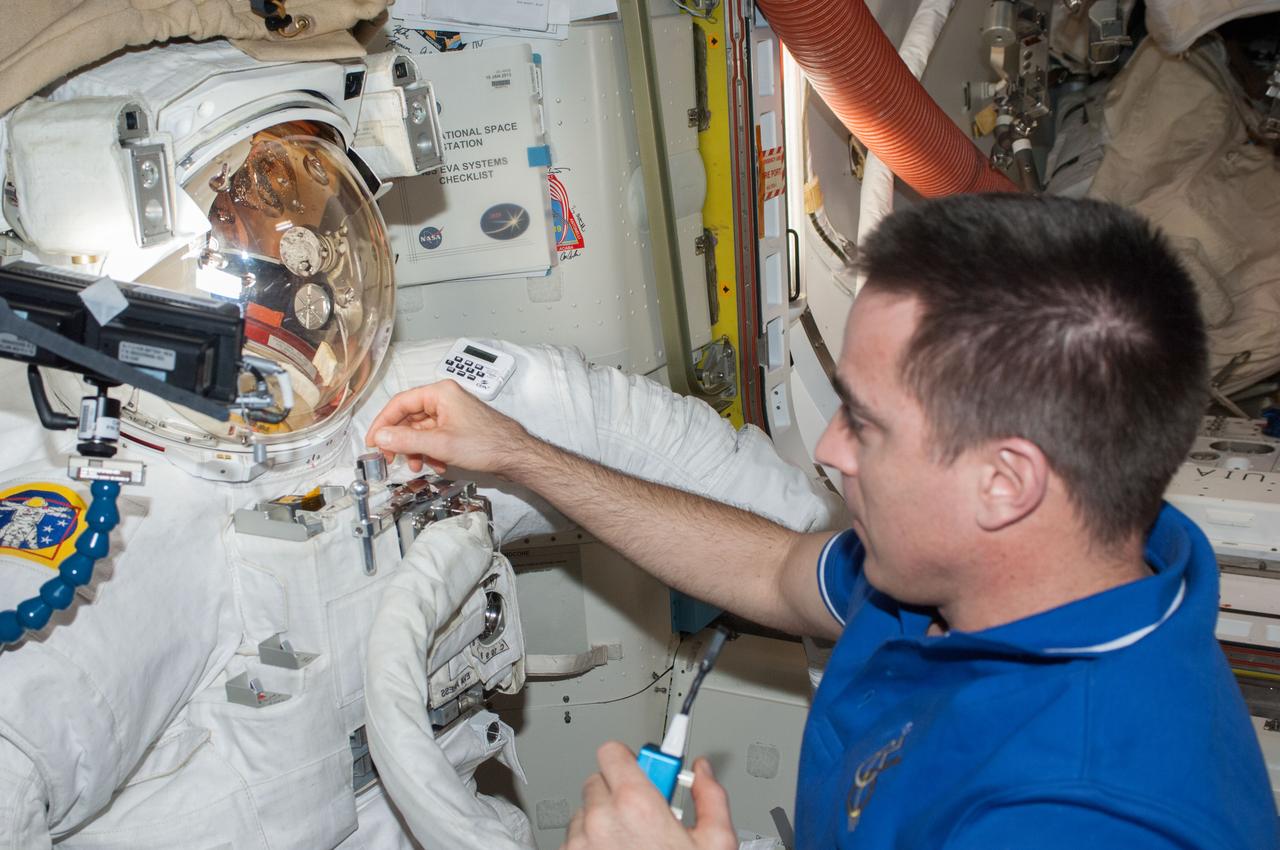
ISS036-E-037230 (27 Aug. 2013) --- NASA astronaut Chris Cassidy, Expedition 36 flight engineer, works with an Extravehicular Mobility Unit (EMU) spacesuit in the Quest airlock of the International Space Station. Cassidy is performing a checkout of the spacesuit worn by European Space Agency astronaut Luca Parmitano during a July 16 spacewalk that was cut short when its helmet began to fill with water. After assembling and powering up the empty suit as if it were about to go out on another spacewalk, Cassidy and Parmitano (out of frame) observed water once again leaking into the helmet. With the issue reproduced, NASA now has a baseline configuration for the crew to begin swapping out parts for additional tests to pinpoint the problem. There are also opportunities to either launch replacement parts on upcoming cargo flights or return parts to Earth for further study once more is known about the cause of the issue.
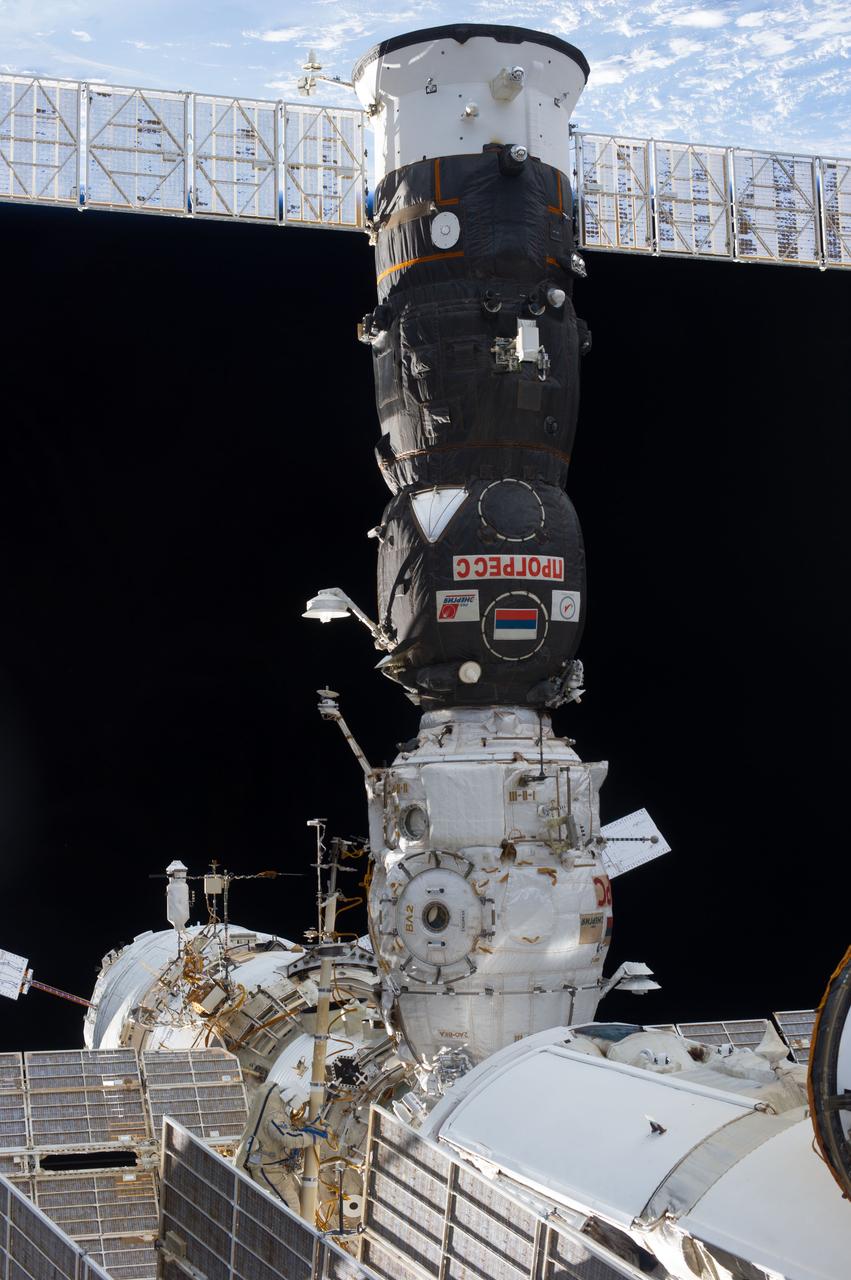
ISS036-E-033402 (16 Aug. 2013) --- Russian cosmonaut Alexander Misurkin (lower left), Expedition 36 flight engineer, attired in a Russian Orlan spacesuit, participates in a session of extravehicular activity (EVA) to continue outfitting the International Space Station. During the seven-hour, 29-minute spacewalk ? the longest ever conducted by a pair of Russian cosmonauts ? Misurkin and Fyodor Yurchikhin (out of frame) rigged cables for the future arrival of a Russian laboratory module and installed an experiment panel.
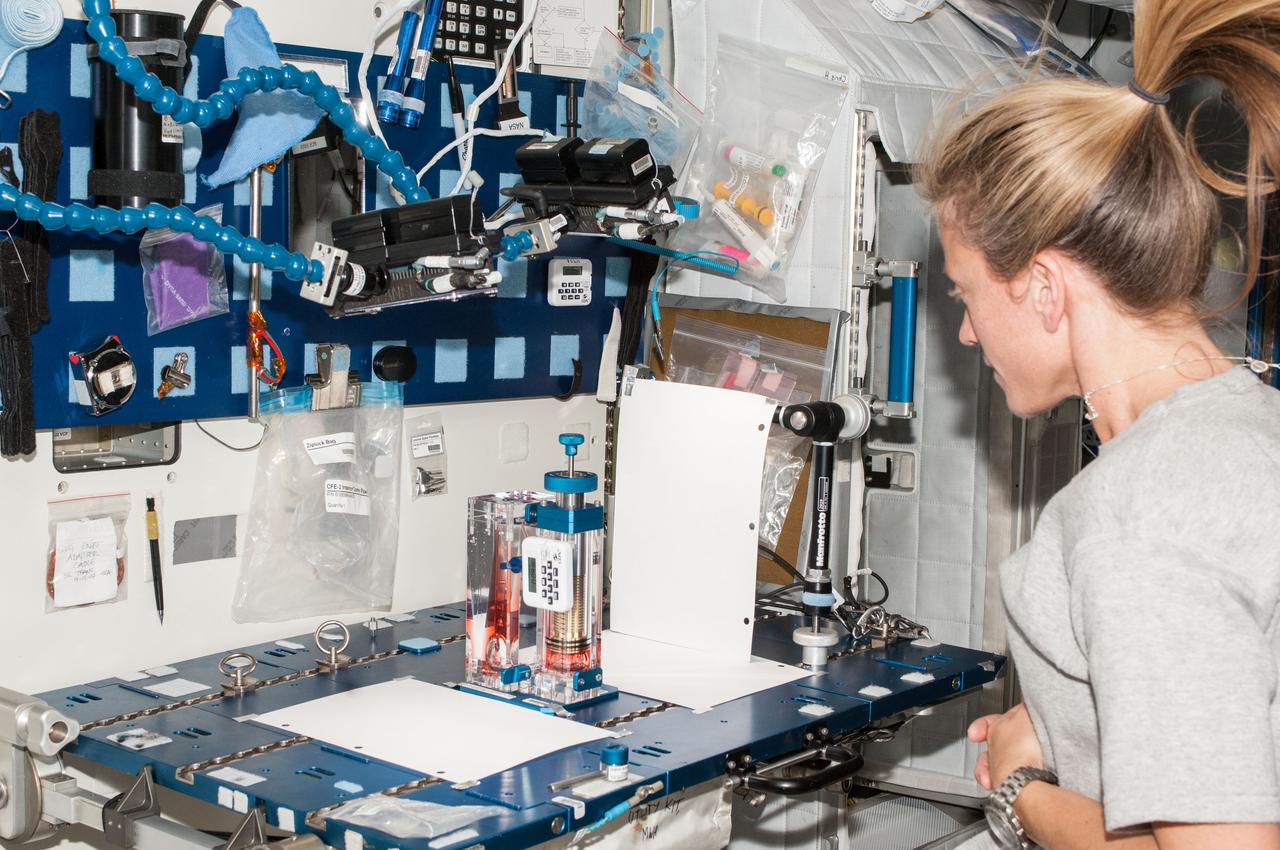
ISS036-E-008191 (15 June 2013) --- NASA astronaut Karen Nyberg, Expedition 36 flight engineer, conducts a session with the Capillary Flow Experiment (CFE) Interior Corner Flow 9 (ICF-9) in the Harmony node of the International Space Station. CFE observes the flow of fluid, in particular capillary phenomena, in microgravity.

ISS036-E-030115 (9 Aug. 2013) --- European Space Agency astronaut Luca Parmitano, Expedition 36 flight engineer, using a Russian AK-1M absorber, samples the air in the newly attached Japanese "Kounotori" H2 Transfer Vehicle-4 (HTV-4) docked to the International Space Station's Harmony node.
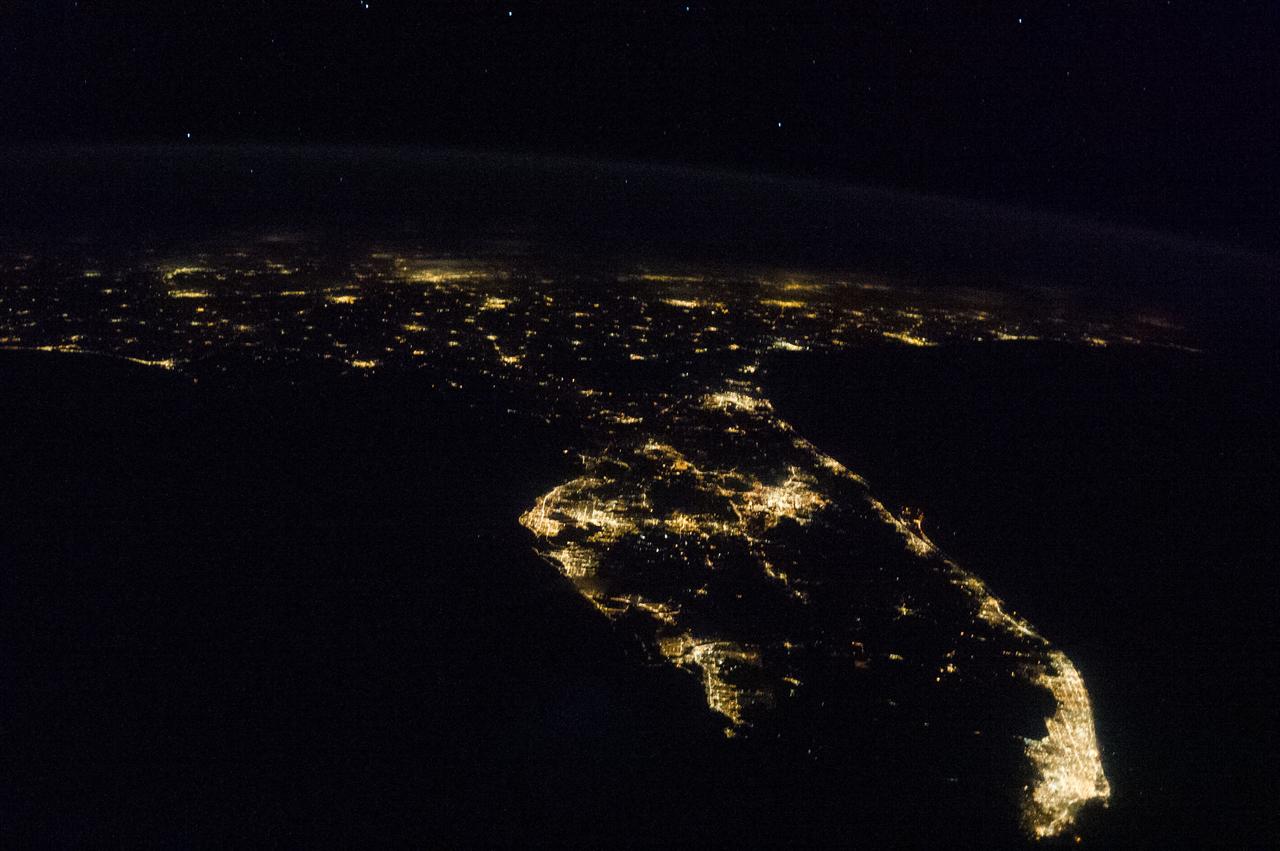
ISS036-E-030910 (10 Aug. 2013) --- One of the Expedition 36 crew members aboard the International Space Station photographed this nocturnal image of Florida and parts of the southeast United States on Aug. 10. Almost totally filled-in light strings along both Atlantic (right) and Gulf of Mexico coasts highlight the major populated areas, with the Miami metropolitan area at bottom right being the most conspicuous. The Keys are just out of frame in lower right. The Tampa Bay/St. Petersburg area is easily recognizable near frame center, and the jutting Cape Canaveral, which is home to NASA's Kennedy Space Center, is just below right center.
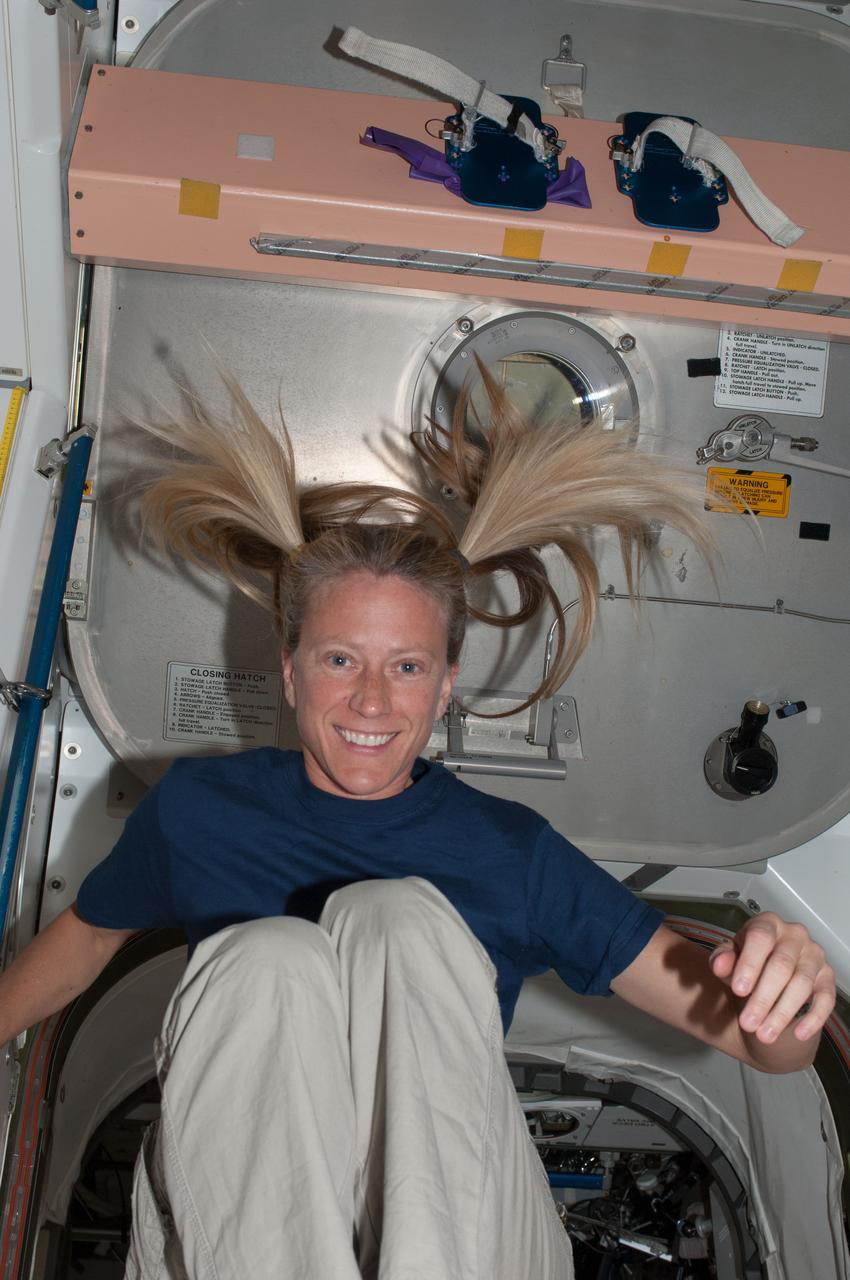
ISS036-E-005892 (3 June 2013) --- It's recess time for a floating astronaut Karen Nyberg, Expedition 36 flight engineer, in the Unity node aboard the International Space Station.

Photo of Astronaut Karen Nyber,Expedition 36 flight engineer,with a snack of peanut butter and chocolate sandwiched between two waffles. Photo taken in the Node 1 module. Also sent as Twitter message.
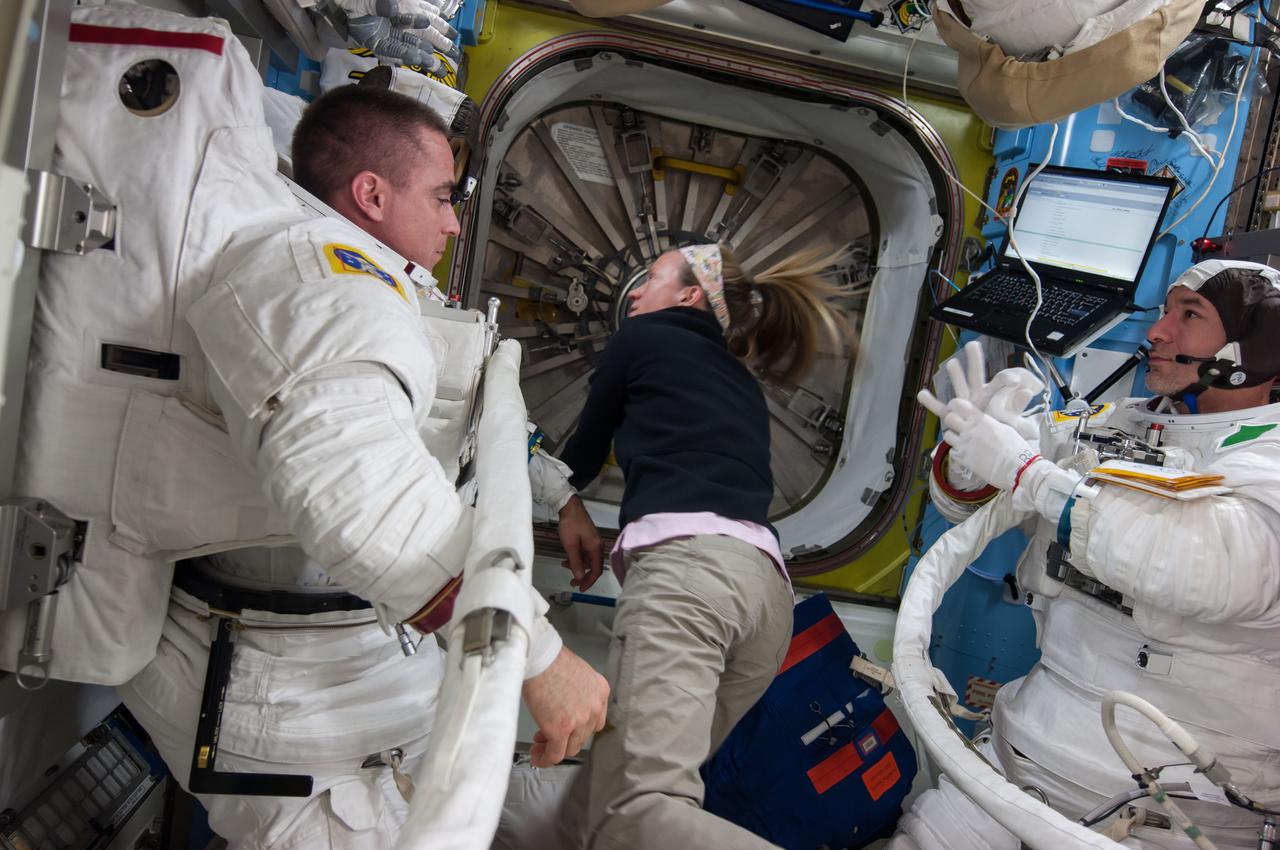
ISS036-E-017389 (8 July 2013) --- NASA astronaut Chris Cassidy (left) and European Space Agency astronaut Luca Parmitano, both Expedition 36 flight engineers, are pictured in the Quest airlock of the International Space Station as they prepare for the start of a session of extravehicular activity (EVA). Cassidy and Parmitano are wearing Extravehicular Mobility Unit (EMU) spacesuits. NASA astronaut Karen Nyberg, flight engineer, assists her crew members.
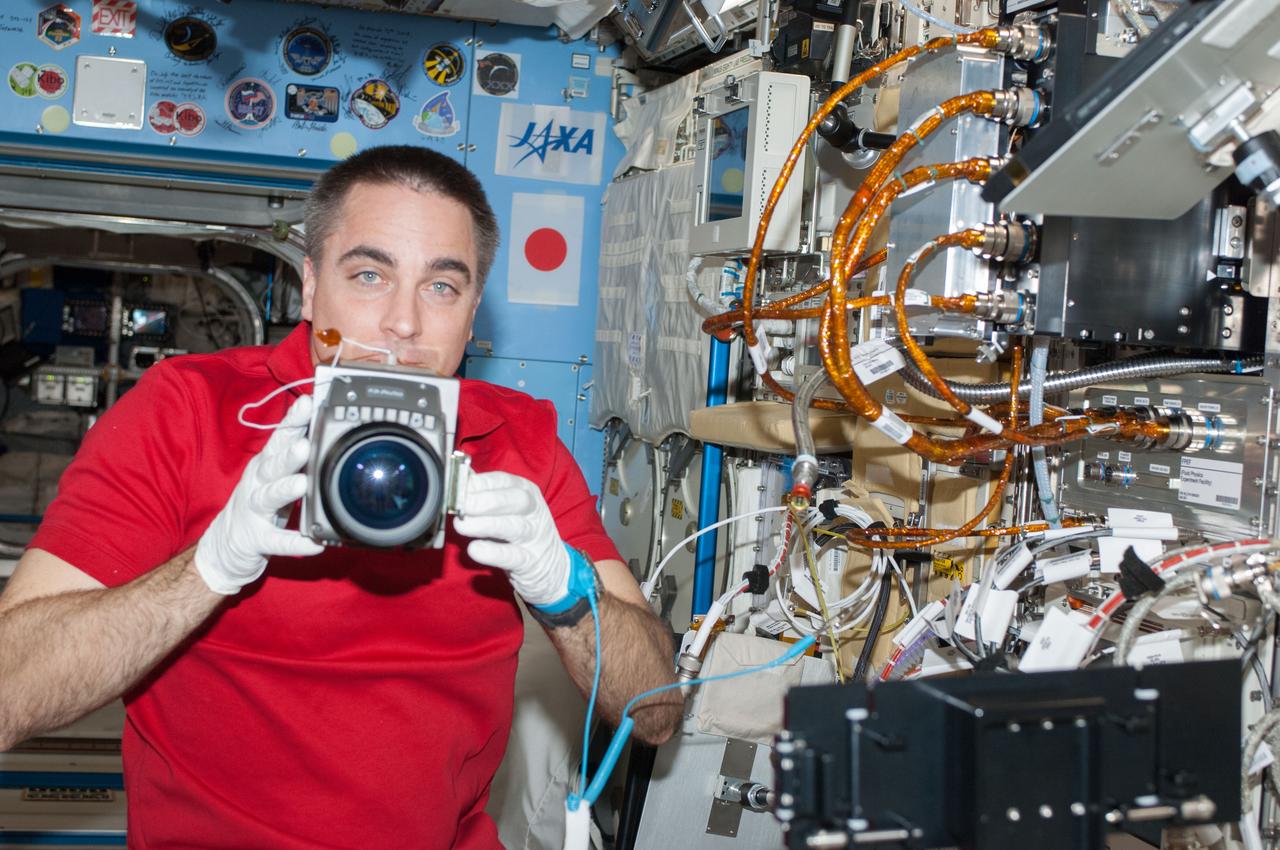
ISS036-E-025487 (24 July 2013) --- NASA astronaut Chris Cassidy, Expedition 36 flight engineer, performs in-flight maintenance on the Marangoni Inside experiment in the Fluid Physics Experiment Facility (FPEF) which is part of a Japanese science rack in the International Space Station?s Kibo laboratory.
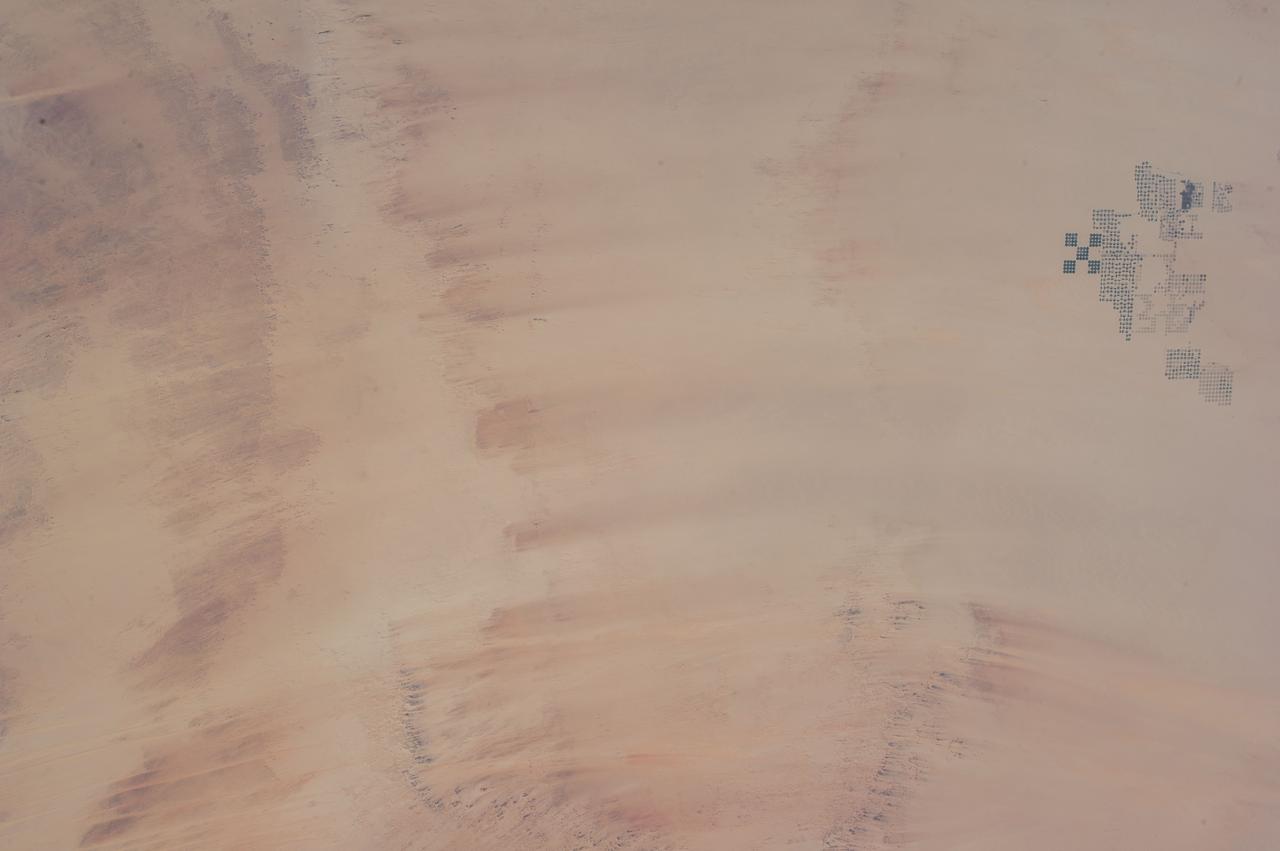
Earth observation taken during a day pass by an Expedition 36 crew member on board the International Space Station (ISS). Per Twitter message: Southwest Egypt.
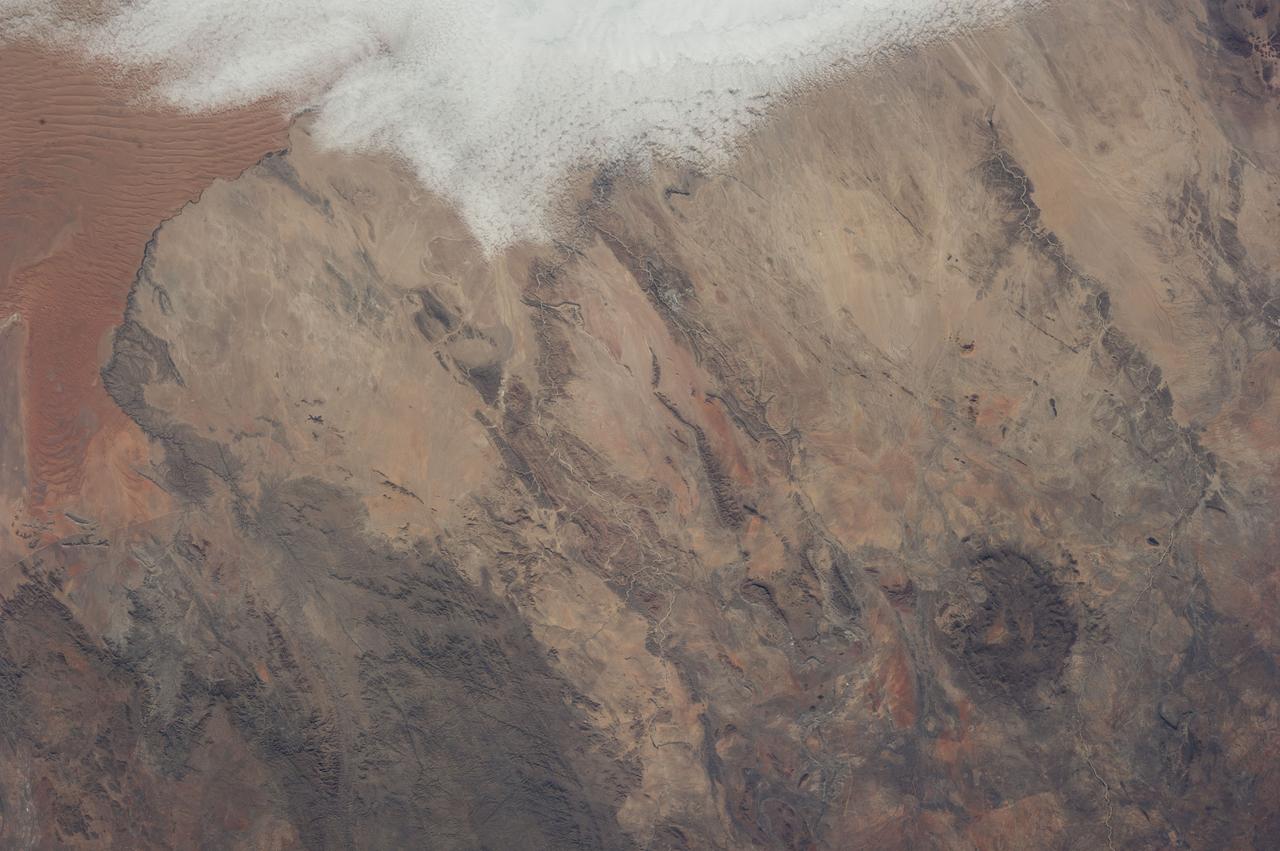
Earth observation taken during a day pass by an Expedition 37 crew member on board the International Space Station (ISS). Identified via Twitter message as west central coast of Namibia.

ISS036-E-036842 (25 Aug. 2013) --- NASA astronaut Chris Cassidy, Expedition 36 flight engineer, enters data in a computer in the Tranquility node of the International Space Station.
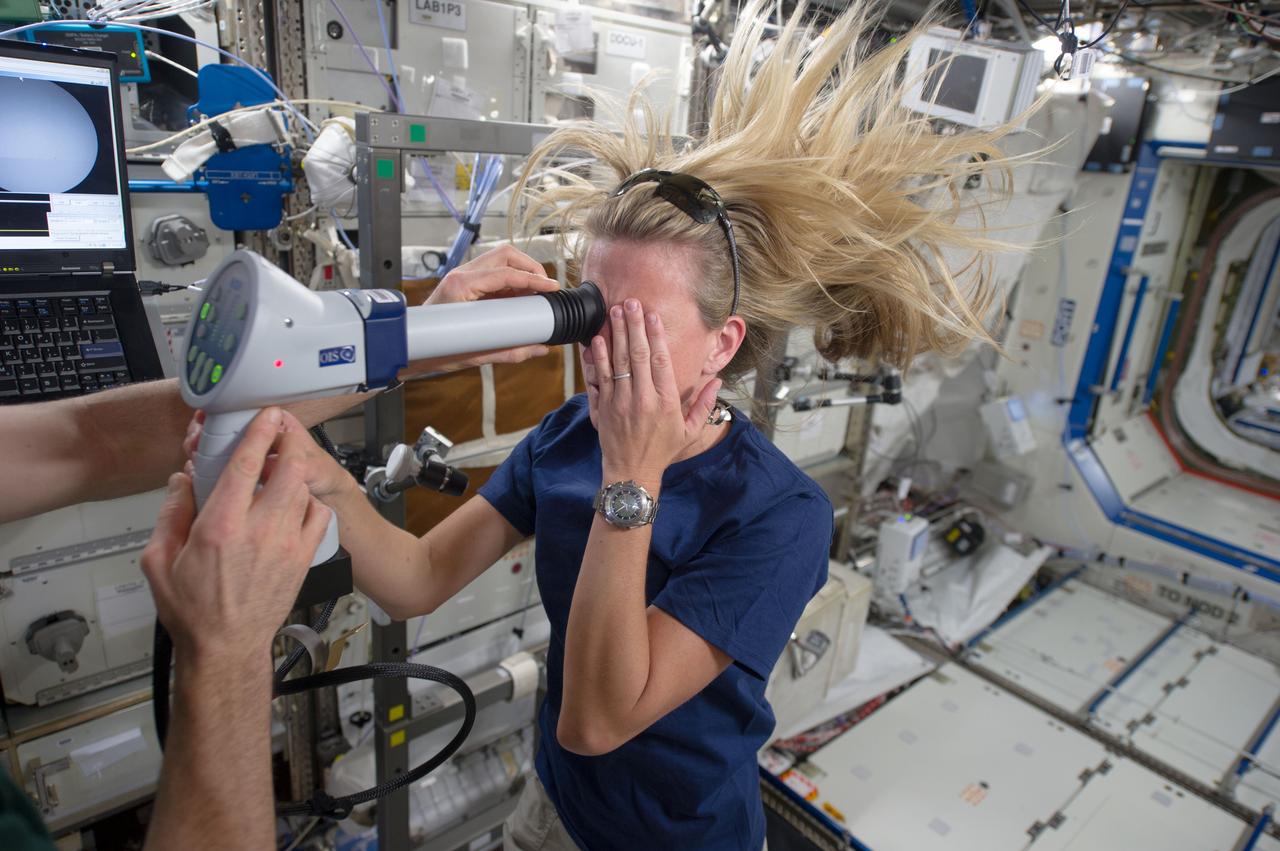
Astronaut Karen Nyberg and Astronaut Chris Cassidy (partially visible), both Expedition 37 flight engineers, perform an Ocular Health (OH) Fundoscope Exam in the Destiny laboratory of the International Space Station
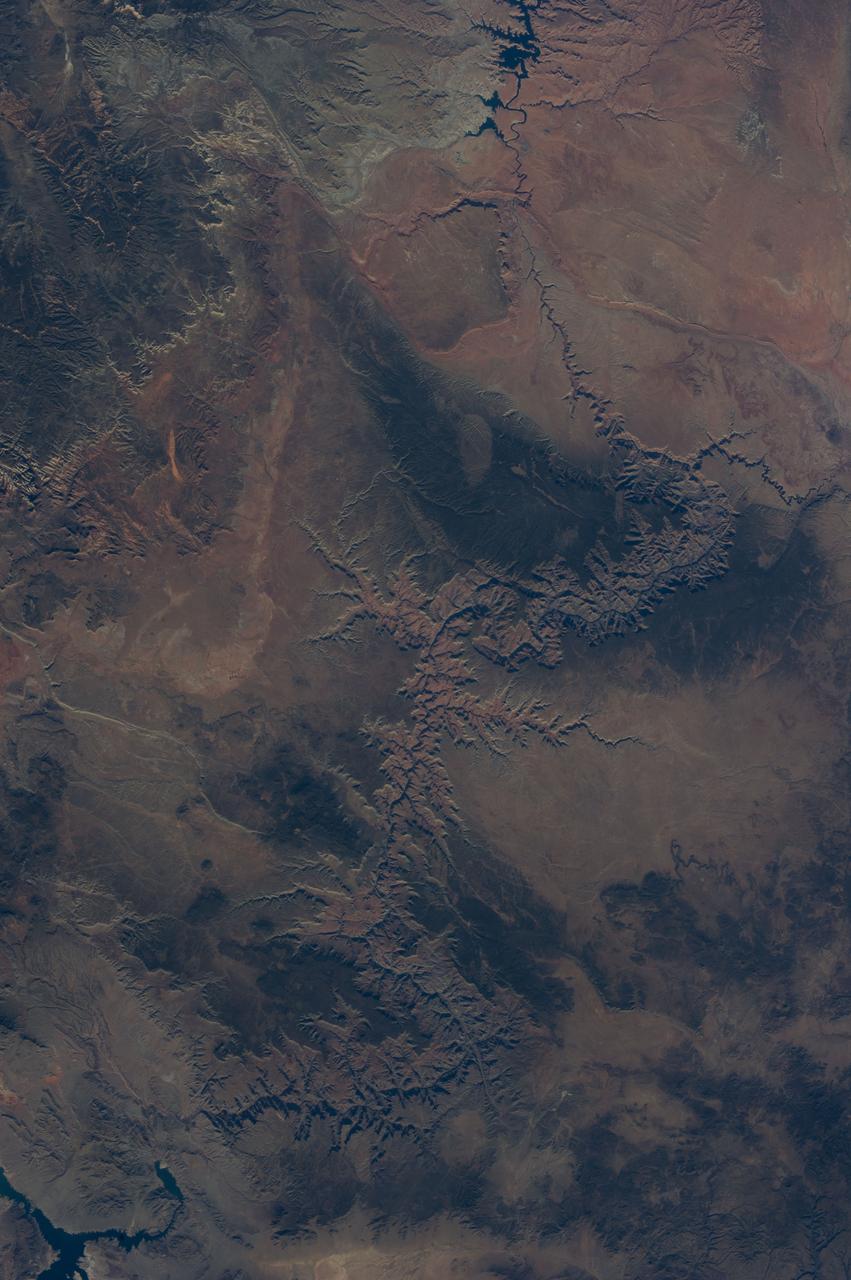
Earth Observation taken during a day pass by the Expedition 37 crew aboard the International Space Station (ISS).
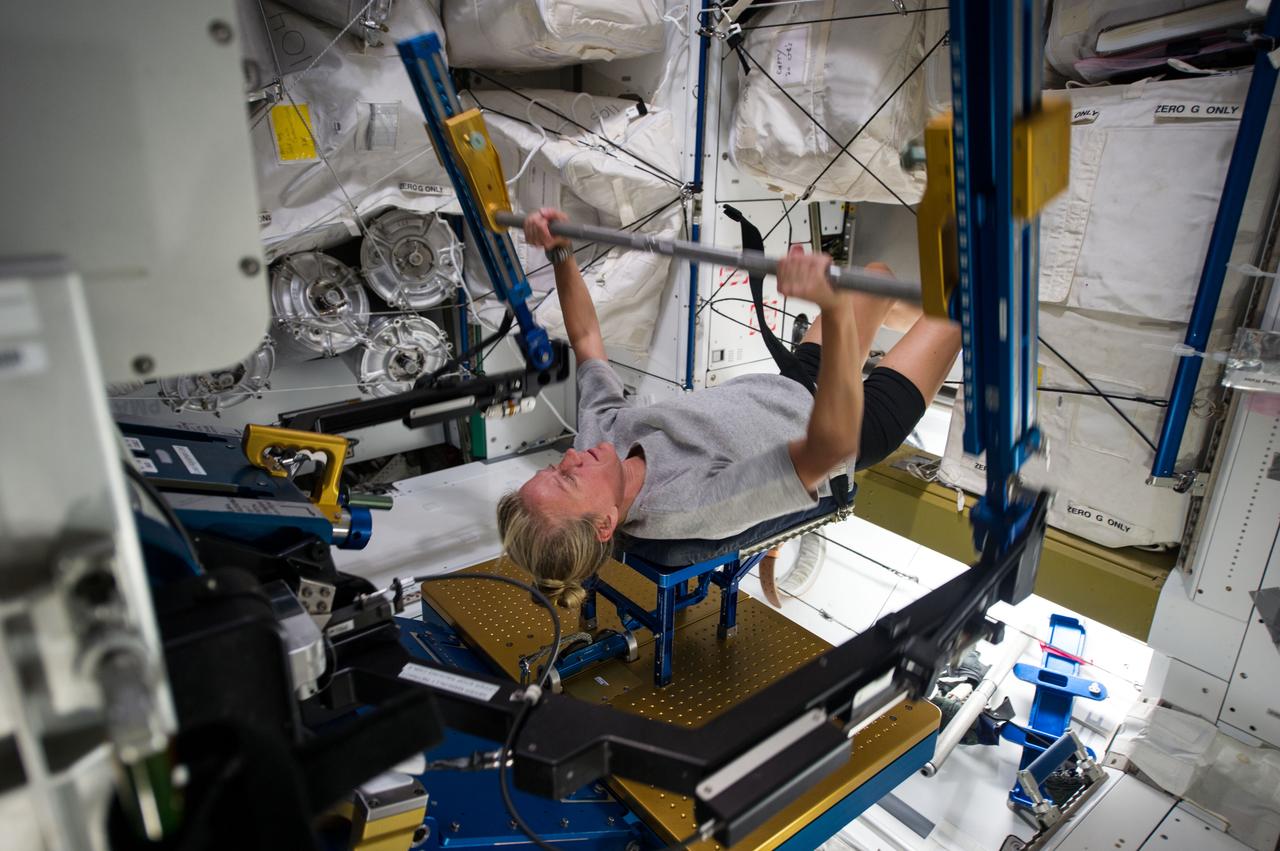
ISS036-E-005939 (3 June 2013) --- NASA astronaut Karen Nyberg, Expedition 36 flight engineer, gets a workout on the Advanced Resistive Exercise Device (ARED) in the Tranquility node of the International Space Station.
Earth observation taken during day pass by an Expedition 36 crew member on board the International Space Station (ISS).
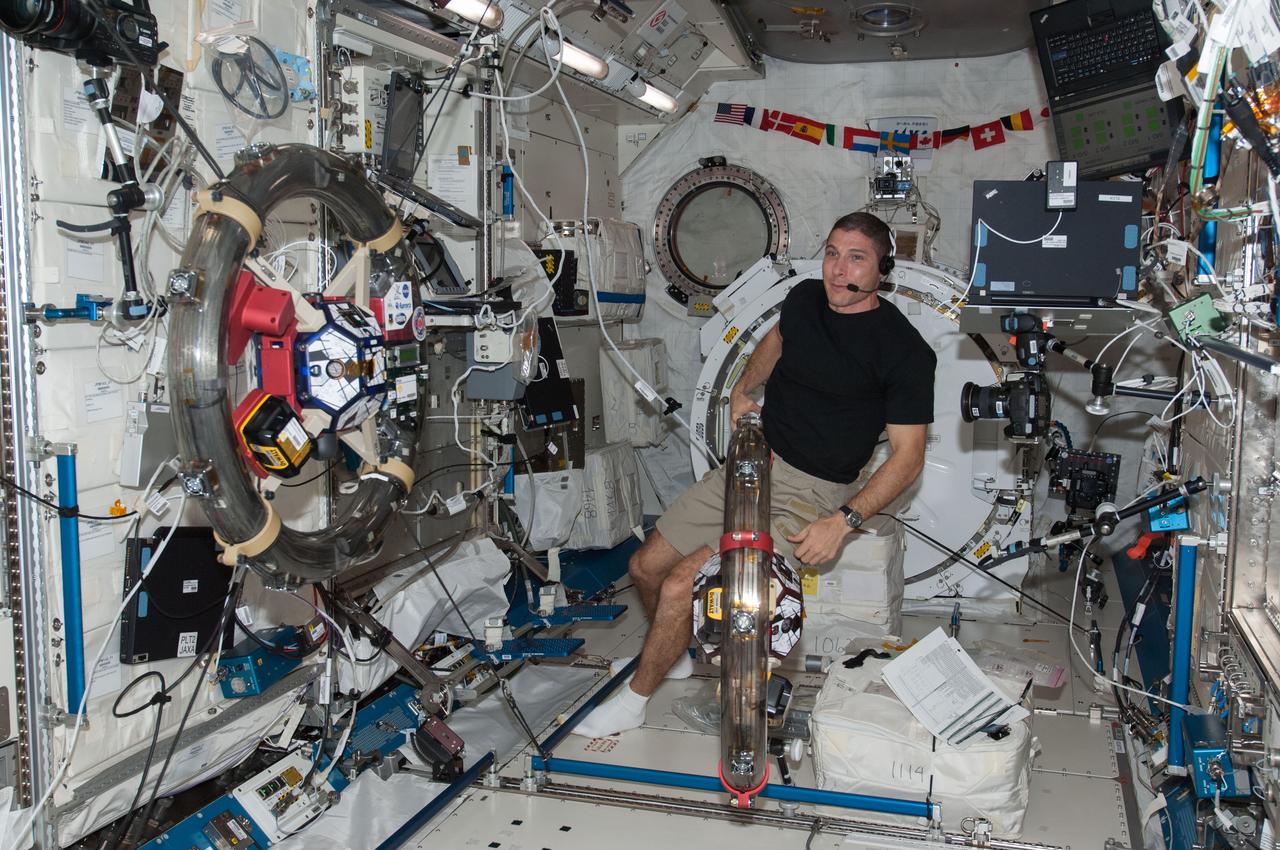
ISS037-E-025872 (4 Nov. 2013) --- In the International Space Station?s Kibo laboratory, NASA astronaut Michael Hopkins, Expedition 37 flight engineer, conducts a session with a pair of bowling-ball-sized free-flying satellites known as Synchronized Position Hold, Engage, Reorient, Experimental Satellites, or SPHERES. Surrounding the two SPHERES mini-satellites is ring-shaped hardware known as the Resonant Inductive Near-field Generation System, or RINGS. SPHERES-RINGS seeks to demonstrate wireless power transfer between satellites at a distance for enhanced operations.
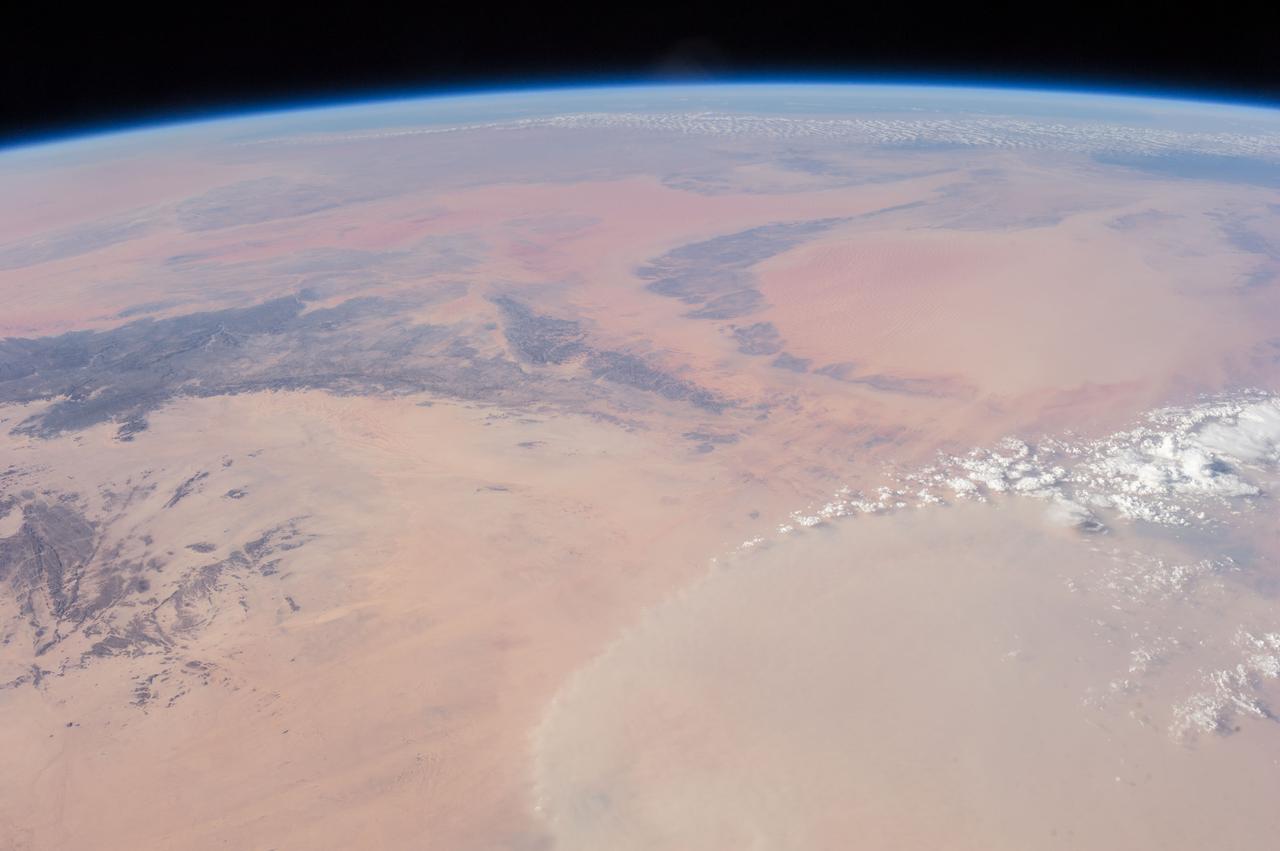
Earth observation taken during day pass by an Expedition 36 crew member on board the International Space Station (ISS). Per Twitter message: North central Africa.

ISS036-E-014656 (3 July 2013) --- European Space Agency astronaut Luca Parmitano, Expedition 36 flight engineer, attired in his Extravehicular Mobility Unit (EMU) spacesuit, participates in a ?dry run? in the International Space Station?s Quest airlock in preparation for the first of two sessions of extravehicular (EVA) scheduled for July 9 and July 16.
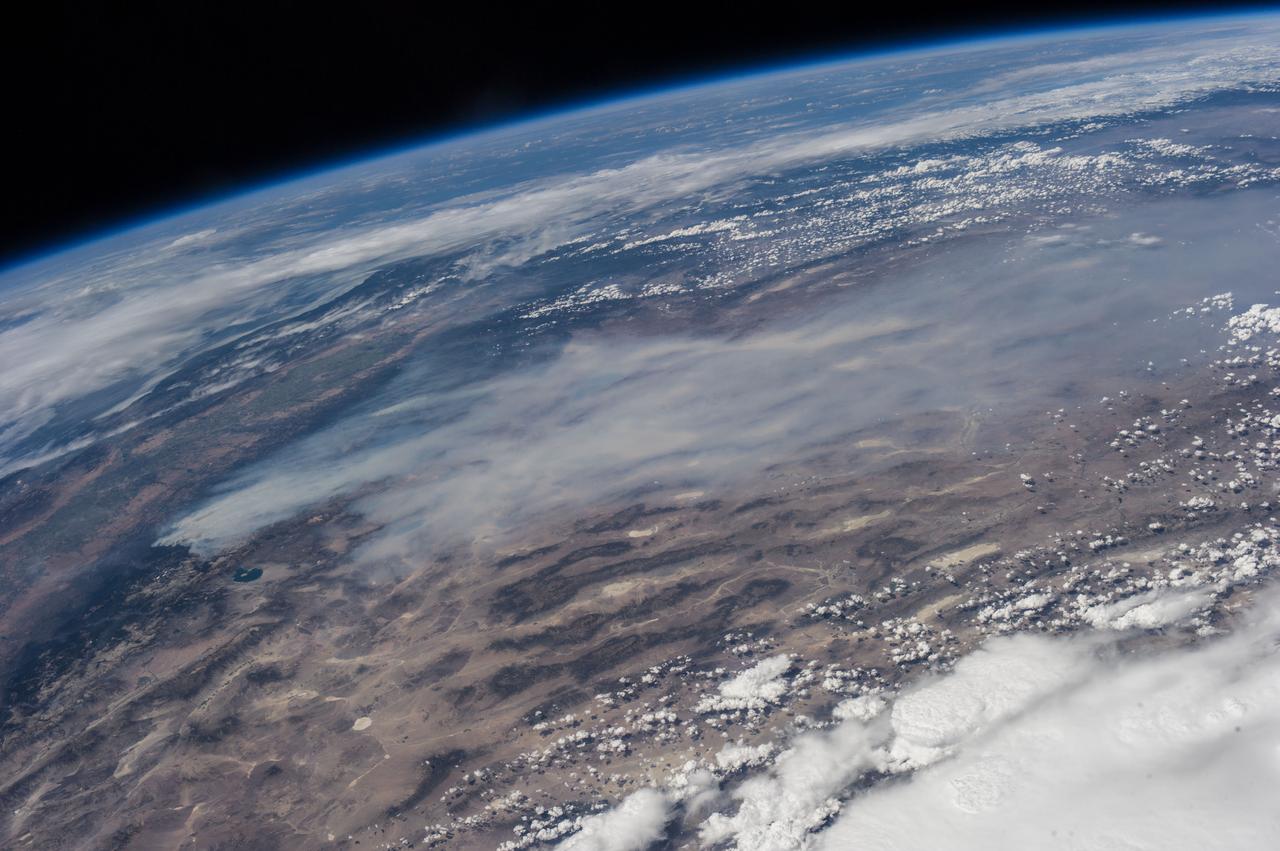
ISS036-E-035683 (24 Aug. 2013) --- One of the Expedition 36 crew members aboard the International Space Station used a 50mm lens to record this image of massive wildfires in and around California's Yosemite National Park on Aug. 24.
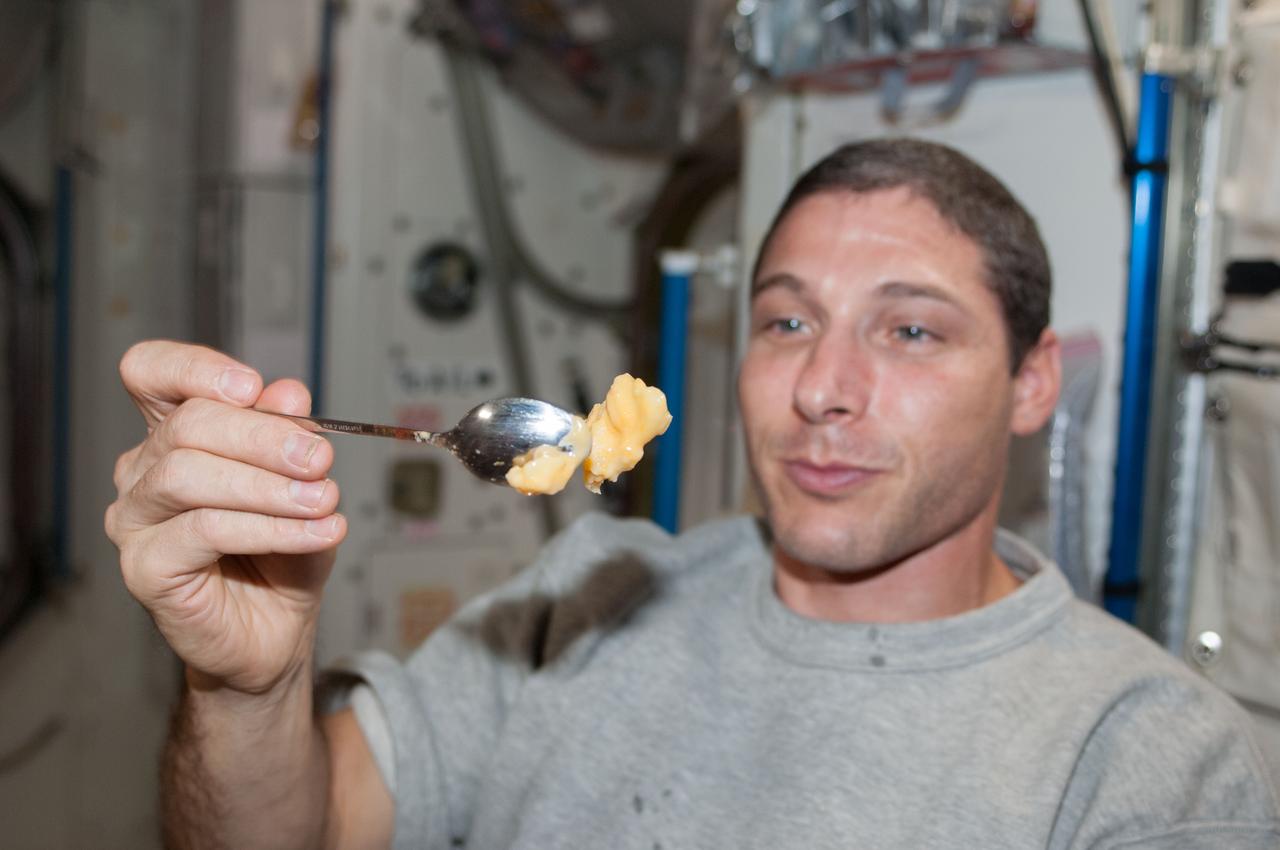
ISS037-E-021314 (26 Oct. 2013) --- NASA astronaut Michael Hopkins, Expedition 37 flight engineer, holds a spoon containing a piece of food in the Harmony node of the International Space Station.
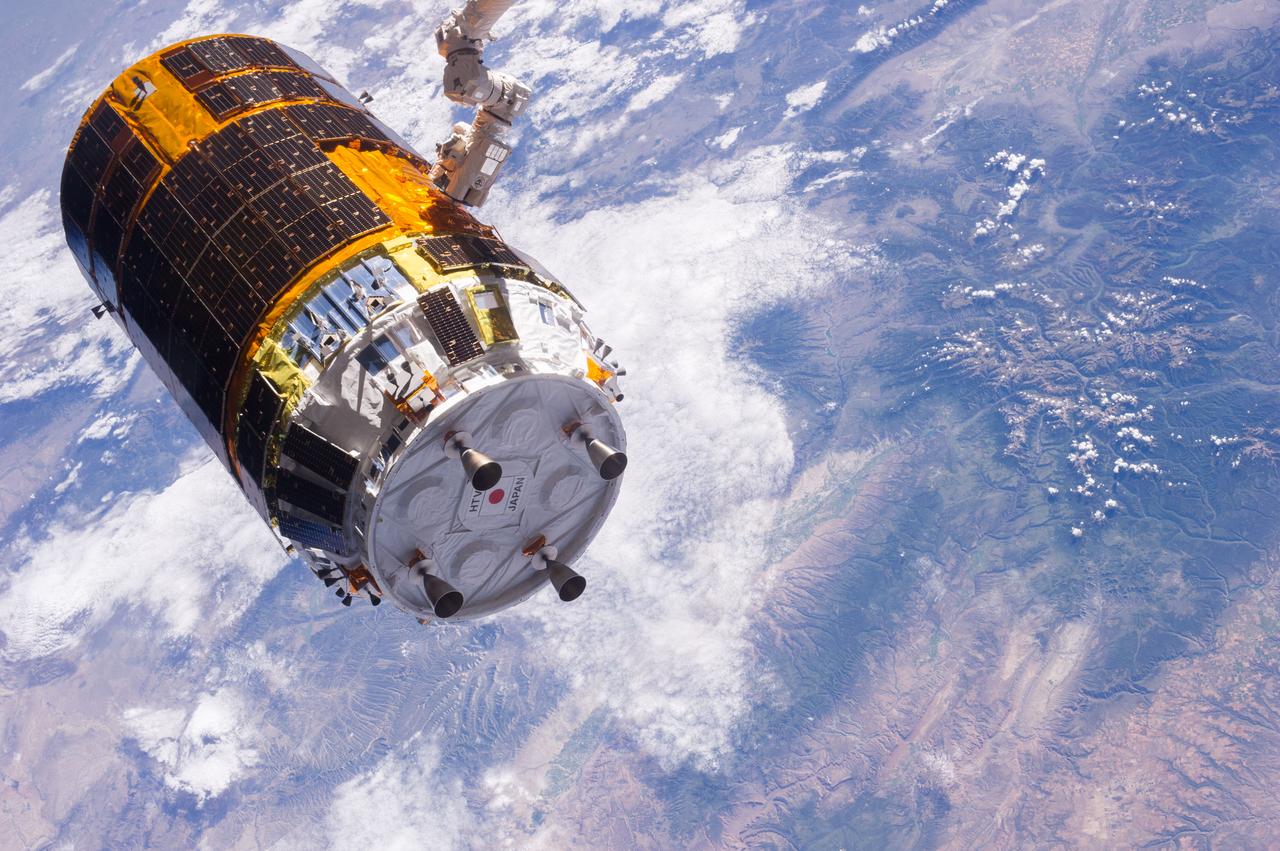
One of the Expedition 36 crew members aboard the International Space Station took this picture of the Japanese HTV-4 unmanned cargo spacecraft,backdropped against a land mass on Earth,following its unberthing but just prior to its release from the orbital outpost's Canadarm2. HTV-4,after backing away from the flying complex,headed for re-entry into Earth's atmosphere,burning upon re-entry. Per Twitter message: Flying over southwestern US, not long before release of #HTV4 by #Canadarm2.

"NASA astronaut Karen Nyberg,Expedition 36 flight engineer,works with the Combustion Integrated Rack (CIR) Alignment Guide Removal.
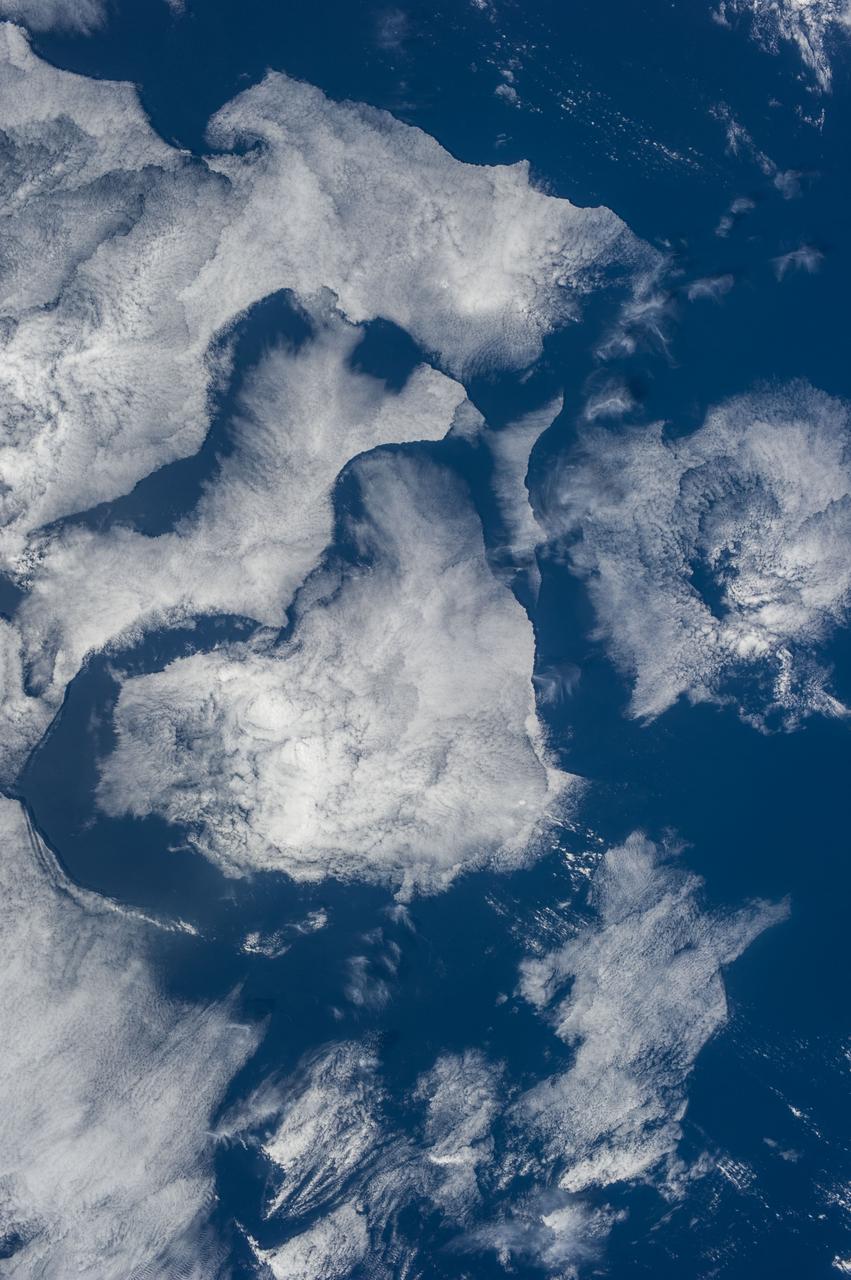
Earth observation taken during day pass by an Expedition 36 crew member on board the International Space Station (ISS). Per Twitter message: Cloud gazing over the Pacific Ocean. Hearts?
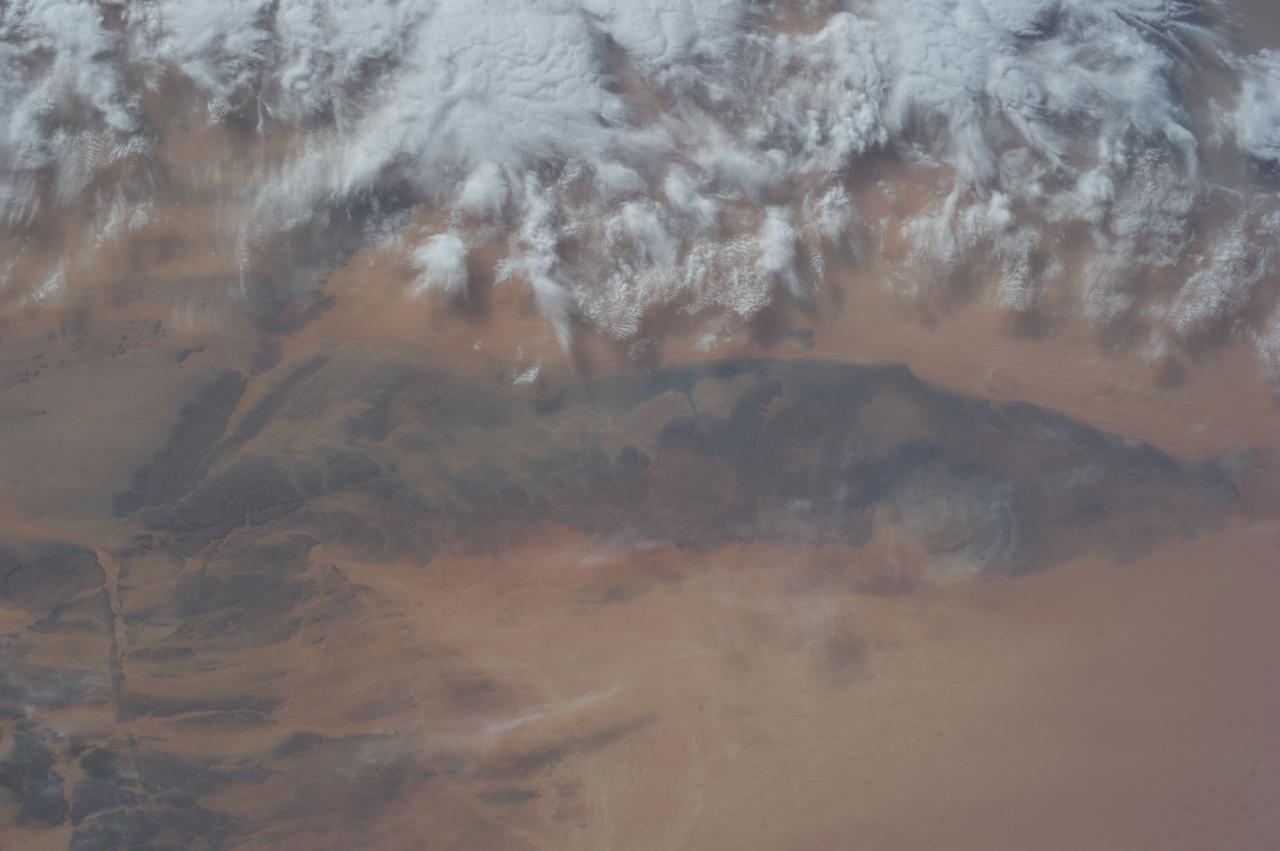
Earth observation taken during a day pass by an Expedition 36 crew member on board the International Space Station (ISS).
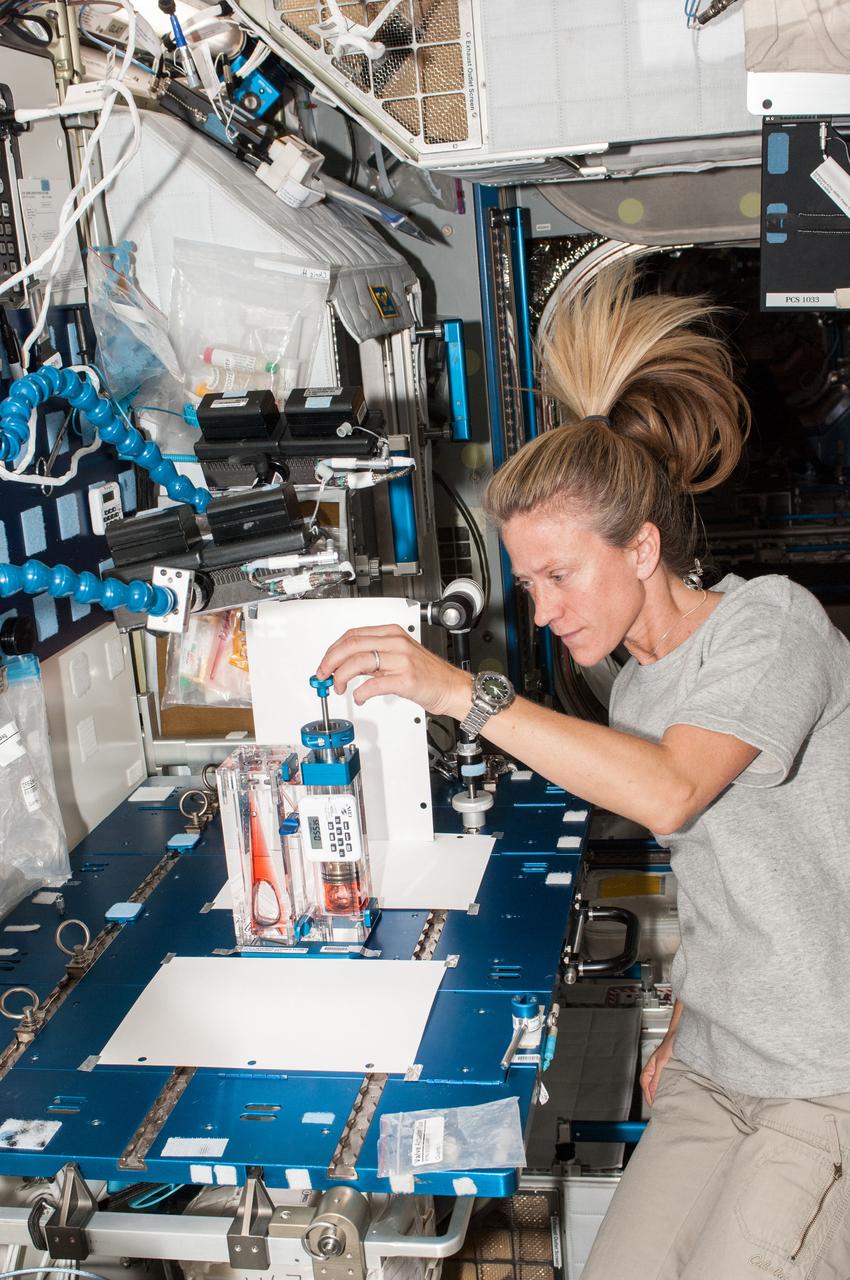
Astronaut Karen Nyberg,Expedition 36 flight engineer,works on the Capillary Flow Experiment (CFE) Vane Gap-1 (VG-1) setup in the Node 2/Harmony. The CFE-2 vessel is used to observe fluid interface and critical wetting behavior in a cylindrical chamber with elliptic cross-section and an adjustable central perforated vane. The primary objective of the Vane Gap experiments is to determine equilibrium interface configurations and critical wetting conditions for interfaces between interior corners separated by a gap.
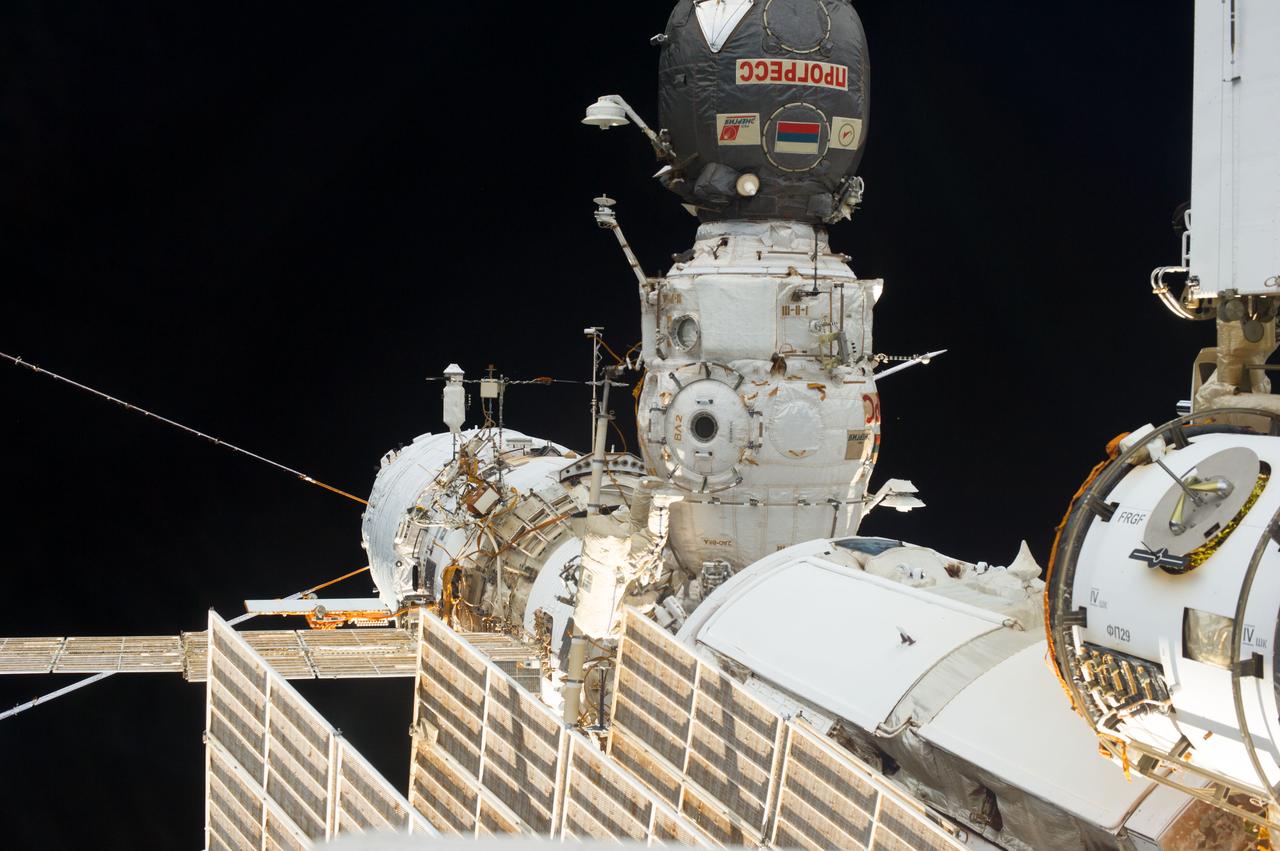
View of Russian cosmonaut Alexander Misurkin (bottom center), Expedition 36 flight engineer, participating in Russian extravehicular activity (EVA) 33. Also visible are the Progress spacecraft docked to the Pirs Docking Compartment (DC1) with the Service Module (SM) .
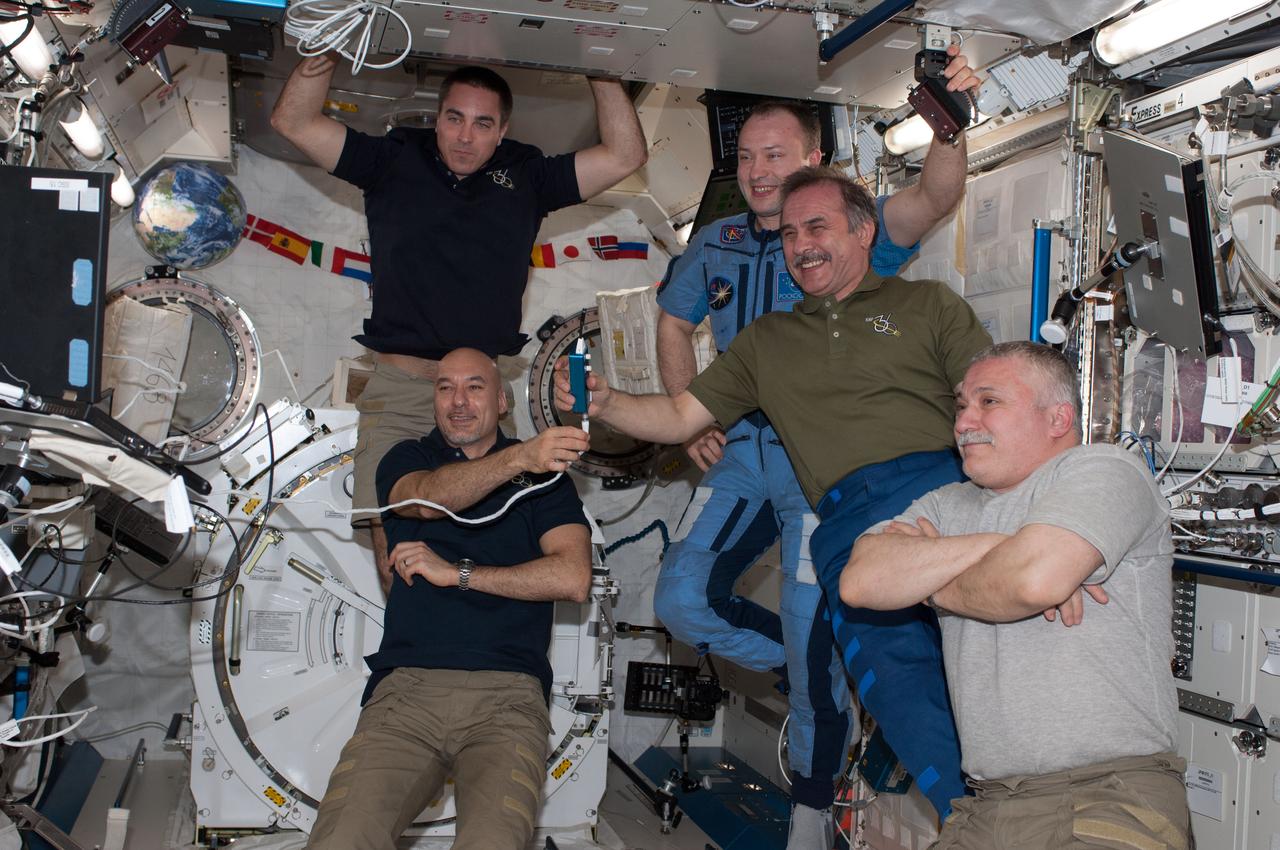
ISS036-E-035797 (23 Aug. 2013) --- Five of the six Expedition 36 crew members are pictured in the International Space Station?s Kibo laboratory during a daily planning conference. Pictured clockwise (from bottom left) are European Space Agency astronaut Luca Parmitano, NASA astronaut Chris Cassidy, Russian cosmonaut Alexander Misurkin, all flight engineers; Russian cosmonaut Pavel Vinogradov, commander; and Russian cosmonaut Fyodor Yurchikhin, flight engineer.
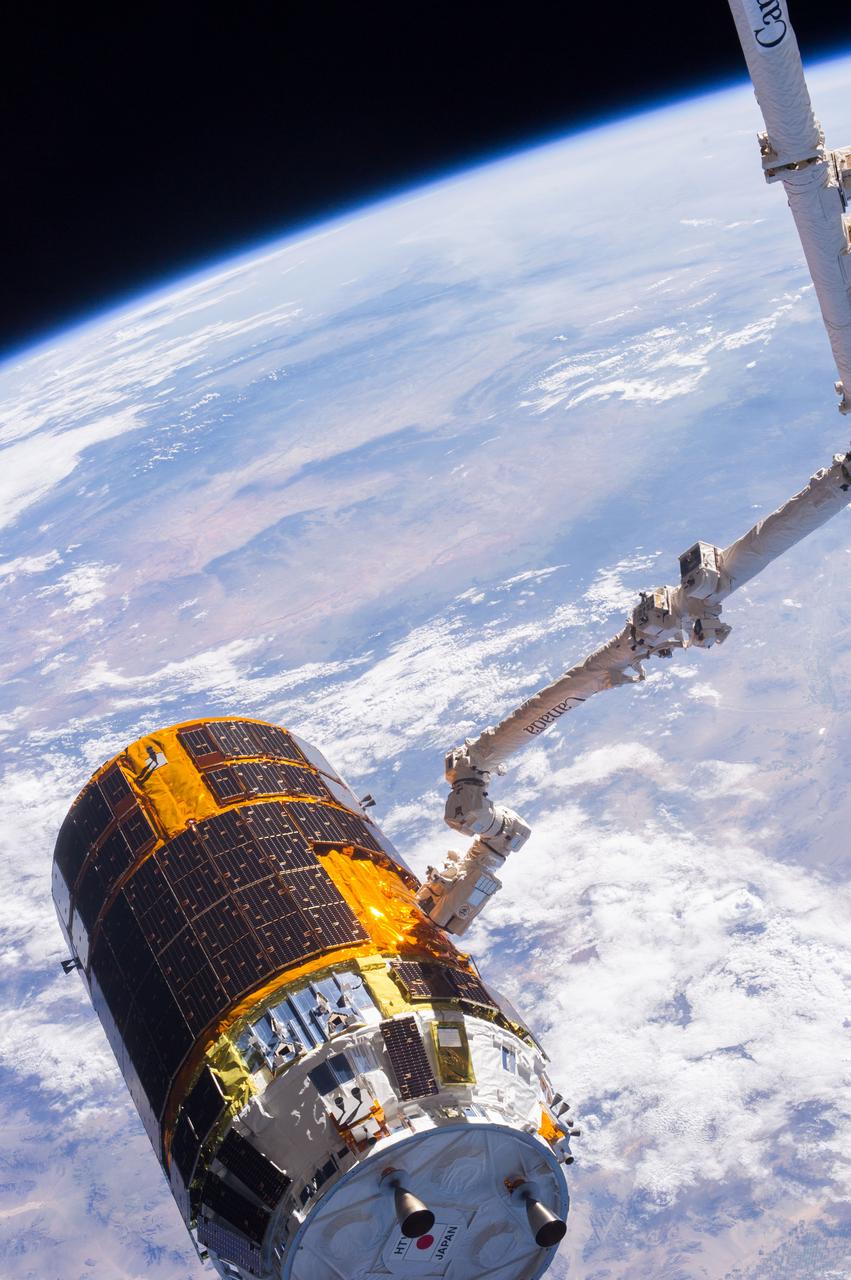
ISS036-E-039501 (04 Sept. 2013) --- One of the Expedition 36 crew members aboard the International Space Station took this picture of the Japanese HTV-4 unmanned cargo spacecraft, backdropped against a land mass on Earth, following its unberthing but just prior to its release from the orbital outpost's Canadarm2. HTV-4, after backing away from the flying complex, headed for re-entry into Earth's atmosphere, burning upon re-entry. HTV-4 was launched by Japan?s Aerospace Exploration Agency (JAXA) on Aug. 4 of this year in order to bring up supplies for the astronauts and cosmonauts onboard the station.
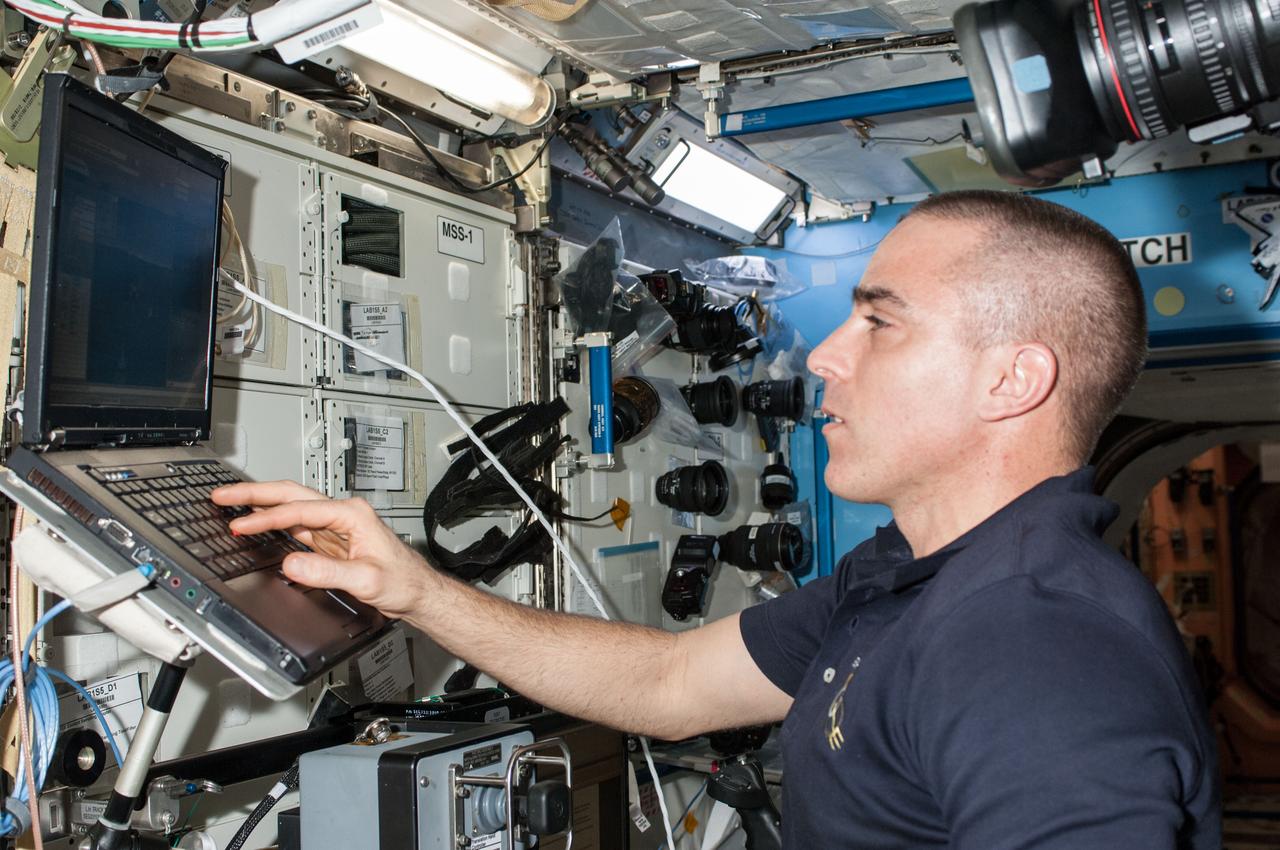
ISS036-E-008906 (17 June 2013) --- NASA astronaut Chris Cassidy, Expedition 36 flight engineer, uses a computer in the Destiny laboratory of the International Space Station.
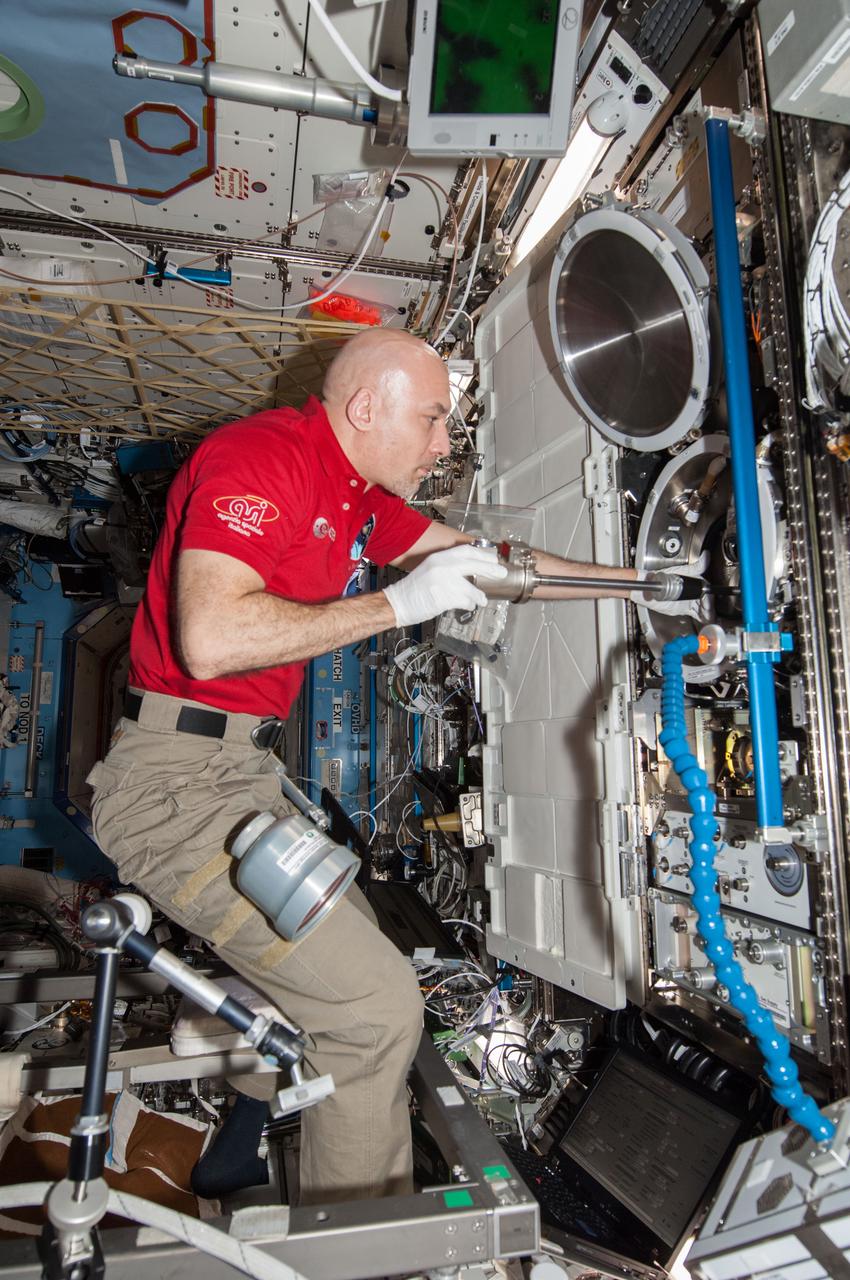
ISS037-E-026918 (4 Nov. 2013) --- European Space Agency astronaut Luca Parmitano, Expedition 37 flight engineer, works with the Combustion Integrated Rack (CIR) Multi-user Drop Combustion Apparatus (MDCA) in the Destiny laboratory of the International Space Station.
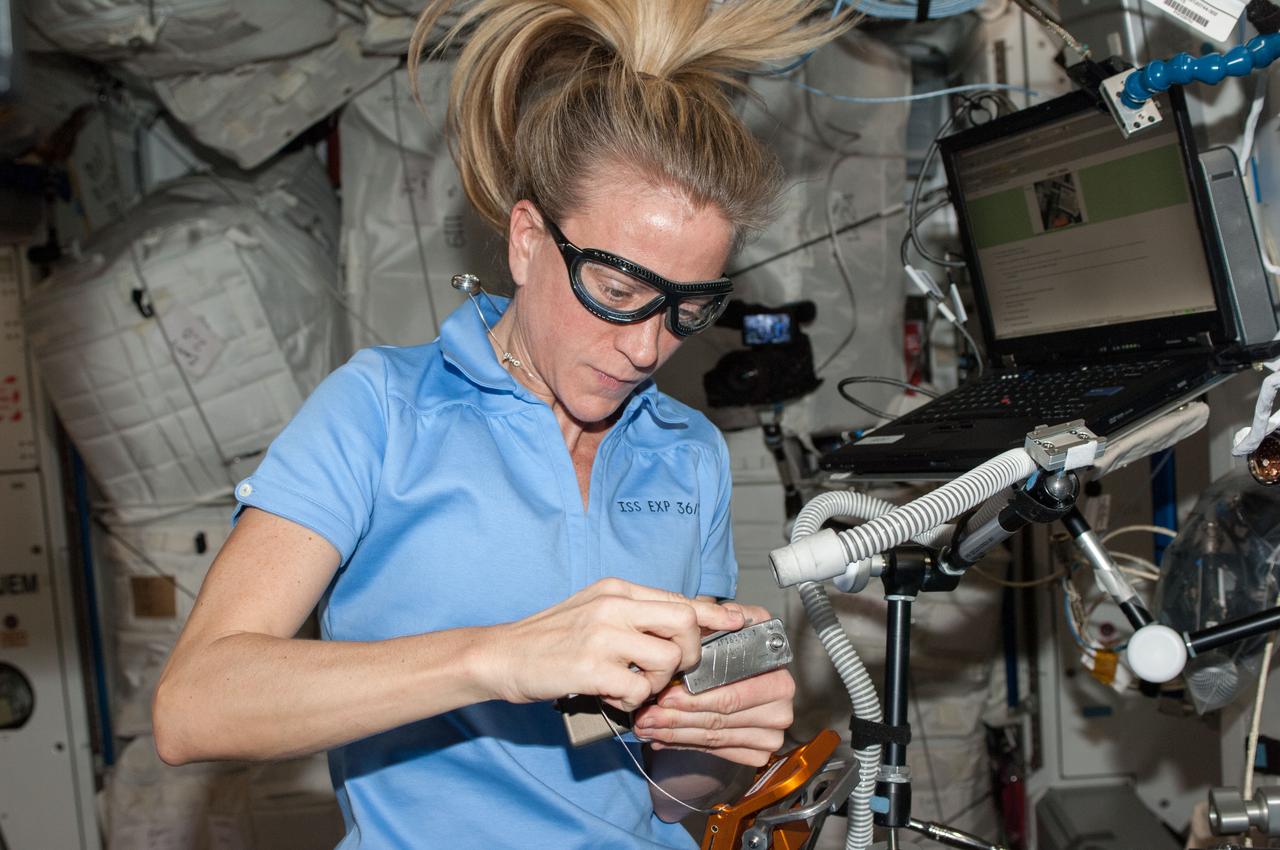
ISS037-E-001905 (18 Sept. 2013) --- NASA astronaut Karen Nyberg, Expedition 37 flight engineer, works with hardware at a workstation in the Harmony node of the International Space Station.
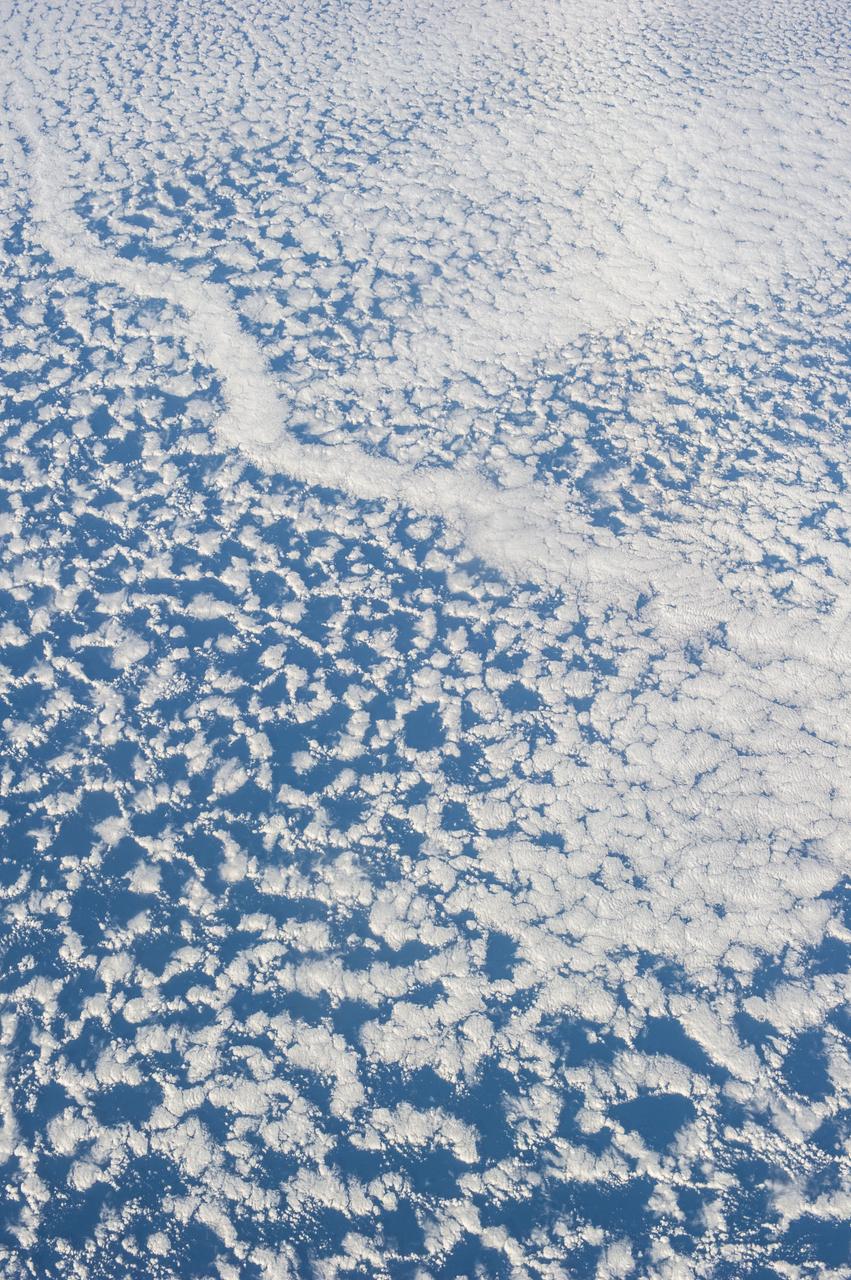
Earth observation taken during day pass by an Expedition 36 crew member on board the International Space Station (ISS). Per Twitter message: Perhaps a dandelion losing its seeds in the wind? Love clouds!
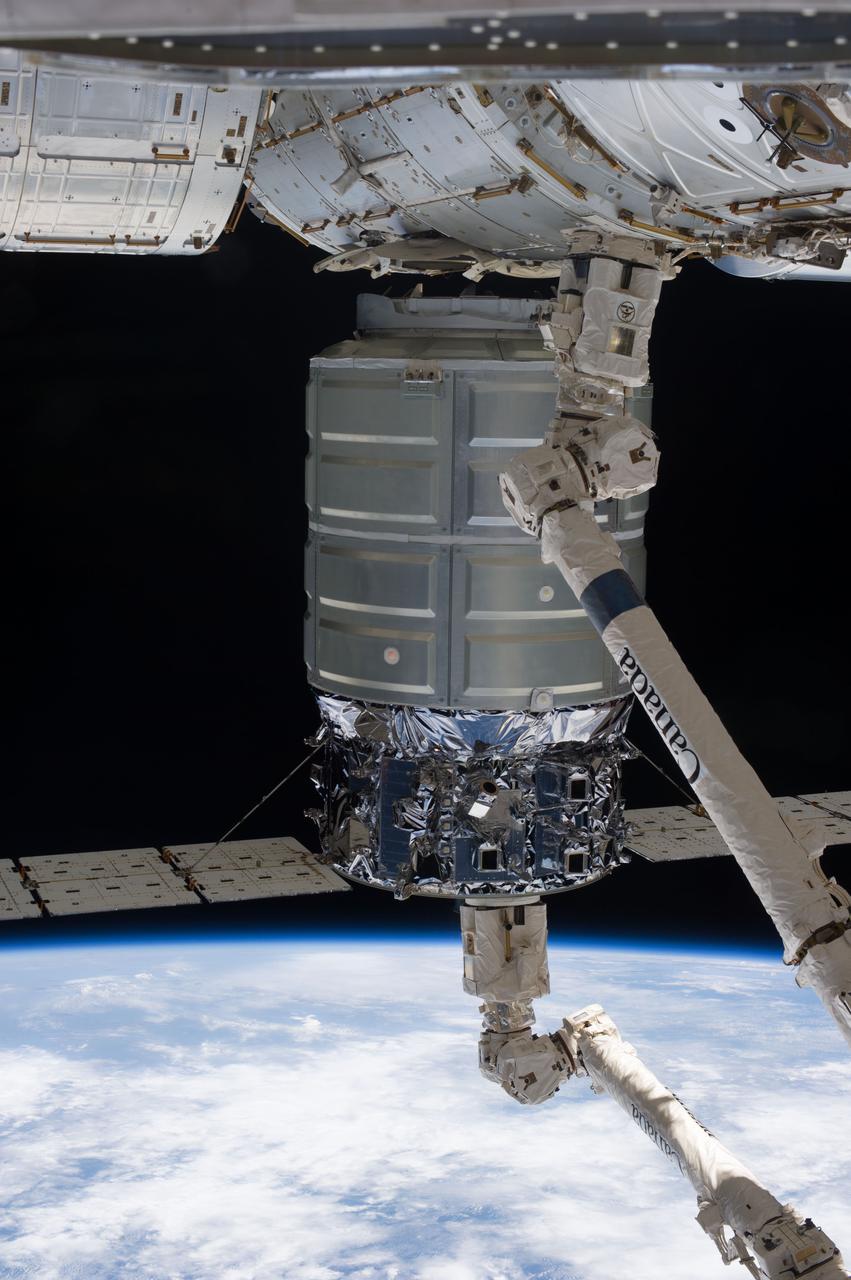
ISS037-E-018502 (22 Oct. 2013) --- The International Space Station’s Canadarm2 unberths the Orbital Sciences’ Cygnus commercial craft after three weeks at the space station. European Space Agency astronaut Luca Parmitano and NASA astronaut Karen Nyberg, both Expedition 37 flight engineers, were at the controls of the robotics workstation removing Cygnus from the Harmony node then safely releasing it at 7:31 a.m. (EDT) Oct. 22, 2013. On Oct. 23, the Cygnus will fire its engines for the last time at 1:41 p.m. and re-enter Earth’s atmosphere for destruction over the Pacific Ocean. Earth’s horizon and the blackness of space provide the backdrop for the scene.
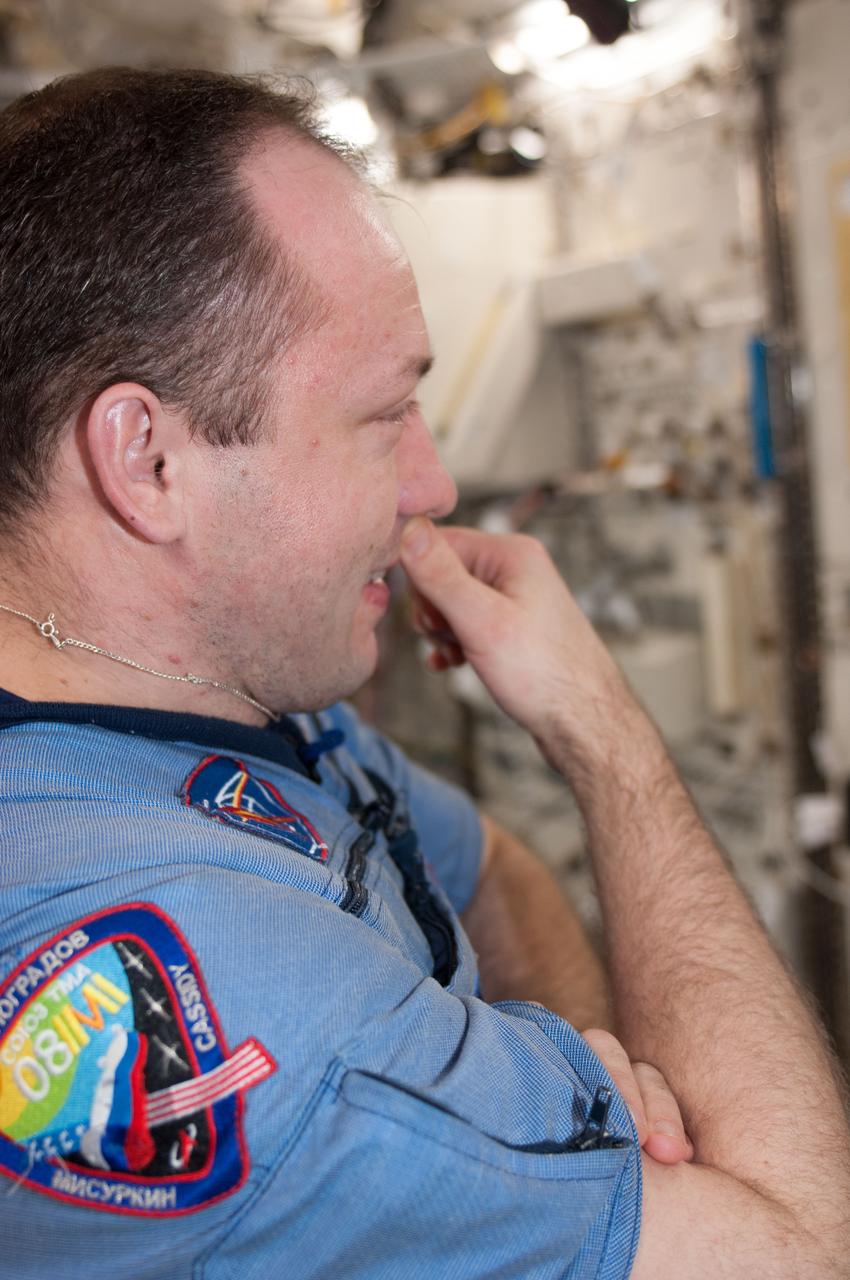
ISS036-E-035811 (23 Aug. 2013) --- Russian cosmonaut Alexander Misurkin, Expedition 36 flight engineer, is pictured in the International Space Station?s Kibo laboratory during a daily planning conference.
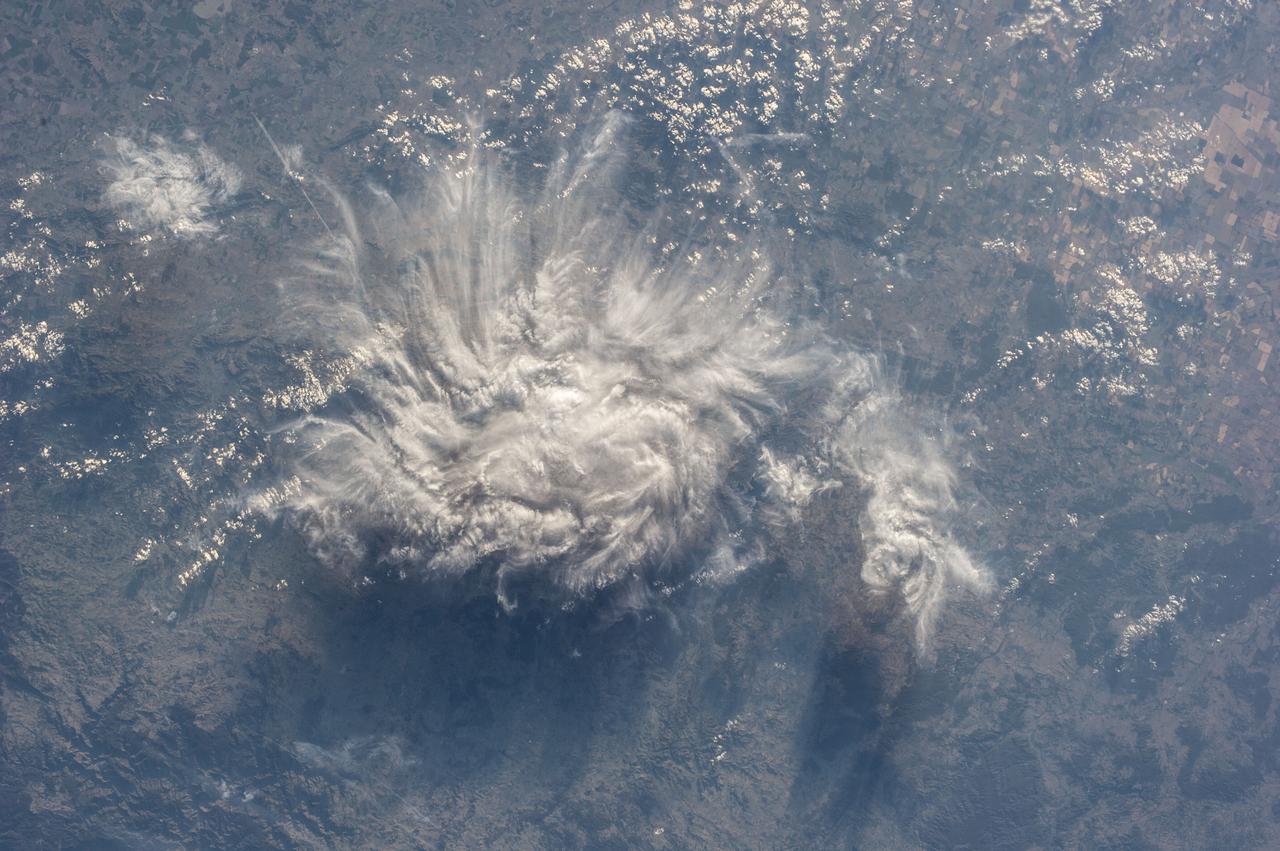
Earth Observation taken during a day pass by the Expedition 37 crew aboard the International Space Station (ISS). Also sent as Twitter message.
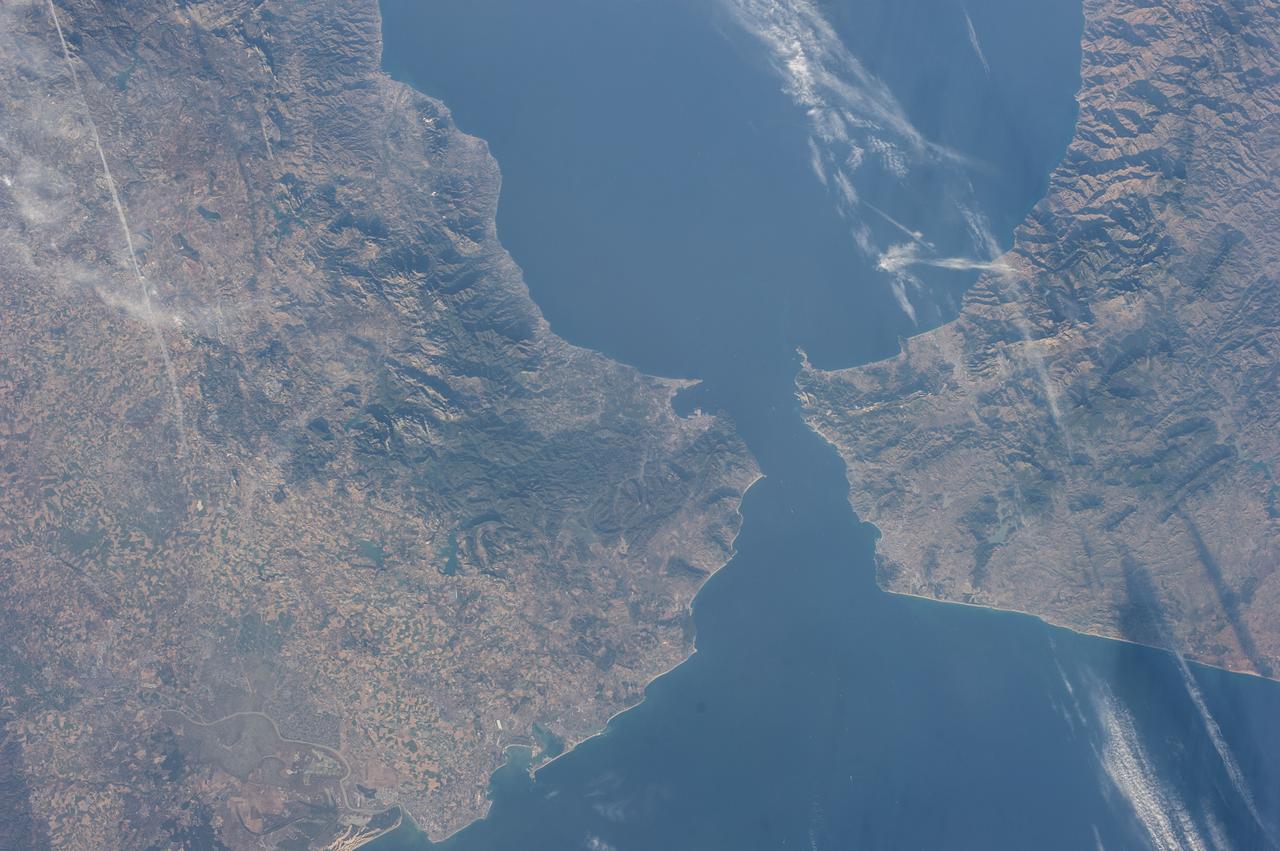
Earth observation taken during a day pass by an Expedition 36 crew member on board the International Space Station (ISS).
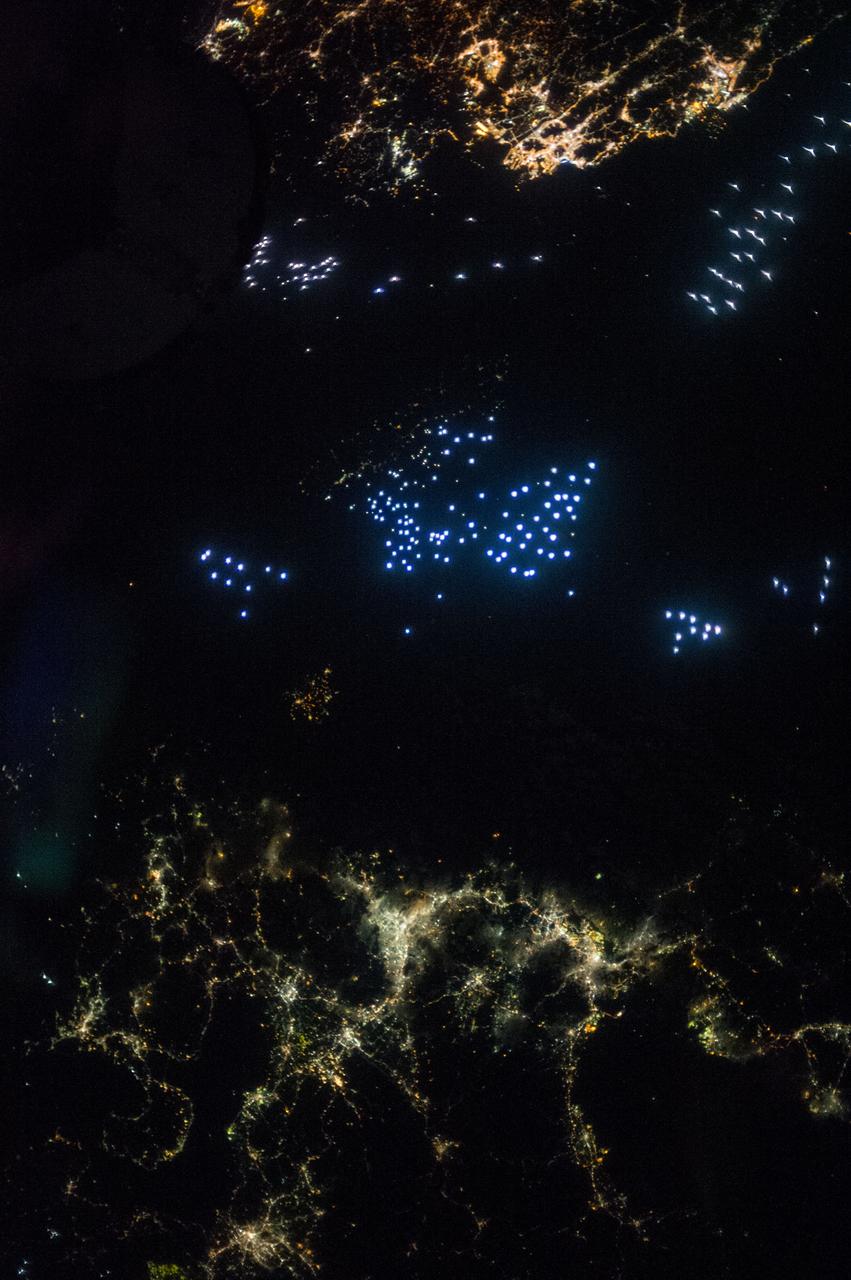
Earth observation taken during a night pass by the Expedition 37 crew. Per Twitter message: The Korea Strait.

ISS036-E-032134 (13 Aug. 2013) --- In the International Space Station?s Kibo laboratory, NASA astronaut Chris Cassidy, Expedition 36 flight engineer, conducts a session with a pair of bowling-ball-sized free-flying satellites known as Synchronized Position Hold, Engage, Reorient, Experimental Satellites, or SPHERES.
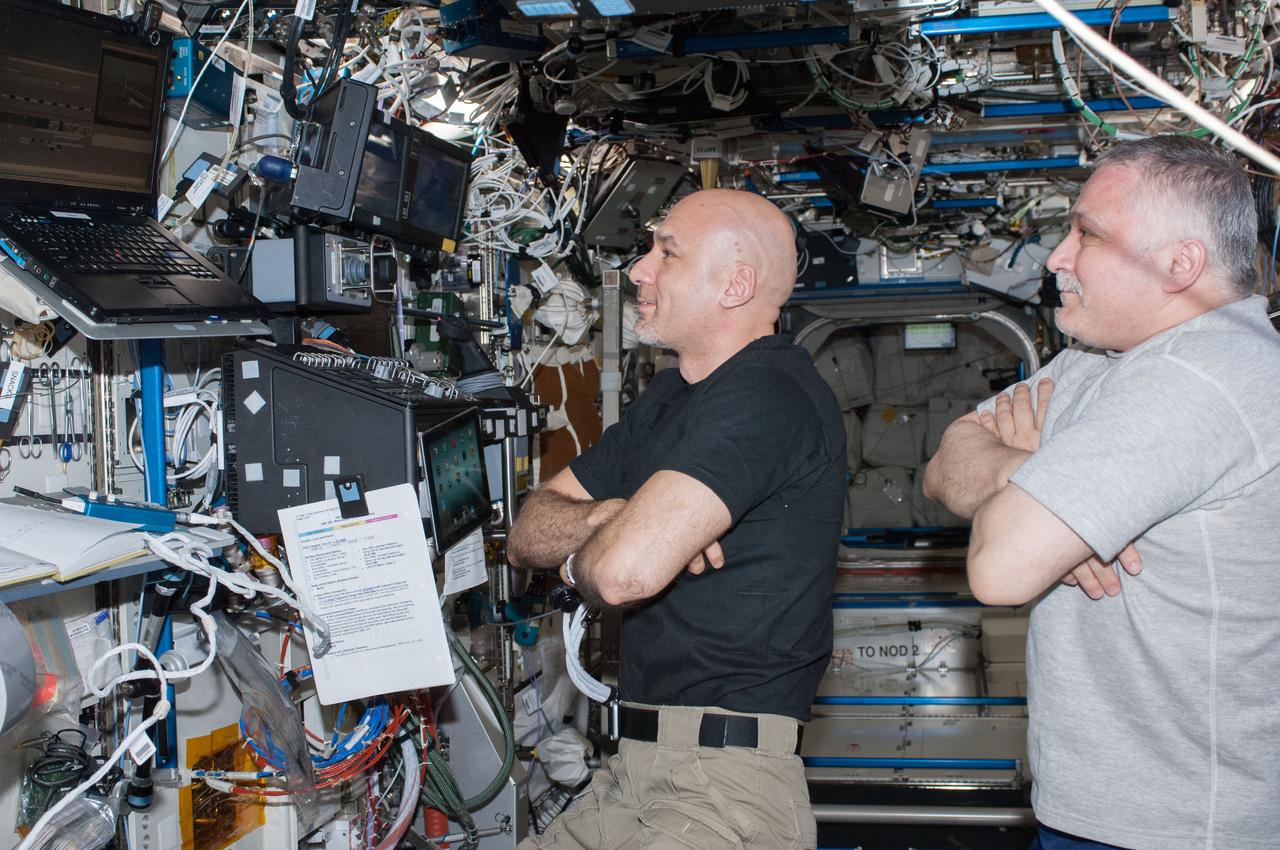
ISS037-E-001901 (18 Sept. 2013) --- In the International Space Station’s Destiny laboratory, Russian cosmonaut Fyodor Yurchikhin (right), Expedition 37 commander; and European Space Agency astronaut Luca Parmitano, flight engineer, watch the launch of the Orbital Sciences Corporation Antares rocket, with the Cygnus cargo spacecraft aboard, from Pad-0A of the Mid-Atlantic Regional Spaceport (MARS) NASA Wallops Flight Facility, Virginia. Cygnus is on its way to rendezvous with the space station and will deliver about 1,300 pounds (589 kilograms) of cargo, including food and clothing, to the Expedition 37 crew.
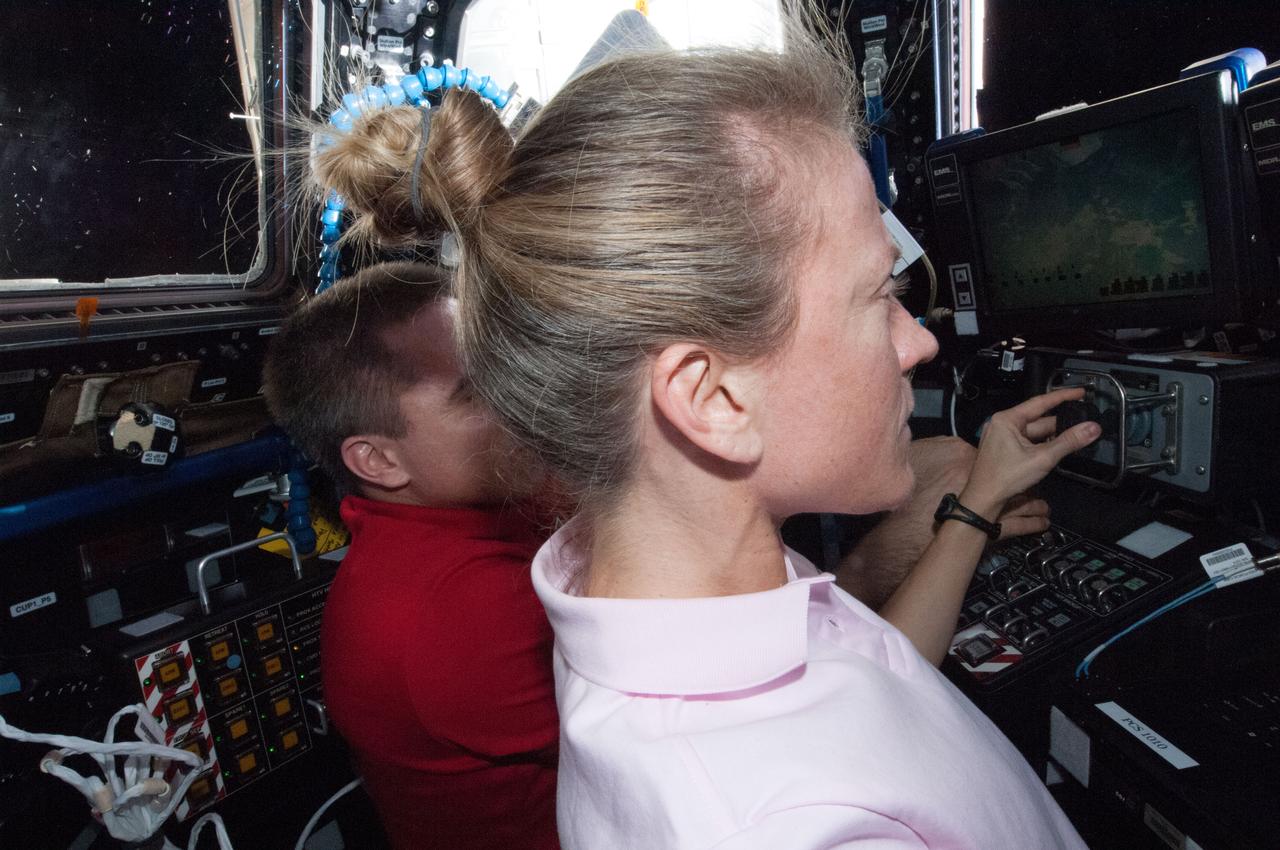
ISS036-E-026306 (29 July 2013) --- In the International Space Station?s Cupola, NASA astronauts Karen Nyberg and Chris Cassidy (partially obscured), both Expedition 36 flight engineers, participate in an onboard training activity in preparation for the grapple and berthing of the Japanese ?Kounotori? H2 Transfer Vehicle-4 (HTV-4) set for August 9.
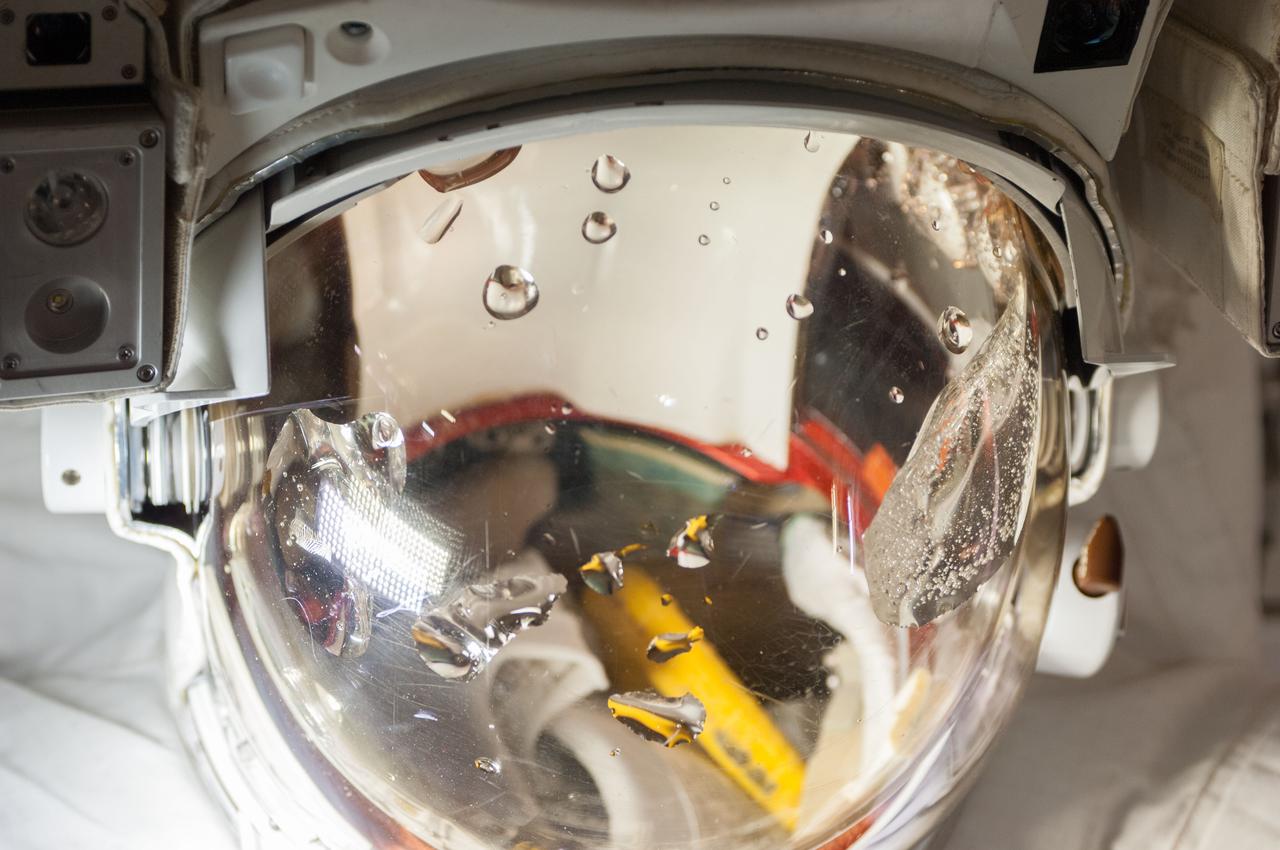
ISS036-E-037249 (27 Aug. 2013) --- The Extravehicular Mobility Unit (EMU) spacesuit helmet ? worn by European Space Agency astronaut Luca Parmitano during a July 16 spacewalk that was cut short when the helmet began to fill with water ? is captured in a close-up image in the Quest airlock of the International Space Station. After assembling and powering up the empty suit as if it were about to go out on another spacewalk, Parmitano and NASA astronaut Chris Cassidy (both out of frame), both Expedition 36 flight engineers, observed water once again leaking into the helmet. With the issue reproduced, NASA now has a baseline configuration for the crew to begin swapping out parts for additional tests to pinpoint the problem. There are also opportunities to either launch replacement parts on upcoming cargo flights or return parts to Earth for further study once more is known about the cause of the issue.
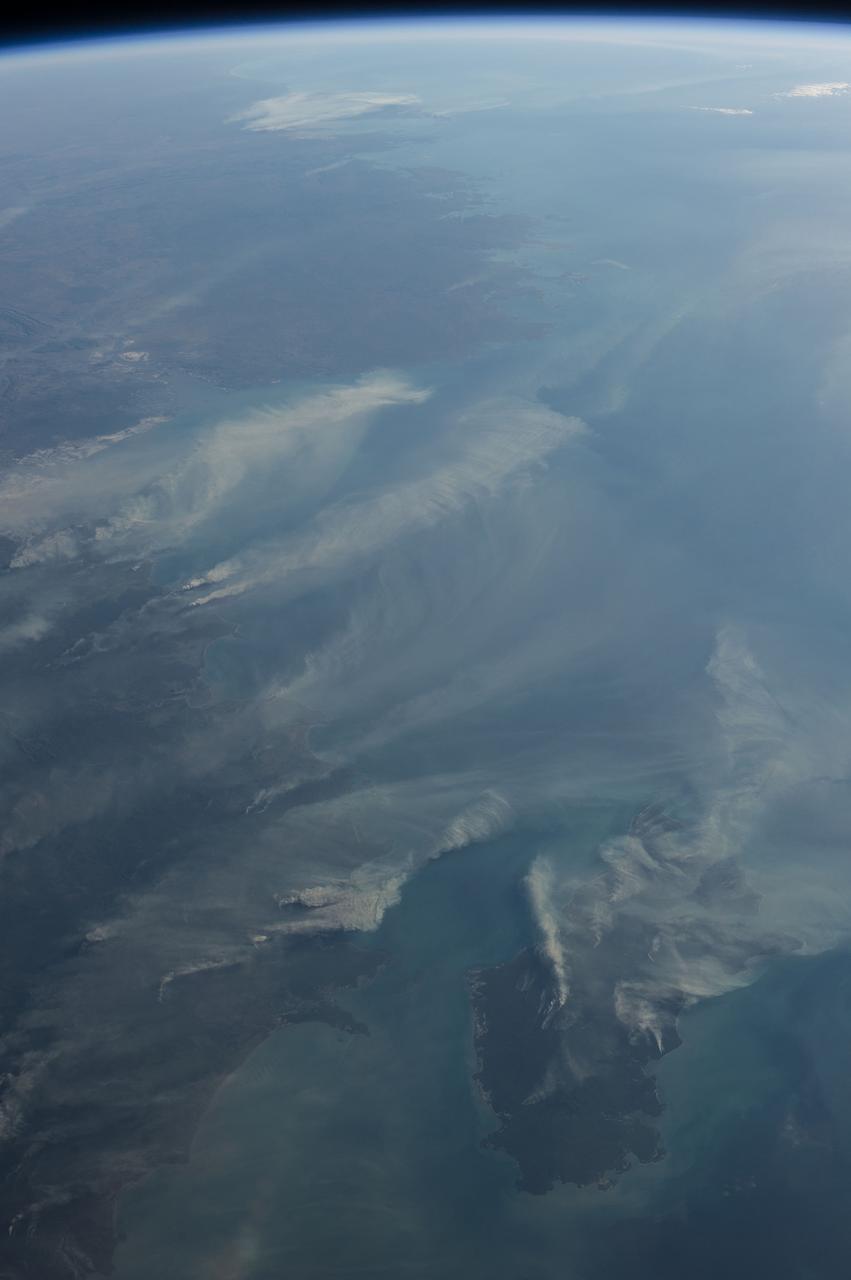
Earth observation taken during a day pass by an Expedition 36 crew member on board the International Space Station (ISS). Per Twitter message: A broader view of the northern coast of Australia on the Timor Sea.
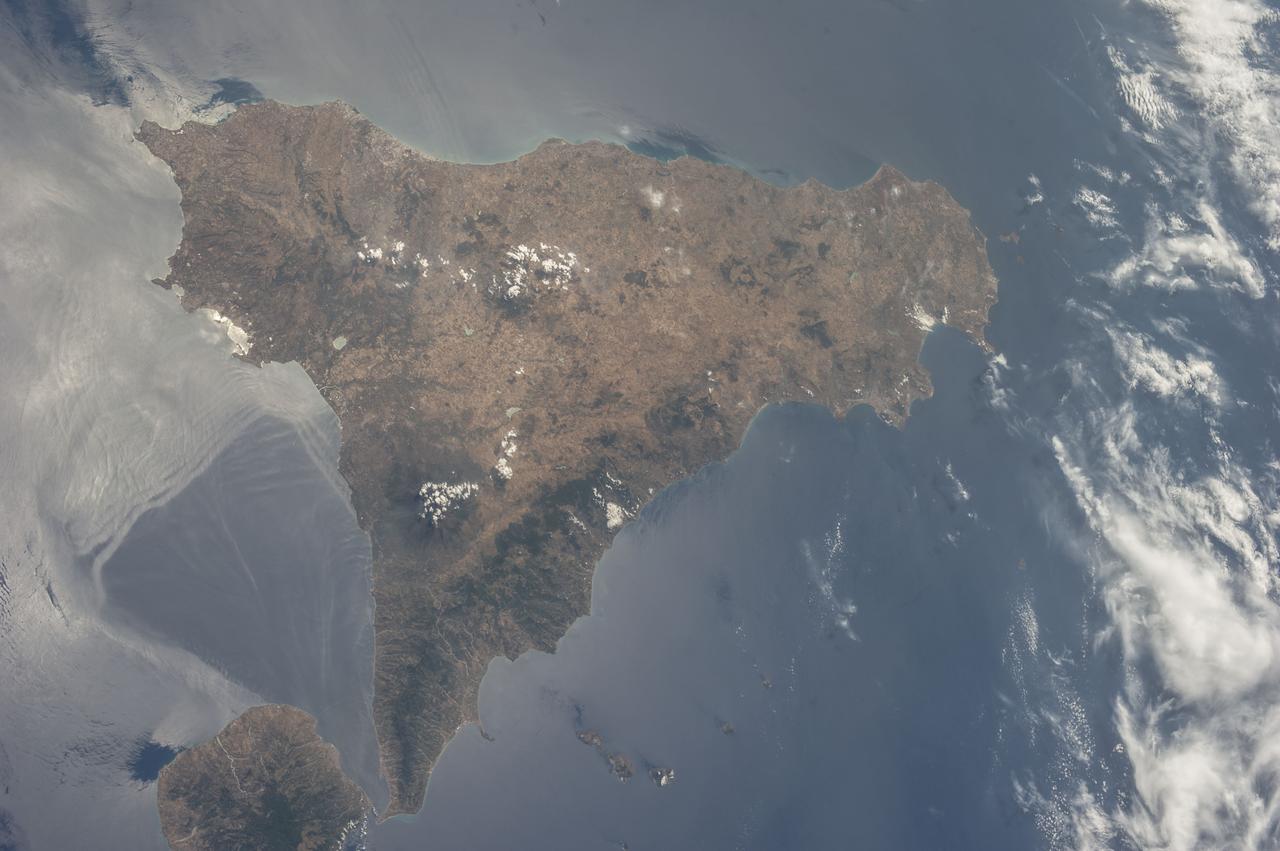
Earth observation taken during a day pass by an Expedition 36 crew member on board the International Space Station (ISS).
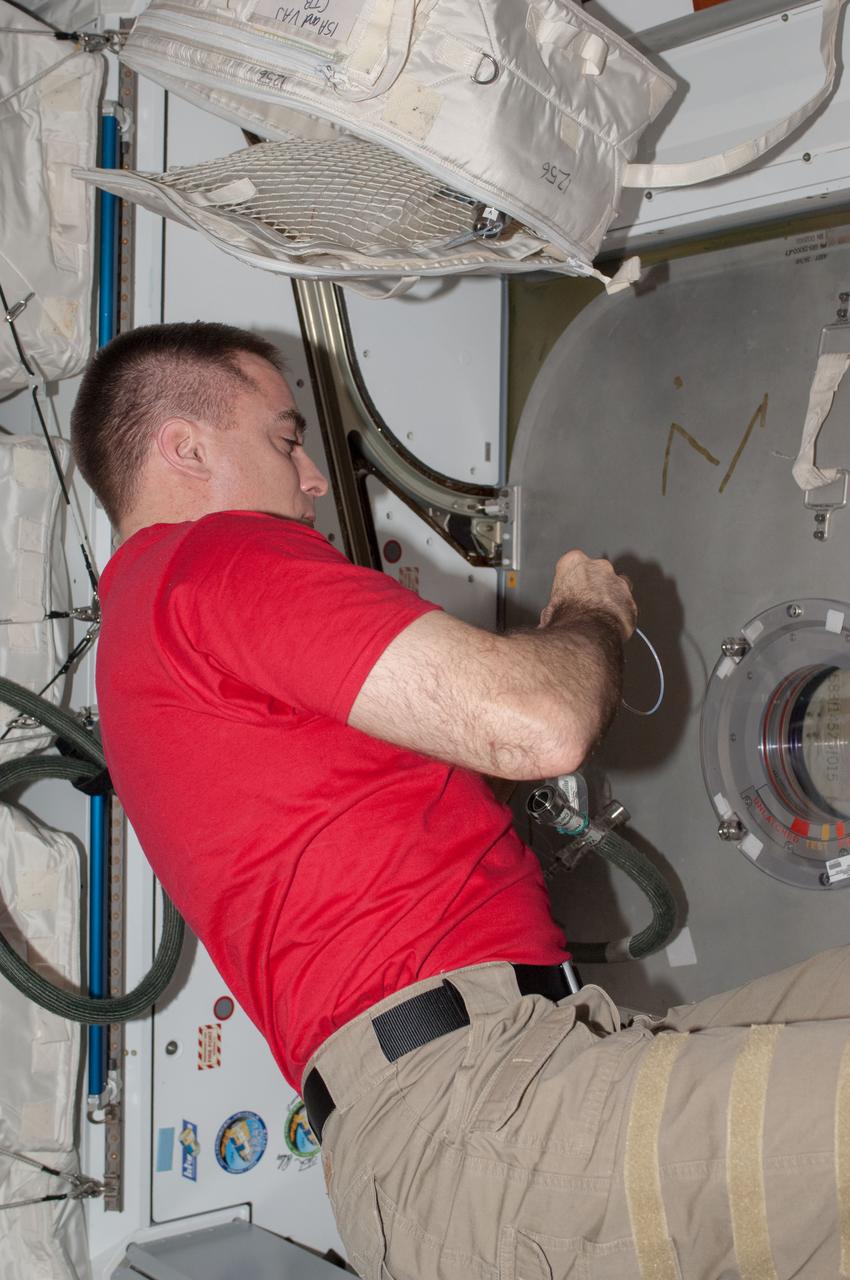
ISS036-E-039423 (3 Sept. 2013) --- NASA astronaut Chris Cassidy, Expedition 36 flight engineer, works near a hatch in the Harmony node of the International Space Station.
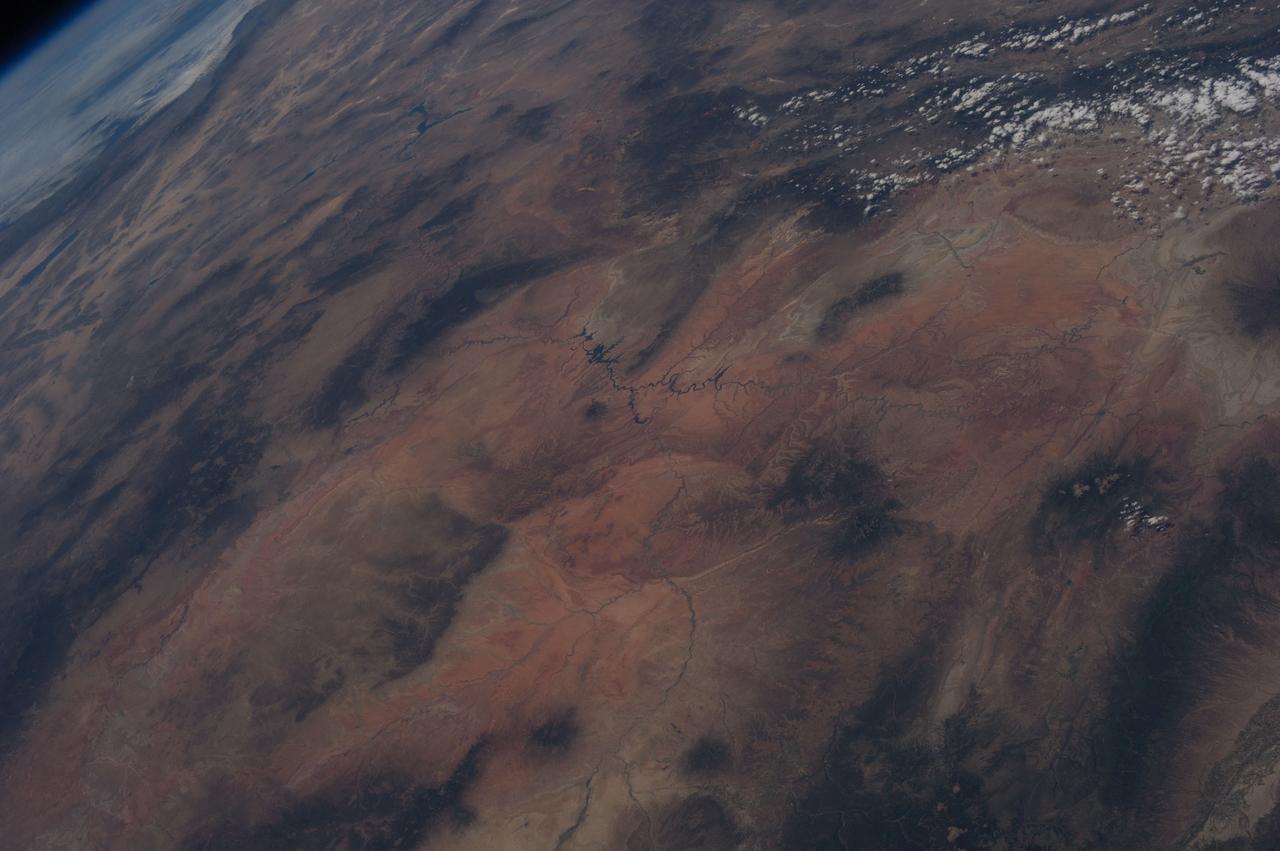
Earth observation taken during a day pass by an Expedition 36 crew member on board the International Space Station (ISS).
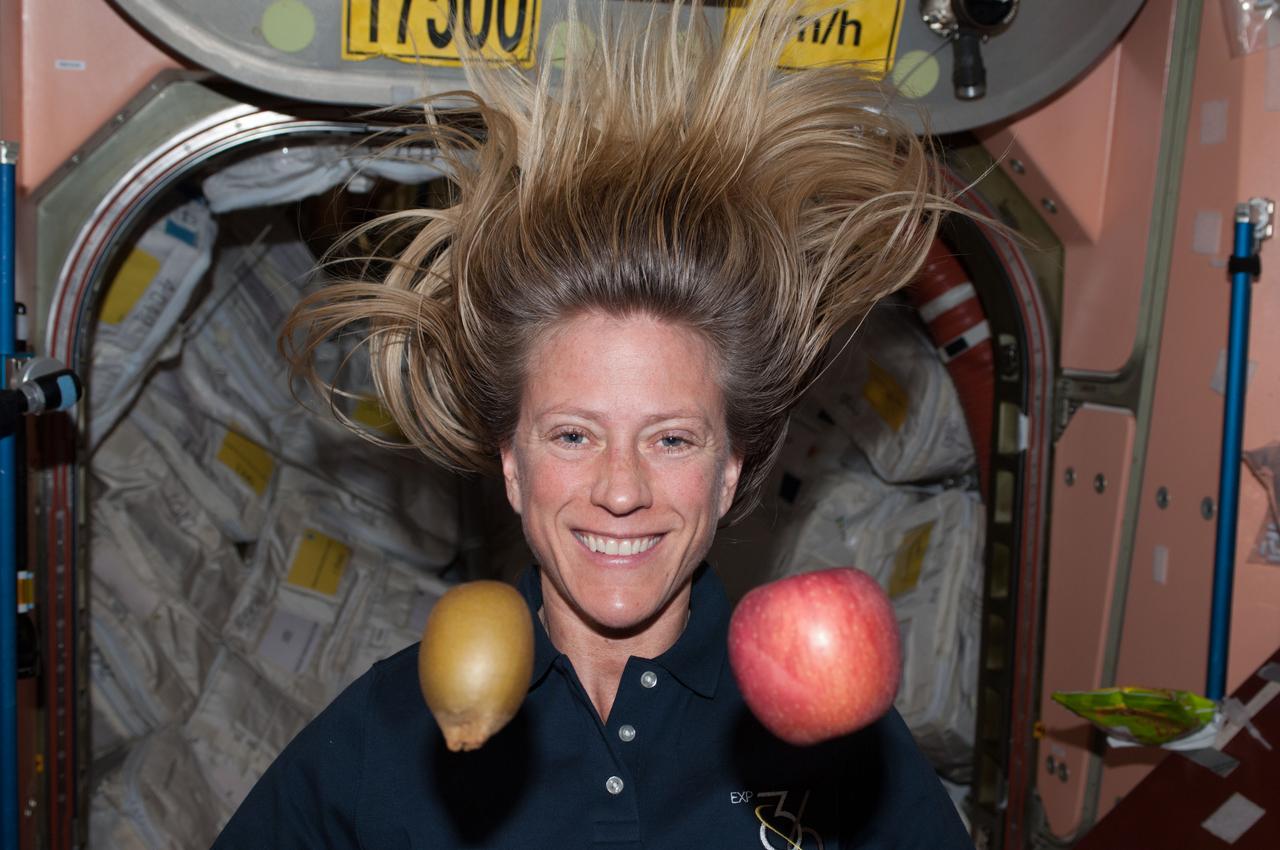
ISS036-E-032518 (13 Aug. 2013) --- NASA astronaut Karen Nyberg, Expedition 36 flight engineer, is pictured near fresh fruit floating freely in the Unity node of the International Space Station.

ISS036-E-028026 (1 Aug. 2013) --- NASA astronaut Karen Nyberg, Expedition 36 flight engineer, works with the InSPACE-3 experiment in the Microgravity Science Glovebox (MSG) in the Destiny laboratory of the International Space Station. InSPACE-3 applies different magnetic fields to vials of colloids, or liquids with microscopic particles, and observes how fluids can behave like a solid. Results may improve the strength and design of materials for stronger buildings and bridges.
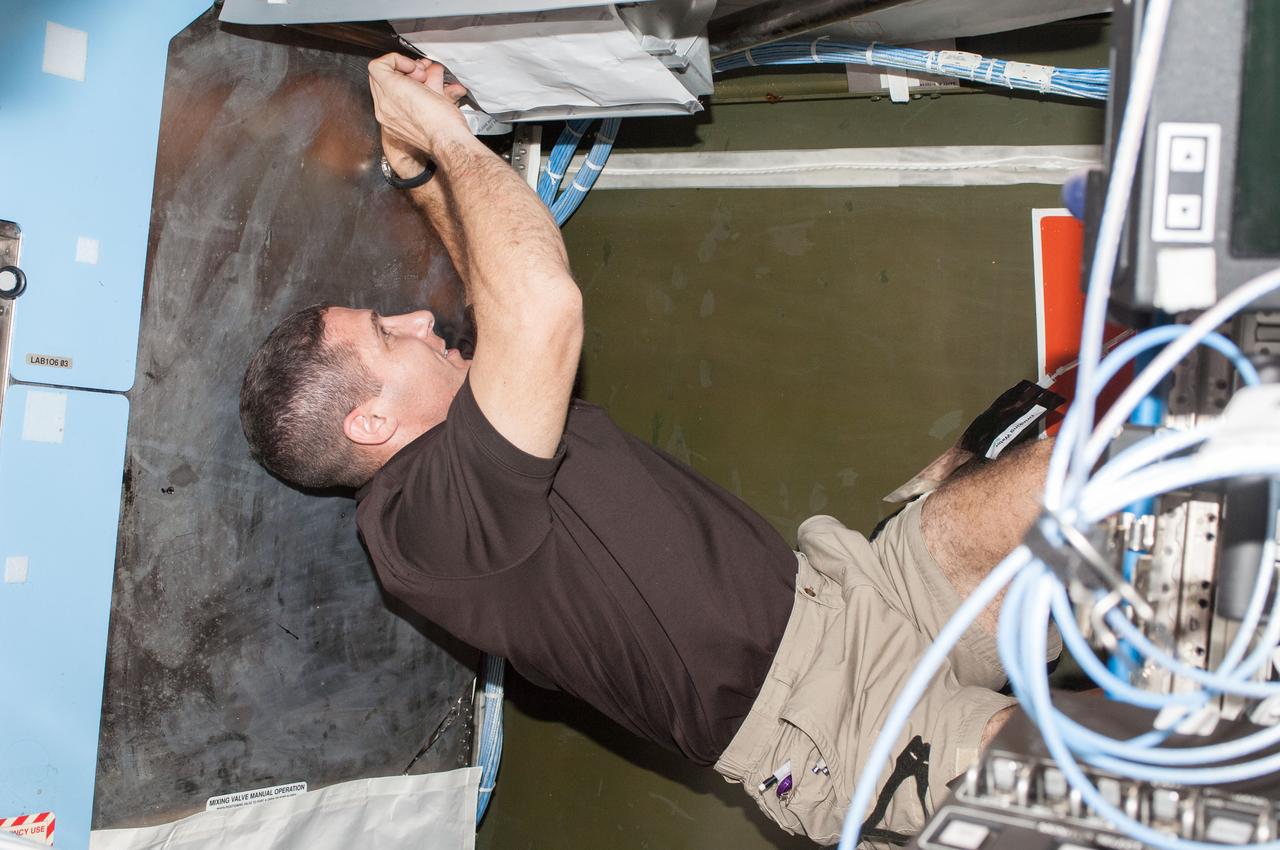
ISS037-E-024834 (28 Oct. 2013) --- NASA astronaut Michael Hopkins, Expedition 37 flight engineer, works behind a rack in the Destiny laboratory of the International Space Station.
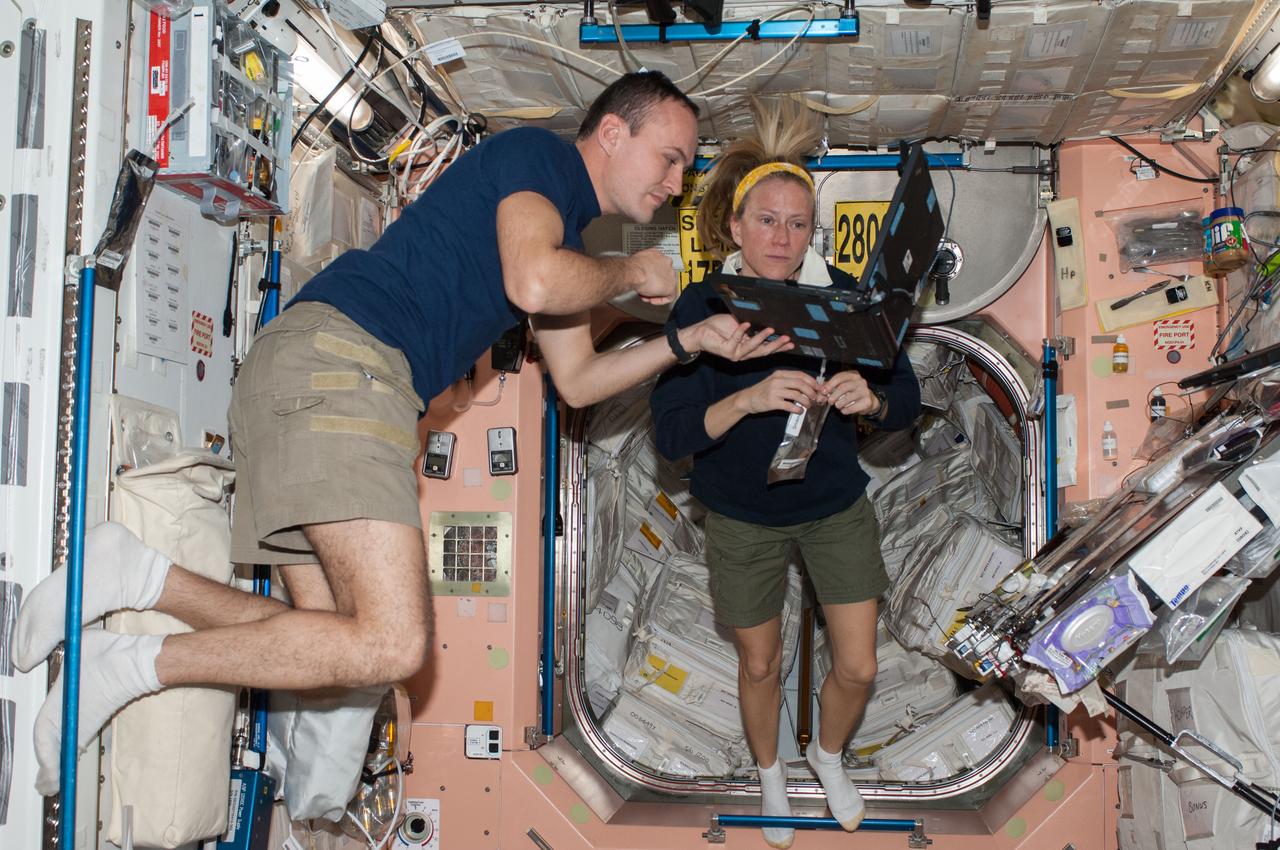
ISS037-E-005750 (2 Oct. 2013) --- NASA astronaut Karen Nyberg and Russian cosmonaut Sergey Ryazanskiy, both Expedition 37 flight engineers, look at a computer monitor in the Unity node of the International Space Station.
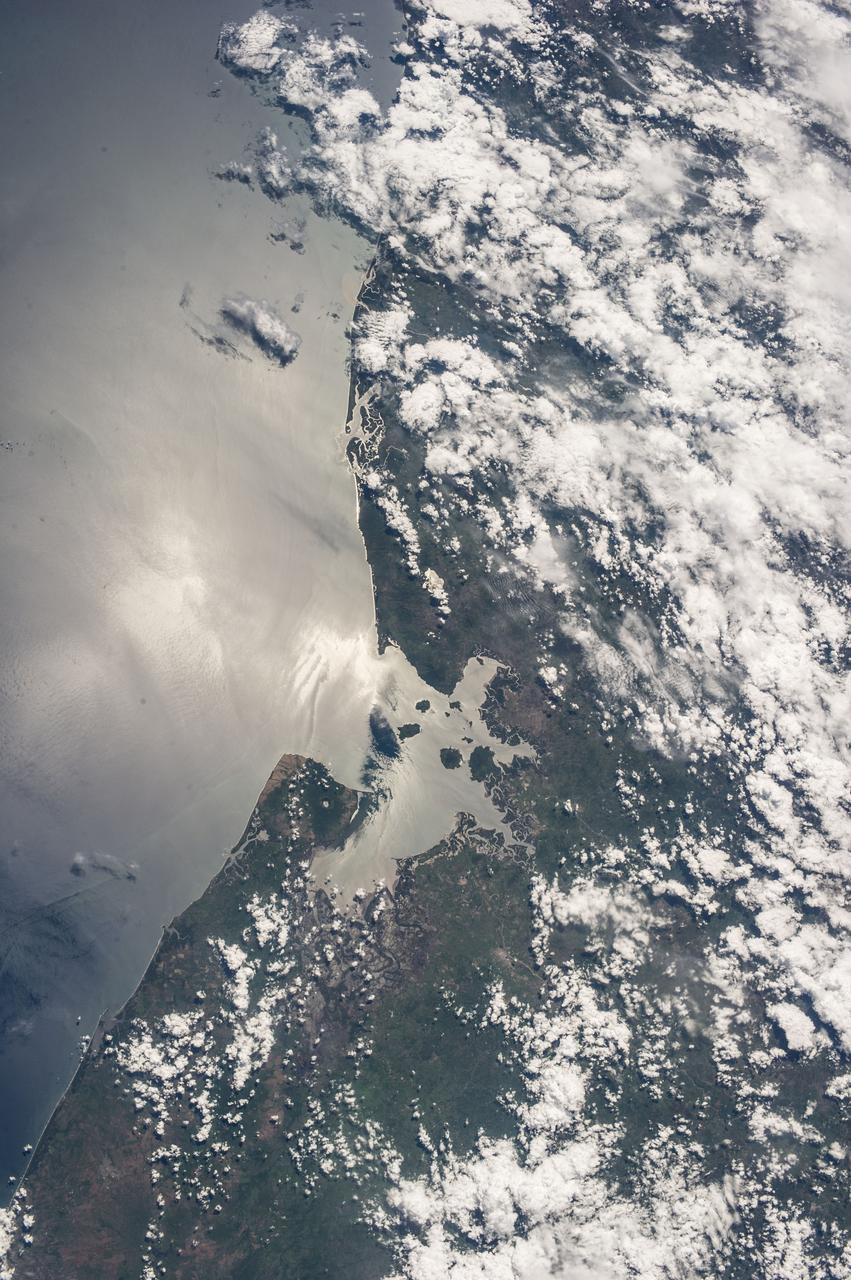
Earth observation taken during a day pass by an Expedition 36 crew member on board the International Space Station (ISS).
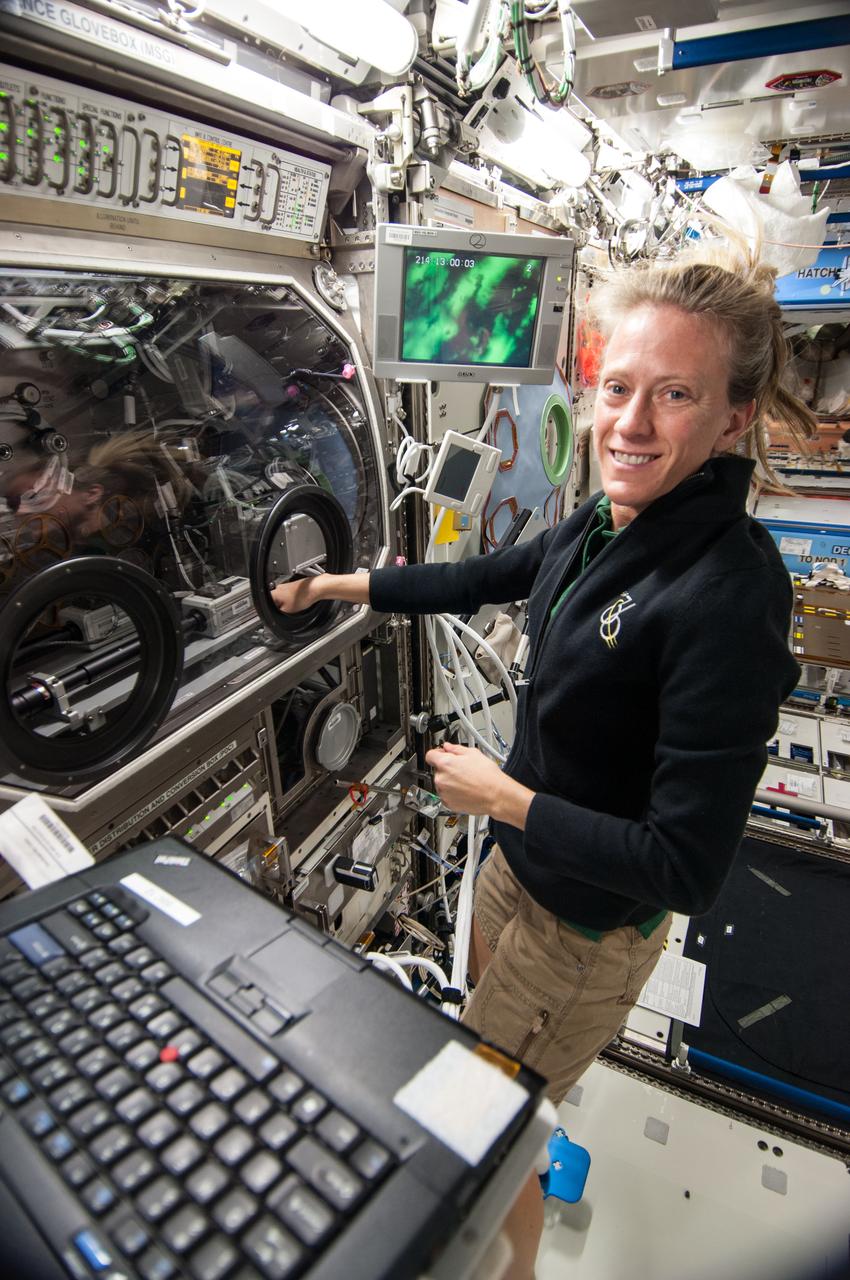
NASA astronaut Karen Nyberg,Expedition 36 flight engineer,works with the InSPACE-3 experiment in the Microgravity Science Glovebox (MSG) in the Destiny laboratory of the International Space Station. InSPACE-3 applies different magnetic fields to vials of colloids,or liquids with microscopic particles,and observes how fluids can behave like a solid. Also sent as Twitter message.
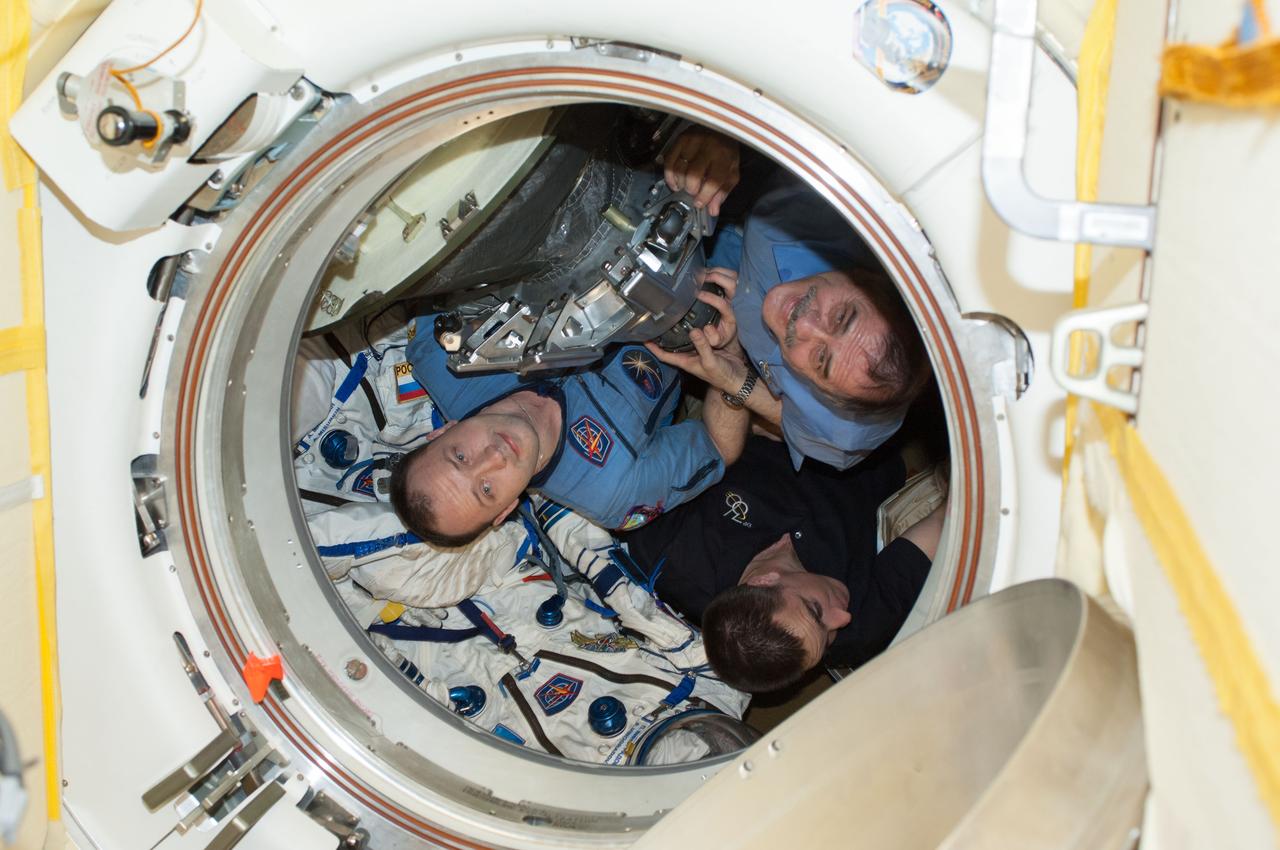
ISS036-E-048265 (10 Sept. 2013) --- Russian cosmonaut Pavel Vinogradov (top right), Expedition 36 commander; along with NASA astronaut Chris Cassidy (bottom right) and Russian cosmonaut Alexander Misurkin, both flight engineers, are pictured in the Soyuz TMA-08M spacecraft currently docked to the Poisk Mini-Research Module 2 (MRM2) of the International Space Station. The trio is preparing to undock from Poisk in their Soyuz spacecraft, ending a five-and-a-half month stay at the station.
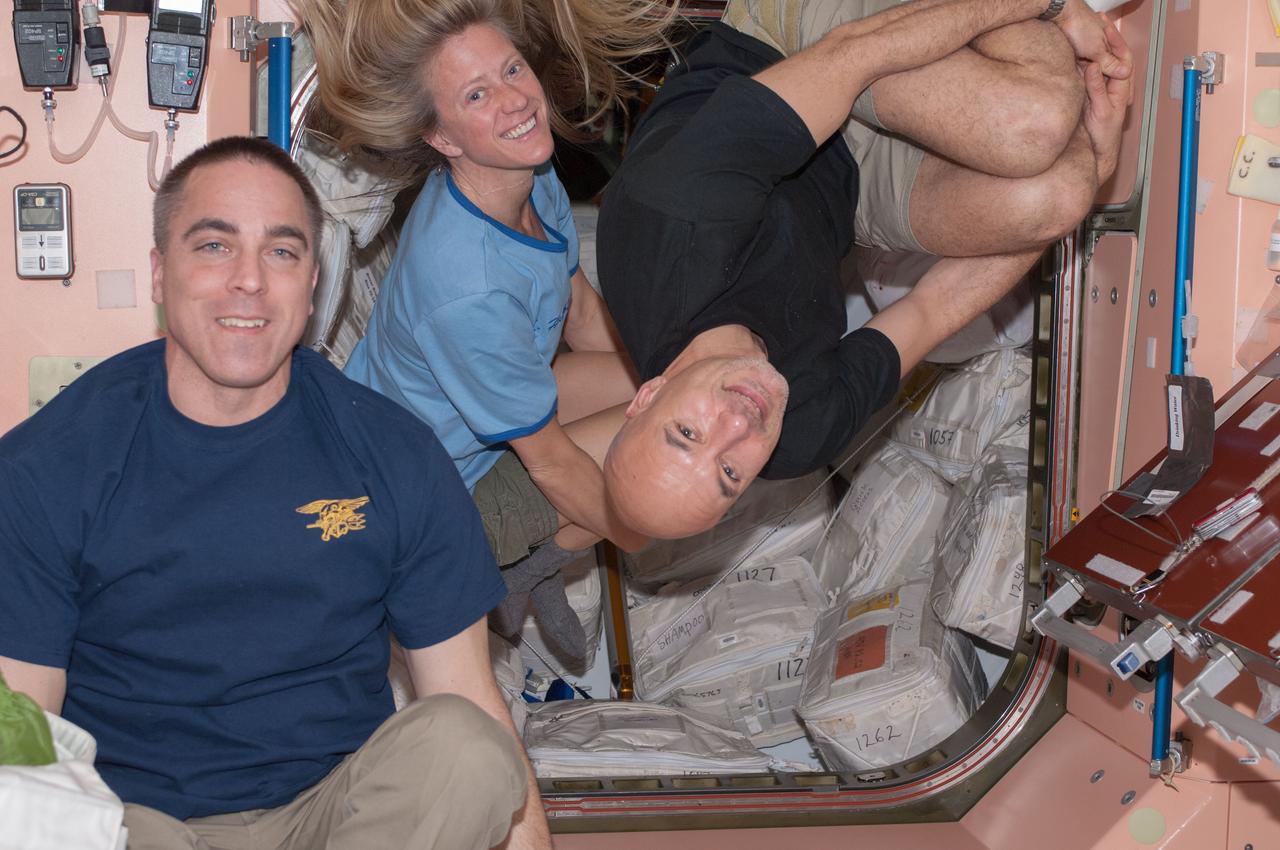
ISS036-E-015477 (7 July 2013) --- NASA astronauts Chris Cassidy (left) and Karen Nyberg; along with European Space Agency astronaut Luca Parmitano, all Expedition 36 flight engineers, pose for a photo in the Unity node of the International Space Station.

ISS036-E-008213 (15 June 2013) --- NASA astronaut Karen Nyberg, Expedition 36 flight engineer, conducts a session with the Capillary Flow Experiment (CFE) Interior Corner Flow 9 (ICF-9) in the Harmony node of the International Space Station. CFE observes the flow of fluid, in particular capillary phenomena, in microgravity.
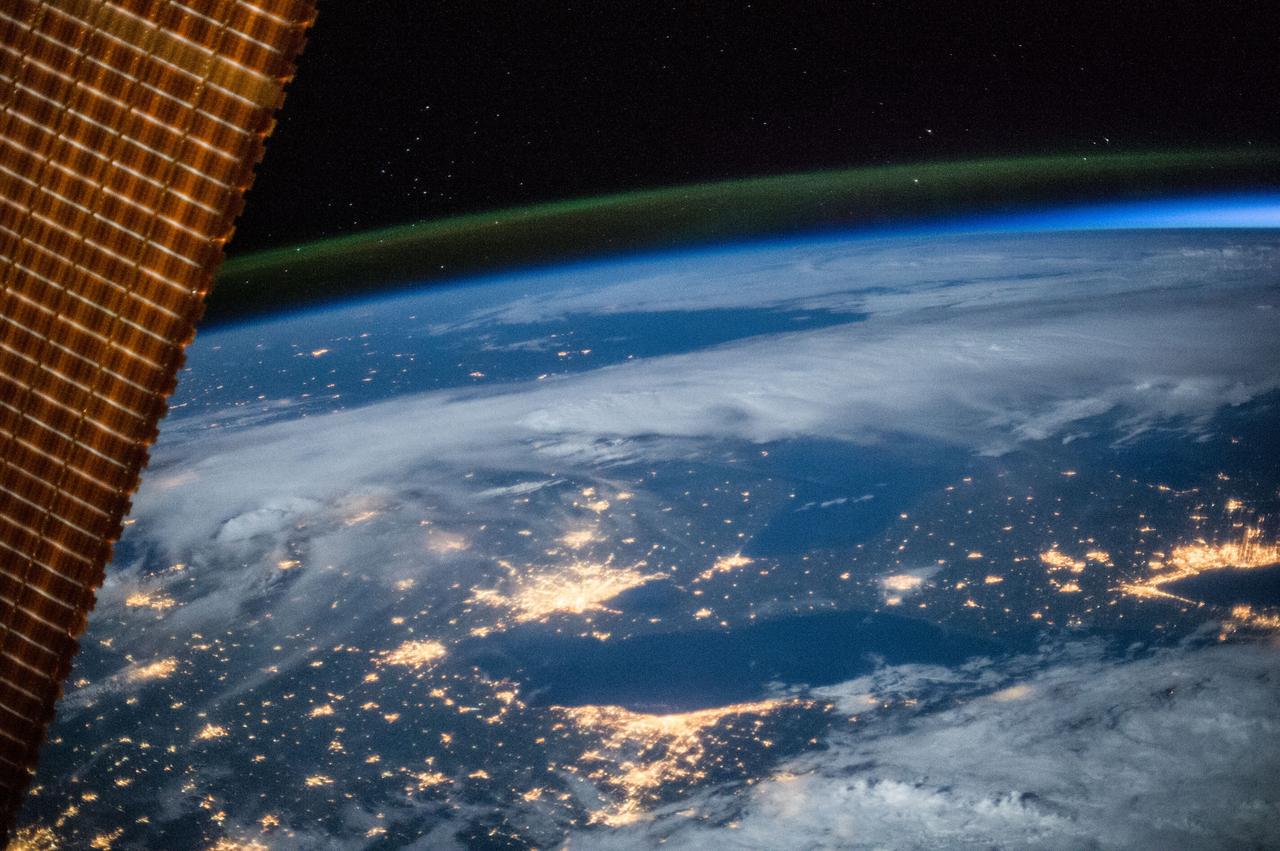
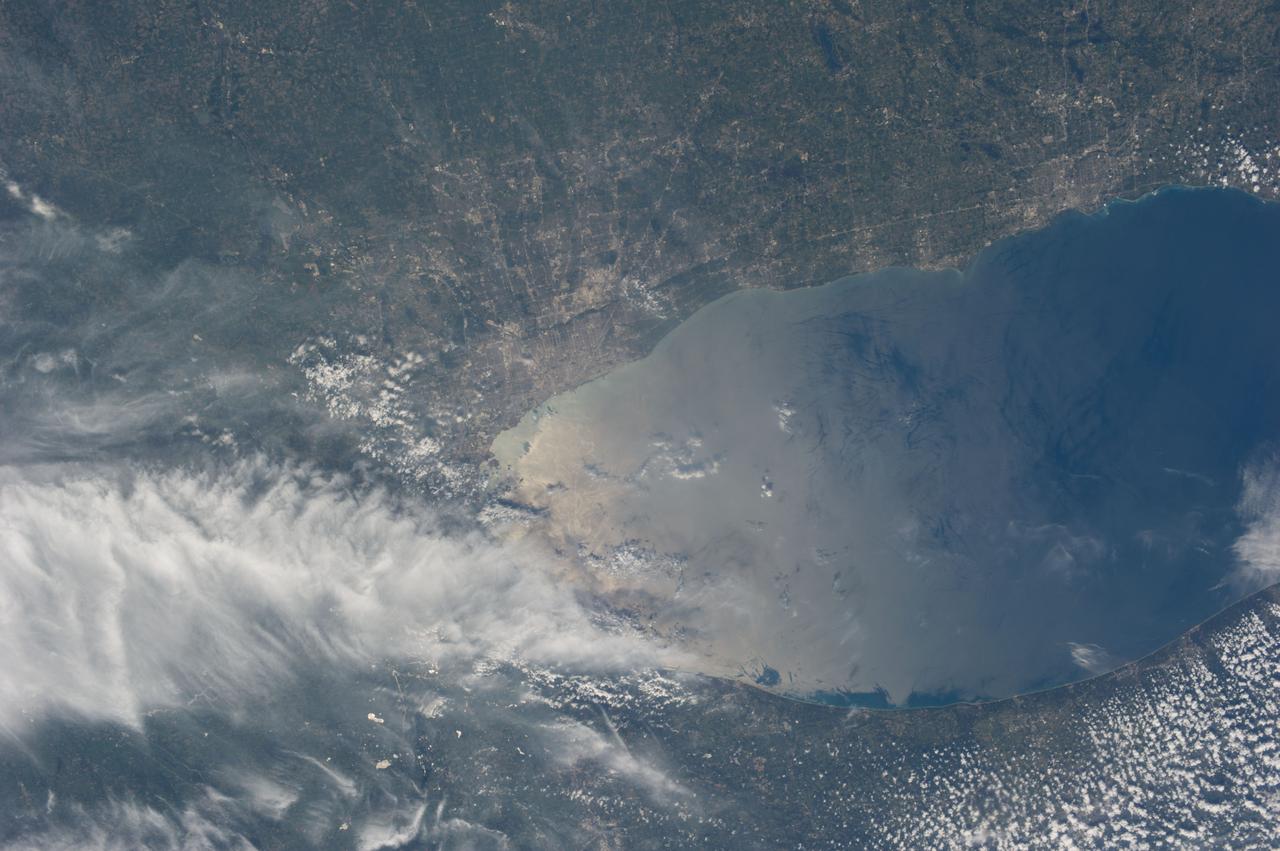
Earth observation taken during a night pass by an Expedition 36 crew member on board the International Space Station (ISS). Per Twitter message this is labeled as: Detroit, Cleveland, Toronto and a blue hint of sunrise.
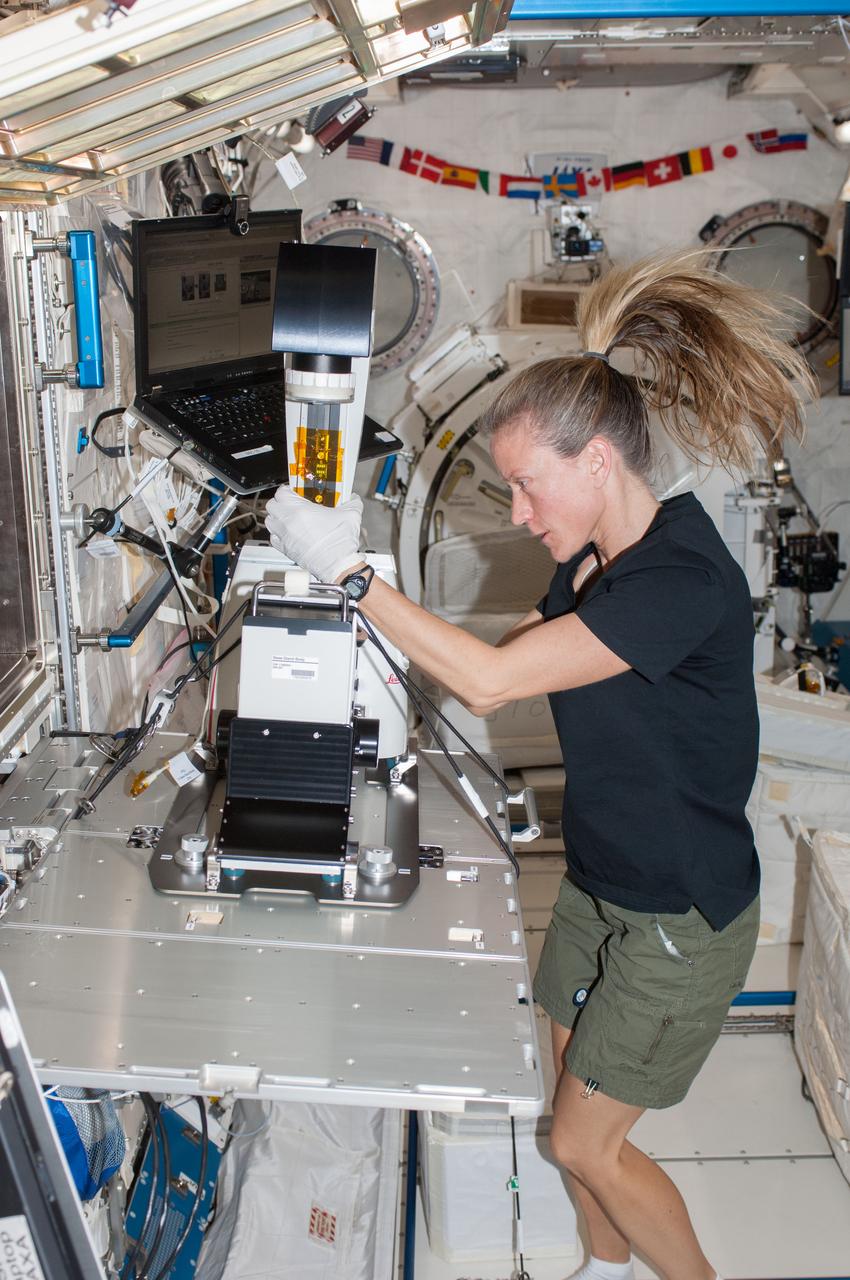
ISS036-E-020938 (17 July 2013) --- NASA astronaut Karen Nyberg, Expedition 36 flight engineer, works to setup the Multi-Purpose Small Payload Rack (MSPR) fluorescence microscope in the Kibo laboratory of the International Space Station. This configuration, along with the leak checks that the crew performed in June, is in preparation for the Aniso Tubule experiment launching on HTV-4 in August. Aniso Tubule will investigate the role of cortical microtubules and microtubule-associated proteins in plant growth while in microgravity.
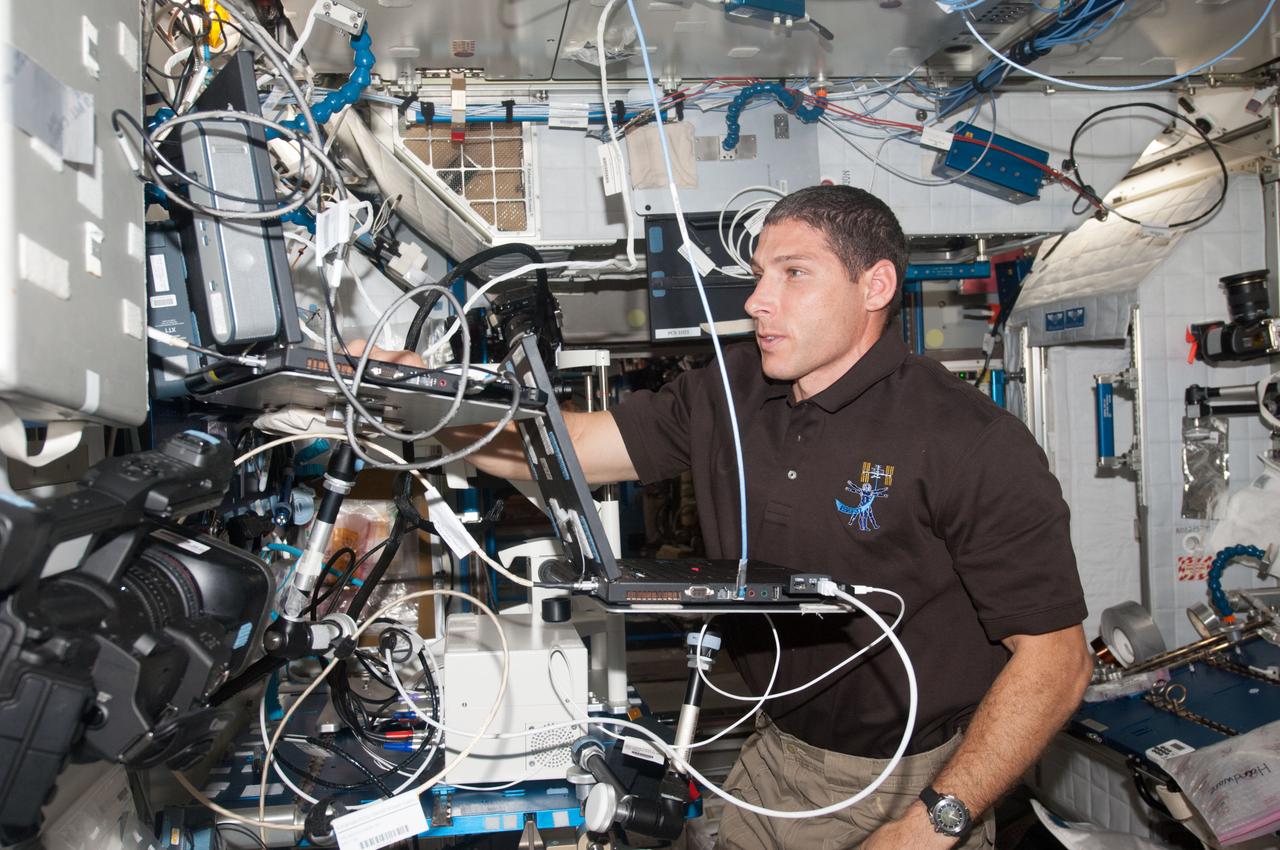
ISS037-E-013962 (15 Oct. 2013) --- NASA astronaut Michael Hopkins, Expedition 37 flight engineer, enters data in a computer in the Harmony node of the International Space Station.
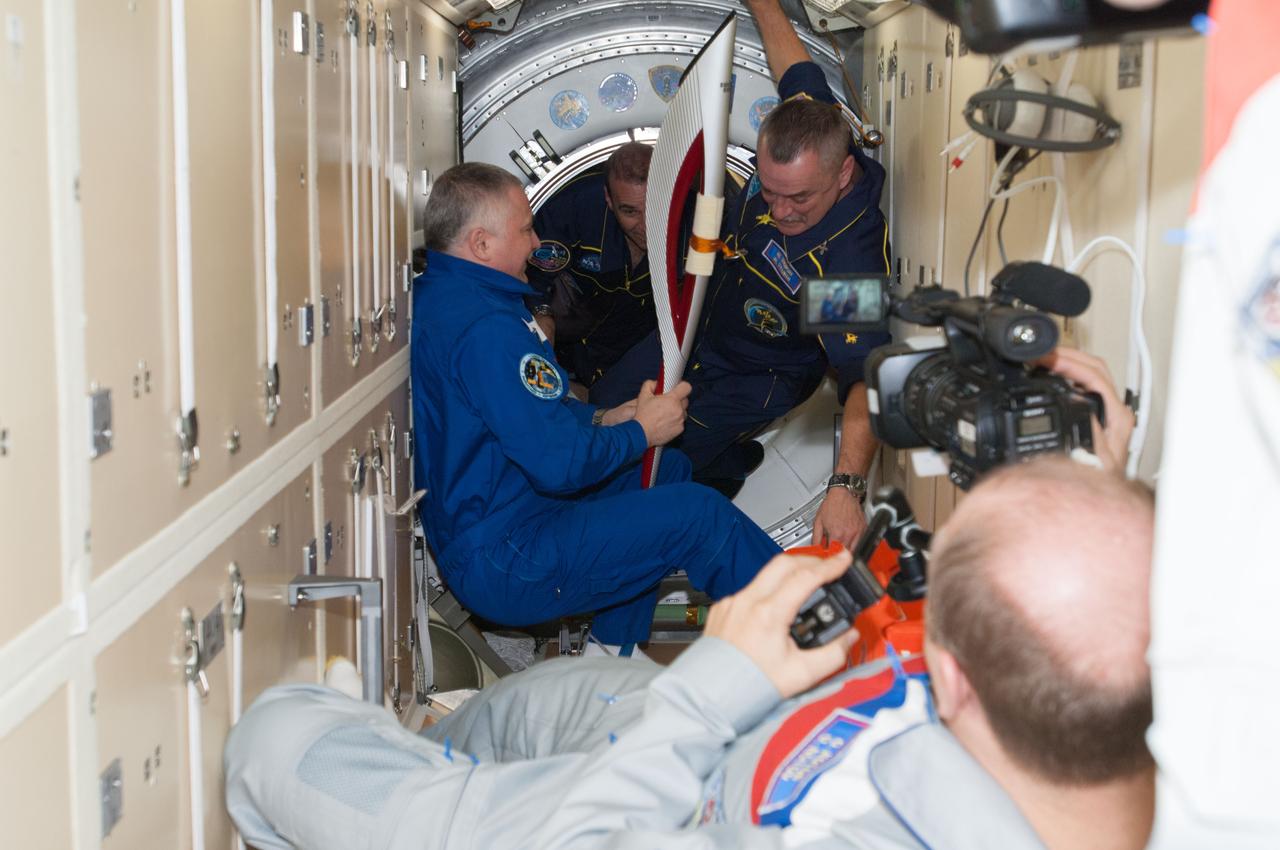
ISS037-E-028206 (7 Nov. 2013) --- In the International Space Station's Rassvet Mini-Research Module 1 (MRM1), Russian cosmonaut Fyodor Yurchikhin (holding the Olympic torch), Expedition 37 commander, welcomes Russian cosmonaut Mikhail Tyurin, Expedition 38 flight engineer, after arriving onboard a Soyuz spacecraft with Japan Aerospace Exploration Agency astronaut Koichi Wakata and NASA astronaut Rick Mastracchio, both Expedition 38 flight engineers. Russian cosmonaut Oleg Kotov (foreground), Expedition 37 flight engineer, captures the event with a video camera.
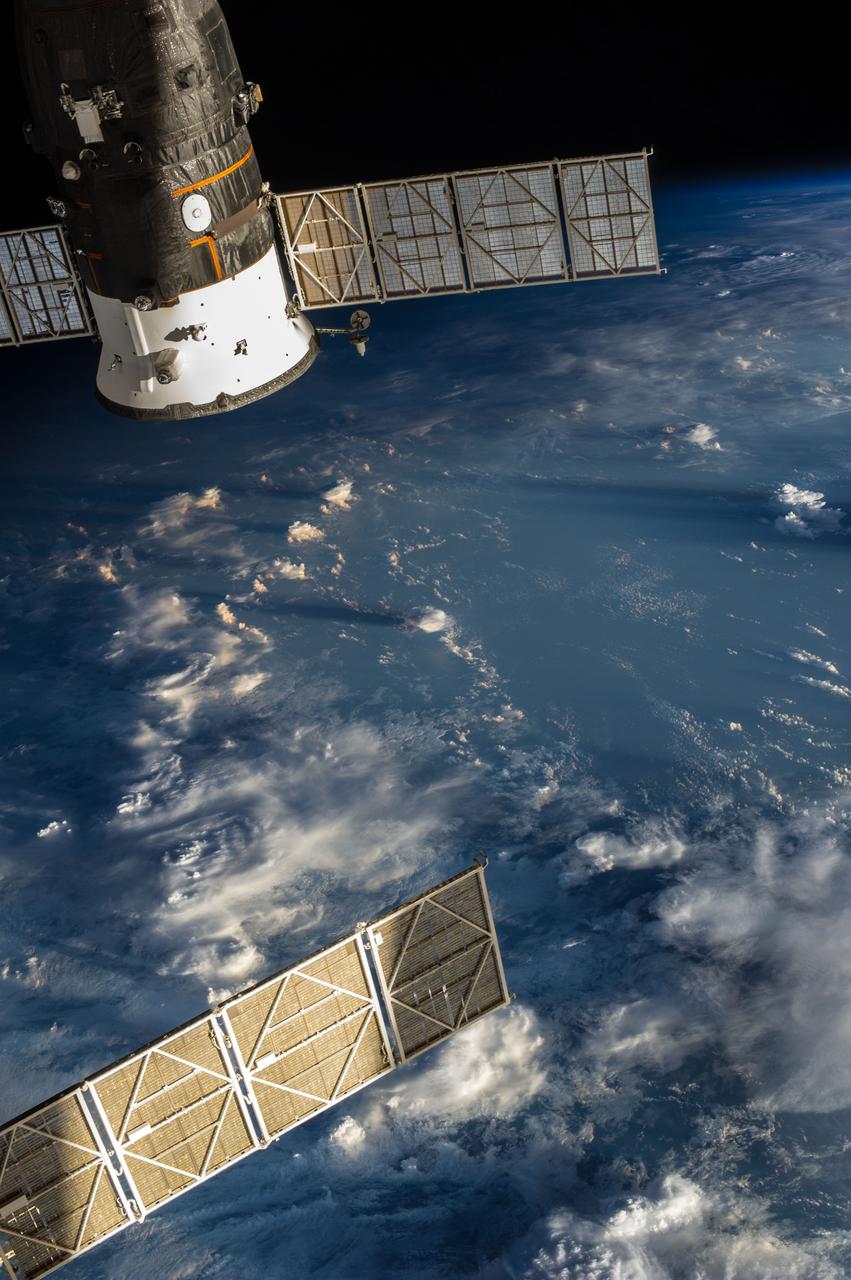
Earth observation taken during day pass by an Expedition 36 crew member on board the International Space Station (ISS). Per Twitter message: Our orbit has often recently been taking us along the terminator, for long periods of low sun & long shadows.
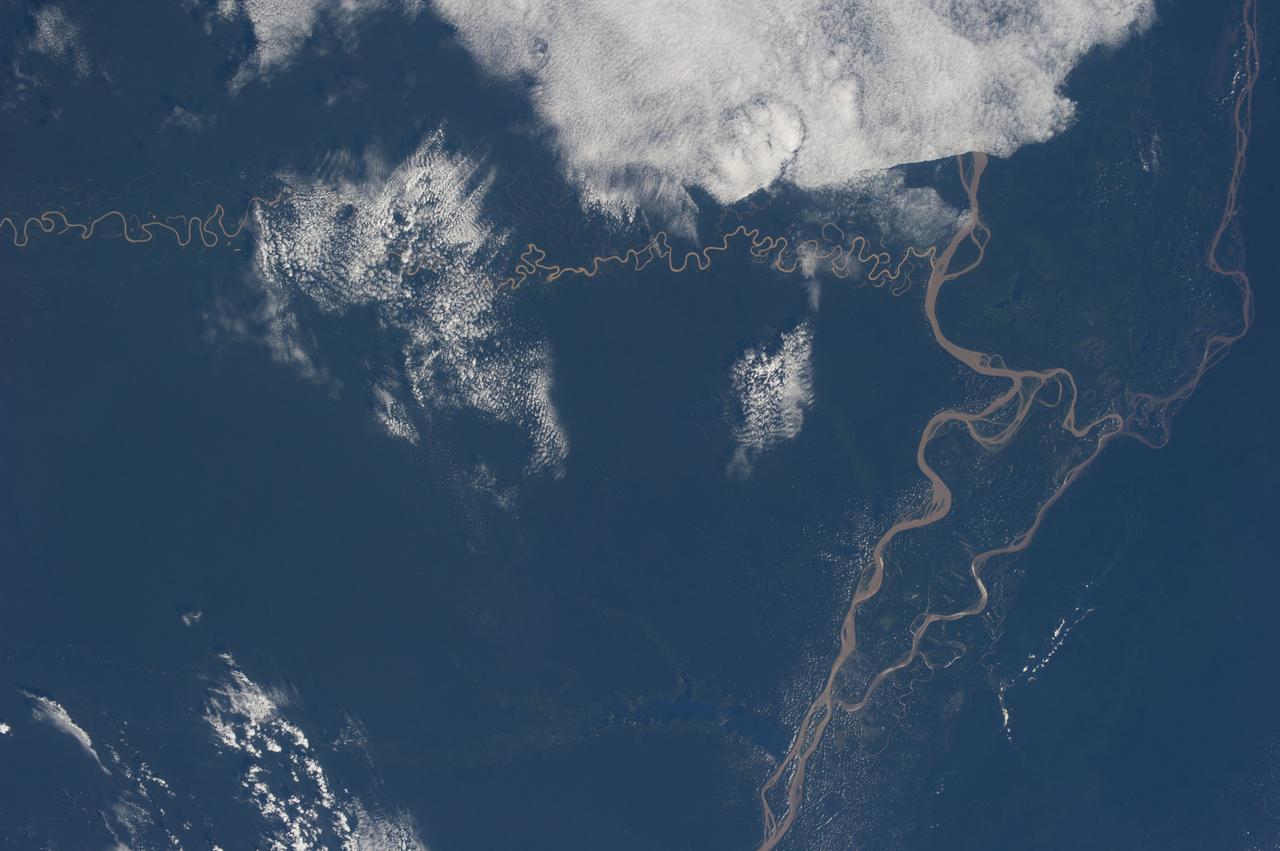
Earth observation taken during day pass by an Expedition 36 crew member on board the International Space Station (ISS). Per Twitter message: Amazing rivers in Brazil.
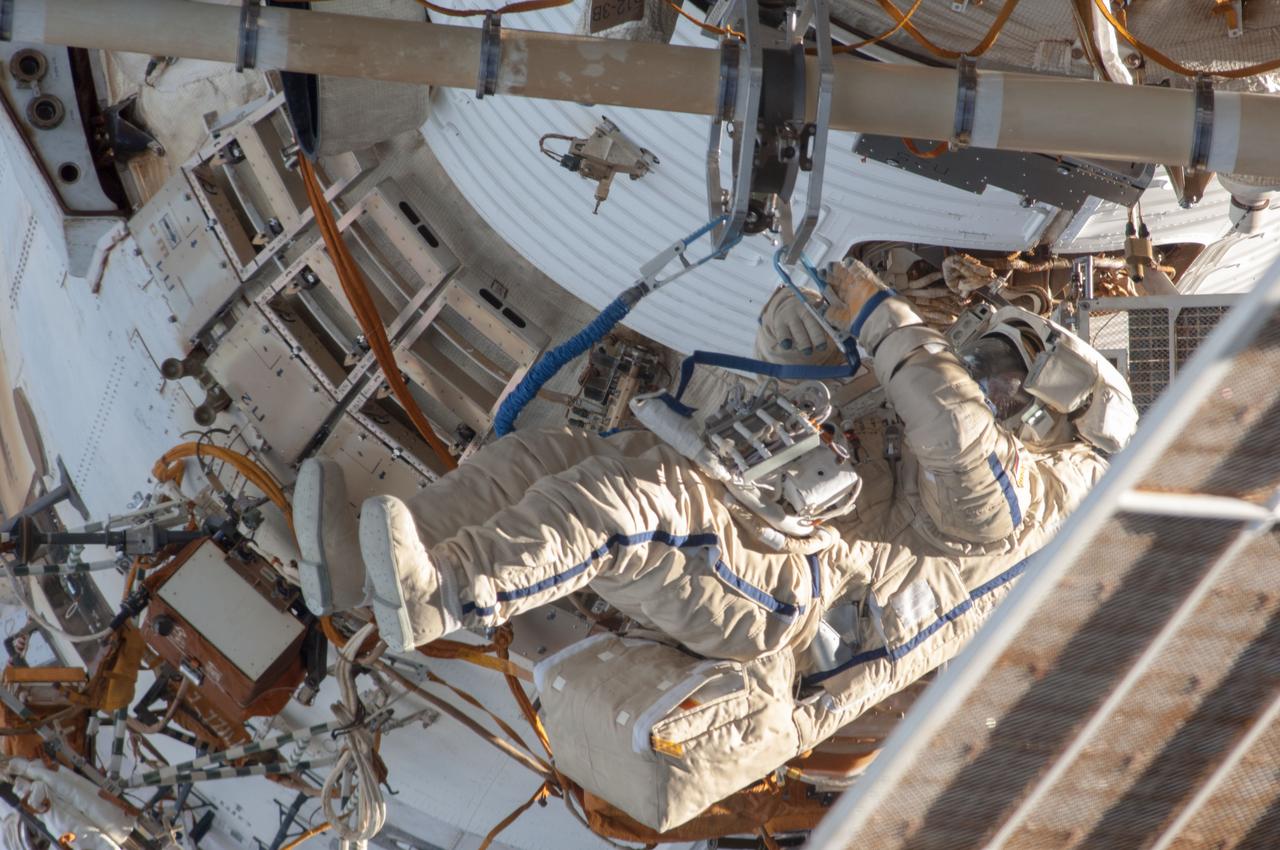
ISS036-E-011640 (24 June 2013) --- Russian cosmonaut Alexander Misurkin, Expedition 36 flight engineer, participates in a session of extravehicular activity (EVA) as work continues on the International Space Station. During the six-hour, 34-minute spacewalk, Misurkin and Russian cosmonaut Fyodor Yurchikhin (out of frame), Expedition 36 flight engineer, replaced an aging fluid flow control panel on the station's Zarya module as preventative maintenance on the cooling system for the Russian segment of the station. They also installed clamps for future power cables as an early step toward swapping the Pirs airlock with a new multipurpose laboratory module. The Russian Federal Space Agency plans to launch a combination research facility, airlock and docking port late this year on a Proton rocket. Yurchikhin and Misurkin also retrieved two science experiments and installed a new one.
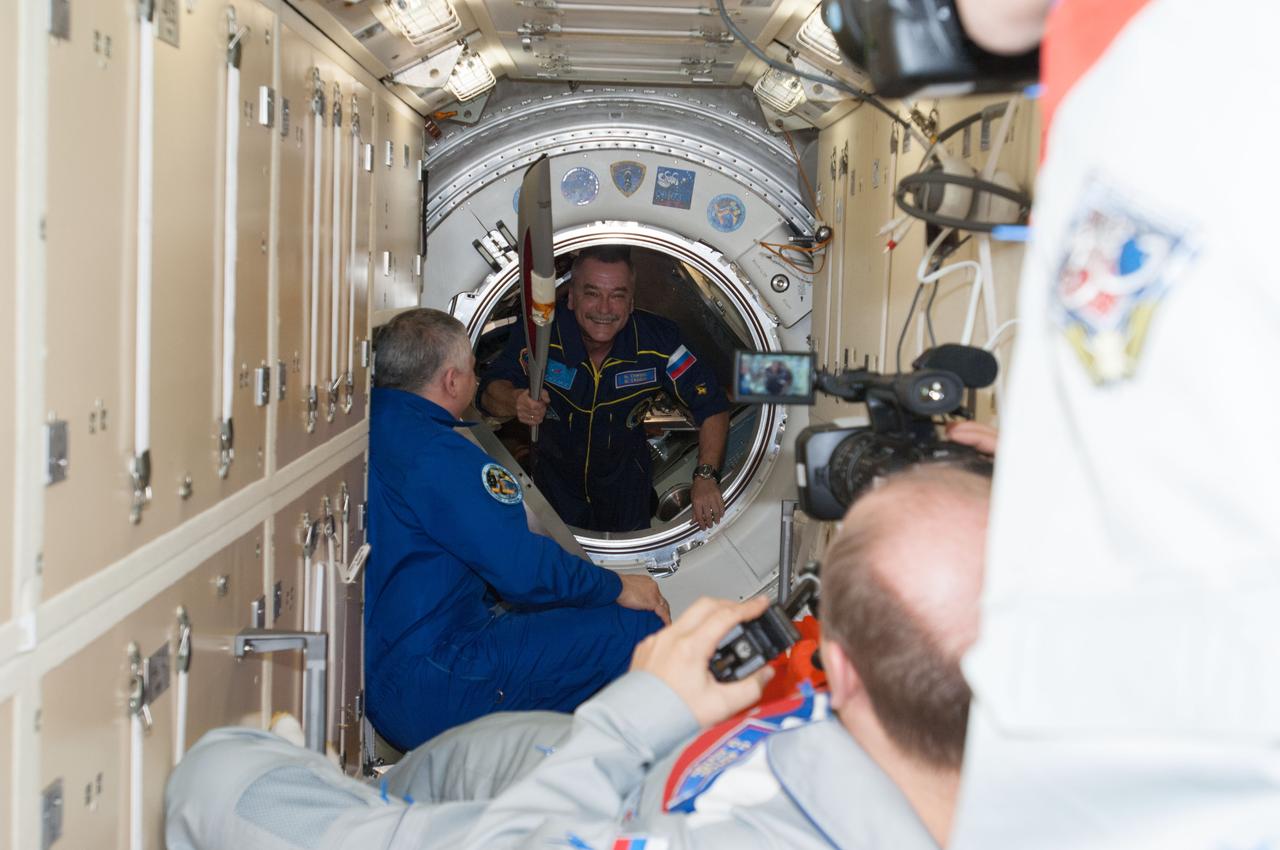
ISS037-E-028203 (7 Nov. 2013) --- In the International Space Station's Rassvet Mini-Research Module 1 (MRM1), Russian cosmonaut Fyodor Yurchikhin, Expedition 37 commander, welcomes Russian cosmonaut Mikhail Tyurin (holding the Olympic torch), Expedition 38 flight engineer, after arriving onboard a Soyuz spacecraft with Japan Aerospace Exploration Agency astronaut Koichi Wakata and NASA astronaut Rick Mastracchio, both Expedition 38 flight engineers. Russian cosmonaut Oleg Kotov (foreground), Expedition 37 flight engineer, captures the event with a video camera.

ISS036-E-011515 (24 June 2013) --- European Space Agency astronaut Luca Parmitano, Expedition 36 flight engineer, works in the transfer compartment between the Zarya Functional Cargo Block (FGB) and the Zvezda Service Module of the International Space Station.
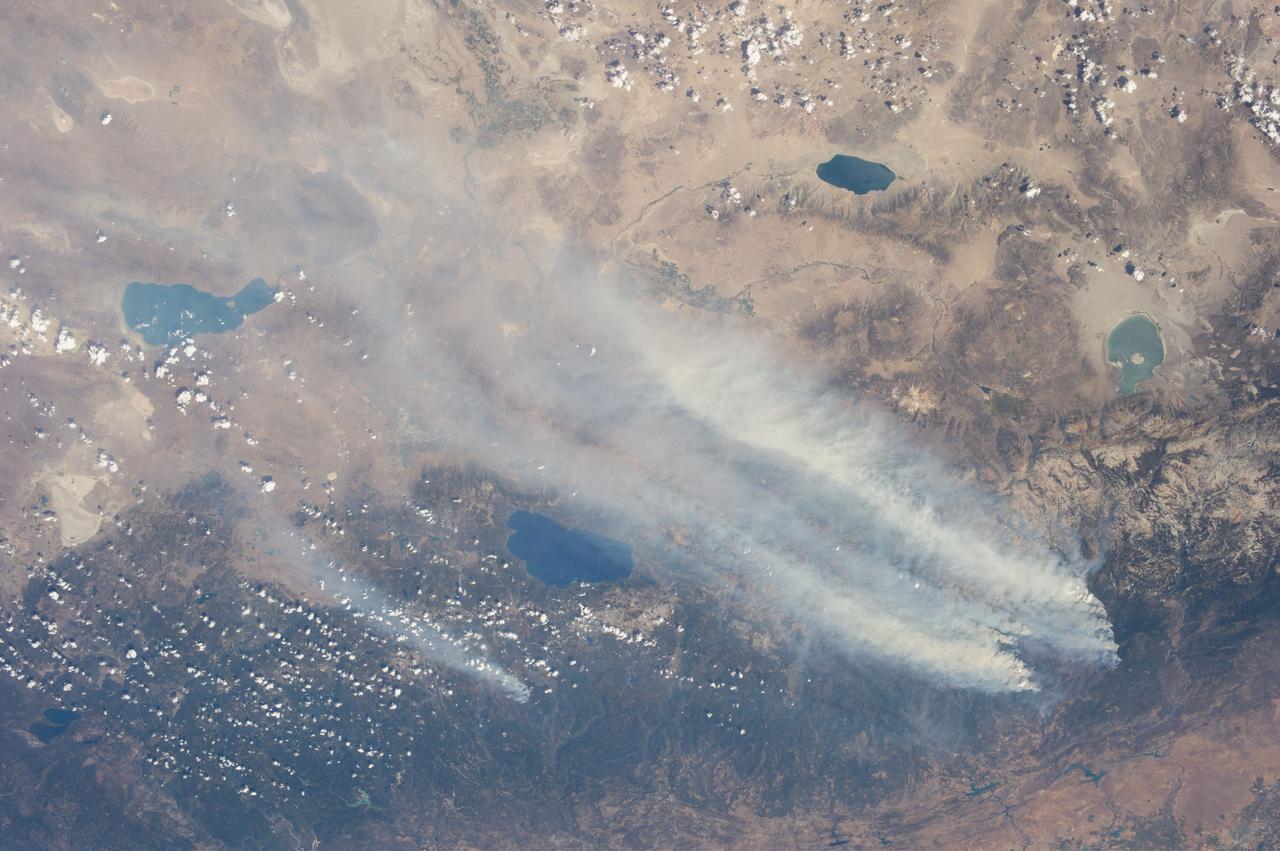
ISS036-E-037185 (26 Aug. 2013) --- One of the Expedition 36 crew members aboard the International Space Station used a 50mm lens to record this view of the massive drought-aided Rim Fire in and around California's Yosemite National Park and the Stanislaus National Forest on Aug. 26. The fire began on Aug. 17 and, at the time of this photo on Aug. 26, it still continues to burn, as some 3,700 firefighters battle it. More than 224 square miles have been affected.
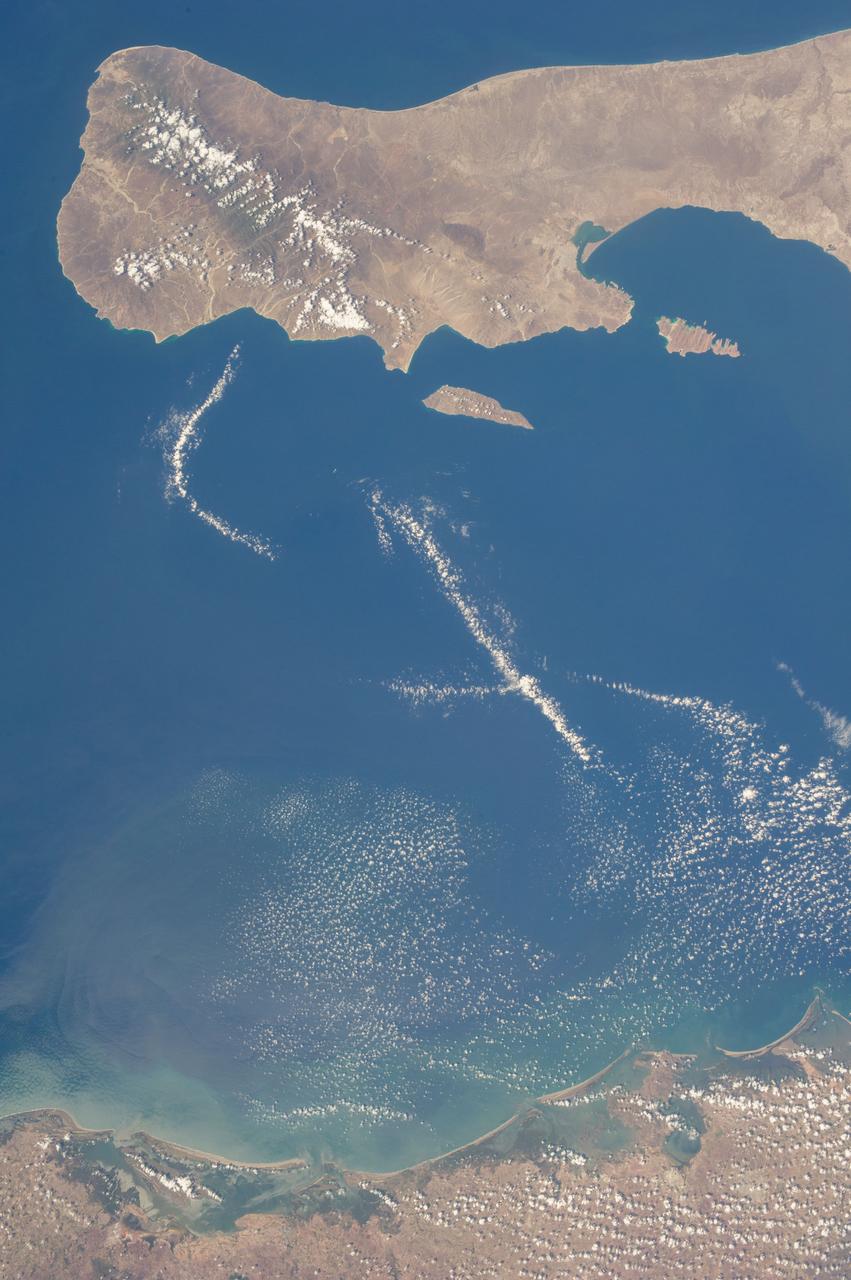
Earth observation taken during a day pass by an Expedition 36 crew member on board the International Space Station (ISS). Per twitter message this is labeled as: Southernmost Gulf of California/Sea of Cortez.
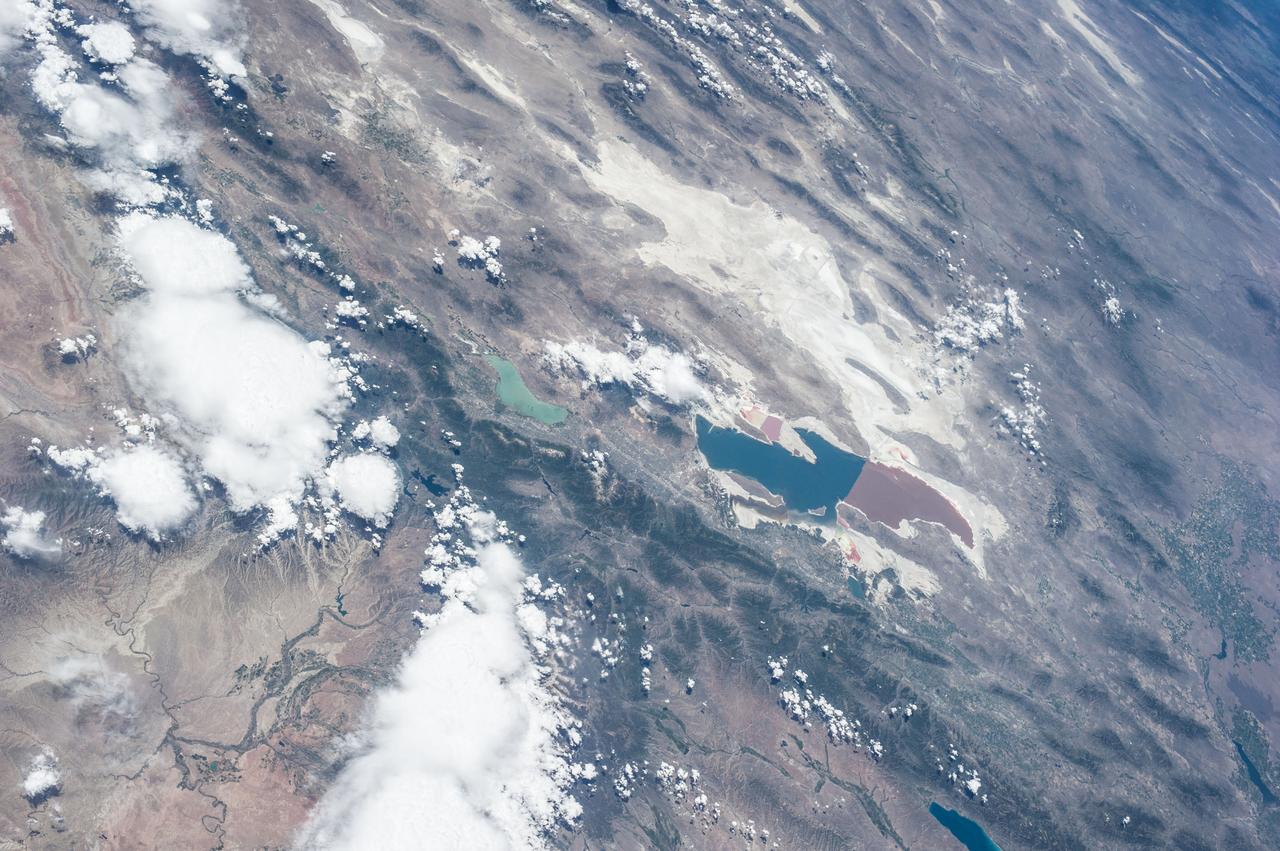
Earth observation taken during a day pass by an Expedition 36 crew member on board the International Space Station (ISS).
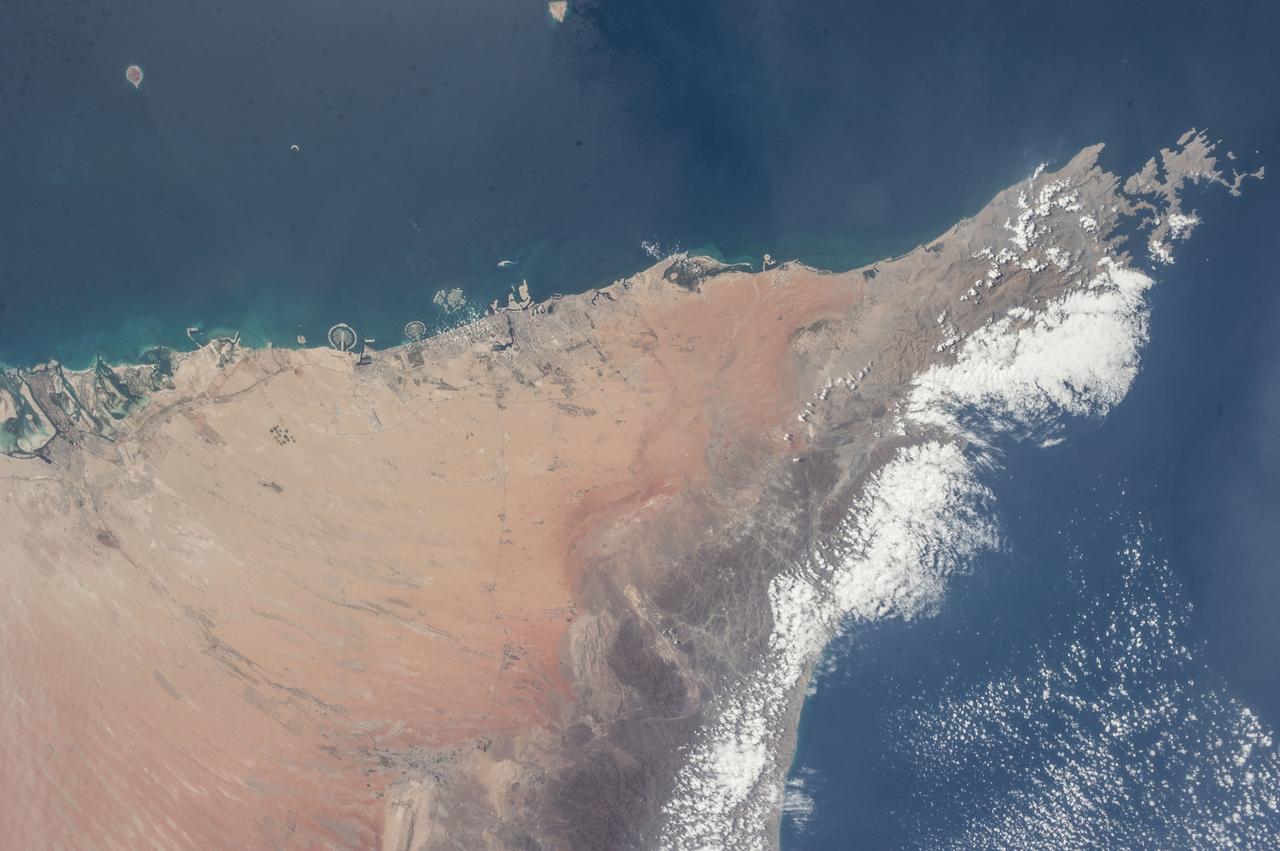
Earth observation taken during a day pass by an Expedition 36 crew member on board the International Space Station (ISS).