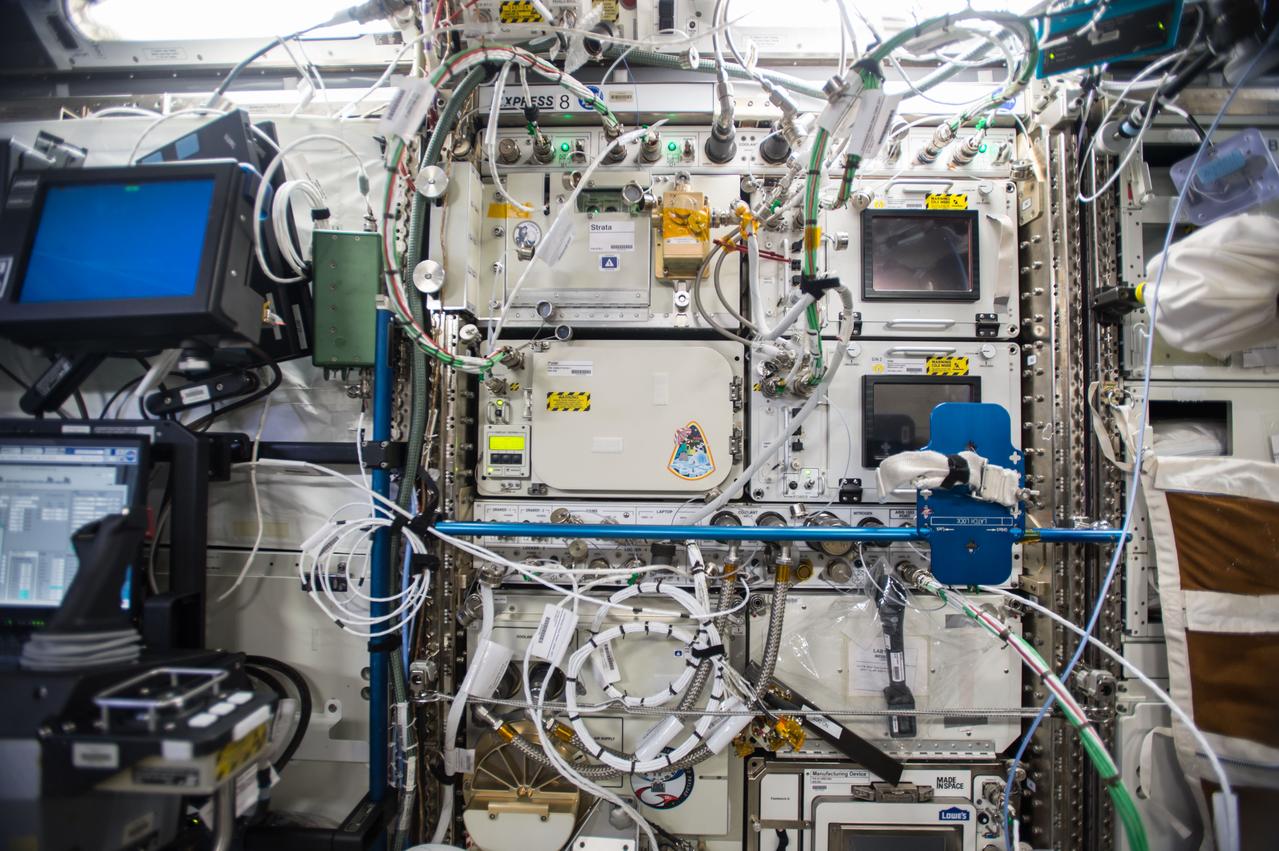
iss048e042382 (7/21/2016) --- Documentation of Polar facility 2 installed in ExPRESS (Expedite the Processing of Experiments to Space Station) Rack 8, LAB1P4, in the Destiny U.S. Laboratory. The newly-installed Space Automated Bioproduct Laboratories (SABL) 1 and 2 are also in view.
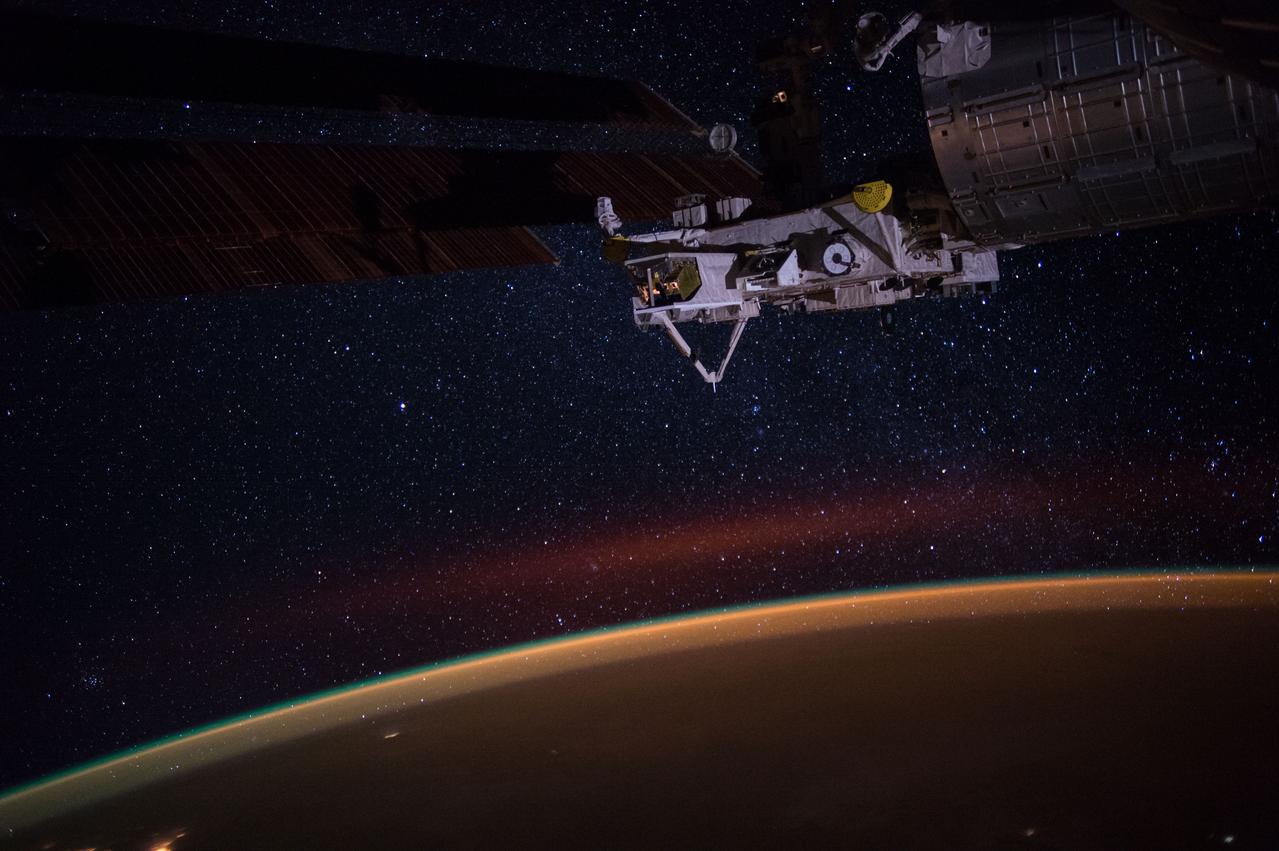
iss049e032063 (Oct. 8, 2016) --- Earth's atmospheric glow, the stars of the Milky Way and an experiment facility at the tip of Japan's Kibo lab module are seen in this night time photograph taken during Expedition 49.
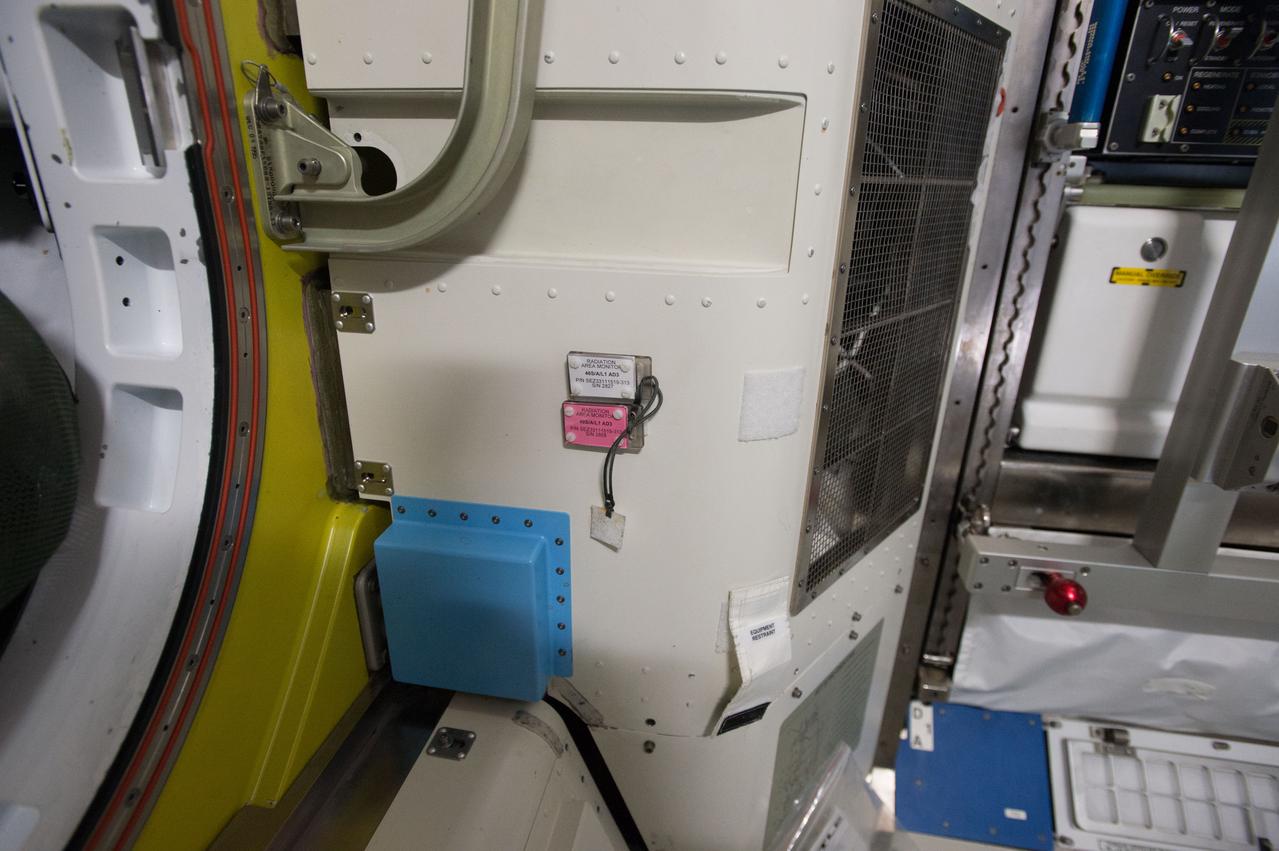
iss049e045458 (10/24/2016) --- Photographic documentation of Radiation Area Monitor (RAM) deployed in the Quest Airlock of the International Space Station (ISS). The Radiation Area Monitor (RAM) is a small set of thermoluminescent detectors encased in Lexan plastic that respond to radiation; the amount of radiation they absorb can be revealed by applying heat and measuring the amount of visible light released. The RAM is used to monitor dose and dose equivalent within the habitable volume of the International space Station (ISS) as a function of location, due to its predicted low sensitivity to high-Linear Energy Transfer radiation (neutrons and alpha particles).
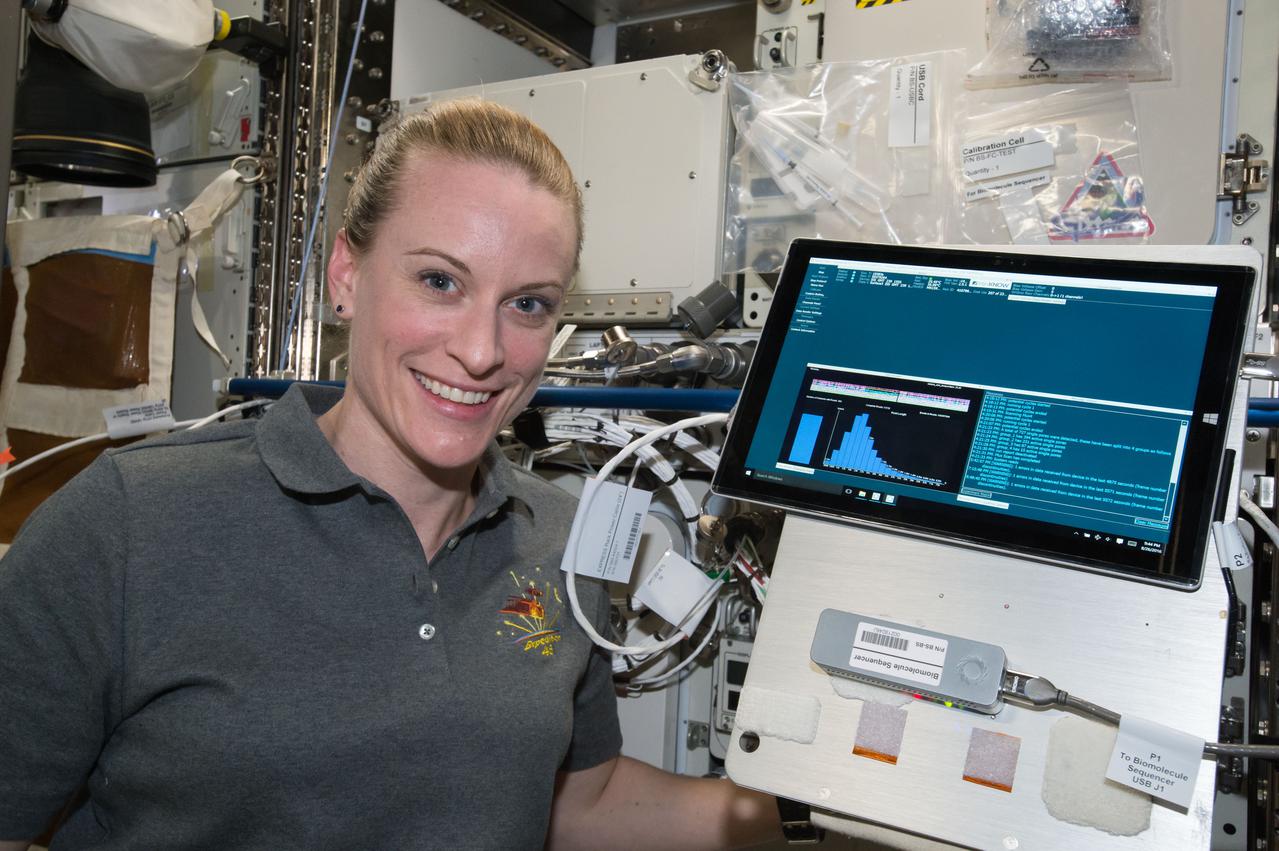
iss048e066523 (8/26/2016) --- NASA astronaut Kate Rubins poses for a photo with Biomolecule Sequencer experiment hardware (Surface Pro 3 tablet and MinION) during the first sample initialization run. The image was taken in the Destiny U.S. Laboratory aboard the International Space Station (ISS).
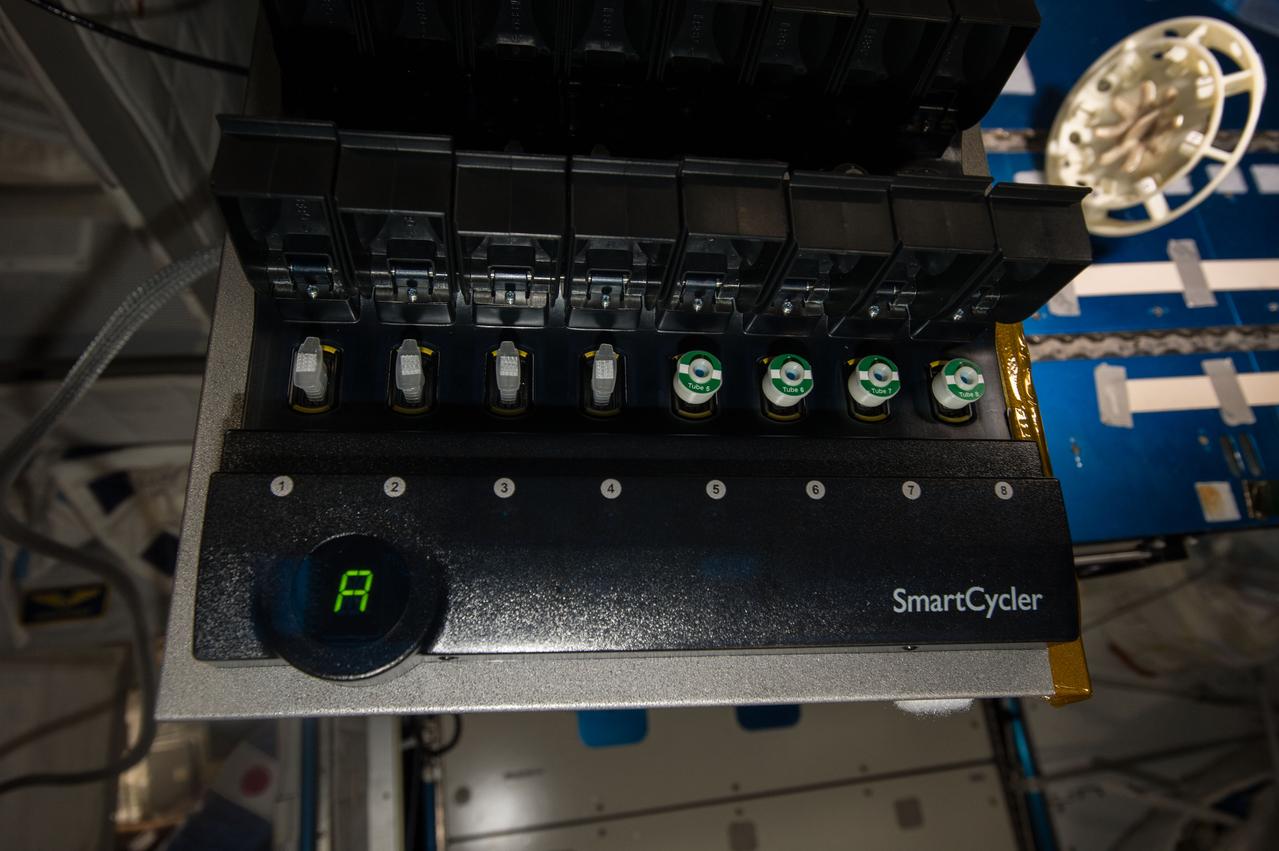
iss049e040752 (10/19/2016) --- A view of WetLab-2 Ribonucleic Acid (RNA) SmartCycler tubes loaded for Session 3. Wetlab RNA SmartCycler is a research platform for conducting real-time quantitative gene expression analysis aboard the International Space Station (ISS). The system enables spaceflight genomic studies involving a wide variety of biospecimen types in the unique microgravity environment of space.
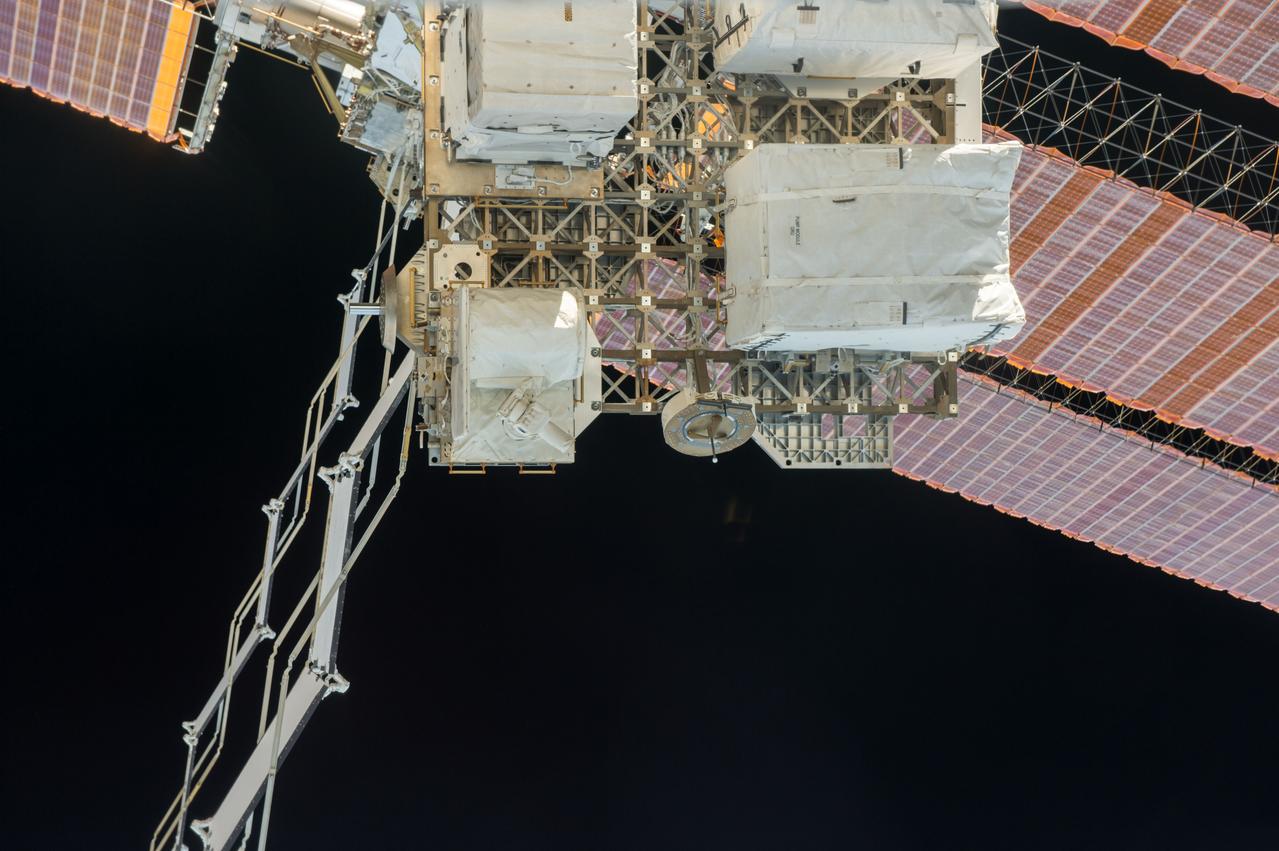
iss048e057073 (8/12/2016) --- A view of Optical Payload for Lasercomm Science (OPALS) installed on ExPRESS (Expedite the Processing of Experiments to Space Station) Logistics Carrier-1 (ELC-1). The Optical Payload for Lasercomm Science (OPALS) aims to demonstrate optical communications technology. This is accomplished by transferring a video from hardware onboard the ISS to our ground receiver at JPL’s Optical Communications Telescope Laboratory (OCTL) in Wrightwood, California.
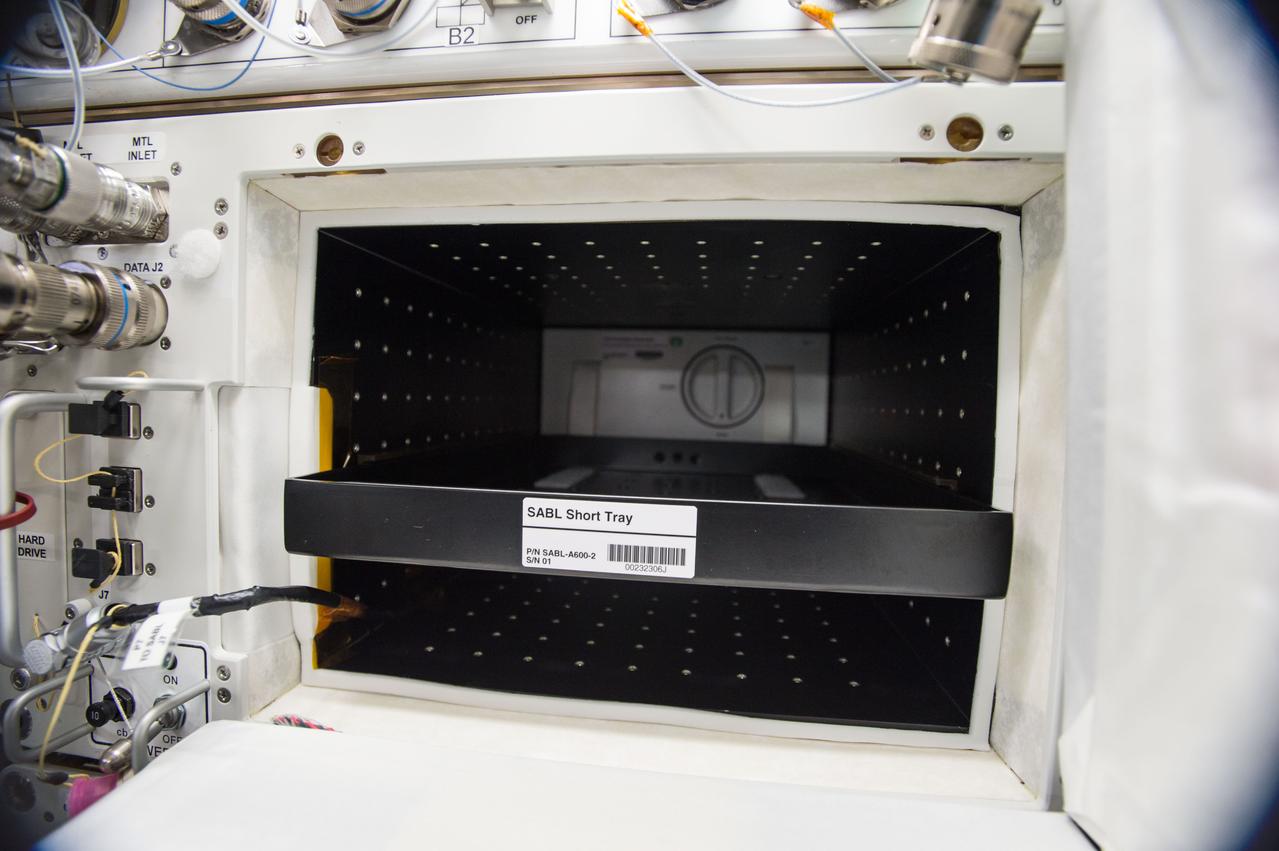
iss048e042380(7/21/2016) --- A view of the Space Automated Bioproduct Laboratory (SABL) Short Tray inside the SABL 2 following installation of the Carbon Dioxide (CO2) Incubator Controller. Image was taken during Heart Cells experiment setup in the Destiny U.S. Laboratory. The Space Automated Bioproduct Laboratory (SABL) supports a wide variety of experiments in the life, physical and material sciences with a focus on supporting research of biological systems and processes.
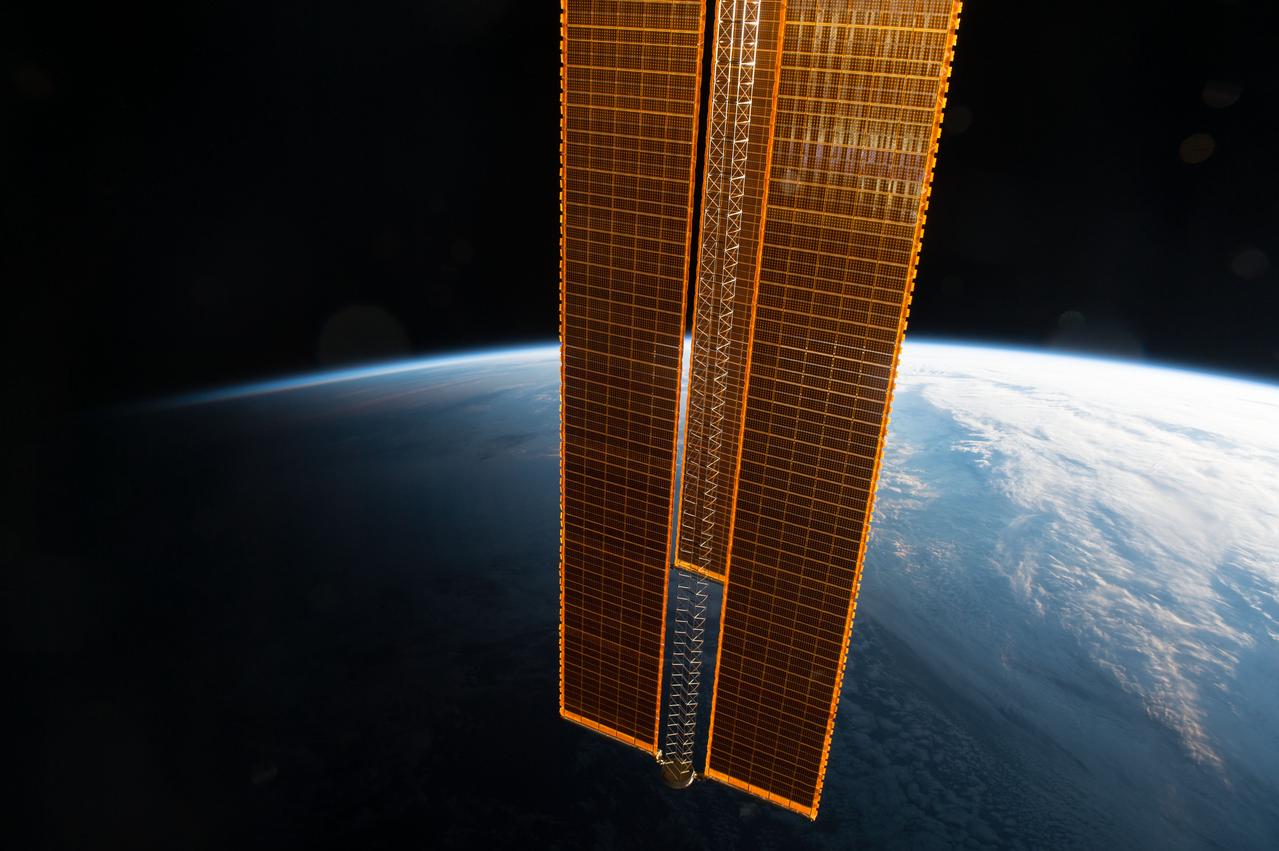
View of golden solar array with Earth limb in the background taken by the Expedition 49 crew.

iss049e012024 (9/28/2016) --- NASA astronaut Kate Rubins is photographed performing sample processing, setup of the Sample Module. The Hard to Wet Surfaces (Eli Lilly-Hard to Wet Surfaces) investigation studies how certain materials used in the pharmaceutical industry dissolve in water while in microgravity. Results from this investigation could help improve the design of tablets that dissolve in the body to deliver drugs, thereby improving drug design for medicines used in space and on Earth.
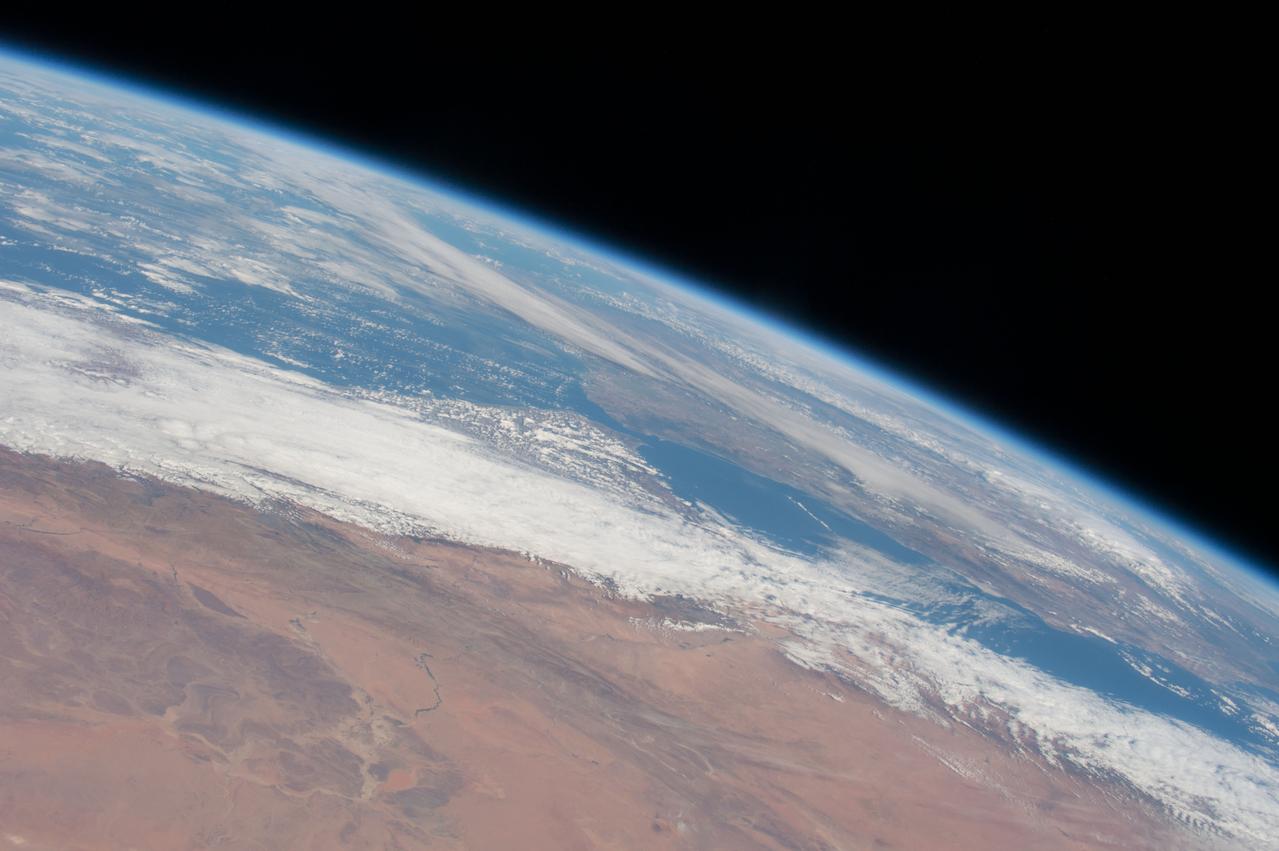
Earth observation taken by the Expedition 49 crew aboard the International Space Station (ISS).

ISS049e011638 (09/27/2016) --- Expedition 49 crewmember Takuya Onishi of JAXA works on the setup of the Group Combustion Module (GCM) inside the Japanese Experiment Module. The GCM will be used to house the Group Combustion experiment from the Japan Aerospace Exploration Agency (JAXA) to test a theory that fuel sprays change from partial to group combustion as flames spread across a cloud of droplets.

iss049e006037 (Sep. 17, 2016) --- Cloud-Aerosol Transport System (CATS) mounted on the Japanese Experiment Module's Exposed Facility (JEM-EF). The CATS investigation uses a light detection and ranging (LiDAR) system to measure the location, composition and distribution of pollution, dust, smoke, aerosols and other particulates in the atmosphere. CATS is used to study the atmospheric constituents that impact global climate. By gaining a better understanding of cloud and aerosol coverage, scientists can create a better model of the Earth's climate feedback processes.
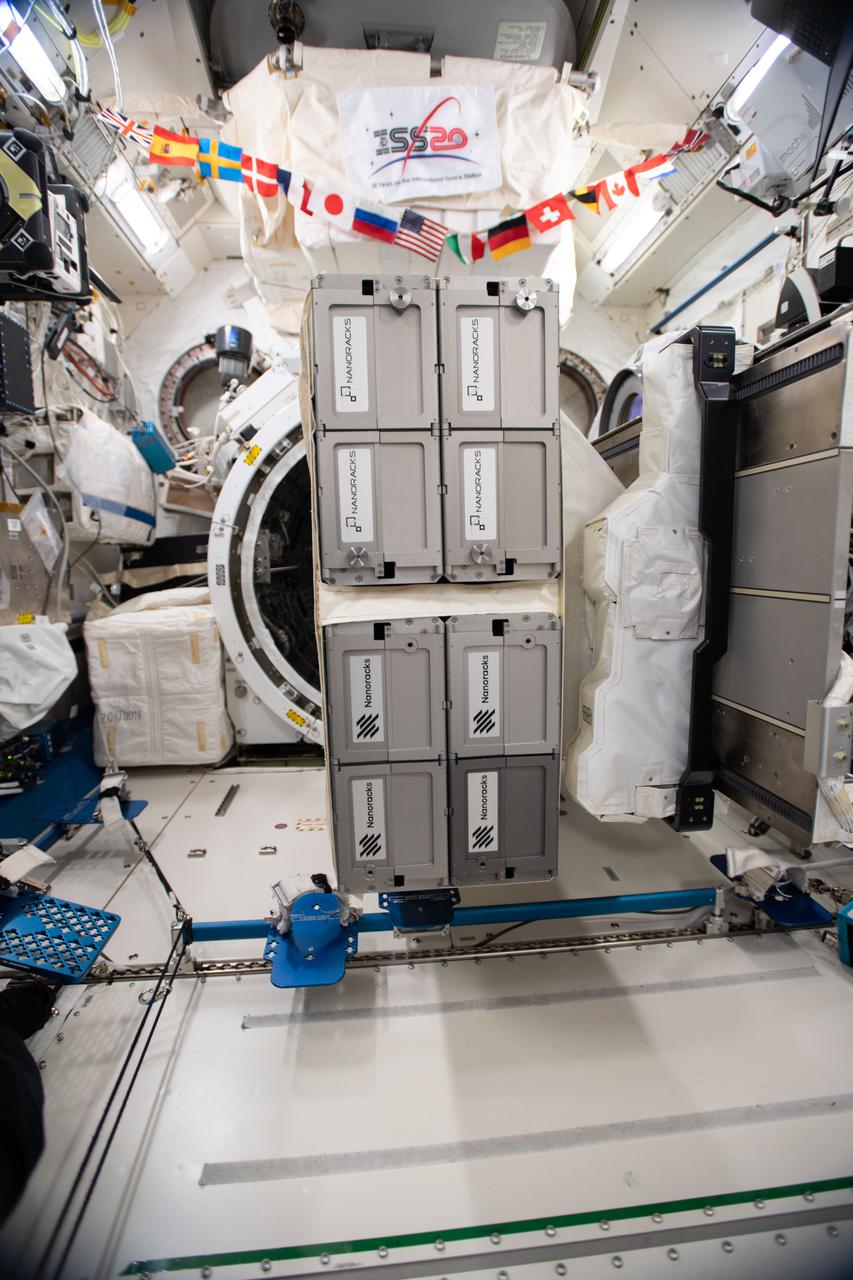
iss064e002782 (11/2/2020) --- Photo documentation of the Nanoracks CubeSat Deployer-Mission 19 (NRCSD-19) installed on the Multi-Purpose Experiment Platform Assembly (MPEP). NRCSD-19 includes: The Spectral Ocean Color (SPOC) Satellite, Ariel University First Nano Satellite, (SATLLA-1), Neutron-1, DESCENT, NanoRacks-LEMUR-2 and Bobcat-1. The photo was taken in the Kibo Japanese Experiment Module (JEM) aboard the International space station (ISS).
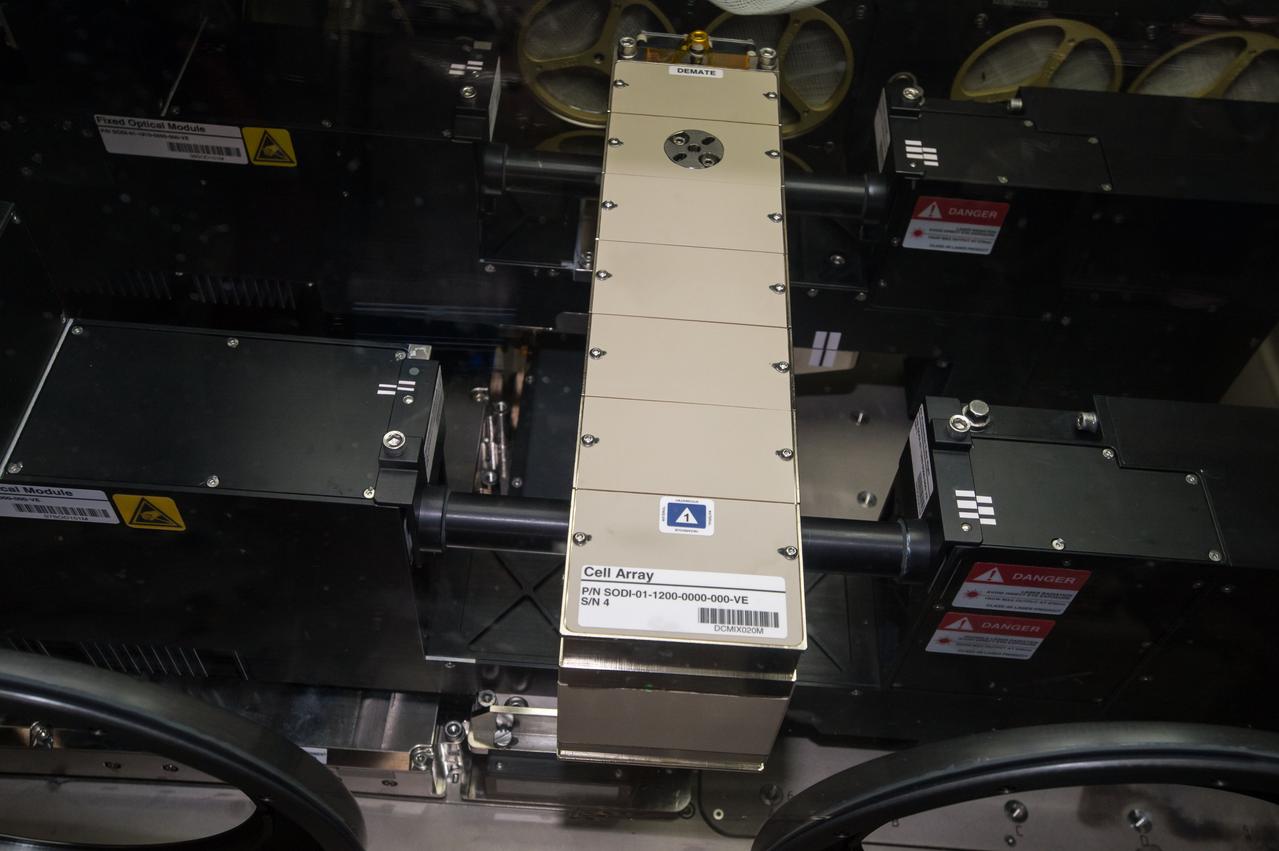
iss049e002308 (9/13/2016) --- A view taken during Selectable Optics Diagnostic Instrument (SODI) DSC Hardware Setup the MSG Work Volume. The Selectable Optical Diagnostics Instrument - Diffusion and Soret Coefficient (SODI-DSC) experiment will study diffusion in six different liquids over time in the absence of convection induced by the gravity field. The SODI-DSC investigation will provide information to scientist which can be used to more efficiently extract oil resources.
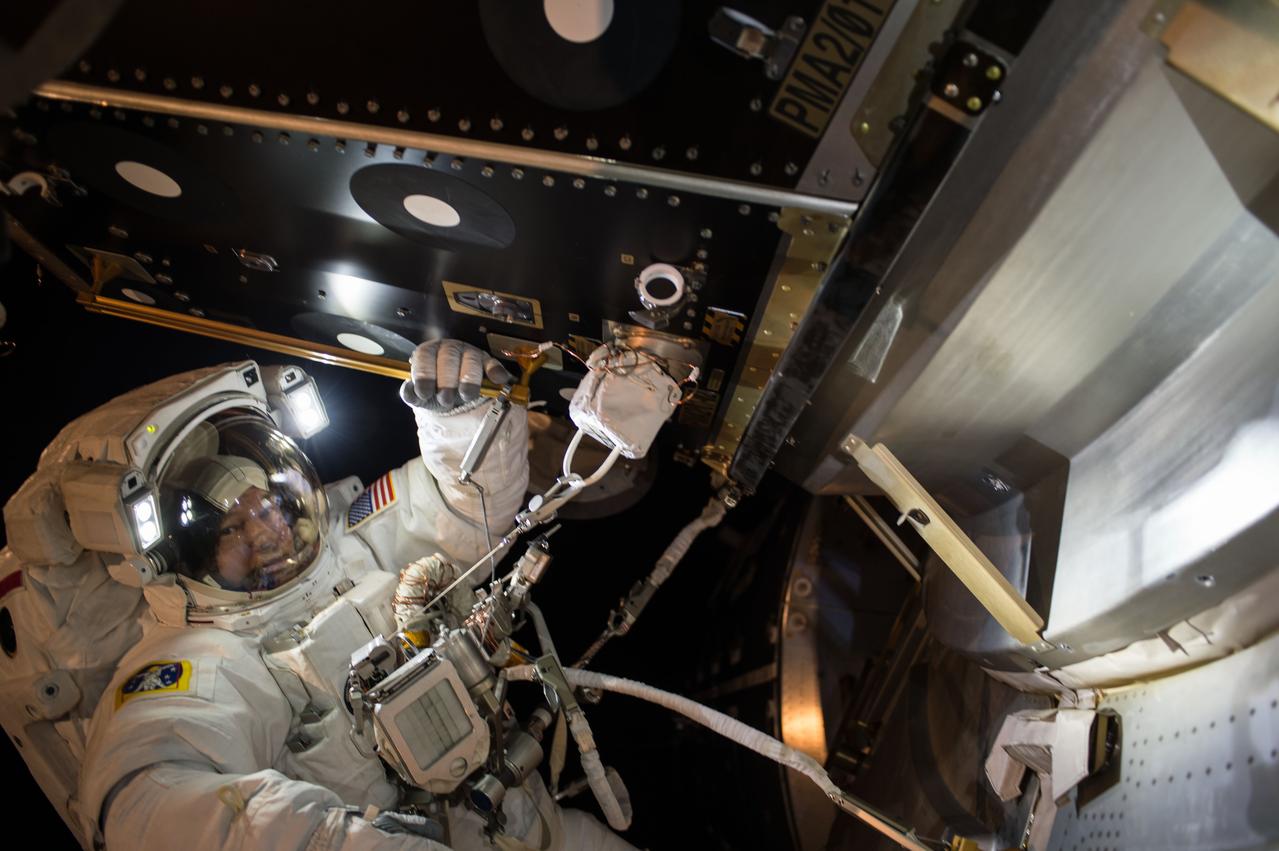
Extravehicular crewmember 1 (EV1) Jeff Williams pauses for a photo after installing a Hemispherical (Hemi) Reflector Cover on Pressurized Mating Adapter 2 (PMA-2) during Extravehicular Activity 36 (EVA 36).
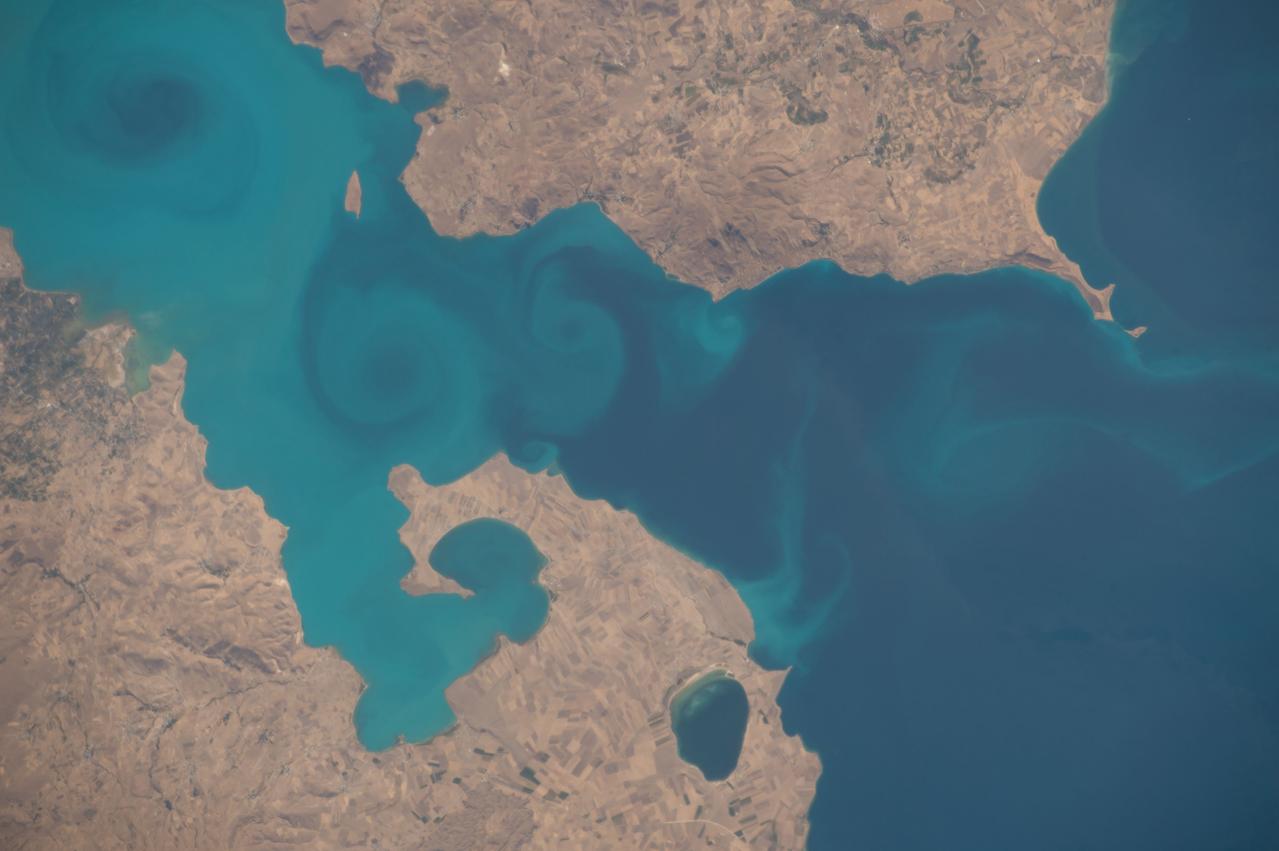
Earth observation taken during day pass by the Expedition 49 crew aboard the International Space Station (ISS).
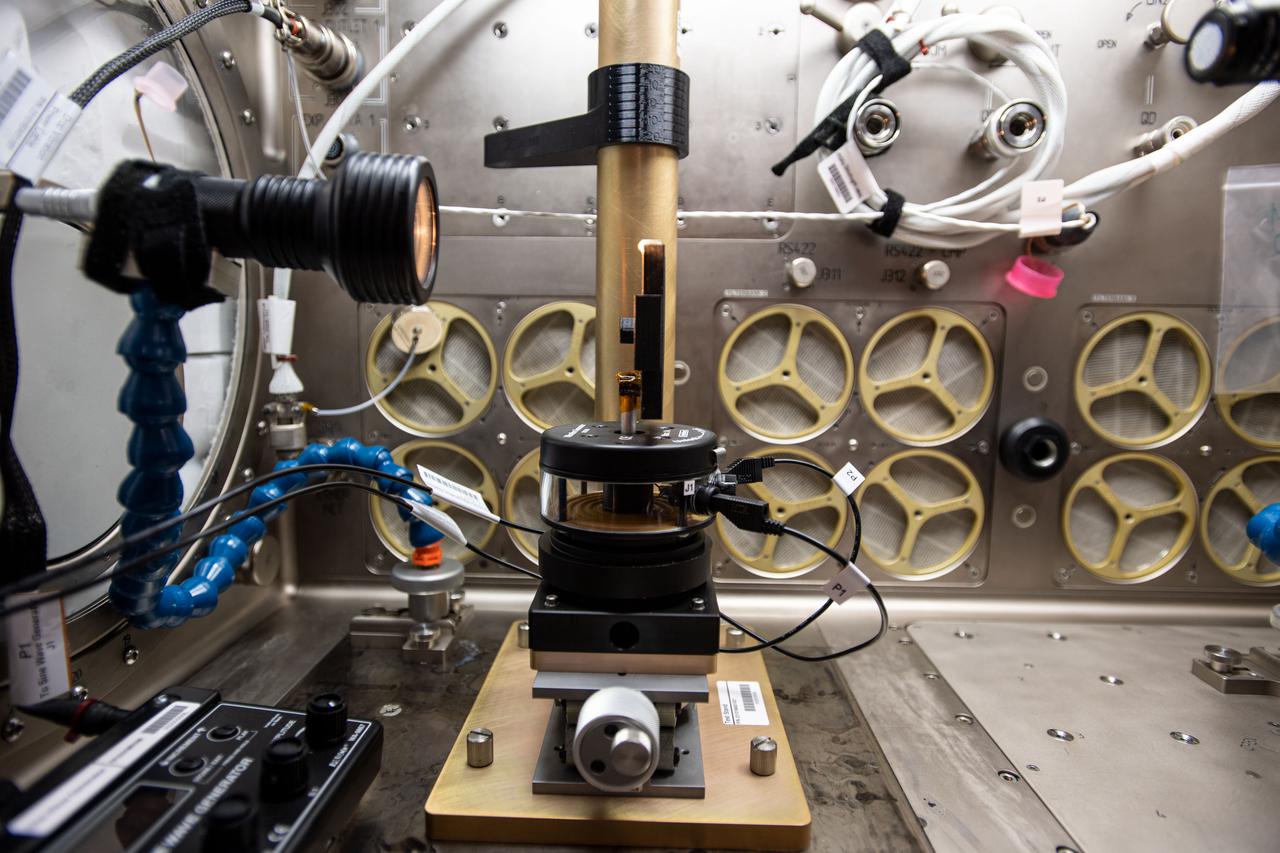
iss064e002375 (1/15/2017) --- Photo documentation of Inertial Spreading with Vibration and Water Coalescence (Drop Vibration) experiment hardware set up inside the Microgravity Science Glovebox (MSG) aboard the International Space Station (ISS). Inertial Spreading with Vibration and Water Coalescence (Drop Vibration) examines the behavior of big liquid drops whose perimeter of contact, called the contact line, moves rapidly as the drops change shape either forced by vibration or freely by merger.
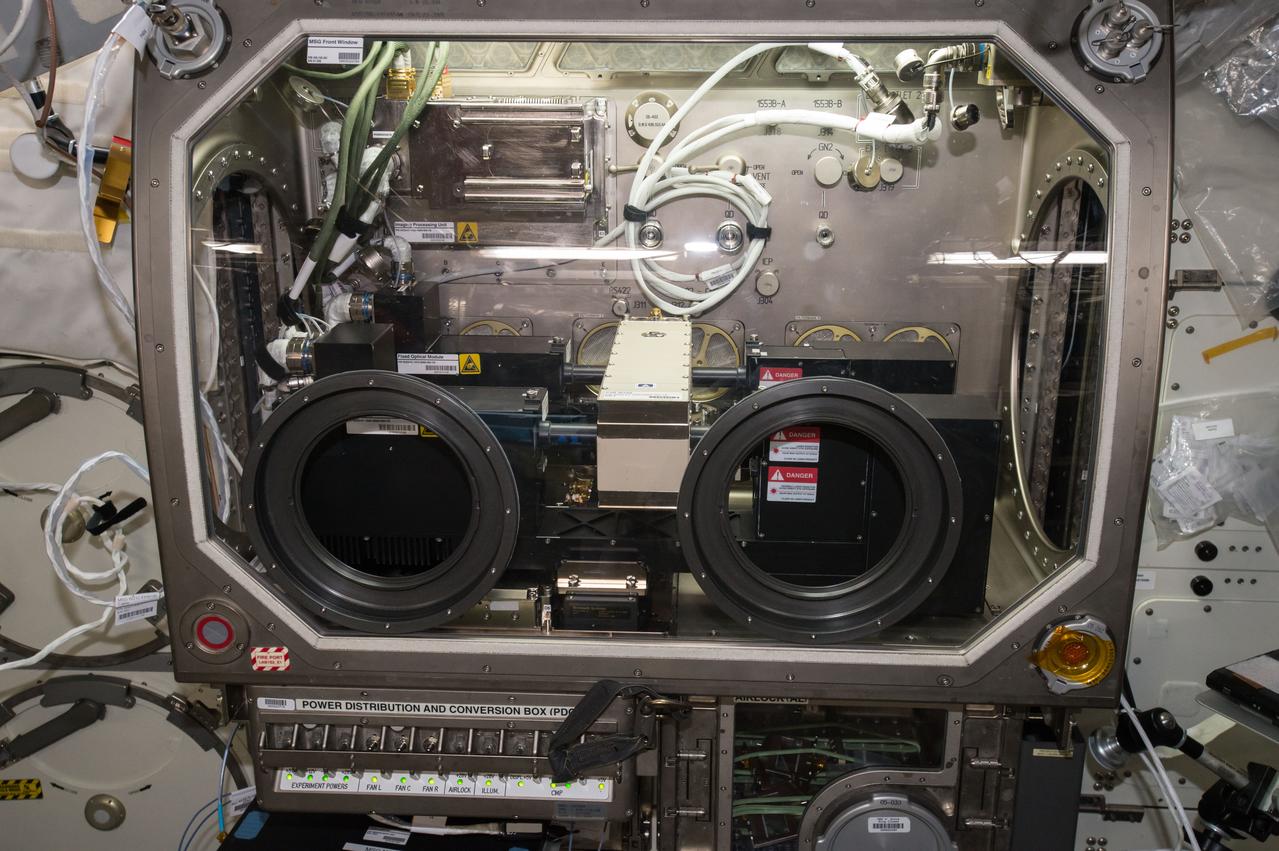
iss049e002305 (9/13/2016) --- A view taken during Selectable Optics Diagnostic Instrument (SODI) DSC Hardware Setup the MSG Work Volume. The Selectable Optical Diagnostics Instrument - Diffusion and Soret Coefficient (SODI-DSC) experiment will study diffusion in six different liquids over time in the absence of convection induced by the gravity field. The SODI-DSC investigation will provide information to scientist which can be used to more efficiently extract oil resources.

Earth observation taken during a night pass by the Expedition 49 crew aboard the International Space Station (ISS).
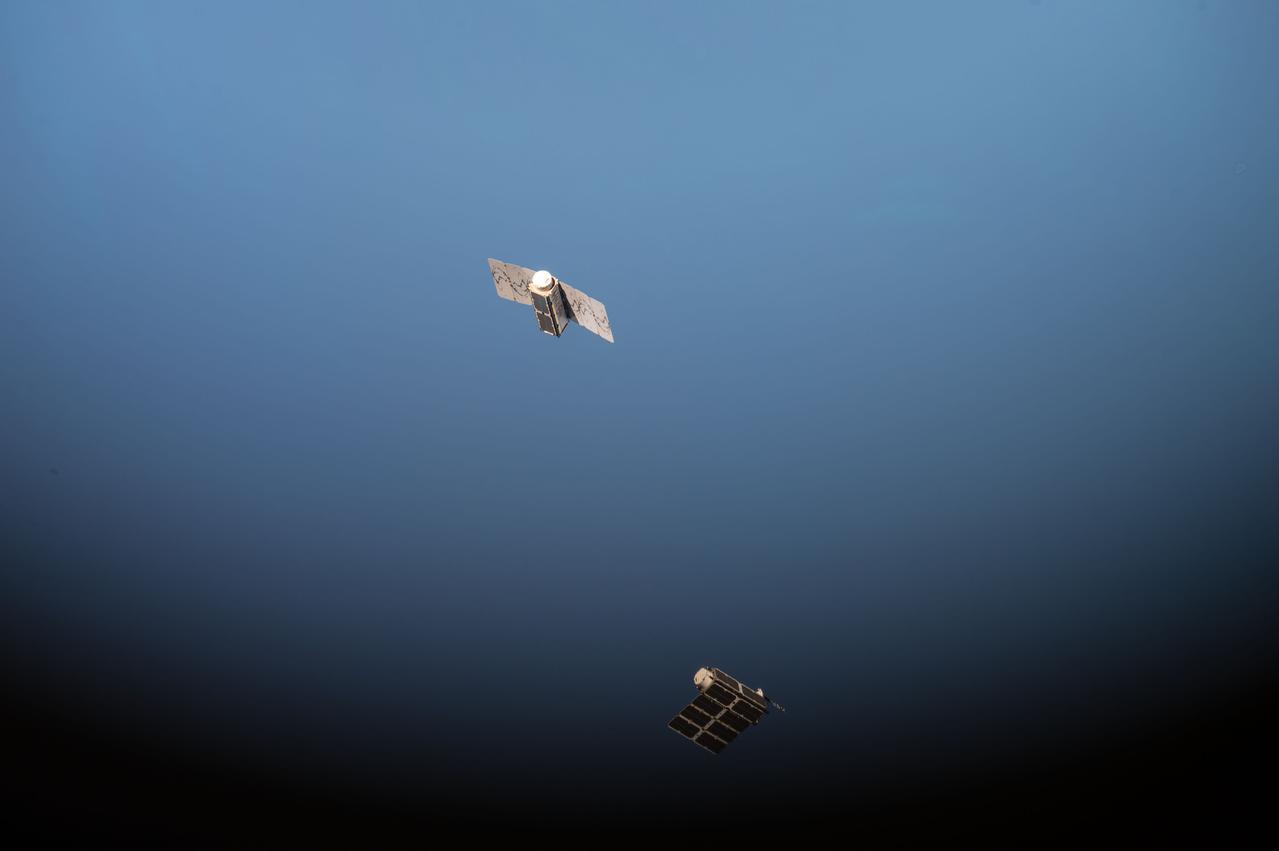
View taken by the Expedition 49 crew of track of first of four pairs of Planet Lab DoveSats over the Earth. This deployment titled “Flock 2” is a fleet of nanosatellites designed, built and operated by Planet Labs Inc., and will enable imagery of the changing planet to be taken on a frequent basis, with humanitarian and environmental applications ranging from monitoring deforestation and the ice caps to disaster relief and improving agriculture yields in developing nations. Image used as part of Twitter message - We launched two satellites from @Space_Station today – like skydivers soaring towards the earth." #AstroKate.
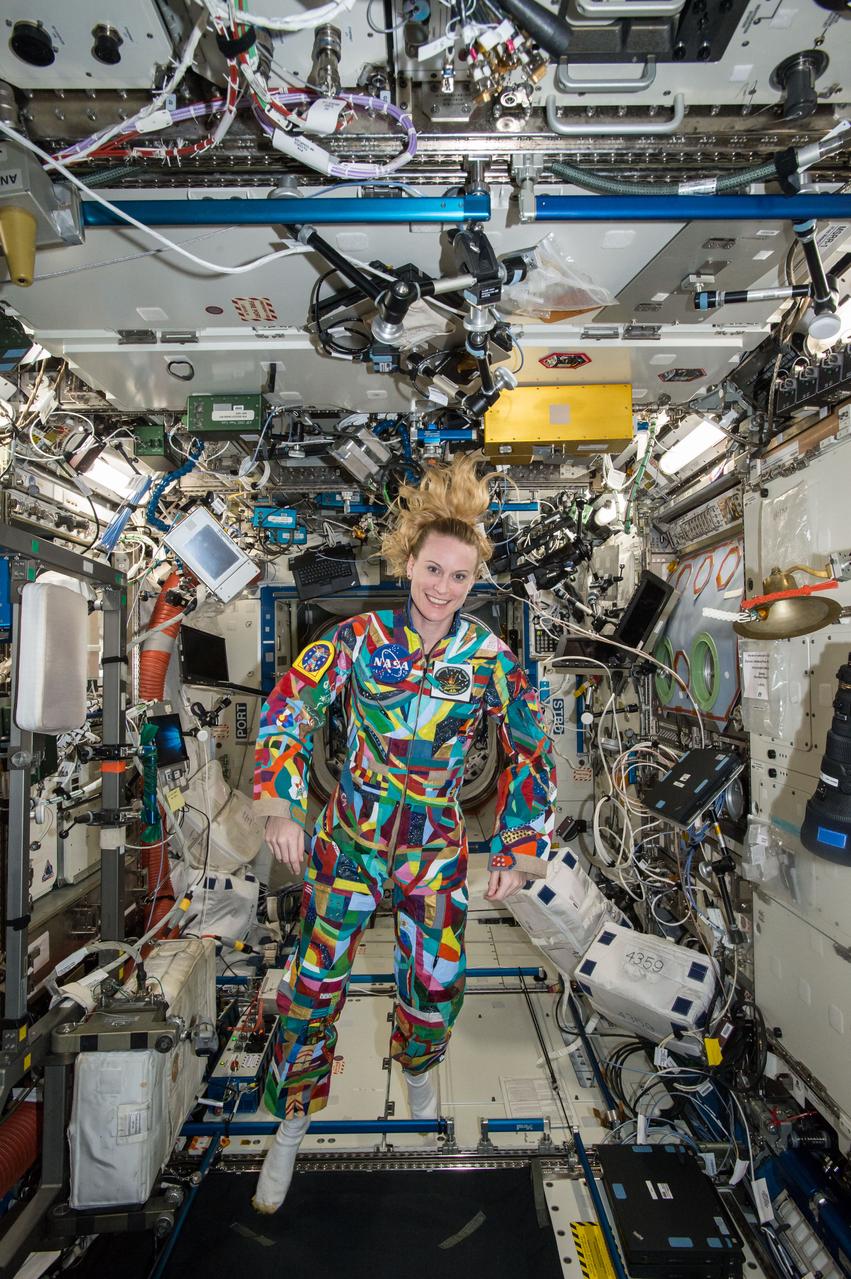
iss049e000758 (9/9/2016) --- NASA Astronaut Kate Rubins, wearing the colorful "Courage" flight suit, is photographed in the Destiney laboratory abroad the International Space Station (ISS). The suit was painted by children in the M. D. Anderson cancer ward through the hospital’s Arts in Medicine Program, which helps pediatric patients cope with cancer treatment through art.
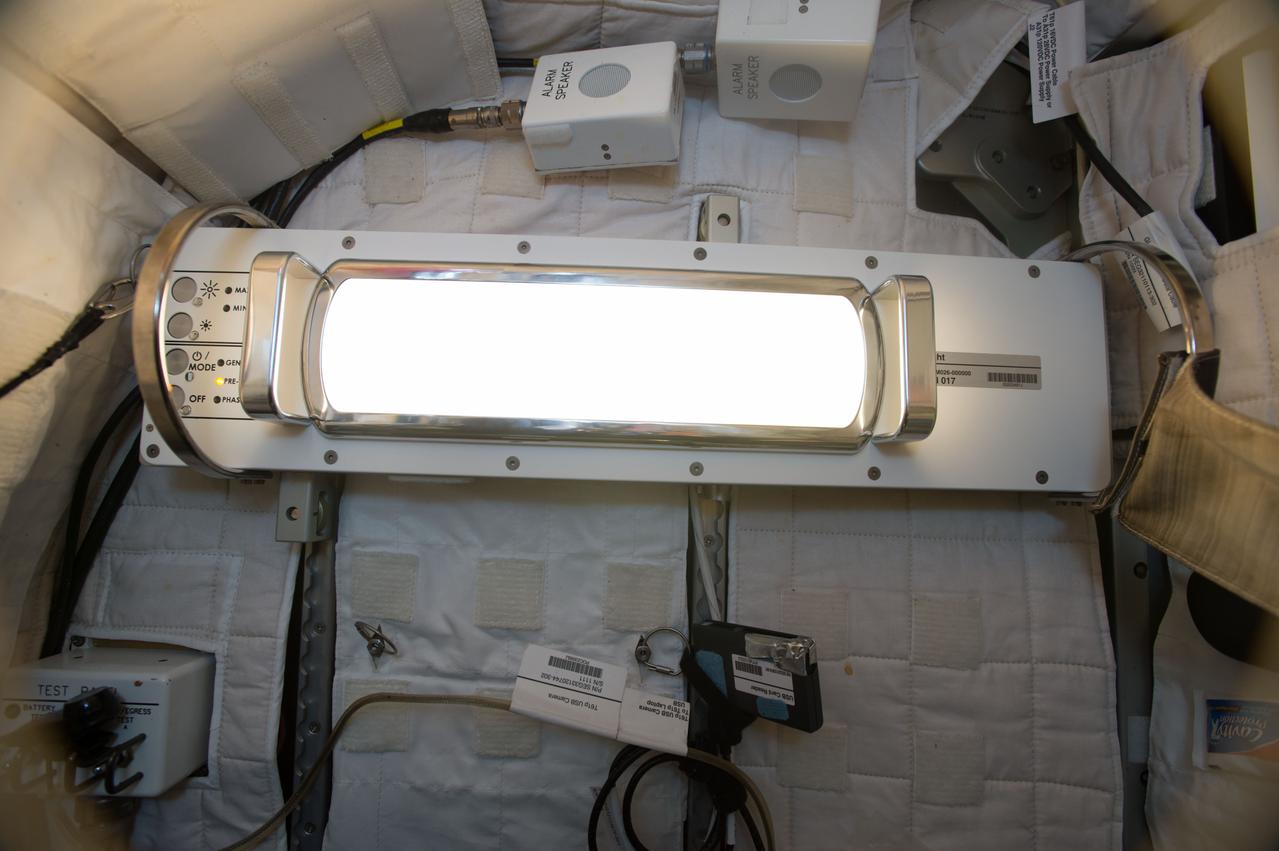
iss049e028948 (10/5/2016) --- Photographic documentation taken during Solid State Lighting Assembly (SSLA) Installation in the starboard Crew Quarters (CQ). The SSLAs were designed to replace General Luminaire Assemblies (GLAs) to improve visual acuity and to provide a crew health countermeasure for circadian rhythms, sleep, alertness and performance. Lighting Effects studies new light sources that can be adjusted for intensity and wavelength across the day, simulating a more regular schedule. Results are expected to provide new information for flight surgeons, psychologists, and crew members to better regulate circadian rhythms and improve sleep.
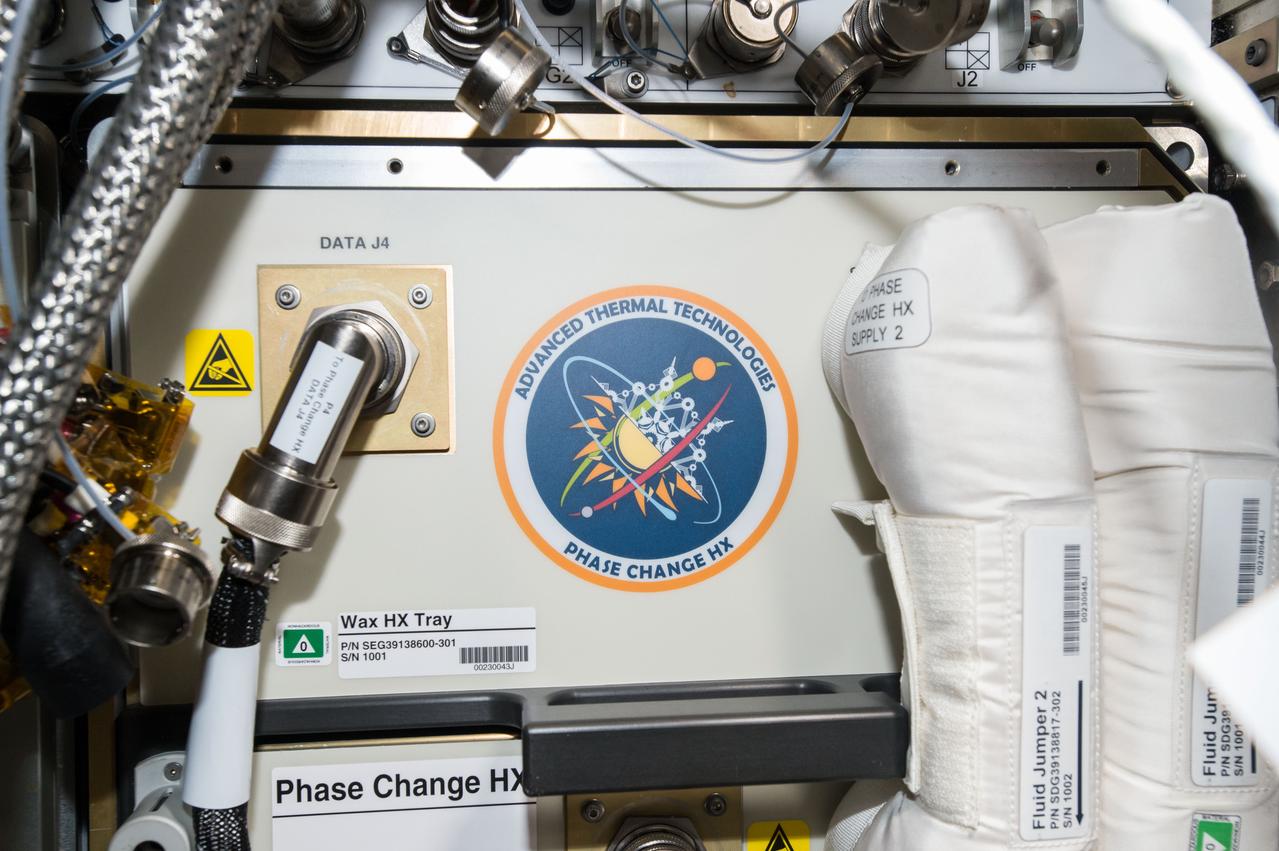
iss049e002221 (9/14/2016) --- Photographic documentation taken during installation of the Phase Change Heat Exchanger (PCHx) into EXpedite PRocessing of Experiments to Space Station (EXPRESS) Rack (ER)-8. The primary objective of the PCHx Project is to create a unique test platform utilizing the EXPRESS Rack on the ISS to advance the technology readiness level of phase change heat exchangers for infusion into future exploration vehicles.
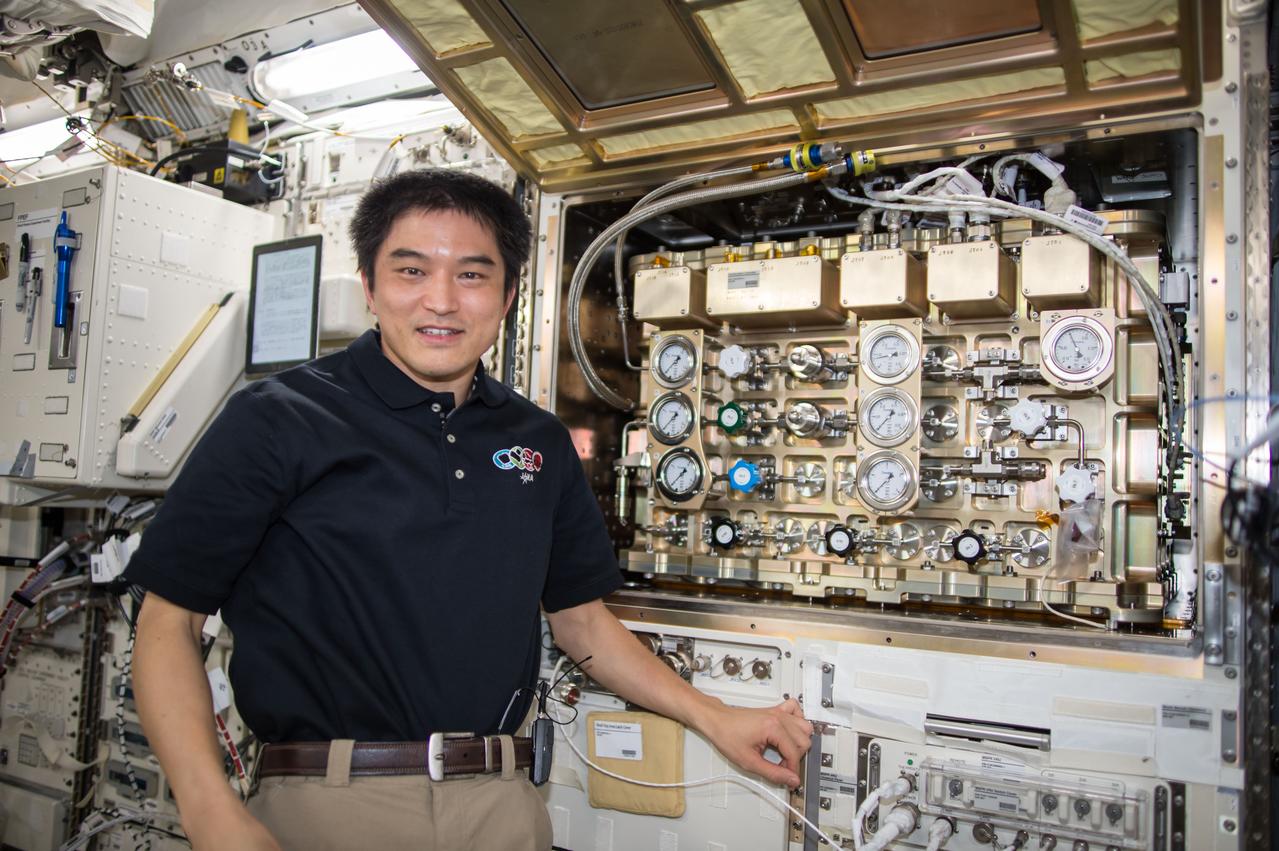
iss049e012031 (9/28/2016) --- Japan Aerospace Exploration Agency (JAXA) astronaut Takuya Onishi with the Multi purpose Small Payload Rack (MSPR) Combustion Chamber (CC) in Japanese Experiment Module (JEM).
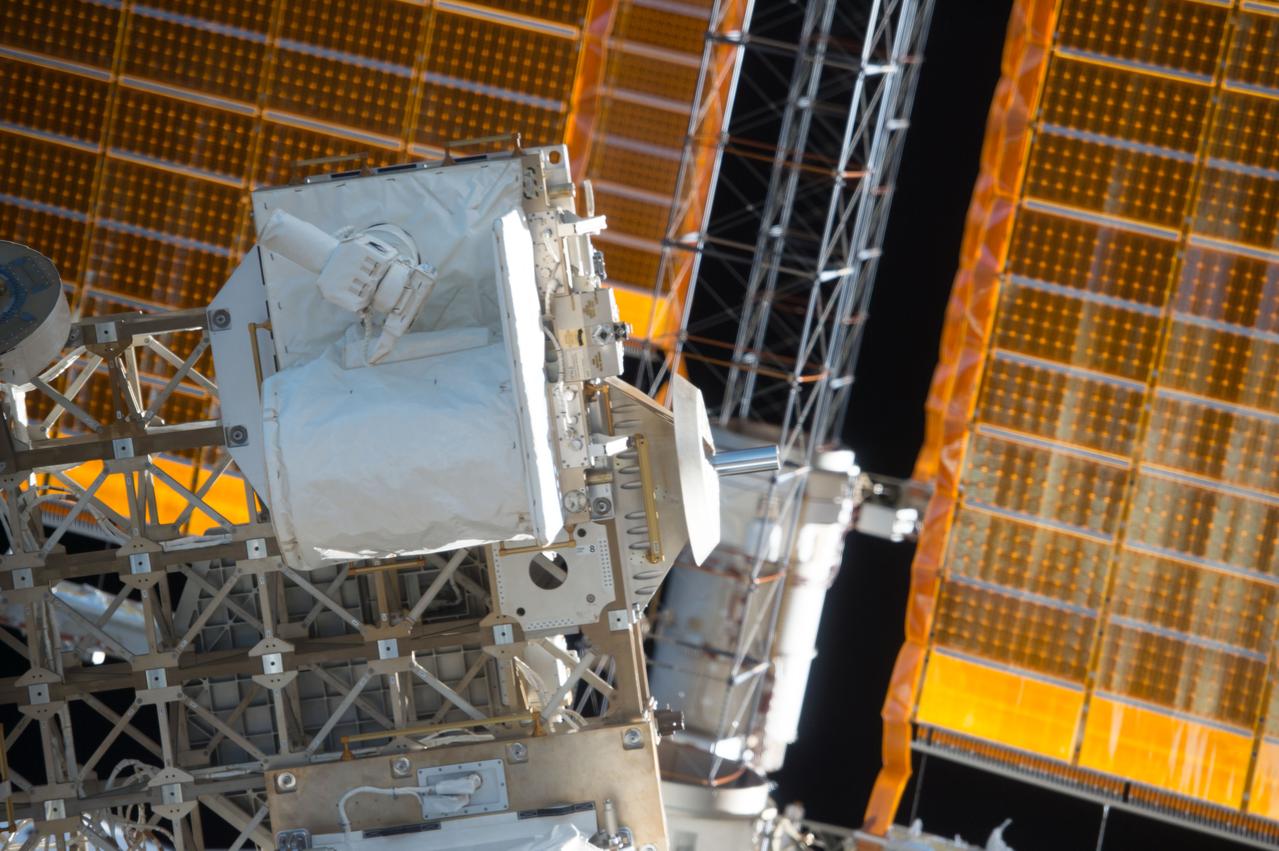
iss048e052292 (8/6/2016) --- A view of Optical Payload for Lasercomm Science (OPALS) installed on ExPRESS (Expedite the Processing of Experiments to Space Station) Logistics Carrier-1 (ELC-1). The Optical Payload for Lasercomm Science (OPALS) aims to demonstrate optical communications technology. This is accomplished by transferring a video from hardware onboard the ISS to our ground receiver at JPL’s Optical Communications Telescope Laboratory (OCTL) in Wrightwood, California.
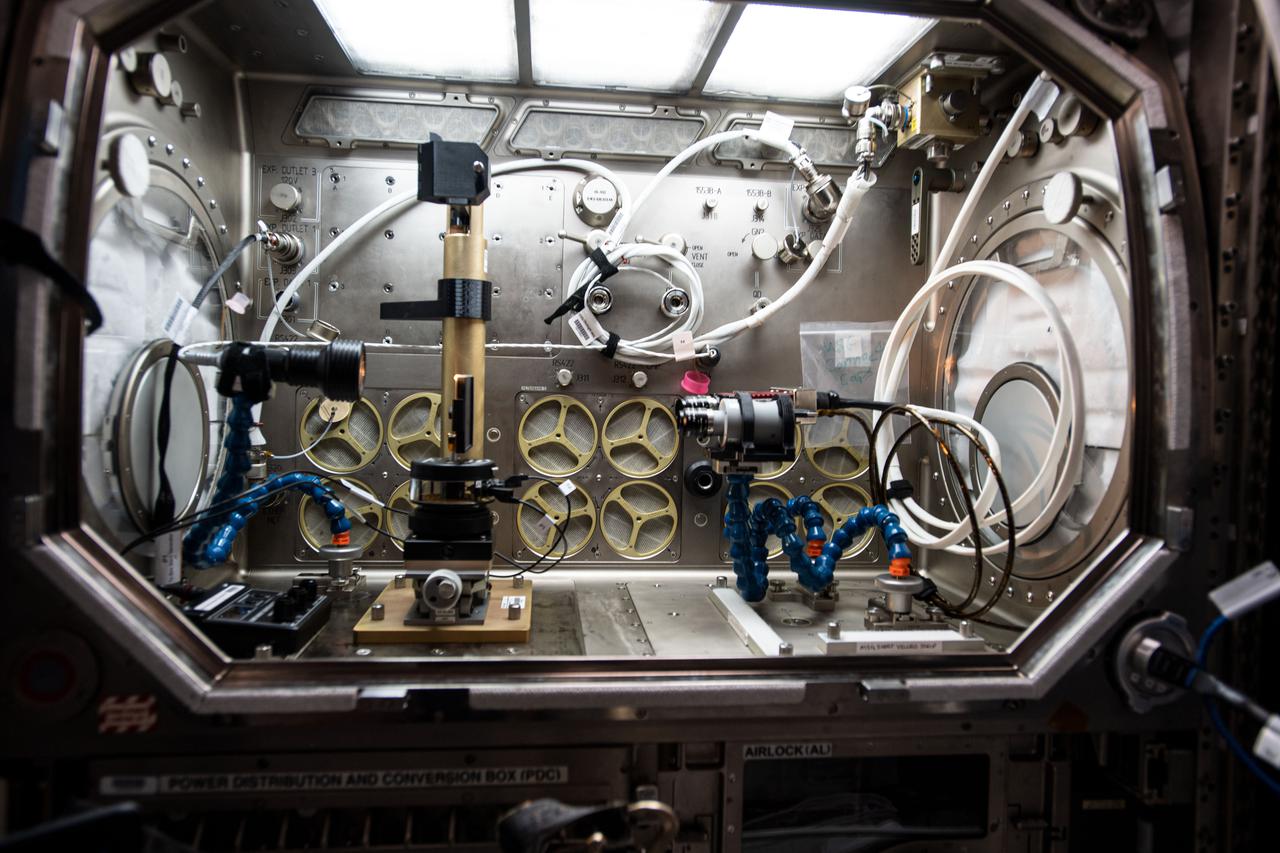
iss064e002379 (1/15/2017) --- Photo documentation of Inertial Spreading with Vibration and Water Coalescence (Drop Vibration) experiment hardware set up inside the Microgravity Science Glovebox (MSG) aboard the International Space Station (ISS). Inertial Spreading with Vibration and Water Coalescence (Drop Vibration) examines the behavior of big liquid drops whose perimeter of contact, called the contact line, moves rapidly as the drops change shape either forced by vibration or freely by merger.