iss073e0848542 (Sept. 17, 2025) --- Green fishing boat lights lure squid, mackerel, and amberjack in the Taiwan Strait near China’s coast, glowing with white LED city lights from Fuzhou to Shenzhen. In contrast, Taiwan’s coast (right) from Taipei to Kaohsiung glows amber from sodium streetlights. The International Space Station captured this view from 261 miles above the East China Sea at 11:55 p.m. local time.
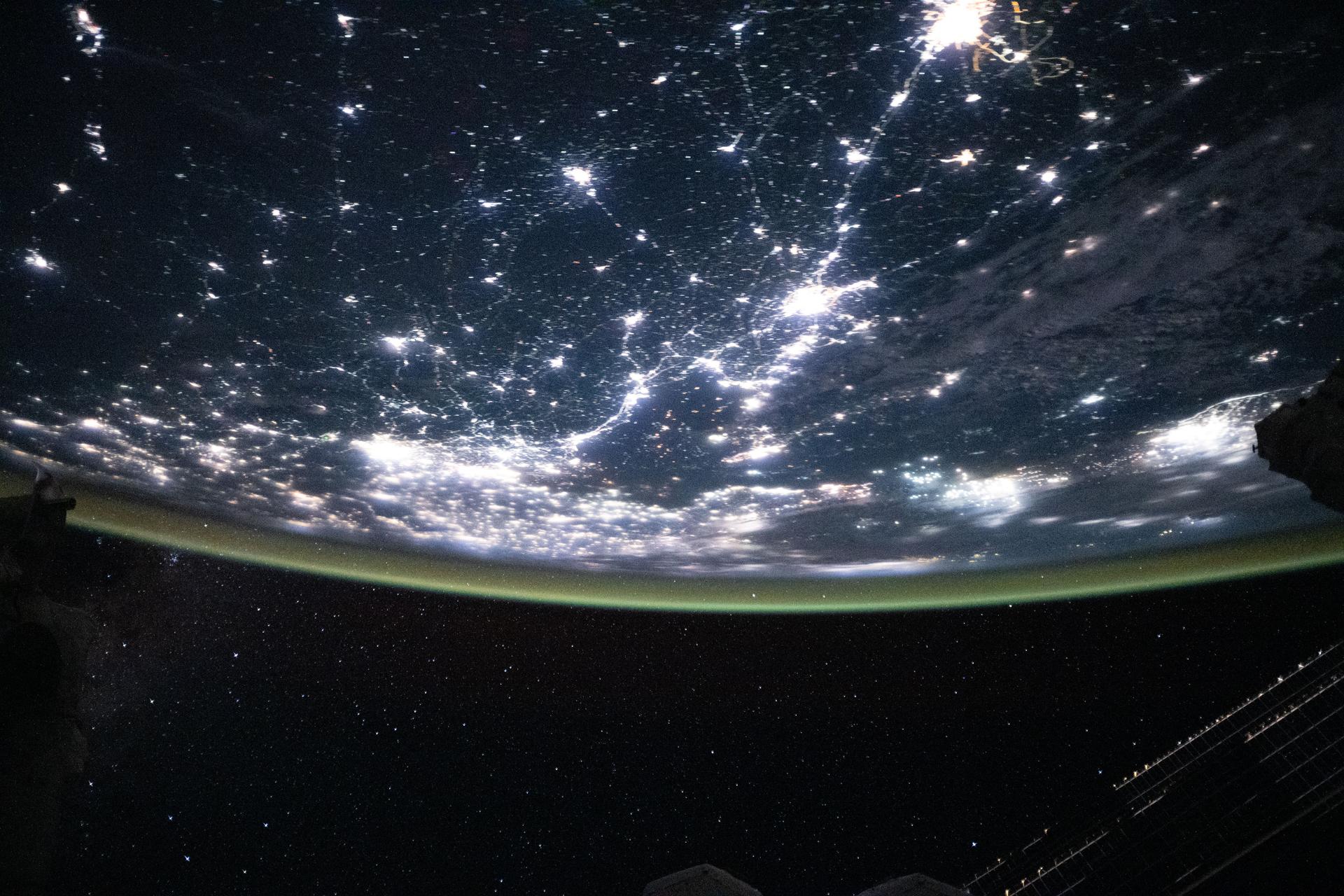
iss073e0820756 (Sept. 14, 2025) --- The densely urbanized region surrounding the Bohai Sea (center) on China's east coast includes several major metropolitan areas, from Beijing (left center) to Changchun (top right), and Seoul, South Korea (far right). A yellow-green airglow blankets Earth's horizon in this image captured from the International Space Station as it orbited 263 miles above the surface at approximately 11:06 p.m. local time.
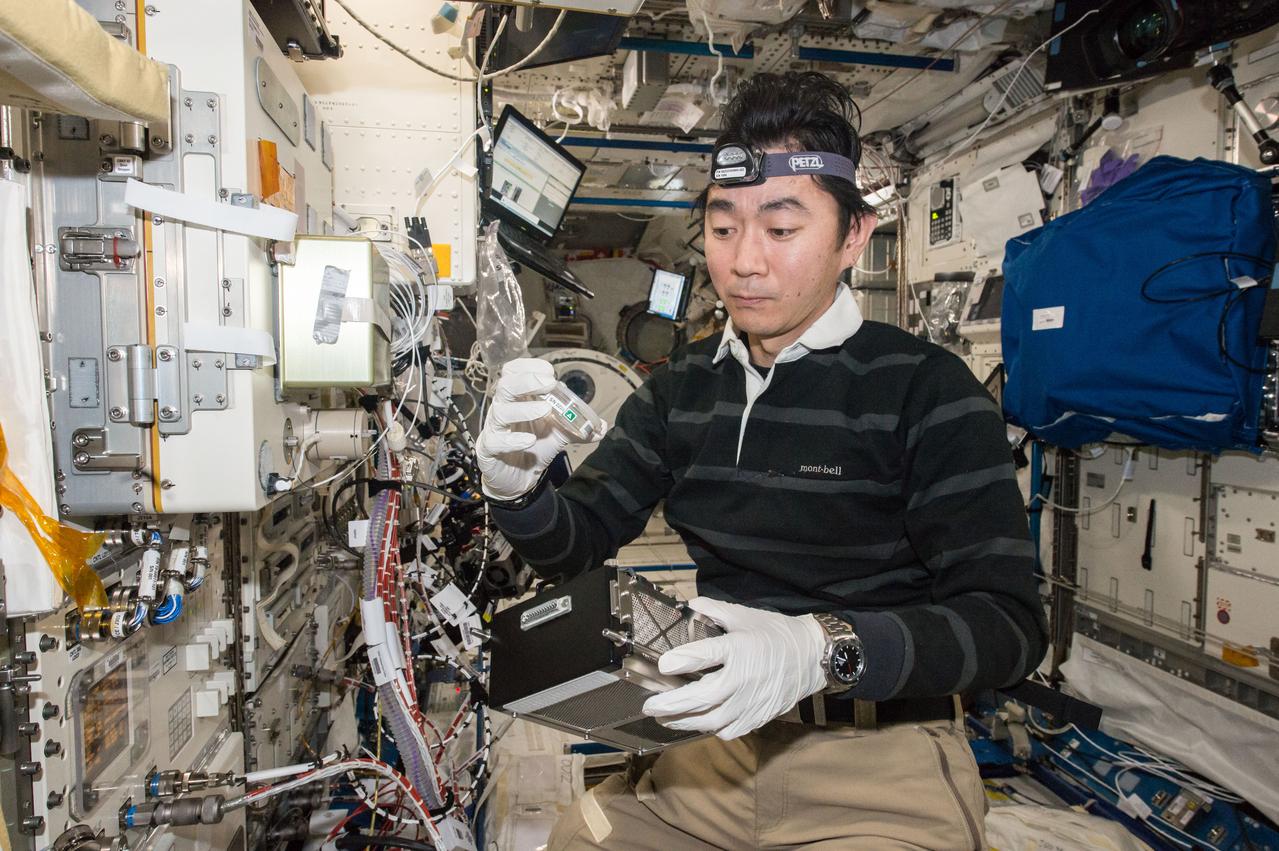
iss045e084267 (10/30/2015) --- Japan Aerospace Exploration Agency (JAXA) astronaut Kimiya Yui works to attach a Plant Experiment Unit to the Cell Biology Experiment Facility (CBEF) prior to Run 1 of the Plant Gravity Sensing 2 experiment.
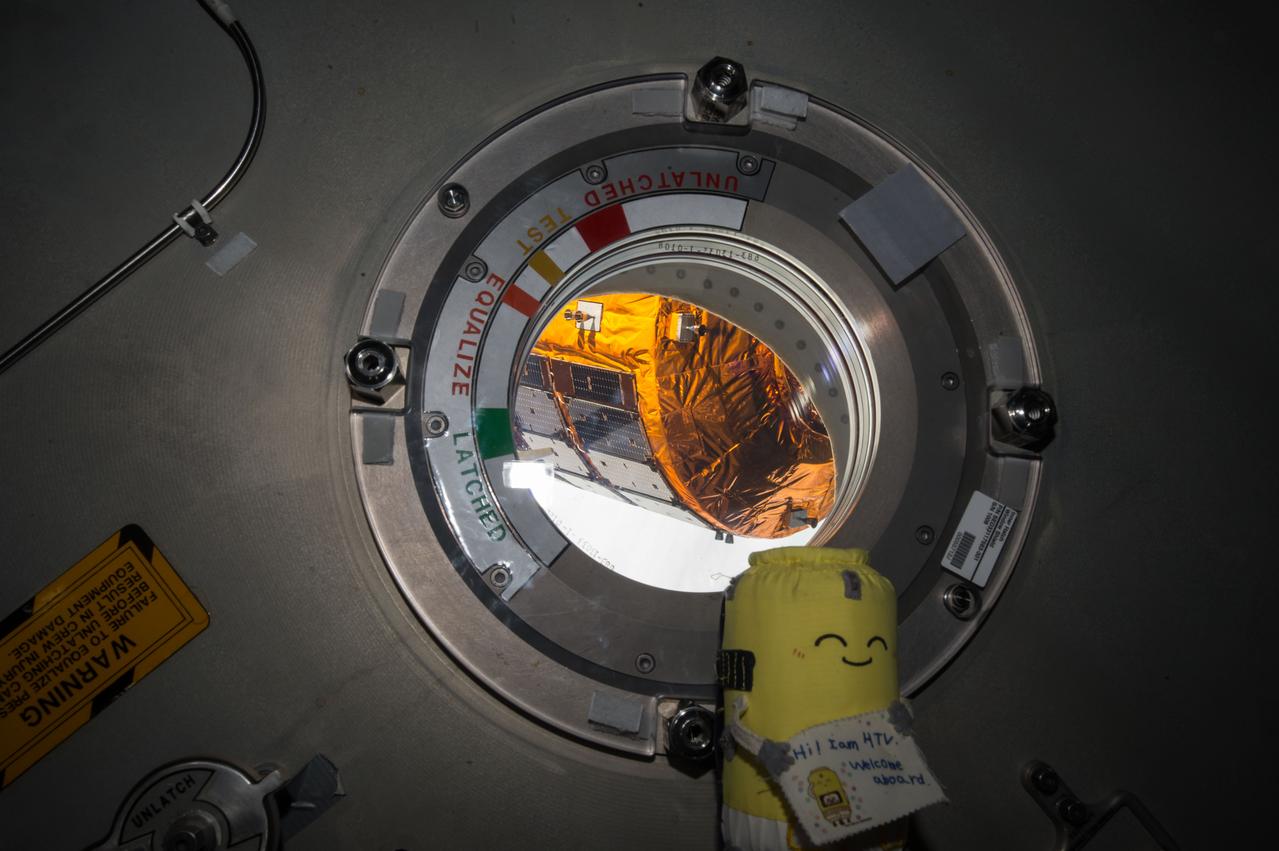
ISS045E033653 (09/28/2015) --- The Japan Aerospace Exploration Agency (JAXA) Kounotori 5 H-II Transfer Vehicle (HTV-5) is seen through a window shortly before release from the International Space Station’s robotic arm, Canadarm2. The cargo vehicle was berthed to the orbiting laboratory for five weeks until it was released on Sept. 28, 2015. HTV-5 delivered almost five tons of hardware and supplies.
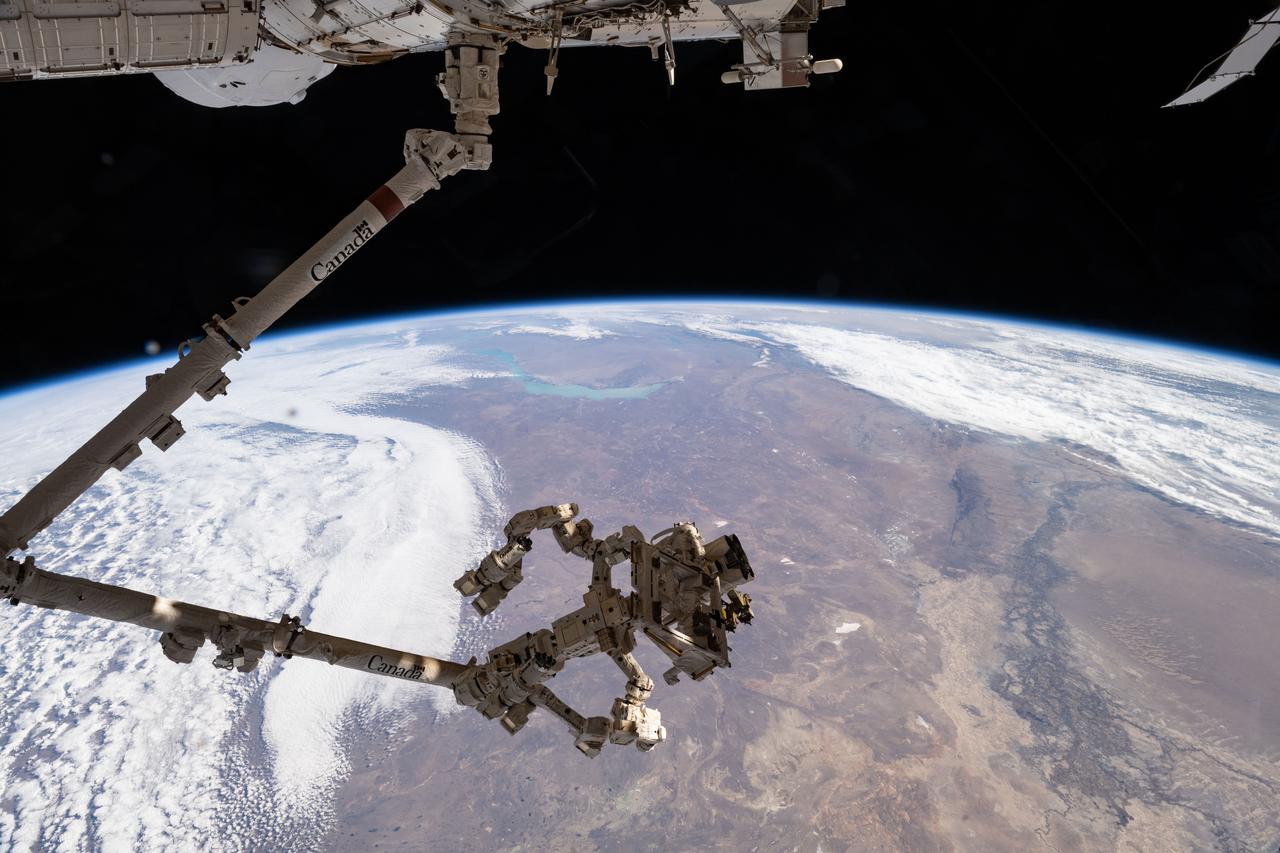
iss073e0819948 (Oct. 2, 2025) --- The Canadarm2 robotic arm, with Dextre—its fine-tuned robotic hand—attached, extends from the International Space Station’s Harmony module as the orbital outpost soars 263 miles above Kazakhstan. At upper center is Lake Balkhash, notable for its two distinct segments: the western portion contains freshwater, while the eastern portion holds saltwater due to a combination of geography, hydrology, and limited water circulation.
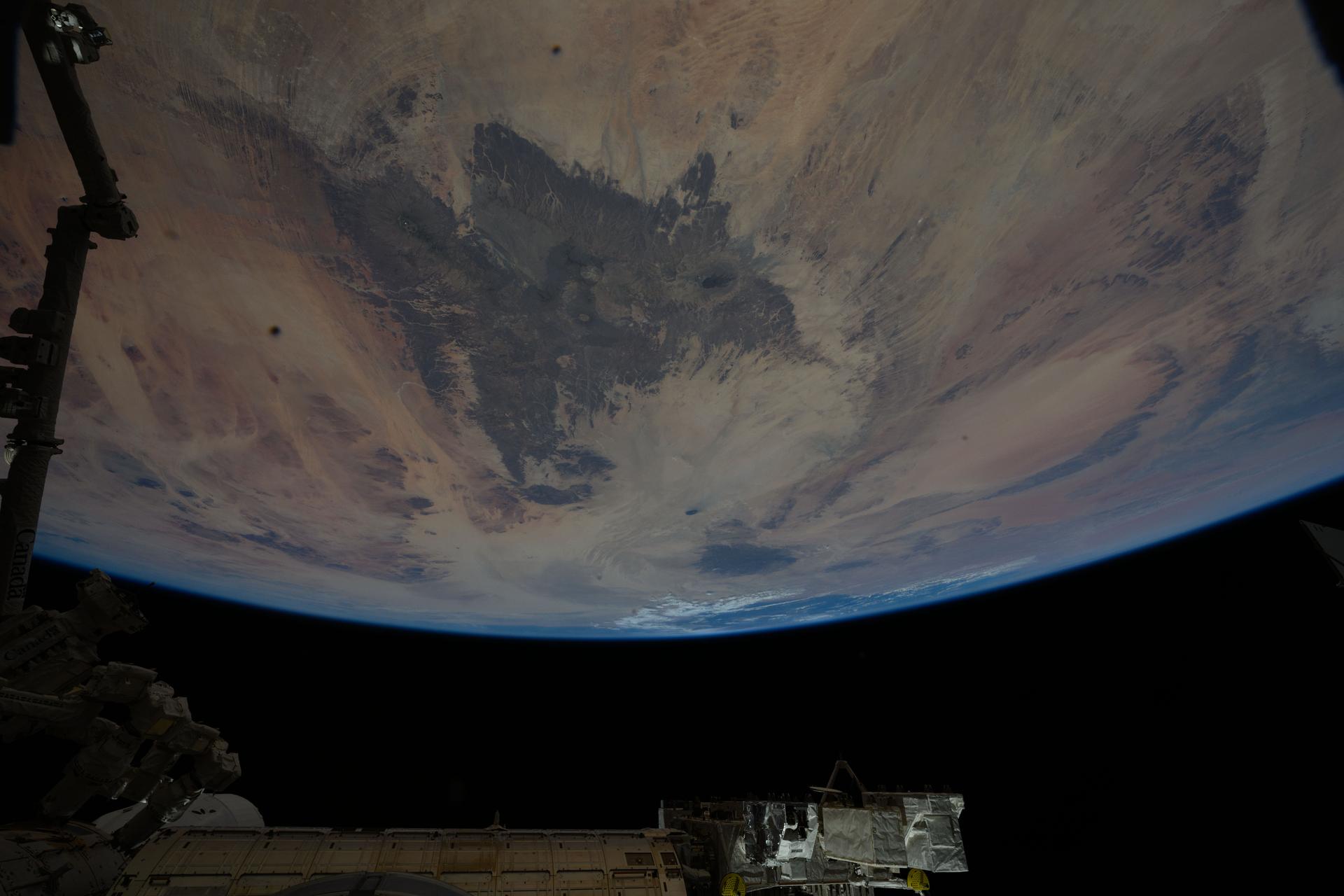
iss073e0906087 (Sept. 28, 2025) --- The Tibesti Mountains in the Sahara, primarily formed by volcanic activity between 34 and 23 million years ago and located mostly in northern Chad, are pictured from the International Space Station as it orbited 260 miles above the African continent.

ISS045e082772 10/28/2015) --- NASA astronaut Kjell Lindgren travels on a spacewalk to the outside of the Destiny U.S. Laboratory worksite to begin routing the Pressurized Mating Adapter 3 (PMA-3) International Docking Adapter Data Cable. Lindgren released this image on social media.
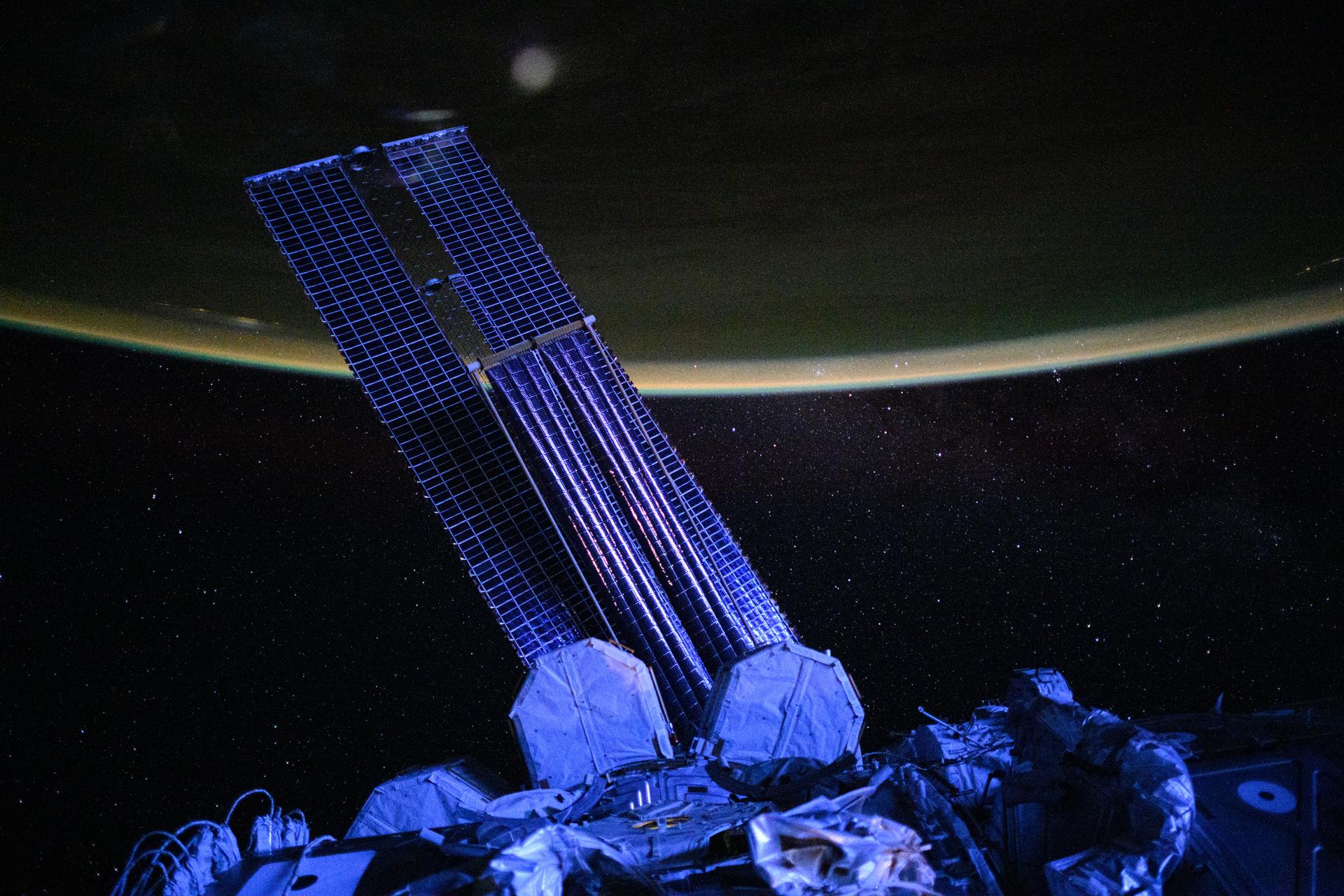
iss073e0850593 (Sept. 17, 2025) --- This moonlit, violet-hued view of the International Space Station’s main solar arrays, partially overlapped by a smaller set of roll-out solar arrays, was captured at approximately 5:16 a.m. local time. The orbital outpost was soaring 265 miles above the Pacific Ocean, just north of New Zealand, when this photograph was taken.
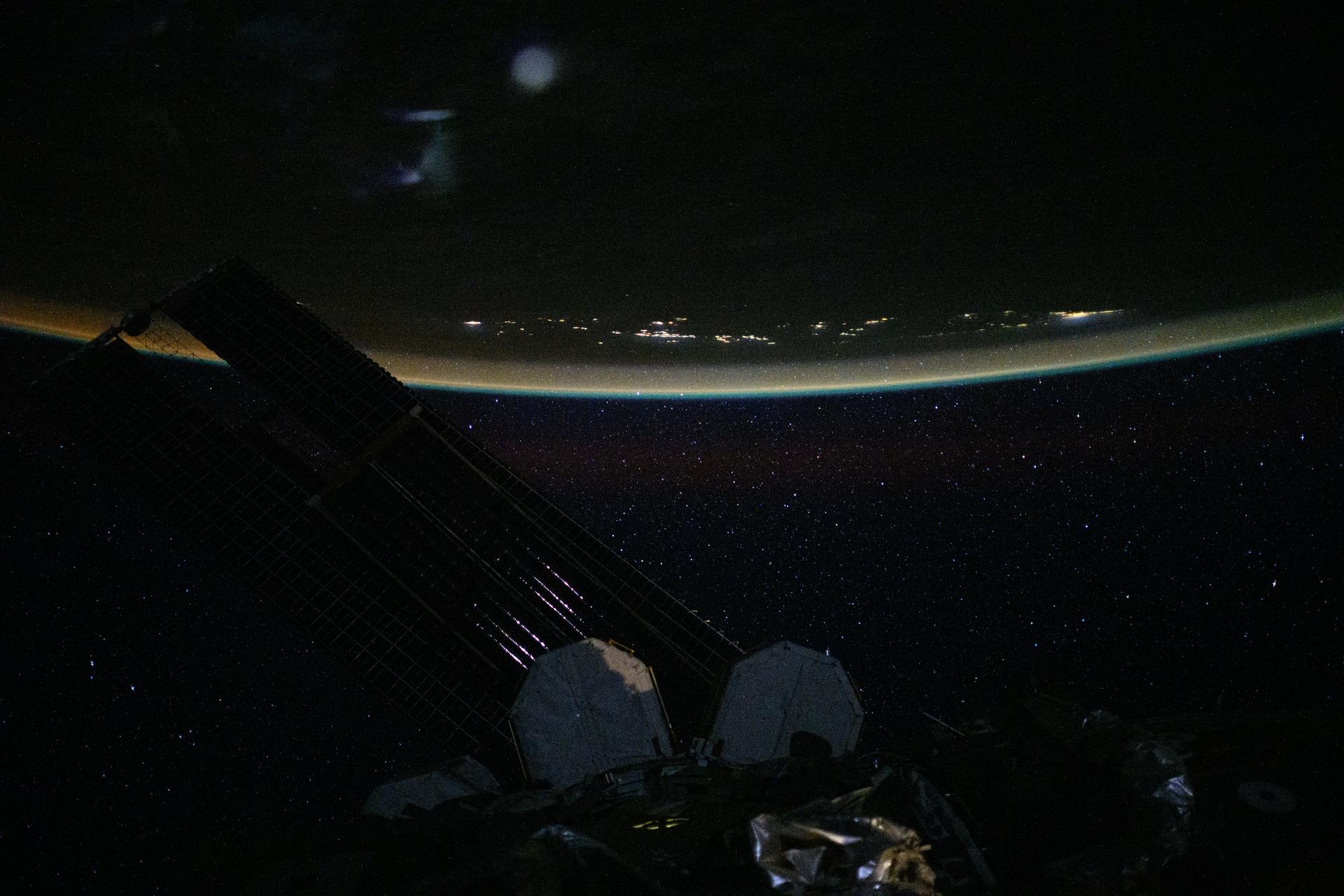
iss073e0850062 (Sept. 17, 2025) --- This serene, nighttime view from the International Space Station, captured from an altitude of 262 miles above the Coral Sea, reveals a star-filled sky with a soft, multi-colored atmospheric glow blanketing the city lights of the Solomon Islands. The image was taken at approximately 3:11 a.m. local time as the station orbited above the southwestern Pacific region.
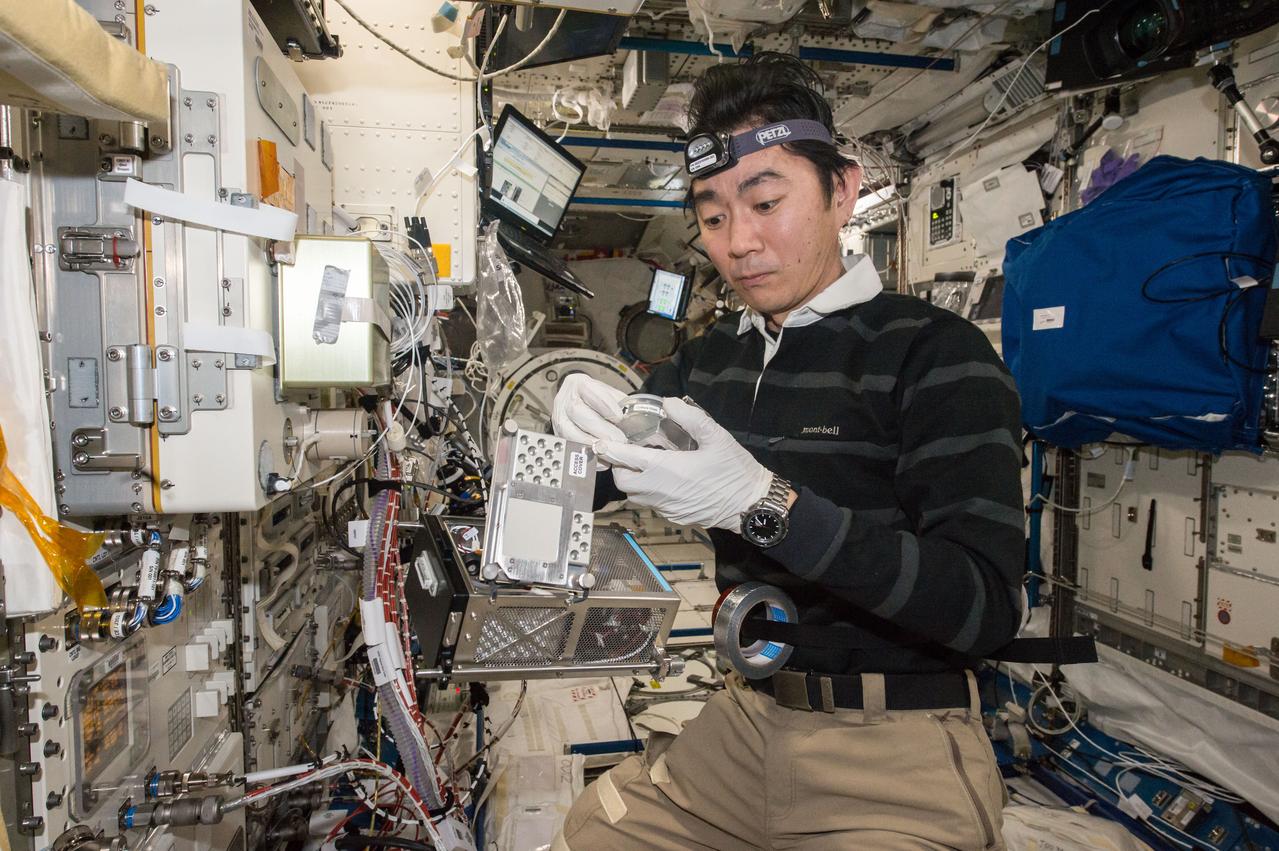
iss045e084268 (10/30/2015) --- Japan Aerospace Exploration Agency (JAXA) astronaut Kimiya Yui works to attach a Plant Experiment Unit to the Cell Biology Experiment Facility (CBEF) prior to Run 1 of the Plant Gravity Sensing 2 experiment.
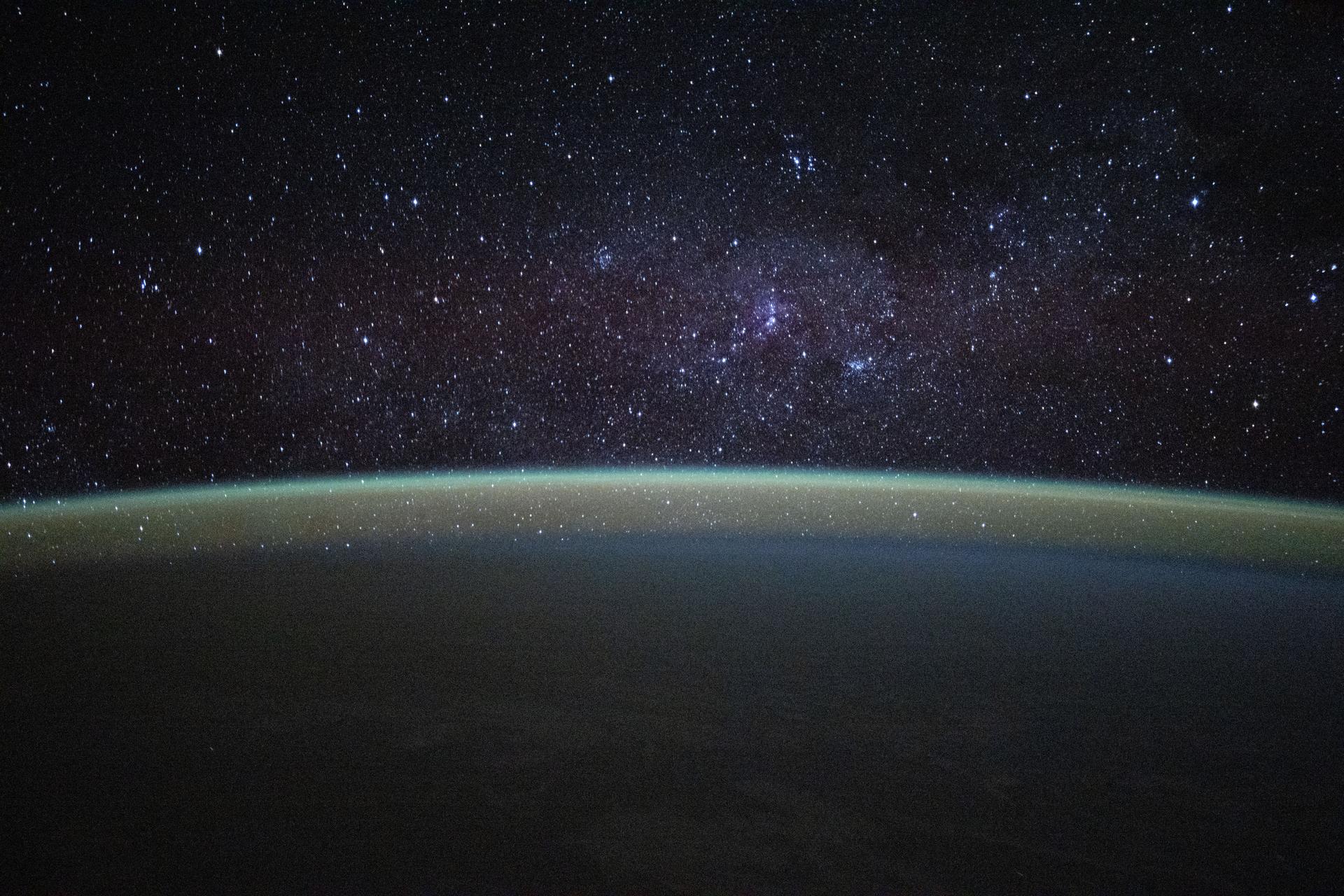
iss073e0830977 (Sept. 27, 2025) --- Stars fill the sky above a serene, blue-green airglow blanketing Earth's horizon in this photograph taken from the International Space Station at approximately 1:05 a.m. local time while orbiting 263 miles above the Republic of Mauritius in the Indian Ocean.
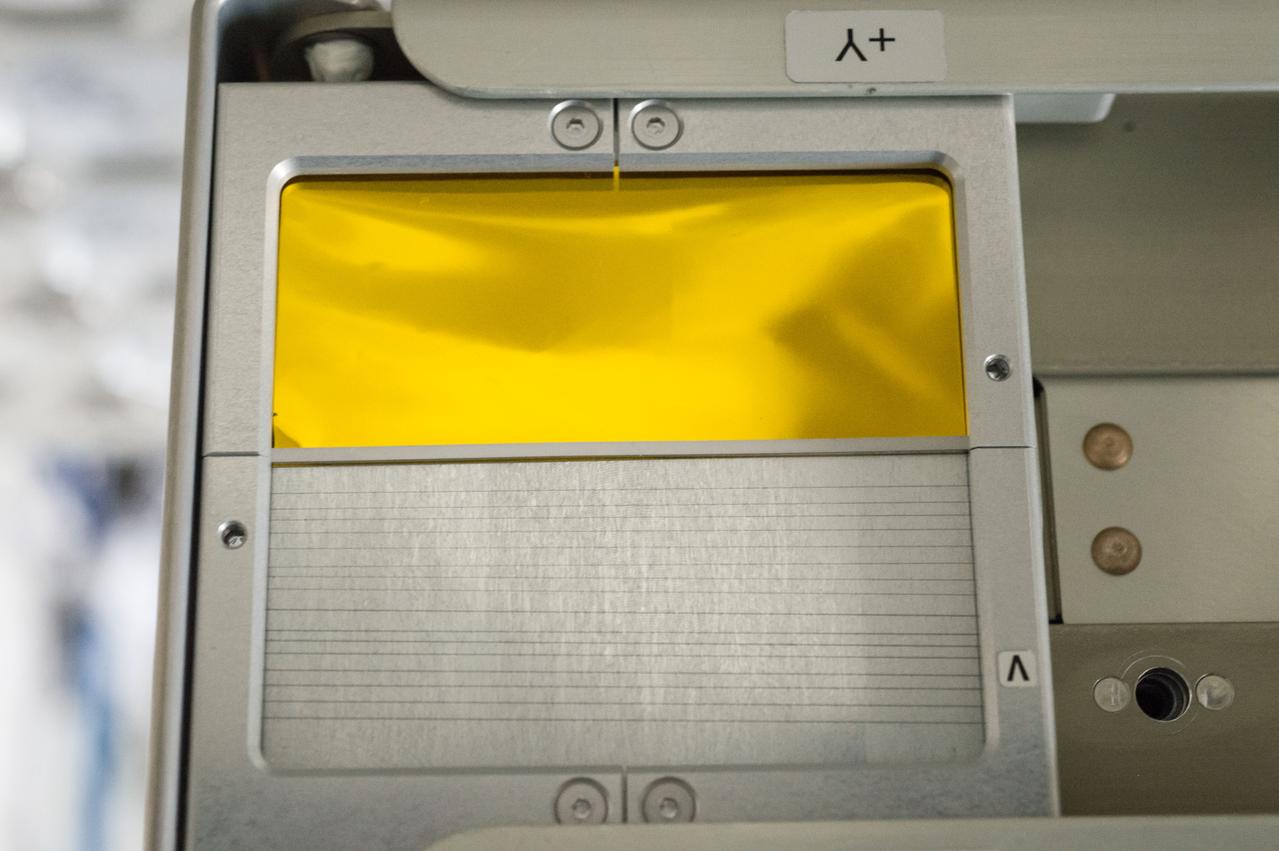
iss045e083552 (10/30/2015) --- Photo documentation of the Carbon Nanotube sample attached to the V position on the Handhold Experiment Platform (HXP) for ExHAM-MDM2 experiment operations aboard the International Space Station (ISS). Space Environment Exposure Experiment of CNT Material for Space Application (Carbon Nanotube) tests an advanced carbon-based material for its ability to withstand the withering radiation of space.
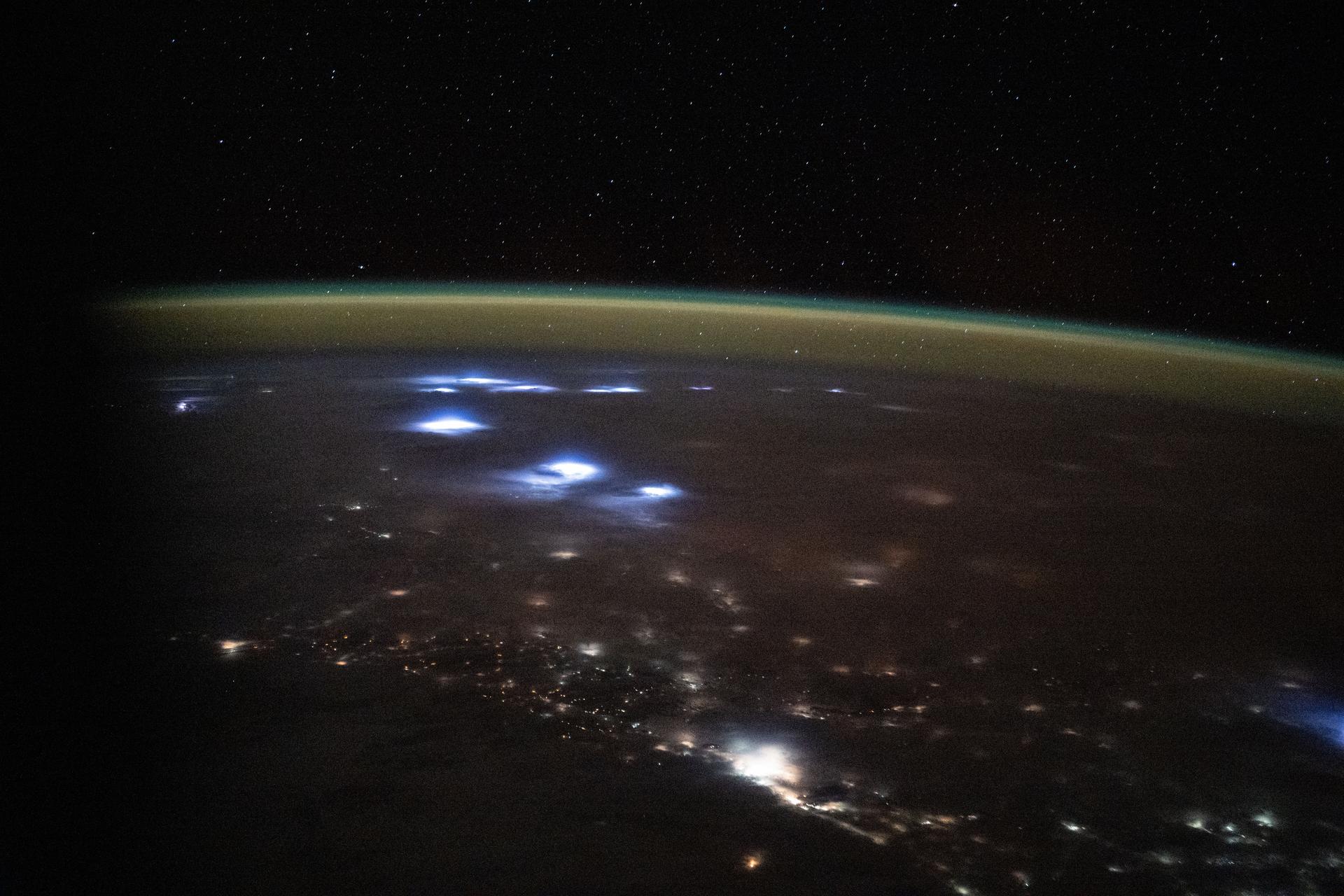
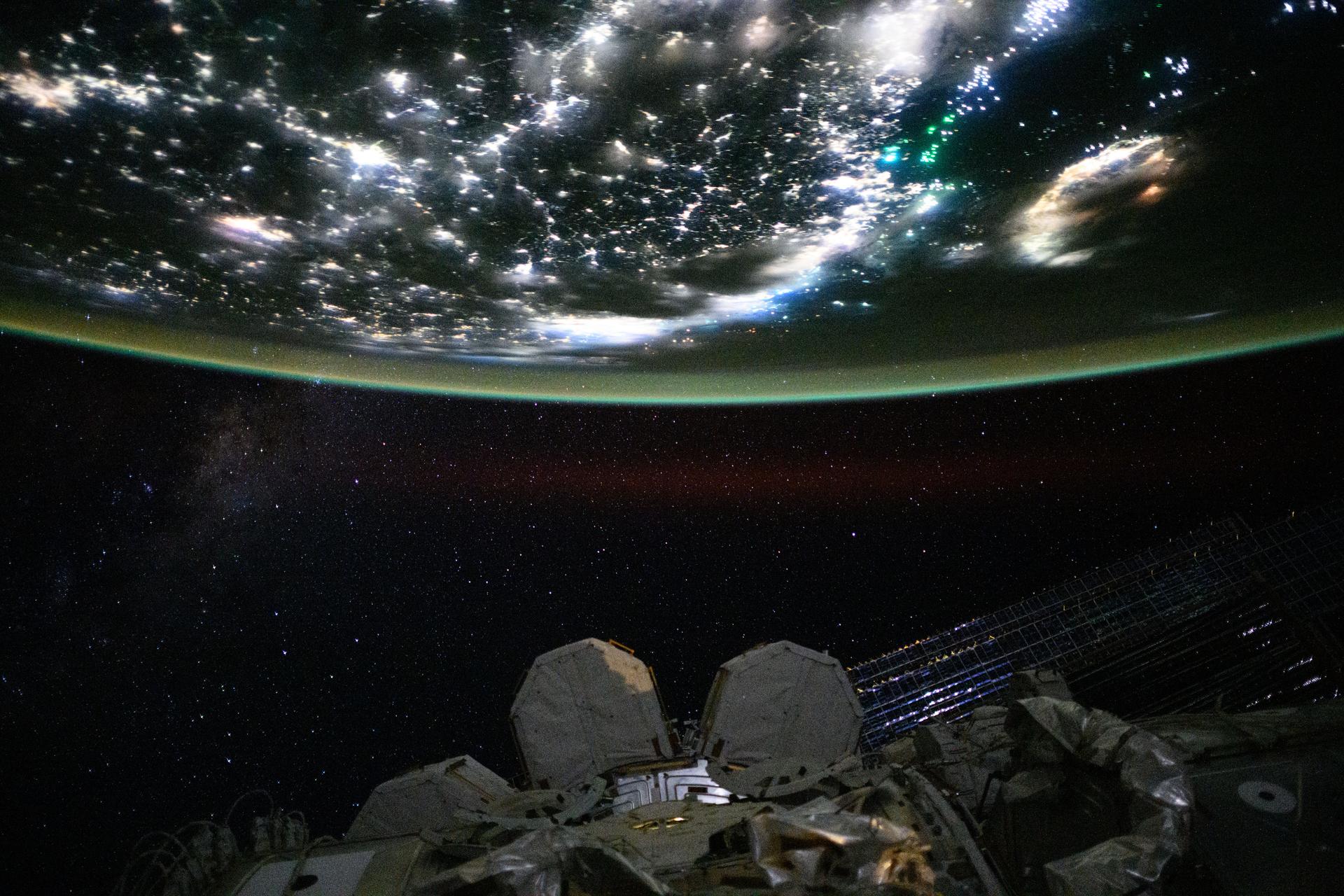
iss073e0817052 (Sept. 27, 2025) --- Warm, diffuse city lights and bright lightning storms illuminate the cloudy nighttime landscape of western Africa in this image captured from the International Space Station. A soft yellow-green atmospheric glow, created by atoms and molecules releasing energy absorbed from solar radiation earlier in the day, blankets Earth’s horizon. The orbital outpost was soaring 260 miles above the Atlantic Ocean at approximately 11:05 p.m. local time when this photograph was taken.
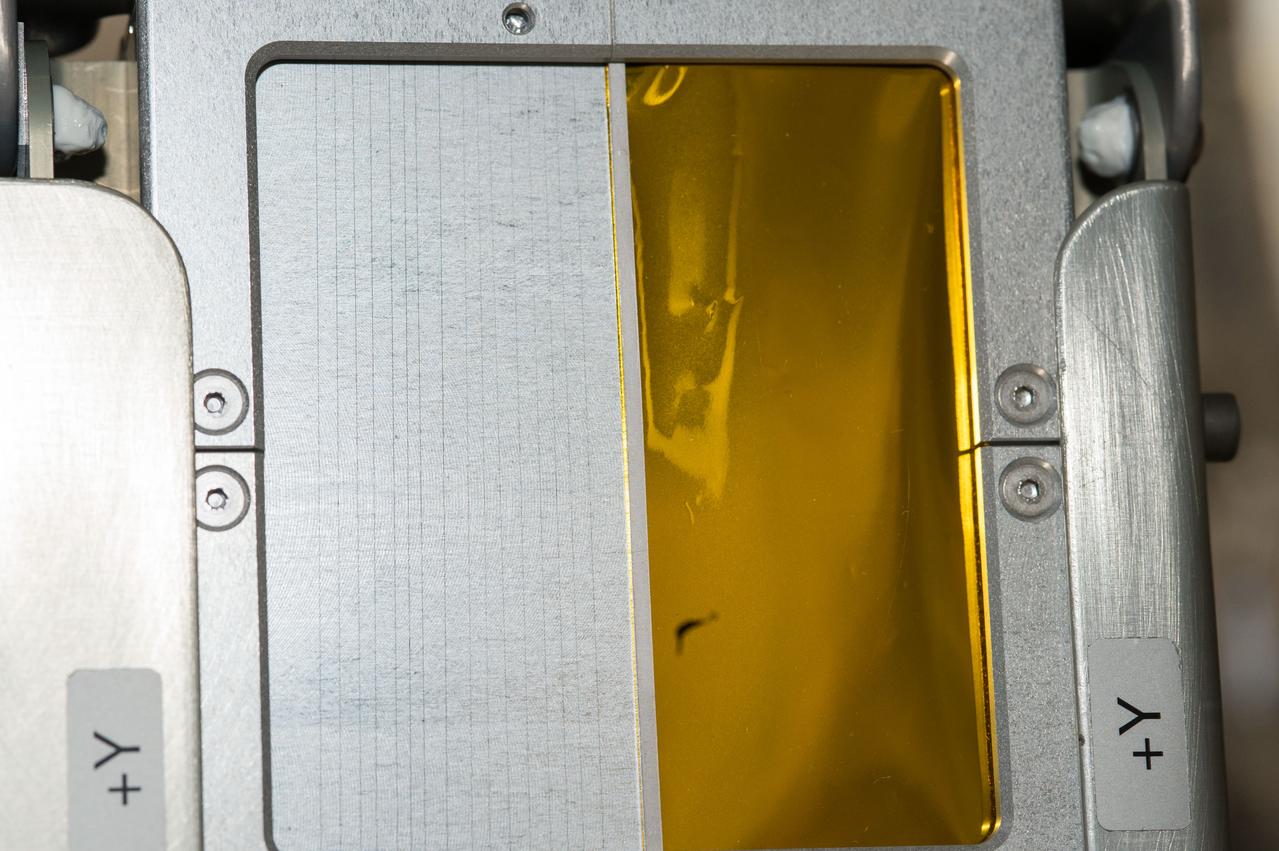
iss045e083367 (10/30/2015) --- Photo documentation of the Carbon Nanotube sample attached to the V position on the Handhold Experiment Platform (HXP) for ExHAM-MDM2 experiment operations aboard the International Space Station (ISS). Space Environment Exposure Experiment of CNT Material for Space Application (Carbon Nanotube) tests an advanced carbon-based material for its ability to withstand the withering radiation of space.
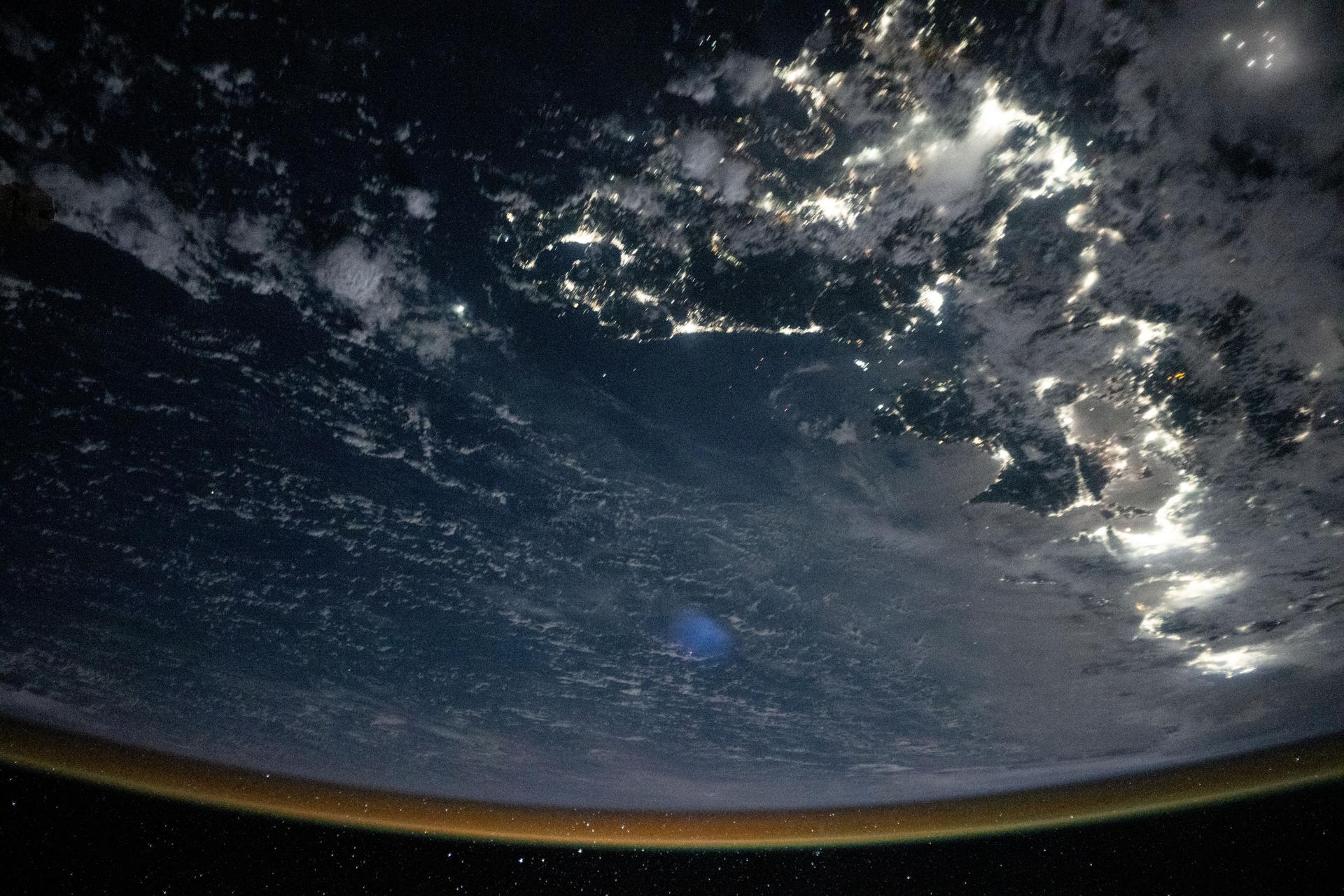
iss073e0824492 (Sept. 14, 2025) --- In this oblique view from the International Space Station, city lights outline southern Japan from Fukuoka (top right) to Tokyo (bottom right) with a red-yellow airglow blanketing Earth's horizon. This natural glow is produced when solar ultraviolet radiation excites oxygen molecules in the upper atmosphere during the day, which then release that energy as visible light at night. The orbital outpost was soaring 261 miles above the East China Sea at approximately 1:45 a.m. local time when this photograph was taken.
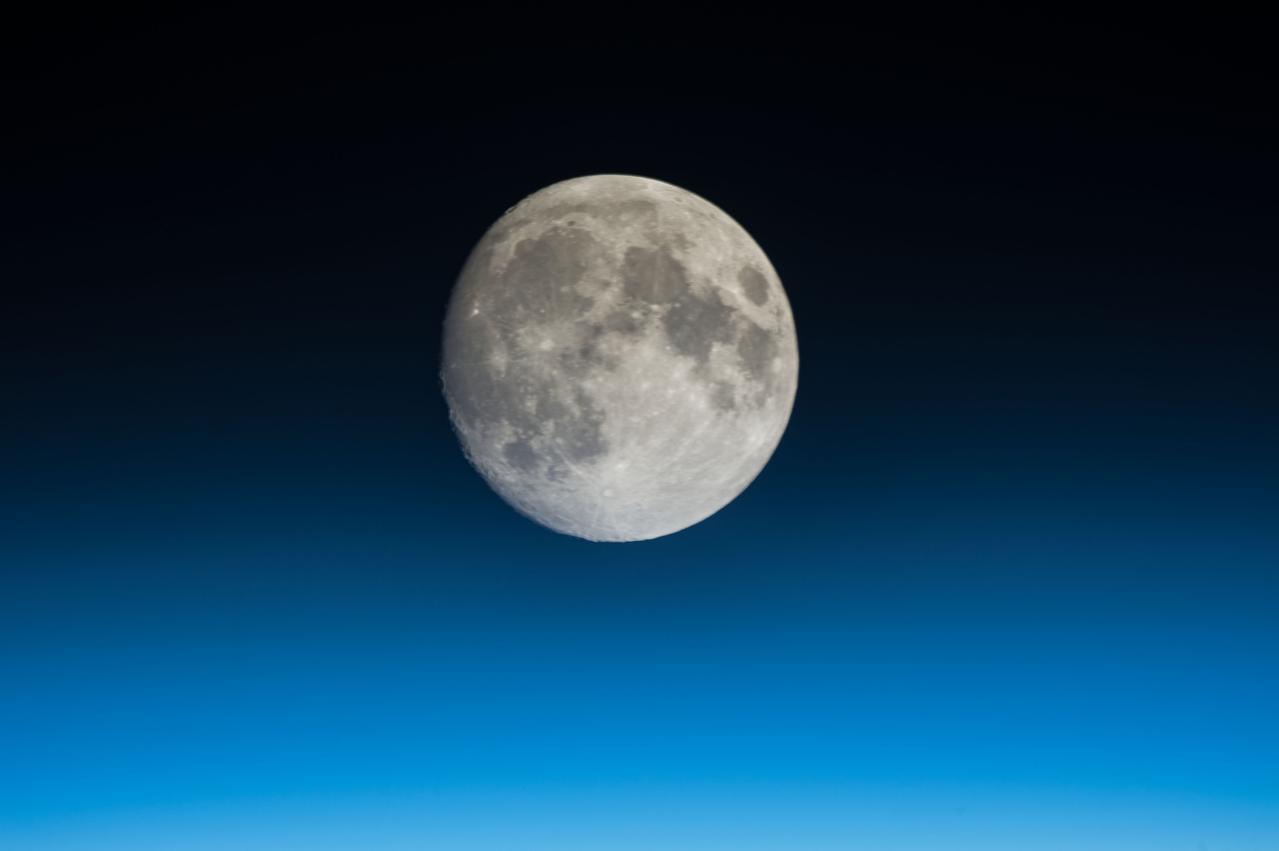
ISS045E079114 (10/25/2015) -------- This image of the lunar landscape was taken by a crewmember aboard the International Space Station on Oct. 25, 2015
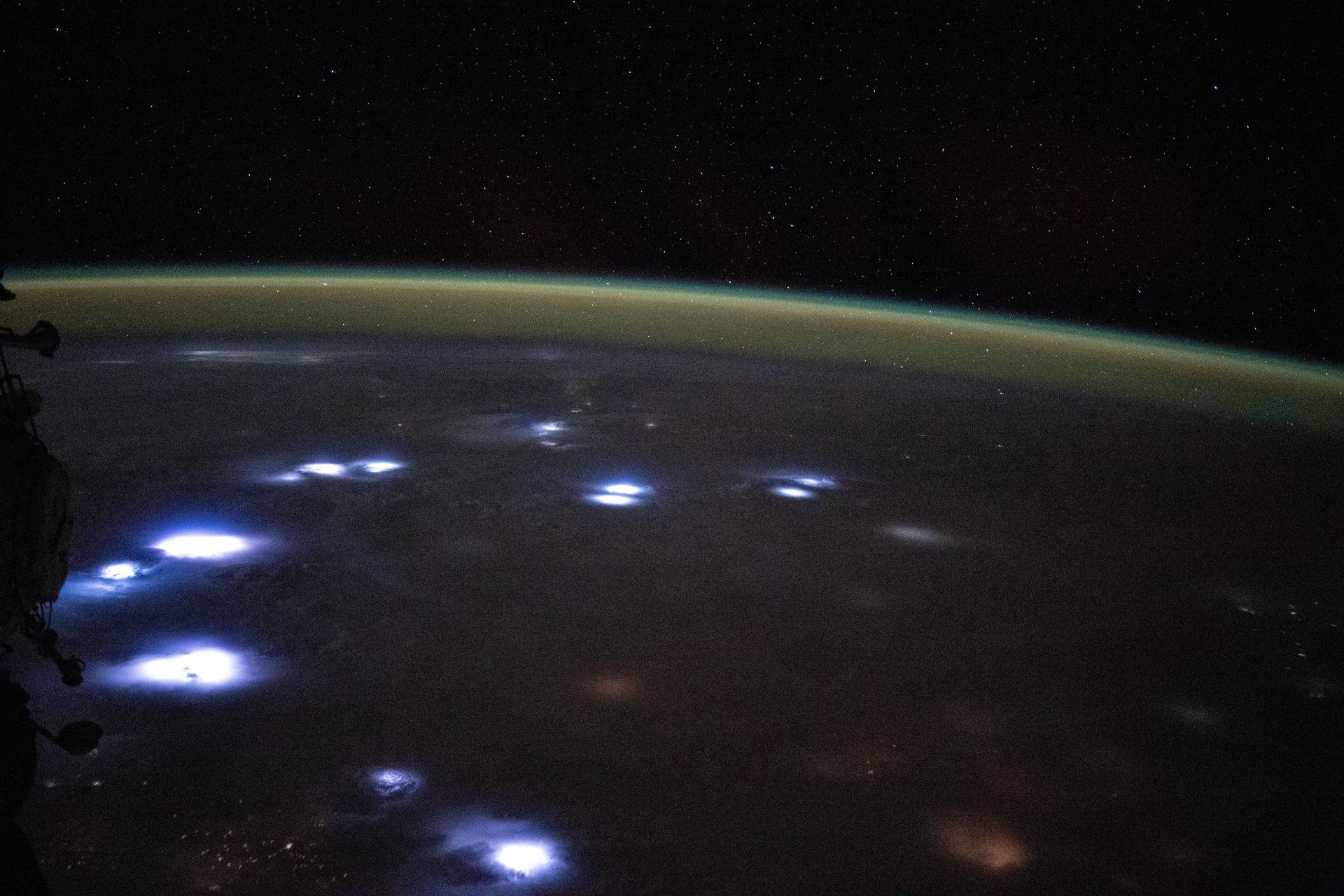
iss073e0816985 (Sept. 27, 2025) --- Bright lightning storms illuminate the cloudy landscape of western Africa in this image captured from the International Space Station. A soft yellow-green atmospheric glow, created by atoms and molecules releasing energy absorbed from solar radiation earlier in the day, blankets Earth’s horizon. The orbital outpost was soaring 260 miles above the Atlantic coast of Ghana at approximately 11:04 p.m. local time when this photograph was taken.
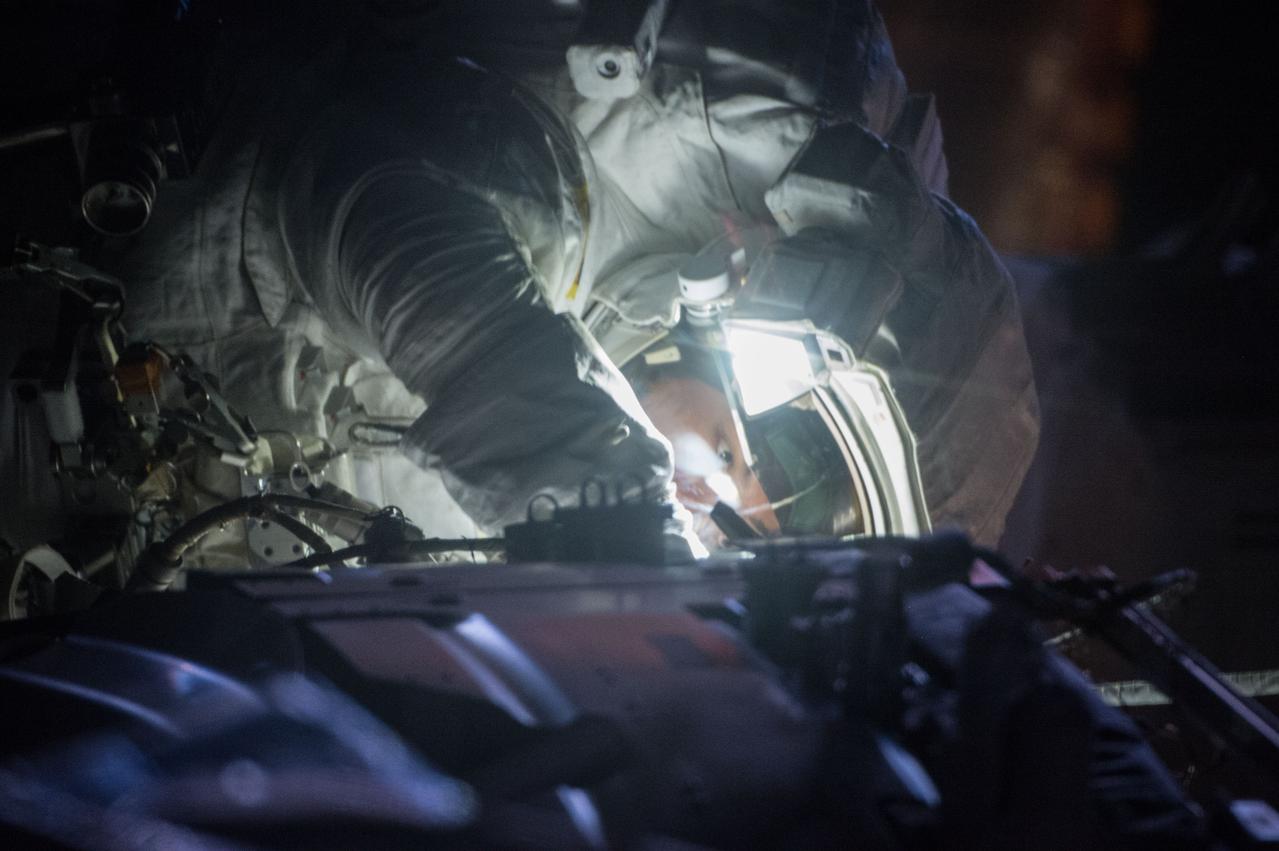
ISS045E082789 (10/28/2015) --- NASA astronaut Kjell Lindgren is photographed through a window during a night pass while on his first spacewalk on Oct. 28, 2015. Lindgren and NASA astronaut Scott Kelly worked outside for seven hours and 16 minutes on a series of tasks to service and upgrade the International Space Station. They wrapped a dark matter detection experiment in a thermal blanket, lubricated the tip of the Canadarm2 robotic arm and then routed power and data cables for a future docking port.

iss073e0838653 (Sept. 14, 2025) --- The Soyuz MS-27 crew spacecraft is pictured docked to the International Space Station's Prichal module as the orbital outpost soared 257 miles above a gleaming blue Atlantic Ocean, north of the Dominican Republic.
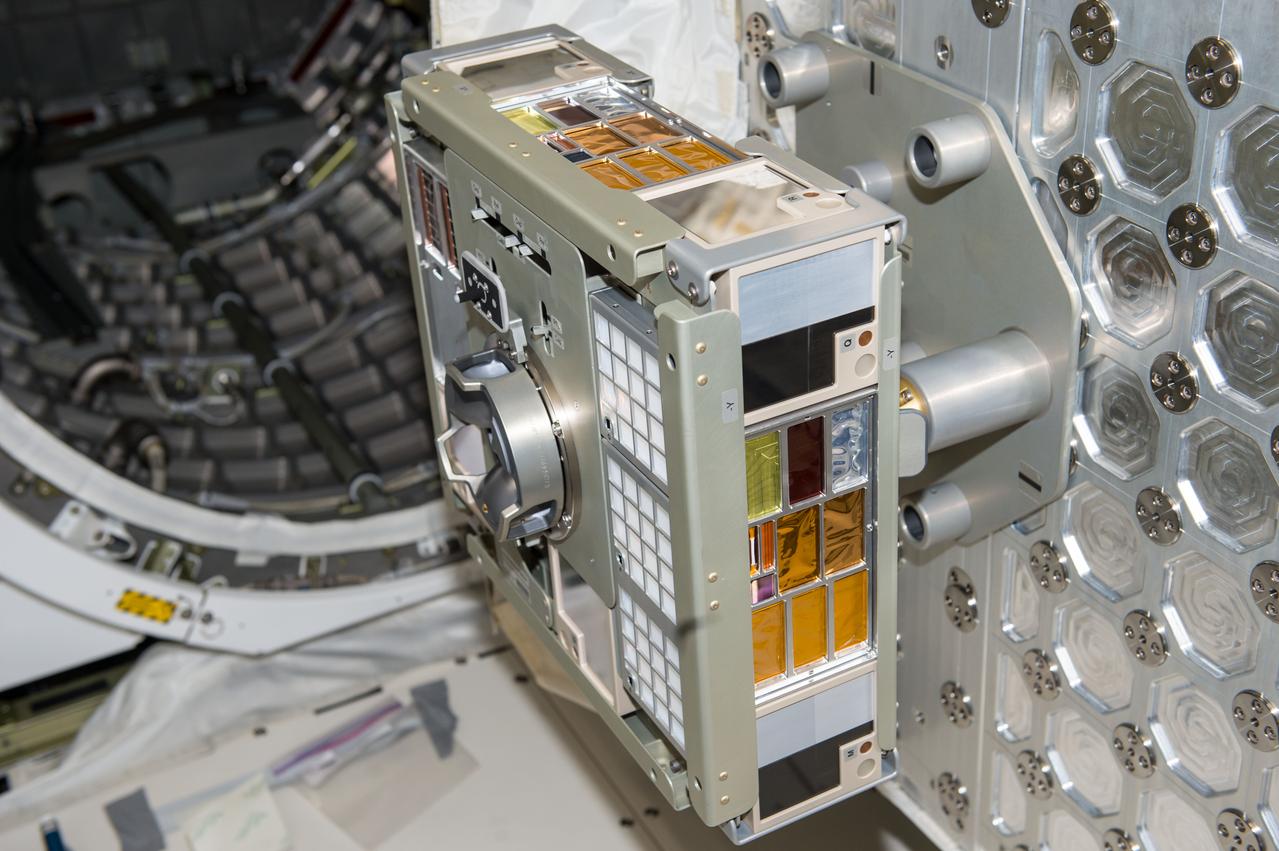
iss045e084246 (10/30/2015) --- Documentation of the Handhold Experiment Platform (HXP) following installation of samples for ExHAM-MDM2 experiment operations.
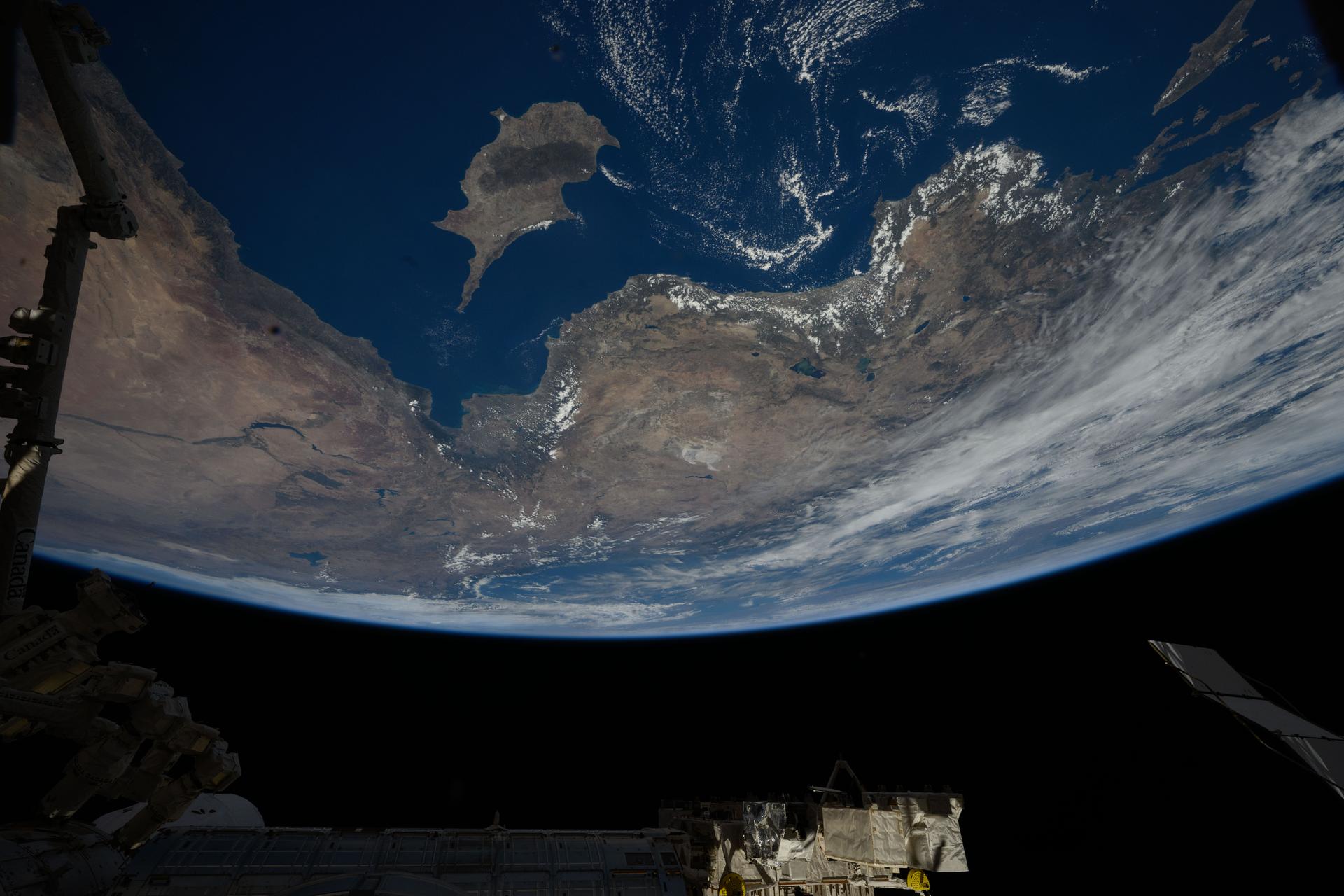
iss073e0906745 (Sept. 28, 2025) --- The Republic of Cyprus—an island inhabited for over 12,000 years and home to the world’s oldest named wine, produced for more than 4,000 years—is pictured in the Mediterranean Sea from the International Space Station as it orbited 262 miles above, heading northwest toward Türkiye.
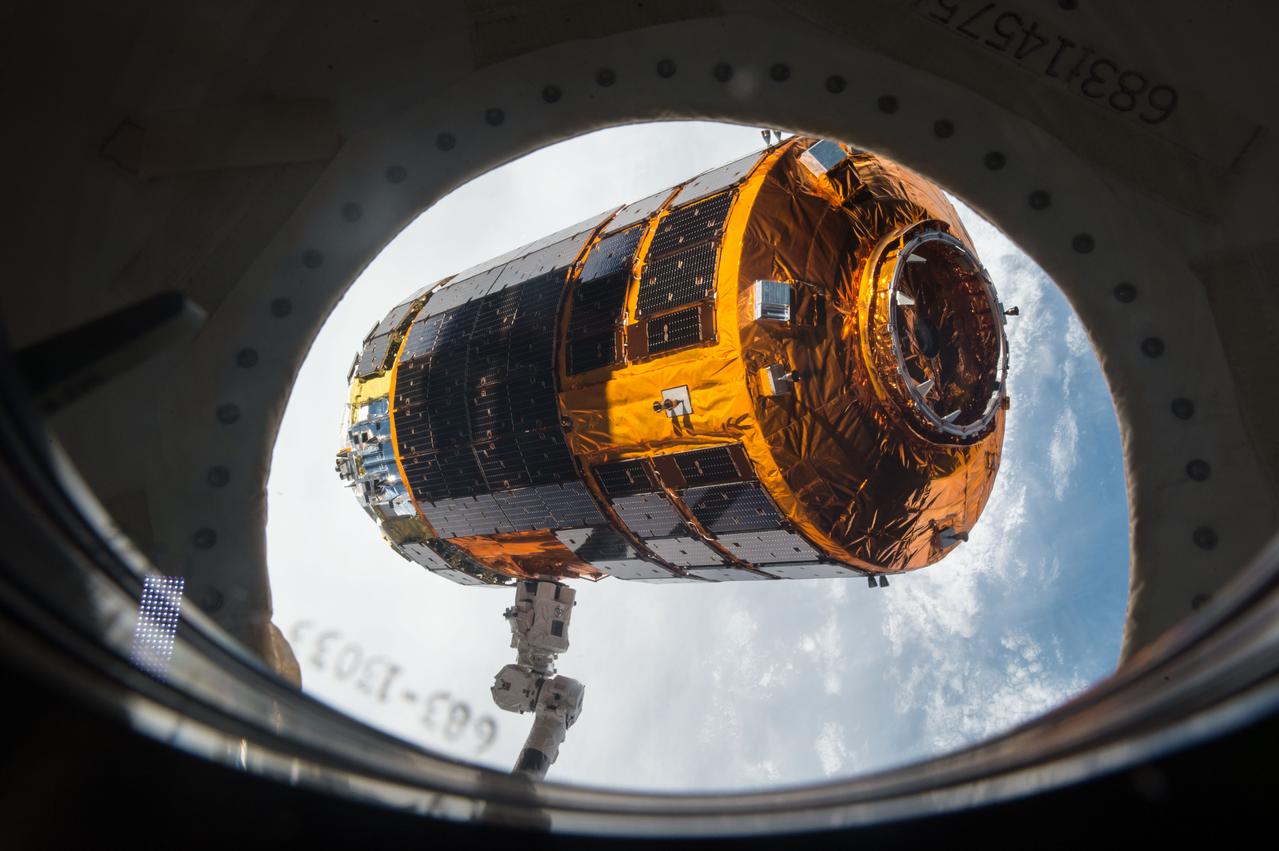
ISS045E033654 (09/28/2015) --- The Japan Aerospace Exploration Agency (JAXA) Kounotori 5 H-II Transfer Vehicle (HTV-5) is seen through a window shortly before release from the International Space Station’s robotic arm, Canadarm2. The cargo vehicle was berthed to the orbiting laboratory for five weeks until it was released on Sept. 28, 2015. HTV-5 delivered almost five tons of hardware and supplies.
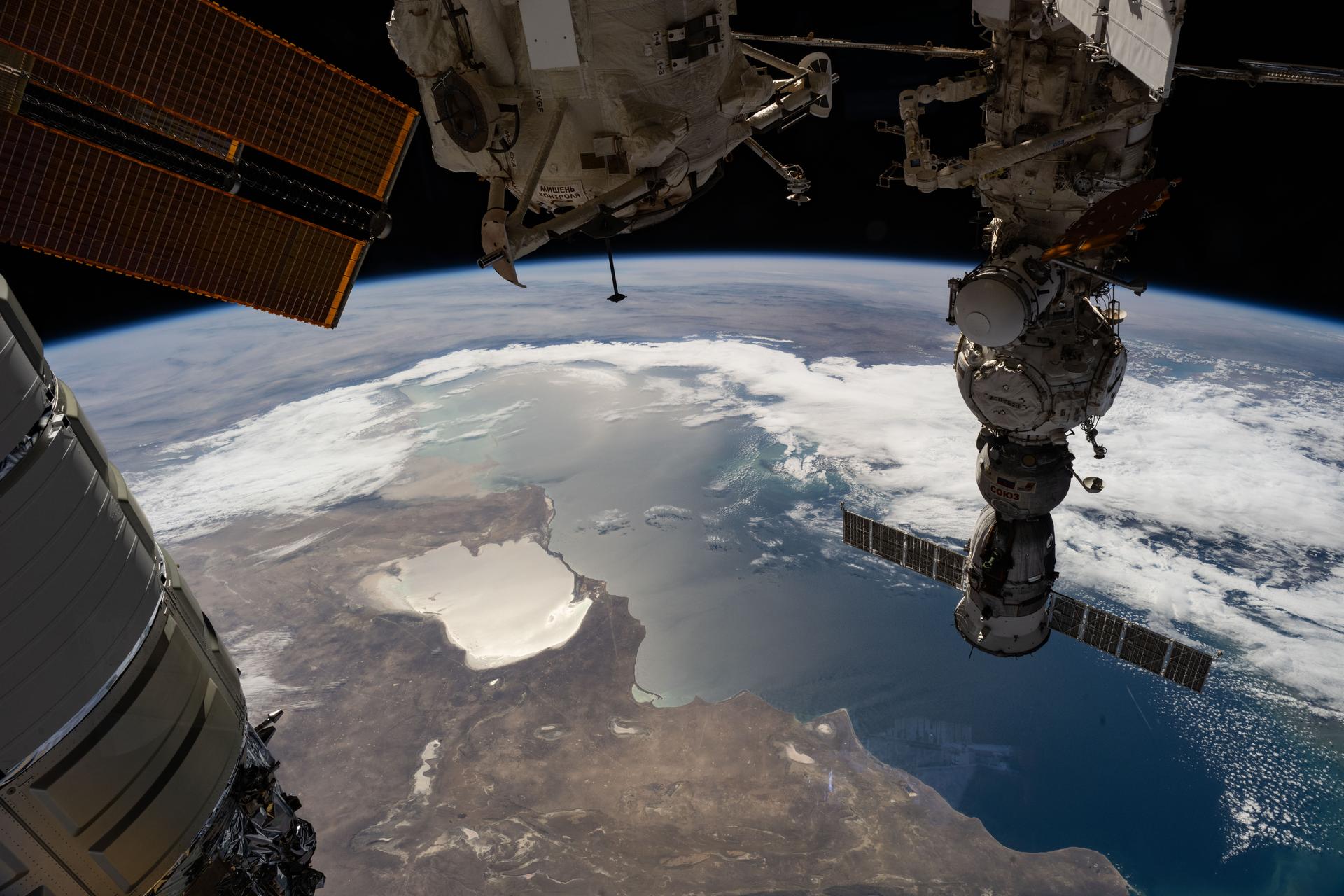
iss073e0819909 (Oct. 2, 2025) --- The Caspian Sea and the hypersaline Garabogazköl Basin (center left) are visible below the International Space Station as it orbited 263 miles above western Kazakhstan. In the right foreground, the Soyuz MS-27 crew spacecraft is docked to the Prichal module. At the top center, the lower portion of the Rassvet module is visible, while the left side of the frame shows part of the Northrop Grumman Cygnus XL cargo spacecraft.
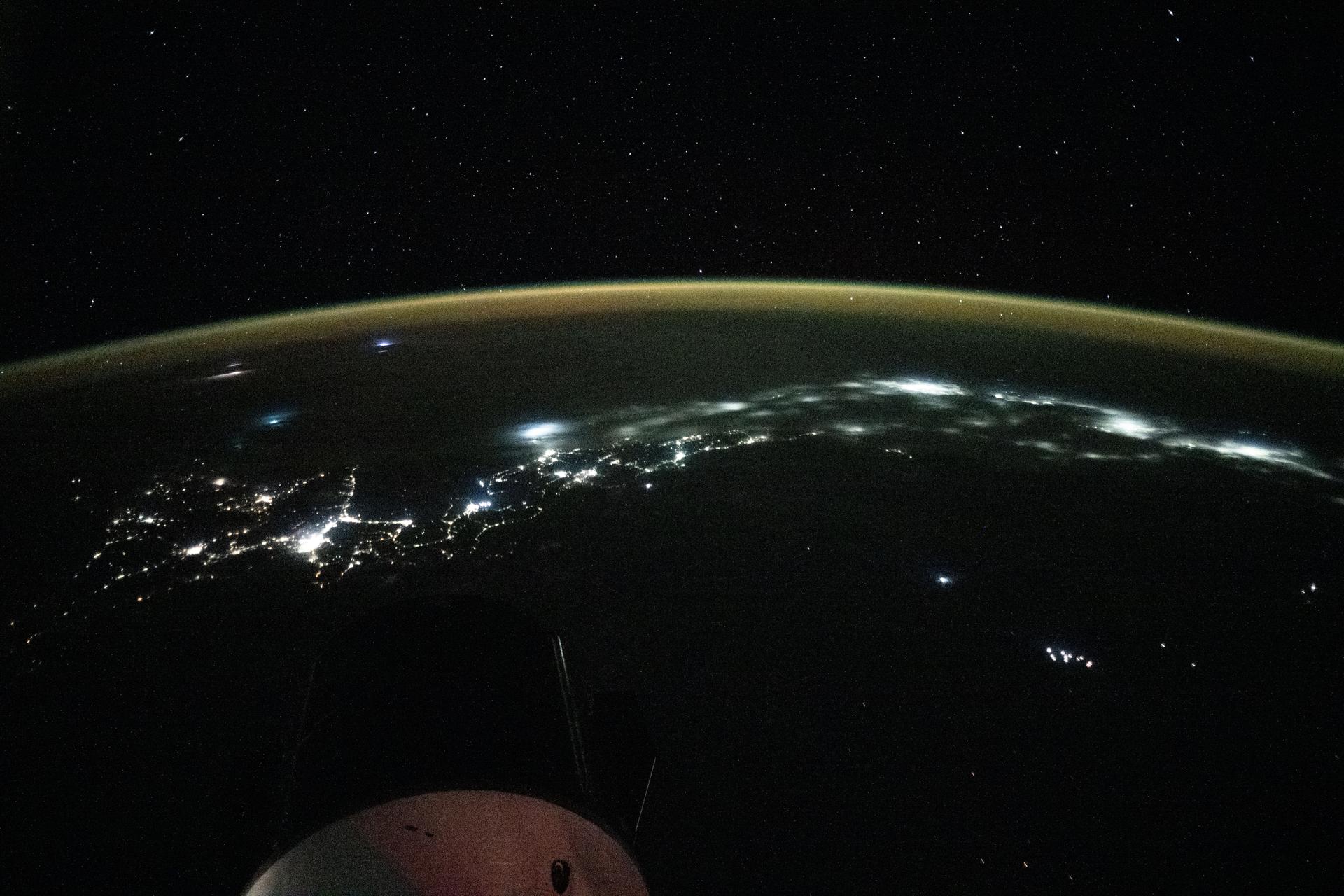
iss073e0703552 (Sept. 18, 2025) --- City lights trace the Japanese coastline underneath a dim yellow-green airglow in this nighttime view across the Sea of Japan, revealing the metropolitan areas (from left to right) of Sapporo, Sendai, Tokyo, and Nagoya. The International Space Station was orbiting 262 miles above Russia’s far eastern coast when this image was captured at approximately 11:29 p.m. local time.
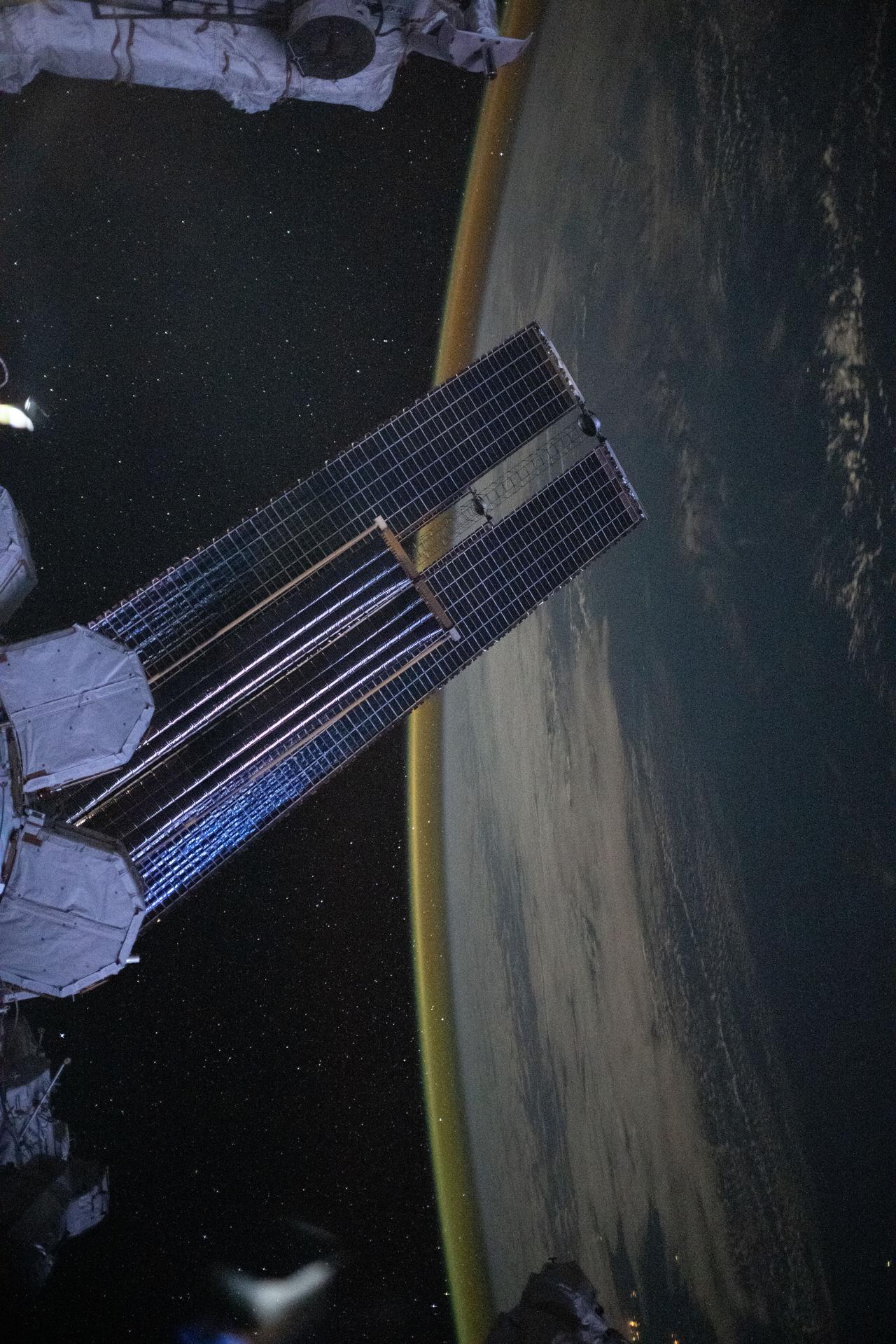
iss073e0828980 (Sept. 14, 2025) --- A dim, yellow-green airglow crowns Earth’s horizon between northwestern Australia and Indonesia’s Lesser Sunda Islands. In the foreground, a set of the orbital outpost’s main solar arrays, partially overlapped by a smaller set of roll-out solar arrays, stretches across the frame. The International Space Station was soaring 262 miles above the tranquil Indian Ocean at approximately 4:07 a.m. local time when this photograph was taken.
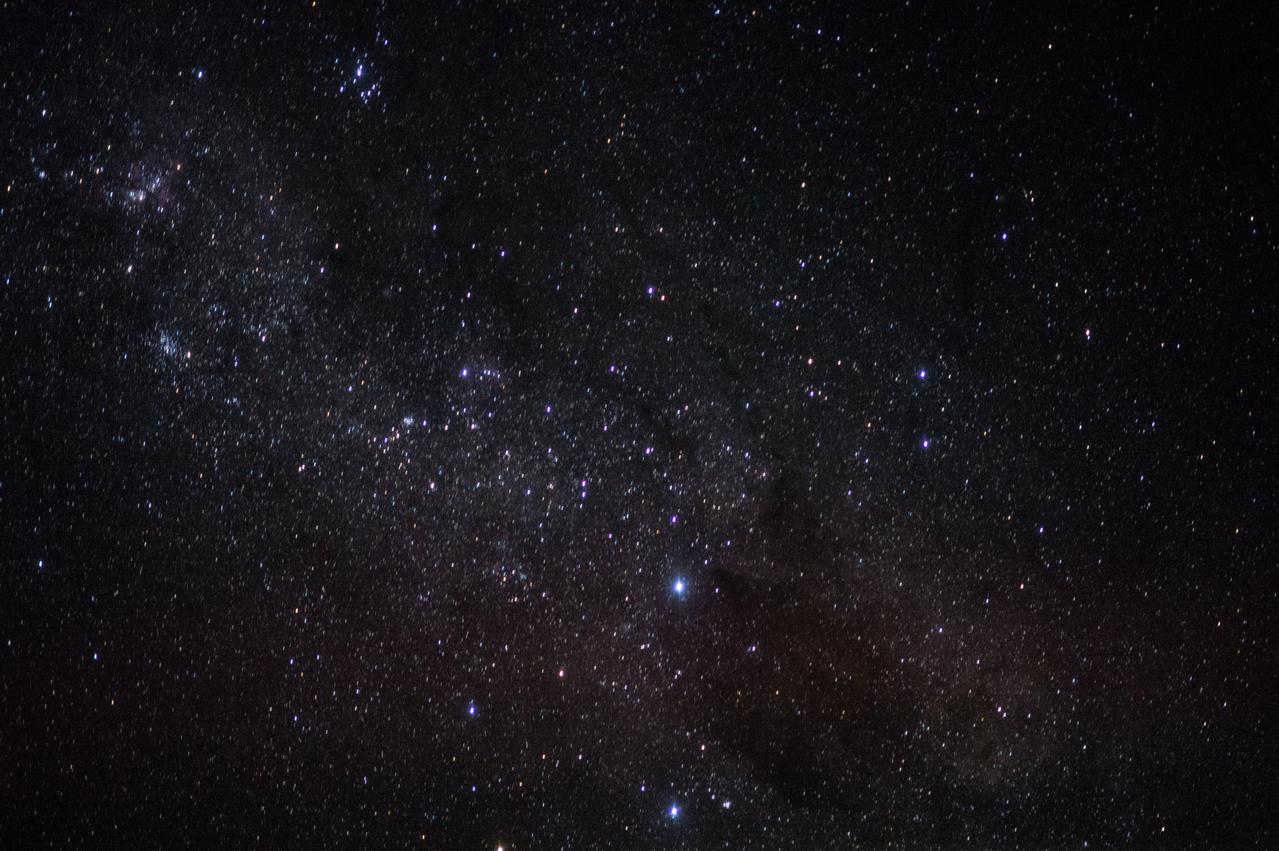
iss045e057047 (10/11/2015) --- A view of stars taken by the Expedition 45 crew aboard the International Space Station (ISS).
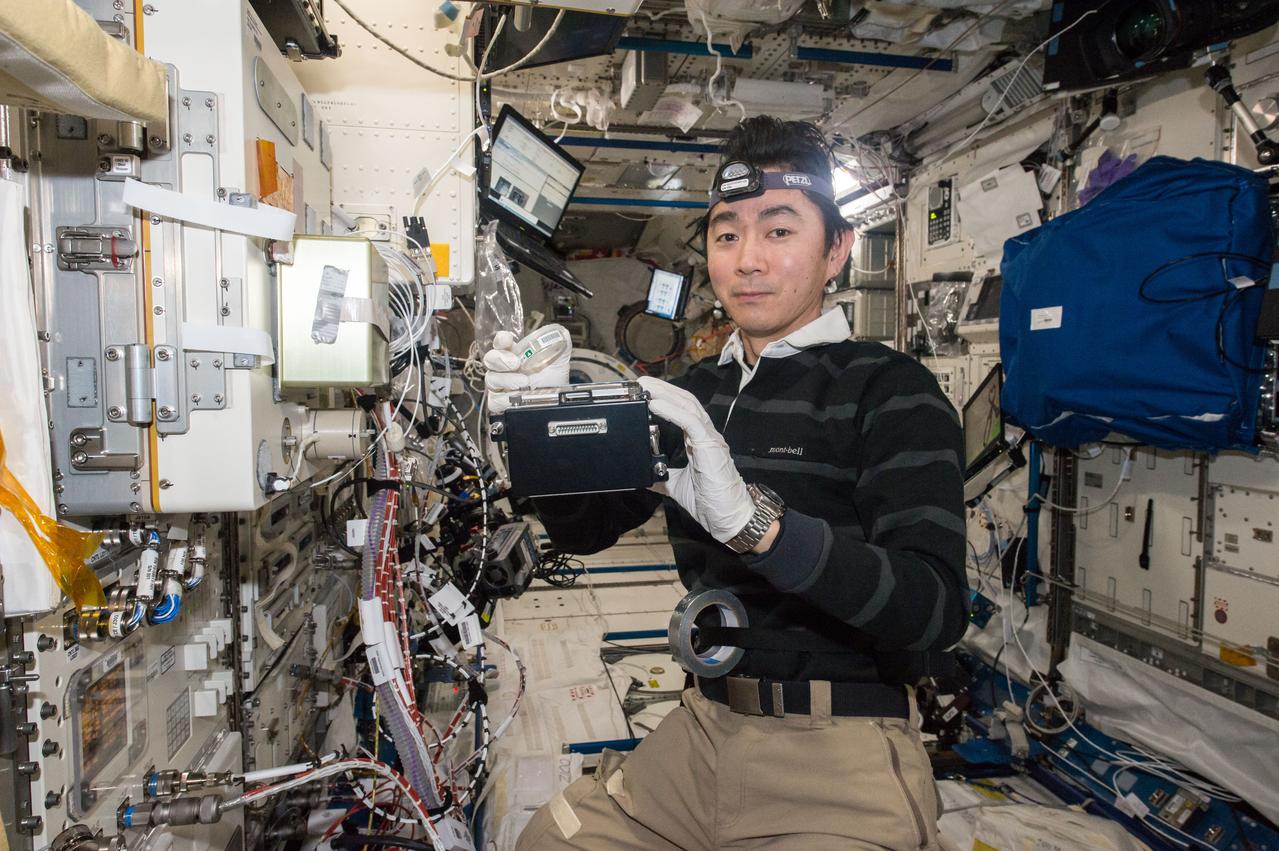
iss045e084264(10/30/2015) --- Japan Aerospace Exploration Agency (JAXA) astronaut Kimiya Yui works to attach a Plant Experiment Unit to the Cell Biology Experiment Facility (CBEF) prior to Run 1 of the Plant Gravity Sensing 2 experiment.
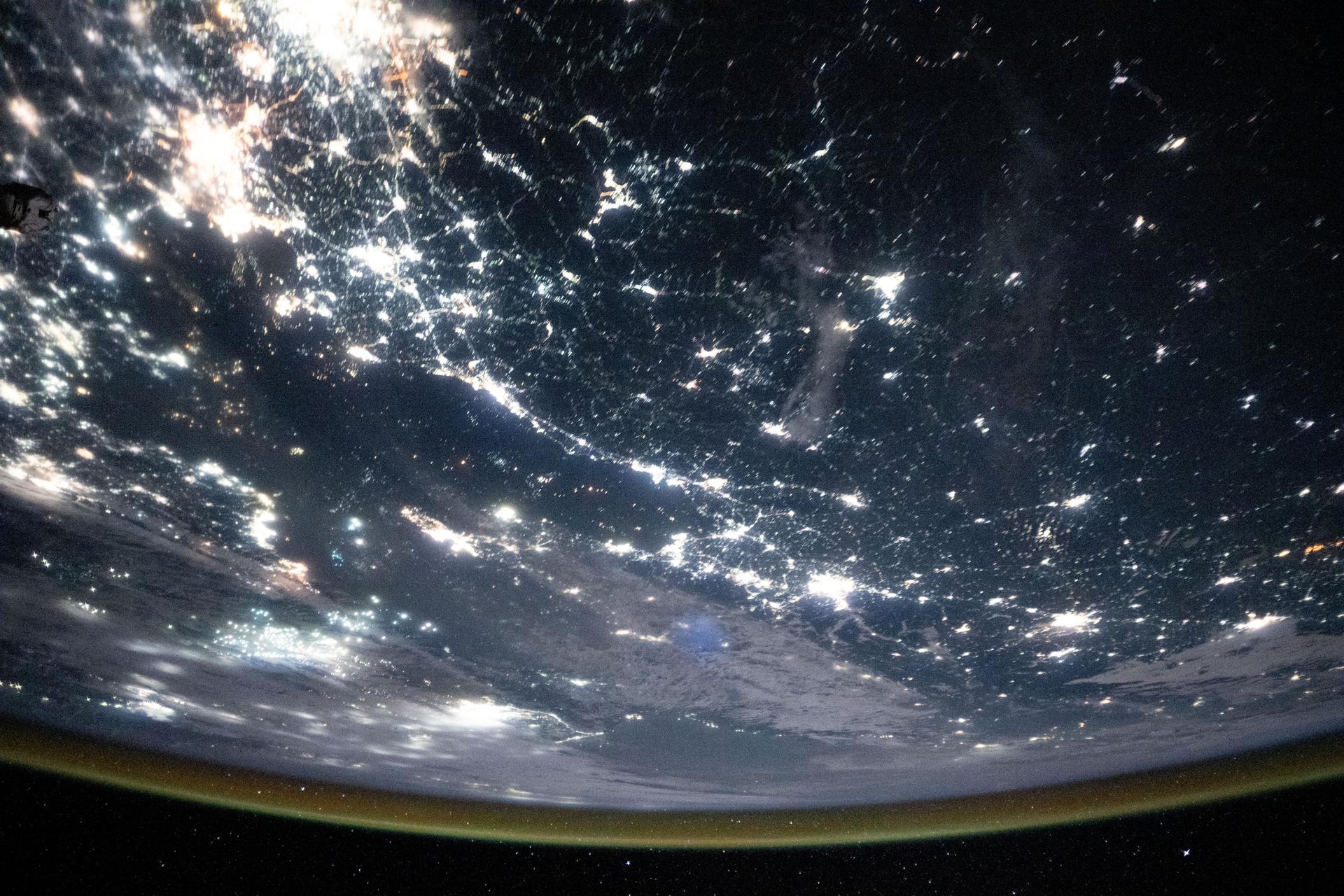
iss073e0824130 (Sept. 14, 2025) --- The Korean Peninsula—highlighted by Seoul, South Korea (bottom left)—and Northeast China—illuminated by the Beijing Municipality (top left)—are pictured from the International Space Station as it orbited 262 miles above Asia at approximately 12:42 a.m. local time.
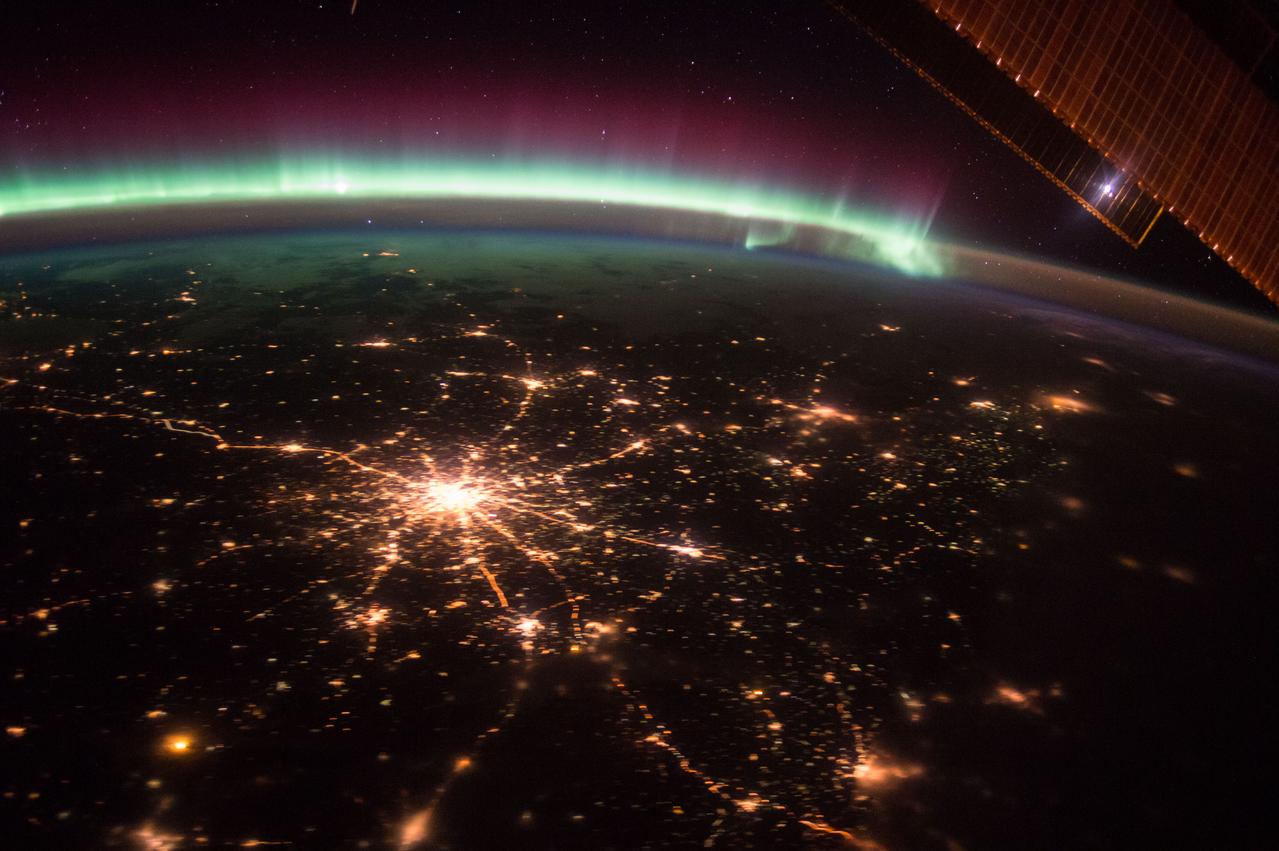
ISS045E048653 (10/06/2015) --- The International Space Station crew witness nightly scenes of our Earths beauty after performing their duties. Here on Oct. 6, 2015, framed by the edge of a huge Station solar panel, the city of Moscow Russia sparkles in the night with spoke streets streaming out across the land while an aurora of blue white and purple contrast the star filled sky.
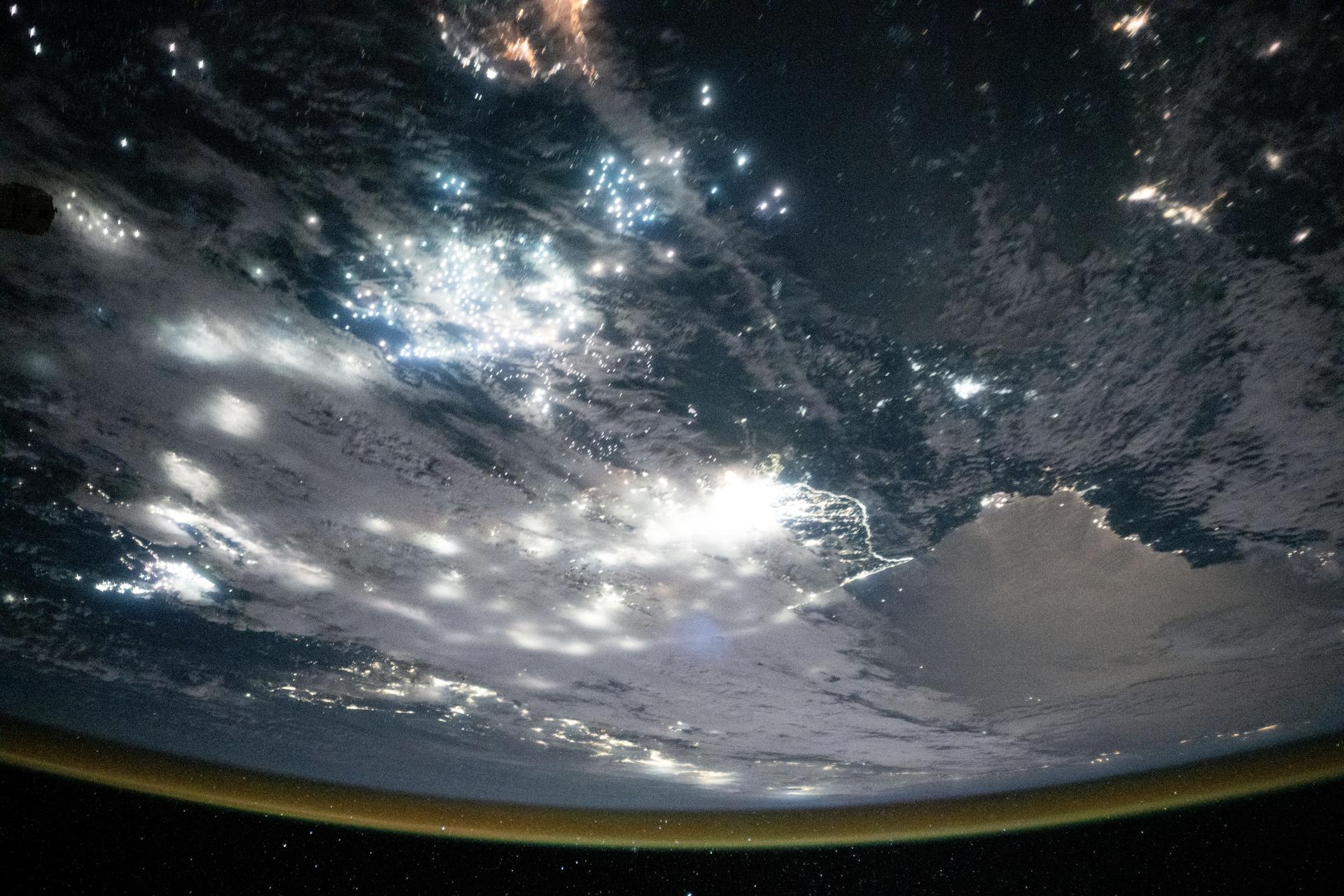
iss073e0824280 (Sept. 14, 2025) --- The well-lit border (center) between South Korea and the less-illuminated North Korea is framed by the moonlit Sea of Japan (bottom) and the Yellow Sea (top), which is dotted with the bright lights of fishing boats. These lights are used to attract nocturnal fish, including anchovies, mackerel, and squid. The International Space Station was orbiting 262 miles above the Bohai Sea at approximately 12:43 a.m. local time when this photograph was taken.