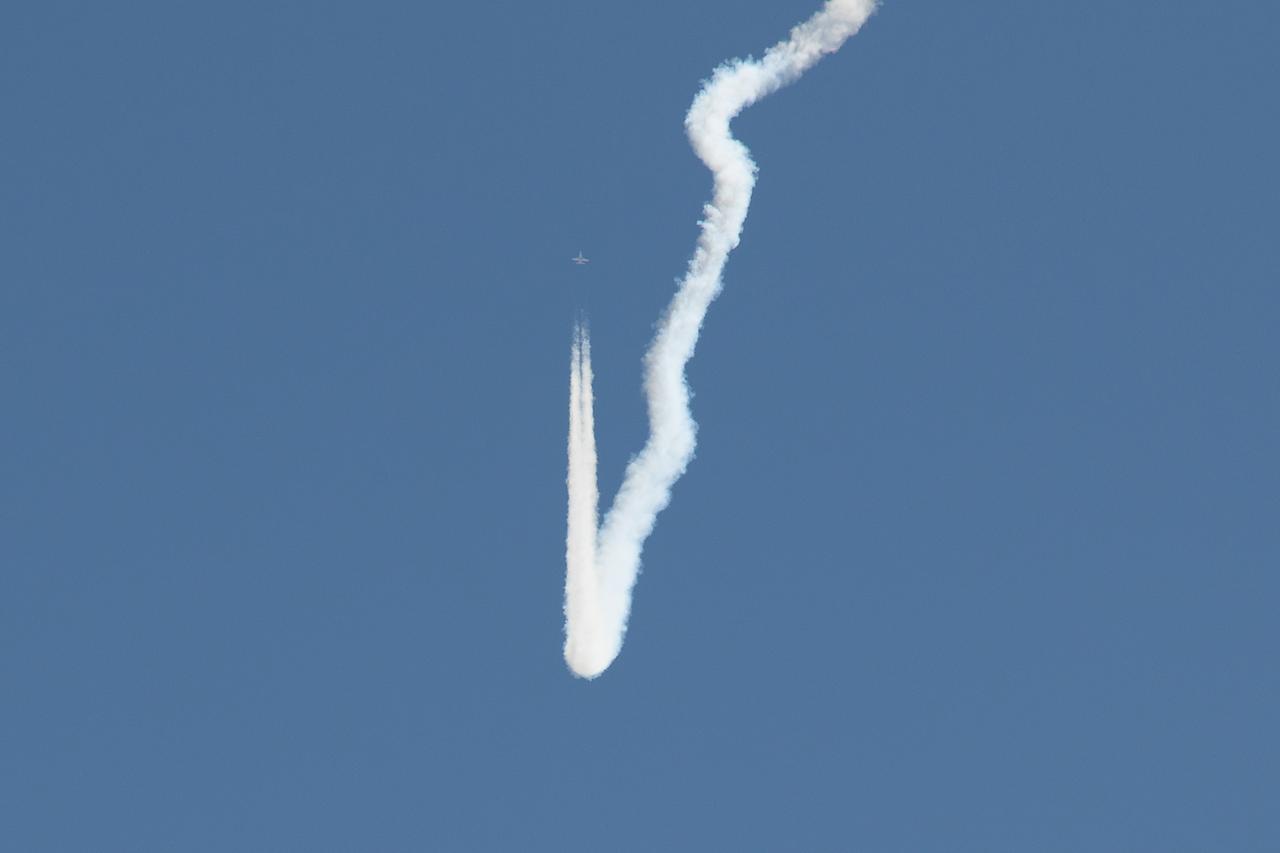
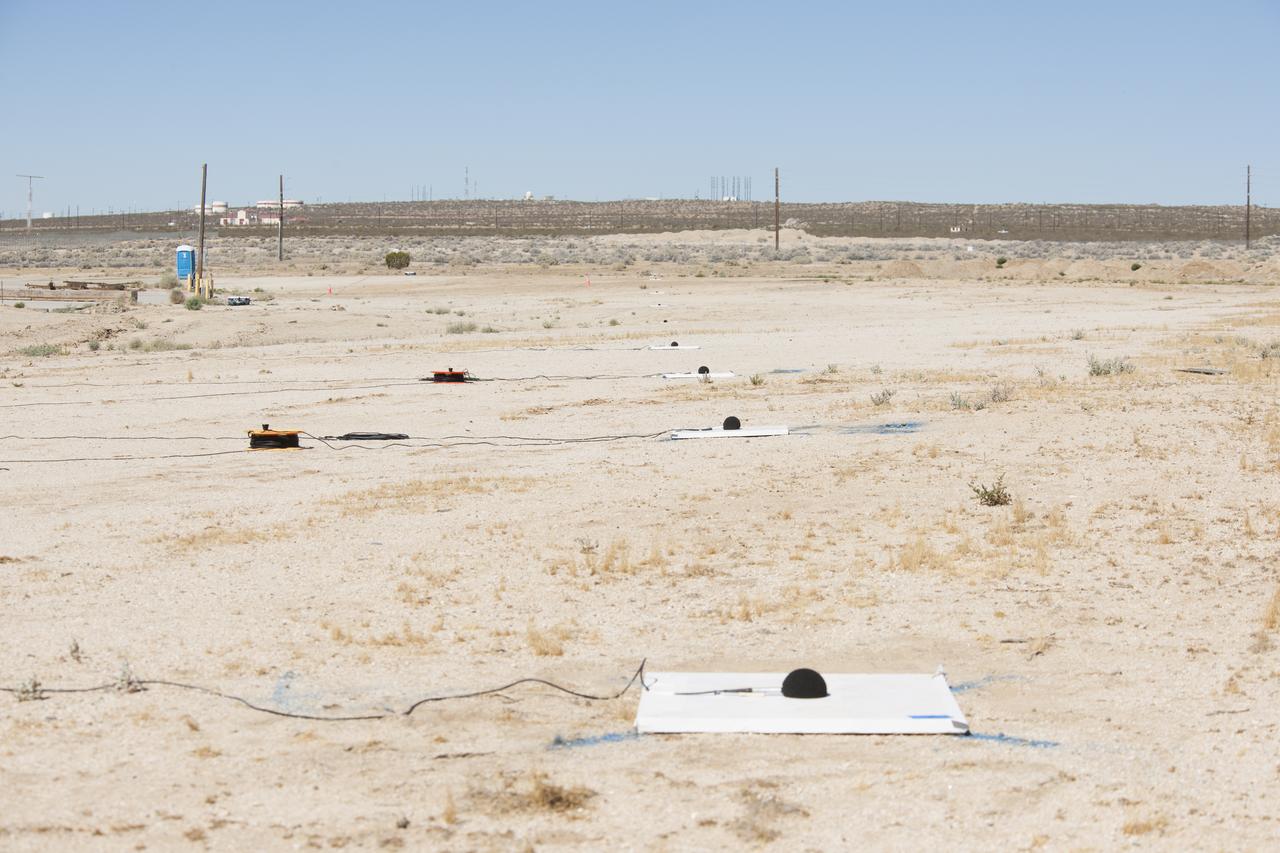
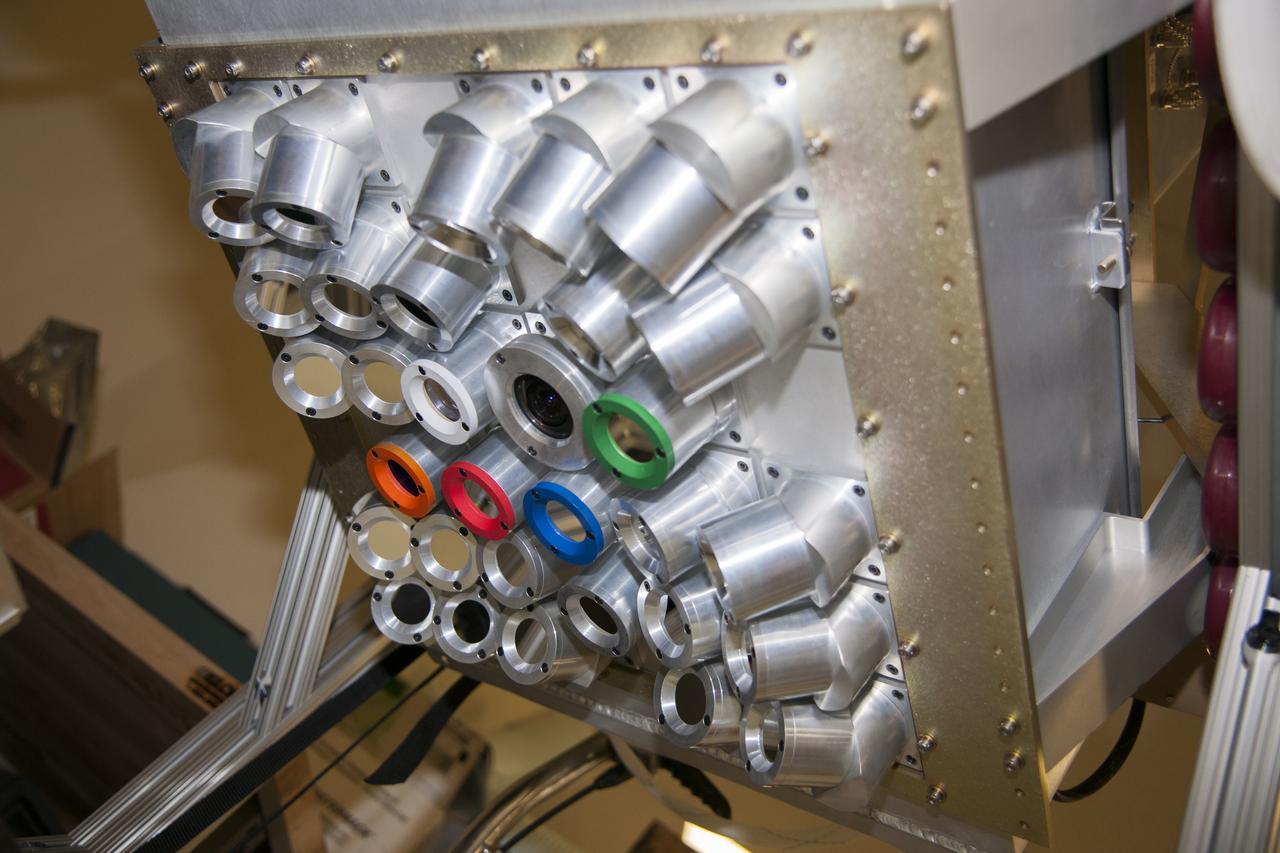
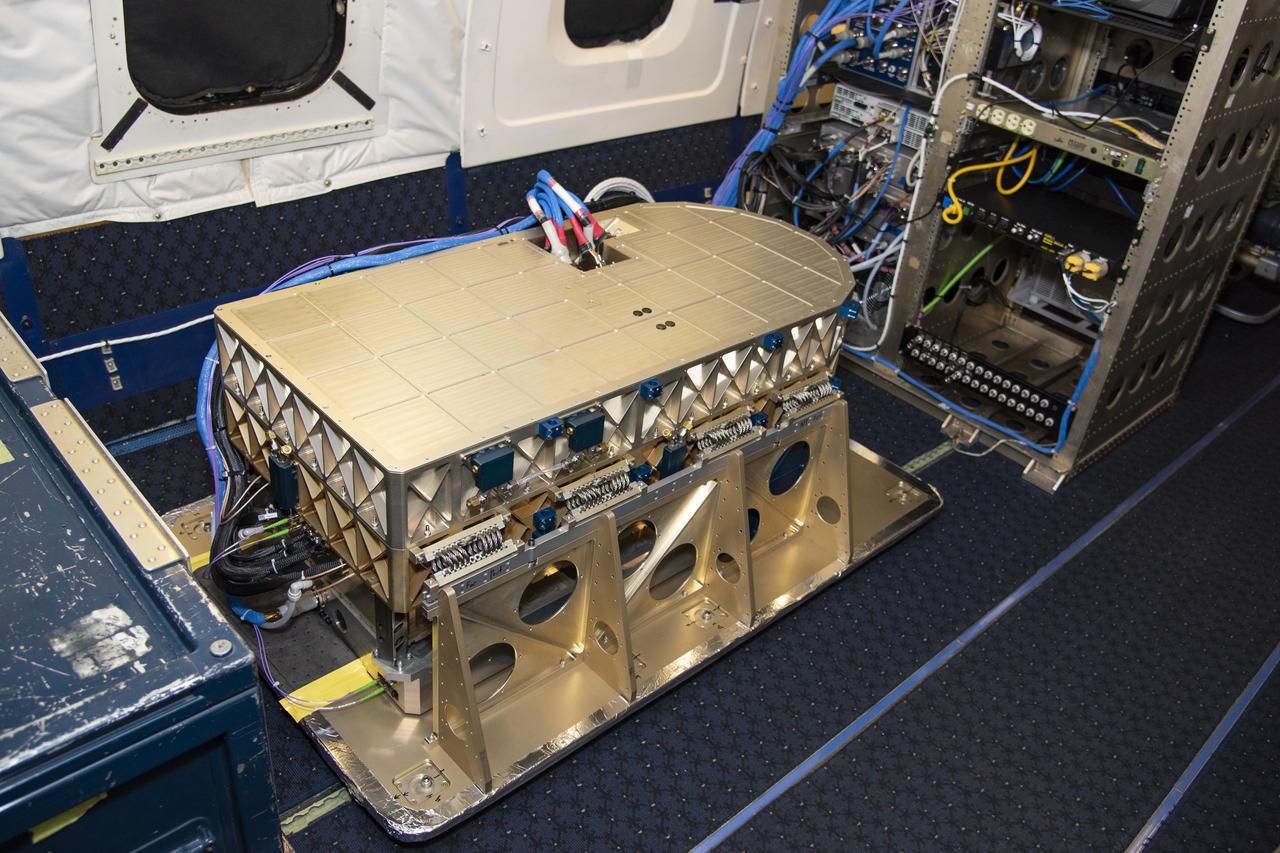
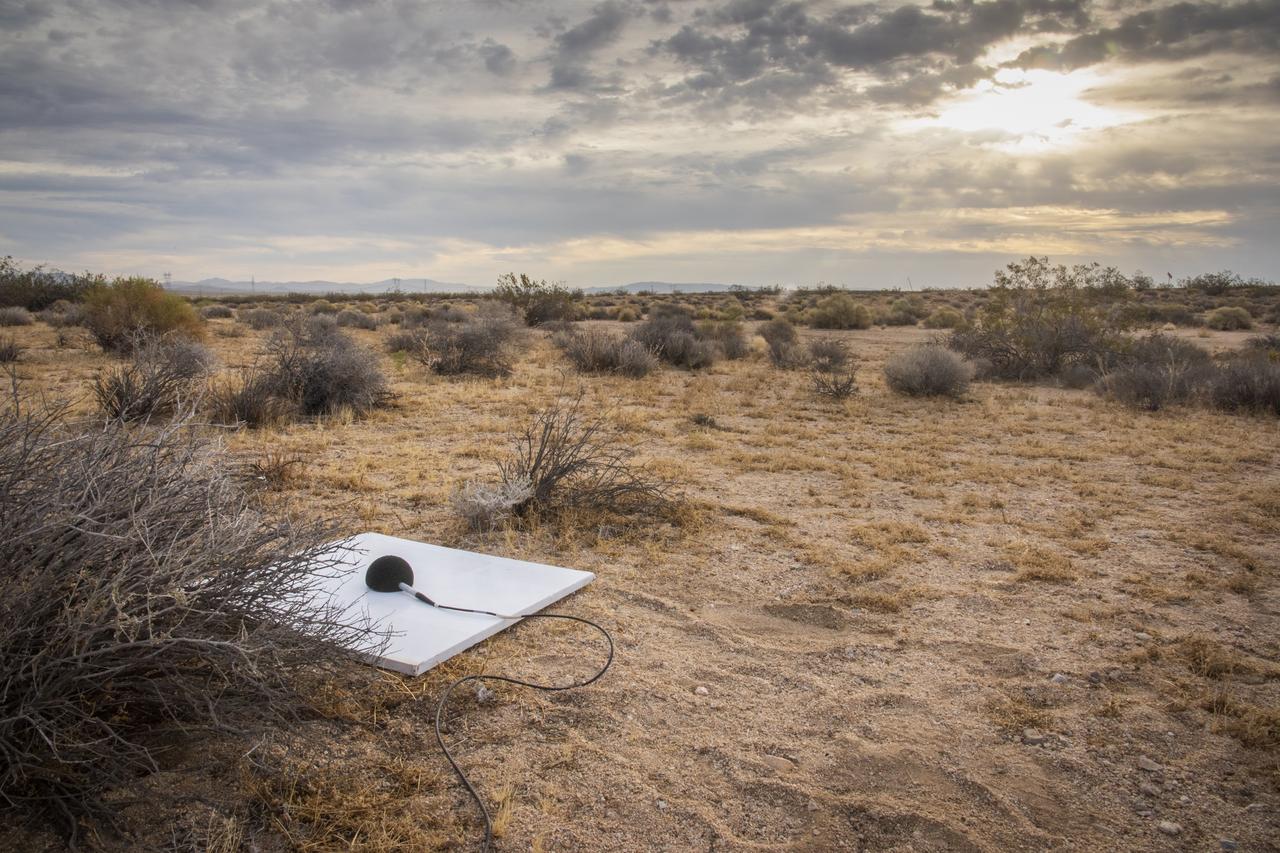
One of three microphone arrays positioned strategically along the ground at Edwards Air Force Base, California, sits ready to collect sound signatures from sonic booms created by a NASA F/A-18 during the SonicBAT flight series. The arrays collected the sound signatures of booms that had traveled through atmospheric turbulence before reaching the ground.
NASA Test Flights Examine Effect of Atmospheric Turbulence on Sonic Booms
A NASA F/A-18 demonstrates different volumes of sonic booms for attendees of a NASA Social at the NASA Armstrong Flight Research Center in California.
AFRC2016-0154-071
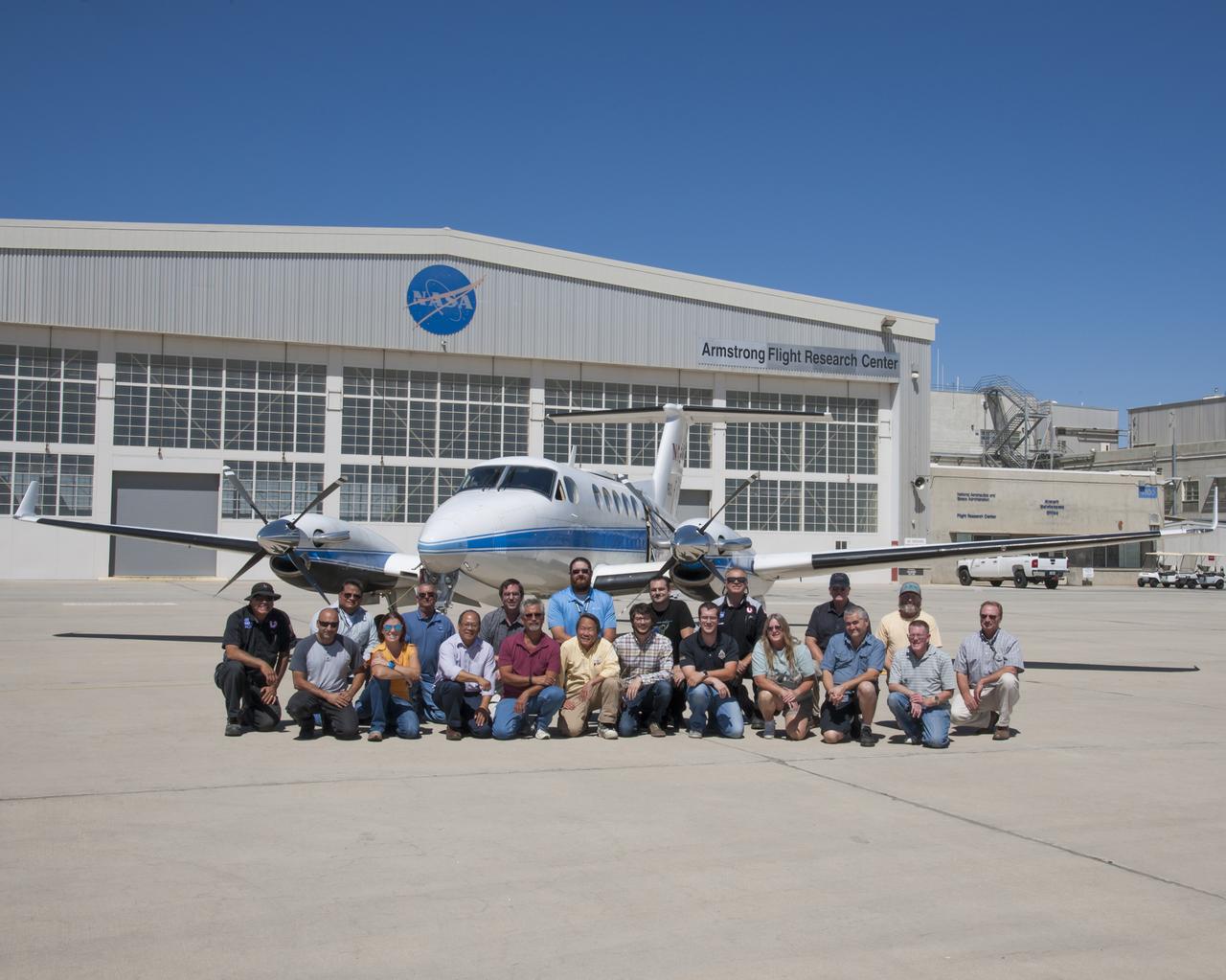
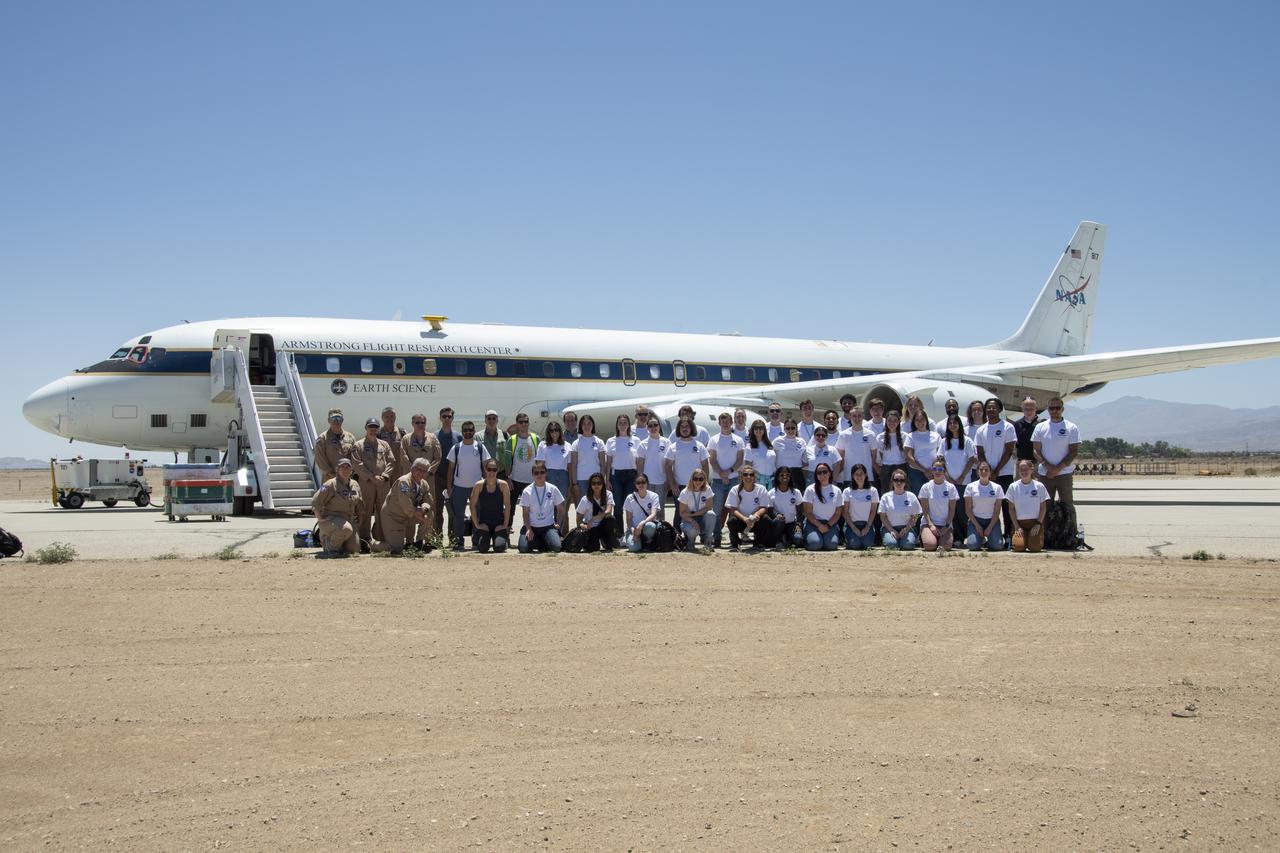
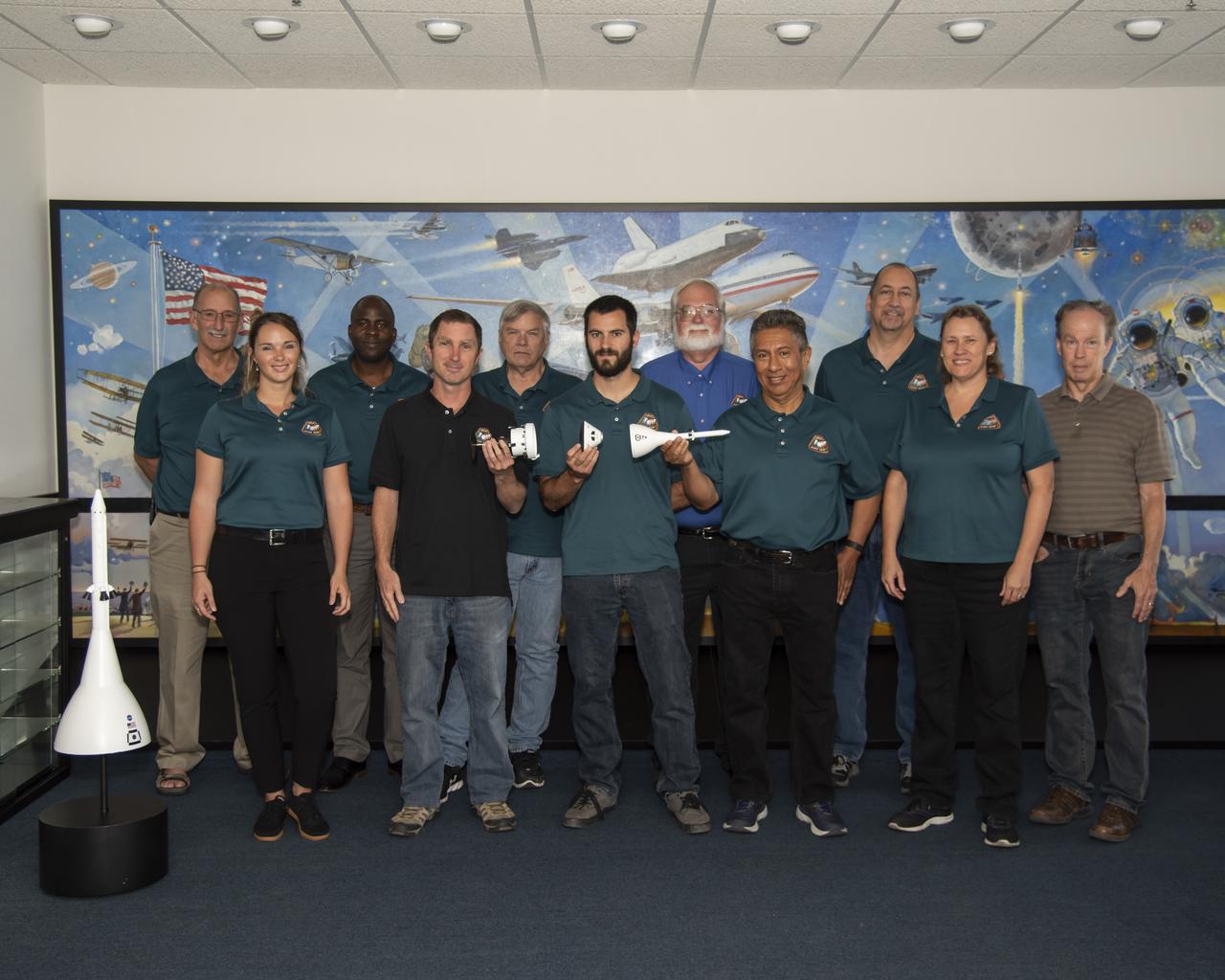
The Advanced Data Acquisition and Telemetry System team includes front row from left Mario Soto, Sam Habbal, Tiffany Titas, RIchard Hang, Randy Torres, Thang Quach, Otto Schnarr, Matthew Waldersen, Karen Estes, Andy Olvera, Stanley Wertenberger and Rick Cordes. In the second row from left are John Atherly, Doug Boston, Tom Horn, Brady Rennie, Chris Birkinbine, Jim McNally, Martin Munday and Tony Lorek.
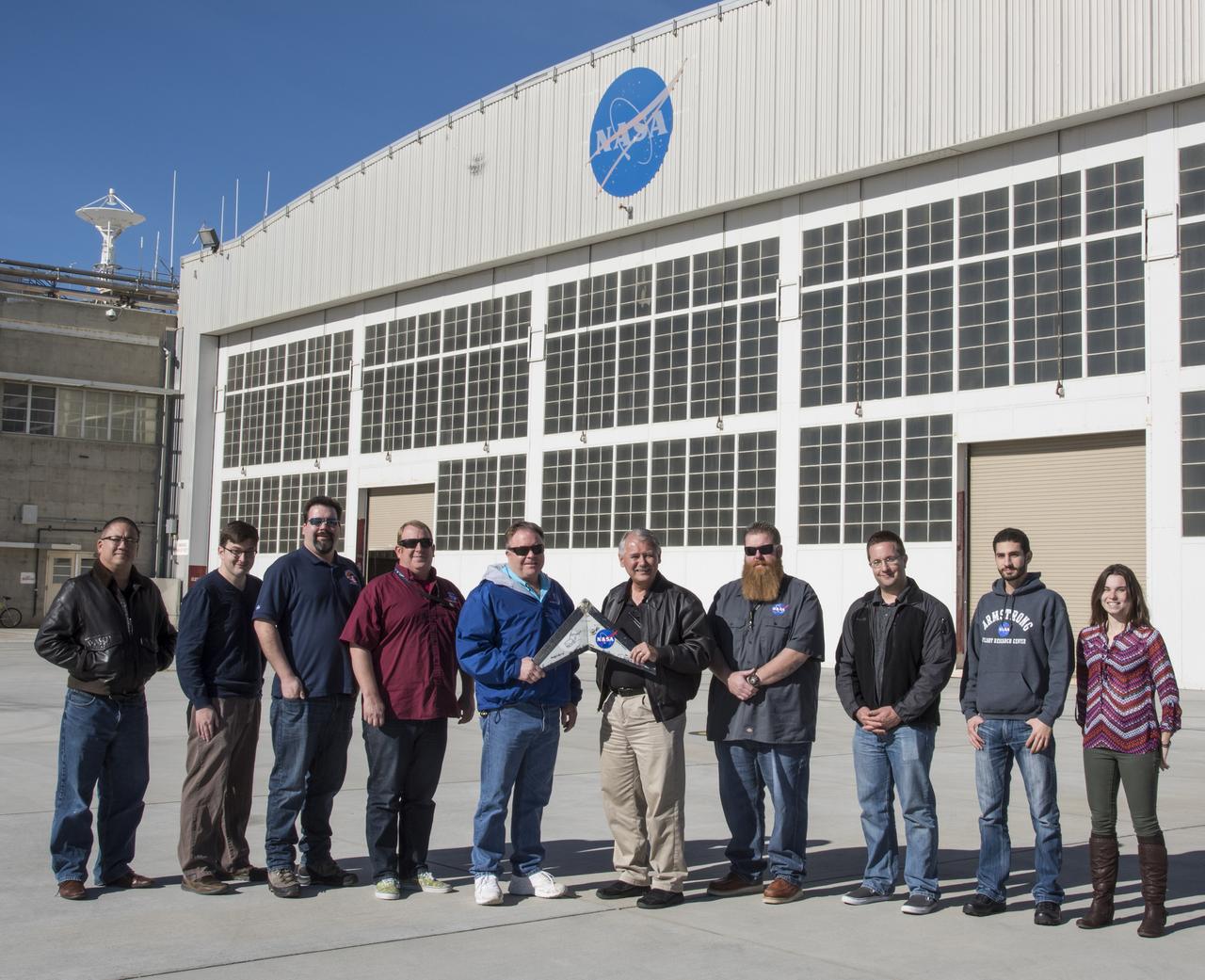
Advanced Data Acquisition and Telemetry System
David Lee, Golda Nguyen and Scott Gleason recover the Prandtl-D No. 3 after one of its first flights.
ED15-0330-084
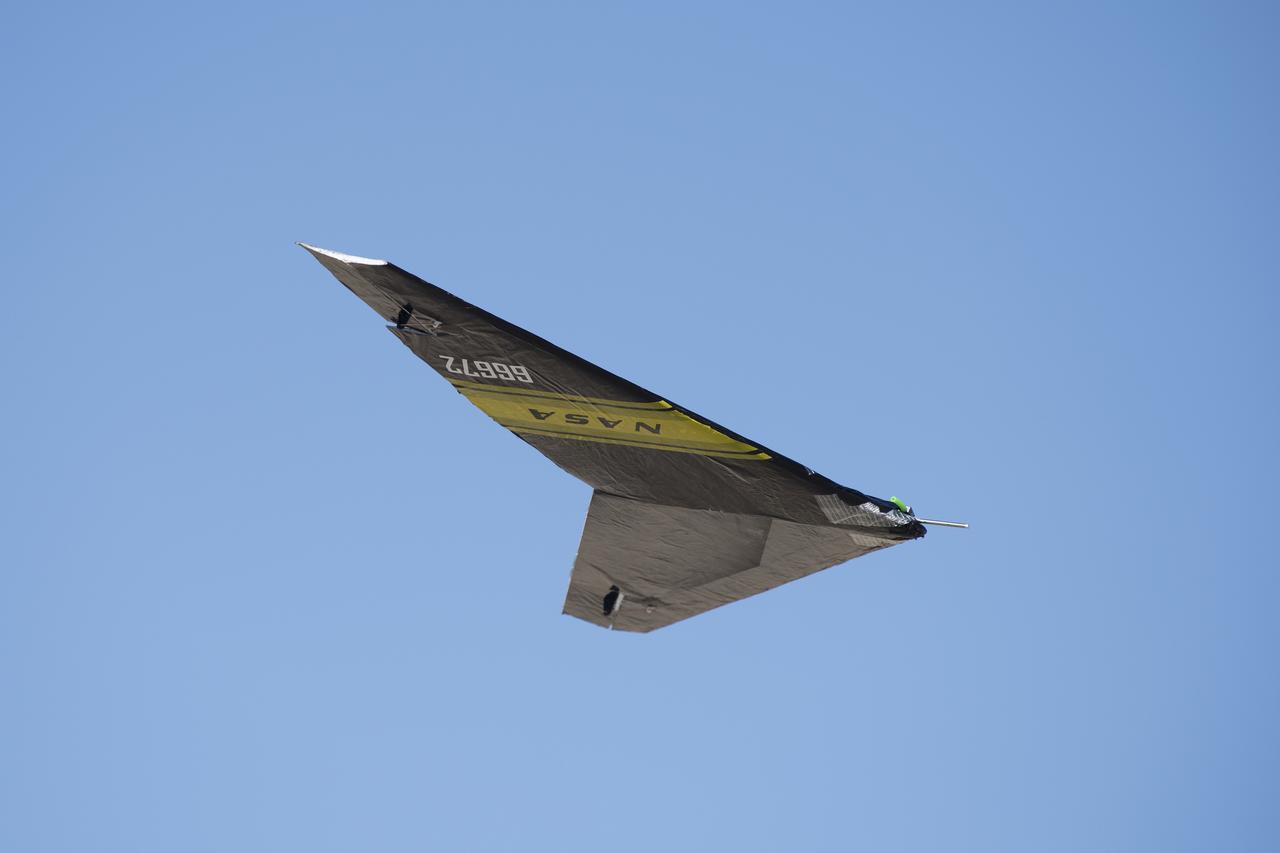
Test flights of the Prandtl-M have resumed. The airframe also is the basis for another aircraft that will collect weather data.
Potential Mars Airplane Resumes Flight
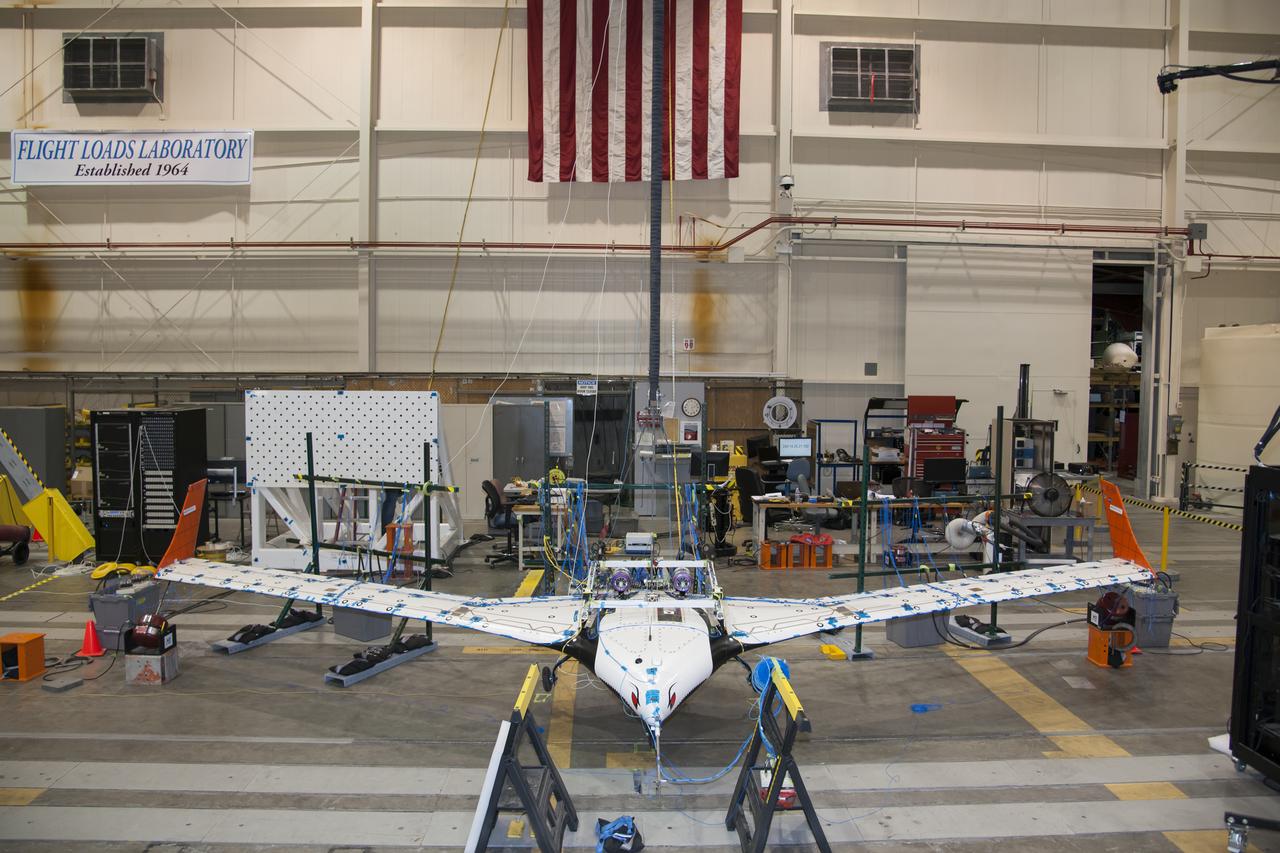
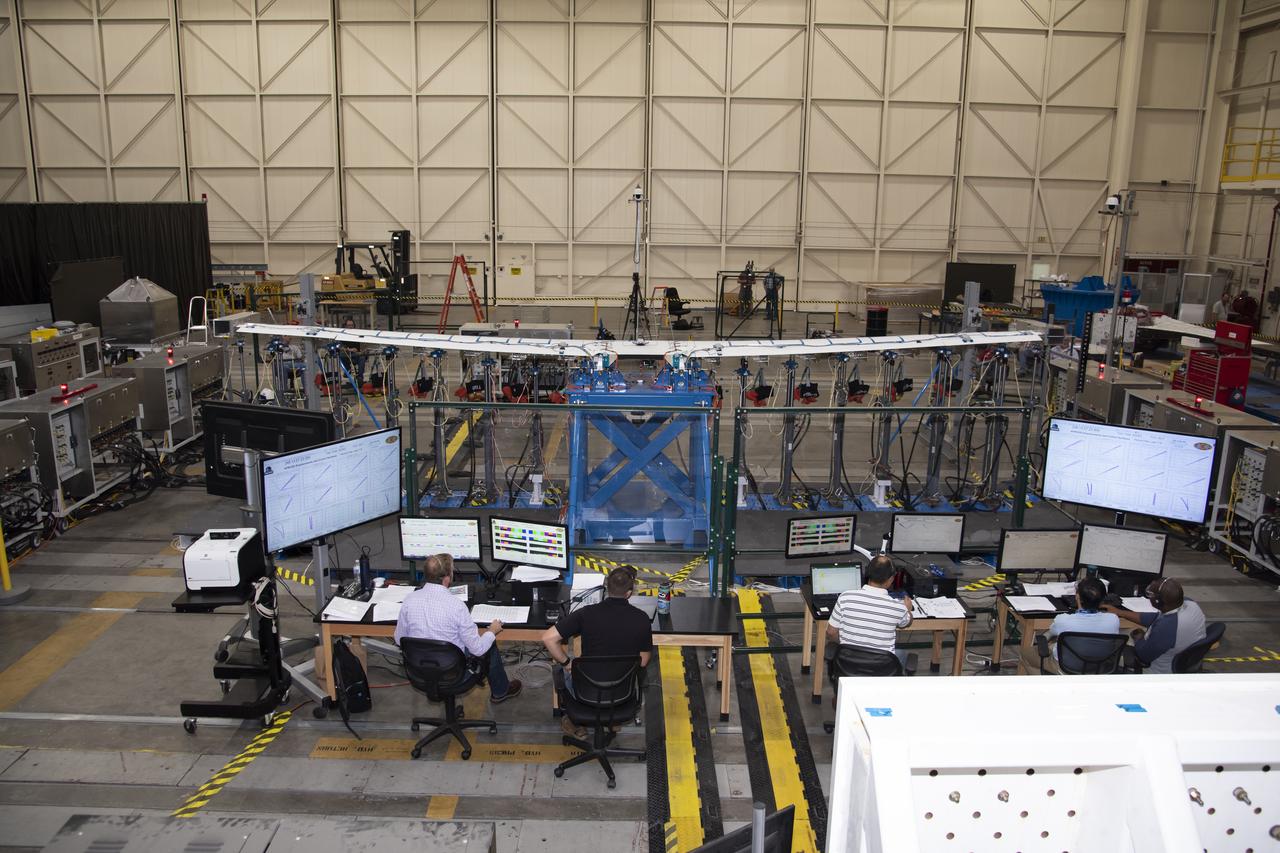
The X-56 Multi-Utility Technology Testbed (MUTT) undergoes ground vibration tests in Armstrong's Flight Loads Laboratory.
AFRC2016-0258-123
The Fly’s Eye Geostationary Lightning Mapper Simulator will map lightning strikes using 30 photometers, instruments that measure the intensity of light.
AFRC2016-0332-04
The WHAATRR team from NASA Armstrong includes, from left, Derek Abramson Dave Berger, John Bodylski, Robert “Red” Jensen, Scott Wiley, Al Bowers, Justin Hall, Luke Bard, Hussein Nasr and Samantha Ingersoll.
Subscale Glider Could Assist in Weather Studies, Prediction
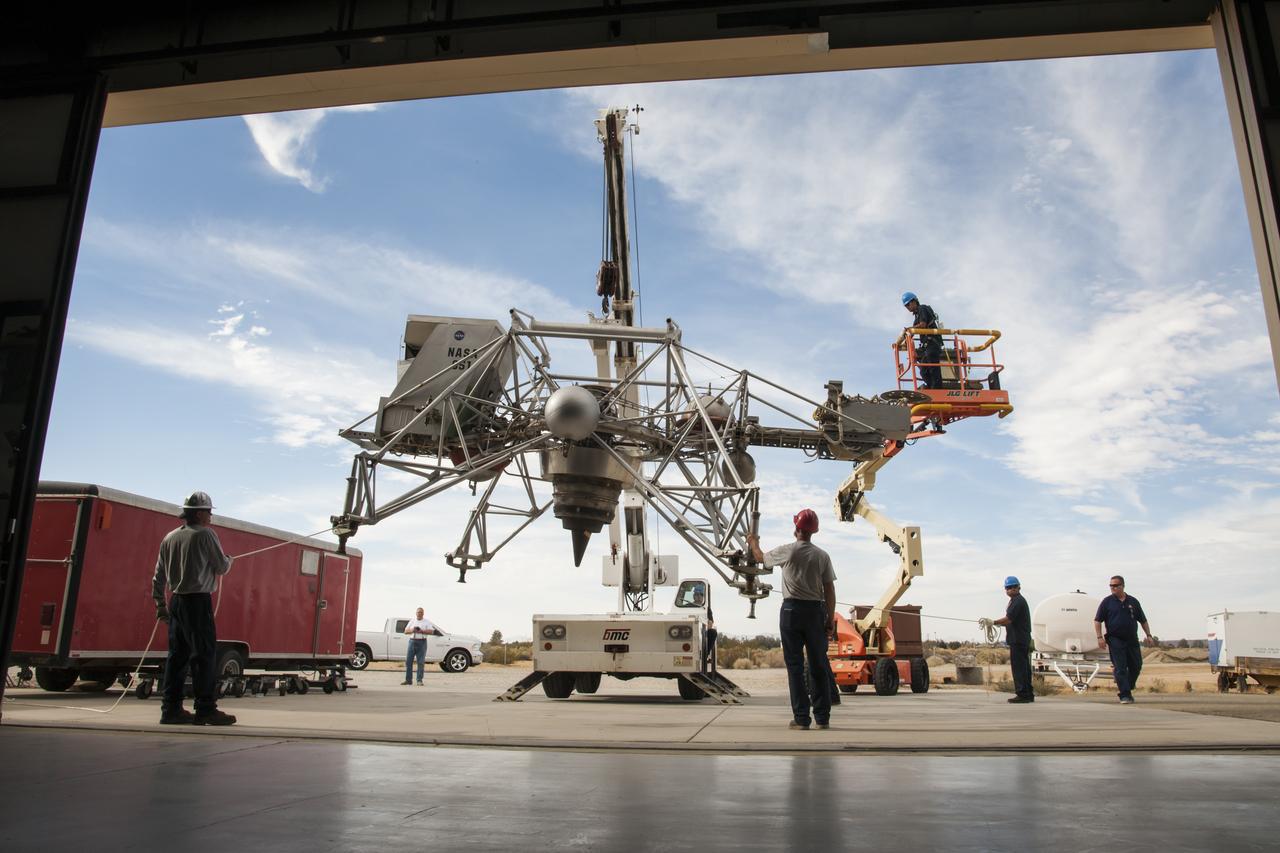
Workers move the Lunar Landing Research Vehicle, or LLRV, into the Edwards Air Force Base Flight Test Museum in California for temporary display.
NASA Lends Space Artifacts to Air Force Museum
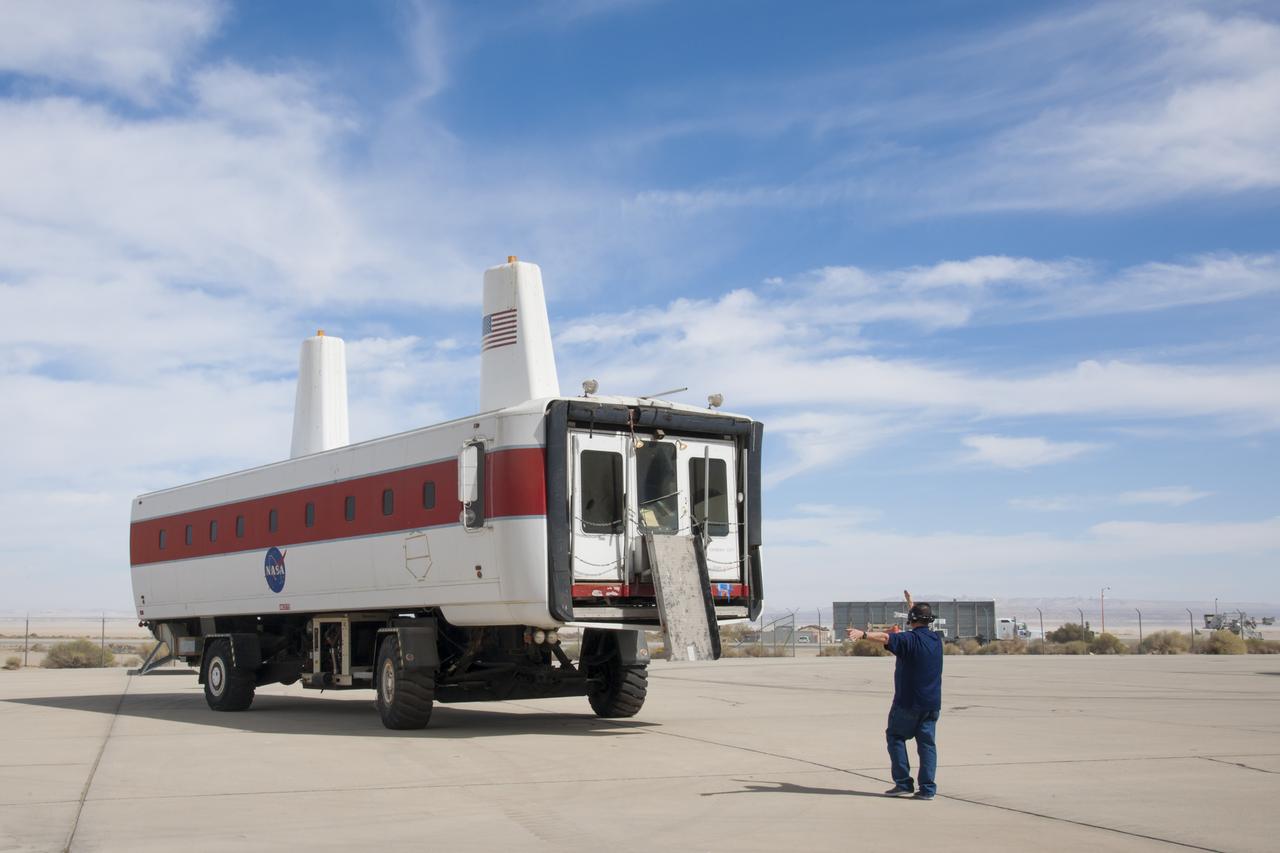
Workers drive the space shuttle Crew Transport Vehicle, or CTV, to the Edwards Air Force Base Flight Test Museum in California for display.
NASA Lends Space Artifacts to Air Force Museum
Mike Frederick and NASA interns Jack Ly and Kassidy McLaughlin monitor an F-15B flight.
ED16-0038-64
NASA Armstrong’s Mission Control Center, or MCC, is where culmination of all data-gathering occurs. Engineers, flight controllers and researchers monitor flights and missions as they are carried out. Data and video run through the MCC and are recorded, displayed and archived. Data is then processed and prepared for post-flight analysis.
AFRC2017-0076-1
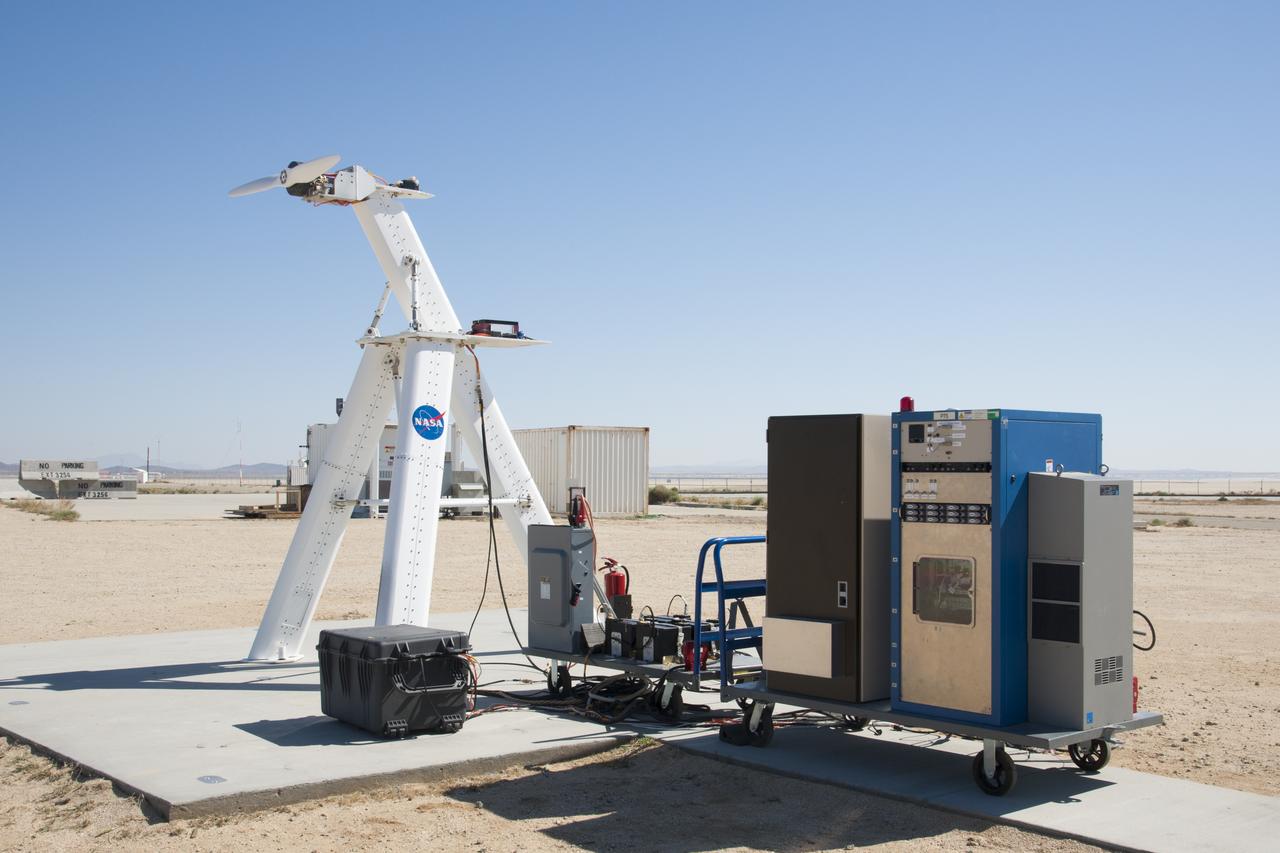
The electric propulsion system to be tested is secured at the top of the Airvolt test stand and instrumented to collect data.
Electric Motor Test Stand Will Help With Future X-planes
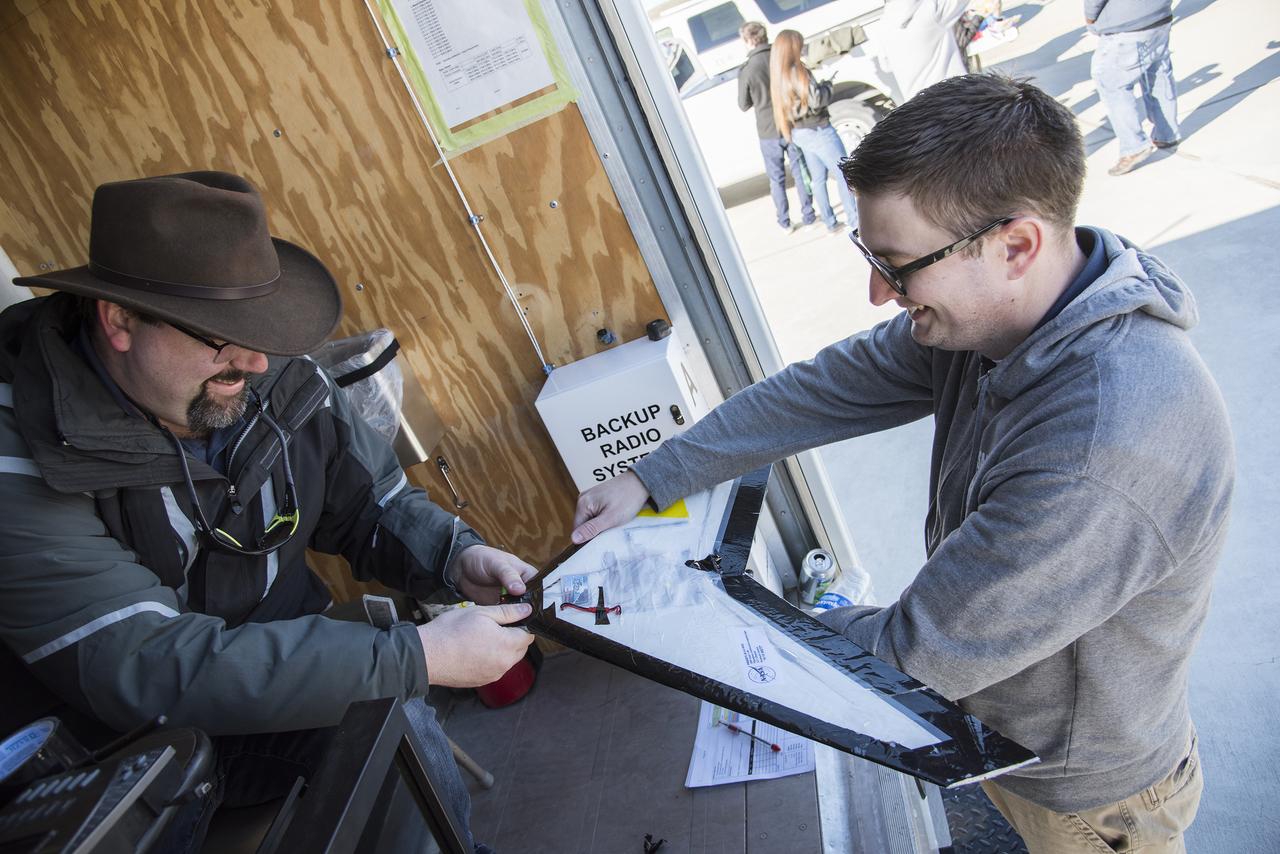
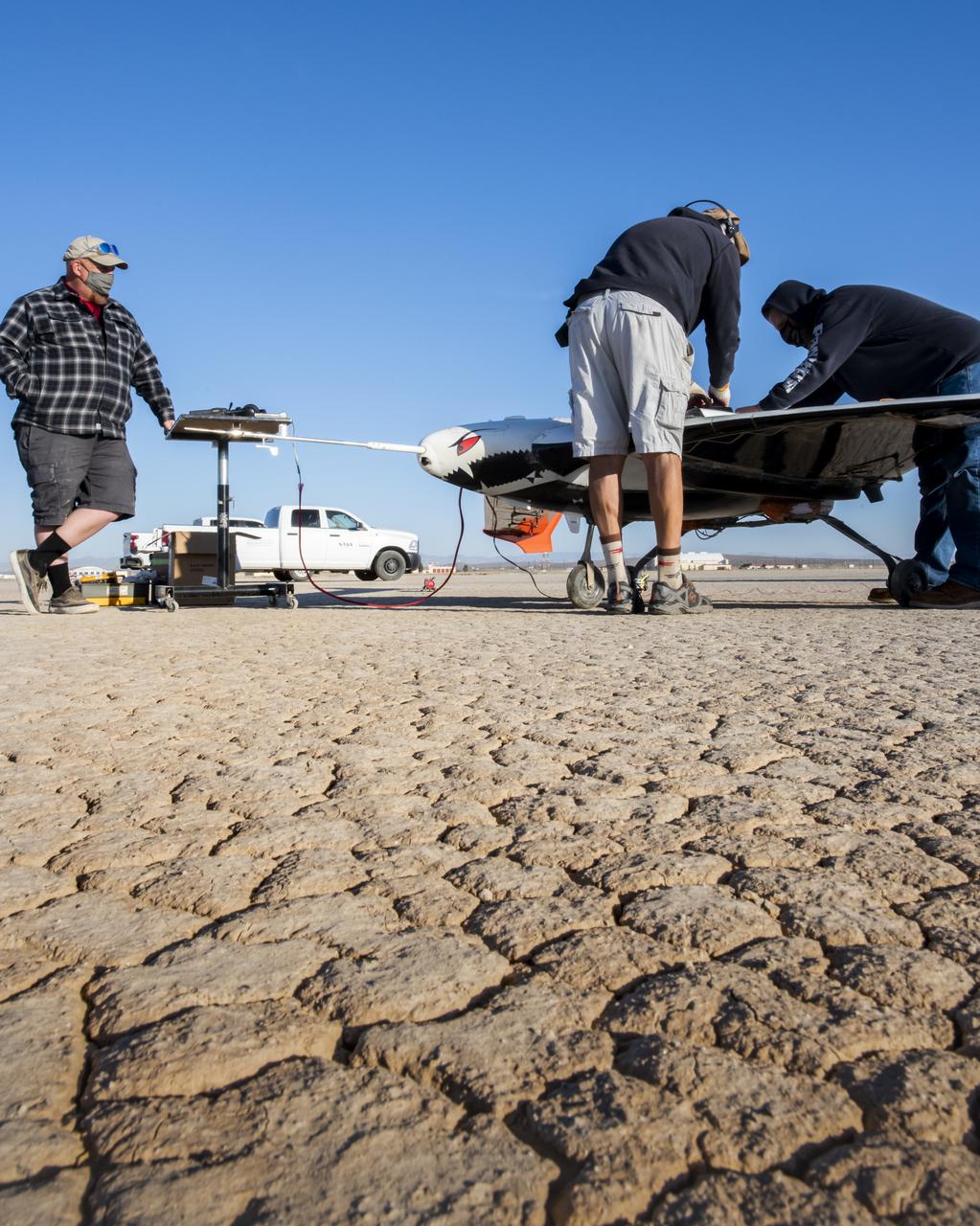
Dave Berger, right, and John Bodylski prepare the Prandtl-M for a test flight.
Potential Mars Airplane Resumes Flight
The equipment required for an electric propulsion test is ready for research.
Electric Motor Test Stand Will Help With Future X-planes
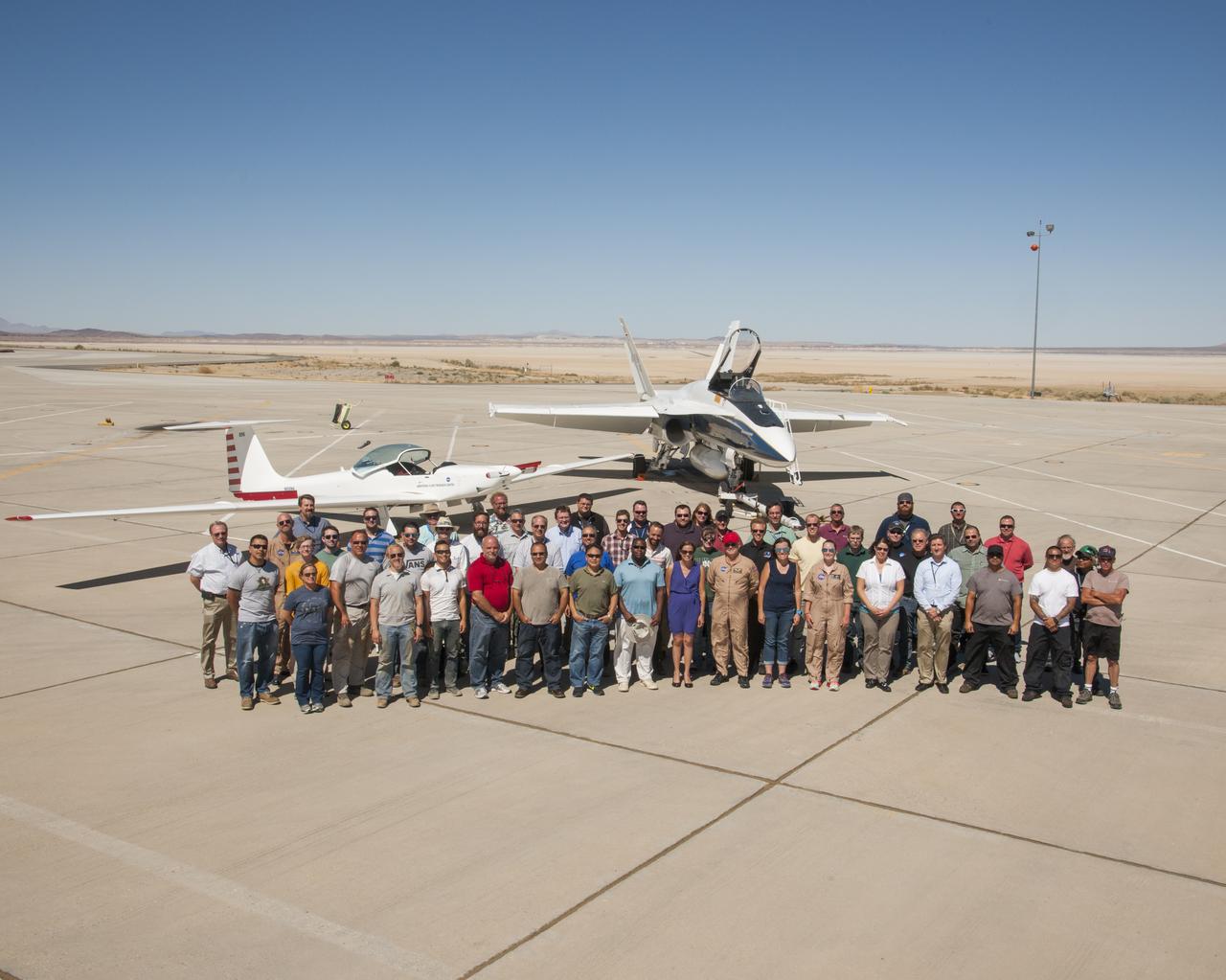
NASA’s SonicBAT team poses in front of the TG-14 motor glider and F/A-18 research aircraft, sitting side-by-side in front of Rogers Dry Lake prior to a SonicBAT flight at Armstrong Flight Research Center on Edwards Air Force Base, California. The TG-14 collected sound signatures of shockwaves created by the F/A-18, to compare with signatures collected on the ground.
NASA Test Flights Examine Effect of Atmospheric Turbulence on Sonic Booms
Engineers gather aerodynamic data on the integrated experimental testbed without the electric motor propellers.
Piloted, Electric Propulsion-Powered Experimental Aircraft Underway
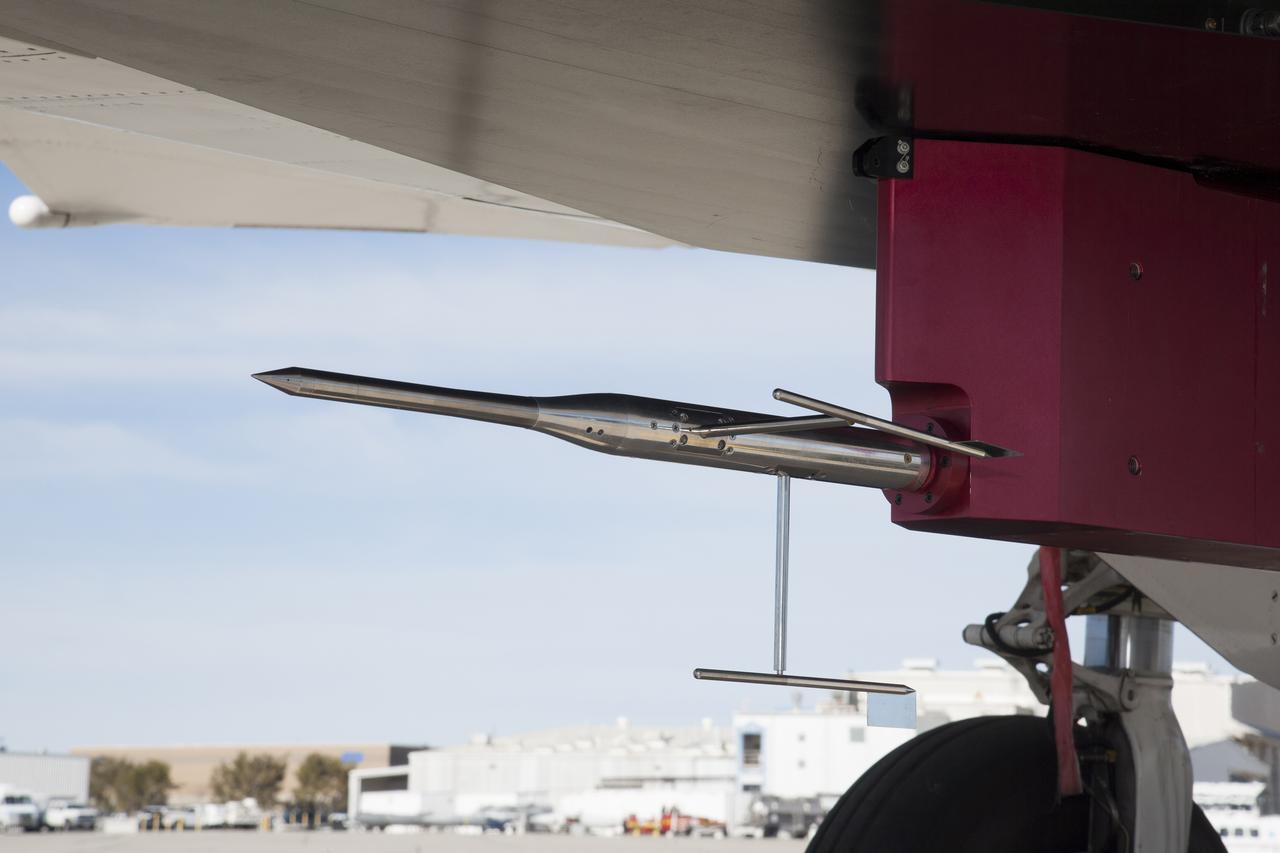
A new supersonic probe seen affixed to a F-15B flight test fixture might one day measure the sonic booms of a new generation of supersonic aircraft.
ED16-0038-69
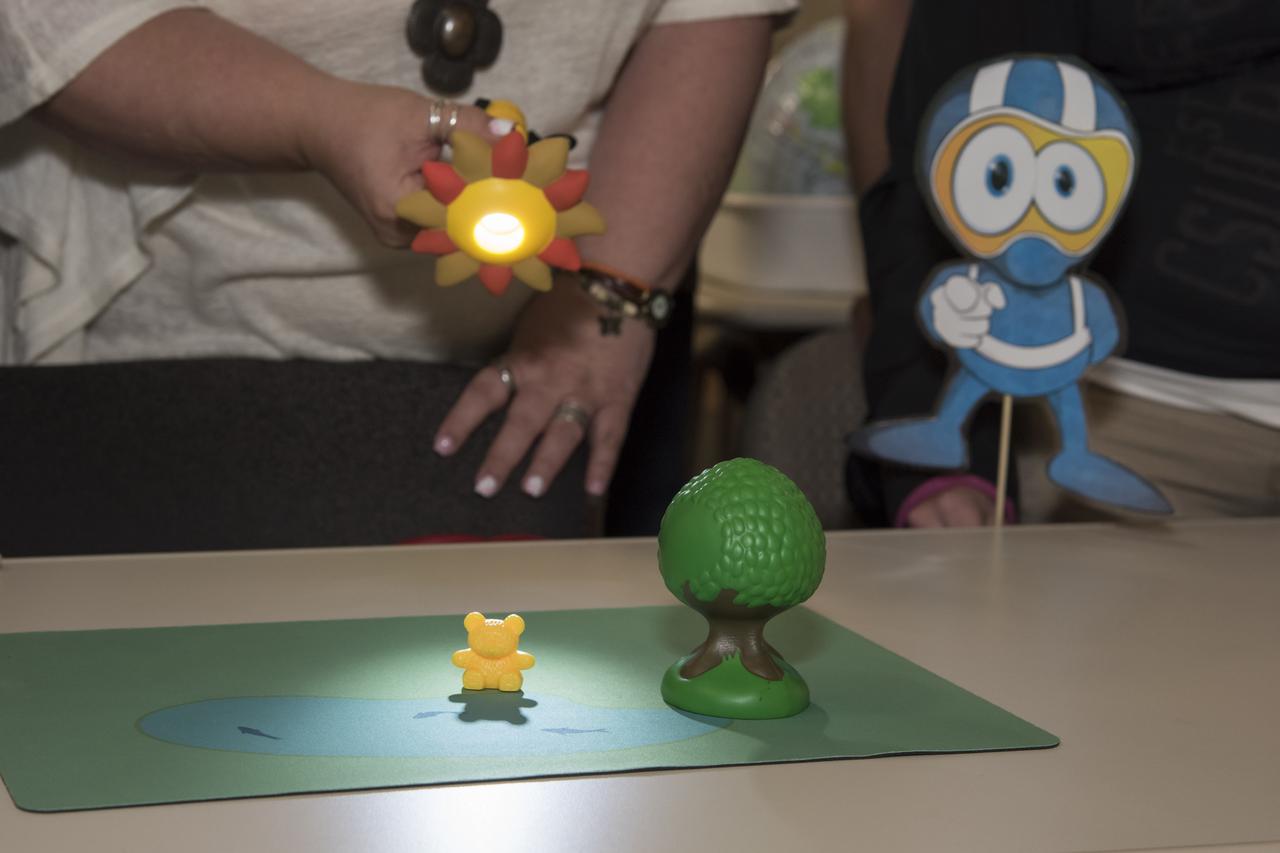
Educators shine a flashlight onto a toy bear to simulate the physics behind solar eclipses.
AFRC2017-0116-27
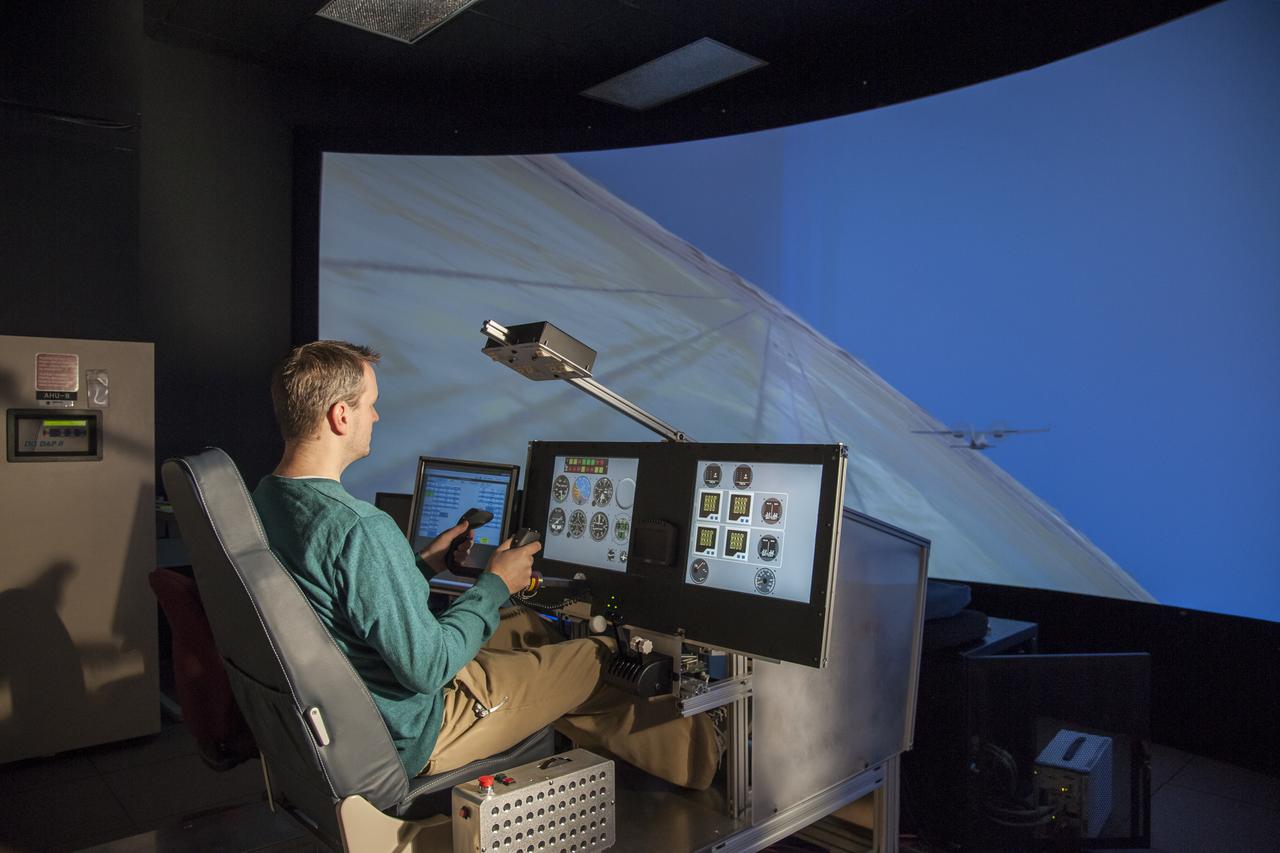
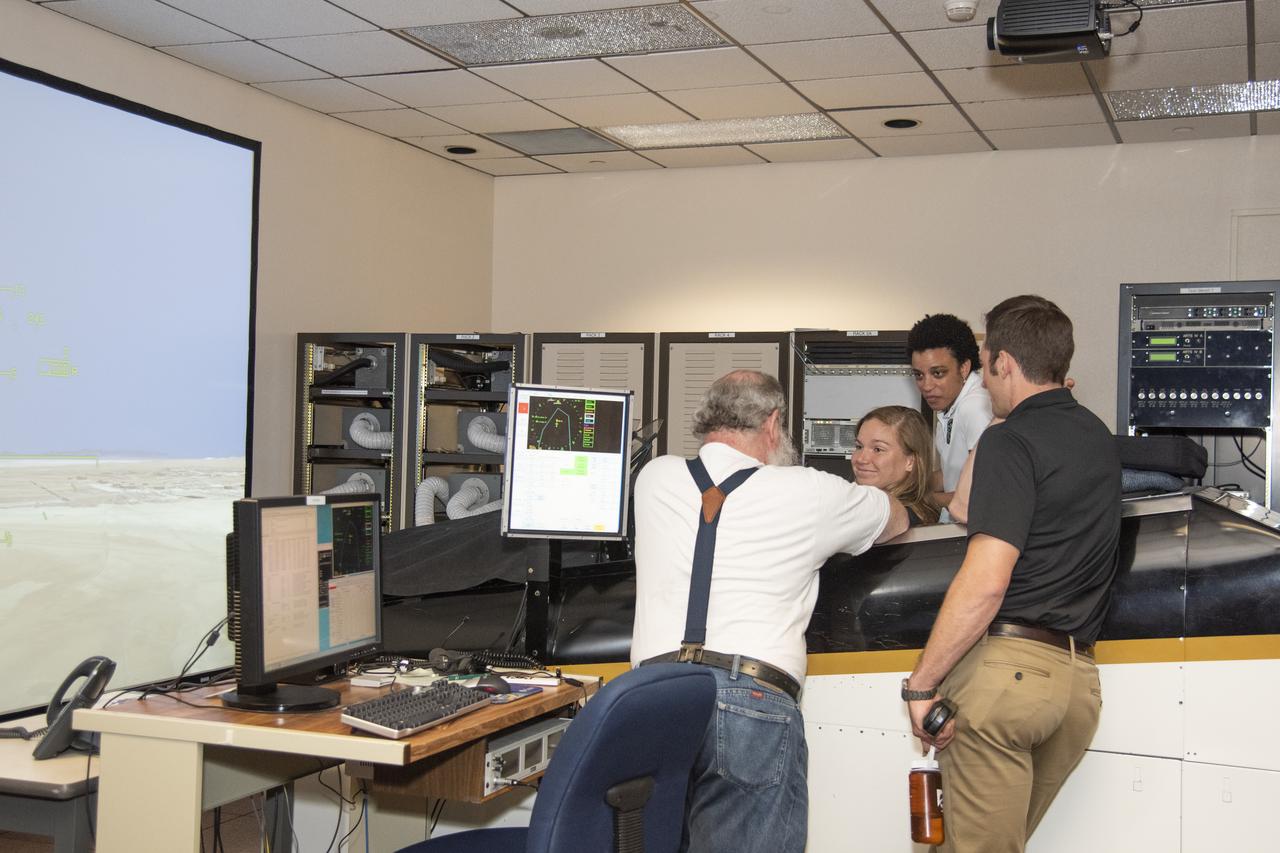
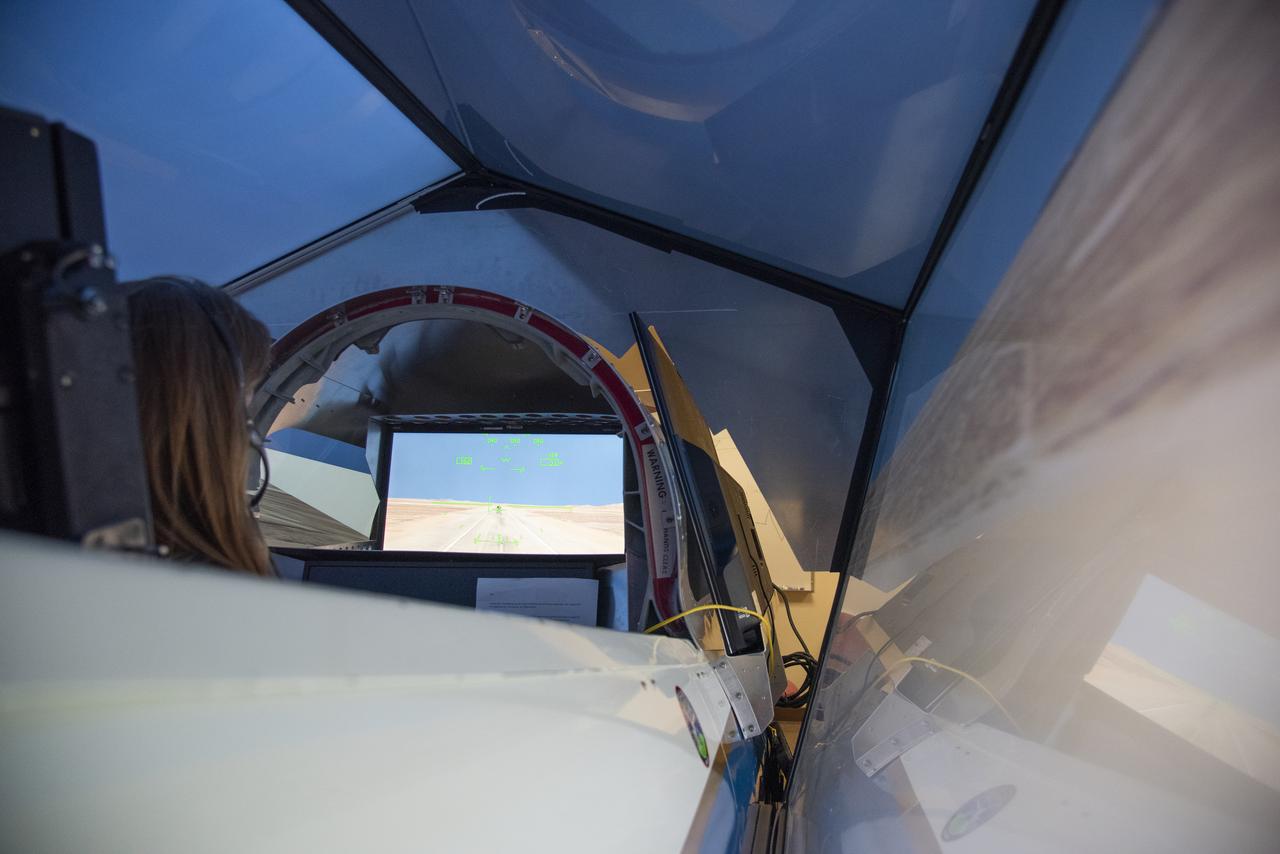
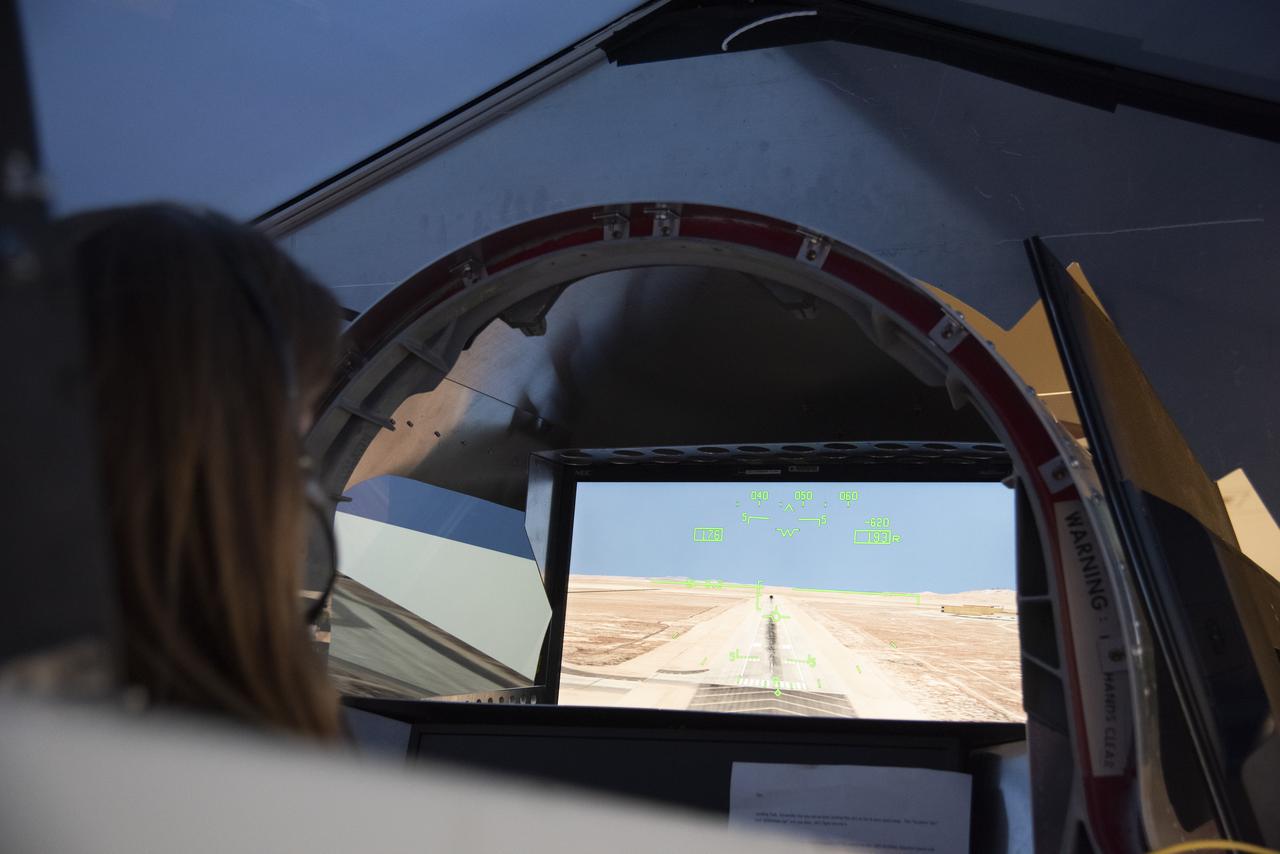
X-57 principal investigator Sean Clarke flies the X-57 simulator at NASA’s Armstrong Flight Research Center, examining ideal maneuvers and reaction times for flight.
NASA X-57 Simulator Prepares Pilots, Engineers for Flight of Electric X-Plane
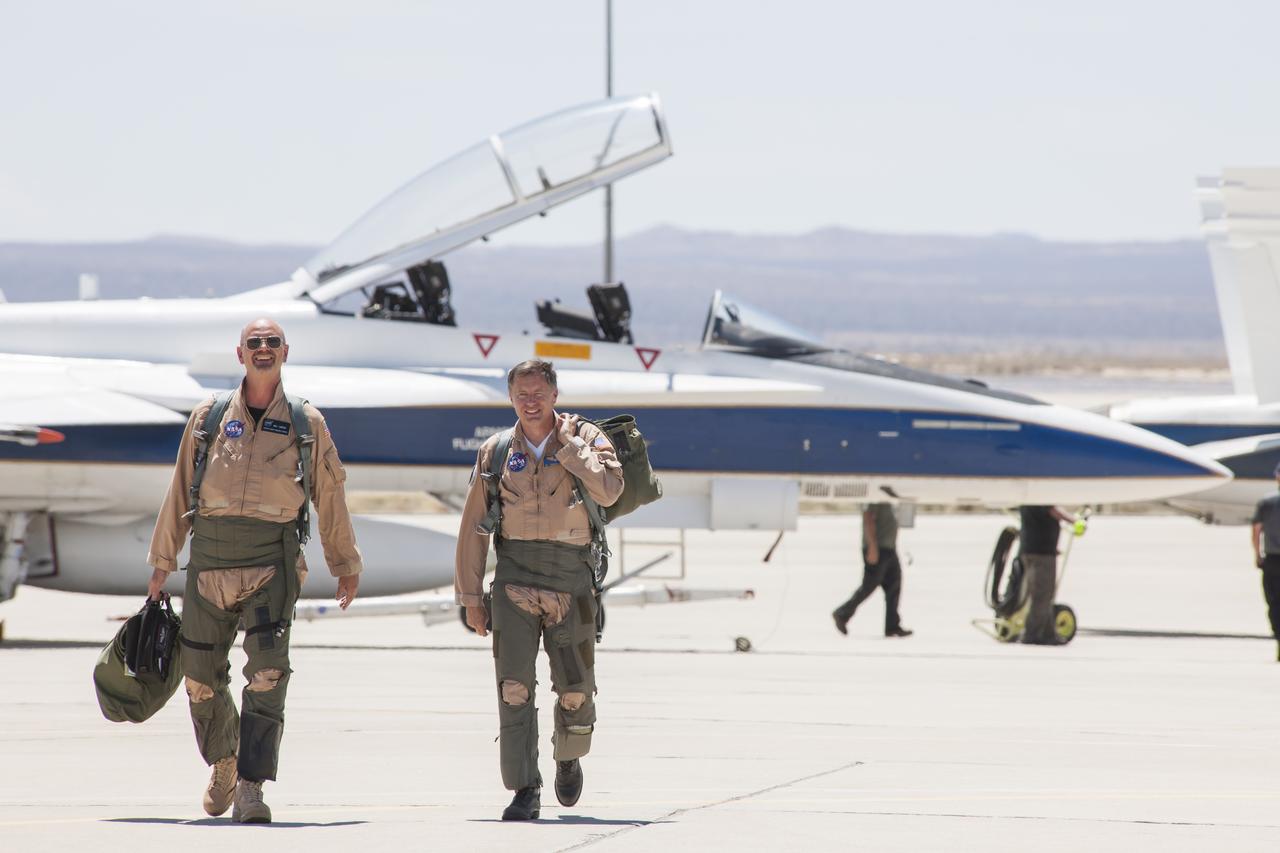
NASA pilot Nils Larson, and flight test engineer and pilot Wayne Ringelberg, head for a mission debrief after flying a NASA F/A-18 at Mach 1.38 to create sonic booms as part of the SonicBAT flight series at NASA’s Armstrong Flight Research Center in California, to study sonic boom signatures with and without the element of atmospheric turbulence.
NASA Test Flights Examine Effect of Atmospheric Turbulence on Sonic Booms
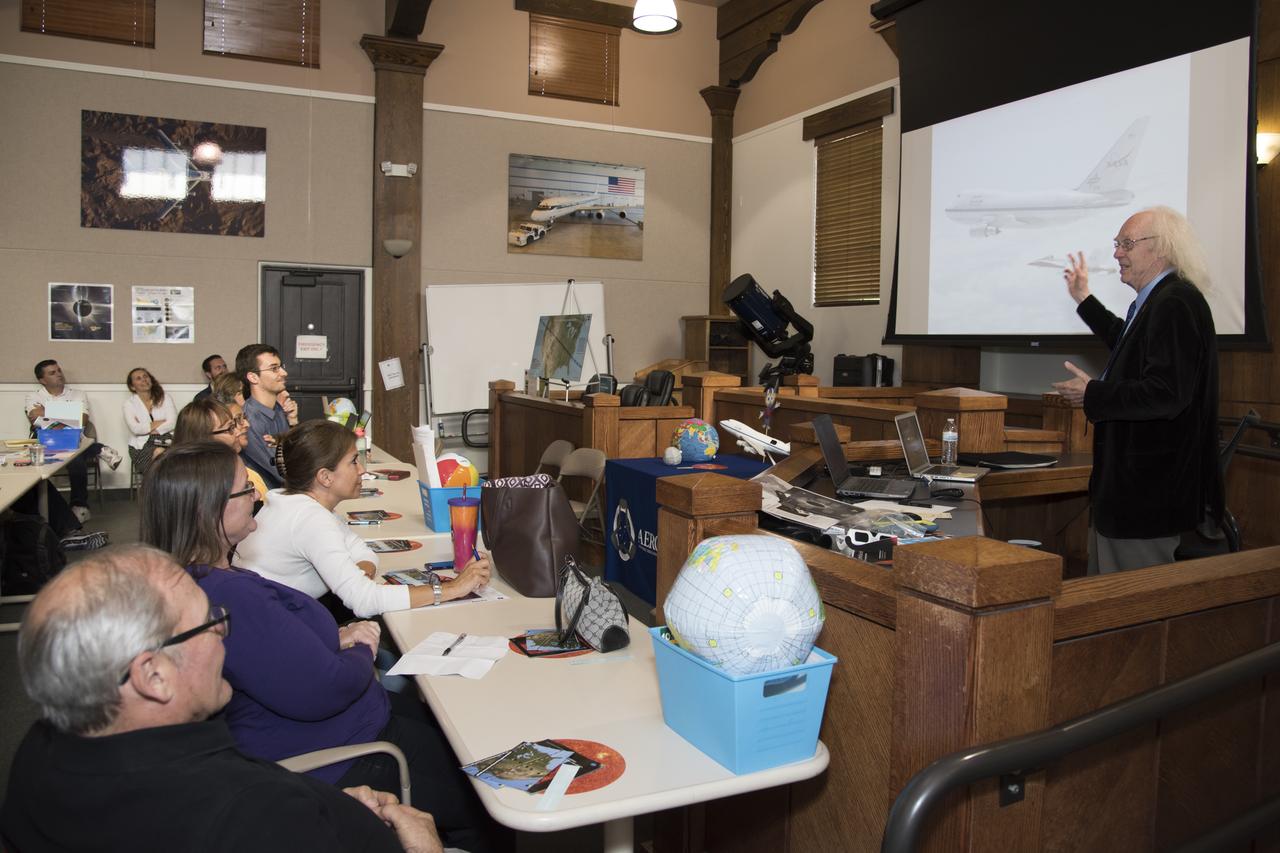
Dr. Eric Becklin spoke to educators about the airborne astronomy that was conducted using SOFIA’s scientific instruments.
AFRC2017-0116-07
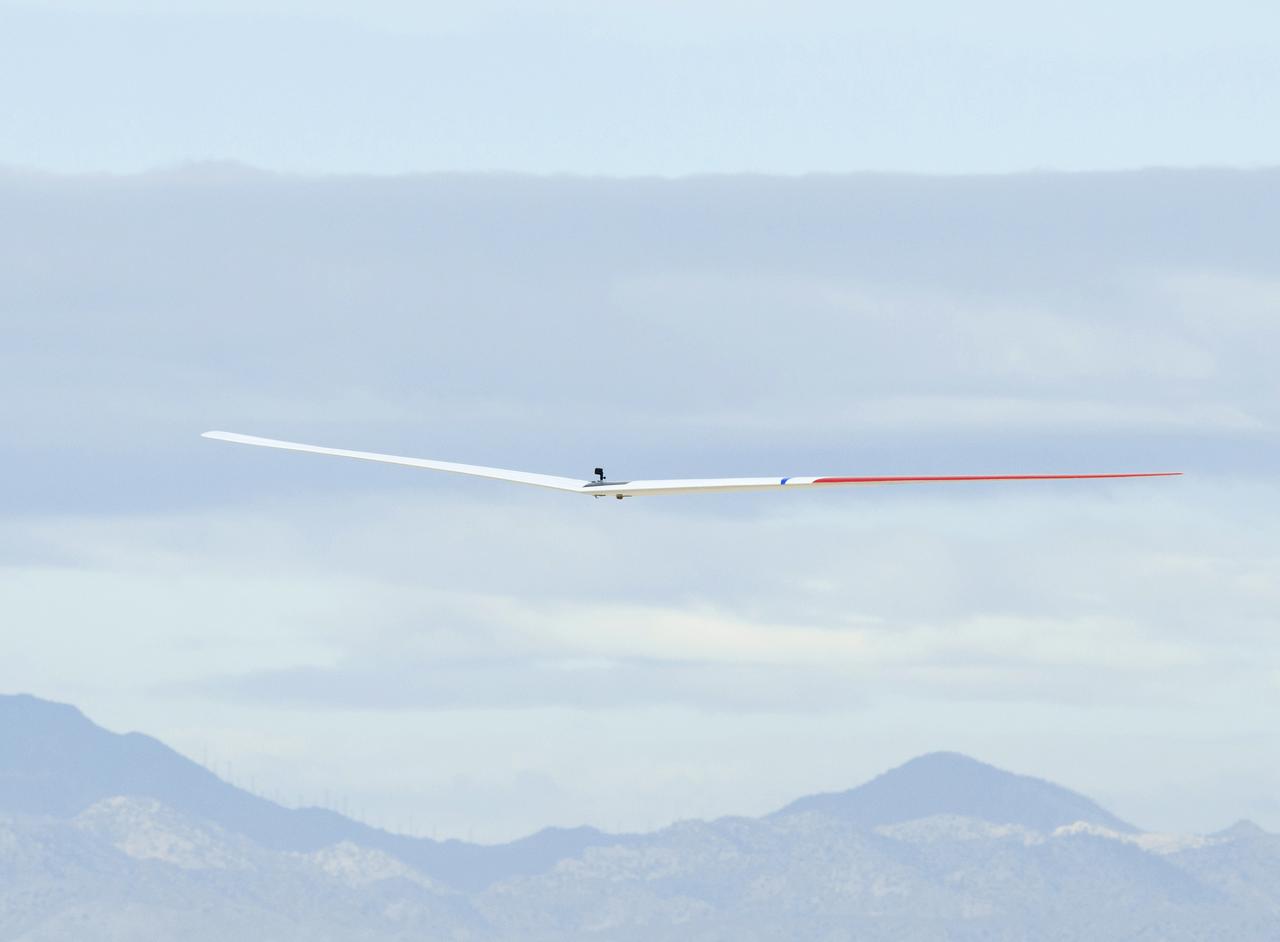
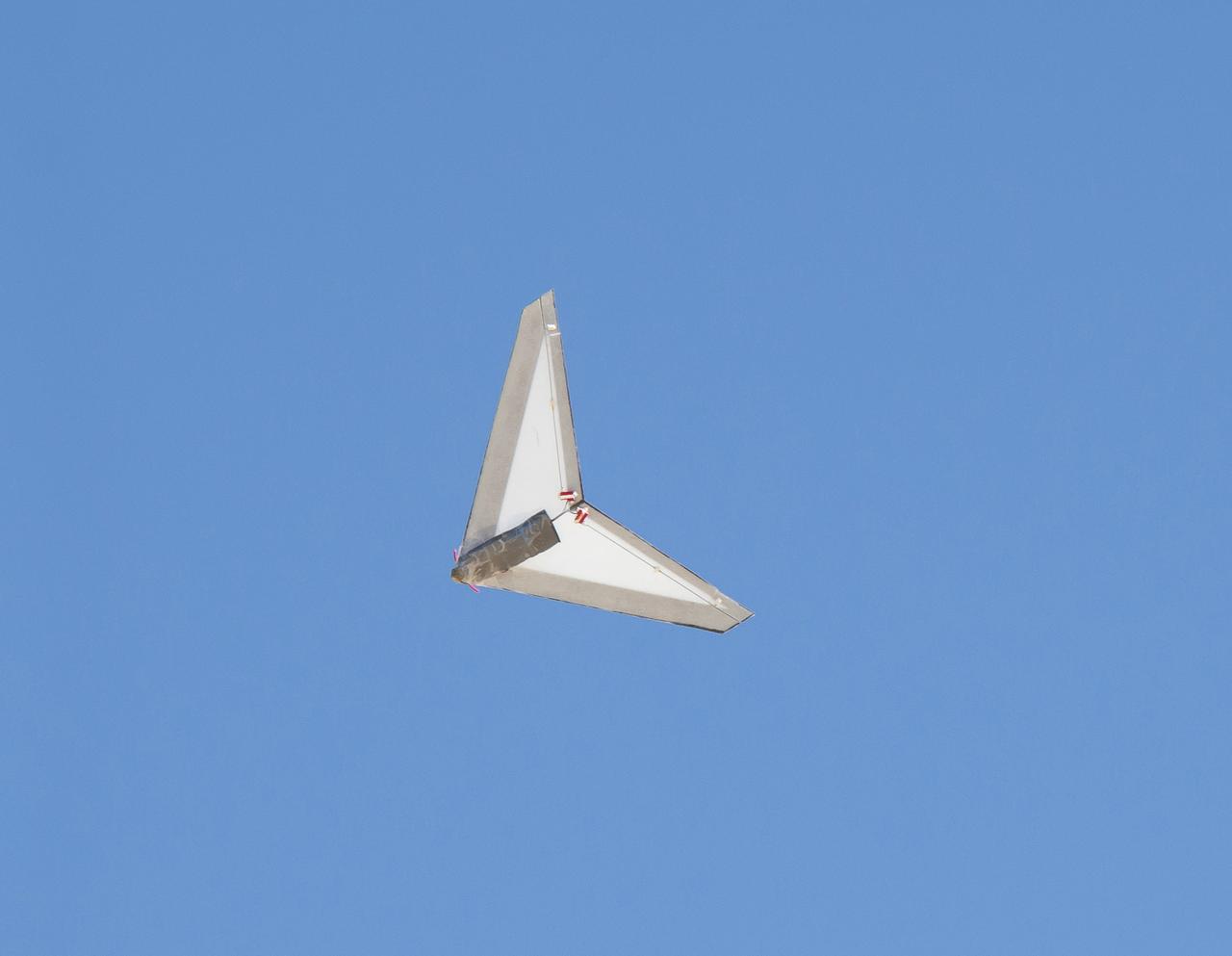
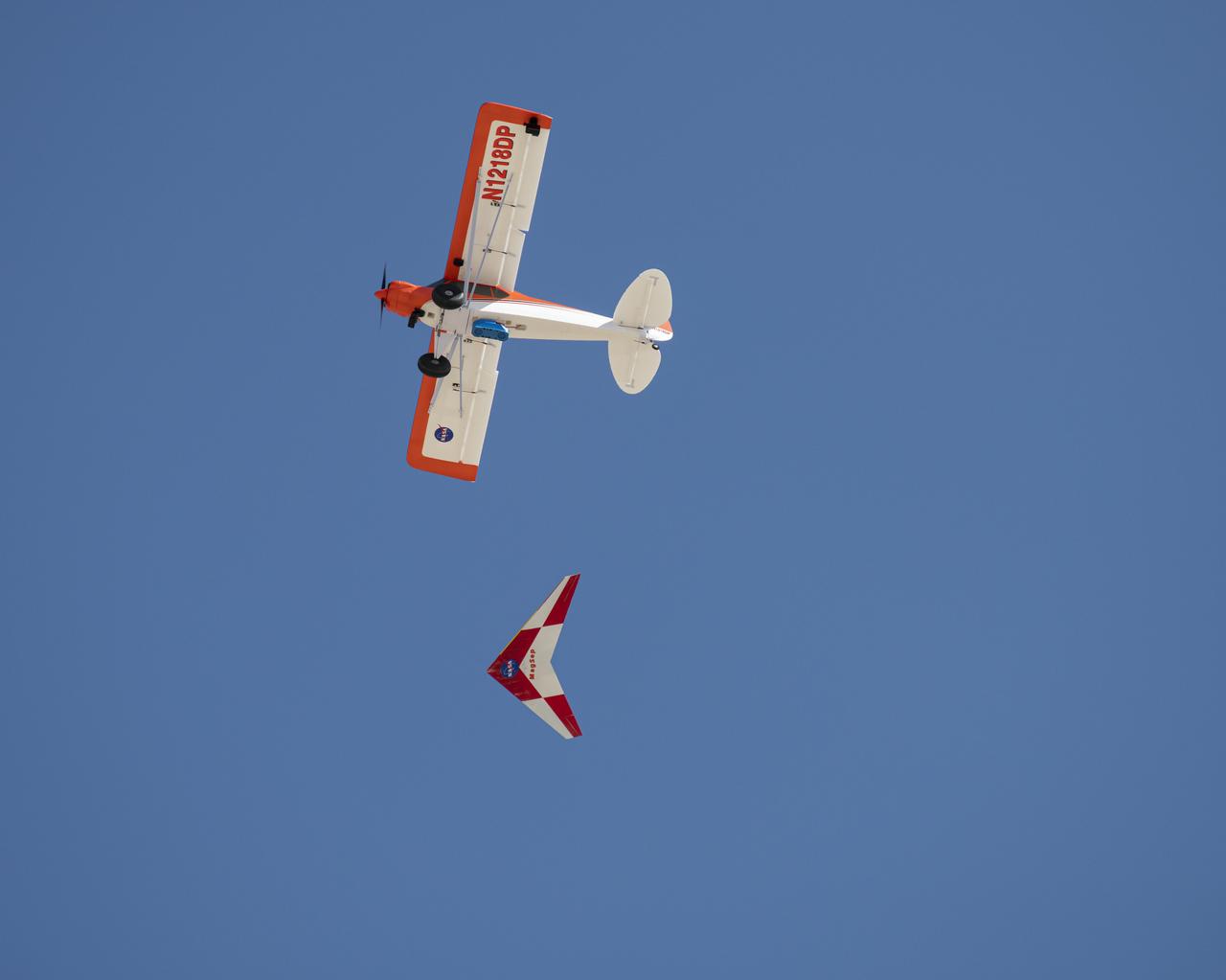
The Preliminary Research Aerodynamic Design to Land on Mars, or Prandtl-M, flies during a test flight. A new proposal based on the aircraft recently won an agencywide technology grant.
Subscale Glider Could Assist in Weather Studies, Prediction
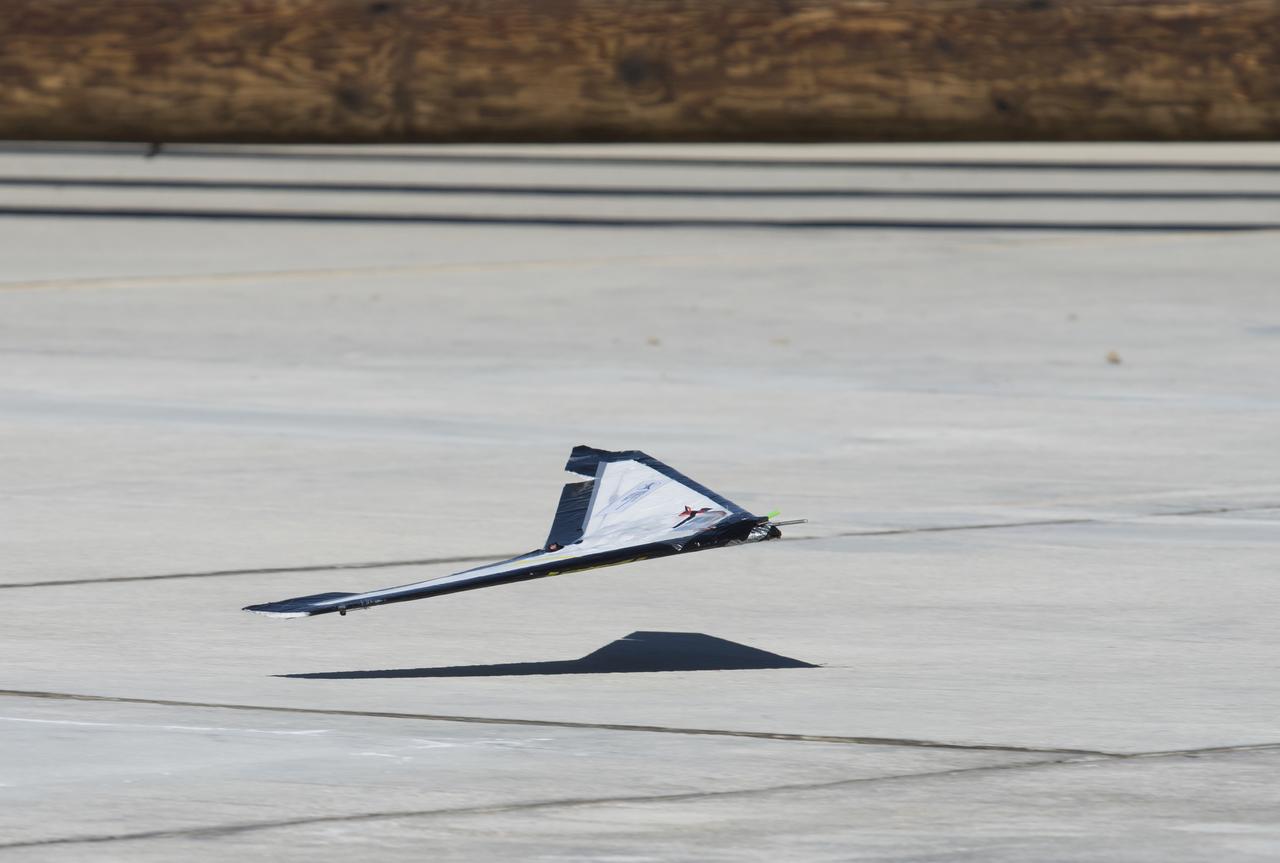
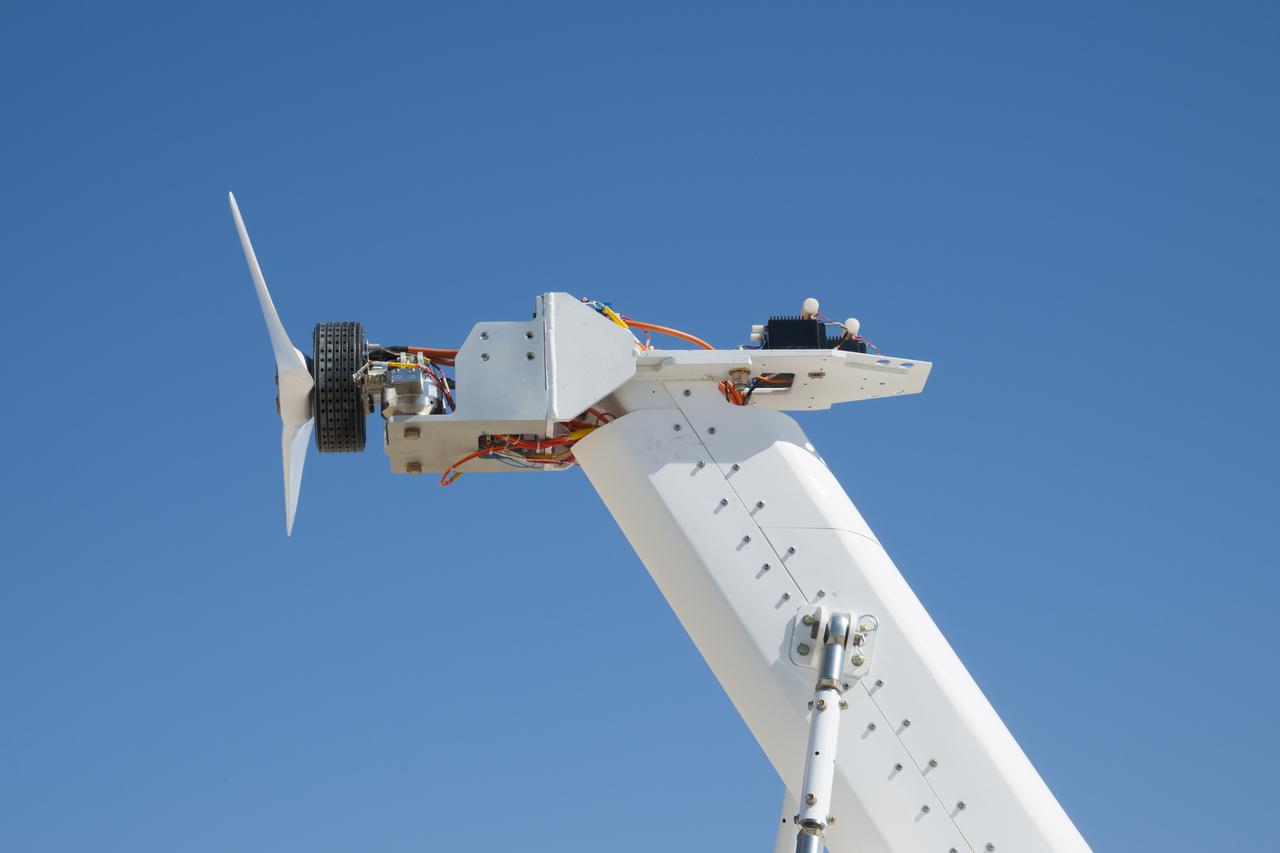
The Prandtl-D No. 3 research aircraft is being readied for new flight tests this summer. It had its first flight on Oct. 28, 2015.
ED15-0330-079
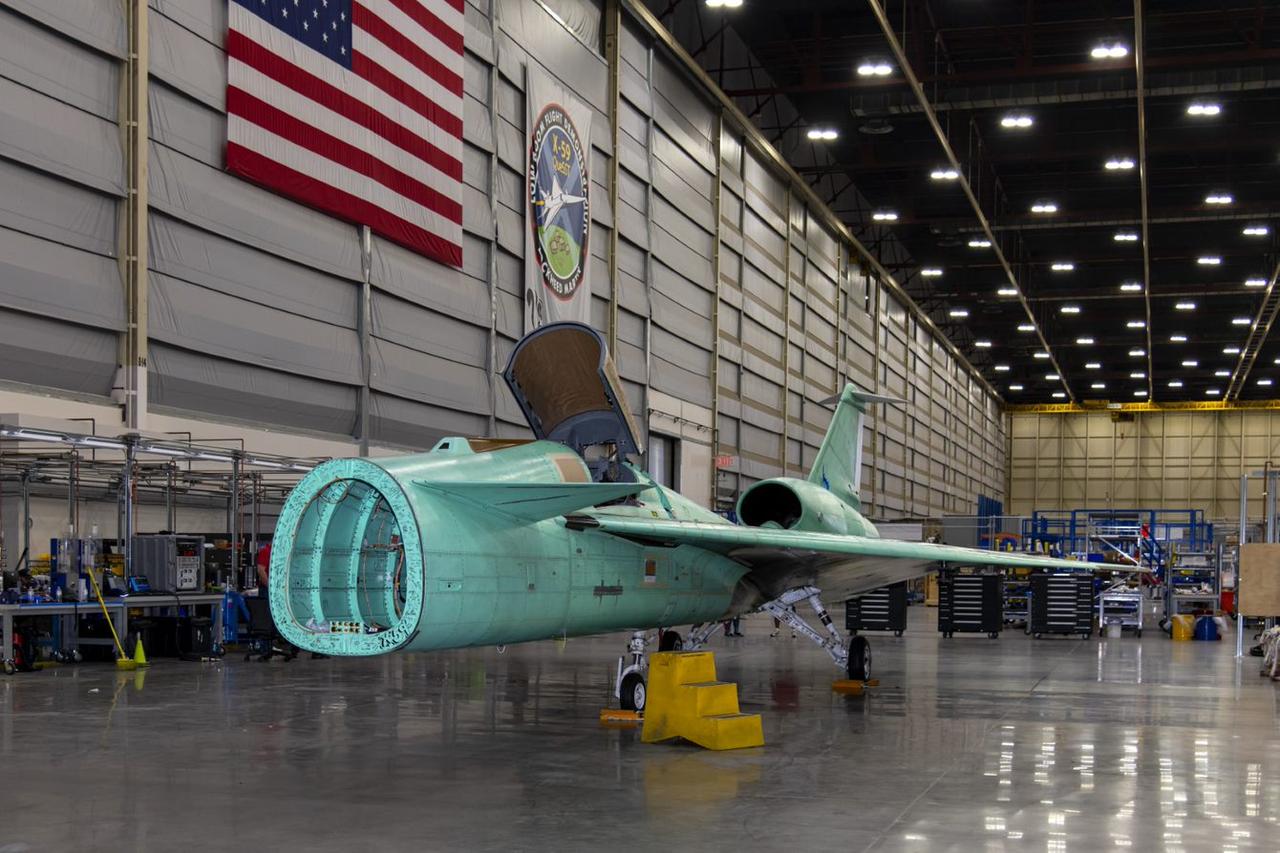
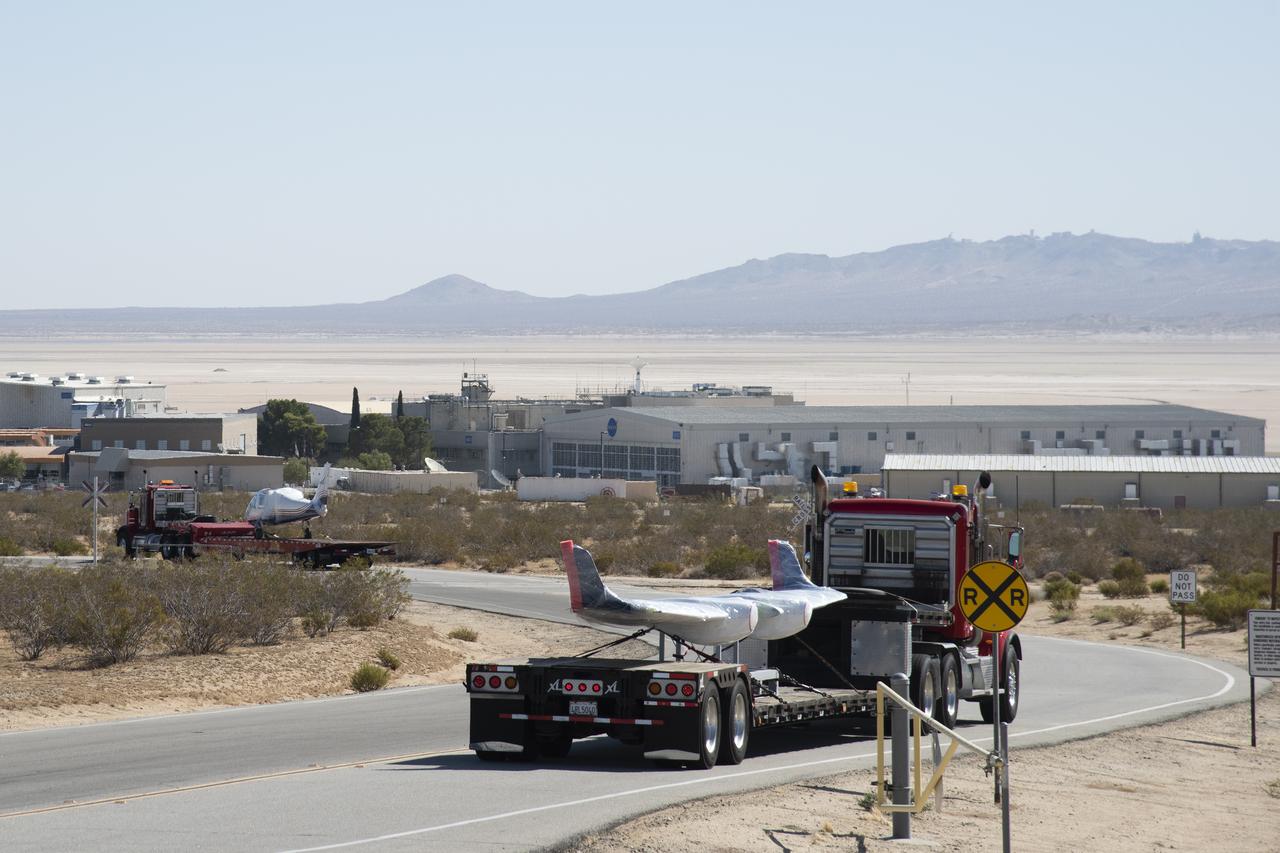
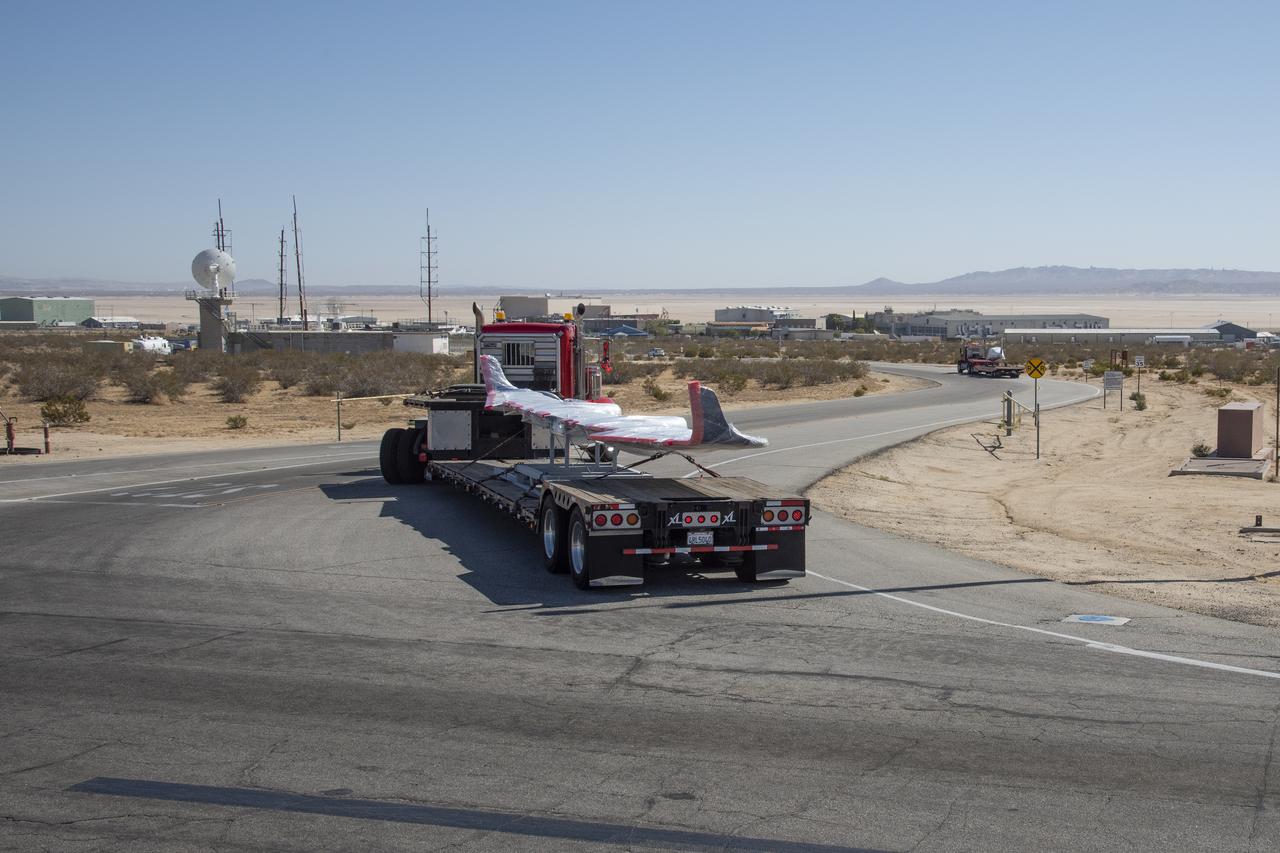
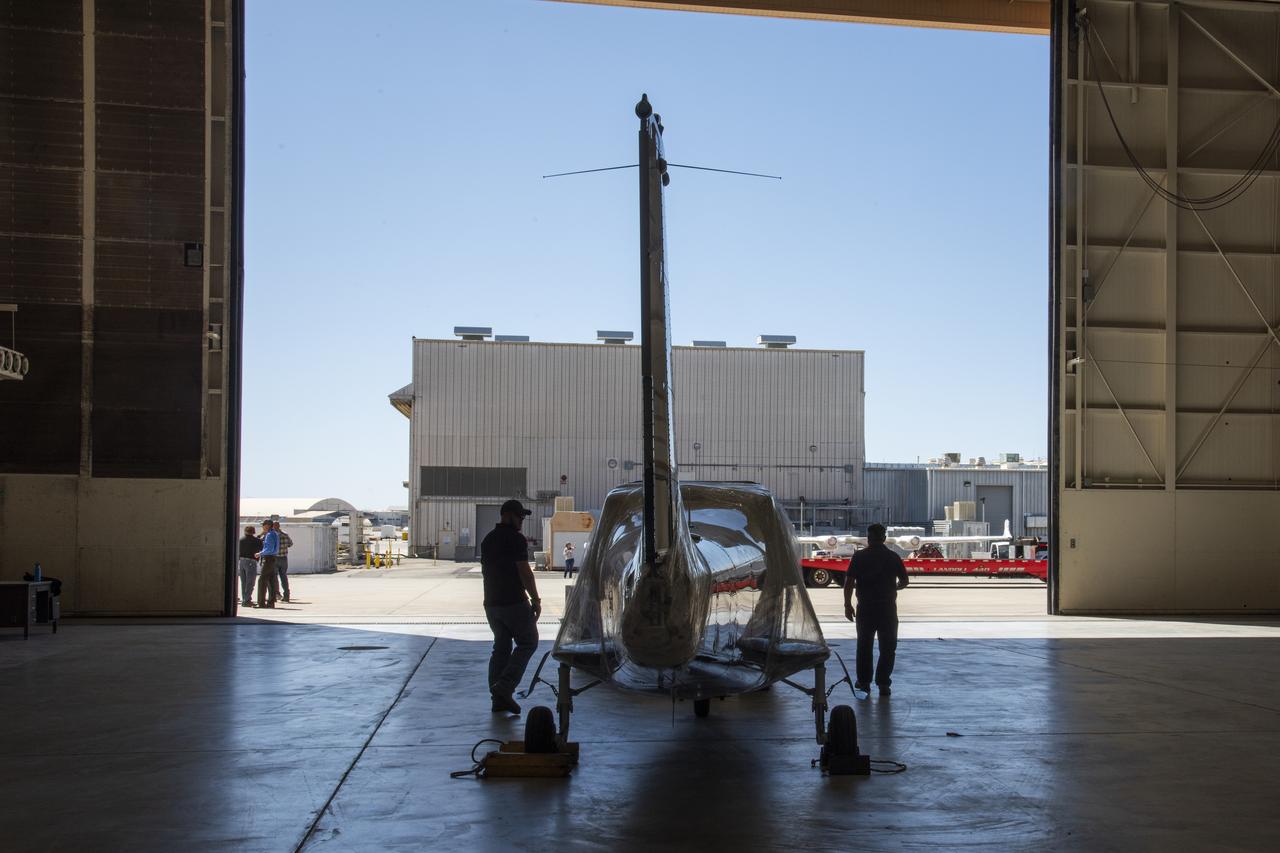
The X-59 arrives home in Palmdale, California after completing important structural and fuel tests at the Lockheed Martin facility in Ft. Worth, Texas. The nose, which is not installed in this image, was removed prior to the transport home and arrived separately to the facility. This is part of NASA’s Quesst mission which plans to help enable supersonic air travel over land.
LRC-2022-H1_P_X-59-1
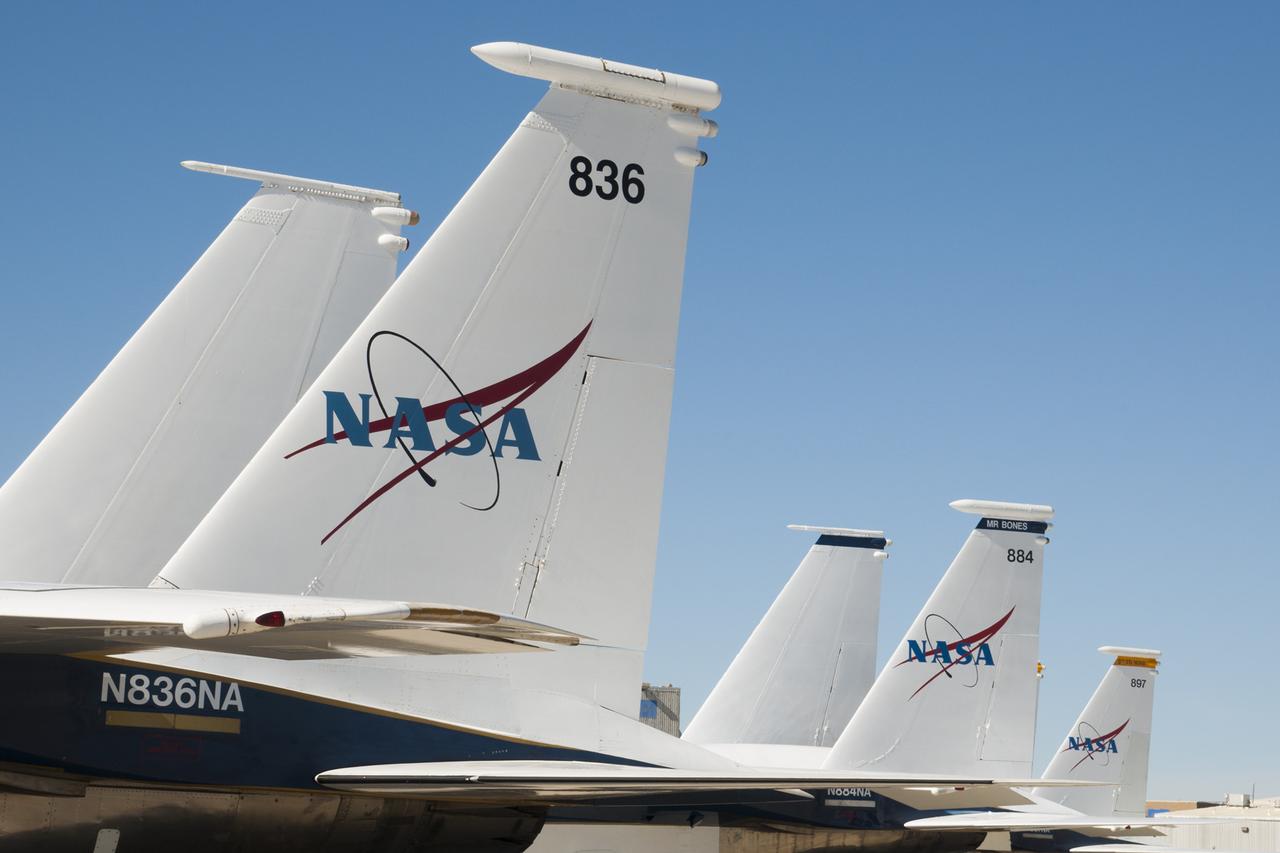
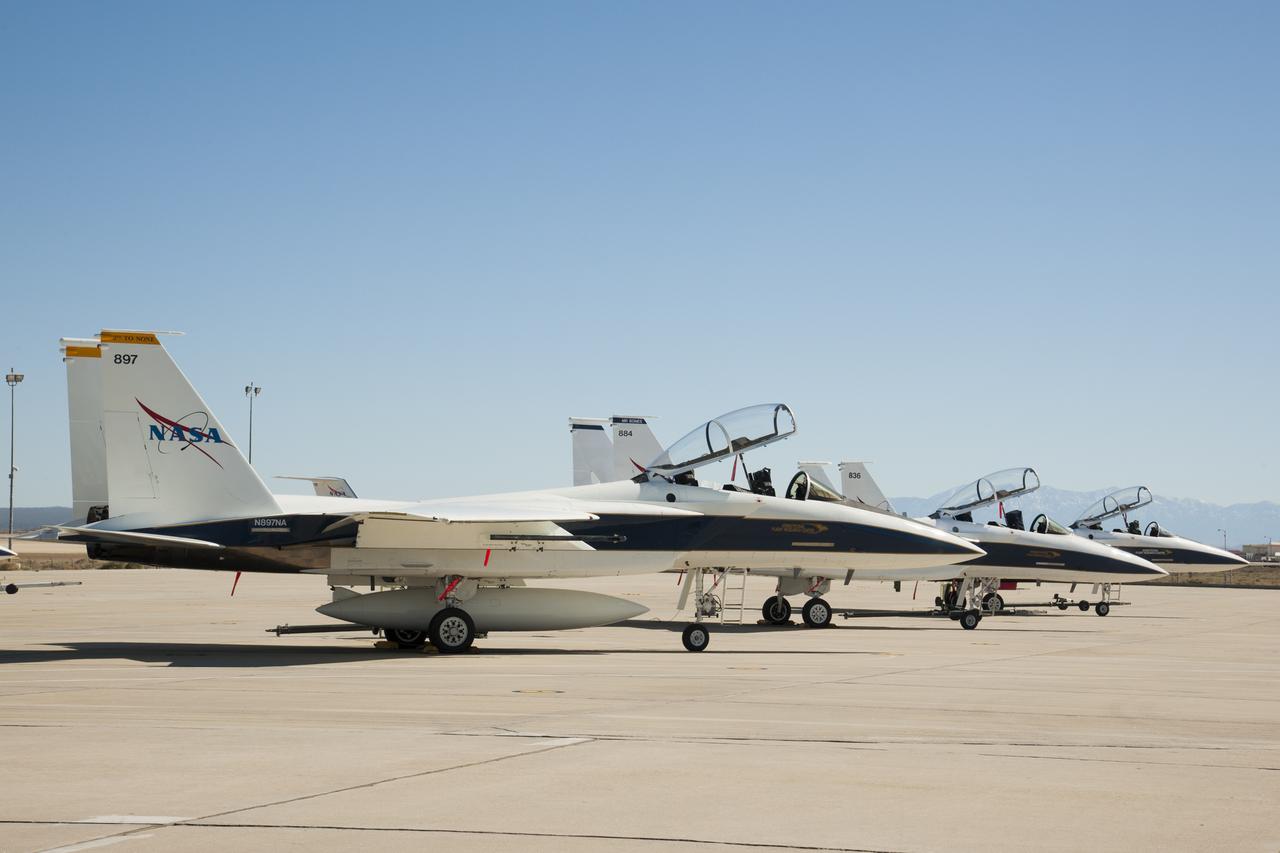
Left to right: workhorse F-15B #836, "Mr. Bones" F-15D #884, and "2nd to None" F-15D #897 on the back ramp at NASA's Neil A. Armstrong Flight Research Center.
AFRC2016-0073-72
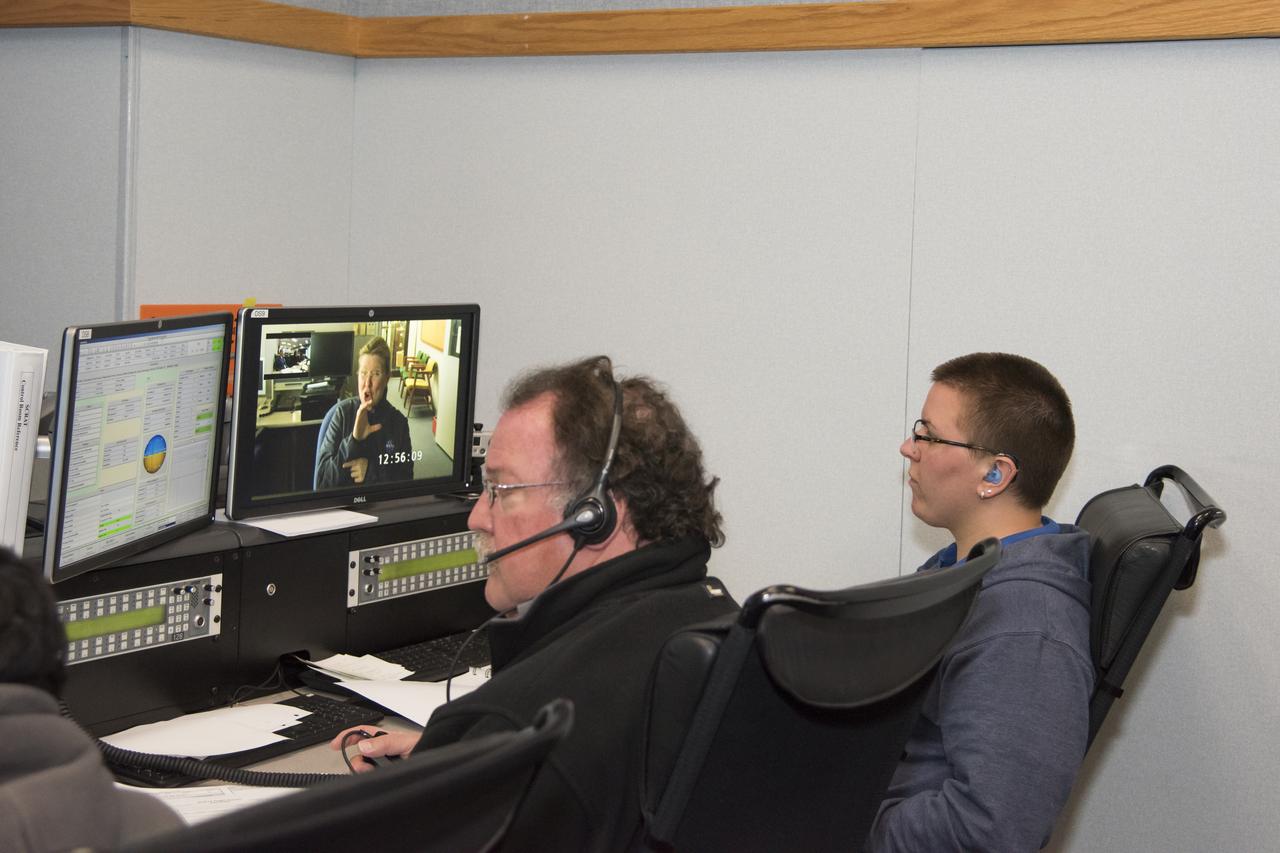
Johanna Lucht, observing data from the Mission Control Center at NASA’s Armstrong Flight Research Center in California, received flight communications from an interpreter, seen on Lucht’s monitor, through American Sign Language. Two-way visual communication was established between Lucht and the interpreter, located at NASA’s Langley Research Center in Virginia, for the flight. Interpreting technical terminology often requires cooperation to develop specific signs to ease communication. Using a familiar interpreter who is adept or practiced in the technical terminology of a NASA flight was beneficial, Lucht says.
AFRC2017-0076-3
Left to right: "2nd to None" (F-15D #897), "Mr. Bones" (F-15D #884), and workhorse F-15B #836 on the back ramp at NASA's Neil A. Armstrong Flight Research Center.
AFRC2016-0073-80
The Prandtl-M completes a successful research flight.
Potential Mars Airplane Resumes Flight
Yohan Lin, Airvolt integration lead, prepares the electric propulsion test stand.
Electric Motor Test Stand Will Help With Future X-planes
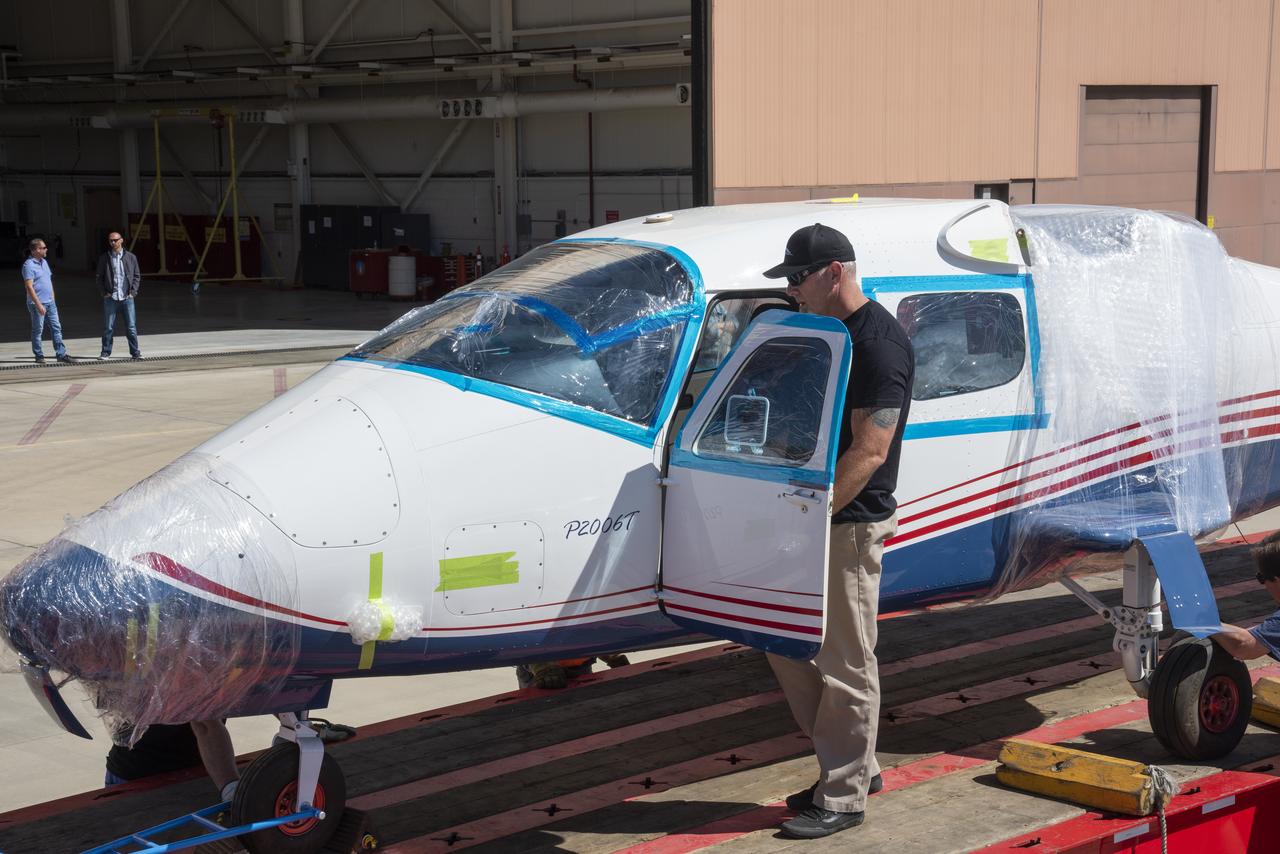
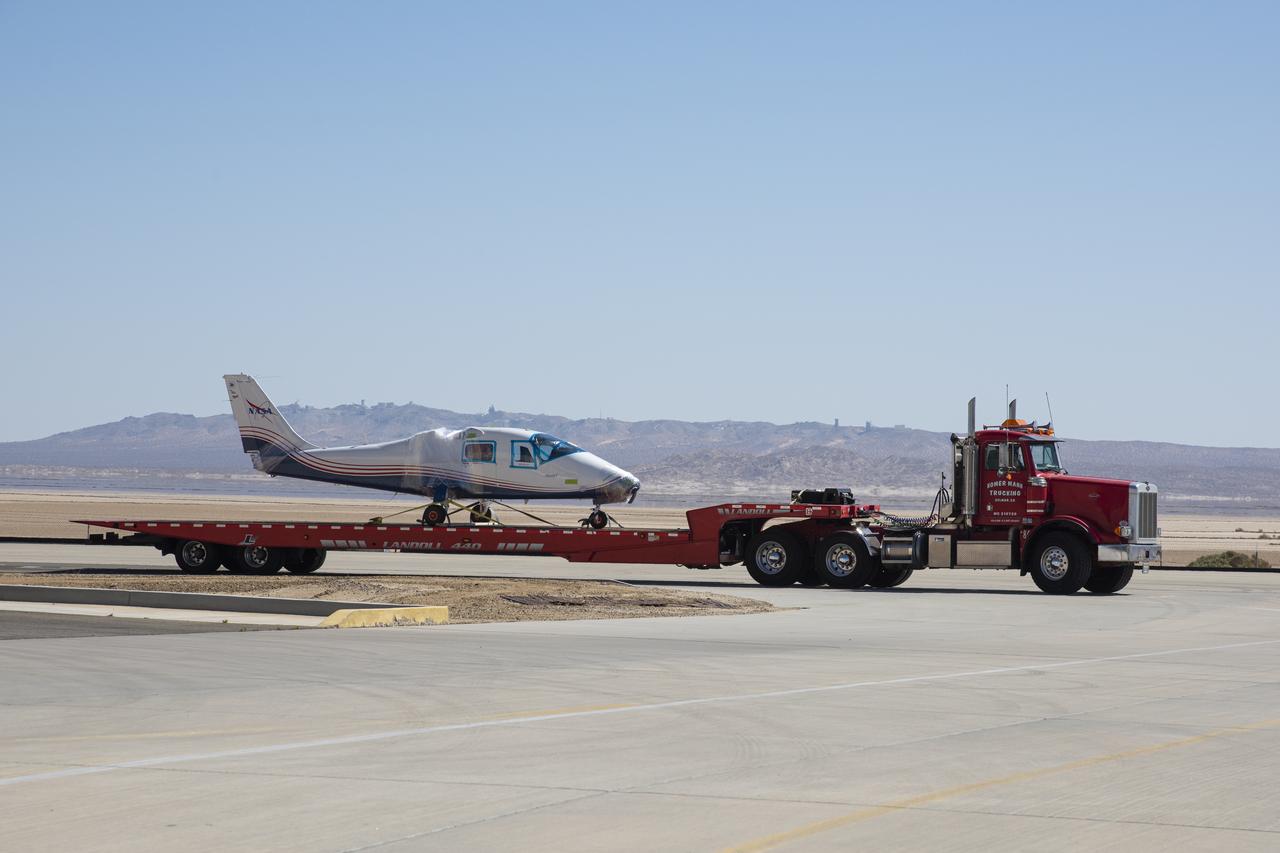
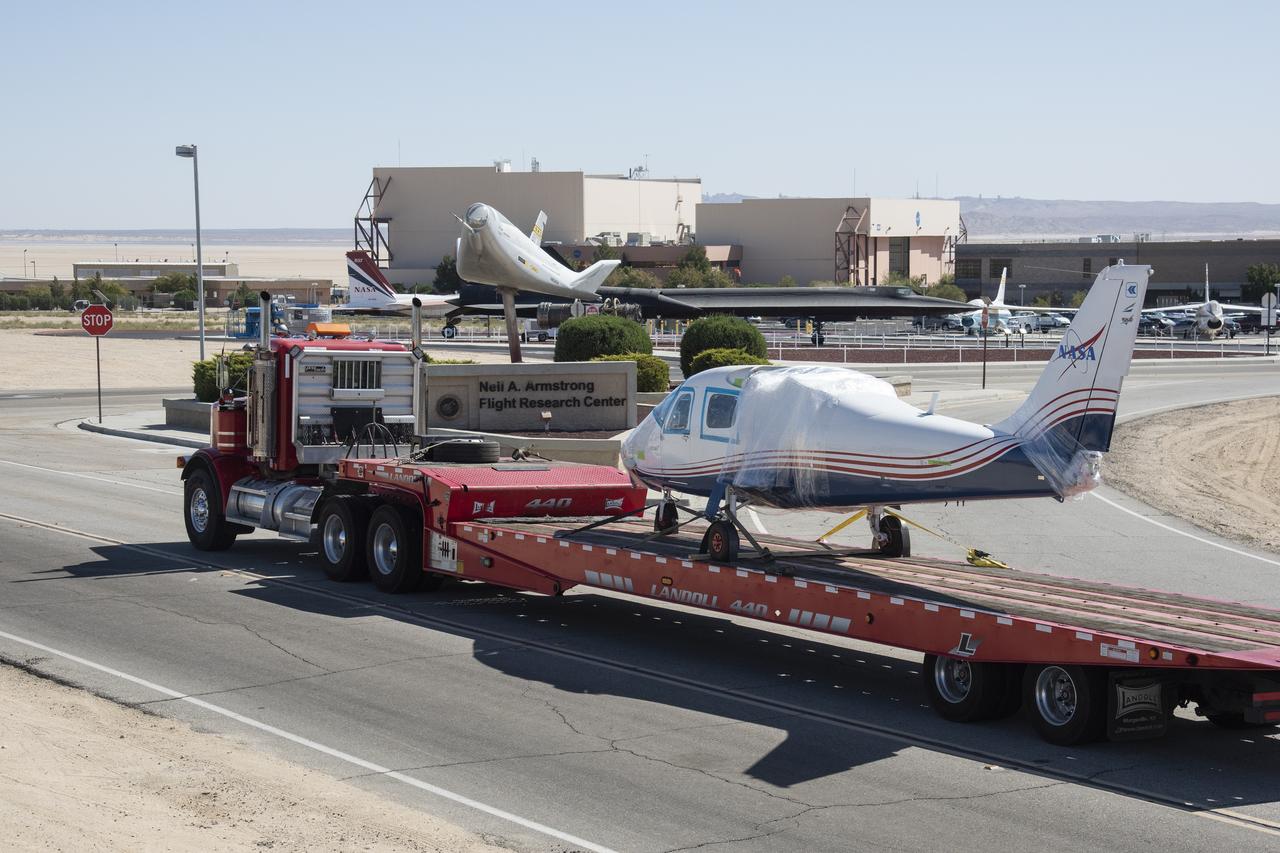
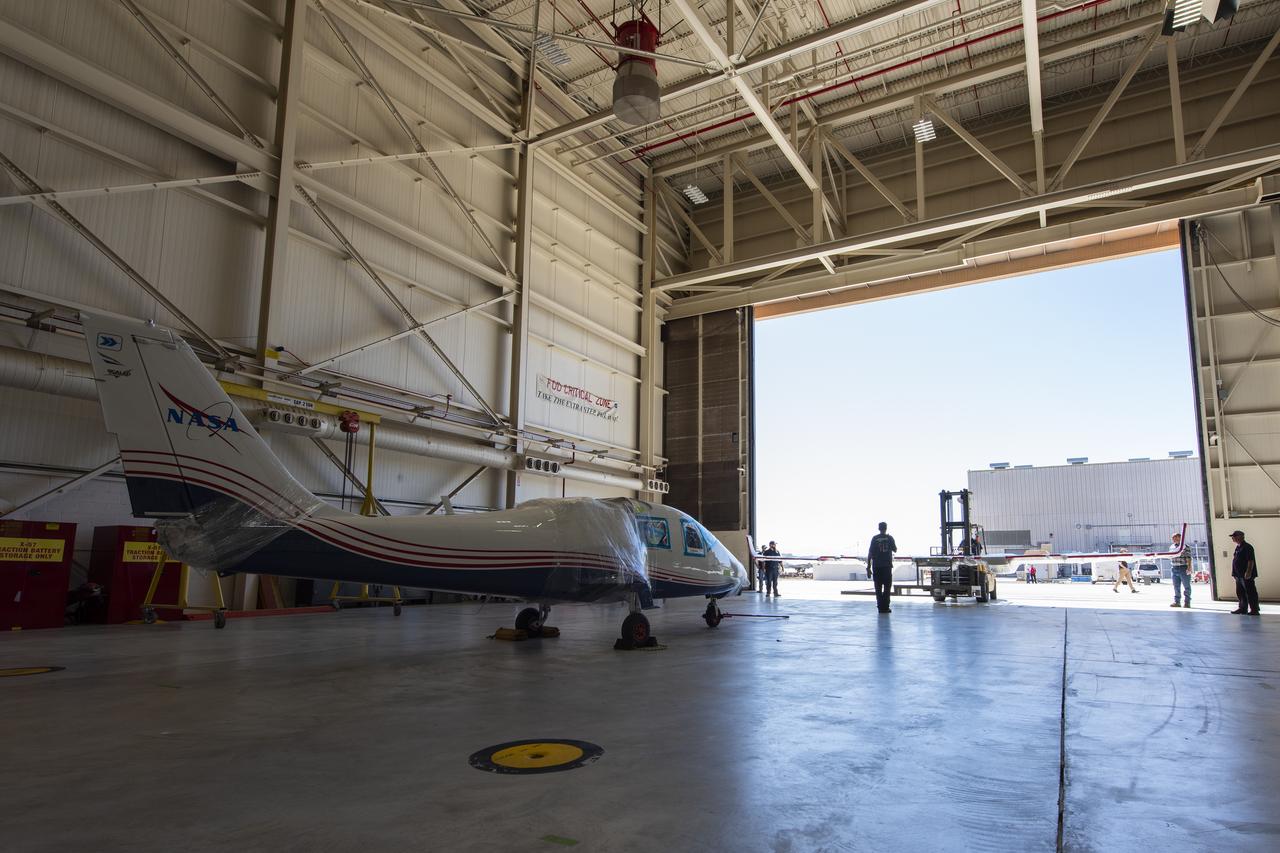
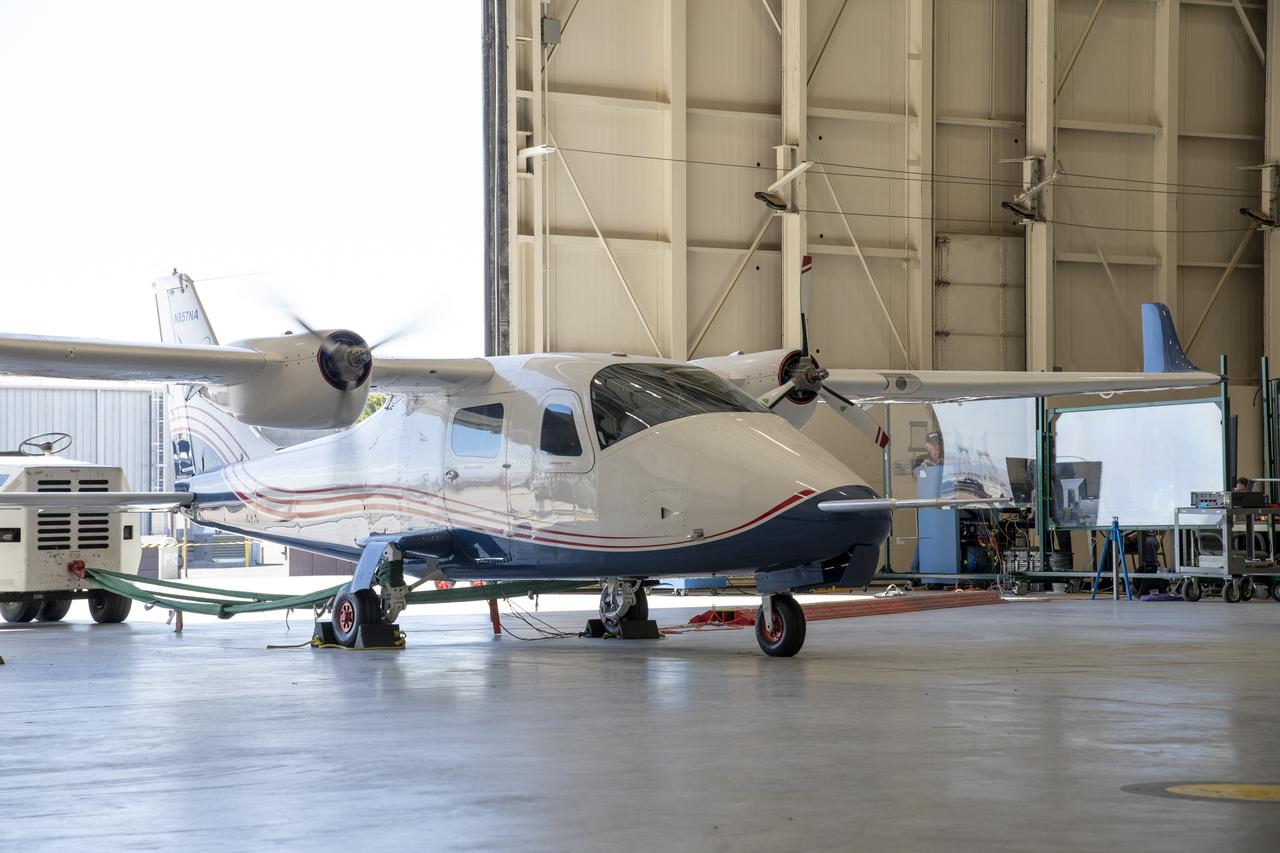
NASA's X-57 Maxwell, the agency's first all-electric X-plane and first crewed X-planed in two decades, is delivered to NASA's Armstrong Flight Research Center in Edwards, California in its Mod II configuration. The first of three primary modifications for the project, Mod II involves testing of the aircraft's cruise electric propulsion system. Delivery to NASA from prime contractor Empirical Systems Aerospace of San Luis Obispo, California, marks a major milestone for the project, at which point the vehicle is reintegrated for ground tests, to be followed by taxi tests, and eventually, flight tests. X-57's goal is to further advance the design and airworthiness process for distributed electric propulsion technology for general aviation aircraft, which can provide multiple benefits to efficiency, emissions, and noise.
X-57 Mod II Vehicle Delivered to NASA Armstrong
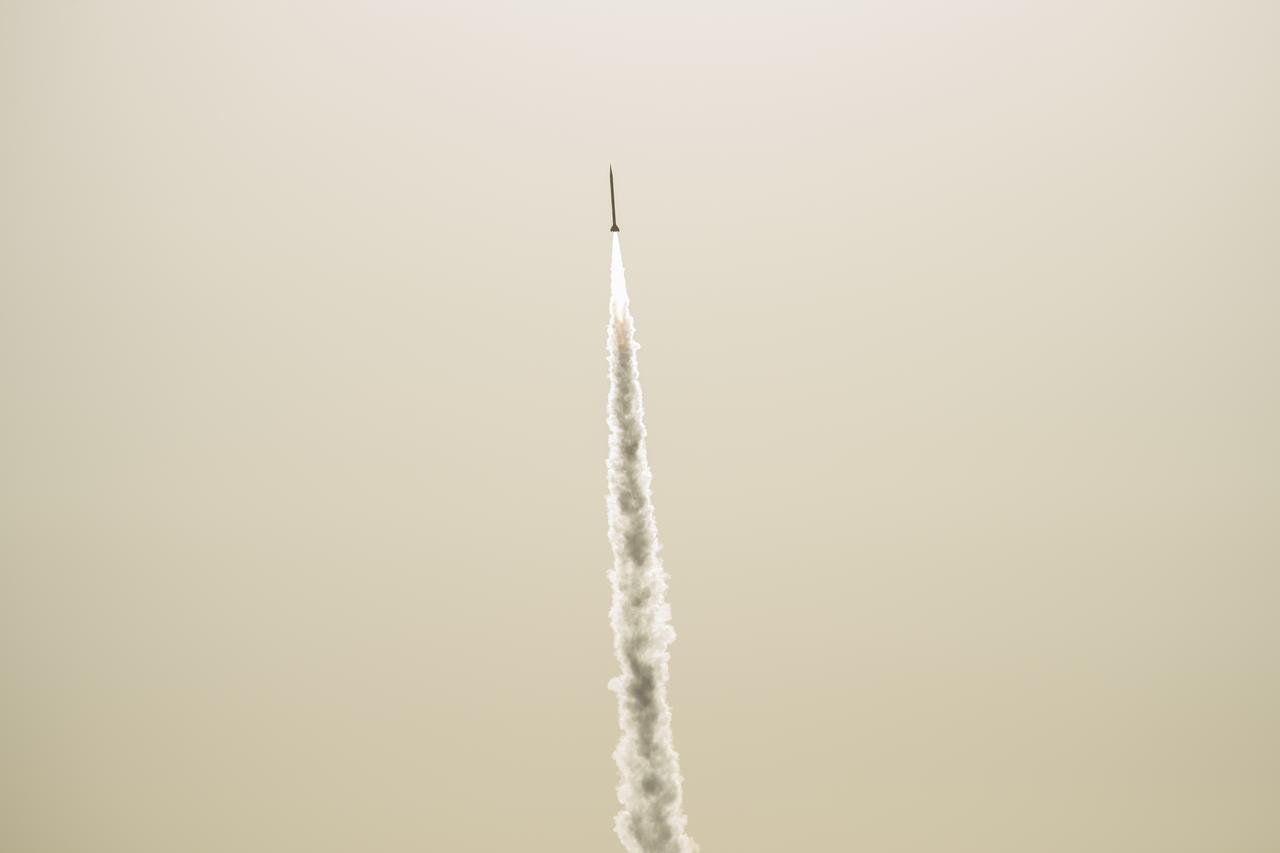
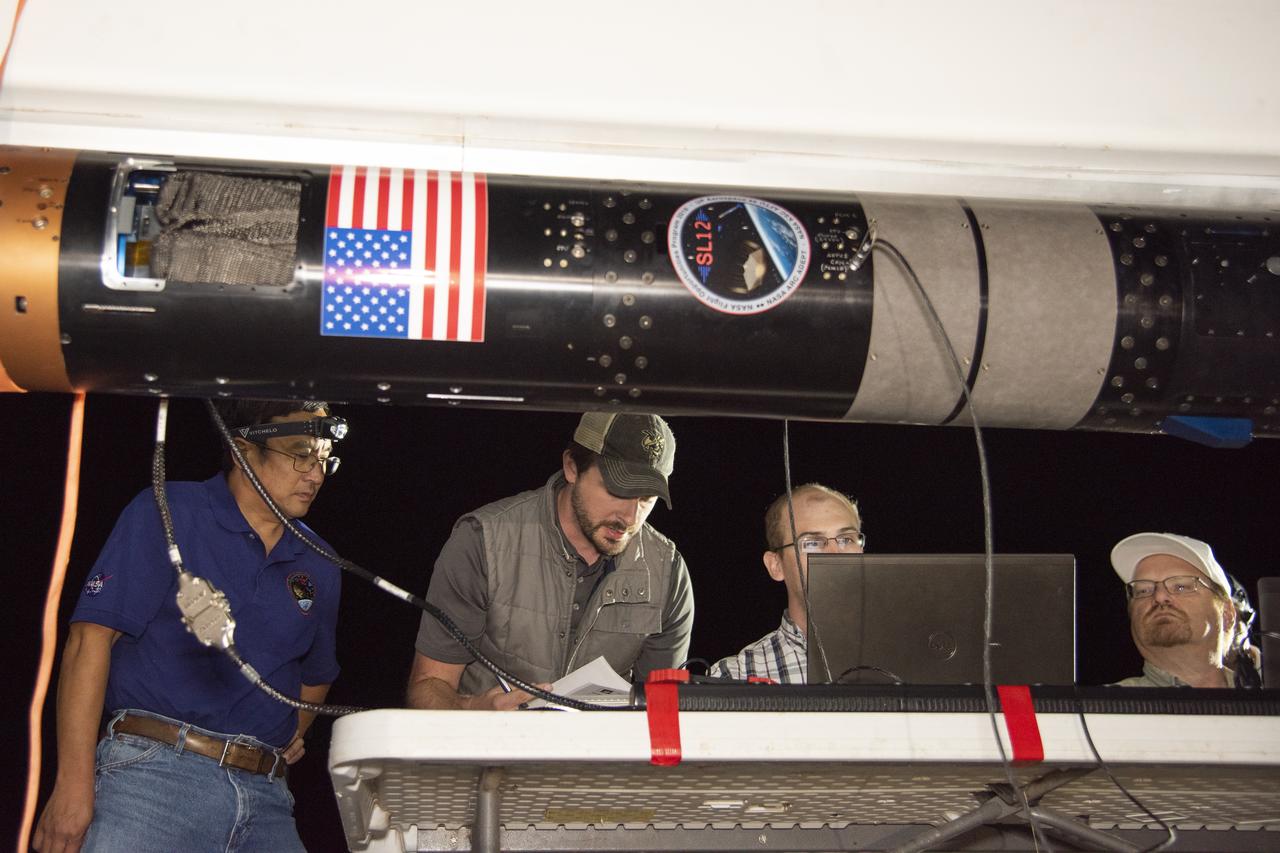
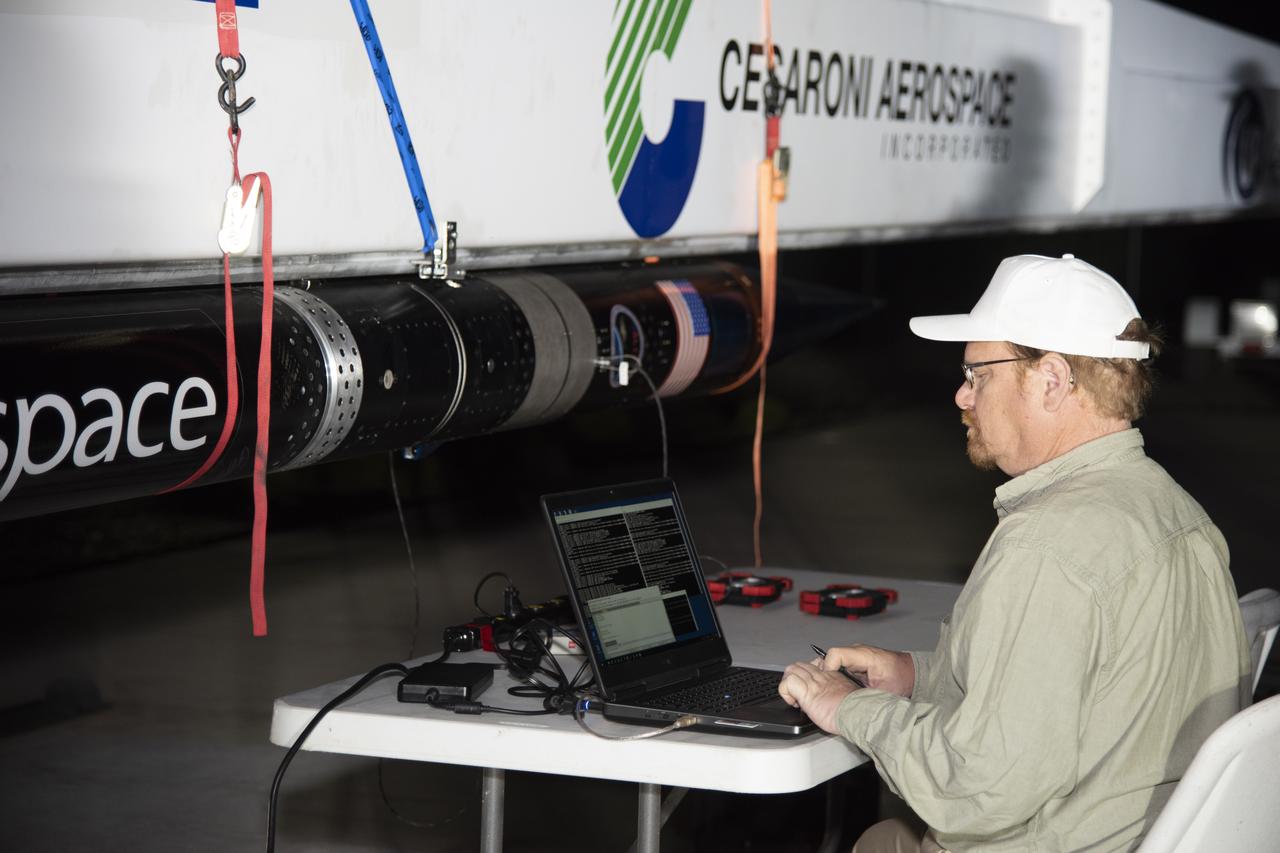
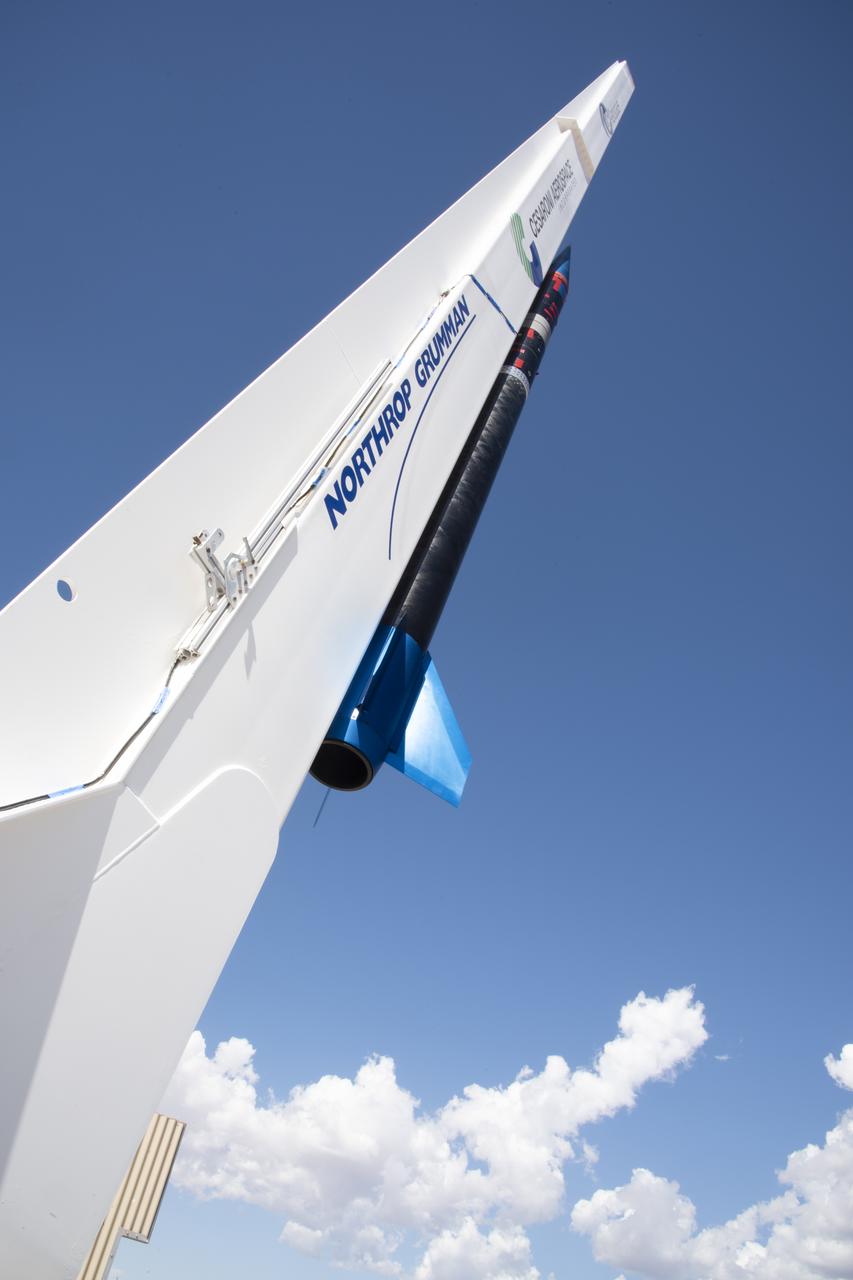
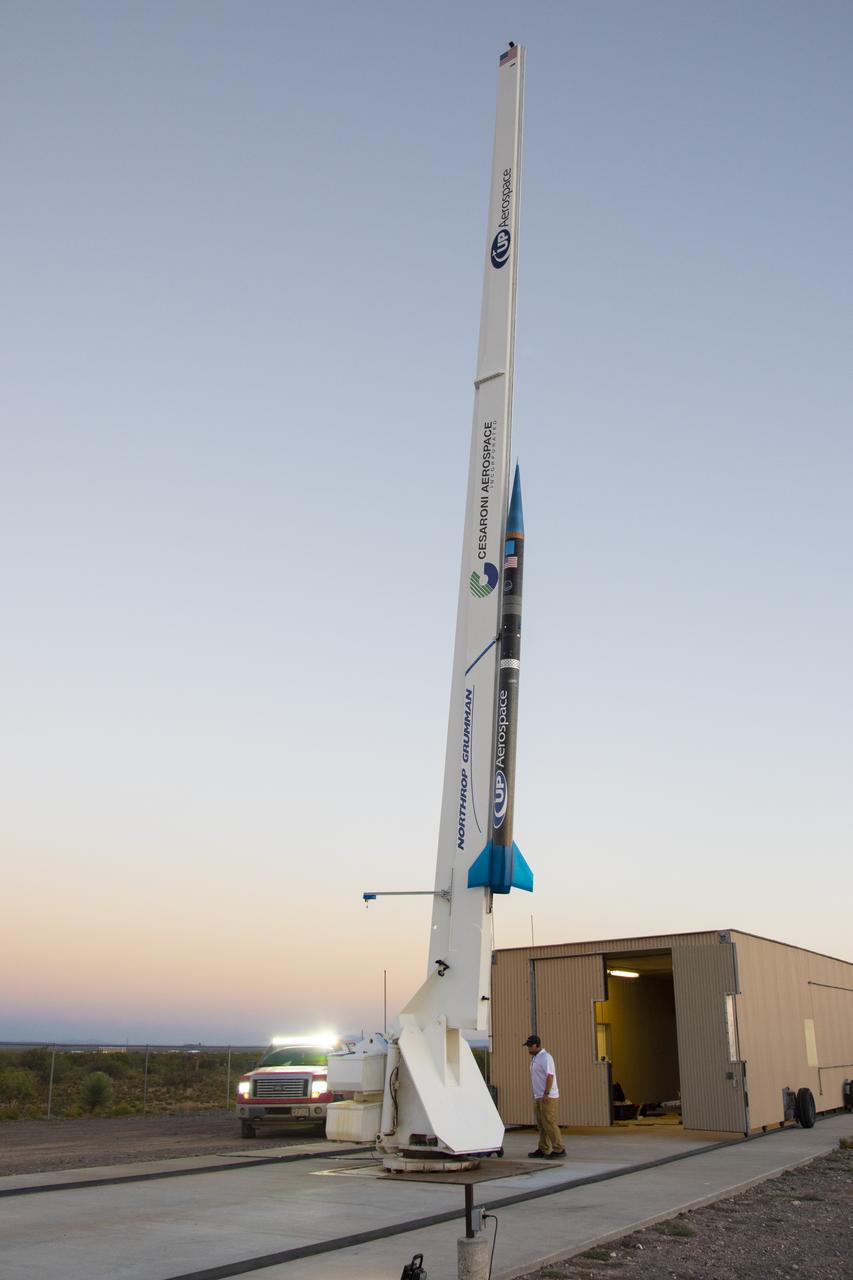
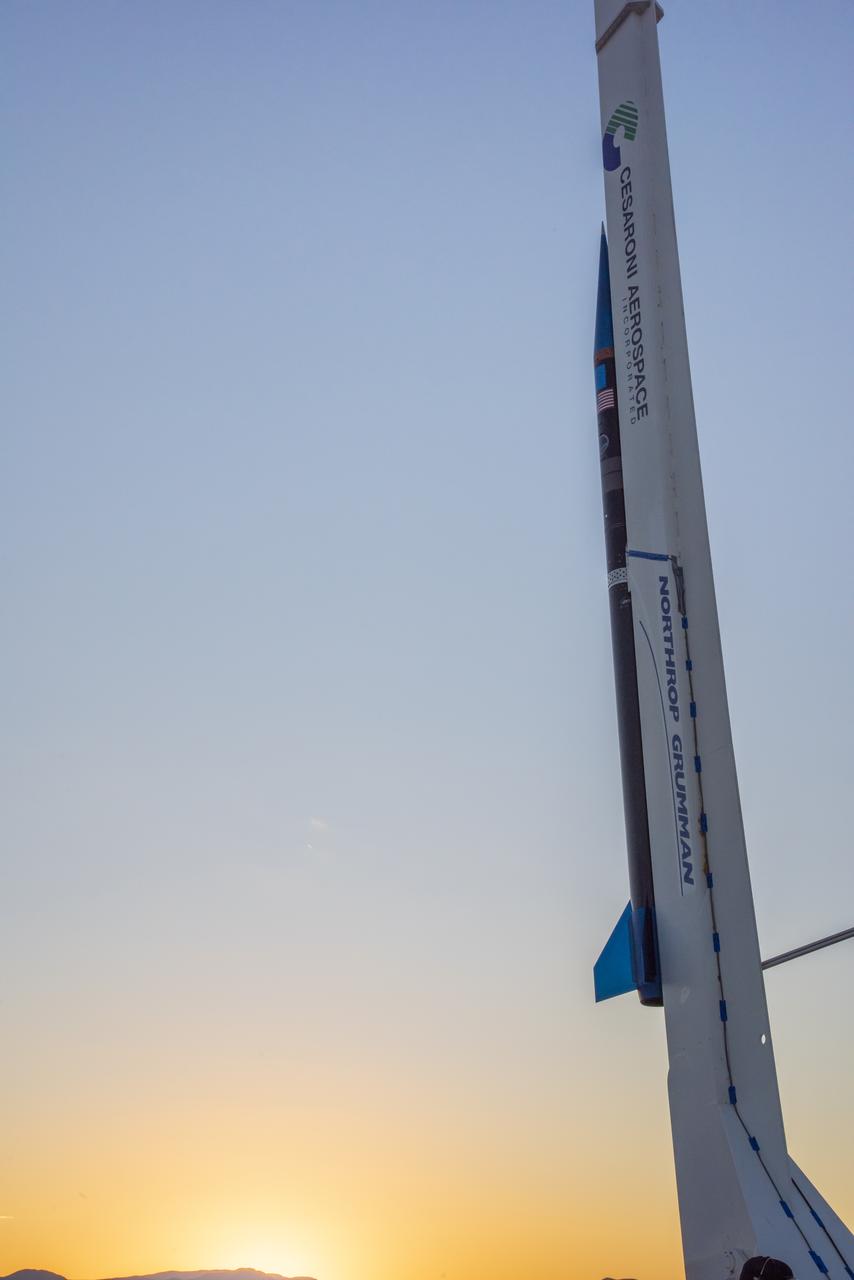
NASA's Flight Opportunities funds flight of space technology on UP Aerospace's rocket poised to launch at Spaceport America in New Mexico.
UP Aerospace Rocket Poised for Launch from NM to Carry NASA Tech
The X-56B remotely piloted aircraft lands following the first of a new flight series. The flight was April 19 at NASA's Armstrong Flight Research Center in Edwards, California, with partner Northrop Grumman.
X-56B Begins New Flight Series
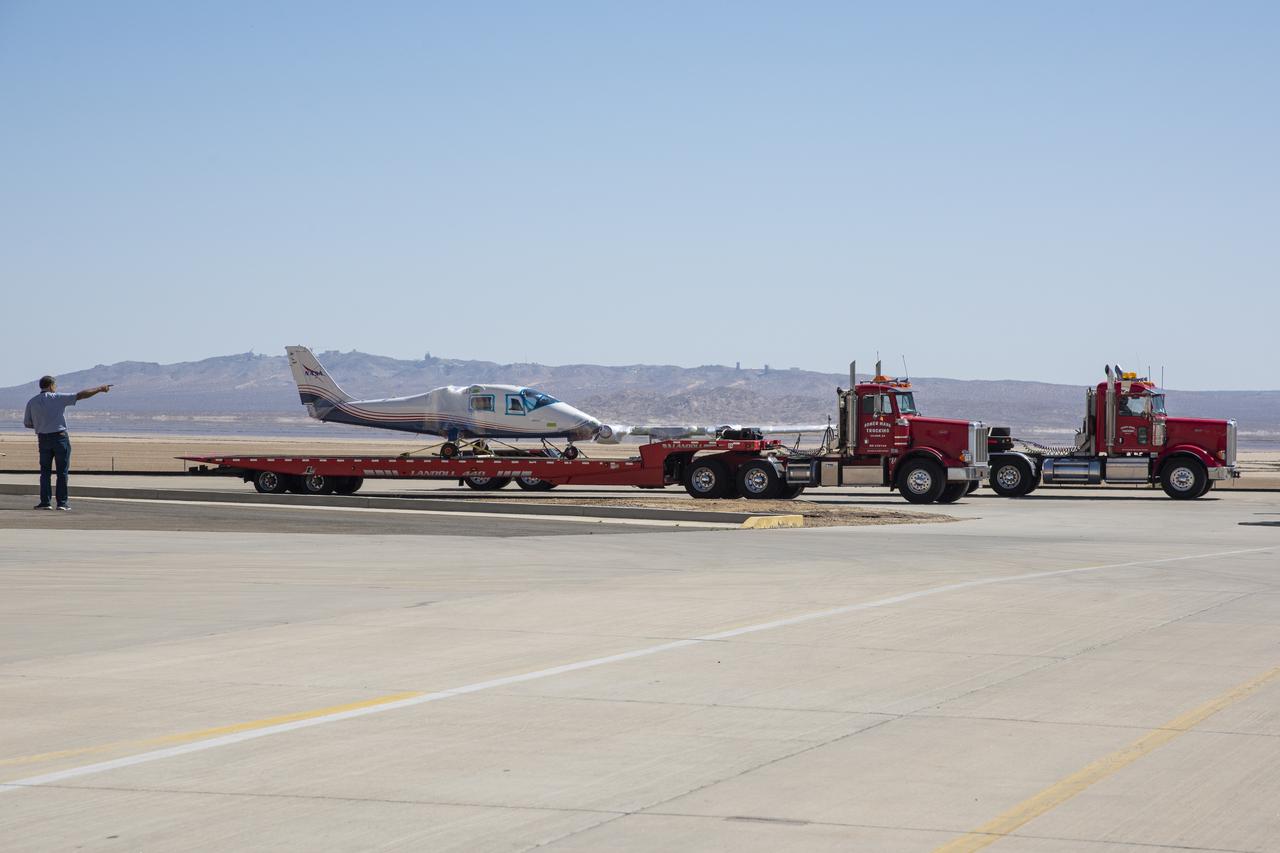
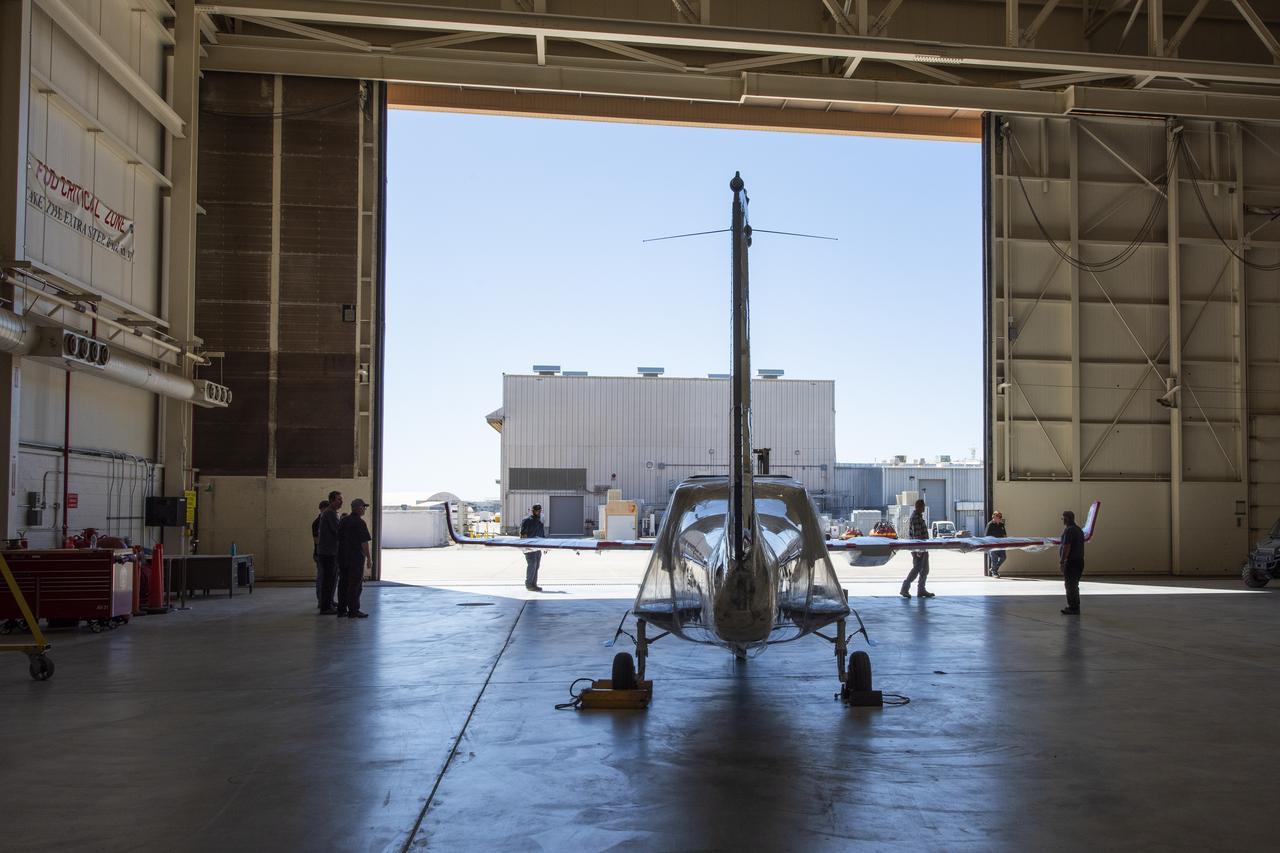
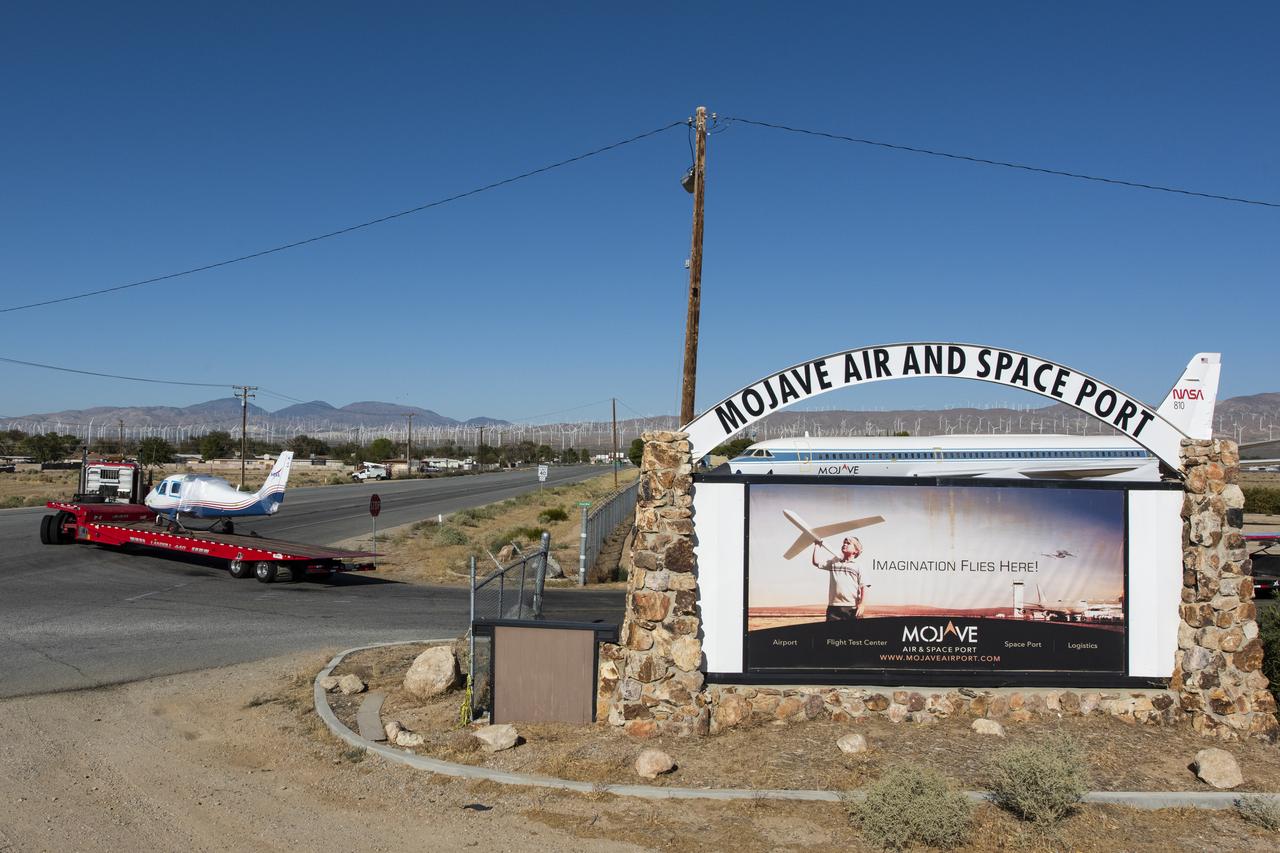
NASA’s all-electric X-57 Maxwell, in its Mod II configuration, arrives at NASA’s Armstrong Flight Research Center in Edwards, California. The X-plane was delivered by prime contractor Empirical Systems Aerospace of San Luis Obispo, California, in two parts, with the wing separated from the fuselage, to aid in a more timely delivery. X-57 is NASA’s first crewed X-plane in two decades, and seeks to further advance the design and airworthiness process for distributed electric propulsion technology for general aviation aircraft.
X-57 Mod II Vehicle Arrives at NASA Armstrong
April Torres and Kyle Dauk set up for a thermal test of components in the Environmental Laboratory at NASA’s Armstrong Flight Research Center in California. The components are part of the center’s work on the Orion AA-2 vehicle that is scheduled for a flight test in 2019.
NASA Armstrong Assists with Orion AA-2 Component Testing
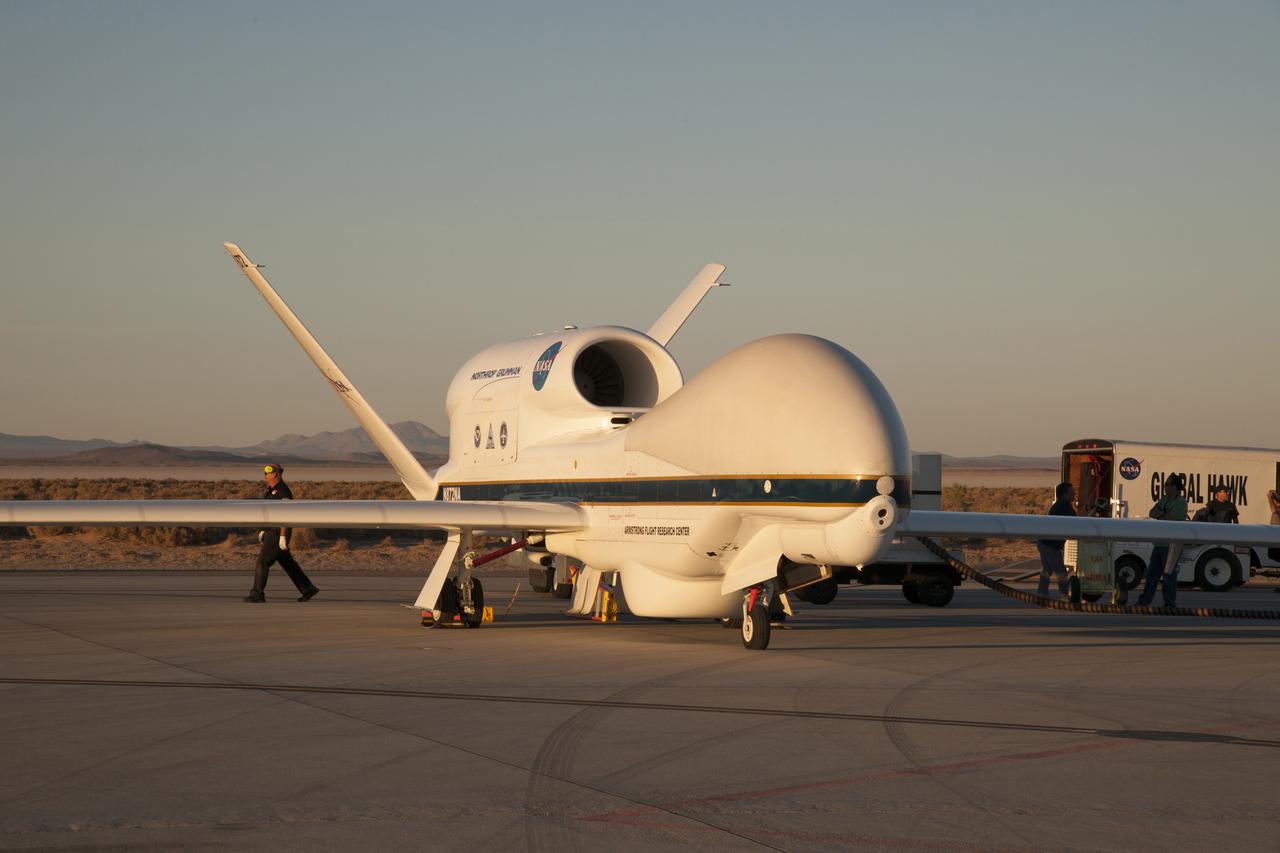
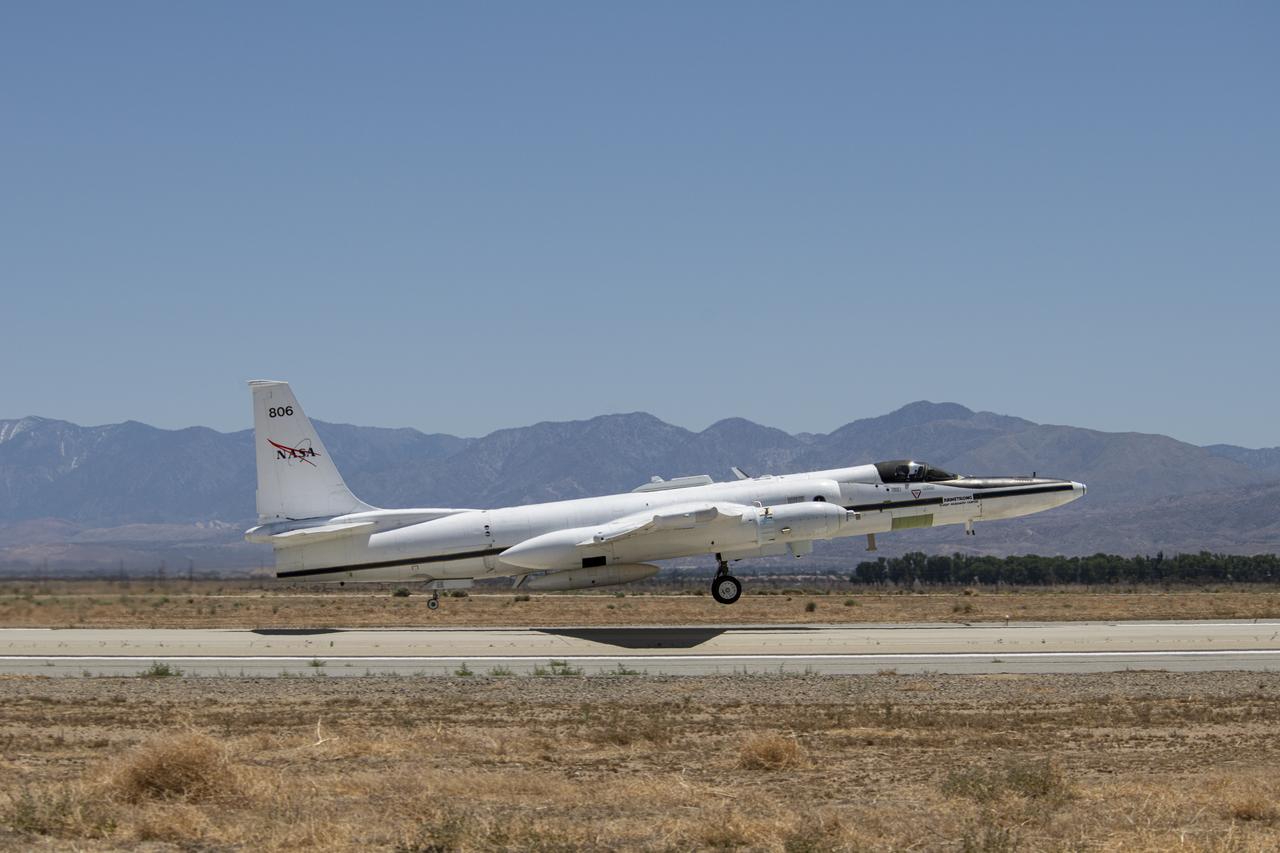
NASA's ER-2 aircraft is prepared for a check flight by Eric Hintsa, scientist of the Unmanned Aircraft Systems (UAS) Chromatograph for Atmospheric Trace Species (UCATS) instrument, on May 13, 2022.
NASA's ER-2 is prepared for the Dynamics and Chemistry of the Summer Stratosphere, or DCOTSS, 2022 campaign.
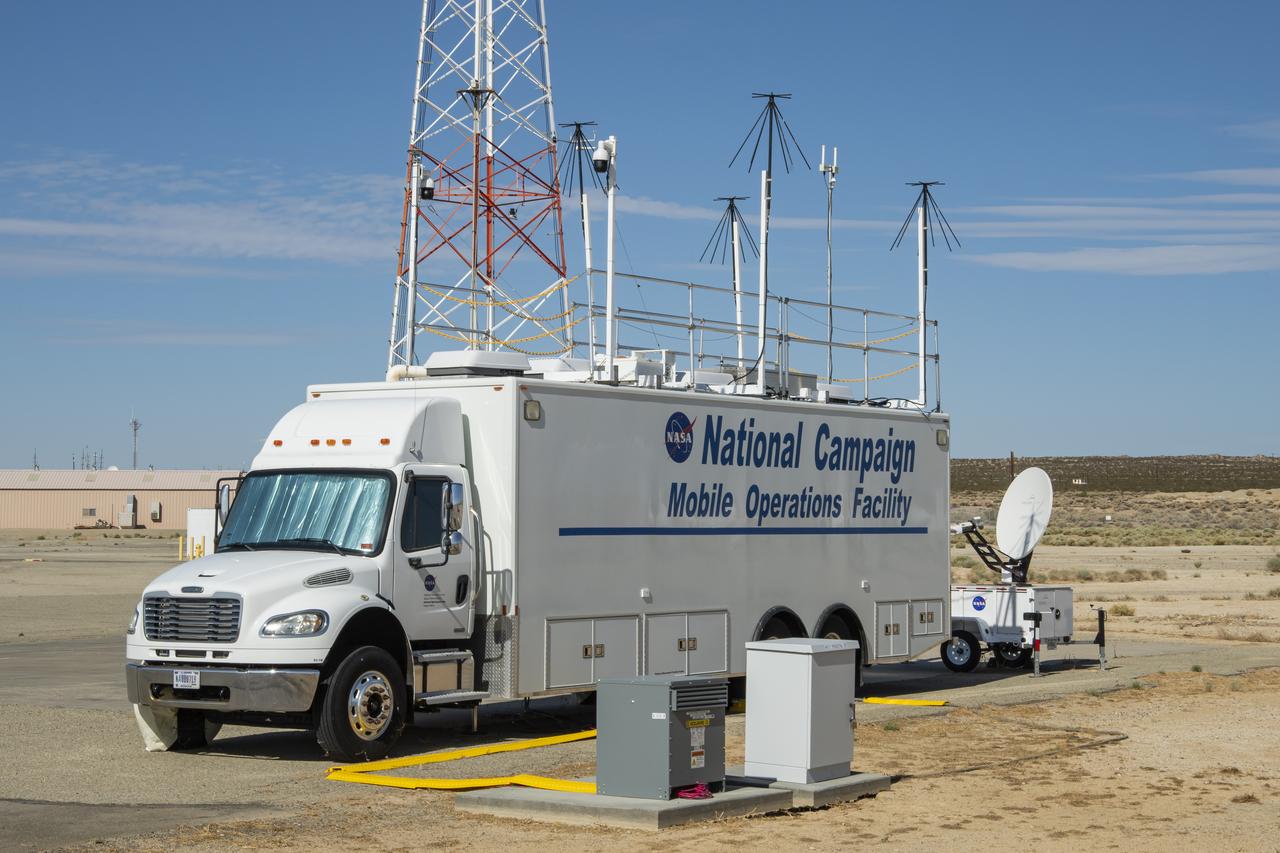
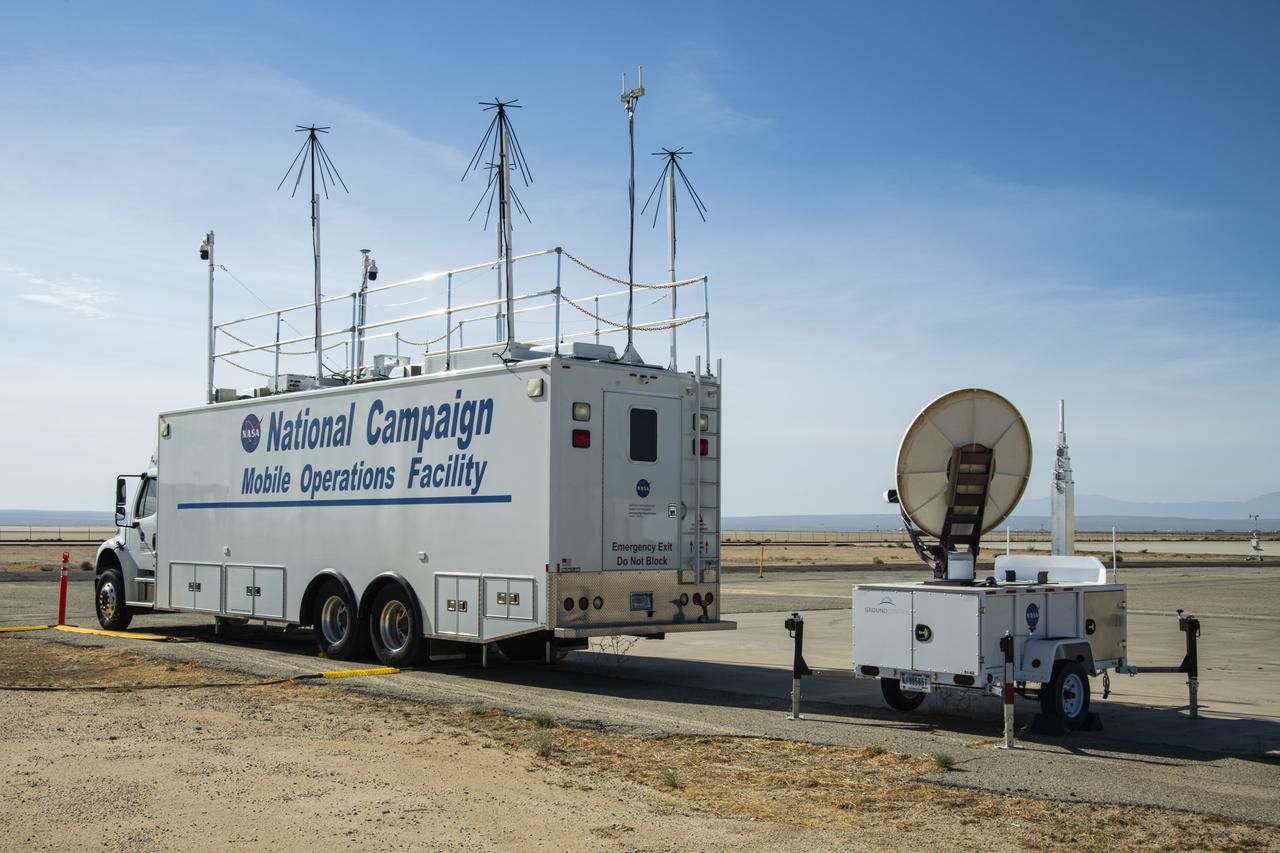
Housed at NASA Armstrong Flight Research Center in Edwards, California, the Advanced Air Mobility project's National Campaign upgraded the Mobile Operations Facility, pictured here on July 20, 2022. This command center on wheels is a key piece of NASA's AAM testing.
Advanced Air Mobility National Campaign Upgrades Mobile Operations Facility with Decals and Modifications
The X-56B remotely piloted aircraft ground crew prepares the aircraft to begin a new flight series. The flight was April 19 at NASA's Armstrong Flight Research Center in Edwards, California, with partner Northrop Grumman.
X-56B Begins New Flight Series
NASA 862, which is an F/A-18D now based at NASA’s Armstrong Flight Research Center in Edwards, California, arrives for the first time in 2021. The aircraft was stationed at the U.S. Naval Air Station Patuxent River in Maryland. Once here, the aircraft was sent for major maintenance, painting, and preparation to join the NASA Armstrong aircraft fleet.
F-18D Support Parts Aircraft Arrival #1
An elementary student enrolled in the U.S. Department of Defense Starbase program at Edwards Air Force Base flew the X-57 Maxwell inside NASA’s Armstrong  Flight Research Center’s simulator lab on Sept. 16th 2019.
Elementary Student Flies The X-57 Maxwell Simulator
NASA's all-electric X-57 Maxwell, in its Mod II configuration, arrives at NASA's Armstrong Flight Research Center in Edwards, California. The X-plane was delivered by prime contractor Empirical Systems Aerospace of San Luis Obispo, California, in two parts, with the wing separated from the fuselage, to aid in a more timely delivery. X-57 is NASA's first crewed X-plane in two decades, and seeks to further advance the design and airworthiness process for distributed electric propulsion technology for general aviation aircraft.
X-57 Mod II Vehicle Arrives at NASA Armstrong
After climbing the stairs, NASA pilot Nils Larson sits in a NASA F-15B aircraft and begins preflight procedures.
Larson Details Chief Test Pilot Work
The X-56B remotely piloted aircraft lands following the first of a new flight series. The flight was April 19 at NASA's Armstrong Flight Research Center in Edwards, California, with partner Northrop Grumman.
X-56B Begins New Flight Series
The X-56B remotely piloted aircraft ground crew prepares the aircraft to begin a new flight series. The flight was April 19 at NASA's Armstrong Flight Research Center in Edwards, California, with partner Northrop Grumman.
X-56B Begins New Flight Series
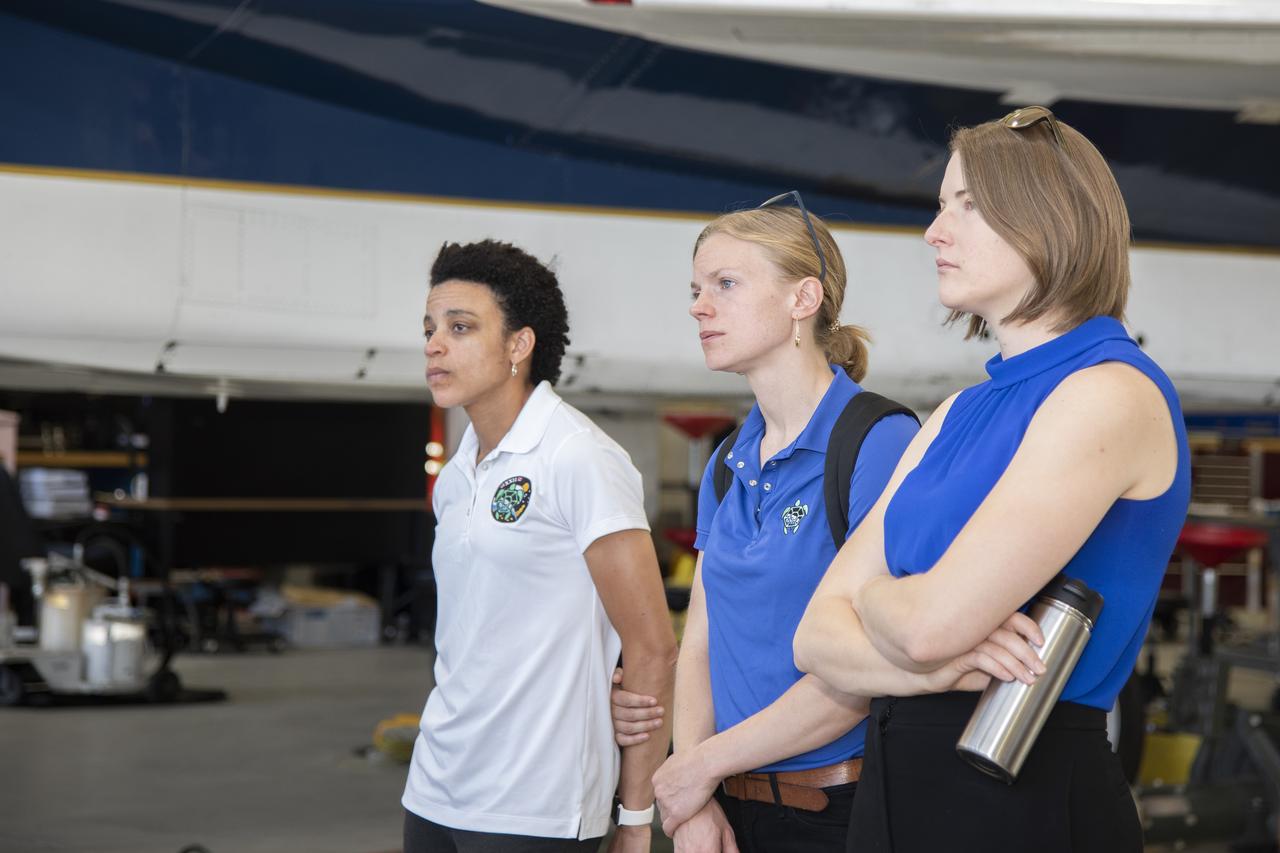
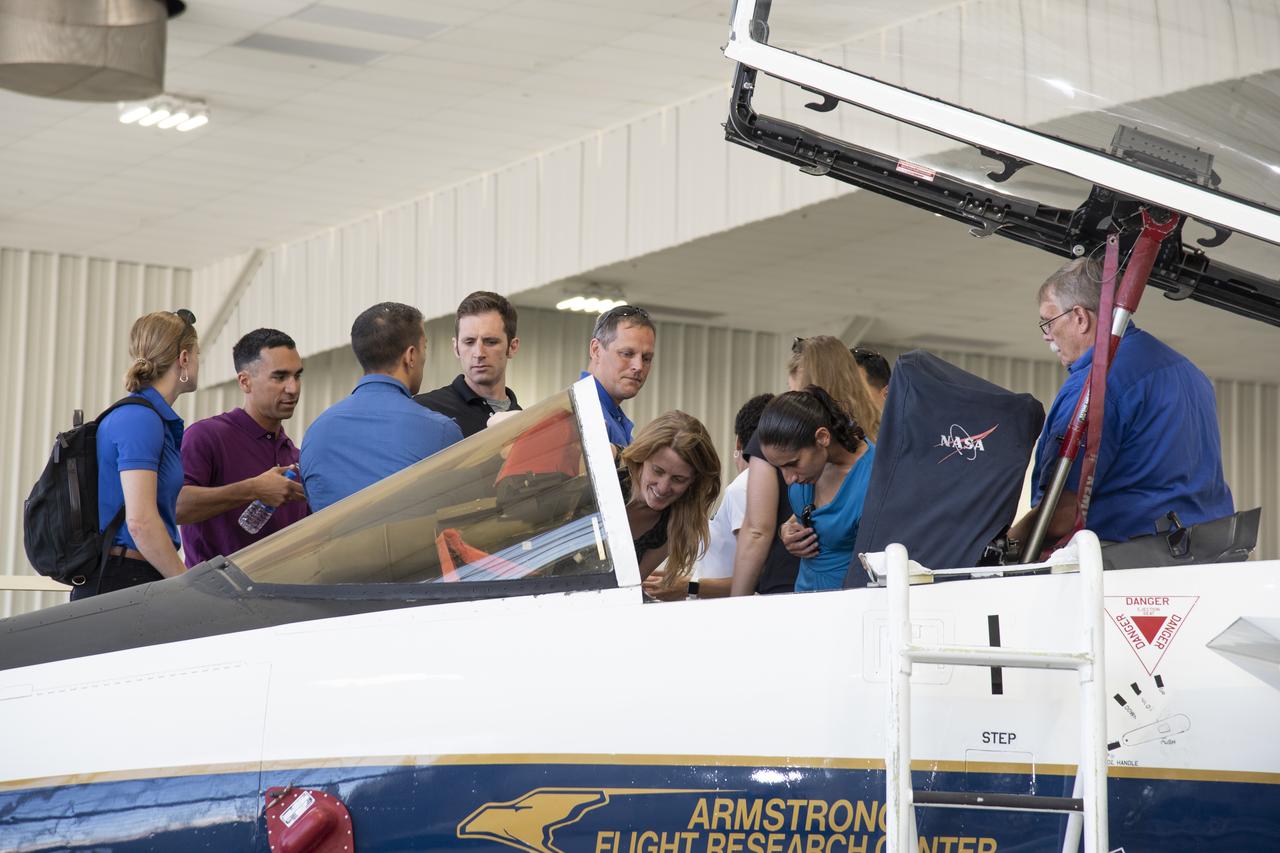
NASA’s 2017 astronaut candidates (L to R) Jessica Watkins, Zena Cardman, Kayla Barron toured aircraft hangar at Armstrong Flight Research Center, in Southern California where they were briefed on the use of Armstrong's F-15 and F-18 aircraft for studying sonic booms.  The aircraft will be used during the development of the low-boom X-59 aircraft that is planned to fly supersonically over land, which is not allowed at this time because of the loud noise created when flying beyond the speed of sound.
Pilot Nils Larsen Speaks to Astronauts on X-59 Research Using Jets
NASA’s Armstrong Flight Research Center ER-2 #809 high-altitude aircraft prepped for Dynamics and Chemistry of the Summer Stratosphere (DCOTSS) science flights in Palmdale, CA.
NASA launches DCOTSS Science Flights
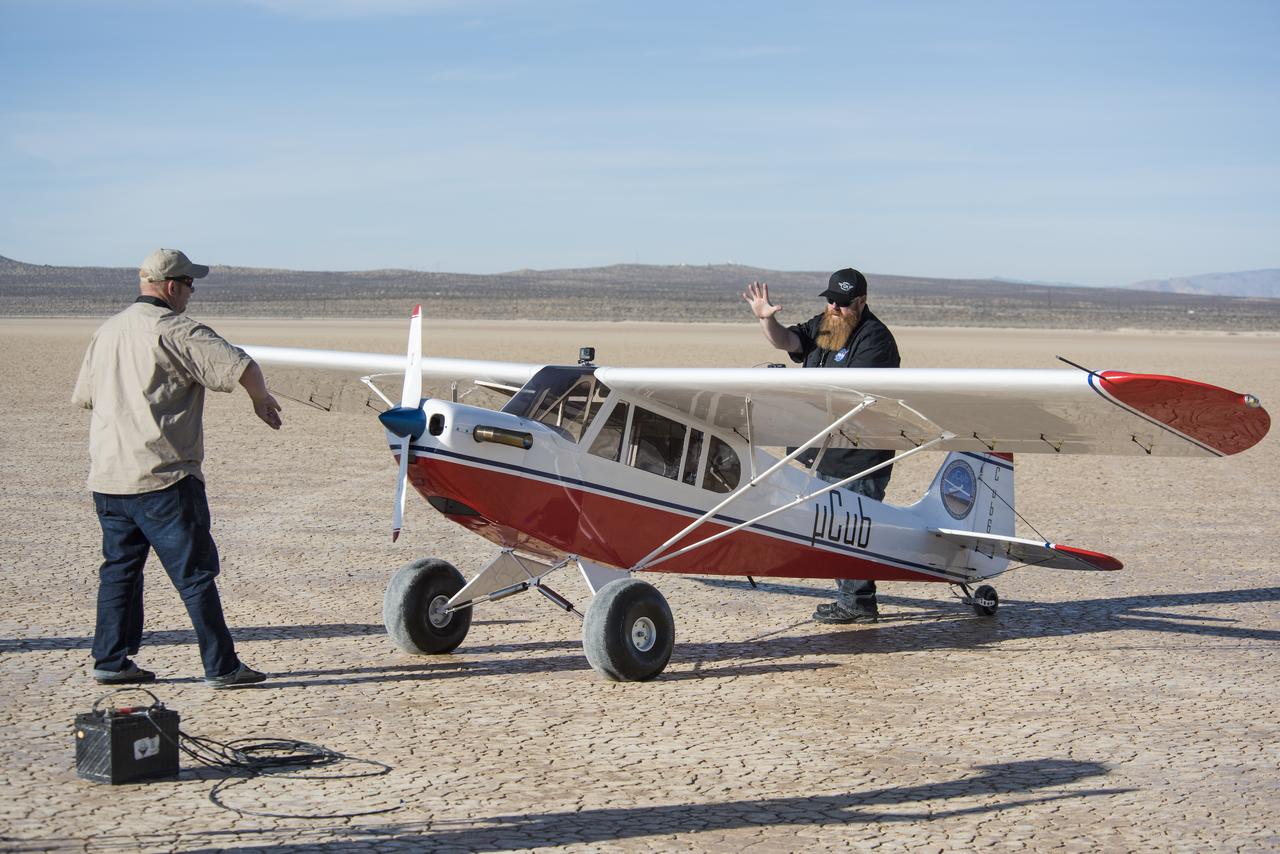
Crew members of the Subscale Research Lab at NASA’s Armstrong Flight Research Center in California perform a series of preflight system checks of the MicroCub to ensure the aircraft is ready for its maiden flight.
MicroCub Preflight Check
NASA's X-57 Maxwell, the agency's first all-electric X-plane and first crewed X-planed in two decades, is delivered to NASA's Armstrong Flight Research Center in Edwards, California in its Mod II configuration. The first of three primary modifications for the project, Mod II involves testing of the aircraft's cruise electric propulsion system. Delivery to NASA from prime contractor Empirical Systems Aerospace of San Luis Obispo, California, marks a major milestone for the project, at which point the vehicle is reintegrated for ground tests, to be followed by taxi tests, and eventually, flight tests. X-57's goal is to further advance the design and airworthiness process for distributed electric propulsion technology for general aviation aircraft, which can provide multiple benefits to efficiency, emissions, and noise.
X-57 Mod II Vehicle Delivered to NASA Armstrong
NASA's X-57 Maxwell, the agency's first all-electric X-plane and first crewed X-planed in two decades, is delivered to NASA's Armstrong Flight Research Center in Edwards, California in its Mod II configuration. The first of three primary modifications for the project, Mod II involves testing of the aircraft's cruise electric propulsion system. Delivery to NASA from prime contractor Empirical Systems Aerospace of San Luis Obispo, California, marks a major milestone for the project, at which point the vehicle is reintegrated for ground tests, to be followed by taxi tests, and eventually, flight tests. X-57's goal is to further advance the design and airworthiness process for distributed electric propulsion technology for general aviation aircraft, which can provide multiple benefits to efficiency, emissions, and noise.
X-57 Mod II Vehicle Delivered to NASA Armstrong
UP Aerospace employees preparing their SpaceLoft rocket to carry NASA technologies for testing in microgravity.
UP Aerospace Preparing Rocket to Launch NASA Space Technologies
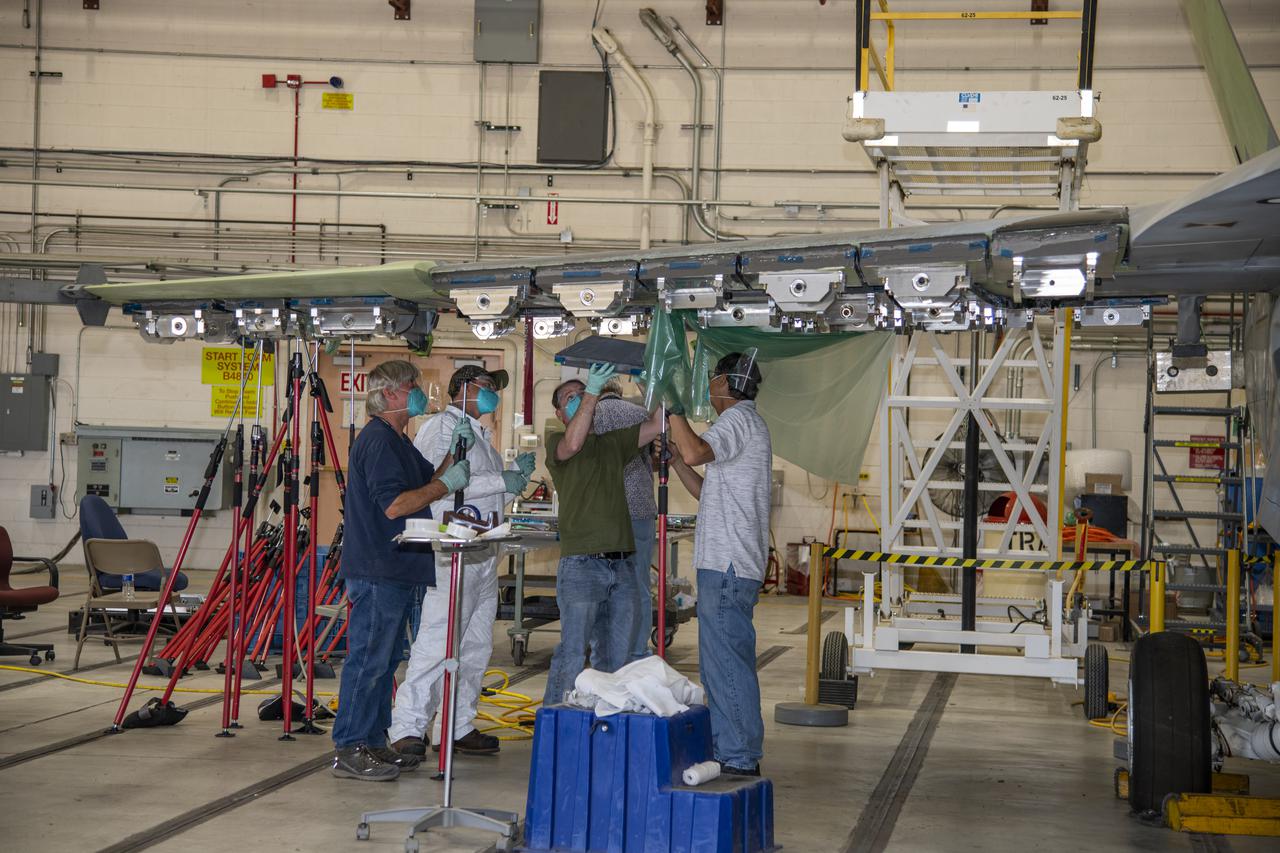
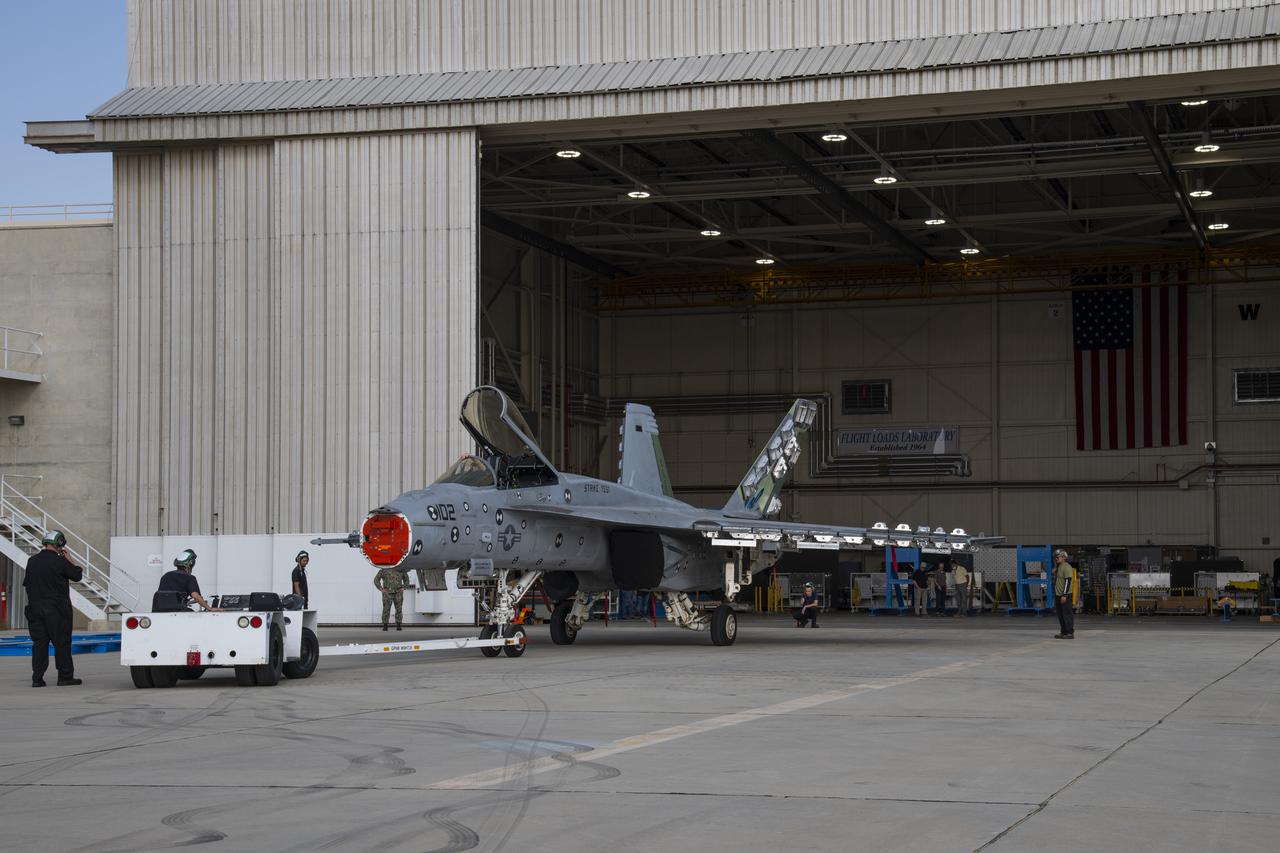
From left, Ronnie Haraguchi, Chris Mount, and Ray Sadler vacuum bag load pads on the aircraft surface of a F/A-18E from the Naval Air Systems Command (NAVAIR) in Patuxent River, Maryland. The aircraft is in NASA's Armstrong Flight Research Center Flight Loads Laboratory in Edwards, California, for the center's biggest load calibrations tests. This testing is needed before the aircraft can serve as a test vehicle for determining if it can safely manage maneuvers and proposed upgrades.
Title: NAVAIR F/A-18E Undergoes Loads Testing at NASA Armstrong
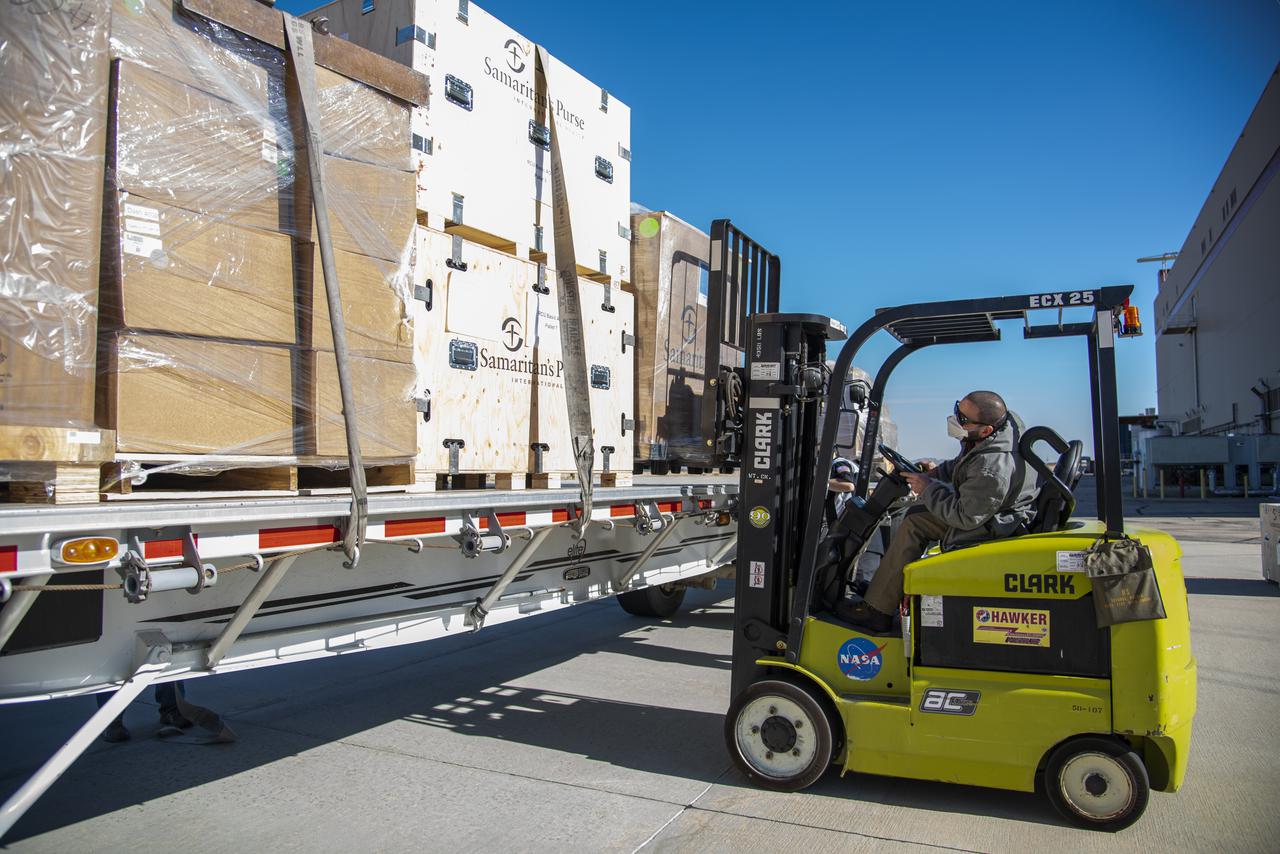
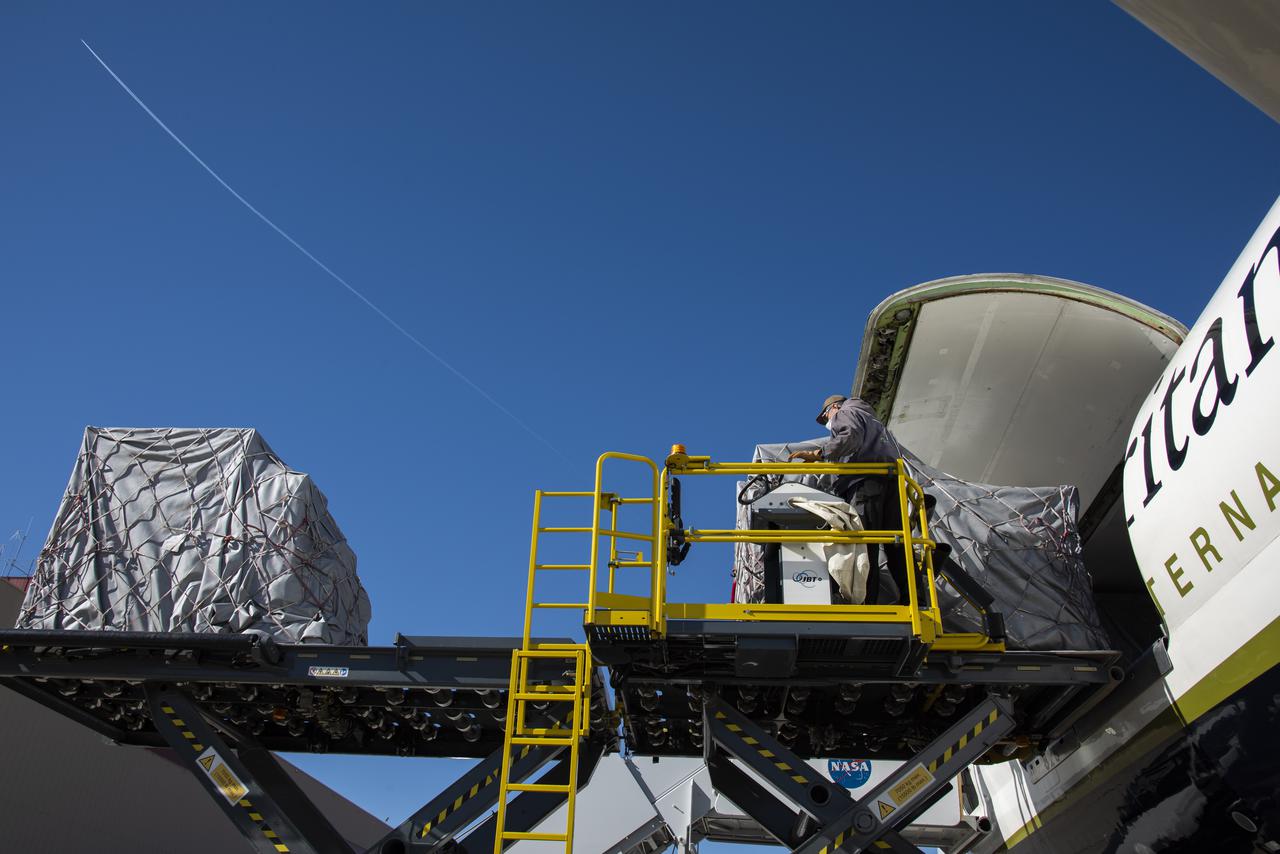
Marlon Espinoza uses a forklift at NASA's Armstrong Flight Research Center Building 703 in Palmdale, California, to assist in Samaritan Purse's COVID-19 aid work. The supplies were unloaded from a DC-8 and loaded onto a truck.
NASA Armstrong Supports Samaritan Purse's COVID-19 Aid Work
A NASA F/A-18 sits on the apron at NASA's Armstrong Flight Research Center in Edwards, California, prior to a supersonic research flight.
NASA F/A-18 Sits on Apron Prior to Flight
NASA's all-electric X-57 Maxwell, in its Mod II configuration, arrives at NASA's Armstrong Flight Research Center in Edwards, California. The X-plane was delivered by prime contractor Empirical Systems Aerospace of San Luis Obispo, California, in two parts, with the wing separated from the fuselage, to aid in a more timely delivery. X-57 is NASA's first crewed X-plane in two decades, and seeks to further advance the design and airworthiness process for distributed electric propulsion technology for general aviation aircraft.
X-57 Mod II Vehicle Arrives at NASA Armstrong
UP Aerospace SpaceLoft rocket launched into space Sept 12, 2018 from Spaceport America in New Mexico carrying three NASA technologies onboard to test in microgravity.
UP Aerospace Rocket Launch from NM with NASA Technologies Onboard
NASA’s flight systems engineer, Kassidy Mclaughlin adjusts a visual approach aid for aircraft called Pulse Light Approach Slope Indicator (PLASI). Dry run build-up test flights were conducted in 2021 at NASA’s Armstrong Flight Research Center in Edwards, California.
NASA Employees’ Careers Started as Interns
NASA's 2017 astronaut candidates toured aircraft hangar at Armstrong Flight Research Center, in Southern California. On the right, NASA's, X-59 pilot Nils Larsen, briefs the astronauts as they look at Armstrong's fleet of supersonic research support aircraft, including the F-15, which will fly in tandem with the X-59 QueSST during early flight test stages, and the F-18, which is conducting supersonic research in support of the overall mission.
Pilot Nils Larsen Speaks to Astronauts on X-59 Research Using Jets
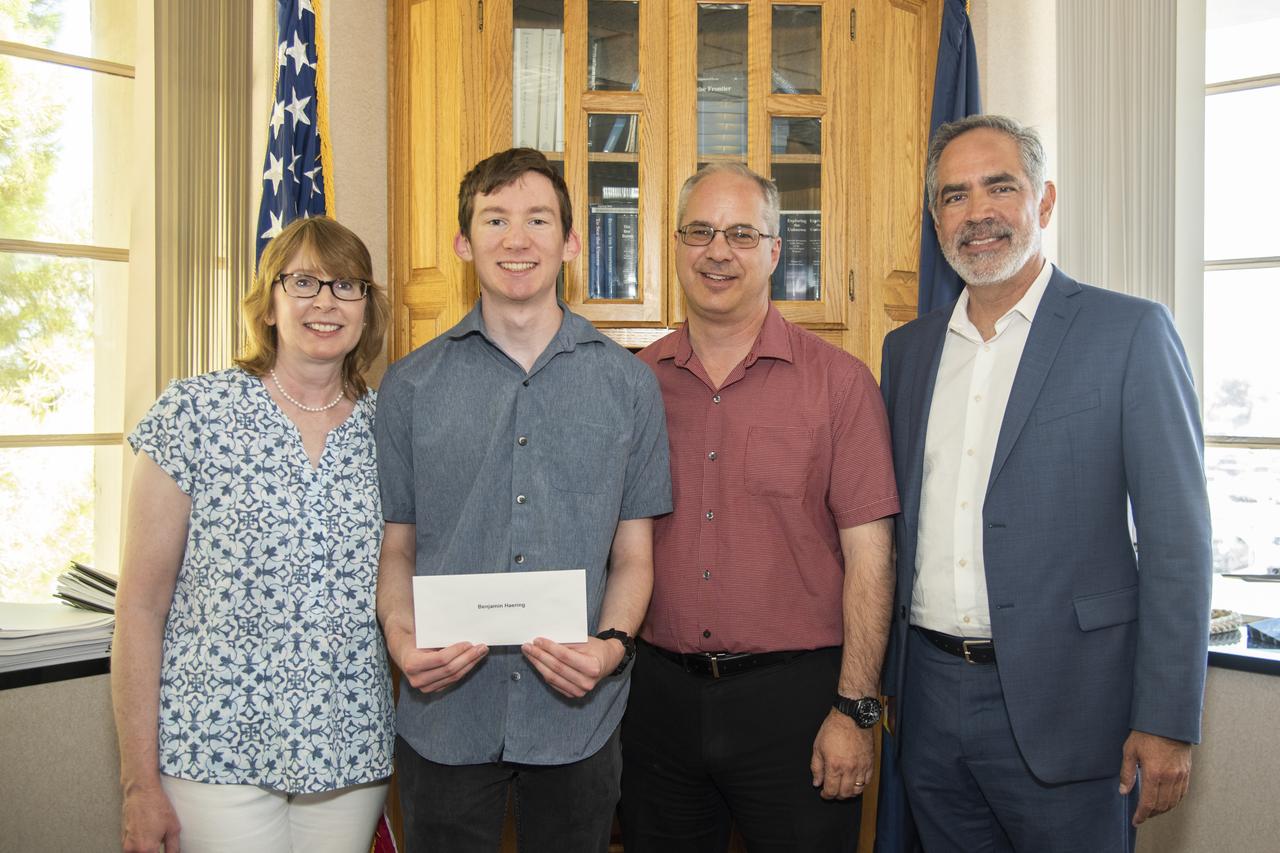
The Employee Exchange Council at NASA’s Armstrong Flight Research Center in California recently awarded its 2019 scholarship to Ben Haering, second from left. Armstrong Center Director David McBride, at right, presented the award. Also in the photo are Haering’s parents Ed and Kathy Haering.
NASA Armstrong Exchange Awards Scholarship
NASA's X-57 Maxwell, the agency's first all-electric X-plane and first crewed X-planed in two decades, is delivered to NASA's Armstrong Flight Research Center in Edwards, California in its Mod II configuration. The first of three primary modifications for the project, Mod II involves testing of the aircraft's cruise electric propulsion system. Delivery to NASA from prime contractor Empirical Systems Aerospace of San Luis Obispo, California, marks a major milestone for the project, at which point the vehicle is reintegrated for ground tests, to be followed by taxi tests, and eventually, flight tests. X-57's goal is to further advance the design and airworthiness process for distributed electric propulsion technology for general aviation aircraft, which can provide multiple benefits to efficiency, emissions, and noise.
X-57 Mod II Vehicle Delivered to NASA Armstrong
NASA's X-57 Maxwell, the agency's first all-electric X-plane and first crewed X-planed in two decades, is delivered to NASA's Armstrong Flight Research Center in Edwards, California in its Mod II configuration. The first of three primary modifications for the project, Mod II involves testing of the aircraft's cruise electric propulsion system. Delivery to NASA from prime contractor Empirical Systems Aerospace of San Luis Obispo, California, marks a major milestone for the project, at which point the vehicle is reintegrated for ground tests, to be followed by taxi tests, and eventually, flight tests. X-57's goal is to further advance the design and airworthiness process for distributed electric propulsion technology for general aviation aircraft, which can provide multiple benefits to efficiency, emissions, and noise.
X-57 Mod II Vehicle Delivered to NASA Armstrong
NASA's X-57 Maxwell, the agency's first all-electric X-plane and first crewed X-planed in two decades, is delivered to NASA's Armstrong Flight Research Center in Edwards, California in its Mod II configuration. The first of three primary modifications for the project, Mod II involves testing of the aircraft's cruise electric propulsion system. Delivery to NASA from prime contractor Empirical Systems Aerospace of San Luis Obispo, California, marks a major milestone for the project, at which point the vehicle is reintegrated for ground tests, to be followed by taxi tests, and eventually, flight tests. X-57's goal is to further advance the design and airworthiness process for distributed electric propulsion technology for general aviation aircraft, which can provide multiple benefits to efficiency, emissions, and noise.
X-57 Mod II Vehicle Delivered to NASA Armstrong
Samaritan Purse landed its DC-8 at NASA's Armstrong Flight Research Center Building 703 in Palmdale, California, to deliver supplies needed to meet the demands of the COVID-19 pandemic. NASA Armstrong personnel assisted in unloading the aircraft.
NASA Armstrong Supports Samaritan Purse's COVID-19 Aid Work
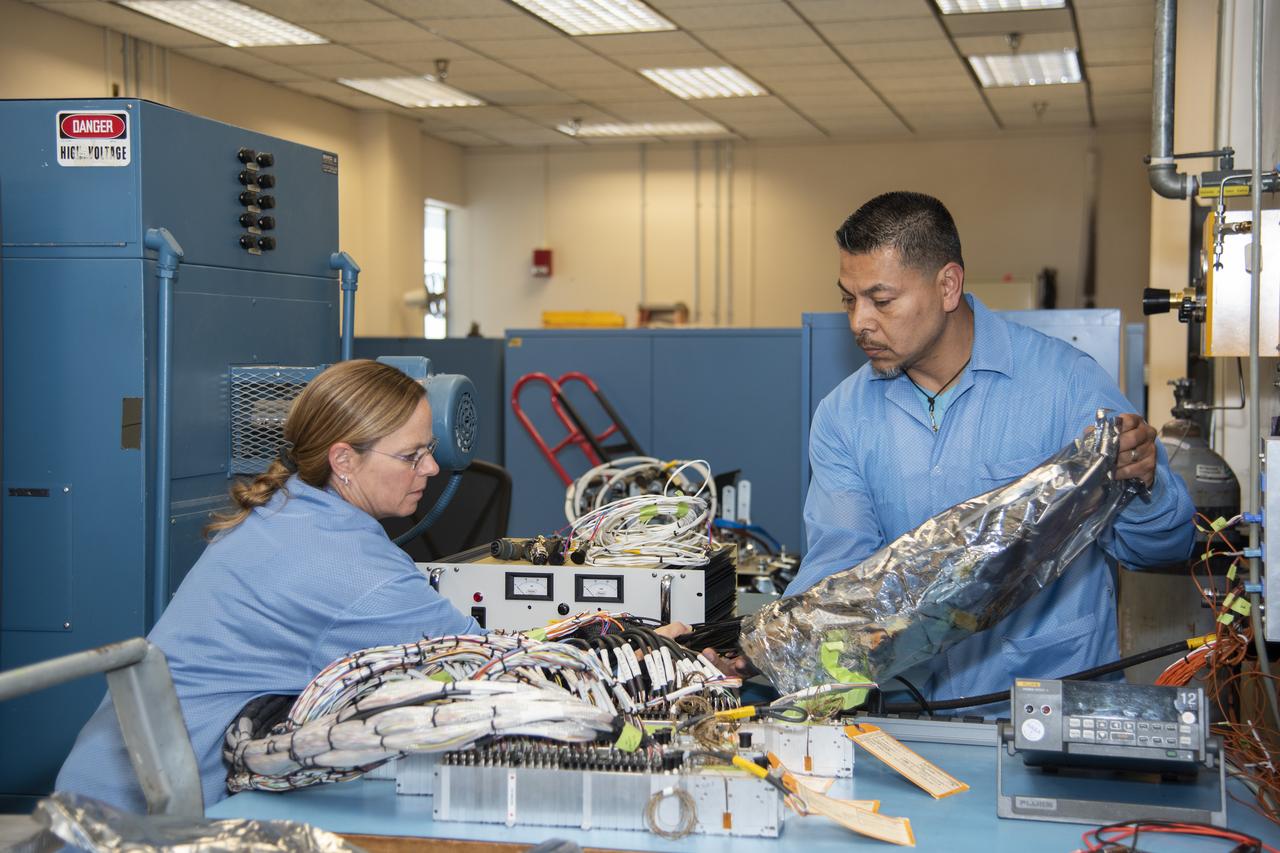
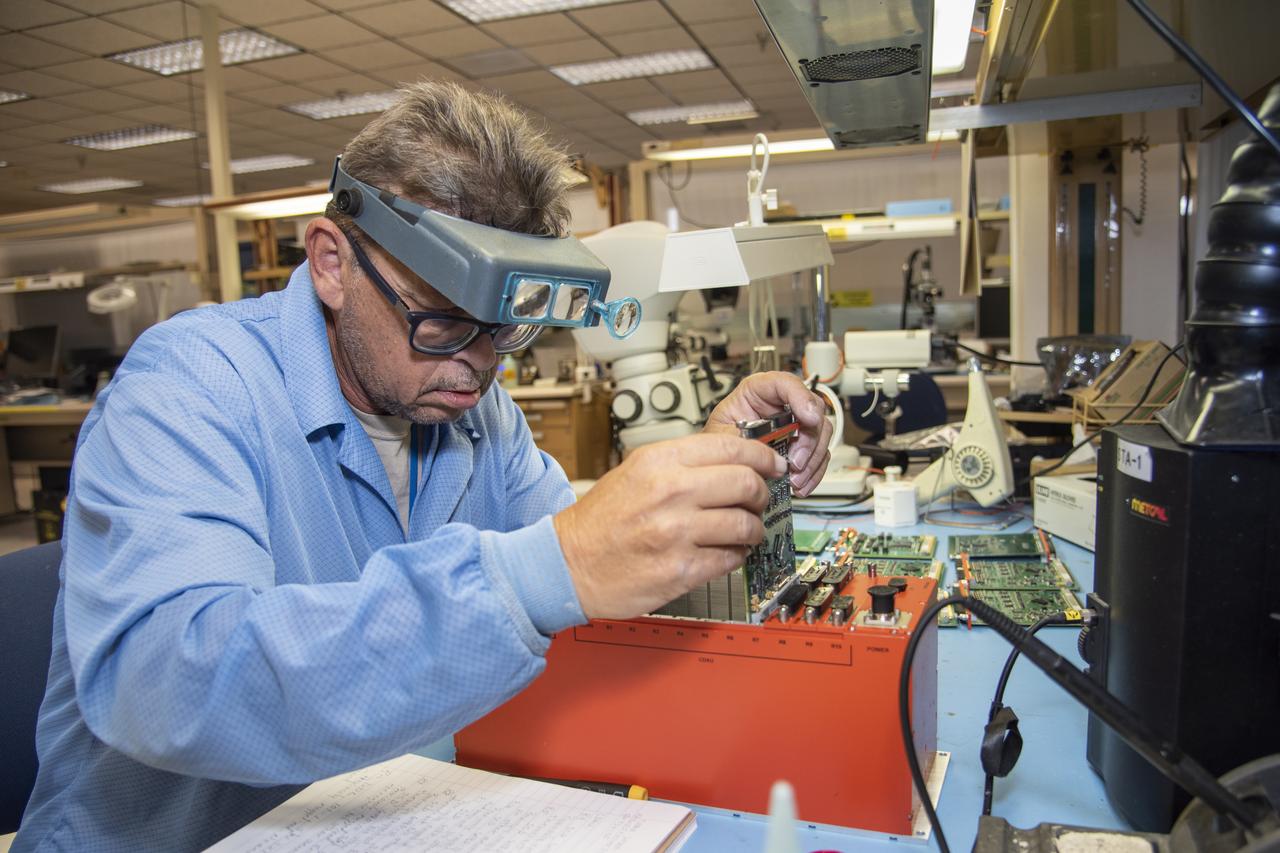
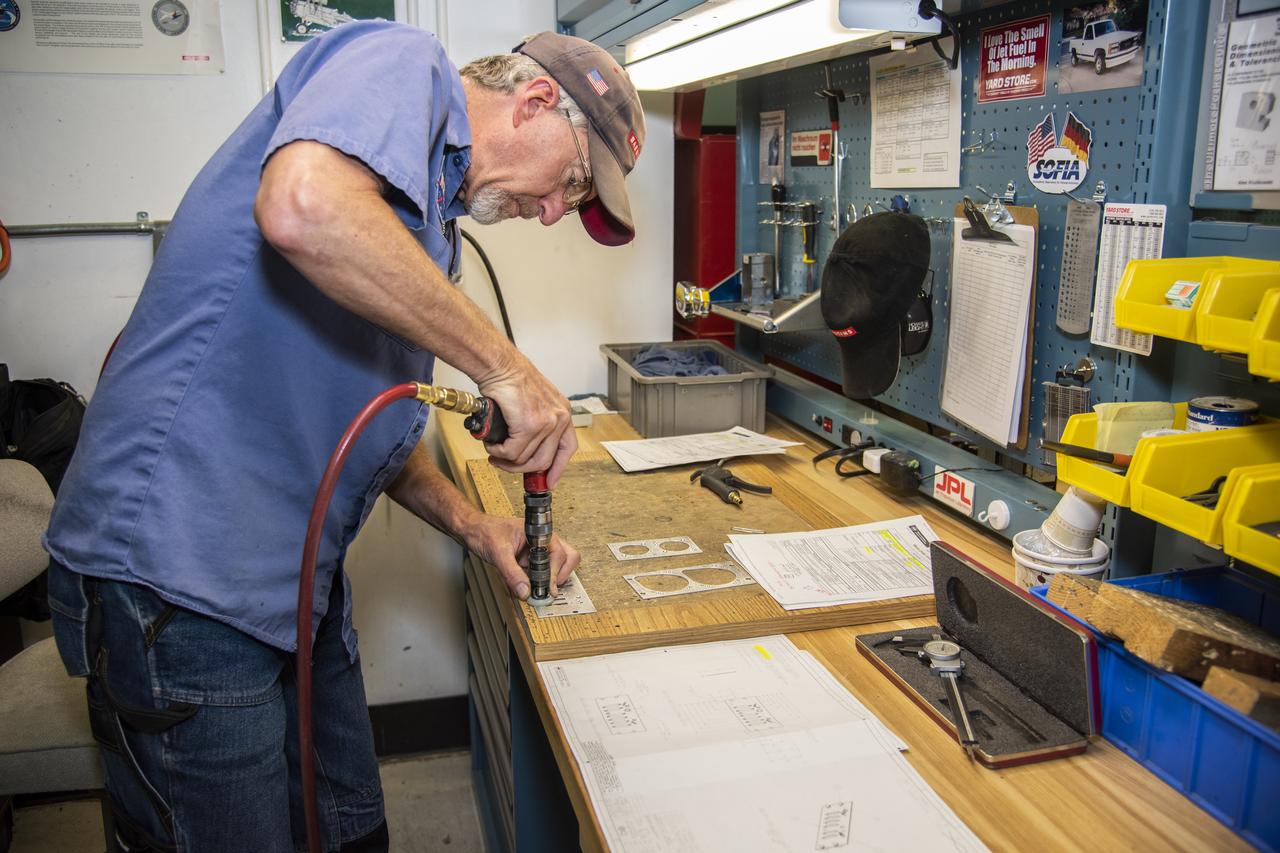
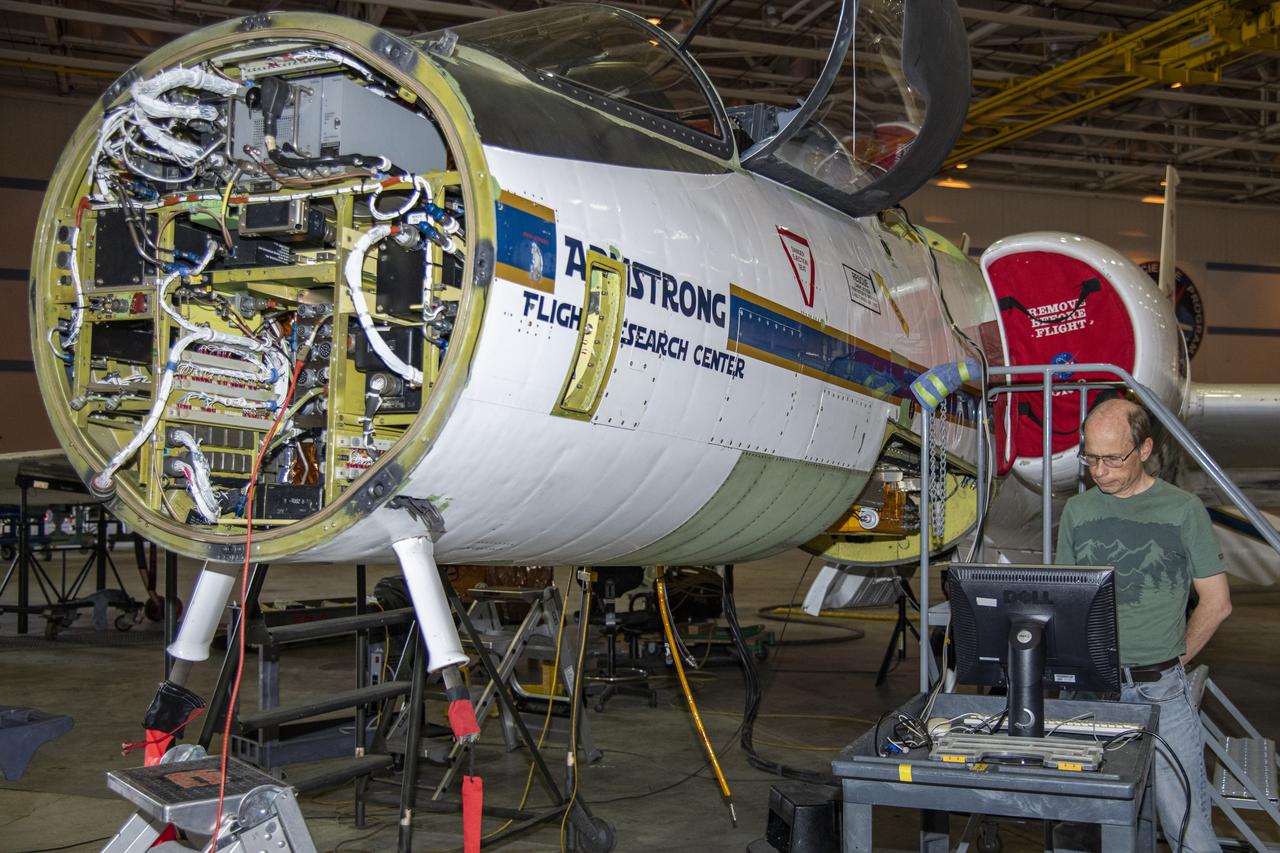
Hector Rosas works on fabricating a part for the ER-2 instrumentation panel.
ER-2 Cockpit Effort Will Enhance Pilot Safety
Masten Space Systems employees prepare its rocket to flight test NASA -licensed Psionic navigation doppler lidar technology that enables precision landing on celestial bodies where GPS for navigation only available on Earth is not an option.
Masten Prepares Rocket to Test Lunar Precision Landing Technology
NASA's 2017 astronaut candidates (L to R) Zena Cardman, Loral O'Hara, Frank Rubio, Jonny Kim, Raja Chari practice flying in an X-59 QueSST simulator at Armstrong Flight Research Center, in Southern California. The low boom flight demonstrator, X-59, being built at Lockheed Martin and was designed to fly at supersonic speeds over land without the loud noise of breaking the sound barrier and disturbing communities.
Astronauts Pilot X-59 Simulator at Armstrong Flight Research Center
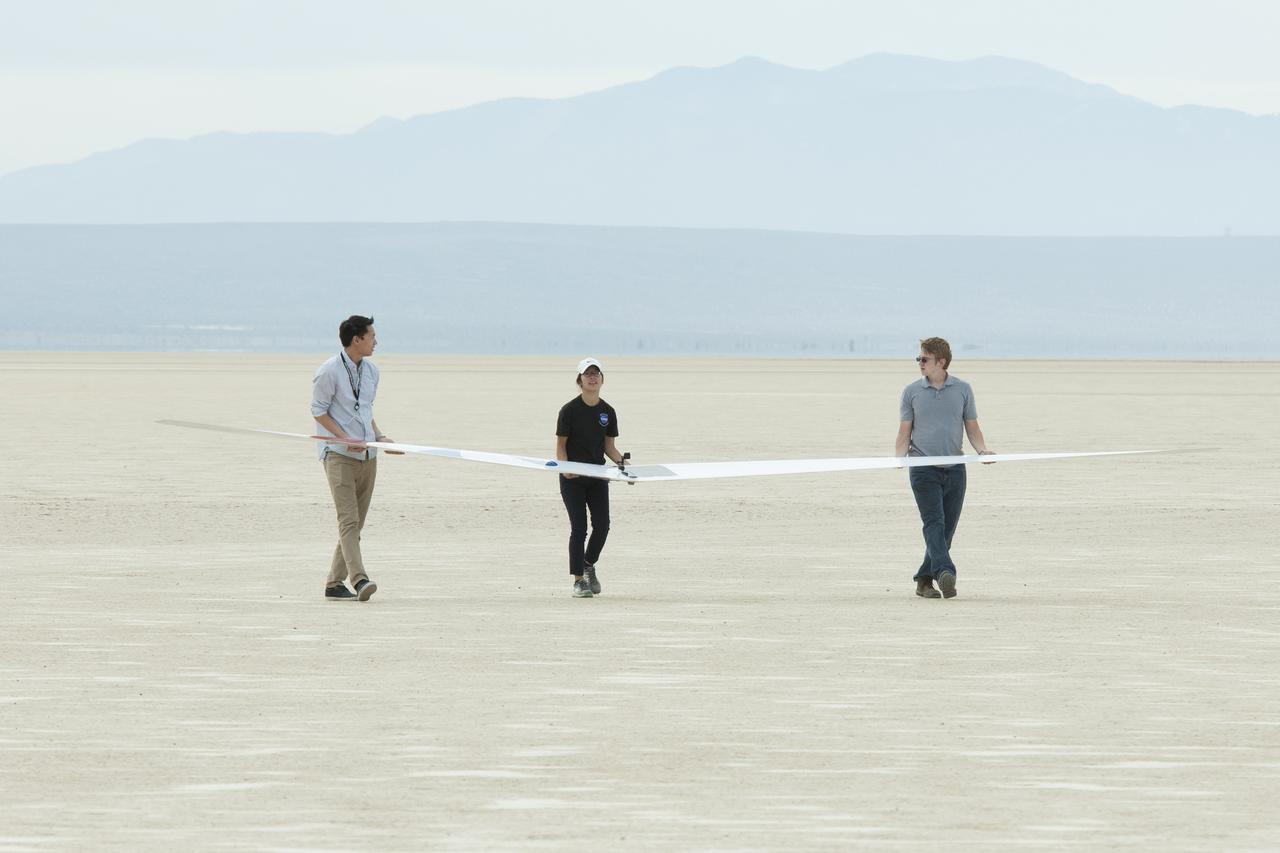
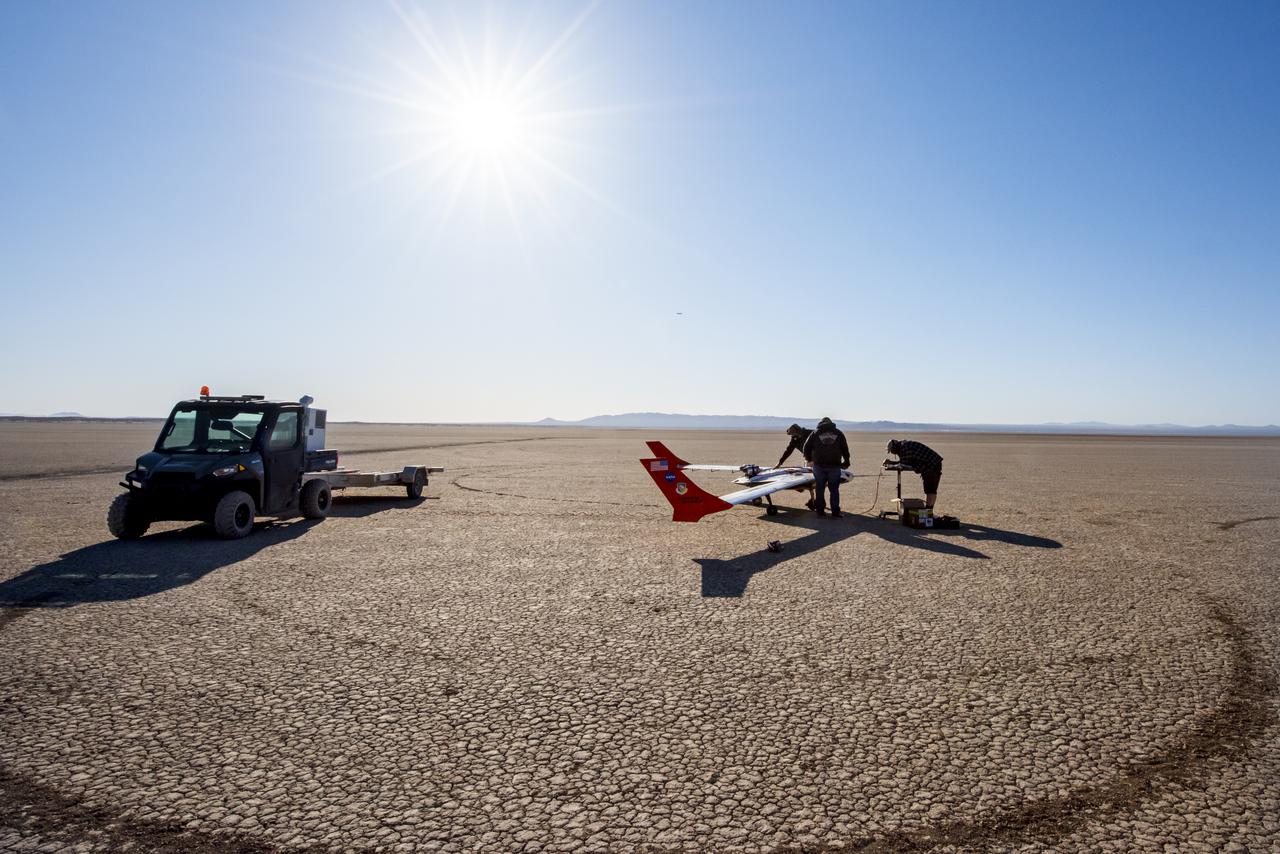
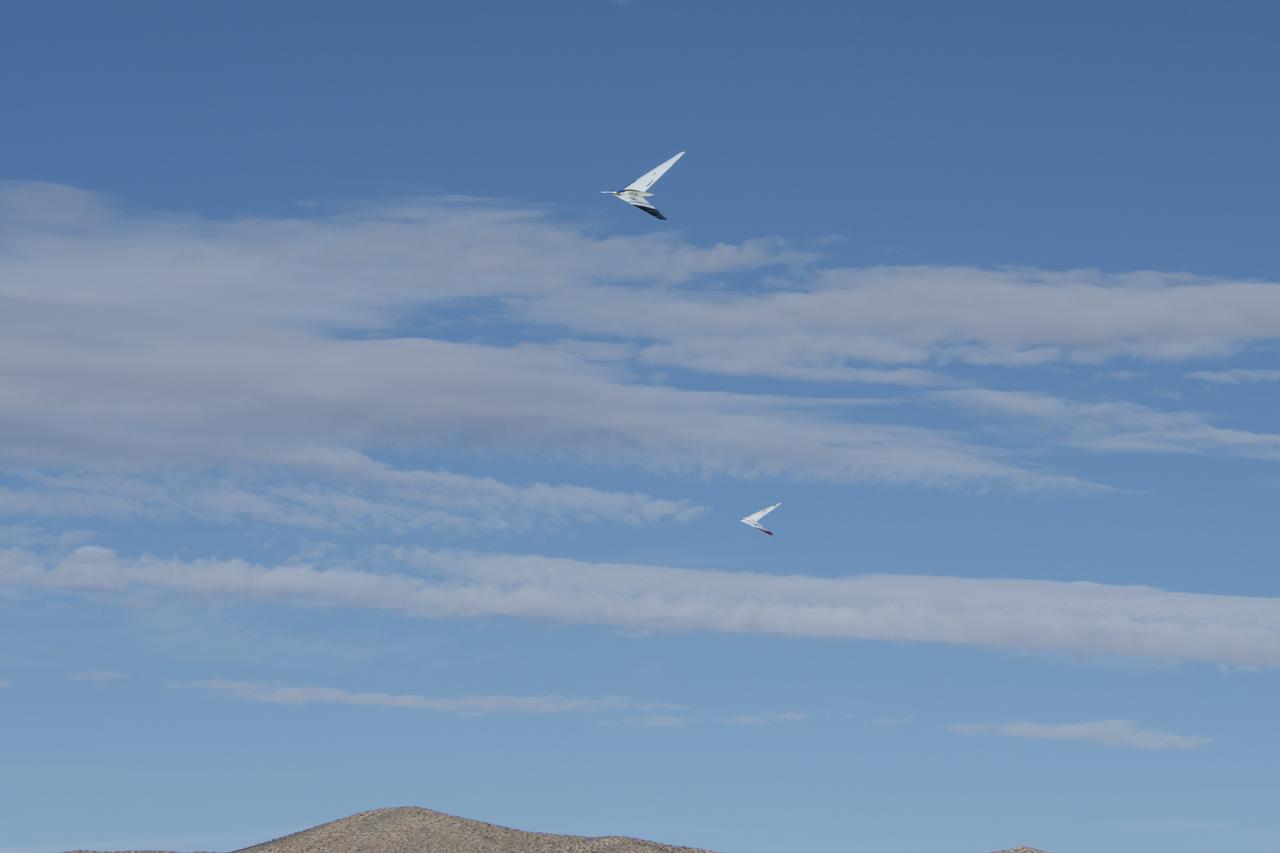
NASA Armstrong Flight Research Center conducted its first formation flight with the Preliminary Research Aerodynamic Design to Lower Drag (Prandtl) aircrafts Prandtl-D2 and Prandtl-3C.
Prandtl Formation Flight
NASA Armstrong Flight Research Center photographer Lauren Hughes takes photos of the Super Blue Blood Moon eclipse from California’s Trona Pinnacles Desert National Conservation for the Jan. 31 of the total lunar eclipse that provided a rare opportunity to capture a supermoon, a blue moon and a lunar eclipse at the same time. A supermoon occurs when the Moon is closer to Earth in its orbit and appearing 14 percent brighter than usual. As the second full moon of the month, this moon is also commonly known as a blue moon, though it will not be blue in appearance. The super blue moon passed through Earth’s shadow and took on a reddish tint, known as a blood moon. This total lunar eclipse occurs when the Sun, Earth, and a full moon form a near-perfect lineup in space. The Moon passes directly behind the Earth into its umbra (shadow).
Image shows Trona Pinnacles near California’s NASA Armstrong Flight Research Center during Jan. 31 Super Blue Blood Moon. Trona Pinnacles is an unusual geological feature of the state’s Desert National Conservation.
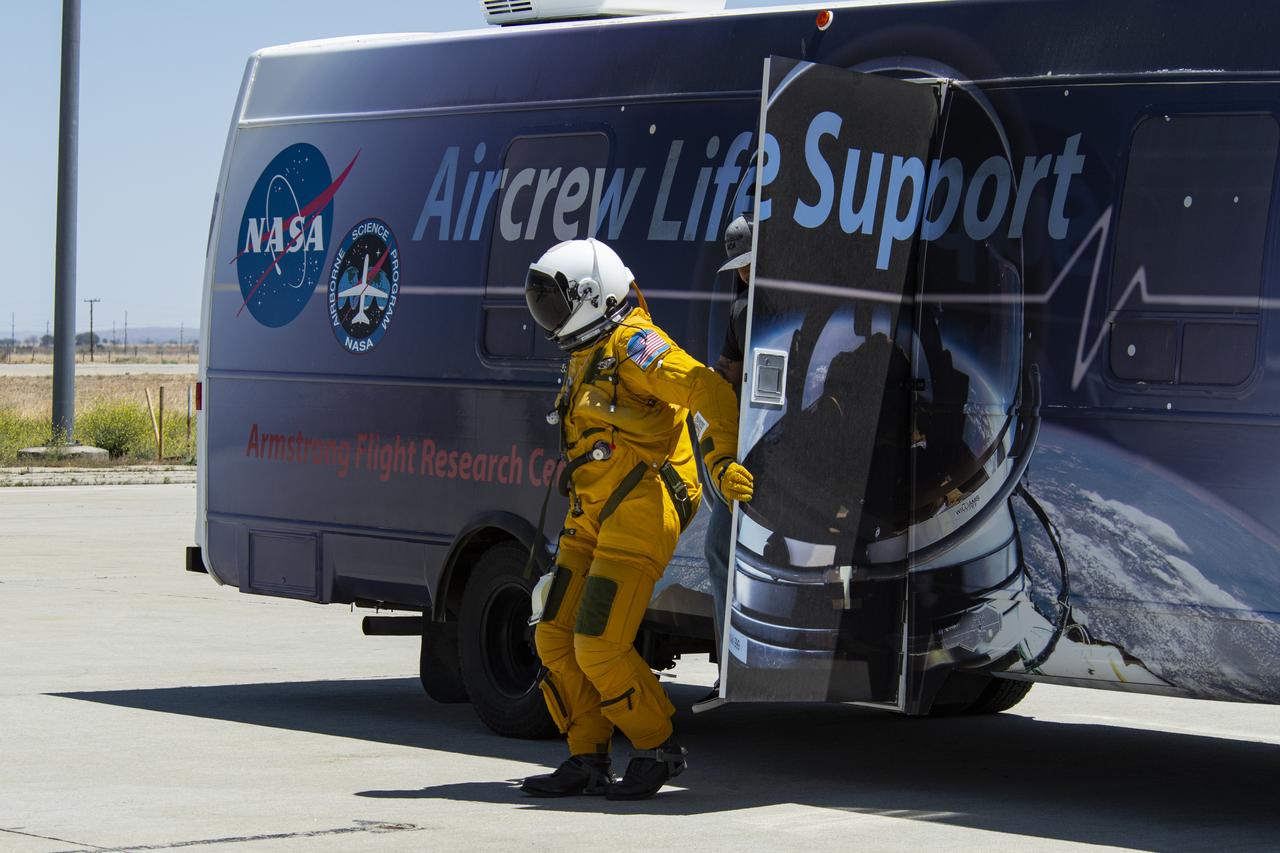
New decals are shown in this image of NASA's Mobile Operations Facility at NASA Armstrong Flight Research Center in Edwards, California on July 20, 2022. NASA's Advanced Air Mobility Project’s National Campaign uses the vehicle for mobile testing efforts.
Advanced Air Mobility National Campaign Upgrades Mobile Operations Facility with Decals and Modifications
NASA’s X-57 Maxwell, the agency’s first all-electric X-plane and first crewed X-planed in two decades, is delivered to NASA’s Armstrong Flight Research Center in Edwards, California in its Mod II configuration. The first of three primary modifications for the project, Mod II involves testing of the aircraft’s cruise electric propulsion system. Delivery to NASA from prime contractor Empirical Systems Aerospace of San Luis Obispo, California, marks a major milestone for the project, at which point the vehicle is reintegrated for ground tests, to be followed by taxi tests, and eventually, flight tests. X-57’s goal is to further advance the design and airworthiness process for distributed electric propulsion technology for general aviation aircraft, which can provide multiple benefits to efficiency, emissions, and noise.
X-57 Mod II Vehicle Delivered to NASA Armstrong
NASA's all-electric X-57 Maxwell, in its Mod II configuration, arrives at NASA's Armstrong Flight Research Center in Edwards, California. The X-plane was delivered by prime contractor Empirical Systems Aerospace of San Luis Obispo, California, in two parts, with the wing separated from the fuselage, to aid in a more timely delivery. X-57 is NASA's first crewed X-plane in two decades, and seeks to further advance the design and airworthiness process for distributed electric propulsion technology for general aviation aircraft.
X-57 Mod II Vehicle Arrives at NASA Armstrong
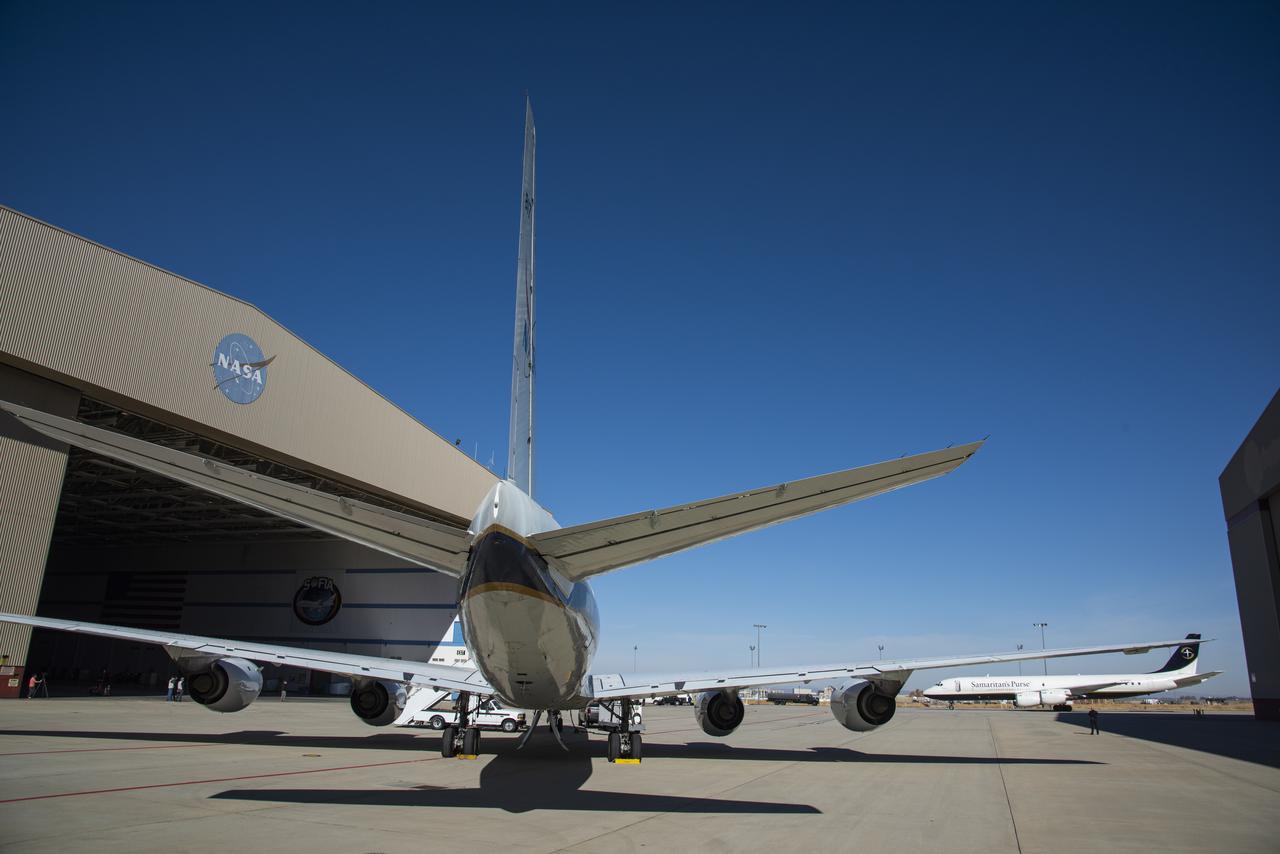
NASA and Samaritan's Purse DC-8 aircrafts met on the ramp in front of NASA's Armstrong Flight Research Center Building 703.
NASA and Samaritan's Purse DC-8
Aerosol data from the High Altitude Lidar Observatory (HALO), pictured here, will give mission scientists a better sense how Doppler Aerosol Wind Lidar (DAWN) is working and what its strengths and weaknesses are.
High Altitude Lidar Observatory (HALO) instrument
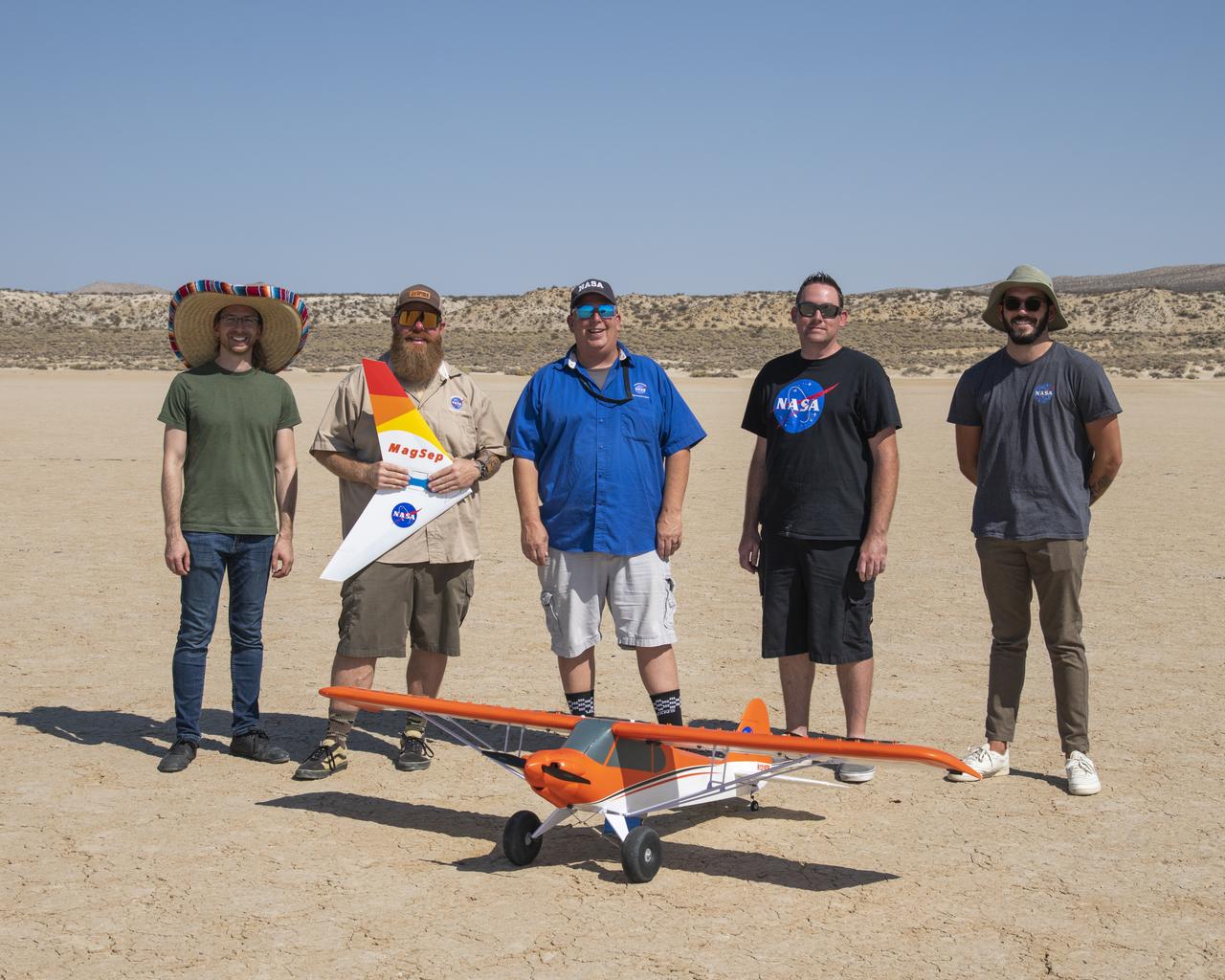
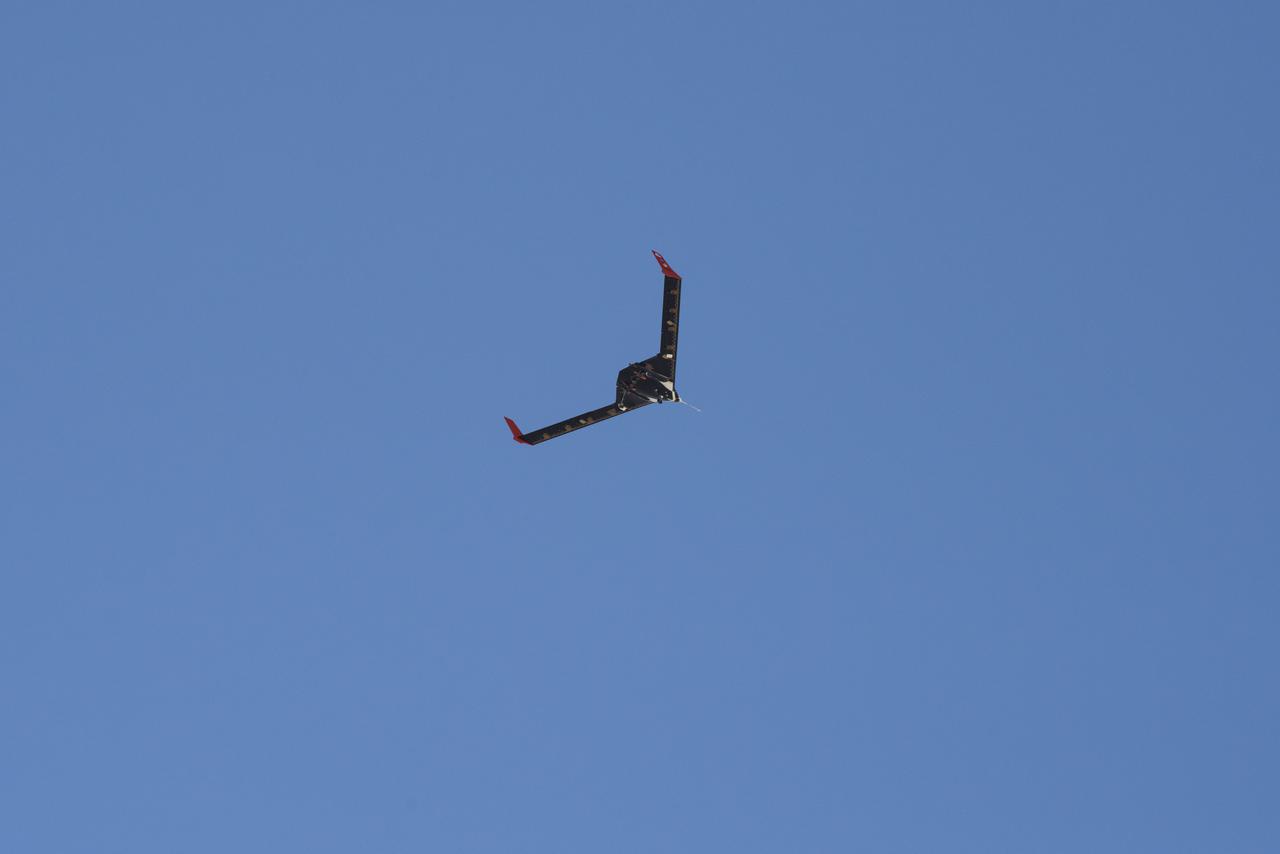
The subscale Prandtl-D 3C glider, carrying a pressure system developed and integrated by students, successfully flies at Edwards Air Force Base in California.
Student Developed Aircraft System Provides Vital Data
NASA's ER-2 aircraft receives a liquid oxygen refill (LOX) by engineer technician Octavio Provincia-Salazar. Liquid oxygen is used to supply the pilot with substantial oxygen for flight without additional weight.
NASA's ER-2 Liquid Oxygen Refill
The X-56B remotely piloted aircraft prepares for a landing following the first of a new flight series. The flight was April 19 at NASA's Armstrong Flight Research Center in Edwards, California, with partner Northrop Grumman.
X-56B Begins New Flight Series
NASA Armstrong says goodbye to its Prandtl-D1 that is being shipped to the National Air and Space Museum, Smithsonian Institution and Prandl-D3 that will be going to the California Science Center.
Prandtl-D1 and Prandtl-D3
NASA's all-electric X-57 Maxwell, in its Mod II configuration, arrives at NASA's Armstrong Flight Research Center in Edwards, California. The X-plane was delivered by prime contractor Empirical Systems Aerospace of San Luis Obispo, California, in two parts, with the wing separated from the fuselage, to aid in a more timely delivery. X-57 is NASA's first crewed X-plane in two decades, and seeks to further advance the design and airworthiness process for distributed electric propulsion technology for general aviation aircraft.
X-57 Mod II Vehicle Arrives at NASA Armstrong
NASA's all-electric X-57 Maxwell, in its Mod II configuration, arrives at NASA's Armstrong Flight Research Center in Edwards, California. The X-plane was delivered by prime contractor Empirical Systems Aerospace of San Luis Obispo, California, in two parts, with the wing separated from the fuselage, to aid in a more timely delivery. X-57 is NASA's first crewed X-plane in two decades, and seeks to further advance the design and airworthiness process for distributed electric propulsion technology for general aviation aircraft.
X-57 Mod II Vehicle Arrives at NASA Armstrong
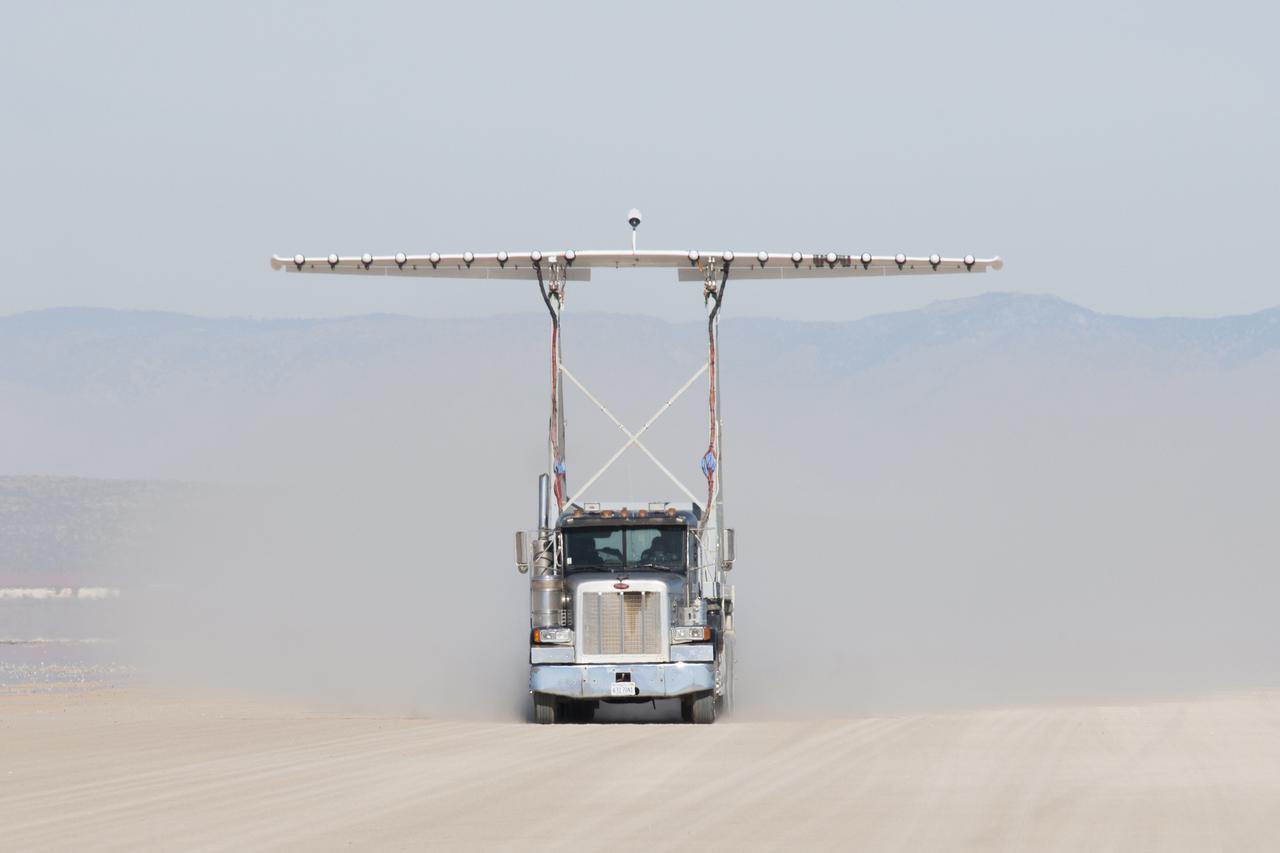
Student interns and NASA personnel cluster in front of PRANDTL-D No. 3 following a crash on Rosamond Dry Lake. The radio-controlled glider was built to validate a new spanload.
PRANDTL-D No 3 Crash Aftermath
NASA’s Armstrong Flight Research Center ER-2 #809 high-altitude aircraft maintained by avionics technician Gregory Bantalin for Dynamics and Chemistry of the Summer Stratosphere (DCOTSS) science flights.
NASA launches DCOTSS Science Flights
NASA's 2017 astronaut candidates toured aircraft hangar at Armstrong Flight Research Center, in Southern California (L to R) Jenni Sidey-Gibbons, Raja Chari, Loral O'Hara, Jasmin Moghbeli, Jonny Kim and Jessica Watkins look inside the engine nozzle of an F-15 jet.  The F-15 will fly in tandem with the X-59 QueSST during early flight test stages for the X-59 development.
Astronauts Look in F-15 Nozzle at Armstrong Flight Research Center
NASA's 2017 astronaut candidates toured aircraft hangar at Armstrong Flight Research Center, in Southern California where Crew Chief Tom Grindle talks with (L to R) Jessica Watkins and Raja Chari near engine nozzle of F-15 jet. The F-15 will fly in tandem with the X-59 QueSST during early flight test stages for the X-59 development.
Astronauts Tour Aircraft Hangar at Armstrong Flight Research Center
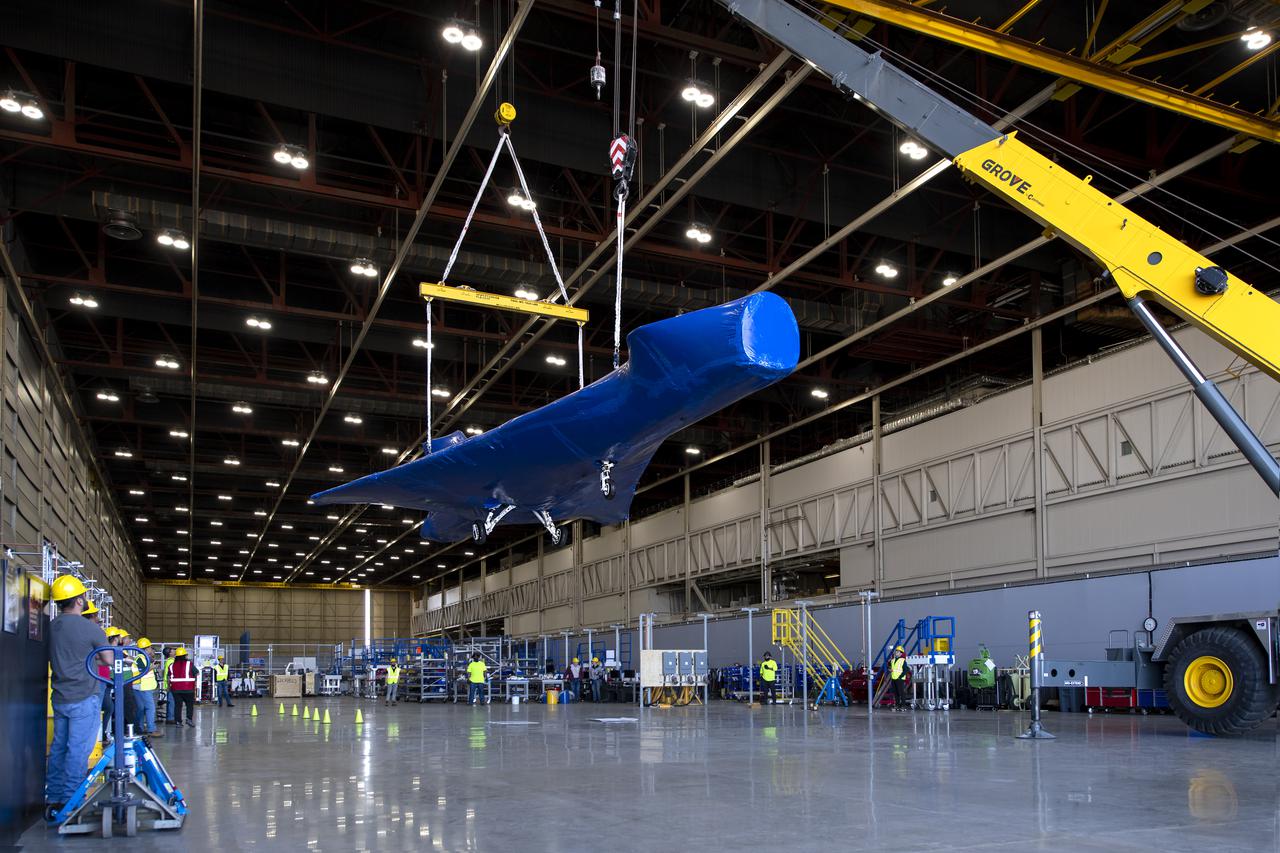
The X-59, NASA’s quiet supersonic technology experimental aircraft, is suspended in the air at Lockheed Martin’s Skunk Works facility in Palmdale, California, following several months of critical ground testing in Ft. Worth, Texas
X-59 Arrives Back in California After Critical Ground Tests
NASA’s X-57 Maxwell, the agency’s first all-electric X-plane and first crewed X-planed in two decades, is delivered to NASA’s Armstrong Flight Research Center in Edwards, California in its Mod II configuration. The first of three primary modifications for the project, Mod II involves testing of the aircraft’s cruise electric propulsion system. Delivery to NASA from prime contractor Empirical Systems Aerospace of San Luis Obispo, California, marks a major milestone for the project, at which point the vehicle is reintegrated for ground tests, to be followed by taxi tests, and eventually, flight tests. X-57’s goal is to further advance the design and airworthiness process for distributed electric propulsion technology for general aviation aircraft, which can provide multiple benefits to efficiency, emissions, and noise.
X-57 Mod II Vehicle Delivered to NASA Armstrong
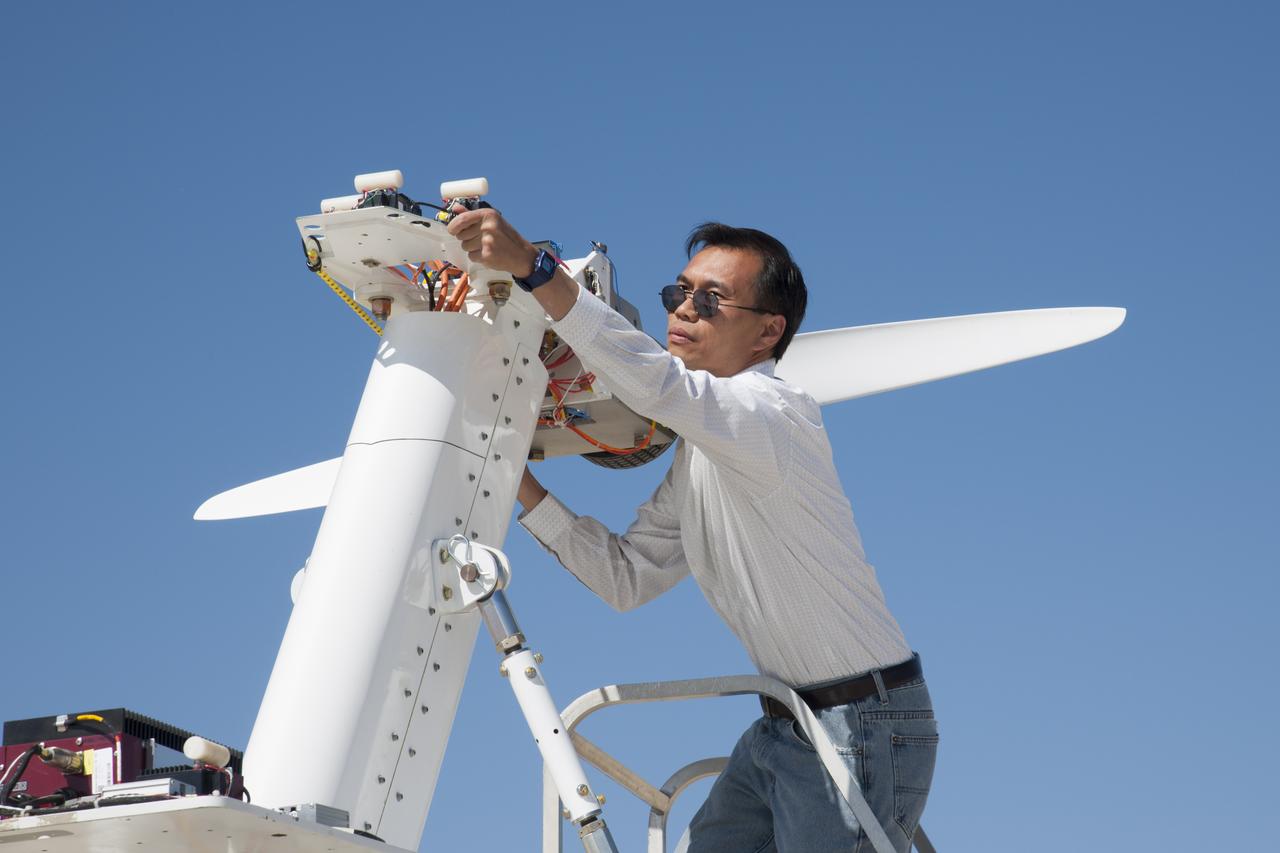
The communication antenna is used primarily for test flights to receive downlink flight data and video from test aircraft and also to support command uplink of data to test aircraft for command and control. It is one of two such assets of the Dryden Aeronautical Test Range at NASA’s Armstrong Flight Research Center in California.
DATR Supports Space Communication, Research Flights
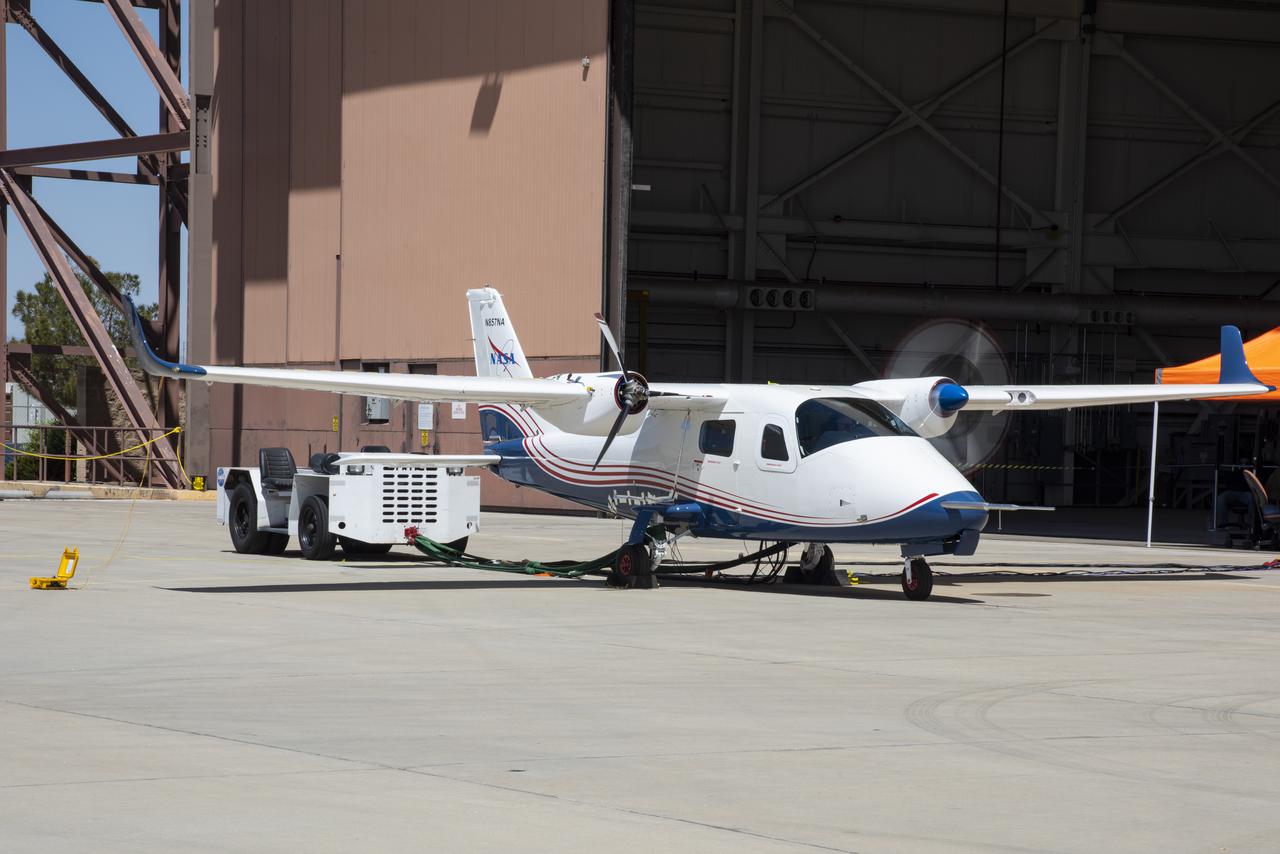
NASA's all-electric X-57 Maxwell aircraft undergoes high voltage ground testing at NASA's Armstrong Flight Research Center in California. A goal of the X-57 project is to help the Federal Aviation Administration set certification standards for emerging electric aircraft markets.
X-57 High Voltage Testing Begins
NASA’s all-electric X-57 Maxwell, in its Mod II configuration, arrives at NASA’s Armstrong Flight Research Center in Edwards, California. The X-plane was delivered by prime contractor Empirical Systems Aerospace of San Luis Obispo, California, in two parts, with the wing separated from the fuselage, to aid in a more timely delivery. X-57 is NASA’s first crewed X-plane in two decades, and seeks to further advance the design and airworthiness process for distributed electric propulsion technology for general aviation aircraft.
X-57 Mod II Vehicle Arrives at NASA Armstrong
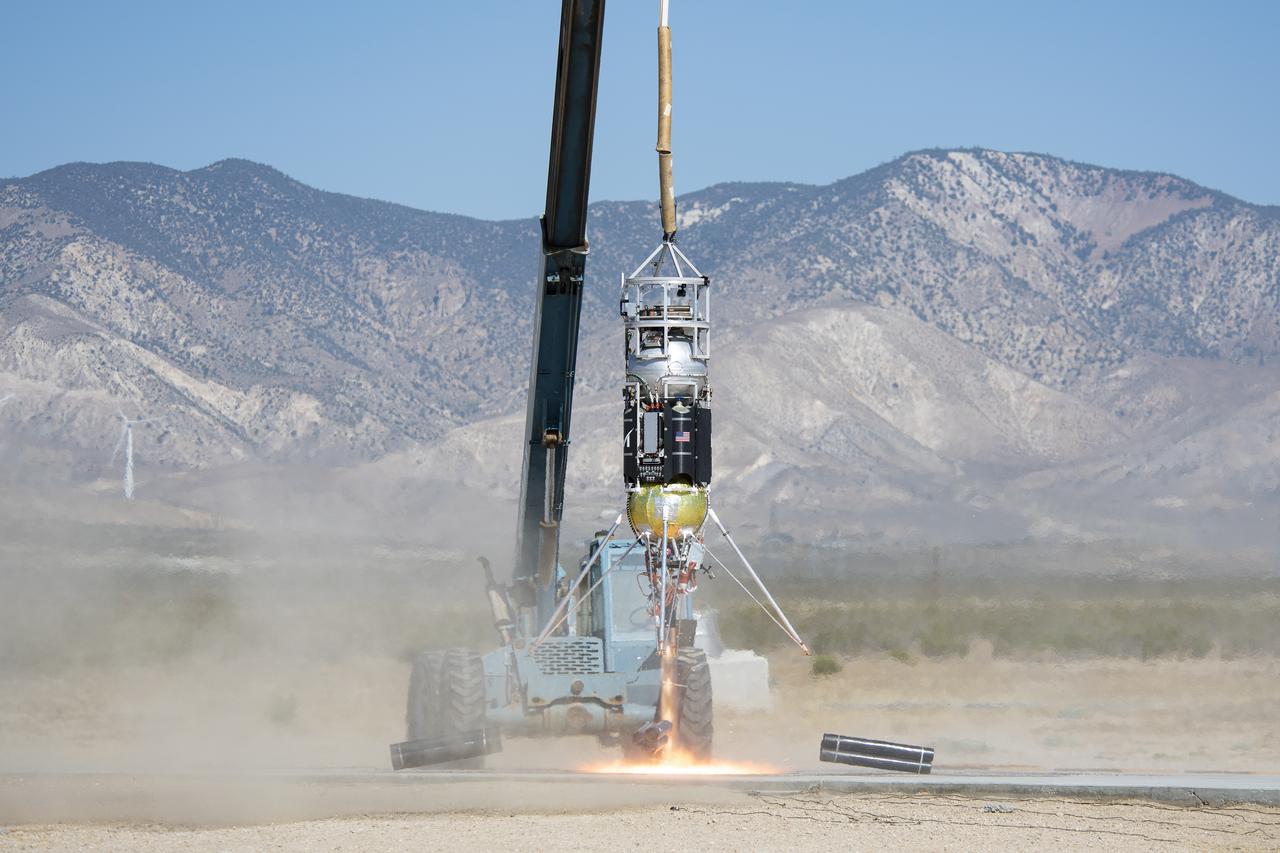
Masten Space Systems’ Xodiac lander completes a tethered flight test at the Mojave Air & Space Port. Xodiac is one of several suborbital vehicles used to flight test NASA-sponsored technologies supported by the agency’s Flight Opportunities program.
Xodiac Flies at Mojave Air & Space Port
NASA's all-electric X-57 Maxwell aircraft tests the motors with the battery packs installed on the aircraft at NASA's Armstrong Flight Research Center in California. A goal of the X-57 project is to help the Federal Aviation Administration set certification standards for emerging electric aircraft markets.
X-57 Motor Spin Test on Aircraft Battery
NASA’s all-electric X-57 Maxwell, in its Mod II configuration, arrives at NASA’s Armstrong Flight Research Center in Edwards, California. The X-plane was delivered by prime contractor Empirical Systems Aerospace of San Luis Obispo, California, in two parts, with the wing separated from the fuselage, to aid in a more timely delivery. X-57 is NASA’s first crewed X-plane in two decades, and seeks to further advance the design and airworthiness process for distributed electric propulsion technology for general aviation aircraft.
X-57 Mod II Vehicle Arrives at NASA Armstrong
One of multiple microphone stations used in the CarpetDIEM flight series, which gave researchers valuable lessons learned in preparations to deploy a similar array for the quiet supersonic X-59. Prior to community overflights, X-59 will undergo an acoustic validation phase, during which NASA will deploy the array of specially-configured microphones to measure the X-59’s thumps, in order to verify that they are as quiet as predicted.
Microphone Station for CarpetDIEM Flight Series
UP Aerospace SpaceLoft rocket launched into space Sept 12, 2018 from Spaceport America in New Mexico carrying three NASA technologies onboard to test in microgravity.
UP Aerospace Rocket Launch from NM with NASA Technologies Onboard
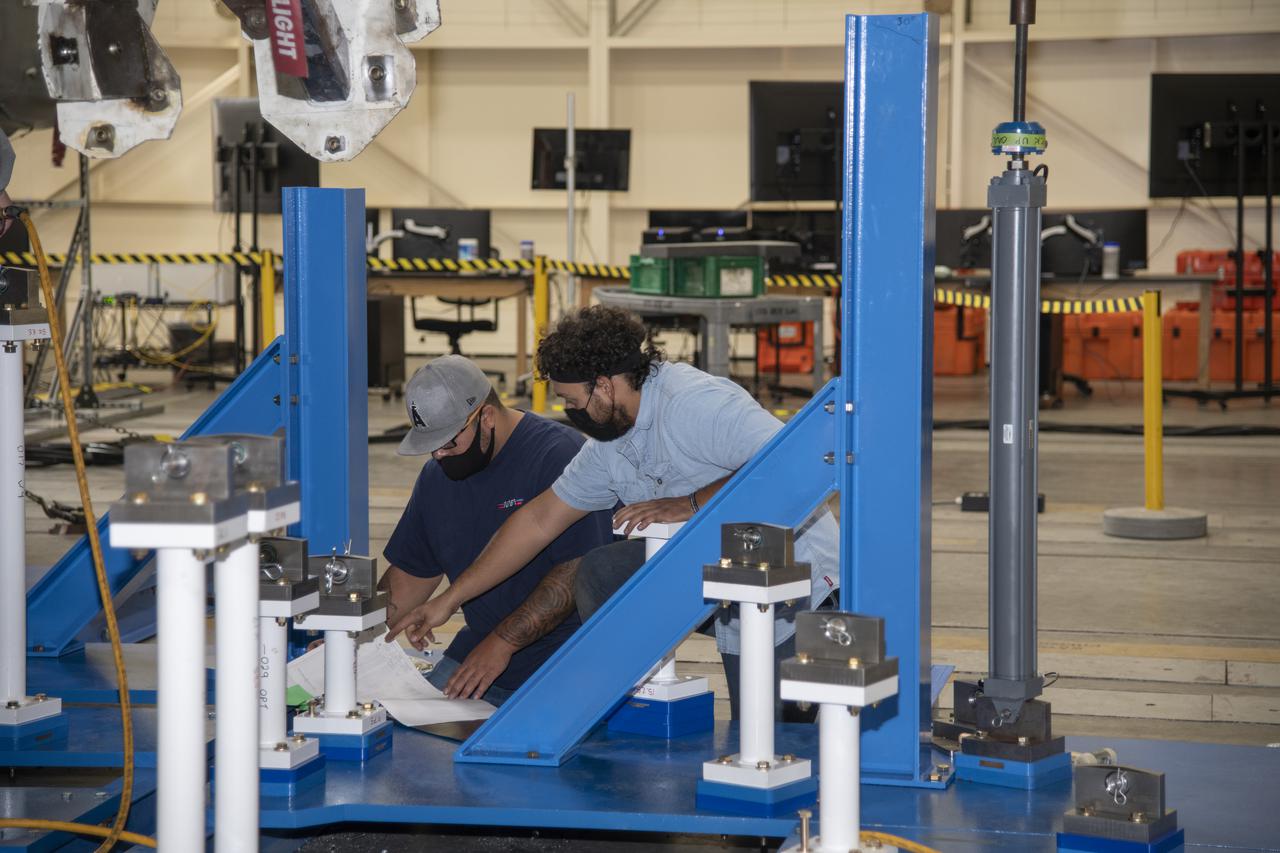
From left, Dominic Barela and Lucas Oramas review a drawing for installing the wing load test fixturing on a F/A-18E from the Naval Air Systems Command (NAVAIR) in Patuxent River, Maryland. The aircraft is in NASA’s Armstrong Flight Research Center Flight Loads Laboratory in Edwards, California, for the center’s biggest load calibrations tests. This testing is needed before the aircraft can serve as a test vehicle for determining if it can safely manage maneuvers and proposed upgrades.
Title: NAVAIR F/A-18E Undergoes Loads Testing at NASA Armstrong
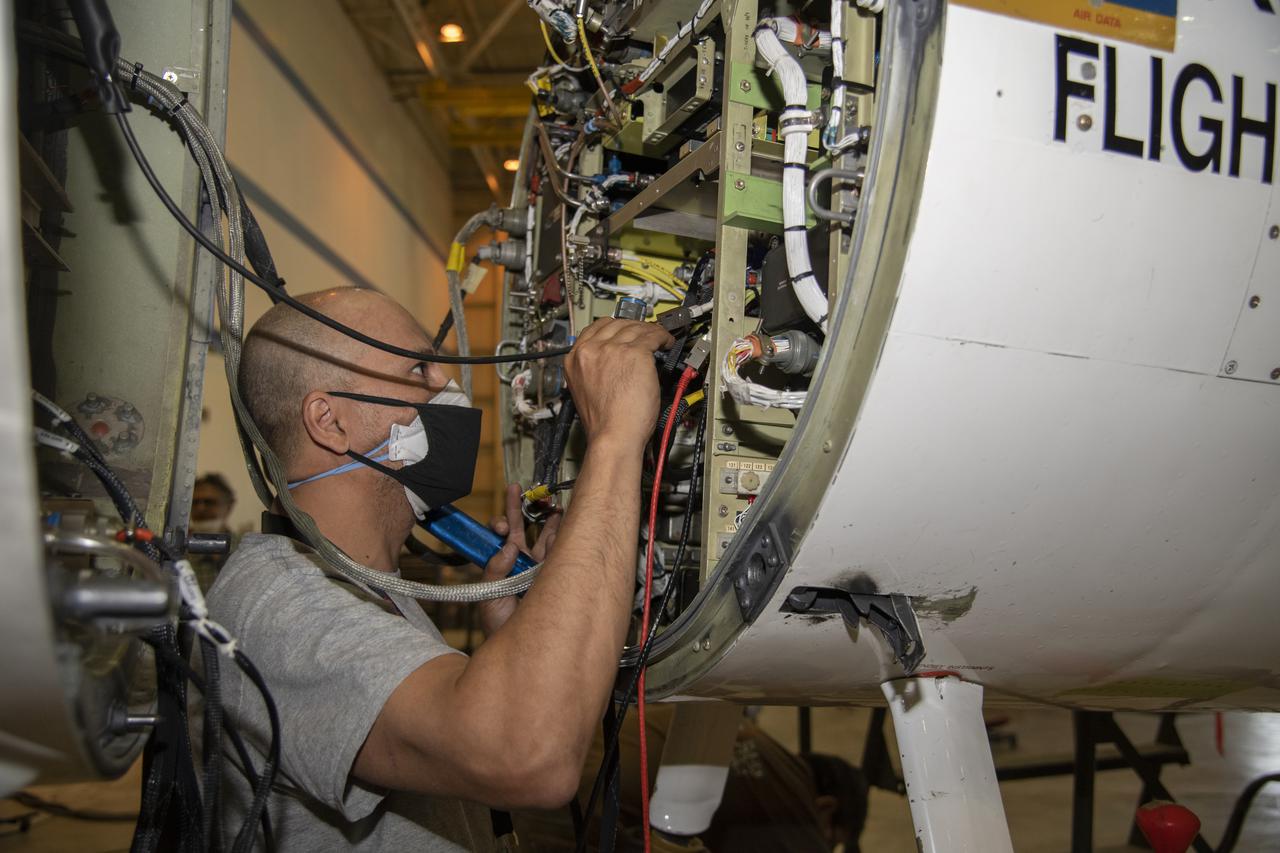
Technician David Johnson works on rewiring the high-altitude ER-2 aircraft's fixed nose and cockpit.Â
ER-2 Cockpit Effort Will Enhance Pilot Safety
UP Aerospace SpaceLoft rocket launched into space Sept 12, 2018 from Spaceport America in New Mexico carrying three NASA technologies onboard to test in microgravity.
UP Aerospace Rocket Launch from NM with NASA Technologies Onboard
NASA's all-electric X-57 Maxwell, in its Mod II configuration, arrives at NASA's Armstrong Flight Research Center in Edwards, California. The X-plane was delivered by prime contractor Empirical Systems Aerospace of San Luis Obispo, California, in two parts, with the wing separated from the fuselage, to aid in a more timely delivery. X-57 is NASA's first crewed X-plane in two decades, and seeks to further advance the design and airworthiness process for distributed electric propulsion technology for general aviation aircraft.
X-57 Mod II Vehicle Arrives at NASA Armstrong
Syd Myers, a NASA Armstrong Flight Research Center confined space supervisor for a drill at NASA Armstrong Flight Research Center’s Building 703 in Palmdale, California, observes U.S. Air Force Plan 42 Fire Department responders extract a mannequin from a confined space as part of an emergency exercise.
Confined Space Exercise Improves Response
The upgraded NASA Mobile Operations Facility, a mission control and data collection center on wheels, is shown parked at NASA’s Armstrong Flight Research Center in Edwards, California on July 20, 2022. This vehicle is used for NASA's Advanced Air Mobility project’s National Campaign testing.
Advanced Air Mobility National Campaign Upgrades Mobile Operations Facility with Decals and Modifications
Martin Munday selects the accelerometers that will be used for vibration testing of the Orion AA-2 test article components in the Environmental Laboratory at NASA’s Armstrong Flight Research Center in California. Following Armstrong’s validation and verification work, the components will be integrated on the AA-2 test article for a flight set for 2019.
NASA Armstrong Assists with Orion AA-2 Component Testing