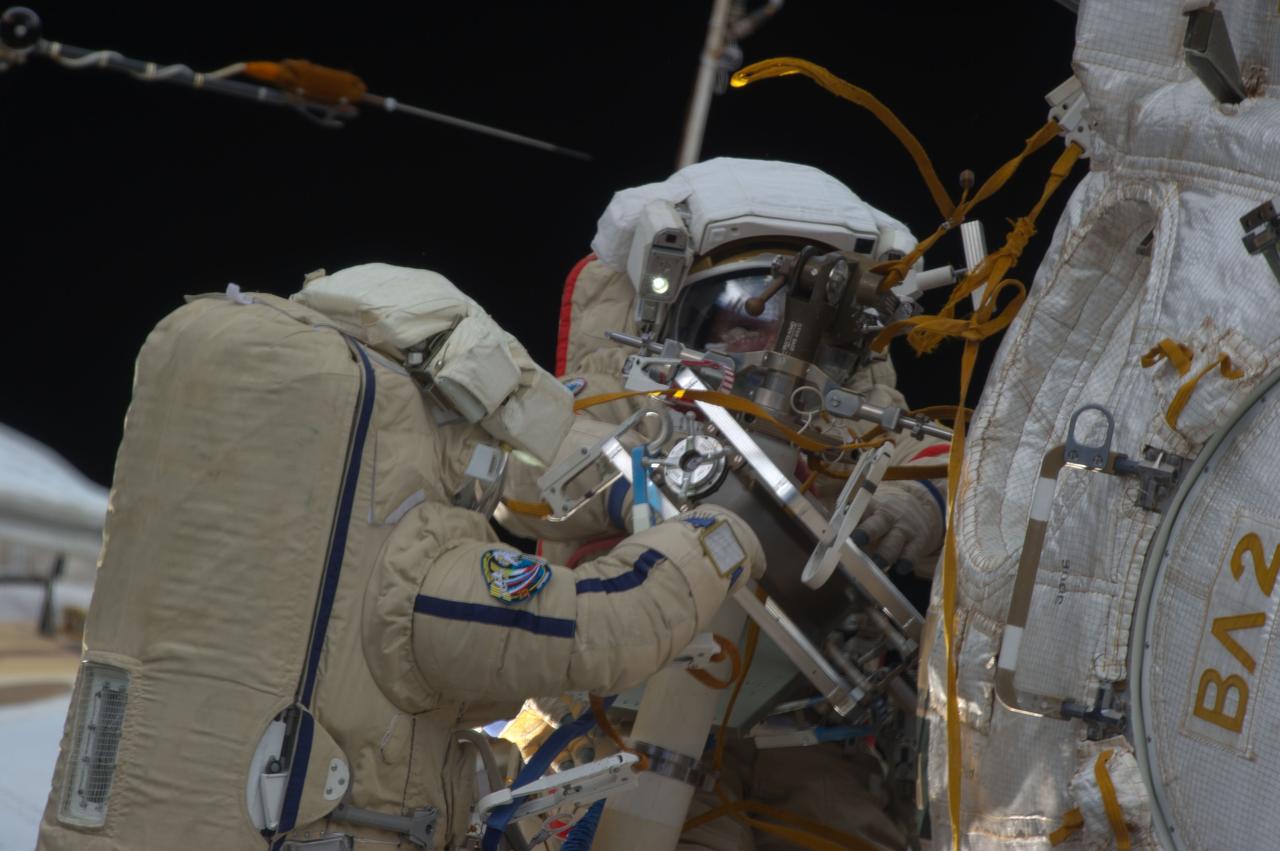
ISS036-E-011593 (24 June 2013) --- Russian cosmonauts Alexander Misurkin (left) and Fyodor Yurchikhin, both Expedition 36 flight engineers, participate in a session of extravehicular activity (EVA) as work continues on the International Space Station. During the six-hour, 34-minute spacewalk, Misurkin and Yurchikhin replaced an aging fluid flow control panel on the station's Zarya module as preventative maintenance on the cooling system for the Russian segment of the station. They also installed clamps for future power cables as an early step toward swapping the Pirs airlock with a new multipurpose laboratory module. The Russian Federal Space Agency plans to launch a combination research facility, airlock and docking port late this year on a Proton rocket. Yurchikhin and Misurkin also retrieved two science experiments and installed one new one.
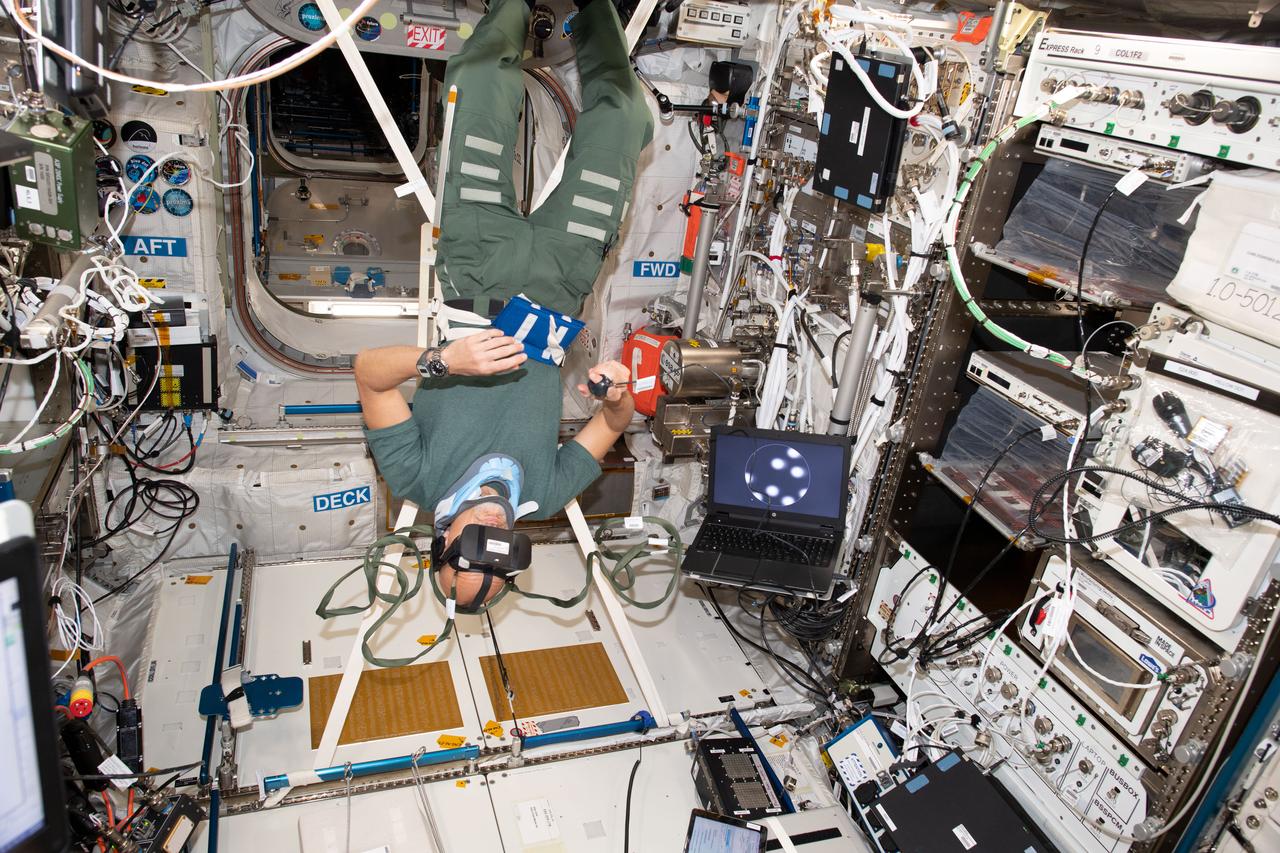
iss060e014613 (7/25/2019) --- European Space Agency (ESA) astronaut Luca Parmintano is shown in the Columbus module aboard the International Space Station (ISS) during the Vection experiment. The objective of The Effect of Long Duration Hypogravity on the Perception of Self-Motion (VECTION) study is to determine to what extent an astronaut's ability to visually interpret motion, orientation, and distance may be disrupted in a microgravity environment, and how it may adapt, and how it may be changed upon return to Earth. Multiple experimental time points inflight and upon return to Earth allows for the adaptation and recovery process to be investigated.
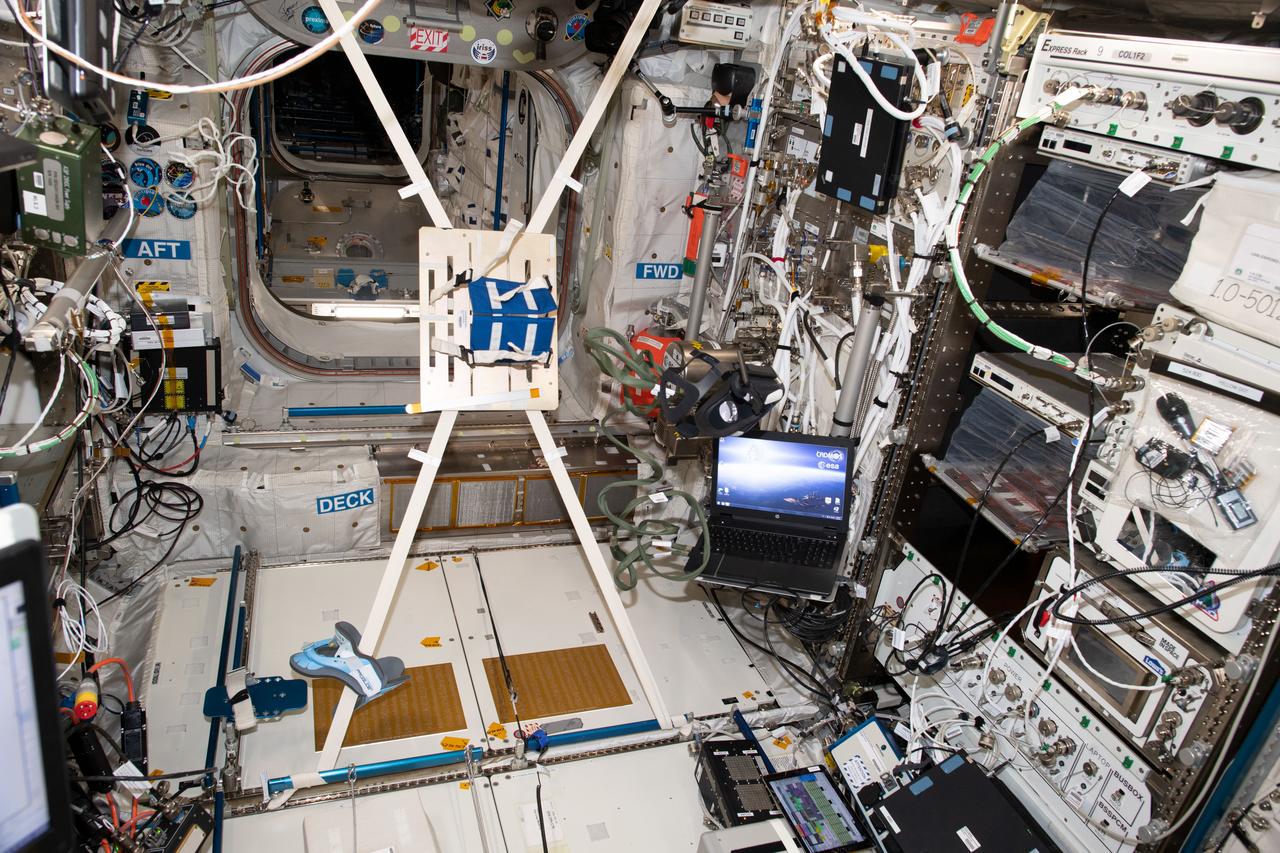
iss060e014594 (7/25/2019) ---Photo documentation during the preparation for the VECTION experiment in the Columbus module aboard the International Space Station (ISS). The objective of The Effect of Long Duration Hypogravity on the Perception of Self-Motion (VECTION) study is to determine to what extent an astronaut's ability to visually interpret motion, orientation, and distance may be disrupted in a microgravity environment, and how it may adapt, and how it may be changed upon return to Earth. Multiple experimental time points inflight and upon return to Earth allows for the adaptation and recovery process to be investigated.
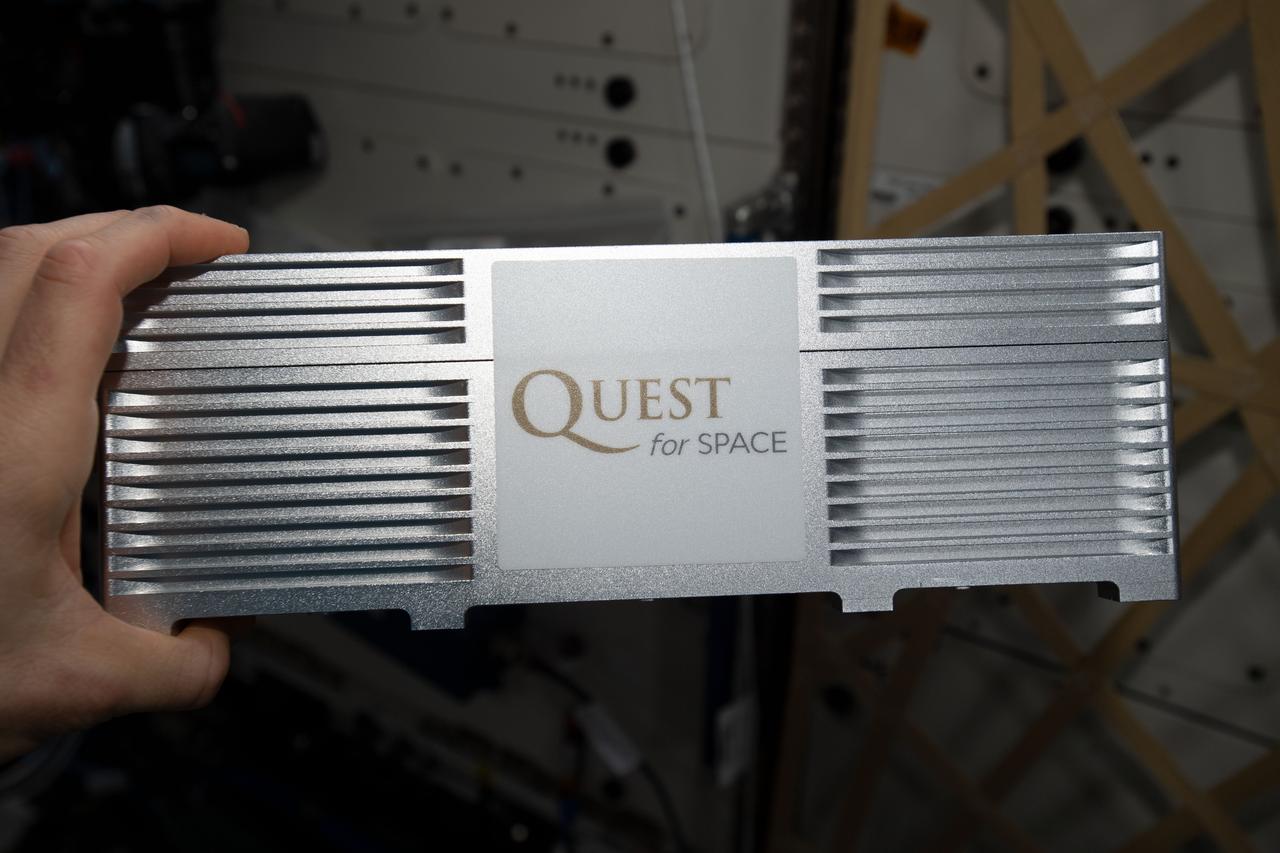
iss061e031457 (8/7/2023) --- Photo documentation of the Quest NextGen Lab-2 CubeLab, taken during TangoLab-2 cube replacement operations (OPS) aboard the International Space Station (ISS). The Quest Institute Multi-Experiment, Educational Investigation – NextGen-2 (Quest NextGen Lab-2) is a student investigation with five separate experiments that explore scientific principles of magnetism and the utilization of magnetism in space applications.

iss060e019901 (July 29, 2019) --- The International Space Station was orbiting 258 miles above the Mediterranean Sea when an Expedition 60 crewmember photographed a well-lit Italy and its island of Sicily near midnight local time.
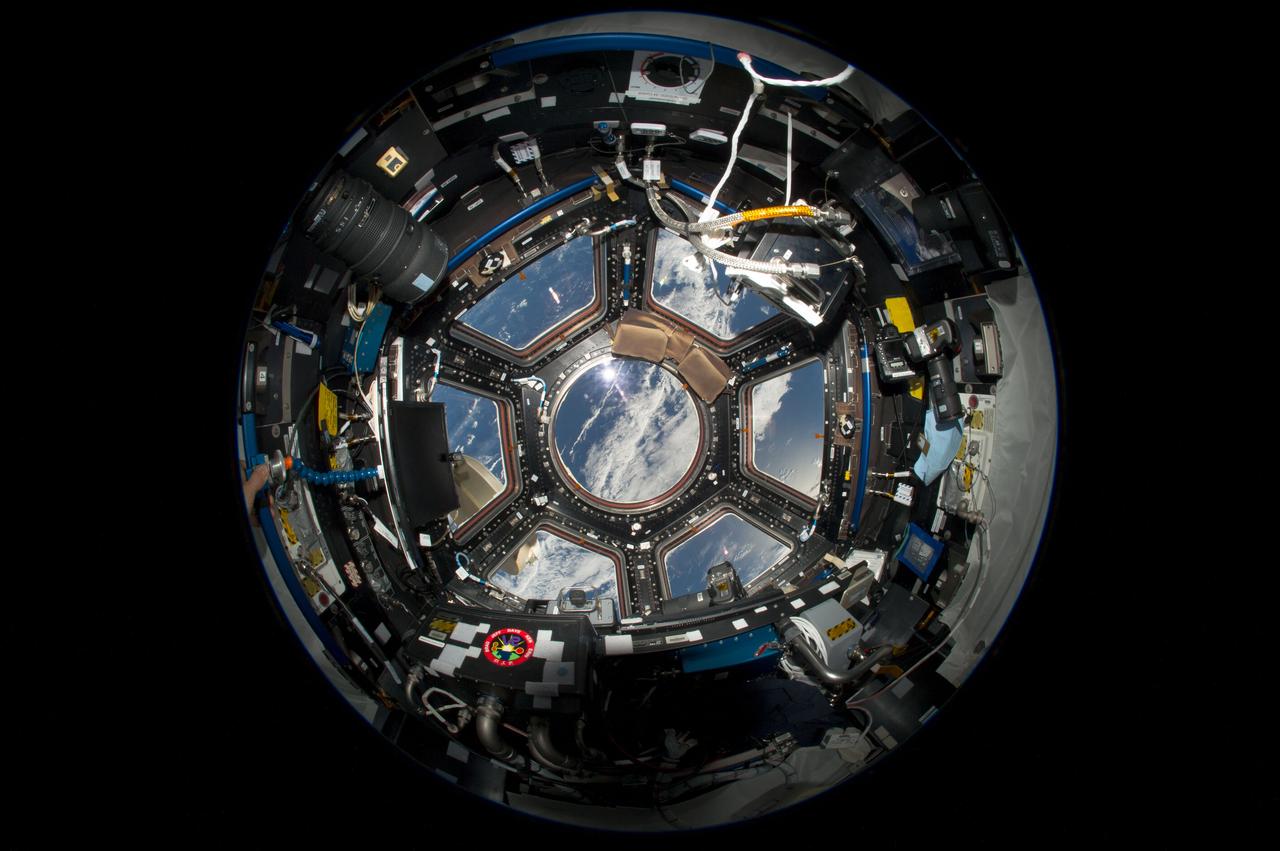
ISS036-E-007470 (12 June 2013) --- This wide view of the seven windows of the International Space Station’s Cupola serves to give a paneled look of Earth, in this case, a point in the South Atlantic. The Cupola is used to conduct experiments, dockings and observations of Earth such as this. The observatory was launched aboard STS-130 on Feb. 8 2010 and attached to the Tranquility node.
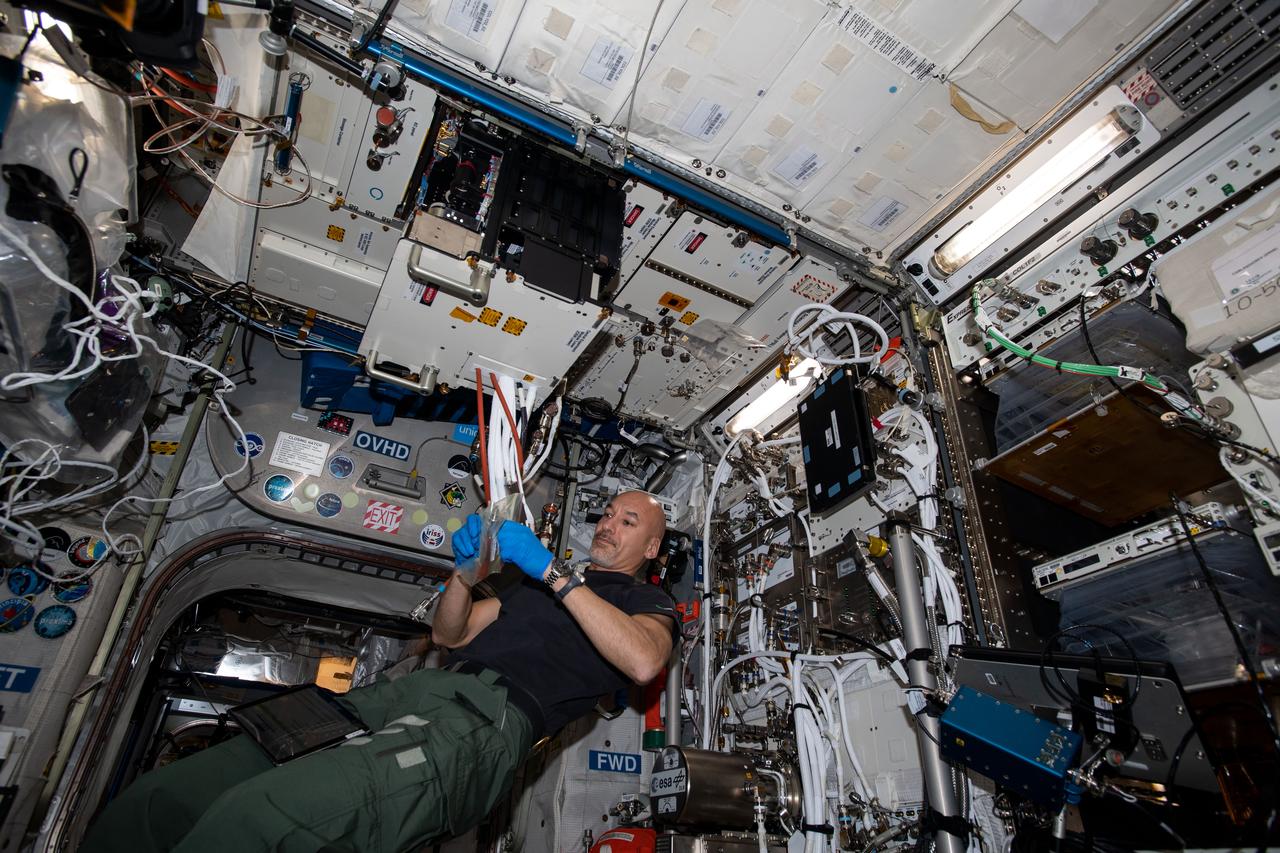
iss060e033086 (8/9/2019) --- A view of European Space Agency (ESA) astronaut Luca Parmitano during the installation of the MultiScale Boiling Experiment Container (EC) in the Fluid Science Laboratory FSL) in the Columbus Module aboard the International Space Station (ISS). Multiscale Boiling investigates the fundamental basics of boiling heat transfer phenomena on a heater surface in a pool boiling configuration. Data from this investigation is used for the validation of theoretical models and numerical codes.
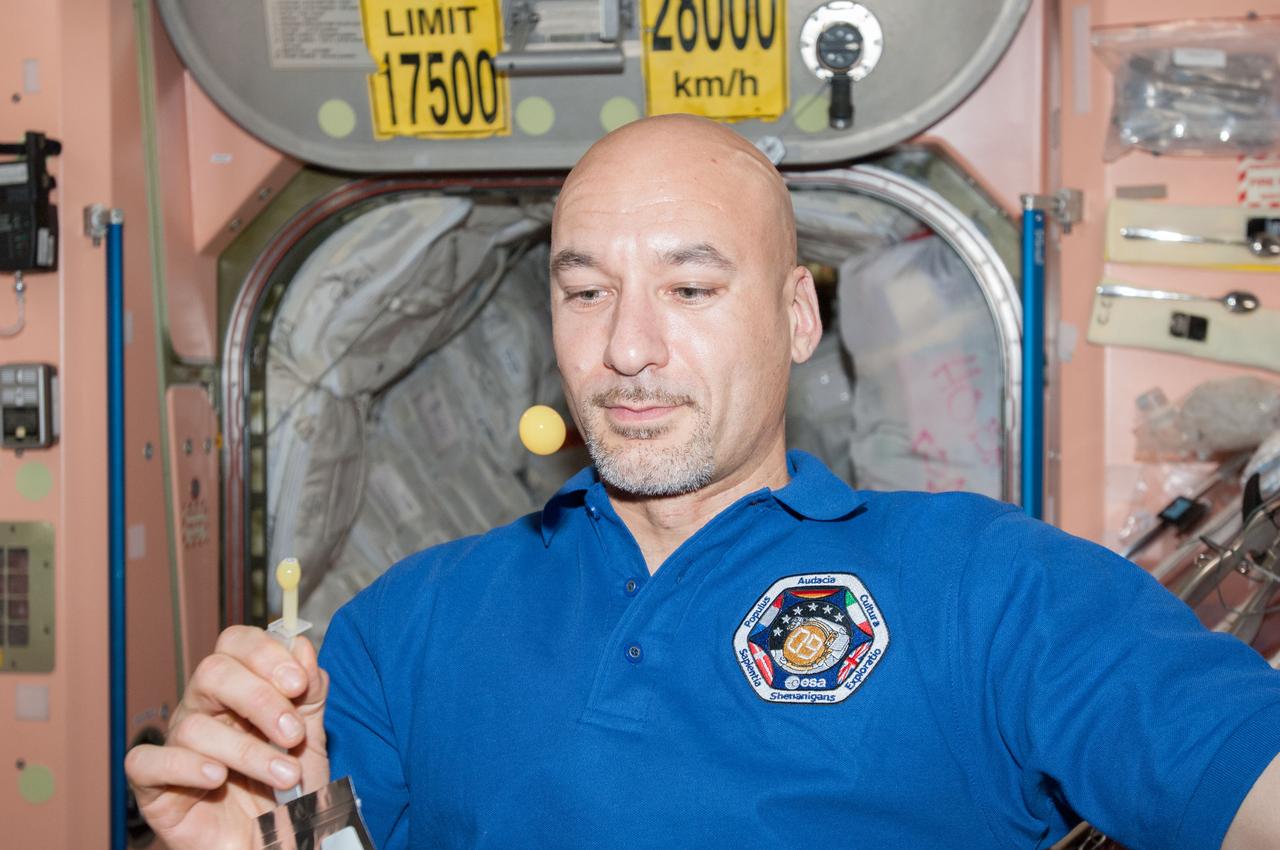
ISS036-E-007249 ( June 2013) --- European Space Agency astronaut Luca Parmitano, Expedition 36 flight engineer, creates a bubble of orange juice from a beverage dispenser in the Unity node during some of his off-duty time aboard the Earth-orbiting International Space Station. Parmitano is scheduled to stay aboard the orbital outpost until November.
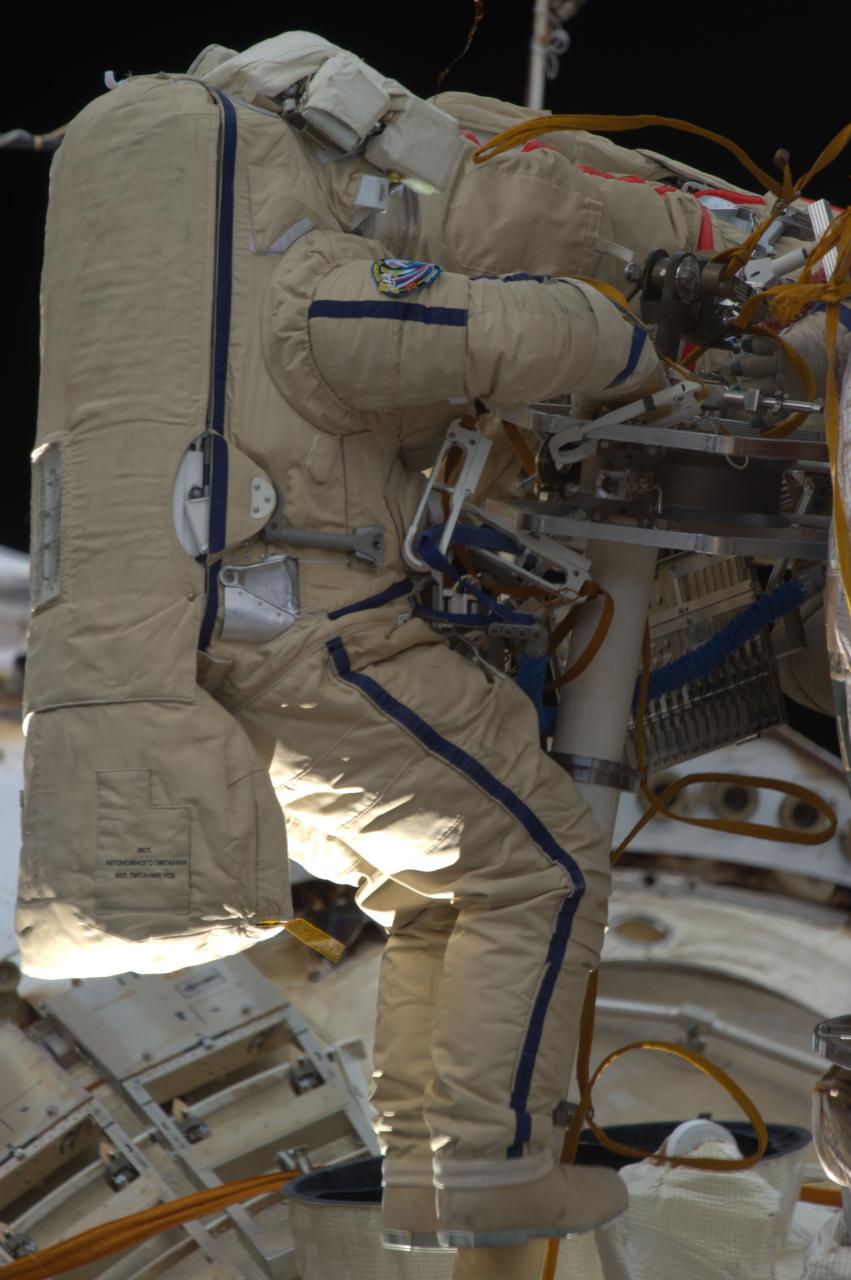
ISS036-E-011598 (24 June 2013) --- Russian cosmonaut Alexander Misurkin, Expedition 36 flight engineer, participates in a session of extravehicular activity (EVA) as work continues on the International Space Station. During the six-hour, 34-minute spacewalk, Misurkin and Russian cosmonaut Fyodor Yurchikhin (out of frame), Expedition 36 flight engineer, replaced an aging fluid flow control panel on the station's Zarya module as preventative maintenance on the cooling system for the Russian segment of the station. They also installed clamps for future power cables as an early step toward swapping the Pirs airlock with a new multipurpose laboratory module. The Russian Federal Space Agency plans to launch a combination research facility, airlock and docking port late this year on a Proton rocket. Yurchikhin and Misurkin also retrieved two science experiments and installed one new one.

ISS036-E-011608 (24 June 2013) --- Russian cosmonaut Alexander Misurkin, Expedition 36 flight engineer, participates in a session of extravehicular activity (EVA) as work continues on the International Space Station. During the six-hour, 34-minute spacewalk, Misurkin and Russian cosmonaut Fyodor Yurchikhin (out of frame), Expedition 36 flight engineer, replaced an aging fluid flow control panel on the station's Zarya module as preventative maintenance on the cooling system for the Russian segment of the station. They also installed clamps for future power cables as an early step toward swapping the Pirs airlock with a new multipurpose laboratory module. The Russian Federal Space Agency plans to launch a combination research facility, airlock and docking port late this year on a Proton rocket. Yurchikhin and Misurkin also retrieved two science experiments and installed a new one.
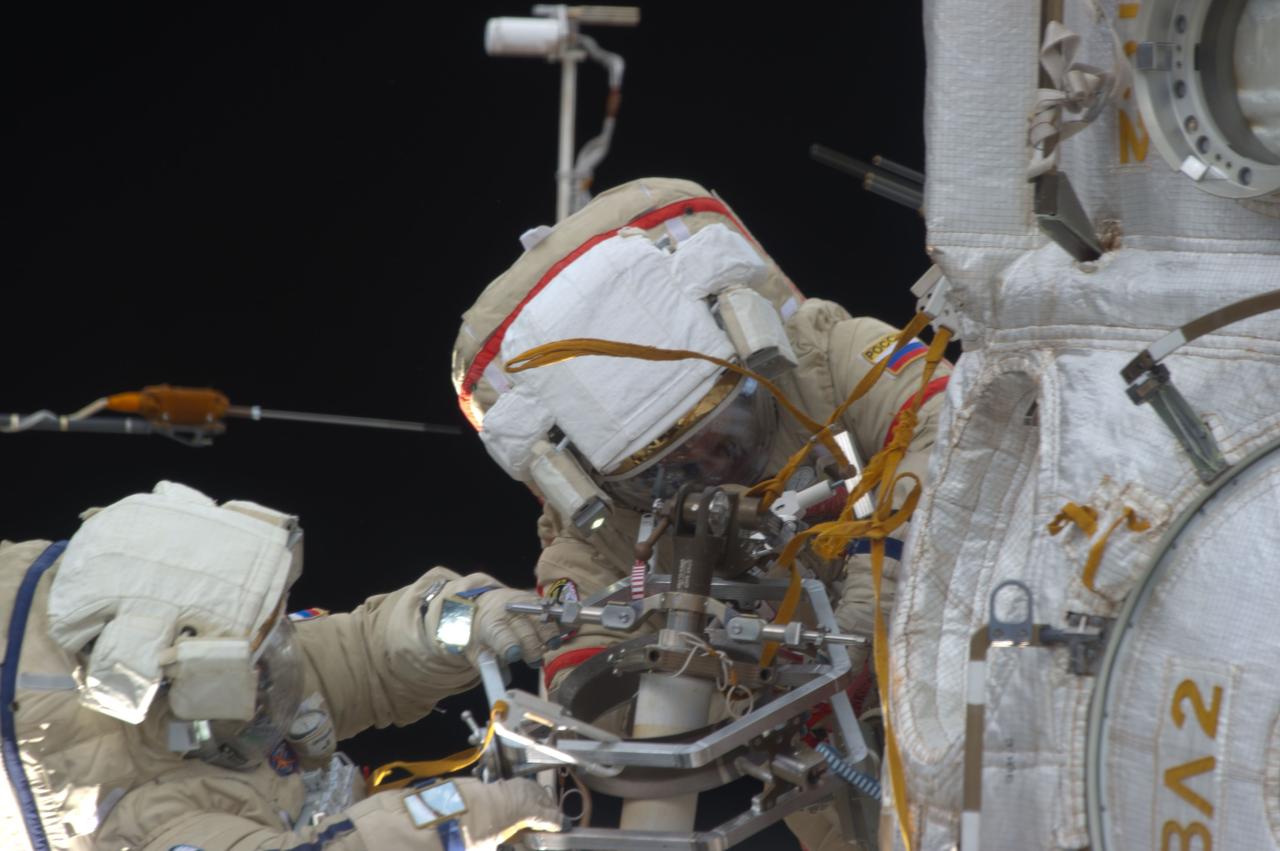
ISS036-E-011590 (24 June 2013) --- Russian cosmonauts Alexander Misurkin (left) and Fyodor Yurchikhin, both Expedition 36 flight engineers, participate in a session of extravehicular activity (EVA) as work continues on the International Space Station. During the six-hour, 34-minute spacewalk, Misurkin and Yurchikhin replaced an aging fluid flow control panel on the station's Zarya module as preventative maintenance on the cooling system for the Russian segment of the station. They also installed clamps for future power cables as an early step toward swapping the Pirs airlock with a new multipurpose laboratory module. The Russian Federal Space Agency plans to launch a combination research facility, airlock and docking port late this year on a Proton rocket. Yurchikhin and Misurkin also retrieved two science experiments and installed a new one.