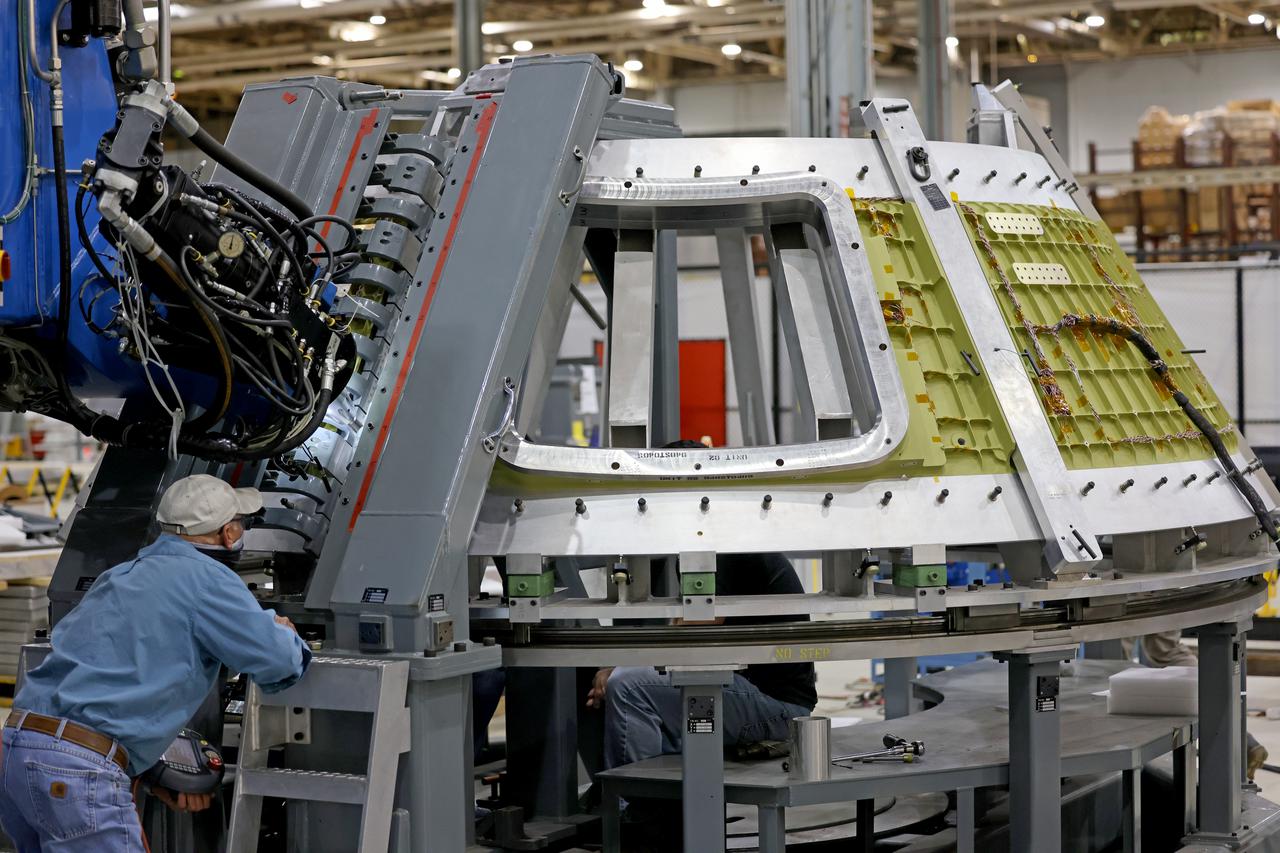
At NASA’s Michoud Assembly Facility in New Orleans, technicians from Orion prime contractor Lockheed Martin have welded together three cone-shaped panels on Orion’s crew module for the Artemis III mission that will land the first woman and next man on the Moon. The crew module’s primary structure, the pressure vessel, is comprised of seven machined aluminum alloy pieces that are welded together through a weld process that produces a strong, air-tight habitable space for astronauts during the mission. The pressure vessel is designed to withstand the harsh and demanding environment of deep space, and is the core structure upon which all the other elements of Orion’s crew module are integrated. Infographic showing the seven pieces of Orion's underlying structure With welding complete on the crew module cone panels – one of which contains windows providing astronauts views of the Moon and Earth – work will begin joining the forward bulkhead to the tunnel to create the top of the spacecraft, followed by the barrel and aft bulkhead join to form the bottom of Orion. Last, the forward bulkhead will be welded to the top of the panels and, for the seventh and closeout weld, the bottom of the cone panels will be joined to the barrel to complete the pressure vessel. Once welding of the Artemis III crew module primary structure is complete, it will be shipped to NASA’s Kennedy Space Center in Florida where it will undergo further assembly beginning this fall. Orion, the Space Launch System, and Exploration Ground Systems programs are foundational elements of the Artemis program. Artemis I will be the first integrated flight test of Orion and SLS and is targeted to launch later this year. Artemis II will follow and is the first crewed mission, taking humans farther into space than ever before. Image credit: NASA/Michael DeMocker
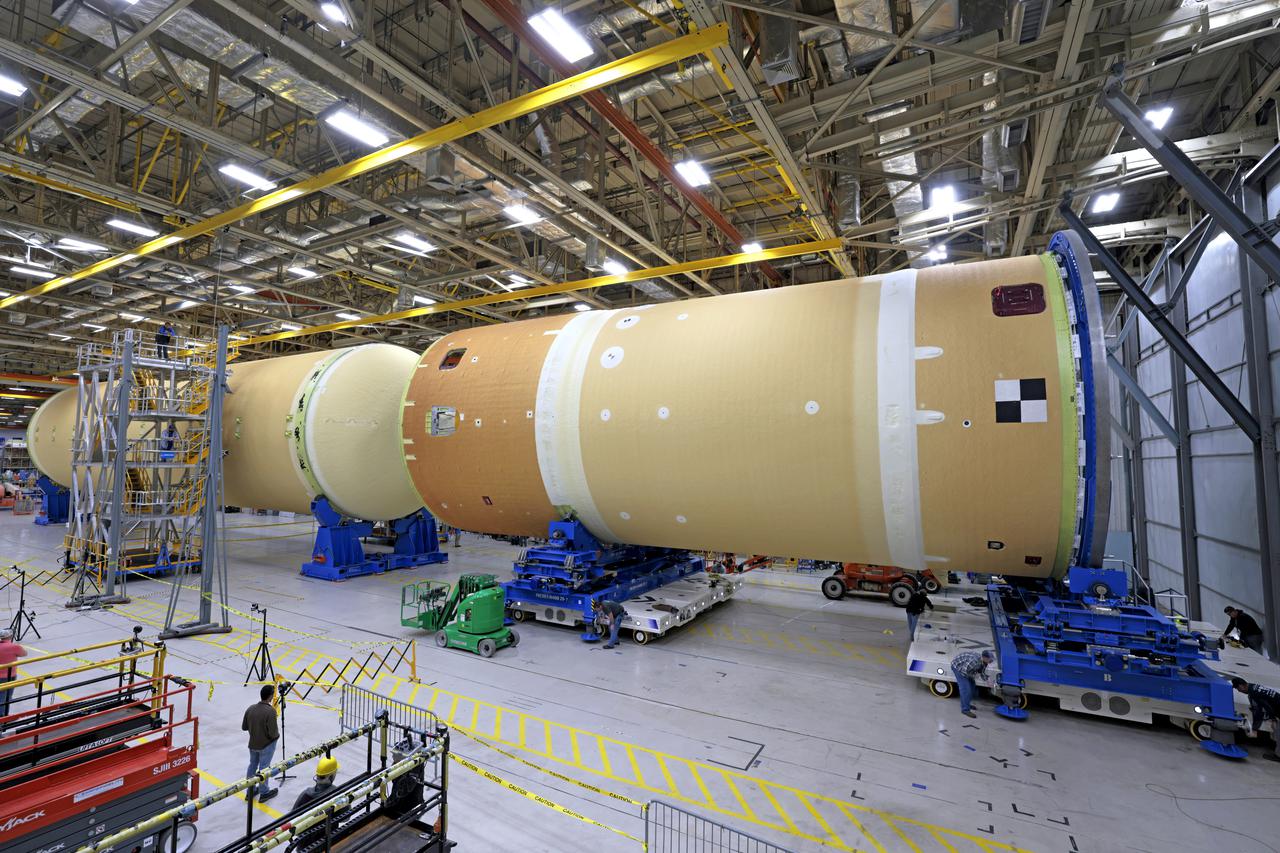
NASA joined the Space Launch System rocket’s core stage forward assembly with the 130-foot liquid hydrogen tank for the Artemis II mission on March 18. This completes assembly of four of the five large structures that make up the core stage that will help send the first astronauts to lunar orbit on Artemis II. The 66-foot forward assembly consists of the forward skirt, liquid oxygen tank and the intertank, which were mated earlier. Engineers inserted 360 bolts to connect the forward assembly to the liquid hydrogen tank to make up the bulk of the stage. Only the engine section, which is currently being outfitted and includes the main propulsion systems that connect to the four RS-25 engines, remains to be added to form the final core stage. All parts of the core stage are manufactured by NASA and Boeing, the core stage lead contractor at the agency’s Michoud Assembly Facility in New Orleans. Currently, the team is building core stages for three Artemis missions. The first core stage is stacked with the rest of the SLS rocket, which will launch the Artemis I mission to the Moon this year. Together with its twin solid rocket boosters, the core stage will produce 8.8 million pounds of thrust to send NASA’s Orion spacecraft, astronauts, and supplies beyond Earth’s orbit to the Moon. The SLS rocket and the Orion spacecraft form the foundation for Artemis missions and future deep space exploration. Image credit: NASA/Michael DeMocker
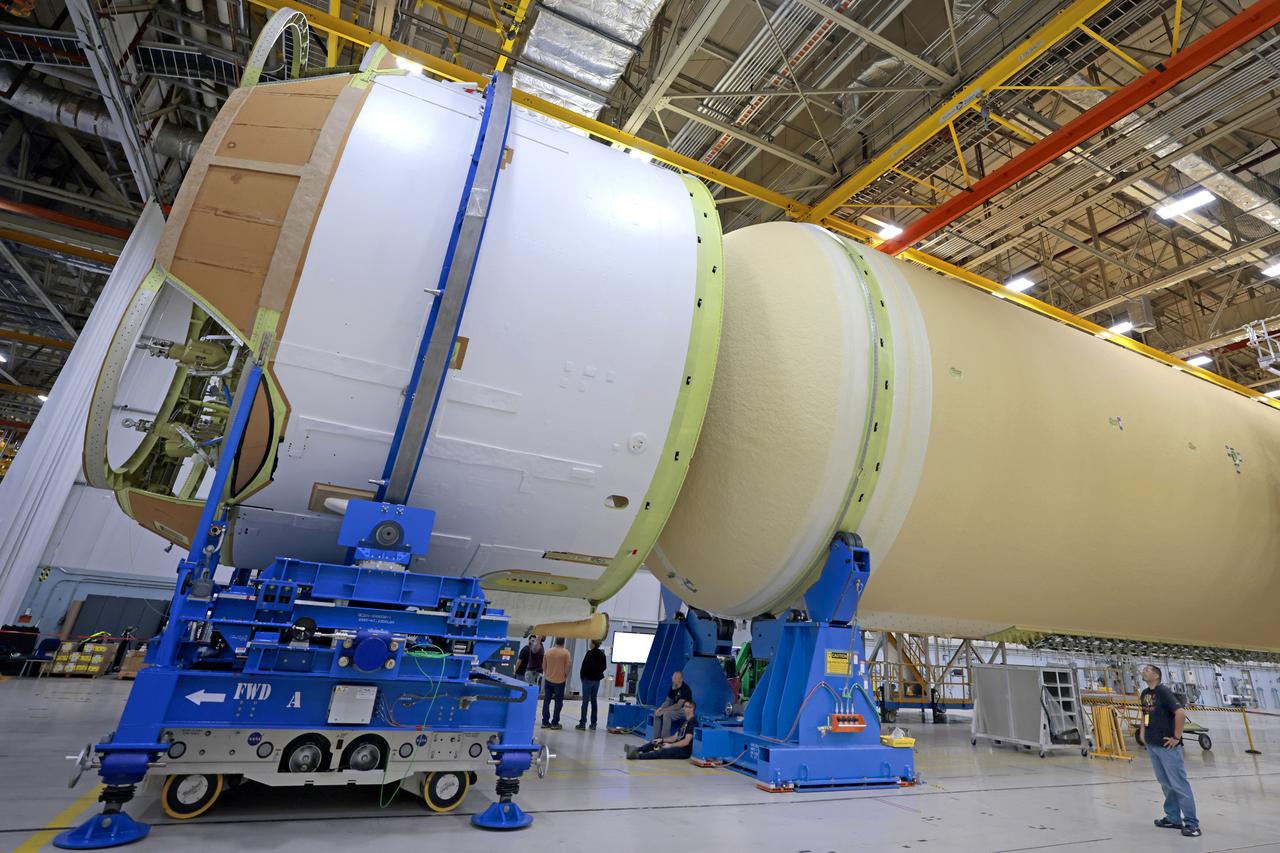
Teams with NASA and Boeing, the core stage lead contractor, at NASA’s Michoud Assembly Facility in New Orleans have fully integrated all five major structures of the Space Launch System (SLS) rocket’s core stage for Artemis II, the first Artemis mission that will send four astronauts around the Moon and return them home. Technicians joined the engine section to the rest of the rocket stage March 17. Next, teams will integrate the four RS-25 engines to the engine section to complete the stage. Located at the bottom of the 212-foot-tall core stage, the engine section is the most complex and intricate part of the rocket stage, helping to power Artemis missions to the Moon. In addition to its miles of cabling and hundreds of sensors, the engine section is a crucial attachment point for the RS-25 engines and two solid rocket boosters that produce a combined 8.8 million pounds of thrust at liftoff. It houses the engines and includes vital systems for mounting, controlling, and delivering fuel from the propellant tanks to the engines. Image credit: NASA/Michael DeMocker
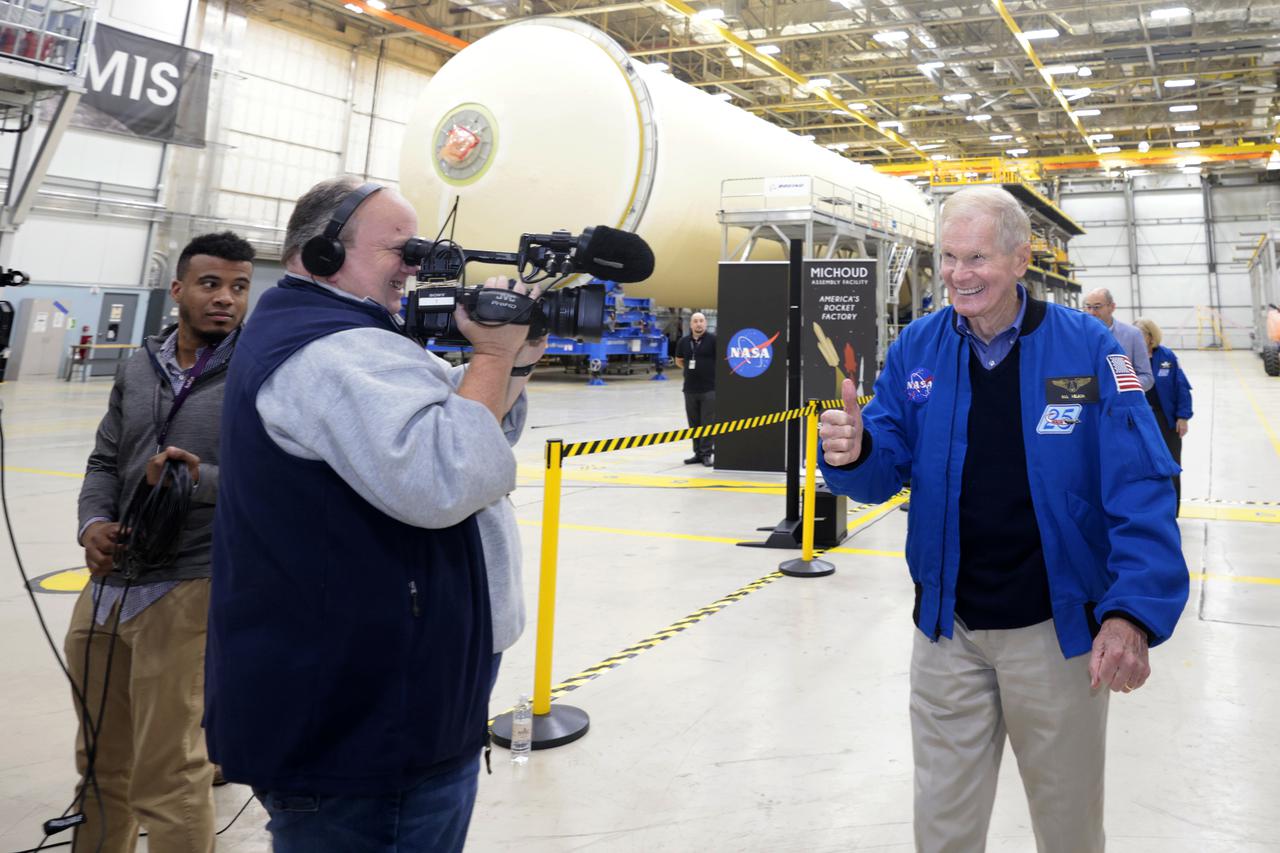
NASA Administrator Bill Nelson and Deputy Administrator Pam Melroy visited the agency’s Michoud Assembly Facility in New Orleans on Dec. 8, 2021 for tours and briefings on Michoud’s role in the Artemis program and other capabilities that enrich many facets of the nation’s space exploration endeavors. Image credit: NASA/Michael DeMocker
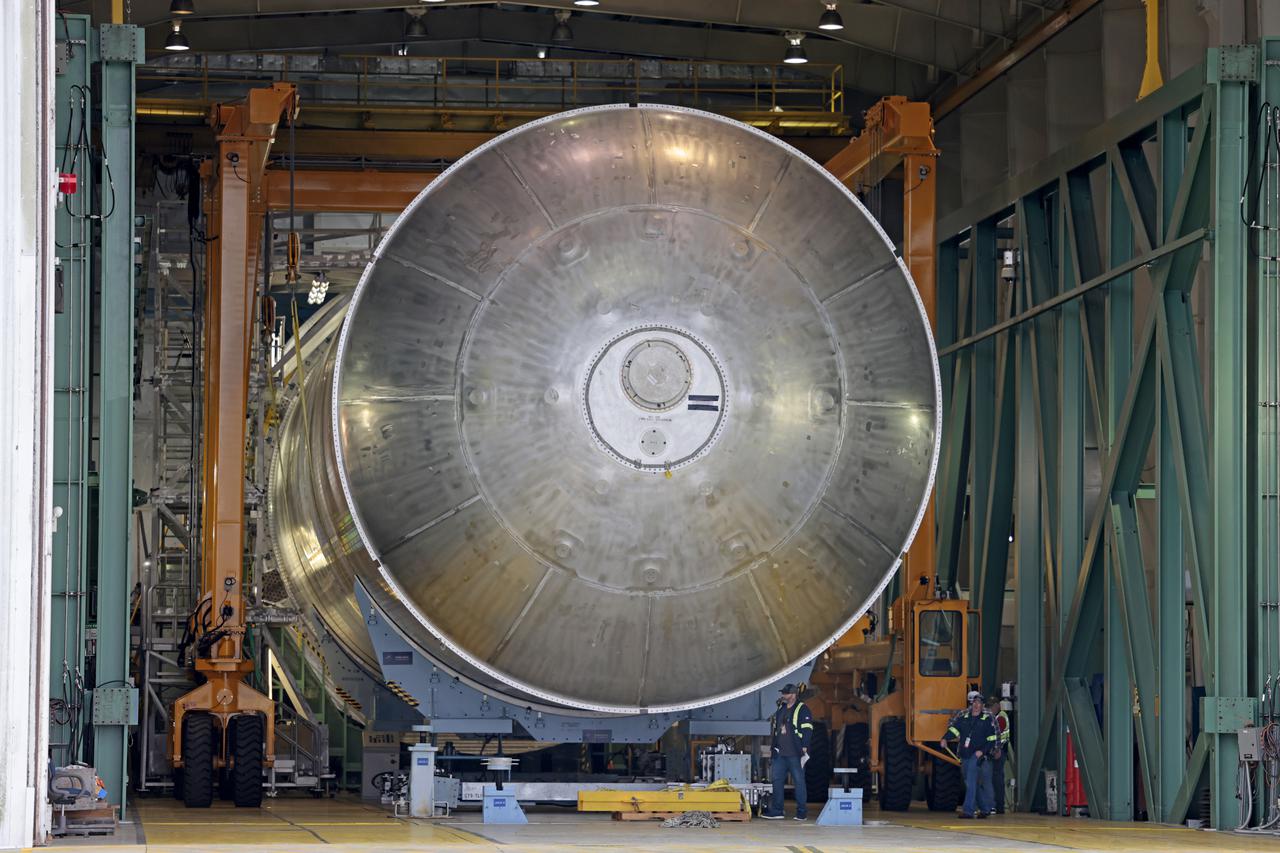
The core stage liquid hydrogen tank for the Artemis III mission completed proof testing, and technicians returned it to the main factory building at NASA’s Michoud Assembly Facility in New Orleans where it will undergo more outfitting. As part of proof testing, technicians apply a simple soap solution and check for leaks by observing any bubble formation on the welds. The technician removed the bubble solution with distilled water and then dried the area of application to prevent corrosion. To build the Space Launch System (SLS) rocket’s 130-foot core stage liquid hydrogen tank, engineers use robotic tools to weld five-barrel segments. This process results in a tank with around 1,900 feet, or more than six football fields, of welds that must be tested by hand. After the leak tests, the core stage lead, Boeing, pressurized the SLS tank to further ensure there were no leaks. After it passed proof testing, technicians moved the Artemis III liquid hydrogen tank to Michoud’s main factory. Soon, the technicians will prime and apply a foam-based thermal protection system that protects the tank during launch. Later, the tank will be joined with other parts of the core stage to form the entire 212-foot rocket stage with its four RS-25 engines that produce 2 million pounds of thrust to help launch the rocket. Artemis III will land the first astronauts on the lunar surface. Photographed on Monday, April 18, 2022. Image credit: NASA/Michael DeMocker
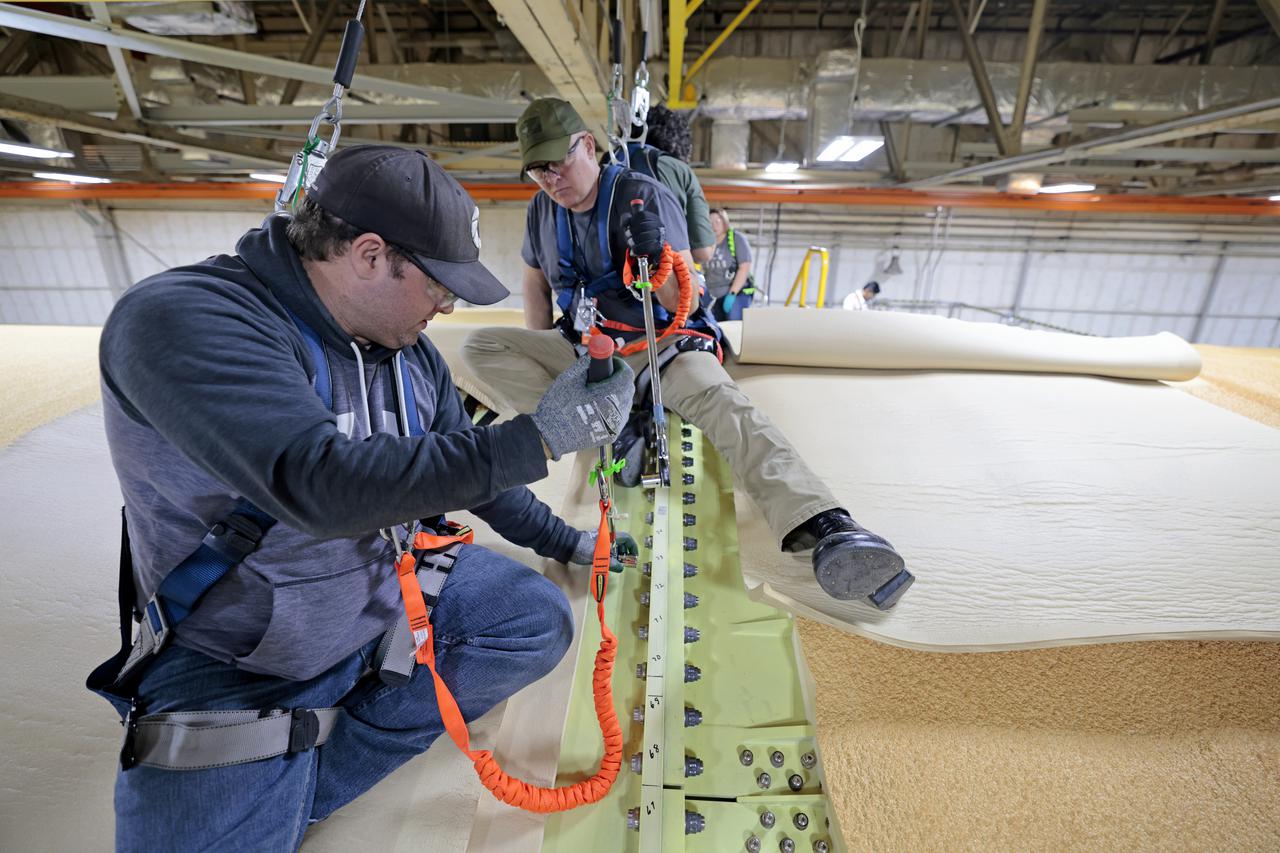
NASA joined the Space Launch System rocket’s core stage forward assembly with the 130-foot liquid hydrogen tank for the Artemis II mission on March 18. This completes assembly of four of the five large structures that make up the core stage that will help send the first astronauts to lunar orbit on Artemis II. The 66-foot forward assembly consists of the forward skirt, liquid oxygen tank and the intertank, which were mated earlier. Engineers inserted 360 bolts to connect the forward assembly to the liquid hydrogen tank to make up the bulk of the stage. Only the engine section, which is currently being outfitted and includes the main propulsion systems that connect to the four RS-25 engines, remains to be added to form the final core stage. All parts of the core stage are manufactured by NASA and Boeing, the core stage lead contractor at the agency’s Michoud Assembly Facility in New Orleans. Currently, the team is building core stages for three Artemis missions. The first core stage is stacked with the rest of the SLS rocket, which will launch the Artemis I mission to the Moon this year. Together with its twin solid rocket boosters, the core stage will produce 8.8 million pounds of thrust to send NASA’s Orion spacecraft, astronauts, and supplies beyond Earth’s orbit to the Moon. The SLS rocket and the Orion spacecraft form the foundation for Artemis missions and future deep space exploration. Image credit: NASA/Michael DeMocker

EUS panel test weld at the VXC in Building 115 at the Michoud Assembly Facility on Tuesday, February 9, 2021. Technicians are manufacturing and testing the first in a series of initial weld confidence articles for the Exploration Upper Stage (EUS) for future flights of NASA’s Space Launch System (SLS) rocket at the agency’s Michoud Assembly Facility in New Orleans. The Exploration Upper Stage will be used on the second configuration of the SLS rocket, known as Block 1B, and will provide in-space propulsion to send astronauts in NASA’s Orion spacecraft and heavy cargo on a precise trajectory to the Moon. The Exploration Upper Stage weld confidence panels are first produced in the Vertical Weld Center at Michoud, then small sections of the panels are removed for mechanical testing and analysis in another area of the factory. Teams use weld confidence articles to verify welding procedures, interfaces between the tooling and hardware, and the structural integrity of the welds. Testing of the EUS weld confidence articles will help engineers and technicians validate welding parameters for manufacturing EUS hardware. The first three SLS flights of NASA’s Artemis program will use an interim cryogenic propulsion stage with one RL10 engine to send Orion to the Moon. The SLS Exploration Upper Stage for flights beyond Artemis III has larger propellant tanks and four RL10 engines. The evolution of the rocket to SLS Block 1B configuration with EUS enables SLS to launch 40% more cargo to the Moon along with the crew. Manufacturing the Exploration Upper Stage is a collaborative effort between NASA and Boeing, the lead contractor for EUS and the SLS core stage. SLS is the only rocket that can send Orion, astronauts, and supplies to the Moon in a single mission. The SLS rocket, NASA’s Orion spacecraft, Gateway, and human landing system are part of NASA’s backbone for deep space exploration. Under the Artemis program, NASA is working to land the first woman and the next man on the Moon to pave the way for sustainable exploration at the Moon and future missions to Mars. (NASA)
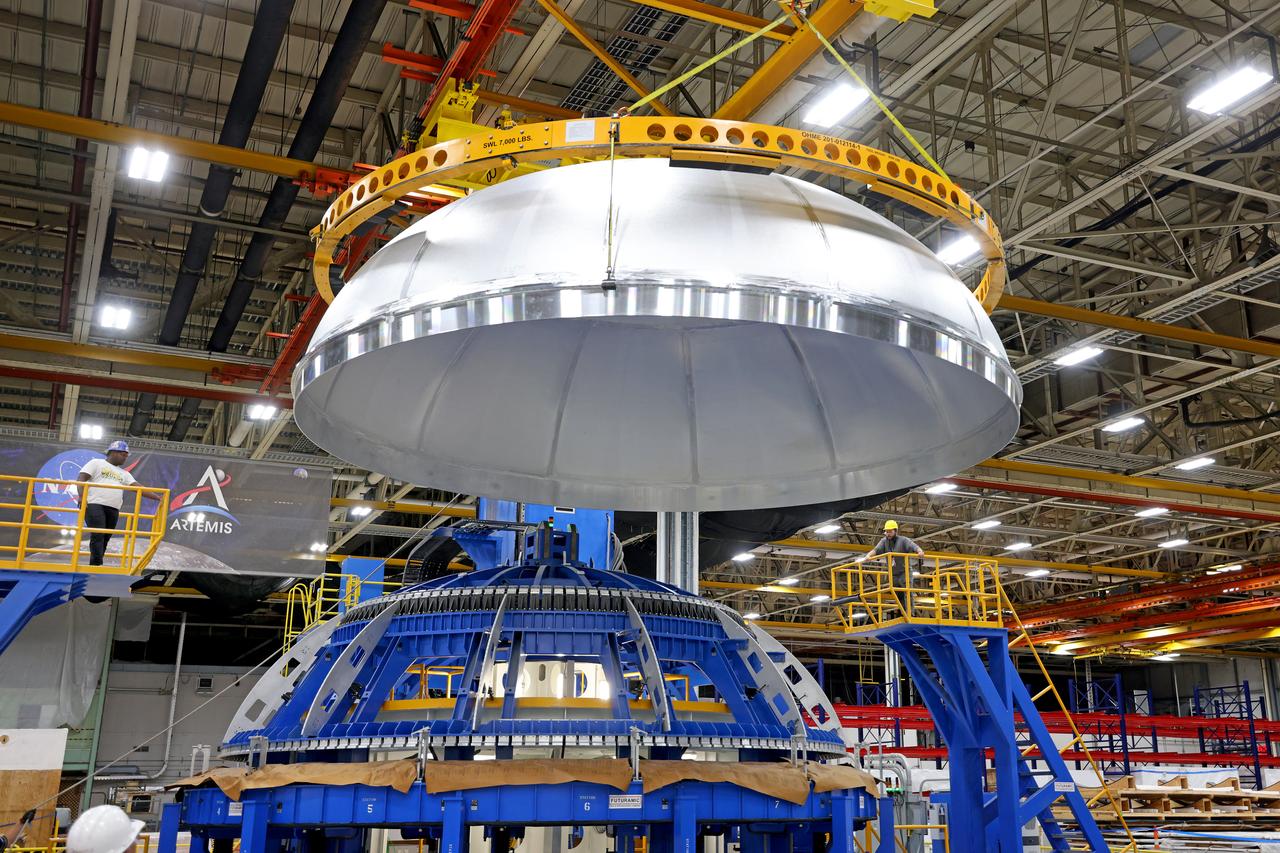
Teams completed welding of the liquid oxygen dome for the core stage of a future SLS (Space Launch System) rocket at NASA’s Michoud Assembly Facility in New Orleans. The dome, which will cap off the forward end of the liquid oxygen tank, was lifted off of the robotic weld tool and moved to an assembly area for the next phase of production. Later, crews will add the forward dome to join the two barrels and the aft dome to complete the liquid oxygen tank. The flight hardware will be used for Artemis IV, the first flight of SLS in its Block 1B configuration. The SLS core stage liquid oxygen tank holds 196,000 gallons of super-cooled liquid propellant. The SLS core stage is made up of five unique elements: the forward skirt, liquid oxygen tank, intertank, liquid hydrogen tank, and the engine section. The liquid oxygen and the liquid hydrogen tanks will provide propellant to the four RS-25 engines to produce more than two million pounds of thrust to help launch NASA’s Orion spacecraft, astronauts, and supplies beyond Earth’s orbit to the Moon. Image credit: NASA/Michael DeMocker

NASA’s Space Launch System (SLS) team fully stacked three hardware elements together May 24 to form the top of the rocket’s core stage for the Artemis II mission. NASA and core stage prime contractor Boeing connected the forward skirt with the liquid oxygen tank and intertank flight hardware inside an assembly area at NASA’s Michoud Assembly Facility in New Orleans. Teams had previously stacked the liquid oxygen tank and intertank on April 28. The joining of the three structures together is the first major assembly of core stage hardware for Artemis II, the first crewed Artemis mission and second flight of the SLS rocket. Next, technicians will work to complete outfitting and integrating the systems within the upper structure. At 66 feet tall, the upper part of the stage is just a fraction of the entire core stage. The fully-assembled, 212-foot-tall rocket stage consists of five hardware elements, including two liquid propellant tanks and four RS-25 engines. The liquid oxygen tank in the upper portion of the stage will hold 196,000 gallons of liquid oxygen cooled to minus 297 degrees Fahrenheit. Meanwhile, the forward skirt and intertank house avionics, flight computer, and electronic systems for the rocket stage. Together, the core stage and its four RS-25 engines will provide more than 2 million pounds of thrust to help send Artemis II astronauts beyond Earth’s orbit to lunar orbit. With Artemis, NASA will land the first woman and the first person of color on the Moon and establish sustainable exploration in preparation for missions to Mars. SLS and NASA’s Orion spacecraft, along with the commercial human landing system and the Gateway in orbit around the Moon, are NASA’s backbone for deep space exploration. SLS is the only rocket that can send Orion, astronauts, and supplies to the Moon in a single mission. Image credit: NASA/Michael DeMocker
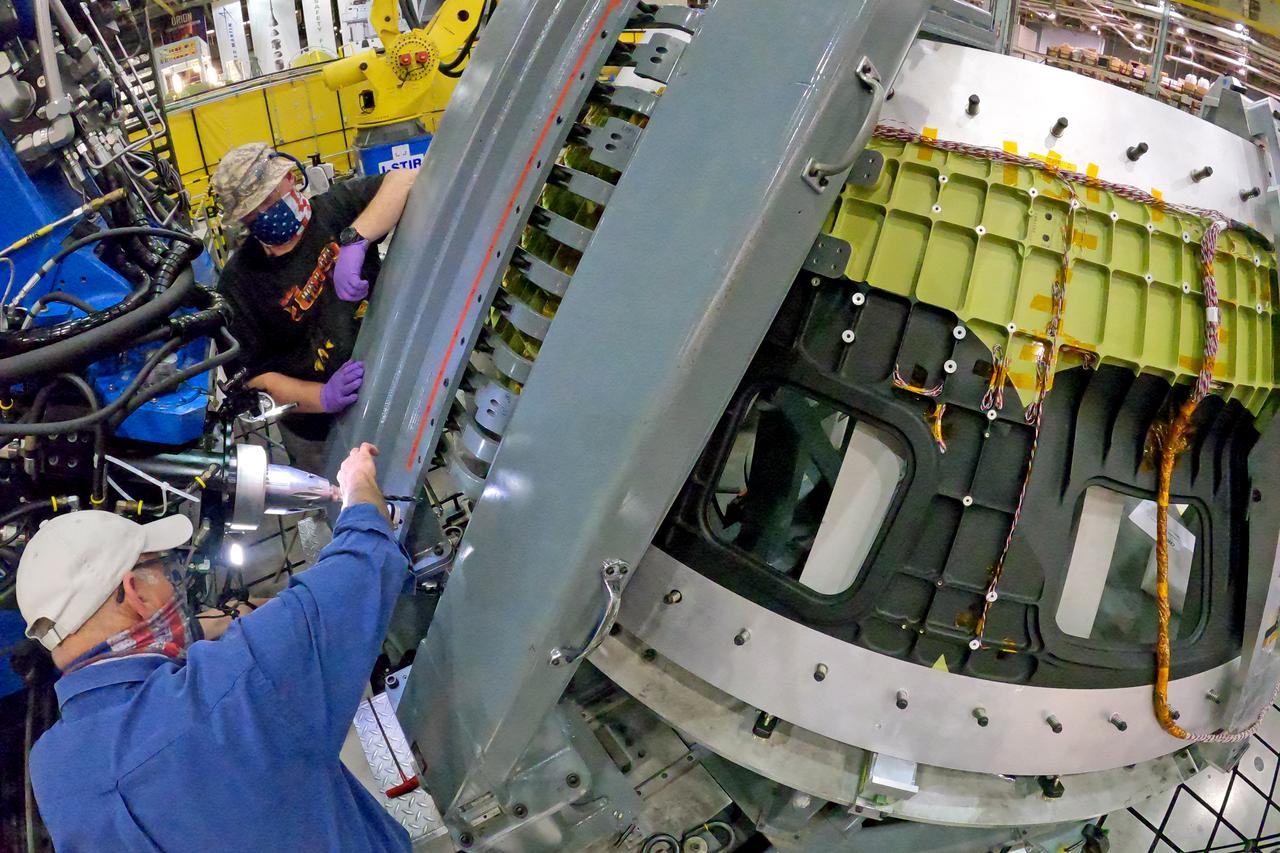
At NASA’s Michoud Assembly Facility in New Orleans, technicians from Orion prime contractor Lockheed Martin have welded together three cone-shaped panels on Orion’s crew module for the Artemis III mission that will land the first woman and next man on the Moon. The crew module’s primary structure, the pressure vessel, is comprised of seven machined aluminum alloy pieces that are welded together through a weld process that produces a strong, air-tight habitable space for astronauts during the mission. The pressure vessel is designed to withstand the harsh and demanding environment of deep space, and is the core structure upon which all the other elements of Orion’s crew module are integrated. Infographic showing the seven pieces of Orion's underlying structure With welding complete on the crew module cone panels – one of which contains windows providing astronauts views of the Moon and Earth – work will begin joining the forward bulkhead to the tunnel to create the top of the spacecraft, followed by the barrel and aft bulkhead join to form the bottom of Orion. Last, the forward bulkhead will be welded to the top of the panels and, for the seventh and closeout weld, the bottom of the cone panels will be joined to the barrel to complete the pressure vessel. Once welding of the Artemis III crew module primary structure is complete, it will be shipped to NASA’s Kennedy Space Center in Florida where it will undergo further assembly beginning this fall. Orion, the Space Launch System, and Exploration Ground Systems programs are foundational elements of the Artemis program. Artemis I will be the first integrated flight test of Orion and SLS and is targeted to launch later this year. Artemis II will follow and is the first crewed mission, taking humans farther into space than ever before. Image credit: NASA/Michael DeMocker
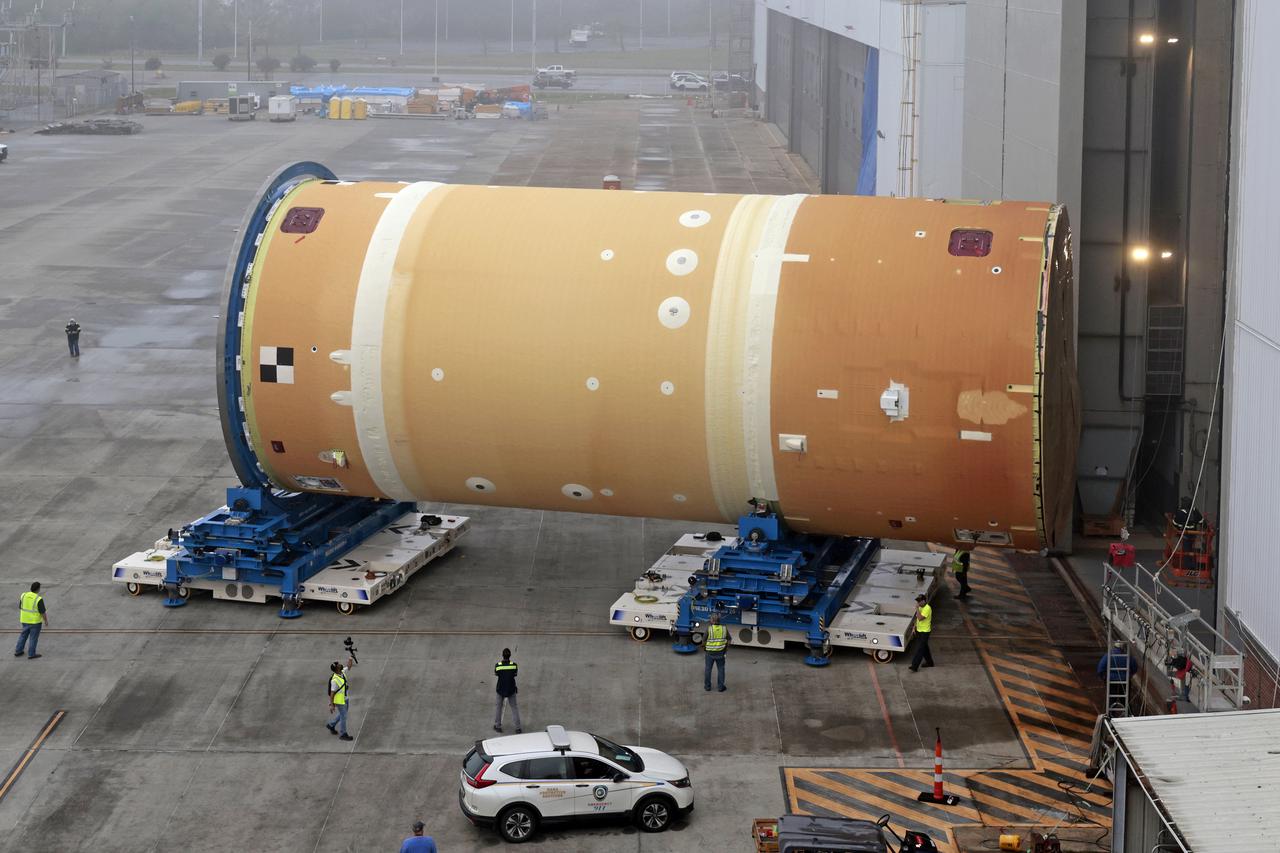
NASA has completed assembly of the upper, or forward, part of the core stage for the Space Launch System (SLS) rocket that will send the Artemis II crew on their lunar mission. Boeing, the lead core stage contractor, completed joining the forward part of the rocket, and then lifted it out of the assembly structure at NASA’s Michoud Assembly Facility in New Orleans. To construct this part of the core stage, the team first stacked three major parts of the stage—the forward skirt, the liquid oxygen tank, and the intertank. The forward skirt sits atop the rocket’s core stage, and it and the intertank are outfitted with the rocket’s flight computers and avionics systems that control SLS during launch and ascent. The liquid oxygen tank holds 196,000 gallons of liquid oxygen cooled to minus 297 degrees Fahrenheit. The entire upper part of the stage is around 66-feet tall. The fully-assembled, 212-foot-tall rocket stage consists of five hardware elements. As the team lifted it out of the assembly area, they completed a breakover maneuver, to put the forward assembly in a horizontal position. Then, they moved it to final assembly where the Artemis II liquid hydrogen tank is also undergoing outfitting. Here, teams will connect the liquid hydrogen tank to the upper part of the rocket and complete assembly of four of the five core stage parts. The last piece to be added will be the engine section, which is currently in a separate assembly area being outfitted with propulsion systems that connect to the engines. Image credit: NASA/Michael DeMocker
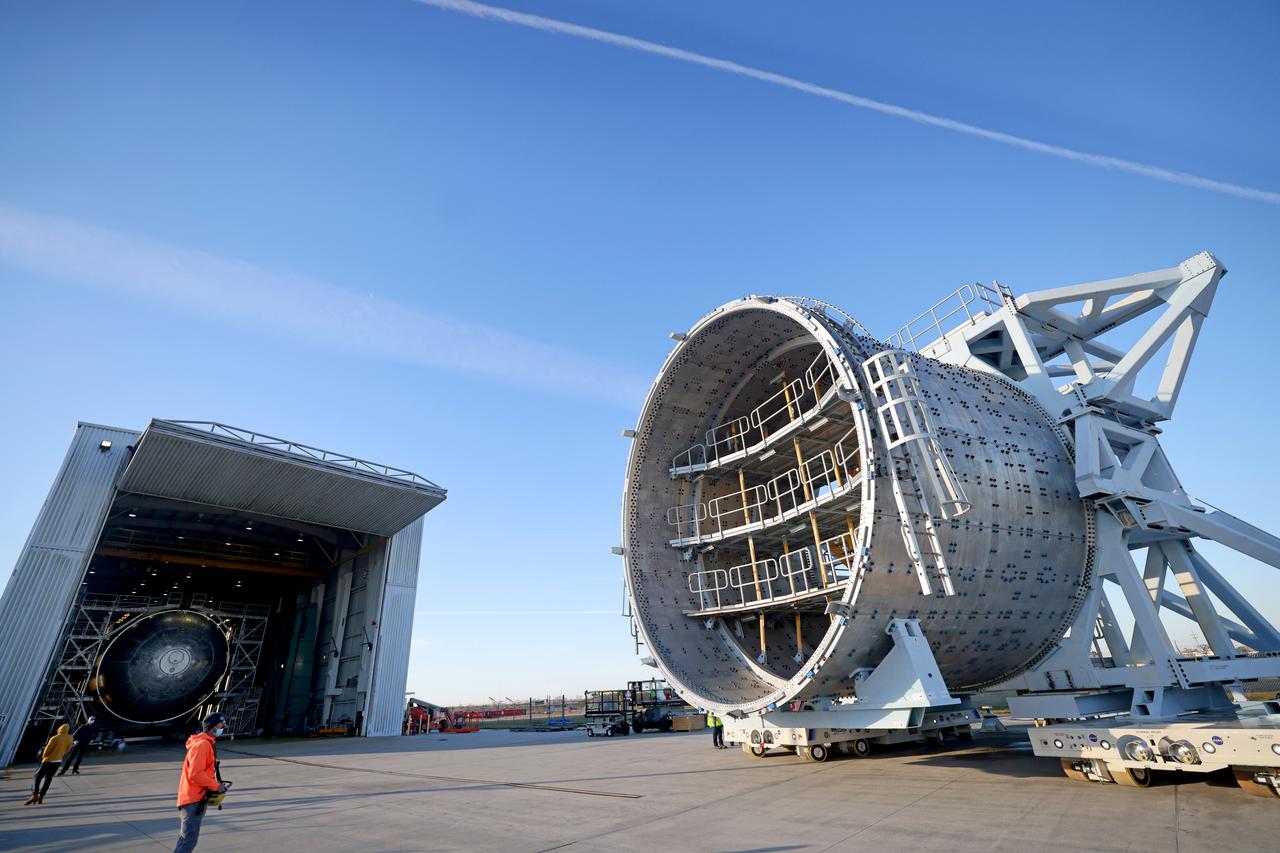
The liquid hydrogen tank that will be part of the Space Launch System rocket’s core stage is being prepared for the Artemis III mission at NASA’s Michoud Assembly Facility in New Orleans. Eventually, the tank will be connected to the engine section that will house the four RS-25 engines. The engine section is still being outfitted, so for this test crews attached an engine section aft simulator during proof testing on January 27, 2022. Once the aft simulator is attached, the LH2 tank undergoes non-destructive evaluation, which will test weld strength and ensure the tank is structurally sound. The SLS core stage is made up of five unique elements: the forward skirt, liquid oxygen tank, intertank, liquid hydrogen tank, and the engine section. The tank holds 537,000 gallons of liquid hydrogen cooled to minus 432 degrees Fahrenheit and sits between the core stage’s intertank and engine section. The liquid hydrogen hardware, along with the liquid oxygen tank, will provide propellant to the four RS-25 engines at the bottom of the core stage to produce more than two million pounds of thrust to help launch the Artemis III mission to the Moon. Together with its four RS-25 engines, the rocket’s massive 212-foot-tall core stage — the largest stage NASA has ever built — and its twin solid rocket boosters will produce 8.8 million pounds of thrust to send NASA’s Orion spacecraft, astronauts and supplies beyond Earth’s orbit to the Moon. Image credit: NASA/Michael DeMocker
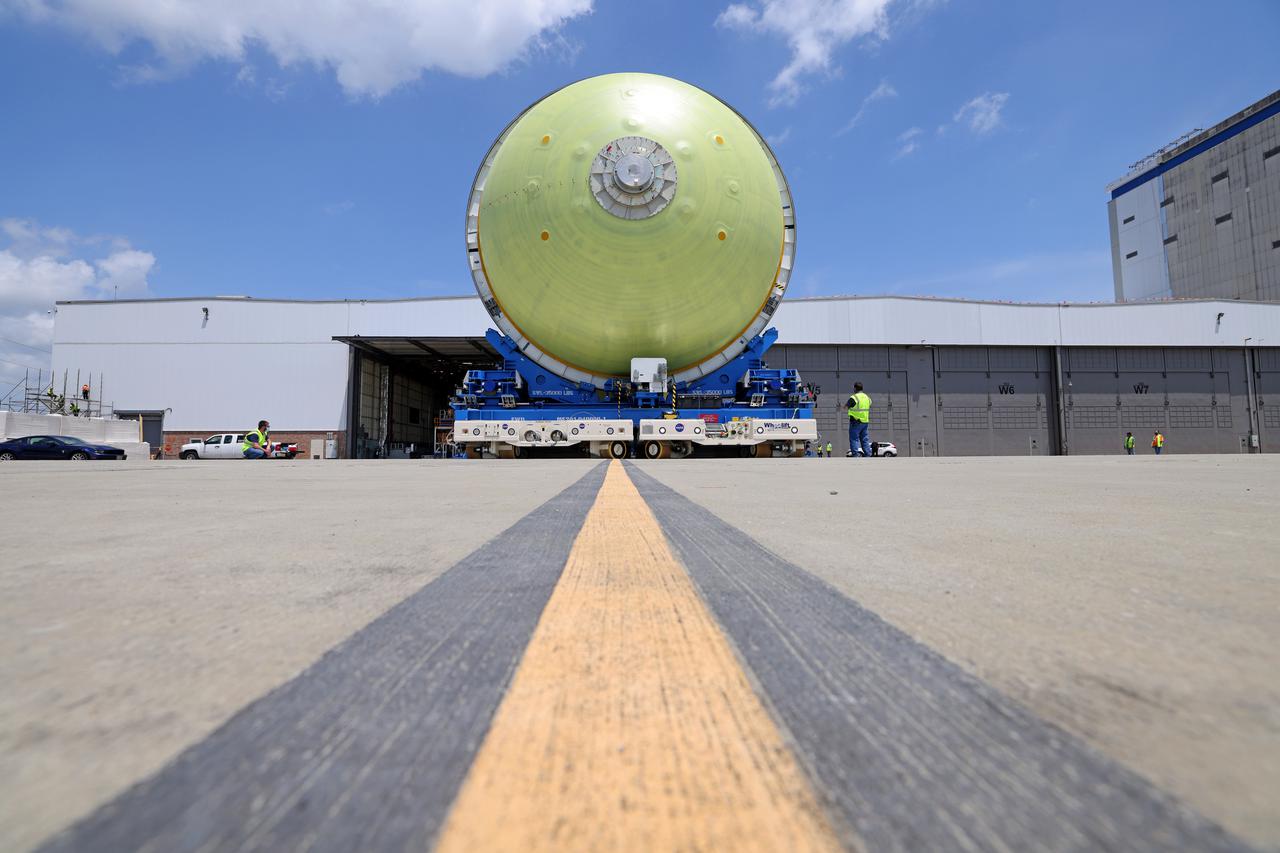
This image highlights the liquid hydrogen tank that will be used on the core stage of NASA’s Space Launch System rocket for Artemis II, the first crewed mission of NASA’s Artemis program. The tank is being built at NASA’s Michoud Assembly Facility in New Orleans. The SLS core stage is made up of five unique elements: the forward skirt, liquid oxygen tank, intertank, liquid hydrogen tank, and the engine section. The liquid hydrogen tank holds 537,000 gallons of liquid hydrogen cooled to minus 423 degrees Fahrenheit and sits between the core stage’s intertank and engine section. The liquid hydrogen hardware, along with the liquid oxygen tank, will provide propellant to the four RS-25 engines at the bottom of the cores stage to produce more than two million pounds of thrust to launch NASA’s Artemis missions to the Moon. Together with its four RS-25 engines, the rocket’s massive 212-foot-tall core stage — the largest stage NASA has ever built — and its twin solid rocket boosters will produce 8.8 million pounds of thrust to send NASA’s Orion spacecraft, astronauts and supplies beyond Earth’s orbit to the Moon and, ultimately, Mars. Offering more payload mass, volume capability and energy to speed missions through space, the SLS rocket, along with NASA’s Gateway in lunar orbit, the human landing system, and Orion spacecraft, is part of NASA’s backbone for deep space exploration and the Artemis lunar program. No other rocket can send astronauts in Orion around the Moon in a single mission. Image credit: NASA/Michael DeMocker

Technicians at NASA’s Michoud Assembly Facility have joined the engine and boat-tail sections of NASA’s Space Launch System rocket for Artemis II in preparation for its next step in production. When complete, the engine section will house the four RS-25 engines and include vital systems for mounting, controlling and delivering fuel from the propellant tanks to the rocket’s engines. The boat-tail is designed to protect the bottom end of the core stage and the RS-25 engines and was joined with the engine section to comprise the lowest portion of the 212-foot-tall core stage. Together with its four RS-25 engines and its twin solid rocket boosters, it will produce 8.8 million pounds of thrust to send NASA’s Orion spacecraft, astronauts, and supplies beyond Earth’s orbit to the Moon and, ultimately, Mars. Offering more payload mass, volume capability, and energy to speed missions through space, the SLS rocket, along with NASA’s Gateway in lunar orbit, the Human Landing System, and Orion spacecraft, is part of NASA’s backbone for deep space exploration and the Artemis lunar program. No other rocket is capable of carrying astronauts in Orion around the Moon in a single mission.

Teams with NASA and Boeing, the core stage lead contractor, at NASA’s Michoud Assembly Facility in New Orleans have fully integrated all five major structures of the Space Launch System (SLS) rocket’s core stage for Artemis II, the first Artemis mission that will send four astronauts around the Moon and return them home. Technicians joined the engine section to the rest of the rocket stage March 17. Next, teams will integrate the four RS-25 engines to the engine section to complete the stage. Located at the bottom of the 212-foot-tall core stage, the engine section is the most complex and intricate part of the rocket stage, helping to power Artemis missions to the Moon. In addition to its miles of cabling and hundreds of sensors, the engine section is a crucial attachment point for the RS-25 engines and two solid rocket boosters that produce a combined 8.8 million pounds of thrust at liftoff. It houses the engines and includes vital systems for mounting, controlling, and delivering fuel from the propellant tanks to the engines. Image credit: NASA/Michael DeMocker

Crews at NASA’s Michoud Assembly Facility in New Orleans lift the forward skirt of a core stage that will power NASA’s Space Launch System (SLS) rocket out of the Vertical Weld Center Sept. 16, 2022. The forward skirt will be used for NASA’s Artemis IV mission. The hardware houses flight computers, cameras, and avionics systems for the SLS rocket. The SLS core stage is made up of five unique elements: the forward skirt, liquid oxygen tank, intertank, liquid hydrogen tank, and the engine section. When fully stacked, the forward skirt is located at the top of the 212-foot-tall core stage and connects to the upper part of the rocket. The core stage and its four RS-25 engines provide more than 2 million pounds of thrust to help power NASA’s next-generation lunar missions. Image credit: NASA/Michael DeMocker
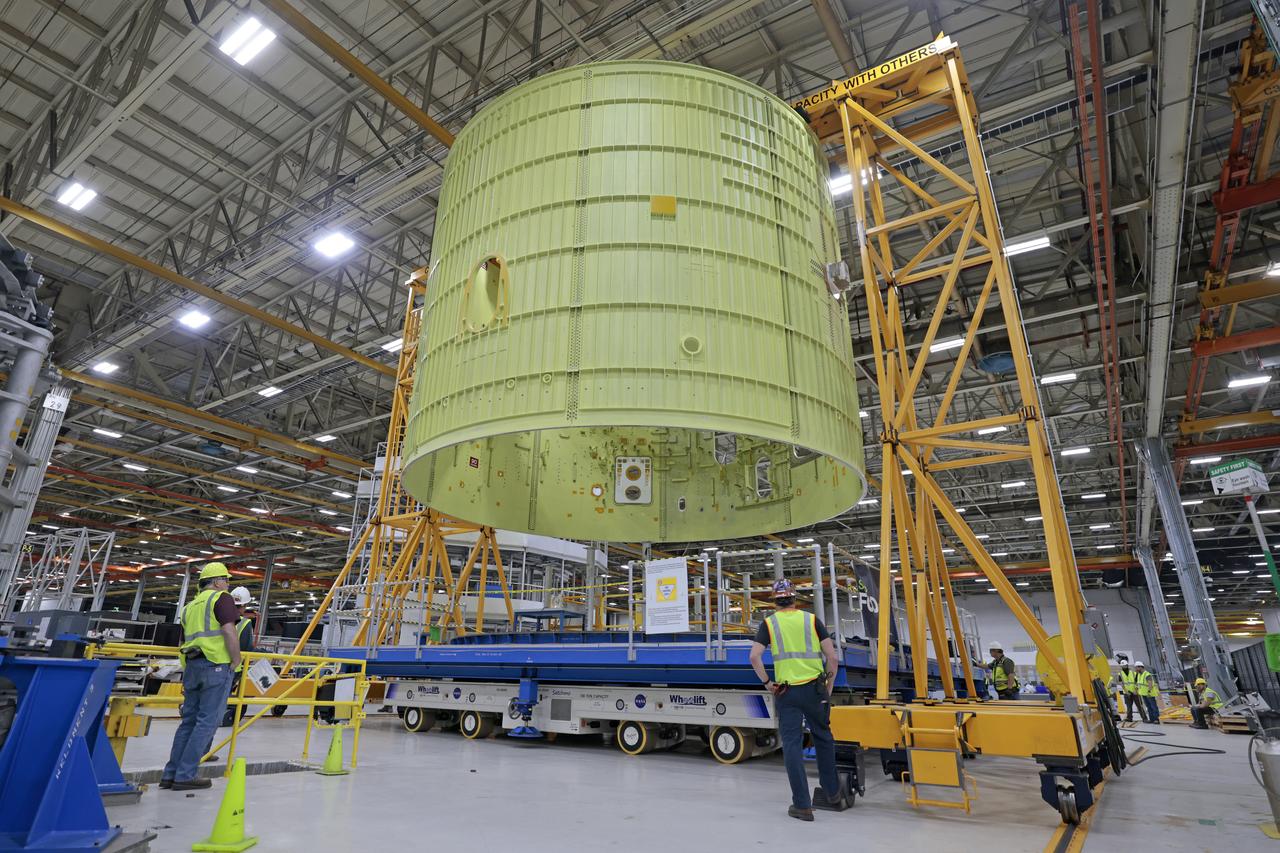
Technicians at NASA’s Michoud Assembly Facility move the intertank of NASA’s Space Launch System rocket for Artemis III to Cell G on October 26, 2022 to await application of the thermal protection system. Thermal protection systems protect space vehicles from aerodynamic heating during entry to planet atmosphere and re-entry to earth atmosphere. The intertank lays between the liquid hydrogen tank and liquid oxygen tank. Together with the engine section and the forward skirt, they comprise the SLS core stage. The liquid hydrogen tank and liquid oxygen tank hold 733,000 gallons of propellant to power the stage’s four RS-25 engines needed for liftoff and Artemis missions to the Moon and future missions to Mars. Image credit: NASA/Michael DeMocker
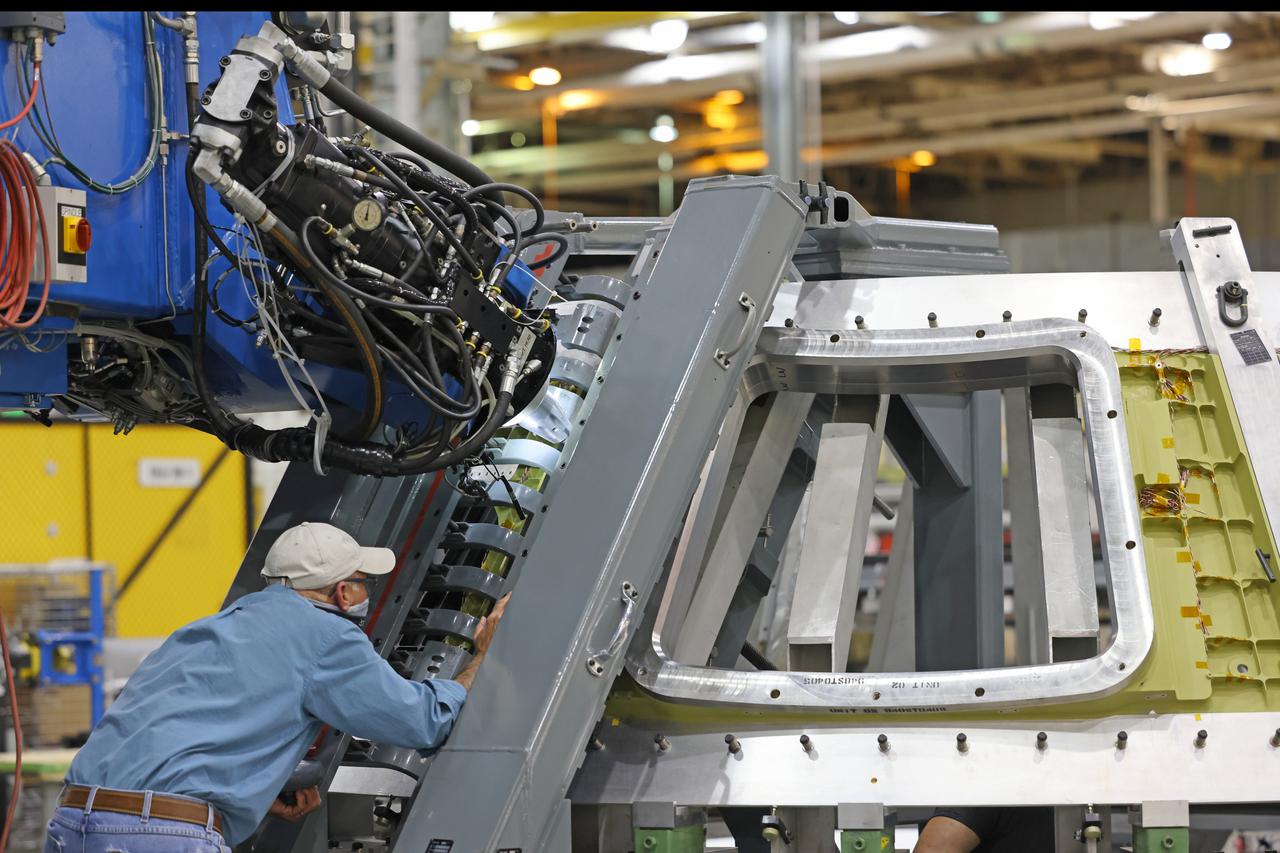
At NASA’s Michoud Assembly Facility in New Orleans, technicians from Orion prime contractor Lockheed Martin have welded together three cone-shaped panels on Orion’s crew module for the Artemis III mission that will land the first woman and next man on the Moon. The crew module’s primary structure, the pressure vessel, is comprised of seven machined aluminum alloy pieces that are welded together through a weld process that produces a strong, air-tight habitable space for astronauts during the mission. The pressure vessel is designed to withstand the harsh and demanding environment of deep space, and is the core structure upon which all the other elements of Orion’s crew module are integrated. Infographic showing the seven pieces of Orion's underlying structure With welding complete on the crew module cone panels – one of which contains windows providing astronauts views of the Moon and Earth – work will begin joining the forward bulkhead to the tunnel to create the top of the spacecraft, followed by the barrel and aft bulkhead join to form the bottom of Orion. Last, the forward bulkhead will be welded to the top of the panels and, for the seventh and closeout weld, the bottom of the cone panels will be joined to the barrel to complete the pressure vessel. Once welding of the Artemis III crew module primary structure is complete, it will be shipped to NASA’s Kennedy Space Center in Florida where it will undergo further assembly beginning this fall. Orion, the Space Launch System, and Exploration Ground Systems programs are foundational elements of the Artemis program. Artemis I will be the first integrated flight test of Orion and SLS and is targeted to launch later this year. Artemis II will follow and is the first crewed mission, taking humans farther into space than ever before. Image credit: NASA/Michael DeMocker
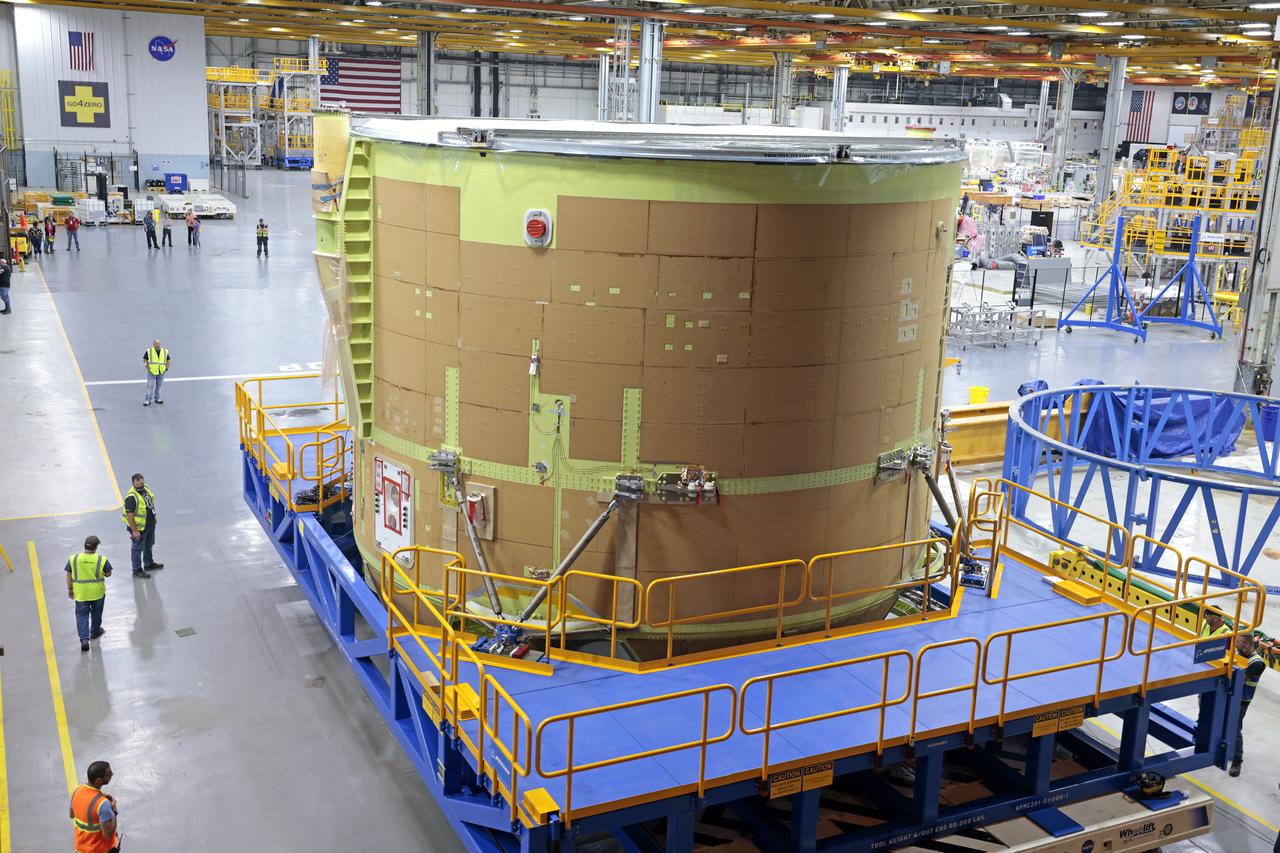
Technicians at NASA’s Michoud Assembly Facility have joined the engine and boat-tail sections of NASA’s Space Launch System rocket for Artemis II in preparation for its next step in production. When complete, the engine section will house the four RS-25 engines and include vital systems for mounting, controlling and delivering fuel from the propellant tanks to the rocket’s engines. The boat-tail is designed to protect the bottom end of the core stage and the RS-25 engines and was joined with the engine section to comprise the lowest portion of the 212-foot-tall core stage. Together with its four RS-25 engines and its twin solid rocket boosters, it will produce 8.8 million pounds of thrust to send NASA’s Orion spacecraft, astronauts, and supplies beyond Earth’s orbit to the Moon and, ultimately, Mars. Offering more payload mass, volume capability, and energy to speed missions through space, the SLS rocket, along with NASA’s Gateway in lunar orbit, the Human Landing System, and Orion spacecraft, is part of NASA’s backbone for deep space exploration and the Artemis lunar program. No other rocket is capable of carrying astronauts in Orion around the Moon in a single mission.
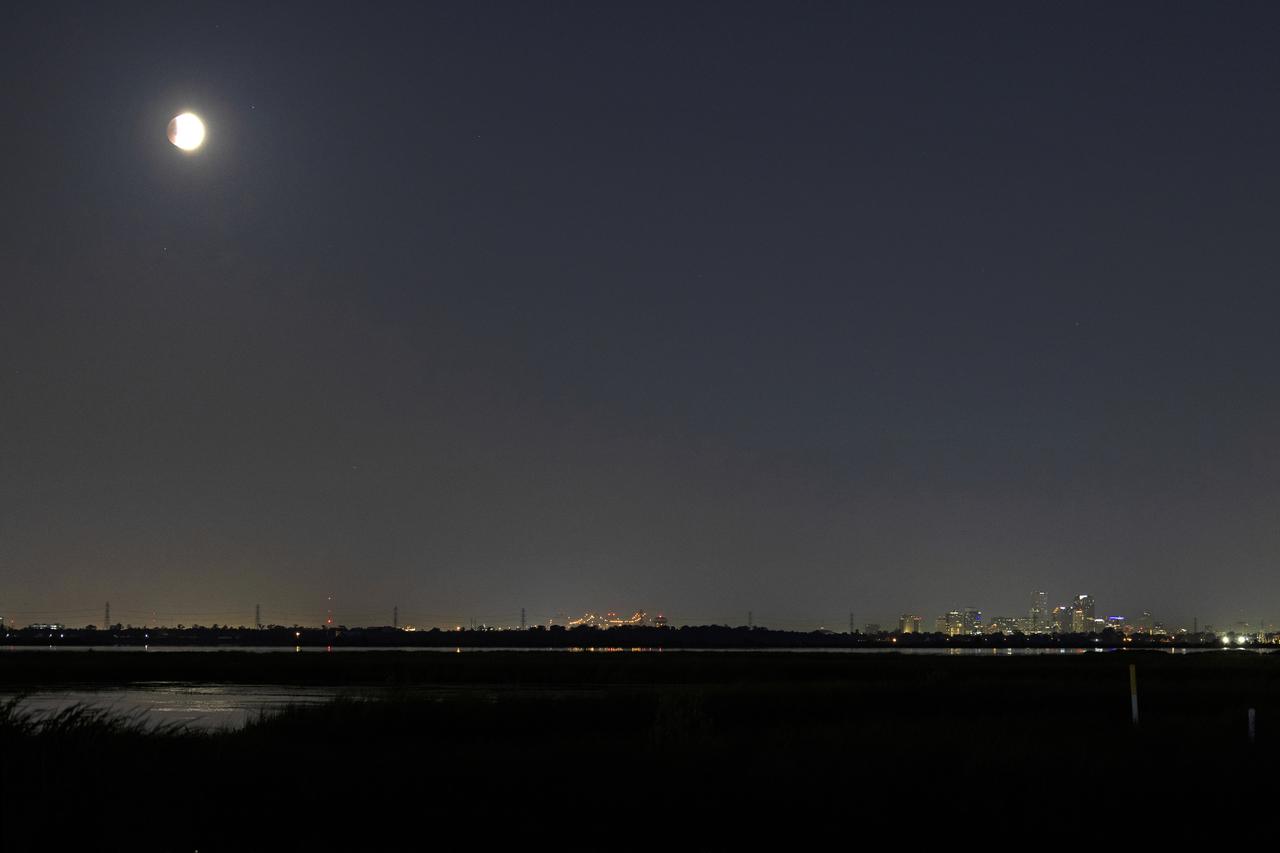
The beginning of the eclipse of the Super Flower Blood Moon over Bayou Bienvenue with the New Orleans Crescent City Connection in the distance early Wednesday morning, May 26, 2021. Image credit: NASA/Michael DeMocker
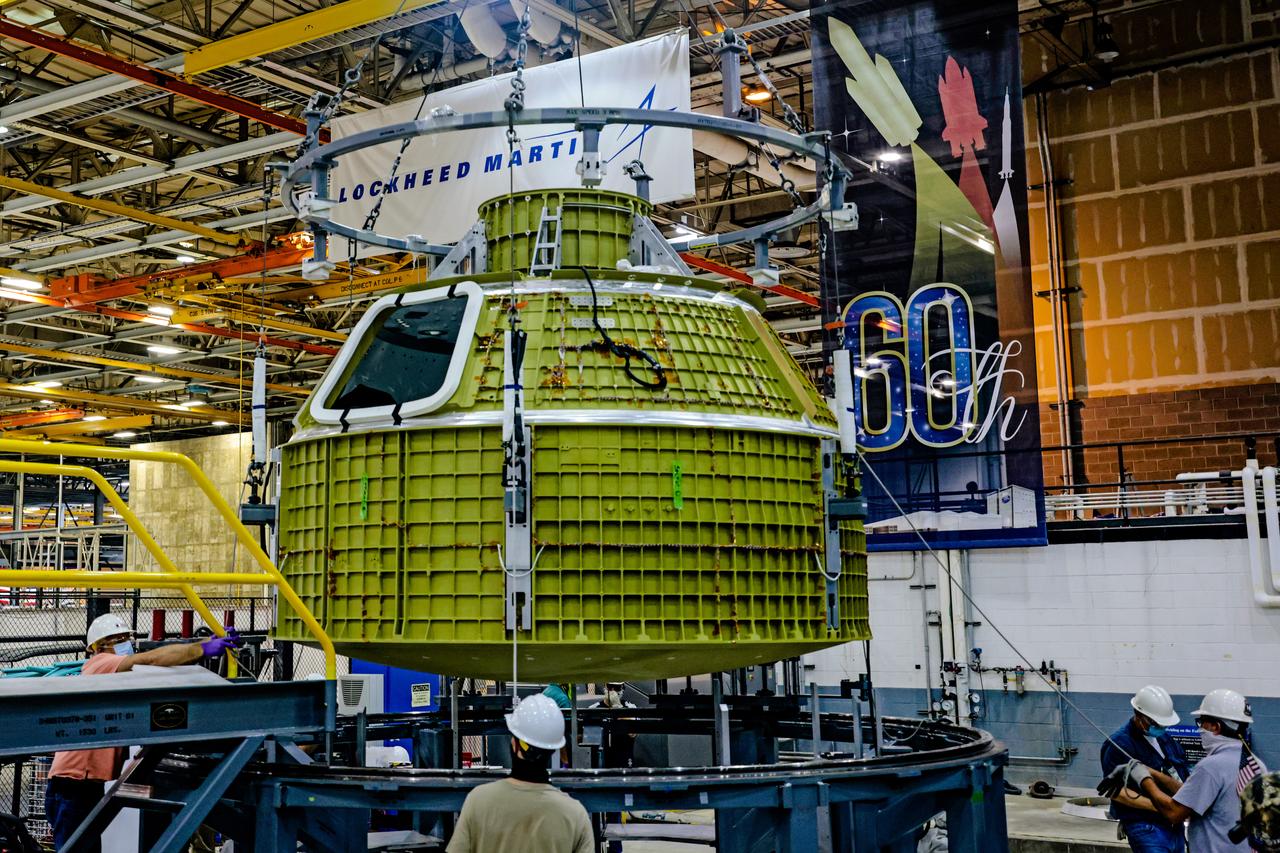
At NASA's Michoud Assembly Facility in New Orleans, Orion's newly completed pressure vessel for the Artemis III mission is lifted out of the welding tool on Aug. 27, 2021. The pressure vessel is the primary structure for Orion's crew module, joined together using state-of-the-art welding by technicians from lead contractor Lockheed Martin.
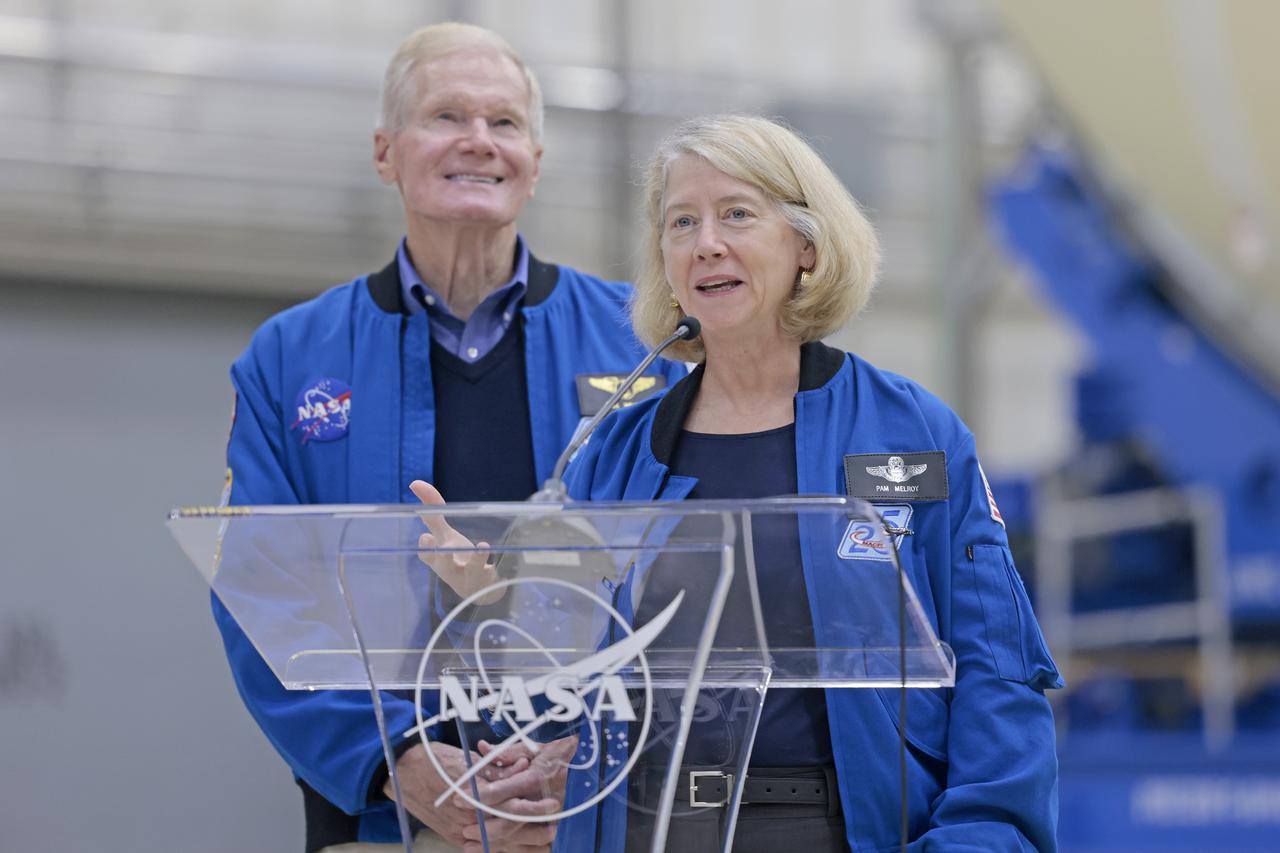
NASA Administrator Bill Nelson and Deputy Administrator Pam Melroy visited the agency’s Michoud Assembly Facility in New Orleans on Dec. 8, 2021 for tours and briefings on Michoud’s role in the Artemis program and other capabilities that enrich many facets of the nation’s space exploration endeavors. Image credit: NASA/Michael DeMocker
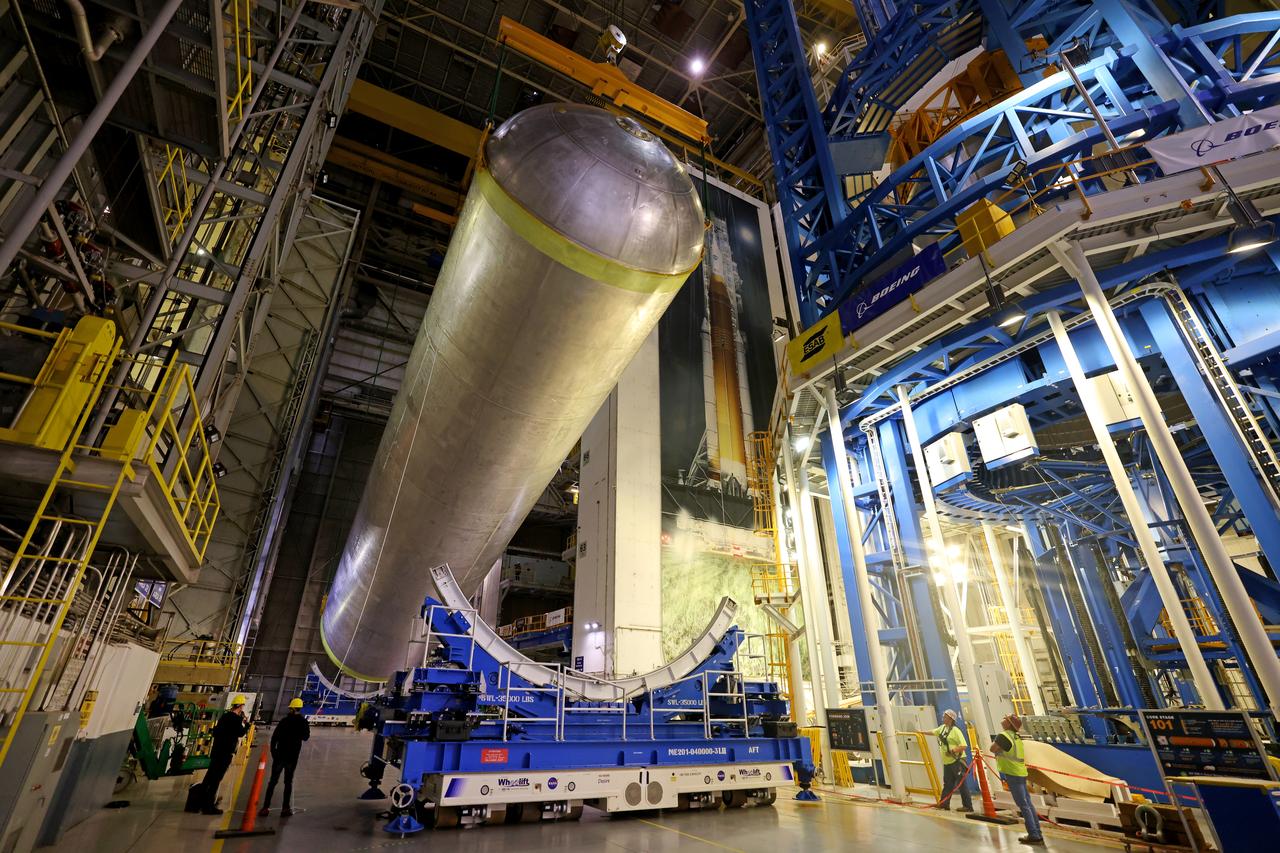
These photos show how teams moved and prepared a liquid hydrogen tank for the SLS (Space Launch System) rocket for priming in the Vertical Assembly Building at NASA’s Michoud Assembly Facility in New Orleans Nov. 14, 2023. The hardware will form part of the core stage for the SLS rocket that will power Artemis III. To prepare the flight hardware for primer, the tank underwent internal cleaning in nearby Cell E in October. Internal cleaning is part of the manufacturing process for the core stage. After testing, both of the stage’s propellant tanks and its dry structures – the elements that do not hold fuel – are cleaned, primed, and readied for the next phase of production Technichians will next sand down and prepare the surface of the tank before coating it in a primer. Primer is applied to the barrel section of the tank by an automated robotic tool, whereas the forward and aft domes are primed manually. The propellant tank is the largest of the five major elements that make up the 212-foot-tall Moon rocket stage. The core stage, along with its four RS-25 engines, produce two million pounds of thrust to help launch NASA’s Orion spacecraft, astronauts, and supplies beyond Earth’s orbit and to the lunar surface for Artemis. Image credit: NASA/Michael DeMocker
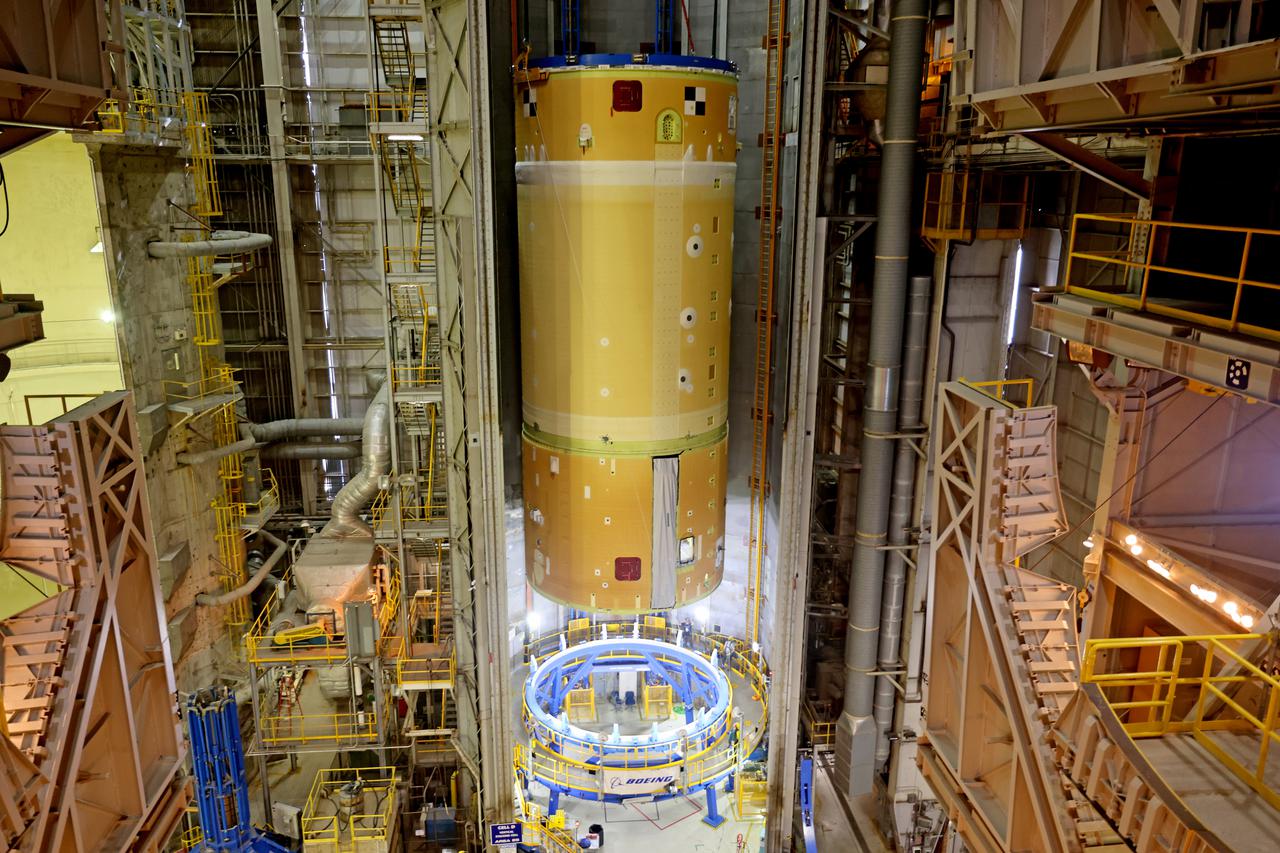
NASA has completed assembly of the upper, or forward, part of the core stage for the Space Launch System (SLS) rocket that will send the Artemis II crew on their lunar mission. Boeing, the lead core stage contractor, completed joining the forward part of the rocket, and then lifted it out of the assembly structure at NASA’s Michoud Assembly Facility in New Orleans. To construct this part of the core stage, the team first stacked three major parts of the stage—the forward skirt, the liquid oxygen tank, and the intertank. The forward skirt sits atop the rocket’s core stage, and it and the intertank are outfitted with the rocket’s flight computers and avionics systems that control SLS during launch and ascent. The liquid oxygen tank holds 196,000 gallons of liquid oxygen cooled to minus 297 degrees Fahrenheit. The entire upper part of the stage is around 66-feet tall. The fully-assembled, 212-foot-tall rocket stage consists of five hardware elements. As the team lifted it out of the assembly area, they completed a breakover maneuver, to put the forward assembly in a horizontal position. Then, they moved it to final assembly where the Artemis II liquid hydrogen tank is also undergoing outfitting. Here, teams will connect the liquid hydrogen tank to the upper part of the rocket and complete assembly of four of the five core stage parts. The last piece to be added will be the engine section, which is currently in a separate assembly area being outfitted with propulsion systems that connect to the engines. Image credit: NASA/Michael DeMocker
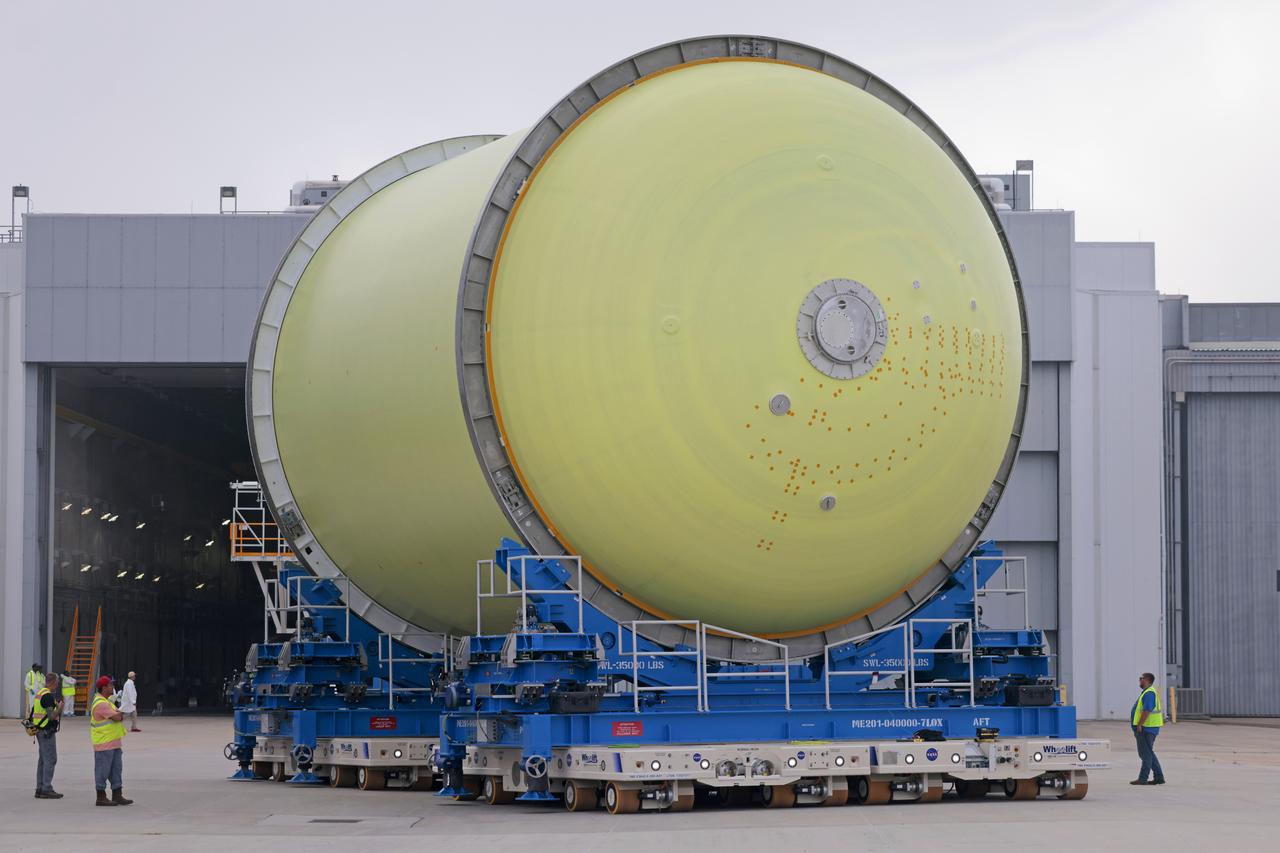
Move Crews at NASA’s Michoud Assembly Facility in New Orleans transport a liquid oxygen tank from a detached production building to the main 43-acre rocket factory on Mar. 26. Teams recently completed primer application on the tank, which will be used on the core stage of the agency’s SLS (Space Launch System) rocket for its Artemis III mission. The tank will now undergo electrical installations before moving on to the next phase of production. The propellant tank is one of five major elements that make up the 212-foot-tall rocket stage. The core stage, along with its four RS-25 engines, produce more than two million pounds of thrust to help launch NASA’s Orion spacecraft, astronauts, and supplies beyond Earth’s orbit and to the lunar surface for Artemis.

This image highlights the liquid oxygen tank, which will be used on the core stage of NASA’ Space Launch System rocket for Artemis II, the first crewed mission of NASA’s Artemis program, at NASA’s Michoud Assembly Facility. The SLS core stage is made up of five unique elements: the forward skirt, liquid oxygen tank, intertank, liquid hydrogen tank, and the engine section. The forward skirt houses flight computers, cameras, and avionics systems. The liquid oxygen tank holds 196,000 gallons of liquid oxygen cooled to minus 297 degrees Fahrenheit. The LOX hardware sits between the core stage’s forward skirt and the intertank. Along with the liquid hydrogen tank, it will provide fuel to the four RS-25 engines at the bottom of the core stage to produce more than two million pounds of thrust to launch NASA’s Artemis missions to the Moon. Together with its four RS-25 engines, the rocket’s massive 212-foot-tall core stage — the largest stage NASA has ever built — and its twin solid rocket boosters will produce 8.8 million pounds of thrust to send NASA’s Orion spacecraft, astronauts and supplies beyond Earth’s orbit to the Moon and, ultimately, Mars. Offering more payload mass, volume capability and energy to speed missions through space, the SLS rocket, along with NASA’s Gateway in lunar orbit, the Human Landing System, and Orion spacecraft, is part of NASA’s backbone for deep space exploration and the Artemis lunar program. No other rocket can send astronauts in Orion around the Moon in a single mission. Image credit: NASA/Michael DeMocker
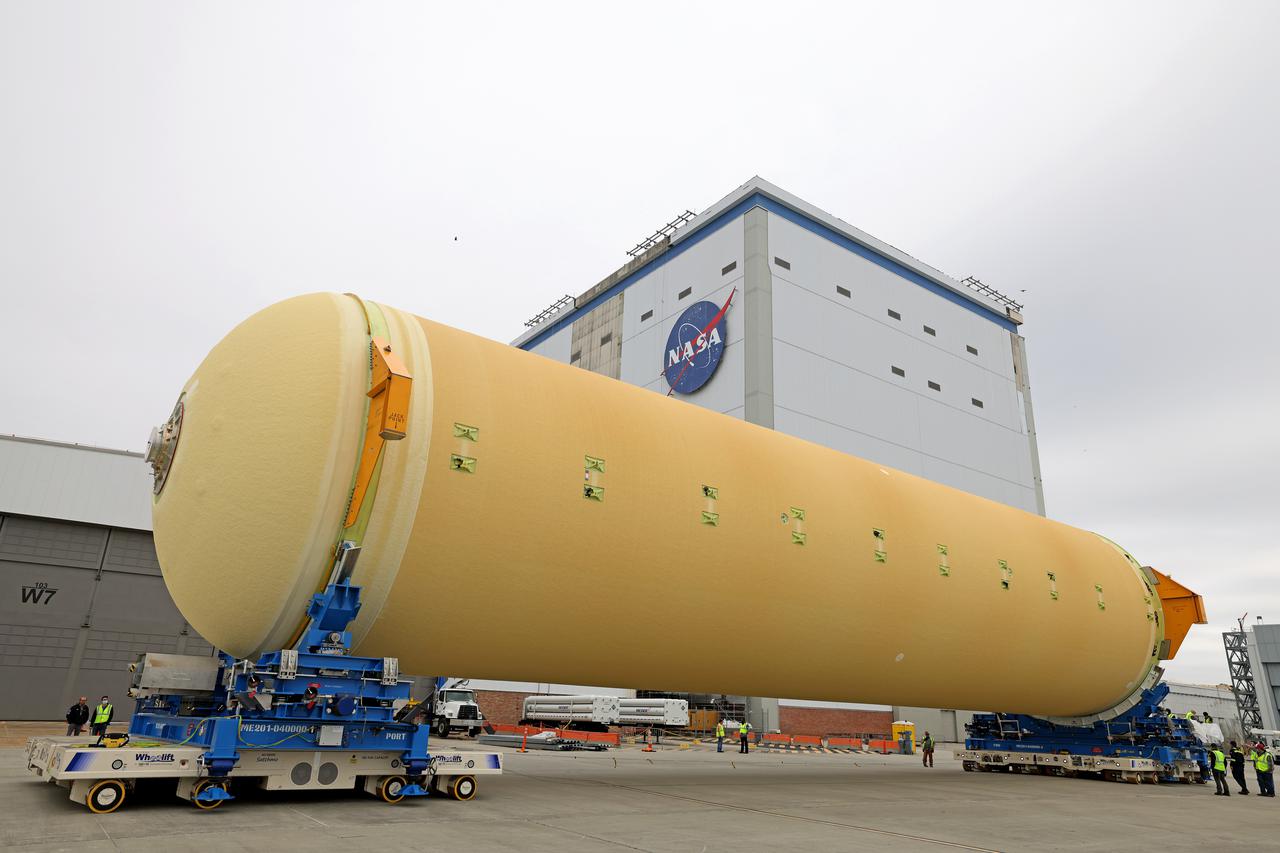
NASA is preparing major pieces of the Space Launch System rocket’s core stage to be joined as part of assembling the core stage for the Artemis II mission that will send crews to lunar orbit. Crews will soon connect the forward assembly with the 130-foot liquid hydrogen tank in the final assembly area at NASA’s Michoud Assembly Facility in New Orleans. When this process is completed, four of the five large structures that make up the core stage will be joined. The 66-foot forward assembly consists of the forward skirt, liquid oxygen tank and the intertank, which were mated earlier. This forward assembly will be joined with the 130-foot liquid hydrogen tank, the largest part of the stage that holds more than 500,000 gallons of cryogenic propellant. To compete the Artemis II core stage, engineers will add the engine section, which is currently being outfitted and includes the main propulsion systems that connect to the four RS-25 engines, Together, with the SLS twin solid rocket boosters, the core stage will produce 8.8 million pounds of thrust to send NASA’s Orion spacecraft, astronauts, and supplies beyond Earth’s orbit to the Moon. The SLS rocket and the Orion spacecraft form the foundation for deep space exploration and the Artemis lunar program. For more on the core stage: https://www.nasa.gov/exploration/systems/sls/multimedia/infographics/corestage101.html Image credit: NASA/Michael DeMocker
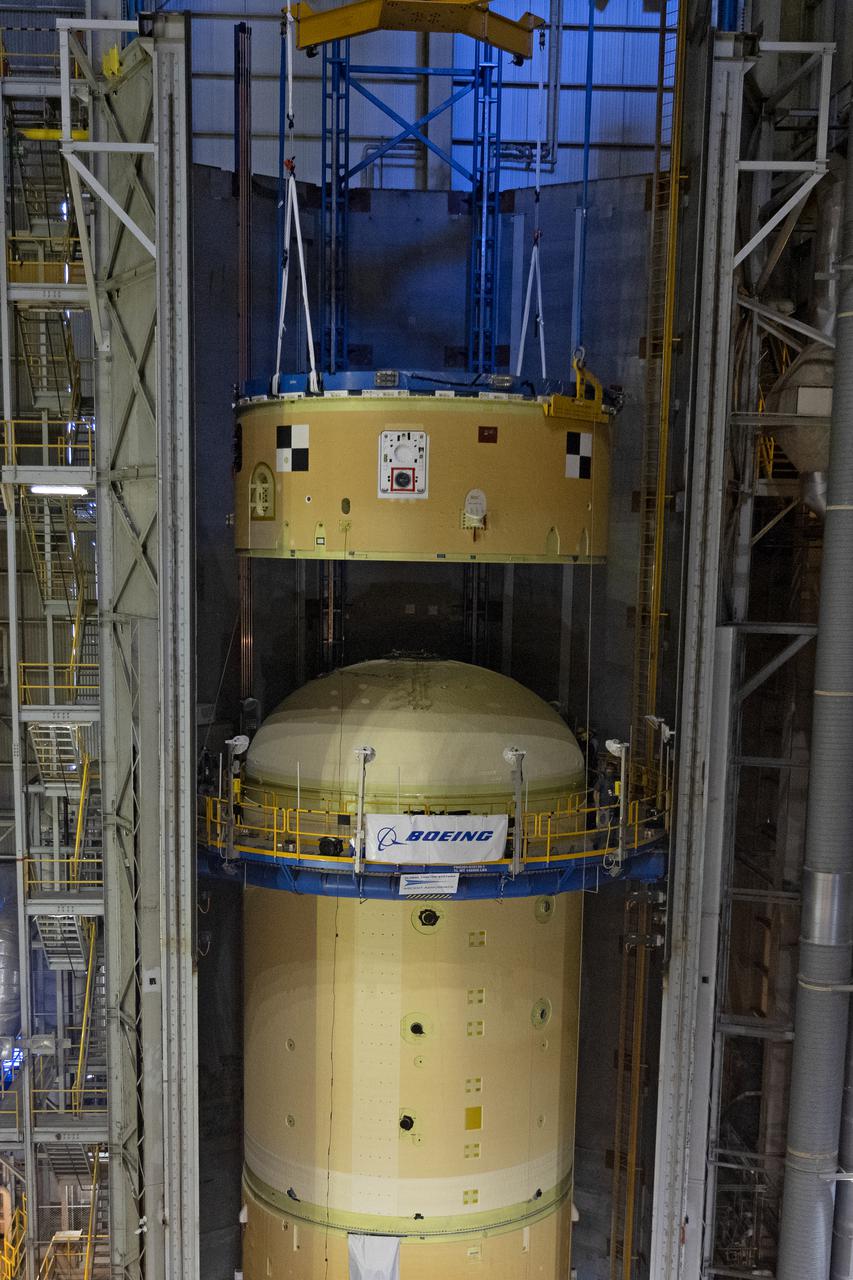
NASA’s Space Launch System (SLS) team fully stacked three hardware elements together May 24 to form the top of the rocket’s core stage for the Artemis II mission. NASA and core stage prime contractor Boeing connected the forward skirt with the liquid oxygen tank and intertank flight hardware inside an assembly area at NASA’s Michoud Assembly Facility in New Orleans. Teams had previously stacked the liquid oxygen tank and intertank on April 28. The joining of the three structures together is the first major assembly of core stage hardware for Artemis II, the first crewed Artemis mission and second flight of the SLS rocket. Next, technicians will work to complete outfitting and integrating the systems within the upper structure. At 66 feet tall, the upper part of the stage is just a fraction of the entire core stage. The fully-assembled, 212-foot-tall rocket stage consists of five hardware elements, including two liquid propellant tanks and four RS-25 engines. The liquid oxygen tank in the upper portion of the stage will hold 196,000 gallons of liquid oxygen cooled to minus 297 degrees Fahrenheit. Meanwhile, the forward skirt and intertank house avionics, flight computer, and electronic systems for the rocket stage. Together, the core stage and its four RS-25 engines will provide more than 2 million pounds of thrust to help send Artemis II astronauts beyond Earth’s orbit to lunar orbit. With Artemis, NASA will land the first woman and the first person of color on the Moon and establish sustainable exploration in preparation for missions to Mars. SLS and NASA’s Orion spacecraft, along with the commercial human landing system and the Gateway in orbit around the Moon, are NASA’s backbone for deep space exploration. SLS is the only rocket that can send Orion, astronauts, and supplies to the Moon in a single mission. Image credit: NASA/Michael DeMocker
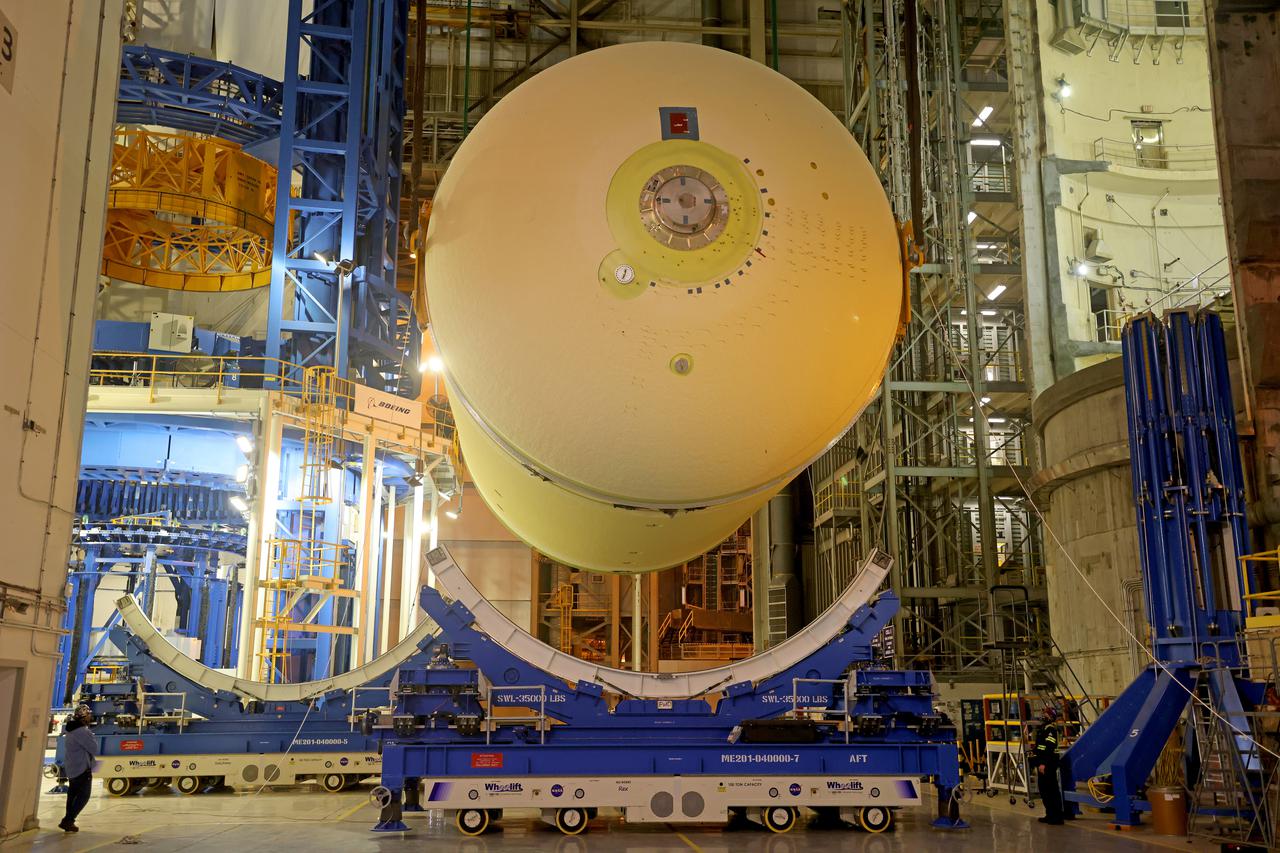
This image highlights the liquid oxygen tank, which will be used on the core stage of NASA’ Space Launch System rocket for Artemis II, the first crewed mission of NASA’s Artemis program, at NASA’s Michoud Assembly Facility. The SLS core stage is made up of five unique elements: the forward skirt, liquid oxygen tank, intertank, liquid hydrogen tank, and the engine section. The forward skirt houses flight computers, cameras, and avionics systems. The liquid oxygen tank holds 196,000 gallons of liquid oxygen cooled to minus 297 degrees Fahrenheit. The LOX hardware sits between the core stage’s forward skirt and the intertank. Along with the liquid hydrogen tank, it will provide fuel to the four RS-25 engines at the bottom of the core stage to produce more than two million pounds of thrust to launch NASA’s Artemis missions to the Moon. Together with its four RS-25 engines, the rocket’s massive 212-foot-tall core stage — the largest stage NASA has ever built — and its twin solid rocket boosters will produce 8.8 million pounds of thrust to send NASA’s Orion spacecraft, astronauts and supplies beyond Earth’s orbit to the Moon and, ultimately, Mars. Offering more payload mass, volume capability and energy to speed missions through space, the SLS rocket, along with NASA’s Gateway in lunar orbit, the Human Landing System, and Orion spacecraft, is part of NASA’s backbone for deep space exploration and the Artemis lunar program. No other rocket can send astronauts in Orion around the Moon in a single mission. Image credit: NASA/Michael DeMocker
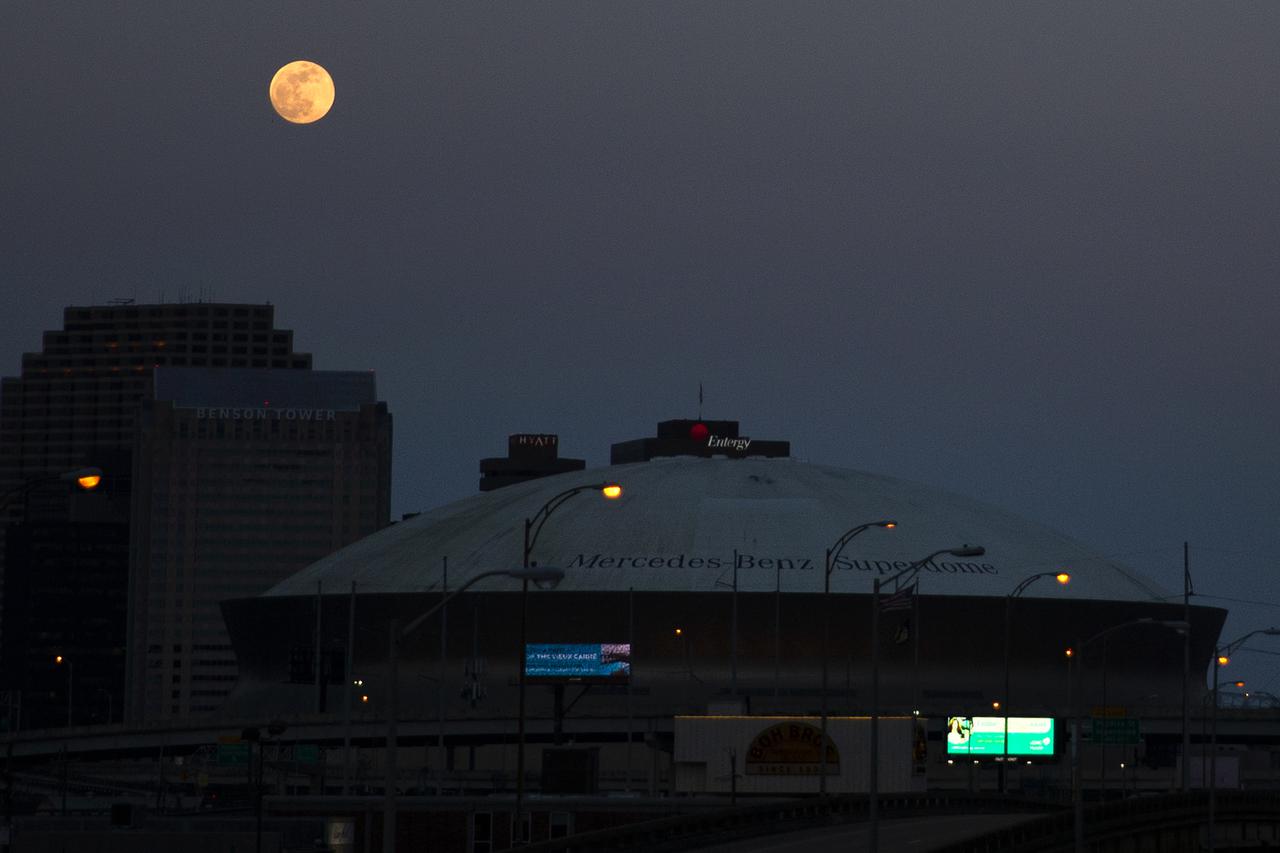
The nearly full moon rises over the Superdome and the city of New Orleans on Tuesday evening, May 25, 2021. Image credit: NASA/Michael DeMocker
At NASA’s Michoud Assembly Facility in New Orleans, technicians from Orion prime contractor Lockheed Martin have welded together three cone-shaped panels on Orion’s crew module for the Artemis III mission that will land the first woman and next man on the Moon. The crew module’s primary structure, the pressure vessel, is comprised of seven machined aluminum alloy pieces that are welded together through a weld process that produces a strong, air-tight habitable space for astronauts during the mission. The pressure vessel is designed to withstand the harsh and demanding environment of deep space, and is the core structure upon which all the other elements of Orion’s crew module are integrated. Infographic showing the seven pieces of Orion's underlying structure With welding complete on the crew module cone panels – one of which contains windows providing astronauts views of the Moon and Earth – work will begin joining the forward bulkhead to the tunnel to create the top of the spacecraft, followed by the barrel and aft bulkhead join to form the bottom of Orion. Last, the forward bulkhead will be welded to the top of the panels and, for the seventh and closeout weld, the bottom of the cone panels will be joined to the barrel to complete the pressure vessel. Once welding of the Artemis III crew module primary structure is complete, it will be shipped to NASA’s Kennedy Space Center in Florida where it will undergo further assembly beginning this fall. Orion, the Space Launch System, and Exploration Ground Systems programs are foundational elements of the Artemis program. Artemis I will be the first integrated flight test of Orion and SLS and is targeted to launch later this year. Artemis II will follow and is the first crewed mission, taking humans farther into space than ever before. Image credit: NASA/Michael DeMocker
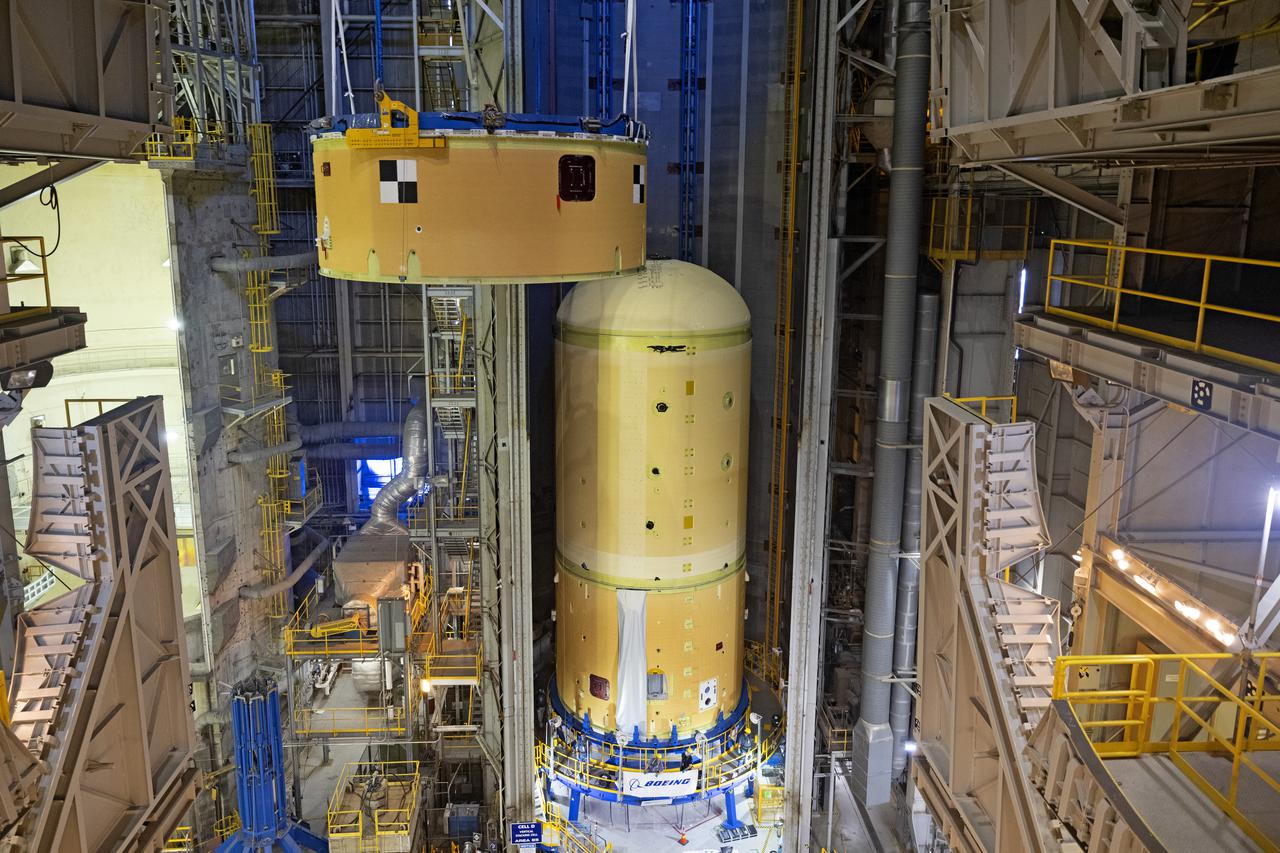
NASA’s Space Launch System (SLS) team fully stacked three hardware elements together May 24 to form the top of the rocket’s core stage for the Artemis II mission. NASA and core stage prime contractor Boeing connected the forward skirt with the liquid oxygen tank and intertank flight hardware inside an assembly area at NASA’s Michoud Assembly Facility in New Orleans. Teams had previously stacked the liquid oxygen tank and intertank on April 28. The joining of the three structures together is the first major assembly of core stage hardware for Artemis II, the first crewed Artemis mission and second flight of the SLS rocket. Next, technicians will work to complete outfitting and integrating the systems within the upper structure. At 66 feet tall, the upper part of the stage is just a fraction of the entire core stage. The fully-assembled, 212-foot-tall rocket stage consists of five hardware elements, including two liquid propellant tanks and four RS-25 engines. The liquid oxygen tank in the upper portion of the stage will hold 196,000 gallons of liquid oxygen cooled to minus 297 degrees Fahrenheit. Meanwhile, the forward skirt and intertank house avionics, flight computer, and electronic systems for the rocket stage. Together, the core stage and its four RS-25 engines will provide more than 2 million pounds of thrust to help send Artemis II astronauts beyond Earth’s orbit to lunar orbit. With Artemis, NASA will land the first woman and the first person of color on the Moon and establish sustainable exploration in preparation for missions to Mars. SLS and NASA’s Orion spacecraft, along with the commercial human landing system and the Gateway in orbit around the Moon, are NASA’s backbone for deep space exploration. SLS is the only rocket that can send Orion, astronauts, and supplies to the Moon in a single mission. Image credit: NASA/Michael DeMocker
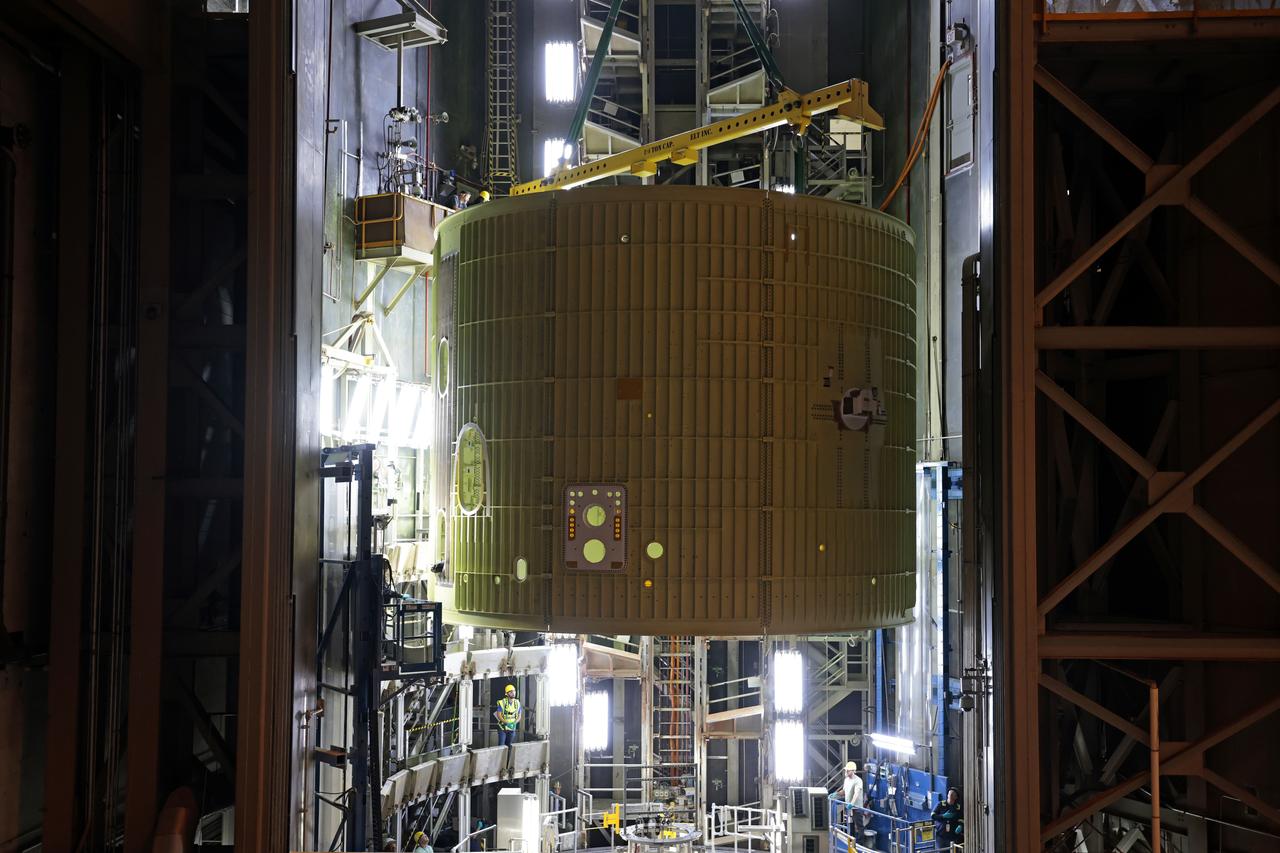
Technicians at NASA’s Michoud Assembly Facility move the intertank of NASA’s Space Launch System rocket for Artemis III to Cell G on October 26, 2022 to await application of the thermal protection system. Thermal protection systems protect space vehicles from aerodynamic heating during entry to planet atmosphere and re-entry to earth atmosphere. The intertank lays between the liquid hydrogen tank and liquid oxygen tank. Together with the engine section and the forward skirt, they comprise the SLS core stage. The liquid hydrogen tank and liquid oxygen tank hold 733,000 gallons of propellant to power the stage’s four RS-25 engines needed for liftoff and Artemis missions to the Moon and future missions to Mars. Image credit: NASA/Michael DeMocker
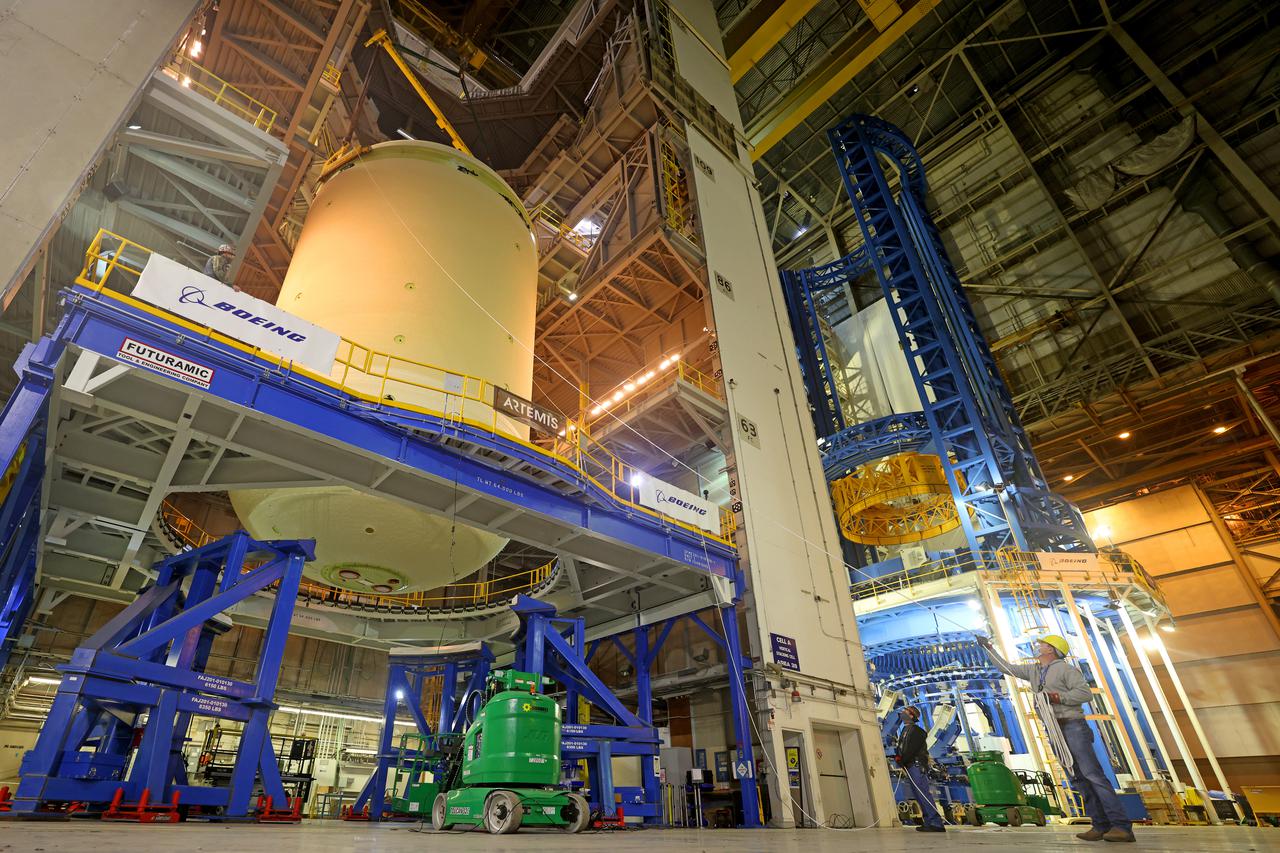
This image highlights the liquid oxygen tank, which will be used on the core stage of NASA’ Space Launch System rocket for Artemis II, the first crewed mission of NASA’s Artemis program, at NASA’s Michoud Assembly Facility. The SLS core stage is made up of five unique elements: the forward skirt, liquid oxygen tank, intertank, liquid hydrogen tank, and the engine section. The forward skirt houses flight computers, cameras, and avionics systems. The liquid oxygen tank holds 196,000 gallons of liquid oxygen cooled to minus 297 degrees Fahrenheit. The LOX hardware sits between the core stage’s forward skirt and the intertank. Along with the liquid hydrogen tank, it will provide fuel to the four RS-25 engines at the bottom of the core stage to produce more than two million pounds of thrust to launch NASA’s Artemis missions to the Moon. Together with its four RS-25 engines, the rocket’s massive 212-foot-tall core stage — the largest stage NASA has ever built — and its twin solid rocket boosters will produce 8.8 million pounds of thrust to send NASA’s Orion spacecraft, astronauts and supplies beyond Earth’s orbit to the Moon and, ultimately, Mars. Offering more payload mass, volume capability and energy to speed missions through space, the SLS rocket, along with NASA’s Gateway in lunar orbit, the Human Landing System, and Orion spacecraft, is part of NASA’s backbone for deep space exploration and the Artemis lunar program. No other rocket can send astronauts in Orion around the Moon in a single mission. Image credit: NASA/Michael DeMocker
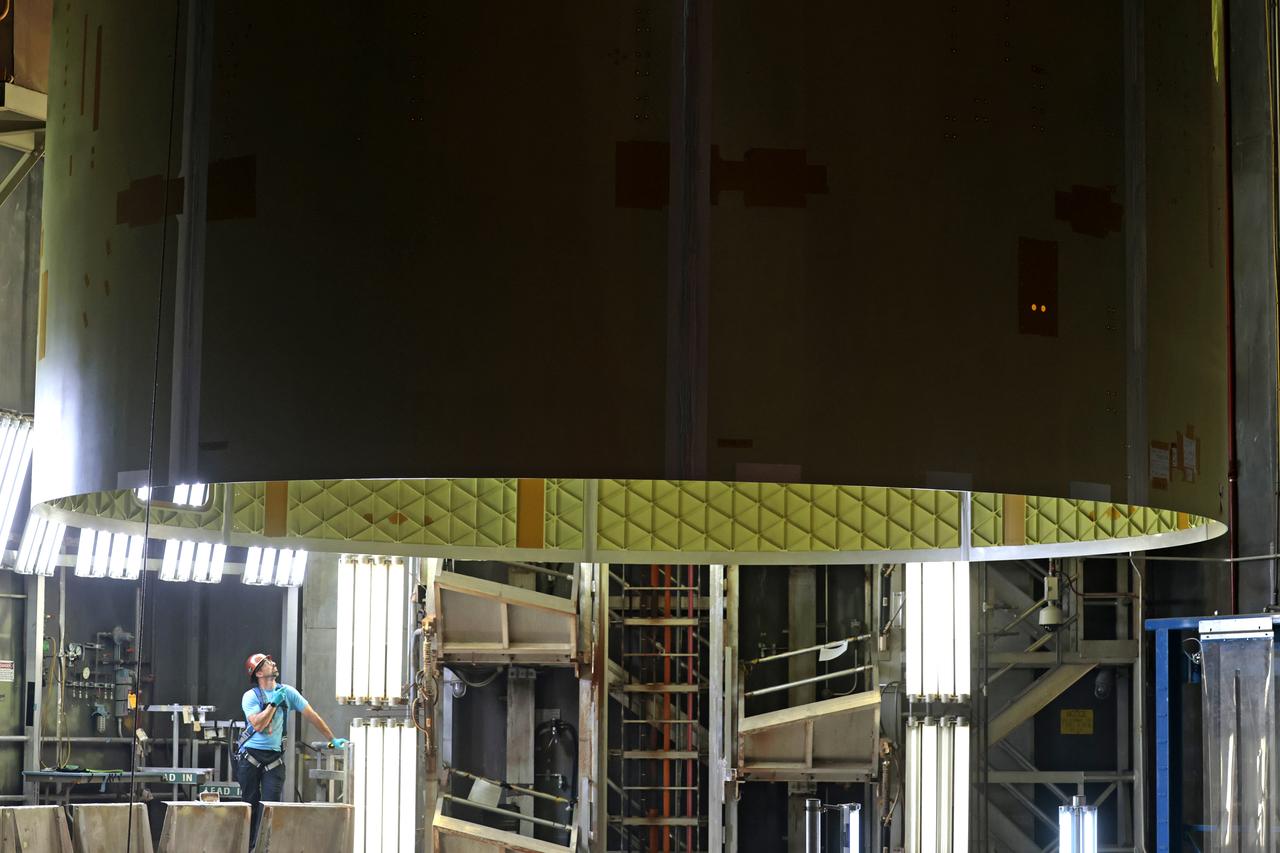
Technicians at NASA’s Michoud Assembly Facility move the engine section of NASA’s Space Launch System rocket for Artemis IV from the Vertical Assembly Building to Cell G for weld priming. This hardware is the first large piece manufactured for the Artemis IV mission and makes up the lowest portion of the 212-foot-tall core stage. When complete, the engine section will house the four RS-25 engines and include vital systems for mounting, controlling and delivering fuel from the propellant tanks to the rocket’s engines. Together with its four RS-25 engines and its twin solid rocket boosters, it will produce 8.8 million pounds of thrust to send NASA’s Orion spacecraft, astronauts, and supplies beyond Earth’s orbit to the Moon and, ultimately, Mars. Offering more payload mass, volume capability, and energy to speed missions through space, the SLS rocket, along with NASA’s Gateway in lunar orbit, the Human Landing System, and Orion spacecraft, is part of NASA’s backbone for deep space exploration and the Artemis lunar program. No other rocket is capable of carrying astronauts in Orion around the Moon in a single mission. Image credit: NASA/Michael DeMocker
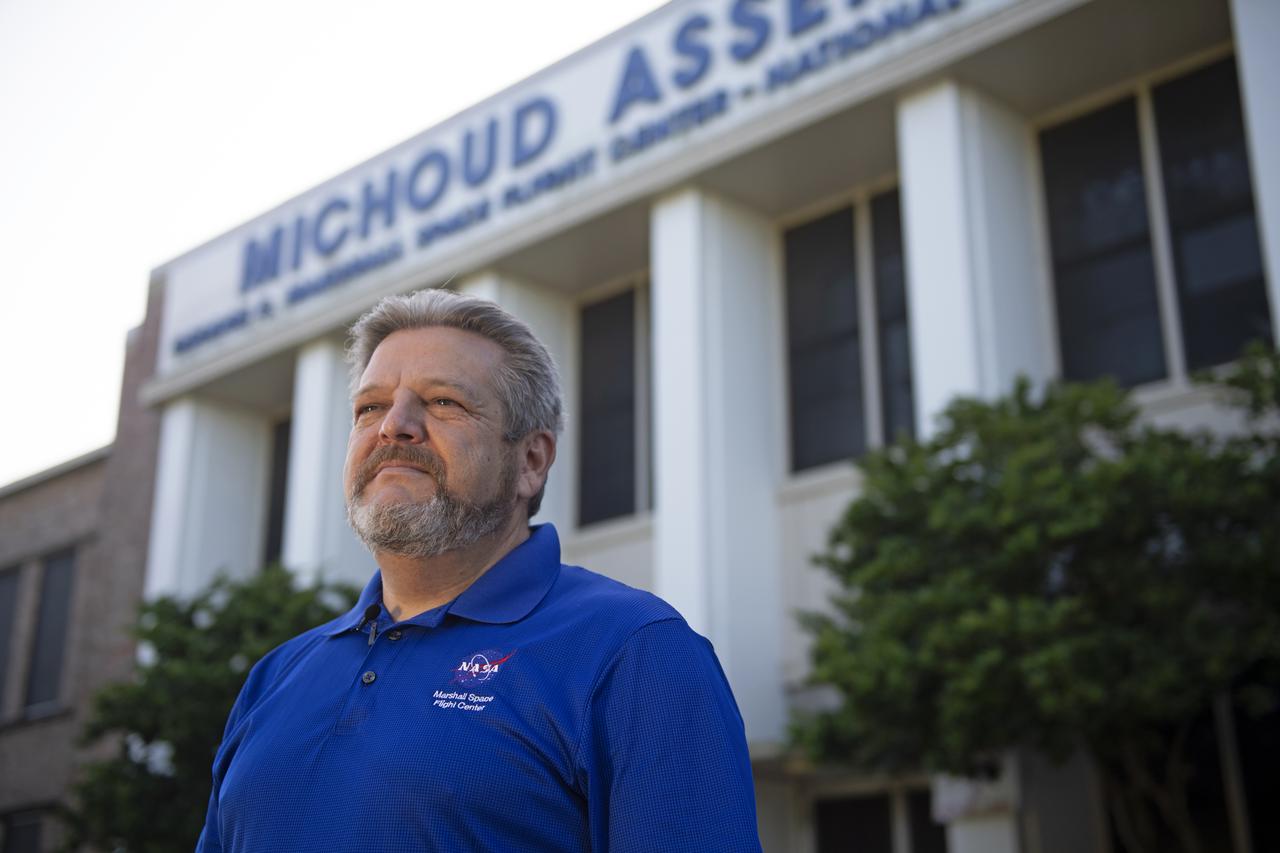
MAF Director Robert Champion stands in front of the Michoud Assembly Facility in New Orleans, Louisiana – America’s Rocket Factory.

This image shows technicians and engineers move and connect the liquid oxygen tank (LOX) to the intertank as they continue the process of the forward join on the core stage of NASA’s Space Launch System rocket for Artemis II, the first crewed mission of NASA’s Artemis program at NASA’s Michoud Assembly Facility. The forward join connects the forward skirt, the liquid oxygen tank (LOX) and the intertank structures to form the top part of the SLS rocket’s core stage. Now, NASA and Boeing, the SLS prime contractor, will continue to integrate various systems inside the forward part of the core stage and prepare for structural joining of the liquid hydrogen tank and engine section to form the bottom of the stage. Together with its four RS-25 engines, the rocket’s massive 212-foot-tall core stage — the largest stage NASA has ever built — and its twin solid rocket boosters will produce 8.8 million pounds of thrust to send NASA’s Orion spacecraft, astronauts and supplies beyond Earth’s orbit to the Moon and, ultimately, Mars. Offering more payload mass, volume capability and energy to speed missions through space, the SLS rocket, along with NASA’s Gateway in lunar orbit, the Human Landing System, and Orion spacecraft, is part of NASA’s backbone for deep space exploration and the Artemis lunar program. No other rocket is capable of carrying astronauts in Orion around the Moon in a single mission. Image credit: NASA/Michael DeMocker
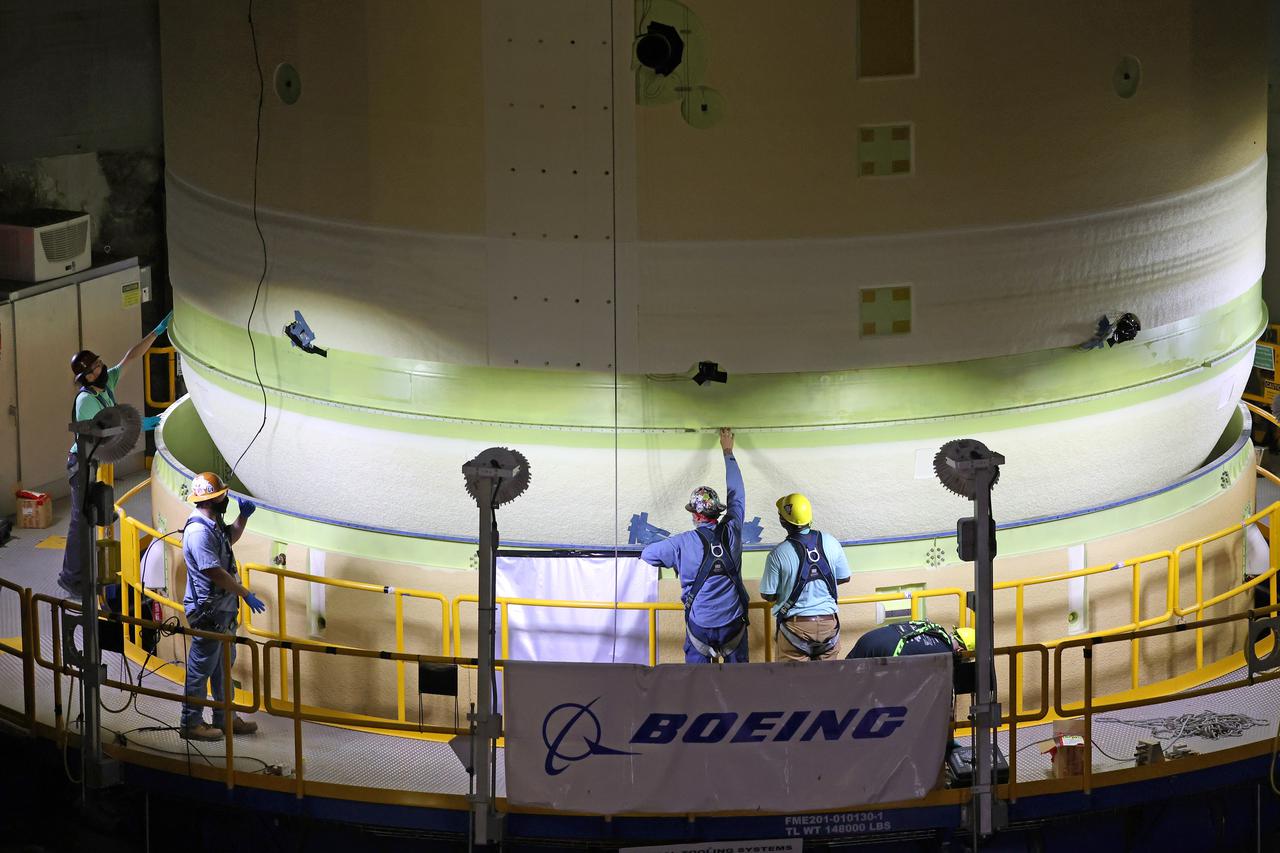
This image shows technicians and engineers move and connect the liquid oxygen tank (LOX) to the intertank as they continue the process of the forward join on the core stage of NASA’s Space Launch System rocket for Artemis II, the first crewed mission of NASA’s Artemis program at NASA’s Michoud Assembly Facility. The forward join connects the forward skirt, the liquid oxygen tank (LOX) and the intertank structures to form the top part of the SLS rocket’s core stage. Now, NASA and Boeing, the SLS prime contractor, will continue to integrate various systems inside the forward part of the core stage and prepare for structural joining of the liquid hydrogen tank and engine section to form the bottom of the stage. Together with its four RS-25 engines, the rocket’s massive 212-foot-tall core stage — the largest stage NASA has ever built — and its twin solid rocket boosters will produce 8.8 million pounds of thrust to send NASA’s Orion spacecraft, astronauts and supplies beyond Earth’s orbit to the Moon and, ultimately, Mars. Offering more payload mass, volume capability and energy to speed missions through space, the SLS rocket, along with NASA’s Gateway in lunar orbit, the Human Landing System, and Orion spacecraft, is part of NASA’s backbone for deep space exploration and the Artemis lunar program. No other rocket is capable of carrying astronauts in Orion around the Moon in a single mission. Image credit: NASA/Michael DeMocker
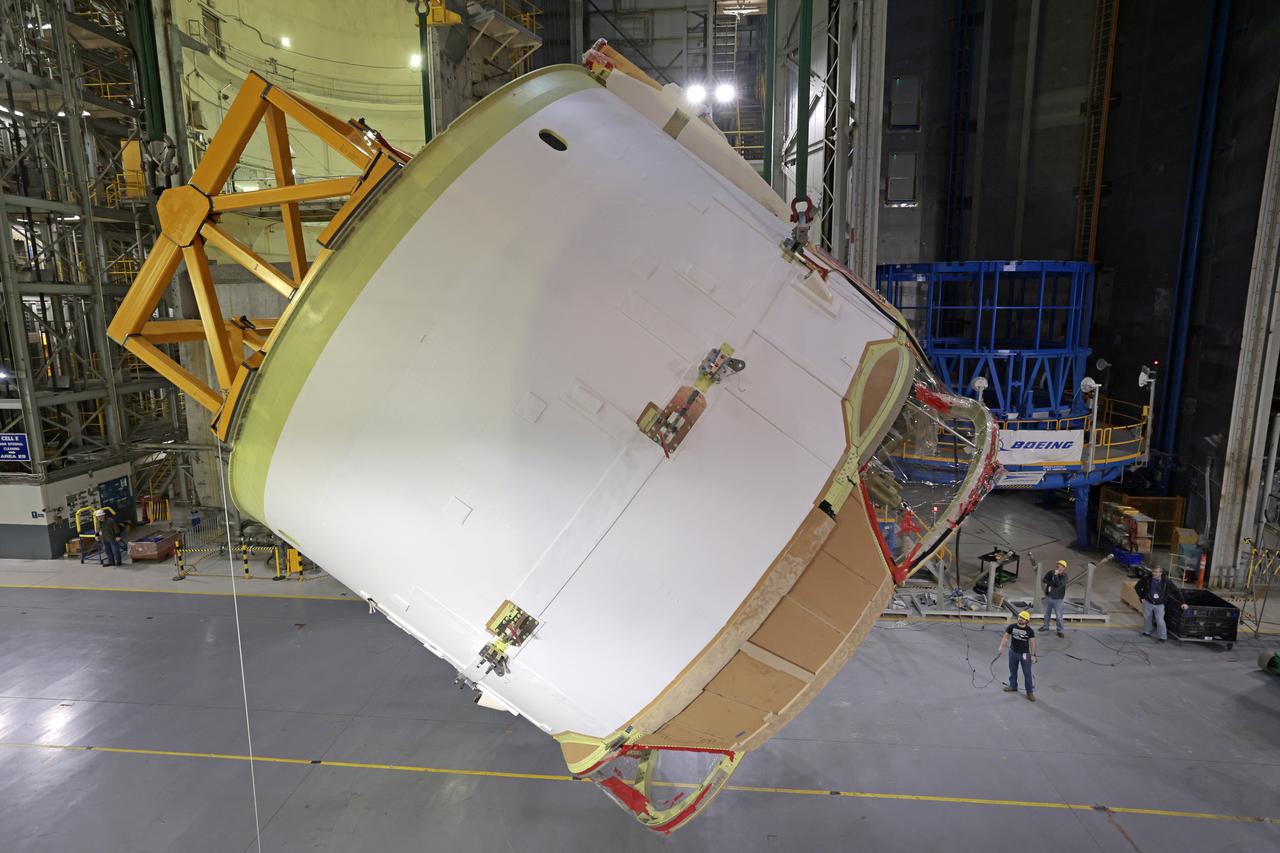
Technicians at NASA’s Michoud Assembly Facility in New Orleans flipped the engine section of NASA’s Space Launch System rocket for Artemis II from a vertical to a horizontal position Feb. 11. The flip, also known as a breakover, is in preparation for the final assembly and integration into the core stage for the second SLS rocket. The engine section is the bottom-most portion of the 212-foot-tall core stage and is one of the most complex and intricate portions of the rocket that will help power the first crewed Artemis mission to the Moon. It is the last of five elements that is needed to join the stage as one structure. In addition to its miles of cabling and hundreds of sensors, the engine section is a crucial attachment point for the four RS-25 engines and two solid rocket boosters that produce a combined 8.8 million pounds of thrust at liftoff and flight. Next, teams will move the engine section into the final assembly area where they will complete the join. After the join is complete, teams will begin to add each of the four RS-25 engines. The completely assembled stage with its four RS-25 engines will be shipped to NASA’s Kennedy Space Center in Florida later this year. The SLS rocket is the only rocket capable of carrying astronauts in Orion around the Moon in a single mission. Image credit: NASA/Michael DeMocker
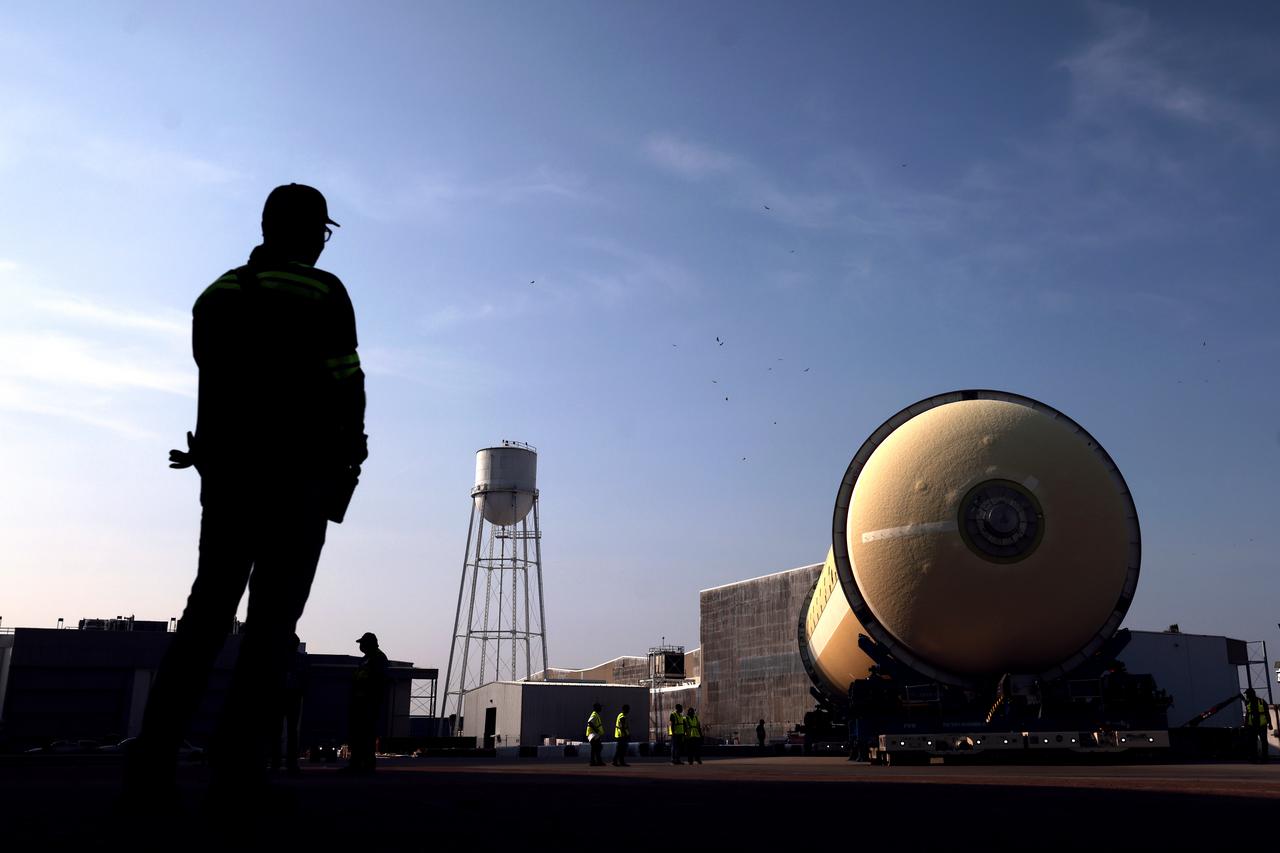
This image highlights the liquid hydrogen tank that will be used on the core stage of NASA’s Space Launch System rocket for Artemis II, the first crewed mission of NASA’s Artemis program. The tank is being built at NASA’s Michoud Assembly Facility in New Orleans. The SLS core stage is made up of five unique elements: the forward skirt, liquid oxygen tank, intertank, liquid hydrogen tank, and the engine section. The liquid hydrogen tank holds 537,000 gallons of liquid hydrogen cooled to minus 423 degrees Fahrenheit and sits between the core stage’s intertank and engine section. The liquid hydrogen hardware, along with the liquid oxygen tank, will provide propellant to the four RS-25 engines at the bottom of the cores stage to produce more than two million pounds of thrust to launch NASA’s Artemis missions to the Moon. Together with its four RS-25 engines, the rocket’s massive 212-foot-tall core stage — the largest stage NASA has ever built — and its twin solid rocket boosters will produce 8.8 million pounds of thrust to send NASA’s Orion spacecraft, astronauts and supplies beyond Earth’s orbit to the Moon and, ultimately, Mars. Offering more payload mass, volume capability and energy to speed missions through space, the SLS rocket, along with NASA’s Gateway in lunar orbit, the human landing system, and Orion spacecraft, is part of NASA’s backbone for deep space exploration and the Artemis lunar program. No other rocket can send astronauts in Orion around the Moon in a single mission. Image credit: NASA/Michael DeMocker
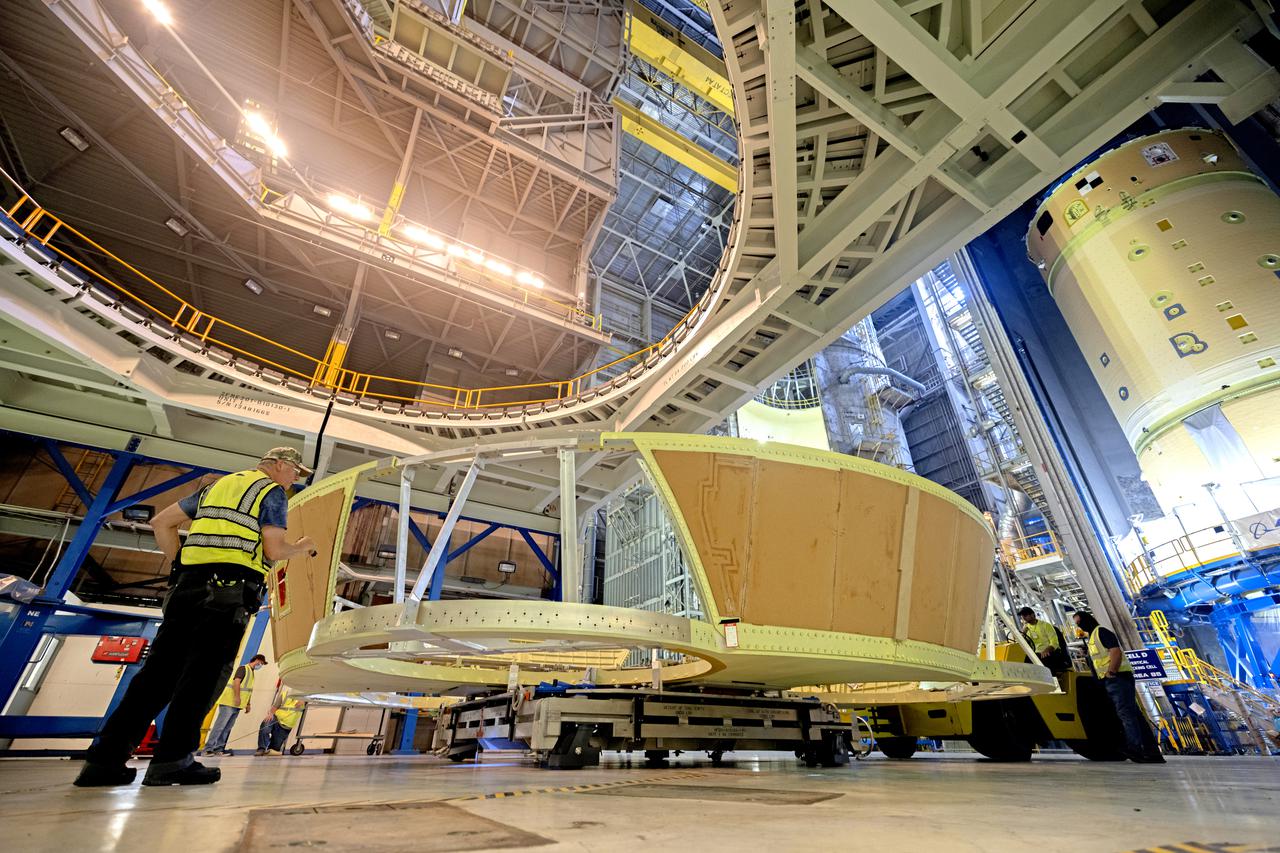
Technicians and engineers move the boat-tail structure for the core stage of NASA’s Space Launch System’s (SLS) rocket for Artemis II, the first crewed mission of NASA’s Artemis program at NASA’s Michoud Assembly Facility. The boat-tail, a fairing-like cover that attaches to the engine section on the bottom of the core stage, protects and covers most of the four RS-25 engines’ critical systems. Together with its four RS-25 engines, the rocket’s massive 212-foot-tall core stage — the largest stage NASA has ever built — and its twin solid rocket boosters will produce 8.8 million pounds of thrust to send NASA’s Orion spacecraft, astronauts and supplies beyond Earth’s orbit to the Moon and, ultimately, Mars. Offering more payload mass, volume capability and energy to speed missions through space, the SLS rocket, along with NASA’s Gateway in lunar orbit, the Human Landing System, and Orion spacecraft, is part of NASA’s backbone for deep space exploration and the Artemis lunar program. No other rocket is capable of carrying astronauts in Orion around the Moon in a single mission. Photographed on Wednesday, June 9, 2021. Image credit: NASA/Michael DeMocker
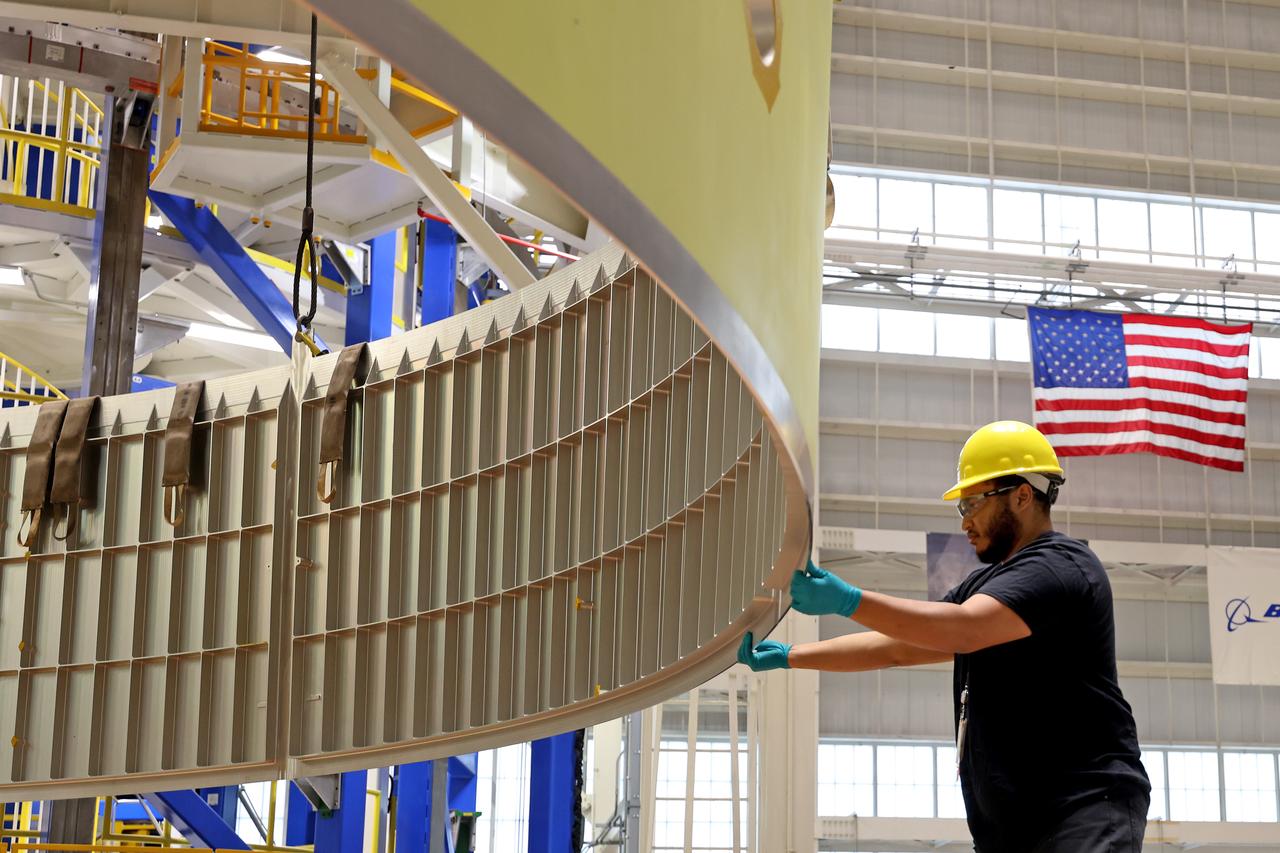
These images and videos show technicians at NASA’s Michoud Assembly Facility in New Orleans examining and lifting midbody barrels for the Exploration Upper Stage (EUS) structural test article of the SLS (Space Launch System) rocket in May 2023. The barrel sections make up the body, or main structure, of the future in-space propulsion stage for the mega rocket. The Exploration Upper Stage will be used on the second configuration of the SLS rocket, known as Block 1B, and will provide in-space propulsion to send astronauts in NASA’s Orion spacecraft and heavy cargo on a precise trajectory to the Moon. Beginning with Artemis IV, EUS will replace the interim cryogenic propulsion stage for the Block 1 configuration of SLS. It has larger propellant tanks and four RL10 engines, enabling SLS to launch 40% more cargo to the Moon along with crew. EUS flight hardware is in early production at Michoud. Crews with NASA and Boeing, the lead contractor for the SLS core stage and EUS, are also manufacturing the EUS structural test article. The test hardware is structurally identical to the flight version and will be used during a series of strenuous testing that simulates the forces the rocket will experience during launch and flight and verify its structural integrity. NASA is working to land the first woman and first person of color on the Moon under Artemis. SLS is part of NASA’s backbone for deep space exploration, along with Orion and the Gateway in orbit around the Moon. SLS is the only rocket that can send Orion, astronauts, and supplies to the Moon in a single mission.
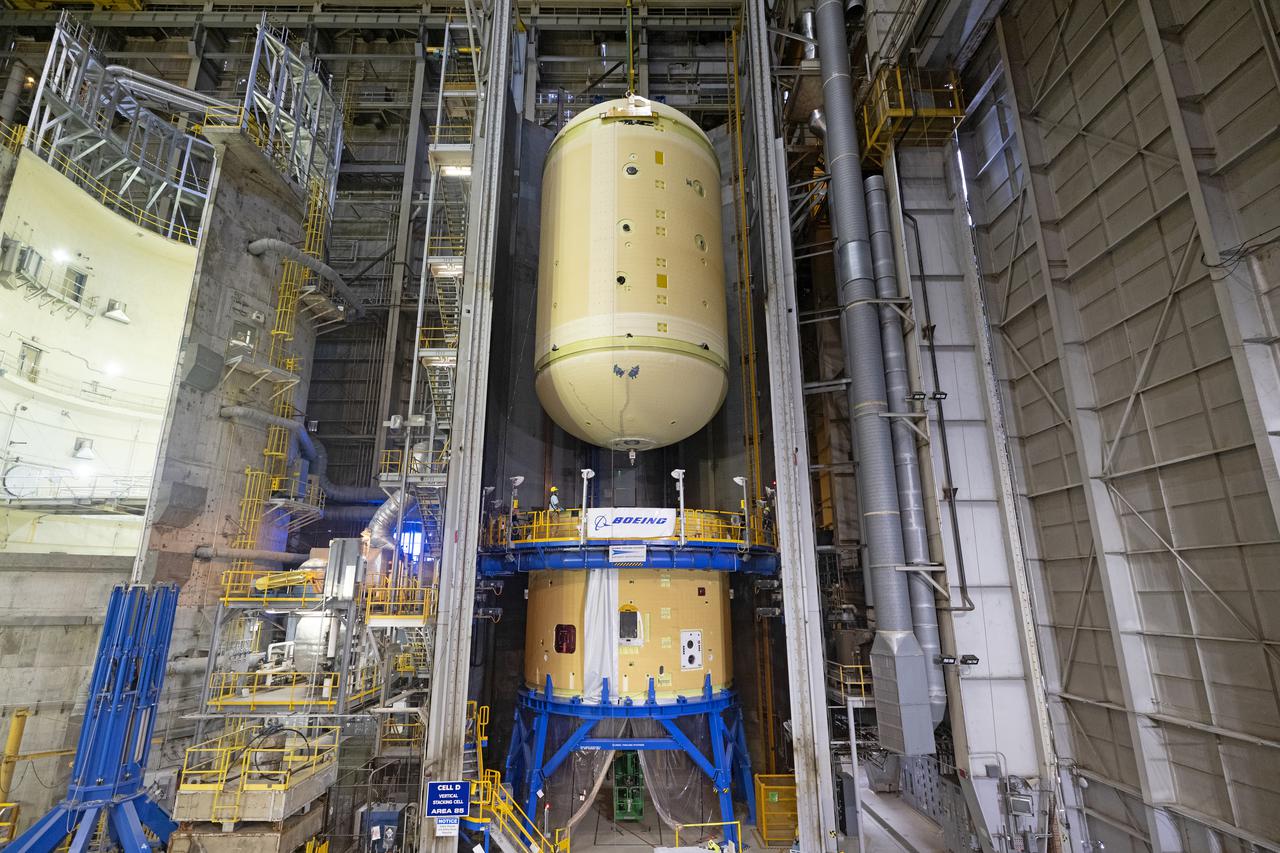
This image shows technicians and engineers move and connect the liquid oxygen tank (LOX) to the intertank as they continue the process of the forward join on the core stage of NASA’s Space Launch System rocket for Artemis II, the first crewed mission of NASA’s Artemis program at NASA’s Michoud Assembly Facility. The forward join connects the forward skirt, the liquid oxygen tank (LOX) and the intertank structures to form the top part of the SLS rocket’s core stage. Now, NASA and Boeing, the SLS prime contractor, will continue to integrate various systems inside the forward part of the core stage and prepare for structural joining of the liquid hydrogen tank and engine section to form the bottom of the stage. Together with its four RS-25 engines, the rocket’s massive 212-foot-tall core stage — the largest stage NASA has ever built — and its twin solid rocket boosters will produce 8.8 million pounds of thrust to send NASA’s Orion spacecraft, astronauts and supplies beyond Earth’s orbit to the Moon and, ultimately, Mars. Offering more payload mass, volume capability and energy to speed missions through space, the SLS rocket, along with NASA’s Gateway in lunar orbit, the Human Landing System, and Orion spacecraft, is part of NASA’s backbone for deep space exploration and the Artemis lunar program. No other rocket is capable of carrying astronauts in Orion around the Moon in a single mission. Image credit: NASA/Michael DeMocker
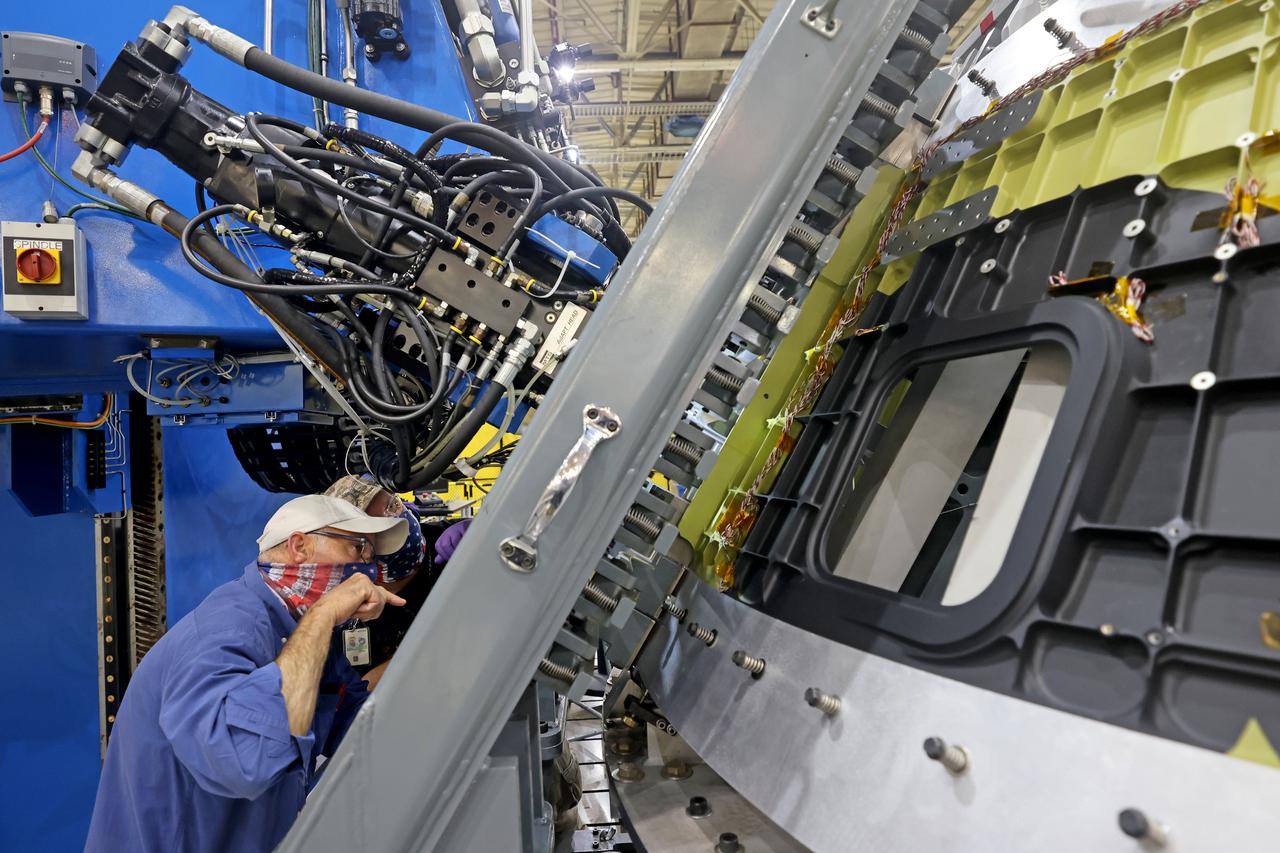
At NASA’s Michoud Assembly Facility in New Orleans, technicians from Orion prime contractor Lockheed Martin have welded together three cone-shaped panels on Orion’s crew module for the Artemis III mission that will land the first woman and next man on the Moon. The crew module’s primary structure, the pressure vessel, is comprised of seven machined aluminum alloy pieces that are welded together through a weld process that produces a strong, air-tight habitable space for astronauts during the mission. The pressure vessel is designed to withstand the harsh and demanding environment of deep space, and is the core structure upon which all the other elements of Orion’s crew module are integrated. Infographic showing the seven pieces of Orion's underlying structure With welding complete on the crew module cone panels – one of which contains windows providing astronauts views of the Moon and Earth – work will begin joining the forward bulkhead to the tunnel to create the top of the spacecraft, followed by the barrel and aft bulkhead join to form the bottom of Orion. Last, the forward bulkhead will be welded to the top of the panels and, for the seventh and closeout weld, the bottom of the cone panels will be joined to the barrel to complete the pressure vessel. Once welding of the Artemis III crew module primary structure is complete, it will be shipped to NASA’s Kennedy Space Center in Florida where it will undergo further assembly beginning this fall. Orion, the Space Launch System, and Exploration Ground Systems programs are foundational elements of the Artemis program. Artemis I will be the first integrated flight test of Orion and SLS and is targeted to launch later this year. Artemis II will follow and is the first crewed mission, taking humans farther into space than ever before. Image credit: NASA/Michael DeMocker
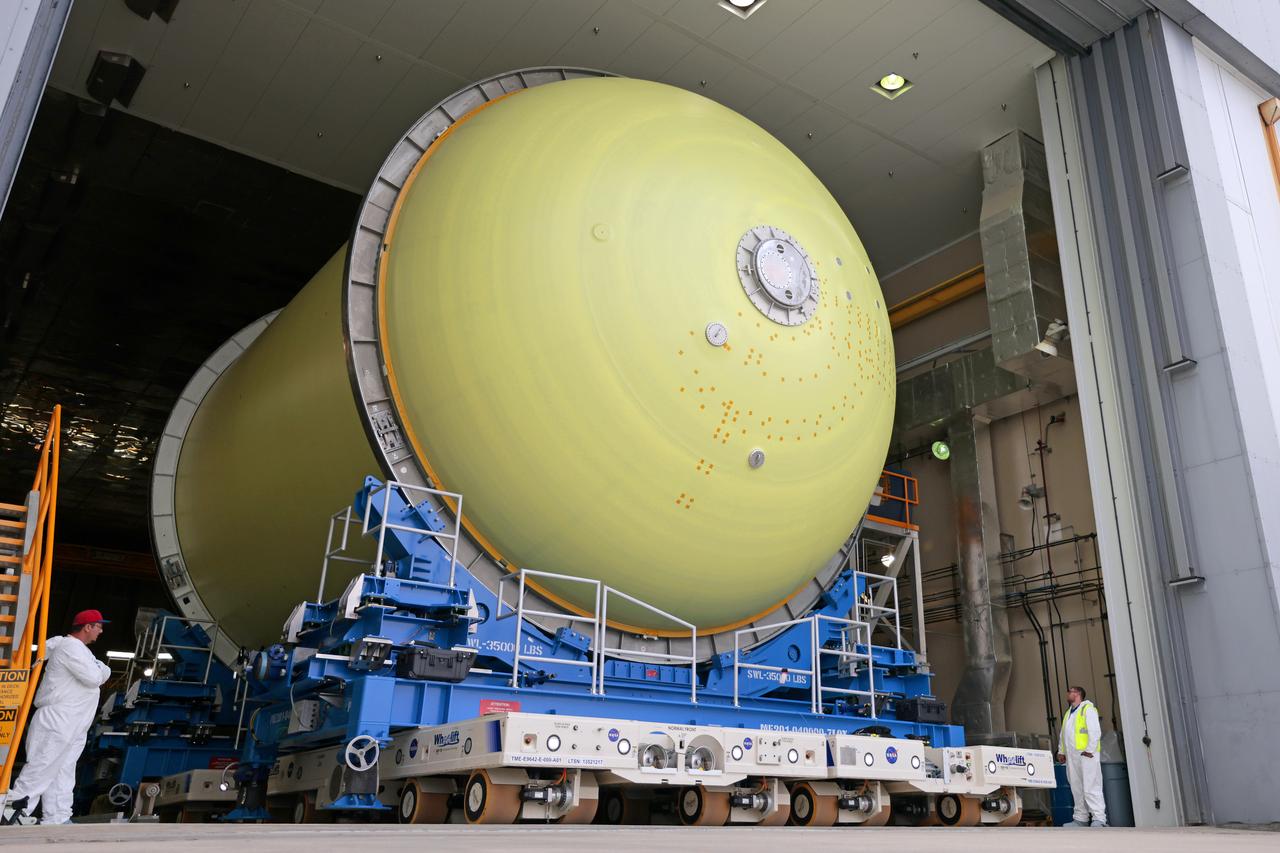
Move Crews at NASA’s Michoud Assembly Facility in New Orleans transport a liquid oxygen tank from a detached production building to the main 43-acre rocket factory on Mar. 26. Teams recently completed primer application on the tank, which will be used on the core stage of the agency’s SLS (Space Launch System) rocket for its Artemis III mission. The tank will now undergo electrical installations before moving on to the next phase of production. The propellant tank is one of five major elements that make up the 212-foot-tall rocket stage. The core stage, along with its four RS-25 engines, produce more than two million pounds of thrust to help launch NASA’s Orion spacecraft, astronauts, and supplies beyond Earth’s orbit and to the lunar surface for Artemis.
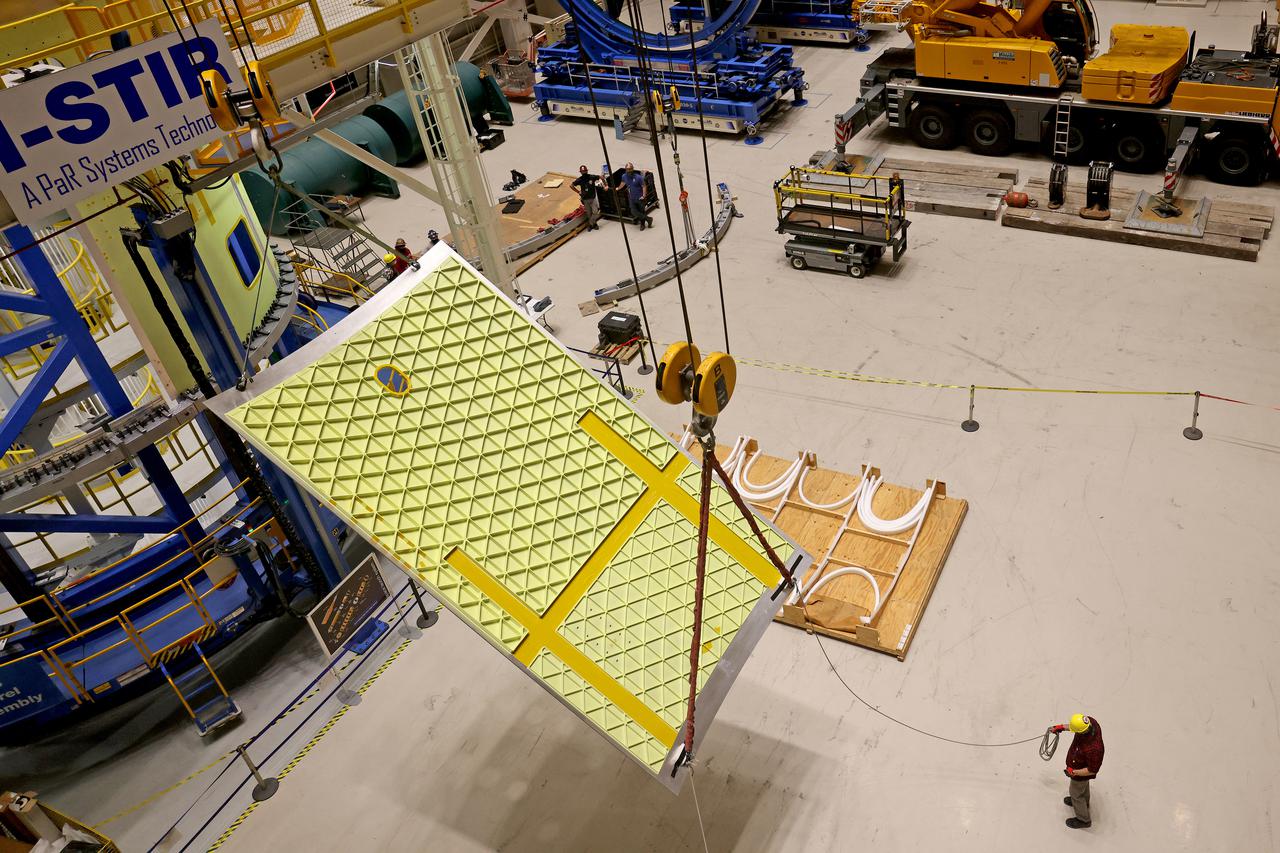
Technicians at NASA’s Michoud Assembly Facility move a piece of the engine section of NASA’s Space Launch System rocket for Artemis III in preparation for its next step in production. This hardware is the first large piece manufactured for the Artemis III mission and makes up the lowest portion of the 212-foot-tall core stage. When complete, the engine section will house the four RS-25 engines and include vital systems for mounting, controlling and delivering fuel from the propellant tanks to the rocket’s engines. Together with its four RS-25 engines and its twin solid rocket boosters, it will produce 8.8 million pounds of thrust to send NASA’s Orion spacecraft, astronauts, and supplies beyond Earth’s orbit to the Moon and, ultimately, Mars. Offering more payload mass, volume capability, and energy to speed missions through space, the SLS rocket, along with NASA’s Gateway in lunar orbit, the Human Landing System, and Orion spacecraft, is part of NASA’s backbone for deep space exploration and the Artemis lunar program. No other rocket is capable of carrying astronauts in Orion around the Moon in a single mission.
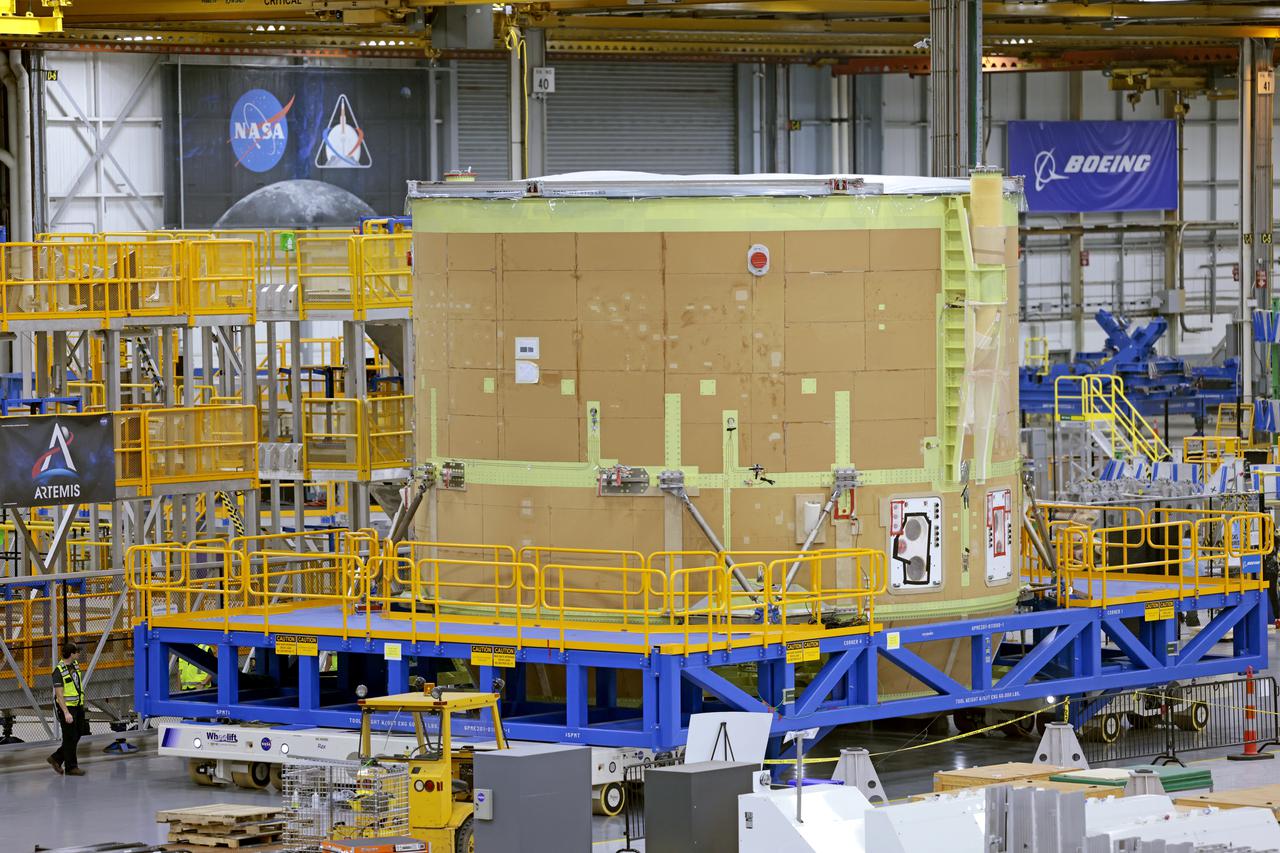
Technicians at NASA’s Michoud Assembly Facility have joined the engine and boat-tail sections of NASA’s Space Launch System rocket for Artemis II in preparation for its next step in production. When complete, the engine section will house the four RS-25 engines and include vital systems for mounting, controlling and delivering fuel from the propellant tanks to the rocket’s engines. The boat-tail is designed to protect the bottom end of the core stage and the RS-25 engines and was joined with the engine section to comprise the lowest portion of the 212-foot-tall core stage. Together with its four RS-25 engines and its twin solid rocket boosters, it will produce 8.8 million pounds of thrust to send NASA’s Orion spacecraft, astronauts, and supplies beyond Earth’s orbit to the Moon and, ultimately, Mars. Offering more payload mass, volume capability, and energy to speed missions through space, the SLS rocket, along with NASA’s Gateway in lunar orbit, the Human Landing System, and Orion spacecraft, is part of NASA’s backbone for deep space exploration and the Artemis lunar program. No other rocket is capable of carrying astronauts in Orion around the Moon in a single mission.
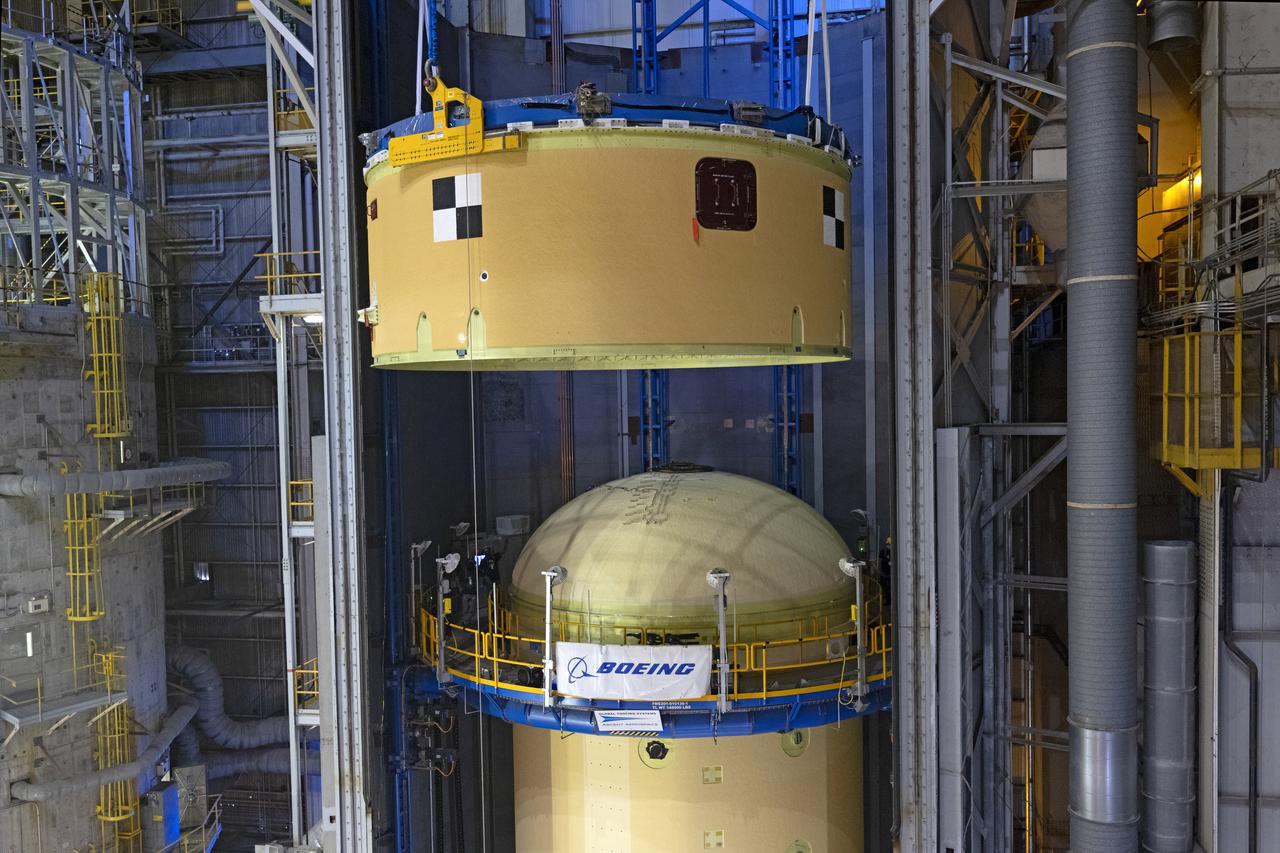
NASA’s Space Launch System (SLS) team fully stacked three hardware elements together May 24 to form the top of the rocket’s core stage for the Artemis II mission. NASA and core stage prime contractor Boeing connected the forward skirt with the liquid oxygen tank and intertank flight hardware inside an assembly area at NASA’s Michoud Assembly Facility in New Orleans. Teams had previously stacked the liquid oxygen tank and intertank on April 28. The joining of the three structures together is the first major assembly of core stage hardware for Artemis II, the first crewed Artemis mission and second flight of the SLS rocket. Next, technicians will work to complete outfitting and integrating the systems within the upper structure. At 66 feet tall, the upper part of the stage is just a fraction of the entire core stage. The fully-assembled, 212-foot-tall rocket stage consists of five hardware elements, including two liquid propellant tanks and four RS-25 engines. The liquid oxygen tank in the upper portion of the stage will hold 196,000 gallons of liquid oxygen cooled to minus 297 degrees Fahrenheit. Meanwhile, the forward skirt and intertank house avionics, flight computer, and electronic systems for the rocket stage. Together, the core stage and its four RS-25 engines will provide more than 2 million pounds of thrust to help send Artemis II astronauts beyond Earth’s orbit to lunar orbit. With Artemis, NASA will land the first woman and the first person of color on the Moon and establish sustainable exploration in preparation for missions to Mars. SLS and NASA’s Orion spacecraft, along with the commercial human landing system and the Gateway in orbit around the Moon, are NASA’s backbone for deep space exploration. SLS is the only rocket that can send Orion, astronauts, and supplies to the Moon in a single mission. Image credit: NASA/Michael DeMocker
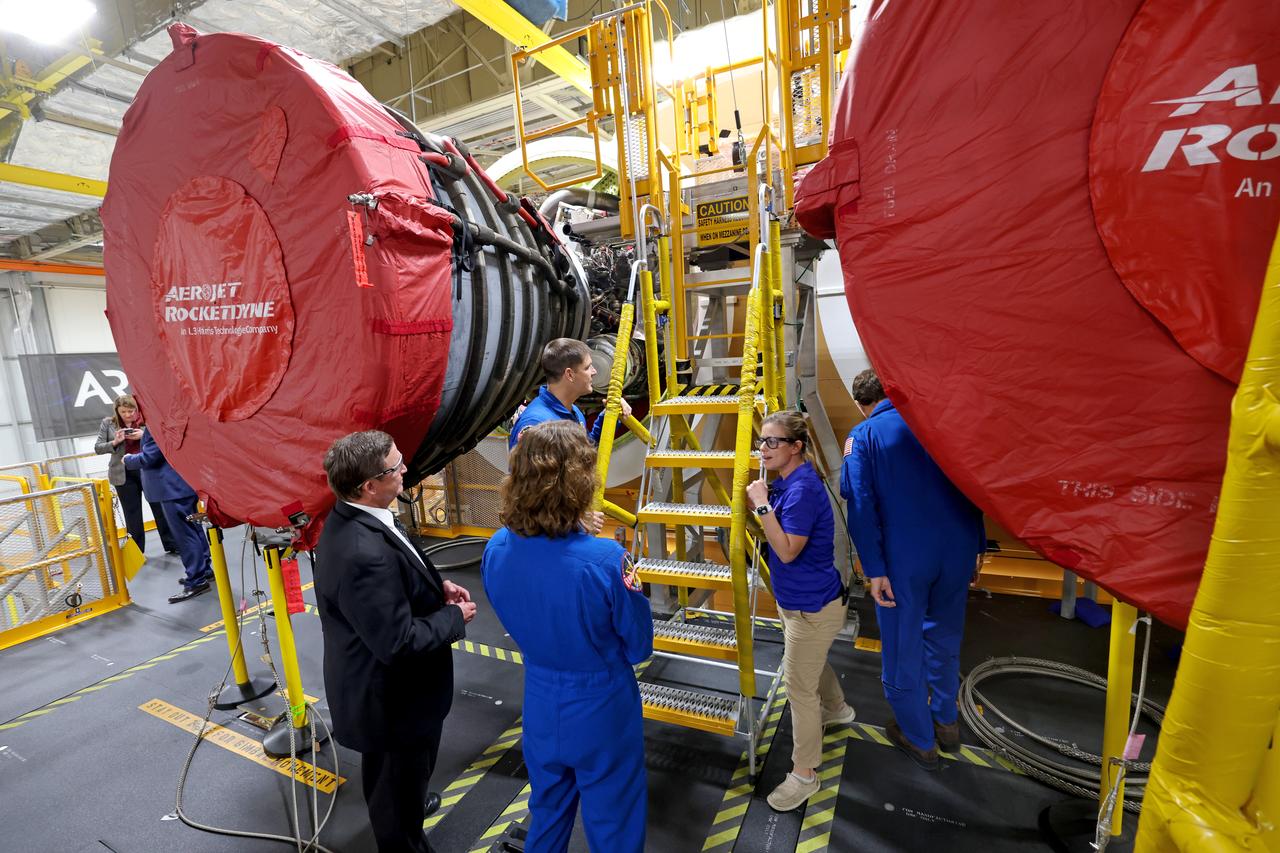
Artemis II NASA astronauts Reid Wiseman and Christina Koch of NASA and CSA (Canadian Space Agency) astronaut Jeremy Hansen view the core stage for the SLS (Space Launch System) rocket at the agency’s Michoud Assembly Facility in New Orleans on Nov. 16. The three astronauts, along with NASA’s Victor Glover, will launch atop the rocket stage to venture around the Moon on Artemis II, the first crewed flight for Artemis. The SLS core stage, towering at 212 feet, is the backbone of the Moon rocket and includes two massive propellant tanks that collectively hold 733,000 gallons of propellant to help power the stage’s four RS-25 engines. NASA is working to land the first woman and first person of color on the Moon under Artemis. SLS is part of NASA’s backbone for deep space exploration, along with Orion and the Gateway in orbit around the Moon. SLS is the only rocket that can send Orion, astronauts, and supplies to the Moon in a single mission.
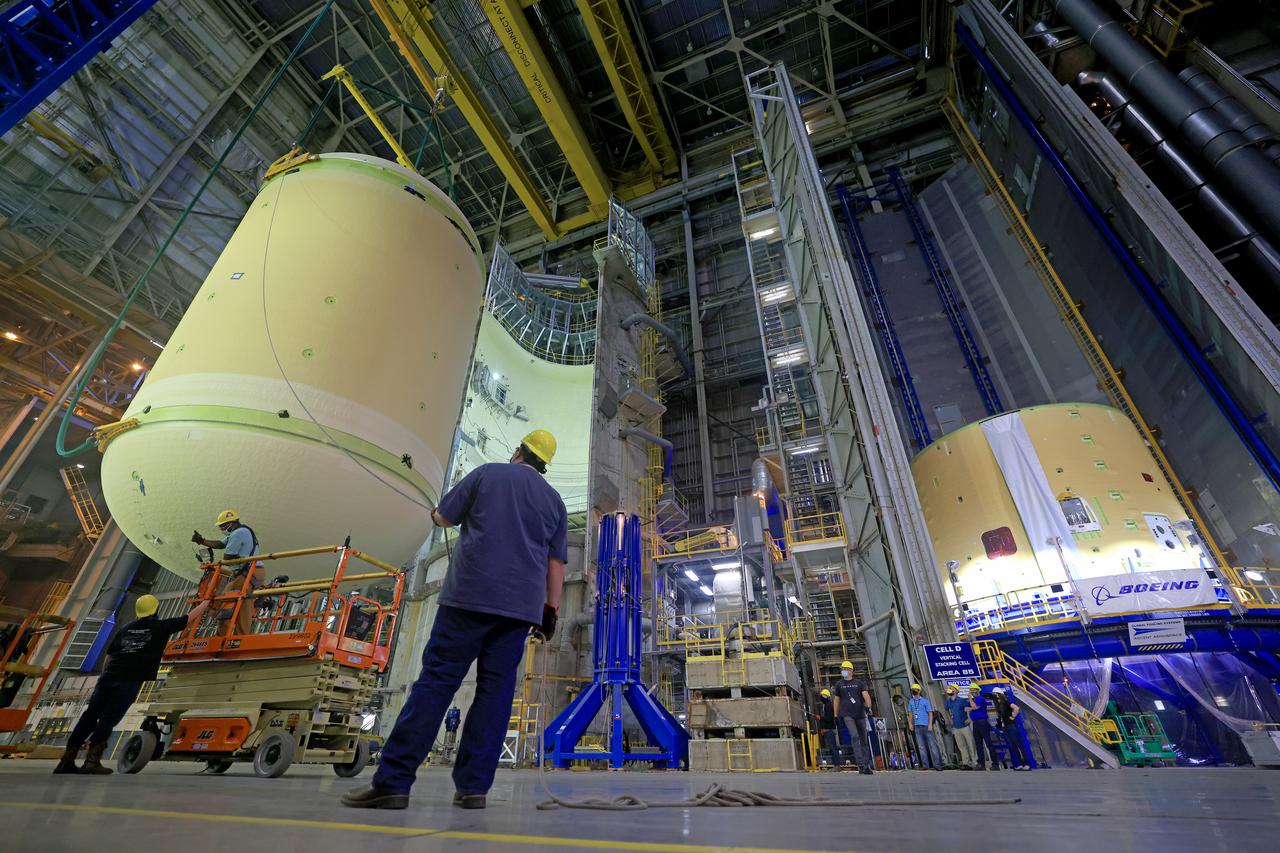
This image shows technicians and engineers move and connect the liquid oxygen tank (LOX) to the intertank as they continue the process of the forward join on the core stage of NASA’s Space Launch System rocket for Artemis II, the first crewed mission of NASA’s Artemis program at NASA’s Michoud Assembly Facility. The forward join connects the forward skirt, the liquid oxygen tank (LOX) and the intertank structures to form the top part of the SLS rocket’s core stage. Now, NASA and Boeing, the SLS prime contractor, will continue to integrate various systems inside the forward part of the core stage and prepare for structural joining of the liquid hydrogen tank and engine section to form the bottom of the stage. Together with its four RS-25 engines, the rocket’s massive 212-foot-tall core stage — the largest stage NASA has ever built — and its twin solid rocket boosters will produce 8.8 million pounds of thrust to send NASA’s Orion spacecraft, astronauts and supplies beyond Earth’s orbit to the Moon and, ultimately, Mars. Offering more payload mass, volume capability and energy to speed missions through space, the SLS rocket, along with NASA’s Gateway in lunar orbit, the Human Landing System, and Orion spacecraft, is part of NASA’s backbone for deep space exploration and the Artemis lunar program. No other rocket is capable of carrying astronauts in Orion around the Moon in a single mission. Image credit: NASA/Michael DeMocker
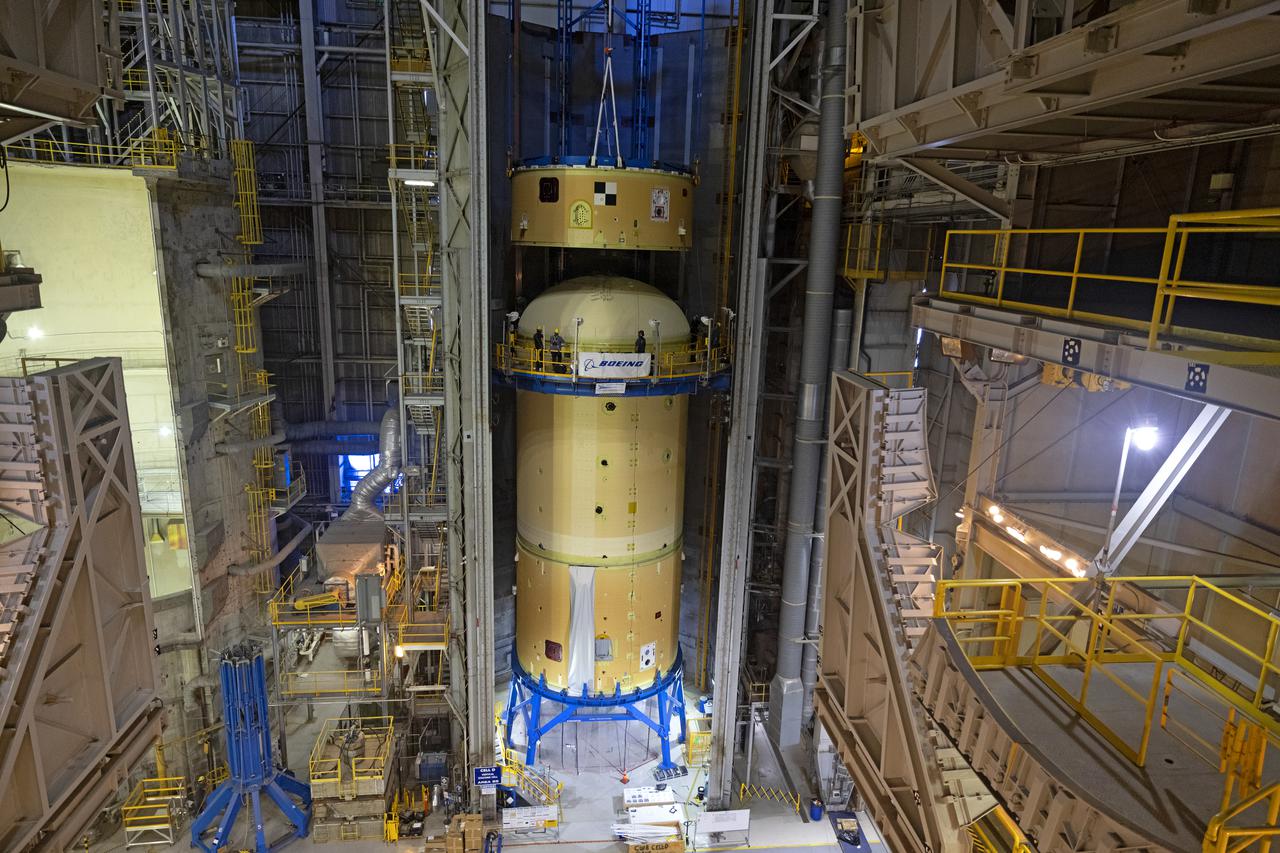
NASA’s Space Launch System (SLS) team fully stacked three hardware elements together May 24 to form the top of the rocket’s core stage for the Artemis II mission. NASA and core stage prime contractor Boeing connected the forward skirt with the liquid oxygen tank and intertank flight hardware inside an assembly area at NASA’s Michoud Assembly Facility in New Orleans. Teams had previously stacked the liquid oxygen tank and intertank on April 28. The joining of the three structures together is the first major assembly of core stage hardware for Artemis II, the first crewed Artemis mission and second flight of the SLS rocket. Next, technicians will work to complete outfitting and integrating the systems within the upper structure. At 66 feet tall, the upper part of the stage is just a fraction of the entire core stage. The fully-assembled, 212-foot-tall rocket stage consists of five hardware elements, including two liquid propellant tanks and four RS-25 engines. The liquid oxygen tank in the upper portion of the stage will hold 196,000 gallons of liquid oxygen cooled to minus 297 degrees Fahrenheit. Meanwhile, the forward skirt and intertank house avionics, flight computer, and electronic systems for the rocket stage. Together, the core stage and its four RS-25 engines will provide more than 2 million pounds of thrust to help send Artemis II astronauts beyond Earth’s orbit to lunar orbit. With Artemis, NASA will land the first woman and the first person of color on the Moon and establish sustainable exploration in preparation for missions to Mars. SLS and NASA’s Orion spacecraft, along with the commercial human landing system and the Gateway in orbit around the Moon, are NASA’s backbone for deep space exploration. SLS is the only rocket that can send Orion, astronauts, and supplies to the Moon in a single mission. Image credit: NASA/Michael DeMocker
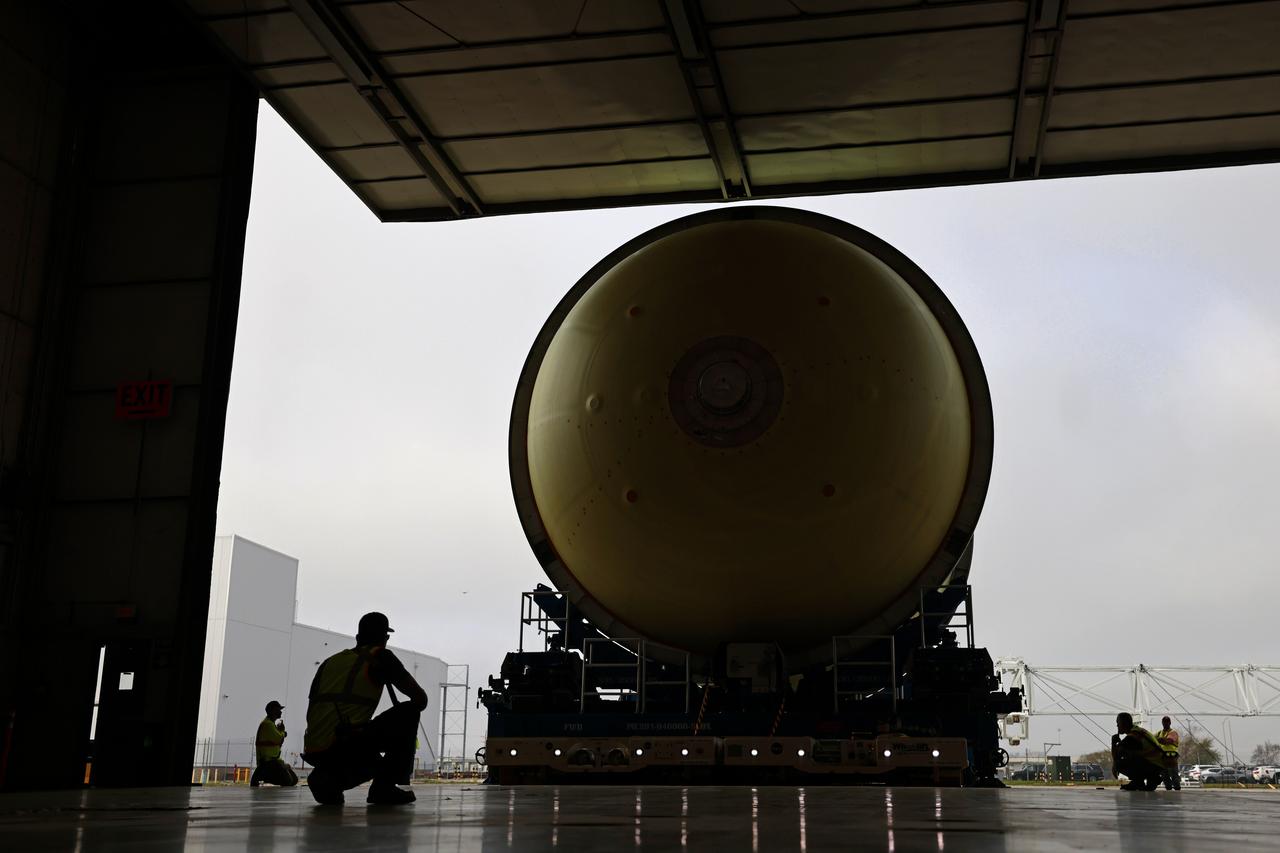
Move Crews at NASA’s Michoud Assembly Facility in New Orleans transport a liquid oxygen tank from a detached production building to the main 43-acre rocket factory on Mar. 26. Teams recently completed primer application on the tank, which will be used on the core stage of the agency’s SLS (Space Launch System) rocket for its Artemis III mission. The tank will now undergo electrical installations before moving on to the next phase of production. The propellant tank is one of five major elements that make up the 212-foot-tall rocket stage. The core stage, along with its four RS-25 engines, produce more than two million pounds of thrust to help launch NASA’s Orion spacecraft, astronauts, and supplies beyond Earth’s orbit and to the lunar surface for Artemis.
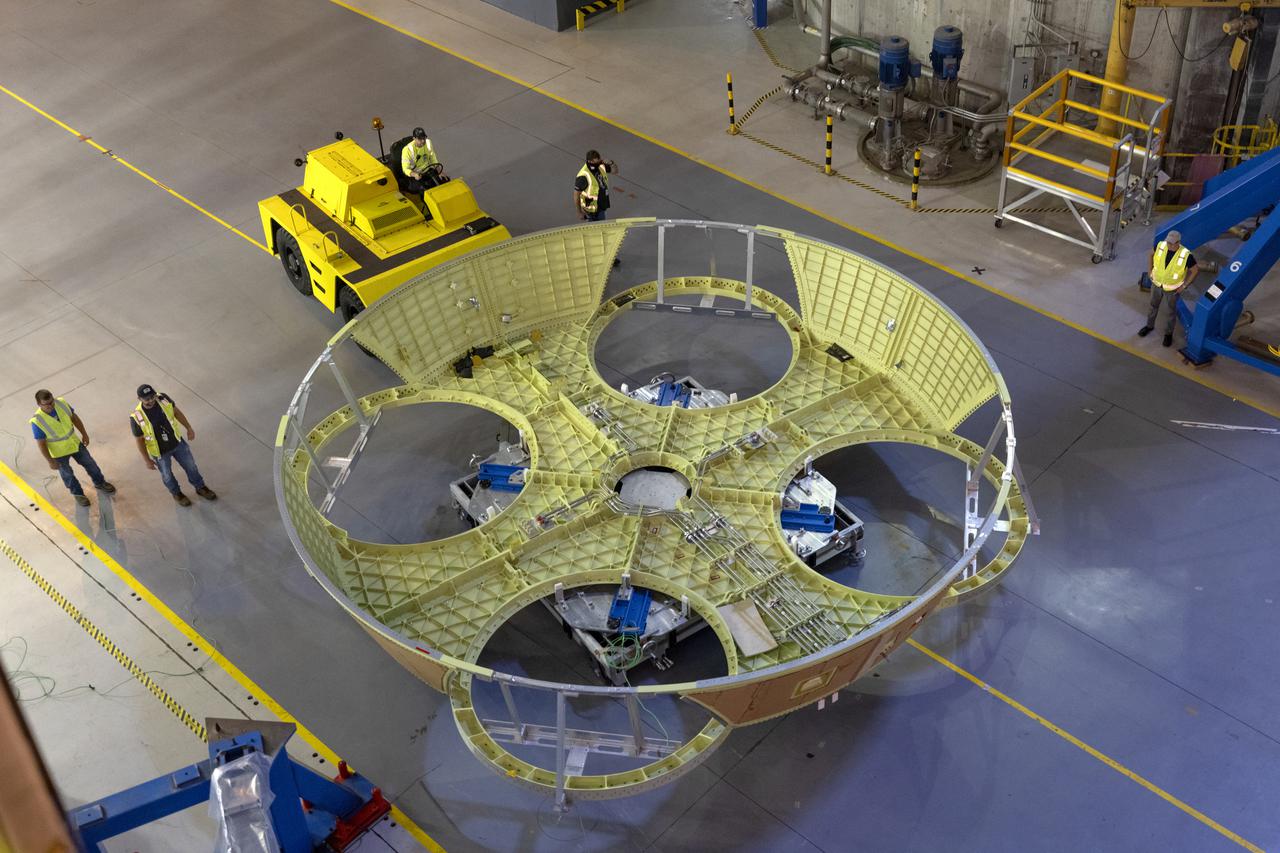
Technicians and engineers move the boat-tail structure for the core stage of NASA’s Space Launch System’s (SLS) rocket for Artemis II, the first crewed mission of NASA’s Artemis program at NASA’s Michoud Assembly Facility. The boat-tail, a fairing-like cover that attaches to the engine section on the bottom of the core stage, protects and covers most of the four RS-25 engines’ critical systems. Together with its four RS-25 engines, the rocket’s massive 212-foot-tall core stage — the largest stage NASA has ever built — and its twin solid rocket boosters will produce 8.8 million pounds of thrust to send NASA’s Orion spacecraft, astronauts and supplies beyond Earth’s orbit to the Moon and, ultimately, Mars. Offering more payload mass, volume capability and energy to speed missions through space, the SLS rocket, along with NASA’s Gateway in lunar orbit, the Human Landing System, and Orion spacecraft, is part of NASA’s backbone for deep space exploration and the Artemis lunar program. No other rocket is capable of carrying astronauts in Orion around the Moon in a single mission. Photographed on Wednesday, June 9, 2021. Image credit: NASA/Michael DeMocker
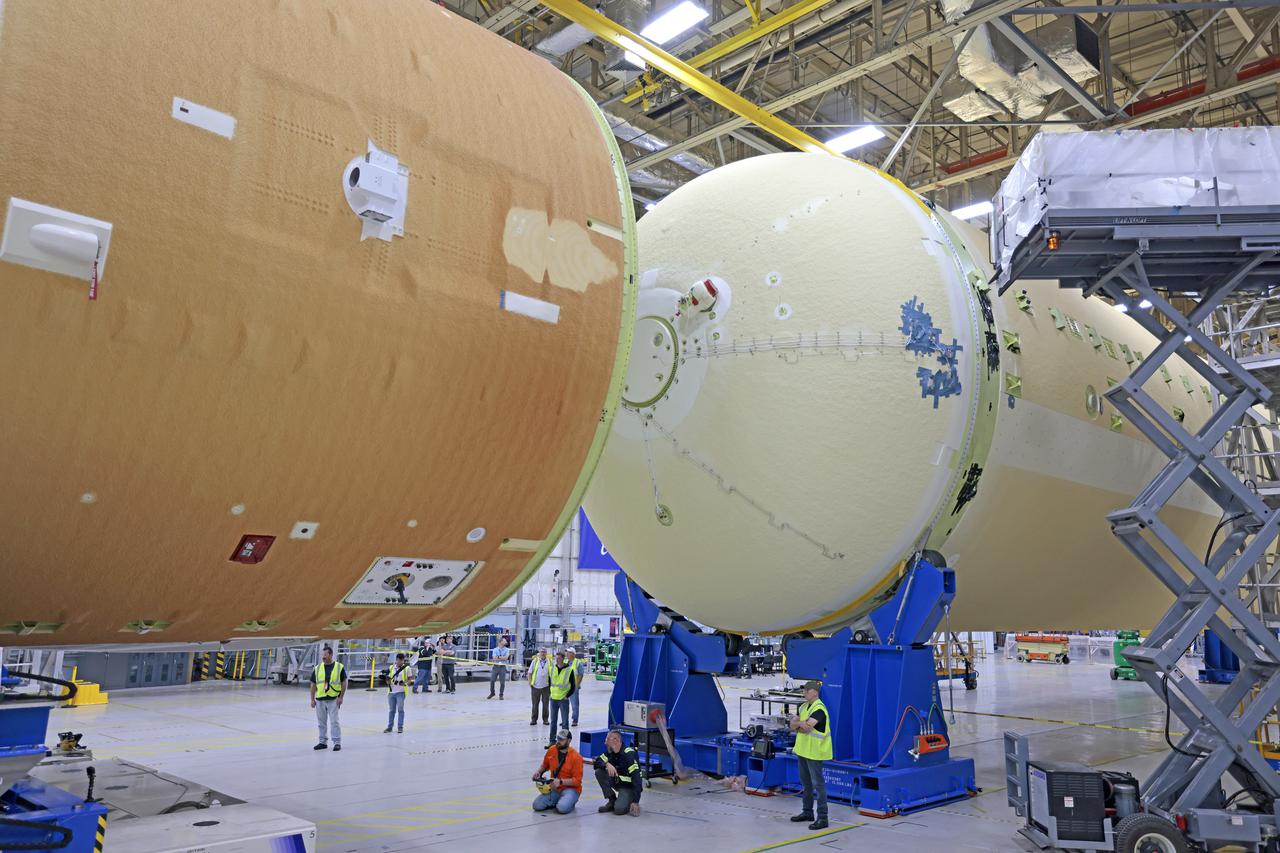
NASA is preparing major pieces of the Space Launch System rocket’s core stage to be joined as part of assembling the core stage for the Artemis II mission that will send crews to lunar orbit. Crews will soon connect the forward assembly with the 130-foot liquid hydrogen tank in the final assembly area at NASA’s Michoud Assembly Facility in New Orleans. When this process is completed, four of the five large structures that make up the core stage will be joined. The 66-foot forward assembly consists of the forward skirt, liquid oxygen tank and the intertank, which were mated earlier. This forward assembly will be joined with the 130-foot liquid hydrogen tank, the largest part of the stage that holds more than 500,000 gallons of cryogenic propellant. To compete the Artemis II core stage, engineers will add the engine section, which is currently being outfitted and includes the main propulsion systems that connect to the four RS-25 engines, Together, with the SLS twin solid rocket boosters, the core stage will produce 8.8 million pounds of thrust to send NASA’s Orion spacecraft, astronauts, and supplies beyond Earth’s orbit to the Moon. The SLS rocket and the Orion spacecraft form the foundation for deep space exploration and the Artemis lunar program. For more on the core stage: https://www.nasa.gov/exploration/systems/sls/multimedia/infographics/corestage101.html Image credit: NASA/Michael DeMocker
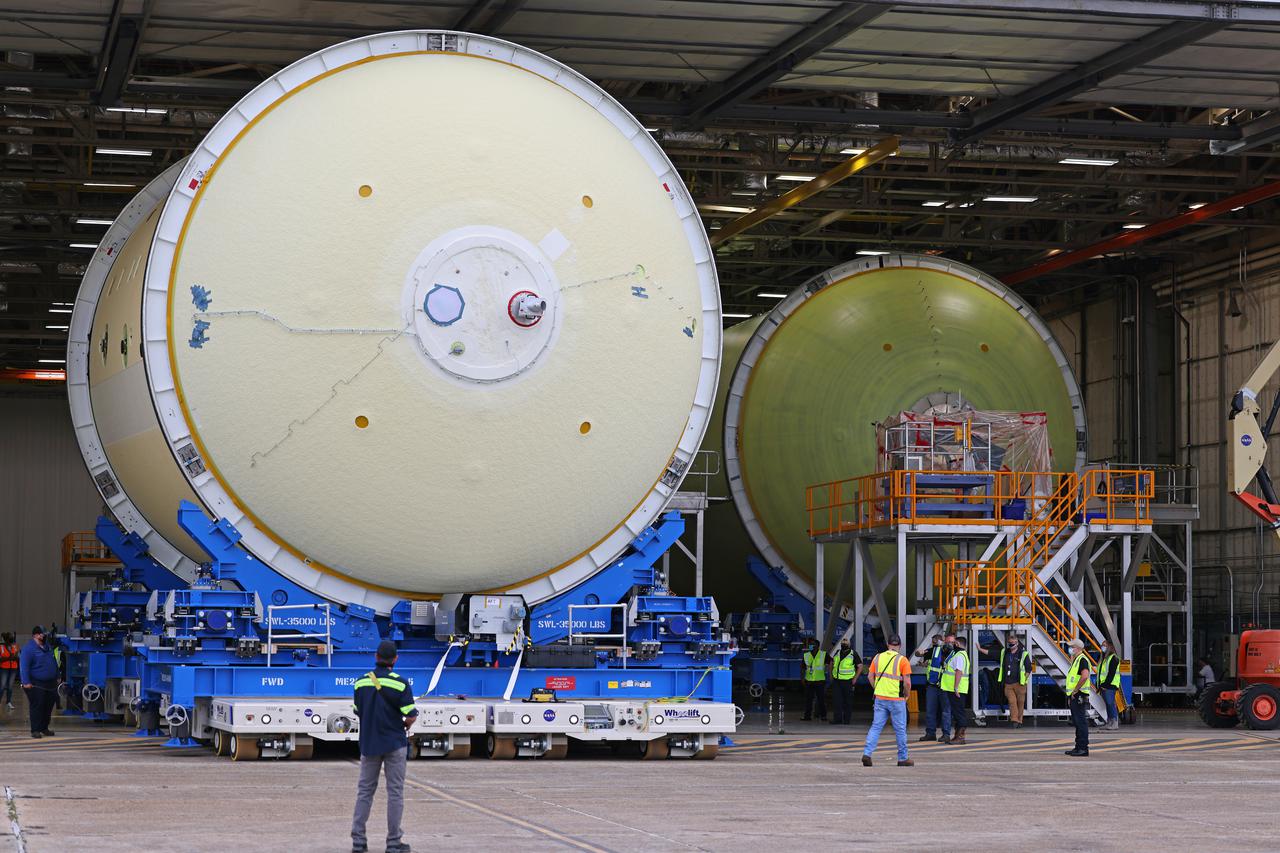
This image shows technicians and engineers moving the liquid oxygen tank (LOX) into position as they continue the process of the forward join on the core stage of NASA’s Space Launch System rocket for Artemis II, the first crewed mission of NASA’s Artemis program at NASA’s Michoud Assembly Facility. The forward join connects the forward skirt, the liquid oxygen tank (LOX) and the intertank structures to form the top part of the SLS rocket’s core stage. Now, NASA and Boeing, the SLS prime contractor, will continue to integrate various systems inside the forward part of the core stage and prepare for structural joining of the liquid hydrogen tank and engine section to form the bottom of the stage. Together with its four RS-25 engines, the rocket’s massive 212-foot-tall core stage — the largest stage NASA has ever built — and its twin solid rocket boosters will produce 8.8 million pounds of thrust to send NASA’s Orion spacecraft, astronauts and supplies beyond Earth’s orbit to the Moon and, ultimately, Mars. Offering more payload mass, volume capability and energy to speed missions through space, the SLS rocket, along with NASA’s Gateway in lunar orbit, the Human Landing System, and Orion spacecraft, is part of NASA’s backbone for deep space exploration and the Artemis lunar program. No other rocket is capable of carrying astronauts in Orion around the Moon in a single mission. Image credit: NASA/Michael DeMocker
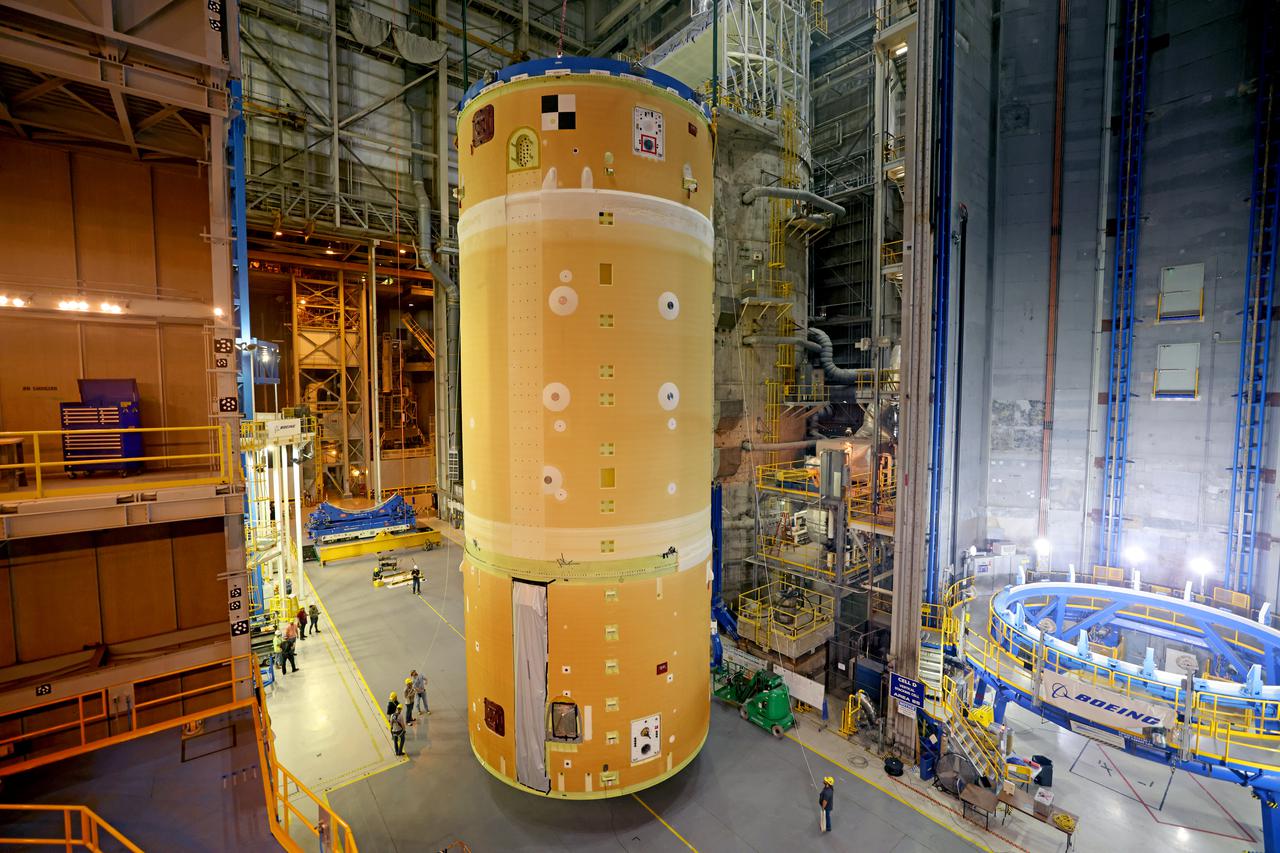
NASA has completed assembly of the upper, or forward, part of the core stage for the Space Launch System (SLS) rocket that will send the Artemis II crew on their lunar mission. Boeing, the lead core stage contractor, completed joining the forward part of the rocket, and then lifted it out of the assembly structure at NASA’s Michoud Assembly Facility in New Orleans. To construct this part of the core stage, the team first stacked three major parts of the stage—the forward skirt, the liquid oxygen tank, and the intertank. The forward skirt sits atop the rocket’s core stage, and it and the intertank are outfitted with the rocket’s flight computers and avionics systems that control SLS during launch and ascent. The liquid oxygen tank holds 196,000 gallons of liquid oxygen cooled to minus 297 degrees Fahrenheit. The entire upper part of the stage is around 66-feet tall. The fully-assembled, 212-foot-tall rocket stage consists of five hardware elements. As the team lifted it out of the assembly area, they completed a breakover maneuver, to put the forward assembly in a horizontal position. Then, they moved it to final assembly where the Artemis II liquid hydrogen tank is also undergoing outfitting. Here, teams will connect the liquid hydrogen tank to the upper part of the rocket and complete assembly of four of the five core stage parts. The last piece to be added will be the engine section, which is currently in a separate assembly area being outfitted with propulsion systems that connect to the engines. Image credit: NASA/Michael DeMocker
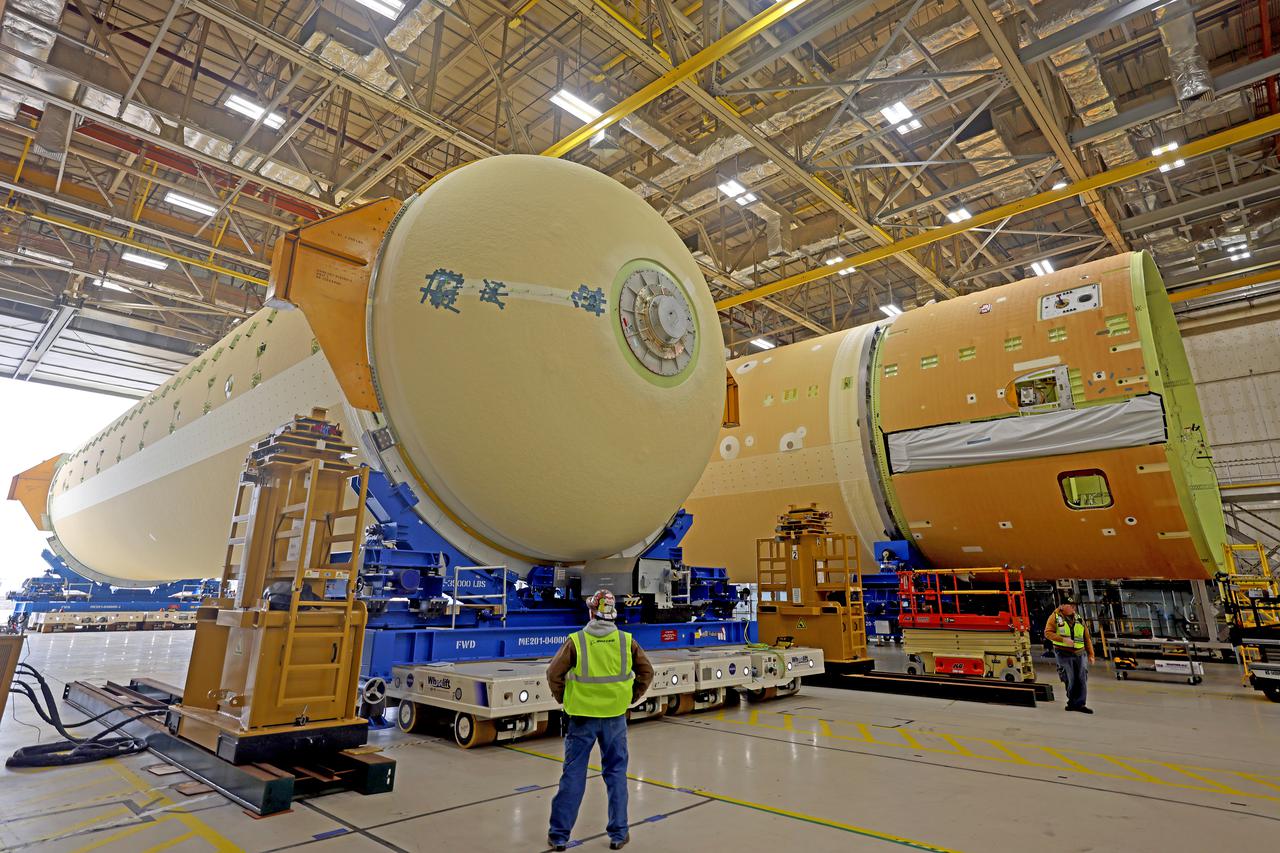
NASA is preparing major pieces of the Space Launch System rocket’s core stage to be joined as part of assembling the core stage for the Artemis II mission that will send crews to lunar orbit. Crews will soon connect the forward assembly with the 130-foot liquid hydrogen tank in the final assembly area at NASA’s Michoud Assembly Facility in New Orleans. When this process is completed, four of the five large structures that make up the core stage will be joined. The 66-foot forward assembly consists of the forward skirt, liquid oxygen tank and the intertank, which were mated earlier. This forward assembly will be joined with the 130-foot liquid hydrogen tank, the largest part of the stage that holds more than 500,000 gallons of cryogenic propellant. To compete the Artemis II core stage, engineers will add the engine section, which is currently being outfitted and includes the main propulsion systems that connect to the four RS-25 engines, Together, with the SLS twin solid rocket boosters, the core stage will produce 8.8 million pounds of thrust to send NASA’s Orion spacecraft, astronauts, and supplies beyond Earth’s orbit to the Moon. The SLS rocket and the Orion spacecraft form the foundation for deep space exploration and the Artemis lunar program. For more on the core stage: https://www.nasa.gov/exploration/systems/sls/multimedia/infographics/corestage101.html Image credit: NASA/Michael DeMocker

Civil Air Patrol cadets (L to R) Gabrielle Griffith, Ronald Ecklund, and Alongkorn Lafargue of the Alvin Callander Composite Squadron record weather data and track the impact of Solar Eclipses on VHF Radio Operations as they participate in the CAP Solar Eclipse Mission, a continent-wide project collecting solar eclipse data in partnership with NASA. The cadets spent over six hours taking measurements at their base of operations at Lakefront Airport in New Orleans on Monday, April 8, 2024. New Orleans is home to NASA’s Michoud Assembly Facility. A total solar eclipse tracked along a narrow strip of the North American continent from Mexico’s Pacific coast to the Atlantic coast of Newfoundland, Canada. A partial solar eclipse was visible across the entire North American continent as well as parts of Europe and Central America. Image credit: NASA/Michael DeMocker

Employees at NASA’s Michoud Assembly Facility in New Orleans gather to watch the completion of NASA’s Artemis I mission with the splashdown of the Orion spacecraft on Dec. 11. The team cheered as the capsule safely returned to Earth following its 25.5-day mission, which brought it further into deep space than any human-rated spacecraft has ever flown before. The Orion crew capsule as well as parts for the launch abort system and the core stage of the Space Launch System rocket were built at the Michoud Assembly Facility. Artemis I is the first in a series of increasingly complex missions to the Moon. With the Artemis missions, NASA will land the first woman and the first person of color on the Moon. No other rocket is capable of carrying astronauts in Orion around the Moon in a single mission. Image credit: NASA/Michael DeMocker
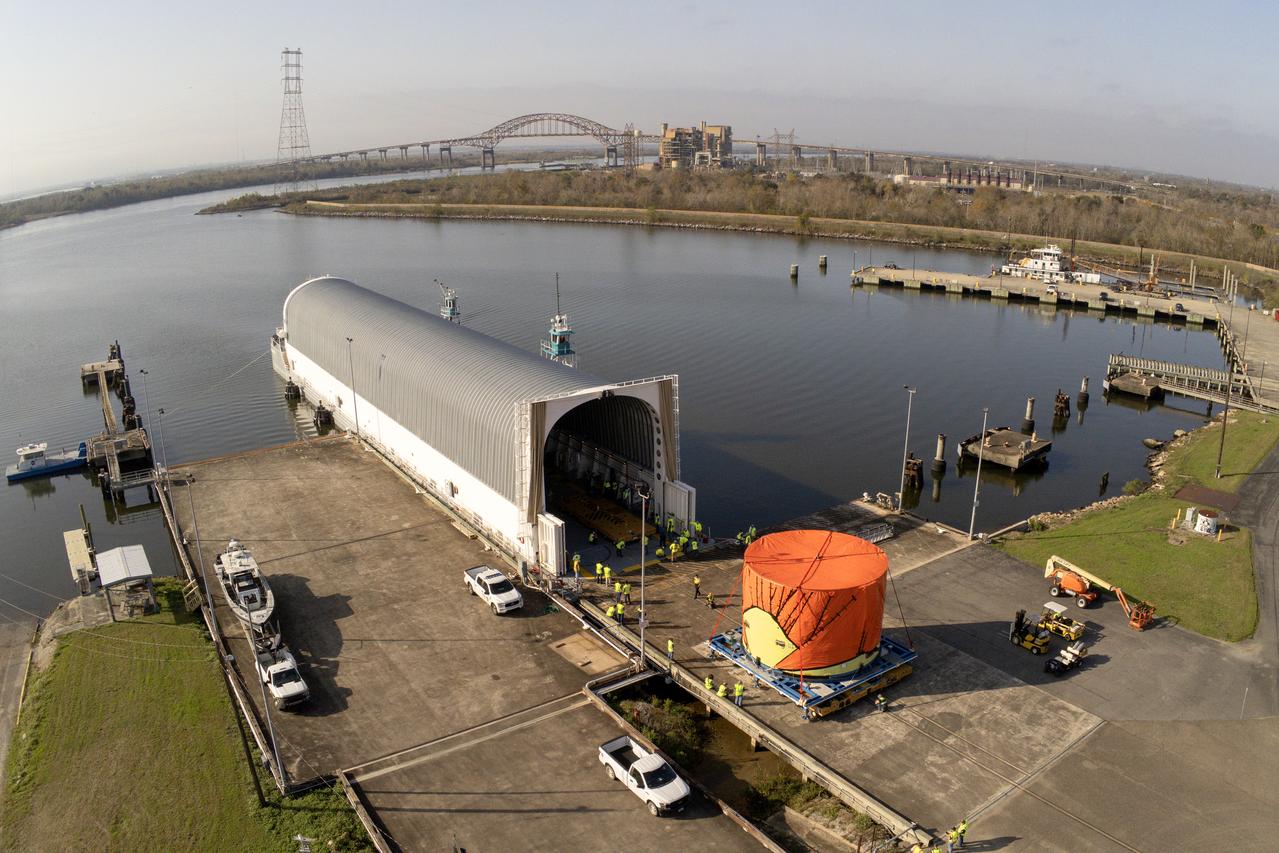
Teams at NASA’s Michoud Assembly Facility in New Orleans move the engine section flight hardware to the agency’s Pegasus barge on Sunday, December 4, 2022. The barge will ferry the engine section of NASA’s Space Launch System (SLS) rocket for Artemis III to the agency’s Kennedy Space Center in Florida. Once there, teams at Kennedy will finish outfitting the engine section, which comprises the tail-end of the rocket’s 212-foot-tall core stage, before integrating it to the rest of the stage. Beginning with production for Artemis III, NASA and core stage lead contractor Boeing will use Michoud, where the SLS core stages are currently manufactured, to produce and outfit the core stage’s five elements, and available space at Kennedy for final assembly and integration. Image credit: NASA/Michael DeMocker

Technicians at NASA’s Michoud Assembly Facility in New Orleans move the liquid hydrogen tank of NASA’s Space Launch System (SLS) rocket to Cell A for white light scans of the tank’s dimensions in preparation of multiple join activities throughout the manufacturing process. The flight hardware will be used for Artemis III, one of the first crewed Artemis missions. The liquid hydrogen tank holds 537,000 gallons of liquid hydrogen cooled to minus 432 degrees Fahrenheit and is the largest of the five elements that make up the rocket’s 212-foot-tall core stage. The liquid hydrogen tank is situated between the core stage’s intertank and engine section. The liquid hydrogen hardware, along with the liquid oxygen tank, will provide propellant to the four RS-25 engines at the bottom of the core stage to produce more than two million pounds of thrust to launch NASA’s Artemis missions to the Moon. Together with its four RS-25 engines, the rocket’s massive 212-foot-tall core stage — the largest stage NASA has ever built — and its twin solid rocket boosters produce 8.8 million pounds of thrust to send NASA’s Orion spacecraft, astronauts and supplies beyond Earth’s orbit to the Moon and, ultimately, Mars. Offering more payload mass, volume capability and energy to speed missions through space, the SLS rocket, along with NASA’s Gateway in lunar orbit, the Human Landing System, and Orion spacecraft, is part of NASA’s backbone for deep space exploration and the Artemis lunar program. No other rocket is capable of carrying astronauts in Orion around the Moon in a single mission. Image credit: NASA/Michael DeMocker
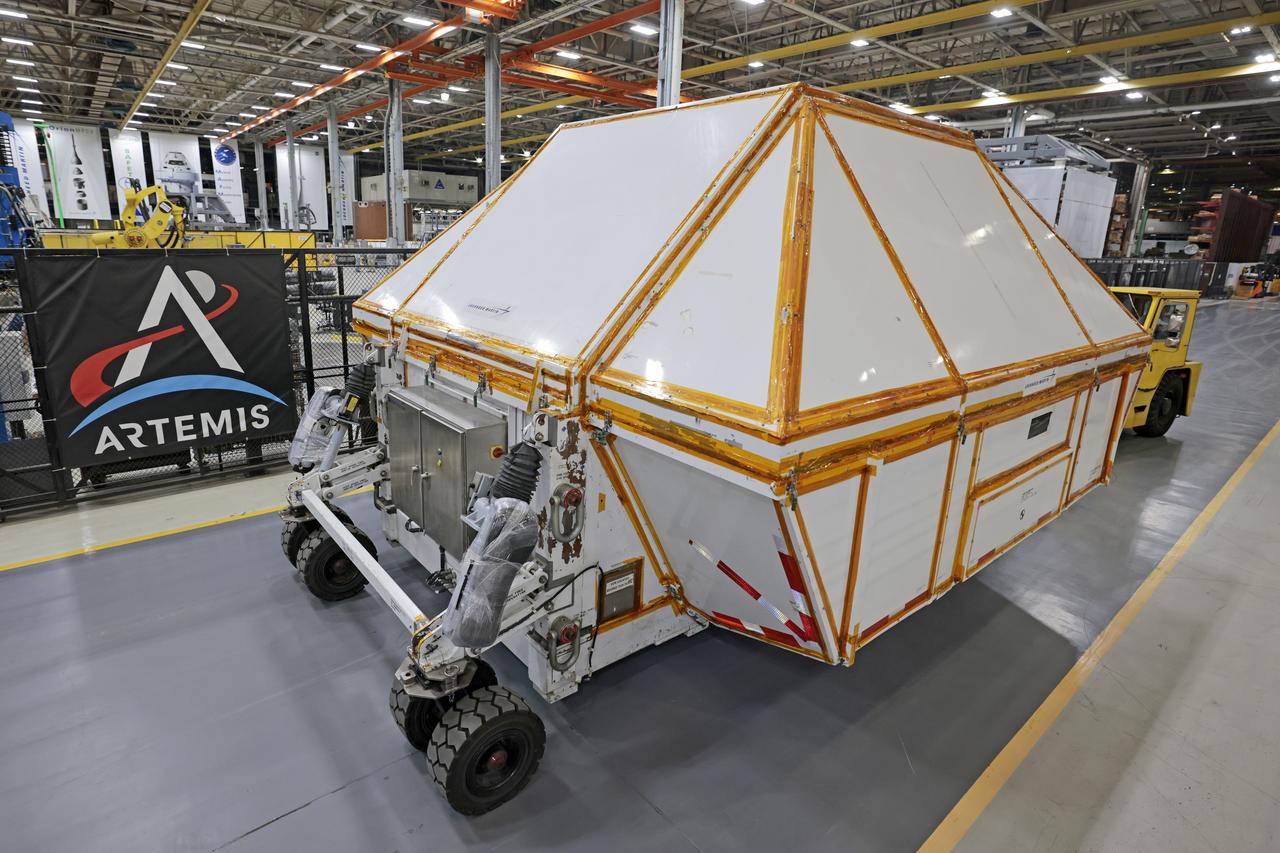
Teams at NASA’s Michoud Assembly Facility in New Orleans prepare the completed Orion pressure vessel for the Artemis IV mission for shipment to NASA’s Kennedy Space Center in Florida. The pressure vessel, which was assembled by lead contractor, Lockheed Martin, is the Orion crew module primary structure – the core upon which all other elements of Orion’s crew module are integrated. The structure is critical to Artemis crews as it holds the pressurized atmosphere astronauts breathe and work in a while in the vacuum of deep space. Once the module arrives at Kennedy’s Vehicle Assembly Building high bay, teams will begin integration of the pressure vessel with the Orion spacecraft crew module adapter and other assembly. With Artemis missions, NASA will land the first woman and the first person of color on the lunar surface, paving the way for human exploration of the Moon and on to Mars. Image credit: NASA/Michael DeMocker
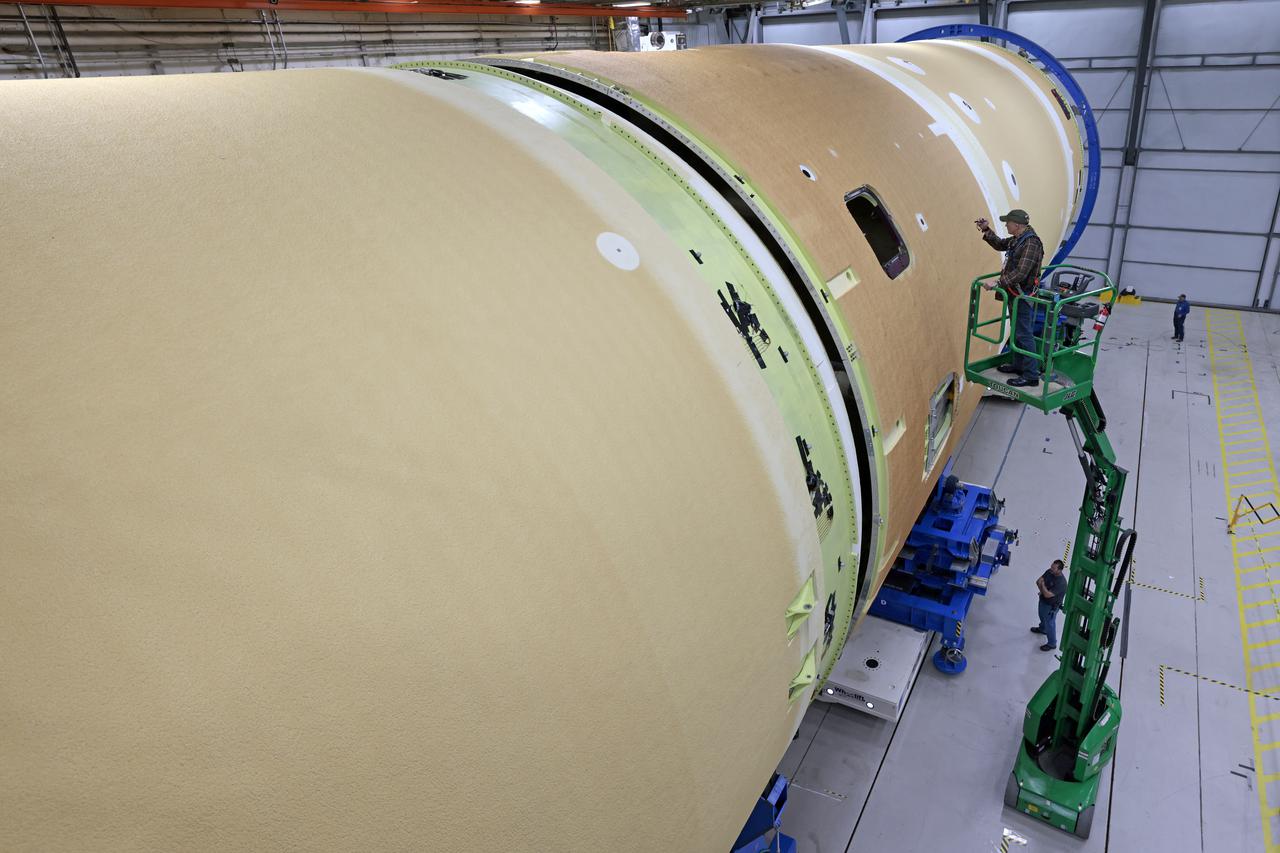
NASA joined the Space Launch System rocket’s core stage forward assembly with the 130-foot liquid hydrogen tank for the Artemis II mission on March 18. This completes assembly of four of the five large structures that make up the core stage that will help send the first astronauts to lunar orbit on Artemis II. The 66-foot forward assembly consists of the forward skirt, liquid oxygen tank and the intertank, which were mated earlier. Engineers inserted 360 bolts to connect the forward assembly to the liquid hydrogen tank to make up the bulk of the stage. Only the engine section, which is currently being outfitted and includes the main propulsion systems that connect to the four RS-25 engines, remains to be added to form the final core stage. All parts of the core stage are manufactured by NASA and Boeing, the core stage lead contractor at the agency’s Michoud Assembly Facility in New Orleans. Currently, the team is building core stages for three Artemis missions. The first core stage is stacked with the rest of the SLS rocket, which will launch the Artemis I mission to the Moon this year. Together with its twin solid rocket boosters, the core stage will produce 8.8 million pounds of thrust to send NASA’s Orion spacecraft, astronauts, and supplies beyond Earth’s orbit to the Moon. The SLS rocket and the Orion spacecraft form the foundation for Artemis missions and future deep space exploration. Image credit: NASA/Michael DeMocker
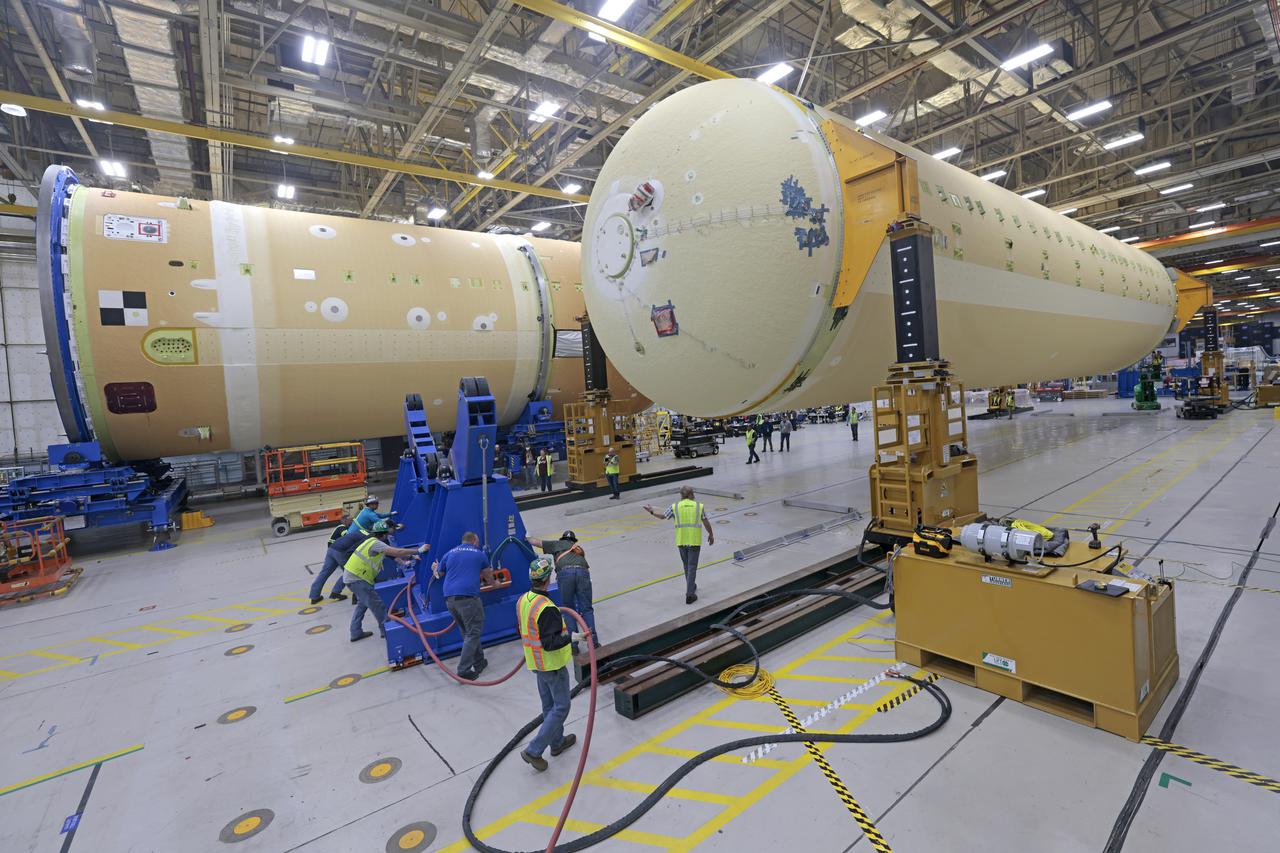
NASA is preparing major pieces of the Space Launch System rocket’s core stage to be joined as part of assembling the core stage for the Artemis II mission that will send crews to lunar orbit. Crews will soon connect the forward assembly with the 130-foot liquid hydrogen tank in the final assembly area at NASA’s Michoud Assembly Facility in New Orleans. When this process is completed, four of the five large structures that make up the core stage will be joined. The 66-foot forward assembly consists of the forward skirt, liquid oxygen tank and the intertank, which were mated earlier. This forward assembly will be joined with the 130-foot liquid hydrogen tank, the largest part of the stage that holds more than 500,000 gallons of cryogenic propellant. To compete the Artemis II core stage, engineers will add the engine section, which is currently being outfitted and includes the main propulsion systems that connect to the four RS-25 engines, Together, with the SLS twin solid rocket boosters, the core stage will produce 8.8 million pounds of thrust to send NASA’s Orion spacecraft, astronauts, and supplies beyond Earth’s orbit to the Moon. The SLS rocket and the Orion spacecraft form the foundation for deep space exploration and the Artemis lunar program. For more on the core stage: https://www.nasa.gov/exploration/systems/sls/multimedia/infographics/corestage101.html Image credit: NASA/Michael DeMocker

Artemis II NASA astronauts Reid Wiseman and Christina Koch of NASA and CSA (Canadian Space Agency) astronaut Jeremy Hansen view the core stage for the SLS (Space Launch System) rocket at the agency’s Michoud Assembly Facility in New Orleans on Nov. 16. The three astronauts, along with NASA’s Victor Glover, will launch atop the rocket stage to venture around the Moon on Artemis II, the first crewed flight for Artemis. The SLS core stage, towering at 212 feet, is the backbone of the Moon rocket and includes two massive propellant tanks that collectively hold 733,000 gallons of propellant to help power the stage’s four RS-25 engines. NASA is working to land the first woman and first person of color on the Moon under Artemis. SLS is part of NASA’s backbone for deep space exploration, along with Orion and the Gateway in orbit around the Moon. SLS is the only rocket that can send Orion, astronauts, and supplies to the Moon in a single mission.
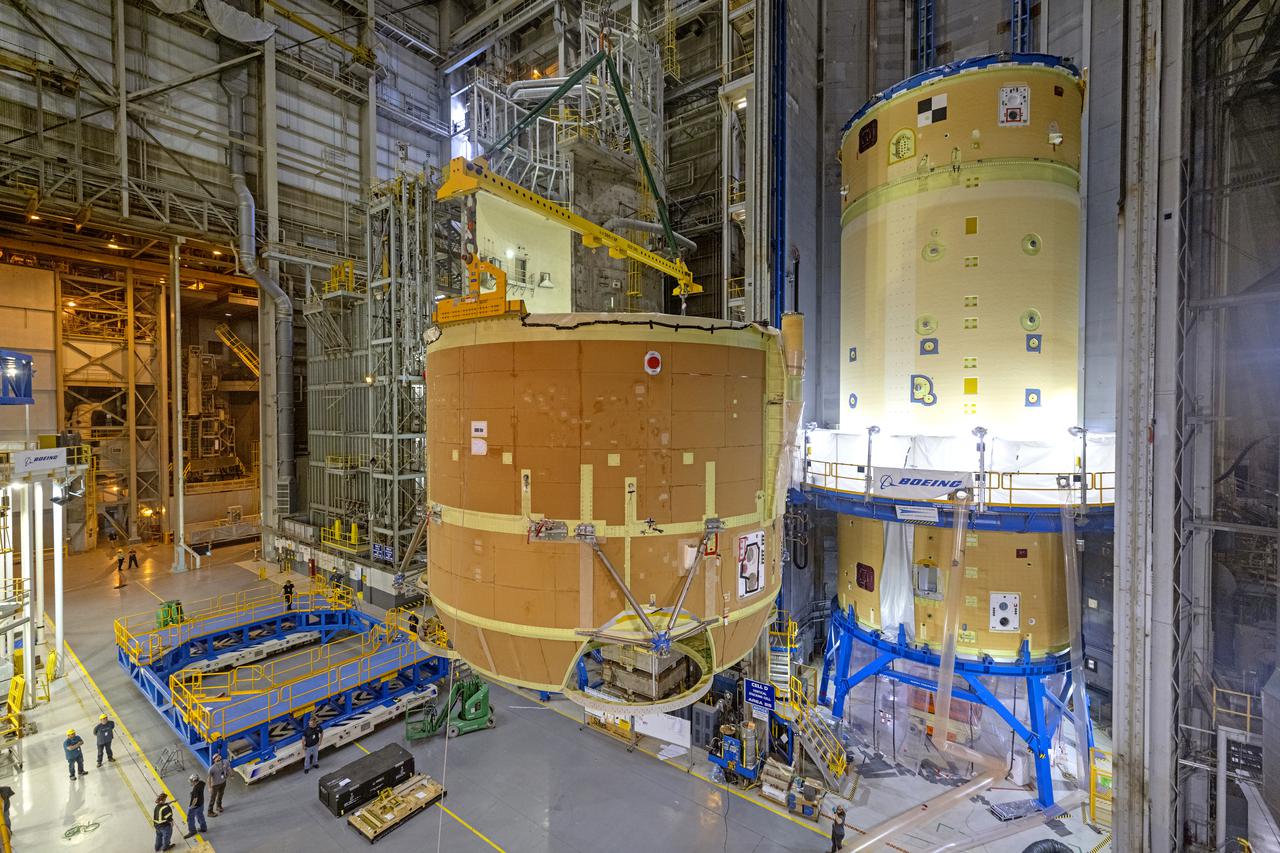
Technicians at NASA’s Michoud Assembly Facility have joined the engine and boat-tail sections of NASA’s Space Launch System rocket for Artemis II in preparation for its next step in production. When complete, the engine section will house the four RS-25 engines and include vital systems for mounting, controlling and delivering fuel from the propellant tanks to the rocket’s engines. The boat-tail is designed to protect the bottom end of the core stage and the RS-25 engines and was joined with the engine section to comprise the lowest portion of the 212-foot-tall core stage. Together with its four RS-25 engines and its twin solid rocket boosters, it will produce 8.8 million pounds of thrust to send NASA’s Orion spacecraft, astronauts, and supplies beyond Earth’s orbit to the Moon and, ultimately, Mars. Offering more payload mass, volume capability, and energy to speed missions through space, the SLS rocket, along with NASA’s Gateway in lunar orbit, the Human Landing System, and Orion spacecraft, is part of NASA’s backbone for deep space exploration and the Artemis lunar program. No other rocket is capable of carrying astronauts in Orion around the Moon in a single mission.
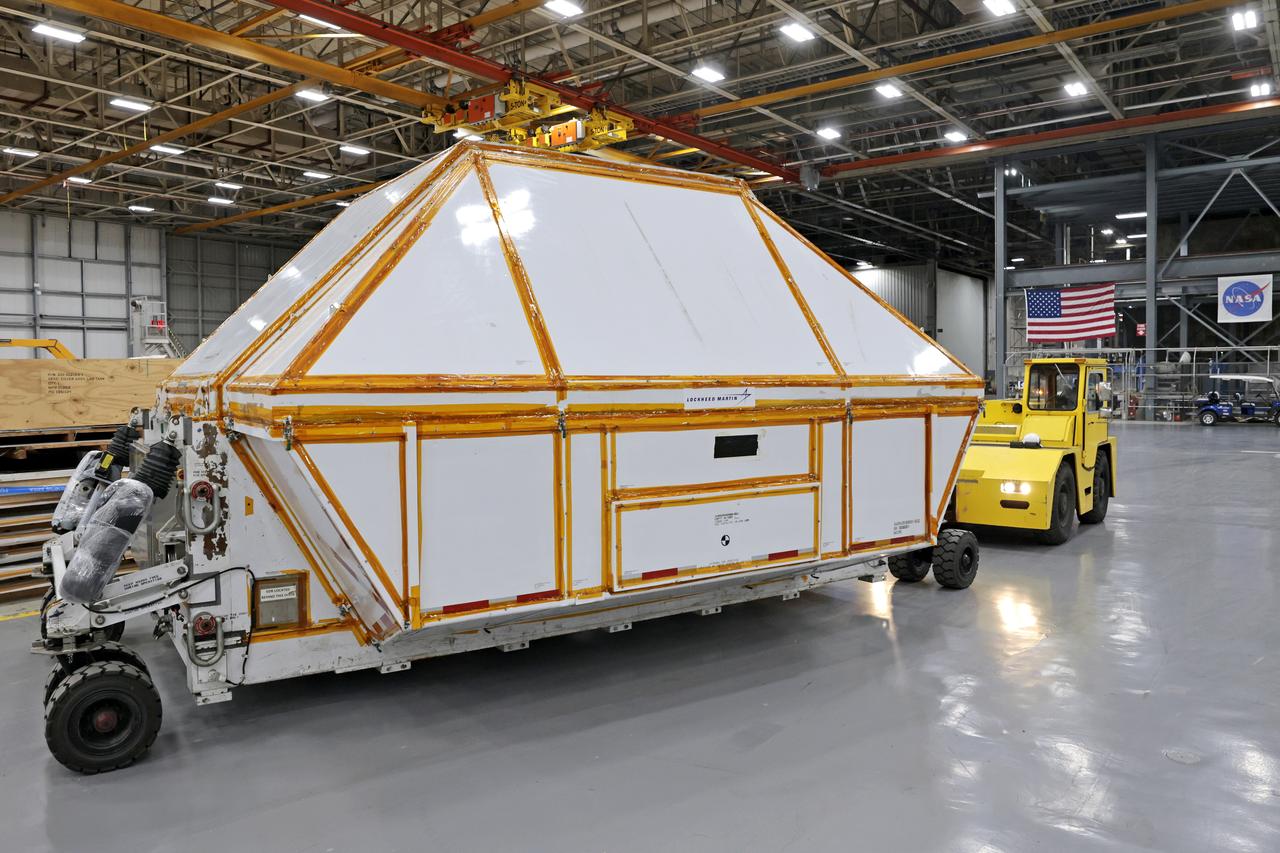
Teams at NASA’s Michoud Assembly Facility in New Orleans prepare the completed Orion pressure vessel for the Artemis IV mission for shipment to NASA’s Kennedy Space Center in Florida. The pressure vessel, which was assembled by lead contractor, Lockheed Martin, is the Orion crew module primary structure – the core upon which all other elements of Orion’s crew module are integrated. The structure is critical to Artemis crews as it holds the pressurized atmosphere astronauts breathe and work in a while in the vacuum of deep space. Once the module arrives at Kennedy’s Vehicle Assembly Building high bay, teams will begin integration of the pressure vessel with the Orion spacecraft crew module adapter and other assembly. With Artemis missions, NASA will land the first woman and the first person of color on the lunar surface, paving the way for human exploration of the Moon and on to Mars. Image credit: NASA/Michael DeMocker
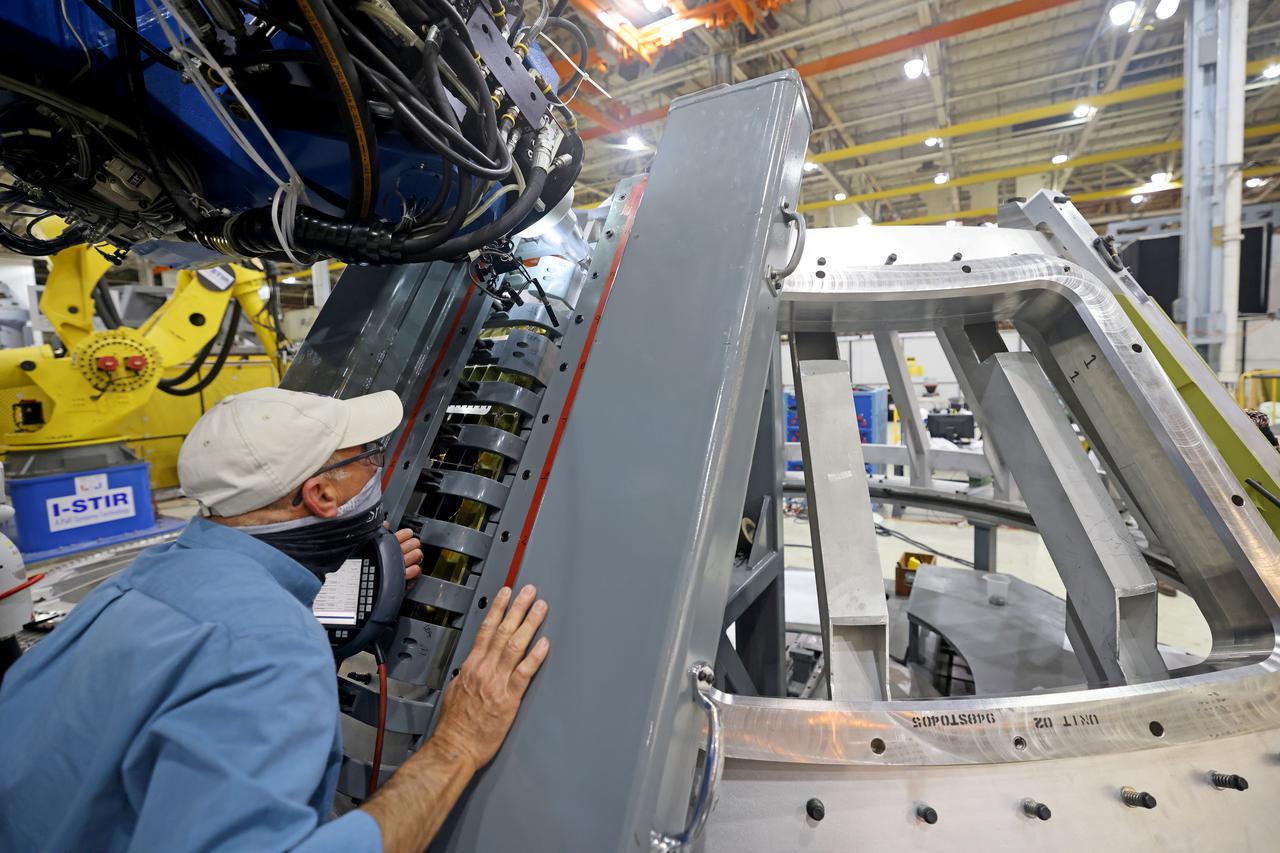
At NASA’s Michoud Assembly Facility in New Orleans, technicians from Orion prime contractor Lockheed Martin have welded together three cone-shaped panels on Orion’s crew module for the Artemis III mission that will land the first woman and next man on the Moon. The crew module’s primary structure, the pressure vessel, is comprised of seven machined aluminum alloy pieces that are welded together through a weld process that produces a strong, air-tight habitable space for astronauts during the mission. The pressure vessel is designed to withstand the harsh and demanding environment of deep space, and is the core structure upon which all the other elements of Orion’s crew module are integrated. Infographic showing the seven pieces of Orion's underlying structure With welding complete on the crew module cone panels – one of which contains windows providing astronauts views of the Moon and Earth – work will begin joining the forward bulkhead to the tunnel to create the top of the spacecraft, followed by the barrel and aft bulkhead join to form the bottom of Orion. Last, the forward bulkhead will be welded to the top of the panels and, for the seventh and closeout weld, the bottom of the cone panels will be joined to the barrel to complete the pressure vessel. Once welding of the Artemis III crew module primary structure is complete, it will be shipped to NASA’s Kennedy Space Center in Florida where it will undergo further assembly beginning this fall. Orion, the Space Launch System, and Exploration Ground Systems programs are foundational elements of the Artemis program. Artemis I will be the first integrated flight test of Orion and SLS and is targeted to launch later this year. Artemis II will follow and is the first crewed mission, taking humans farther into space than ever before. Image credit: NASA/Michael DeMocker
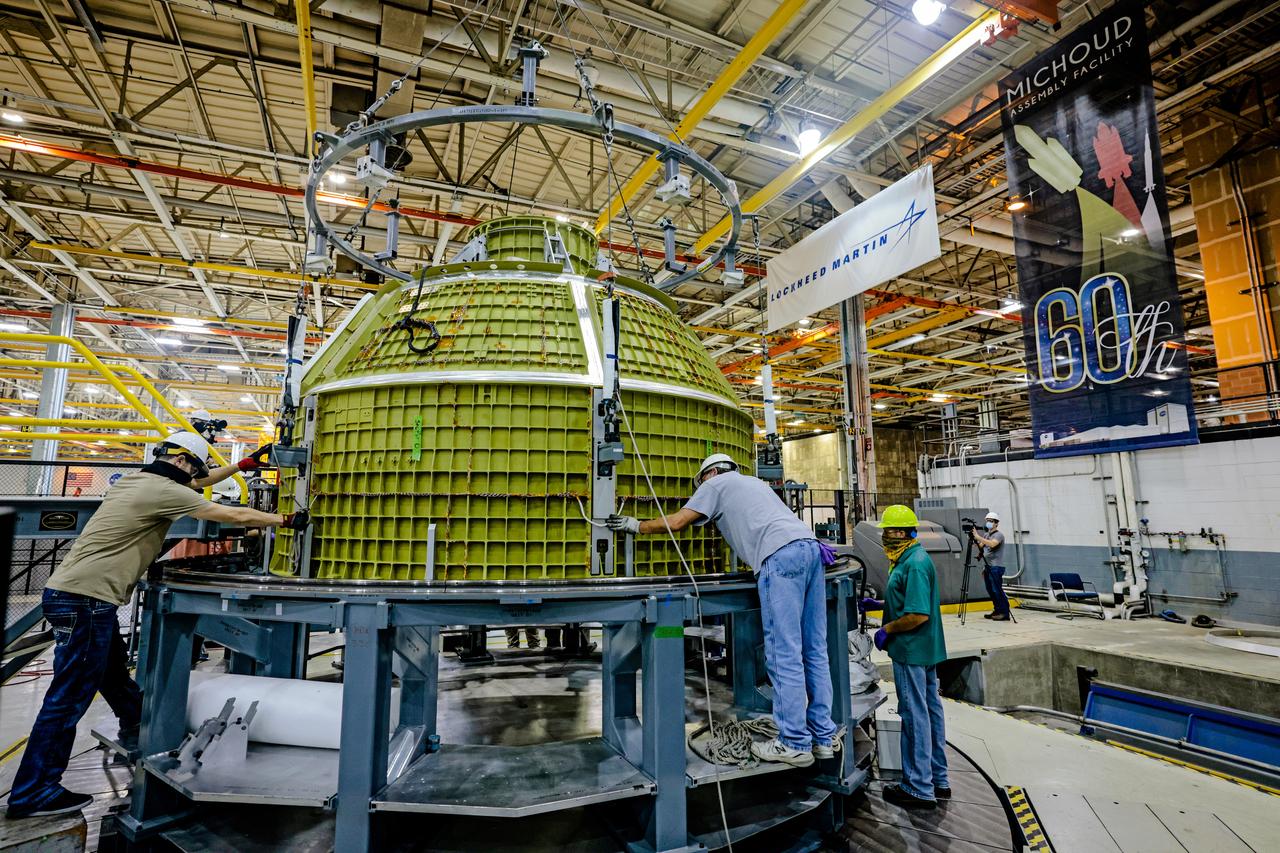
At NASA's Michoud Assembly Facility in New Orleans, Orion's newly completed pressure vessel for the Artemis III mission is lifted out of the welding tool on Aug. 27, 2021. The pressure vessel is the primary structure for Orion's crew module, joined together using state-of-the-art welding by technicians from lead contractor Lockheed Martin.
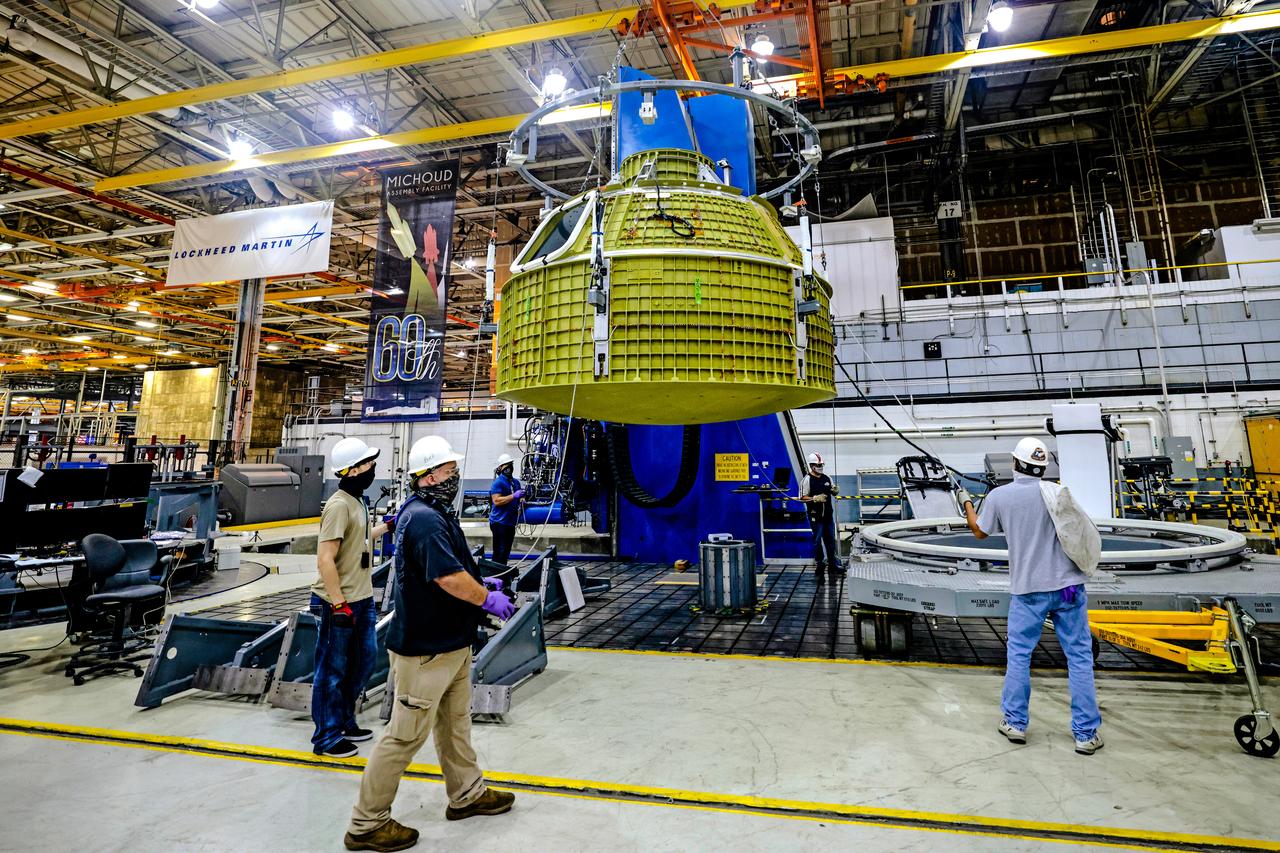
At NASA's Michoud Assembly Facility in New Orleans, Orion's newly completed pressure vessel for the Artemis III mission is lifted out of the welding tool on Aug. 27, 2021. The pressure vessel is the primary structure for Orion's crew module, joined together using state-of-the-art welding by technicians from lead contractor Lockheed Martin.
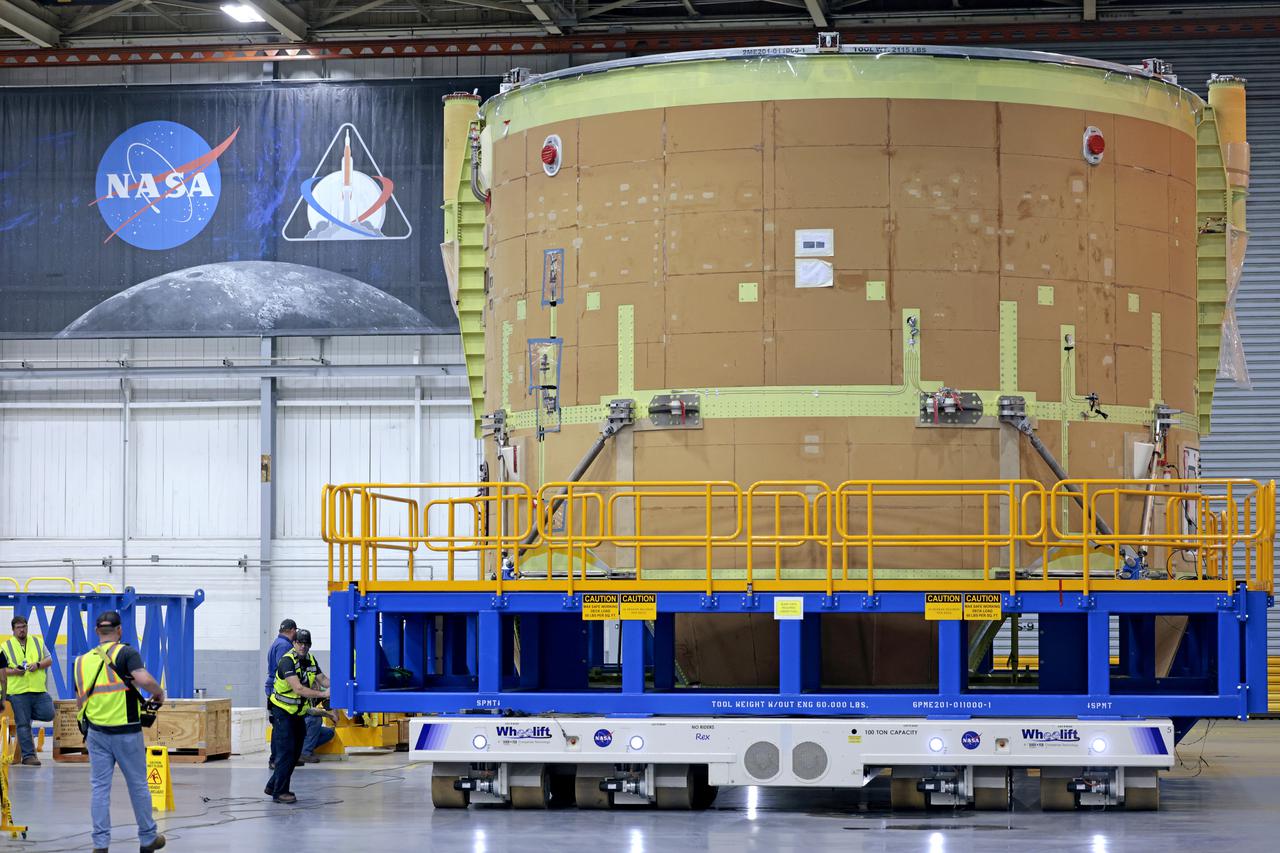
Technicians at NASA’s Michoud Assembly Facility have joined the engine and boat-tail sections of NASA’s Space Launch System rocket for Artemis II in preparation for its next step in production. When complete, the engine section will house the four RS-25 engines and include vital systems for mounting, controlling and delivering fuel from the propellant tanks to the rocket’s engines. The boat-tail is designed to protect the bottom end of the core stage and the RS-25 engines and was joined with the engine section to comprise the lowest portion of the 212-foot-tall core stage. Together with its four RS-25 engines and its twin solid rocket boosters, it will produce 8.8 million pounds of thrust to send NASA’s Orion spacecraft, astronauts, and supplies beyond Earth’s orbit to the Moon and, ultimately, Mars. Offering more payload mass, volume capability, and energy to speed missions through space, the SLS rocket, along with NASA’s Gateway in lunar orbit, the Human Landing System, and Orion spacecraft, is part of NASA’s backbone for deep space exploration and the Artemis lunar program. No other rocket is capable of carrying astronauts in Orion around the Moon in a single mission.
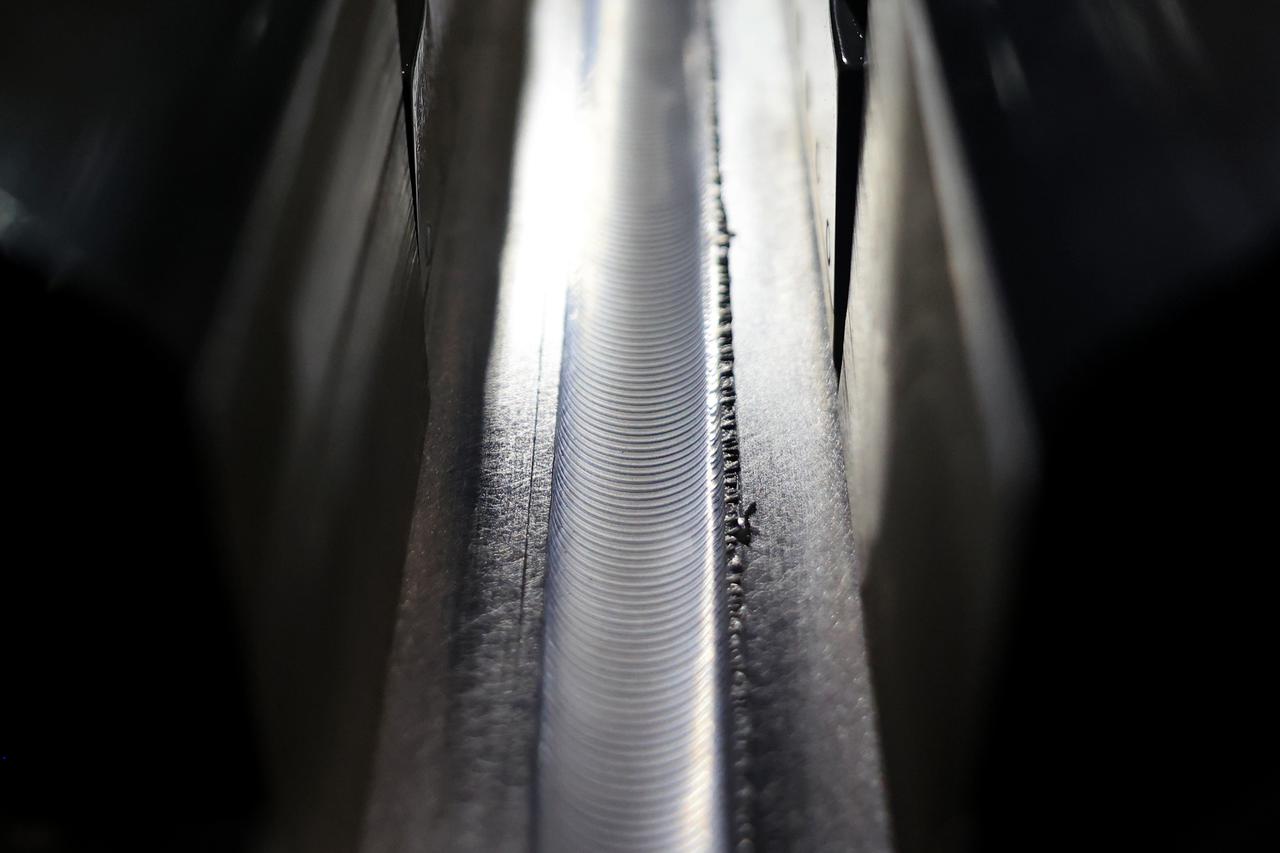
At NASA’s Michoud Assembly Facility in New Orleans, technicians from Orion prime contractor Lockheed Martin have welded together three cone-shaped panels on Orion’s crew module for the Artemis III mission that will land the first woman and next man on the Moon. The crew module’s primary structure, the pressure vessel, is comprised of seven machined aluminum alloy pieces that are welded together through a weld process that produces a strong, air-tight habitable space for astronauts during the mission. The pressure vessel is designed to withstand the harsh and demanding environment of deep space, and is the core structure upon which all the other elements of Orion’s crew module are integrated. Infographic showing the seven pieces of Orion's underlying structure With welding complete on the crew module cone panels – one of which contains windows providing astronauts views of the Moon and Earth – work will begin joining the forward bulkhead to the tunnel to create the top of the spacecraft, followed by the barrel and aft bulkhead join to form the bottom of Orion. Last, the forward bulkhead will be welded to the top of the panels and, for the seventh and closeout weld, the bottom of the cone panels will be joined to the barrel to complete the pressure vessel. Once welding of the Artemis III crew module primary structure is complete, it will be shipped to NASA’s Kennedy Space Center in Florida where it will undergo further assembly beginning this fall. Orion, the Space Launch System, and Exploration Ground Systems programs are foundational elements of the Artemis program. Artemis I will be the first integrated flight test of Orion and SLS and is targeted to launch later this year. Artemis II will follow and is the first crewed mission, taking humans farther into space than ever before. Image credit: NASA/Michael DeMocker
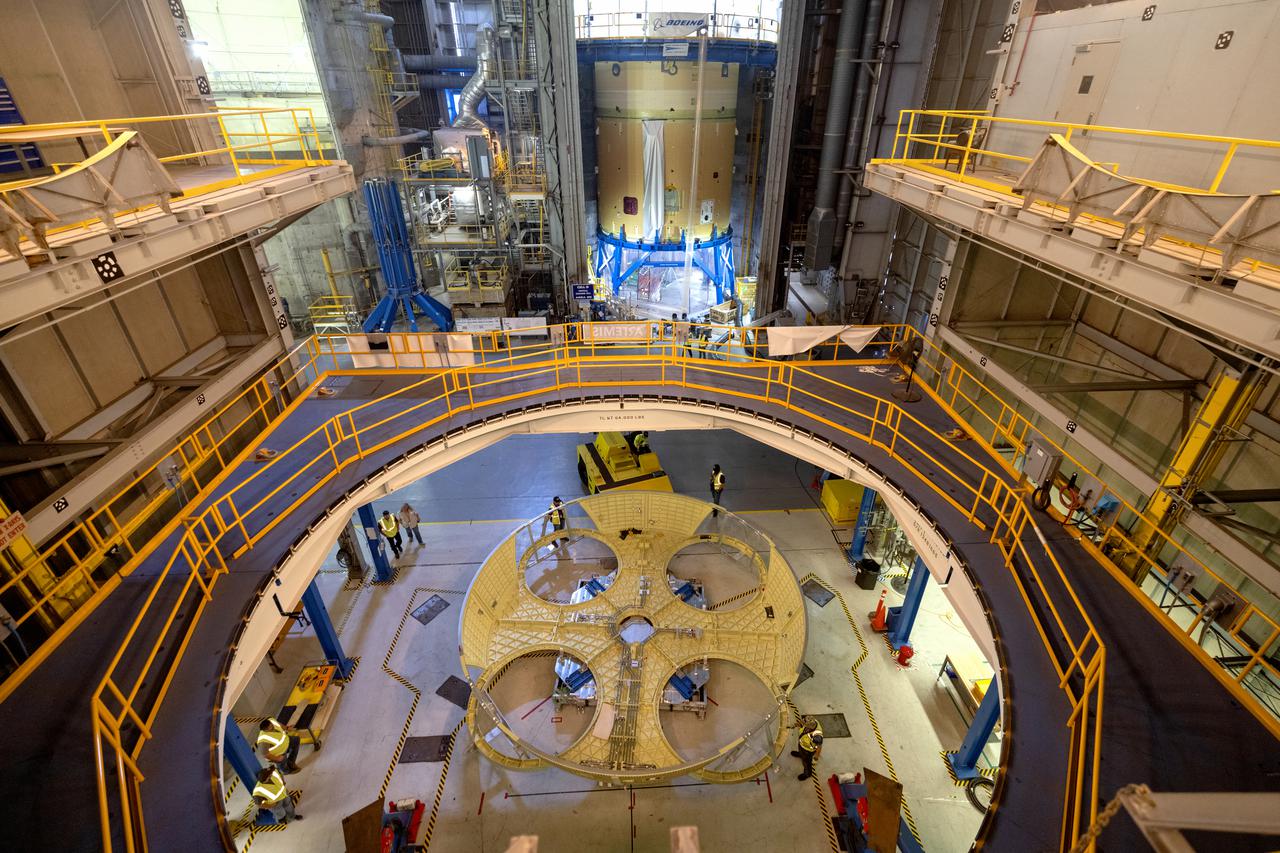
Technicians and engineers move the boat-tail structure for the core stage of NASA’s Space Launch System’s (SLS) rocket for Artemis II, the first crewed mission of NASA’s Artemis program at NASA’s Michoud Assembly Facility. The boat-tail, a fairing-like cover that attaches to the engine section on the bottom of the core stage, protects and covers most of the four RS-25 engines’ critical systems. Together with its four RS-25 engines, the rocket’s massive 212-foot-tall core stage — the largest stage NASA has ever built — and its twin solid rocket boosters will produce 8.8 million pounds of thrust to send NASA’s Orion spacecraft, astronauts and supplies beyond Earth’s orbit to the Moon and, ultimately, Mars. Offering more payload mass, volume capability and energy to speed missions through space, the SLS rocket, along with NASA’s Gateway in lunar orbit, the Human Landing System, and Orion spacecraft, is part of NASA’s backbone for deep space exploration and the Artemis lunar program. No other rocket is capable of carrying astronauts in Orion around the Moon in a single mission. Photographed on Wednesday, June 9, 2021. Image credit: NASA/Michael DeMocker

Technicians at NASA’s Michoud Assembly Facility in New Orleans moved the engine section of NASA’s Space Launch System (SLS) rocket for Artemis II, the first crewed mission to the Moon, into position for the final join of the core stage Feb. 13. The engine section is the bottom-most portion of the 212-foot-tall core stage. It is the last of five major elements that is needed to connect the stage into one major structure. In addition to its miles of cabling and hundreds of sensors, the engine section is a crucial attachment point for the four RS-25 engines and two solid rocket boosters that produce a combined 8.8 million pounds of thrust at liftoff and flight. During launch and flight, liquid propellants from the liquid hydrogen tank and liquid oxygen tanks are delivered through the engine section to the four RS-25 engines. The engine section also includes the avionics that help steer the engines after liftoff. Next, teams will join the engine section to the core stage for the second SLS rocket. After the join is complete, teams will begin to add each of the four RS-25 engines one by one to complete the stage. The completely assembled stage with its four RS-25 engines will be shipped to NASA’s Kennedy Space Center in Florida later this year. The SLS rocket is the only rocket capable of carrying astronauts in Orion around the Moon in a single mission. Image credit: NASA/Michael DeMocker
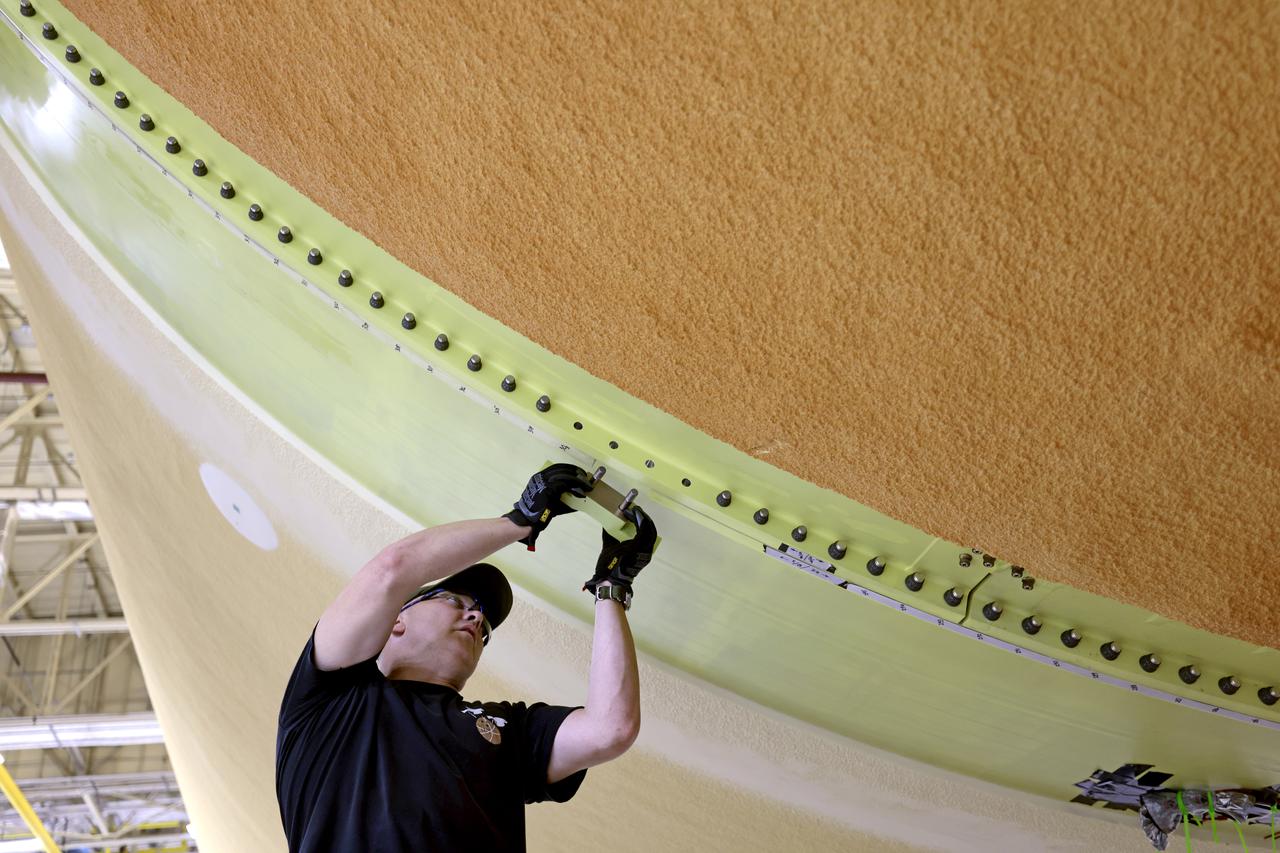
NASA joined the Space Launch System rocket’s core stage forward assembly with the 130-foot liquid hydrogen tank for the Artemis II mission on March 18. This completes assembly of four of the five large structures that make up the core stage that will help send the first astronauts to lunar orbit on Artemis II. The 66-foot forward assembly consists of the forward skirt, liquid oxygen tank and the intertank, which were mated earlier. Engineers inserted 360 bolts to connect the forward assembly to the liquid hydrogen tank to make up the bulk of the stage. Only the engine section, which is currently being outfitted and includes the main propulsion systems that connect to the four RS-25 engines, remains to be added to form the final core stage. All parts of the core stage are manufactured by NASA and Boeing, the core stage lead contractor at the agency’s Michoud Assembly Facility in New Orleans. Currently, the team is building core stages for three Artemis missions. The first core stage is stacked with the rest of the SLS rocket, which will launch the Artemis I mission to the Moon this year. Together with its twin solid rocket boosters, the core stage will produce 8.8 million pounds of thrust to send NASA’s Orion spacecraft, astronauts, and supplies beyond Earth’s orbit to the Moon. The SLS rocket and the Orion spacecraft form the foundation for Artemis missions and future deep space exploration. Image credit: NASA/Michael DeMocker
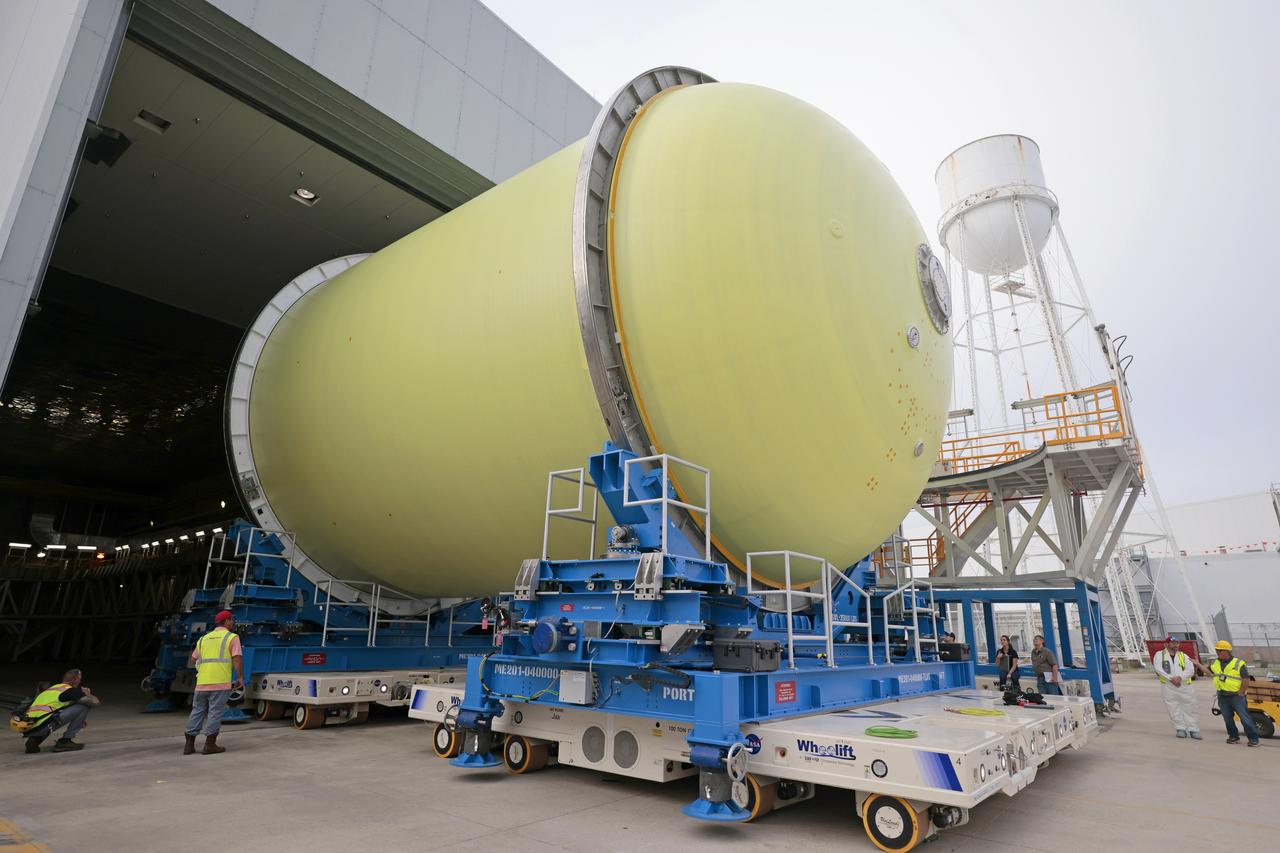
Move Crews at NASA’s Michoud Assembly Facility in New Orleans transport a liquid oxygen tank from a detached production building to the main 43-acre rocket factory on Mar. 26. Teams recently completed primer application on the tank, which will be used on the core stage of the agency’s SLS (Space Launch System) rocket for its Artemis III mission. The tank will now undergo electrical installations before moving on to the next phase of production. The propellant tank is one of five major elements that make up the 212-foot-tall rocket stage. The core stage, along with its four RS-25 engines, produce more than two million pounds of thrust to help launch NASA’s Orion spacecraft, astronauts, and supplies beyond Earth’s orbit and to the lunar surface for Artemis.
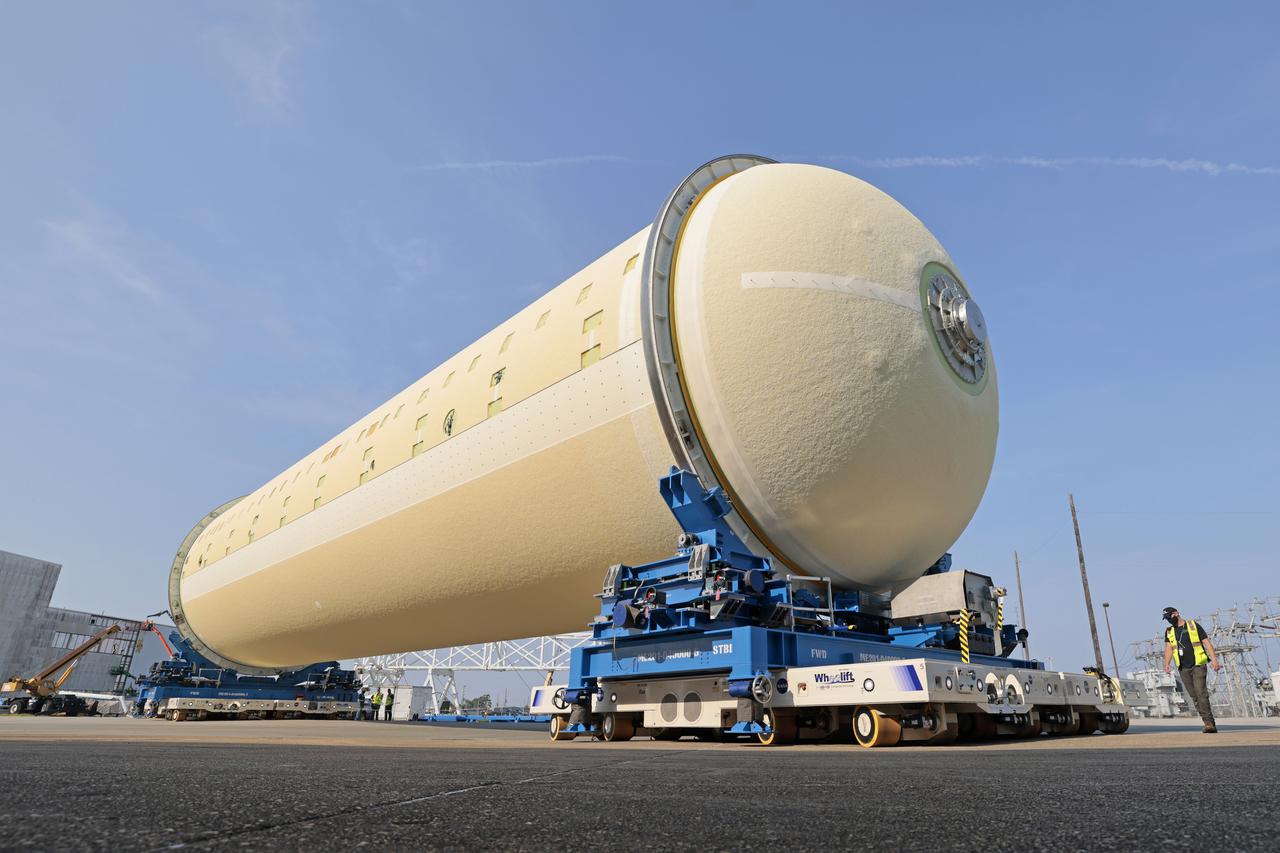
This image highlights the liquid hydrogen tank that will be used on the core stage of NASA’s Space Launch System rocket for Artemis II, the first crewed mission of NASA’s Artemis program. The tank is being built at NASA’s Michoud Assembly Facility in New Orleans. The SLS core stage is made up of five unique elements: the forward skirt, liquid oxygen tank, intertank, liquid hydrogen tank, and the engine section. The liquid hydrogen tank holds 537,000 gallons of liquid hydrogen cooled to minus 423 degrees Fahrenheit and sits between the core stage’s intertank and engine section. The liquid hydrogen hardware, along with the liquid oxygen tank, will provide propellant to the four RS-25 engines at the bottom of the cores stage to produce more than two million pounds of thrust to launch NASA’s Artemis missions to the Moon. Together with its four RS-25 engines, the rocket’s massive 212-foot-tall core stage — the largest stage NASA has ever built — and its twin solid rocket boosters will produce 8.8 million pounds of thrust to send NASA’s Orion spacecraft, astronauts and supplies beyond Earth’s orbit to the Moon and, ultimately, Mars. Offering more payload mass, volume capability and energy to speed missions through space, the SLS rocket, along with NASA’s Gateway in lunar orbit, the human landing system, and Orion spacecraft, is part of NASA’s backbone for deep space exploration and the Artemis lunar program. No other rocket can send astronauts in Orion around the Moon in a single mission. Image credit: NASA/Michael DeMocker
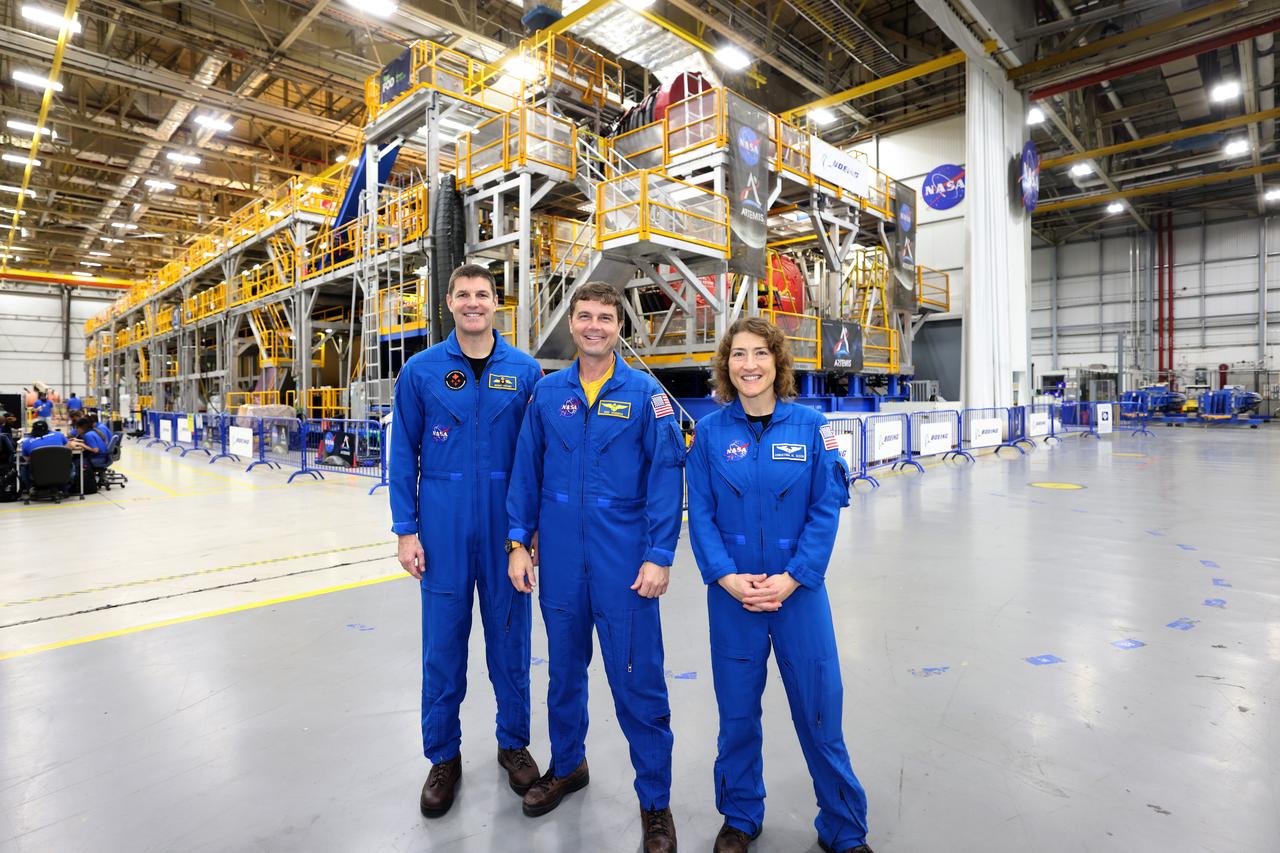
Artemis II NASA astronauts Reid Wiseman and Christina Koch of NASA and CSA (Canadian Space Agency) astronaut Jeremy Hansen view the core stage for the SLS (Space Launch System) rocket at the agency’s Michoud Assembly Facility in New Orleans on Nov. 16. The three astronauts, along with NASA’s Victor Glover, will launch atop the rocket stage to venture around the Moon on Artemis II, the first crewed flight for Artemis. The SLS core stage, towering at 212 feet, is the backbone of the Moon rocket and includes two massive propellant tanks that collectively hold 733,000 gallons of propellant to help power the stage’s four RS-25 engines. NASA is working to land the first woman and first person of color on the Moon under Artemis. SLS is part of NASA’s backbone for deep space exploration, along with Orion and the Gateway in orbit around the Moon. SLS is the only rocket that can send Orion, astronauts, and supplies to the Moon in a single mission.
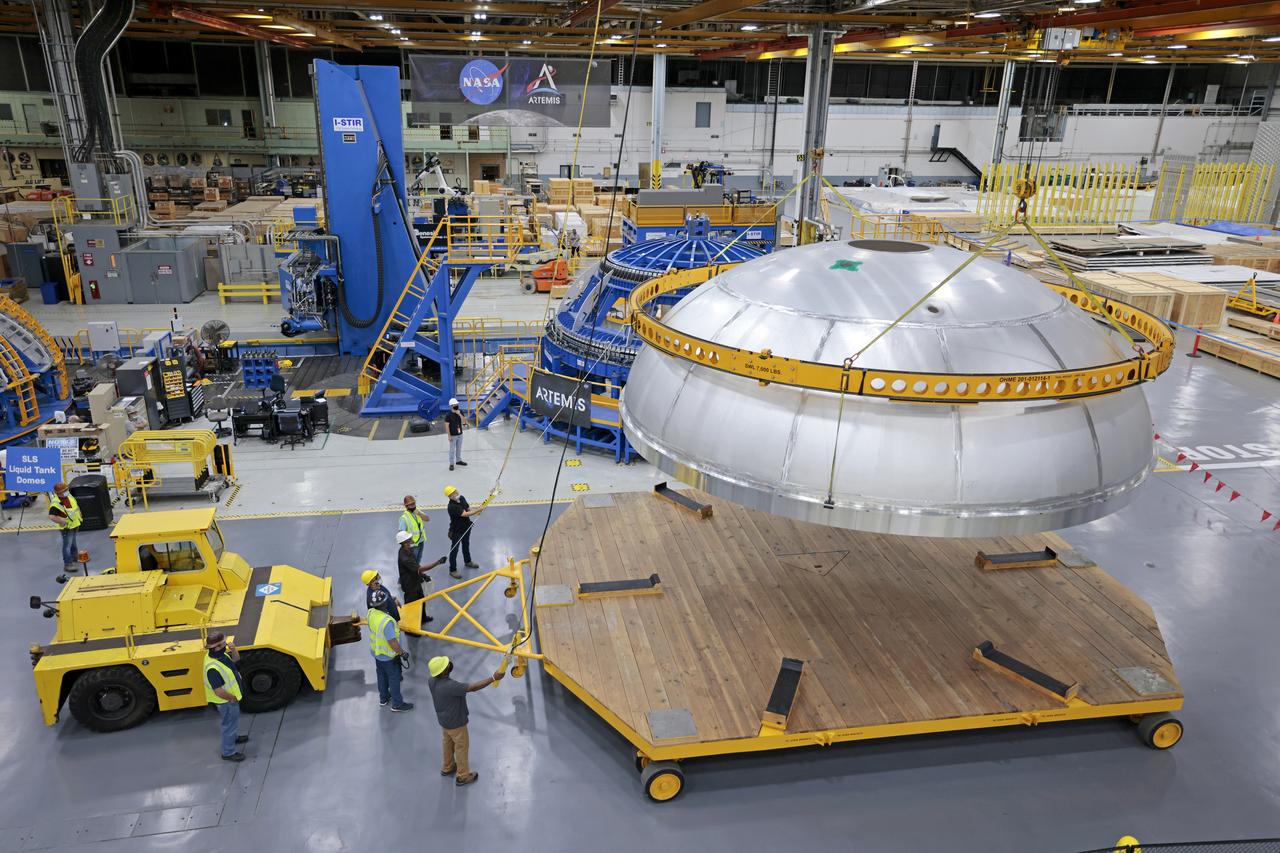
Teams completed the welding of the Artemis III core stage liquid oxygen tank dome at the NASA’s Michoud Assembly Facility in New Orleans. Crews moved the dome, which is the top of the tank. The dome was moved to an assembly area where it will be loaded into a robotic welder that will join it with the forward barrel to create half of the liquid oxygen tank. Later another barrel and dome will be added to complete the entire tank. The Space Launch System (SLS) core stage liquid oxygen tank holds 196,000 gallons of super-cooled liquid propellant that serves as one of the propellants for the four RS-25 engines. The SLS core stage is made up of five unique elements: the forward skirt, liquid oxygen tank, intertank, liquid hydrogen tank, and the engine section. The liquid oxygen and the liquid hydrogen tank will provide propellant to the four RS-25 engines to produce more than two million pounds of thrust to help launch NASA’s Orion spacecraft, astronauts, and supplies beyond Earth’s orbit to the Moon. Image credit: NASA/Michael DeMocker
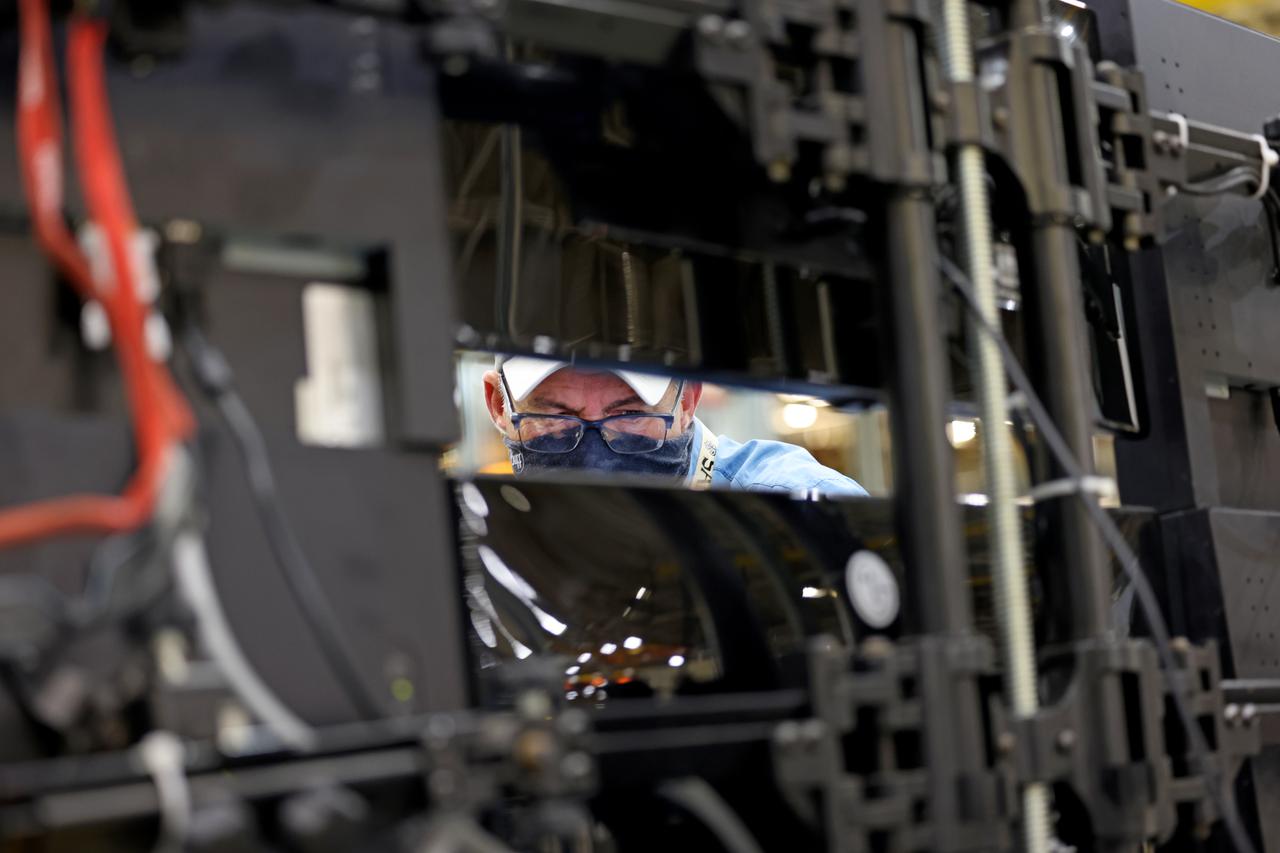
At NASA’s Michoud Assembly Facility in New Orleans, technicians from Orion prime contractor Lockheed Martin have welded together three cone-shaped panels on Orion’s crew module for the Artemis III mission that will land the first woman and next man on the Moon. The crew module’s primary structure, the pressure vessel, is comprised of seven machined aluminum alloy pieces that are welded together through a weld process that produces a strong, air-tight habitable space for astronauts during the mission. The pressure vessel is designed to withstand the harsh and demanding environment of deep space, and is the core structure upon which all the other elements of Orion’s crew module are integrated. Infographic showing the seven pieces of Orion's underlying structure With welding complete on the crew module cone panels – one of which contains windows providing astronauts views of the Moon and Earth – work will begin joining the forward bulkhead to the tunnel to create the top of the spacecraft, followed by the barrel and aft bulkhead join to form the bottom of Orion. Last, the forward bulkhead will be welded to the top of the panels and, for the seventh and closeout weld, the bottom of the cone panels will be joined to the barrel to complete the pressure vessel. Once welding of the Artemis III crew module primary structure is complete, it will be shipped to NASA’s Kennedy Space Center in Florida where it will undergo further assembly beginning this fall. Orion, the Space Launch System, and Exploration Ground Systems programs are foundational elements of the Artemis program. Artemis I will be the first integrated flight test of Orion and SLS and is targeted to launch later this year. Artemis II will follow and is the first crewed mission, taking humans farther into space than ever before. Image credit: NASA/Michael DeMocker
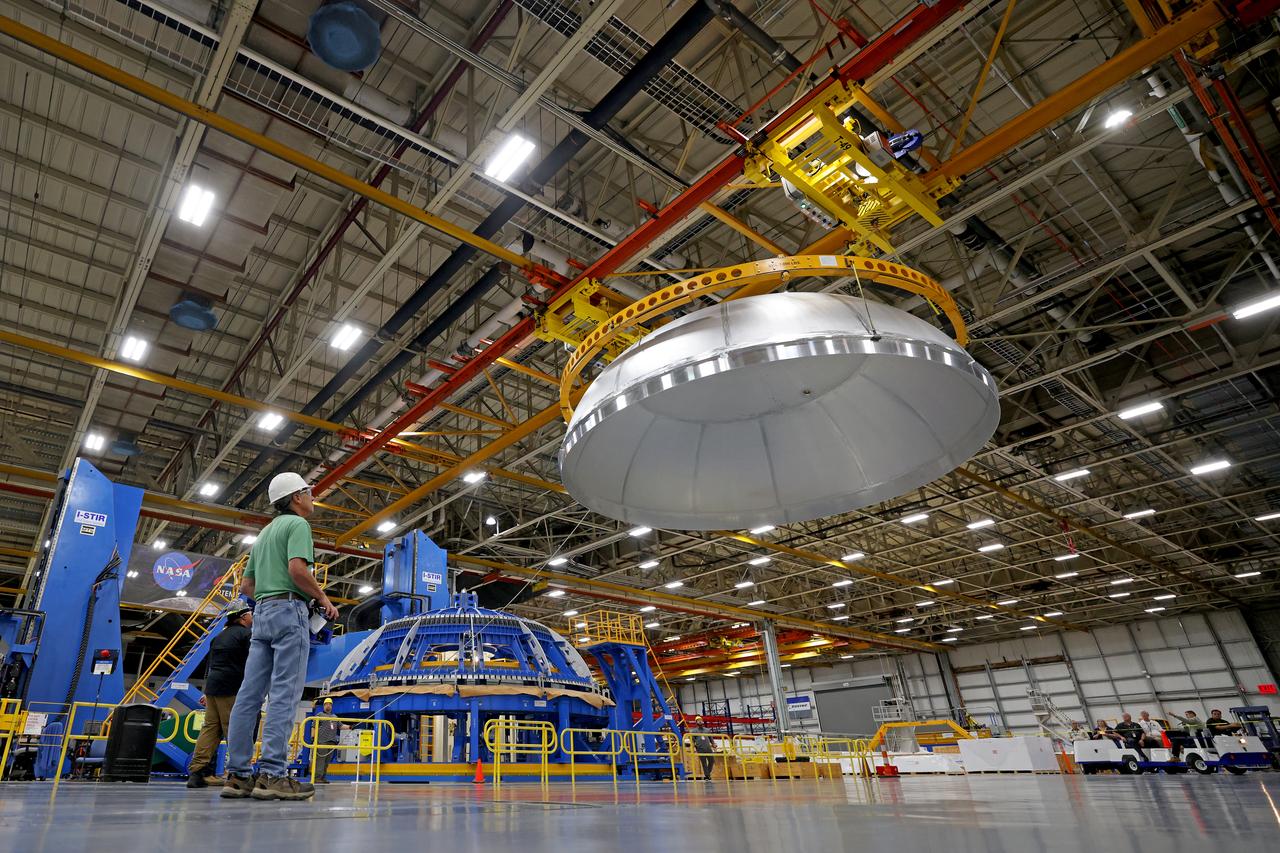
Teams completed welding of the liquid oxygen dome for the core stage of a future SLS (Space Launch System) rocket at NASA’s Michoud Assembly Facility in New Orleans. The dome, which will cap off the forward end of the liquid oxygen tank, was lifted off of the robotic weld tool and moved to an assembly area for the next phase of production. Later, crews will add the forward dome to join the two barrels and the aft dome to complete the liquid oxygen tank. The flight hardware will be used for Artemis IV, the first flight of SLS in its Block 1B configuration. The SLS core stage liquid oxygen tank holds 196,000 gallons of super-cooled liquid propellant. The SLS core stage is made up of five unique elements: the forward skirt, liquid oxygen tank, intertank, liquid hydrogen tank, and the engine section. The liquid oxygen and the liquid hydrogen tanks will provide propellant to the four RS-25 engines to produce more than two million pounds of thrust to help launch NASA’s Orion spacecraft, astronauts, and supplies beyond Earth’s orbit to the Moon. Image credit: NASA/Michael DeMocker
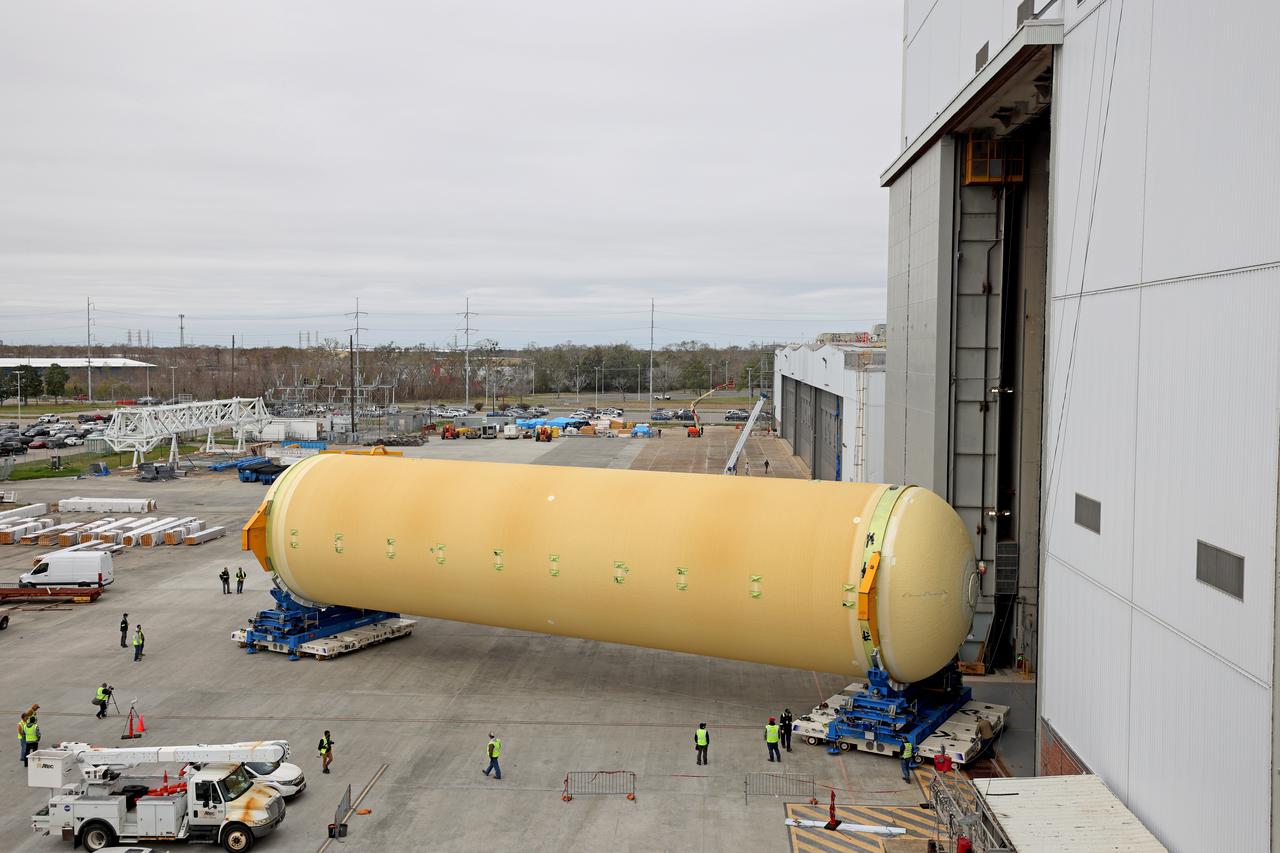
NASA is preparing major pieces of the Space Launch System rocket’s core stage to be joined as part of assembling the core stage for the Artemis II mission that will send crews to lunar orbit. Crews will soon connect the forward assembly with the 130-foot liquid hydrogen tank in the final assembly area at NASA’s Michoud Assembly Facility in New Orleans. When this process is completed, four of the five large structures that make up the core stage will be joined. The 66-foot forward assembly consists of the forward skirt, liquid oxygen tank and the intertank, which were mated earlier. This forward assembly will be joined with the 130-foot liquid hydrogen tank, the largest part of the stage that holds more than 500,000 gallons of cryogenic propellant. To compete the Artemis II core stage, engineers will add the engine section, which is currently being outfitted and includes the main propulsion systems that connect to the four RS-25 engines, Together, with the SLS twin solid rocket boosters, the core stage will produce 8.8 million pounds of thrust to send NASA’s Orion spacecraft, astronauts, and supplies beyond Earth’s orbit to the Moon. The SLS rocket and the Orion spacecraft form the foundation for deep space exploration and the Artemis lunar program. For more on the core stage: https://www.nasa.gov/exploration/systems/sls/multimedia/infographics/corestage101.html Image credit: NASA/Michael DeMocker
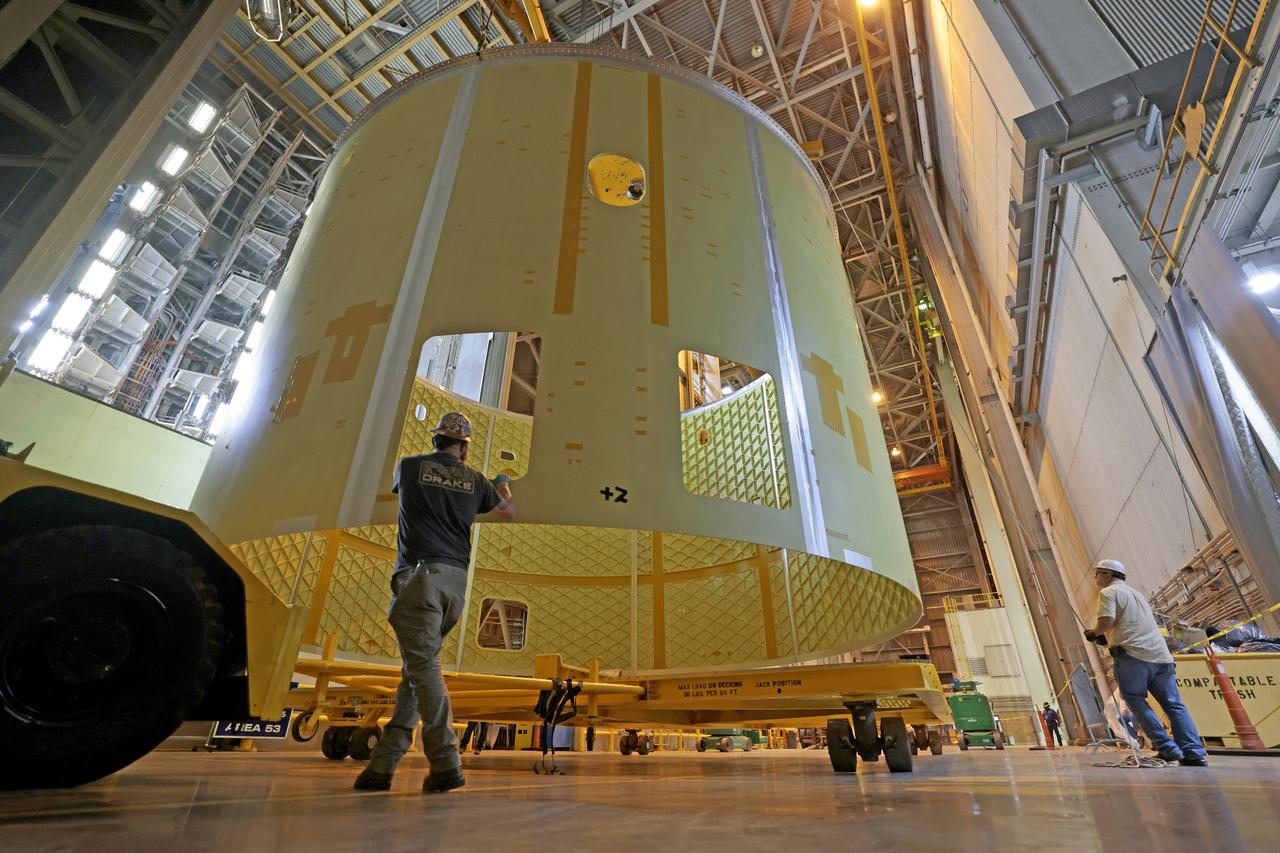
Technicians at NASA’s Michoud Assembly Facility move the engine section of NASA’s Space Launch System rocket for Artemis IV from the Vertical Assembly Building to Cell G for weld priming. This hardware is the first large piece manufactured for the Artemis IV mission and makes up the lowest portion of the 212-foot-tall core stage. When complete, the engine section will house the four RS-25 engines and include vital systems for mounting, controlling and delivering fuel from the propellant tanks to the rocket’s engines. Together with its four RS-25 engines and its twin solid rocket boosters, it will produce 8.8 million pounds of thrust to send NASA’s Orion spacecraft, astronauts, and supplies beyond Earth’s orbit to the Moon and, ultimately, Mars. Offering more payload mass, volume capability, and energy to speed missions through space, the SLS rocket, along with NASA’s Gateway in lunar orbit, the Human Landing System, and Orion spacecraft, is part of NASA’s backbone for deep space exploration and the Artemis lunar program. No other rocket is capable of carrying astronauts in Orion around the Moon in a single mission. Image credit: NASA/Michael DeMocker

This image shows technicians and engineers beginning the process of the forward join on the core stage of NASA’s Space Launch System rocket for Artemis II, the first crewed mission of NASA’s Artemis program at NASA’s Michoud Assembly Facility. The forward join connects the forward skirt, the liquid oxygen tank (LOX) and the intertank structures to form the top part of the SLS rocket’s core stage. Now, NASA and Boeing, the SLS prime contractor, will continue to integrate various systems inside the forward part of the core stage and prepare for structural joining of the liquid hydrogen tank and engine section to form the bottom of the stage. Together with its four RS-25 engines, the rocket’s massive 212-foot-tall core stage — the largest stage NASA has ever built — and its twin solid rocket boosters will produce 8.8 million pounds of thrust to send NASA’s Orion spacecraft, astronauts and supplies beyond Earth’s orbit to the Moon and, ultimately, Mars. Offering more payload mass, volume capability and energy to speed missions through space, the SLS rocket, along with NASA’s Gateway in lunar orbit, the Human Landing System, and Orion spacecraft, is part of NASA’s backbone for deep space exploration and the Artemis lunar program. No other rocket is capable of carrying astronauts in Orion around the Moon in a single mission. Image credit: NASA/Michael DeMocker

A sliver of the Super Flower Blood Moon over Bayou Bienvenue in New Orleans during the eclipse early Wednesday morning, May 26, 2021. Image credit: NASA/Michael DeMocker
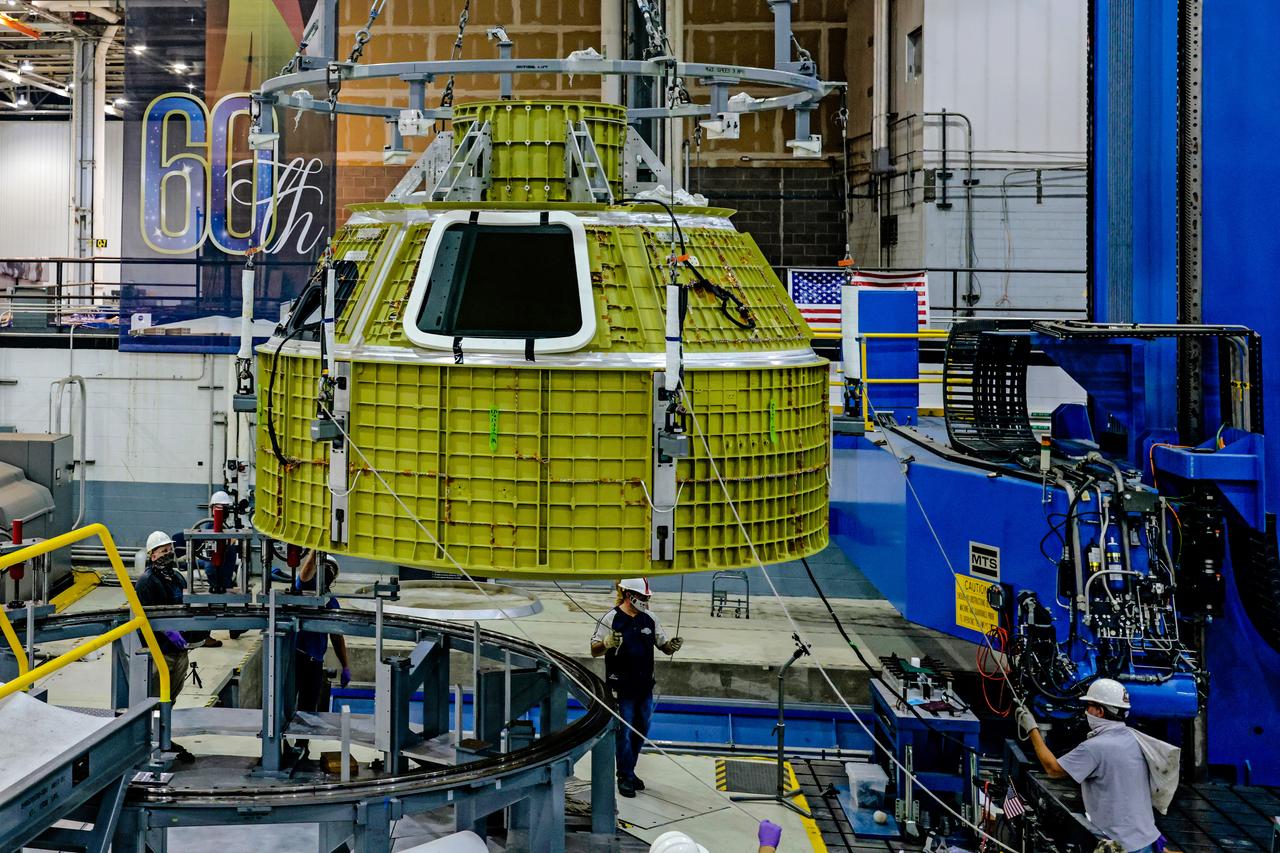
At NASA's Michoud Assembly Facility in New Orleans, Orion's newly completed pressure vessel for the Artemis III mission is lifted out of the welding tool on Aug. 27, 2021. The pressure vessel is the primary structure for Orion's crew module, joined together using state-of-the-art welding by technicians from lead contractor Lockheed Martin.
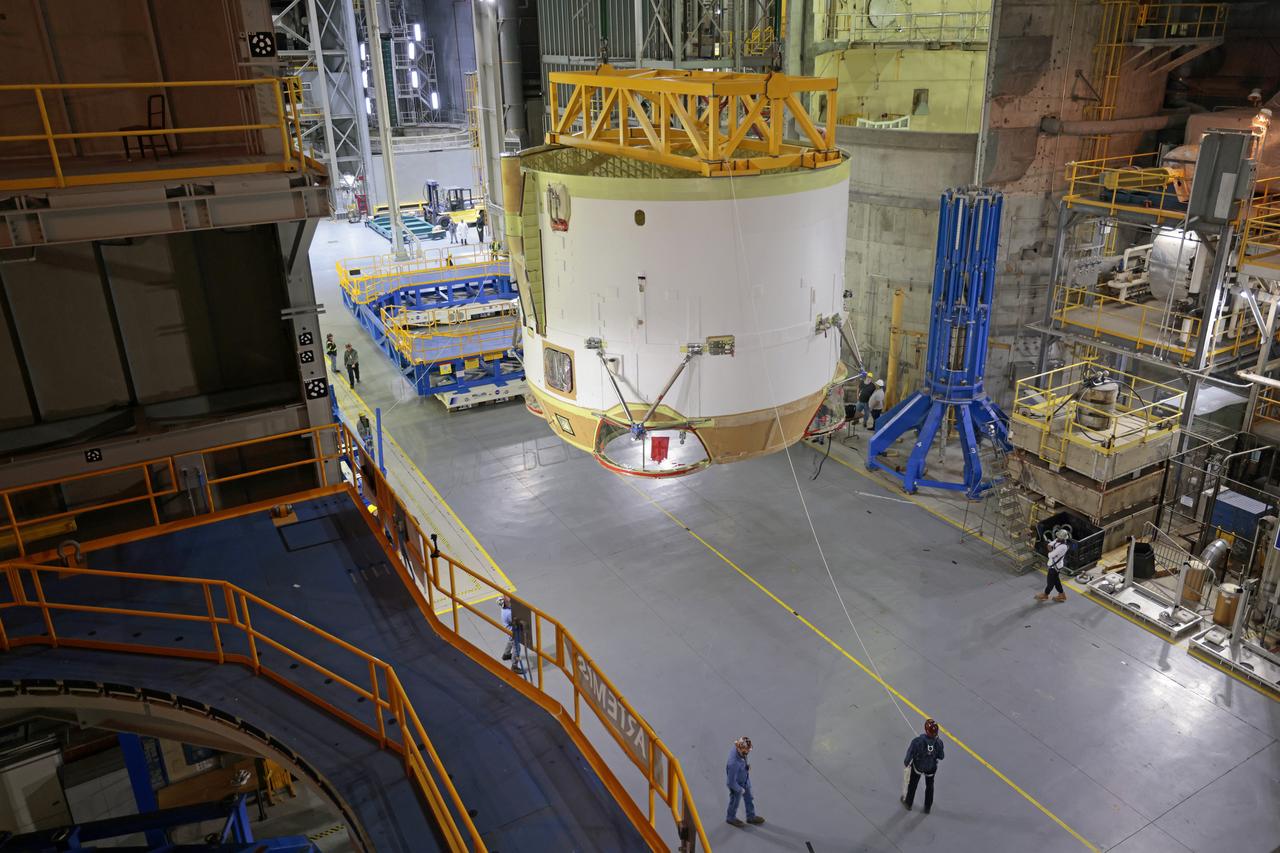
Technicians at NASA’s Michoud Assembly Facility in New Orleans flipped the engine section of NASA’s Space Launch System rocket for Artemis II from a vertical to a horizontal position Feb. 11. The flip, also known as a breakover, is in preparation for the final assembly and integration into the core stage for the second SLS rocket. The engine section is the bottom-most portion of the 212-foot-tall core stage and is one of the most complex and intricate portions of the rocket that will help power the first crewed Artemis mission to the Moon. It is the last of five elements that is needed to join the stage as one structure. In addition to its miles of cabling and hundreds of sensors, the engine section is a crucial attachment point for the four RS-25 engines and two solid rocket boosters that produce a combined 8.8 million pounds of thrust at liftoff and flight. Next, teams will move the engine section into the final assembly area where they will complete the join. After the join is complete, teams will begin to add each of the four RS-25 engines. The completely assembled stage with its four RS-25 engines will be shipped to NASA’s Kennedy Space Center in Florida later this year. The SLS rocket is the only rocket capable of carrying astronauts in Orion around the Moon in a single mission. Image credit: NASA/Michael DeMocker
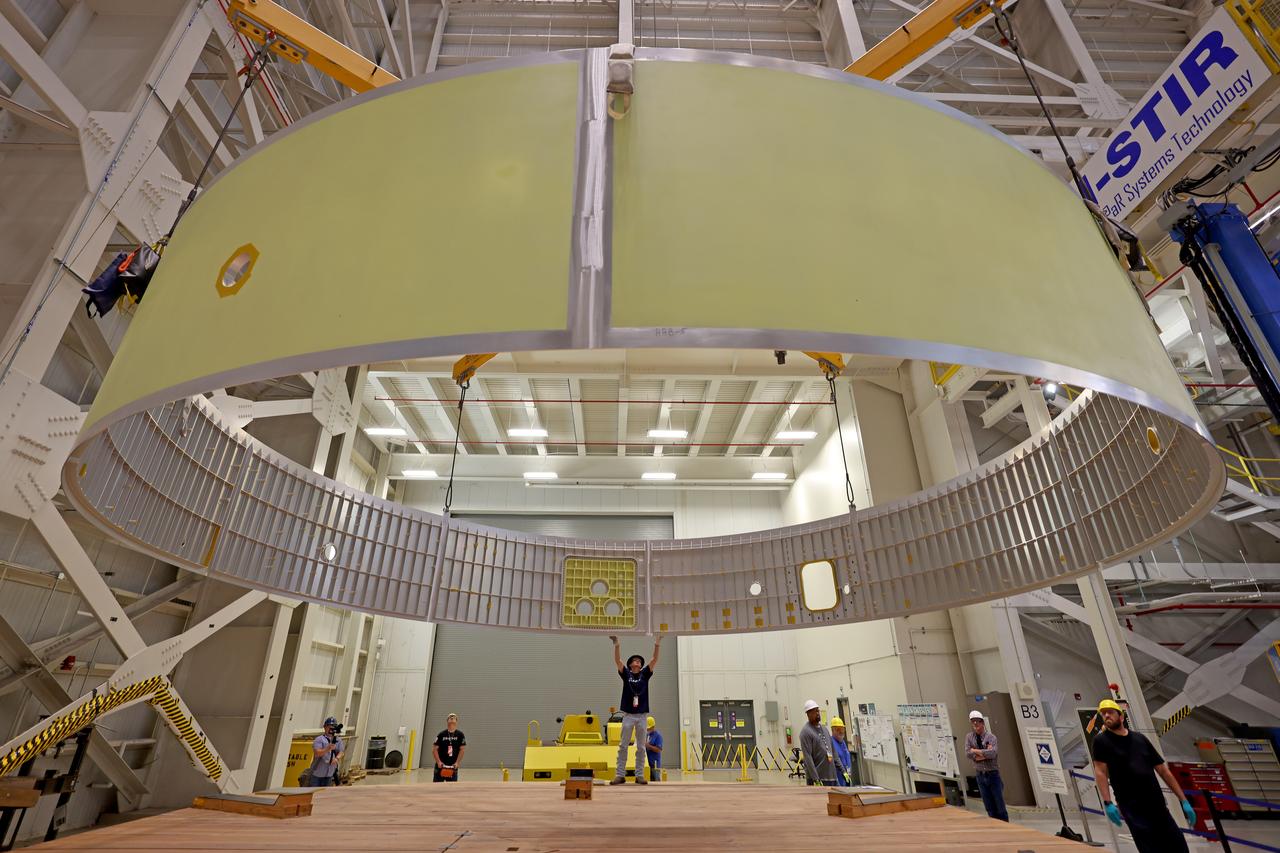
These images and videos show technicians at NASA’s Michoud Assembly Facility in New Orleans examining and lifting midbody barrels for the Exploration Upper Stage (EUS) structural test article of the SLS (Space Launch System) rocket in May 2023. The barrel sections make up the body, or main structure, of the future in-space propulsion stage for the mega rocket. The Exploration Upper Stage will be used on the second configuration of the SLS rocket, known as Block 1B, and will provide in-space propulsion to send astronauts in NASA’s Orion spacecraft and heavy cargo on a precise trajectory to the Moon. Beginning with Artemis IV, EUS will replace the interim cryogenic propulsion stage for the Block 1 configuration of SLS. It has larger propellant tanks and four RL10 engines, enabling SLS to launch 40% more cargo to the Moon along with crew. EUS flight hardware is in early production at Michoud. Crews with NASA and Boeing, the lead contractor for the SLS core stage and EUS, are also manufacturing the EUS structural test article. The test hardware is structurally identical to the flight version and will be used during a series of strenuous testing that simulates the forces the rocket will experience during launch and flight and verify its structural integrity. NASA is working to land the first woman and first person of color on the Moon under Artemis. SLS is part of NASA’s backbone for deep space exploration, along with Orion and the Gateway in orbit around the Moon. SLS is the only rocket that can send Orion, astronauts, and supplies to the Moon in a single mission.
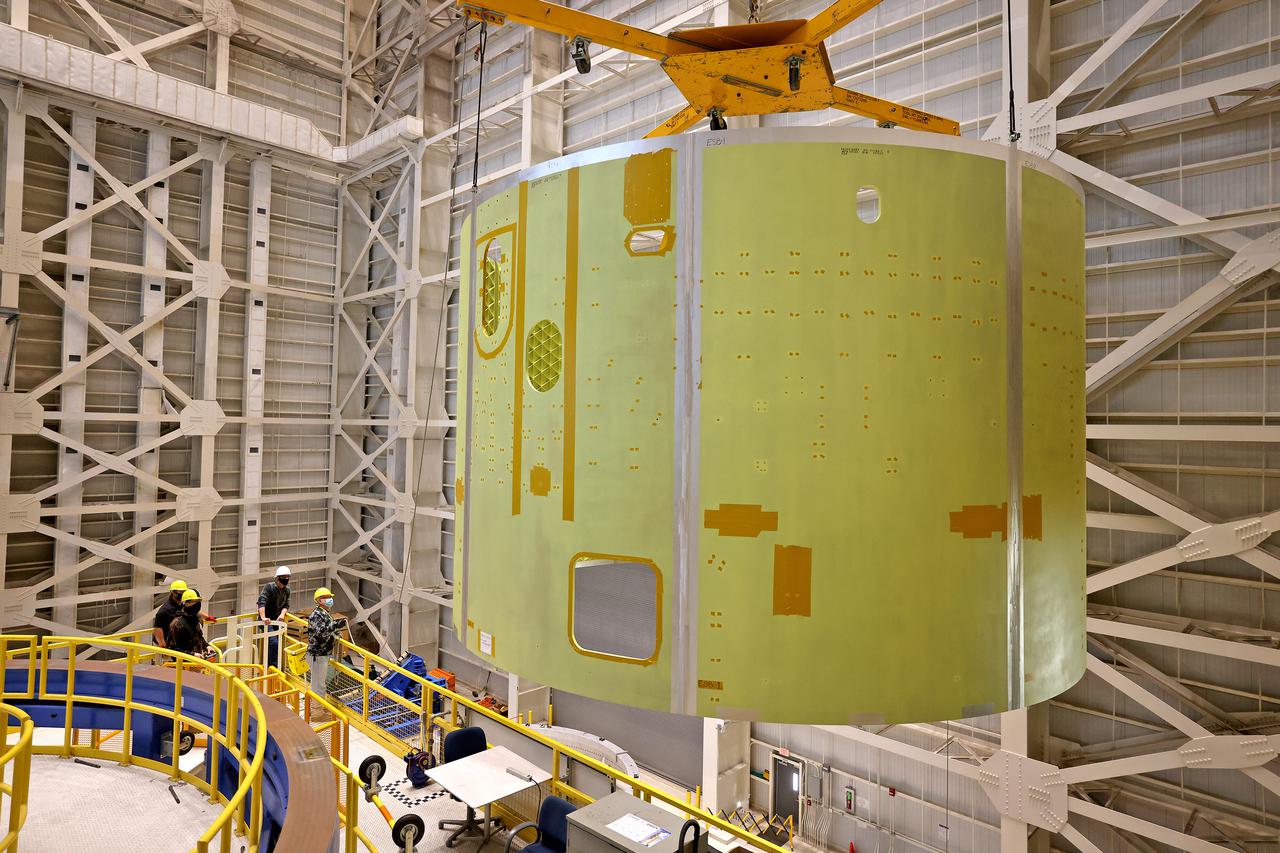
Technicians at NASA’s Michoud Assembly Facility move the engine section of NASA’s Space Launch System rocket for Artemis III in preparation for its next step in production. This hardware is the first large piece manufactured for the Artemis III mission and makes up the lowest portion of the 212-foot-tall core stage. When complete, the engine section will house the four RS-25 engines and include vital systems for mounting, controlling and delivering fuel from the propellant tanks to the rocket’s engines. Together with its four RS-25 engines and its twin solid rocket boosters, it will produce 8.8 million pounds of thrust to send NASA’s Orion spacecraft, astronauts, and supplies beyond Earth’s orbit to the Moon and, ultimately, Mars. Offering more payload mass, volume capability, and energy to speed missions through space, the SLS rocket, along with NASA’s Gateway in lunar orbit, the Human Landing System, and Orion spacecraft, is part of NASA’s backbone for deep space exploration and the Artemis lunar program. No other rocket is capable of carrying astronauts in Orion around the Moon in a single mission.
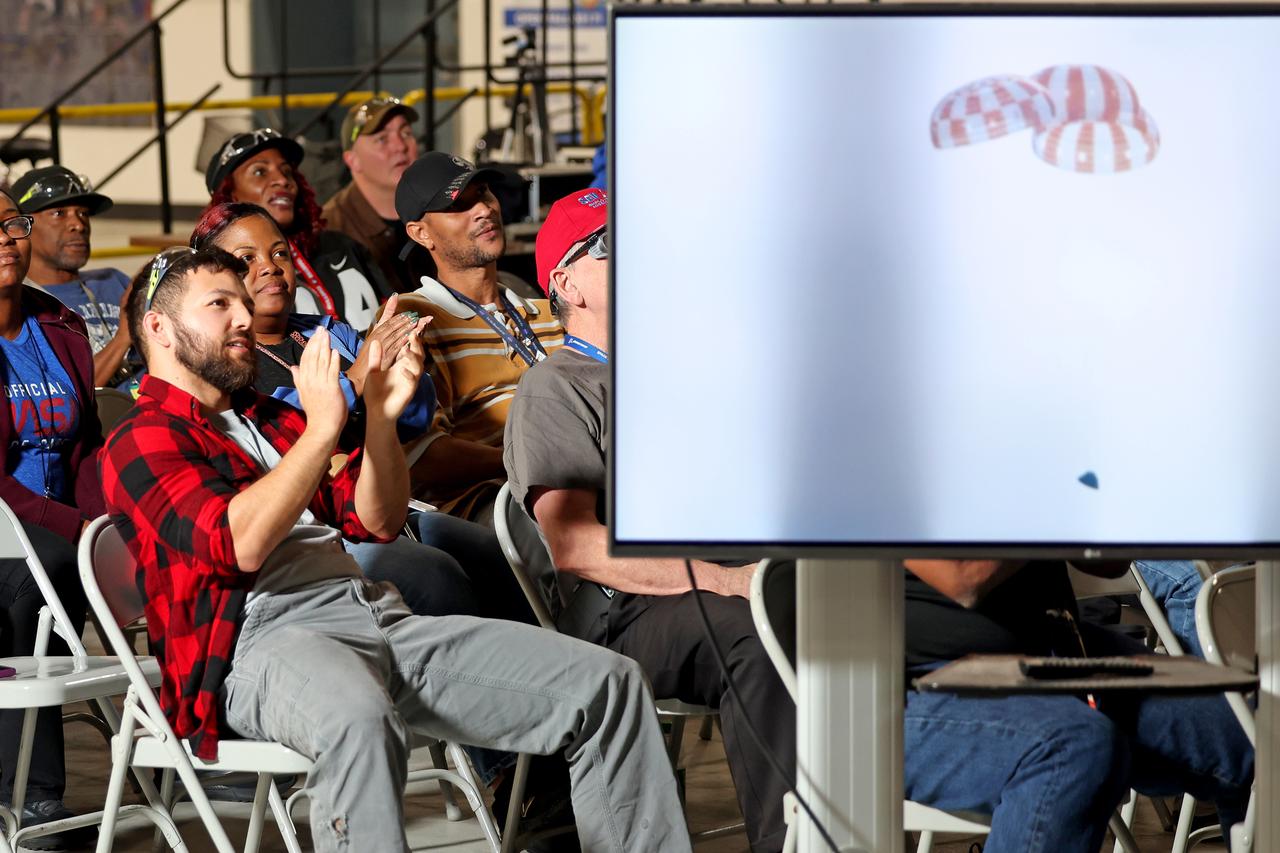
Employees at NASA’s Michoud Assembly Facility in New Orleans gather to watch the completion of NASA’s Artemis I mission with the splashdown of the Orion spacecraft on Dec. 11. The team cheered as the capsule safely returned to Earth following its 25.5-day mission, which brought it further into deep space than any human-rated spacecraft has ever flown before. The Orion crew capsule as well as parts for the launch abort system and the core stage of the Space Launch System rocket were built at the Michoud Assembly Facility. Artemis I is the first in a series of increasingly complex missions to the Moon. With the Artemis missions, NASA will land the first woman and the first person of color on the Moon. No other rocket is capable of carrying astronauts in Orion around the Moon in a single mission. Image credit: NASA/Michael DeMocker
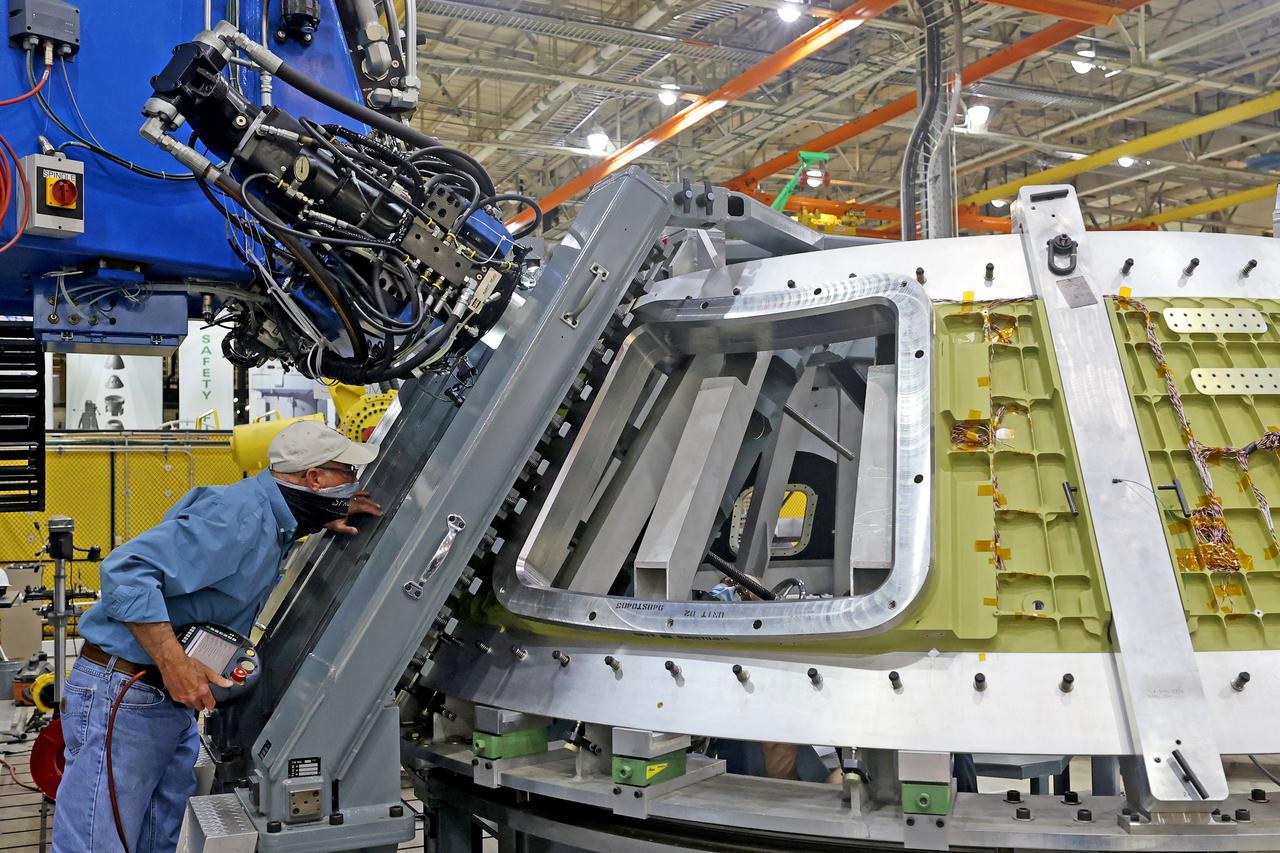
At NASA’s Michoud Assembly Facility in New Orleans, technicians from Orion prime contractor Lockheed Martin have welded together three cone-shaped panels on Orion’s crew module for the Artemis III mission that will land the first woman and next man on the Moon. The crew module’s primary structure, the pressure vessel, is comprised of seven machined aluminum alloy pieces that are welded together through a weld process that produces a strong, air-tight habitable space for astronauts during the mission. The pressure vessel is designed to withstand the harsh and demanding environment of deep space, and is the core structure upon which all the other elements of Orion’s crew module are integrated. Infographic showing the seven pieces of Orion's underlying structure With welding complete on the crew module cone panels – one of which contains windows providing astronauts views of the Moon and Earth – work will begin joining the forward bulkhead to the tunnel to create the top of the spacecraft, followed by the barrel and aft bulkhead join to form the bottom of Orion. Last, the forward bulkhead will be welded to the top of the panels and, for the seventh and closeout weld, the bottom of the cone panels will be joined to the barrel to complete the pressure vessel. Once welding of the Artemis III crew module primary structure is complete, it will be shipped to NASA’s Kennedy Space Center in Florida where it will undergo further assembly beginning this fall. Orion, the Space Launch System, and Exploration Ground Systems programs are foundational elements of the Artemis program. Artemis I will be the first integrated flight test of Orion and SLS and is targeted to launch later this year. Artemis II will follow and is the first crewed mission, taking humans farther into space than ever before. Image credit: NASA/Michael DeMocker
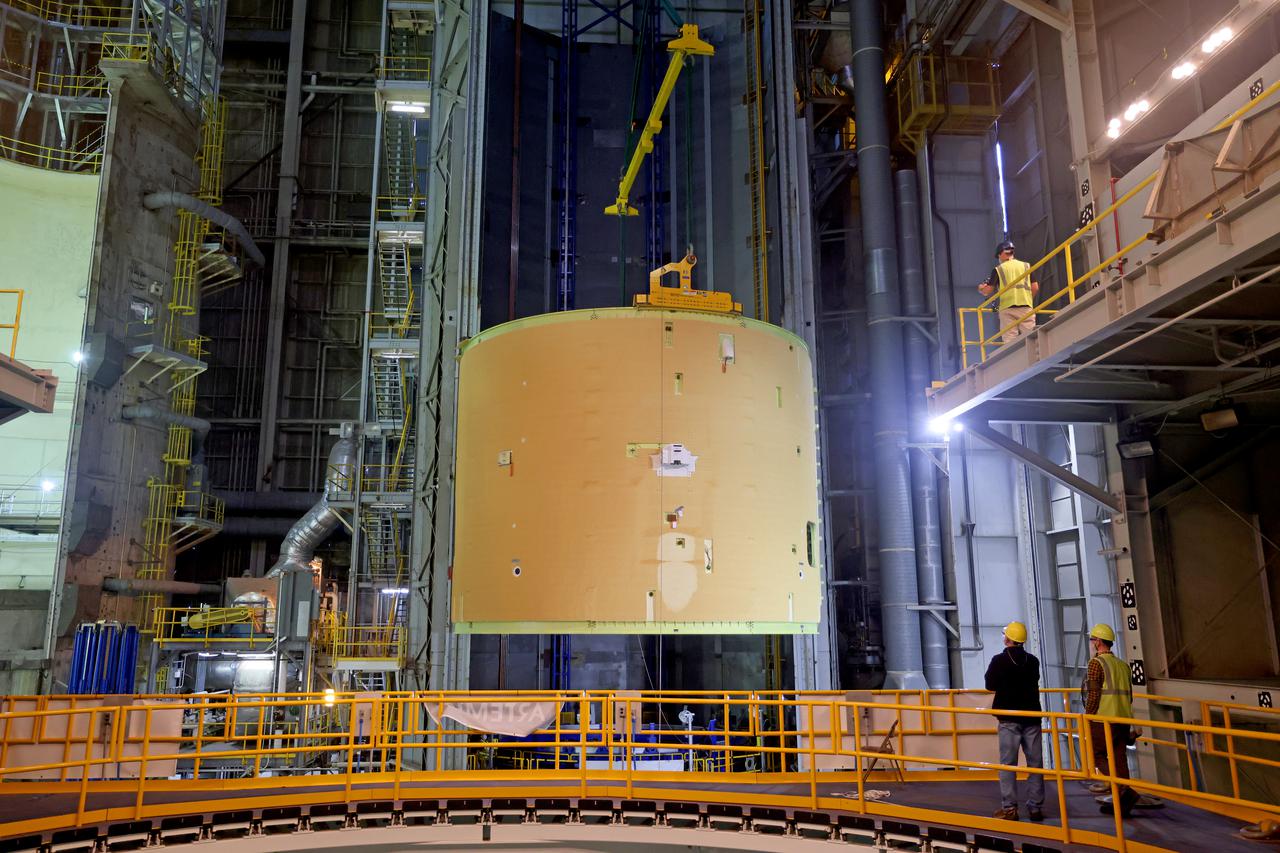
This image shows technicians and engineers beginning the process of the forward join on the core stage of NASA’s Space Launch System rocket for Artemis II, the first crewed mission of NASA’s Artemis program at NASA’s Michoud Assembly Facility. The forward join connects the forward skirt, the liquid oxygen tank (LOX) and the intertank structures to form the top part of the SLS rocket’s core stage. Now, NASA and Boeing, the SLS prime contractor, will continue to integrate various systems inside the forward part of the core stage and prepare for structural joining of the liquid hydrogen tank and engine section to form the bottom of the stage. Together with its four RS-25 engines, the rocket’s massive 212-foot-tall core stage — the largest stage NASA has ever built — and its twin solid rocket boosters will produce 8.8 million pounds of thrust to send NASA’s Orion spacecraft, astronauts and supplies beyond Earth’s orbit to the Moon and, ultimately, Mars. Offering more payload mass, volume capability and energy to speed missions through space, the SLS rocket, along with NASA’s Gateway in lunar orbit, the Human Landing System, and Orion spacecraft, is part of NASA’s backbone for deep space exploration and the Artemis lunar program. No other rocket is capable of carrying astronauts in Orion around the Moon in a single mission. Image credit: NASA/Michael DeMocker
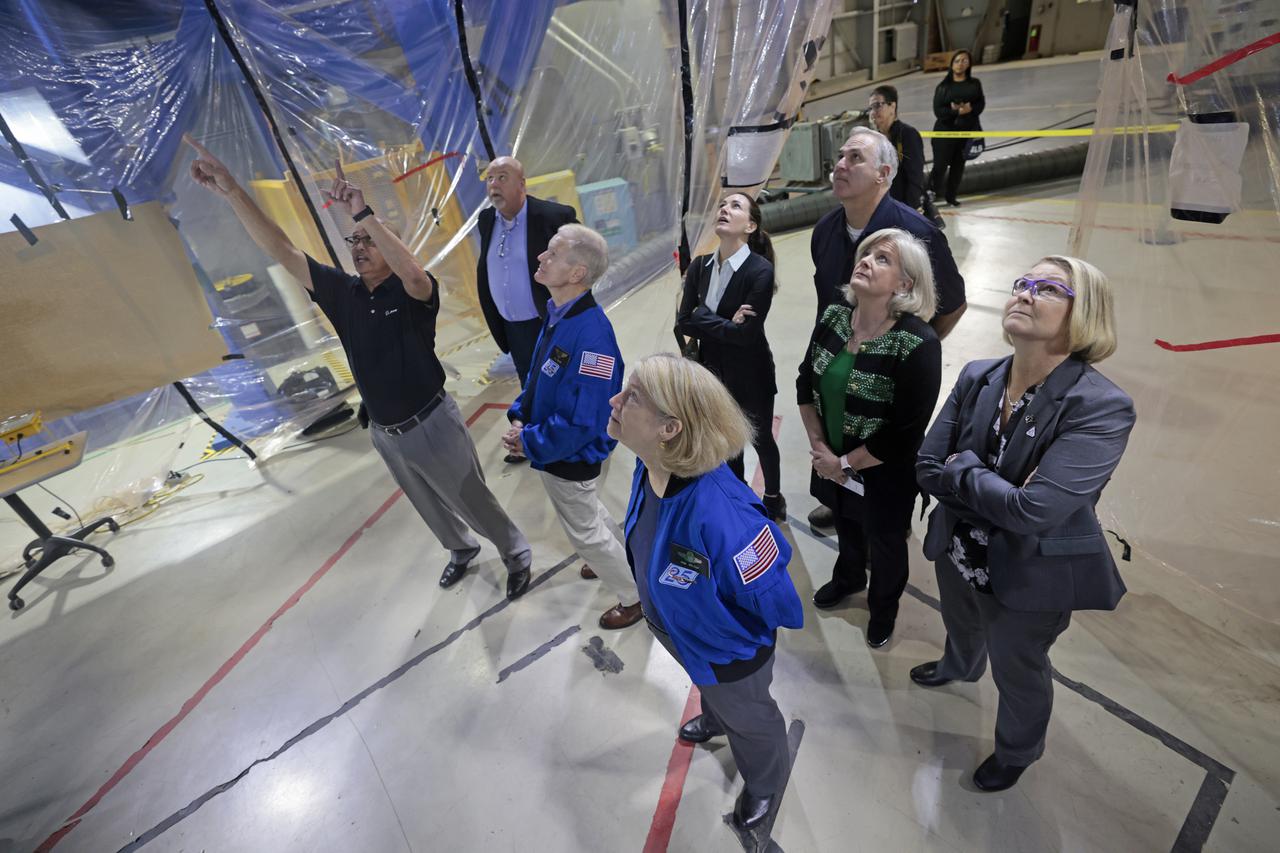
NASA Administrator Bill Nelson and Deputy Administrator Pam Melroy visited the agency’s Michoud Assembly Facility in New Orleans on Dec. 8, 2021 for tours and briefings on Michoud’s role in the Artemis program and other capabilities that enrich many facets of the nation’s space exploration endeavors. Image credit: NASA/Michael DeMocker
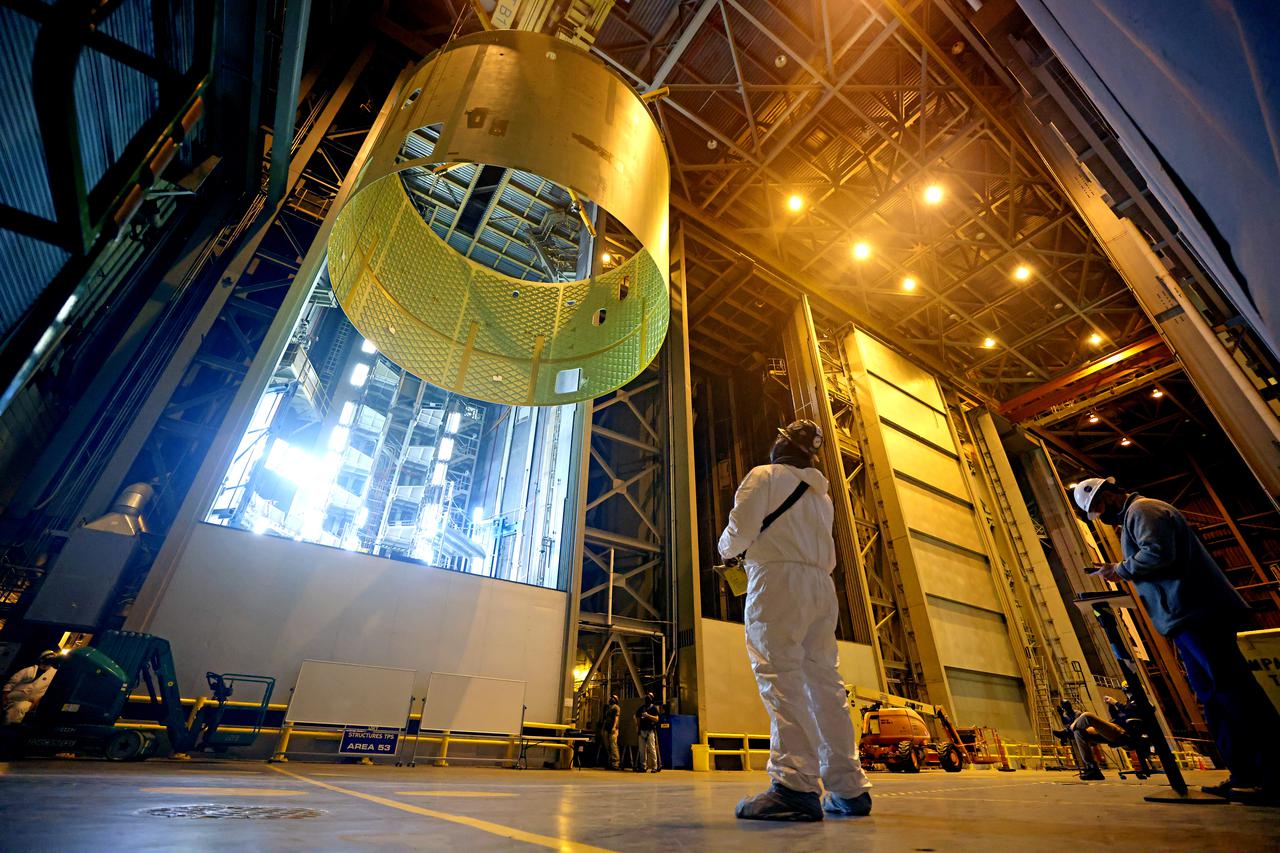
Technicians at NASA’s Michoud Assembly Facility prime and move the engine section of NASA’s Space Launch System rocket for Artemis III in preparation for its next step in production. This hardware is the first large piece manufactured for the Artemis III mission and makes up the lowest portion of the 212-foot-tall core stage. When complete, the engine section will house the four RS-25 engines and include vital systems for mounting, controlling and delivering fuel from the propellant tanks to the rocket’s engines. Together with its four RS-25 engines and its twin solid rocket boosters, it will produce 8.8 million pounds of thrust to send NASA’s Orion spacecraft, astronauts, and supplies beyond Earth’s orbit to the Moon and, ultimately, Mars. Offering more payload mass, volume capability, and energy to speed missions through space, the SLS rocket, along with NASA’s Gateway in lunar orbit, the Human Landing System, and Orion spacecraft, is part of NASA’s backbone for deep space exploration and the Artemis lunar program. No other rocket is capable of carrying astronauts in Orion around the Moon in a single mission.
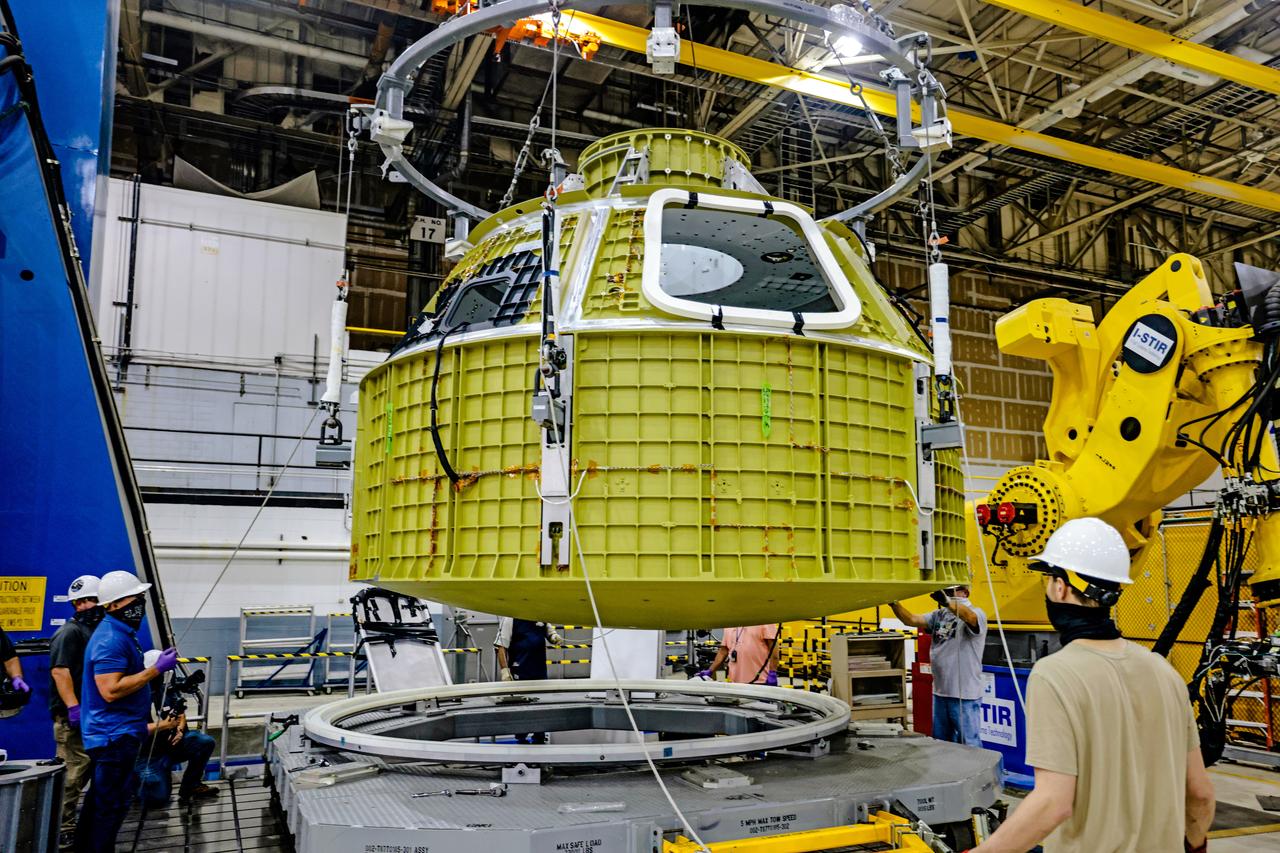
At NASA's Michoud Assembly Facility in New Orleans, Orion's newly completed pressure vessel for the Artemis III mission is lifted out of the welding tool on Aug. 27, 2021. The pressure vessel is the primary structure for Orion's crew module, joined together using state-of-the-art welding by technicians from lead contractor Lockheed Martin.
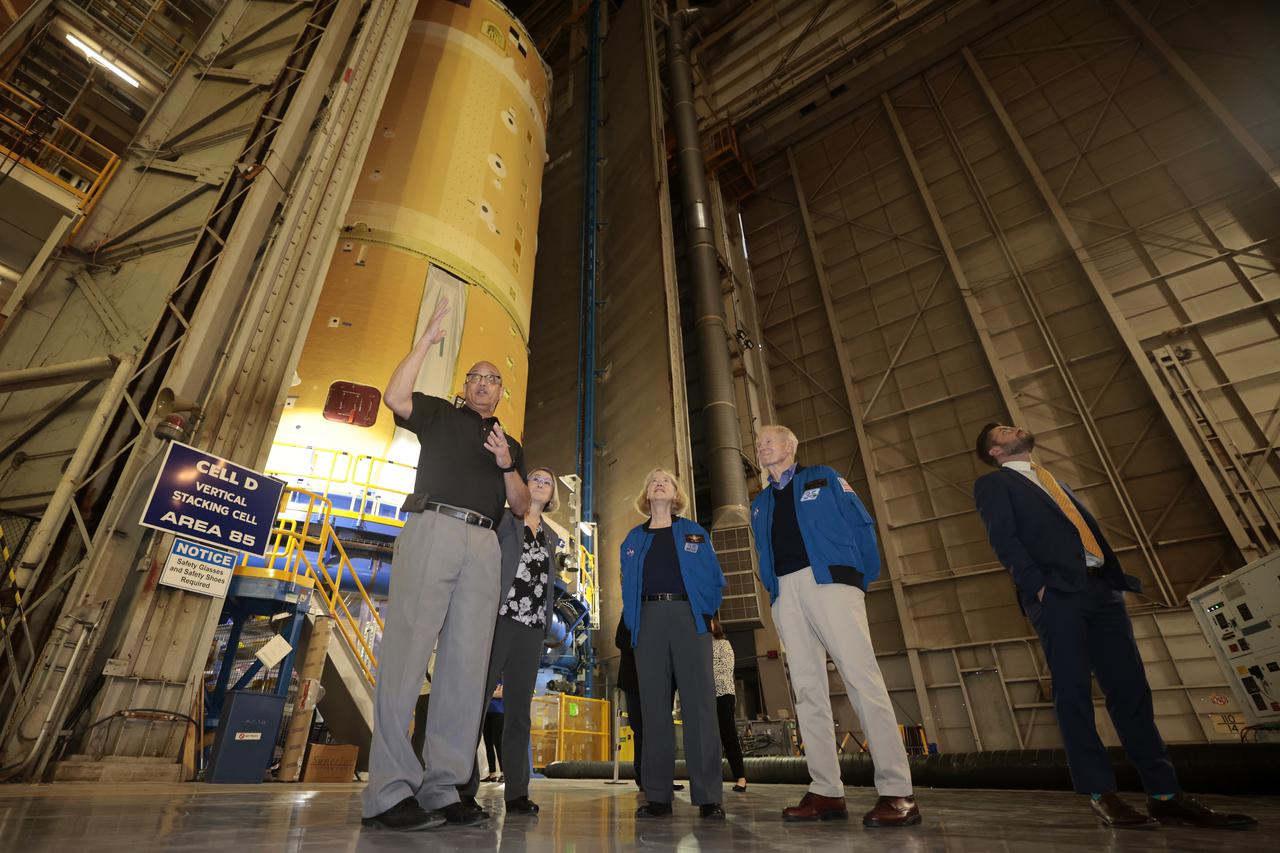
NASA Administrator Bill Nelson and Deputy Administrator Pam Melroy visited the agency’s Michoud Assembly Facility in New Orleans on Dec. 8, 2021 for tours and briefings on Michoud’s role in the Artemis program and other capabilities that enrich many facets of the nation’s space exploration endeavors. Image credit: NASA/Michael DeMocker
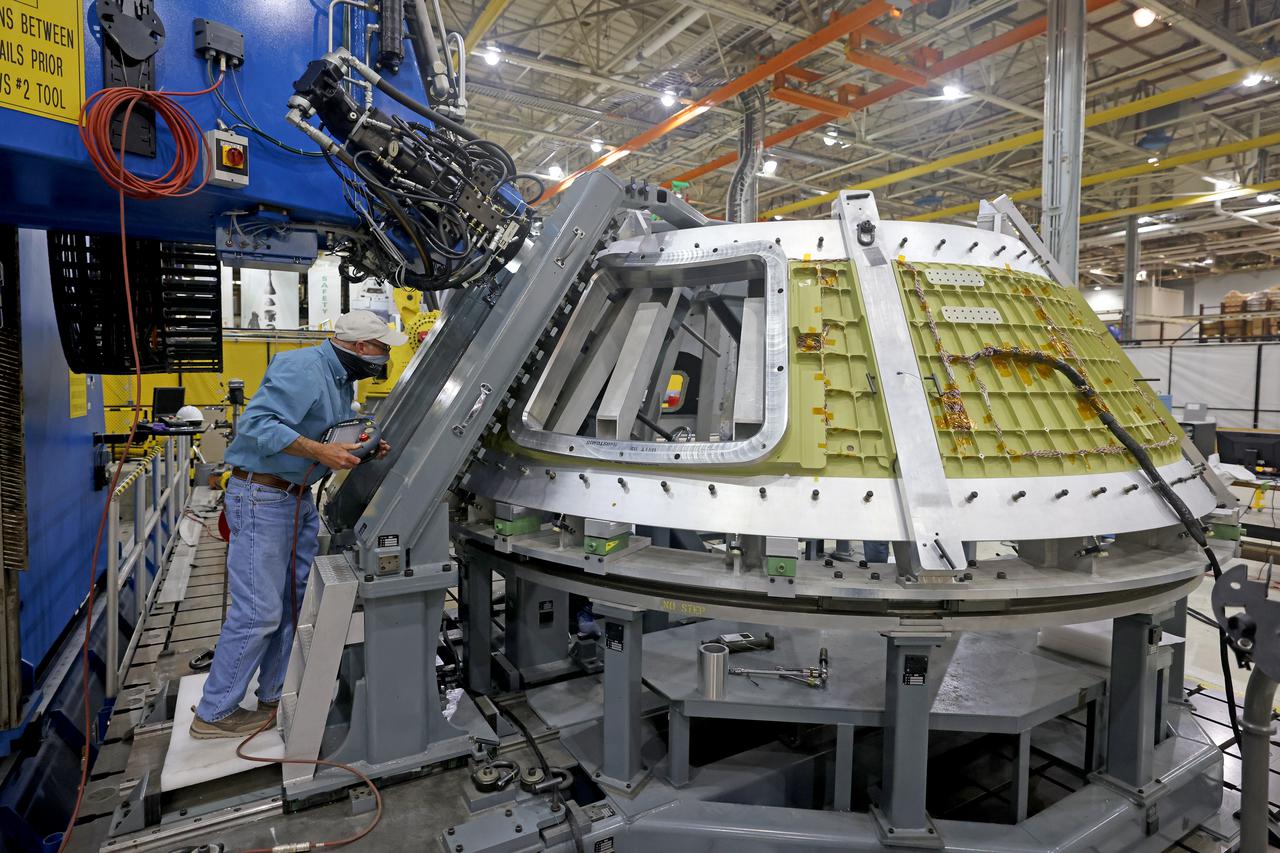
At NASA’s Michoud Assembly Facility in New Orleans, technicians from Orion prime contractor Lockheed Martin have welded together three cone-shaped panels on Orion’s crew module for the Artemis III mission that will land the first woman and next man on the Moon. The crew module’s primary structure, the pressure vessel, is comprised of seven machined aluminum alloy pieces that are welded together through a weld process that produces a strong, air-tight habitable space for astronauts during the mission. The pressure vessel is designed to withstand the harsh and demanding environment of deep space, and is the core structure upon which all the other elements of Orion’s crew module are integrated. Infographic showing the seven pieces of Orion's underlying structure With welding complete on the crew module cone panels – one of which contains windows providing astronauts views of the Moon and Earth – work will begin joining the forward bulkhead to the tunnel to create the top of the spacecraft, followed by the barrel and aft bulkhead join to form the bottom of Orion. Last, the forward bulkhead will be welded to the top of the panels and, for the seventh and closeout weld, the bottom of the cone panels will be joined to the barrel to complete the pressure vessel. Once welding of the Artemis III crew module primary structure is complete, it will be shipped to NASA’s Kennedy Space Center in Florida where it will undergo further assembly beginning this fall. Orion, the Space Launch System, and Exploration Ground Systems programs are foundational elements of the Artemis program. Artemis I will be the first integrated flight test of Orion and SLS and is targeted to launch later this year. Artemis II will follow and is the first crewed mission, taking humans farther into space than ever before. Image credit: NASA/Michael DeMocker
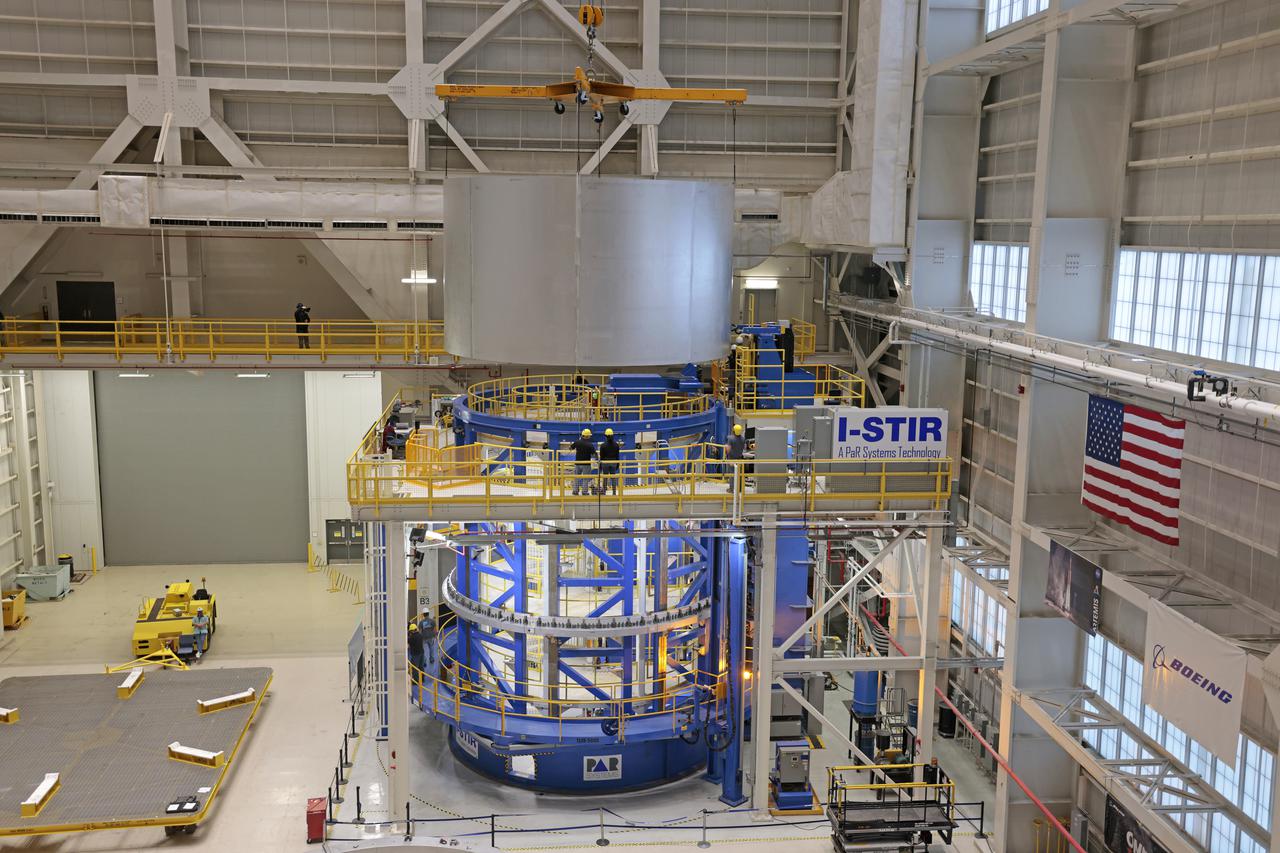
On Thursday, February 10, 2022, move crews at NASA’s Michoud Assembly Facility lift the core stage 3 liquid oxygen tank (LOX) aft barrel out of the vertical friction stir weld tool to be moved for its next phase of production. Eventually, the aft barrel will be mated with the forward barrel and forward and aft domes to create the LOX tank, which will be used for the Space Launch System’s Artemis III mission. The LOX tank holds 196,000 gallons of super-cooled liquid oxygen to help fuel four RS-25 engines. The SLS core stage is made up of five unique elements: the forward skirt, liquid oxygen tank, intertank, liquid hydrogen tank, and the engine section. The liquid oxygen hardware, along with the liquid hydrogen tank will provide propellant to the four RS-25 engines to produce more than two million pounds of thrust to help launch NASA’s Orion spacecraft, astronauts, and supplies beyond Earth’s orbit to the Moon. Image credit: NASA/Michael DeMocker
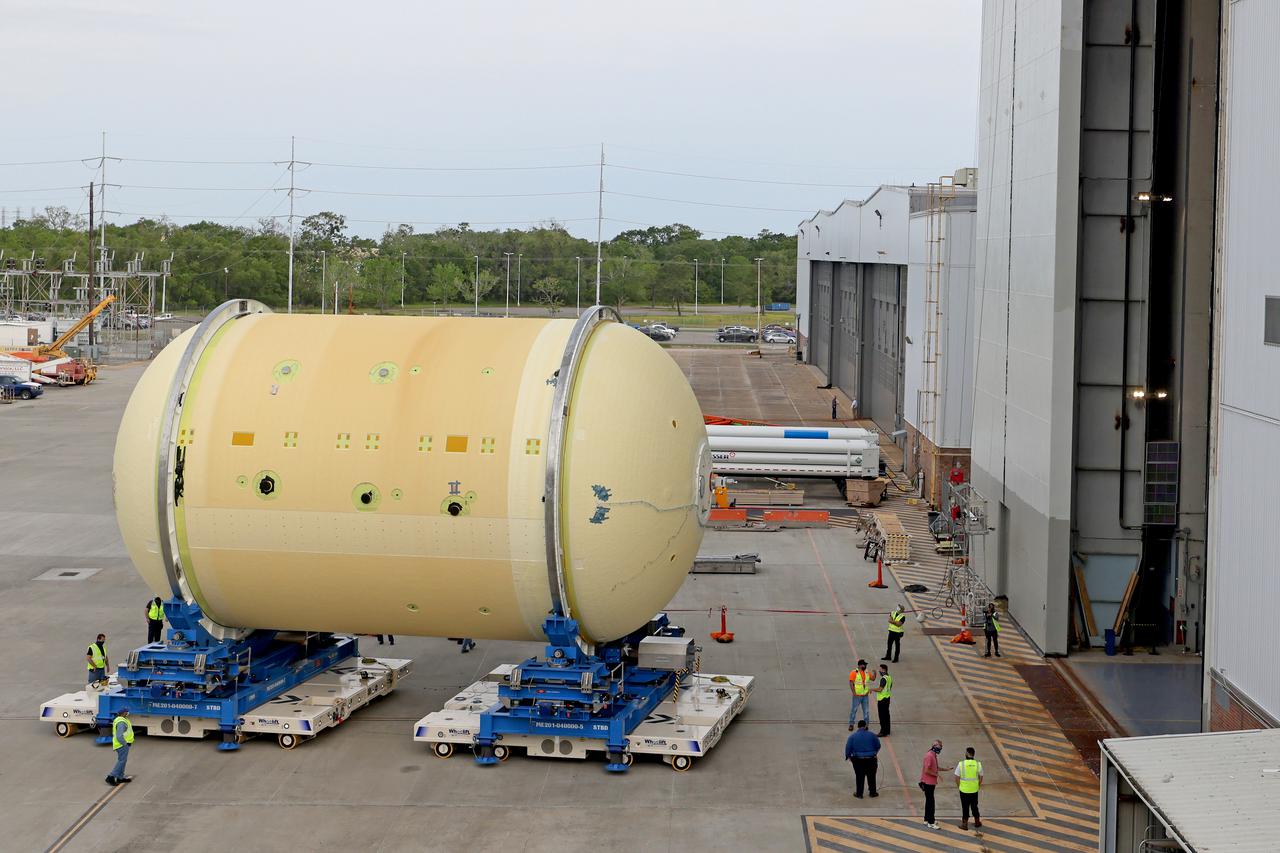
This image shows technicians and engineers moving the liquid oxygen tank (LOX) into position as they continue the process of the forward join on the core stage of NASA’s Space Launch System rocket for Artemis II, the first crewed mission of NASA’s Artemis program at NASA’s Michoud Assembly Facility. The forward join connects the forward skirt, the liquid oxygen tank (LOX) and the intertank structures to form the top part of the SLS rocket’s core stage. Now, NASA and Boeing, the SLS prime contractor, will continue to integrate various systems inside the forward part of the core stage and prepare for structural joining of the liquid hydrogen tank and engine section to form the bottom of the stage. Together with its four RS-25 engines, the rocket’s massive 212-foot-tall core stage — the largest stage NASA has ever built — and its twin solid rocket boosters will produce 8.8 million pounds of thrust to send NASA’s Orion spacecraft, astronauts and supplies beyond Earth’s orbit to the Moon and, ultimately, Mars. Offering more payload mass, volume capability and energy to speed missions through space, the SLS rocket, along with NASA’s Gateway in lunar orbit, the Human Landing System, and Orion spacecraft, is part of NASA’s backbone for deep space exploration and the Artemis lunar program. No other rocket is capable of carrying astronauts in Orion around the Moon in a single mission. Image credit: NASA/Michael DeMocker

Teams completed the welding of the Artemis III core stage liquid oxygen tank dome at the NASA’s Michoud Assembly Facility in New Orleans. Crews moved the dome, which is the top of the tank. The dome was moved to an assembly area where it will be loaded into a robotic welder that will join it with the forward barrel to create half of the liquid oxygen tank. Later another barrel and dome will be added to complete the entire tank. The Space Launch System (SLS) core stage liquid oxygen tank holds 196,000 gallons of super-cooled liquid propellant that serves as one of the propellants for the four RS-25 engines. The SLS core stage is made up of five unique elements: the forward skirt, liquid oxygen tank, intertank, liquid hydrogen tank, and the engine section. The liquid oxygen and the liquid hydrogen tank will provide propellant to the four RS-25 engines to produce more than two million pounds of thrust to help launch NASA’s Orion spacecraft, astronauts, and supplies beyond Earth’s orbit to the Moon. Image credit: NASA/Michael DeMocker