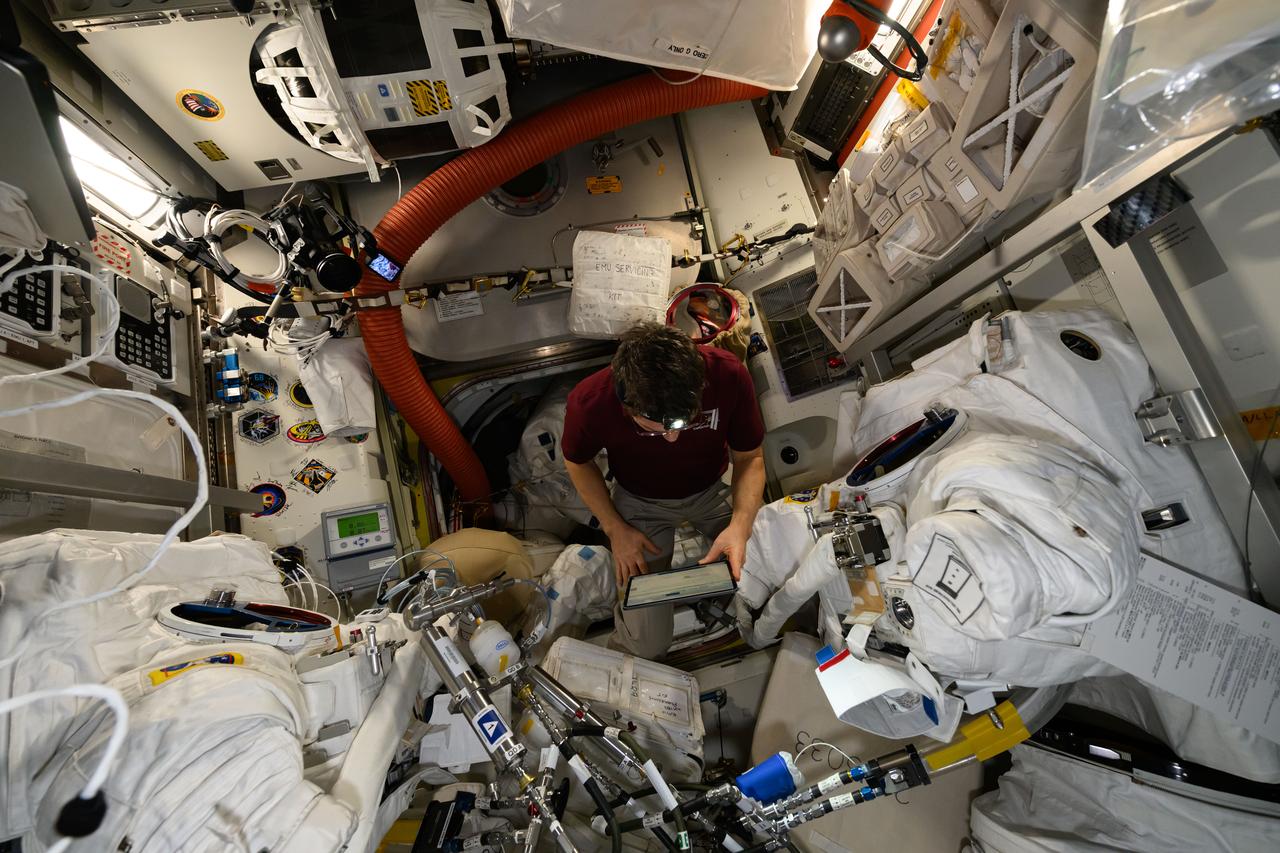
iss071e007603 (April 15, 2024) --- Expedition 71 Flight Engineer and NASA astronaut Mike Barratt reviews procedures on a computer tablet during maintenance on a pair of spacesuits inside the International Space Station's Quiest airlock.

iss072e011331 (Sept. 27, 2024) --- The aurora australis blends with Earth's atmospheric glow blanketing the nighttime horizon with New Zealand's city lights below in this photograph from the International Space Station as it orbited 270 miles above the Tasman Sea.

iss072e011489 (Sept. 27, 2024) --- The aurora australis blends with Earth's atmospheric glow blanketing the nighttime horizon in this photograph from the International Space Station as it orbited 271 miles above the Pacific Ocean off the coast of New Zealand.
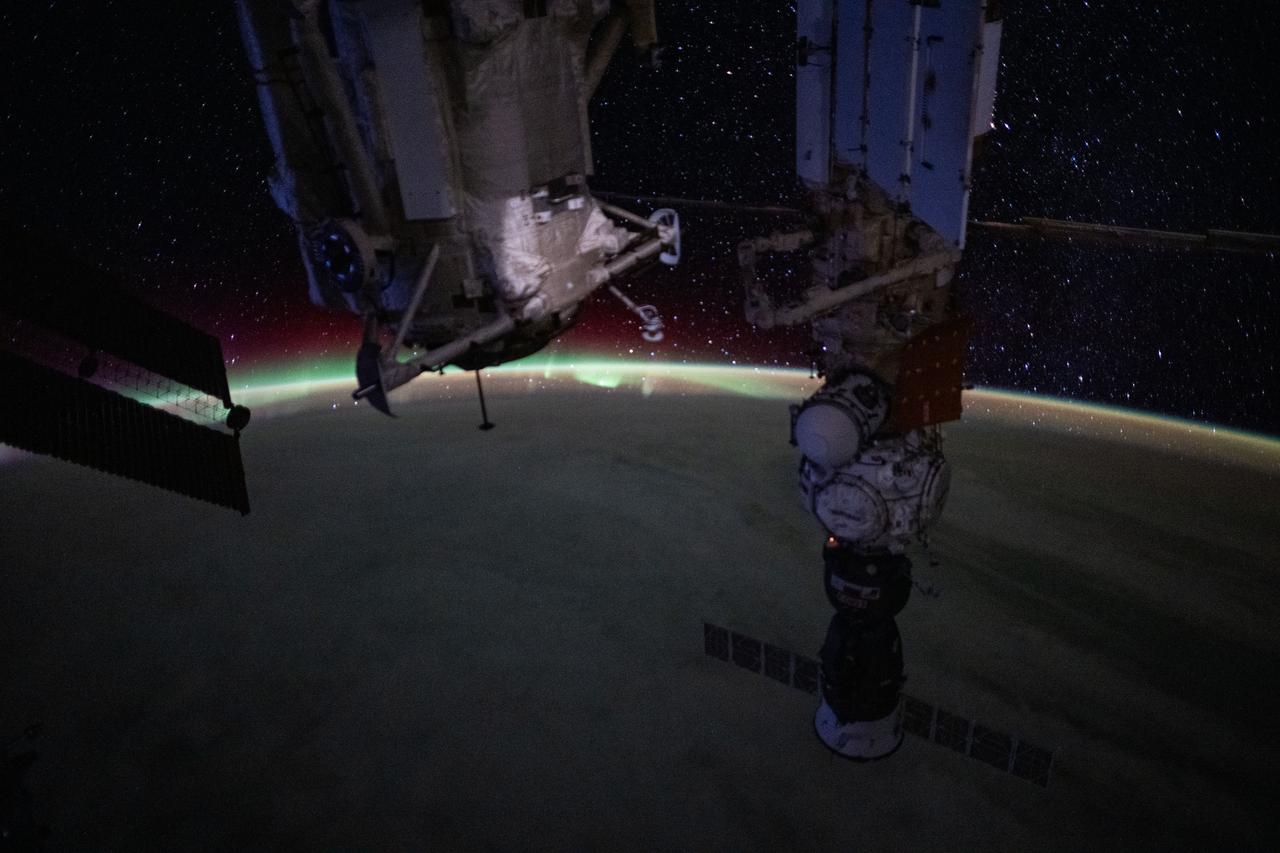
iss071e006791 (April 24, 2024) --- An aurora blankets Earth's horizon in this photograph from the International Space Station as it orbited 260 miles above North America. In the foreground, are the Rassvet module and the Nauka science module. The Prichal docking module and the Soyuz MS-25 crew ship are both attached to Nauka.
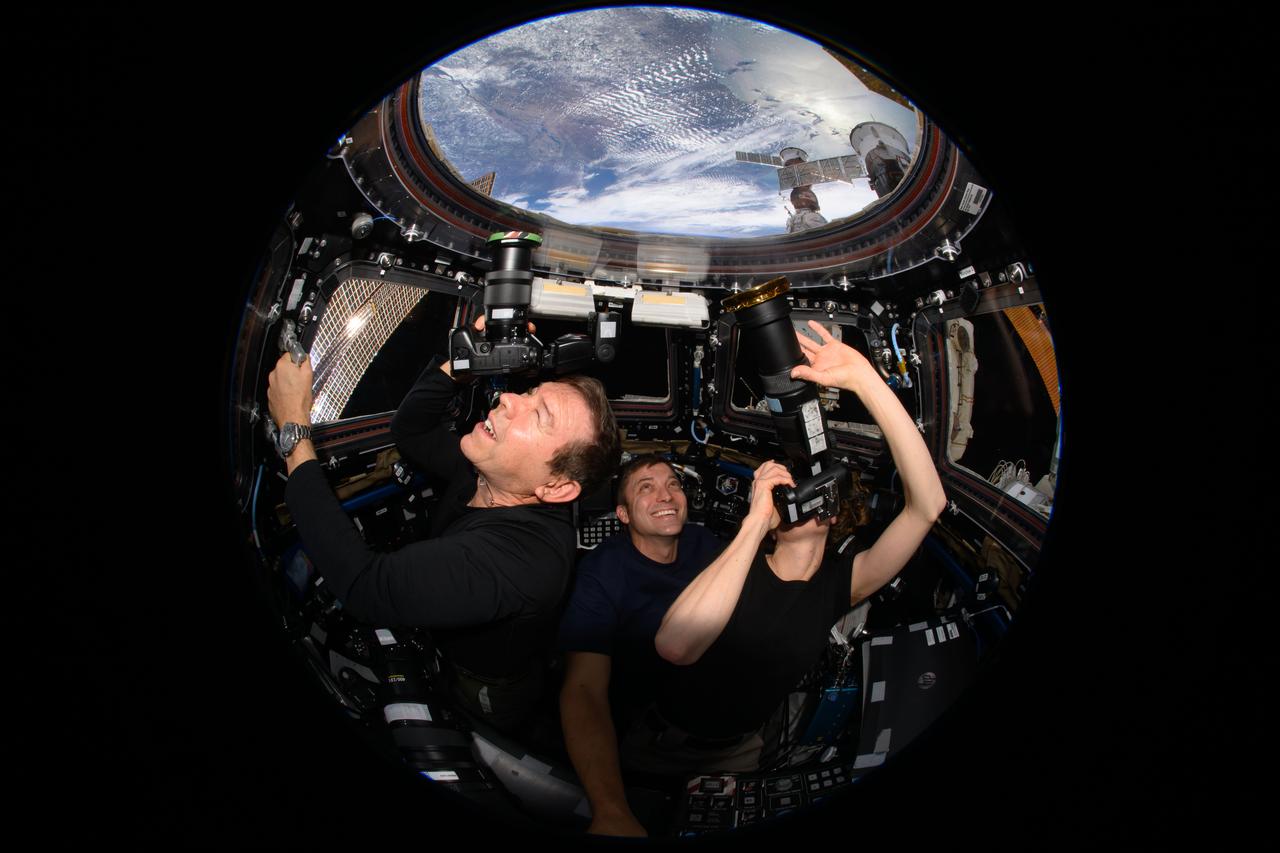
iss070e132878 (March 31, 2024) --- Expedition 70 Flight Engineers (from left) Mike Barratt, Matthew Dominick, and Loral O'Hara participate in an Earth photography session inside the cupola, the International Space Station's "window to the world." The orbital complex was soaring 259 miles above West Virginia in the United States at the time of this photograph.

iss071e170351 (6/3/2024) --- NASA astronaut Matthew Dominick captured red sprites from space station. The bright red flashes in the center of this image are a little-understood phenomenon associated with powerful lightning events and appear high above the clouds in Earth’s upper atmosphere. Red sprites are one type of Transient Luminous Events, colorful bursts of energy that appear above storms due to lightning activity occurring in and below storms on Earth. Understanding processes occurring in Earth’s atmosphere can help improve climate modeling and monitoring.
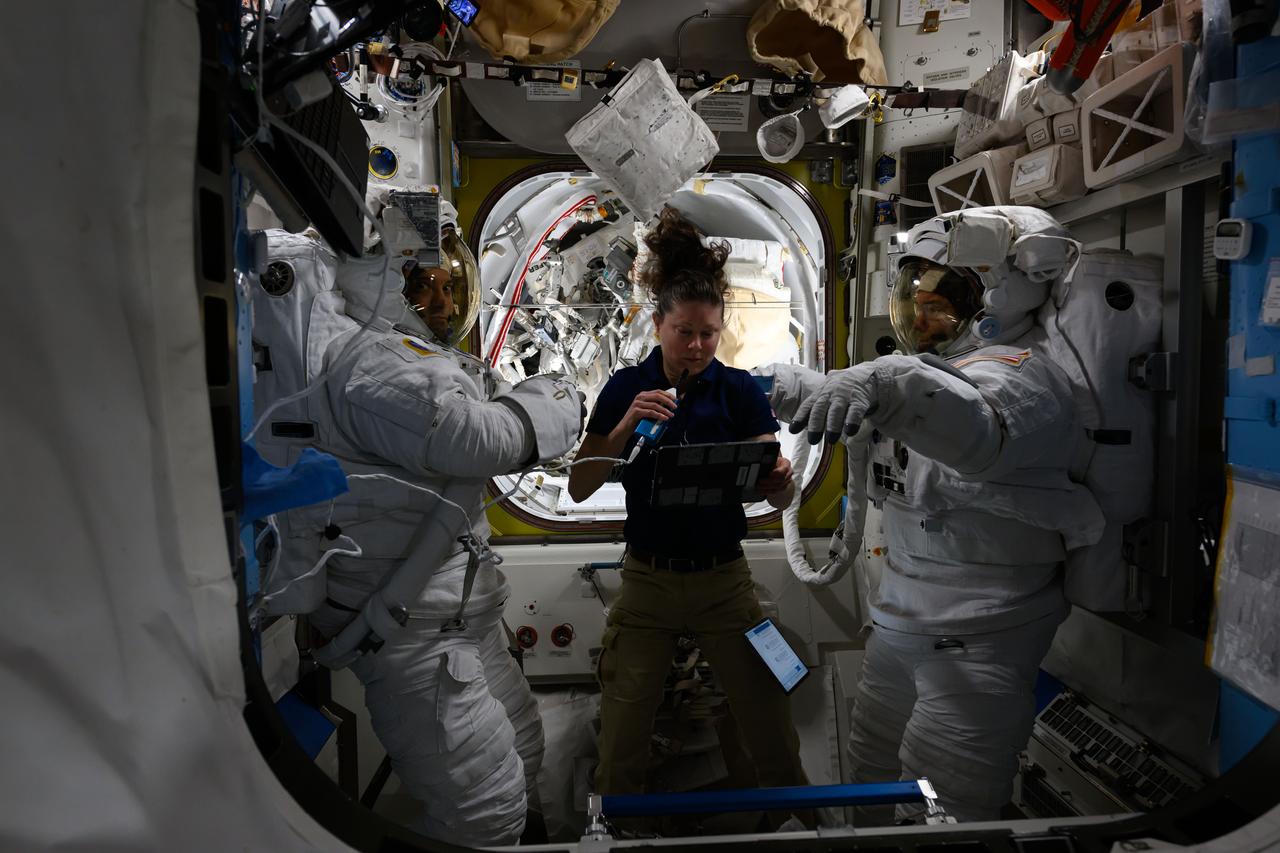
iss071e178160 (June 5, 2024) --- Expedition 71 Flight Engineer Tracy C. Dyson (center) assists Expedition 71 Flight Engineers Matthew Dominick (left) and Mike Barratt (right), all three NASA astronauts, during a spacesuit fit check inside the International Space Station's Quest airlock.

iss070e117532 (March 14, 2024) --- Expedition 70 Flight Engineer and NASA astronaut Jeanette Epps prepares tubes to collect samples from the crew for the Immunity Assay investigation. Immunity Assay looks at the impact of spaceflight on cellular immune functions in blood samples, tests that could only previously be conducted on Earth.
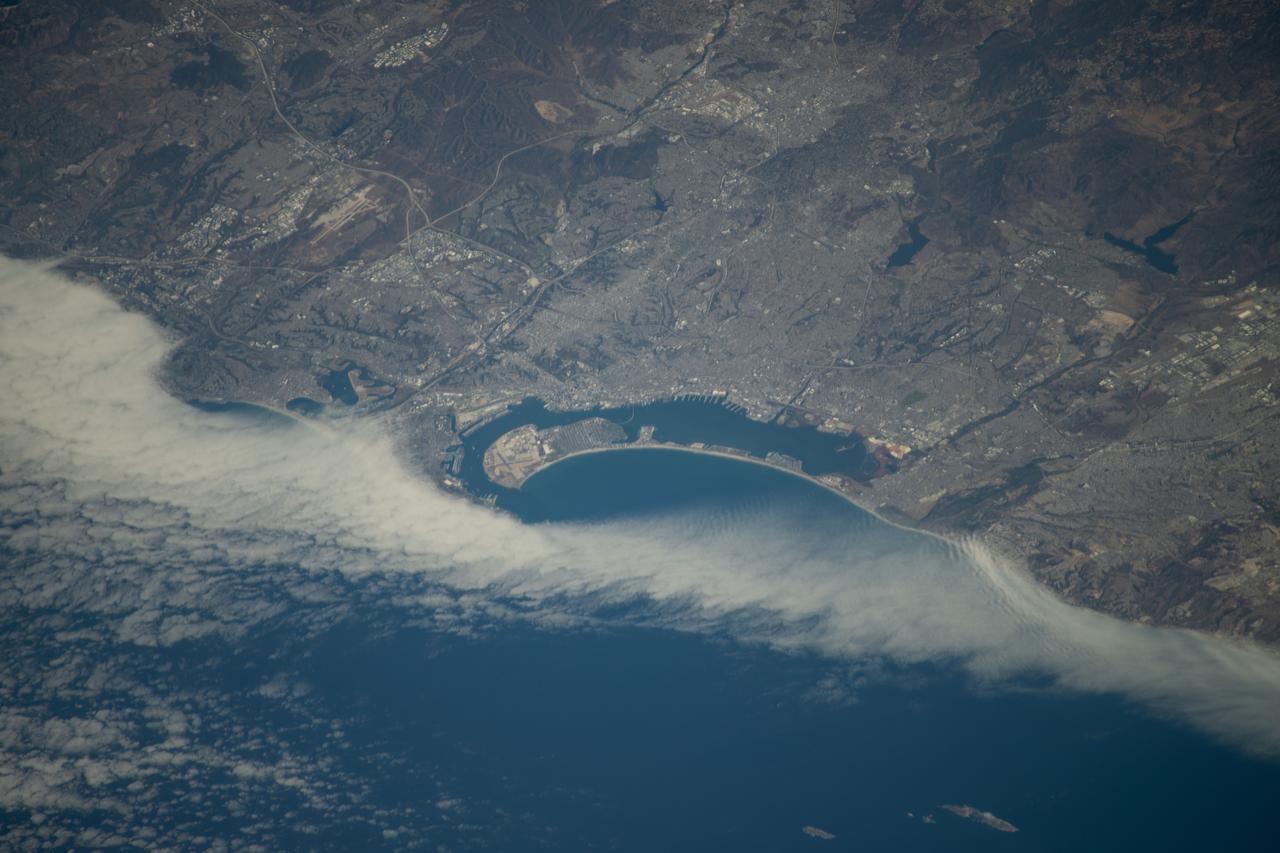
iss072e010297 (Oct. 2, 2024) --- San Diego Bay, surrounded by the city of San Diego, California, and its suburbs near the U.S.-Mexico border, is pictured from the International Space Station as it orbited 257 miles above the Pacific Ocean.
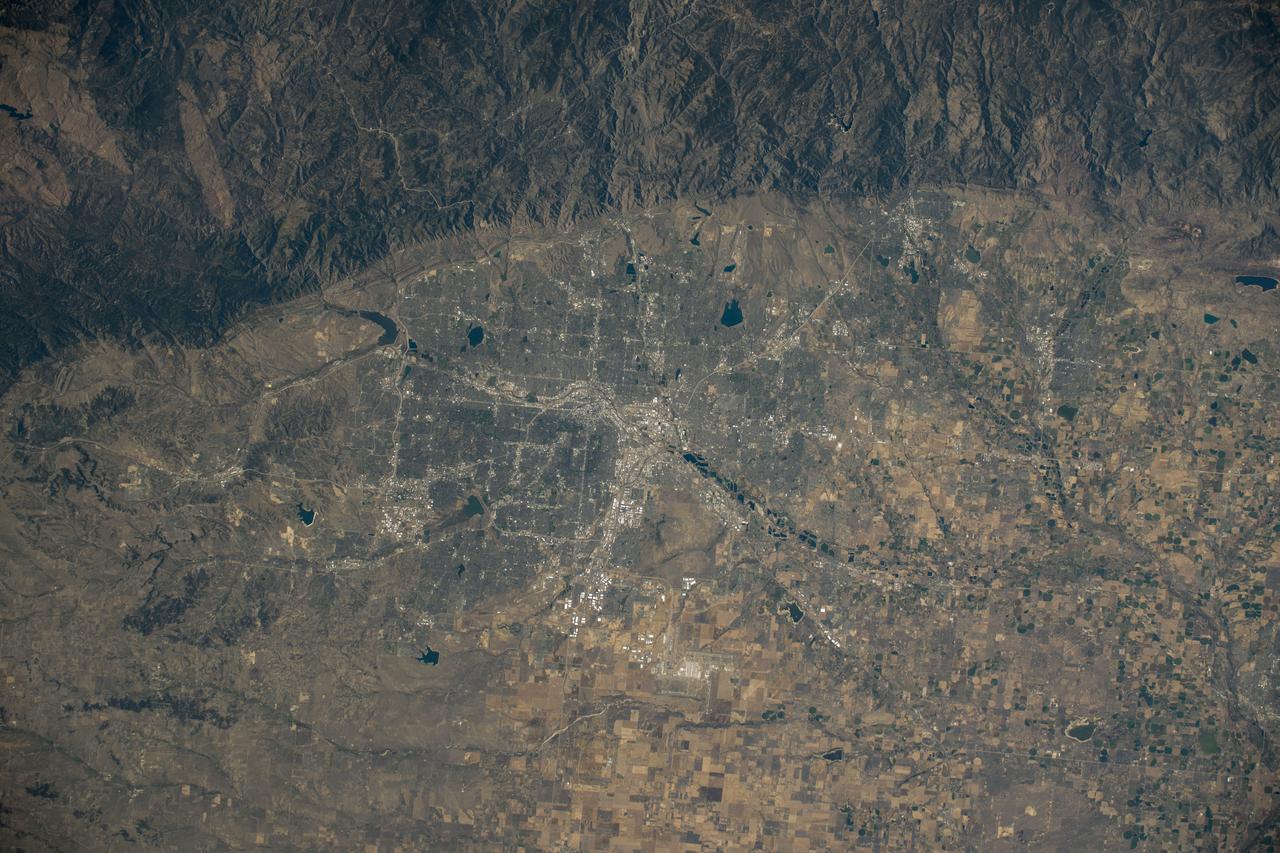
iss072e010455 (Oct. 2, 2024) --- The Denver, Colorado, metropolitan area sits near the eastern foothills of the Rocky Mountains in this photograph from the International Space Station as it orbited 258 miles above the Centennial State.
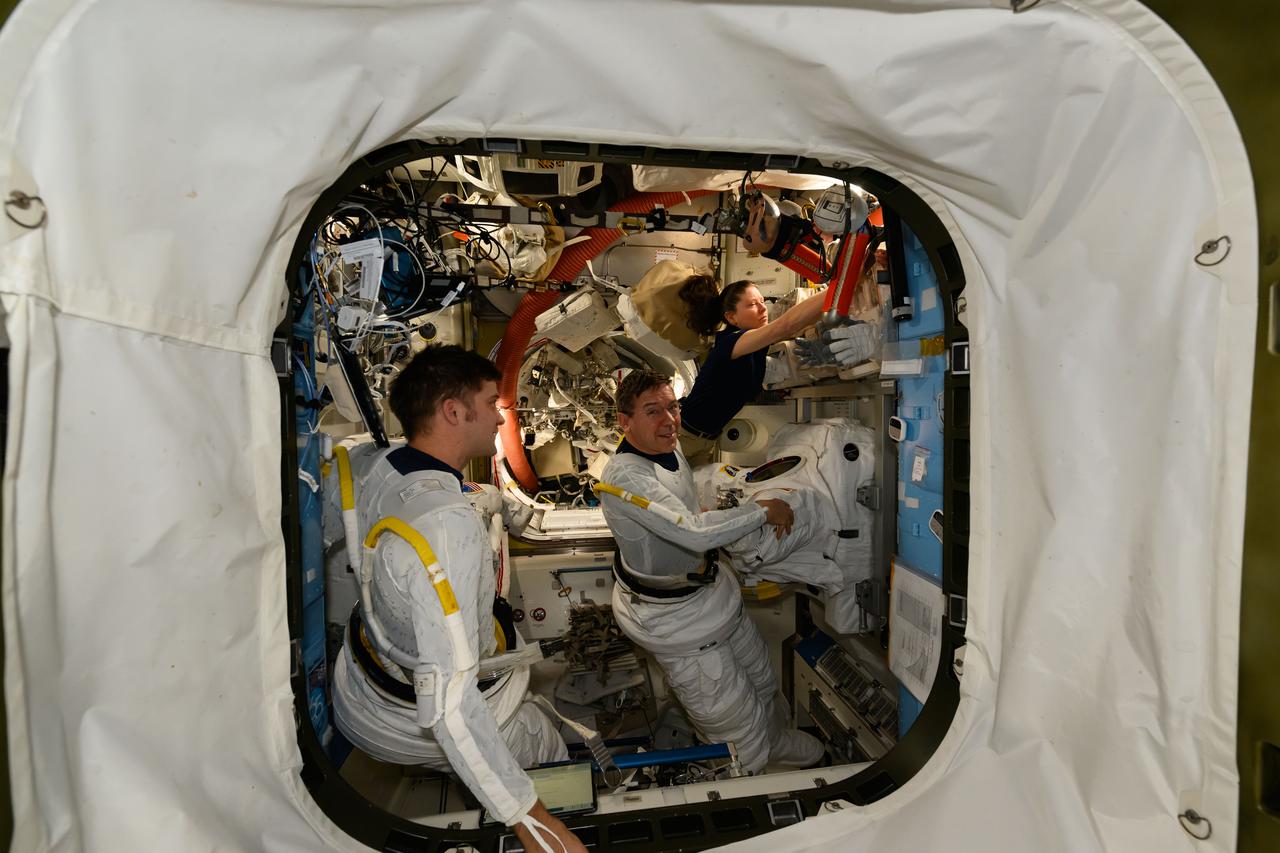
iss071e178108 (June 5, 2024) --- Expedition 71 Flight Engineers Matthew Dominick (left) and Mike Barratt (right), both NASA astronauts, prepare for a spacesuit fit check inside the International Space Station's Quest airlock.
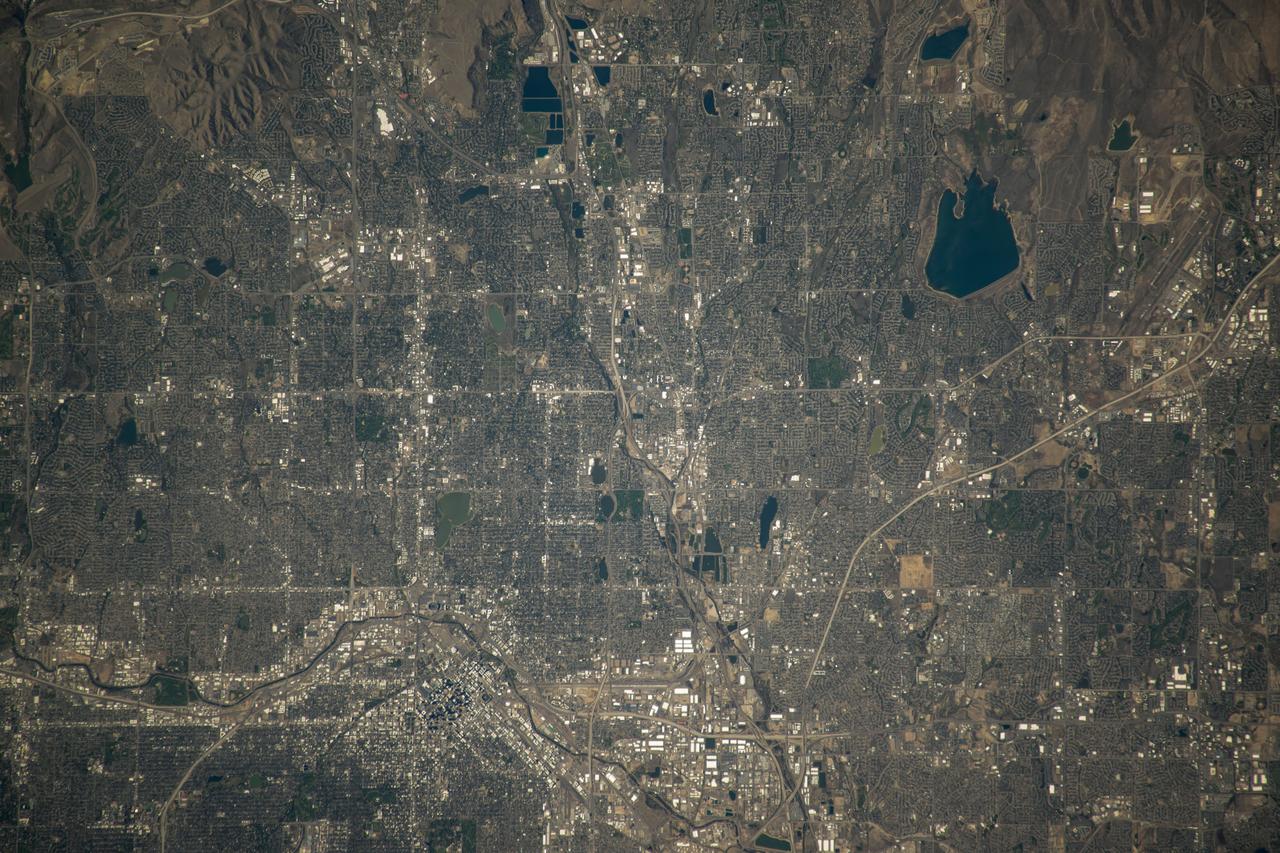
iss072e010488 (Oct. 2, 2024) --- Denver, Colorado, split by the South Platte River, and with Standley Lake at top right, is pictured from the International Space Station as it orbited 258 miles above the Centennial State.