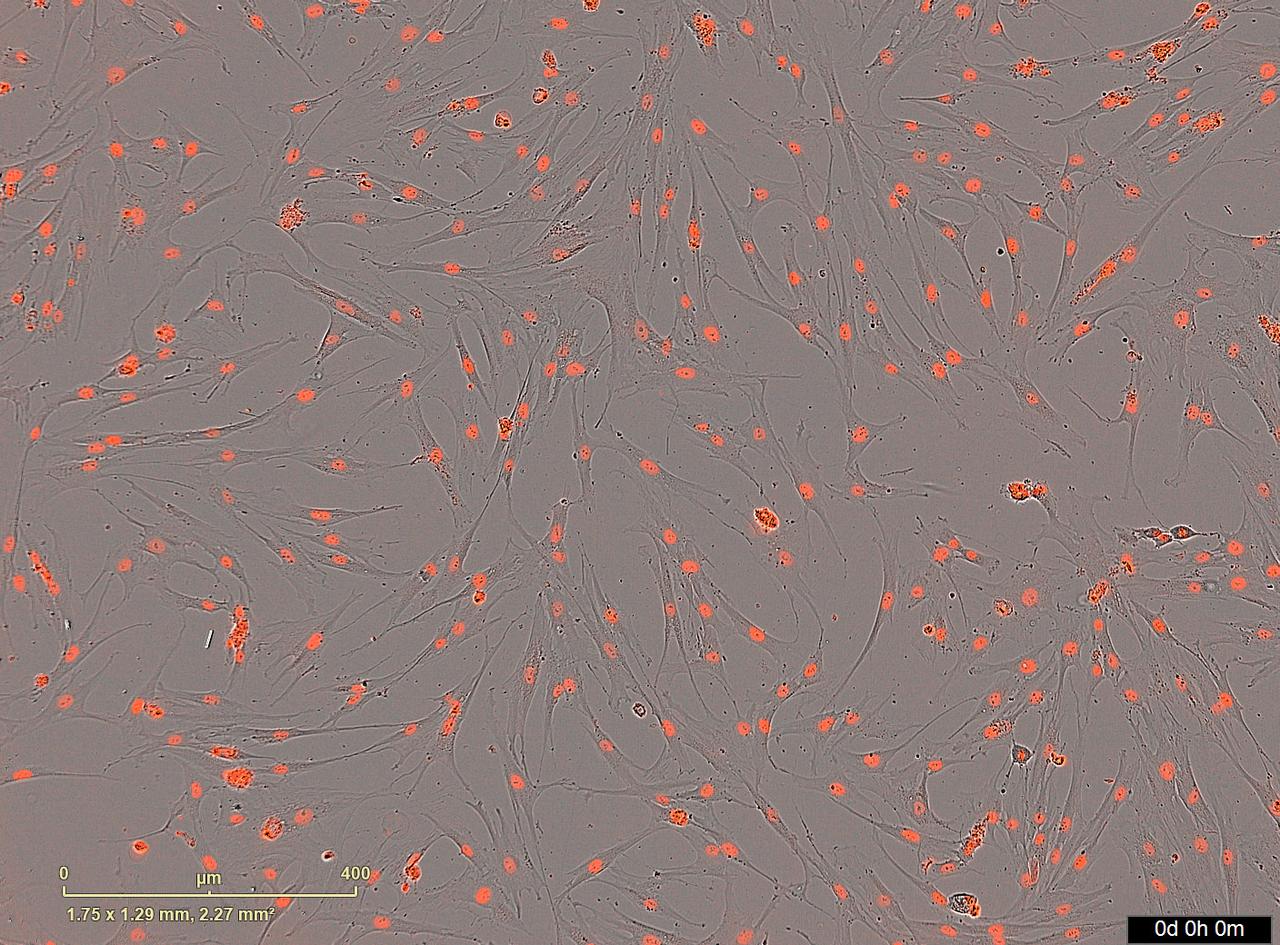
jsc2025e065389 (6/26/2025) --- Bone-forming or mesenchymal stem cells from human bone marrow stained with red dye. An investigation on the International Space Station, Microgravity Associated Bone Loss-B (MABL-B), assesses how these cells respond to microgravity, including changes in gene expression and the secretion of signaling proteins that promote bone formation and increase bone loss. Results could provide insight into bone loss that occurs during spaceflight and from normal aging and disease on Earth. Credit: Mayo Clinic
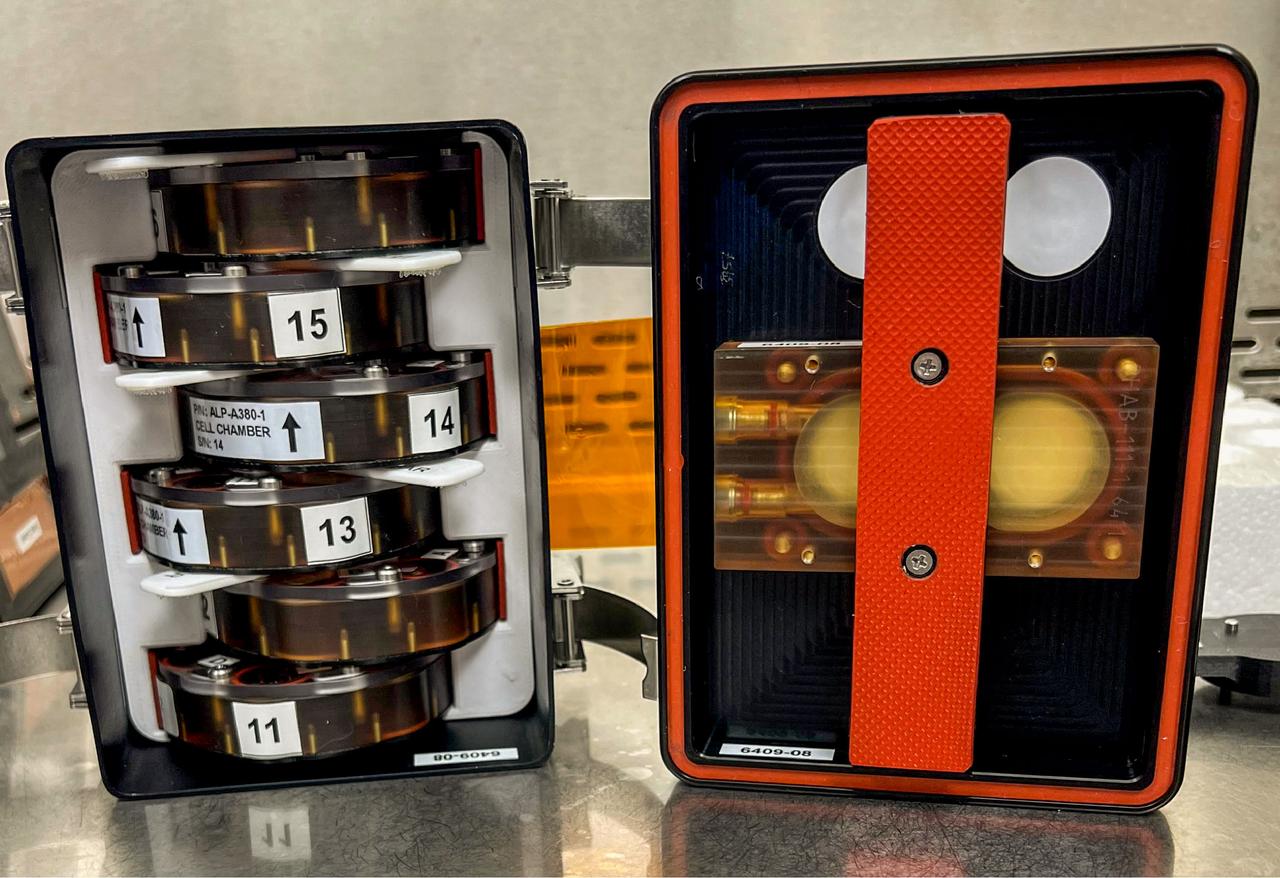
jsc2025e065387 (1/10/2025) --- The BioCell sample holder for the Microgravity Associated Bone Loss-B (MABL-B) investigation packed for launch to the International Space Station. The six-well BioCells are housed in a Plate Habitat (PHAB), which provides secondary containment and structural support during launch and return. MABL-B assesses how bone-forming stem cells respond to microgravity. Results could provide a better understanding of what causes bone loss during spaceflight and from normal aging and disease on Earth and support development of treatments. Credit: Mayo Clinic

jsc2025e065391 (1/15/2025) --- A six-well BioCell, the hardware that holds samples for the International Space Station Microgravity Associated Bone Loss-B (MABL-B) investigation, which assesses how bone-forming stem cells respond to microgravity. Researchers are measuring gene expression changes and the secretion of signaling proteins that promote bone formation and increase bone loss. Results could provide insight into spaceflight-related bone loss and support development of treatments for bone loss caused by disease on Earth. Credit: Mayo Clinic
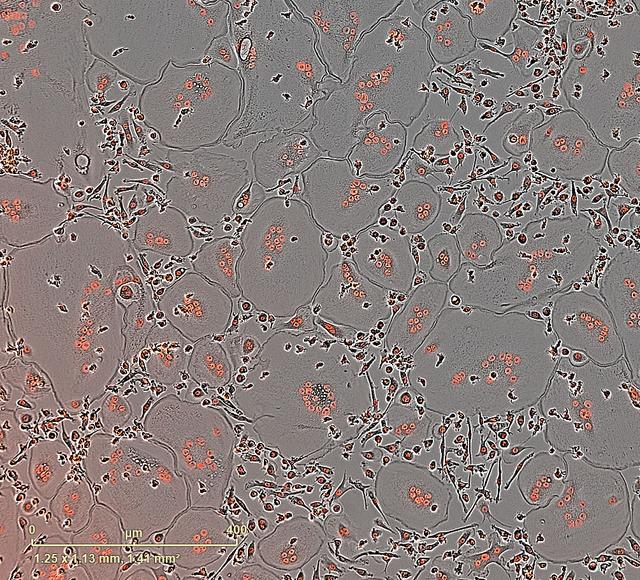
jsc2025e065390 (1/21/2022) --- A microscope image of osteoclasts, which are multinucleated cells responsible for breaking down bone tissue. The Microgravity Associated Bone Loss-B (MABL-B) investigation on the International Space Station uses this type of cell and human bone-forming stem cells from two human donors to examine the effects of microgravity. The investigation could provide a better understanding of the basic molecular mechanisms behind the bone loss that occurs during spaceflight and from normal aging and disease on Earth. Credit: Mayo Clinic