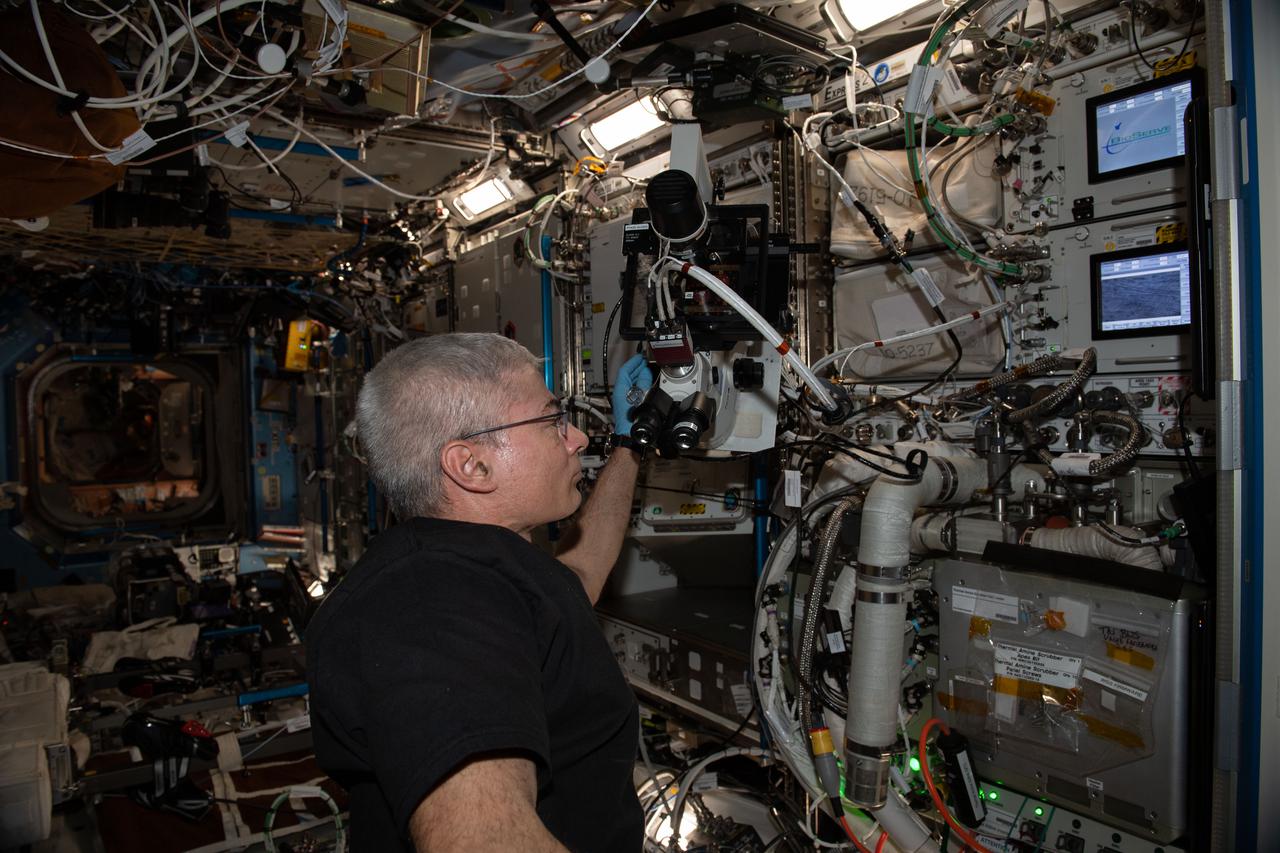
iss065e281836 (Aug. 20, 2021) --- NASA astronaut and Expedition 65 Flight Engineer Mark Vande Hei performs microscopy operations to capture images of the Cardinal Muscle investigation BioCells wells aboard the International Space Station. This study tests whether such engineered tissues cultured in space could provide a model for studying muscle loss and assessing possible therapeutics prior to clinical trials.
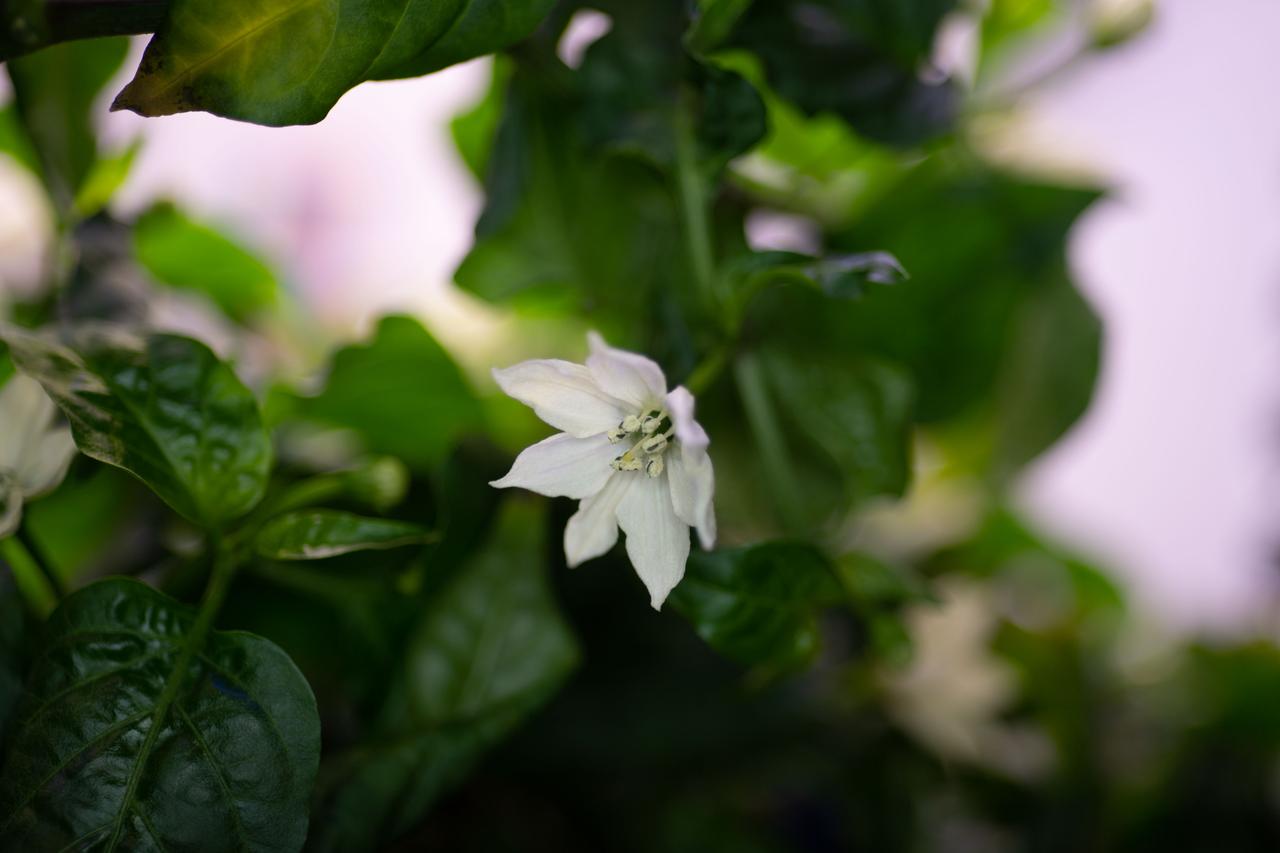
Hatch Green Chile plants are pictured growing in the Advanced Plant Habitat aboard the International Space Station (ISS). The Microgravity Growth of New Mexico Hatch Green Chile as a Technical Display of Advanced Plant Habitat’s Capabilities (Plant Habitat-04) demonstrates using the Advanced Plant Habitat (APH) by growing peppers in space for the first time.
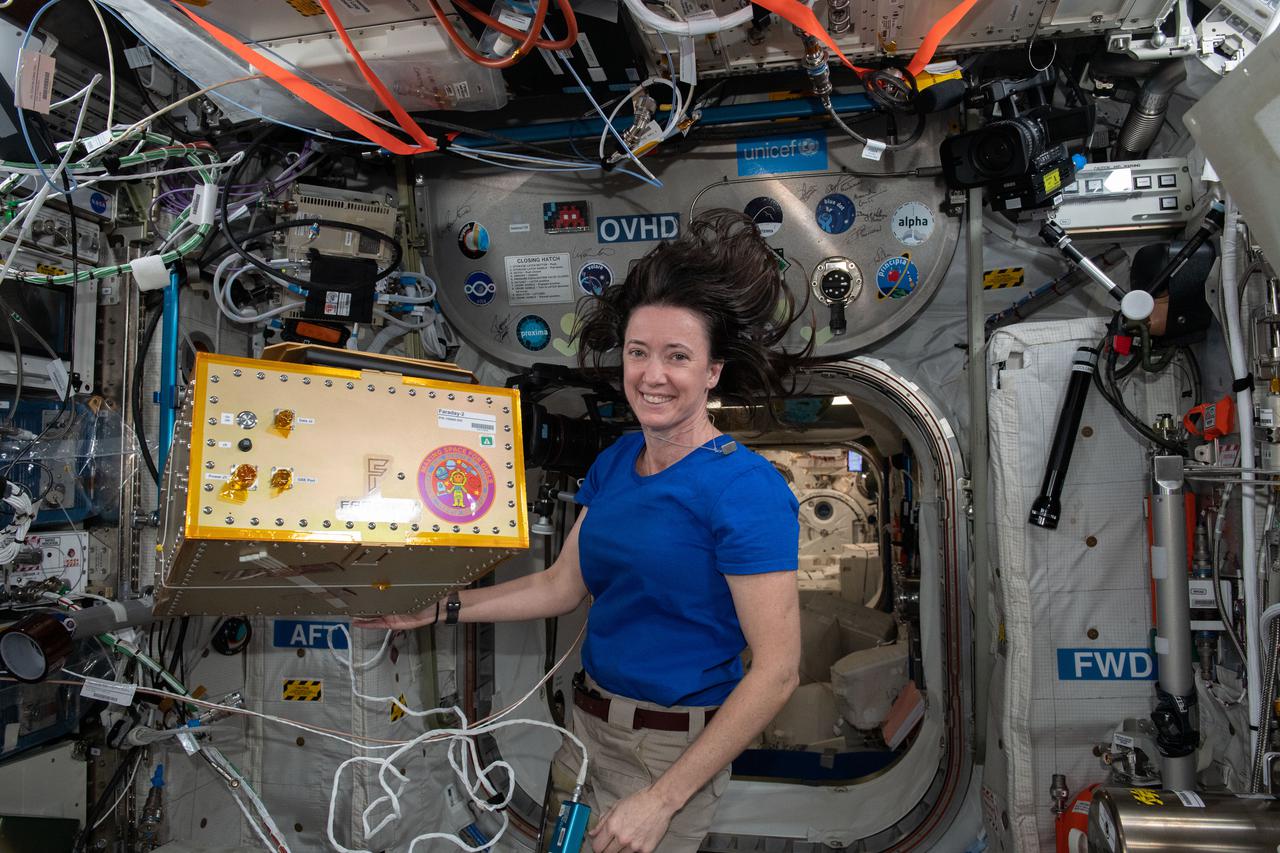
iss065e335890 (Aug. 31, 2021) --- NASA astronaut and Expedition 65 Flight Engineer Megan McArthur installs the Faraday-2 facility inside the International Space Station's U.S. Destiny laboratory module. The payload gives the Girl Scouts on Earth the opportunity to conduct a control experiment while observing space station experiments on plant growth, ant colonization, and brine shrimp lifecycle aboard the orbiting lab.
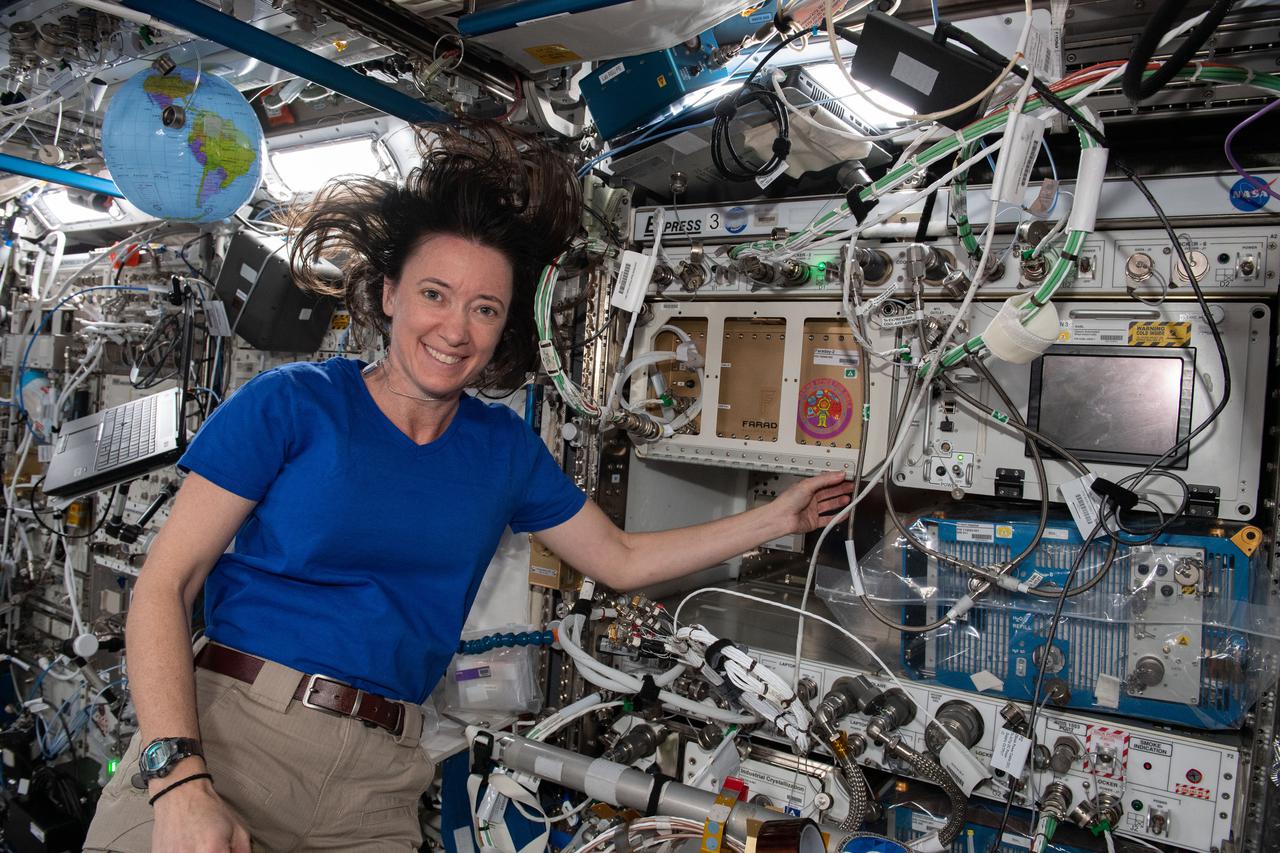
iss065e335909 (Aug. 31, 2021) --- NASA astronaut and Expedition 65 Flight Engineer Megan McArthur installs the Faraday-2 facility inside the International Space Station's U.S. Destiny laboratory module. The payload gives the Girl Scouts on Earth the opportunity to conduct a control experiment while observing space station experiments on plant growth, ant colonization, and brine shrimp lifecycle aboard the orbiting lab.
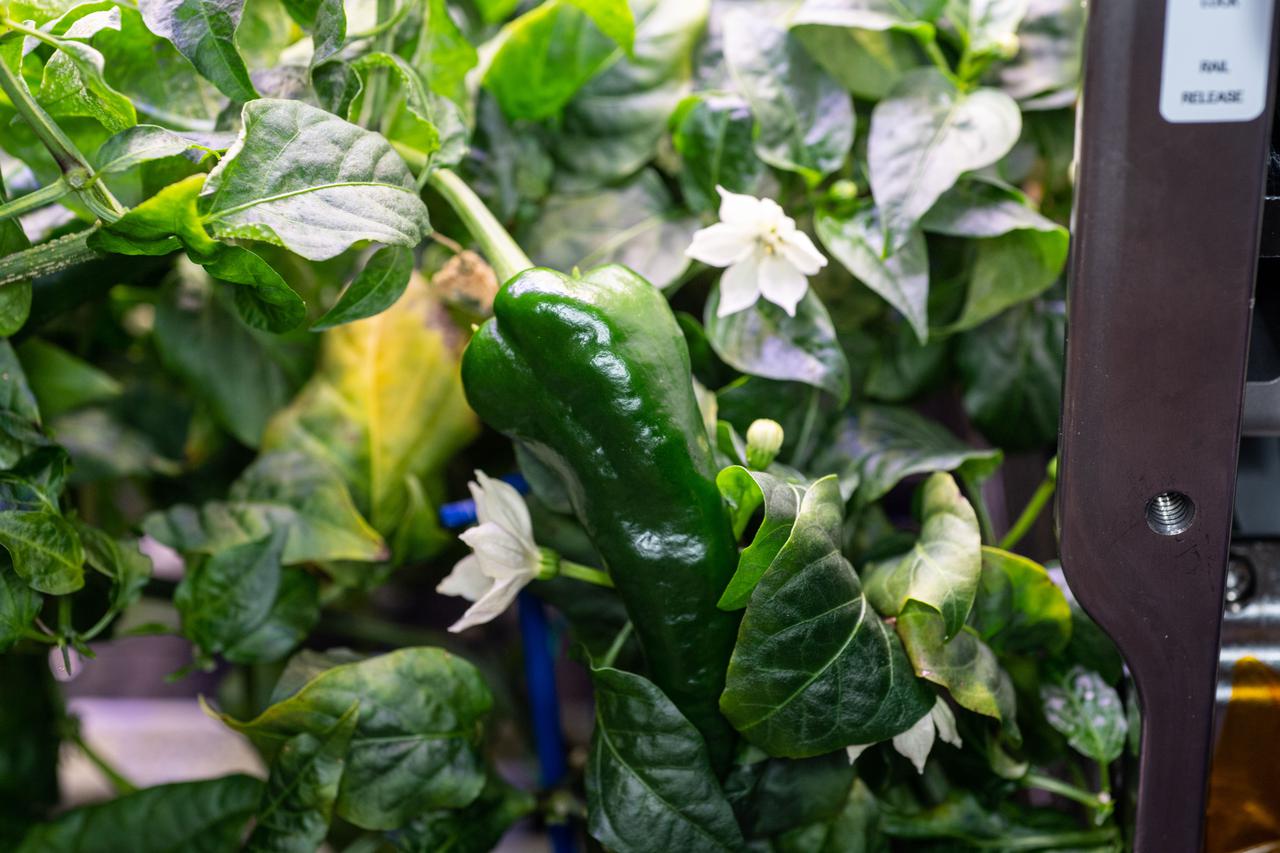
iss066e006170 (October 20, 2021) -- A view of a green chile pepper being grown as part of the Plant Habitat-04 investigation aboard the International Space Station. This is the first time chile peppers are being grown aboard the orbiting laboratory, and are one of the most complex plant experiments on the station to date because of the long germination and growing times. The pepper seeds were activated on July 12. 2021 and will grow for about four months, during which time they will be harvested twice. Astronauts will sample some of the peppers and return the rest to Earth for scientific analysis.
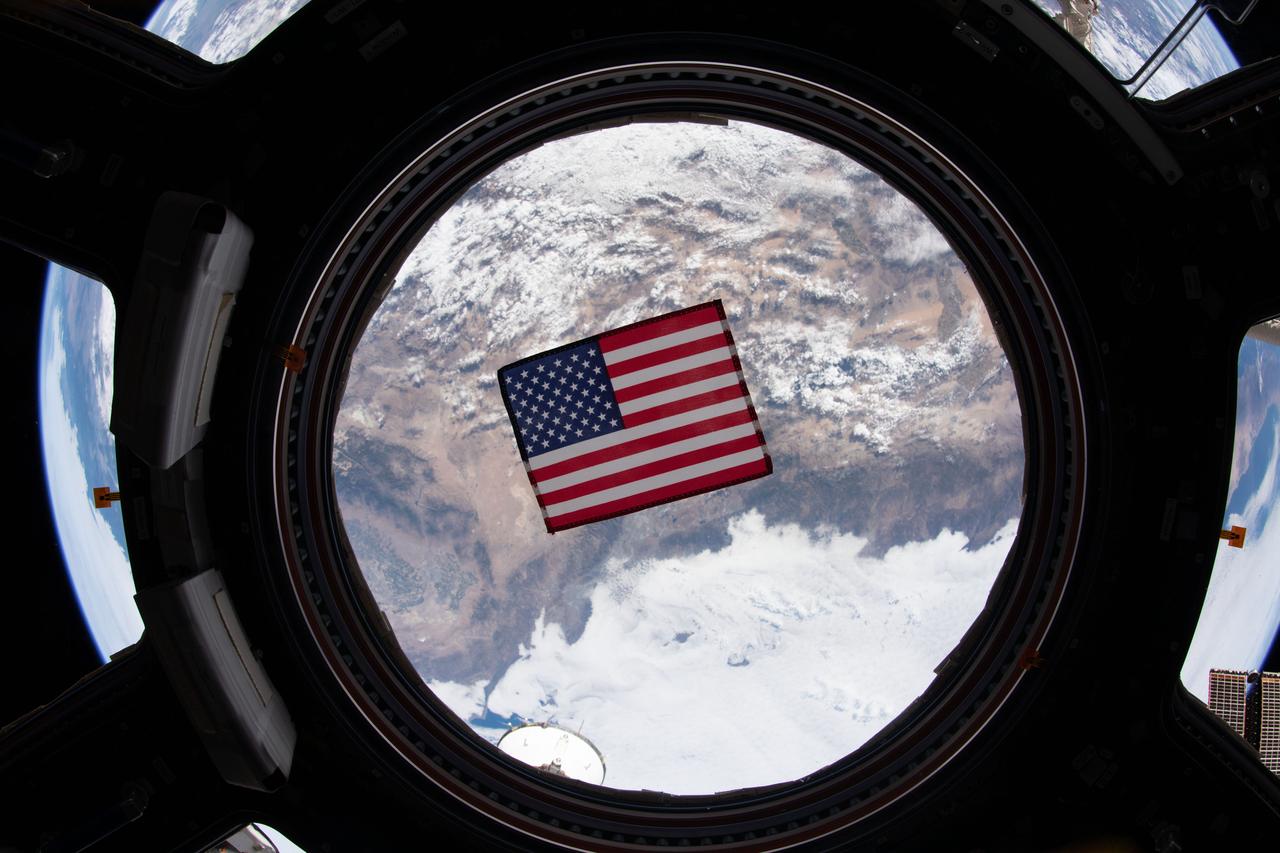
View of a small U.S. flag floating in the Cupola window
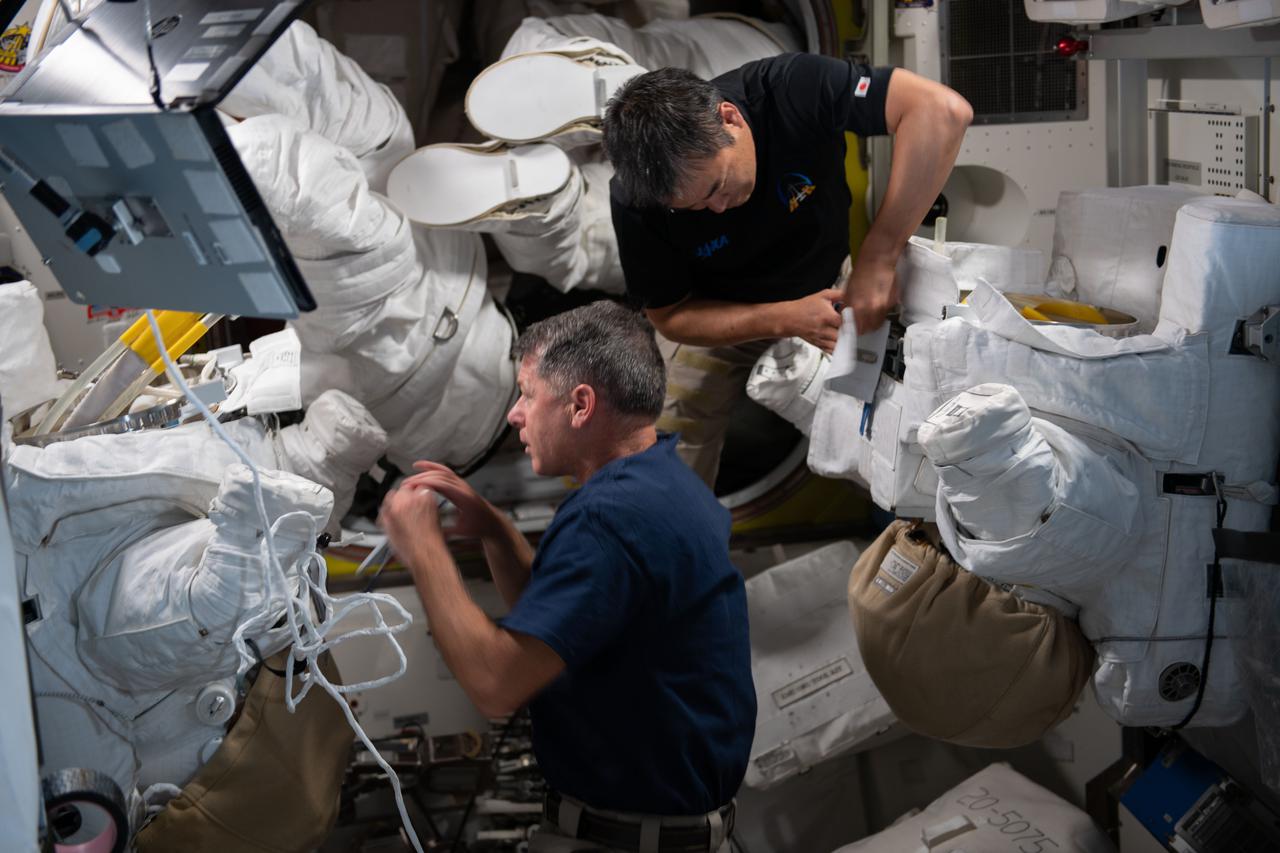
iss065e018983 (May 4, 2021) --- Expedition 65 astronauts Shane Kimbrough of NASA and Akihiko Hoshide of the Japan Aerospace Exploration Agency perform maintenance on a pair of U.S. spacesuits inside the Quest airlock of the International Space Station.
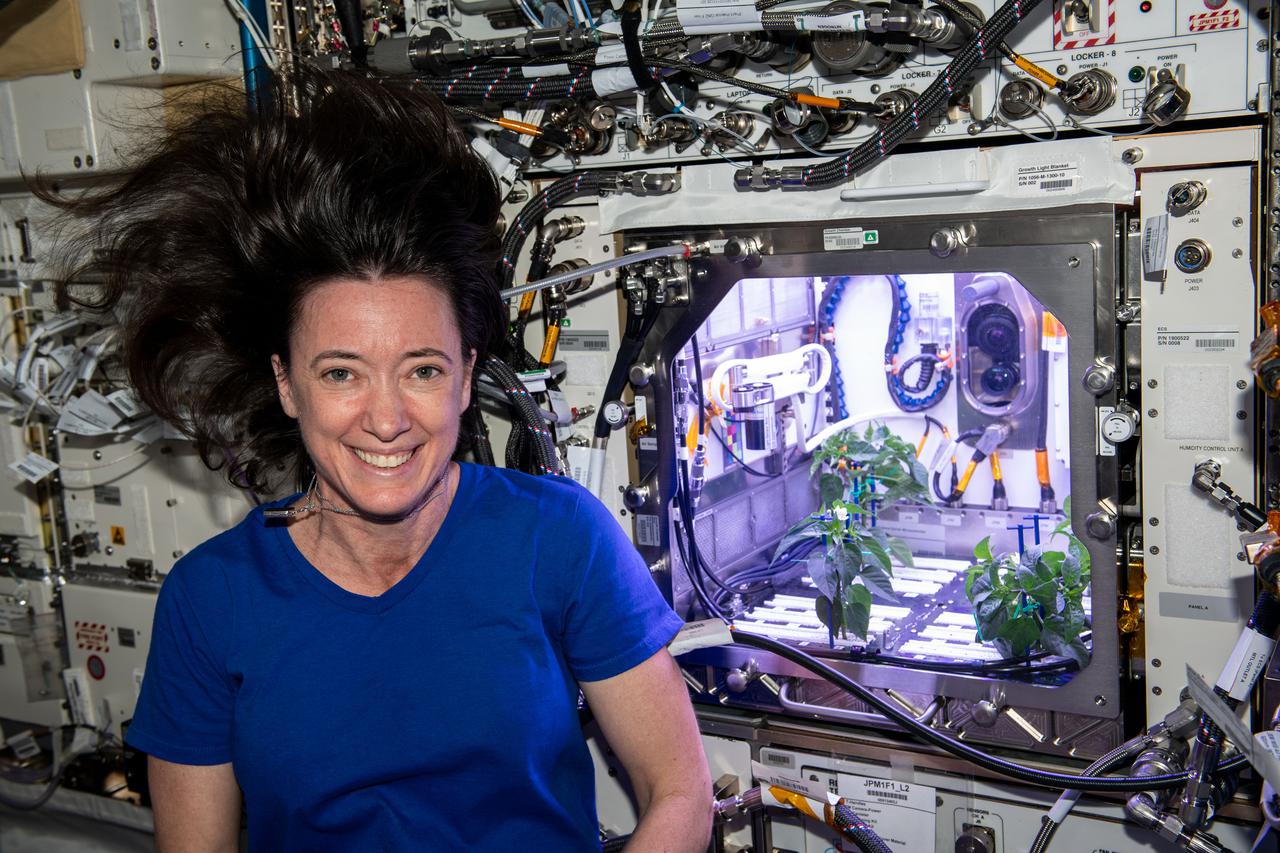
iss065e346115 (September 2, 2021) -- NASA astronaut and Expedition 65 Flight Engineer Megan McArthur poses with the crop of chile peppers being grown as part of the Plant Habitat-04 investigation inside the Advanced Plant Habitat (APH) aboard the International Space Station. This is the first time chile peppers are being grown aboard the orbiting laboratory, and are one of the most complex plant experiments on the station to date because of the long germination and growing times. The pepper seeds were activated on July 12. 2021 and will grow for about four months, during which time they will be harvested twice. Astronauts will sample some of the peppers and return the rest to Earth for scientific analysis.
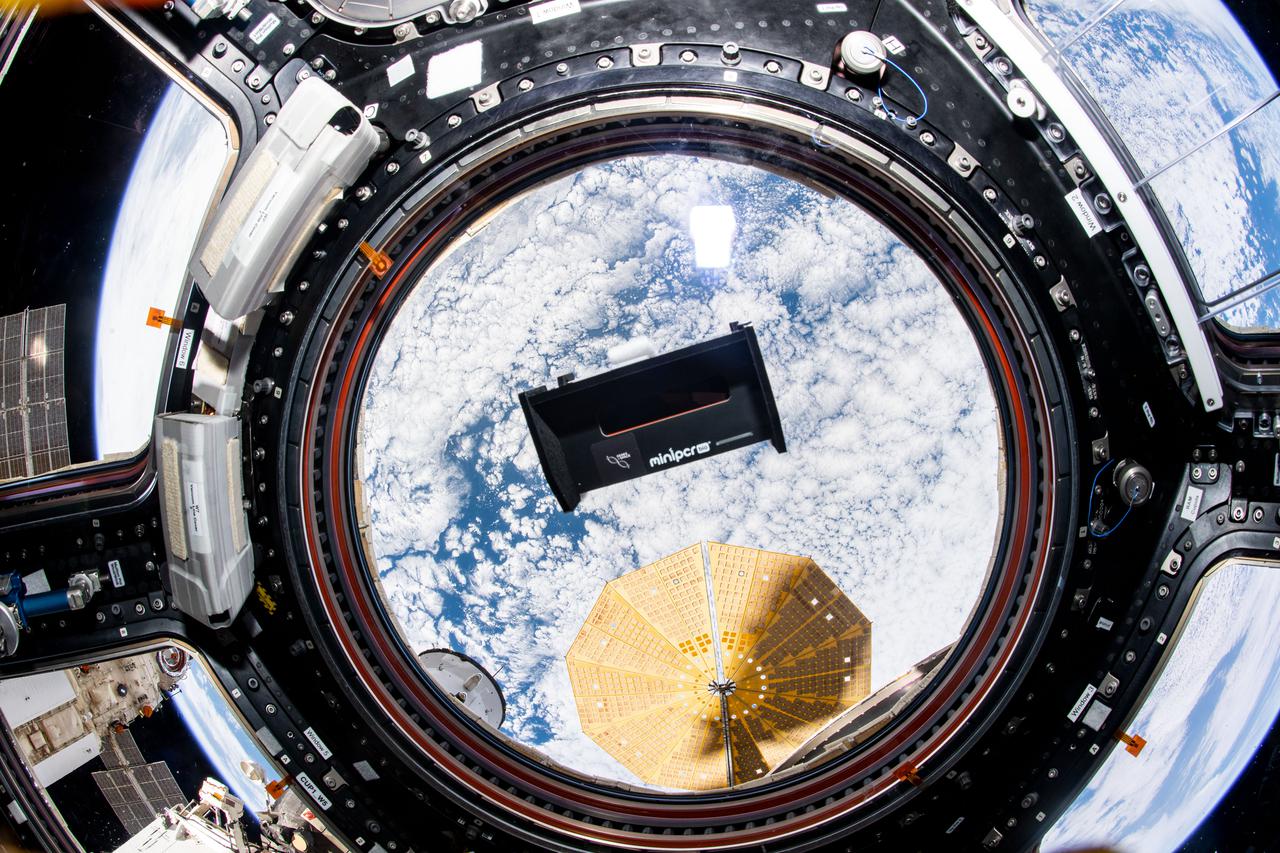
iss065e341636 (9/2/2021) --- A view of the Genes in Space 8 Fluorescence Viewer floating in front of the Cupola module window aboard the International Space Station (ISS). Genes in Space-9 evaluates low-cost and portable BioBits cell-free technology as well as two biological sensors aboard the International Space Station (ISS).
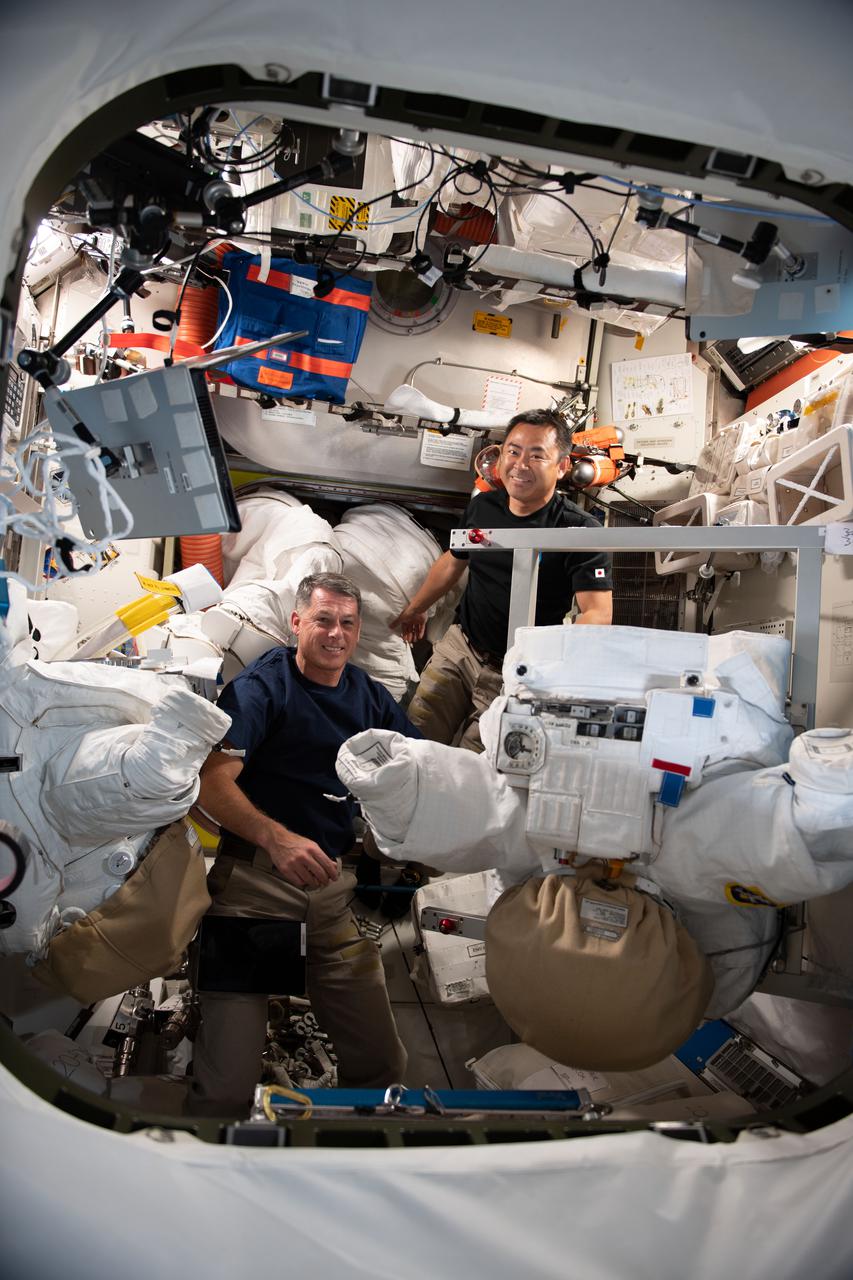
iss065e018991 (May 22, 2021) --- Expedition 65 astronauts Shane Kimbrough of NASA and Akihiko Hoshide of the Japan Aerospace Exploration Agency perform maintenance on a pair of U.S. spacesuits inside the Quest airlock of the International Space Station.

iss065e018989 (May 4, 2021) --- Expedition 65 astronauts Shane Kimbrough of NASA and Akihiko Hoshide of the Japan Aerospace Exploration Agency swap out U.S. spacesuit life support components inside the International Space Station's U.S. Quest airlock.
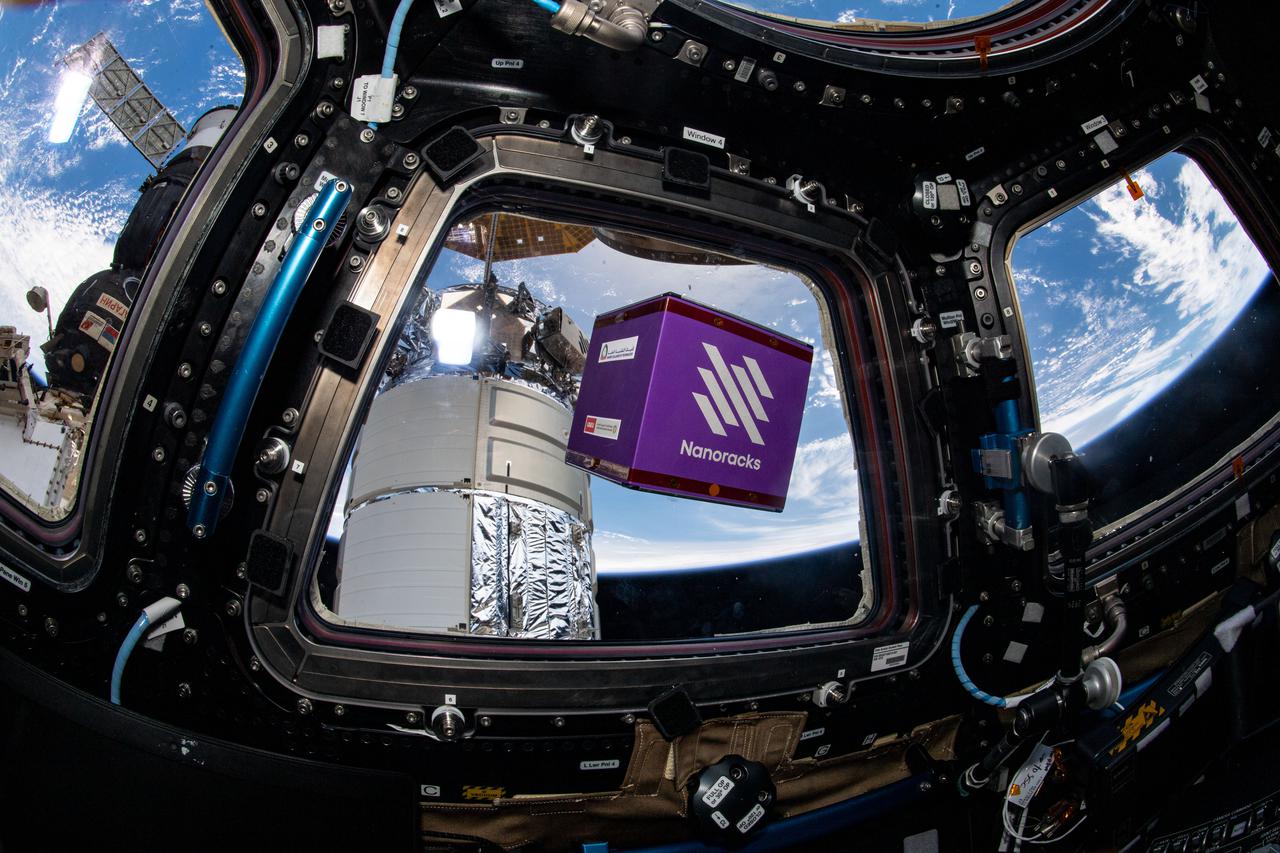
iss065e096314 (June 11, 2021) --- A NanoRacks module, a cube-shaped commercial research device, is pictured free-floating inside the cupola, the International Space Station's "window to the world." Just outside the cupola is the Northrop Grumman Cygnus space freighter attached to the Unity module's Earth-facing port.
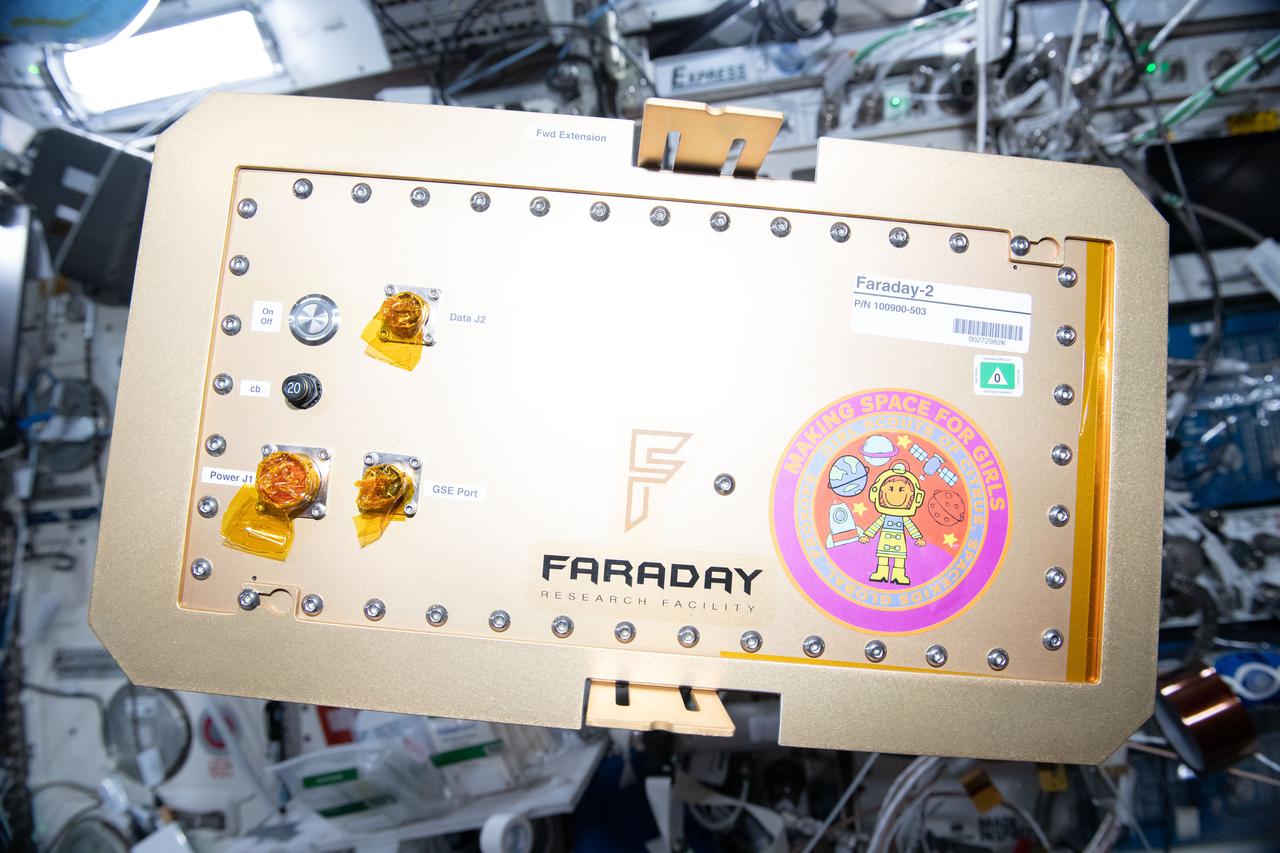
iss065e335891 (Aug. 31, 2021) --- A view of the Faraday-2 facility inside the International Space Station's U.S. Destiny laboratory module. The payload gives the Girl Scouts on Earth the opportunity to conduct a control experiment while observing space station experiments on plant growth, ant colonization, and brine shrimp lifecycle aboard the orbiting lab.
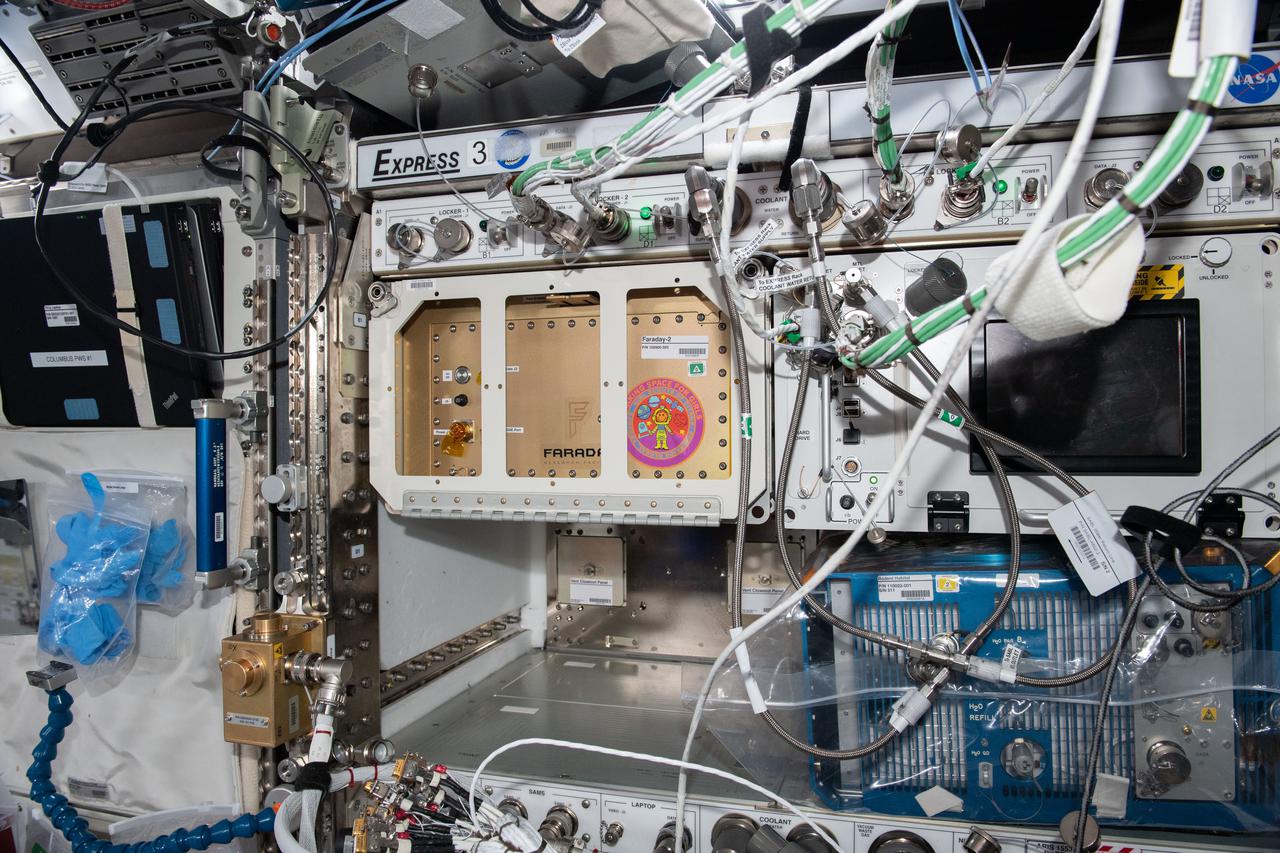
iss065e335906 (Aug. 31, 2021) --- A view of the Faraday-2 facility inside the International Space Station's U.S. Destiny laboratory module. The payload gives the Girl Scouts on Earth the opportunity to conduct a control experiment while observing space station experiments on plant growth, ant colonization, and brine shrimp lifecycle aboard the orbiting lab.
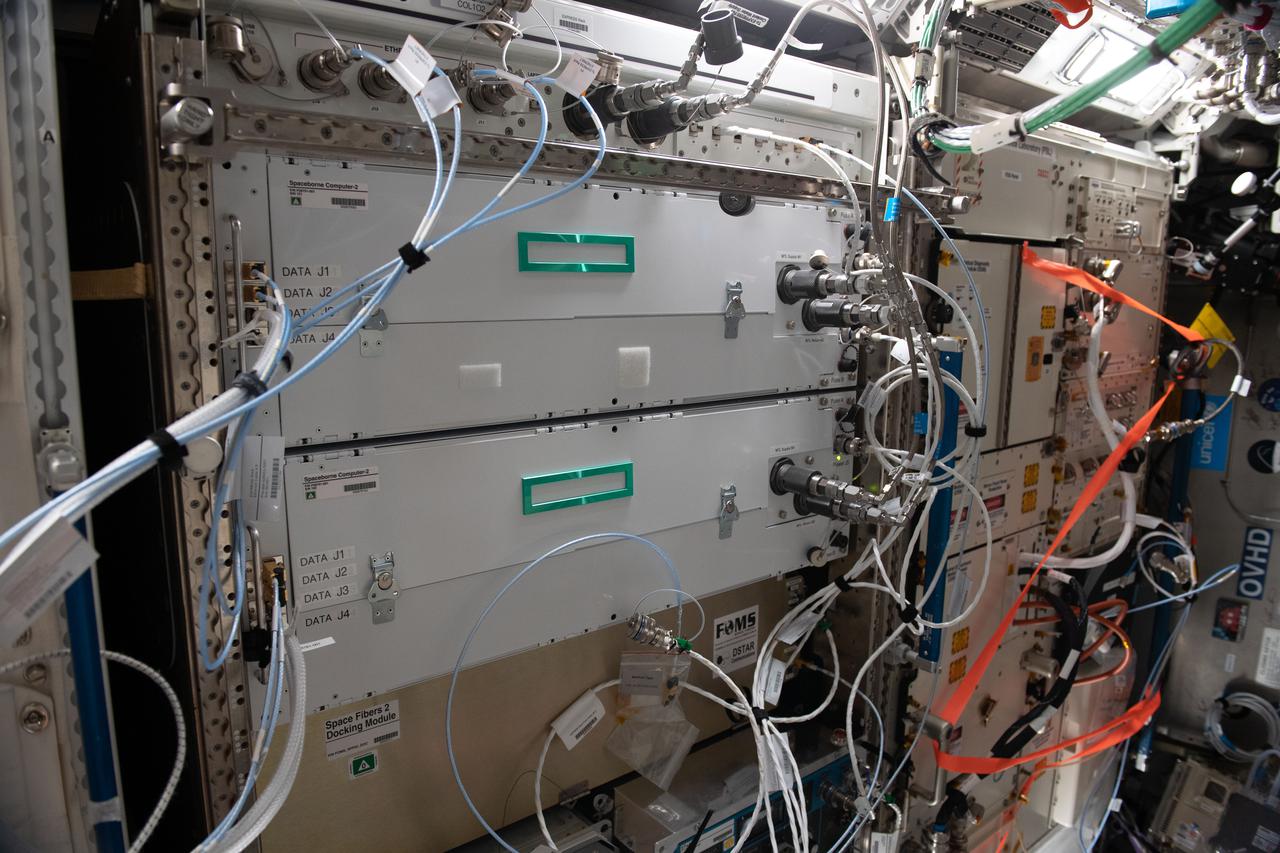
View taken of Spaceborne Computer 2 in Columbus module. Spaceborne Computer-2 High Performance Commercial Off-The-Shelf (COTS) Computer System on the ISS (Spaceborne Computer-2) builds upon the successes of Spaceborne Computer, exploring how commercial off-the-shelf computer systems can advance exploration by processing data significantly faster in space with edge computing and artificial intelligence (AI) capabilities. Spaceborne Computer-2 further tests additional techniques for recovering or mitigating errors in the extreme environment of unprotected solar radiation, galactic cosmic radiation (GCR) and other events.
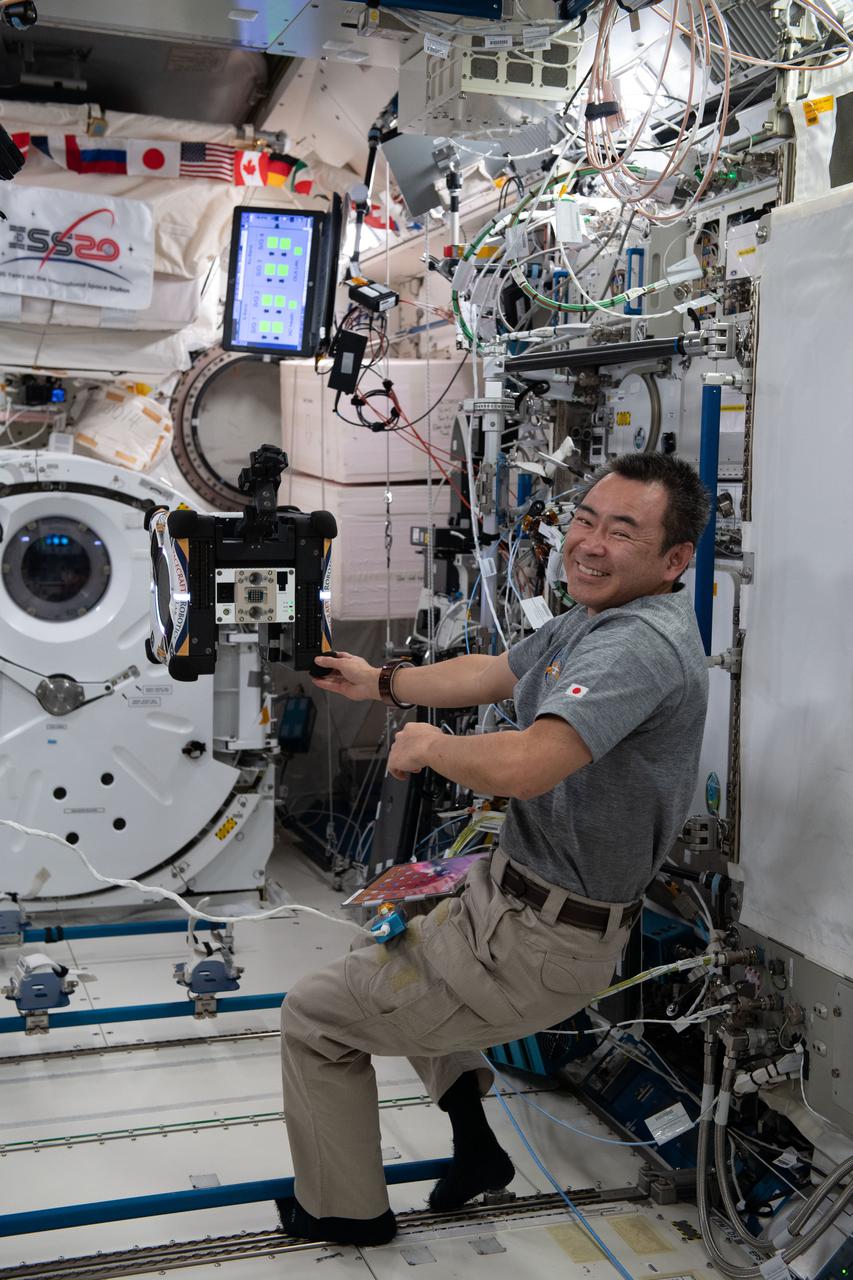
iss065e167830 (July 16, 2021) --- Expedition 65 Commander Akihiko Hoshide of the Japan Aerospace Exploration Agency (JAXA) configures the Astrobee robotic free-flyer to demonstrate complex maneuvers in the orbital lab while using less propulsion. The Astrobatics robotic mobility study has implications for future space missions and technologies on Earth.
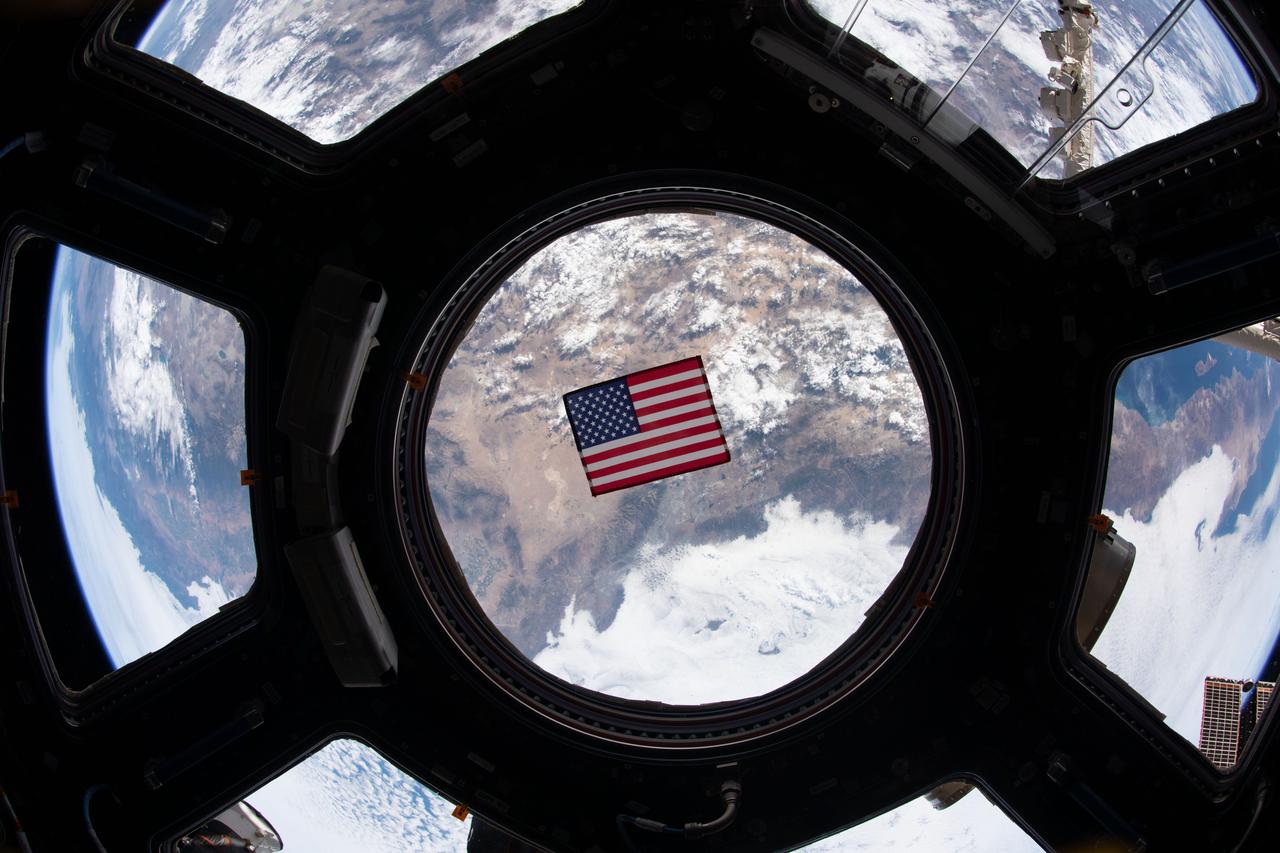
View of a small U.S. flag floating in the Cupola window
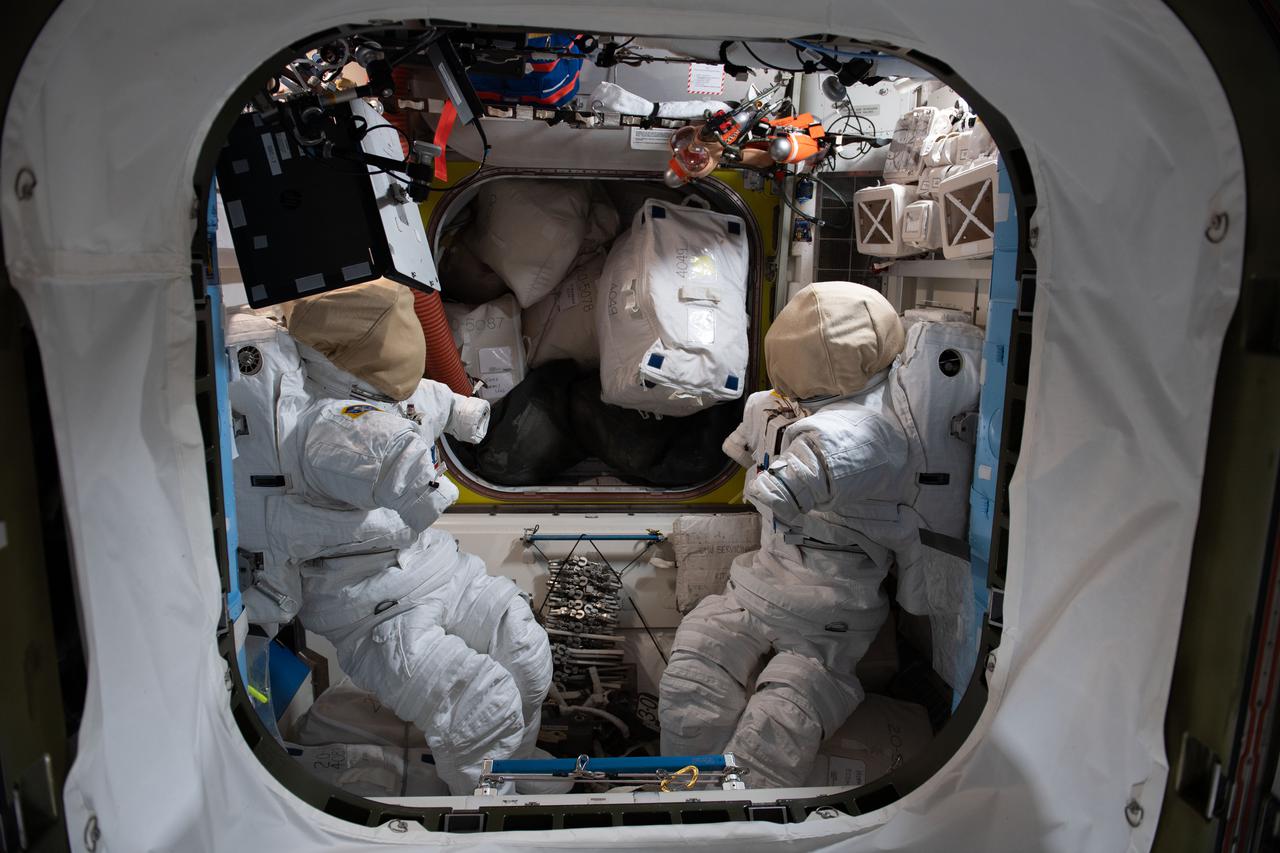
iss065e026376 (May 5, 2021) --- Two U.S. spacesuits are pictured inside the International Space Station's Quest airlock where spacewalks are staged.
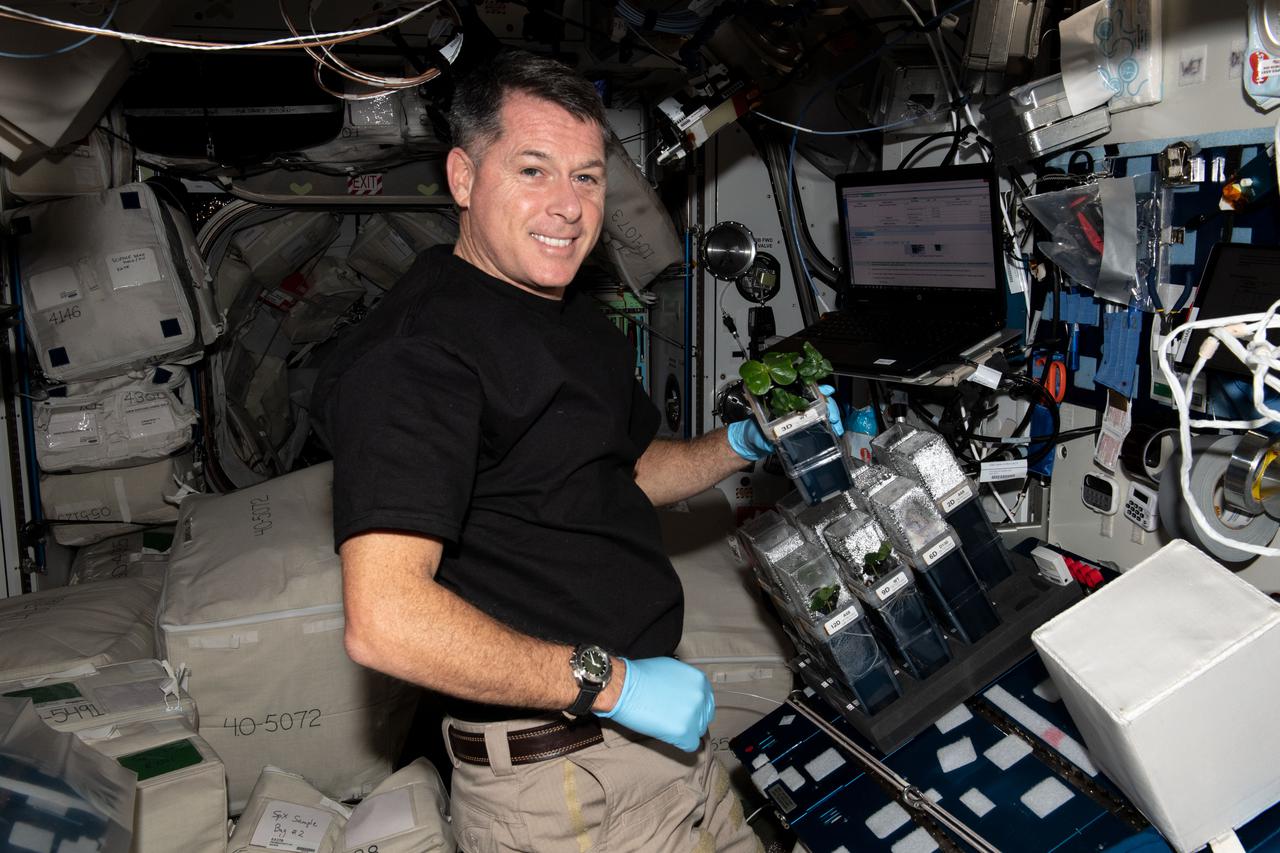
iss065e096005 (June 11, 2021) --- NASA astronaut and Expedition 65 Flight Engineer Shane Kimbrough checks on cotton plants growing for the TICTOC space botany study. The investigation looks at gene expression and root growth in microgravity which may improve both space agriculture and cotton cultivation on Earth.

Chile pepper plants growing in the Advanced Plant Habitat (APH) aboard the International Space Station recently bore fruit. The peppers developed from flowers that bloomed over the past few weeks. Studies of fruit development in microgravity are limited, but overcoming the challenges of growing fruit in microgravity is important to NASA for long-duration missions during which crew members will need good sources of Vitamin C to supplement their diets.

Chile pepper plants growing in the Advanced Plant Habitat (APH) aboard the International Space Station recently bore fruit. The peppers developed from flowers that bloomed over the past few weeks. Studies of fruit development in microgravity are limited, but overcoming the challenges of growing fruit in microgravity is important to NASA for long-duration missions during which crew members will need good sources of Vitamin C to supplement their diets.

Chile pepper plants growing in the Advanced Plant Habitat (APH) aboard the International Space Station recently bore fruit. The peppers developed from flowers that bloomed over the past few weeks. Studies of fruit development in microgravity are limited, but overcoming the challenges of growing fruit in microgravity is important to NASA for long-duration missions during which crew members will need good sources of Vitamin C to supplement their diets.