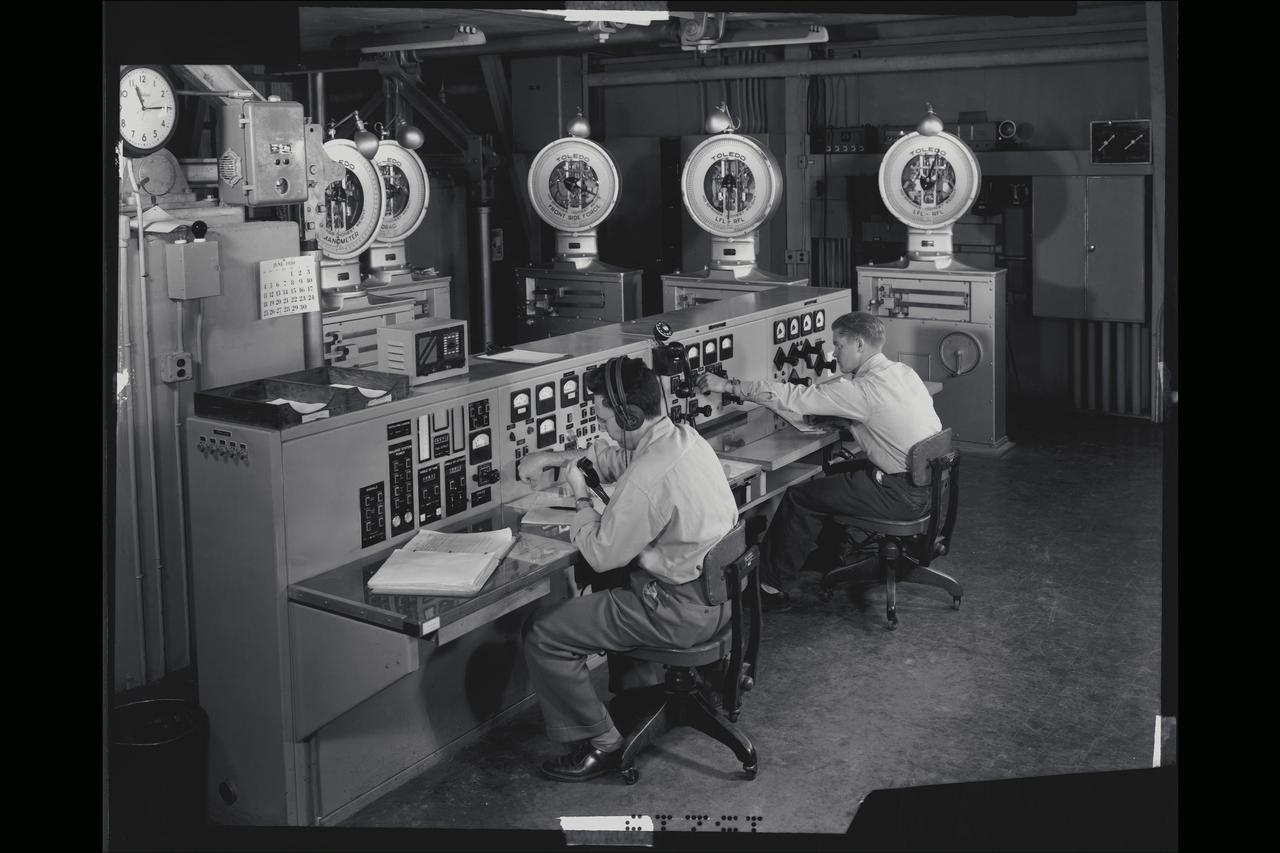
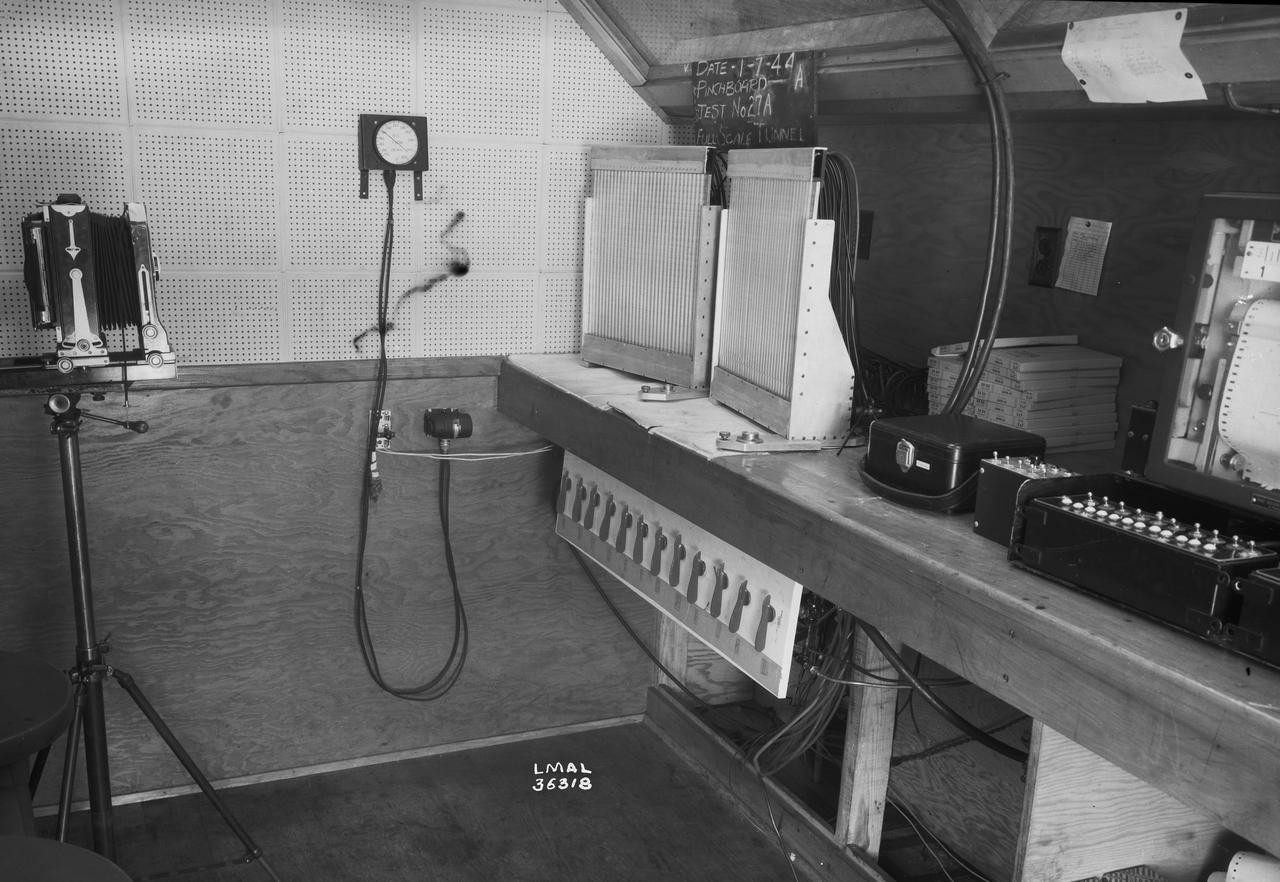
40x80 wind tunnel manometers control room at NACA's Ames Research Center.  Control panel (called the bench board) showing five of the seven scale heads which measured the forces on the model (ie. Lift, drag, side force etc.)
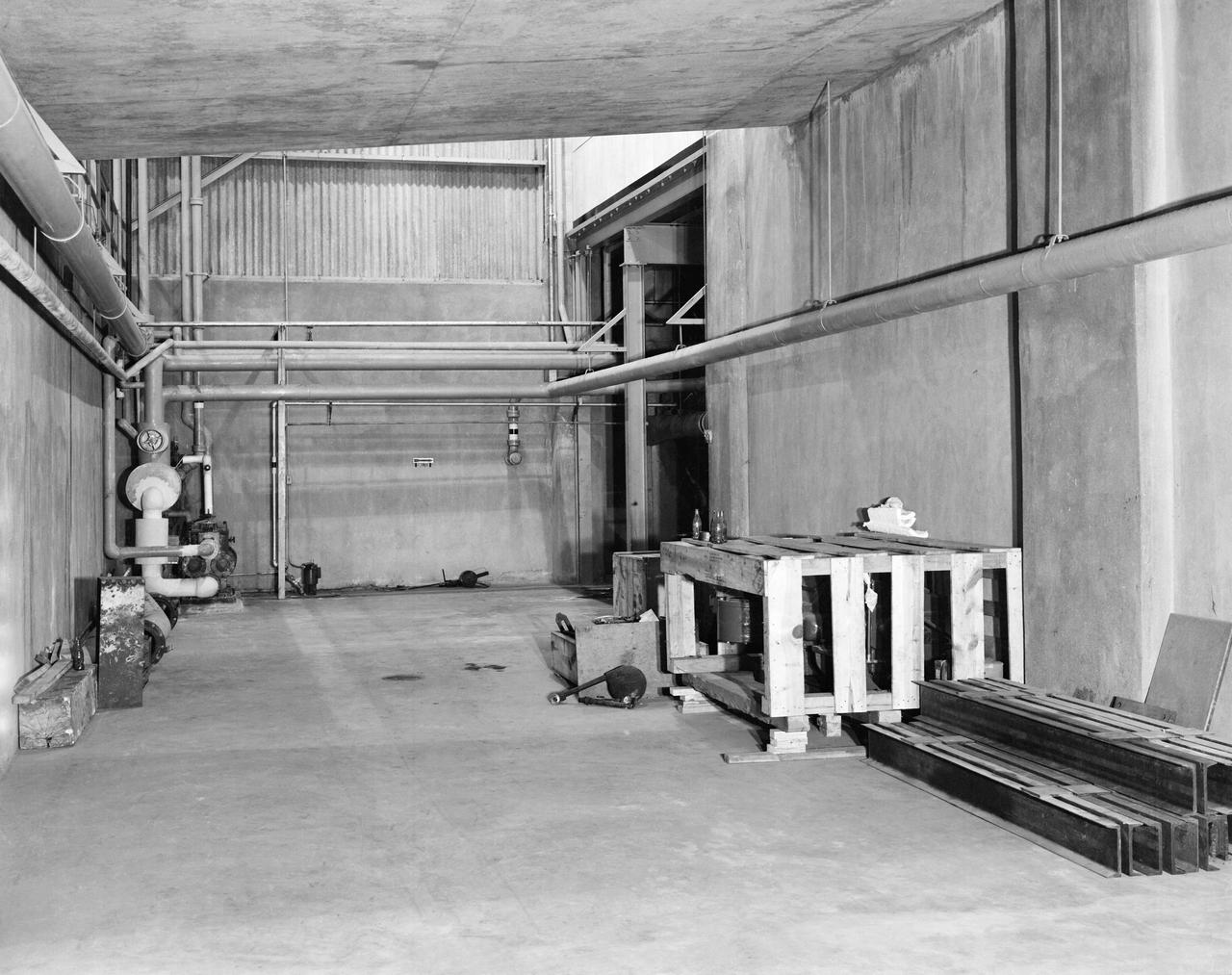
A-15219. Balance House for the 40x80-foot Wind Tunnel Control Room.
Photographed on: 12 09 58. -- Mercury capsule details, capsule in cargo bay of C-130 airplane prior to drop test, equipment in C130 for doing drop test.
C-130 drop tests capsule #1
Computers' at work in 16ft wind tunnel - calculating test data
Computers calculating data from teh Ames 16 Foot Wind Tunnel.
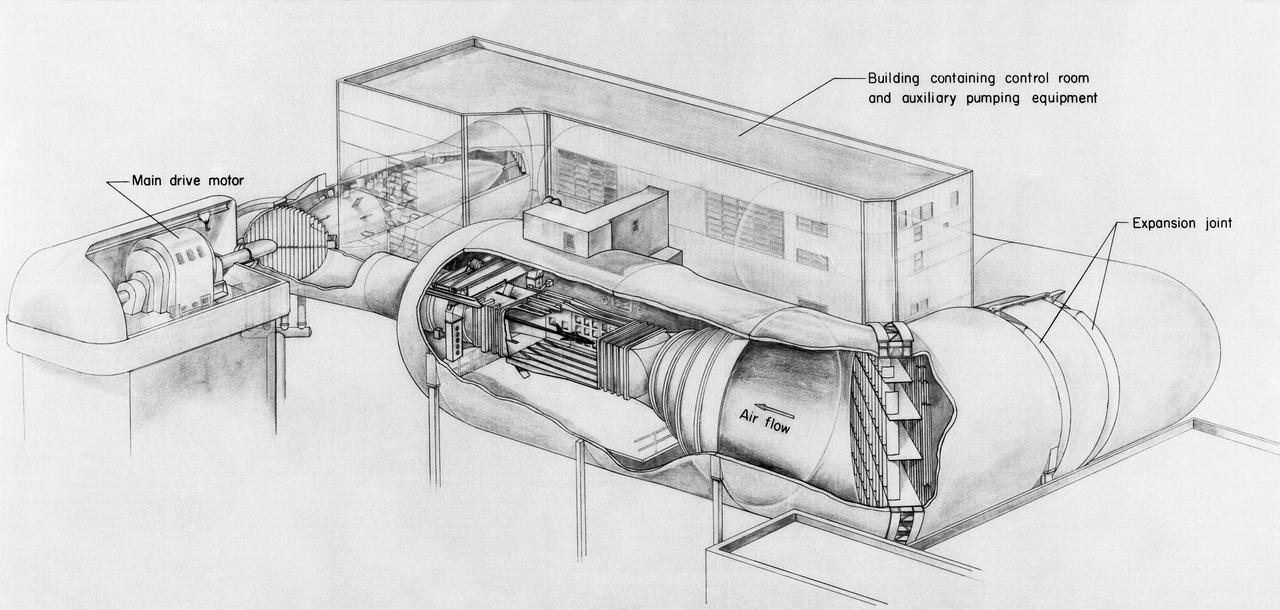
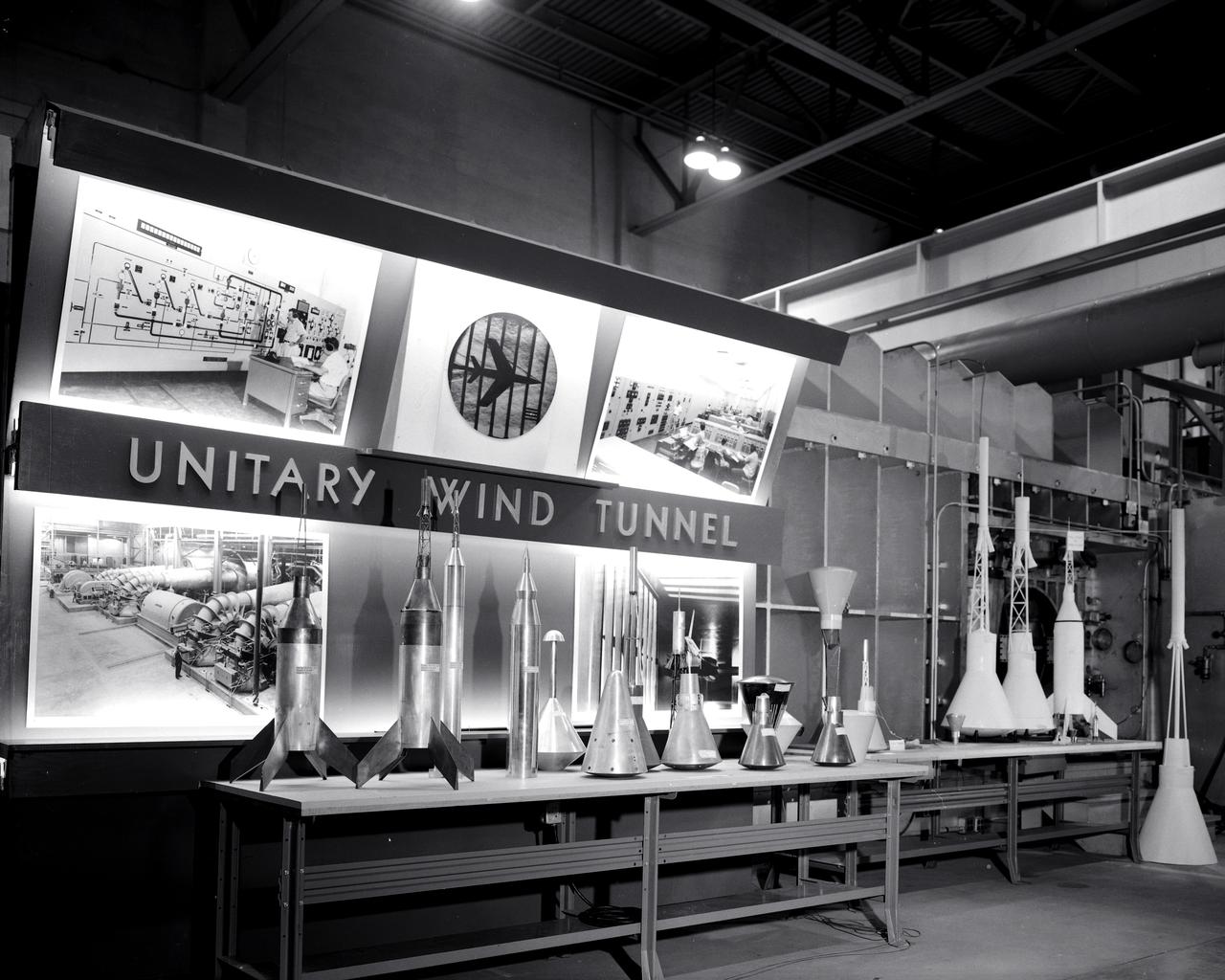
Fig. 68 Unitary Wind Tunnel Display
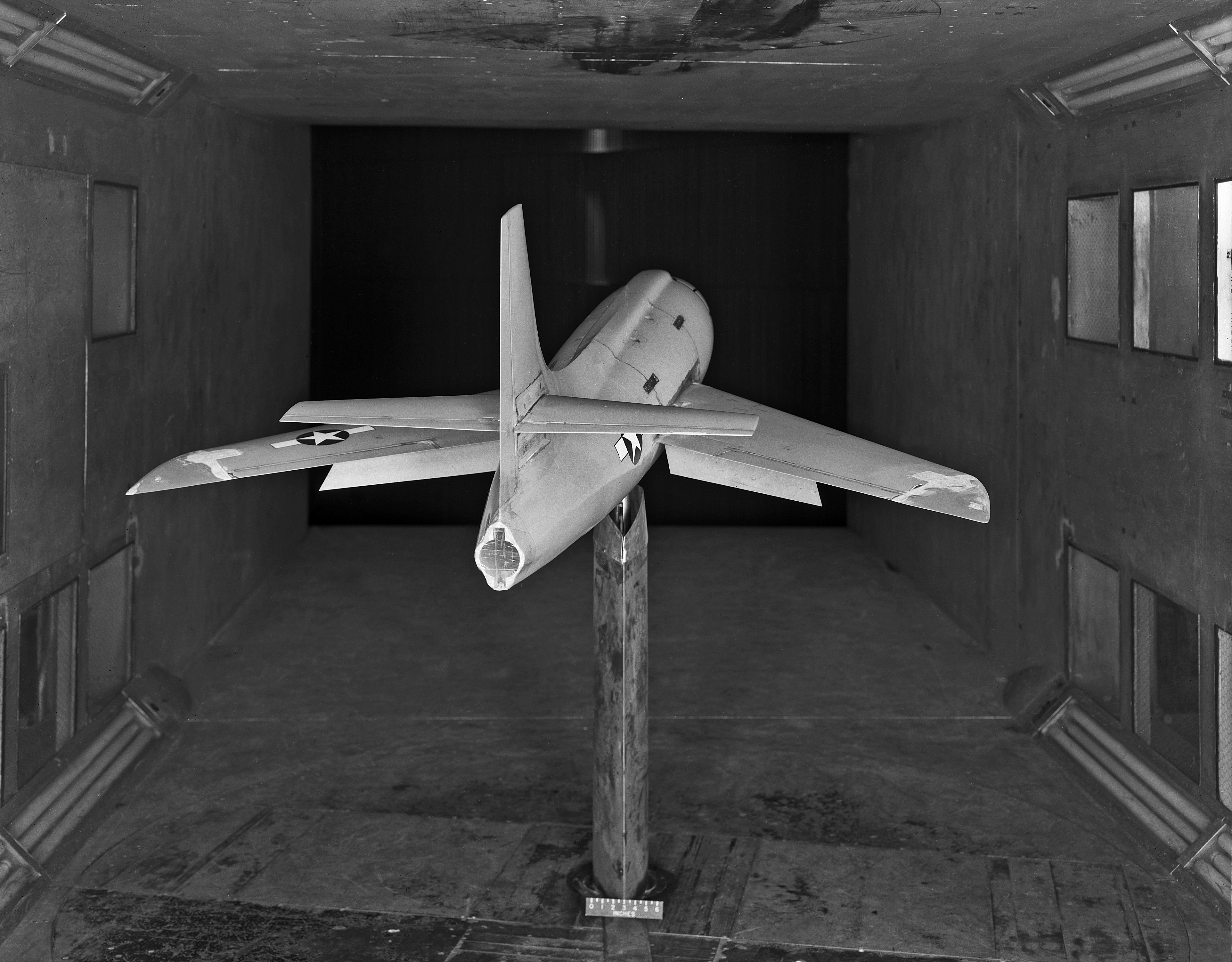
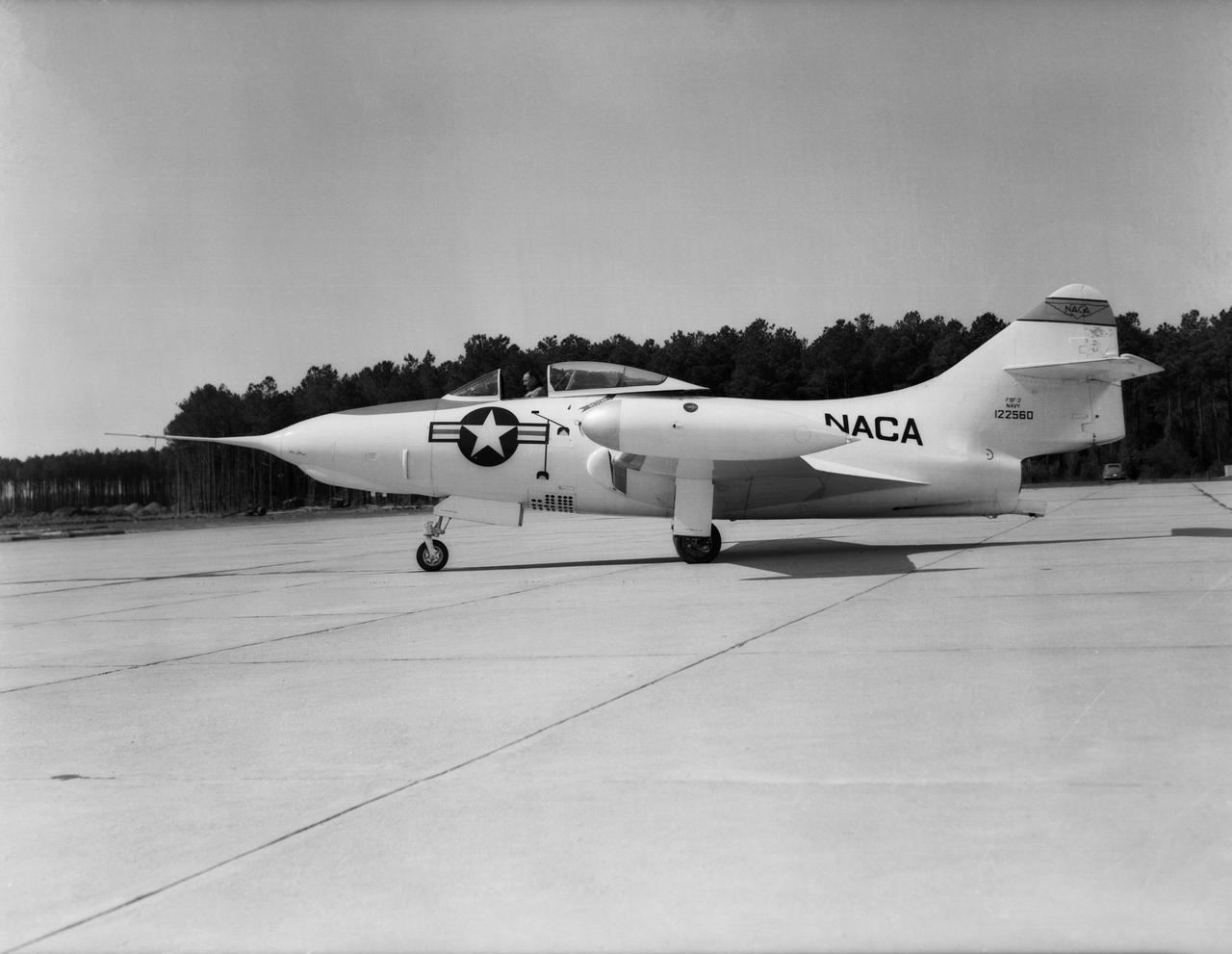
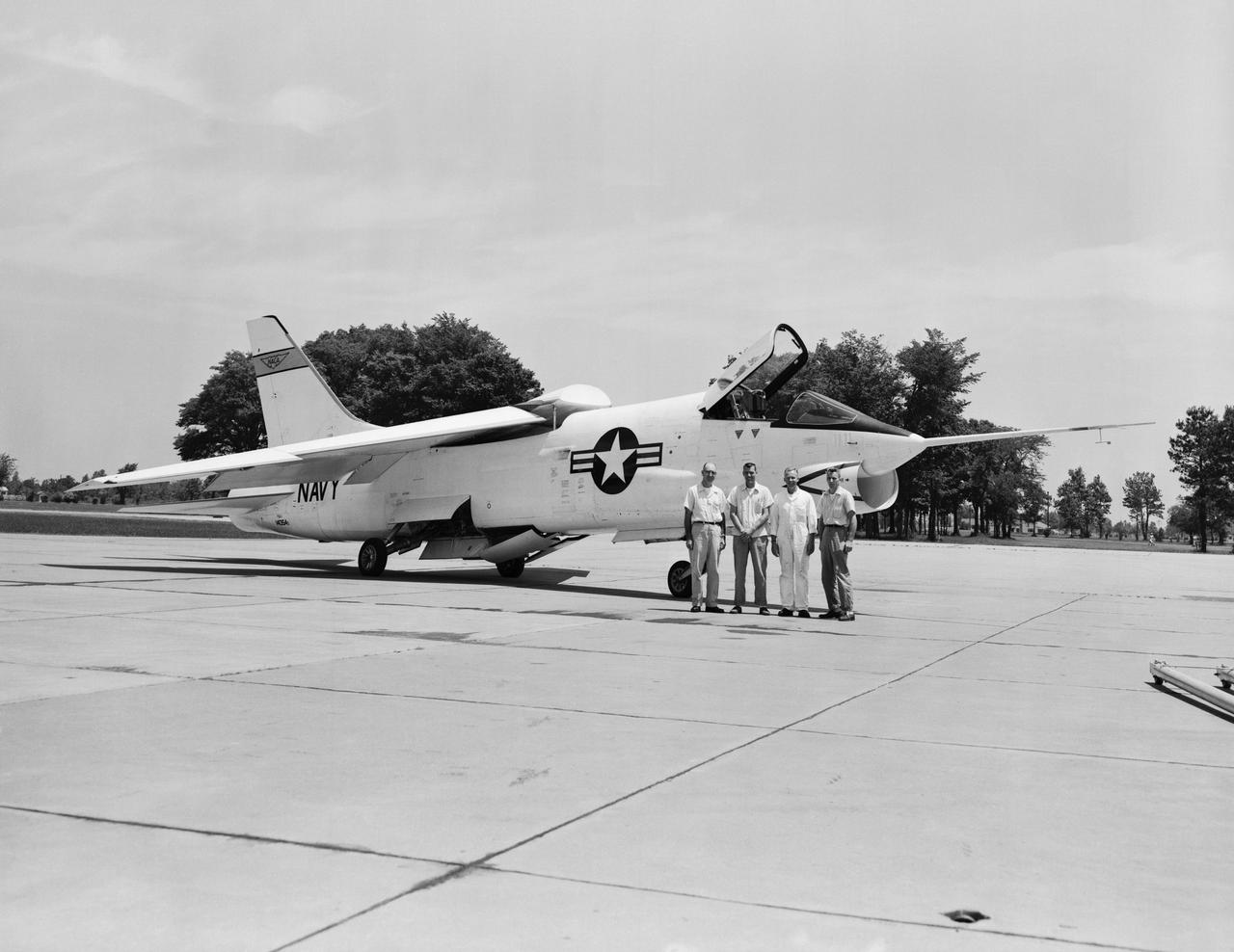
Views of F-8U Crusader Aircraft at NASA Langley
Views of F8U Airplane
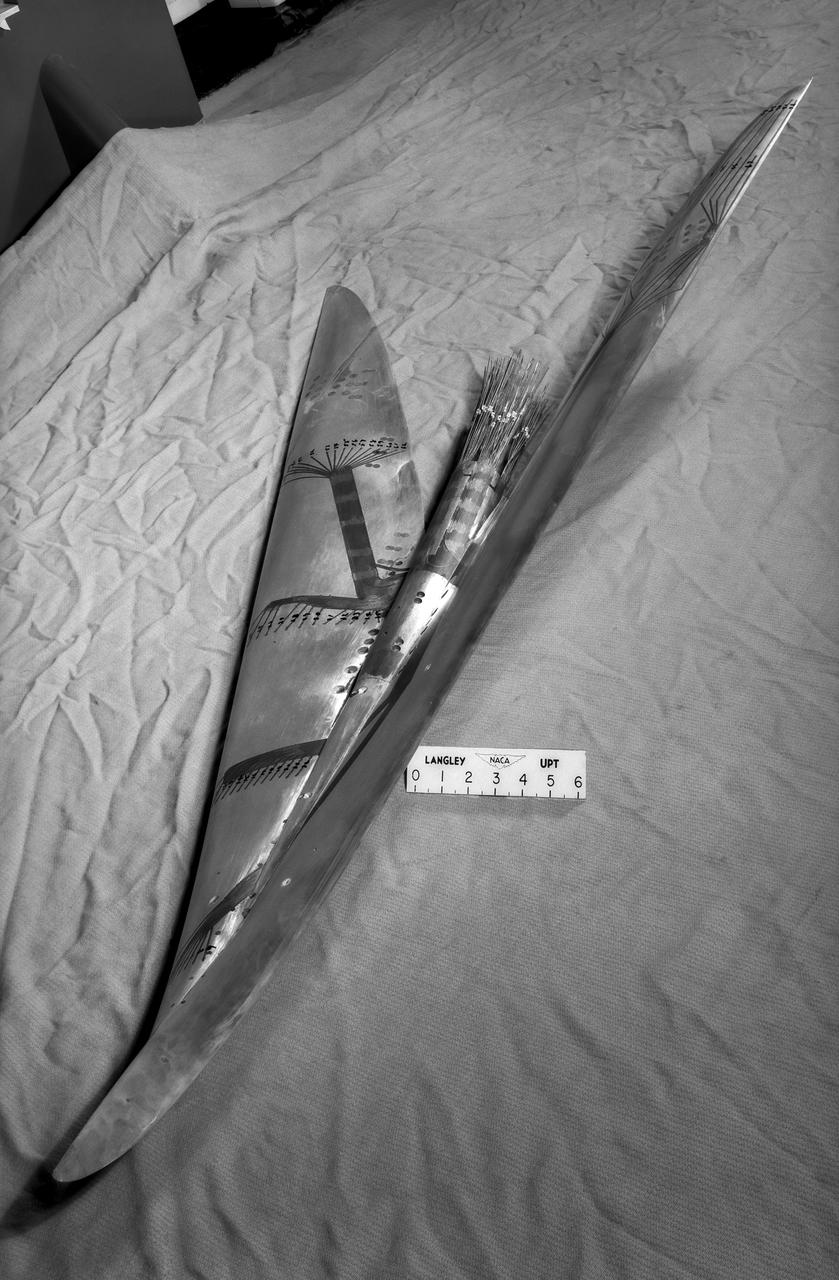
Wing Covering and Doping
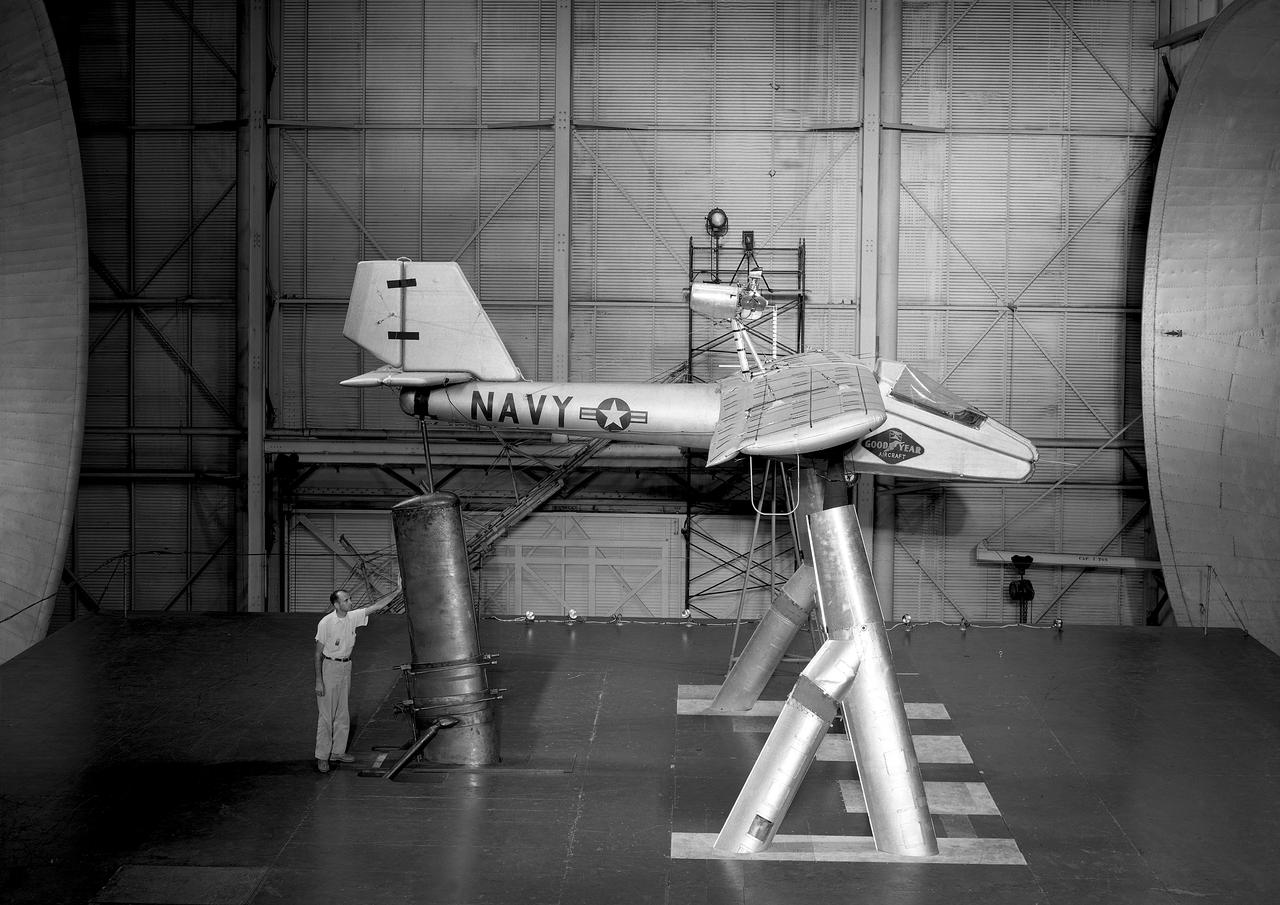
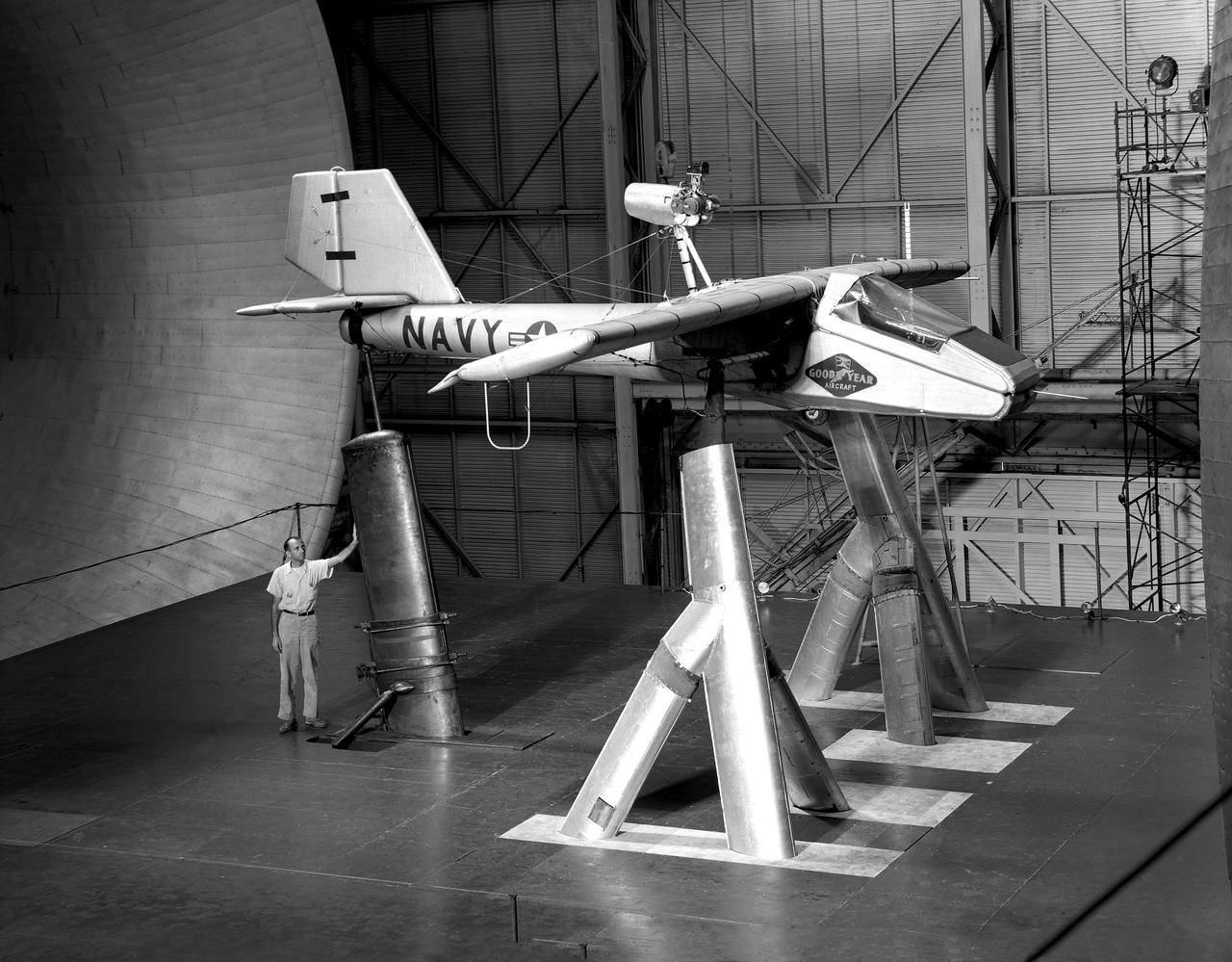
Various Components of Goodyear Inflatable Airplane in Full Scale Tunnel building 643 Test 238
Various Components of Goodyear Inflatable Airplane in Full Scale Tunnel
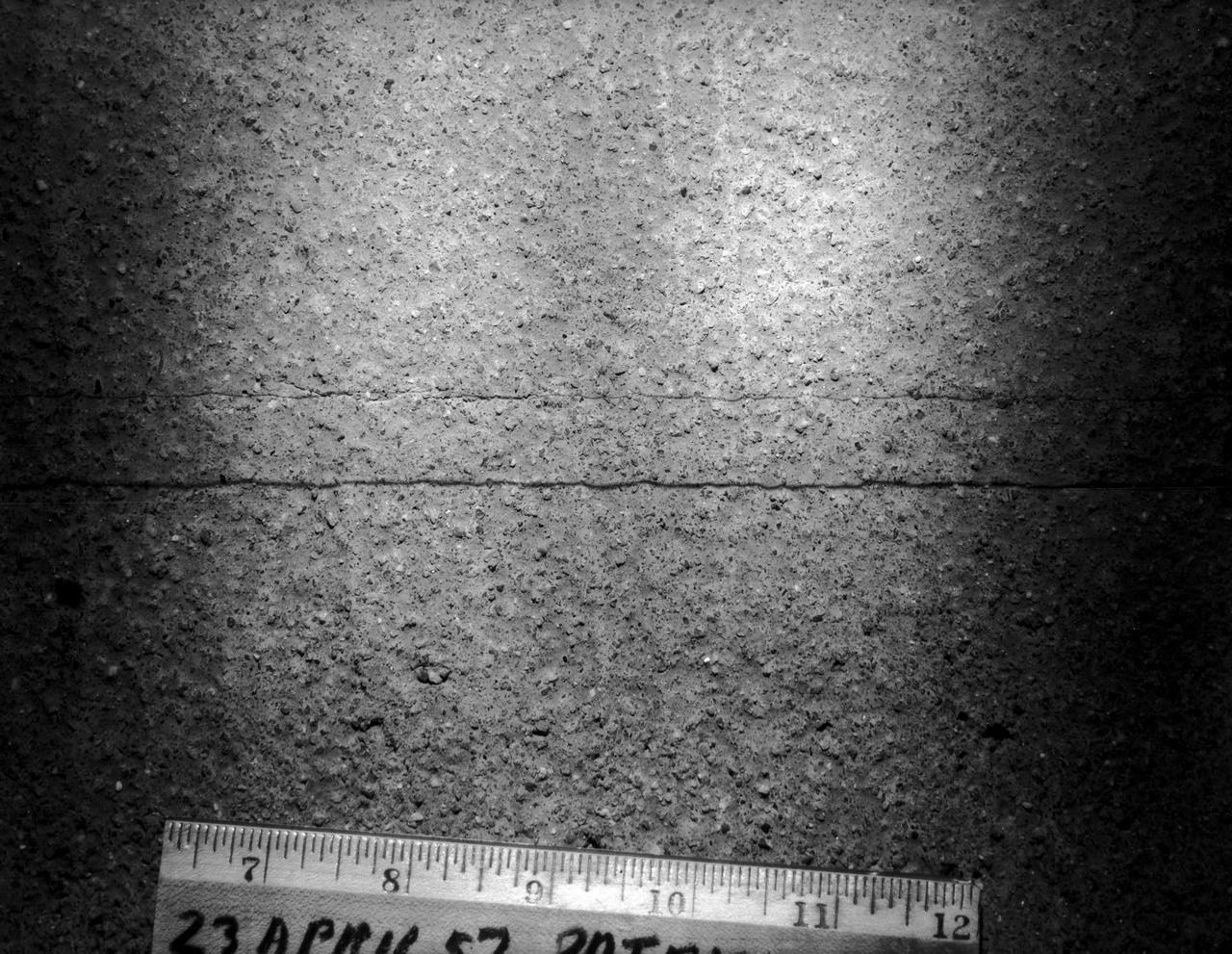
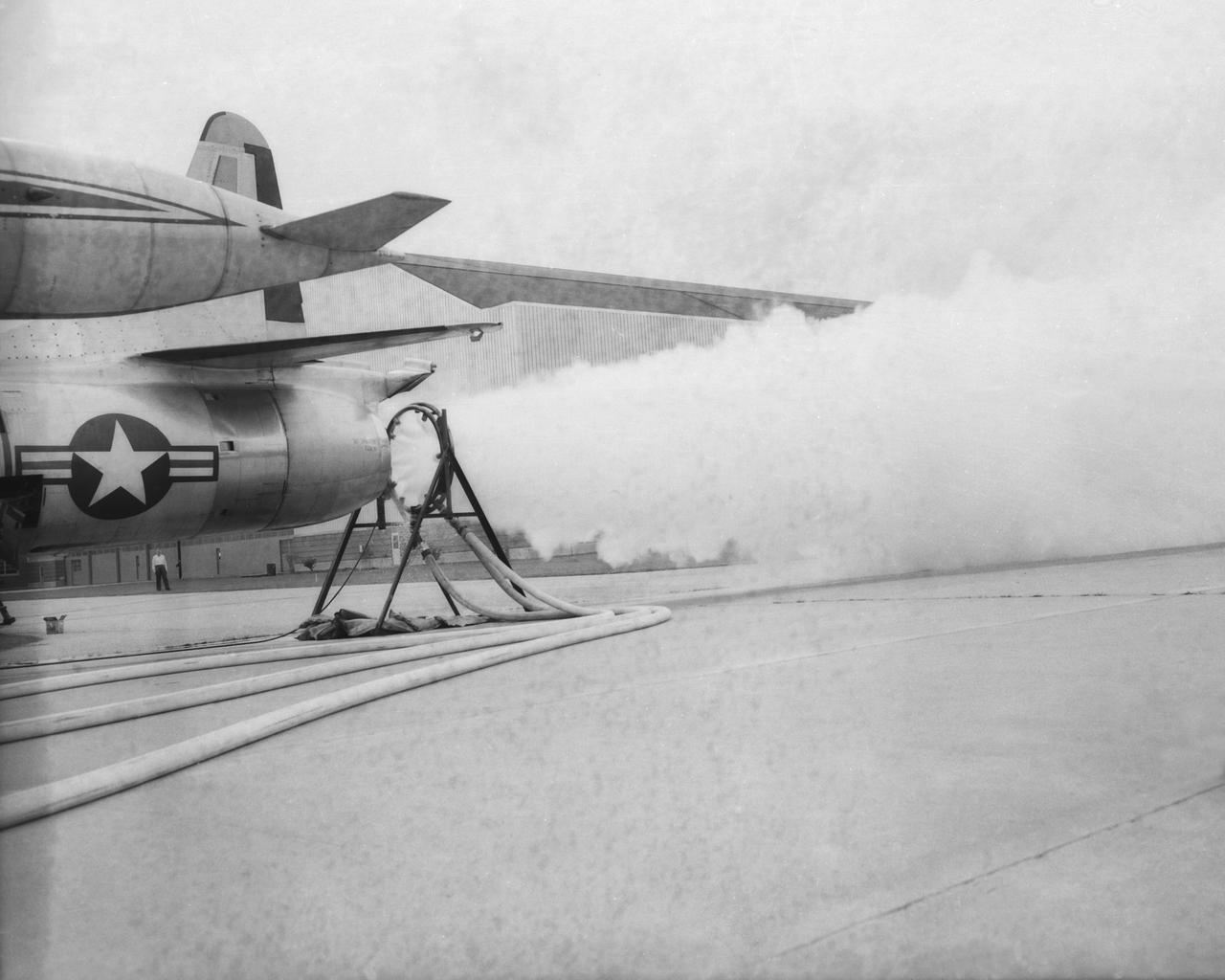
Water Type Muffler Test
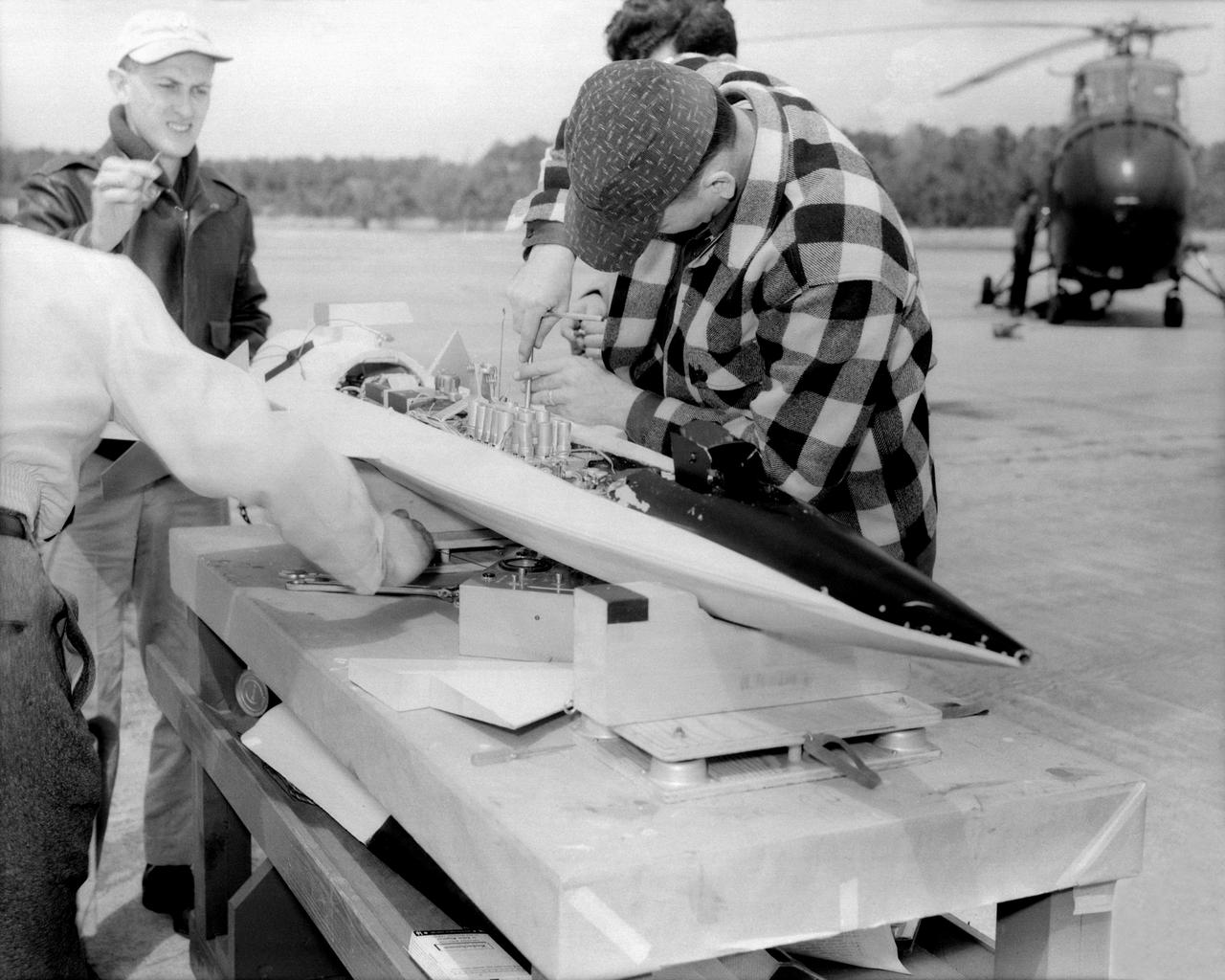
L57-2809 Rocket model of McDonnell F4-H1 airplane on Terrier launcher with Nike booster, June 17, 1957. Photograph published in A New Dimension  Wallops Island Flight Test Range: The First Fifteen Years by Joseph Shortal. A NASA publication. Page 500.
McDonnell F4-H1 Airplane Rocket Model
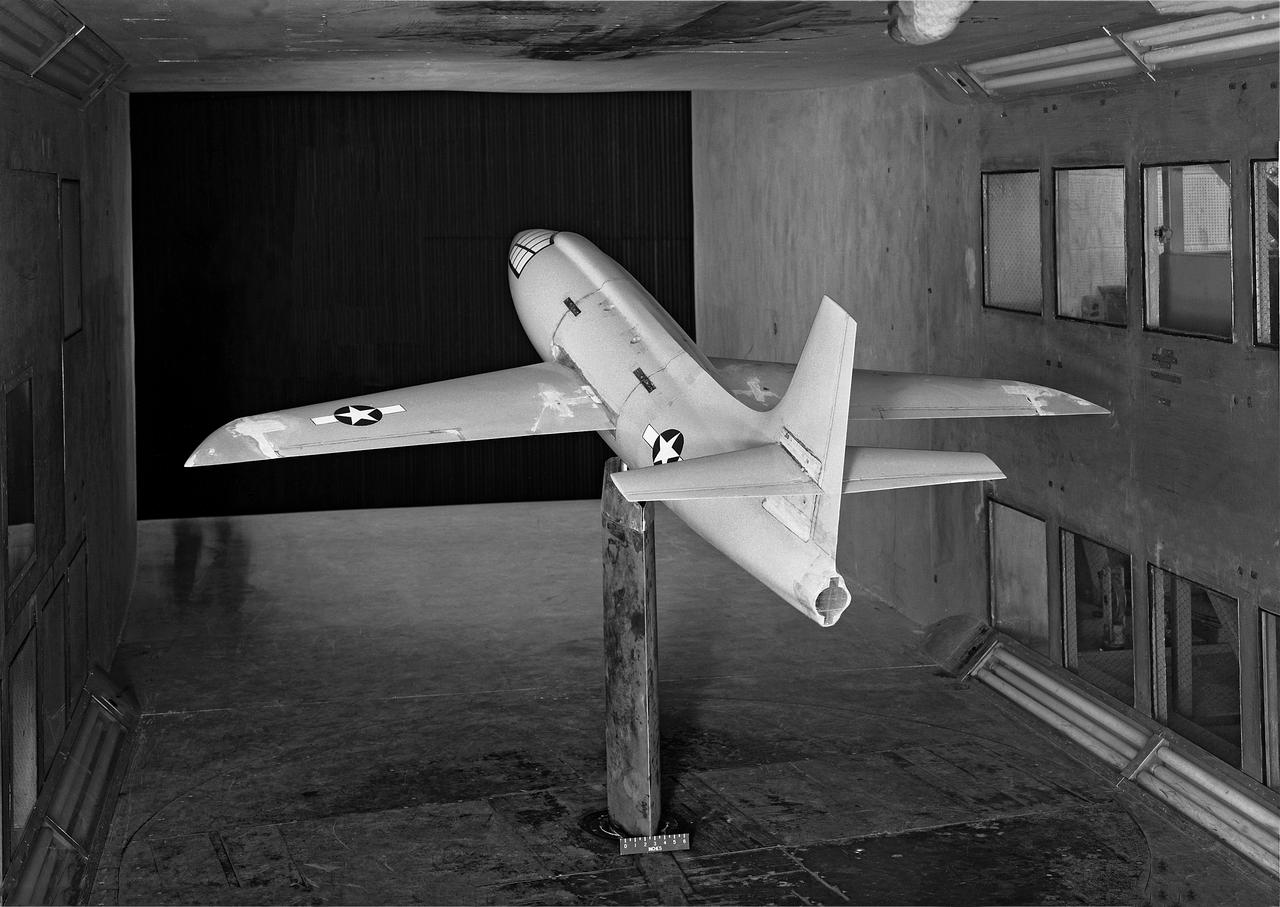
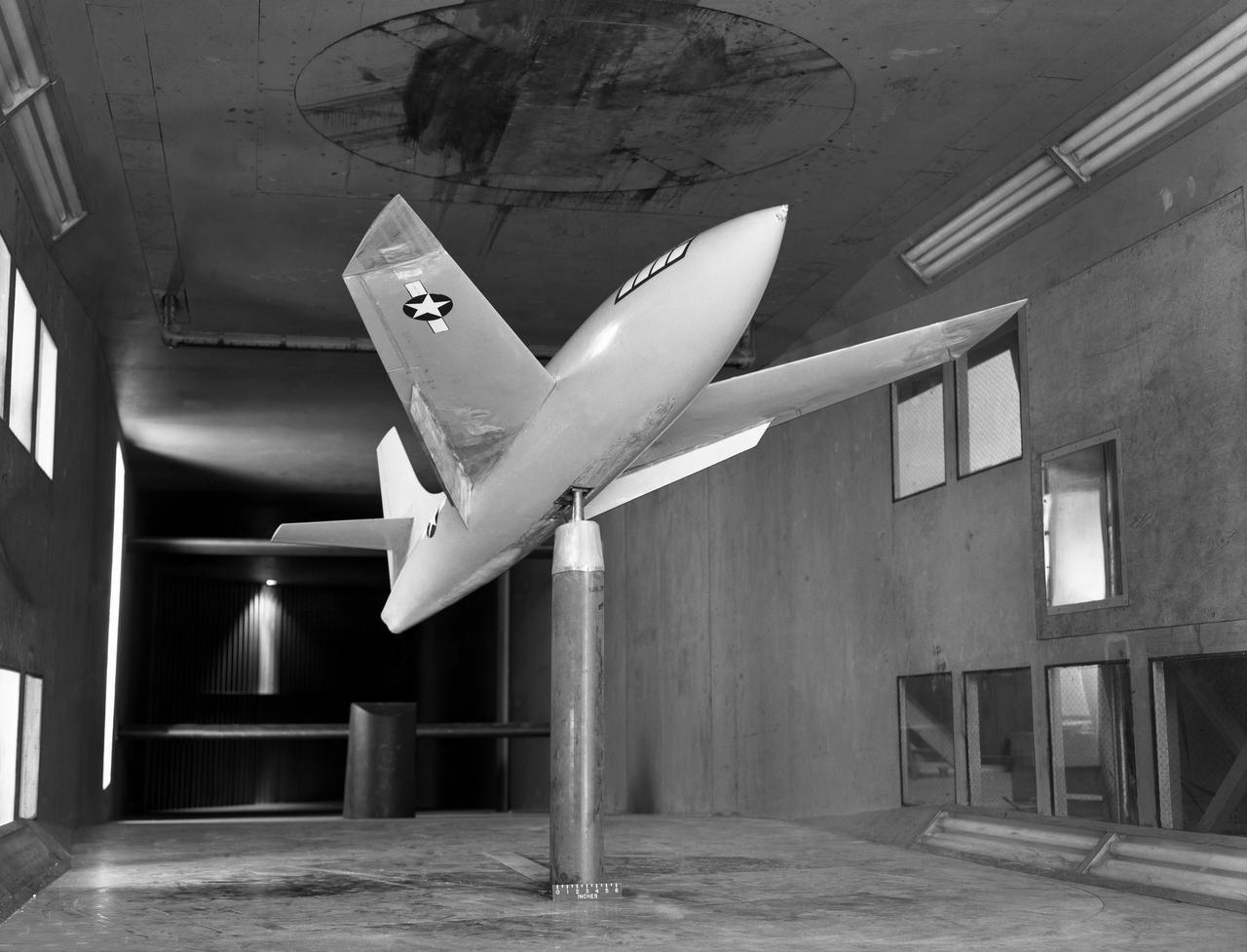
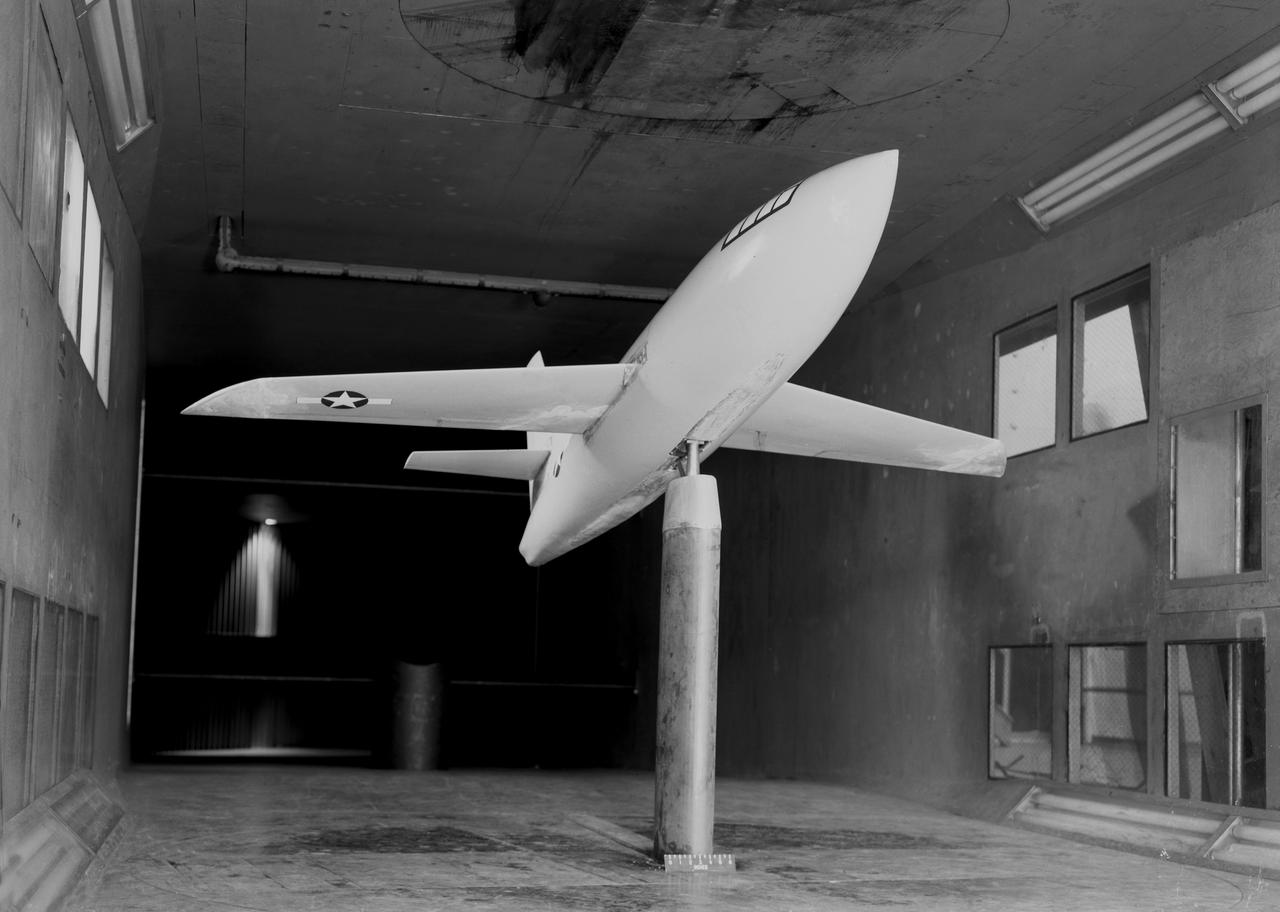
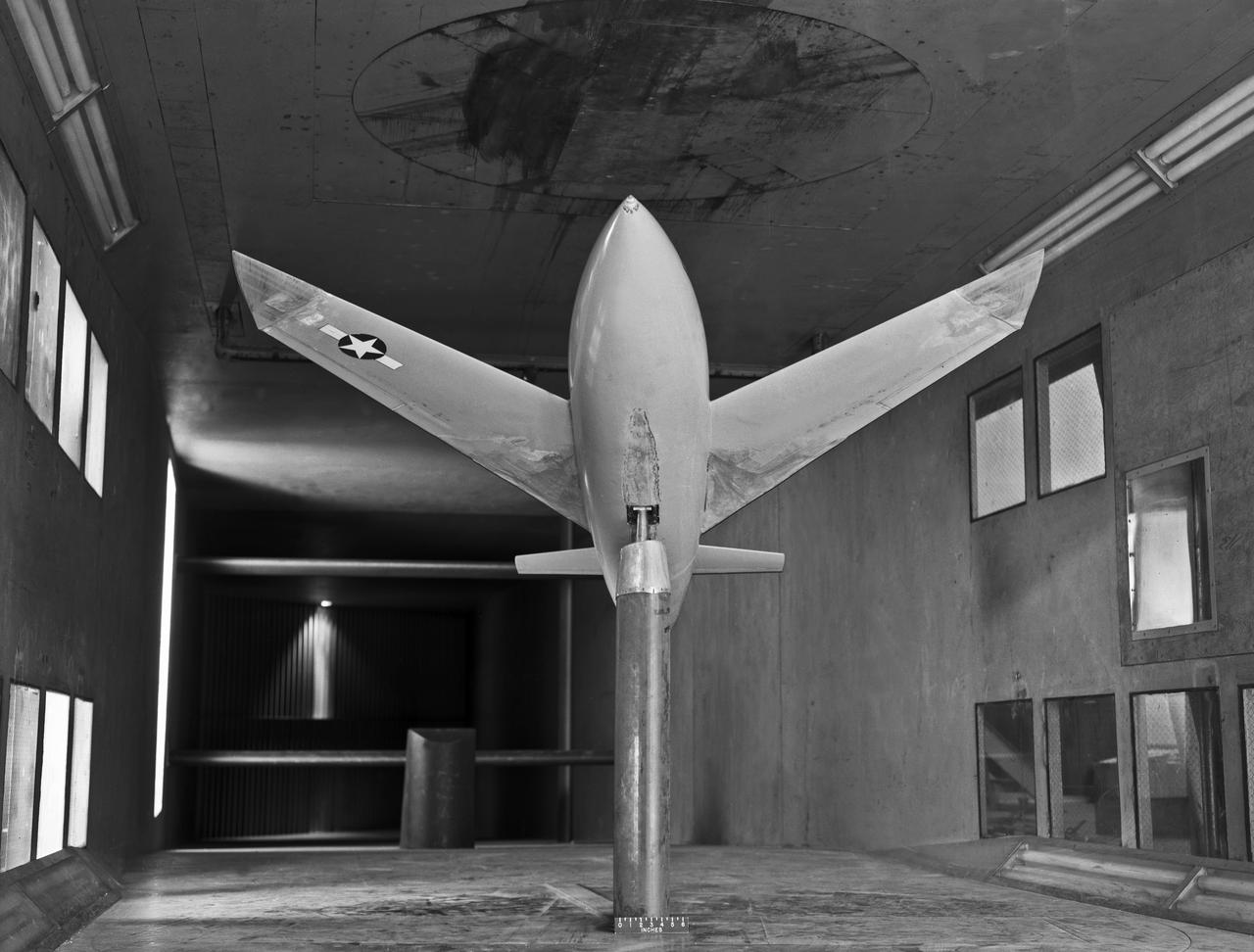
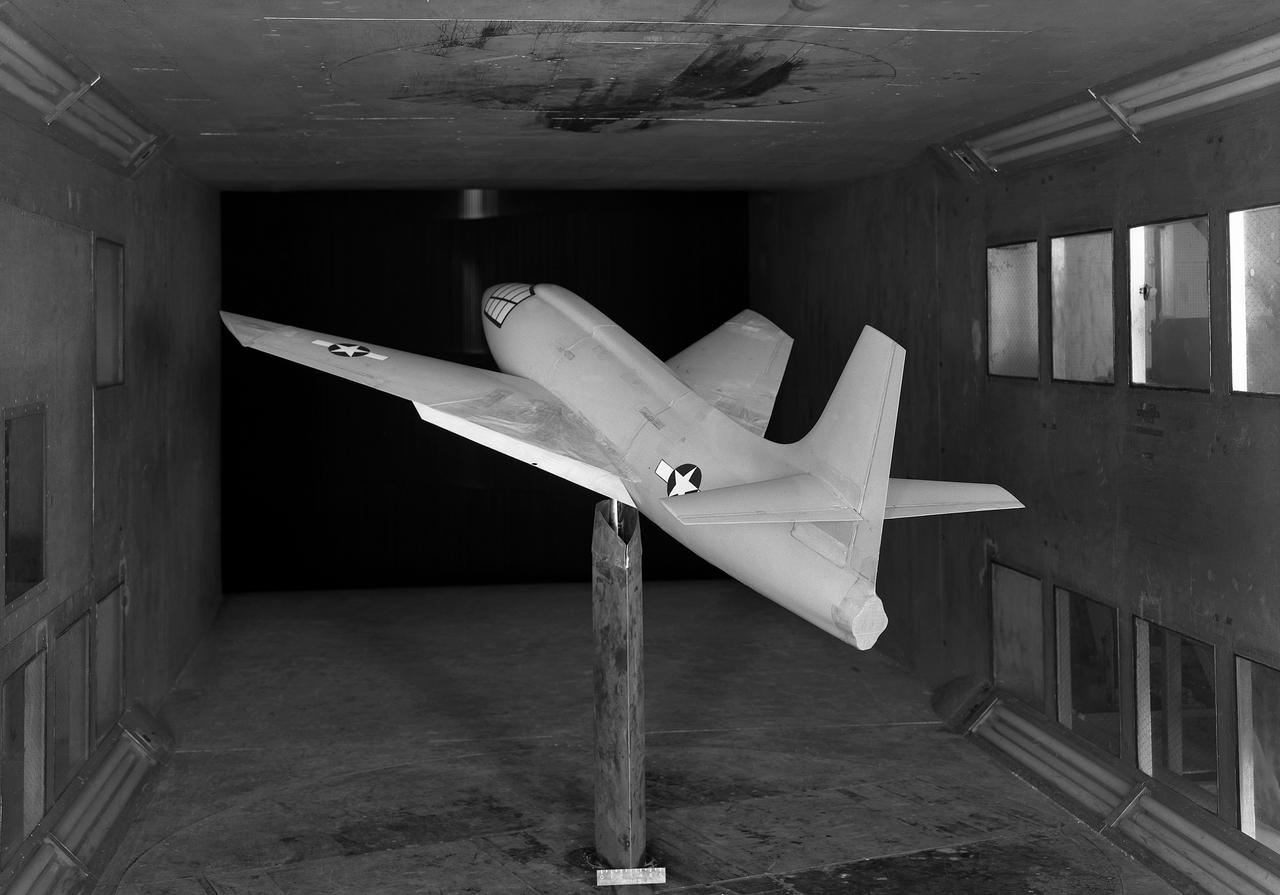
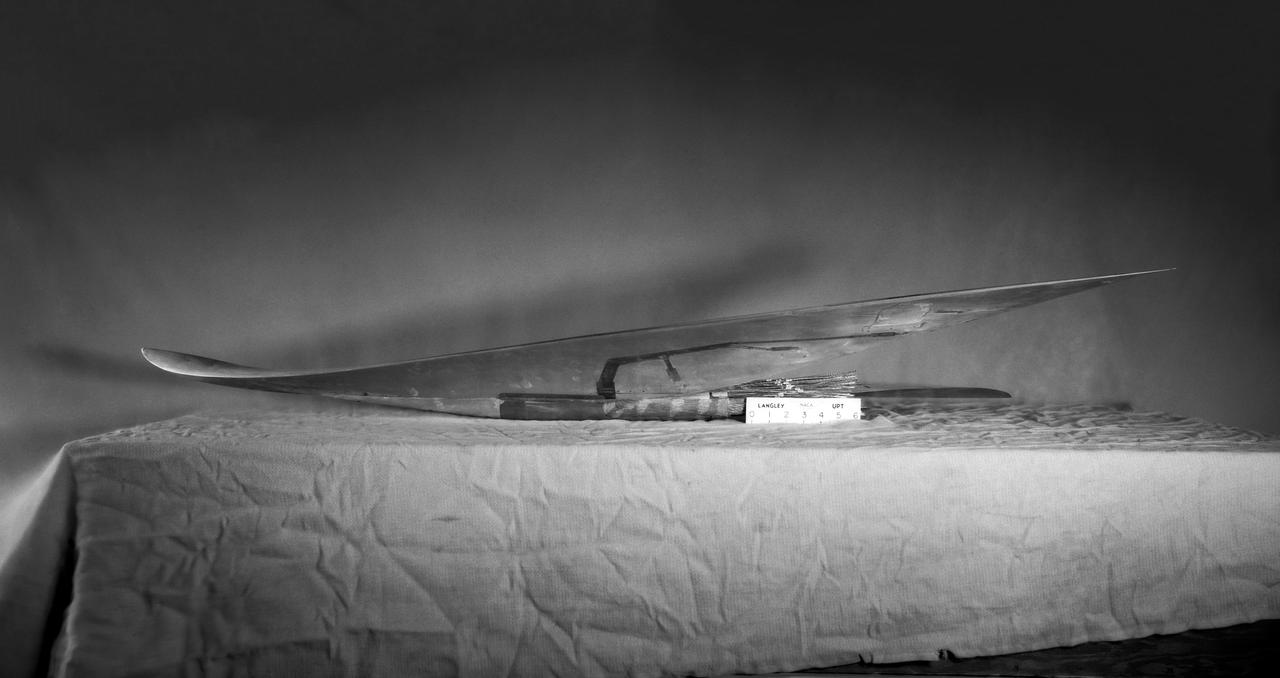
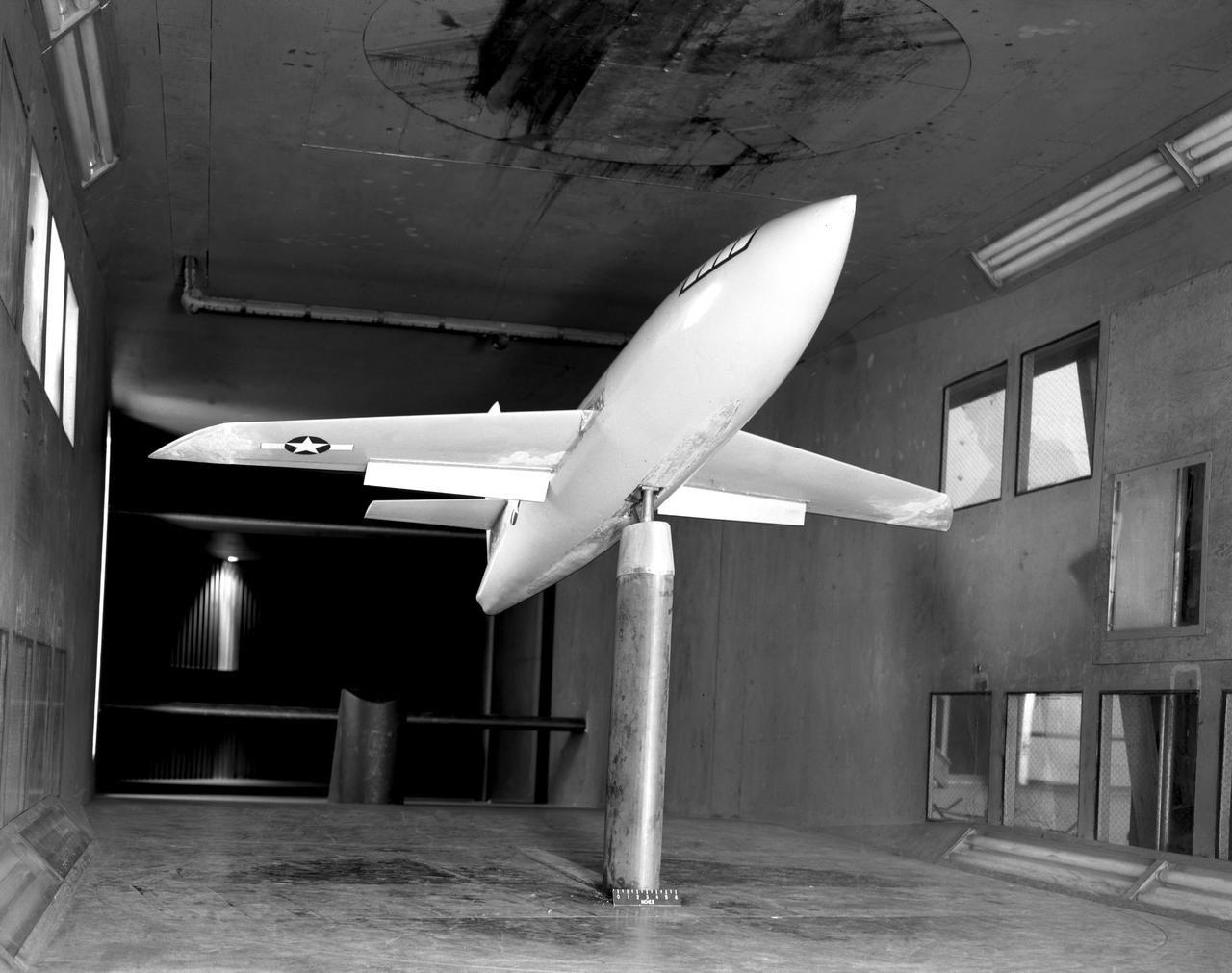
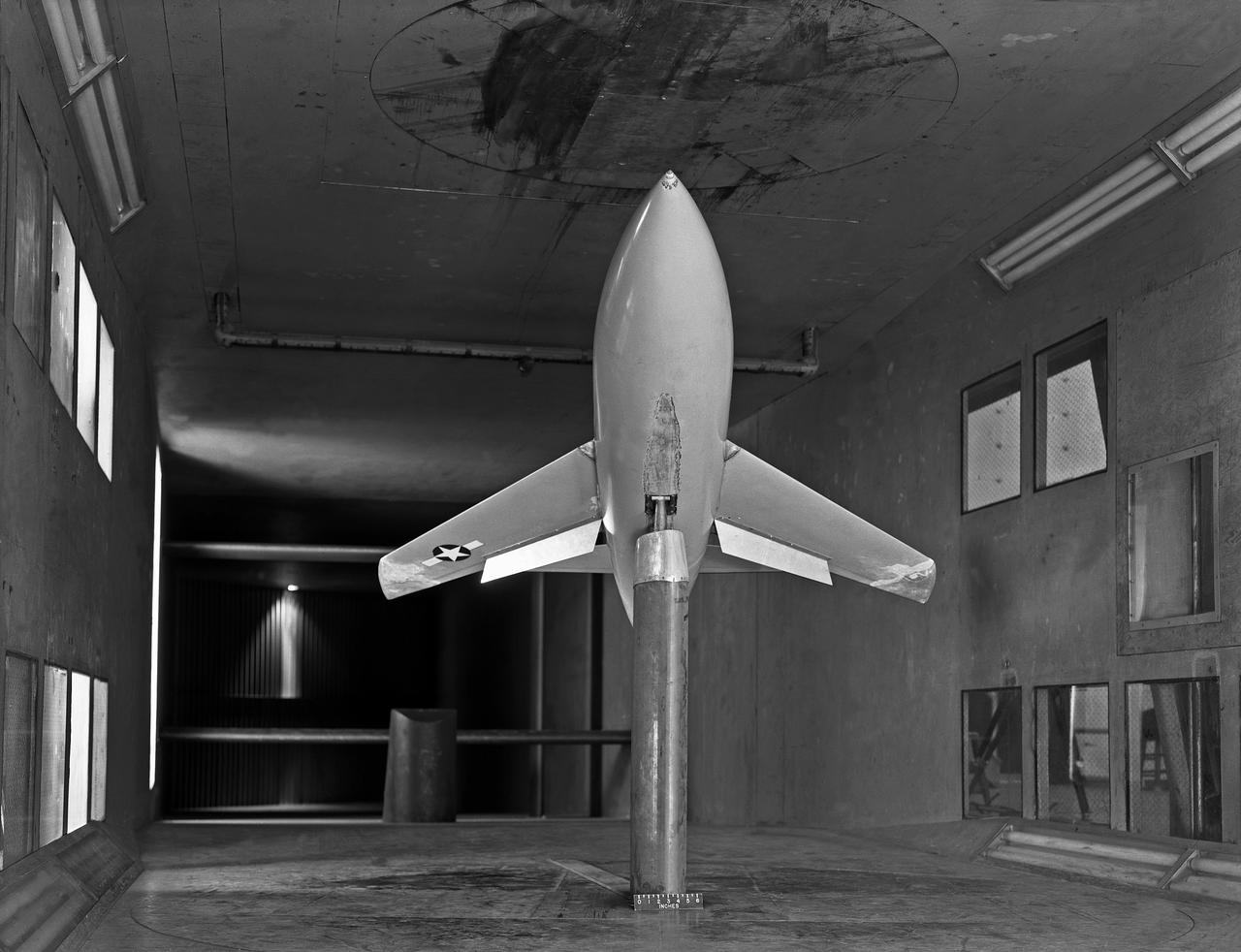
Modified Bell X-1 model pioneered variable-sweep studies in 1947.  Photograph published in Sixty Years of Aeronautical Research 1917-1977 By David A. Anderton. A NASA publication, page 52.
Bell X-1 Research Model on Single Support Strut in 7 x 10 Foot Wind Tunnel
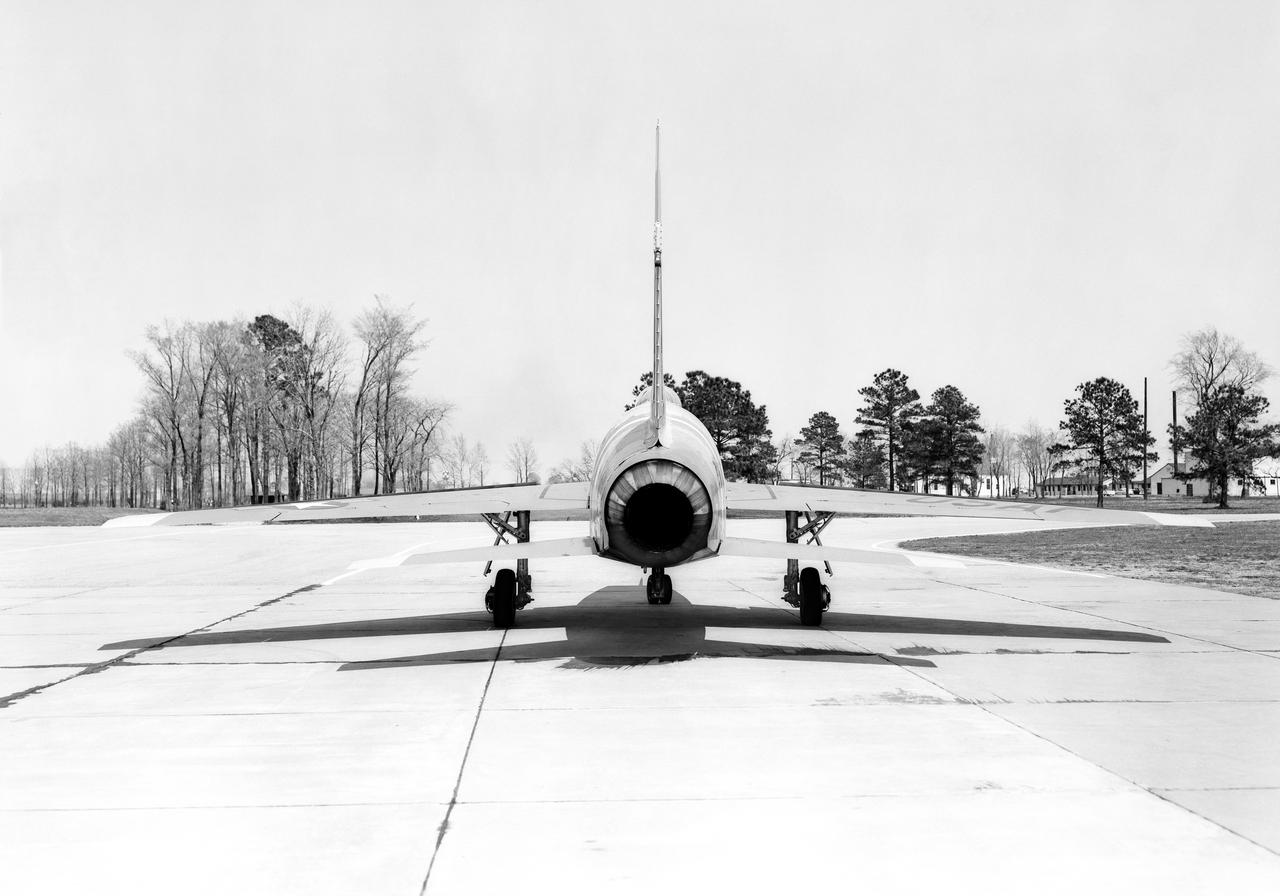
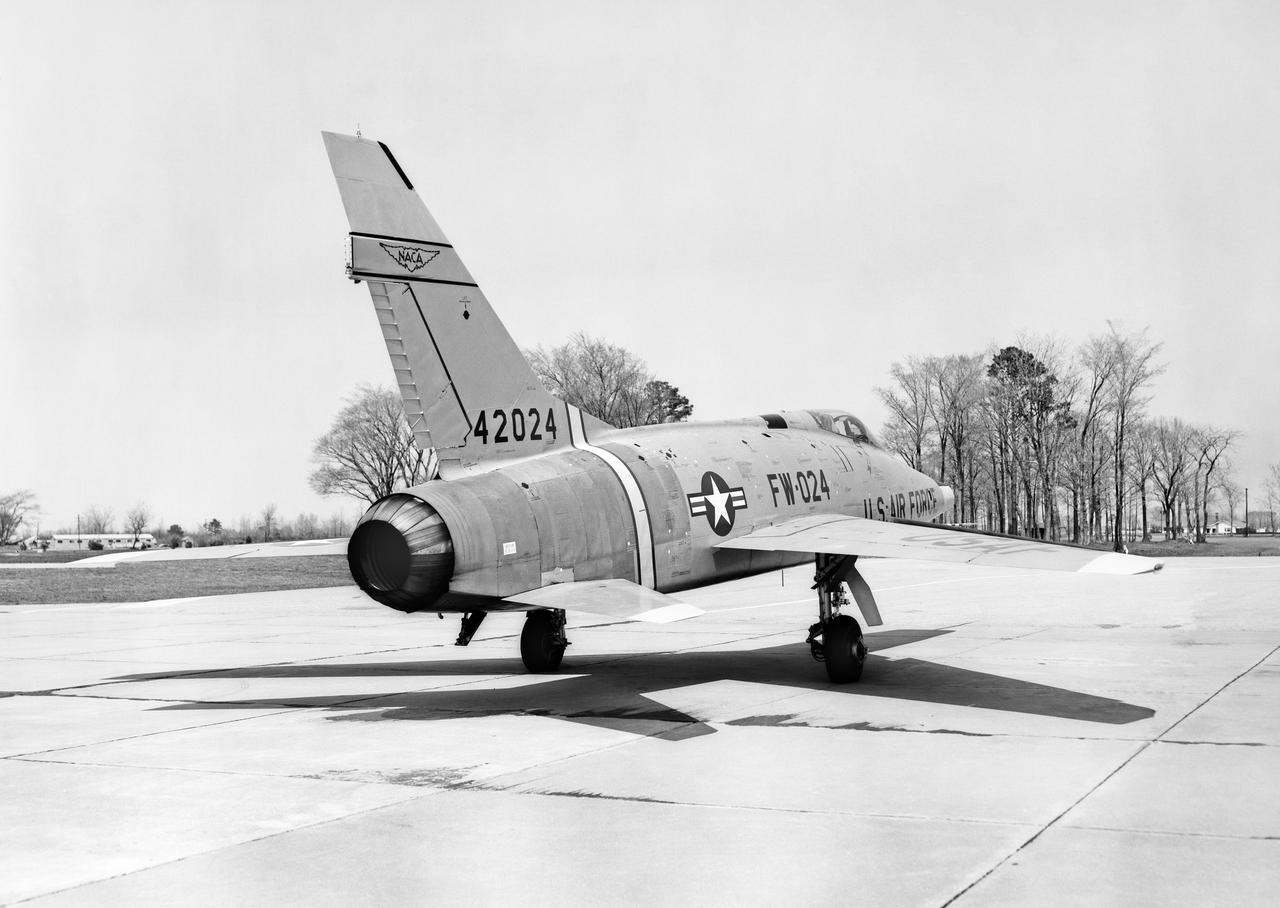
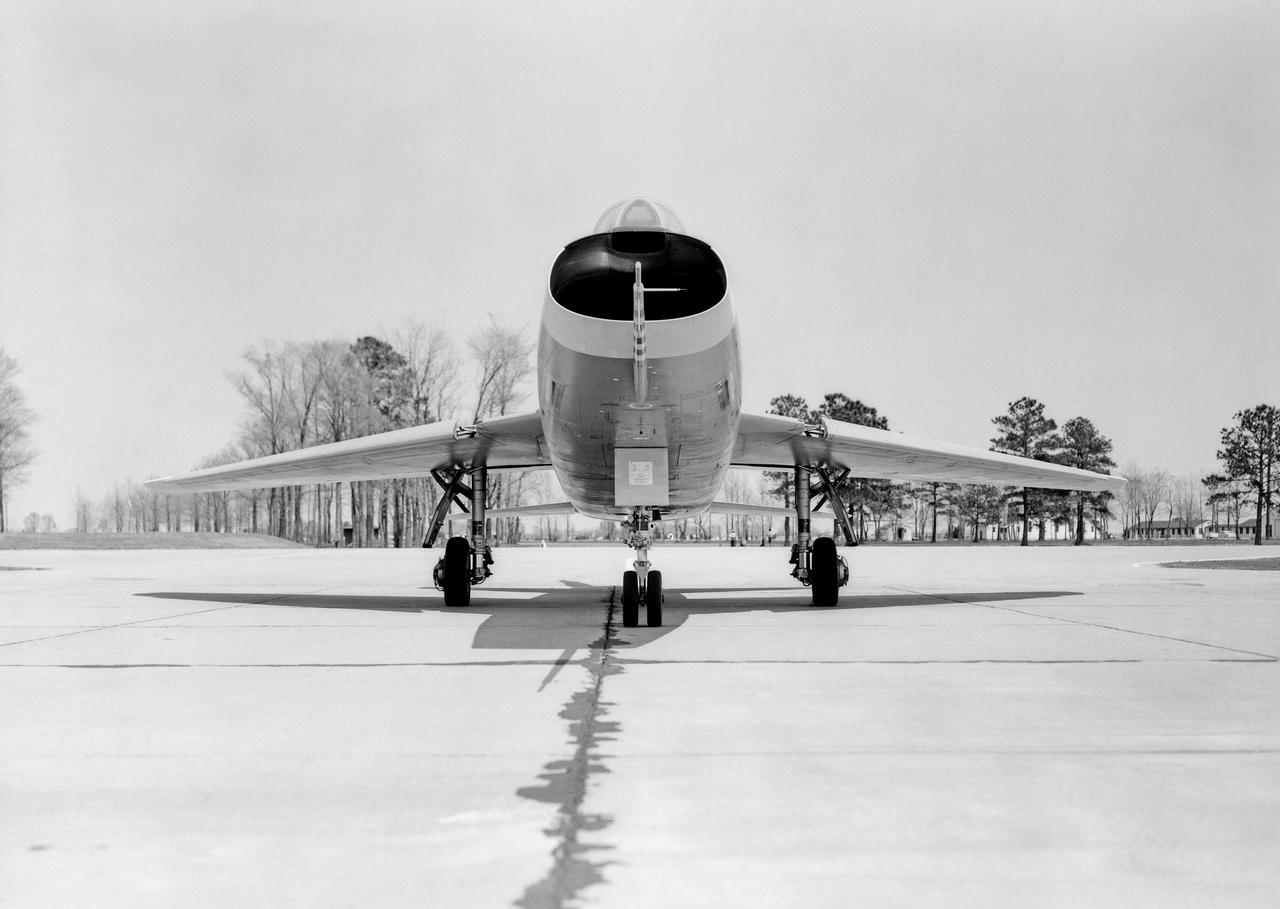
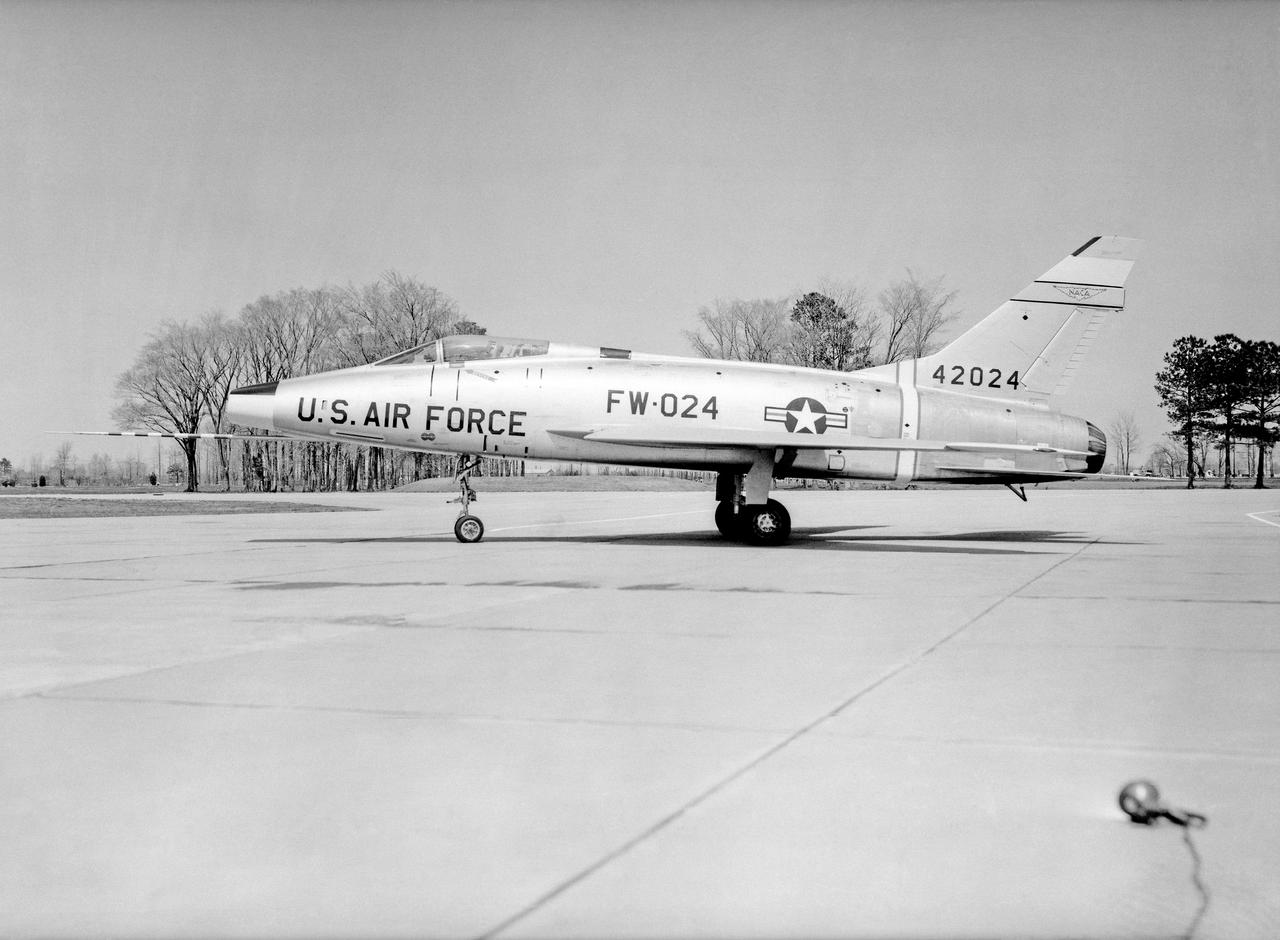
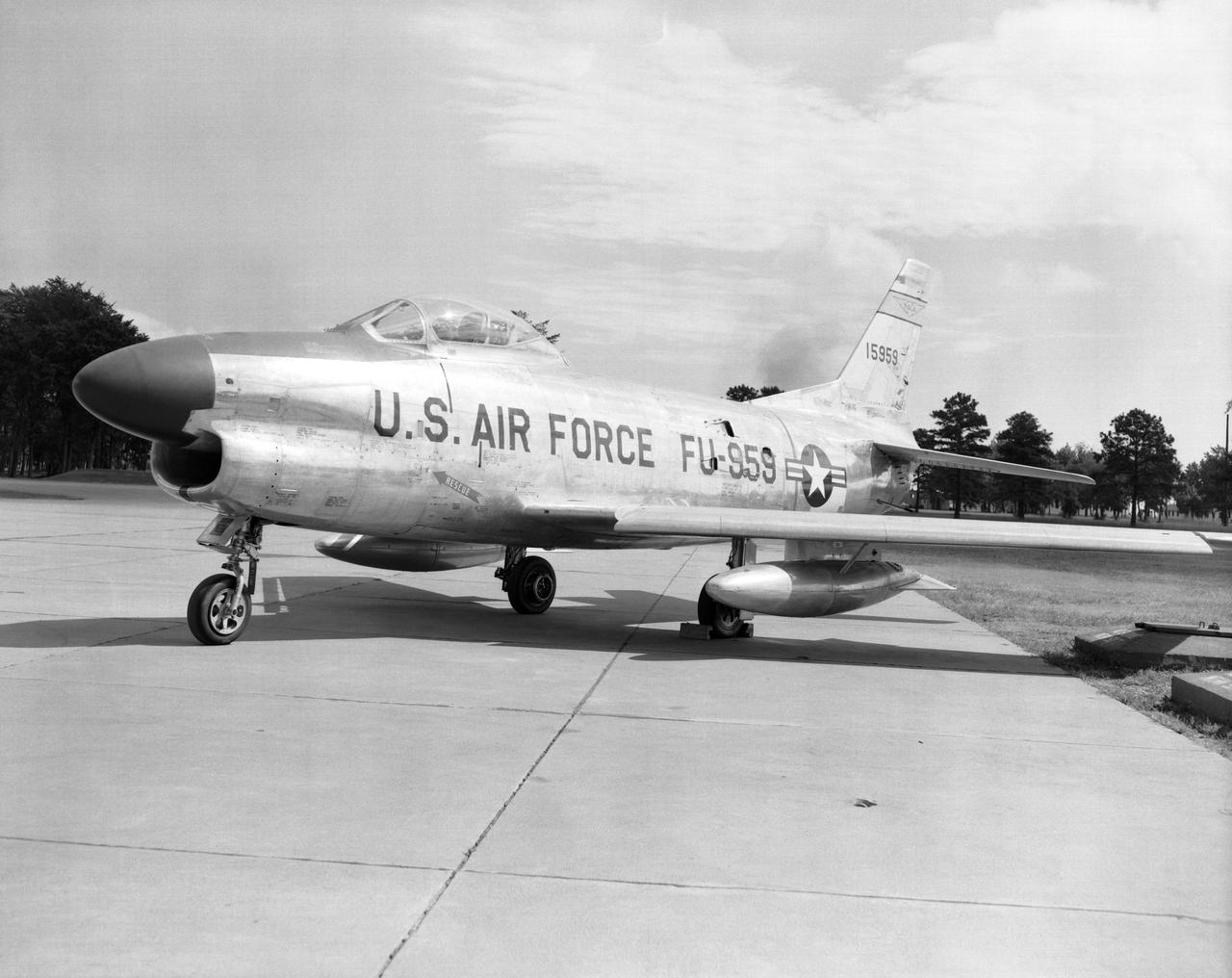
 North American F-100 C airplane used in sonic boom investigation at Wallops, October 7, 1958.  Photograph published in: A New Dimension  Wallops Island Flight Test Range: The First Fifteen Years by Joseph Shortal. A NASA publication. Page 672. -- Aircraft number: NACA 42024. Side view, 3/4 view from front, 3/4 view from rear, rear view, and two front views.
North American F-100 C
3/4 front view in Ames 40x80 foot Wind Tunnel investigation of the Lockheed T-33 modified for area-suction leading-edge and trailing edge flaps.
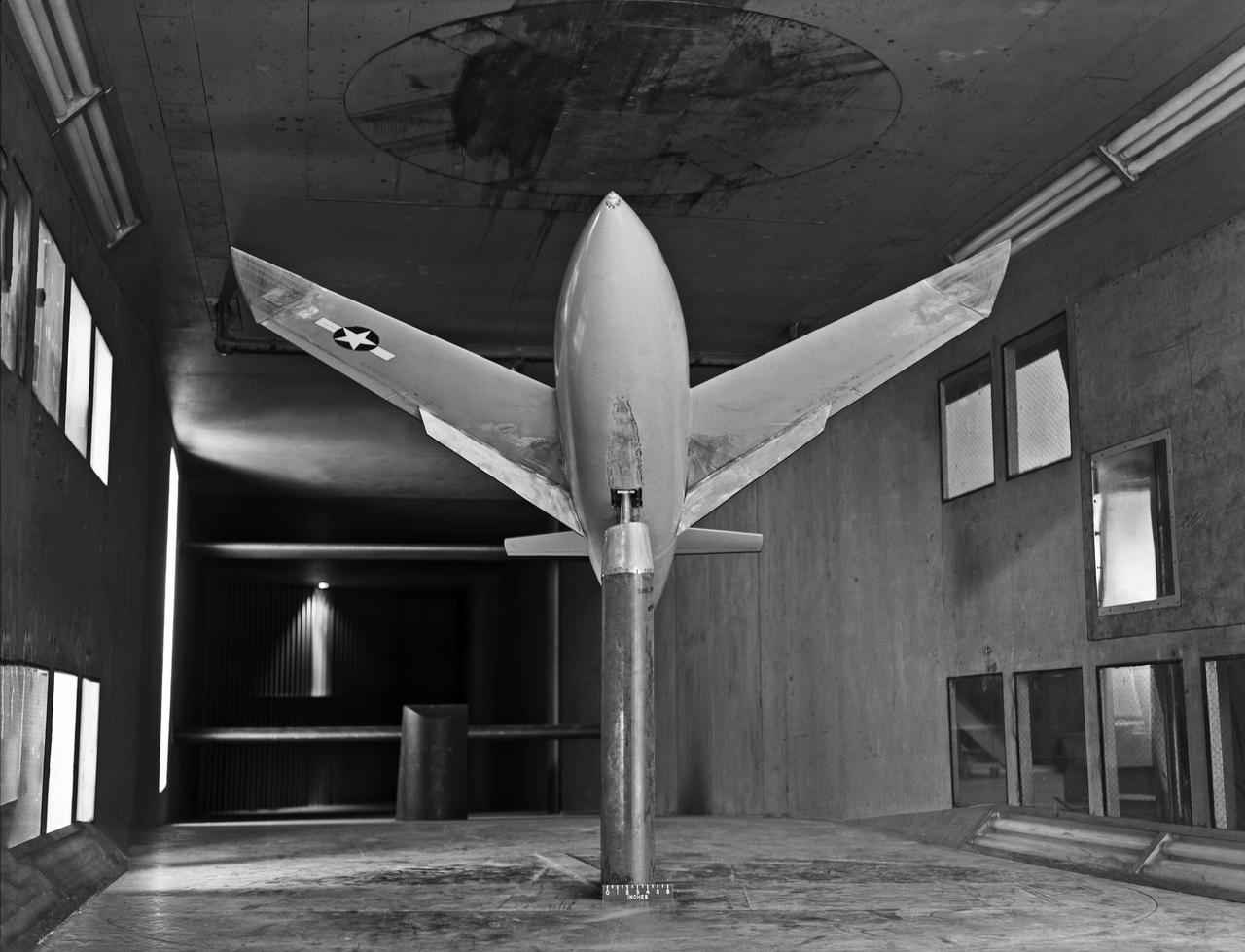
Northrop N-69 Missile in the Ames 40x80 foot Wind Tunnel.
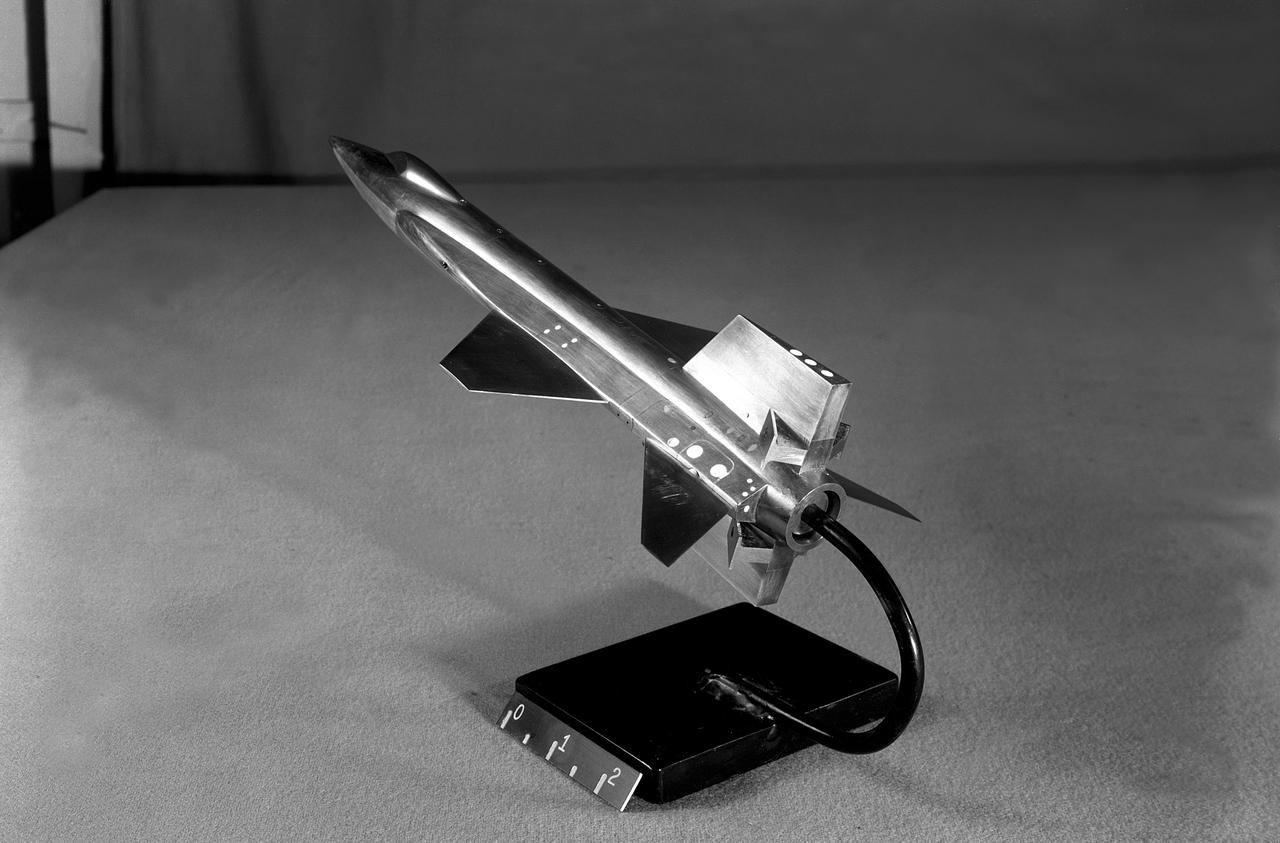
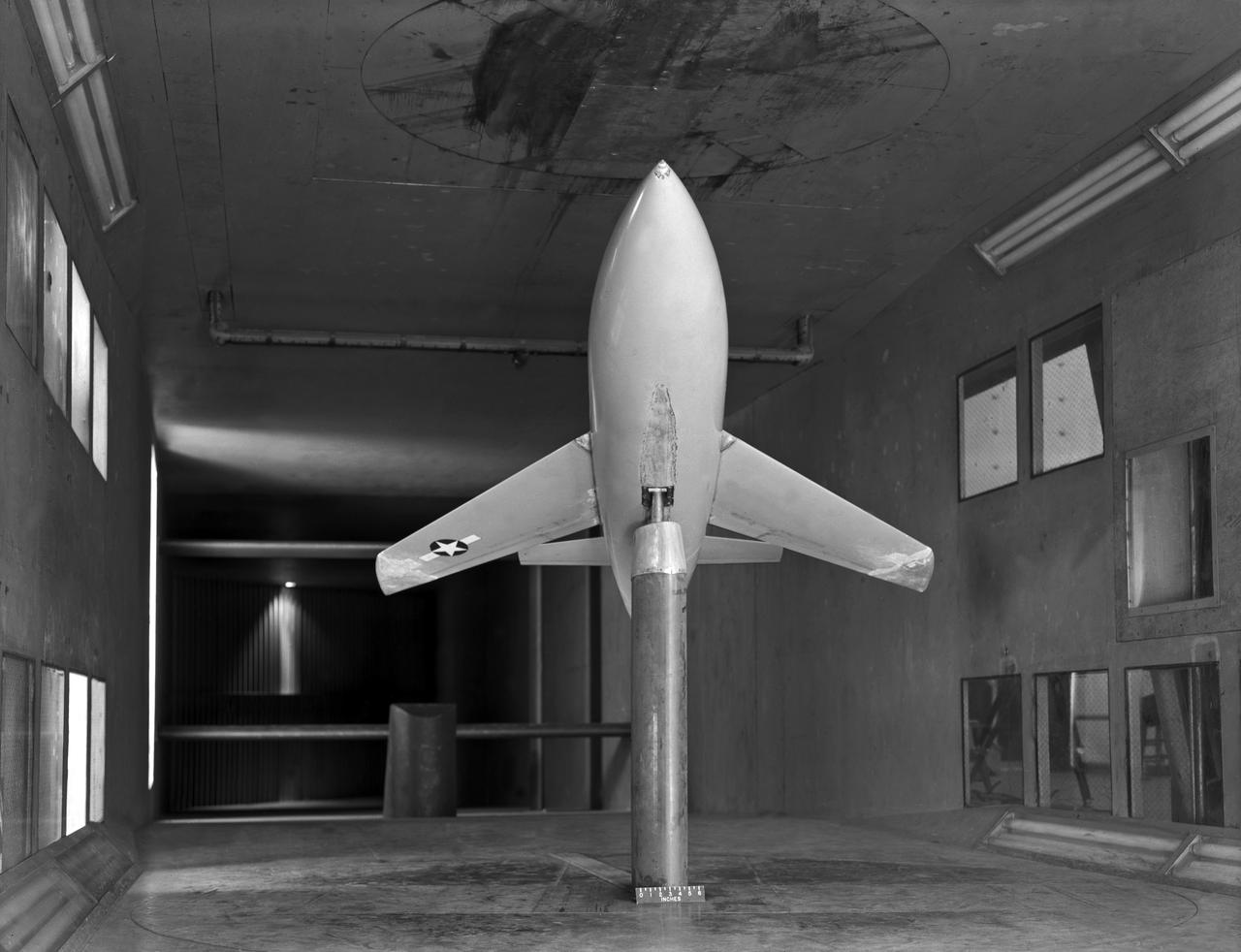
North American X-15 Drop Model
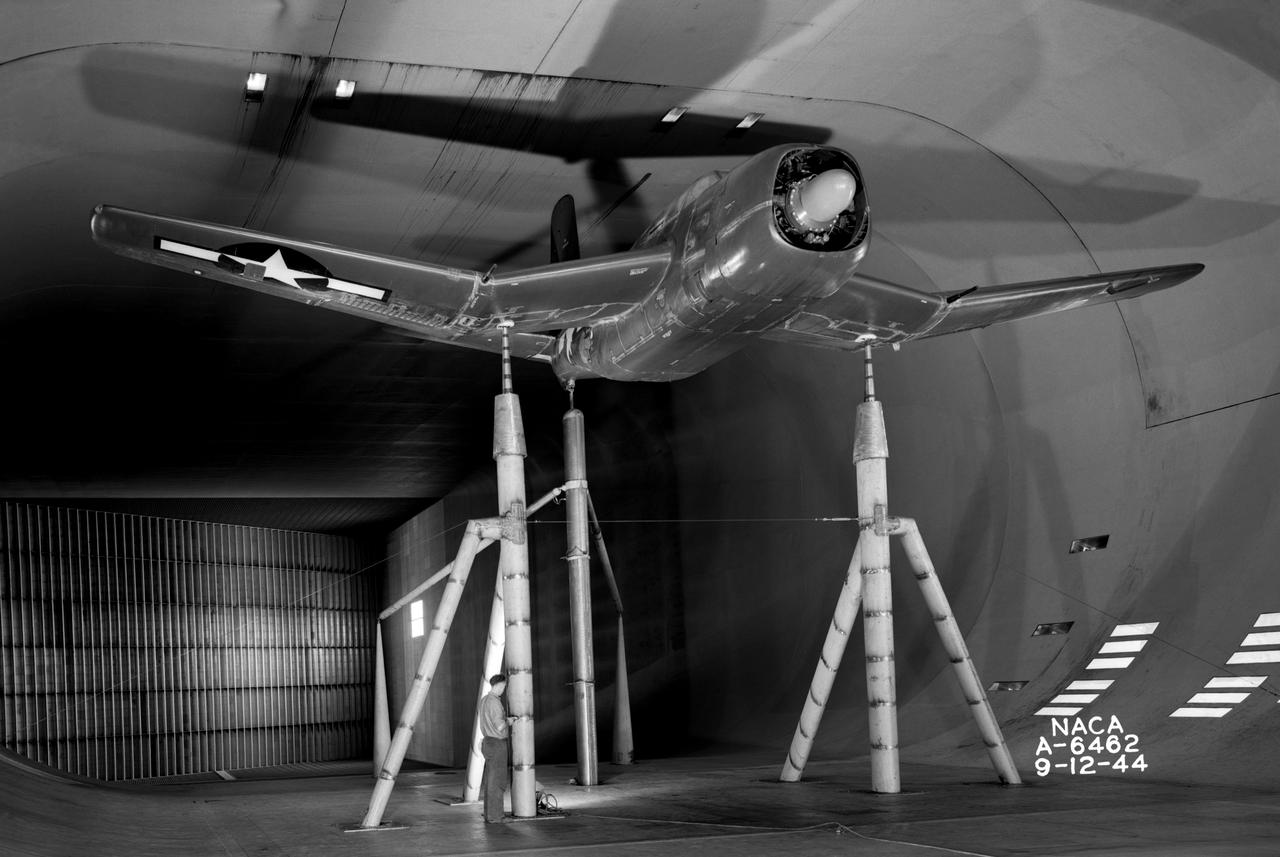
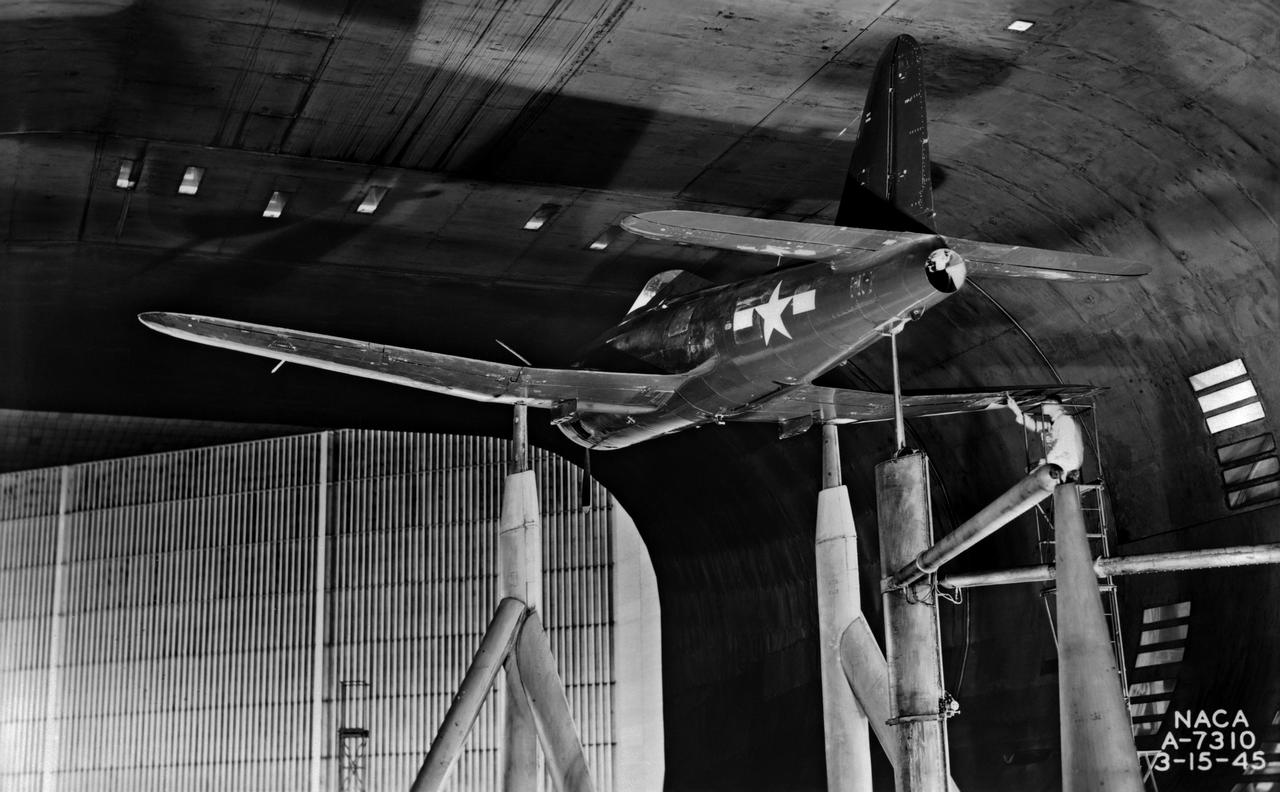
3/4 front view from below of the Ryan FR-1 airplane mounted in the NACA Ames 40x80 foot wind tunnel. Production configuration.
Ryan FR-1 in NACA Ames 40x80 foot Wind Tunnel.
Prop Damage in the 8 foot TT (Transfer Tunnel)
Modified Bell X-1 model pioneered variable-sweep studies in 1947.  Photograph published in Sixty Years of Aeronautical Research 1917-1977 By David A. Anderton. A NASA publication, page 52.
Bell X-1 Research Model on Single Support Strut in 7 x 10 Foot Wind Tunnel
L57-1439 A model based on Langley s concept of a hypersonic glider was test flown on an umbilical cord inside the Full Scale Tunnel in 1957. Photograph published in Engineer in Charge: A History of the Langley Aeronautical Laboratory, 1917-1958 by James R. Hansen. Page 374.
Hypersonic Glider Model in Full Scale Tunnel 1957
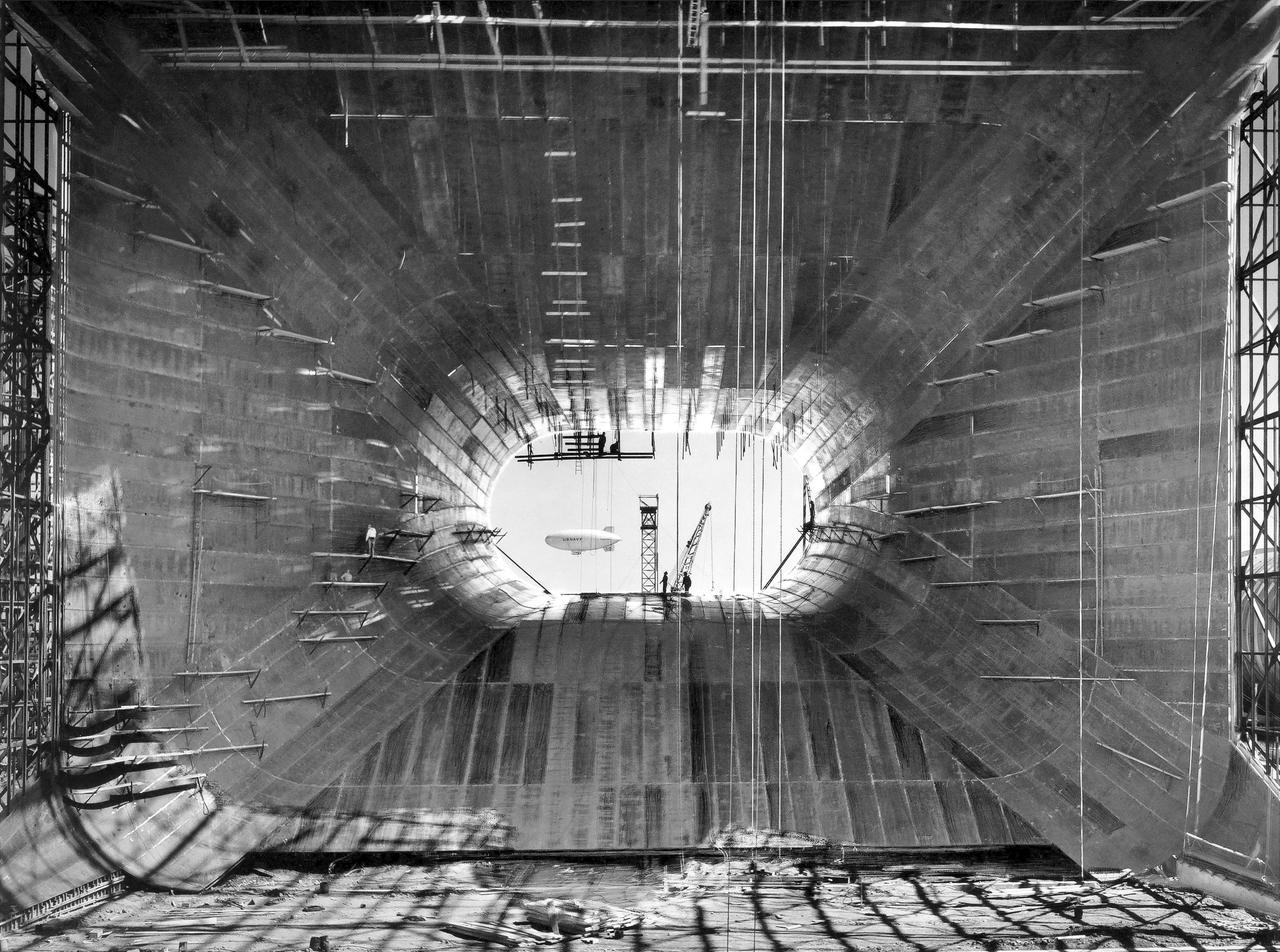
(07/07/1943) Construction view from inside the contraction framing of the 40x80 foot wind tunnel with a blimp flying in the background.
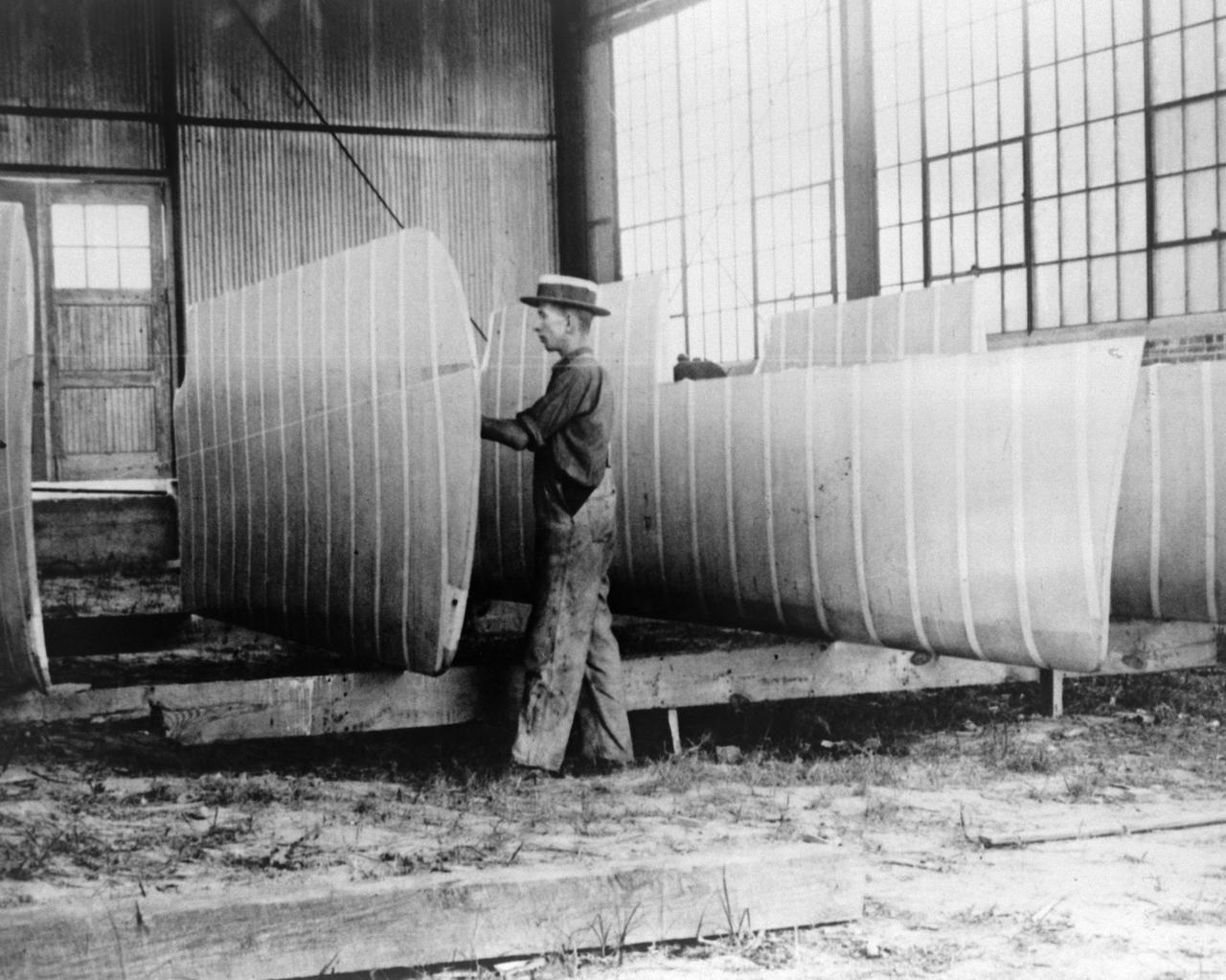
Full Scale Tunnel Motors Under Construction.
Computers' at work in 16ft wind tunnel - calculating test data - reading manometer board
Computers reading from the Manometer Board of the 16 Foot Wind Tunnel.
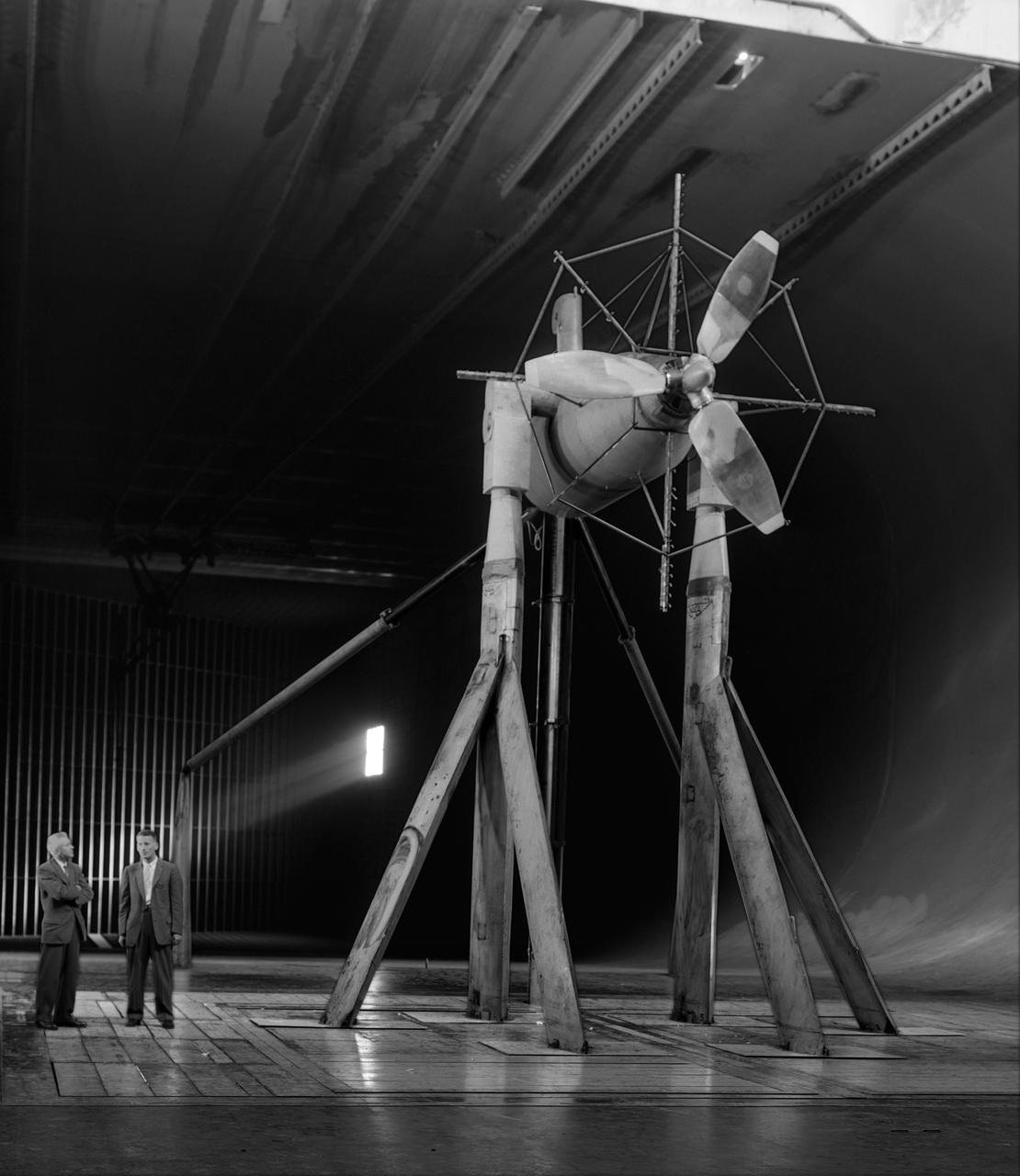
Phase SB Propeller installed on F88B
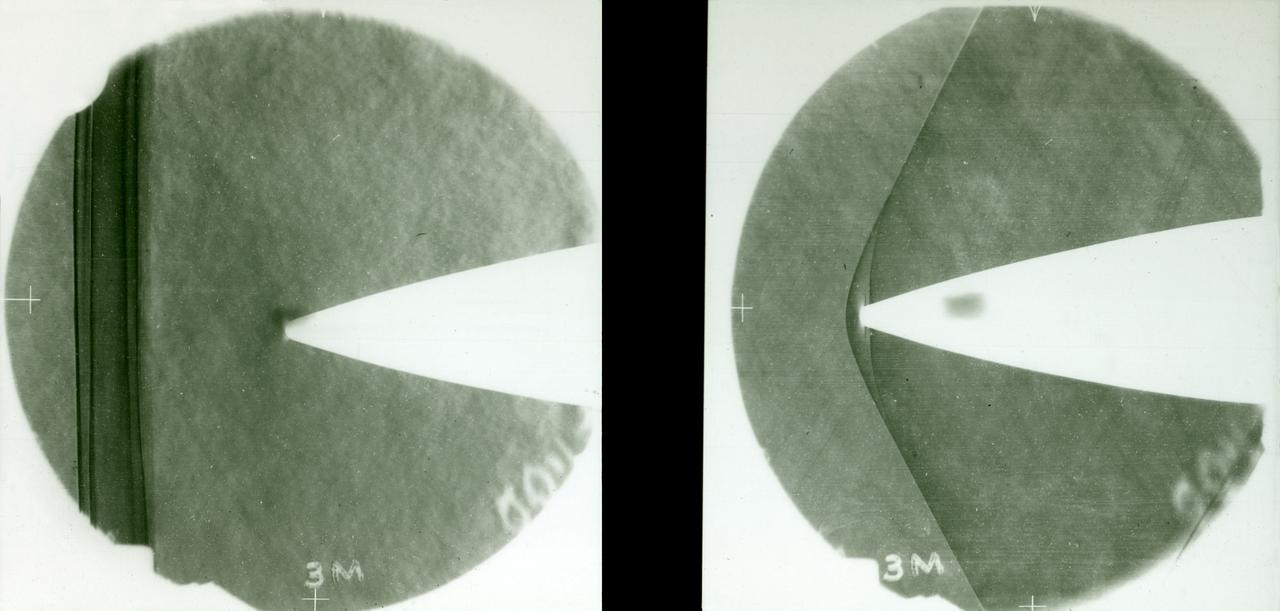
 8-Foot Transonic Pressure Tunnel (TPT): Sample of Schlieren results Left - Mach     1.03 Right - Mach     1.20.
8-Foot Transonic Pressure Tunnel (TPT)
Modified Bell X-1 model pioneered variable-sweep studies in 1947.  Photograph published in Sixty Years of Aeronautical Research 1917-1977 By David A. Anderton. A NASA publication, page 52.
Bell X-1 Research Model on Single Support Strut in 7 x 10 Foot Wind Tunnel
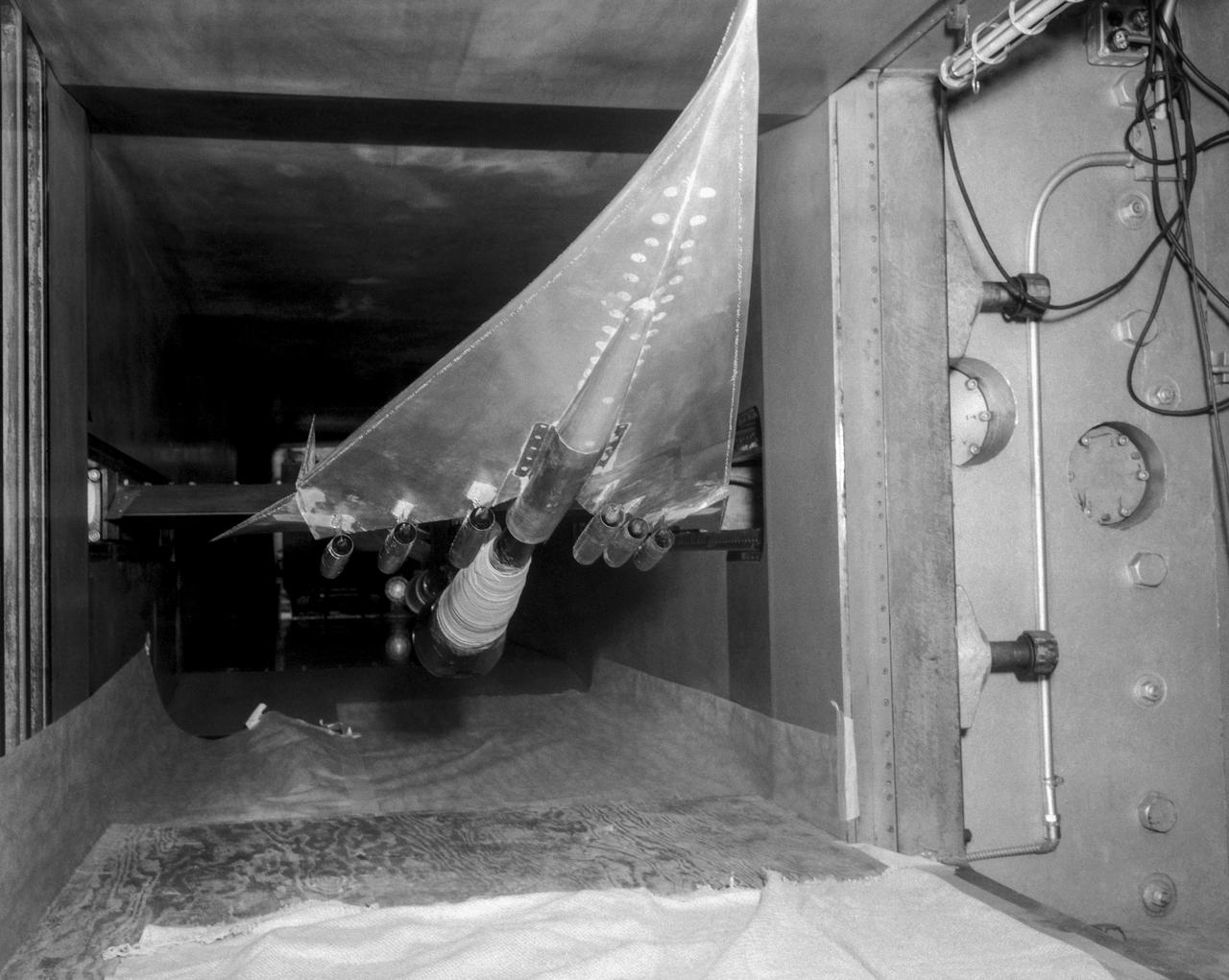
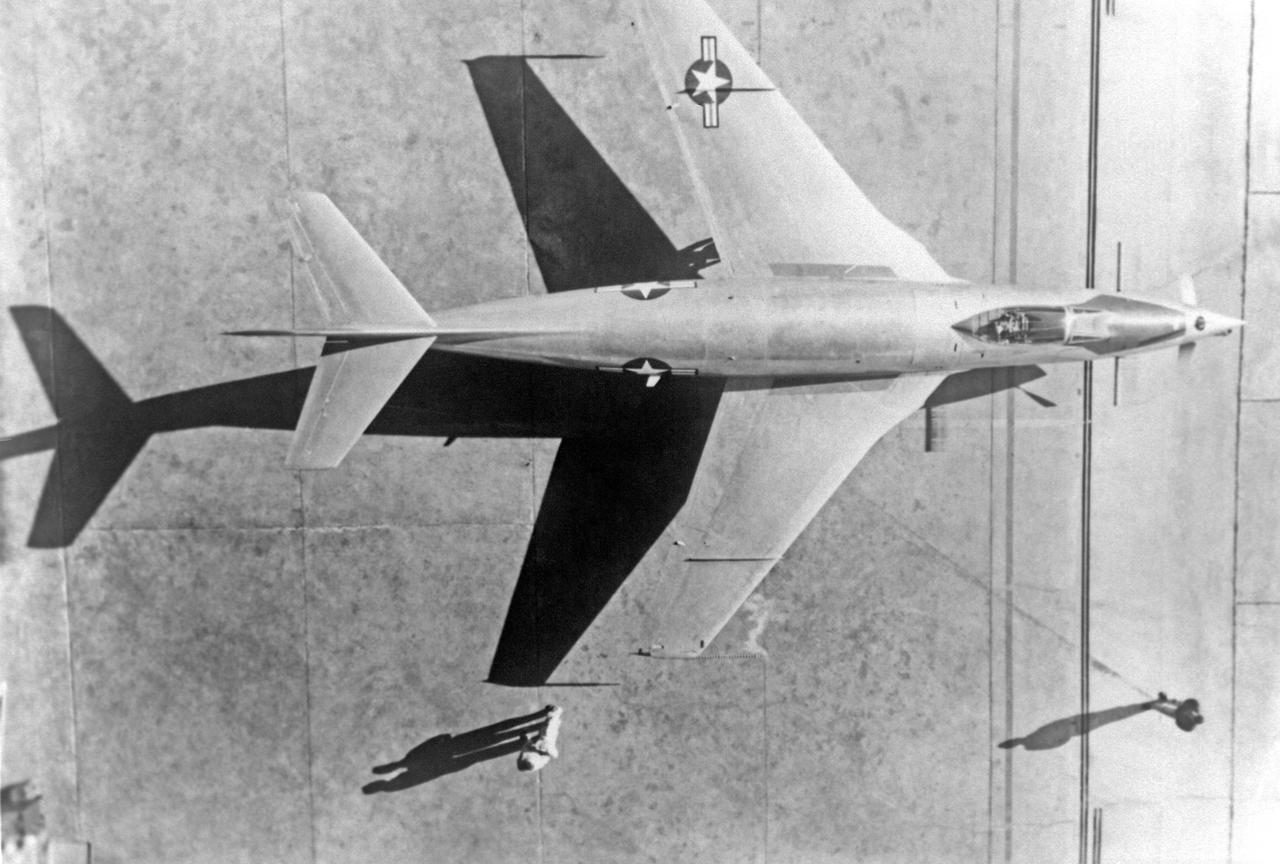
WS-110A "Brown Bomber"
Various views of the Goodyear Inflate-A-Plane mounted in Full Scale Tunnel.
Goodyear inflatable aircraft
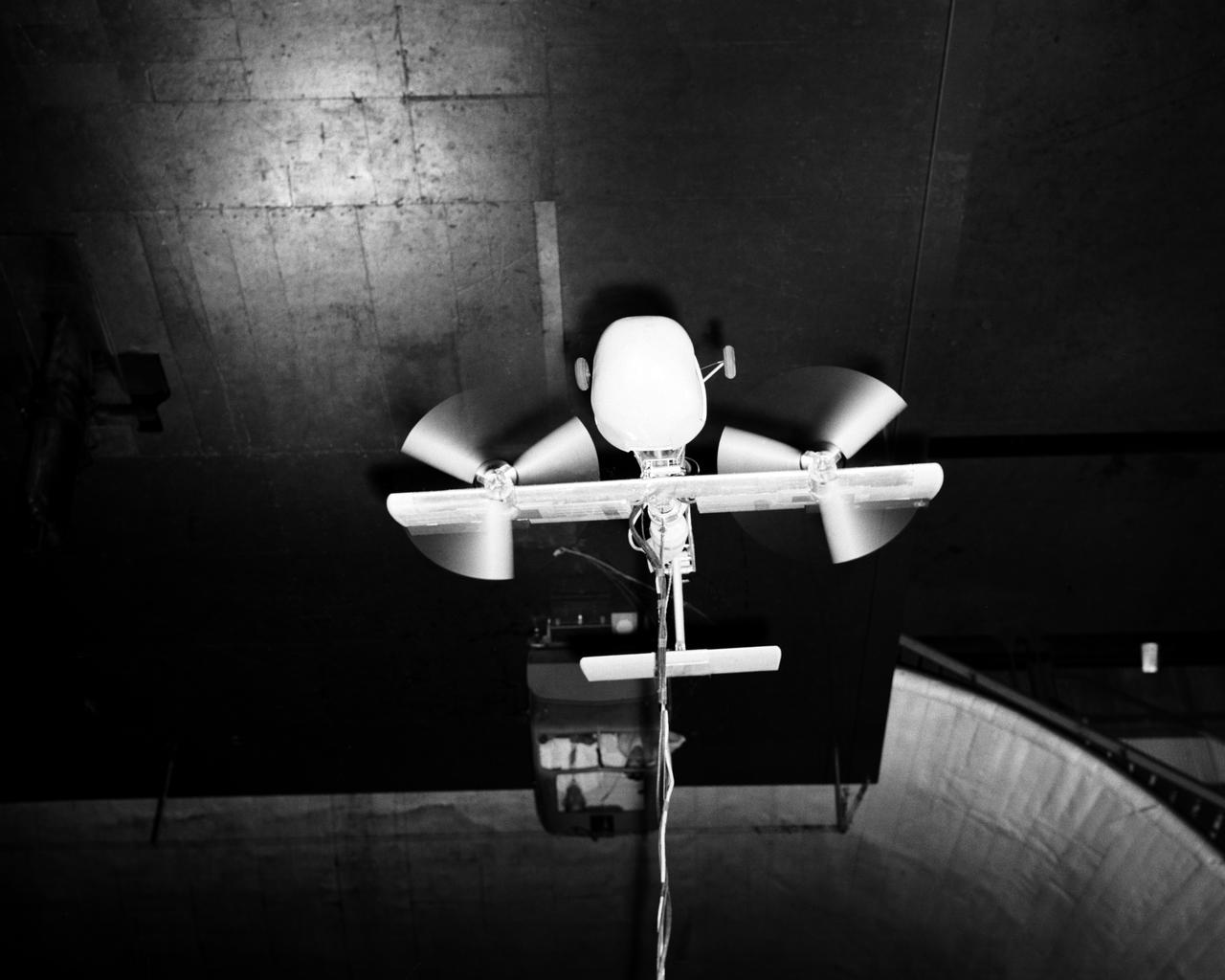
Vertical model flying in Langley Research Center's Full Scale Tunnel.
Vertical model flying in LaRC Full Scale Tunnel
Melvin Gough at the Tail of a NACA Lockheed Plane
Modified Bell X-1 model pioneered variable-sweep studies in 1947.  Photograph published in Sixty Years of Aeronautical Research 1917-1977 By David A. Anderton. A NASA publication, page 52.
Bell X-1 Research Model on Single Support Strut in 7 x 10 Foot Wind Tunnel
Smith J. DeFrance and J.F Parsons in Directors office
ARC-1957-A-22882
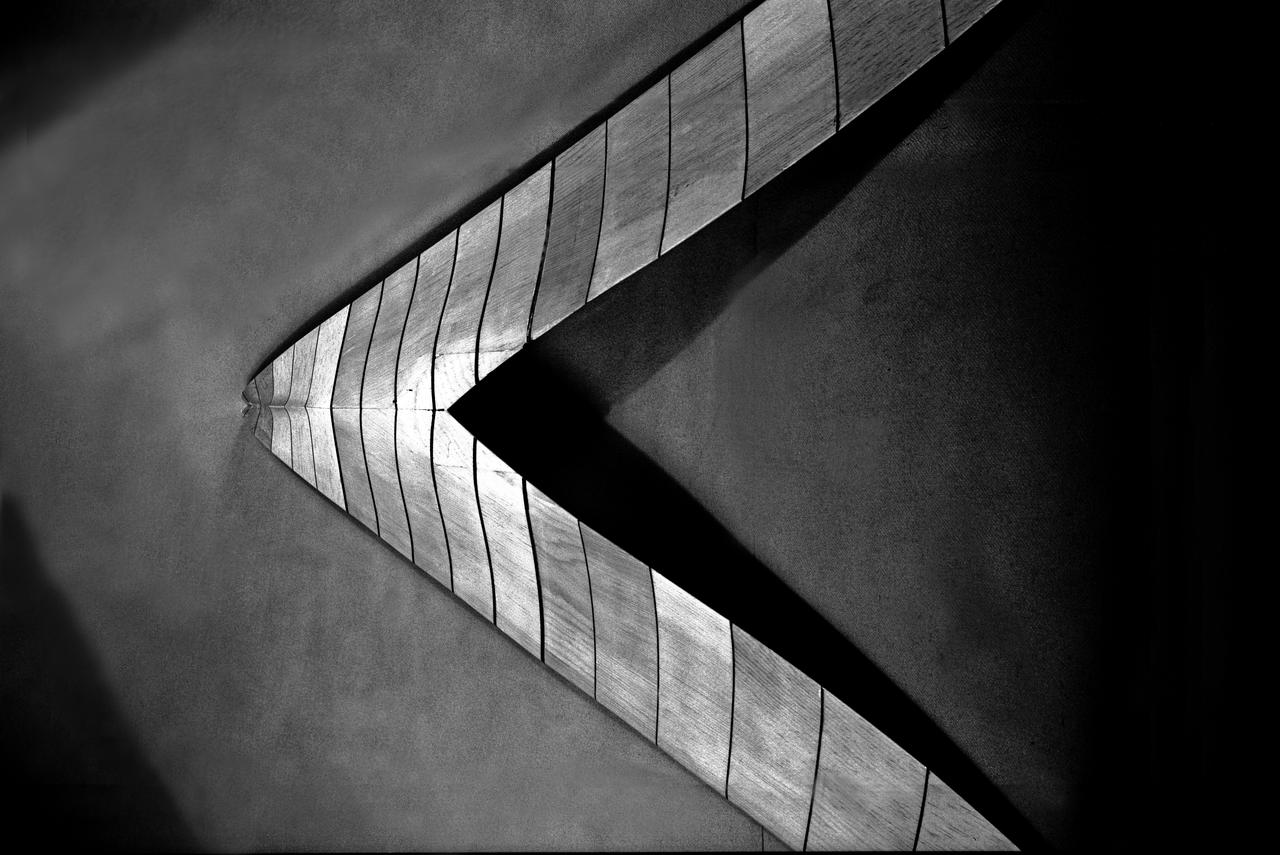
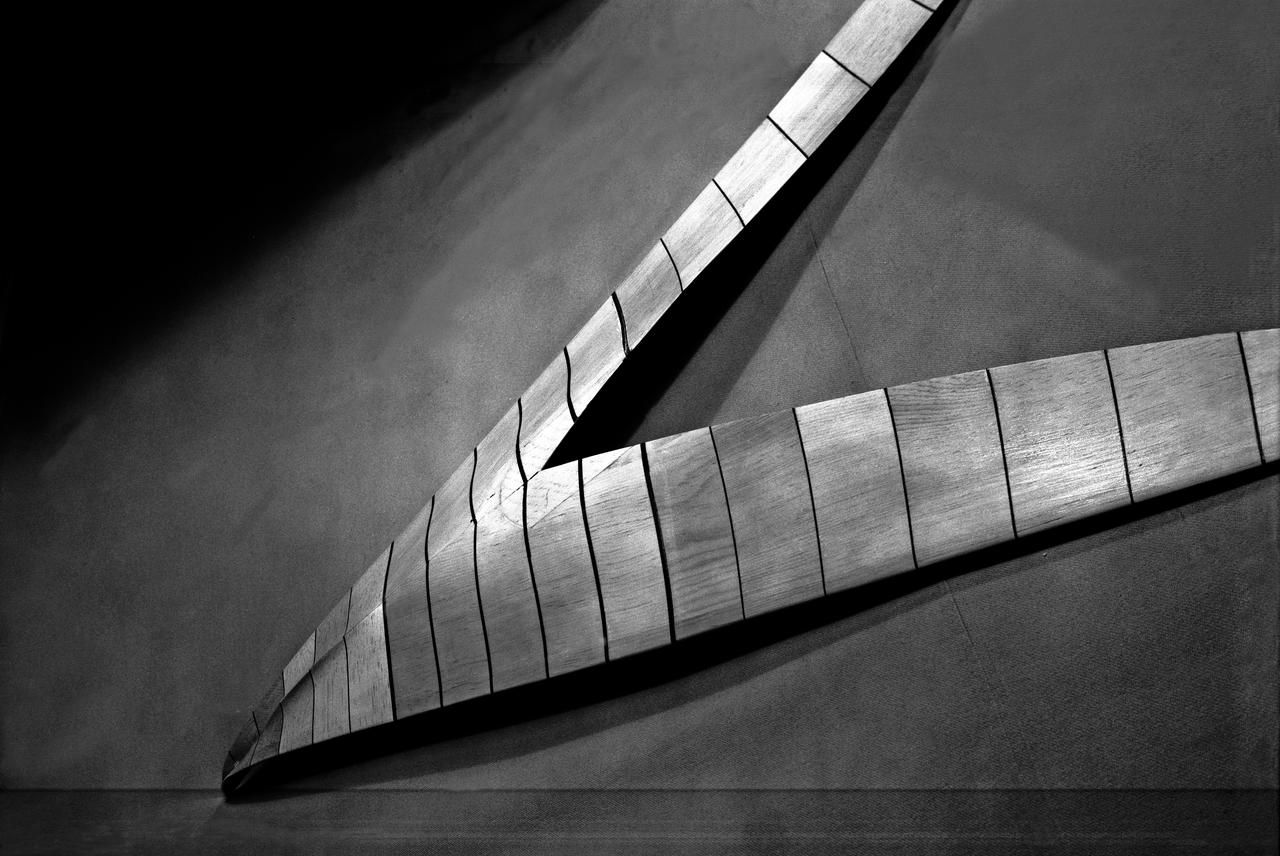
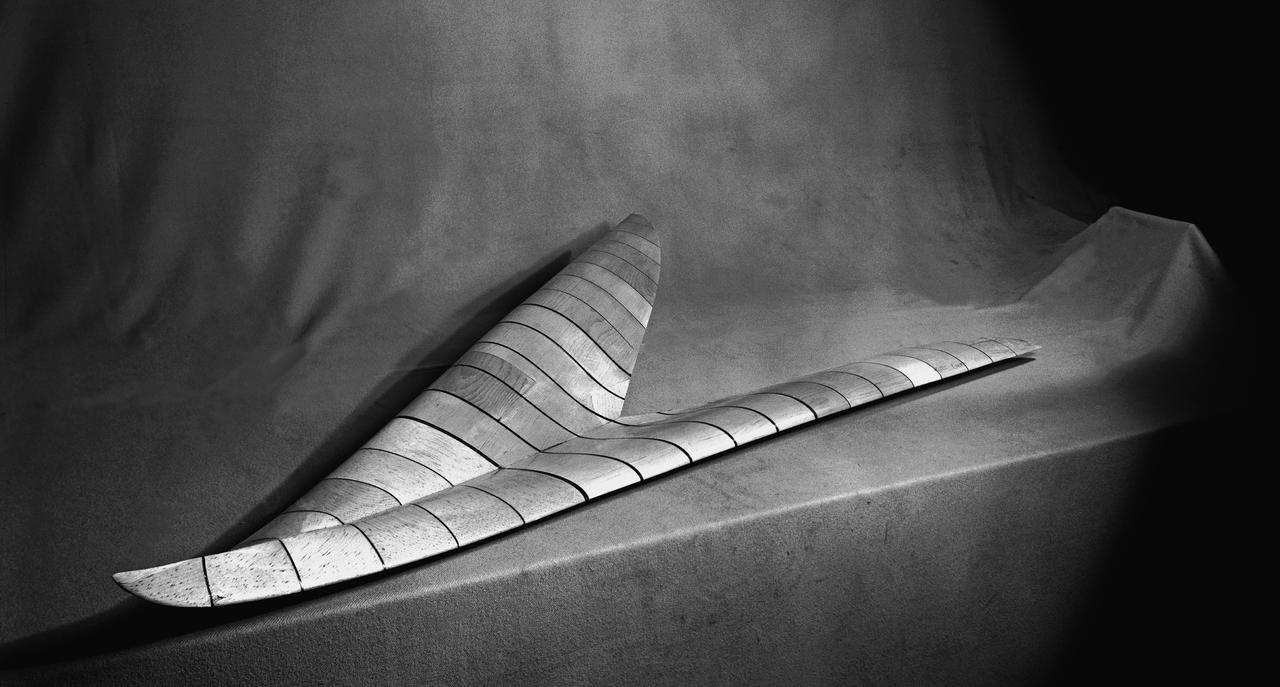
Wood Mock-up of Arrow Wing Bomber to Show Wing Contours
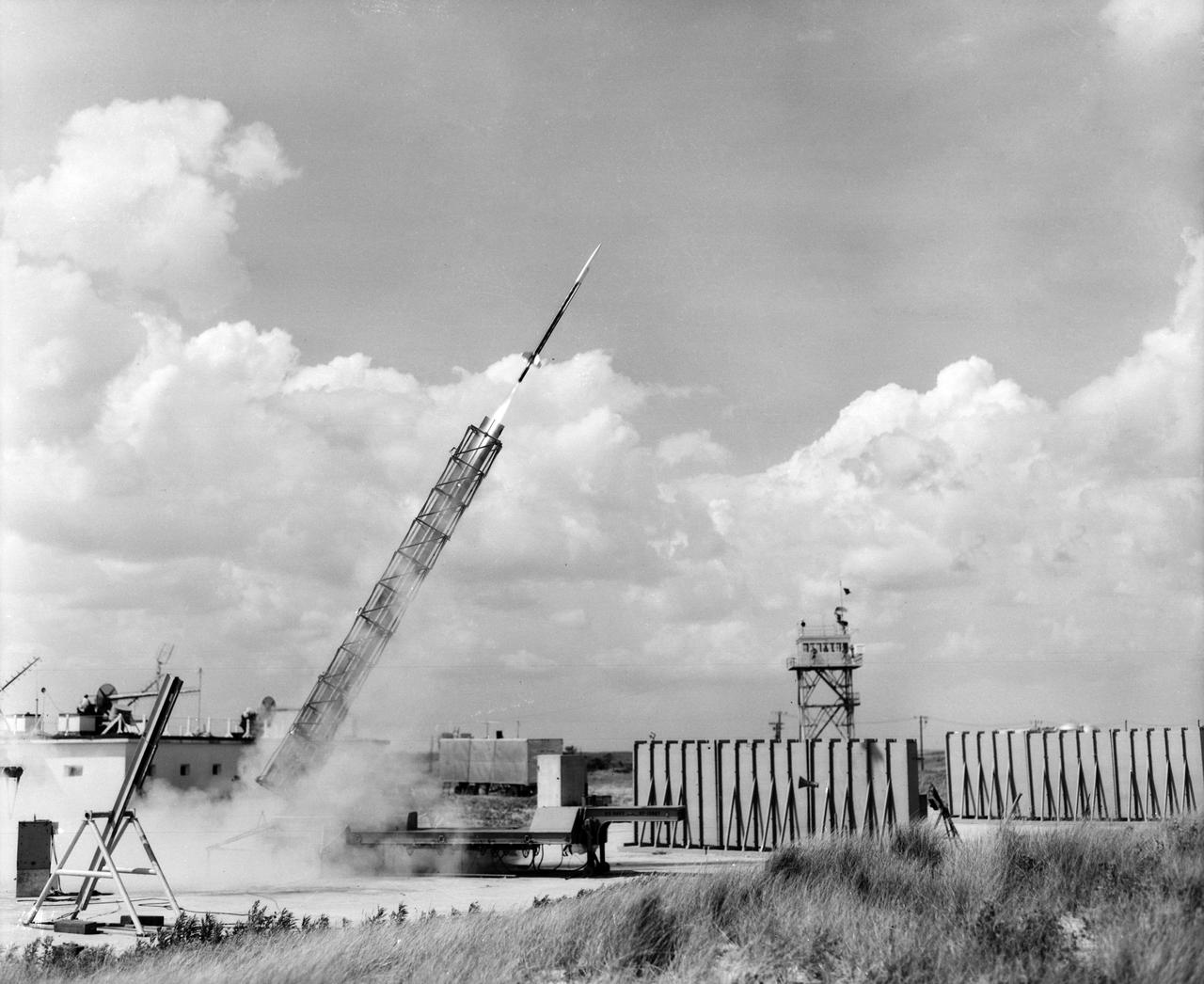
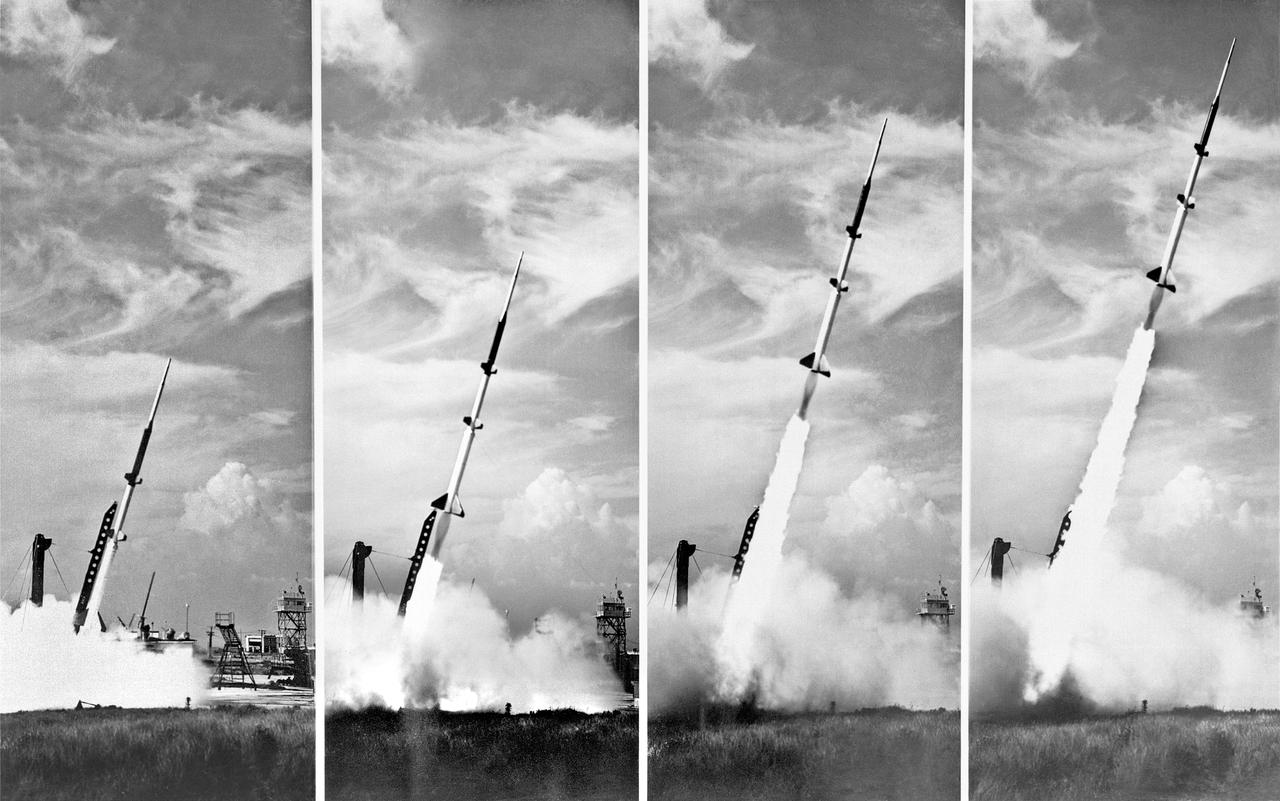
 **Note also copied and numbered as L90-3749. -- L57-4827 caption:  Take off of a five-stage missile research rocket from Wallops Island in 1957. The first two stages propelled the model to about 100,000 feet  the last three stages were fired on a descending path to simulate the reentry conditions of ballistic missiles.  -- Photograph published in Winds of Change, 75th Anniversary NASA publication (page 72), by James Schultz. -- Photograph also published in Engineer in Charge: A History of the Langley Aeronautical Laboratory, 1917-1958 by James R. Hansen (page 380).
Five Stage Missile Research Rocket, Wallops Island , 1957
3/4 front view of Wind Tunnel investigation of the Lockheed T-33 modified for area-suction leading-edge and trailing edge flaps in Ames 40x80 foot Wind Tunnel.
The Lockheed T-33 modified for area-suction leading-edge and trailing edge flaps.
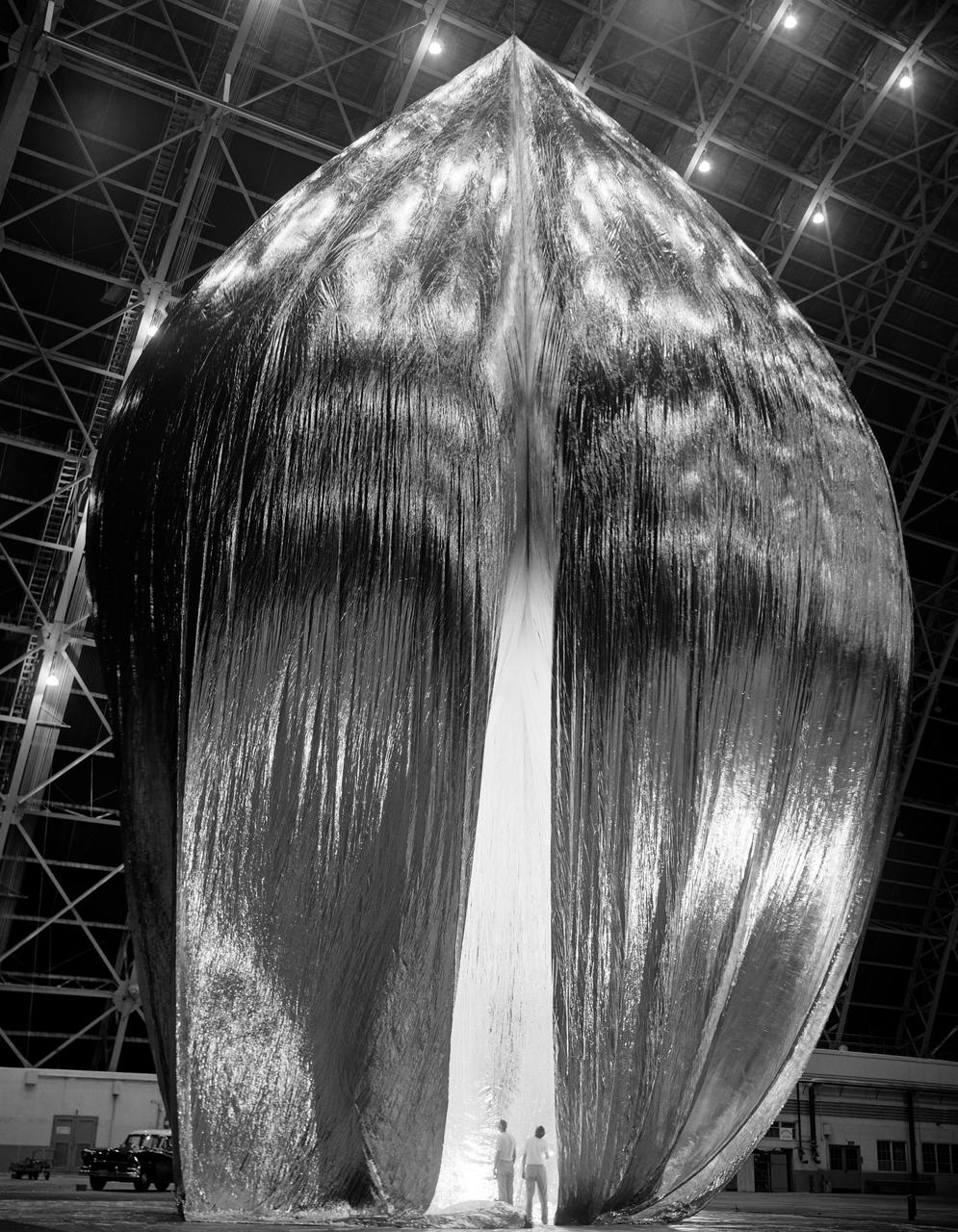
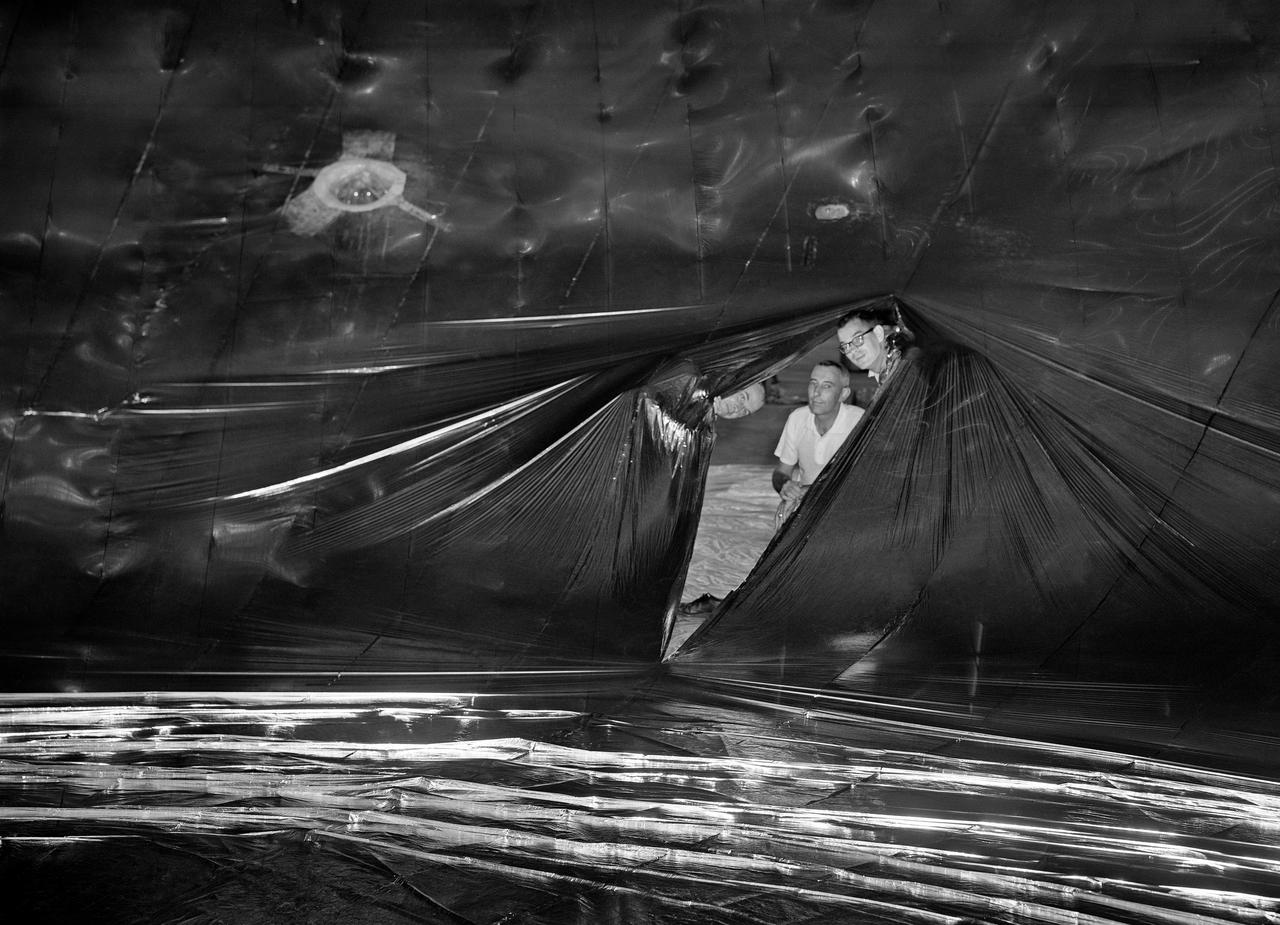
Inflation Tests of the Echo 1 Satellite in Weeksville, N.C.  1958-L-03603 Image Langley engineers Edwin Kilgore (center), Norman Crabill (right) and an unidentified man take a peek inside the vast balloon during inflation tests.  Page. 183 Space Flight Revolution NASA Langley Research Center From Sputnik to Apollo. NASA SP-4308.
Inflation Tests of the Echo 1 Satellite in Weeksville, N.C.
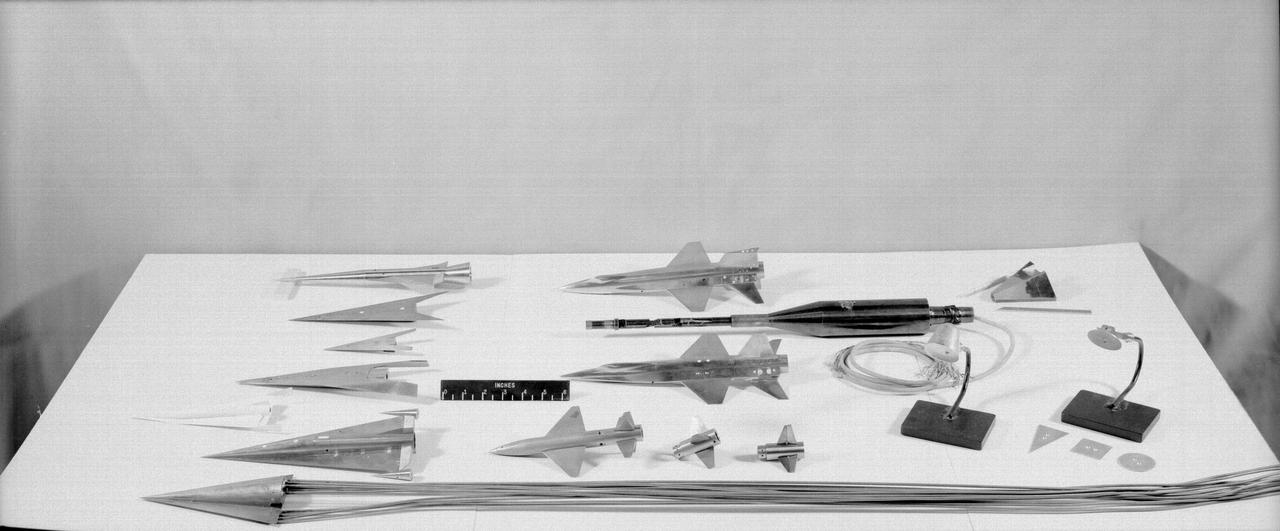
11-Inch Hypersonic Tunnel: various models tested in the tunnel.
Various 11-Inch Hypersonic Tunnel Models
Reeves Electronic analog computer (REAC), Ames' first electronic computing machine, was acquired in 1949 to perform control simulation analysis.
ARC-1949-A-14505
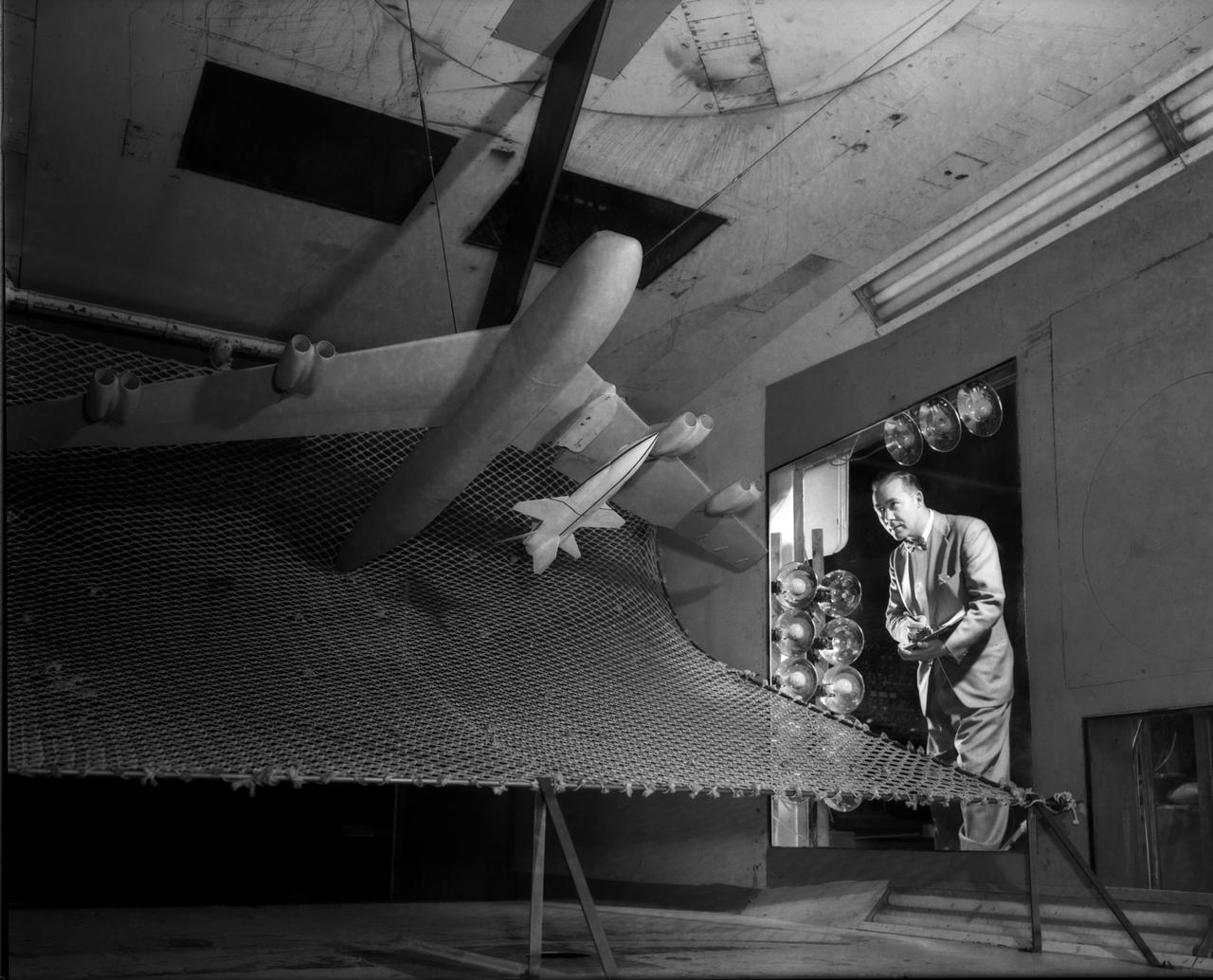
Front View of McDonald XP-85 Plan Model. Parasite Airplane designed to be carried in the B-36 bombay (never built) At the time it was the smallest Jet powered airplane.  The McDonnell XF-85 Goblin was an American prototype fighter aircraft conceived during World War II by McDonnell Aircraft. It was intended to be deployed from the bomb bay of the giant Convair B-36 bomber as a parasite fighter. The XF-85's intended role was to defend bombers from hostile interceptor aircraft, a need demonstrated during World War II
McDonald XP-85 Airplane in 40x80 foot Wind Tunnel.
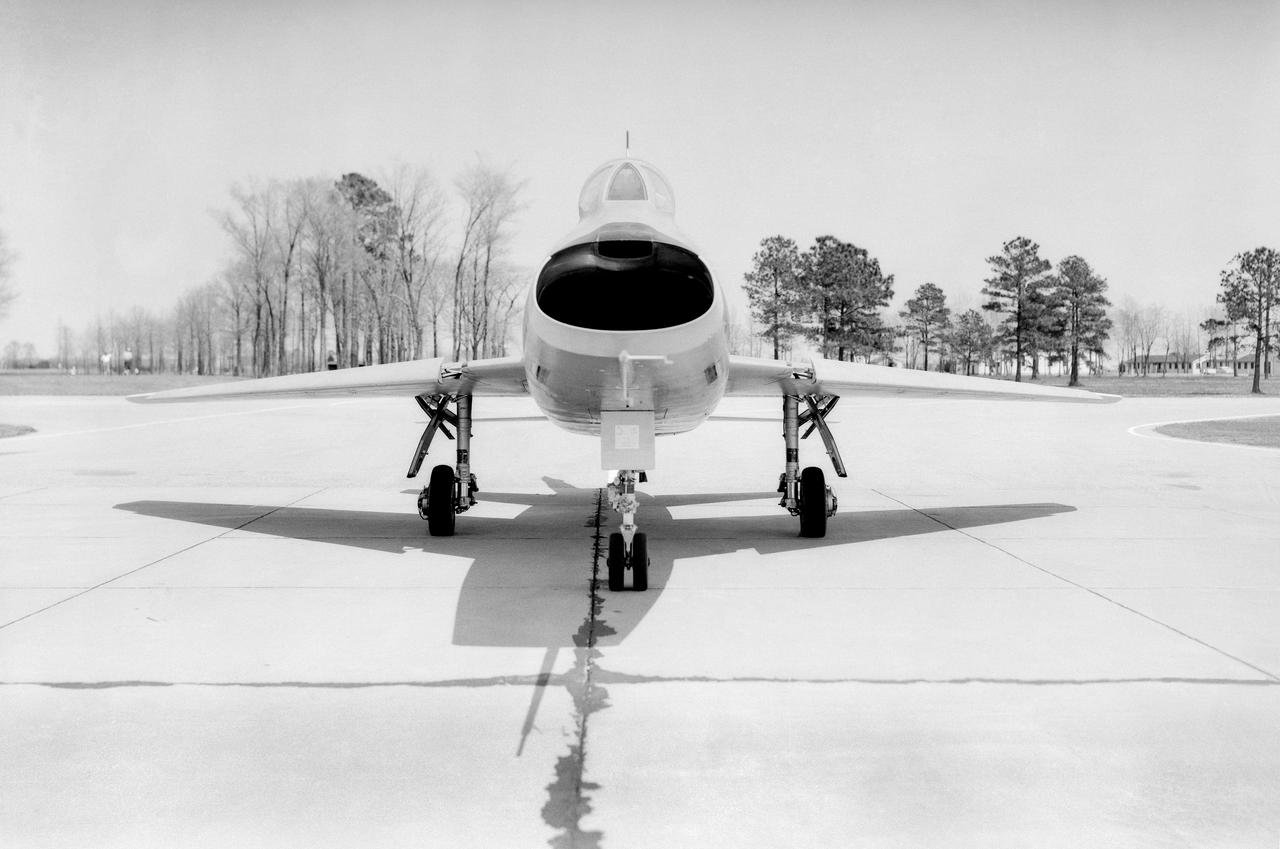
3/4 front view from below of Air Force F-104. The Lockheed F-104 Starfighter is a single-engine, supersonic interceptor aircraft originally developed by Lockheed for the United States Air Force (USAF). One of the Century Series of fighter aircraft, it was operated by the air forces of more than a dozen nations from 1958 to 2004.
Lockheed F-104 in Ames 40x80 Foot Wind Tunnel.
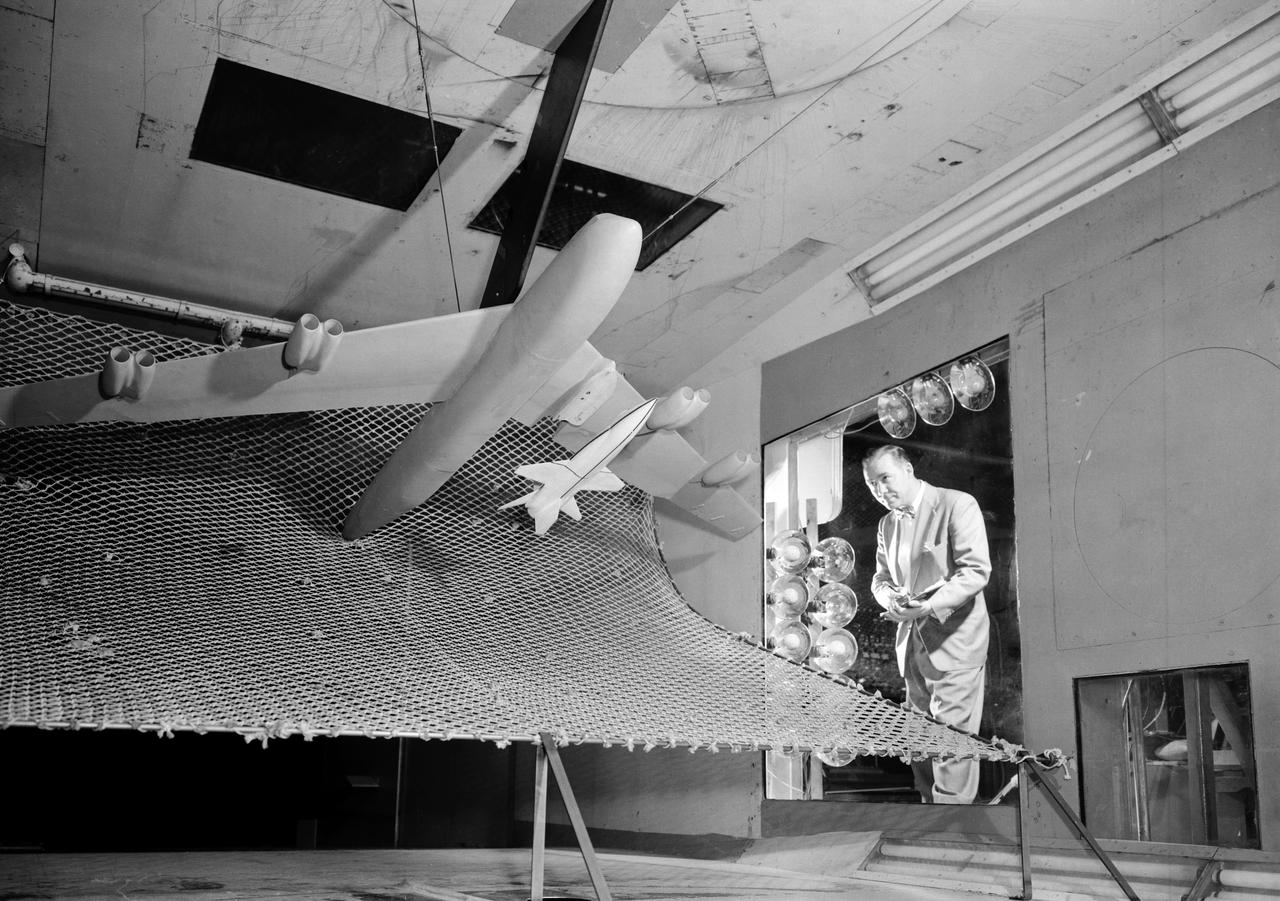
A one-twentieth scale model of the X-15  originally suspended beneath the wing of a B-52 is observed by a scientist of the National Aeronautics and Space Administration (NASA) as it leaves the bomber model in tests to determine the release characteristics and drop motion of the research airplane. Caption:  The aerodynamics of air launching the North American X-15 being investigated in the 300MPH Low Speed 7x10 Tunnel, about 1957.  Photograph published in Engineer in Charge: A History of the Langley Aeronautical Laboratory, 1917-1958 by James R. Hansen. Page 366. Photograph also published in Sixty Years of Aeronautical Research 1917-1977 By David A. Anderton. A NASA publication. Page 49.
North American X-15 model tested in 300MPH Low Speed 7x10 Tunnel
Modified Bell X-1 model pioneered variable-sweep studies in 1947.  Photograph published in Sixty Years of Aeronautical Research 1917-1977 By David A. Anderton. A NASA publication, page 52.
Bell X-1 Research Model on Single Support Strut in 7 x 10 Foot Wind Tunnel
Photographed on: 12 16 58. -- L58-1083a caption:  Sequenced pictures showing events from release of boilerplate Mercury capsule from C-130 airplane to opening of recovery parachute, December 1958.  Photograph published in A New Dimension  Wallops Island Flight Test Range: The First Fifteen Years by Joseph Shortal. A NASA publication, page 644.
Release of Boilerplate Mercury Capsule Sequence
 North American F-100 C airplane used in sonic boom investigation at Wallops, October 7, 1958.  Photograph published in: A New Dimension  Wallops Island Flight Test Range: The First Fifteen Years by Joseph Shortal. A NASA publication. Page 672. -- Aircraft number: NACA 42024. Side view, 3/4 view from front, 3/4 view from rear, rear view, and two front views.
North American F-100 C
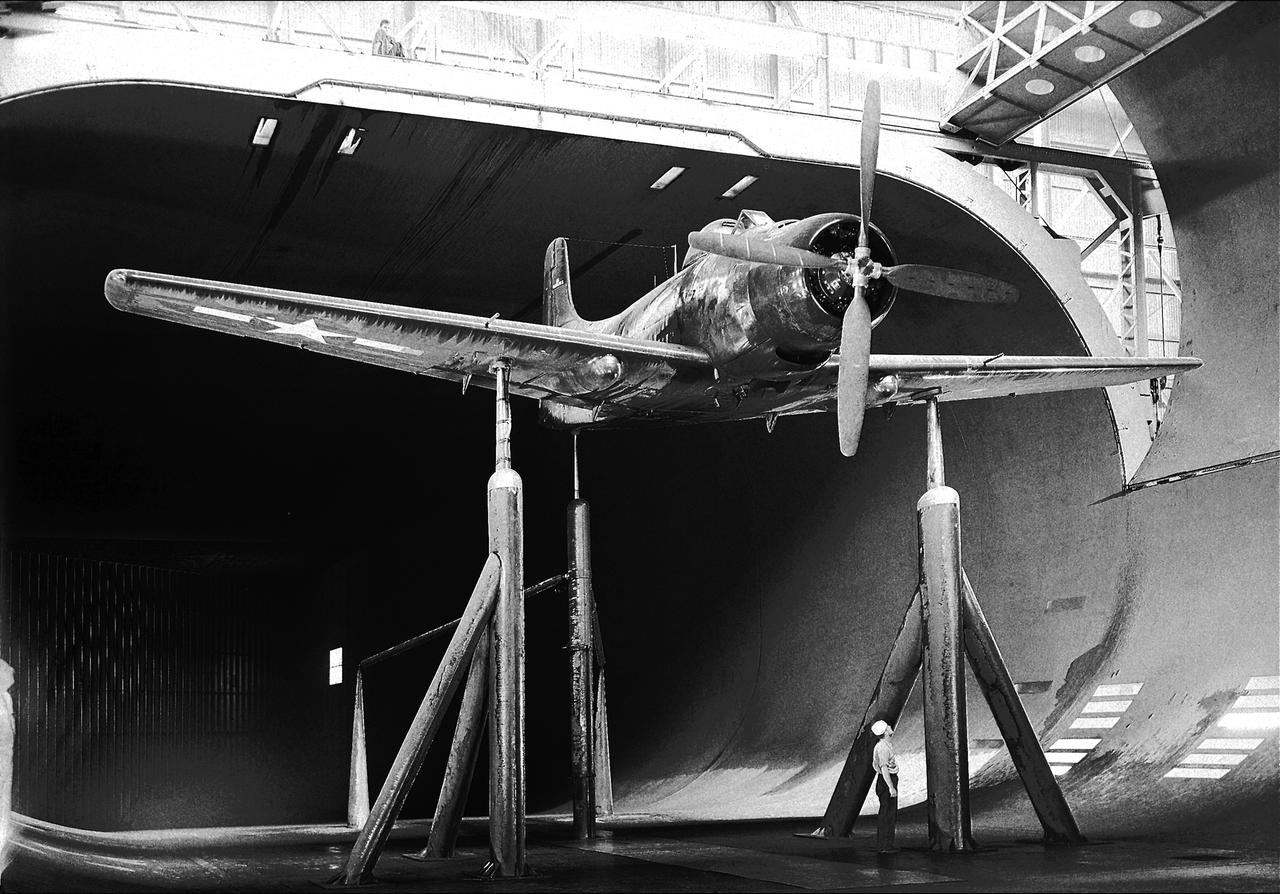
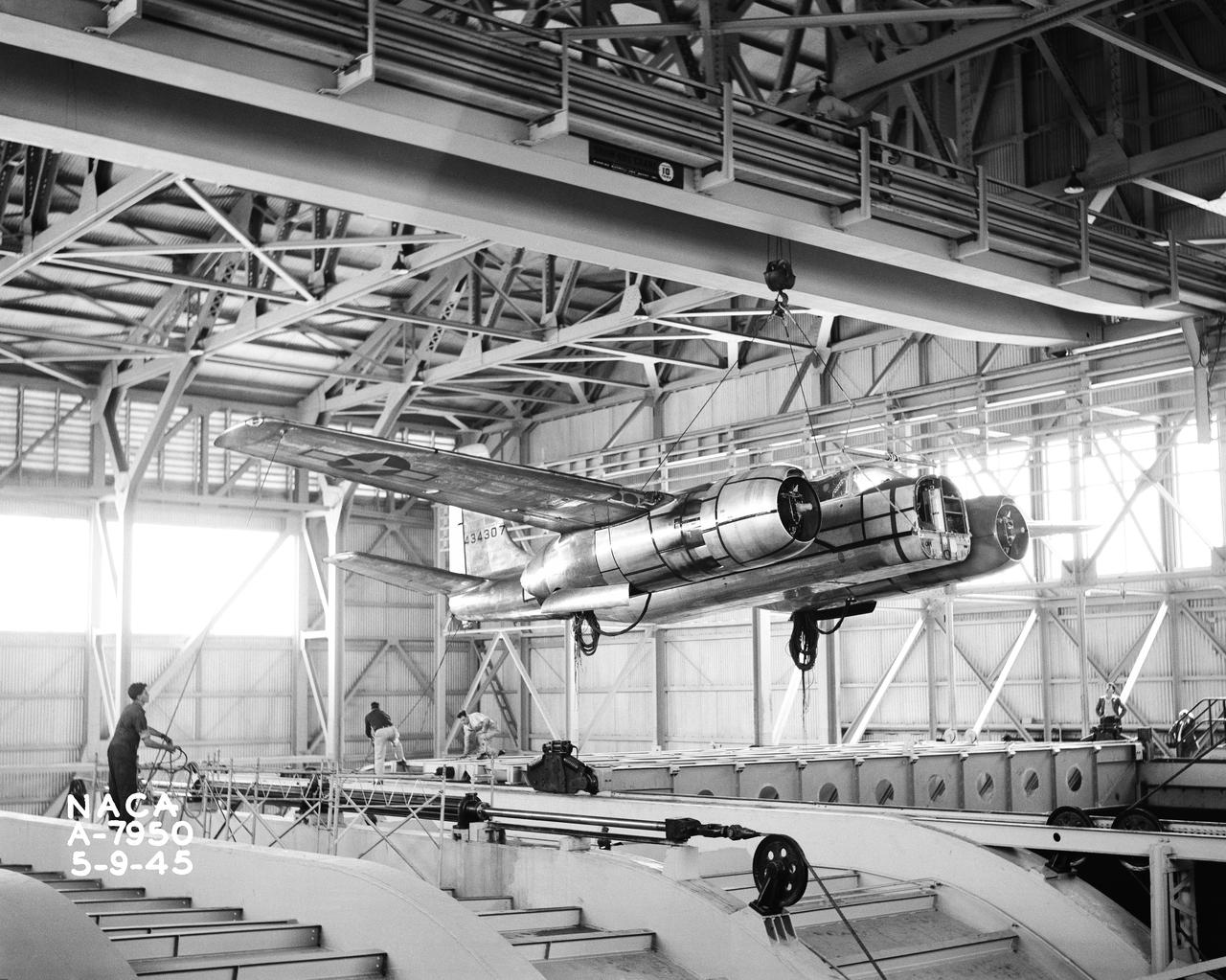
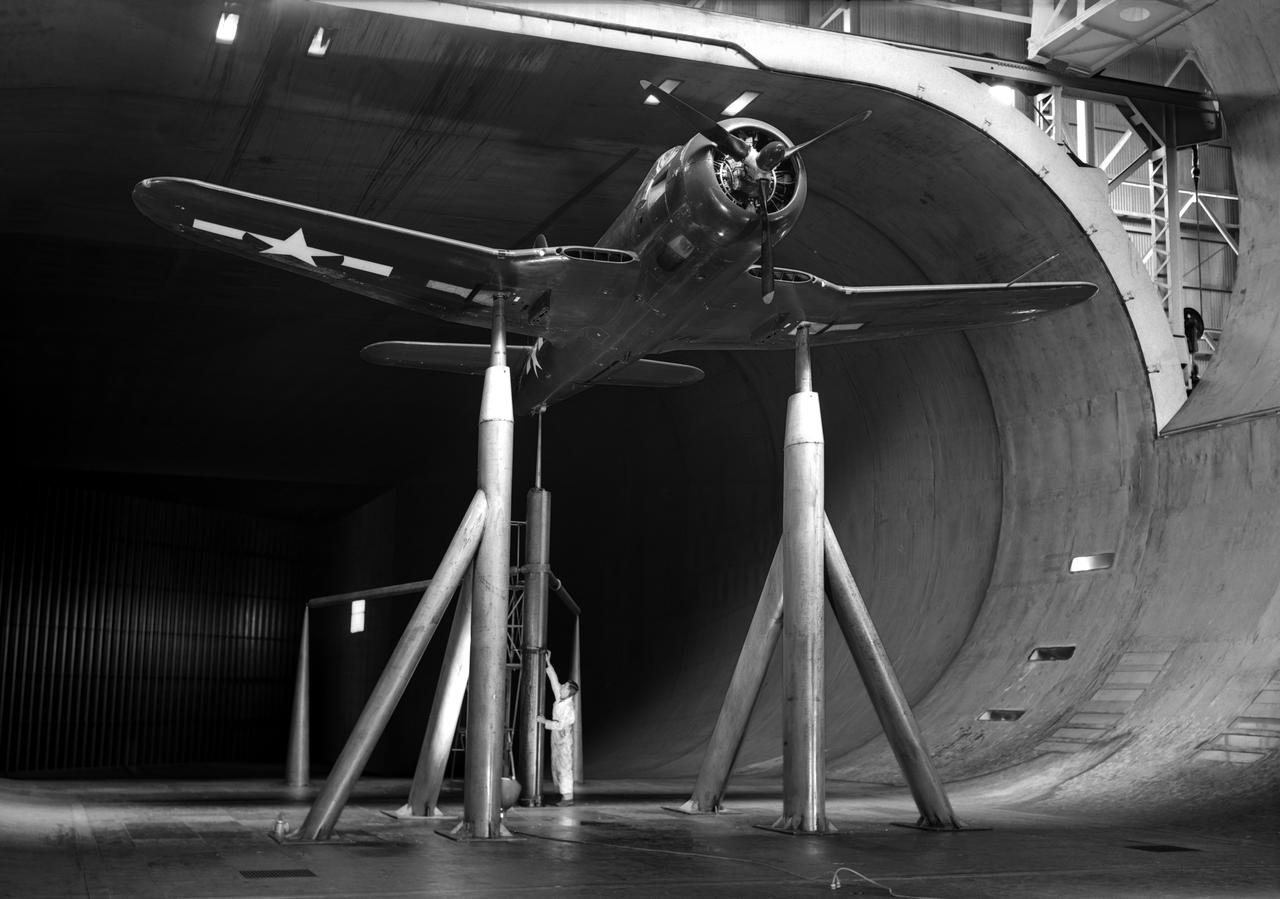
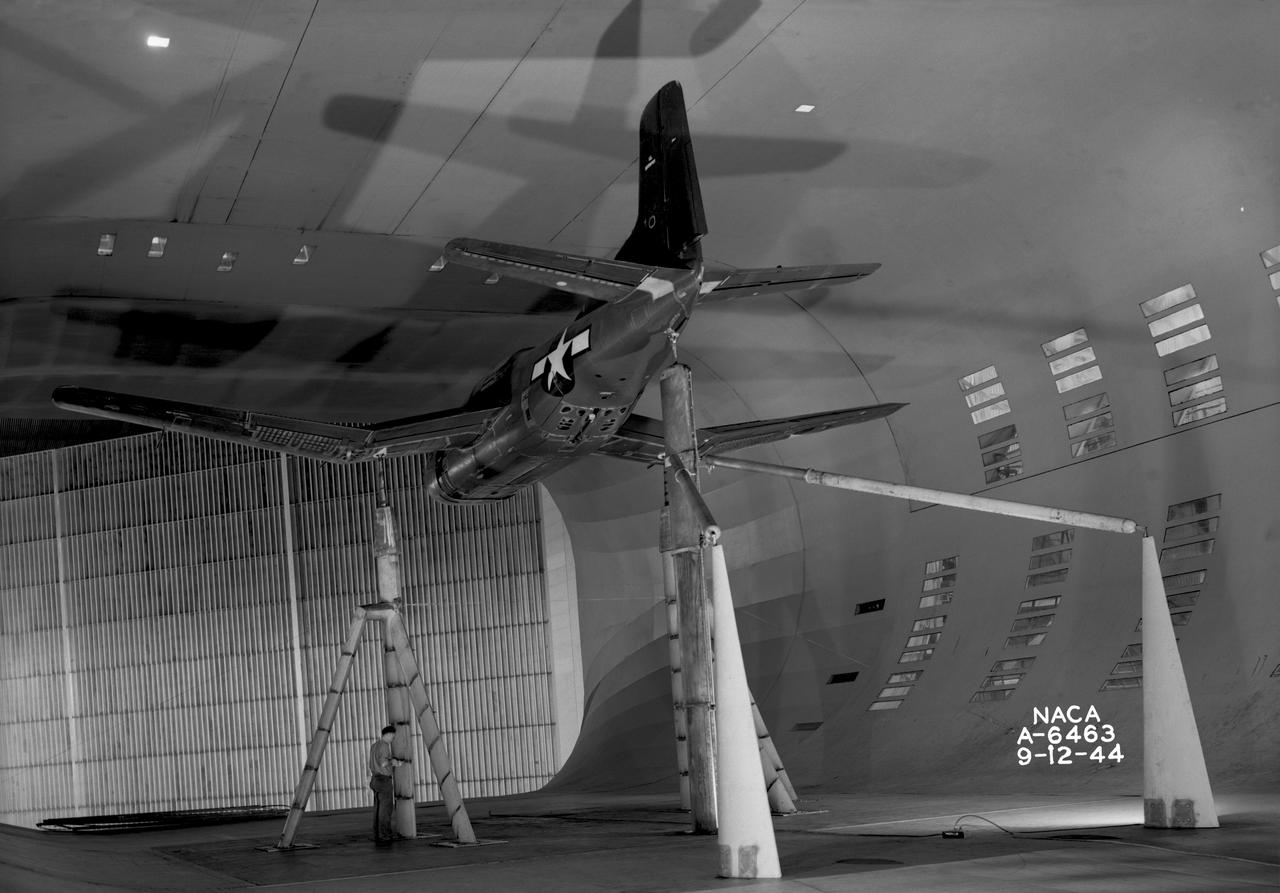
Test section of the Ames 40 x 80 foot wind tunnel with the overhead doors open.  XSB2D-1 airplane being lowered onto the struts by the overhead crane. Mechanics and engineers on orchard ladders aligning the model with ball sockets on the struts. The Douglas BTD Destroyer was an American dive/ torpedo bomber developed for the United States Navy during World War II.
Installation of the Douglas XSB2D-1 in the Test Section of the 40x80 Foot Wind Tunnel at Ames.
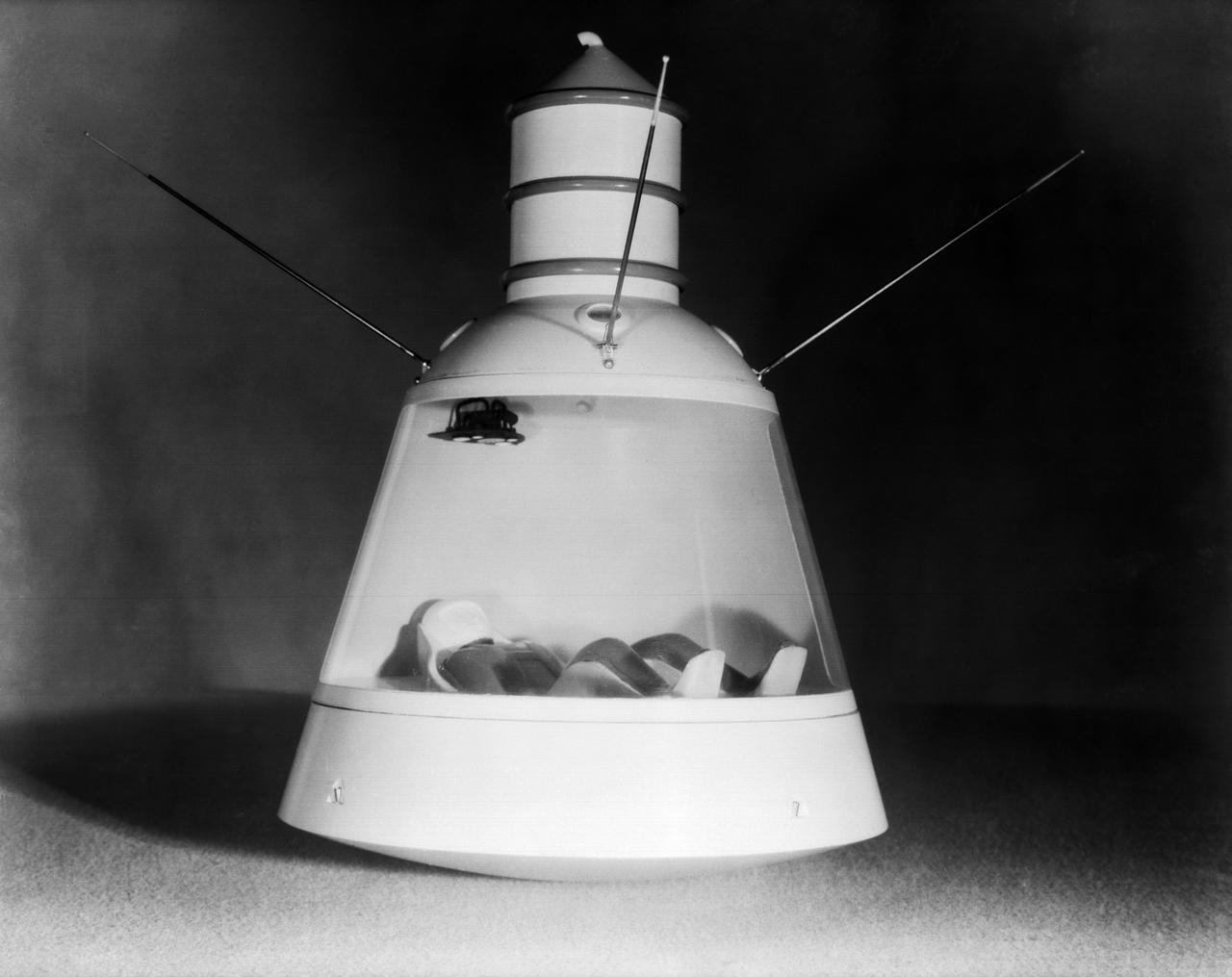
Scale model of Mercury capsule shape A, indicating the position of the astronaut.
Mercury Project
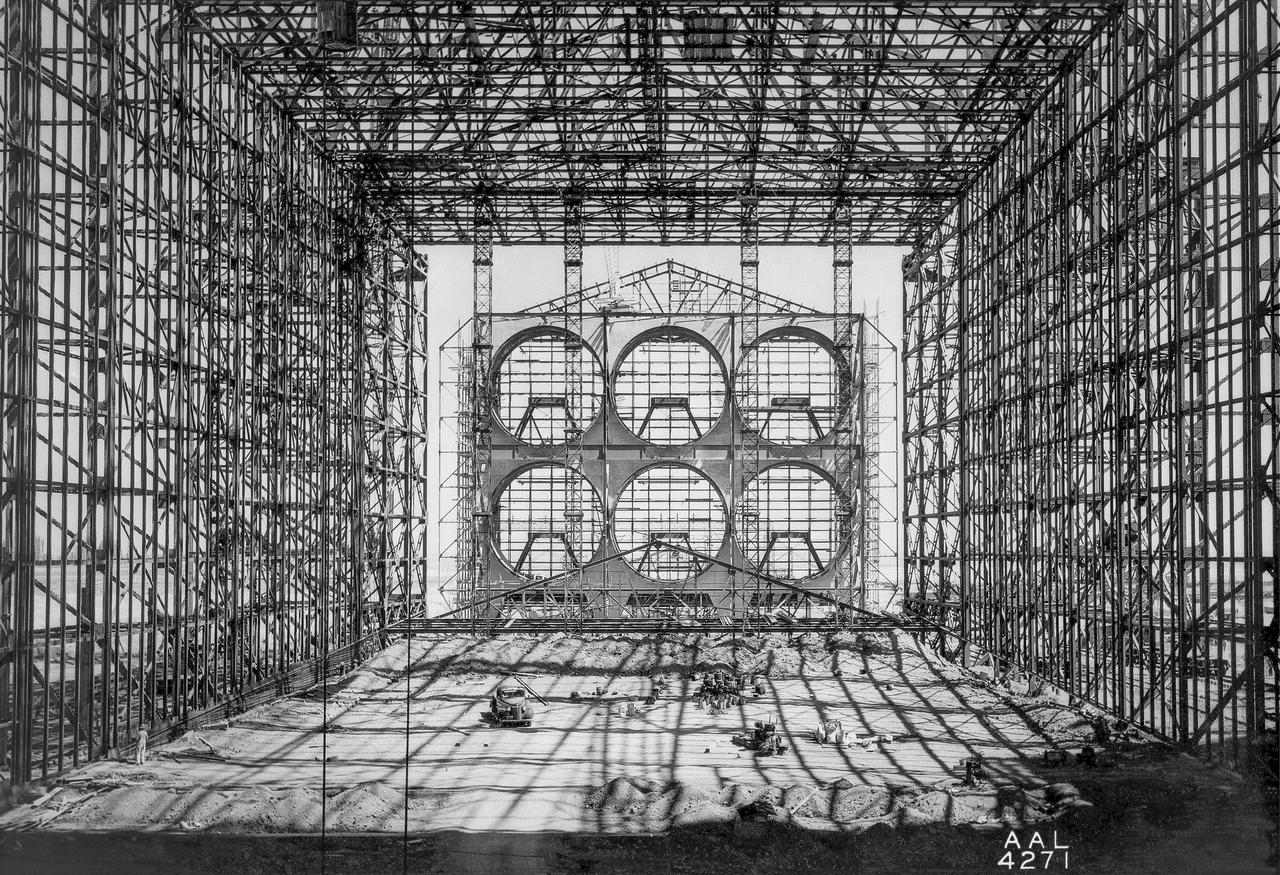
Looking West at three test section bents in place for the Ames 40 x 80 foot wind tunnel.  Concrete model scale support visible in the middle.
Construction of the Ring leading to the Test Section of the Ames 40x80 Foot Wind Tunnel.
Various Components of Goodyear Inflatable Airplane in Full Scale Tunnel building 643 Test 238
Various Components of Goodyear Inflatable Airplane in Full Scale Tunnel
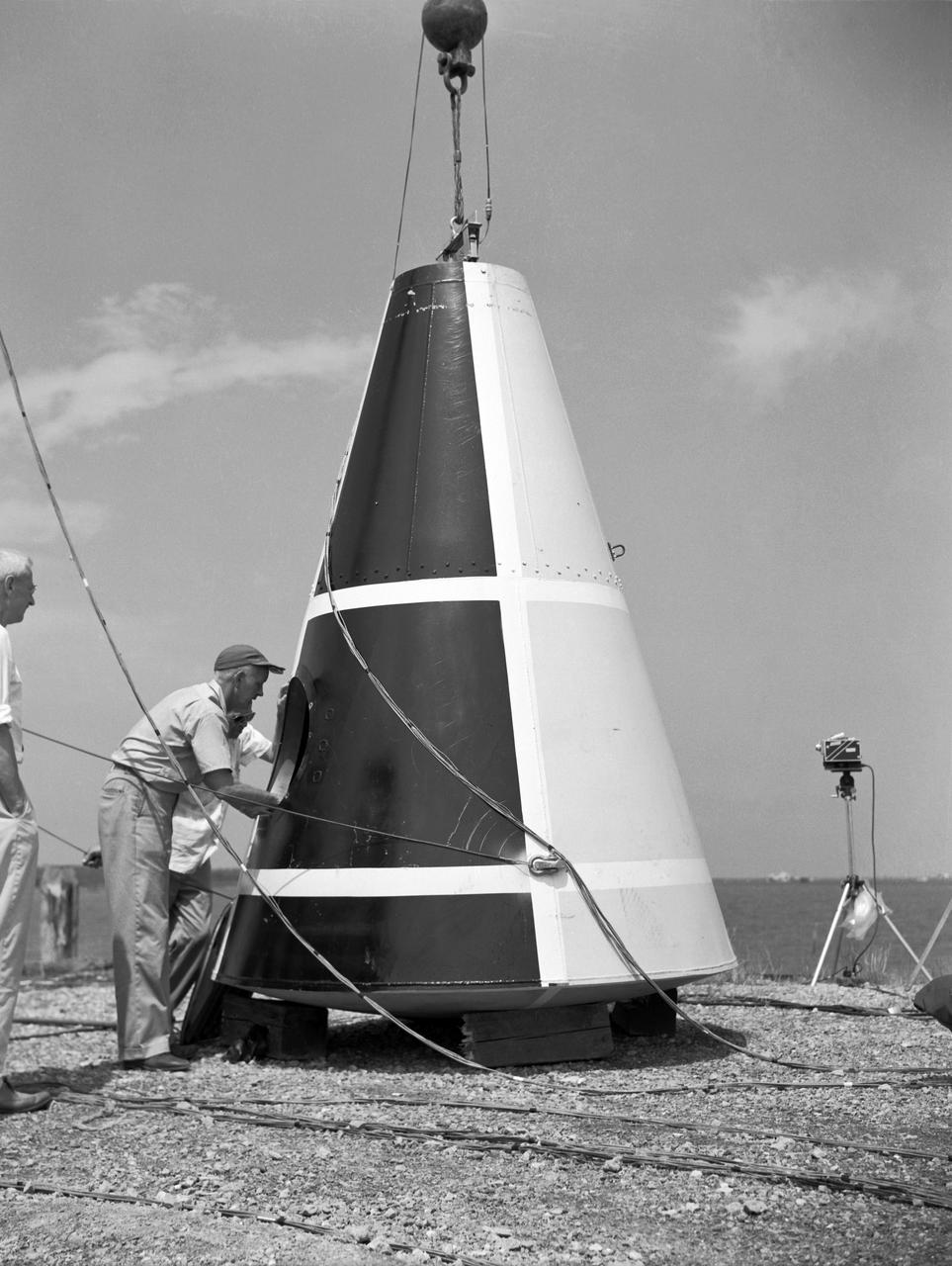
 Photographed on: 08 05 1958. -- Impact test conducted by Langley's Hydrodynamics Division. The Division conducted a series of impact studies with full scale and model capsules of the original capsule shape A. Joseph Shortal wrote (Vol. 3, p. 16):  The basic design of the capsule was made by M.A. Faget and his coworkers at PARD during the winter of 1957-1958. It was natural, then, that extensive use was made of the facilities at Wallops during the development of the spacecraft. The tests at Wallops consisted of 26 full-size capsules, either launched from the ground by rocket power or dropped from airplanes at high altitude and 28 scaled models, either rocket boosted or released from balloons. Emphasis in the Wallops program was on dynamic stability and aerodynamic heating of the capsule, and effectiveness of the pilot-escape and parachute-recovery systems. The biggest part of the Wallops program was the series of full-size capsules, rocket launched with the Little Joe booster, developed especially for Mercury.  -- Published in Joseph A. Shortal, History of Wallops Station: Origins and Activities Through 1949, (Wallops Island, VA: National Aeronautics and Space Administration, Wallops Station, nd), Comment Edition.
Mercury: impact studies
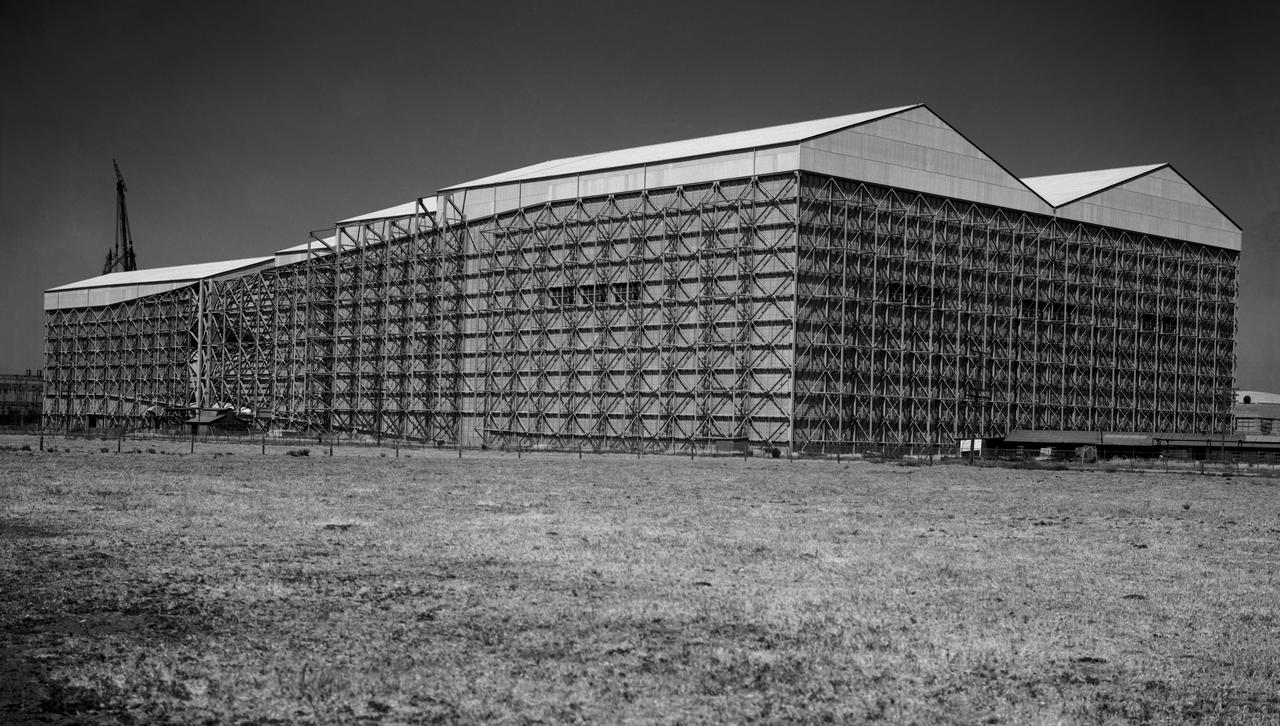
NACA Ames 40x80 foot wind tunnel (South West).
NACA Ames Laboratory Building, South West.
Water Type Muffler Test
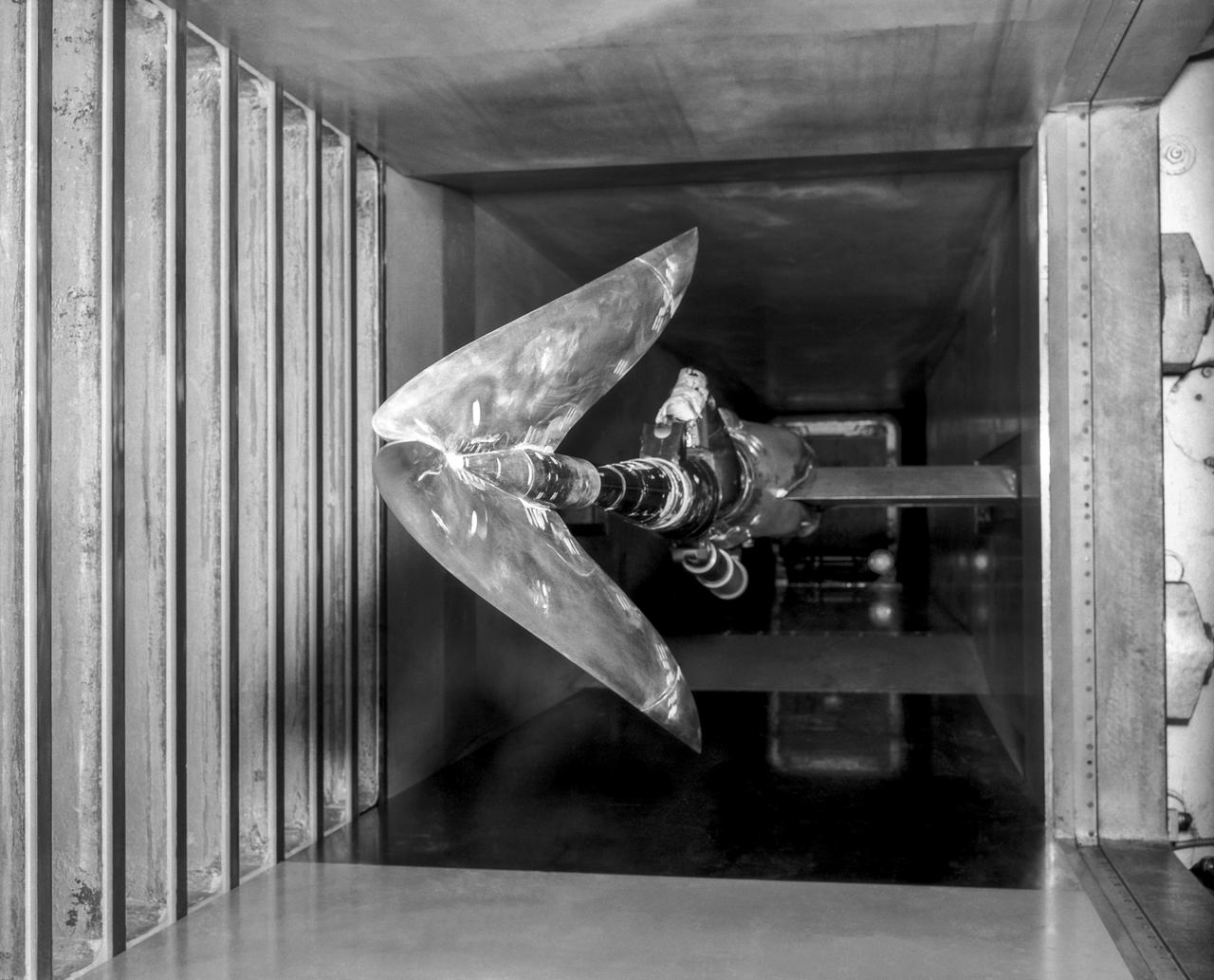
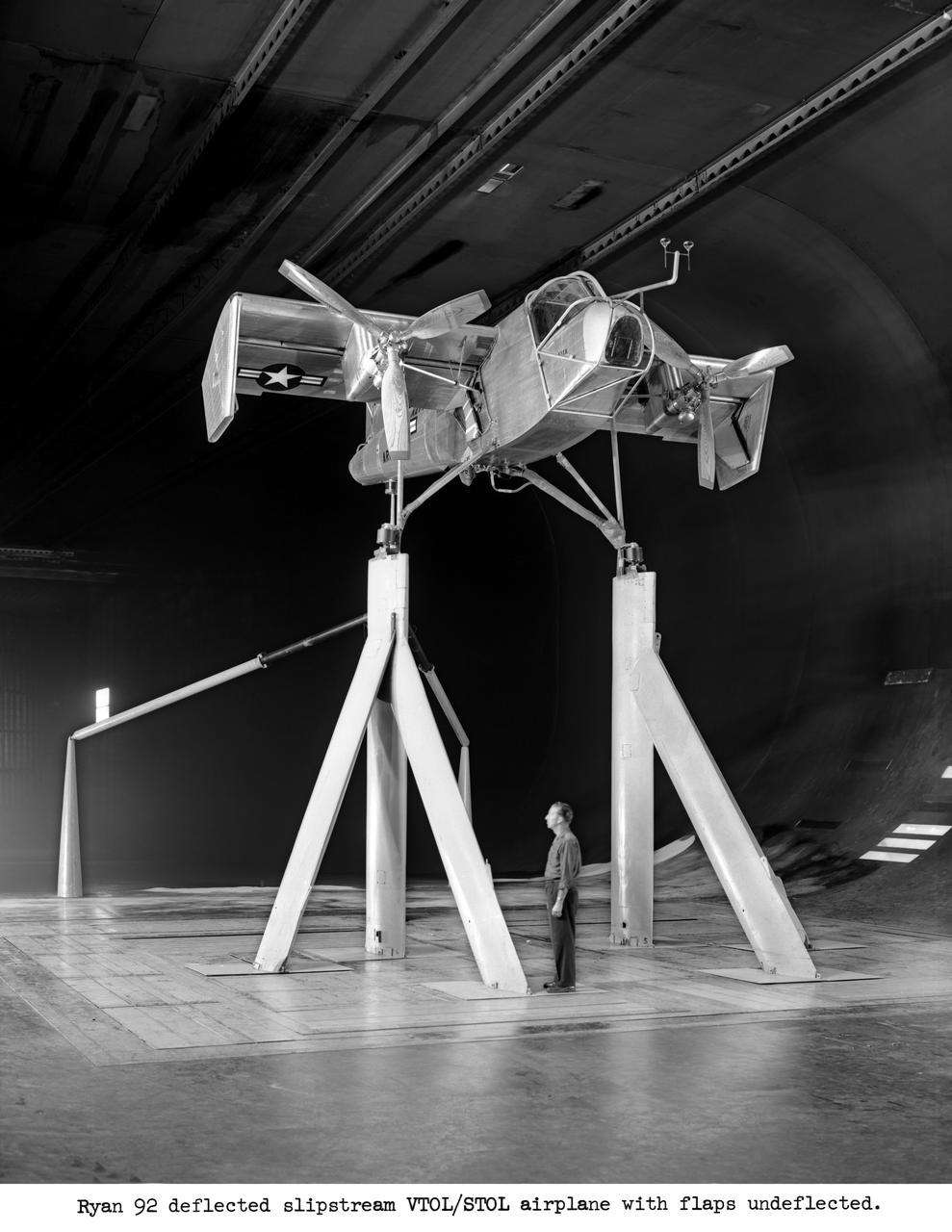
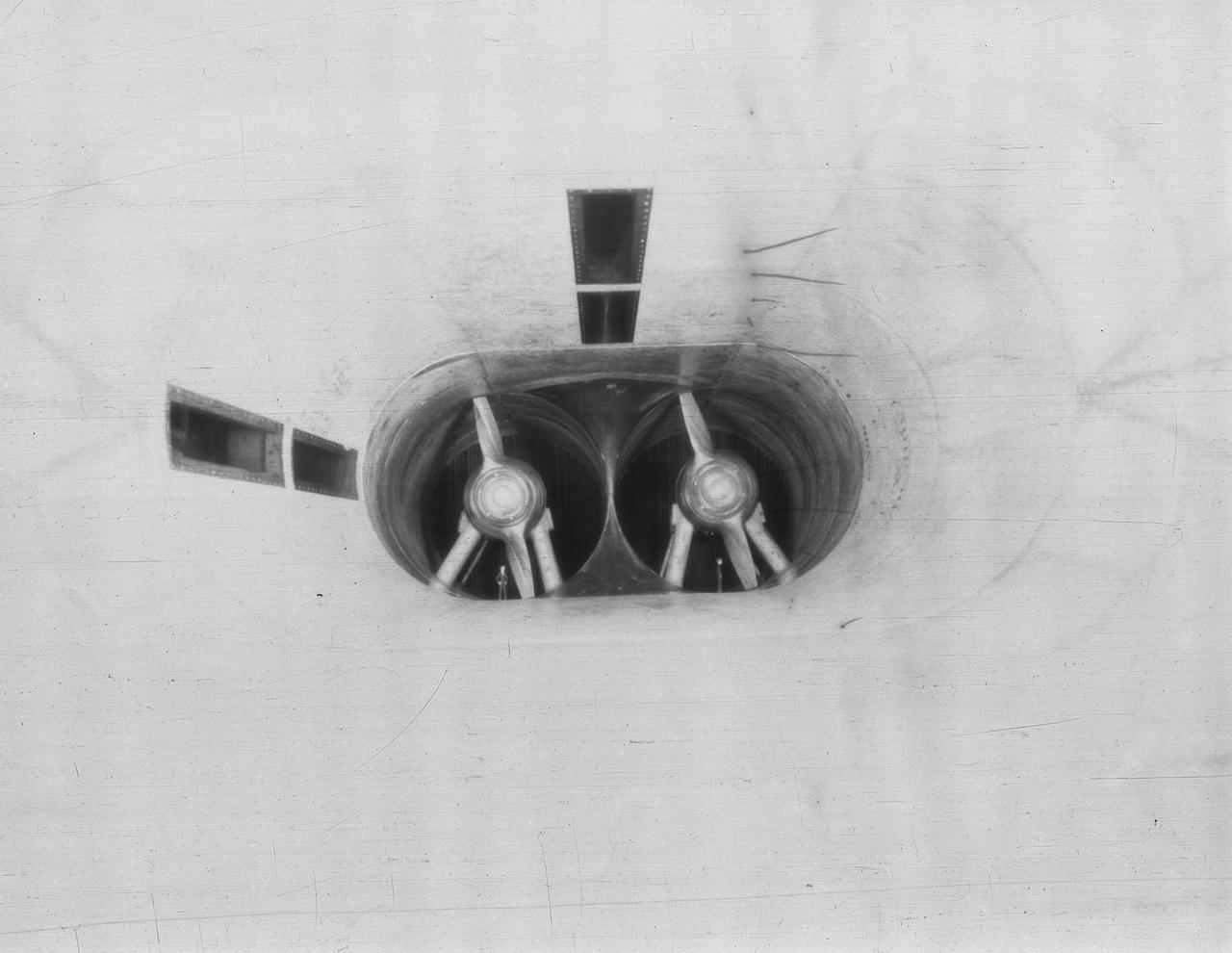
Investigation of cambered propeller design for VTOL/STOL airplane. 3/4 front view of Curtis VTOL propeller.
Cambered Propeller Design for VTOL/STOL Airplane.
Flight evaluation and comparison of a NACA submerged inlet and a scoop inlet on the North American YF-93A (AF48-317 NACA-139).   The YF-93A's were the first aircraft to use flush NACA engine inlets. aircraft to use flush NACA engine inlets.  Note:  Used in publication in Flight Research at Ames;  57 Years of Development and Validation of Aeronautical Technology NASA SP-1998-3300 and  Memoirs of a Flight Test Engineer NASA SP-2001-4525
ARC-1969-A-16591
Brown Arrow Wing Bomber
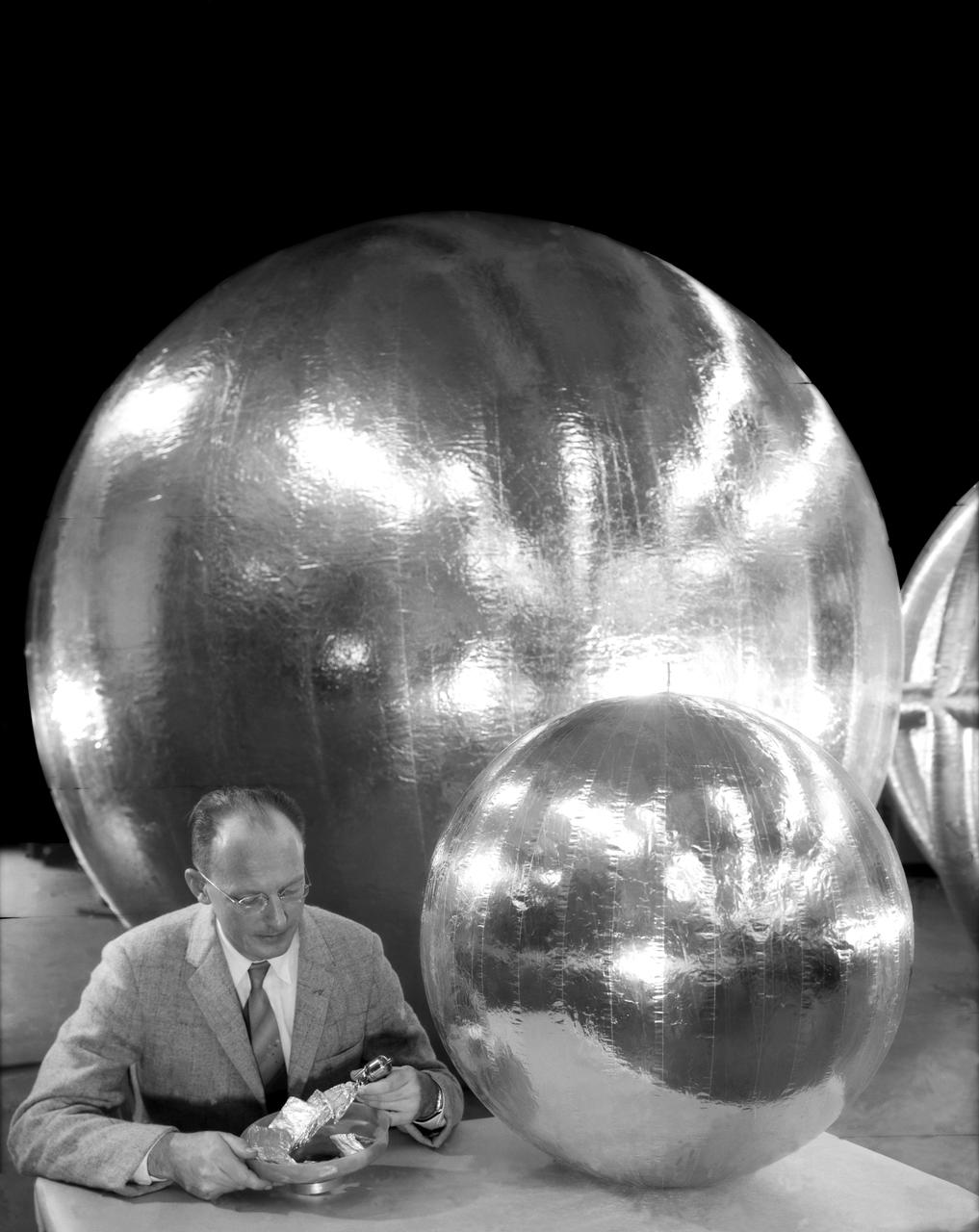
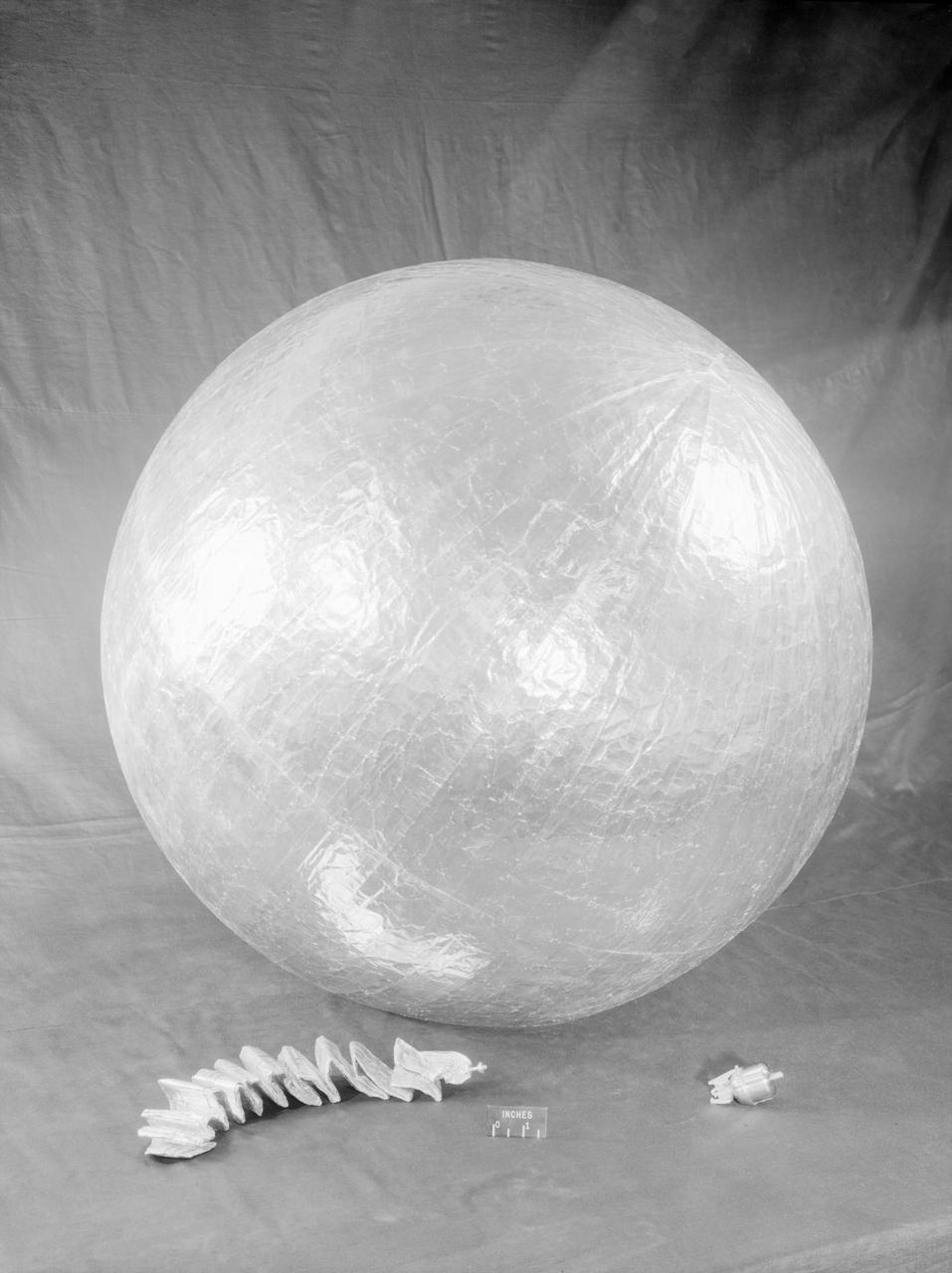
Engineer and 12 foot Beacon showing NACA emblem on inflated  satelloon . For related information see, Spaceflight Revolution, NASA from Sputnik to Apollo, by James R. Hansen. NASA SP-4308, 1995. p. 173.
Twelve Foot Subsatellite
Wood Mock-up of Arrow- Wing Bomber to Show Wing Contours
Modified Bell X-1 model pioneered variable-sweep studies in 1947.  Photograph published in Sixty Years of Aeronautical Research 1917-1977 By David A. Anderton. A NASA publication, page 52.
Bell X-1 Research Model on Single Support Strut in 7 x 10 Foot Wind Tunnel
General Research Model in 300 MOH 7x10
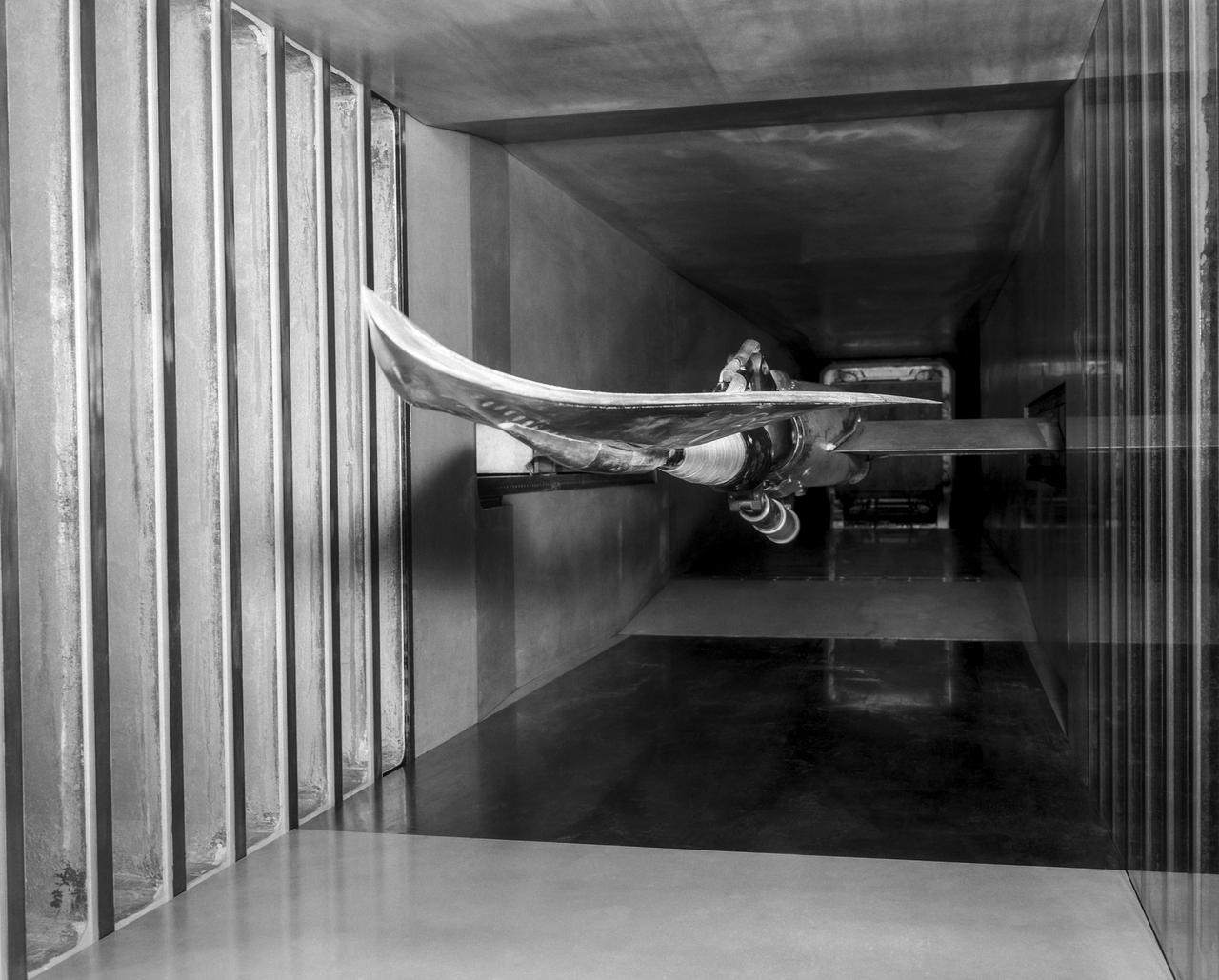
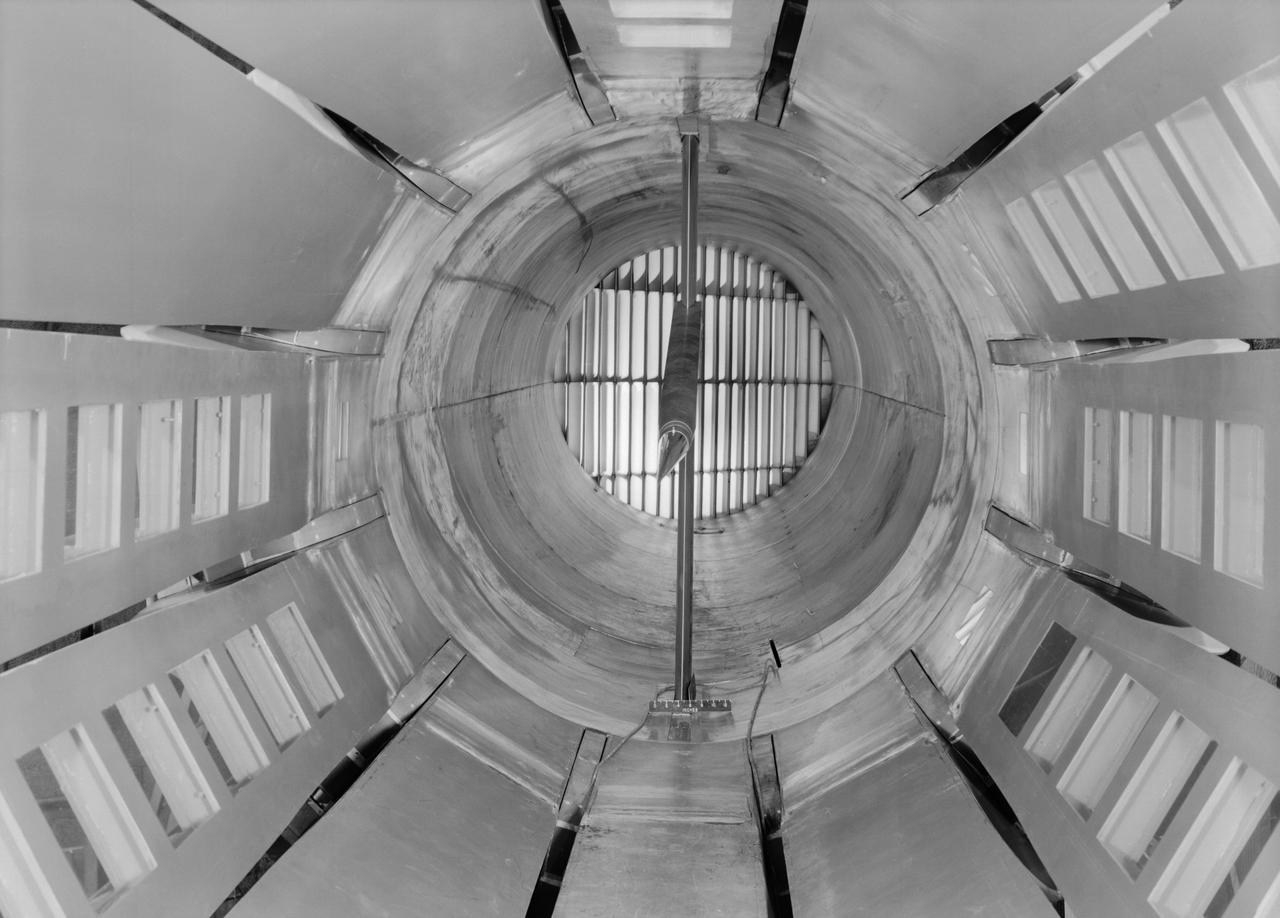
 Interior view of the slotted throat test section installed in the 8-Foot High Speed Tunnel (HST) in 1950.  The slotted region is about 160 inches in length. In this photograph, the sting-type model support is seen straight on. In a NASA report, the test section is described as follows:  The test section of the Langley 8-foot transonic tunnel is dodecagonal in cross section and has a cross-sectional area of about 43 square feet. Longitudinal slots are located between each of the 12 wall panels to allow continuous operation through the transonic speed range. The slots contain about 11 percent of the total periphery of the test section. Six of the twelve panels have windows in them to allow for schlieren observations. The entire test section is enclosed in a hemispherical shaped chamber.  John Becker noted that the tunnel s  final achievement was the development and use in routine operations of the first transonic slotted throat. The investigations of wing-body shapes in this tunnel led to Whitcomb s discovery of the transonic area rule.  James Hansen described the origins of the the slotted throat as follows:  In 1946 Langley physicist Ray H. Wright conceived a way to do transonic research effectively in a wind tunnel by placing slots in the throat of the test section. The concept for what became known as the slotted-throat or slotted-wall tunnel came to Wright not as a solution to the chronic transonic problem, but as a way to get rid of wall interference (i.e., the mutual effect of two or more meeting waves or vibrations of any kind caused by solid boundaries) at subsonic speeds.  For most of the year before Wright came up with this idea, he had been trying to develop a theoretical understanding of wall interference in the 8-Foot HST, which was then being repowered for Mach 1 capability.  When Wright presented these ideas to John Stack, the response was enthusiastic but neither Wright nor Stack thought of slotted-throats as a solution to the transonic problem, only the wall interference problem.  It was an accidental discovery which showed that slotted throats might solve the transonic problem. Most engineers were skeptical but Stack persisted. Initially, plans were to modify the 16-Foot tunnel but in the spring of 1948, Stack announced that the 8-Foot HST would also be modified. As Hansen notes:  The 8-Foot HST began regular transonic operations for research purposes on 6 October 1950.  The concept was a success and led to plans for a new wind tunnel which would be known as the 8-Foot Transonic Pressure Tunnel. -- Published in U.S., National Advisory Committee for Aeronautics,  Characteristics of Nine Research Wind Tunnels of the Langley Aeronautical Laboratory,  1957, pp. 17, 22  James R. Hansen, Engineer in Charge, NASA SP-4305, p. 454 and Chapter 11,  The Slotted Tunnel and the Area Rule.
8-Foot High Speed Tunnel (HST)
Engineer and 12 foot Beacon showing NACA emblem on inflated  satelloon . For related information see, Spaceflight Revolution, NASA from Sputnik to Apollo, by James R. Hansen. NASA SP-4308, 1995. p. 173.
Twelve Foot Subsatellite
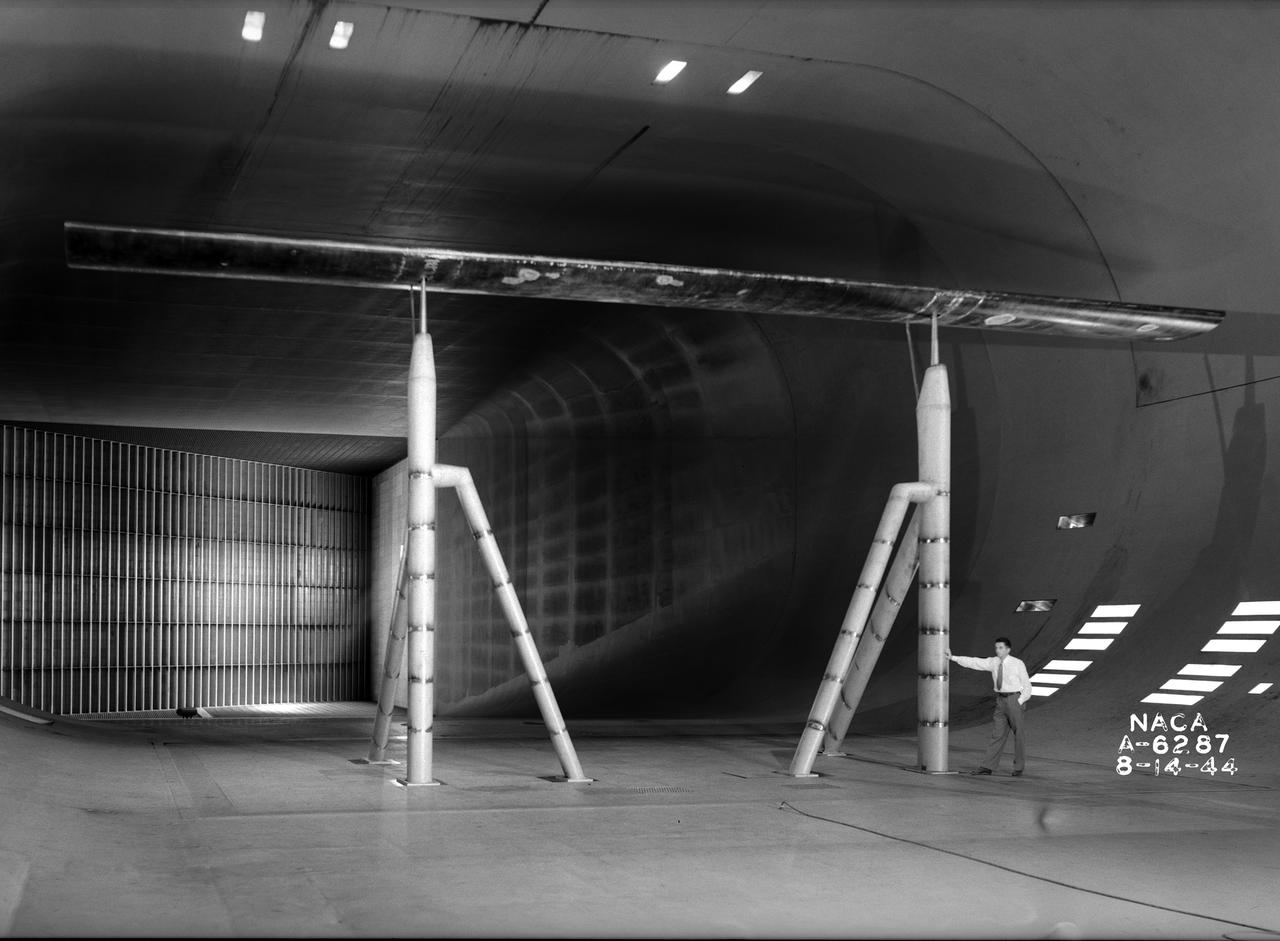
Clark Y Airfoil. 3/4 front view of 8x48 foot Clark Y Airfoil mounted (inverted) in the 40x80 foot wind tunnel at NACA's Ames Research Center.
A Clark Y Airfoil, mounted in the 40x80 foot wind tunnel.
Scale model of Mercury capsule shape A, indicating the position of the astronaut.
Mercury Project
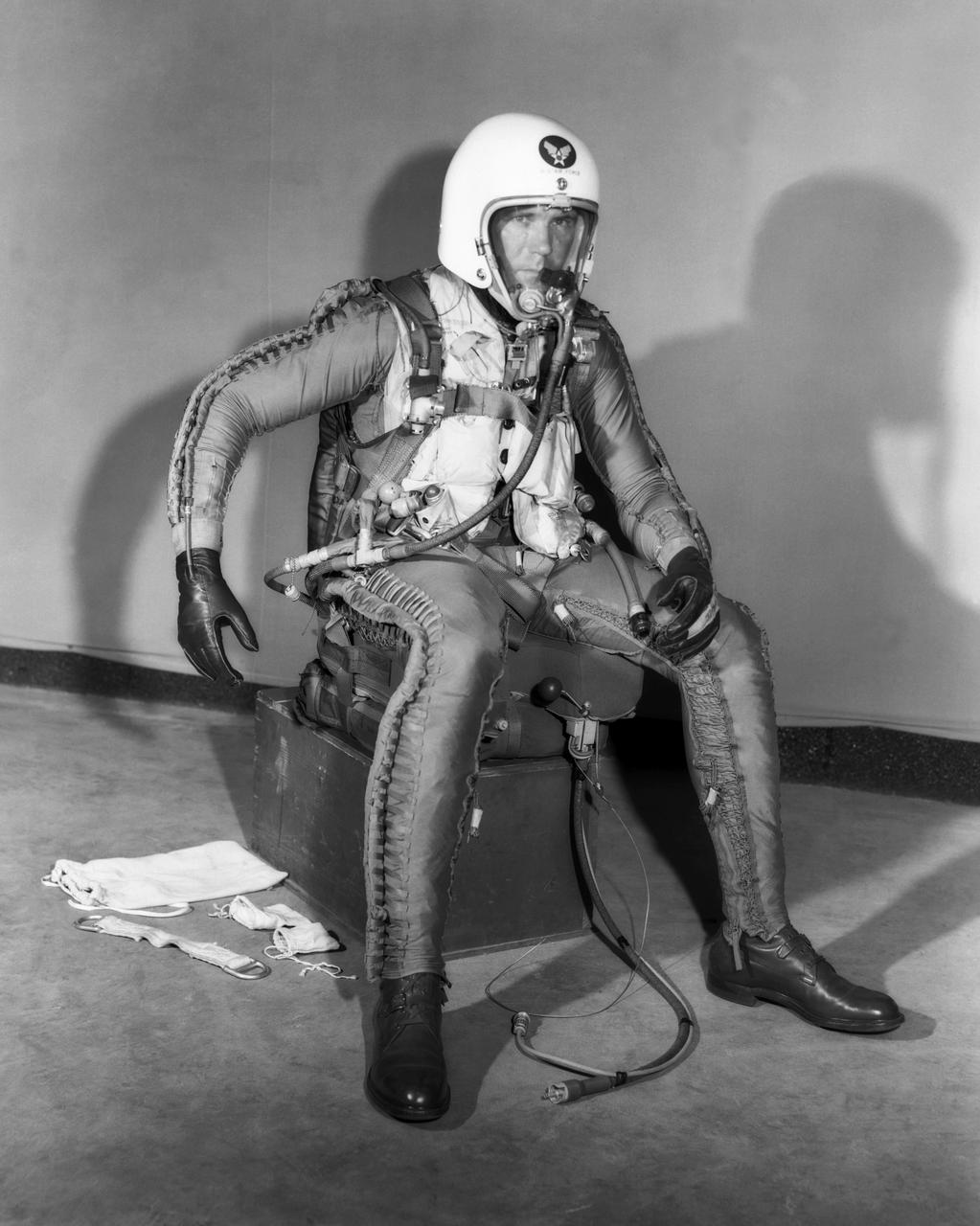
Robert Champine in X-Series Pressure Suit. Photograph published in Engineer in Charge: A History of the Langley Aeronautical Laboratory, 1917-1958 by James R. Hansen. Page 305.
Robert Champine in X-Series Pressure Suit
Water Type Muffler Test
Scale model of Mercury capsule shape A, indicating the position of the astronaut.
Mercury Project
 North American F-100 C airplane used in sonic boom investigation at Wallops, October 7, 1958.  Photograph published in: A New Dimension  Wallops Island Flight Test Range: The First Fifteen Years by Joseph Shortal. A NASA publication. Page 672. -- Aircraft number: NACA 42024. Side view, 3/4 view from front, 3/4 view from rear, rear view, and two front views.
North American F-100 C
North American X-15 Drop Model
Water Type Muffler Test
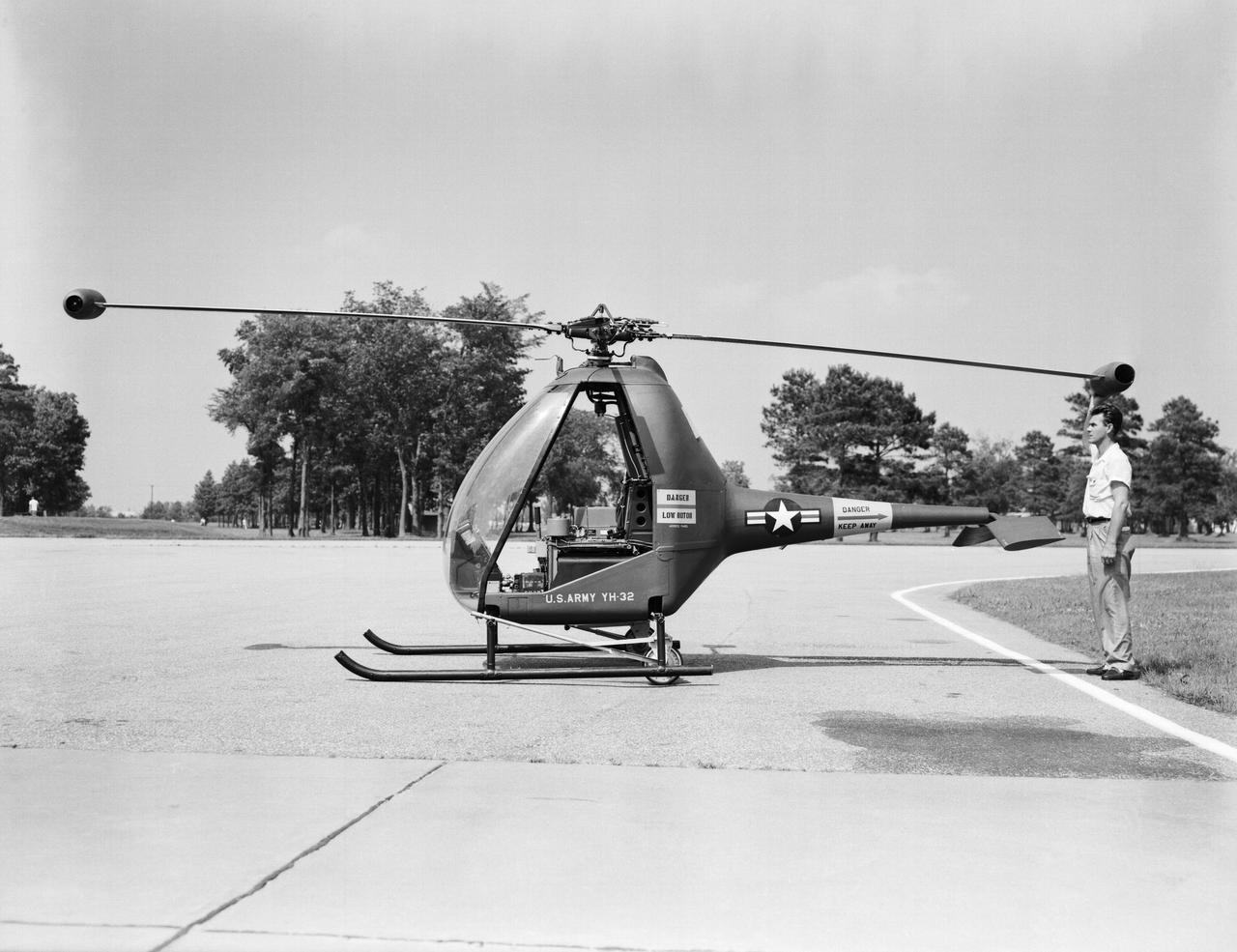
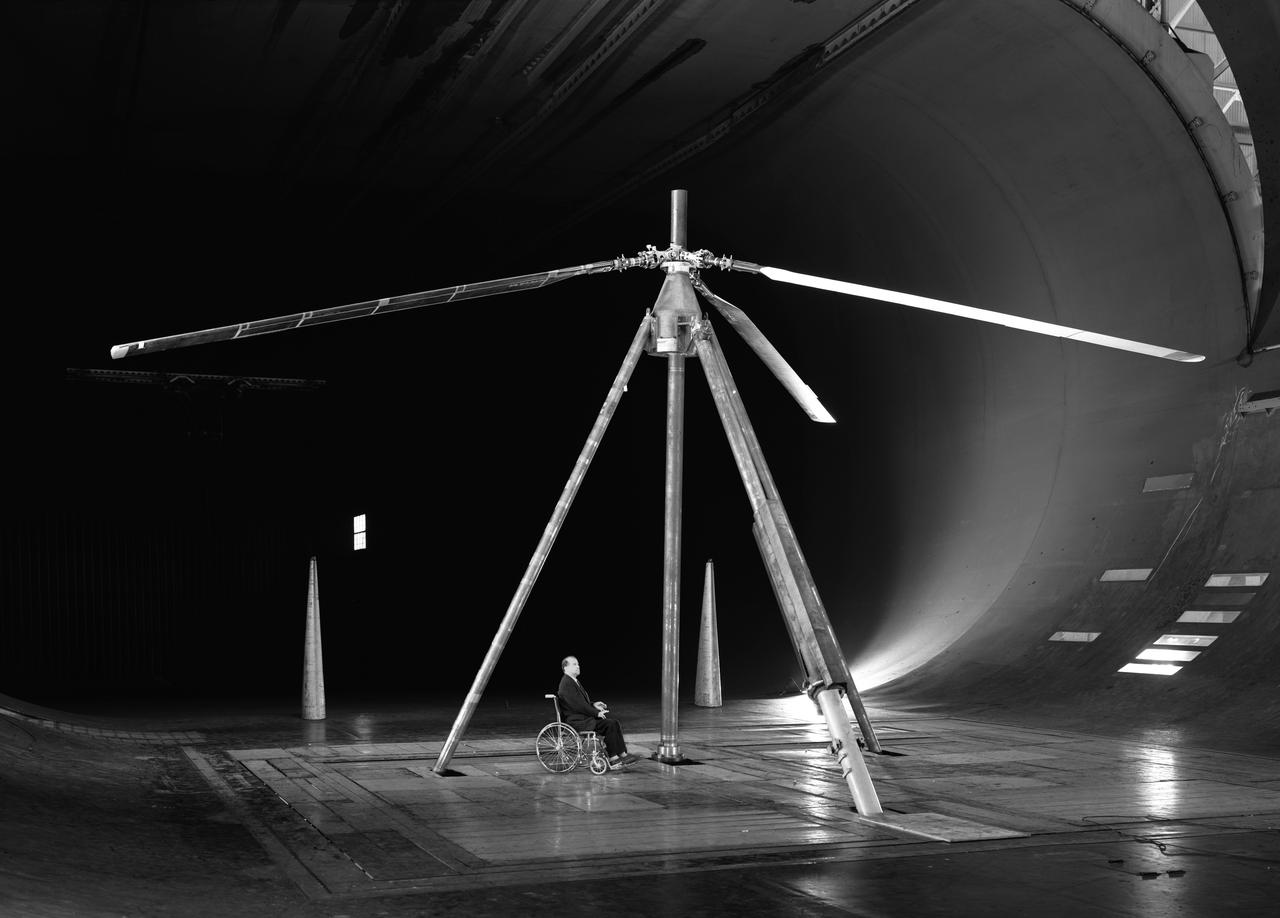
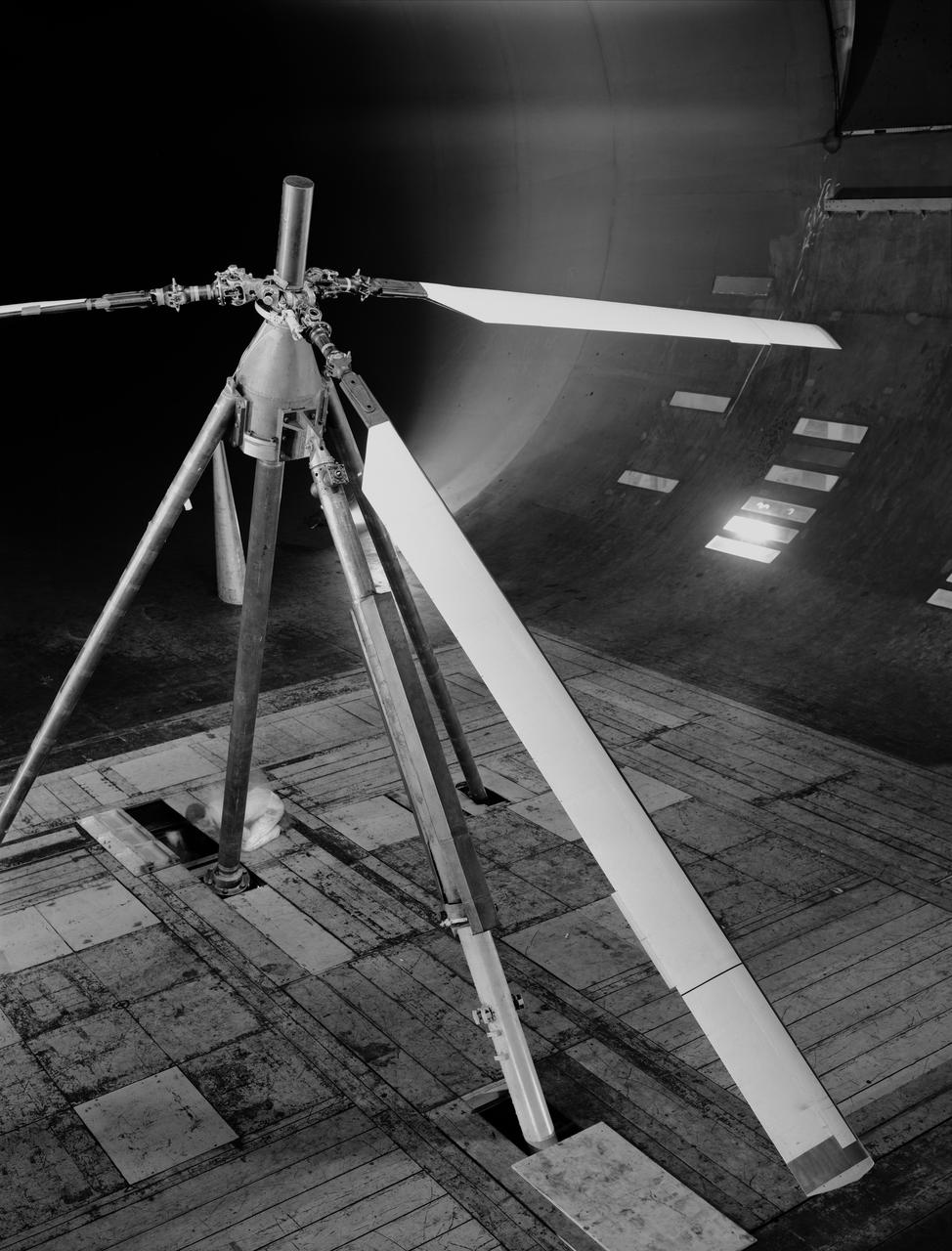
Experimental investigation of boundary-layer control to helicopter rotor blades to increase forward speed capabilities. 3/4 front view. Shaft angle - 35deg.  John Mc.Cloud in picture. He was a good guy.
Boundary-Layer Control to Helicopter Rotor Blades.
WS-110A "Brown Bomber"
 L57-989: Man and woman shown working with IBM type T04 electronic data processing machine.
IBM type T04 electronic data processing machine
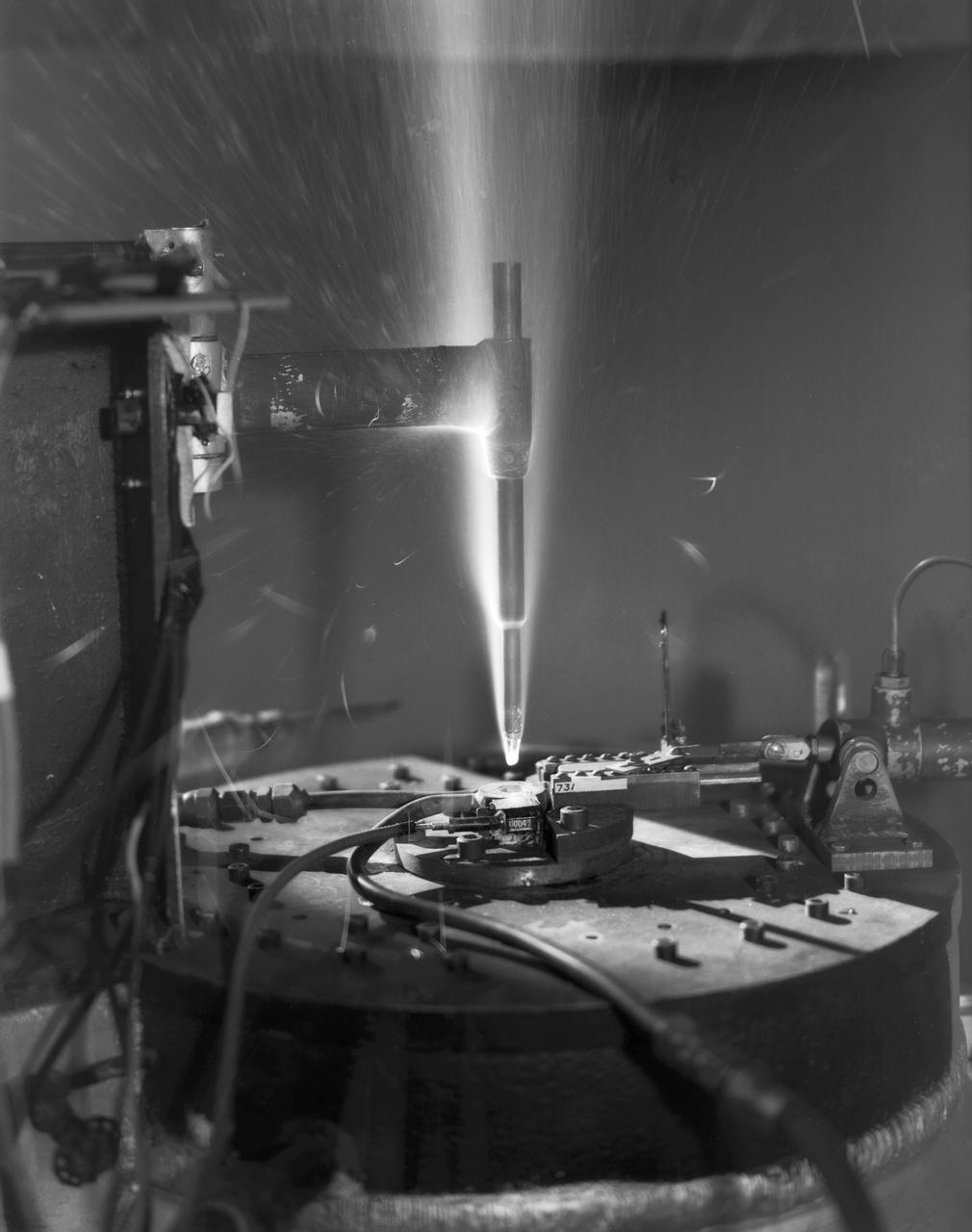
L57-5383 Hot-air jets employing ceramic heat exchangers played an important role at Langley in the study of materials for ballistic missile nose cones and re-entry vehicles. Here a model is being tested in one of theses jets at 4000 degrees Fahrenheit in 1957. Photograph published in Engineer in Charge: A History of the Langley Aeronautical Laboratory, 1917-1958 by James R. Hansen. Page 477.
Hot-Air Jets/Ceramic Heat Exchangers/ Materials for Nose Cones and Reentry Vehicles
Modified Bell X-1 model pioneered variable-sweep studies in 1947.  Photograph published in Sixty Years of Aeronautical Research 1917-1977 By David A. Anderton. A NASA publication, page 52.
Bell X-1 Research Model on Single Support Strut in 7 x 10 Foot Wind Tunnel
Views of F-8U Crusader Aircraft at NASA Langley
Views of F8U Airplane
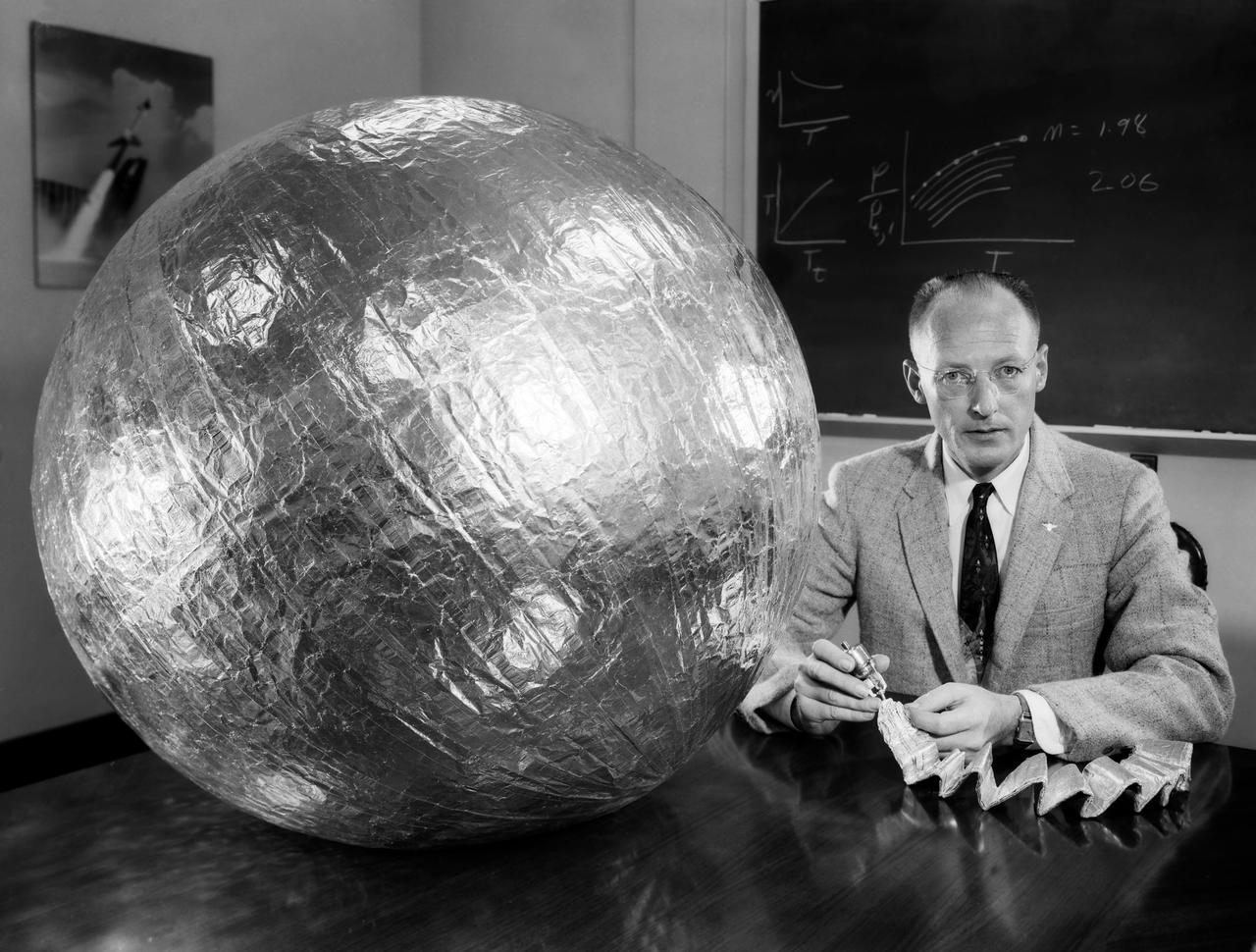
 Engineer W.J. O Sullivan, Jr., seated beside 30 inch subsatellite. He holds inflation bottle and folded duplicate copy, July 1957.
Engineer W.J. O'Sullivan, Jr. with 30 Inch Subsatellite
Phase SB Propeller installed on F88B
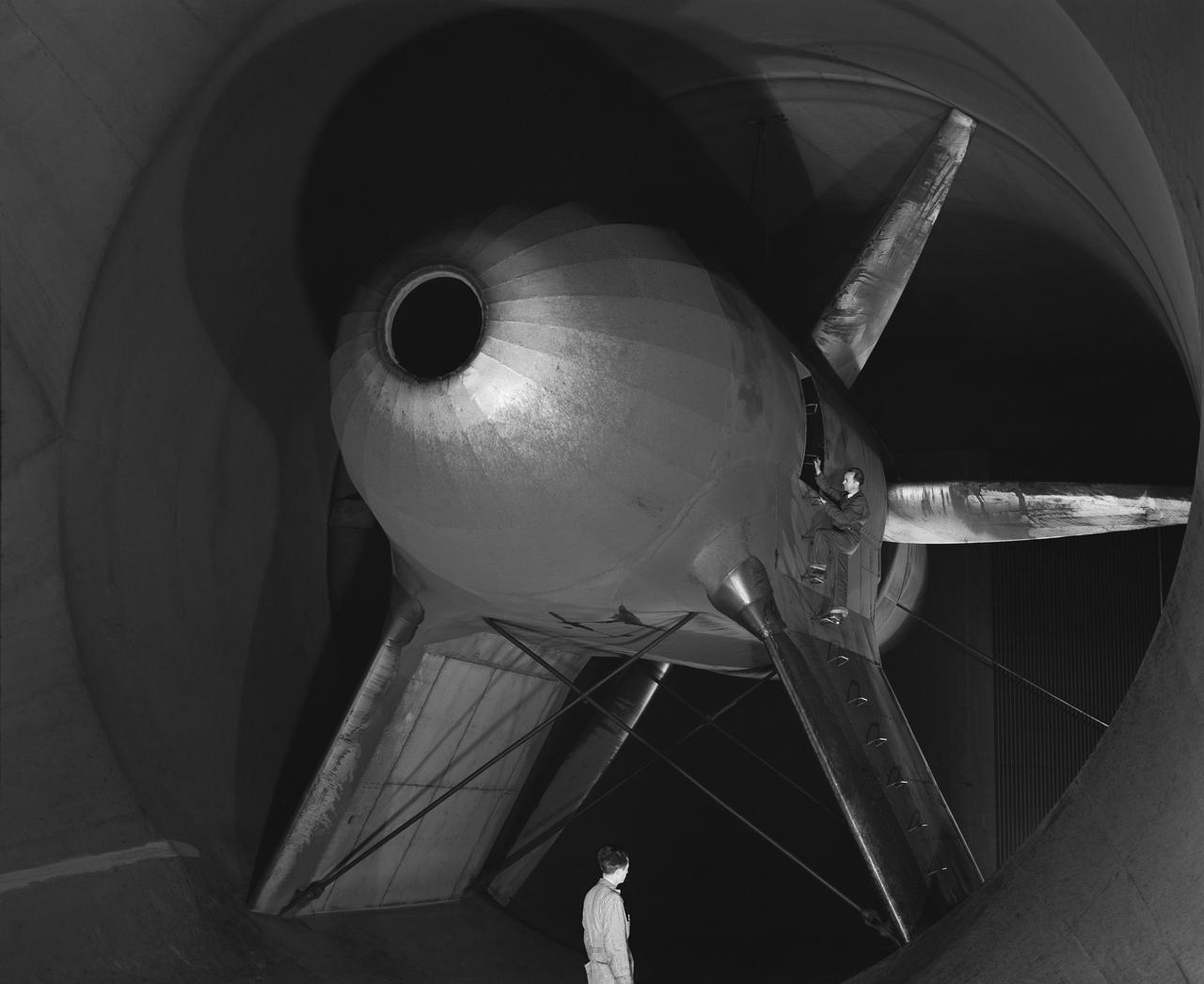
Lockheed XFV-1 model. Project engineer Mark Kelly (not shown). Remote controlled model flown in the settling chamber of the 40x80 wind tunnel. Electric motors in the model, controlled the counter-rotating propellers to test vertical takeoff. Test no. 71
Lockheed XFV-1 model in the 40x80 foot Wind Tunnel at NASA Ames Research Center.
91,591  Overhead view. McDonnell XF-88B Experimental Jet Fighter. Langley used this aircraft in the mid-1950s to explore the potential of a supersonic propeller. Photographed in Engineer in Charge A History of the Langley Aeronautical Laboratory, 1917-1958 by James R. Hansen. Page 508. **Note see L57-2259 for eye level view.
McDonnell XF-88B Experimental Jet Fighter
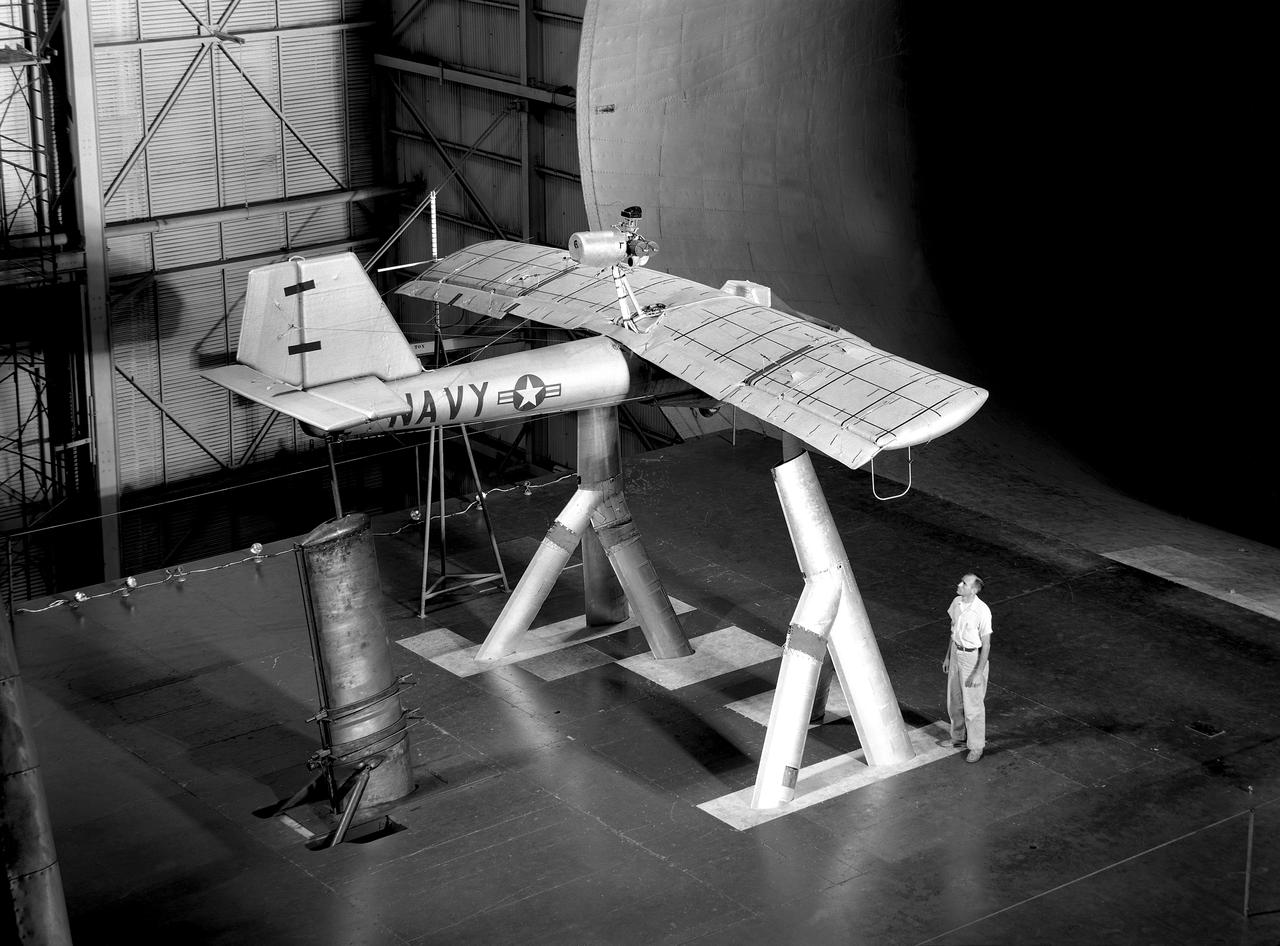
Application of blowing-type boundry-layer control to the leading-and trailing-edge flaps of a Change Vought XF8U-1 wing
Change Vought XF8U-1 Wing.
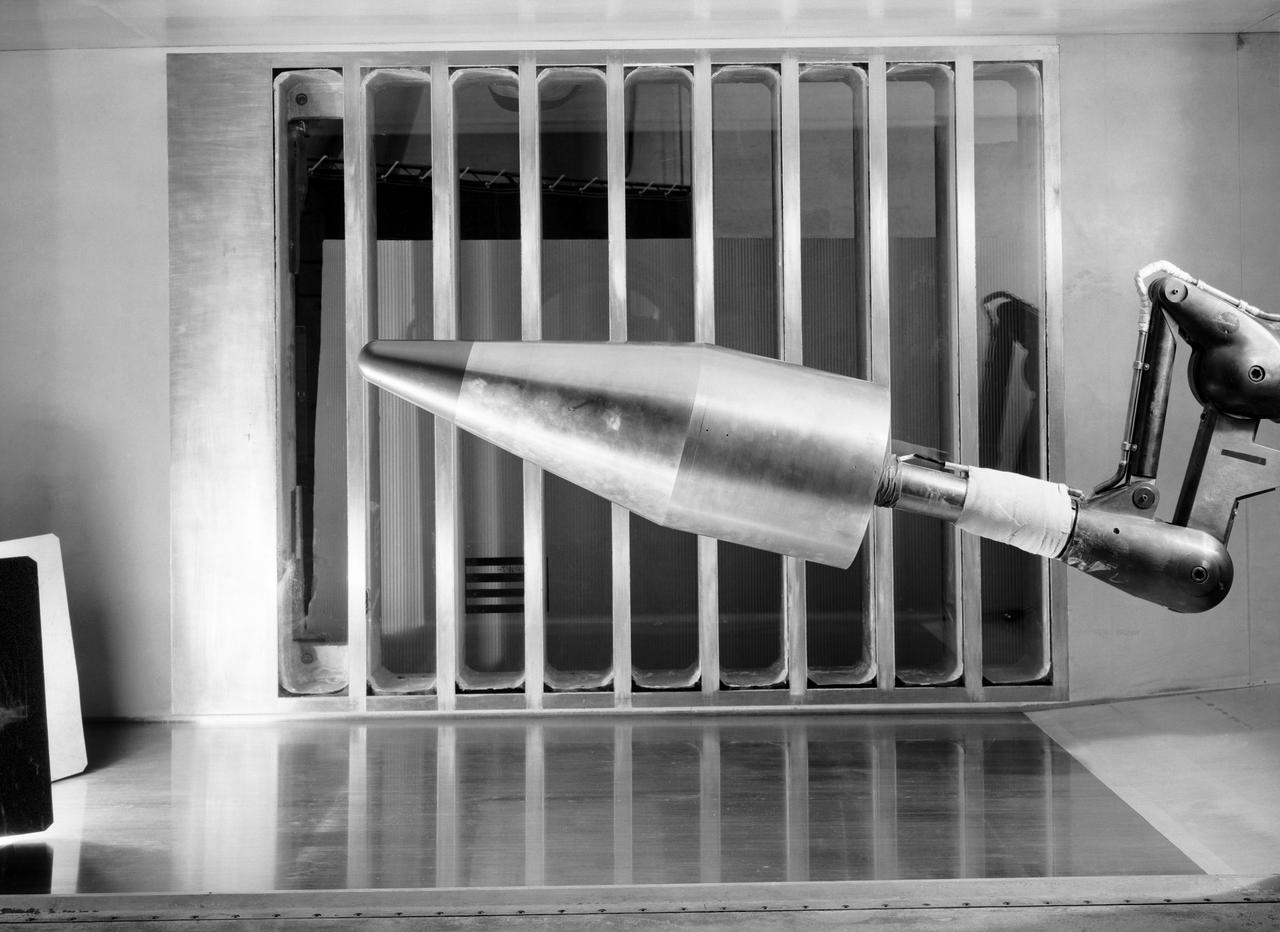
L57-700 In the reentry flight path of this nose cone model of a Jupiter Intermediate range ballistic missile (IRBM) was tested in the Unitary Plan Wind Tunnel. Photograph published in Engineer in Charge: A History of the Langley Aeronautical Laboratory, 1917-1958 by James R. Hansen. Page 475.
IRBM in Unitary Plan Wind Tunnel
Vertical model flying in Langley Research Center's Full Scale Tunnel.
Vertical model flying in LaRC Full Scale Tunnel
WS-110A "Brown Bomber"
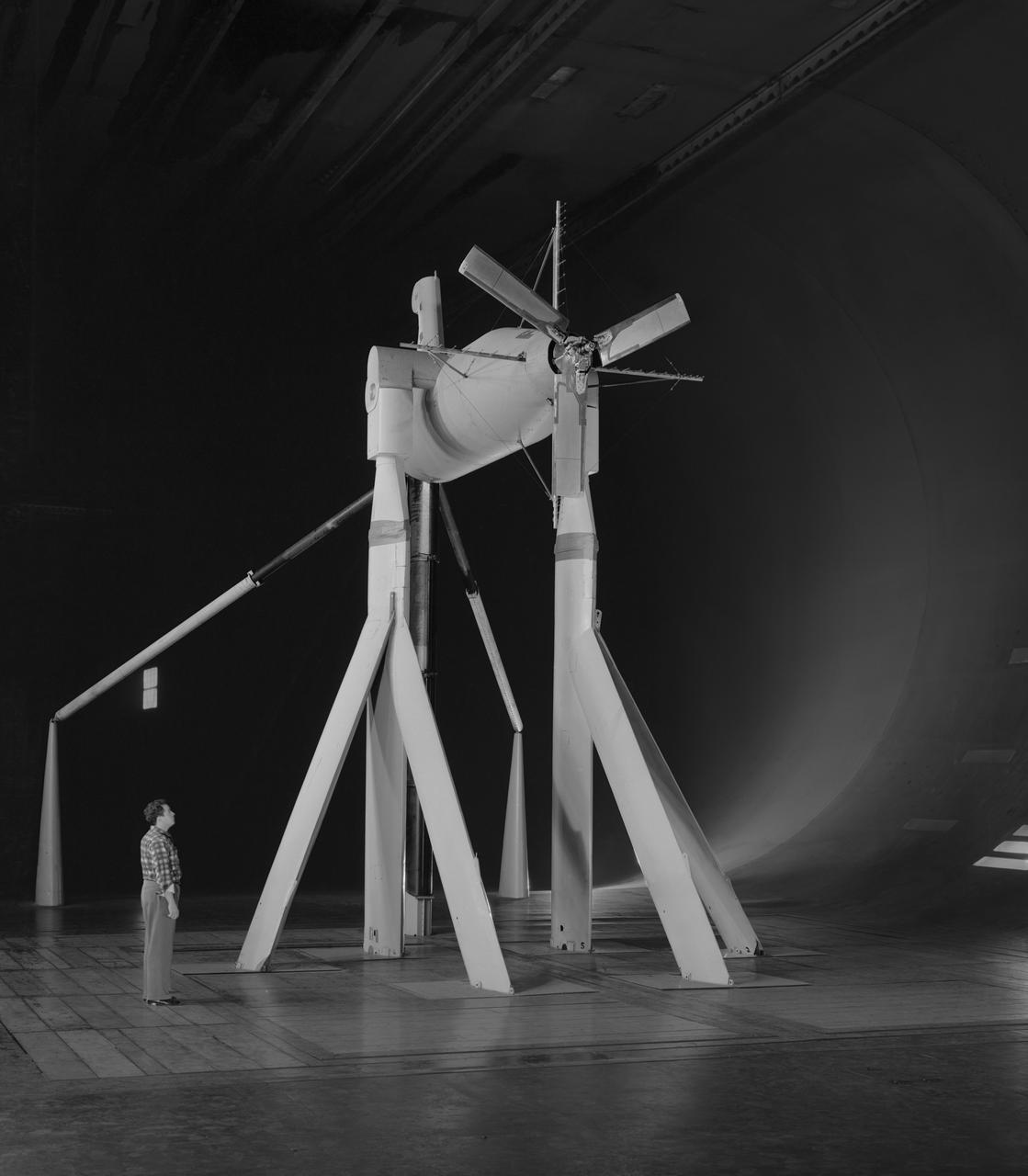
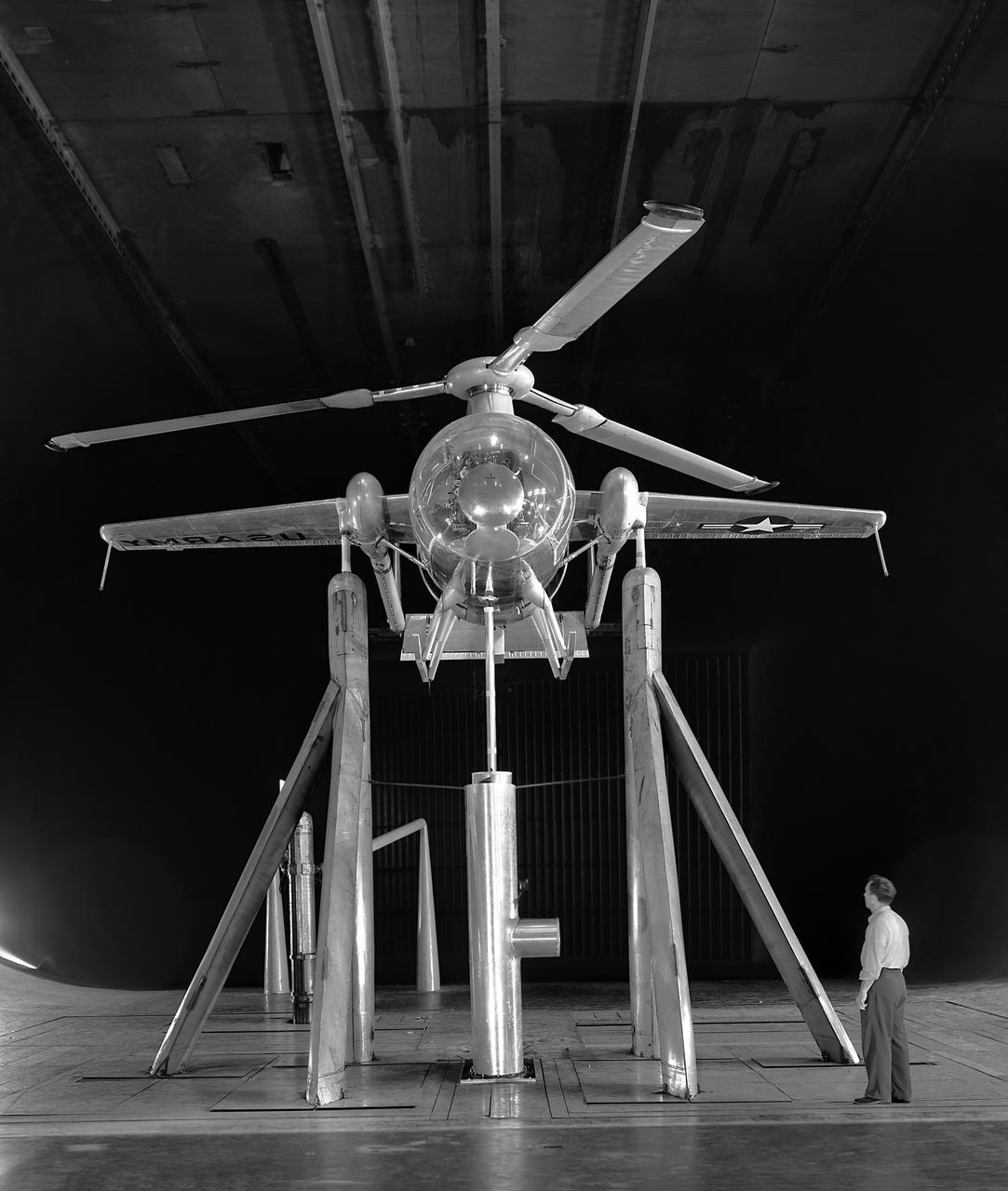
Foreword, front view of McDonnell Model XV-1 Convertiplane in the Ames 40x80 Foot Wind Tunnel.  The McDonnell XV-1 was an experimental compound gyroplane developed for a joint research program between the United States Air Force and the United States Army to explore technologies to develop an aircraft that could take off and land like a helicopter but fly at faster airspeeds, similar to a conventional airplane. The XV-1 would reach a speed of 200 mph (322 km/h), faster than any previous rotorcraft, but the program was terminated due to the tip-jet noise and complexity of the technology which gave only a modest gain in performance.
McDonnell Model XV-1 Convertiplane in the Ames 40x80 Foot Wind Tunnel.
Construction of the Ames Full-Scale 40x80ft Wind tunnel. - side view of entrance cone, blimp in background
ARC-1943-AFST-37
Phase SB Propeller installed on F88B
Water Type Muffler Test
Attitude control simulator for X-15 studies at Langley, 1958. Photograph published in Engineer in Charge: A History of the Langley Aeronautical Laboratory, 1917-1958 by James R. Hansen (page 367).
X-15 Studies at Langley, 1958
 Photographed on: 08 05 1958. -- Impact test conducted by Langley's Hydrodynamics Division. The Division conducted a series of impact studies with full scale and model capsules of the original capsule shape A. Joseph Shortal wrote (Vol. 3, p. 16):  The basic design of the capsule was made by M.A. Faget and his coworkers at PARD during the winter of 1957-1958. It was natural, then, that extensive use was made of the facilities at Wallops during the development of the spacecraft. The tests at Wallops consisted of 26 full-size capsules, either launched from the ground by rocket power or dropped from airplanes at high altitude and 28 scaled models, either rocket boosted or released from balloons. Emphasis in the Wallops program was on dynamic stability and aerodynamic heating of the capsule, and effectiveness of the pilot-escape and parachute-recovery systems. The biggest part of the Wallops program was the series of full-size capsules, rocket launched with the Little Joe booster, developed especially for Mercury.  -- Published in Joseph A. Shortal, History of Wallops Station: Origins and Activities Through 1949, (Wallops Island, VA: National Aeronautics and Space Administration, Wallops Station, nd), Comment Edition.
Mercury: impact studies
WS-110A "Brown Bomber"
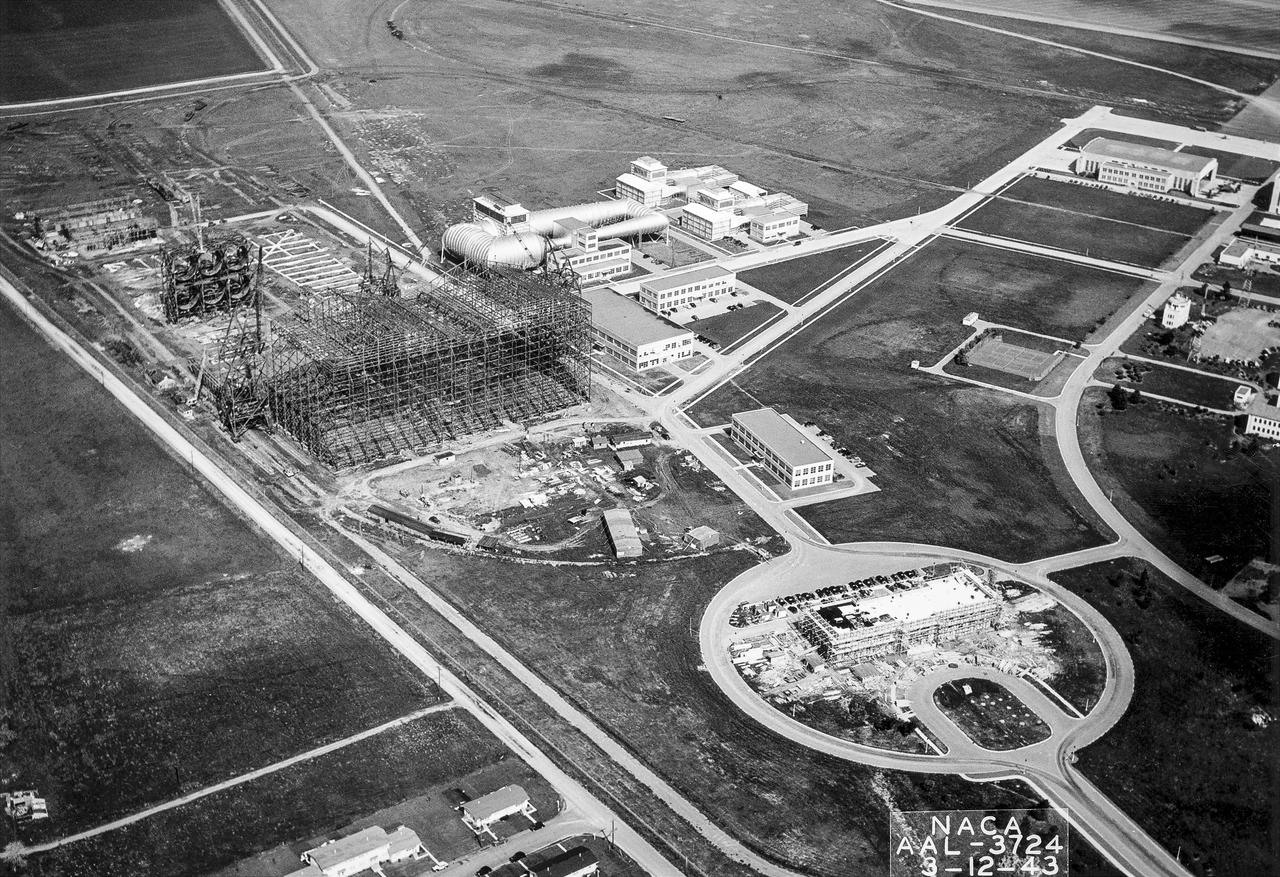
(03/12/1943) Aerial view of the site from the 40x80 wind tunnel At NASA Ames Research Center. Site includes the 16 foot and 7x10 wind tunnels in the background.  Building 200 also under construction.  Framing for the drive fans of the 40x80 in scene.
Aerial View Of The Site From The 40x80 Foot Wind Tunnel At Nasa Ames Research Center.
Brown Arrow Wing Bomber
Front View of -45 deg. Forward swept wing with inboard split flaps deflected 60 deg. In NACA Ames 40x80 foot Wind Tunnel.
Swept wing with inboard split flaps in Ames 40x80 foot Wind Tunnel.
Phase SB Propeller installed on F88B
Ames Pilot George Cooper (l) and Ames Director Smith DeFrance discuss F-86 flight test
ARC-1969-A-16539
Computers' at work in 16ft wind tunnel - calculating test data
Computers processing data from the 16 Foot Wind Tunnel at Ames Research Center.
Modified Bell X-1 model pioneered variable-sweep studies in 1947.  Photograph published in Sixty Years of Aeronautical Research 1917-1977 By David A. Anderton. A NASA publication, page 52.
Bell X-1 Research Model on Single Support Strut in 7 x 10 Foot Wind Tunnel
Modified Bell X-1 model pioneered variable-sweep studies in 1947.  Photograph published in Sixty Years of Aeronautical Research 1917-1977 By David A. Anderton. A NASA publication, page 52.
Bell X-1 Research Model on Single Support Strut in 7 x 10 Foot Wind Tunnel
Instrumentation in Full Scale Tunnel
Application of blowing type boundry-layer control to the leading and trailing edge flaps of a 52 deg swept wing.  3/4 view of Aspect Ratio 2.8, taper ratio .17, 45 deg swept back wing model -3/4 front view
McDonnell F4H Model in Ames 40X80 foot Wind Tunnel.
Modified Bell X-1 model pioneered variable-sweep studies in 1947.  Photograph published in Sixty Years of Aeronautical Research 1917-1977 By David A. Anderton. A NASA publication, page 52.
Bell X-1 Research Model on Single Support Strut in 7 x 10 Foot Wind Tunnel
Looking south at the construction of the test section of the 40 x 80 foot wind tunnel.  4 parts of a test section bent seen in the  foreground. Airship rising in the background.
Construction of the Ring Section of the 40x80 Foot Wind Tunnel at NACA Ames.
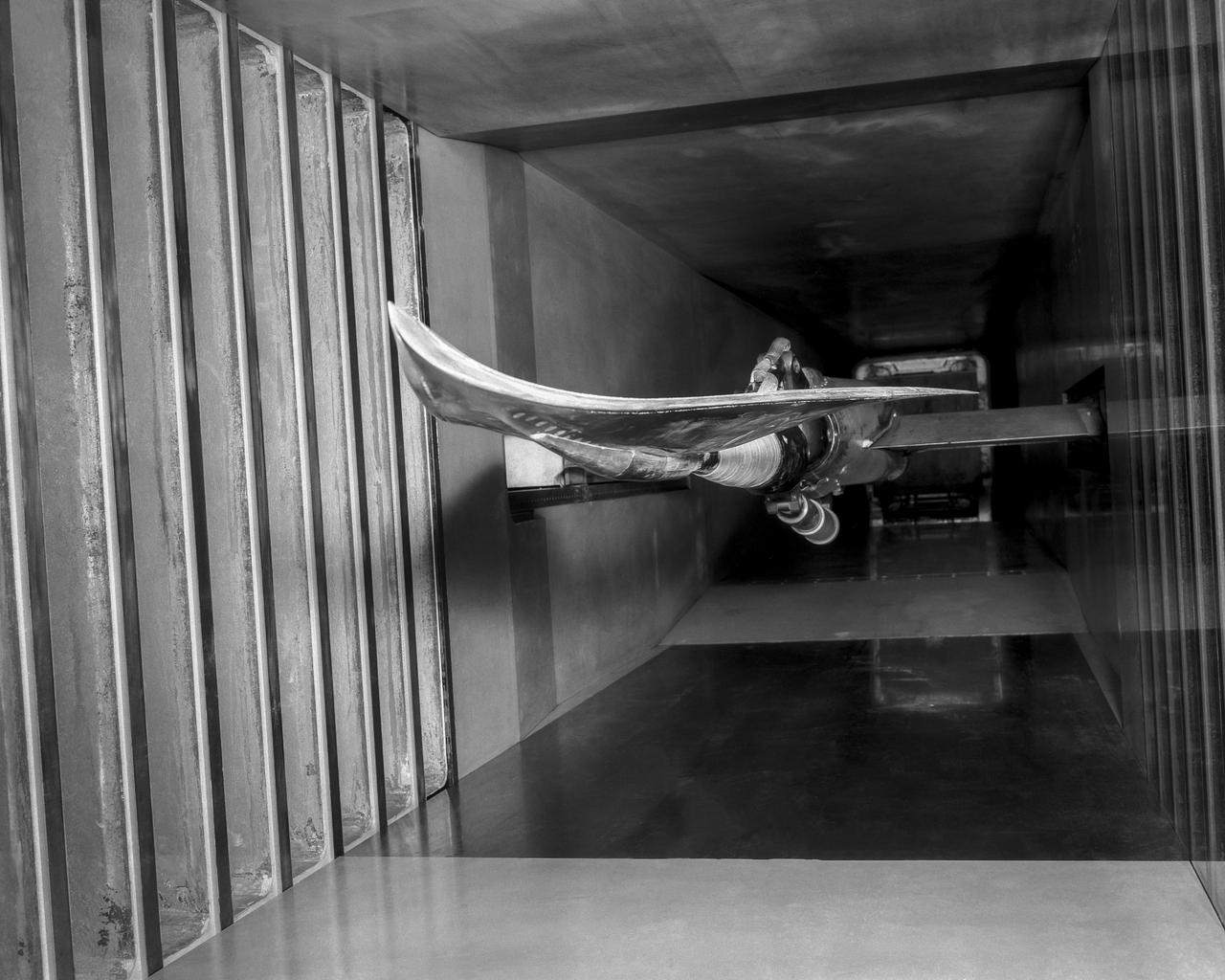
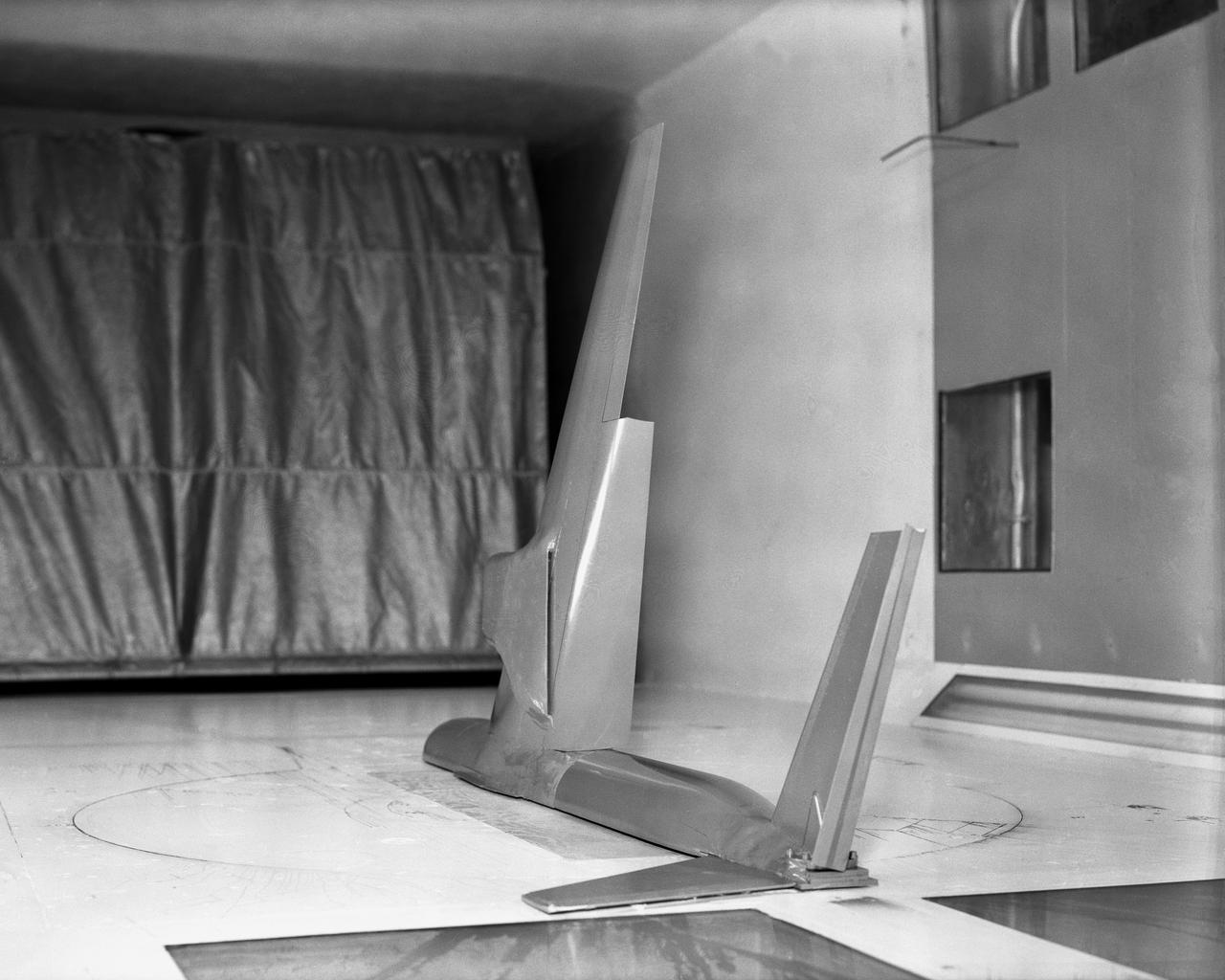
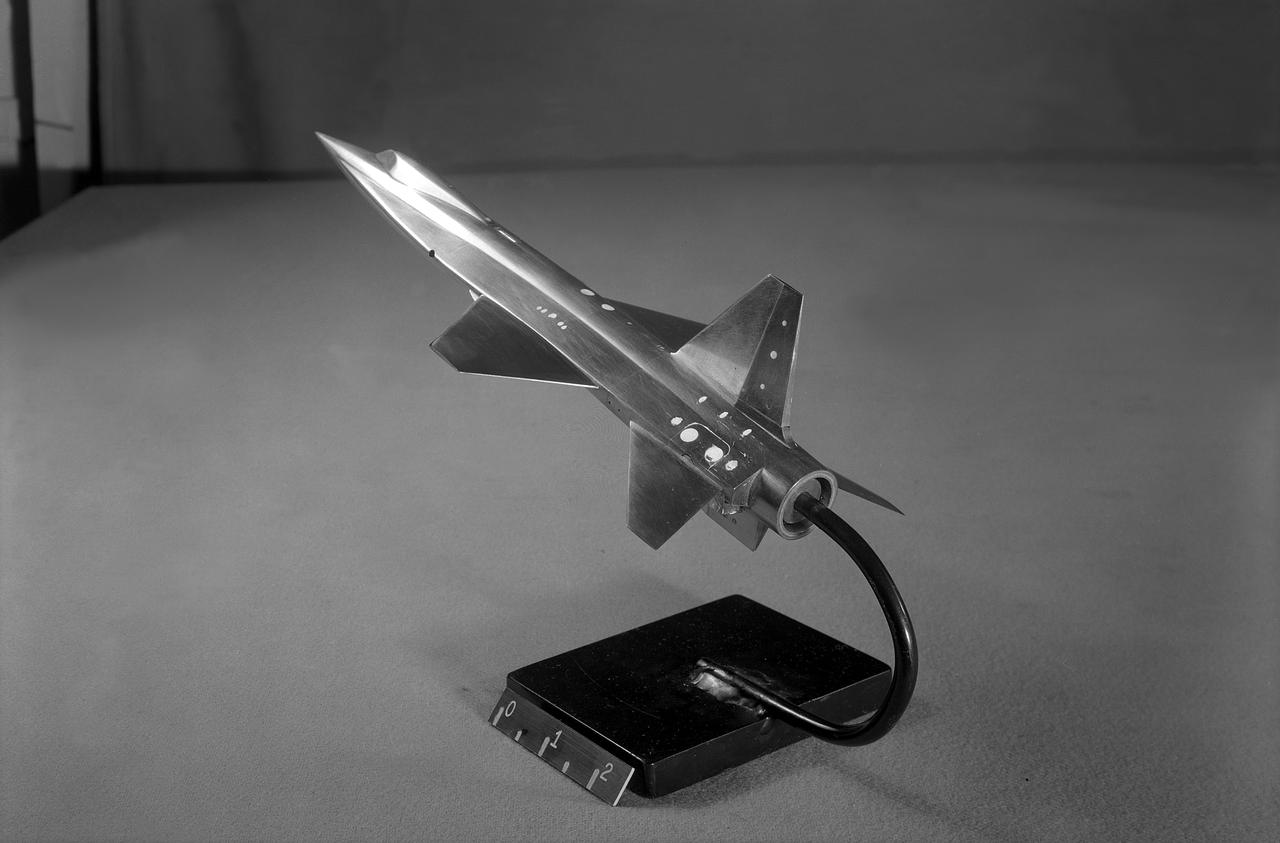
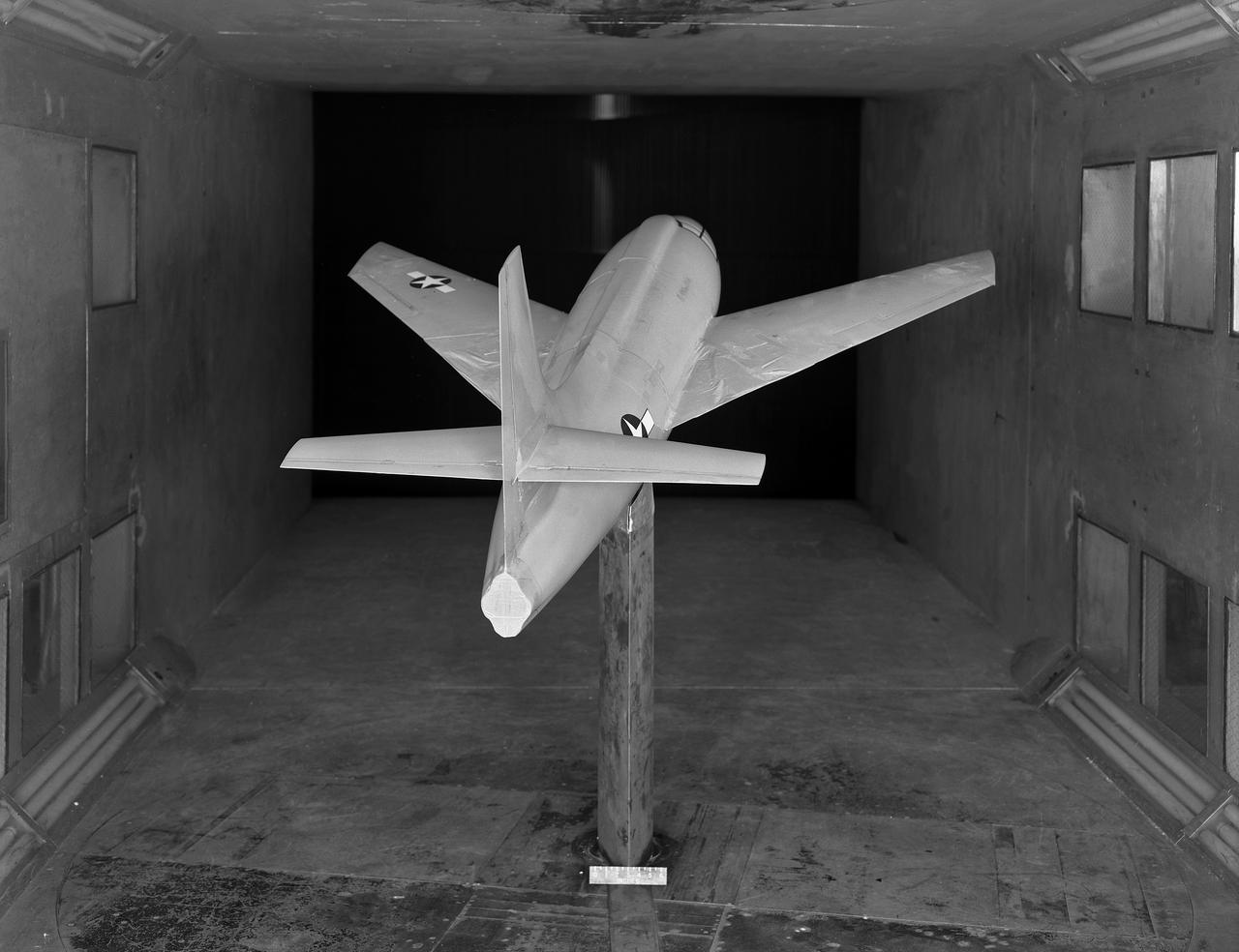
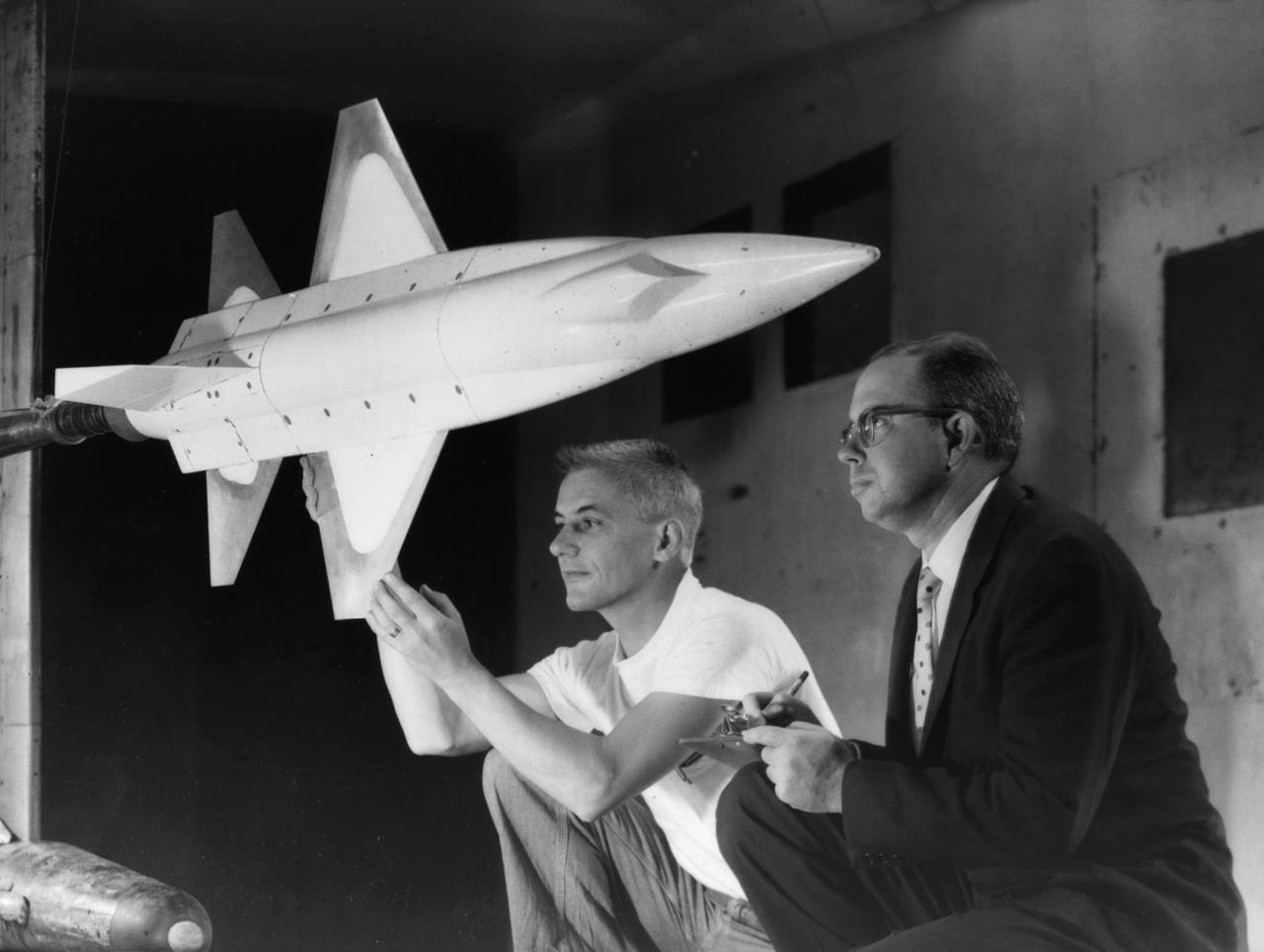
This scale-model of North American's initial X-15 design was tested in North American and NACA wind tunnels   note the conventional tail and fuselage side-tunnels that extend far toward the aircraft nose. North American engineers would determine that the variable wedge-angle stabilizer created a weight issue, and aeronautical testing by Langley engineers confirmed that the side-tunnels made the design less stable.
X-15 Configurations