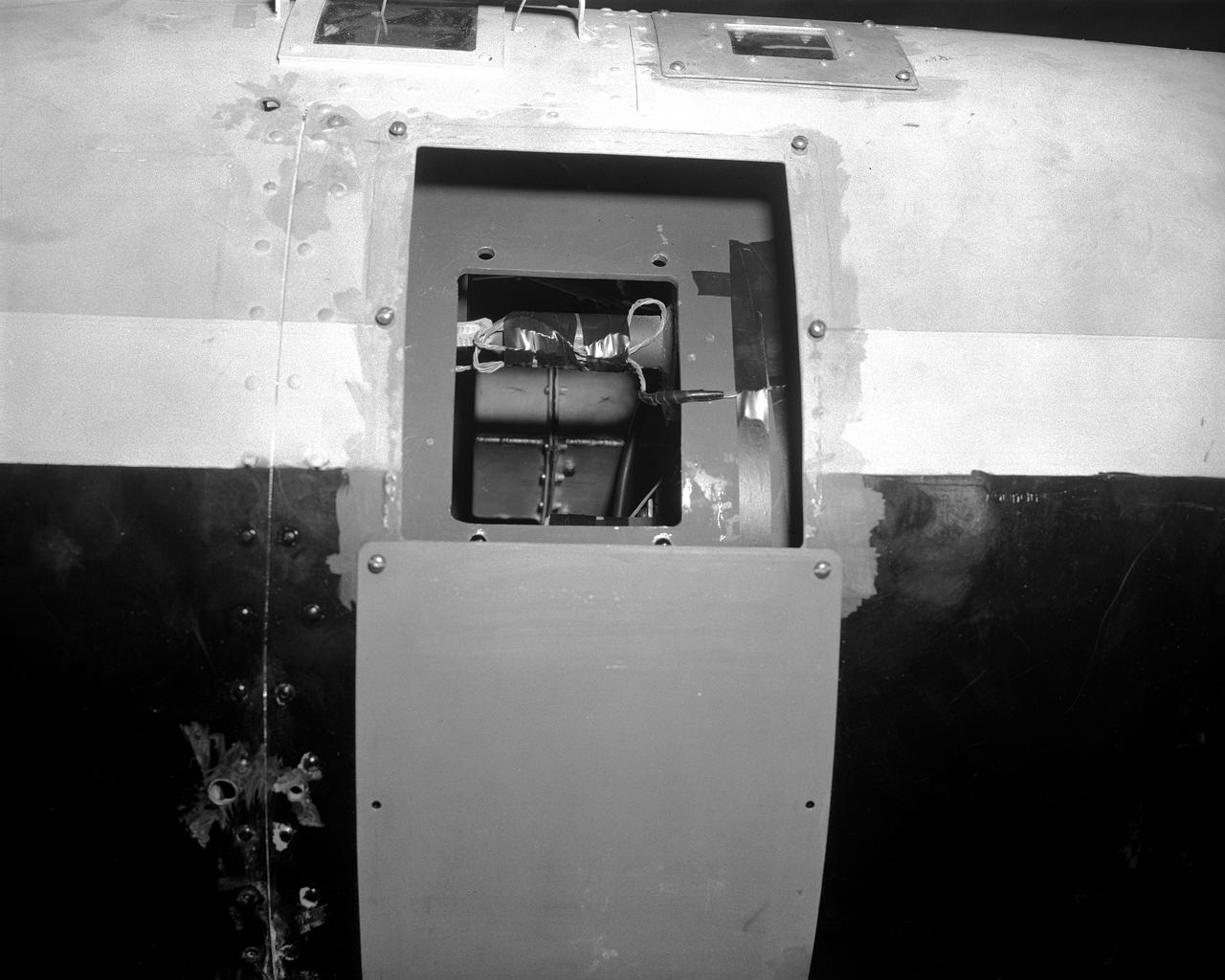
Space Flight Charts, Space Capsule

At the Gagarin Cosmonaut Training Center in Star City, Russia, the Expedition 39/40 prime crewmembers and family members walk to a bus March 13 before boarding a plane for the flight to their launch site at the Baikonur Cosmodrome in Kazakhstan. From left to right in the front row are NASA Flight Engineer Steve Swanson, Soyuz Commander Alexander Skvortsov of the Russian Federal Space Agency (Roscosmos), his wife, and Flight Engineer Oleg Artemyev of Roscosmos and his daughter. Swanson, Skvortsov and Artemyev will launch to the International Space Station March 26, Kazakh time , in the Soyuz TMA-12M spacecraft for a six-month mission. NASA/Stephanie Stoll
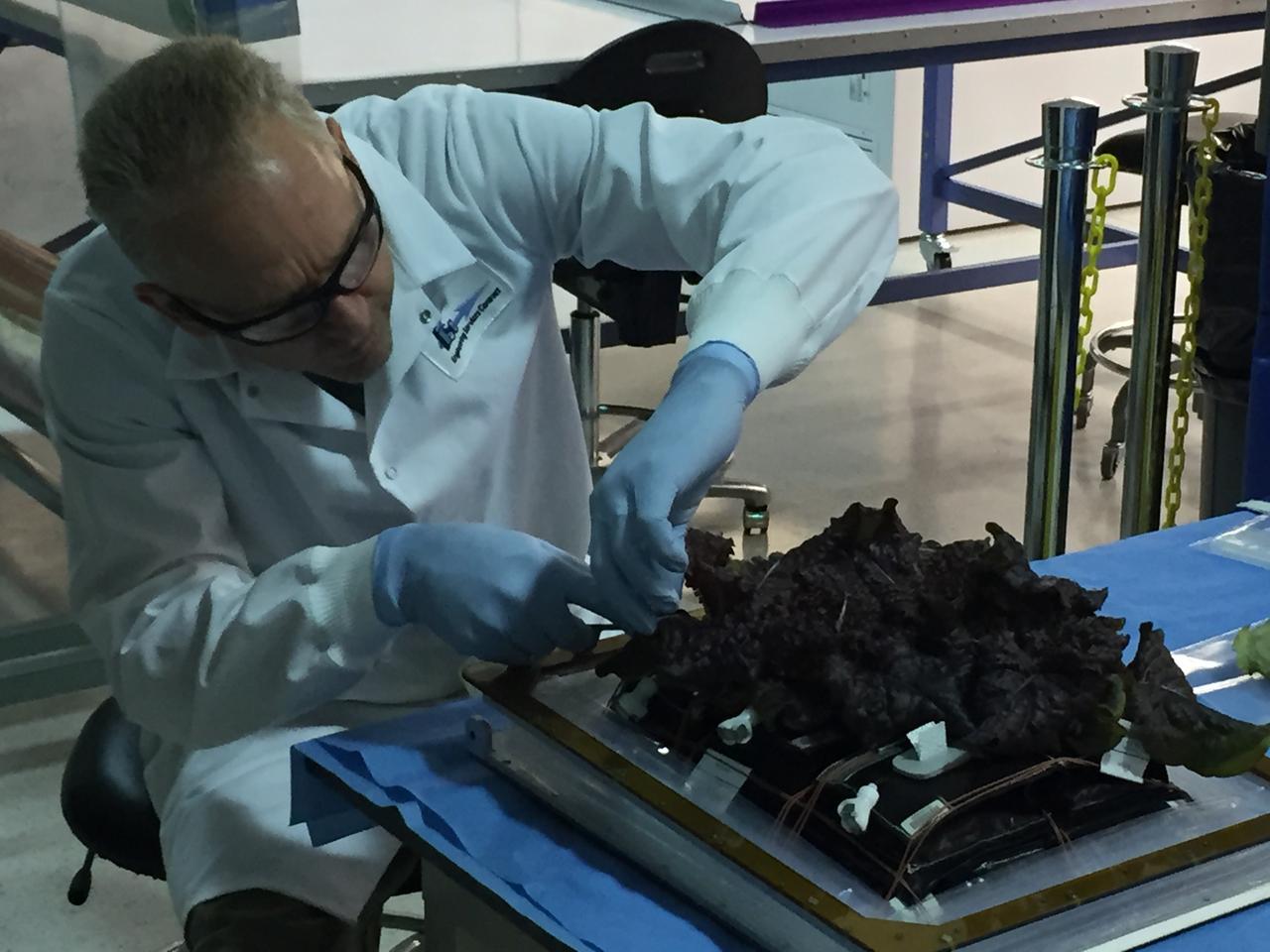
Astronaut Scott Kelly initiated VEG-01 B, the second crop of lettuce, on July, 8, 2015, and both Kelly and Astronaut Kjell Lindgren cared for the plants. The crop grew for 33 days. VEG-01 B included one set of six plant pillows planted with red romaine lettuce seeds. On Aug. 10, 2015, the crew harvested and consumed leaves from each plant. This was the first crop grown and consumed in NASA hardware. They harvested the rest of the plant tissue and froze it in the station’s Minus Eighty-Degree Laboratory Freezer for ISS (MELFI) for return to Earth for further study including microbial analysis, antioxidant capacity, mineral analysis and anthocyanin concentration.
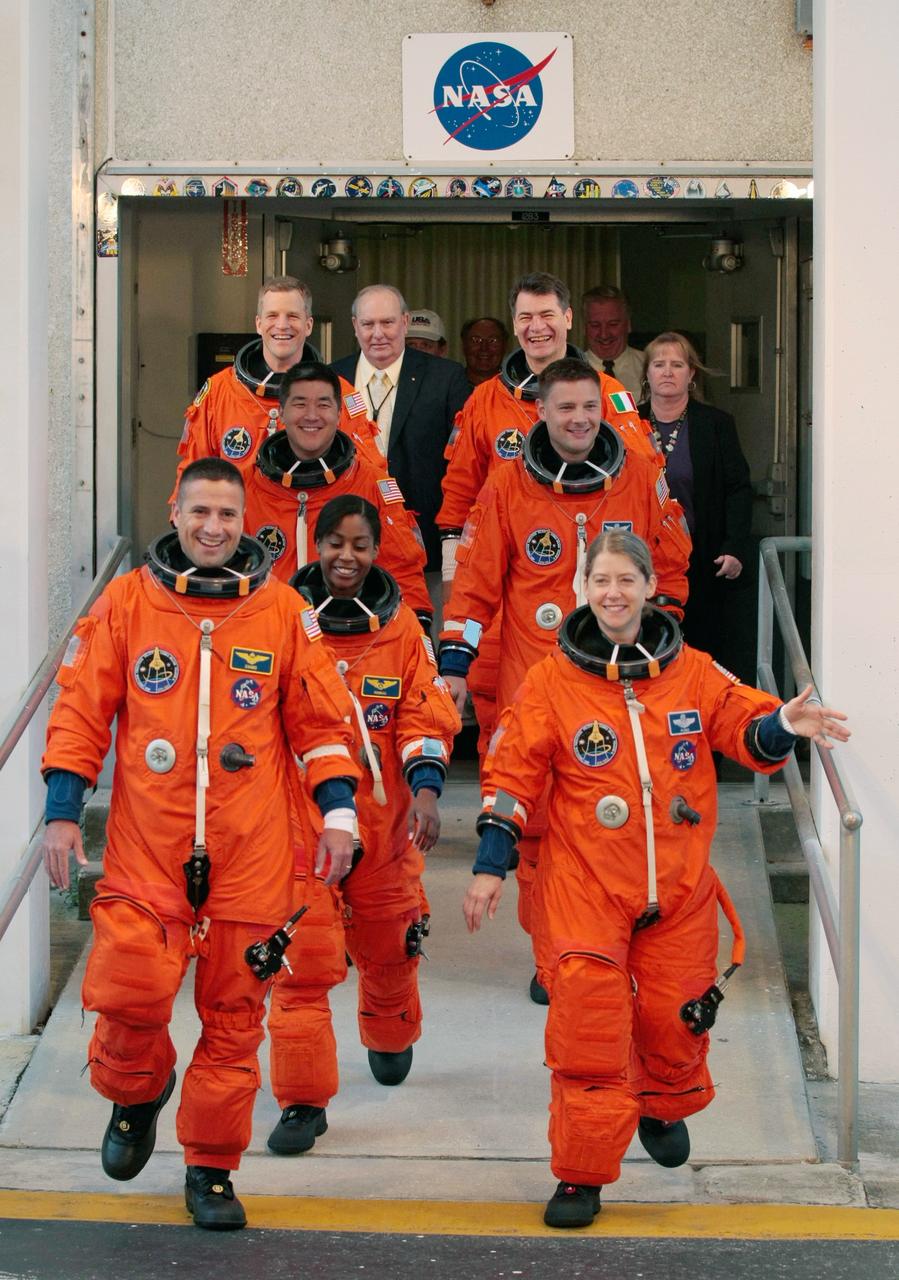
Crew members of space shuttle mission STS-120 prepare to board the bus that will transport them to Launch Pad 39A.
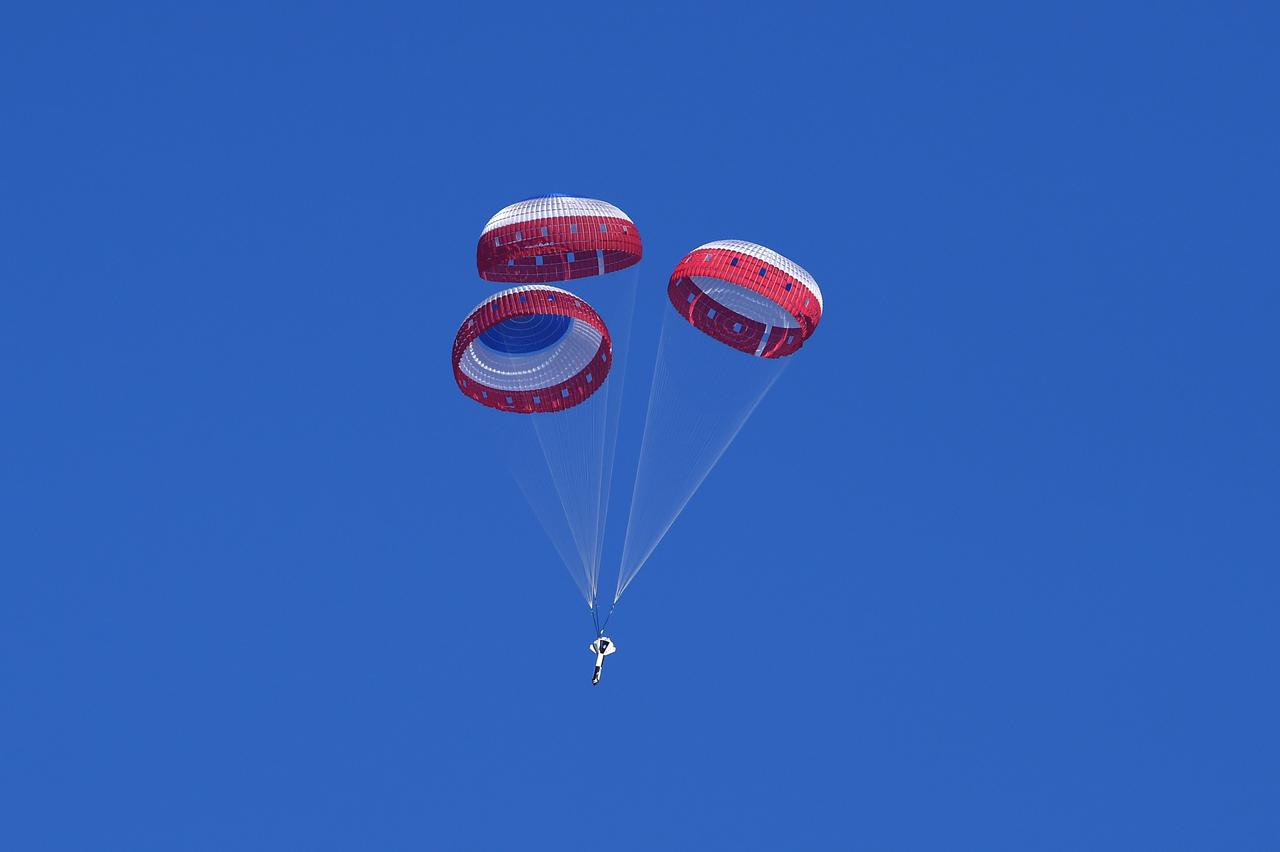
Boeing conducted the first in a series of reliability tests of its CST-100 Starliner flight drogue and main parachute system by releasing a long, dart-shaped test vehicle from a C-17 aircraft over Yuma, Arizona. Two more tests are planned using the dart module, as well as three similar reliability tests using a high fidelity capsule simulator designed to simulate the CST-100 Starliner capsule’s exact shape and mass. In both the dart and capsule simulator tests, the test spacecraft are released at various altitudes to test the parachute system at different deployment speeds, aerodynamic loads, and or weight demands. Data collected from each test is fed into computer models to more accurately predict parachute performance and to verify consistency from test to test.
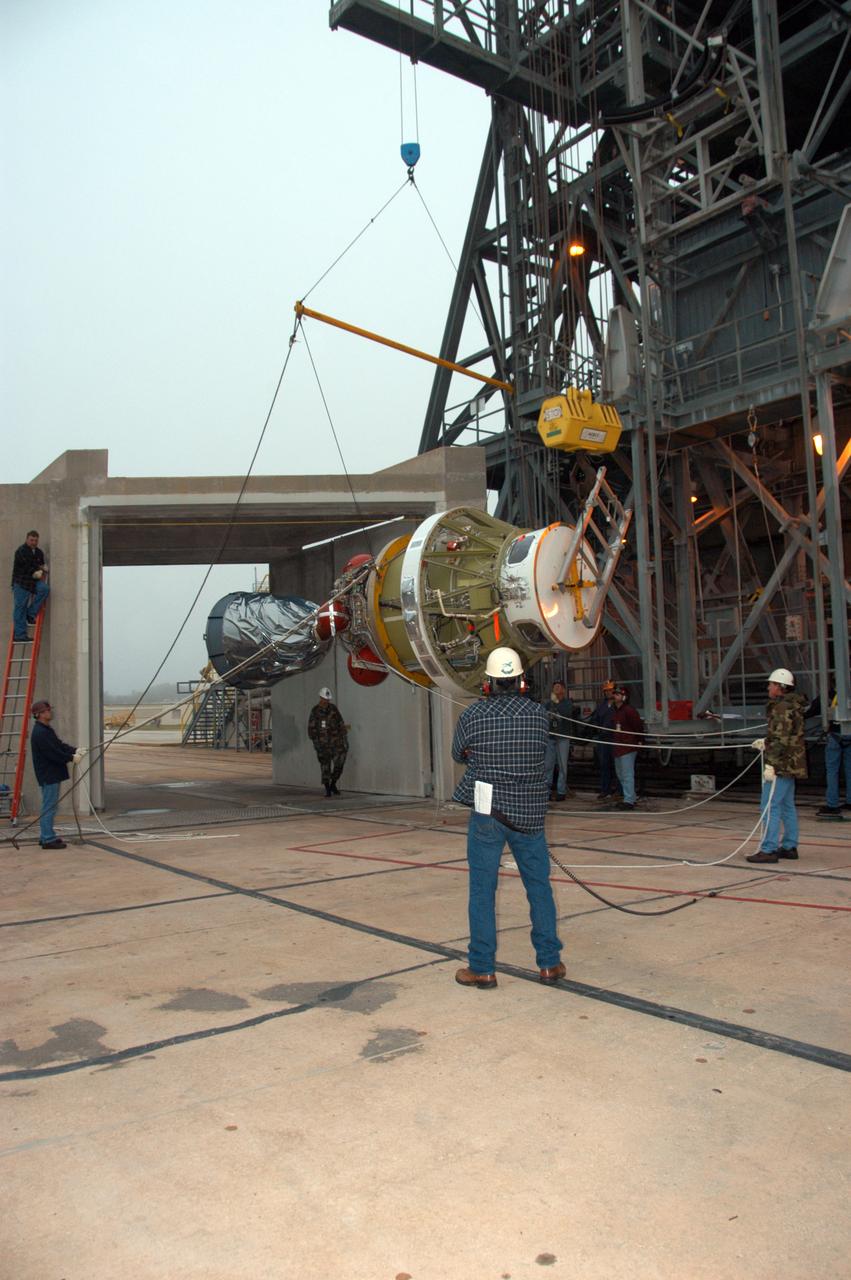
On Pad 17-B at Cape Canaveral Air Force Station, workers stand by while an overhead crane lifts the Delta II second stage to a vertical position. The second stage will be lifted into the mobile service tower and mated with the first stage already in place. The Delta II is the launch vehicle for the THEMIS spacecraft. THEMIS consists of five identical probes, the largest number of scientific satellites ever launched into orbit aboard a single rocket. This unique constellation of satellites will resolve the tantalizing mystery of what causes the spectacular sudden brightening of the aurora borealis and aurora australis - the fiery skies over the Earth's northern and southern polar regions. THEMIS is scheduled to launch Feb. 15 from Cape Canaveral Air Force Station.
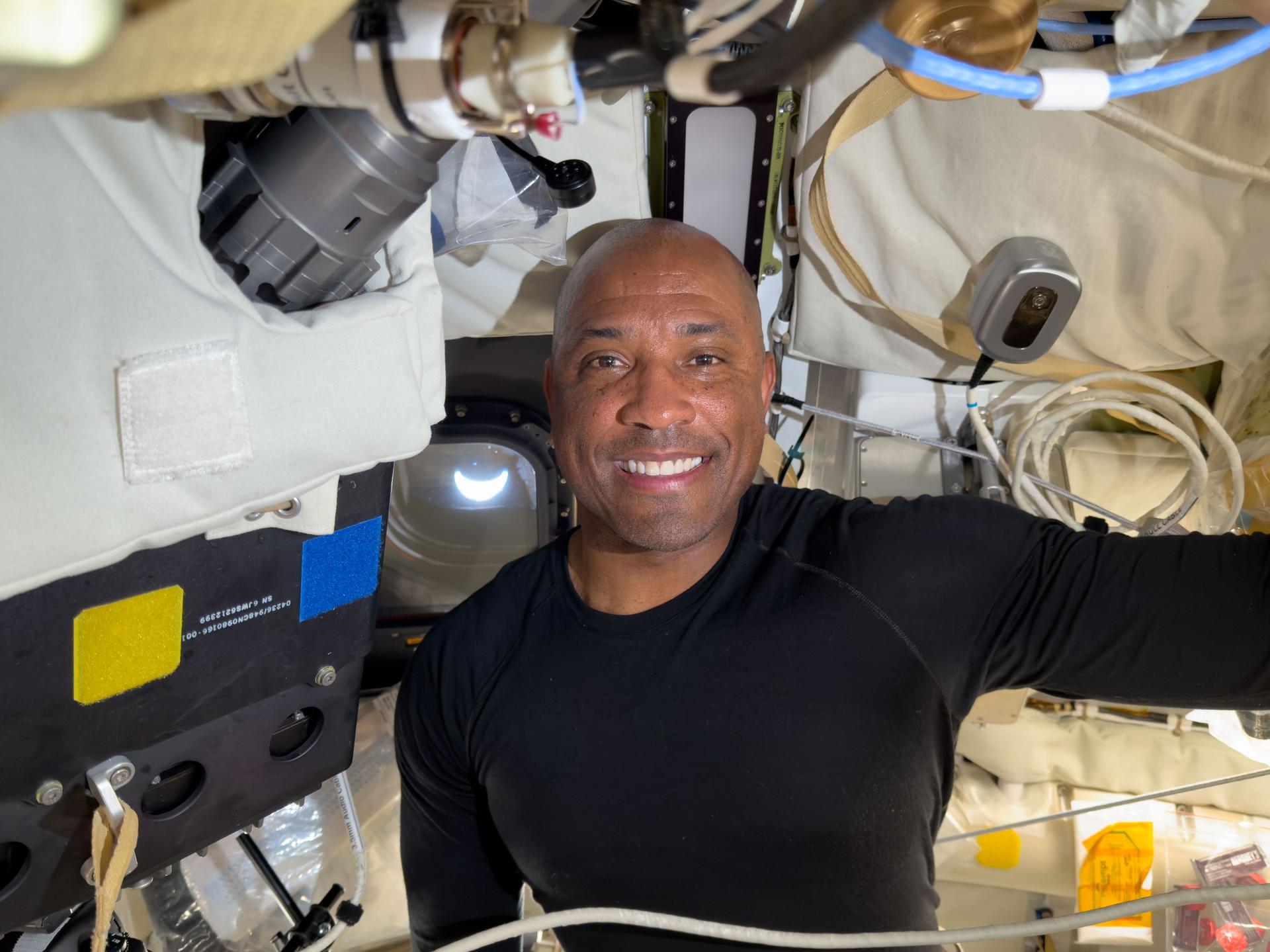
art002e041740 (April 8, 2026) - NASA astronaut and Artemis II Pilot Victor Glover smiles aboard the Orion spacecraft with a crescent Earth visible through the window behind him on the eighth day of the Artemis II mission. Credit: NASA.
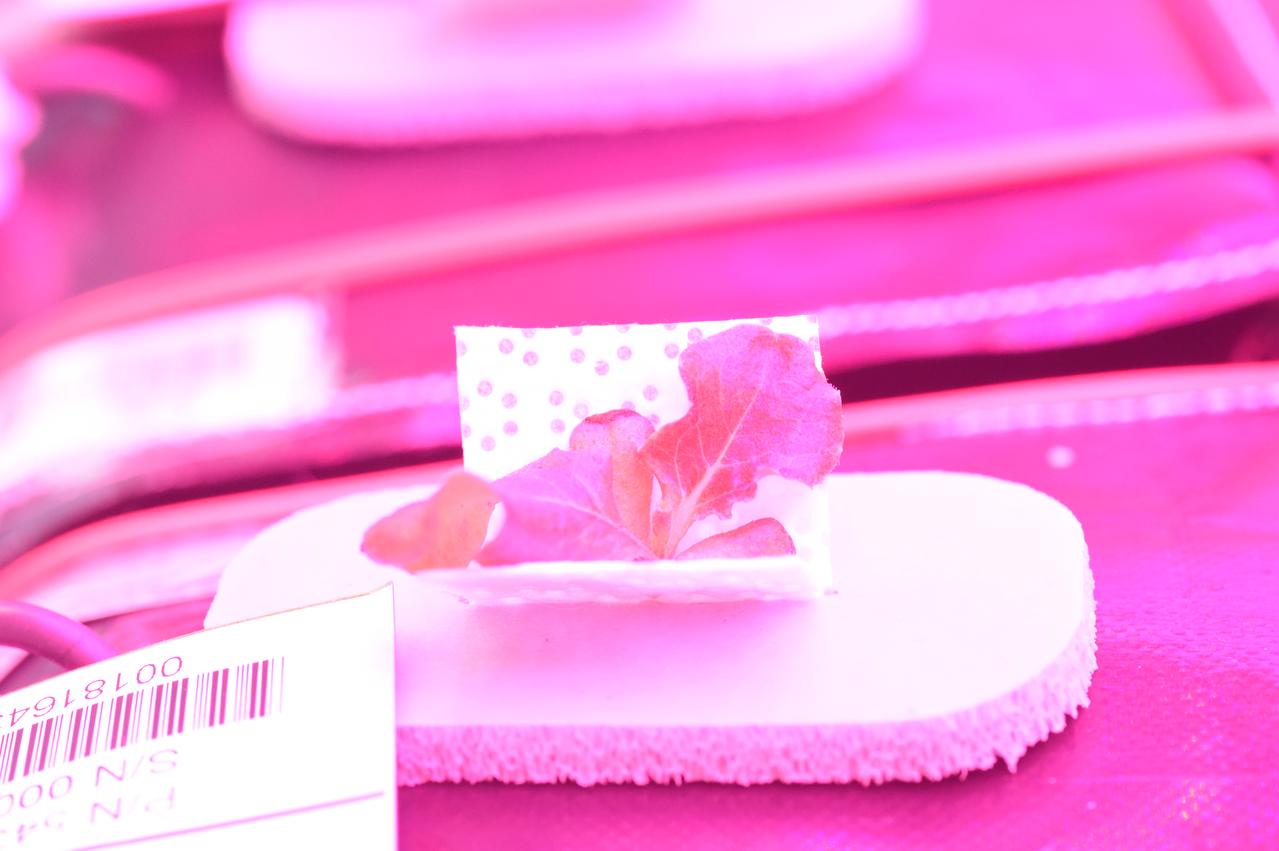
Astronaut Scott Kelly initiated VEG-01 B, the second crop of lettuce, on July, 8, 2015, and both Kelly and Astronaut Kjell Lindgren cared for the plants. The crop grew for 33 days. VEG-01 B included one set of six plant pillows planted with red romaine lettuce seeds. On Aug. 10, 2015, the crew harvested and consumed leaves from each plant. This was the first crop grown and consumed in NASA hardware. They harvested the rest of the plant tissue and froze it in the station’s Minus Eighty-Degree Laboratory Freezer for ISS (MELFI) for return to Earth for further study including microbial analysis, antioxidant capacity, mineral analysis and anthocyanin concentration.
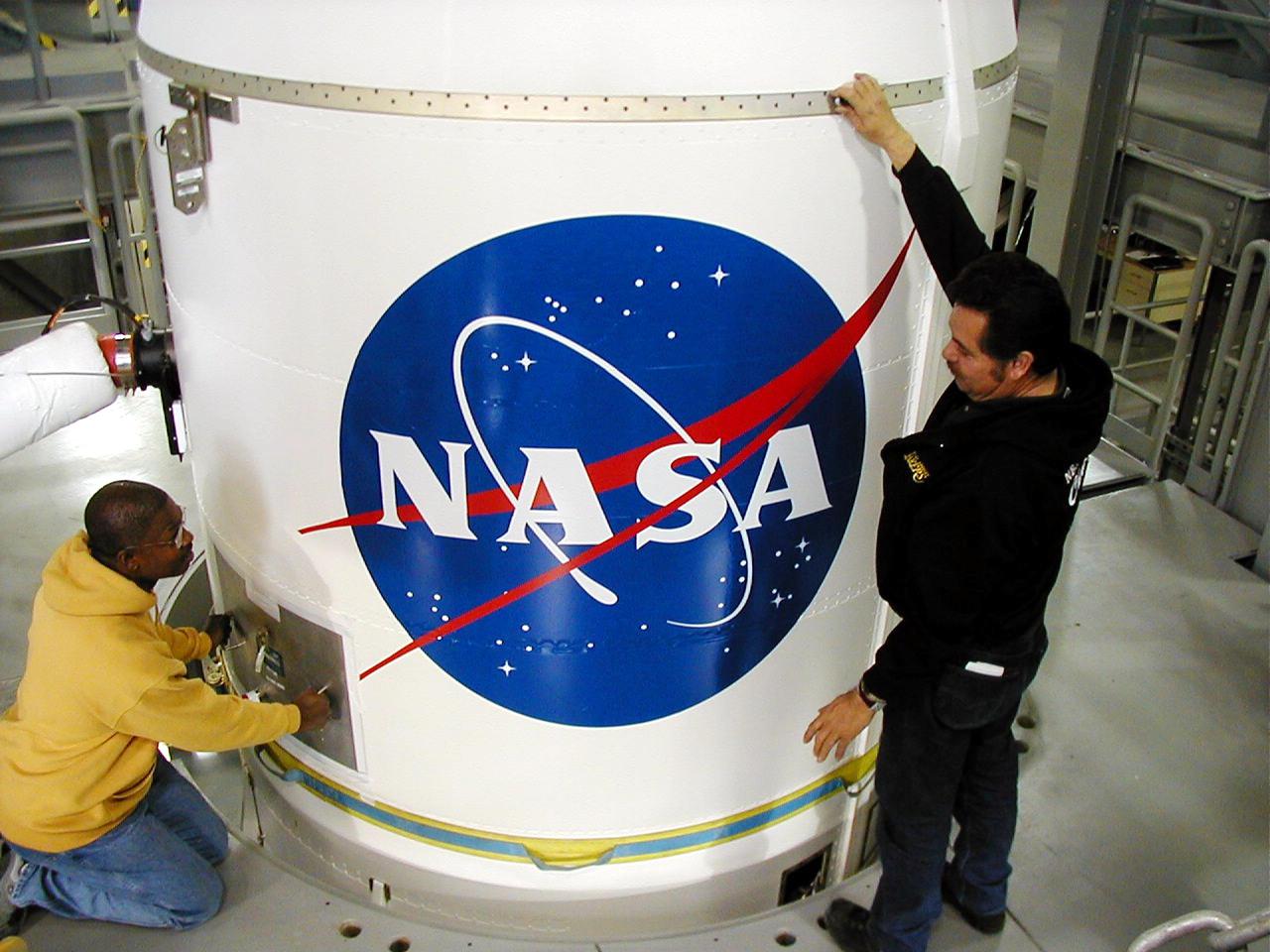
KODIAK ISLAND, ALASKA - A transporter moves the encapsulated Kodiak Star spacecraft into position in the Launch Service Structure, Kodiak Launch Complex (KLC), for final stacking for launch. The first launch to take place from KLC, Kodiak Star is scheduled to lift off on a Lockheed Martin Athena I launch vehicle on Sept. 17 during a two-hour window that extends from 5 p.m. to 7 p.m. p.m. ADT. The payloads aboard include the Starshine 3, sponsored by NASA, and the PICOSat, PCSat and Sapphire, sponsored by the Department of Defense (DoD) Space Test Program. KLC is the newest commercial launch complex in the United States, ideal for launch payloads requiring low-Earth polar or sun-synchronous orbits
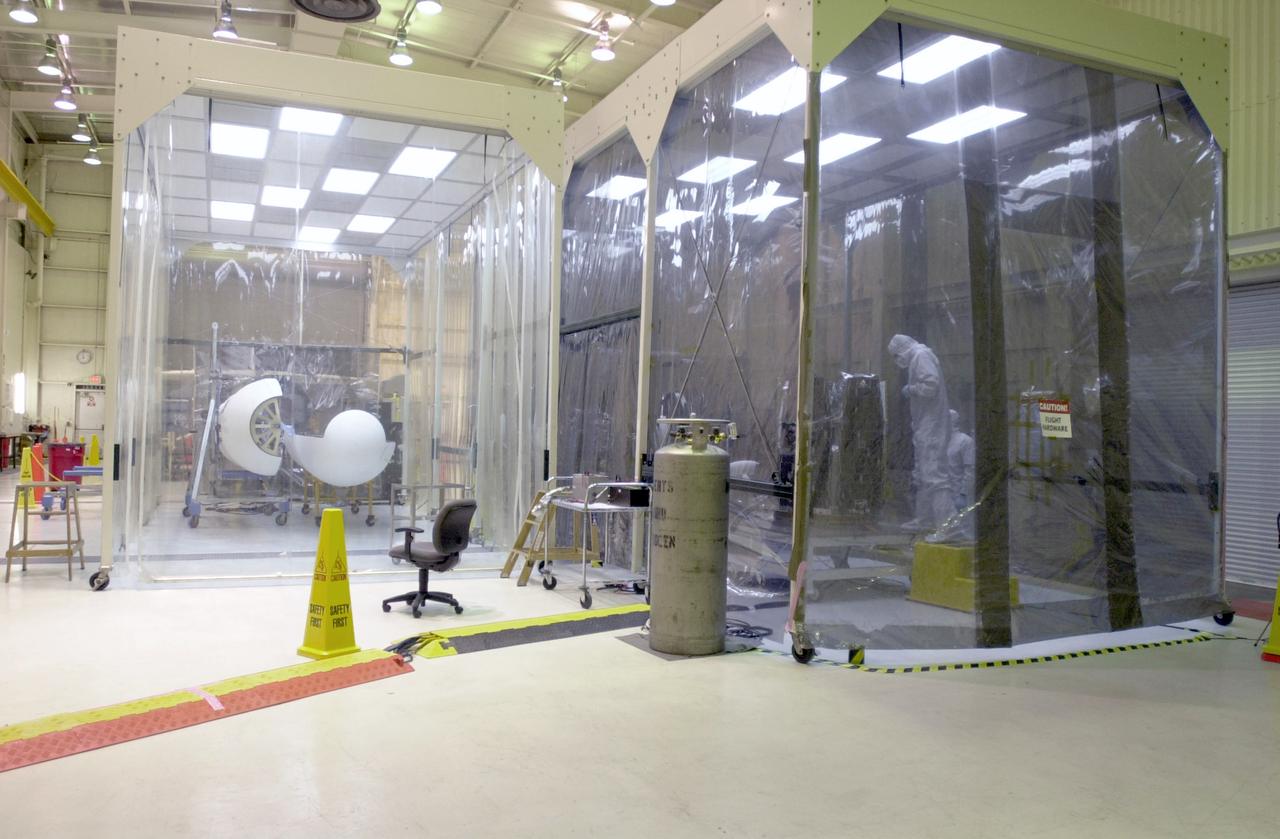
In a clean-room environment at North Vandenberg Air Force Base, technicians work on the AIM spacecraft. The AIM spacecraft will fly three instruments designed to study polar mesospheric clouds located at the edge of space, 50 miles above the Earth's surface in the coldest part of the planet's atmosphere. The mission's primary goal is to explain why these clouds form and what has caused them to become brighter and more numerous and appear at lower latitudes in recent years. AIM's results will provide the basis for the study of long-term variability in the mesospheric climate and its relationship to global climate change. AIM is scheduled to be mated to the Pegasus XL during the second week of April, after which final inspections will be conducted. Launch is scheduled for April 25.
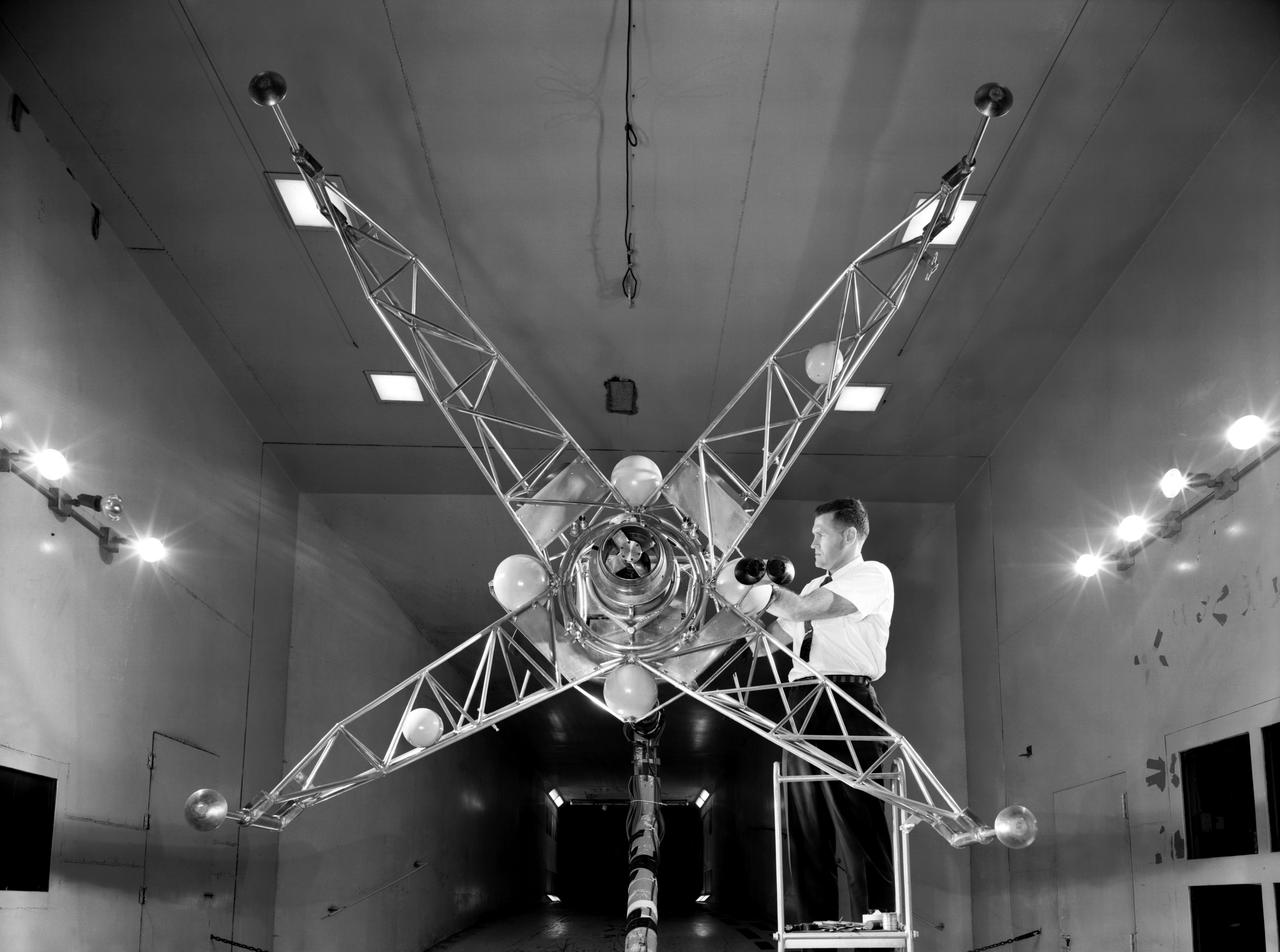
Lunar Landing Research Model. -- Published in James R. Hansen, Spaceflight Revolution: NASA Langley Research Center From Sputnik to Apollo, (Washington: NASA, 1995), p. 356.
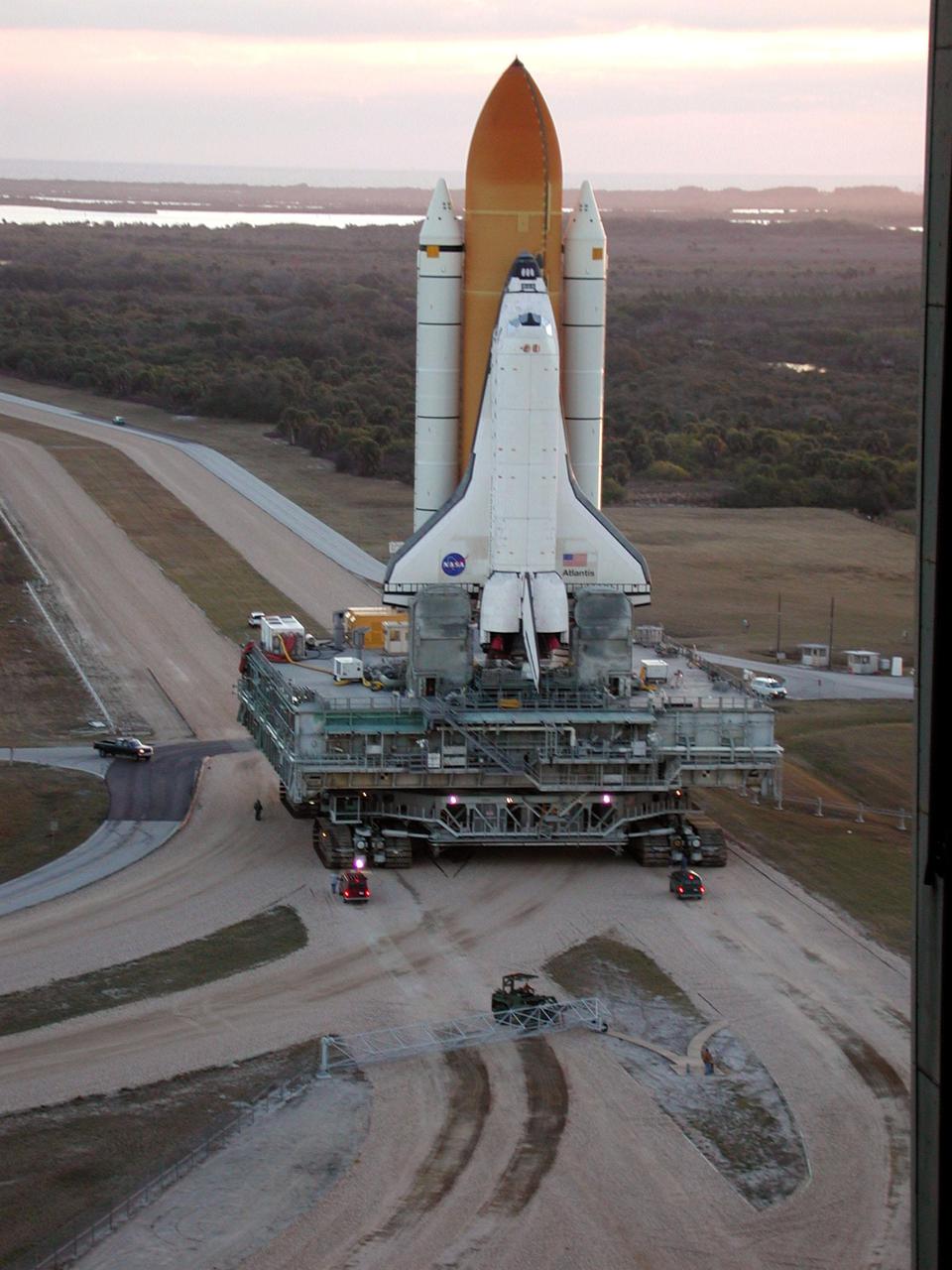
KENNEDY SPACE CENTER, Fla. -- In the early morning light, Space Shuttle Atlantis makes the turn from the Vehicle Assembly Building onto the crawlerway for the trek to Launch Pad 39A. The Shuttle has been in the VAB undergoing tests on the solid rocket booster cables. A prior extensive evaluation of NASA’s SRB cable inventory on the shelf revealed conductor damage in four (of about 200) cables. Shuttle managers decided to prove the integrity of the system tunnel cables already on Atlantis, causing return of the Shuttle to the VAB a week ago. Launch of Atlantis on STS-98 has been rescheduled to Feb. 7 at 6:11 p.m. EST
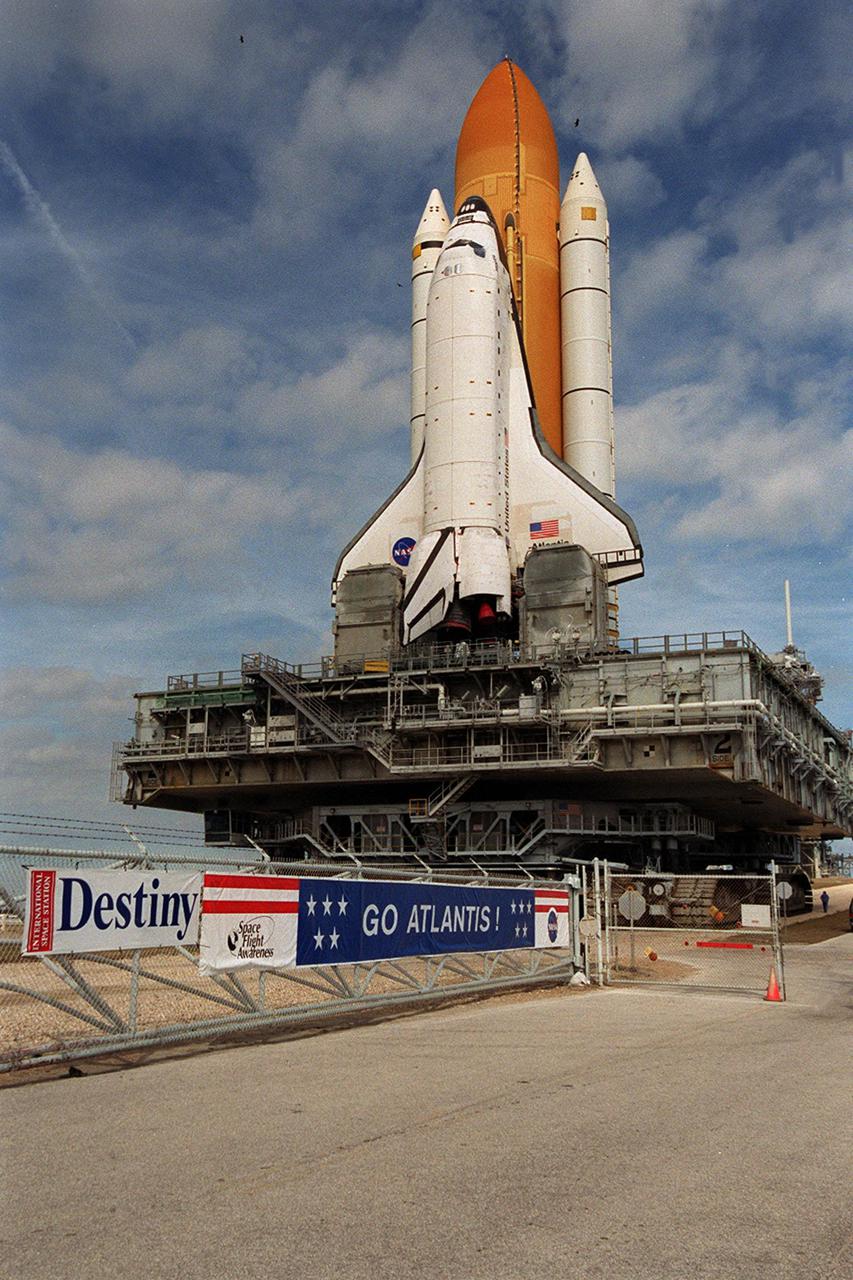
KENNEDY SPACE CENTER, Fla. -- The gate outside Launch Pad 39A heralds the STS-98 launch as Space Shuttle Atlantis makes its way to the pad. The Shuttle had returned to the Vehicle Assembly Building from the launch pad in order to undergo tests on the solid rocket booster cables. A prior extensive evaluation of NASA’s SRB cable inventory on the shelf revealed conductor damage in four (of about 200) cables. Shuttle managers decided to prove the integrity of the system tunnel cables already on Atlantis, causing return of the Shuttle to the VAB a week ago. The Shuttle will undergo preparations for a rescheduled launch Feb. 7 at 6:11 p.m. EST

Astronaut Scott Kelly initiated VEG-01 B, the second crop of lettuce, on July, 8, 2015, and both Kelly and Astronaut Kjell Lindgren cared for the plants. The crop grew for 33 days. VEG-01 B included one set of six plant pillows planted with red romaine lettuce seeds. On Aug. 10, 2015, the crew harvested and consumed leaves from each plant. This was the first crop grown and consumed in NASA hardware. They harvested the rest of the plant tissue and froze it in the station’s Minus Eighty-Degree Laboratory Freezer for ISS (MELFI) for return to Earth for further study including microbial analysis, antioxidant capacity, mineral analysis and anthocyanin concentration.
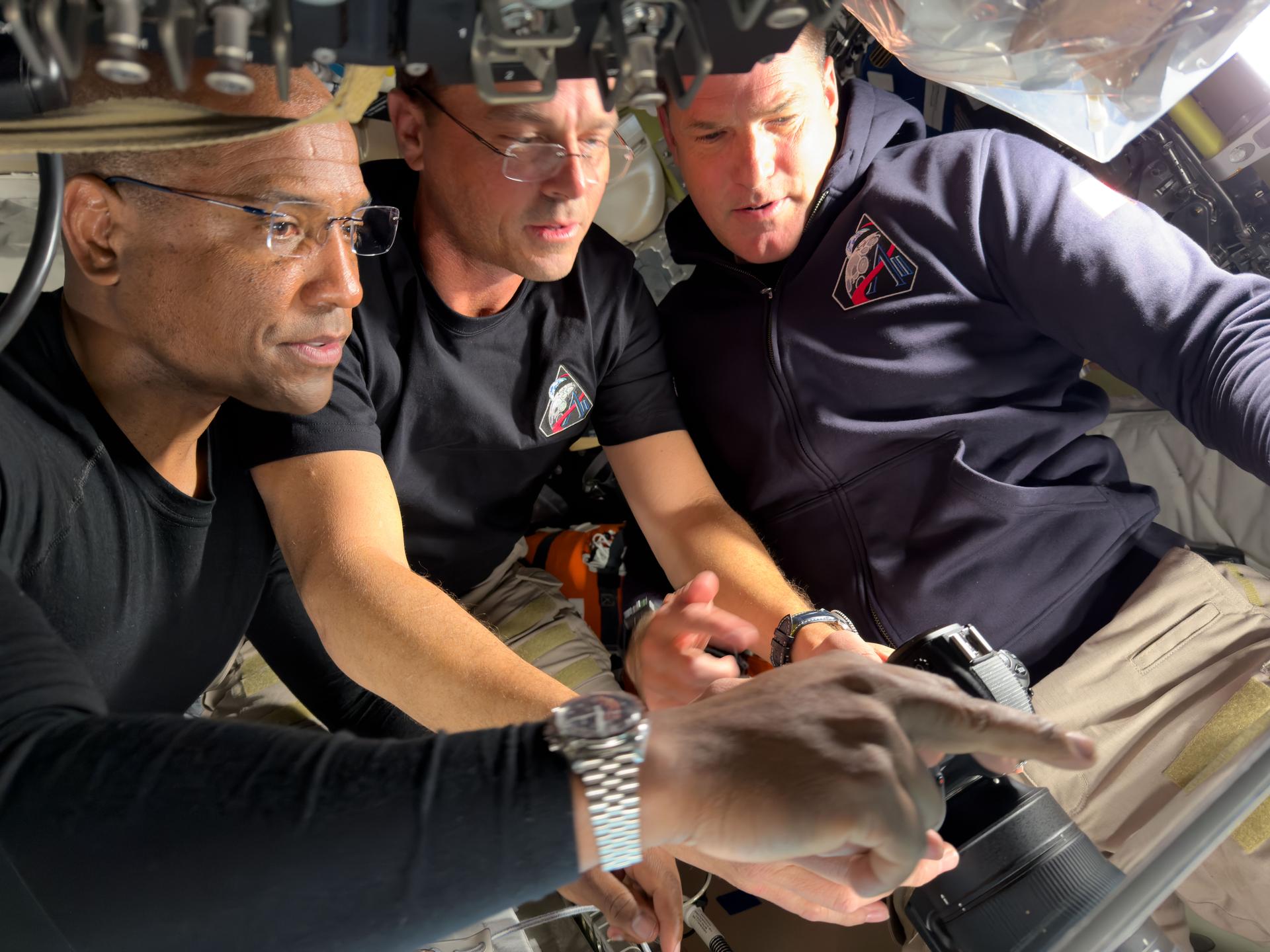
art002e009294 (April 6, 2026) – Artemis II Pilot Victor Glover, Commander Reid Wiseman, and Mission Specialist Jeremy Hansen prepare for their journey around the far side of the Moon by configuring their camera equipment shortly before beginning their lunar flyby observations.
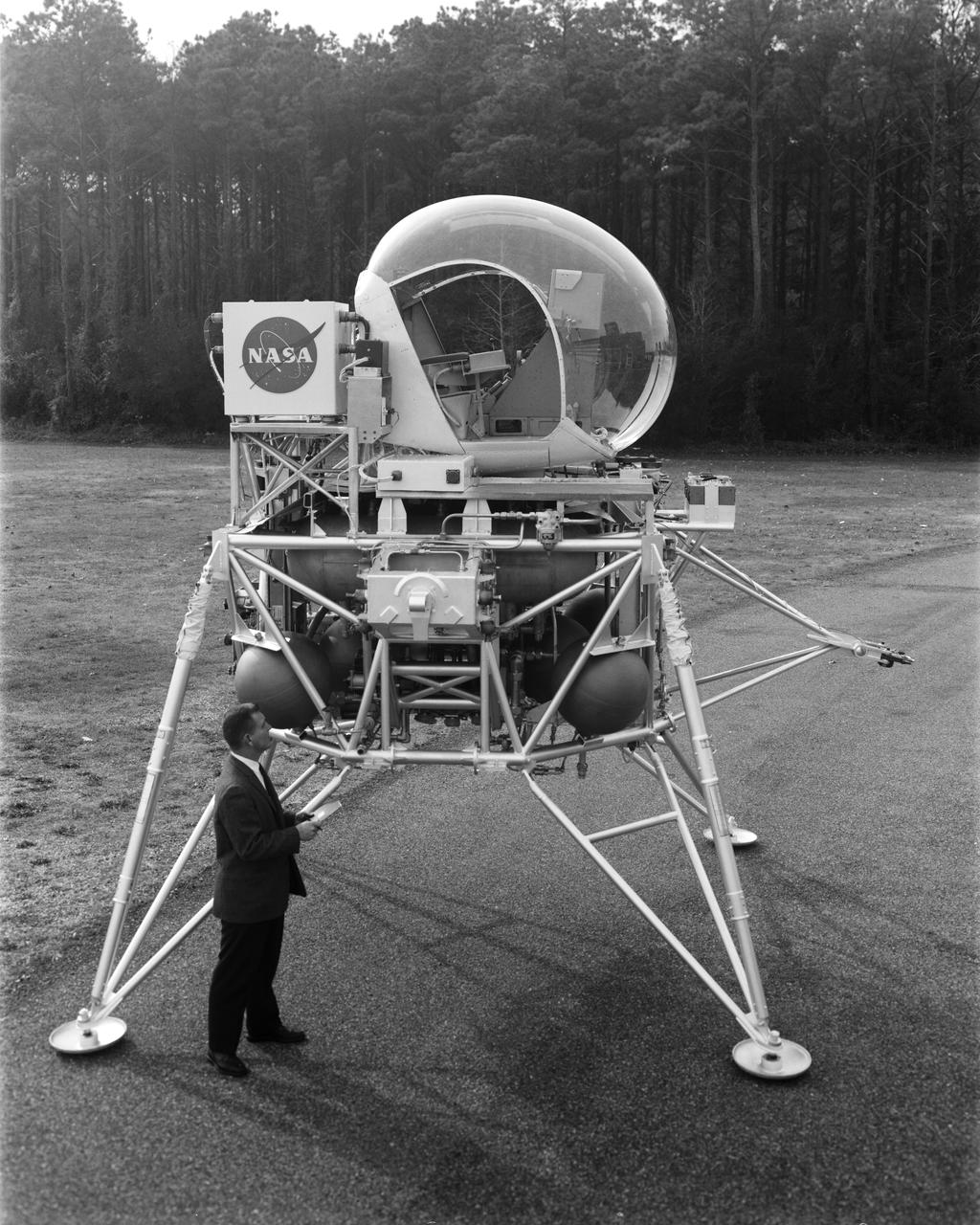
Vehicle for Lunar Landing Research Facility at Langley Research Center, Hampton, Virginia.
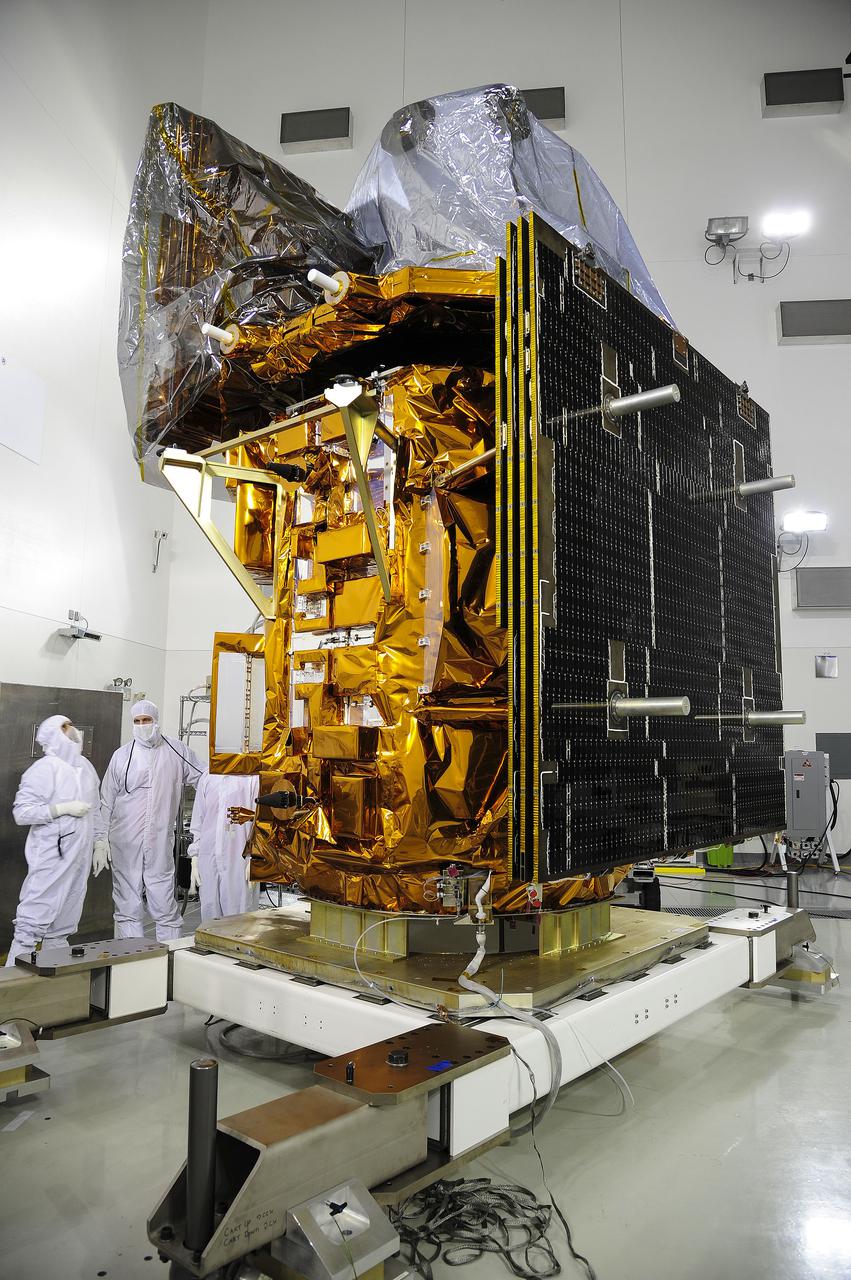
VANDENBERG AFB, Calif. -- At the Astrotech processing facility at Vandenberg Air Force Base, Calif., technicians perform close-outs on NASA's Landsat Data Continuity Mission, or LDCM, satellite. The Landsat Data Continuity Mission LDCM is the future of Landsat satellites. It will continue to obtain valuable data and imagery to be used in agriculture, education, business, science, and government. The Landsat Program provides repetitive acquisition of high resolution multispectral data of the Earth's surface on a global basis. The data from the Landsat spacecraft constitute the longest record of the Earth's continental surfaces as seen from space. It is a record unmatched in quality, detail, coverage, and value. Liftoff is planned for Feb. 11, 2013 aboard a United Launch Alliance Atlas V rocket. For more information, visit: http:__www.nasa.gov_mission_pages_landsat_main_index.html Photo credit: NASA
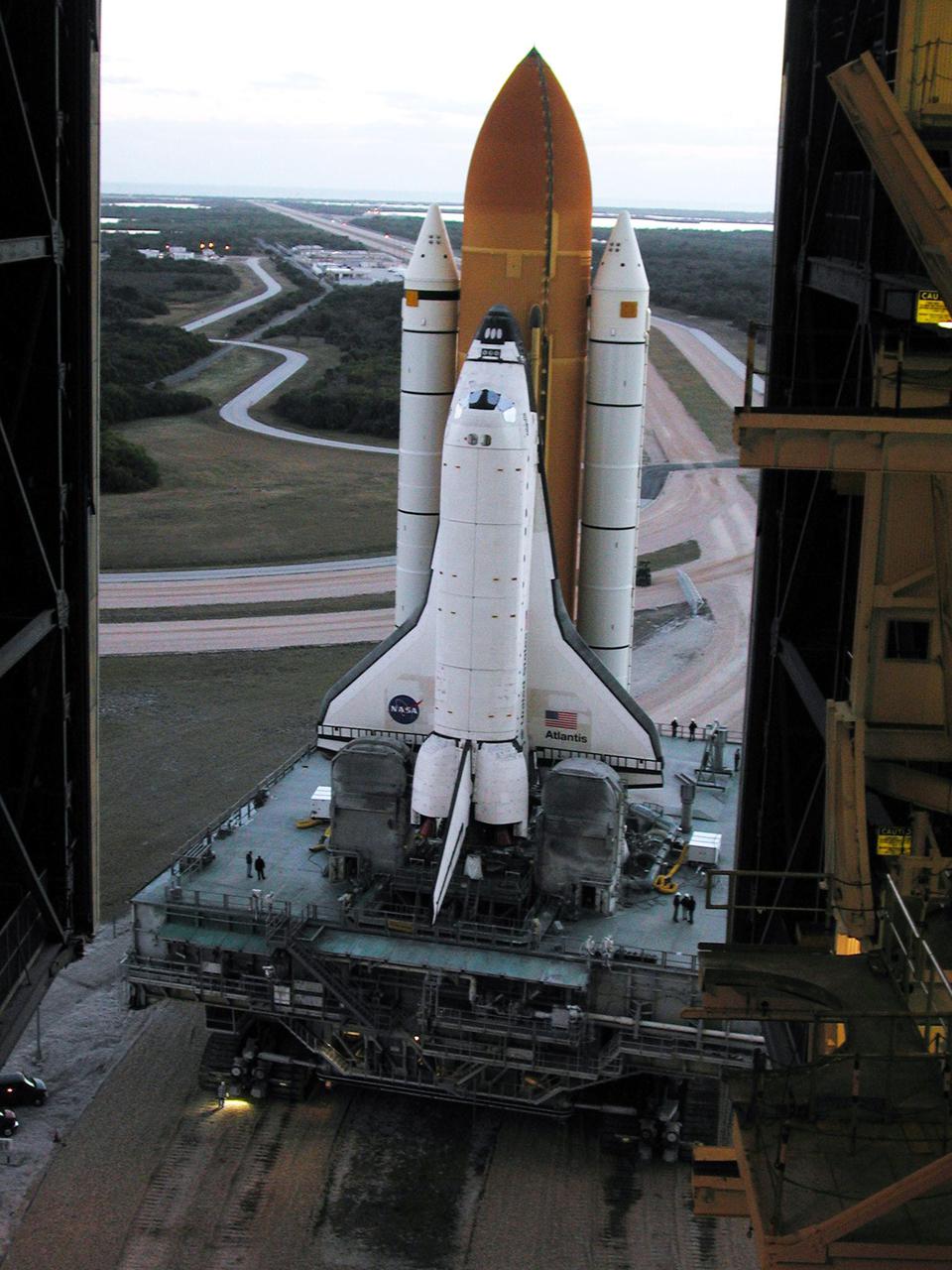
KENNEDY SPACE CENTER, Fla. -- Reflecting light from framework inside the Vehicle Assembly Building, Space Shuttle Atlantis begins rolling out of the VAB to Launch Pad 39A after tests were completed on the solid rocket booster cables. A prior extensive evaluation of NASA’s SRB cable inventory on the shelf revealed conductor damage in four (of about 200) cables. Shuttle managers decided to prove the integrity of the system tunnel cables already on Atlantis, causing return of the Shuttle to the VAB a week ago. Launch of Atlantis on STS-98 has been rescheduled to Feb. 7 at 6:11 p.m. EST
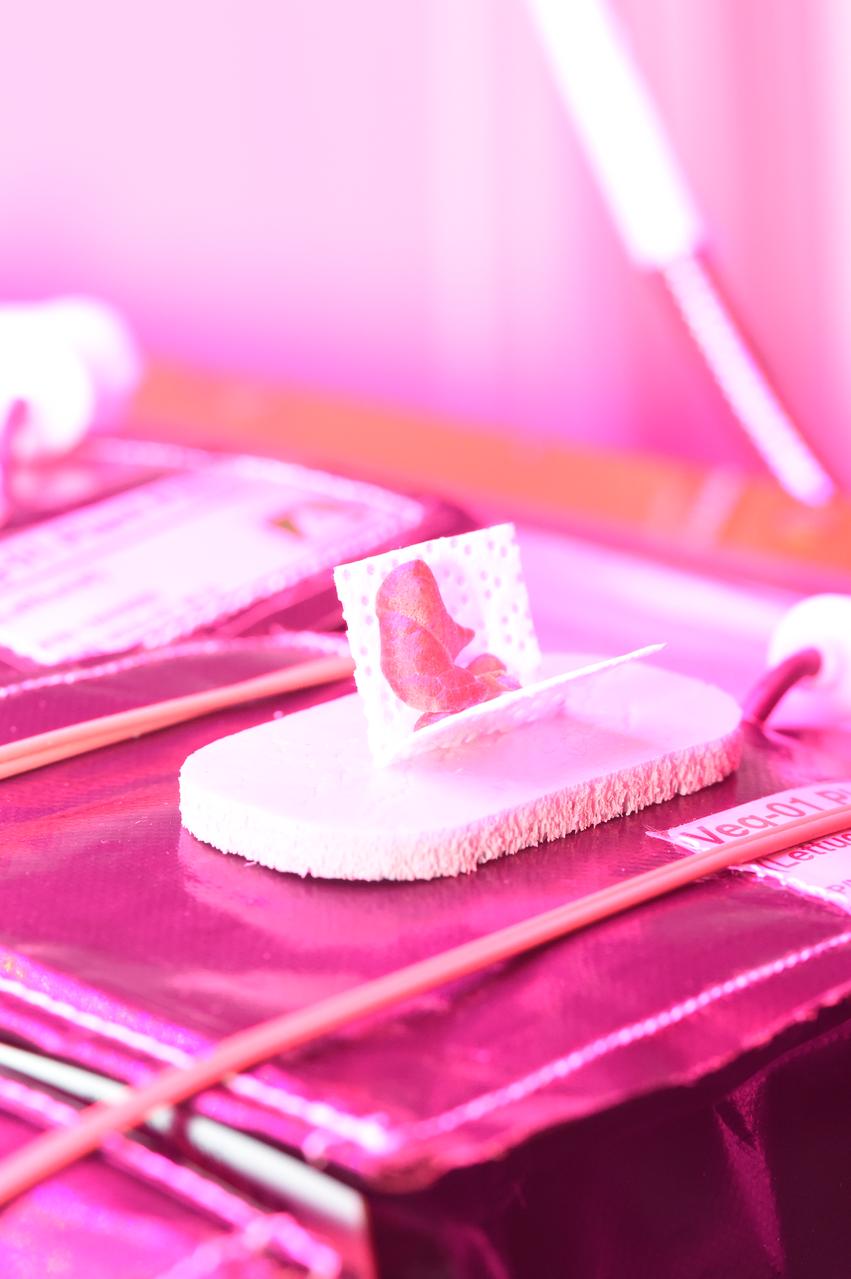
Astronaut Scott Kelly initiated VEG-01 B, the second crop of lettuce, on July, 8, 2015, and both Kelly and Astronaut Kjell Lindgren cared for the plants. The crop grew for 33 days. VEG-01 B included one set of six plant pillows planted with red romaine lettuce seeds. On Aug. 10, 2015, the crew harvested and consumed leaves from each plant. This was the first crop grown and consumed in NASA hardware. They harvested the rest of the plant tissue and froze it in the station’s Minus Eighty-Degree Laboratory Freezer for ISS (MELFI) for return to Earth for further study including microbial analysis, antioxidant capacity, mineral analysis and anthocyanin concentration.
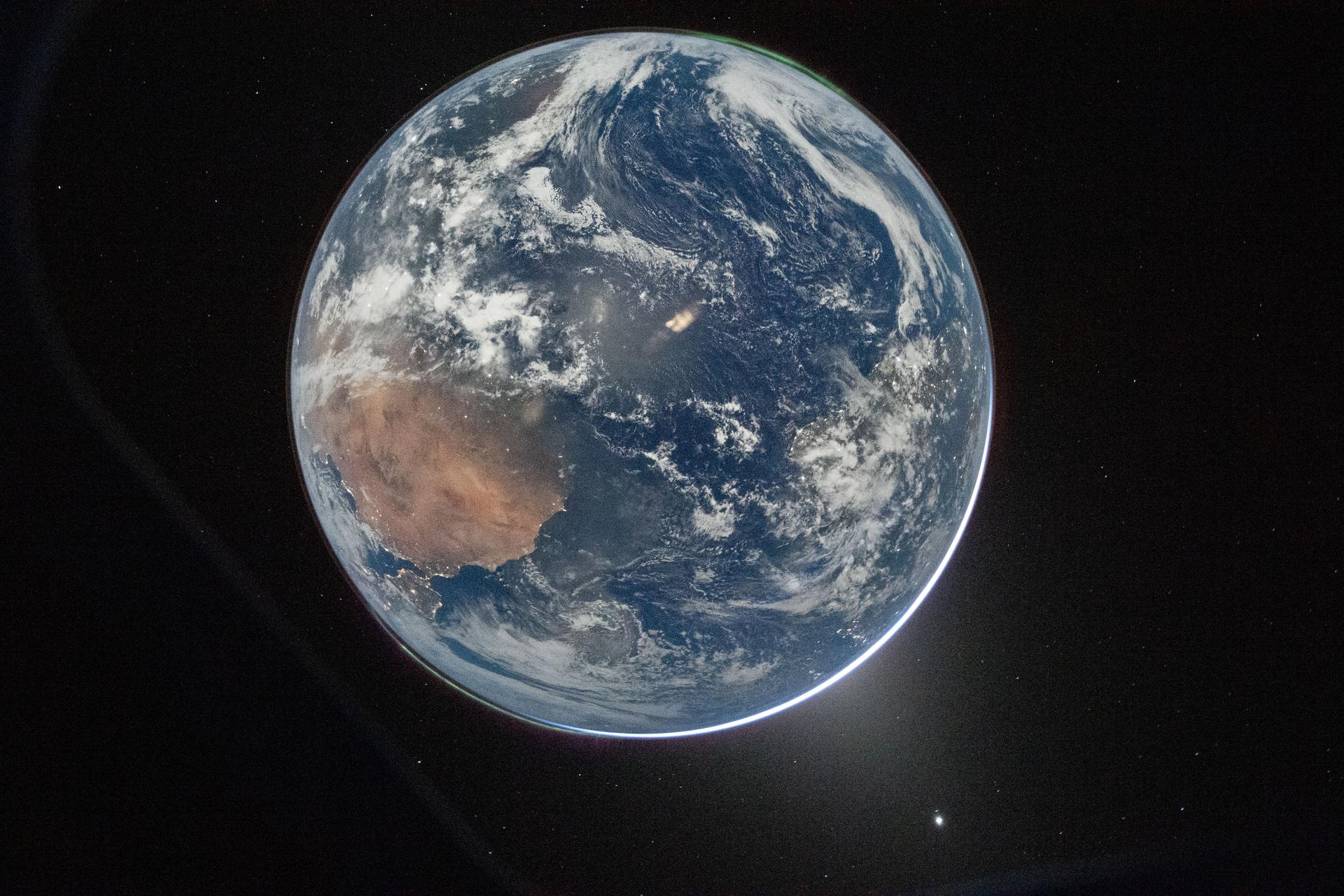
art002e000192 (April 3, 2026) - This nighttime picture of Earth was taken on April 2, 2026, by an Artemis II crew member aiming a camera through a window of the Orion spacecraft. The image was captured after Orion completed its translunar injection burn, the critical maneuver that sent the spacecraft on its path toward the Moon and back. The visible hemisphere appears awash in sunlight, but it is actually lit by moonlight — sunlight reflected from the lunar surface. Along the upper left (south) and lower right (north) edges of Earth’s disk, green auroras glow against the dark sky, showing charged particles from the Sun interacting with gases in Earth’s atmosphere. Africa is visible on the left, while a translucent cone of light capped by a bright Venus extends into space from Earth’s lower right edge. This zodiacal light is caused by sunlight reflecting off interplanetary dust. A thin white crescent along the lower right edge of Earth marks the planet’s daytime atmosphere illuminated by the Sun, which lies on the opposite side of Earth from Orion’s perspective. City lights are also visible, especially along coastlines. Credits: NASA
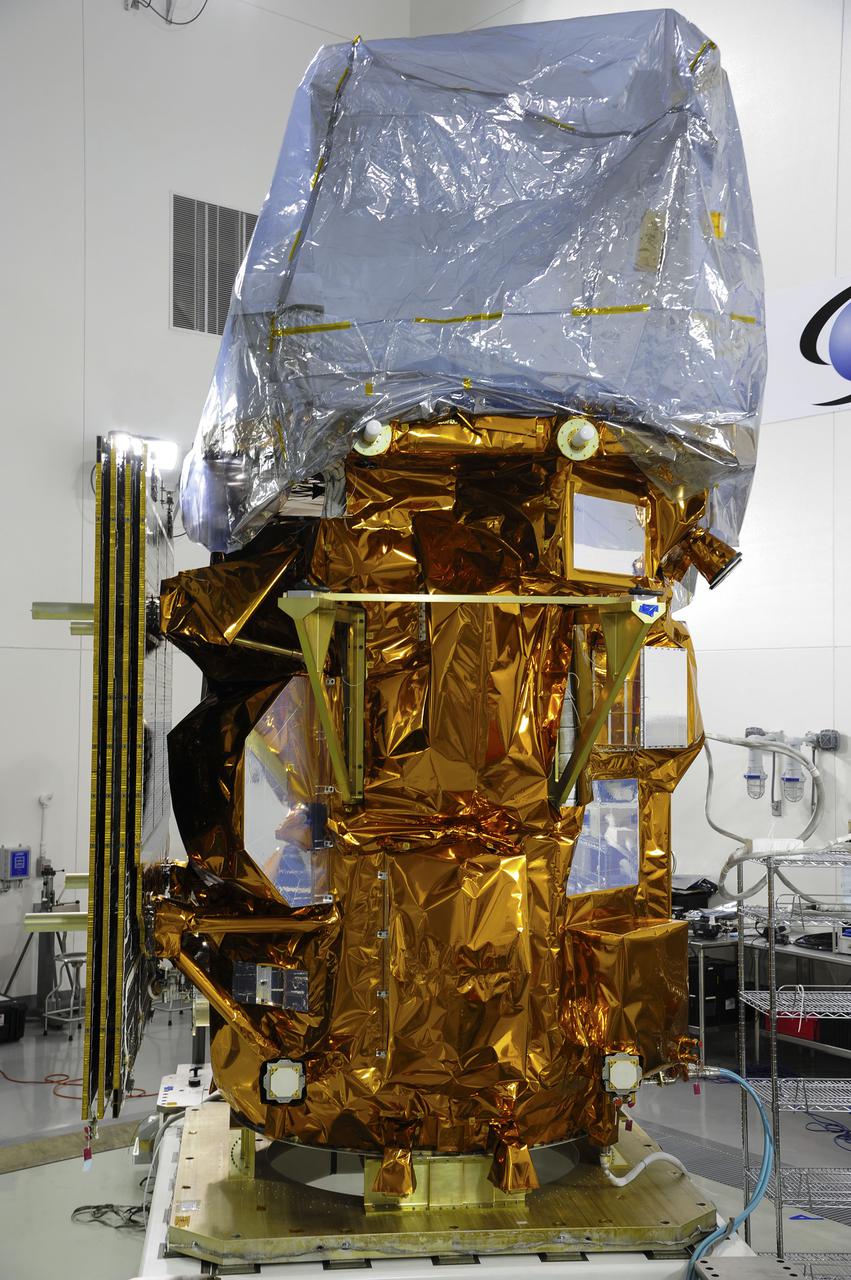
VANDENBERG AFB, Calif. -- At the Astrotech processing facility at Vandenberg Air Force Base, Calif., NASA's Landsat Data Continuity Mission, or LDCM, satellite is undergoing close-outs prior to encapsulation in the payload fairing. The Landsat Data Continuity Mission LDCM is the future of Landsat satellites. It will continue to obtain valuable data and imagery to be used in agriculture, education, business, science, and government. The Landsat Program provides repetitive acquisition of high resolution multispectral data of the Earth's surface on a global basis. The data from the Landsat spacecraft constitute the longest record of the Earth's continental surfaces as seen from space. It is a record unmatched in quality, detail, coverage, and value. Liftoff is planned for Feb. 11, 2013 aboard a United Launch Alliance Atlas V rocket. For more information, visit: http:__www.nasa.gov_mission_pages_landsat_main_index.html Photo credit: NASA
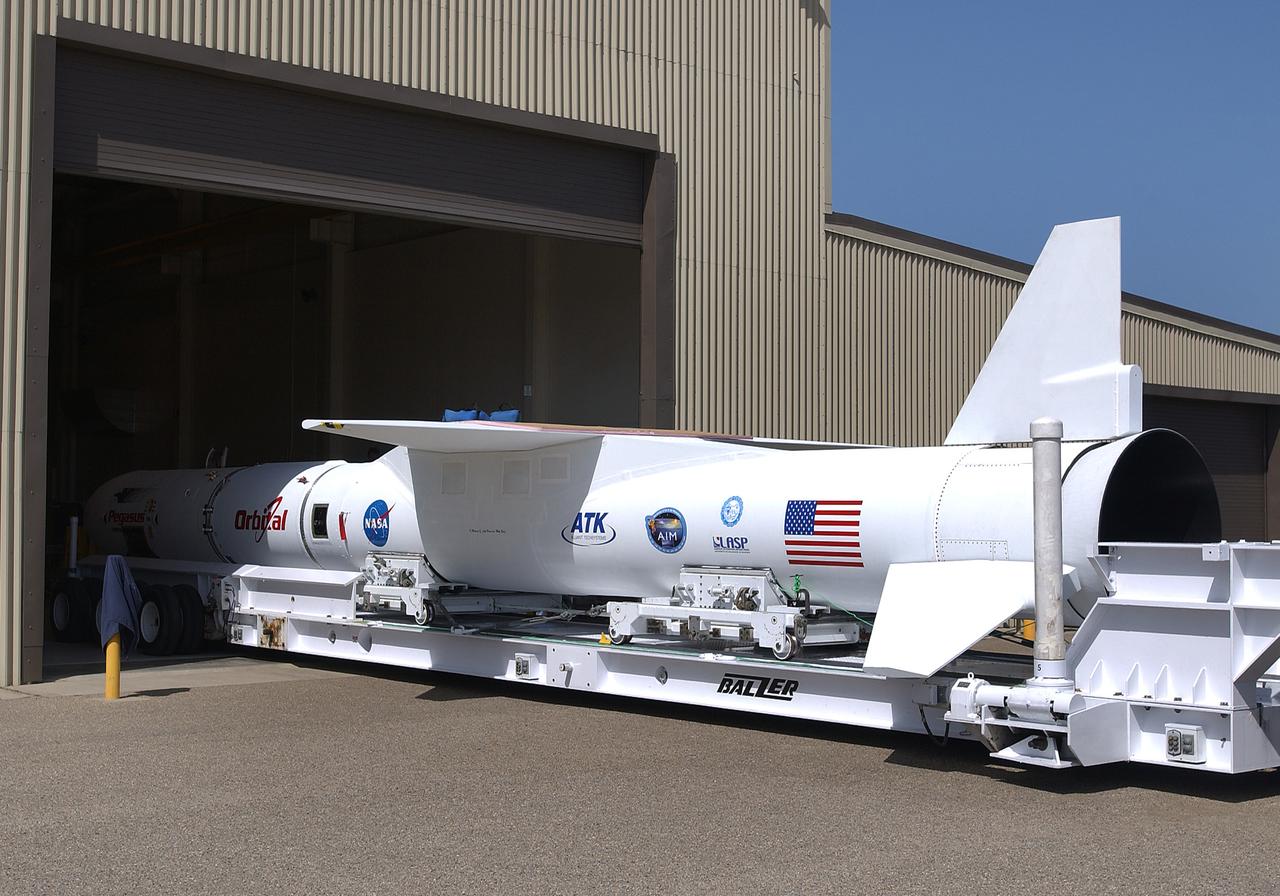
The mated Pegasus XL rocket - AIM spacecraft leaves Building 1655 at Vandenberg Air Force Base in California. The rocket will be transferred to a waiting Orbital Sciences Stargazer L-1011 aircraft for launch. AIM, which stands for Aeronomy of Ice in the Mesosphere, is being prepared for integrated testing and a flight simulation. The AIM spacecraft will fly three instruments designed to study polar mesospheric clouds located at the edge of space, 50 miles above the Earth's surface in the coldest part of the planet's atmosphere. The mission's primary goal is to explain why these clouds form and what has caused them to become brighter and more numerous and appear at lower latitudes in recent years. AIM's results will provide the basis for the study of long-term variability in the mesospheric climate and its relationship to global climate change. Launch is scheduled for April 25.

The first stage of a United Launch Alliance Delta II rocket moves into place in front of at the mobile service tower on Launch Pad 17-B at Cape Canaveral Air Force Station in Florida. The rocket will be raised to a vertical position and lifted into the tower. The rocket is the launch vehicle for the THEMIS spacecraft, consisting of five identical probes, the largest number of scientific satellites ever launched into orbit aboard a single rocket. This unique constellation of satellites will resolve the tantalizing mystery of what causes the spectacular sudden brightening of the aurora borealis and aurora australis - the fiery skies over the Earth's northern and southern polar regions. After the first stage is in the mobile service tower on the pad, nine solid rocket boosters will be placed around the base of the first stage and attached in sets of three. THEMIS is scheduled to launch aboard the Delta II at 6:07 p.m. EST on Feb. 15.
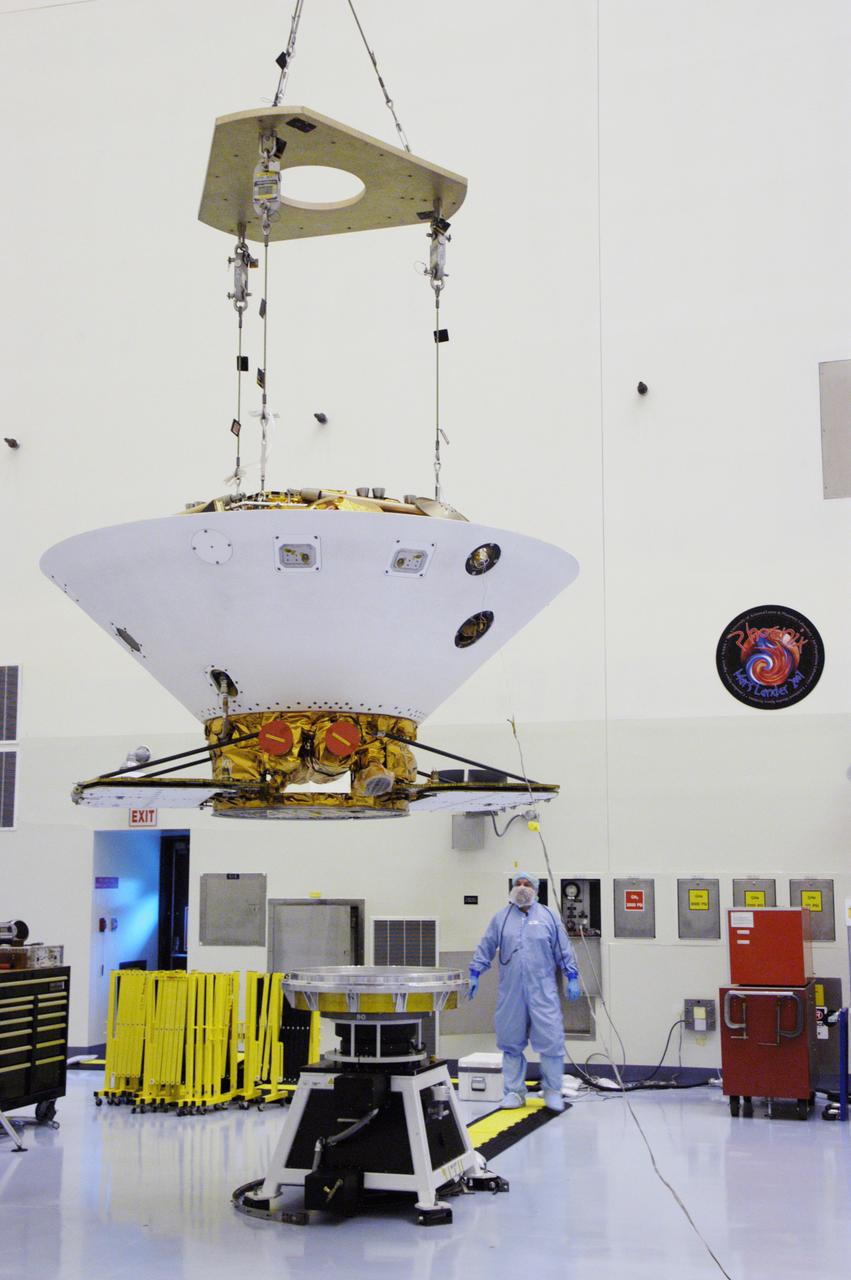
An overhead crane lowers the backshell with the Phoenix Mars Lander inside toward a spin table for spin testing in the Payload Hazardous Servicing Facility. The Phoenix mission is the first project in NASA's first openly competed program of Mars Scout missions. Phoenix will land in icy soils near the north polar permanent ice cap of Mars and explore the history of the water in these soils and any associated rocks, while monitoring polar climate. Landing is planned in May 2008 on arctic ground where a mission currently in orbit, Mars Odyssey, has detected high concentrations of ice just beneath the top layer of soil. It will serve as NASA's first exploration of a potential modern habitat on Mars and open the door to a renewed search for carbon-bearing compounds, last attempted with NASA’s Viking missions in the 1970s. A stereo color camera and a weather station will study the surrounding environment while the other instruments check excavated soil samples for water, organic chemicals and conditions that could indicate whether the site was ever hospitable to life. Microscopes can reveal features as small as one one-thousandth the width of a human hair. Launch of Phoenix aboard a Delta II rocket is targeted for Aug. 3 from Cape Canaveral Air Force Station in Florida.

At the Gagarin Cosmonaut Training Center in Star City, Russia, Expedition 39/40 backup crewmembers Barry Wilmore of NASA (left), Soyuz Commander Alexander Samokutyaev of Roscosmos (center) and Flight Engineer Elena Serova of Roscosmos (right) clasp hands at the start of the first day of qualification exams March 4. The prime crew – Steve Swanson of NASA and Alexander Skvortsov and Oleg Artemyev of Roscosmos are preparing to launch to the International Space Station from the Baikonur Cosmodrome in Kazakhstan on March 26, Kazakh time, in their Soyuz TMA-12M spacecraft for a six-month mission. NASA/Stephanie Stoll
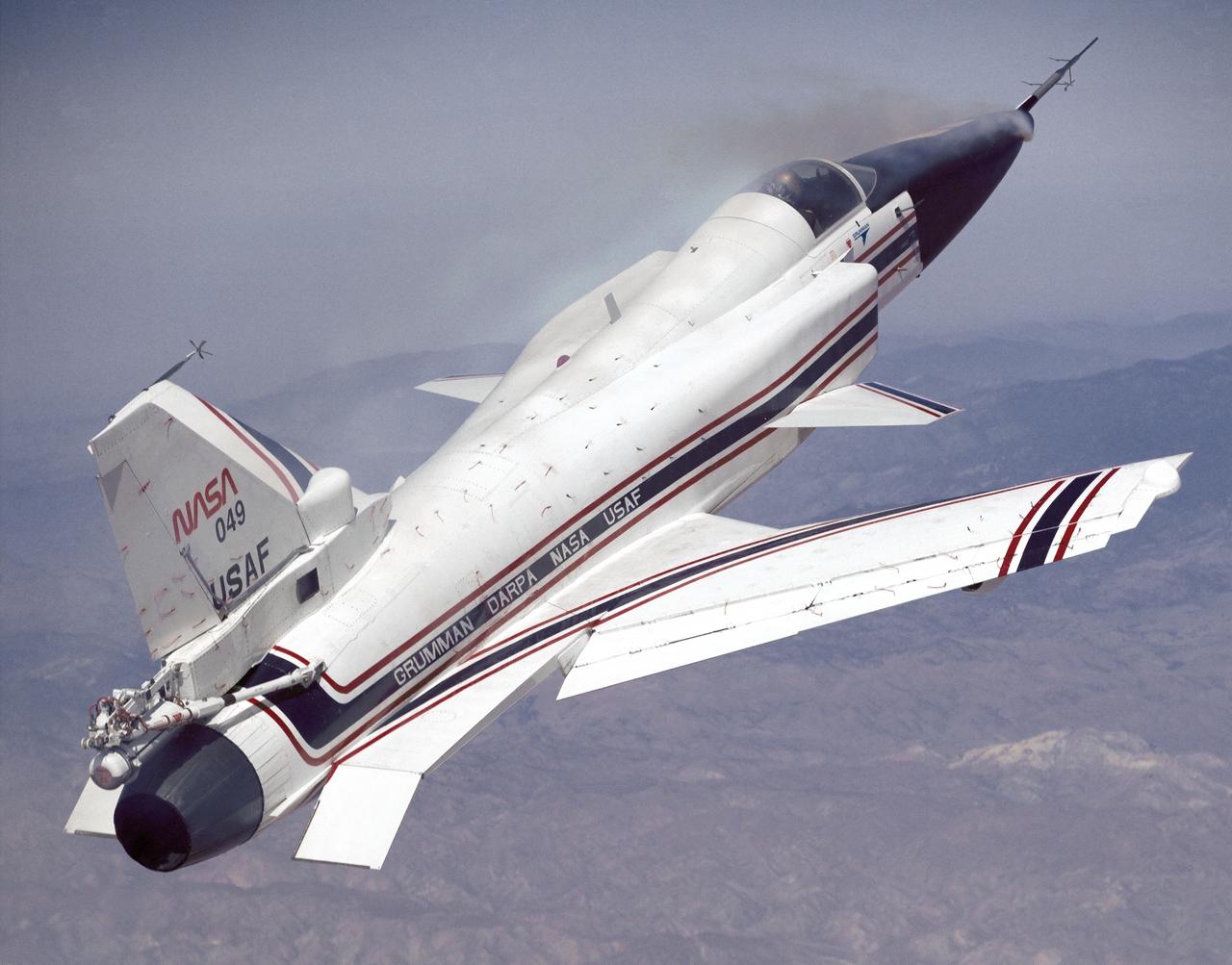
This photo shows the X-29 during a 1991 research flight. Smoke generators in the nose of the aircraft were used to help researchers see the behavior of the air flowing over the aircraft. The smoke here is demonstrating forebody vortex flow. This mission was flown September 10, 1991, by NASA research pilot Rogers Smith.
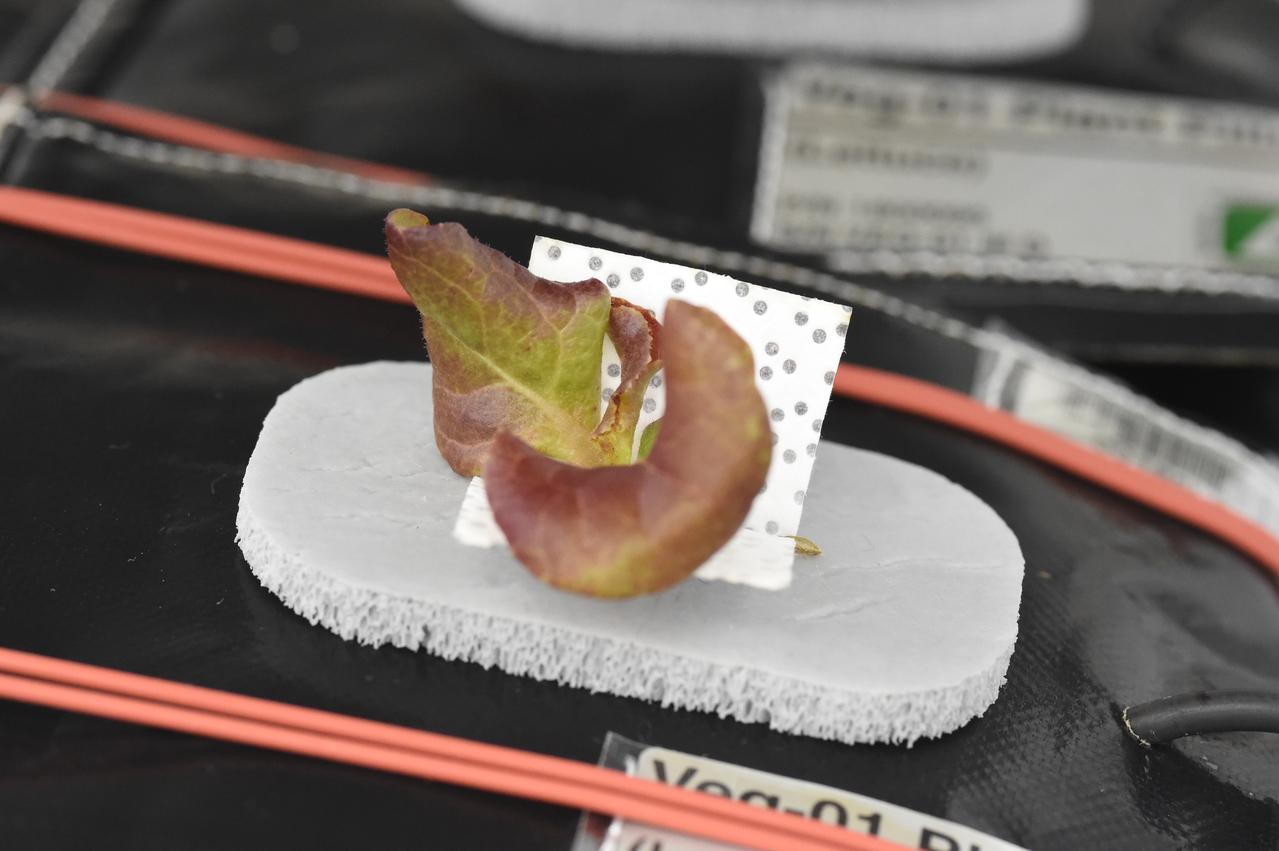
Astronaut Scott Kelly initiated VEG-01 B, the second crop of lettuce, on July, 8, 2015, and both Kelly and Astronaut Kjell Lindgren cared for the plants. The crop grew for 33 days. VEG-01 B included one set of six plant pillows planted with red romaine lettuce seeds. On Aug. 10, 2015, the crew harvested and consumed leaves from each plant. This was the first crop grown and consumed in NASA hardware. They harvested the rest of the plant tissue and froze it in the station’s Minus Eighty-Degree Laboratory Freezer for ISS (MELFI) for return to Earth for further study including microbial analysis, antioxidant capacity, mineral analysis and anthocyanin concentration.
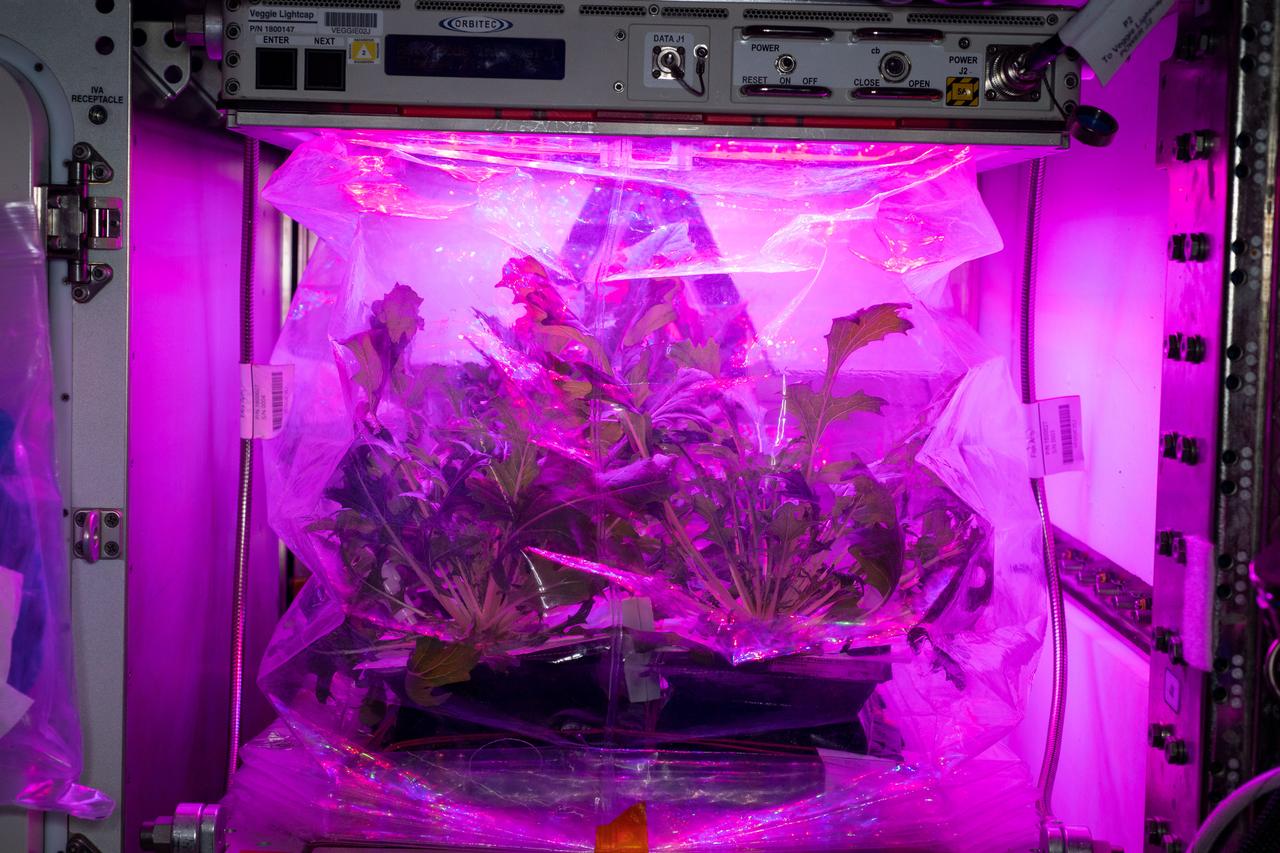
Mizuna Mustard mustard greens, part of the Veg-04A experiment, are shown growing in a Veggie plant growth chamber aboard the International Space Station on July 9, 2019. The Veg-04A experiment tested the greens, grown in blue-rich lighting and red-rich lighting, to determine the effects of different light ratios on plants grown in space on the station. The plants arrived aboard the SpaceX Commercial Resupply Services-16 mission. Astronaut Christina Koch initiated the on-orbit experiment on June 4, 2019, in the station’s two Veggie plant growth chambers, with six plant pillows per chamber. On June 11, 2019, Koch thinned the Mizuna plants to one plant per pillow. The on-orbit harvest took place July 9, 2019, with astronaut Nick Hague harvesting the plants grown under blue-rich light and Koch harvesting the plants grown under red-rich lights.
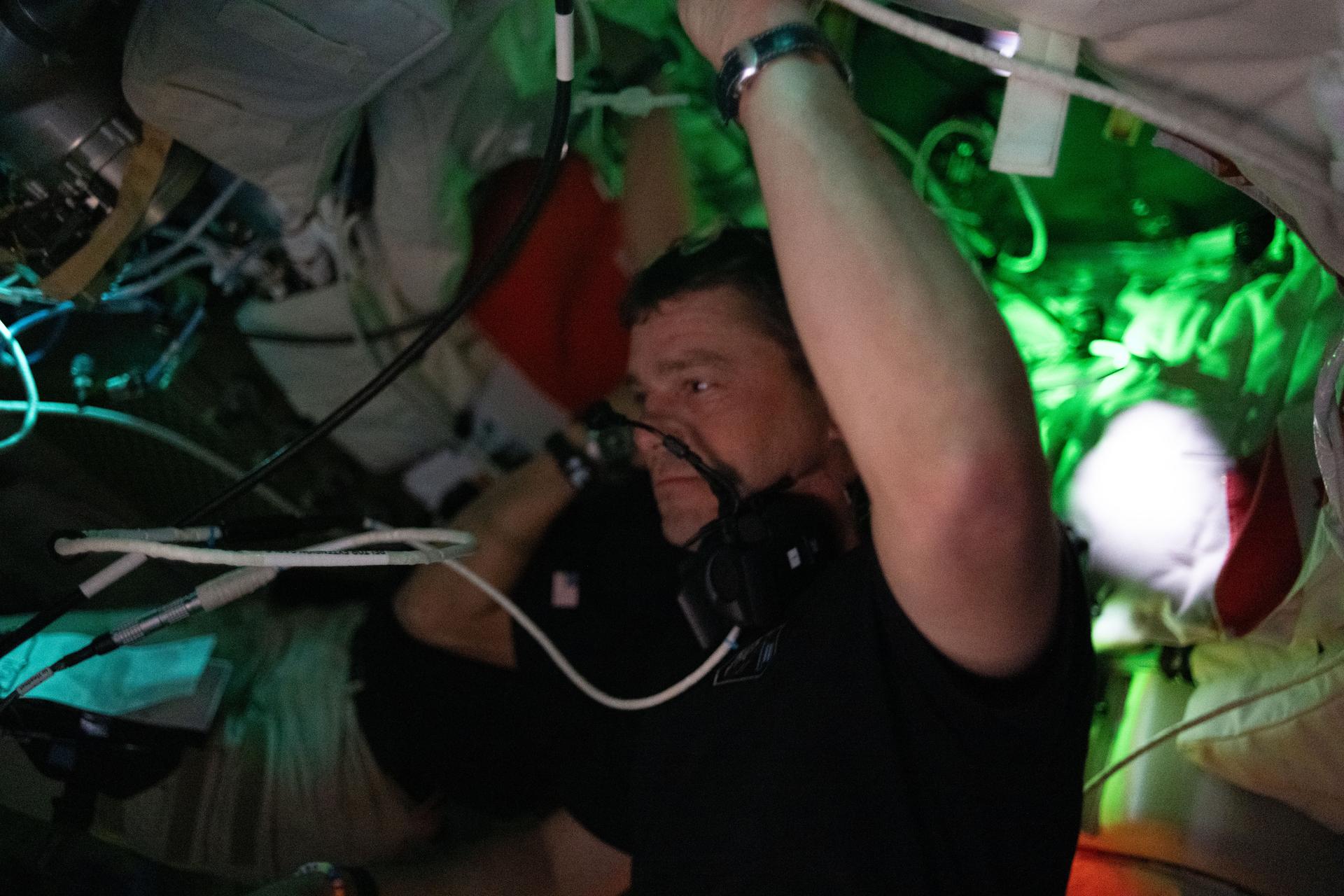
art002e016165 (April 6, 2026) – NASA astronaut and Artemis II Commander Reid Wiseman pictured here in the Orion spacecraft during the Artemis II lunar flyby. Wiseman and his fellow crewmates spent approximately seven hours taking turns at the Orion windows capturing science data to share with their team back on Earth. At closest approach, they came within 4,067 miles of the Moon’s surface.
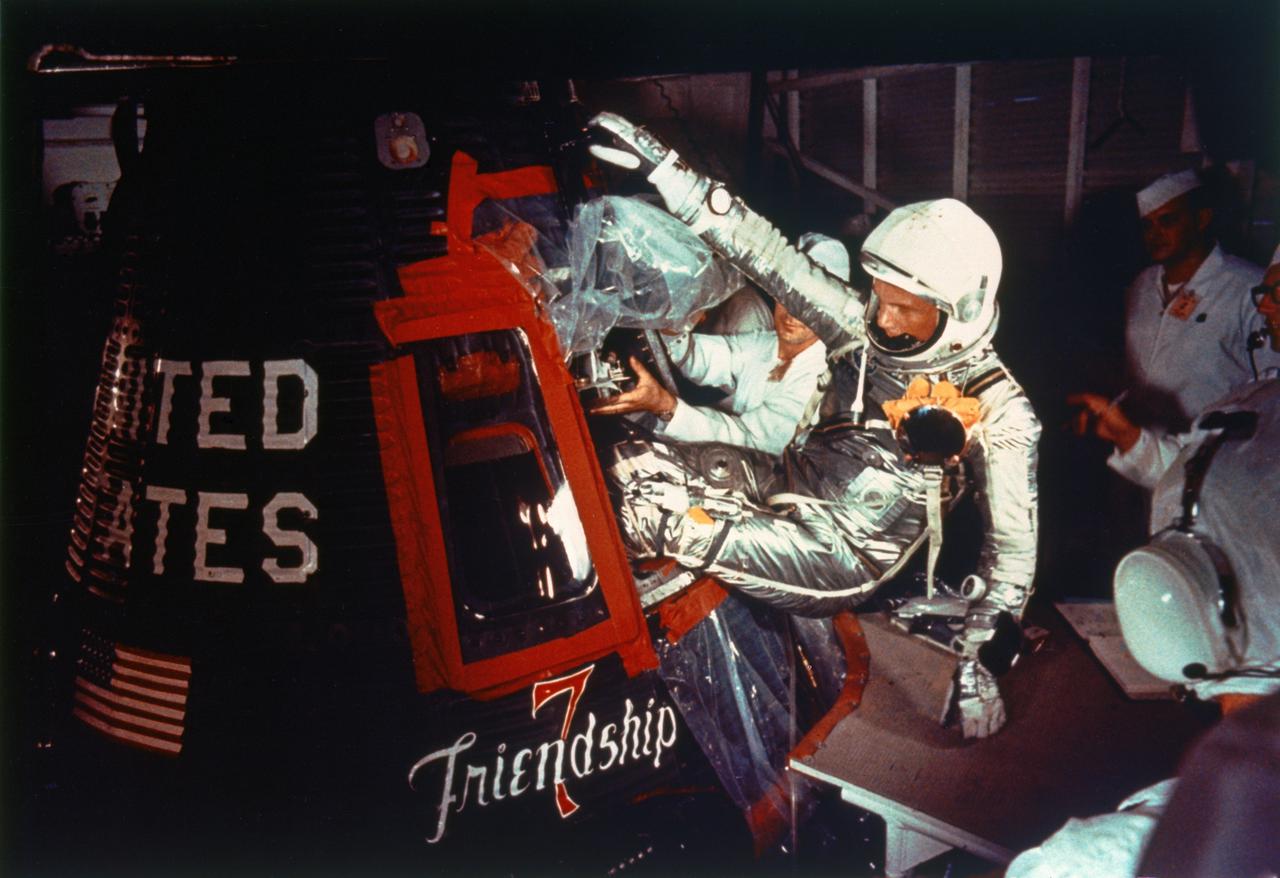
CAPE CANAVERAL, Fla. -- Overall view of astronaut John H. Glenn Jr. as he commences entrance into spacecraft Friendship 7 prior to MA-6 launch operations. Photo credit: NASA
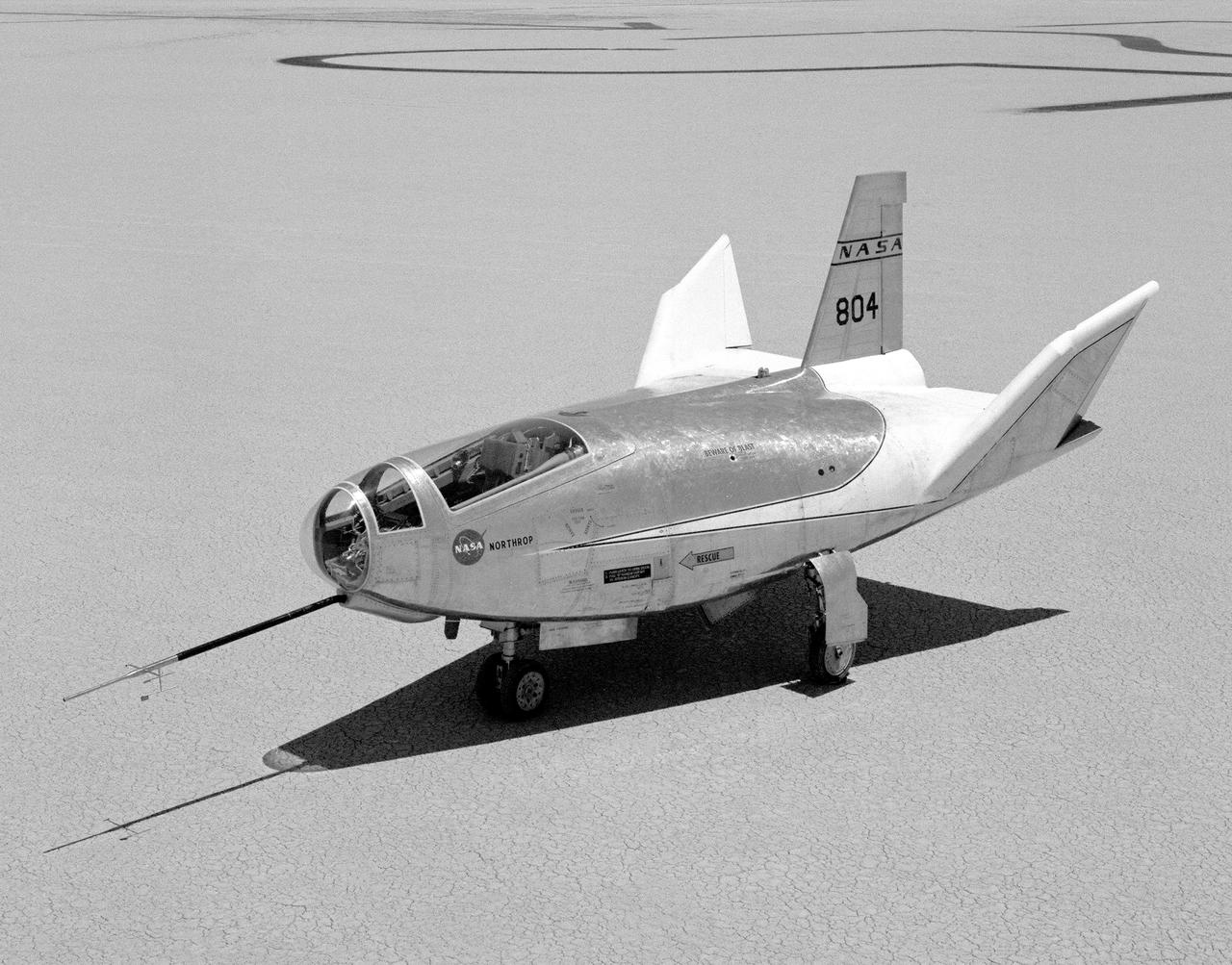
The HL-10 Lifting Body is seen here parked on Rogers Dry Lake, the unique location where it landed after research flights. This 1968 photo shows the vehicle after the fins were modified to remove instabilities encountered on the first flight. It involved a change to the shape of the leading edge of the fins to eliminate flow separation. It required extensive wind-tunnel testing at Langley Research Center, Hampton, Va. NASA Flight Research Center (FRC) engineer Bob Kempel than plotted thousands of data points by hand to come up with the modification, which involved a fiberglass glove backed with a metal structure on each fin's leading edge. This transformed the vehicle from a craft that was difficult to control into the best handling of the original group of lifting bodies at the FRC.
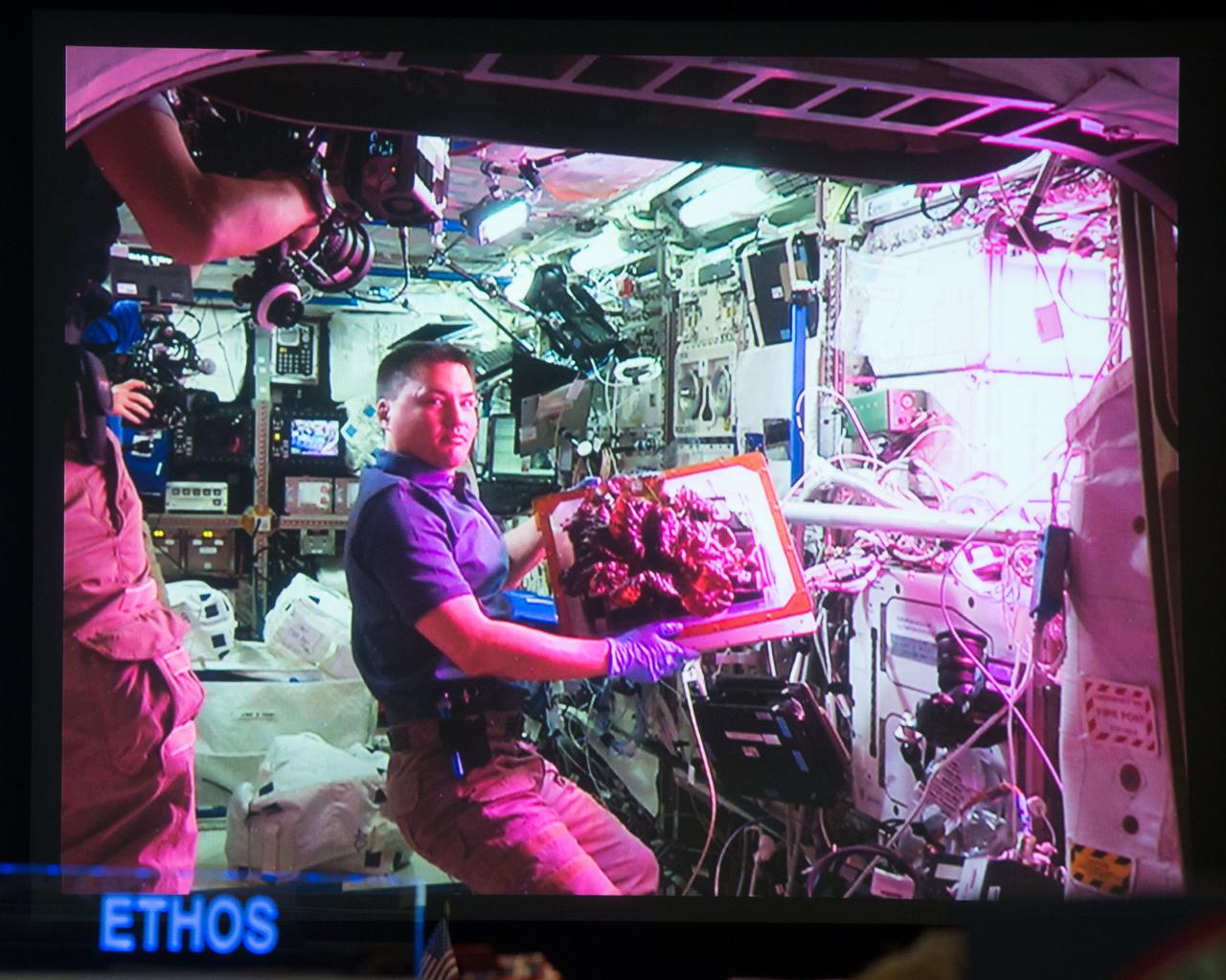
Astronaut Scott Kelly initiated VEG-01 B, the second crop of lettuce, on July, 8, 2015, and both Kelly and Astronaut Kjell Lindgren cared for the plants. The crop grew for 33 days. VEG-01 B included one set of six plant pillows planted with red romaine lettuce seeds. On Aug. 10, 2015, the crew harvested and consumed leaves from each plant. This was the first crop grown and consumed in NASA hardware. They harvested the rest of the plant tissue and froze it in the station’s Minus Eighty-Degree Laboratory Freezer for ISS (MELFI) for return to Earth for further study including microbial analysis, antioxidant capacity, mineral analysis and anthocyanin concentration.
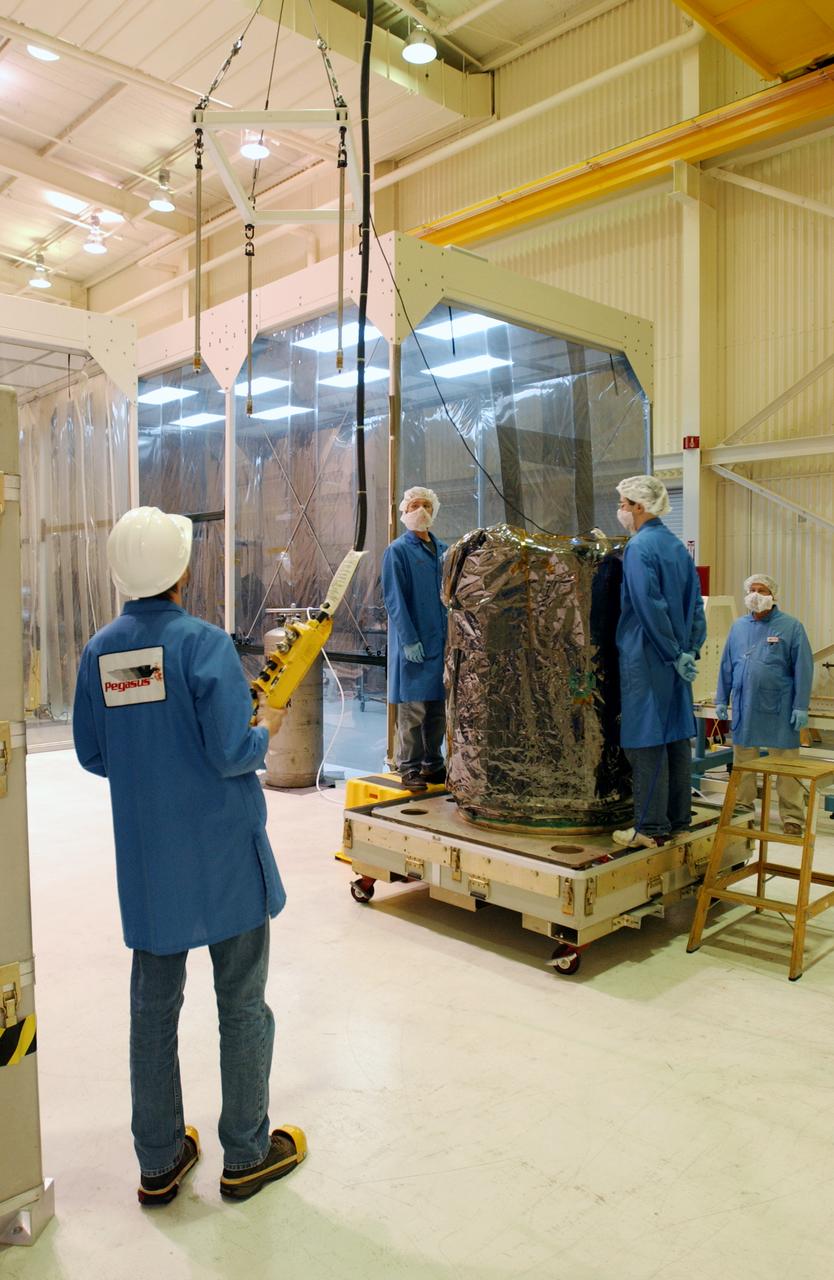
Inside a clean room at Vandenberg Air Force Base in California, workers stand beside NASA's Aeronomy of Ice in the Mesosphere, or AIM, spacecraft, waiting for an overhead crane they will attach. AIM is the seventh Small Explorers mission under NASA's Explorer Program. The program provides frequent flight opportunities for world-class scientific investigations from space within heliophysics and astrophysics. The AIM spacecraft will fly three instruments designed to study polar mesospheric clouds located at the edge of space, 50 miles above the Earth's surface in the coldest part of the planet's atmosphere. The mission's primary goal is to explain why these clouds form and what has caused them to become brighter and more numerous and appear at lower latitudes in recent years. AIM's results will provide the basis for the study of long-term variability in the mesospheric climate and its relationship to global climate change. AIM is scheduled to be mated to the Pegasus XL during the second week of April, after which final inspections will be conducted. Launch is scheduled for April 25.
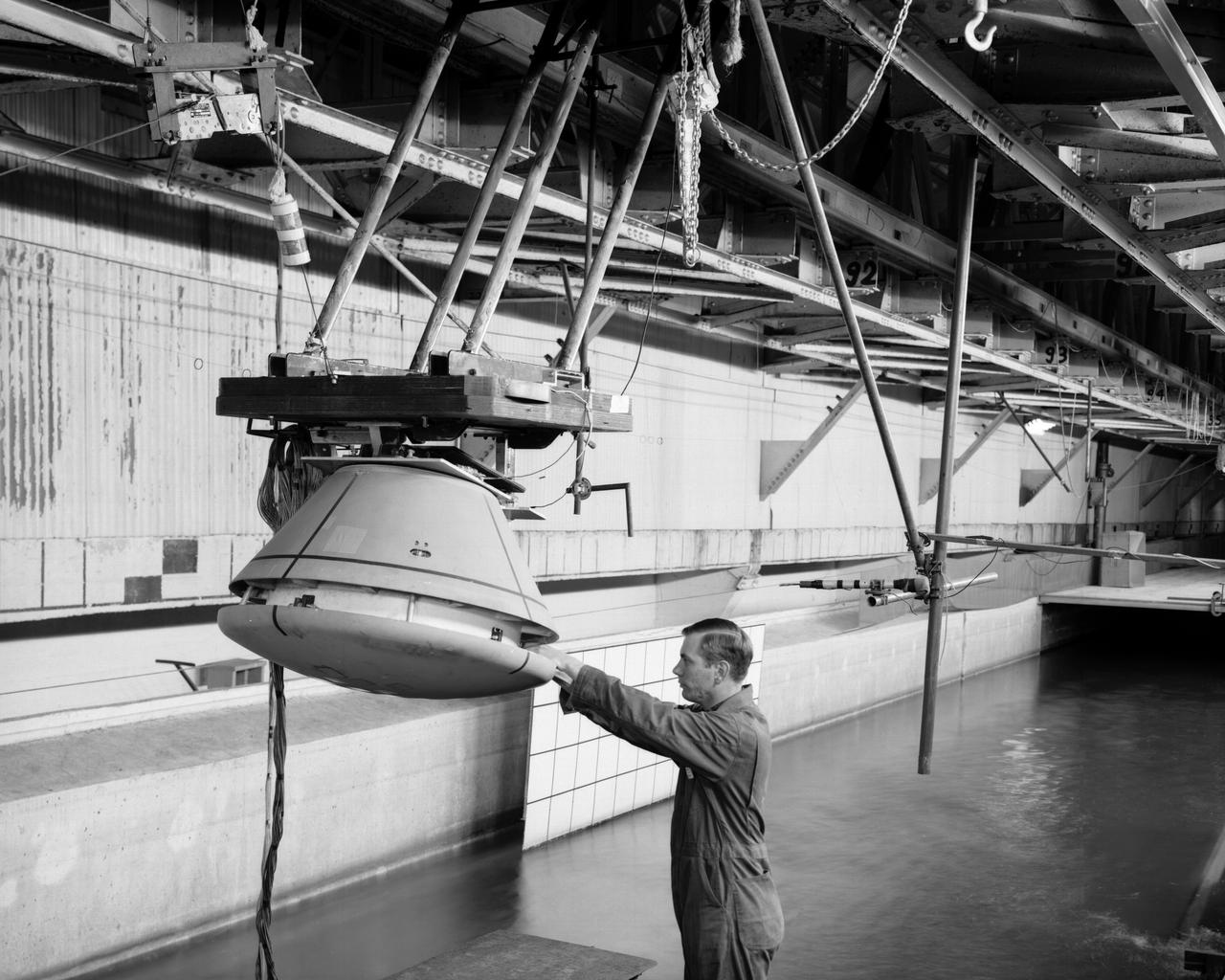
1/4th Scale Model of Apollo - Impact Structures Facility Launched from an overhead pendulum device, this Apollo spacecraft was tested in the Impact Structures Facility to determine water-landing characteristics. -- Photograph published in Winds of Change, 75th Anniversary NASA publication (page 91), by James Schultz.
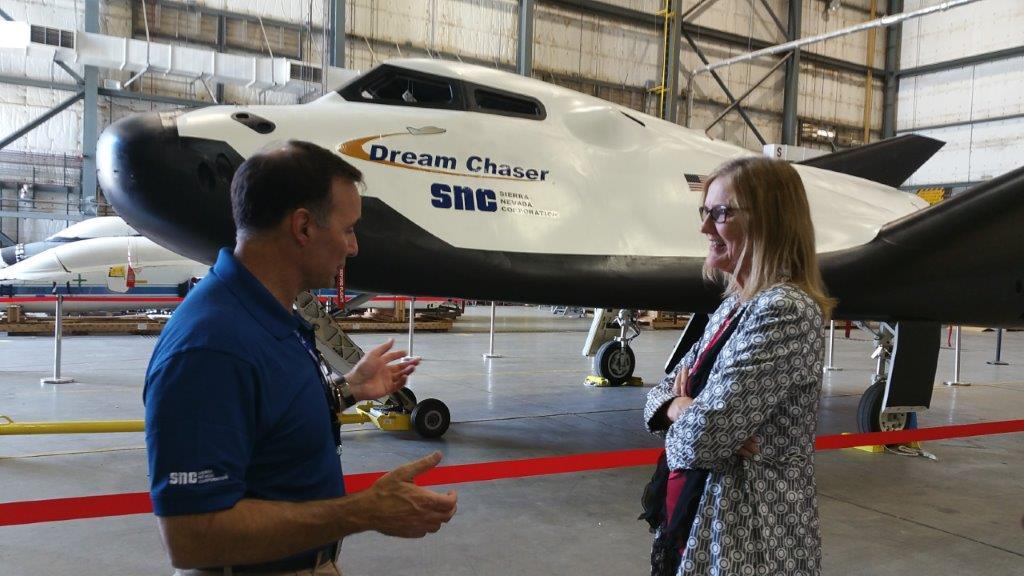
NASA Acting Deputy Chief Technologist Vicki Crisp discusses Sierra Nevada Corporation’s Dream Chaser captive carry flight and future tests with former Astronaut Lee "Bru" Archambault, who is now a test pilot for the American company. The Dream Chaser completed a successful captive carry flight at NASA’s Armstrong Flight Research Center at Edwards, California, on Aug. 30, 2017.
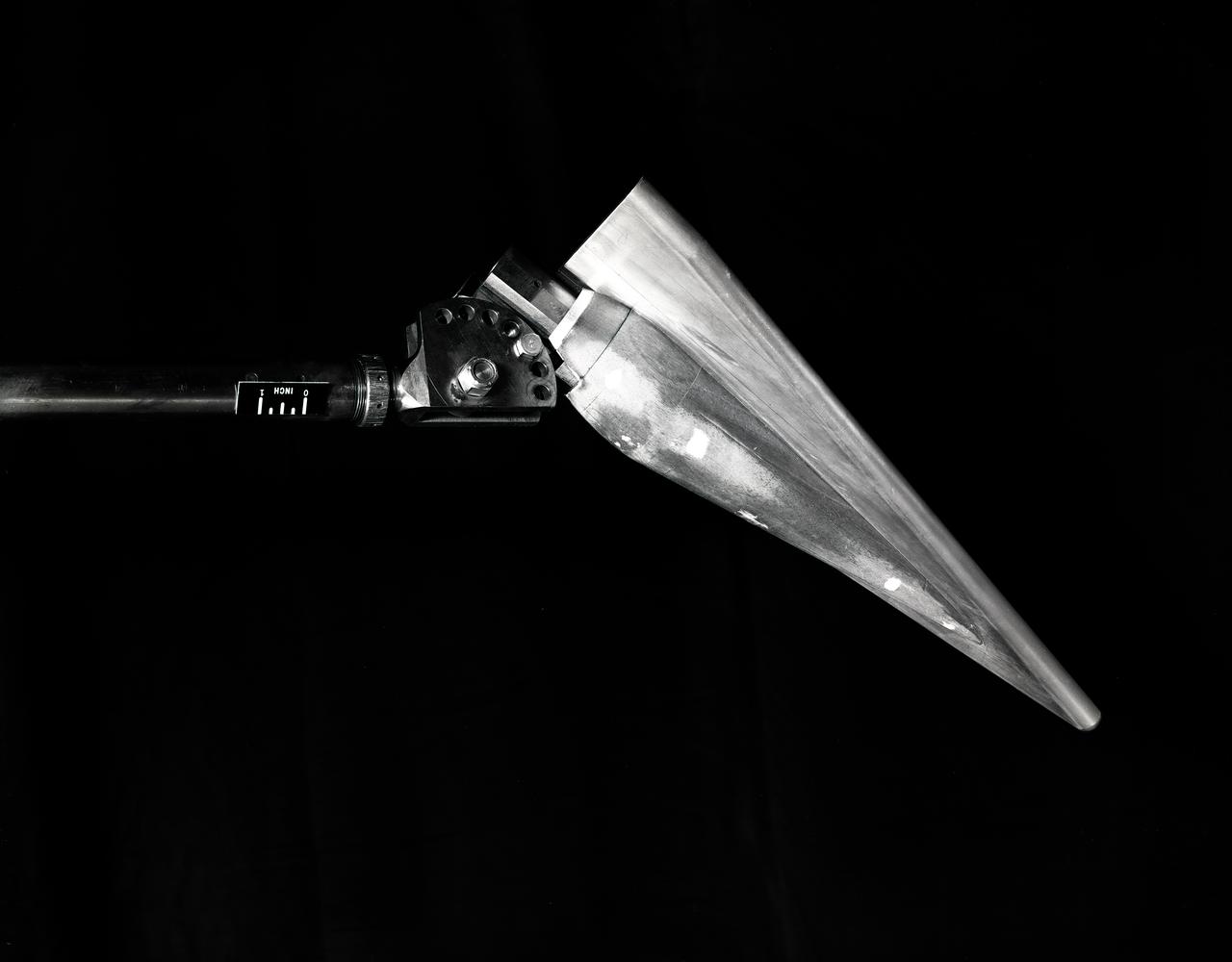
Re-Entry Model
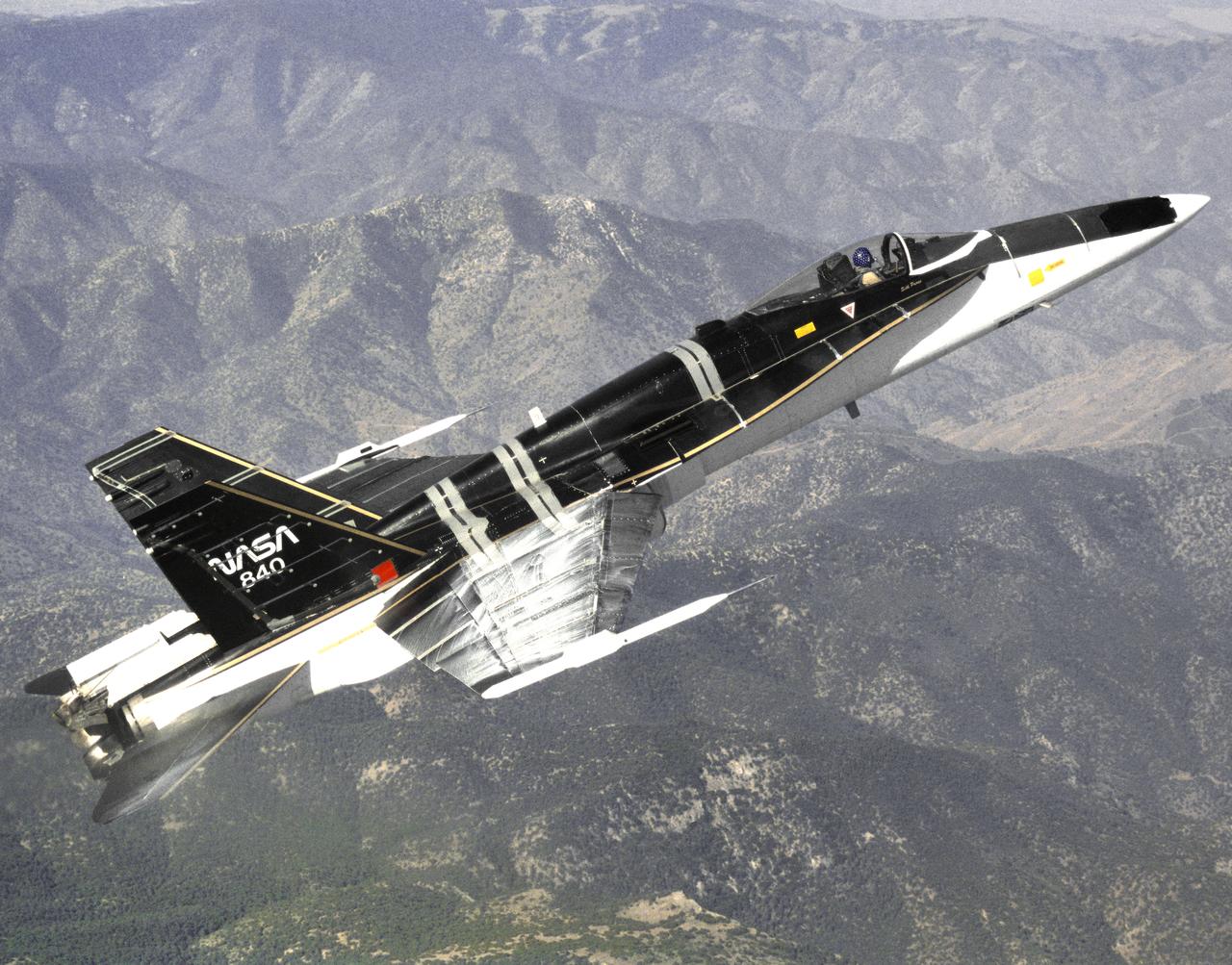
The modified F-18 High Alpha Research Vehicle (HARV) carries out air flow studies on a flight from the Dryden Flight Research Center, Edwards, California. Using oil, researchers were able to track the air flow across the wing at different speeds and angles of attack. A thrust vectoring system had been installed on the engines' exhaust nozzles for the high angle of attack research program. The thrust vectoring system, linked to the aircraft's flight control system, moves a set of three paddles on each engine to redirect thrust for directional control and increased maneuverability at angles of attack at up to 70 degrees.
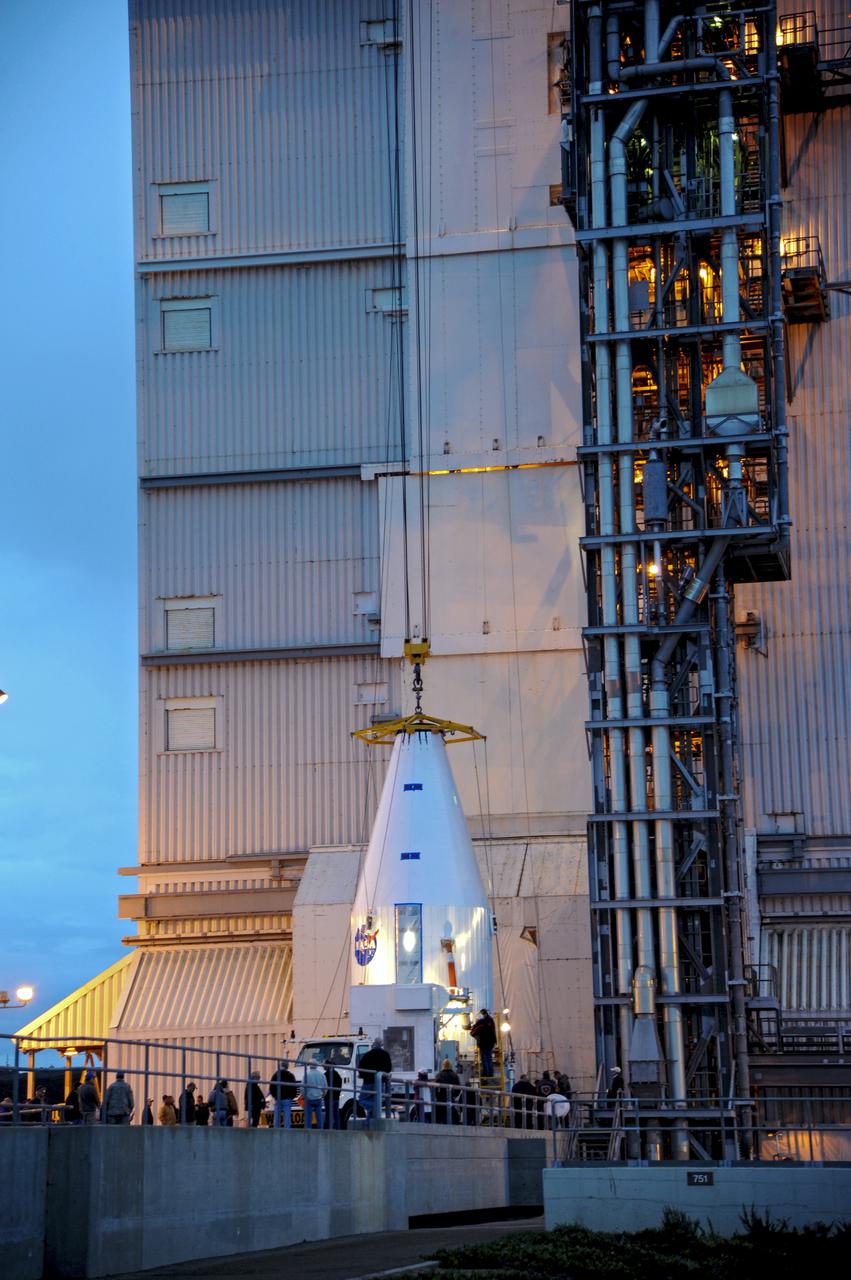
VANDENBERG AFB, Calif. -- The payload fairing containing the Landsat Data Continuity Mission, or LDCM, spacecraft is about to be hoisted atop a United Launch Alliance Atlas V rocket at Space Launch Complex-3E at Vandenberg Air Force Base, Calif. The Landsat Data Continuity Mission LDCM is the future of Landsat satellites. It will continue to obtain valuable data and imagery to be used in agriculture, education, business, science, and government. The Landsat Program provides repetitive acquisition of high resolution multispectral data of the Earth's surface on a global basis. The data from the Landsat spacecraft constitute the longest record of the Earth's continental surfaces as seen from space. It is a record unmatched in quality, detail, coverage, and value. Liftoff is planned for Feb. 11, 2013 aboard a United Launch Alliance Atlas V rocket. For more information, visit: http:__www.nasa.gov_mission_pages_landsat_main_index.html Photo credit: NASA
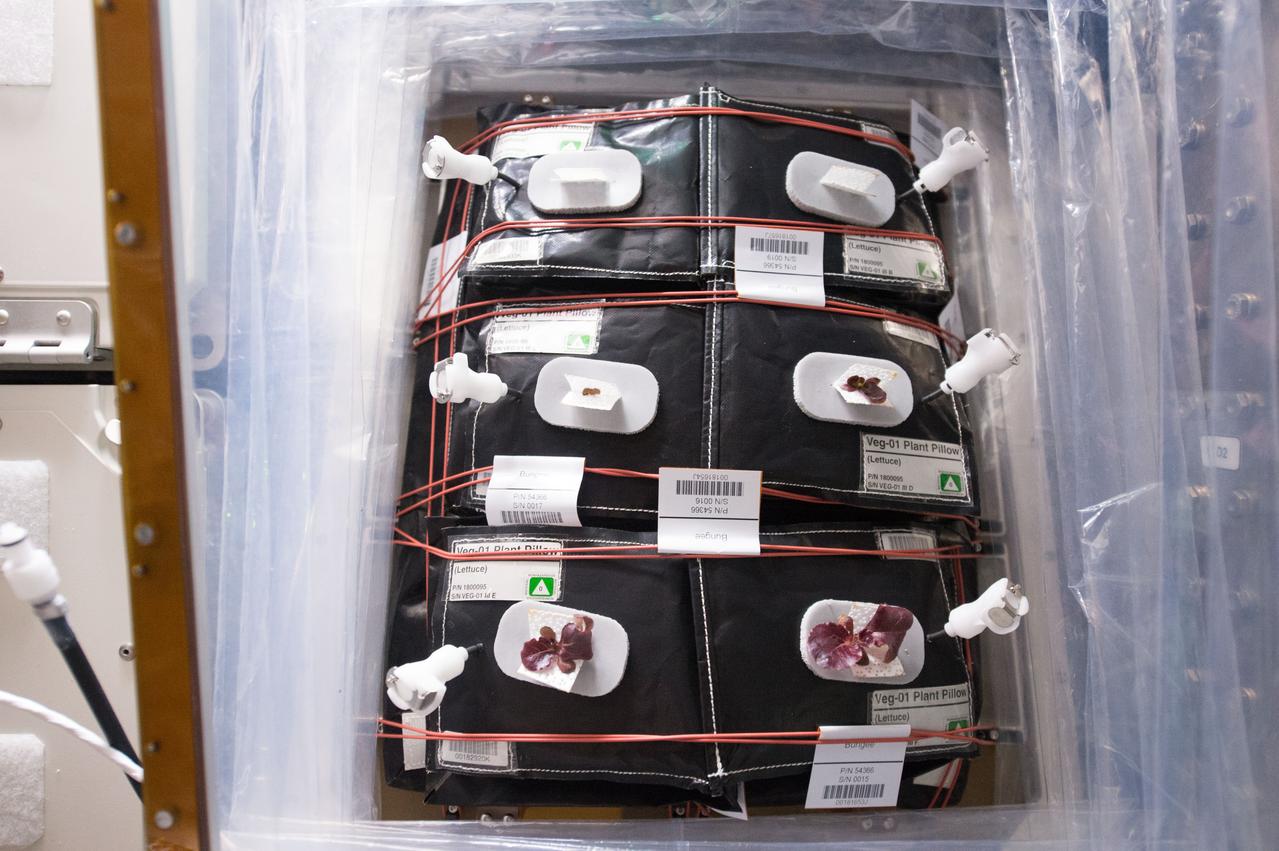
Astronaut Scott Kelly initiated VEG-01 B, the second crop of lettuce, on July, 8, 2015, and both Kelly and Astronaut Kjell Lindgren cared for the plants. The crop grew for 33 days. VEG-01 B included one set of six plant pillows planted with red romaine lettuce seeds. On Aug. 10, 2015, the crew harvested and consumed leaves from each plant. This was the first crop grown and consumed in NASA hardware. They harvested the rest of the plant tissue and froze it in the station’s Minus Eighty-Degree Laboratory Freezer for ISS (MELFI) for return to Earth for further study including microbial analysis, antioxidant capacity, mineral analysis and anthocyanin concentration.
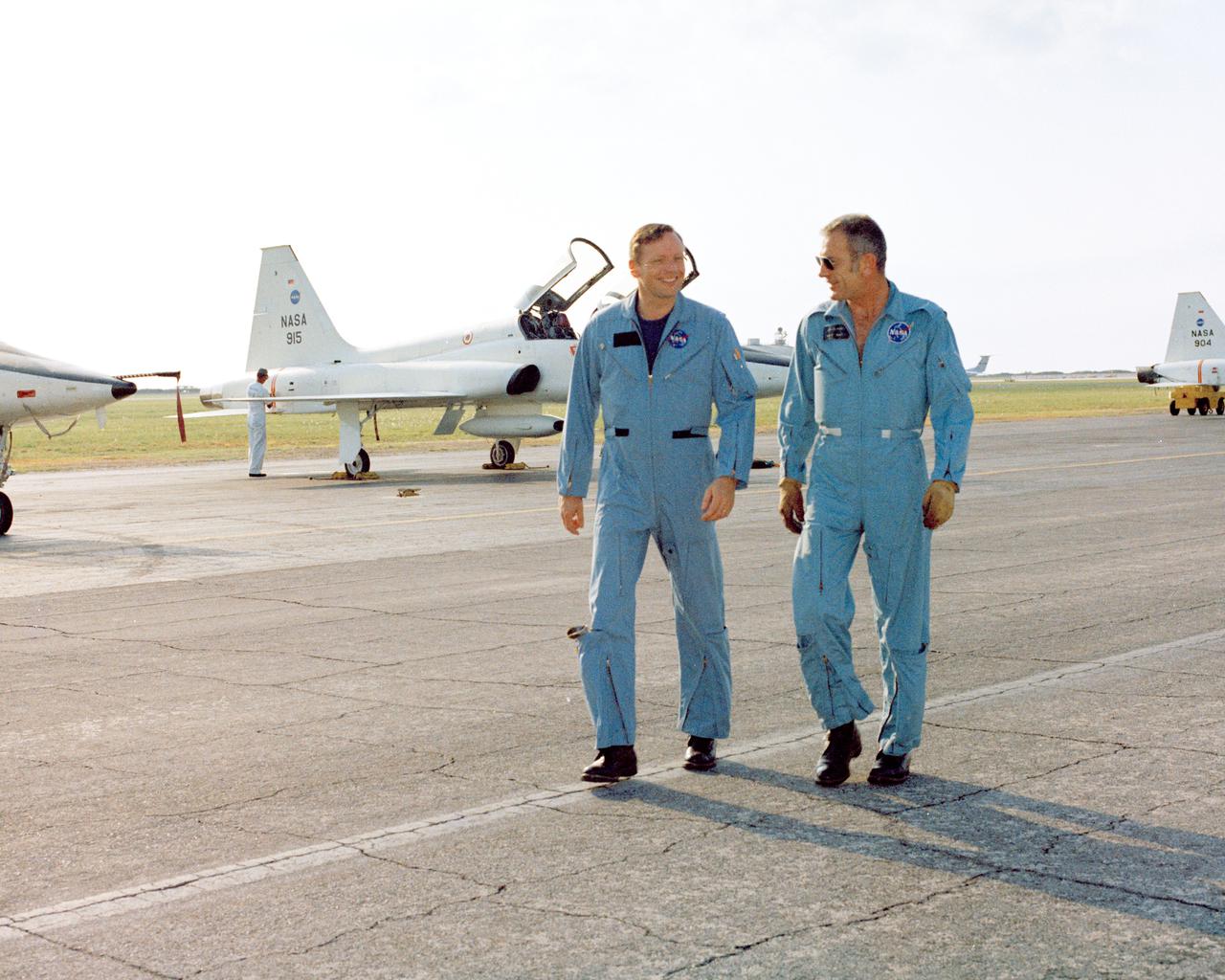
PATRICK AFB, Fla. – Apollo 11 commander Neil A. Armstrong, left, and Donald K. Slayton, chief astronaut and director of flight crew operations, just arrived at Patrick Air Force Base in a T-38 jet in preparation of the nation’s first lunar landing mission. Lift off atop a Saturn V launch vehicle is scheduled for July 16, 1969. During Apollo 11 the command module, Columbia, will remain in orbit around the moon while the lunar module, Eagle, carrying Armstrong and Aldrin, lands on the lunar surface. During 2½ hours of surface exploration, the crew plans to collect lunar surface material for analysis back on Earth. For more: http:__www-pao.ksc.nasa.gov_history_apollo_apollo-11_apollo-11.htm Photo credit: NASA
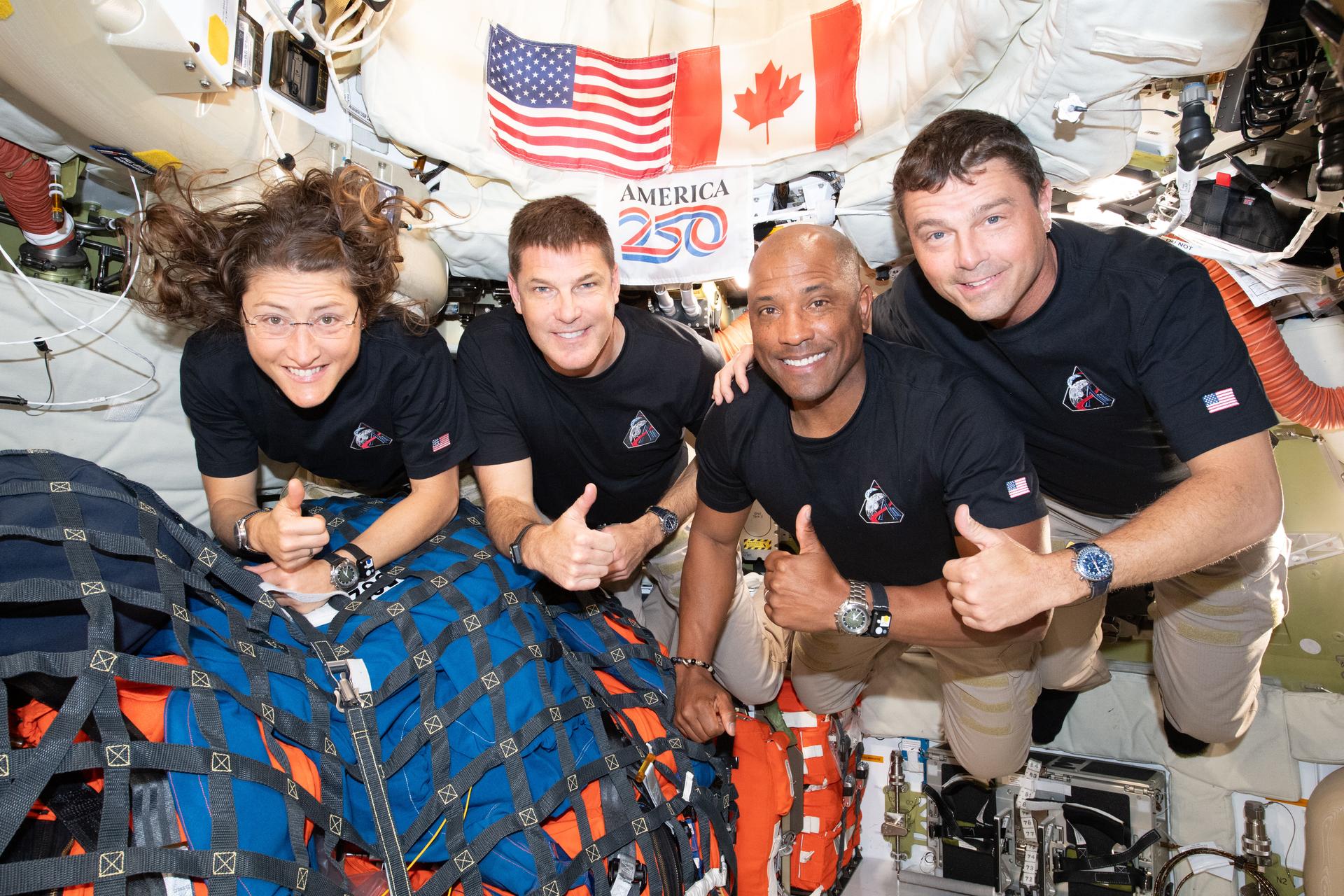
art002e013356 (April 7, 2026) – The Artemis II crew – (from left) Mission Specialist Christina Koch, Mission Specialist Jeremy Hansen, Pilot Victor Glover, and Commander Reid Wiseman – pause for a group photo inside the Orion spacecraft on their way home. Following a swing around the far side of the Moon on April 6, 2026, the crew exited the lunar sphere of influence (the point at which the Moon's gravity has a stronger pull on Orion than the Earth's) on April 7, and are headed back to Earth for a splashdown in the Pacific Ocean on April 10.
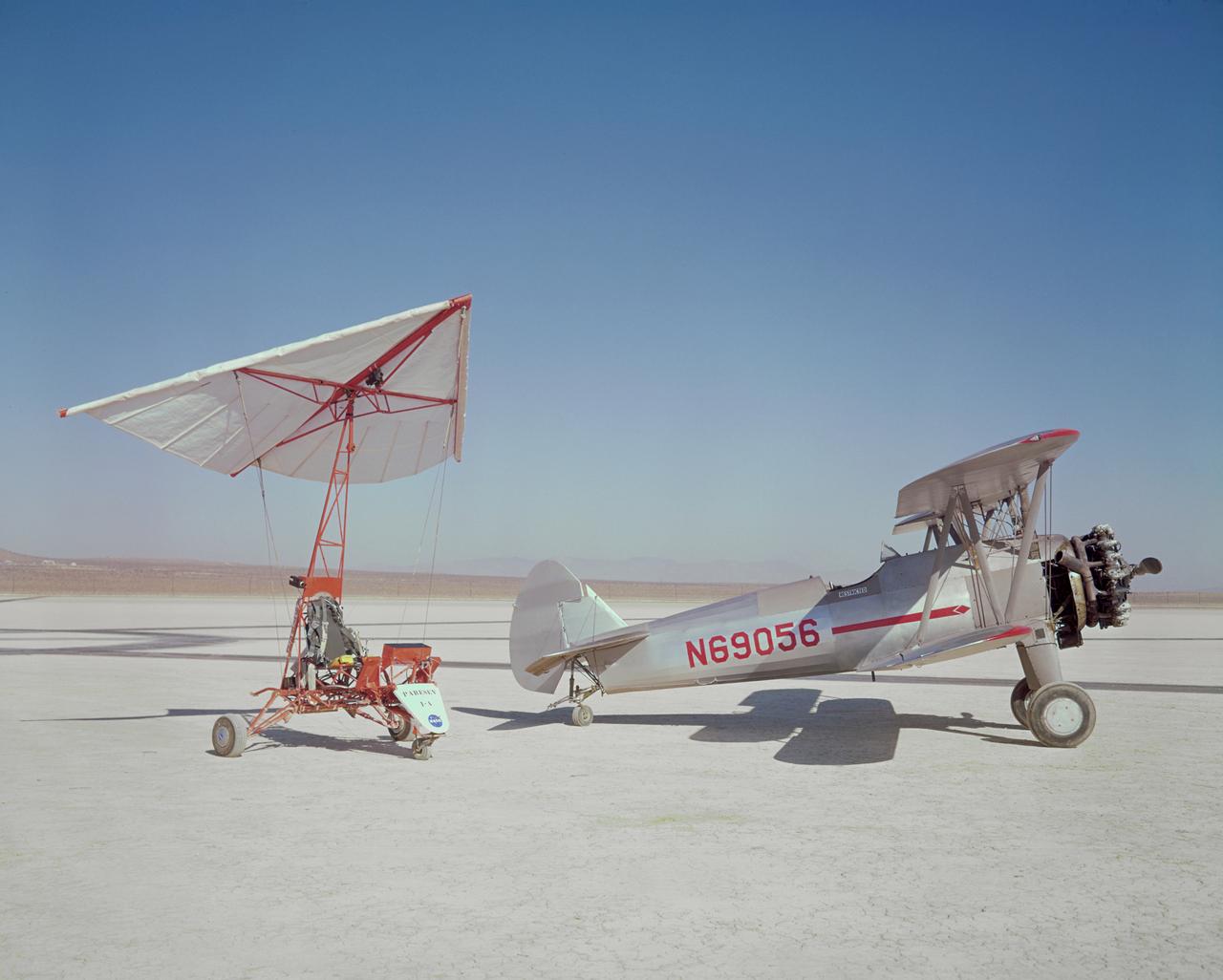
Paresev 1A and Stearman tow plane on lakebed.

Astronaut Scott Kelly initiated VEG-01 B, the second crop of lettuce, on July, 8, 2015, and both Kelly and Astronaut Kjell Lindgren cared for the plants. The crop grew for 33 days. VEG-01 B included one set of six plant pillows planted with red romaine lettuce seeds. On Aug. 10, 2015, the crew harvested and consumed leaves from each plant. This was the first crop grown and consumed in NASA hardware. They harvested the rest of the plant tissue and froze it in the station’s Minus Eighty-Degree Laboratory Freezer for ISS (MELFI) for return to Earth for further study including microbial analysis, antioxidant capacity, mineral analysis and anthocyanin concentration.
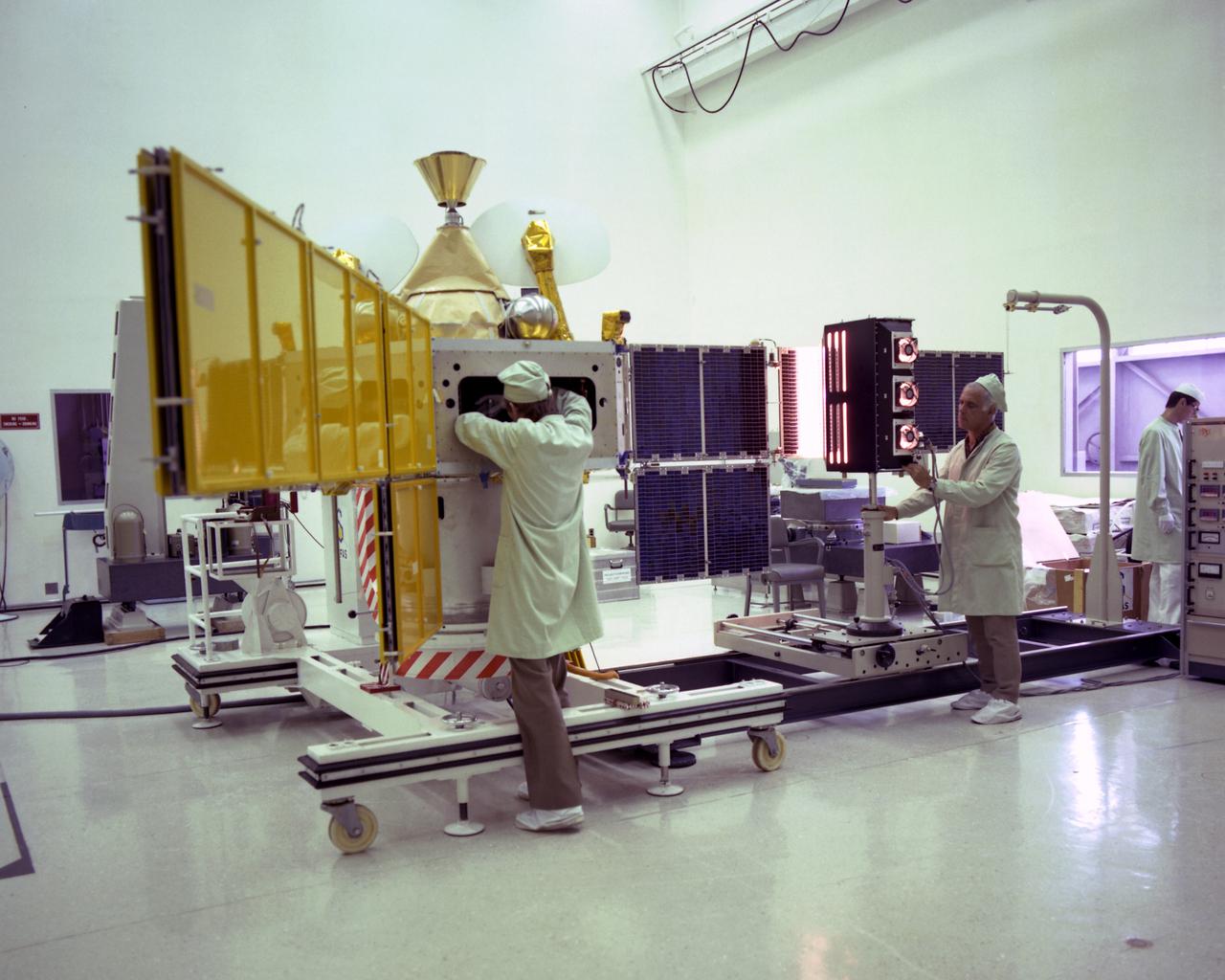
CAPE CANAVERAL, Fla. -- Technicians check out the Symphonie-B spacecraft during launch preparations at KSC. Symphonie is a synchronous-orbit communications satellite, jointly owned and managed by West Germany and France. Photo credit: NASA
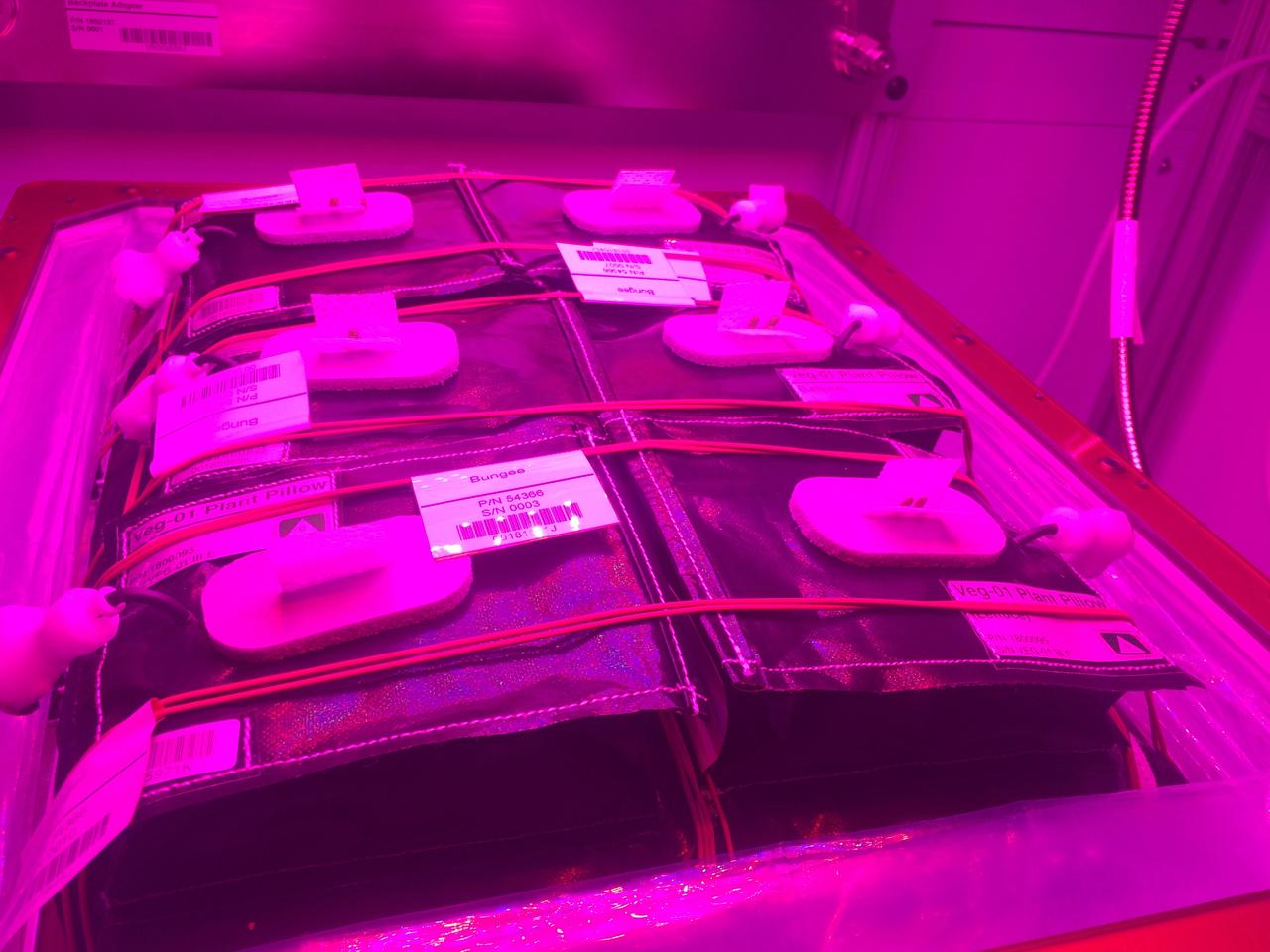
Astronaut Scott Kelly initiated VEG-01 B, the second crop of lettuce, on July, 8, 2015, and both Kelly and Astronaut Kjell Lindgren cared for the plants. The crop grew for 33 days. VEG-01 B included one set of six plant pillows planted with red romaine lettuce seeds. On Aug. 10, 2015, the crew harvested and consumed leaves from each plant. This was the first crop grown and consumed in NASA hardware. They harvested the rest of the plant tissue and froze it in the station’s Minus Eighty-Degree Laboratory Freezer for ISS (MELFI) for return to Earth for further study including microbial analysis, antioxidant capacity, mineral analysis and anthocyanin concentration.
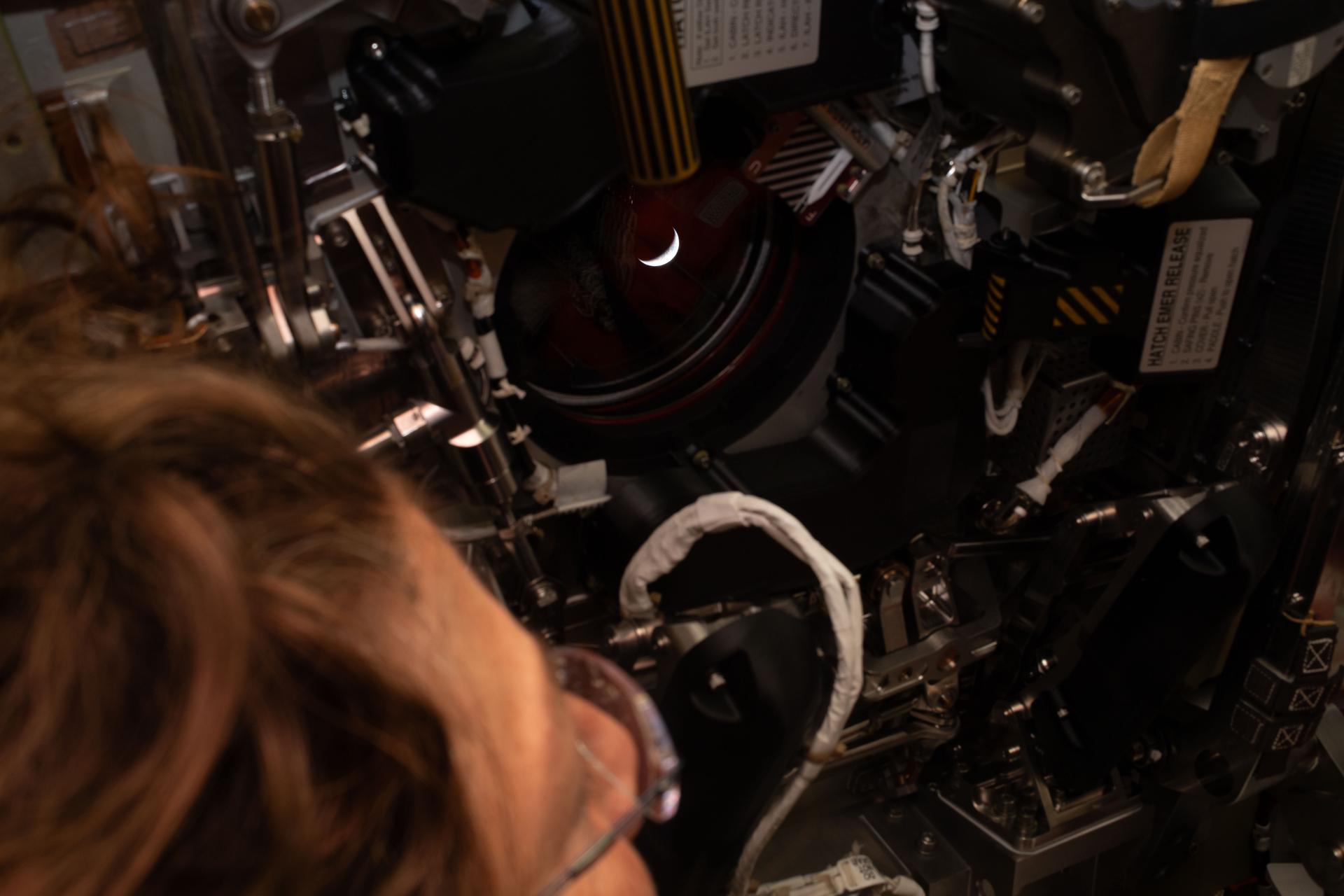
art002e009274 (April 6, 2026) - Artemis II mission specialist and NASA astronaut Christina Koch looks out one of the Orion spacecraft's windows back at Earth ahead of the crew's lunar flyby on April 6, 2026.
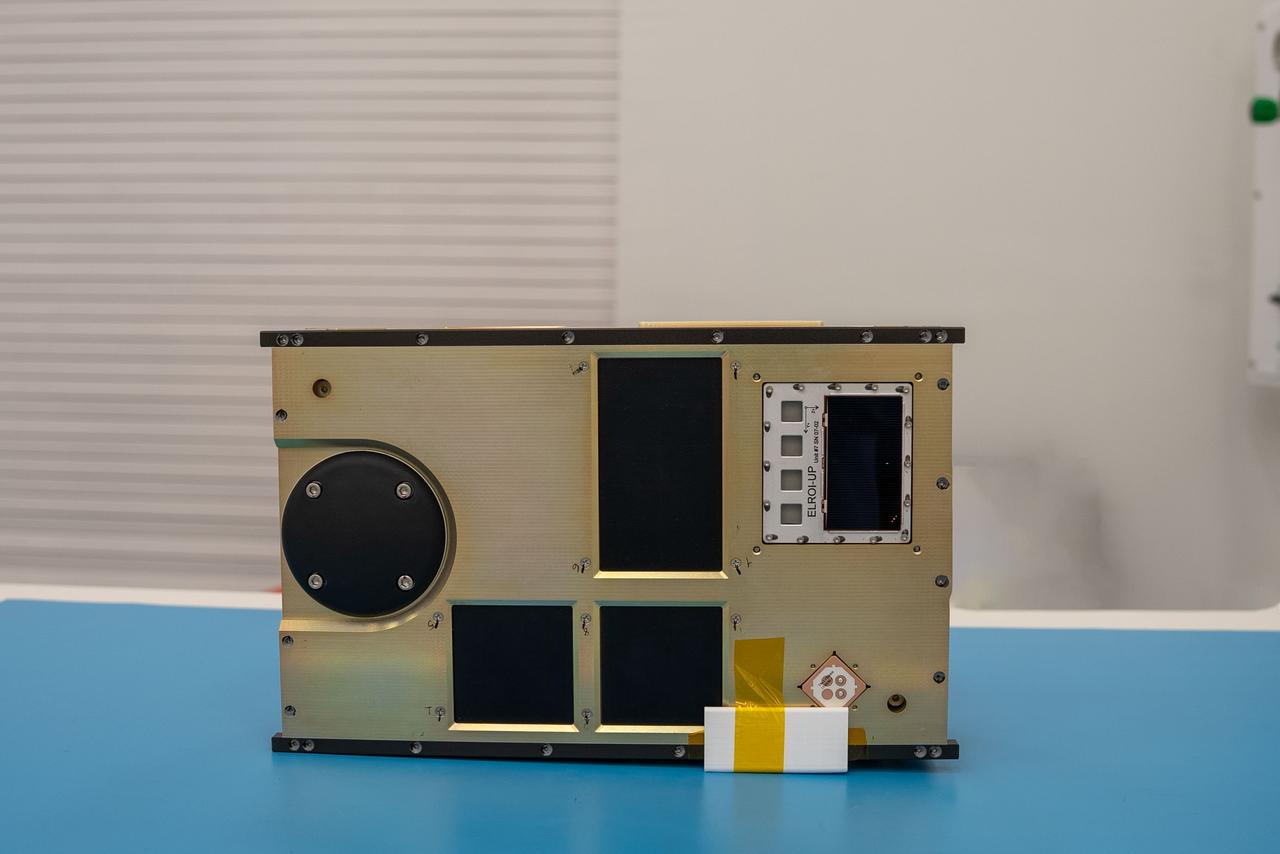
NASA’s CubeSat R5 Spacecraft 4 (R5-S4) awaits integration at Firefly’s Payload Processing Facility at Vandenberg Space Force Base, California on Wednesday, April 24, 2024. R5-S4, along with several other CubeSats, will launch to space on an Alpha rocket during NASA’s Educational Launch of Nanosatellites (ELaNa) 43 mission as part of the agency’s CubeSat Launch Initiative and Firefly’s Venture-Class Launch Services Demonstration 2 contract.
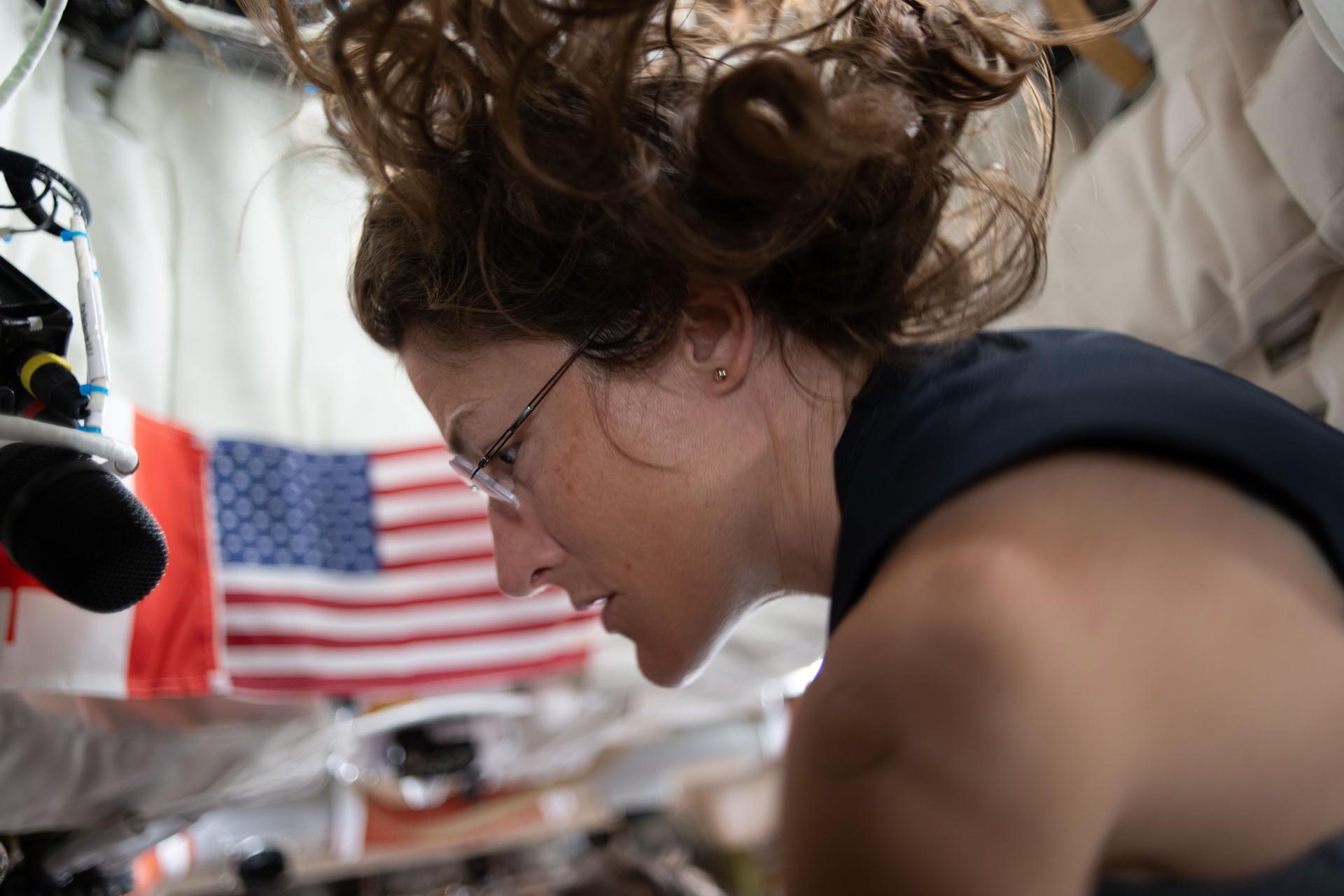
art002e009206 (April 4, 2026) - NASA astronaut and Artemis II mission specialist Christina Koch, seen here on the fourth day of the mission, prepping for lunar flyby activities after completing aerobic exercise on the flywheel device. Credit: NASA
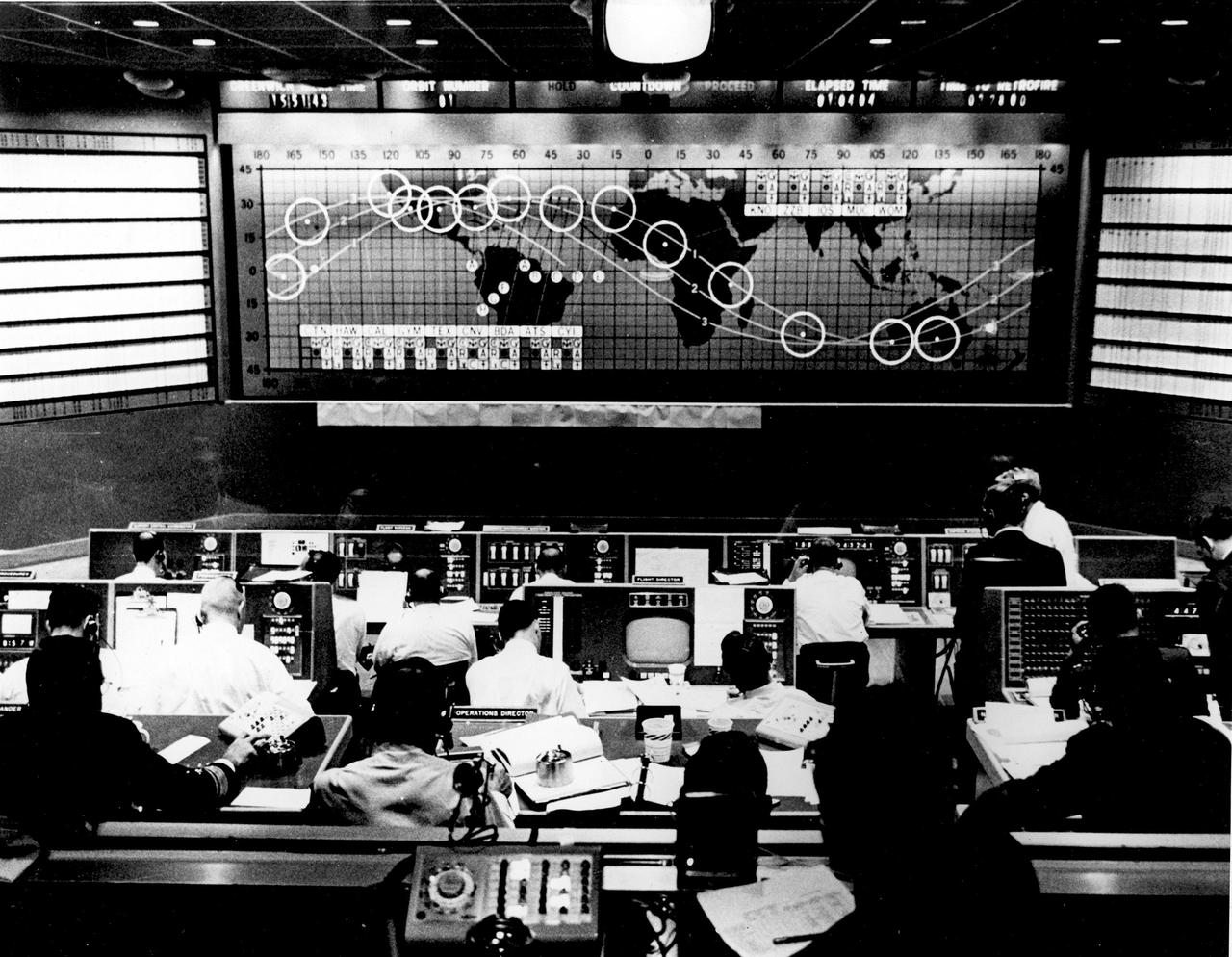
CAPE CANAVERAL, Fla. - Flight controllers gather inside Mercury Mission Control during the first orbit of John Glenn's Friendship 7 mission, which launched on Feb. 20, 1962. The Mercury Mission Control Center in Florida played a key role in the United States' early spaceflight program. Located at Cape Canaveral Air Force Station, the original part of the building was constructed between 1956 and 1958, with additions in 1959 and 1963. The facility officially was transferred to NASA on Dec. 26, 1963, and served as mission control during all the Project Mercury missions, as well as the first three flights of the Gemini Program, when it was renamed Mission Control Center. With its operational days behind, on June 1, 1967, the Mission Control Center became a stop on the public tour of NASA facilities until the mid-90s. In 1999, much of the equipment and furnishings from the Flight Control Area were moved to the Kennedy Space Center Visitor Complex where they became part of the exhibit there. The building was demolished in spring 2010. Photo credit: NASA
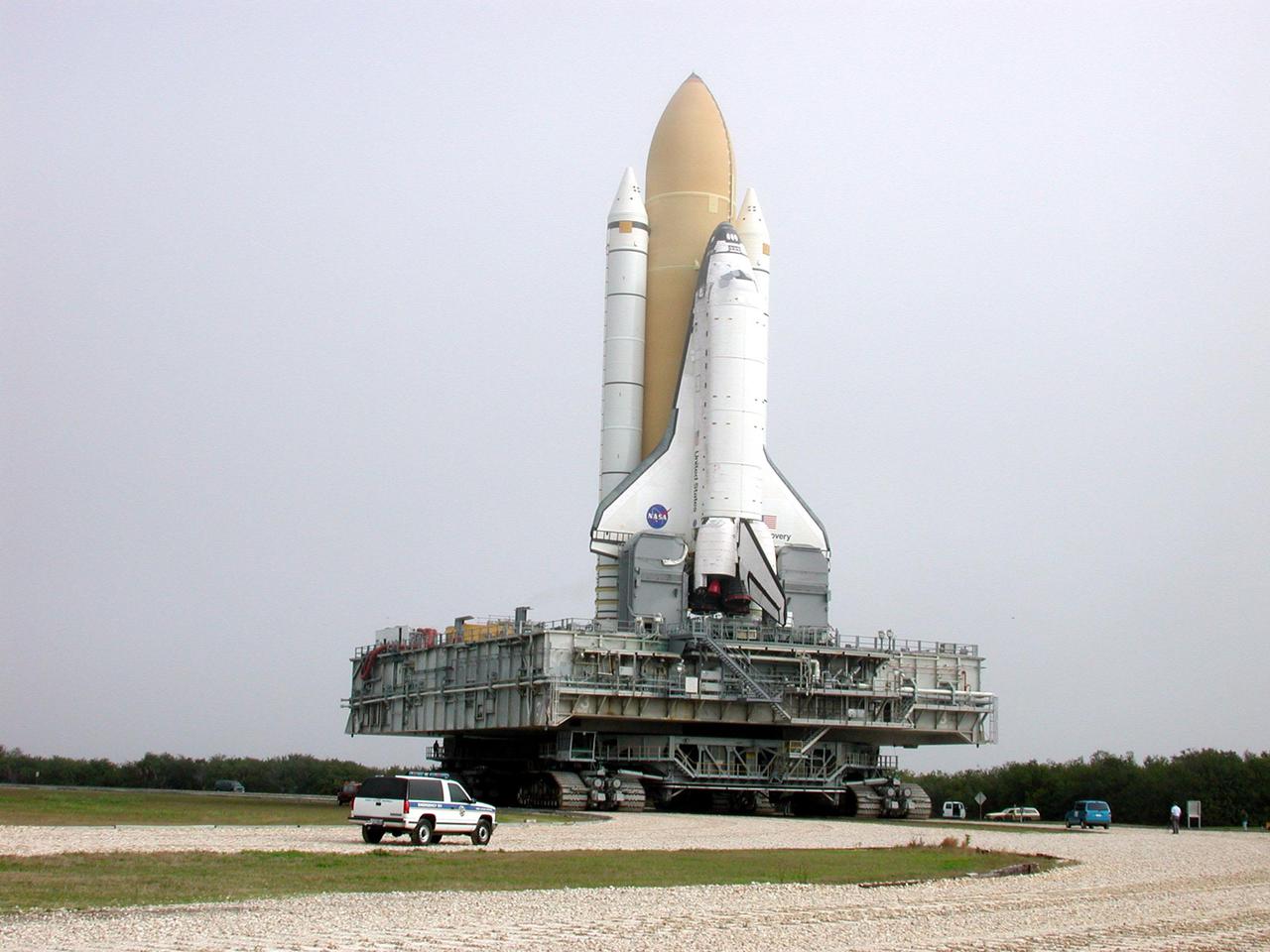
KENNEDY SPACE CENTER, Fla. -- Fog-enshrouded Space Shuttle Discovery dwarfs the workers on the ground as it crawls to Launch Pad 39B. Discovery will be flying on mission STS-102 to the International Space Station. Its payload is the Multi-Purpose Logistics Module Leonardo, a “moving van,” to carry laboratory racks filled with equipment, experiments and supplies to and from the Space Station aboard the Space Shuttle. The flight will also carry the Expedition Two crew up to the Space Station, replacing Expedition One, who will return to Earth on Discovery. Launch is scheduled for March 8 at 6:45 a.m. EST
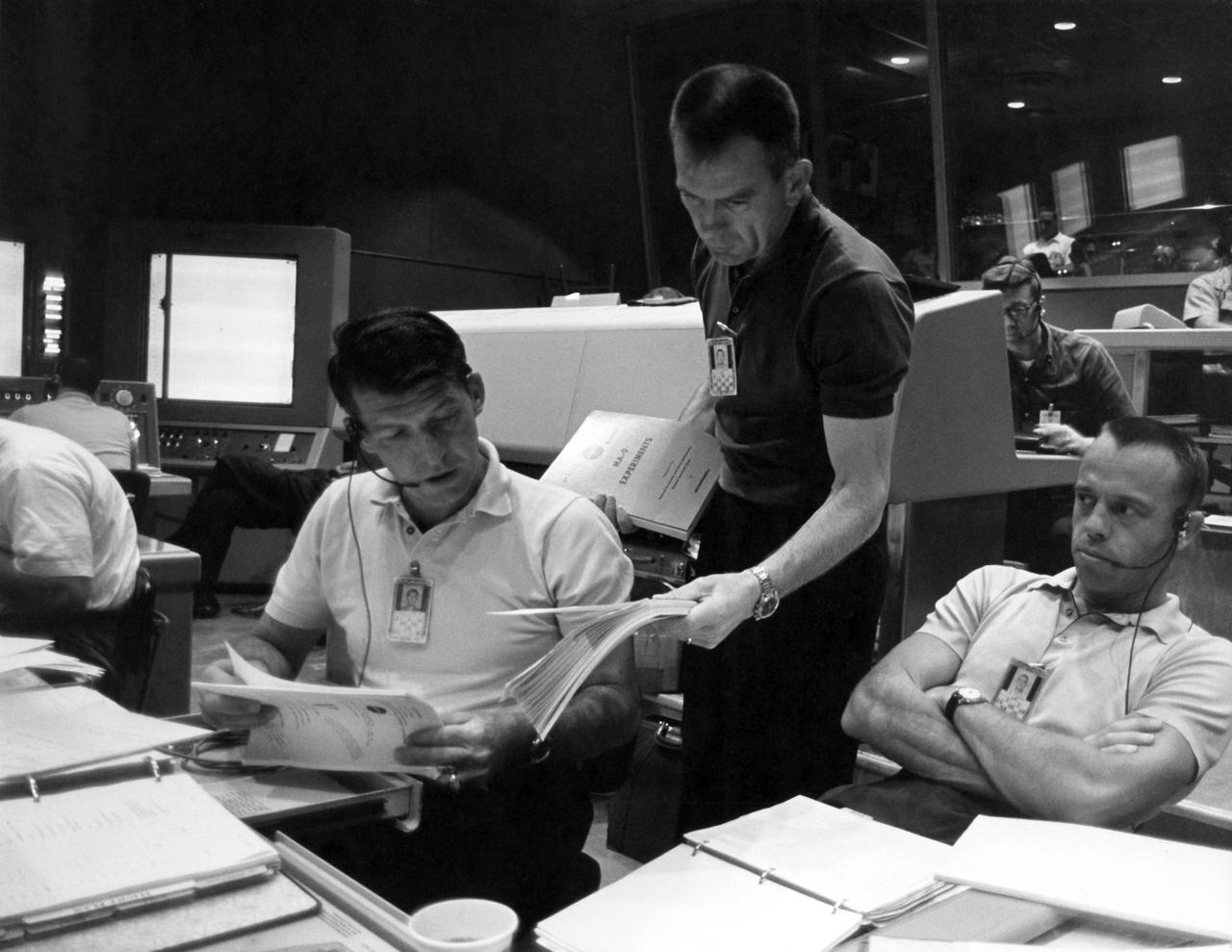
CAPE CANAVERAL, Fla. - Mercury astronauts, from left, Wally Schirra, Deke Slayton and Alan Shepard work inside the Mercury Control Center where they were stationed during the Faith 7 mission of astronaut Gordon Cooper, launched on May 15, 1963. This was the final mission of the Mercury Program. The Mercury Mission Control Center in Florida played a key role in the United States' early spaceflight program. Located at Cape Canaveral Air Force Station, the original part of the building was constructed between 1956 and 1958, with additions in 1959 and 1963. The facility officially was transferred to NASA on Dec. 26, 1963, and served as mission control during all the Project Mercury missions, as well as the first three flights of the Gemini Program, when it was renamed Mission Control Center. With its operational days behind, on June 1, 1967, the Mission Control Center became a stop on the public tour of NASA facilities until the mid-90s. In 1999, much of the equipment and furnishings from the Flight Control Area were moved to the Kennedy Space Center Visitor Complex where they became part of the exhibit there. The building was demolished in spring 2010. Photo credit: NASA

Astronaut Scott Kelly initiated VEG-01 B, the second crop of lettuce, on July, 8, 2015, and both Kelly and Astronaut Kjell Lindgren cared for the plants. The crop grew for 33 days. VEG-01 B included one set of six plant pillows planted with red romaine lettuce seeds. On Aug. 10, 2015, the crew harvested and consumed leaves from each plant. This was the first crop grown and consumed in NASA hardware. They harvested the rest of the plant tissue and froze it in the station’s Minus Eighty-Degree Laboratory Freezer for ISS (MELFI) for return to Earth for further study including microbial analysis, antioxidant capacity, mineral analysis and anthocyanin concentration.
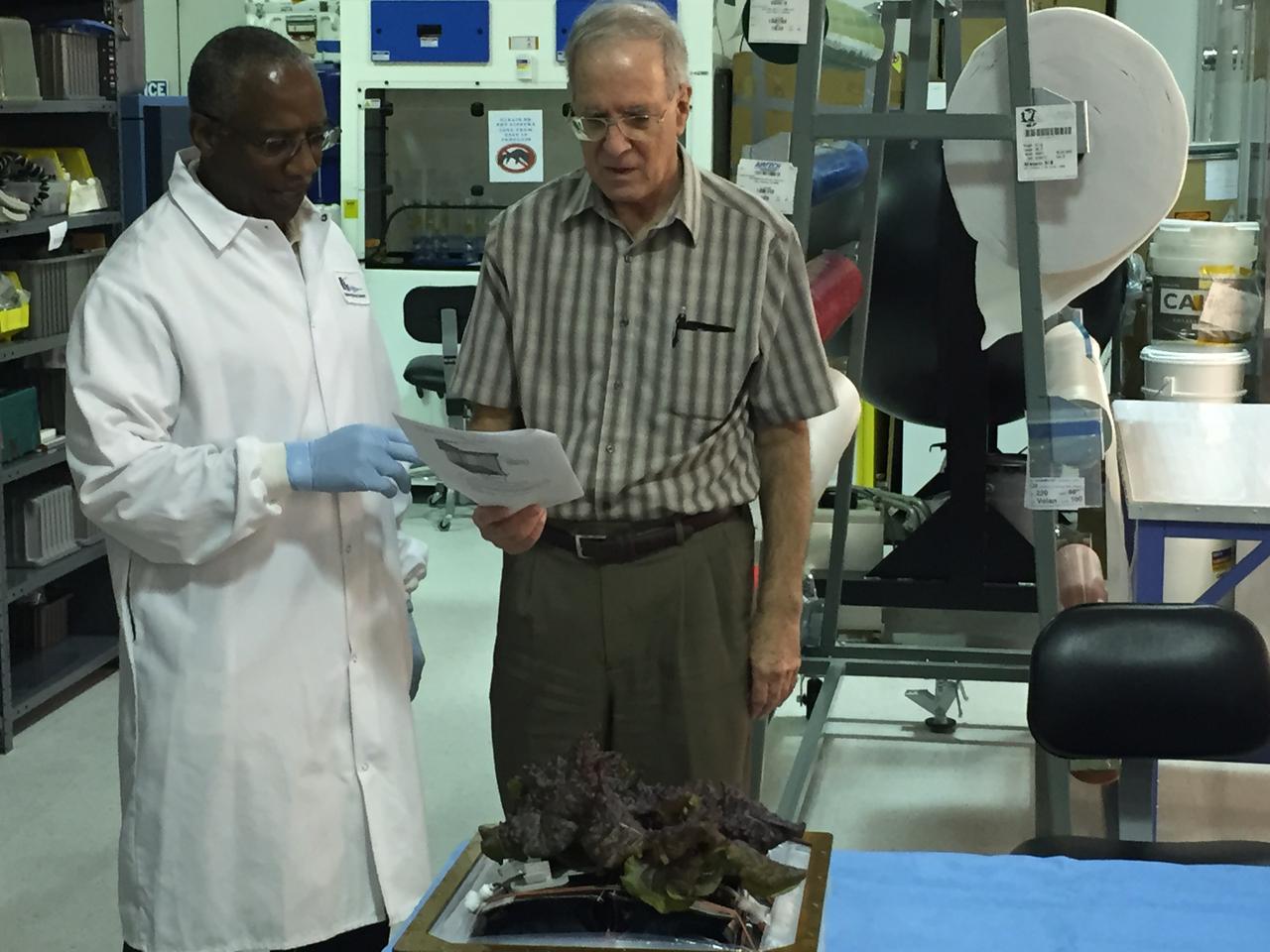
Astronaut Scott Kelly initiated VEG-01 B, the second crop of lettuce, on July, 8, 2015, and both Kelly and Astronaut Kjell Lindgren cared for the plants. The crop grew for 33 days. VEG-01 B included one set of six plant pillows planted with red romaine lettuce seeds. On Aug. 10, 2015, the crew harvested and consumed leaves from each plant. This was the first crop grown and consumed in NASA hardware. They harvested the rest of the plant tissue and froze it in the station’s Minus Eighty-Degree Laboratory Freezer for ISS (MELFI) for return to Earth for further study including microbial analysis, antioxidant capacity, mineral analysis and anthocyanin concentration.
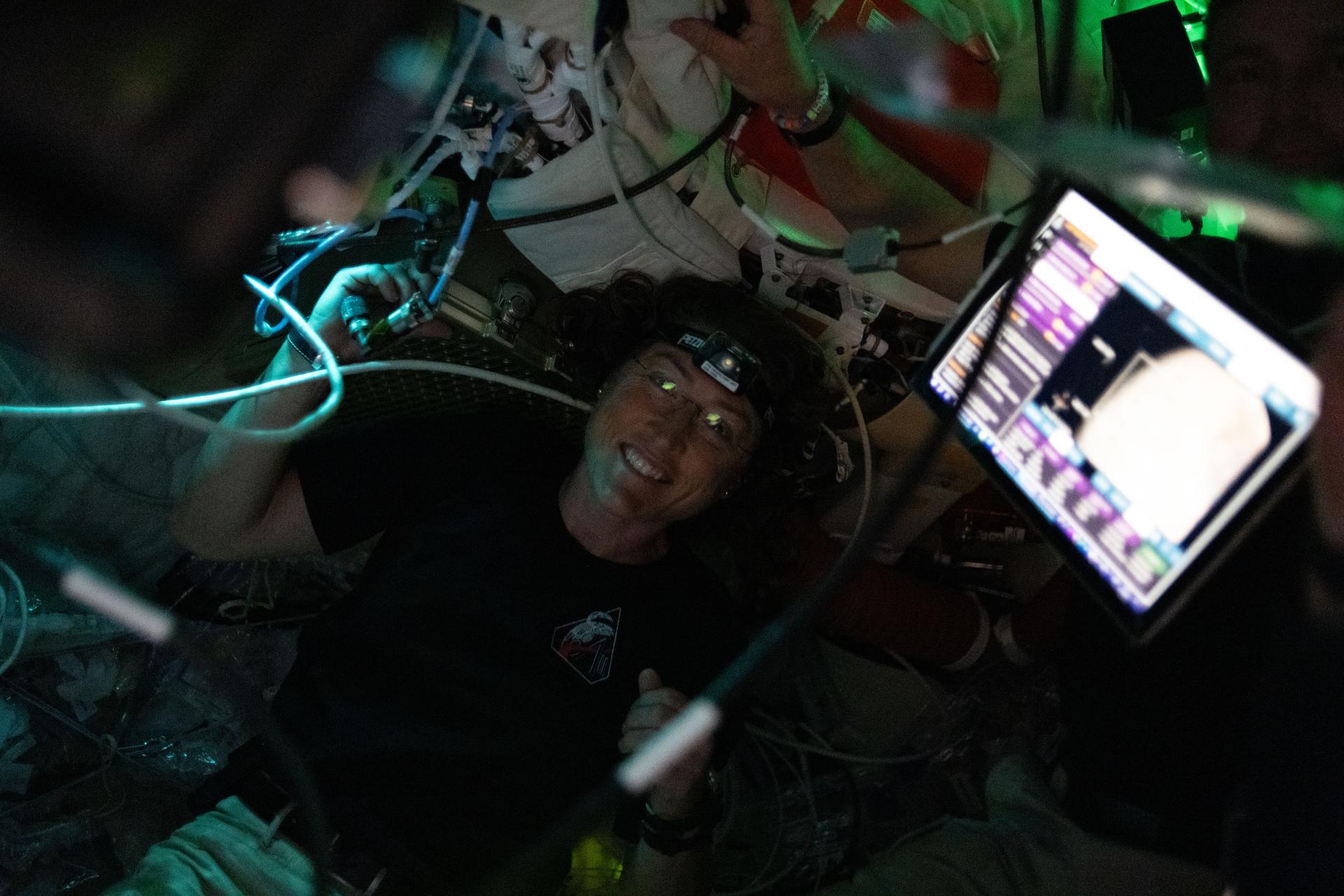
art002e016172 (April 6, 2026) – NASA astronaut and Artemis II Mission Specialist Christina Koch pictured here in the Orion spacecraft during the Artemis II lunar flyby. Koch and her fellow crewmates spent approximately seven hours taking turns at the Orion windows capturing science data to share with their team back on Earth. At closest approach, they came within 4,067 miles of the Moon’s surface.
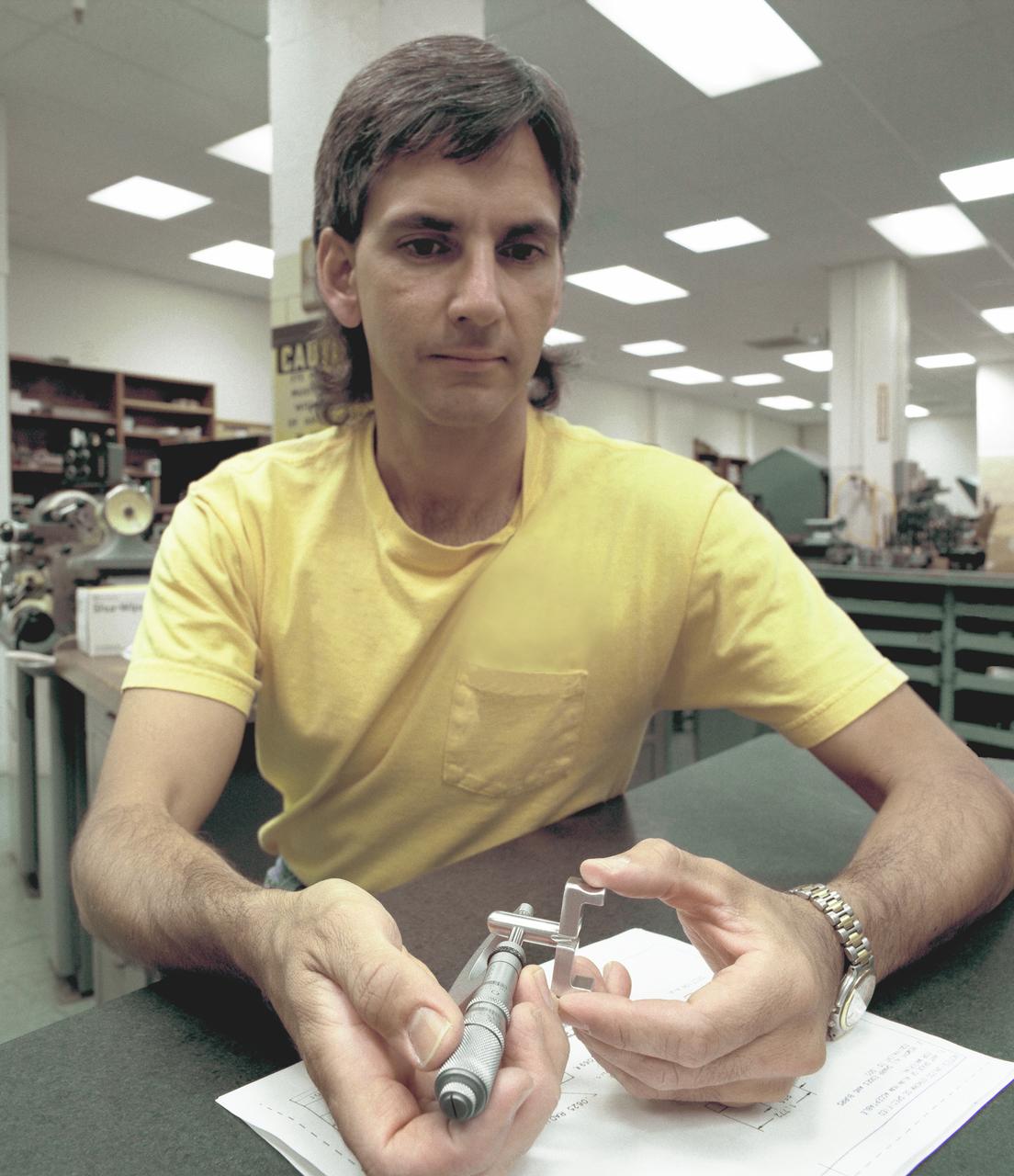
Dryden-built surgical suture instrument

NASA Administrator Charles Bolden, left, and Head of the Russian Federal Space Agency Anatoly Perminov laugh with each other as they meet outside the Cosmonaut hotel in Baikonur, Kazakhstan, Tuesday, Sept., 29, 2009 the day before Expedition 21 Flight Engineer Maxim Suraev, Expedition 21 Flight Engineer Jeffrey N. Williams and Spaceflight Participant Guy Laliberté are scheduled to launch to the International Space Station (ISS). Photo Credit: (NASA)
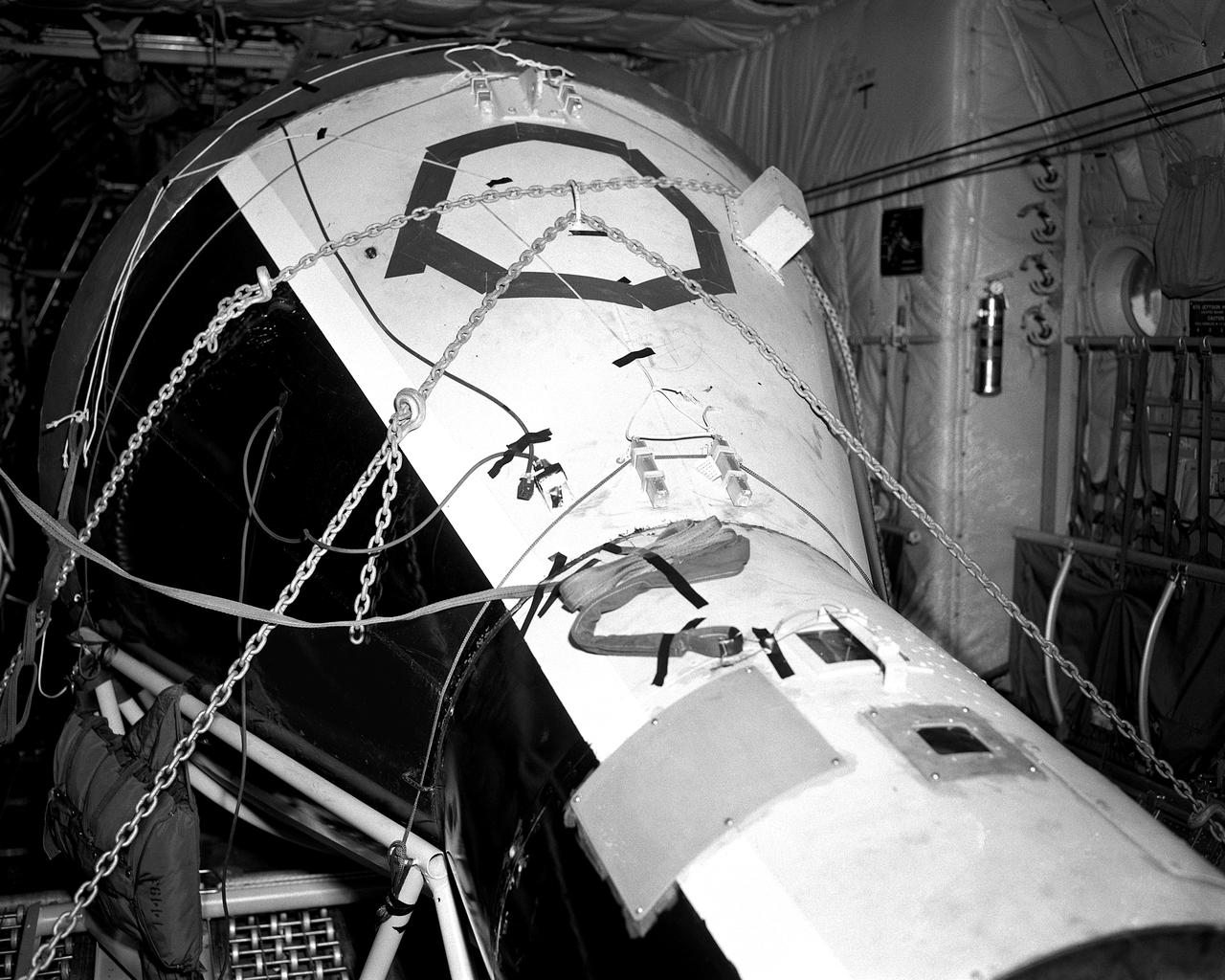
Miscellaneous Charts, Space Capsule
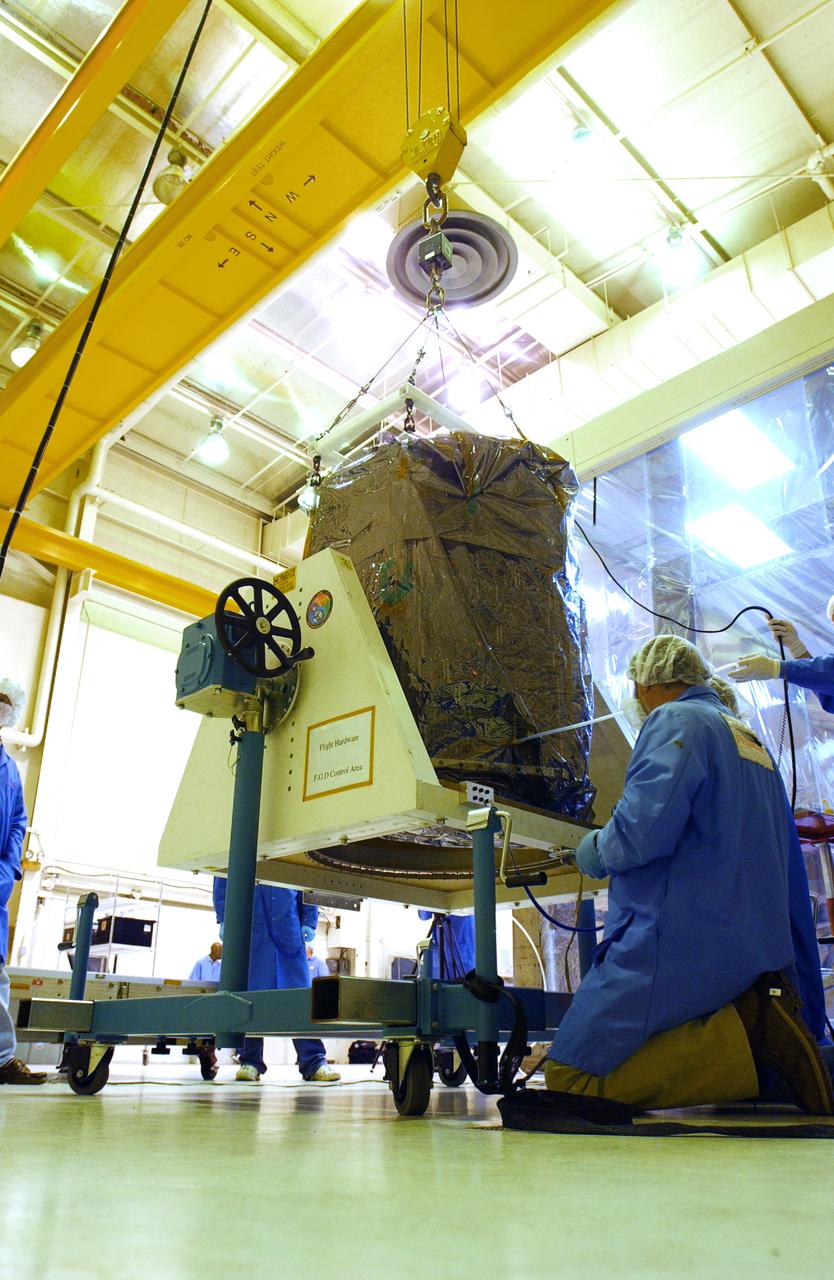
Inside a clean room at Vandenberg Air Force Base in California, NASA's Aeronomy of Ice in the Mesosphere, or AIM, spacecraft is weighed. AIM is the seventh Small Explorers mission under NASA's Explorer Program. The program provides frequent flight opportunities for world-class scientific investigations from space within heliophysics and astrophysics. The AIM spacecraft will fly three instruments designed to study polar mesospheric clouds located at the edge of space, 50 miles above the Earth's surface in the coldest part of the planet's atmosphere. The mission's primary goal is to explain why these clouds form and what has caused them to become brighter and more numerous and appear at lower latitudes in recent years. AIM's results will provide the basis for the study of long-term variability in the mesospheric climate and its relationship to global climate change. AIM is scheduled to be mated to the Pegasus XL during the second week of April, after which final inspections will be conducted. Launch is scheduled for April 25.
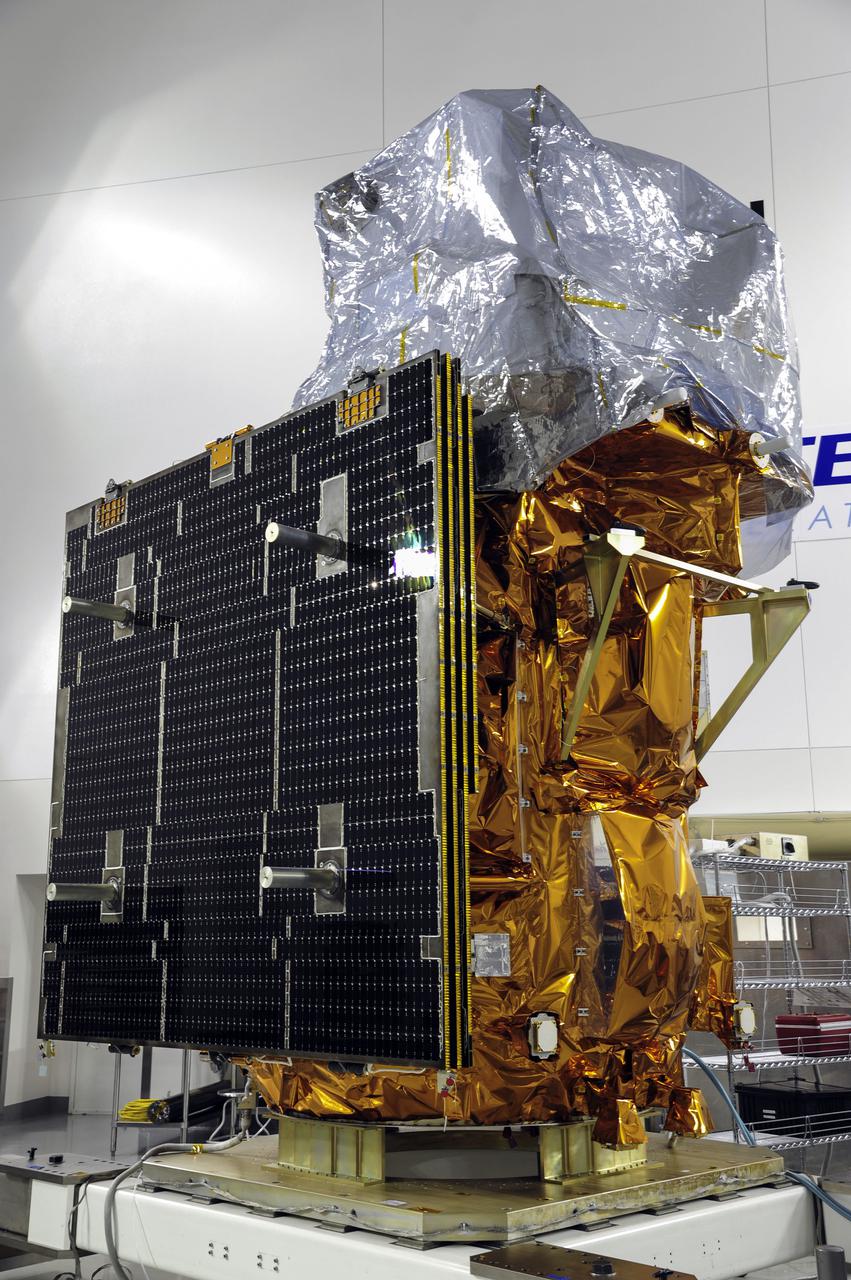
VANDENBERG AFB, Calif. -- At the Astrotech processing facility at Vandenberg Air Force Base, Calif., NASA's Landsat Data Continuity Mission, or LDCM, satellite is undergoing close-outs prior to encapsulation in the payload fairing. The Landsat Data Continuity Mission LDCM is the future of Landsat satellites. It will continue to obtain valuable data and imagery to be used in agriculture, education, business, science, and government. The Landsat Program provides repetitive acquisition of high resolution multispectral data of the Earth's surface on a global basis. The data from the Landsat spacecraft constitute the longest record of the Earth's continental surfaces as seen from space. It is a record unmatched in quality, detail, coverage, and value. Liftoff is planned for Feb. 11, 2013 aboard a United Launch Alliance Atlas V rocket. For more information, visit: http:__www.nasa.gov_mission_pages_landsat_main_index.html Photo credit: NASA
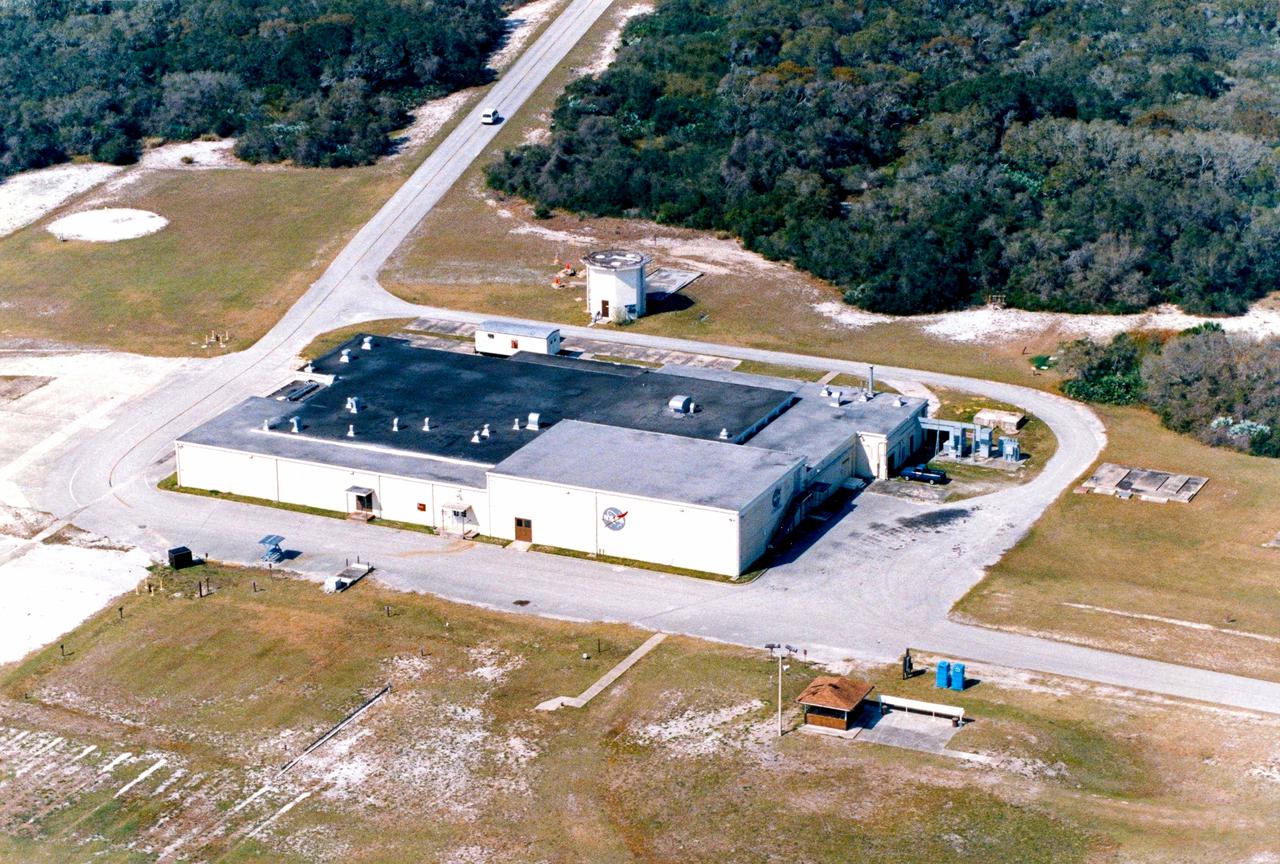
CAPE CANAVERAL, Fla. - With its operational days behind, on June 1, 1967, the Mission Control Center became a stop on the public tour of NASA facilities offered through the Kennedy Space Center Visitor’s Center, now called the Visitor Complex. Tours of the facility continued until the mid-90s. The Mercury Mission Control Center in Florida played a key role in the United States' early spaceflight program. Located at Cape Canaveral Air Force Station, the original part of the building was constructed between 1956 and 1958, with additions in 1959 and 1963. The facility officially was transferred to NASA on Dec. 26, 1963, and served as mission control during all the Project Mercury missions, as well as the first three flights of the Gemini Program, when it was renamed Mission Control Center. In 1999, much of the equipment and furnishings from the Flight Control Area were moved to the Kennedy Space Center Visitor Complex where they became part of the exhibit there. The building was demolished in spring 2010. Photo credit: NASA
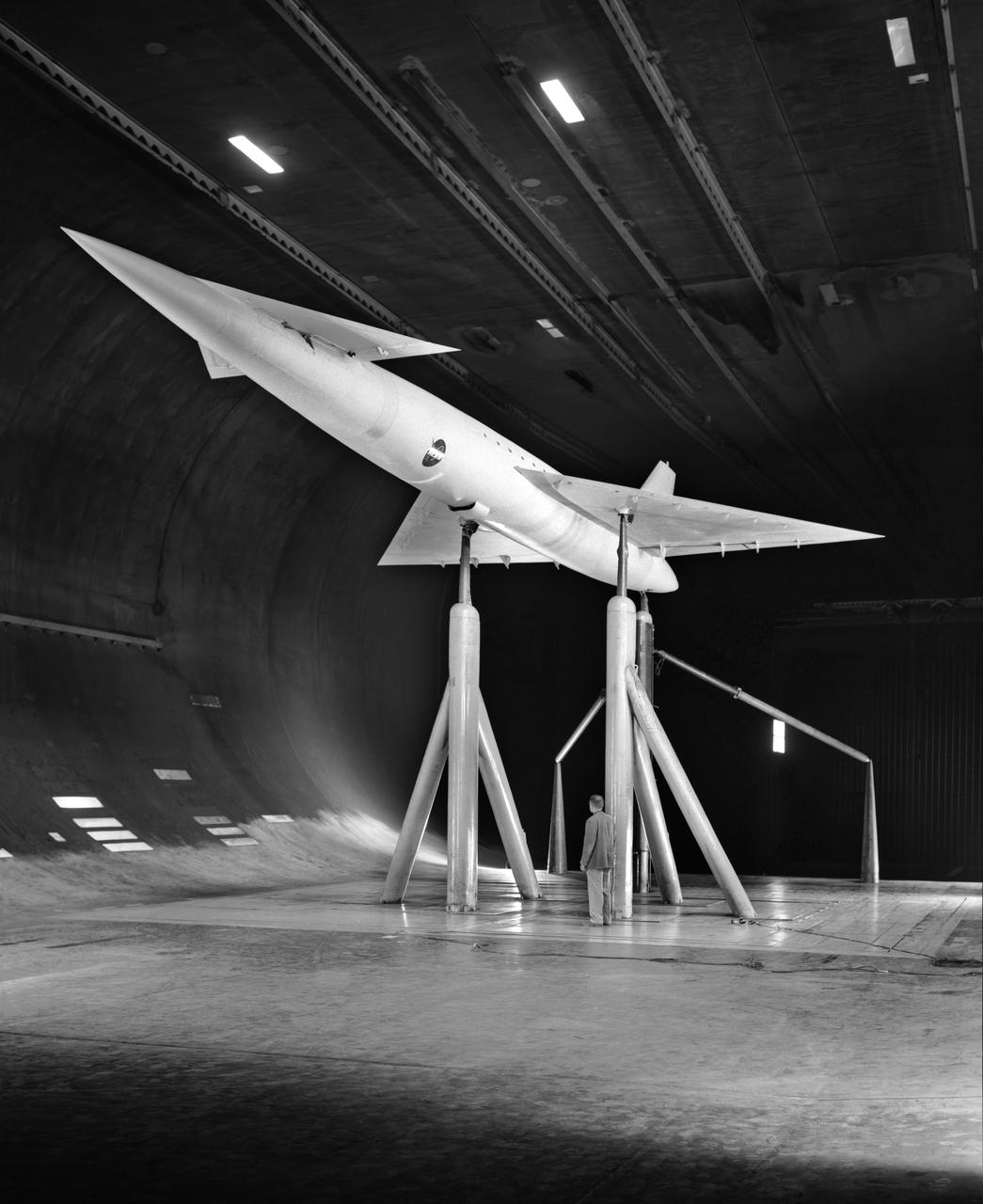
Low Speed investigation of a supersonic transport model in the 40x80 Wind Tunnel. 03/01/1961 R 975 T Zero angel of attack. Supersonic transport with delta wing and delta conard. 3/4 front view.
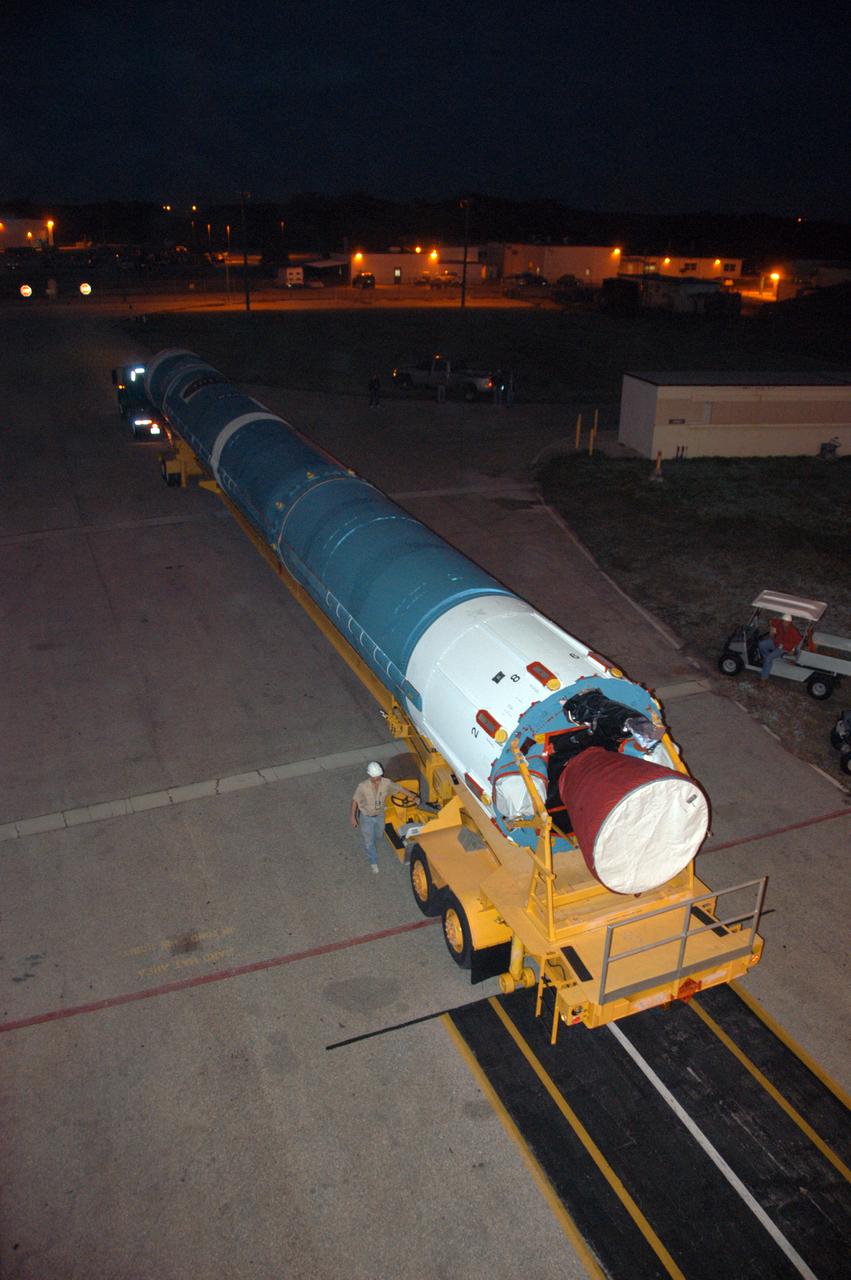
The first stage of a United Launch Alliance Delta II rocket is on its way to Launch Pad 17-B on Cape Canaveral Air Force Station in Florida. The rocket is the launch vehicle for the THEMIS spacecraft, consisting of five identical probes, the largest number of scientific satellites ever launched into orbit aboard a single rocket. This unique constellation of satellites will resolve the tantalizing mystery of what causes the spectacular sudden brightening of the aurora borealis and aurora australis - the fiery skies over the Earth's northern and southern polar regions. After the first stage is in the mobile service tower on the pad, nine solid rocket boosters will be placed around the base of the first stage and attached in sets of three. THEMIS is scheduled to launch aboard the Delta II at 6:07 p.m. EST on Feb. 15.
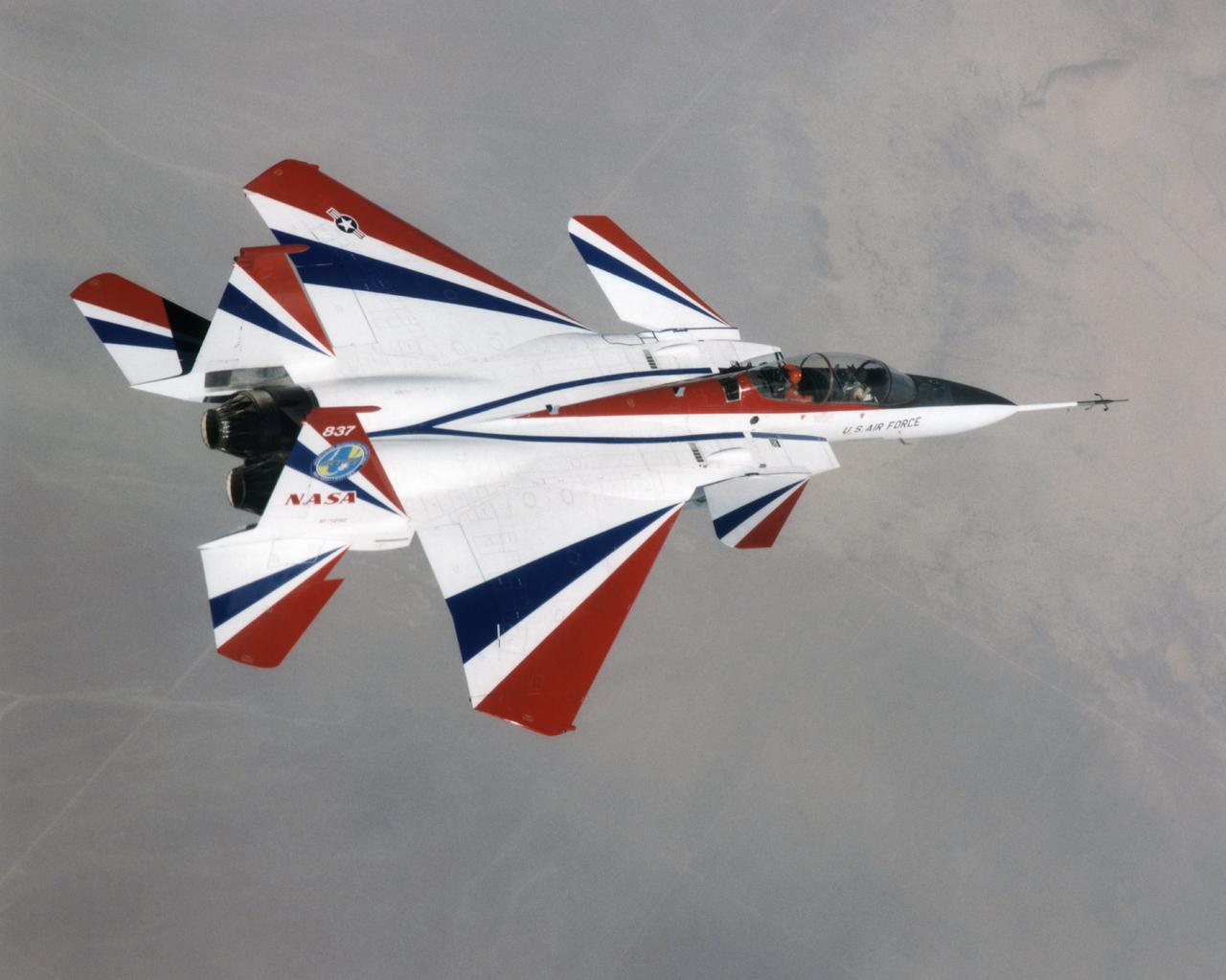
The F-15 ACTIVE in flight above the Mojave desert on April 14, 1998. The overhead shot shows the aircraft's striking red and while paint scheme/ The large forward canards are actually the tail surfaces from an F-18.
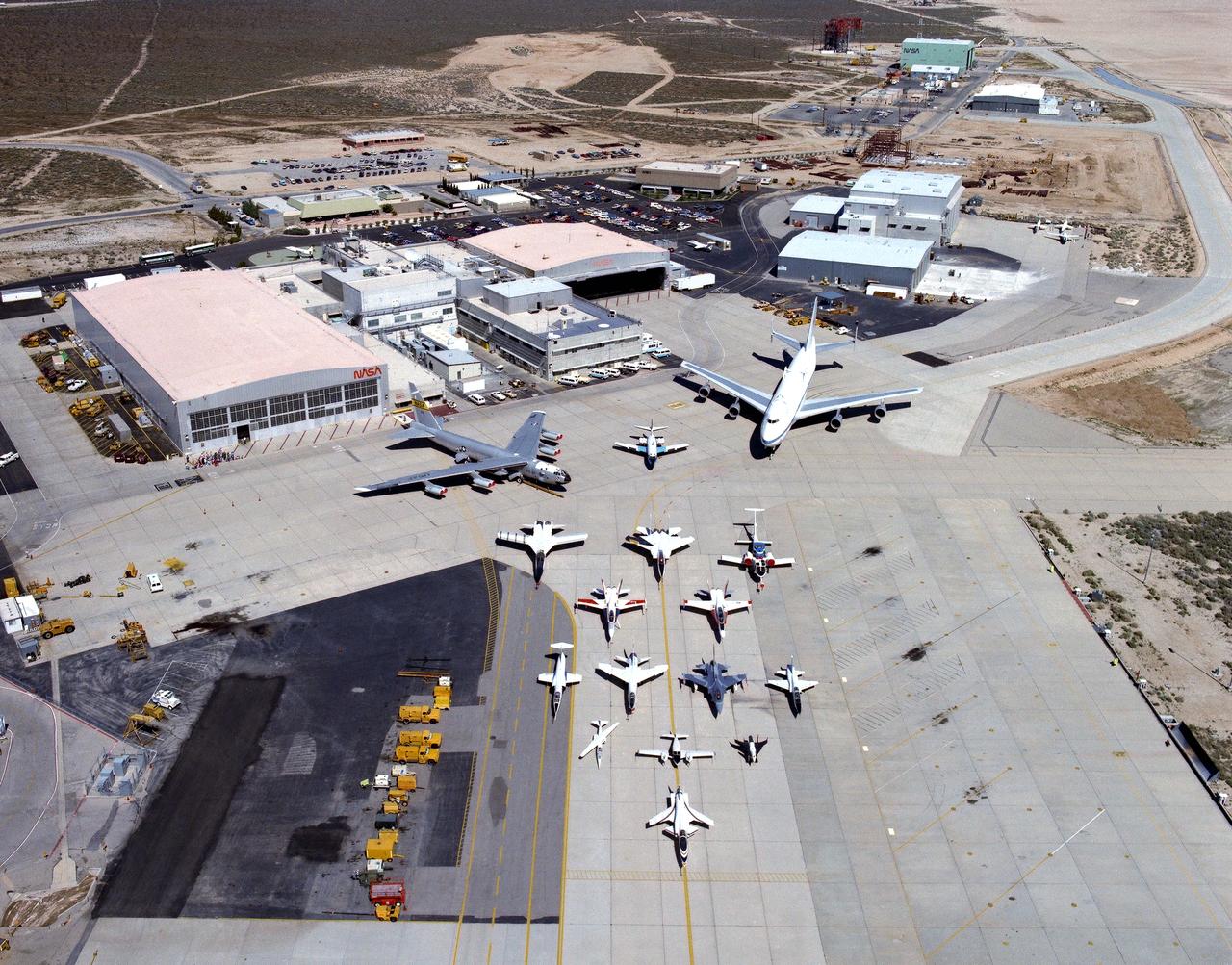
Dryden Aircraft Fleet on ramp and facility - 1988
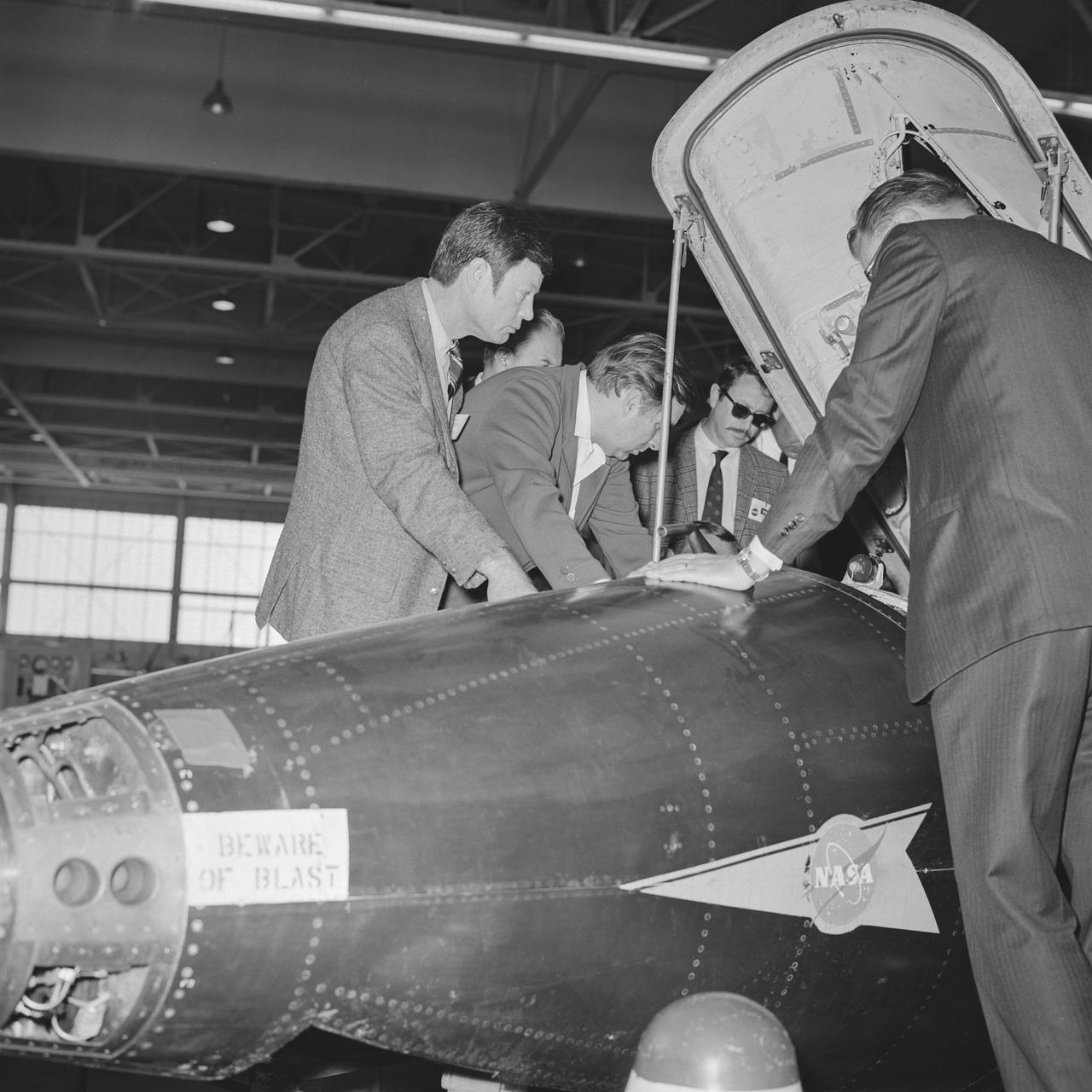
The 1960s Star Trek television series’ cast members visit NASA Dryden Flight Research Center, now Armstrong, in 1967. Chief Medical Officer Leonard ‘Bones’ McCoy played by DeForest Kelley and the show’s creator Gene Roddenberry receive briefing on X-15 cockpit as they view inside.
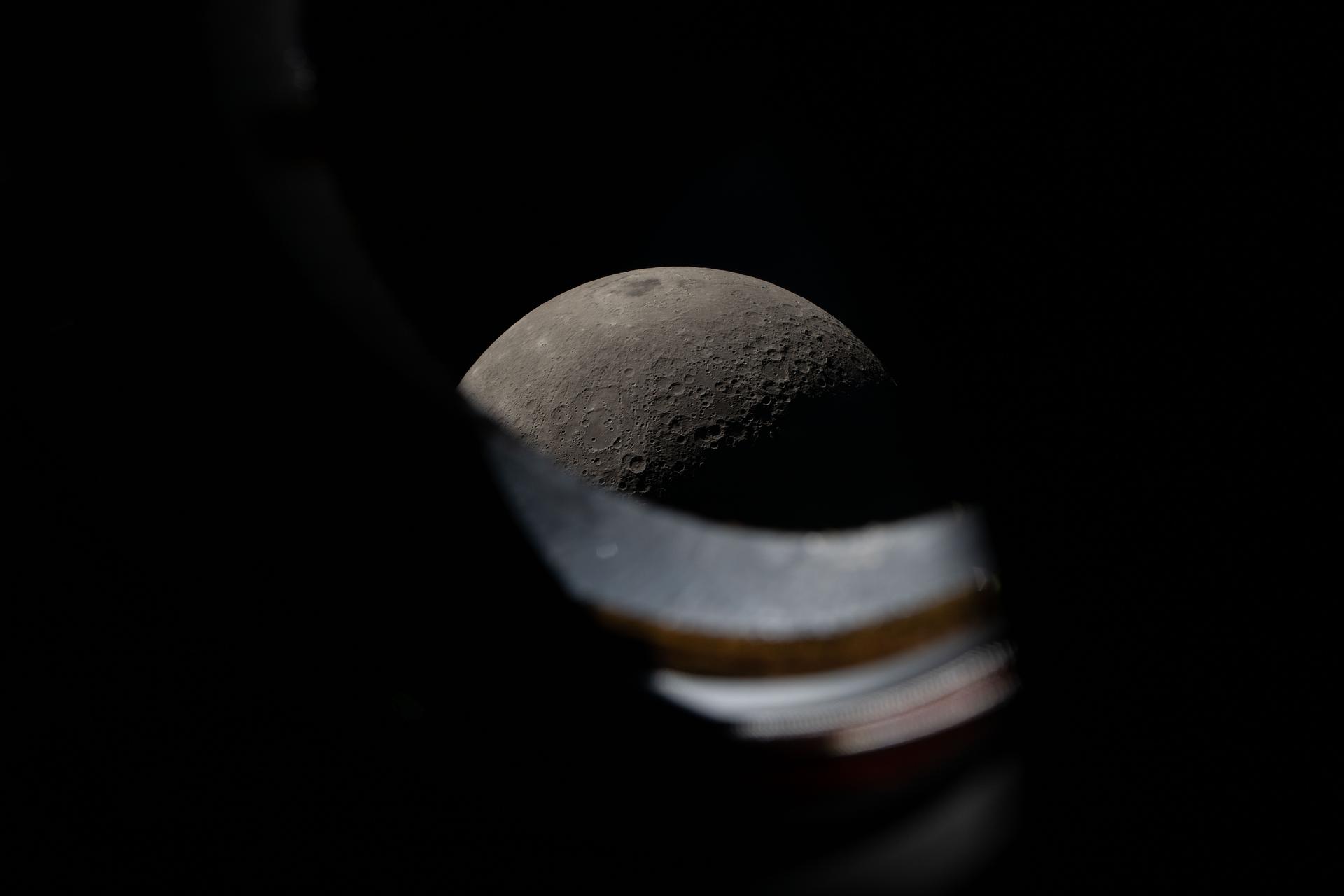
art002e012278 (April 6, 2026) - The Moon seen peeking above the window sill of the Orion spacecraft during the Artemis II lunar flyby on April 6, 2026. The Artemis II crew spent about 7 hours at the Orion windows during the flyby, taking photos and recording observations on the Moon to share with scientists on the ground.
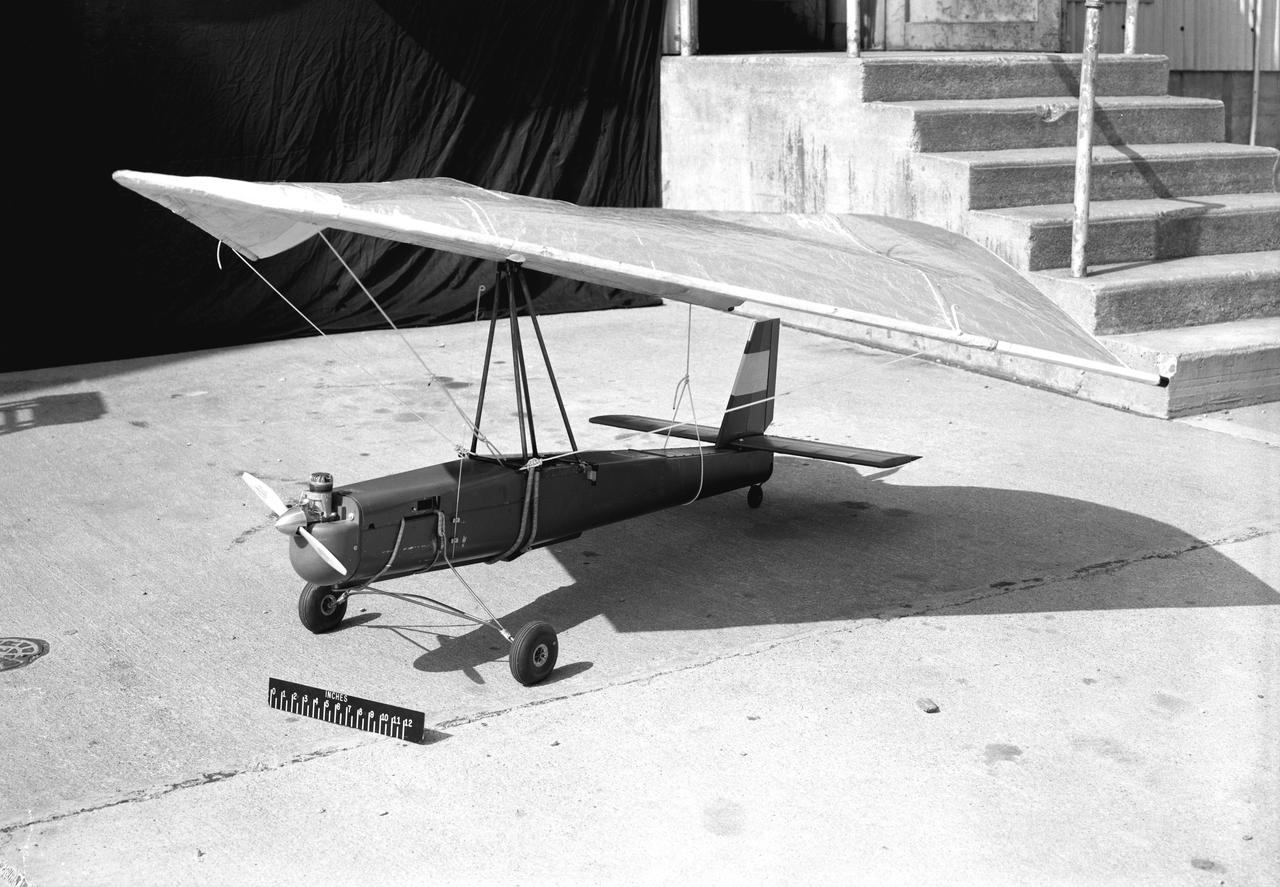
Model at building 193
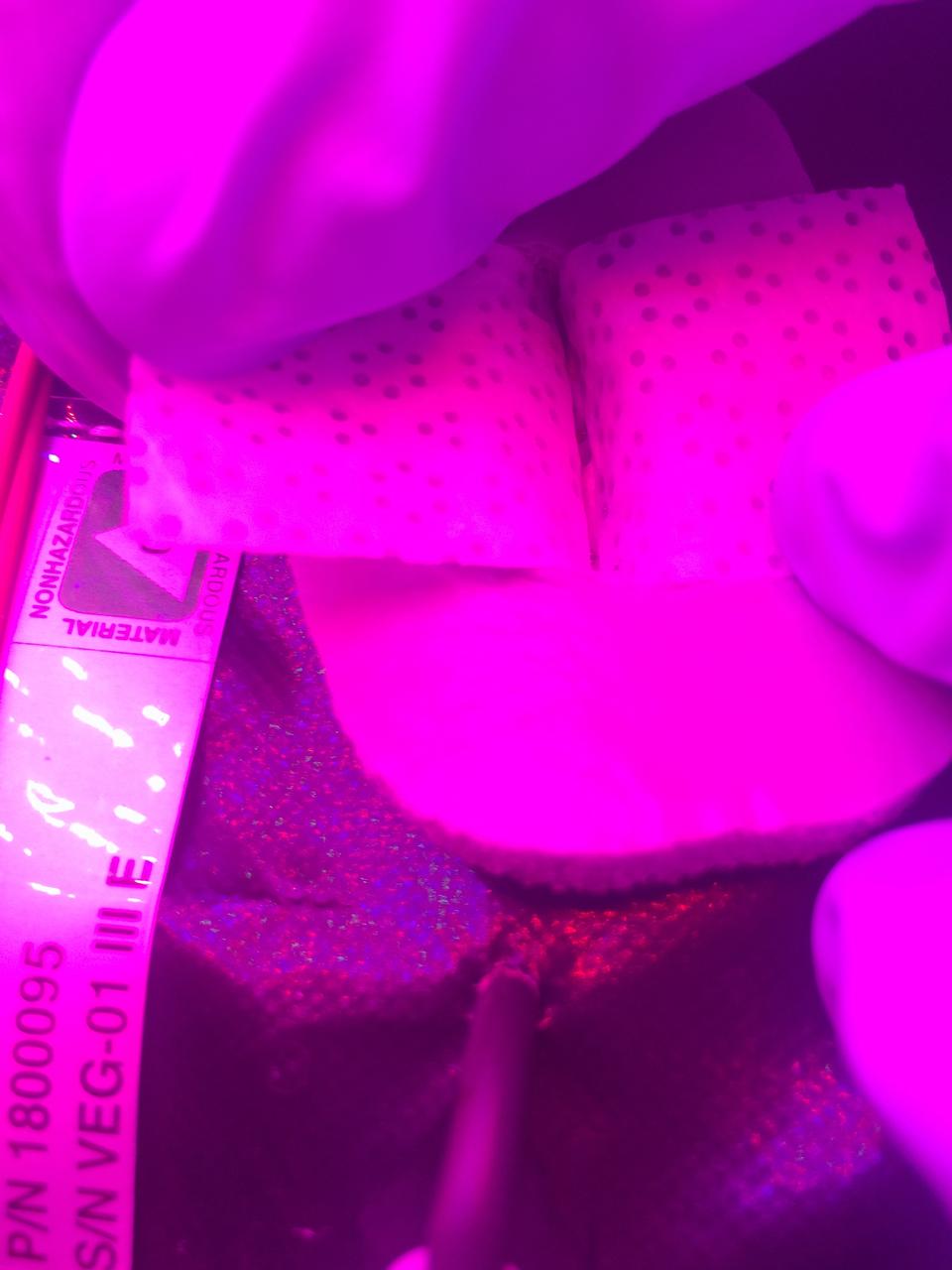
Astronaut Scott Kelly initiated VEG-01 B, the second crop of lettuce, on July, 8, 2015, and both Kelly and Astronaut Kjell Lindgren cared for the plants. The crop grew for 33 days. VEG-01 B included one set of six plant pillows planted with red romaine lettuce seeds. On Aug. 10, 2015, the crew harvested and consumed leaves from each plant. This was the first crop grown and consumed in NASA hardware. They harvested the rest of the plant tissue and froze it in the station’s Minus Eighty-Degree Laboratory Freezer for ISS (MELFI) for return to Earth for further study including microbial analysis, antioxidant capacity, mineral analysis and anthocyanin concentration.
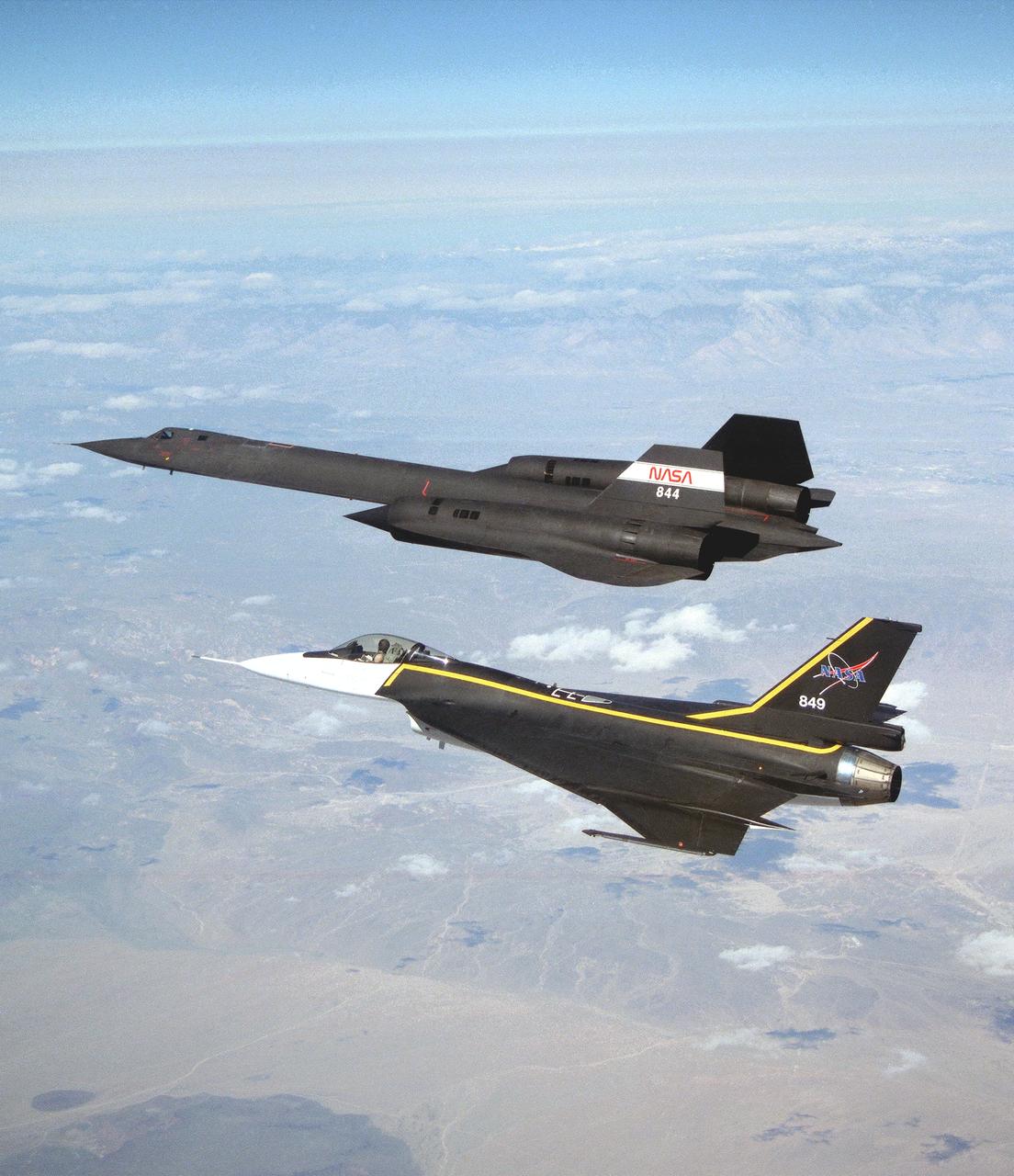
The single-seat F-16XL, NASA 849, joins up with an SR-71A, NASA 844, as crews set up for one of the flights in the recent sonic boom research program conducted by the Dryden Flight Research Center, Edwards, California. During the missions, the F-16XL probed the shockwaves generated by the SR-71, while at lower altitudes sensors on an F-18 and on a YO-3A, and also on the ground, recorded data from the same shockwave.
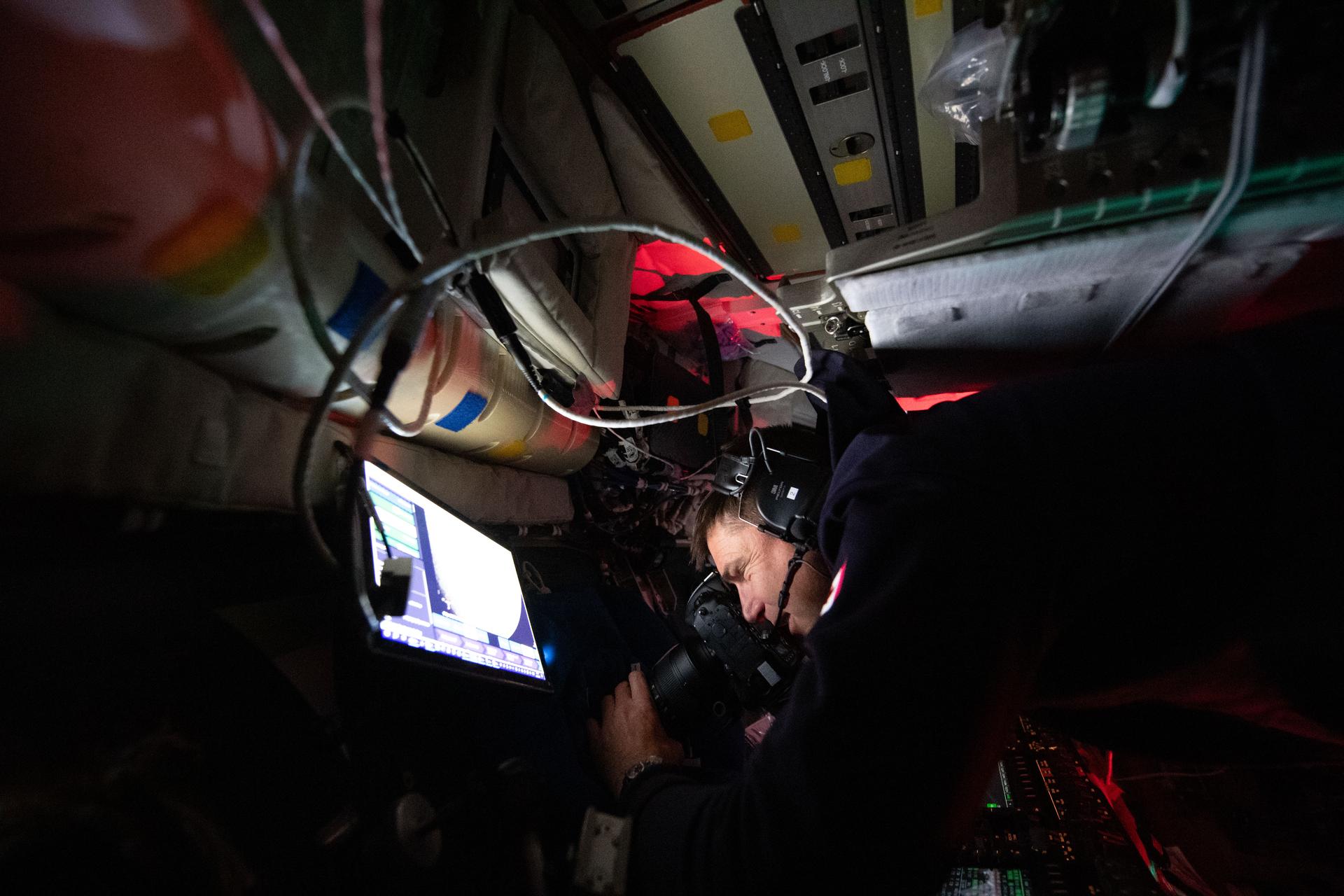
art002e014235 (April 6, 2026) – CSA (Canadian Space Agency) astronaut and Artemis II Mission Specialist Jeremy Hansen is seen taking images through the Orion spacecraft window during the Artemis II lunar flyby. Hansen and his fellow crewmates spent approximately seven hours taking turns at the Orion windows capturing science data to share with their team back on Earth. At closest approach, they came within 4,067 miles of the Moon’s surface.

In Astrotech's Payload Processing Facility, technicians help secure the Dawn spacecraft onto a moveable stand. Dawn will be moved into clean room C for unbagging and further processing. Dawn's mission is to explore two of the asteroid belt's most intriguing and dissimilar occupants: asteroid Vesta and the dwarf planet Ceres. The Dawn mission is managed by JPL, a division of the California Institute of Technology in Pasadena, for NASA's Science Mission Directorate in Washington, D.C.
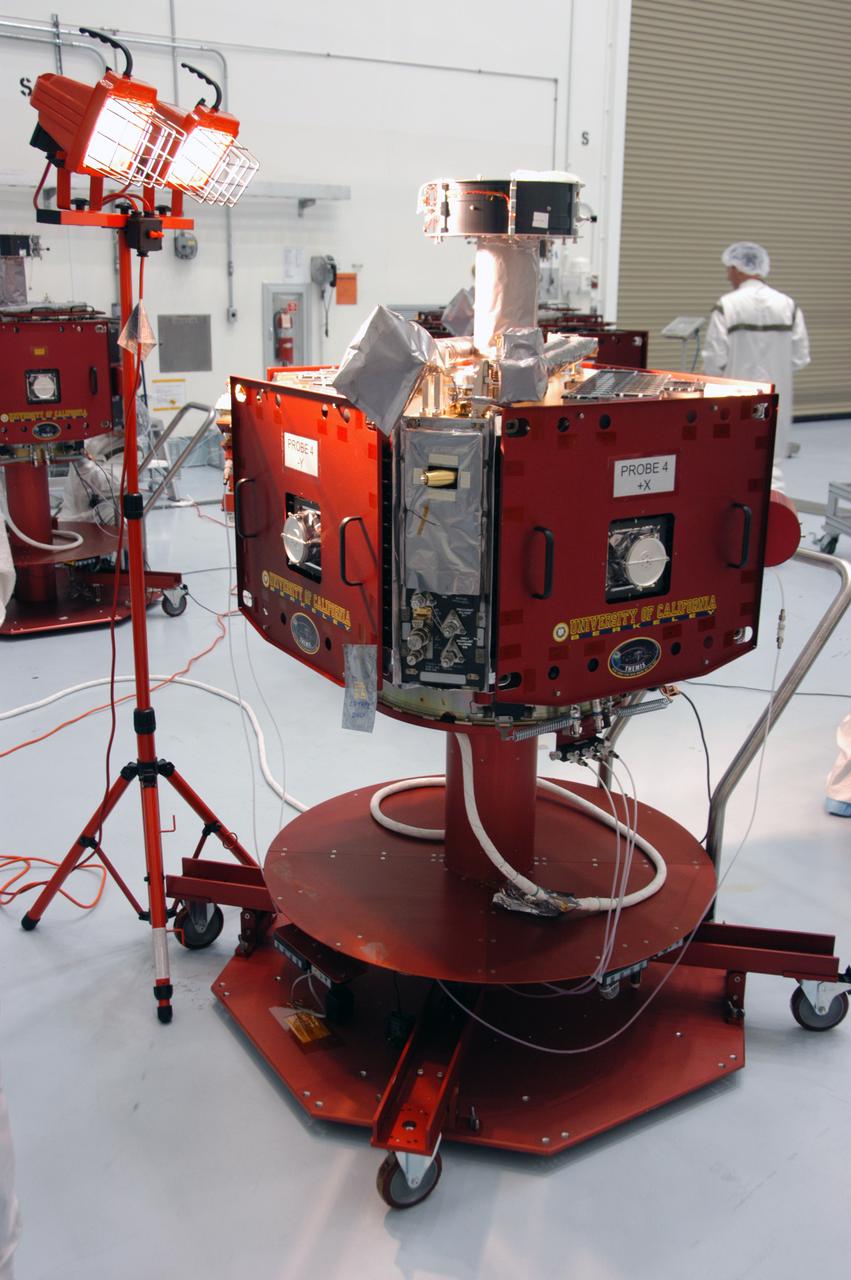
In the Hazardous Processing Facility at Astrotech Space Operations, one of the THEMIS probes undergoes solar array illumination telemetry testing. THEMIS consists of five identical probes, the largest number of scientific satellites ever launched into orbit aboard a single rocket. This unique constellation of satellites will resolve the tantalizing mystery of what causes the spectacular sudden brightening of the aurora borealis and aurora australis - the fiery skies over the Earth's northern and southern polar regions. THEMIS is scheduled to launch aboard the Delta II at 6:07 p.m. EST on Feb. 15.
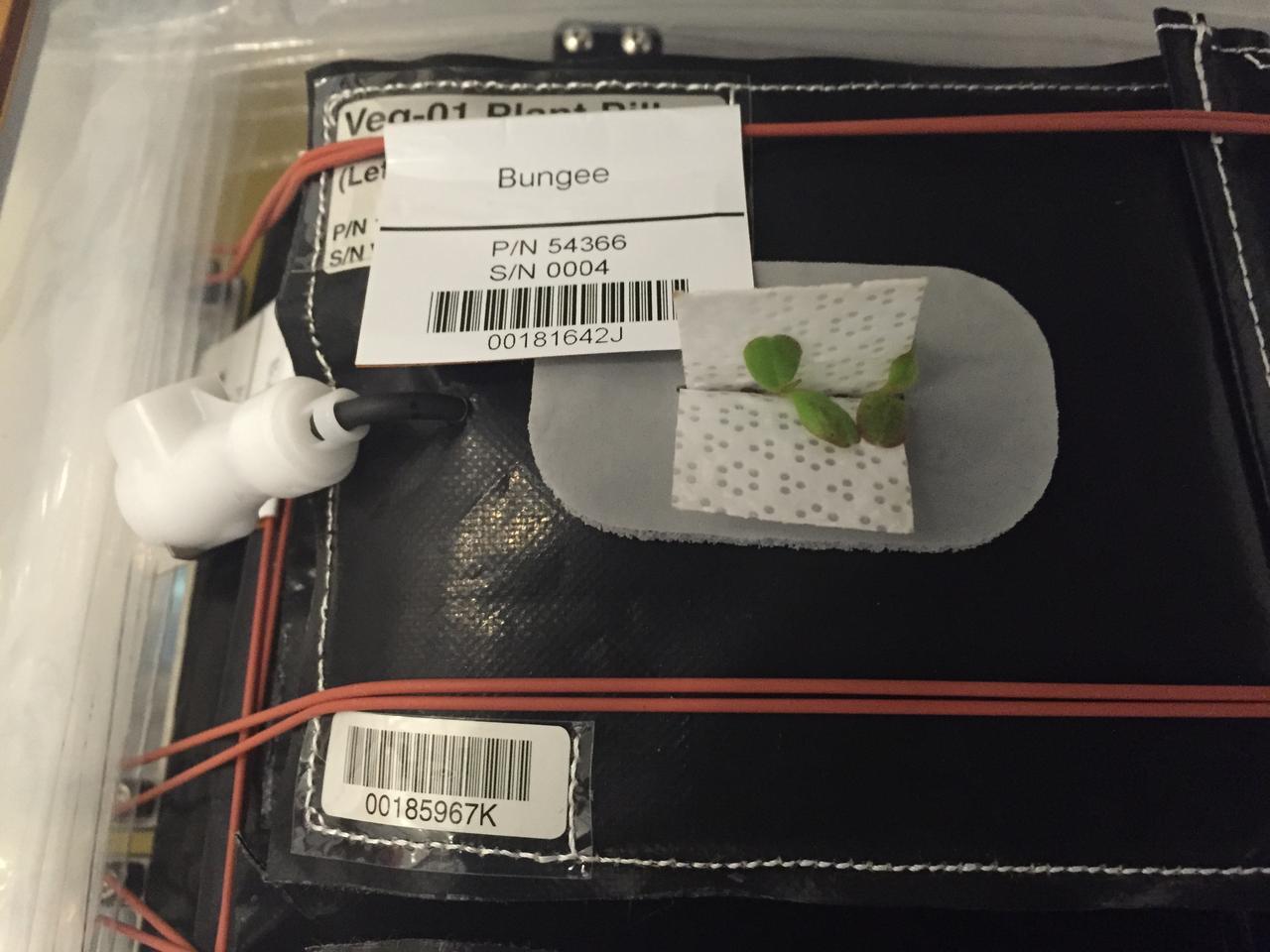
Astronaut Scott Kelly initiated VEG-01 B, the second crop of lettuce, on July, 8, 2015, and both Kelly and Astronaut Kjell Lindgren cared for the plants. The crop grew for 33 days. VEG-01 B included one set of six plant pillows planted with red romaine lettuce seeds. On Aug. 10, 2015, the crew harvested and consumed leaves from each plant. This was the first crop grown and consumed in NASA hardware. They harvested the rest of the plant tissue and froze it in the station’s Minus Eighty-Degree Laboratory Freezer for ISS (MELFI) for return to Earth for further study including microbial analysis, antioxidant capacity, mineral analysis and anthocyanin concentration.
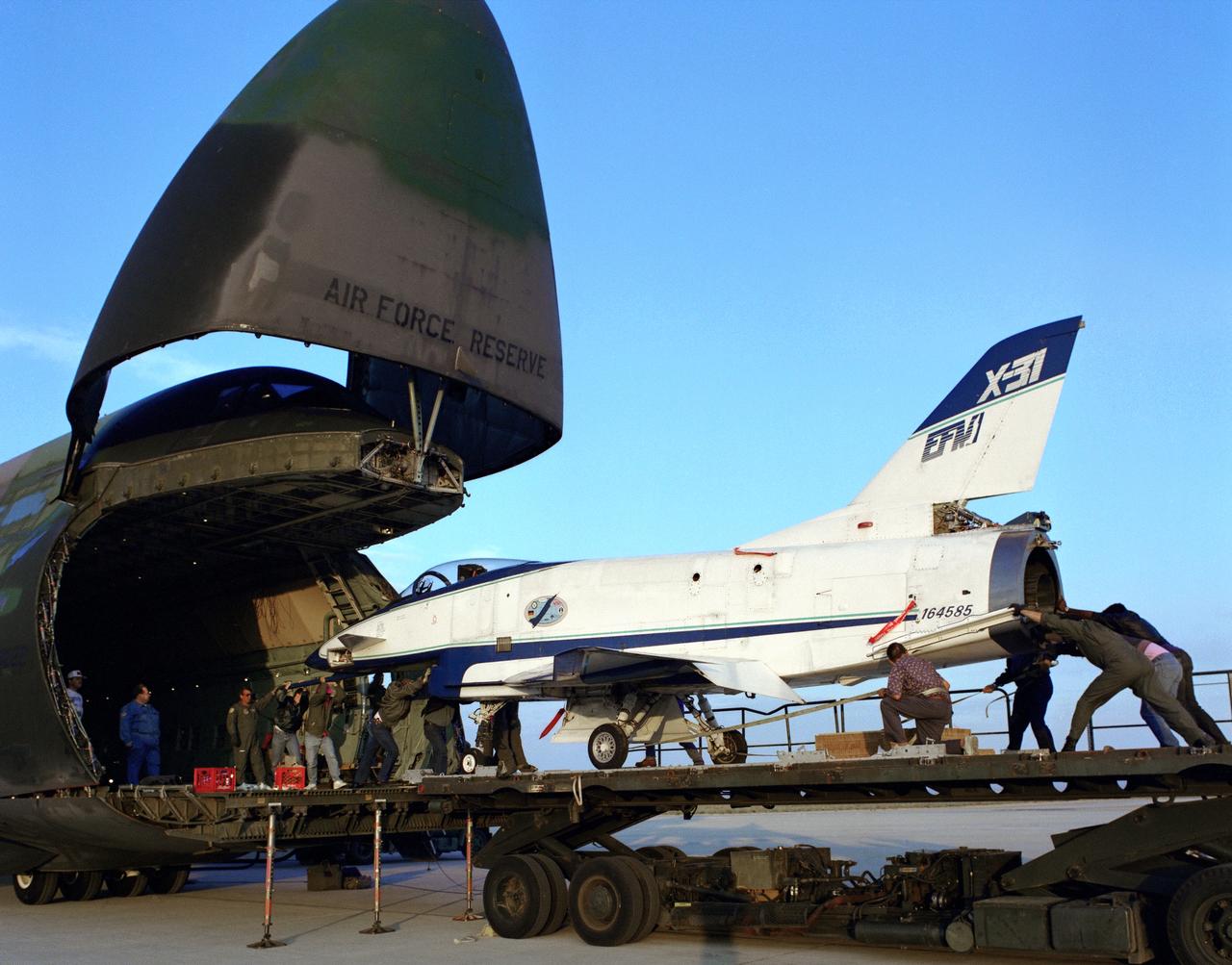
The X-31 Enhanced Fighter Maneuverability Technology Demonstrator Aircraft, based at the NASA Dryden Flight Research Center, Edwards, California, begins rolling aboard an Air Force Reserve C-5 transport which ferried it on May 22, 1995 to Europe where it was flown in the Paris Air Show in June 1995. To fit in the C-5 the right wing of the X-31 had to be removed. At the air show, the X-31 demonstrated the value of using thrust vectoring (directing engine exhaust flow) coupled with advanced flight control systems to provide controlled flight at very high angles of attack.
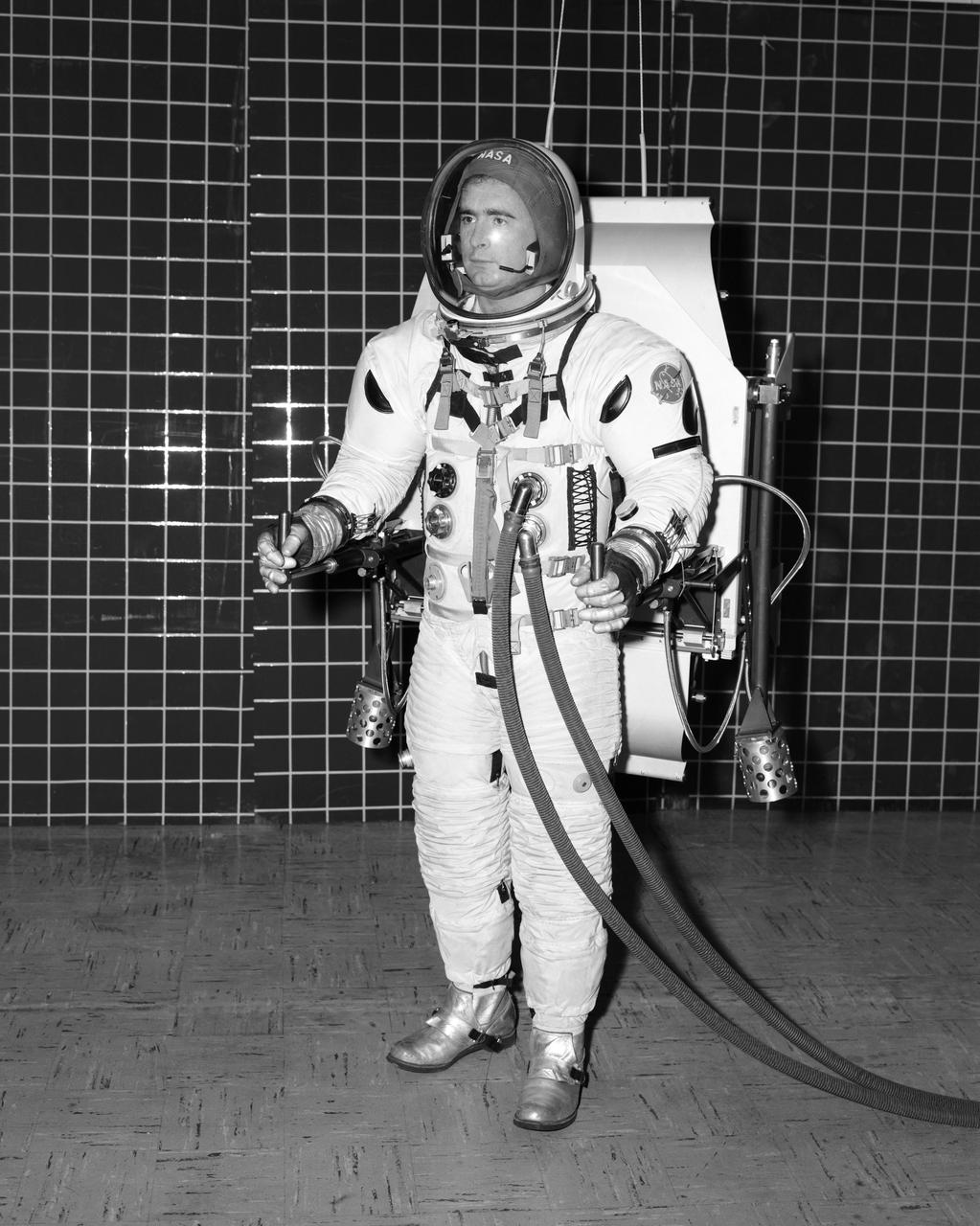
Space Suit: NASA Langley researcher (Kenneth R. Yenni) tries out a proposal for an Apollo space suit.
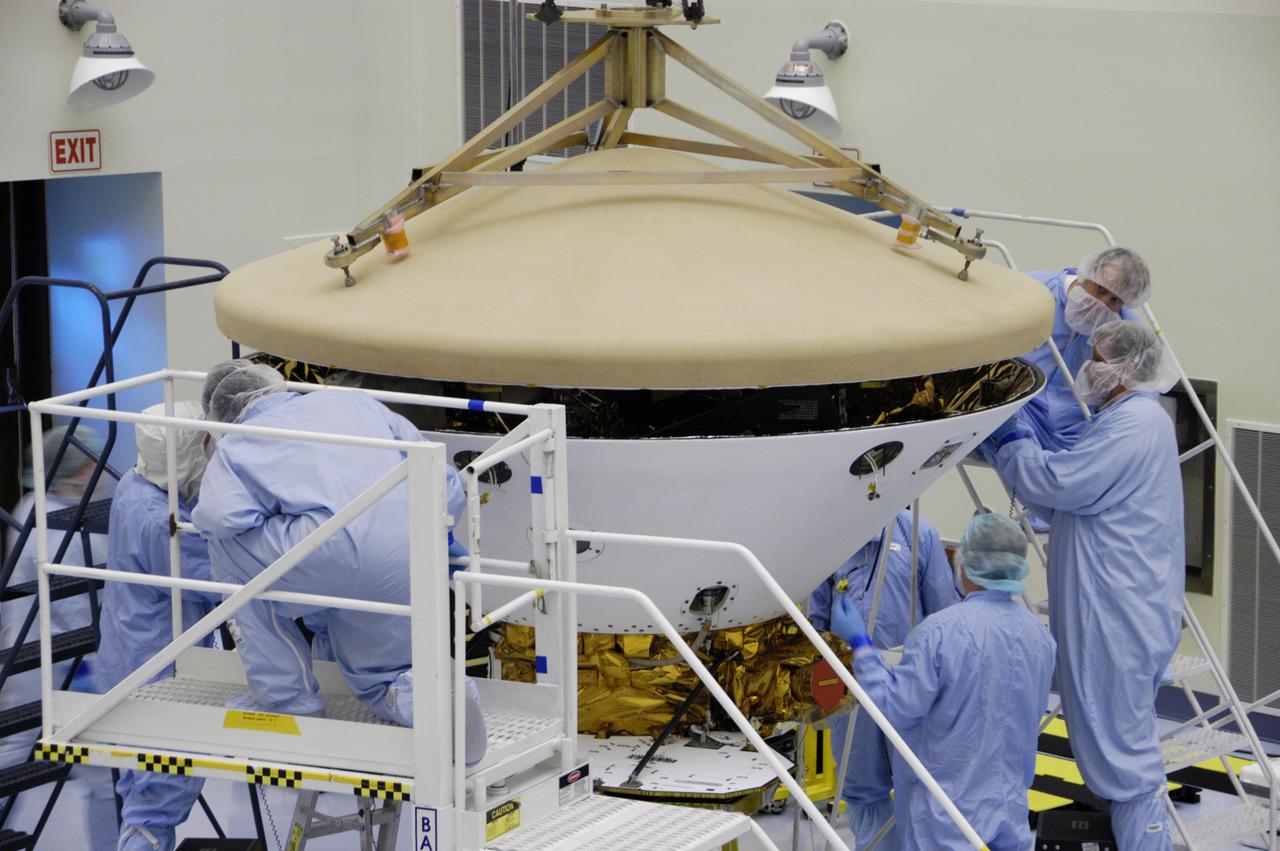
In the Payload Hazardous Servicing Facility, technicians prepare to install the heat shield on the Phoenix Mars Lander spacecraft. The Phoenix mission is the first project in NASA's first openly competed program of Mars Scout missions. Phoenix will land in icy soils near the north polar permanent ice cap of Mars and explore the history of the water in these soils and any associated rocks, while monitoring polar climate. Landing is planned in May 2008 on arctic ground where a mission currently in orbit, Mars Odyssey, has detected high concentrations of ice just beneath the top layer of soil. It will serve as NASA's first exploration of a potential modern habitat on Mars and open the door to a renewed search for carbon-bearing compounds, last attempted with NASA's Viking missions in the 1970s. A stereo color camera and a weather station will study the surrounding environment while the other instruments check excavated soil samples for water, organic chemicals and conditions that could indicate whether the site was ever hospitable to life. Microscopes can reveal features as small as one one-thousandth the width of a human hair. Launch of Phoenix aboard a Delta II rocket is targeted for Aug. 3 from Cape Canaveral Air Force Station in Florida.
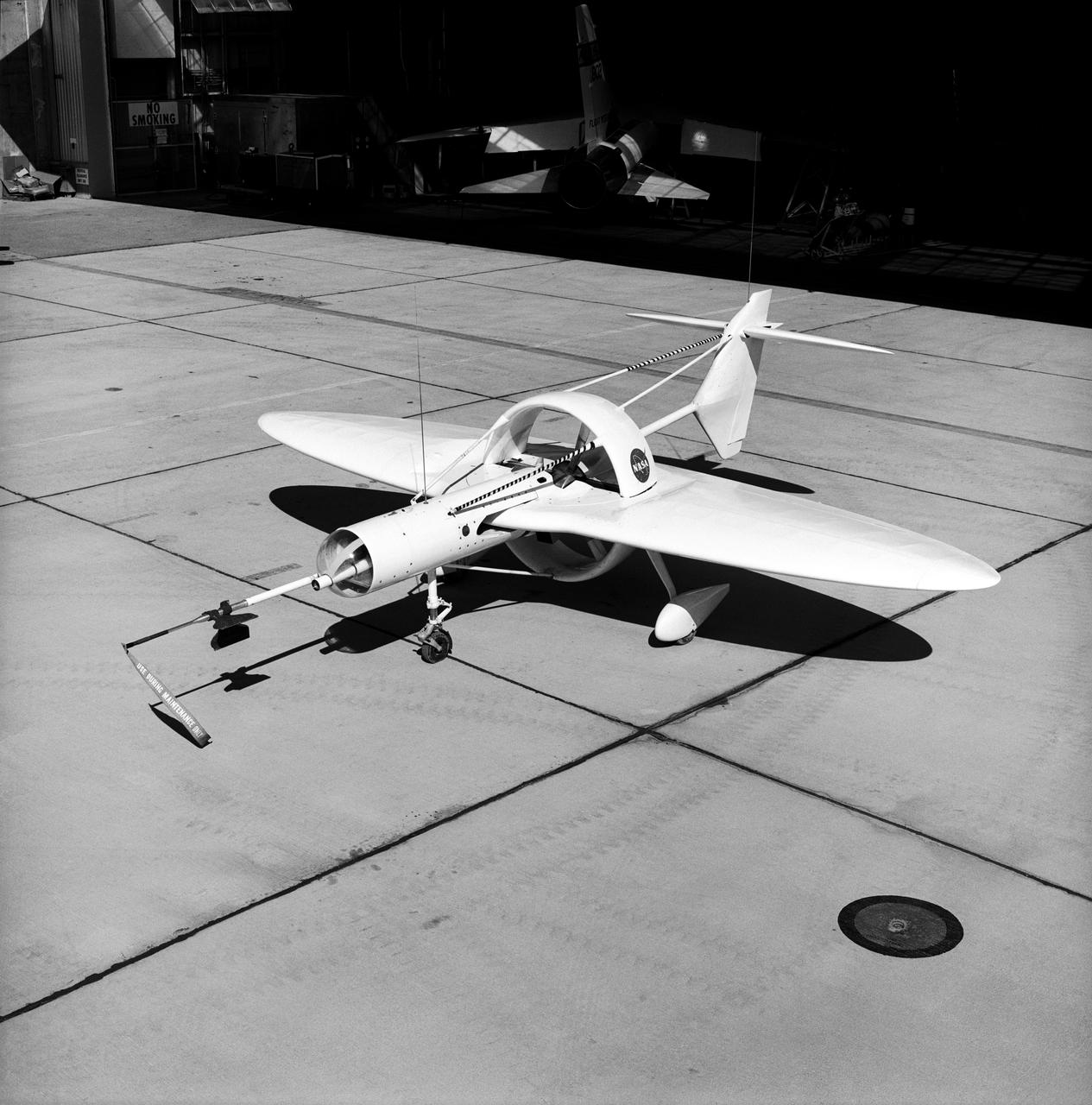
This 1976 photograph of the Oblique Wing Research Aircraft was taken in front of the NASA Flight Research Center hangar, located at Edwards Air Force Base, California. In the photograph the noseboom, pitot-static probe, and angles-of-attack and sideslip flow vanes(covered-up) are attached to the front of the vehicle. The clear nose dome for the television camera, and the shrouded propellor for the 90 horsepower engine are clearly seen.

This poster artfully depicts Solar Surfing, an early stage NASA study to support potential future missions that could travel closer to the Sun’s surface than ever before. The solar transition region, a very thin layer near the Sun’s surface, is of great interest to heliophysicists. In this zone, temperatures range from 10,000 to 1.8 million degrees Fahrenheit. The NASA Innovative Advanced Concepts (NIAC) program funds a study by a team at NASA’s Kennedy Space Center in Florida to further research a novel, highly reflective coating for a solar shield that could allow spacecraft to approach the Sun close enough to investigate this exciting region – about 500,000 miles from the surface. The better heliophysicists understand the Sun and how it generates energy, the better they can make predictions of the Sun’s effect on our planet – and improve our everyday communications, electronics, and transportation.
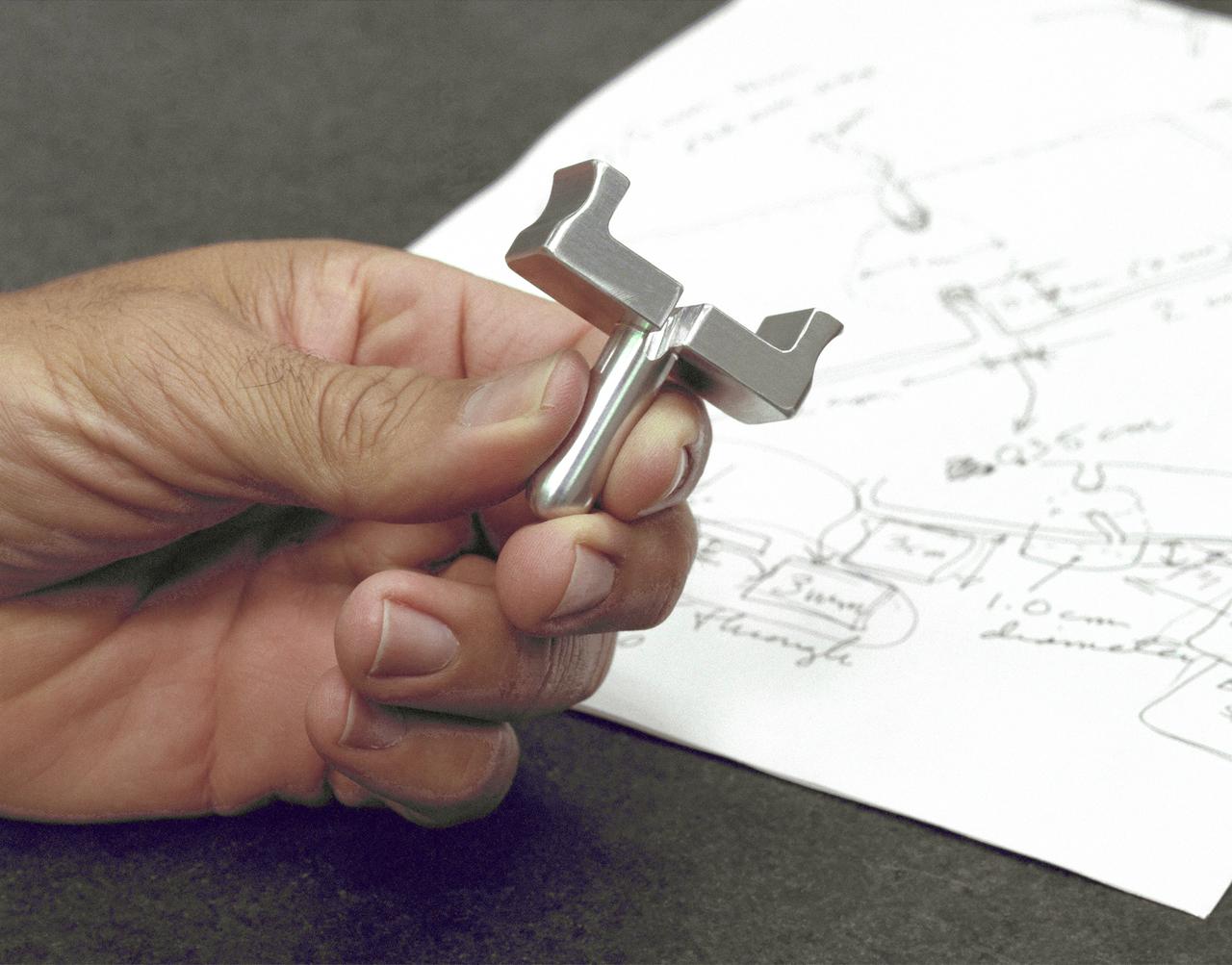
Dryden-built surgical suture instrument
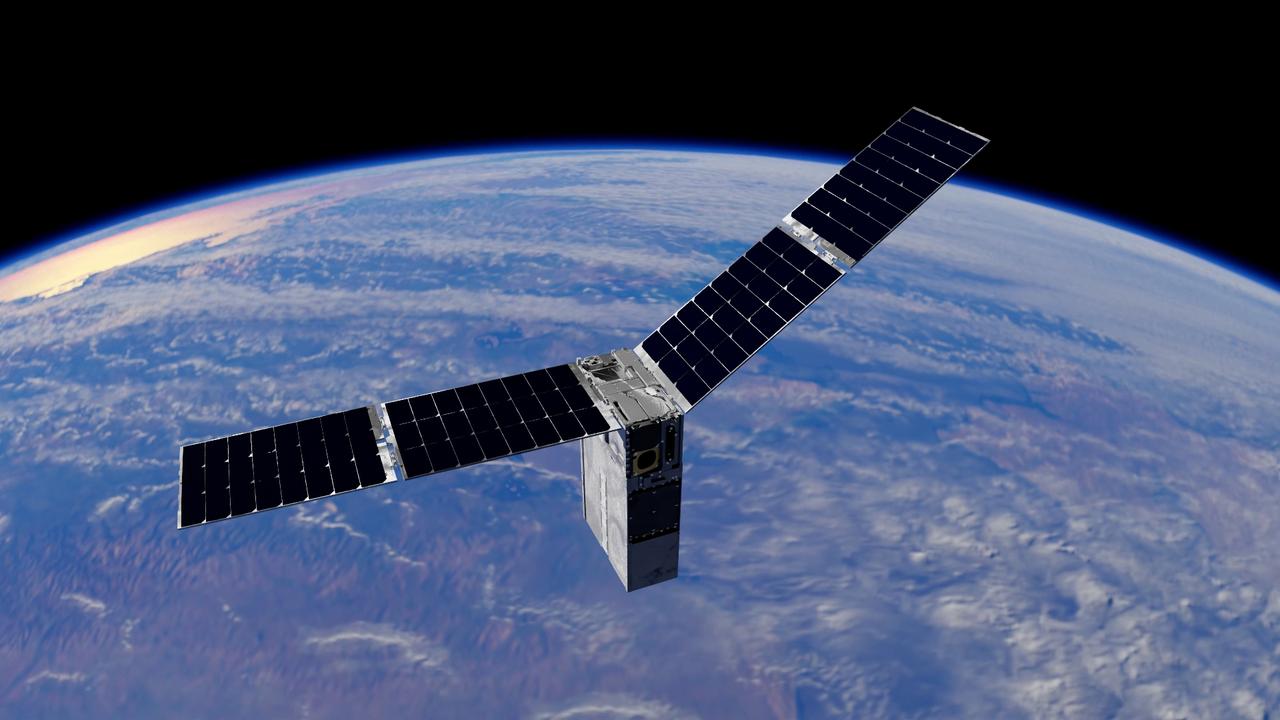
NASA’s Starling six-month mission will use a team of four CubeSats in low-Earth orbit to test technologies that let spacecraft operate in a synchronized manner without resources from the ground. The technologies will advance capabilities in swarm maneuver planning and execution, communications networking, relative navigation, and autonomous coordination between spacecraft. NASA/Conceptual Image Lab/Ross Walter
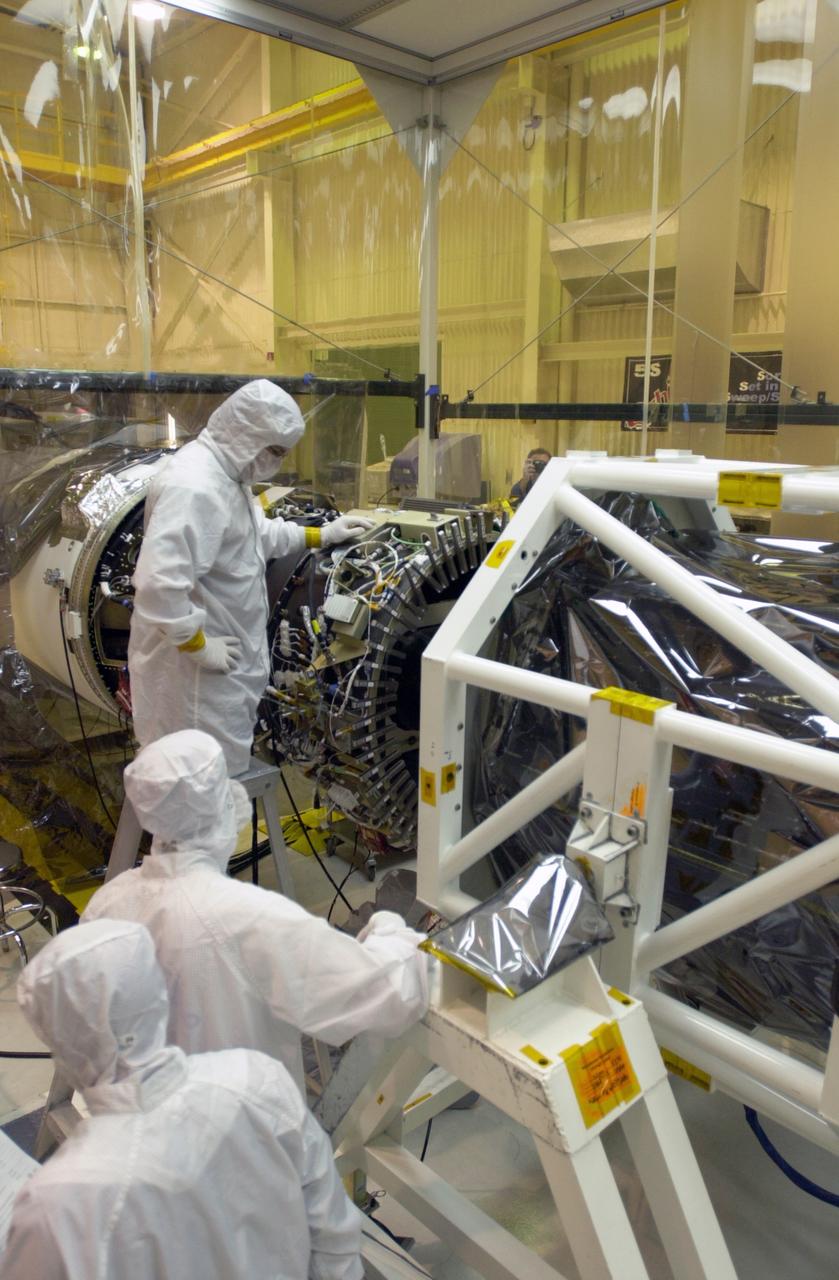
At Vandenberg Air Force Base in California, the third stage of the Orbital Sciences Pegasus XL rocket is being mated to the AIM spacecraft, at right. AIM, which stands for Aeronomy of Ice in the Mesosphere, is being prepared for integrated testing and a flight simulation. The AIM spacecraft will fly three instruments designed to study polar mesospheric clouds located at the edge of space, 50 miles above the Earth's surface in the coldest part of the planet's atmosphere. The mission's primary goal is to explain why these clouds form and what has caused them to become brighter and more numerous and appear at lower latitudes in recent years. AIM's results will provide the basis for the study of long-term variability in the mesospheric climate and its relationship to global climate change. Launch from the Pegasus XL rocket is scheduled for April 25.

KENNEDY SPACE CENTER, Fla. - Orbiter Discovery and its crew land on KSC's Shuttle Landing Facility runway 15. Main gear touchdown was at 2:22:58 p.m. EDT; wheel stop, at 2:24:06 p.m. EDT. The 11-day, 21-hour, 12-minute STS-105 mission accomplished the goals set for the 11th flight to the International Space Station: swapout of the resident Station crew; delivery of equipment, supplies and scientific experiments; and installation of the Early Ammonia Servicer and heater cables for the S0 truss on the Station. Discovery traveled 4.3 million miles on its 30th flight into space, the 106th mission of the Space Shuttle program. Out of five missions in 2001, the landing was the first to occur in daylight at KSC.
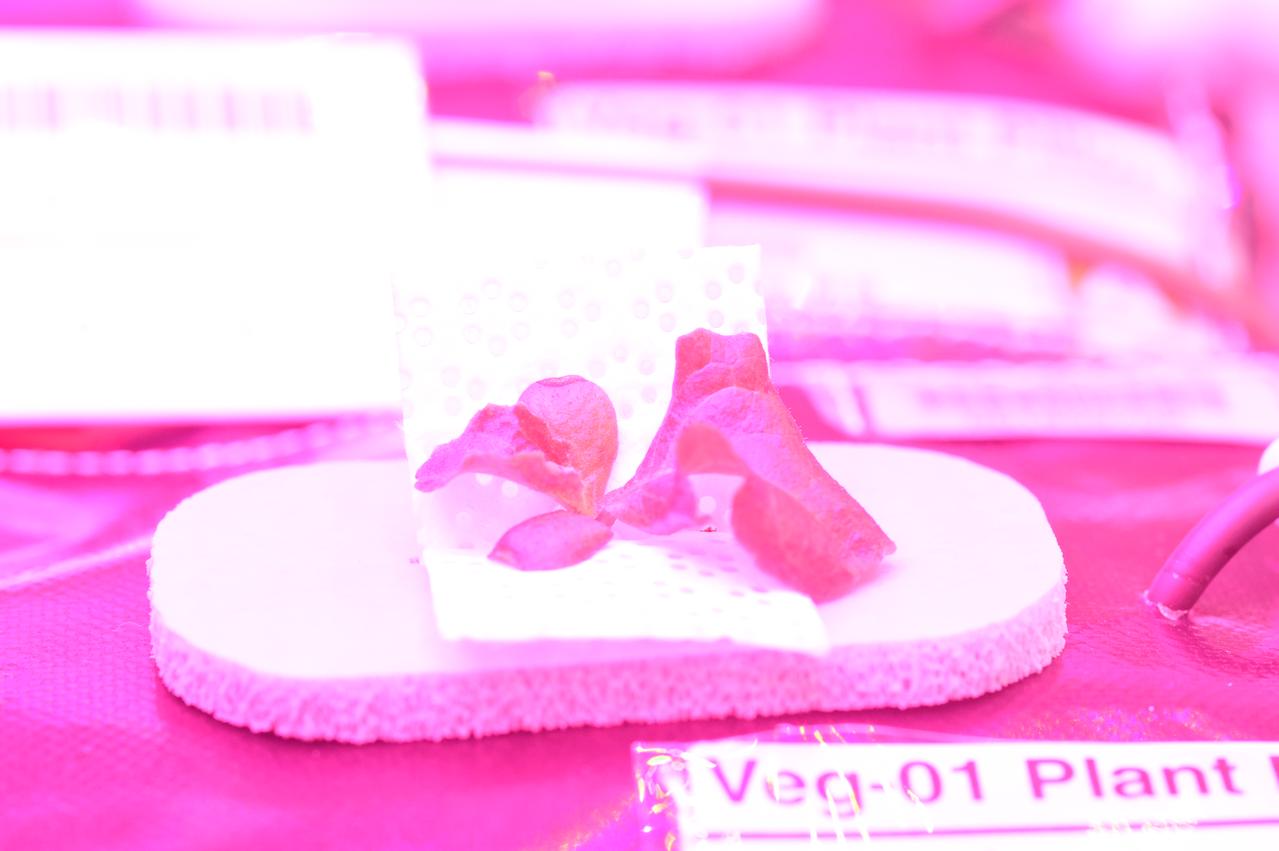
Astronaut Scott Kelly initiated VEG-01 B, the second crop of lettuce, on July, 8, 2015, and both Kelly and Astronaut Kjell Lindgren cared for the plants. The crop grew for 33 days. VEG-01 B included one set of six plant pillows planted with red romaine lettuce seeds. On Aug. 10, 2015, the crew harvested and consumed leaves from each plant. This was the first crop grown and consumed in NASA hardware. They harvested the rest of the plant tissue and froze it in the station’s Minus Eighty-Degree Laboratory Freezer for ISS (MELFI) for return to Earth for further study including microbial analysis, antioxidant capacity, mineral analysis and anthocyanin concentration.
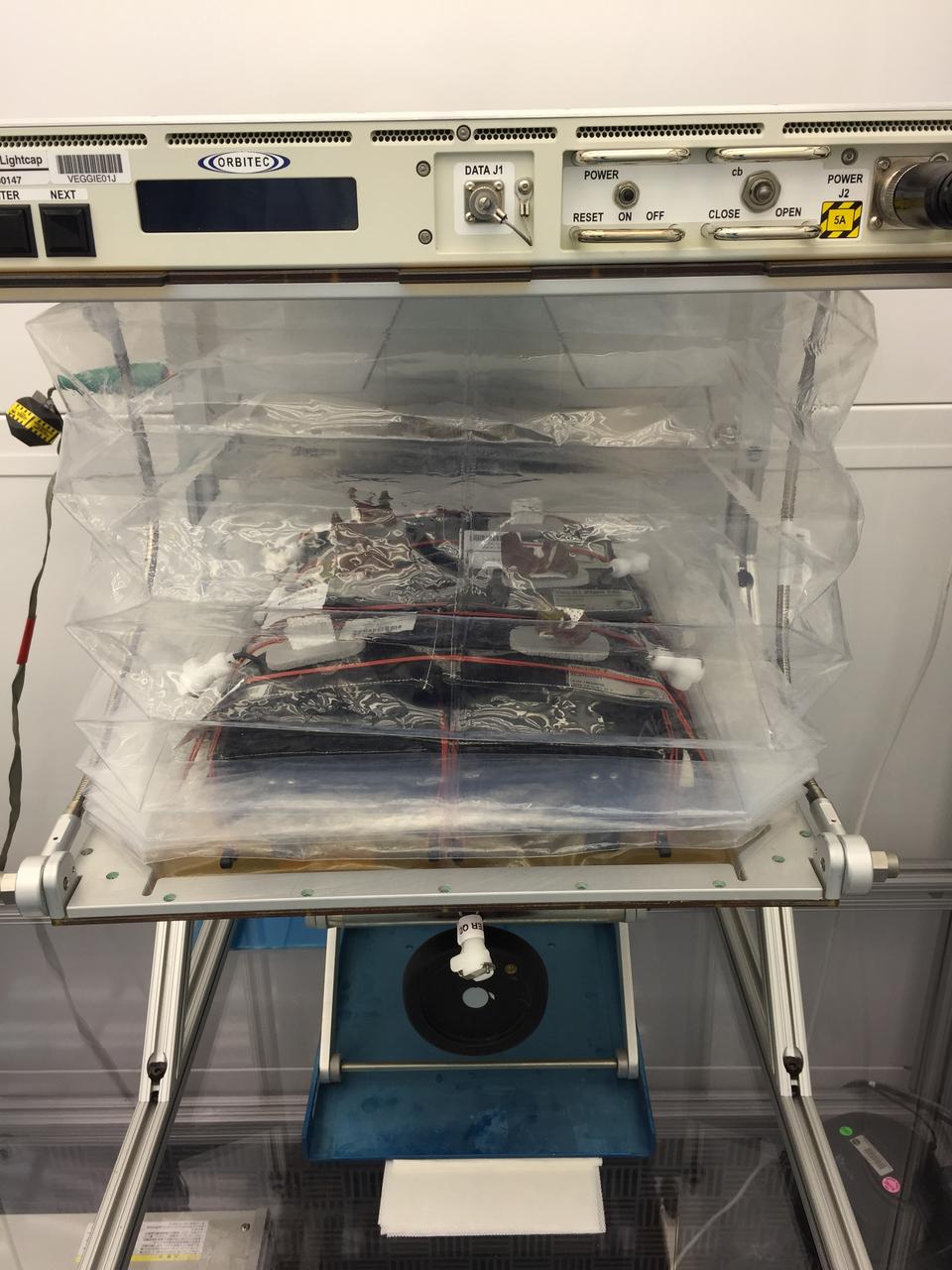
Astronaut Scott Kelly initiated VEG-01 B, the second crop of lettuce, on July, 8, 2015, and both Kelly and Astronaut Kjell Lindgren cared for the plants. The crop grew for 33 days. VEG-01 B included one set of six plant pillows planted with red romaine lettuce seeds. On Aug. 10, 2015, the crew harvested and consumed leaves from each plant. This was the first crop grown and consumed in NASA hardware. They harvested the rest of the plant tissue and froze it in the station’s Minus Eighty-Degree Laboratory Freezer for ISS (MELFI) for return to Earth for further study including microbial analysis, antioxidant capacity, mineral analysis and anthocyanin concentration.

Astronaut Scott Kelly initiated VEG-01 B, the second crop of lettuce, on July, 8, 2015, and both Kelly and Astronaut Kjell Lindgren cared for the plants. The crop grew for 33 days. VEG-01 B included one set of six plant pillows planted with red romaine lettuce seeds. On Aug. 10, 2015, the crew harvested and consumed leaves from each plant. This was the first crop grown and consumed in NASA hardware. They harvested the rest of the plant tissue and froze it in the station’s Minus Eighty-Degree Laboratory Freezer for ISS (MELFI) for return to Earth for further study including microbial analysis, antioxidant capacity, mineral analysis and anthocyanin concentration.
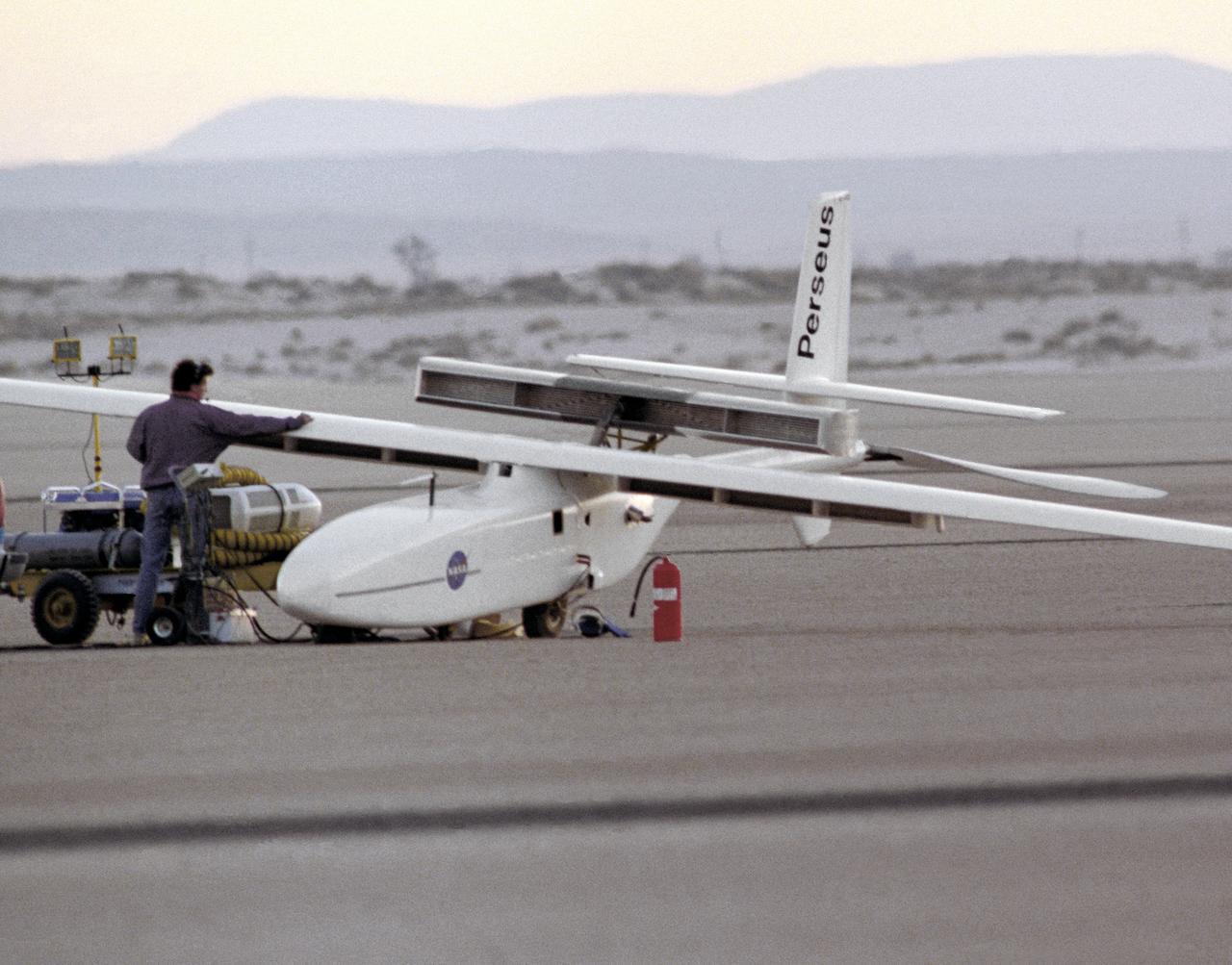
The Perseus A, a remotely-piloted, high-altitude research vehicle, is seen just after landing on Rogers Dry Lake at the Dryden Flight Research Center, Edwards, California. The Perseus A had a unique method of takeoff and landing. To make the aircraft as aerodynamic and lightweight as possible, designers gave it only two very small centerline wheels for landing. These wheels were very close to the fuselage, and therefore produced very little drag. However, since the fuselage sat so close to the ground, it was necessary to keep the large propeller at the rear of the aircraft locked in a horizontal position during takeoff. The aircraft was towed to about 700 feet in the air, where the engine was started and the aircraft began flying under its own power.
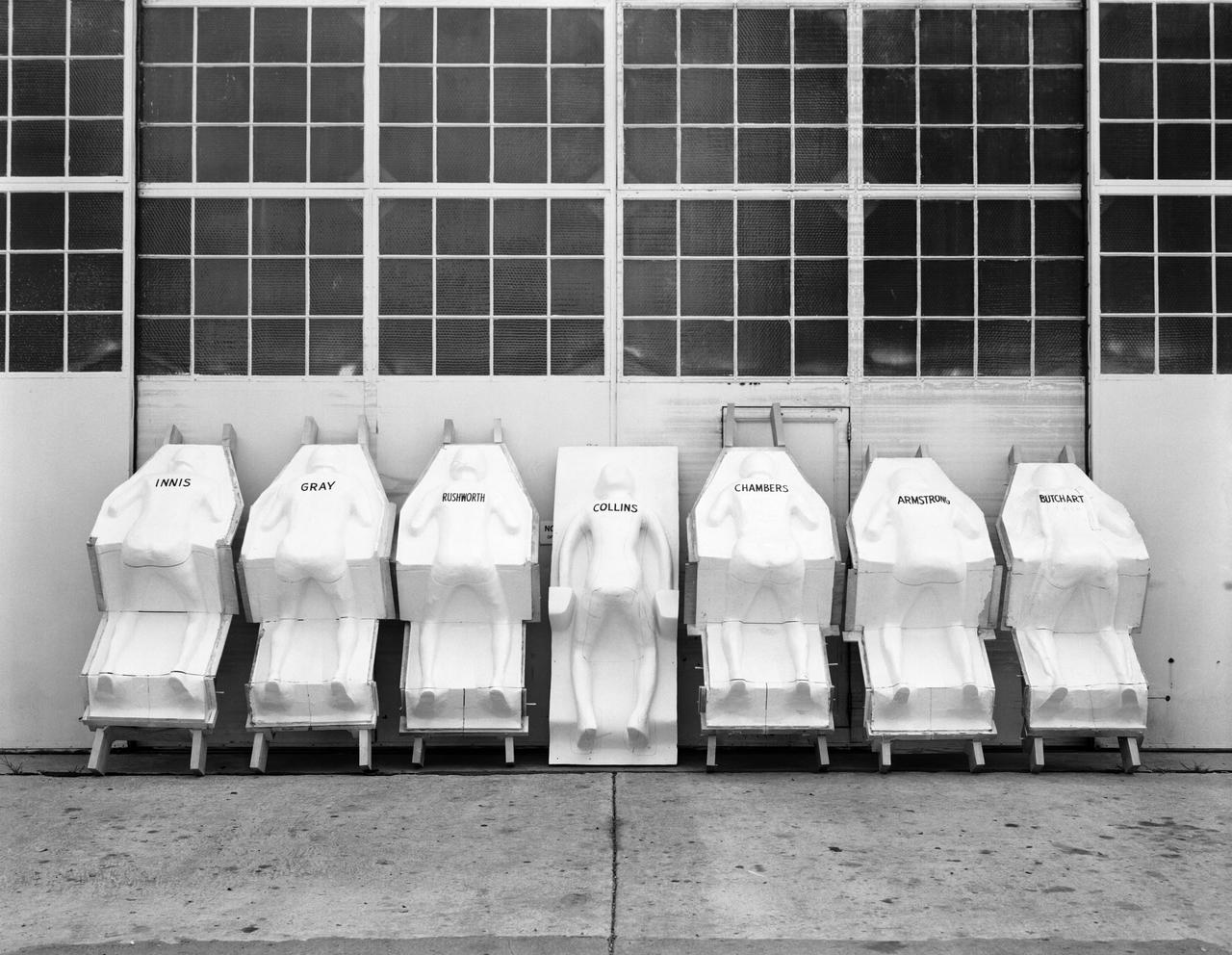
Molds for couches for test pilots, line the NASA Langley Research Centers model shop wall. The names of the test subjects (Langley employees) are written on the back. The couches are similar to those made for each astronaut and fitted into the Mercury capsules for manned spaceflight.
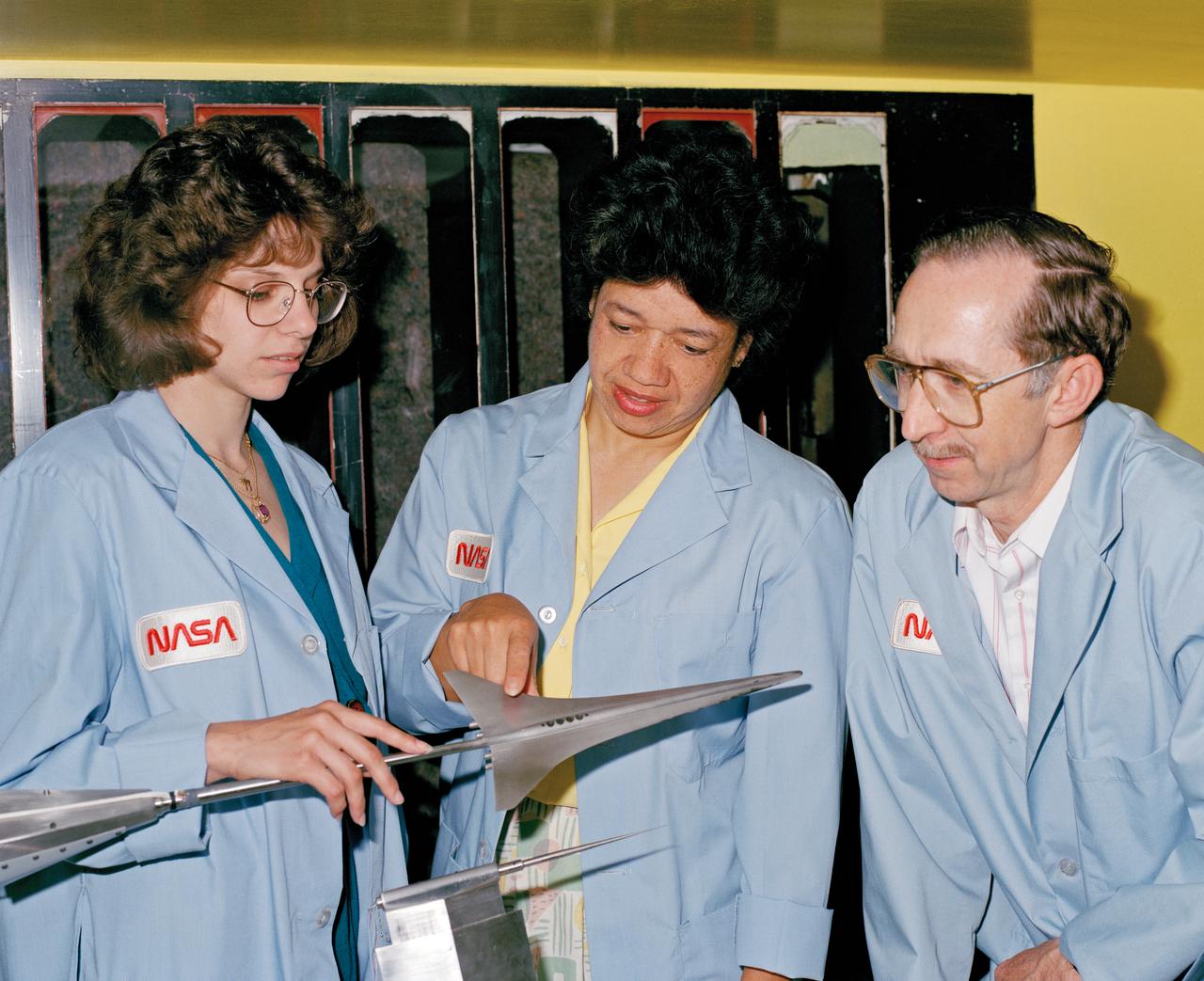
NASA Staff Dr.Darden, Matthew Overhold, Kathy Needleman,Robert Mack.
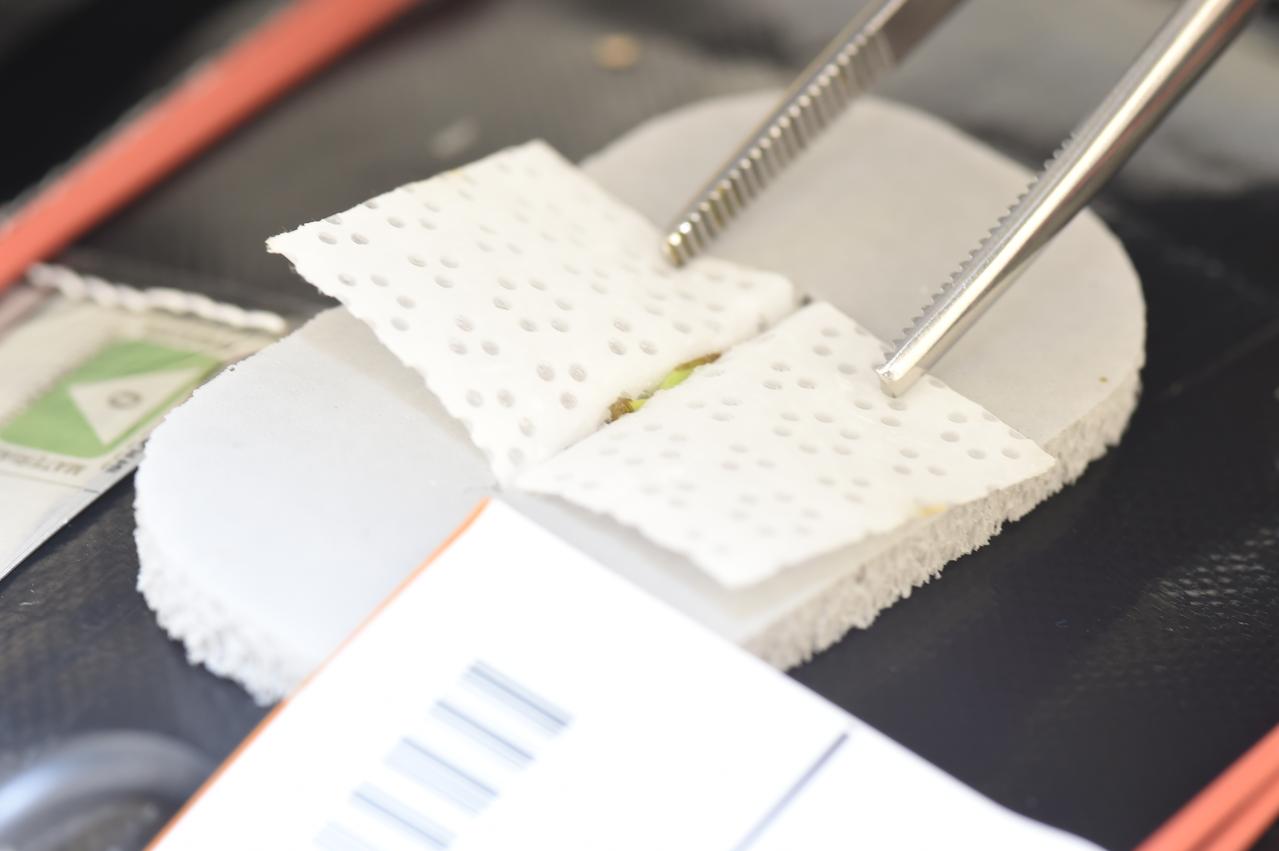
Astronaut Scott Kelly initiated VEG-01 B, the second crop of lettuce, on July, 8, 2015, and both Kelly and Astronaut Kjell Lindgren cared for the plants. The crop grew for 33 days. VEG-01 B included one set of six plant pillows planted with red romaine lettuce seeds. On Aug. 10, 2015, the crew harvested and consumed leaves from each plant. This was the first crop grown and consumed in NASA hardware. They harvested the rest of the plant tissue and froze it in the station’s Minus Eighty-Degree Laboratory Freezer for ISS (MELFI) for return to Earth for further study including microbial analysis, antioxidant capacity, mineral analysis and anthocyanin concentration.

Astronaut Scott Kelly initiated VEG-01 B, the second crop of lettuce, on July, 8, 2015, and both Kelly and Astronaut Kjell Lindgren cared for the plants. The crop grew for 33 days. VEG-01 B included one set of six plant pillows planted with red romaine lettuce seeds. On Aug. 10, 2015, the crew harvested and consumed leaves from each plant. This was the first crop grown and consumed in NASA hardware. They harvested the rest of the plant tissue and froze it in the station’s Minus Eighty-Degree Laboratory Freezer for ISS (MELFI) for return to Earth for further study including microbial analysis, antioxidant capacity, mineral analysis and anthocyanin concentration.
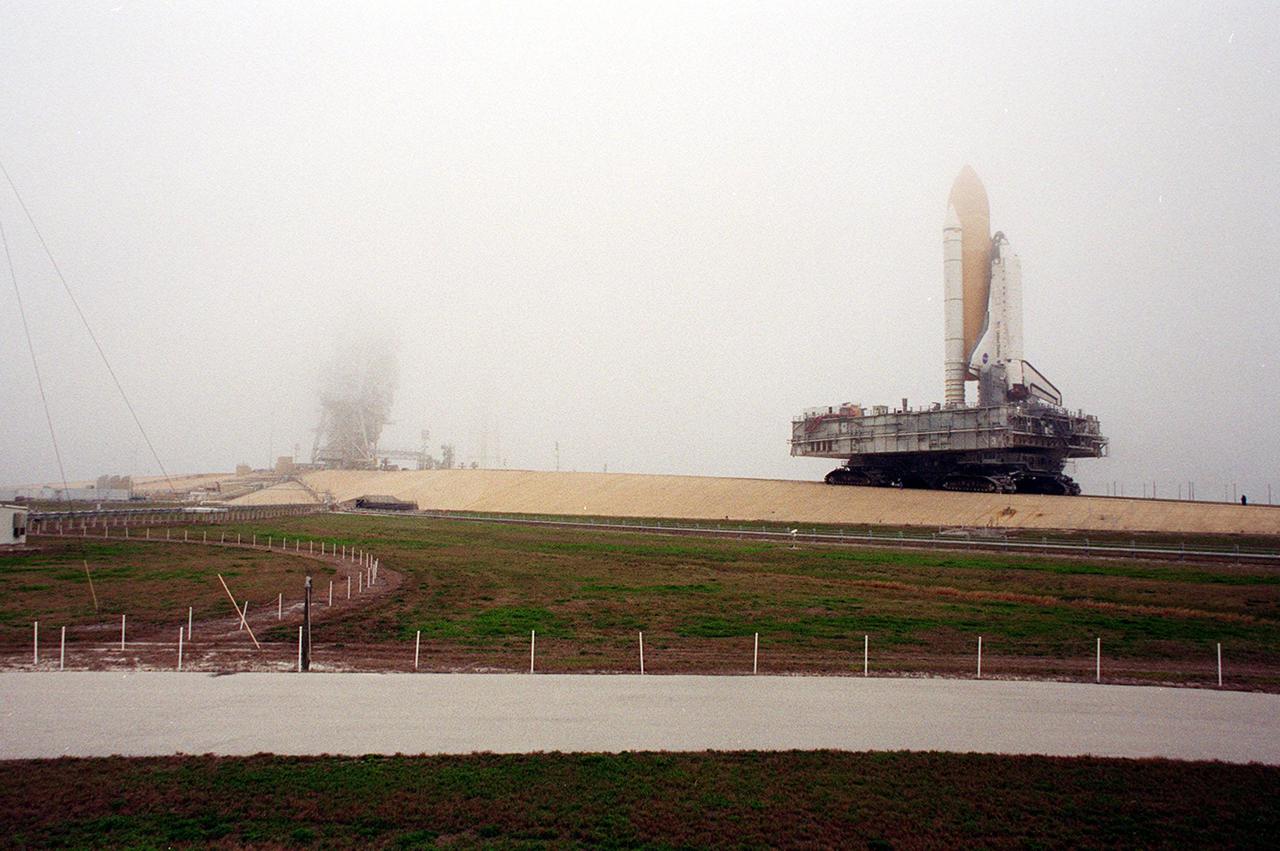
KENNEDY SPACE CENTER, Fla. -- Space Shuttle Discovery moves up the ramp to the top of Launch Pad 39B. The early morning fog that had cleared for the rollout from the Vehicle Assembly Building can be seen rolling back over the pad. Discovery will be flying on mission STS-102 to the International Space Station. Its payload is the Multi-Purpose Logistics Module Leonardo, a “moving van,” to carry laboratory racks filled with equipment, experiments and supplies to and from the Space Station aboard the Space Shuttle. The flight will also carry the Expedition Two crew up to the Space Station, replacing Expedition One, who will return to Earth on Discovery. Launch is scheduled for March 8 at 6:45 a.m. EST
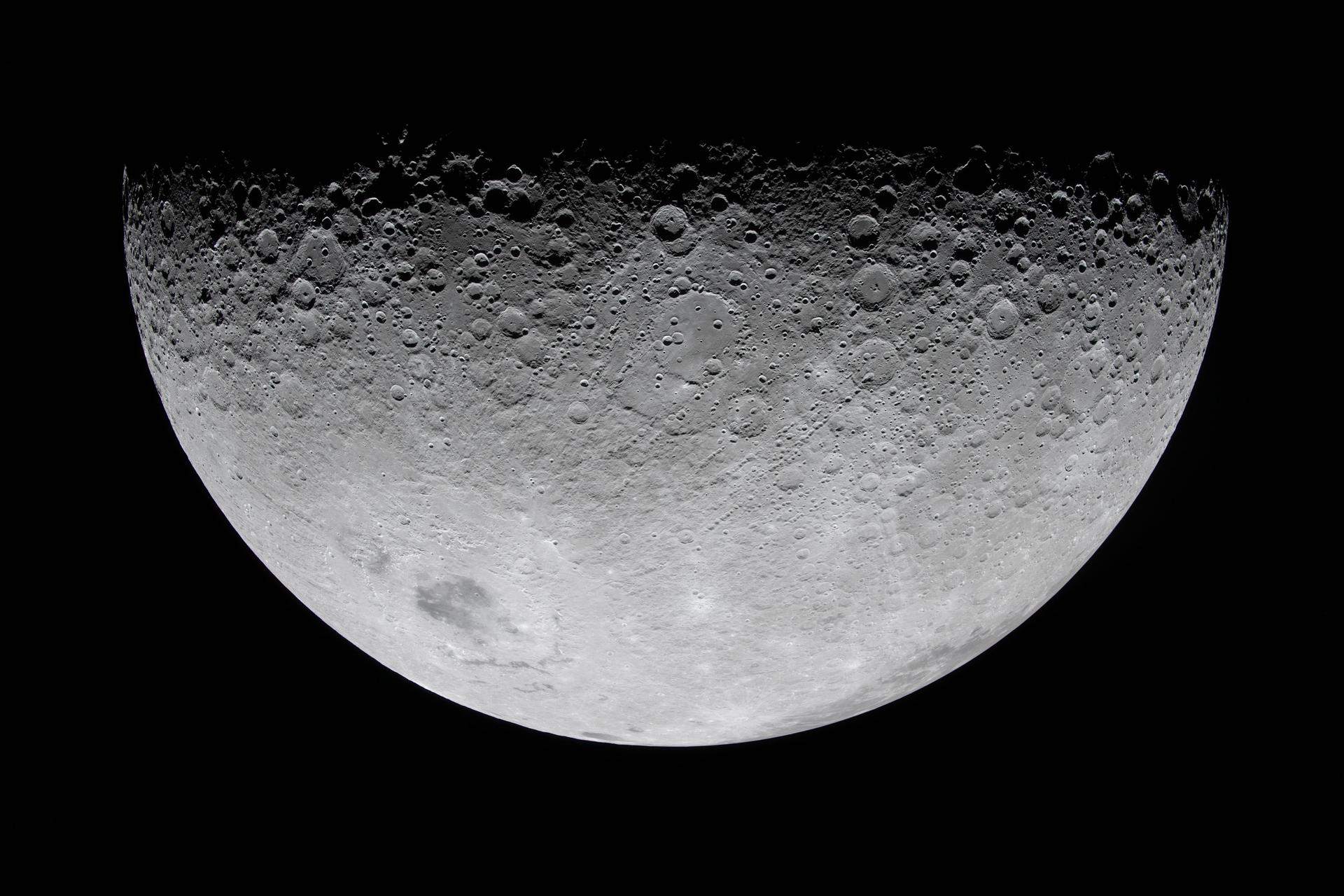
art002e010208 (April 6, 2026) - As the Artemis II crew flew over the terminator, the astronauts described this boundary between day and night as "anything but a straight line." Crater rims along the terminator stand out as "islands" in the night. Giant chains of craters emanating from the 3.7-billion-year-old Orientale basin can be seen scouring the surface, stretching almost to the terminator. This tells a geologic story: these crater chains produced by the Orientale impact event mar the surface of the relatively flat Hertzsprung Basin (center of this image), which means that Hertzsprung Basin must be even older than Orientale!
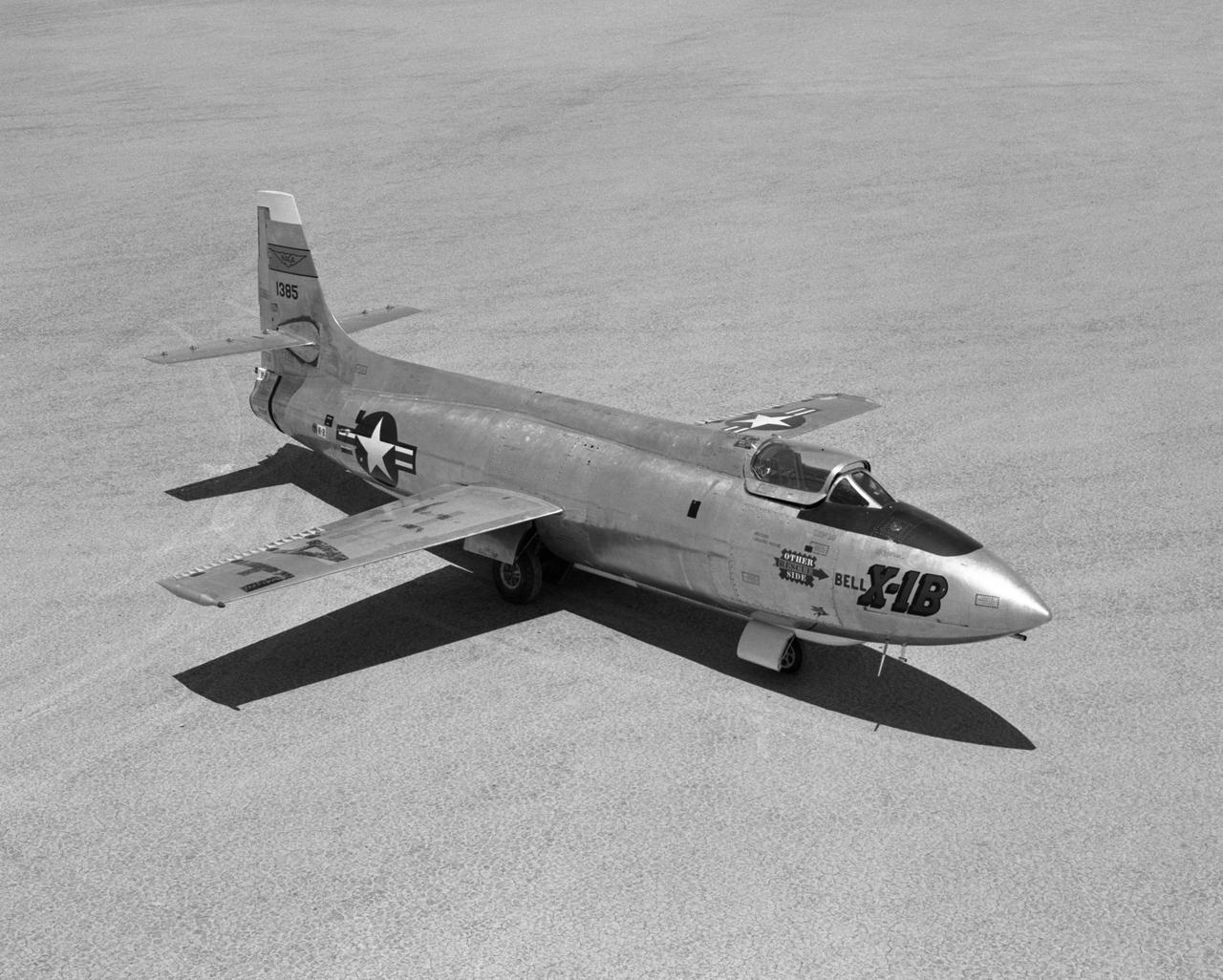
Bell X-1B fitted with a reaction control system on the lakebed
Astronaut Scott Kelly initiated VEG-01 B, the second crop of lettuce, on July, 8, 2015, and both Kelly and Astronaut Kjell Lindgren cared for the plants. The crop grew for 33 days. VEG-01 B included one set of six plant pillows planted with red romaine lettuce seeds. On Aug. 10, 2015, the crew harvested and consumed leaves from each plant. This was the first crop grown and consumed in NASA hardware. They harvested the rest of the plant tissue and froze it in the station’s Minus Eighty-Degree Laboratory Freezer for ISS (MELFI) for return to Earth for further study including microbial analysis, antioxidant capacity, mineral analysis and anthocyanin concentration.
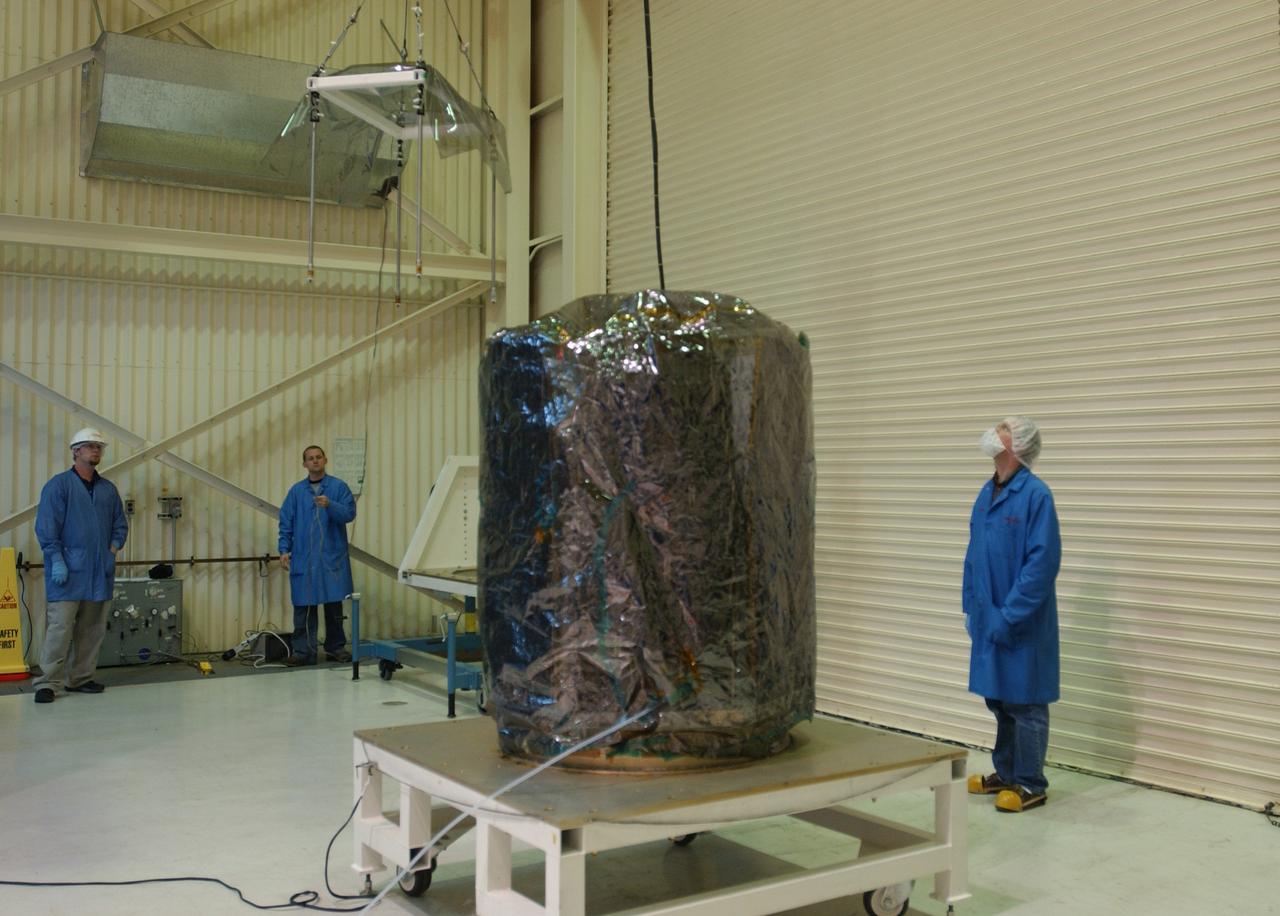
In Building 1555 at North Vandenberg Air Force Base, workers lower the AIM spacecraft onto a moveable base. AIM will be moved into an area where a partial deployment of the solar arrays on the spacecraft will take place.The AIM spacecraft will fly three instruments designed to study polar mesospheric clouds located at the edge of space, 50 miles above the Earth's surface in the coldest part of the planet's atmosphere. The mission's primary goal is to explain why these clouds form and what has caused them to become brighter and more numerous and appear at lower latitudes in recent years. AIM's results will provide the basis for the study of long-term variability in the mesospheric climate and its relationship to global climate change. AIM is scheduled to be mated to the Pegasus XL during the second week of April, after which final inspections will be conducted. Launch is scheduled for April 25.
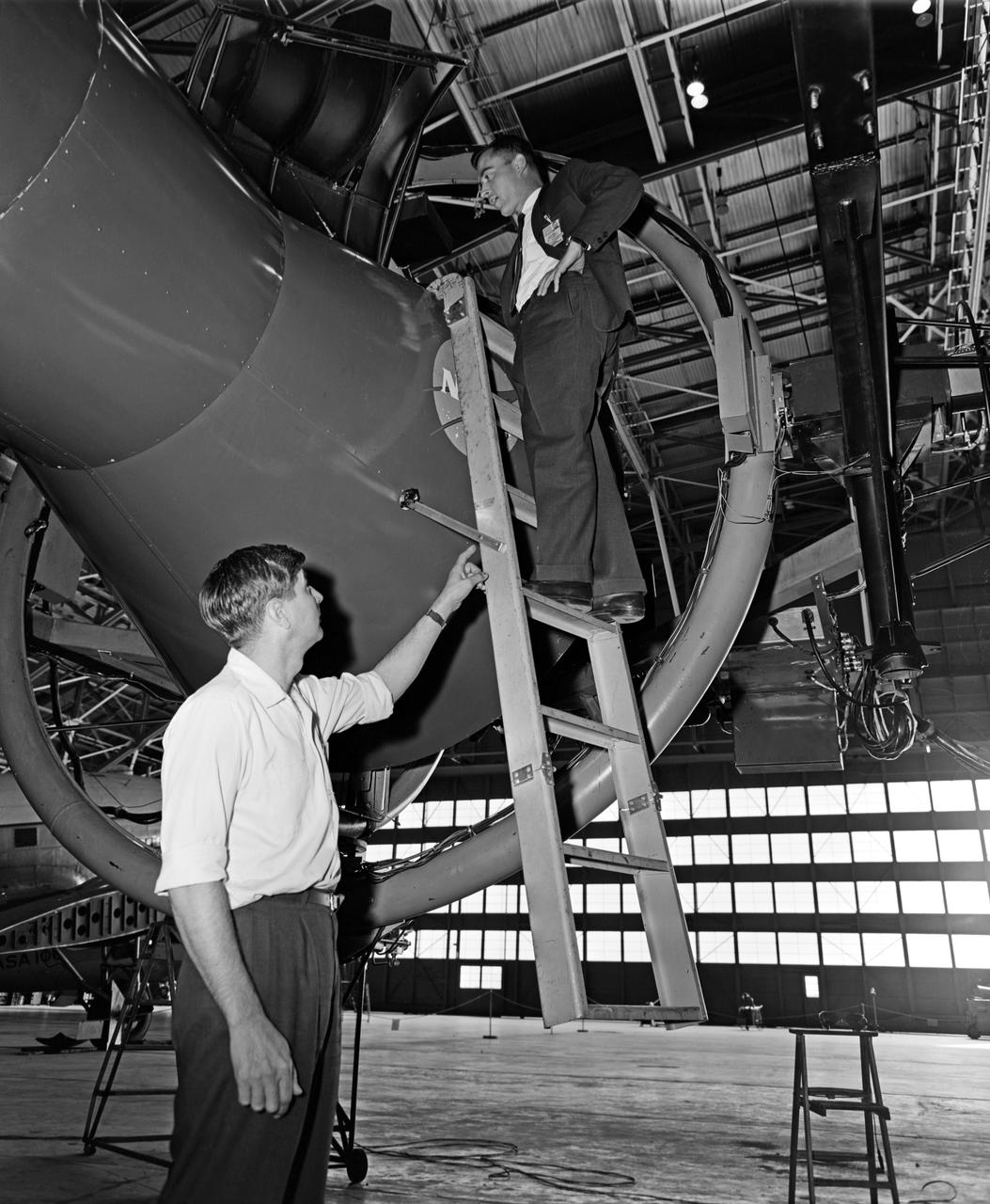
Astronaut John Young (above) was one of 14 astronauts, 8 NASA test pilots, and 2 McDonnell test pilots who took part in simulator studies. Young piloted the simulator on November 12, 1963 Arthur Vogeley wrote: "Many of the astronauts have flown this simulator in support of the Gemini studies and they, without exception, appreciated the realism of the visual scene. The simulator has also been used in the development of pilot techniques to handle certain jet malfunctions in order that aborts could be avoided. In these situations large attitude changes are sometimes necessary and the false motion cues that were generated due to earth gravity were somewhat objectionable; however, the pilots were readily able to overlook these false motion cues in favor of the visual realism." Roy F. Brissenden wrote: "The basic Gemini control studies developed the necessary techniques and demonstrated the ability of human pilots to perform final space docking with the specified Gemini-Agena systems using only visual references. ... Results... showed that trained astronauts can effect the docking with direct acceleration control and even with jet malfunctions as long as good visual conditions exist.... Probably more important than data results was the early confidence that the astronauts themselves gained in their ability to perform the maneuver in the ultimate flight mission." -- Published in Barton C. Hacker and James M. Grimwood, On the Shoulders of Titans: A History of Project Gemini, NASA SP-4203; A.W. Vogeley, "Discussion of Existing and Planned Simulators For Space Research," Paper presented at the Conference on the Role of Simulation in Space Technology, August 17-21, 1964; Roy F. Brissenden, "Initial Operations with Langley's Rendezvous Docking Facility," Langley Working Paper, LWP-21, 1964.

The mated Pegasus XL rocket - AIM spacecraft is moved onto a transporter in Building 1655 at Vandenberg Air Force Base in California. The launch vehicle will be transferred to a waiting Orbital Sciences Stargazer L-1011 aircraft for launch. AIM, which stands for Aeronomy of Ice in the Mesosphere, is being prepared for integrated testing and a flight simulation. The AIM spacecraft will fly three instruments designed to study polar mesospheric clouds located at the edge of space, 50 miles above the Earth's surface in the coldest part of the planet's atmosphere. The mission's primary goal is to explain why these clouds form and what has caused them to become brighter and more numerous and appear at lower latitudes in recent years. AIM's results will provide the basis for the study of long-term variability in the mesospheric climate and its relationship to global climate change. Launch is scheduled for April 25.

SpaceX’s Crew Dragon approaches the International Space Station during the Demo-1 mission on Sunday, March 3, 2019. The uncrewed spacecraft docked to the orbiting laboratory following a 2:49 a.m. EST liftoff aboard a SpaceX Falcon 9 rocket from Launch Complex 39A at NASA’s Kennedy Space Center in Florida on March 2. Crew Dragon made 18 orbits of Earth before successfully attaching to the space station. The spacecraft undocked at 2:32 a.m., March 8, splashing down in the Atlantic Ocean, about 200 miles off Florida’s east coast, at 8:45 a.m. It arrived in Port Canaveral in Florida on the main deck of SpaceX’s recovery ship, Go Searcher, on March 9. SpaceX’s inaugural flight with NASA’s Commercial Crew Program is the first flight test of a space system designed for humans built and operated by a commercial company through a public-private partnership. NASA and SpaceX will use data from Demo-1 to further prepare for Demo-2, the crewed flight test that will carry NASA astronauts Bob Behnken and Doug Hurley to the International Space Station later this year.
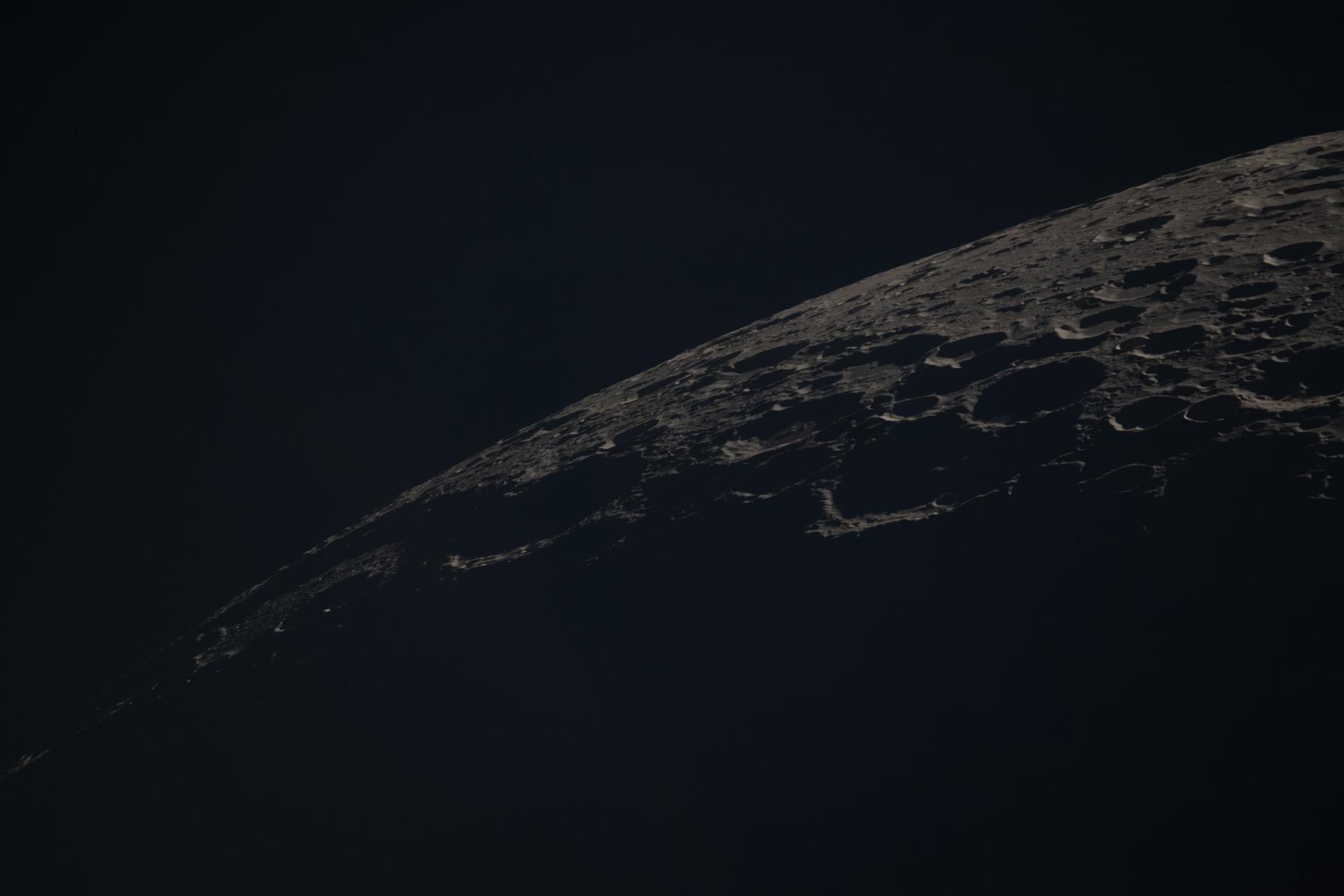
art002e014045 (April 6, 2026) - This view of the Moon captures the terminator—the shifting boundary between day and night—where sunlight grazes the surface at a low angle. Taken by the crew during the Artemis II mission, the lighting accentuates the Moon’s rugged terrain, casting long shadows that reveal the depth and structure of craters, ridges, and surrounding highlands.

KENNEDY SPACE CENTER, FLA. -- Within sight of the Vehicle Assembly Building, medical, paramedic and other personnel attend to role-playing “victims” on the grass in the Launch Complex 39 area. It is the site of a staged mass casualty exercise designed to validate capabilities of KSC’s fire, medical, helicopter transport and security personnel to respond to an event such as this fictitious sniper attack