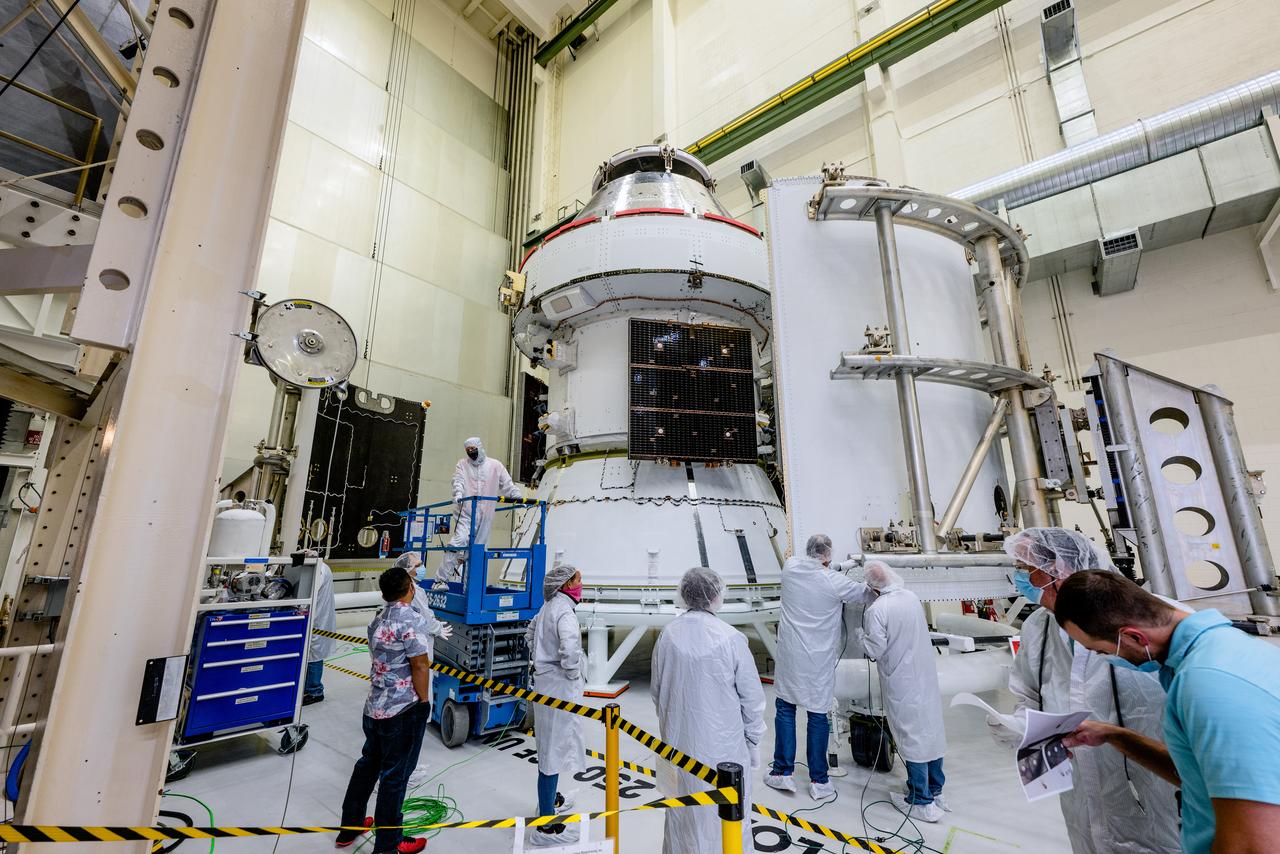
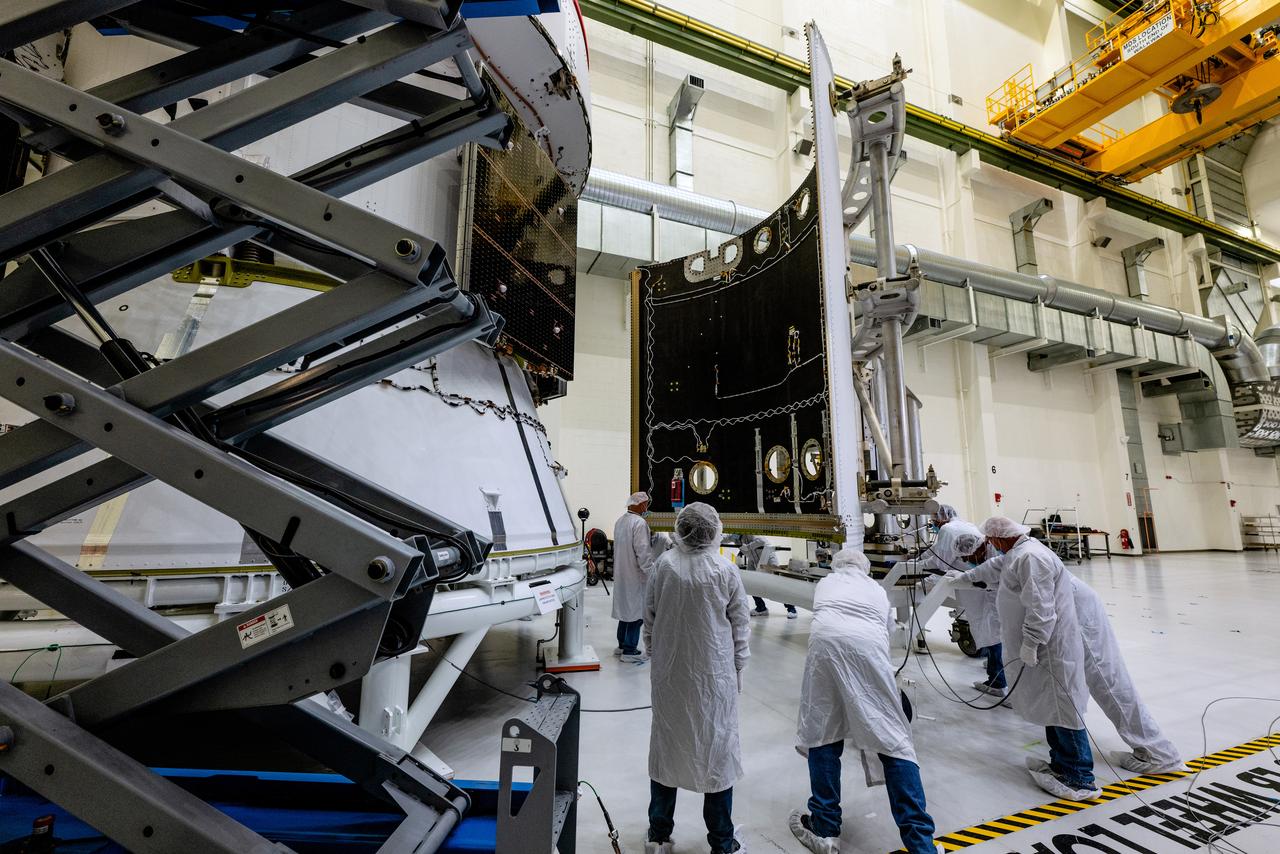
In the Operations and Checkout Building (O&C) at Kennedy Space Center, three spacecraft adapter jettison (SAJ) fairings are prepared for installation and will be moved into place by technicians with Lockheed Martin, lead contractor for Orion on Oct. 12, 2020. They will be secured around the spacecraft, encapsulating the European Service Module to protect it from the harsh environment as the spacecraft is propelled out of Earth’s atmosphere atop the Space Launch System (SLS) rocket during NASA’s Artemis I mission. The next time the solar array wings will be visible will be when Orion is in space. Artemis I will test the Orion spacecraft and SLS as an integrated system ahead of crewed flights to the Moon.
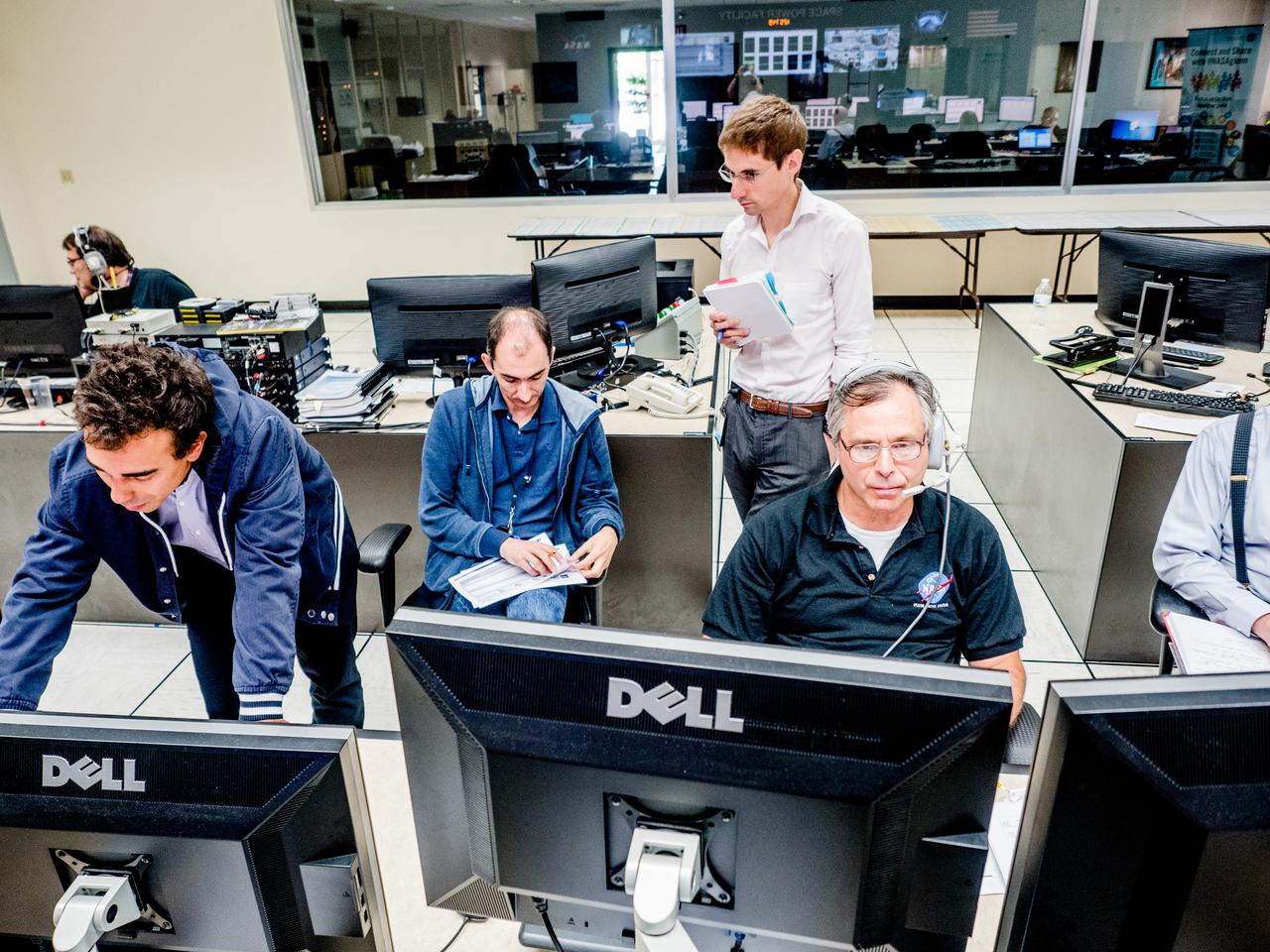
A successful test is completed of the European Structural Test Article (E-STA) partial tank vibration test (Y- axis at 80% power) performed on the Mechanical Vibration Facility (MVF) table at NASA Glenn’s Space Power Facility at Plum Brook Station, Sandusky, Ohio on Sept. 7, 2016 .Part of Batch images transfer from Flickr.
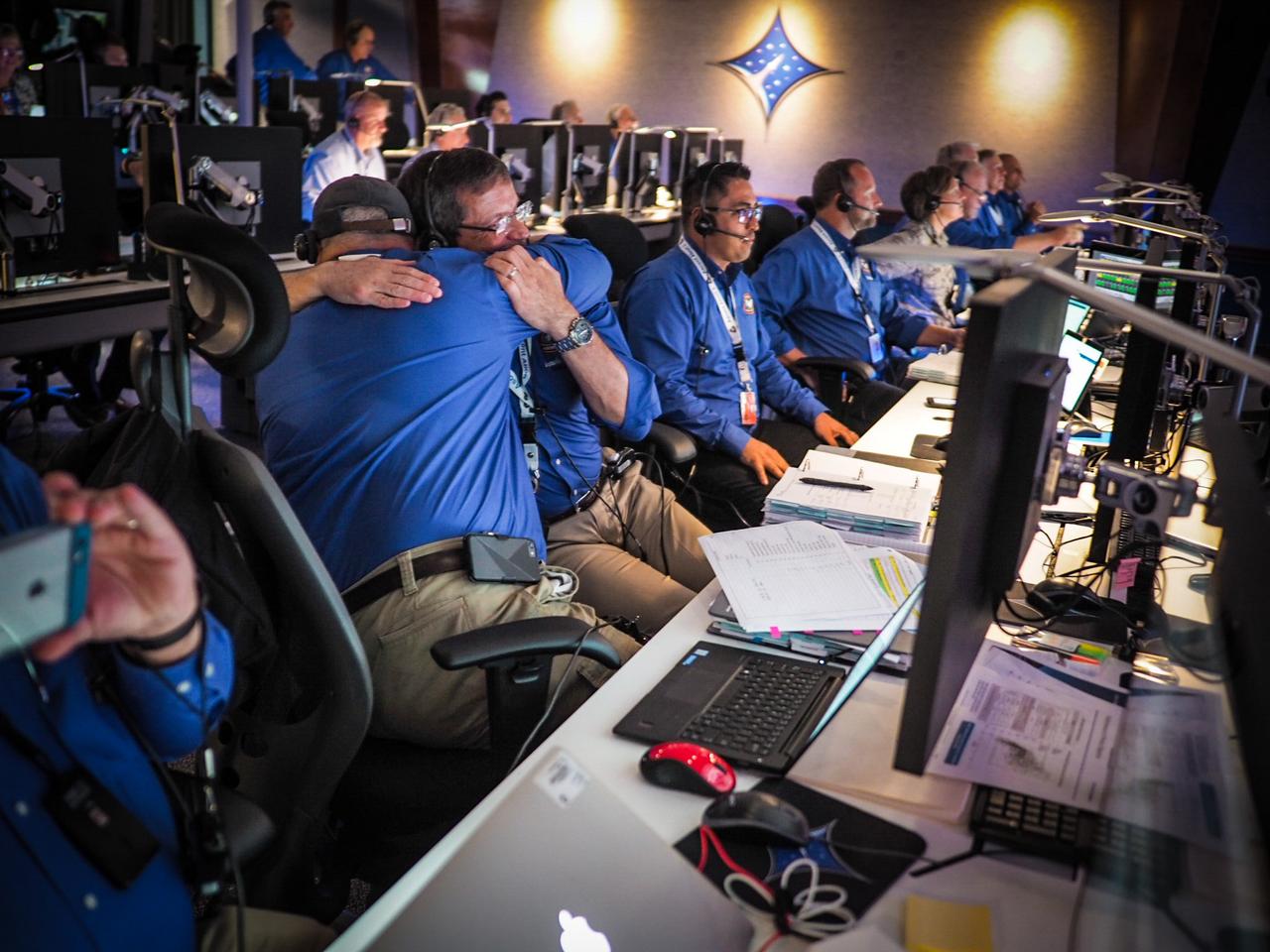
From Hangar AE at Cape Canaveral Air Force Station, the Orion team conducted the successful flight test of the Launch Abort System on Ascent Abort-2 (AA-2) on July 2, 2019.
#NASAMarsDay
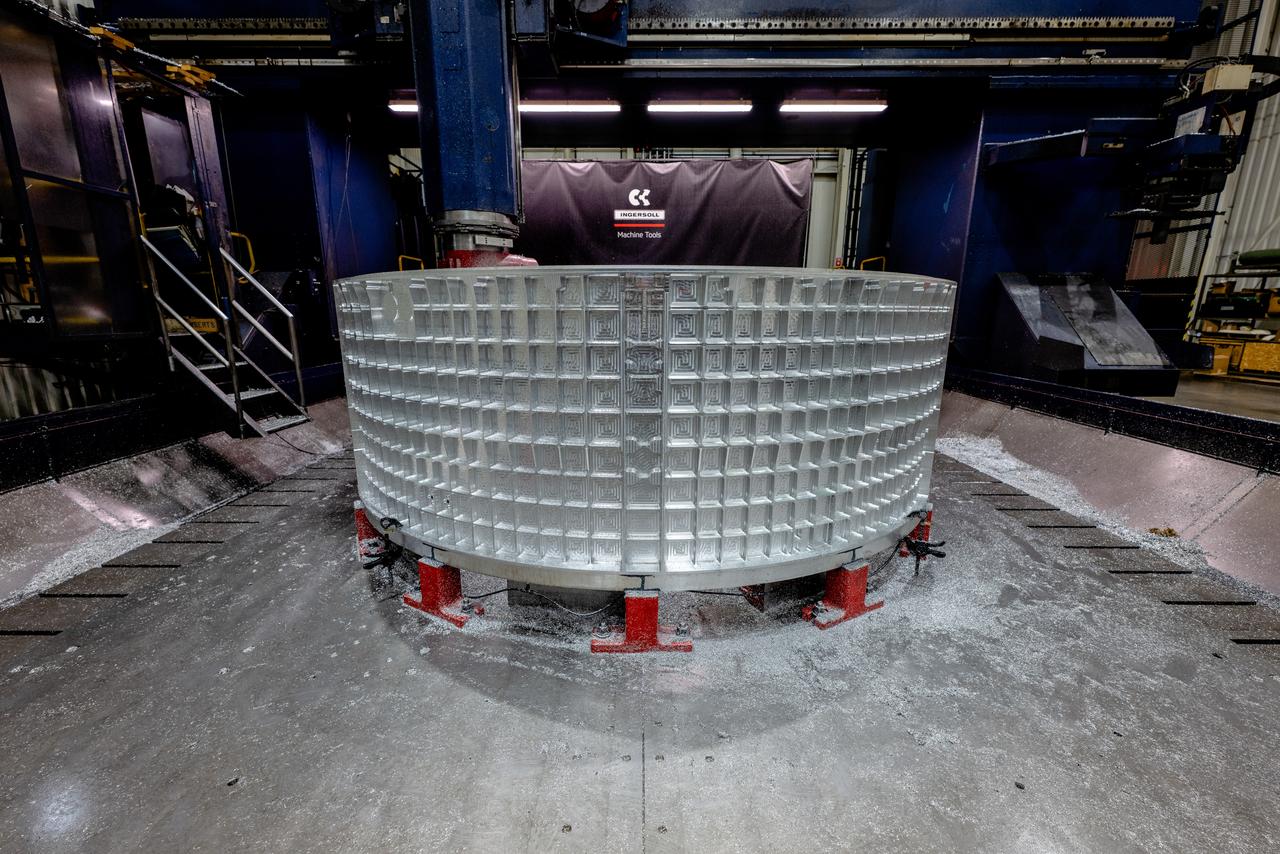
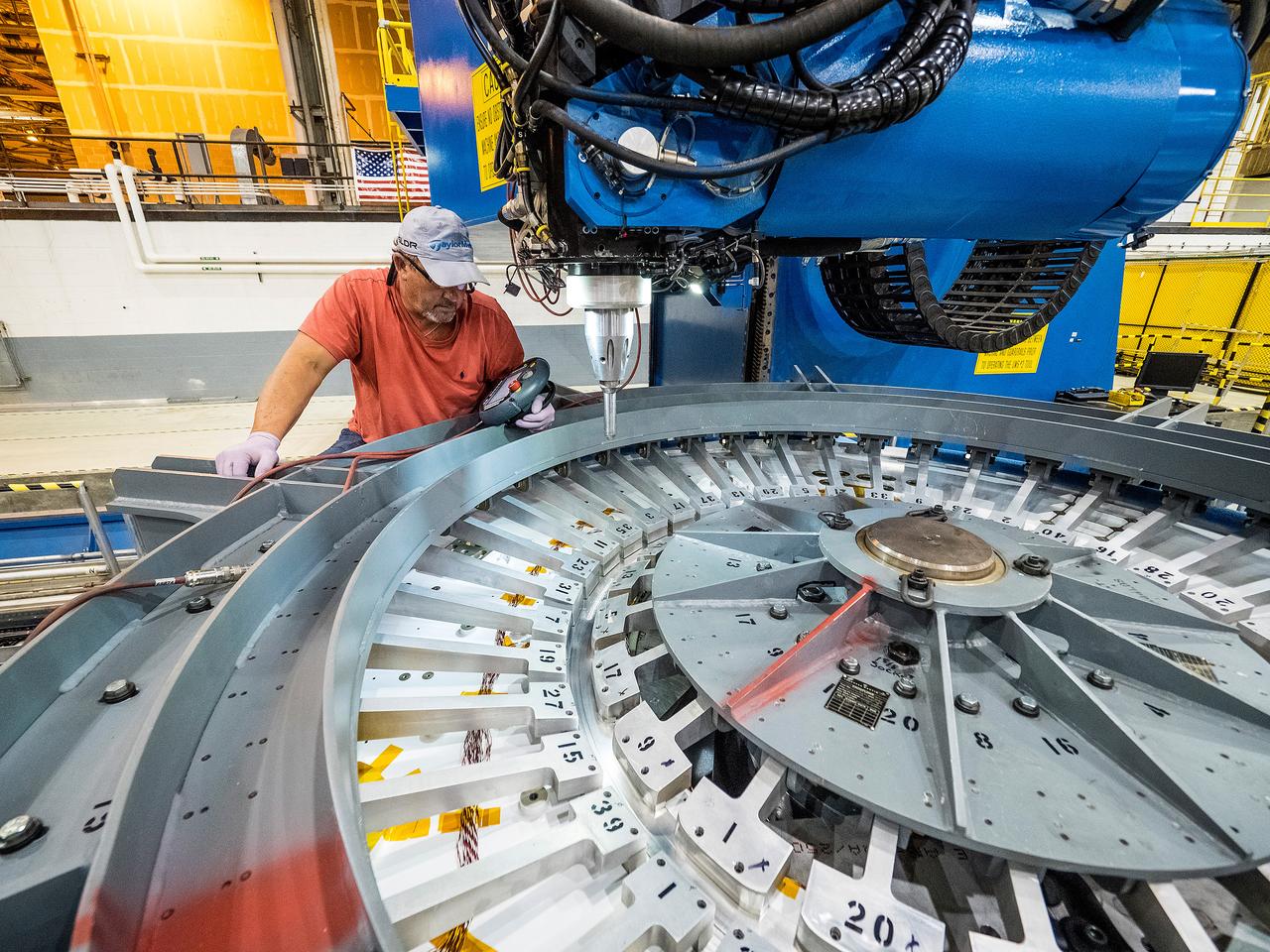
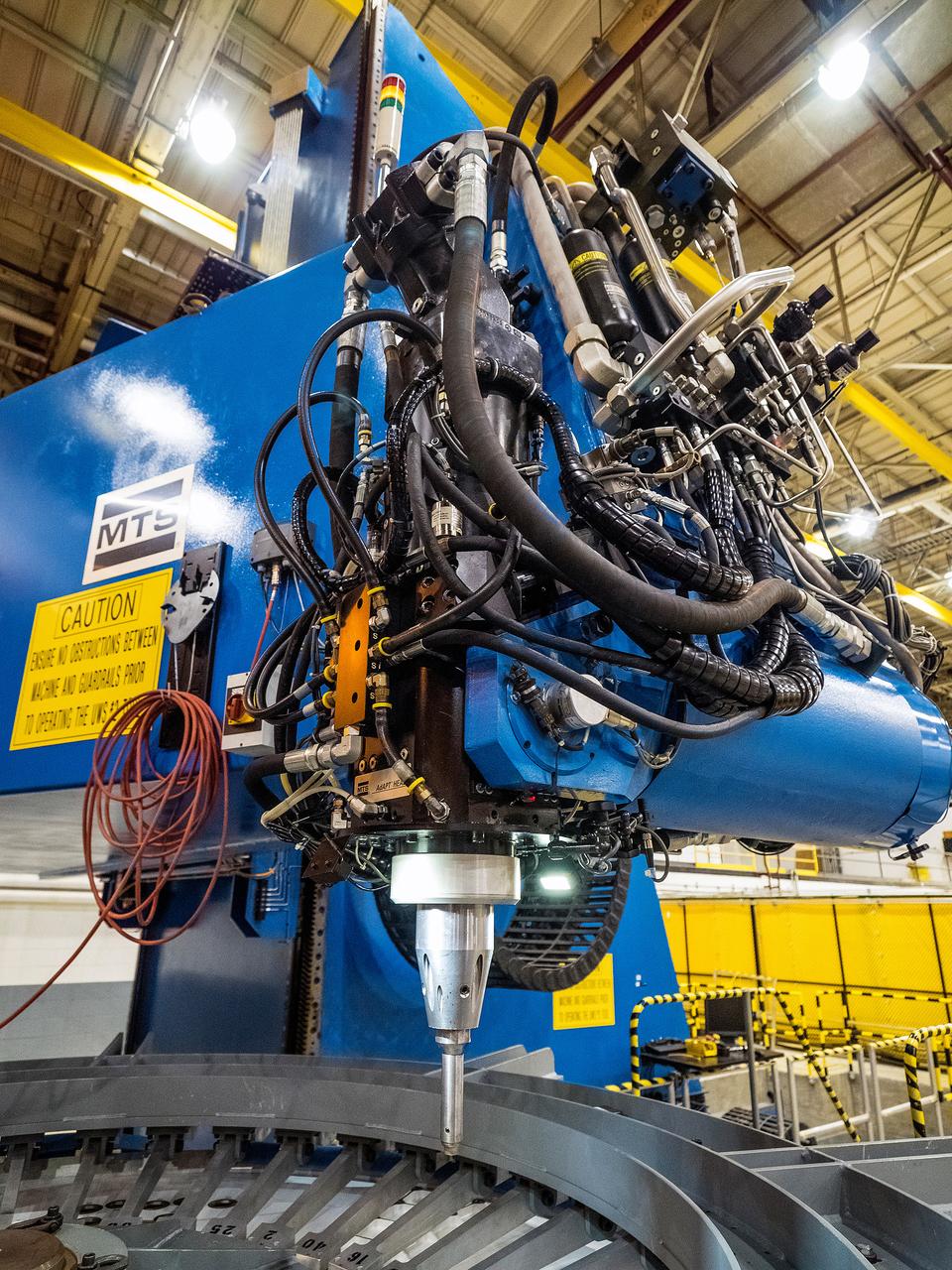
Machining of the tunnel, aft bulkhead, and barrel for the Artemis III Orion pressure vessel takes place at Ingersoll Machine Tool, Inc. in Rockford, Illinois on Sept. 28, 2020.
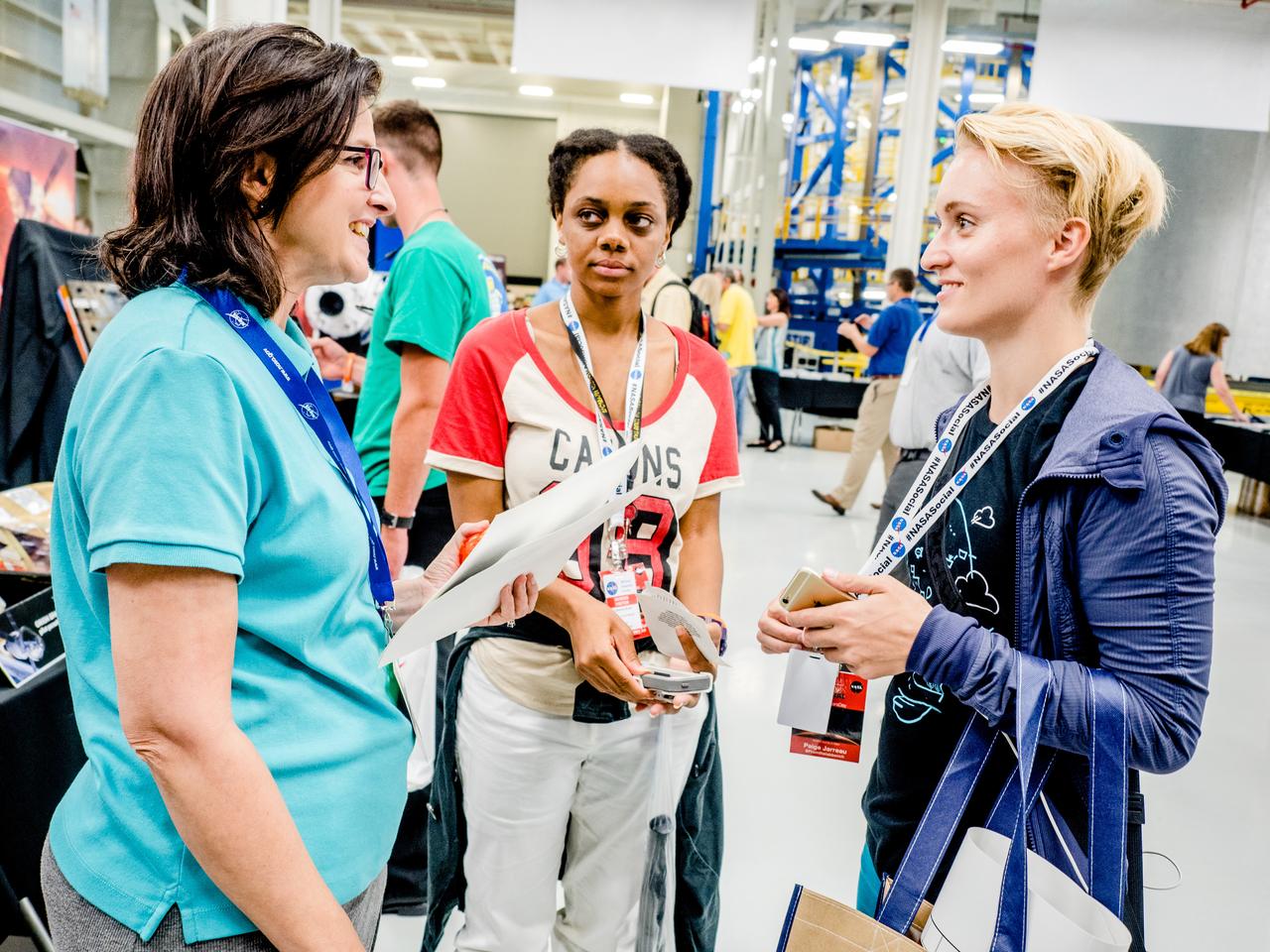
#NASAMarsDay
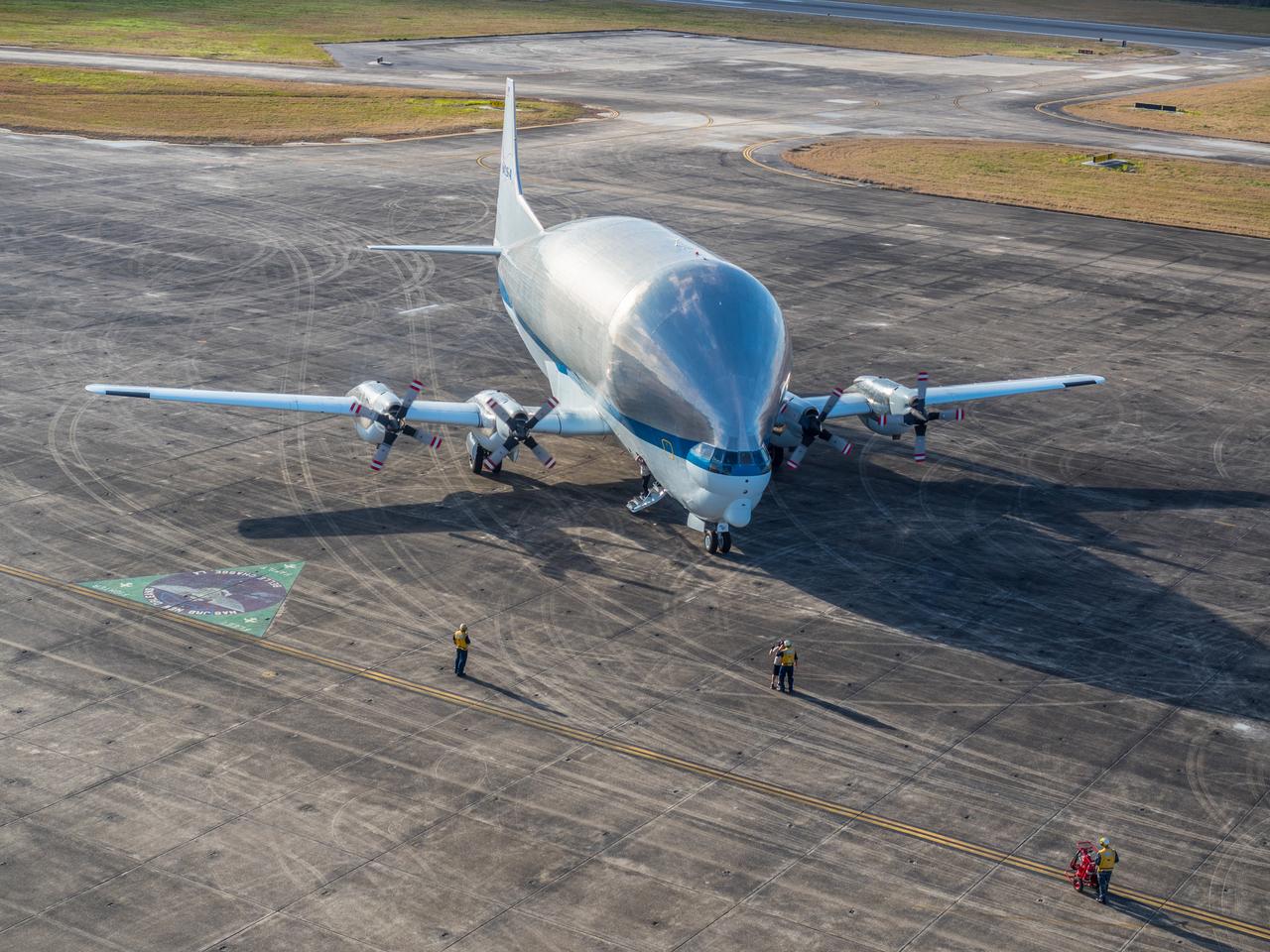
NASA's Super Guppy airplane arrives in New Orleans, Louisiana on Jan. 31, 2016. The Guppy will transport Orion's Artemis I crew module pressure vessel to Kennedy Space Center for final assembly. Part of Batch image transfer from Flickr.
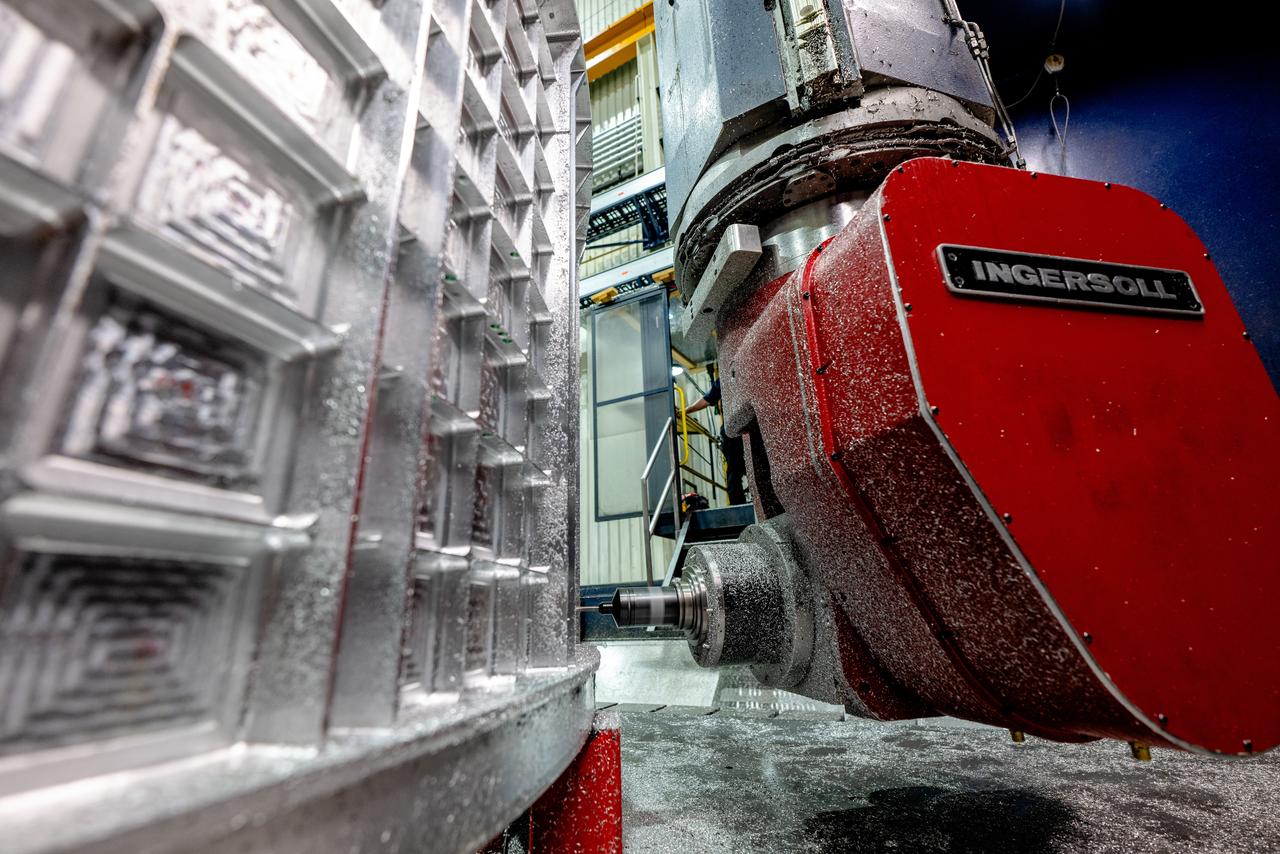
Machining of the tunnel, aft bulkhead, and barrel for the Artemis III Orion pressure vessel takes place at Ingersoll Machine Tool, Inc. in Rockford, Illinois on Sept. 28, 2020.
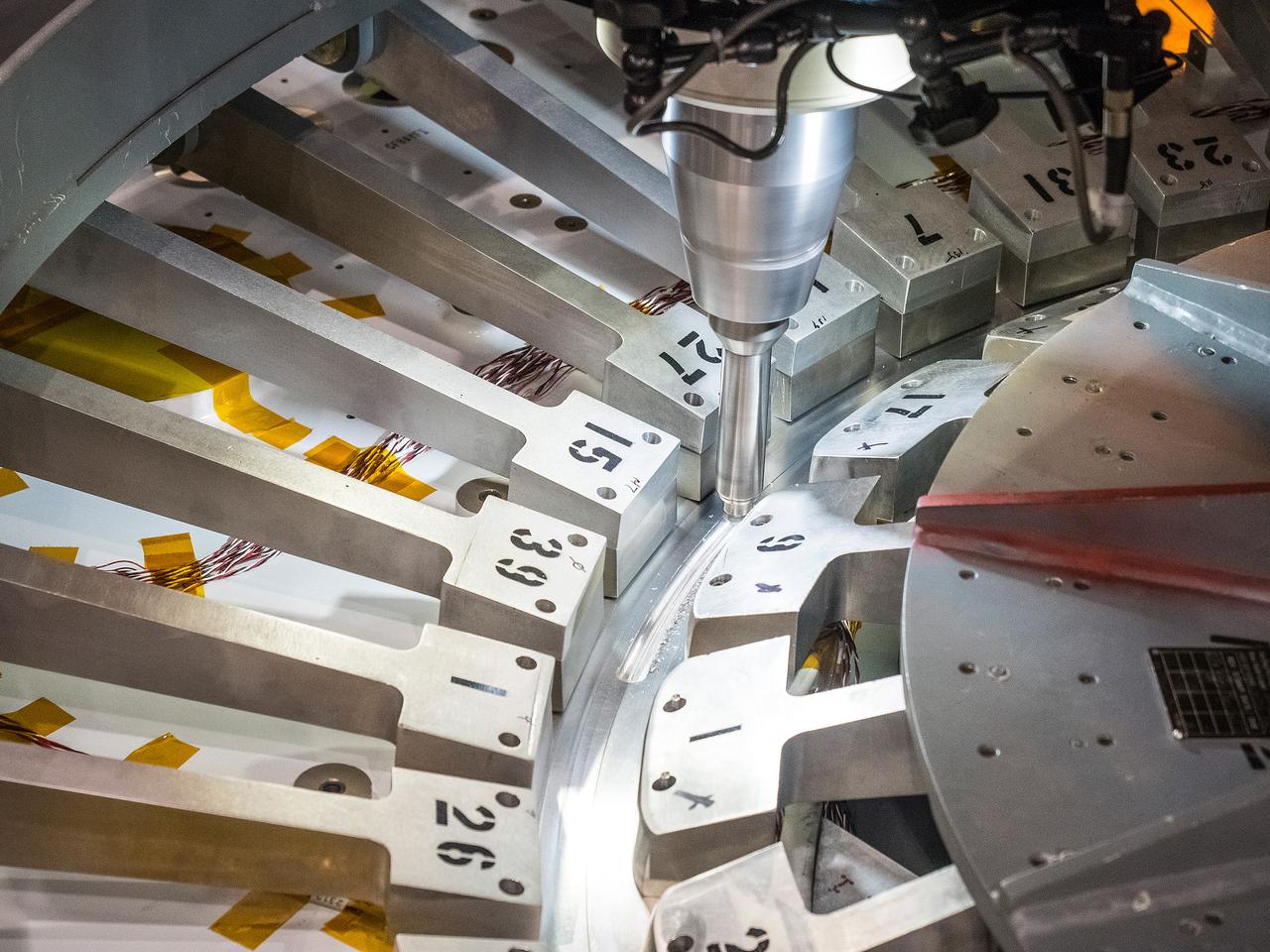
First weld of Orion Exploration Mission 1 crew module
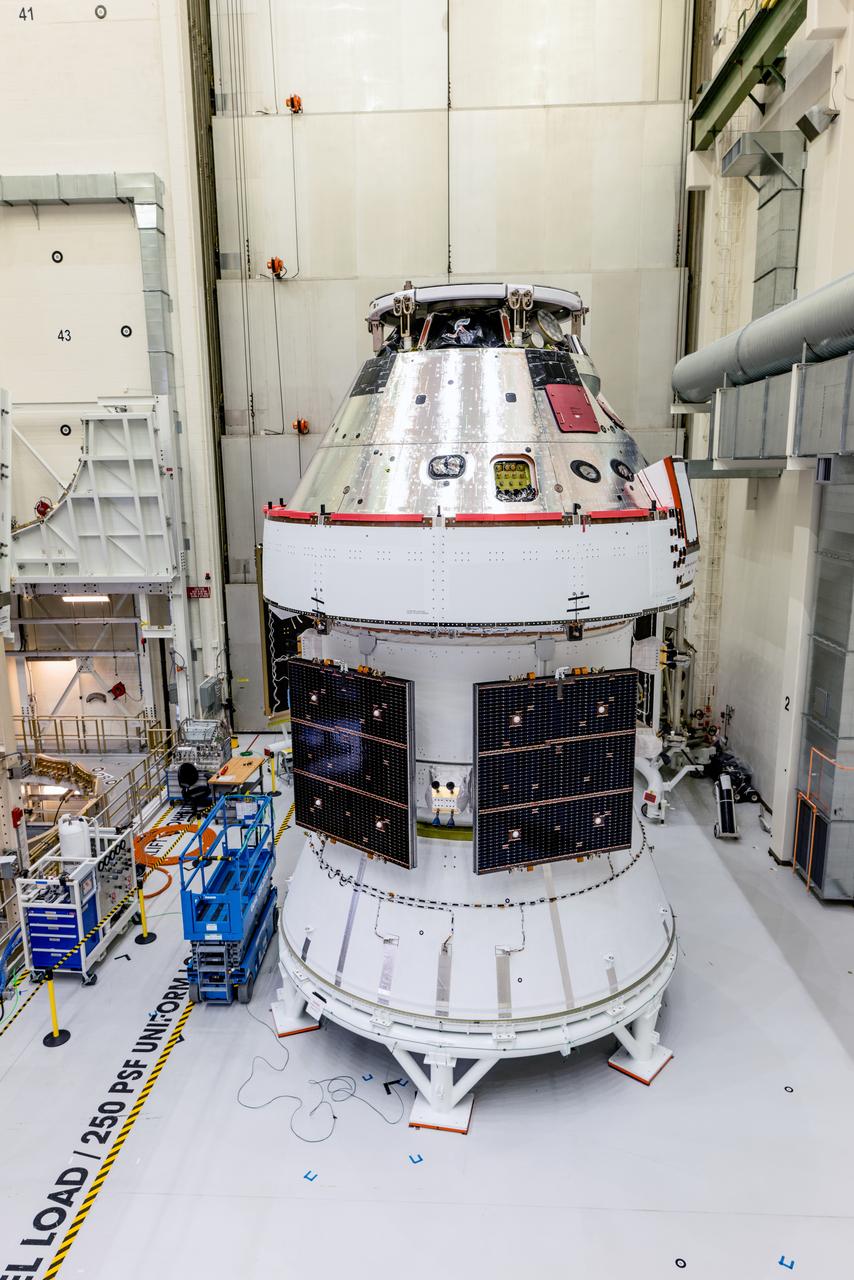
In the Operations and Checkout Building (O&C) at Kennedy Space Center, three spacecraft adapter jettison (SAJ) fairings are prepared for installation and will be moved into place by technicians with Lockheed Martin, lead contractor for Orion on Oct. 12, 2020. They will be secured around the spacecraft, encapsulating the European Service Module to protect it from the harsh environment as the spacecraft is propelled out of Earth’s atmosphere atop the Space Launch System (SLS) rocket during NASA’s Artemis I mission. The next time the solar array wings will be visible will be when Orion is in space. Artemis I will test the Orion spacecraft and SLS as an integrated system ahead of crewed flights to the Moon.
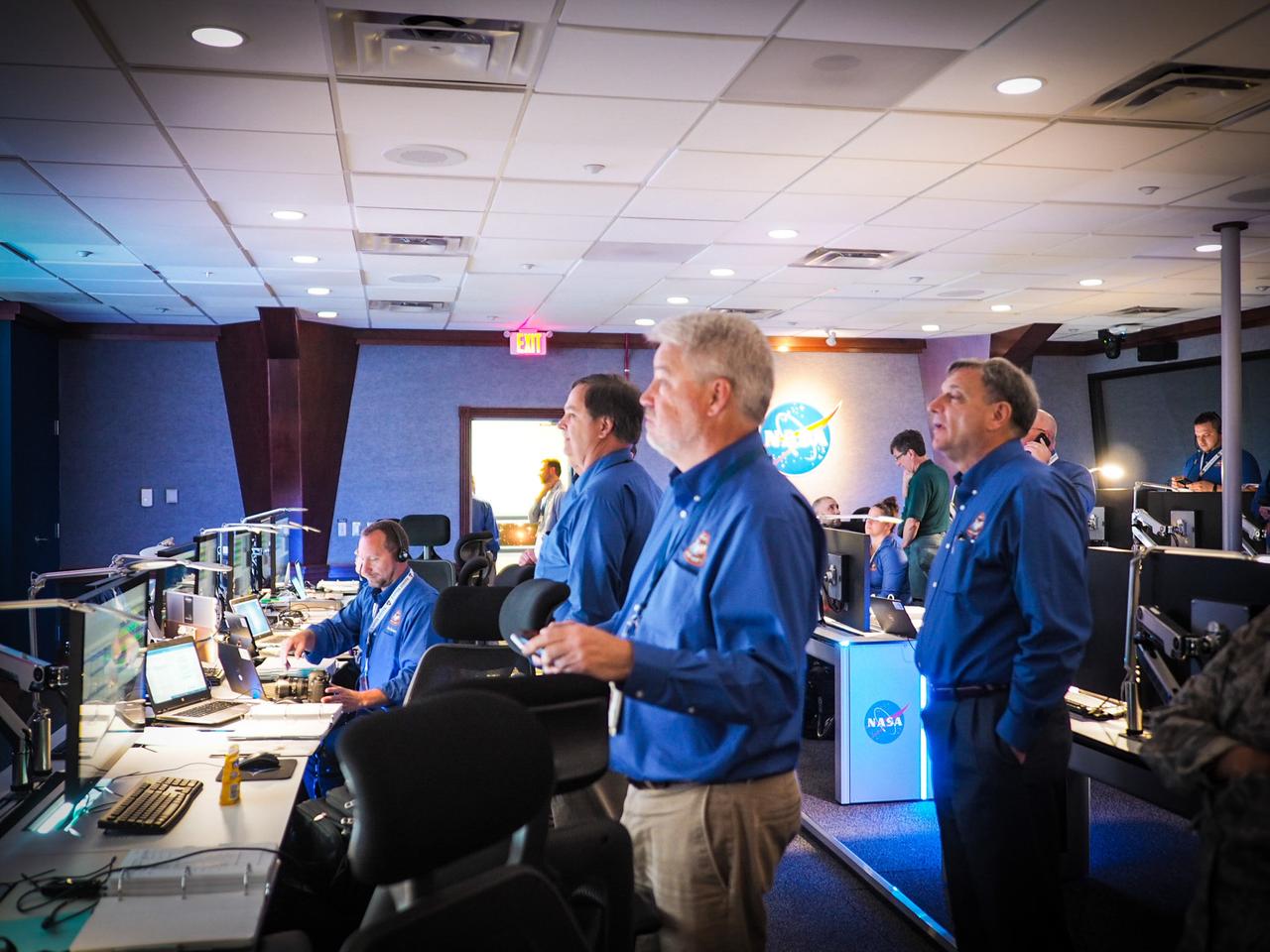
From Hangar AE at Cape Canaveral Air Force Station, the Orion team conducted the successful flight test of the Launch Abort System on Ascent Abort-2 (AA-2) on July 2, 2019.
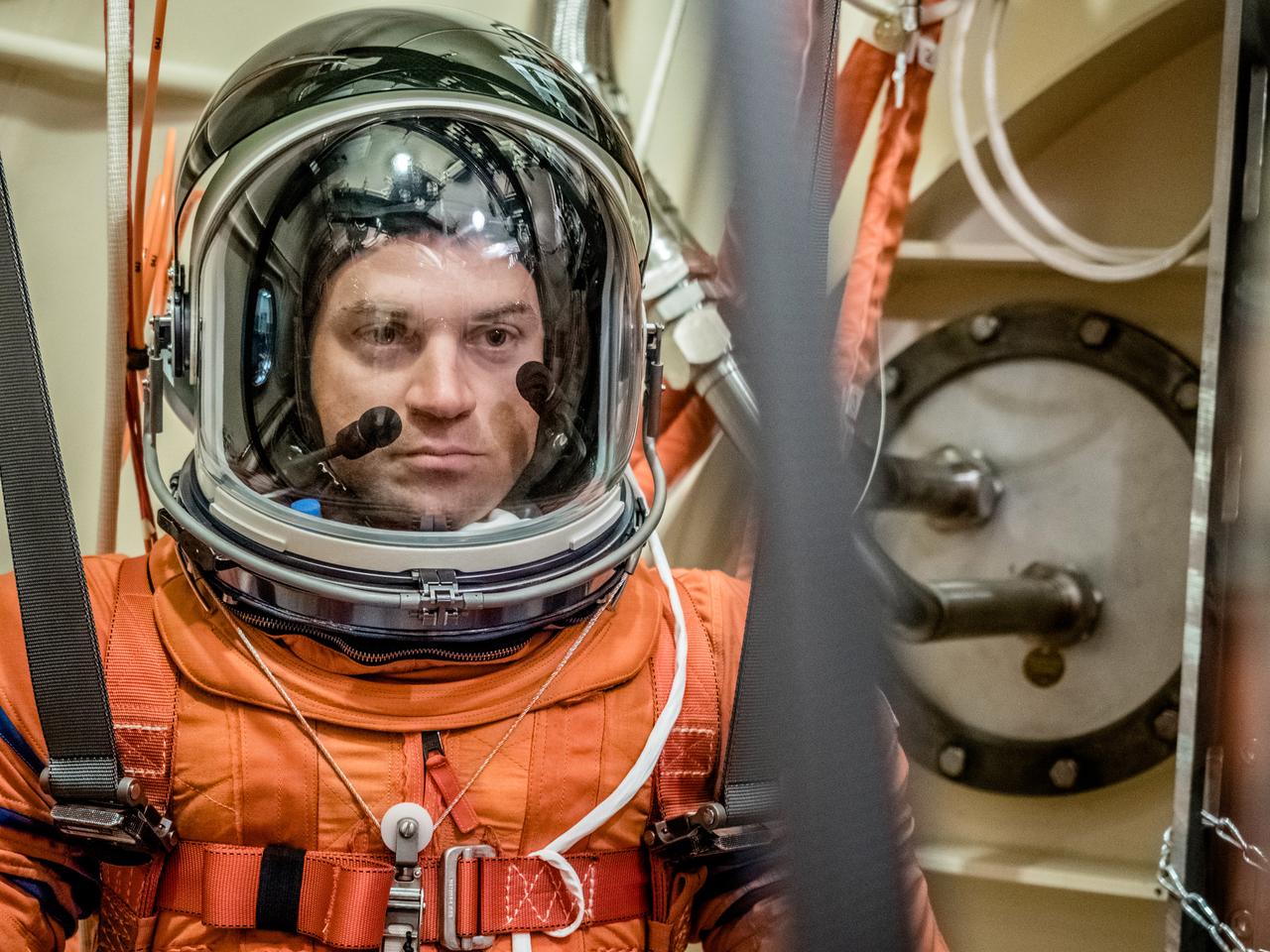
Engineers and technicians at NASA’s Johnson Space Center in Houston are testing the spacesuit astronauts will wear in the agency’s Orion spacecraft on trips to deep space. On June 22, 2017, members of the Johnson team participated in a Vacuum Pressure Integrated Suit Test to verify enhancements to the suit will meet test and design standards for the Orion spacecraft. During this test, the suit is connected to life support systems and then air is removed from Johnson’s 11-foot thermal vacuum chamber to evaluate the performance of the suits in conditions similar to a spacecraft. The suit will contain all the necessary functions to support life and is being designed to enable spacewalks and sustain the crew in the unlikely event the spacecraft loses pressure. Part of Batch images transfer from Flickr.
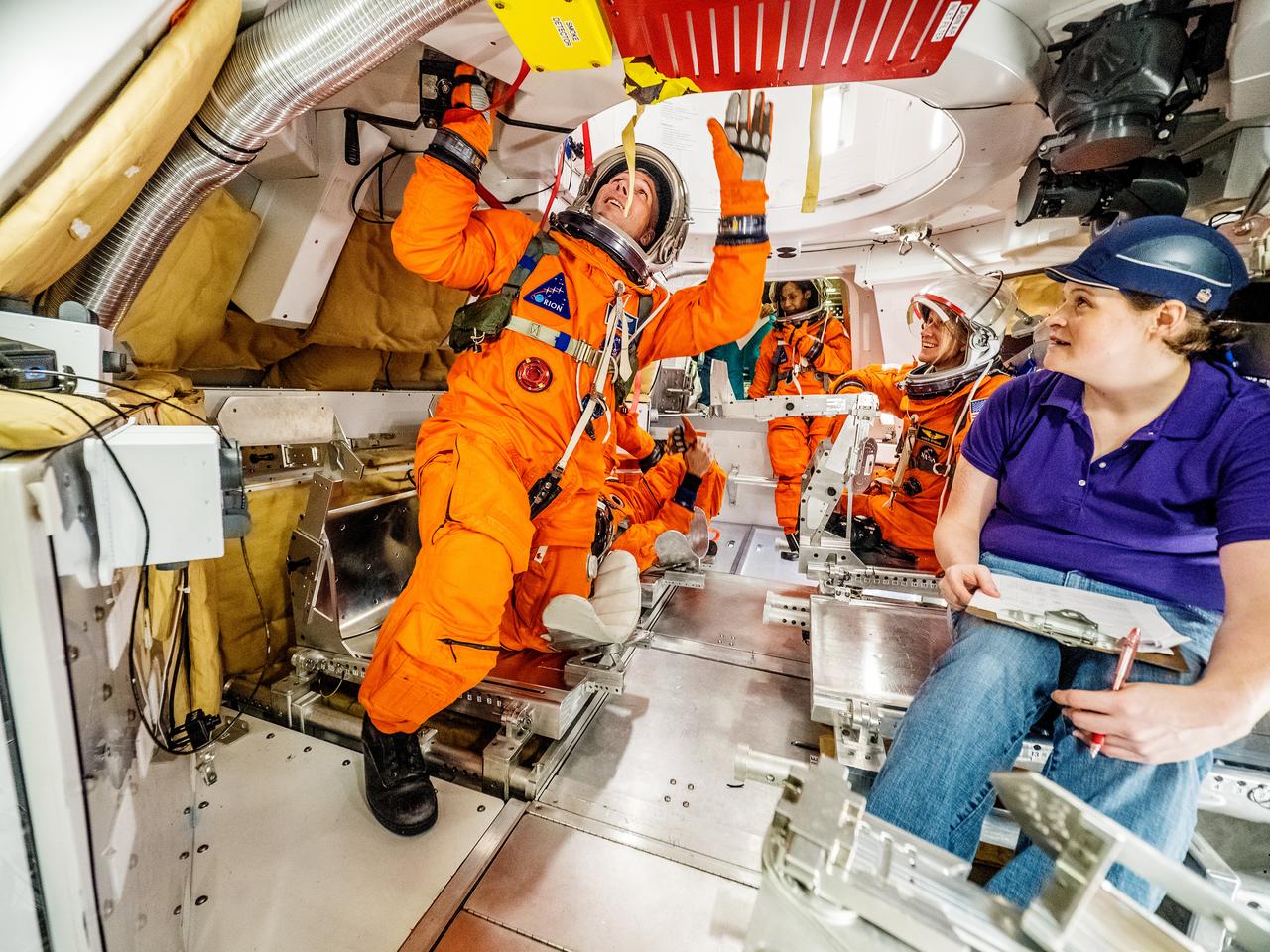
Engineers and astronauts conduct testing in a representative model of the Orion spacecraft at NASA’s Johnson Space Center in Houston on July 28, 2016 to gather the crew's feedback on the design of the docking hatch and on post-landing equipment operations. ..While the crew will primarily use the side hatch for entry and exit on Earth and the docking hatch to travel between Orion and a habitation module on long-duration deep space missions, the crew will need to be able to exit out of the docking hatch if wave heights in the Pacific Ocean upon splashdown are too high. The work is being done to help ensure all elements of Orion's design are safe and effective for the crew to use on future missions on the journey to Mars.
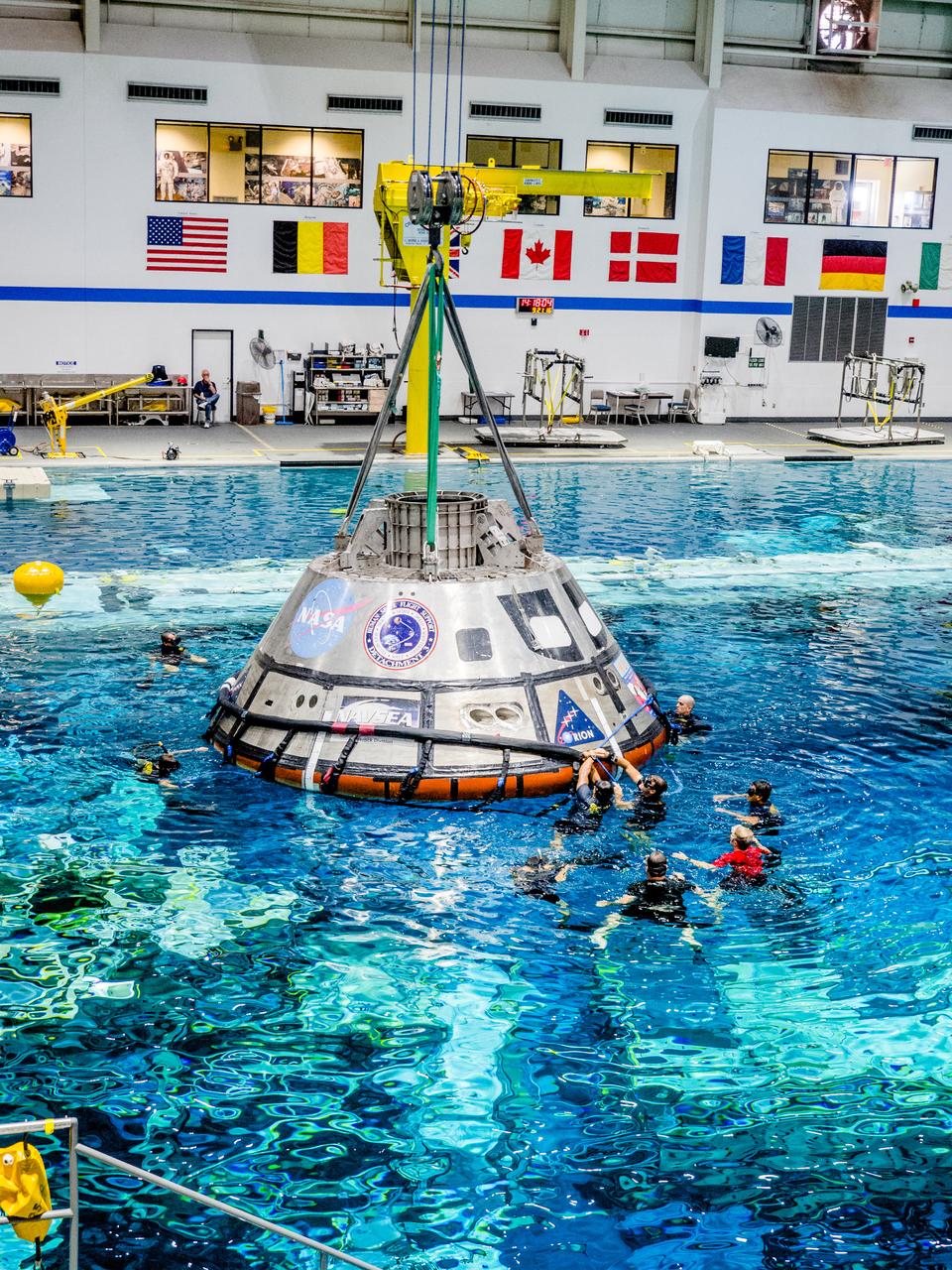
A group of U.S. Navy divers, Air Force pararescumen and Coast Guard rescue swimmers practice Orion underway recovery techniques this week in the Neutral Buoyancy Laboratory (NBL) at NASA’s Johnson Space Center in Houston on Sept. 21, 2016, to prepare for the first test flight of an uncrewed Orion spacecraft with the agency’s Space Launch System rocket during Artemis I. Part of Batch image transfer from Flickr.
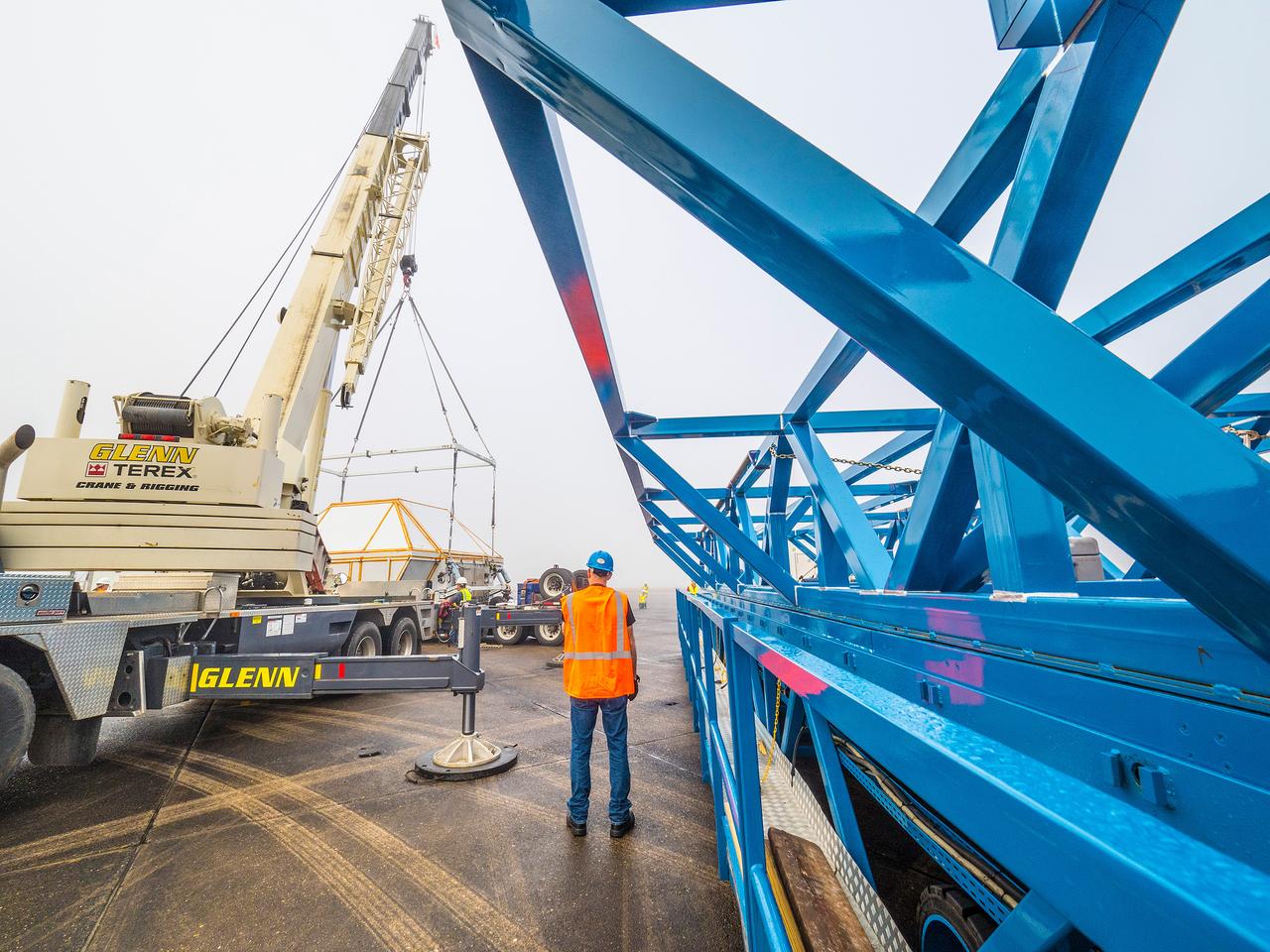
The Artemis I Orion crew module pressure vessel is loaded on NASA's Super Guppy plane in New Orleans for transport to Kennedy Space Center on Feb. 1, 2016. Part of Batch image transfer from Flickr.
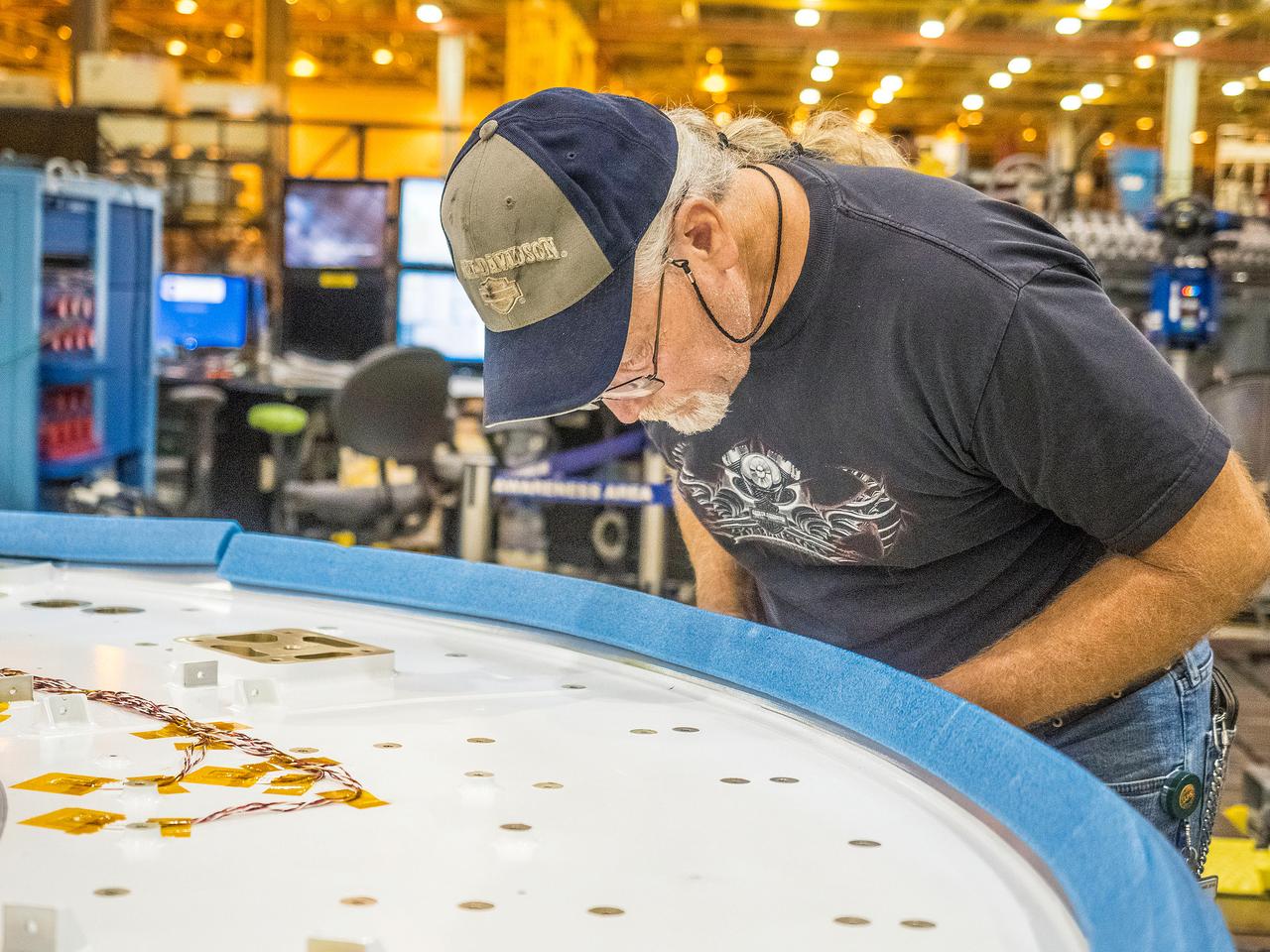
First weld of Orion Exploration Mission 1 crew module
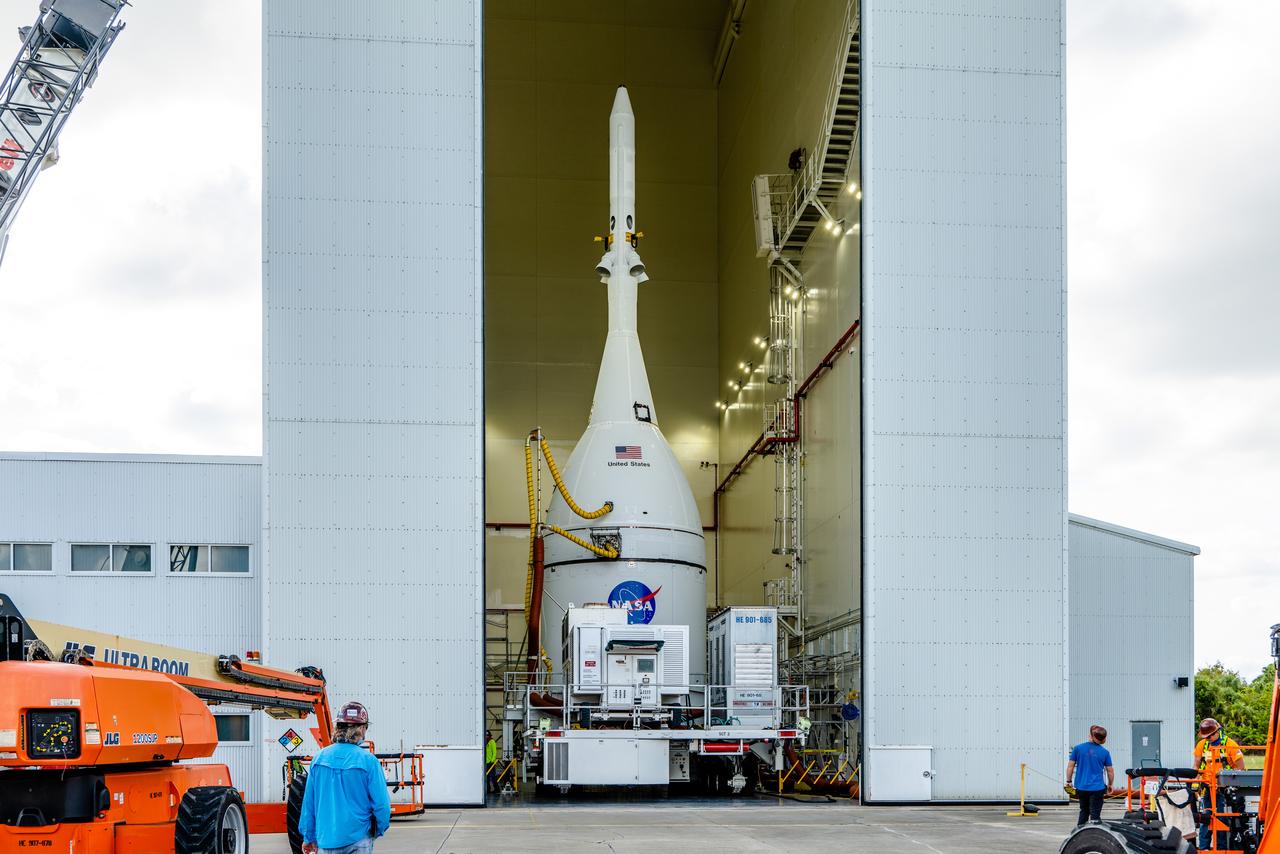
The team at Kennedy Space Center prepares the Artemis I Orion for transport from the Launch Abort System Facility to the Vehicle Assembly Building where it will be stacked atop the Launch Abort System.
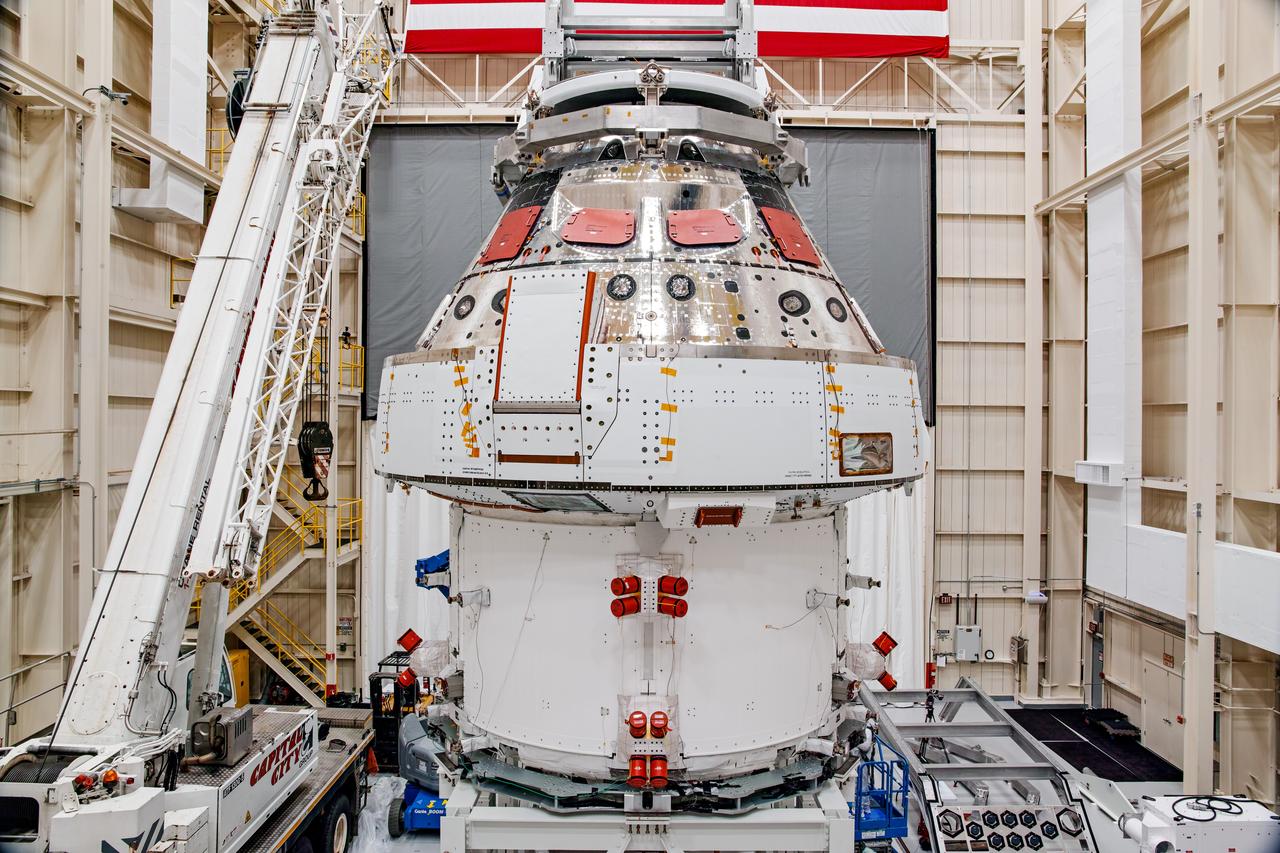
NASA’s Orion spacecraft–the crew module and European-built service module—is being lifted on Dec. 1, 2019 into a thermal cage and readied for its move into the vacuum chamber at NASA’s Neil A. Armstrong Test Facility in Ohio (formerly Plum Brook Station) for testing. Testing begins with a 60-day thermal test, where the spacecraft will be subjected to temperatures ranging from -250 to 300-degrees Fahrenheit to ensure it can withstand the harsh environment of space during Artemis missions. These extreme temperatures simulate flying in-and-out of sunlight and shadow in space using Heat Flux, a specially-designed system that heats specific parts of the spacecraft at any given time. Orion will also be surrounded on all sides by a set of large panels, called a cryogenic-shroud, that will provide the cold background temperatures of space.
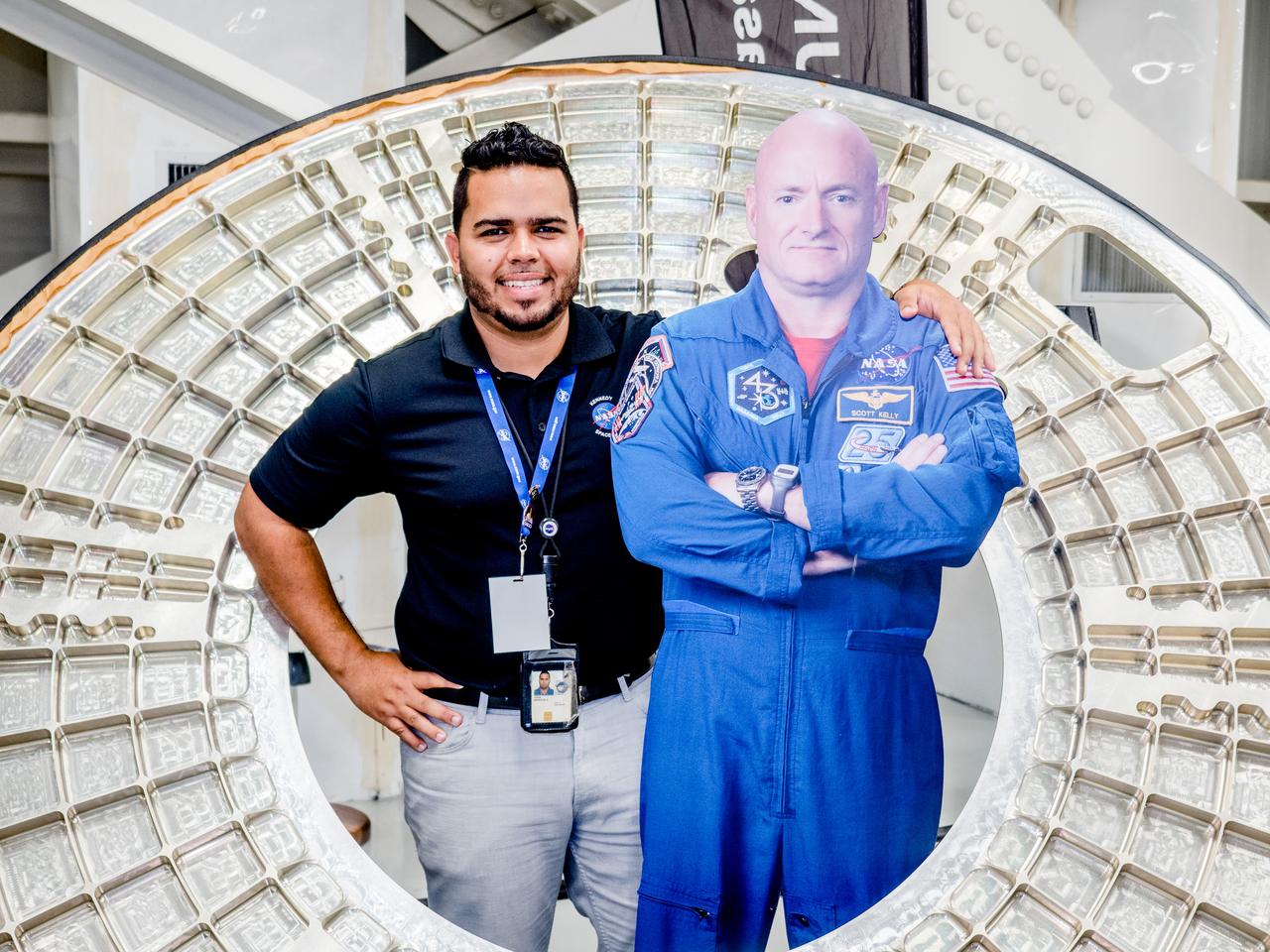
#NASAMarsDay
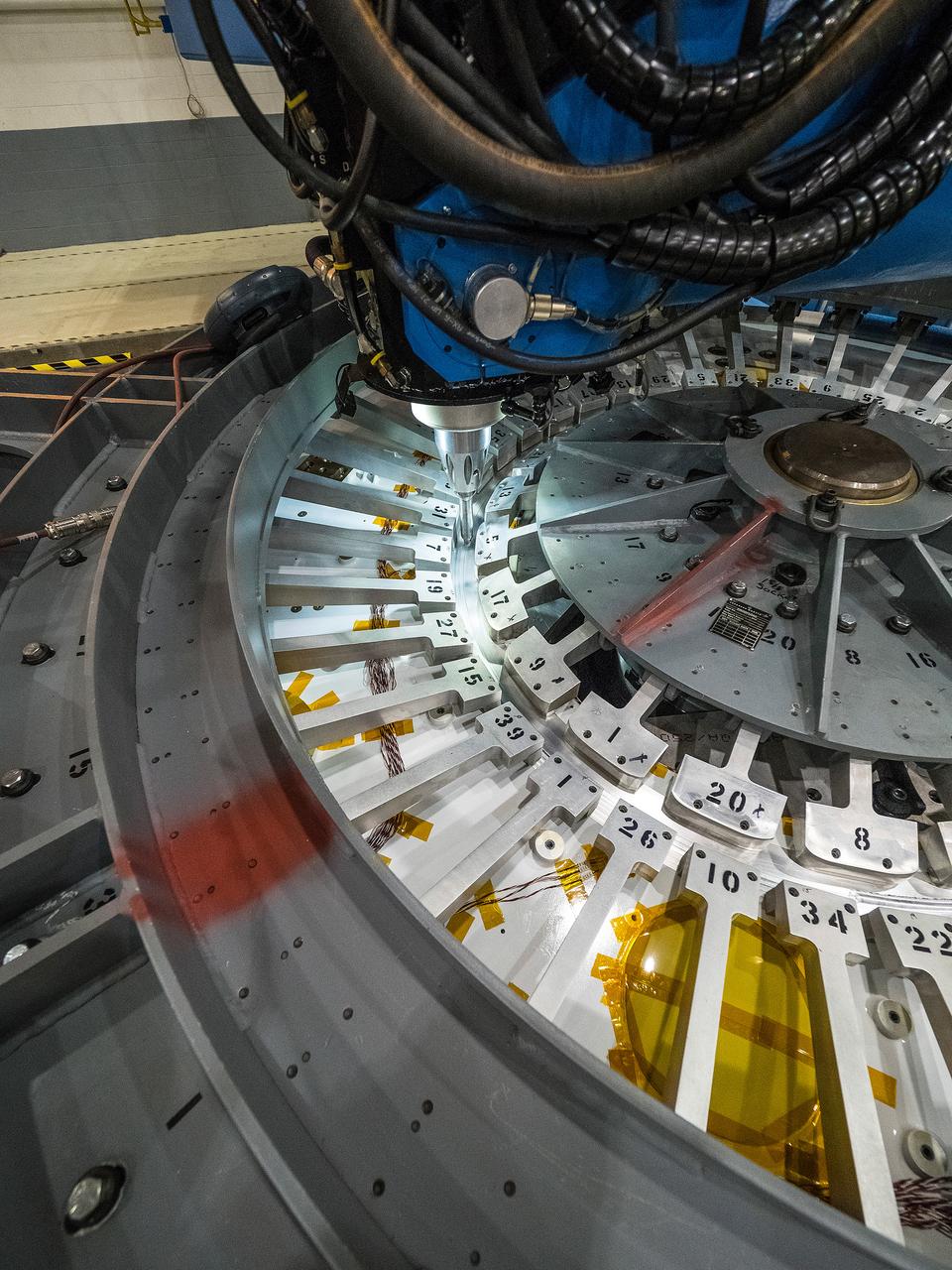
First weld of Orion Exploration Mission 1 crew module
First weld of Orion Exploration Mission 1 crew module
#NASAMarsDay
First weld of Orion Exploration Mission 1 crew module
In the Operations and Checkout Building (O&C) at Kennedy Space Center, three spacecraft adapter jettison (SAJ) fairings are prepared for installation and will be moved into place by technicians with Lockheed Martin, lead contractor for Orion on Oct. 12, 2020. They will be secured around the spacecraft, encapsulating the European Service Module to protect it from the harsh environment as the spacecraft is propelled out of Earth’s atmosphere atop the Space Launch System (SLS) rocket during NASA’s Artemis I mission. The next time the solar array wings will be visible will be when Orion is in space. Artemis I will test the Orion spacecraft and SLS as an integrated system ahead of crewed flights to the Moon.
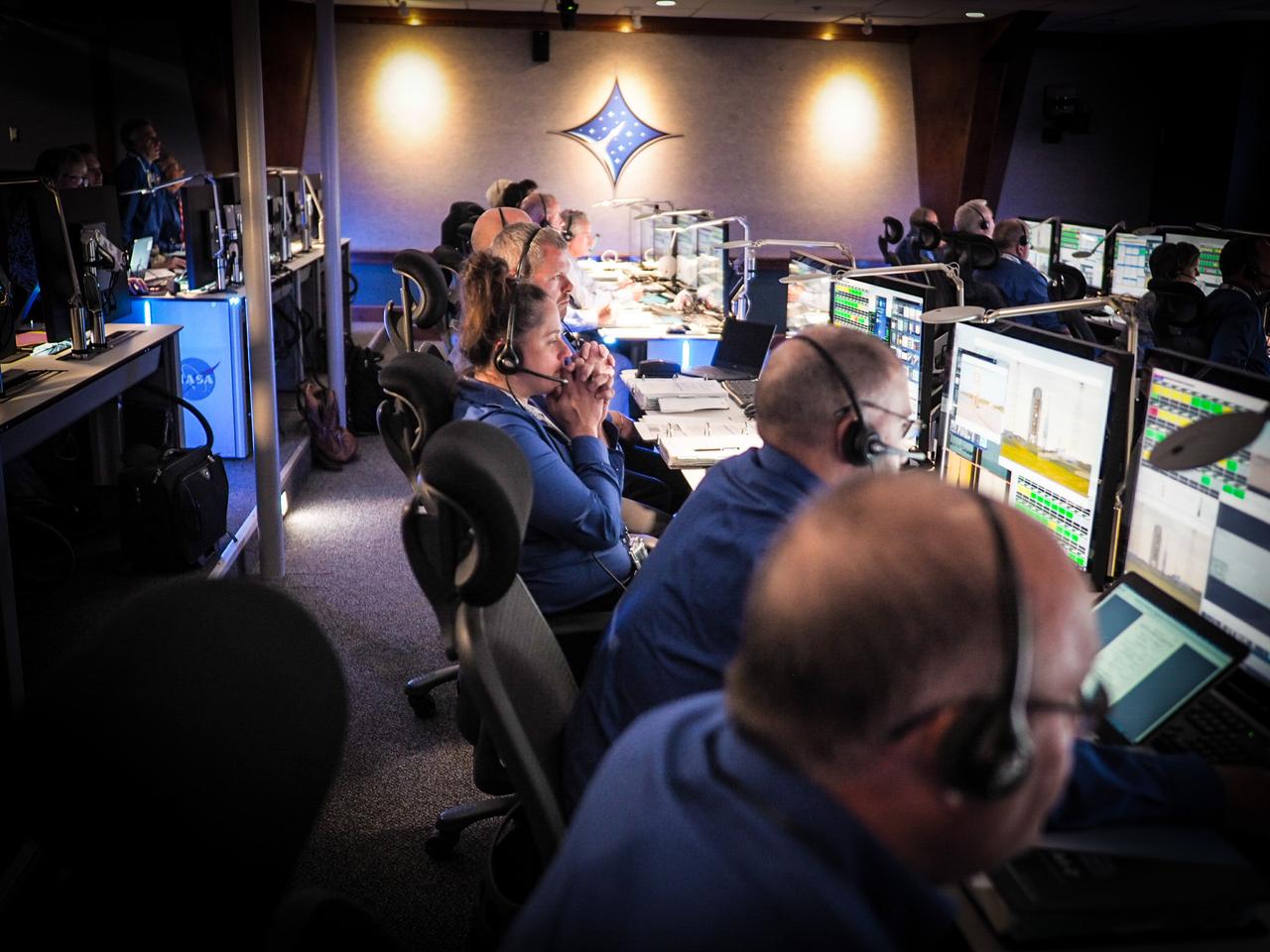
From Hangar AE at Cape Canaveral Air Force Station, the Orion team conducted the successful flight test of the Launch Abort System on Ascent Abort-2 (AA-2) on July 2, 2019.
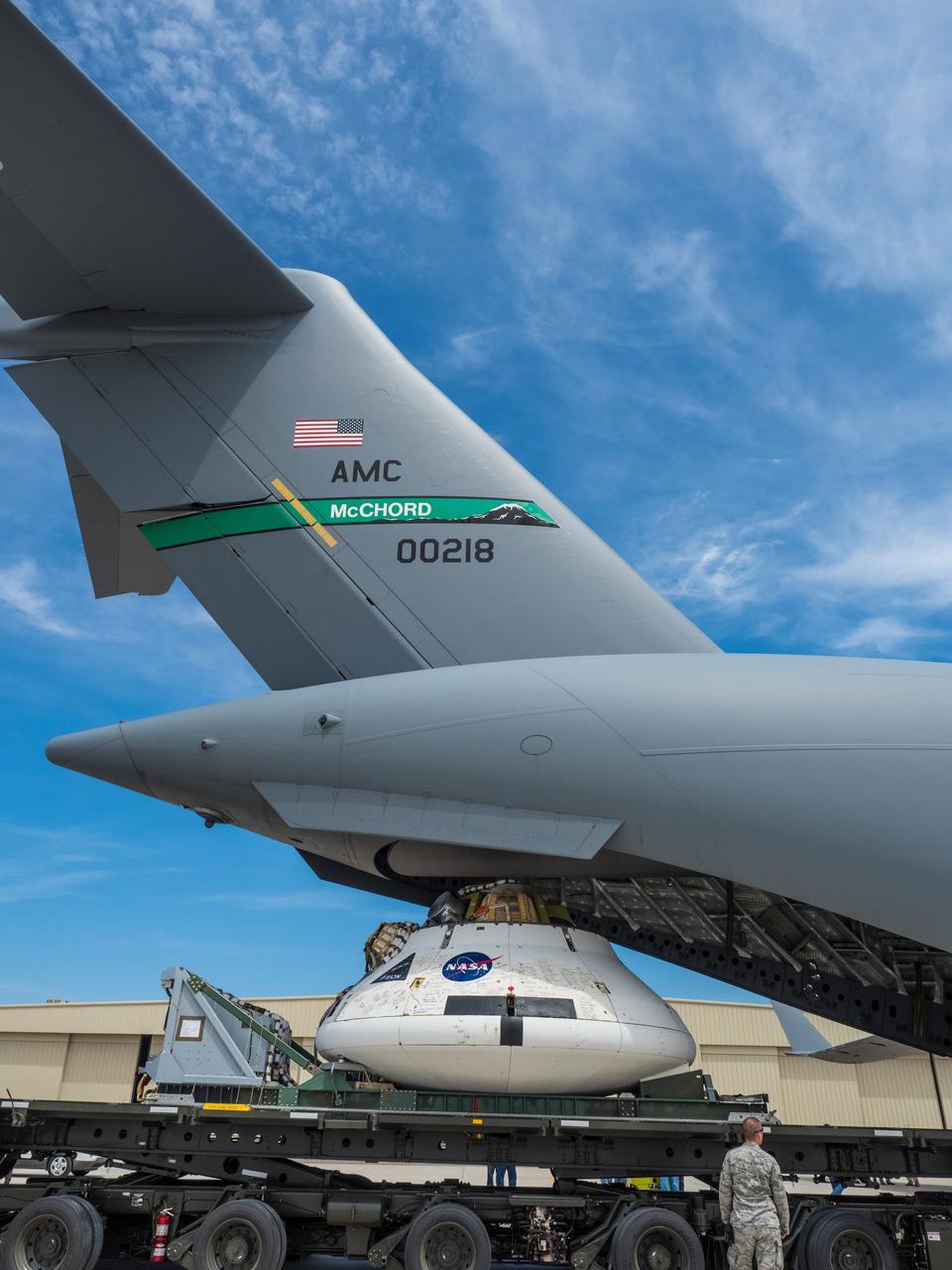
Engineers prepare to test the parachute system for NASA’s Orion spacecraft at the U.S. Army Yuma Proving Ground in Yuma, Arizona on Aug. 24, 2015. During the test, planned for Wednesday, Aug. 26, a C-17 aircraft will carry a representative Orion capsule to 35,000 feet in altitude and then drop it from its cargo bay. Engineers will test a scenario in which one of Orion’s two drogue parachutes, used to stabilize it in the air, does not deploy, and one of its three main parachutes, used to slow the capsule during the final stage of descent, also does not deploy. The risky test will provide data engineers will use as they gear up to qualify Orion’s parachutes for missions with astronauts. On Aug. 24, a C-17 was loaded with the test version of Orion, which has a similar mass and interfaces with the parachutes as the Orion being developed for deep space missions but is shorter on top to fit inside the aircraft. Part of Batch image transfer from Flickr.

The Artemis I vehicle, with the Orion spacecraft atop, rolls for wet dress rehearsal from the Vehicle Assembly Building at NASA’s Kennedy Space Center on March 17, 2022. At the pad, the vehicle will undergo checkouts and teams will practice countdown to ensure the stack is ready for launch.
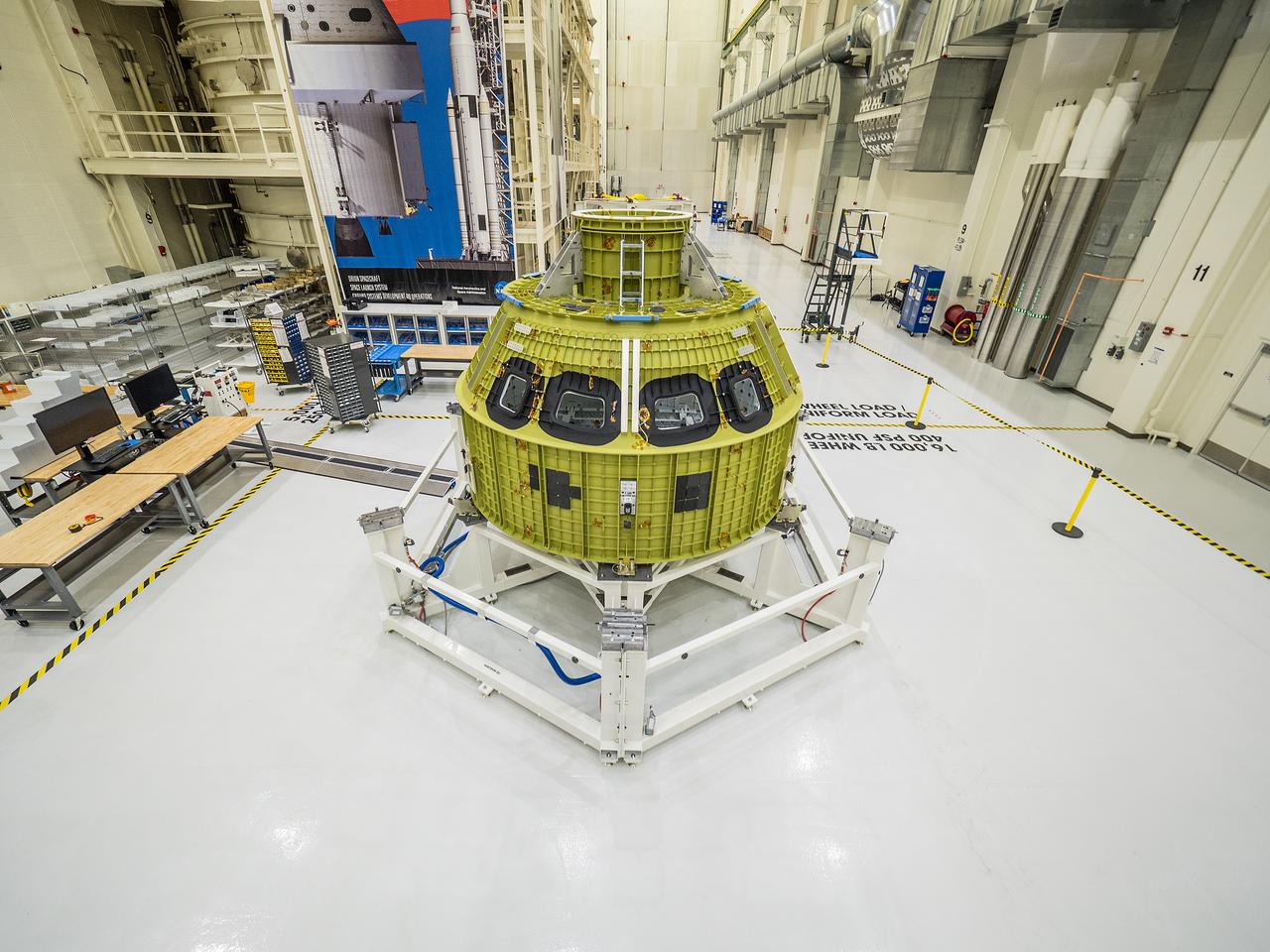
After arriving from New Orleans by Super Guppy, Artemis I Orion is moved to the work stand at the Operations and Checkout Building at NASA's Kennedy Space Center on Feb. 2, 2016. Part of Batch image transfer from Flickr.
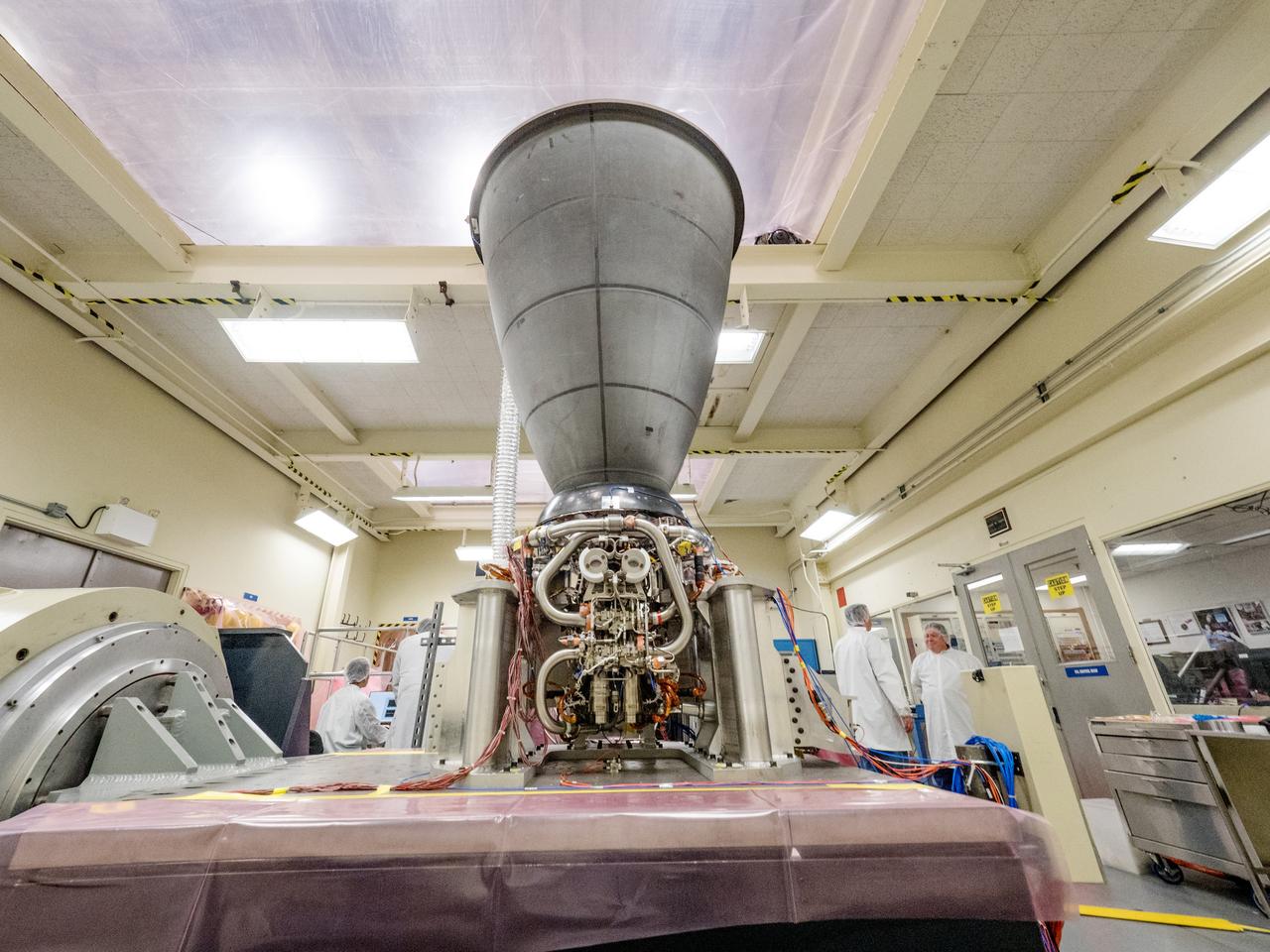
An Orbital Maneuvering System engine is vibration tested at NASA’s Johnson Space Center in Houston on June 16, 2016, before shipment to the agency’s White Sands Test Facility in New Mexico, where it will be fired to qualify the engine for use on Orion’s service module. The vibration testing will help ensure the engine can withstand the loads induced by launch on the agency’s Space Launch System rocket. This summer, another Orbital Maneuvering System engine will be tested at Johnson before it is supplied to ESA (European Space Agency) to integrate into Orion's service module, which will power, propel and cool Orion in space, and also provide consumables like air and water for future crews. ..ESA and its contractor Airbus Defence and Space are providing the service module for Artemis I. This Orbital Maneuvering System engine was used on the space shuttle to provide the thrust for orbital insertion, orbit circularization, orbit transfer, rendezvous, deorbit and abort situations and flew on 31 shuttle flights. The engine flying on Artemis I flew on 19 space shuttle flights, beginning with STS-41G in October 1984 and ending with STS-112 in October 2002.
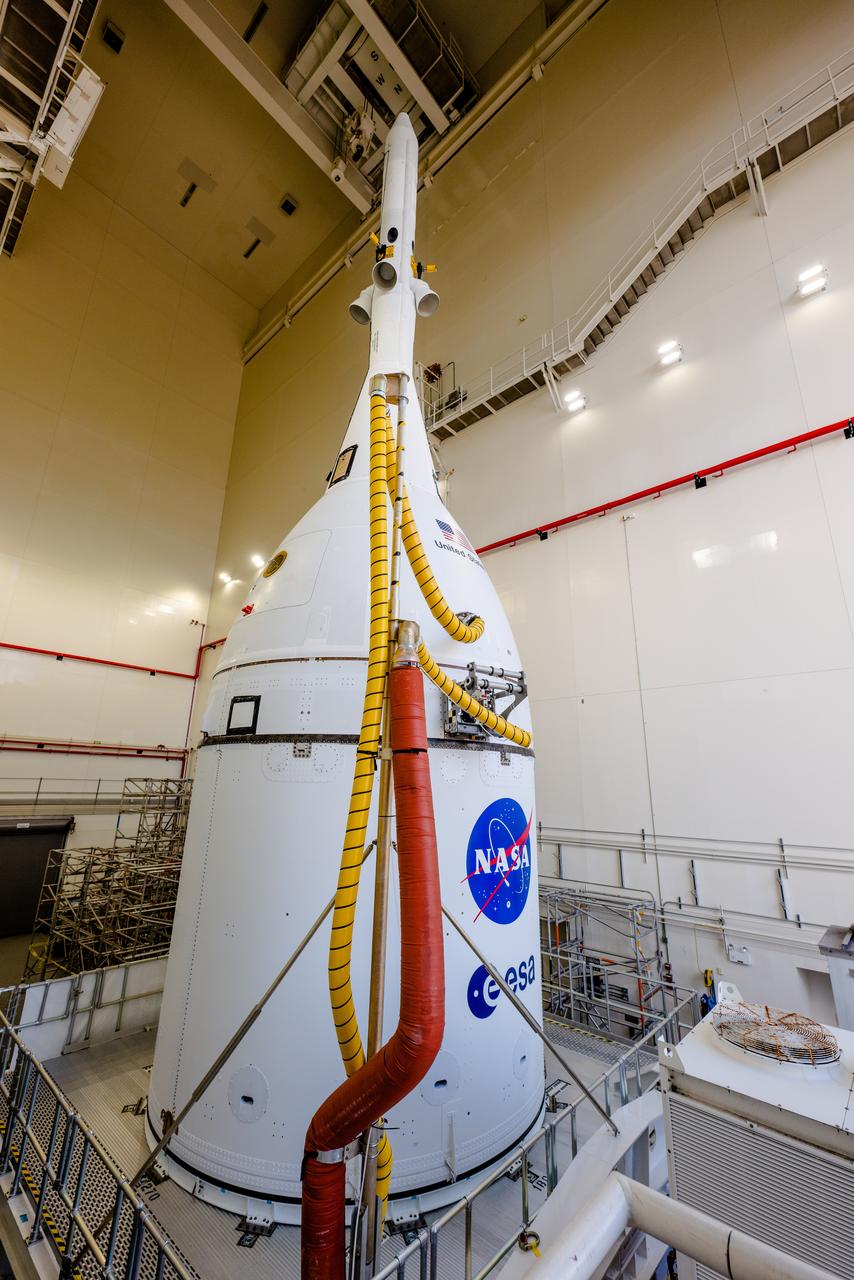
The team at Kennedy Space Center prepares the Artemis I Orion for transport from the Launch Abort System Facility to the Vehicle Assembly Building where it will be stacked atop the Launch Abort System.
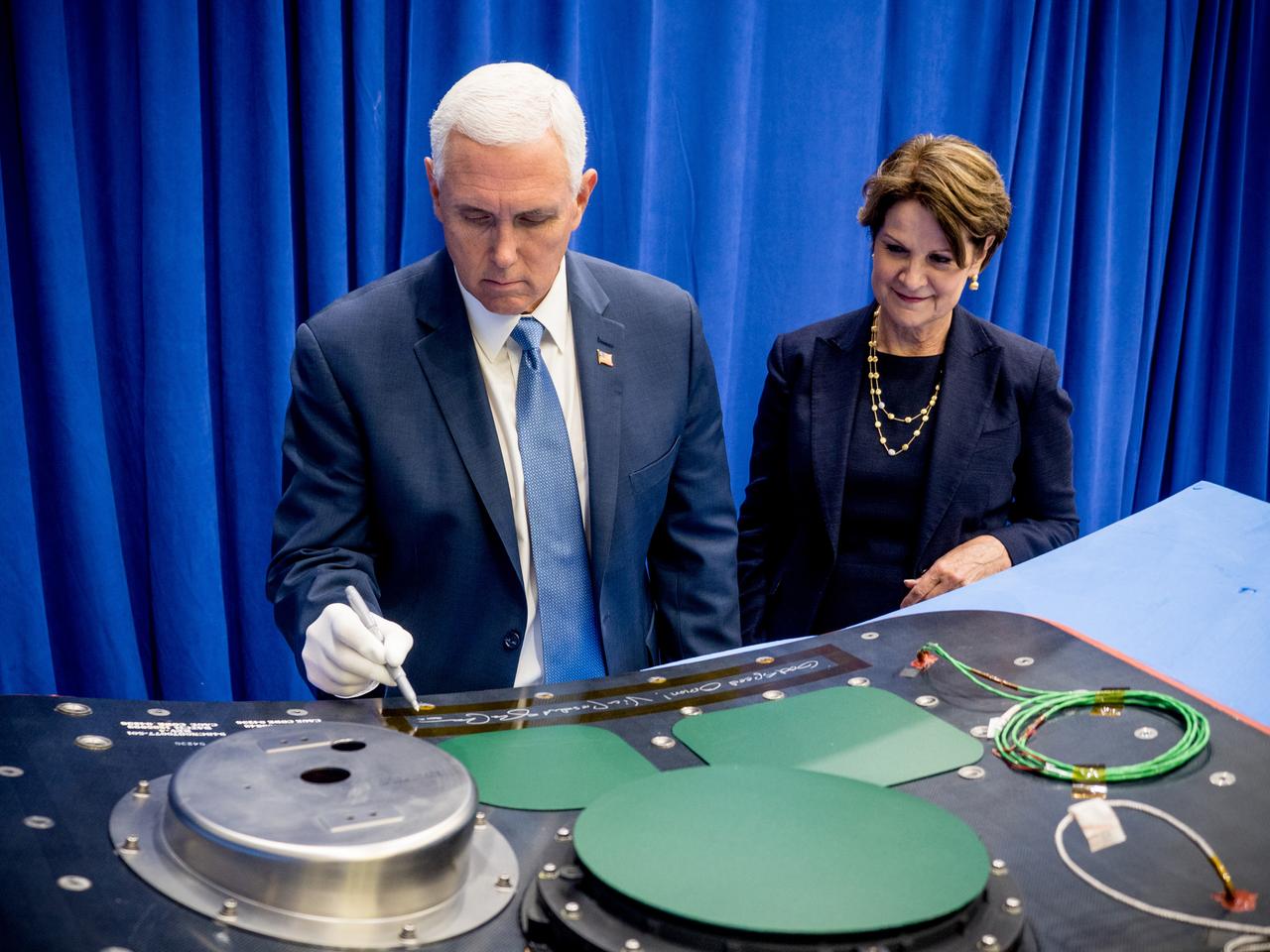
Vice President Mike Pence visited and gave remarks in the Neil Armstrong Operations and Checkout Building at NASA’s Kennedy Space Center in Florida on July 20, 2019 to commemorate the 50th anniversary of the agency’s Apollo 11 Moon landing and announce to America the completion of NASA’s Orion crew capsule, shown here on July 19, 2019, for the first Artemis lunar mission.
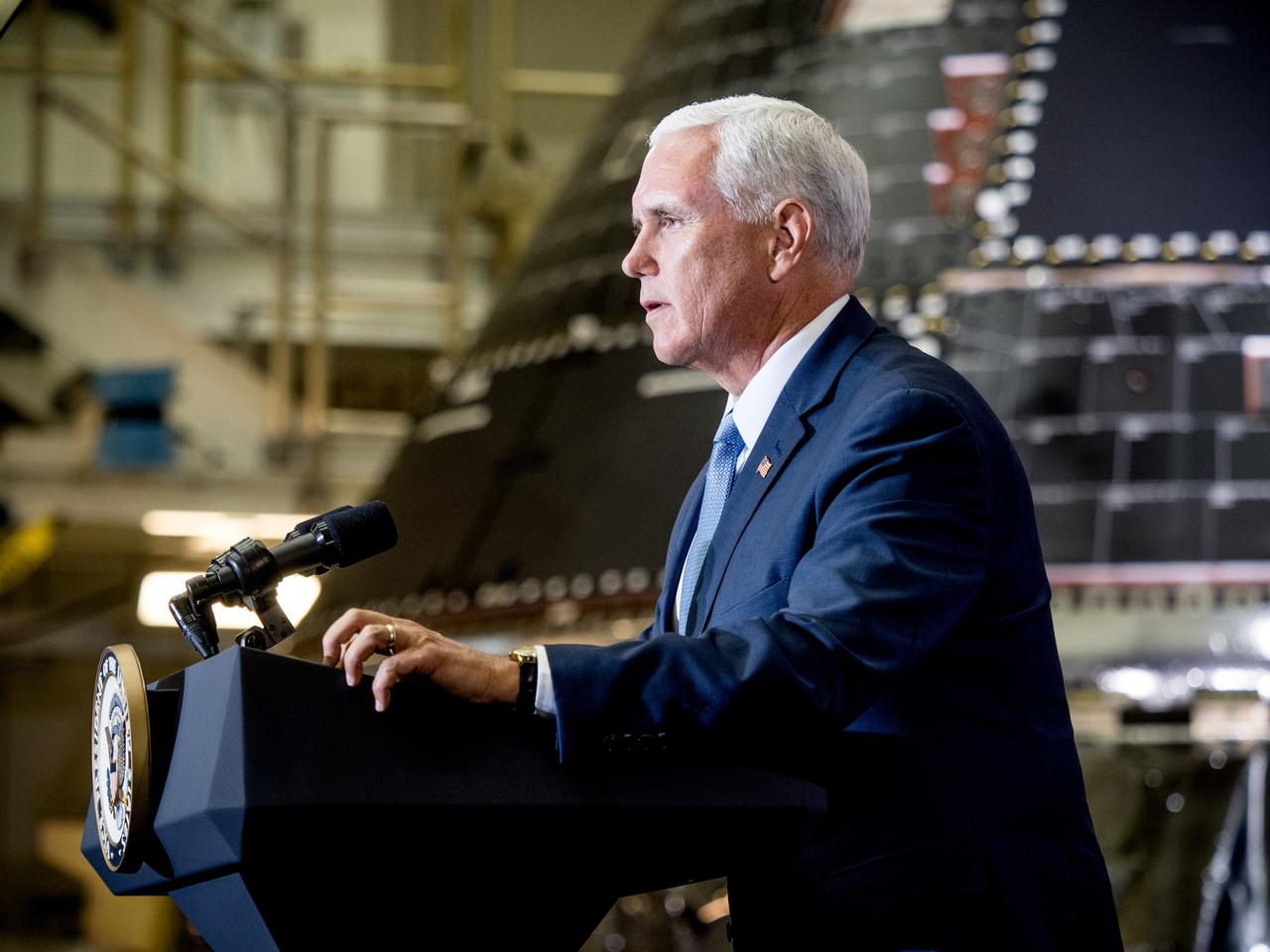
Vice President Mike Pence visited and gave remarks in the Neil Armstrong Operations and Checkout Building at NASA’s Kennedy Space Center in Florida on July 20, 2019 to commemorate the 50th anniversary of the agency’s Apollo 11 Moon landing and announce to America the completion of NASA’s Orion crew capsule, shown here on July 19, 2019, for the first Artemis lunar mission.
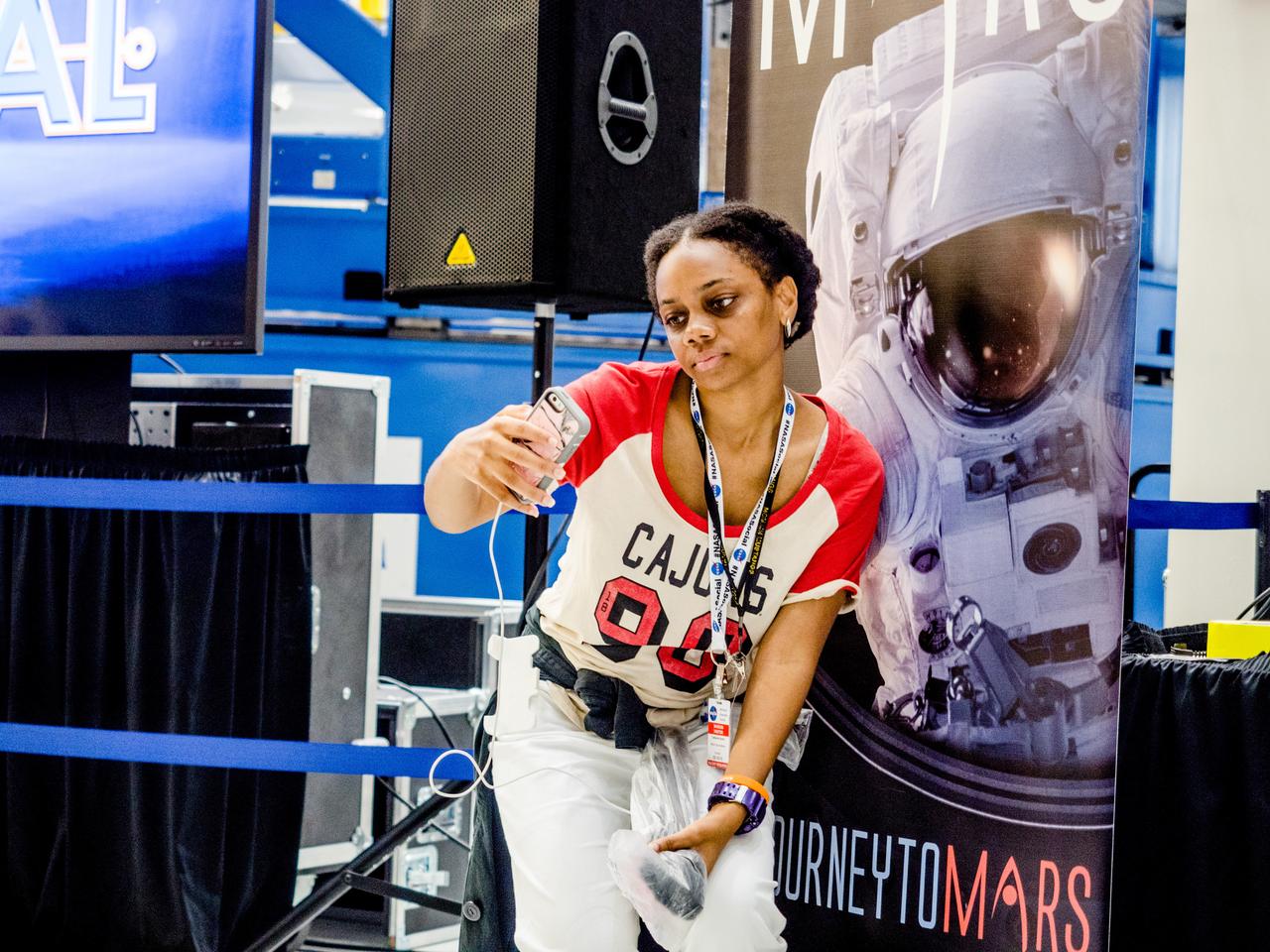
#NASAMarsDay
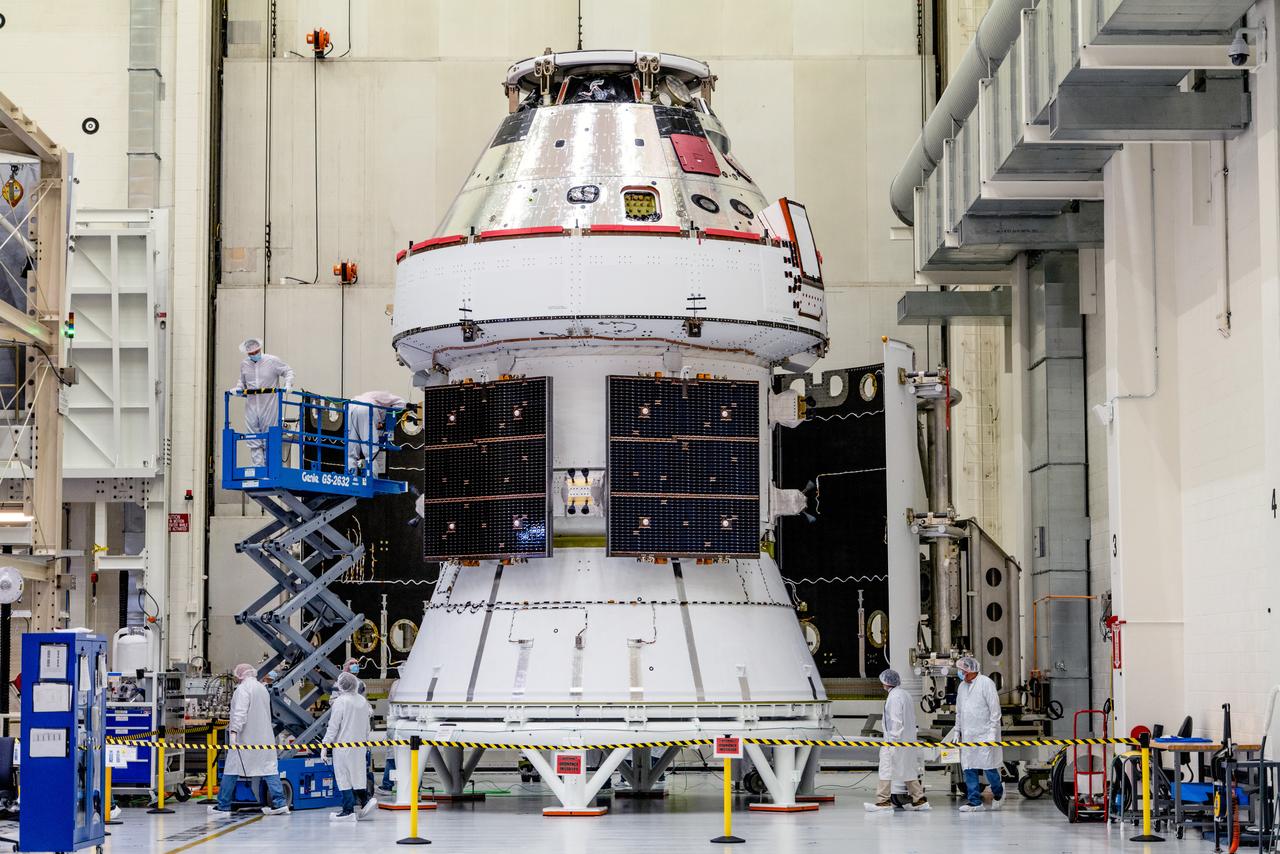
In the Operations and Checkout Building (O&C) at Kennedy Space Center, three spacecraft adapter jettison (SAJ) fairings are prepared for installation and will be moved into place by technicians with Lockheed Martin, lead contractor for Orion on Oct. 12, 2020. They will be secured around the spacecraft, encapsulating the European Service Module to protect it from the harsh environment as the spacecraft is propelled out of Earth’s atmosphere atop the Space Launch System (SLS) rocket during NASA’s Artemis I mission. The next time the solar array wings will be visible will be when Orion is in space. Artemis I will test the Orion spacecraft and SLS as an integrated system ahead of crewed flights to the Moon.
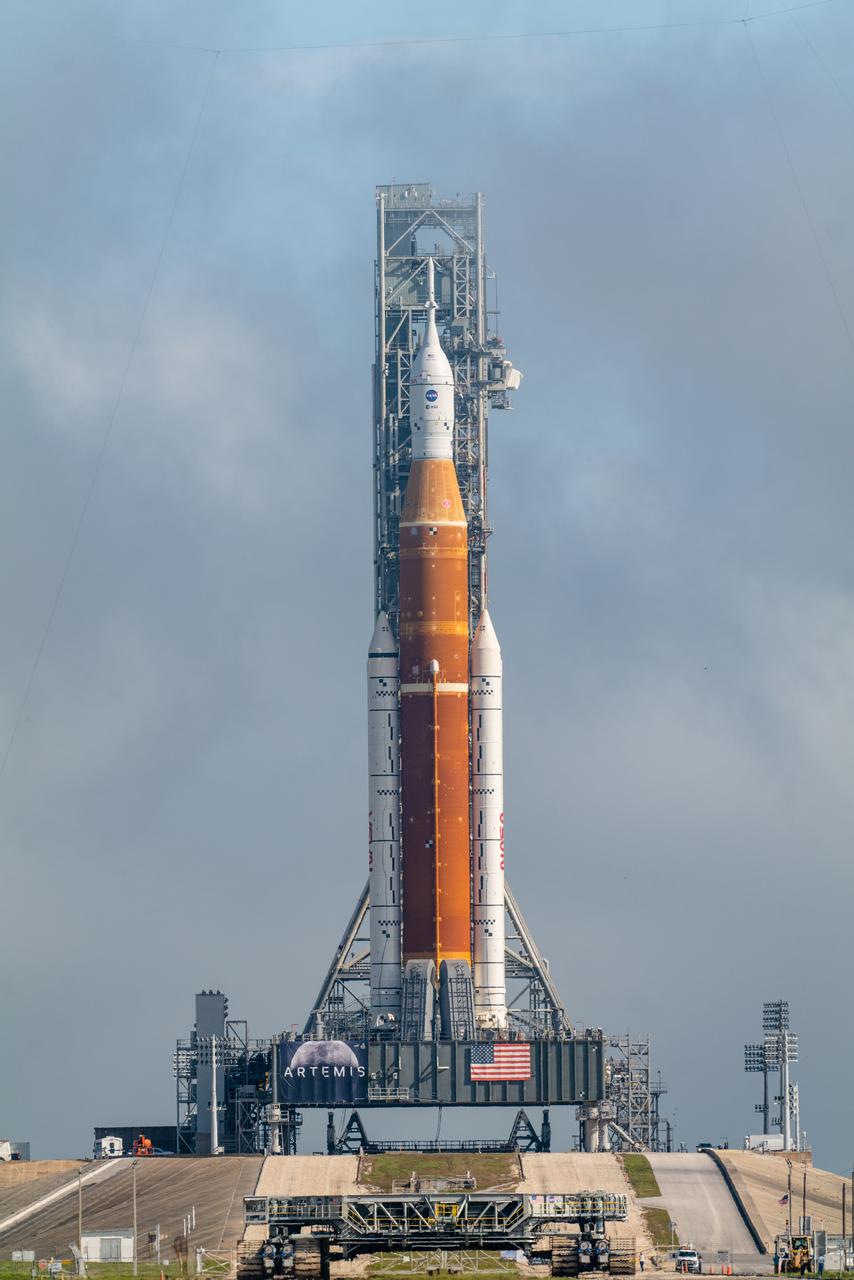
The Artemis I vehicle, shown here on March 18, 2022 arrived at Kennedy Space Center's Launch Pad 39B for wet dress rehearsal. During the test the vehicle will undergo checkouts and teams will practice countdown to ensure the stack is ready for launch.
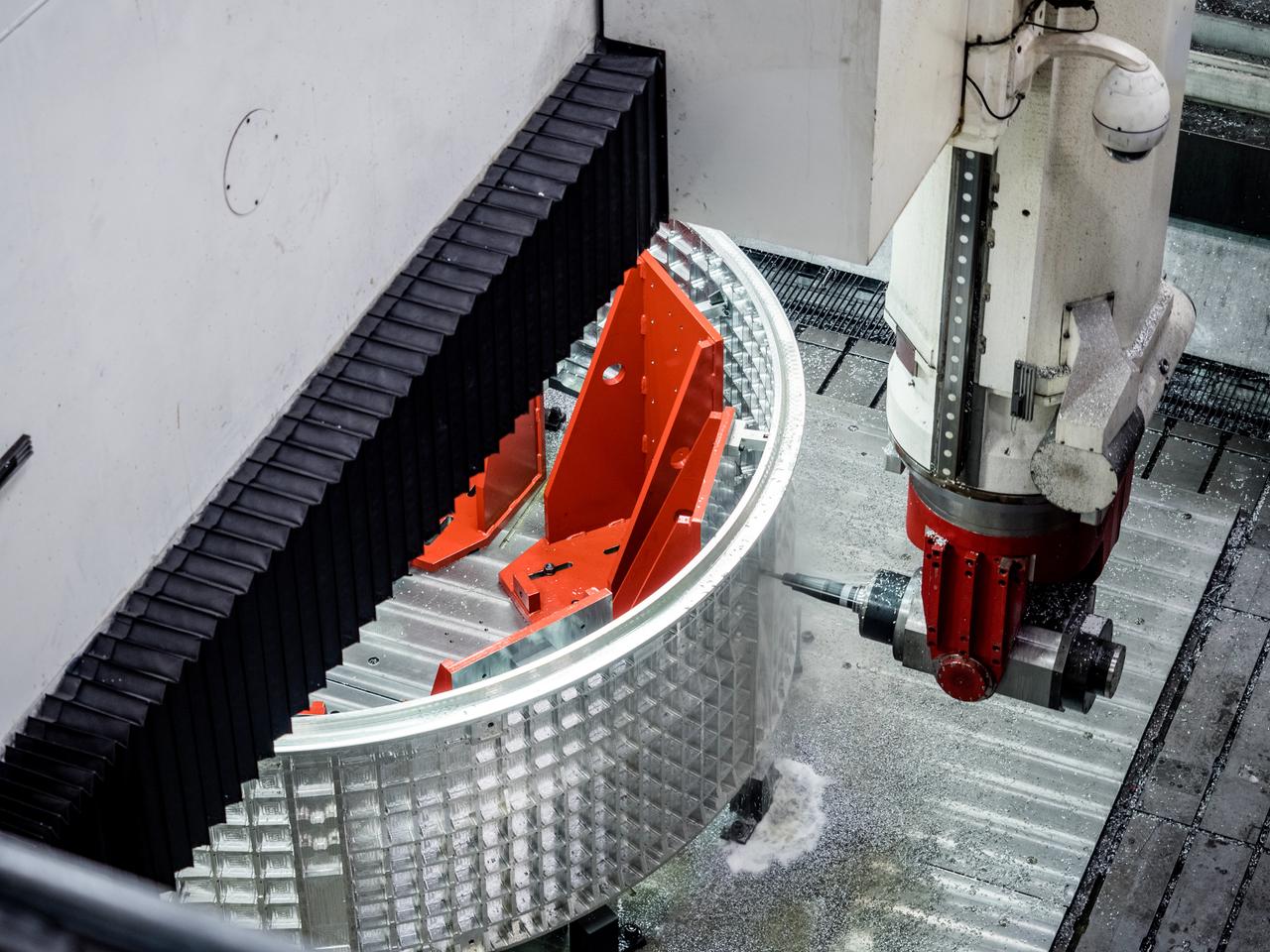
In Rockford, Illinois, Ingersoll Machine Tools builds parts for the Artemis II Orion crew module, shown here on April 13, 2017, which will carry humans beyond Earth orbit.
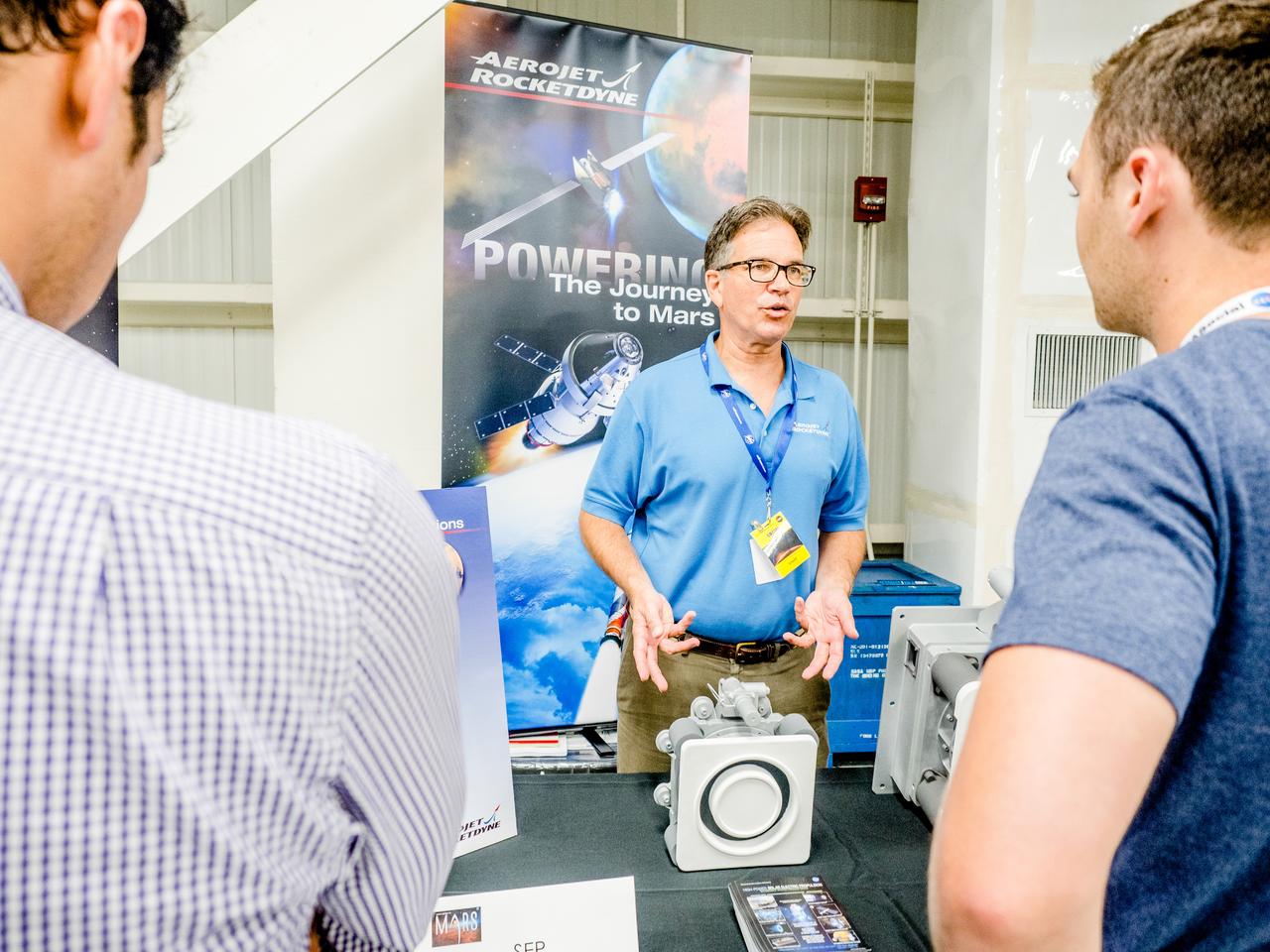
#NASAMarsDay
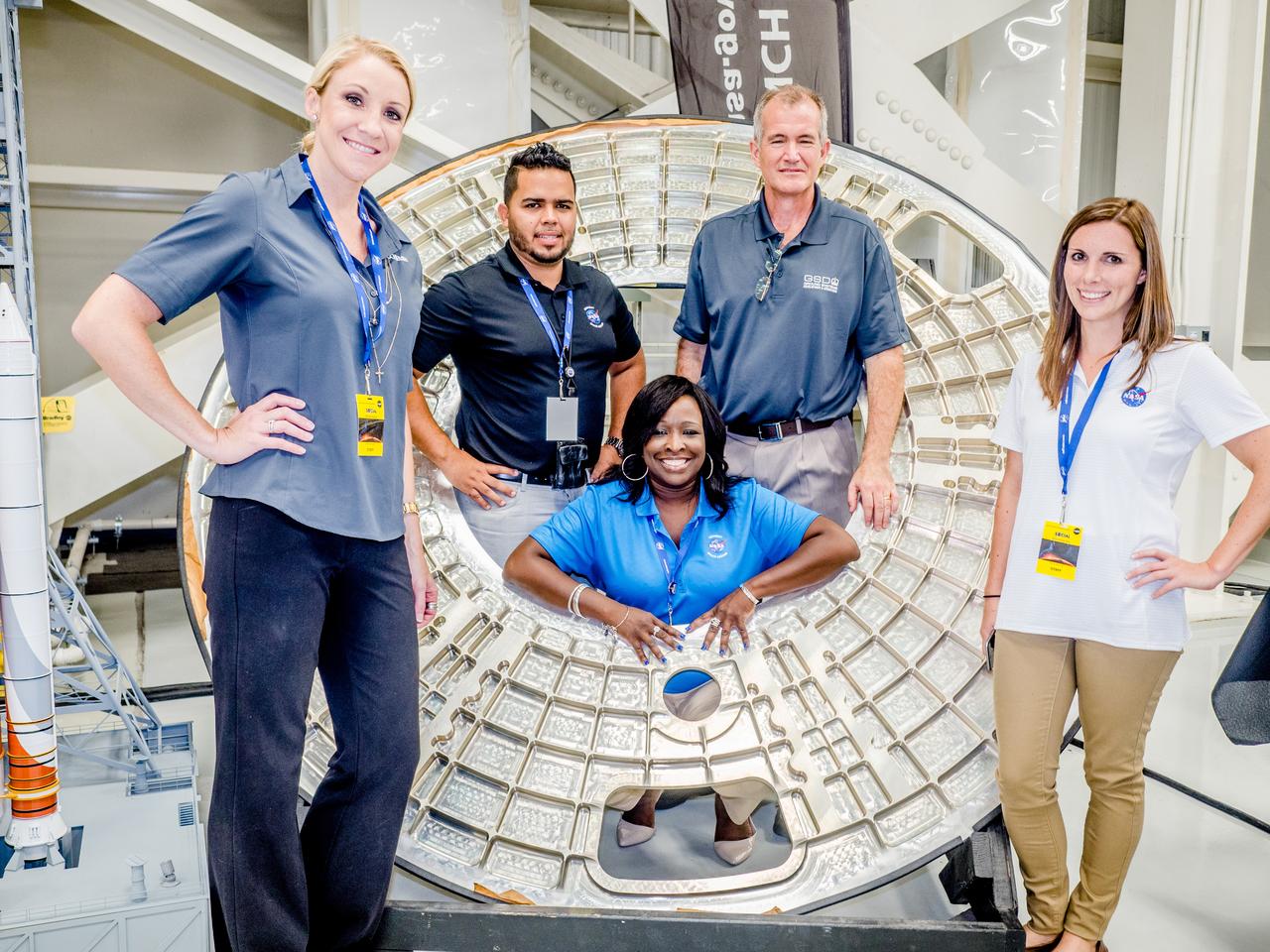
#NASAMarsDay
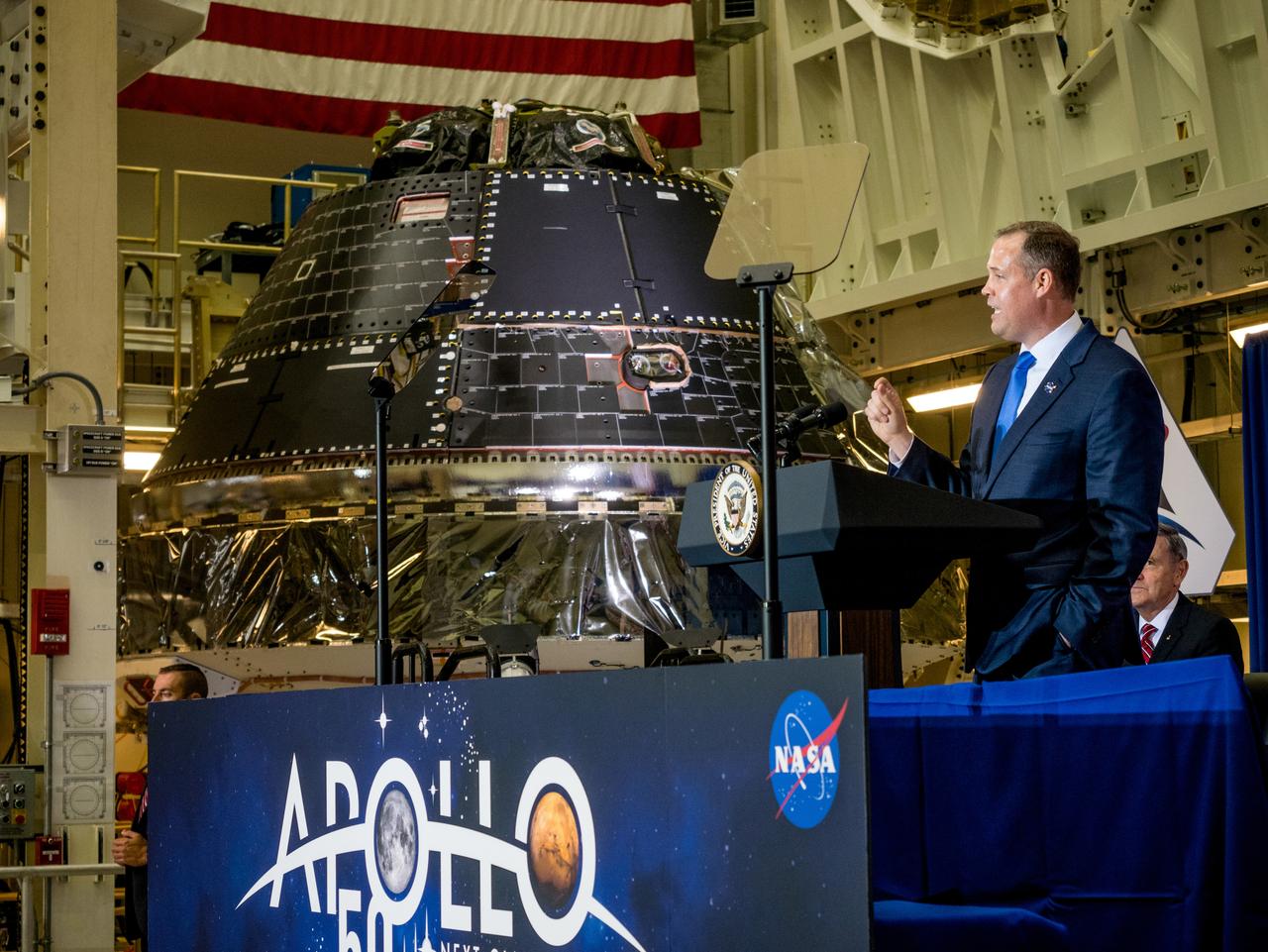
Vice President Mike Pence visited and gave remarks in the Neil Armstrong Operations and Checkout Building at NASA’s Kennedy Space Center in Florida on July 20, 2019 to commemorate the 50th anniversary of the agency’s Apollo 11 Moon landing and announce to America the completion of NASA’s Orion crew capsule, shown here on July 19, 2019, for the first Artemis lunar mission.
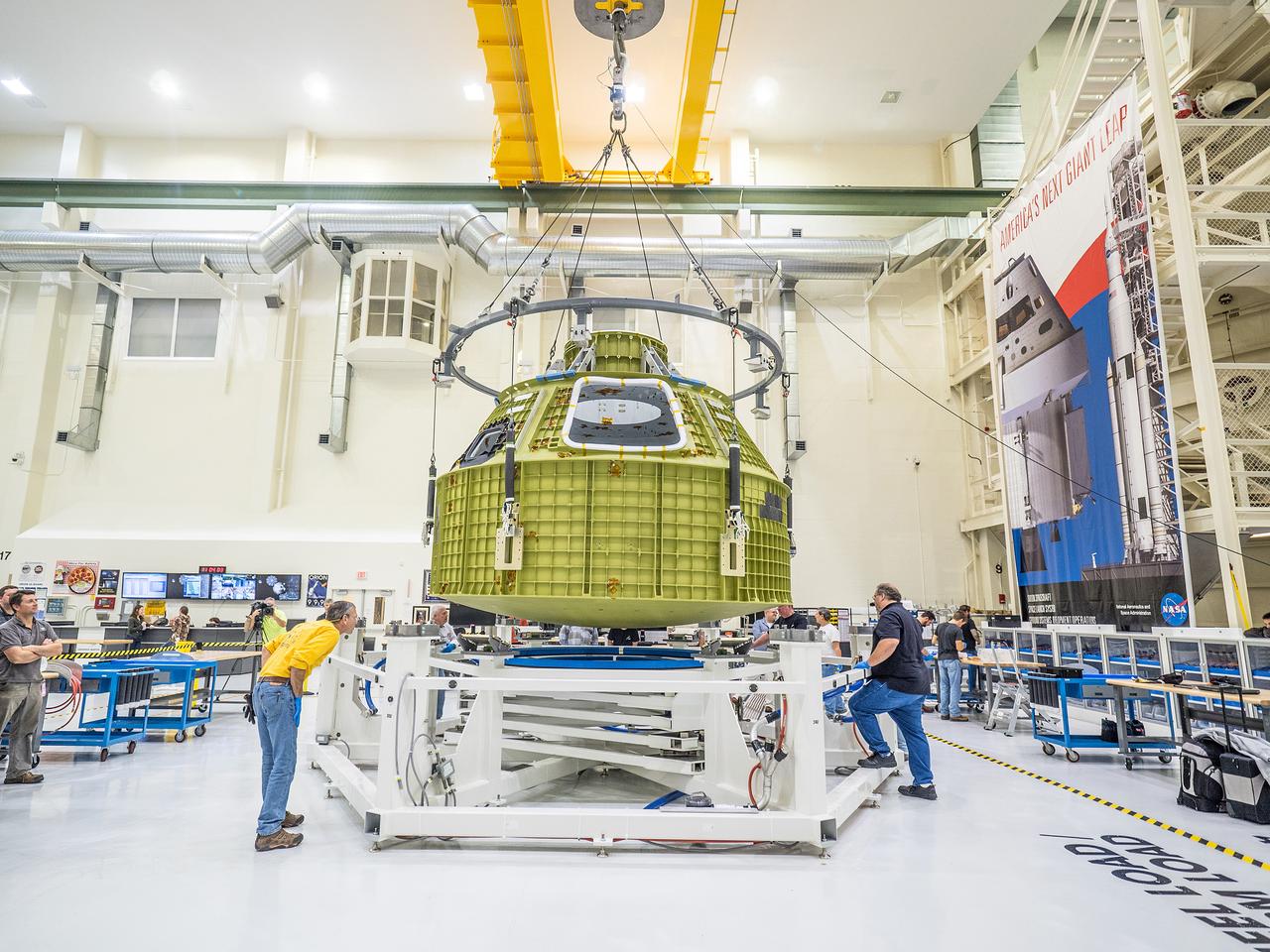
After arriving from New Orleans by Super Guppy, Artemis I Orion is moved to the work stand at the Operations and Checkout Building at NASA's Kennedy Space Center on Feb. 2, 2016. Part of Batch image transfer from Flickr.
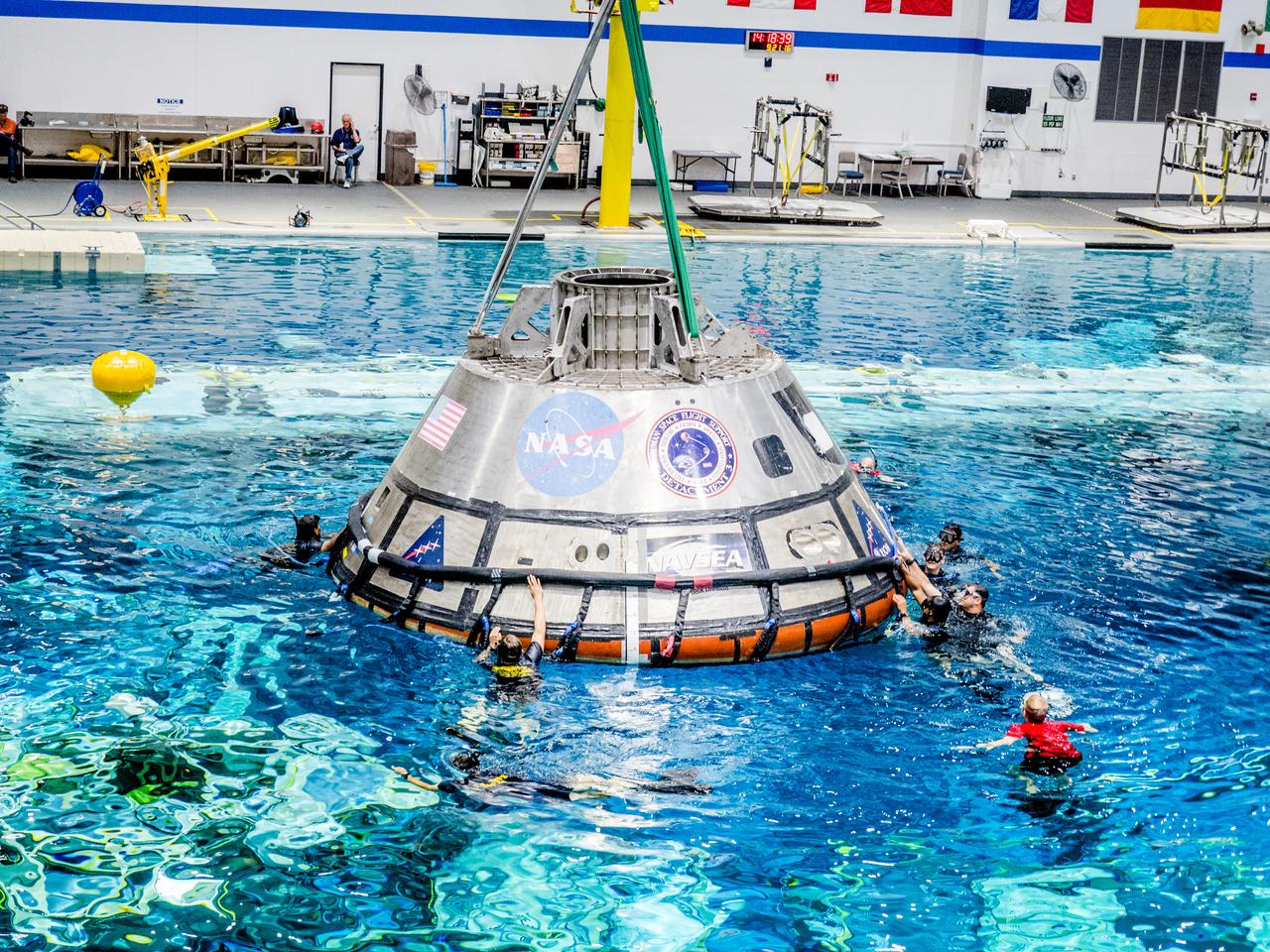
A group of U.S. Navy divers, Air Force pararescumen and Coast Guard rescue swimmers practice Orion underway recovery techniques this week in the Neutral Buoyancy Laboratory (NBL) at NASA’s Johnson Space Center in Houston on Sept. 21, 2016, to prepare for the first test flight of an uncrewed Orion spacecraft with the agency’s Space Launch System rocket during Artemis I. Part of Batch images transfer from Flickr.
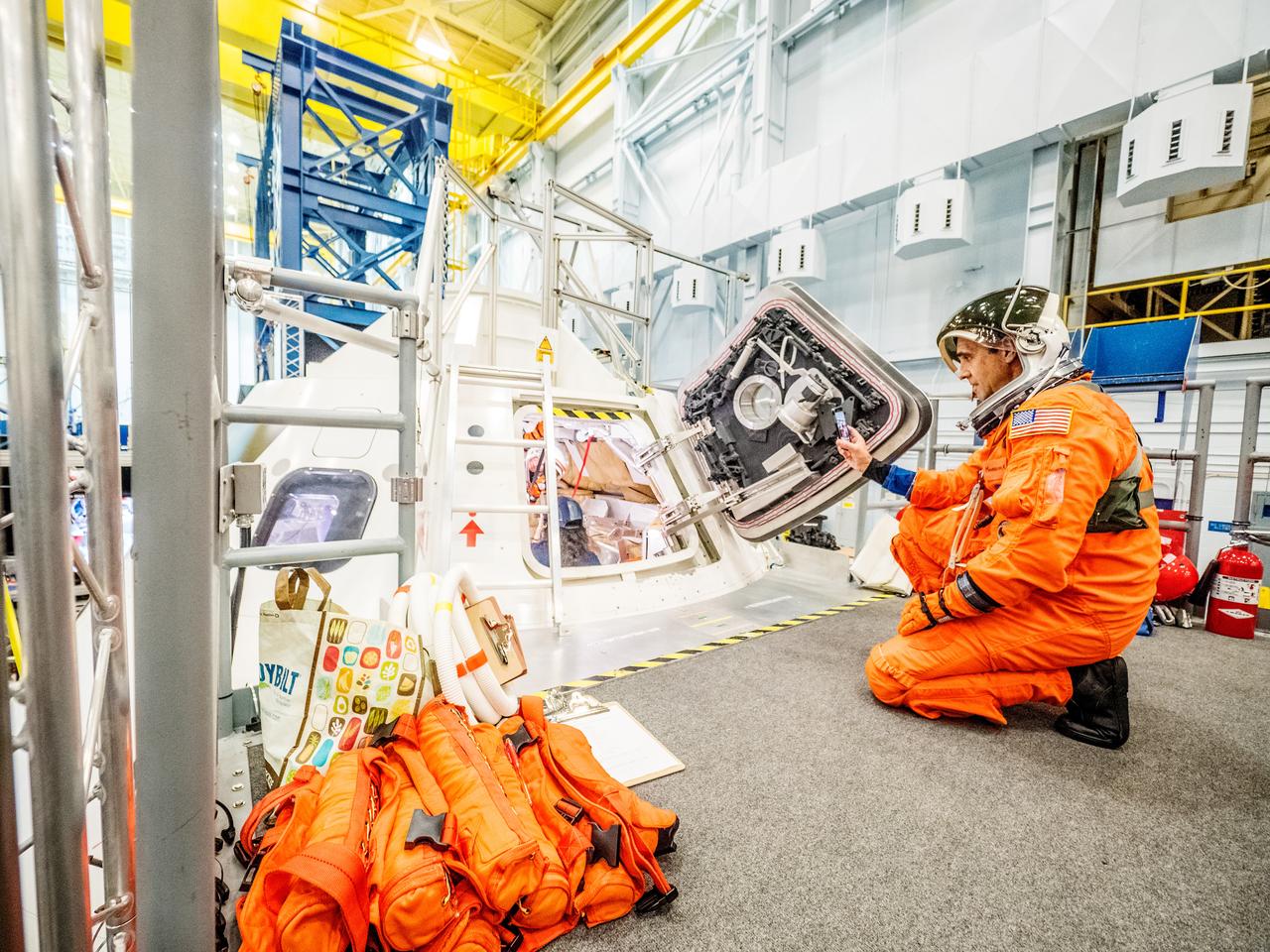
Engineers and astronauts conduct testing in a representative model of the Orion spacecraft at NASA’s Johnson Space Center in Houston on July 28, 2016 to gather the crew's feedback on the design of the docking hatch and on post-landing equipment operations. ..While the crew will primarily use the side hatch for entry and exit on Earth and the docking hatch to travel between Orion and a habitation module on long-duration deep space missions, the crew will need to be able to exit out of the docking hatch if wave heights in the Pacific Ocean upon splashdown are too high. The work is being done to help ensure all elements of Orion's design are safe and effective for the crew to use on future missions on the journey to Mars.
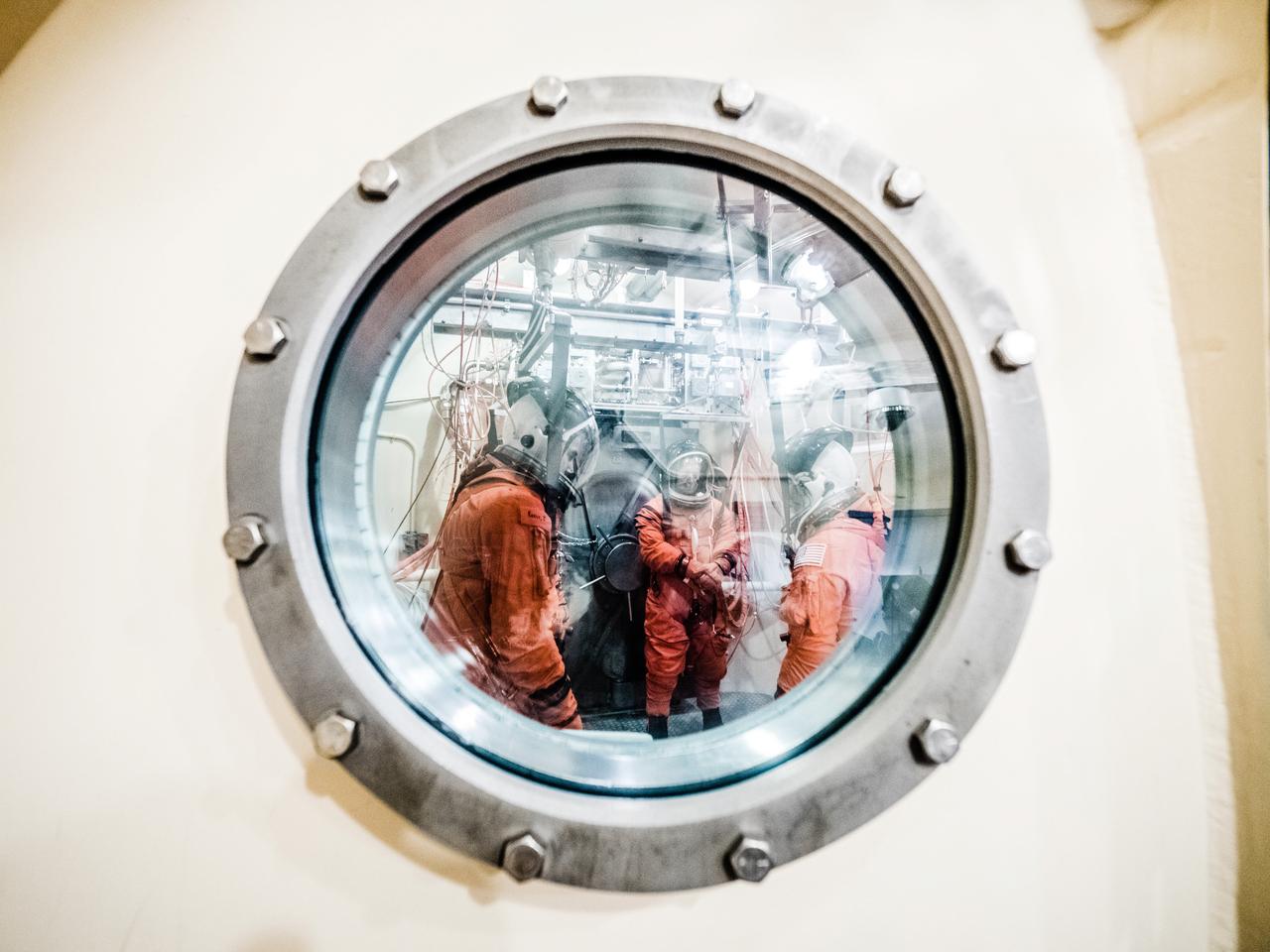
Engineers and technicians at NASA’s Johnson Space Center in Houston are testing the spacesuit astronauts will wear in the agency’s Orion spacecraft on trips to deep space. On June 22, 2017, members of the Johnson team participated in a Vacuum Pressure Integrated Suit Test to verify enhancements to the suit will meet test and design standards for the Orion spacecraft. During this test, the suit is connected to life support systems and then air is removed from Johnson’s 11-foot thermal vacuum chamber to evaluate the performance of the suits in conditions similar to a spacecraft. The suit will contain all the necessary functions to support life and is being designed to enable spacewalks and sustain the crew in the unlikely event the spacecraft loses pressure. Part of Batch images transfer from Flickr.
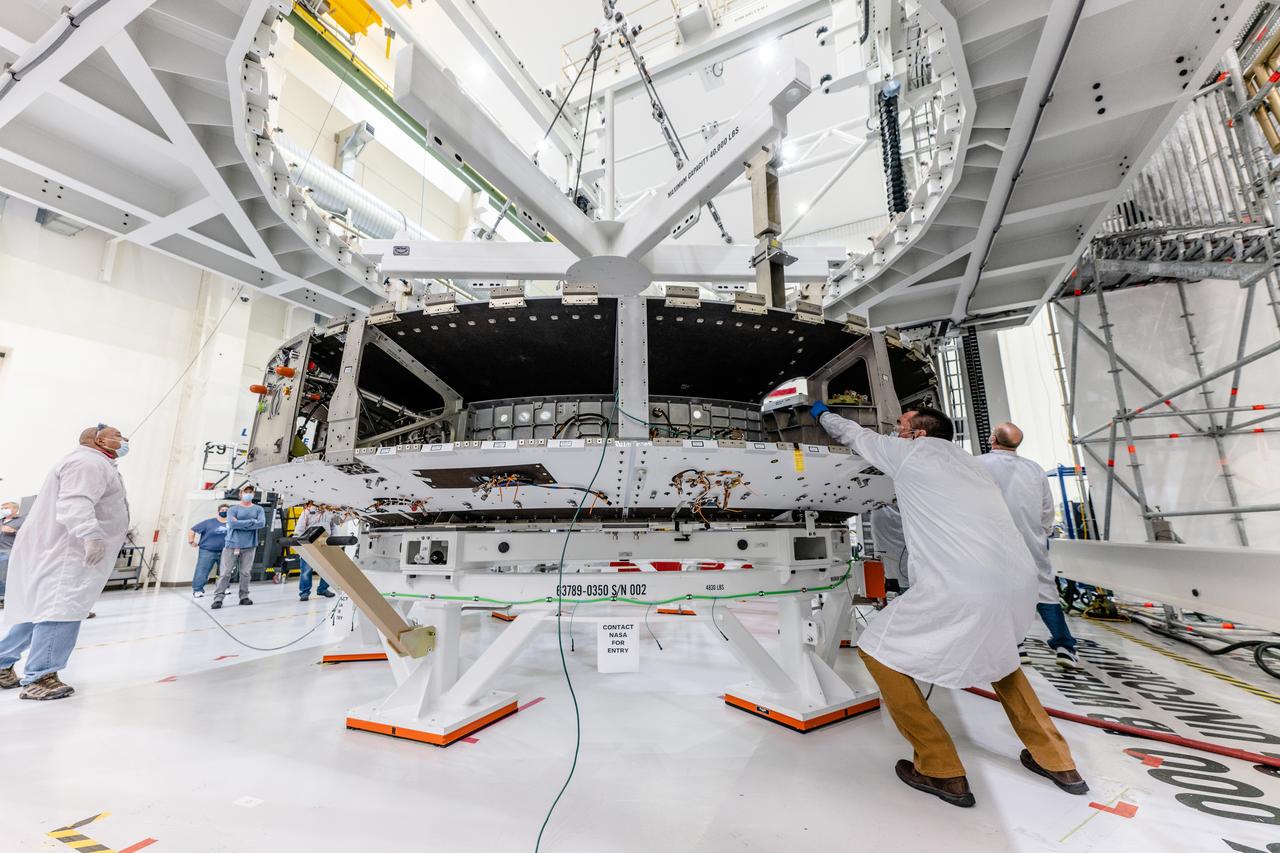
The crew module adapter, which connects Orion's crew module with the European Service module is lifted in preparation for mate with the Artemis II service module on Oct. 19, 2021, which recently arrived from Airbus in Bremen.
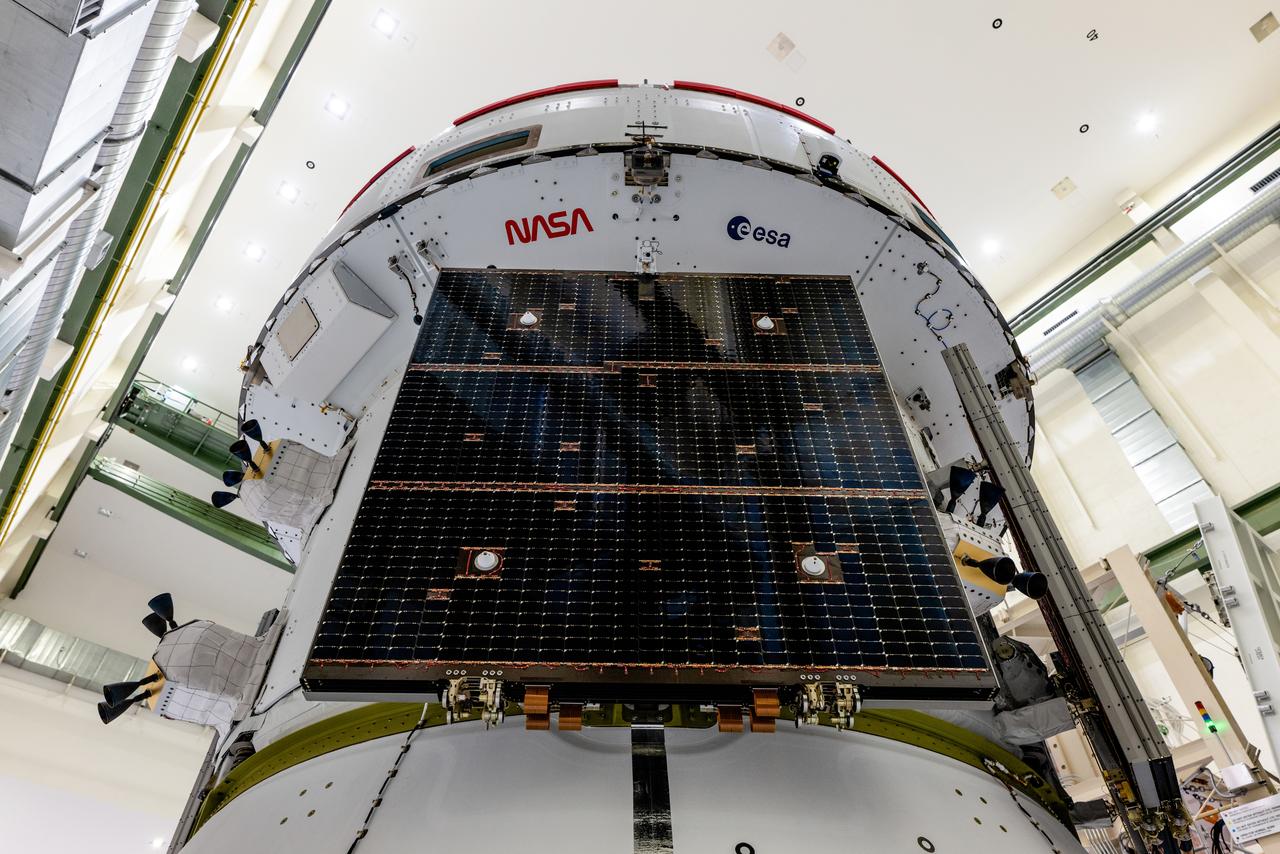
In the Operations and Checkout Building (O&C) at Kennedy Space Center, three spacecraft adapter jettison (SAJ) fairings are prepared for installation and will be moved into place by technicians with Lockheed Martin, lead contractor for Orion on Oct. 12, 2020. They will be secured around the spacecraft, encapsulating the European Service Module to protect it from the harsh environment as the spacecraft is propelled out of Earth’s atmosphere atop the Space Launch System (SLS) rocket during NASA’s Artemis I mission. The next time the solar array wings will be visible will be when Orion is in space. Artemis I will test the Orion spacecraft and SLS as an integrated system ahead of crewed flights to the Moon.
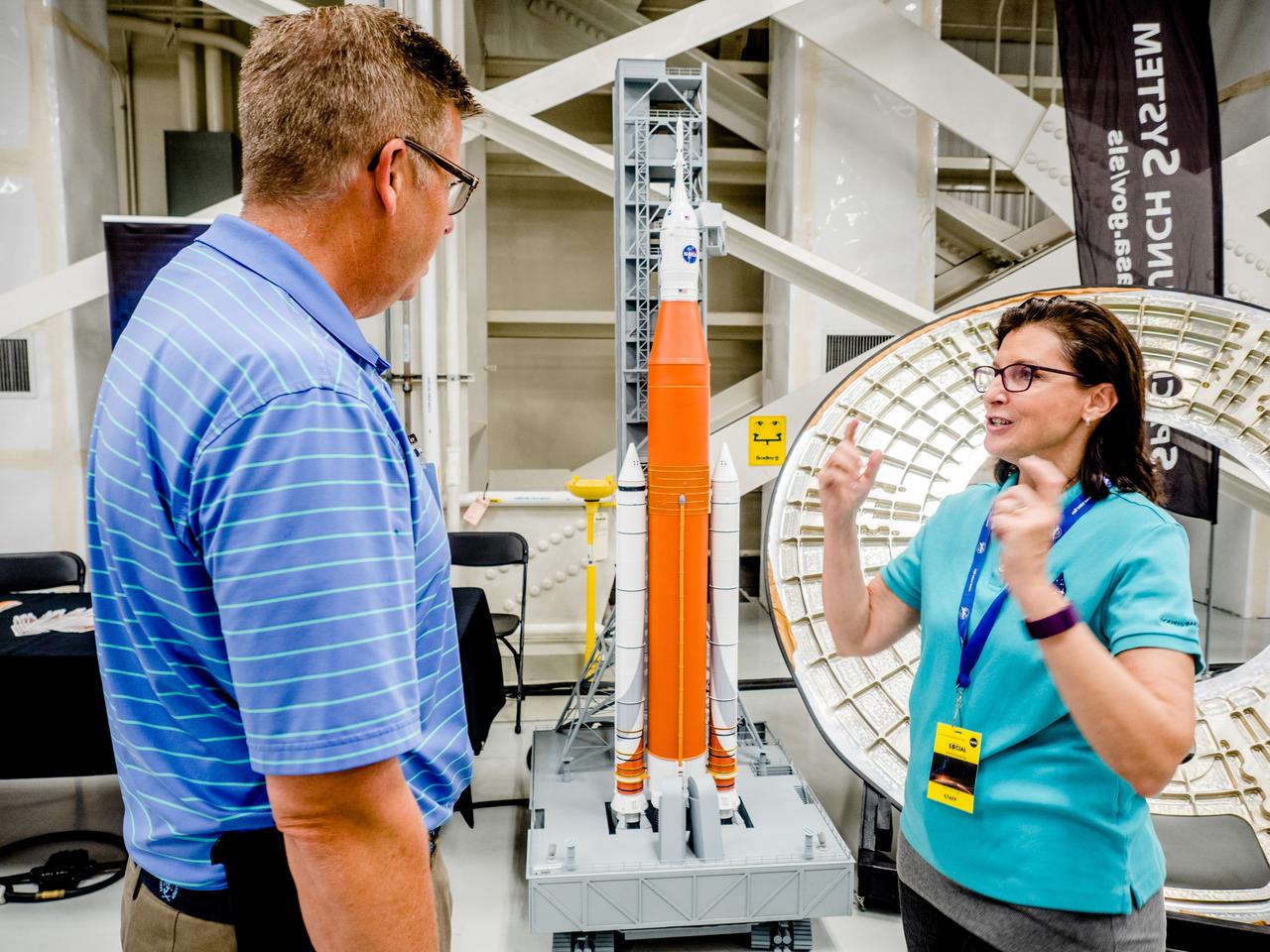
#NASAMarsDay
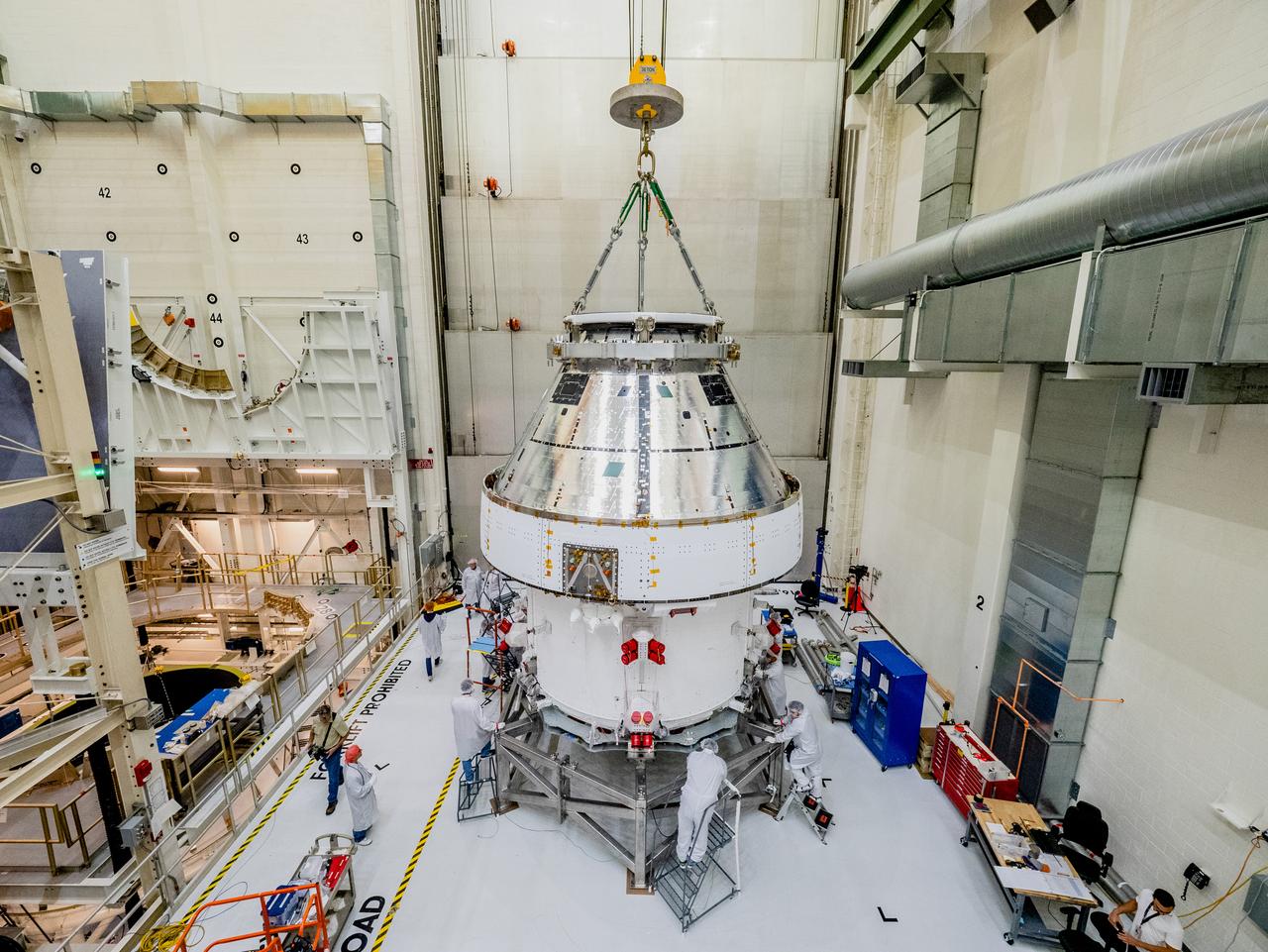
The Orion crew and service module stack for Artemis I was lifted out of the Final Assembly and Test (FAST) cell on November 11, 2019. The spacecraft has been stationed in the FAST cell since July for mating and closeout processing. The service module and crew module were moved separately into the cell, stacked and connected together for the mission. After lifting out of the cell, Orion will be attached to a tool called a verticator that rotates the stack from its vertical configuration to a horizontal configuration for transport to NASA’s Plum Brook Station in Sandusky, Ohio, where it will undergo full environmental testing to certify the complete vehicle for flight. Once the vehicle returns to Kennedy in several months, it will return to the FAST cell for installation of final panels left off for environmental testing purposes and the service module’s four solar arrays.
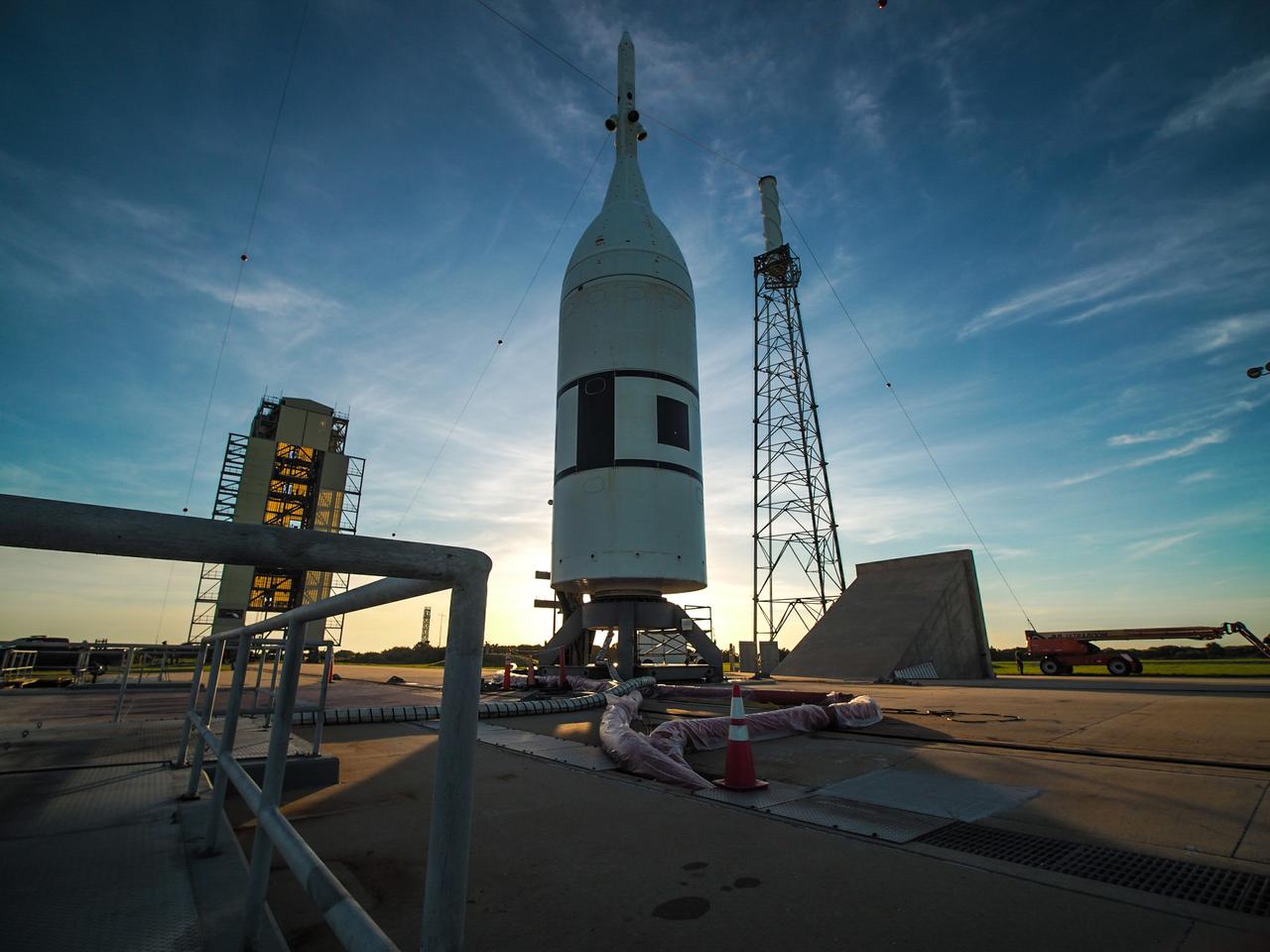
On July 1, 2019, the Orion Launch Abort System and Crew Module attached to the abort test booster are readied for flight on Ascent Abort-2 (AA-2). The successful test demonstrated the ability to carry the crew to safety in case of a mishap during ascent.
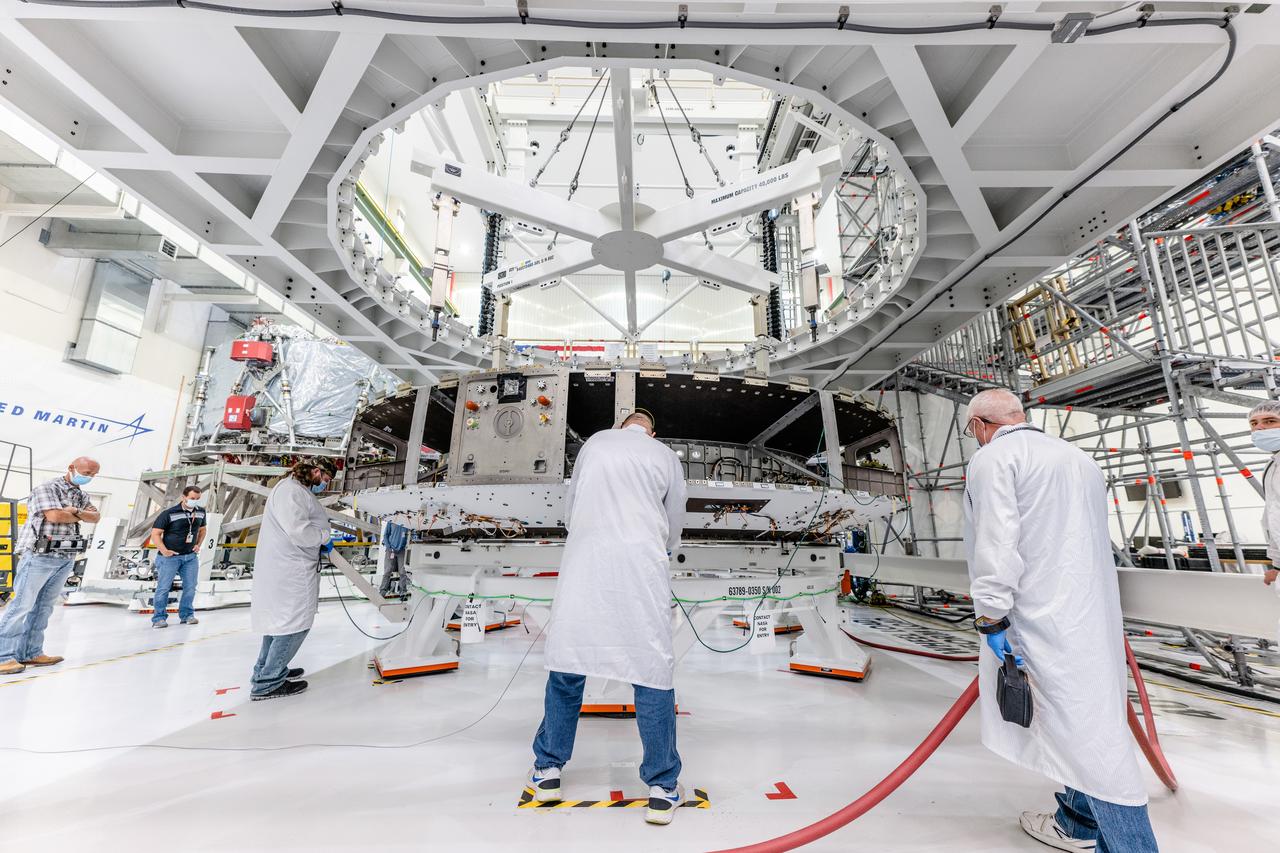
The crew module adapter, which connects Orion's crew module with the European Service module is lifted in preparation for mate with the Artemis II service module on Oct. 19, 2021, which recently arrived from Airbus in Bremen.
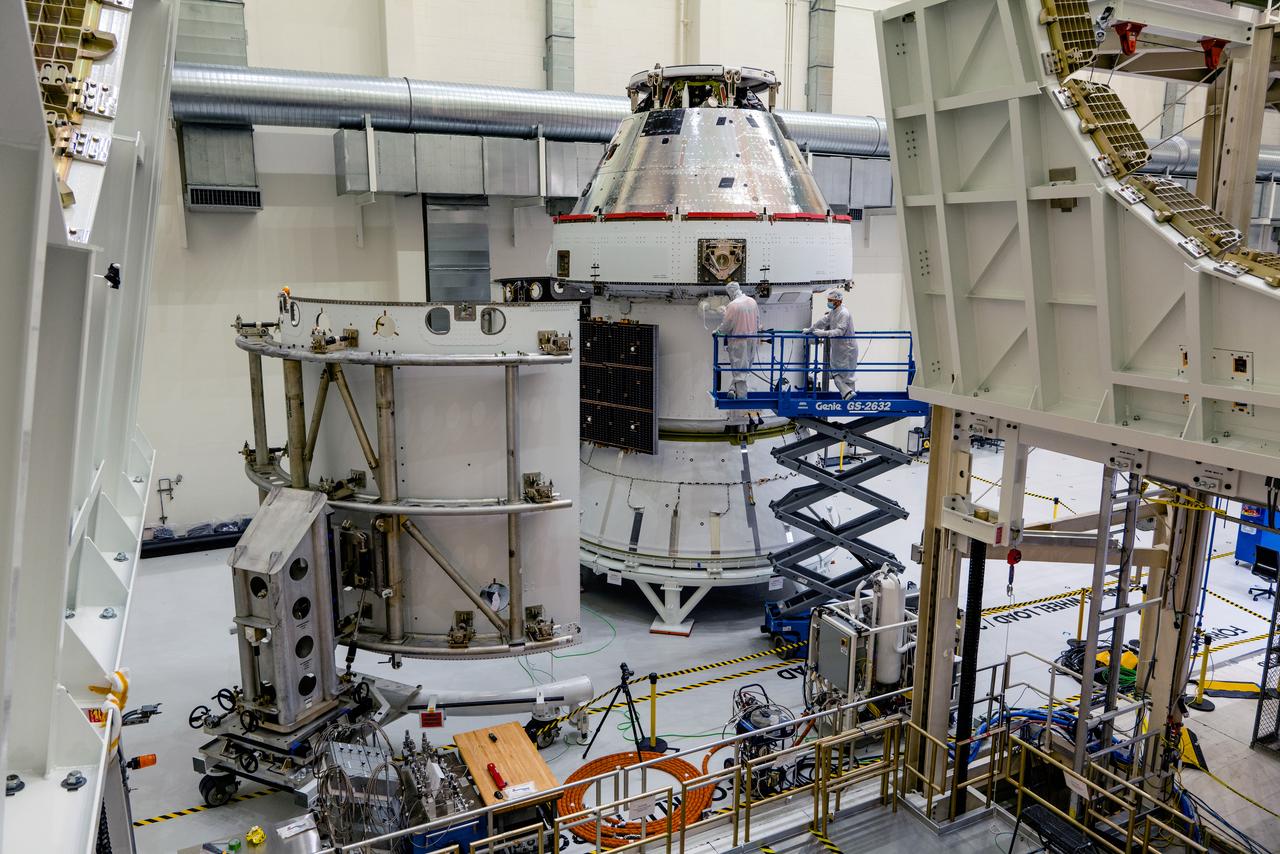
In the Operations and Checkout Building (O&C) at Kennedy Space Center, three spacecraft adapter jettison (SAJ) fairings are prepared for installation and will be moved into place by technicians with Lockheed Martin, lead contractor for Orion on Oct. 12, 2020. They will be secured around the spacecraft, encapsulating the European Service Module to protect it from the harsh environment as the spacecraft is propelled out of Earth’s atmosphere atop the Space Launch System (SLS) rocket during NASA’s Artemis I mission. The next time the solar array wings will be visible will be when Orion is in space. Artemis I will test the Orion spacecraft and SLS as an integrated system ahead of crewed flights to the Moon.
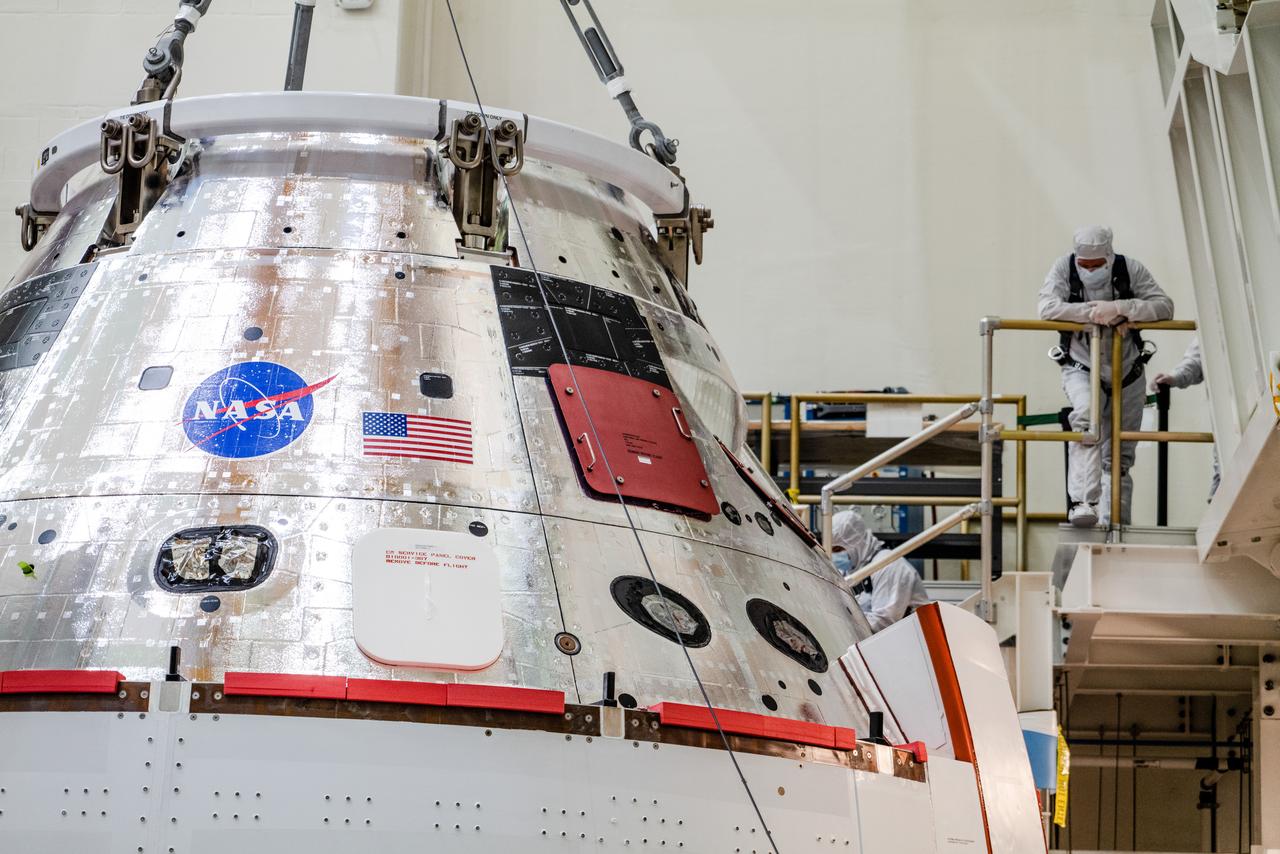
The Artemis I Orion spacecraft is moved out of the Final Assembly And Test (FAST) cell at Neil Armstrong Operations and Checkout Building at Kennedy Space Center in preparation for transport to Multi Payload Processing Facility on Jan. 14, 2021.
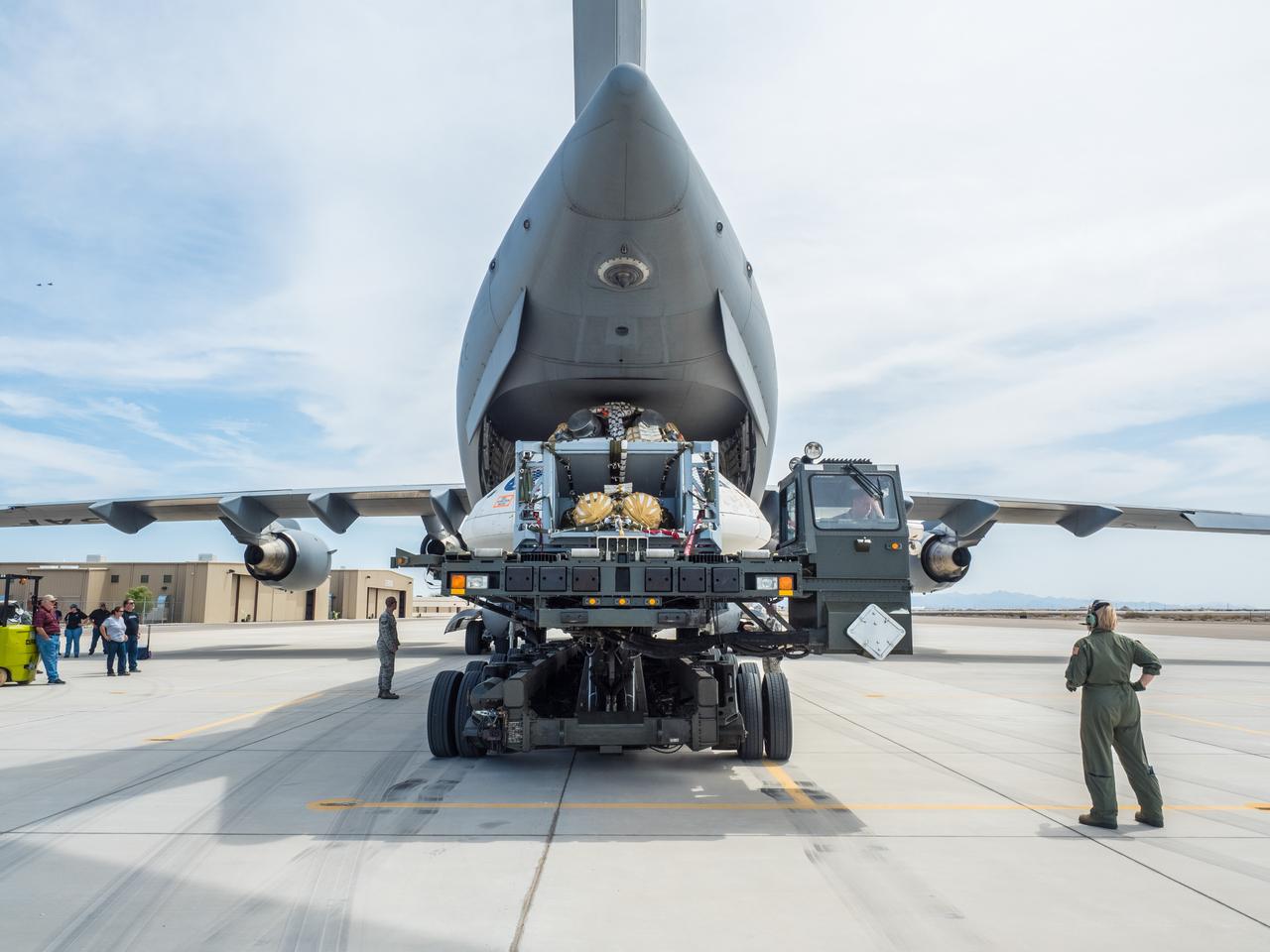
Engineers prepare to test the parachute system for NASA’s Orion spacecraft at the U.S. Army Yuma Proving Ground in Yuma, Arizona on Aug. 24, 2015. During the test, planned for Wednesday, Aug. 26, a C-17 aircraft will carry a representative Orion capsule to 35,000 feet in altitude and then drop it from its cargo bay. Engineers will test a scenario in which one of Orion’s two drogue parachutes, used to stabilize it in the air, does not deploy, and one of its three main parachutes, used to slow the capsule during the final stage of descent, also does not deploy. The risky test will provide data engineers will use as they gear up to qualify Orion’s parachutes for missions with astronauts. On Aug. 24, a C-17 was loaded with the test version of Orion, which has a similar mass and interfaces with the parachutes as the Orion being developed for deep space missions but is shorter on top to fit inside the aircraft. Part of Batch image transfer from Flickr.
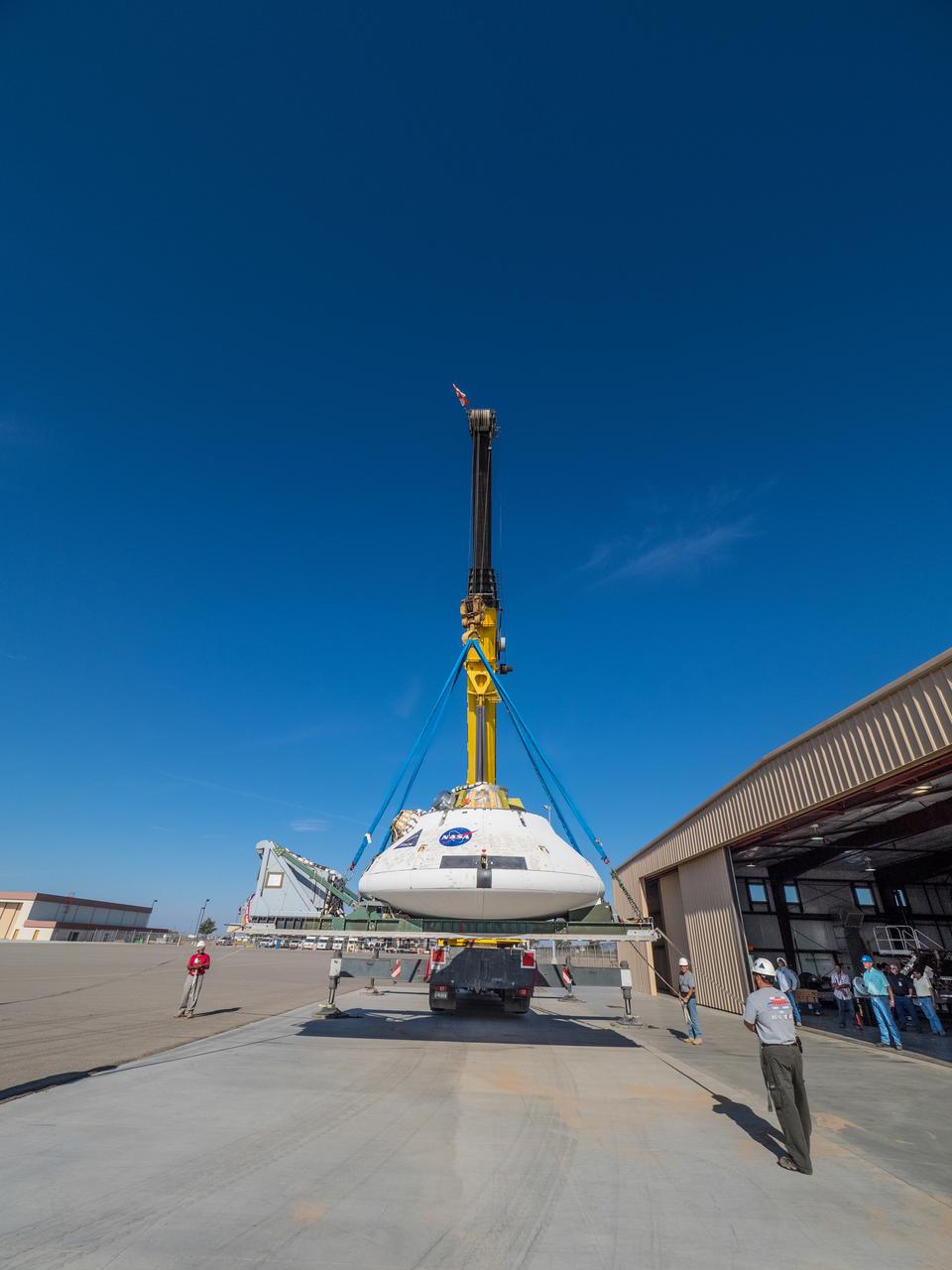
Engineers prepare to test the parachute system for NASA’s Orion spacecraft at the U.S. Army Yuma Proving Ground in Yuma, Arizona on Aug. 24, 2015. During the test, planned for Wednesday, Aug. 26, a C-17 aircraft will carry a representative Orion capsule to 35,000 feet in altitude and then drop it from its cargo bay. Engineers will test a scenario in which one of Orion’s two drogue parachutes, used to stabilize it in the air, does not deploy, and one of its three main parachutes, used to slow the capsule during the final stage of descent, also does not deploy. The risky test will provide data engineers will use as they gear up to qualify Orion’s parachutes for missions with astronauts. On Aug. 24, a C-17 was loaded with the test version of Orion, which has a similar mass and interfaces with the parachutes as the Orion being developed for deep space missions but is shorter on top to fit inside the aircraft. Part of Batch image transfer from Flickr.
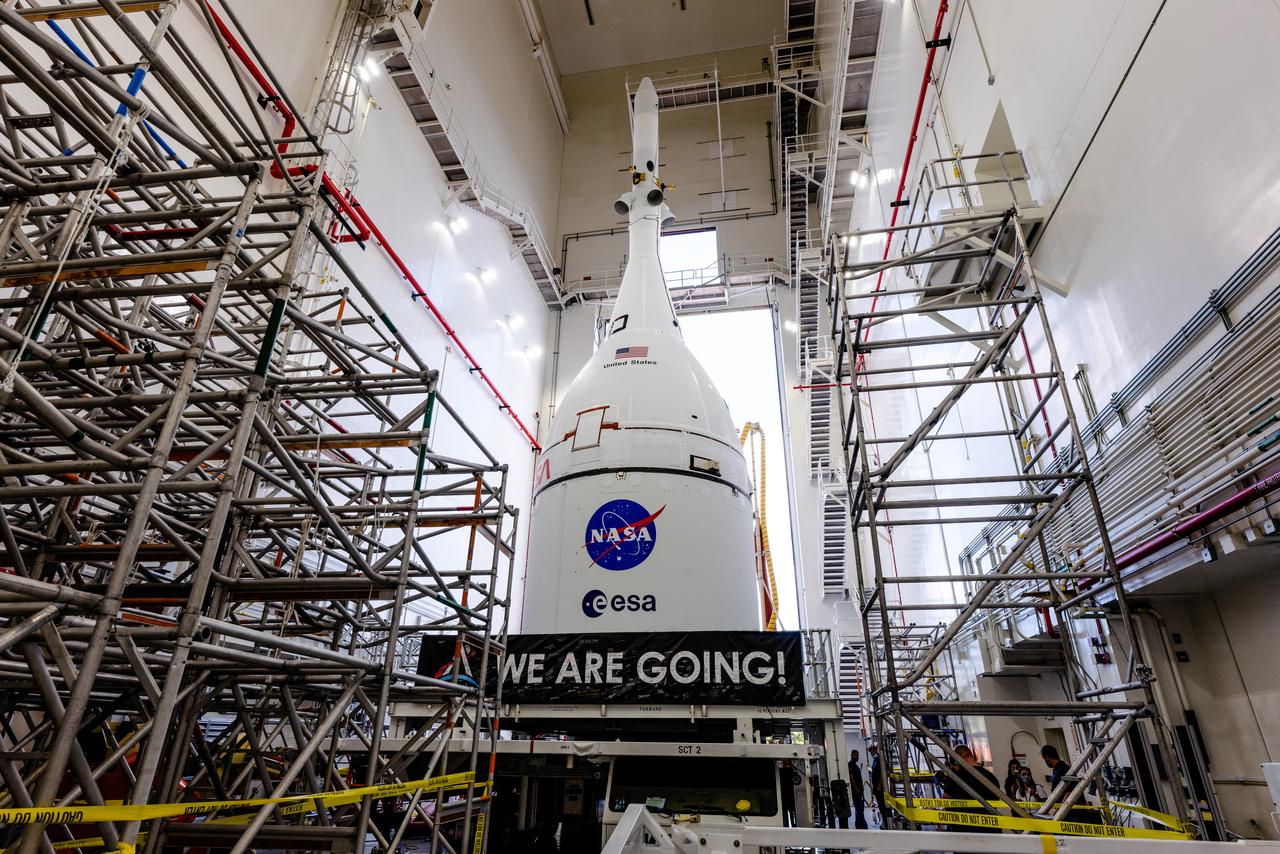
The team at Kennedy Space Center prepares the Artemis I Orion for transport from the Launch Abort System Facility to the Vehicle Assembly Building where it will be stacked atop the Launch Abort System.
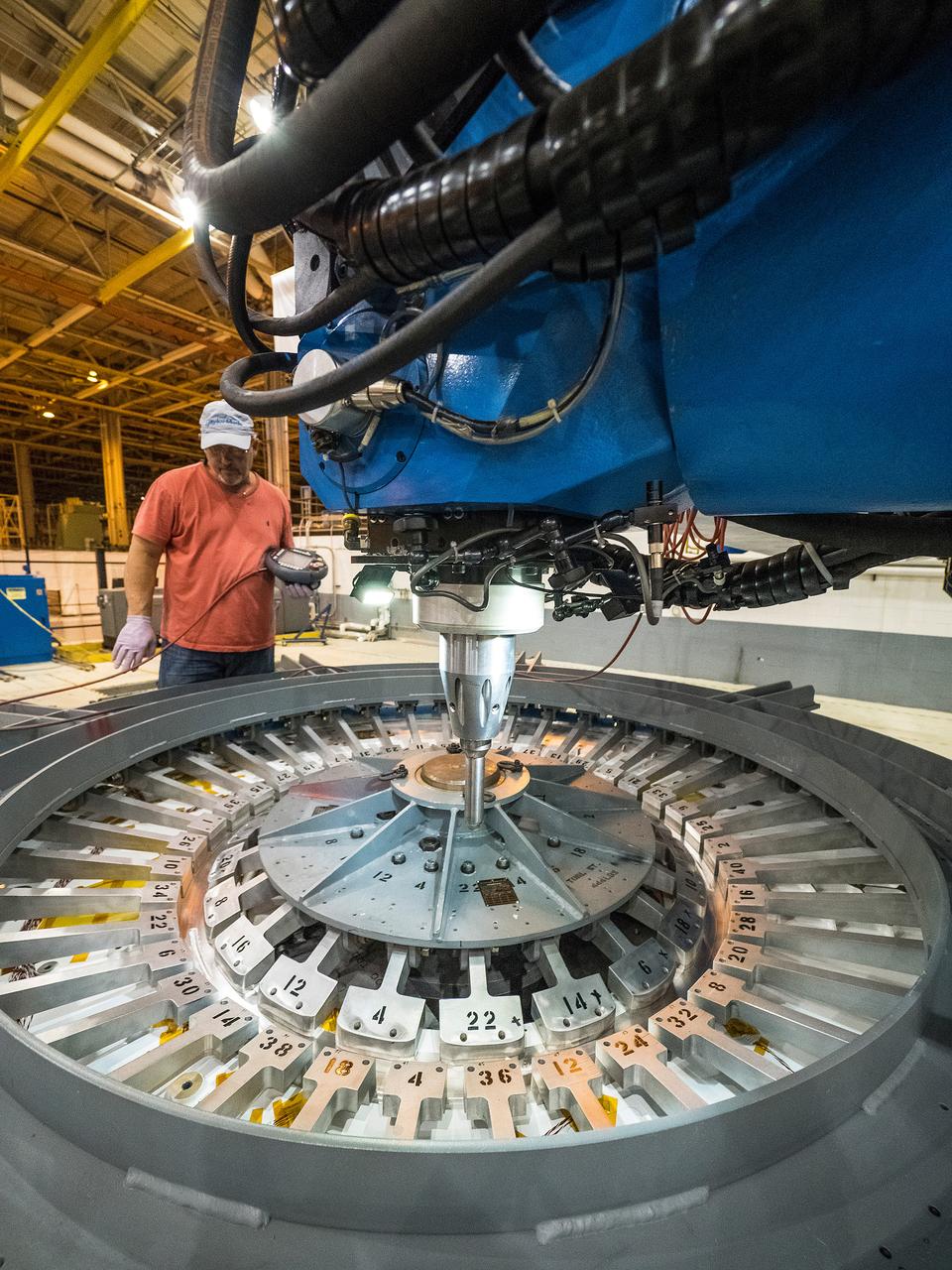
First weld of Orion Exploration Mission 1 crew module
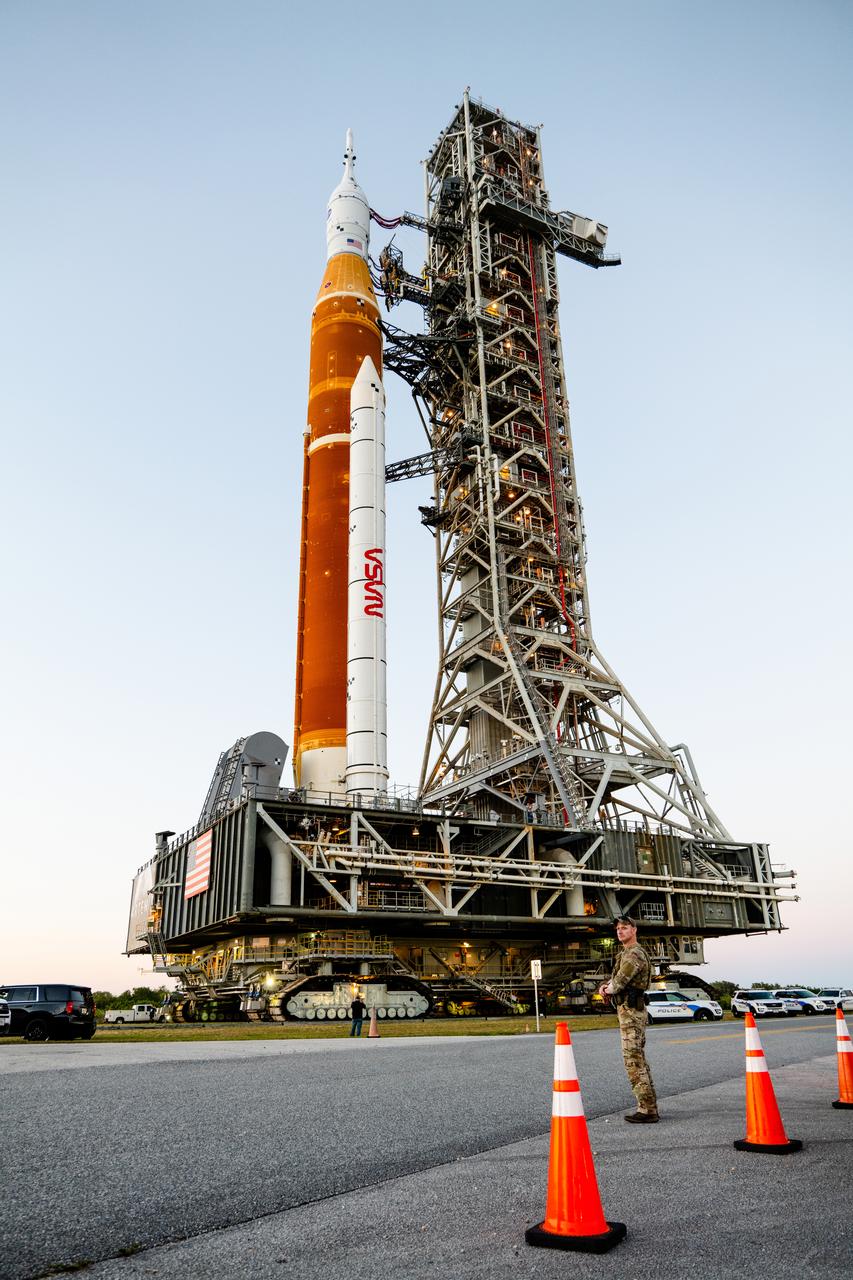
The Artemis I vehicle, with the Orion spacecraft atop, rolls for wet dress rehearsal from the Vehicle Assembly Building at NASA’s Kennedy Space Center on March 17, 2022. At the pad, the vehicle will undergo checkouts and teams will practice countdown to ensure the stack is ready for launch.
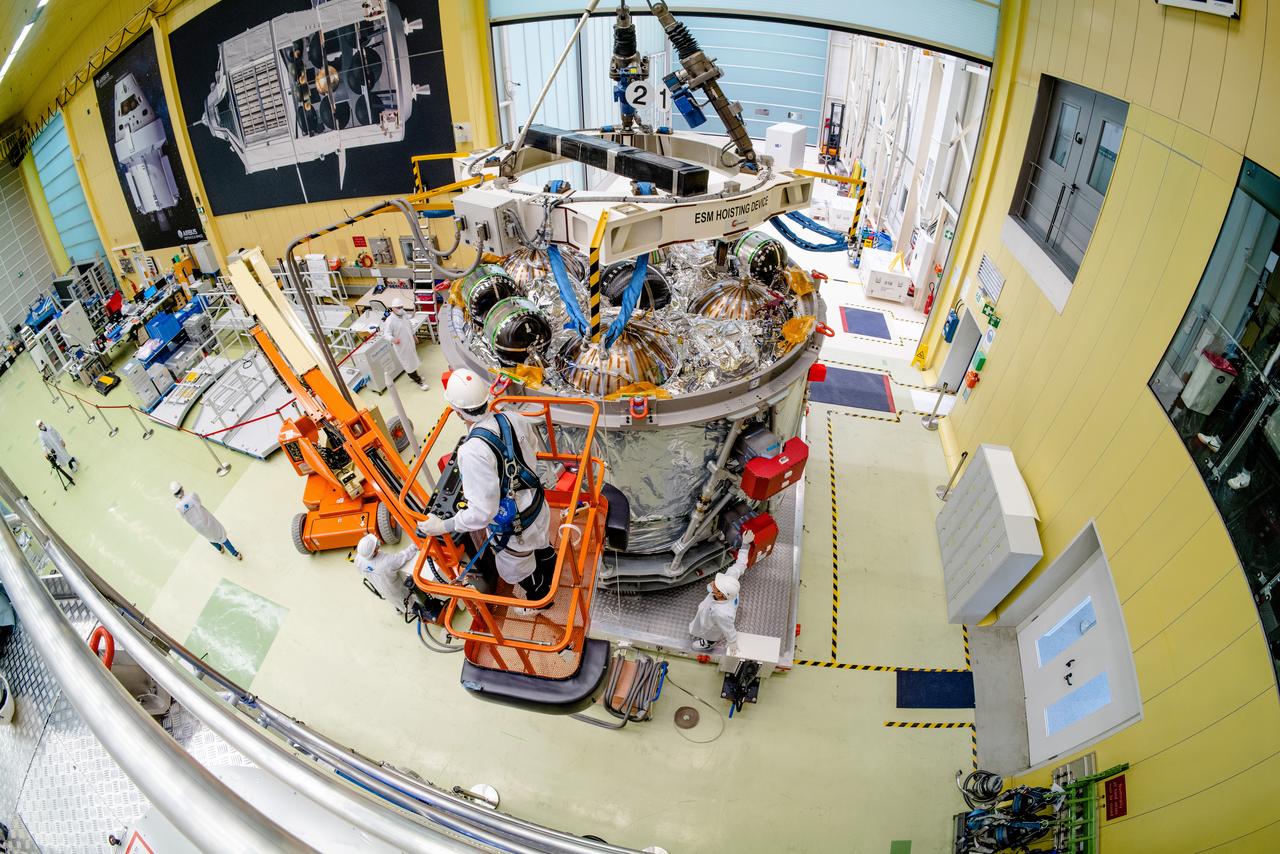
In Bremen, Germany the Airbus Space team prepares the Orion European Service Module-2 for shipment to Kennedy Space Center on Oct. 7, 2021. ESM-2 will power Orion on Artemis II, Orion's first flight with crew.

#NASAMarsDay
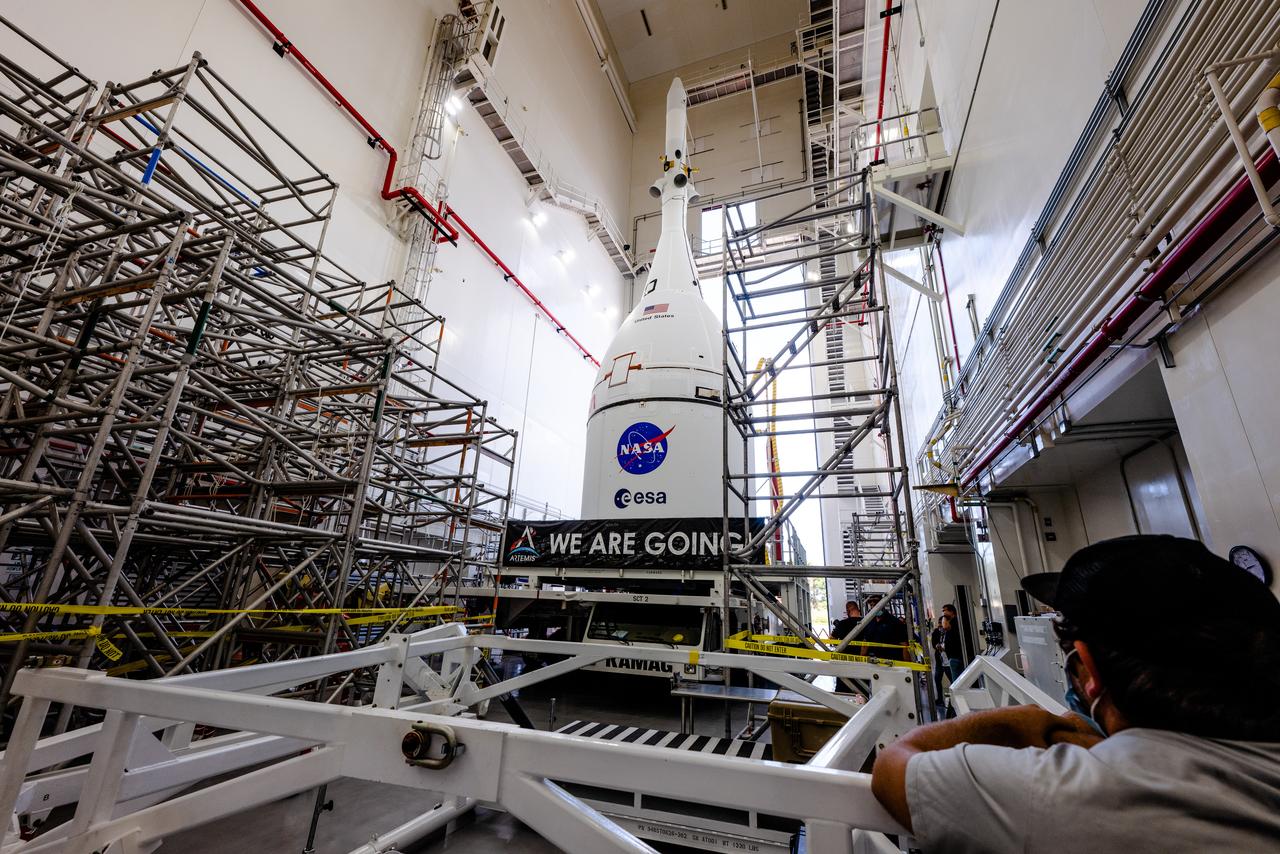
The team at Kennedy Space Center prepares the Artemis I Orion for transport from the Launch Abort System Facility to the Vehicle Assembly Building where it will be stacked atop the Launch Abort System.
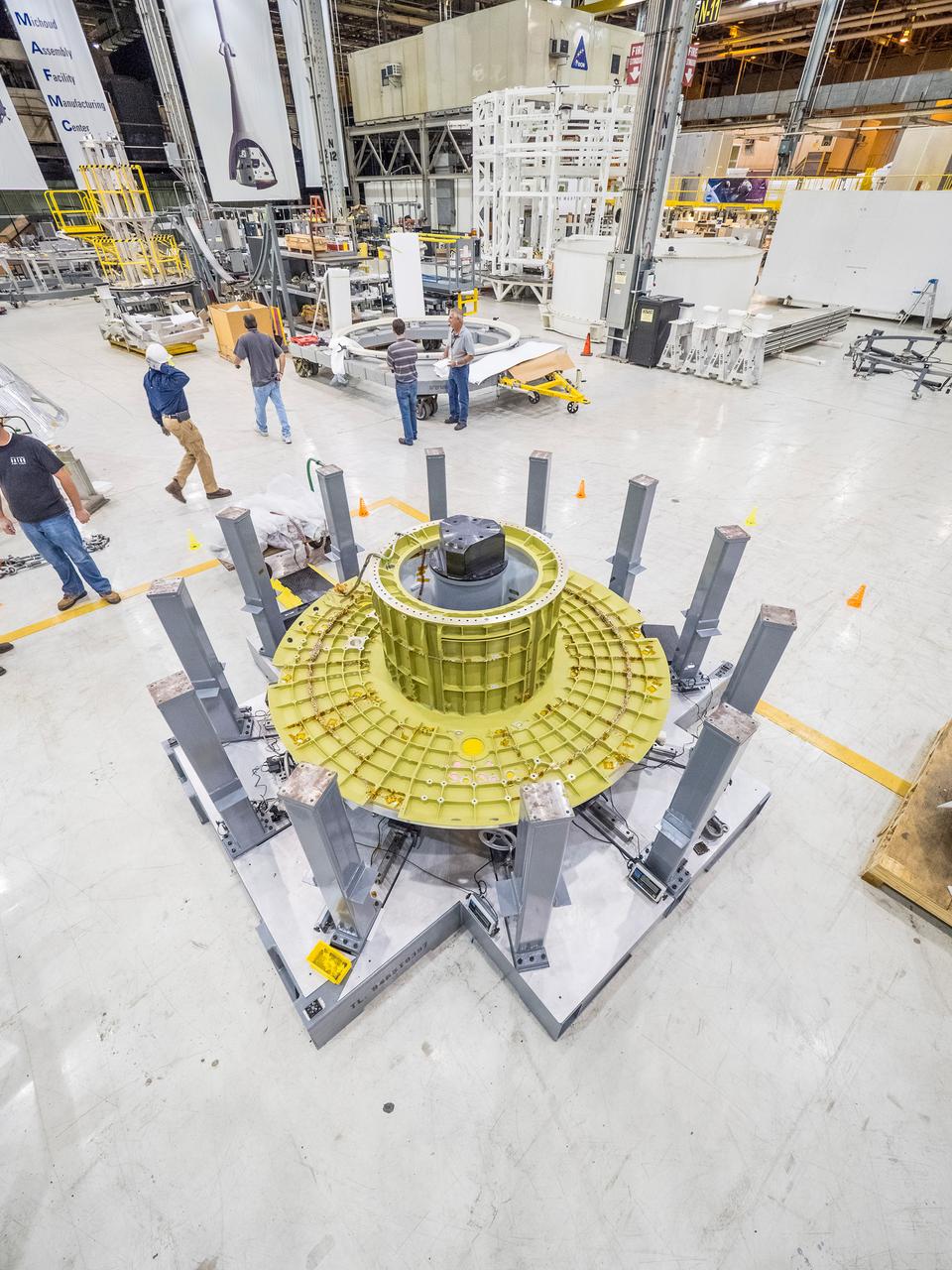
The first welded part of Artemis I Orion, the forward bulkhead and tunnel, is moved into final tooling at the Michoud Assembly Facility in New Orleans, Louisiana on Oct. 12, 2015. Part of Batch image transfer from Flickr.
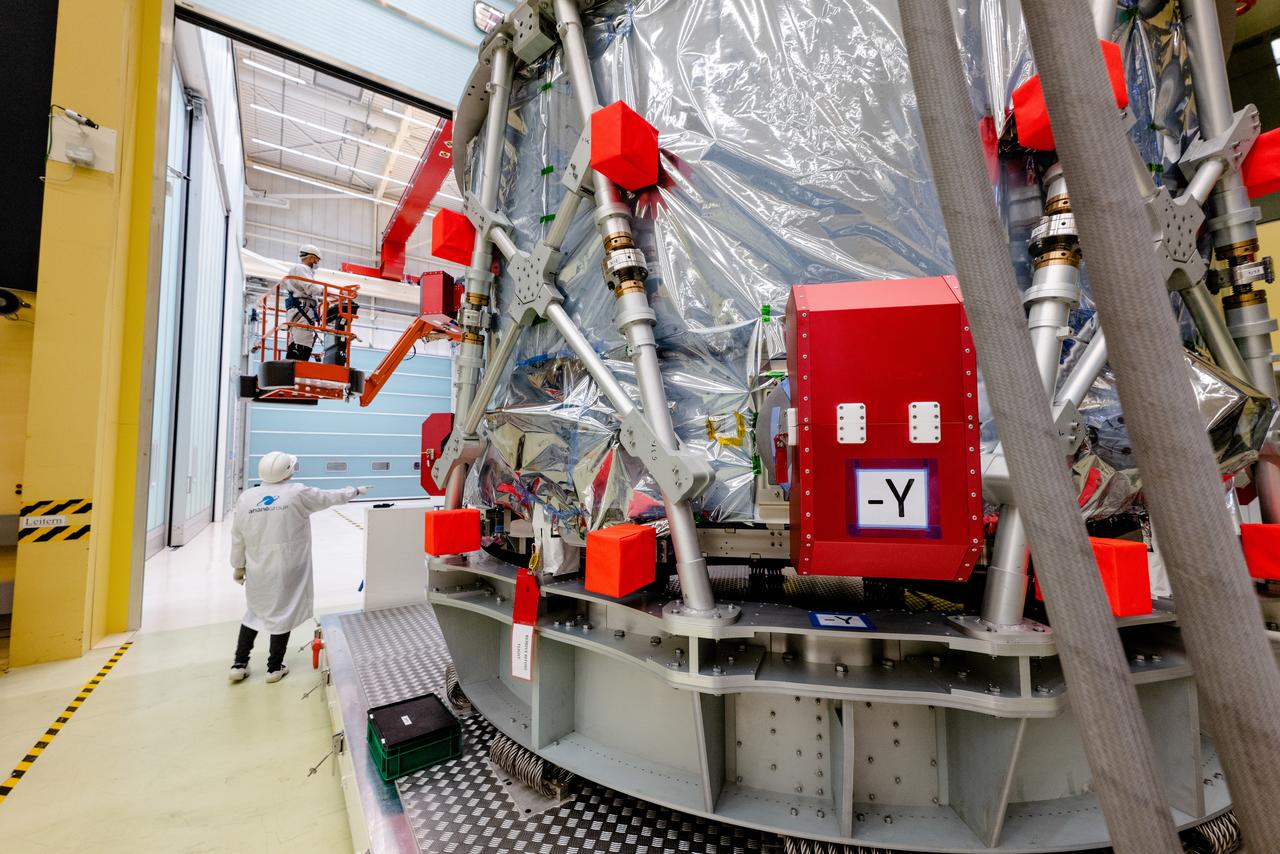
In Bremen, Germany the Airbus Space team prepares the Orion European Service Module-2 for shipment to Kennedy Space Center on Oct. 7, 2021. ESM-2 will power Orion on Artemis II, Orion's first flight with crew.
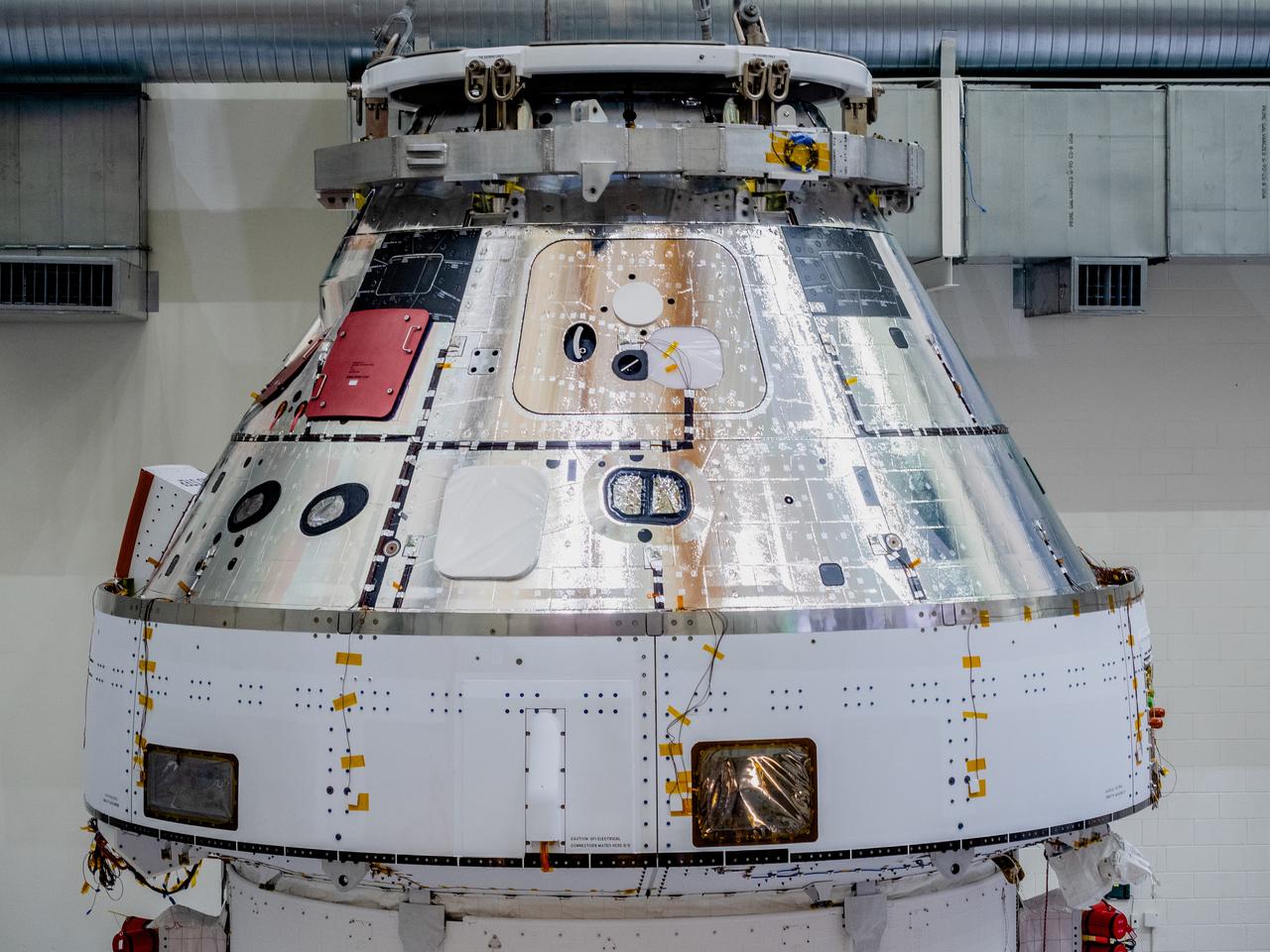
The Orion crew and service module stack for Artemis I was lifted out of the Final Assembly and Test (FAST) cell on November 11, 2019. The spacecraft has been stationed in the FAST cell since July for mating and closeout processing. The service module and crew module were moved separately into the cell, stacked and connected together for the mission. After lifting out of the cell, Orion will be attached to a tool called a verticator that rotates the stack from its vertical configuration to a horizontal configuration for transport to NASA’s Plum Brook Station in Sandusky, Ohio, where it will undergo full environmental testing to certify the complete vehicle for flight. Once the vehicle returns to Kennedy in several months, it will return to the FAST cell for installation of final panels left off for environmental testing purposes and the service module’s four solar arrays.
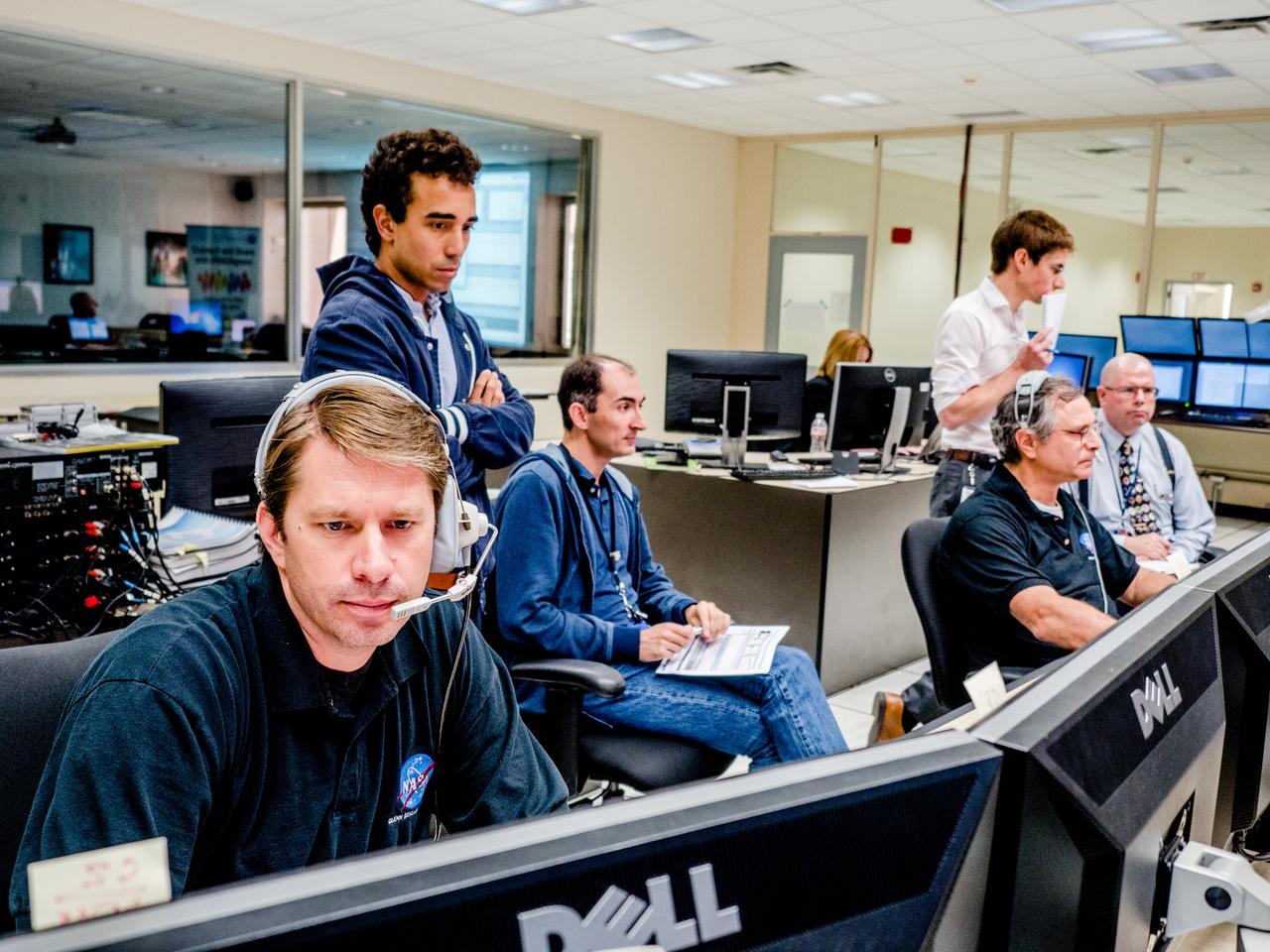
A successful test is completed of the European Structural Test Article (E-STA) partial tank vibration test (Y- axis at 80% power) performed on the Mechanical Vibration Facility (MVF) table at NASA Glenn’s Space Power Facility at Plum Brook Station, Sandusky, Ohio on Sept. 7, 2016 .Part of Batch images transfer from Flickr.
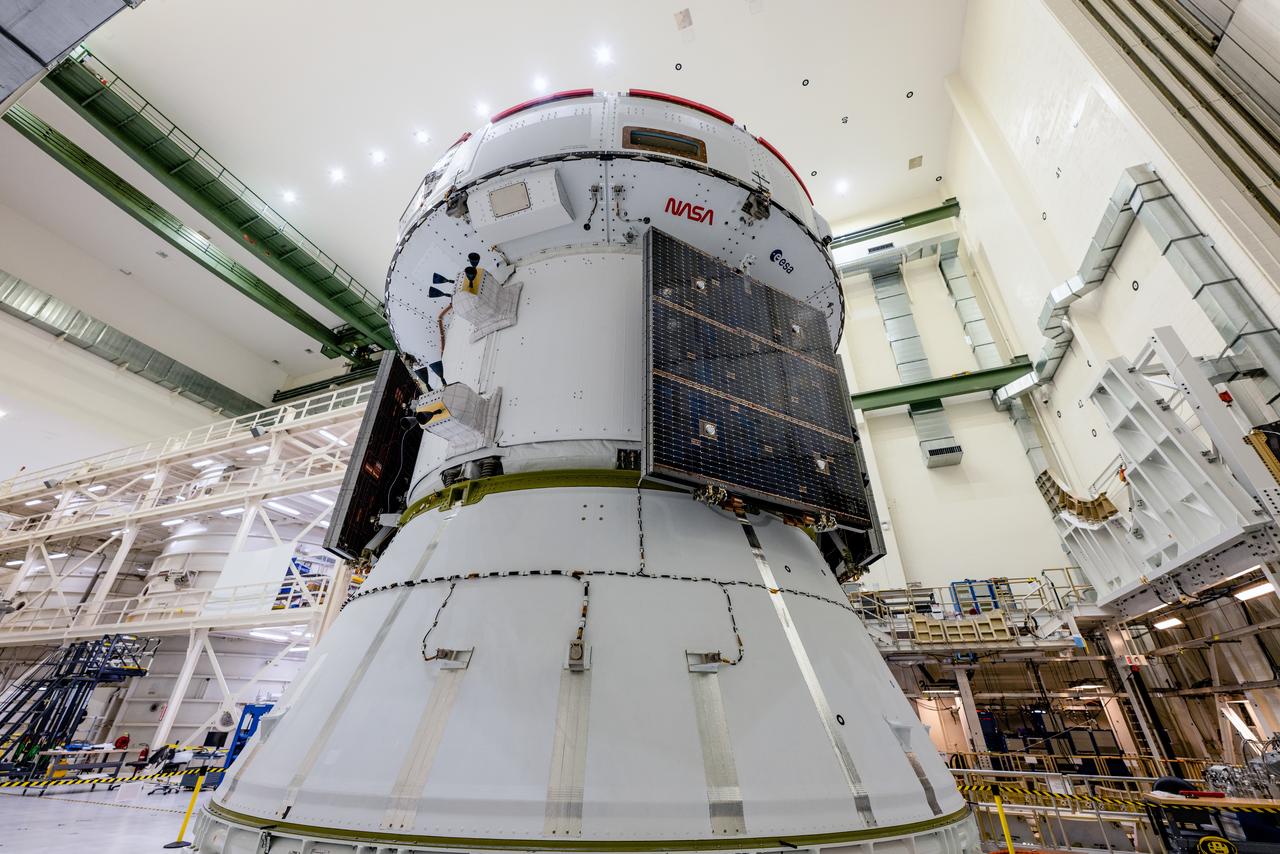
In the Operations and Checkout Building (O&C) at Kennedy Space Center, three spacecraft adapter jettison (SAJ) fairings are prepared for installation and will be moved into place by technicians with Lockheed Martin, lead contractor for Orion on Oct. 12, 2020. They will be secured around the spacecraft, encapsulating the European Service Module to protect it from the harsh environment as the spacecraft is propelled out of Earth’s atmosphere atop the Space Launch System (SLS) rocket during NASA’s Artemis I mission. The next time the solar array wings will be visible will be when Orion is in space. Artemis I will test the Orion spacecraft and SLS as an integrated system ahead of crewed flights to the Moon.
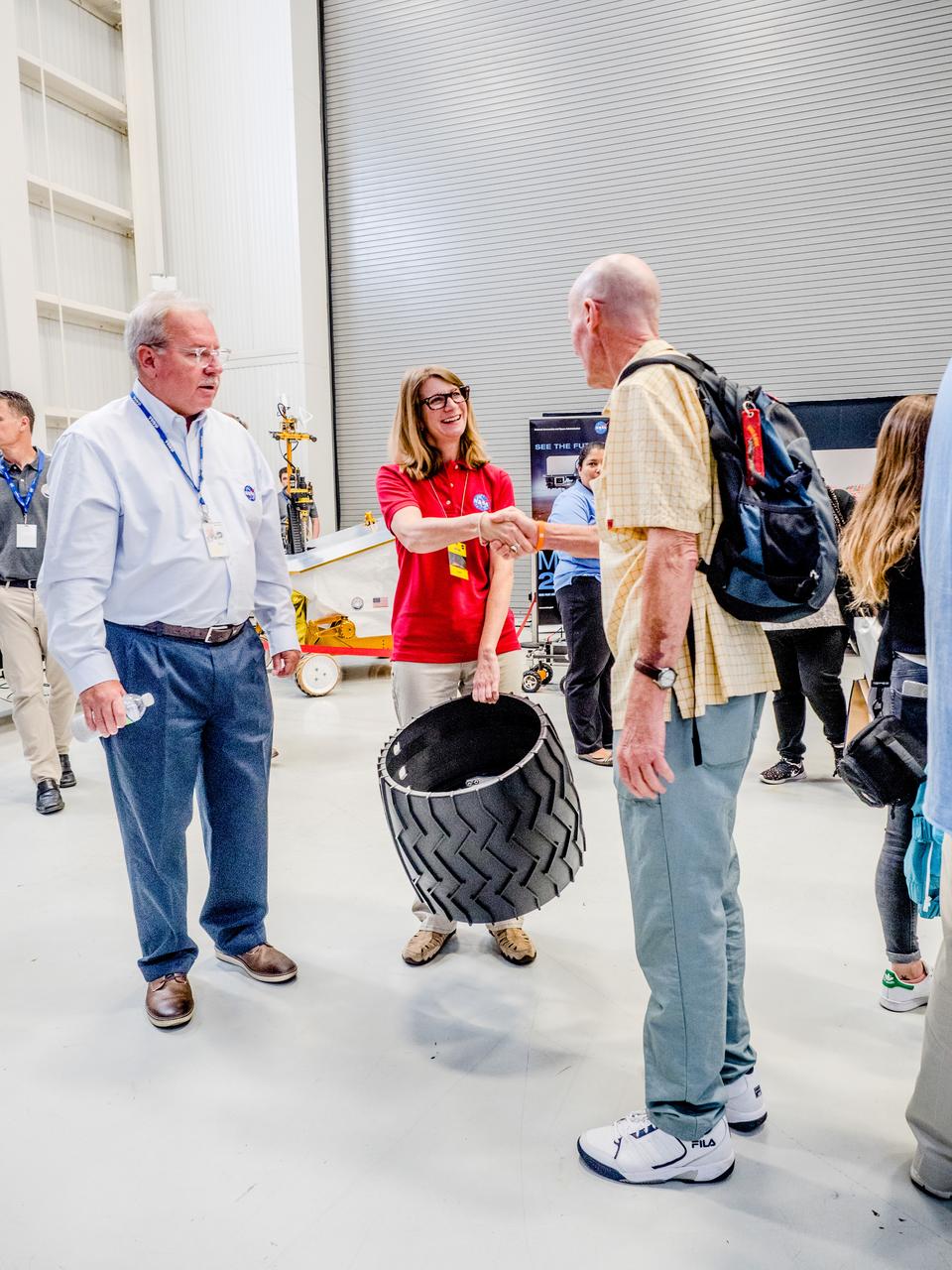
#NASAMarsDay
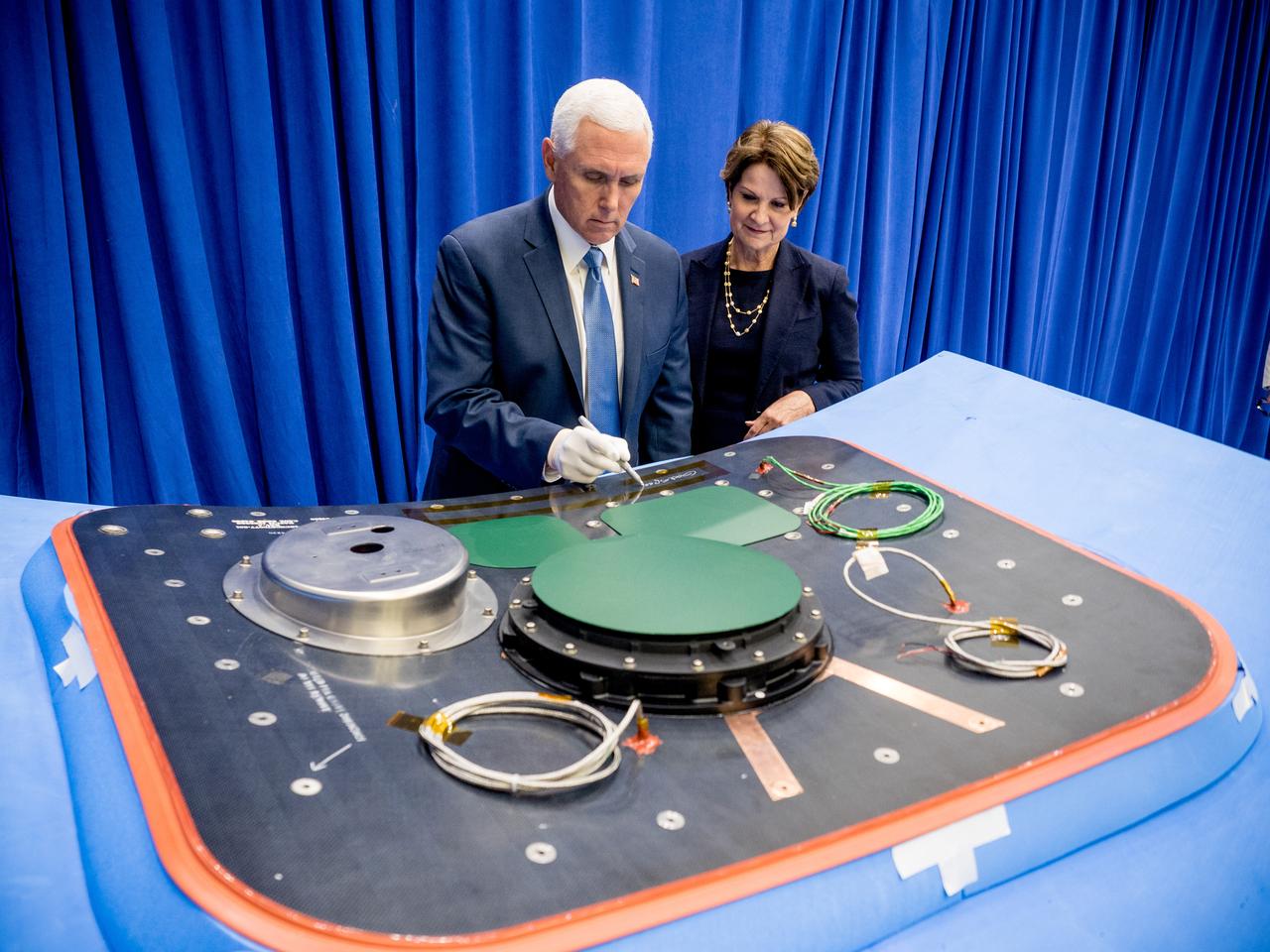
Vice President Mike Pence visited and gave remarks in the Neil Armstrong Operations and Checkout Building at NASA’s Kennedy Space Center in Florida on July 20, 2019 to commemorate the 50th anniversary of the agency’s Apollo 11 Moon landing and announce to America the completion of NASA’s Orion crew capsule, shown here on July 19, 2019, for the first Artemis lunar mission.

#NASAMarsDay
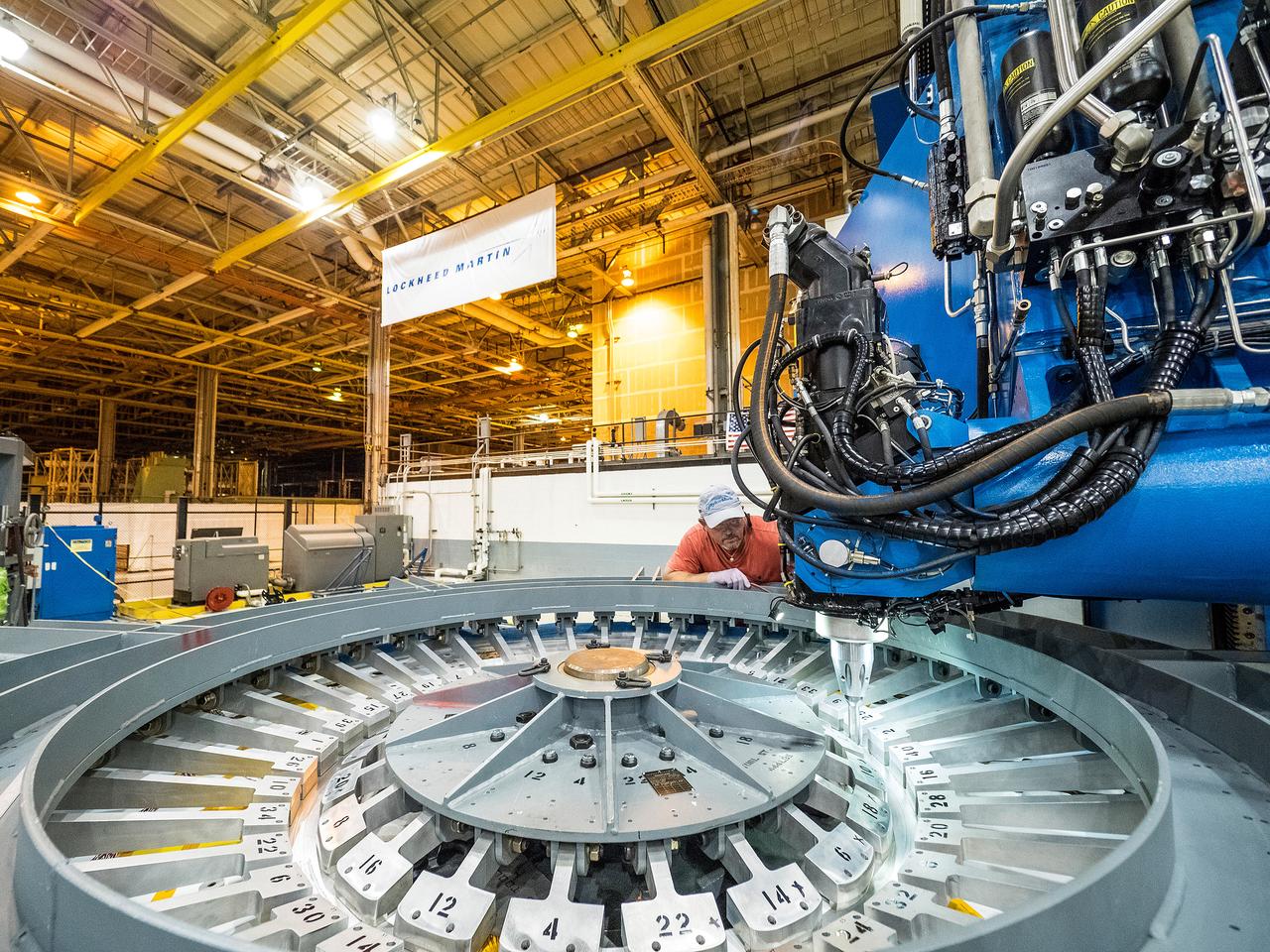
First weld of Orion Exploration Mission 1 crew module
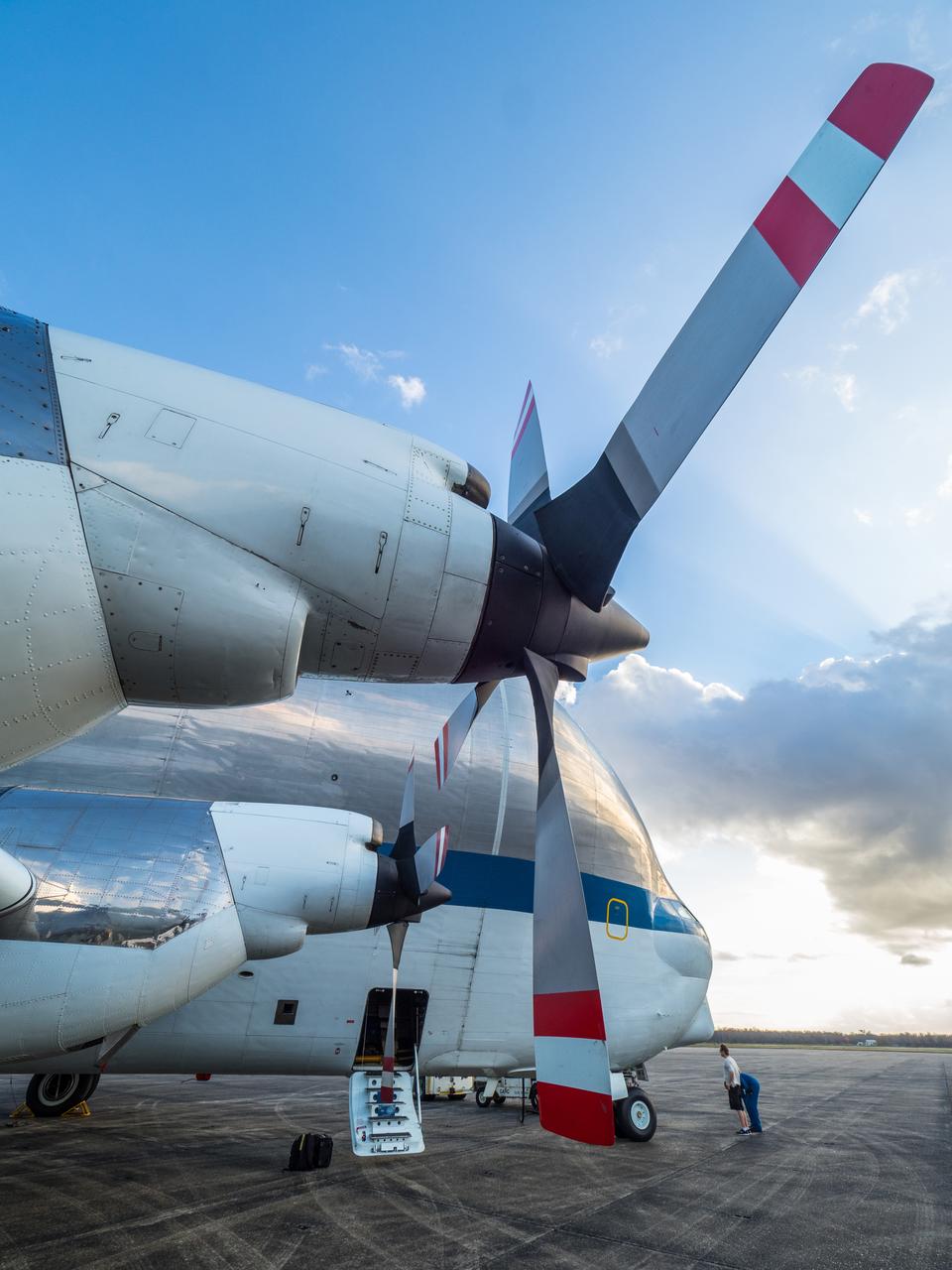
NASA's Super Guppy airplane arrives in New Orleans, Louisiana on Jan. 31, 2016. The Guppy will transport Orion's Artemis I crew module pressure vessel to Kennedy Space Center for final assembly. Part of Batch image transfer from Flickr.
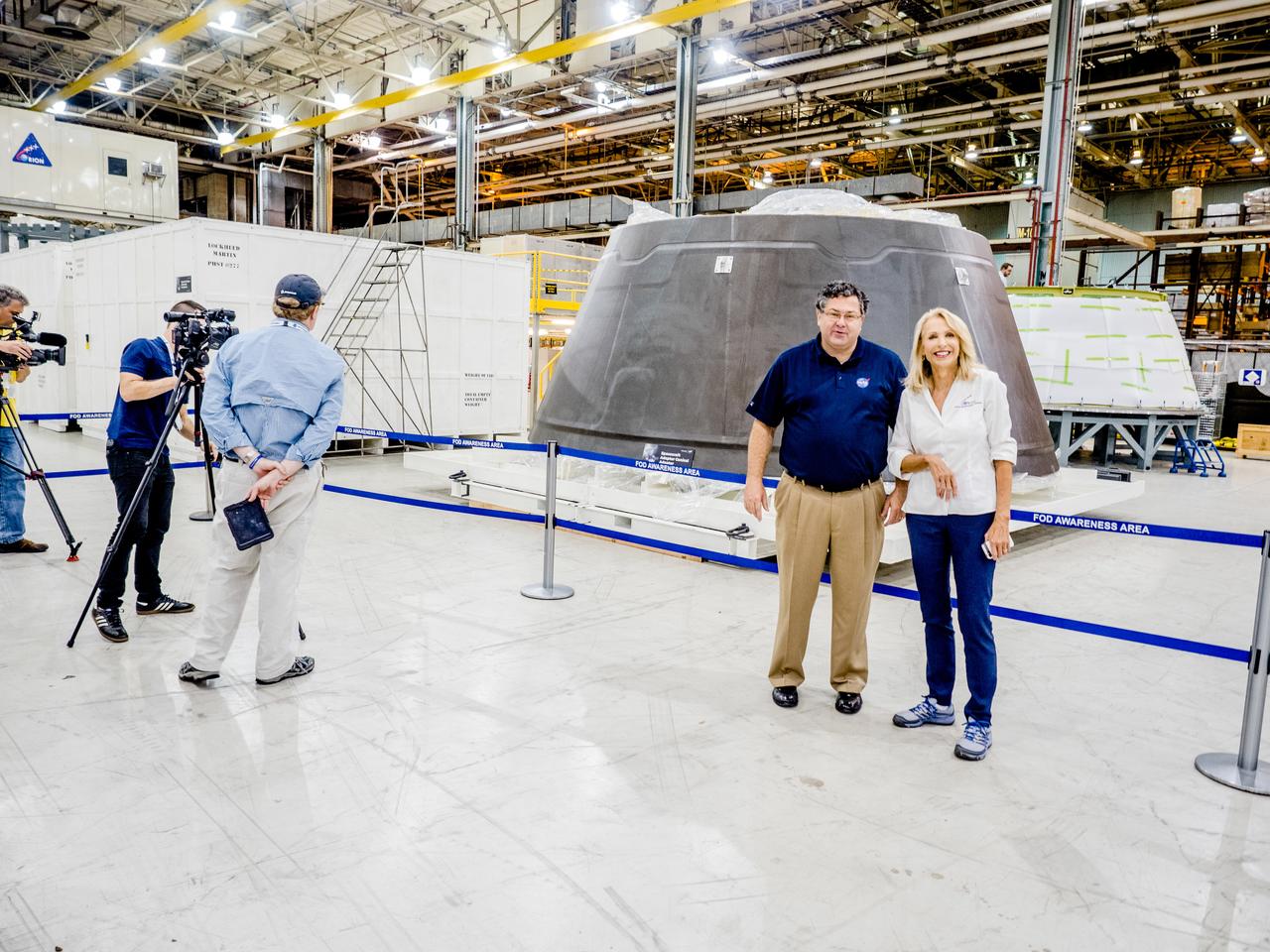
#NASAMarsDay
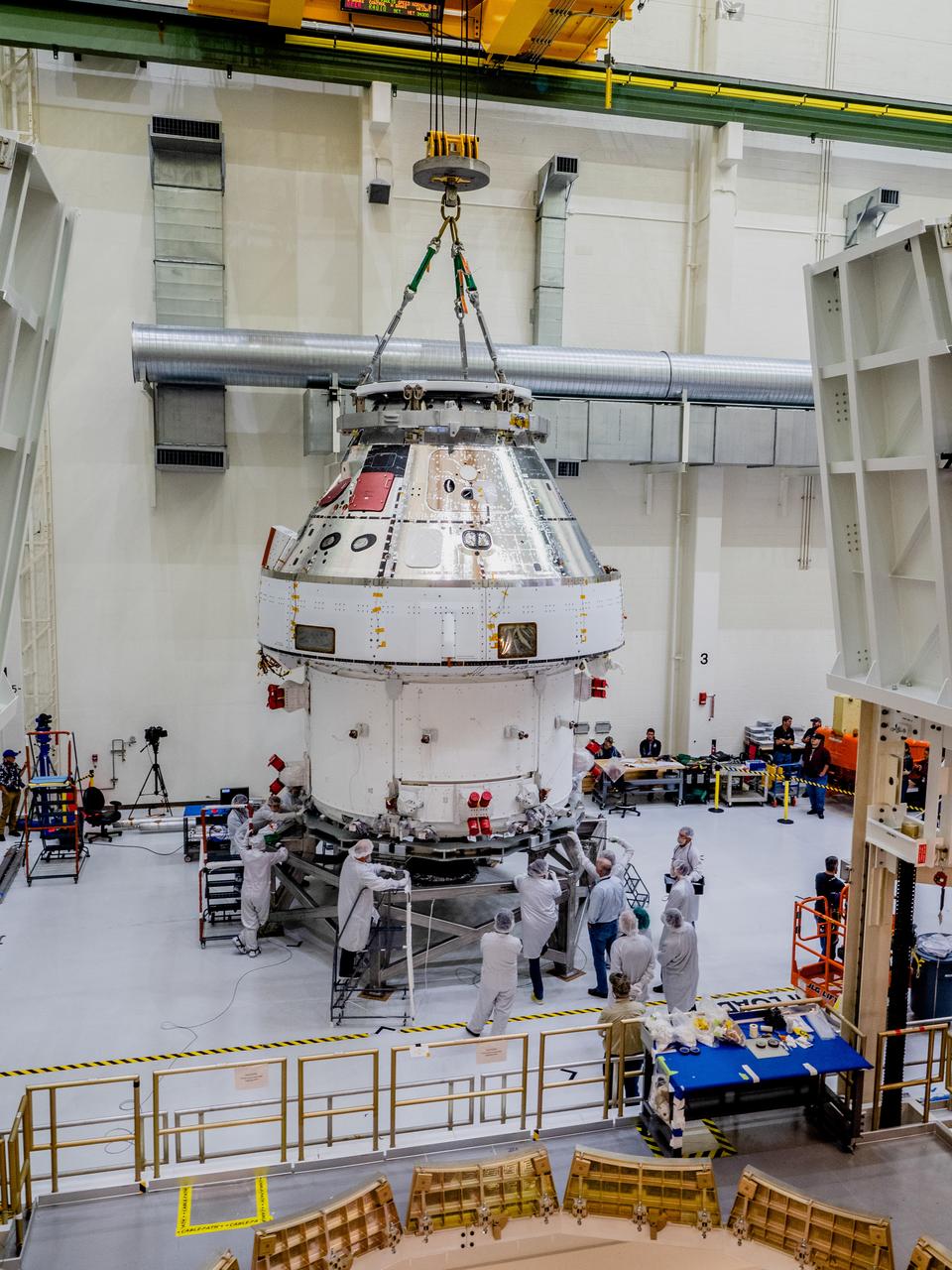
The Orion crew and service module stack for Artemis I was lifted out of the Final Assembly and Test (FAST) cell on November 11, 2019. The spacecraft has been stationed in the FAST cell since July for mating and closeout processing. The service module and crew module were moved separately into the cell, stacked and connected together for the mission. After lifting out of the cell, Orion will be attached to a tool called a verticator that rotates the stack from its vertical configuration to a horizontal configuration for transport to NASA’s Plum Brook Station in Sandusky, Ohio, where it will undergo full environmental testing to certify the complete vehicle for flight. Once the vehicle returns to Kennedy in several months, it will return to the FAST cell for installation of final panels left off for environmental testing purposes and the service module’s four solar arrays.
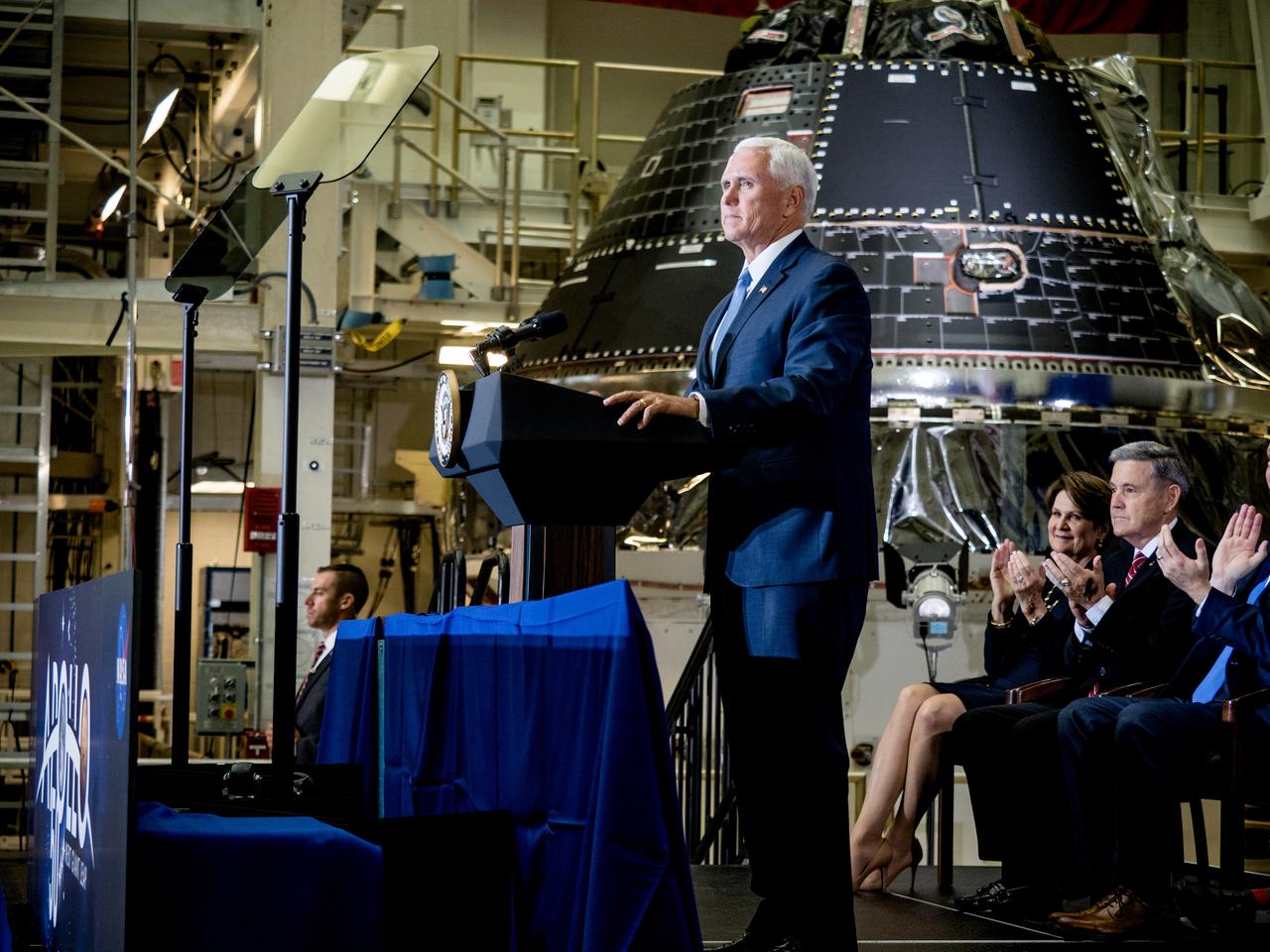
Vice President Mike Pence visited and gave remarks in the Neil Armstrong Operations and Checkout Building at NASA’s Kennedy Space Center in Florida on July 20, 2019 to commemorate the 50th anniversary of the agency’s Apollo 11 Moon landing and announce to America the completion of NASA’s Orion crew capsule, shown here on July 19, 2019, for the first Artemis lunar mission.
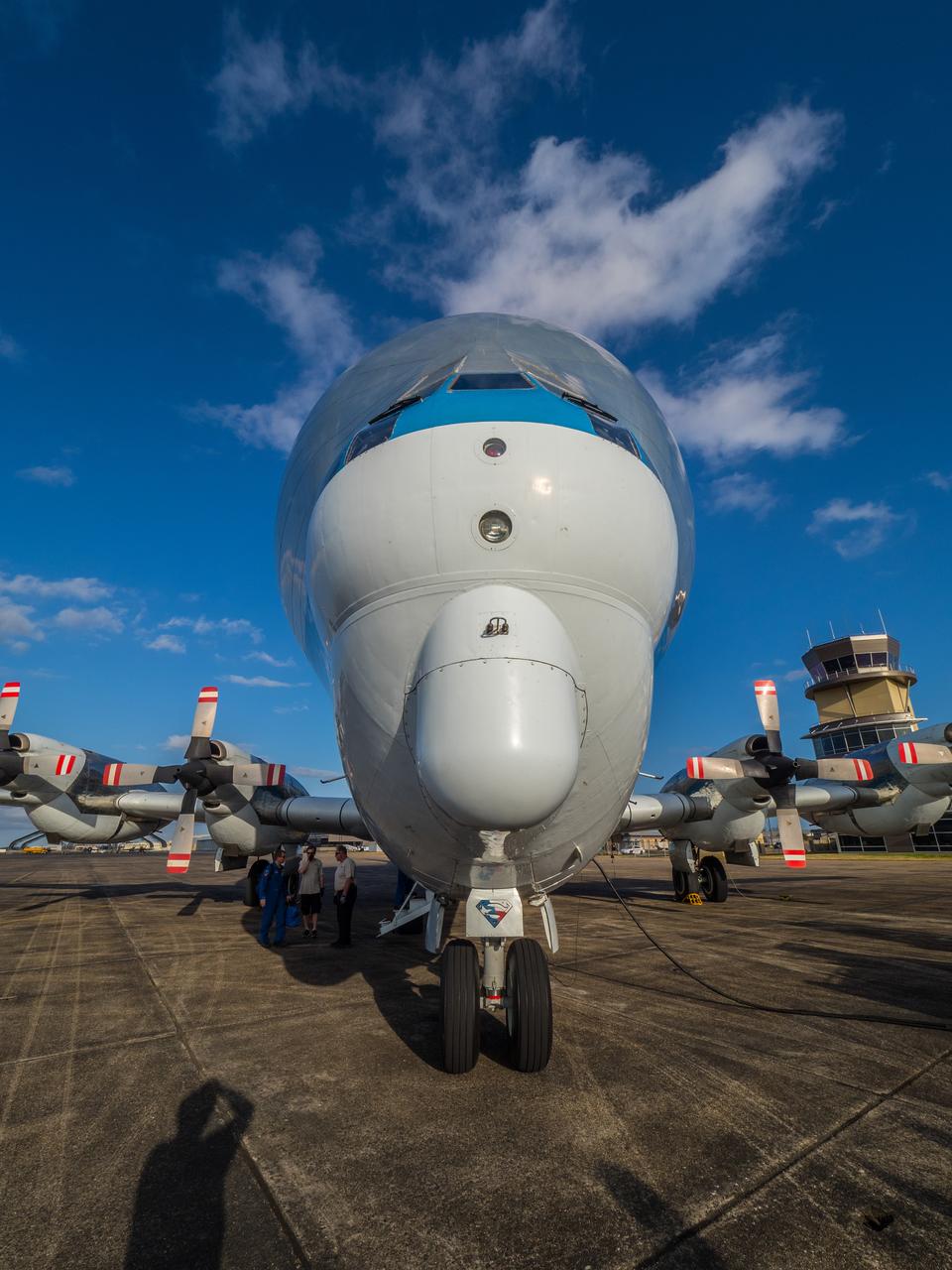
NASA's Super Guppy airplane arrives in New Orleans, Louisiana on Jan. 31, 2016. The Guppy will transport Orion's Artemis I crew module pressure vessel to Kennedy Space Center for final assembly. Part of Batch image transfer from Flickr.
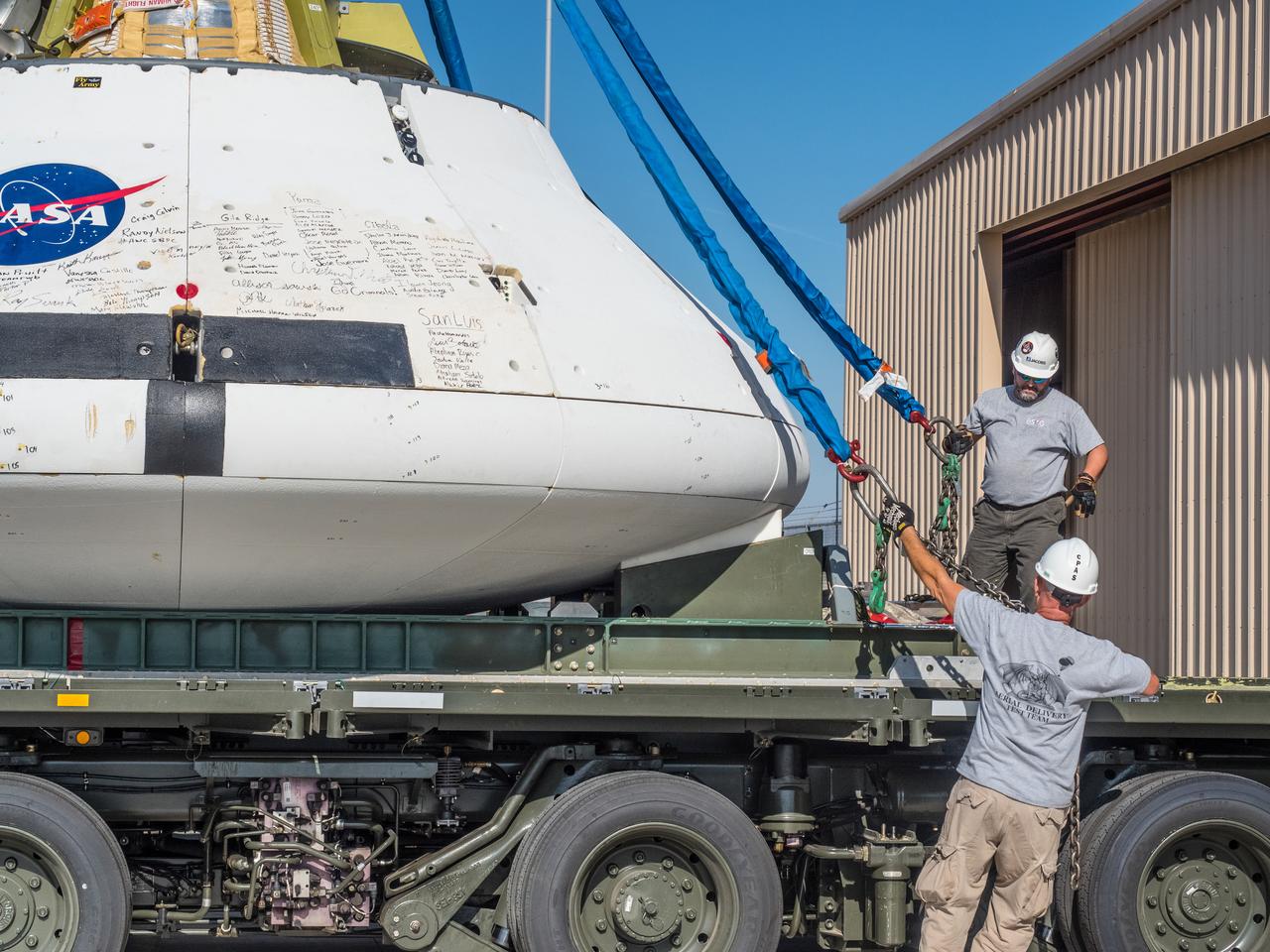
Engineers prepare to test the parachute system for NASA’s Orion spacecraft at the U.S. Army Yuma Proving Ground in Yuma, Arizona on Aug. 24, 2015. During the test, planned for Wednesday, Aug. 26, a C-17 aircraft will carry a representative Orion capsule to 35,000 feet in altitude and then drop it from its cargo bay. Engineers will test a scenario in which one of Orion’s two drogue parachutes, used to stabilize it in the air, does not deploy, and one of its three main parachutes, used to slow the capsule during the final stage of descent, also does not deploy. The risky test will provide data engineers will use as they gear up to qualify Orion’s parachutes for missions with astronauts. On Aug. 24, a C-17 was loaded with the test version of Orion, which has a similar mass and interfaces with the parachutes as the Orion being developed for deep space missions but is shorter on top to fit inside the aircraft. Part of Batch image transfer from Flickr.
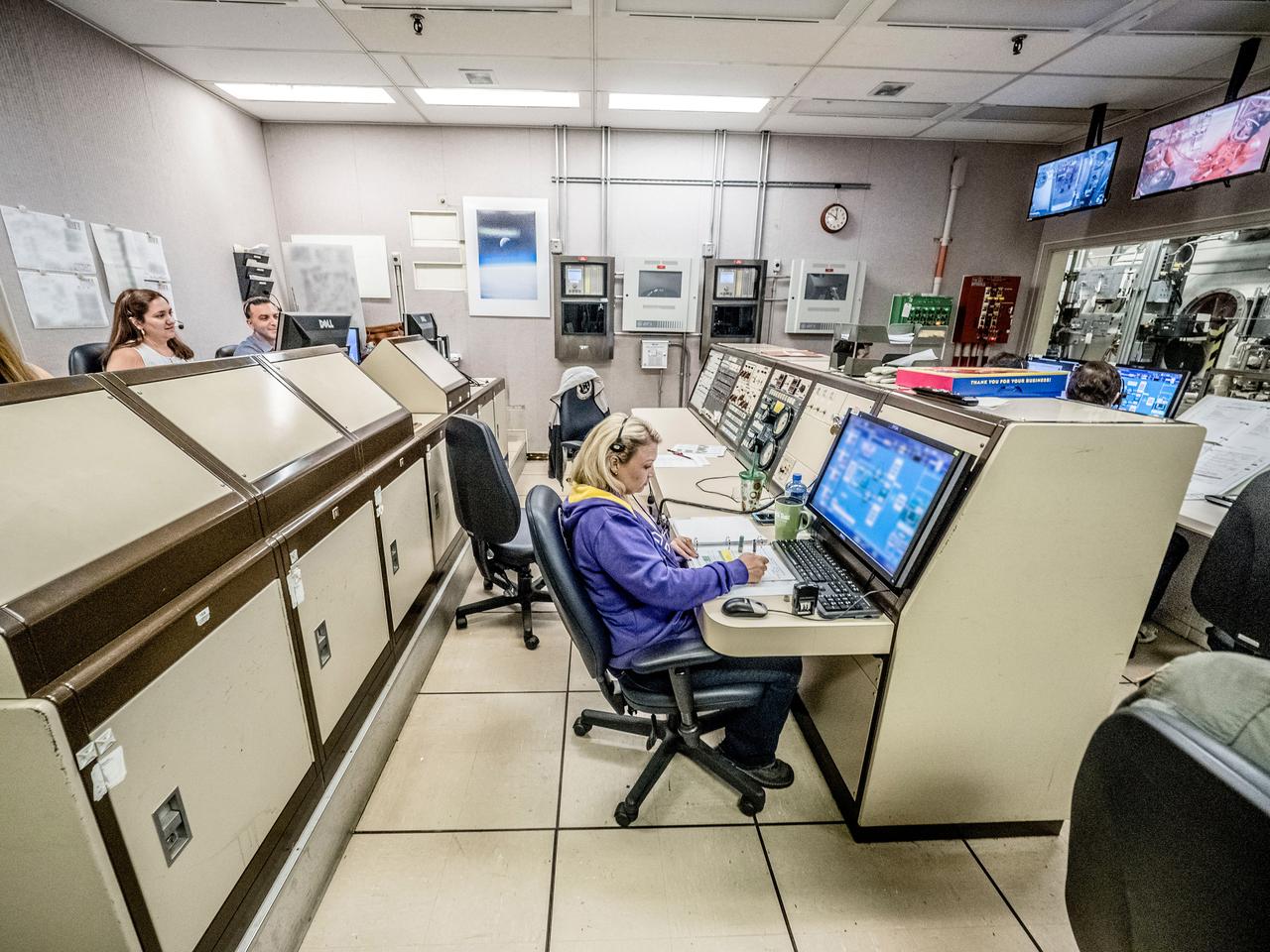
Engineers and technicians at NASA’s Johnson Space Center in Houston are testing the spacesuit astronauts will wear in the agency’s Orion spacecraft on trips to deep space. On June 22, 2017, members of the Johnson team participated in a Vacuum Pressure Integrated Suit Test to verify enhancements to the suit will meet test and design standards for the Orion spacecraft. During this test, the suit is connected to life support systems and then air is removed from Johnson’s 11-foot thermal vacuum chamber to evaluate the performance of the suits in conditions similar to a spacecraft. The suit will contain all the necessary functions to support life and is being designed to enable spacewalks and sustain the crew in the unlikely event the spacecraft loses pressure. Part of Batch images transfer from Flickr.

In Bremen, Germany the Airbus Space team prepares the Orion European Service Module-2 for shipment to Kennedy Space Center on Oct. 7, 2021. ESM-2 will power Orion on Artemis II, Orion's first flight with crew.
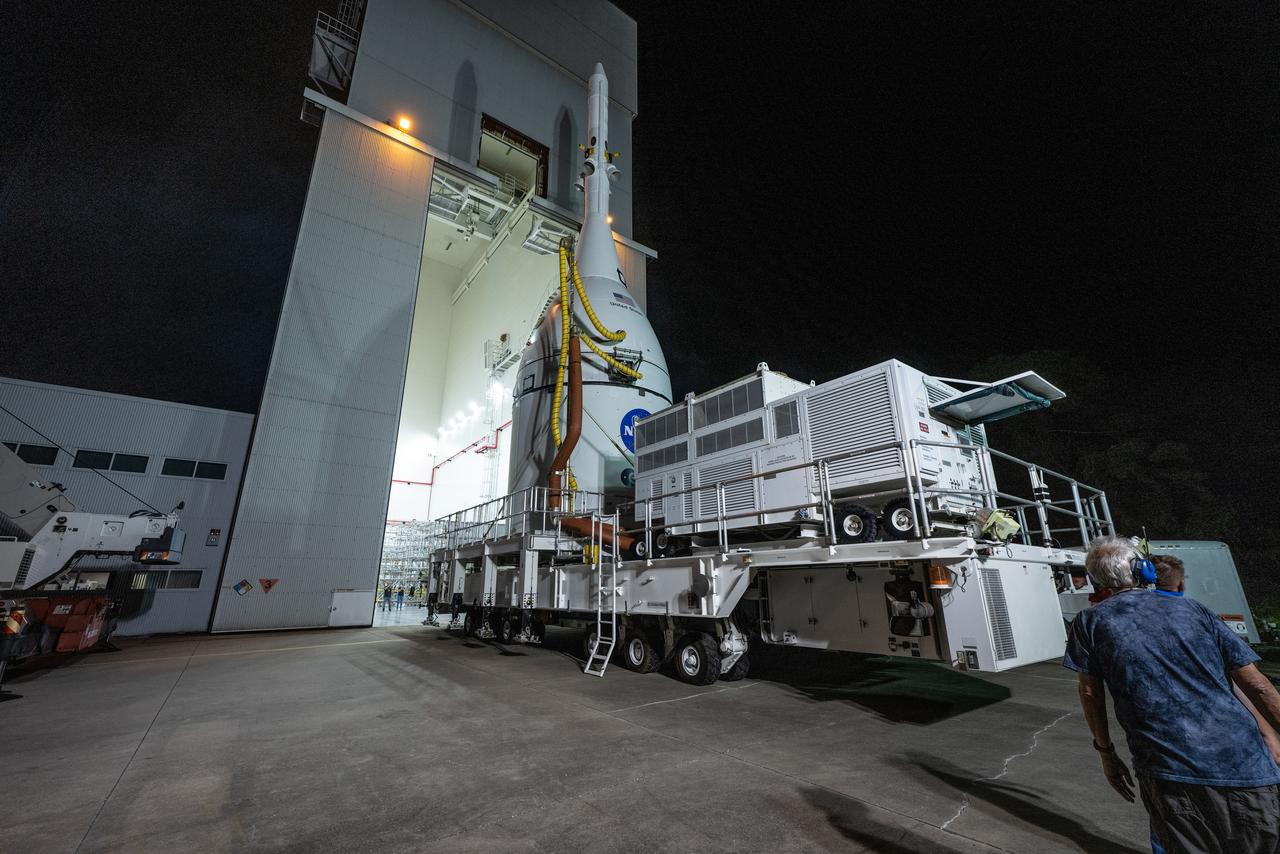
The team at Kennedy Space Center prepares the Artemis I Orion for transport from the Launch Abort System Facility to the Vehicle Assembly Building where it will be stacked atop the Launch Abort System.
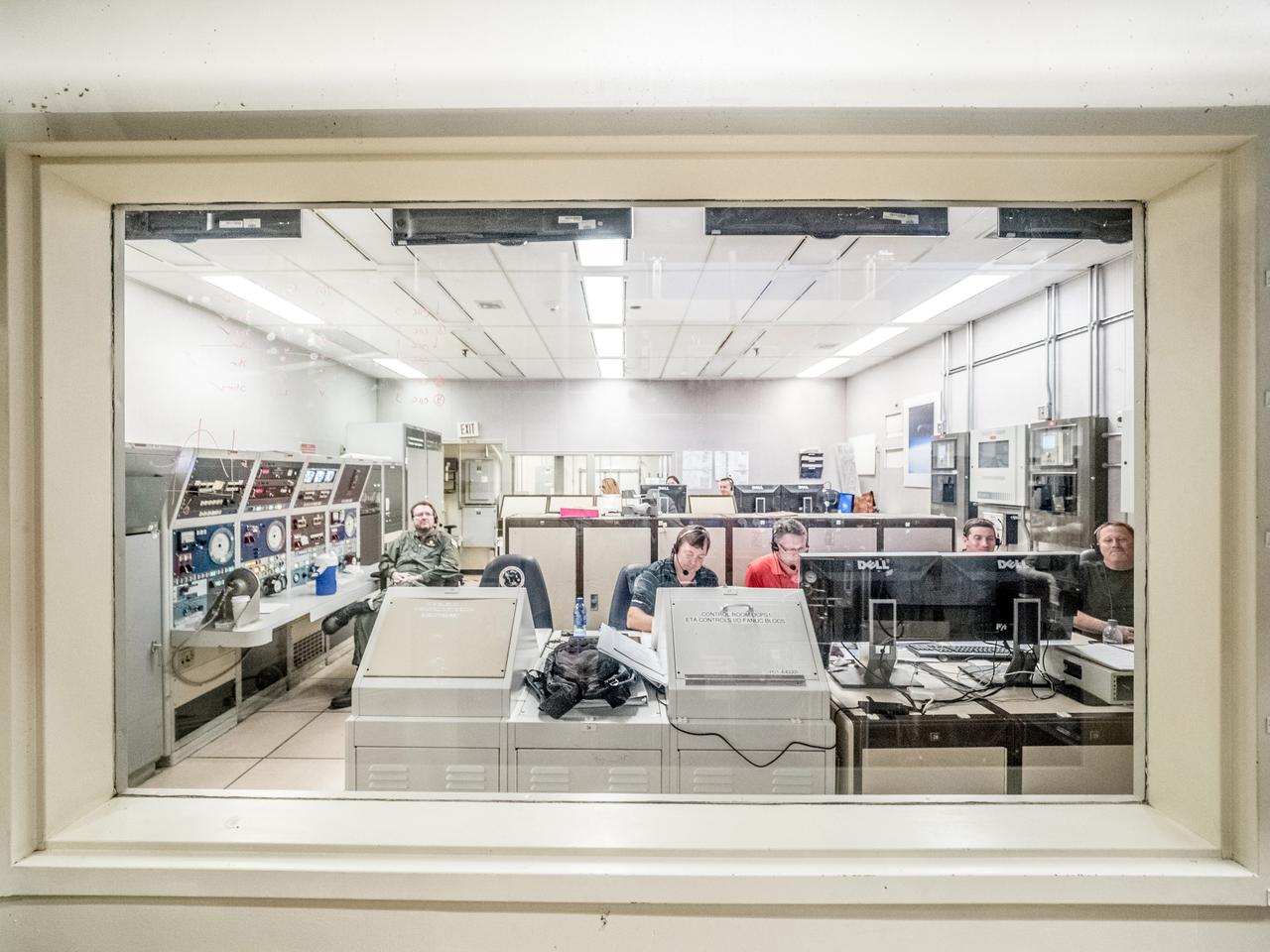
Engineers and technicians at NASA’s Johnson Space Center in Houston are testing the spacesuit astronauts will wear in the agency’s Orion spacecraft on trips to deep space. On June 22, 2017, members of the Johnson team participated in a Vacuum Pressure Integrated Suit Test to verify enhancements to the suit will meet test and design standards for the Orion spacecraft. During this test, the suit is connected to life support systems and then air is removed from Johnson’s 11-foot thermal vacuum chamber to evaluate the performance of the suits in conditions similar to a spacecraft. The suit will contain all the necessary functions to support life and is being designed to enable spacewalks and sustain the crew in the unlikely event the spacecraft loses pressure. Part of Batch images transfer from Flickr.
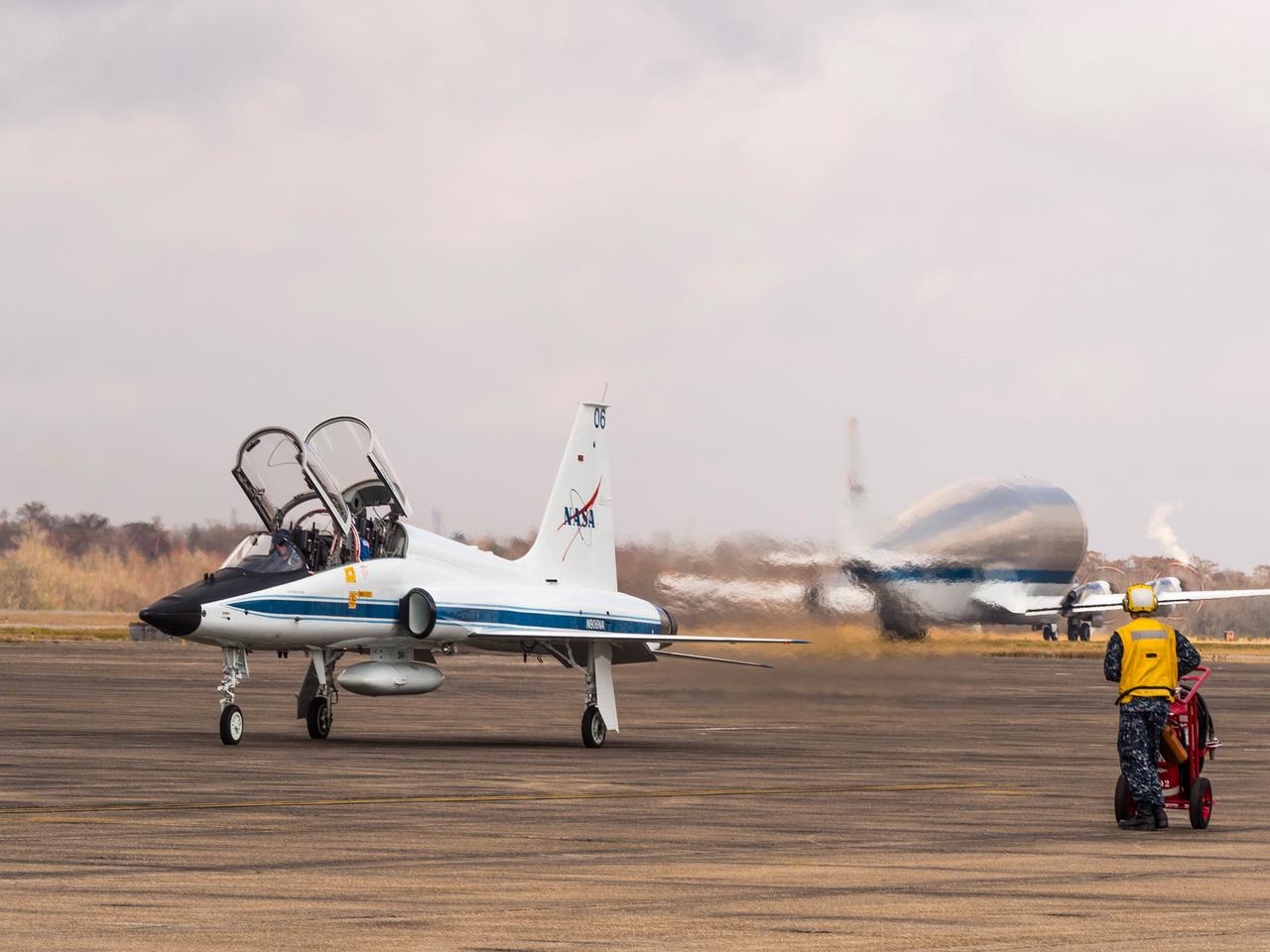
NASA's Super Guppy, carrying the Artemis I Orion crew module pressure vessel, departs New Orleans en route to Kennedy Space Center in Florida on Feb. 1, 2016. Part of Batch image transfer from Flickr.
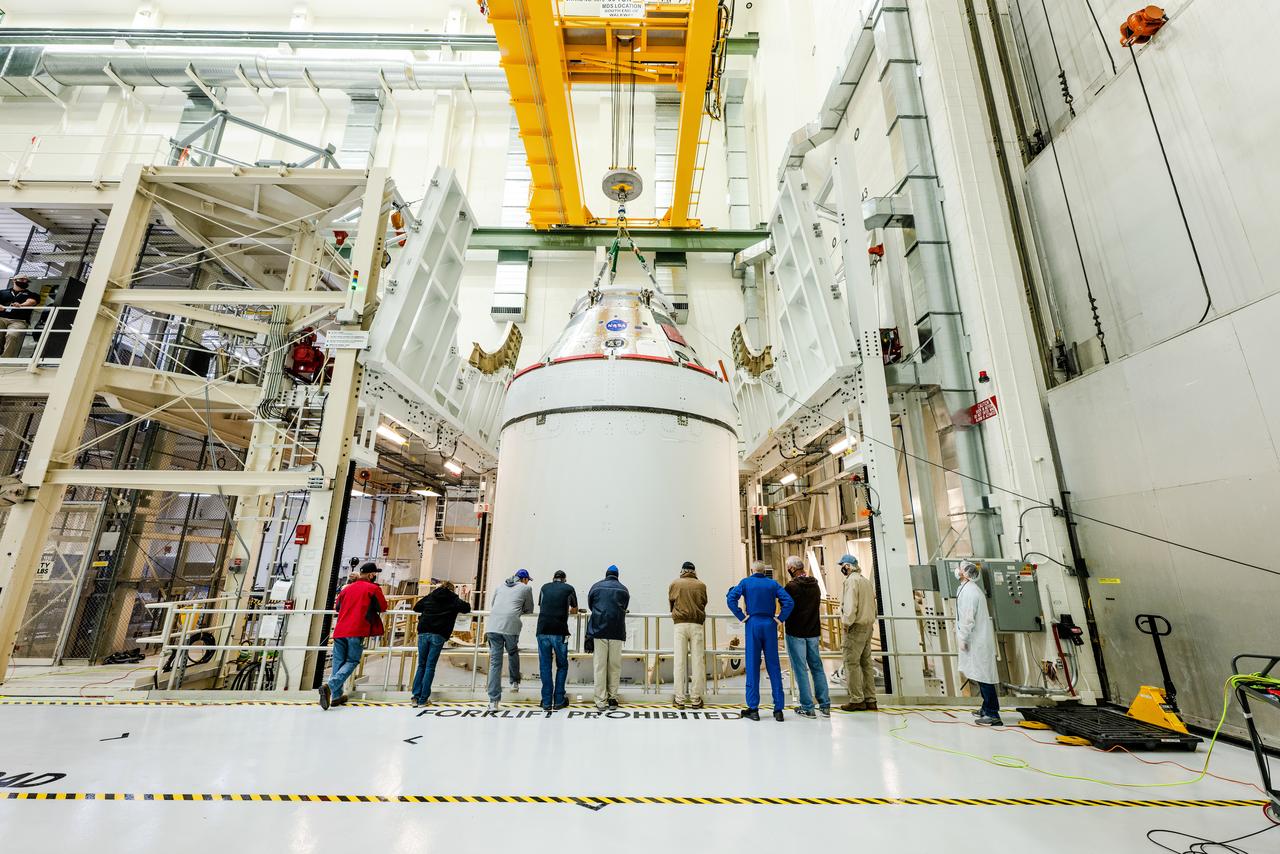
The Artemis I Orion spacecraft is moved out of the Final Assembly And Test (FAST) cell at Neil Armstrong Operations and Checkout Building at Kennedy Space Center in preparation for transport to Multi Payload Processing Facility on Jan. 14, 2021.
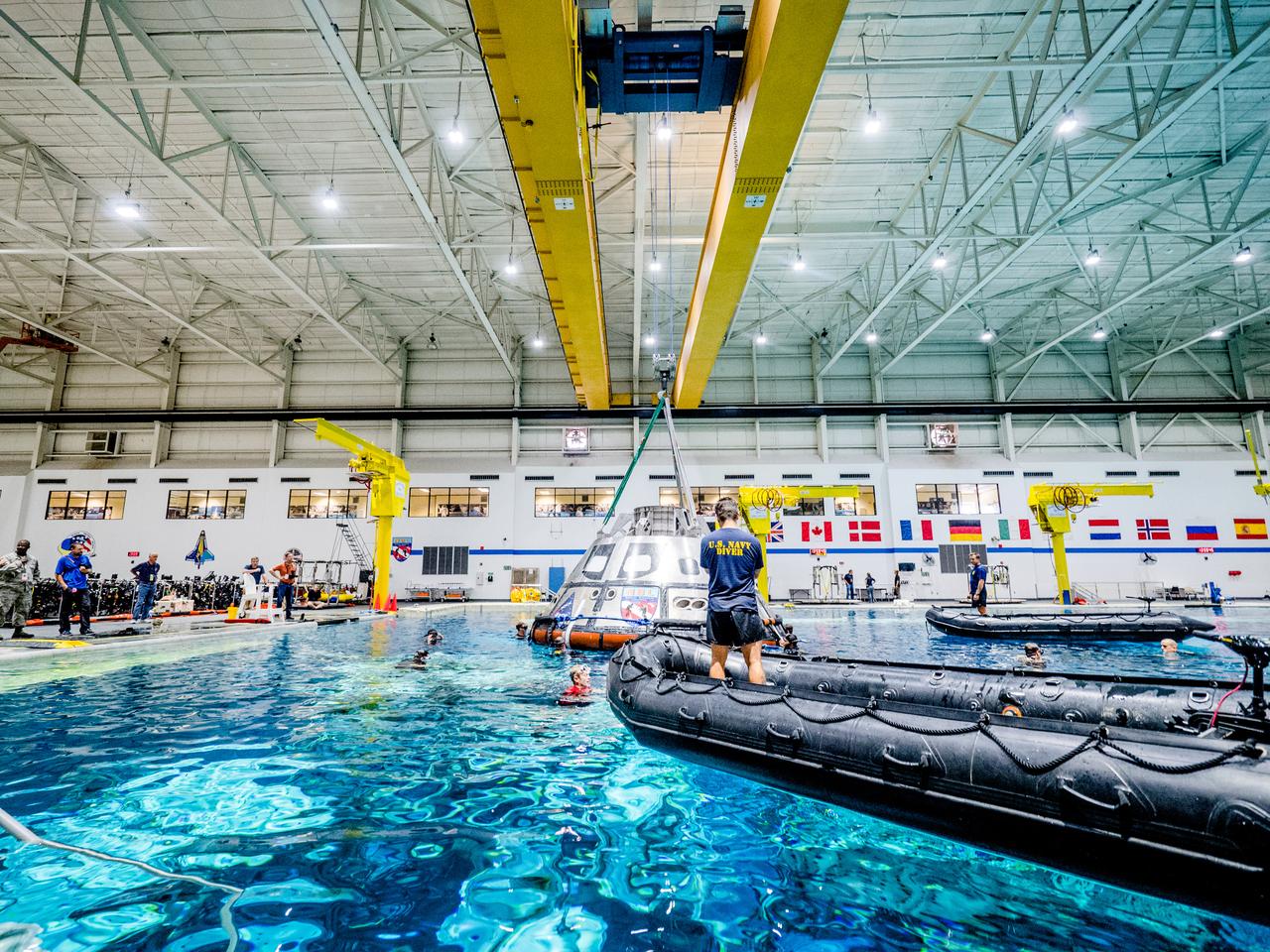
A group of U.S. Navy divers, Air Force pararescumen and Coast Guard rescue swimmers practice Orion underway recovery techniques this week in the Neutral Buoyancy Laboratory (NBL) at NASA’s Johnson Space Center in Houston on Sept. 21, 2016, to prepare for the first test flight of an uncrewed Orion spacecraft with the agency’s Space Launch System rocket during Artemis I. Part of Batch images transfer from Flickr.
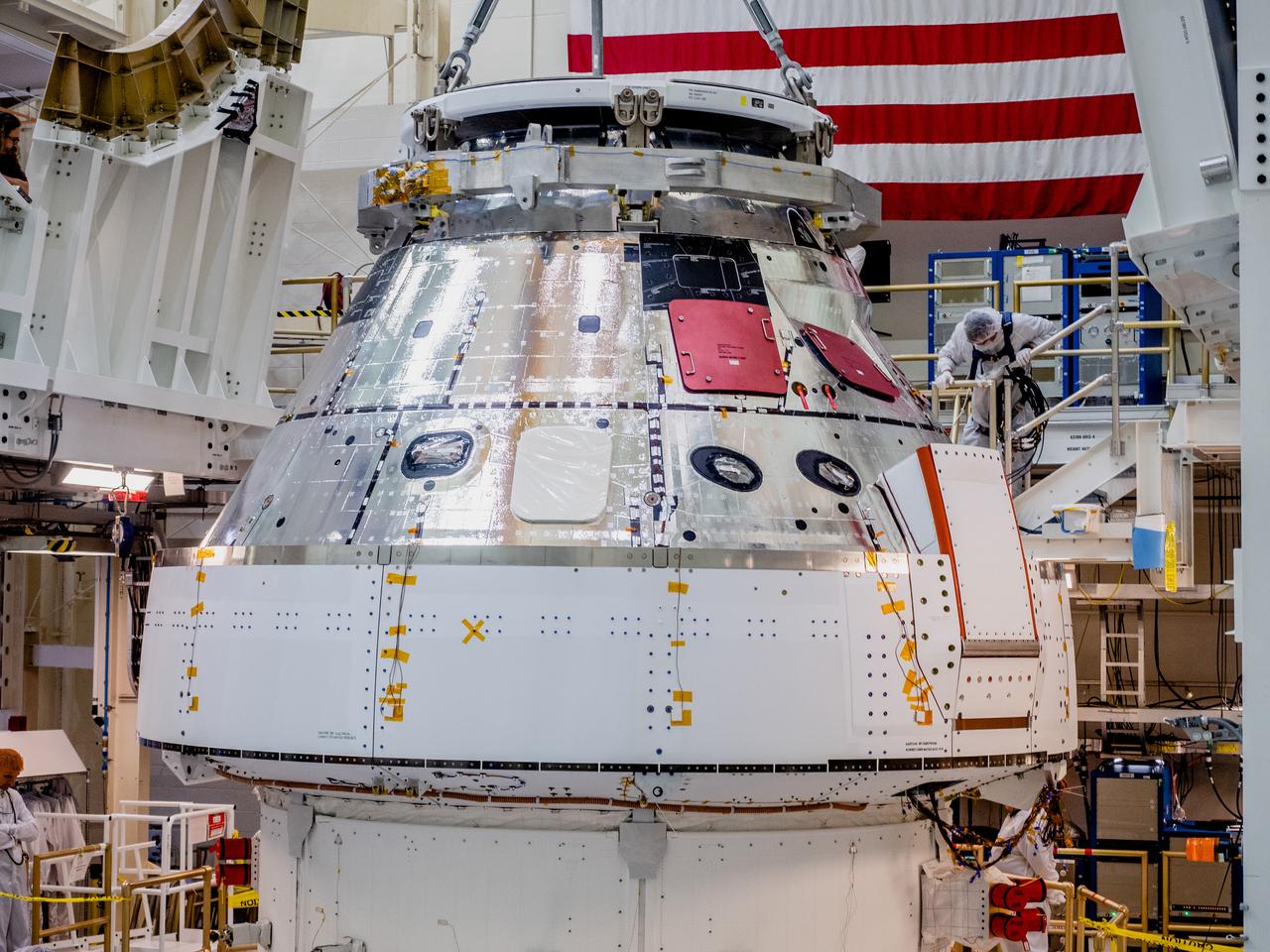
The Orion crew and service module stack for Artemis I was lifted out of the Final Assembly and Test (FAST) cell on November 11, 2019. The spacecraft has been stationed in the FAST cell since July for mating and closeout processing. The service module and crew module were moved separately into the cell, stacked and connected together for the mission. After lifting out of the cell, Orion will be attached to a tool called a verticator that rotates the stack from its vertical configuration to a horizontal configuration for transport to NASA’s Plum Brook Station in Sandusky, Ohio, where it will undergo full environmental testing to certify the complete vehicle for flight. Once the vehicle returns to Kennedy in several months, it will return to the FAST cell for installation of final panels left off for environmental testing purposes and the service module’s four solar arrays.
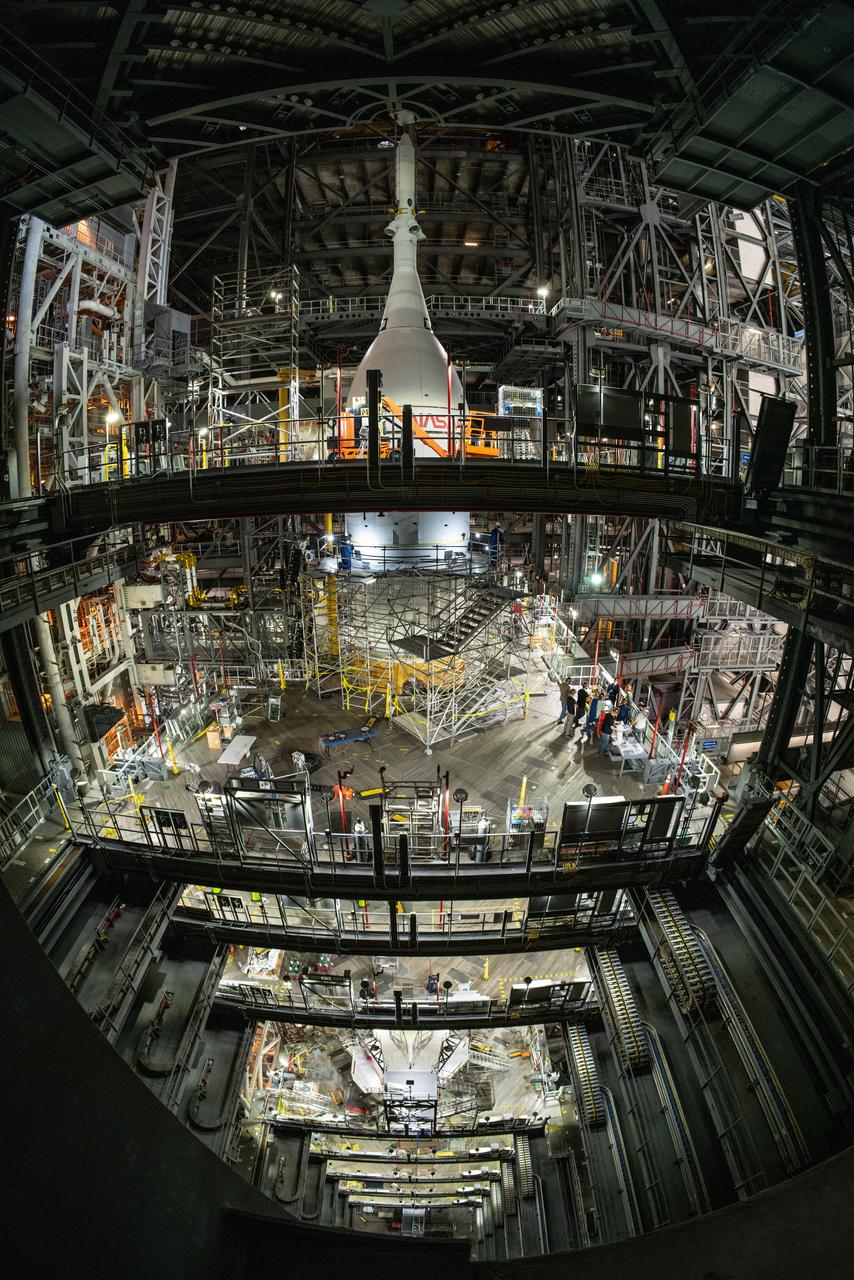
The Orion spacecraft for NASA’s Artemis I mission, fully assembled with its launch abort system, is stacked on the Space Launch System (SLS) rocket in High Bay 3 of the Vehicle Assembly Building at Kennedy Space Center in Florida on Oct. 20, 2021. The stacking of Orion on top of the SLS completes assembly for the Artemis I flight test. Teams will begin conducting a series of verification tests ahead of rolling out to Launch Complex 39B for the Wet Dress Rehearsal.
#NASAMarsDay
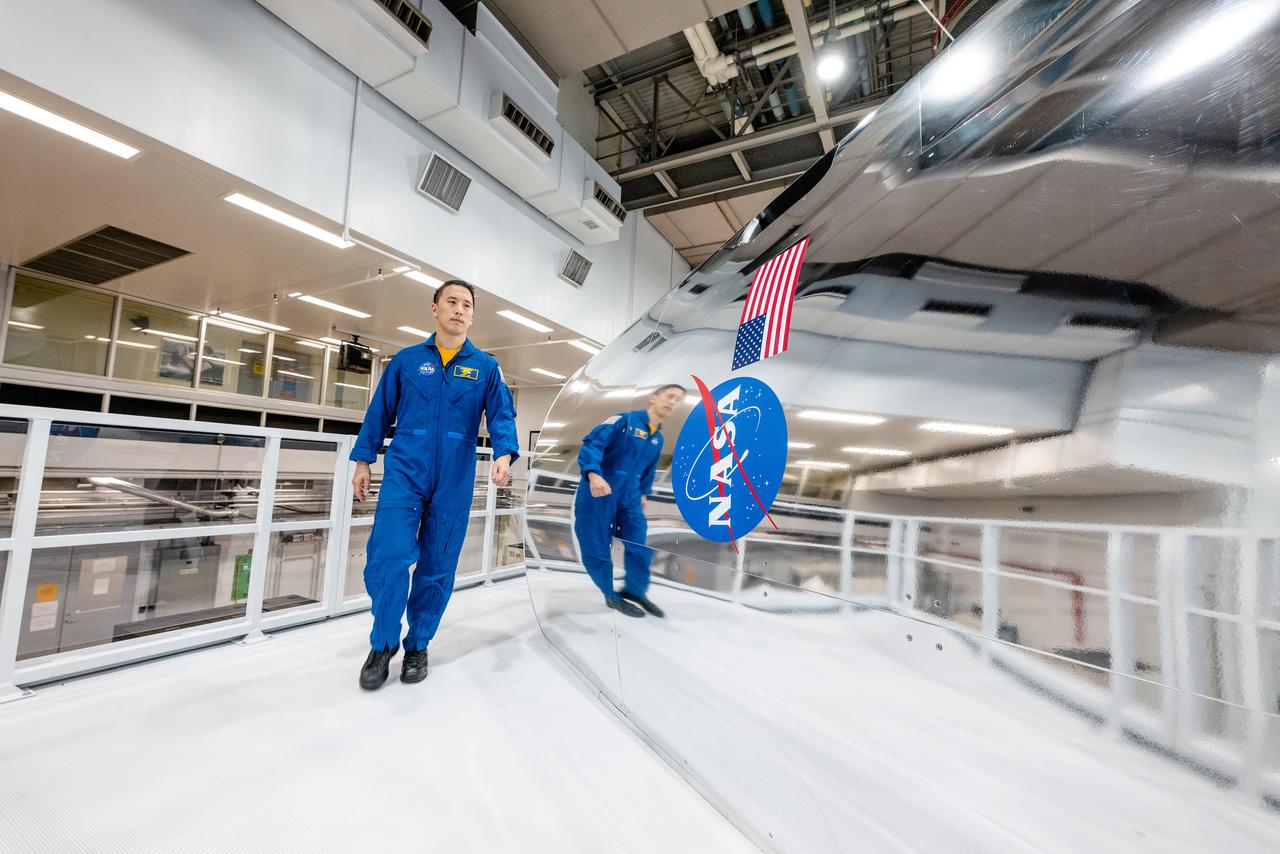
NASA Astronauts Stephanie Wilson, Jonny Kim, and Randy Bresnik take a look at the Orion spacecraft simulator that recently arrived at the agency’s Johnson Space Center in Houston on Dec. 8, 2020. The simulator provides the ability for astronauts, engineers, and flight controllers to train and practice for scenarios during Artemis missions to the Moon. The interior of the simulator is being outfitted with Orion’s display and control system and crew seats to mimic what astronaut will experience during liftoff to the lunar vicinity and on their way back home to Earth...Kim and Wilson are among the 18 astronauts recently named to the Artemis Team of astronauts eligible to be selected for Artemis missions to the Moon. Bresnik is currently the assistant to the chief of the astronaut office for exploration. NASA is targeting 2023 for Artemis II, the first mission with crew, with the Orion Spacecraft set to launch atop the agency’s Space Launch System rocket. The mission will send astronauts around the Moon and return them back to Earth, a flight that will set the stage for the first woman and next man to step foot on the Moon.
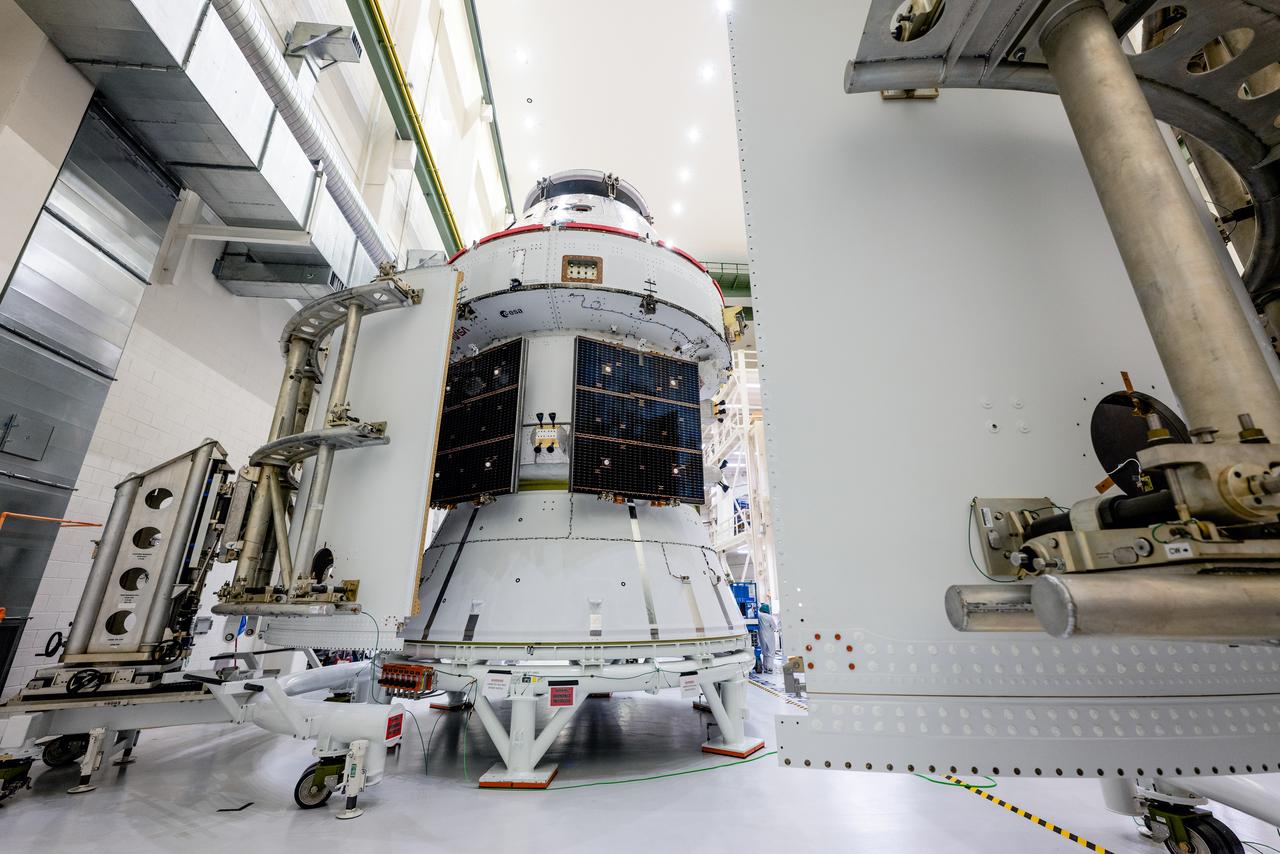
In the Operations and Checkout Building (O&C) at Kennedy Space Center, three spacecraft adapter jettison (SAJ) fairings are prepared for installation and will be moved into place by technicians with Lockheed Martin, lead contractor for Orion on Oct. 12, 2020. They will be secured around the spacecraft, encapsulating the European Service Module to protect it from the harsh environment as the spacecraft is propelled out of Earth’s atmosphere atop the Space Launch System (SLS) rocket during NASA’s Artemis I mission. The next time the solar array wings will be visible will be when Orion is in space. Artemis I will test the Orion spacecraft and SLS as an integrated system ahead of crewed flights to the Moon.
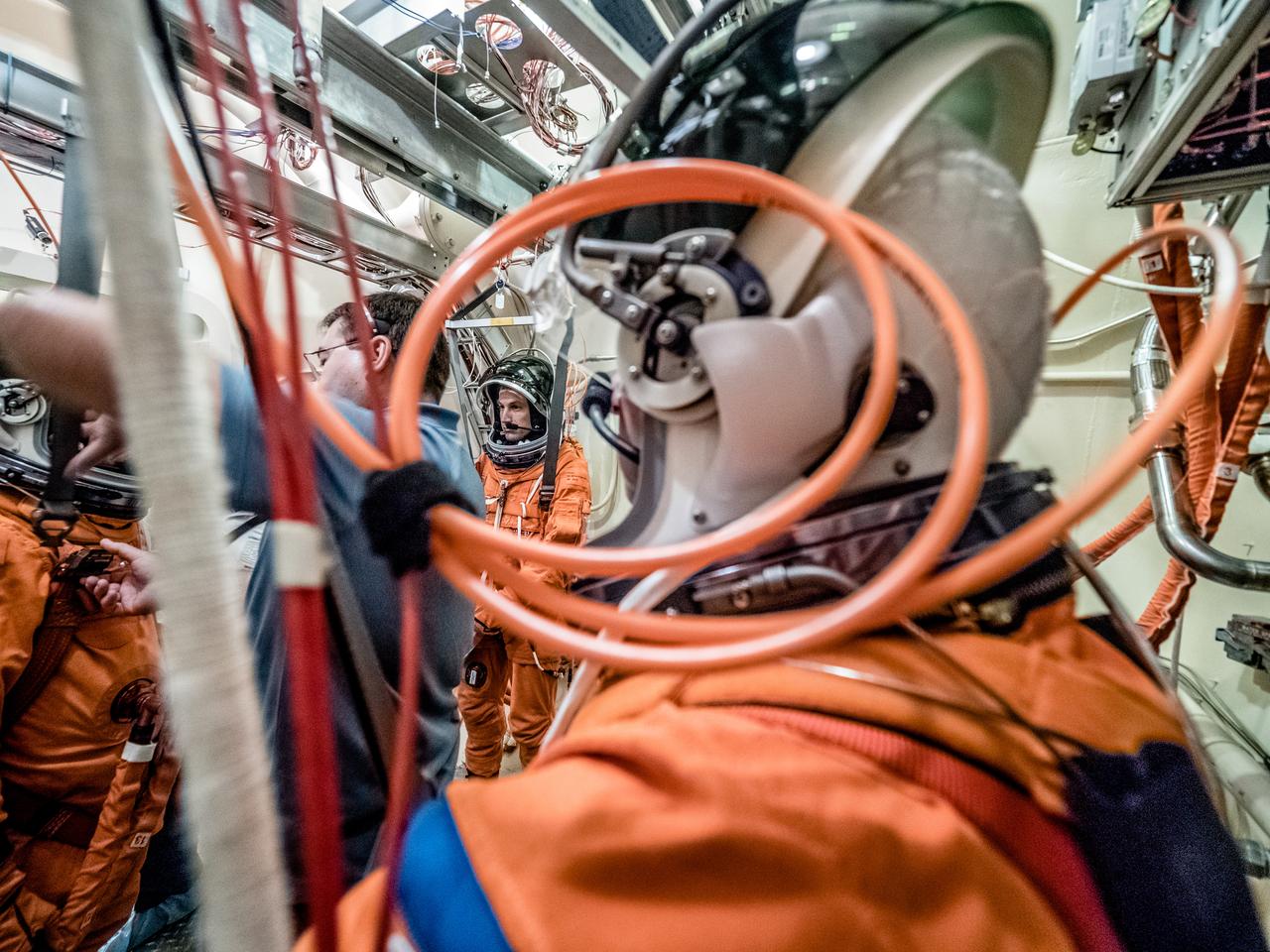
Engineers and technicians at NASA’s Johnson Space Center in Houston are testing the spacesuit astronauts will wear in the agency’s Orion spacecraft on trips to deep space. On June 22, 2017, members of the Johnson team participated in a Vacuum Pressure Integrated Suit Test to verify enhancements to the suit will meet test and design standards for the Orion spacecraft. During this test, the suit is connected to life support systems and then air is removed from Johnson’s 11-foot thermal vacuum chamber to evaluate the performance of the suits in conditions similar to a spacecraft. The suit will contain all the necessary functions to support life and is being designed to enable spacewalks and sustain the crew in the unlikely event the spacecraft loses pressure. Part of Batch images transfer from Flickr.
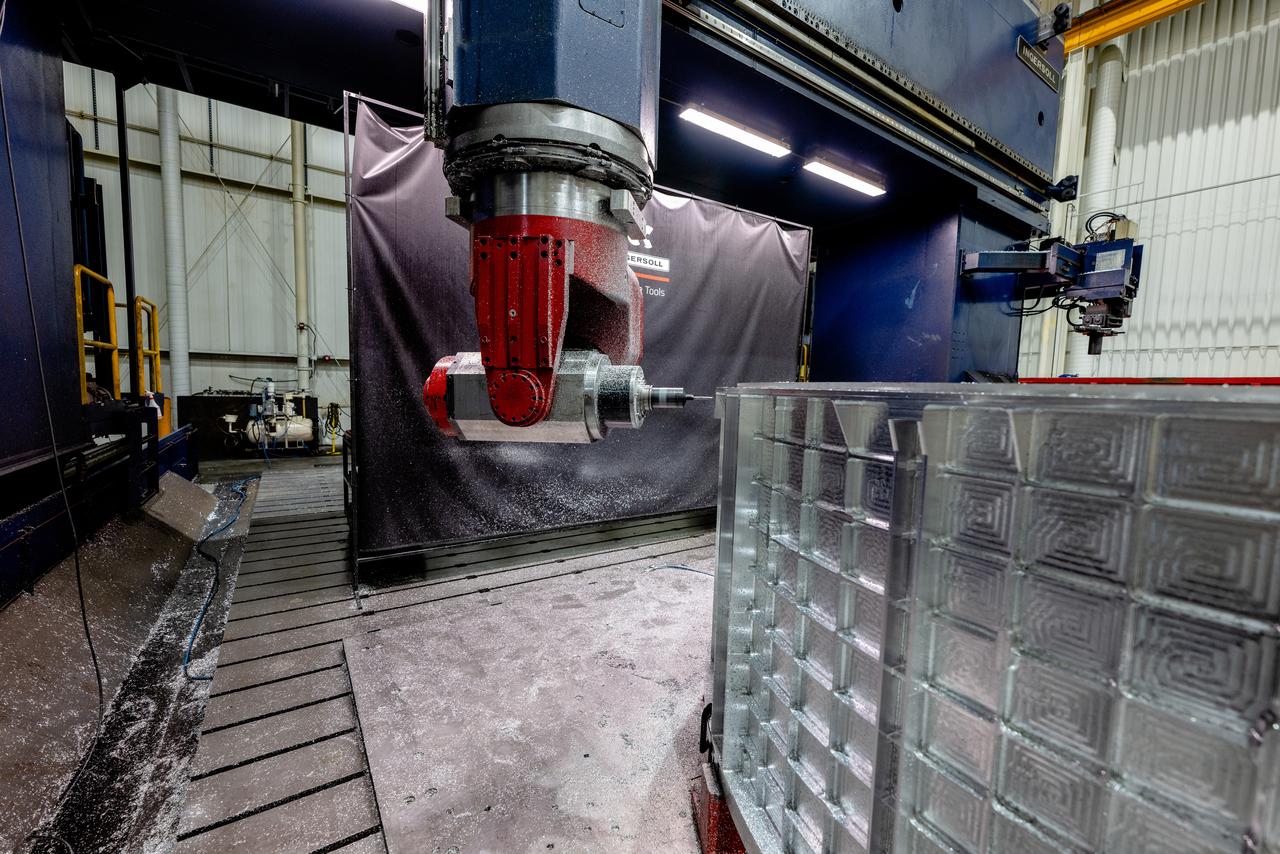
Machining of the tunnel, aft bulkhead, and barrel for the Artemis III Orion pressure vessel takes place at Ingersoll Machine Tool, Inc. in Rockford, Illinois on Sept. 28, 2020.
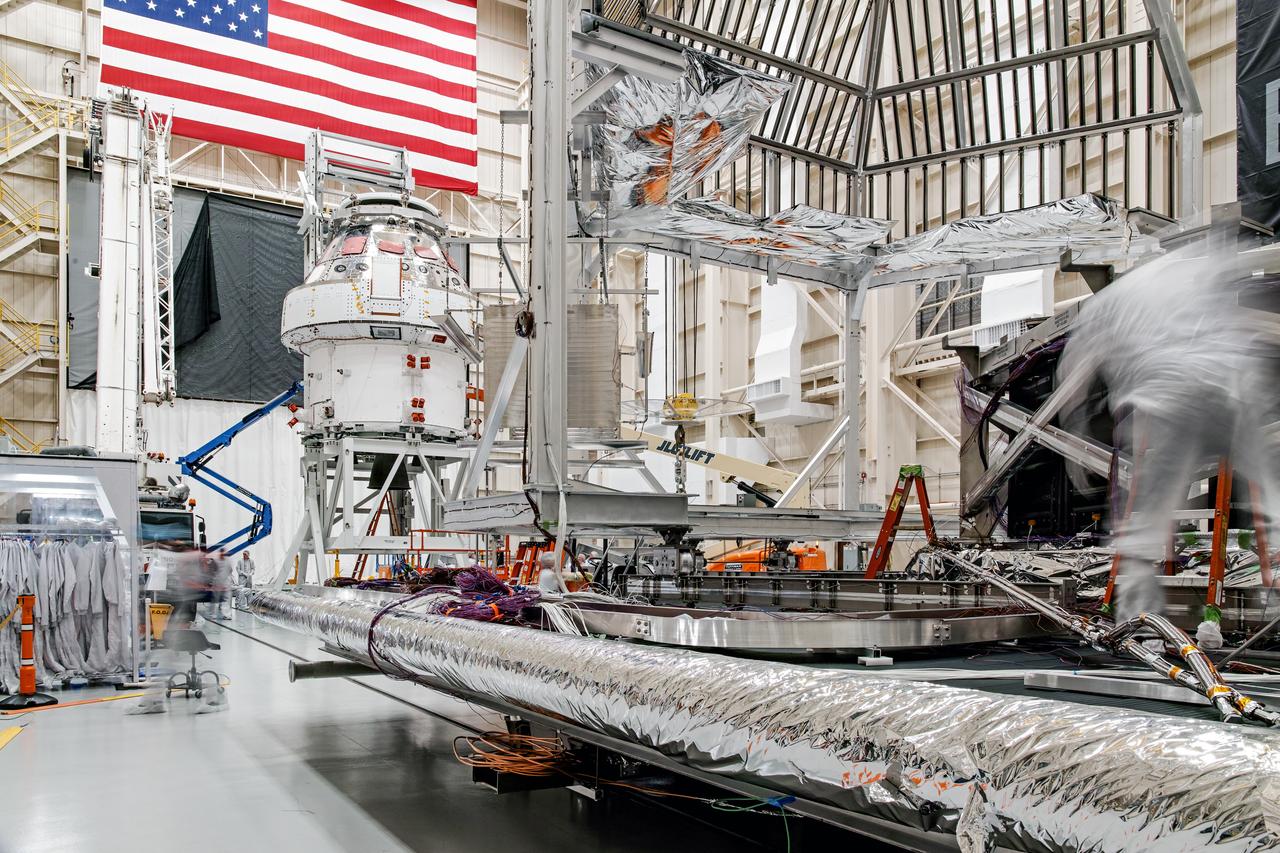
NASA’s Orion spacecraft–the crew module and European-built service module—is being lifted on Dec. 1, 2019 into a thermal cage and readied for its move into the vacuum chamber at NASA’s Neil A. Armstrong Test Facility in Ohio (formerly Plum Brook Station) for testing. Testing begins with a 60-day thermal test, where the spacecraft will be subjected to temperatures ranging from -250 to 300-degrees Fahrenheit to ensure it can withstand the harsh environment of space during Artemis missions. These extreme temperatures simulate flying in-and-out of sunlight and shadow in space using Heat Flux, a specially-designed system that heats specific parts of the spacecraft at any given time. Orion will also be surrounded on all sides by a set of large panels, called a cryogenic-shroud, that will provide the cold background temperatures of space.
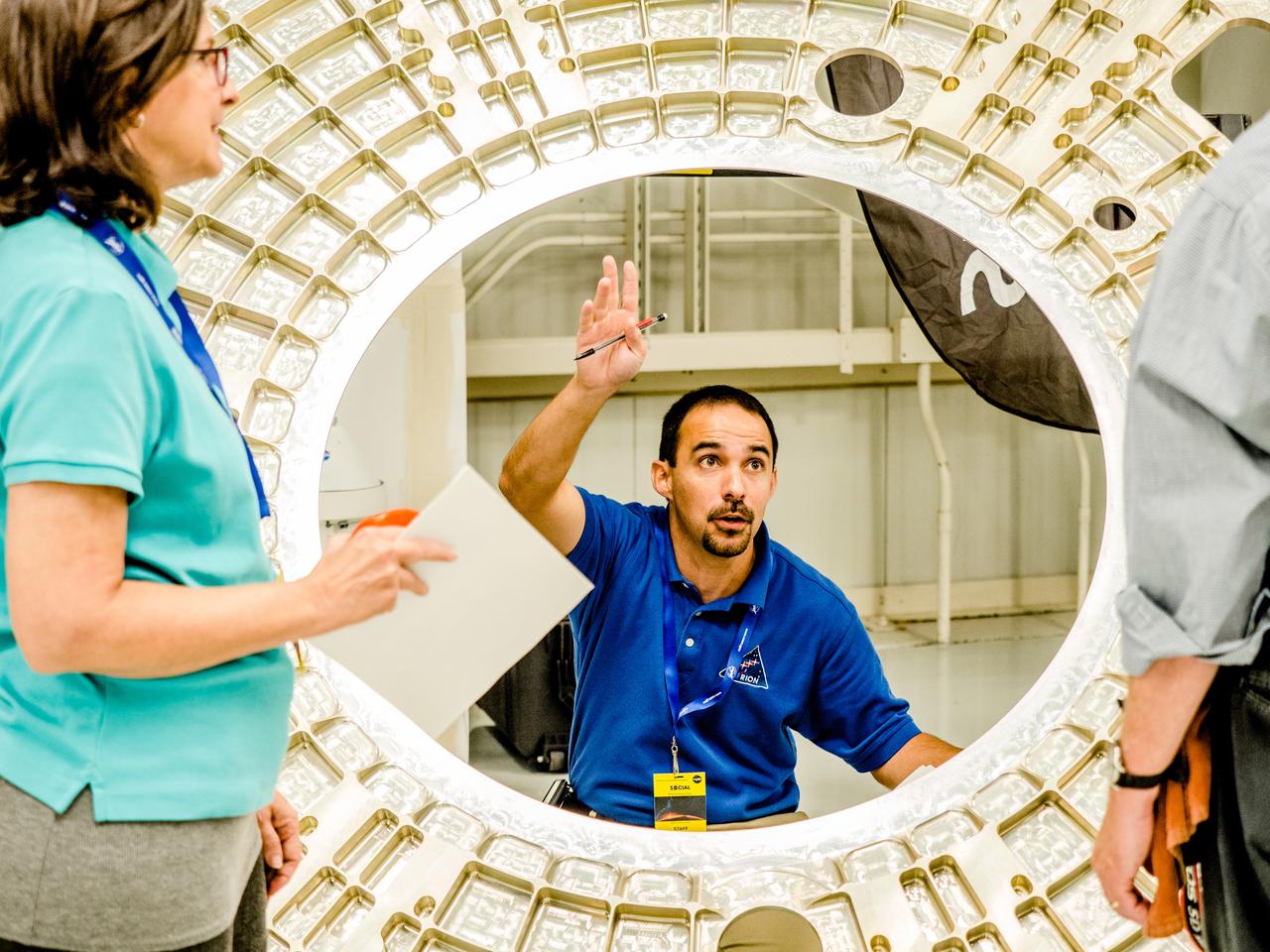
#NASAMarsDay
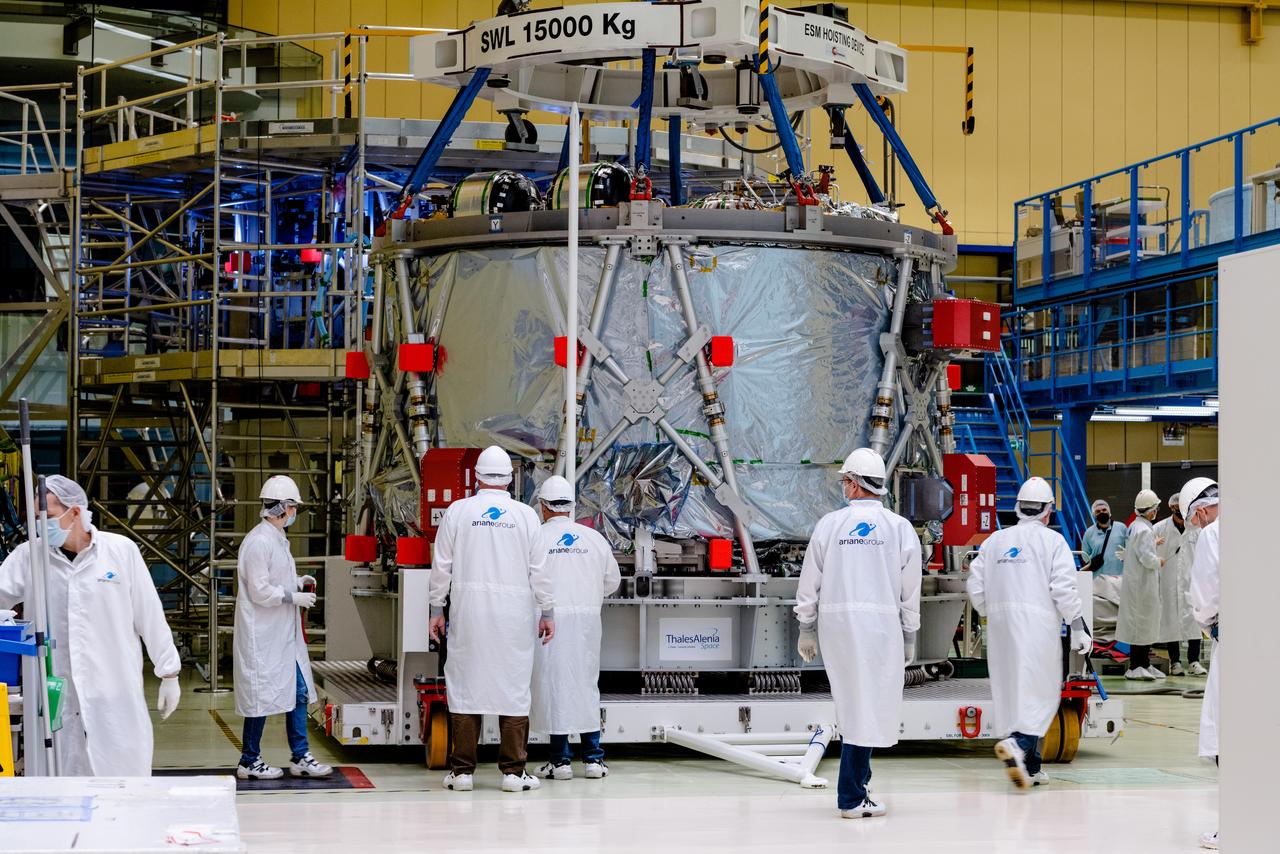
In Bremen, Germany the Airbus Space team prepares the Orion European Service Module-2 for shipment to Kennedy Space Center on Oct. 7, 2021. ESM-2 will power Orion on Artemis II, Orion's first flight with crew.
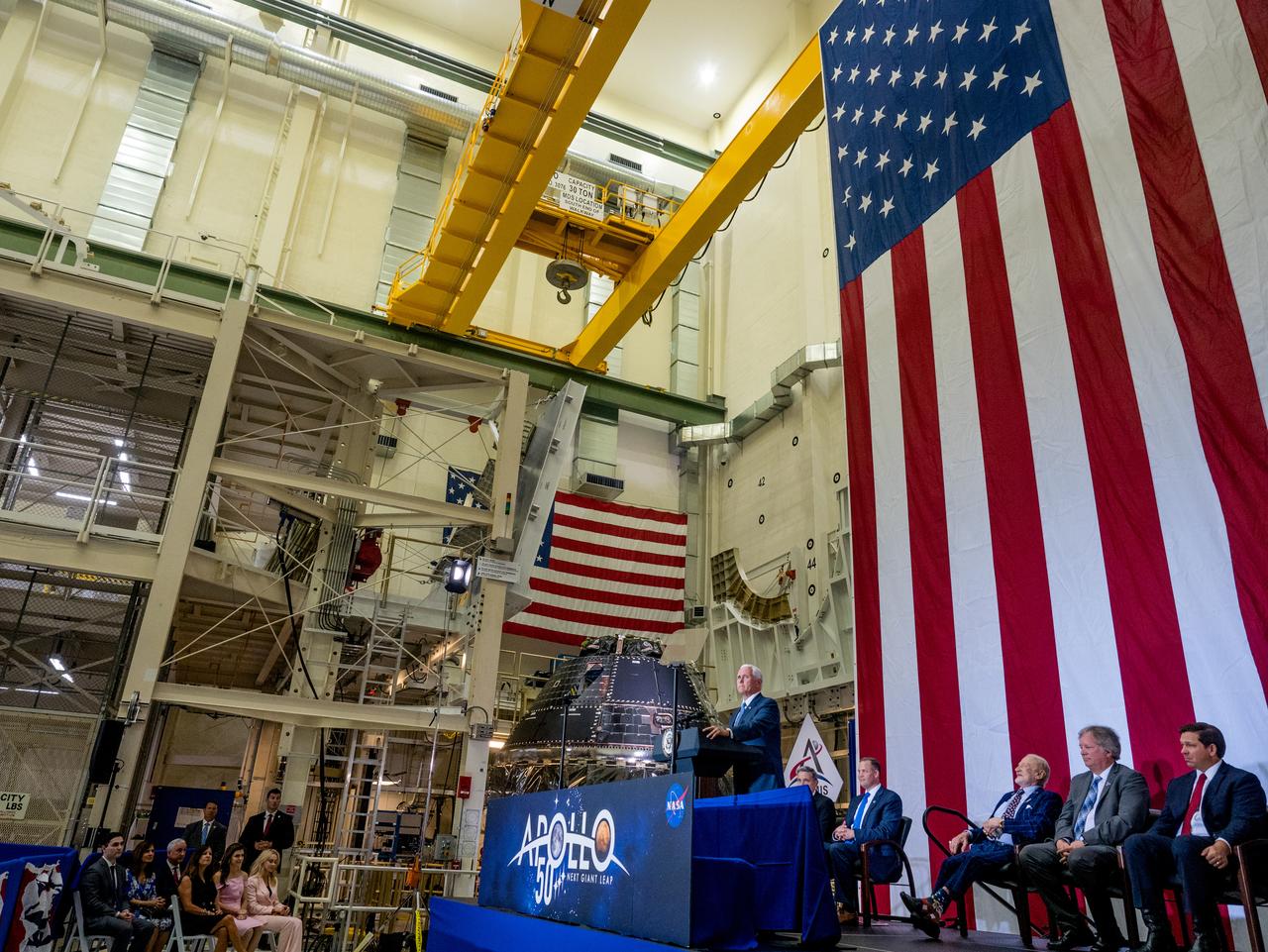
Vice President Mike Pence visited and gave remarks in the Neil Armstrong Operations and Checkout Building at NASA’s Kennedy Space Center in Florida on July 20, 2019 to commemorate the 50th anniversary of the agency’s Apollo 11 Moon landing and announce to America the completion of NASA’s Orion crew capsule, shown here on July 19, 2019, for the first Artemis lunar mission.
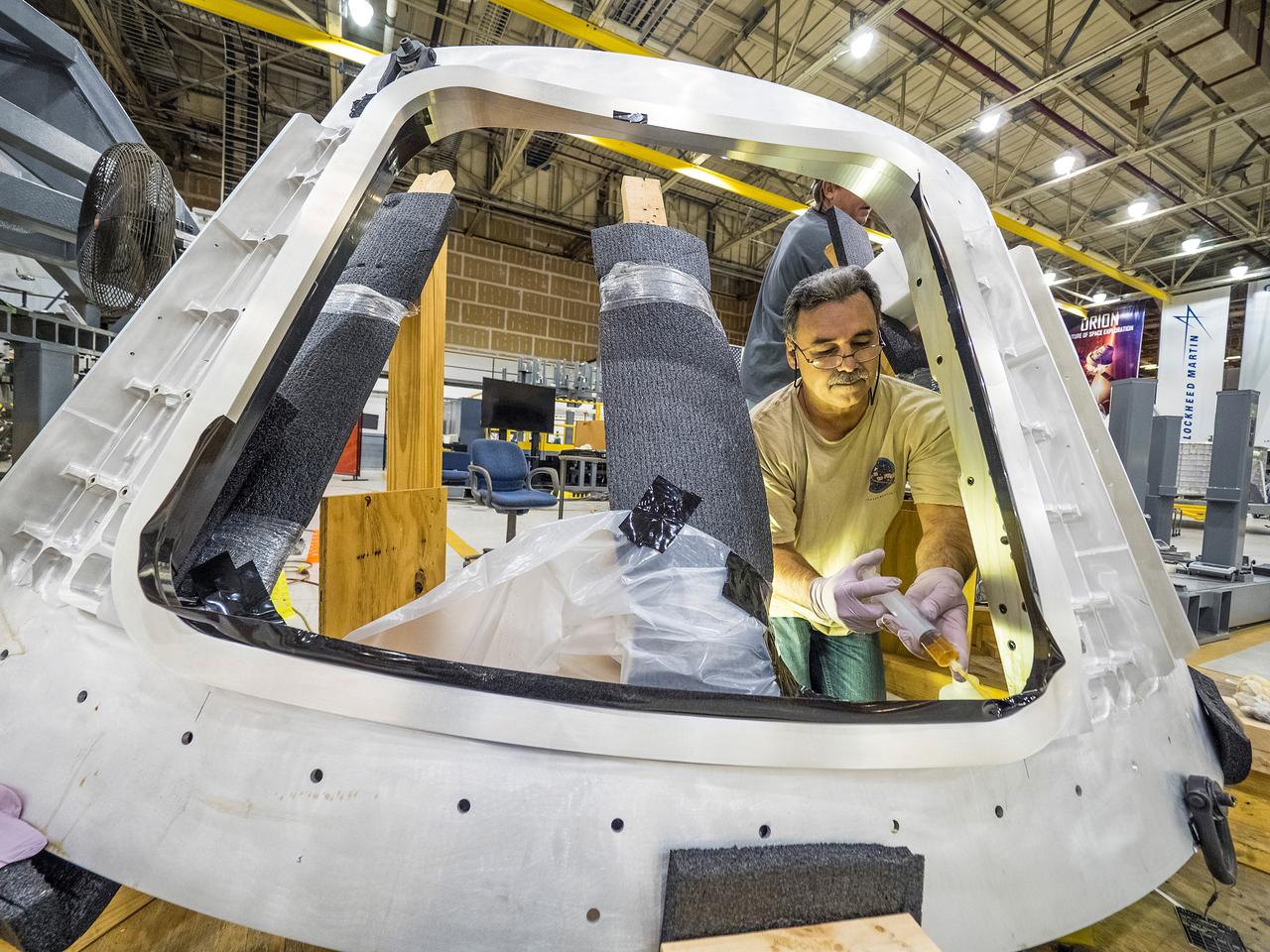
An Orion cone panel for Artemis I is prepared for welding at the Michoud Assembly Facility in New Orleans, Louisiana on Oct. 9, 2015. Part of Batch image transfer from Flickr.
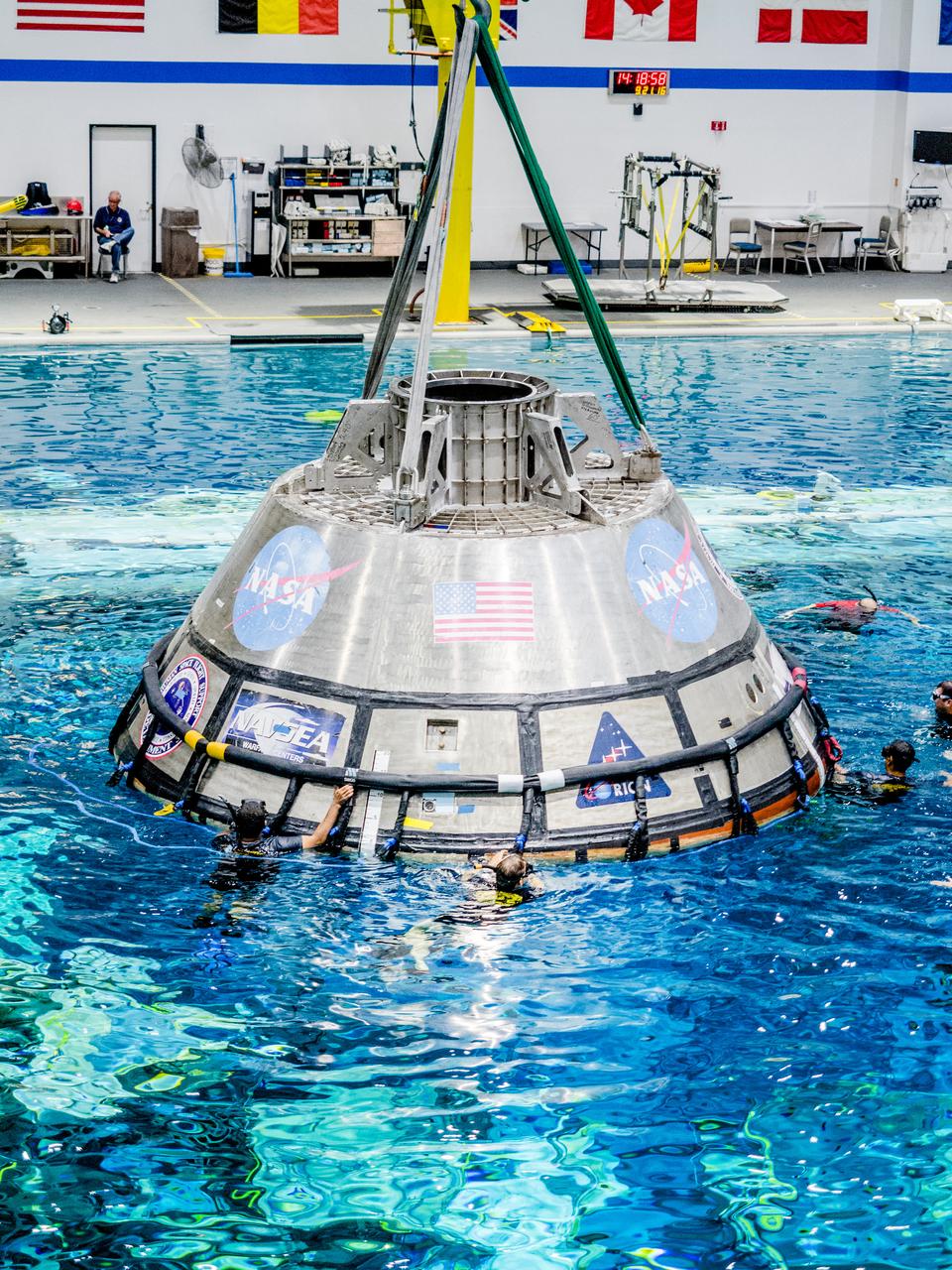
A group of U.S. Navy divers, Air Force pararescumen and Coast Guard rescue swimmers practice Orion underway recovery techniques this week in the Neutral Buoyancy Laboratory (NBL) at NASA’s Johnson Space Center in Houston on Sept. 21, 2016, to prepare for the first test flight of an uncrewed Orion spacecraft with the agency’s Space Launch System rocket during Artemis I.
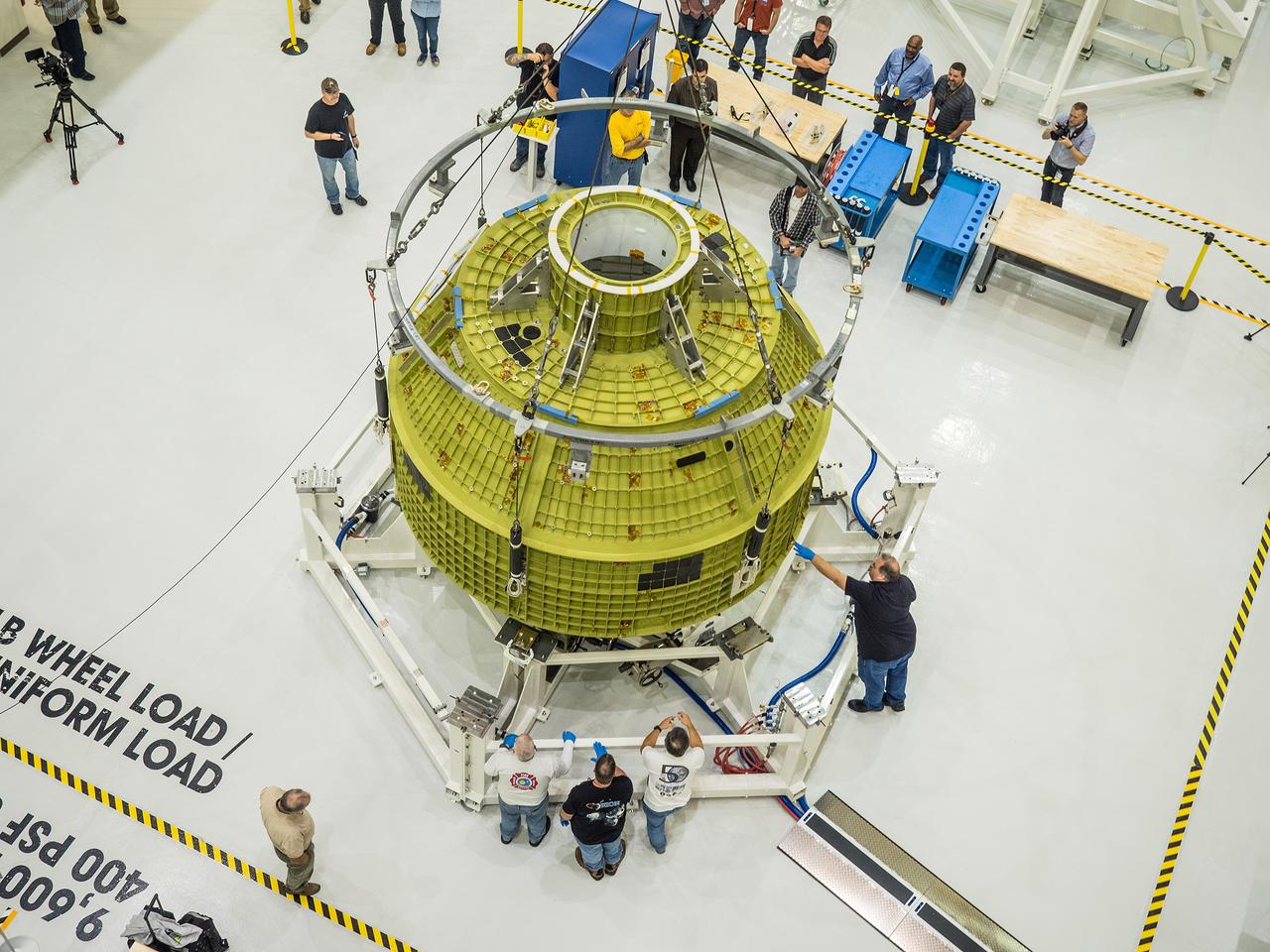
After arriving from New Orleans by Super Guppy, Artemis I Orion is moved to the work stand at the Operations and Checkout Building at NASA's Kennedy Space Center on Feb. 2, 2016. Part of Batch image transfer from Flickr.
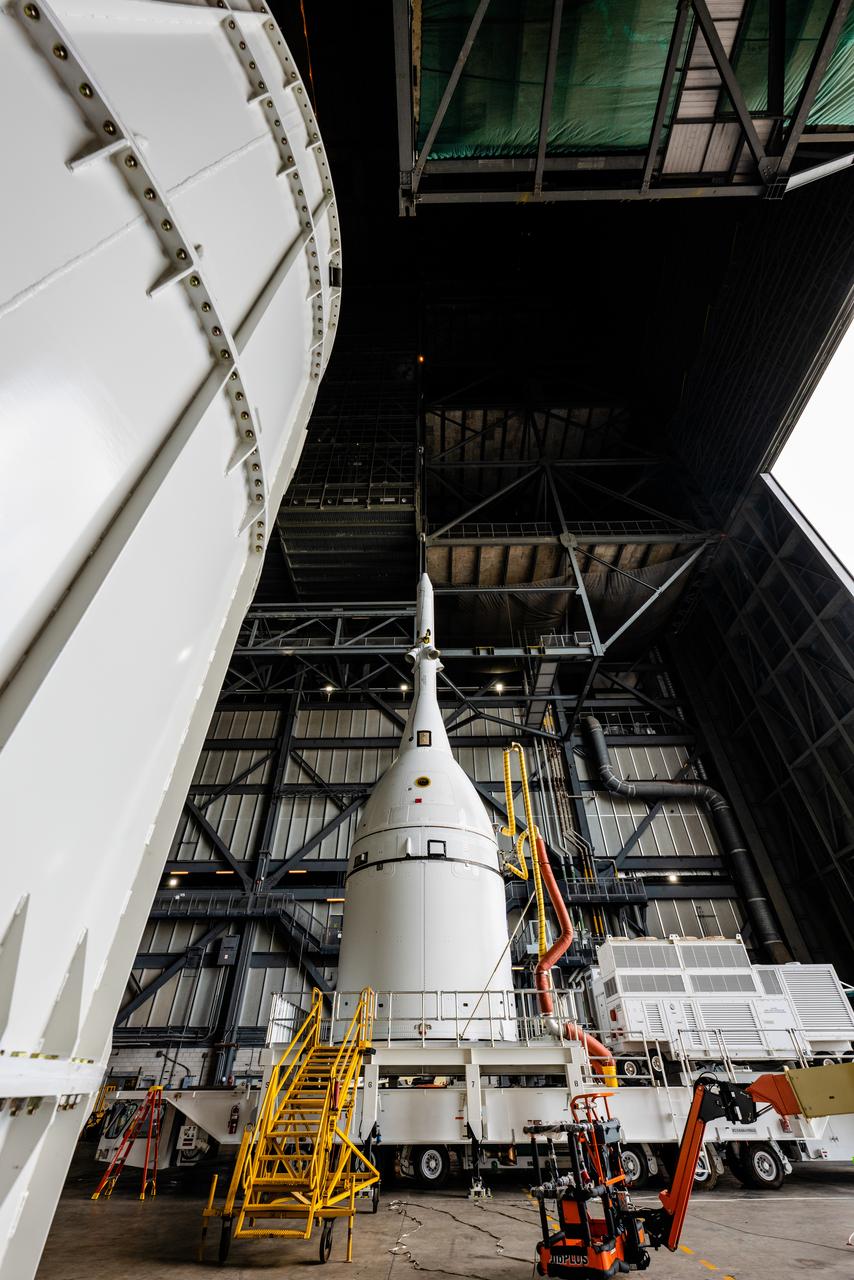
At Kennedy Space Center, the Artemis I Orion is transported from the Launch Abort System Facility to the Vehicle Assembly Building on Oct. 19, 2021, ahead of stacking on the Space Launch System rocket.
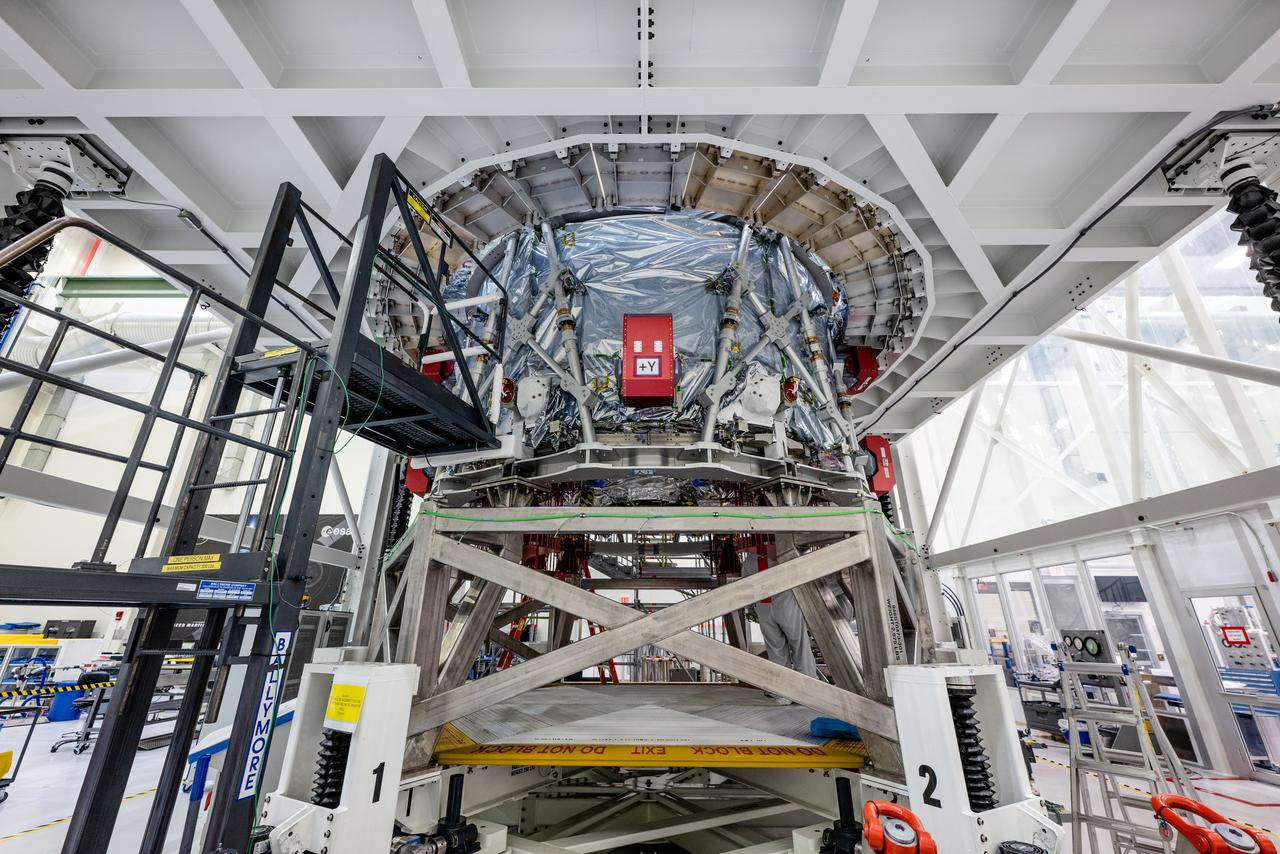
The crew module adapter, which connects Orion's crew module with the European Service module is lifted in preparation for mate with the Artemis II service module on Oct. 19, 2021, which recently arrived from Airbus in Bremen.
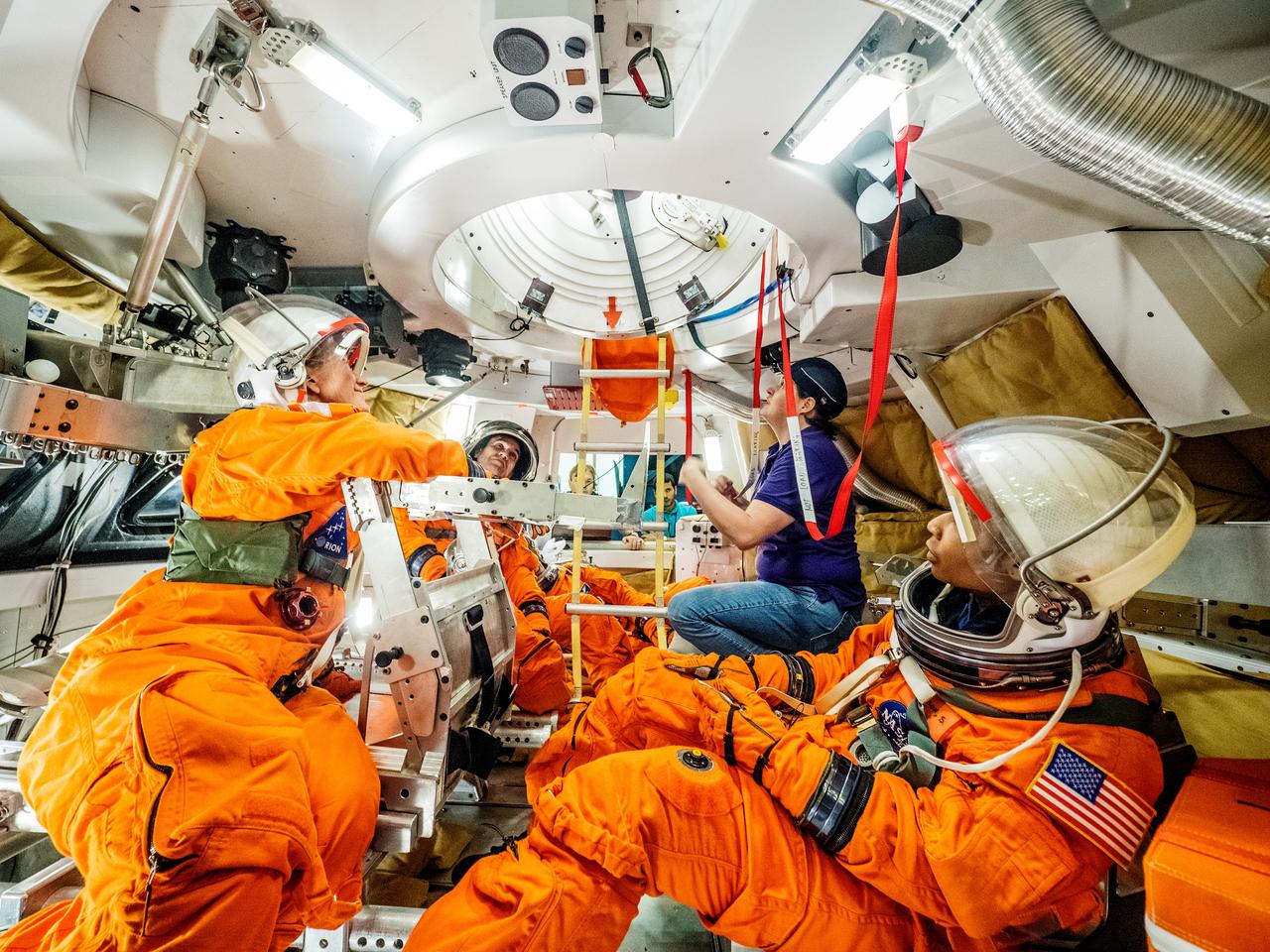
Engineers and astronauts conduct testing in a representative model of the Orion spacecraft at NASA’s Johnson Space Center in Houston on July 28, 2016 to gather the crew's feedback on the design of the docking hatch and on post-landing equipment operations. ..While the crew will primarily use the side hatch for entry and exit on Earth and the docking hatch to travel between Orion and a habitation module on long-duration deep space missions, the crew will need to be able to exit out of the docking hatch if wave heights in the Pacific Ocean upon splashdown are too high. The work is being done to help ensure all elements of Orion's design are safe and effective for the crew to use on future missions on the journey to Mars.
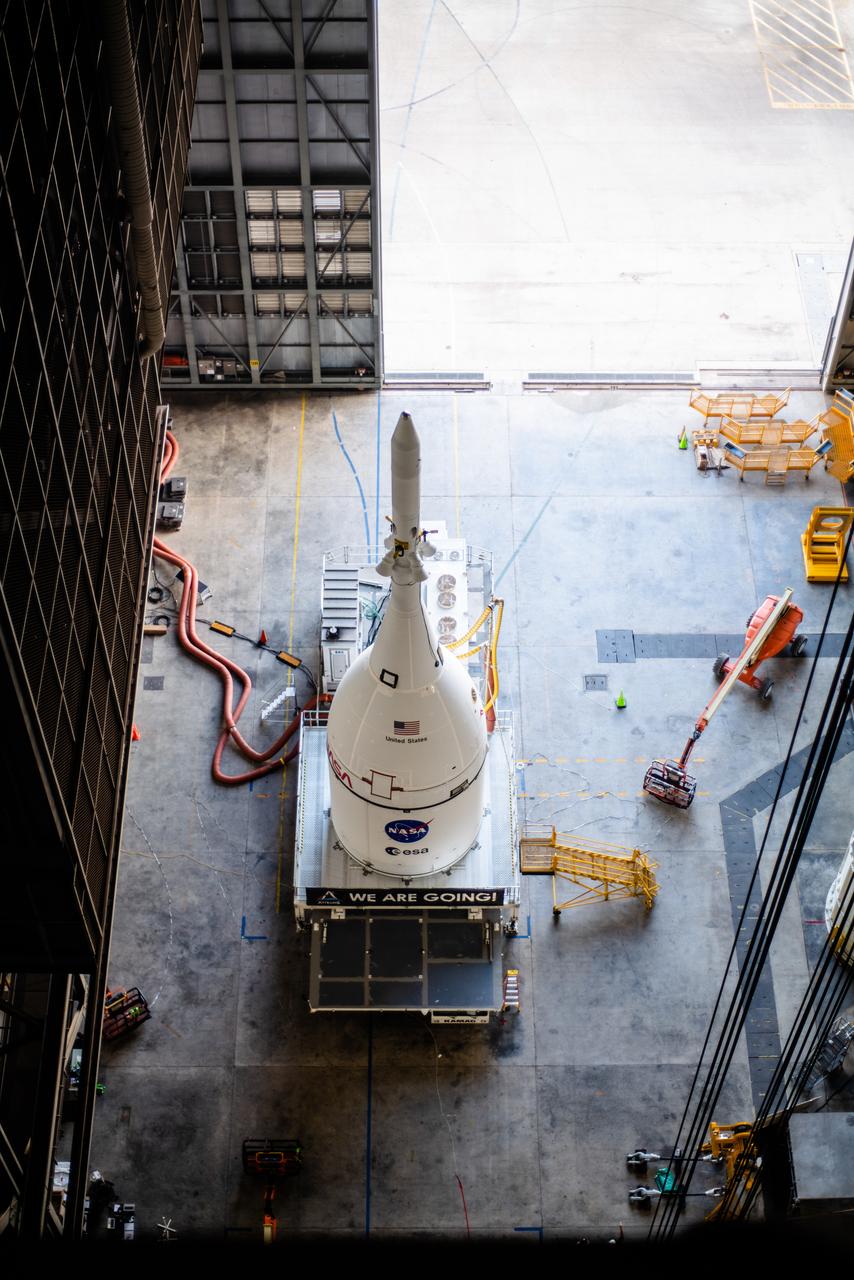
At Kennedy Space Center, the Artemis I Orion is transported from the Launch Abort System Facility to the Vehicle Assembly Building on Oct. 19, 2021, ahead of stacking on the Space Launch System rocket.
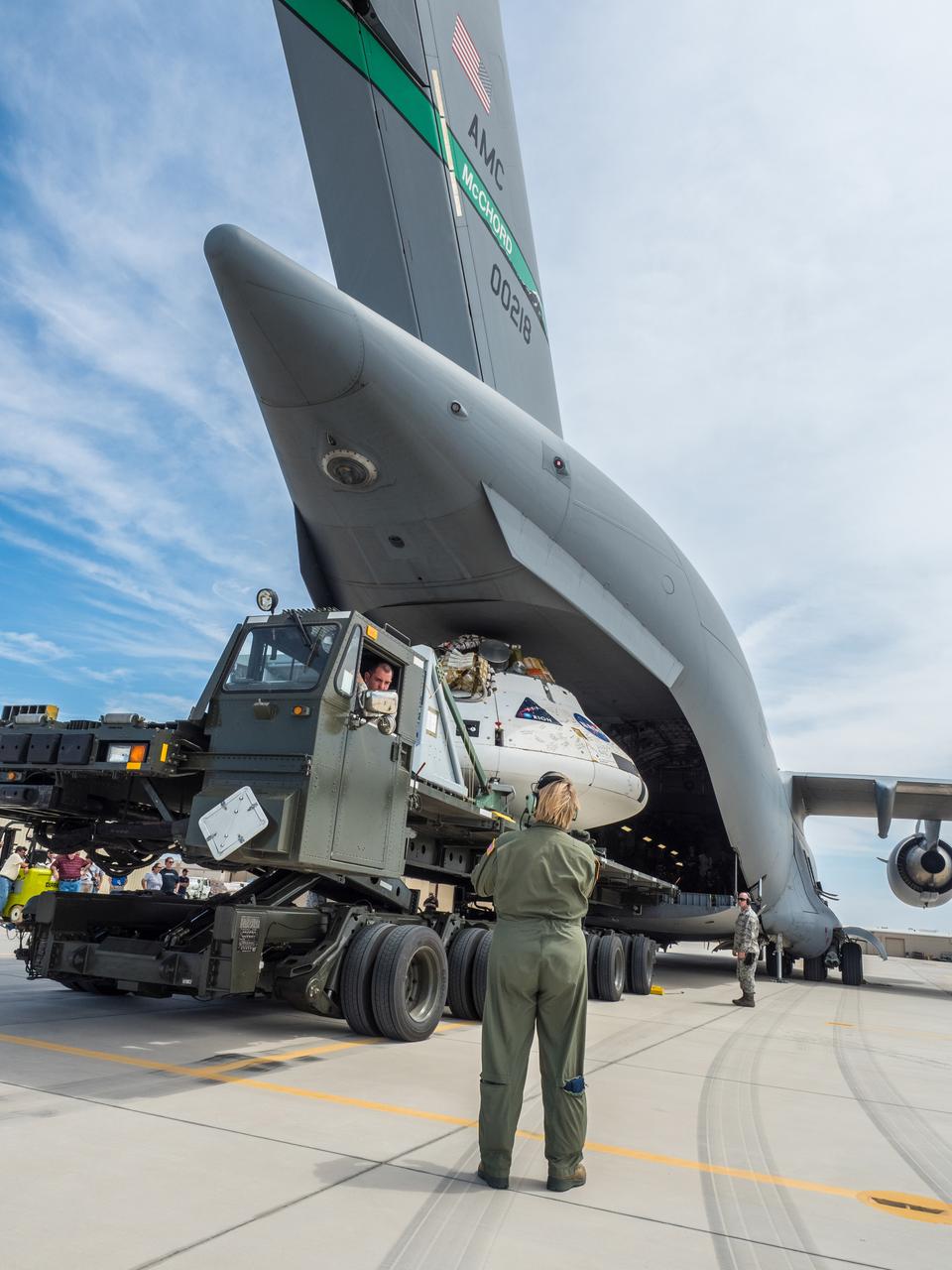
Engineers prepare to test the parachute system for NASA’s Orion spacecraft at the U.S. Army Yuma Proving Ground in Yuma, Arizona on Aug. 24, 2015. During the test, planned for Wednesday, Aug. 26, a C-17 aircraft will carry a representative Orion capsule to 35,000 feet in altitude and then drop it from its cargo bay. Engineers will test a scenario in which one of Orion’s two drogue parachutes, used to stabilize it in the air, does not deploy, and one of its three main parachutes, used to slow the capsule during the final stage of descent, also does not deploy. The risky test will provide data engineers will use as they gear up to qualify Orion’s parachutes for missions with astronauts. On Aug. 24, a C-17 was loaded with the test version of Orion, which has a similar mass and interfaces with the parachutes as the Orion being developed for deep space missions but is shorter on top to fit inside the aircraft. Part of Batch image transfer from Flickr.