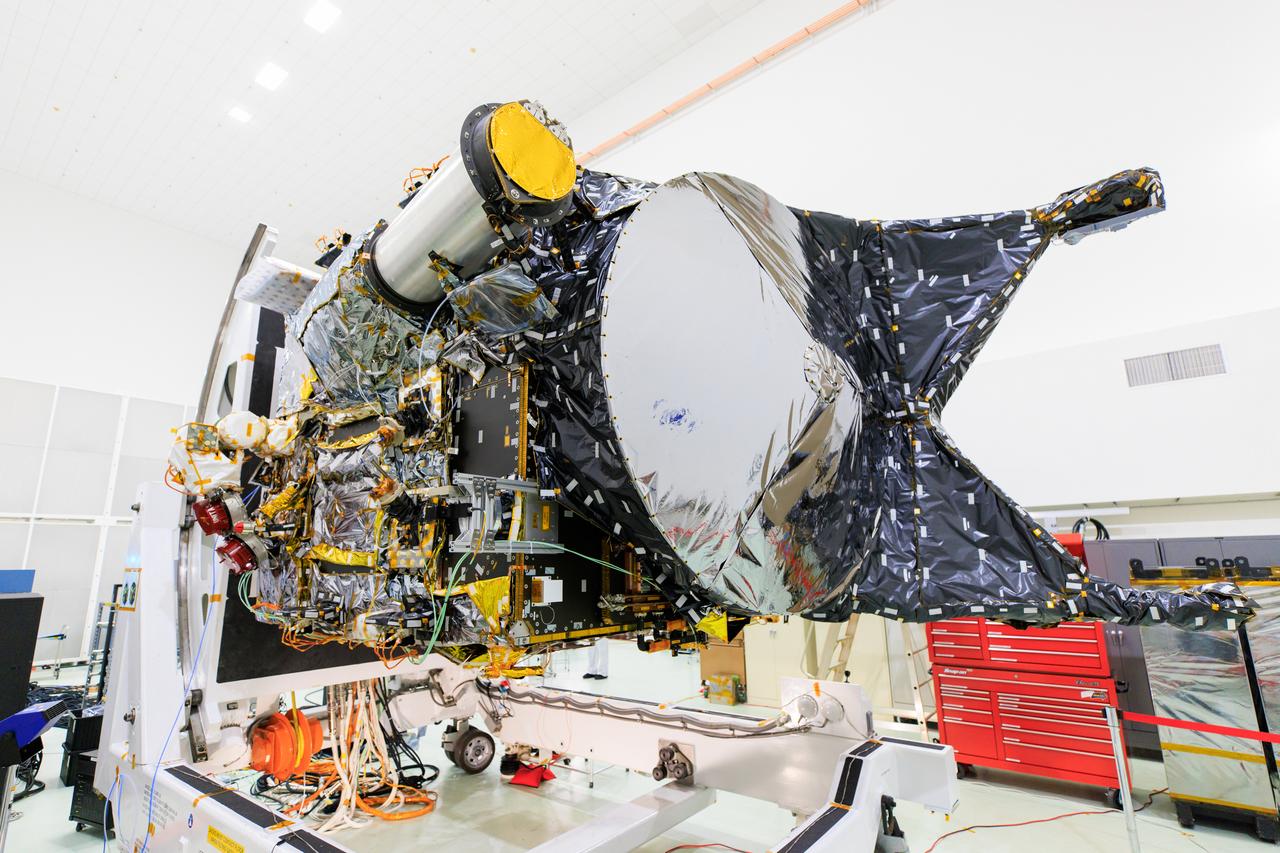
NASA's Psyche spacecraft is shown in a clean room on June 26, 2023, at Astrotech Space Operations Facility near the agency’s Kennedy Space Center in Florida. Engineers and technicians from NASA’s Jet Propulsion Laboratory in Southern California have begun final assembly, test, and launch operations on Psyche, with assembly of the spacecraft all but complete except for the installation of the solar arrays and the imagers. NASA’s Deep Space Optical Communications (DSOC) technology demonstration, testing high-data-rate laser communications, remains integrated into the spacecraft. A final suite of tests will be run on the vehicle, after which it will be fueled and then mated onto a SpaceX Falcon Heavy rocket just prior to launch, targeted for October 2023.
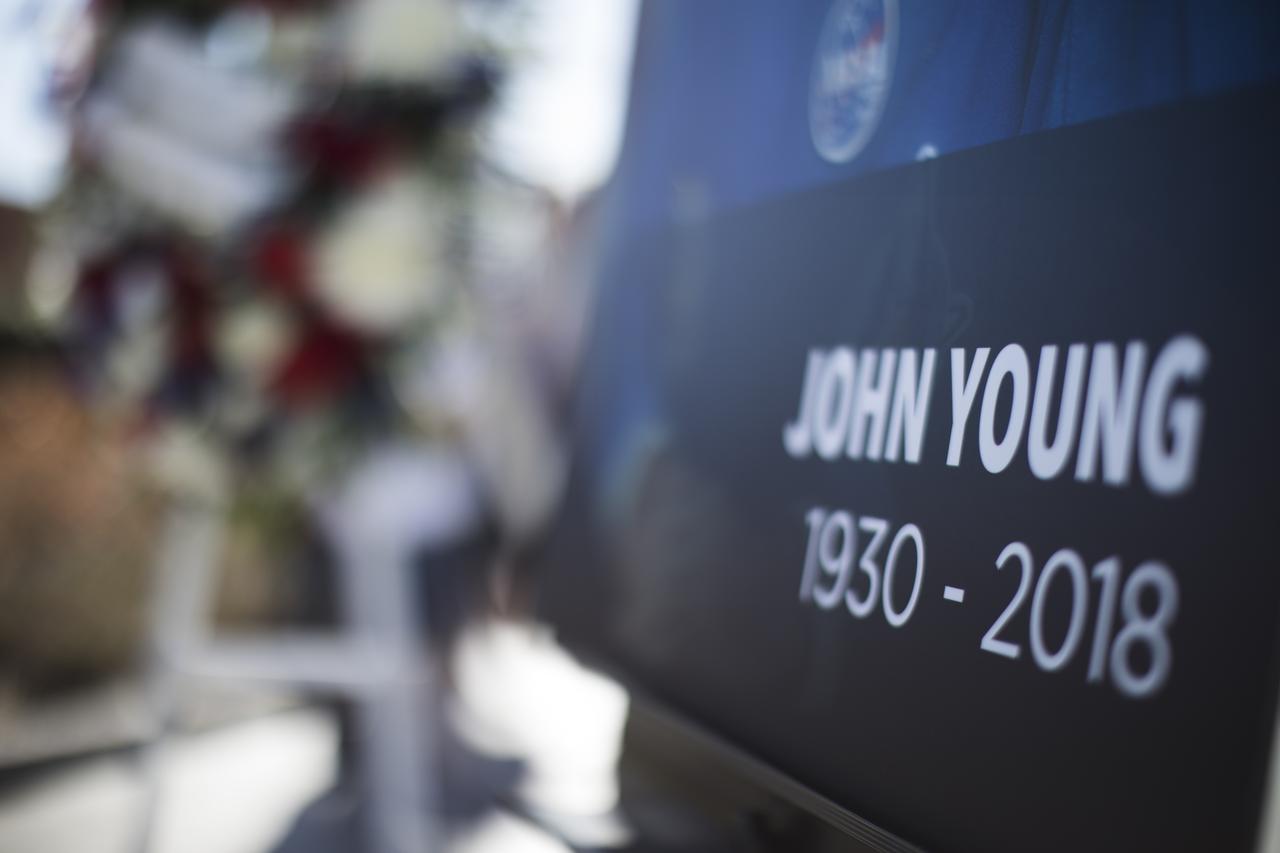
NASA astronaut John Young was remembered in a ceremony at the Heroes and Legends exhibit at the Kennedy Space Center Visitor Complex. The brief memorial took place on the afternoon of Jan. 11, 2018. Young died Jan. 5, 2018, in Houston at the age of 87. He was the only astronaut to fly in NASA's Gemini, Apollo and Space Shuttle Programs.
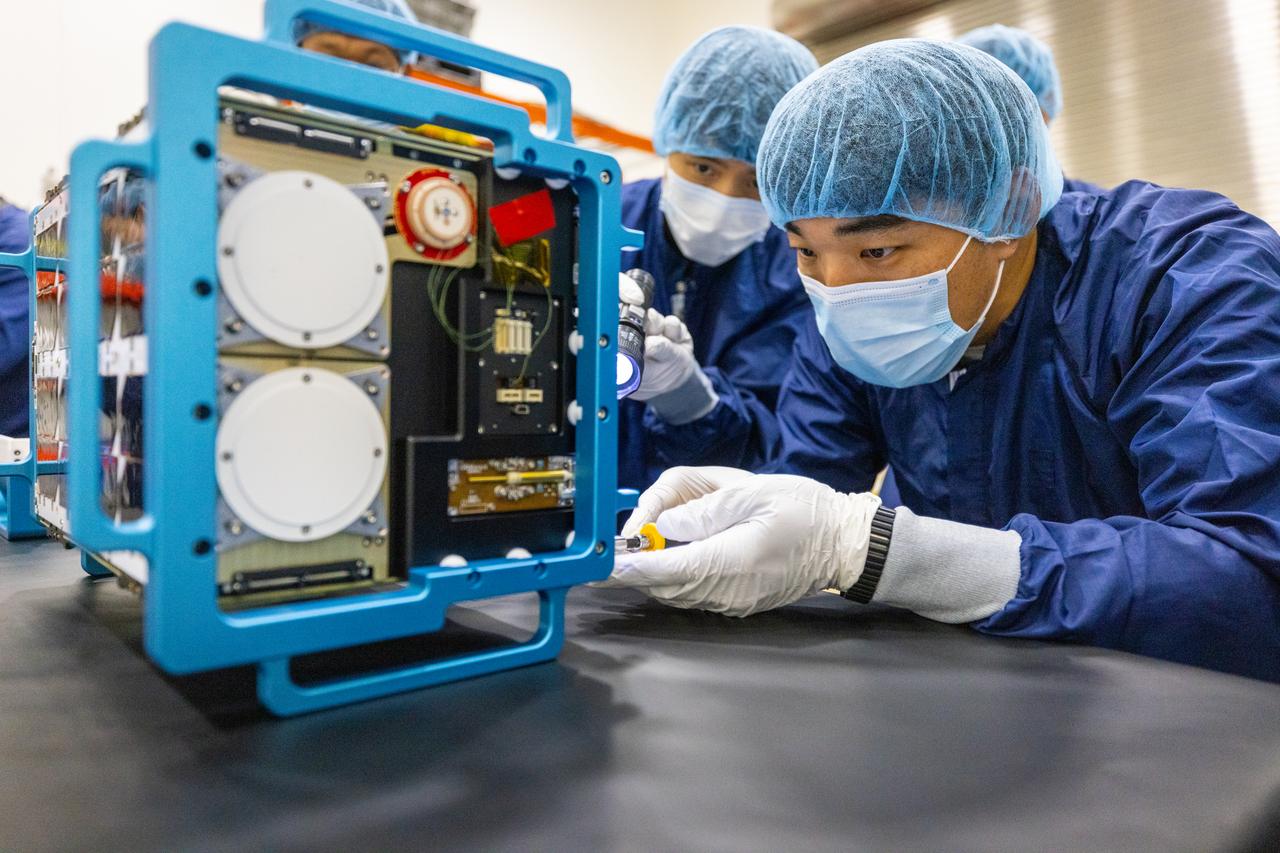
Inside the Multi-Payload Processing Facility at NASA’s Kennedy Space Center in Florida, on Tuesday, Aug. 26, 2025, technicians with the Korea AeroSpace Administration (KASA) inspect the K-Rad Cube, one of several international CubeSats slated to fly on NASA’s Artemis II test flight in 2026. Deploying in high Earth orbit from a spacecraft adapter on NASA’s SLS (Space Launch System) rocket after Orion is safely flying on its own with its crew of four astronauts, K-Rad Cube will use a dosimeter made of material designed to mimic human tissue to measure space radiation and assess biological effects at various altitudes across the Van Allen radiation belts, a critical area of research for human presence at the Moon and Mars.
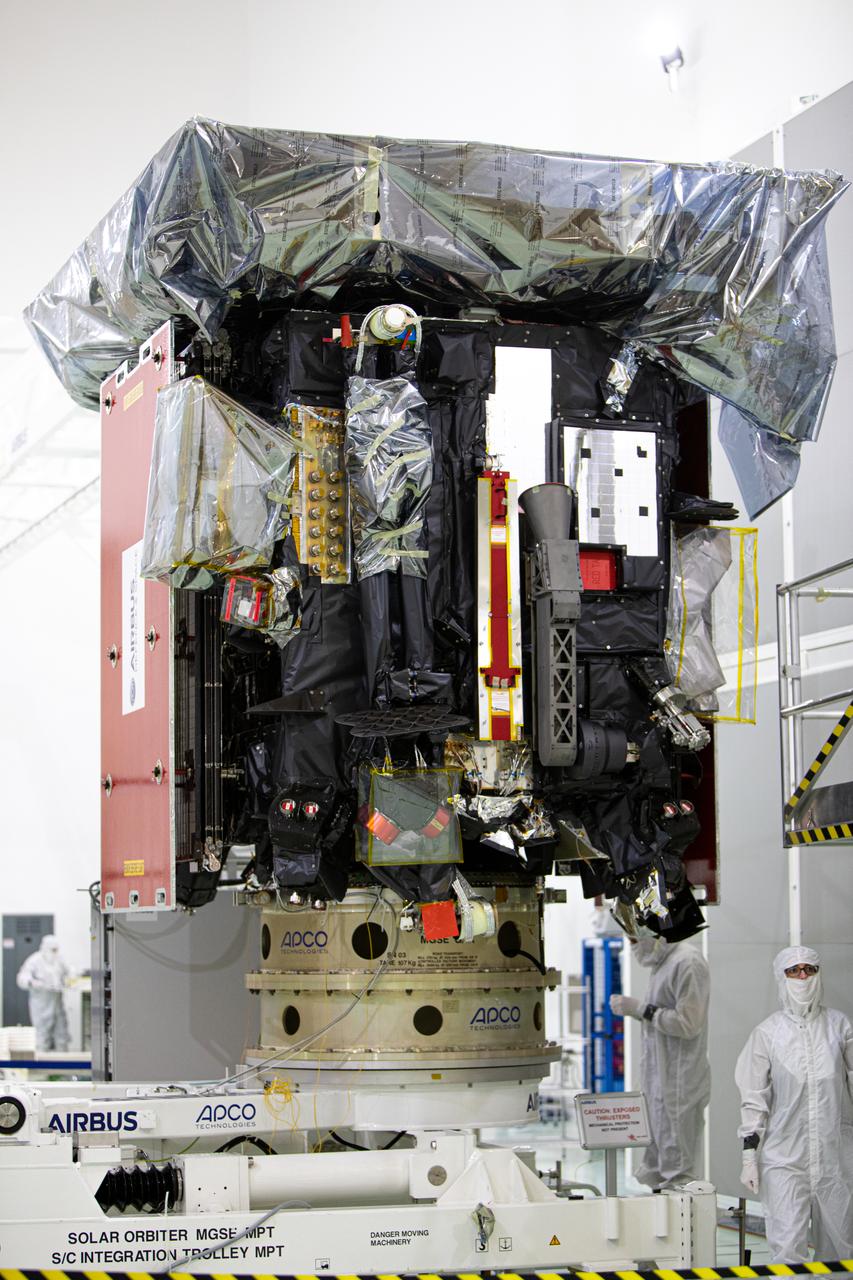
Members of the media were given the opportunity to view and photograph the Solar Orbiter spacecraft up close inside the Astrotech Space Operations payload processing facility in Titusville, Florida, on Dec. 16, 2019. Representatives from NASA’s Launch Services Program (LSP), the European Space Agency (ESA), United Launch Alliance (ULA), Airbus Defence and Space, and NASA’s Goddard Space Flight Center provided an overview of the mission, spacecraft and launch vehicle. Solar Orbiter is a space mission of international collaboration between ESA and NASA, and the spacecraft has been developed by Airbus. The mission will study the Sun and how it can affect the space environment throughout the solar system, and it also will provide the first images of the Sun’s poles. Solar Orbiter is scheduled to launch from Cape Canaveral Air Force Station’s Space Launch Complex 41 aboard a ULA Atlas V rocket at 11:27 p.m. EST on Feb. 5, 2020. LSP will manage the launch.
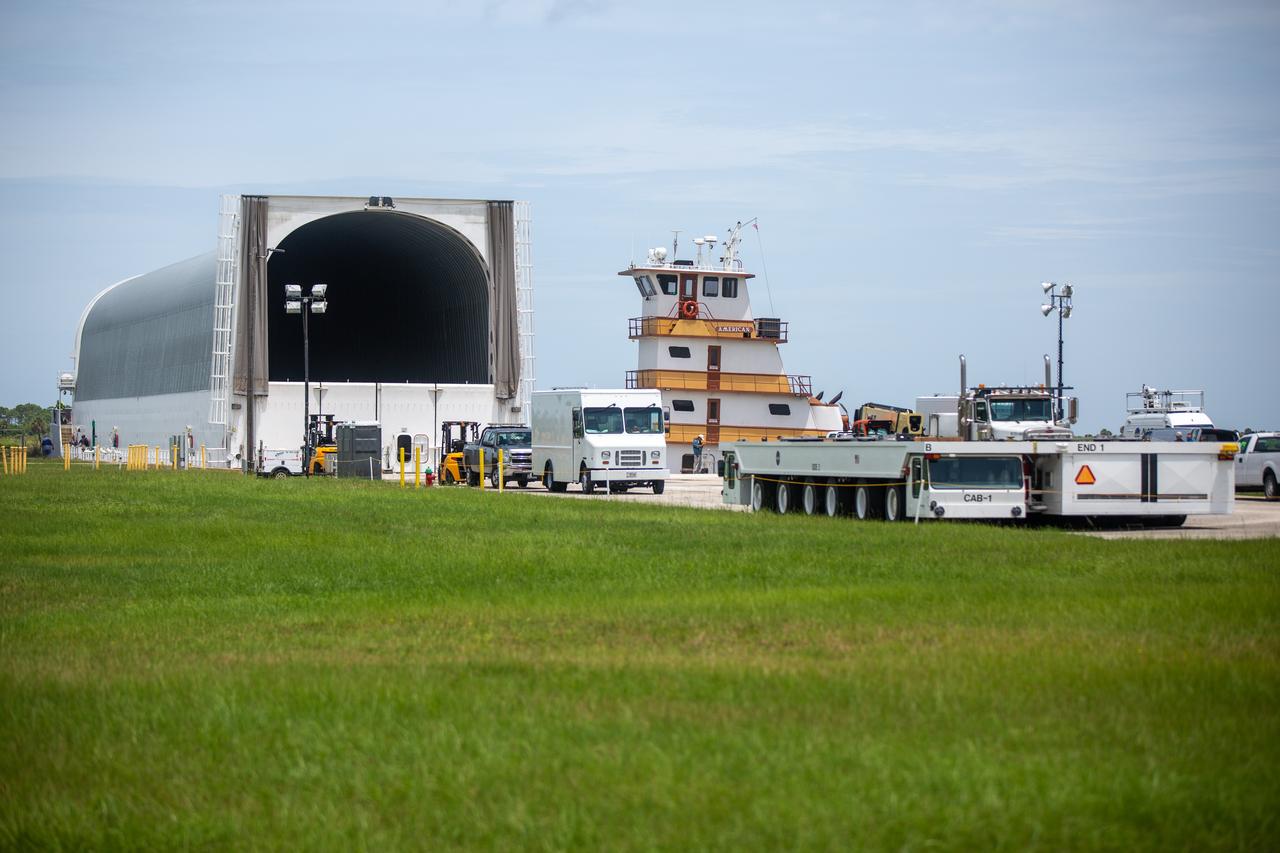
NASA’s Pegasus barge, carrying the launch vehicle stage adapter (LVSA) for the agency’s Space Launch System (SLS) rocket, arrives at the Kennedy Space Center Launch Complex 39 turn basin wharf on July 29, 2020. Traveling to Florida from NASA’s Marshall Space Flight Center in Huntsville, Alabama, the LVSA will connect the SLS core stage to the rocket’s upper stage for the Artemis I launch. Once the LVSA is offloaded, it will be moved to High Bay 4 in the Vehicle Assembly Building for processing ahead of launch. The first launch under the agency’s Artemis program, Artemis I will test SLS and the Orion spacecraft as an integrated system prior to crewed flights to the Moon.
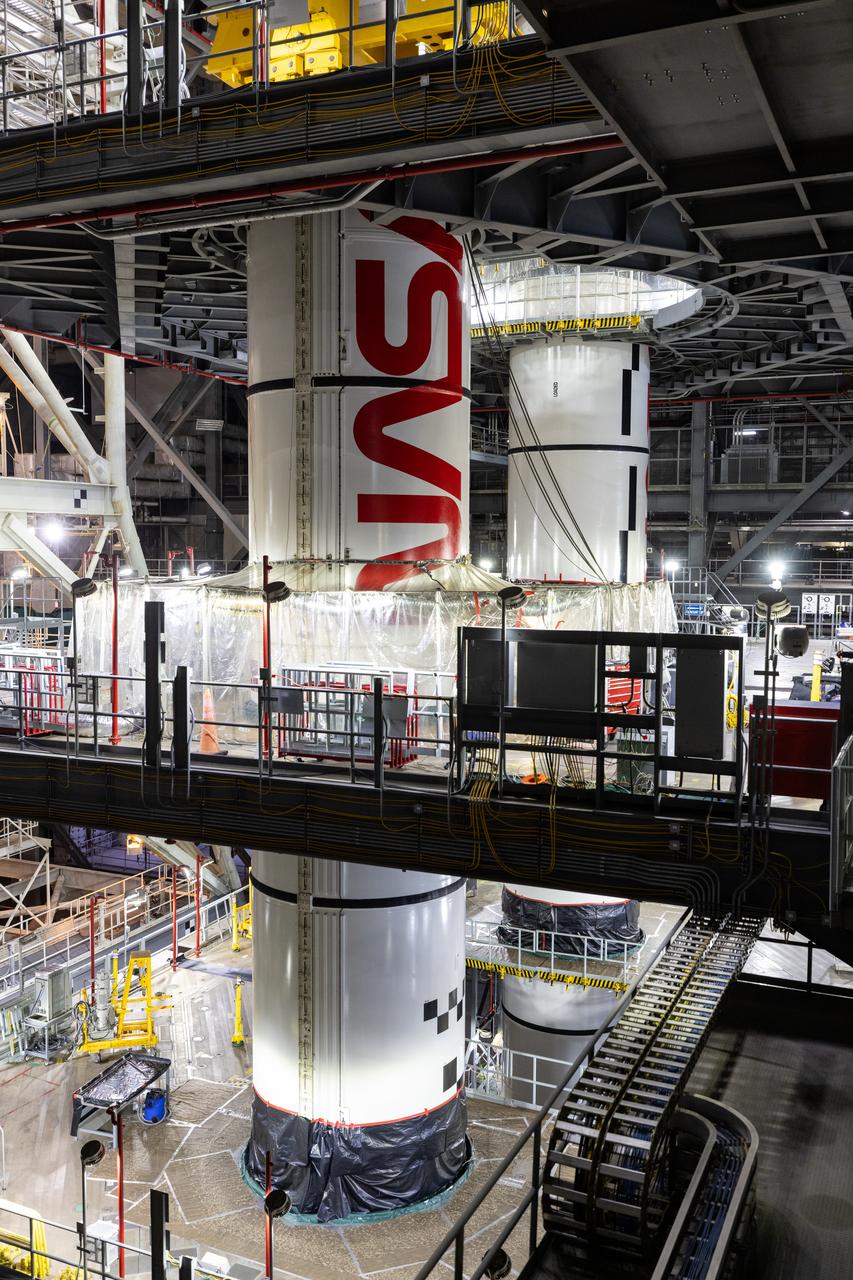
Inside High Bay 3 of the Vehicle Assembly Building at NASA’s Kennedy Space Center in Florida, technicians with the agency’s Exploration Ground Systems use a crane to lower the left center center booster segment for the NASA’s SLS (Space Launch System) rocket onto the left aft center segment atop the mobile launcher on Monday, Jan. 27, 2025. The NASA “worm” insignia can be seen on both the center center booster segments. The boosters will help support the remaining rocket components and the Orion spacecraft during final assembly of the Artemis II Moon rocket and provide more than 75 percent of the total SLS thrust during liftoff from NASA Kennedy’s Launch Pad 39B.
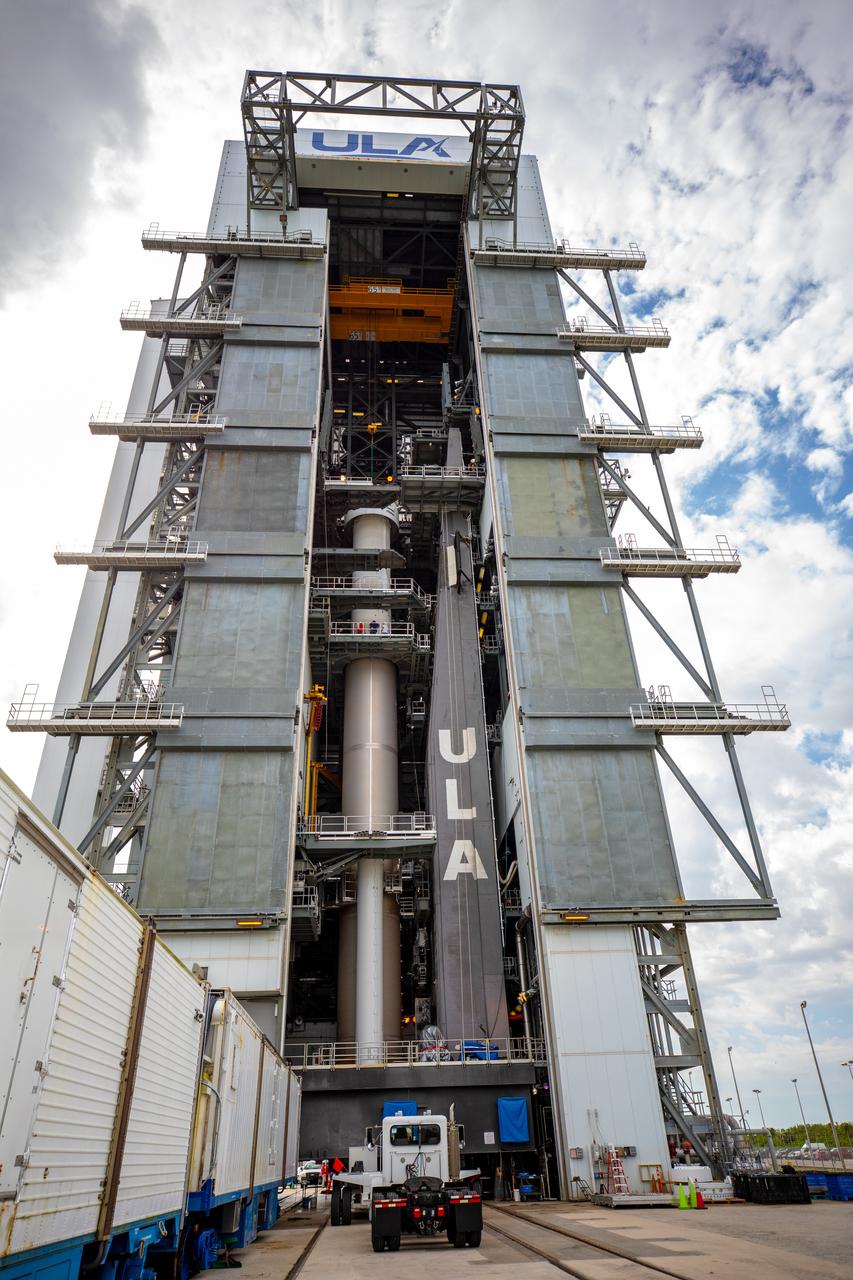
A Centaur upper stage is mated to the United Launch Alliance Atlas V first stage inside the Space Launch Complex 41 Vertical Integration Facility at Florida’s Cape Canaveral Air Force Station on Nov. 8, 2019, in preparation for Boeing’s Orbital Flight Test (OFT). The uncrewed OFT mission will rendezvous and dock Boeing’s CST-100 Starliner spacecraft with the International Space Station as part of NASA’s Commercial Crew Program. Starliner will launch atop the Atlas V rocket from Space Launch Complex 41.
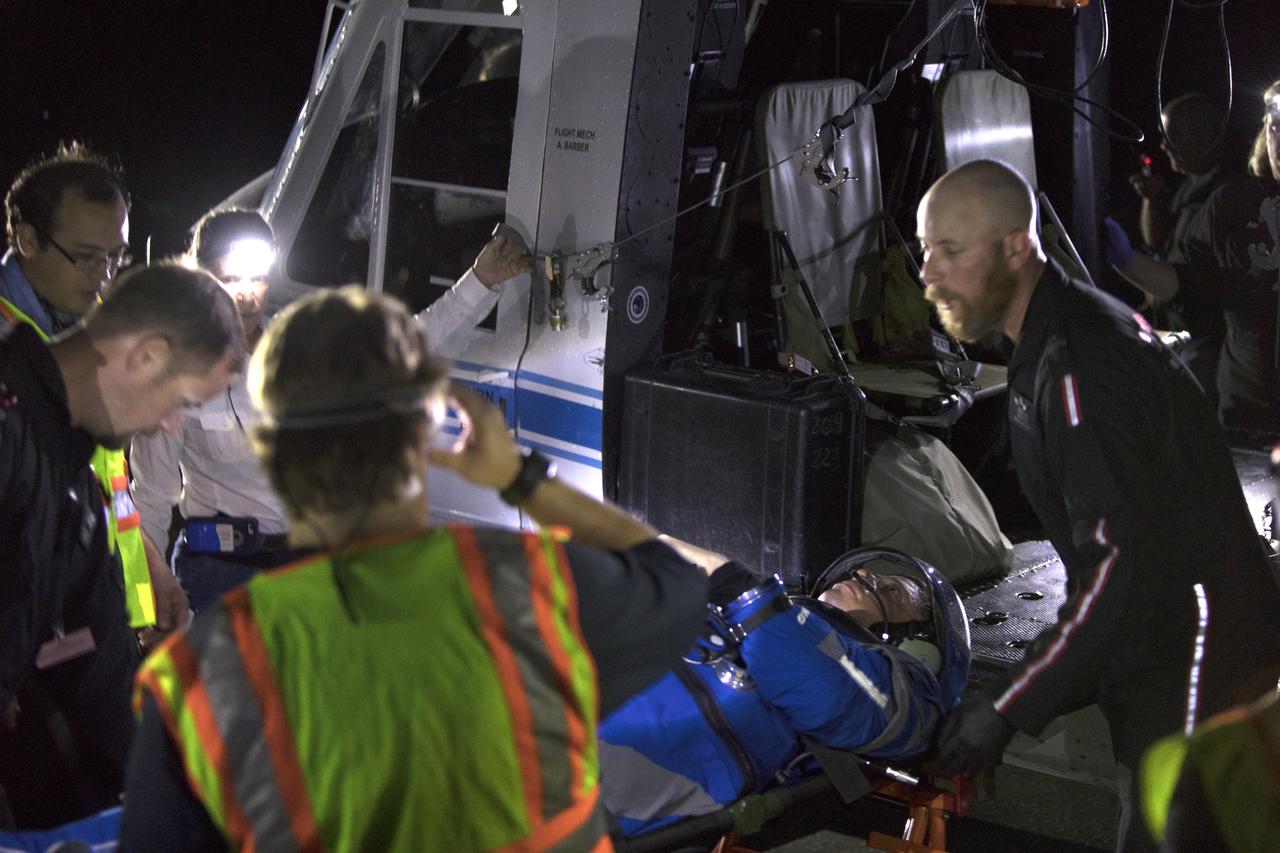
A Commercial Crew astronaut participates in a Boeing/United Launch Alliance emergency egress system demonstration at Cape Canaveral Air Force Station’s Launch Complex 41 in Florida on June 19, 2018. The system features seats attached to slide wires which would carry astronauts and ground crew more than 1,300 feet away from the crew access tower in the unlikely event of an emergency prior to liftoff.
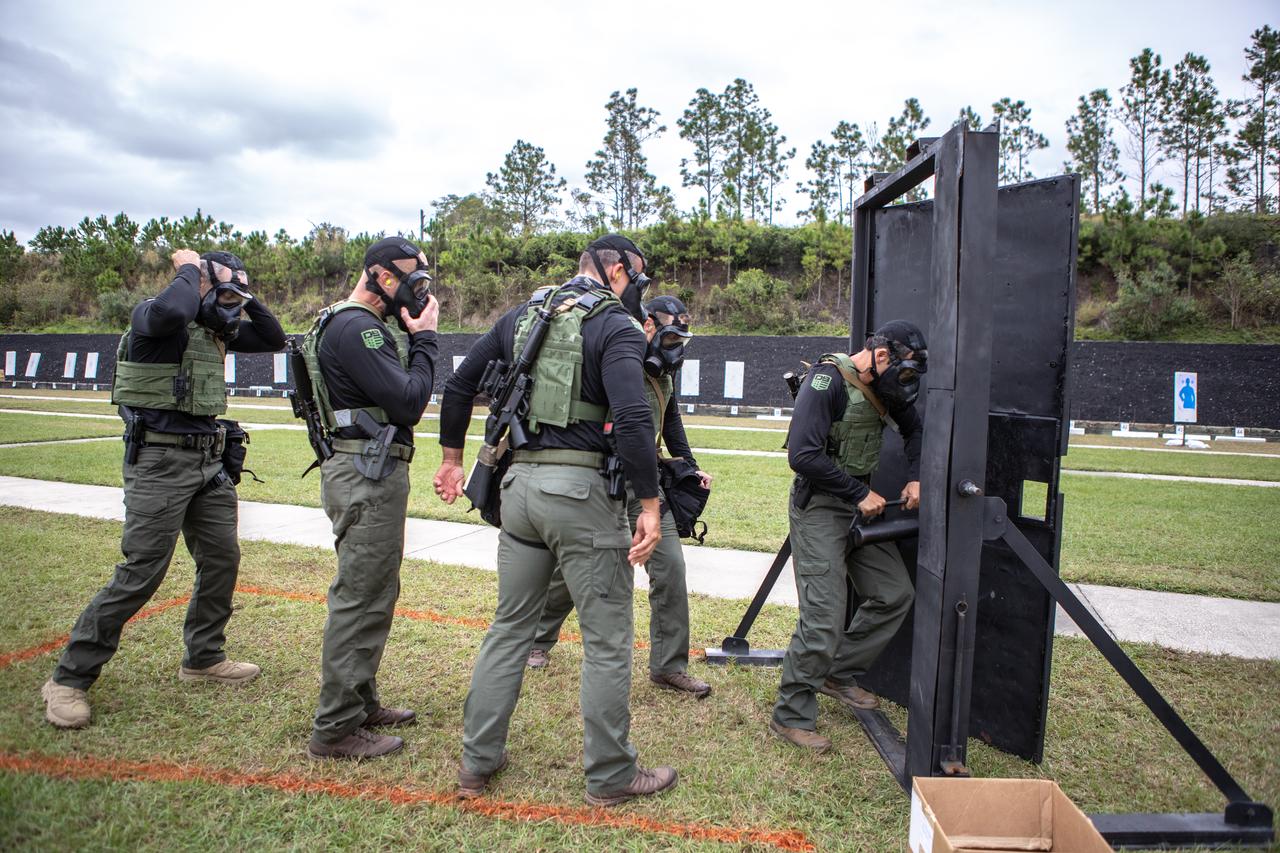
Members of NASA Kennedy Space Center's Emergency Response Team break through a barricade during one of the tactical challenges at the 37th Annual SWAT Round-Up International at the Lawson Lamar Firearms and Tactical Training Center in Orlando, Florida. The competition was held Nov. 10 to 15, 2019, and featured five different tactical challenges. Kennedy's ERT members exchanged best practices and competed with more than 50 teams from the U.S. and around the world.
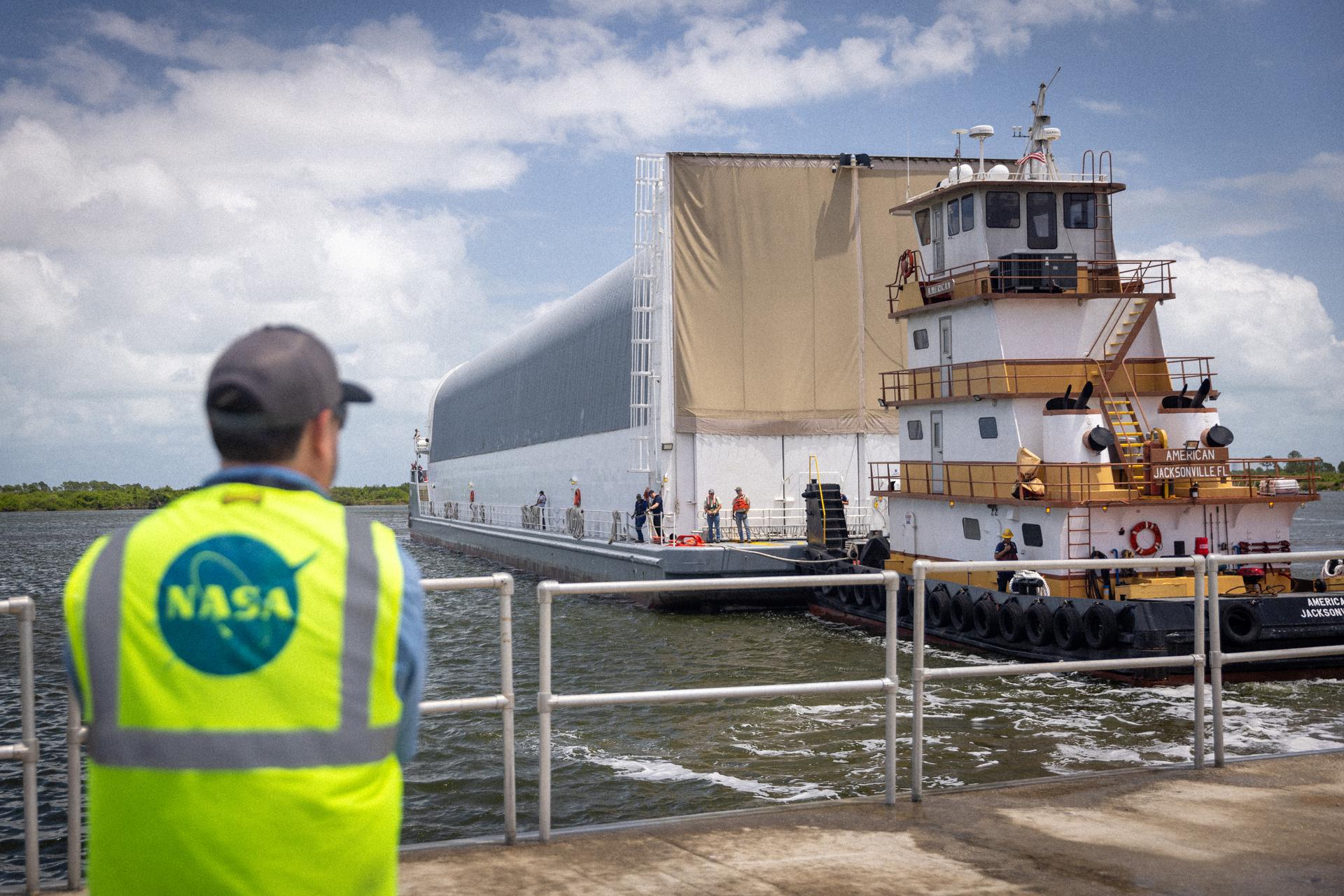
NASA’s Pegasus barge, carrying the top four-fifths of the agency’s SLS (Space Launch System) core stage for the Artemis III mission, arrives at NASA’s Kennedy Space Center Complex 39 turn basin wharf in Florida on Monday, April 27, 2026. Artemis III will launch astronauts to Earth’s orbit aboard the Orion spacecraft on top of SLS to test rendezvous and docking capabilities between Orion and commercial spacecraft needed to land Artemis IV astronauts on the Moon in 2028.
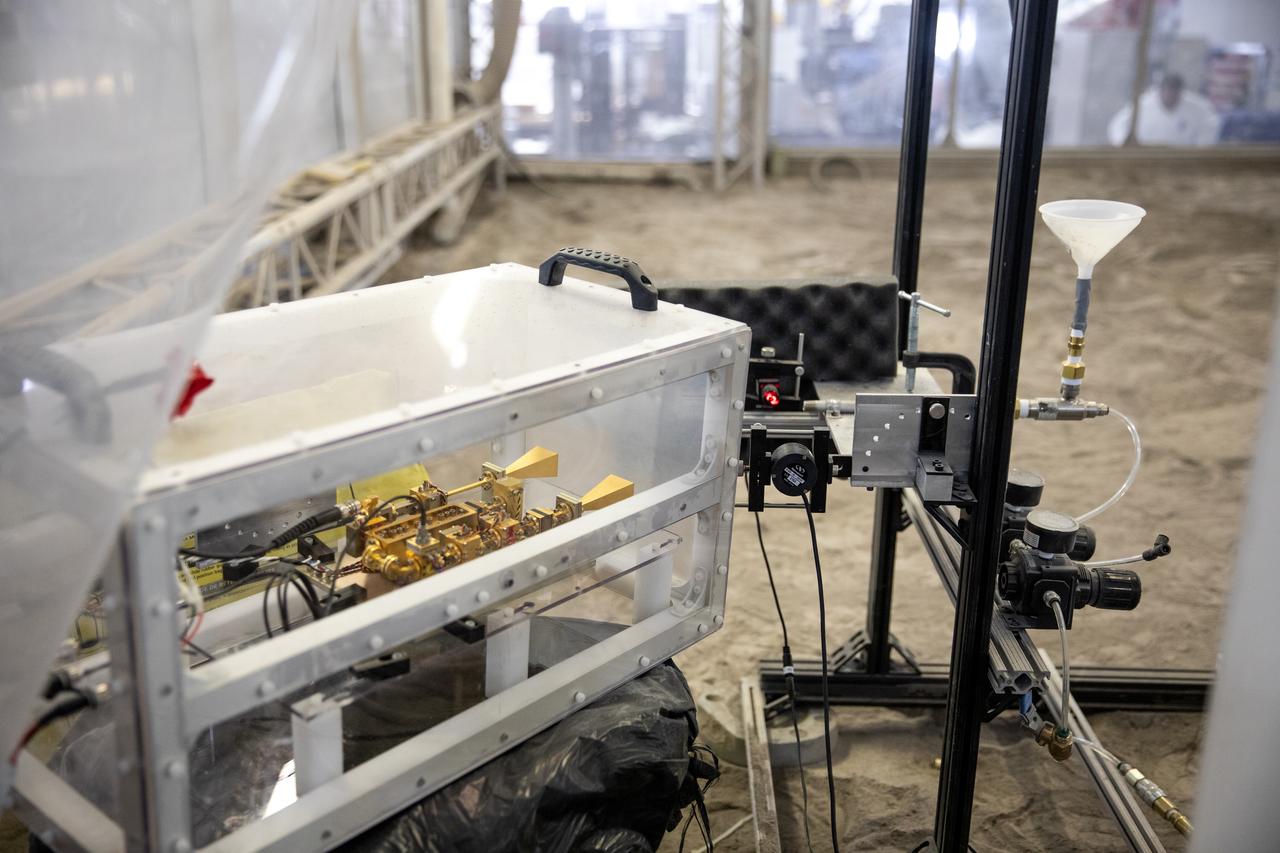
A team at NASA’s Kennedy Space Center in Florida assesses the Dust Concentration Monitor and the Millimeter Wave Doppler Radar inside a regolith bin at the Granular Mechanics and Regolith Operations (GMRO) lab at the spaceport’s Swamp Works on July 28, 2022, as part of Plume Surface Interaction (PSI) Instrumentation testing. The PSI Project is advancing both modeling and testing capabilities to understand exactly how rocket exhaust plumes affect a planetary landing site. This advanced modeling will help engineers evaluate the risks of various plumes on planetary surfaces, which will help them more accurately design landers for particular locations.
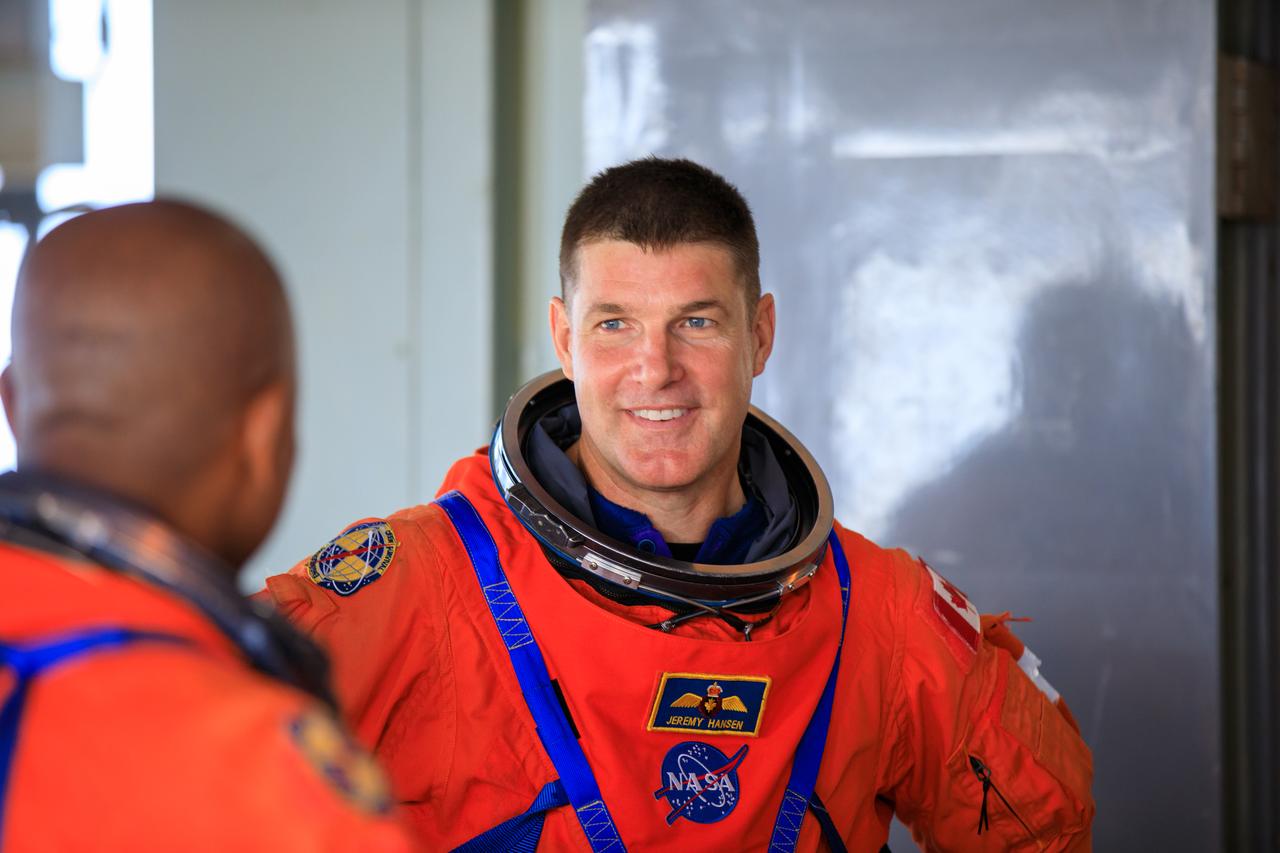
Artemis II CSA (Canadian Space Agency) astronaut Jeremy Hansen stands on the mobile launcher at Launch Pad 39B as part of an integrated ground systems test at Kennedy Space Center in Florida on Wednesday, Sept. 20, 2023. The test ensures the ground systems team is ready to support the crew timeline on launch day.
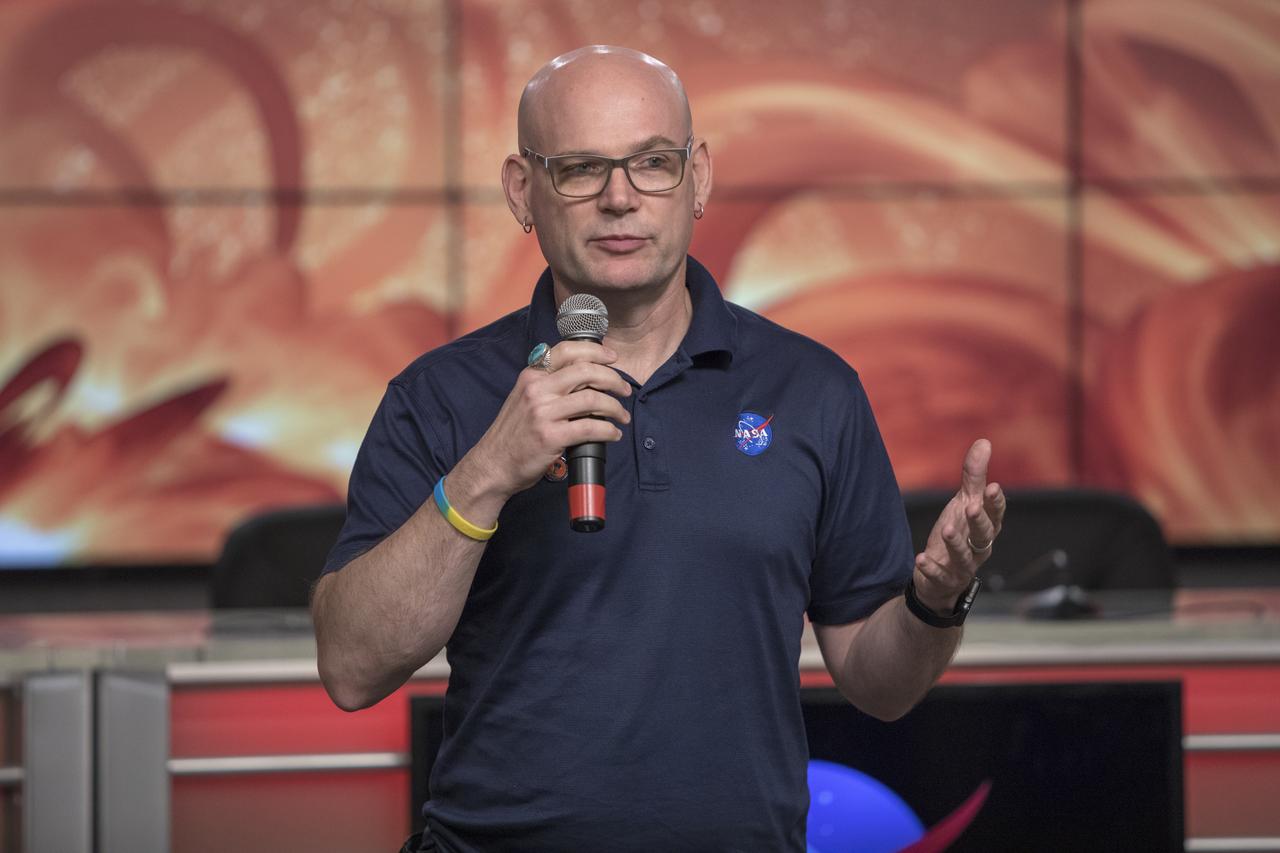
In the Kennedy Space Center’s Press Site auditorium, on Friday, July 20, 2018, Alex Young, solar scientist at NASA's Goddard Space Flight Center in Greenbelt, Maryland, speaks to members of the media during a prelaunch mission briefing for the Parker Solar Probe mission. The Parker Solar Probe will lift off on a United Launch Alliance Delta IV Heavy rocket from Space Launch Complex 37 at Cape Canaveral Air Force Station in Florida. The spacecraft was built by Applied Physics Laboratory of Johns Hopkins University in Laurel in Maryland. The mission will perform the closest-ever observations of a star when it travels through the Sun's atmosphere, called the corona. The probe will rely on measurements and imaging to revolutionize understanding of the corona and the Sun-Earth connection.
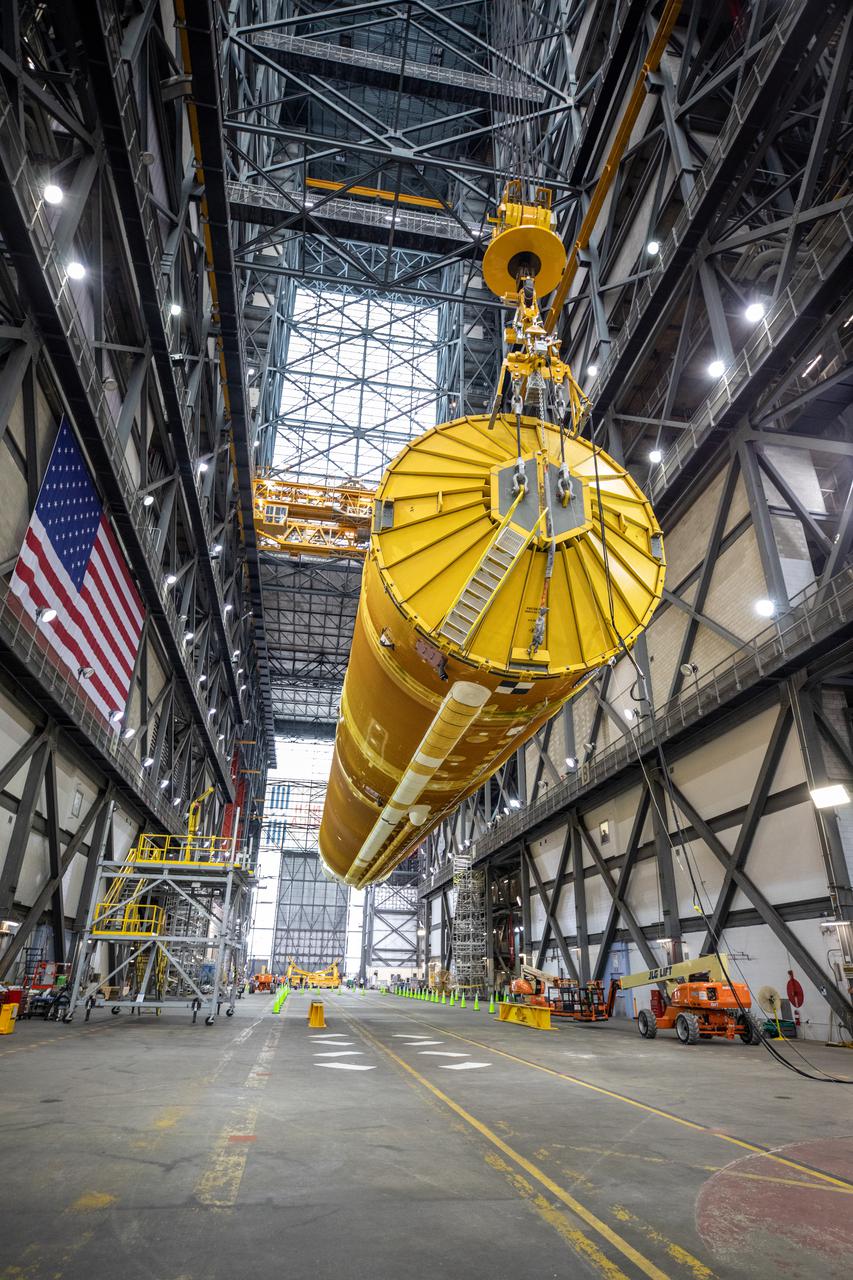
Teams with NASA’s Exploration Ground Systems and contractor Jacobs lift the Space Launch System (SLS) core stage – the largest part of the rocket – and prepare to move it over to High Bay 3 in the Vehicle Assembly Building, where it will be placed atop the mobile launcher in between the twin solid rocket boosters, at NASA’s Kennedy Space Center in Florida on June 10, 2021. The 188,000-pound core stage, with its four RS-25 engines, will provide more than 2 million pounds of thrust during launch and ascent, and coupled with the boosters, will provide more than 8.8 million pounds of thrust to send the Artemis I mission to space. Under the Artemis program, NASA will land the first woman and first person of color on the Moon, as well as establish a sustainable presence on the lunar surface in preparation for human missions to Mars.
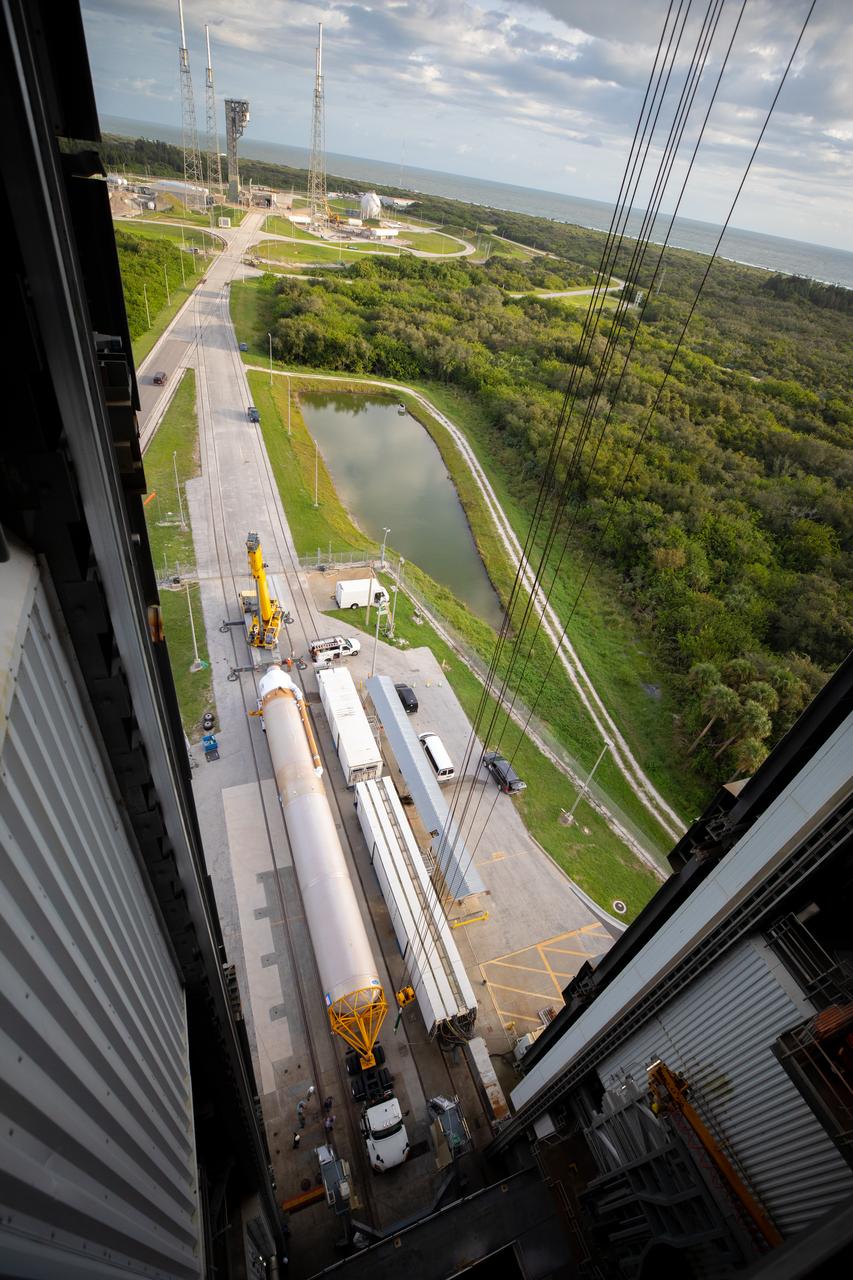
The United Launch Alliance Atlas V first stage is lifted to the vertical position on Nov. 4, 2019, in the Vertical Integration Facility at Space Launch Complex 41 at Cape Canaveral Air Force Station in Florida, in preparation for Boeing’s Orbital Flight Test (OFT). The uncrewed OFT mission will rendezvous and dock Boeing’s CST-100 Starliner spacecraft with the International Space Station as part of NASA’s Commercial Crew Program. Starliner will launch atop the Atlas V rocket from Space Launch Complex 41.
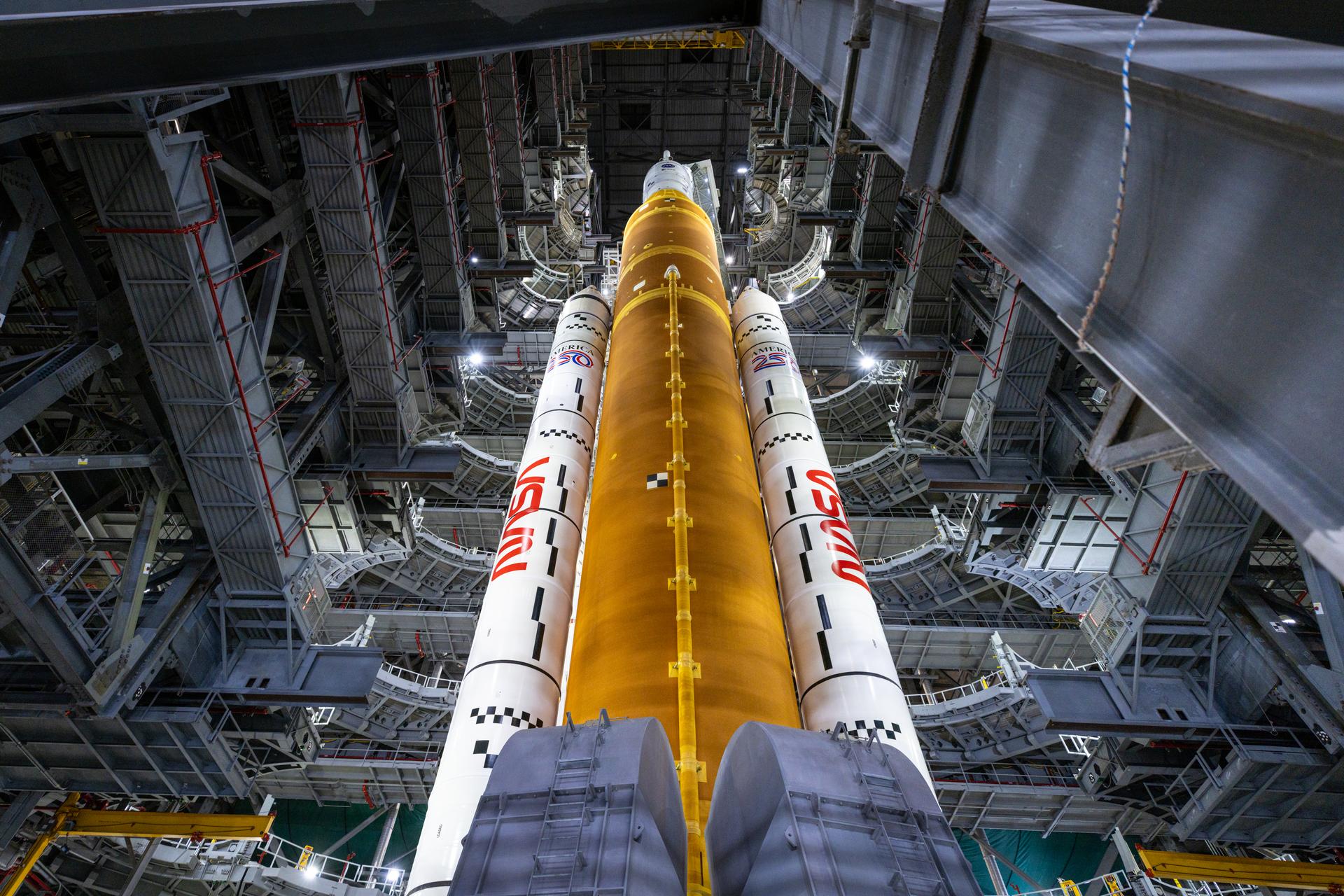
All work platforms are retracted from around NASA’s Artemis II SLS (Space Launch System) rocket and Orion spacecraft, secured to the mobile launcher, inside the Vehicle Assembly Building on Thursday, March 19, 2026, in preparation for rollout to Launch Complex 39B at NASA’s Kennedy Space Center in Florida. The Artemis II test flight will take Commander Reid Wiseman, Pilot Victor Glover, and Mission Specialist Christina Koch from NASA, and Mission Specialist Jeremy Hansen from the CSA (Canadian Space Agency), around the Moon and back to Earth with launch opportunities beginning in April 2026.
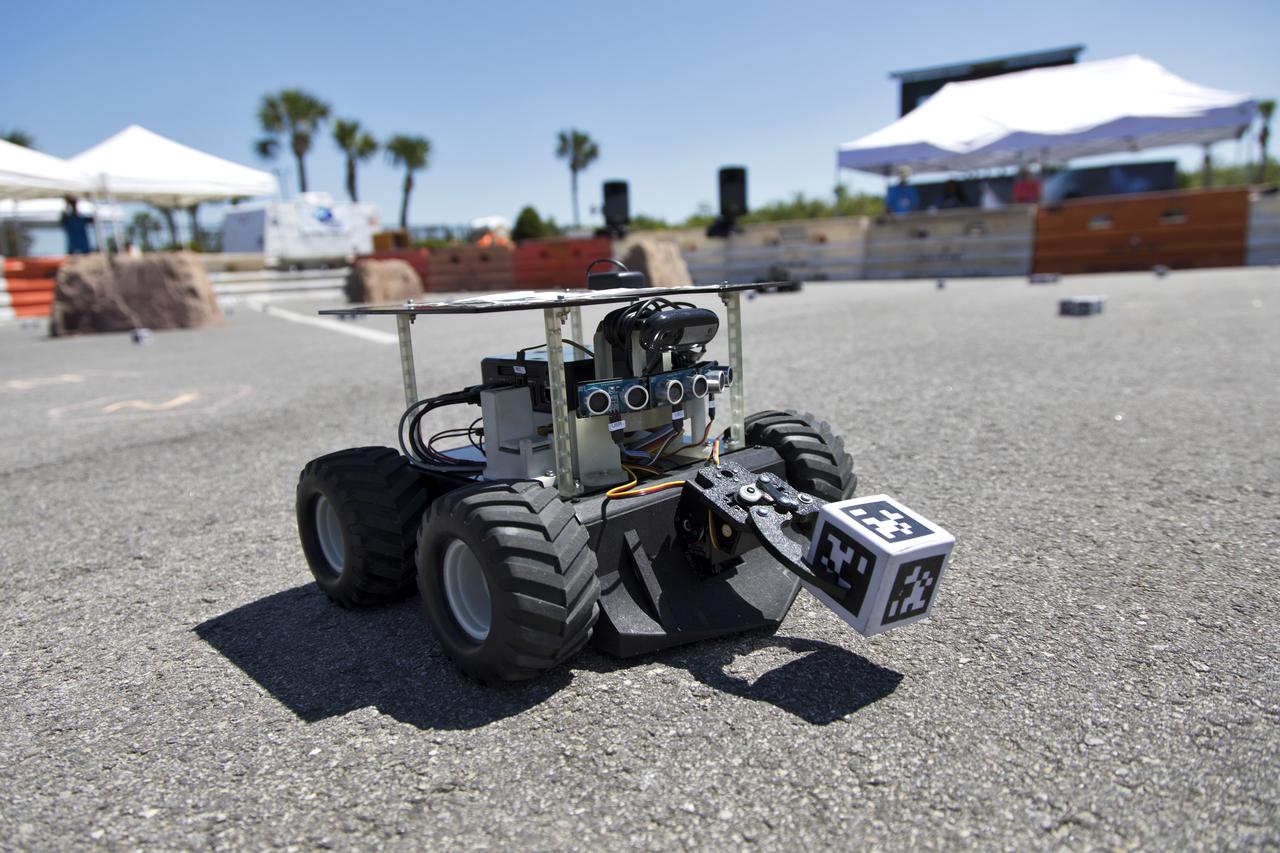
In the Swarmathon competition at the Kennedy Space Center Visitor Complex, students were asked to develop computer code for the small robots, programming them to look for "resources" in the form of AprilTag cubes, similar to barcodes. Teams developed search algorithms for the Swarmies to operate autonomously, communicating and interacting as a collective swarm similar to ants foraging for food. In the spaceport's third annual Swarmathon, 23 teams represented 24 minority serving universities and community colleges were invited to develop software code to operate these innovative robots known as "Swarmies" to help find resources when astronauts explore distant locations, such as the Moon or Mars.
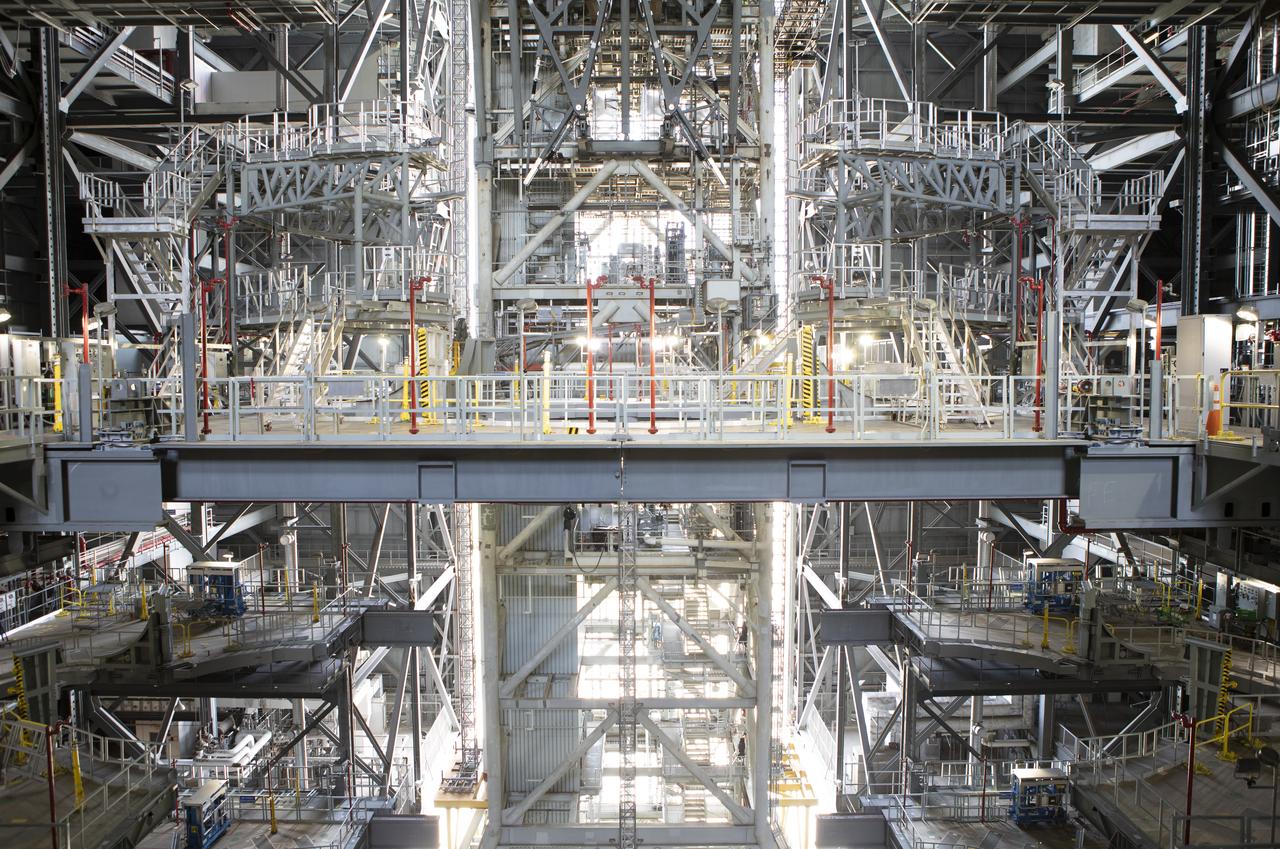
NASA's mobile launcher is in view inside High Bay 3 of the Vehicle Assembly Building at the agency's Kennedy Space Center in Florida, on Sept. 11, 2018. Several of the new work platforms that will surround the mobile launcher during stacking and processing operations are in view. The mobile launcher will spend seven months in the VAB undergoing testing. The 380-foot-tall structure is equipped with the crew access arm and several umbilicals that will provide power, environmental control, pneumatics, communication and electrical connections to the agency's Space Launch System and Orion spacecraft. Exploration Ground Systems is preparing the ground systems necessary to launch SLS and Orion on Exploration Mission-1, missions to the Moon and on to Mars.
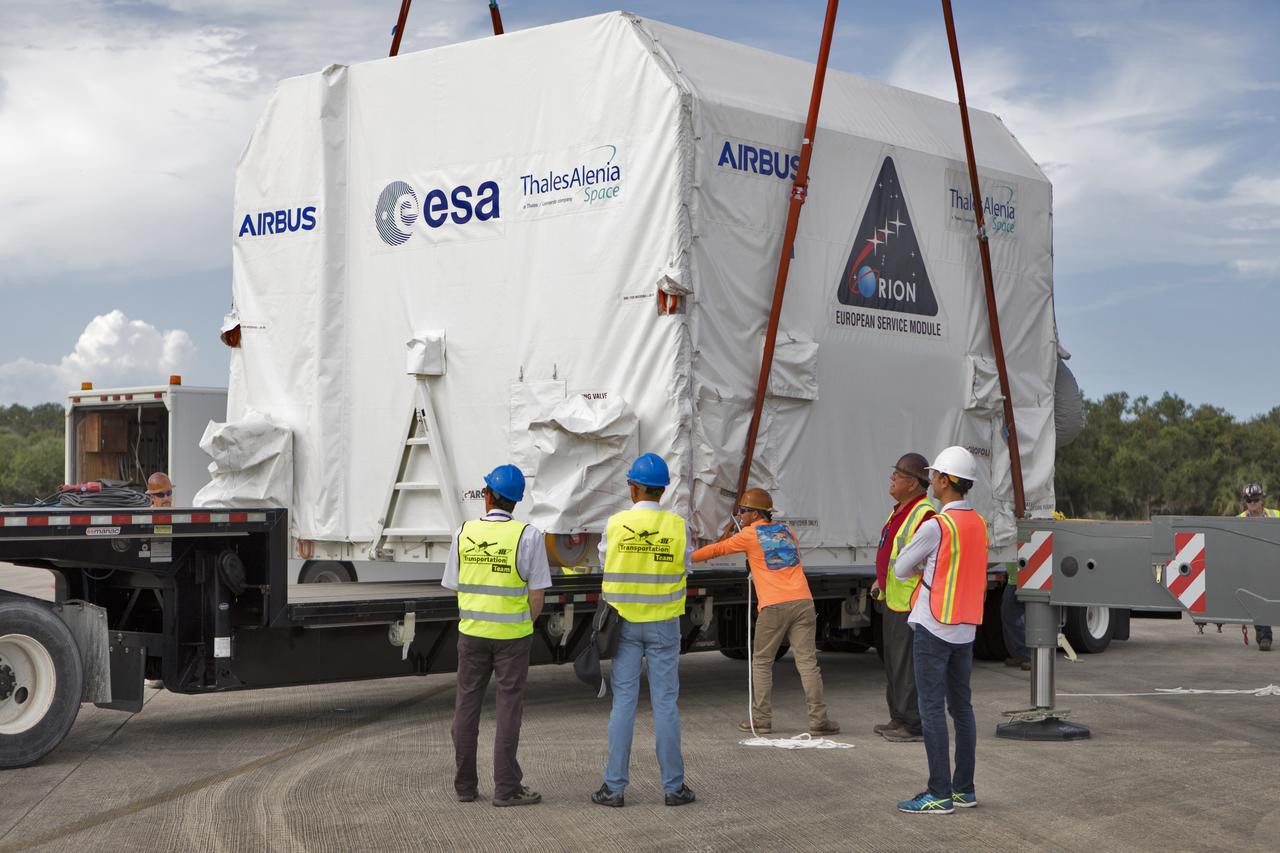
A crane lowers the shipping container holding the European Service Module (ESM) onto a flatbed truck at the Shuttle Landing Facility at NASA's Kennedy Space Center in Florida on Nov. 6, 2018. The ESM, built by the European Space Agency, will supply the main propulsion system and power to the Orion spacecraft for Exploration Mission-1 (EM-1), a mission to the Moon. The ESM also will house air and water for astronauts on future missions. EM-1 will be an uncrewed flight test that will provide a foundation for human deep space exploration to destinations beyond Earth orbit. EM-1 will be the first integrated test of NASA's Space Launch System, Orion and the ground systems at Kennedy.
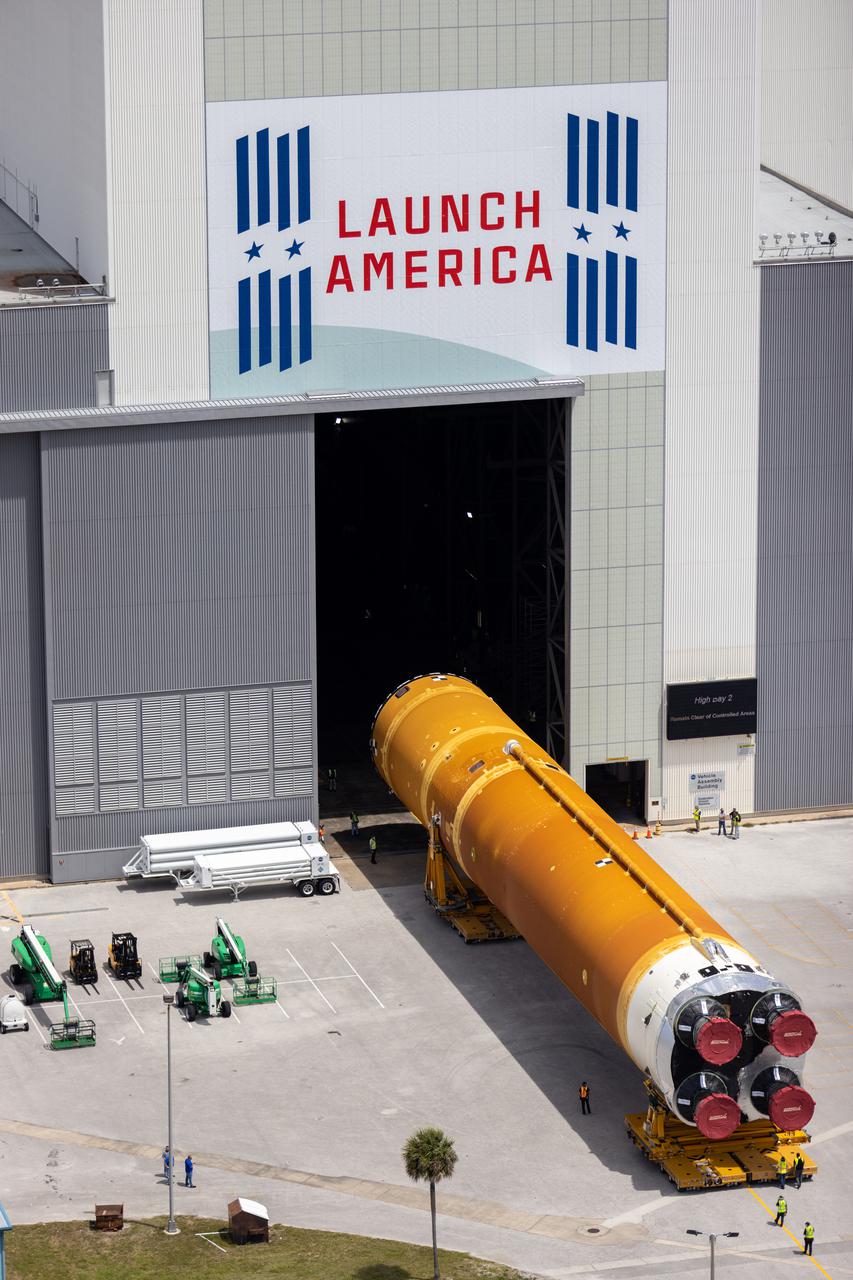
After completing its journey from NASA’s Stennis Space Center in Mississippi aboard the Pegasus barge, teams with Exploration Ground Systems (EGS) and lead contractor Jacobs transport the massive Space Launch System (SLS) core stage to Kennedy Space Center’s Vehicle Assembly Building in Florida on April 29, 2021 in this aerial view. Once inside the VAB, it will be prepared for integration with the completed stack of solid rocket boosters atop the mobile launcher ahead of the Artemis I launch. The first in a series of increasingly complex missions, Artemis I will test SLS and Orion as an integrated system prior to crewed flights to the Moon.

A SpaceX Falcon Heavy rocket carrying NASA’s Europa Clipper spacecraft lifts off from Launch Complex 39A at NASA’s Kennedy Space Center in Florida at 12:06 p.m. EDT on Monday, Oct. 14, 2024. After launch, the spacecraft plans to fly by Mars in February 2025, then back by Earth in December 2026, using the gravity of each planet to increase its momentum. With help of these “gravity assists,” Europa Clipper will achieve the velocity needed to reach Jupiter in April 2030.
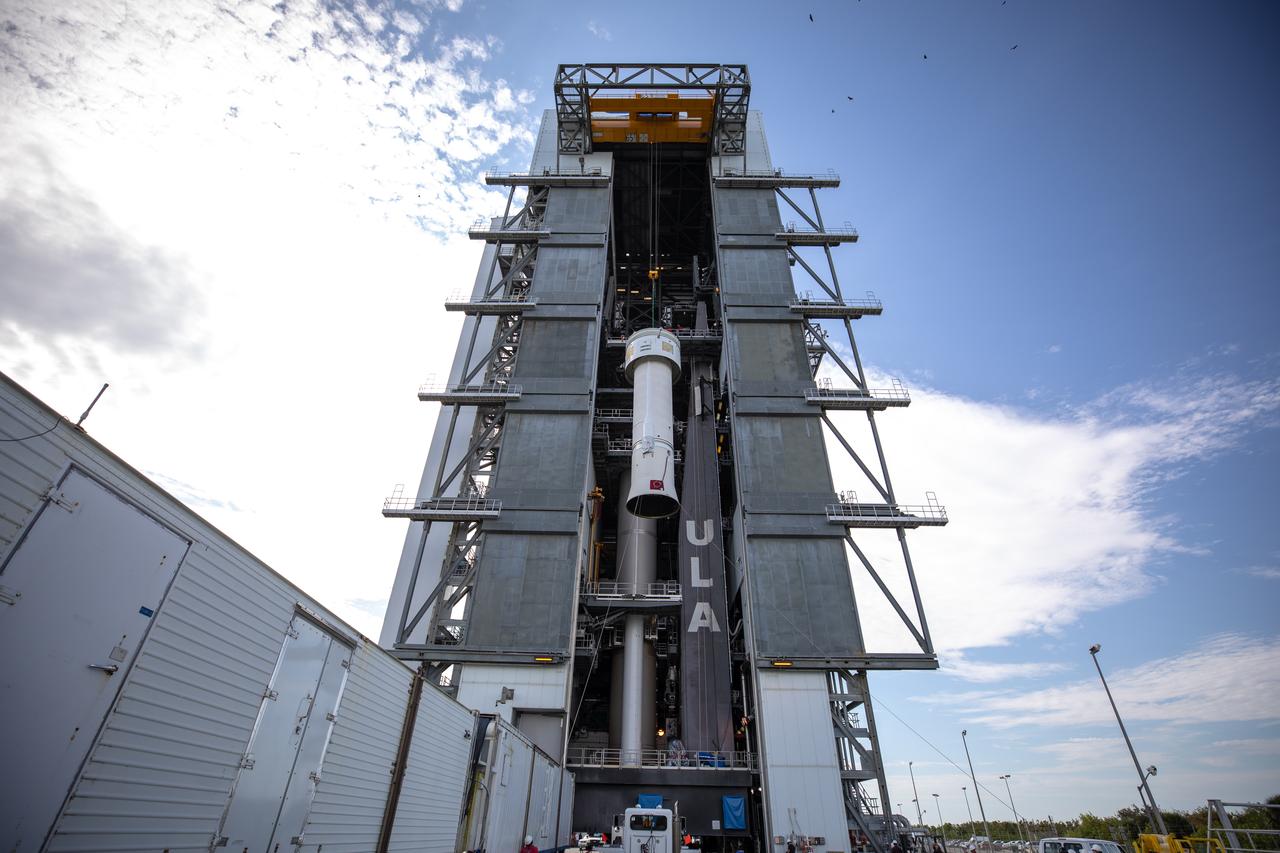
A Centaur upper stage is lifted at the Space Launch Complex 41 Vertical Integration Facility at Florida’s Cape Canaveral Air Force Station on Nov. 8, 2019, for mating to the United Launch Alliance Atlas V first stage in preparation for Boeing’s Orbital Flight Test (OFT). The uncrewed OFT mission will rendezvous and dock Boeing’s CST-100 Starliner spacecraft with the International Space Station as part of NASA’s Commercial Crew Program. Starliner will launch atop the Atlas V rocket from Space Launch Complex 41.
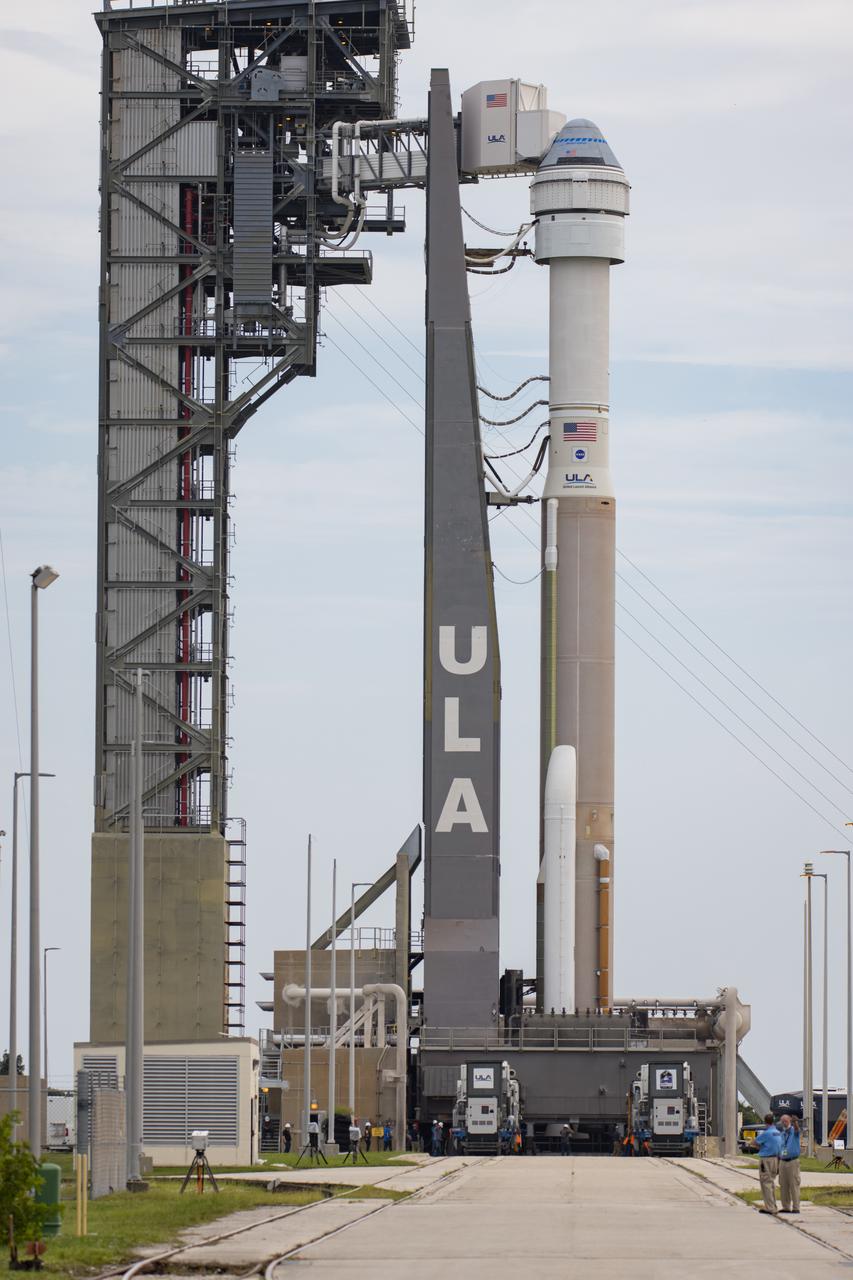
On August 2, 2021, Boeing’s CST-100 Starliner spacecraft and the United Launch Alliance Atlas V rocket rolls out from the Vertical Integration Facility to the launch pad at Space Launch Complex-41 on Cape Canaveral Space Force Station in Florida. Starliner will launch on the Atlas V for Boeing’s second uncrewed Orbital Flight Test (OFT-2) for NASA’s Commercial Crew Program. OFT-2 is an important uncrewed mission designed to test the end-to-end capabilities of the new system for NASA’s Commercial Crew Program.
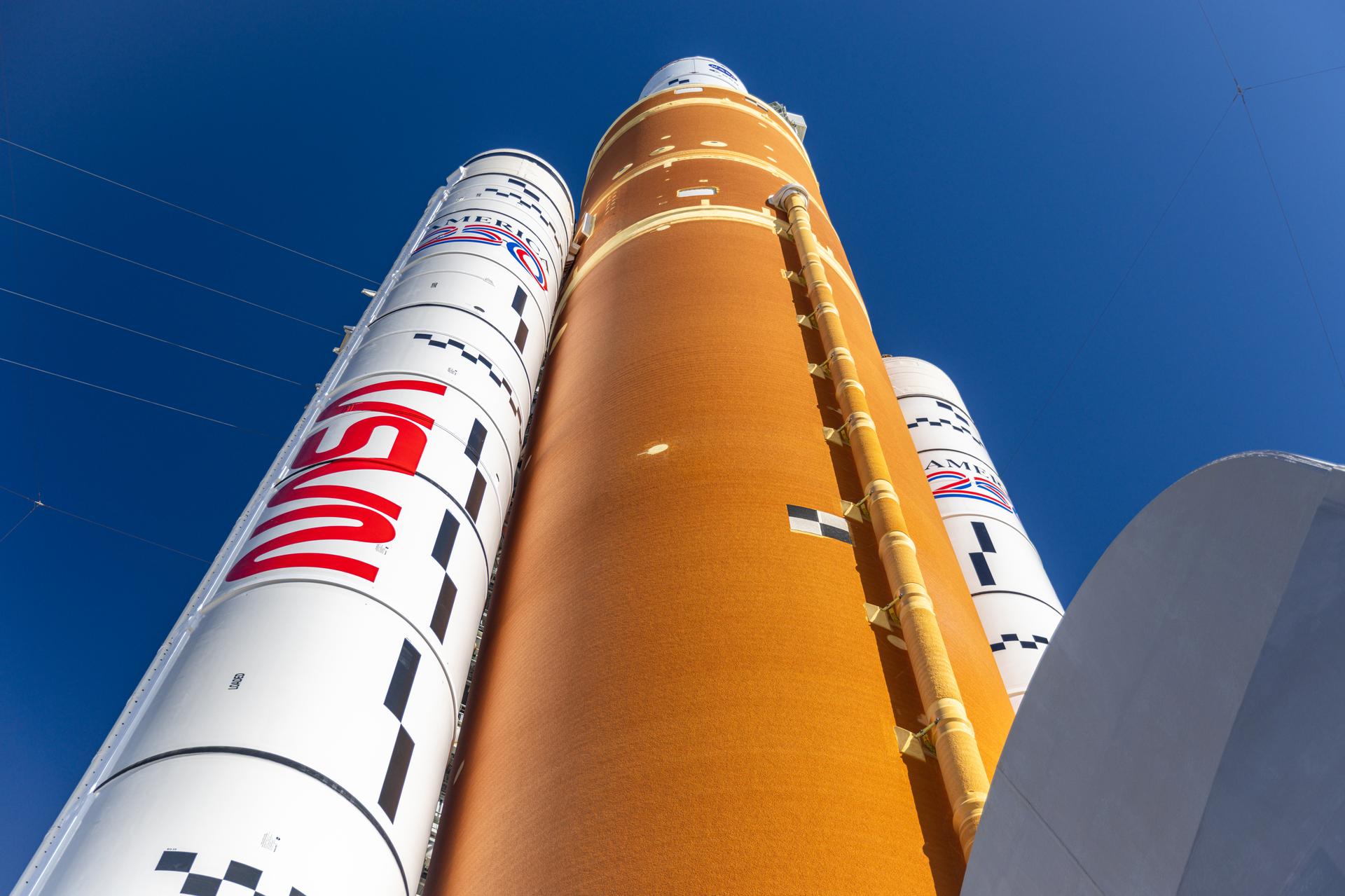
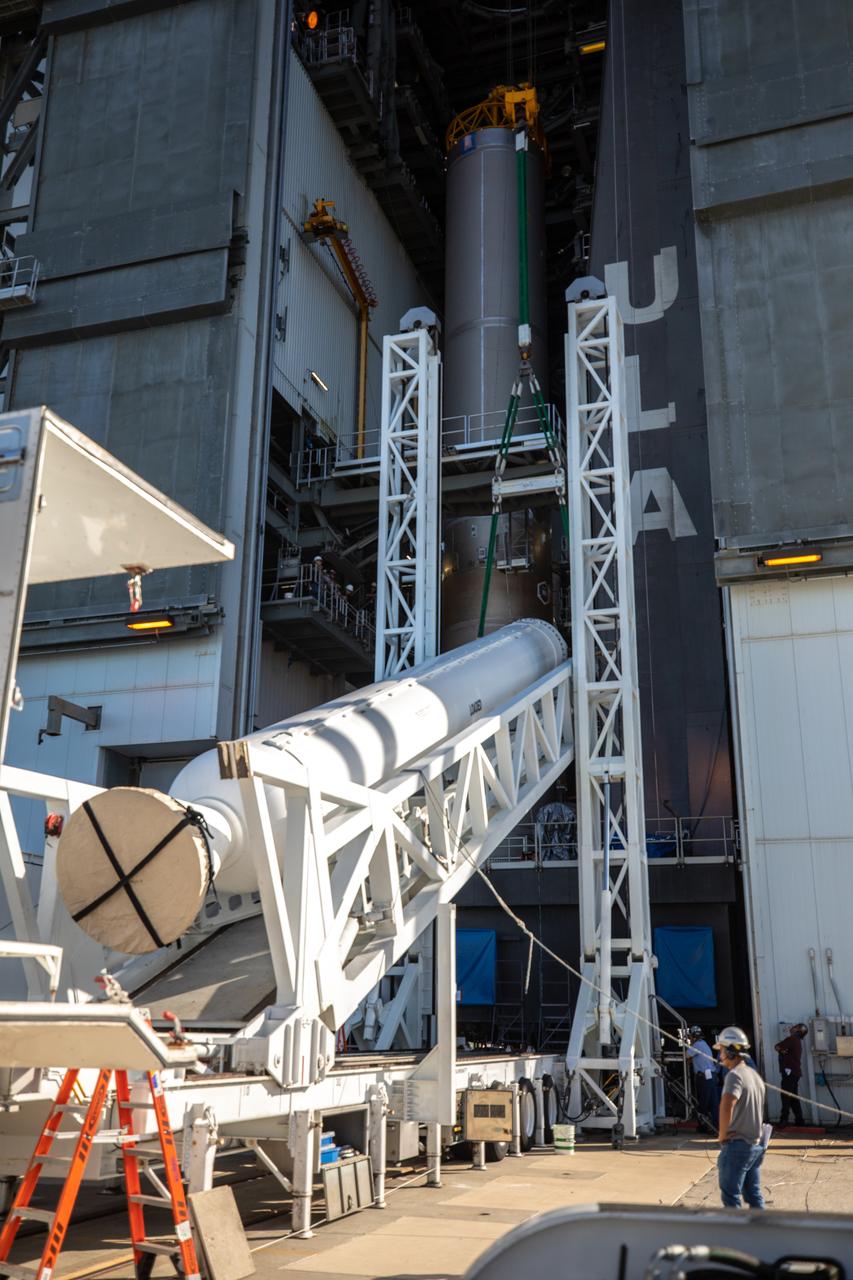
Two solid rocket boosters are mated to a United Launch Alliance Atlas V first stage inside the Vertical Integration Facility at Space Launch Complex 41 at Cape Canaveral Air Force Station in Florida on Nov. 7, 2019, in preparation for Boeing’s Orbital Flight Test (OFT). The uncrewed OFT mission will rendezvous and dock Boeing’s CST-100 Starliner spacecraft with the International Space Station as part of NASA’s Commercial Crew Program. Starliner will launch atop the Atlas V rocket from Space Launch Complex 41.
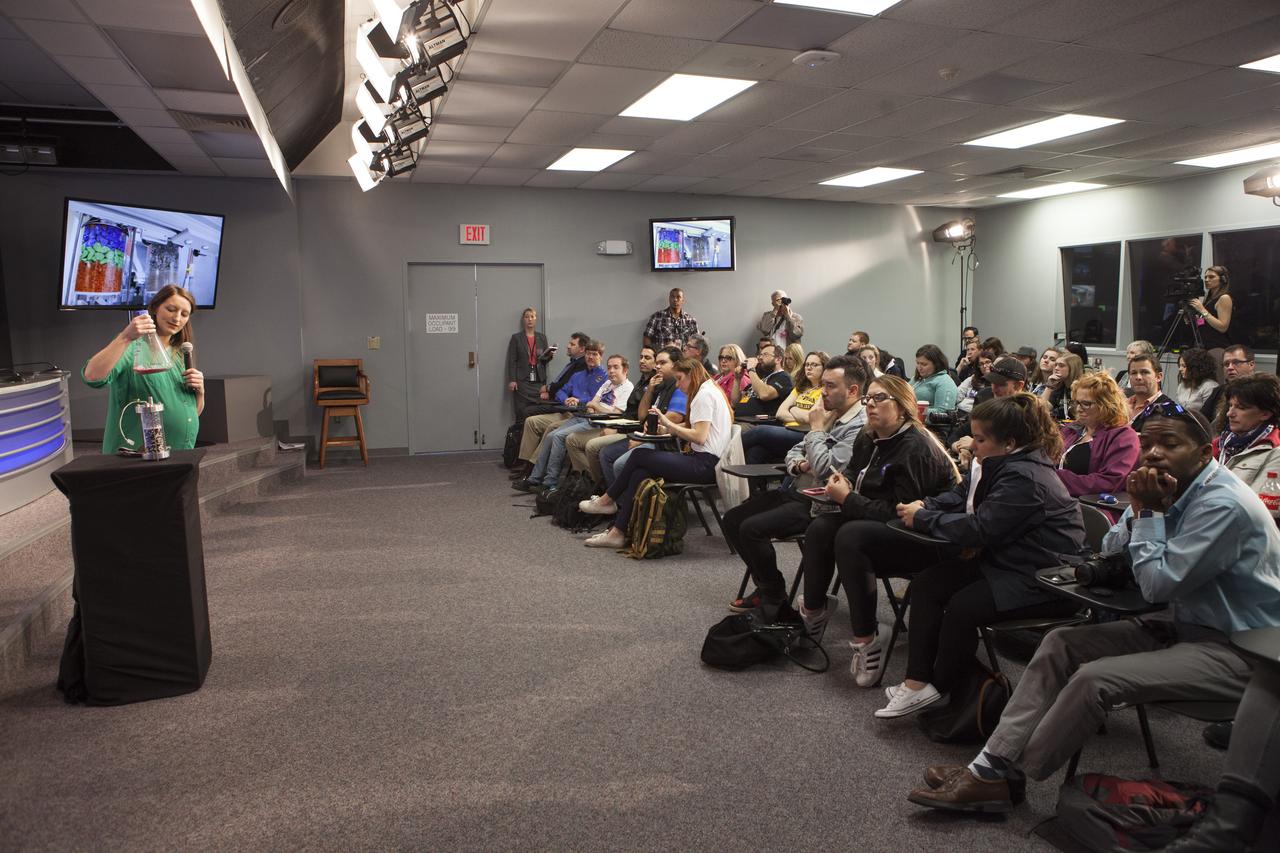
Dr. Kristen John, deputy project manager and co-investigator for the Strata-1 experiment at the Johnson Space Center in Houston , speaks to members of the media in the Kennedy Space Center’s Press Site auditorium. The briefing focused on science research and technology work planned for the International Space Station, or ISS, following the arrival of a Cygnus spacecraft. The Cygnus is scheduled to be launched March 22 atop a United Launch Alliance Atlas V rocket on the Orbital ATK CRS-6 commercial resupply services mission.
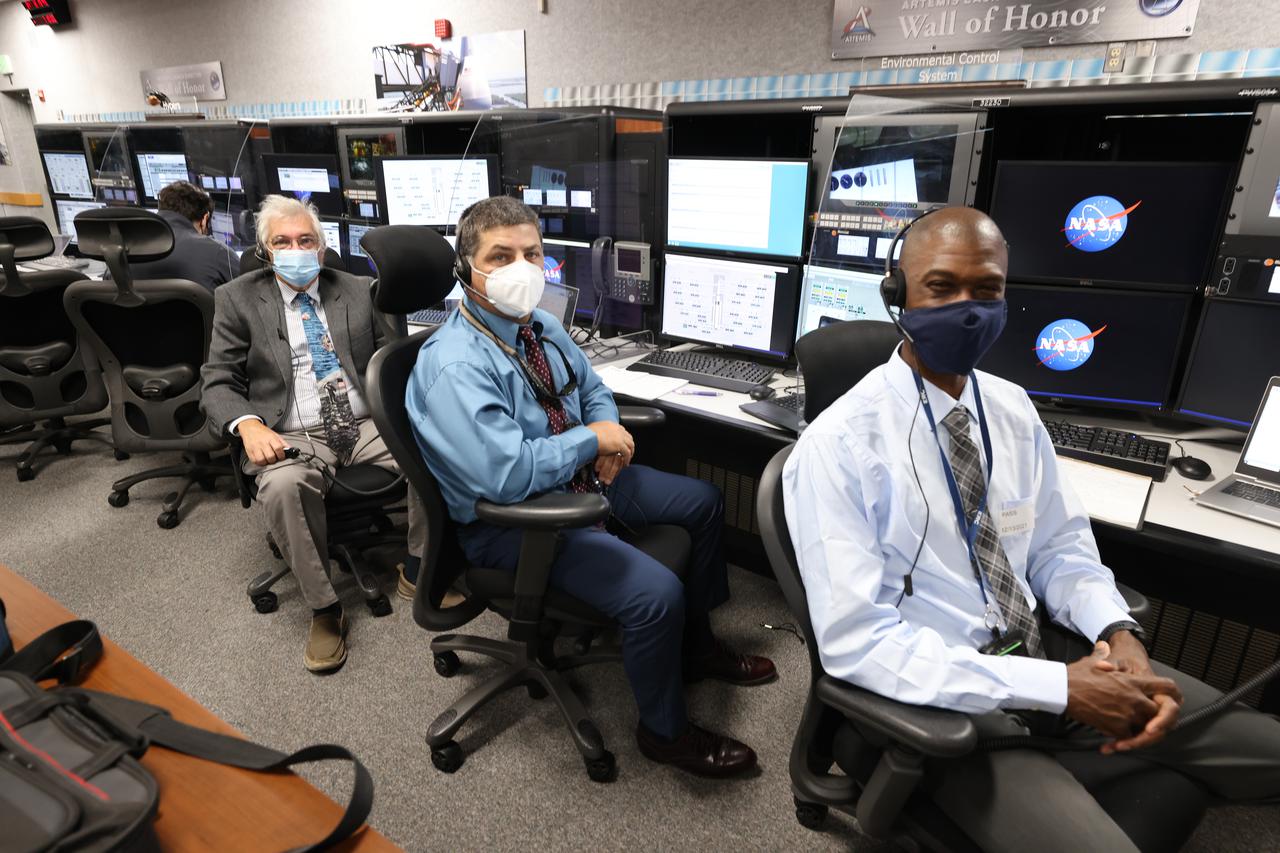
Launch team members are seated at the Environment Control System consoles inside Firing Room 1 of the Launch Control Center at NASA’s Kennedy Space Center in Florida on Dec. 13, 2021. They are participating in a joint integrated simulation for the Artemis I launch that covered both cryogenic loading and terminal countdown portions of prelaunch activities. Members of NASA’s mission management team and launch team conducted the simulation together. The Kennedy team was certified for the Artemis I launch. During Artemis I, the agency’s Orion spacecraft will lift off from Kennedy aboard NASA’s most powerful rocket – the Space Launch System – to fly farther than any spacecraft built for humans has ever flown. Through NASA’s Artemis missions, the agency, along with commercial and international partners, will establish a sustainable human presence on the Moon to prepare for missions to Mars.
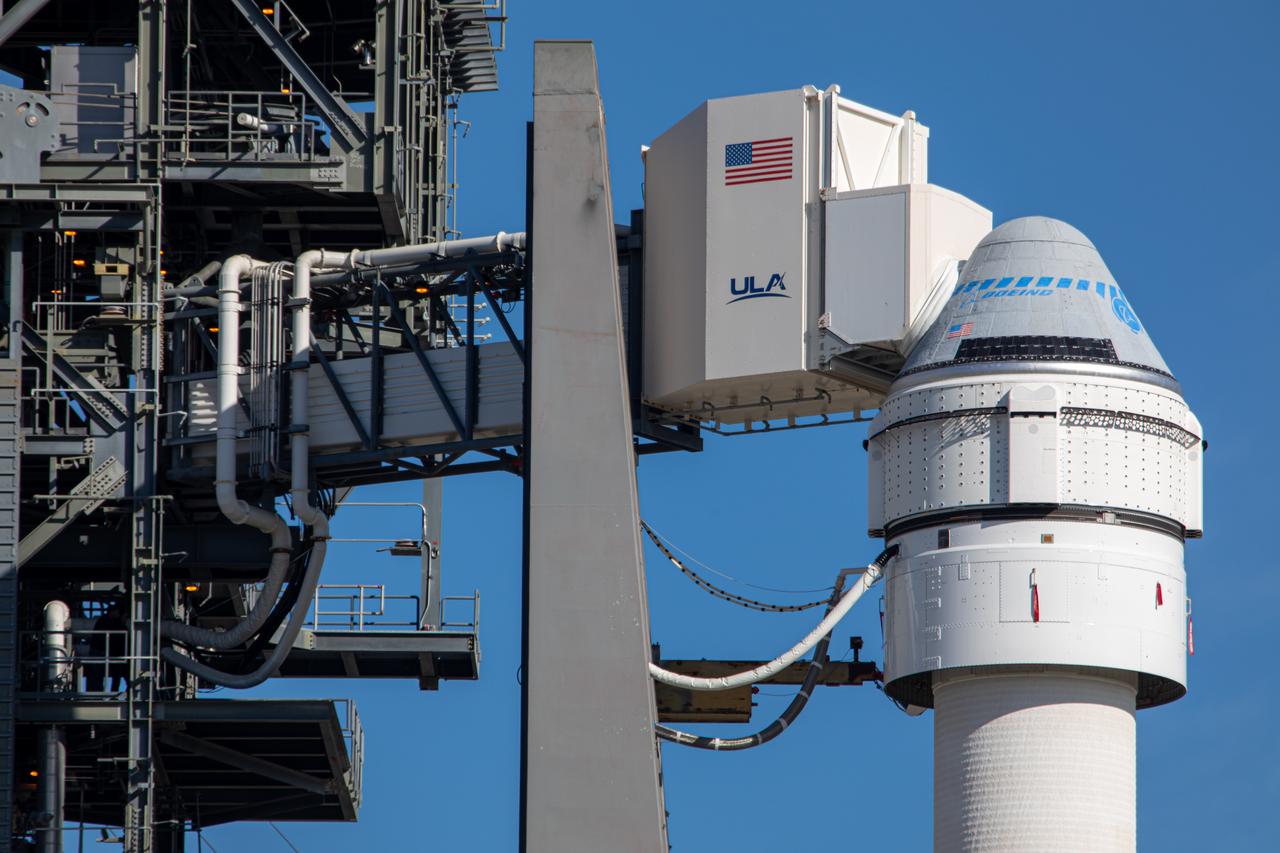
Boeing’s CST-100 Starliner spacecraft sits atop a United Launch Alliance Atlas V rocket at Cape Canaveral Air Force Station’s Space Launch Complex 41 in Florida on Dec. 5, 2019, for the program’s first-ever Integrated Day of Launch Test the following day. The rocket’s booster and Centaur upper stage will be filled with propellants for a full run-through of the launch countdown. The rehearsal is practice for Boeing’s upcoming uncrewed Orbital Flight Test to the International Space Station for NASA’s Commercial Crew Program.

Inside the Space Station Processing Facility high bay at NASA's Kennedy Space Center in Florida, technicians prepare the Neutron star Interior Composition Explorer, or NICER, payload for final packaging. NICER will be delivered to the International Space Station aboard the SpaceX Dragon cargo carrier on the company’s 11th commercial resupply services mission to the space station. NICER will study neutron stars through soft X-ray timing. NICER will enable rotation-resolved spectroscopy of the thermal and non-thermal emissions of neutron stars in the soft X-ray band with unprecedented sensitivity, probing interior structure, the origins of dynamic phenomena and the mechanisms that underlie the most powerful cosmic particle accelerators known.
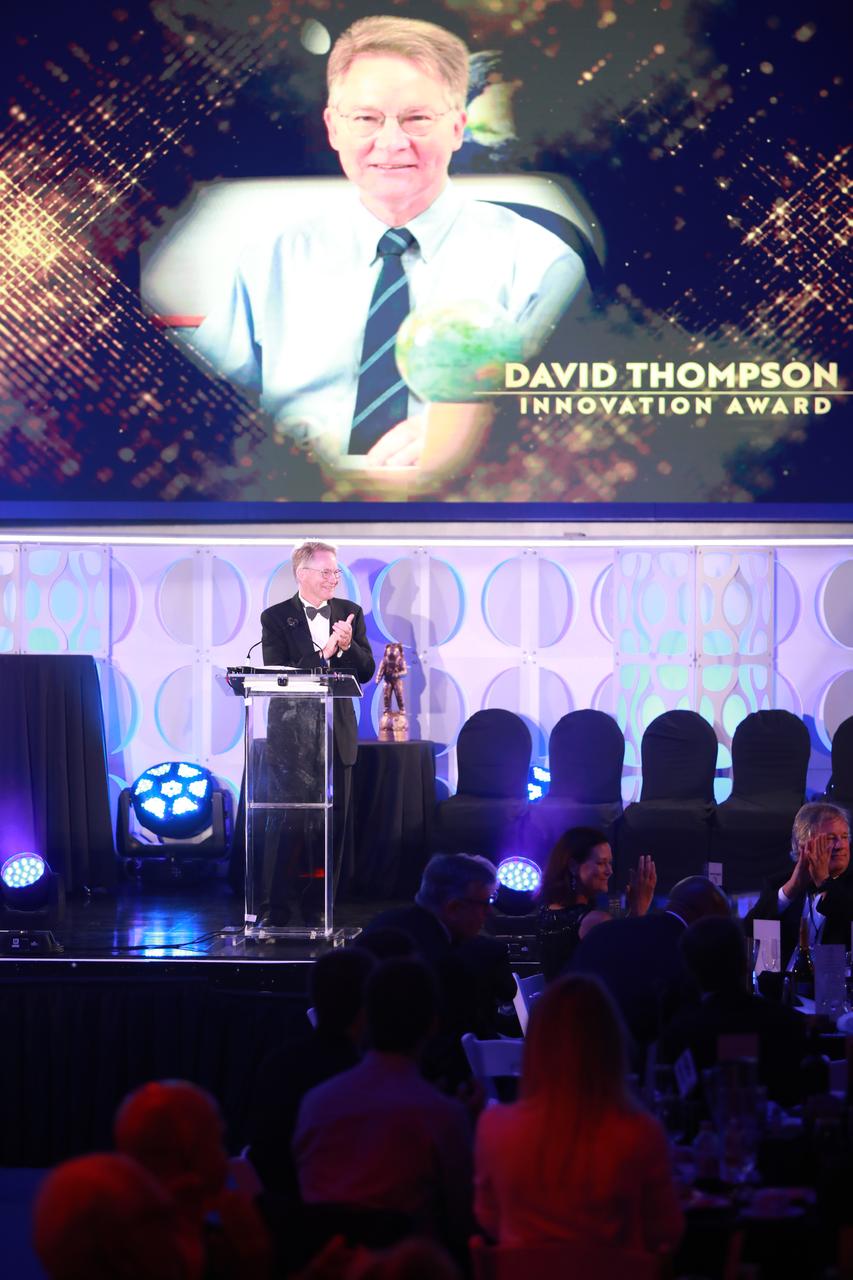
David Thompson, founder, presdient and CEO of Orbital Sciences Corp. (later known as Orbital ATK), makes remarks after receiving the Innovation Award at the Apollo 50th Gala on July 16, 2019. The gala, presented by Northrop Grumman, was held inside the Apollo/Saturn V Center at the Kennedy Space Center Visitor Complex in Florida.
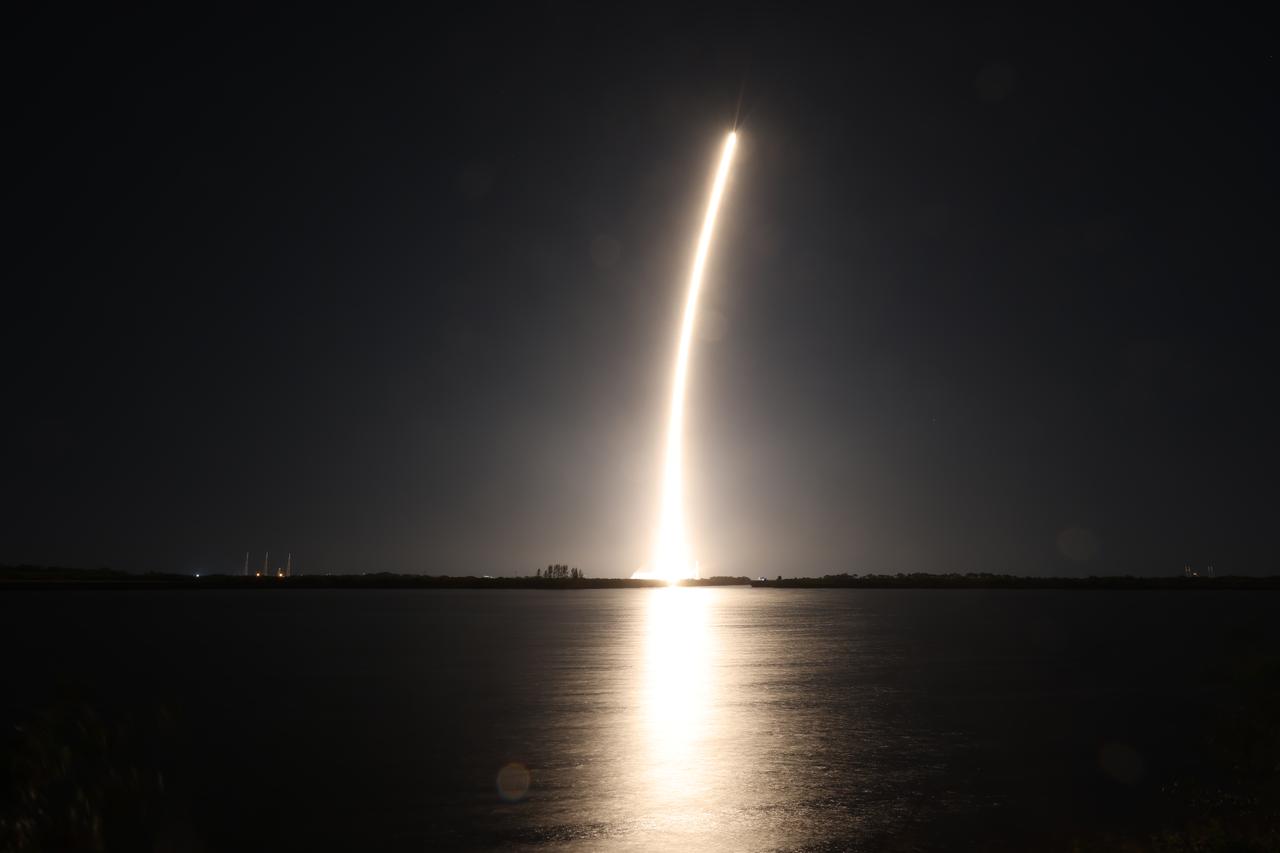
Creating a golden streak in the night sky, a SpaceX Falcon 9 rocket carrying Firefly Aerospace’s Blue Ghost Mission One lander soars upward after liftoff from Launch Complex 39A at NASA’s Kennedy Space Center in Florida on Wednesday, Jan. 15, 2025 as part of NASA’s CLPS (Commercial Lunar Payload Services) initiative. The Blue Ghost lander will carry 10 NASA science and technology instruments to the lunar surface to further understand the Moon and help prepare for future human missions.
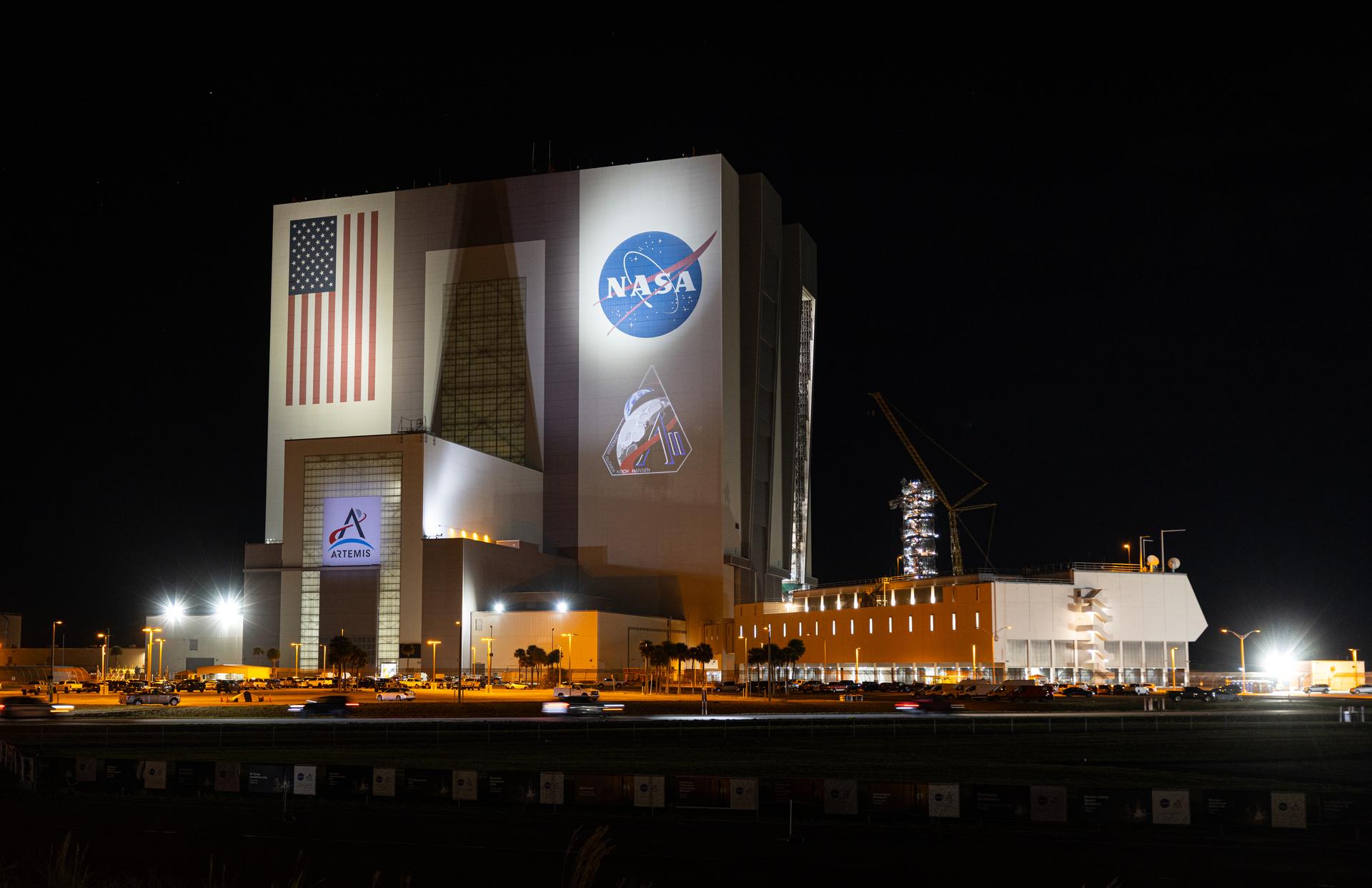
NASA’s Artemis II SLS (Space Launch System) rocket and Orion spacecraft, secured to the mobile launcher, prepares to roll out from the Vehicle Assembly Building to Launch Complex 39B at NASA’s Kennedy Space Center in Florida on Saturday, Jan. 17, 2026. Seen in the background is also mobile launcher 2, which will be used on future Artemis flights beginning with Artemis IV. The Artemis II test flight will take Commander Reid Wiseman, Pilot Victor Glover, and Mission Specialist Christina Koch from NASA, and Mission Specialist Jeremy Hansen from the CSA (Canadian Space Agency), around the Moon and back to Earth no later than April 2026.

Ronnie Rodriguez, deputy director of Safety and Mission Assurance at NASA’s Kennedy Space Center in Florida, speaks to Kennedy employees during a Safety and Health Days celebration on March 5, 2020. Taking place March 2 through March 6, Safety and Health Days provides Kennedy employees with a variety of presentations to attend – all of which focus on how to maintain a safe and healthy workforce. The celebration on March 5 took place at the spaceport’s KARS Park II and was open for all employees to attend.

Managers at NASA’s Kennedy Space Center in Florida serve food to Kennedy employees during a Safety and Health Days celebration on March 5, 2020. Taking place March 2 through March 6, Safety and Health Days provides Kennedy employees with a variety of presentations to attend – all of which focus on how to maintain a safe and healthy workforce. The celebration on March 5 took place at the spaceport’s KARS Park II and was open for all employees to attend.
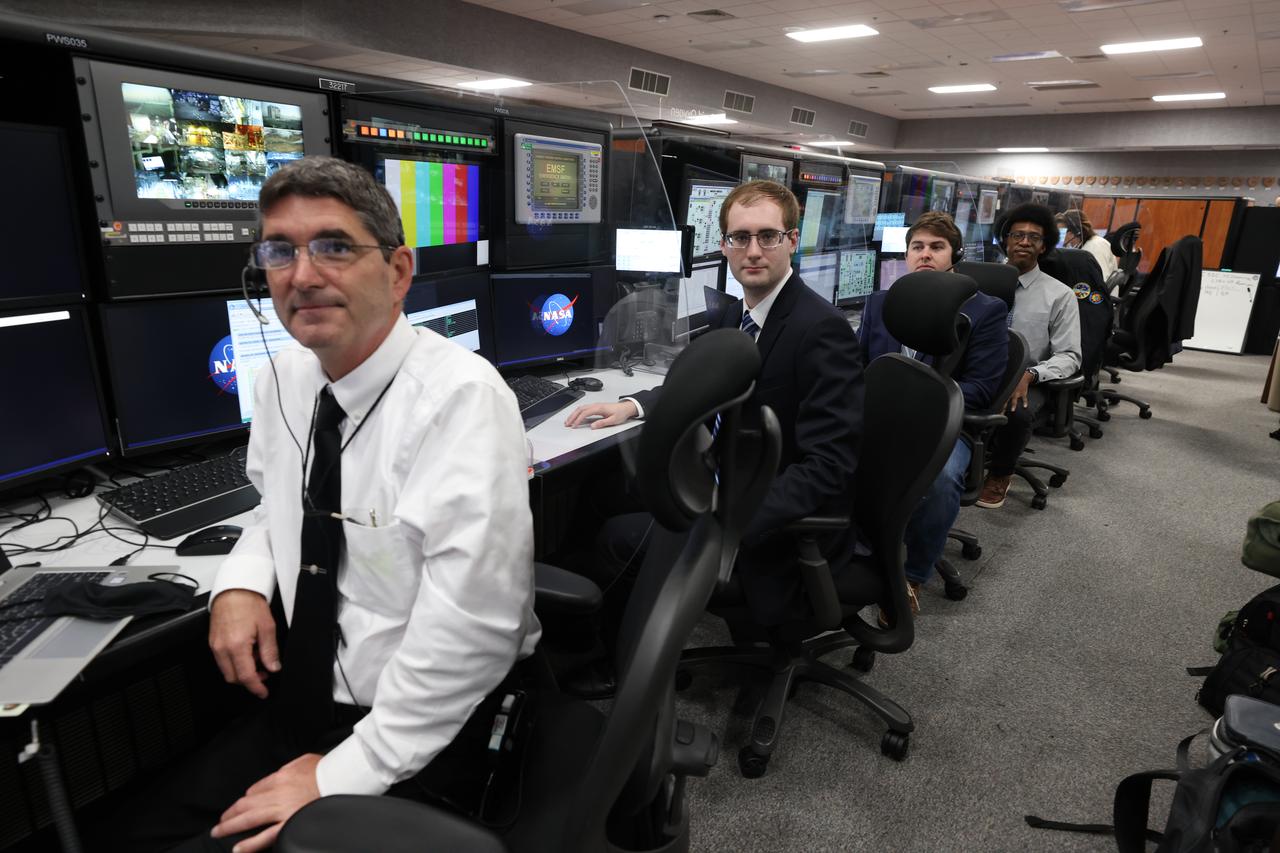
Launch team members are seated at the Liquid Oxygen consoles inside Firing Room 1 of the Launch Control Center at NASA’s Kennedy Space Center in Florida on Dec. 13, 2021. They are participating in a joint integrated simulation for the Artemis I launch that covered both cryogenic loading and terminal countdown portions of prelaunch activities. Members of NASA’s mission management team and launch team conducted the simulation together. The Kennedy team was certified for the Artemis I launch. During Artemis I, the agency’s Orion spacecraft will lift off from Kennedy aboard NASA’s most powerful rocket – the Space Launch System – to fly farther than any spacecraft built for humans has ever flown. Through NASA’s Artemis missions, the agency, along with commercial and international partners, will establish a sustainable human presence on the Moon to prepare for missions to Mars.
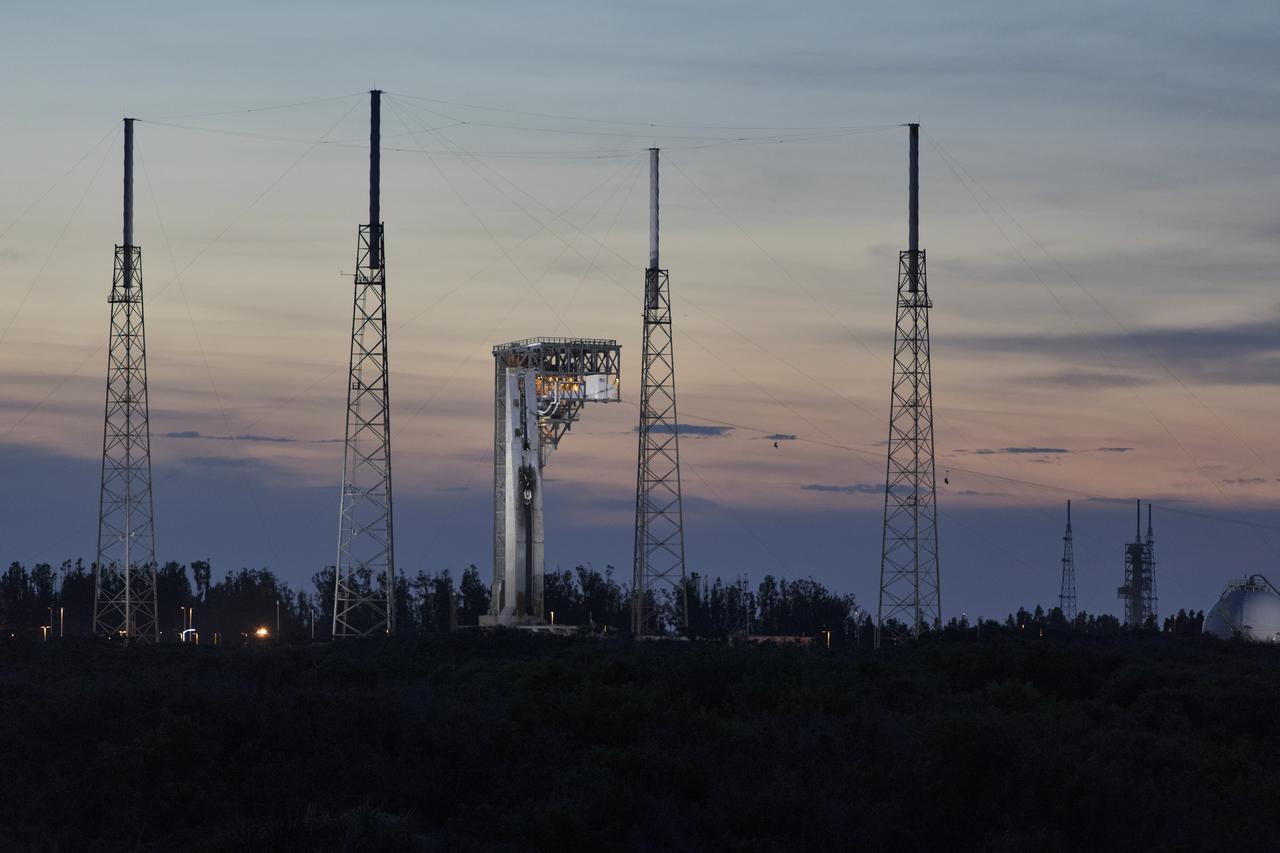
Commercial Crew astronauts participate in a Boeing/United Launch Alliance (ULA) emergency egress system demonstration at Cape Canaveral Air Force Station’s Launch Complex 41 in Florida on June 19, 2018. The emergency egress system will allow for a safe evacuation in the unlikely event of an emergency on the launch pad on launch day. It can carry up to 20 people more than 1,300 feet away from the crew access tower and the launch vehicle. The Boeing CST-100 Starliner will launch on a ULA Atlas V rocket, carrying astronauts to the International Space Station.
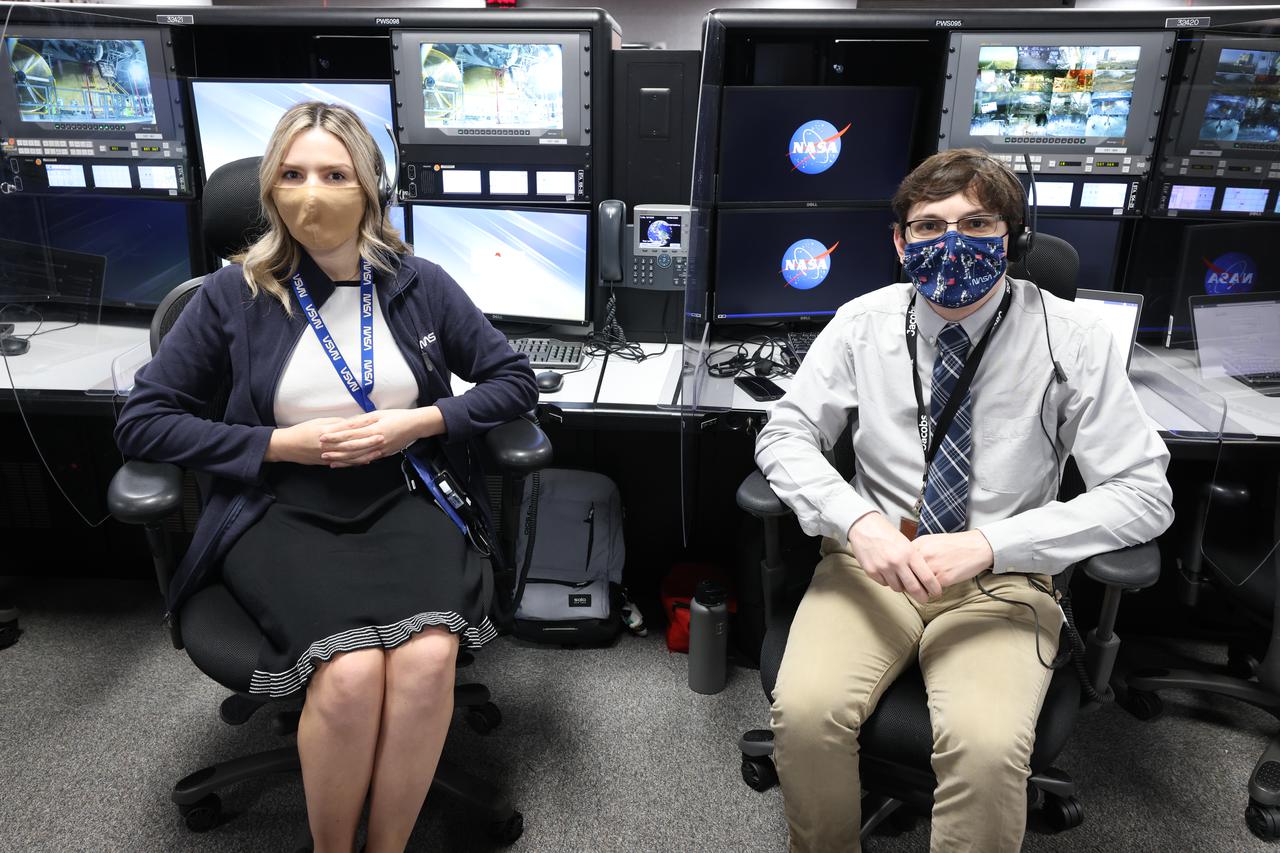
Launch team members are seated at the Communication and Tracking consoles inside Firing Room 1 of the Launch Control Center at NASA’s Kennedy Space Center in Florida on Dec. 13, 2021. They are participating in a joint integrated simulation for the Artemis I launch that covered both cryogenic loading and terminal countdown portions of prelaunch activities. Members of NASA’s mission management team and launch team conducted the simulation together. The Kennedy team was certified for the Artemis I launch. During Artemis I, the agency’s Orion spacecraft will lift off from Kennedy aboard NASA’s most powerful rocket – the Space Launch System – to fly farther than any spacecraft built for humans has ever flown. Through NASA’s Artemis missions, the agency, along with commercial and international partners, will establish a sustainable human presence on the Moon to prepare for missions to Mars.
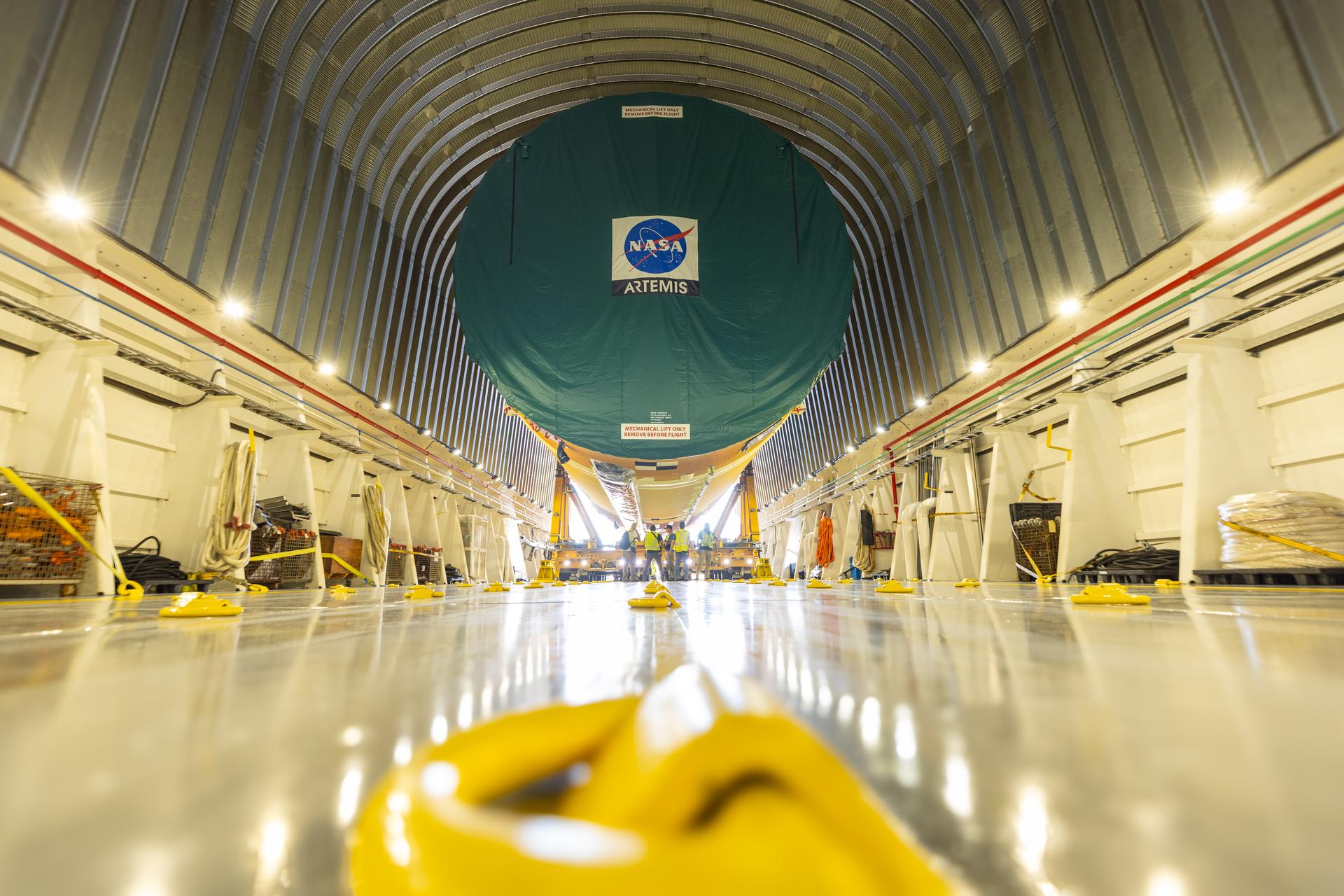
NASA’s top four-fifths of the SLS (Space Launch System) core stage for the Artemis III mission is offloaded from the agency’s Pegasus barge on Tuesday, April 28, 2026, after arriving at the Kennedy Space Center in Florida the prior day. The four-fifths contains the liquid hydrogen tank, liquid oxygen tank, intertank, and forward skirt of the SLS rocket and will be joined with the remaining core stage segments at Kennedy’s Vehicle Assembly Building High Bay 2 prior to rocket stacking operations. Artemis III will launch astronauts to Earth’s orbit aboard the Orion spacecraft on top of SLS to test rendezvous and docking capabilities between Orion and commercial spacecraft needed to land Artemis IV astronauts on the Moon in 2028.
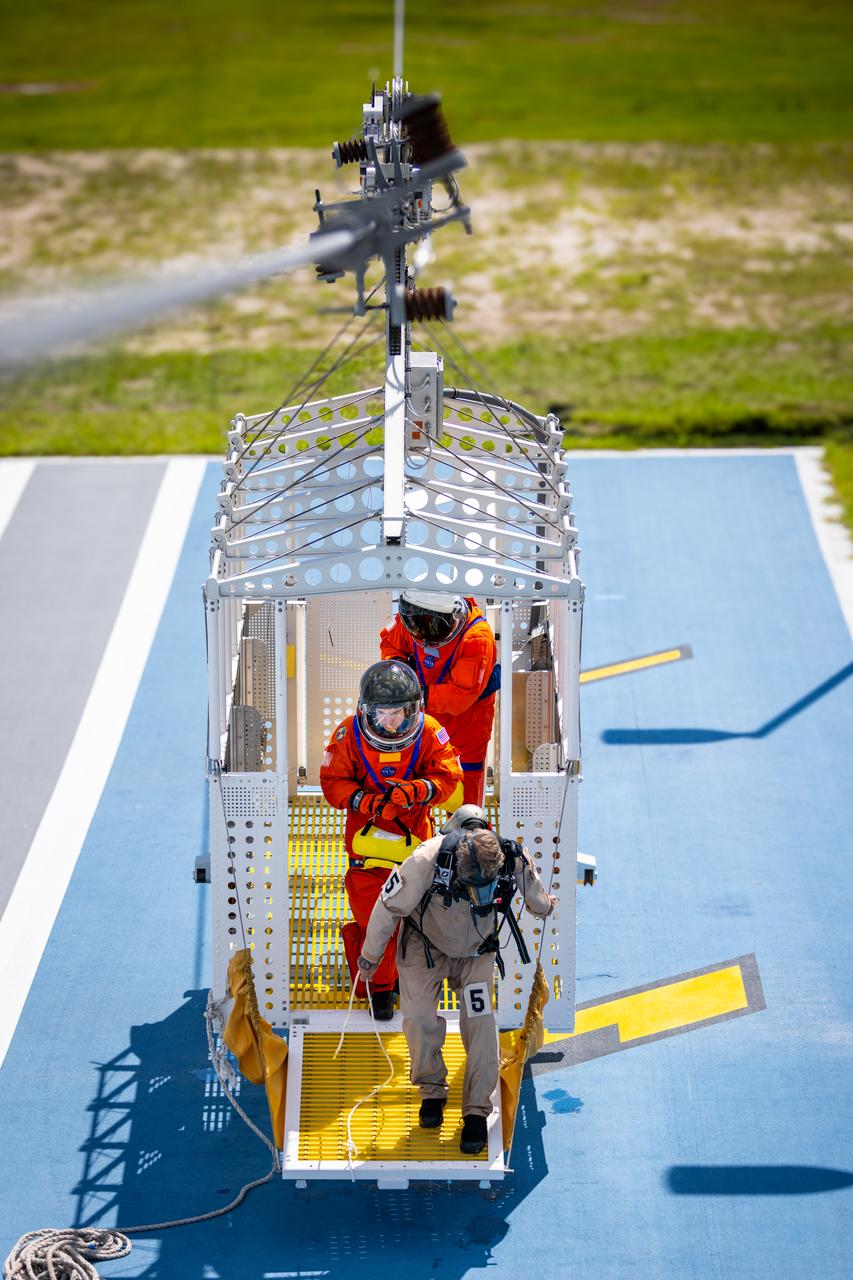
Teams at NASA’s Kennedy Space Center in Florida practice the Artemis mission emergency escape or egress procedures during a series of integrated system verification and validation tests at Launch Pad 39B on Monday, Aug. 12, 2024. Members of the closeout crew, pad rescue team and the Exploration Ground Systems Program practiced the process of getting inside and out of the emergency egress baskets. While the crew and other personnel will ride the emergency egress baskets to the terminus area in a real emergency, no one rode the baskets for this test. Instead, teams tested the baskets during separate occasions by using water tanks filled to different levels to replicate simulate the weight of passengers.
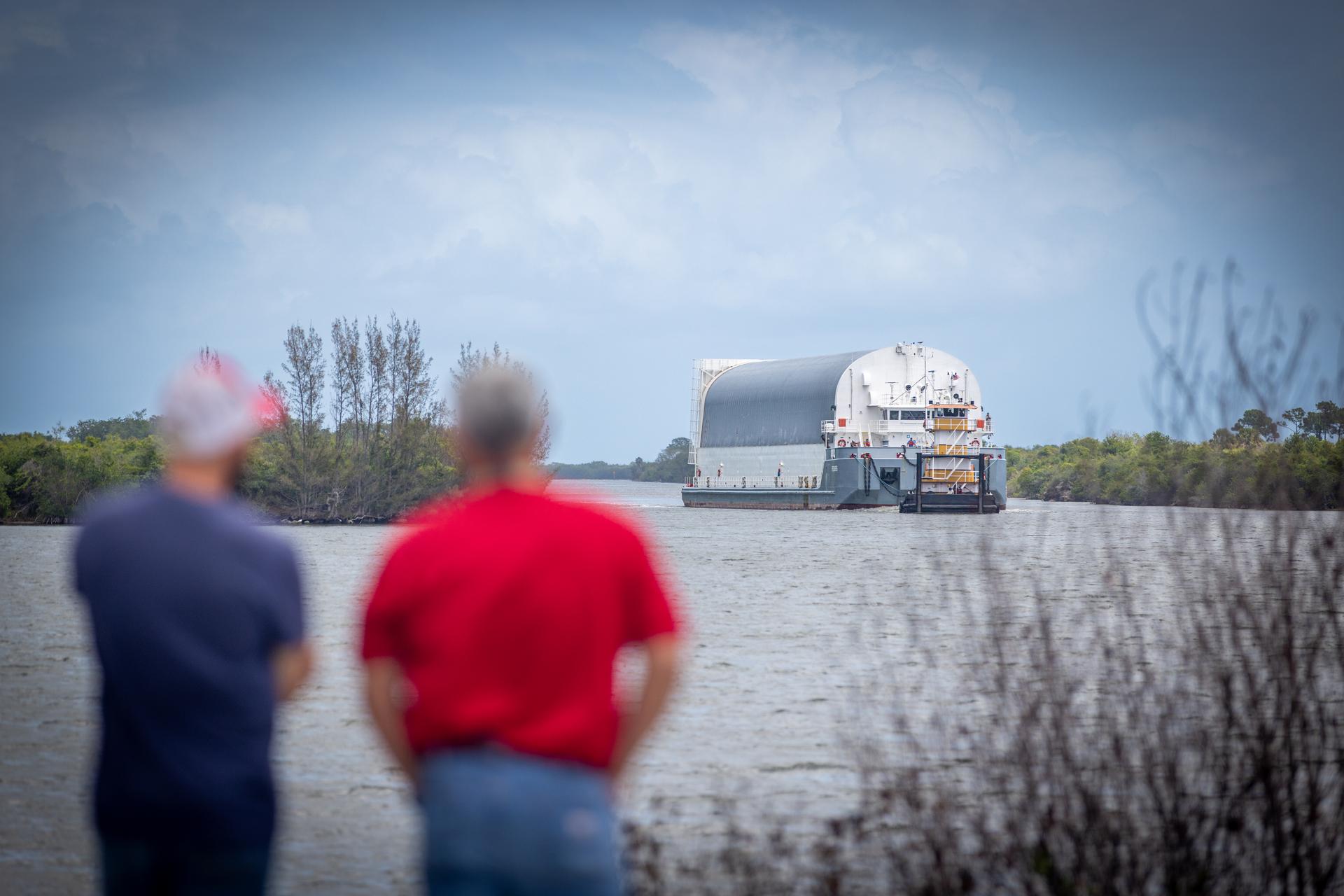
NASA’s Pegasus barge, carrying the top four-fifths of the agency’s SLS (Space Launch System) core stage for the Artemis III mission, arrives at NASA’s Kennedy Space Center Complex 39 turn basin wharf in Florida on Monday, April 27, 2026. Artemis III will launch astronauts to Earth’s orbit aboard the Orion spacecraft on top of SLS to test rendezvous and docking capabilities between Orion and commercial spacecraft needed to land Artemis IV astronauts on the Moon in 2028.
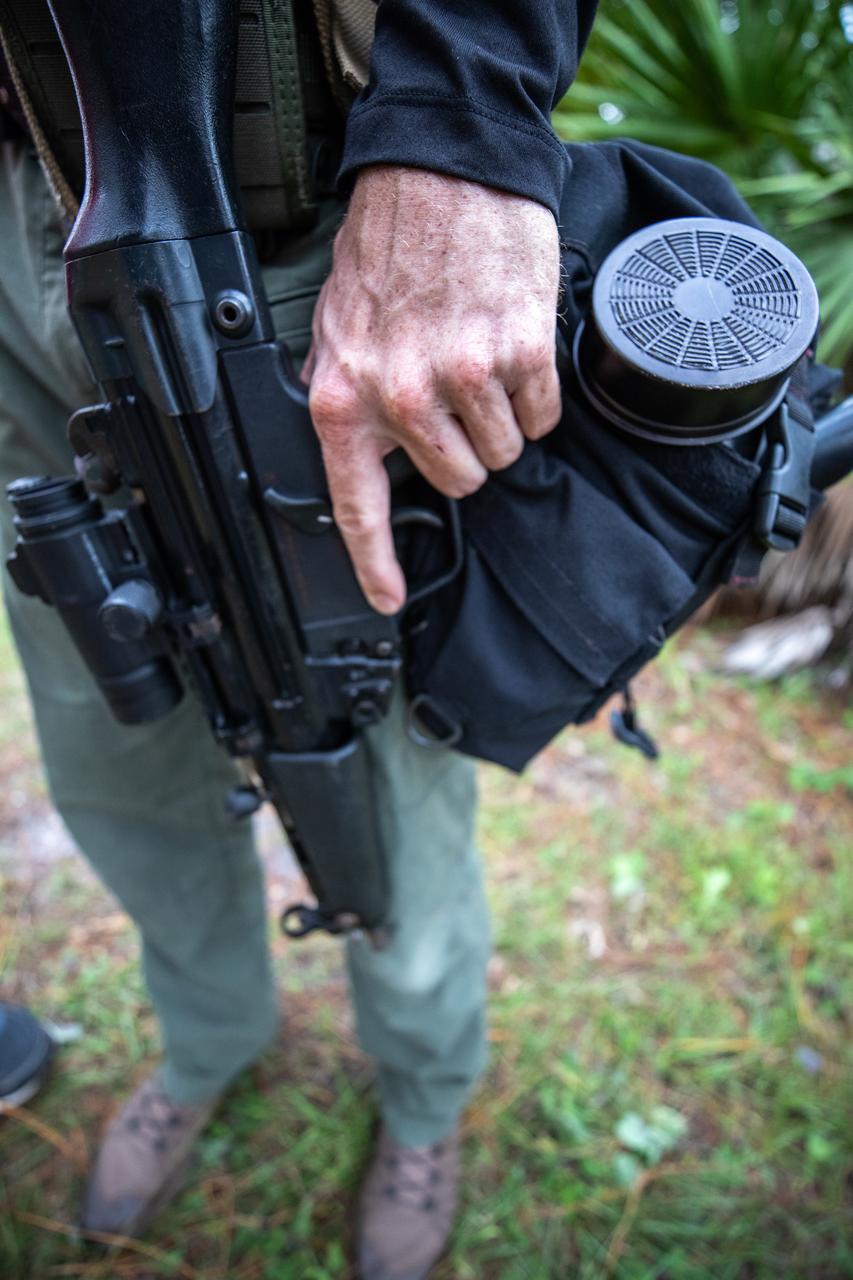
A member of NASA Kennedy Space Center's Emergency Response Team prepares to compete in the 37th Annual SWAT Round-Up International at the Lawson Lamar Firearms and Tactical Training Center in Orlando, Florida. The competition was held Nov. 10 to 15, 2019, and featured five different tactical challenges. Special pellets, rather than real bullets, are used during the competition. Kennedy's ERT members exchanged best practices and competed with more than 50 teams from the U.S. and around the world.
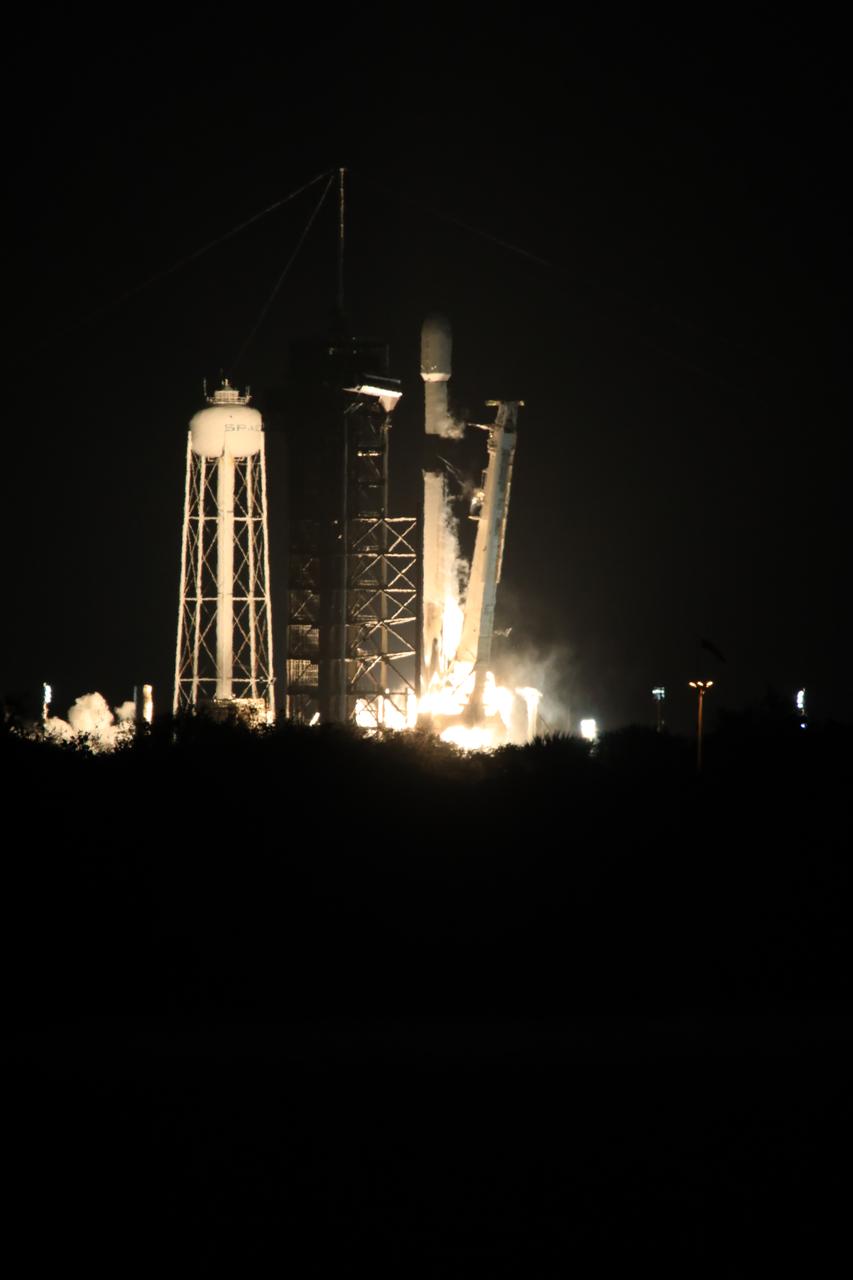
The Blue Ghost lander, part of NASA’s CLPS (Commercial Lunar Payload Services) initiative, lifts off atop a SpaceX Falcon 9 rocket on Wednesday, Jan. 15, 2025 from Launch Complex 39A at NASA’s Kennedy Space Center in Florida on a journey to the Moon. The Firefly Aerospace lander, carrying 10 NASA science and technology instruments, will help to further understand the Moon and help prepare for future human missions.
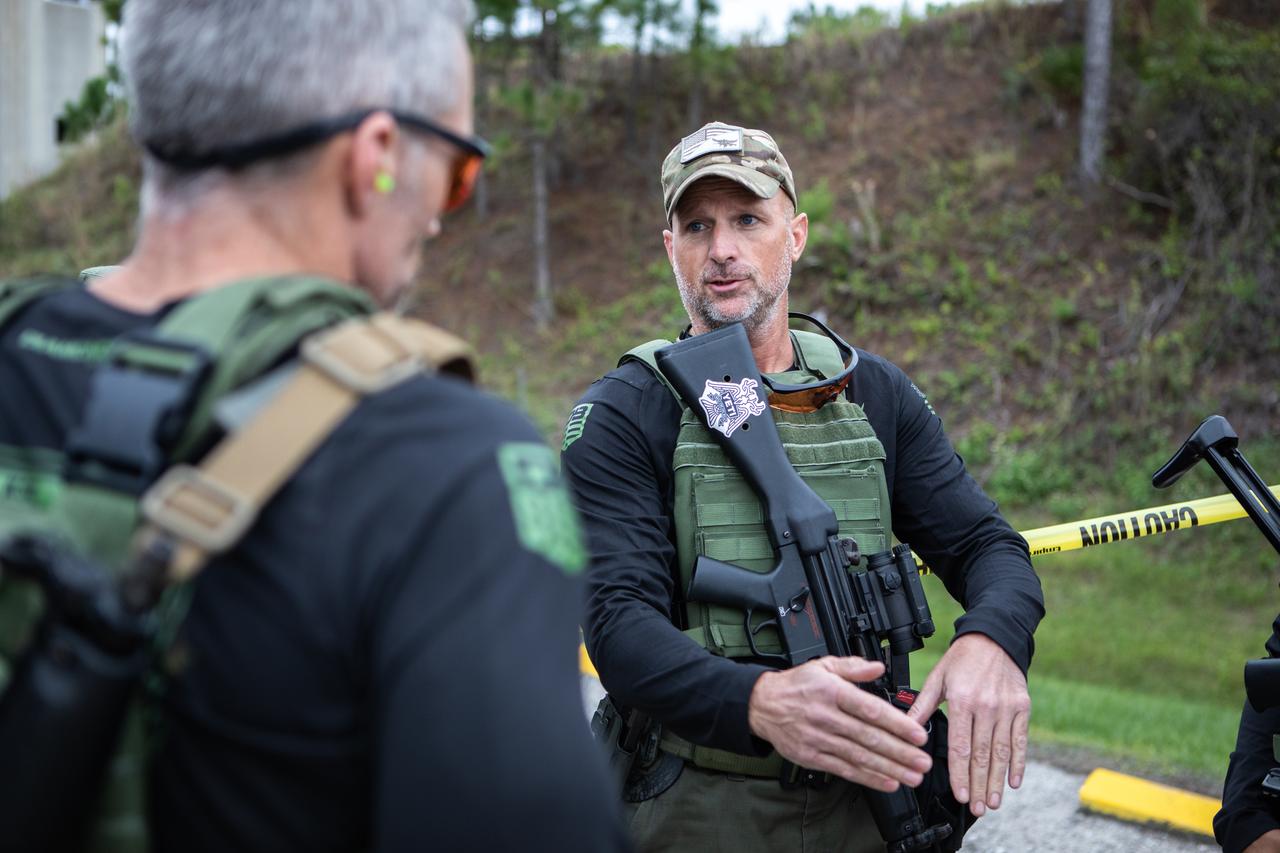
Members of NASA Kennedy Space Center's Emergency Response Team prepare for the next tactical challenge at the 37th Annual SWAT Round-Up International at the Lawson Lamar Firearms and Tactical Training Center in Orlando, Florida. The competition was held Nov. 10 to 15, 2019, and featured five different tactical challenges. Kennedy's ERT members exchanged best practices and competed with more than 50 teams from the U.S. and around the world.

NASA’s top four-fifths of the SLS (Space Launch System) core stage for the Artemis III mission arrives in the transfer aisle of the Vehicle Assembly Building at the agency’s Kennedy Space Center in Florida where teams with Boeing will finish integrating it with the remaining core stage segments prior to rocket stacking operations. Artemis III will launch astronauts to Earth’s orbit aboard the Orion spacecraft on top of SLS to test rendezvous and docking capabilities between Orion and commercial spacecraft needed to land Artemis IV astronauts on the Moon in 2028.
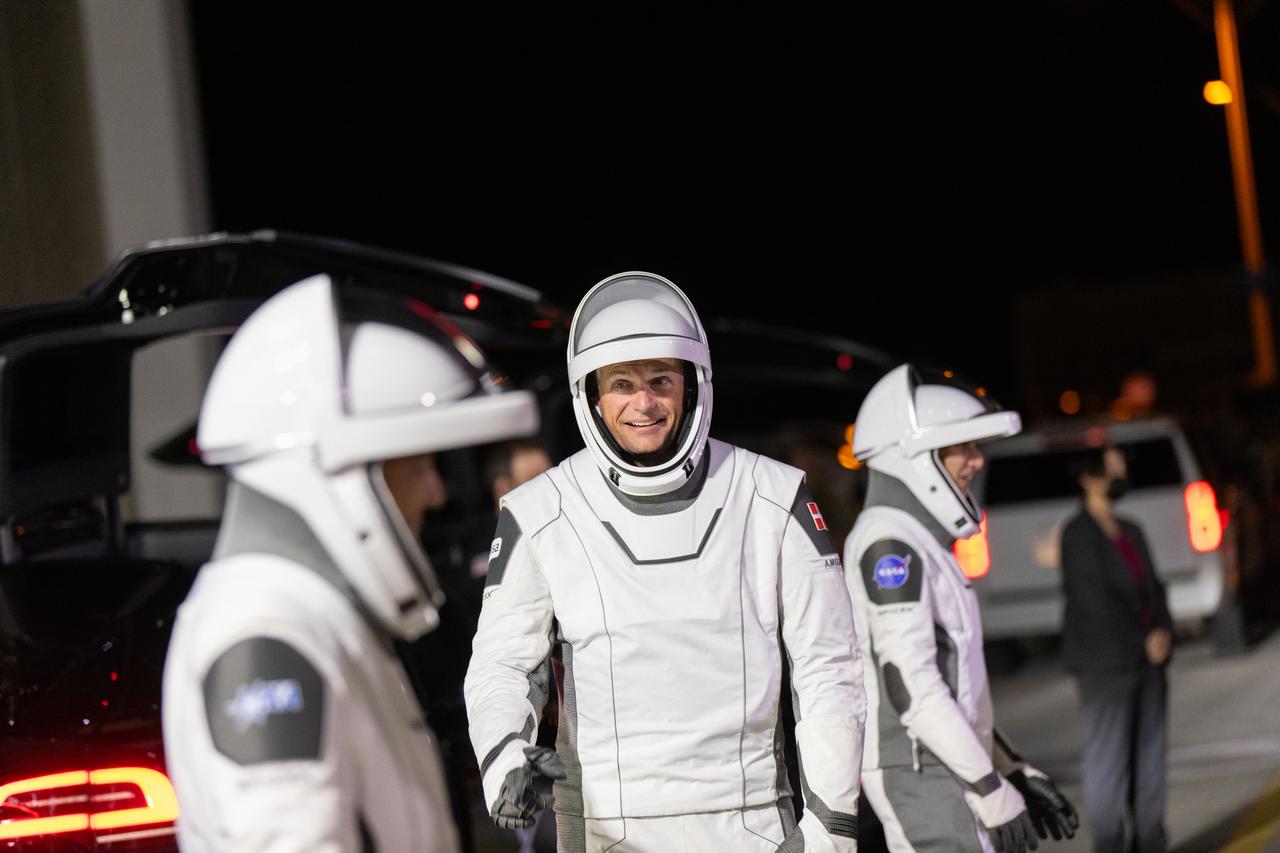
NASA’s SpaceX Crew-7 ESA (European Space Agency) astronaut Andreas Mogensen smiles outside of the Neil Armstrong Operations and Checkout Building at NASA’s Kennedy Space Center in Florida on Saturday, Aug. 26, 2023. Mogensen and his crewmates are preparing to get into the customized Tesla Model X vehicles that will transport them to Kennedy’s Launch Complex 39A. SpaceX’s Dragon spacecraft, powered by the company’s Falcon 9 rocket, will carry the four-person crew – which includes NASA astronaut Jasmin Moghbeli, JAXA (Japan Aerospace Exploration Agency) astronaut Satoshi Furukawa, and Roscosmos cosmonaut Konstantin Borisov – to the International Space Station as part of NASA’s Commercial Crew Program. Crew-7 is scheduled to launch at 3:27 a.m. EDT.
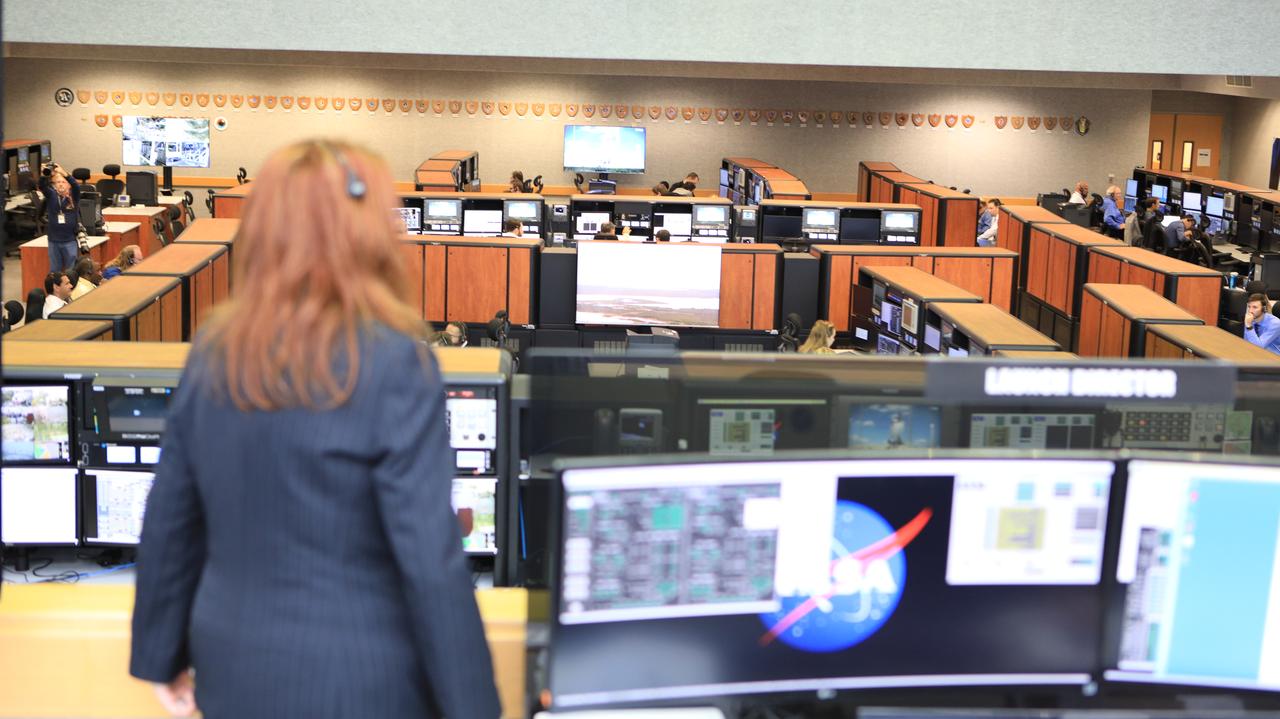
NASA Launch Director Charlie Blackwell-Thompson looks out over Firing Room 1 in the Launch Control Center at NASA’s Kennedy Space Center in Florida during a terminal countdown demonstration for Exploration Mission 1, or EM-1, on Dec. 14, 2018. The launch will be the first integrated test of the Space Launch System rocket and Orion spacecraft that will eventually take astronauts beyond low-Earth orbit to destinations such as the Moon and Mars. The countdown demonstration was intended to validate the launch team's capability to perform an EM-1 countdown and respond to challenges put into the system for practice.
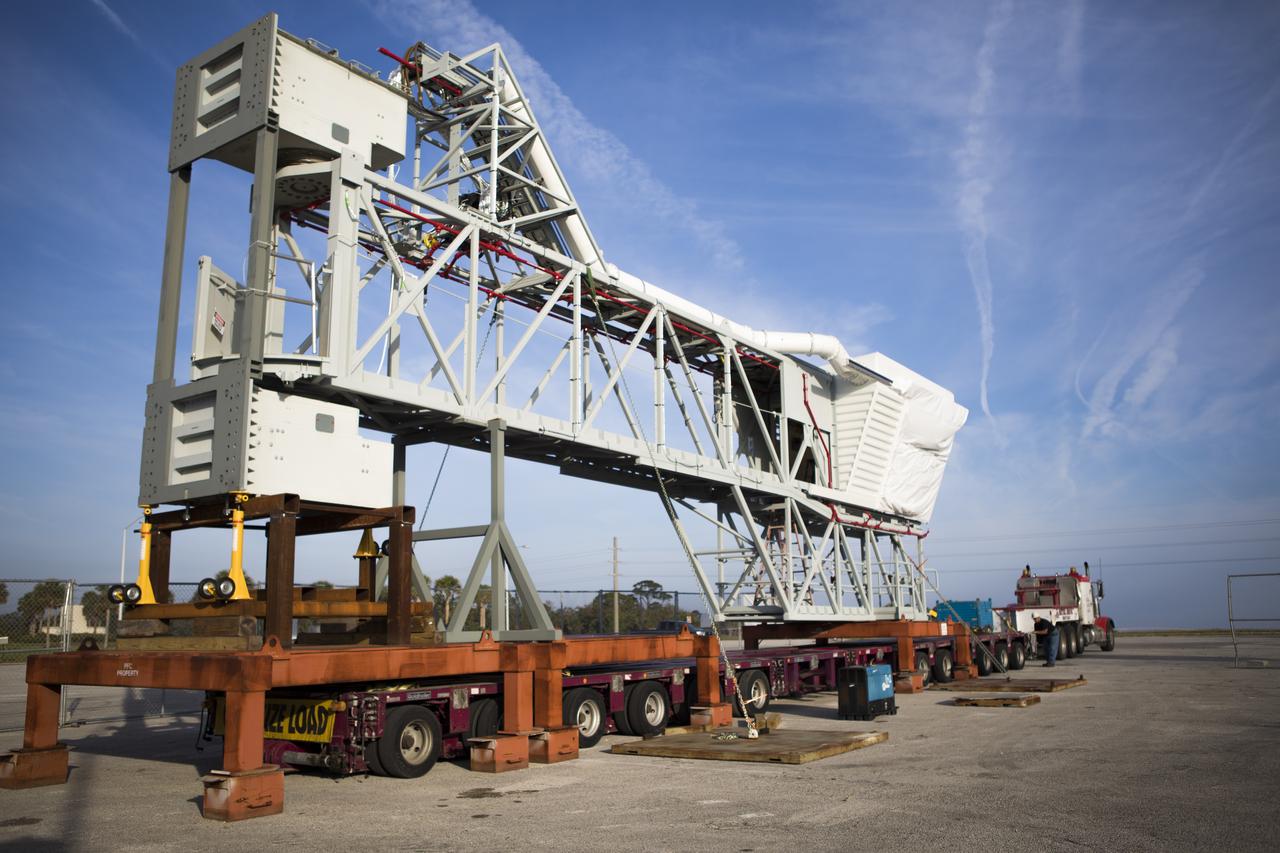
The Orion crew access arm, secured on a stand, is being prepared for its move from a storage location at NASA's Kennedy Space Center in Florida, to the mobile launcher (ML) tower near the Vehicle Assembly Building at the center. The crew access arm will be installed at about the 274-foot level on the tower. It will rotate from its retracted position and interface with the Orion crew hatch location to provide entry to the Orion crew module. The Ground Systems Development and Operations Program is overseeing installation of umbilicals and launch accessories on the ML tower.
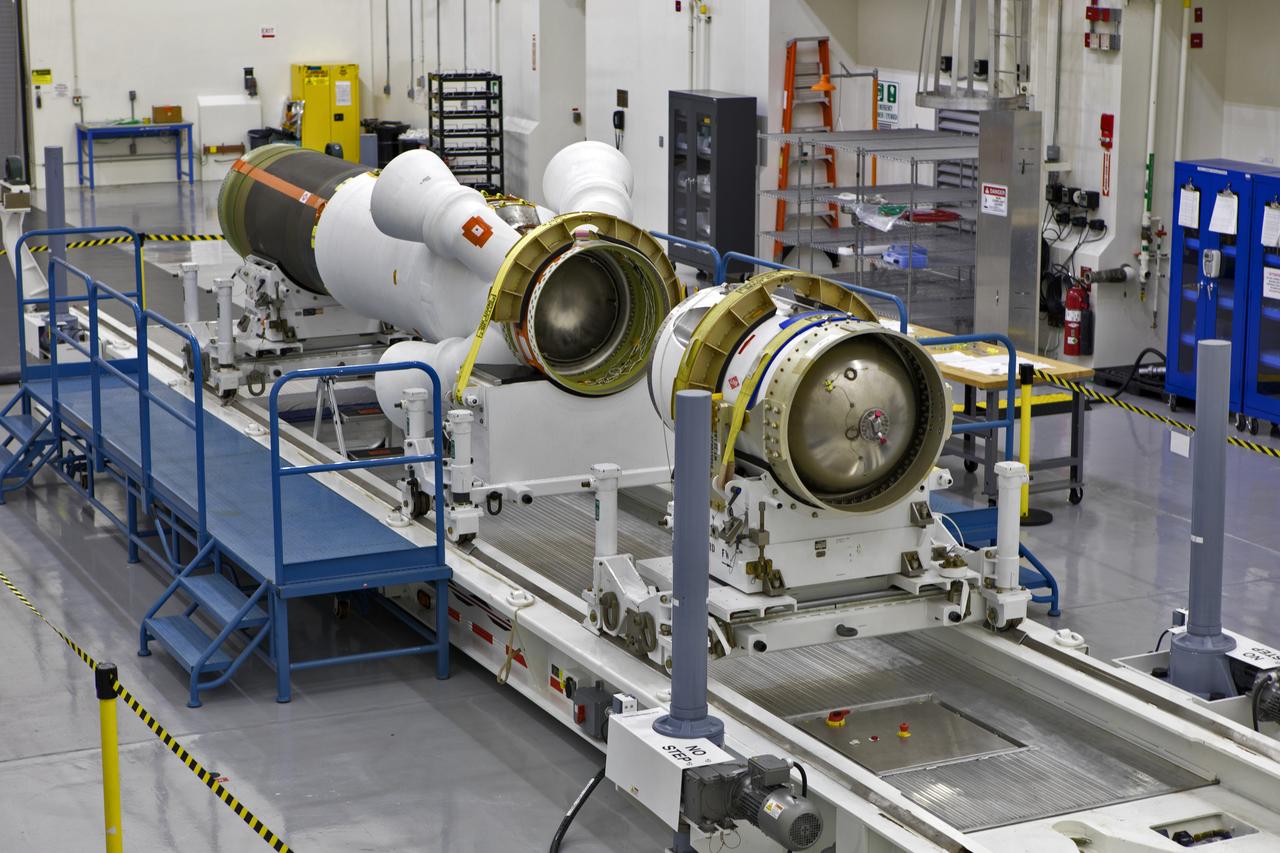
The jettison motor for Orion’s Launch Abort System (LAS) is shown inside the Launch Abort System Facility (LASF) at NASA’s Kennedy Space Center in Florida. The motor, which arrived at Kennedy on Sept. 10, 2018, will be stored in the LASF until processing for a full-stress test of the LAS called Ascent Abort-2 (AA-2), scheduled for April 2019. Designed and built by NASA and Lockheed Martin, the LAS will protect astronauts if a problem arises during launch by pulling the spacecraft away from a failing rocket. The jettison motor is one of three solid propellant rocket motors in the LAS (the abort motor and attitude control motor are the other two). The jettison motor will pull the LAS away from the crew module, allowing Orion’s parachutes to deploy and the spacecraft to safely land in the ocean.
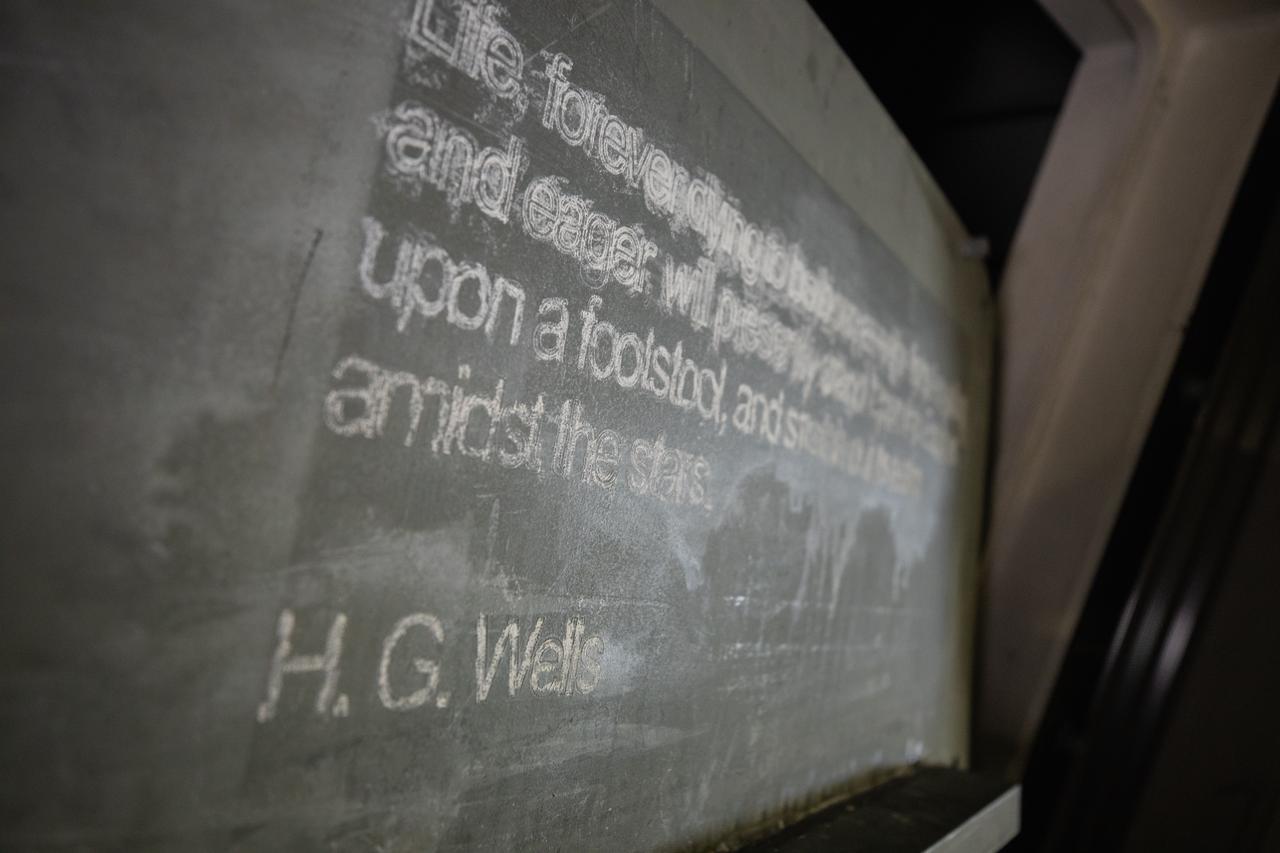
Each of the eight haunch access doors located in the mobile launcher platform contains an inspirational quote related to space travel. The quotes are from John F. Kennedy, H.G. Wells and Werner Von Braun, among others. The heavy metal doors will be bolted in place to protect electrical and support systems during liftoff of the Space Launch System rocket and Orion spacecraft.
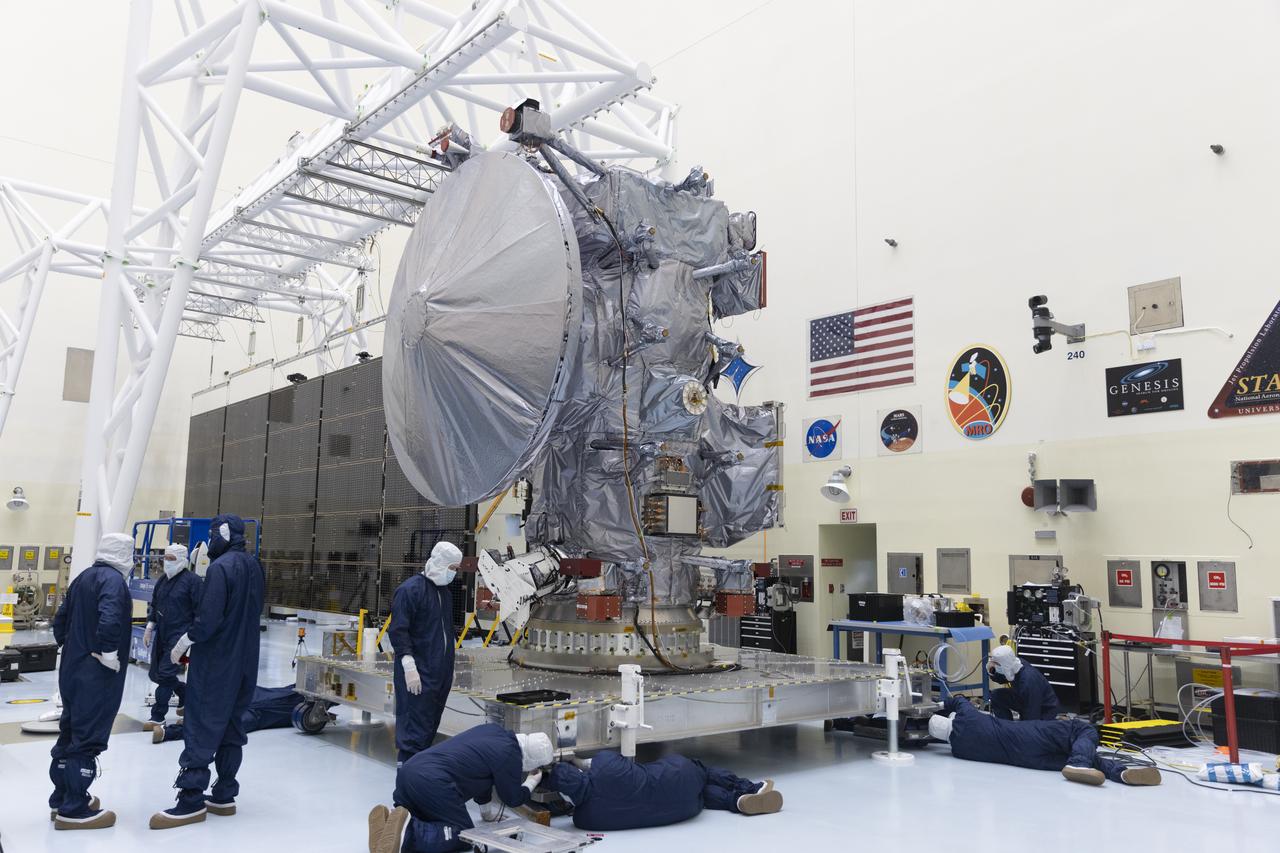
Technicians move NASA’s Europa Clipper spacecraft inside the Payload Hazardous Servicing Facility to accommodate installation of its five-panel solar array at the agency’s Kennedy Space Center in Florida on Thursday, Aug. 1, 2024. After moving the spacecraft, the team had to precisely align the spacecraft in preparation for the installation. The huge arrays – spanning more than 100 feet when fully deployed, or about the length of a basketball court – will collect sunlight to power the spacecraft as it flies multiple times around Jupiter’s icy moon, Europa, conducting science investigations to determine its potential to support life.
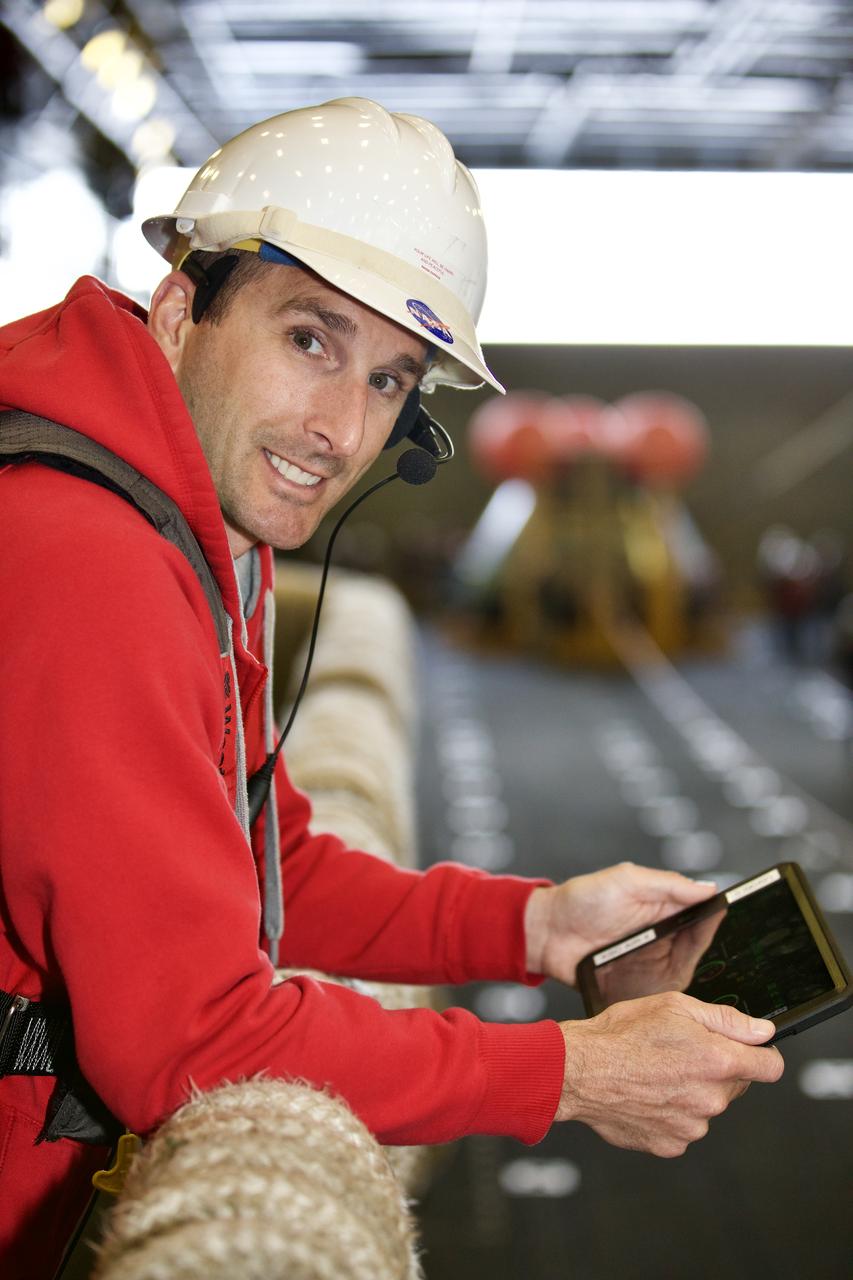
Jeremy Parr participates in the training of new Landing and Recovery team members during Underway Recovery Test-8. NASA is preparing for an Orion splashdown in the Pacific Ocean after Artemis I.
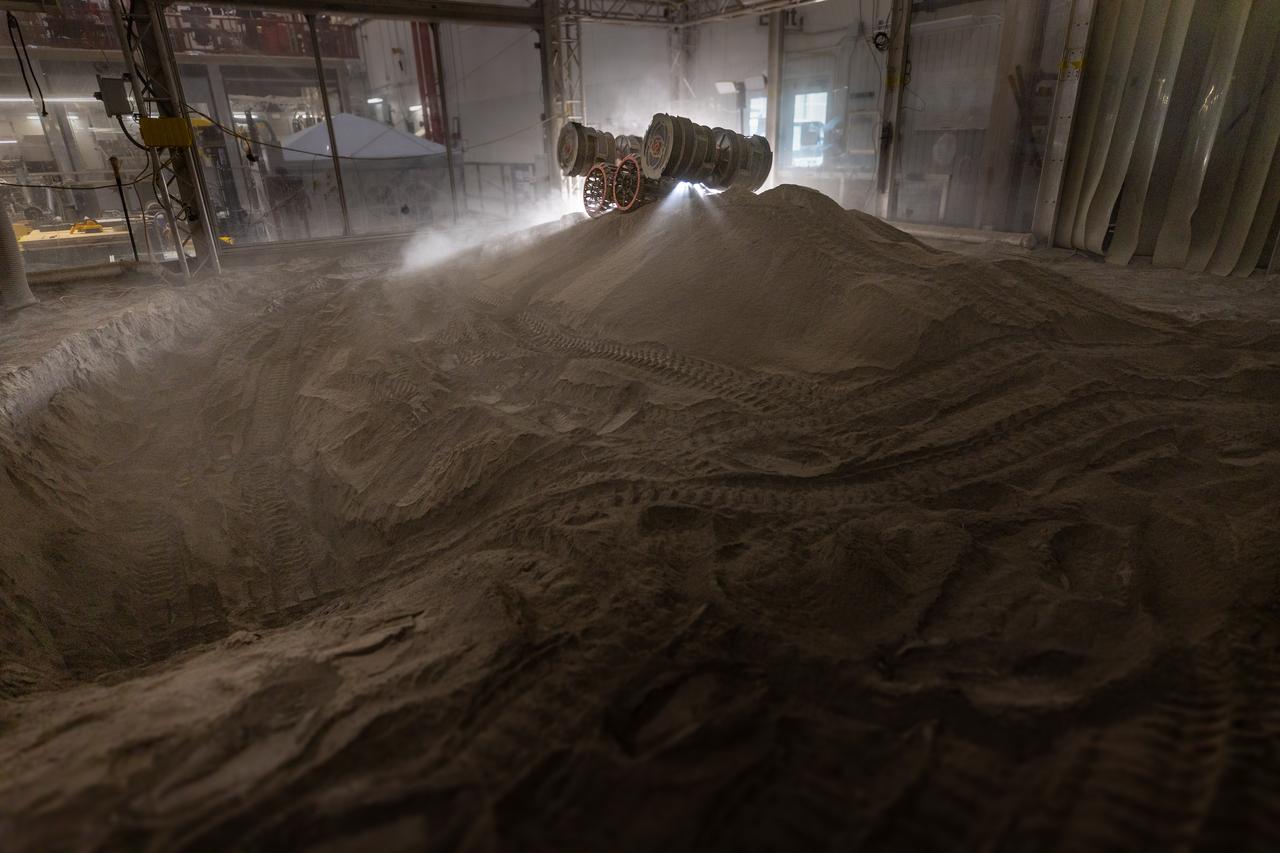
NASA’s RASSOR (Regolith Advanced Surface Systems Operations Robot) manipulates simulated regolith, or lunar dust found on the Moon’s surface, to create a three-foot berm during a site preparation test inside of the Granular Mechanics and Regolith Operations Lab at the agency’s Kennedy Space Center in Florida on Tuesday, June 3, 2025. The opposing motion of the bucket drums helps RASSOR grip the surface in low-gravity environments like the Moon or Mars. With this unique capability, RASSOR can traverse the rough surface to dig, load, haul, and dump regolith that could be used in construction or broken down into hydrogen, oxygen, or water, resources critical for sustaining human presence. RASSOR represents an earlier generation technology that informed the development of NASA’s IPEx (In-Situ Resource Utilization Pilot Excavator), serving as a precursor and foundational platform for the advanced excavation systems and autonomous capabilities now being demonstrated by this Moon-mining robot.
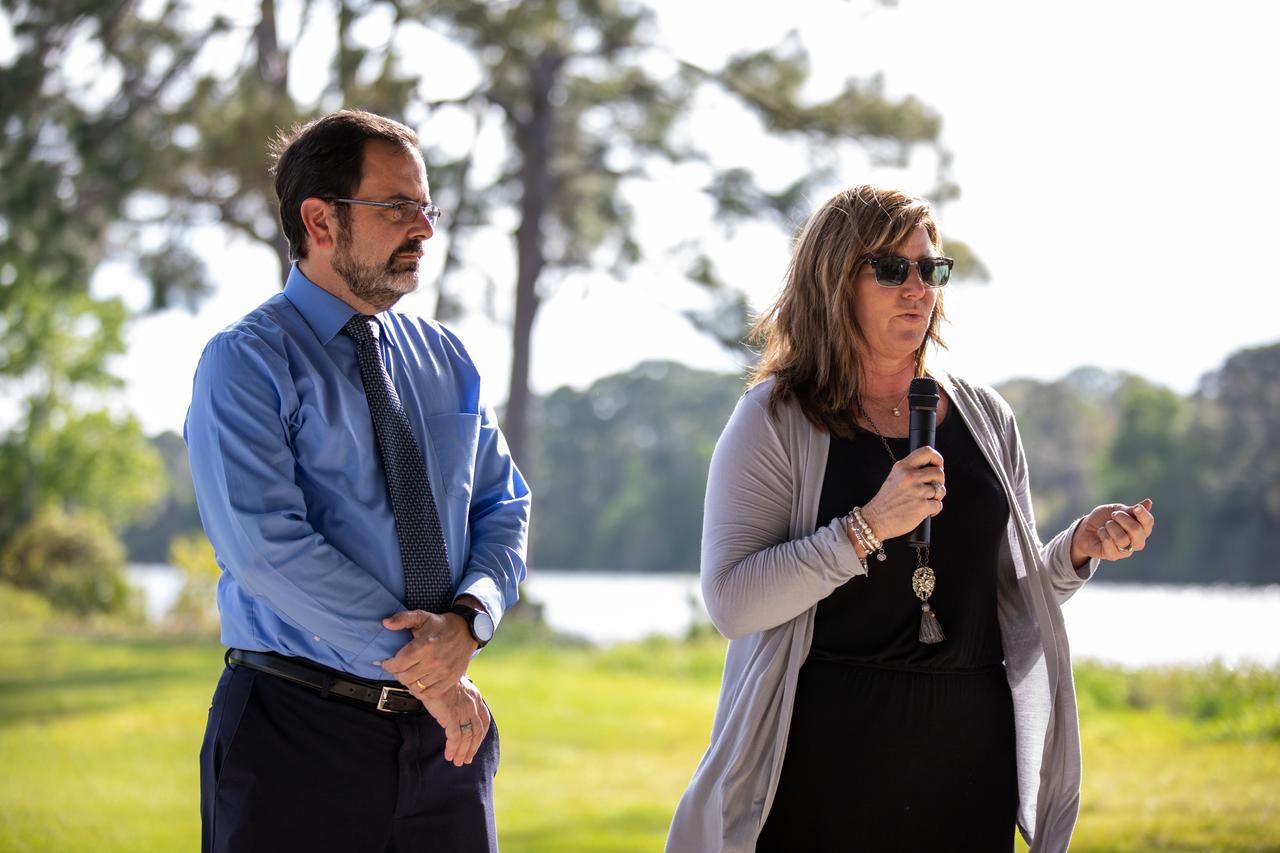
Deputy Director Ronnie Rodriguez, left, and Director Jennifer Kunz of Safety and Mission Assurance at NASA’s Kennedy Space Center in Florida, speak to Kennedy employees during a Safety and Health Days celebration on March 5, 2020. Taking place March 2 through March 6, Safety and Health Days provides Kennedy employees with a variety of presentations to attend – all of which focus on how to maintain a safe and healthy workforce. The celebration on March 5 took place at the spaceport’s KARS Park II and was open for all employees to attend.
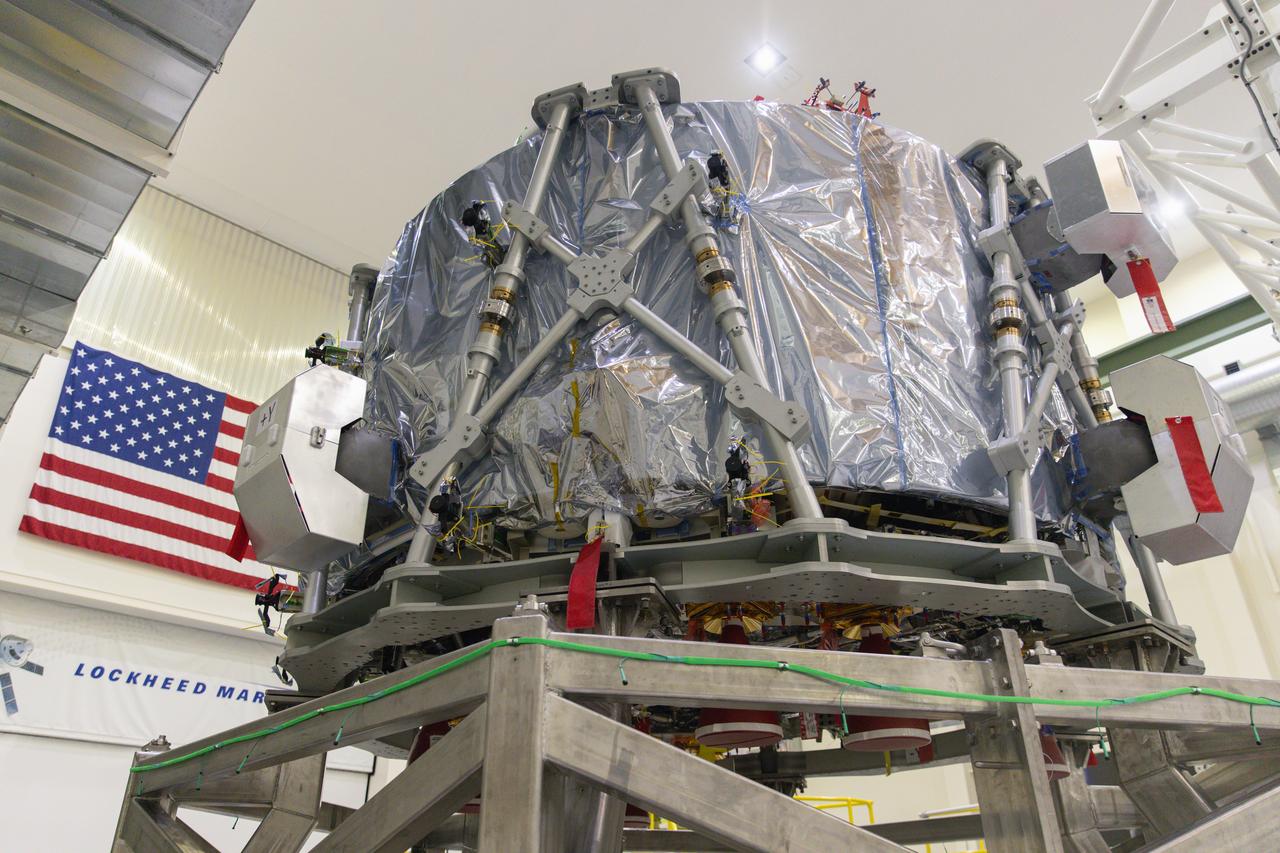
Teams from NASA, ESA (European Space Agency), and Airbus prepare to integrate European Service Module 3 to the crew module adapter on Tuesday, Sept. 17, 2024, inside the Neil A. Armstrong Operations and Checkout Building at NASA’s Kennedy Space Center in Florida. The integrated hardware provides propulsion, electrical power, and other important elements for the Orion spacecraft’s Artemis III campaign to the lunar South Pole region of the Moon.
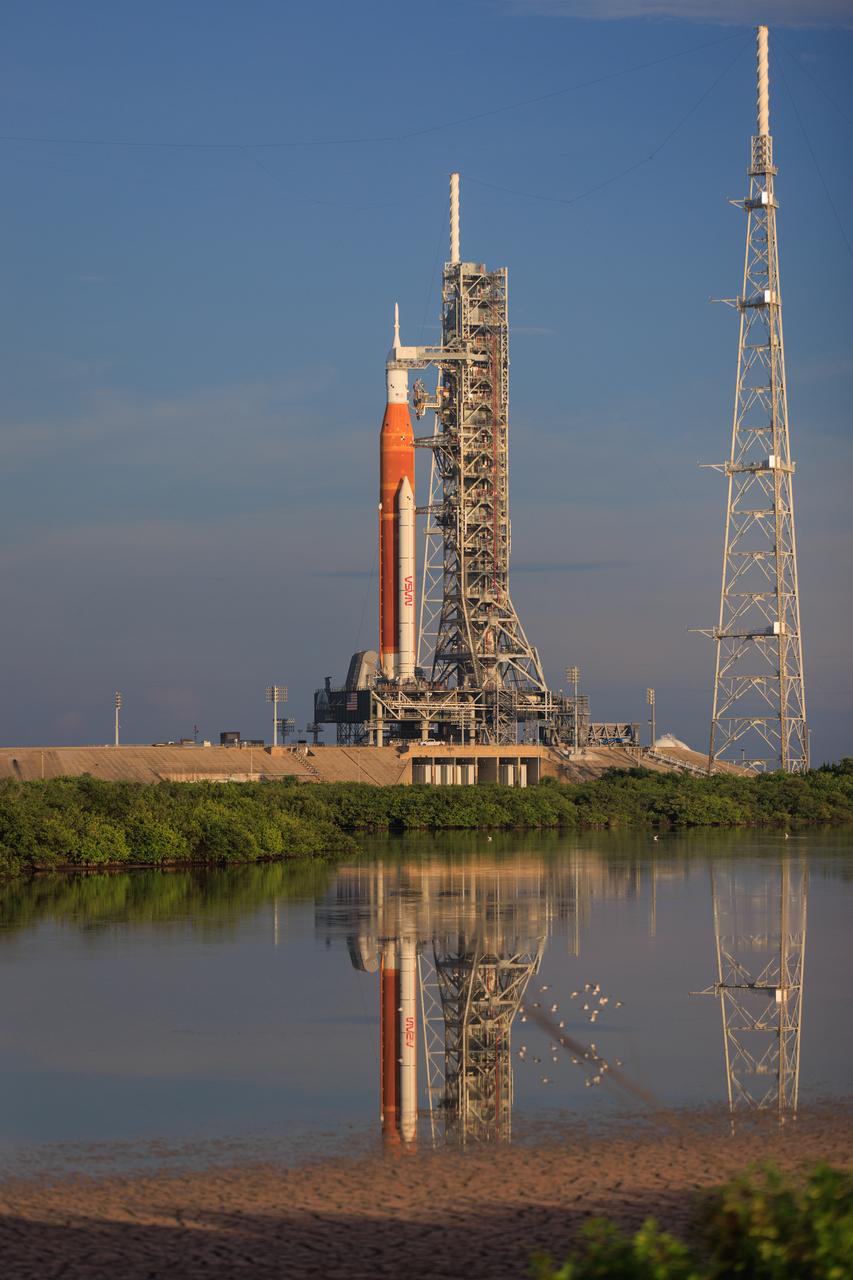
NASA’s Artemis I Space Launch System and Orion spacecraft atop the mobile launcher on the pad at Launch Complex 39B at the agency’s Kennedy Space Center in Florida are reflected in the nearby waterway on Aug. 19, 2022. Launch of Artemis I is scheduled for no earlier than Aug. 29, 2022, at 8:33 a.m. EDT. The first in a series of increasingly complex missions, Artemis I will provide a foundation for human deep space exploration and demonstrate our commitment and capability to extend human presence to the Moon and beyond. The primary goal of Artemis I is to thoroughly test the integrated systems before crewed missions by operating the spacecraft in a deep space environment, testing Orion’s heat shield, and recovering the crew module after reentry, descent, and splashdown.
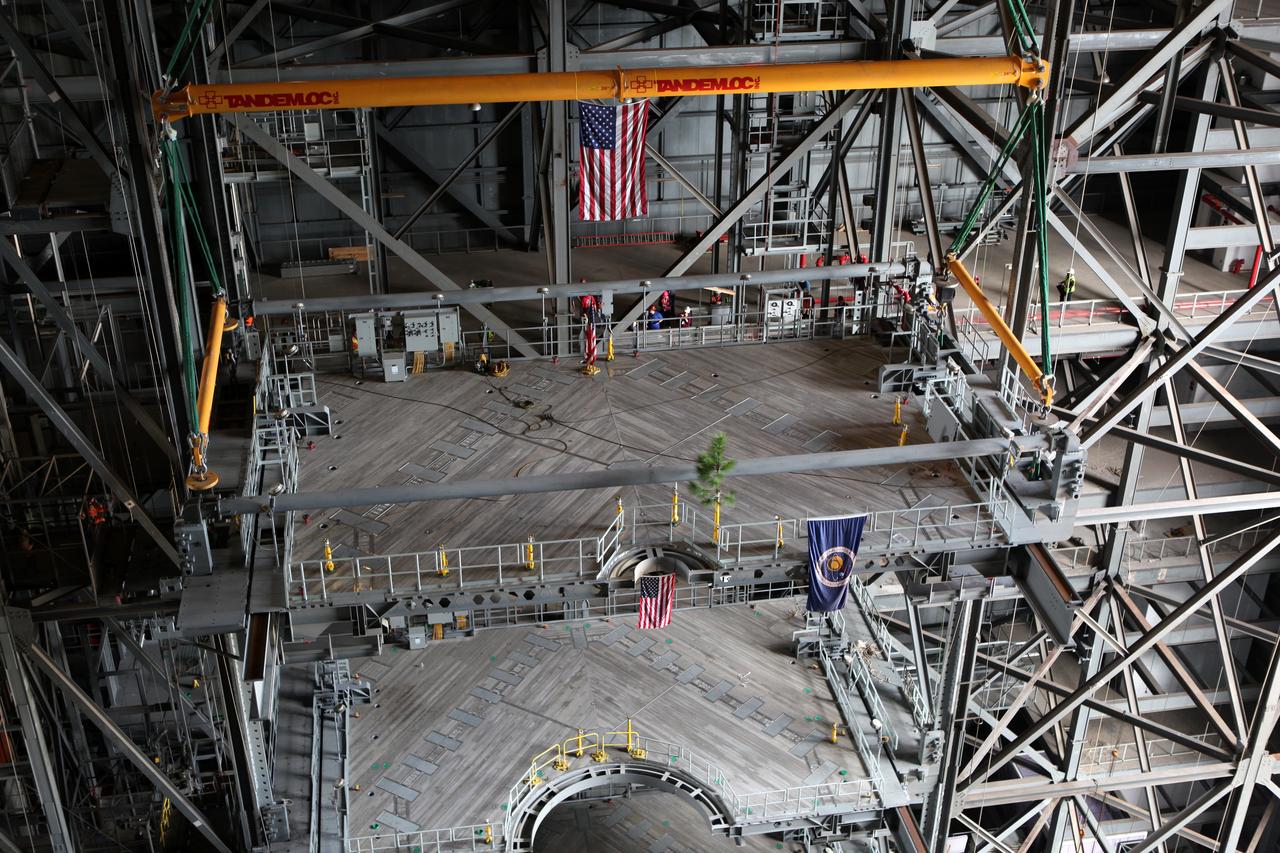
High up in the Vehicle Assembly Building (VAB) at NASA's Kennedy Space Center in Florida, a crane lowers the final work platform, A north, for installation in High Bay 3. The platform will be installed and secured on its rail beam high up on the north wall of the high bay. In view on the platform are the American flag and a small tree. The installation of the final topmost level completes the 10 levels of work platforms, 20 platform halves altogether, that will surround NASA's Space Launch System rocket and the Orion spacecraft and allow access during processing for missions, including the first uncrewed flight test of Orion atop the SLS rocket in 2018. The A-level platforms will provide access to the Orion spacecraft's Launch Abort System for Orion lifting sling removal and installation of the closeout panels. The Ground Systems Development and Operations Program, with support from the center's Engineering Directorate, is overseeing upgrades and modifications to the VAB, including installation of the new work platforms.
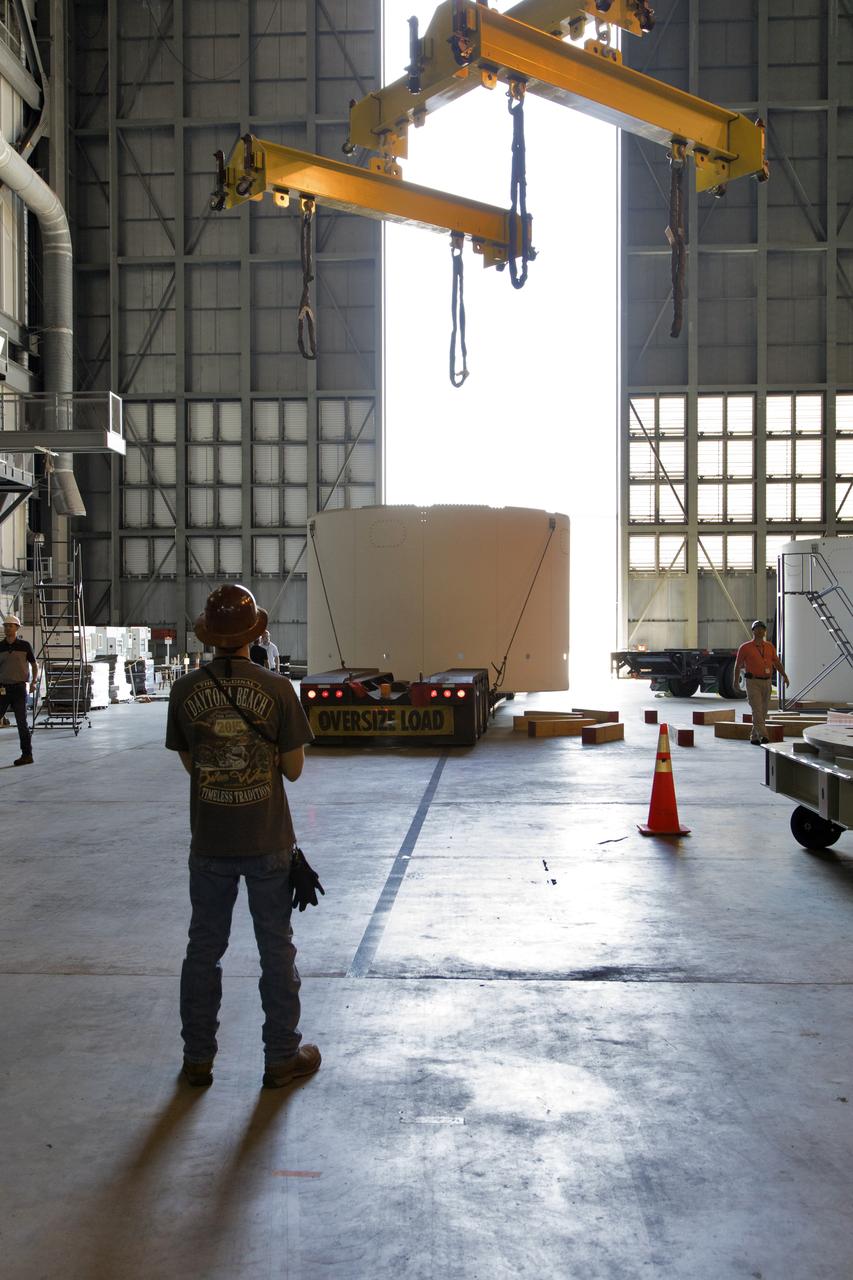
The third and final aeroshell for Orion's Launch Abort System (LAS) arrives by flatbed truck in High Bay 4 of the Vehicle Assembly Building on July 12, 2018, at NASA's Kennedy Space Center in Florida. The aeroshell was shipped from EMF Inc. on nearby Merritt Island. It will be offloaded and secured in the high bay. The aeroshells will be stacked and prepared for a full-stress test of the LAS, called Ascent Abort-2 (AA-2) flight test, scheduled for April 2019. During the test, a booster will launch from Space Launch Complex 46 at Cape Canaveral Air Force Station, carrying a fully functional LAS and a 22,000-pound Orion test vehicle to an altitude of 31,000 feet and traveling at more than 1,000 miles an hour. The test will verify the LAS can steer the crew module and astronauts aboard to safety in the event of an issue with the Space Launch System (SLS) rocket when the spacecraft is under the highest aerodynamic loads it will experience during a rapid climb into space. Orion is being prepared for its first integrated uncrewed flight atop the SLS on Exploration Mission-1.
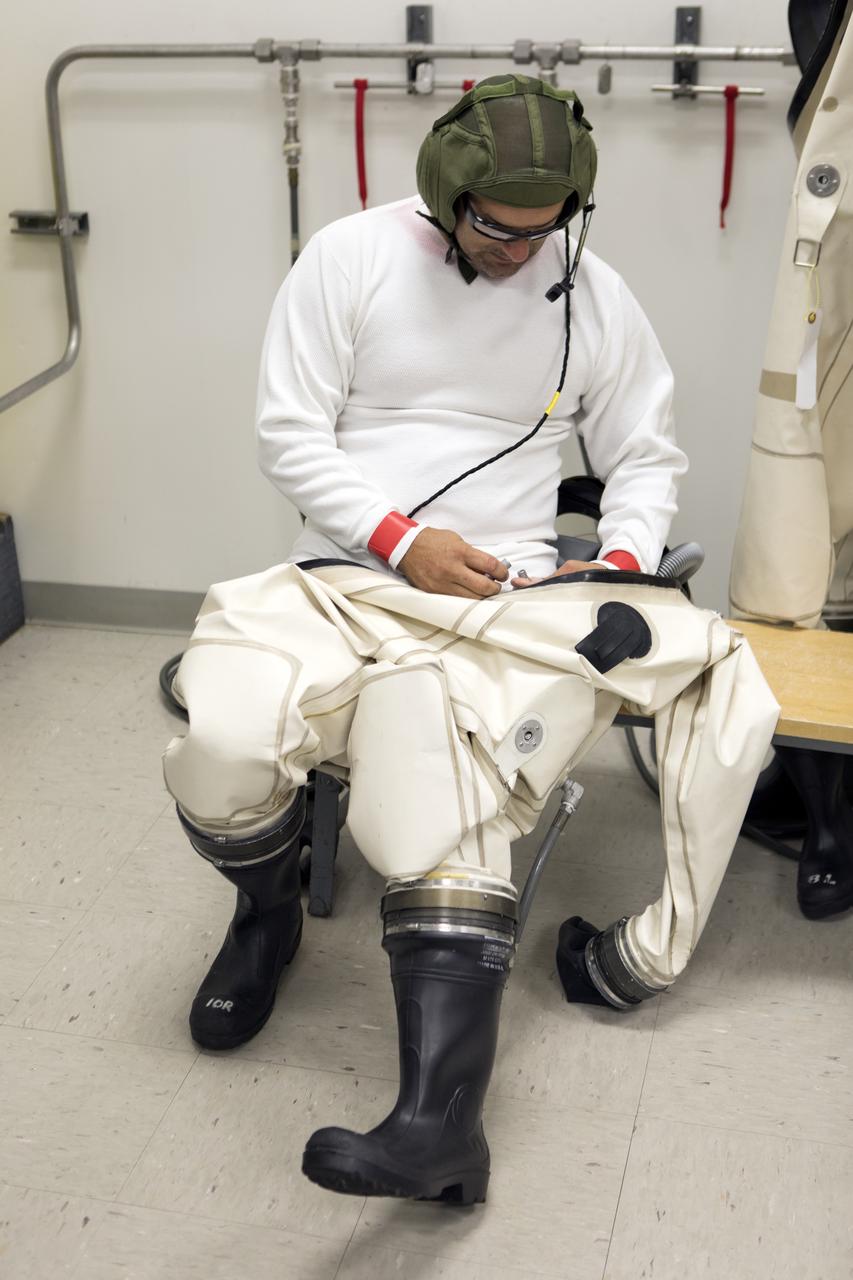
An operator dons a Self-Contained Atmospheric Protective Ensemble (SCAPE) suit inside a room in the Multi-Payload Processing Facility (MPPF) at NASA's Kennedy Space Center in Florida on Oct. 31, 2018. SCAPE operators, wearing the suits, will participate in a hypergolic systems hot flow test at the MPPF. The test will serve as operational validation of the hypergol subsystem and demonstrate that the hypergols subsystem can service the Orion spacecraft, flow fuel at the required rates, drain and de-service the system, and meet the intended timeline. SCAPE suite are used in operations involving toxic propellants and are supplied with air either through a hardline or through a self-contained environmental control unit.
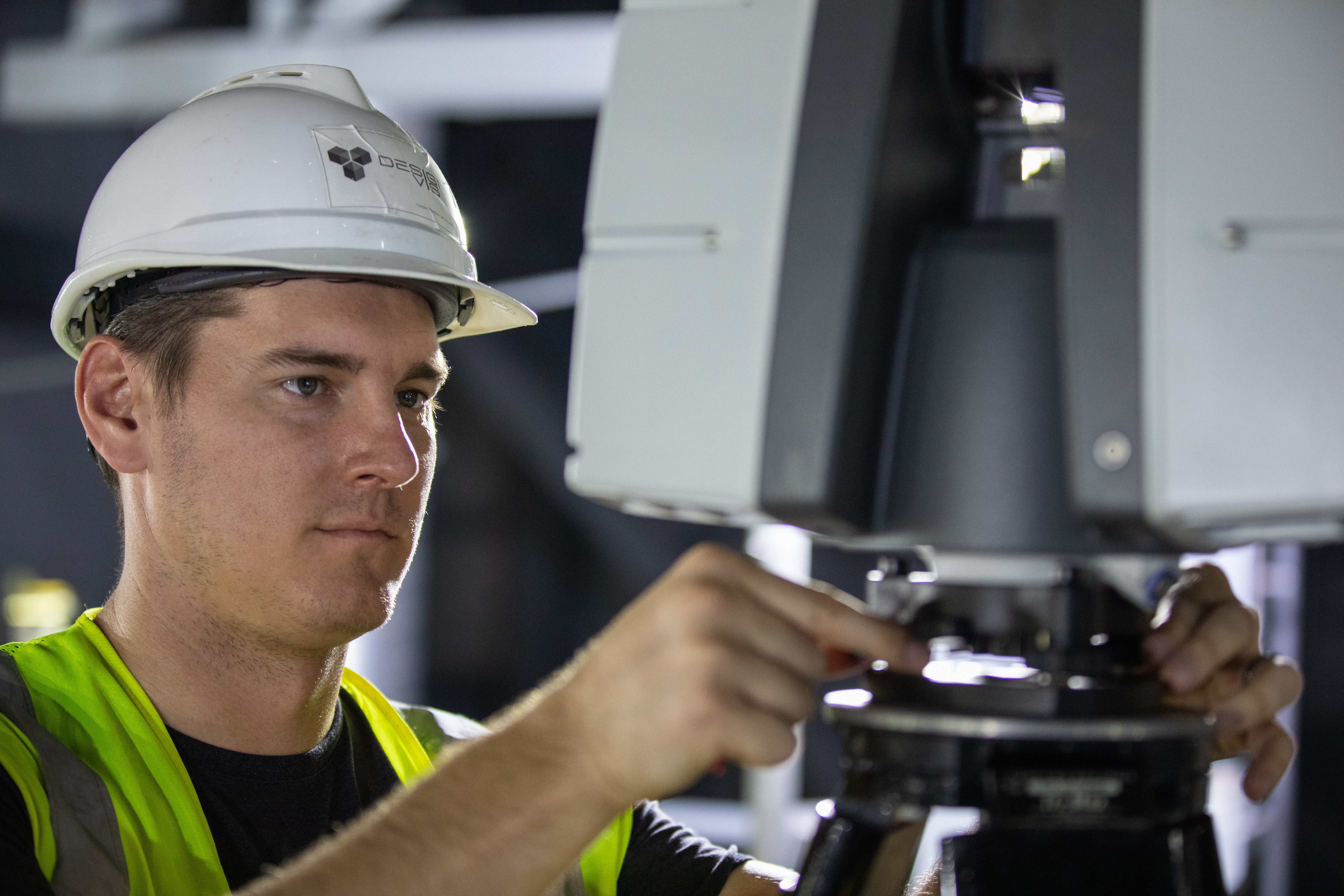
An engineer adjusts equipment from the Design Visualization Lab set up inside High Bay 3 of the Vehicle Assembly Building at NASA’s Kennedy Space Center on Oct. 14, 2020. The equipment will be used to do 3-D modeling of the mobile launcher that will carry the Space Launch System and Orion spacecraft to Launch Complex 39B for the Artemis I mission. Artemis I will test the Orion spacecraft and SLS as an integrated system ahead of crewed flights to the Moon. Under the Artemis program, NASA will land the first woman and the next man on the Moon in 2024.
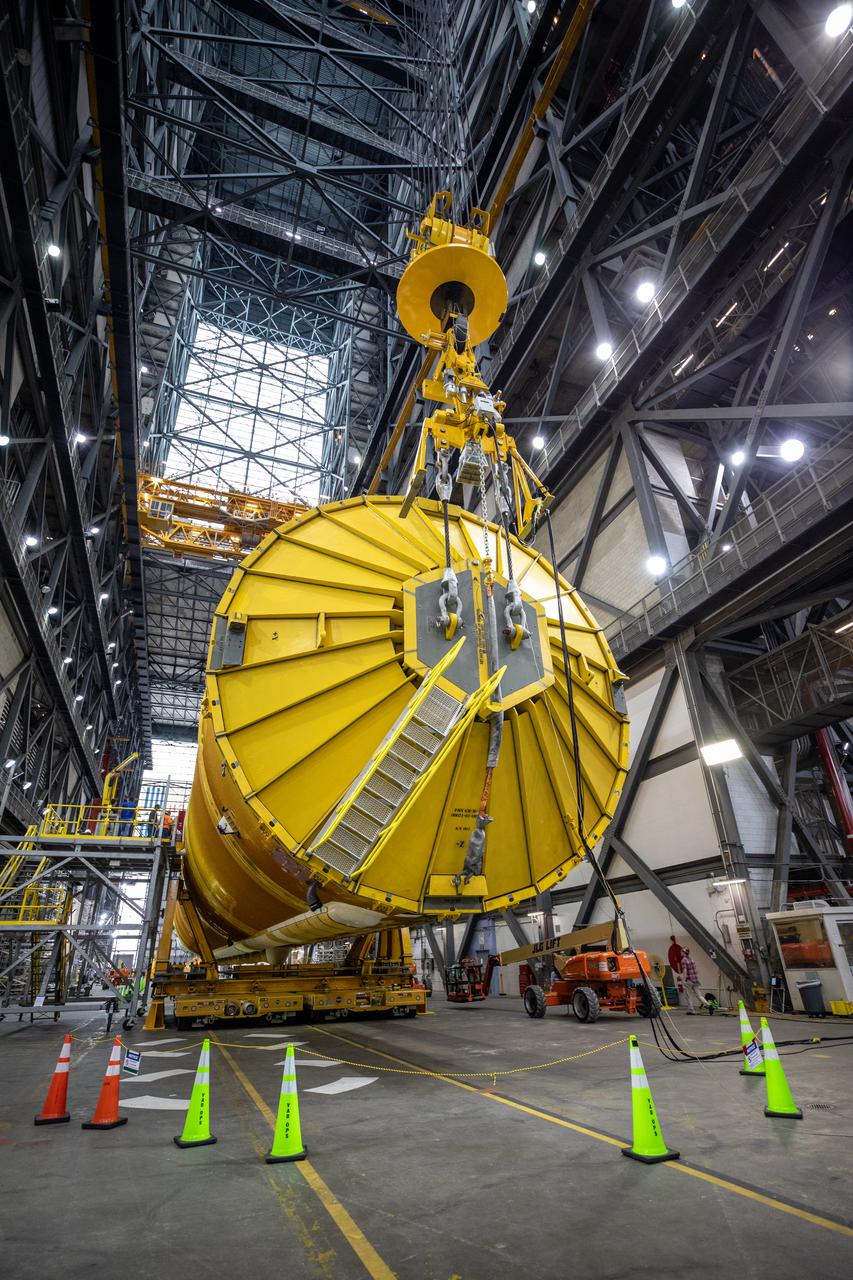
Teams with NASA’s Exploration Ground Systems and contractor Jacobs prepare to lift the Space Launch System (SLS) core stage and transfer it over to High Bay 3 in the Vehicle Assembly Building, where it will be placed atop the mobile launcher in between the twin solid rocket boosters, at NASA’s Kennedy Space Center in Florida on June 10, 2021. The 188,000-pound core stage, which is the largest part of the rocket, will provide more than 2 million pounds of thrust during launch and ascent, and coupled with the boosters, will provide more than 8.8 million pounds of thrust to send the Artemis I mission to space. The first in an increasingly complex series of missions, Artemis I will test SLS and the Orion spacecraft as an integrated system ahead of crewed flights to the Moon.
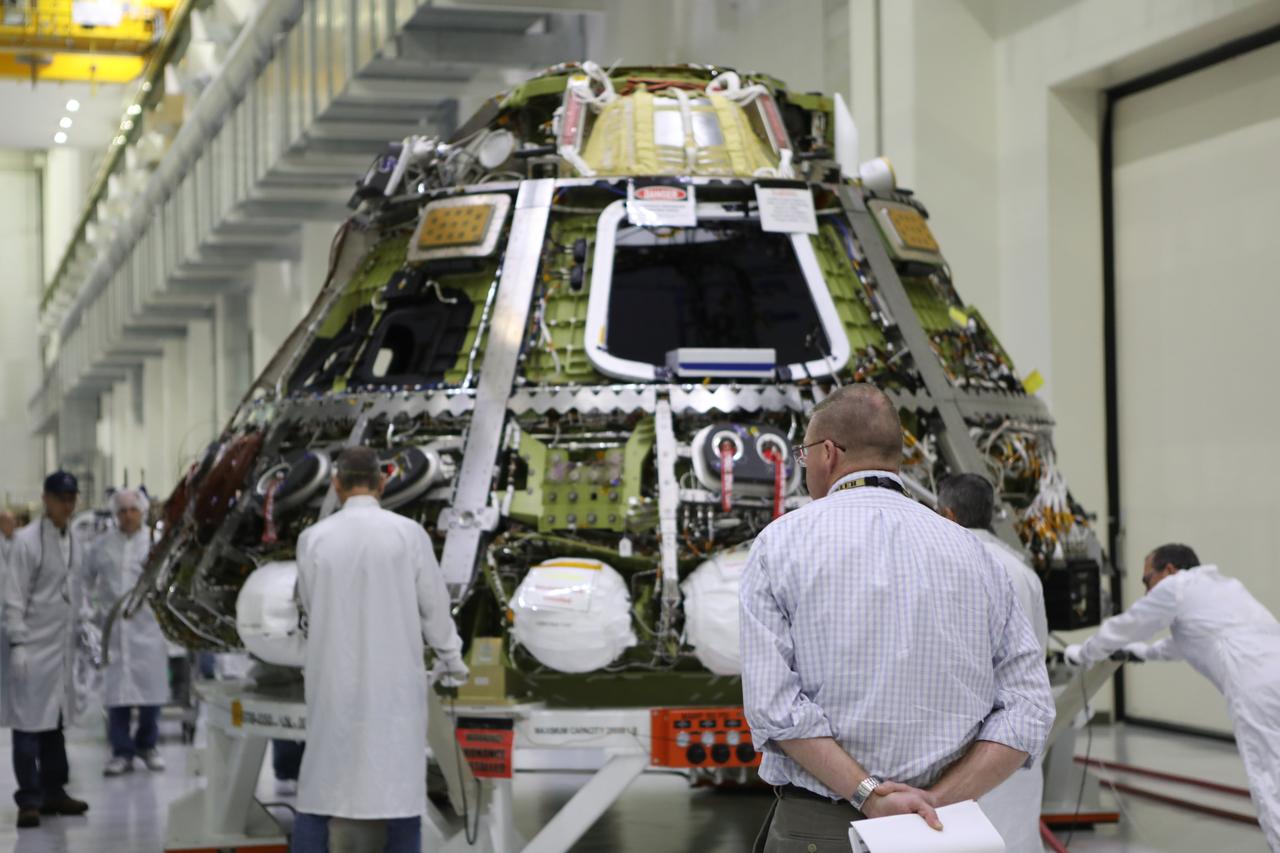
Technicians assist as the Orion crew module for Artemis I is moved toward the thermal chamber in the Neil Armstrong Operations and Checkout Building high bay at NASA's Kennedy Space Center in Florida on Nov. 17, 2017. The crew module will undergo a thermal cycle test to assess the workmanship of critical hardware and structural locations. The test also demonstrates crew module subsystem operations in a thermally stressing environment to confirm no damage or anomalous hardware conditions as a result of the test. The Orion spacecraft will launch atop NASA's Space Launch System rocket on its first uncrewed integrated flight.
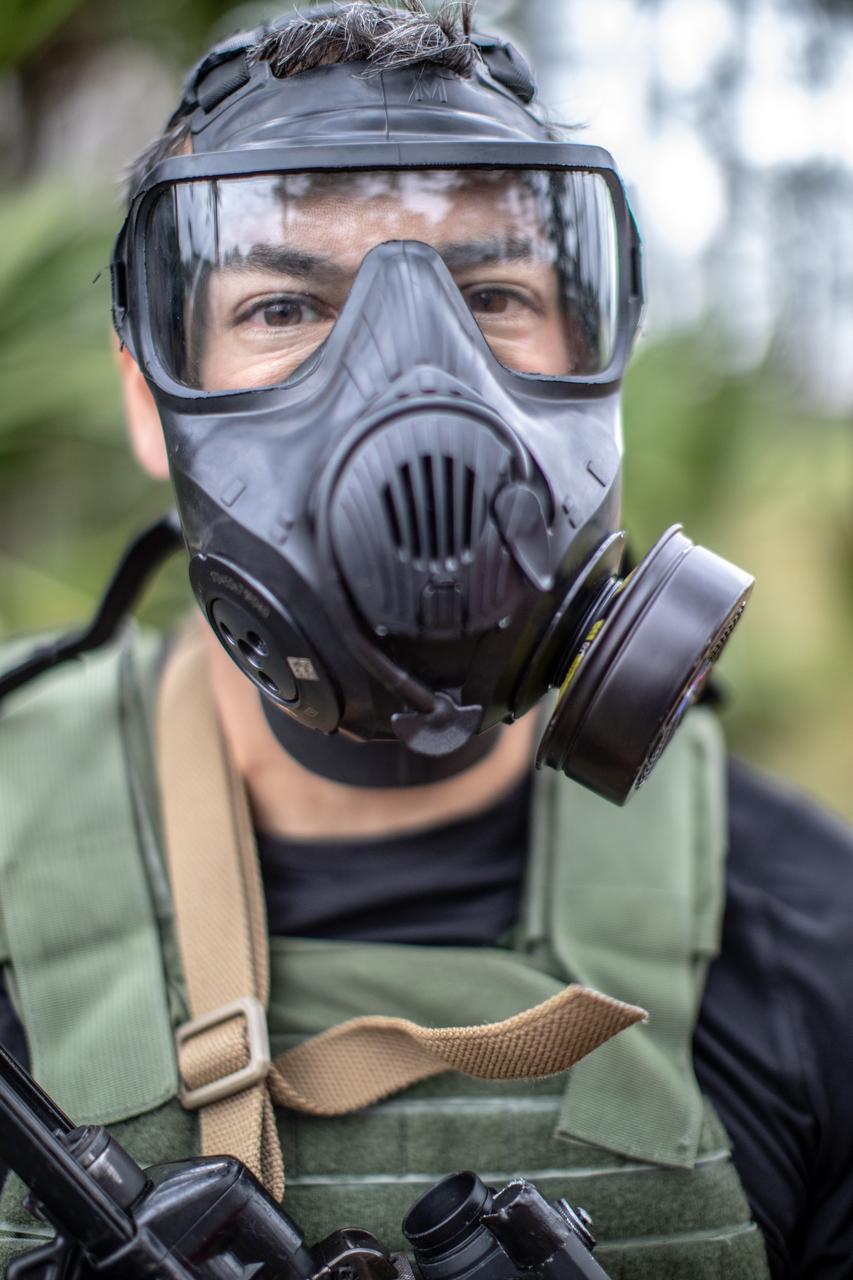
A member of NASA Kennedy Space Center's Emergency Response Team prepares to compete in the 37th Annual SWAT Round-Up International at the Lawson Lamar Firearms and Tactical Training Center in Orlando, Florida. The competition was held Nov. 10 to 15, 2019, and featured five different tactical challenges. Kennedy's ERT members exchanged best practices and competed with more than 50 teams from the U.S. and around the world.
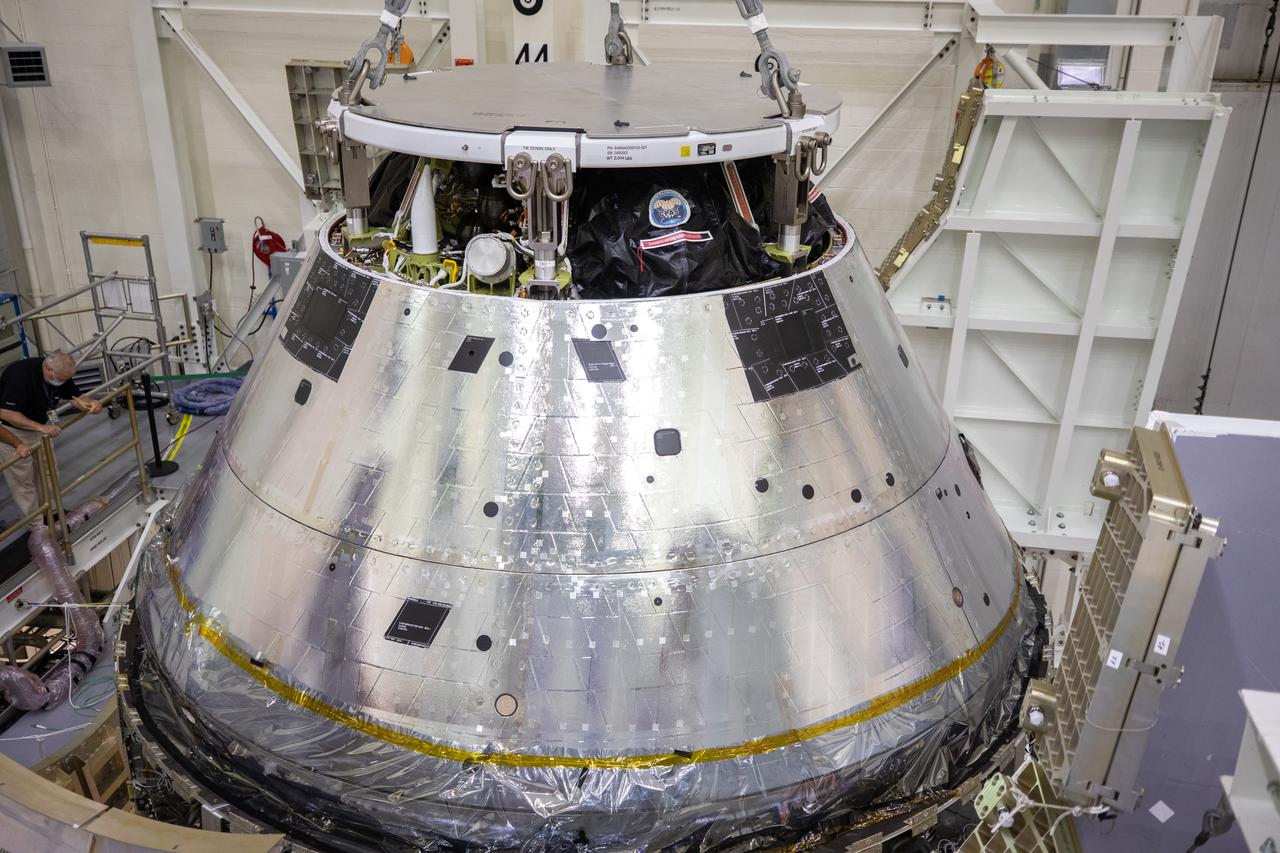
The Artemis I Orion spacecraft is lowered by crane into the FAST cell after installation of the spacecraft adapter (SA) cone was completed inside the Neil Armstrong Operations and Checkout Building on Aug. 20, 2020. This is one of the final major hardware operations the spacecraft will undergo during closeout processing prior to being integrated with the Space Launch System (SLS) rocket in preparation for the first Artemis mission. The spacecraft adapter cone connects the bottom portion of Orion’s service module to the top part of the rocket known as the interim cryogenic propulsion stage (ICPS). Orion will fly on the agency’s Artemis I mission – the first in a series of increasingly complex missions to the Moon that will ultimately lead to the exploration of Mars.
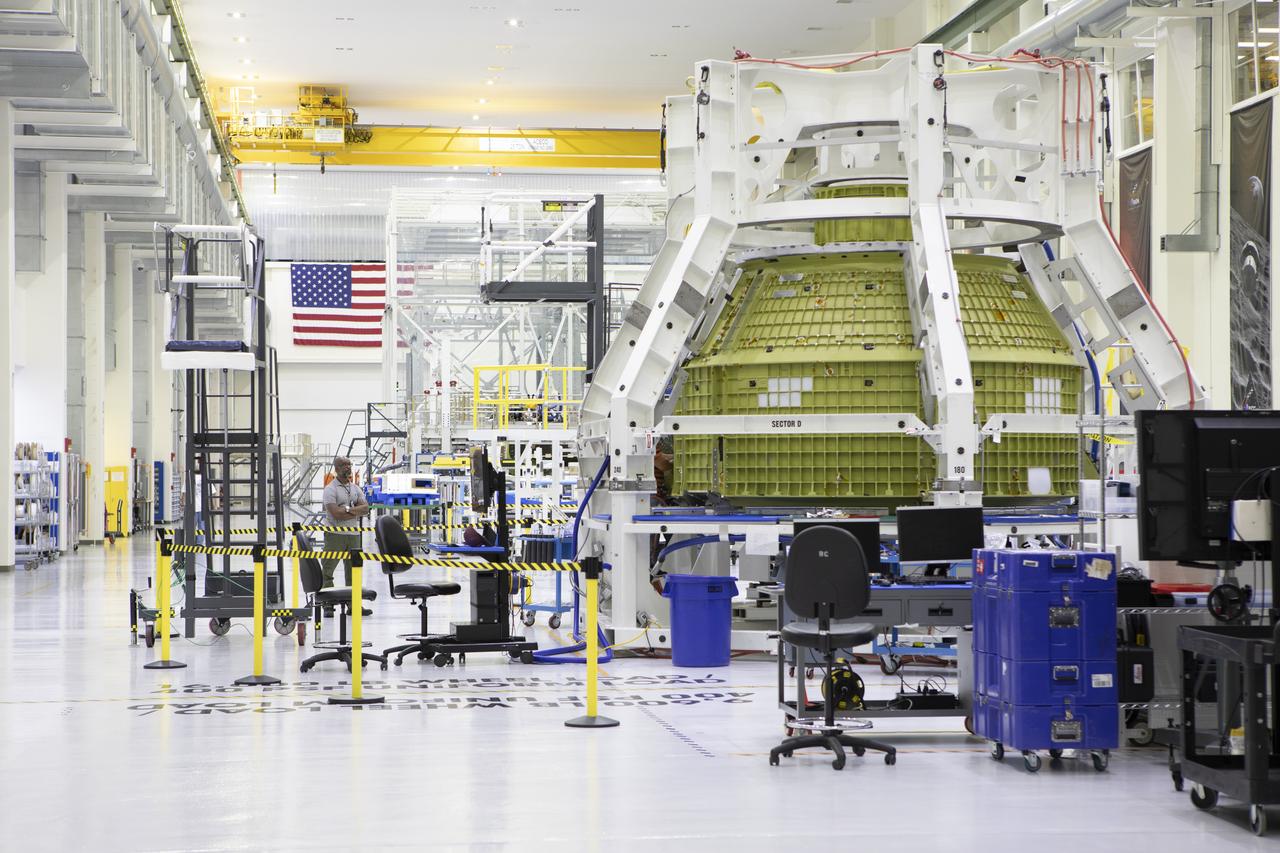
The Orion pressure vessel for Exploration Mission-2 (EM-2) is inside processing equipment where it is getting where it is getting initial processing done.

On July 16, 2019, the 50th anniversary of the Apollo 11 launch, Kennedy Space Center Director Bob Cabana, left, and astronaut Michael Collins take a walk at Launch Complex 39A. During his visit to the Florida spaceport, Collins discussed the moments leading up to launch at 9:32 a.m. on July 16, 1969, and what it was like to be part of the first crew to land on the Moon.
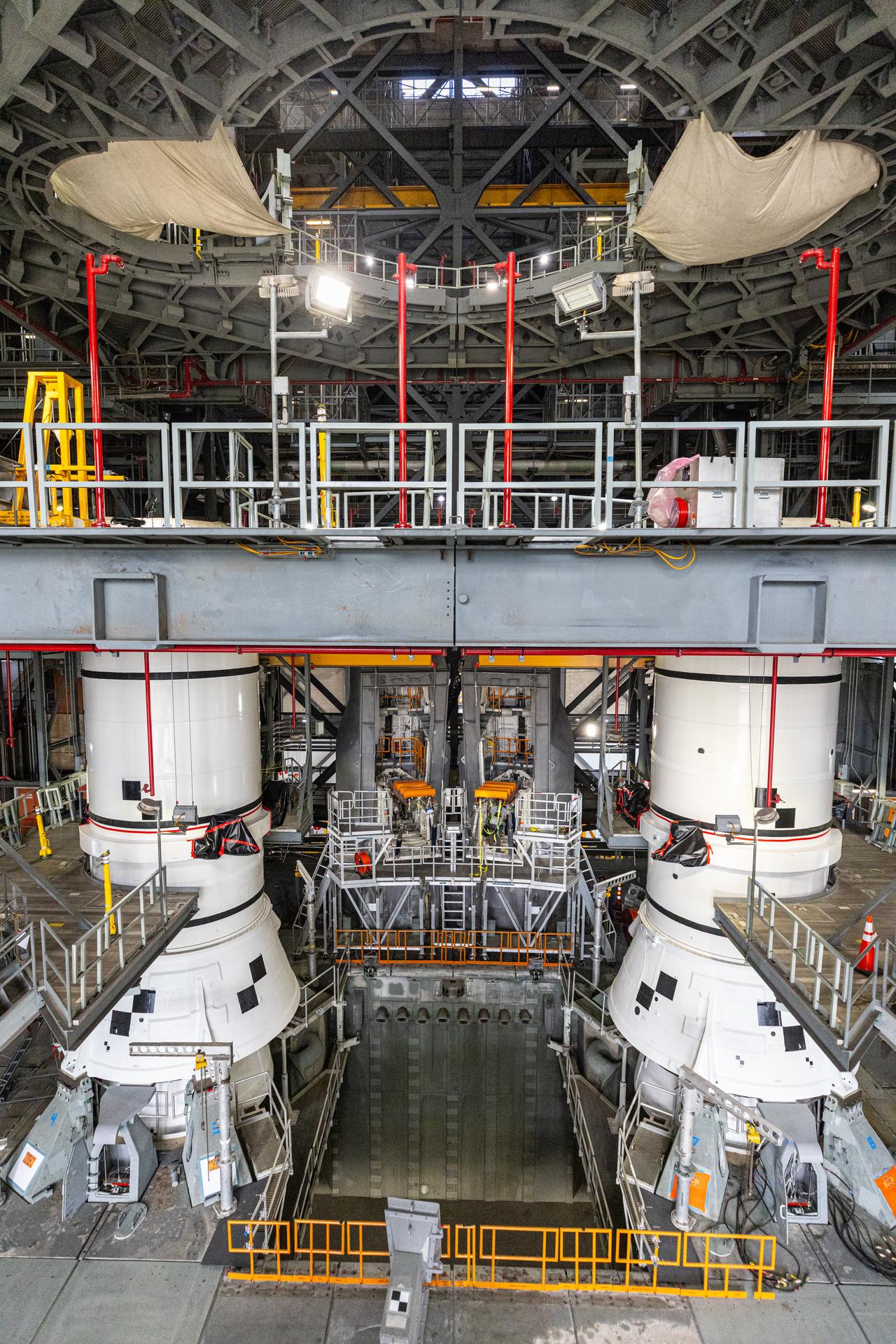
The left-hand and right-hand aft assembly solid rocket booster segments for NASA’s Artemis III SLS (Space Launch System) rocket are secured to the mobile launcher at the agency’s Vehicle Assembly Building at NASA’s Kennedy Space Center in Florida on Saturday, July 11, 2026. The twin boosters, manufactured by Northrop Grumman in Utah, will provide more than 75 percent of the SLS rocket’s total thrust at launch. The Artemis III mission will launch astronauts in the Orion spacecraft on top of the SLS rocket to test rendezvous and docking capabilities between Orion and commercial spacecraft needed to land astronauts on the Moon.
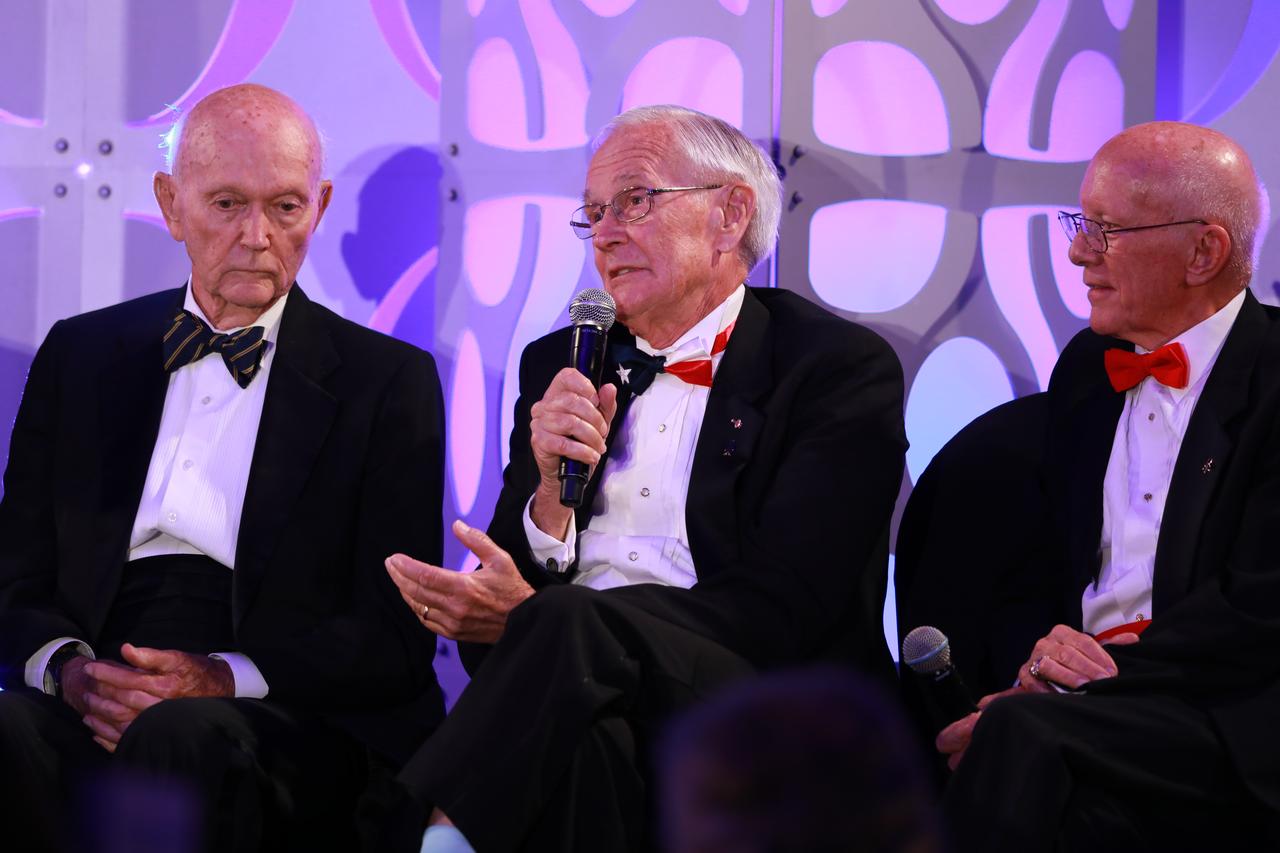
Retired NASA astronauts participate in a panel discussion during the Apollo 11 50th Gala, presented by Northrop Grumman, on July 16, 2019. The gala was held inside the Apollo/Saturn V Center at the Kennedy Space Center Visitor Complex in Florida. From left, are Apollo 11 astronaut Michael Collins, Apollo 16 astronaut Charlie Duke, and Apollo Flight Director Gerry Griffin.
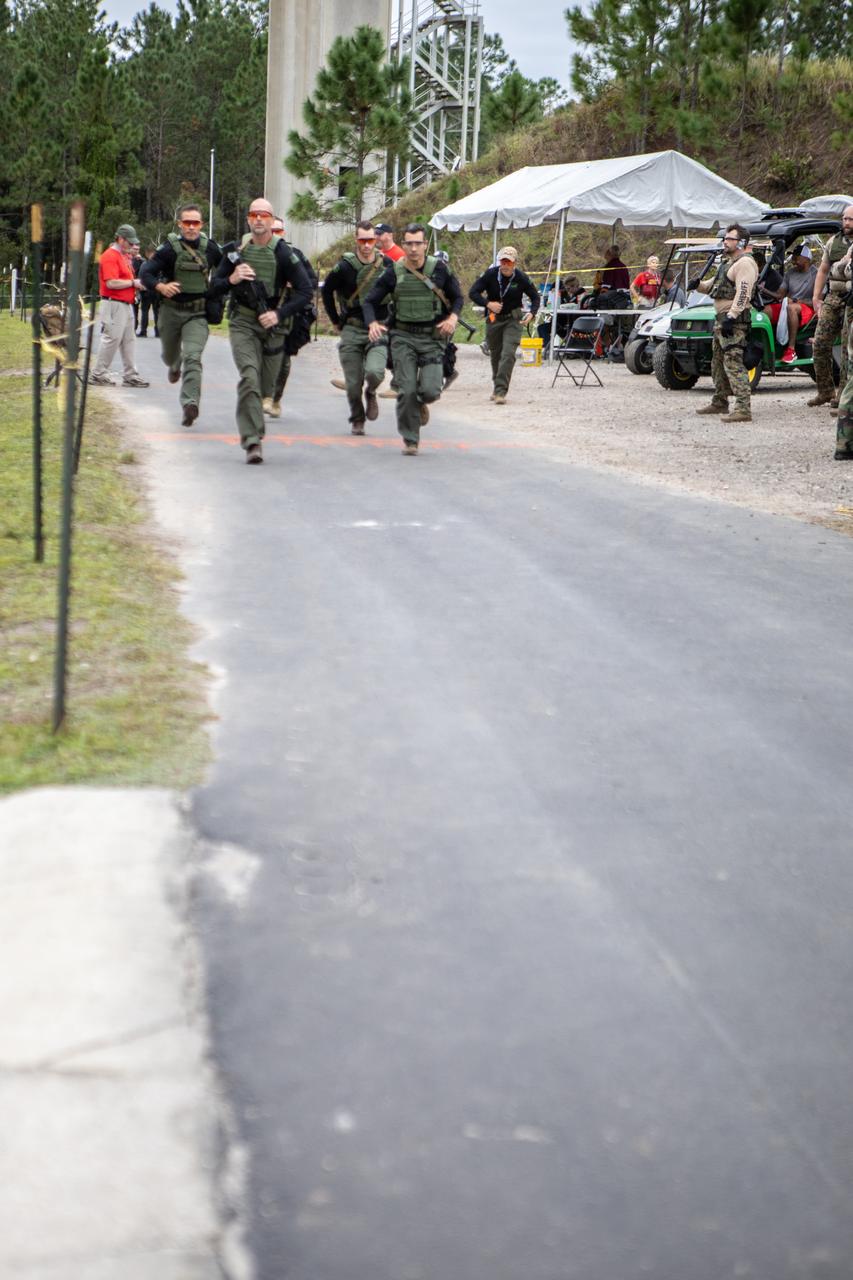
Members of NASA Kennedy Space Center's Emergency Response Team run during one of the tactical challenges at the 37th Annual SWAT Round-Up International at the Lawson Lamar Firearms and Tactical Training Center in Orlando, Florida. The competition was held Nov. 10 to 15, 2019, and featured five different tactical challenges. Kennedy's ERT members exchanged best practices and competed with more than 50 teams from the U.S. and around the world.
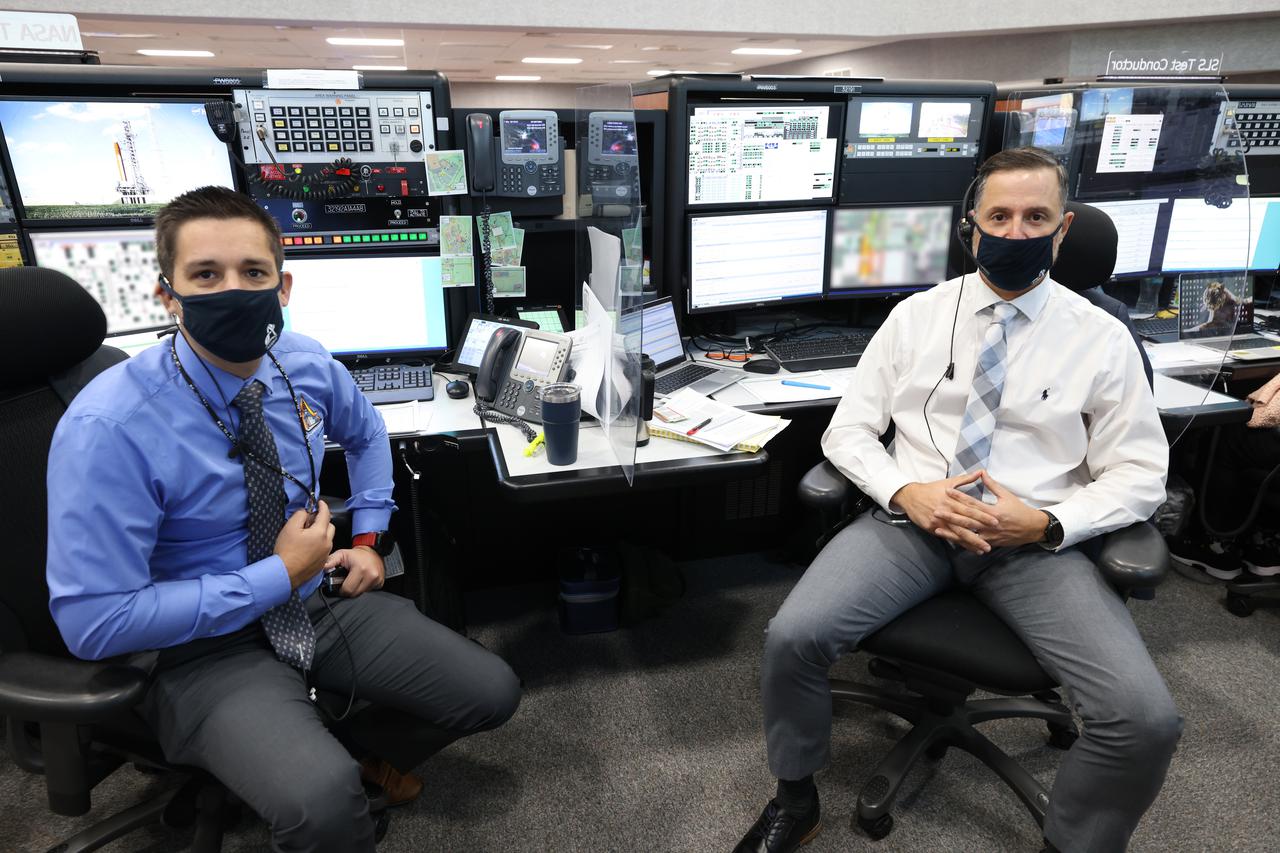
NASA Test Directors Daniel Florez, left, and Carlos Monje, right, with Exploration Ground Systems, are seated at their consoles inside Firing Room 1 of the Launch Control Center at NASA’s Kennedy Space Center in Florida on Dec. 13, 2021. They are participating in a joint integrated simulation for the Artemis I launch that covered both cryogenic loading and terminal countdown portions of prelaunch activities. Members of NASA’s mission management team and launch team conducted the simulation together. The Kennedy team was certified for the Artemis I launch. During Artemis I, the agency’s Orion spacecraft will lift off from Kennedy aboard NASA’s most powerful rocket – the Space Launch System – to fly farther than any spacecraft built for humans has ever flown. Through NASA’s Artemis missions, the agency, along with commercial and international partners, will establish a sustainable human presence on the Moon to prepare for missions to Mars.
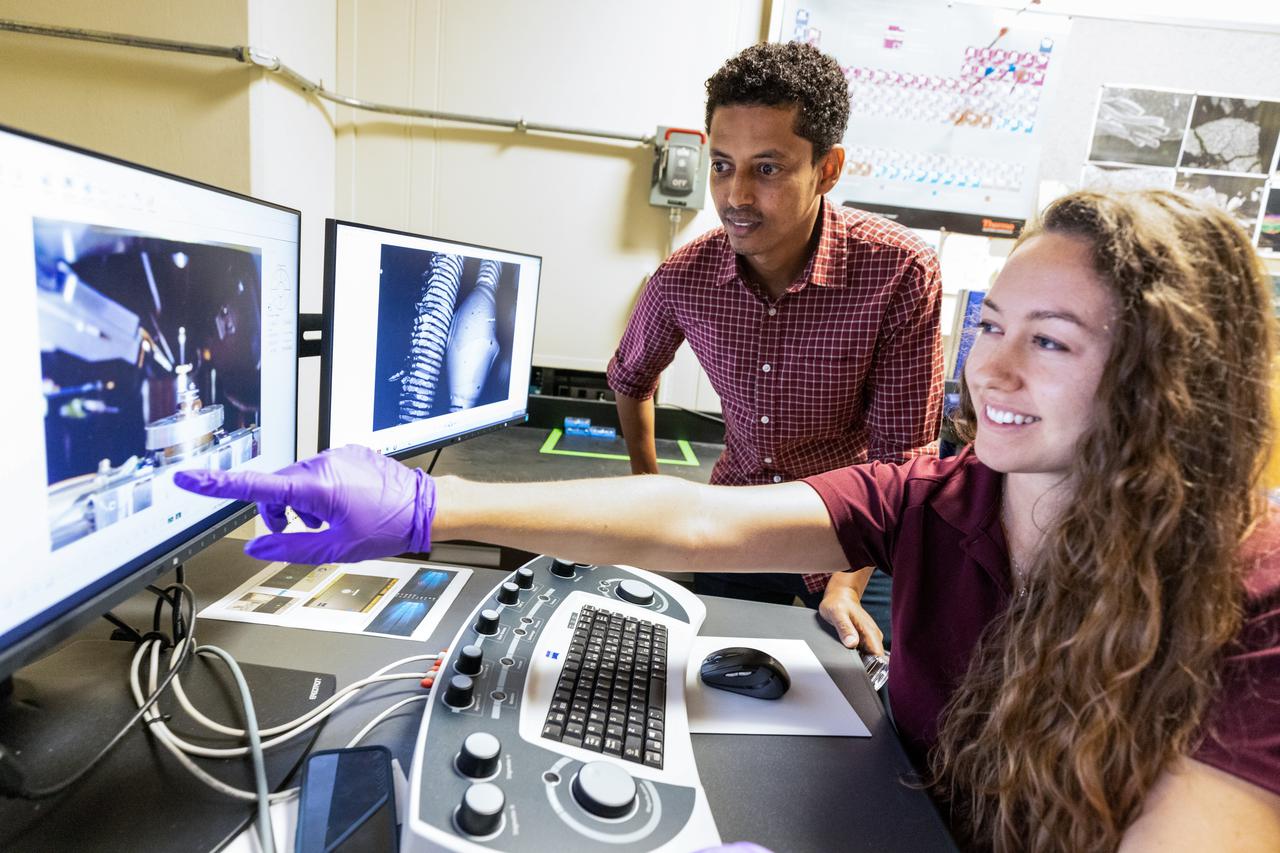
Chemists Misle Tessema (left) and Macy Mullen (right) discuss scanning electron microscope operations inside NASA Engineering’s Analytical Laboratories at Kennedy Space Center in Florida on July 7, 2021. One of seven branches in the NASA Laboratories, Development, and Testing Division, the Analytical Laboratories branch provides microscopic imagery and analysis through the use of a wide variety of microscopic techniques to identify contaminants and other urgent problems associated with aerospace flight hardware, ground support equipment, and related facilities.
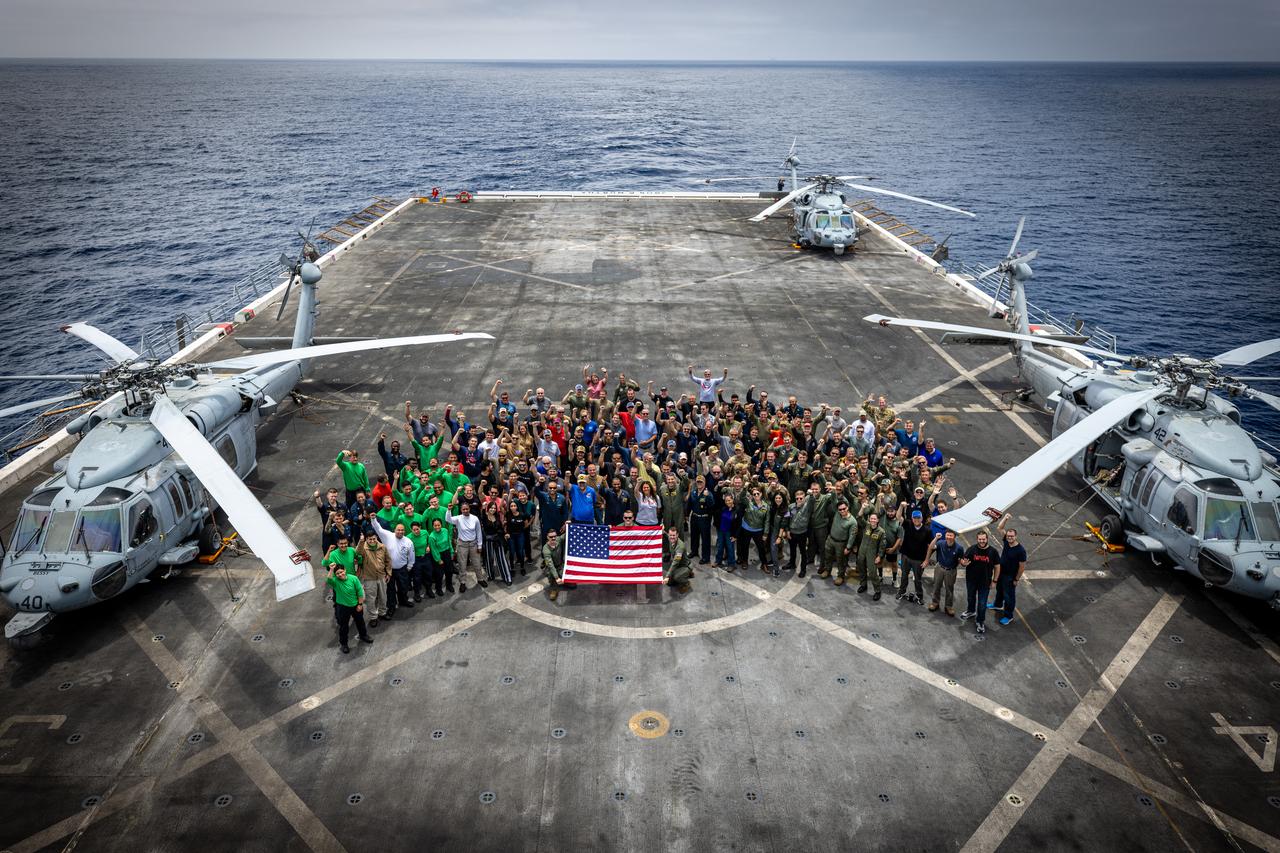
Members of NASA’s Landing and Recovery team and partners from the Department of Defense stand on the flight deck of USS John P. Murtha during Underway Recovery Test 10 (URT-10) off the coast of San Diego. URT-10 is the tenth in a series of Artemis recovery tests, but the first time NASA and its partners from the Department of Defense put their Artemis II recovery procedures to the test.
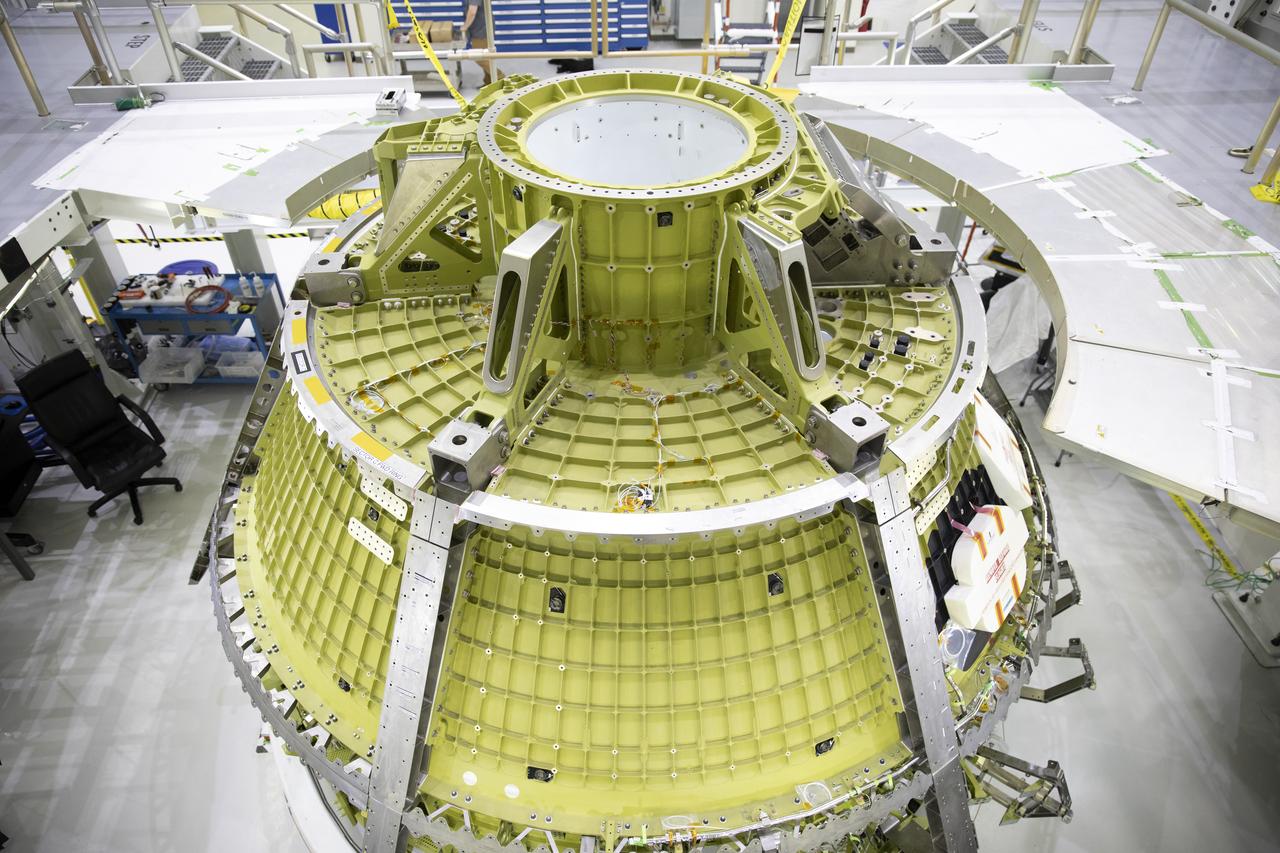
The Orion pressure vessel for NASA’s Artemis ll mission is in view in a processing stand inside the Neil Armstrong Operations and Checkout Building high bay on Sept. 17, 2019. Orion is being prepared for the first crewed test flight atop the agency’s Space Launch System rocket. Artemis ll will lift off from Launch Complex 39B. The mission will confirm all of the spacecraft’s systems operate as designed in the actual environment of deep space with astronauts aboard.

A heavy-load transport truck carries the Orion crew access arm along the NASA Causeway east toward State Road 3 at NASA's Kennedy Space Center in Florida. The access arm will be moved to the mobile launcher (ML) near the Vehicle Assembly Building at the center. The crew access arm will be installed at about the 274-foot level on the mobile launcher tower. It will rotate from its retracted position and interface with the Orion crew hatch location to provide entry to the Orion crew module. The Ground Systems Development and Operations Program is overseeing installation of umbilicals and launch accessories on the ML tower to prepare for Exploration Mission-1.
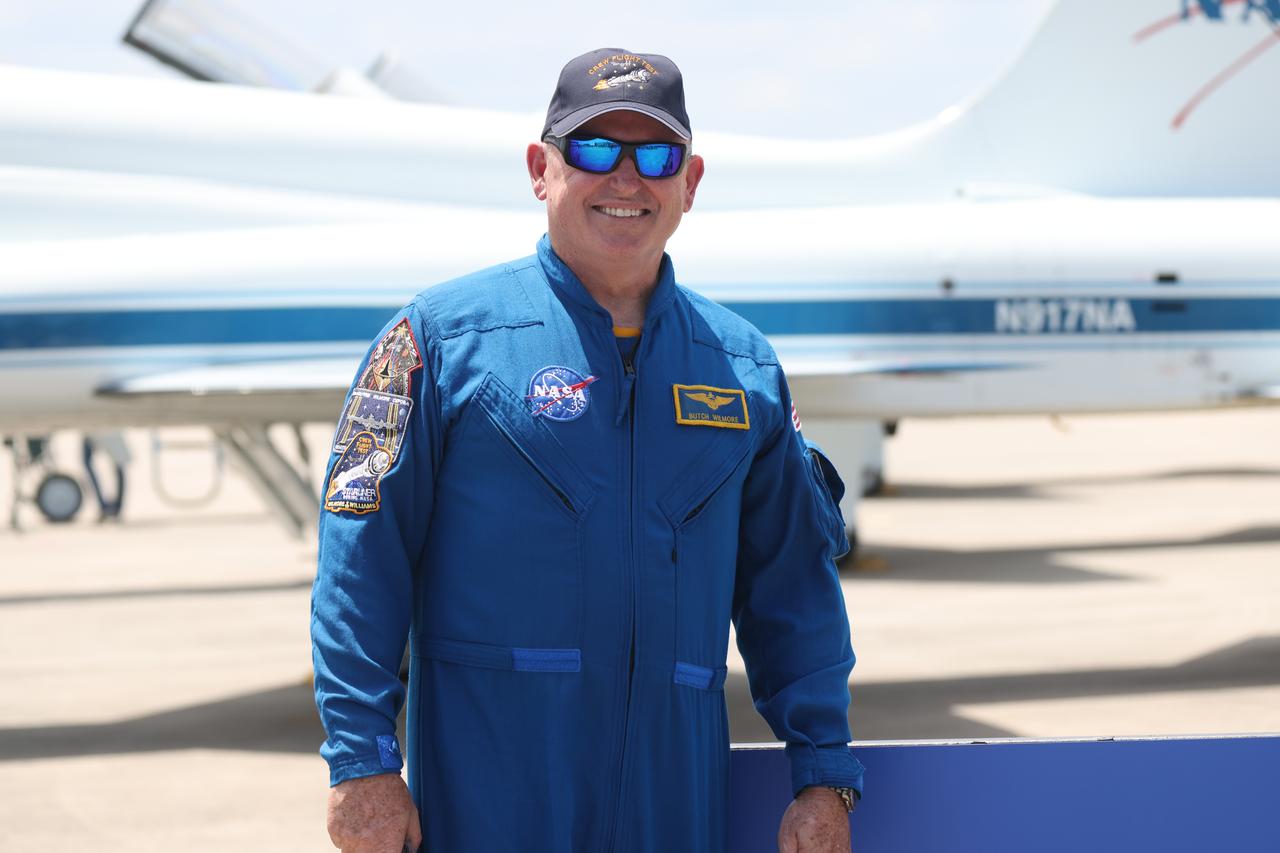
NASA astronauts Butch Wilmore poses for photos at the Launch and Landing Facility at NASA’s Kennedy Space Center in Florida following his arrival for the agency’s Boeing Crew Flight Test. As part of the agency’s Commercial Crew Program, Williams and Wilmore are the first crew to launch aboard Boeing’s Starliner spacecraft atop a United Launch Alliance Atlas V rocket from Space Launch Complex-41 at Cape Canaveral Space Force Station in Florida. Liftoff is scheduled for 10:34 p.m. ET on Monday, May 6.
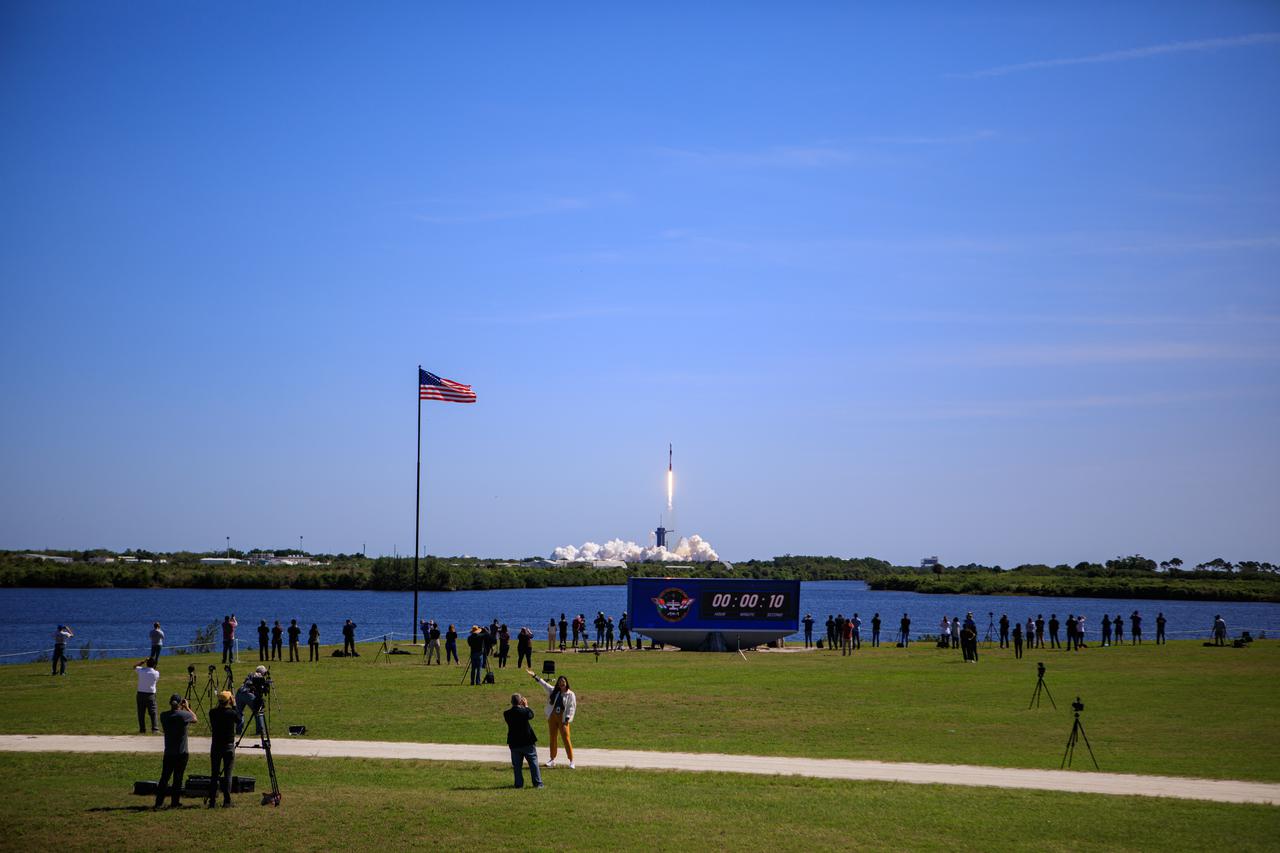
A SpaceX Falcon 9 rocket, carrying the company's Crew Dragon spacecraft, lifts off from Launch Complex 39A at NASA’s Kennedy Space Center in Florida at 11:17 a.m. EST on April 8, 2022, on Axiom Mission 1 (Ax-1). Commander Michael López-Alegría of Spain and the United States, Pilot Larry Connor of the United States, and Mission Specialists Eytan Stibbe of Israel, and Mark Pathy of Canada are aboard the flight to the International Space Station. The Ax-1 mission is the first private astronaut mission to the space station.
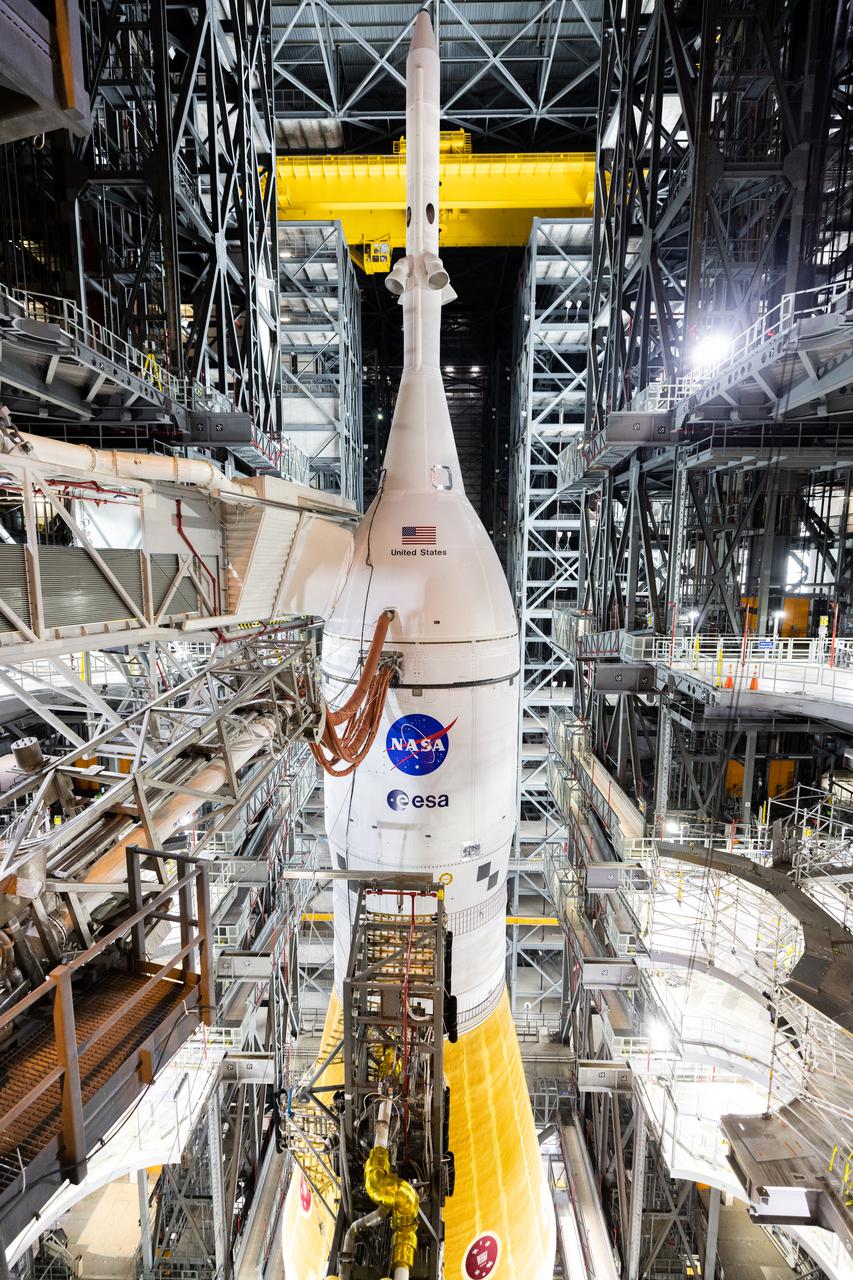
In this view looking down inside the Vehicle Assembly Building at NASA’s Kennedy Space Center in Florida on March 11, 2022, the work platforms are being retracted from around the Artemis I Space Launch System rocket and Orion spacecraft in preparation to roll out to launch pad 39B. The Kennedy ground systems team is working to remove equipment and scaffolding away from the rocket and will continue retracting the platforms until the entire rocket is revealed ahead of the wet dress rehearsal test, which is scheduled to occur approximately two weeks after it arrives to 39B. Artemis I is the first in a series of increasingly complex missions that will enable human exploration to the Moon and Mars.
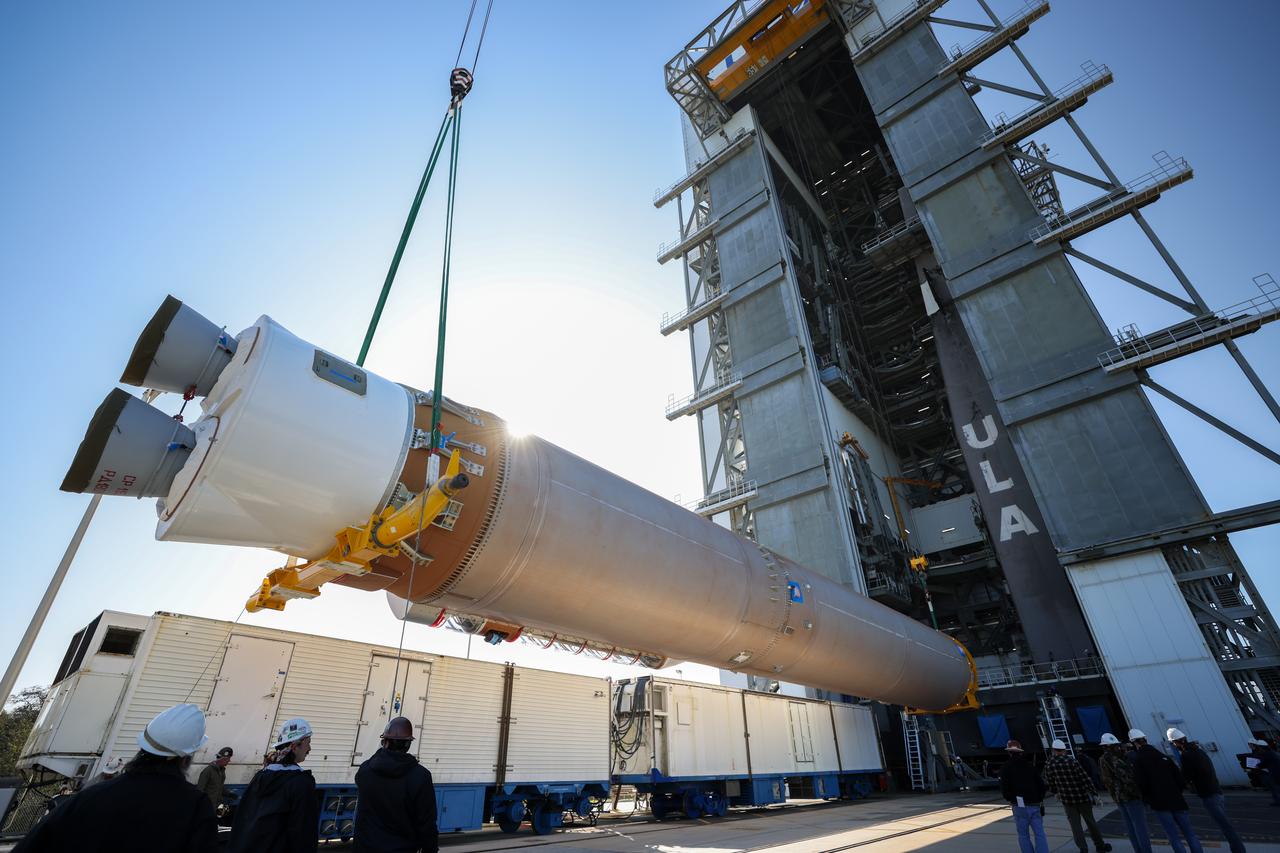
Crews raise a United Launch Alliance Atlas V rocket to a vertical position at the Vertical Integration Facility at Space Launch Complex-41 at Cape Canaveral Space Force Station in Florida on Wednesday, Feb. 21, 2024. After integration with the rocket’s Centaur upper stage and Boeing’s CST-100 Starliner capsule, the Atlas V will send two NASA astronauts to the International Space Station on the agency’s Boeing Crew Flight Test. The mission will test the end-to-end capabilities of Starliner and its system and, if successful, will pave the way for NASA’s certification ahead of regular missions to the space station as part of the agency’s Commercial Crew Program. Liftoff is targeted for no earlier than mid-April.

Mic Woltman, chief of the Fleet Systems Integration Branch of NASA's Launch Services Program, speaks to Kennedy Space Center employees about plans for the coming year. The event took place in the Lunar Theater at the Kennedy Space Center Visitor Complex’s Apollo Saturn V Center. The year will be highlighted with NASA's partners preparing test flights for crewed missions to the International Space Station as part of the agency's Commercial Crew Program and six launches by the Launch Services Program. Exploration Ground Systems will be completing facilities to support the Space Launch System rocket and Orion spacecraft. Exploration Research and Technology Programs will continue to provide supplies to the space station launched as part of the Commercial Resupply Services effort.
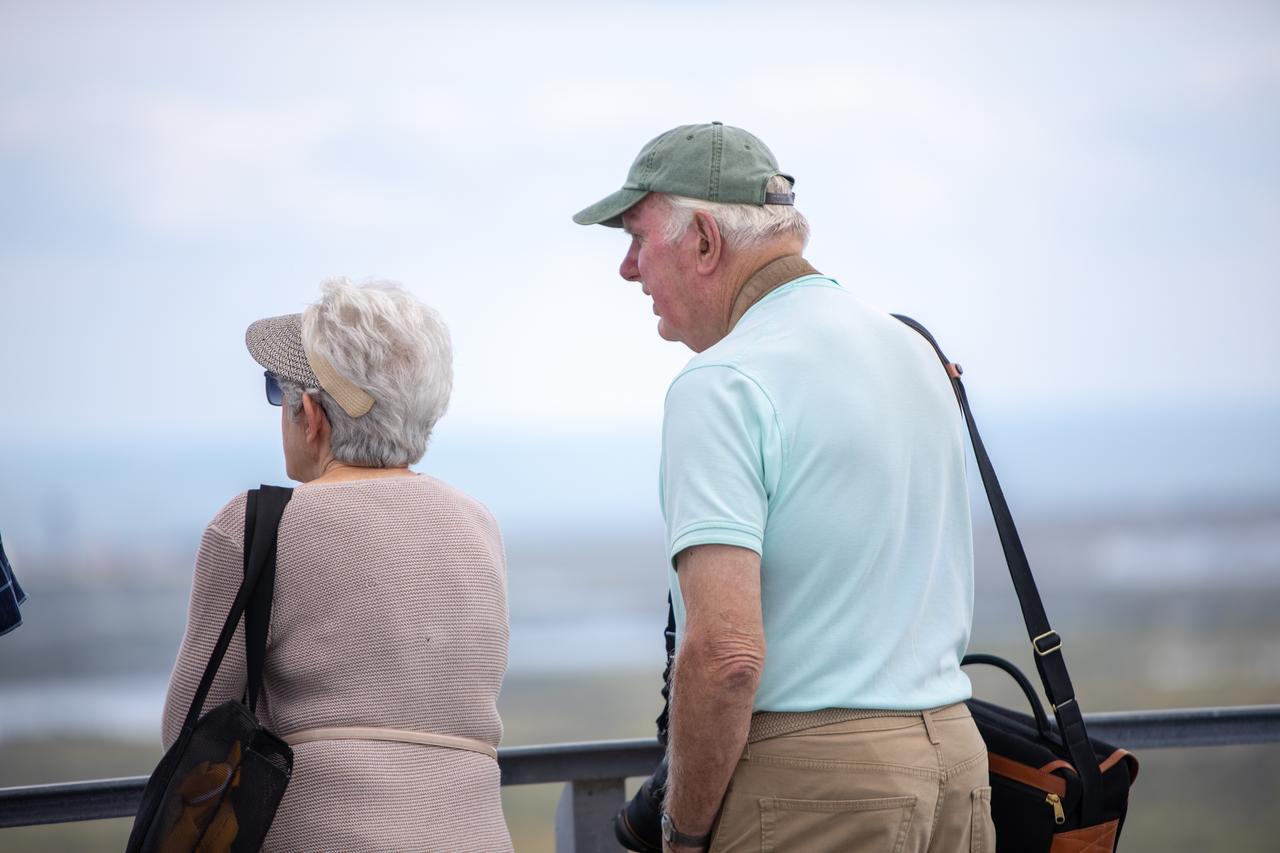
Dick Bergmann, at right, original lead designer for the Vehicle Assembly Building, stands on the roof of the iconic facility during a tour on Nov. 22, 2019 at NASA’s Kennedy Space Center in Florida. The VAB was recognized with the National Historic Civil Engineering Landmark award by the Florida Section American Society of Civil Engineers during a ceremony on Jan. 10, 2020. The VAB is the first building at Kennedy Space Center to earn this distinction. At the time of its completion, the 129-million-cubic-foot structure was the largest building in the world. Originally designed and built to accommodate the Saturn V/Apollo used in Project Apollo, the VAB was later modified for its role in the Space Shuttle Program.
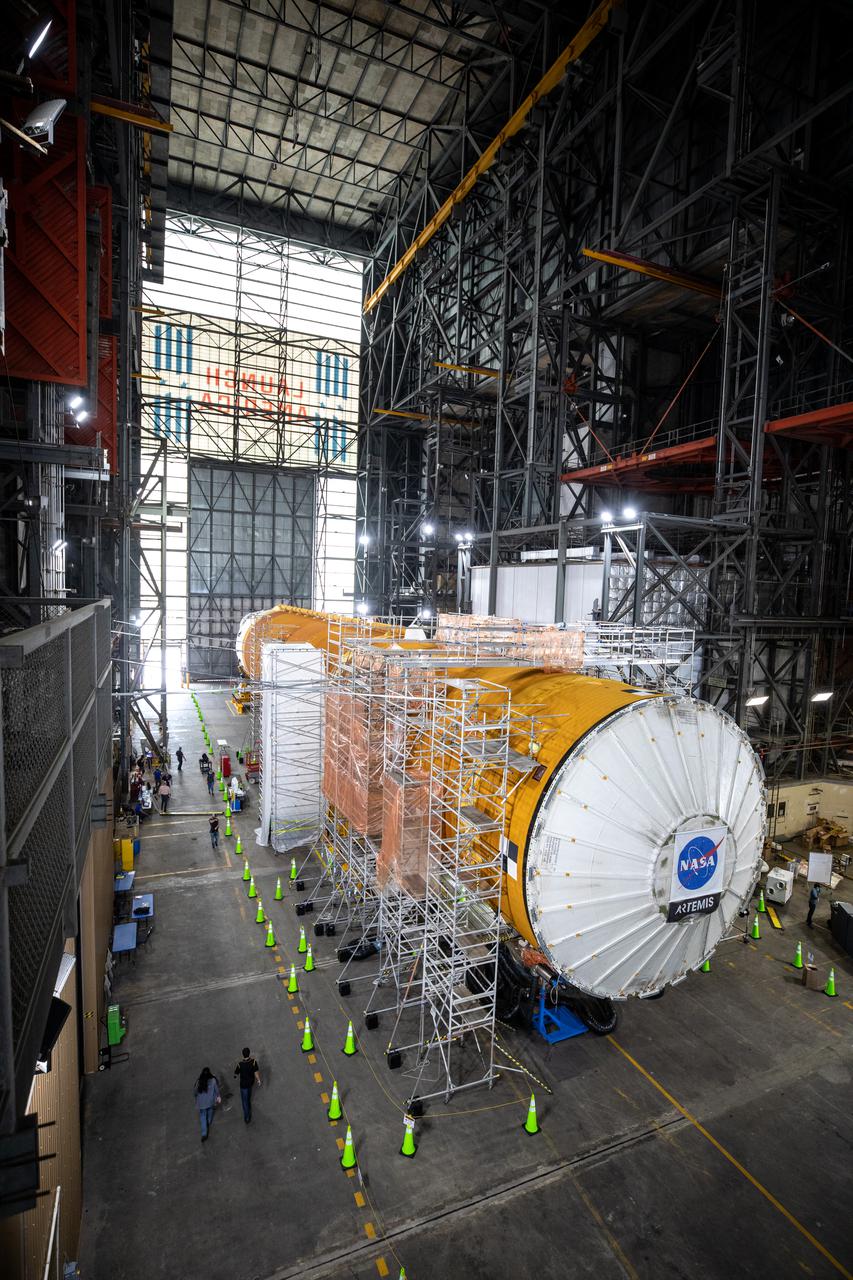
The Space Launch System (SLS) core stage for NASA’s Artemis I mission is in the transfer aisle of the Vehicle Assembly Building at Kennedy Space Center in Florida on May 5, 2021. Teams from the center’s Exploration Ground Systems and contractor Jacobs will perform checkouts ahead of integrating the massive rocket stage with the twin solid rocket boosters, Orion spacecraft, and additional flight hardware ahead of the Artemis I launch. Artemis I will be the first integrated test of SLS and Orion and will pave the way for landing the first woman and first person of color on the lunar surface. It will be a proving ground for deep space exploration, leading the agency’s efforts under the Artemis program for a sustainable presence on the Moon and preparing for human missions to Mars.
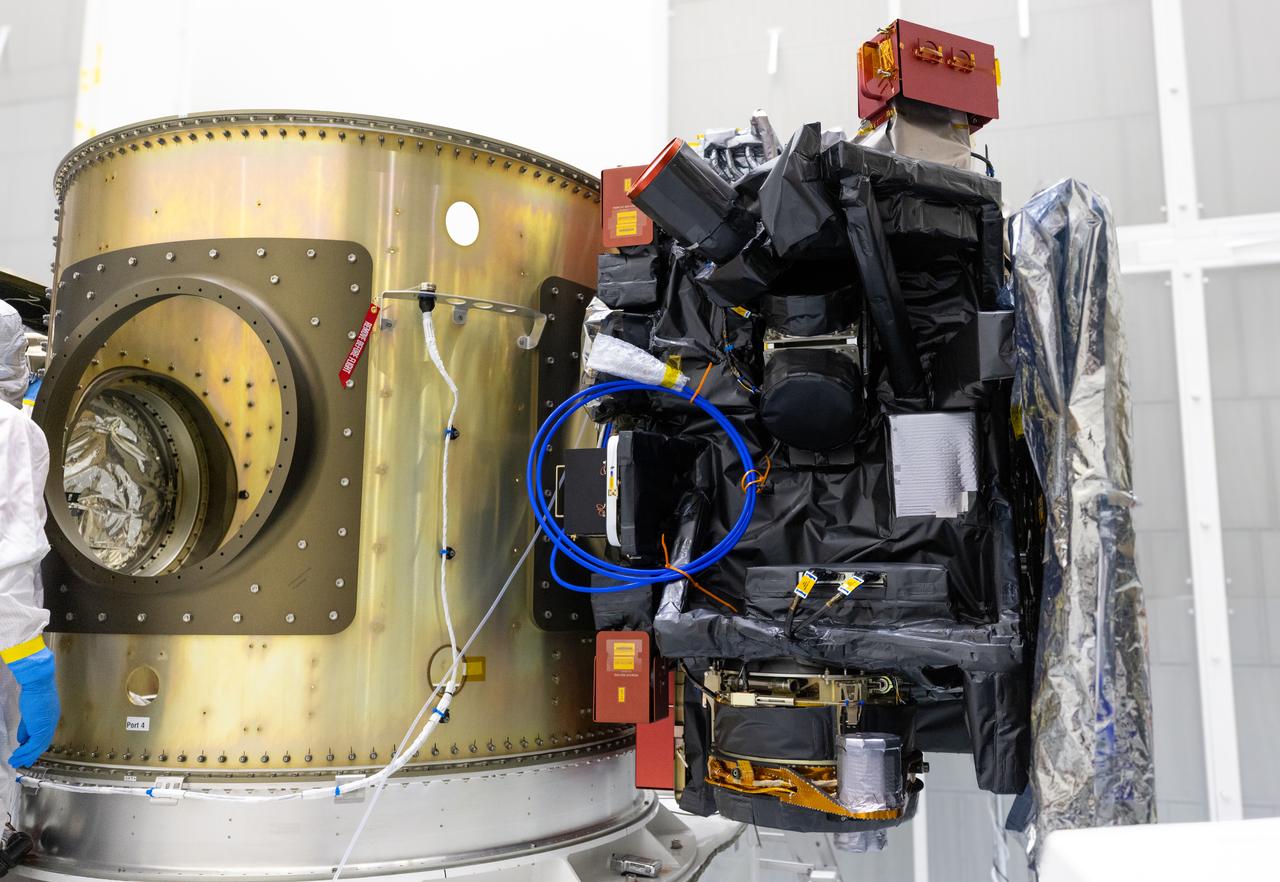
Technicians integrate NASA’s Carruthers Geocorona Observatory and the National Oceanic and Atmospheric Administration’s (NOAA) Space Weather Follow On Lagrange - 1 (SWFO-L1) satellite to the Evolved Expendable Launch Vehicle Secondary Payload Adapter Array Ring (ESPA) inside the Astrotech Space Operations Facility near NASA’s Kennedy Space Center in Florida on Friday, Sept. 5, 2025. The integration of the rideshares prepares for the next milestone of attaching NASA’s IMAP (Interstellar Mapping and Acceleration Probe) Sun mapping observatory to a payload adapter and stacking all three observatories together to prepare them for encapsulation in the payload fairing.
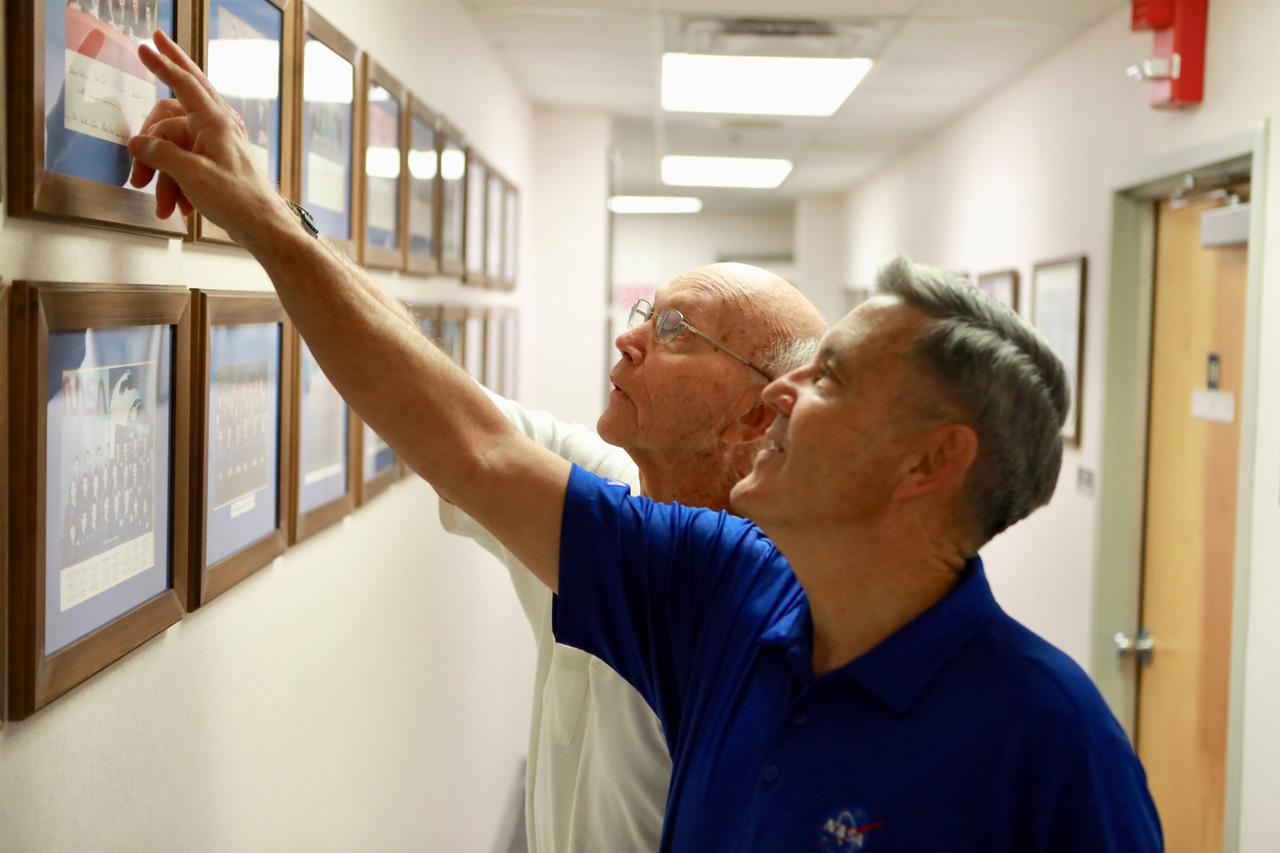
On the 50th anniversary of the Apollo 11 launch, July 16, 2019, astronaut Michael Collins, left, speaks to Kennedy Space Center Director Bob Cabana in the astronaut crew quarters about the moments leading up to launch at 9:32 a.m. on July 16, 1969, and what it was like to be the first to land on the Moon.
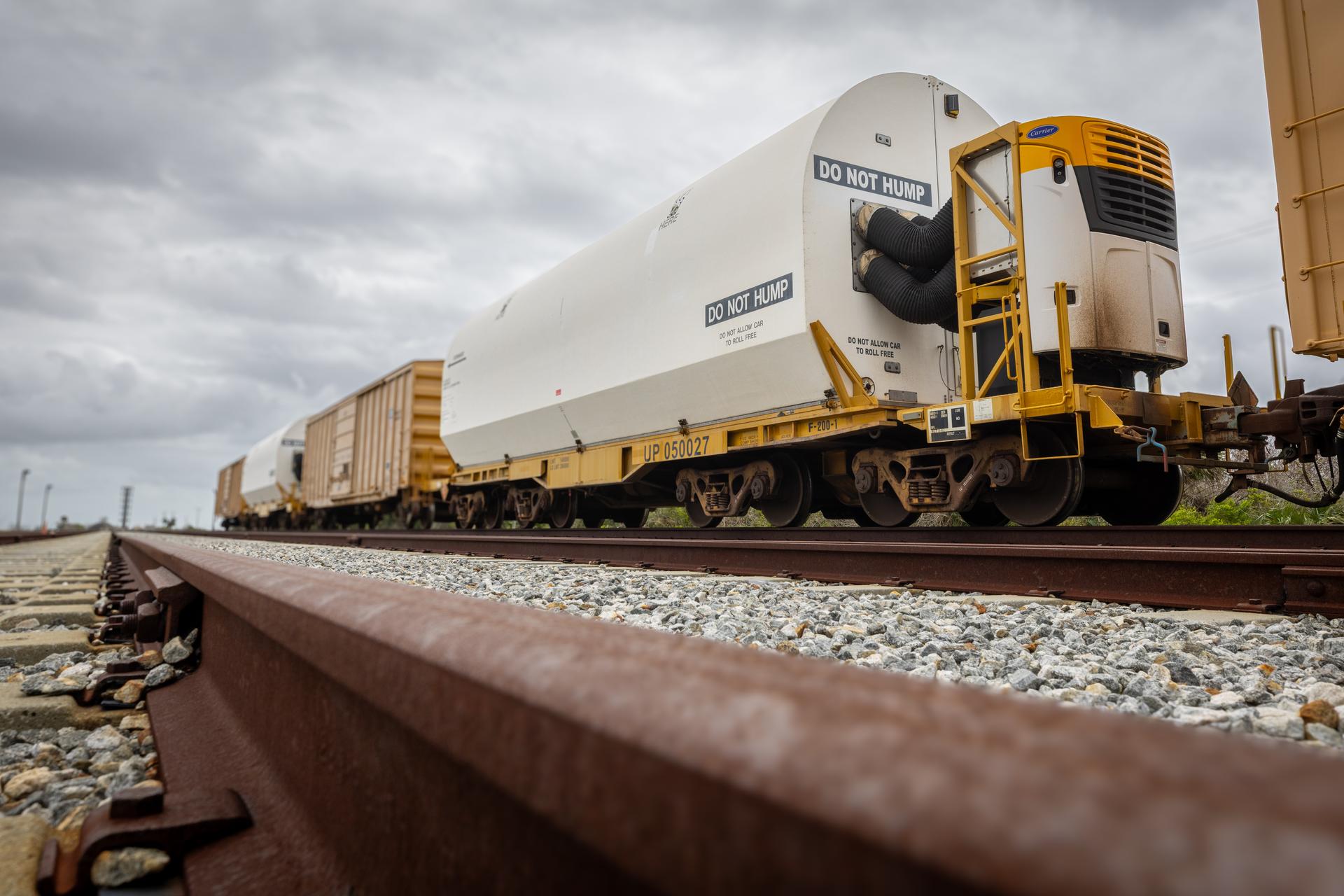
The solid rocket booster aft skirt segments for NASA’s Artemis III SLS (Space Launch System) rocket arrive at a rail yard near the agency’s Kennedy Space Center in Florida on Wednesday, April 8, 2026. Comprising the bottom of the rocket’s twin, five-segment solid rocket boosters, the aft skirt segments traveled by train in specialized transporters to the Florida spaceport and will be transferred from the rail yard to NASA Kennedy’s Rotation, Processing and Surge Facility for processing. The Artemis III mission will launch crew in the Orion spacecraft on top of the SLS rocket to test rendezvous and docking capabilities between Orion and commercial spacecraft needed to land astronauts on the Moon.
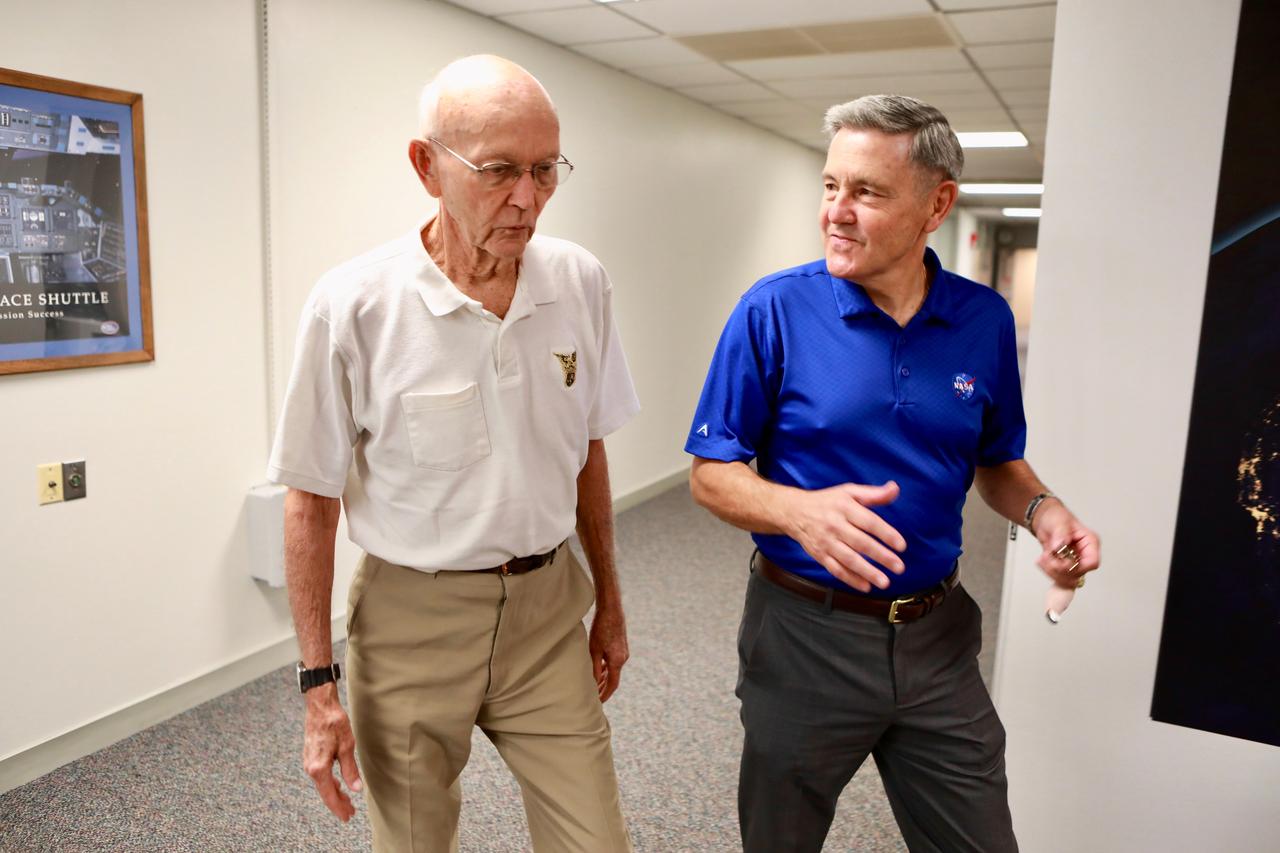
On the 50th anniversary of the Apollo 11 launch, July 16, 2019, astronaut Michael Collins speaks to Kennedy Space Center Director Bob Cabana in the astronaut crew quarters about the moments leading up to launch at 9:32 a.m. on July 16, 1969, and what it was like to be the first to land on the Moon.
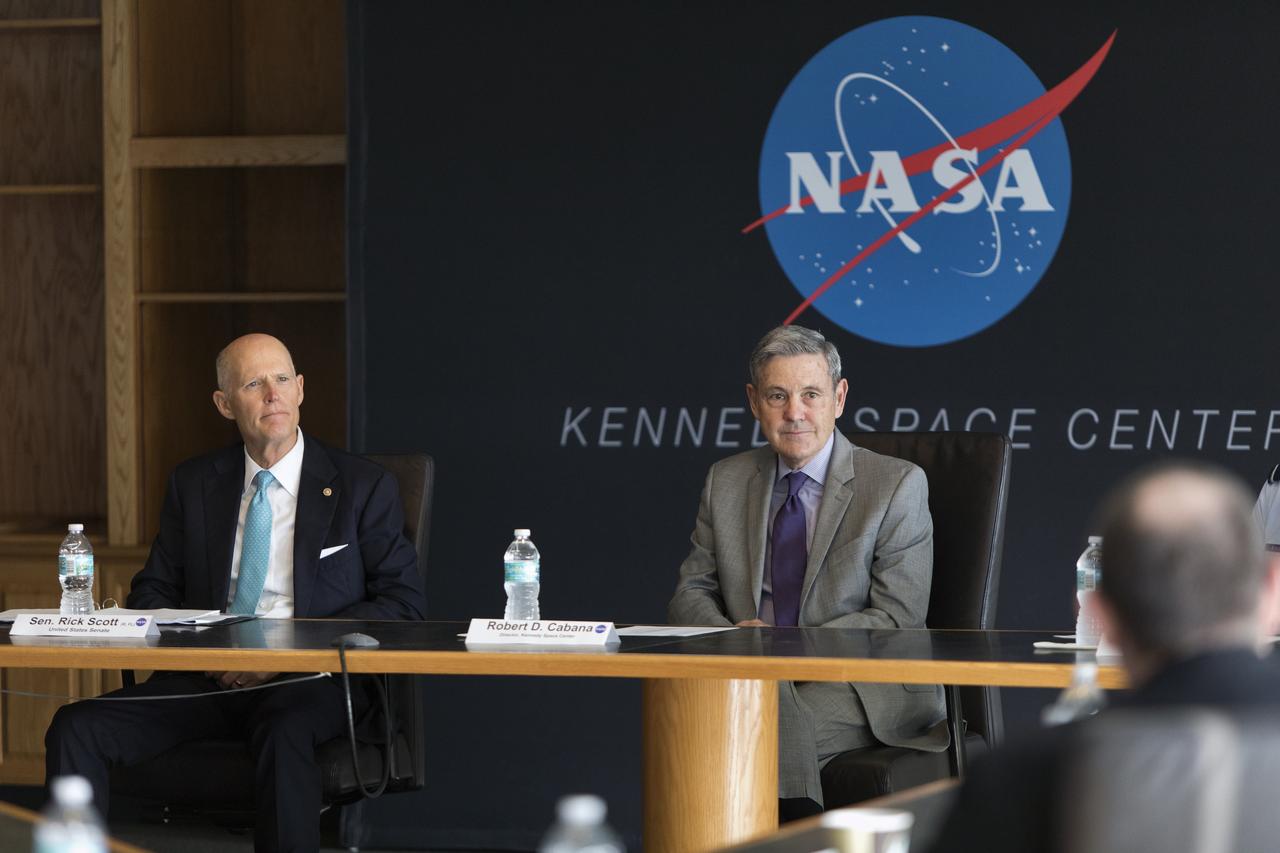
U.S. Sen. Rick Scott and Kennedy Space Center Director Bob Cabana attend a roundtable discussion among multi-user spaceport partners at Kennedy’s Saturn V Conference Center on March 15, 2019. The meeting was held to discuss the needs of the space center and Cape Canaveral Air Force Station.
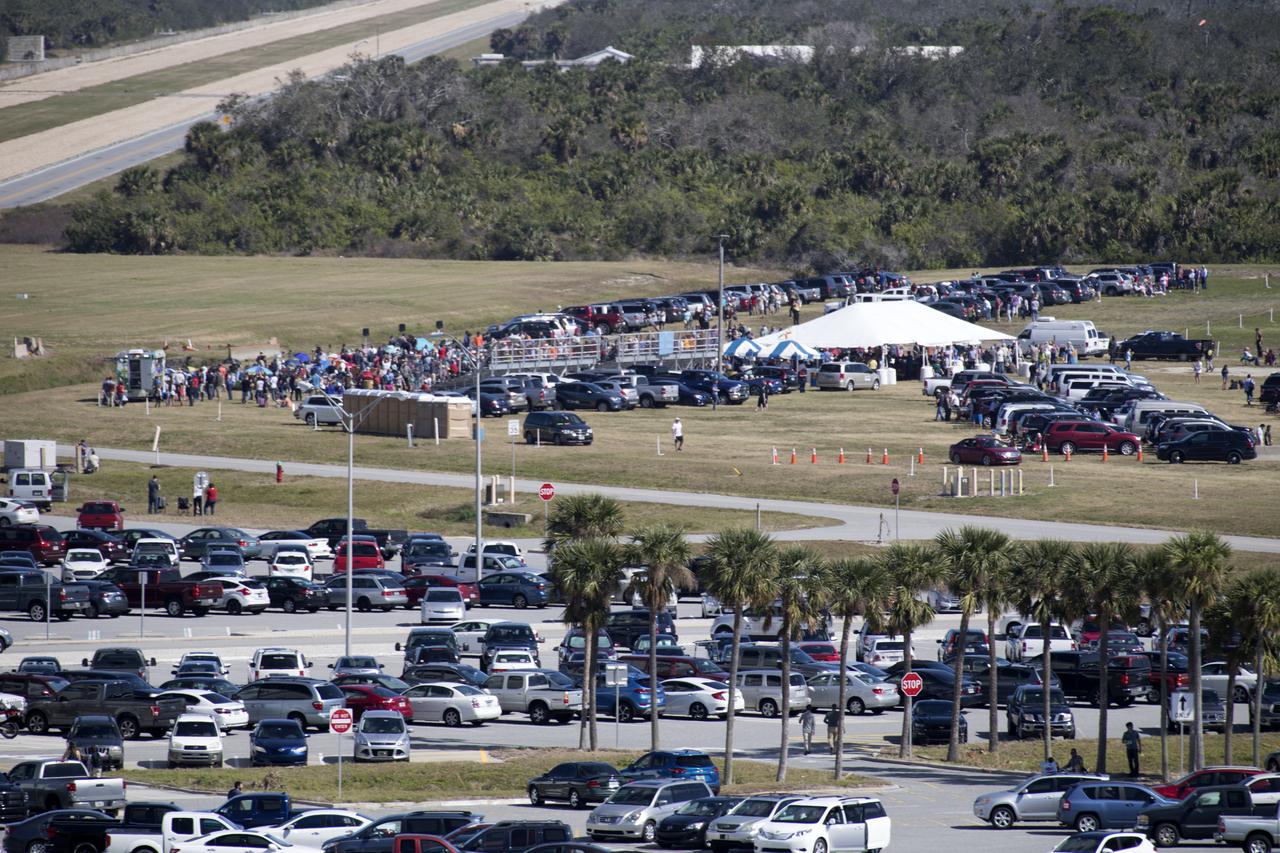
Employees, invited guests and members of the news media await liftoff of the SpaceX Falcon Heavy rocket from Launch Complex 39A at NASA’s Kennedy Space Center in Florida. The demonstration flight is a significant milestone for the world's premier multi-user spaceport. In 2014, NASA signed a property agreement with SpaceX for the use and operation of the center's pad 39A, where the company has launched Falcon 9 rockets and is preparing for the first Falcon Heavy. NASA also has Space Act Agreements in place with partners, such as SpaceX, to provide services needed to process and launch rockets and spacecraft.
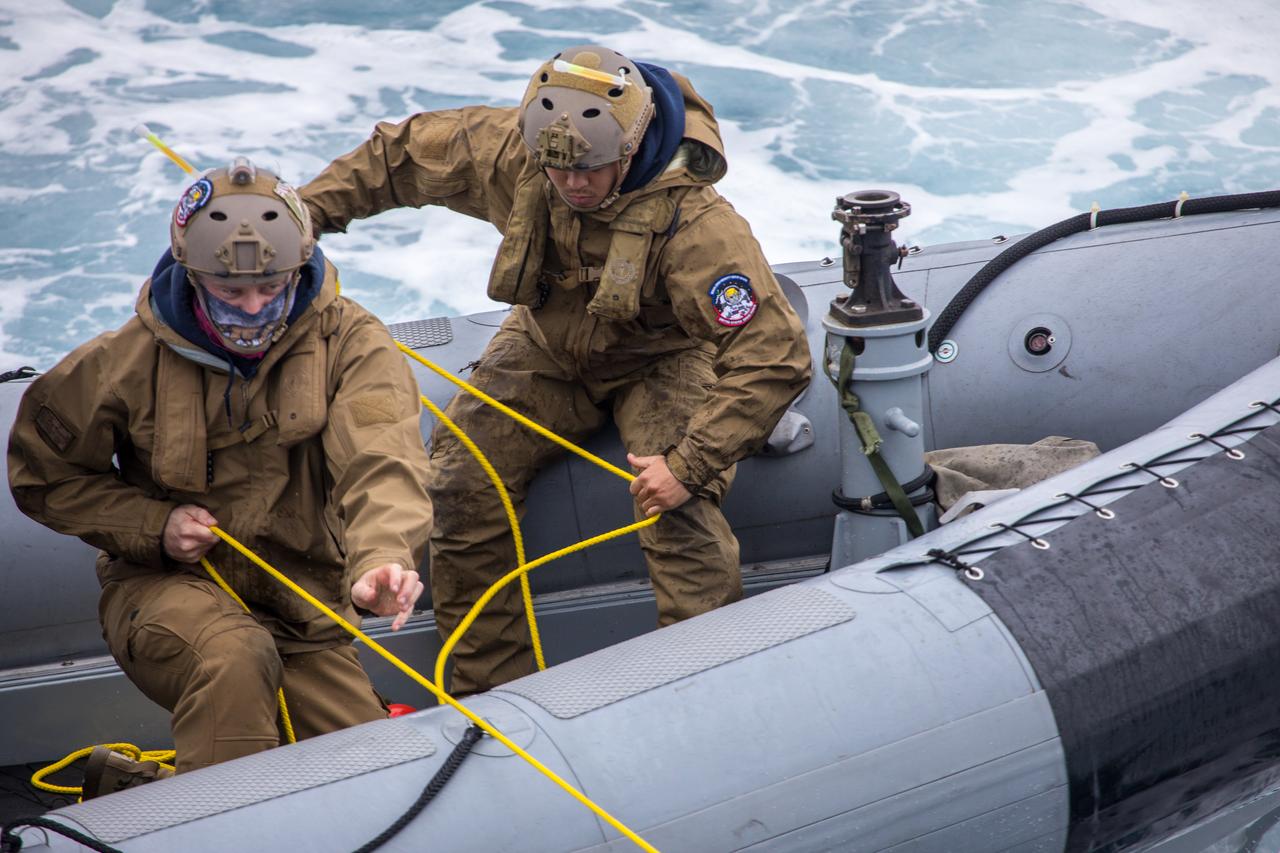
During the first full mission profile test of the recovery procedures for Artemis I, NASA’s Landing and Recovery team met their objectives. The team works with members of the DoD to hone their procedures before Orion splashes down in the Pacific as part of NASA’s Artemis program. During Underway Recovery Test-8, two divers from EOD Mobile Unit 3, MDS Company 3-1work the tending line while a test version of Orion is being pulled into the well deck of the USS John P. Murtha.
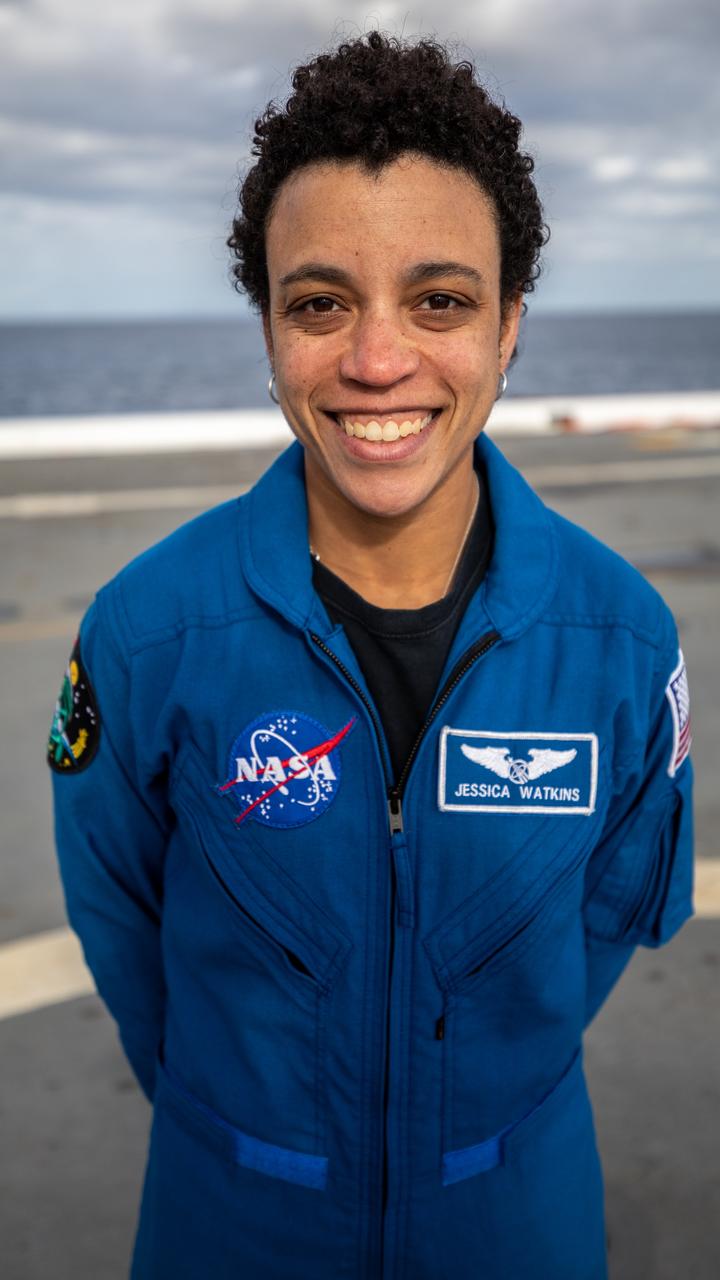
Astronaut Jessica Watkins observes Underway Recovery Test-8 aboard the USS John P. Murtha. During the test, NASA’s Landing and Recovery Team practiced bringing Orion into the well deck of the ship to ensure recovery procedure timelines are validated as NASA plans to send Artemis I around the Moon and splashdown in the Pacific Ocean.
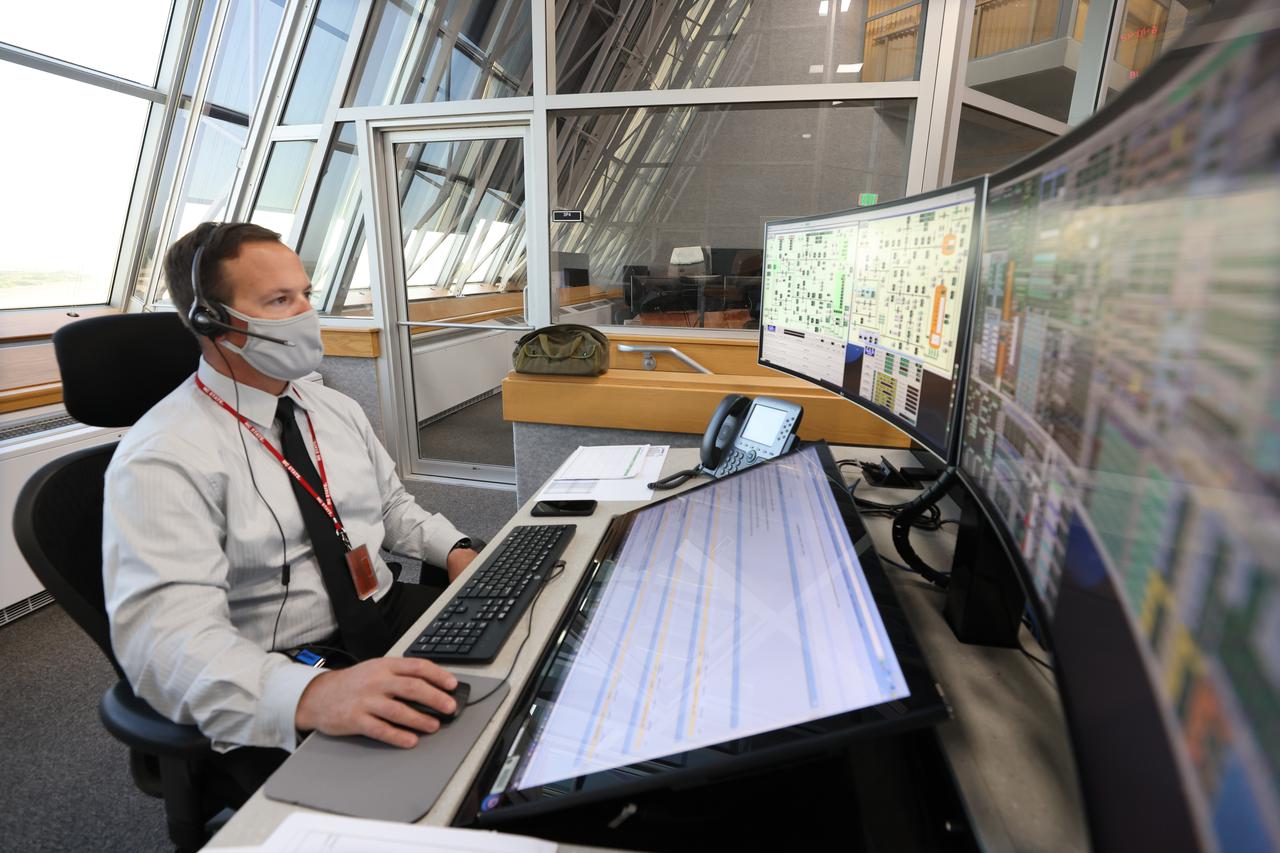
Wes Mosedale, Technical Assistant to the Launch Director, with Exploration Ground Systems, is seated at console inside Firing Room 1 of the Launch Control Center at NASA’s Kennedy Space Center in Florida on Dec. 13, 2021. He is participating in a joint integrated simulation for the Artemis I launch that covered both cryogenic loading and terminal countdown portions of prelaunch activities. Members of NASA’s mission management team and launch team conducted the simulation together. The Kennedy team was certified for the Artemis I launch. During Artemis I, the agency’s Orion spacecraft will lift off from Kennedy aboard NASA’s most powerful rocket – the Space Launch System – to fly farther than any spacecraft built for humans has ever flown. Through NASA’s Artemis missions, the agency, along with commercial and international partners, will establish a sustainable human presence on the Moon to prepare for missions to Mars.

Patrick Follis, an intern at NASA’s Kennedy Space Center in Florida, assembles the flight hardware for the agency’s Orbital Syngas Commodity Augmentation Reactor, or OSCAR. OSCAR is an Early Career Initiative project at the spaceport that studies technology to convert trash and human waste into useful gasses such as methane, hydrogen and carbon dioxide. By processing small pieces of trash in a high-temperature reactor, OSCAR is advancing new and innovative technology for managing waste in space. OSCAR would reduce the amount of space needed for waste storage within a spacecraft, turn some waste into gasses that have energy storage and life support applications, and ensure waste is no longer biologically active. A prototype has been developed, and a team of Kennedy employees are in the process of constructing a new rig for suborbital flight testing.
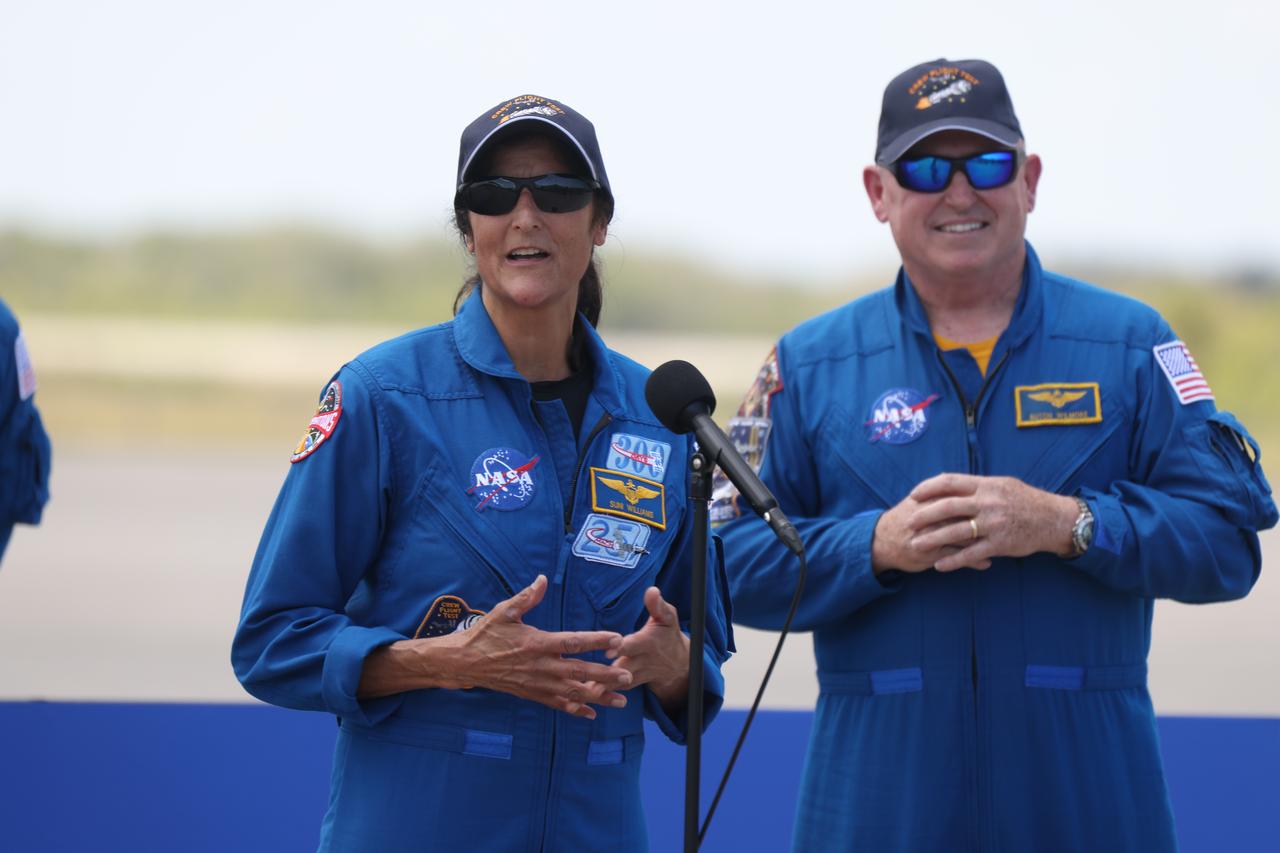
NASA astronauts Butch Wilmore and Suni Williams deliver remarks to members of the news media at the Launch and Landing Facility at NASA’s Kennedy Space Center in Florida following their arrival for the agency’s Boeing Crew Flight Test. As part of the agency’s Commercial Crew Program, Williams and Wilmore are the first crew to launch aboard Boeing’s Starliner spacecraft atop a United Launch Alliance Atlas V rocket from Space Launch Complex-41 at Cape Canaveral Space Force Station in Florida. Liftoff is scheduled for 10:34 p.m. ET on Monday, May 6.
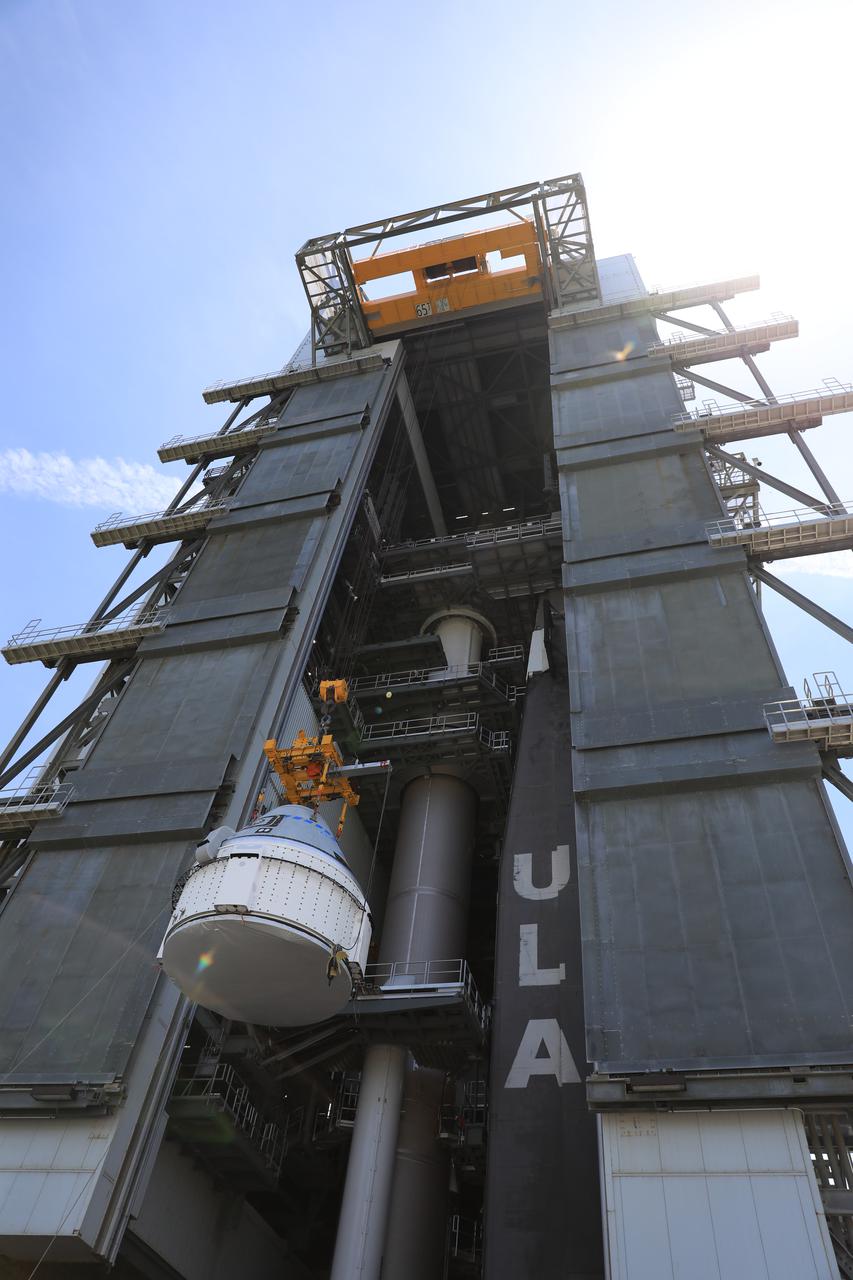
The Boeing CST-100 Starliner spacecraft is lifted at the Vertical Integration Facility at Space Launch Complex-41 at Florida’s Cape Canaveral Space Force Station on May 4, 2022. Starliner will be secured atop a United Launch Alliance Atlas V rocket for Boeing’s second Orbital Flight Test (OFT-2) to the International Space Station for NASA’s Commercial Crew Program. The spacecraft rolled out from Boeing’s Commercial Crew and Cargo Processing Facility at NASA’s Kennedy Space Center earlier in the day.
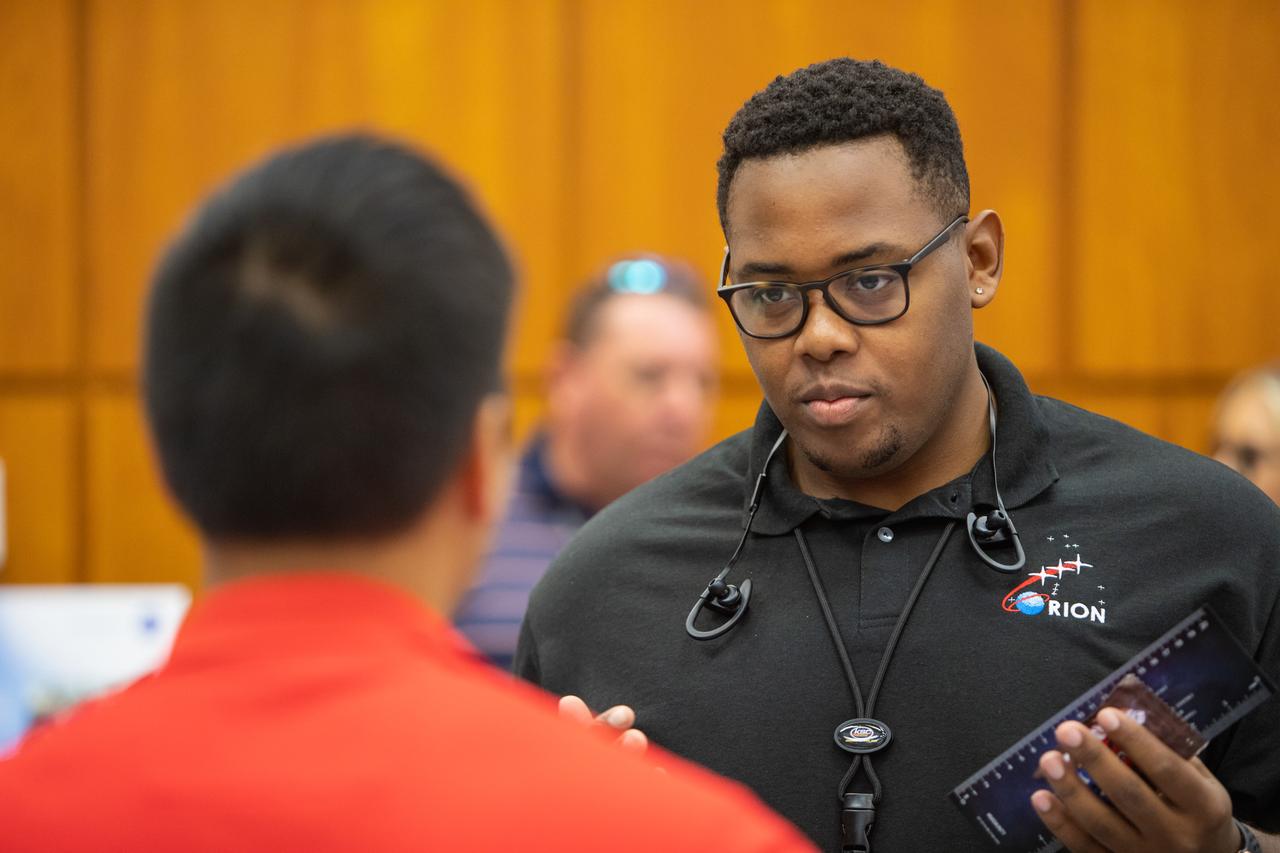
A Kennedy Space Center employee demonstrates a new technology during an innovation showcase on Nov. 19, 2019, in the Florida spaceport’s Neil Armstrong Operations and Checkout Building’s Mission Briefing Room. Nearly 50 exhibitors gathered to participate in the center’s Innovation Days – one of several events throughout the year aimed at fostering and encouraging an innovative culture at Kennedy. Showcase participants included individuals from multiple directorates, programs and organizations throughout Kennedy. In addition to the showcase, employees had the opportunity to attend an overview presentation on NASA’s Human Landing System (HLS), hosted by HLS Program Manager Lisa Watson-Morgan.
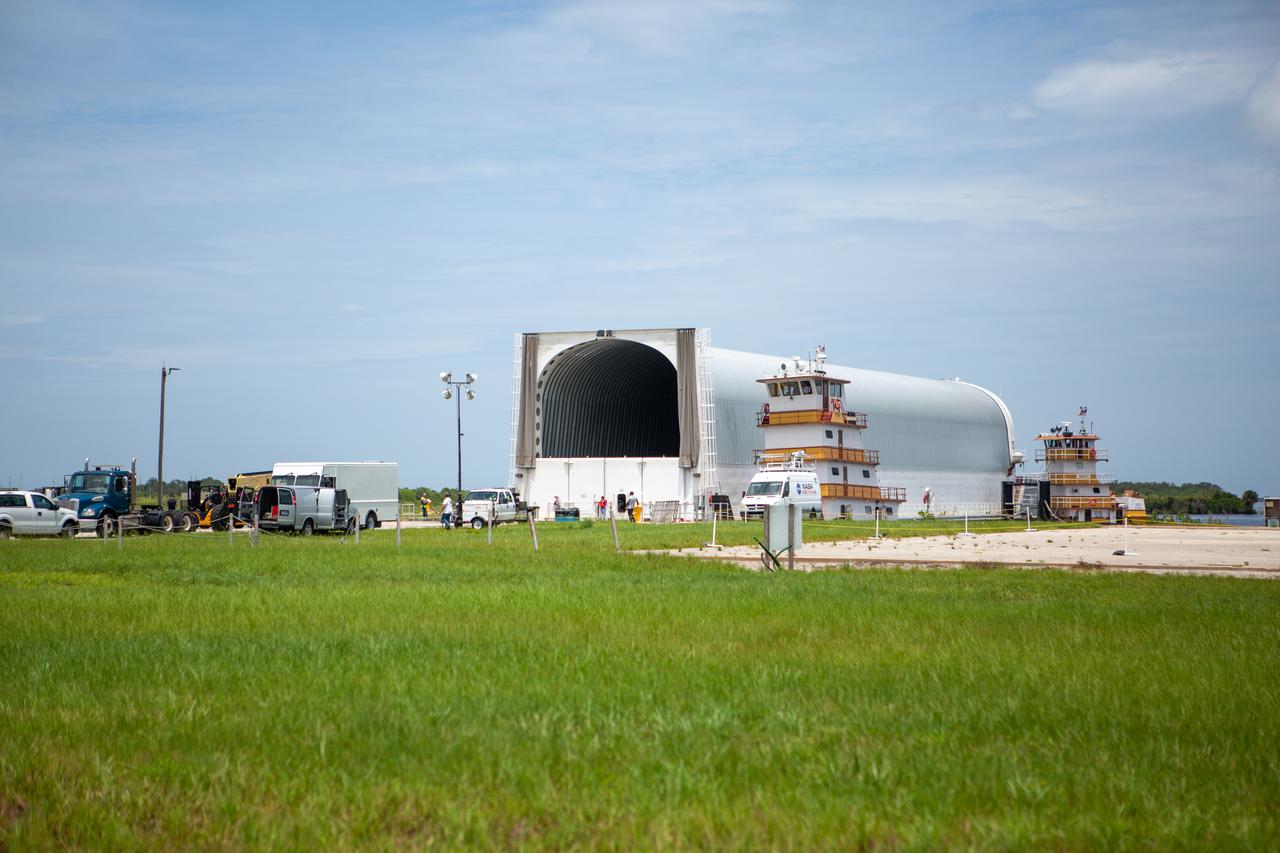
NASA’s Pegasus barge, carrying the launch vehicle stage adapter (LVSA) for the agency’s Space Launch System (SLS) rocket, arrives at the Kennedy Space Center Launch Complex 39 turn basin wharf on July 29, 2020. Traveling to Florida from NASA’s Marshall Space Flight Center in Huntsville, Alabama, the LVSA will connect the SLS core stage to the rocket’s upper stage for the Artemis I launch. Once the LVSA is offloaded, it will be moved to High Bay 4 in the Vehicle Assembly Building for processing ahead of launch. The first launch under the agency’s Artemis program, Artemis I will test SLS and the Orion spacecraft as an integrated system prior to crewed flights to the Moon.
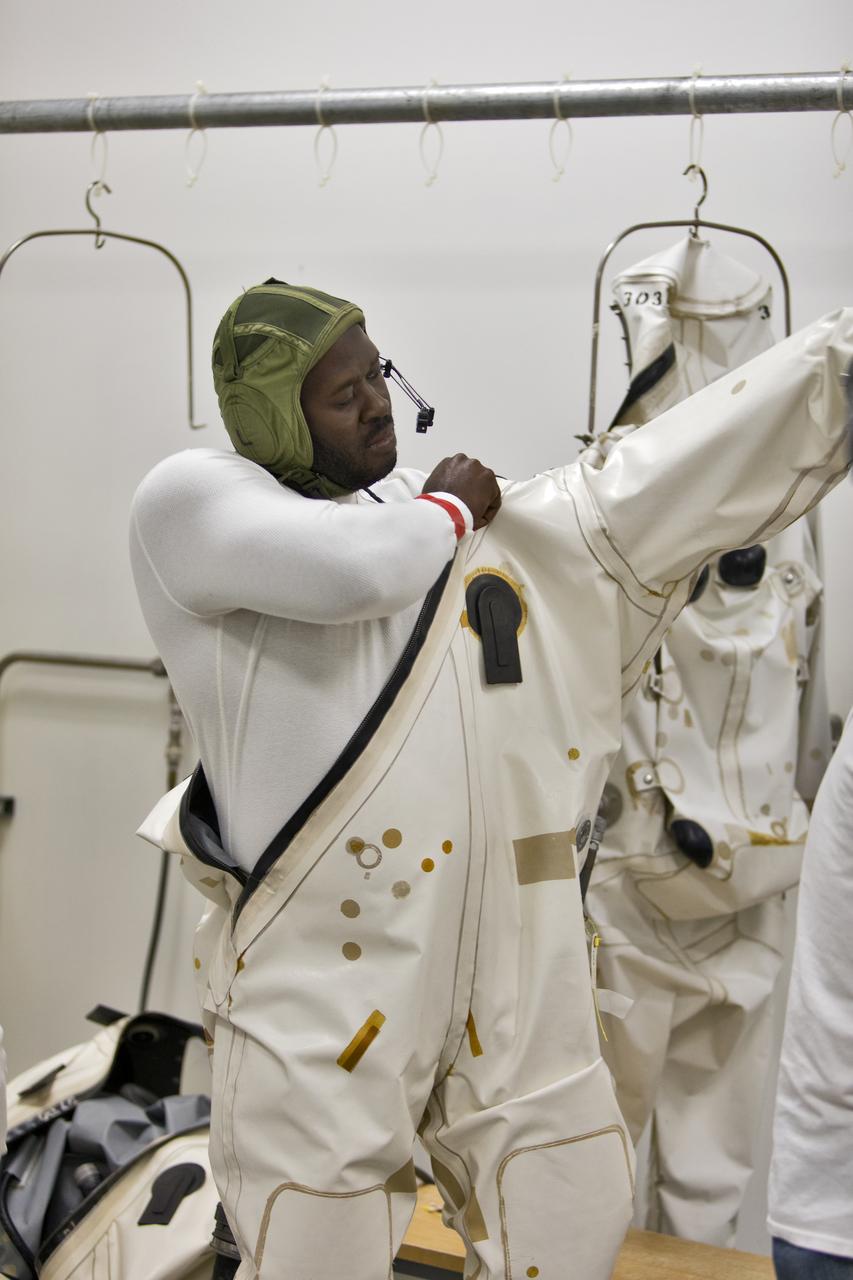
Technicans inside Kennedy's Multi-Payload Processing Facility do testing in SCAPE (Self-Contained Atmospheric Protective Ensemble) suits.
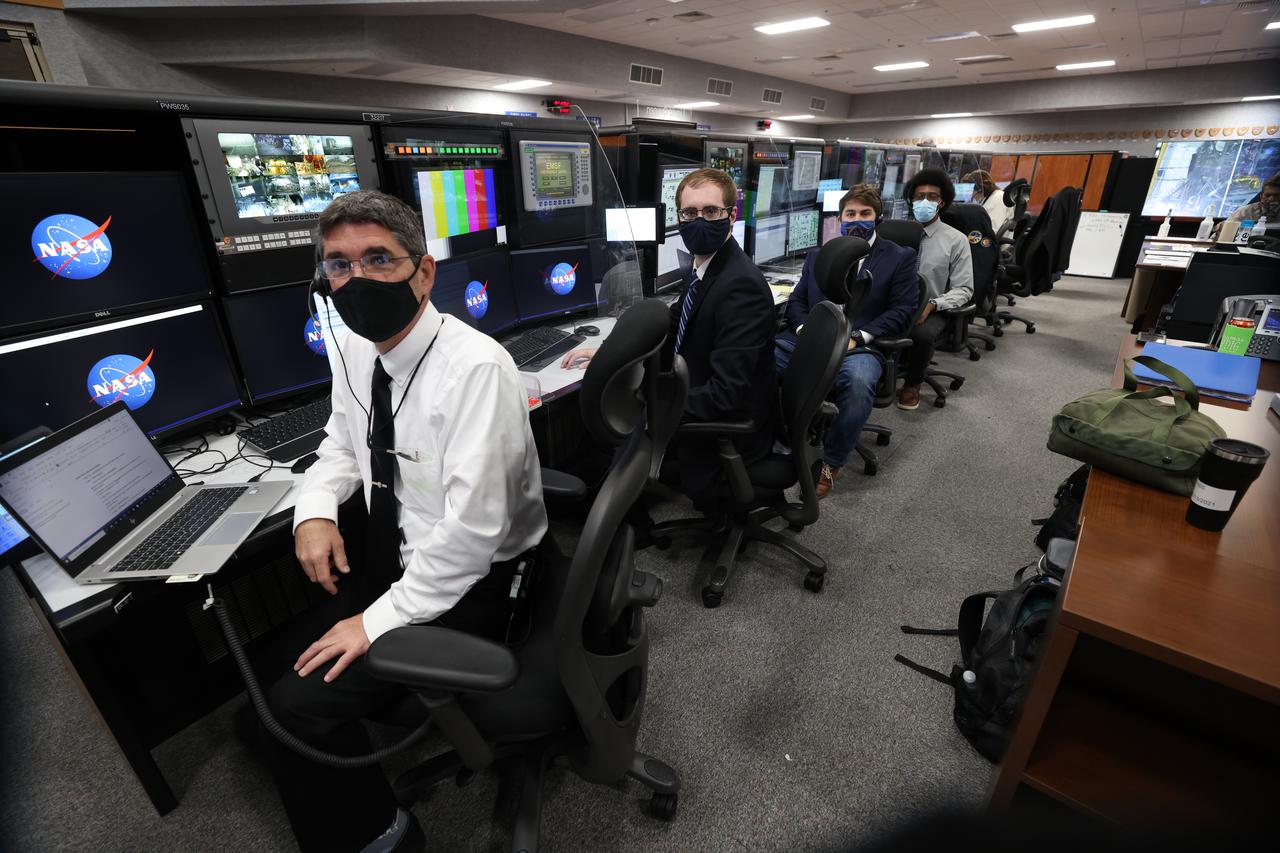
Launch team members are seated at the Liquid Oxygen consoles inside Firing Room 1 of the Launch Control Center at NASA’s Kennedy Space Center in Florida on Dec. 13, 2021. They are participating in a joint integrated simulation for the Artemis I launch that covered both cryogenic loading and terminal countdown portions of prelaunch activities. Members of NASA’s mission management team and launch team conducted the simulation together. The Kennedy team was certified for the Artemis I launch. During Artemis I, the agency’s Orion spacecraft will lift off from Kennedy aboard NASA’s most powerful rocket – the Space Launch System – to fly farther than any spacecraft built for humans has ever flown. Through NASA’s Artemis missions, the agency, along with commercial and international partners, will establish a sustainable human presence on the Moon to prepare for missions to Mars.
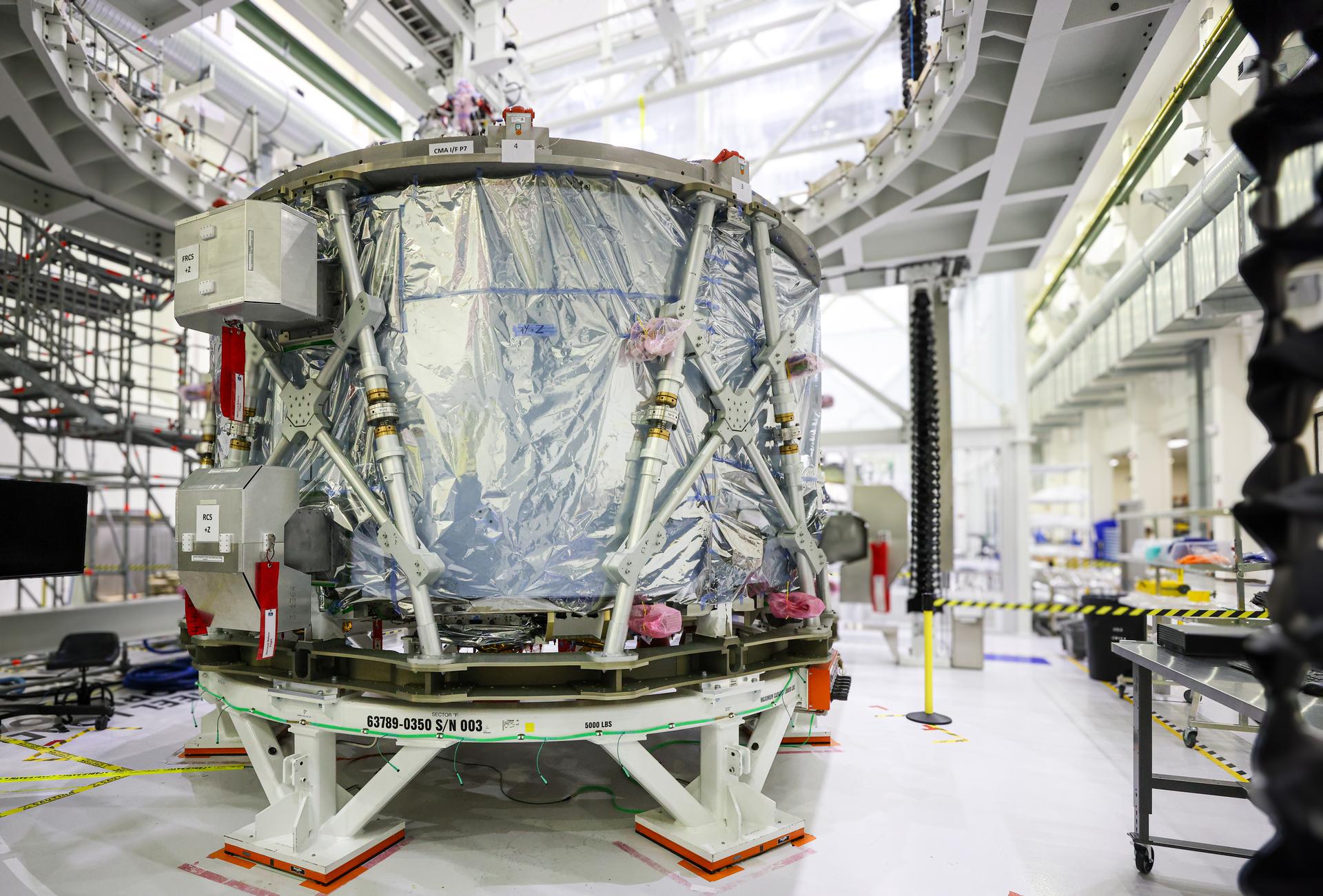
The transport carrier containing the European Service Module for NASA’s Artemis IV mission arrives at the Neil A. Armstrong Operations and Checkout Building at NASA’s Kennedy Space Center in Florida on Saturday, Dec. 20, 2025. The European Service Module, which is assembled by Airbus in Bremen, Germany, from parts made in 10 European countries and the United States, acts as the driving force behind Orion for deep space exploration, providing essential propulsion, thermal control, and electrical power.

A close-up view of Moonikin “Campos” secured in a seat inside the Artemis I Orion crew module atop the Space Launch System rocket in High Bay 3 of the Vehicle Assembly Building at NASA’s Kennedy Space Center in Florida on Aug. 3, 2022. Artemis I will provide a foundation for human deep space exploration and demonstrate NASA’s capability to extend human present to the Moon and beyond. The primary goal of Artemis I is to thoroughly test the Space Launch System rocket and Orion spacecraft’s integrated systems before crewed missions. Under Artemis, NASA aims to land the first woman and first person of color on the Moon and establish sustainable lunar exploration.
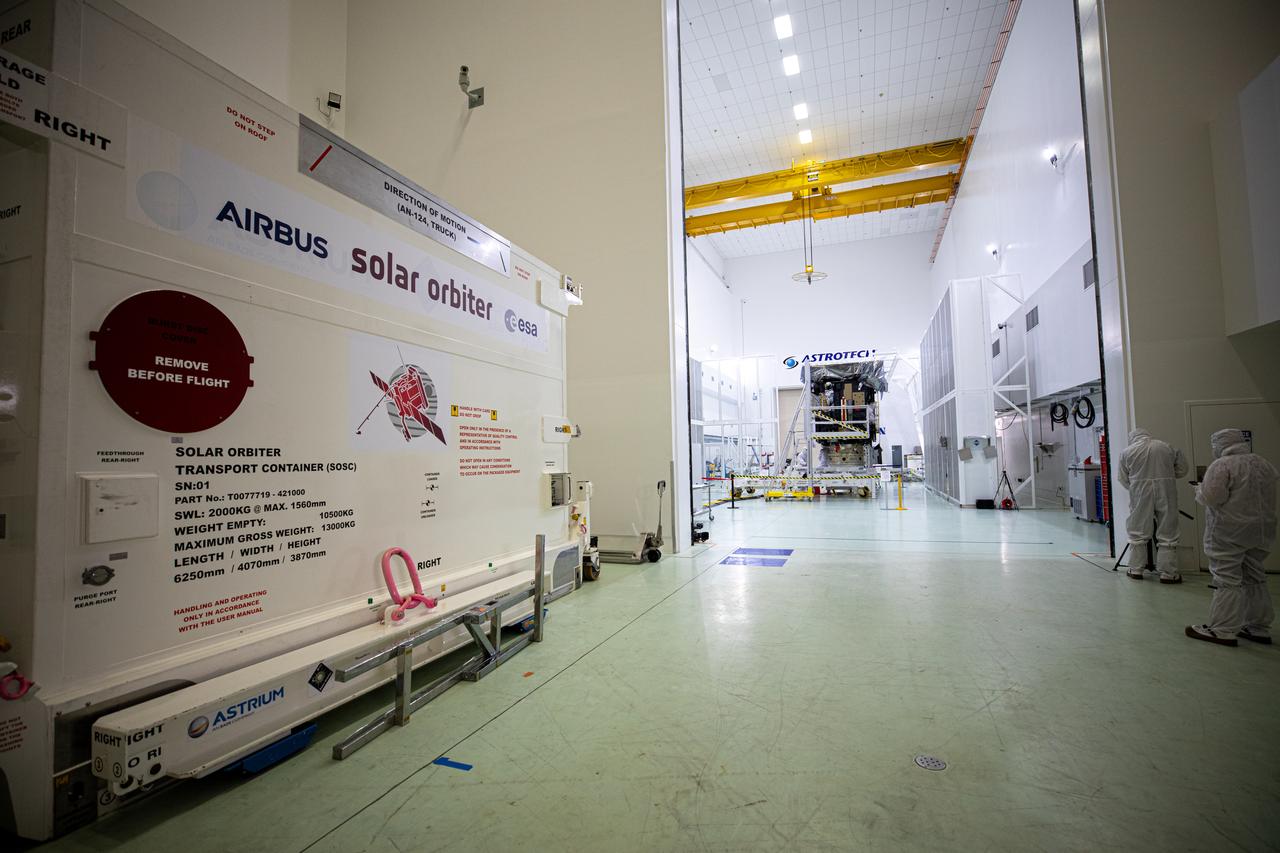
Members of the media were given the opportunity to view and photograph the Solar Orbiter spacecraft up close inside the Astrotech Space Operations payload processing facility in Titusville, Florida, on Dec. 16, 2019. Representatives from NASA’s Launch Services Program (LSP), the European Space Agency (ESA), United Launch Alliance (ULA), Airbus Defence and Space, and NASA’s Goddard Space Flight Center provided an overview of the mission, spacecraft and launch vehicle. Solar Orbiter is a space mission of international collaboration between ESA and NASA, and the spacecraft has been developed by Airbus. The mission will study the Sun and how it can affect the space environment throughout the solar system, and it also will provide the first images of the Sun’s poles. Solar Orbiter is scheduled to launch from Cape Canaveral Air Force Station’s Space Launch Complex 41 aboard a ULA Atlas V rocket at 11:27 p.m. EST on Feb. 5, 2020. LSP will manage the launch.
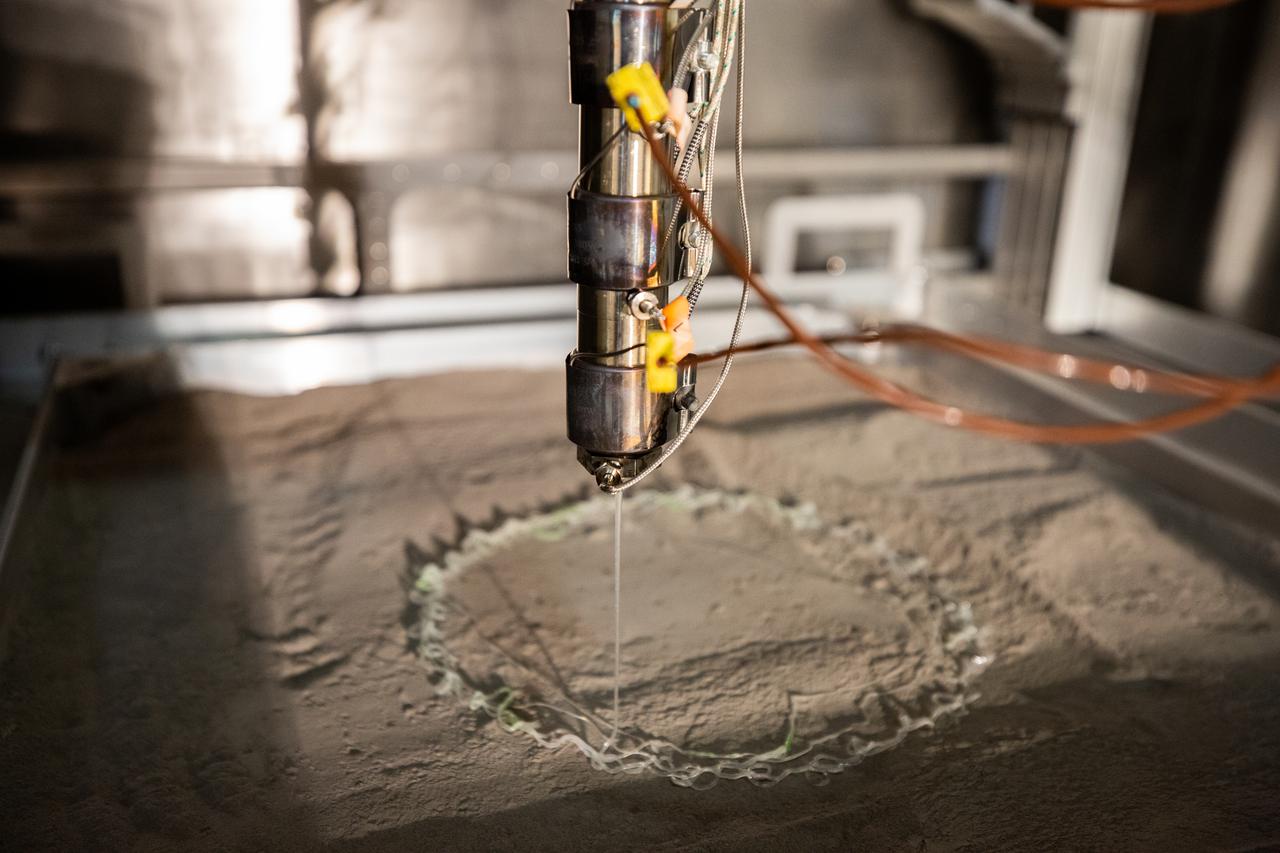
A team at NASA’s Kennedy Space Center in Florida test a 3D printer inside a vacuum chamber at the Granular Mechanics and Regolith Operations (GMRO) lab inside the spaceport’s Swamp Works, as part of the Relevant Environment Additive Construction Technology (REACT) project on April 5, 2022. Testing REACT derives from NASA’s 2020 Announcement of Collaboration Opportunity, with AI SpaceFactory – an architectural and construction technology company and winner of NASA’s 3D Printed Habitat Challenge – collaborating with Kennedy teams to build 3D-printed test structures using a composite made from polymers and a regolith simulant in a vacuum chamber that mimics environmental conditions on the Moon.