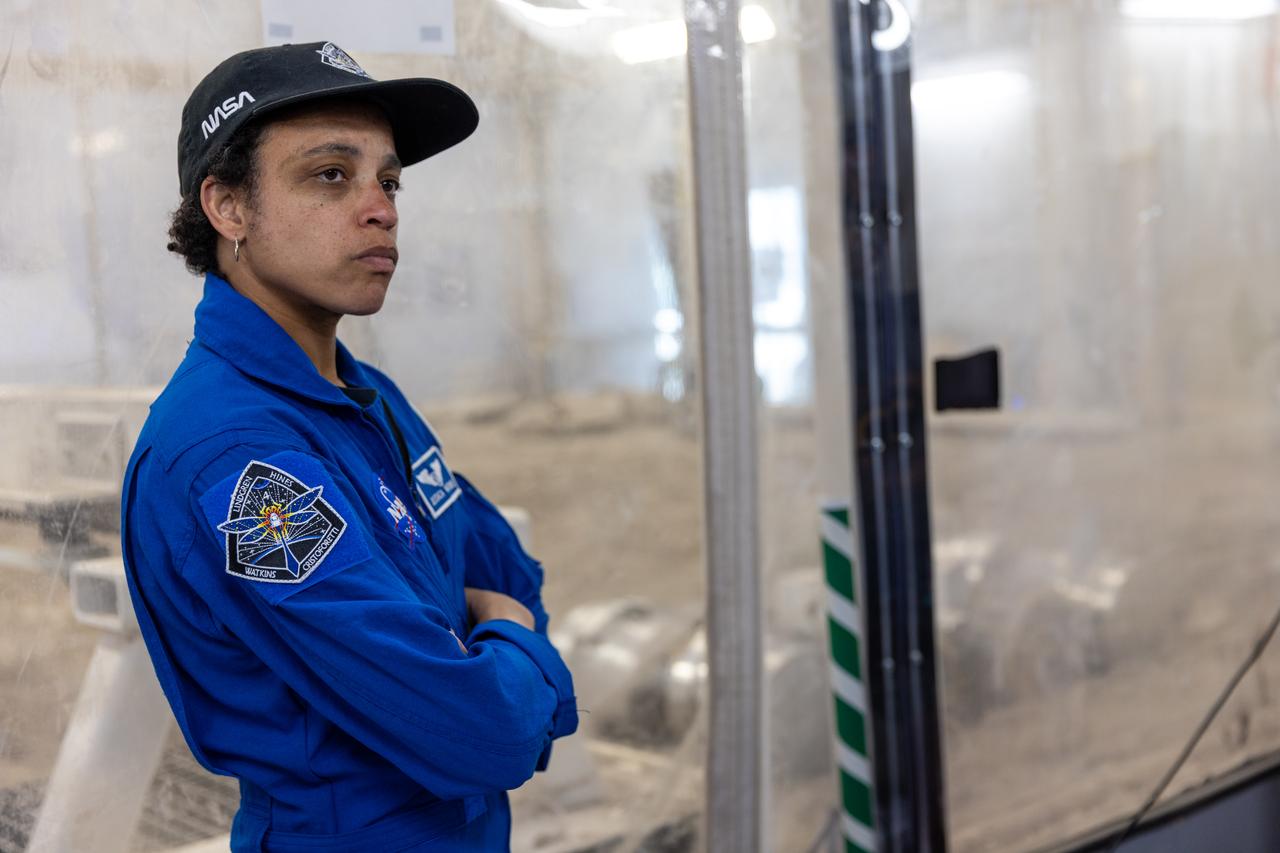
NASA astronaut Jessica Watkins visits the Granular Mechanics and Regolith Operations Laboratory inside Swamp Works at Kennedy Space Center in Florida on Wednesday, Aug. 27, 2025, to view some of the evolving technologies in development that astronauts may use to explore the Moon’s surface, prepare it for sustainable outposts, and to handle the dust that is collected during moonwalks.

An Artemis launch team member participates in the Artemis III terminal countdown simulation on Thursday, May 7, 2026, inside Firing Room 1 of the Rocco A. Petrone Launch Control Center at NASA’s Kennedy Space Center in Florida. This marked the first simulation the launch team performed ahead of Artemis III.
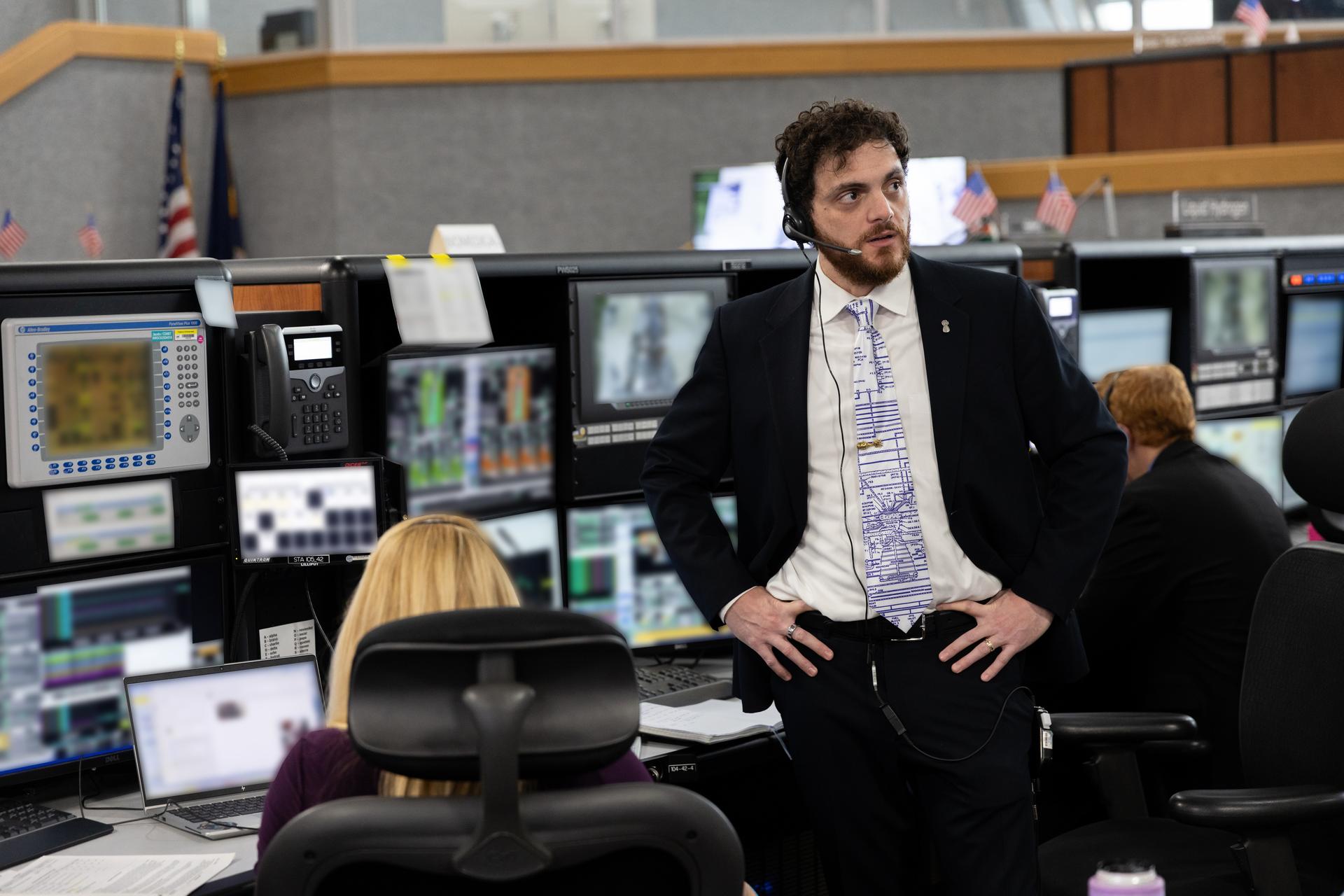
Kevin Todaro, Artemis launch team member, participates in the Artemis II terminal count simulation on Wednesday, Jan. 14, 2026, inside Firing Room 1 of the Rocco A. Petrone Launch Control Center at NASA’s Kennedy Space Center in Florida. The terminal count simulation conducted by NASA’s Exploration Ground Systems team runs through the final five hours of launch countdown, include terminal count - the remaining 10 minutes of the countdown - for NASA’s Artemis II test flight which will take Commander Reid Wiseman, Pilot Victor Glover, and Mission Specialist Christina Koch from NASA, and Mission Specialist Jeremy Hansen from the CSA (Canadian Space Agency), around the Moon and back to Earth no later than no later than April 2026 from Launch Complex 39B at NASA Kennedy.
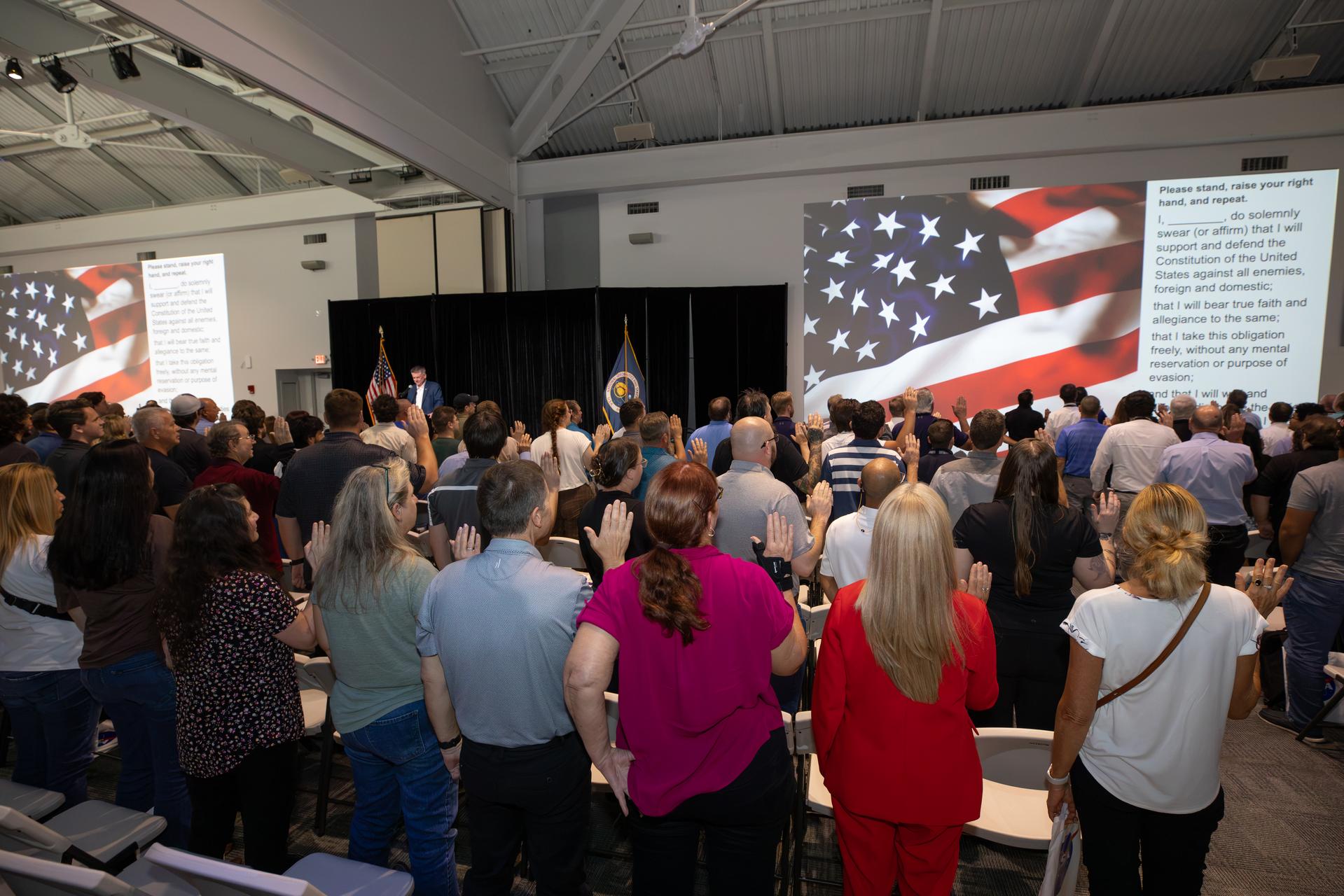
NASA’s Kennedy Space Center Director Brian Hughes (at podium) conducts a swearing-in ceremony for NASA’s latest civil servants on Monday, Aug. 24, 2026, inside the Astronauts Memorial Foundation’s Center for Space Education at the Kennedy Space Center Visitor Complex in Florida. The ceremony featured the swearing-in of employees formerly from the Consolidated Operations, Management, Engineering, and Test (COMET) contract, as well as outside hires, as part of the administrator’s workforce directive to restore technical core competencies within the civil servants ranks.

NASA’s Pegasus barge carrying a weather cover for the Artemis III SLS (Space Launch System) rocket core stage, arrives Sunday, June 21, 2026, at the Launch Complex 39 turn basin at the agency’s Kennedy Space Center in Florida. The cover will protect the stage’s thermal systems while SLS sits atop the mobile launcher at Launch Pad 39B in its short stack configuration. NASA will send four Artemis astronauts on increasingly difficult missions to explore more of the Moon for scientific discovery, economic benefits, establish an enduring human presence on the lunar surface, and to build on our foundation for the first crewed missions to Mars.
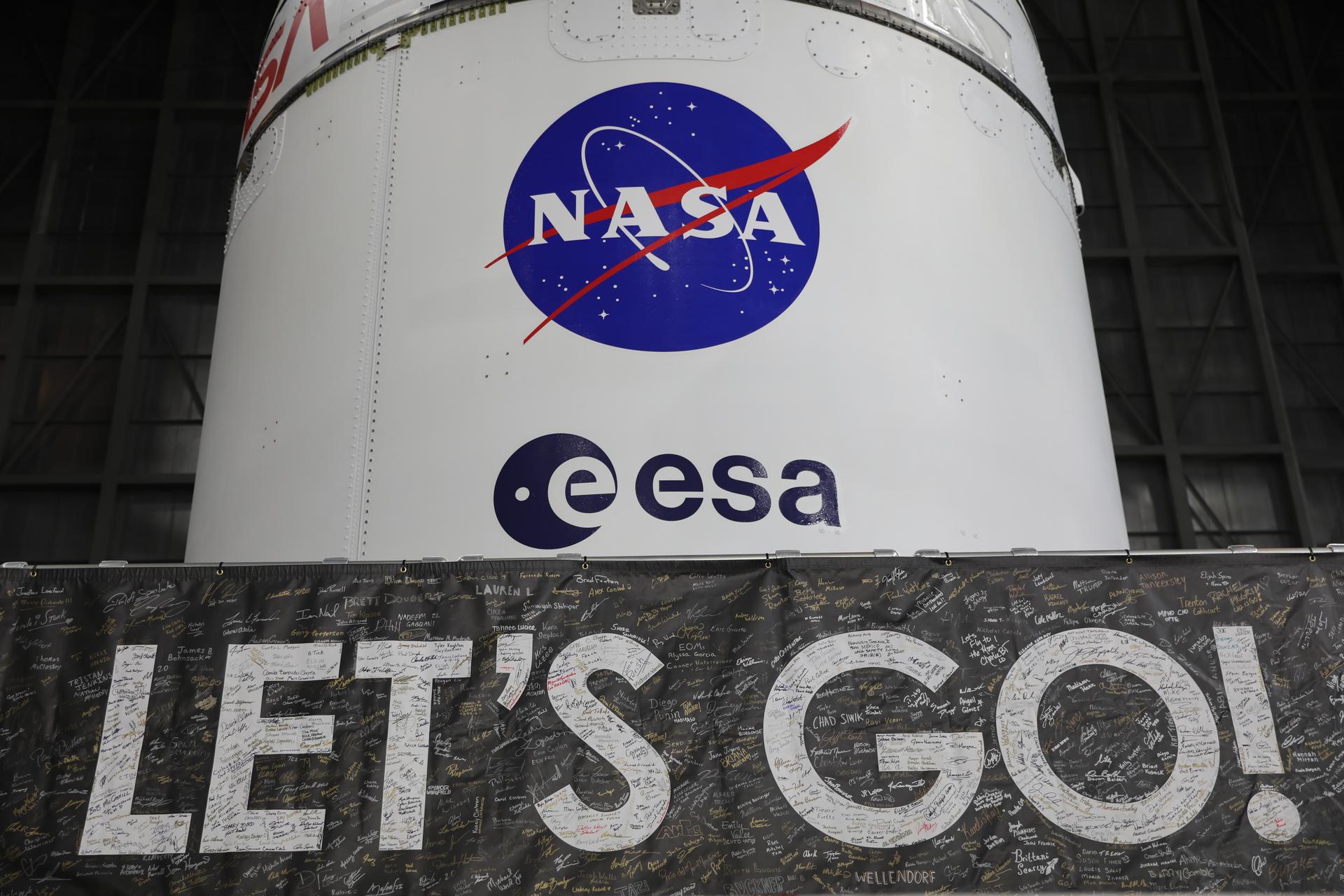
Technicians with NASA’s Exploration Ground Systems team prepare for integration to attach the agency’s Orion spacecraft on top of the SLS (Space Launch System) rocket in High Bay 3 of the Vehicle Assembly Building at NASA’s Kennedy Space Center in Florida on Friday, Oct. 17, 2025, for the agency’s Artemis II mission. Set to launch in 2026, the spacecraft will carry NASA astronauts Reid Wiseman, Victor Glover, Christina Koch, and CSA (Canadian Space Agency) astronaut Jeremy Hansen on a 10-day mission around the Moon and back. Once stacked, teams will begin conducting a series of verification tests ahead of rolling out to Launch Complex 39B for the wet dress rehearsal at NASA Kennedy.
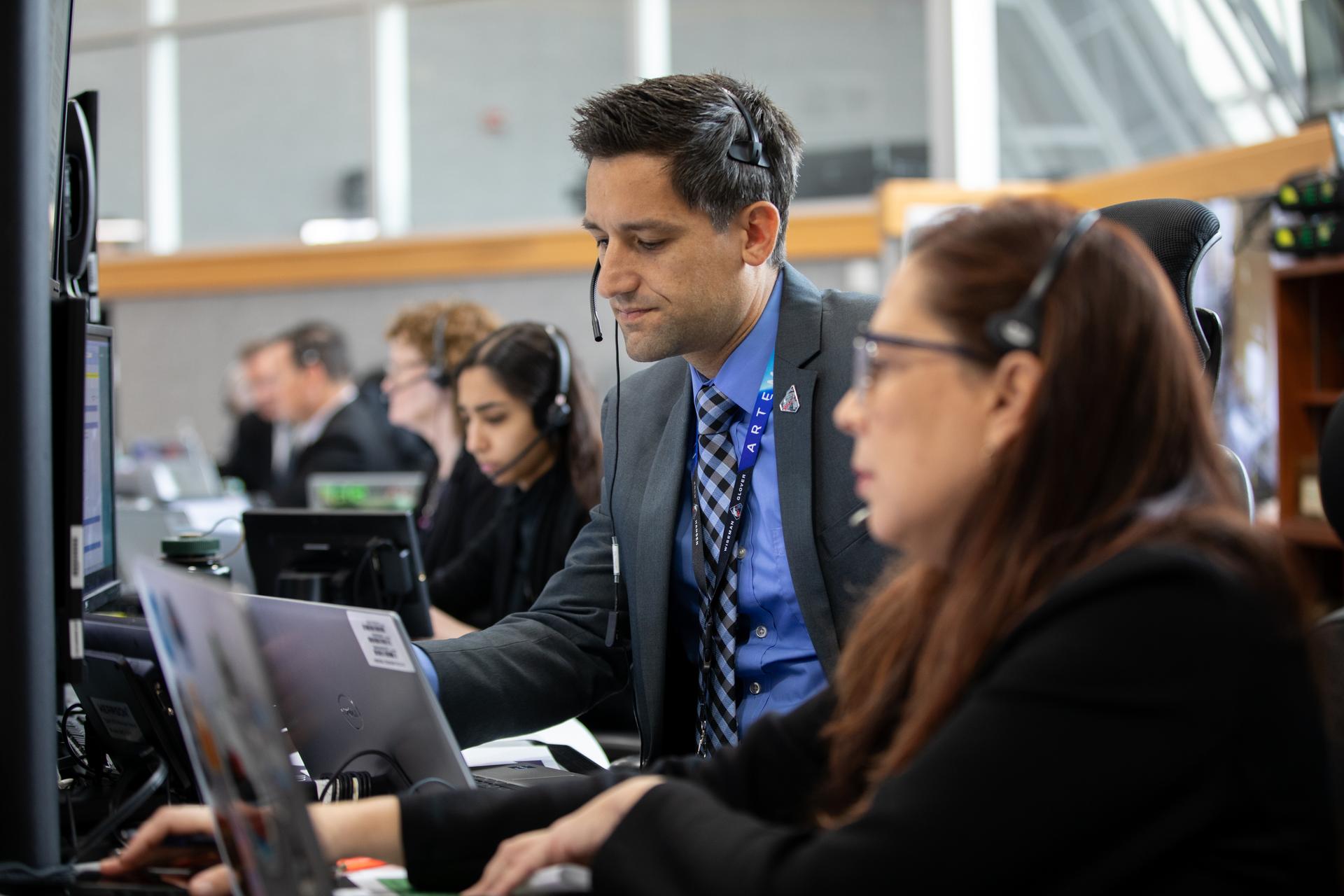
From left, Dan Florez, NASA test director, and Lili Villarreal, Artemis II landing and recovery director, participate in the Artemis II terminal count simulation on Wednesday, Jan. 14, 2026, inside Firing Room 1 of the Rocco A. Petrone Launch Control Center at NASA’s Kennedy Space Center in Florida. The terminal count simulation conducted by NASA’s Exploration Ground Systems team runs through the final five hours of launch countdown, include terminal count - the remaining 10 minutes of the countdown - for NASA’s Artemis II test flight which will take Commander Reid Wiseman, Pilot Victor Glover, and Mission Specialist Christina Koch from NASA, and Mission Specialist Jeremy Hansen from the CSA (Canadian Space Agency), around the Moon and back to Earth no later than no later than April 2026 from Launch Complex 39B at NASA Kennedy.

NASA’s Pegasus barge arrives at the Launch Complex 39 turn basin at the agency’s Kennedy Space Center in Florida carrying NASA’s Nancy Grace Roman Space Telescope on Sunday, June 21, 2026. Teams will offload and transport the observatory to the spaceport’s Payload Hazardous Servicing Facility where it will undergo processing ahead of launch, targeted no earlier than Sunday, Aug. 30, 2026. Named for NASA’s first chief astronomer and “mother of the Hubble Space Telescope,” Roman will offer a field of view over 100 times larger than Hubble’s to study up to a billion galaxies, directly image exoplanets and planet‑forming disks, and address fundamental questions about dark energy, exoplanets, and infrared astrophysics.
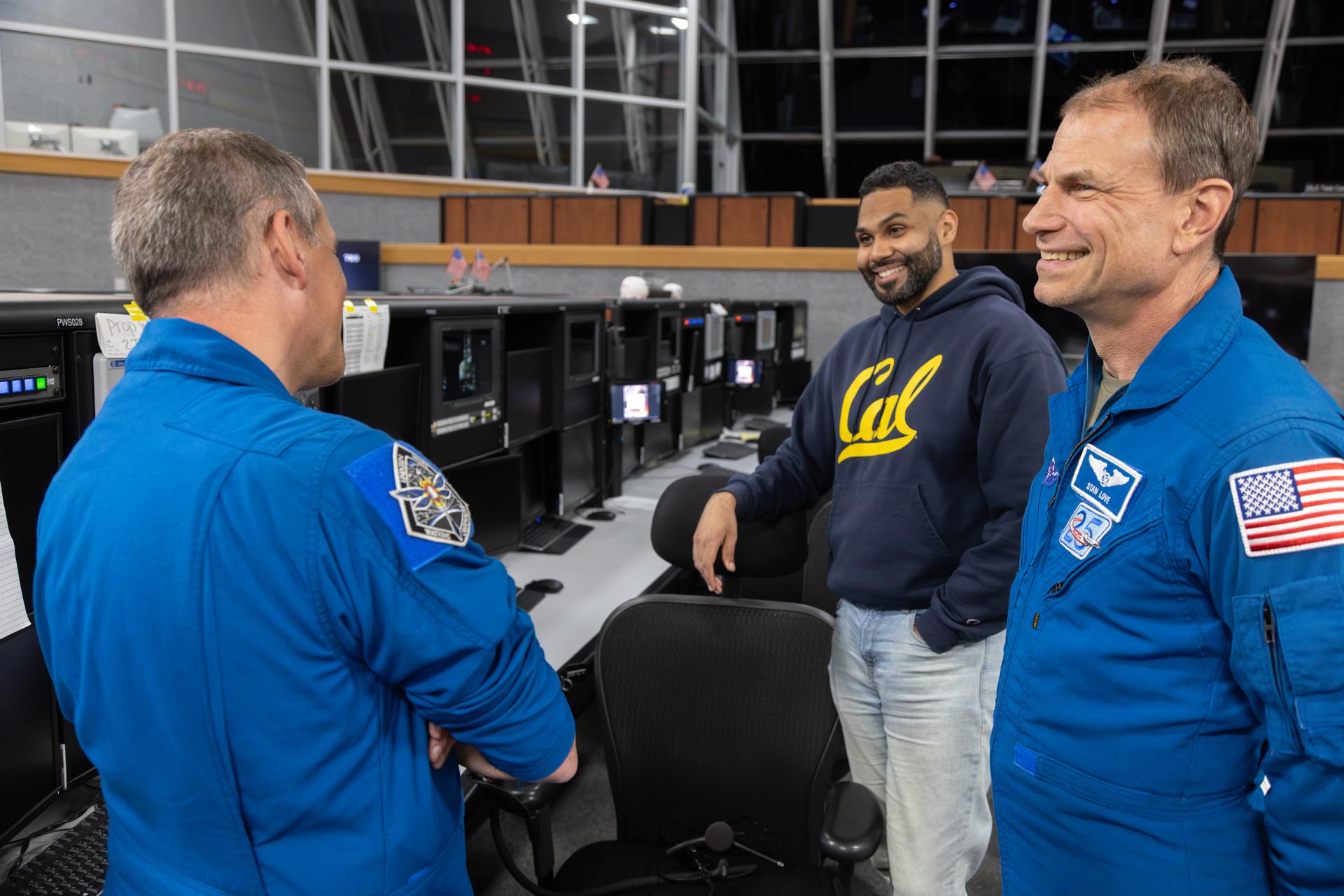
From left, NASA astronauts Bob Hines and Stan Love talk with Mike Guzman, Artemis launch team member, inside Firing Room 1 of the Rocco A. Petrone Launch Control Center during the Artemis II rollout of the SLS (Space Launch System) rocket and Orion spacecraft from the Vehicle Assembly Building to Launch Complex 39B at NASA’s Kennedy Space Center in Florida on Friday, March, 20, 2026. The Artemis II test flight will take Commander Reid Wiseman, Pilot Victor Glover, and Mission Specialist Christina Koch from NASA, and Mission Specialist Jeremy Hansen from the CSA (Canadian Space Agency), around the Moon and back to Earth with launch opportunities beginning in April 2026.

NASA Associate Administrator Amit Kshatriya participates in the Artemis II Flight Readiness Review with NASA leadership on Wednesday, March 11, 2026, at NASA’s Kennedy Space Center in Florida. The review is an assessment of the readiness of NASA’s SLS (Space Launch System) rocket and Orion spacecraft to support the Artemis II test flight as four astronauts journey around the Moon and return to Earth.
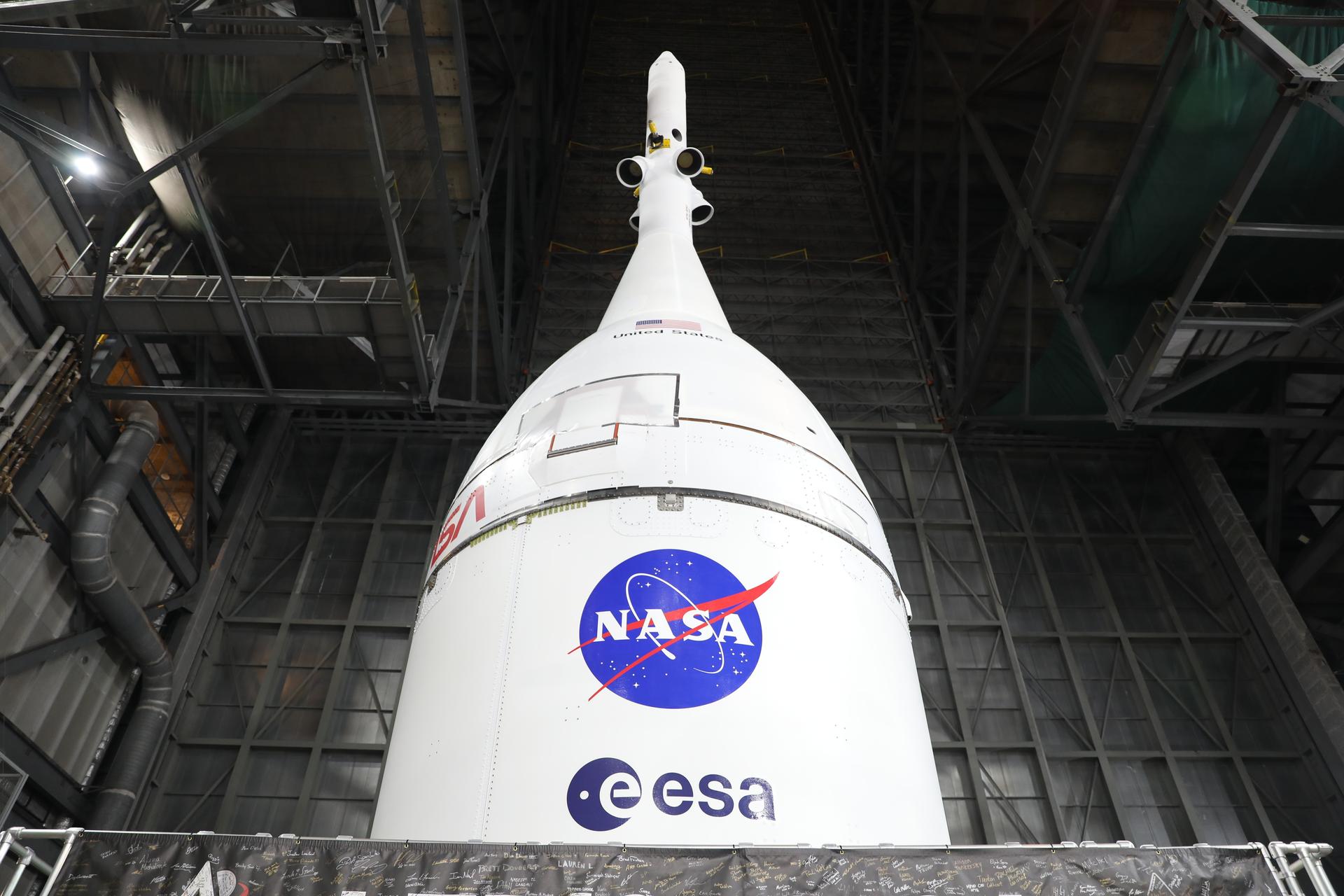
Technicians with NASA’s Exploration Ground Systems team prepare for integration to attach the agency’s Orion spacecraft on top of the SLS (Space Launch System) rocket in High Bay 3 of the Vehicle Assembly Building at NASA’s Kennedy Space Center in Florida on Friday, Oct. 17, 2025, for the agency’s Artemis II mission. Set to launch in 2026, the spacecraft will carry NASA astronauts Reid Wiseman, Victor Glover, Christina Koch, and CSA (Canadian Space Agency) astronaut Jeremy Hansen on a 10-day mission around the Moon and back. Once stacked, teams will begin conducting a series of verification tests ahead of rolling out to Launch Complex 39B for the wet dress rehearsal at NASA Kennedy.
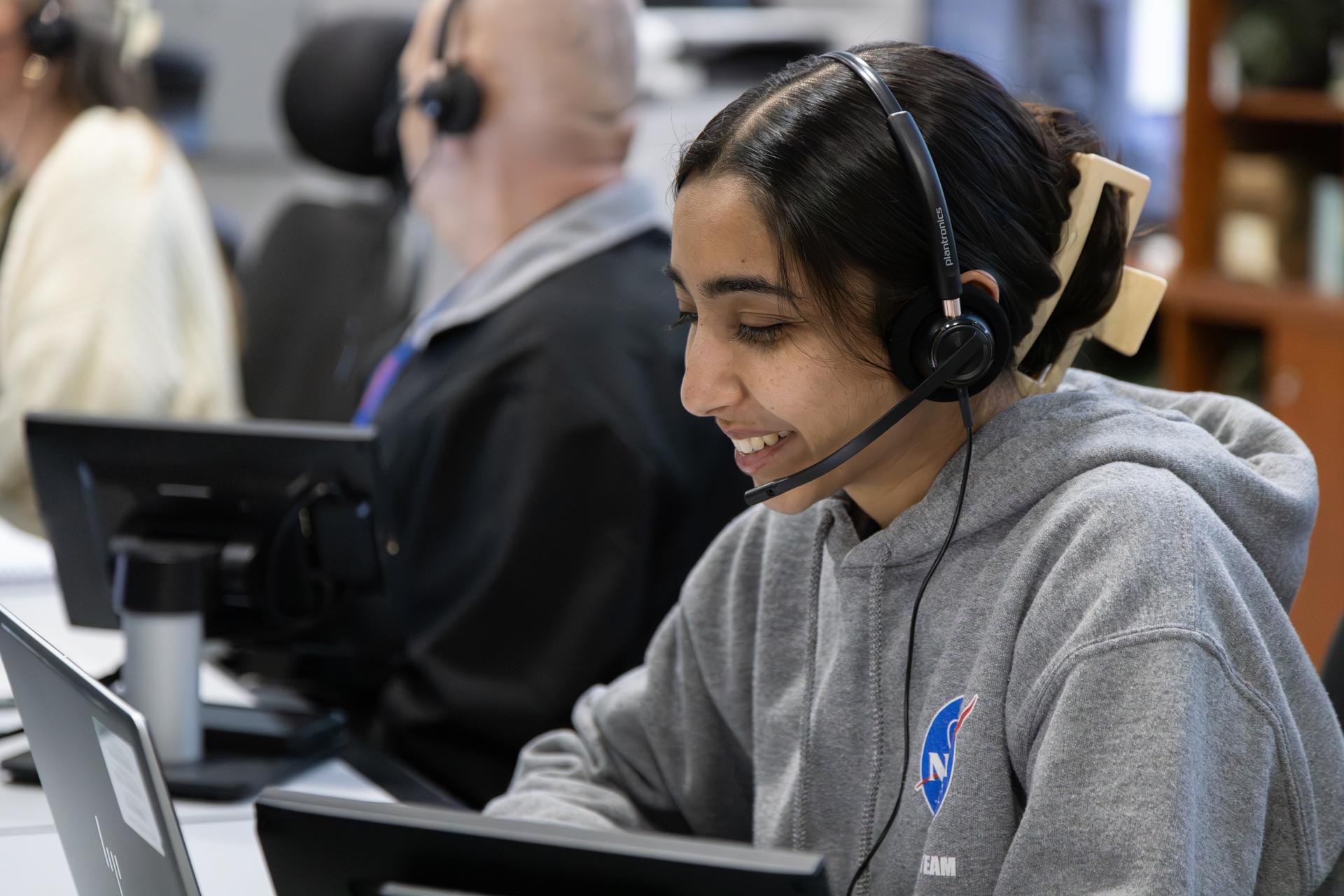
An Artemis launch team member, seen inside Firing Room 1 of the Rocco A. Petrone Launch Control Center, participates in the rollout of the Artemis II SLS (Space Launch System) rocket and Orion spacecraft from the Vehicle Assembly Building to Launch Complex 39B at NASA’s Kennedy Space Center in Florida on Friday, March 20, 2026. The Artemis II test flight will take Commander Reid Wiseman, Pilot Victor Glover, and Mission Specialist Christina Koch from NASA, and Mission Specialist Jeremy Hansen from the CSA (Canadian Space Agency), around the Moon and back to Earth with launch opportunities beginning in April 2026.
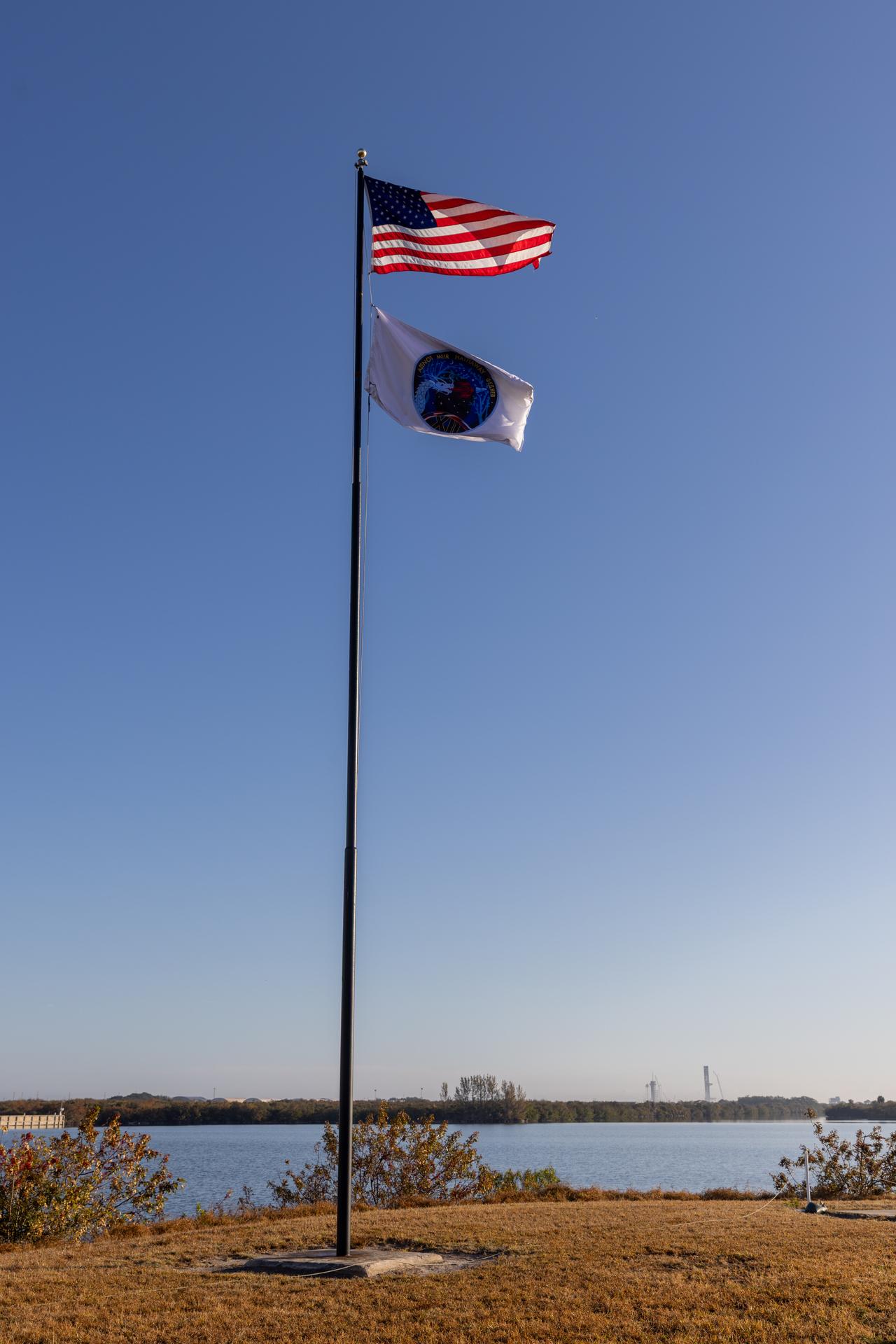
NASA Commercial Crew Program employees raise the agency’s SpaceX Crew-12 mission flag near the countdown clock at the NASA News Center at the agency’s Kennedy Space Center in Florida on Monday, Feb. 9, 2026. The Crew-12 mission will send NASA astronauts Jessica Meir and Jack Hathaway, ESA (European Space Agency) astronaut Sophie Adenot, and Roscosmos cosmonaut Andrey Fedyaev to the International Space Station aboard SpaceX’s Dragon spacecraft and Falcon 9 rocket no earlier than 5:38 a.m. EST, Thursday, Feb. 12, from Cape Canaveral Space Force Station’s Space Launch Complex 40.
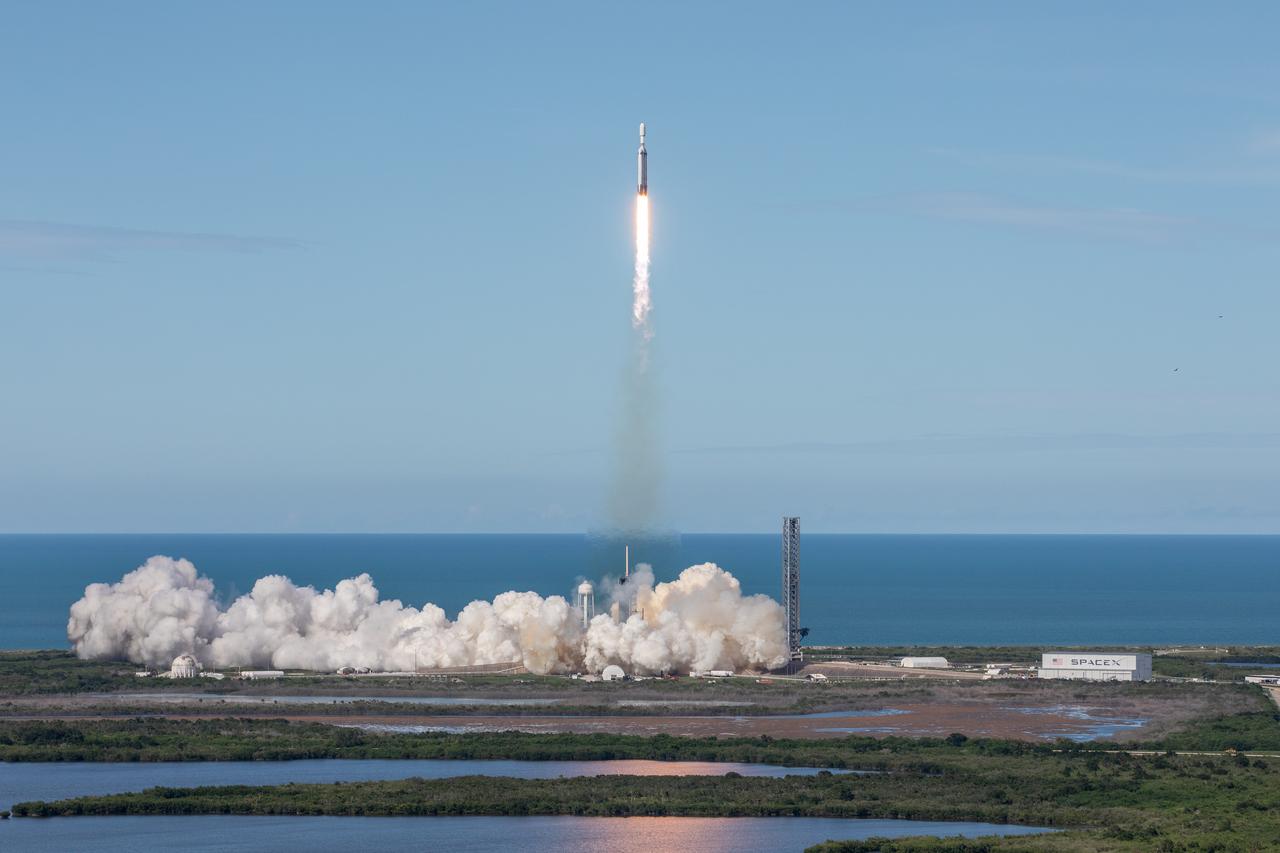
A SpaceX Falcon Heavy rocket carrying the National Oceanic and Atmospheric Administration (NOAA) GOES-U (Geostationary Operational Environmental Satellite U) lifts off from Launch Complex 39A at NASA’s Kennedy Space Center in Florida on Tuesday, June 25, 2024. The GOES-U satellite is the final satellite in the GOES-R series, which serves a critical role in providing continuous coverage of the Western Hemisphere, including monitoring tropical systems in the eastern Pacific and Atlantic oceans.

Jeff Spaulding, senior NASA test director, Exploration Ground Systems Program, participates in the Artemis III terminal countdown simulation on Thursday, May 7, 2026, inside Firing Room 1 of the Rocco A. Petrone Launch Control Center at NASA’s Kennedy Space Center in Florida. This marked the first simulation the launch team performed ahead of Artemis III.
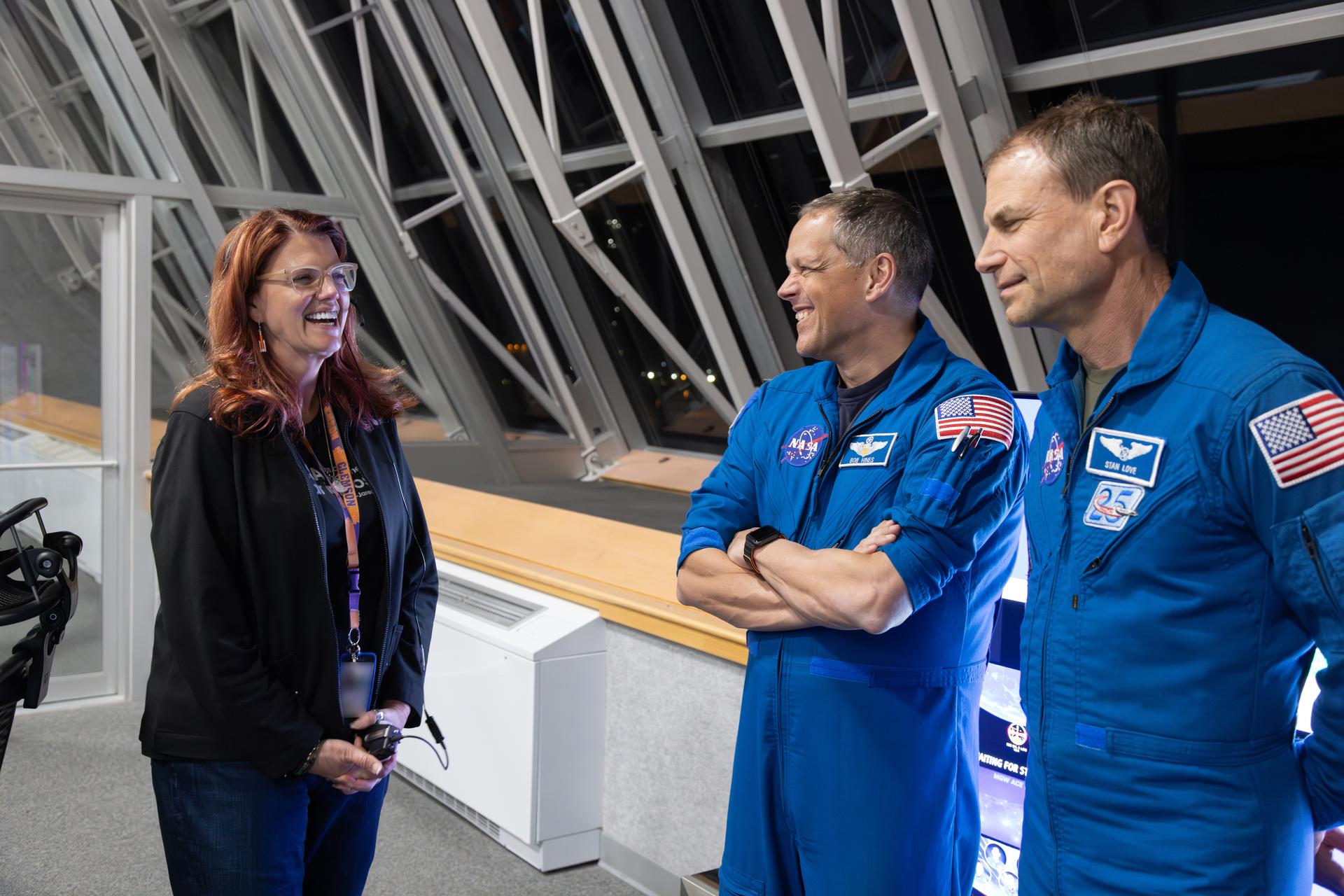
From left, Charlie Blackwell-Thompson, Artemis launch director, NASA’s Exploration Ground Systems Program, talks to NASA astronauts Bob Hines and Stan Love inside Firing Room 1 of the Rocco A. Petrone Launch Control Center during the Artemis II rollout of the SLS (Space Launch System) rocket and Orion spacecraft from the Vehicle Assembly Building to Launch Complex 39B at NASA’s Kennedy Space Center in Florida on Friday, March 20, 2026. The Artemis II test flight will take Commander Reid Wiseman, Pilot Victor Glover, and Mission Specialist Christina Koch from NASA, and Mission Specialist Jeremy Hansen from the CSA (Canadian Space Agency), around the Moon and back to Earth with launch opportunities beginning in April 2026.
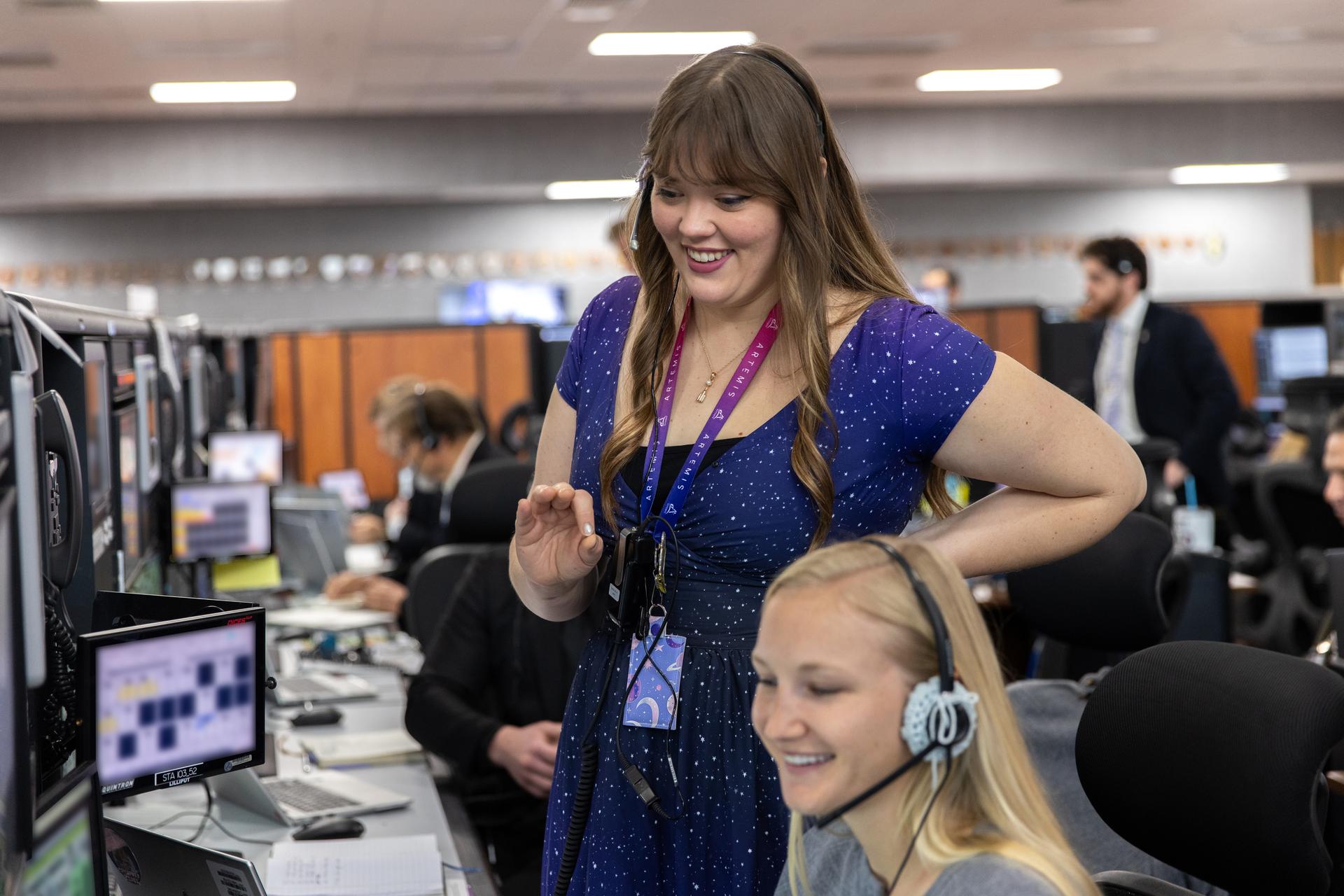
From left to right, Artemis launch team members Emily Eilish, Clare Hadley, and Holly Wells participate in the Artemis II terminal count simulation on Wednesday, Jan. 14, 2026, inside Firing Room 1 of the Rocco A. Petrone Launch Control Center at NASA’s Kennedy Space Center in Florida. The terminal count simulation conducted by NASA’s Exploration Ground Systems team runs through the final five hours of launch countdown, include terminal count - the remaining 10 minutes of the countdown - for NASA’s Artemis II test flight which will take Commander Reid Wiseman, Pilot Victor Glover, and Mission Specialist Christina Koch from NASA, and Mission Specialist Jeremy Hansen from the CSA (Canadian Space Agency), around the Moon and back to Earth no later than no later than April 2026 from Launch Complex 39B at NASA Kennedy.

Charlie Blackwell-Thompson, launch director, Exploration Ground Systems Program, participates in the Artemis III terminal countdown simulation on Thursday, May 7, 2026, inside Firing Room 1 of the Rocco A. Petrone Launch Control Center at NASA’s Kennedy Space Center in Florida. This marked the first simulation the launch team performed ahead of Artemis III.

NASA’s Pegasus barge carrying a weather cover for the Artemis III SLS (Space Launch System) rocket core stage arrives Sunday, June 21, 2026, at the Launch Complex 39 turn basin at the agency’s Kennedy Space Center in Florida. The cover will protect the stage’s thermal systems while SLS sits atop the mobile launcher at Launch Pad 39B in its short stack configuration. NASA will send four Artemis astronauts on increasingly difficult missions to explore more of the Moon for scientific discovery, economic benefits, establish an enduring human presence on the lunar surface, and to build on our foundation for the first crewed missions to Mars.
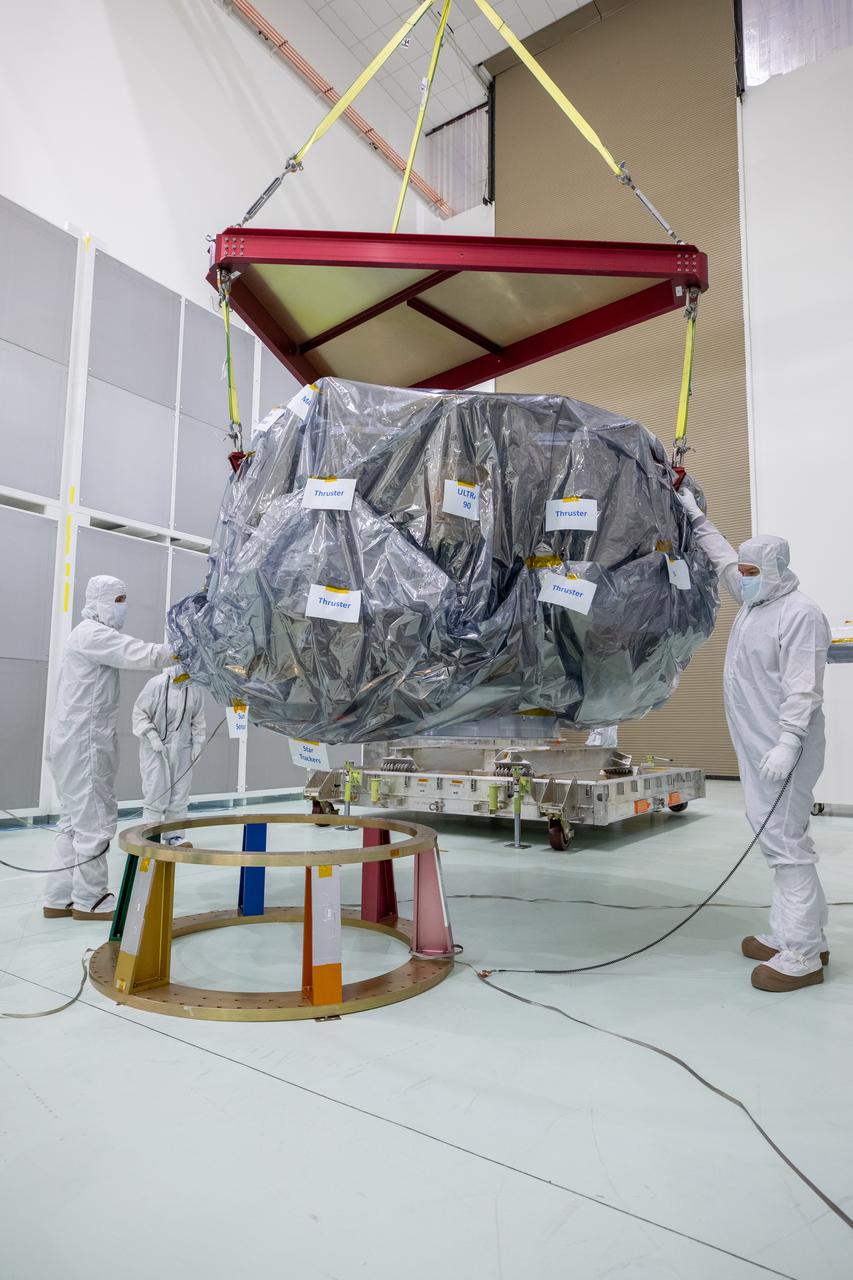
Technicians lift NASA’s IMAP (Interstellar Mapping and Acceleration Probe) spacecraft onto a work stand inside the high bay at the Astrotech Space Operations Facility near the agency’s Kennedy Space Center in Florida on Thursday, May 29, 2025. The observatory will study how the Sun shapes the boundaries of the heliosphere, the bubble protecting around our solar system, and is targeted for launch this fall aboard a SpaceX Falcon 9 rocket from Launch Complex 39A at NASA Kennedy.
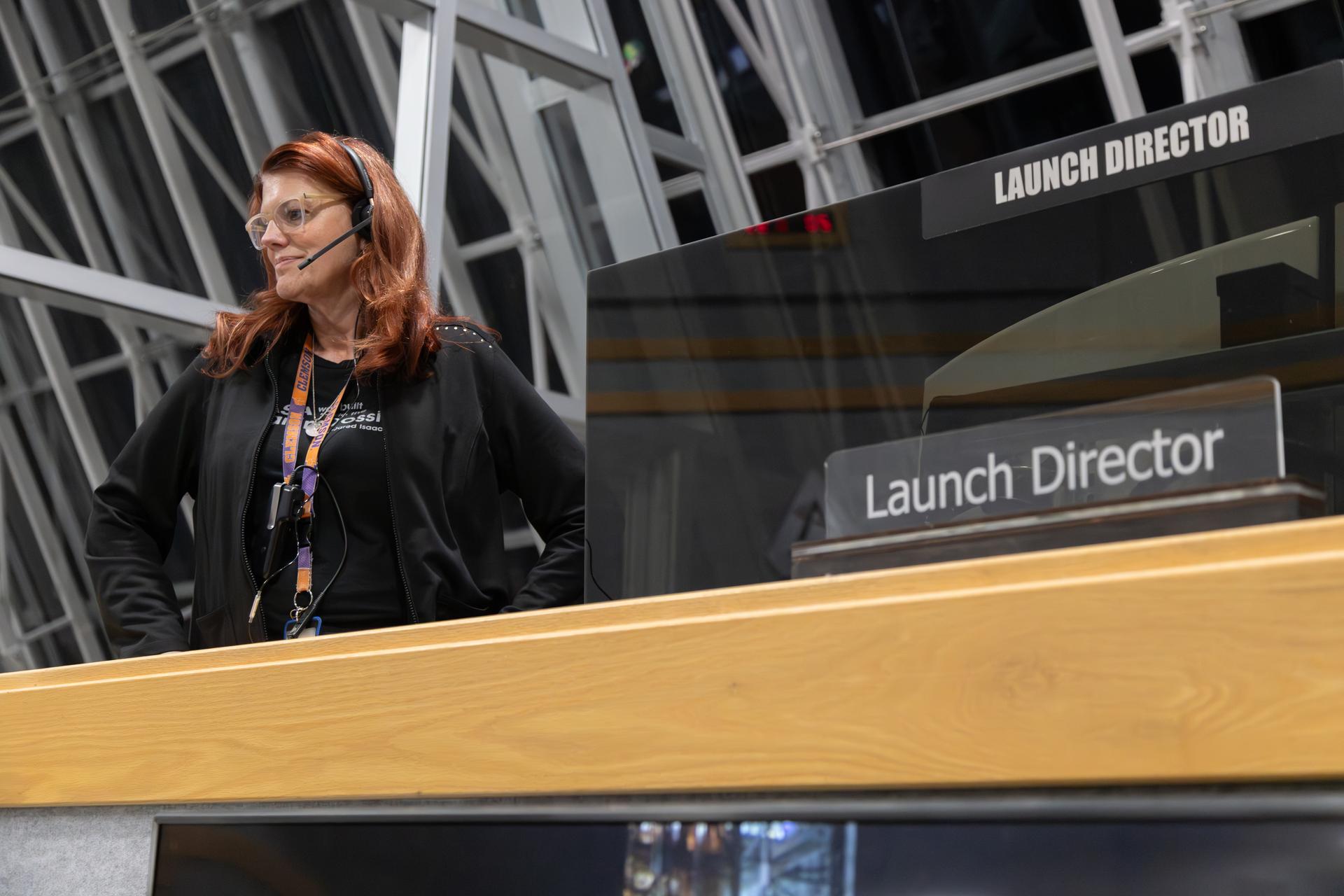
Charlie Blackwell-Thompson, Artemis launch director, NASA’s Exploration Ground Systems Program, is seen inside Firing Room 1 of the Rocco A. Petrone Launch Control Center during the Artemis II rollout of the SLS (Space Launch System) rocket and Orion spacecraft from the Vehicle Assembly Building to Launch Complex 39B at NASA’s Kennedy Space Center in Florida on Friday,. March 20, 2026. The Artemis II test flight will take Commander Reid Wiseman, Pilot Victor Glover, and Mission Specialist Christina Koch from NASA, and Mission Specialist Jeremy Hansen from the CSA (Canadian Space Agency), around the Moon and back to Earth with launch opportunities beginning in April 2026.

From left, NASA Kennedy Space Center Director Brian Hughes speaks to NASA astronauts Zena Cardman and Mike Fincke, and JAXA (Japan Aerospace Exploration Agency) astronaut Kimiya Yui during their visit to Kennedy in Florida on Thursday, June 11, 2026. The three crew members, along with Roscosmos cosmonaut Oleg Platonov, spent five and a half months aboard the International Space Station.

From left, NASA astronaut Zena Cardman, JAXA (Japan Aerospace Exploration Agency) astronaut Kimiya Yu, and NASA astronaut Mike Fincke tour the Vehicle Assembly Building during a visit to NASA’s Kennedy Space Center in Florida on Thursday, June 11, 2026. The three crew members, along with Roscosmos cosmonaut Oleg Platonov, spent five and a half months aboard the International Space Station.

From left, NASA astronauts Zena Cardman and Mike Fincke, and JAXA (Japan Aerospace Exploration Agency) astronaut Kimiya Yui speak to employees in the Vehicle Assembly Building during a visit to NASA’s Kennedy Space Center in Florida on Thursday, June 11, 2026. The three crew members, along with Roscosmos cosmonaut Oleg Platonov, spent five and a half months aboard the International Space Station.
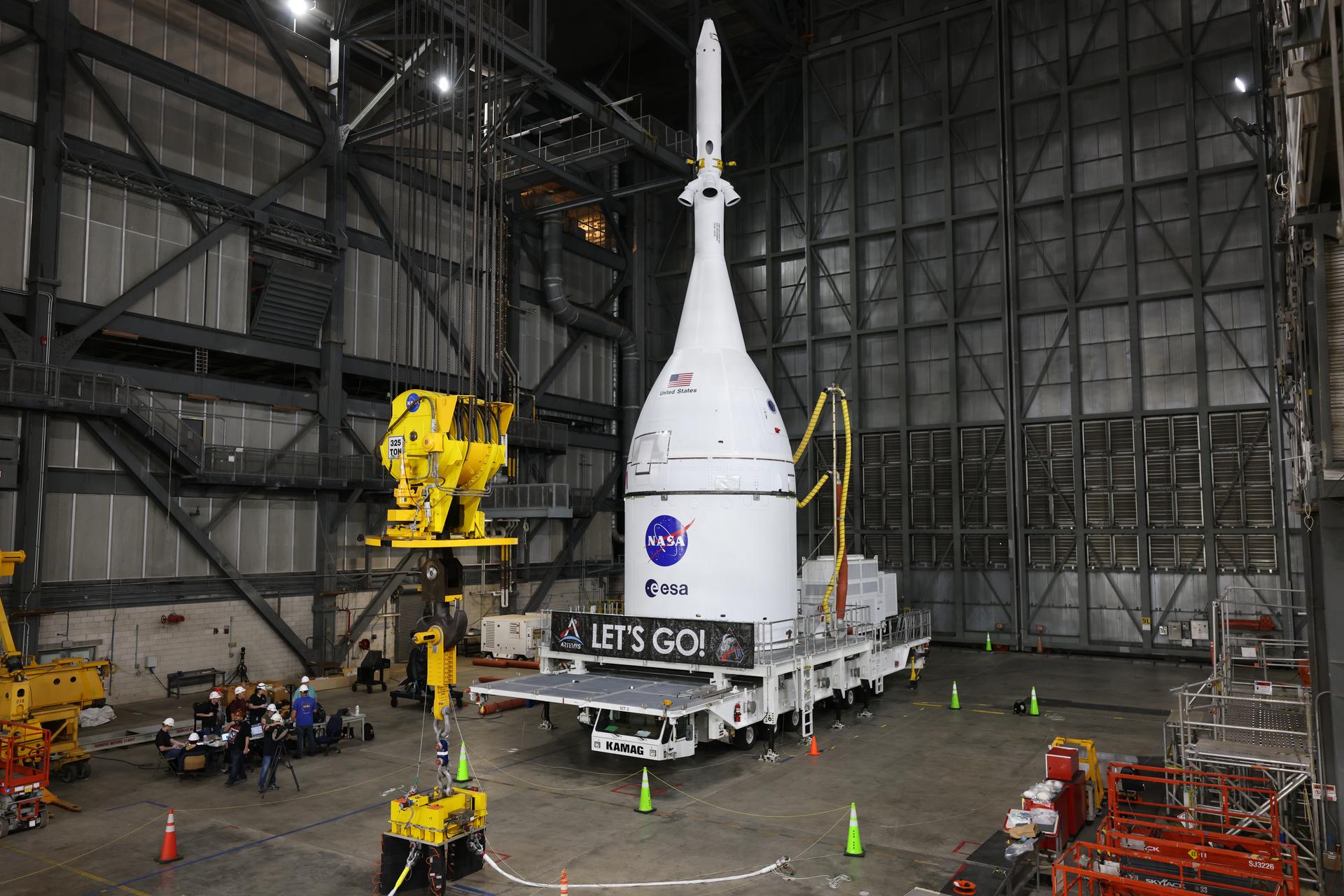
Technicians with NASA’s Exploration Ground Systems team prepare to attach a crane to lift and secure NASA’s Orion spacecraft on top of the SLS (Space Launch System) rocket in High Bay 3 of the Vehicle Assembly Building at NASA’s Kennedy Space Center in Florida on Friday, Oct. 17, 2025, for the agency’s Artemis II mission. Set to launch in 2026, the spacecraft will carry NASA astronauts Reid Wiseman, Victor Glover, Christina Koch, and CSA (Canadian Space Agency) astronaut Jeremy Hansen on a 10-day mission around the Moon and back. Once stacked, teams will begin conducting a series of verification tests ahead of rolling out to Launch Complex 39B for the wet dress rehearsal at NASA Kennedy.

Teams from NASA’s Kennedy Space Center in Florida, the Fish and Wildlife Services, and the National Park Service cleared debris along the shoreline near the Beach House on Friday, May 8, 2026, to make the journey a little easier for mother turtles coming ashore to lay their eggs during nesting season now through October. NASA Kennedy is home to four nesting sea turtles: Loggerhead, Green, Leatherback, and occasionally the Kemp’s ridley turtles.
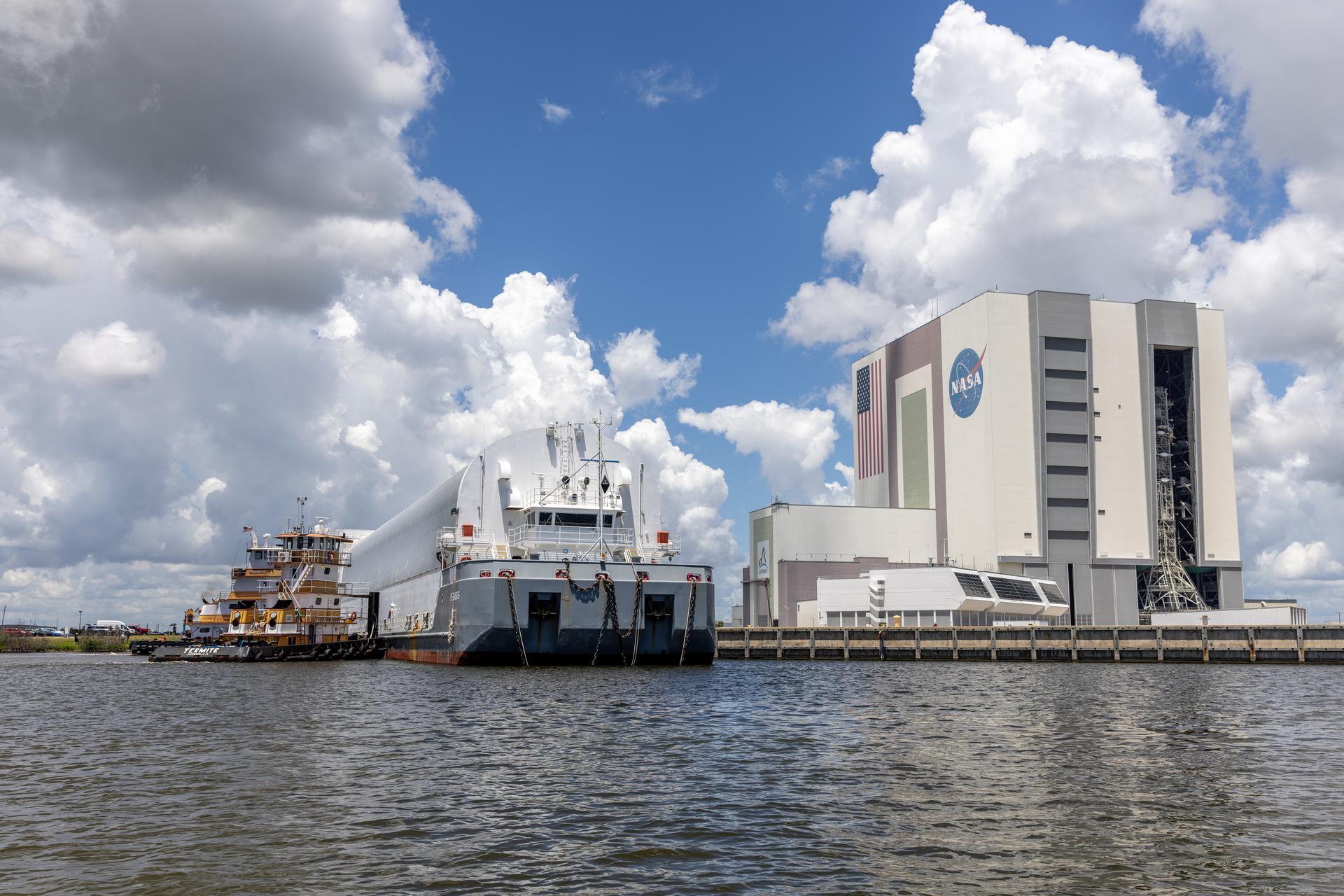
NASA’s Pegasus barge arrives at the Launch Complex 39 turn basin at the agency’s Kennedy Space Center in Florida carrying NASA’s Nancy Grace Roman Space Telescope on Sunday, June 21, 2026. Teams will offload and transport the observatory to the spaceport’s Payload Hazardous Servicing Facility where it will undergo processing ahead of launch, targeted no earlier than Sunday, Aug. 30, 2026. Named for NASA’s first chief astronomer and “mother of the Hubble Space Telescope,” Roman will offer a field of view over 100 times larger than Hubble’s to study up to a billion galaxies, directly image exoplanets and planet forming disks, and address fundamental questions about dark energy, exoplanets, and infrared astrophysics.
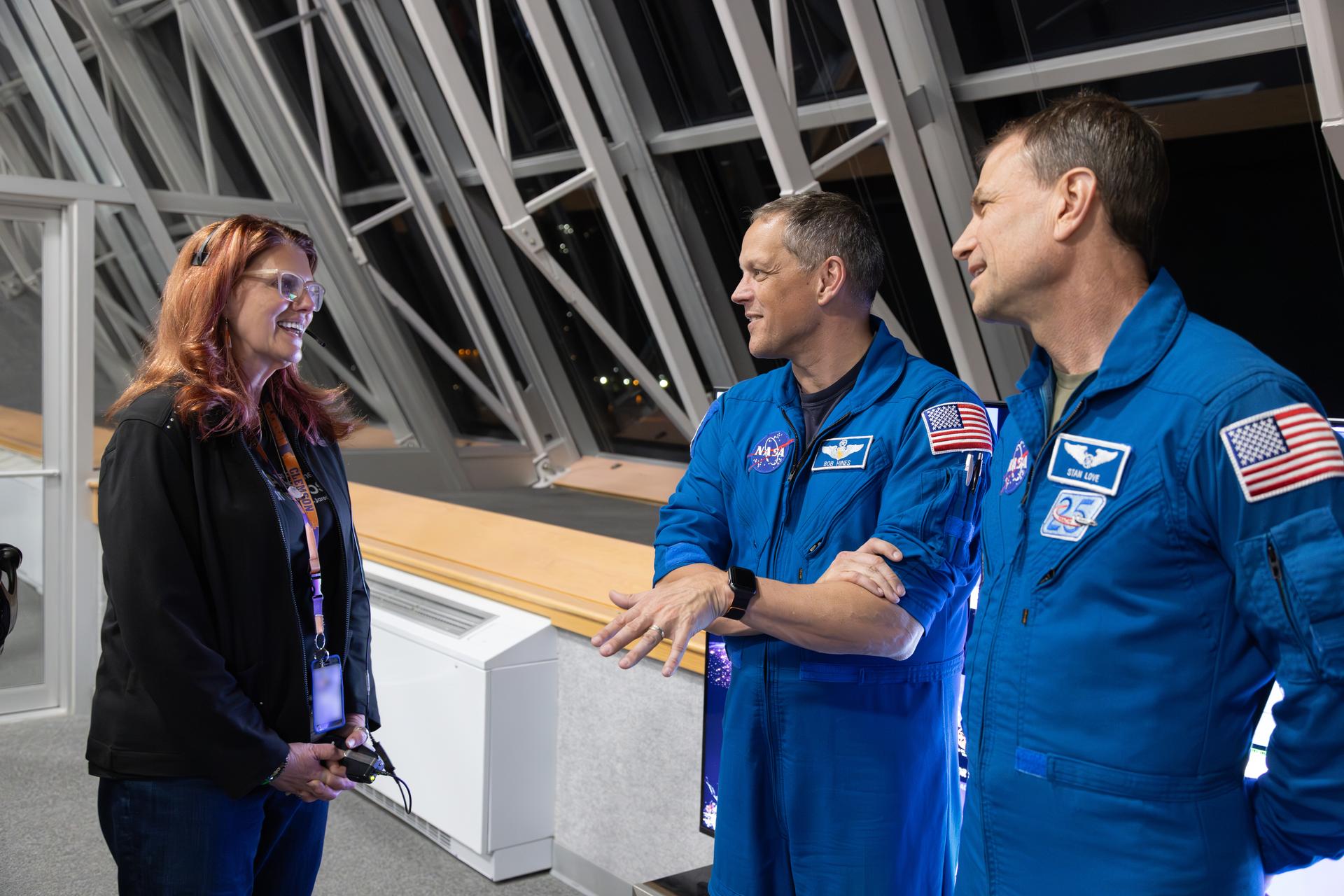
From left, Charlie Blackwell-Thompson, Artemis launch director, NASA’s Exploration Ground Systems Program, talks to NASA astronauts Bob Hines and Stan Love inside Firing Room 1 of the Rocco A. Petrone Launch Control Center during the Artemis II rollout of the SLS (Space Launch System) rocket and Orion spacecraft from the Vehicle Assembly Building to Launch Complex 39B at NASA’s Kennedy Space Center in Florida on Friday, March 20, 2026. The Artemis II test flight will take Commander Reid Wiseman, Pilot Victor Glover, and Mission Specialist Christina Koch from NASA, and Mission Specialist Jeremy Hansen from the CSA (Canadian Space Agency), around the Moon and back to Earth with launch opportunities beginning in April 2026.

From left, Charlie Blackwell-Thompson, launch director, Exploration Ground Systems Program and Lili Villarreal, Artemis II landing and recovery director in Exploration Ground Systems Program at NASA’s Kennedy Space Center in Florida, participate in the Artemis II Flight Readiness Review with NASA leadership on Wednesday, March 11, 2026, at NASA Kennedy. The review is an assessment of the readiness of NASA’s SLS (Space Launch System) rocket and Orion spacecraft to support the Artemis II test flight as four astronauts journey around the Moon and return to Earth.
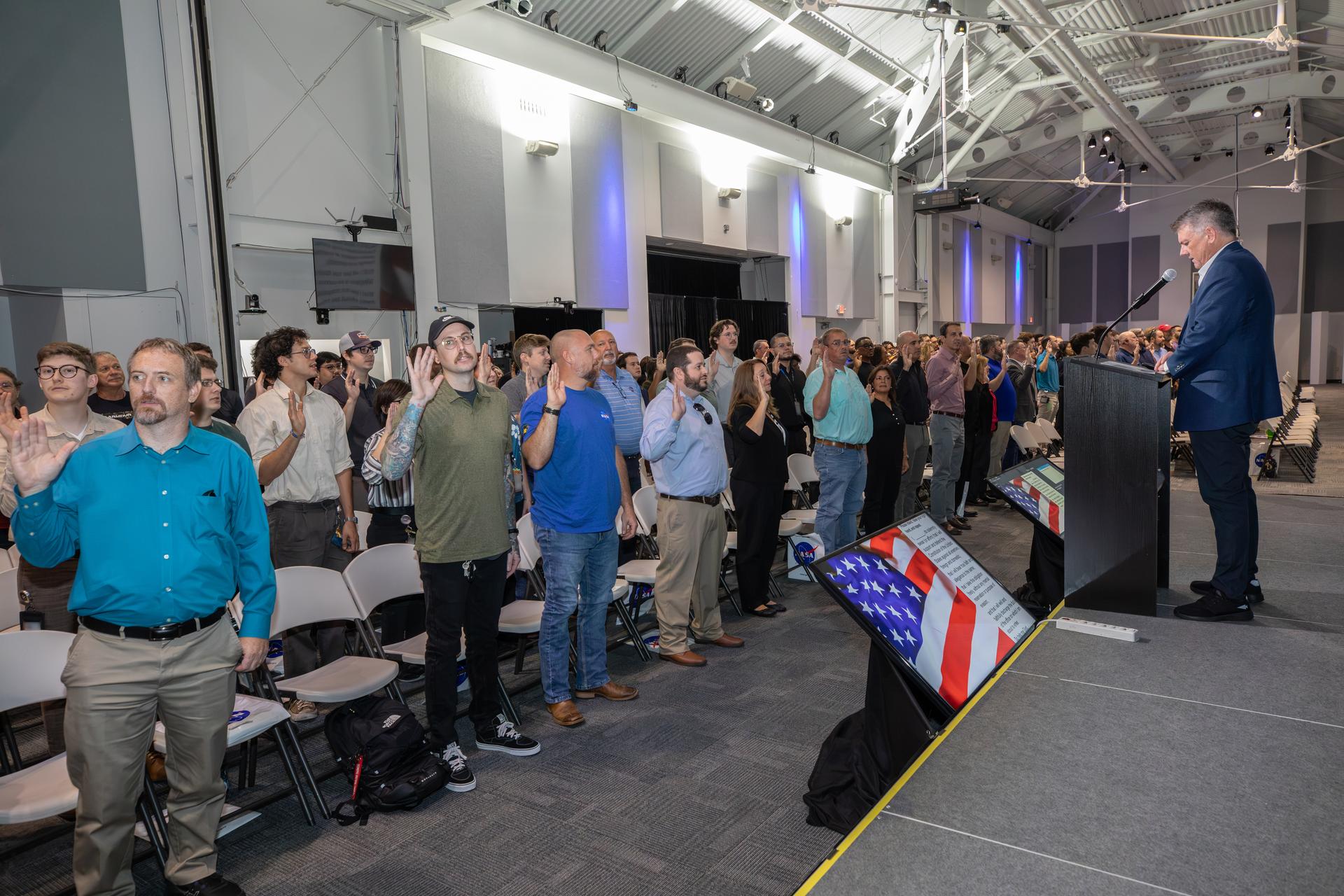
NASA’s Kennedy Space Center Director Brian Hughes (right) conducts a swearing-in ceremony for NASA’s newest civil servants on Monday, Aug. 24, 2026, inside the Astronauts Memorial Foundation’s Center for Space Education at the Kennedy Space Center Visitor Complex in Florida. The ceremony featured the swearing-in of employees formerly from the Consolidated Operations, Management, Engineering, and Test (COMET) contract, as well as outside hires, as part of the administrator’s workforce directive to restore technical core competencies within the civil servants ranks.

NASA’s Pegasus barge carrying a weather cover for the Artemis III SLS (Space Launch System) rocket core stage, arrives Sunday, June 21, 2026, at the Launch Complex 39 turn basin at the agency’s Kennedy Space Center in Florida. The cover will protect the stage’s thermal systems while SLS sits atop the mobile launcher at Launch Pad 39B in its short stack configuration. NASA will send four Artemis astronauts on increasingly difficult missions to explore more of the Moon for scientific discovery, economic benefits, establish an enduring human presence on the lunar surface, and to build on our foundation for the first crewed missions to Mars.
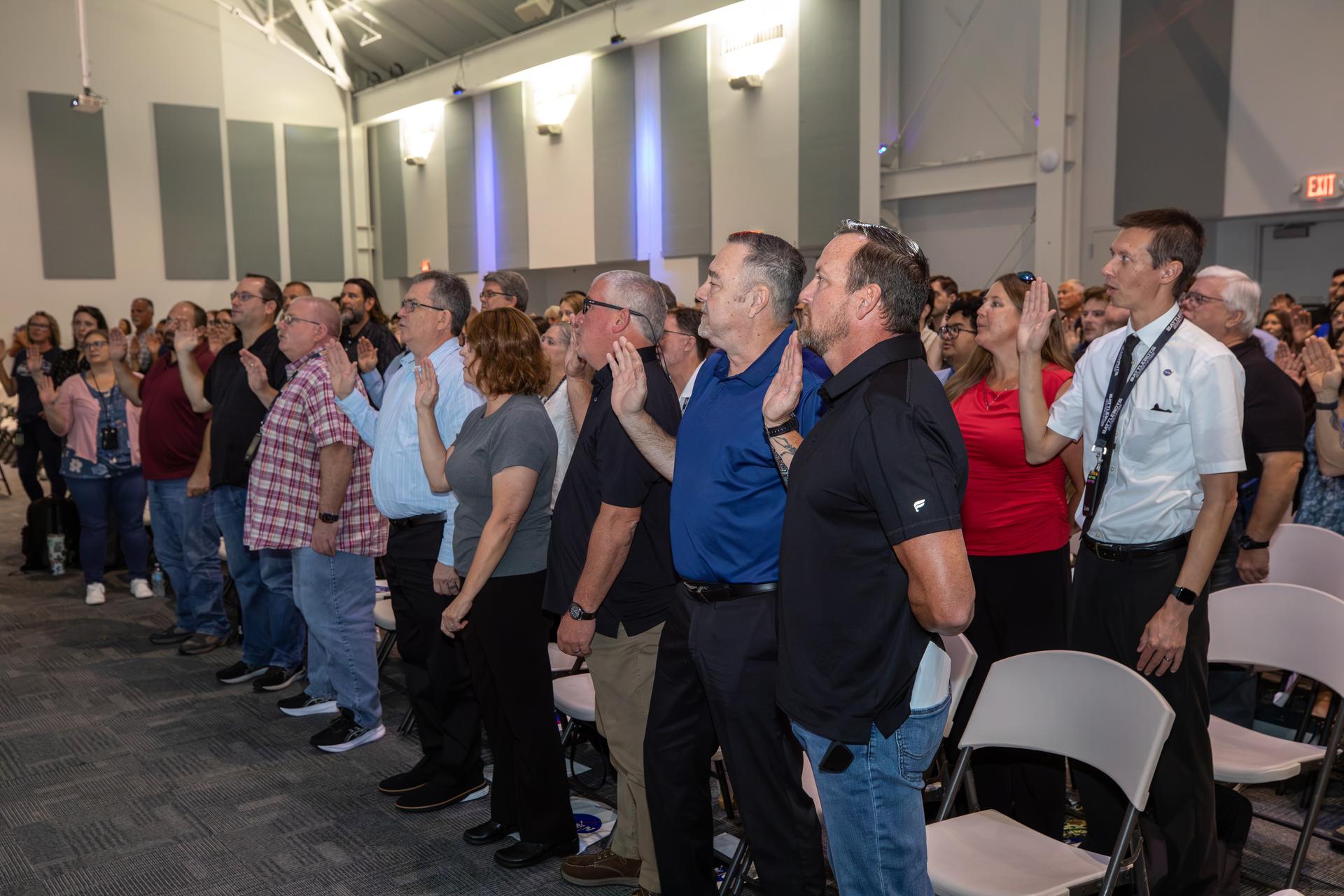
NASA’s newest civil servants participate in a swearing-in ceremony on Monday, Aug. 24, 2026, inside the Astronauts Memorial Foundation’s Center for Space Education at the Kennedy Space Center Visitor Complex in Florida. The ceremony featured the swearing-in of employees formerly from the Consolidated Operations, Management, Engineering, and Test (COMET) contract, as well as outside hires, as part of the administrator’s workforce directive to restore technical core competencies within the civil servants ranks.
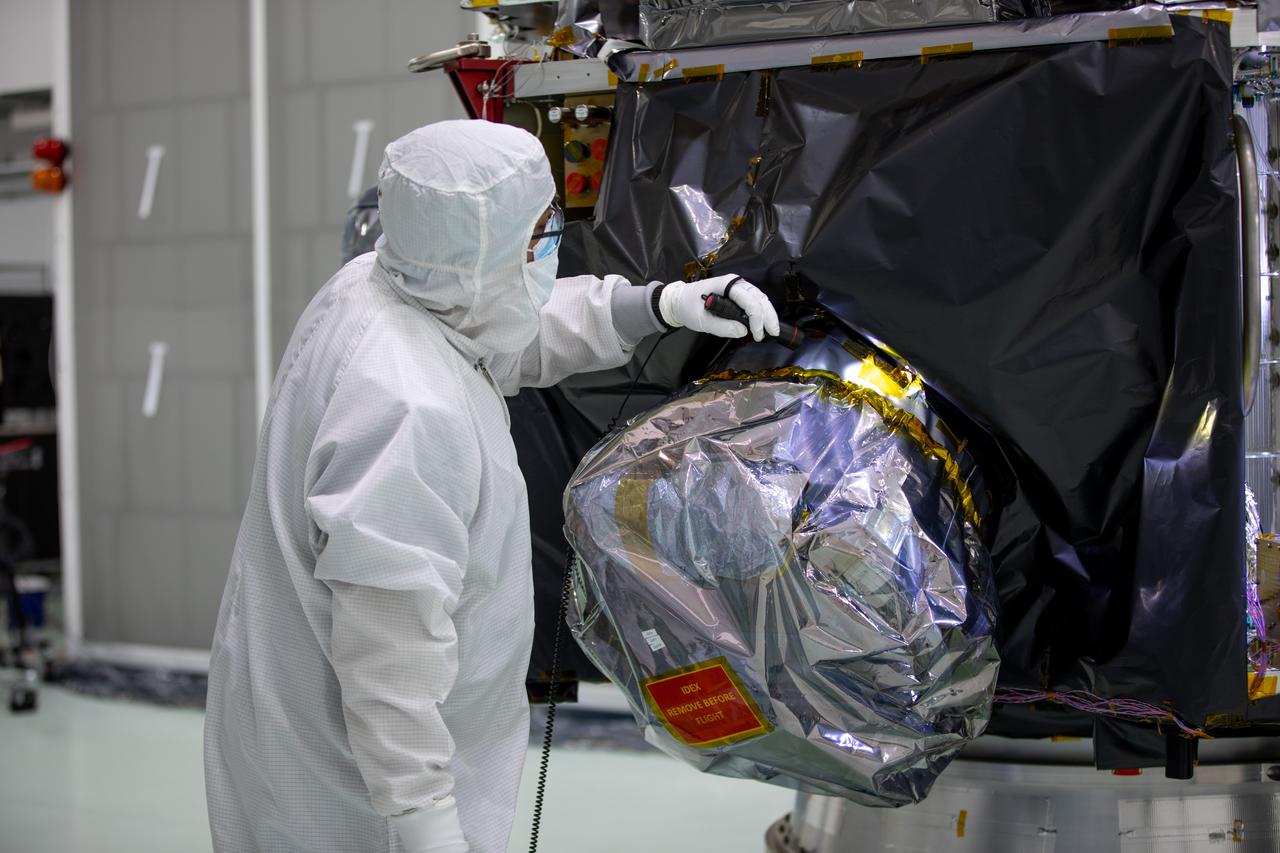
Technicians remove protective coverings form NASA’s IMAP (Interstellar Mapping and Acceleration Probe) inside the high bay at the Astrotech Space Operations Facility near the agency’s Kennedy Space Center in Florida on Thursday, May 29,2025. The observatory will study how the Sun shapes the boundaries of the heliosphere, the bubble protecting around our solar system, and is targeted for launch this fall aboard a SpaceX Falcon 9 rocket from Launch Complex 39A at NASA Kennedy.
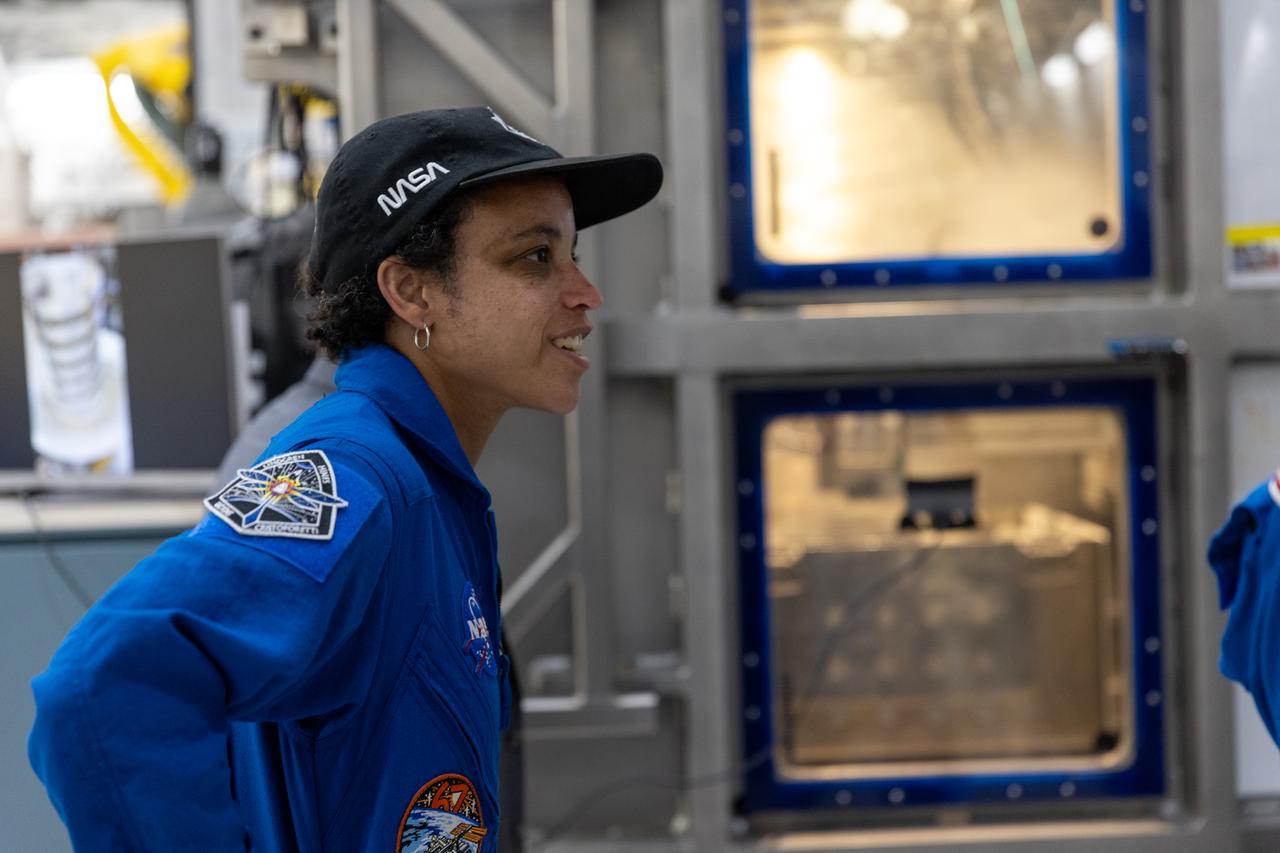
NASA astronaut Jessica Watkins visits the Granular Mechanics and Regolith Operations Laboratory inside Swamp Works at Kennedy Space Center in Florida on Wednesday, Aug. 27, 2025, to view some of the evolving technologies in development that astronauts may use to explore the Moon’s surface, prepare it for sustainable outposts, and to handle the dust that is collected during moonwalks.

From left, Charlie Blackwell-Thompson, Artemis launch director, NASA’s Exploration Ground Systems Program, and Jeremy Graeber, assistant launch director, watch inside Firing Room 1 of the Rocco A. Petrone Launch Control Center the Artemis II rollout of the SLS (Space Launch System) rocket and Orion spacecraft from the Vehicle Assembly Building to Launch Complex 39B at NASA’s Kennedy Space Center in Florida on Friday, March 20, 2026. The Artemis II test flight will take Commander Reid Wiseman, Pilot Victor Glover, and Mission Specialist Christina Koch from NASA, and Mission Specialist Jeremy Hansen from the CSA (Canadian Space Agency), around the Moon and back to Earth with launch opportunities beginning in April 2026.
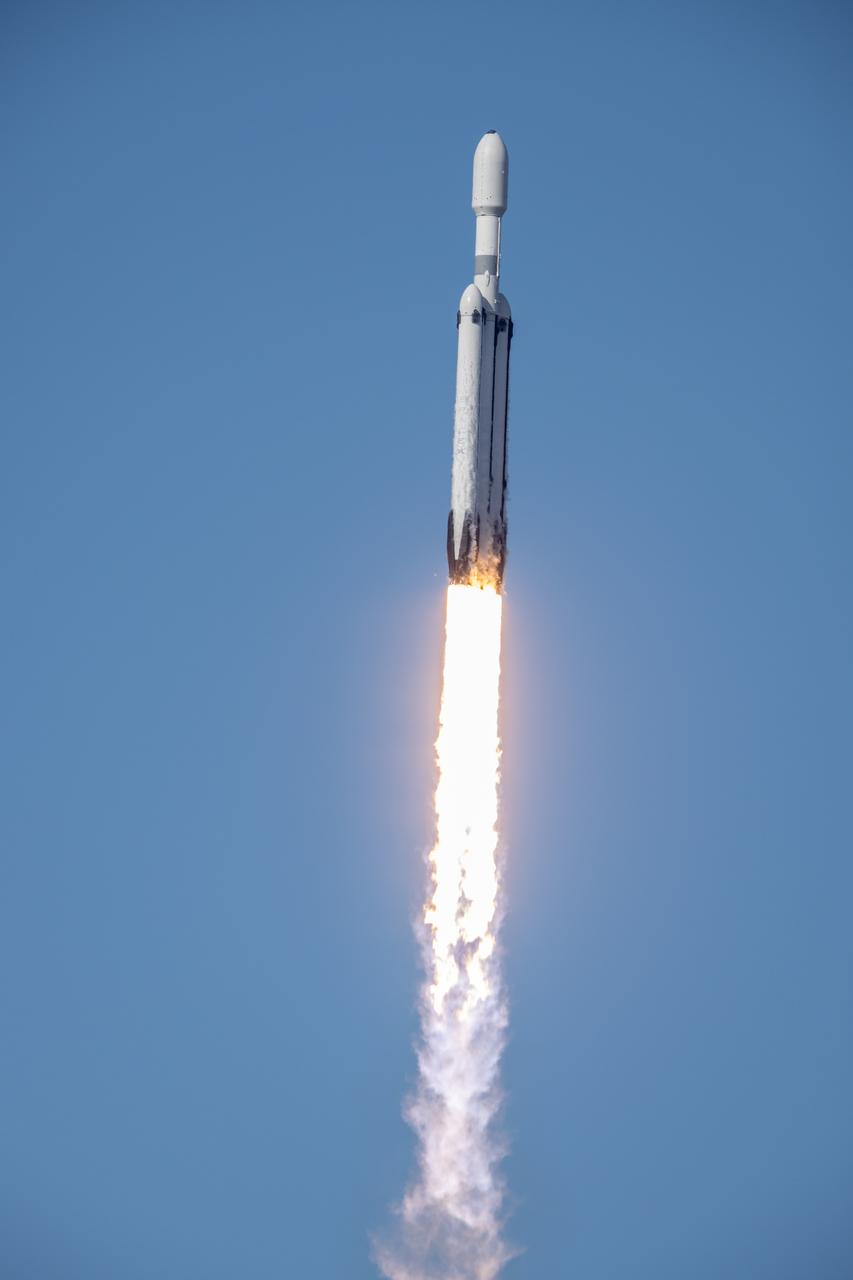
A SpaceX Falcon Heavy rocket carrying the National Oceanic and Atmospheric Administration (NOAA) GOES-U (Geostationary Operational Environmental Satellite U) lifts off from Launch Complex 39A at NASA’s Kennedy Space Center in Florida on Tuesday, June 25, 2024. The GOES-U satellite is the final satellite in the GOES-R series, which serves a critical role in providing continuous coverage of the Western Hemisphere, including monitoring tropical systems in the eastern Pacific and Atlantic oceans.
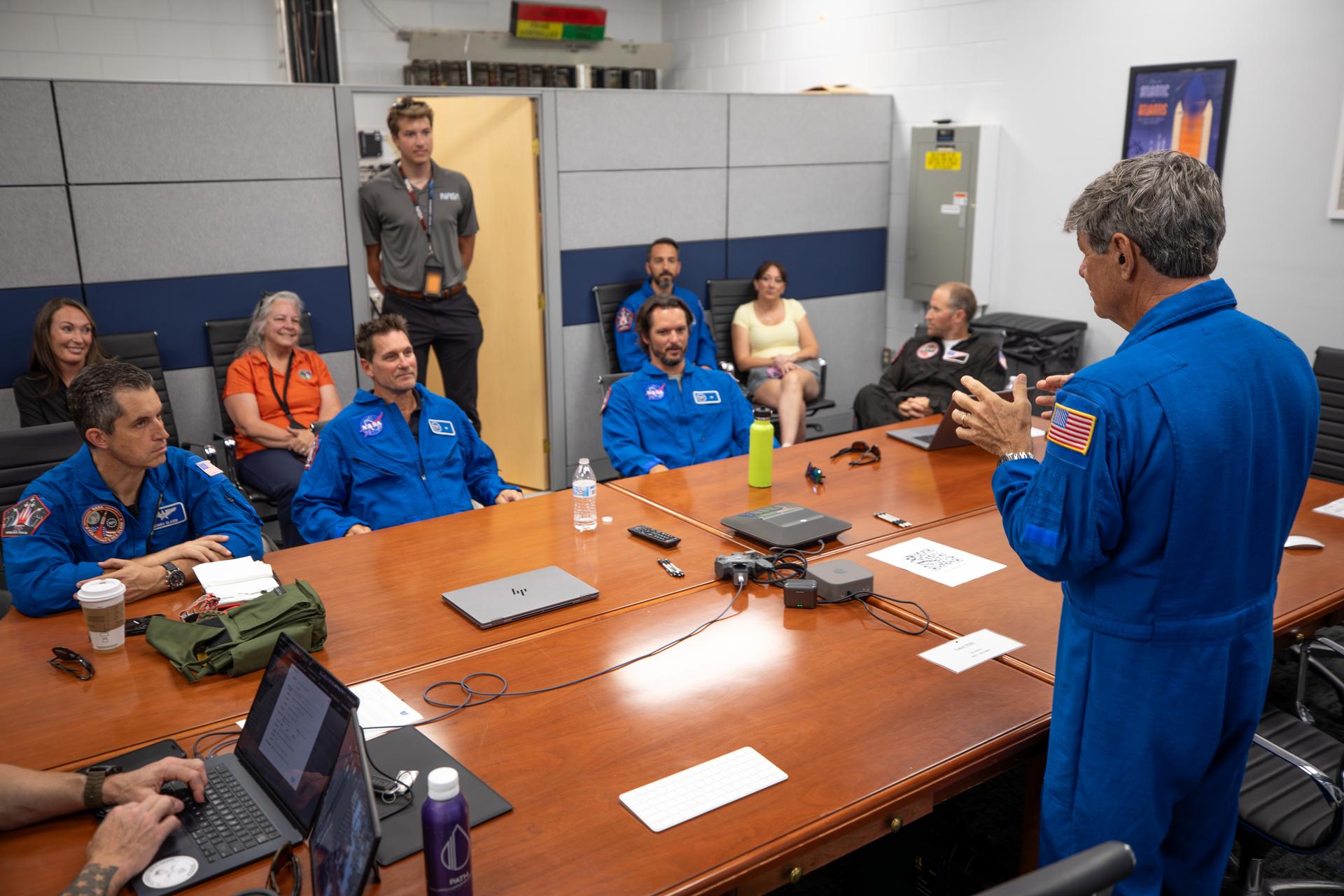
As part of NASA Administrator Jared Isaacman’s Flight Experience Award program, NASA employees Matthew Kufner, Charles Meilbye, Aaron Smith participate in a preflight briefing on Wednesday, June 17, 2026, at the Launch and Landing Facility at the agency’s Kennedy Space Center in Florida. The awardees donned NASA flight suits, completed preflight briefings, and experienced a unique flight aboard the administrator’s personal F-5 aircraft. The ride-along flight experience award program highlights NASA’s commitment to celebrating excellence across the workforce.

Maria Zapata, test conductor, participates in the Artemis III terminal countdown simulation on Thursday, May 7, 2026, inside Firing Room 1 of the Rocco A. Petrone Launch Control Center at NASA’s Kennedy Space Center in Florida. This marked the first simulation the launch team performed ahead of Artemis III.

From left, NASA Associate Administrator Amit Kshatriya and Lori Glaze, acting associate administrator, Exploration Systems Development Mission Directorate, participate in the Artemis II Flight Readiness Review with NASA leadership on Wednesday, March 11, 2026, at NASA’s Kennedy Space Center in Florida. The review is an assessment of the readiness of NASA’s SLS (Space Launch System) rocket and Orion spacecraft to support the Artemis II test flight as four astronauts journey around the Moon and return to Earth.

Vanessa Stroh, project engineer, Exploration Ground Systems Program, participates in the Artemis III terminal countdown simulation on Thursday, May 7, 2026, inside Firing Room 1 of the Rocco A. Petrone Launch Control Center at NASA’s Kennedy Space Center in Florida. This marked the first simulation the launch team performed ahead of Artemis III.
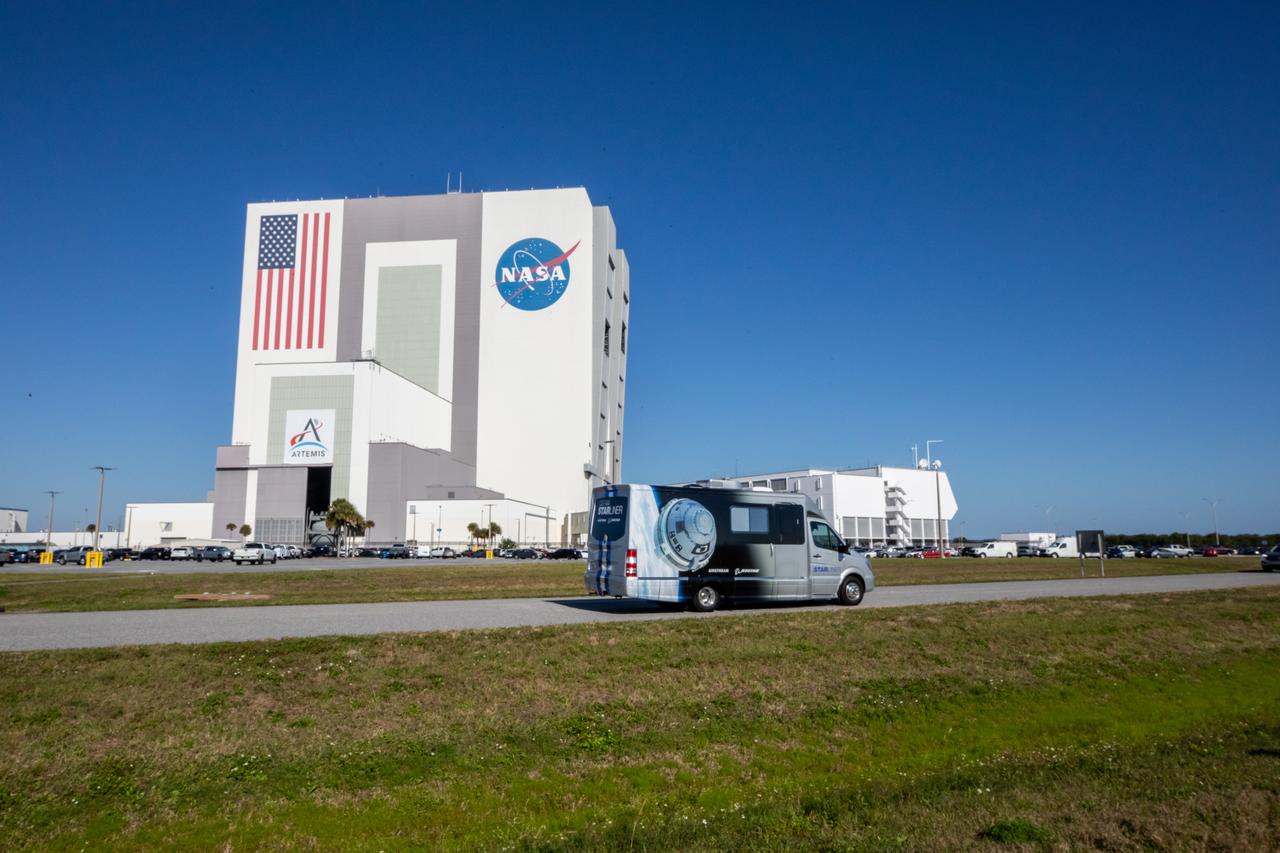
A crew transportation vehicle carrying NASA astronauts Suni Williams and Barry “Butch” Wilmore drives past the iconic Vehicle Assembly Building at the agency’s Kennedy Space Center in Florida on Wednesday, Jan. 31, 2024, as part of an integrated crew exercise simulation for NASA’s Boeing Crew Flight Test (CFT). The integrated exercise involved participation from the flight crew, NASA, Boeing, and United Launch Alliance (ULA), and allowed teams to rehearse prelaunch operations beginning roughly four hours before a targeted liftoff. CFT will be the first flight with astronauts to the International Space Station for Boeing’s Starliner spacecraft as part of NASA’s Commercial Crew Program. Starliner is scheduled to launch atop ULA’s Atlas V rocket no earlier than mid-April 2024.
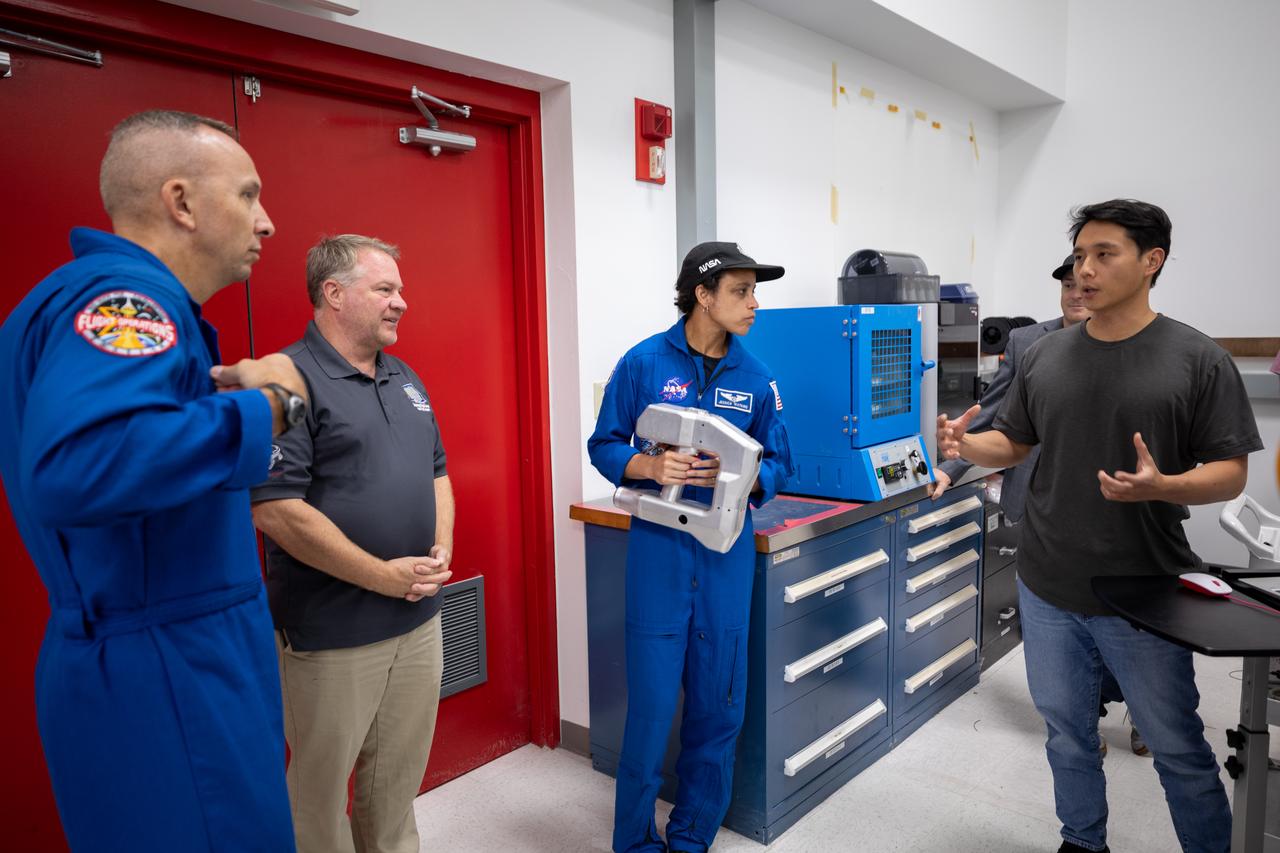
NASA astronauts Randy Bresnik (far left) and Jessica Watkins (center) visit the Granular Mechanics and Regolith Operations Laboratory inside Swamp Works at Kennedy Space Center in Florida on Wednesday, Aug. 27, 2025, to view some of the evolving technologies in development that NASA astronauts may use to explore the Moon’s surface, prepare it for sustainable outposts, and to handle the dust that is collected during moonwalks. Watkins holds an instrument designed to help astronauts electromagnetically remove accumulated lunar dust.

Teams transport a weather cover for the Artemis III SLS (Space Launch System) rocket core stage from NASA’s Pegasus barge to the spaceport’s Vehicle Assembly Building at the agency’s Kennedy Space Center in Florida on Monday, June 22, 2026. The cover will protect the stage’s thermal systems while SLS sits atop the mobile launcher at Launch Pad 39B in its short stack configuration. NASA will send four Artemis astronauts on increasingly difficult missions to explore more of the Moon for scientific discovery, economic benefits, establish an enduring human presence on the lunar surface, and to build on our foundation for the first crewed missions to Mars.
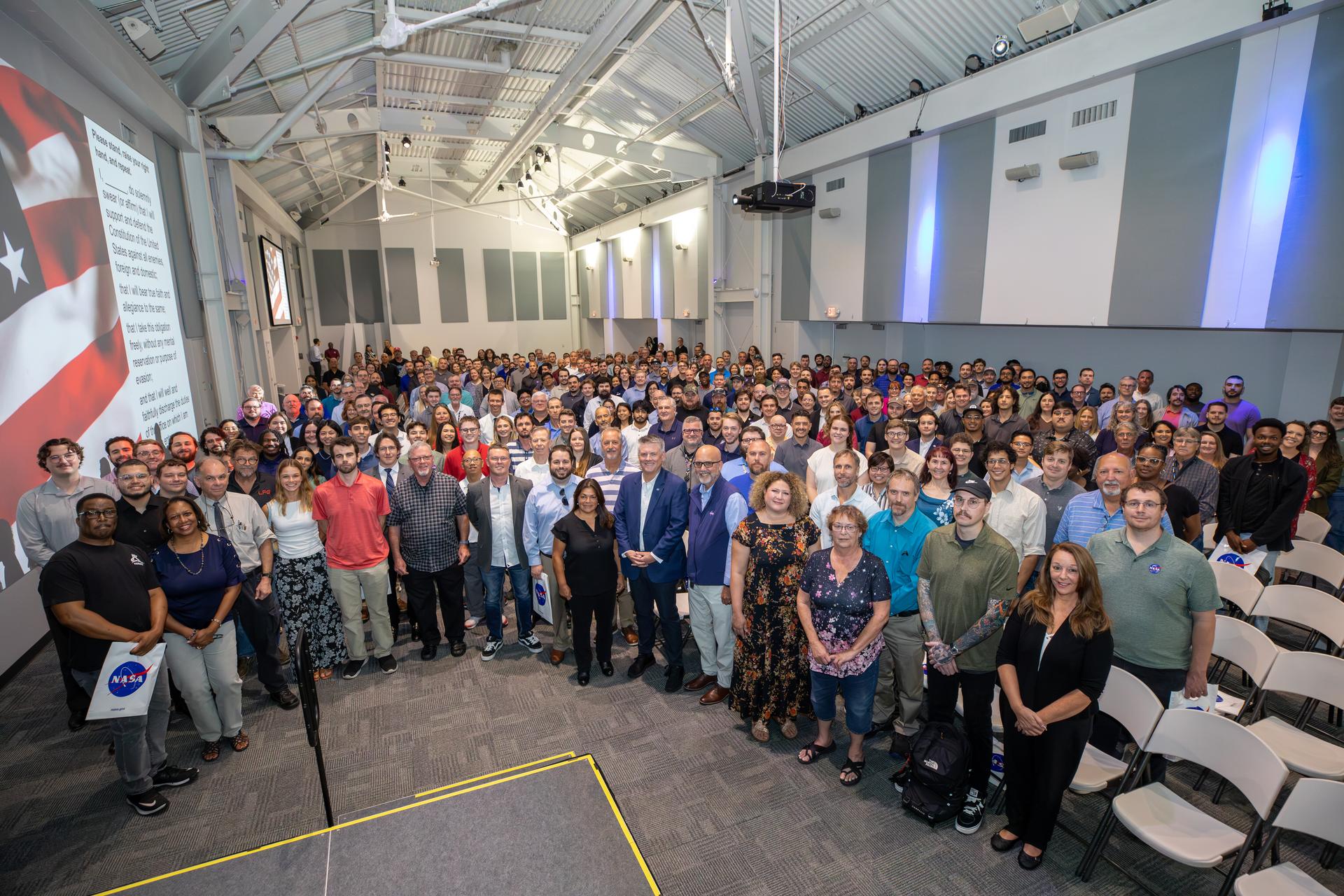
New NASA civil servants pose for a photograph with NASA’s Kennedy Space Center Director Brian Hughes (front, center) and Michael Beaupre, director, Kennedy Human Capital Office (center, right of Hughes) following their swearing-in ceremony on Monday, Aug. 24, 2026, inside the Astronauts Memorial Foundation’s Center for Space Education at the Kennedy Space Center Visitor Complex in Florida. The ceremony featured the swearing-in of employees formerly from the Consolidated Operations, Management, Engineering, and Test (COMET) contract, as well as outside hires, as part of the administrator’s workforce directive to restore technical core competencies within the civil servants ranks.

From left, JAXA (Japan Aerospace Exploration Agency) astronaut Kimiya Yu, along with NASA astronauts Mike Fincke and Zena Cardman, pose for a photograph inside the Vehicle Assembly Building during a visit to NASA’s Kennedy Space Center in Florida on Thursday, June 11, 2026. The three crew members, along with Roscosmos cosmonaut Oleg Platonov, spent five and a half months aboard the International Space Station.
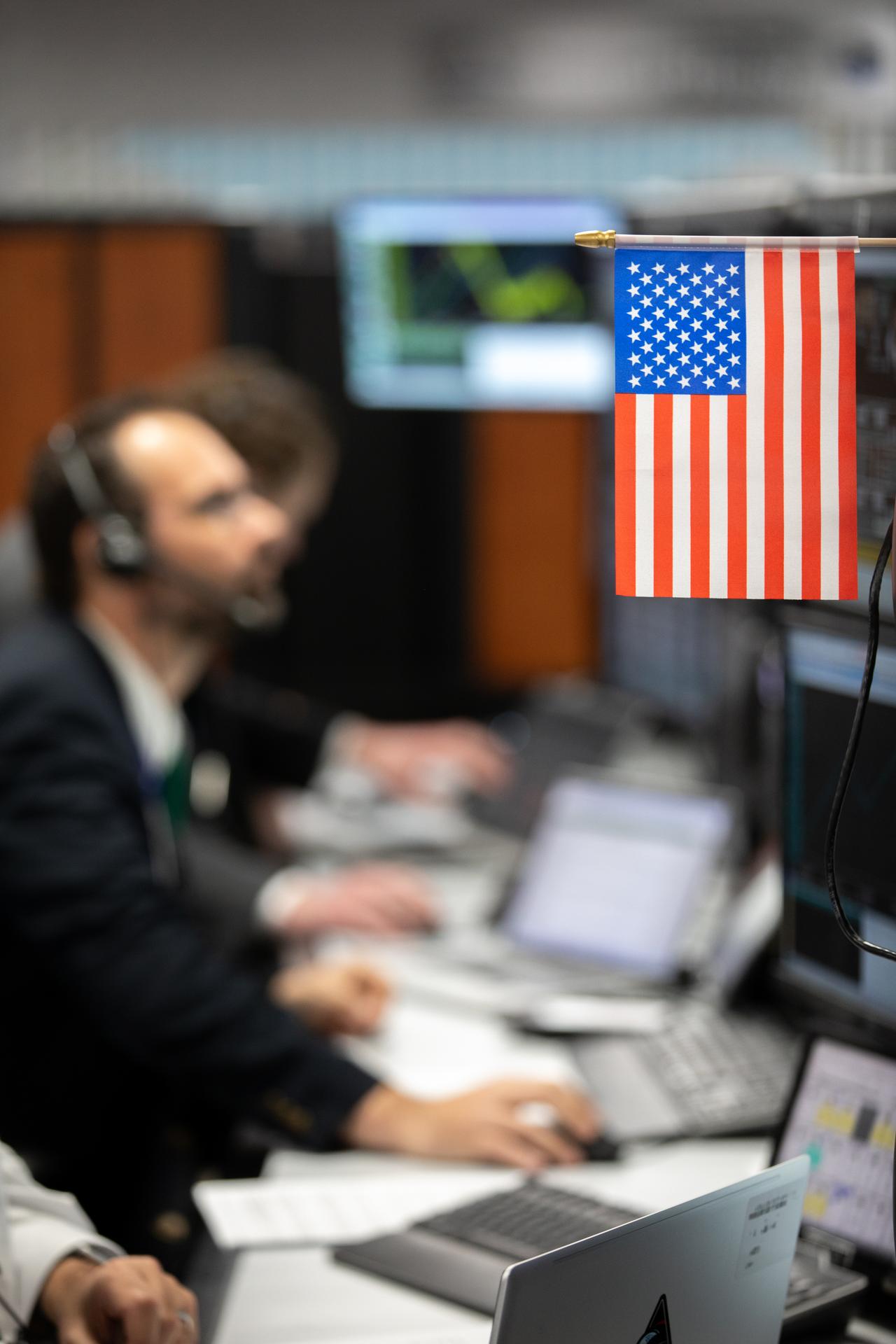
An American flag displays inside Firing Room 1 of the Rocco A. Petrone Launch Control Center while members of NASA’s Exploration Ground Systems participate in the Artemis II terminal count simulation on Wednesday, Jan. 14, 2026, at NASA’s Kennedy Space Center in Florida. The terminal count simulation runs through the final five hours of launch countdown, include terminal count - the remaining 10 minutes of the countdown - for NASA’s Artemis II test flight which will take Commander Reid Wiseman, Pilot Victor Glover, and Mission Specialist Christina Koch from NASA, and Mission Specialist Jeremy Hansen from the CSA (Canadian Space Agency), around the Moon and back to Earth no later than no later than April 2026 from Launch Complex 39B at NASA Kennedy.
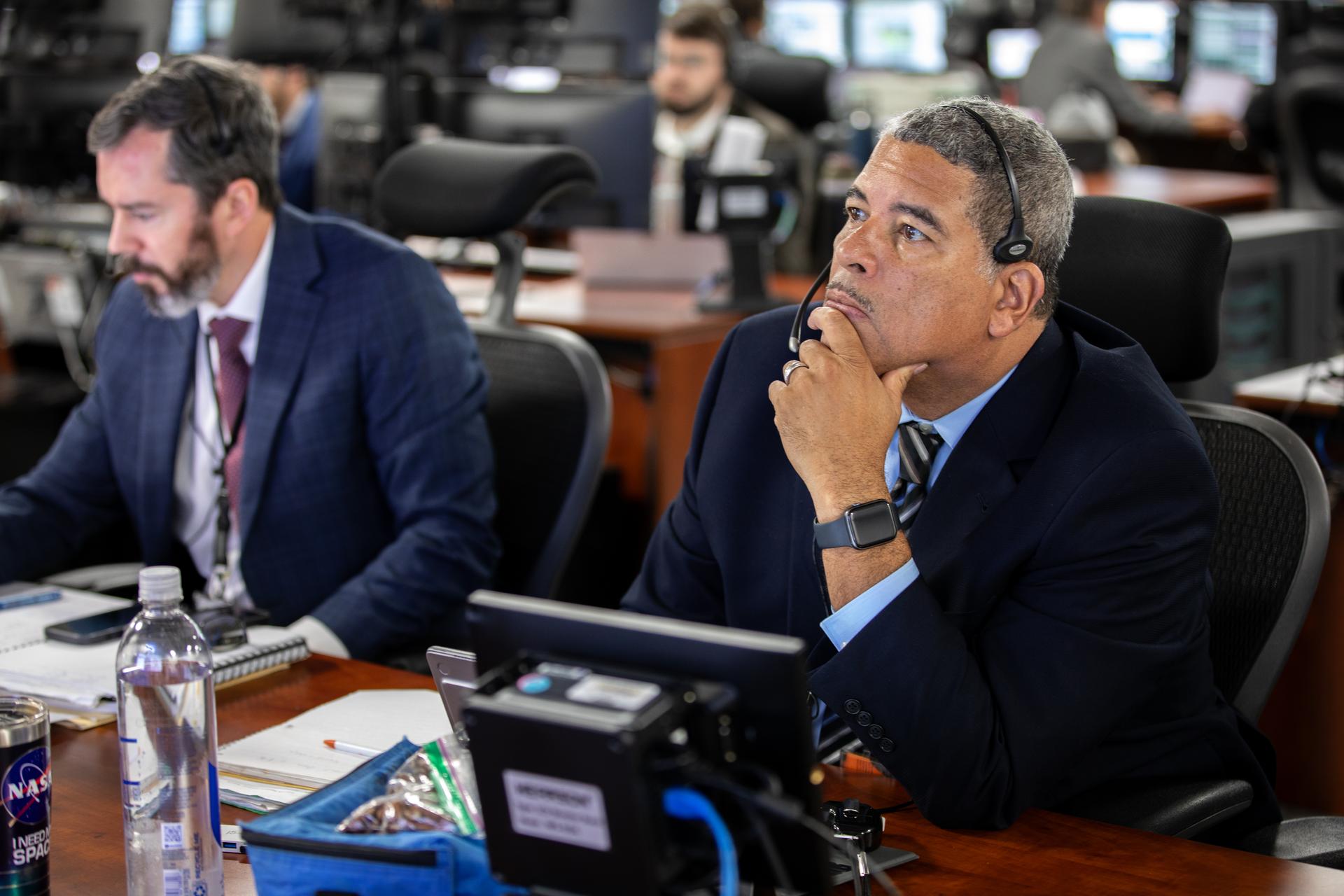
Artemis launch team members participate in the Artemis II terminal count simulation on Wednesday, Jan. 14, 2026, inside Firing Room 1 of the Rocco A. Petrone Launch Control Center at NASA’s Kennedy Space Center in Florida. The terminal count simulation conducted by NASA’s Exploration Ground Systems team runs through the final five hours of launch countdown, include terminal count - the remaining 10 minutes of the countdown - for NASA’s Artemis II test flight which will take Commander Reid Wiseman, Pilot Victor Glover, and Mission Specialist Christina Koch from NASA, and Mission Specialist Jeremy Hansen from the CSA (Canadian Space Agency), around the Moon and back to Earth no later than no later than April 2026 from Launch Complex 39B at NASA Kennedy.

From left, NASA astronauts Zena Cardman, Mike Fincke (not pictured), and JAXA (Japan Aerospace Exploration Agency) astronaut Kimiya Yu tour the Vehicle Assembly Building during a visit to NASA’s Kennedy Space Center in Florida on Thursday, June 11, 2026. The three crew members, along with Roscosmos cosmonaut Oleg Platonov, spent five and a half months aboard the International Space Station.
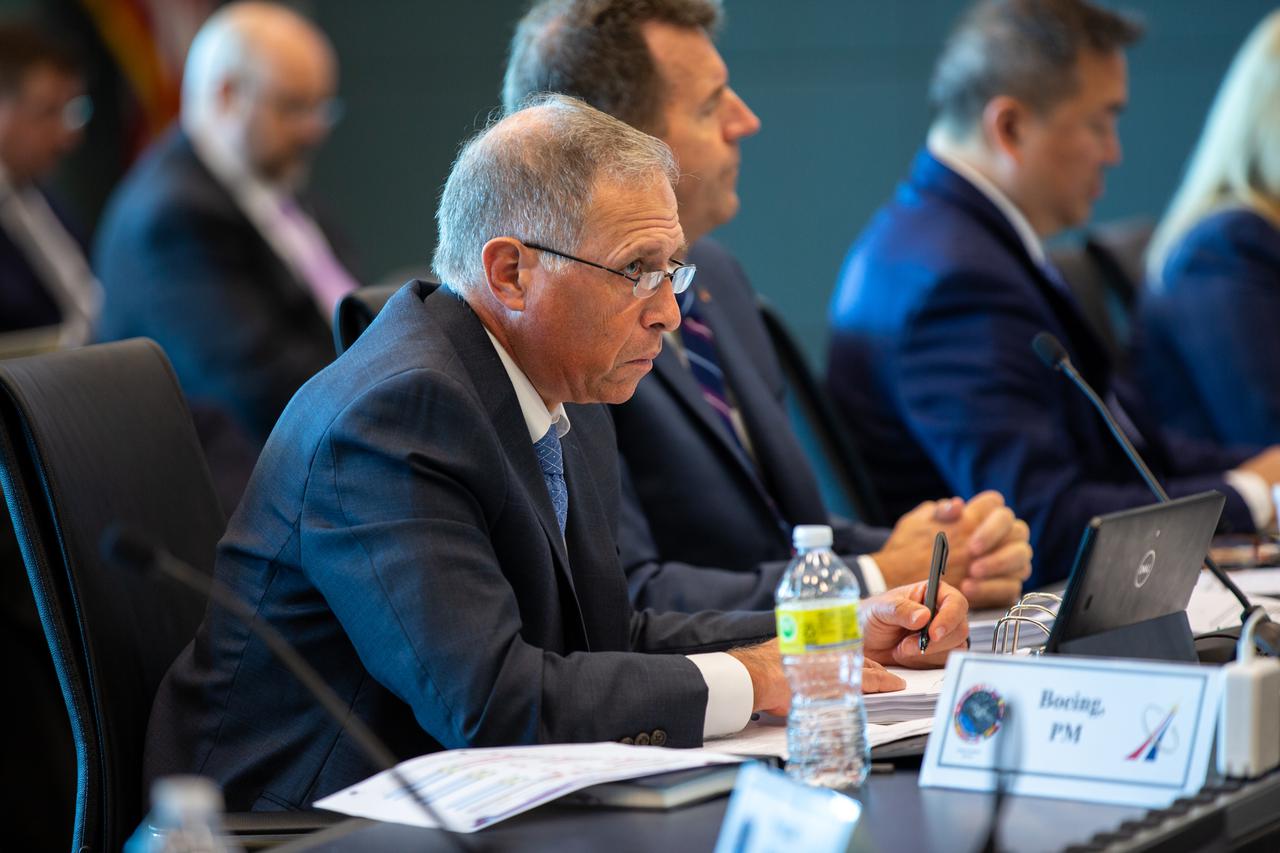
Mark Nappi, vice president and program manager, Boeing Commercial Crew Program, participates in the Flight Readiness Review for NASA’s Boeing Orbital Flight Test-2 (OFT-2) inside the Operations Support Building II at NASA's Kennedy Space Center in Florida, May 11, 2022. Boeing's CST-100 Starliner spacecraft will launch atop a United Launch Alliance Atlas V rocket from Space Launch Complex41 at Cape Canaveral Space Force Station at 6:54 p.m. EDT on Thursday, May 19. The uncrewed flight test will be Starliner’s second flight for NASA’s Commercial Crew Program.
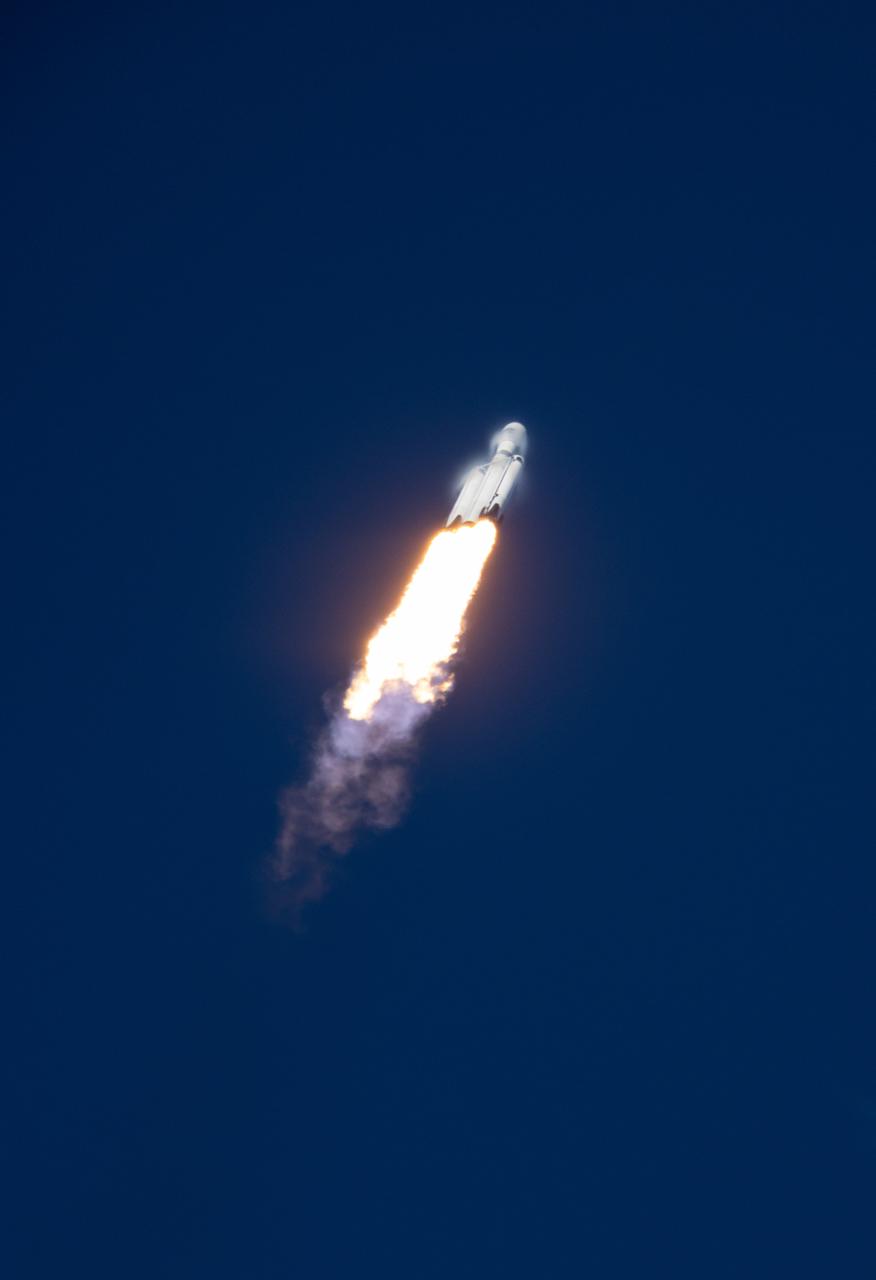
A SpaceX Falcon Heavy rocket carrying the National Oceanic and Atmospheric Administration (NOAA) GOES-U (Geostationary Operational Environmental Satellite U) launches from Launch Complex 39A at NASA’s Kennedy Space Center in Florida on Tuesday, June 25, 2024. The GOES-U satellite is the final satellite in the GOES-R series, which serves a critical role in providing continuous coverage of the Western Hemisphere, including monitoring tropical systems in the eastern Pacific and Atlantic oceans.
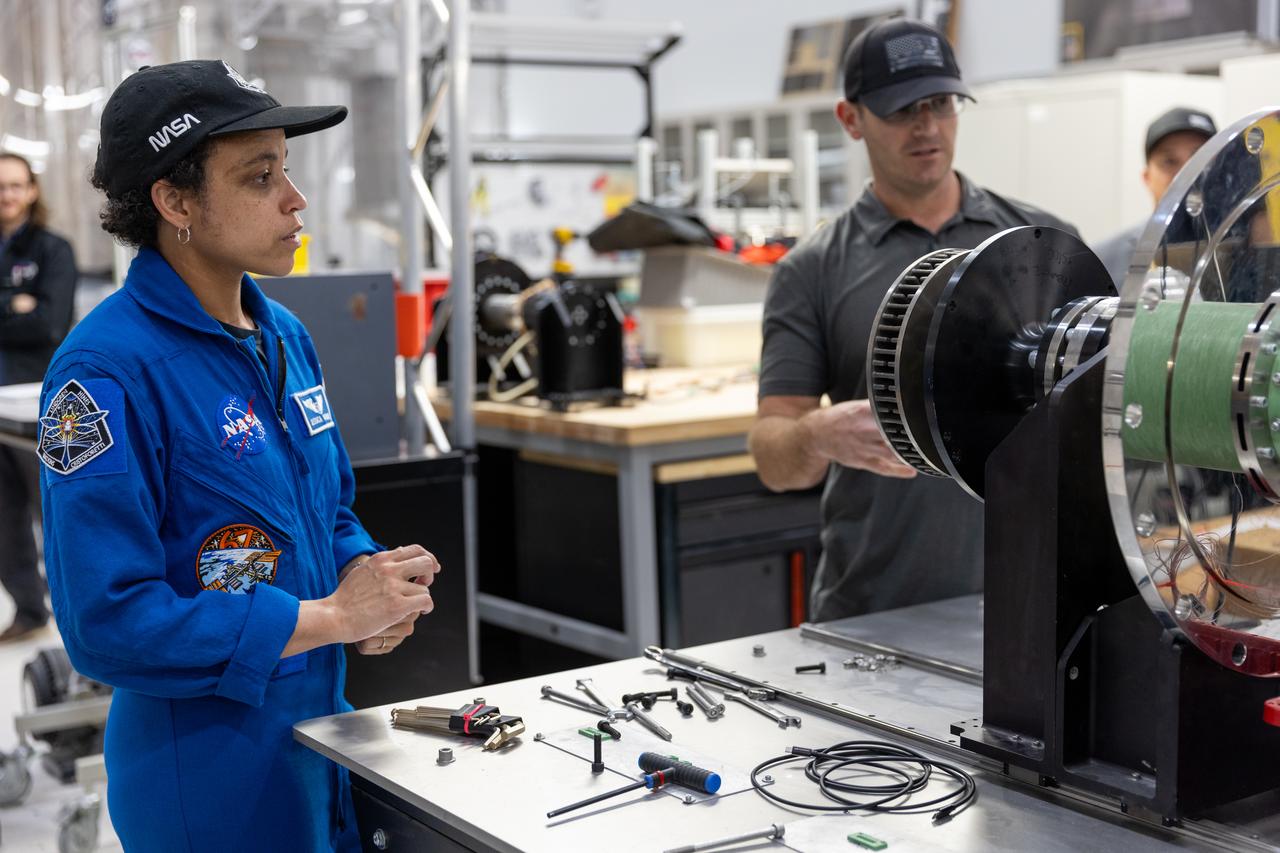
NASA astronaut Jessica Watkins visits the Granular Mechanics and Regolith Operations Laboratory inside Swamp Works at Kennedy Space Center in Florida on Wednesday, Aug. 27, 2025, to view some of the evolving technologies in development that astronauts may use to explore the Moon’s surface, prepare it for sustainable outposts, and to handle the dust that is collected during moonwalks.
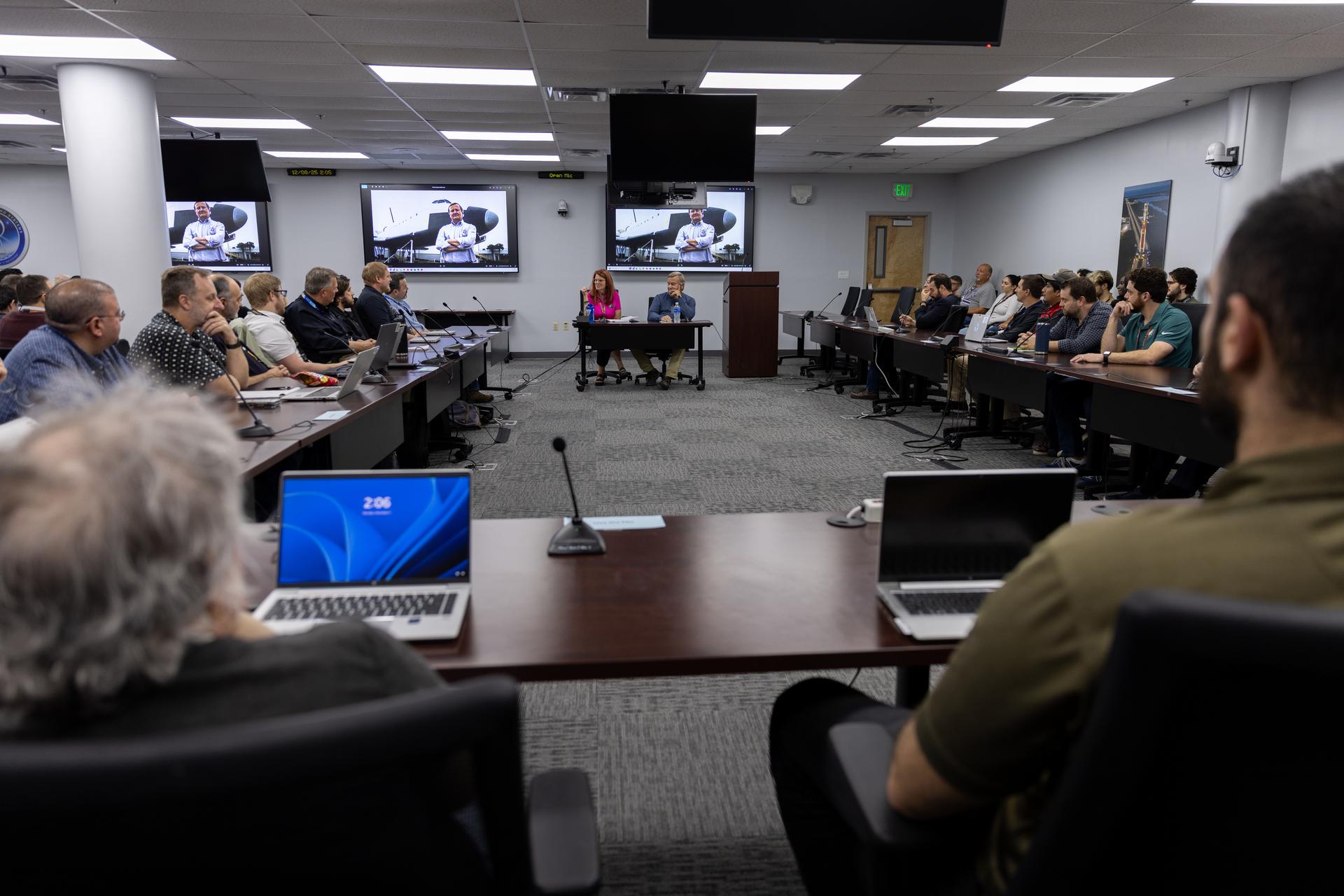
From left, Artemis Launch Director Charlie Blackwell-Thompson with the Exploration Ground Systems Program and former NASA Space Shuttle Launch Director Mike Leinbach speak during a meetup inside the Operations Support Building I at NASA’s Kennedy Space Center in Florida on Monday, Dec. 8, 2025. Leinbach spoke about his experience as the launch director for several space shuttle missions and discussed the upcoming Artemis II mission that will send four astronauts around the Moon and back in early 2026 from the spaceport’s Launch Complex 39B at NASA Kennedy.

Teams transport a weather cover for the Artemis III SLS (Space Launch System) rocket core stage from NASA’s Pegasus barge to the spaceport’s Vehicle Assembly Building at the agency’s Kennedy Space Center in Florida on Monday, June 22, 2026. The cover will protect the stage’s thermal systems while SLS sits atop the mobile launcher at Launch Pad 39B in its short stack configuration. NASA will send four Artemis astronauts on increasingly difficult missions to explore more of the Moon for scientific discovery, economic benefits, establish an enduring human presence on the lunar surface, and to build on our foundation for the first crewed missions to Mars.

An Artemis launch team member participates in the Artemis III terminal countdown simulation on Thursday, May 7, 2026, inside Firing Room 1 of the Rocco A. Petrone Launch Control Center at NASA’s Kennedy Space Center in Florida. This marked the first simulation the launch team performed ahead of Artemis III.
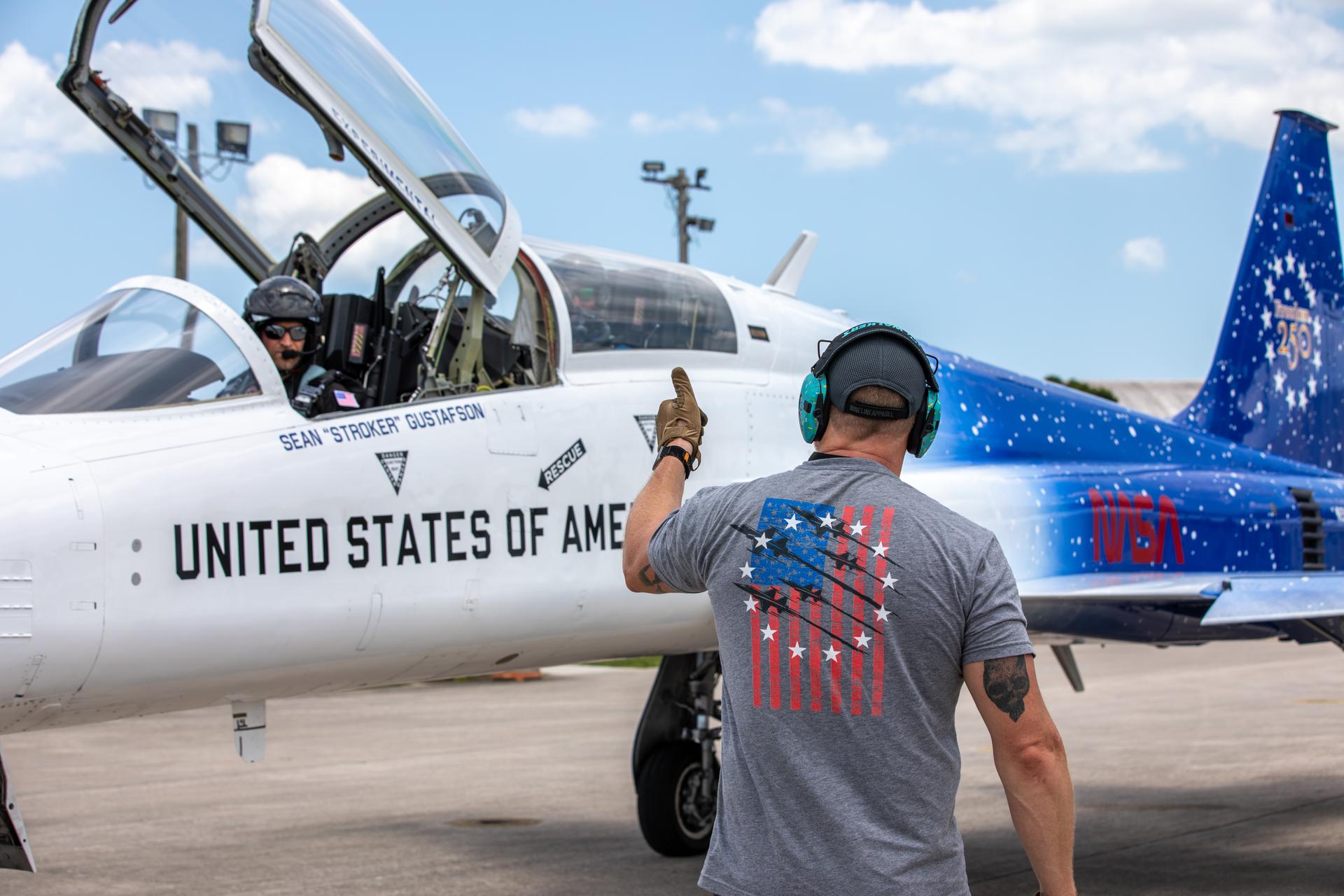
Piloting one of NASA Administrator Jared Isaacman’s personal F-5 aircraft, Pilot Scott Glaser is given the go-ahead to taxi for liftoff at the Launch and Landing Facility at the agency’s Kennedy Space Center in Florida, on Wednesday, June 17, 2026. As part of the administrator’s Flight Experience Award program, NASA employees Matthew Kufner, Charles Meilbye, and Aaron Smith donned NASA flight suits, completed preflight briefings, and experienced a unique flight. The ride-along flight experience award program highlights NASA’s commitment to celebrating excellence across the workforce.

NASA astronaut Zena Cardman, commander for NASA’s SpaceX Crew-11 mission, speaks to employees during a visit to NASA’s Kennedy Space Center in Florida on Thursday, June 11, 2026. Cardman, NASA astronaut Mike Fincke, JAXA (Japan Aerospace Exploration Agency) astronaut Kimiya Yui, and Roscosmos cosmonaut Oleg Platonov spent five and a half months aboard the International Space Station.
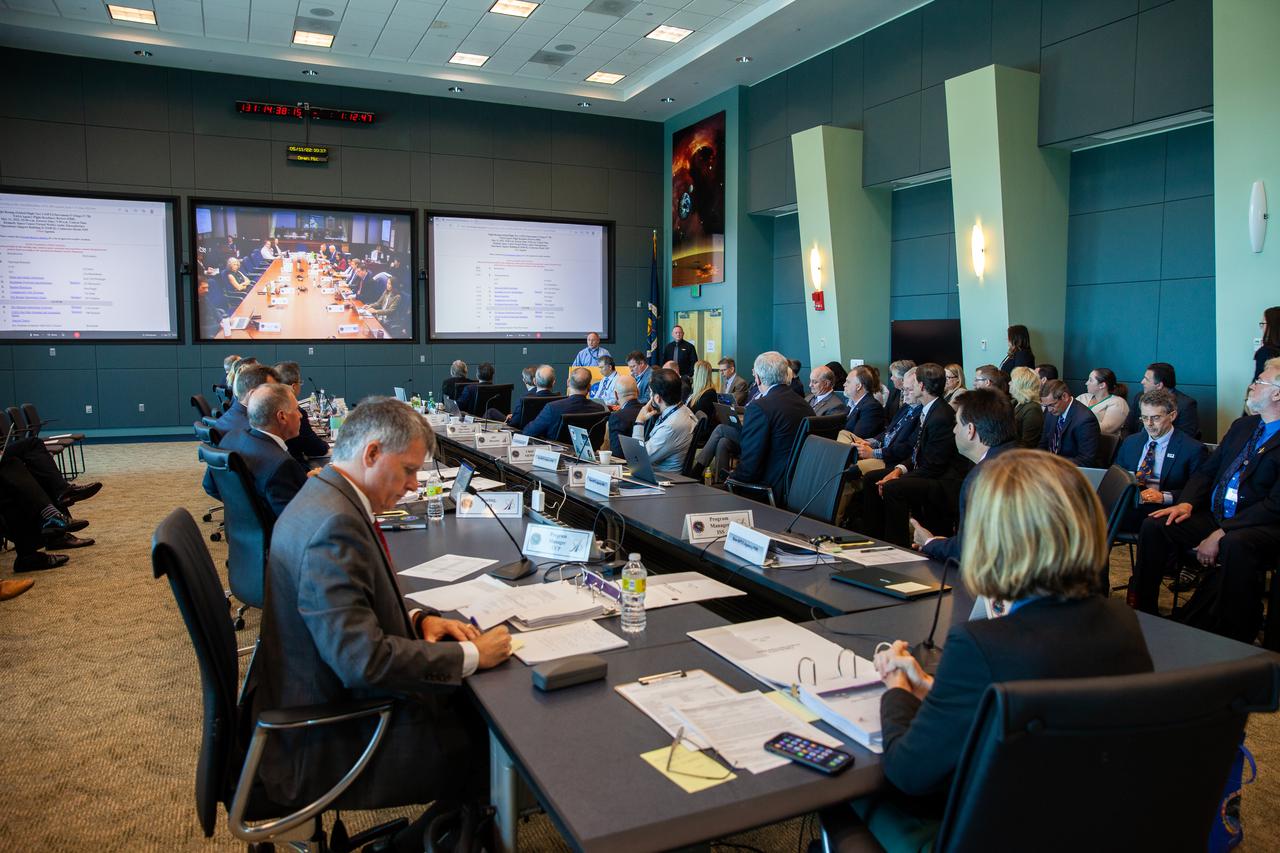
NASA and Boeing managers take part in the Flight Readiness Review for NASA’s Boeing Orbital Flight Test-2 (OFT-2) inside the Operations Support Building II at NASA's Kennedy Space Center in Florida, May 11, 2022. Boeing's CST-100 Starliner spacecraft will launch atop a United Launch Alliance Atlas V rocket from Space Launch Complex 41 at Cape Canaveral Space Force Station at 6:54 p.m. EDT on Thursday, May 19. The uncrewed flight test will be Starliner’s second flight for NASA’s Commercial Crew Program.
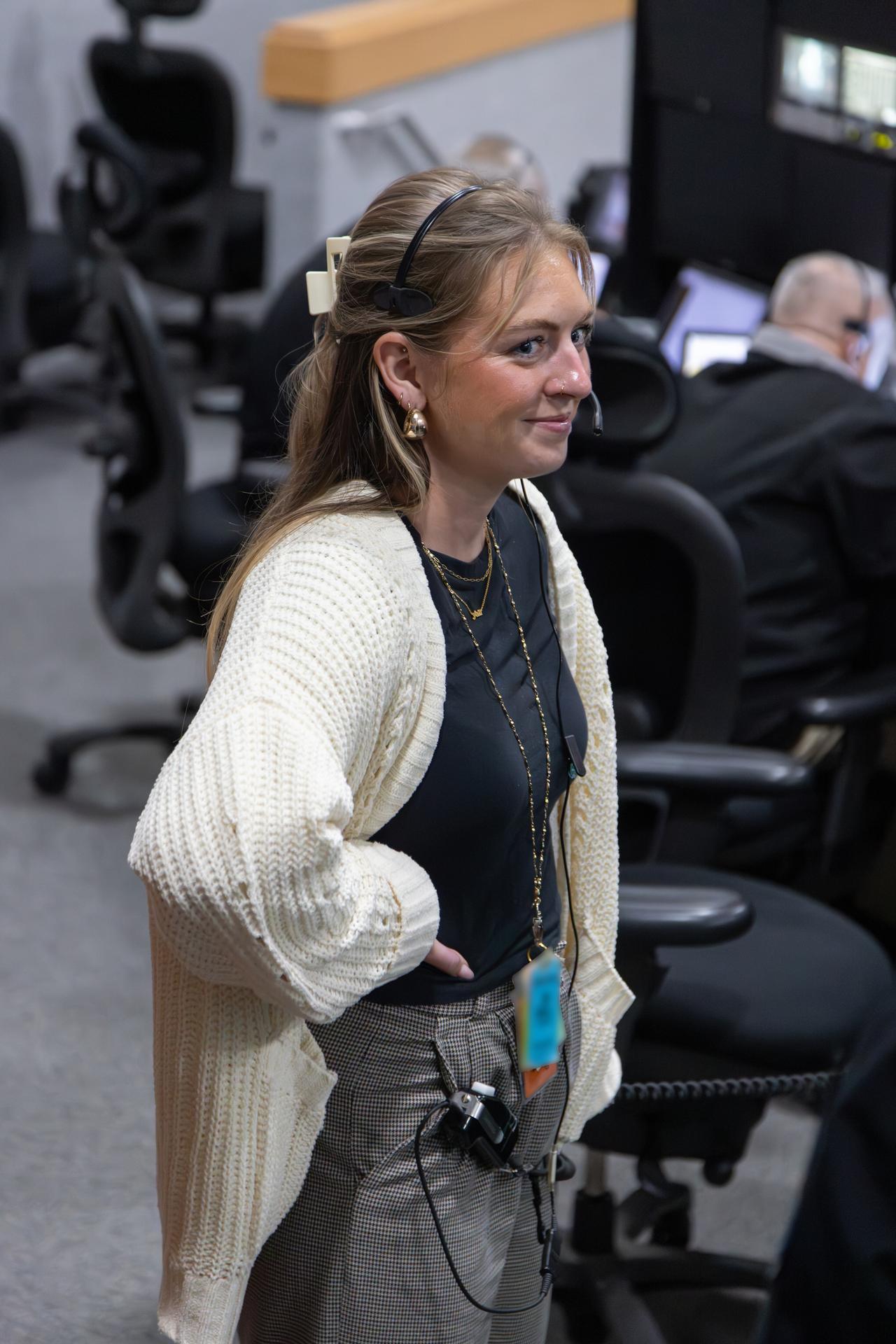
An Artemis launch team member, seen inside Firing Room 1 of the Rocco A. Petrone Launch Control Center, participates in the rollout of the Artemis II SLS (Space Launch System) rocket and Orion spacecraft from the Vehicle Assembly Building to Launch Complex 39B at NASA’s Kennedy Space Center in Florida on Friday, March 20, 2026. The Artemis II test flight will take Commander Reid Wiseman, Pilot Victor Glover, and Mission Specialist Christina Koch from NASA, and Mission Specialist Jeremy Hansen from the CSA (Canadian Space Agency), around the Moon and back to Earth with launch opportunities beginning in April 2026.
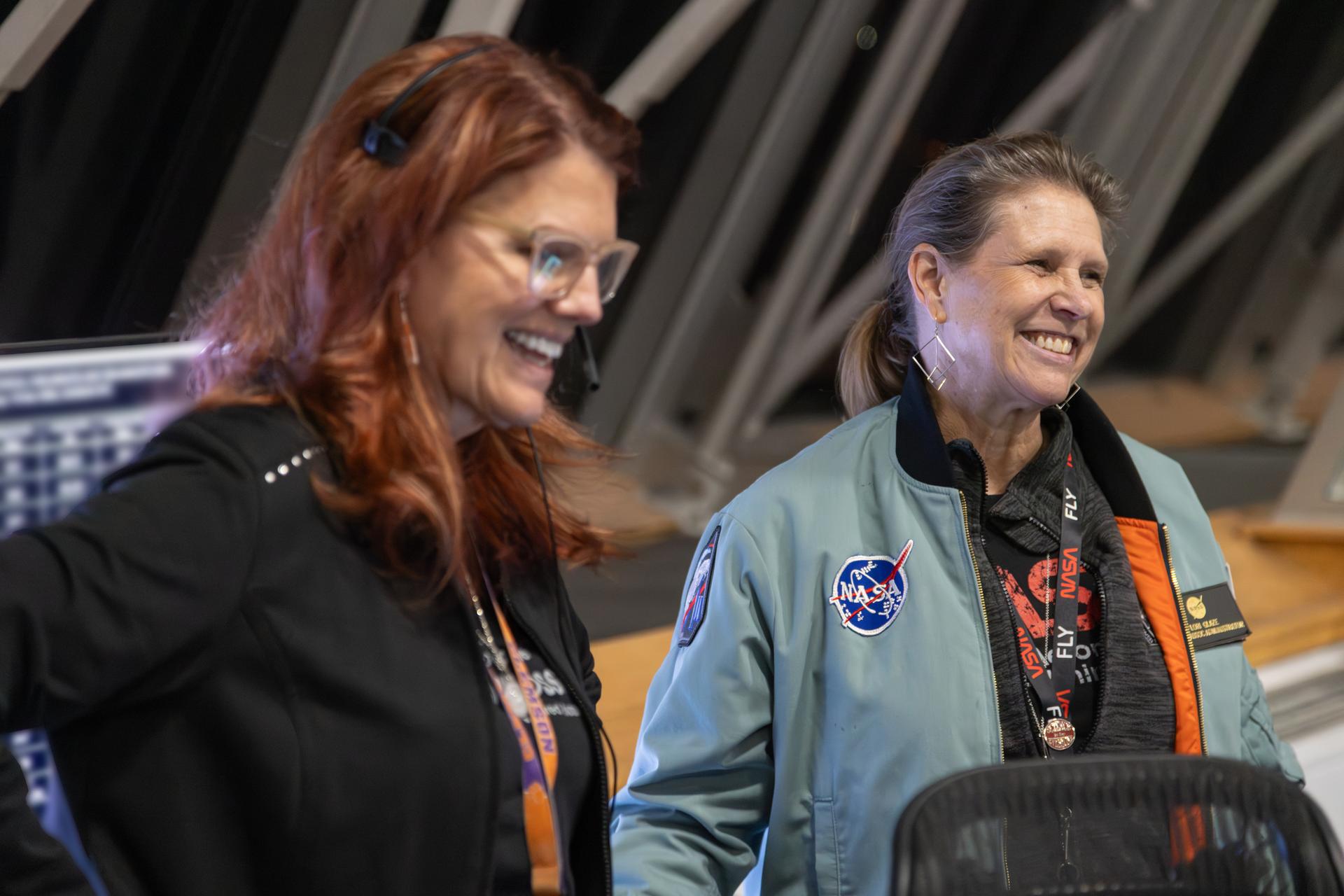
From left, Charlie Blackwell-Thompson, Artemis launch director, NASA’s Exploration Ground Systems Program, and Lori Glaze, acting associate administrator, Exploration Systems Development Mission Directorate, share a laugh inside Firing Room 1 of the Rocco A. Petrone Launch Control Center during the Artemis II rollout of the SLS (Space Launch System) rocket and Orion spacecraft from the Vehicle Assembly Building to Launch Complex 39B at NASA’s Kennedy Space Center in Florida on Friday, March 20, 2026. The Artemis II test flight will take Commander Reid Wiseman, Pilot Victor Glover, and Mission Specialist Christina Koch from NASA, and Mission Specialist Jeremy Hansen from the CSA (Canadian Space Agency), around the Moon and back to Earth with launch opportunities beginning in April 2026.
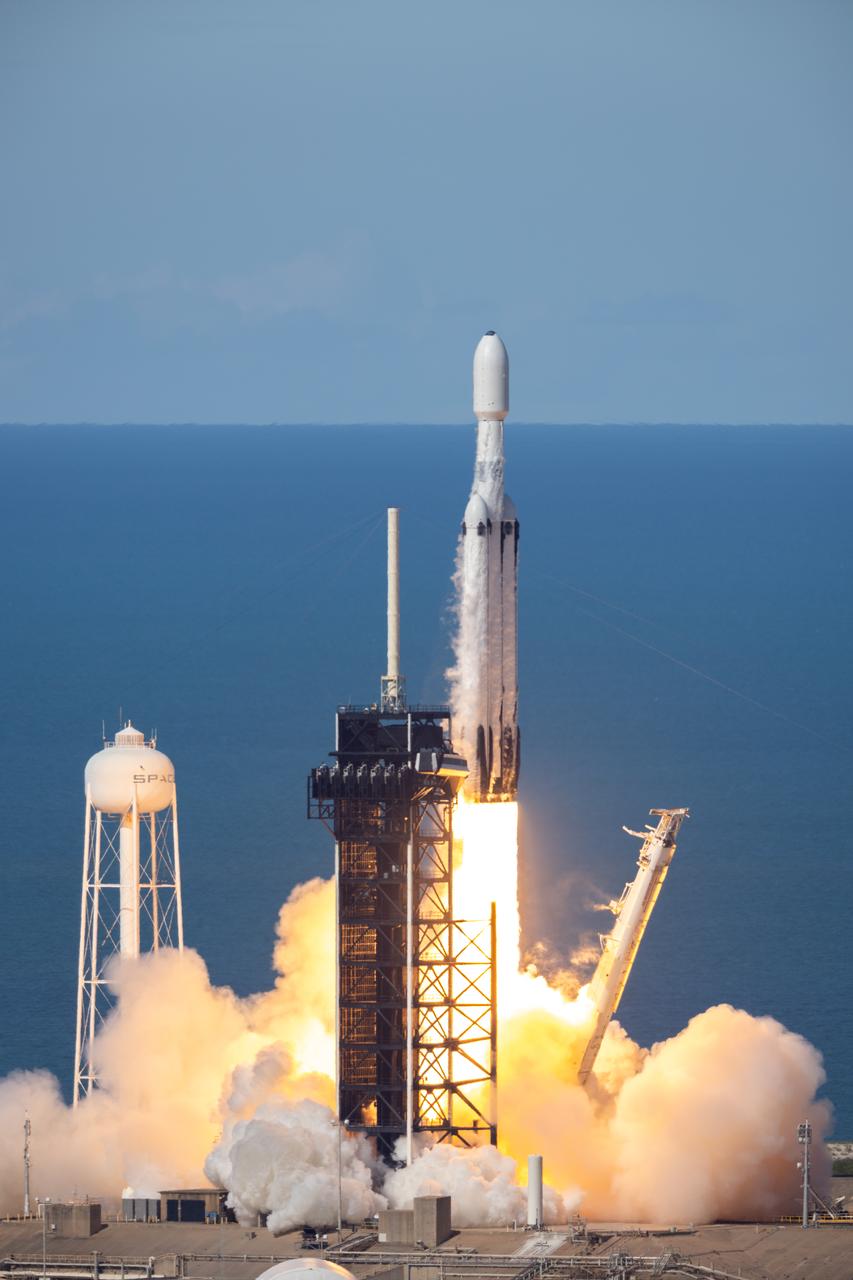
A SpaceX Falcon Heavy rocket carrying the National Oceanic and Atmospheric Administration (NOAA) GOES-U (Geostationary Operational Environmental Satellite U) lifts off from Launch Complex 39A at NASA’s Kennedy Space Center in Florida on Tuesday, June 25, 2024. The GOES-U satellite is the final satellite in the GOES-R series, which serves a critical role in providing continuous coverage of the Western Hemisphere, including monitoring tropical systems in the eastern Pacific and Atlantic oceans.

NASA astronauts Randy Bresnik (left) and Jessica Watkins (center) visit the Granular Mechanics and Regolith Operations Laboratory inside Swamp Works at Kennedy Space Center in Florida on Wednesday, Aug. 27, 2025, to view some of the evolving technologies in development that astronauts may use to explore the Moon’s surface, prepare it for sustainable outposts, and to handle the dust that is collected during moonwalks.
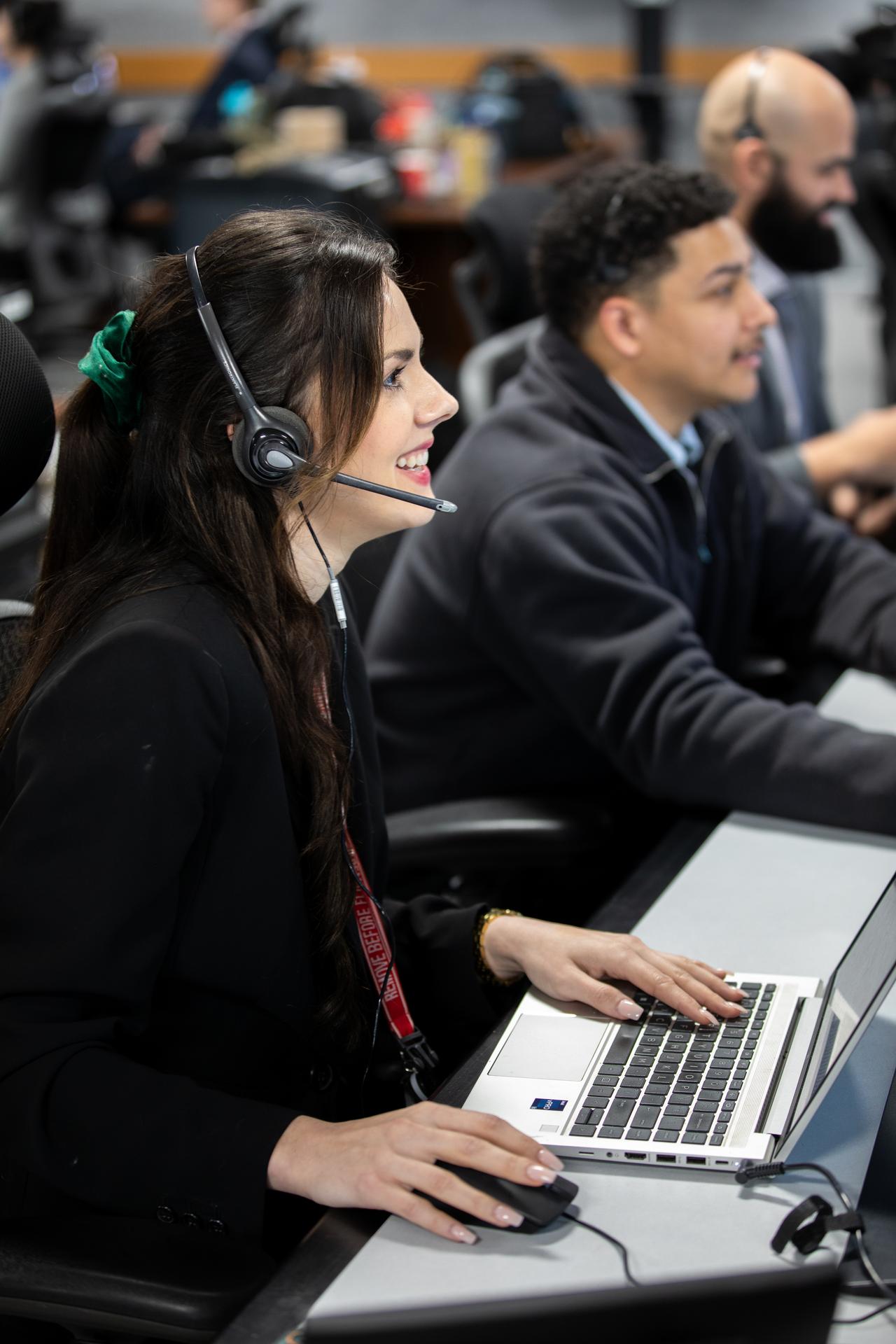
Alora Mazarakis, Artemis launch team member, participates in the Artemis II terminal count simulation on Wednesday, Jan. 14, 2026, inside Firing Room 1 of the Rocco A. Petrone Launch Control Center at NASA’s Kennedy Space Center in Florida. The terminal count simulation conducted by NASA’s Exploration Ground Systems team runs through the final five hours of launch countdown, include terminal count - the remaining 10 minutes of the countdown - for NASA’s Artemis II test flight which will take Commander Reid Wiseman, Pilot Victor Glover, and Mission Specialist Christina Koch from NASA, and Mission Specialist Jeremy Hansen from the CSA (Canadian Space Agency), around the Moon and back to Earth no later than no later than April 2026 from Launch Complex 39B at NASA Kennedy.
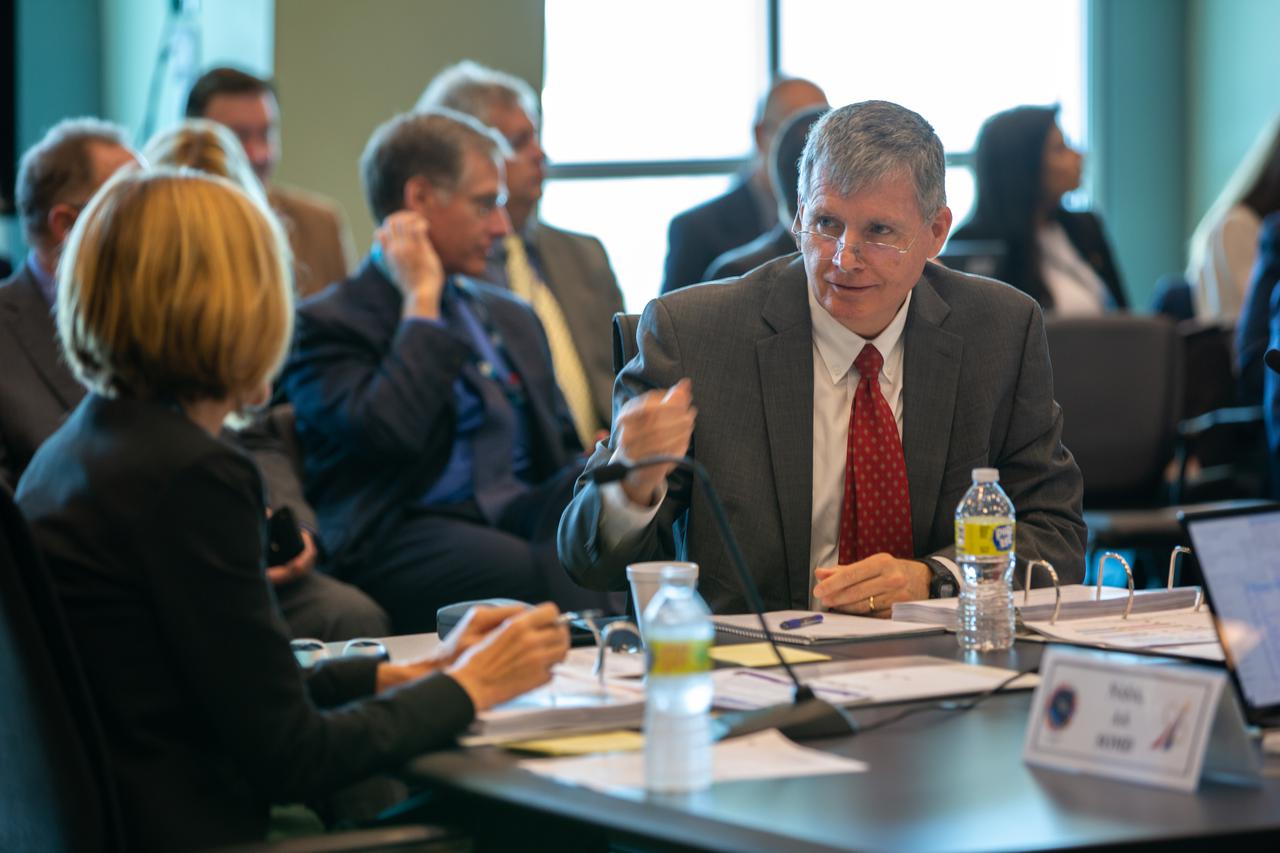
Steve Stich (right), manager, NASA’s Commercial Crew Program and Kathryn Lueders (left), associate administrator, Space Operations Mission Directorate at NASA participate in the Flight Readiness Review for NASA’s Boeing Orbital Flight Test-2 (OFT-2) inside the Operations Support Building II at NASA's Kennedy Space Center in Florida, May 11, 2022. Boeing's CST-100 Starliner spacecraft will launch atop a United Launch Alliance Atlas V rocket from Space Launch Complex -41 at Cape Canaveral Space Force Station at 6:54 p.m. EDT on Thursday, May 19. The uncrewed flight test will be Starliner’s second flight for NASA’s Commercial Crew Program.
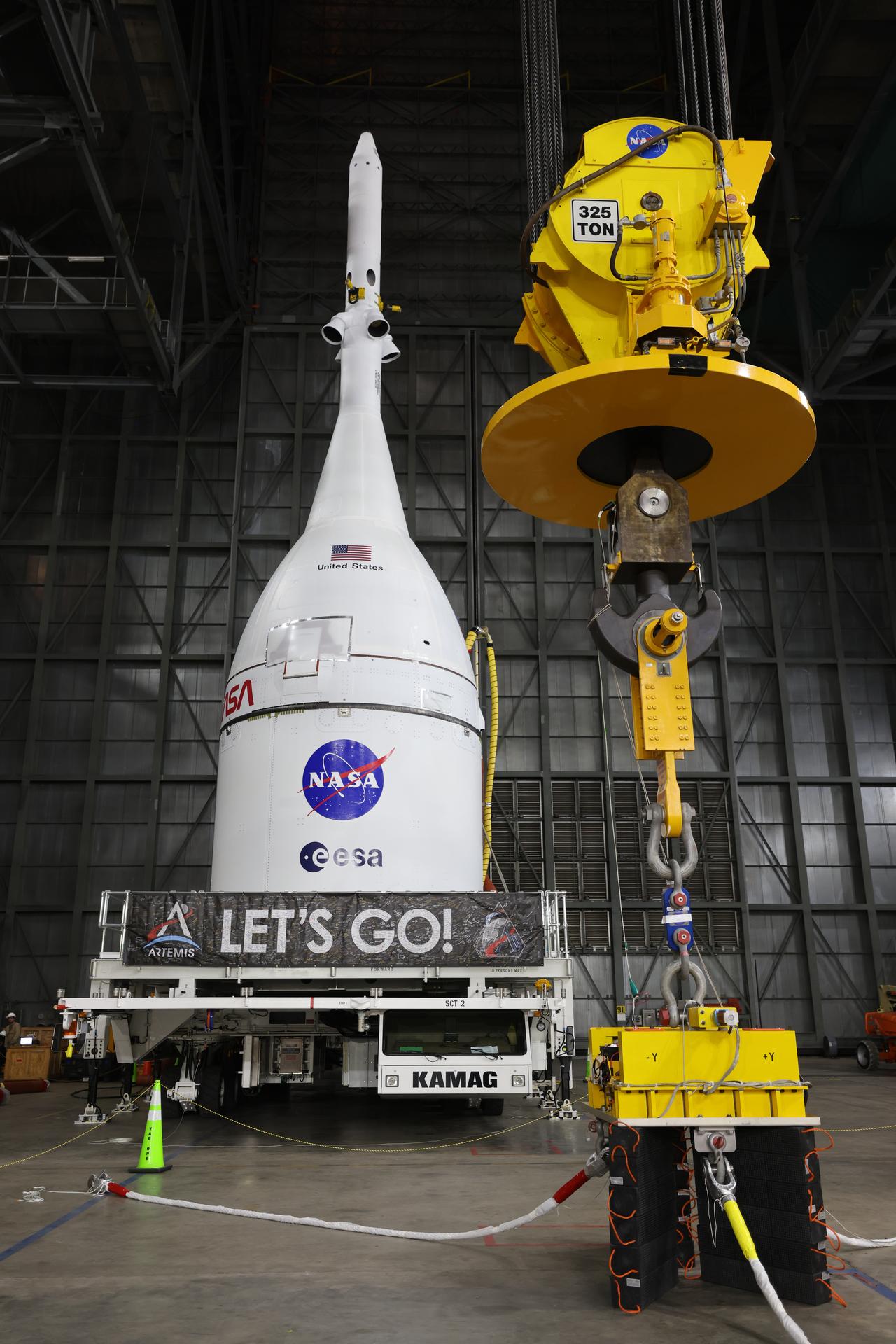
Technicians with NASA’s Exploration Ground Systems team prepare to attach a crane to lift and secure NASA’s Orion spacecraft on top of the SLS (Space Launch System) rocket in High Bay 3 of the Vehicle Assembly Building at NASA’s Kennedy Space Center in Florida on Friday, Oct. 17, 2025, for the agency’s Artemis II mission. Set to launch in 2026, the spacecraft will carry NASA astronauts Reid Wiseman, Victor Glover, Christina Koch, and CSA (Canadian Space Agency) astronaut Jeremy Hansen on a 10-day mission around the Moon and back. Once stacked, teams will begin conducting a series of verification tests ahead of rolling out to Launch Complex 39B for the wet dress rehearsal at NASA Kennedy.

Teams transport a weather cover for the Artemis III SLS (Space Launch System) rocket core stage from NASA’s Pegasus barge to the spaceport’s Vehicle Assembly Building at the agency’s Kennedy Space Center in Florida on Monday, June 22, 2026. The cover will protect the stage’s thermal systems while SLS sits atop the mobile launcher at Launch Pad 39B in its short stack configuration. NASA will send four Artemis astronauts on increasingly difficult missions to explore more of the Moon for scientific discovery, economic benefits, establish an enduring human presence on the lunar surface, and to build on our foundation for the first crewed missions to Mars.

Jeremy Graeber, assistant launch director, watch inside Firing Room 1 of the Rocco A. Petrone Launch Control Center the Artemis II rollout of the SLS (Space Launch System) rocket and Orion spacecraft from the Vehicle Assembly Building to Launch Complex 39B at NASA’s Kennedy Space Center in Florida on Friday, March 20, 2026. The Artemis II test flight will take Commander Reid Wiseman, Pilot Victor Glover, and Mission Specialist Christina Koch from NASA, and Mission Specialist Jeremy Hansen from the CSA (Canadian Space Agency), around the Moon and back to Earth with launch opportunities beginning in April 2026.

NASA astronaut Mike Fincke, pilot for NASA’s SpaceX Crew-11 mission, speaks to employees in the Vehicle Assembly Building during a visit to NASA’s Kennedy Space Center in Florida on Thursday, June 11, 2026. Fincke, NASA astronaut Zena Cardman, JAXA (Japan Aerospace Exploration Agency) astronaut Kimiya Yui, and Roscosmos cosmonaut Oleg Platonov spent five and a half months aboard the International Space Station.
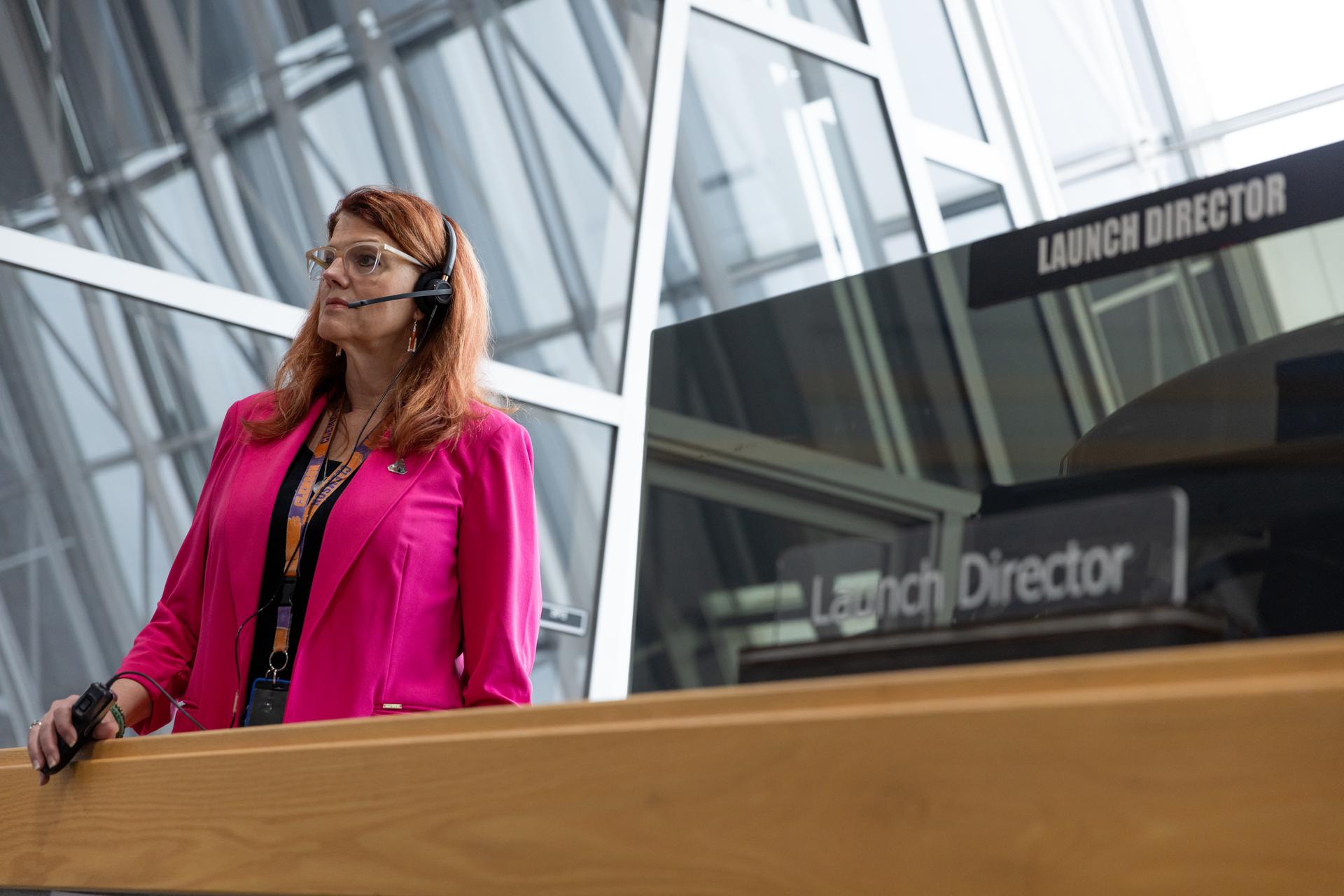
Charlie Blackwell-Thompson, Artemis II launch director, participates in the Artemis II terminal count simulation on Wednesday, Jan. 14, 2026, inside Firing Room 1 of the Rocco A. Petrone Launch Control Center at NASA’s Kennedy Space Center in Florida. The terminal count simulation conducted by NASA’s Exploration Ground Systems team runs through the final five hours of launch countdown, include terminal count - the remaining 10 minutes of the countdown - for NASA’s Artemis II test flight which will take Commander Reid Wiseman, Pilot Victor Glover, and Mission Specialist Christina Koch from NASA, and Mission Specialist Jeremy Hansen from the CSA (Canadian Space Agency), around the Moon and back to Earth no later than no later than April 2026 from Launch Complex 39B at NASA Kennedy.

JAXA (Japan Aerospace Exploration Agency) astronaut Kimiya Yui, mission specialist for NASA’s SpaceX Crew-11 mission, speaks to employees during a visit to NASA’s Kennedy Space Center in Florida on Thursday, June 11, 2026. Yui, along with NASA astronauts Zena Cardman and Mike Fincke, and Roscosmos cosmonaut Oleg Platonov spent five and a half months aboard the International Space Station.
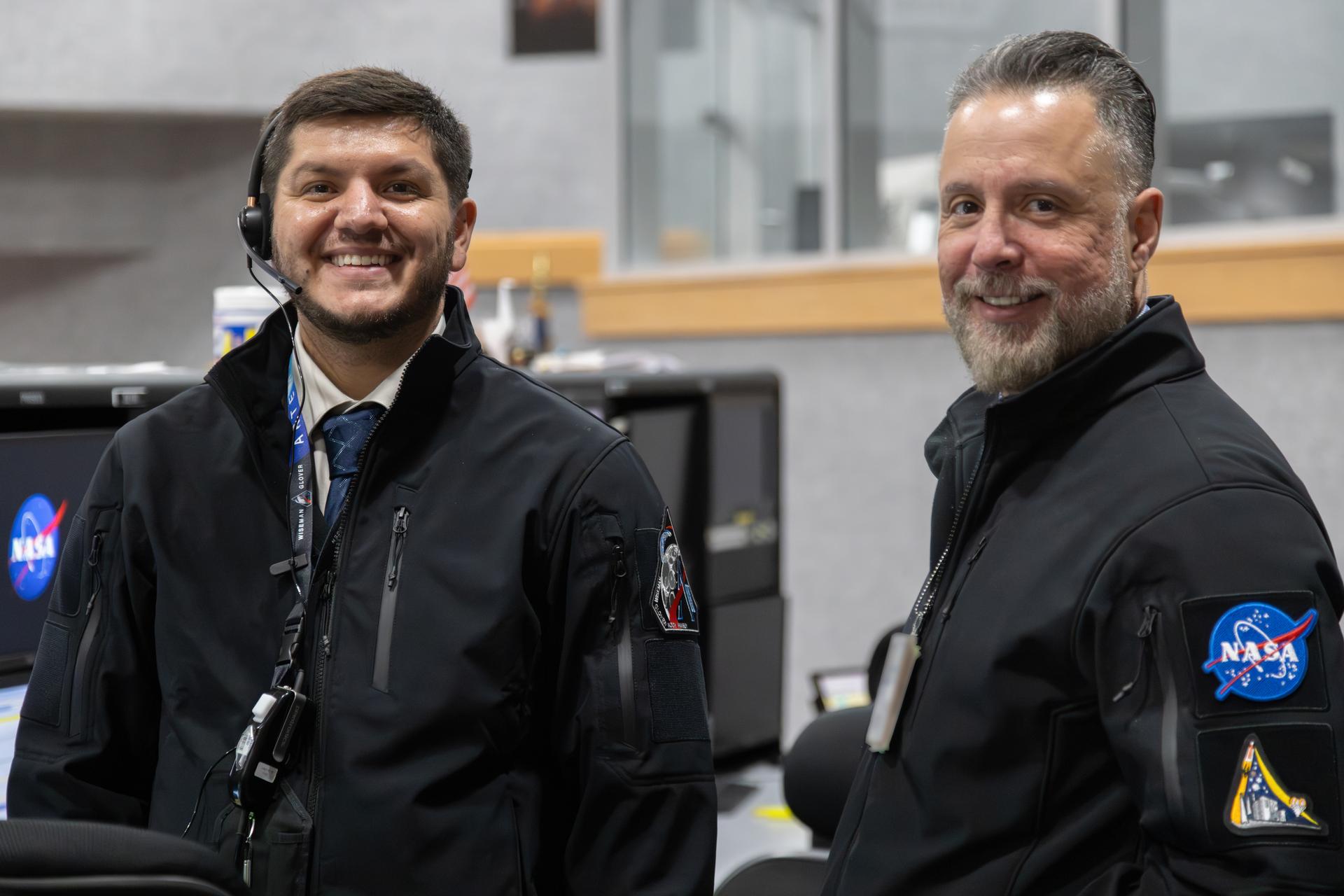
Artemis launch team members pose for a photograph inside Firing Room 1 of the Rocco A. Petrone Launch Control Center, during the rollout of the Artemis II SLS (Space Launch System) rocket and Orion spacecraft from the Vehicle Assembly Building to Launch Complex 39B at NASA’s Kennedy Space Center in Florida on Friday, March 20, 2026. The Artemis II test flight will take Commander Reid Wiseman, Pilot Victor Glover, and Mission Specialist Christina Koch from NASA, and Mission Specialist Jeremy Hansen from the CSA (Canadian Space Agency), around the Moon and back to Earth with launch opportunities beginning in April 2026.
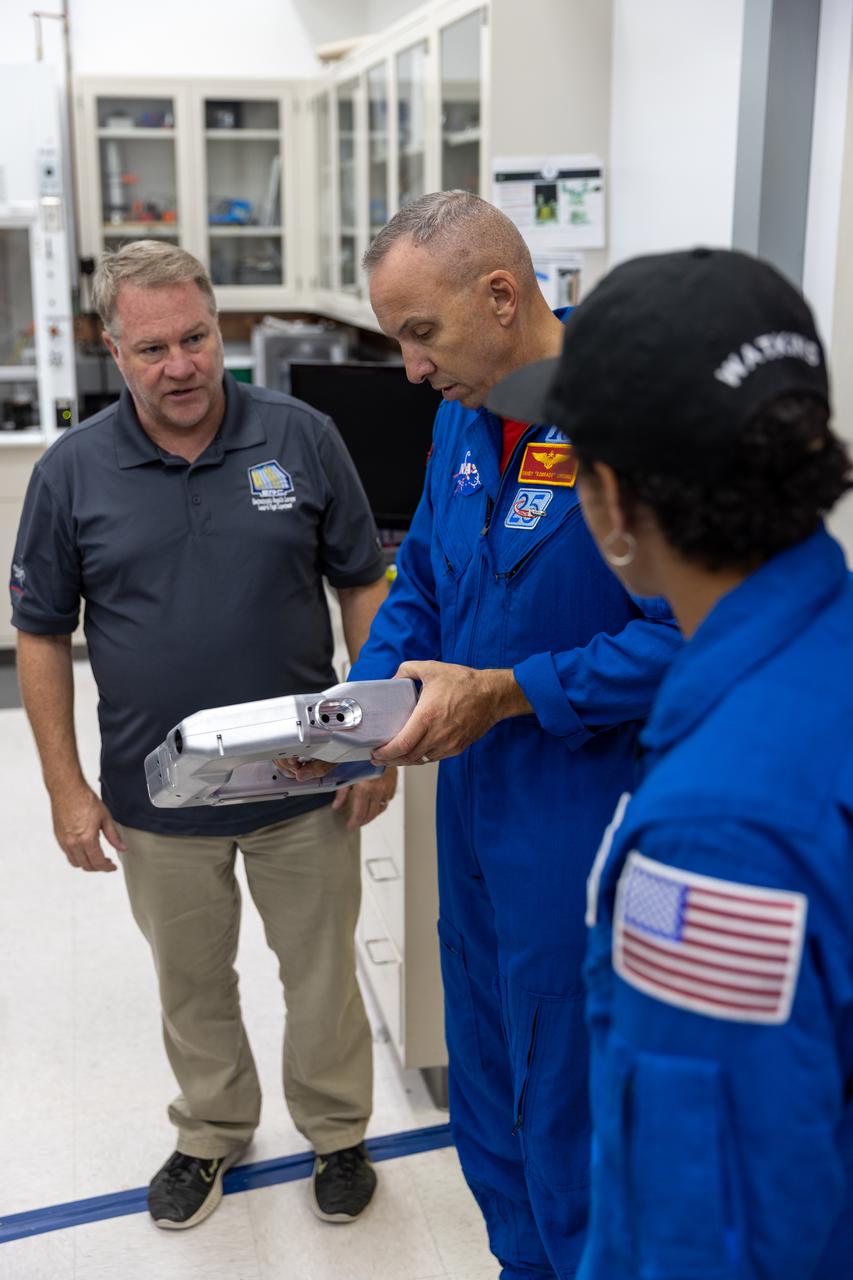
NASA astronauts Randy Bresnik (center) and Jessica Watkins (right) visit the Granular Mechanics and Regolith Operations Laboratory inside Swamp Works at Kennedy Space Center in Florida on Wednesday, Aug. 27, 2025, to view some of the evolving technologies in development that astronauts may use to explore the Moon’s surface, prepare it for sustainable outposts, and to handle the dust that is collected during moonwalks. Bresnick holds an instrument designed to help astronauts electromagnetically remove accumulated lunar dust.

Kennedy Space Center Deputy Director Kelvin Manning participates in the Artemis II Flight Readiness Review with NASA leadership on Wednesday, March 11, 2026, at NASA’s Kennedy Space Center in Florida. The review is an assessment of the readiness of NASA’s SLS (Space Launch System) rocket and Orion spacecraft to support the Artemis II test flight as four astronauts journey around the Moon and return to Earth.
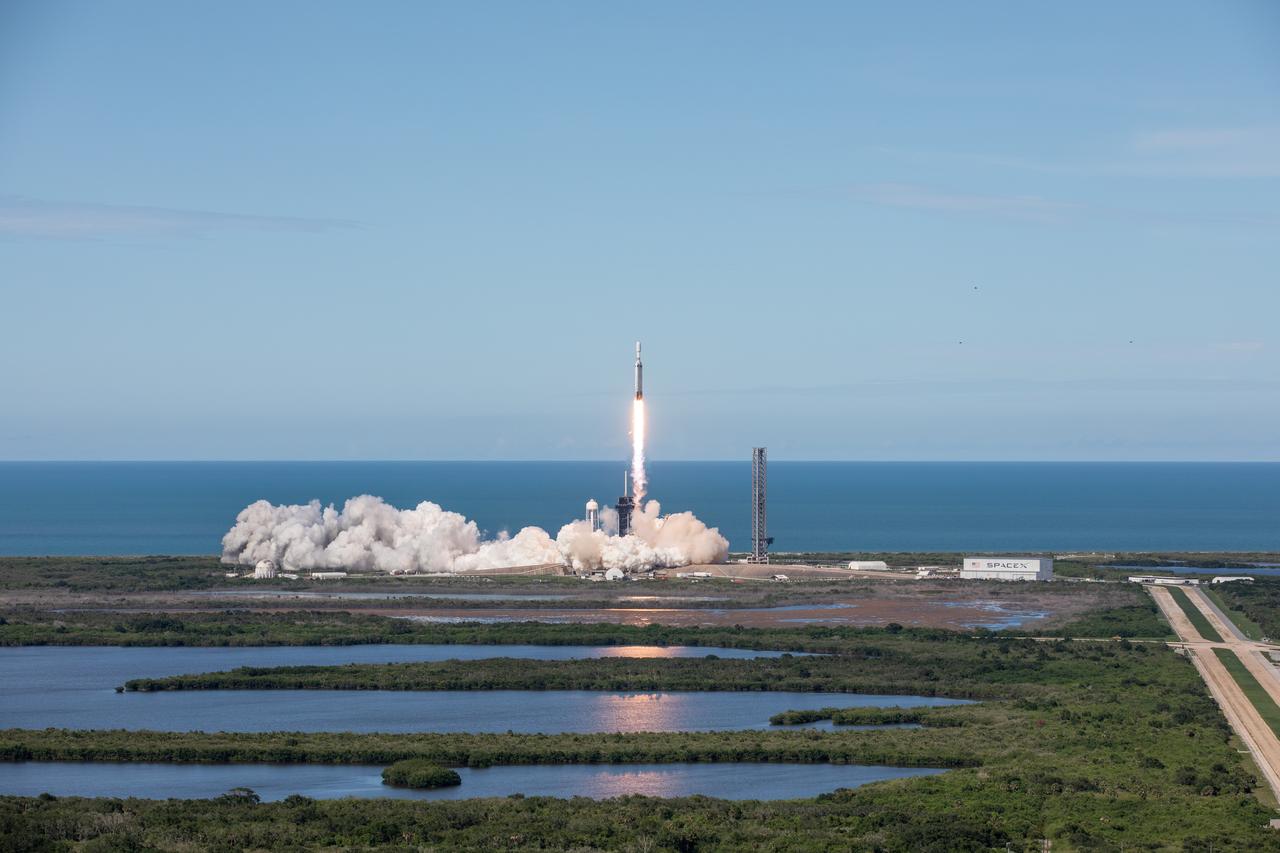
A SpaceX Falcon Heavy rocket carrying the National Oceanic and Atmospheric Administration (NOAA) GOES-U (Geostationary Operational Environmental Satellite U) lifts off from Launch Complex 39A at NASA’s Kennedy Space Center in Florida on Tuesday, June 25, 2024. The GOES-U satellite is the final satellite in the GOES-R series, which serves a critical role in providing continuous coverage of the Western Hemisphere, including monitoring tropical systems in the eastern Pacific and Atlantic oceans.

NASA’s Pegasus barge arrives at the Launch Complex 39 turn basin at the agency’s Kennedy Space Center in Florida carrying NASA’s Nancy Grace Roman Space Telescope on Sunday, June 21, 2026. Teams will offload and transport the observatory to the spaceport’s Payload Hazardous Servicing Facility where it will undergo processing ahead of launch, targeted no earlier than Sunday, Aug. 30, 2026. Named for NASA’s first chief astronomer and “mother of the Hubble Space Telescope,” Roman will offer a field of view over 100 times larger than Hubble’s to study up to a billion galaxies, directly image exoplanets and planet‑forming disks, and address fundamental questions about dark energy, exoplanets, and infrared astrophysics.
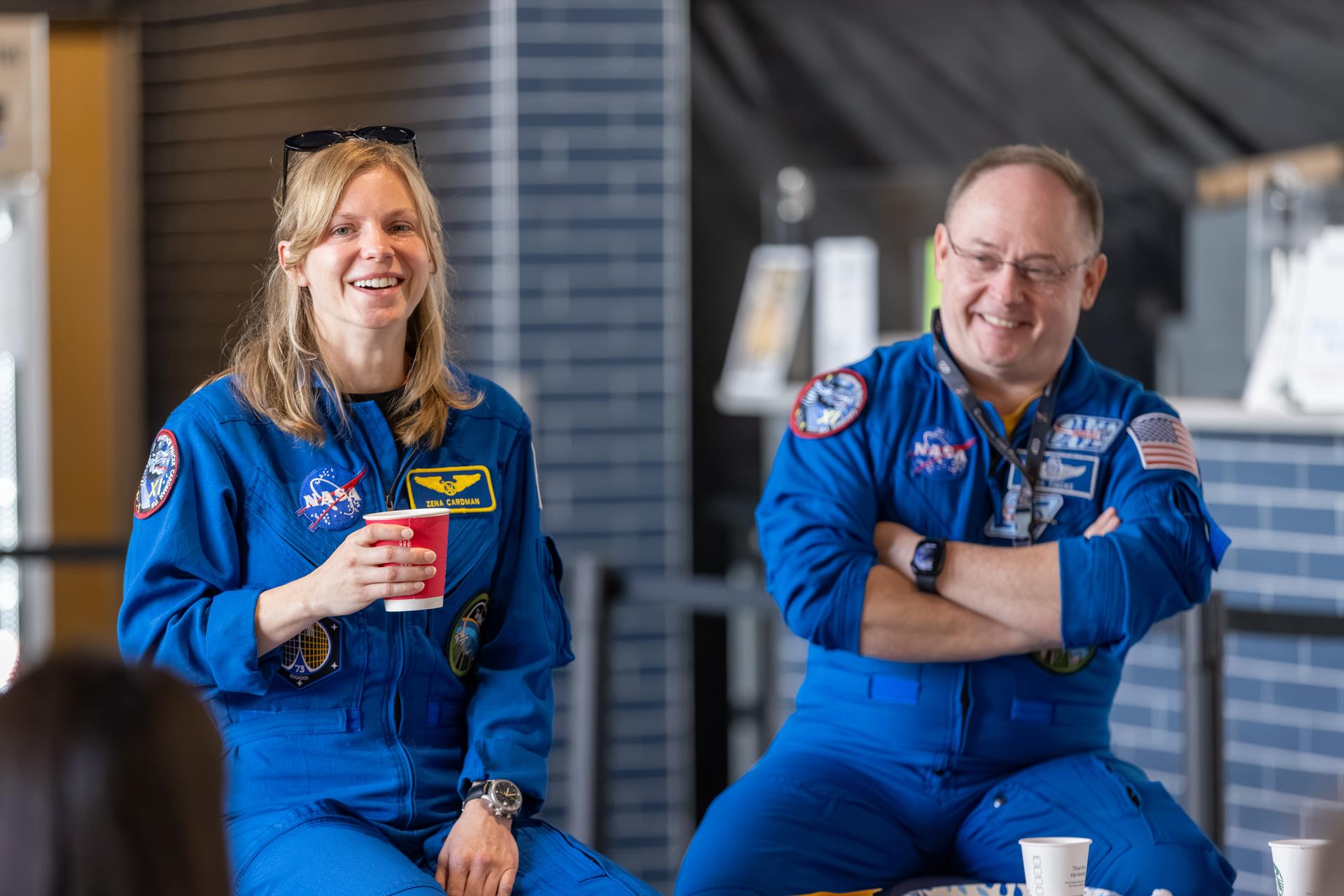
From left, NASA astronauts Zena Cardman and Mike Fincke speak to employees during a visit to NASA’s Kennedy Space Center in Florida on Thursday, June 11, 2026. Cardman and Fincke, along with JAXA (Japan Aerospace Exploration Agency) astronaut Kimiya Yui, and Roscosmos cosmonaut Oleg Platonov, spent five and a half months aboard the International Space Station.
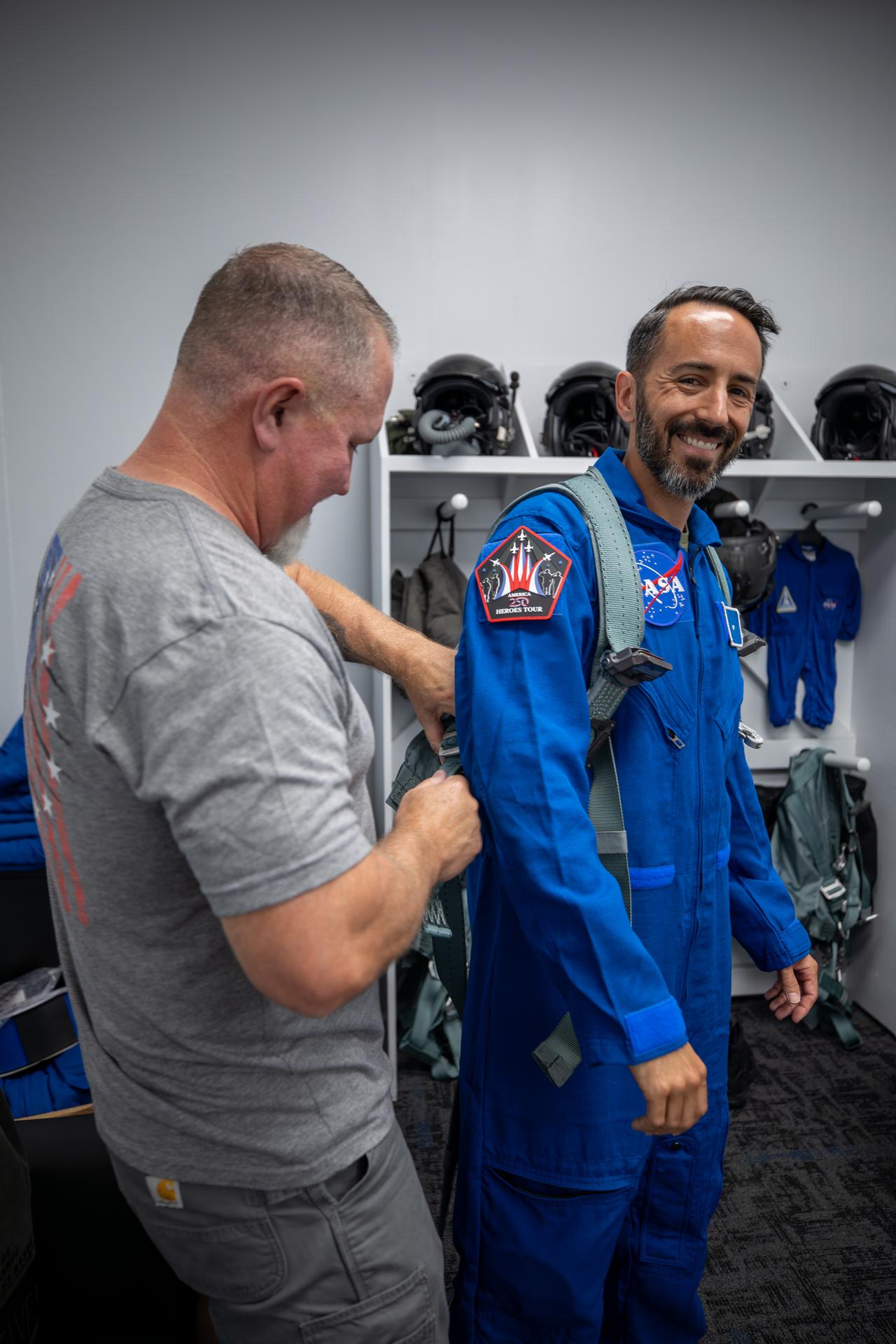
NASA employee Matthew Kufner, right, dons his flight suit ahead of a ride-along flight aboard one of NASA Administrator Jared Isaacman’s personal F-5 aircraft on Wednesday, June 17, 2026, at the Launch and Landing Facility at the agency’s Kennedy Space Center in Florida. As part of the Administrator’s Flight Experience Award program, Kufner and other awardees suited up, completed preflight briefings, and experienced a unique flight. The ride-along flight experience award program highlights NASA’s commitment to celebrating excellence across the workforce.
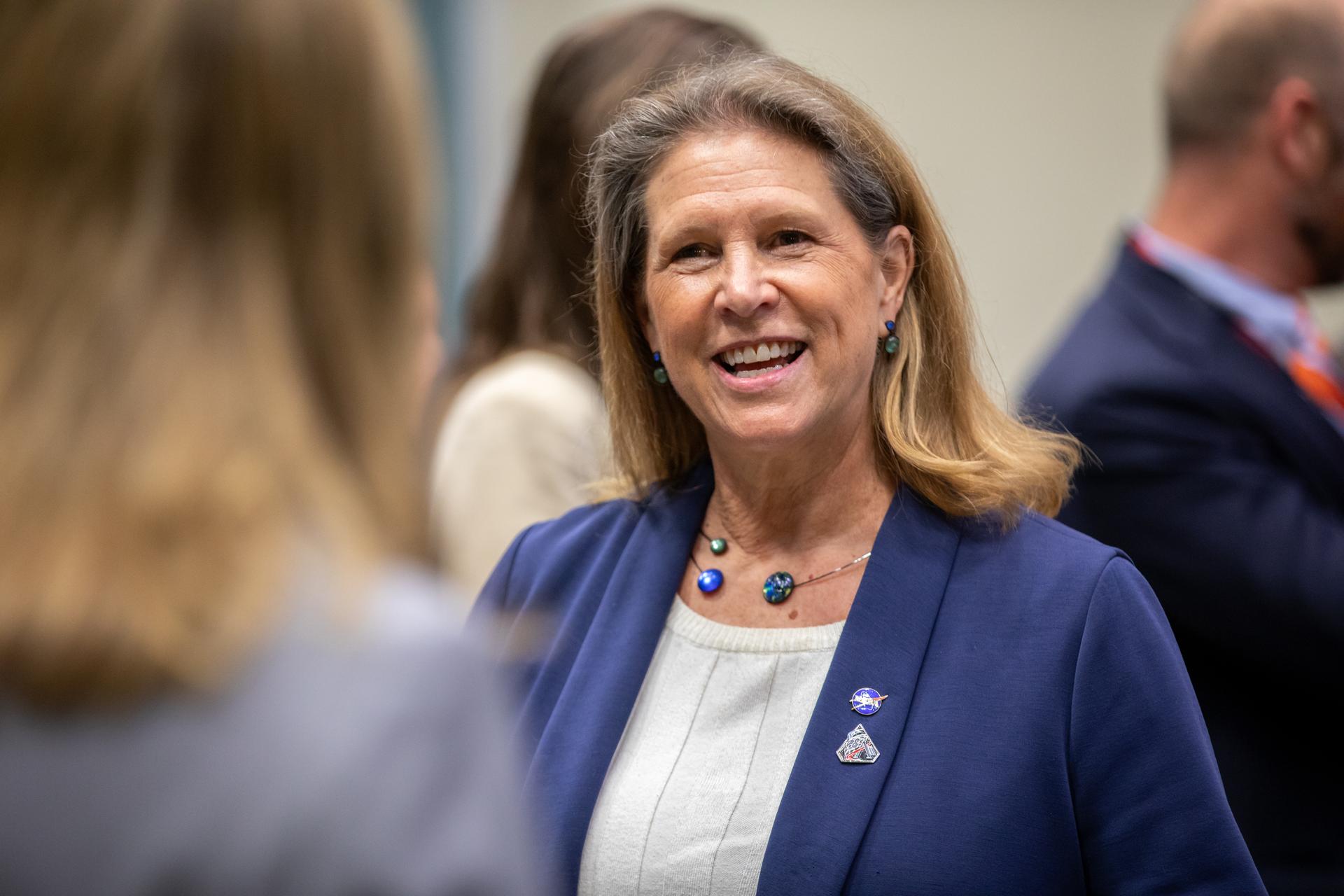
Lori Glaze, acting associate administrator, NASA’s Exploration Systems Development Mission Directorate, participates in the Artemis II Flight Readiness Review with NASA leadership on Wednesday, March 11, 2026, at NASA’s Kennedy Space Center in Florida. The review is an assessment of the readiness of NASA’s SLS (Space Launch System) rocket and Orion spacecraft to support the Artemis II test flight as four astronauts journey around the Moon and return to Earth.
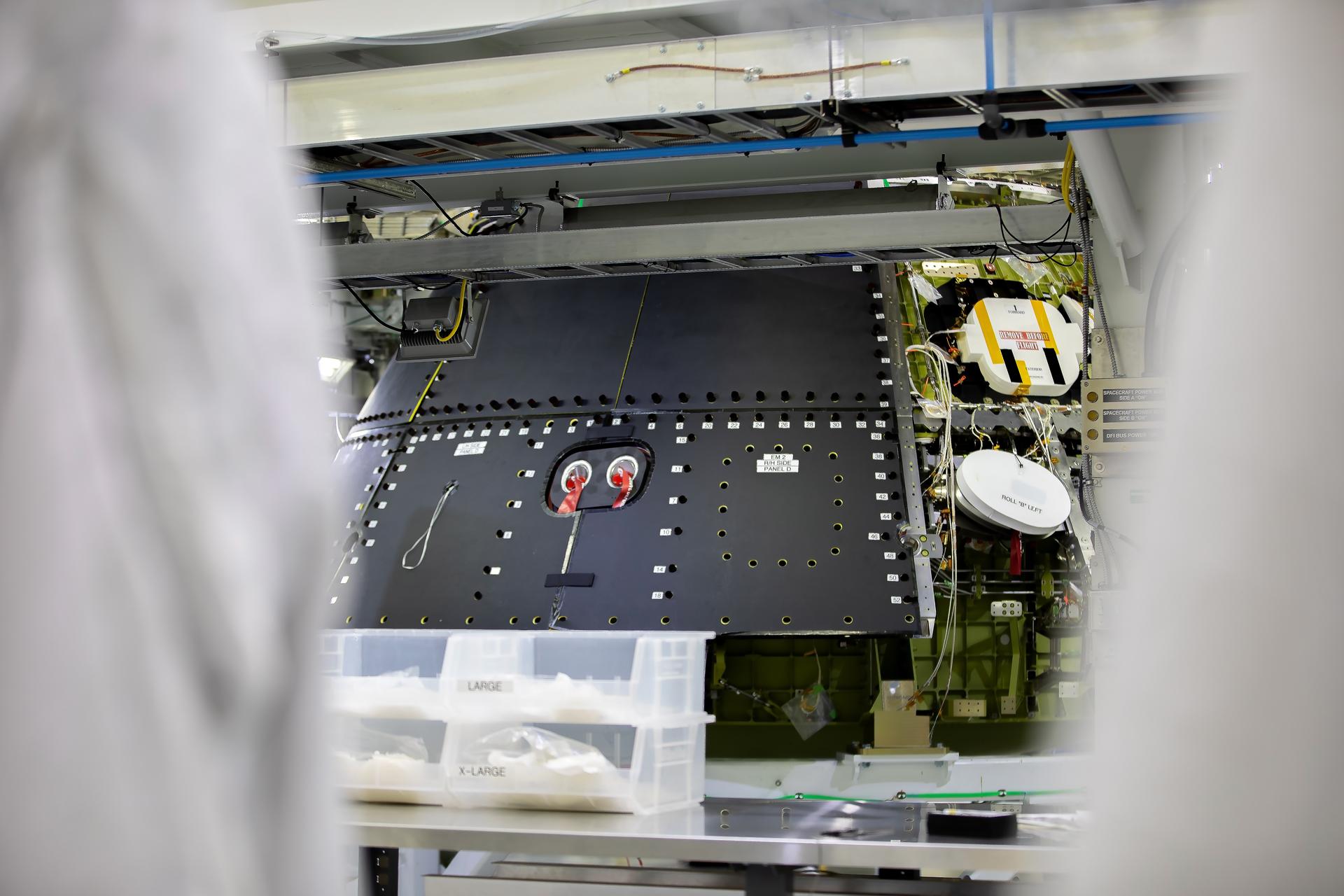
A photographer captures the Artemis IV Orion crew module on Friday, July 31, 2026, inside the Neil A. Armstrong Operations and Checkout Building at NASA’s Kennedy Space Center in Florida. There are currently several pieces of hardware from Artemis III, IV, and V undergoing processing at the same time inside the facility. Artemis IV will be one of the most complex undertakings of engineering and human ingenuity in the history of deep space exploration, exploring the lunar South Pole region. The astronauts’ observations, samples, and data collected will expand our understanding of our solar system and home planet, while inspiring the Artemis Generation.

NASA’s Pegasus barge carrying the agency’s Nancy Grace Roman Space Telescope seen in the background of this photograph, and a weather cover for the Artemis III SLS (Space Launch System) rocket core stage in the foreground, arrives Sunday, June 21, 2026, at the Launch Complex 39 turn basin wharf at the agency’s Kennedy Space Center in Florida. The cover will protect the stage’s thermal systems while SLS sits atop the mobile launcher at Launch Pad 39B in its short stack configuration. Named for NASA’s first chief astronomer and “mother of the Hubble Space Telescope,” Roman will offer a field of view over 100 times larger than Hubble’s to study up to a billion galaxies, directly image exoplanets and planet forming disks, and address fundamental questions about dark energy, exoplanets, and infrared astrophysics. NASA will send four Artemis astronauts on increasingly difficult missions to explore more of the Moon for scientific discovery, economic benefits, establish an enduring human presence on the lunar surface, and to build on our foundation for the first crewed missions to Mars.
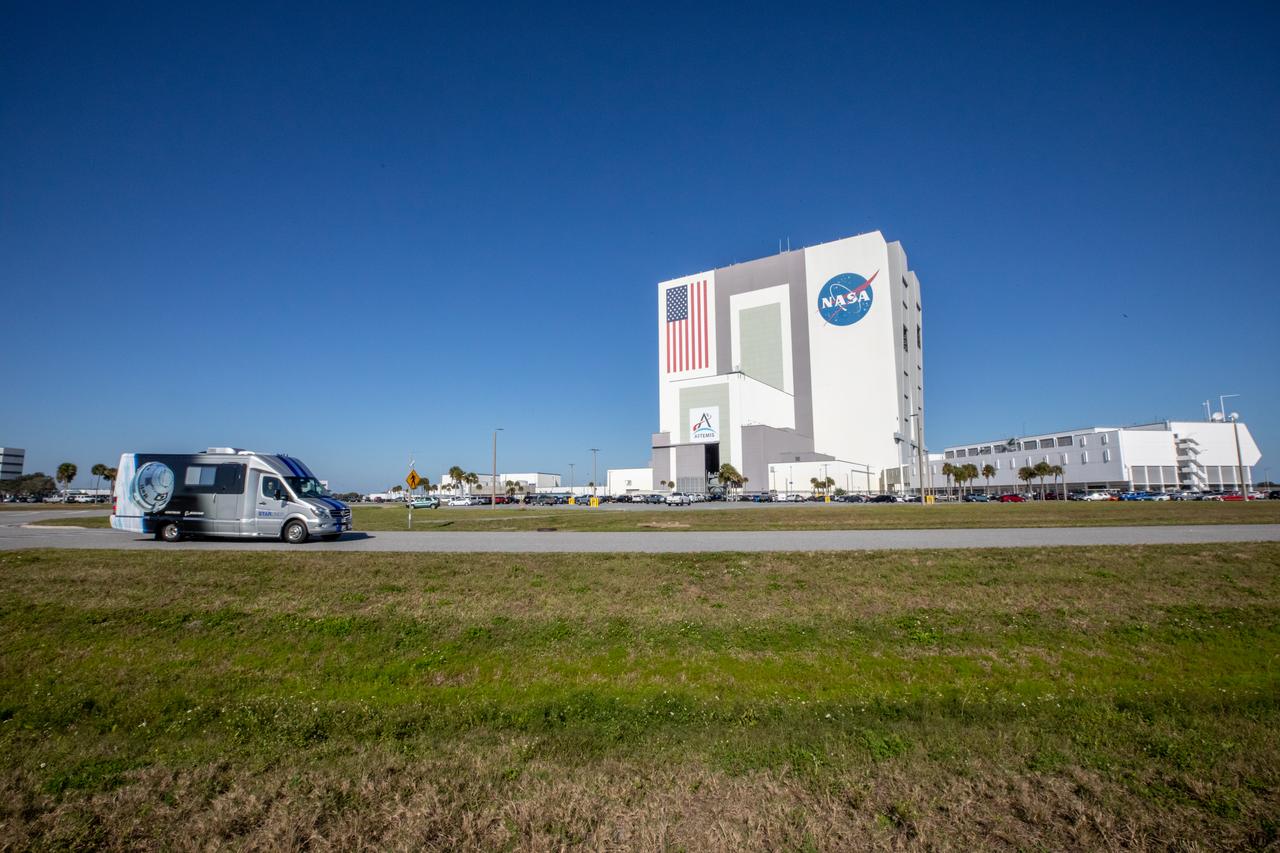
A crew transportation vehicle carrying NASA astronauts Suni Williams and Barry “Butch” Wilmore drives past the iconic Vehicle Assembly Building at the agency’s Kennedy Space Center in Florida on Wednesday, Jan. 31, 2024, as part of an integrated crew exercise simulation for NASA’s Boeing Crew Flight Test (CFT). The integrated exercise involved participation from the flight crew, NASA, Boeing, and United Launch Alliance (ULA), and allowed teams to rehearse prelaunch operations beginning roughly four hours before a targeted liftoff. CFT will be the first flight with astronauts to the International Space Station for Boeing’s Starliner spacecraft as part of NASA’s Commercial Crew Program. Starliner is scheduled to launch atop ULA’s Atlas V rocket no earlier than mid-April 2024.
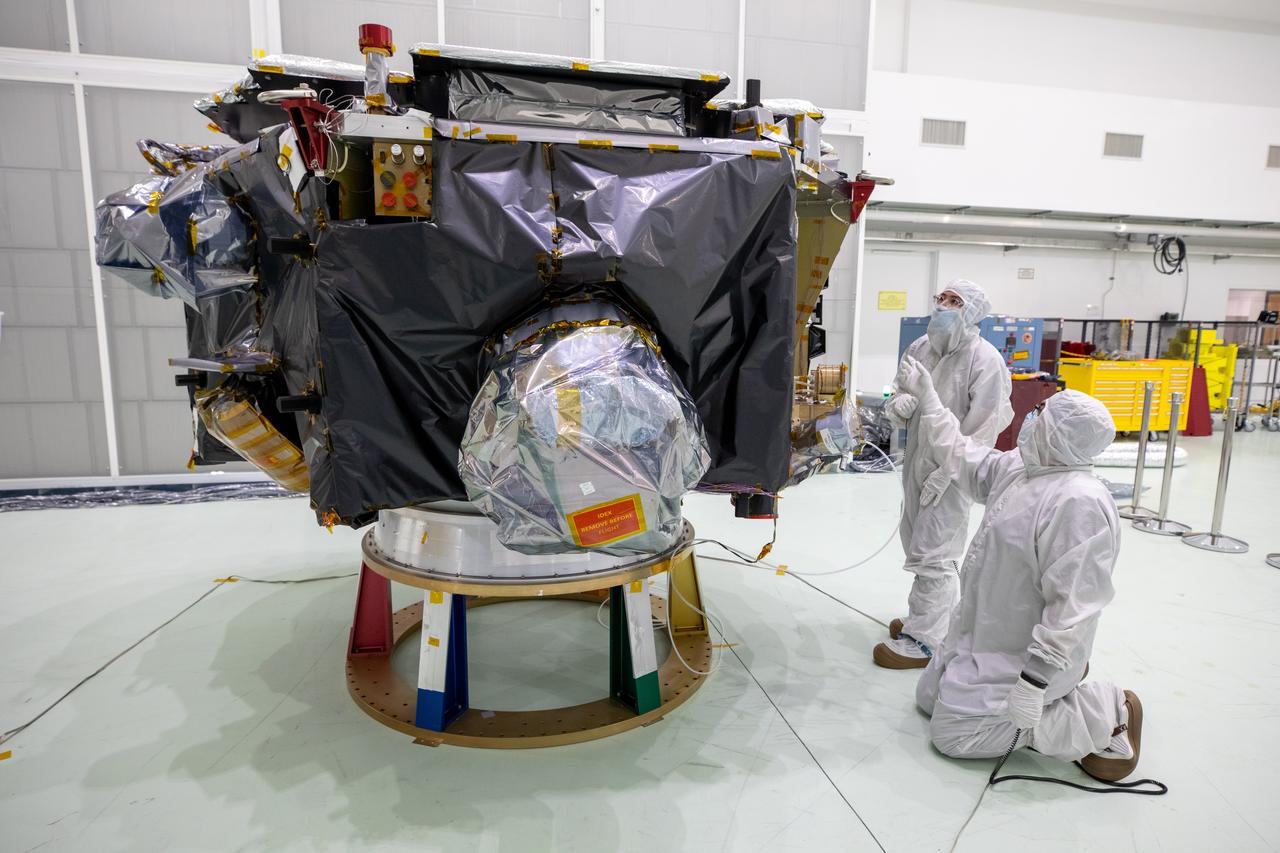
Technicians remove protective coverings form NASA’s IMAP (Interstellar Mapping and Acceleration Probe) inside the high bay at the Astrotech Space Operations Facility near the agency’s Kennedy Space Center in Florida on Thursday, May 29,2025. The observatory will study how the Sun shapes the boundaries of the heliosphere, the bubble protecting around our solar system, and is targeted for launch this fall aboard a SpaceX Falcon 9 rocket from Launch Complex 39A at NASA Kennedy.

Teams transport a weather cover for the Artemis III SLS (Space Launch System) rocket core stage from NASA’s Pegasus barge to the spaceport’s Vehicle Assembly Building at the agency’s Kennedy Space Center in Florida on Monday, June 22, 2026. The cover will protect the stage’s thermal systems while SLS sits atop the mobile launcher at Launch Pad 39B in its short stack configuration. NASA will send four Artemis astronauts on increasingly difficult missions to explore more of the Moon for scientific discovery, economic benefits, establish an enduring human presence on the lunar surface, and to build on our foundation for the first crewed missions to Mars.

Lori Glaze, acting associate administrator, Exploration Systems Development Mission Directorate, smiles for a photograph inside Firing Room 1 of the Rocco A. Petrone Launch Control Center during the Artemis II rollout of the SLS (Space Launch System) rocket and Orion spacecraft from the Vehicle Assembly Building to Launch Complex 39B at NASA’s Kennedy Space Center in Florida on Friday, March 20, 2026. The Artemis II test flight will take Commander Reid Wiseman, Pilot Victor Glover, and Mission Specialist Christina Koch from NASA, and Mission Specialist Jeremy Hansen from the CSA (Canadian Space Agency), around the Moon and back to Earth with launch opportunities beginning in April 2026.

NASA’s Pegasus barge carrying a weather cover for the Artemis III SLS (Space Launch System) rocket core stage arrives Sunday, June 21, 2026, at the Launch Complex 39 turn basin at the agency’s Kennedy Space Center in Florida. The cover will protect the stage’s thermal systems while SLS sits atop the mobile launcher at Launch Pad 39B in its short stack configuration. NASA will send four Artemis astronauts on increasingly difficult missions to explore more of the Moon for scientific discovery, economic benefits, establish an enduring human presence on the lunar surface, and to build on our foundation for the first crewed missions to Mars.

NASA’s Pegasus barge carrying a weather cover for the Artemis III SLS (Space Launch System) rocket core stage, arrives Sunday, June 21, 2026, at the Launch Complex 39 turn basin at the agency’s Kennedy Space Center in Florida. The cover will protect the stage’s thermal systems while SLS sits atop the mobile launcher at Launch Pad 39B in its short stack configuration. NASA will send four Artemis astronauts on increasingly difficult missions to explore more of the Moon for scientific discovery, economic benefits, establish an enduring human presence on the lunar surface, and to build on our foundation for the first crewed missions to Mars.
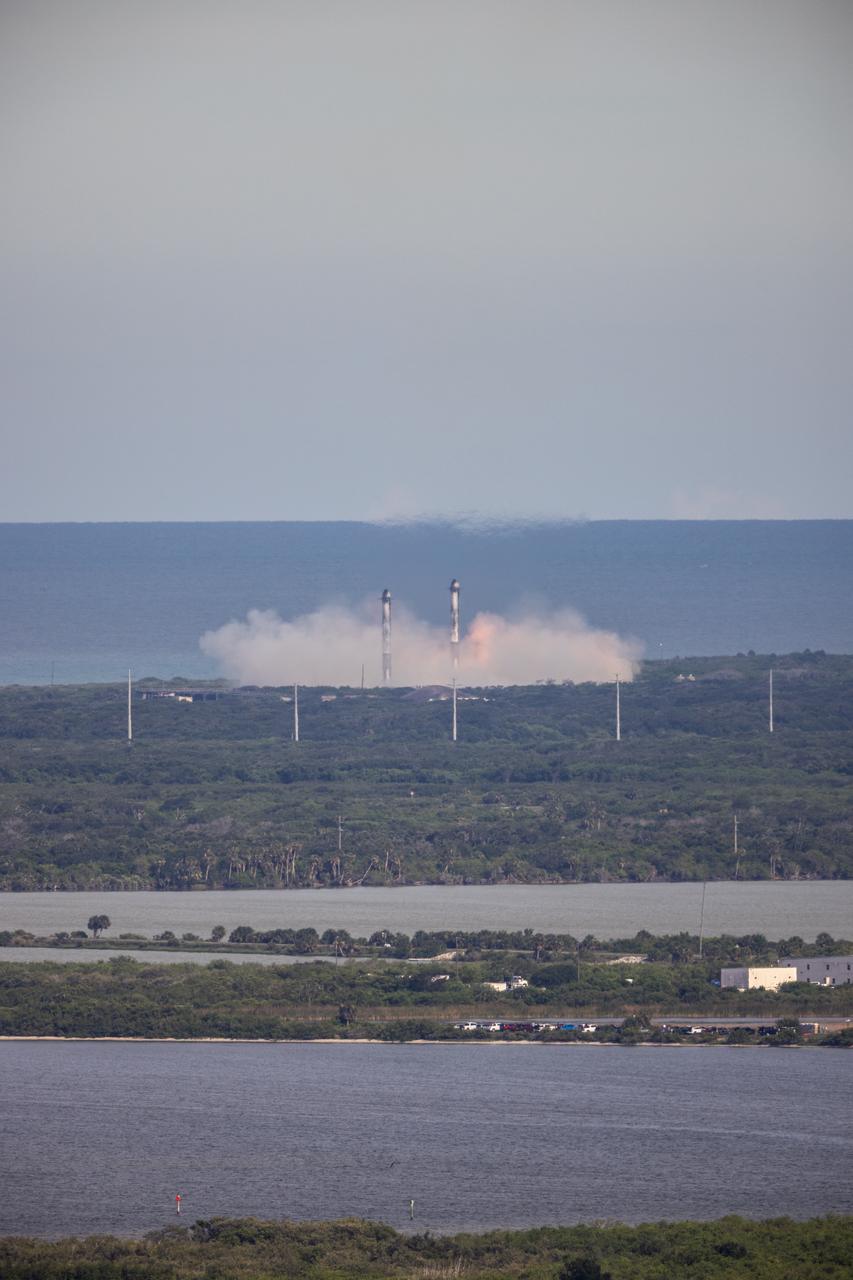
The SpaceX Falcon Heavy dual side boosters land on SpaceX Landing Zones 1 and 2 at Cape Canaveral Space Force Station in Florida. The rocket carrying NOAA’s (National Oceanic and Atmospheric Administration) Geostationary Operational Environmental Satellite (GOES-U) launched from NASA’s Kennedy Space Center in Florida on Tuesday, June 25, 2024.
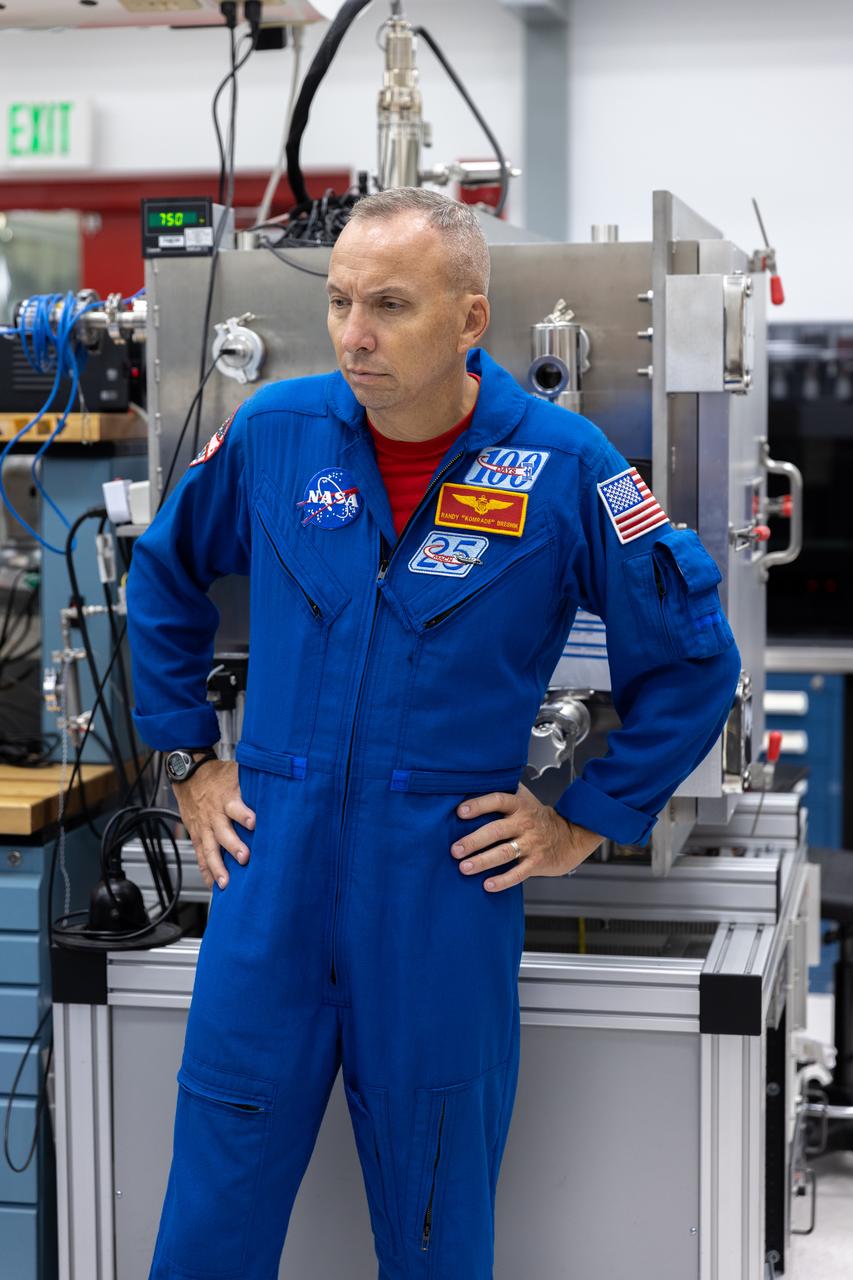
NASA astronaut Randy Bresnik visits the Granular Mechanics and Regolith Operations Laboratory inside Swamp Works at Kennedy Space Center in Florida on Wednesday, Aug. 27, 2025, to view some of the evolving technologies in development that astronauts may use to explore the Moon’s surface, prepare it for sustainable outposts, and to handle the dust that is collected during moonwalks.

Teams from NASA’s Kennedy Space Center in Florida, the Fish and Wildlife Services, and the National Park Service cleared debris along the shoreline near the Beach House on Friday, May 8, 2026, to make the journey a little easier for mother turtles coming ashore to lay their eggs during nesting season now through October. NASA Kennedy is home to four nesting sea turtles: Loggerhead, Green, Leatherback, and occasionally the Kemp’s ridley turtles.

From left, NASA astronauts Mike Fincke and Zena Cardman, JAXA (Japan Aerospace Exploration Agency) astronaut Kimiya Yu, and NASA Kennedy Space Center Director Brian Hughes pose for a photograph with employees during a visit to NASA’s Kennedy Space Center in Florida on Thursday, June 11, 2026. The three crew members, along with Roscosmos cosmonaut Oleg Platonov, spent five and a half months aboard the International Space Station.

NASA astronaut Randy Bresnik participates in the Artemis II Flight Readiness Review with NASA leadership on Wednesday, March 11, 2026, at NASA’s Kennedy Space Center in Florida. The review is an assessment of the readiness of NASA’s SLS (Space Launch System) rocket and Orion spacecraft to support the Artemis II test flight as four astronauts journey around the Moon and return to Earth.

NASA leadership, with Artemis II astronauts Christina Koch, Victor Glover, Reid Wiseman, and CSA (Canadian Space Agency) Jeremy Hansen joining virtually, participate in the Artemis II Flight Readiness Review on Wednesday, March 11, 2026, at NASA’s Kennedy Space Center in Florida. The review is an assessment of the readiness of NASA’s SLS (Space Launch System) rocket and Orion spacecraft to support the Artemis II test flight as four astronauts journey around the Moon and return to Earth.
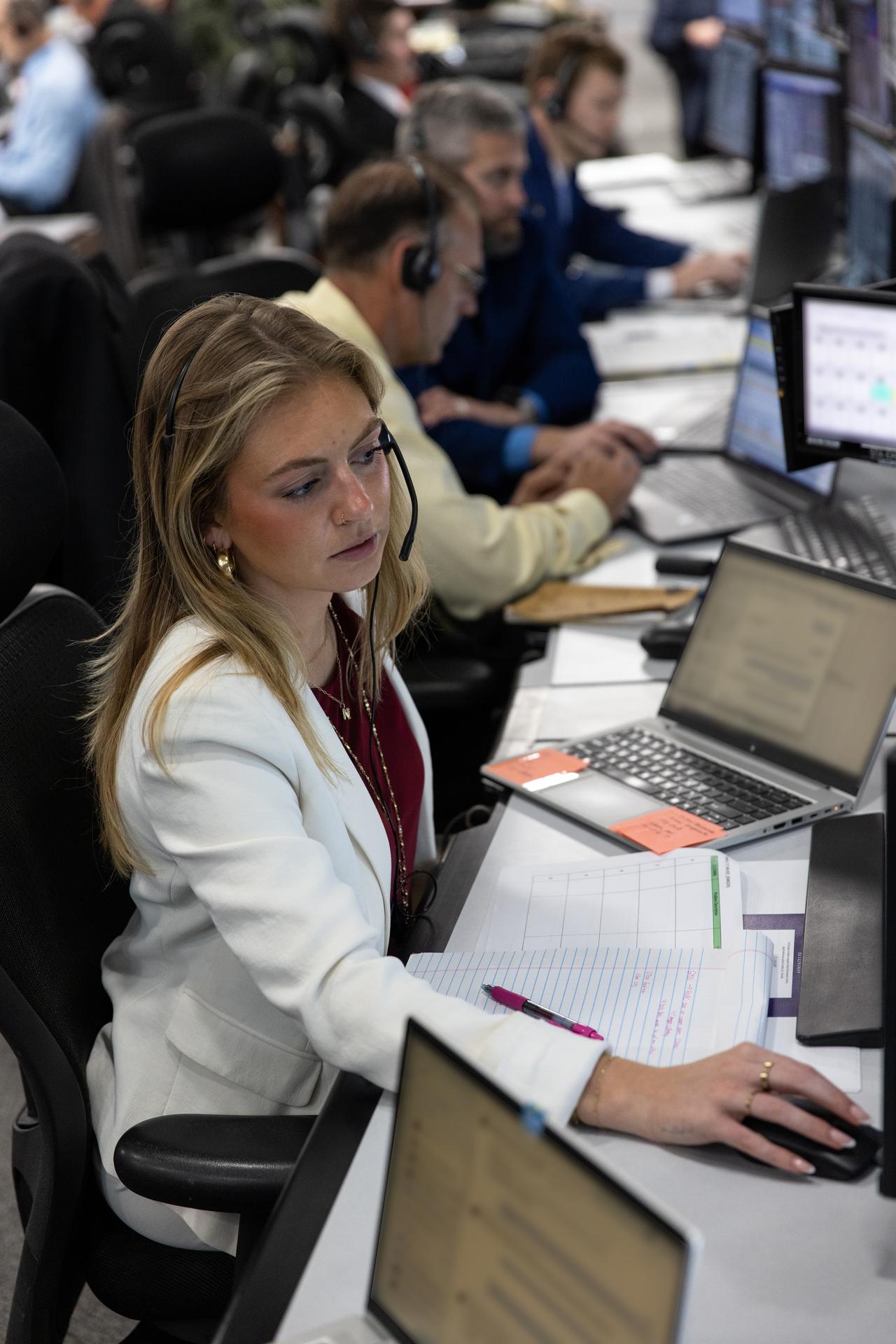
Madison Schmaltz, Artemis launch team member, participates in the Artemis II terminal count simulation on Wednesday, Jan. 14, 2026, inside Firing Room 1 of the Rocco A. Petrone Launch Control Center at NASA’s Kennedy Space Center in Florida. The terminal count simulation conducted by NASA’s Exploration Ground Systems team runs through the final five hours of launch countdown, include terminal count - the remaining 10 minutes of the countdown - for NASA’s Artemis II test flight which will take Commander Reid Wiseman, Pilot Victor Glover, and Mission Specialist Christina Koch from NASA, and Mission Specialist Jeremy Hansen from the CSA (Canadian Space Agency), around the Moon and back to Earth no later than no later than April 2026 from Launch Complex 39B at NASA Kennedy.

NASA’s Pegasus barge arrives at the Launch Complex 39 turn basin at the agency’s Kennedy Space Center in Florida carrying NASA’s Nancy Grace Roman Space Telescope on Sunday, June 21, 2026. Teams will offload and transport the observatory to the spaceport’s Payload Hazardous Servicing Facility where it will undergo processing ahead of launch, targeted no earlier than Sunday, Aug. 30, 2026. Named for NASA’s first chief astronomer and “mother of the Hubble Space Telescope,” Roman will offer a field of view over 100 times larger than Hubble’s to study up to a billion galaxies, directly image exoplanets and planet‑forming disks, and address fundamental questions about dark energy, exoplanets, and infrared astrophysics.
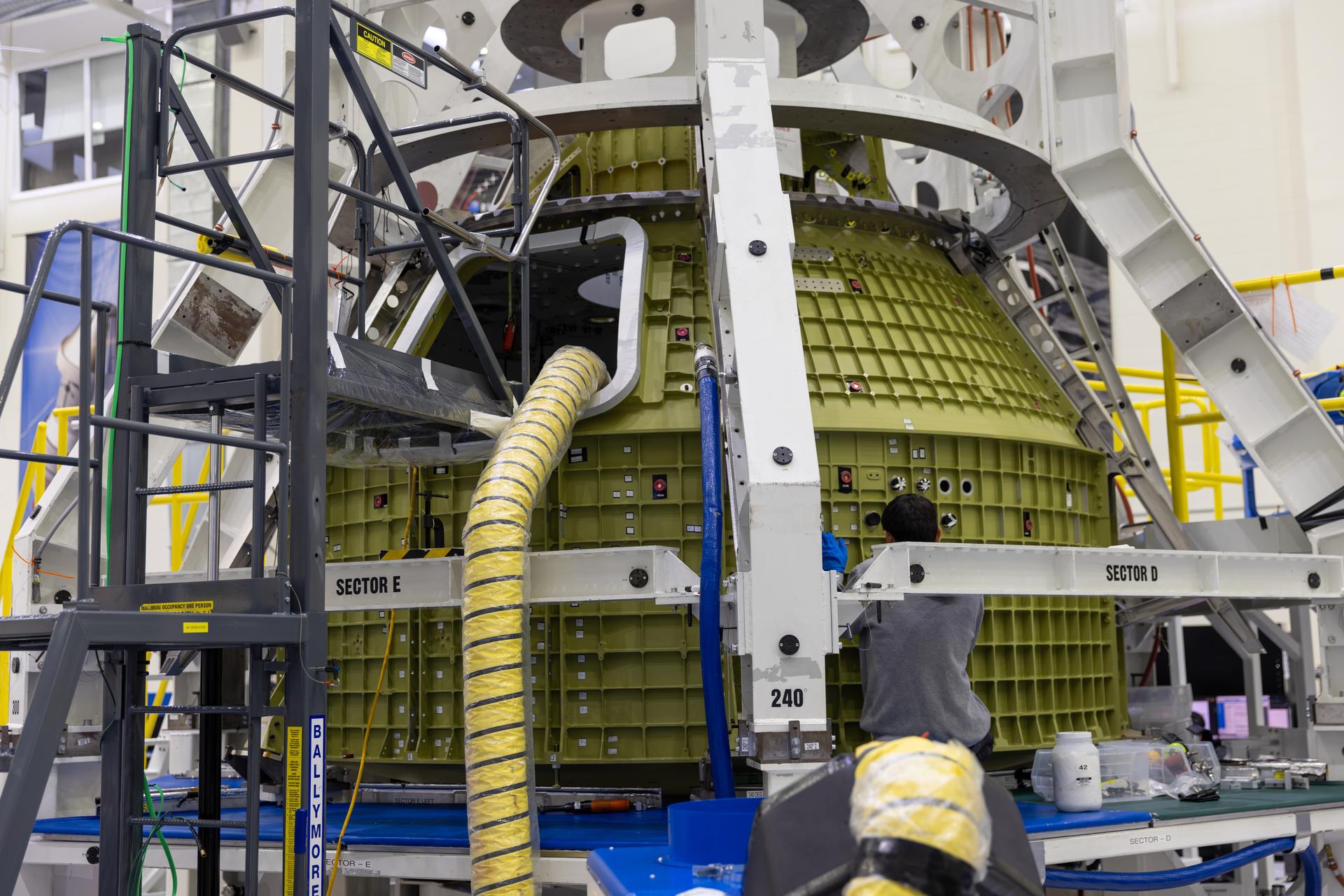
A photographer captures the Artemis V Orion crew module on Friday, July 31, 2026, inside the Neil A. Armstrong Operations and Checkout Building at NASA’s Kennedy Space Center in Florida. There are currently several pieces of hardware from Artemis III, IV, and V undergoing processing at the same time inside the facility. Using the standard SLS (Space Launch System) rocket configuration, NASA expects to launch this lunar surface mission by late 2028, with subsequent missions planned roughly once per year.

Jeremy Graeber, assistant launch director, Exploration Ground Systems Program, participates in the Artemis III terminal countdown simulation on Thursday, May 7, 2026, inside Firing Room 1 of the Rocco A. Petrone Launch Control Center at NASA’s Kennedy Space Center in Florida. This marked the first simulation the launch team performed ahead of Artemis III.

NASA’s Pegasus barge carrying the agency’s Nancy Grace Roman Space Telescope seen in the background of this photograph, and a weather cover for the Artemis III SLS (Space Launch System) rocket core stage in the foreground, arrives Sunday, June 21, 2026, at the Launch Complex 39 turn basin wharf at the agency’s Kennedy Space Center in Florida. The cover will protect the stage’s thermal systems while SLS sits atop the mobile launcher at Launch Pad 39B in its short stack configuration. Named for NASA’s first chief astronomer and “mother of the Hubble Space Telescope,” Roman will offer a field of view over 100 times larger than Hubble’s to study up to a billion galaxies, directly image exoplanets and planet forming disks, and address fundamental questions about dark energy, exoplanets, and infrared astrophysics. NASA will send four Artemis astronauts on increasingly difficult missions to explore more of the Moon for scientific discovery, economic benefits, establish an enduring human presence on the lunar surface, and to build on our foundation for the first crewed missions to Mars.
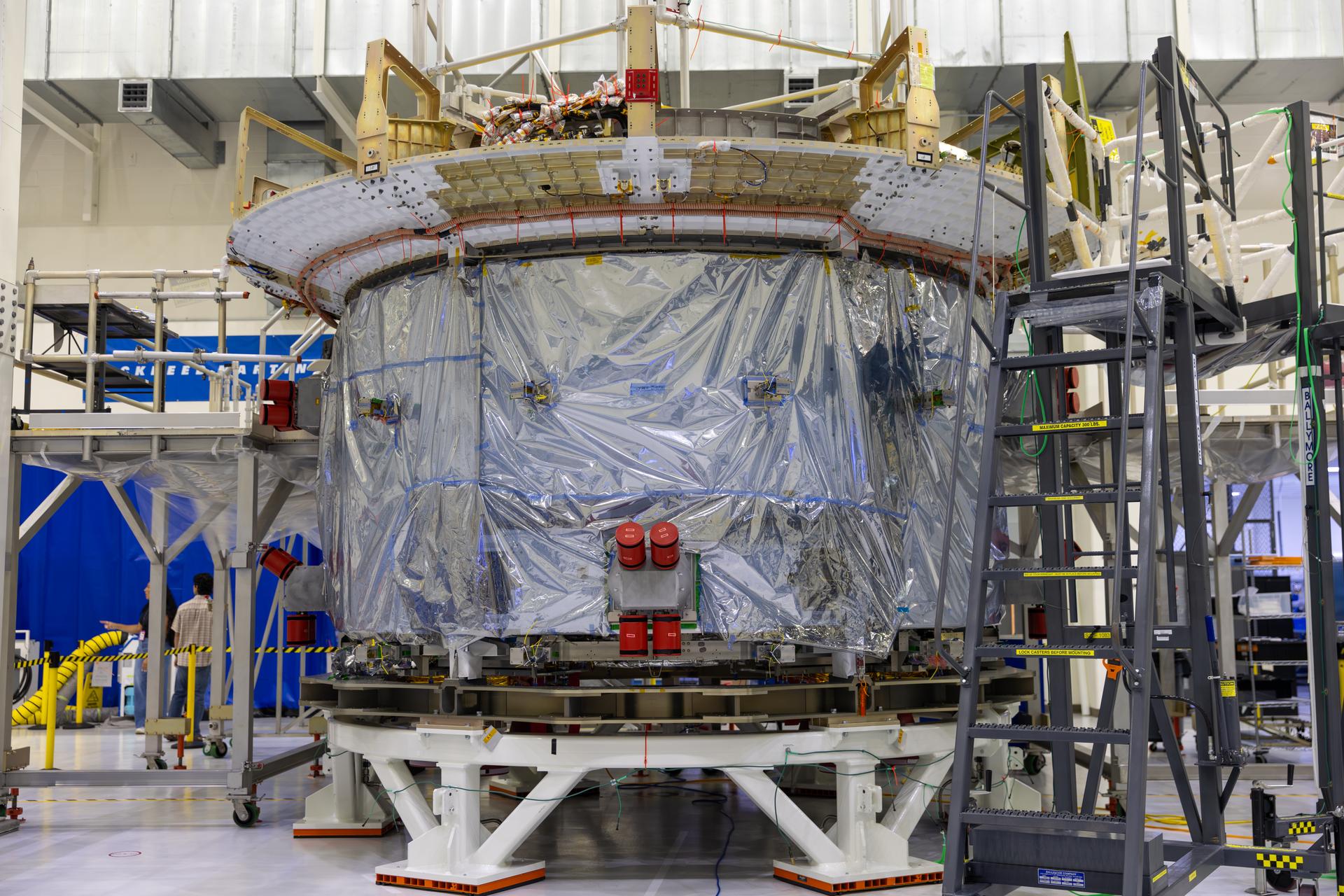
A photographer captures the Artemis IV European Service Module on Friday, July 31, 2026, inside the Neil A. Armstrong Operations and Checkout Building at NASA’s Kennedy Space Center in Florida. There are currently several pieces of hardware from Artemis III, IV, and V undergoing processing at the same time inside the facility. Artemis IV will be one of the most complex undertakings of engineering and human ingenuity in the history of deep space exploration, exploring the lunar South Pole region. The astronauts’ observations, samples, and data collected will expand our understanding of our solar system and home planet, while inspiring the Artemis Generation.

NASA’s Pegasus barge carrying a weather cover for the Artemis III SLS (Space Launch System) rocket core stage, arrives Sunday, June 21, 2026, at the Launch Complex 39 turn basin at the agency’s Kennedy Space Center in Florida. The cover will protect the stage’s thermal systems while SLS sits atop the mobile launcher at Launch Pad 39B in its short stack configuration. NASA will send four Artemis astronauts on increasingly difficult missions to explore more of the Moon for scientific discovery, economic benefits, establish an enduring human presence on the lunar surface, and to build on our foundation for the first crewed missions to Mars.

From left, NASA astronauts Mike Fincke and Zena Cardman, and JAXA (Japan Aerospace Exploration Agency) astronaut Kimiya Yu tour the Vehicle Assembly Building during a visit to NASA’s Kennedy Space Center in Florida on Thursday, June 11, 2026. The three crew members, along with Roscosmos cosmonaut Oleg Platonov, spent five and a half months aboard the International Space Station.
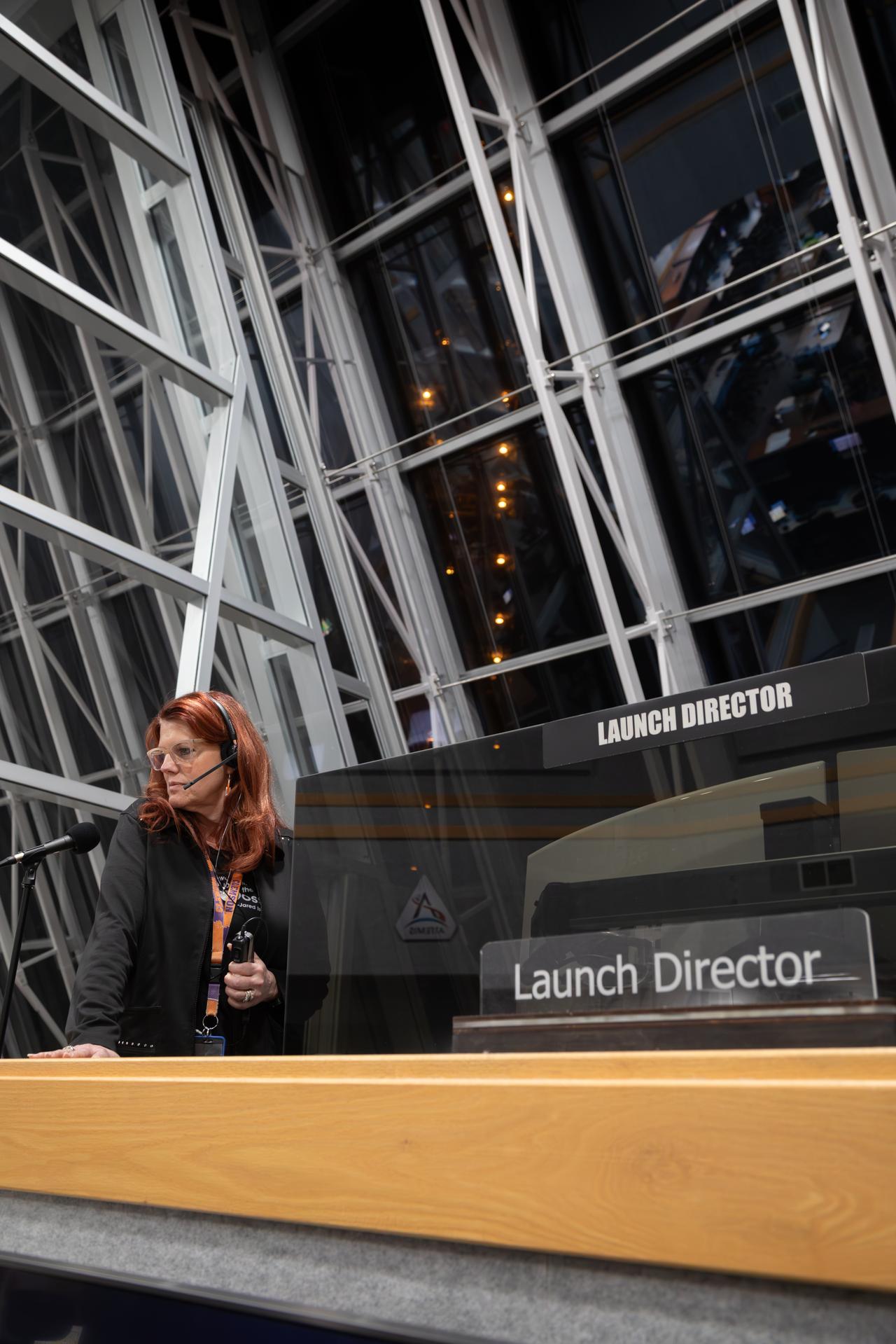
Charlie Blackwell-Thompson, Artemis launch director, NASA’s Exploration Ground Systems Program, is seen inside Firing Room 1 of the Rocco A. Petrone Launch Control Center during the Artemis II rollout of the SLS (Space Launch System) rocket and Orion spacecraft from the Vehicle Assembly Building to Launch Complex 39B at NASA’s Kennedy Space Center in Florida on Friday, March 20, 2026. The Artemis II test flight will take Commander Reid Wiseman, Pilot Victor Glover, and Mission Specialist Christina Koch from NASA, and Mission Specialist Jeremy Hansen from the CSA (Canadian Space Agency), around the Moon and back to Earth with launch opportunities beginning in April 2026.