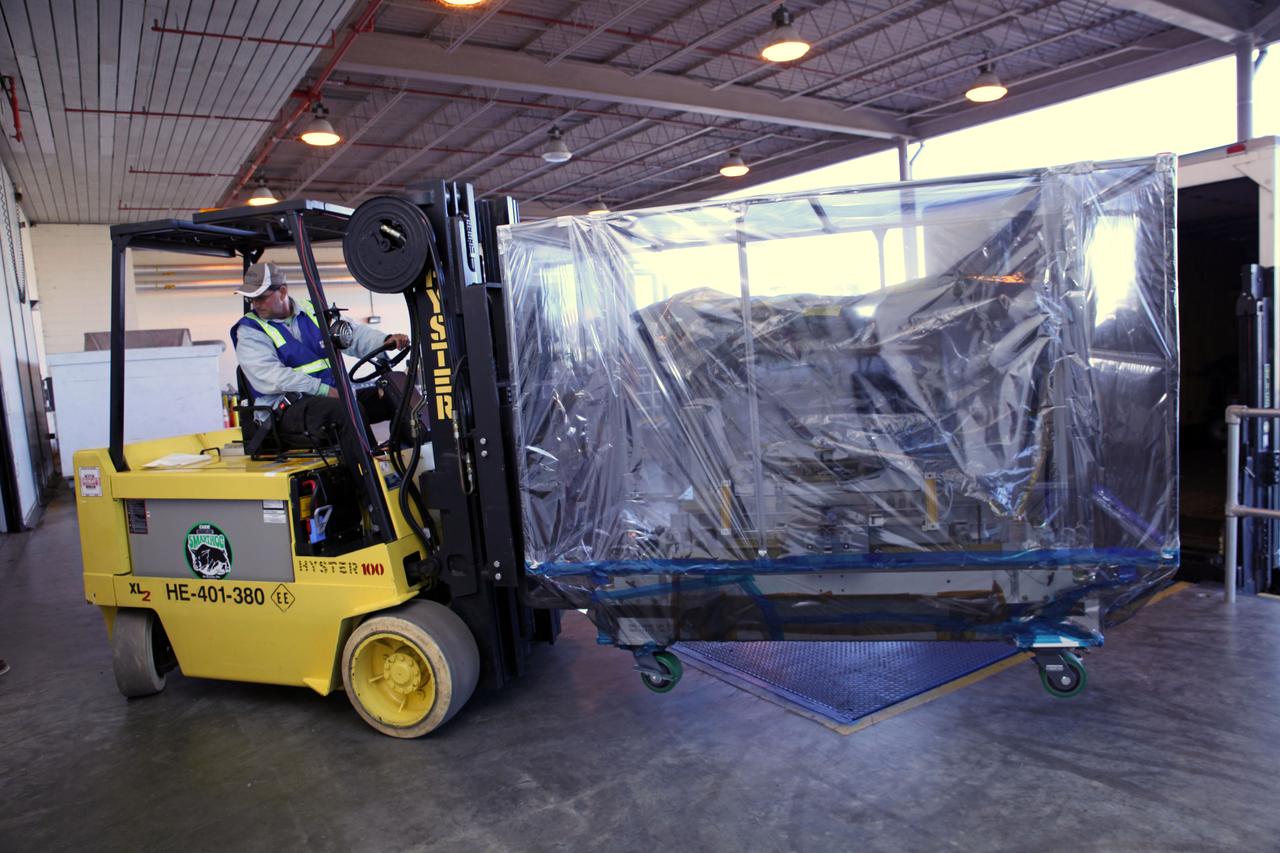
Outside the Space Station Processing Facility high bay at NASA's Kennedy Space Center in Florida, a technician uses a Hyster forklift to carry the Roll-Out Solar Array, or ROSA, to the loading dock. ROSA will be delivered to the International Space Station aboard the SpaceX Dragon cargo carrier on the company’s 11th commercial resupply services mission to the space station. ROSA is a new type of solar panel that rolls open in space and is more compact than current rigid panel designs. The ROSA investigation will test deployment and retraction, shape changes when the Earth blocks the sun, and other physical challenges to determine the array's strength and durability.
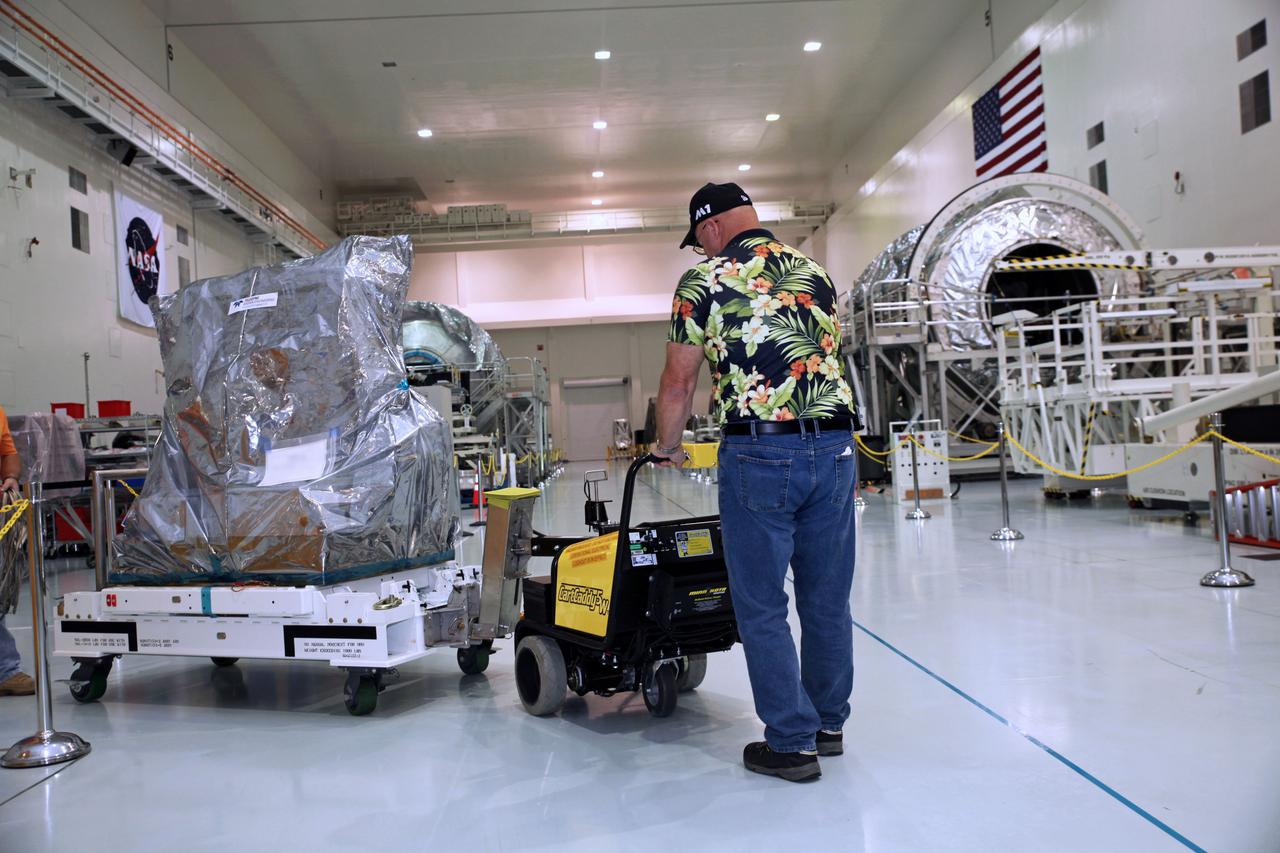
Inside the Space Station Processing Facility high bay at NASA's Kennedy Space Center in Florida, the Multiple User System for Earth Sensing, or MUSES, payload is being prepared for transfer out of the high bay. MUSES will be delivered to the International Space Station aboard the SpaceX Dragon cargo carrier on the company’s 11th commercial resupply services mission to the space station. MUSES, developed by Teledyne Brown, is part of the company's new commercial space-based digital imaging business. MUSES hosts earth-viewing instruments, such as high-resolution digital cameras, hyperspectral imagers, and provides precision pointing and other accommodations.
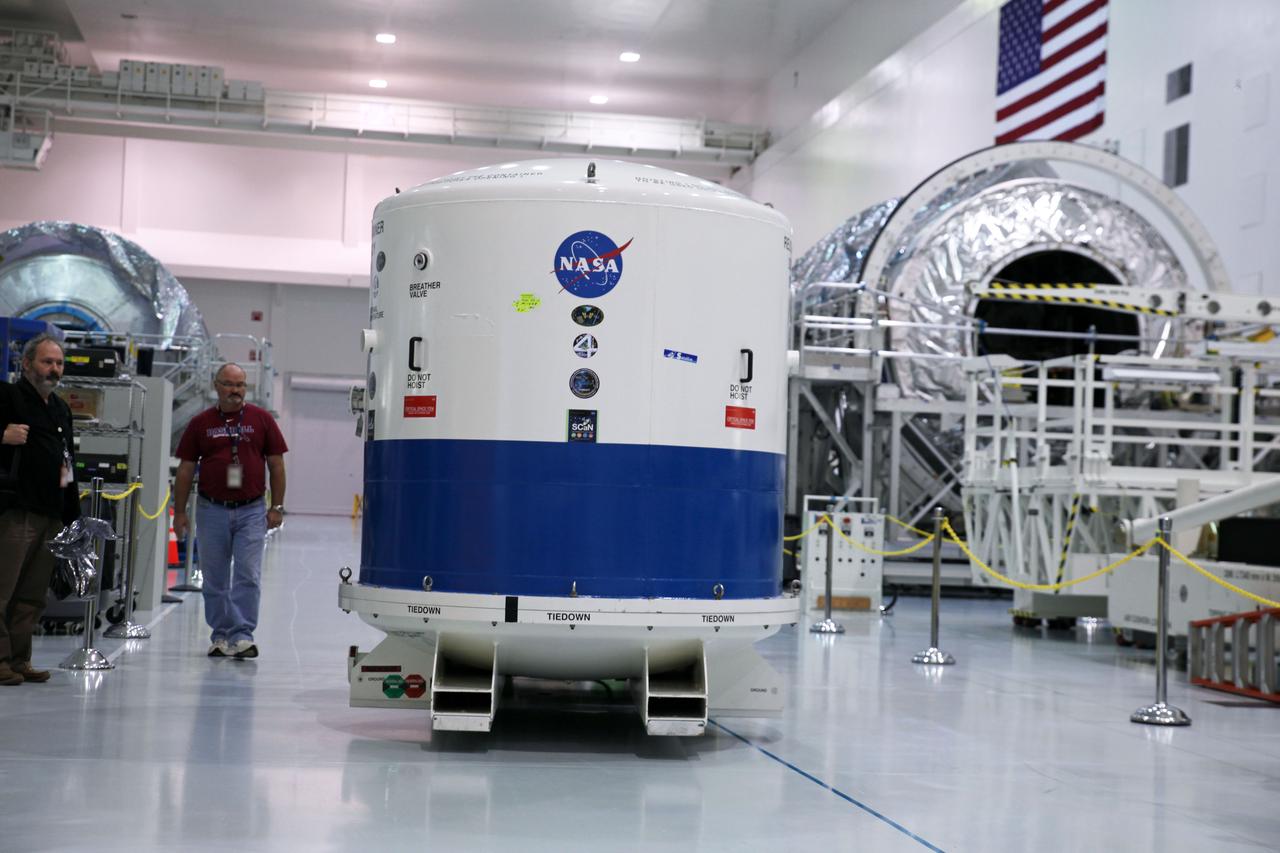
Inside the Space Station Processing Facility high bay at NASA's Kennedy Space Center in Florida, the Neutron star Interior Composition Explorer, or NICER, payload is secured inside a protective container. NICER will be delivered to the International Space Station aboard the SpaceX Dragon cargo carrier on the company’s 11th commercial resupply services mission to the space station. NICER will study neutron stars through soft X-ray timing. NICER will enable rotation-resolved spectroscopy of the thermal and non-thermal emissions of neutron stars in the soft X-ray band with unprecedented sensitivity, probing interior structure, the origins of dynamic phenomena and the mechanisms that underlie the most powerful cosmic particle accelerators known.
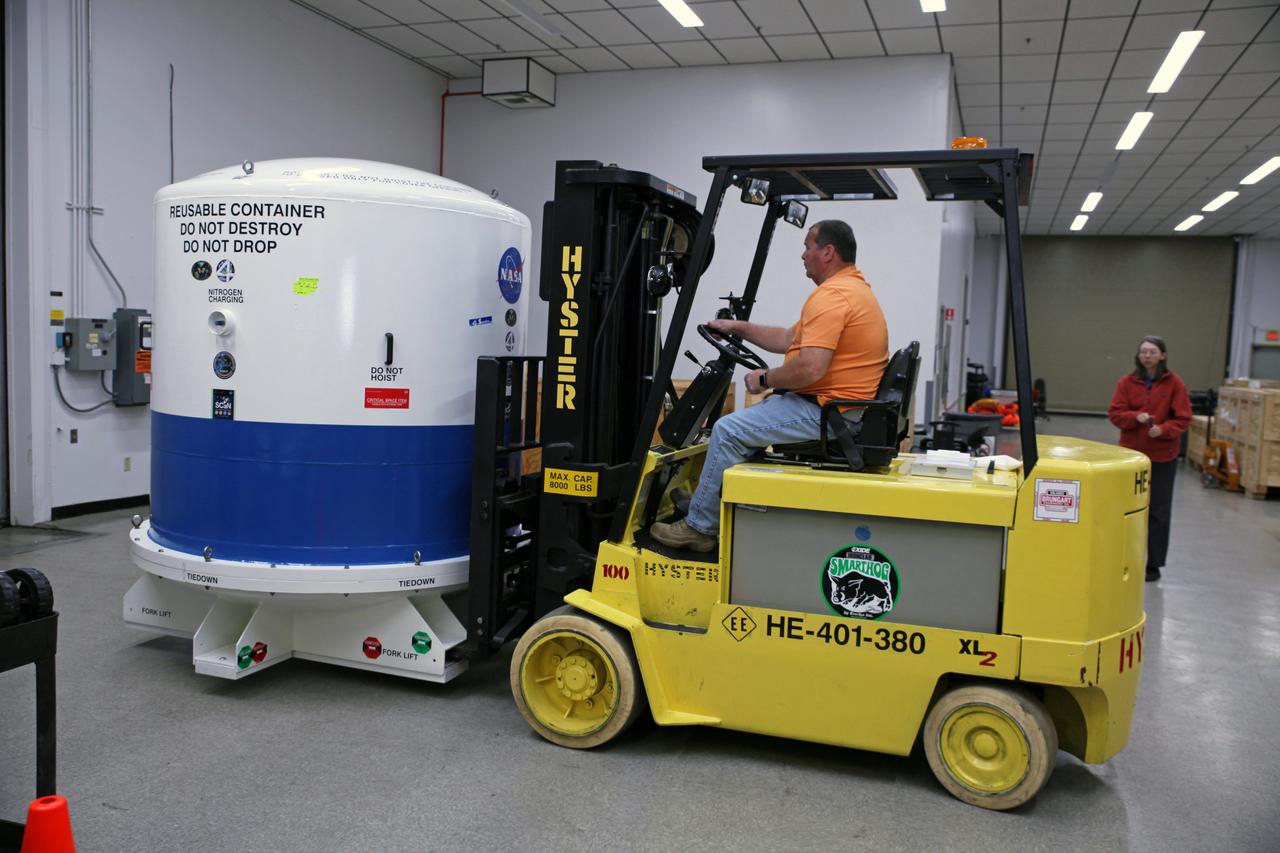
Inside the Space Station Processing Facility high bay at NASA's Kennedy Space Center in Florida, the Neutron star Interior Composition Explorer, or NICER, payload is secured inside a protective container. A technician uses a Hyster forklift to pick up the container and move it outside of the high bay. NICER will be delivered to the International Space Station aboard the SpaceX Dragon cargo carrier on the company’s 11th commercial resupply services mission to the space station. NICER will study neutron stars through soft X-ray timing. NICER will enable rotation-resolved spectroscopy of the thermal and non-thermal emissions of neutron stars in the soft X-ray band with unprecedented sensitivity, probing interior structure, the origins of dynamic phenomena and the mechanisms that underlie the most powerful cosmic particle accelerators known.
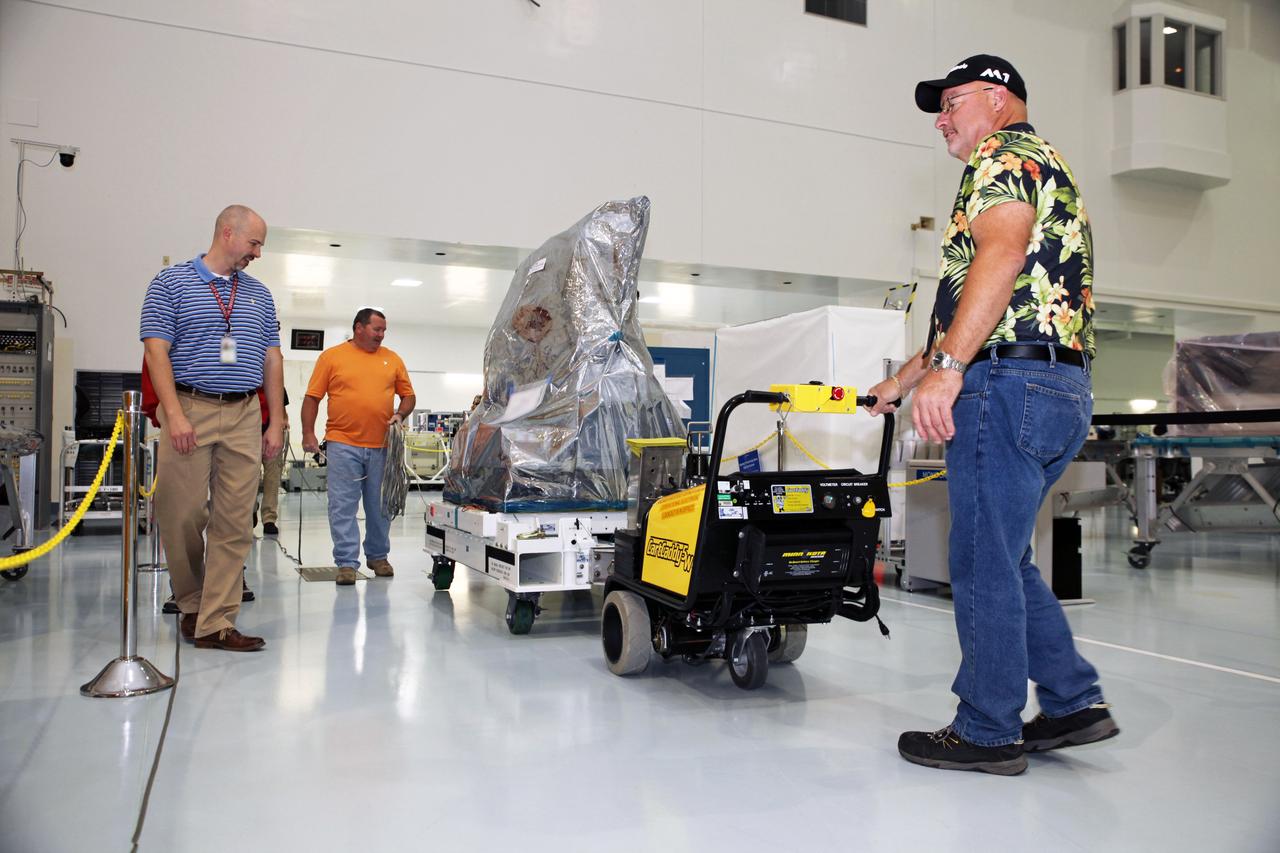
Inside the Space Station Processing Facility high bay at NASA's Kennedy Space Center in Florida, the Multiple User System for Earth Sensing, or MUSES, payload is being prepared for transfer out of the high bay. MUSES will be delivered to the International Space Station aboard the SpaceX Dragon cargo carrier on the company’s 11th commercial resupply services mission to the space station. MUSES, developed by Teledyne Brown, is part of the company's new commercial space-based digital imaging business. MUSES hosts earth-viewing instruments, such as high-resolution digital cameras, hyperspectral imagers, and provides precision pointing and other accommodations.
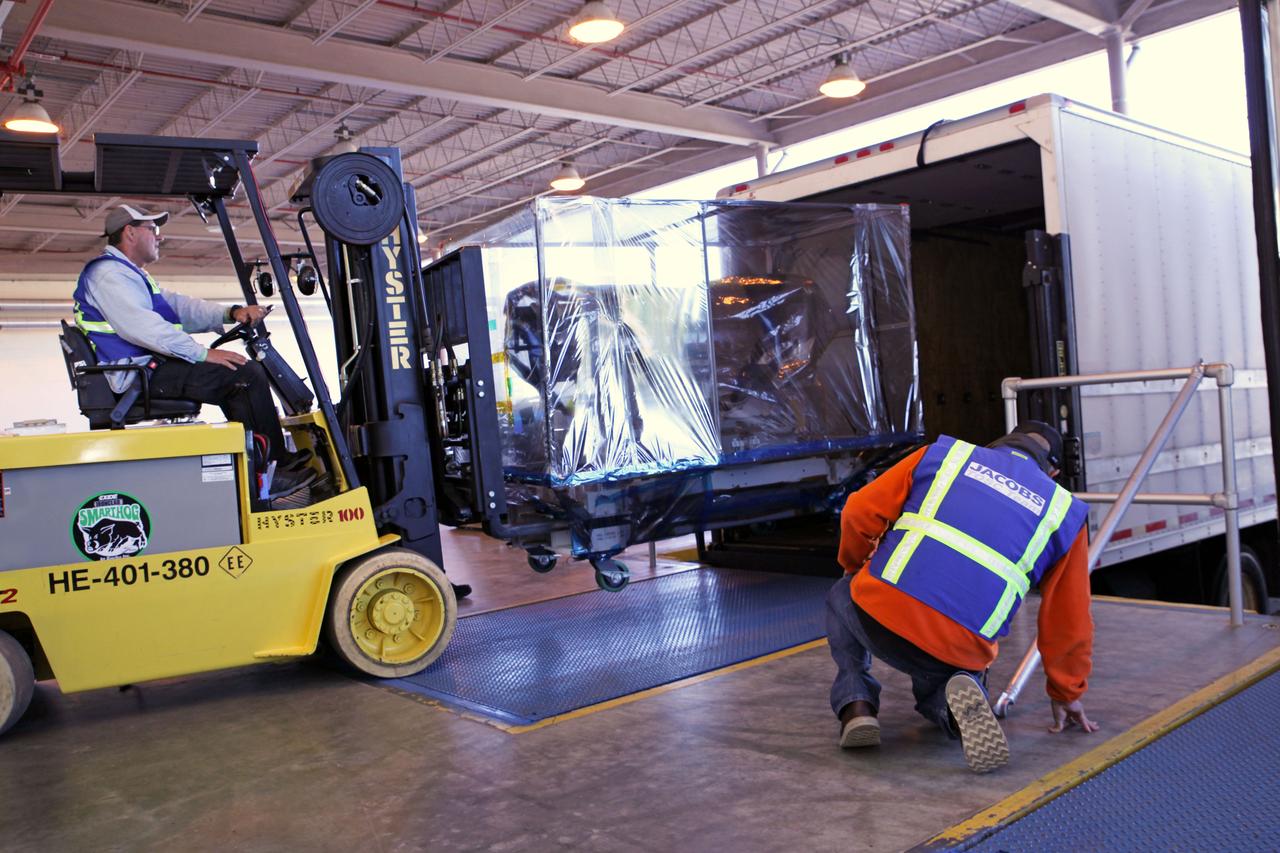
At the loading dock outside the Space Station Processing Facility high bay at NASA's Kennedy Space Center in Florida, a technician uses a Hyster forklift to load the Roll-Out Solar Array, or ROSA, into a truck. ROSA will be delivered to the International Space Station aboard the SpaceX Dragon cargo carrier on the company’s 11th commercial resupply services mission to the space station. ROSA is a new type of solar panel that rolls open in space and is more compact than current rigid panel designs. The ROSA investigation will test deployment and retraction, shape changes when the Earth blocks the sun, and other physical challenges to determine the array's strength and durability.
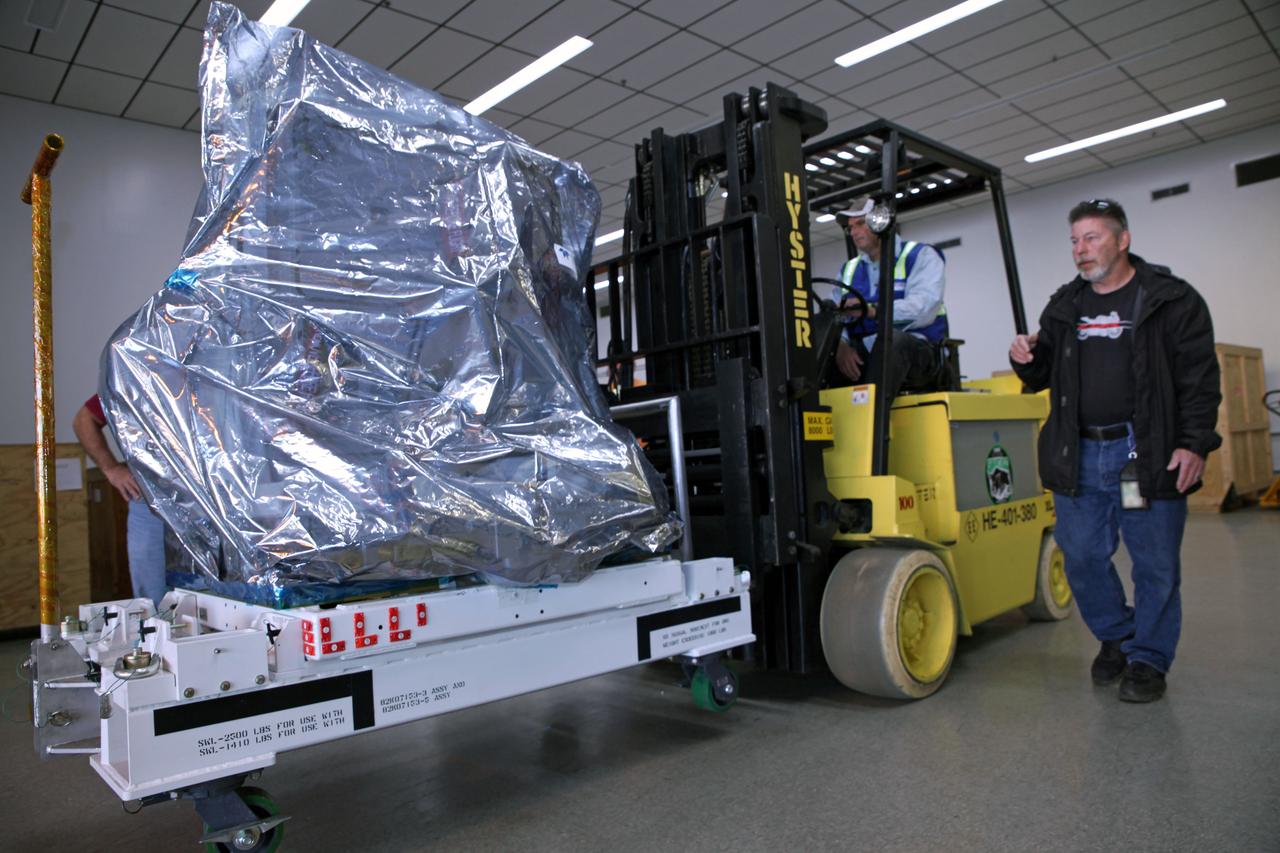
Technicians use a Hyster forklift to move the Multiple User System for Earth Sensing, or MUSES, payload out of the Space Station Processing Facility high bay at NASA's Kennedy Space Center in Florida. MUSES will be delivered to the International Space Station aboard the SpaceX Dragon cargo carrier on the company’s 11th commercial resupply services mission to the space station. MUSES, developed by Teledyne Brown, is part of the company's new commercial space-based digital imaging business. MUSES hosts earth-viewing instruments, such as high-resolution digital cameras, hyperspectral imagers, and provides precision pointing and other accommodations.
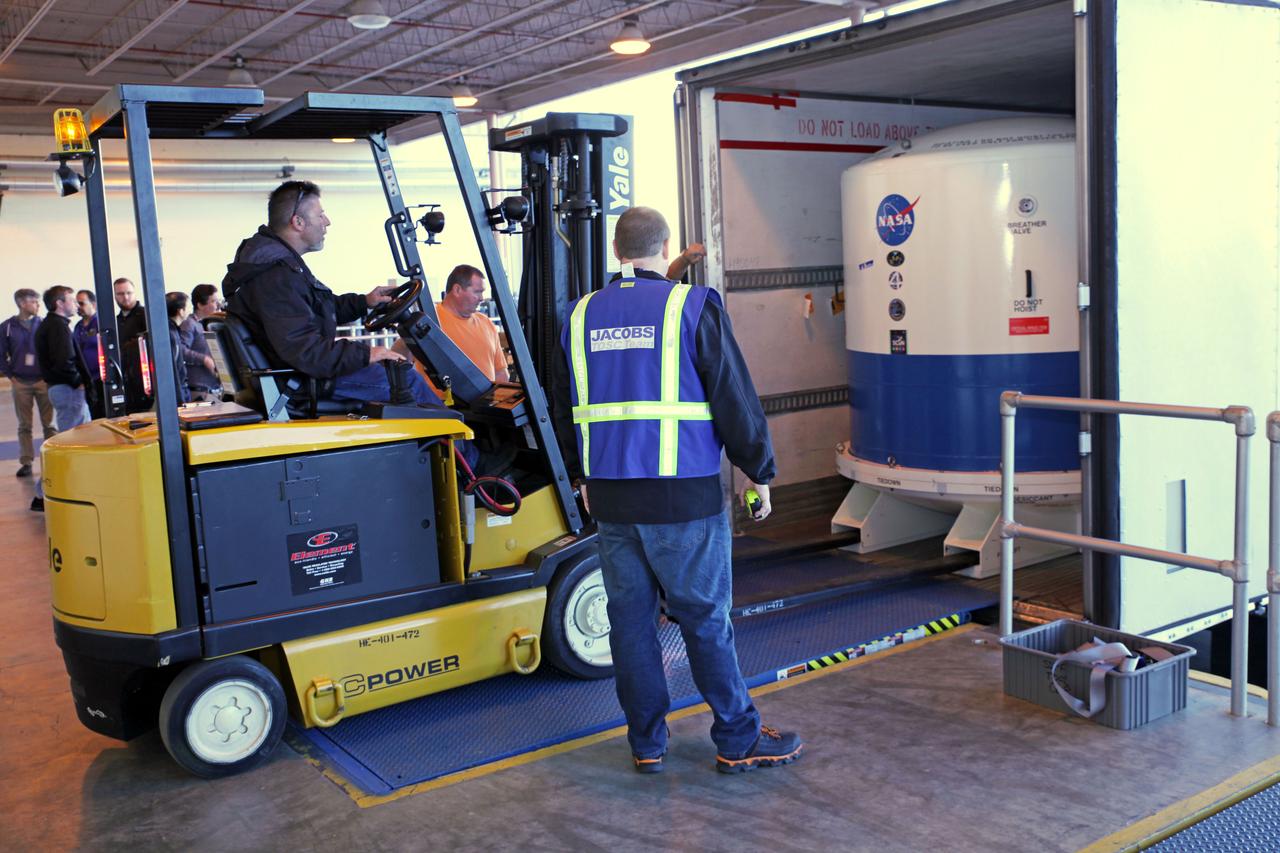
Inside the Space Station Processing Facility high bay at NASA's Kennedy Space Center in Florida, the Neutron star Interior Composition Explorer, or NICER, payload is secured inside a protective container and loaded onto a truck outside the high bay. NICER will be delivered to the International Space Station aboard the SpaceX Dragon cargo carrier on the company’s 11th commercial resupply services mission to the space station. NICER will study neutron stars through soft X-ray timing. NICER will enable rotation-resolved spectroscopy of the thermal and non-thermal emissions of neutron stars in the soft X-ray band with unprecedented sensitivity, probing interior structure, the origins of dynamic phenomena and the mechanisms that underlie the most powerful cosmic particle accelerators known.
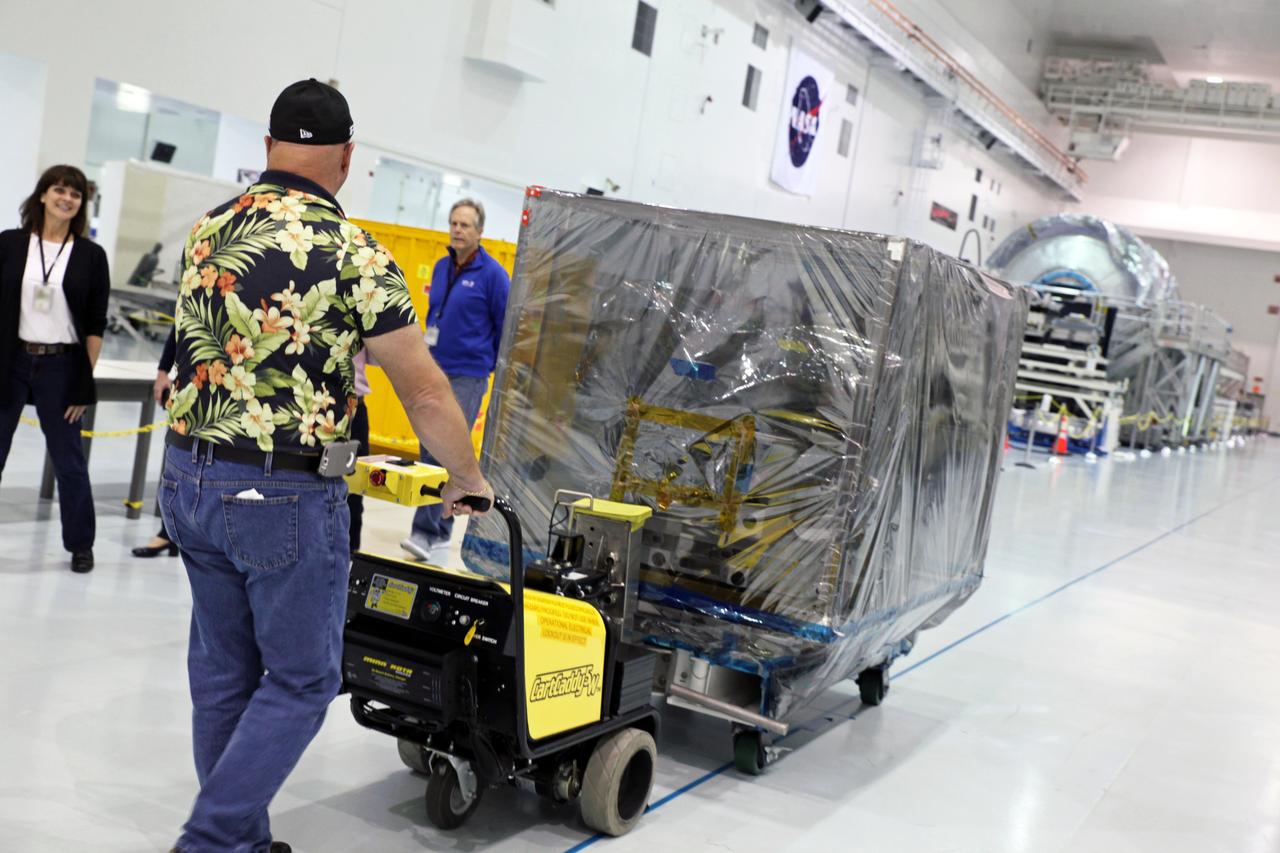
Inside the Space Station Processing Facility high bay at NASA's Kennedy Space Center in Florida, the Roll-Out Solar Array, or ROSA, is being prepared for transfer out of the high bay. ROSA will be delivered to the International Space Station aboard the SpaceX Dragon cargo carrier on the company’s 11th commercial resupply services mission to the space station. ROSA is a new type of solar panel that rolls open in space and is more compact than current rigid panel designs. The ROSA investigation will test deployment and retraction, shape changes when the Earth blocks the sun, and other physical challenges to determine the array's strength and durability.