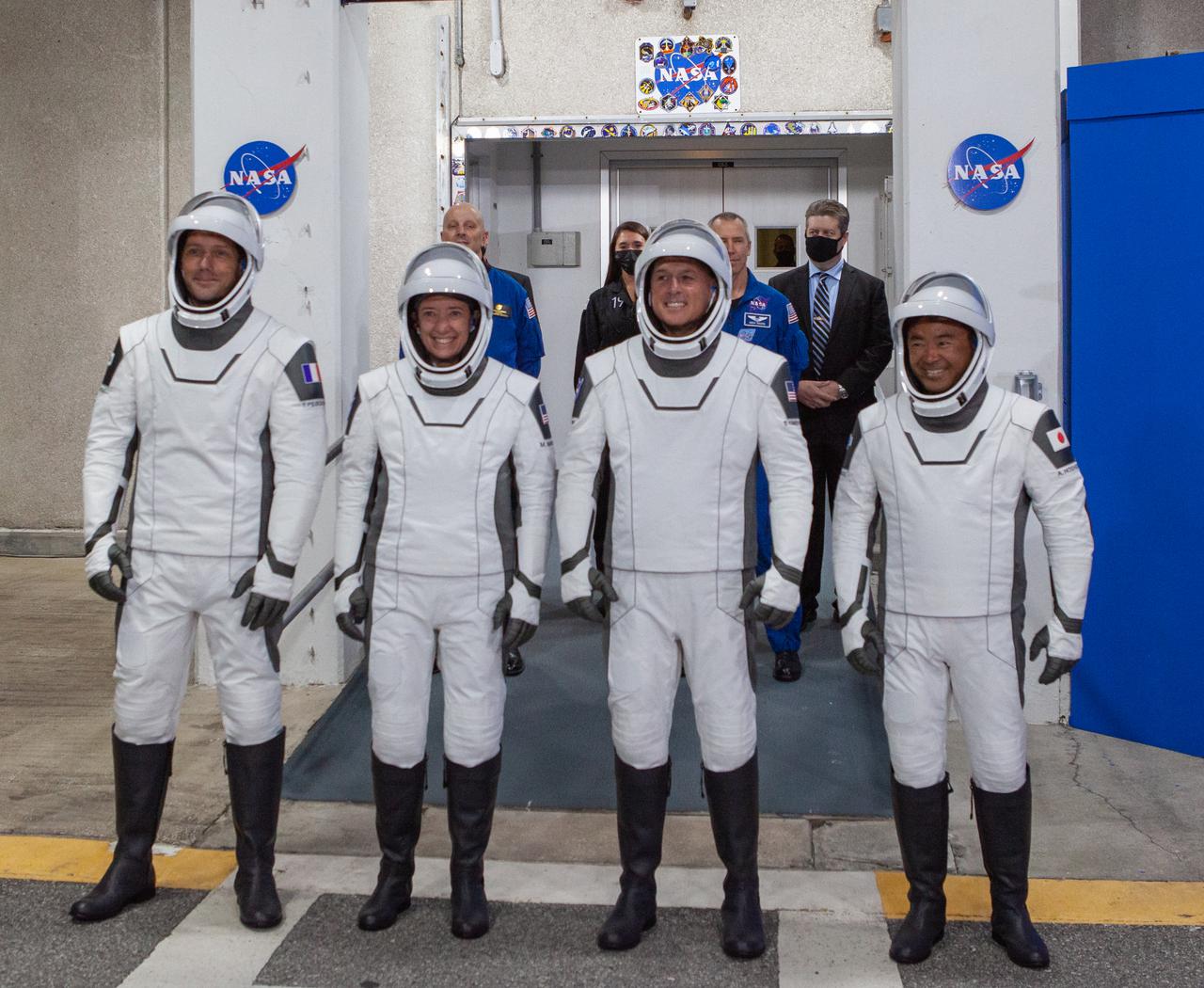
NASA SpaceX’s Crew-2 astronauts emerge from the Neil Armstrong Operations and Checkout Building at NASA’s Kennedy Space Center in Florida on April 23, 2021. From left are ESA astronaut Thomas Pesquet, mission specialist; NASA astronaut Megan McArthur, pilot; NASA astronaut Shane Kimbrough, spacecraft commander; and JAXA astronaut Akihiko Hoshide, mission specialist. They will board two Tesla vehicles for the trip to Kennedy’s Launch Complex 39A. Crew-2 is the second regular crew mission of a U.S. commercial spacecraft with astronauts to the International Space Station as part of NASA’s Commercial Crew Program. The SpaceX Crew Dragon Endeavour will launch atop the company’s Falcon 9 rocket from Pad 39A to the space station for a six-month science mission.
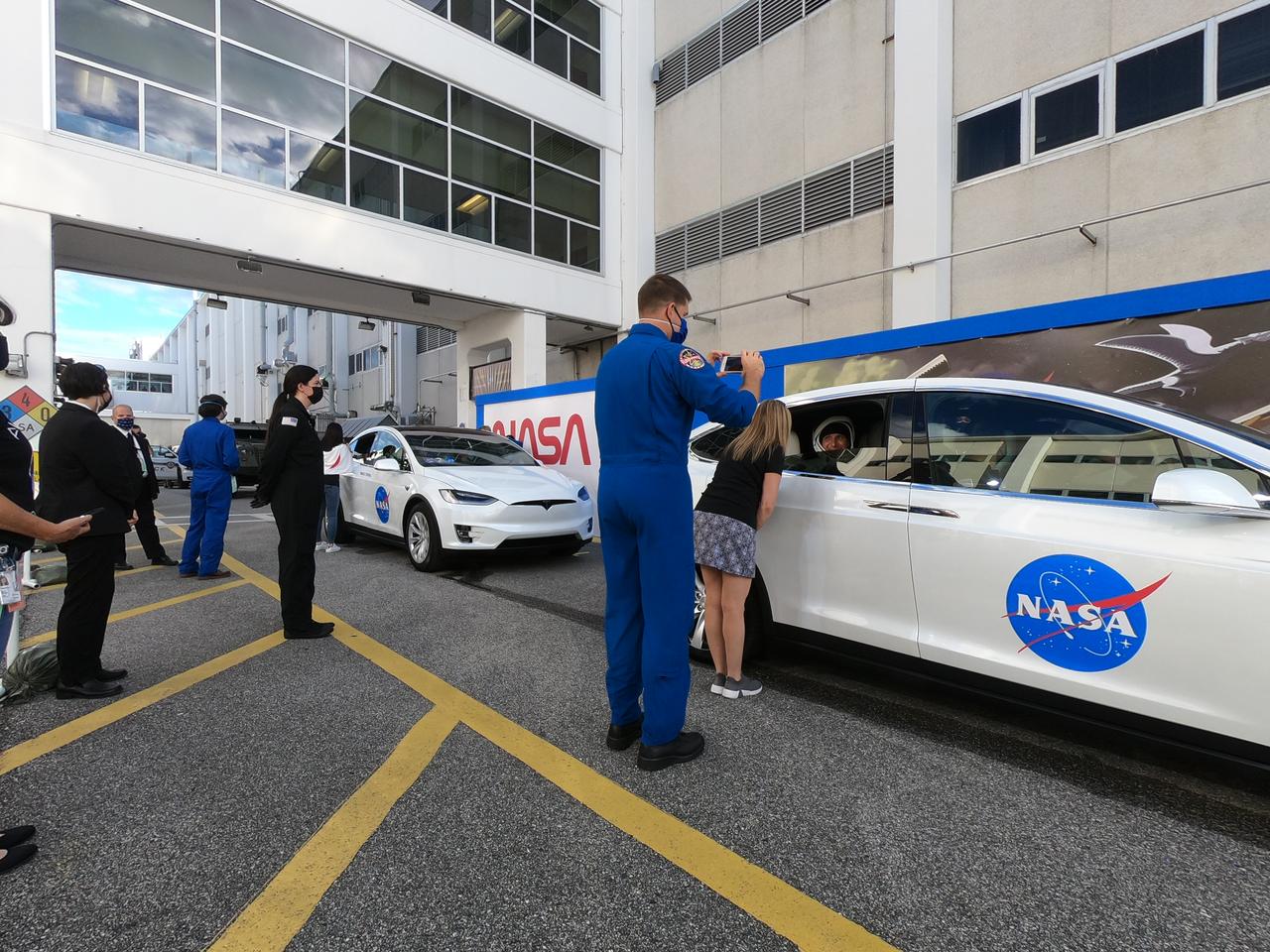
Family members of NASA SpaceX’s Crew-1 astronauts say goodbye as the astronauts are secured inside two Tesla vehicles for the trip to Launch Complex 39A after emerging from the Neil Armstrong Operations and Checkout Building at NASA’s Kennedy Space Center in Florida on Nov. 15, 2020. NASA astronauts Shannon Walker, mission specialist; Michael Hopkins, spacecraft commander; and Victor Glover, pilot; along with JAXA astronaut Soichi Noguchi, mission specialist, will board the Crew Dragon at the launch pad. Crew-1 is the first regular crew mission of a U.S. commercial spacecraft with astronauts to the International Space Station as part of NASA’s Commercial Crew Program. The SpaceX Crew Dragon Resilience capsule will launch atop the company’s Falcon 9 rocket from Pad 39A to the space station for a six-month science mission.
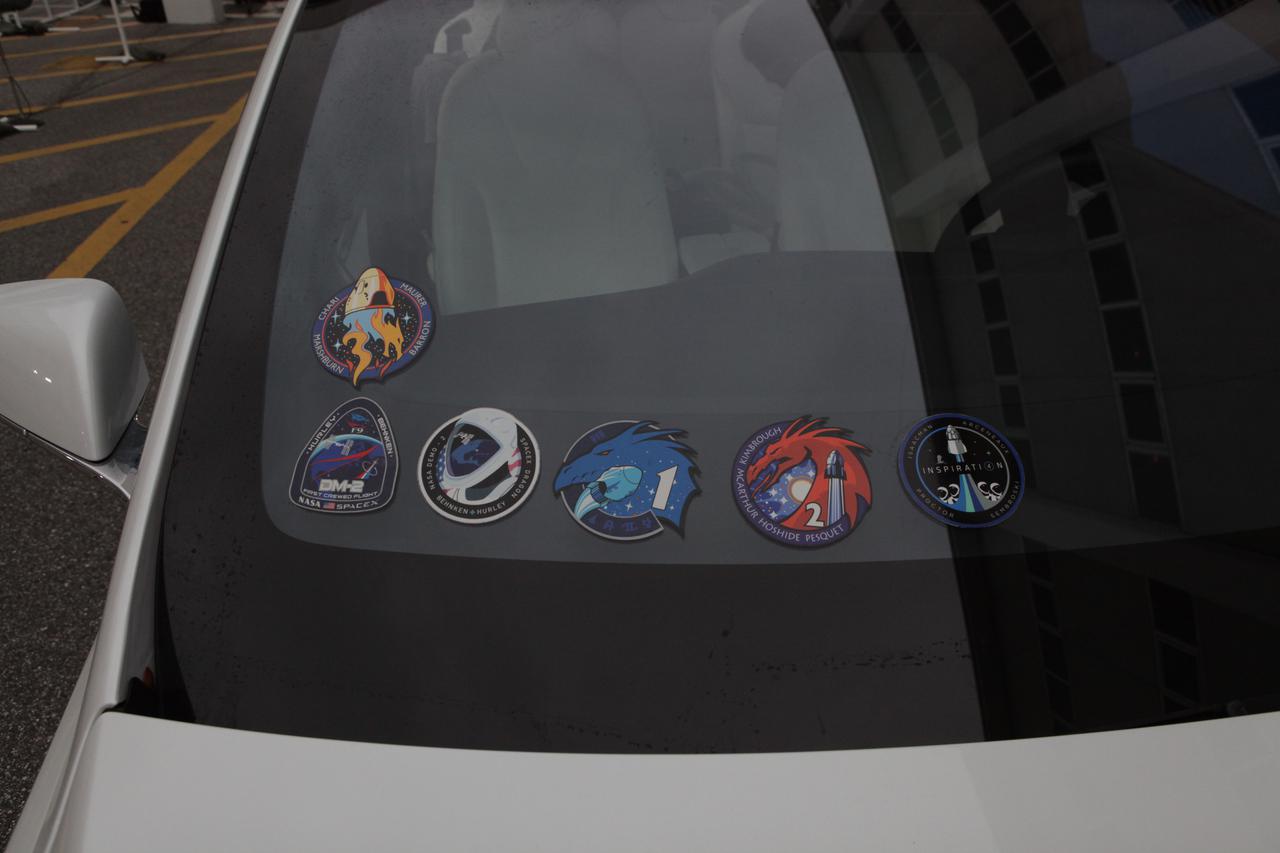
The SpaceX Crew-3 mission insignia is in view in the upper left on the windshield of a SpaceX Tesla Model X car outside the Neil Armstrong Operations and Checkout Building at NASA’s Kennedy Space Center in Florida on launch day, Nov. 10, 2021. NASA astronauts Raja Chari, commander; Tom Marshburn, pilot; Kayla Barron, mission specialist; and Matthias Maurer, ESA (European Space Agency) astronaut and mission specialist, will launch in Crew Dragon Endurance atop the SpaceX Falcon 9 rocket to the International Space Station for NASA’s Commercial Crew Program. Crew-3 is scheduled to launch at 9:03 p.m. EST from Launch Complex 39A at Kennedy.
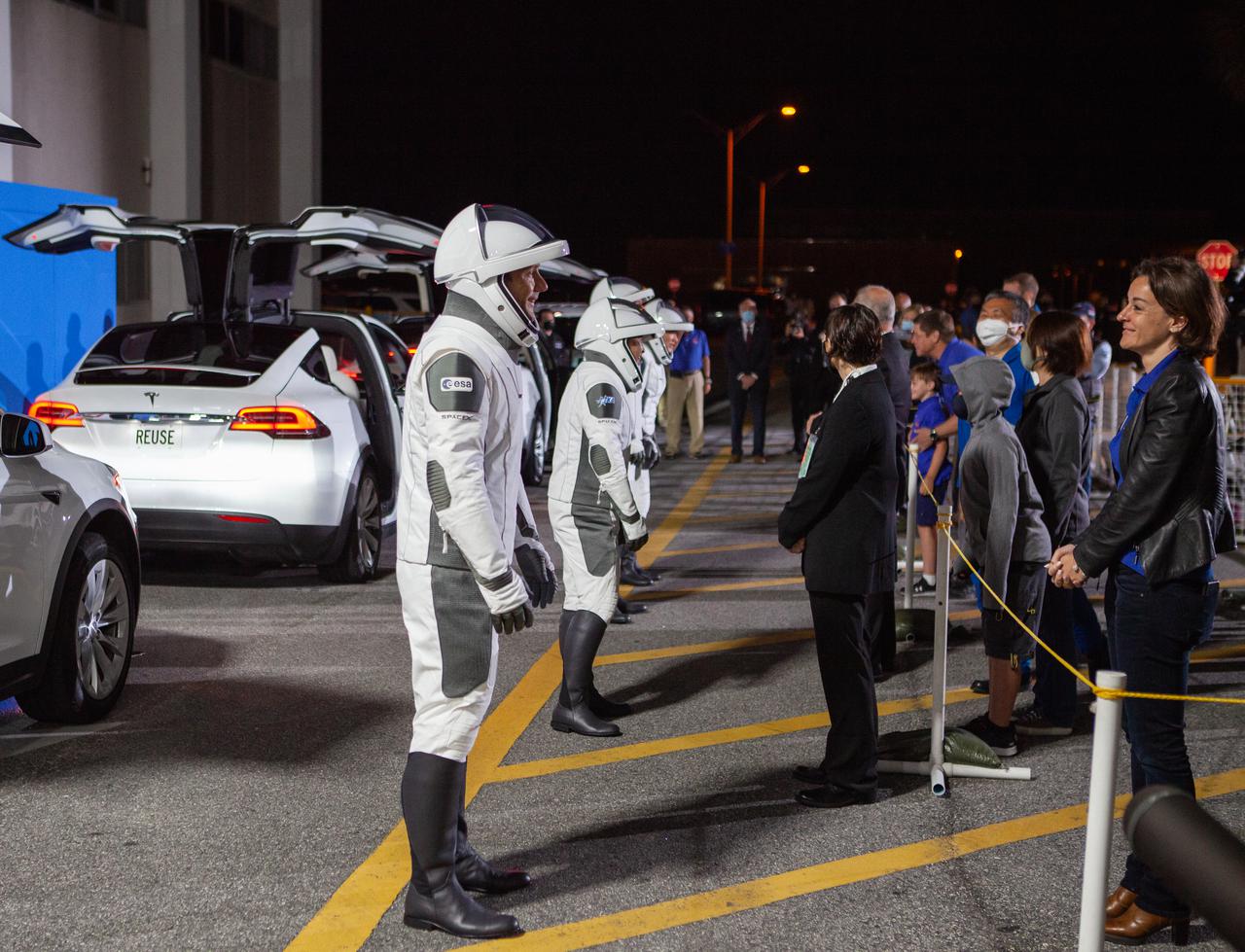
NASA SpaceX’s Crew-2 astronauts say goodbye to their families outside of the Neil Armstrong Operations and Checkout Building at NASA’s Kennedy Space Center in Florida on April 23, 2021. NASA astronauts Shane Kimbrough and Megan McArthur, ESA astronaut Thomas Pesquet, and JAXA astronaut Akihiko Hoshide will then board two Tesla vehicles for the trip to Kennedy’s Launch Complex 39A. Crew-2 is the second regular crew mission of a U.S. commercial spacecraft with astronauts to the International Space Station as part of NASA’s Commercial Crew Program. The SpaceX Crew Dragon Endeavour will launch atop the company’s Falcon 9 rocket from Pad 39A to the space station for a six-month science mission.
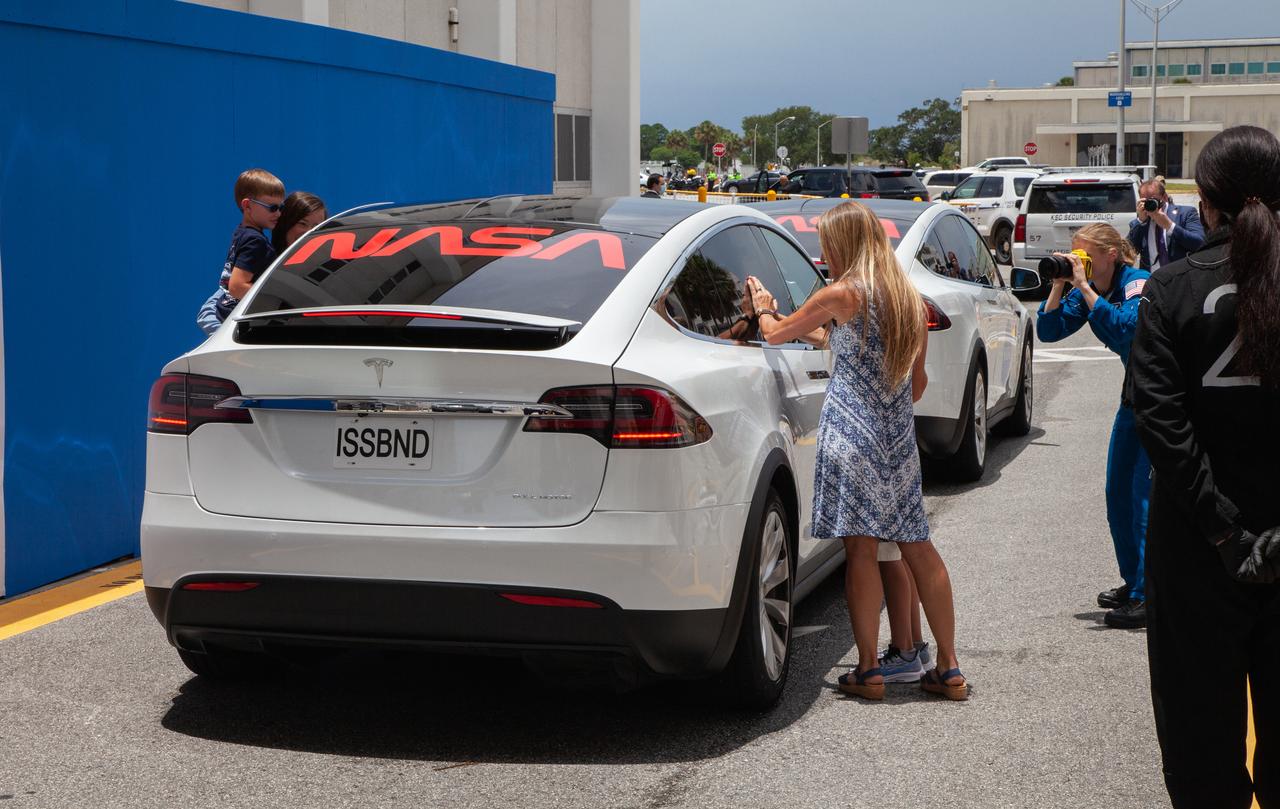
After NASA astronauts Robert Behnken and Douglas Hurley enter the Tesla Model X that will transport them from the Neil A. Armstrong Operations and Checkout Building to historic Launch Complex 39A at the Kennedy Space Center in Florida, their families approach the car to give their goodbyes ahead of the agency’s SpaceX Demo-2 mission. The launch, initially scheduled for May 27, 2020, was scrubbed due to unfavorable weather conditions around Launch Complex 39A. The next launch attempt will be Saturday, May 30. Liftoff of the SpaceX Falcon 9 rocket and Crew Dragon spacecraft is scheduled for 3:22 p.m. EDT from historic Launch Complex 39A. Behnken and Hurley will be the first astronauts to launch to the International Space Station from U.S. soil since the end of the Space Shuttle Program in 2011. Part of NASA’s Commercial Crew Program, this will be SpaceX’s final flight test, paving the way for the agency to certify the crew transportation system for regular, crewed flights to the orbiting laboratory.
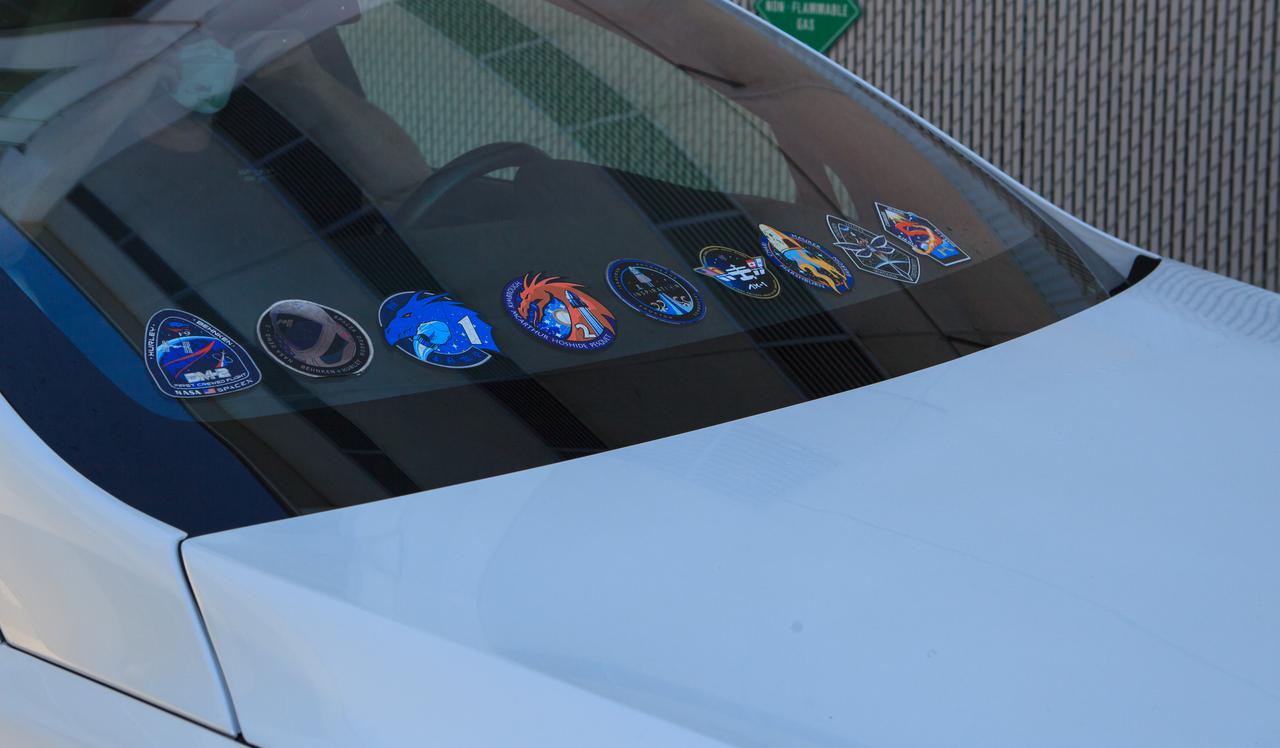
Seen here are all the mission stickers for crewed launches under NASA’s Commercial Crew Program (CCP) that were placed on one of the Tesla Model X cars that carry astronauts from the Neil A. Armstrong Operations and Checkout Building to Launch Complex 39A at the agency’s Kennedy Space Center in Florida. NASA’s SpaceX Crew-5 astronauts participated in a countdown dress rehearsal on Oct. 2, 2022, in preparation for the upcoming Crew-5 launch. SpaceX’s Crew Dragon Endurance spacecraft will carry NASA astronauts Nicole Aunapu Mann and Josh Cassada, Roscosmos cosmonaut Anna Kikina, and JAXA (Japan Aerospace Exploration Agency) astronaut Koichi Wakata to the International Space Station for a science expedition mission as part of the agency’s CCP. Liftoff of the SpaceX Falcon 9 rocket is targeted for noon EDT on Oct. 5, 2022, from Kennedy’s Launch Complex 39A.
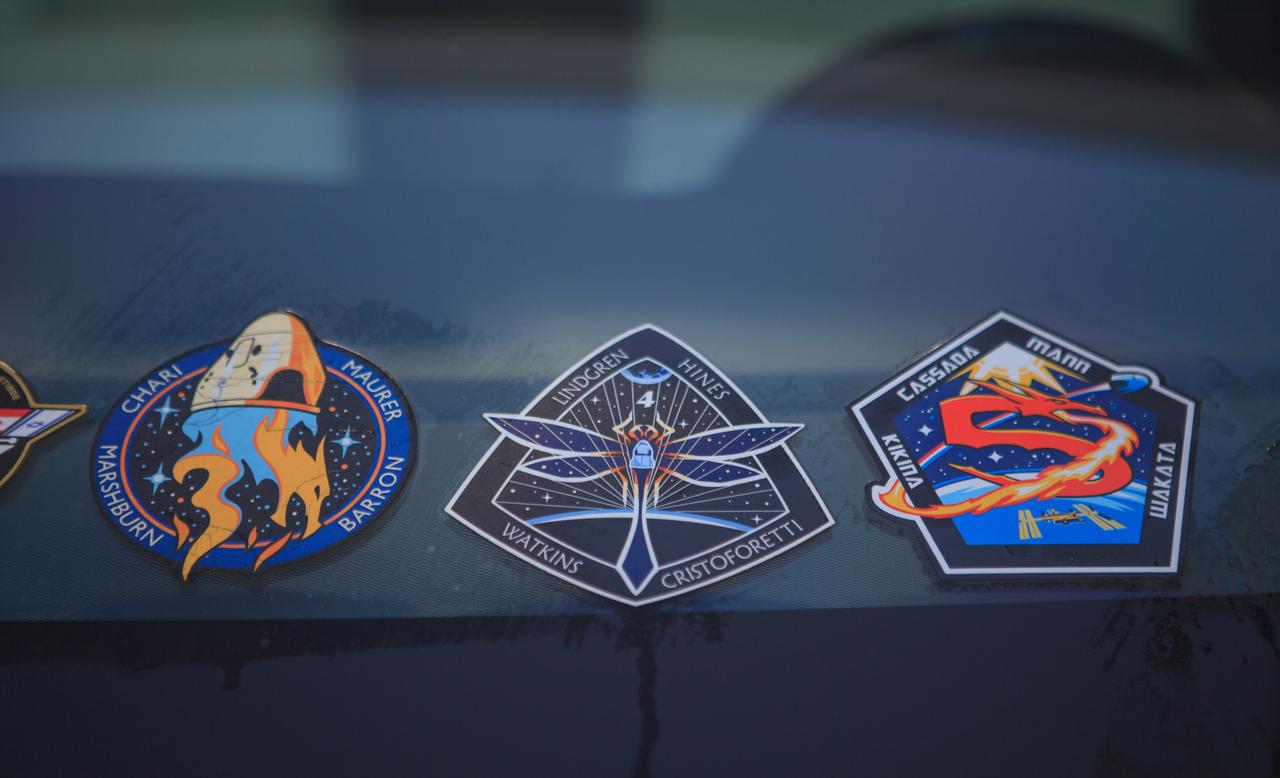
Seen here is a close-up view of stickers for NASA’s SpaceX Crew-3, Crew-4, and Crew-5 missions that were placed on one of the Tesla Model X cars that carry astronauts from the Neil A. Armstrong Operations and Checkout Building to Launch Complex 39A at the agency’s Kennedy Space Center in Florida. NASA’s SpaceX Crew-5 astronauts participated in a countdown dress rehearsal on Oct. 2, 2022, in preparation for the upcoming Crew-5 launch. SpaceX’s Crew Dragon Endurance spacecraft will carry NASA astronauts Nicole Aunapu Mann and Josh Cassada, Roscosmos cosmonaut Anna Kikina, and JAXA (Japan Aerospace Exploration Agency) astronaut Koichi Wakata to the International Space Station for a science expedition mission as part of the agency’s Commercial Crew Program. Liftoff of the SpaceX Falcon 9 rocket is targeted for noon EDT on Oct. 5, 2022, from Kennedy’s Launch Complex 39A.
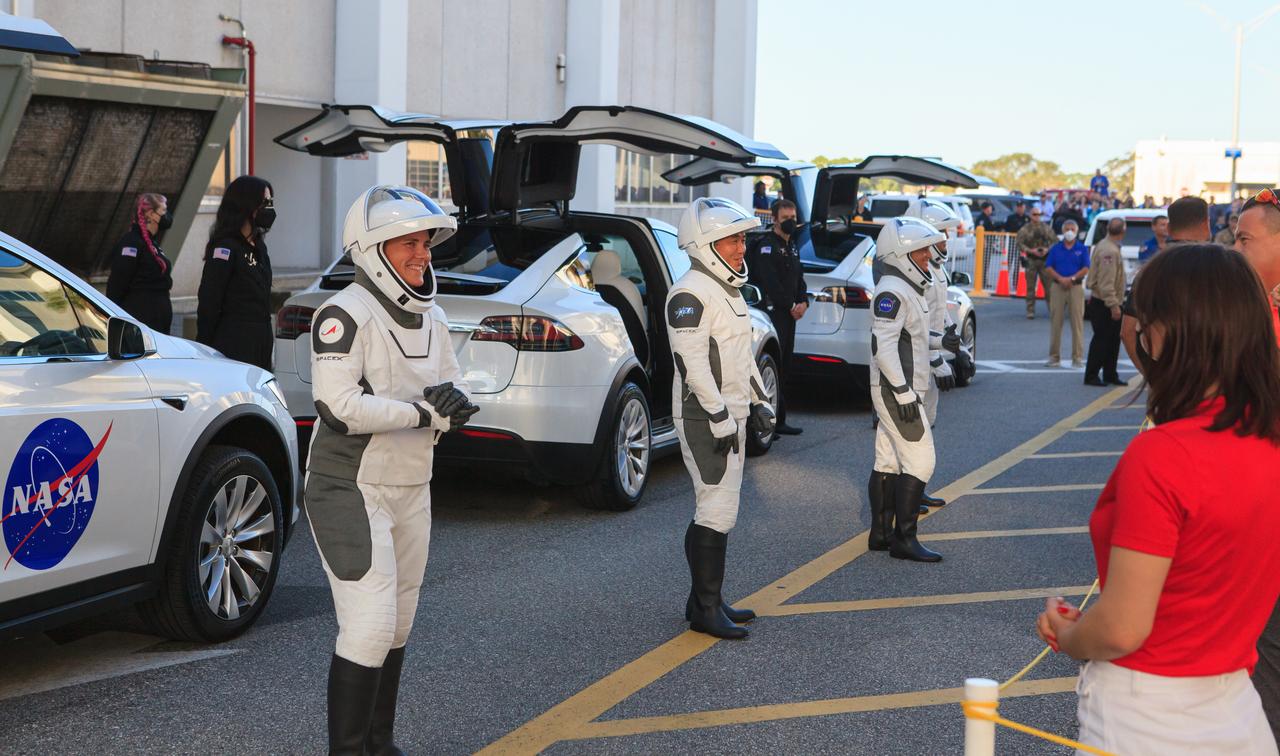
NASA’s SpaceX Crew-5 say goodbye to friends and family after exiting the Neil A. Armstrong Operations and Checkout Building at NASA’s Kennedy Space Center in Florida on Oct. 5, 2022. From left are Mission Specialists Anna Kikina, Roscosmos cosmonaut, and Koichi Wakata, of JAXA (Japan Aerospace Exploration Agency), and NASA astronauts Nicole Mann, spacecraft commander, and Josh Cassada, pilot. They will board two Tesla vehicles for the trip to Kennedy’s Launch Complex 39A, where they will launch to the International Space Station aboard SpaceX’s Dragon Endurance spacecraft for a science expedition mission as part of NASA’s Commercial Crew Program. SpaceX’s Falcon 9 rocket lifted off at noon EDT.
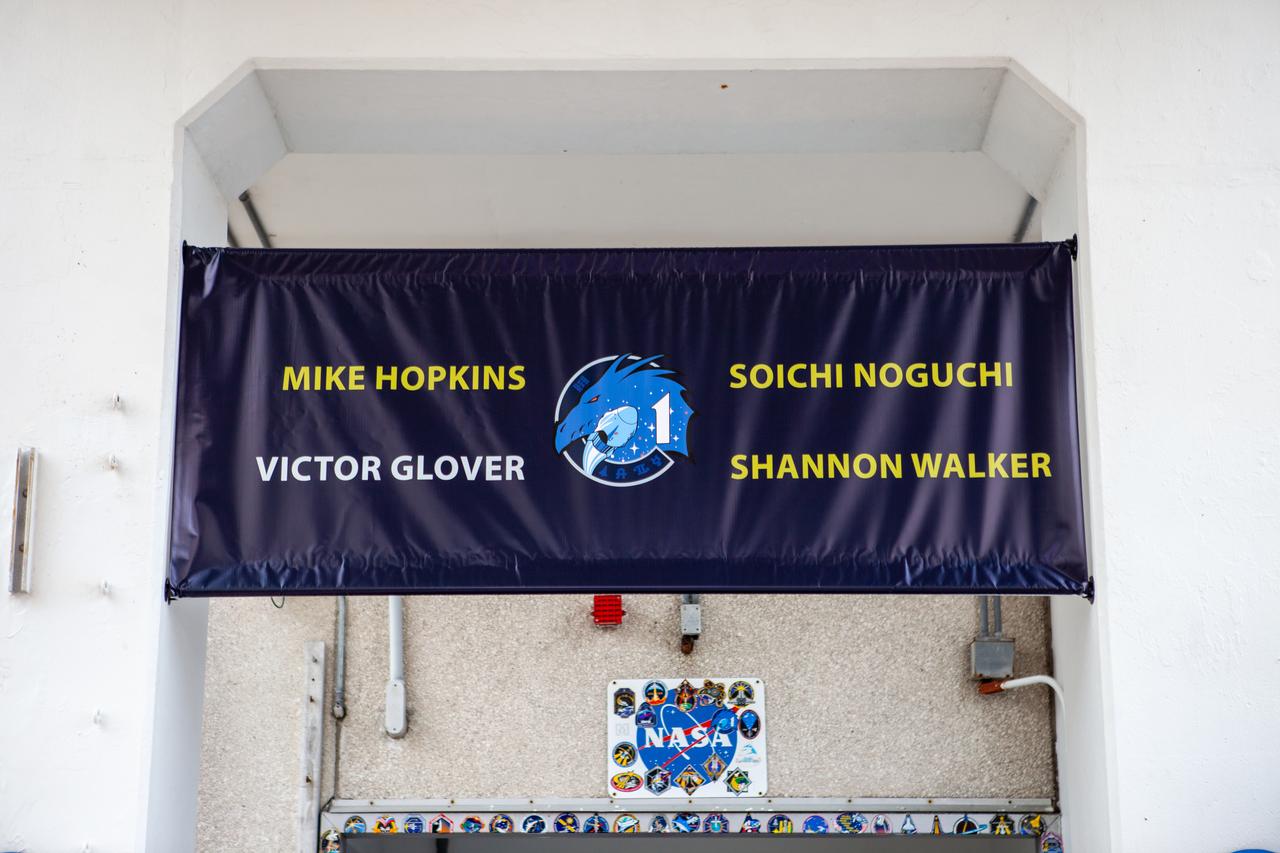
A banner hangs above the door where NASA SpaceX’s Crew-1 astronauts will exit from at the Neil Armstrong Operations and Checkout Building at NASA’s Kennedy Space Center in Florida on Nov. 15, 2020. NASA astronauts Michael Hopkins, Victor Glover and Shannon Walker, and JAXA astronaut Soichi Noguchi, will board two Tesla vehicles for the trip to Launch Complex 39A. Crew-1 is the first regular crew mission of a U.S. commercial spacecraft with astronauts to the International Space Station as part of NASA’s Commercial Crew Program. The SpaceX Crew Dragon Resilience capsule will launch atop the company’s Falcon 9 rocket from Pad 39A to the space station for a six-month science mission.
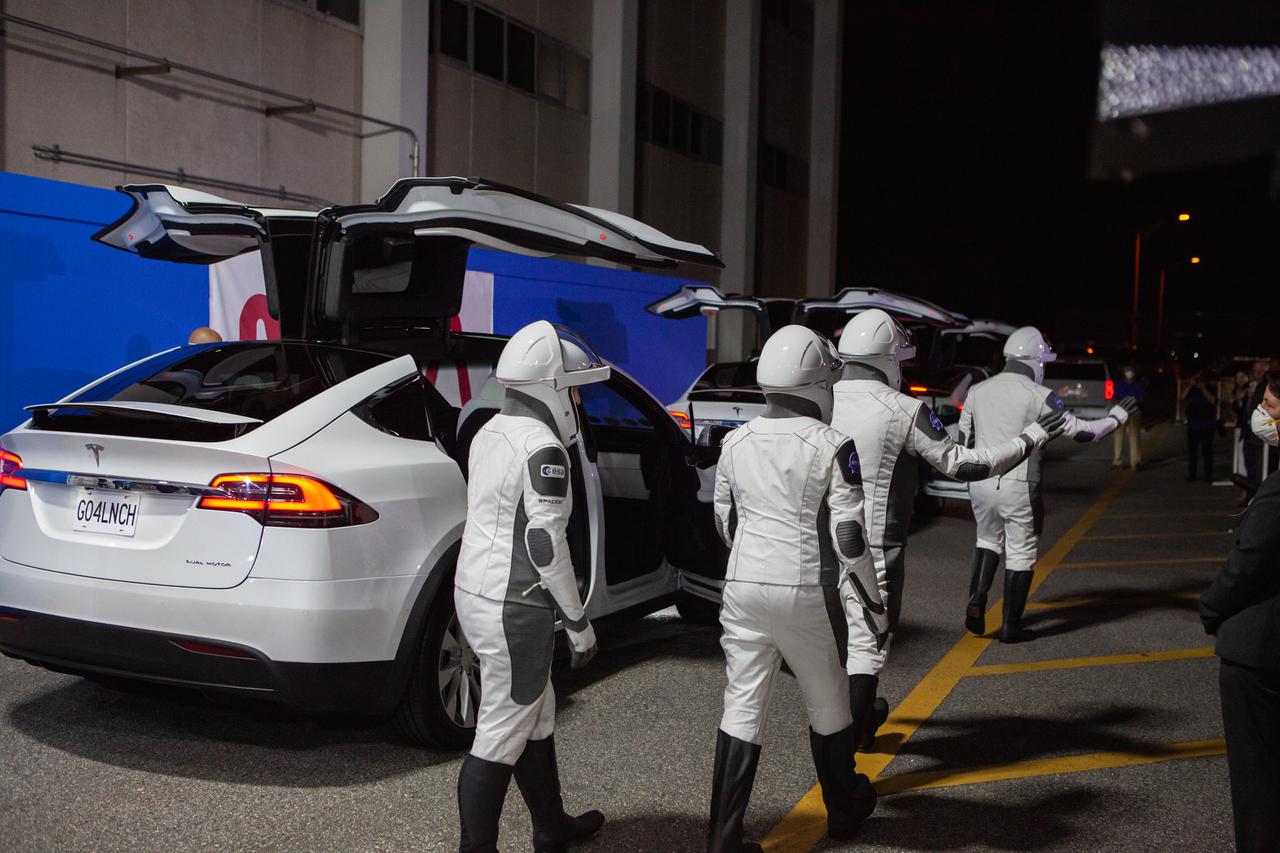
Crew-4 astronauts Kjell Lindgren, Samantha Cristoforetti, Bob Hines, and Jessica Watkins walk out of the Neil Armstrong Operations and Checkout Building at NASA’s Kennedy Space Center in Florida and make their way to the customized Tesla Model X vehicles that will transport them to their spacecraft at Launch Complex 39A. SpaceX’s Crew Dragon, powered by the company’s Falcon 9 rocket, will carry the four-person crew to the International Space Station as part of NASA’s Commercial Crew Program. Crew-4 is scheduled to launch today at 3:52 a.m. EDT, from Pad 39A at Kennedy.
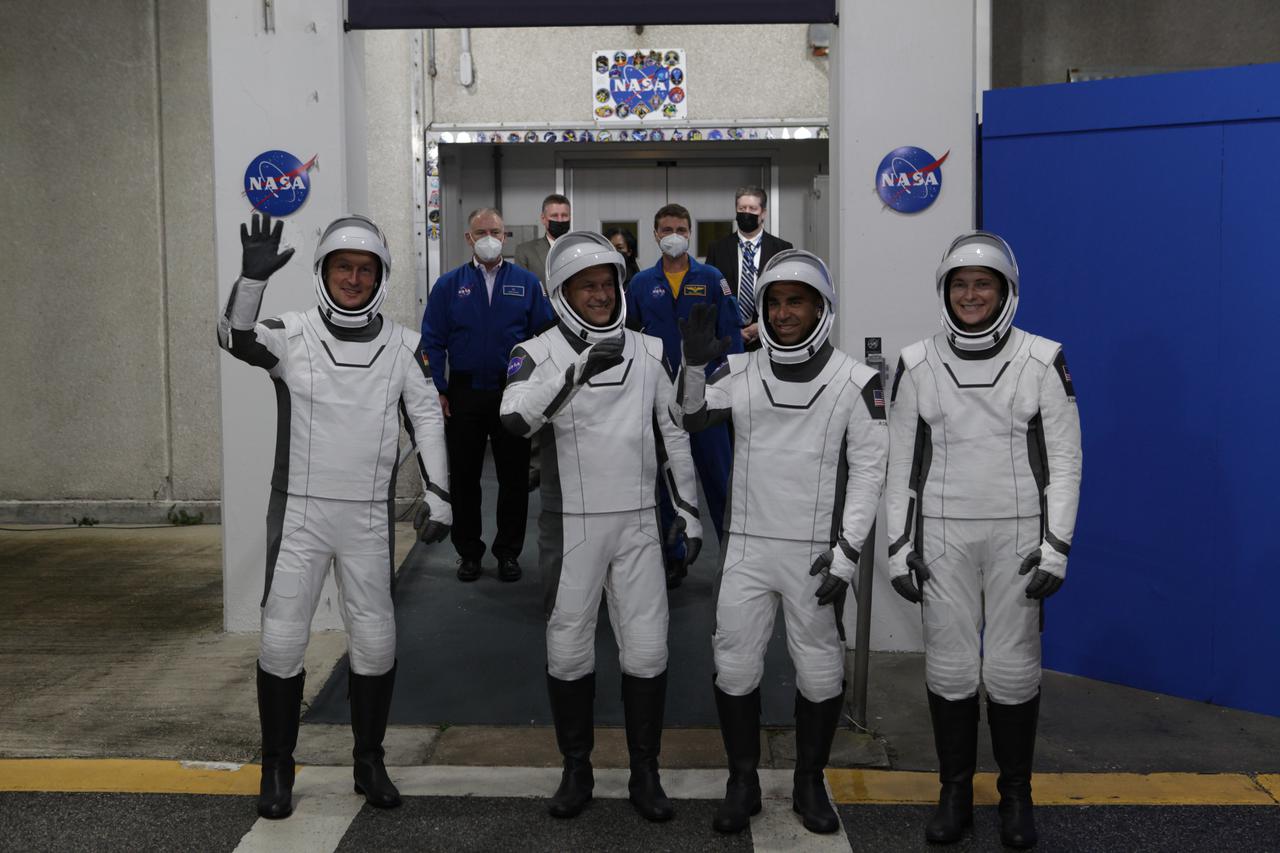
The SpaceX Crew-3 astronauts wave to family and friends after walking out through the double doors below the Neil A. Armstrong Building’s Astronaut Crew Quarters at NASA’s Kennedy Space Center in Florida on launch day, Nov. 10, 2021. They will make their way to the customized Tesla Model X cars that will take them to their spacecraft at Launch Complex 39A. From left are Matthias Maurer, ESA (European Space Agency) astronaut and mission specialist, and NASA astronauts Tom Marshburn; pilot; Raja Chari, commander; and Kayla Barron, mission specialist. The Falcon 9 rocket with Crew Dragon Endurance will launch the four-person crew to the International Space Station for NASA’s Commercial Crew Program. Crew-3 is scheduled to launch at 9:03 p.m. EST from Launch Complex 39A at Kennedy.
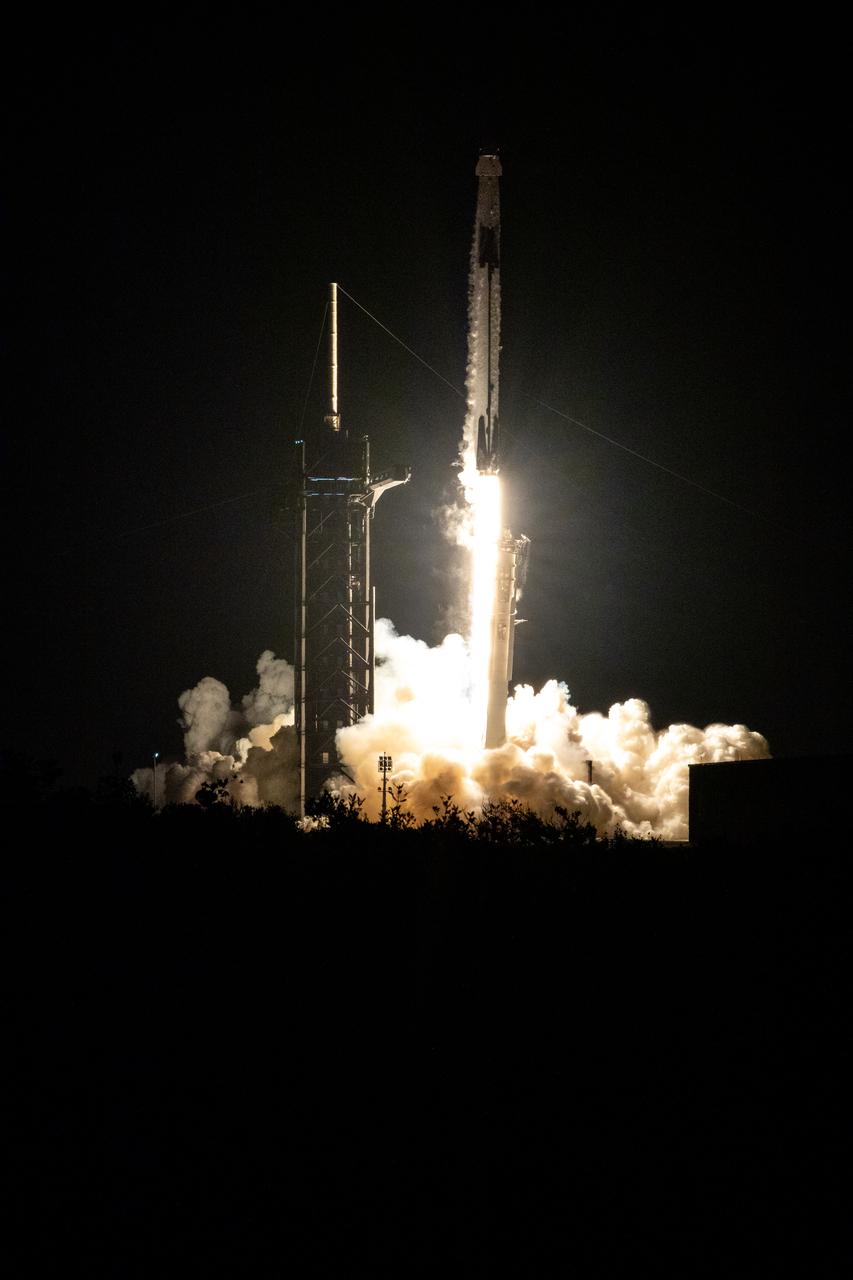
A SpaceX Falcon 9 rocket lifts off at 7:27 p.m. EST from Launch Complex 39A at NASA’s Kennedy Space Center in Florida on Nov. 15, 2020, carrying the company’s Crew Dragon Resilience capsule. Onboard the capsule are NASA’s SpaceX Crew-1 NASA astronauts, Michael Hopkins, spacecraft commander; Victor Glover, pilot; Shannon Walker, mission specialist; and Japan Aerospace Exploration Agency astronaut Soichi Noguchi, mission specialist. Crew-1 is the first regular crew mission of a U.S. commercial spacecraft with astronauts to the International Space Station as part of NASA’s Commercial Crew Program. The Crew Dragon will dock with the space station and the crew will remain on the orbiting laboratory for a six-month science mission.
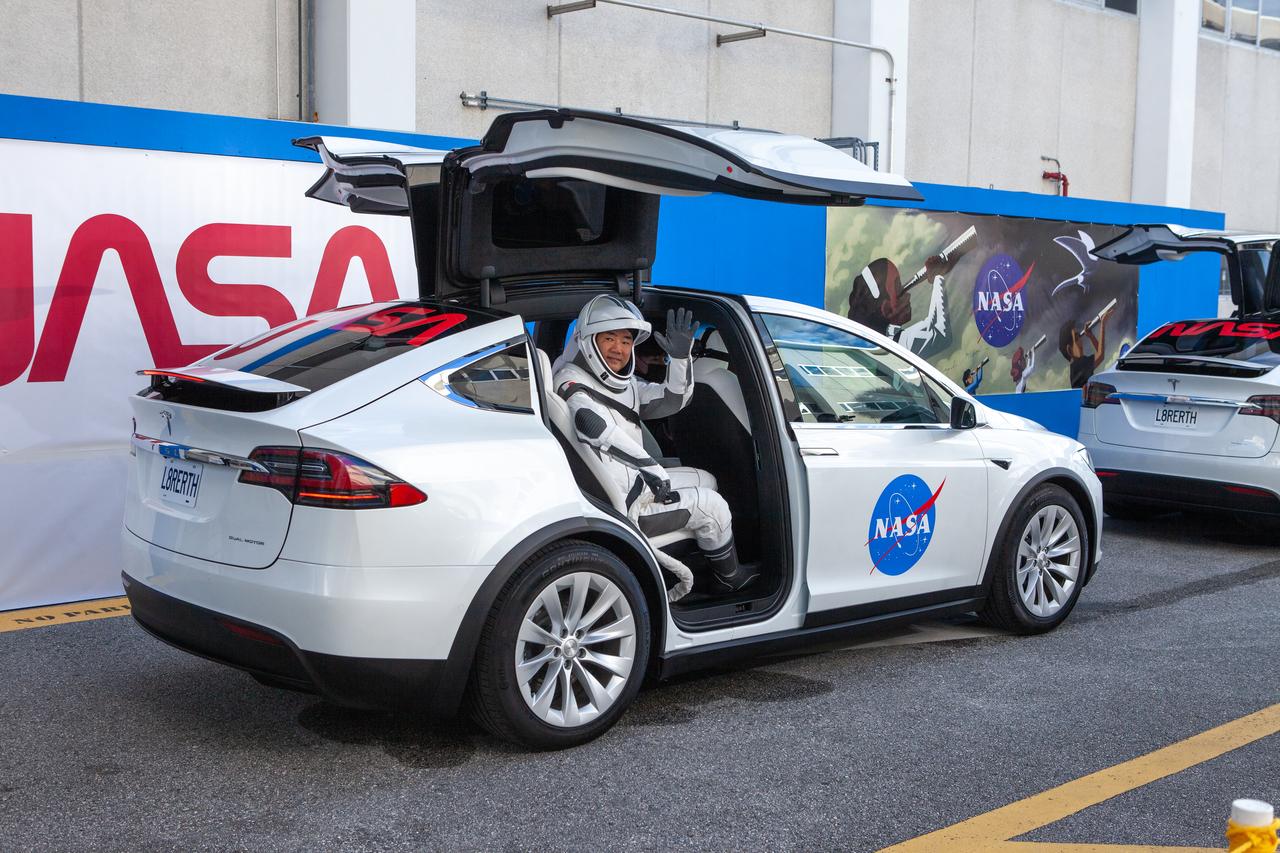
NASA SpaceX’s Crew-1 astronauts board two Tesla vehicles for the trip to Launch Complex 39A after emerging from the Neil Armstrong Operations and Checkout Building at NASA’s Kennedy Space Center in Florida on Nov. 15, 2020. NASA astronauts Michael Hopkins, spacecraft commander; Victor Glover, pilot; and Shannon Walker, mission specialist; and JAXA astronaut Soichi Noguchi, mission specialist will board the Crew Dragon for the first regular crew mission of a U.S. commercial spacecraft with astronauts to the International Space Station as part of NASA’s Commercial Crew Program. The SpaceX Crew Dragon Resilience capsule will launch atop the company’s Falcon 9 rocket from Pad 39A to the space station for a six-month science mission.
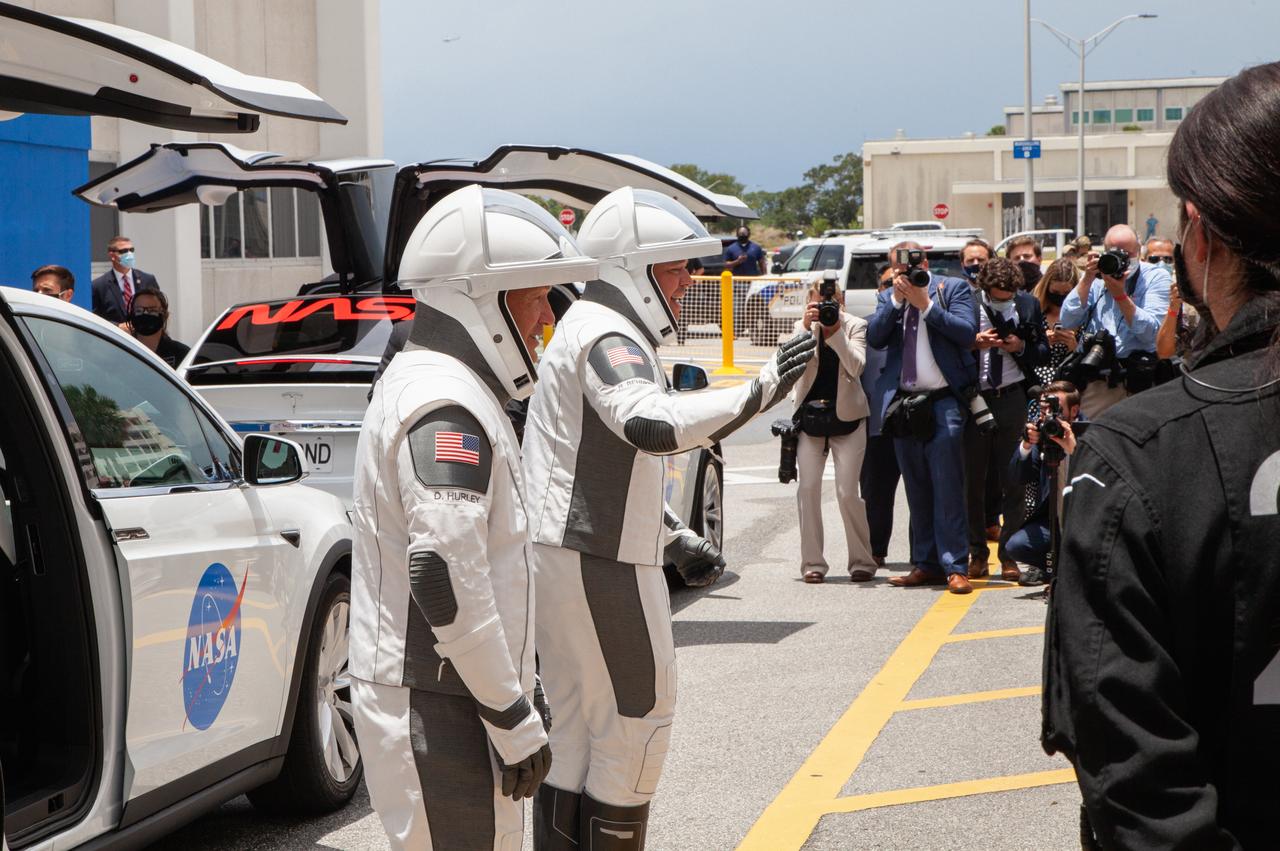
NASA astronauts Douglas Hurley (left) and Robert Behnken speak to their families before entering the Tesla Model X that will transport them from the Neil A. Armstrong Operations and Checkout Building to historic Launch Complex 39A at the Kennedy Space Center in Florida for NASA’s SpaceX Demo-2 mission. The launch, initially scheduled for May 27, 2020, was scrubbed due to unfavorable weather conditions around Launch Complex 39A. The next launch attempt will be Saturday, May 30. Liftoff of the SpaceX Falcon 9 rocket and Crew Dragon spacecraft is scheduled for 3:22 p.m. EDT from historic Launch Complex 39A. Behnken and Hurley will be the first astronauts to launch to the International Space Station from U.S. soil since the end of the Space Shuttle Program in 2011. Part of NASA’s Commercial Crew Program, this will be SpaceX’s final flight test, paving the way for the agency to certify the crew transportation system for regular, crewed flights to the orbiting laboratory.
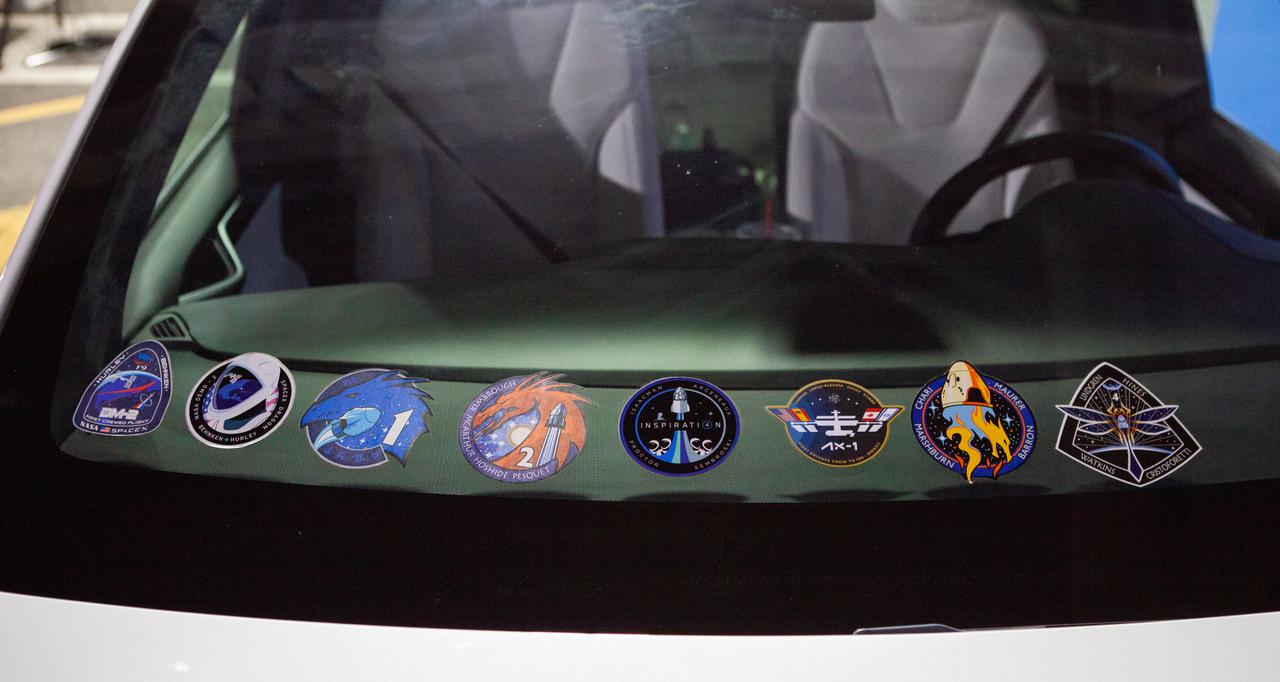
A customized Tesla Model X vehicle is parked outside the Neil A. Armstrong Operations and Checkout Building at NASA’s Kennedy Space Center in Florida on April 27, 2022. Crew-4 astronauts Kjell Lindgren, Bob Hines, Jessica Watkins, and Samantha Cristoforetti will make their way to the vehicles, which will transport them to Launch Complex 39A. Liftoff aboard SpaceX’s Crew Dragon, powered by the company’s Falcon 9 rocket, is scheduled for today at 3:52 a.m. EDT from Pad 39A at Kennedy.
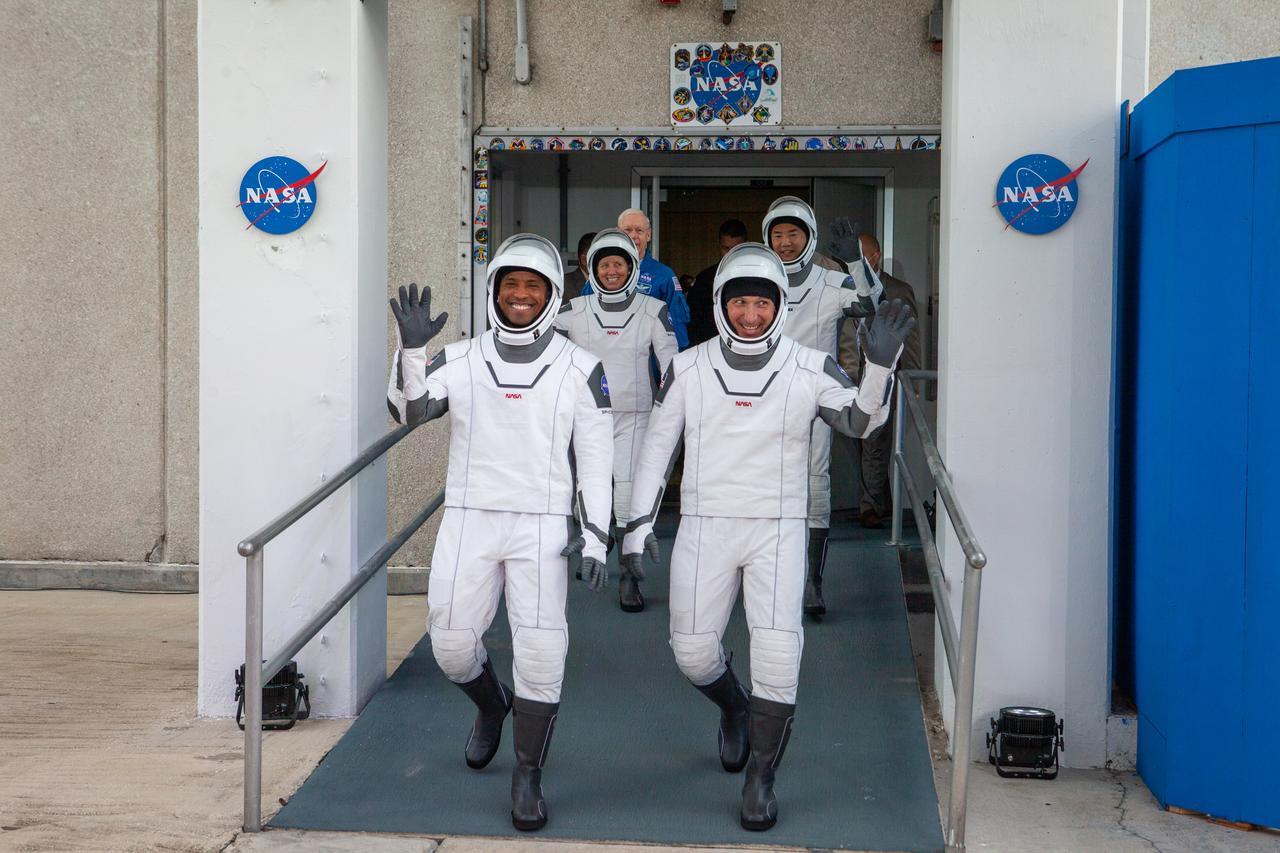
NASA SpaceX’s Crew-1 astronauts emerge from the Neil Armstrong Operations and Checkout Building at NASA’s Kennedy Space Center in Florida on Nov. 15, 2020. In front, from left are NASA astronaut Victor Glover, pilot, and NASA astronaut Michael Hopkins, spacecraft commander. Behind them, from left are NASA astronaut Shannon Walker, mission specialist, and JAXA astronaut Soichi Noguchi, mission specialist. They will board two Tesla vehicles for the trip to Launch Complex 39A. Crew-1 is the first regular crew mission of a U.S. commercial spacecraft with astronauts to the International Space Station as part of NASA’s Commercial Crew Program. The SpaceX Crew Dragon Resilience capsule will launch atop the company’s Falcon 9 rocket from Pad 39A to the space station for a six-month science mission.
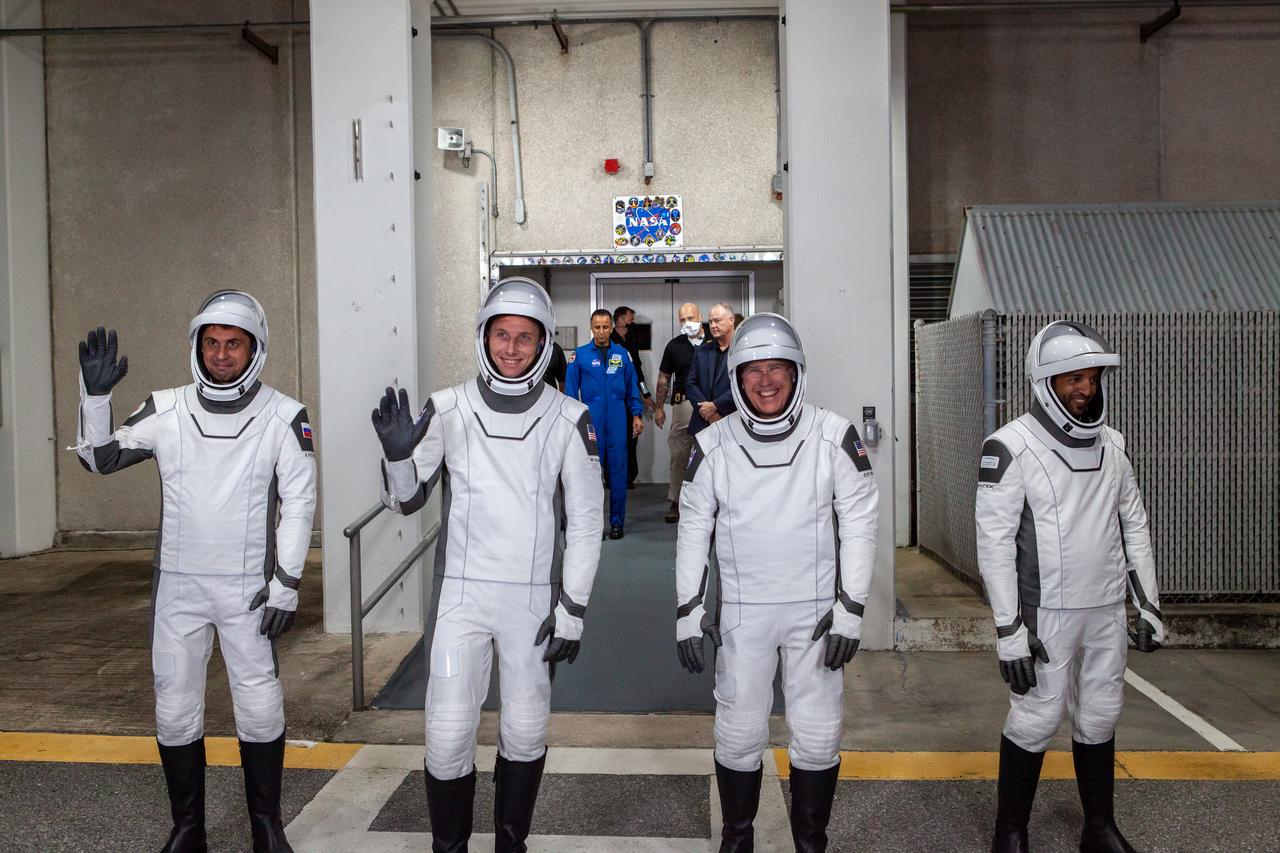
NASA’s SpaceX Crew-6 astronauts walk out of the Neil Armstrong Operations and Checkout Building at the agency’s Kennedy Space Center in Florida during a countdown dress rehearsal on Feb. 23, 2023, to prepare for the upcoming Crew-6 launch. From left are Andrey Fedyaev, Roscosmos cosmonaut and mission specialist; NASA astronaut Warren “Woody” Hoburg, pilot; NASA astronaut Stephen Bowen, spacecraft commander; and Sultan Alneyadi, UAE (United Arab Emirates) astronaut and mission specialist. The crew will launch to the International Space Station aboard the Crew Dragon Endeavour on a SpaceX Falcon 9. Launch is targeted for 1:45 a.m. EST on Feb. 27 from Launch Complex 39A. Crew-6 is the sixth crew rotation mission with SpaceX to the station, and the seventh flight of Dragon with people as part of the agency’s Commercial Crew Program.
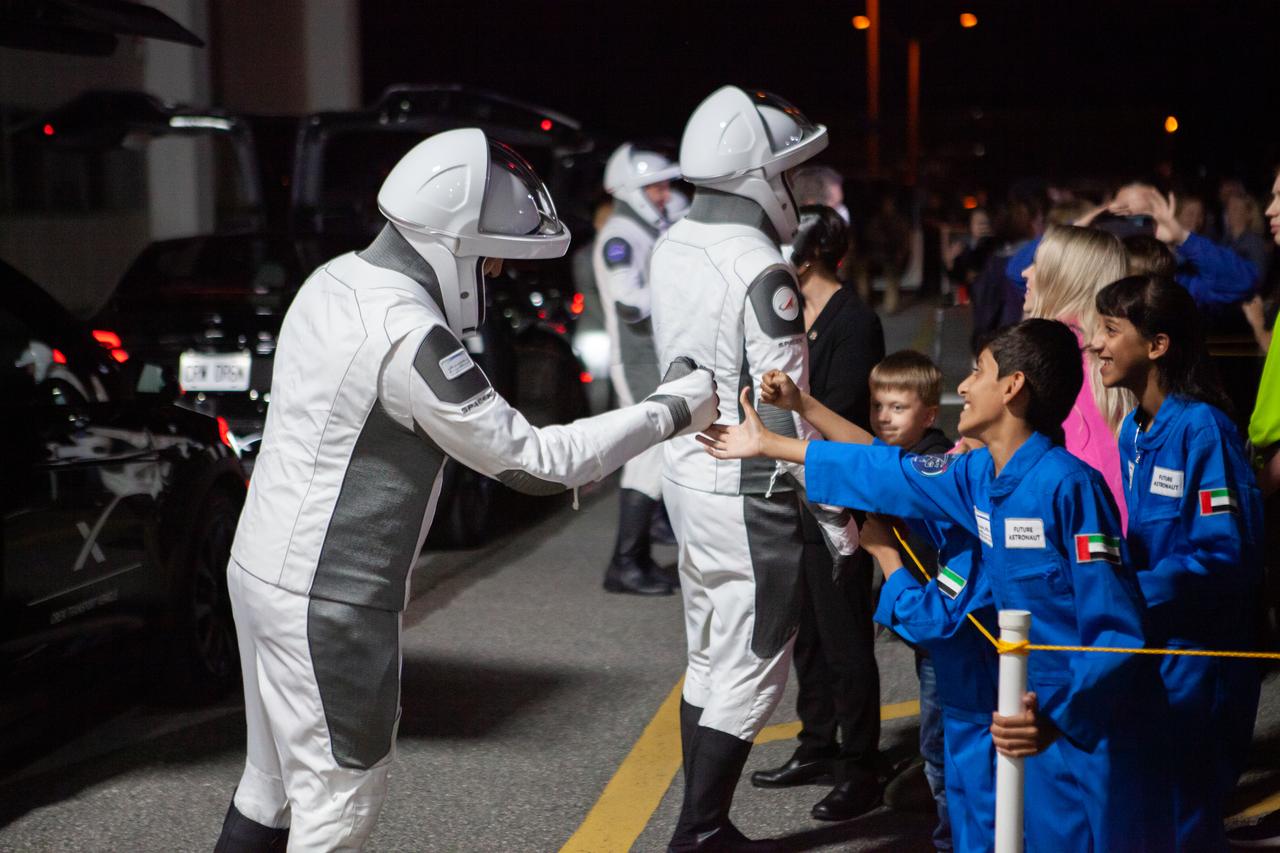
NASA’s SpaceX Crew-6 astronauts greet their family members after walking out of the Neil Armstrong Operations and Checkout Building at the agency’s Kennedy Space Center in Florida on Feb. 26, 2023. Crew-6 astronauts are NASA astronaut Stephen Bowen, spacecraft commander; NASA astronaut Warren “Woody” Hoburg, pilot; Sultan Alneyadi, UAE (United Arab Emirates) astronaut and mission specialist; and Andrey Fedyaev, Roscosmos cosmonaut and mission specialist. They will board two Tesla vehicles for the trip to Kennedy’s Launch Complex 39A, where they will launch to the International Space Station aboard SpaceX’s Dragon Endeavour spacecraft. Launch was targeted for 1:45 a.m. EST on Feb. 27 from Launch Complex 39A, but was scrubbed for the day. Crew-6 is the sixth crew rotation mission with SpaceX to the station, and the seventh flight of Dragon with people as part of the agency’s Commercial Crew Program.
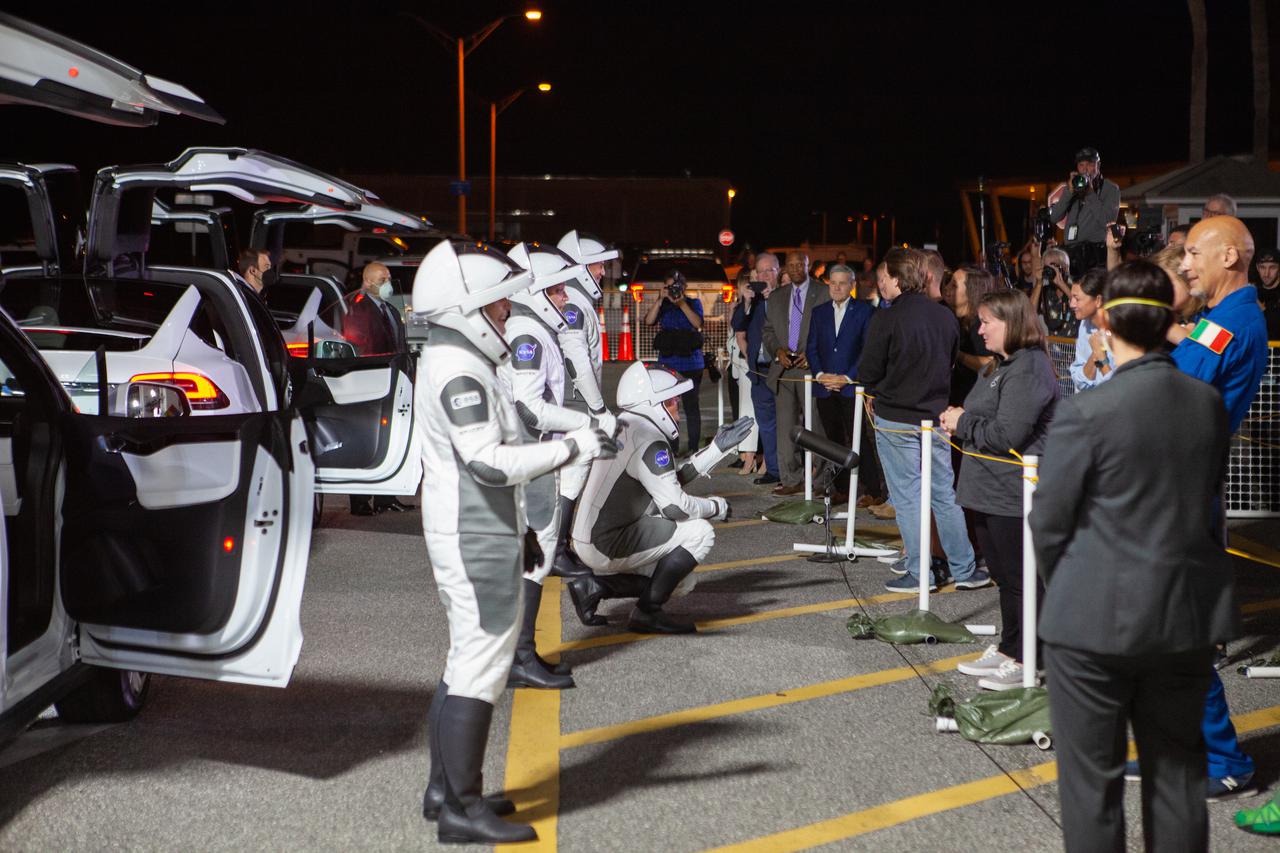
Crew-4 astronauts Kjell Lindgren, Samantha Cristoforetti, Bob Hines, and Jessica Watkins wave to their families outside of the Neil Armstrong Operations and Checkout Building at NASA’s Kennedy Space Center in Florida before getting into the customized Tesla Model X vehicles that will transport them to their spacecraft at Launch Complex 39A. SpaceX’s Crew Dragon, powered by the company’s Falcon 9 rocket, will carry the four-person crew to the International Space Station as part of NASA’s Commercial Crew Program. Crew-4 is scheduled to launch today at 3:52 a.m. EDT, from Pad 39A at Kennedy.
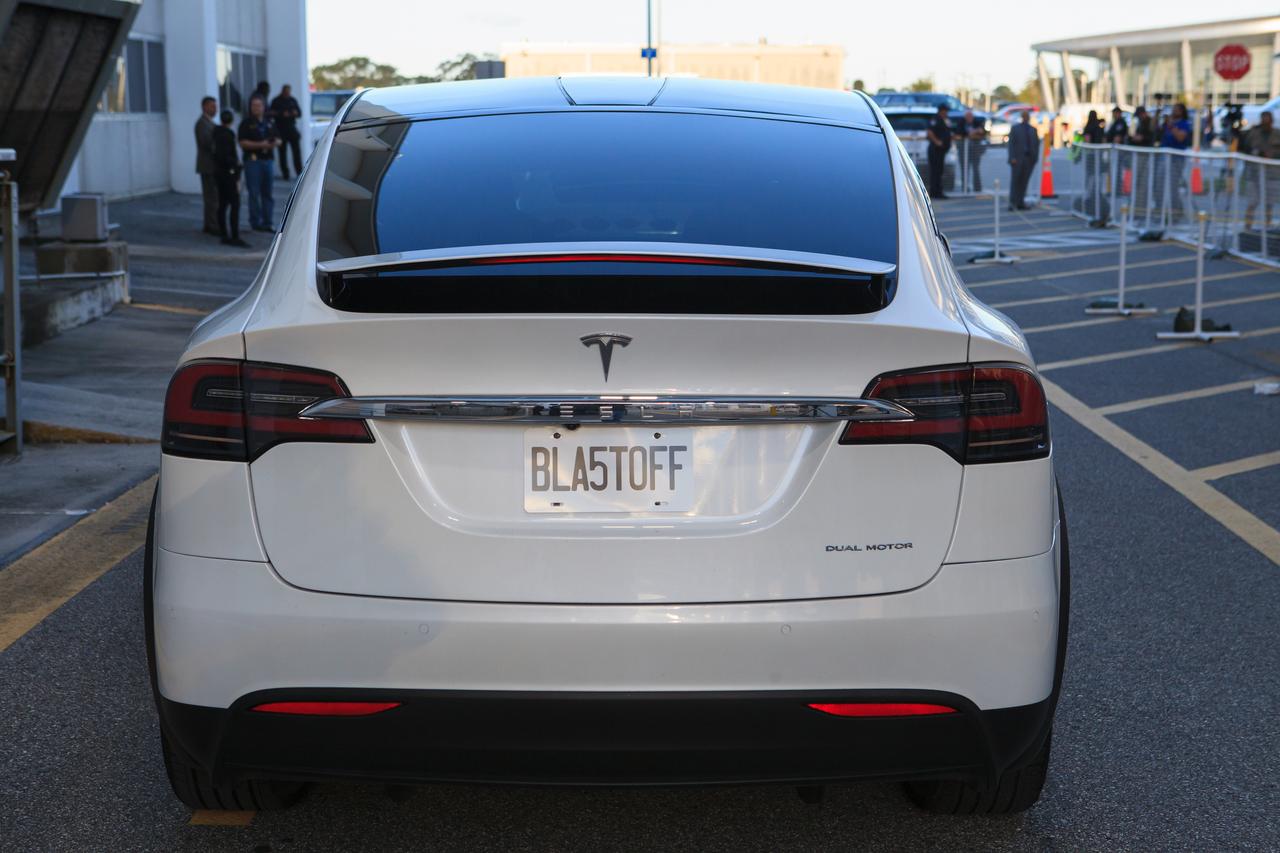
One of the Tesla Model X cars that will carry NASA’s SpaceX Crew-5 to Kennedy Space Center’s Launch Complex 39A is photographed at the Neil A. Armstrong Operations and Checkout Building on Oct. 5, 2022. The license plate tag reads “blast off.” NASA astronauts Nicole Mann, spacecraft commander, and Josh Cassada, pilot; Roscosmos cosmonaut Anna Kikina, mission specialist; and JAXA (Japan Aerospace Exploration Agency) astronaut Koichi Wakata, mission specialist, will launch to the International Space Station for a science expedition mission as part of NASA’s Commercial Crew Program. The SpaceX Falcon 9 rocket and Dragon Endurance spacecraft lifted off at noon EDT.
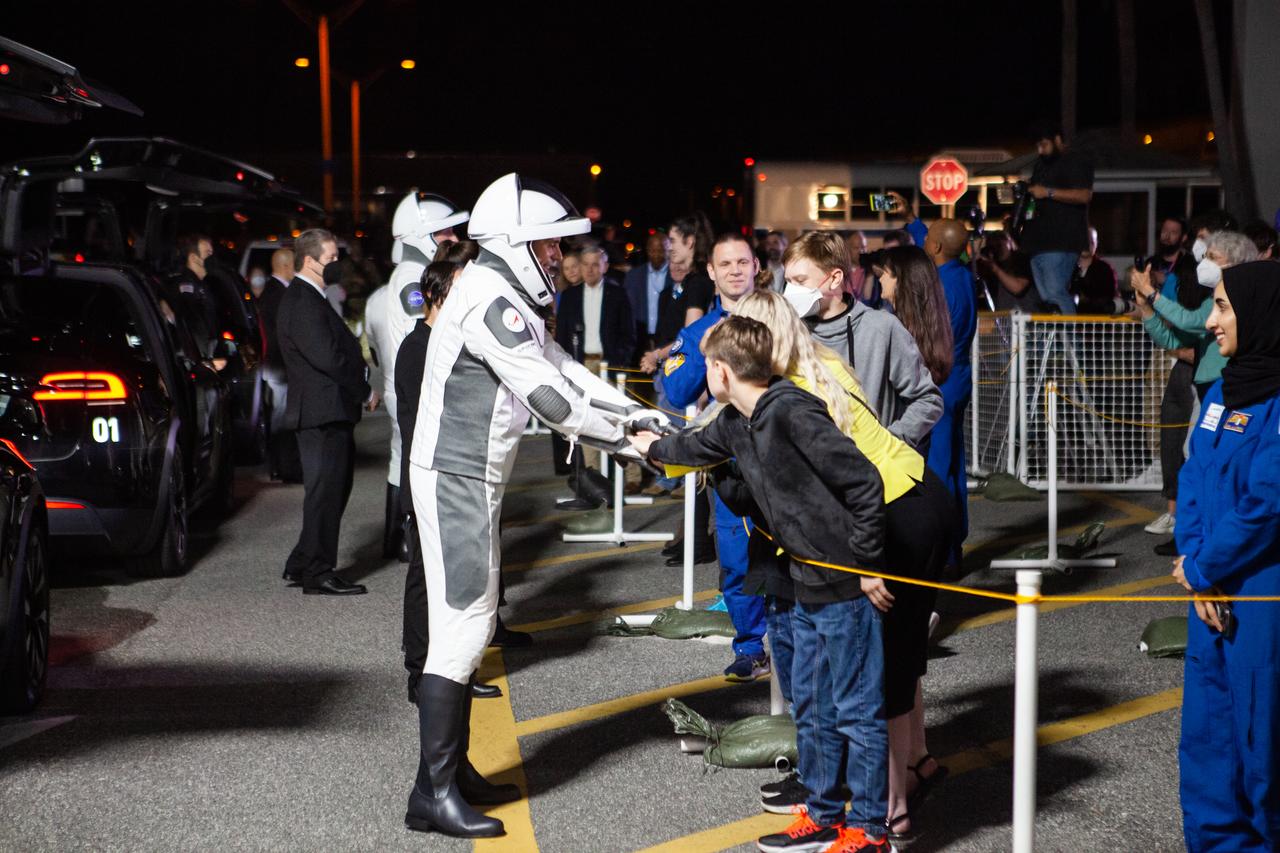
NASA’s SpaceX Crew-6 astronauts greet their family members after walking out of the Neil Armstrong Operations and Checkout Building at the agency’s Kennedy Space Center in Florida on March 1, 2023. In view at left is Sultan Alneyadi, UAE (United Arab Emirates) astronaut and mission specialist. The crewmembers will board one of the Tesla vehicles for the trip to Kennedy’s Launch Complex 39A, where they will launch to the International Space Station aboard SpaceX’s Dragon Endeavour spacecraft atop the Falcon 9 rocket. Launch is targeted for 12:34 a.m. EST on March 2 from Launch Complex 39A. Crew-6 is the sixth crew rotation mission with SpaceX to the station, and the seventh flight of Dragon with people as part of the agency’s Commercial Crew Program.
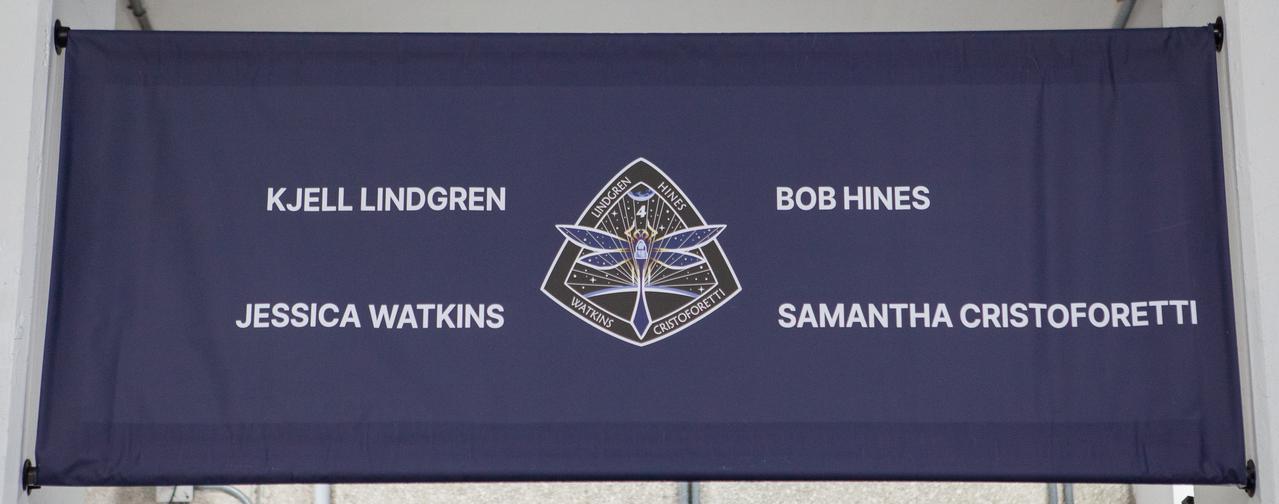
A banner hangs outside the Neil A. Armstrong Operations and Checkout Building at NASA’s Kennedy Space Center in Florida on April 27, 2022. Crew-4 astronauts Kjell Lindgren, Bob Hines, Jessica Watkins, and Samantha Cristoforetti will launch to the International Space Station aboard SpaceX’s Crew Dragon, powered by the company’s Falcon 9 rocket, as part of NASA’s Commercial Crew Program. Liftoff is scheduled for today at 3:52 a.m. EDT from Launch Complex 39A at Kennedy.
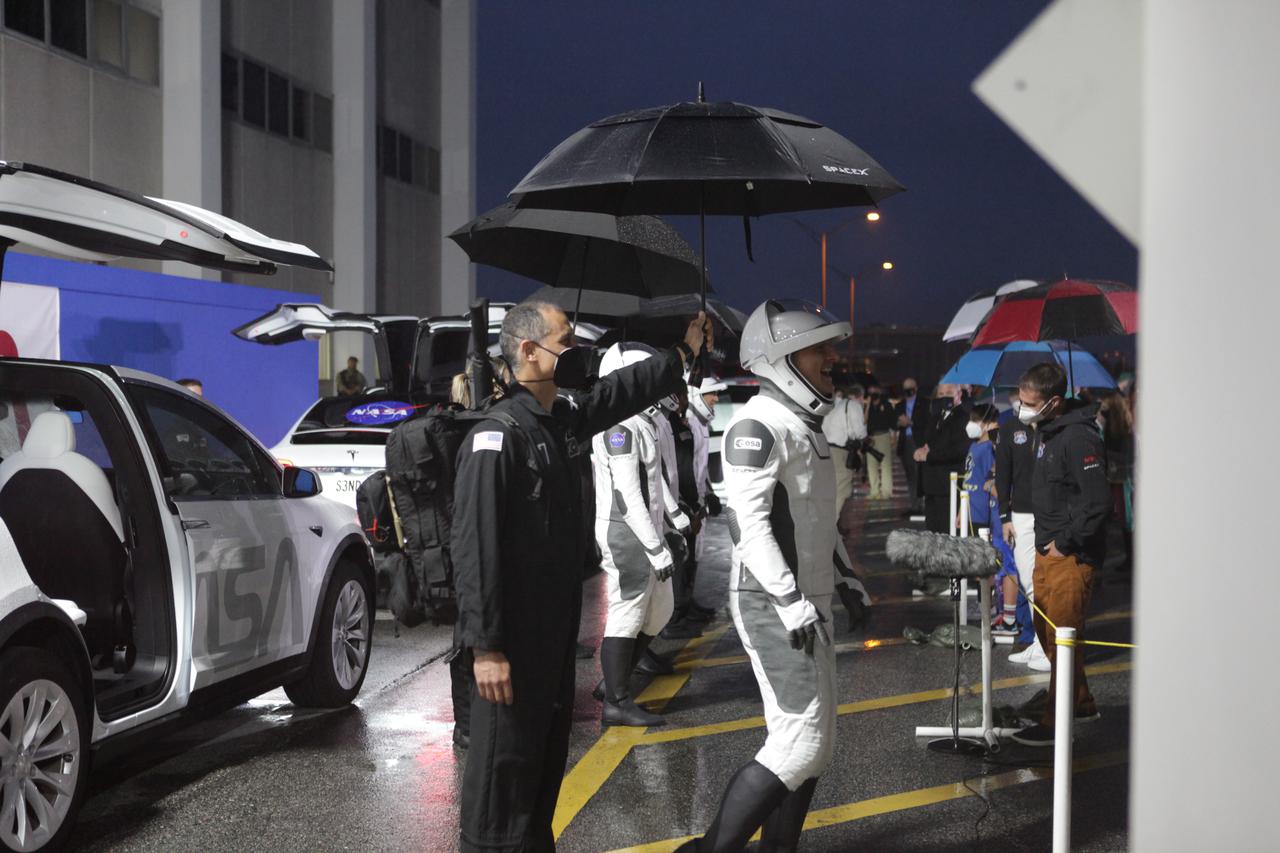
SpaceX Crew-3 astronauts visit with their families after exiting the Neil A. Armstrong Building’s Astronaut Crew Quarters at NASA’s Kennedy Space Center in Florida on launch day, Nov. 10, 2021. NASA astronauts Raja Chari, commander; Tom Marshburn, pilot; and Kayla Barron, mission specialist; along with Matthias Maurer, ESA (European Space Agency) astronaut and mission specialist, will launch in the Crew Dragon Endurance atop the SpaceX Falcon 9 rocket to the International Space Station for NASA’s Commercial Crew Program. Crew-3 is scheduled to launch at 9:03 p.m. EST from Launch Complex 39A at Kennedy.

NASA astronauts Robert Behnken and Douglas Hurley (right) enter the Tesla Model X that will transport them from the Neil A. Armstrong Operations and Checkout Building to historic Launch Complex 39A at the Kennedy Space Center in Florida for the agency’s SpaceX Demo-2 launch on May 30, 2020. The SpaceX Falcon 9 rocket and Crew Dragon spacecraft lifted off at 3:22 p.m. EDT. Behnken and Hurley are the first astronauts to launch to the International Space Station from U.S. soil since the end of the Space Shuttle Program in 2011. Part of NASA’s Commercial Crew Program, this will be SpaceX’s final flight test, paving the way for the agency to certify the crew transportation system for regular, crewed flights to the orbiting laboratory.
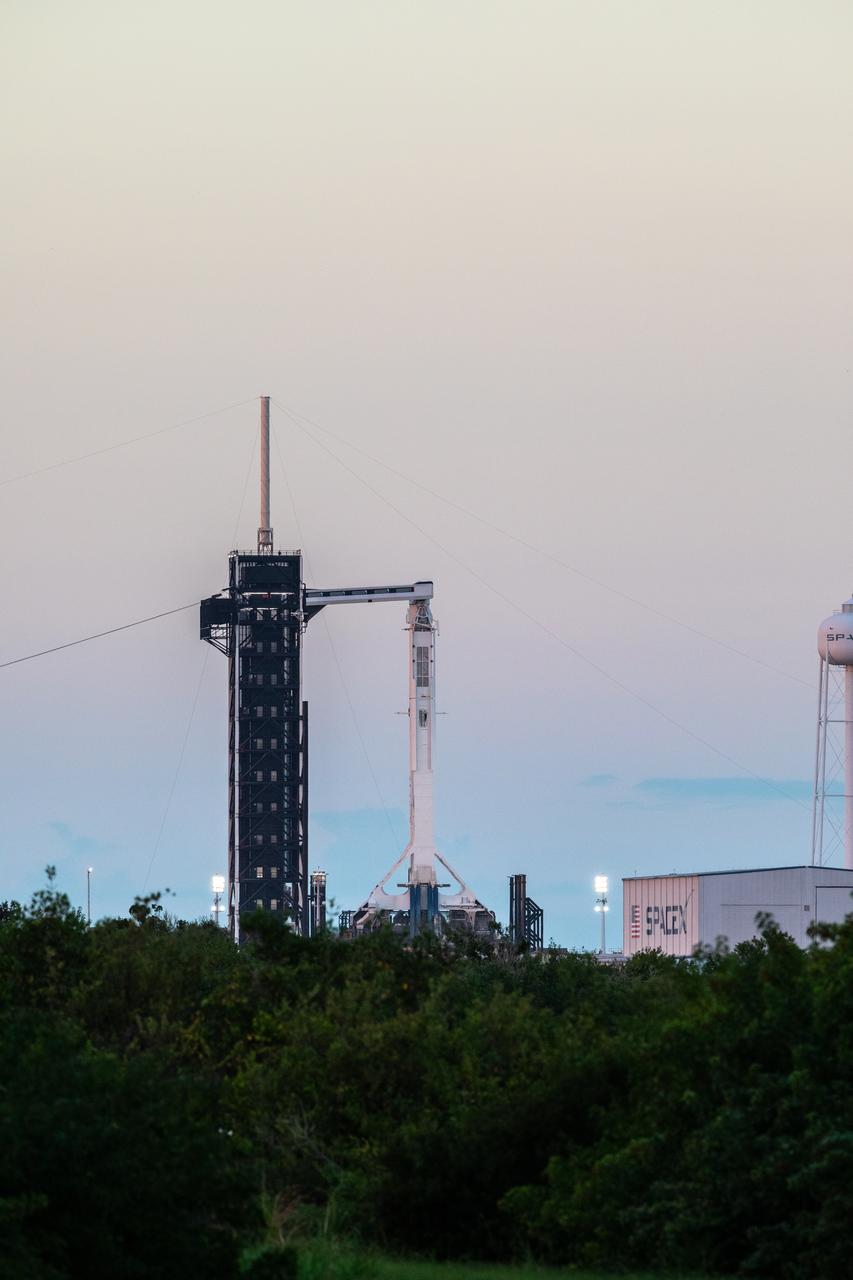
A SpaceX Falcon 9 rocket sits on Launch Pad 39A at NASA’s Kennedy Space Center in Florida on Nov. 15, 2020, ready for launch. The Crew Dragon Resilience capsule sits atop with NASA’s SpaceX Crew-1 NASA astronauts, Michael Hopkins, spacecraft commander; Victor Glover, pilot; Shannon Walker, mission specialist; and Japan Aerospace Exploration Agency astronaut Soichi Noguchi, mission specialist. Crew-1 is the first regular crew mission of a U.S. commercial spacecraft with astronauts to the International Space Station as part of NASA’s Commercial Crew Program. The Crew Dragon will dock with the space station and the crew will remain on the orbiting laboratory for a six-month science mission.
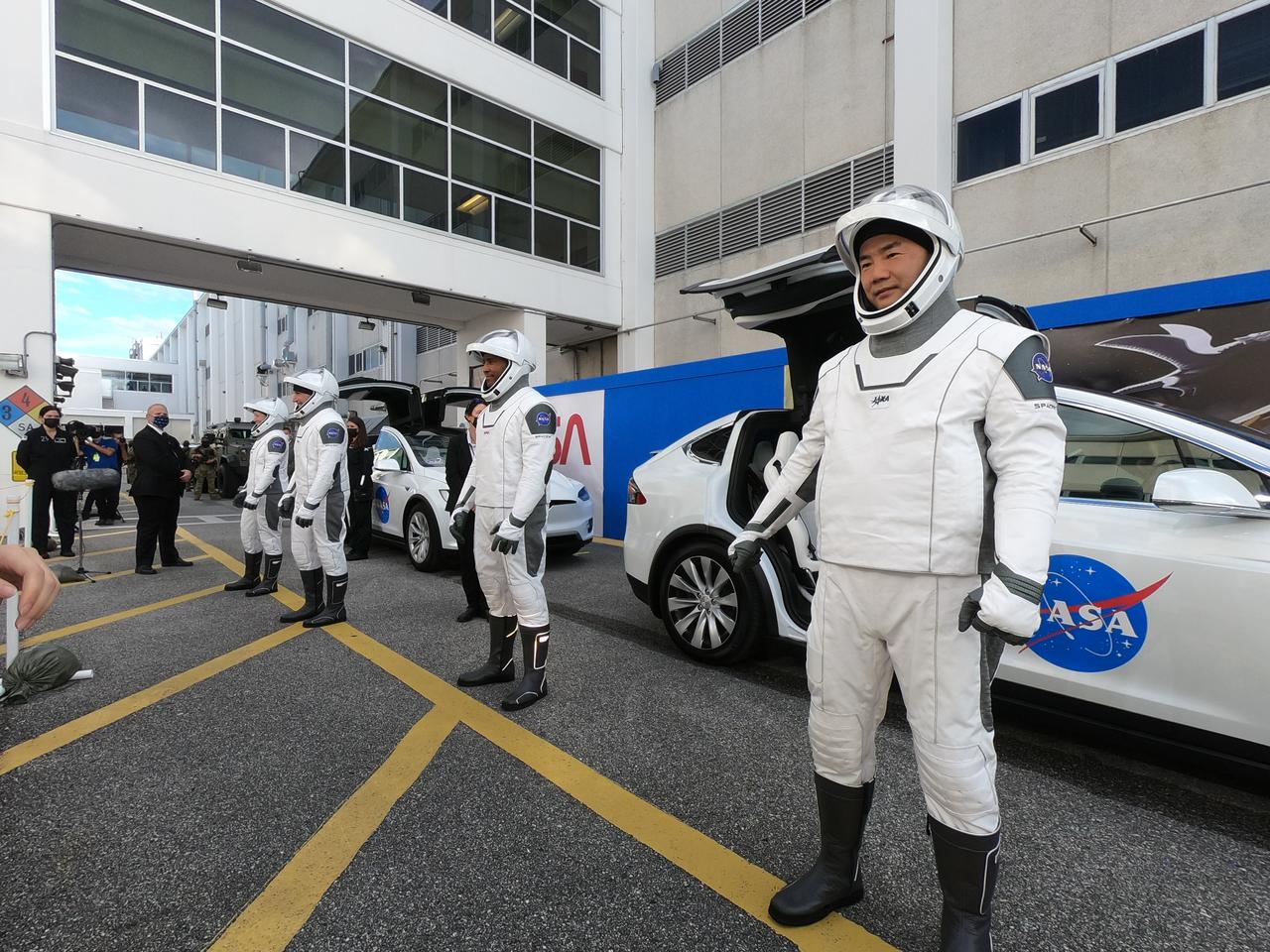
NASA SpaceX’s Crew-1 astronauts get ready to board two Tesla vehicles for the trip to Launch Complex 39A after emerging from the Neil Armstrong Operations and Checkout Building at NASA’s Kennedy Space Center in Florida on Nov. 15, 2020. In view at far right is JAXA astronaut Soichi Noguchi, mission specialist. From left are NASA astronauts Shannon Walker, mission specialist; Michael Hopkins, spacecraft commander; and Victor Glover, pilot. Crew-1 is the first regular crew mission of a U.S. commercial spacecraft with astronauts to the International Space Station as part of NASA’s Commercial Crew Program. The SpaceX Crew Dragon Resilience capsule will launch atop the company’s Falcon 9 rocket from Pad 39A to the space station for a six-month science mission.
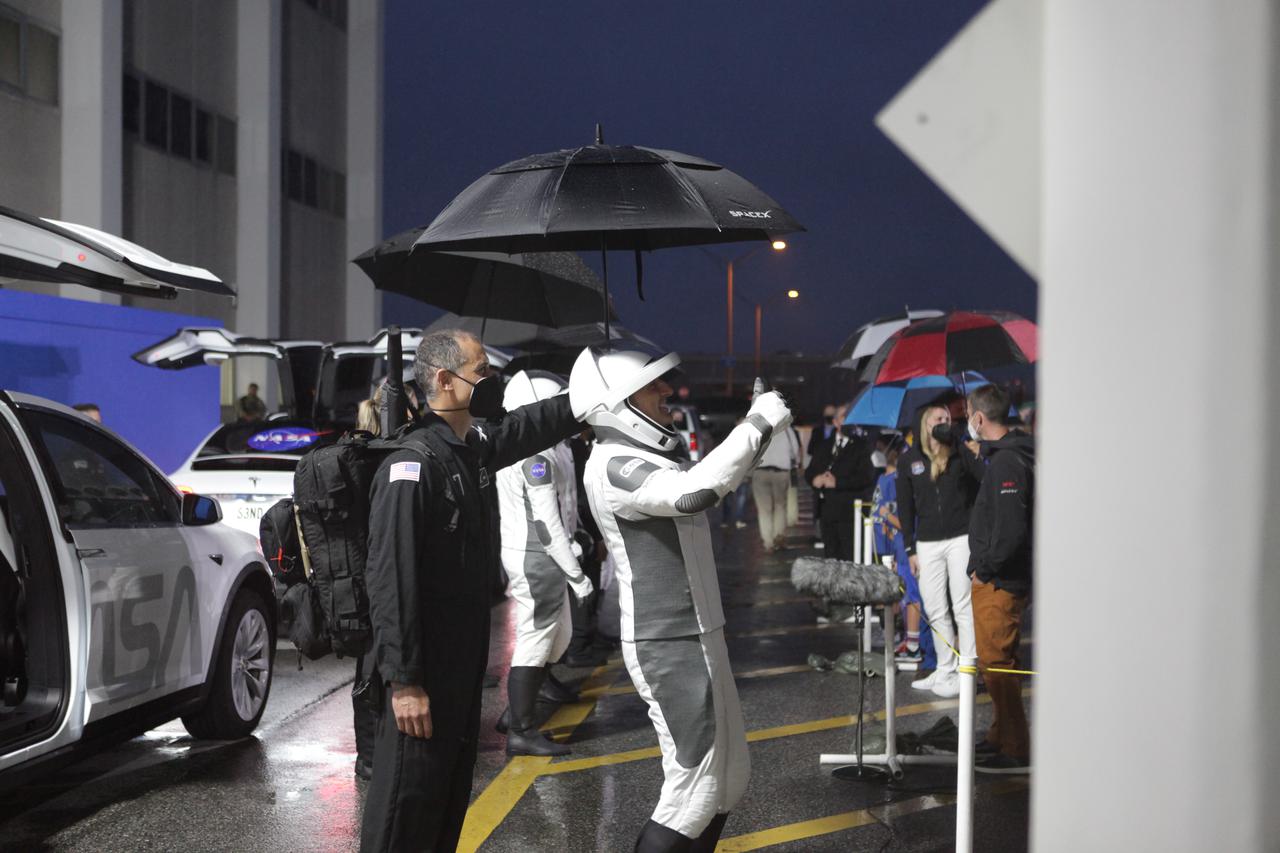
SpaceX Crew-3 astronauts visit with their families after exiting the Neil A. Armstrong Building’s Astronaut Crew Quarters at NASA’s Kennedy Space Center in Florida on launch day, Nov. 10, 2021. NASA astronauts Raja Chari, commander; Tom Marshburn, pilot; and Kayla Barron, mission specialist; along with Matthias Maurer, ESA (European Space Agency) astronaut and mission specialist, will launch in the Crew Dragon Endurance atop the SpaceX Falcon 9 rocket to the International Space Station for NASA’s Commercial Crew Program. Crew-3 is scheduled to launch at 9:03 p.m. EST from Launch Complex 39A at Kennedy.
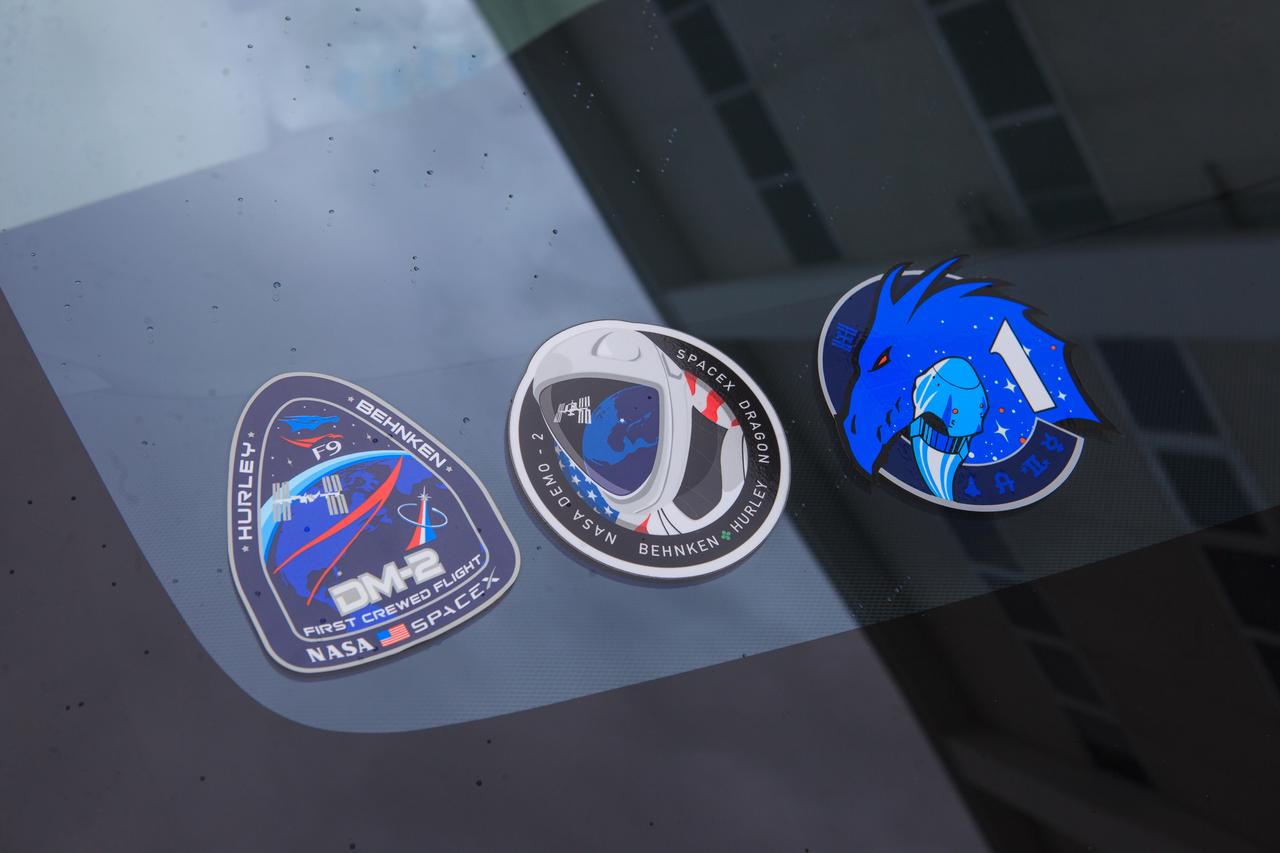
During a countdown dress rehearsal of launch day activities on Nov. 12, 2020, the mission and crew insignias for NASA’s SpaceX Crew-1 mission are in view in the windshield of a Tesla vehicle at the Neil Armstrong Operations and Checkout Building at Kennedy Space Center in Florida. Crew-1 is the first regular crew mission of a U.S. commercial spacecraft with astronauts to the International Space Station as part of NASA’s Commercial Crew Program. The SpaceX Crew Dragon Resilience capsule will launch atop the company’s Falcon 9 rocket from Launch Complex 39A carrying NASA astronauts Michael Hopkins, Victor Glover, Shannon Walker and Japan Aerospace Exploration Agency (JAXA) astronaut Soichi Noguchi to the space station for a six-month science mission.
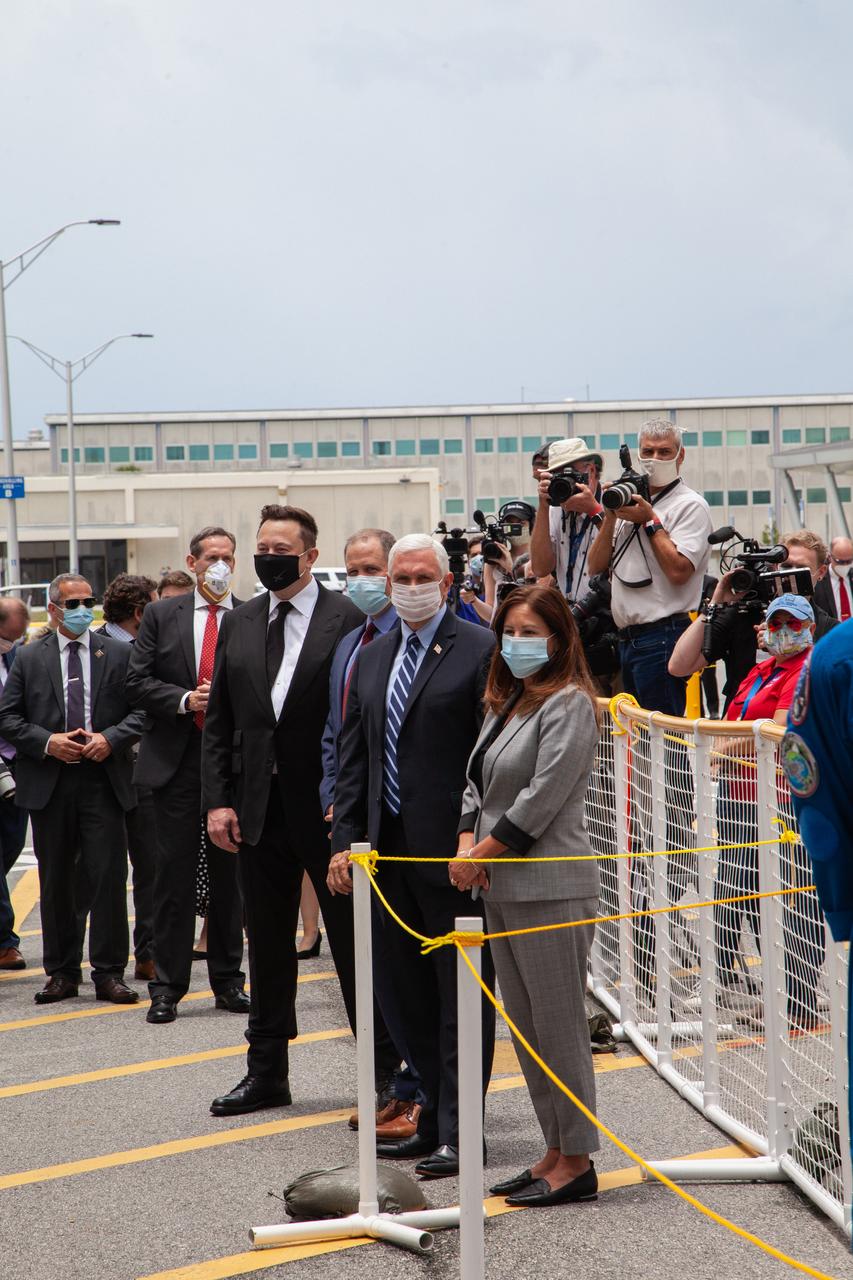
From left, SpaceX CEO and Chief Designer Elon Musk, NASA Administrator Jim Bridenstine, Vice President Mike Pence and second lady Karen Pence wait to greet NASA astronauts Robert Behnken and Douglas Hurley outside of the Neil A. Armstrong Operations and Checkout Building at the agency’s Kennedy Space Center in Florida ahead of NASA’s SpaceX Demo-2 launch. The launch, initially scheduled for May 27, 2020, was scrubbed due to unfavorable weather conditions around Launch Complex 39A. The next launch attempt will be Saturday, May 30. Liftoff of the SpaceX Falcon 9 rocket and Crew Dragon spacecraft is scheduled for 3:22 p.m. EDT from historic Launch Complex 39A. Behnken and Hurley will be the first astronauts to launch to the International Space Station from U.S. soil since the end of the Space Shuttle Program in 2011. Part of NASA’s Commercial Crew Program, this will be SpaceX’s final flight test, paving the way for the agency to certify the crew transportation system for regular, crewed flights to the orbiting laboratory.
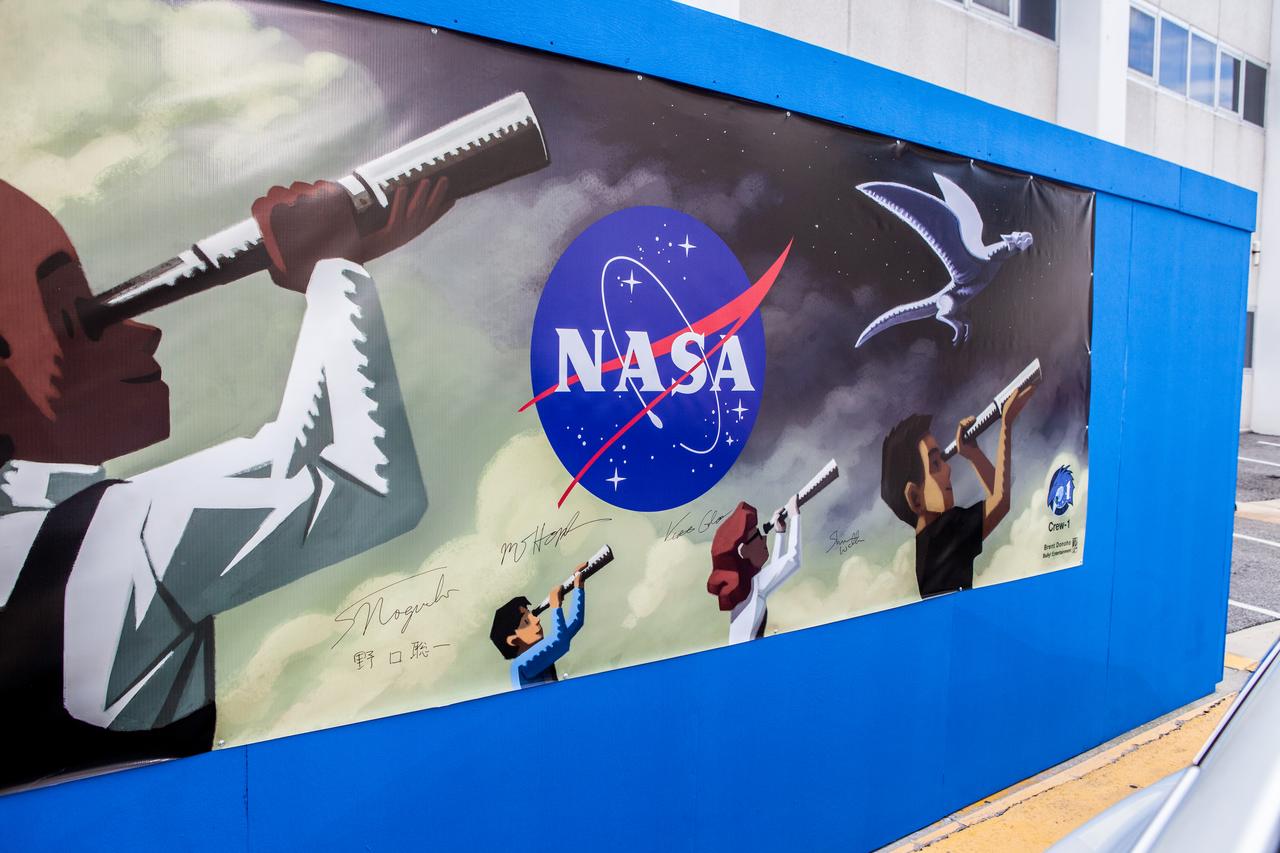
A large mural is on the wall in the hallway leading to the exit where NASA SpaceX’s Crew-1 astronauts will leave the Neil Armstrong Operations and Checkout Building at NASA’s Kennedy Space Center in Florida on Nov. 15, 2020. NASA astronauts Michael Hopkins, Victor Glover and Shannon Walker, and JAXA astronaut Soichi Noguchi, will board two Tesla vehicles for the trip to Launch Complex 39A. Crew-1 is the first regular crew mission of a U.S. commercial spacecraft with astronauts to the International Space Station as part of NASA’s Commercial Crew Program. The SpaceX Crew Dragon Resilience capsule will launch atop the company’s Falcon 9 rocket from Pad 39A to the space station for a six-month science mission.
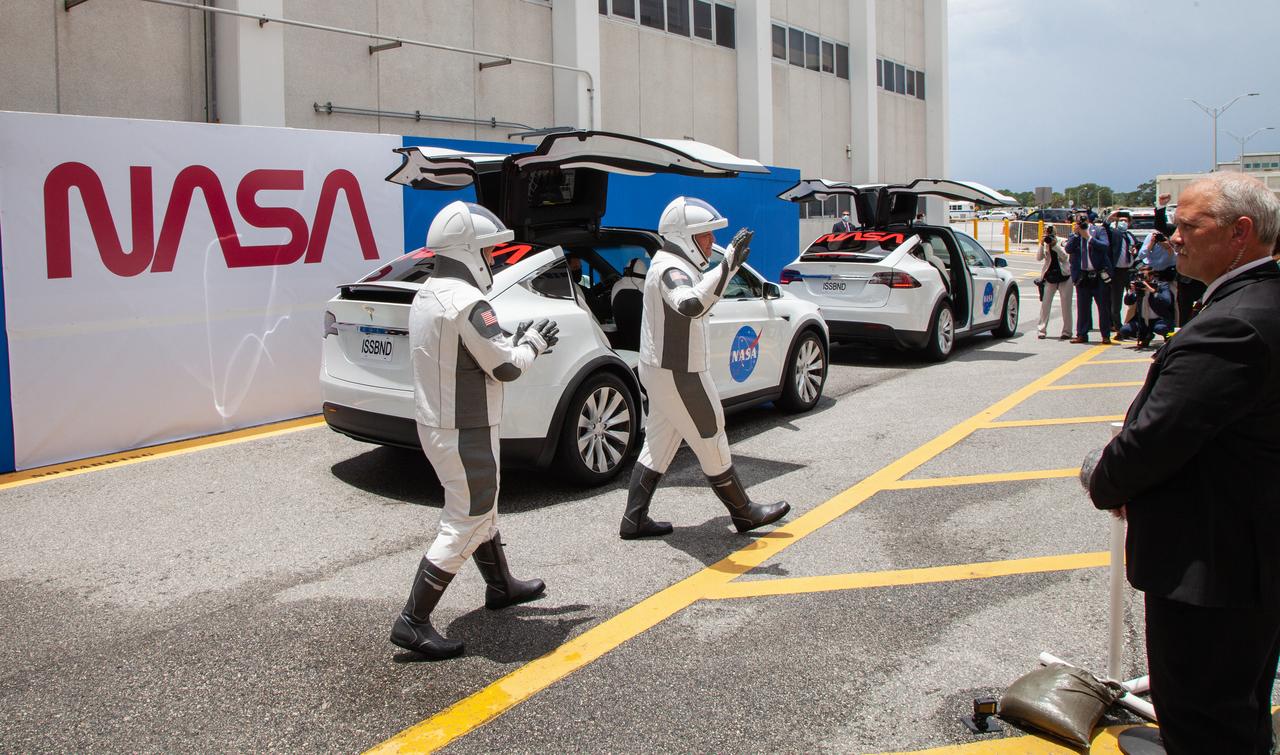
NASA astronauts Douglas Hurley (left) and Robert Behnken wave as they exit the Neil A. Armstrong Operations and Checkout Building at the agency’s Kennedy Space Center in Florida in preparation for transport to Launch Complex 39A to launch on NASA’s SpaceX Demo-2 mission. The launch, initially scheduled for May 27, 2020, was scrubbed due to unfavorable weather conditions around Launch Complex 39A. The next launch attempt will be Saturday, May 30. Liftoff of the SpaceX Falcon 9 rocket and Crew Dragon spacecraft is scheduled for 3:22 p.m. EDT from historic Launch Complex 39A. Behnken and Hurley will be the first astronauts to launch to the International Space Station from U.S. soil since the end of the Space Shuttle Program in 2011. Part of NASA’s Commercial Crew Program, this will be SpaceX’s final flight test, paving the way for the agency to certify the crew transportation system for regular, crewed flights to the orbiting laboratory.
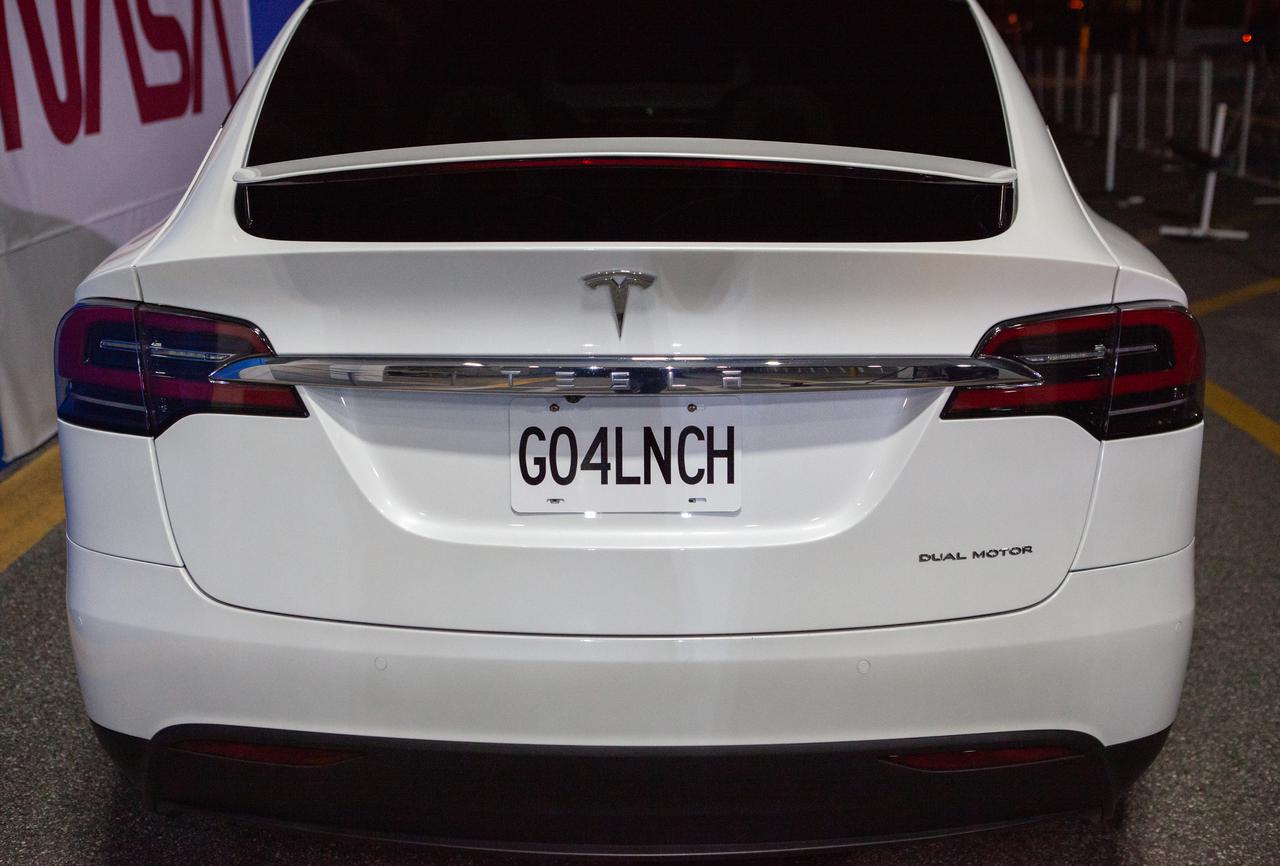
A customized Tesla Model X vehicle is parked outside the Neil A. Armstrong Operations and Checkout Building at NASA’s Kennedy Space Center in Florida on April 27, 2022. Crew-4 astronauts Kjell Lindgren, Bob Hines, Jessica Watkins, and Samantha Cristoforetti will make their way to the vehicles, which will transport them to Launch Complex 39A. Liftoff aboard SpaceX’s Crew Dragon, powered by the company’s Falcon 9 rocket, is scheduled for today at 3:52 a.m. EDT from Pad 39A at Kennedy.
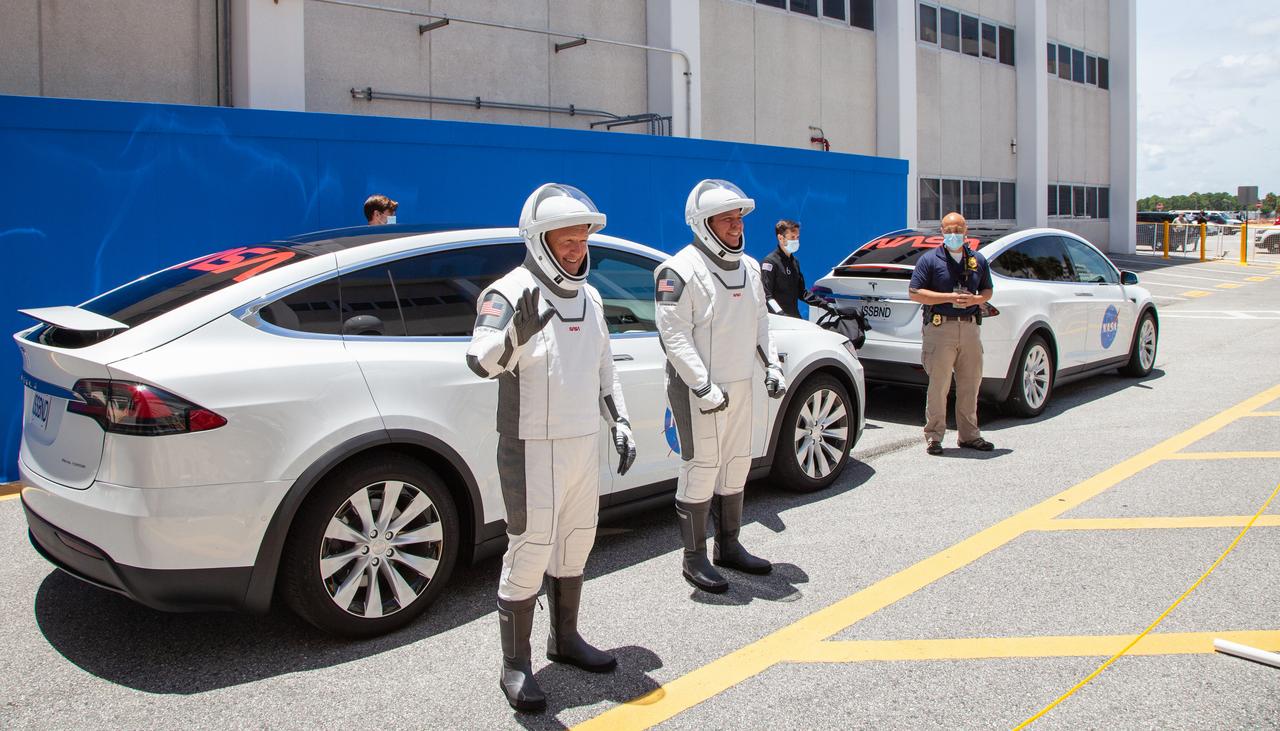
On May 23, 2020, NASA astronauts Robert Behnken (right) and Douglas Hurley pose for a photo as they prepare to take a ride in a Tesla that will transport them from the Neil A. Armstrong Operations and Checkout Building to historic Launch Complex 39A on launch day at the Kennedy Space Center in Florida during a full dress rehearsal ahead of NASA’s SpaceX Demo-2 launch. A SpaceX Falcon 9 rocket and Crew Dragon spacecraft will carry Behnken and Hurley to the International Space Station as part of the agency’s Commercial Crew Program, returning human spaceflight capability to the U.S. after nearly a decade. Launch is slated for 4:33 p.m. EDT on Wednesday, May 27.
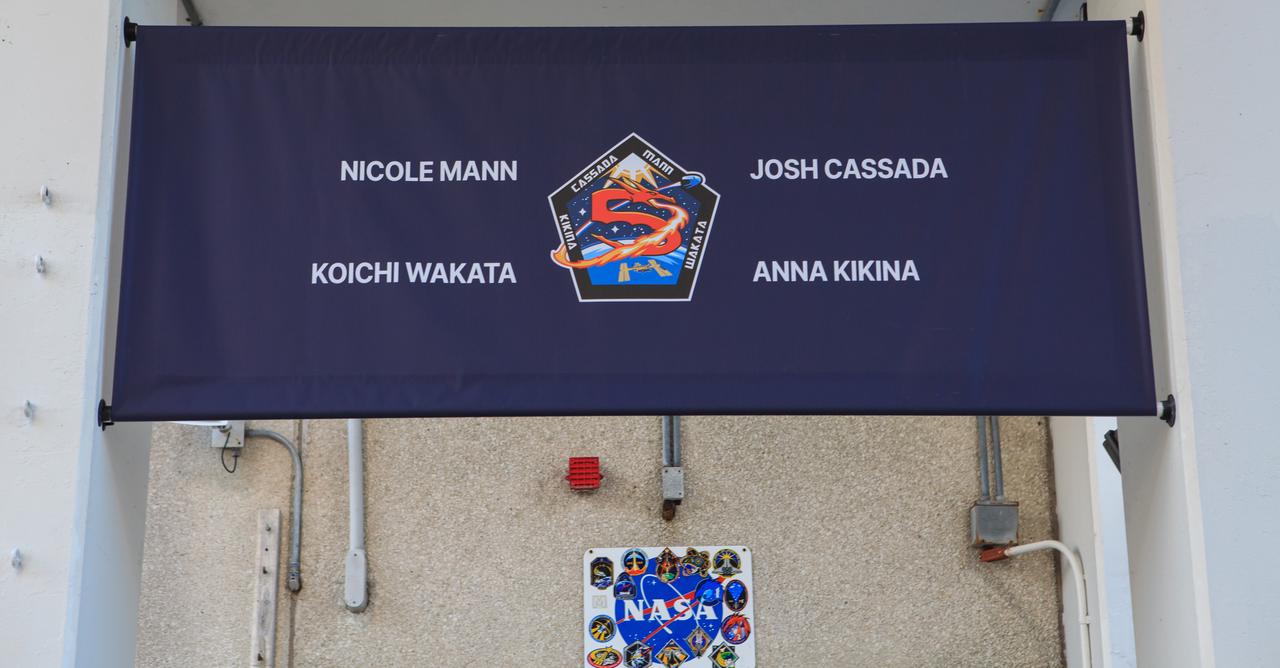
A banner displaying NASA’s SpaceX Crew-5 mission patch and crew names is photographed above the double doors of the Neil A. Armstrong Operations and Checkout Building at the agency’s Kennedy Space Center in Florida on Oct. 5, 2022. NASA astronauts Nicole Mann, spacecraft commander, and Josh Cassada, pilot; Roscosmos cosmonaut Anna Kikina, mission specialist; and JAXA (Japan Aerospace Exploration Agency) astronaut Koichi Wakata, mission specialist, will launch to the International Space Station for a science expedition mission as part of NASA’s Commercial Crew Program. The SpaceX Falcon 9 rocket and Dragon Endurance spacecraft lifted off at noon EDT.
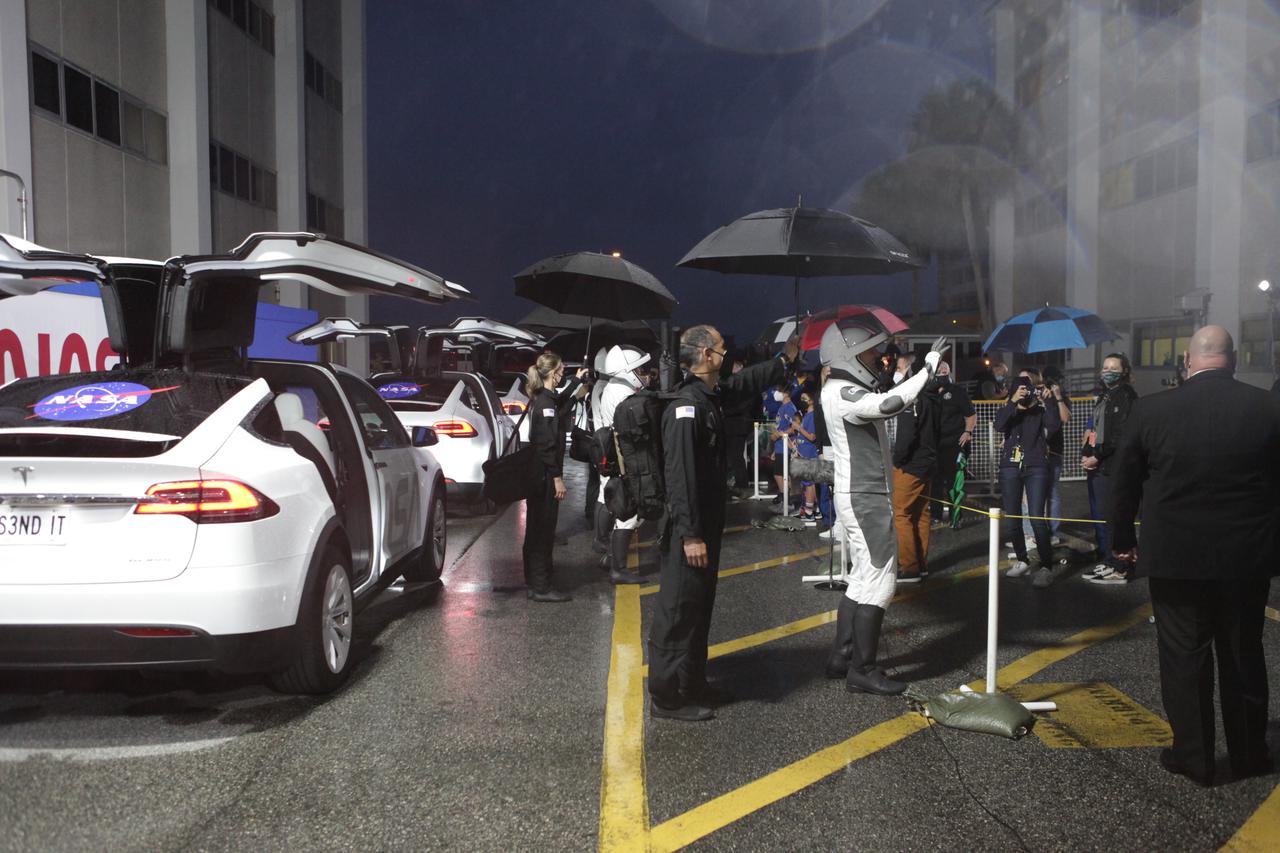
SpaceX Crew-3 astronauts visit with their families after exiting the Neil A. Armstrong Building’s Astronaut Crew Quarters at NASA’s Kennedy Space Center in Florida on launch day, Nov. 10, 2021. NASA astronauts Raja Chari, commander; Tom Marshburn, pilot; and Kayla Barron, mission specialist; along with Matthias Maurer, ESA (European Space Agency) astronaut and mission specialist, will launch in the Crew Dragon Endurance atop the SpaceX Falcon 9 rocket to the International Space Station for NASA’s Commercial Crew Program. Crew-3 is scheduled to launch at 9:03 p.m. EST from Launch Complex 39A at Kennedy.
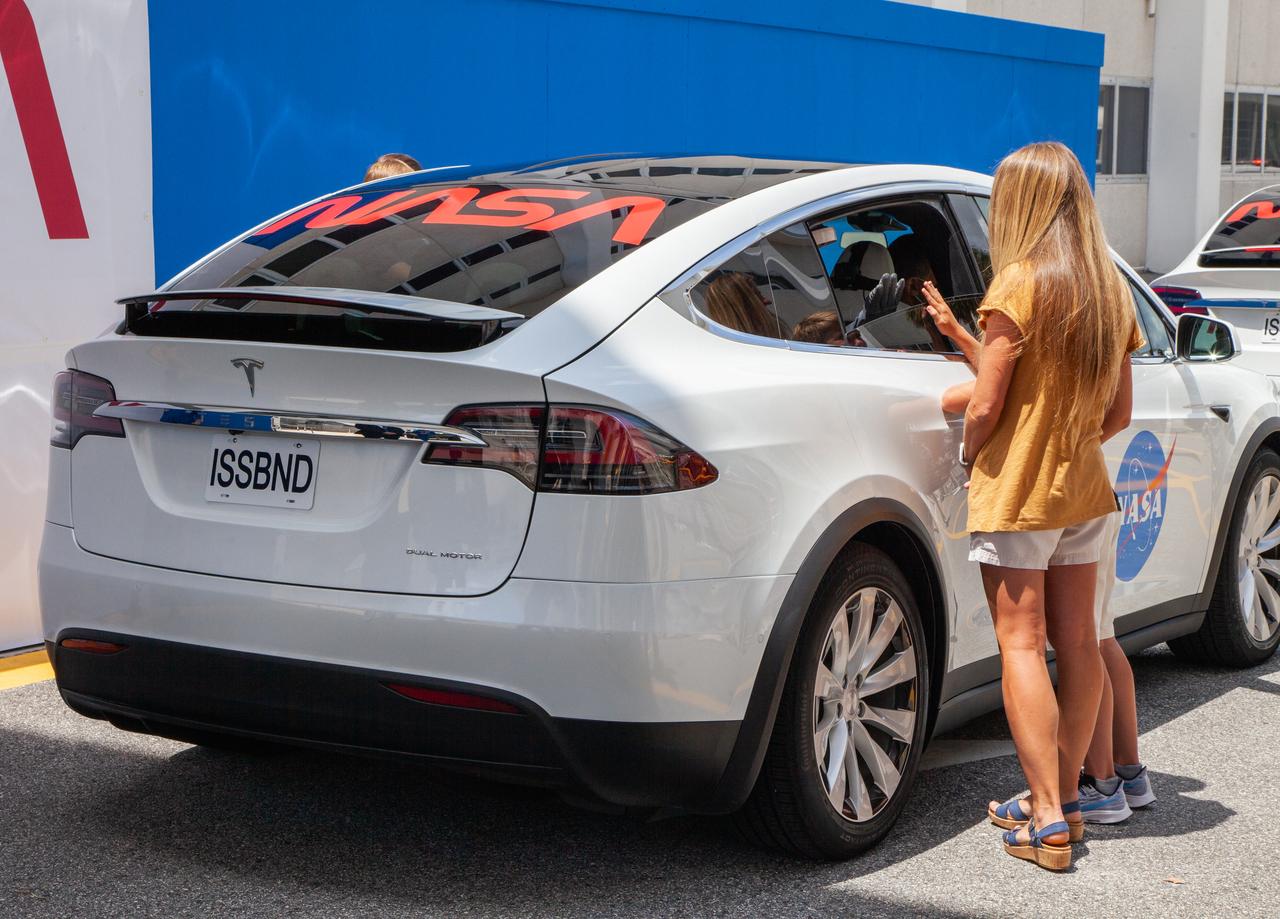
After NASA astronauts Robert Behnken and Douglas Hurley enter the Tesla Model X that will transport them from the Neil A. Armstrong Operations and Checkout Building to historic Launch Complex 39A at the Kennedy Space Center in Florida, their families approach the car to give their goodbyes ahead of the agency’s SpaceX Demo-2 mission on May 30, 2020. Liftoff of the SpaceX Falcon 9 rocket and Crew Dragon spacecraft occurred at 3:22 p.m. EDT. Behnken and Hurley are the first astronauts to launch to the International Space Station from U.S. soil since the end of the Space Shuttle Program in 2011. Part of NASA’s Commercial Crew Program, this will be SpaceX’s final flight test, paving the way for the agency to certify the crew transportation system for regular, crewed flights to the orbiting laboratory.
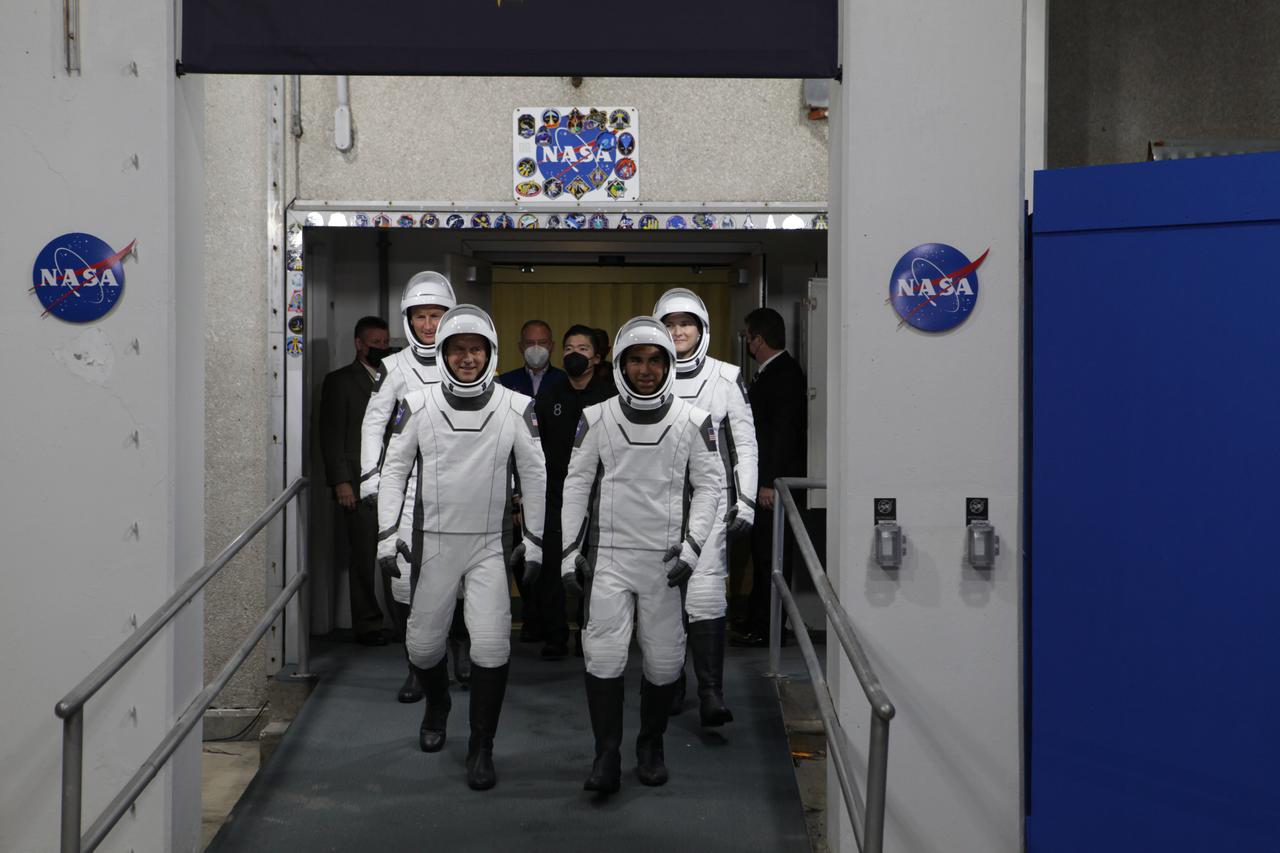
The SpaceX Crew-3 astronauts walk out through the double doors below the Neil A. Armstrong Building’s Astronaut Crew Quarters at NASA’s Kennedy Space Center in Florida on Nov. 10, 2021. They will make their way to the customized Tesla Model X cars that will take them to their spacecraft at Launch Complex 39A. In front, from left are NASA astronauts Raja Chari, commander; and Tom Marshburn, pilot. Behind them, from left are Matthias Maurer, ESA (European Space Agency astronaut) and mission specialist; and NASA astronaut Kayla Barron, mission specialist. The Falcon 9 rocket with Crew Dragon Endurance will launch the four-person crew to the International Space Station for NASA’s Commercial Crew Program. Crew-3 is scheduled to launch at 9:03 p.m. EST from Launch Complex 39A at Kennedy.
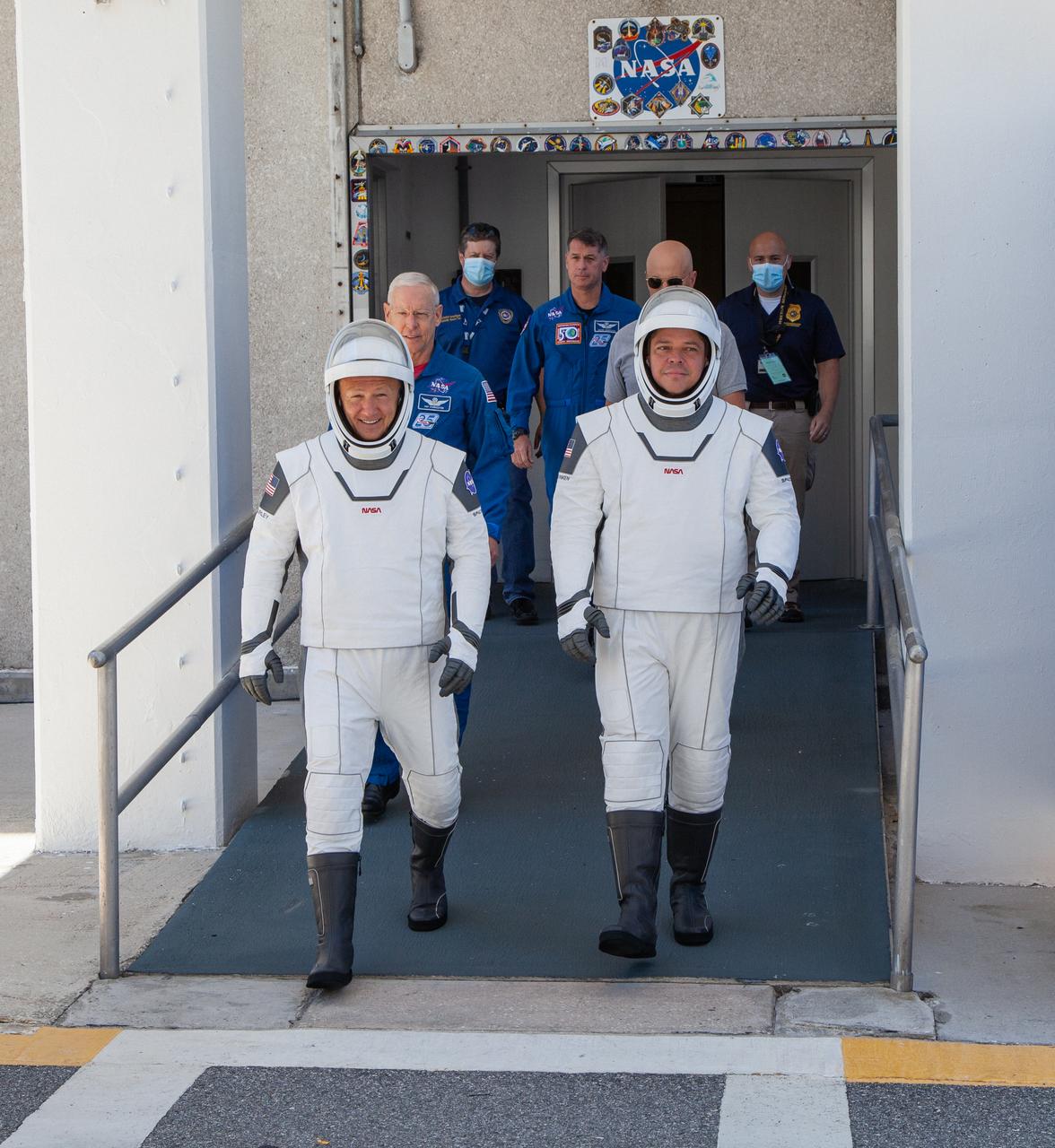
On May 23, 2020, Demo-2 crew members Robert Behnken (right) and Douglas Hurley walk out of the Neil A. Armstrong Operations and Checkout Building at NASA’s Kennedy Space Center in Florida in preparation for transport to Launch Complex 39A during a full dress rehearsal ahead of launch. A SpaceX Falcon 9 rocket and Crew Dragon spacecraft will carry Behnken and Hurley to the International Space Station as part of the agency’s Commercial Crew Program, returning human spaceflight capability to the U.S. after nearly a decade. Launch is slated for 4:33 p.m. EDT on Wednesday, May 27.
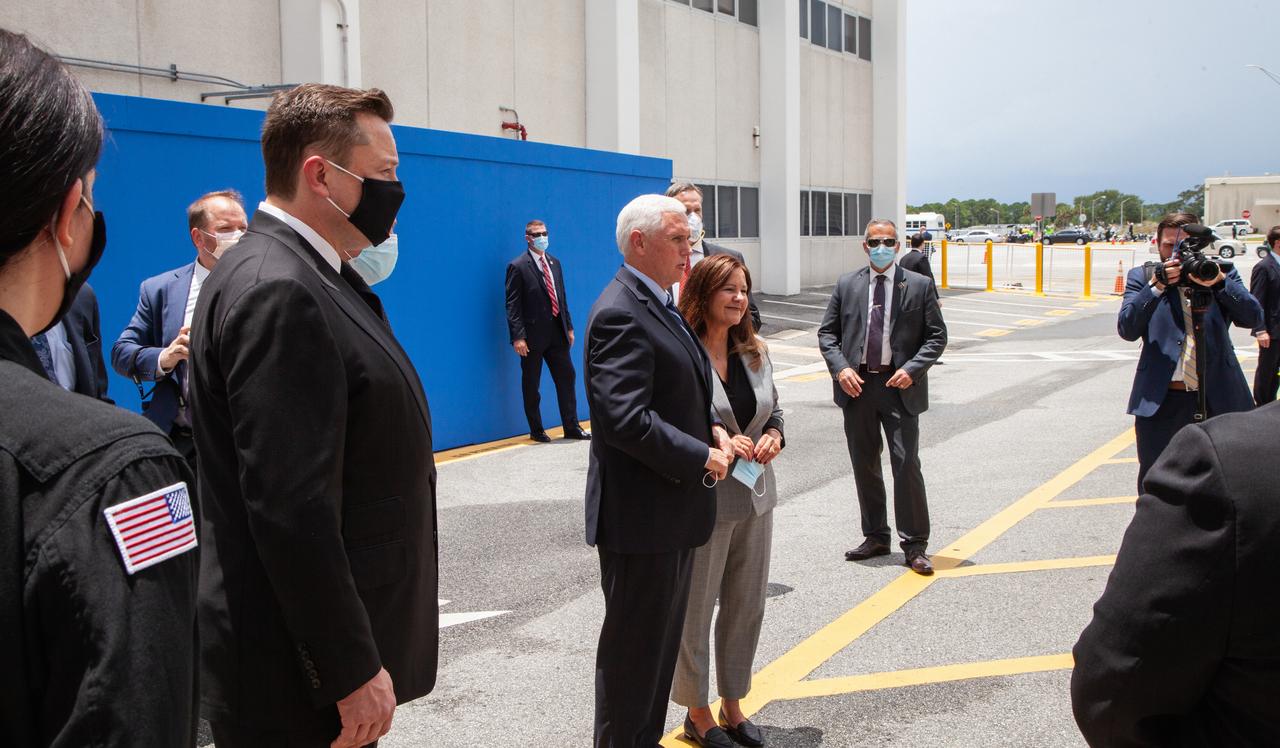
From left, SpaceX CEO and Chief Designer Elon Musk, Vice President Mike Pence and second lady Karen Pence pose for a photo outside of the Neil A. Armstrong Operations and Checkout Building at NASA’s Kennedy Space Center in Florida ahead of the agency’s SpaceX Demo-2 launch. The launch, initially scheduled for May 27, 2020, was scrubbed due to unfavorable weather conditions around Launch Complex 39A. The next launch attempt will be Saturday, May 30. Liftoff of the SpaceX Falcon 9 rocket and Crew Dragon spacecraft is scheduled for 3:22 p.m. EDT from historic Launch Complex 39A. Behnken and Hurley will be the first astronauts to launch to the International Space Station from U.S. soil since the end of the Space Shuttle Program in 2011. Part of NASA’s Commercial Crew Program, this will be SpaceX’s final flight test, paving the way for the agency to certify the crew transportation system for regular, crewed flights to the orbiting laboratory.
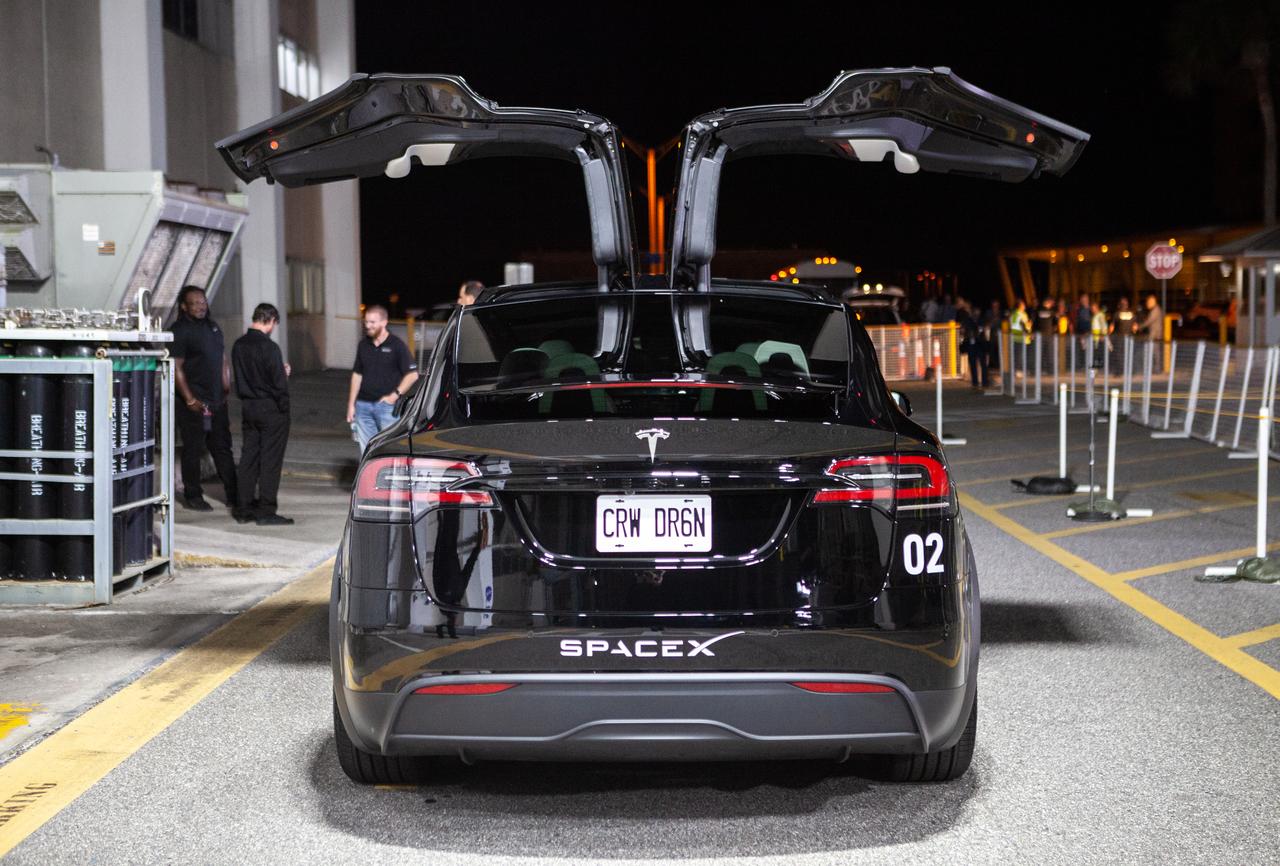
In view outside the Neil Armstrong Operations and Checkout Building at NASA’s Kennedy Space Center in Florida on Feb. 26, 2023, is one of two Tesla vehicles that will transport NASA’s SpaceX Crew-6 astronauts to Launch Complex 39A for launch to the International Space Station. Crew-6 astronauts are NASA astronaut Stephen Bowen, spacecraft commander; NASA astronaut Warren “Woody” Hoburg, pilot; Sultan Alneyadi, UAE (United Arab Emirates) astronaut and mission specialist; and Andrei Fedyaev, Roscosmos cosmonaut and mission specialist. Launch was targeted for 1:45 a.m. EST on Feb. 27 from Launch Complex 39A, but was scrubbed for the day. Crew-6 is the sixth crew rotation mission with SpaceX to the station, and the seventh flight of Dragon with people as part of the agency’s Commercial Crew Program.
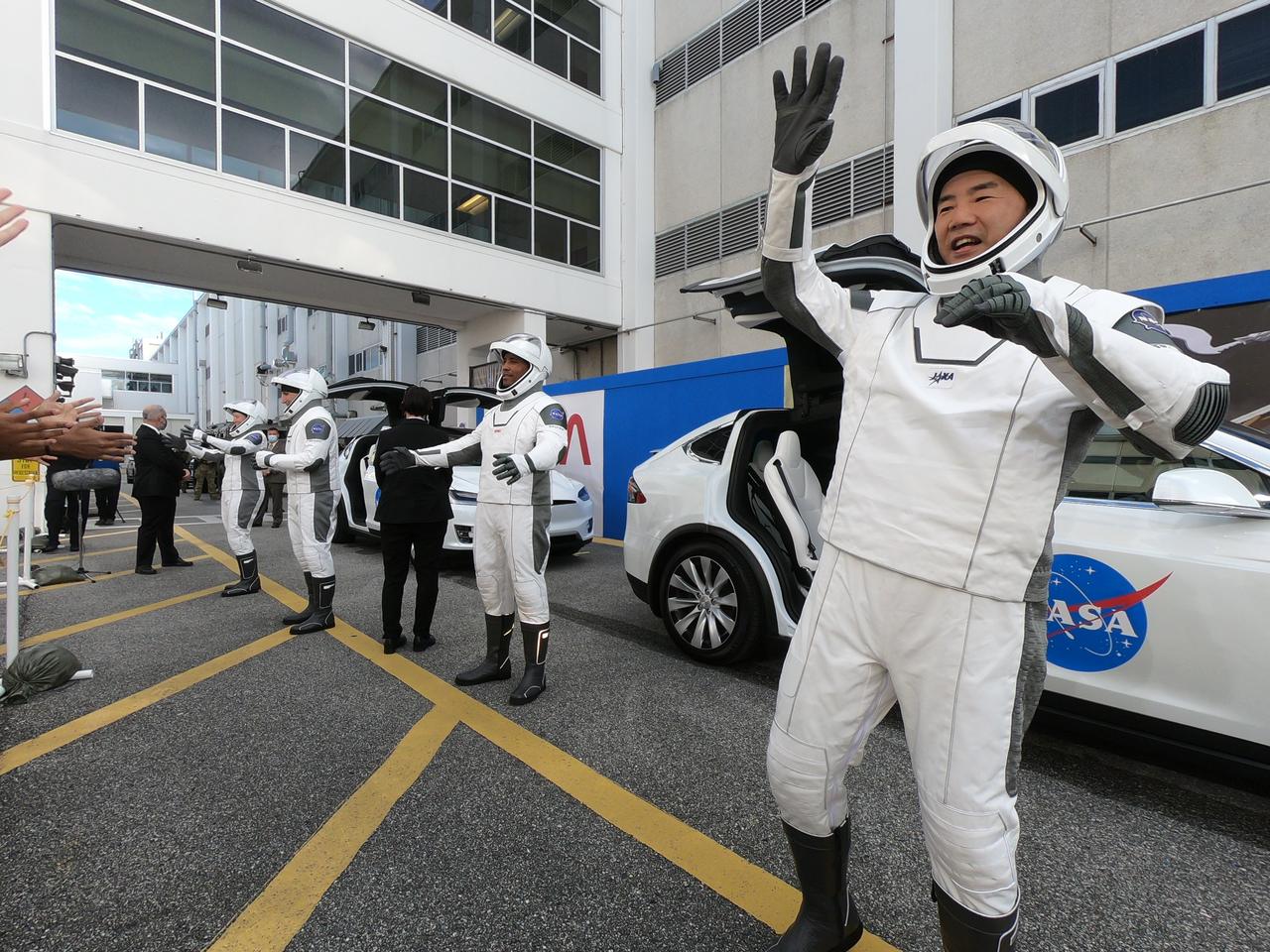
NASA SpaceX’s Crew-1 astronauts get ready to board two Tesla vehicles for the trip to Launch Complex 39A after emerging from the Neil Armstrong Operations and Checkout Building at NASA’s Kennedy Space Center in Florida on Nov. 15, 2020. In view at far right is JAXA astronaut Soichi Noguchi, mission specialist. From left are NASA astronauts Shannon Walker, mission specialist; Michael Hopkins, spacecraft commander; and Victor Glover, pilot. Crew-1 is the first regular crew mission of a U.S. commercial spacecraft with astronauts to the International Space Station as part of NASA’s Commercial Crew Program. The SpaceX Crew Dragon Resilience capsule will launch atop the company’s Falcon 9 rocket from Pad 39A to the space station for a six-month science mission.
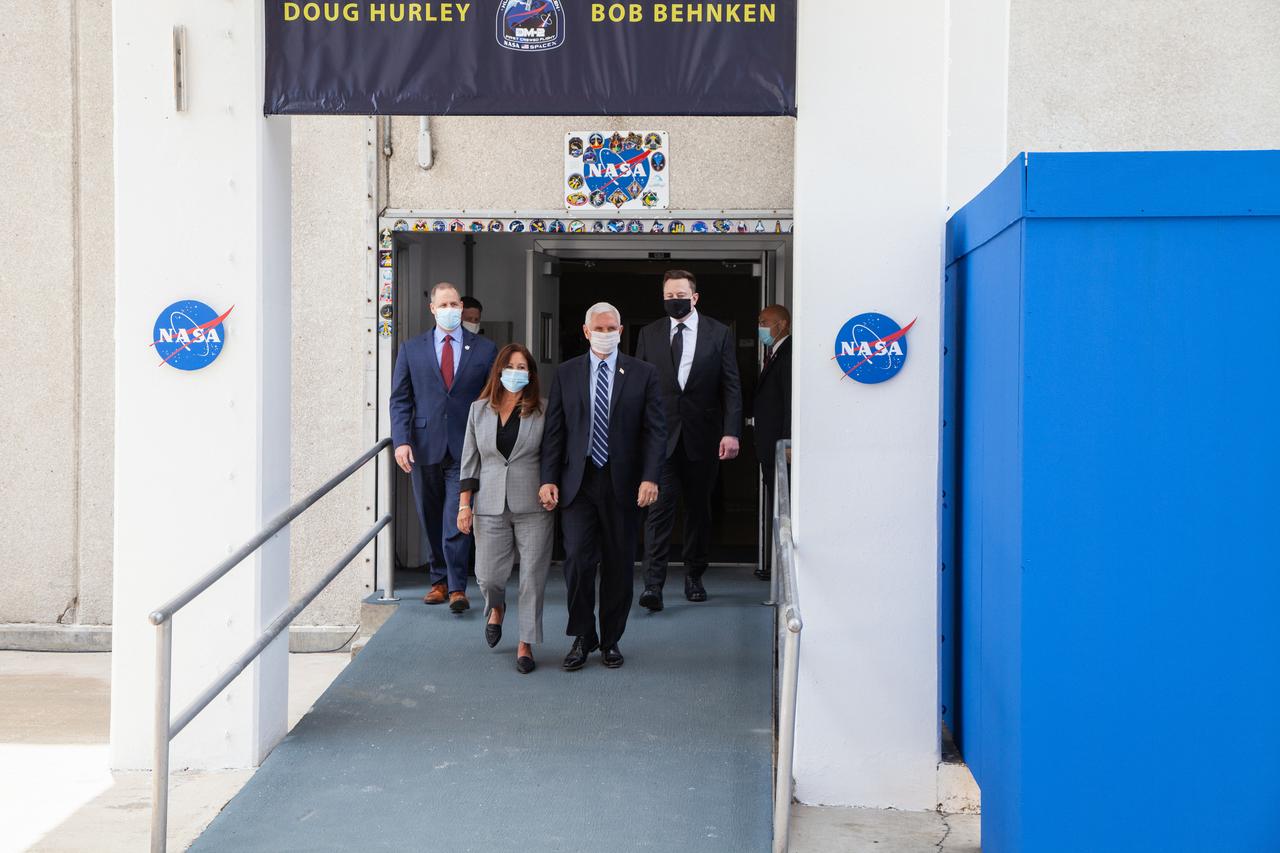
Second lady Karen Pence (left) and Vice President Mike Pence exit the Neil A. Armstrong Operations and Checkout Building at the agency’s Kennedy Space Center in Florida ahead of NASA’s SpaceX Demo-2 launch. Behind them are NASA Administrator Jim Bridenstine (left) and SpaceX CEO and Chief Designer Elon Musk. The launch, initially scheduled for May 27, 2020, was scrubbed due to unfavorable weather conditions around Launch Complex 39A. The next launch attempt will be Saturday, May 30. Liftoff of the SpaceX Falcon 9 rocket and Crew Dragon spacecraft is scheduled for 3:22 p.m. EDT from historic Launch Complex 39A. Behnken and Hurley will be the first astronauts to launch to the International Space Station from U.S. soil since the end of the Space Shuttle Program in 2011. Part of NASA’s Commercial Crew Program, this will be SpaceX’s final flight test, paving the way for the agency to certify the crew transportation system for regular, crewed flights to the orbiting laboratory.
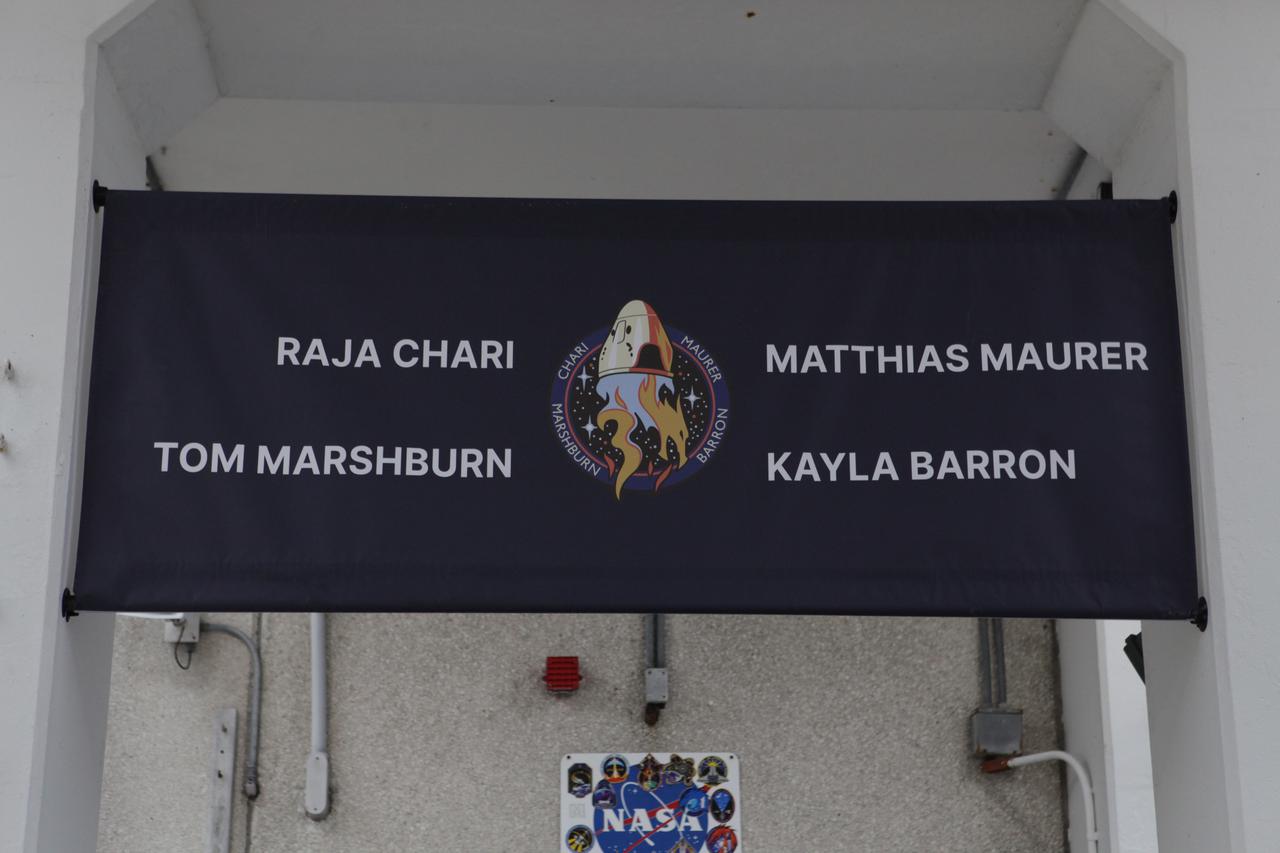
The SpaceX Crew-3 astronaut names and mission insignia are on a banner in the Astronaut Crew Quarters inside the Neil Armstrong Operations and Checkout Building at NASA’s Kennedy Space Center in Florida on launch day, Nov. 10, 2021. NASA astronauts Raja Chari, commander; Tom Marshburn, pilot; Kayla Barron, mission specialist; and Matthias Maurer, ESA (European Space Agency) astronaut and mission specialist, will launch in Crew Dragon Endurance atop the SpaceX Falcon 9 rocket to the International Space Station for NASA’s Commercial Crew Program. Crew-3 is scheduled to launch at 9:03 p.m. EST from Launch Complex 39A at Kennedy.
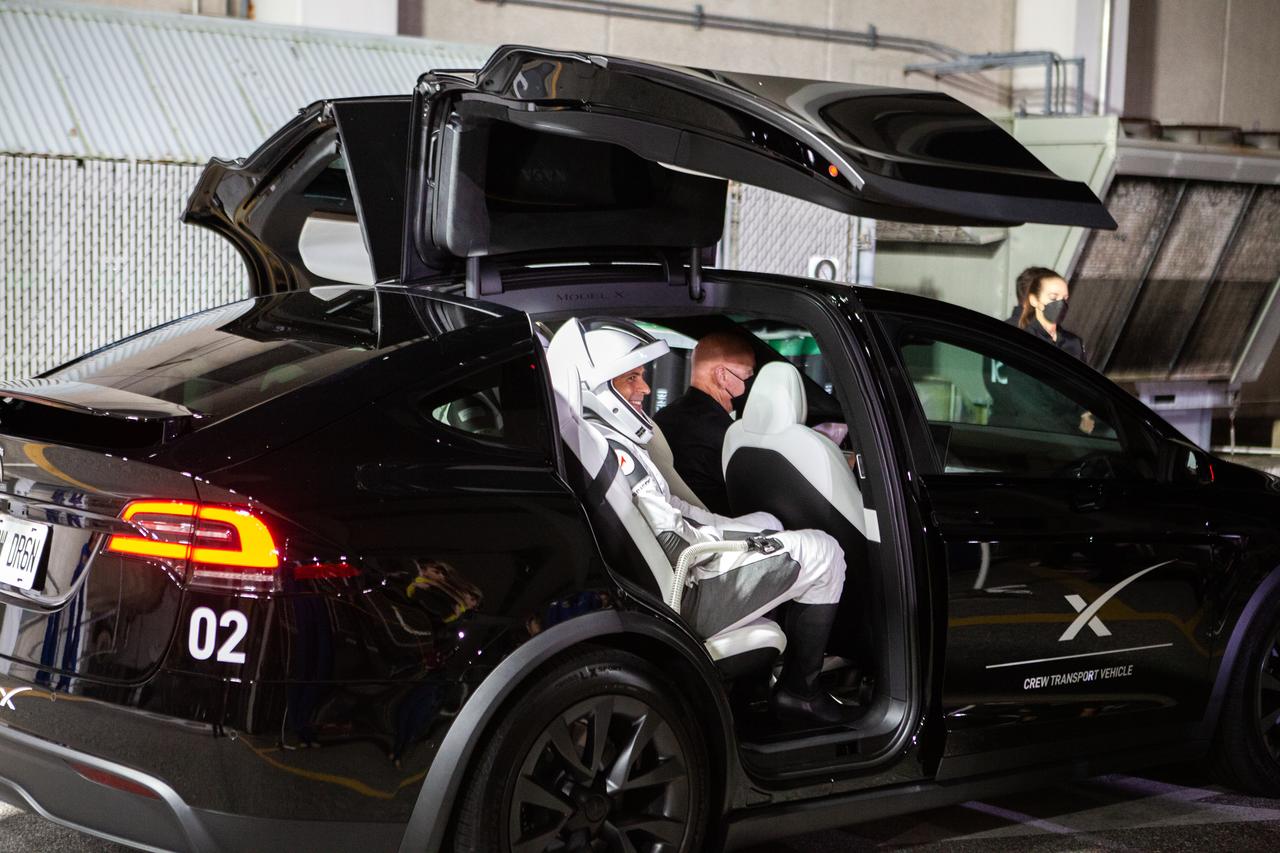
In view outside the Neil Armstrong Operations and Checkout Building at NASA’s Kennedy Space Center in Florida on March 1, 2023, SpaceX Crew-6 astronauts board the first of two Tesla vehicles that will transport NASA’s them to Launch Complex 39A for launch to the International Space Station. Launch of the Dragon spacecraft Endeavour atop the Falcon 9 rocket is targeted for 12:34 a.m. EST on March 2 from Launch Complex 39A. Crew-6 is the sixth crew rotation mission with SpaceX to the station, and the seventh flight of Dragon with people as part of the agency’s Commercial Crew Program.
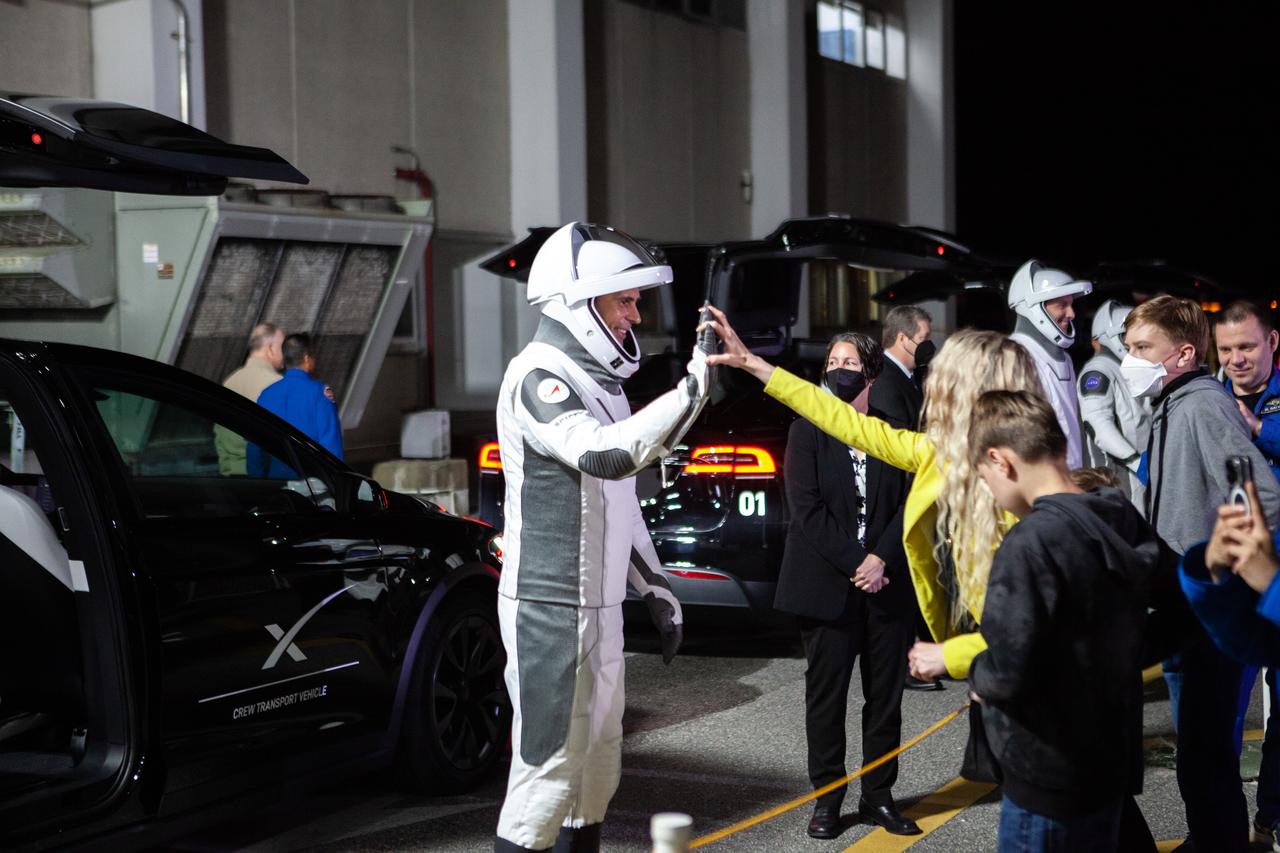
NASA’s SpaceX Crew-6 astronauts greet their family members after walking out of the Neil Armstrong Operations and Checkout Building at the agency’s Kennedy Space Center in Florida on Feb. 26, 2023. At far left is Andrey Fedyaev, Roscosmos cosmonaut and mission specialist. The crewmembers will board one of the Tesla vehicles for the trip to Kennedy’s Launch Complex 39A, where they will launch to the International Space Station aboard SpaceX’s Dragon Endeavour spacecraft atop the Falcon 9 rocket. Launch is targeted for 12:34 a.m. EST on March 2 from Launch Complex 39A. Crew-6 is the sixth crew rotation mission with SpaceX to the station, and the seventh flight of Dragon with people as part of the agency’s Commercial Crew Program.
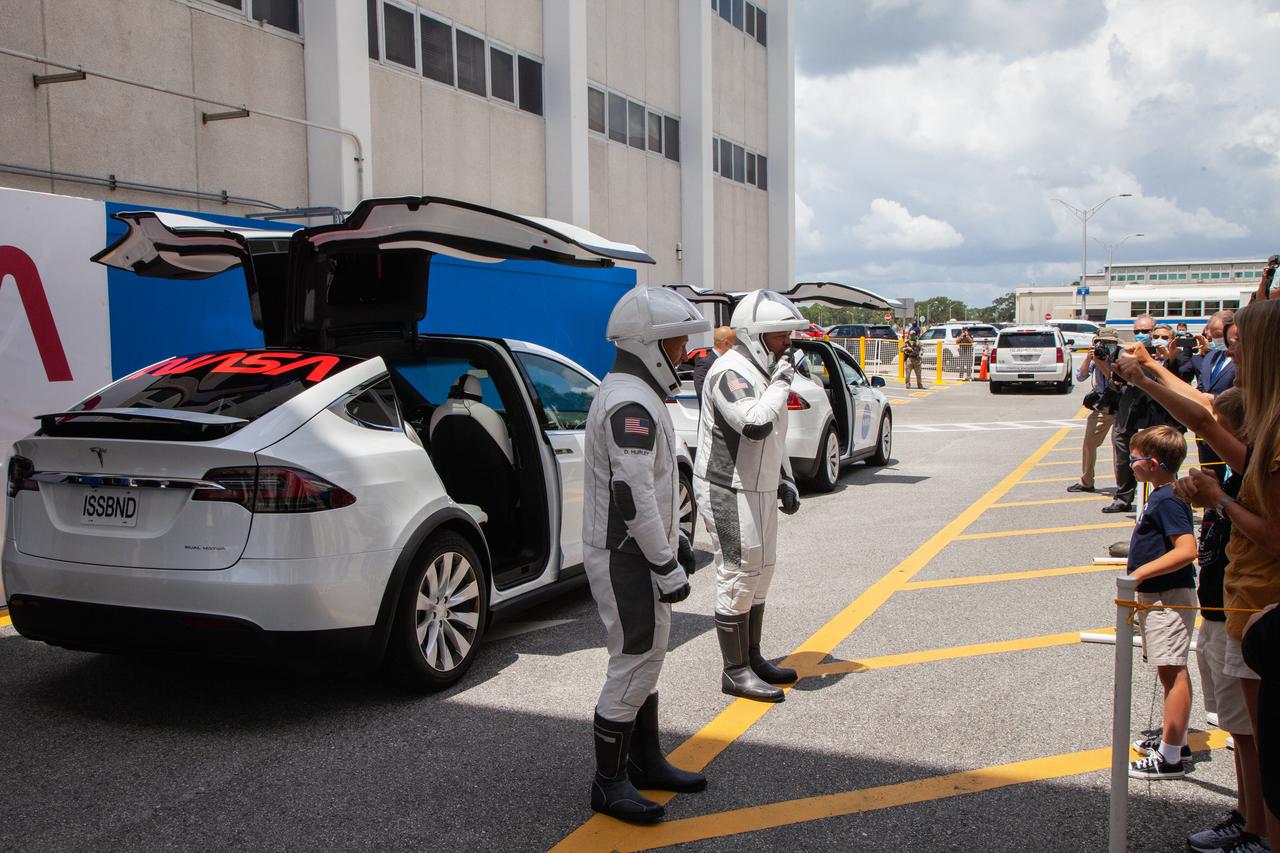
NASA astronauts Douglas Hurley (left) and Robert Behnken speak to their families before entering the Tesla Model X that will transport them from the Neil A. Armstrong Operations and Checkout Building to historic Launch Complex 39A at the Kennedy Space Center in Florida for NASA’s SpaceX Demo-2 launch on May 30, 2020. The SpaceX Falcon 9 rocket and Crew Dragon spacecraft lifted off at 3:22 p.m. EDT. Behnken and Hurley are the first astronauts to launch to the International Space Station from U.S. soil since the end of the Space Shuttle Program in 2011. Part of NASA’s Commercial Crew Program, this will be SpaceX’s final flight test, paving the way for the agency to certify the crew transportation system for regular, crewed flights to the orbiting laboratory.
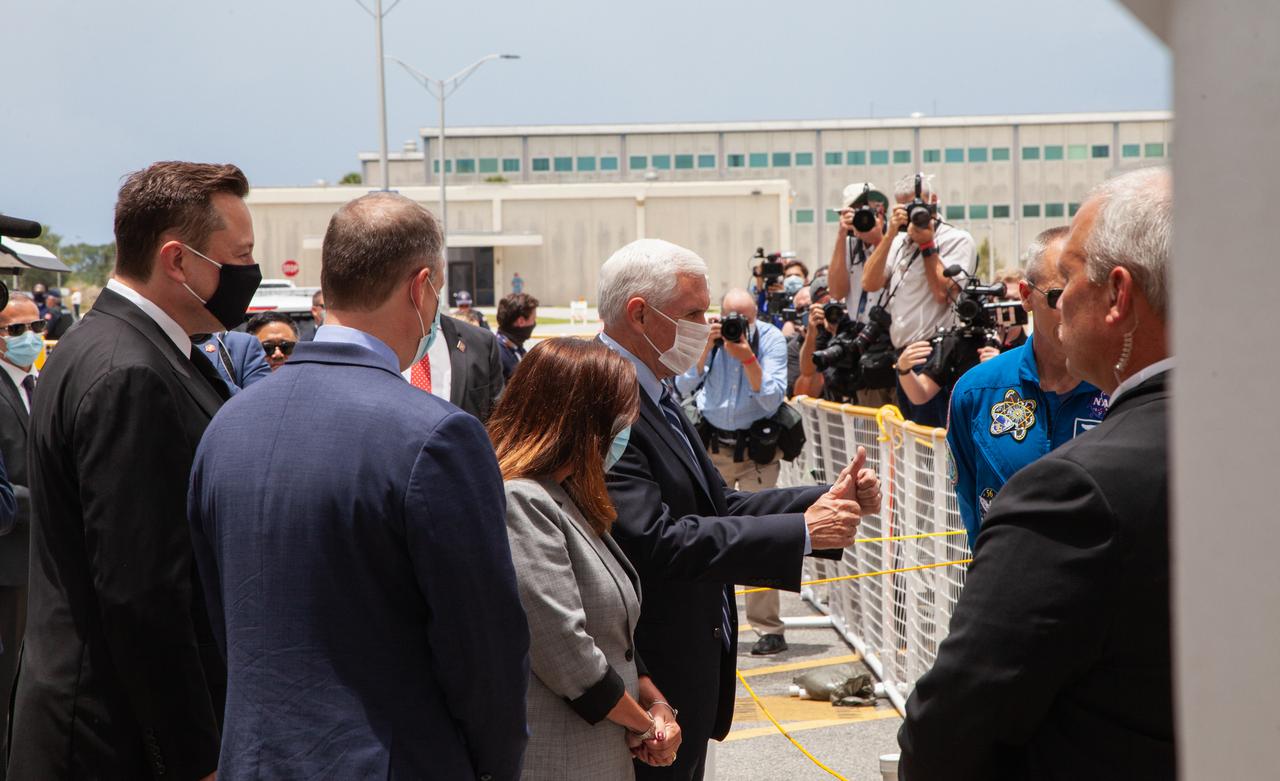
From left, SpaceX CEO and Chief Designer Elon Musk, NASA Administrator Jim Bridenstine, second lady Karen Pence and Vice President Mike Pence wait to greet NASA astronauts Robert Behnken and Douglas Hurley outside of the Neil A. Armstrong Operations and Checkout Building at the agency’s Kennedy Space Center in Florida ahead of NASA’s SpaceX Demo-2 launch. The launch, initially scheduled for May 27, 2020, was scrubbed due to unfavorable weather conditions around Launch Complex 39A. The next launch attempt will be Saturday, May 30. Liftoff of the SpaceX Falcon 9 rocket and Crew Dragon spacecraft is scheduled for 3:22 p.m. EDT from historic Launch Complex 39A. Behnken and Hurley will be the first astronauts to launch to the International Space Station from U.S. soil since the end of the Space Shuttle Program in 2011. Part of NASA’s Commercial Crew Program, this will be SpaceX’s final flight test, paving the way for the agency to certify the crew transportation system for regular, crewed flights to the orbiting laboratory.
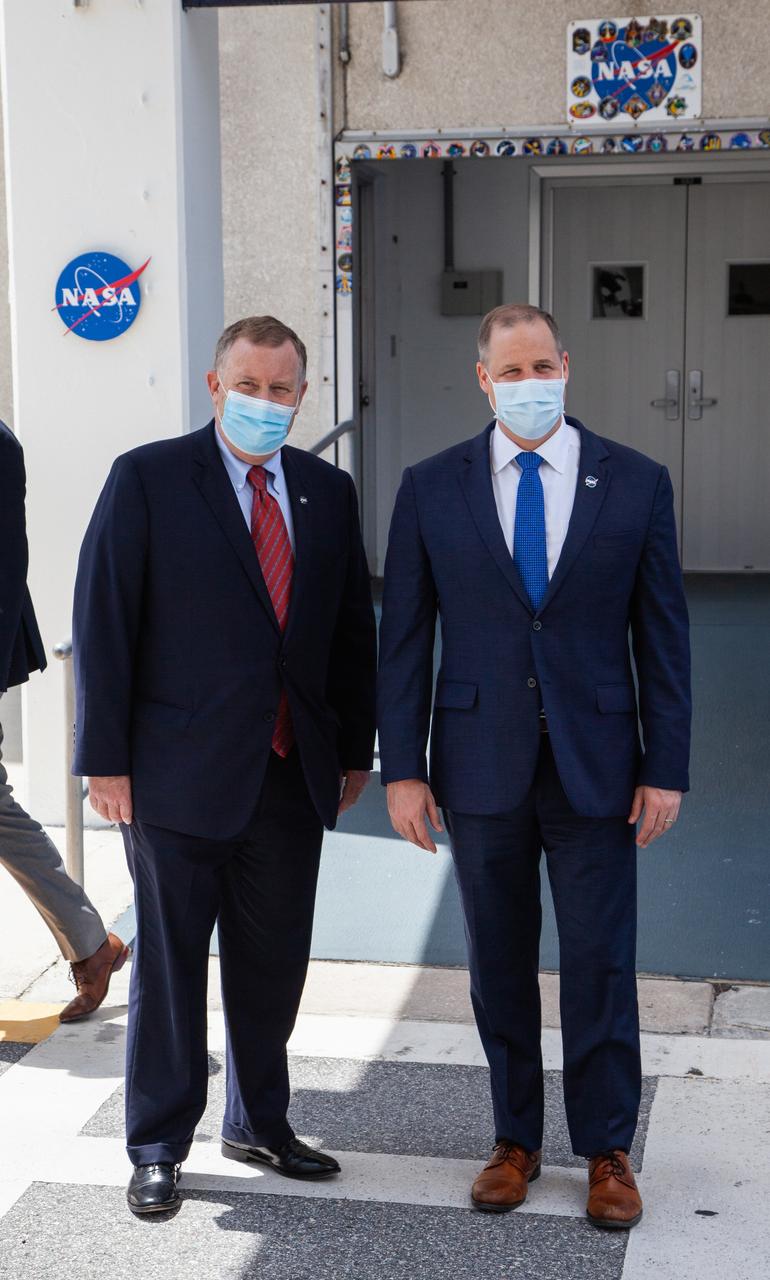
NASA Deputy Administrator Jim Morhard (left) and Administrator Jim Bridenstine pose for a photo outside of the Neil A. Armstrong Operations and Checkout Building at the agency’s Kennedy Space Center in Florida as they wait to greet NASA astronauts Robert Behnken and Douglas Hurley ahead of NASA’s SpaceX Demo-2 launch on May 30, 2020. The SpaceX Falcon 9 rocket and Crew Dragon spacecraft lifted off at 3:22 p.m. EDT from Kennedy’s historic Launch Complex 39A. Behnken and Hurley are the first astronauts to launch to the International Space Station from U.S. soil since the end of the Space Shuttle Program in 2011. Part of NASA’s Commercial Crew Program, this will be SpaceX’s final flight test, paving the way for the agency to certify the crew transportation system for regular, crewed flights to the orbiting laboratory.
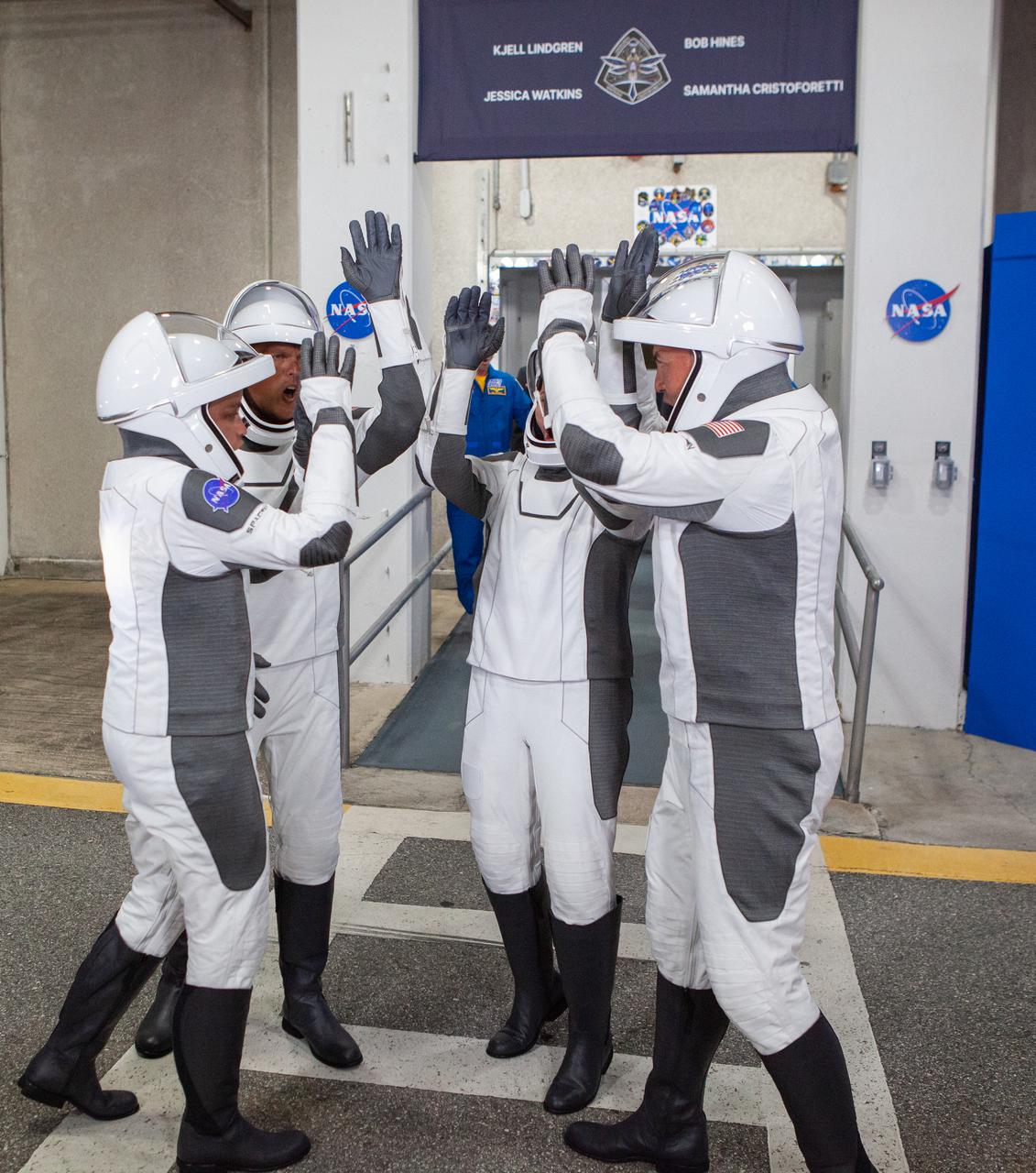
Crew-4 astronauts Jessica Watkins, Bob Hines, Samantha Cristoforetti, and Kjell Lindgren form a huddle after walking out through the double doors below the Neil A. Armstrong Building’s Astronaut Crew Quarters at NASA’s Kennedy Space Center in Florida on April 27, 2022. They are making their way to the customized Tesla Model X vehicles that will take them to their spacecraft at Launch Complex 39A. SpaceX’s Crew Dragon, powered by the company’s Falcon 9 rocket, will carry the four-person crew to the International Space Station as part of NASA’s Commercial Crew Program. Crew-4 is scheduled to launch today at 3:52 a.m. EDT, from Pad 39A at Kennedy.
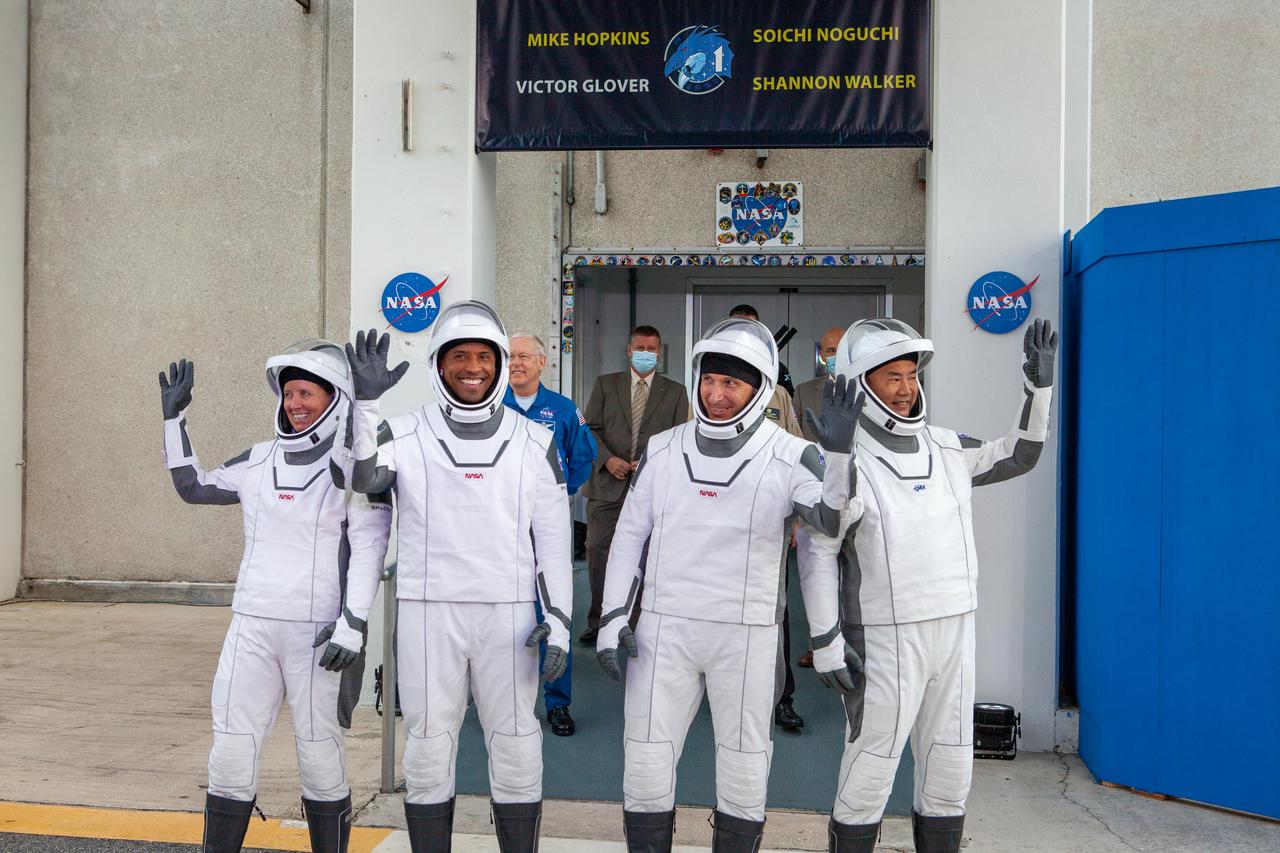
NASA SpaceX’s Crew-1 astronauts emerge from the Neil Armstrong Operations and Checkout Building at NASA’s Kennedy Space Center in Florida on Nov. 15, 2020 and stop to wave to family members, guests and members of the media. From left are NASA astronaut Shannon Walker, mission specialist; Victor Glover, pilot; NASA astronaut Michael Hopkins, spacecraft commander and JAXA astronaut Soichi Noguchi, mission specialist. They will board two Tesla vehicles for the trip to Launch Complex 39A. Crew-1 is the first regular crew mission of a U.S. commercial spacecraft with astronauts to the International Space Station as part of NASA’s Commercial Crew Program. The SpaceX Crew Dragon Resilience capsule will launch atop the company’s Falcon 9 rocket from Pad 39A to the space station for a six-month science mission.
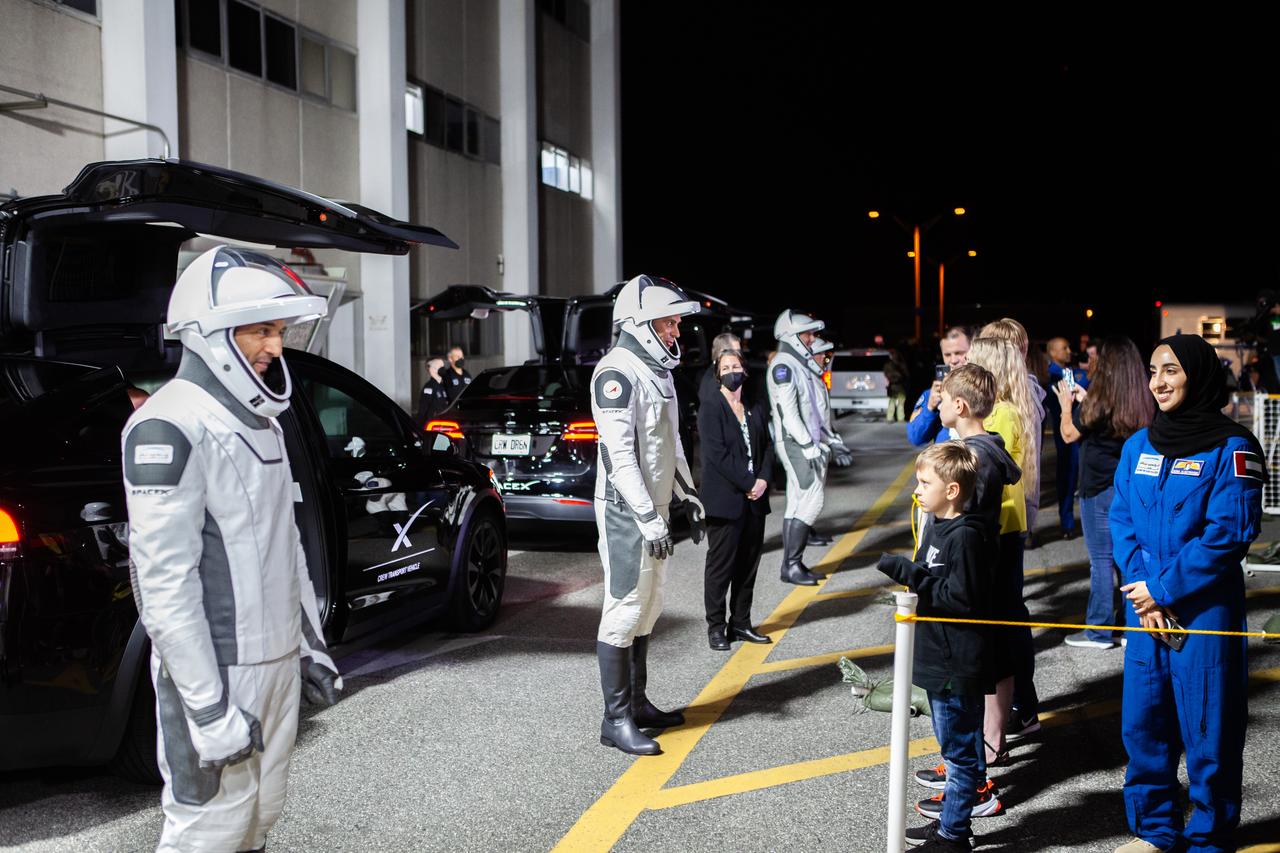
NASA’s SpaceX Crew-6 astronauts greet their family members after walking out of the Neil Armstrong Operations and Checkout Building at the agency’s Kennedy Space Center in Florida on March 1, 2023. From left are Sultan Alneyadi, UAE (United Arab Emirates) astronaut and mission specialist; Andrey Fedyaev, Roscosmos cosmonaut and mission specialist; NASA astronaut Warren Hoburg, pilot; and NASA astronaut Stephen Bowen, spacecraft commander. The crewmembers will board one of the Tesla vehicles for the trip to Kennedy’s Launch Complex 39A, where they will launch to the International Space Station aboard SpaceX’s Dragon Endeavour spacecraft atop the Falcon 9 rocket. Launch is targeted for 12:34 a.m. EST on March 2 from Launch Complex 39A. Crew-6 is the sixth crew rotation mission with SpaceX to the station, and the seventh flight of Dragon with people as part of the agency’s Commercial Crew Program.
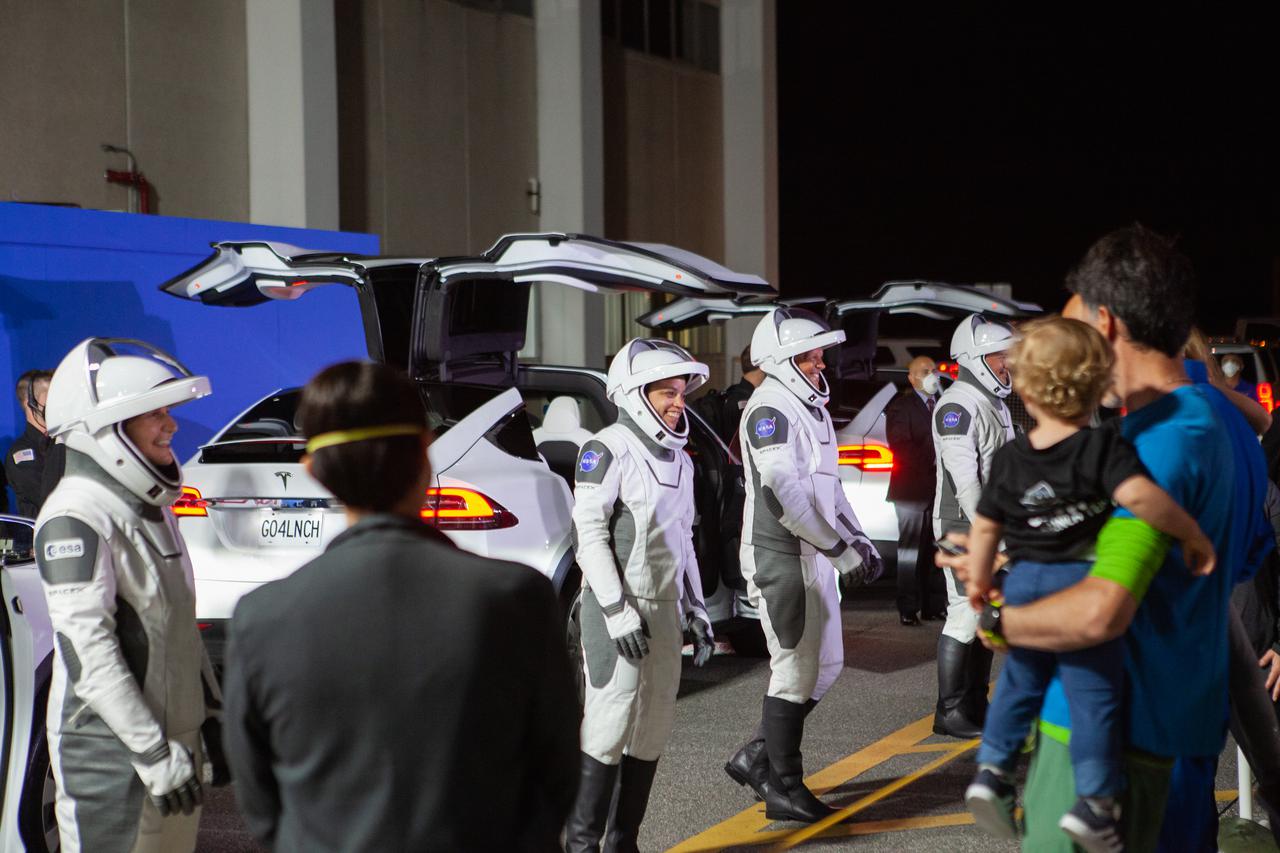
Crew-4 astronauts Kjell Lindgren, Samantha Cristoforetti, Bob Hines, and Jessica Watkins wave to their families outside of the Neil Armstrong Operations and Checkout Building at NASA’s Kennedy Space Center in Florida before getting into the customized Tesla Model X vehicles that will transport them to their spacecraft at Launch Complex 39A. SpaceX’s Crew Dragon, powered by the company’s Falcon 9 rocket, will carry the four-person crew to the International Space Station as part of NASA’s Commercial Crew Program. Crew-4 is scheduled to launch today at 3:52 a.m. EDT, from Pad 39A at Kennedy.
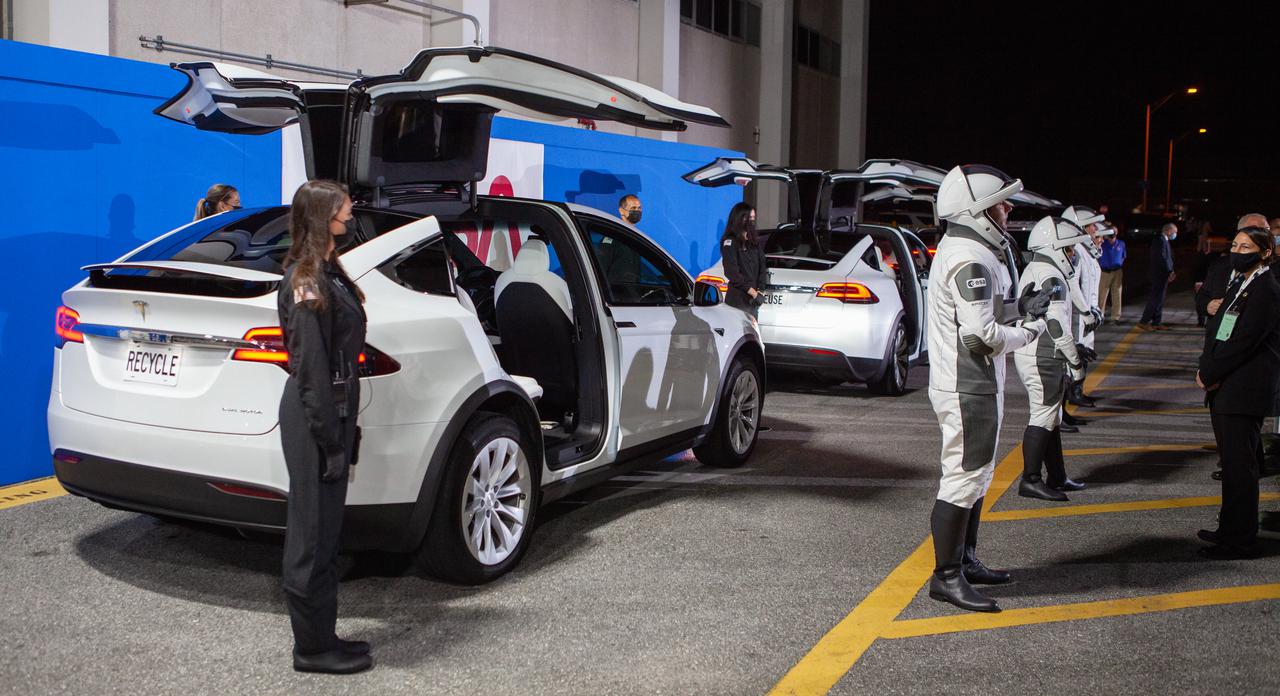
NASA SpaceX’s Crew-2 astronauts say goodbye to their families outside of the Neil Armstrong Operations and Checkout Building at NASA’s Kennedy Space Center in Florida on April 23, 2021. NASA astronauts Shane Kimbrough and Megan McArthur, ESA astronaut Thomas Pesquet, and JAXA astronaut Akihiko Hoshide will then board two Tesla vehicles for the trip to Kennedy’s Launch Complex 39A. Crew-2 is the second regular crew mission of a U.S. commercial spacecraft with astronauts to the International Space Station as part of NASA’s Commercial Crew Program. The SpaceX Crew Dragon Endeavour will launch atop the company’s Falcon 9 rocket from Pad 39A to the space station for a six-month science mission.