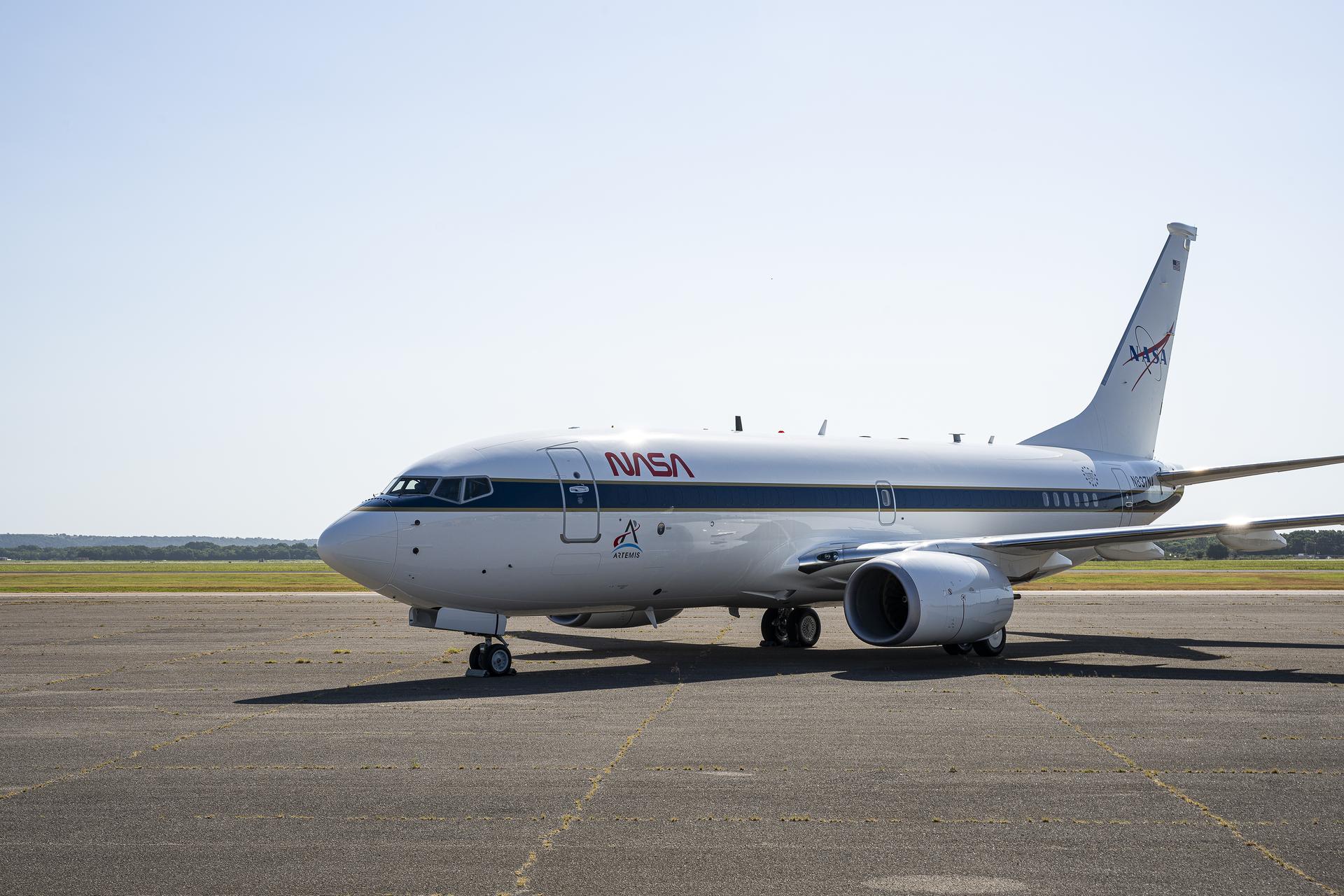
A newly painted NASA 737 aircraft sits on a ramp in Oklahoma on Thursday, Aug. 13, 2026. After modifications, this aircraft will perform lunar-gravity parabolic flights to validate astronaut lunar suits and associated crew systems required to support Artemis mission objectives. Flight testing will happen at NASA’s Johnson Space Center in Houston for reduced-gravity operations, with oversight by NASA’s Armstrong Flight Research Center in Edwards, California. In addition, the aircraft will serve as a key asset for systems‑integration research for flight testing autonomy, sensors, and other digital systems.
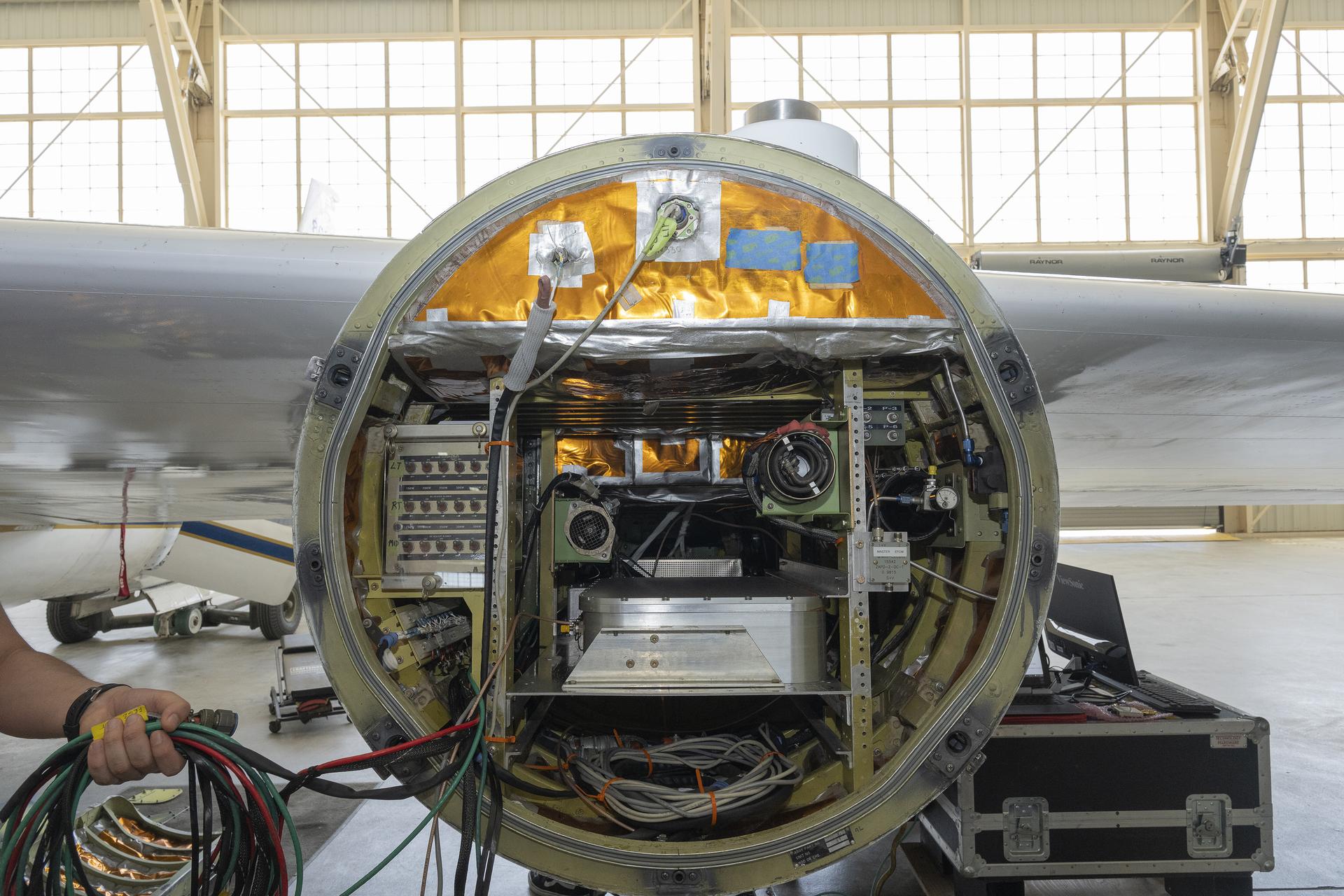
An ER‑2 aircraft based at NASA’s Armstrong Flight Research Center in Edwards, California, carries a pod full of instruments for the INjected Smoke and PYRocumulonimbus Experiment (INSPYRE) on Thursday, July 9, 2026. This Earth science campaign studies wildfire‑generated thunderstorms. Researchers are seeking to better understand how these storms form, how high the storms send smoke, where this smoke travels, and the effect after the smoke reaches upper layers of the atmosphere.
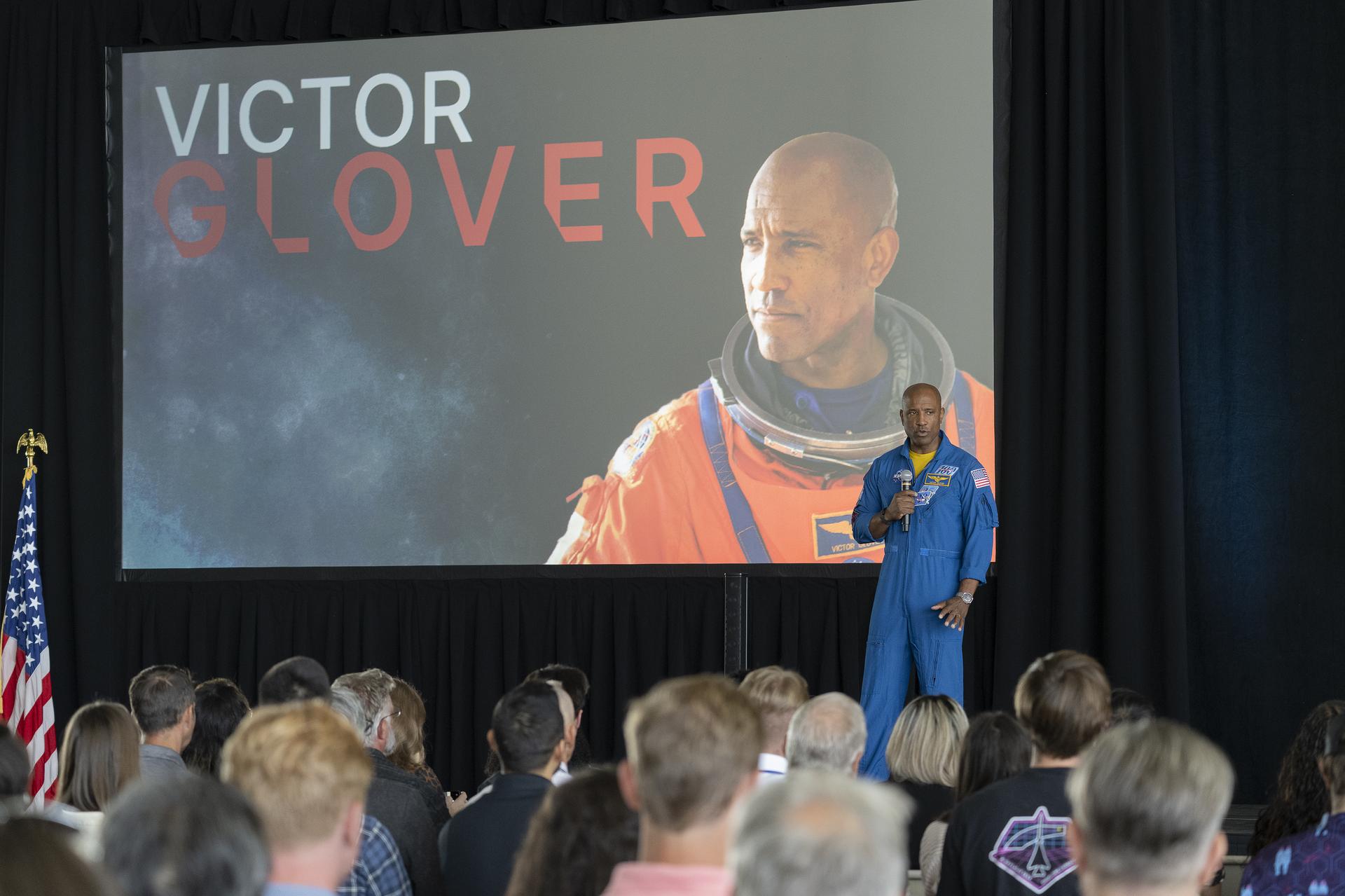
NASA Artemis II astronaut Victor Glover speaks with the workforce at NASA’s Armstrong Flight Research Center in Edwards, California, on Tuesday, Aug. 25, 2026. Glover recounted his journey through the Navy, being a test pilot, and the Artemis II mission.
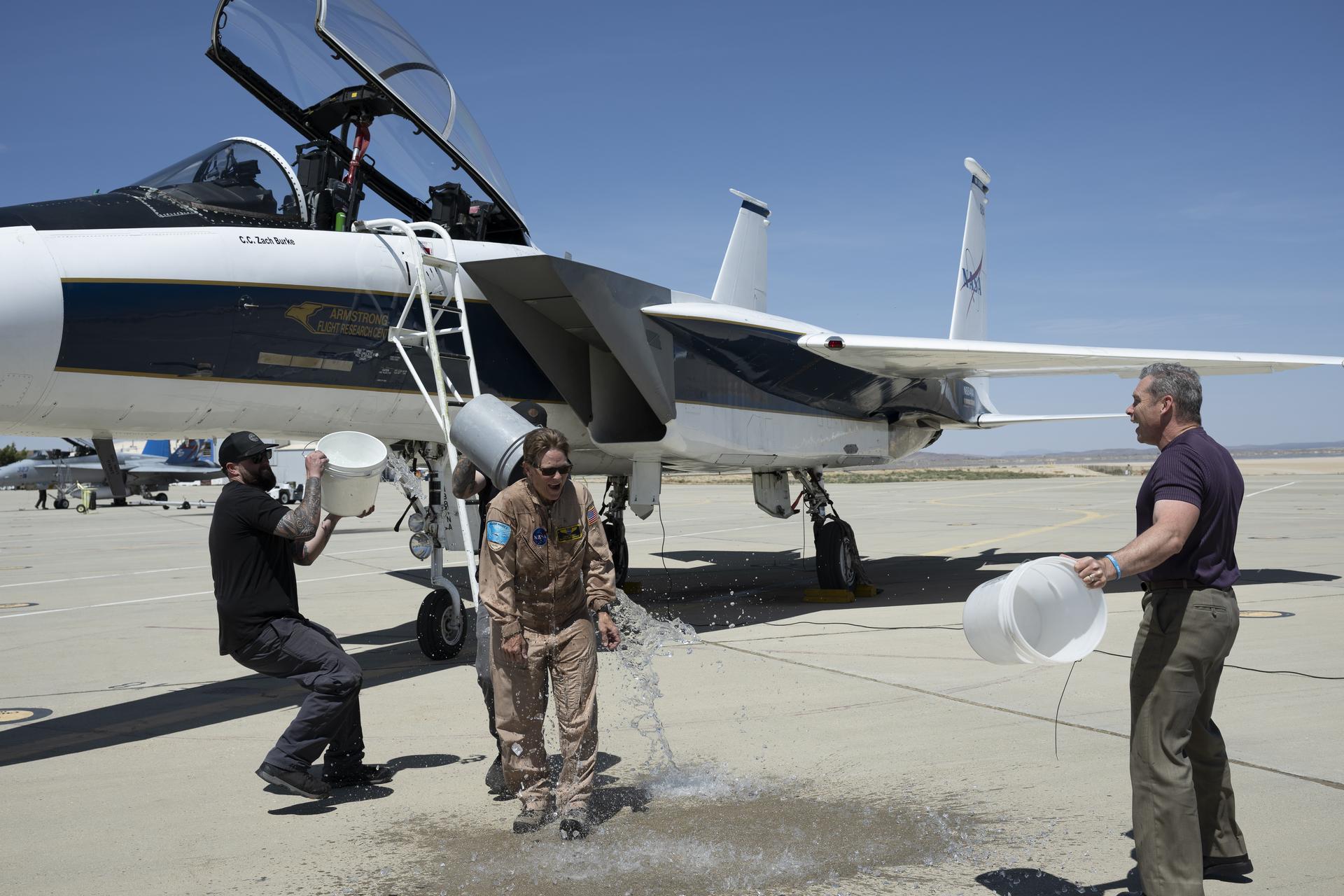
F-15 aircraft crew chief Zack Burke, left, and X-59 mechanic Jamie Trescott, center back, splash buckets of ice water on NASA aerial photographer Carla Thomas in celebration of her 1,000th flight at NASA’s Armstrong Flight Research Center in Edwards, California, on Monday, April 20, 2026. Tim Krall, NASA Armstrong support aircraft fleet manager, watches. Thomas completed her flight in the backseat of a NASA F-15 aircraft flown by NASA Armstrong chief pilot Wayne Ringelberg. For 38 years, Thomas has captured aerial photographs of research and science flights.
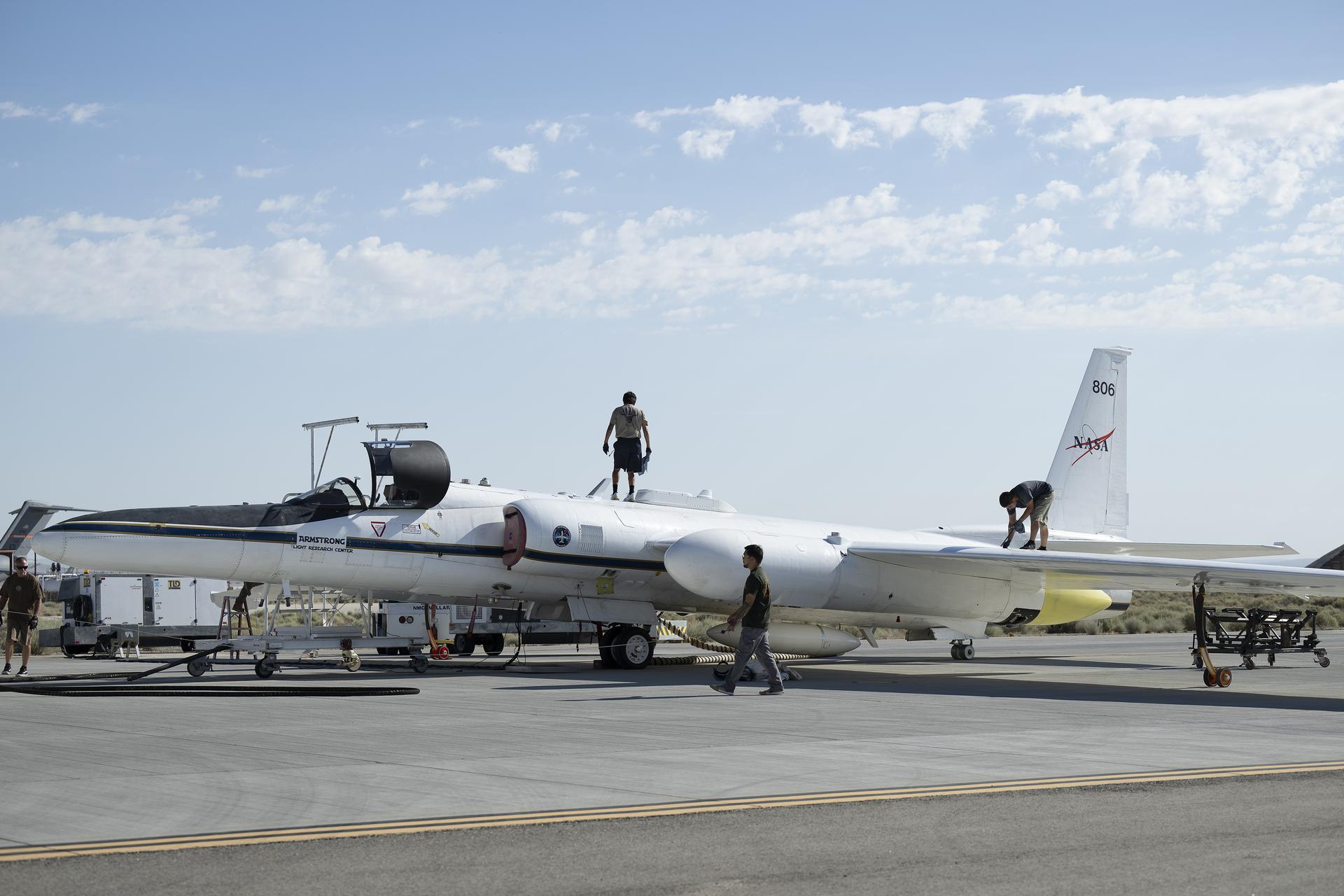
Ground crew members, from left, Bobby Henderson, Francisco Rodriguez, Geo Sablan, and Vincent Moreno prepare an ER‑2 aircraft for the INjected Smoke and PYRocumulonimbus Experiment (INSPYRE) at NASA’s Armstrong Flight Research Center in Edwards, California, on Wednesday, July 15, 2026. This Earth science campaign studies wildfire‑generated thunderstorms, and researchers are seeking to better understand how these storms form, how high the storms send smoke, where this smoke travels, and the effects after the smoke reaches upper layers of the atmosphere.
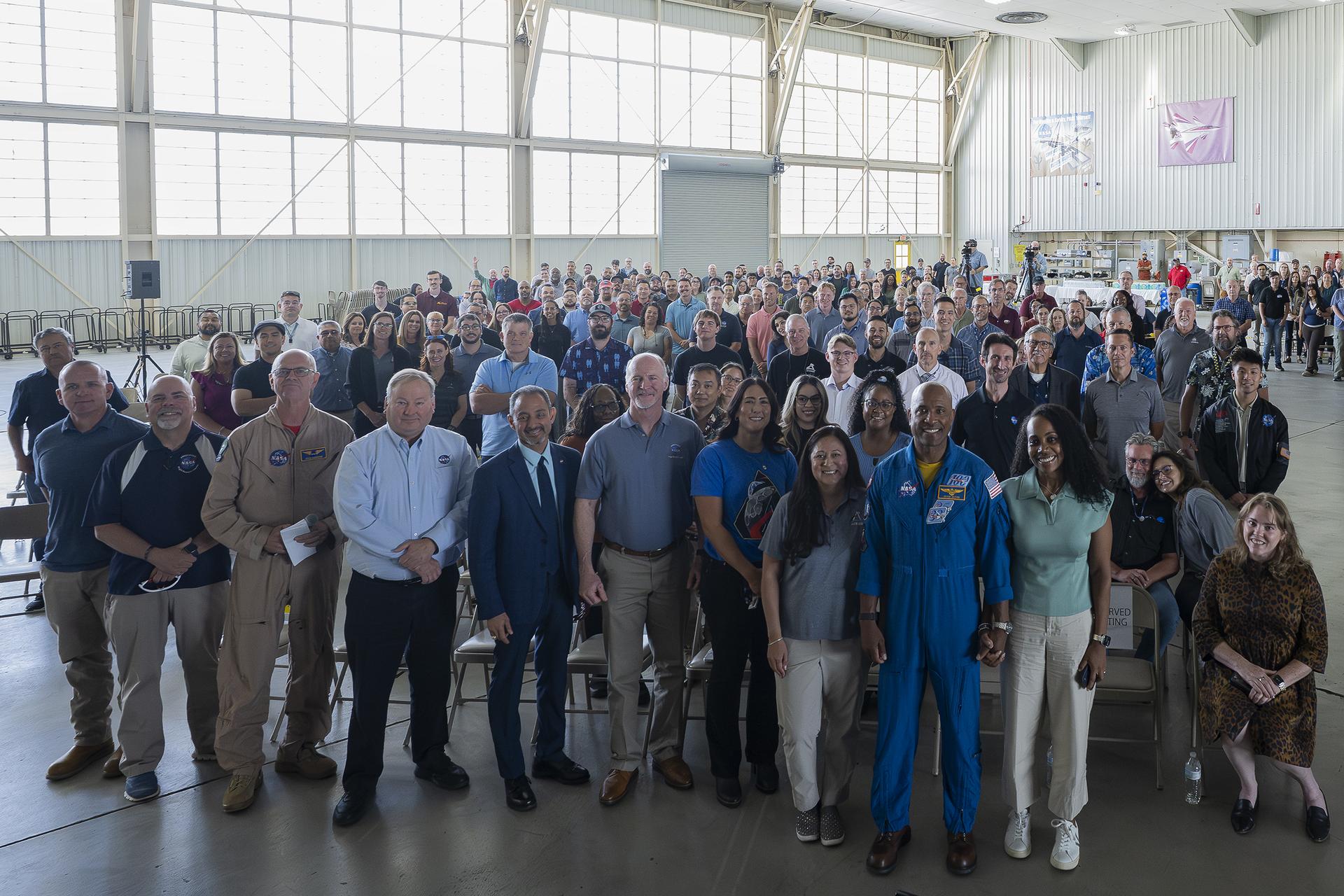
NASA Artemis II astronaut Victor Glover joins the workforce at NASA’s Armstrong Flight Research Center in Edwards, California, for a group photo on Tuesday, Aug. 25, 2026. Glover recounted his journey through the Navy, being a test pilot, and the Artemis II mission.
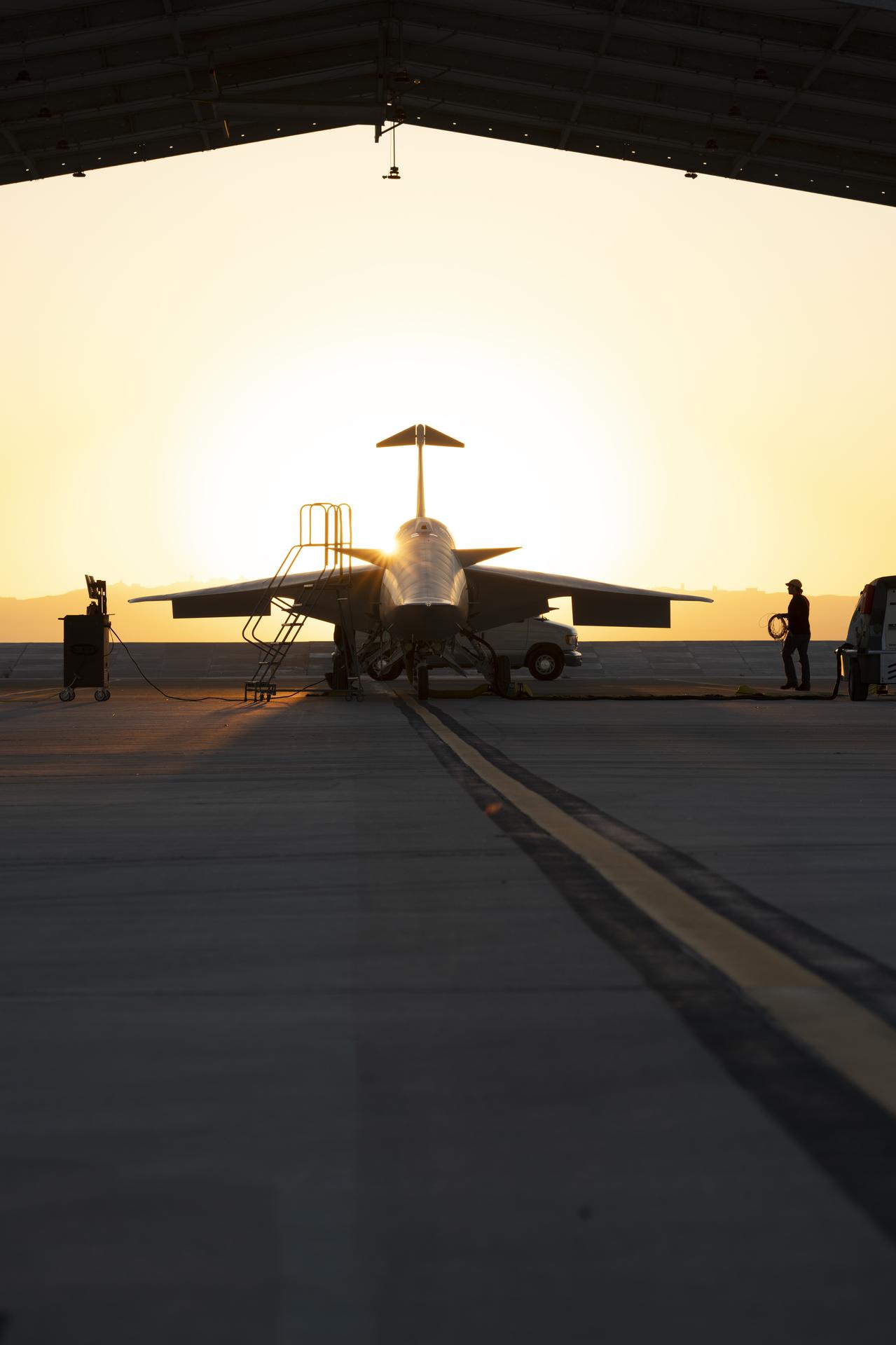
NASA’s X-59 quiet supersonic research aircraft sits in a run stall during sunrise on Tuesday, March 20, 2026, near NASA’s Armstrong Flight Research Center in Edwards, California, ahead of its second flight.
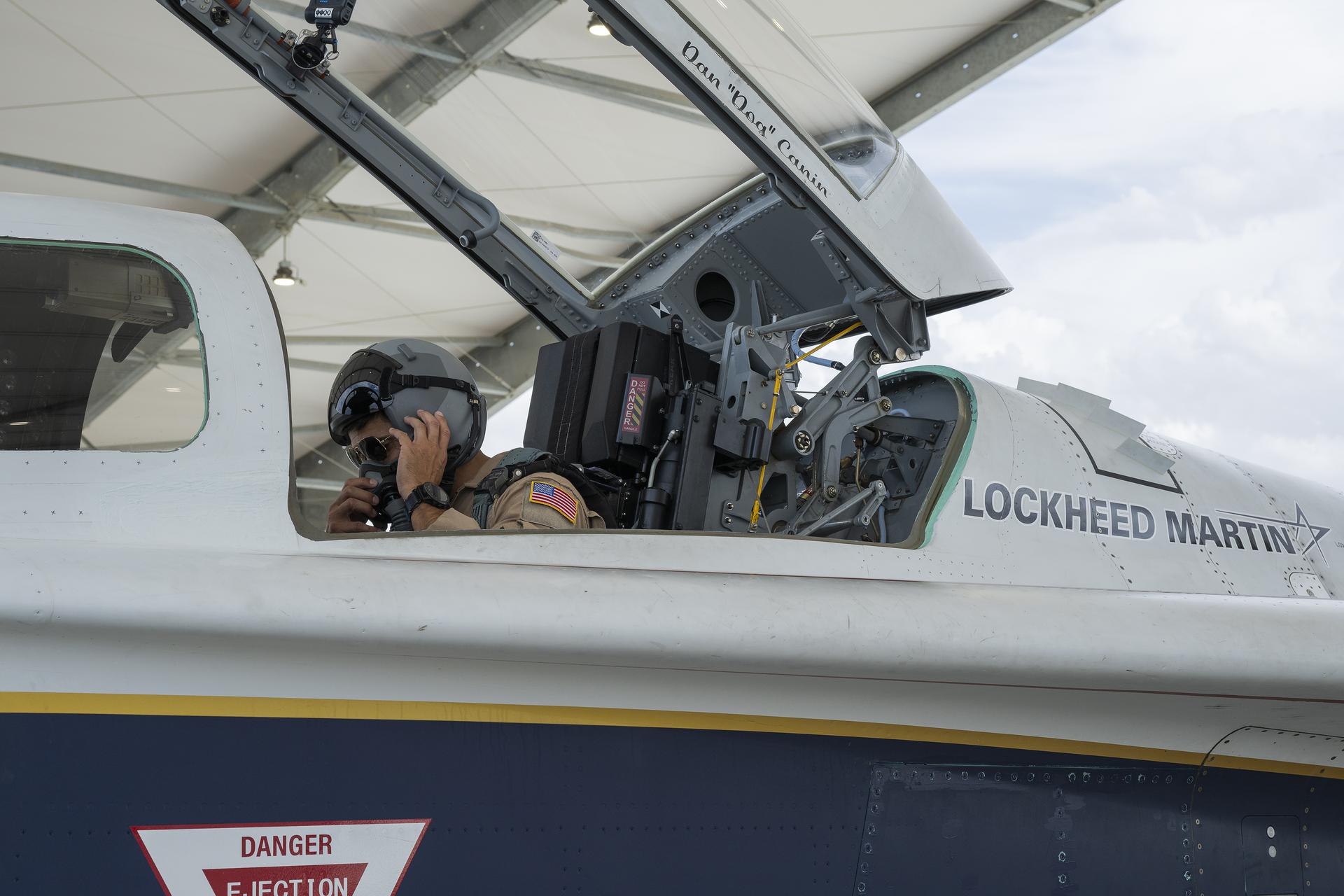
Mike Lippert, one of NASA’s X‑59 test pilots, sits in the cockpit of the agency’s X‑59 quiet supersonic research aircraft for the first time during an engine run at NASA’s Armstrong Flight Research Center in Edwards, California, on Thursday, Aug. 27, 2026. Lippert is the third X‑59 pilot supporting NASA’s Quesst mission, which will demonstrate quiet supersonic flight over U.S. communities and gather public feedback on the aircraft’s quieter sonic “thump.”
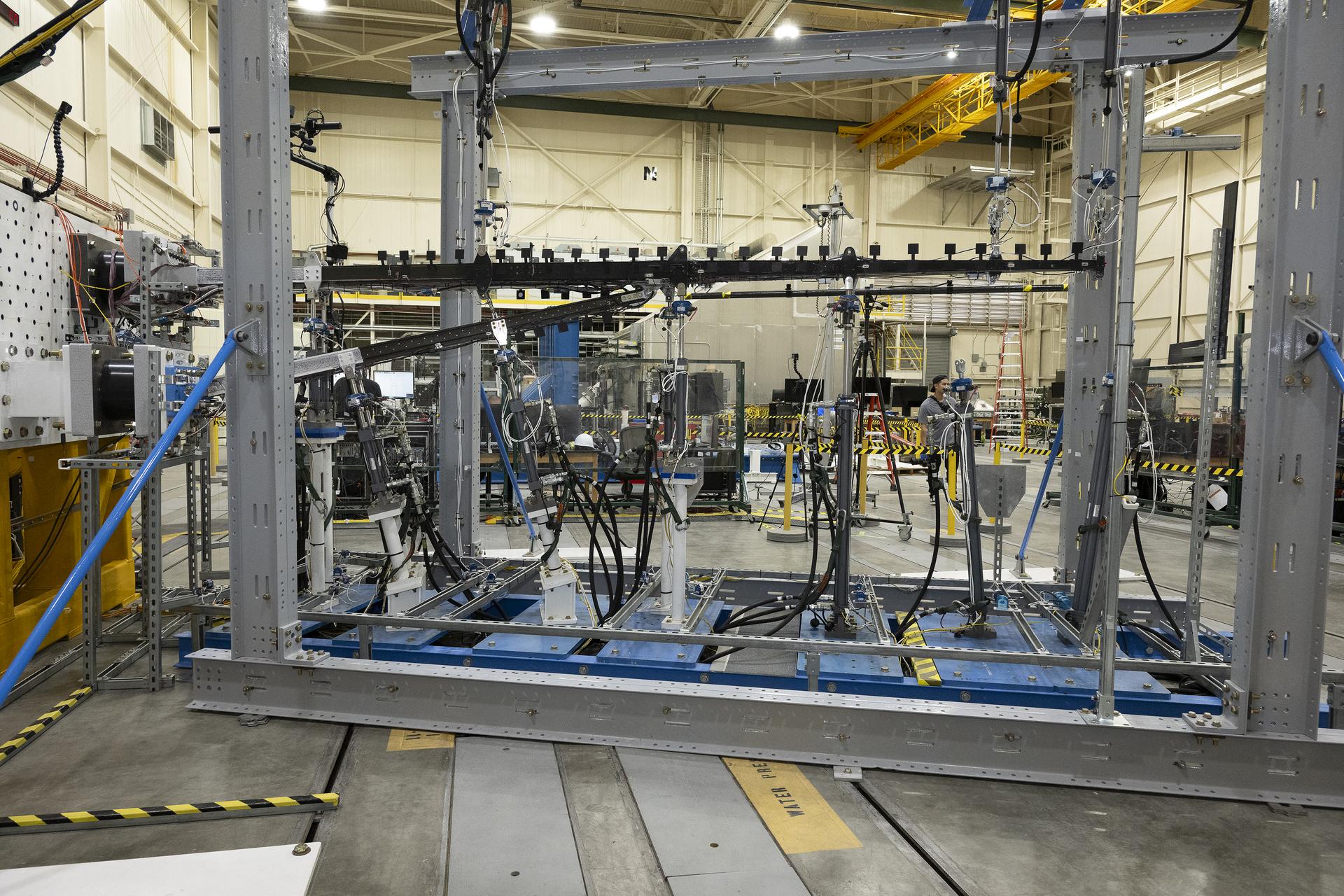
The 15-foot Structural Wing Experiment Evaluating Truss-bracing test article is fully installed in the Flight Loads Laboratory at NASA’s Armstrong Flight Research Center in Edwards, California, on Wednesday, May 20, 2026. The model is part of NASA’s research to develop technologies for future ultra-efficient aircraft.
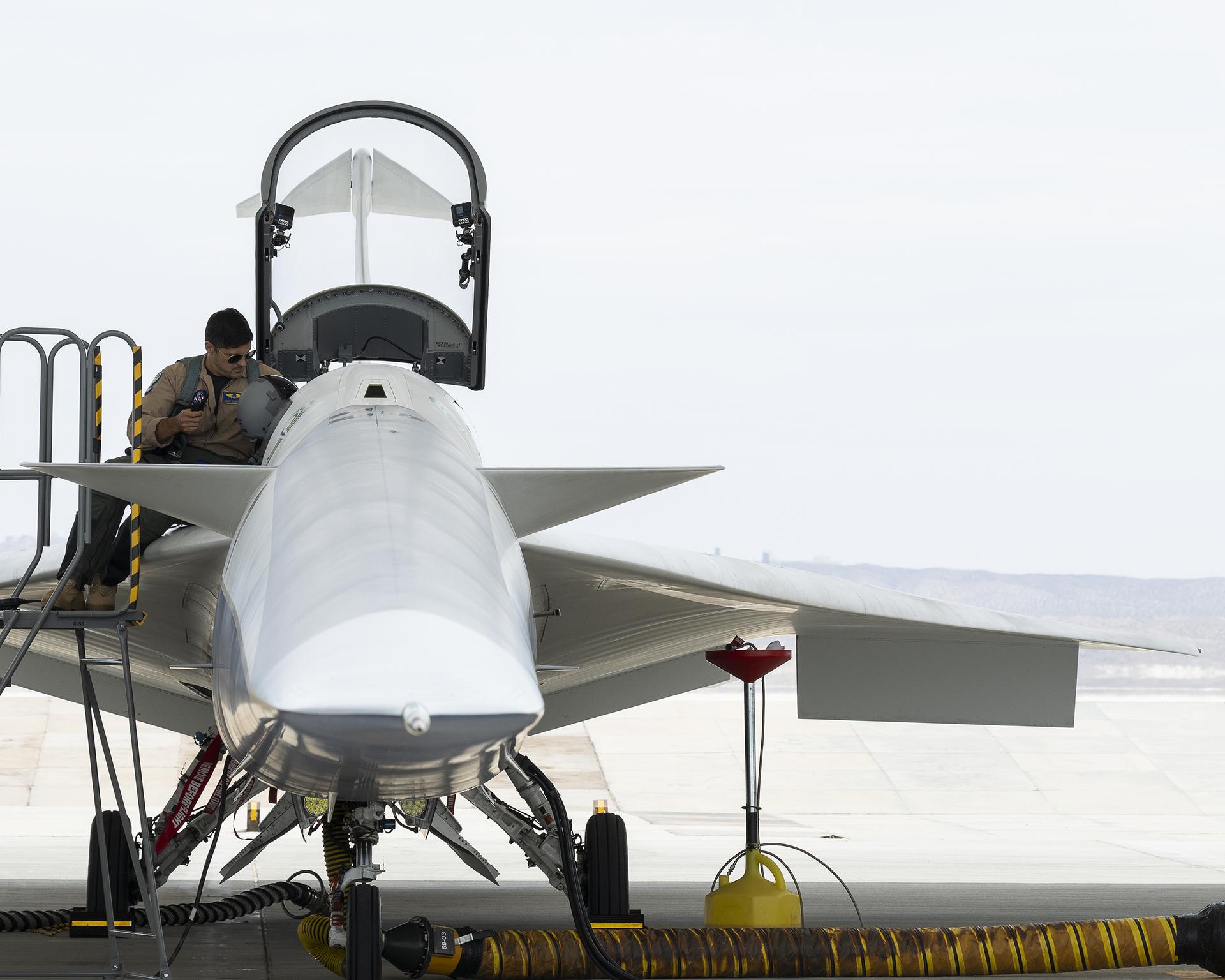
Mike Lippert, one of NASA’s X‑59 test pilots, climbs into the aircraft’s cockpit for the first time during an engine run at NASA’s Armstrong Flight Research Center in Edwards, California, on Thursday, Aug. 27, 2026. Lippert is the third X‑59 pilot supporting NASA’s Quesst mission, which will demonstrate quiet supersonic flight over U.S. communities and gather public feedback on the aircraft’s quieter sonic “thump.”
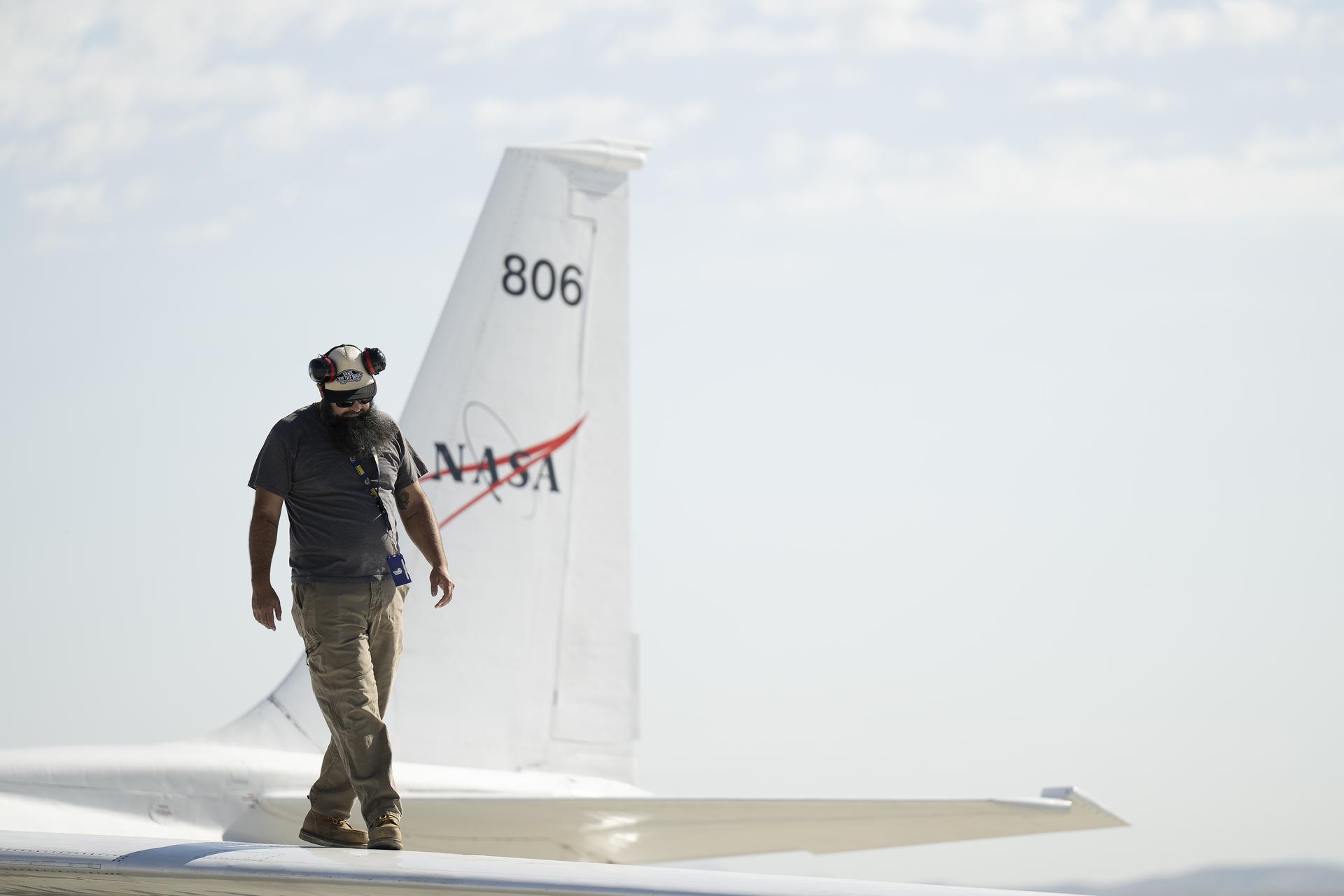
NASA quality assurance technician Jose Preito prepares an ER‑2 aircraft for the INjected Smoke and PYRocumulonimbus Experiment (INSPYRE) based at NASA’s Armstrong Flight Research Center in Edwards, California, on Wednesday, July 15, 2026. This Earth science campaign studies wildfire‑generated thunderstorms, and researchers are seeking to better understand how these storms form, how high the storms send smoke, where this smoke travels, and the effects after the smoke reaches upper layers of the atmosphere.
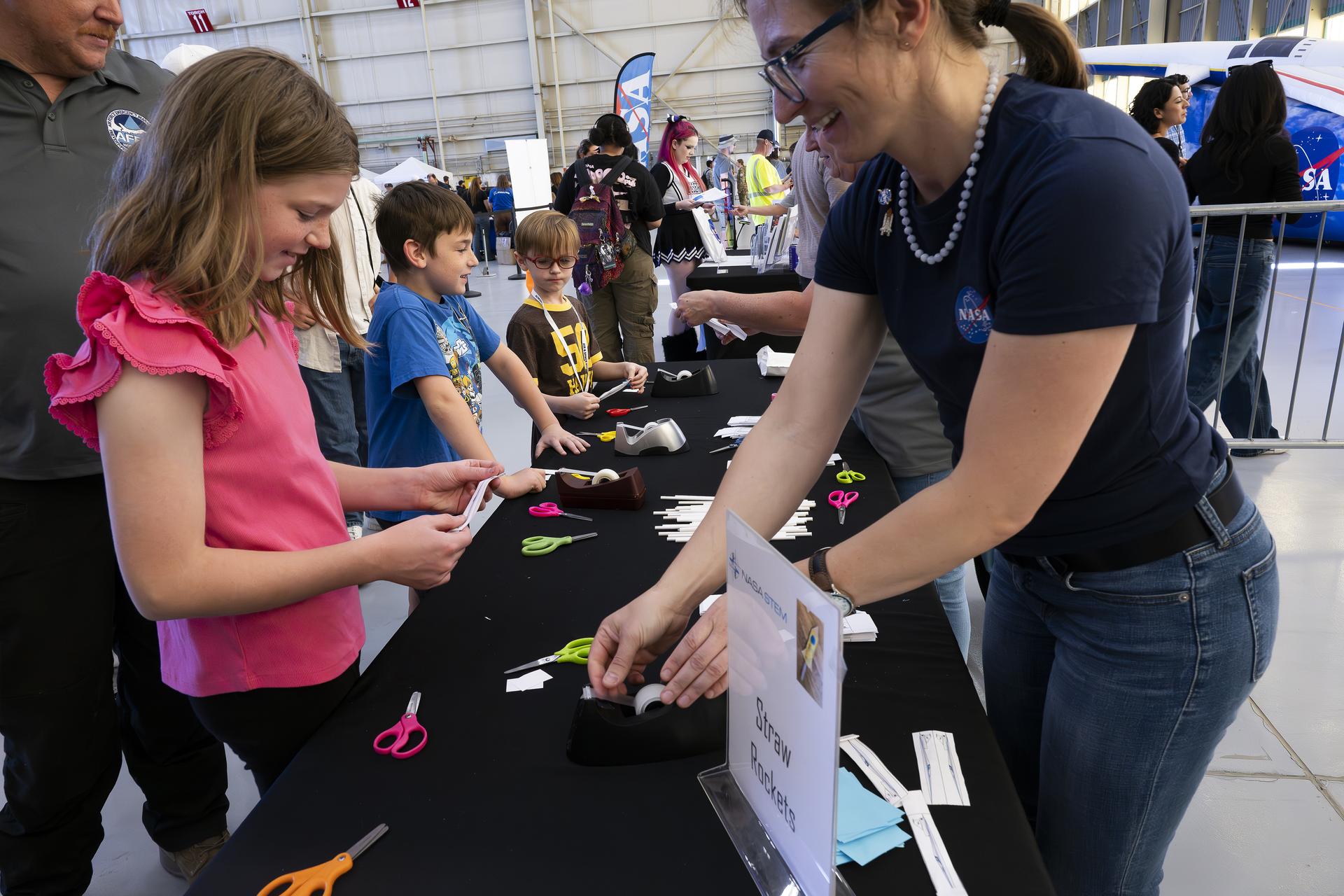
Students patriciate in educational activities provided by NASA’s Armstrong Flight Research Center Office of STEM Engagement during Red, White, and Boom, the U.S. Air Force Test Center’s celebration of America’s 250th anniversary and NASA Armstrong’s commemoration of its 80th year at Edwards Air Force Base, California, on Friday, Sept. 18, 2026. The event brought together the workforce, families, and the Edwards community for a high‑energy day featuring a Flightline 5K, Ramp Fest and STEM Expo, static aircraft displays, hands‑on STEM activities, and a NASA flyover with a sonic boom.
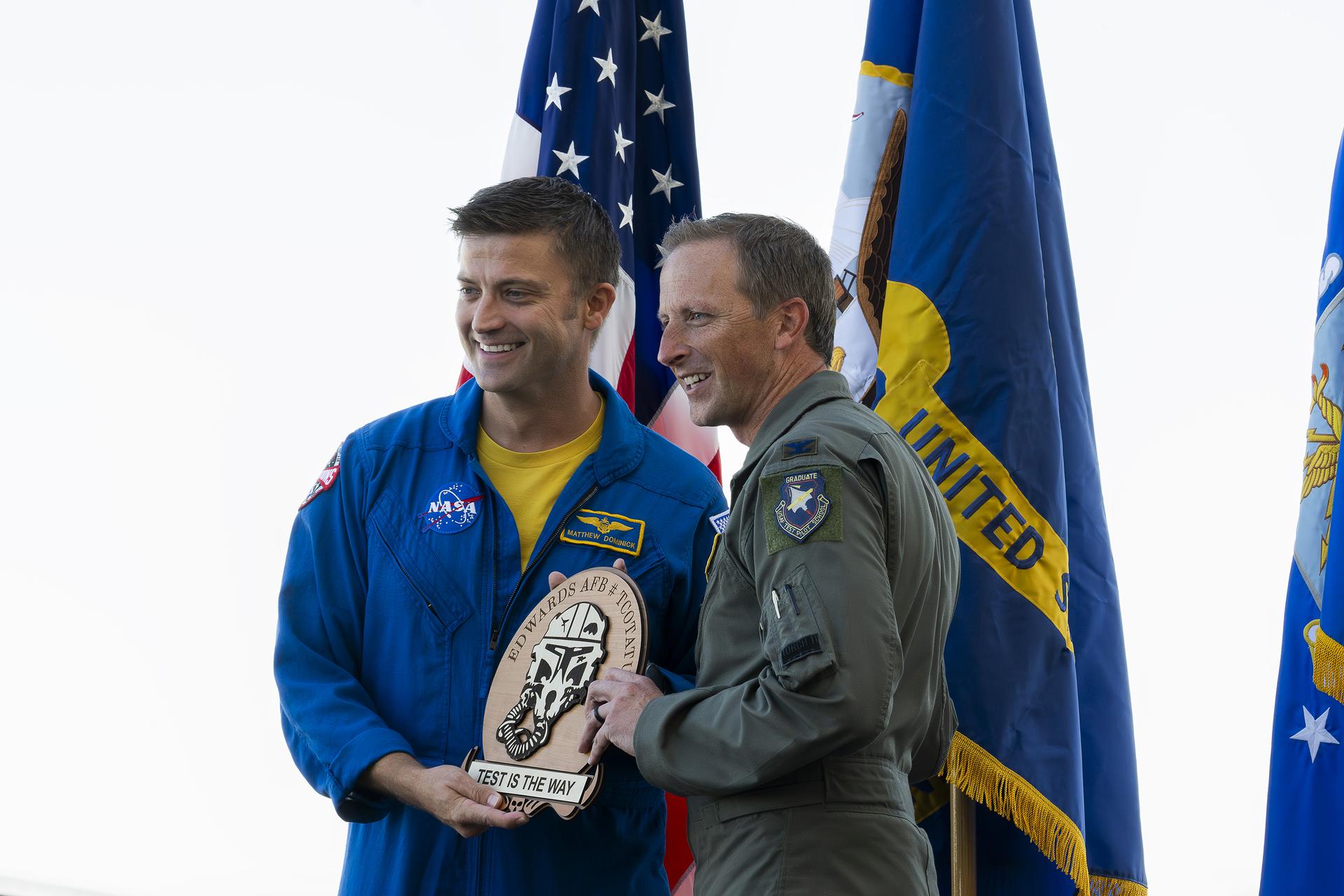
NASA astronaut Matthew Dominick receives a commemorative plaque from Col. Daniel Fredberg, Deputy Commander of the 412th Test Wing at Edwards Air Force Base, California, during Red, White, and Boom, the U.S. Air Force Test Center’s celebration of America’s 250th anniversary and NASA Armstrong’s commemoration of its 80th year on Friday, Sept. 18, 2026. The event brought together the workforce, families, and the Edwards community for a high‑energy day featuring a Flightline 5K, Ramp Fest and STEM Expo, static aircraft displays, hands‑on STEM activities, and a NASA flyover with a sonic boom.
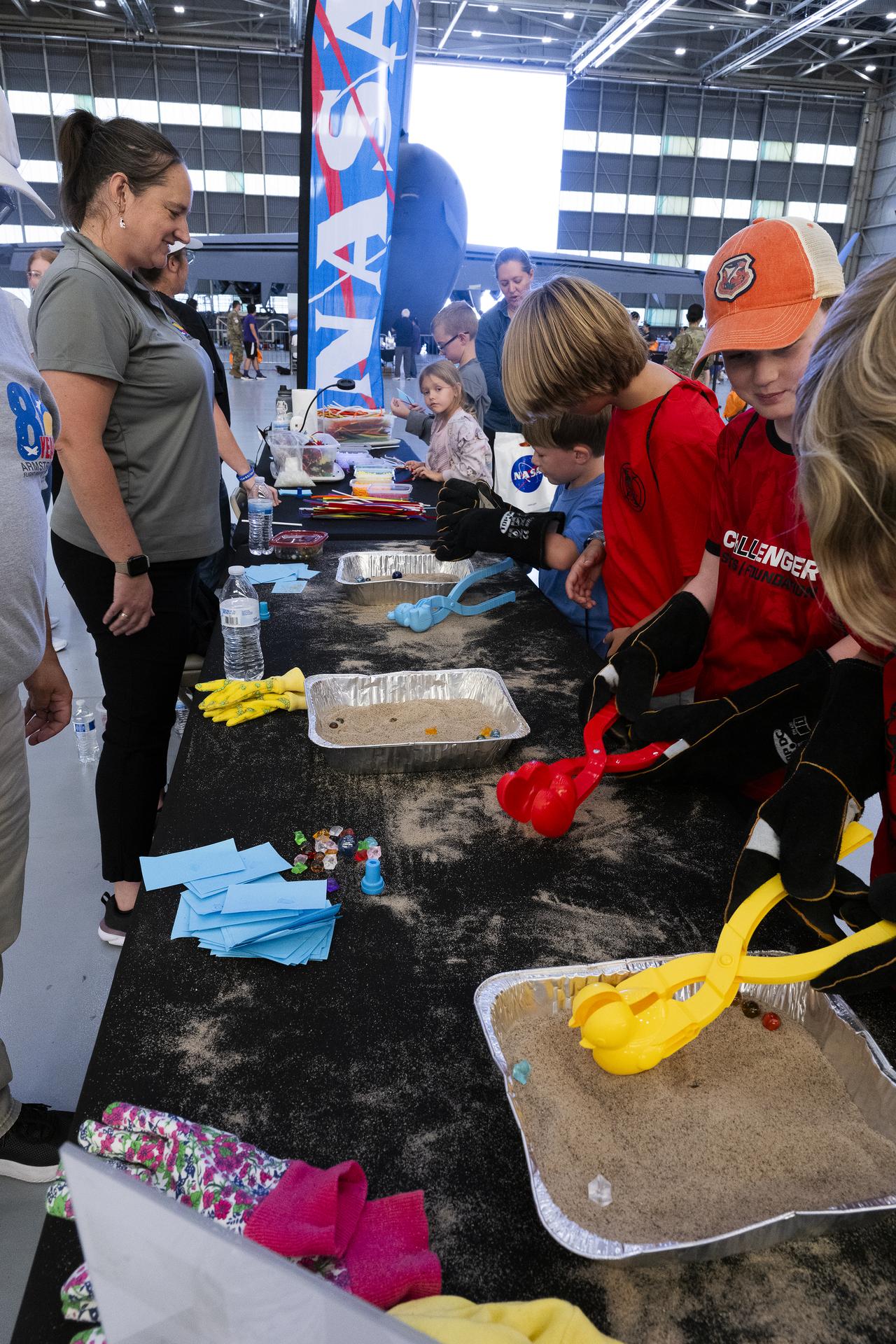
Students patriciate in educational activities provided by NASA’s Armstrong Flight Research Center Office of STEM Engagement during Red, White, and Boom, the U.S. Air Force Test Center’s celebration of America’s 250th anniversary and NASA Armstrong’s commemoration of its 80th year at Edwards Air Force Base, California, on Friday, Sept. 18, 2026. The event brought together the workforce, families, and the Edwards community for a high‑energy day featuring a Flightline 5K, Ramp Fest and STEM Expo, static aircraft displays, hands‑on STEM activities, and a NASA flyover with a sonic boom.
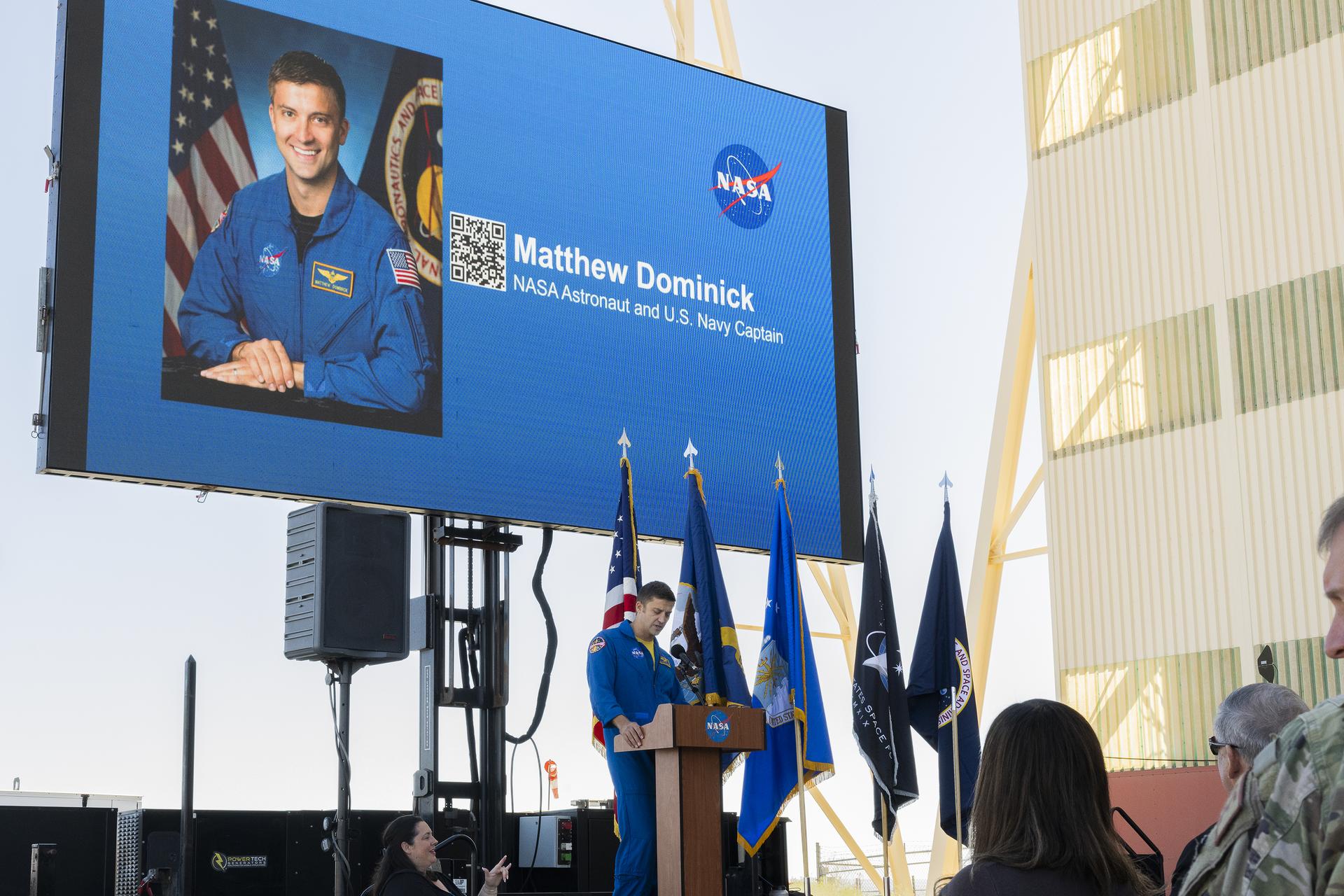
NASA astronaut Matthew Dominick shares inspiring remarks during the opening ceremony of Red, White, and Boom, the U.S. Air Force Test Center’s celebration of America’s 250th anniversary and NASA Armstrong’s commemoration of its 80th year at Edwards Air Force Base, California, on Friday, Sept. 18, 2026. The event brought together the workforce, families, and the Edwards community for a high‑energy day featuring a Flightline 5K, Ramp Fest and STEM Expo, static aircraft displays, hands‑on STEM activities, and a NASA flyover with a sonic boom.
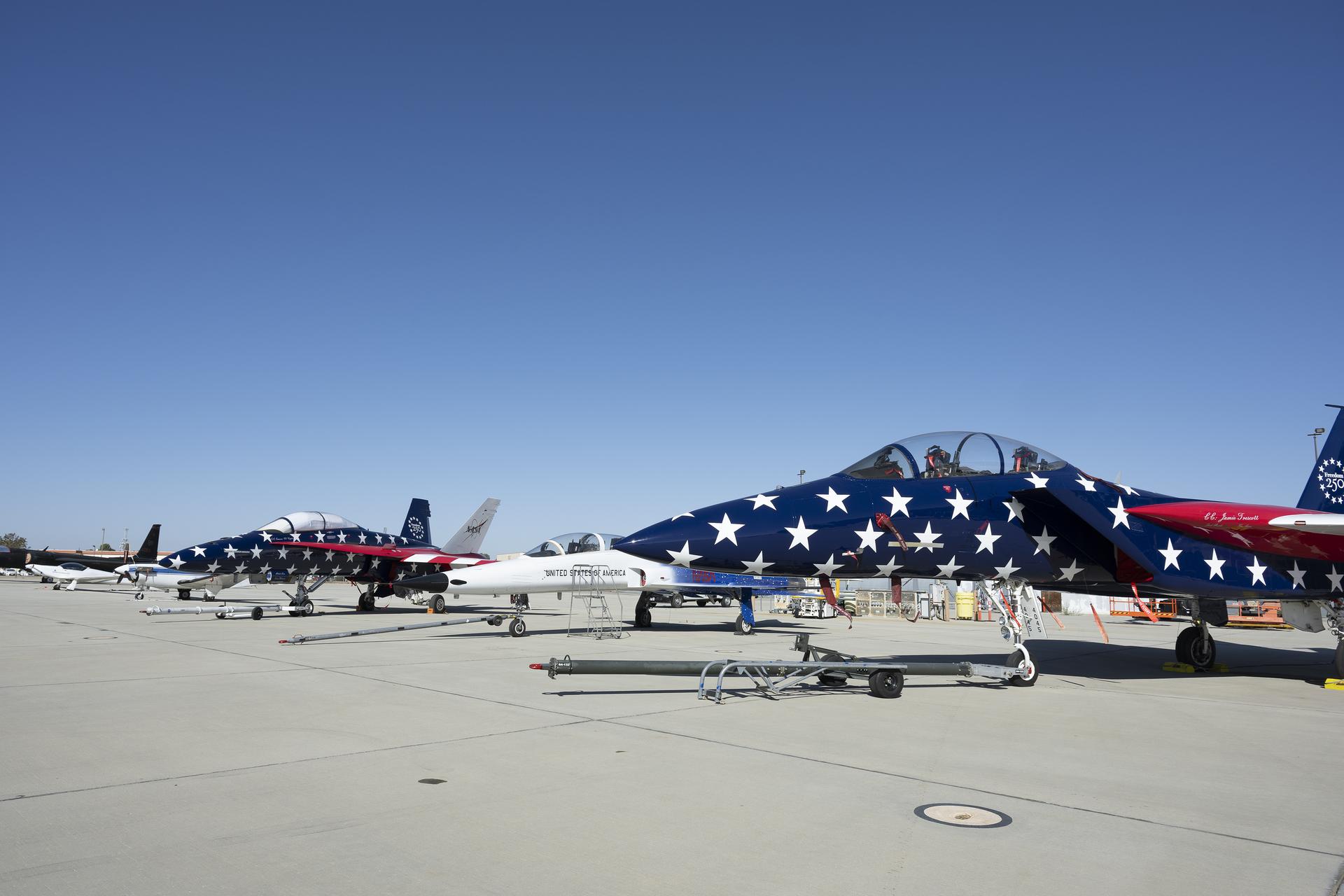
NASA’s F/A-18, a Northrop F-5 Tiger II, and NASA’s F-15 are on static display at Red, White, and Boom, the U.S. Air Force Test Center’s celebration of America’s 250th anniversary and NASA Armstrong’s commemoration of its 80th year at Edwards Air Force Base, California, on Friday, Sept. 18, 2026. The event brought together the workforce, families, and the Edwards community for a high‑energy day featuring a Flightline 5K, Ramp Fest and STEM Expo, static aircraft displays, hands‑on STEM activities, and a NASA flyover with a sonic boom.
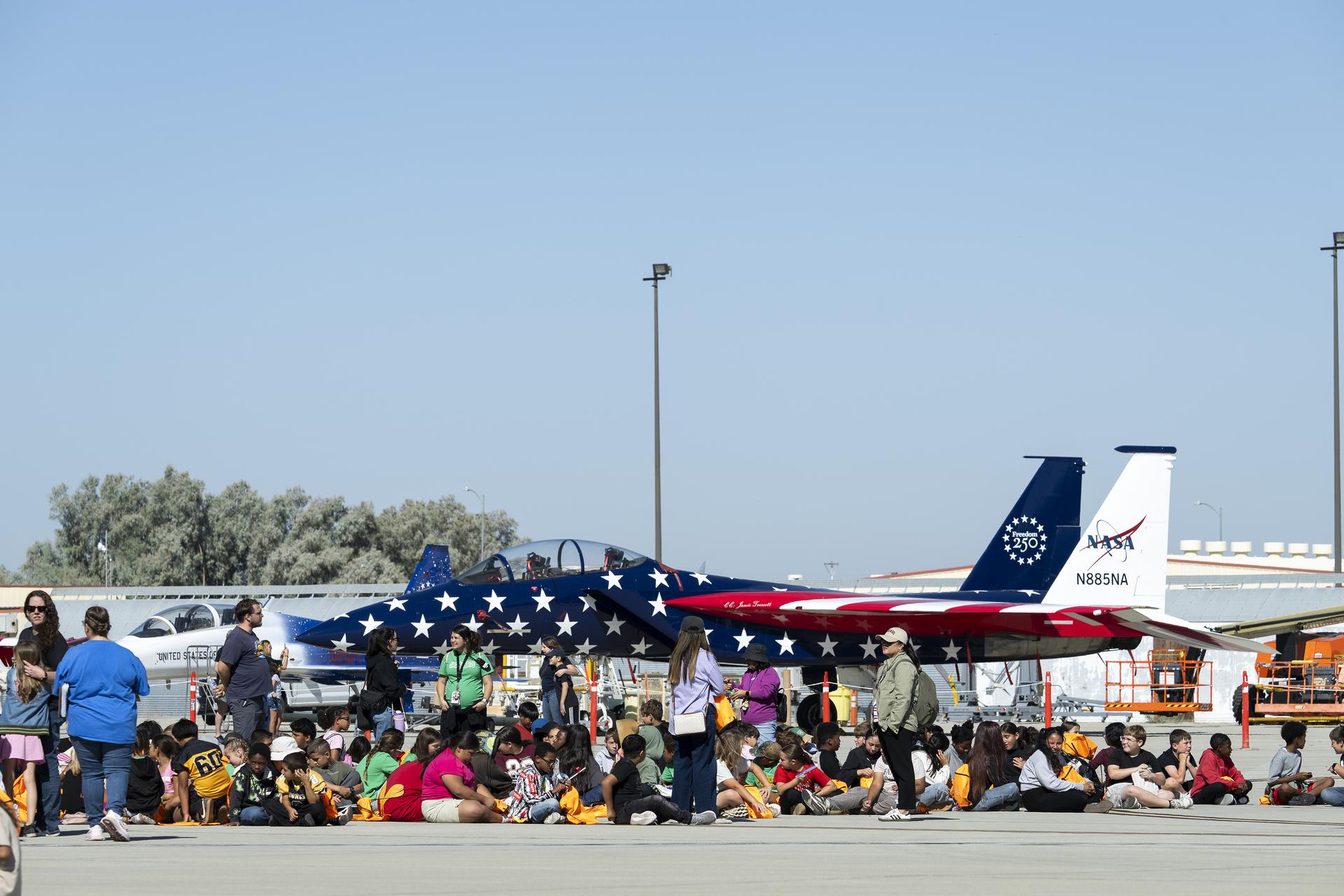
NASA’s F/A-18 and a Northrop F-5 Tiger II are on static display at Red, White, and Boom, the U.S. Air Force Test Center’s celebration of America’s 250th anniversary and NASA Armstrong Flight Research Center’s commemoration of its 80th year at Edwards Air Force Base, California, on Friday, Sept. 18, 2026. The event brought together the workforce, families, and the Edwards community for a high‑energy day featuring a Flightline 5K, Ramp Fest and STEM Expo, static aircraft displays, hands‑on STEM activities, and a NASA flyover with a sonic boom.
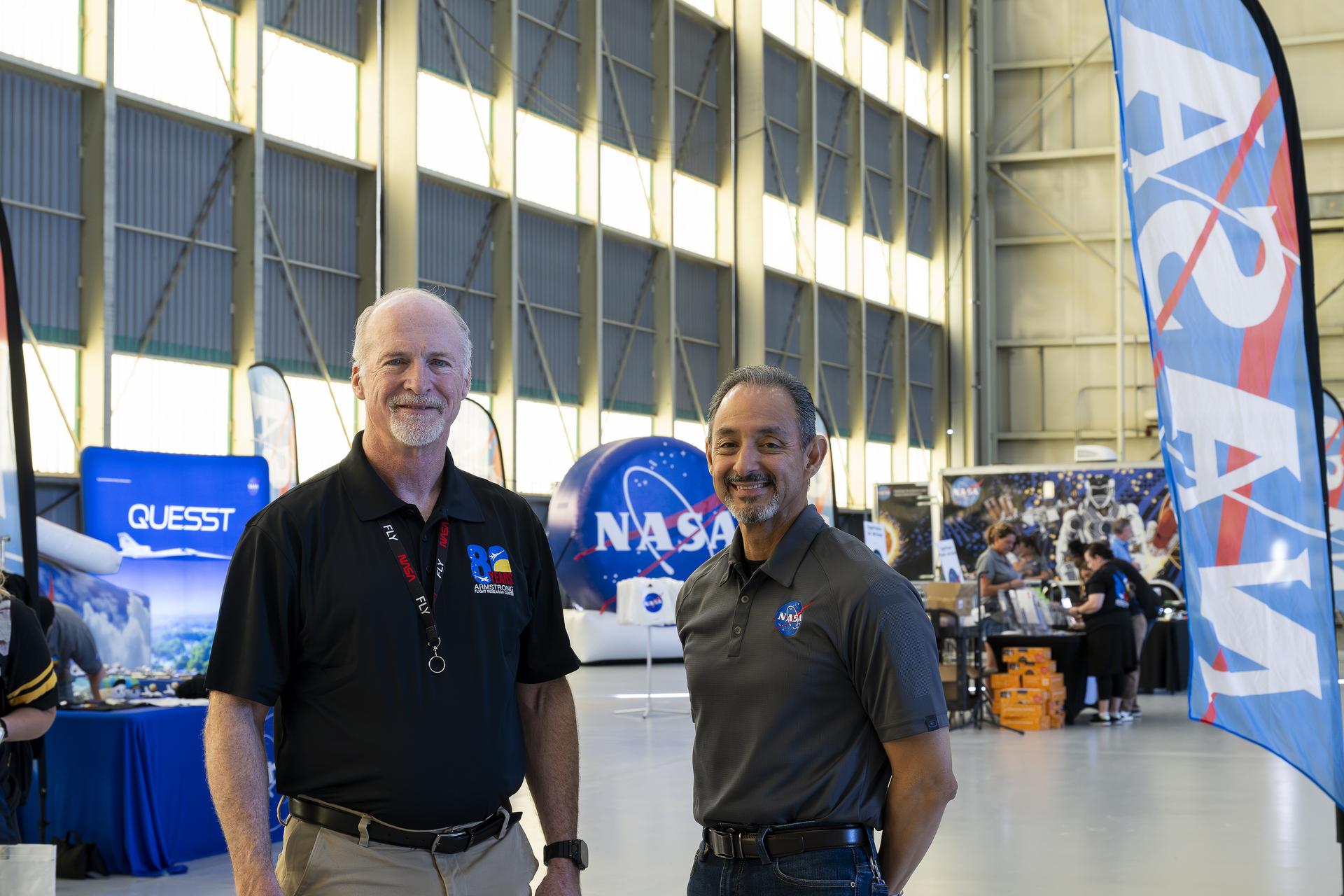
Troy Asher, acting center director at NASA’s Armstrong Flight Research Center in Edwards, California, and Eddie Zavala, acting deputy center director, participate in Red, White, and Boom, the U.S. Air Force Test Center’s celebration of America’s 250th anniversary and NASA Armstrong’s commemoration of its 80th year at Edwards Air Force Base on Friday, Sept. 18, 2026. The event brought together the workforce, families, and the Edwards community for a high‑energy day featuring a Flightline 5K, Ramp Fest and STEM Expo, static aircraft displays, hands‑on STEM activities, and a NASA flyover with a sonic boom.
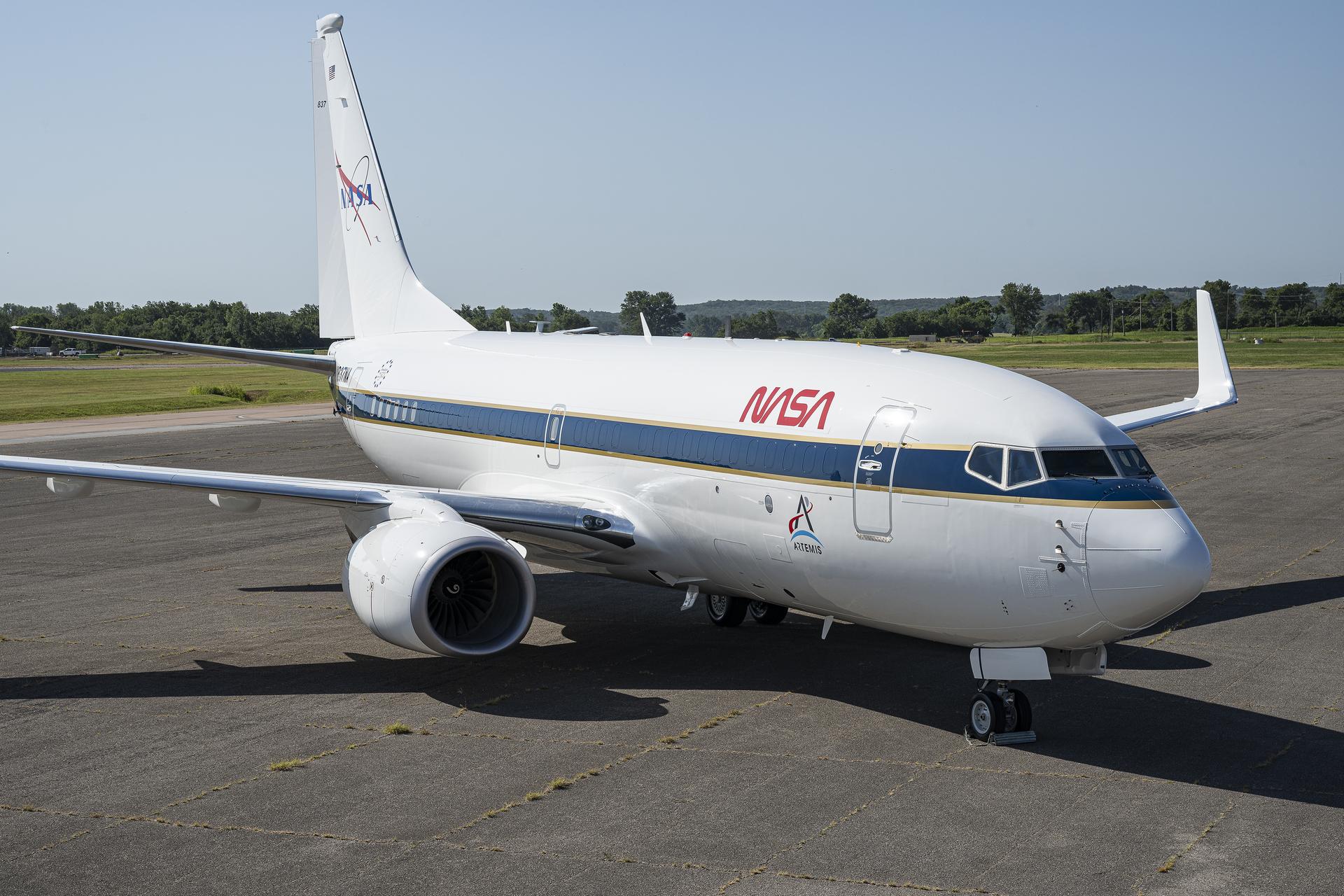
A newly painted NASA 737 aircraft sits on a ramp in Oklahoma on Thursday, Aug. 13, 2026. After modifications, this aircraft will perform lunar-gravity parabolic flights to validate astronaut lunar suits and associated crew systems required to support Artemis mission objectives. Flight testing will happen at NASA’s Johnson Space Center in Houston for reduced-gravity operations, with oversight by NASA’s Armstrong Flight Research Center in Edwards, California. In addition, the aircraft will serve as a key asset for systems‑integration research for flight testing autonomy, sensors, and other digital systems.
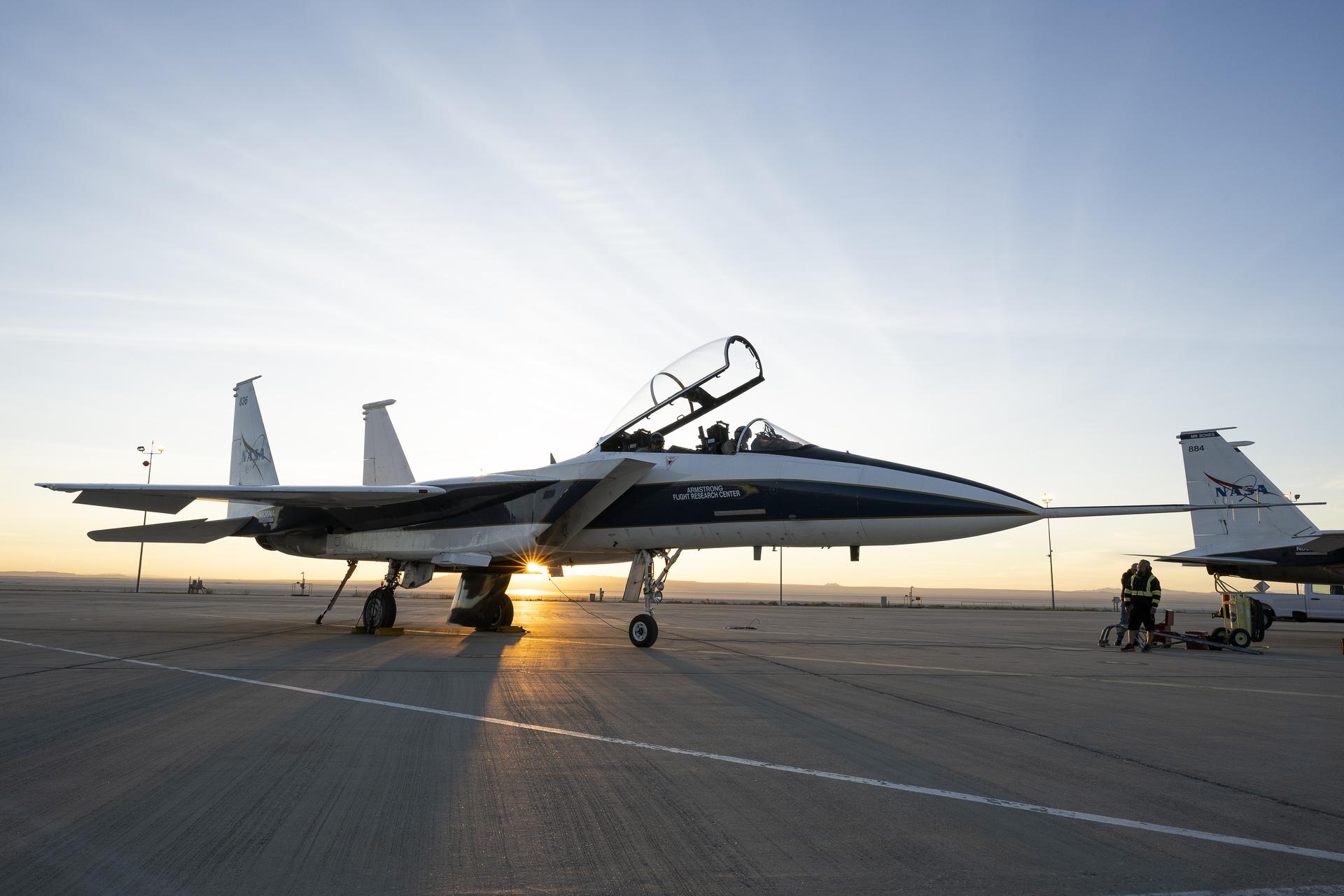
An F-15 research aircraft sits on the ramp at NASA’s Armstrong Flight Research Center in Edwards, California, on Tuesday, March 17, 2026. NASA pilots Jim Less, front seat, and Carrie Worth prepare for the flight. The agency’s Crossflow Attenuated Natural Laminar Flow (CATNLF) test article is attached to the bottom of the F-15. The project aims to lower fuel costs for future commercial aircraft by testing a scale-model wing designed to improve laminar flow.
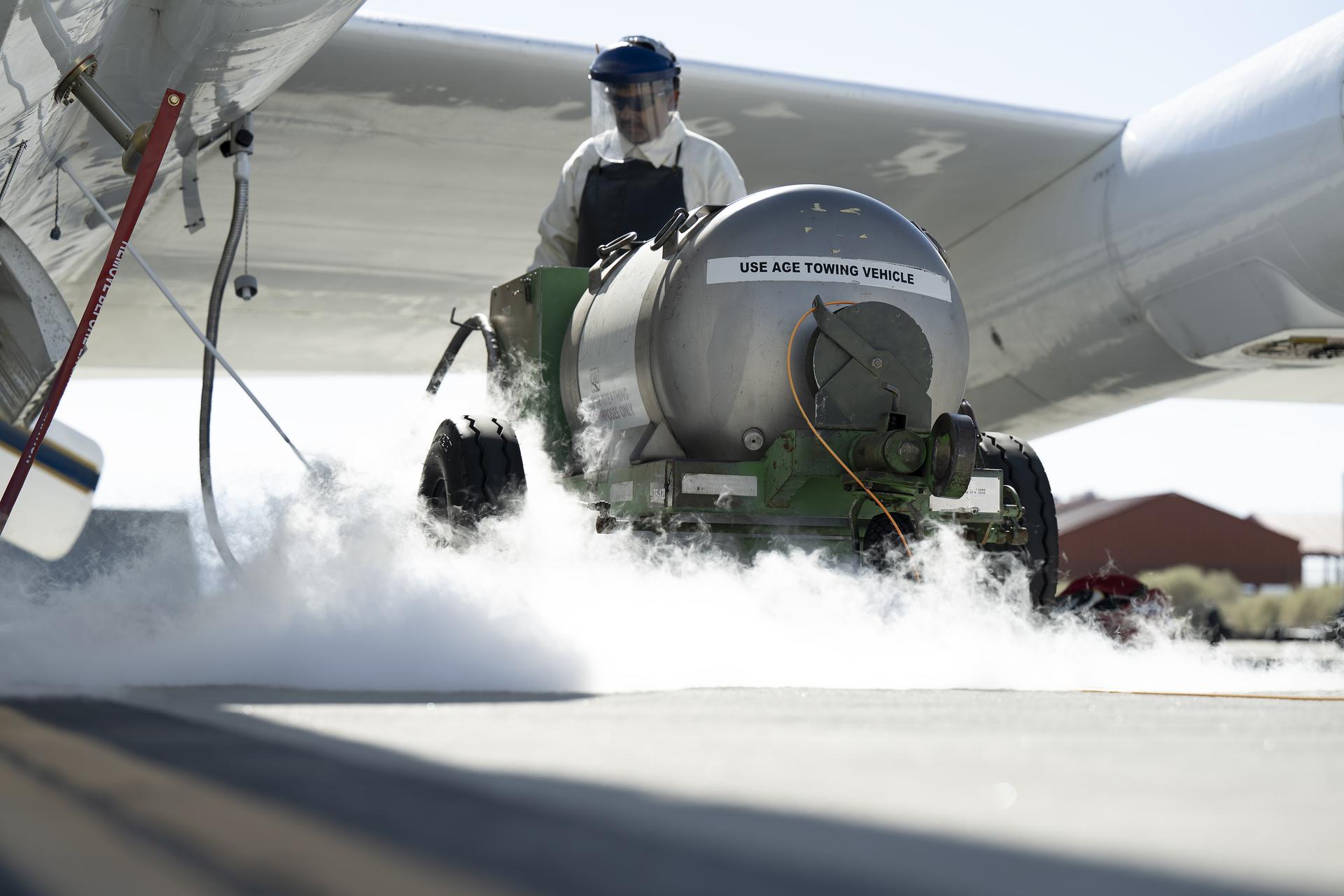
NASA engineer technician Francisco Rodriguez gives a NASA ER-2 aircraft a liquid oxygen refill (LOX) in preparation for the INjected Smoke and PYRocumulonimbus Experiment (INSPYRE) at NASA’s Armstrong Flight Research Center in Edwards, California, on Wednesday, July 15, 2026. This Earth science campaign studies wildfire‑generated thunderstorms, and researchers are seeking to better understand how these storms form, how high the storms send smoke, where this smoke travels, and the effects after the smoke reaches upper layers of the atmosphere.
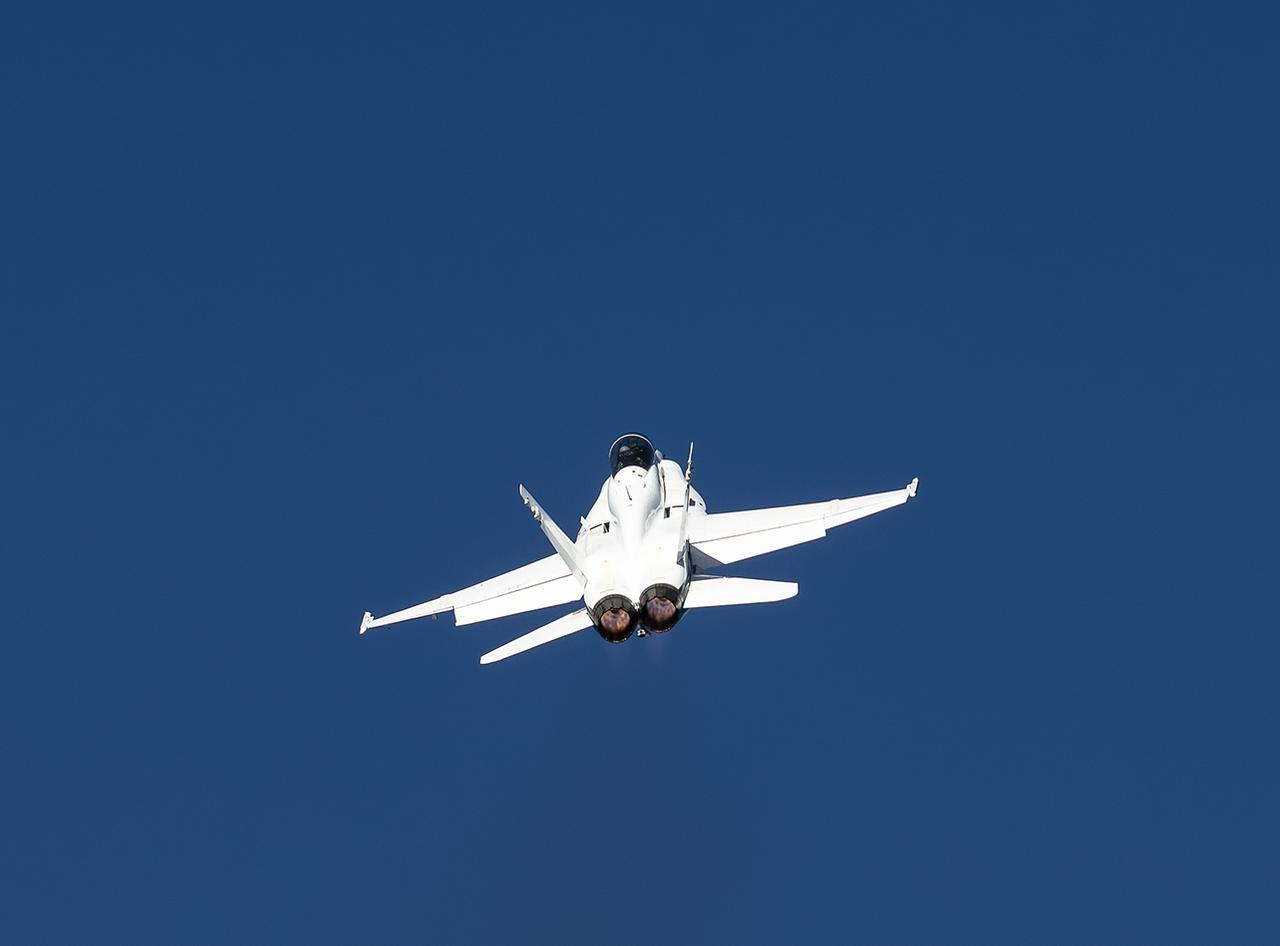
A NASA F/A‑18 aircraft flies over the Bakersfield Fire Department and surrounding community in California, on Friday, Sept. 11, 2026. The aircraft is based at NASA’s Armstrong Flight Research Center in Edwards, California. The flyover was part of an event honoring the 25th anniversary of Sept. 11, 2001.
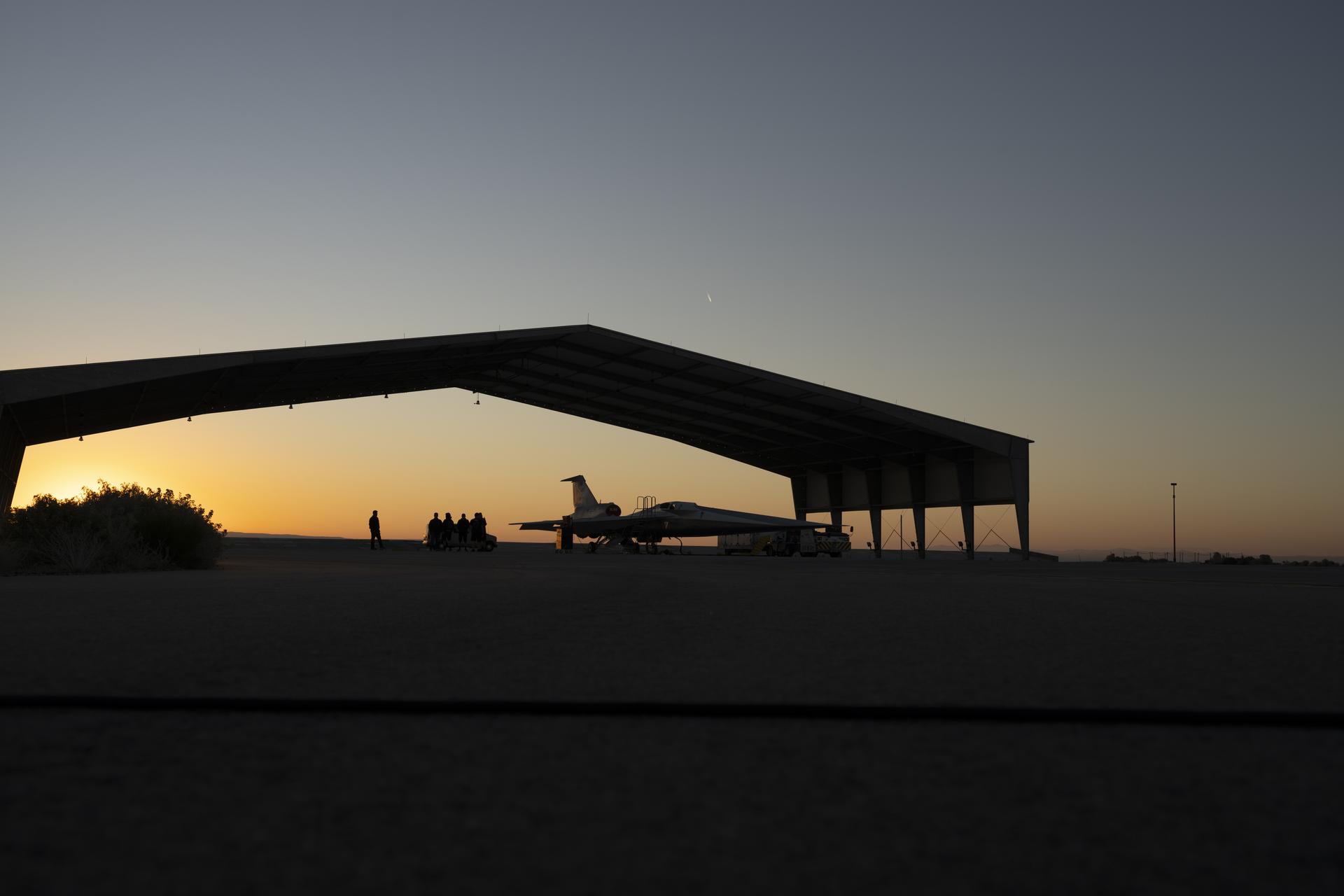
NASA’s X-59 quiet supersonic research aircraft sits in a run stall during sunrise on Tuesday, March 20, 2026, near NASA’s Armstrong Flight Research Center in Edwards, California, ahead of its second flight.
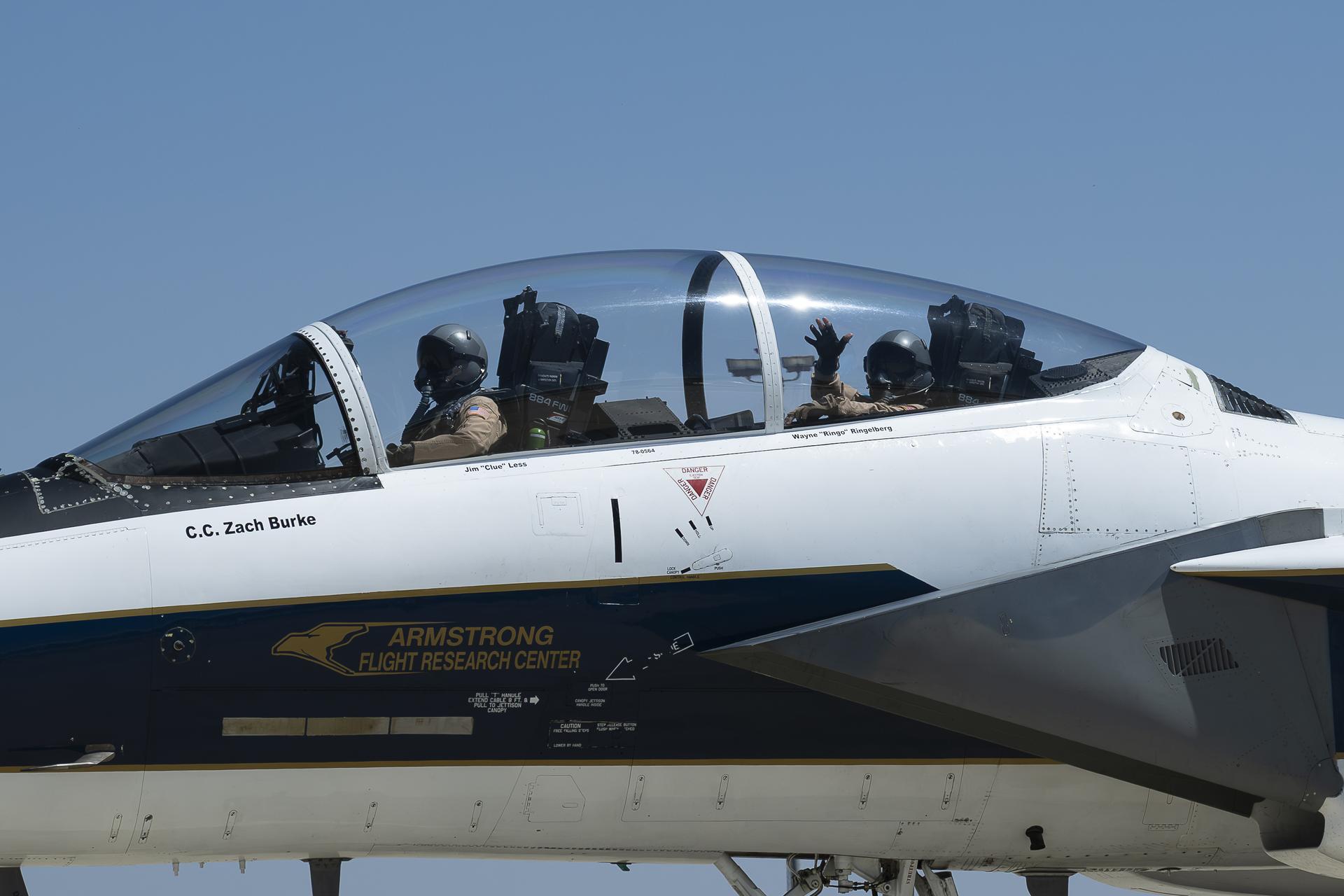
NASA aerial photographer Carla Thomas waves from the backseat of a NASA F-15 aircraft as chief pilot Wayne Ringelberg taxis following Thomas’ 1,000th flight at NASA’s Armstrong Flight Research Center in Edwards, California, on Monday, April 20, 2026. For 38 years, Thomas has captured aerial photographs of research and science flights.
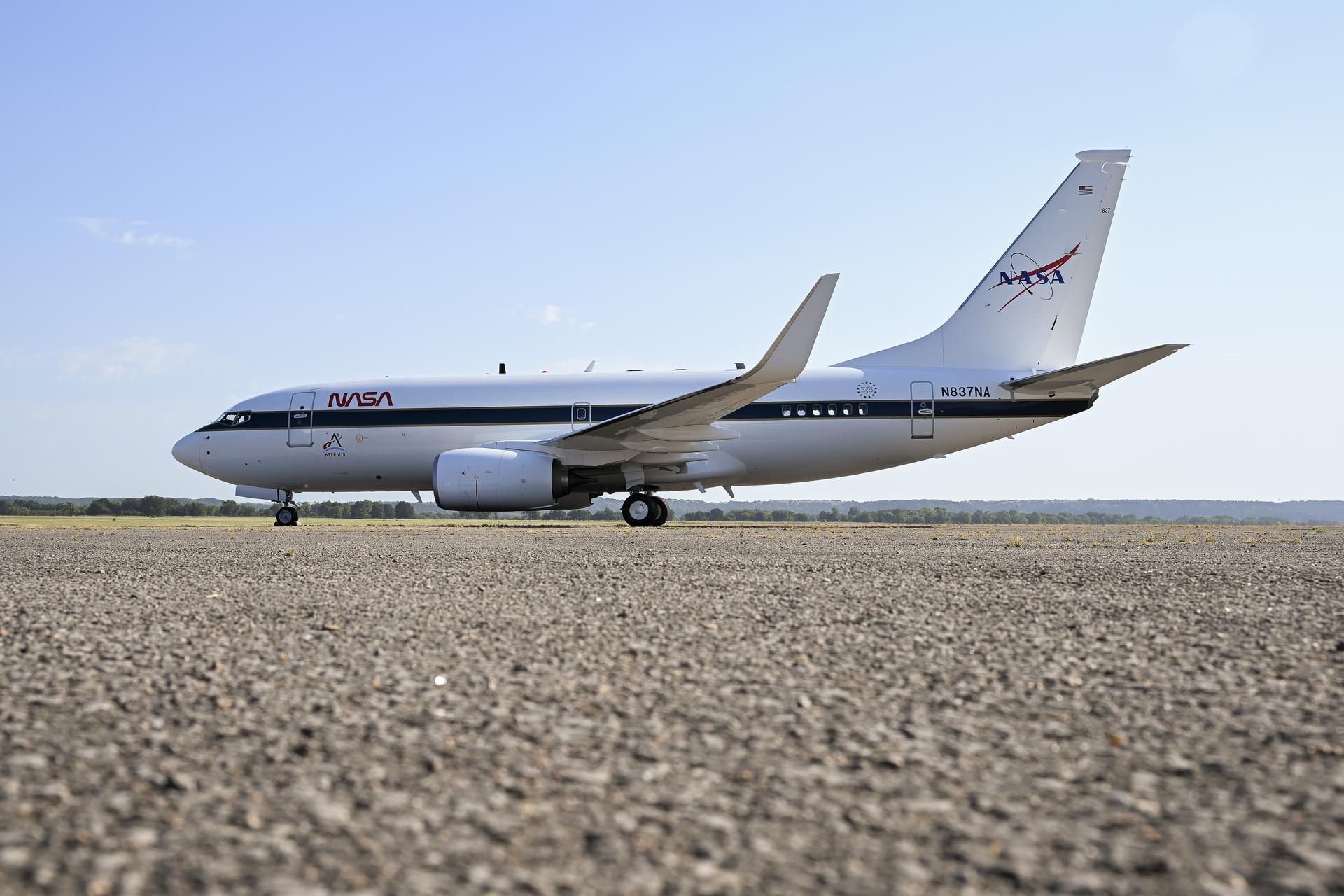
A newly painted NASA 737 aircraft sits on a ramp in Oklahoma on Thursday, Aug. 13, 2026. After modifications, this aircraft will perform lunar-gravity parabolic flights to validate astronaut lunar suits and associated crew systems required to support Artemis mission objectives. Flight testing will happen at NASA’s Johnson Space Center in Houston for reduced-gravity operations, with oversight by NASA’s Armstrong Flight Research Center in Edwards, California. In addition, the aircraft will serve as a key asset for systems‑integration research for flight testing autonomy, sensors, and other digital systems.
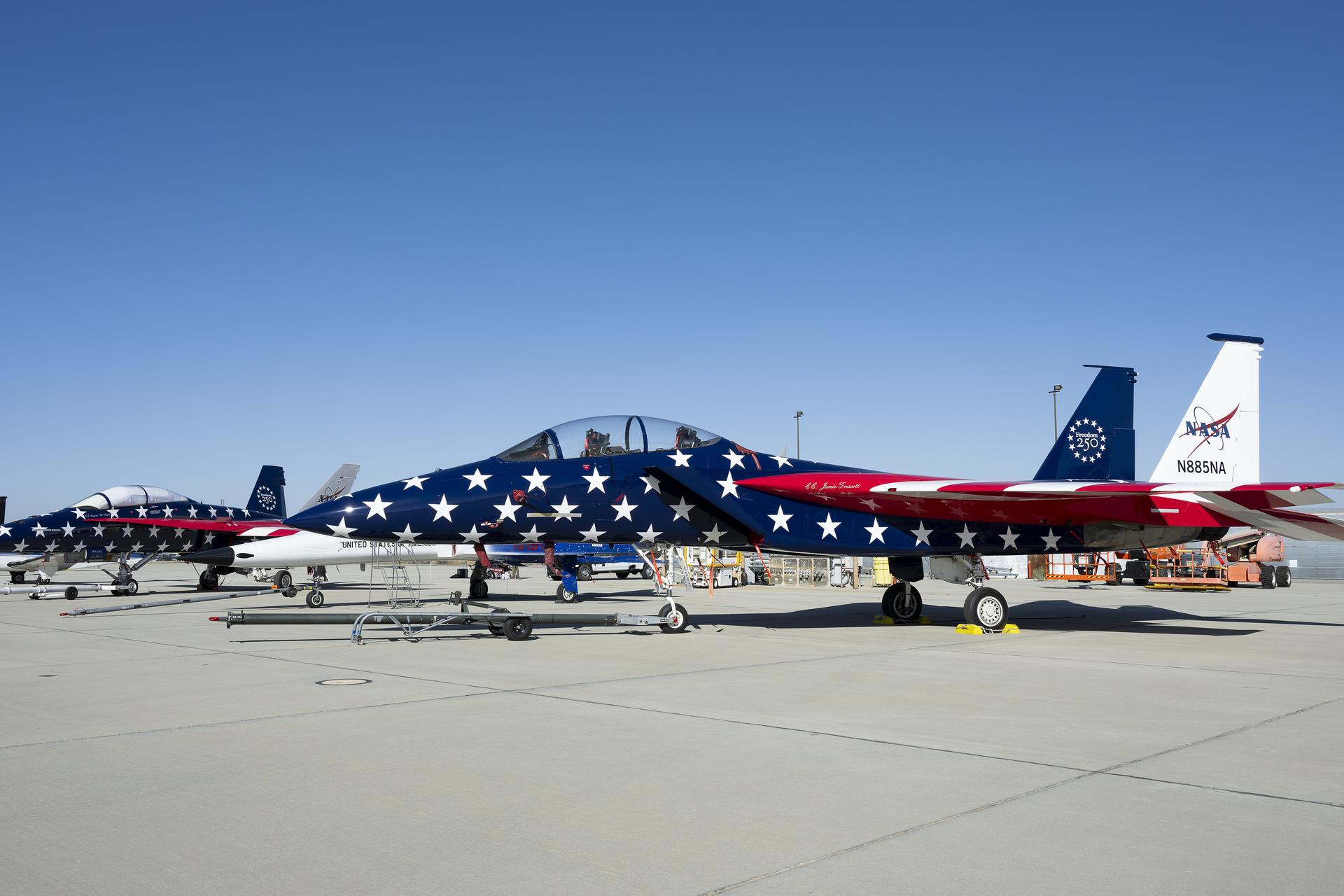
NASA’s F/A-18, a Northrop F-5 Tiger II, and NASA’s F-15 are on static display at Red, White, and Boom, the U.S. Air Force Test Center’s celebration of America’s 250th anniversary and NASA Armstrong’s commemoration of its 80th year at Edwards Air Force Base, California, on Friday, Sept. 18, 2026. The event brought together the workforce, families, and the Edwards community for a high‑energy day featuring a Flightline 5K, Ramp Fest and STEM Expo, static aircraft displays, hands‑on STEM activities, and a NASA flyover with sonic boom.
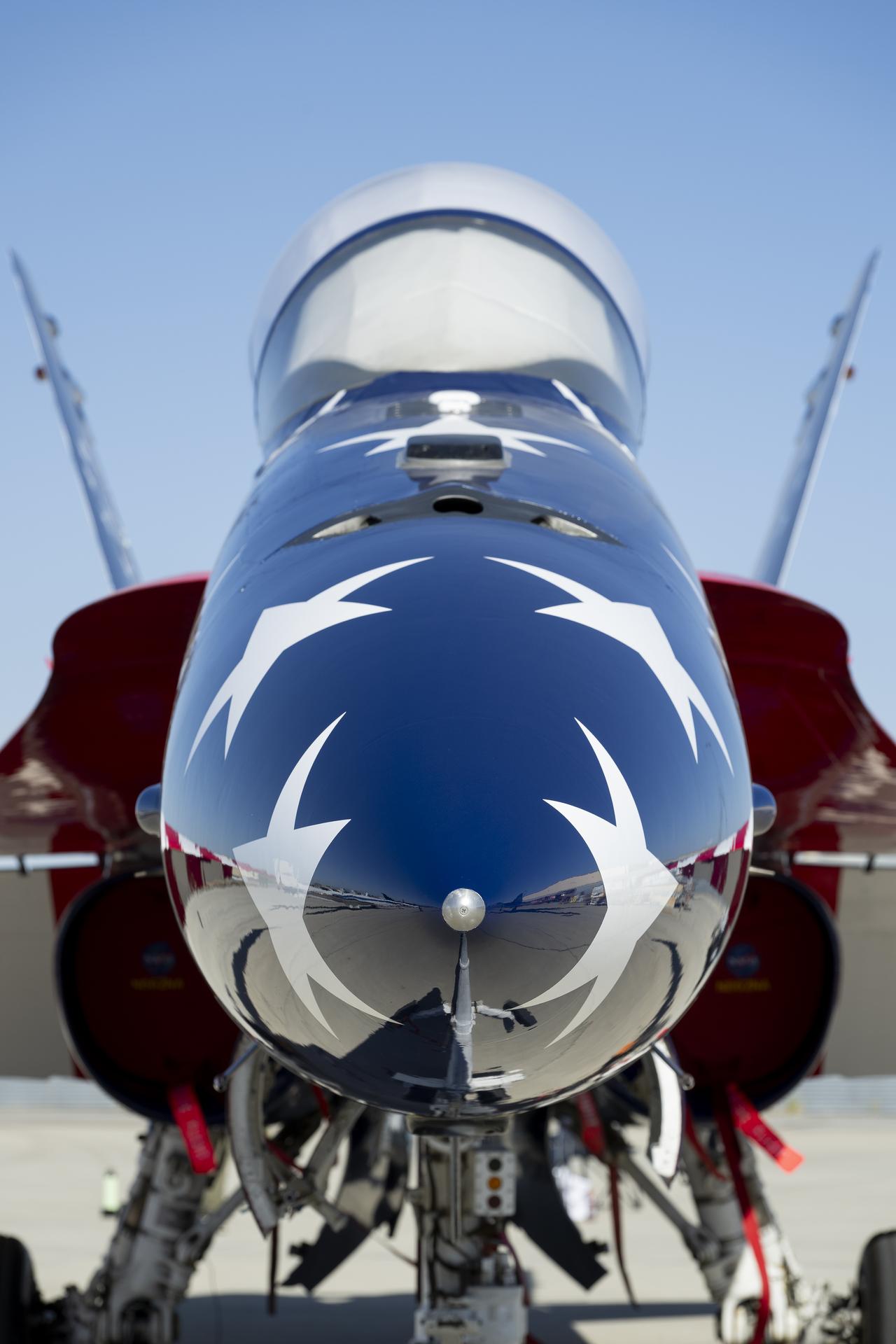
A red, white, and blue F/A-18 from NASA’s Armstrong Flight Research Center in Edwards, California, participated in Red, White, and Boom, the U.S. Air Force Test Center’s celebration of America’s 250th anniversary and NASA Armstrong’s commemoration of its 80th year at Edwards Air Force Base on Friday, Sept. 18, 2026. The event brought together the workforce, families, and the Edwards community for a high‑energy day featuring a Flightline 5K, Ramp Fest and STEM Expo, static aircraft displays, hands‑on STEM activities, and a NASA flyover with sonic boom.
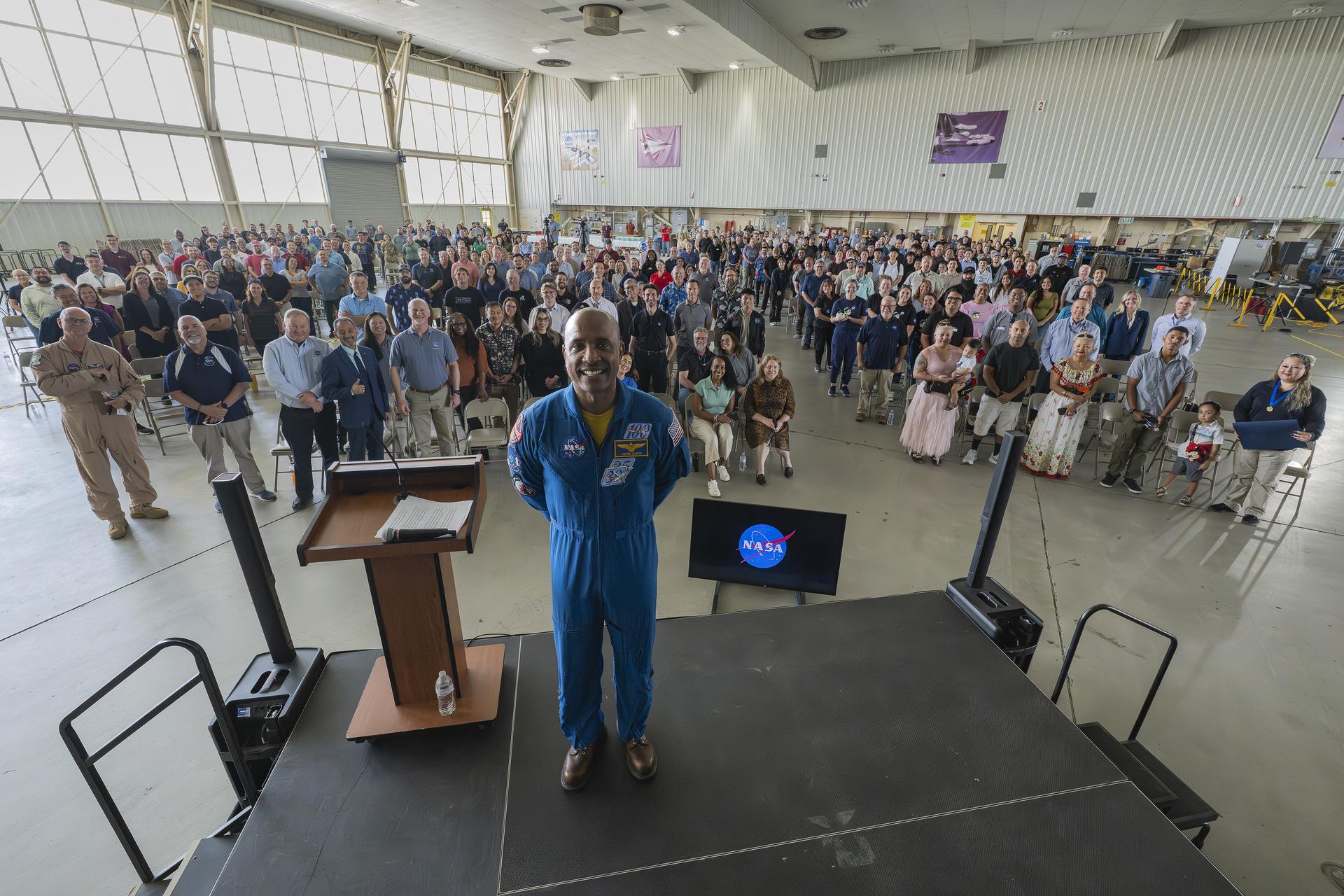
NASA Artemis II astronaut Victor Glover stands for a group photo with the workforce at NASA’s Armstrong Flight Research Center in Edwards, California, on Tuesday, Aug. 25, 2026. Glover recounted his journey through the Navy, being a test pilot, and the Artemis II mission.
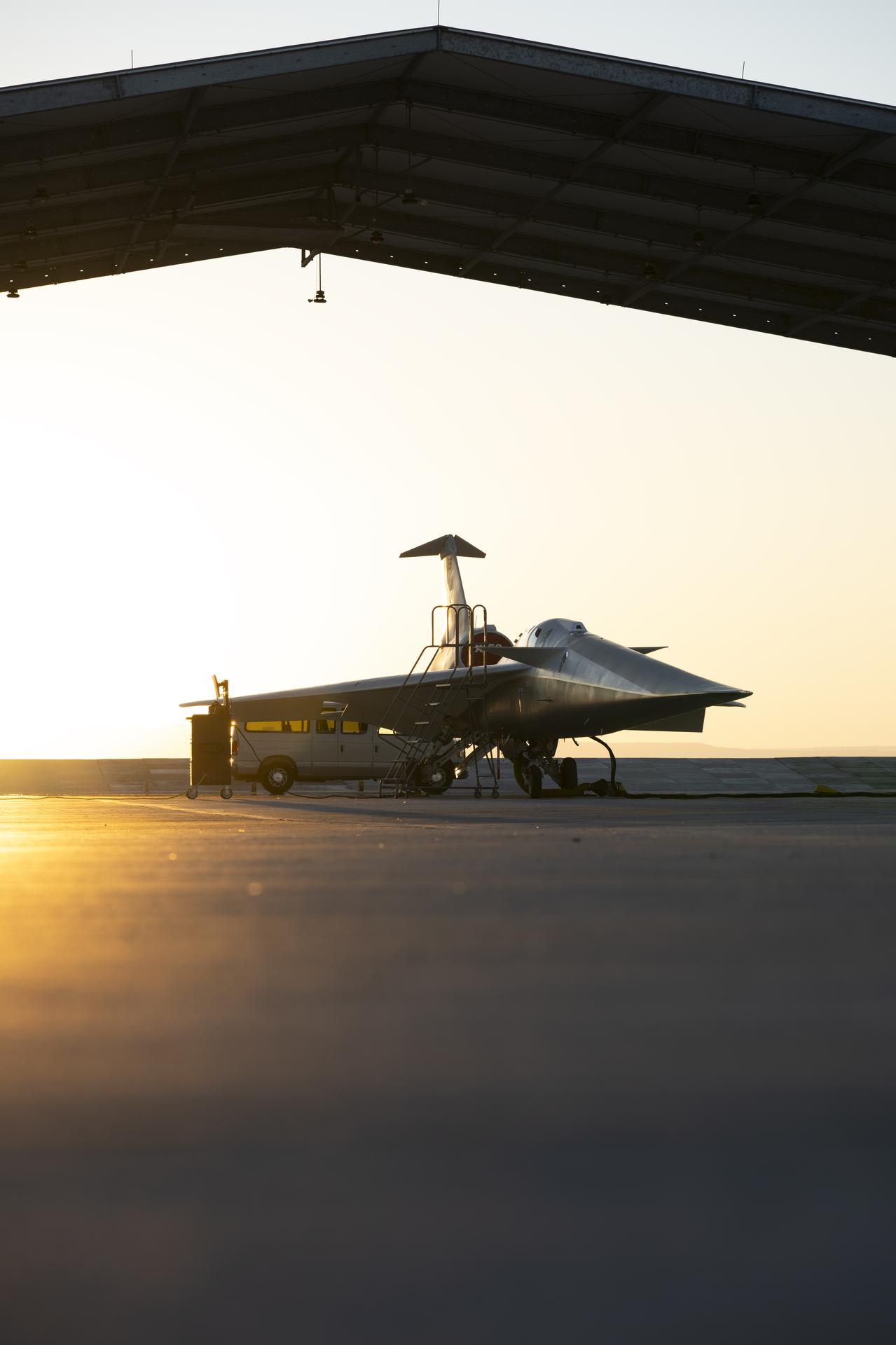
NASA’s X-59 quiet supersonic research aircraft sits in a run stall during sunrise on Tuesday, March 20, 2026, near NASA’s Armstrong Flight Research Center in Edwards, California, ahead of its second flight.
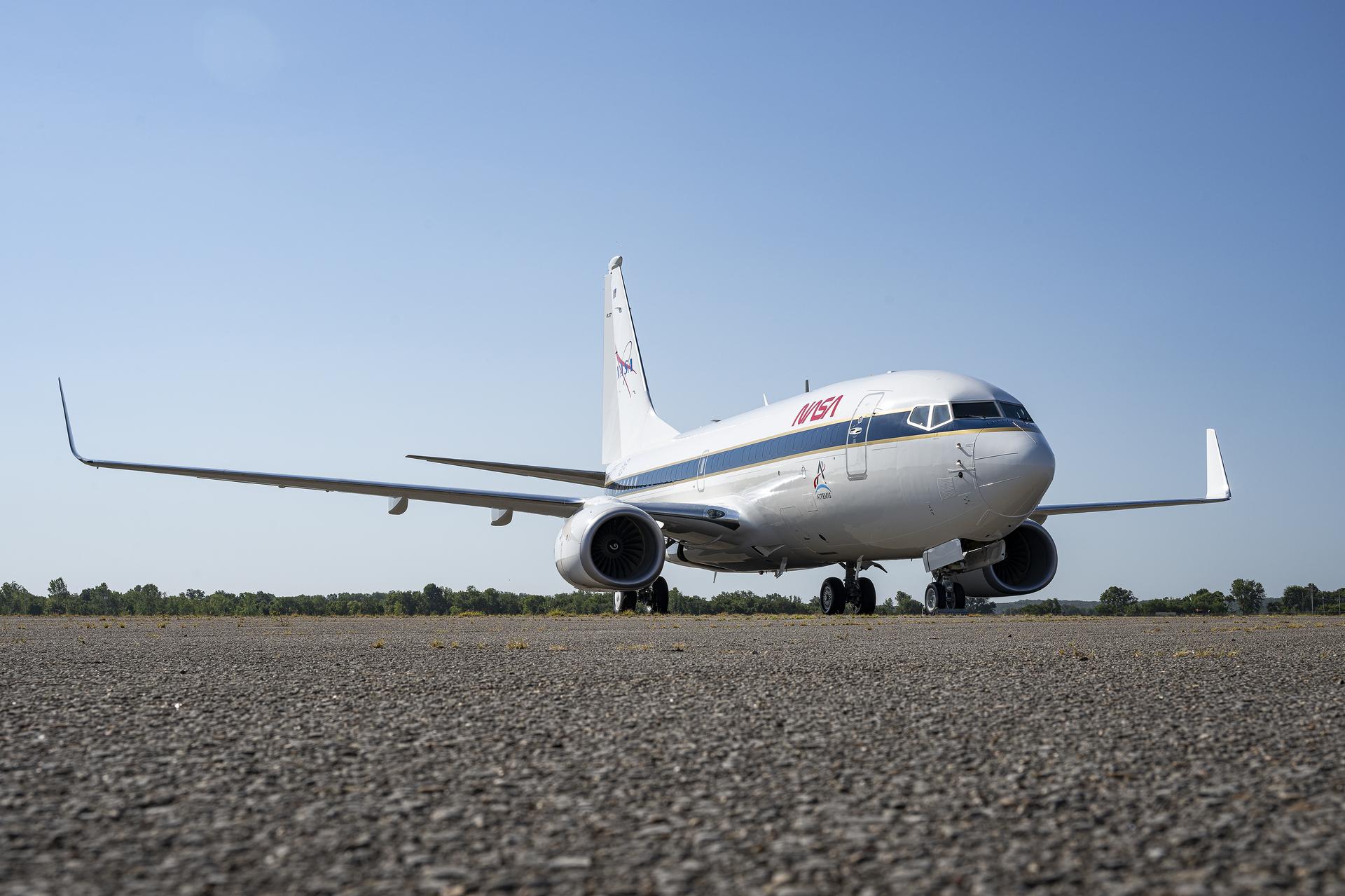
A newly painted NASA 737 aircraft sits on a ramp in Oklahoma on Thursday, Aug. 13, 2026. After modifications, this aircraft will perform lunar-gravity parabolic flights to validate astronaut lunar suits and associated crew systems required to support Artemis mission objectives. Flight testing will happen at NASA’s Johnson Space Center in Houston for reduced-gravity operations, with oversight by NASA’s Armstrong Flight Research Center in Edwards, California. In addition, the aircraft will serve as a key asset for systems‑integration research for flight testing autonomy, sensors, and other digital systems.

A NASA ER-2 high-altitude aircraft takes off from NASA’s Armstrong Flight Research Center in Edwards California on Tuesday, March 31, 2026, to support the Geological Earth Mapping Experiment (GEMx) airborne science mission.
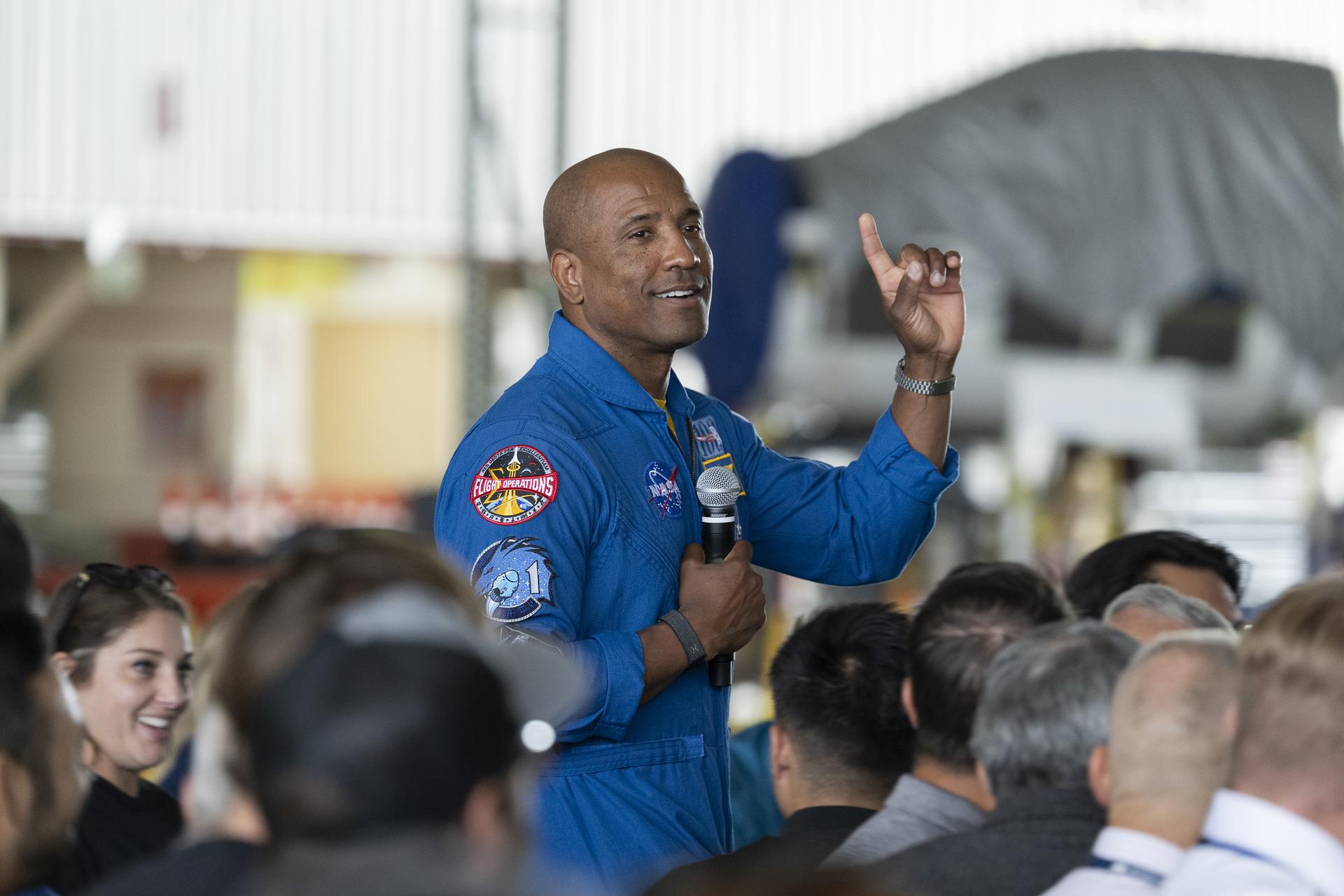
NASA Artemis II astronaut Victor Glover speaks with the workforce at NASA’s Armstrong Flight Research Center in Edwards, California, on Tuesday, Aug. 25, 2026. Glover recounted his journey through the Navy, being a test pilot, and the Artemis II mission.
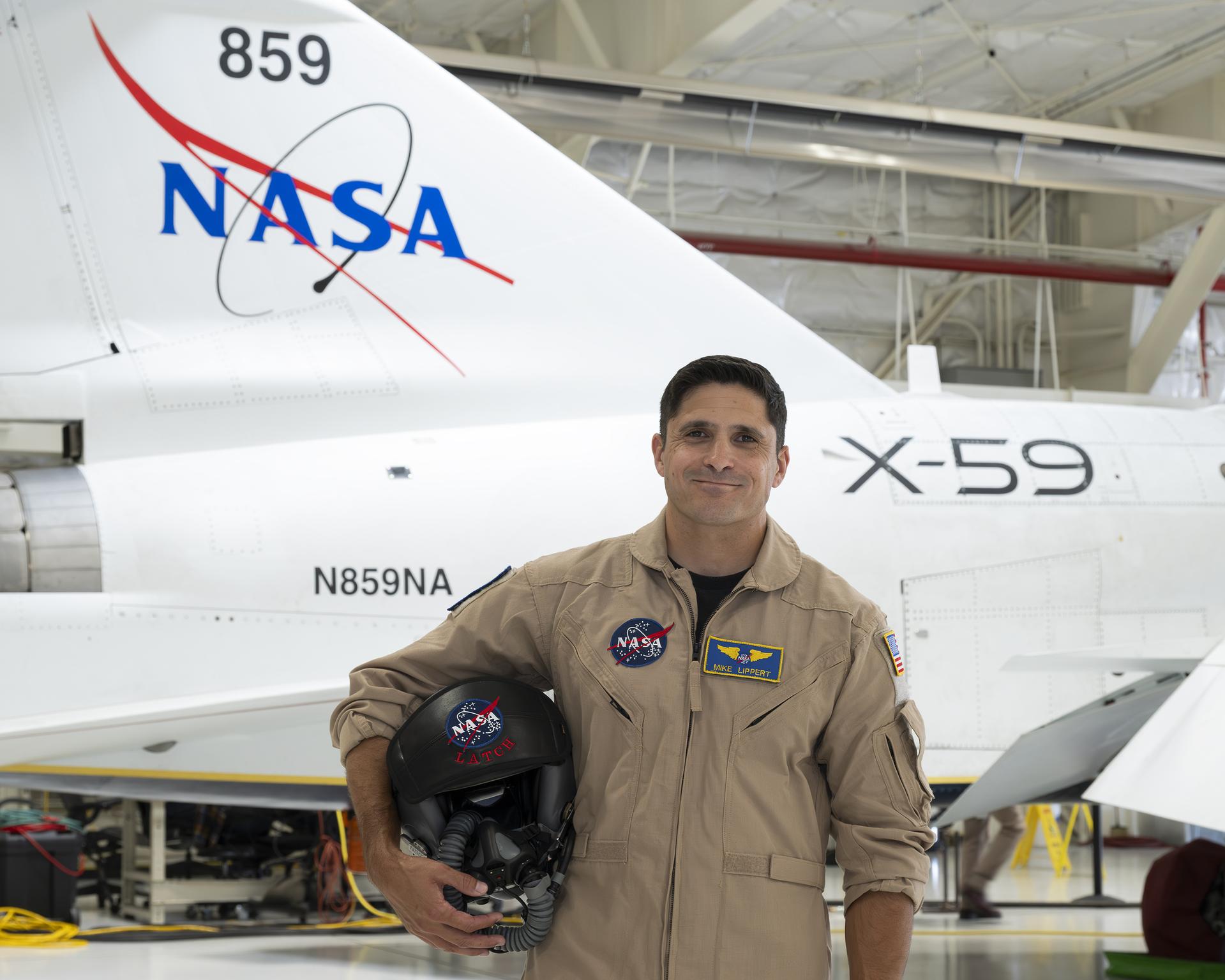
NASA’s X-59 test pilot Mike Lippert stands in front of the agency's X-59 quiet supersonic research aircraft at NASA's Armstrong Flight Research Center in Edwards, California, on Wednesday, June 24, 2026. Lippert joins NASA as the third X-59 pilot supporting the Quesst mission, which will eventually fly over U.S. communities to demonstrate quiet supersonic flight and collect feedback from the public about the aircraft’s quiet sonic “thump.”
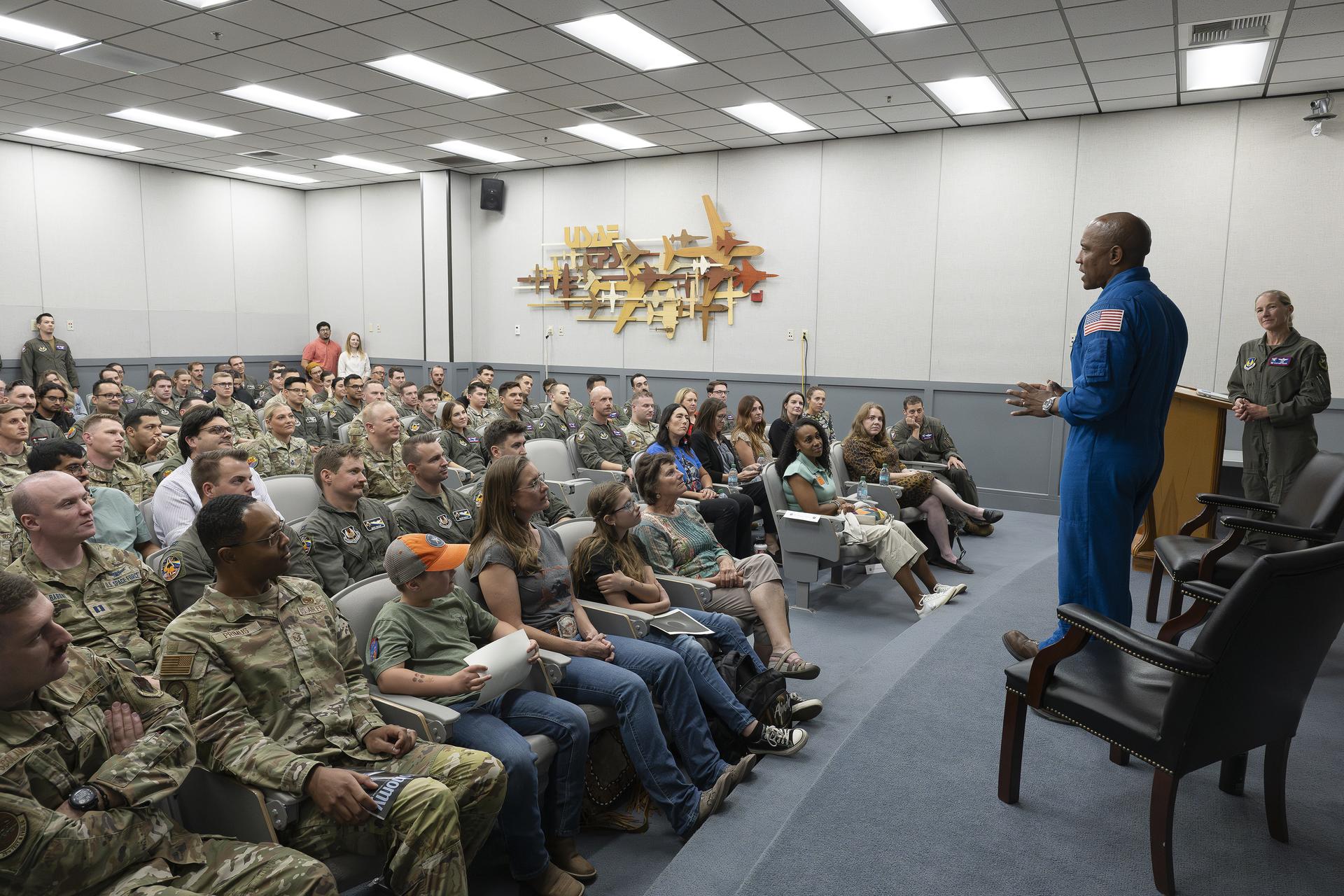
NASA Artemis II astronaut Victor Glover meets with U.S. Air Force Test Pilot School students during a fireside chat at Edwards Air Force Base, California on Tuesday, Aug. 25, 2026. Glover led a discussion sharing lessons from his career as a Navy captain, test pilot, and astronaut.
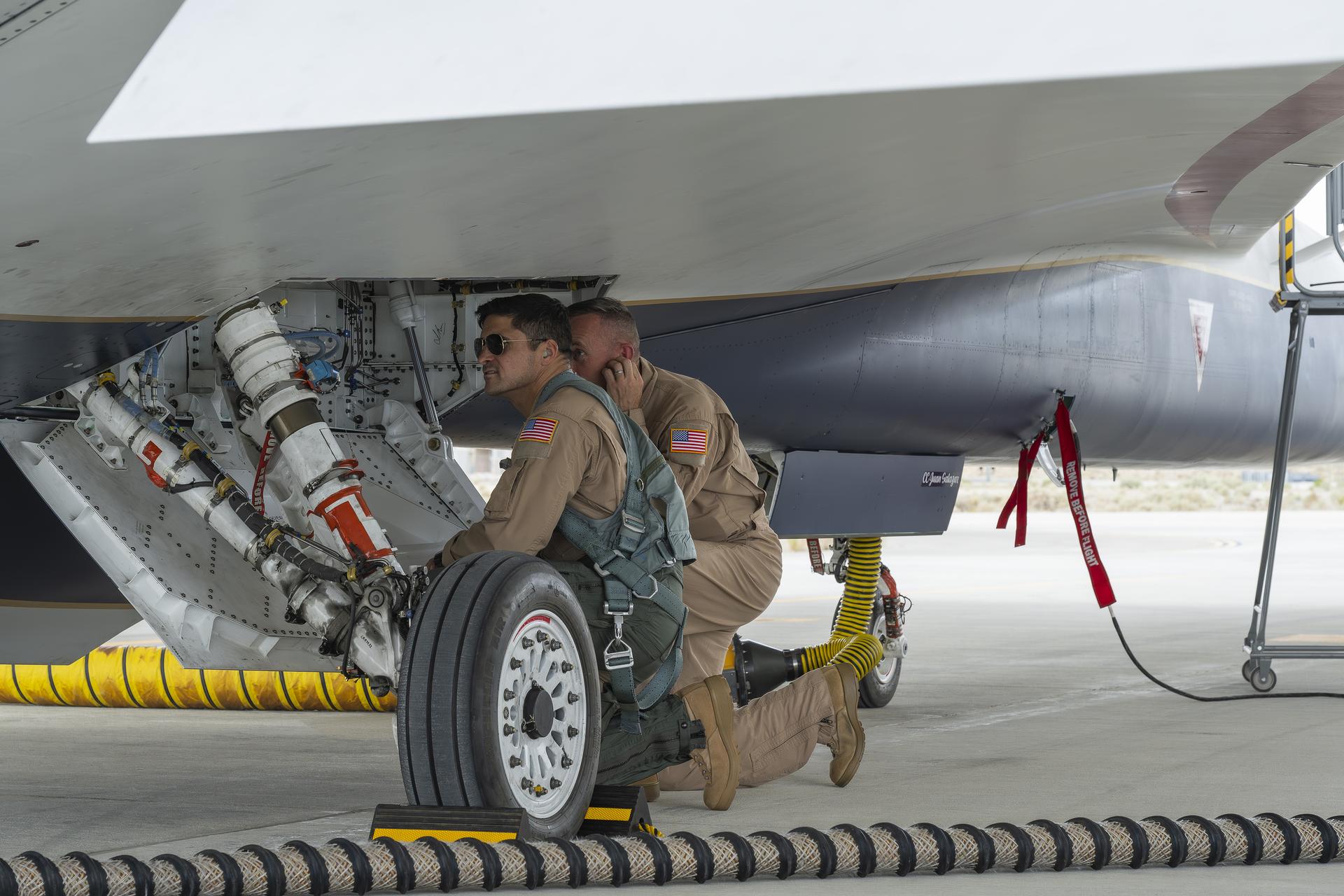
NASA X‑59 test pilots Mike Lippert, left, and Jim “Clue” Less inspect the wheel compartment before an engine run of the agency’s X‑59 quiet supersonic research aircraft at NASA’s Armstrong Flight Research Center in Edwards, California, on Thursday, Aug. 27, 2026. The test marked the first time Lippert operated the aircraft and became familiar with its cockpit. NASA’s Quesst mission will demonstrate quiet supersonic flight over U.S. communities and gather public feedback on the aircraft’s quieter sonic “thump.”
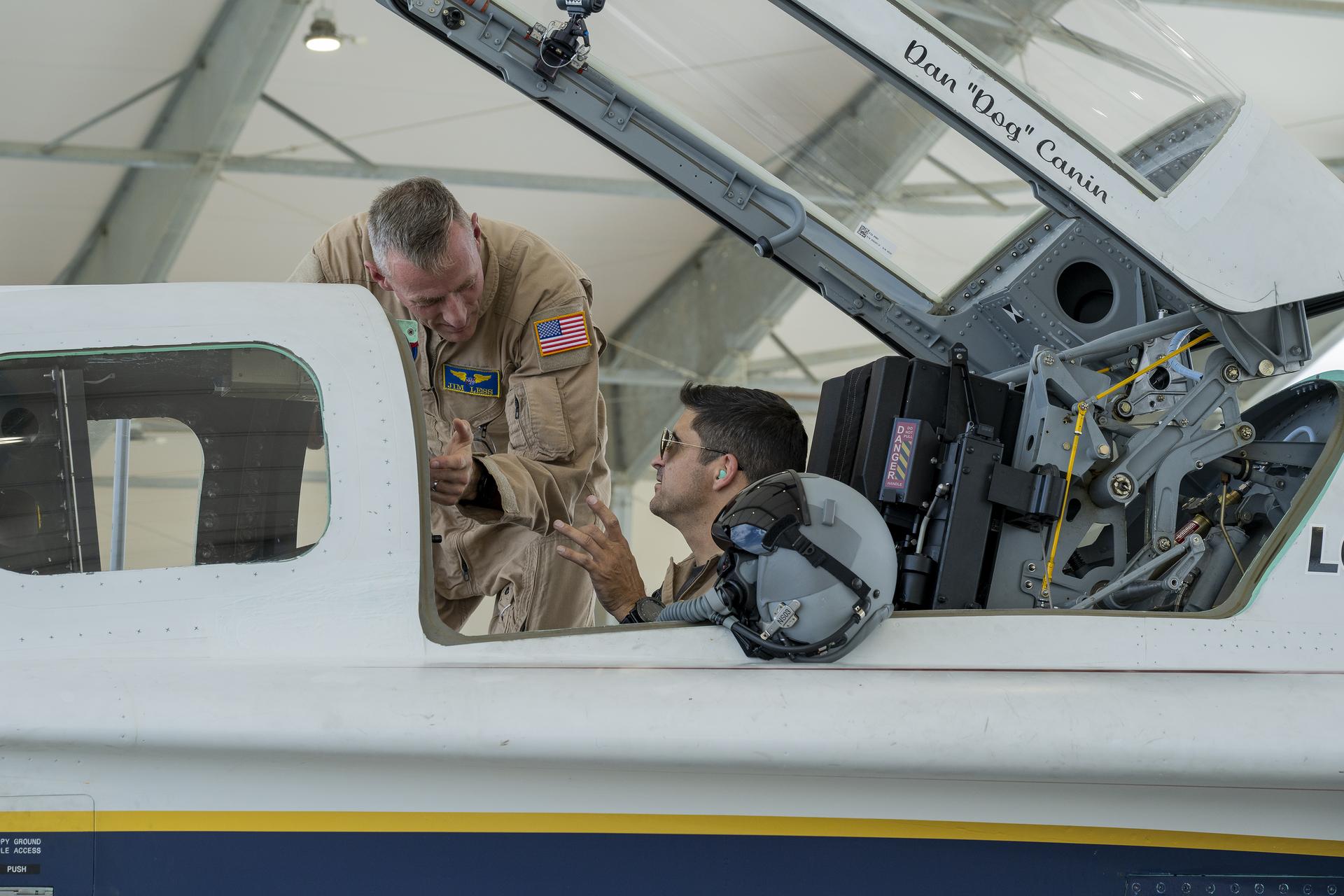
NASA X‑59 test pilots Mike Lippert, right, and Jim “Clue” Less review details prior to an engine run of the agency’s X‑59 quiet‑supersonic research aircraft at NASA’s Armstrong Flight Research Center in Edwards, California, on Thursday, Aug. 27, 2026. The test marked Lippert’s first opportunity to operate the aircraft and become familiar with its cockpit. NASA’s Quesst mission aims to demonstrate quiet supersonic flight over U.S. communities and gather public feedback on the aircraft’s quieter sonic “thump.”
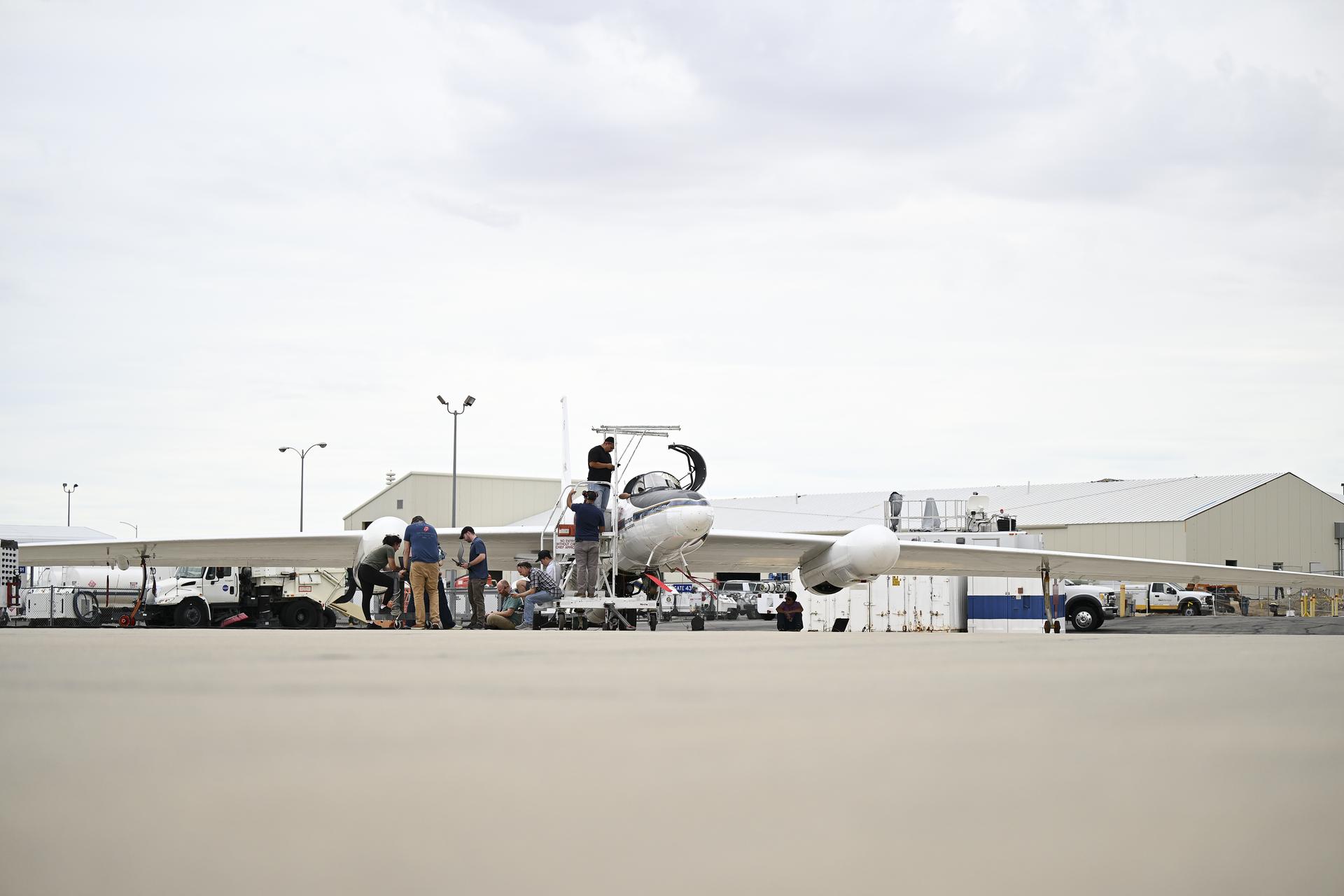
Ground crew team members, from left, Sophie Abou-Rizk, Michael Greenberg, Grant Finneman, Matthew Walker McLinden, Ted Hildum, Terry Hu, Jose Prieto, and Jesse Orellana prepare an ER‑2 aircraft for the INjected Smoke and PYRocumulonimbus Experiment (INSPYRE) on Monday, July 13, 2026. The aircraft is based at NASA’s Armstrong Flight Research Center in Edwards, California. This Earth science campaign studies wildfire‑generated thunderstorms and researchers are seeking to better understand how these storms form, how high the storms send smoke, where this smoke travels, and the effects after the smoke reaches upper layers of the atmosphere.
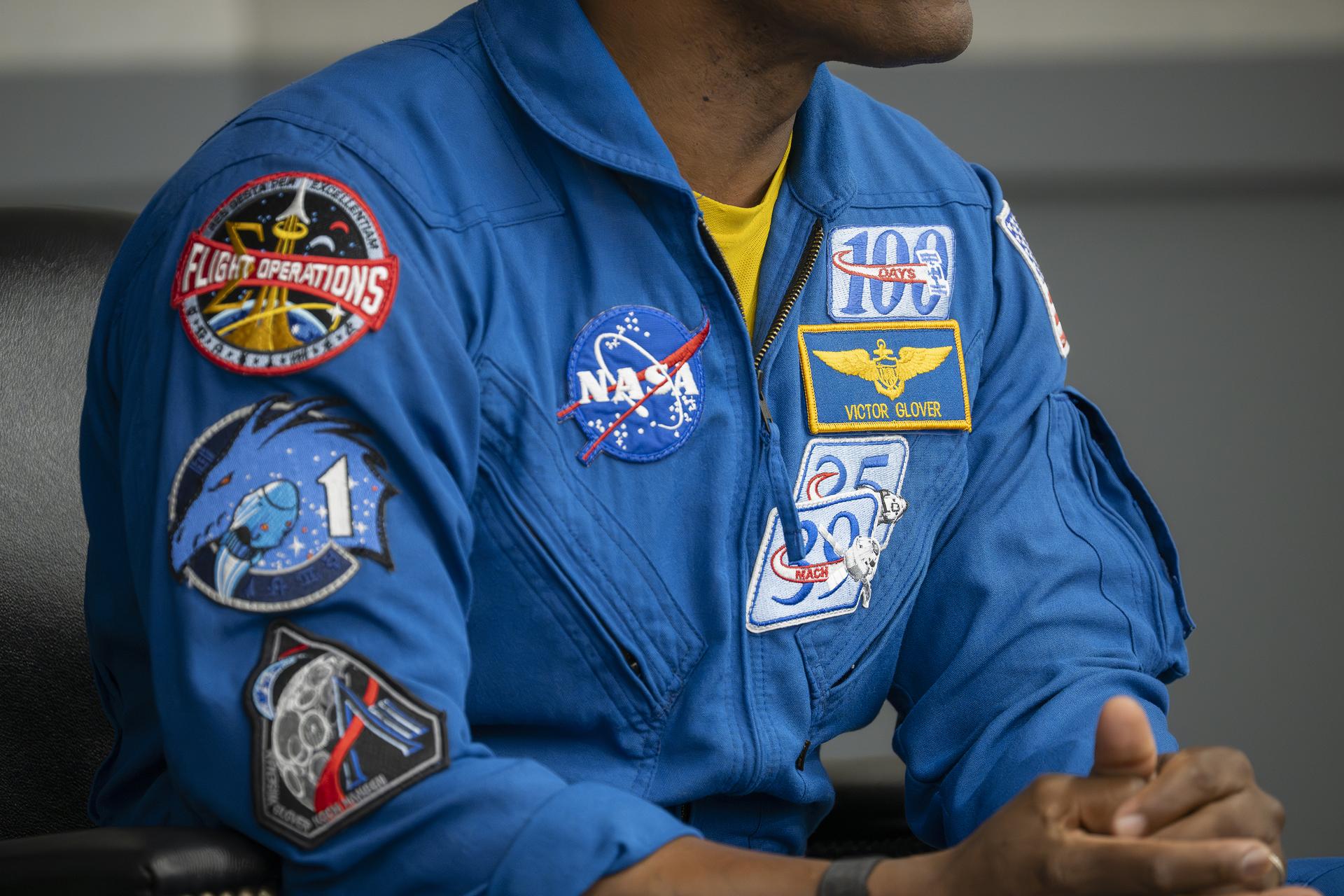
NASA Artemis II astronaut Victor Glover meets with U.S. Air Force Test Pilot School students during a fireside chat at Edwards Air Force Base, California on Tuesday, Aug. 25, 2026. Glover led a discussion sharing lessons from his career as a Navy captain, test pilot, and astronaut.
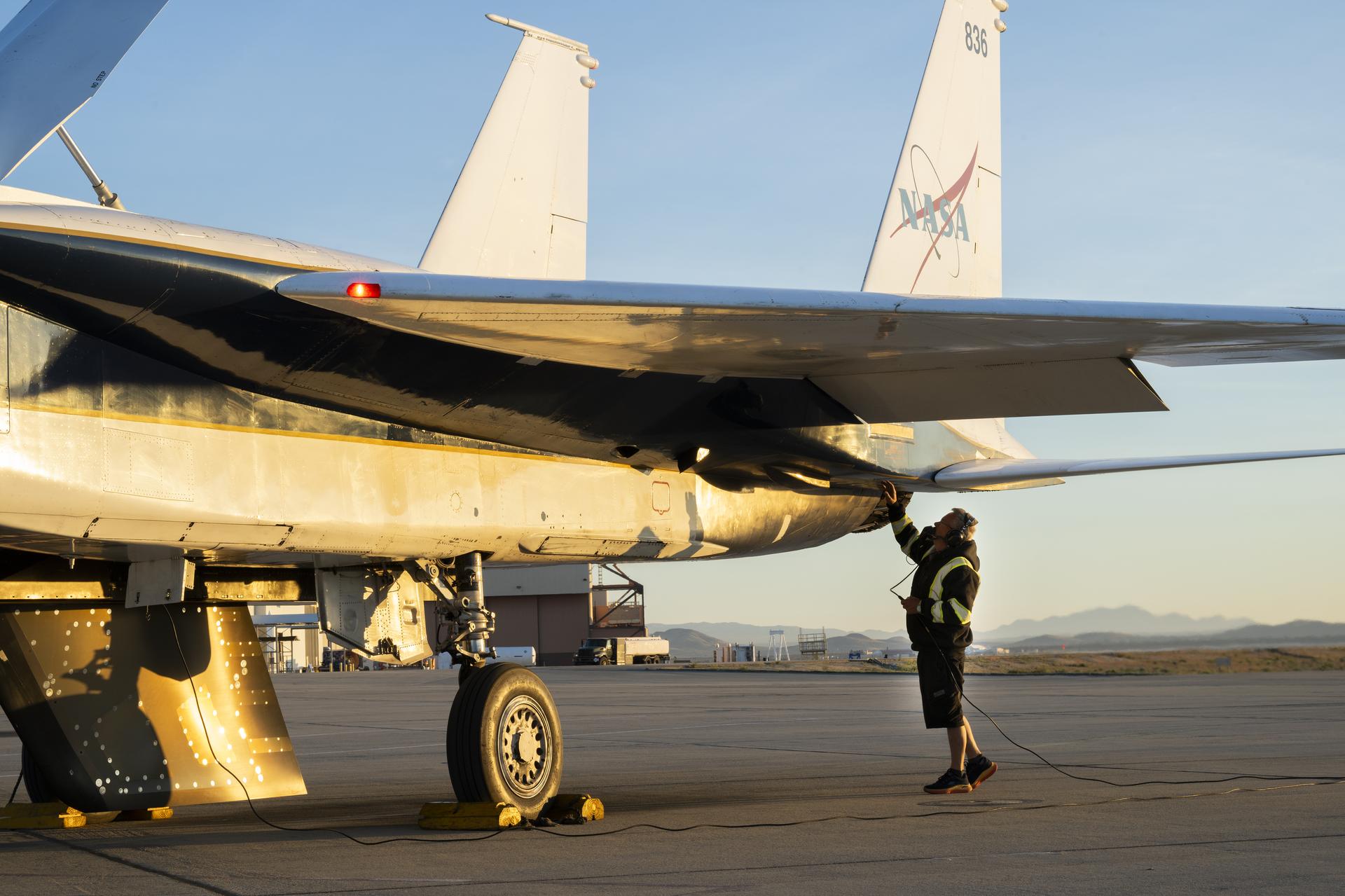
NASA crew chief Walt Kondracki checks an F-15 aircraft Tuesday, March 17, 2026, at NASA’s Armstrong Flight Research Center in Edwards, California. Ground crews, made of various roles, maintain the aircraft to be ready for each mission.
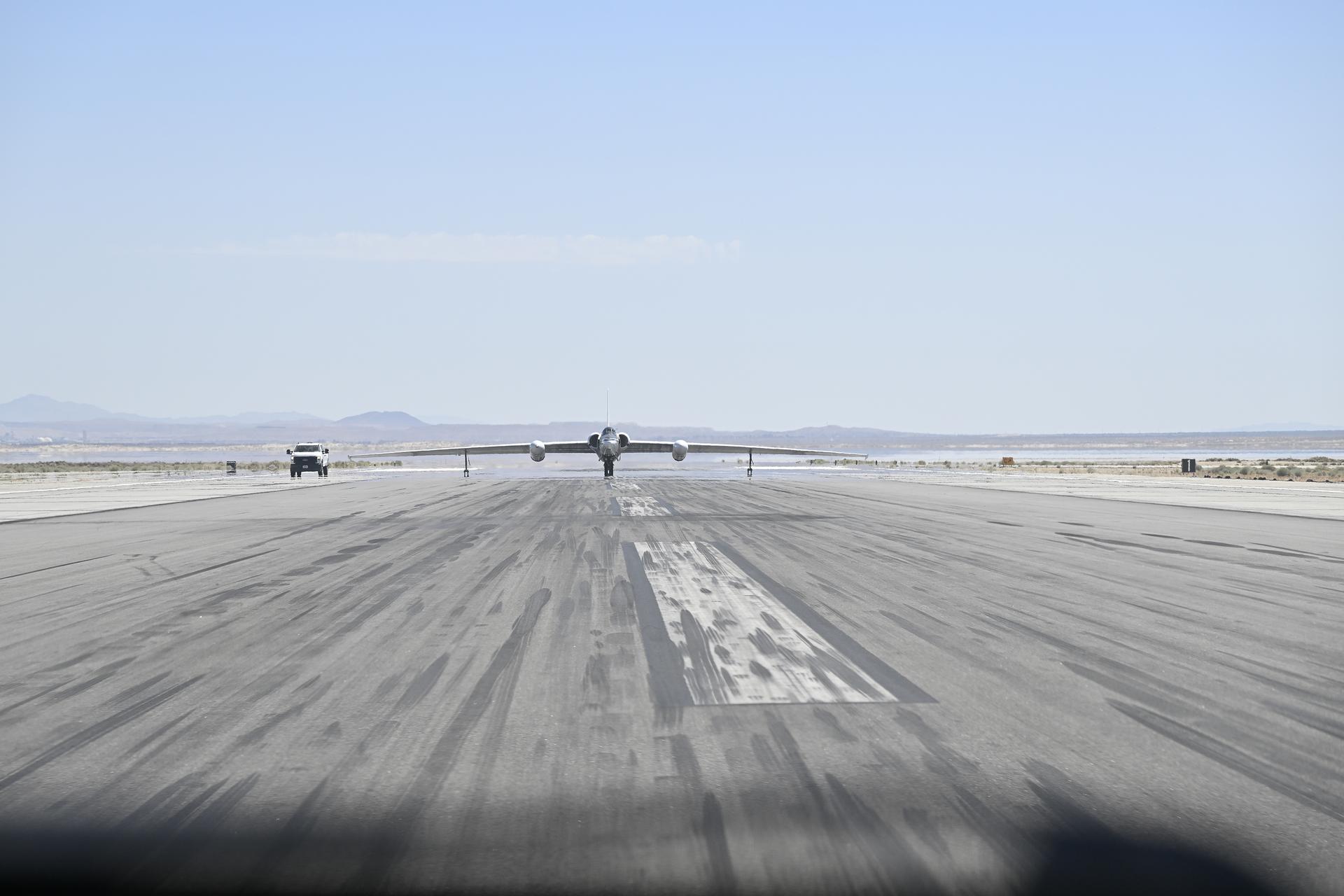
An ER‑2 aircraft prepares for the INjected Smoke and PYRocumulonimbus Experiment (INSPYRE) at NASA’s Armstrong Flight Research Center in Edwards, California, on Wednesday, July 15, 2026. This Earth science campaign studies wildfire‑generated thunderstorms, and researchers are seeking to better understand how these storms form, how high the storms send smoke, where this smoke travels, and the effects after the smoke reaches upper layers of the atmosphere.
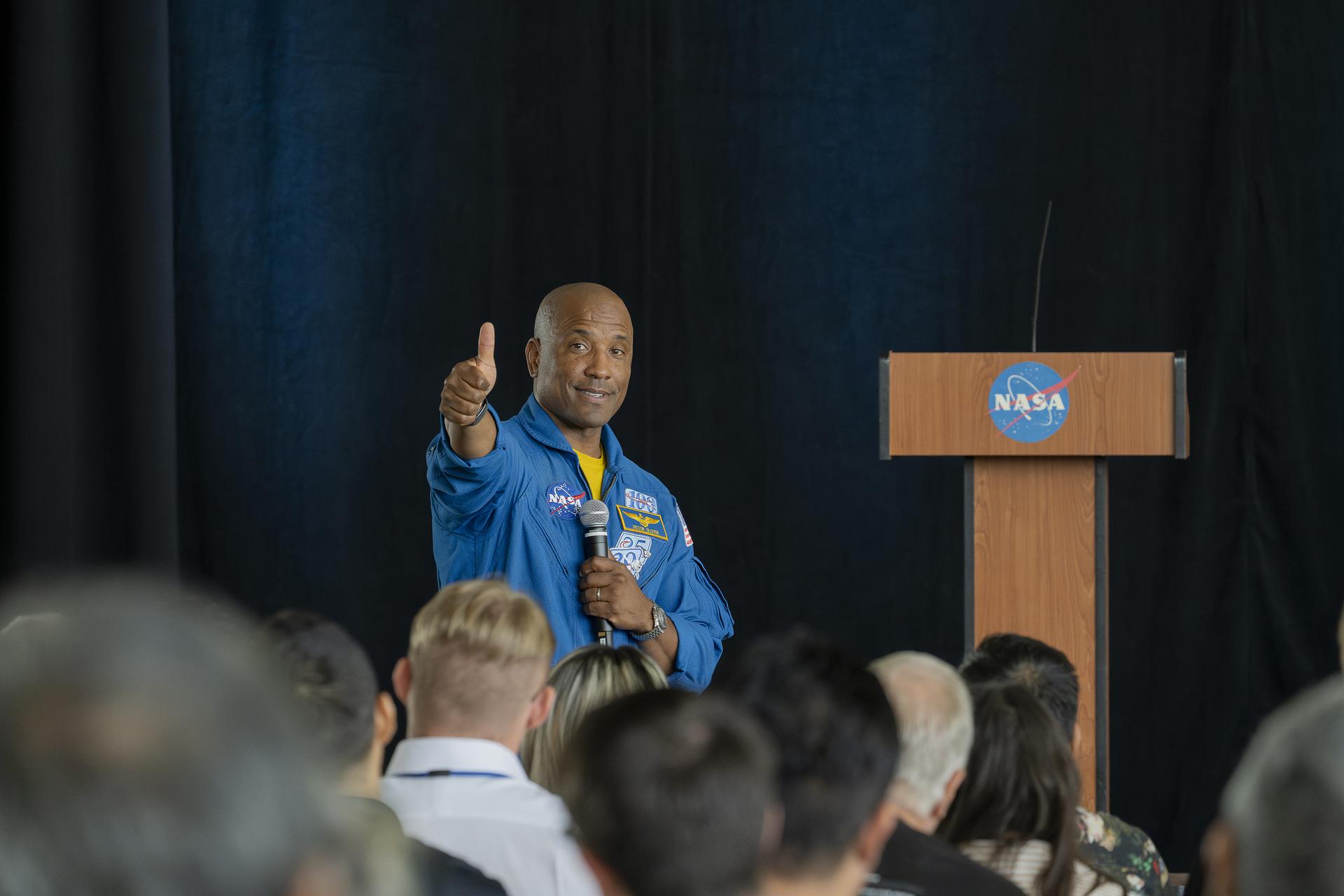
NASA Artemis II astronaut Victor Glover speaks with the workforce at NASA’s Armstrong Flight Research Center in Edwards, California, on Tuesday, Aug. 25, 2026. Glover recounted his journey through the Navy, being a test pilot, and the Artemis II mission.
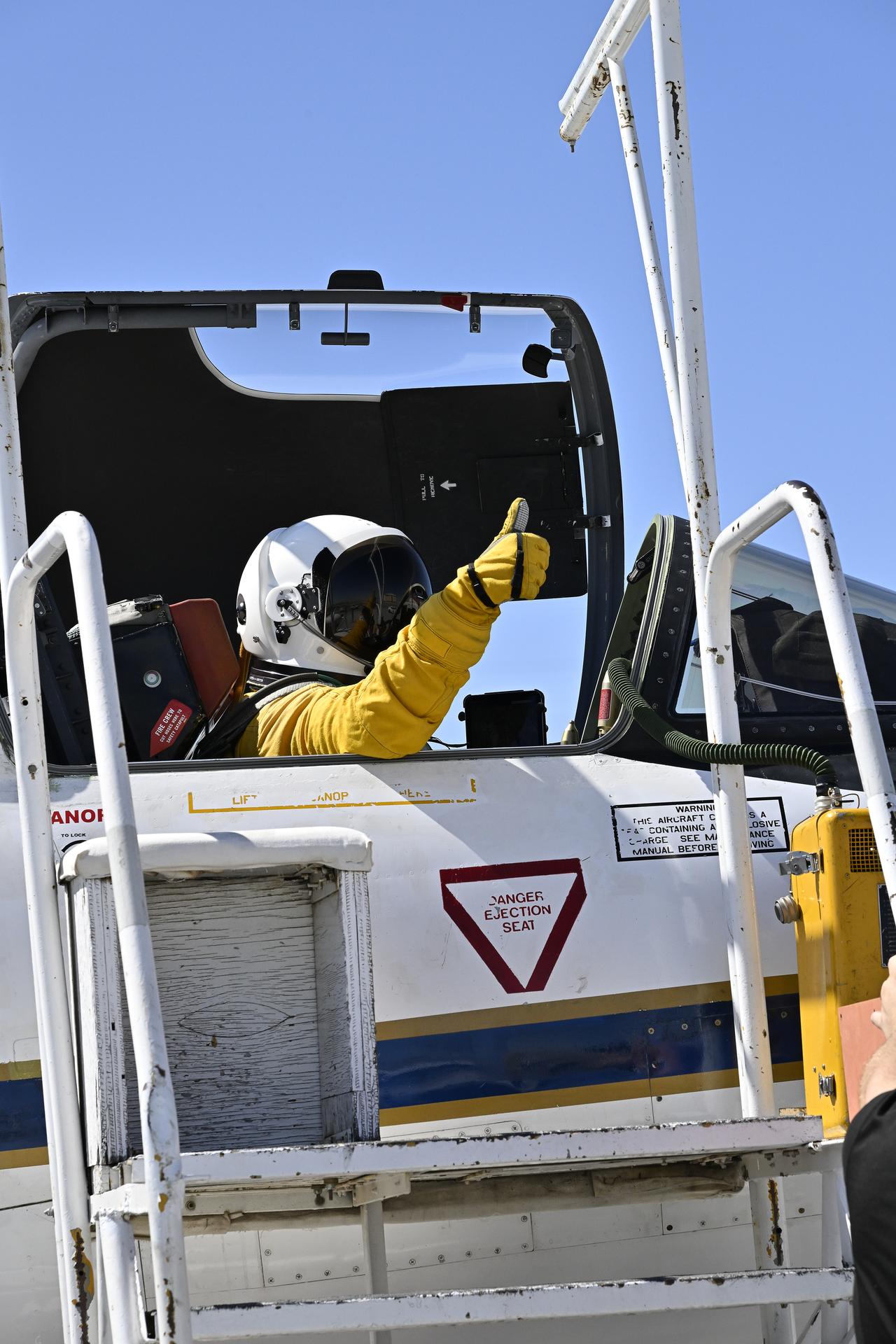
NASA pilot Kirt Stallings prepares for the INjected Smoke and PYRocumulonimbus Experiment (INSPYRE) at NASA’s Armstrong Flight Research Center in Edwards, California, on Wednesday, July 15, 2026. This Earth science campaign studies wildfire‑generated thunderstorms, and researchers are seeking to better understand how these storms form, how high the storms send smoke, where this smoke travels, and the effects after the smoke reaches upper layers of the atmosphere.
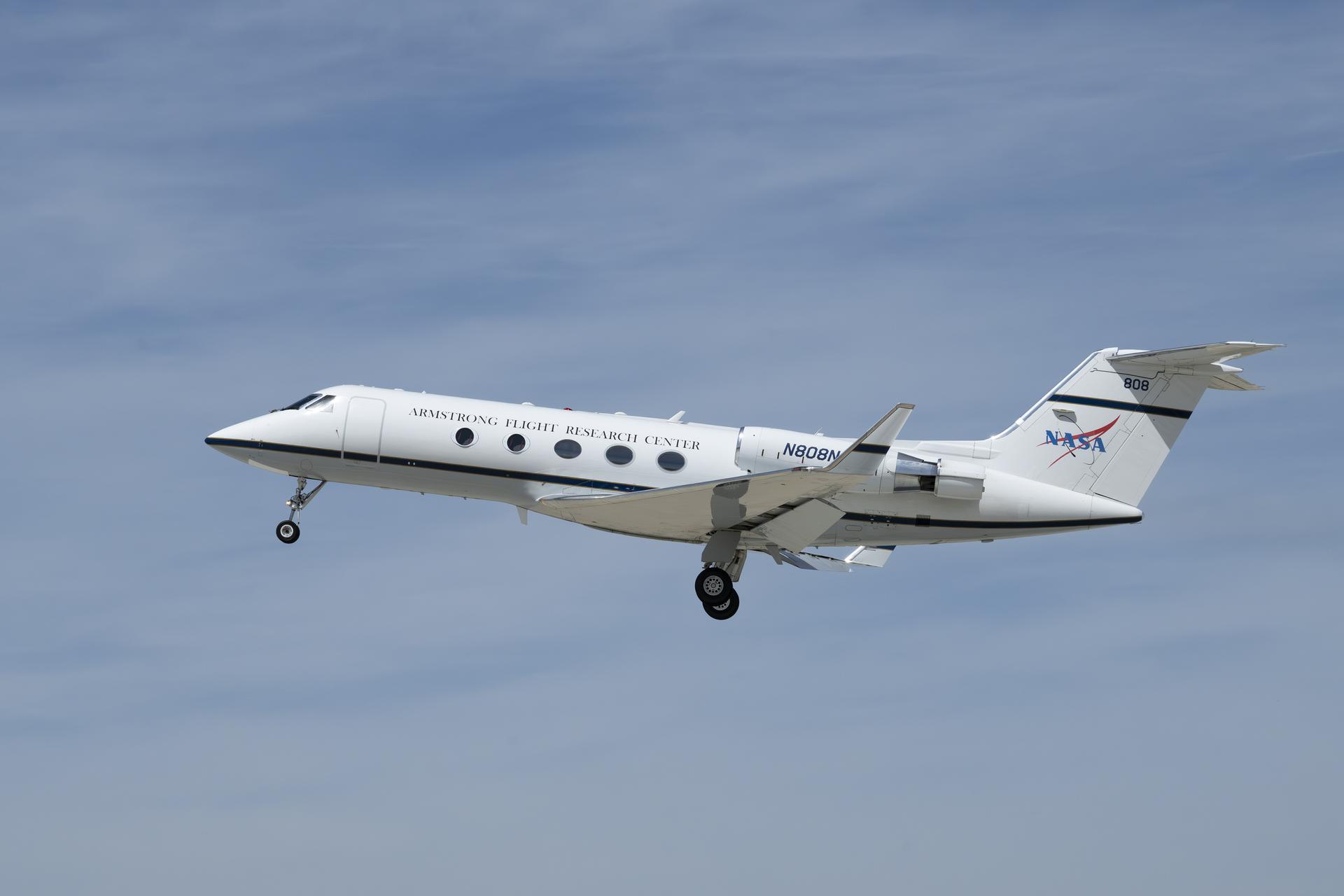
A Gulfstream G-III takes off Friday, March 27, 2026, from NASA’s Armstrong Flight Research Center in Edwards, California. The G-III will join other NASA aircraft to capture imagery of the Orion spacecraft’s heat shield during Artemis II reentry. The mission is part of NASA’s Scientifically Calibrated In-Flight Imagery (SCIFLI) project, based at NASA’s Langley Research Center in Hampton, Virginia.
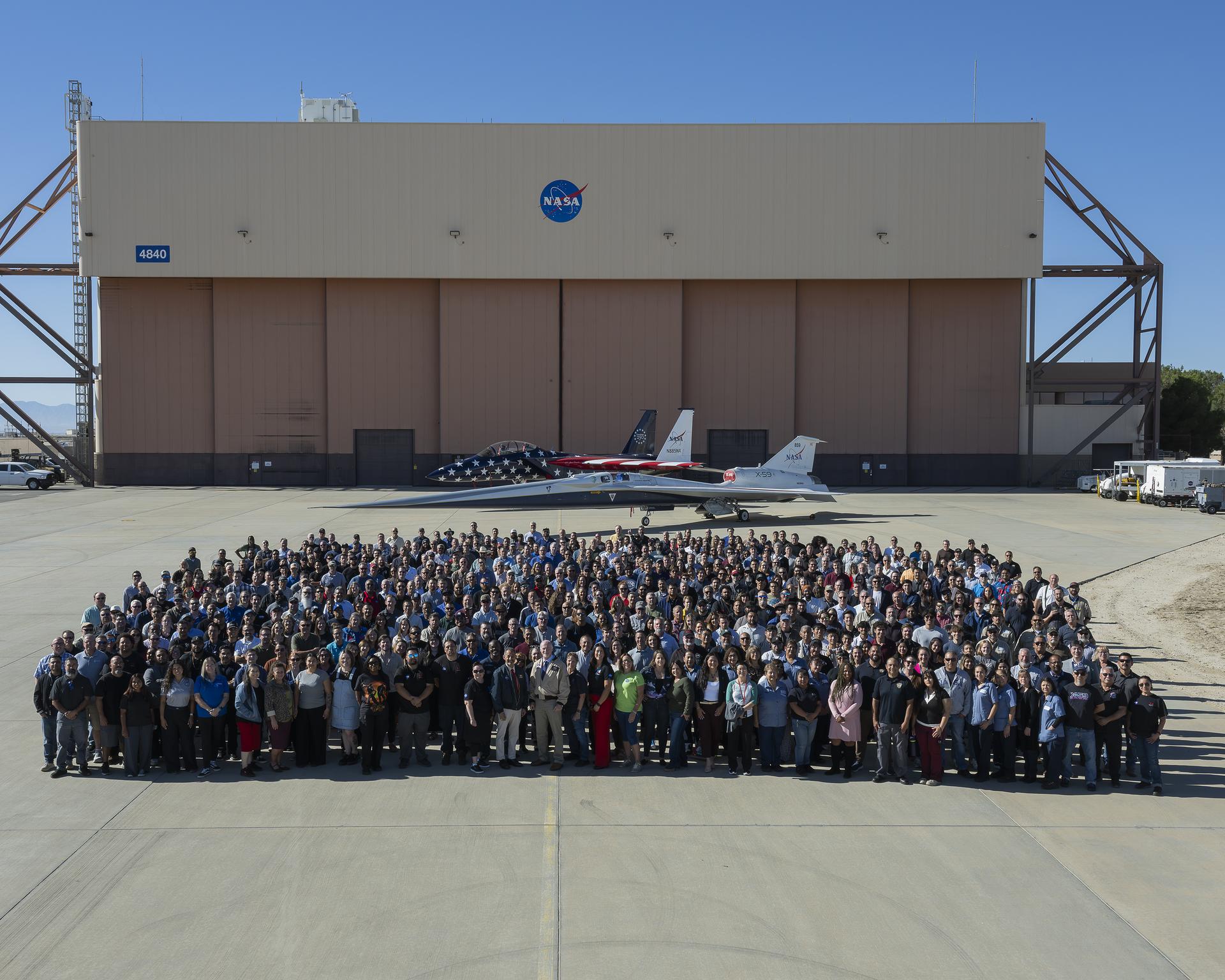
Employees gather for a group photo marking the 80th anniversary of NASA’s Armstrong Flight Research Center in Edwards, California, on Monday, Sept. 28, 2026. For 80 years, NASA Armstrong has supported milestone missions ranging from space shuttle landings to SR-71 flights, shaping the evolution of science, aeronautics, and space research.