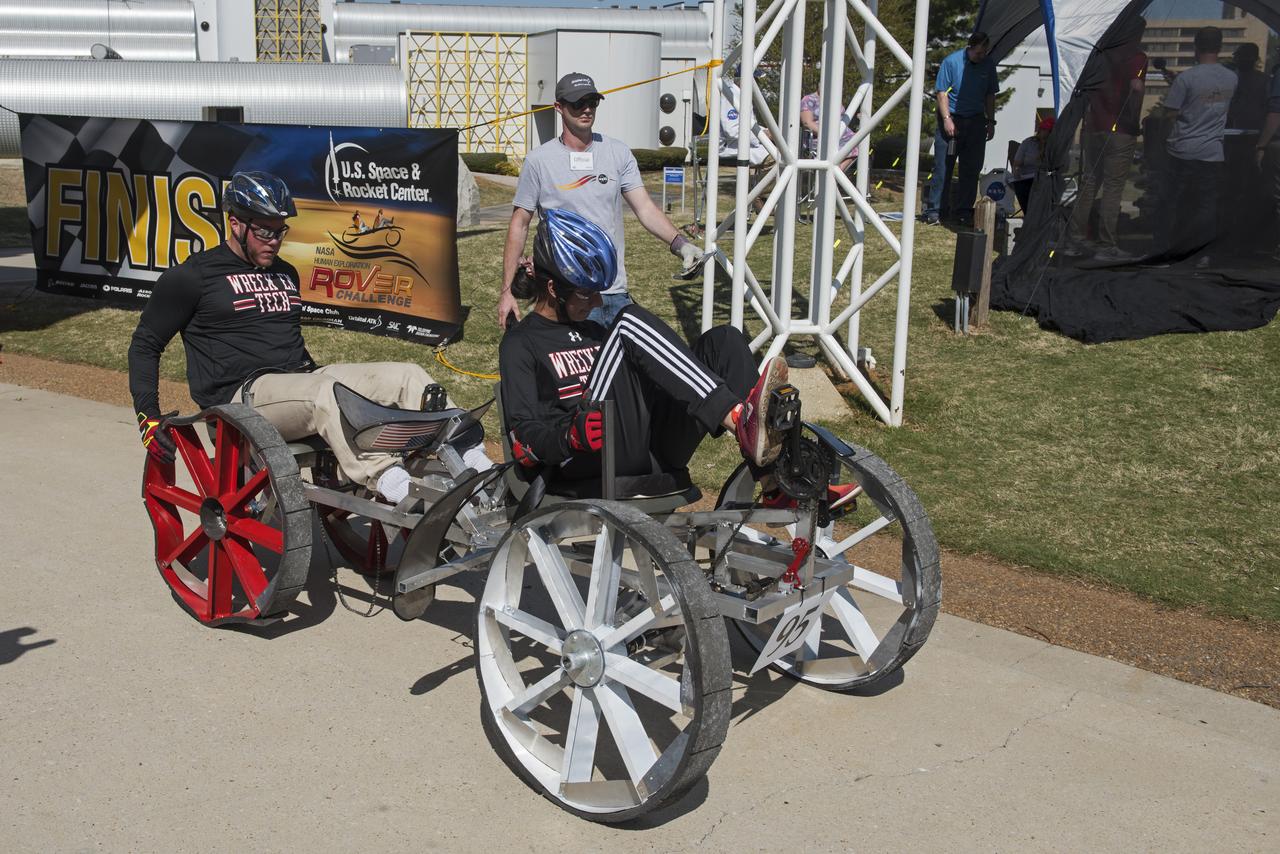
High school and university students competed in the 2018 Human Exploration Rover Challenge event at the U.S. Space and Rocket Center in Huntsville, Alabama. Students came from across the U.S. as well as several foreign countries such as Brazil, Germany, India, and Mexico. This event, which is normally a 2 day event, was shortened to 1 day in 2018 due to adverse weather conditions.
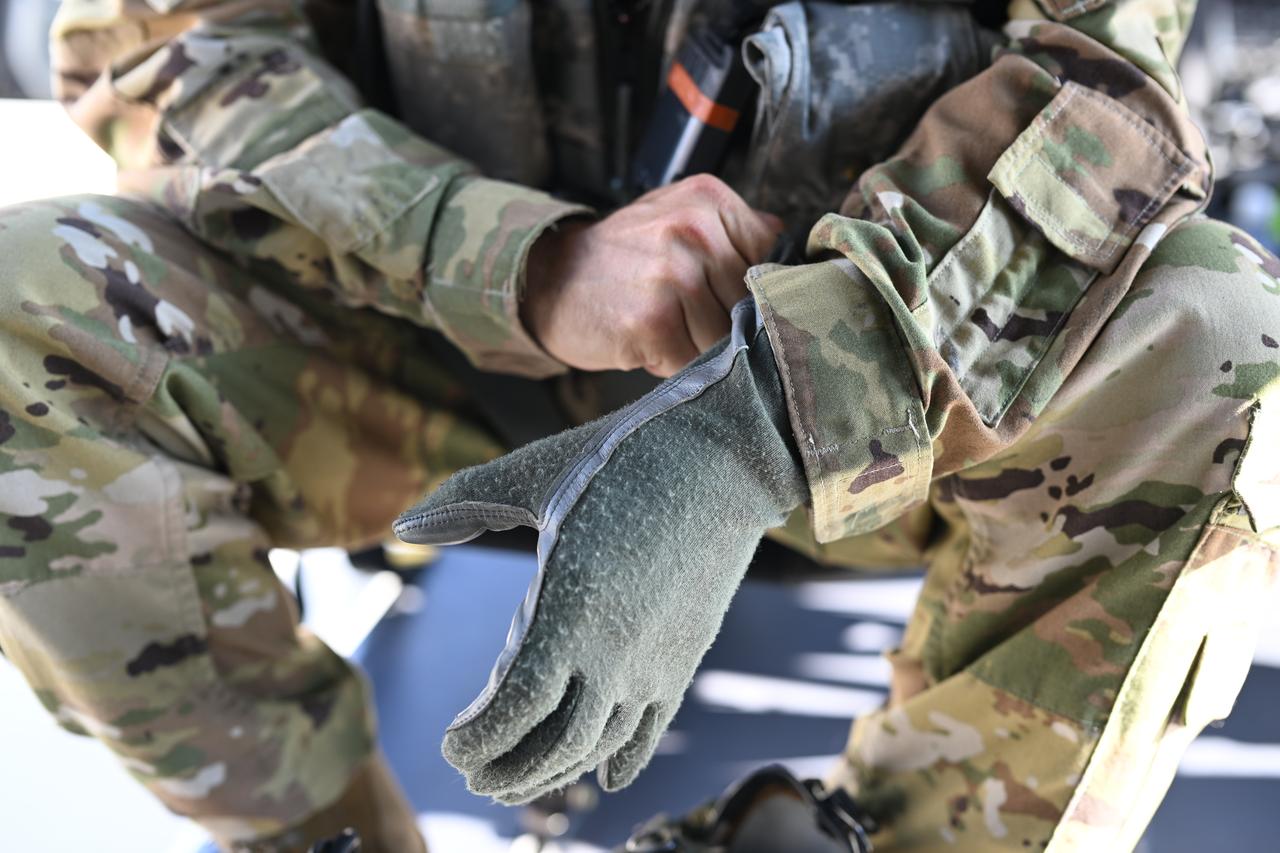
These photos and videos show how NASA certified a new lander flight training course using helicopters in the mountains of northern Colorado. NASA is partnering with the Colorado Army National Guard at its High-Altitude Army National Guard Aviation Training Site near Gypsum, Colorado, to develop the foundational flight training course that will help astronauts practice flight and landing procedures for the Moon. The certification marks an important milestone in crew training for Artemis missions to the Moon, when astronauts will use a commercial human landing system to land on the lunar surface. During the two-week certification run in late August 2025, NASA astronauts Matthew Dominick and Mark Vande Hei participated in flight and landing training to help certify the course. The pair, along with trained instructor pilots with the Army National Guard, took turns flying a helicopter and navigating to landing zones. Artemis flight crew trainers, mission control leads, and lunar lander operational experts from NASA Johnson joined them on each helicopter flight to assess the instruction, training environment, and technical applications for crewed lunar missions. For more information, contact NASA Marshall’s Office of Communications at 256-544
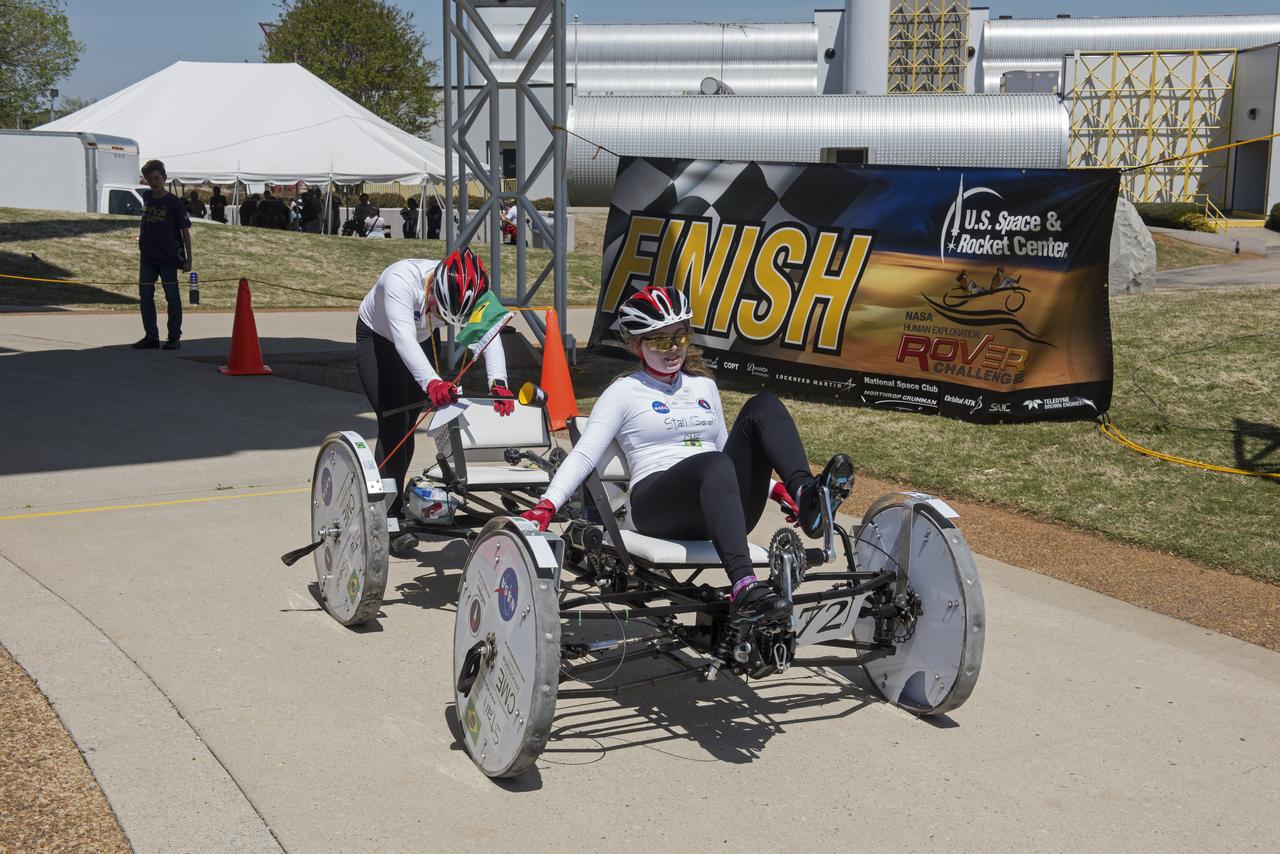
High school and university students competed in the 2018 Human Exploration Rover Challenge event at the U.S. Space and Rocket Center in Huntsville, Alabama. Students came from across the U.S. as well as several foreign countries such as Brazil, Germany, India, and Mexico. This event, which is normally a 2 day event, was shortened to 1 day in 2018 due to adverse weather conditions.
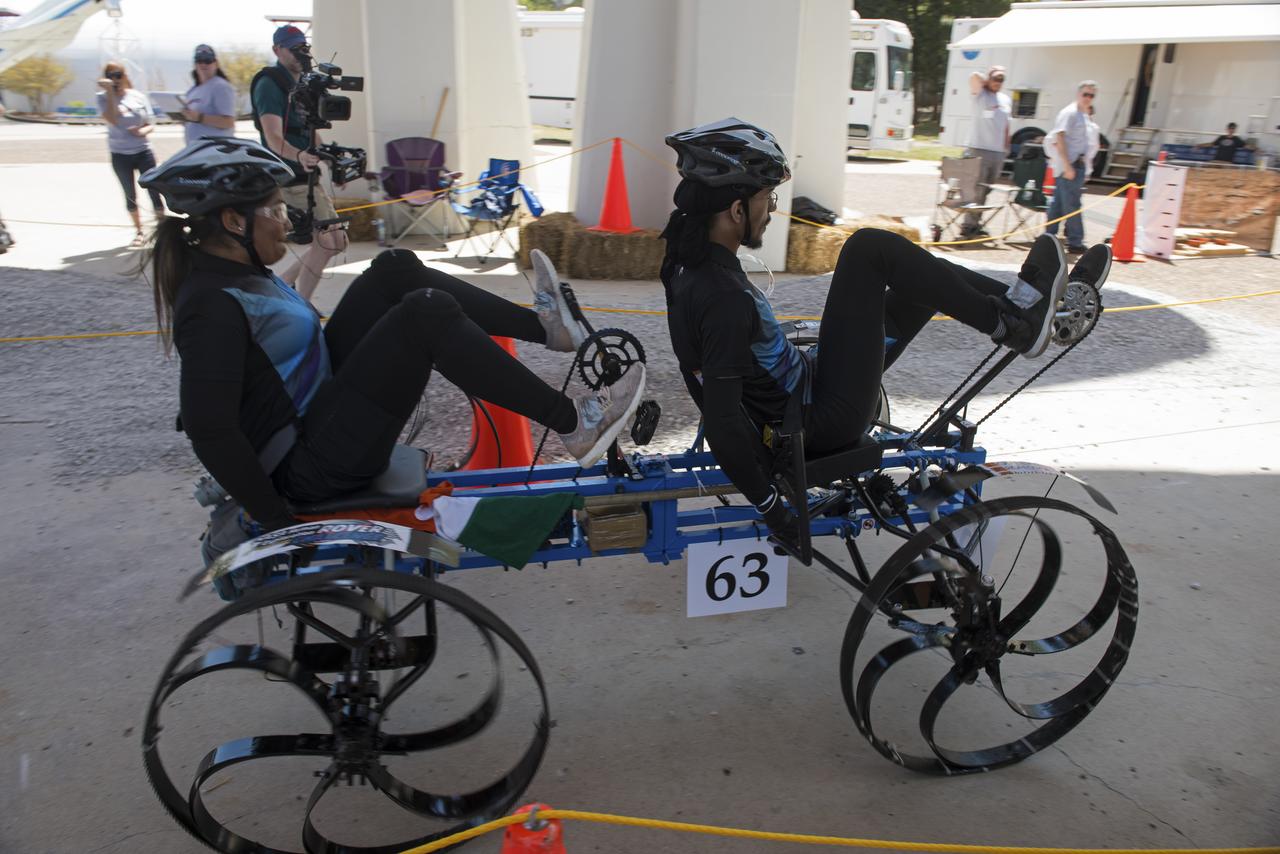
High school and university students competed in the 2018 Human Exploration Rover Challenge event at the U.S. Space and Rocket Center in Huntsville, Alabama. Students came from across the U.S. as well as several foreign countries such as Brazil, Germany, India, and Mexico. This event, which is normally a 2 day event, was shortened to 1 day in 2018 due to adverse weather conditions.
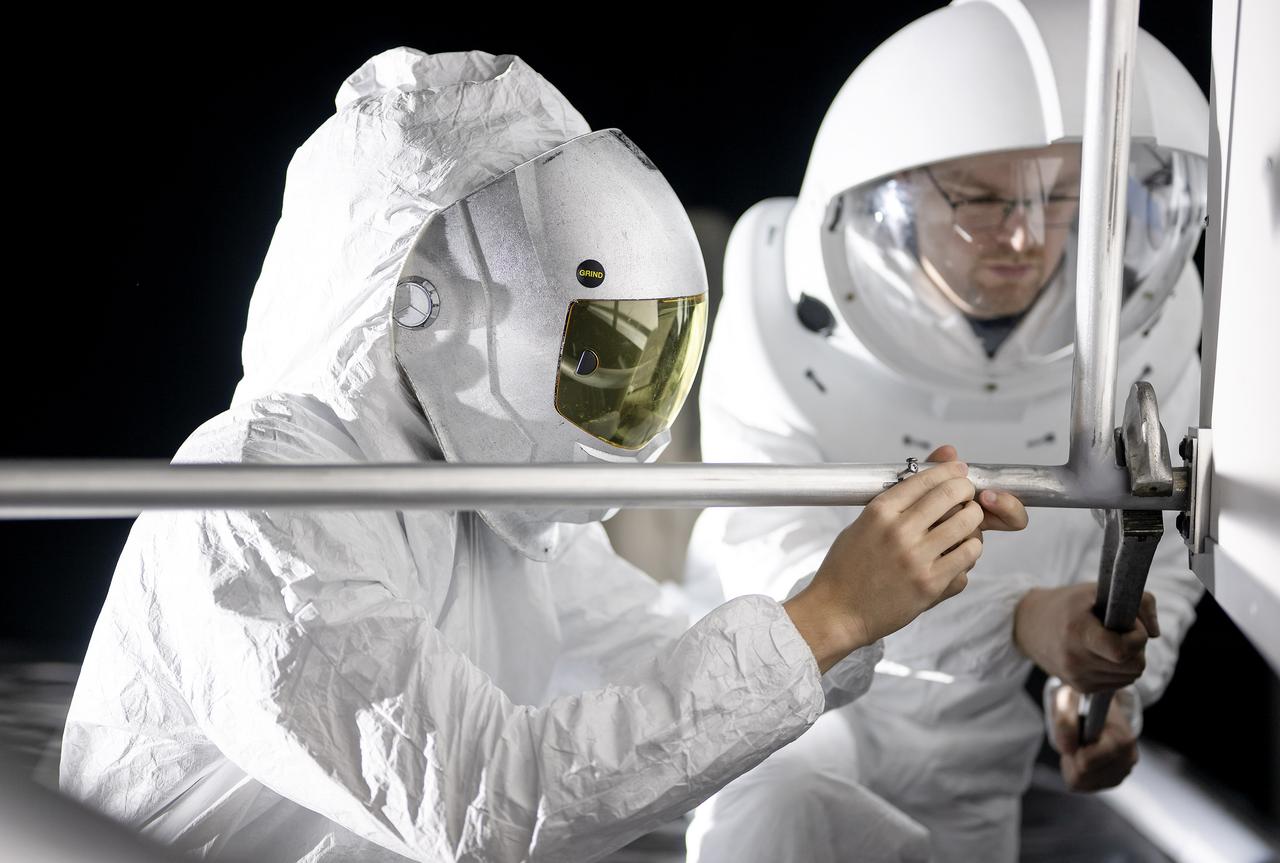
These photos show how teams at NASA’s Marshall Space Flight Center in Huntsville, Alabama, are using the Flat Floor Facility (Building 4619) to understand the lunar lighting environment in preparation for the Artemis III crewed lunar landing mission, slated for 2027. The Flat Floor Facility is an air-bearing floor, providing full-scale simulation capabilities for lunar surface systems by simulating zero gravity in two dimensions. Wearing low-fidelity materials, test engineers can understand how the extreme lighting of the Moon’s South Pole could affect surface operations during Artemis III. High-intensity lights are positioned at a low angle to replicate the strong shadows that are cast across the lunar South Pole by the Sun. Data and analysis from testing at NASA Marshall are improving models Artemis astronauts will use in preparation for lander and surface operations on the Moon during Artemis III. Testing in the facility is also helping cross-agency teams evaluate various tools astronauts may use. NASA Marshall manages the Human Landing System (HLS) Program. For more information, contact NASA Marshall’s Office of Communications at 256-544-0034.
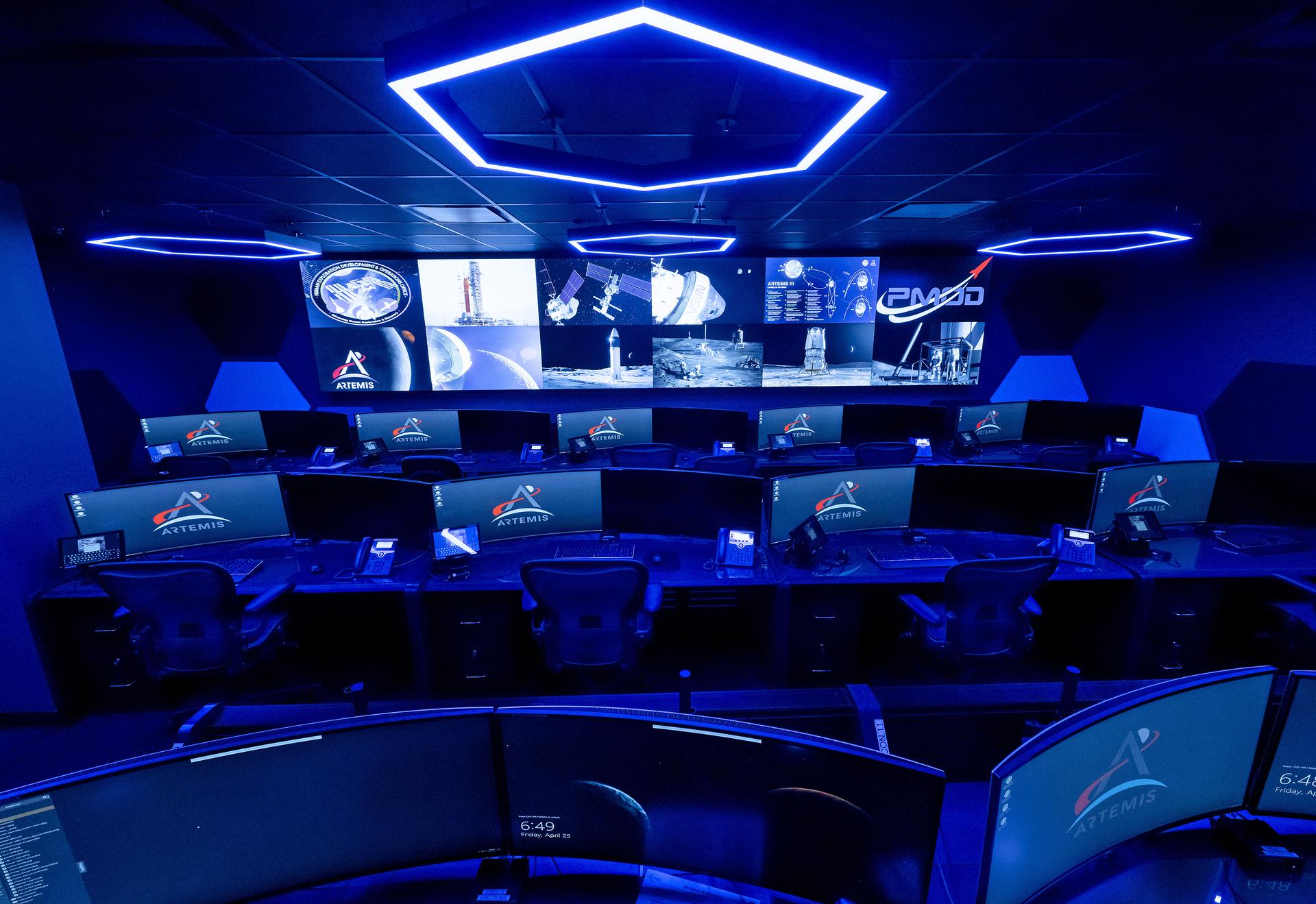
These photos offer a look inside the twin control rooms at NASA’s Marshall Space Flight Center in Huntsville, Alabama, where engineers will monitor Artemis science and future landing operations for Artemis. The LUCA (Lunar Utilization Control Area) and LESA (Lander Engineering Support Area) rooms are part of the Huntsville Operations Support Center at NASA Marshall. The LUCA is specially designed to support a wide variety of science operations on and around the Moon – and beyond. Engineers in the LUCA monitored operations for the Lunar Node-1 experiment, an autonomous navigation payload that was part of the first NASA Commercial Lunar Payload Services (CLPS) launch on Intuitive Machines’ Nova-C lunar lander in 2024. NASA Marshall flight controllers will use the LUCA again for Artemis II to monitor science operations. Beginning with Artemis III, members of the NASA Human Landing System Mission Insight Support Team – a group of engineers, safety leads, flight operations experts, and technical authorities – will work in the LESA. There, they will monitor lander systems in real-time and be involved in key decision-making processes throughout the mission. For more information, contact NASA Marshall’s Office of Communications at 256-544-0034.
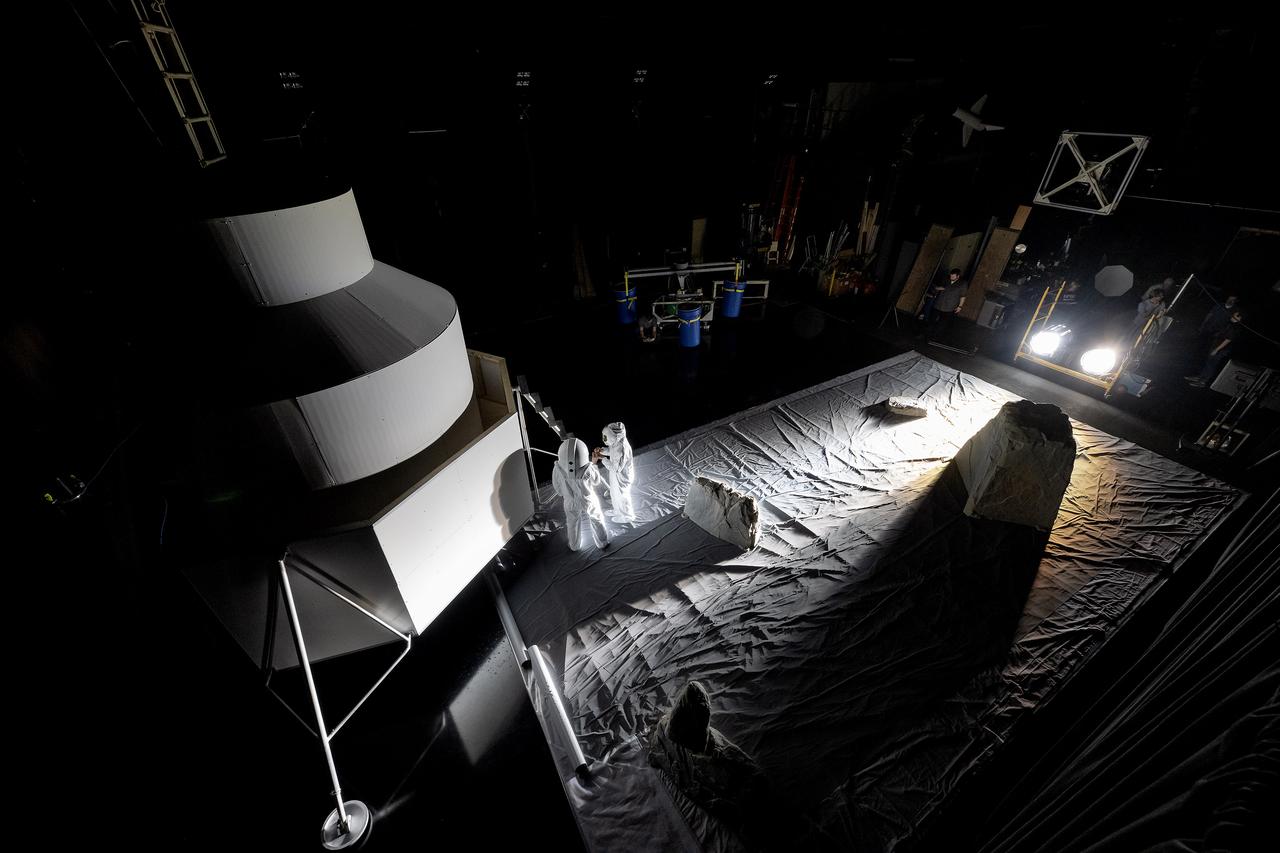
These photos show how teams at NASA’s Marshall Space Flight Center in Huntsville, Alabama, are using the Flat Floor Facility (Building 4619) to understand the lunar lighting environment in preparation for the Artemis III crewed lunar landing mission, slated for 2027. The Flat Floor Facility is an air-bearing floor, providing full-scale simulation capabilities for lunar surface systems by simulating zero gravity in two dimensions. Wearing low-fidelity materials, test engineers can understand how the extreme lighting of the Moon’s South Pole could affect surface operations during Artemis III. High-intensity lights are positioned at a low angle to replicate the strong shadows that are cast across the lunar South Pole by the Sun. Data and analysis from testing at NASA Marshall are improving models Artemis astronauts will use in preparation for lander and surface operations on the Moon during Artemis III. Testing in the facility is also helping cross-agency teams evaluate various tools astronauts may use. NASA Marshall manages the Human Landing System (HLS) Program. For more information, contact NASA Marshall’s Office of Communications at 256-544-0034.
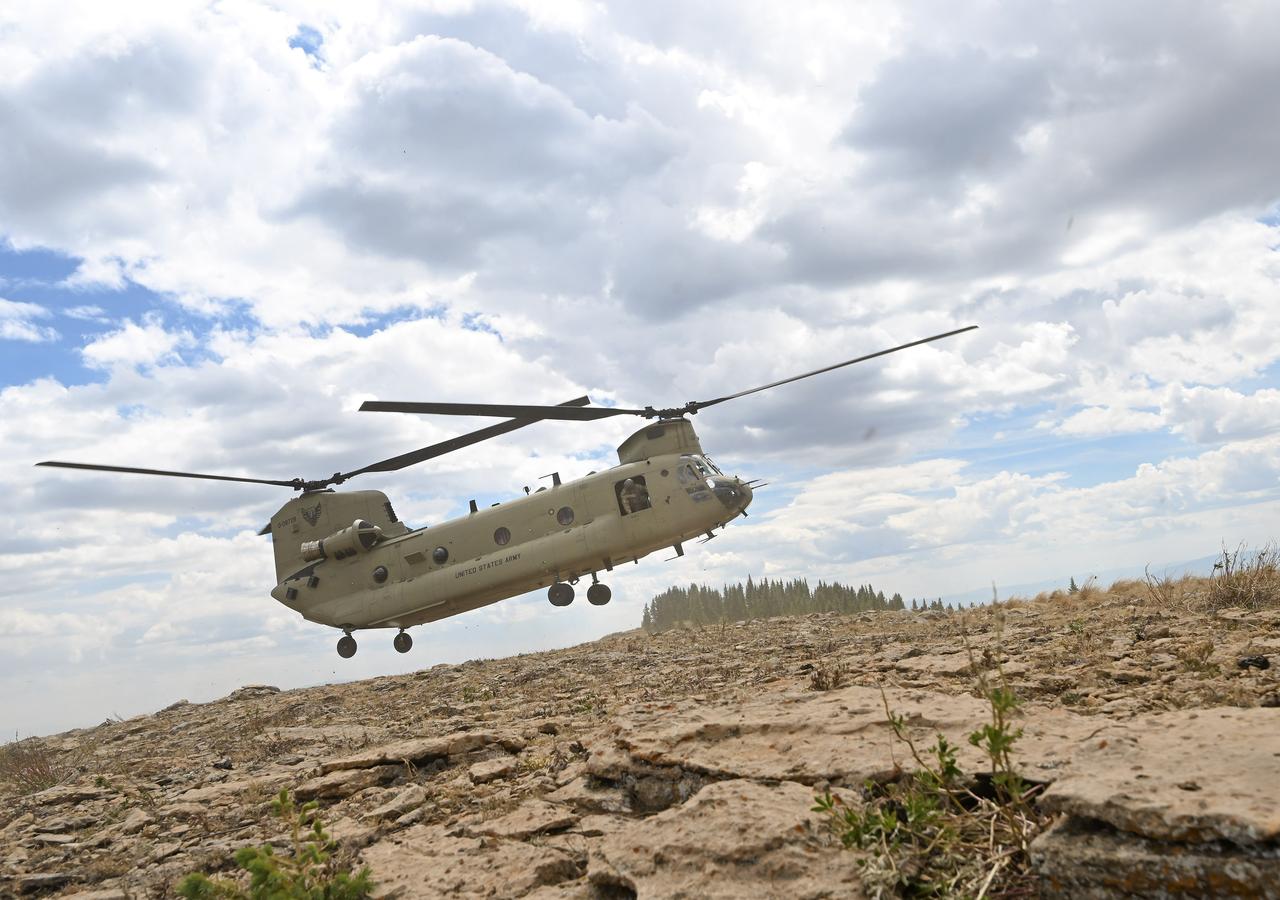
These photos and videos show how NASA certified a new lander flight training course using helicopters in the mountains of northern Colorado. NASA is partnering with the Colorado Army National Guard at its High-Altitude Army National Guard Aviation Training Site near Gypsum, Colorado, to develop the foundational flight training course that will help astronauts practice flight and landing procedures for the Moon. The certification marks an important milestone in crew training for Artemis missions to the Moon, when astronauts will use a commercial human landing system to land on the lunar surface. During the two-week certification run in late August 2025, NASA astronauts Matthew Dominick and Mark Vande Hei participated in flight and landing training to help certify the course. The pair, along with trained instructor pilots with the Army National Guard, took turns flying a helicopter and navigating to landing zones. Artemis flight crew trainers, mission control leads, and lunar lander operational experts from NASA Johnson joined them on each helicopter flight to assess the instruction, training environment, and technical applications for crewed lunar missions. For more information, contact NASA Marshall’s Office of Communications at 256-544
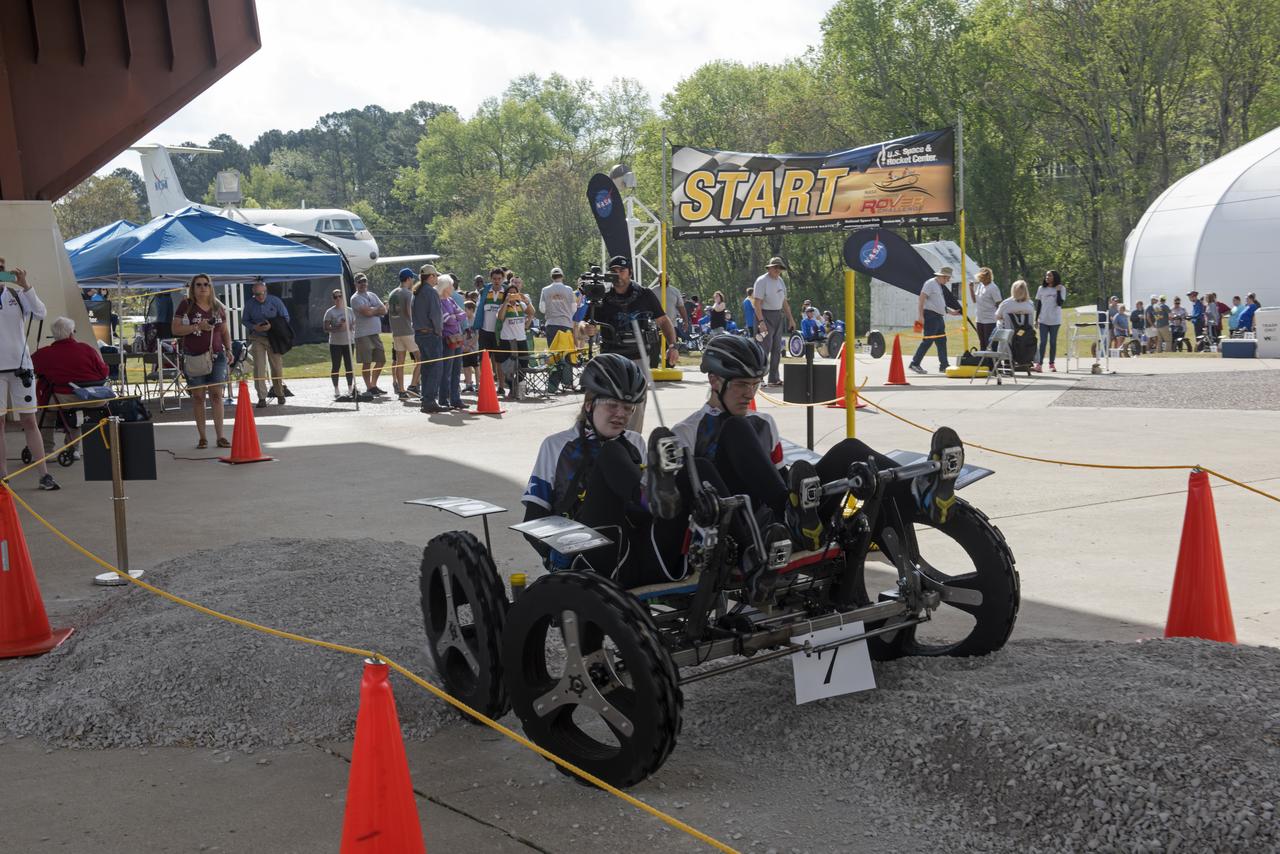
High school and university students competed in the 2018 Human Exploration Rover Challenge event at the U.S. Space and Rocket Center in Huntsville, Alabama. Students came from across the U.S. as well as several foreign countries such as Brazil, Germany, India, and Mexico. This event, which is normally a 2 day event, was shortened to 1 day in 2018 due to adverse weather conditions.
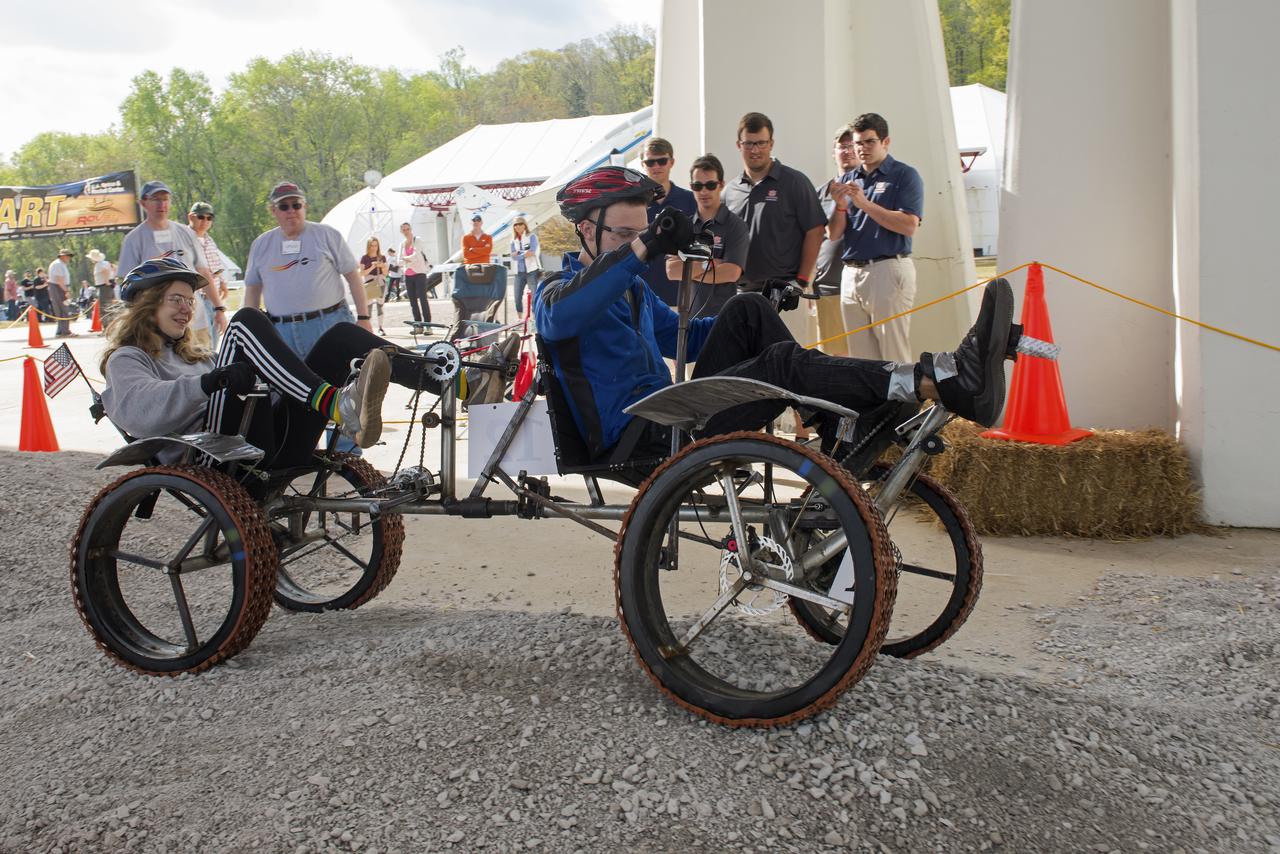
High school and university students competed in the 2018 Human Exploration Rover Challenge event at the U.S. Space and Rocket Center in Huntsville, Alabama. Students came from across the U.S. as well as several foreign countries such as Brazil, Germany, India, and Mexico. This event, which is normally a 2 day event, was shortened to 1 day in 2018 due to adverse weather conditions.
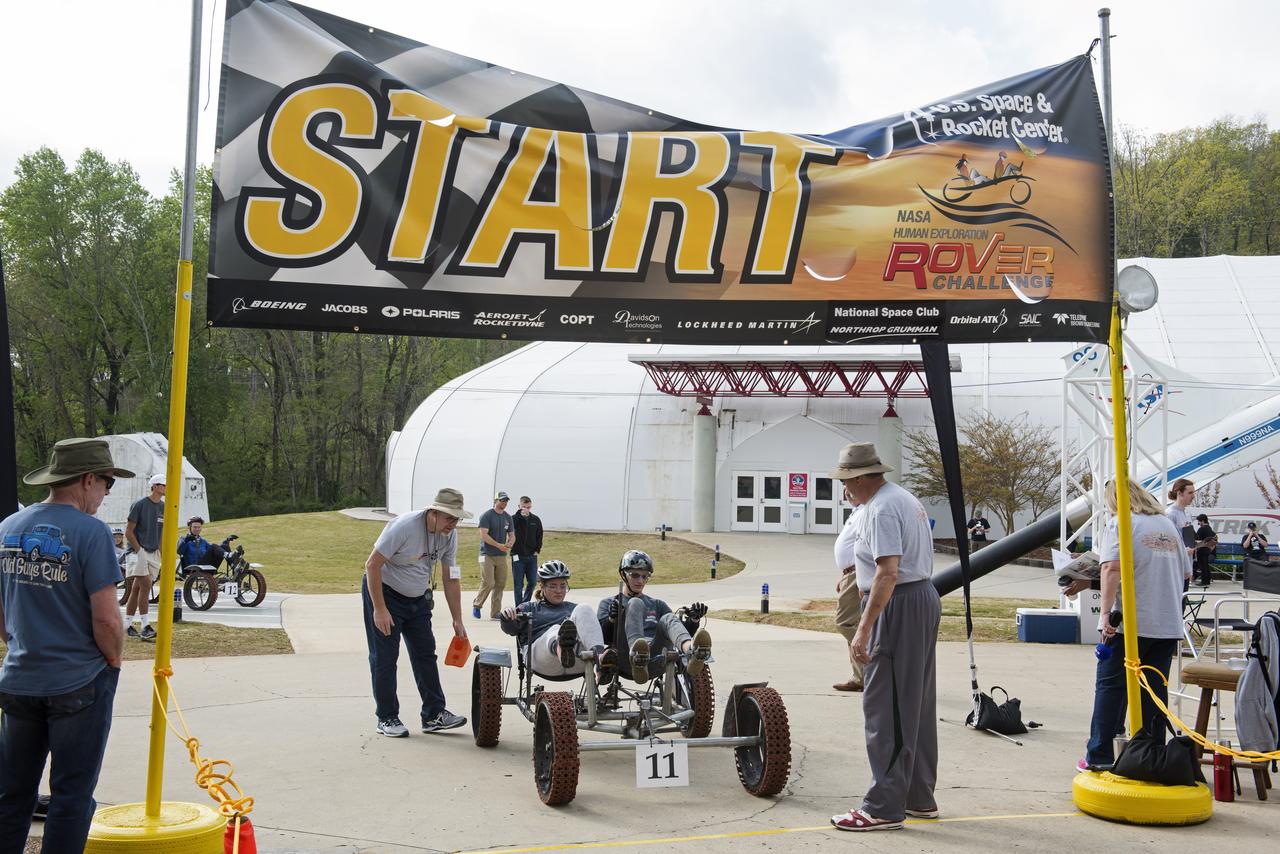
High school and university students competed in the 2018 Human Exploration Rover Challenge event at the U.S. Space and Rocket Center in Huntsville, Alabama. Students came from across the U.S. as well as several foreign countries such as Brazil, Germany, India, and Mexico. This event, which is normally a 2 day event, was shortened to 1 day in 2018 due to adverse weather conditions.
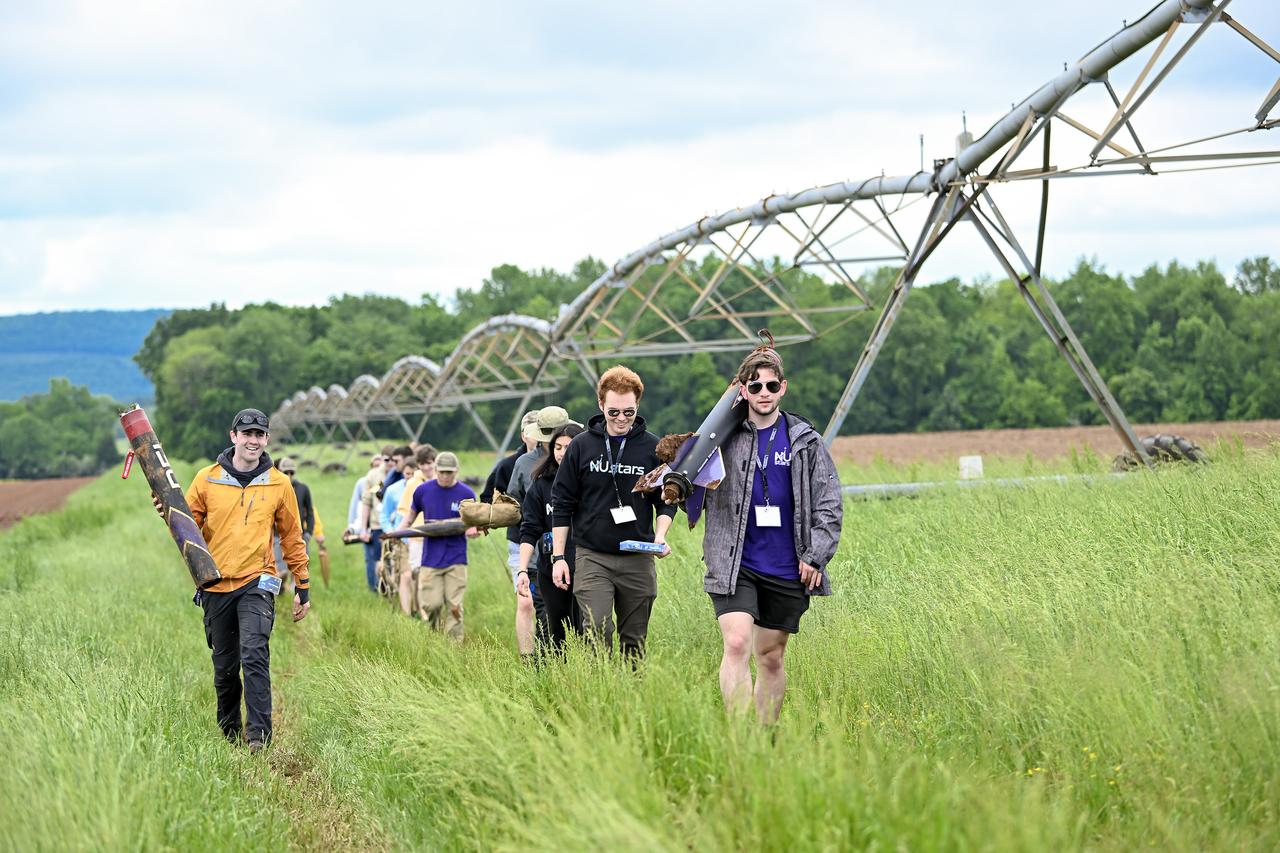
Over than 980 middle school, high school, and college students from across the nation launched more than 40 high-powered rockets just north of NASA’s Marshall Space Flight Center in Huntsville, Alabama. This year marked the 25th anniversary of the competition. To compete, students follow the NASA engineering design lifecycle by going through a series of reviews for nine months leading up to launch day. Each year, a payload challenge is issued to the university teams, and this year’s task took inspiration from the agency’s Artemis missions, where NASA will send astronauts to explore the Moon for scientific discovery, economic benefit, and to build the foundation for the first crewed missions to Mars. Teams were challenged to include “reports” from STEMnauts, non-living objects representing astronauts. The STEMnaut “crew” had to relay real-time data to the student team’s mission control, just as the Artemis astronaut crew will do as they explore the lunar surface. To learn more, visit: www.nasa.gov/studentlaunch.
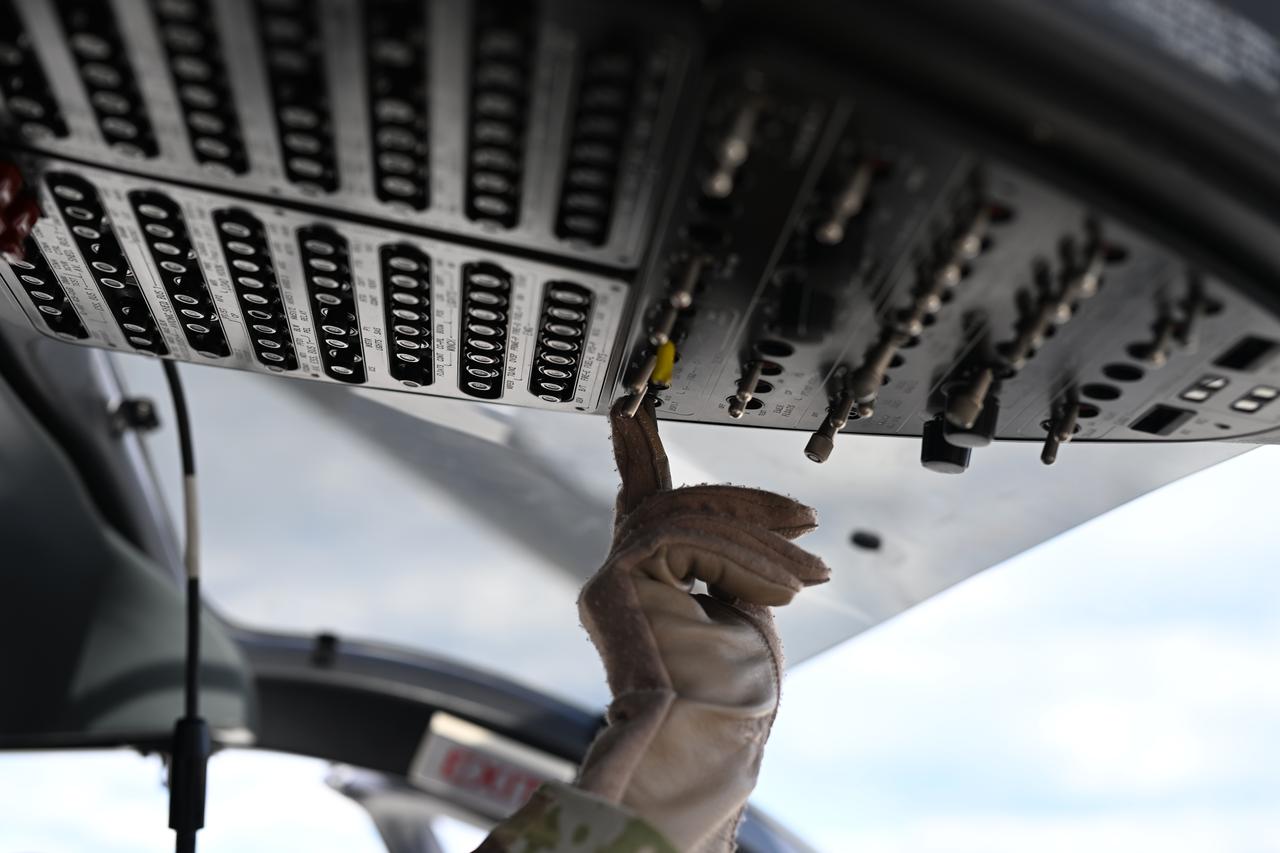
These photos and videos show how NASA certified a new lander flight training course using helicopters in the mountains of northern Colorado. NASA is partnering with the Colorado Army National Guard at its High-Altitude Army National Guard Aviation Training Site near Gypsum, Colorado, to develop the foundational flight training course that will help astronauts practice flight and landing procedures for the Moon. The certification marks an important milestone in crew training for Artemis missions to the Moon, when astronauts will use a commercial human landing system to land on the lunar surface. During the two-week certification run in late August 2025, NASA astronauts Matthew Dominick and Mark Vande Hei participated in flight and landing training to help certify the course. The pair, along with trained instructor pilots with the Army National Guard, took turns flying a helicopter and navigating to landing zones. Artemis flight crew trainers, mission control leads, and lunar lander operational experts from NASA Johnson joined them on each helicopter flight to assess the instruction, training environment, and technical applications for crewed lunar missions. For more information, contact NASA Marshall’s Office of Communications at 256-544
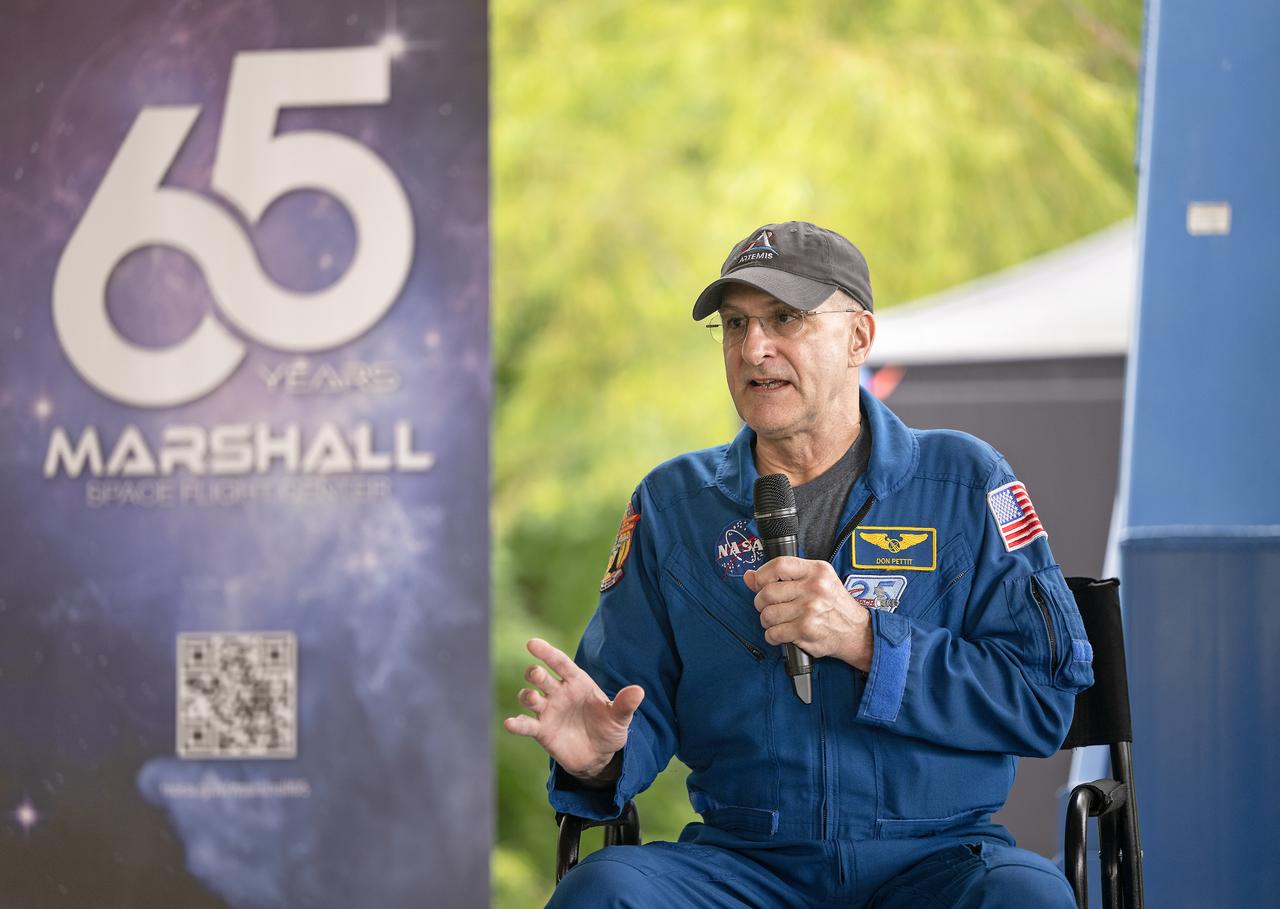
NASA’s Marshall Space Flight Center celebrated the 65th anniversary of its founding on July 19, 2025, with a free, public celebration at The Orion Amphitheater in Huntsville, Alabama. Thousands of team members, families, and “Rocket City” residents took part, enjoying live music, games, food, and exhibits commemorating Marshall’s legacy of ingenuity and service to the U.S. space program. During a program for the celebration, guests heard remarks from Joseph Pelfrey, director of NASA Marshall, Huntsville Mayor Tommy Battle, and Kamerra Liles, assistant general manager of The Orion Amphitheater, followed by Pelfrey sharing a new video overview about Marshall. The program continued with a video presentation from NASA astronauts from the Expedition 72 crew – which contributed more than 1,000 total hours of scientific studies on plant growth, stem cell growth for treating diseases, the resilience of microorganisms to the harsh space environment, and more on the International Space Station. NASA astronauts Suni Williams and Don Pettit, who served as space station commander and flight engineer, respectively, shared their experiences in space with the community and told the audience how vital Marshall’s on the ground support was to their mission success. Marshall has shaped and expanded human space exploration every decade since the NASA center opened its doors on July 1, 1960. The center’s civil service and contract workers built the nation’s flagship rockets, from the Saturn V to the SLS (Space Launch System), managed the space shuttle propulsion program, delivered the Chandra X-ray Observatory and critical elements of the International Space Station to orbit, and continue to spearhead numerous advances in science and engineering.
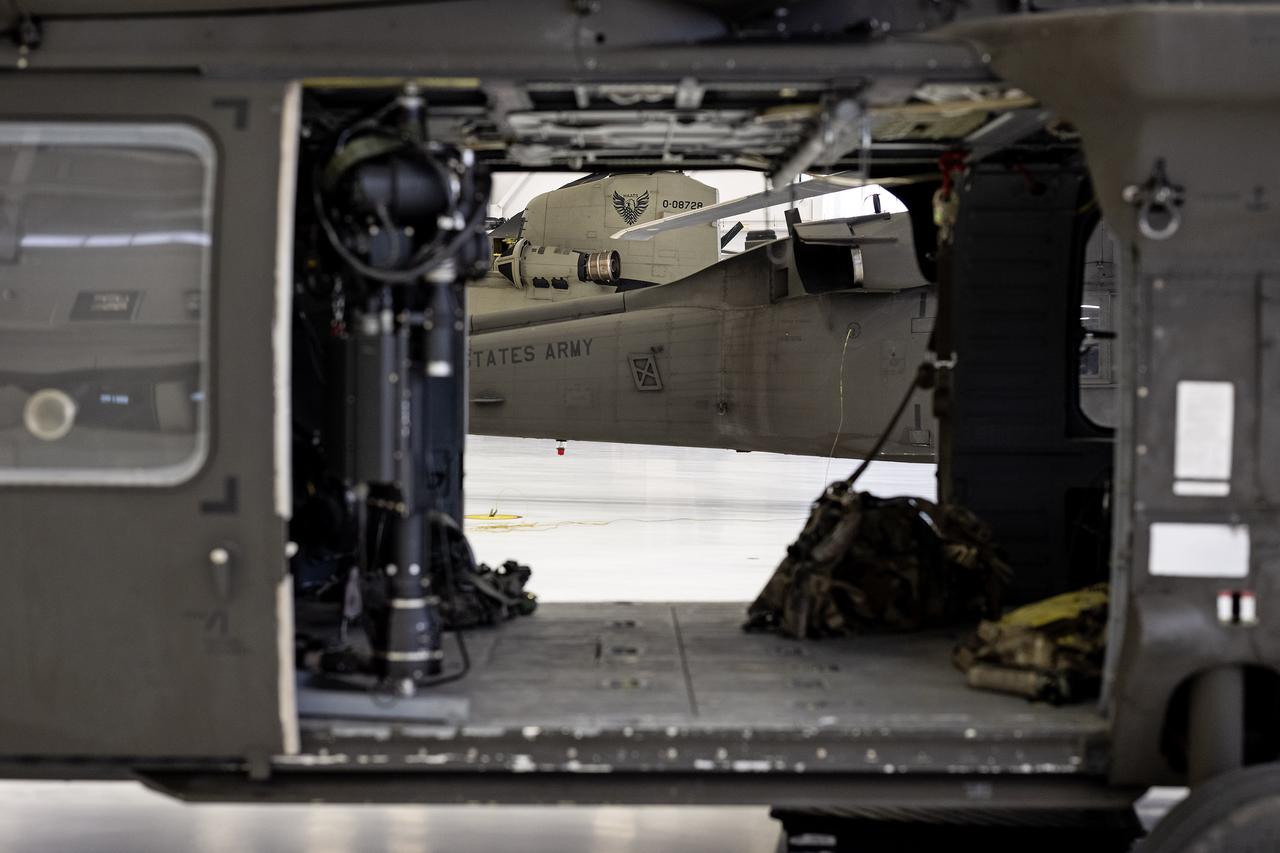
These photos and videos show how NASA certified a new lander flight training course using helicopters in the mountains of northern Colorado. NASA is partnering with the Colorado Army National Guard at its High-Altitude Army National Guard Aviation Training Site near Gypsum, Colorado, to develop the foundational flight training course that will help astronauts practice flight and landing procedures for the Moon. The certification marks an important milestone in crew training for Artemis missions to the Moon, when astronauts will use a commercial human landing system to land on the lunar surface. During the two-week certification run in late August 2025, NASA astronauts Matthew Dominick and Mark Vande Hei participated in flight and landing training to help certify the course. The pair, along with trained instructor pilots with the Army National Guard, took turns flying a helicopter and navigating to landing zones. Artemis flight crew trainers, mission control leads, and lunar lander operational experts from NASA Johnson joined them on each helicopter flight to assess the instruction, training environment, and technical applications for crewed lunar missions. For more information, contact NASA Marshall’s Office of Communications at 256-544
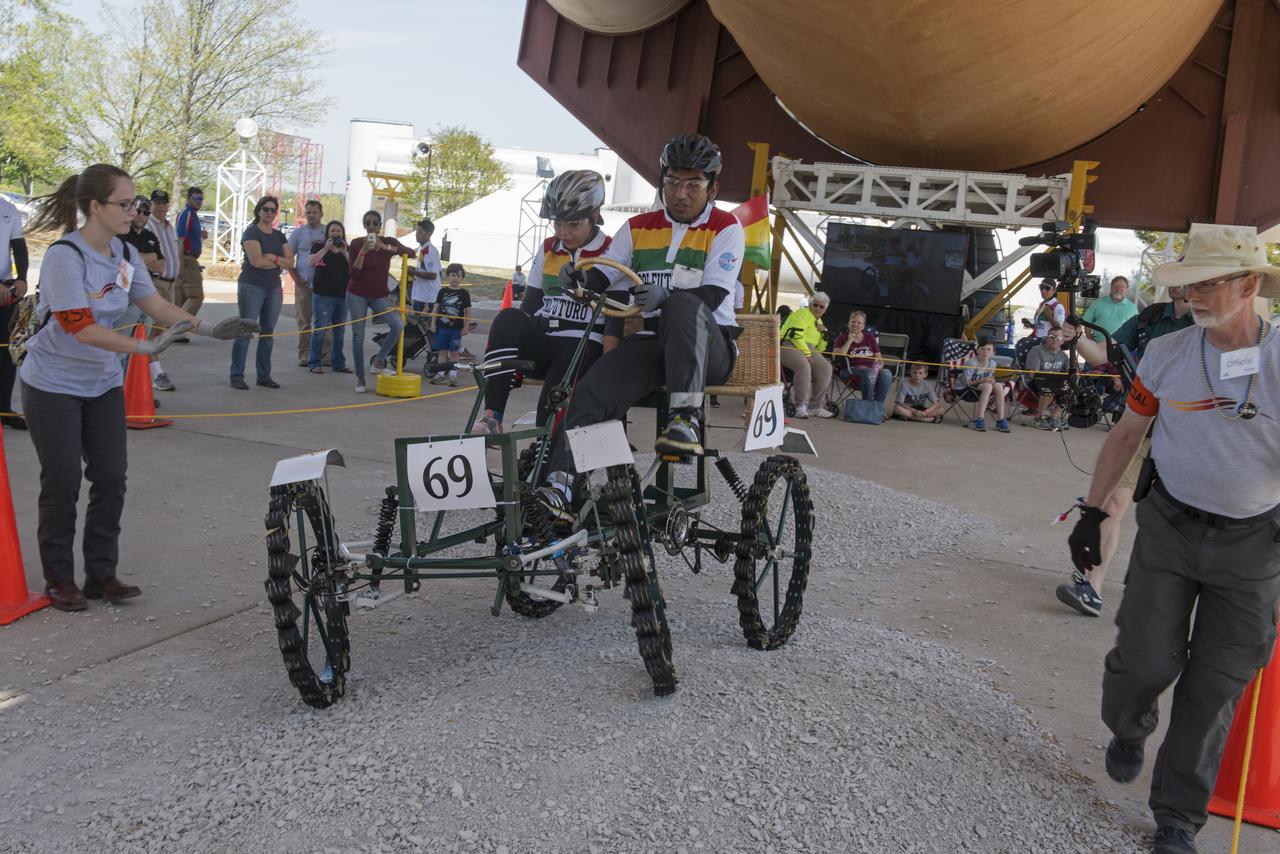
High school and university students competed in the 2018 Human Exploration Rover Challenge event at the U.S. Space and Rocket Center in Huntsville, Alabama. Students came from across the U.S. as well as several foreign countries such as Brazil, Germany, India, and Mexico. This event, which is normally a 2 day event, was shortened to 1 day in 2018 due to adverse weather conditions.
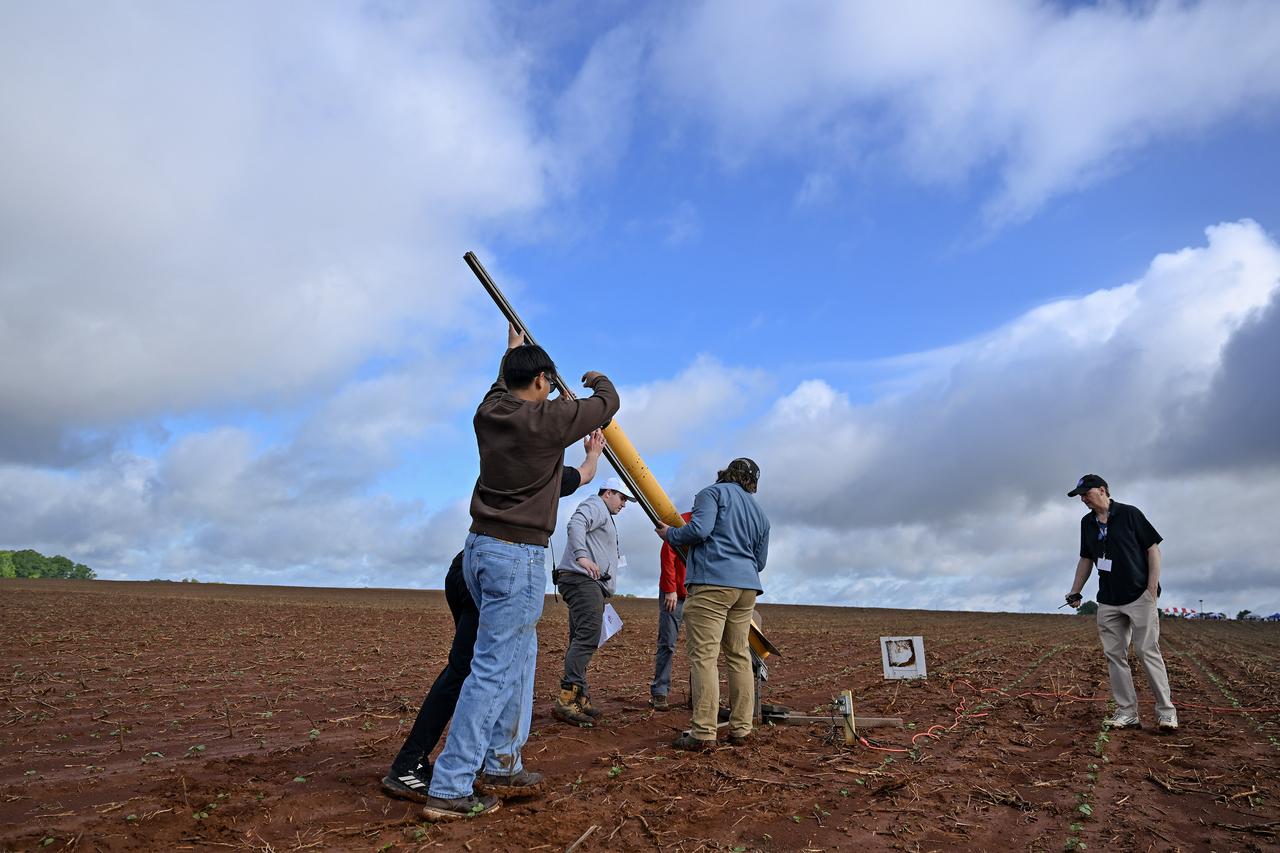
Over than 980 middle school, high school, and college students from across the nation launched more than 40 high-powered rockets just north of NASA’s Marshall Space Flight Center in Huntsville, Alabama. This year marked the 25th anniversary of the competition. To compete, students follow the NASA engineering design lifecycle by going through a series of reviews for nine months leading up to launch day. Each year, a payload challenge is issued to the university teams, and this year’s task took inspiration from the agency’s Artemis missions, where NASA will send astronauts to explore the Moon for scientific discovery, economic benefit, and to build the foundation for the first crewed missions to Mars. Teams were challenged to include “reports” from STEMnauts, non-living objects representing astronauts. The STEMnaut “crew” had to relay real-time data to the student team’s mission control, just as the Artemis astronaut crew will do as they explore the lunar surface. To learn more, visit: www.nasa.gov/studentlaunch.
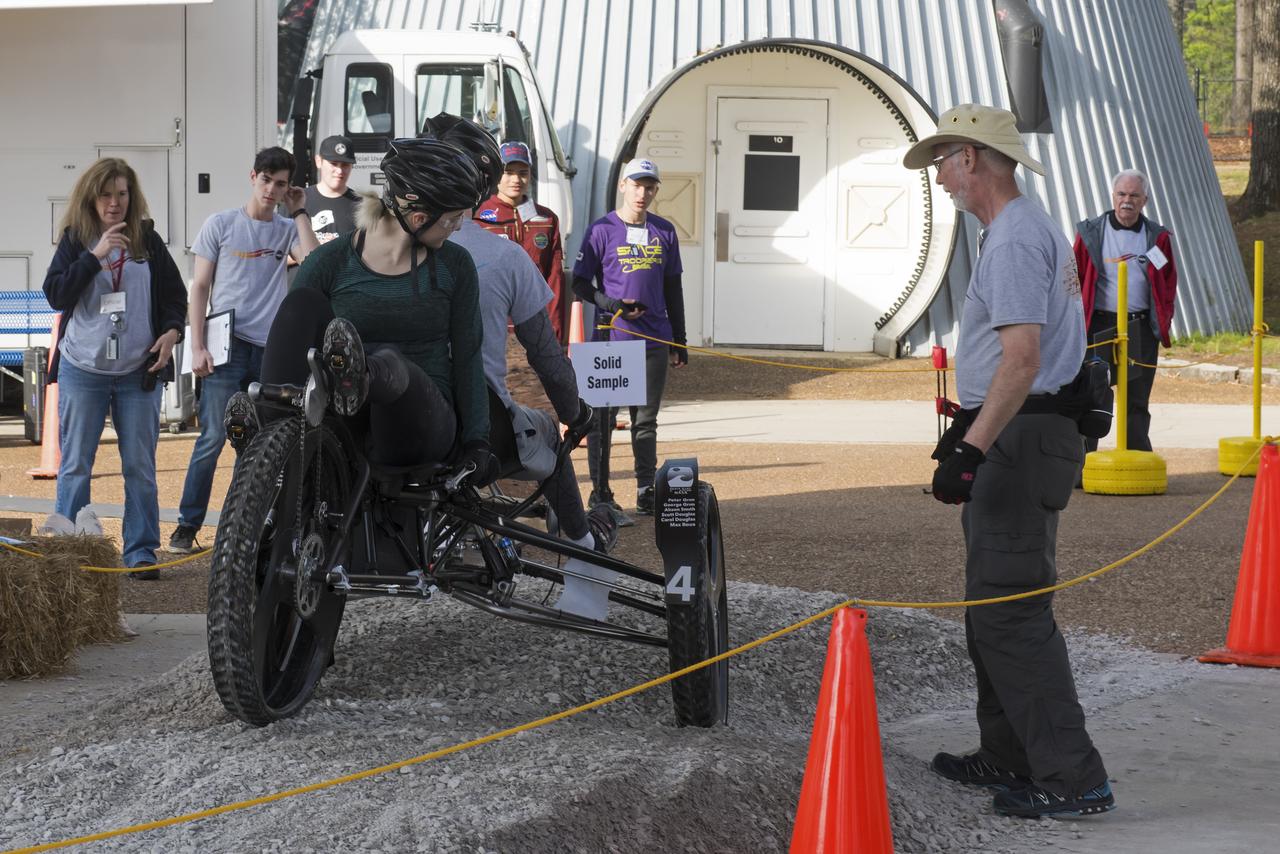
High school and university students competed in the 2018 Human Exploration Rover Challenge event at the U.S. Space and Rocket Center in Huntsville, Alabama. Students came from across the U.S. as well as several foreign countries such as Brazil, Germany, India, and Mexico. This event, which is normally a 2 day event, was shortened to 1 day in 2018 due to adverse weather conditions.
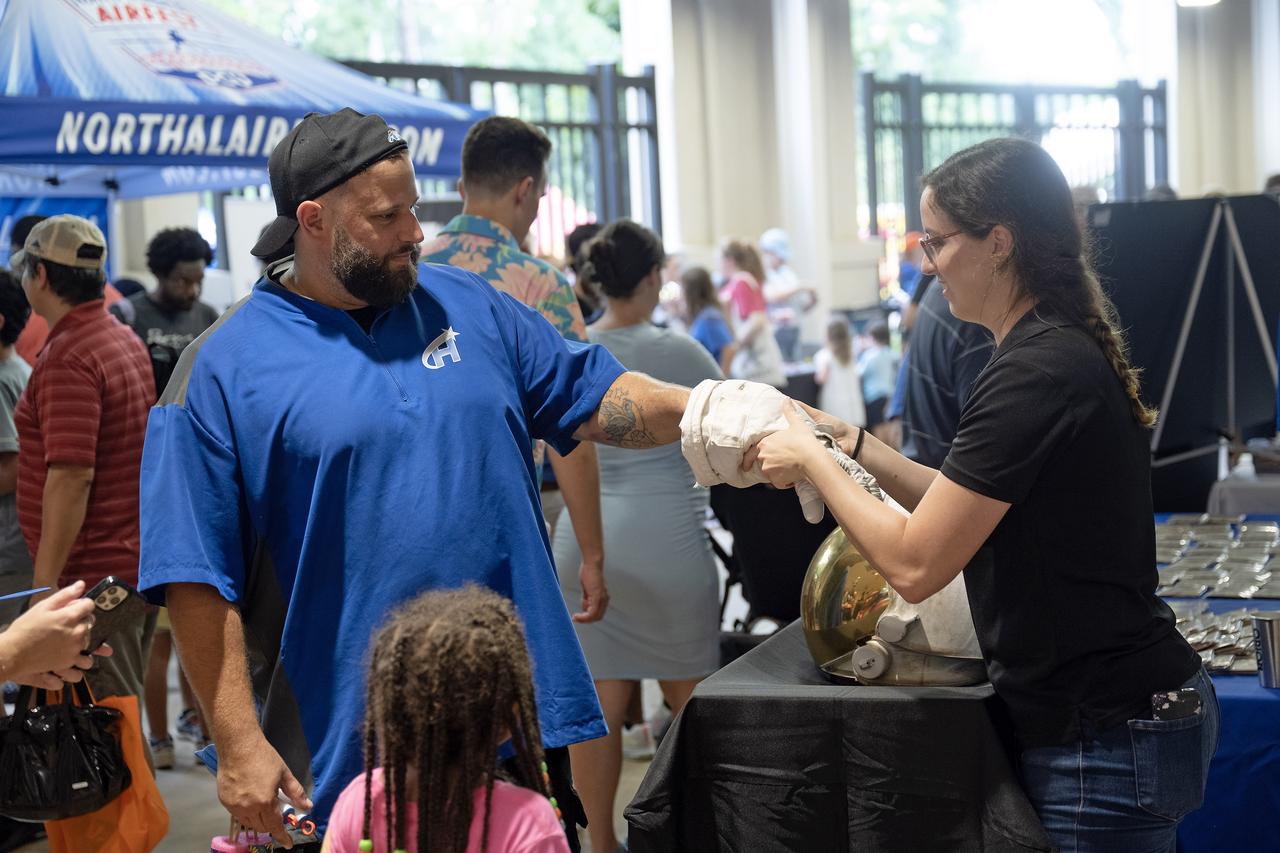
NASA’s Marshall Space Flight Center celebrated the 65th anniversary of its founding on July 19, 2025, with a free, public celebration at The Orion Amphitheater in Huntsville, Alabama. Thousands of team members, families, and “Rocket City” residents took part, enjoying live music, games, food, and exhibits commemorating Marshall’s legacy of ingenuity and service to the U.S. space program. During a program for the celebration, guests heard remarks from Joseph Pelfrey, director of NASA Marshall, Huntsville Mayor Tommy Battle, and Kamerra Liles, assistant general manager of The Orion Amphitheater, followed by Pelfrey sharing a new video overview about Marshall. The program continued with a video presentation from NASA astronauts from the Expedition 72 crew – which contributed more than 1,000 total hours of scientific studies on plant growth, stem cell growth for treating diseases, the resilience of microorganisms to the harsh space environment, and more on the International Space Station. NASA astronauts Suni Williams and Don Pettit, who served as space station commander and flight engineer, respectively, shared their experiences in space with the community and told the audience how vital Marshall’s on the ground support was to their mission success. Marshall has shaped and expanded human space exploration every decade since the NASA center opened its doors on July 1, 1960. The center’s civil service and contract workers built the nation’s flagship rockets, from the Saturn V to the SLS (Space Launch System), managed the space shuttle propulsion program, delivered the Chandra X-ray Observatory and critical elements of the International Space Station to orbit, and continue to spearhead numerous advances in science and engineering.
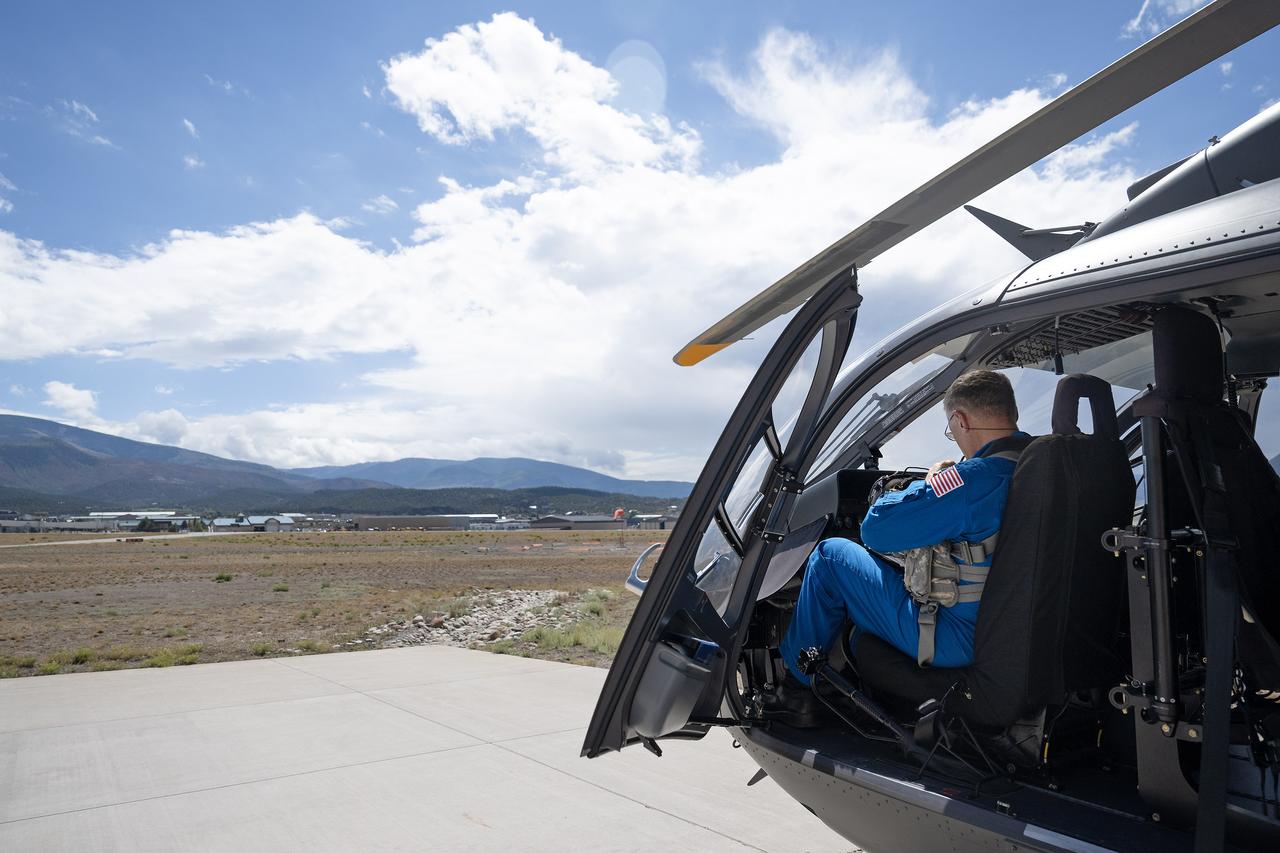
These photos and videos show how NASA certified a new lander flight training course using helicopters in the mountains of northern Colorado. NASA is partnering with the Colorado Army National Guard at its High-Altitude Army National Guard Aviation Training Site near Gypsum, Colorado, to develop the foundational flight training course that will help astronauts practice flight and landing procedures for the Moon. The certification marks an important milestone in crew training for Artemis missions to the Moon, when astronauts will use a commercial human landing system to land on the lunar surface. During the two-week certification run in late August 2025, NASA astronauts Matthew Dominick and Mark Vande Hei participated in flight and landing training to help certify the course. The pair, along with trained instructor pilots with the Army National Guard, took turns flying a helicopter and navigating to landing zones. Artemis flight crew trainers, mission control leads, and lunar lander operational experts from NASA Johnson joined them on each helicopter flight to assess the instruction, training environment, and technical applications for crewed lunar missions. For more information, contact NASA Marshall’s Office of Communications at 256-544
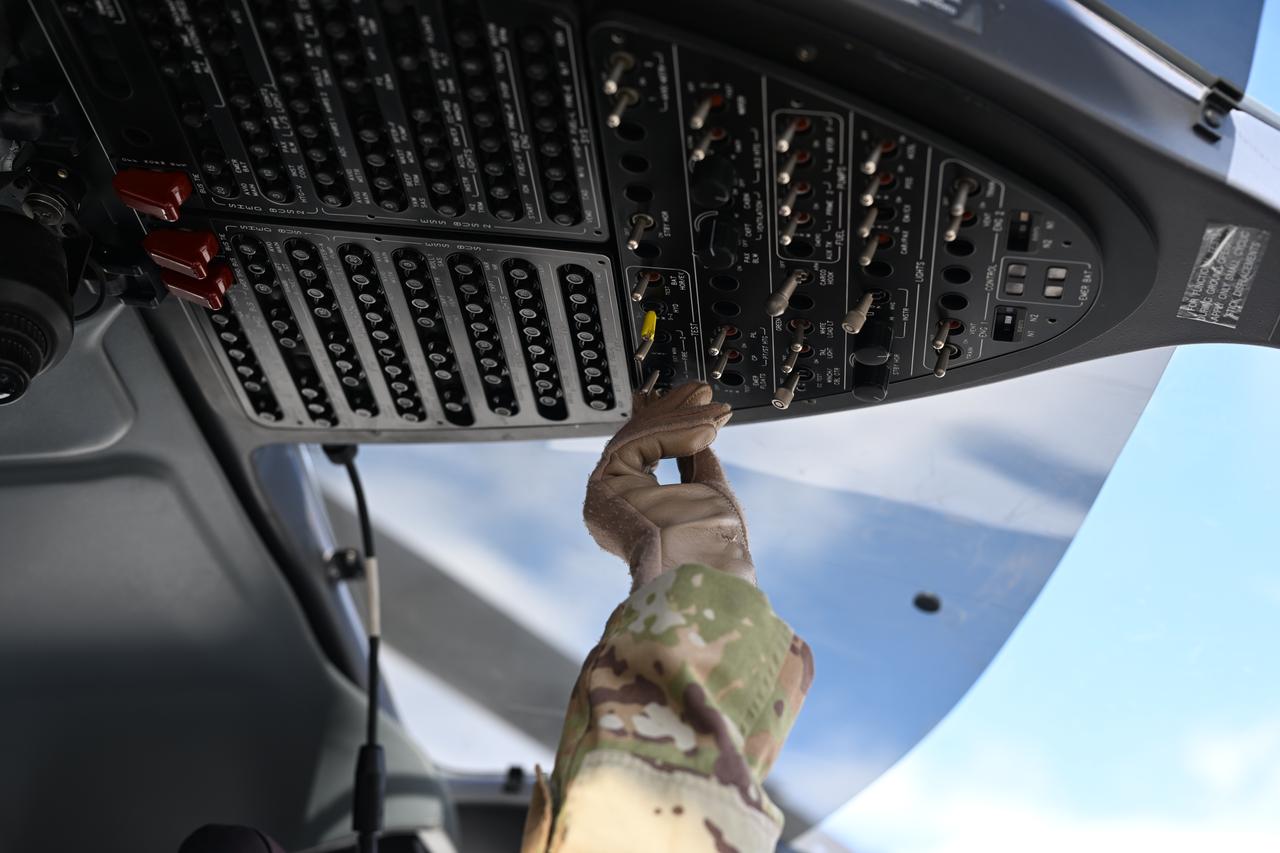
These photos and videos show how NASA certified a new lander flight training course using helicopters in the mountains of northern Colorado. NASA is partnering with the Colorado Army National Guard at its High-Altitude Army National Guard Aviation Training Site near Gypsum, Colorado, to develop the foundational flight training course that will help astronauts practice flight and landing procedures for the Moon. The certification marks an important milestone in crew training for Artemis missions to the Moon, when astronauts will use a commercial human landing system to land on the lunar surface. During the two-week certification run in late August 2025, NASA astronauts Matthew Dominick and Mark Vande Hei participated in flight and landing training to help certify the course. The pair, along with trained instructor pilots with the Army National Guard, took turns flying a helicopter and navigating to landing zones. Artemis flight crew trainers, mission control leads, and lunar lander operational experts from NASA Johnson joined them on each helicopter flight to assess the instruction, training environment, and technical applications for crewed lunar missions. For more information, contact NASA Marshall’s Office of Communications at 256-544
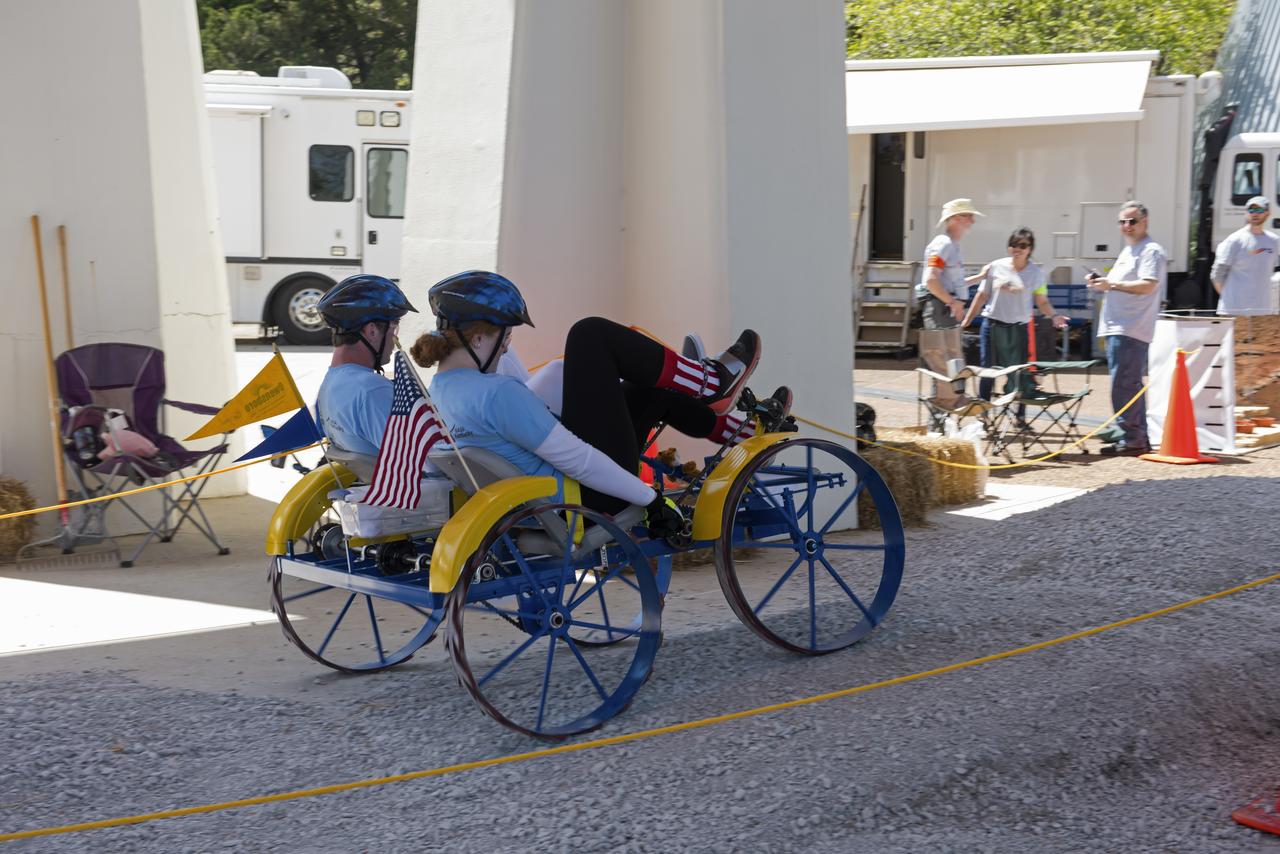
High school and university students competed in the 2018 Human Exploration Rover Challenge event at the U.S. Space and Rocket Center in Huntsville, Alabama. Students came from across the U.S. as well as several foreign countries such as Brazil, Germany, India, and Mexico. This event, which is normally a 2 day event, was shortened to 1 day in 2018 due to adverse weather conditions.
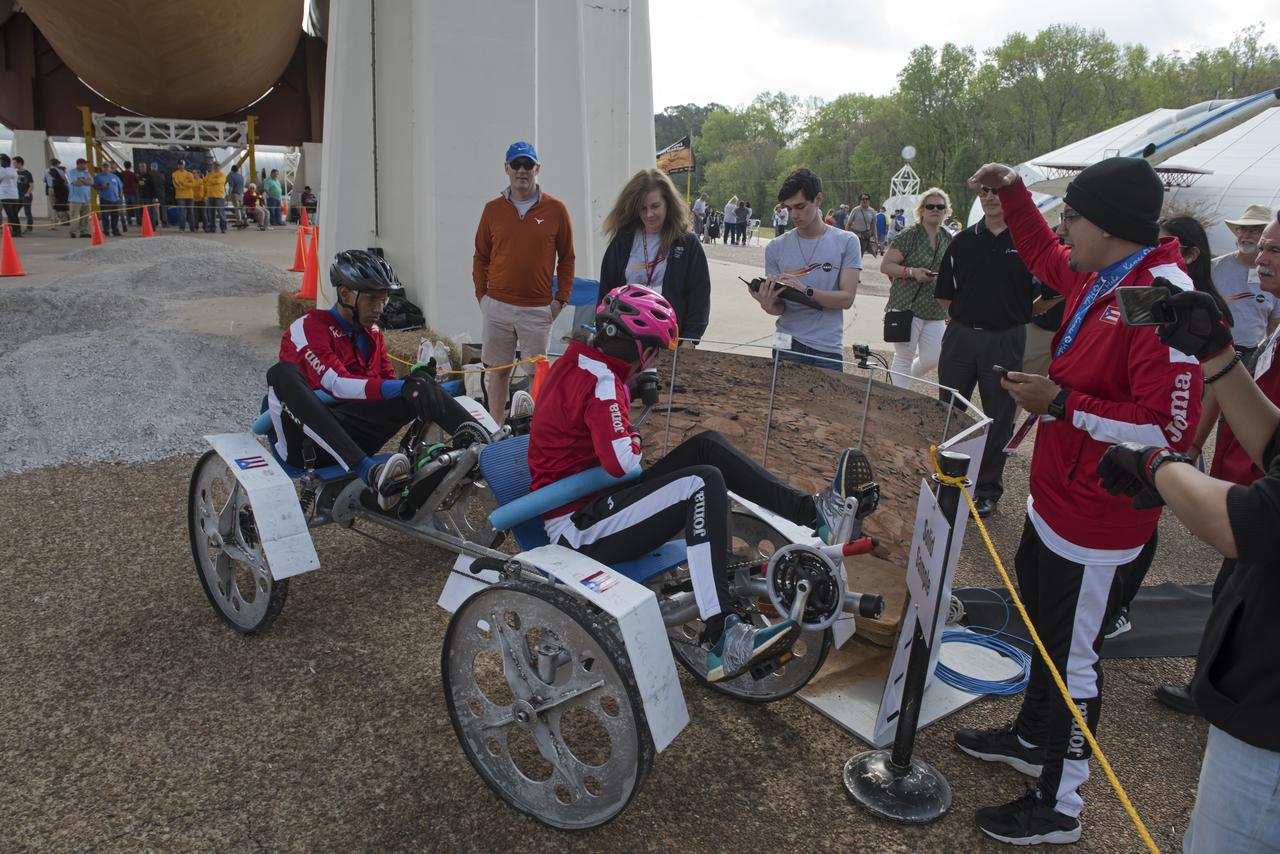
High school and university students competed in the 2018 Human Exploration Rover Challenge event at the U.S. Space and Rocket Center in Huntsville, Alabama. Students came from across the U.S. as well as several foreign countries such as Brazil, Germany, India, and Mexico. This event, which is normally a 2 day event, was shortened to 1 day in 2018 due to adverse weather conditions.
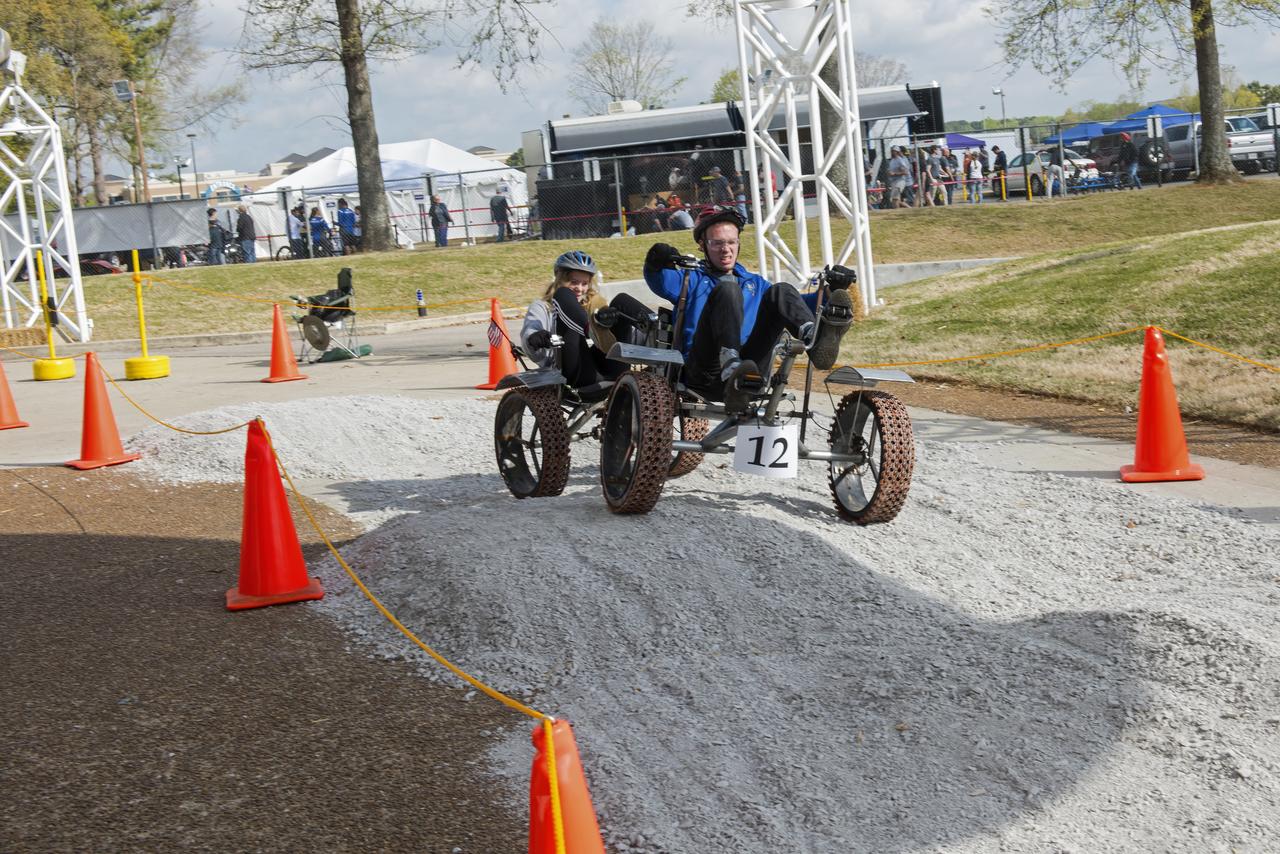
High school and university students competed in the 2018 Human Exploration Rover Challenge event at the U.S. Space and Rocket Center in Huntsville, Alabama. Students came from across the U.S. as well as several foreign countries such as Brazil, Germany, India, and Mexico. This event, which is normally a 2 day event, was shortened to 1 day in 2018 due to adverse weather conditions.
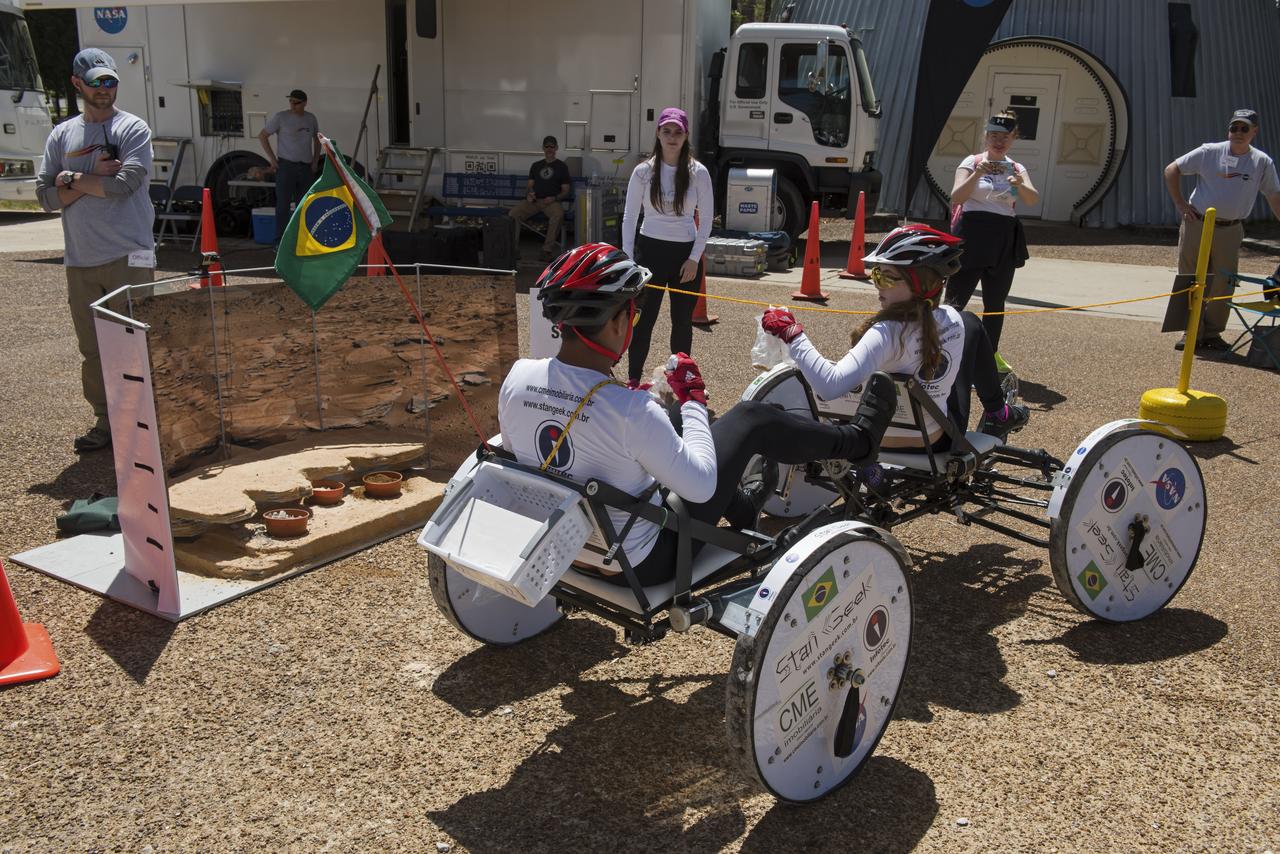
High school and university students competed in the 2018 Human Exploration Rover Challenge event at the U.S. Space and Rocket Center in Huntsville, Alabama. Students came from across the U.S. as well as several foreign countries such as Brazil, Germany, India, and Mexico. This event, which is normally a 2 day event, was shortened to 1 day in 2018 due to adverse weather conditions.
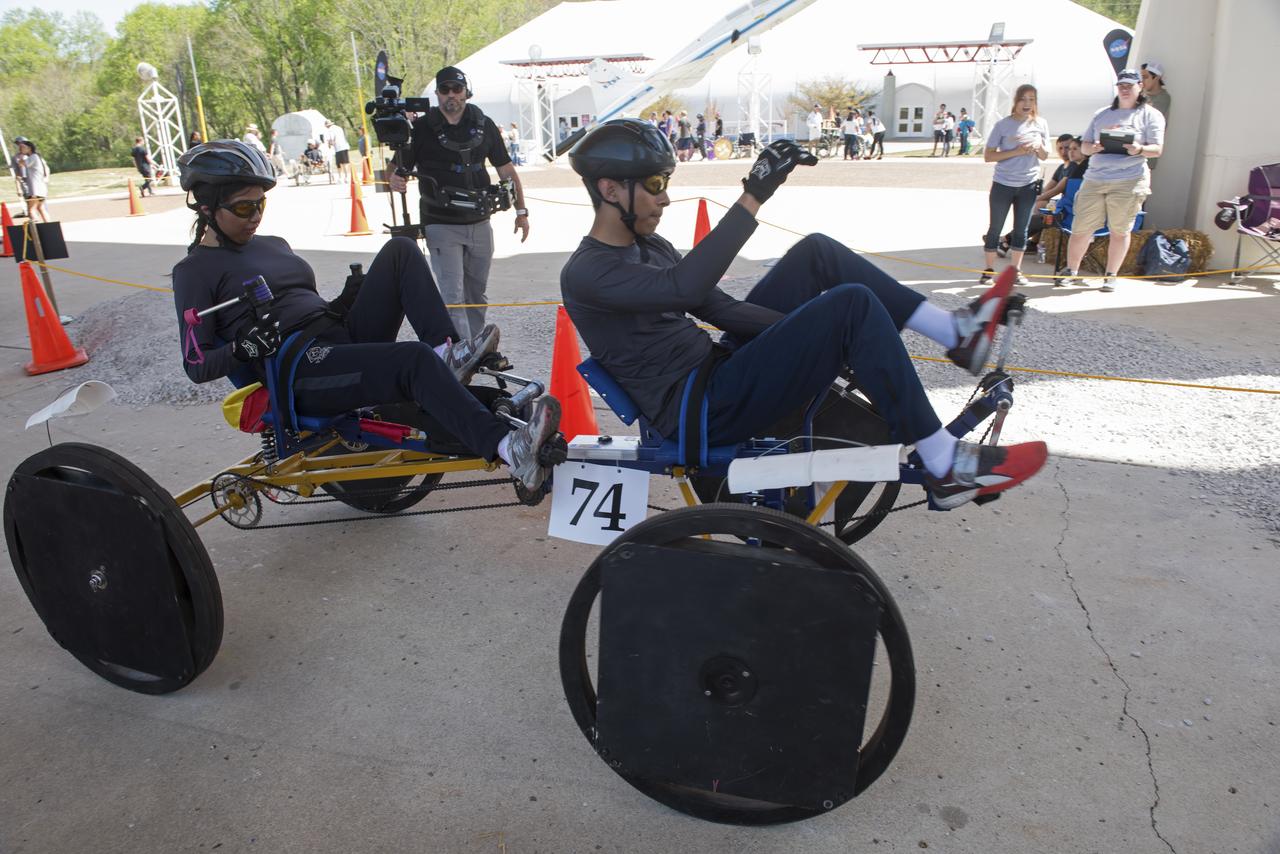
High school and university students competed in the 2018 Human Exploration Rover Challenge event at the U.S. Space and Rocket Center in Huntsville, Alabama. Students came from across the U.S. as well as several foreign countries such as Brazil, Germany, India, and Mexico. This event, which is normally a 2 day event, was shortened to 1 day in 2018 due to adverse weather conditions.
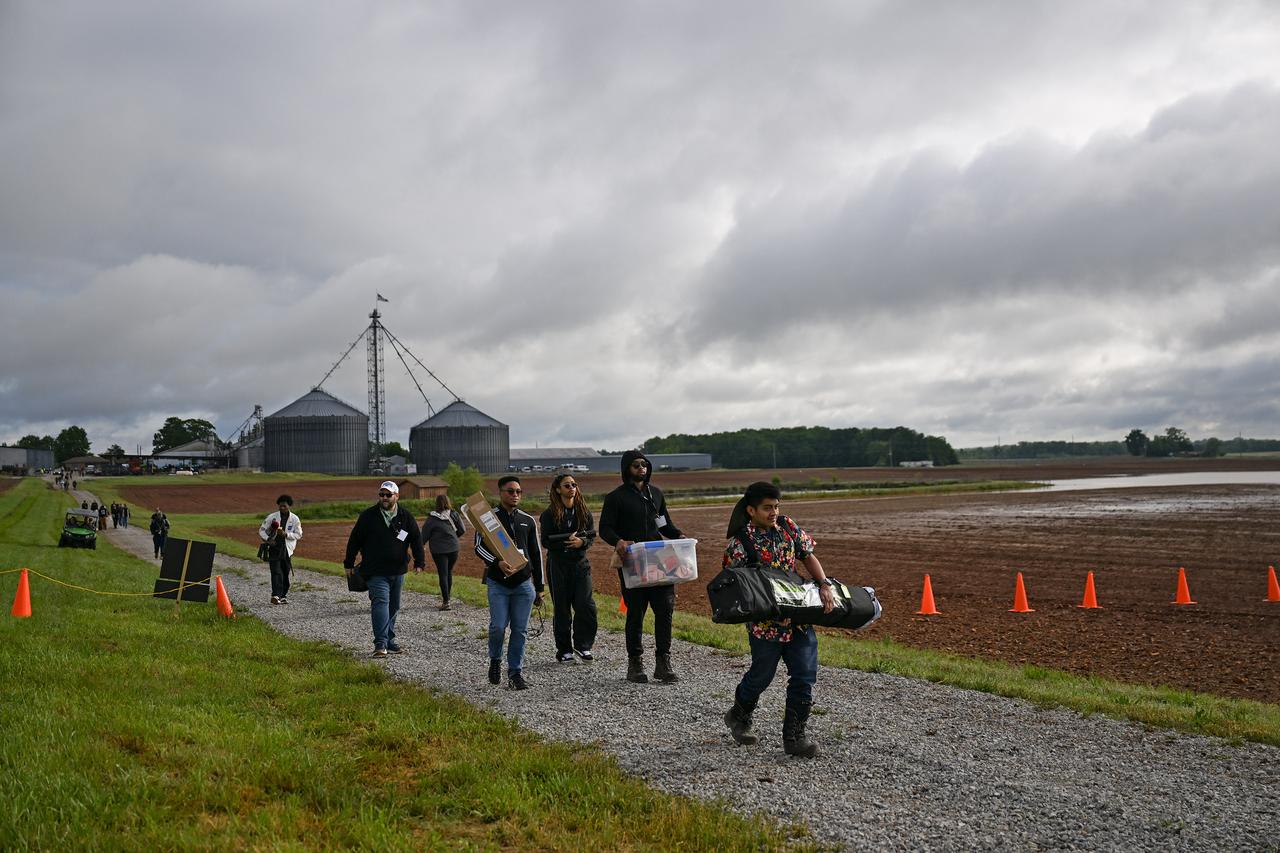
Over than 980 middle school, high school, and college students from across the nation launched more than 40 high-powered rockets just north of NASA’s Marshall Space Flight Center in Huntsville, Alabama. This year marked the 25th anniversary of the competition. To compete, students follow the NASA engineering design lifecycle by going through a series of reviews for nine months leading up to launch day. Each year, a payload challenge is issued to the university teams, and this year’s task took inspiration from the agency’s Artemis missions, where NASA will send astronauts to explore the Moon for scientific discovery, economic benefit, and to build the foundation for the first crewed missions to Mars. Teams were challenged to include “reports” from STEMnauts, non-living objects representing astronauts. The STEMnaut “crew” had to relay real-time data to the student team’s mission control, just as the Artemis astronaut crew will do as they explore the lunar surface. To learn more, visit: www.nasa.gov/studentlaunch.
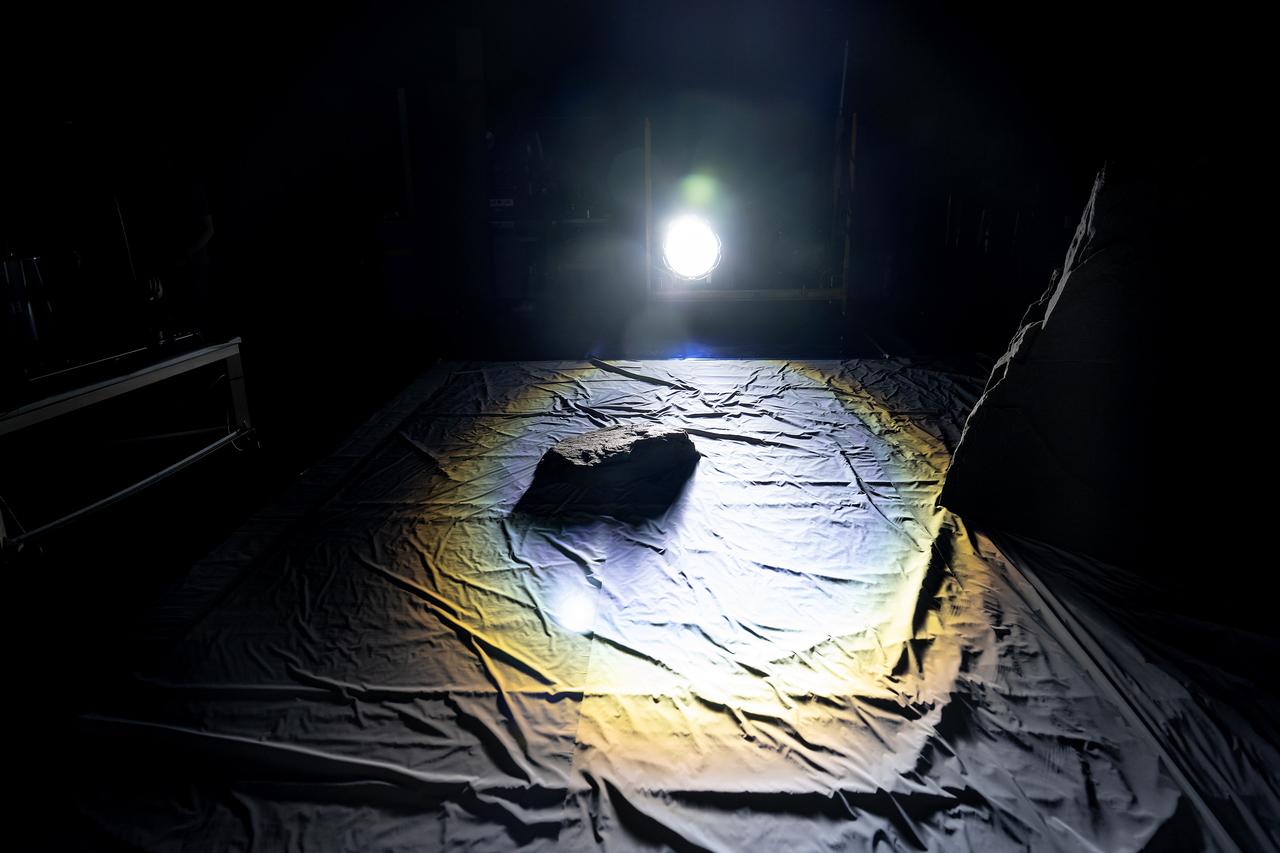
These photos show how teams at NASA’s Marshall Space Flight Center in Huntsville, Alabama, are using the Flat Floor Facility (Building 4619) to understand the lunar lighting environment in preparation for the Artemis III crewed lunar landing mission, slated for 2027. The Flat Floor Facility is an air-bearing floor, providing full-scale simulation capabilities for lunar surface systems by simulating zero gravity in two dimensions. Wearing low-fidelity materials, test engineers can understand how the extreme lighting of the Moon’s South Pole could affect surface operations during Artemis III. High-intensity lights are positioned at a low angle to replicate the strong shadows that are cast across the lunar South Pole by the Sun. Data and analysis from testing at NASA Marshall are improving models Artemis astronauts will use in preparation for lander and surface operations on the Moon during Artemis III. Testing in the facility is also helping cross-agency teams evaluate various tools astronauts may use. NASA Marshall manages the Human Landing System (HLS) Program. For more information, contact NASA Marshall’s Office of Communications at 256-544-0034.
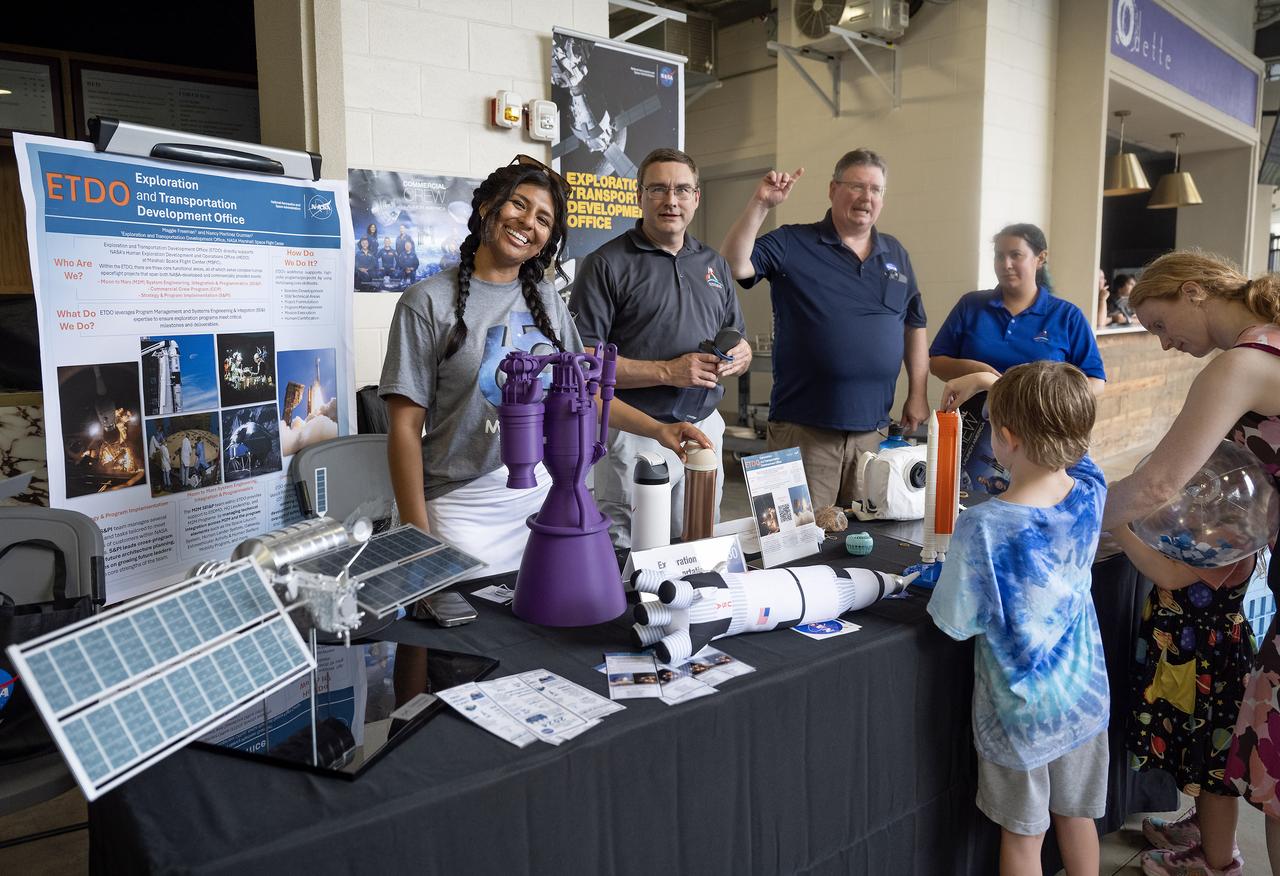
NASA’s Marshall Space Flight Center celebrated the 65th anniversary of its founding on July 19, 2025, with a free, public celebration at The Orion Amphitheater in Huntsville, Alabama. Thousands of team members, families, and “Rocket City” residents took part, enjoying live music, games, food, and exhibits commemorating Marshall’s legacy of ingenuity and service to the U.S. space program. During a program for the celebration, guests heard remarks from Joseph Pelfrey, director of NASA Marshall, Huntsville Mayor Tommy Battle, and Kamerra Liles, assistant general manager of The Orion Amphitheater, followed by Pelfrey sharing a new video overview about Marshall. The program continued with a video presentation from NASA astronauts from the Expedition 72 crew – which contributed more than 1,000 total hours of scientific studies on plant growth, stem cell growth for treating diseases, the resilience of microorganisms to the harsh space environment, and more on the International Space Station. NASA astronauts Suni Williams and Don Pettit, who served as space station commander and flight engineer, respectively, shared their experiences in space with the community and told the audience how vital Marshall’s on the ground support was to their mission success. Marshall has shaped and expanded human space exploration every decade since the NASA center opened its doors on July 1, 1960. The center’s civil service and contract workers built the nation’s flagship rockets, from the Saturn V to the SLS (Space Launch System), managed the space shuttle propulsion program, delivered the Chandra X-ray Observatory and critical elements of the International Space Station to orbit, and continue to spearhead numerous advances in science and engineering.
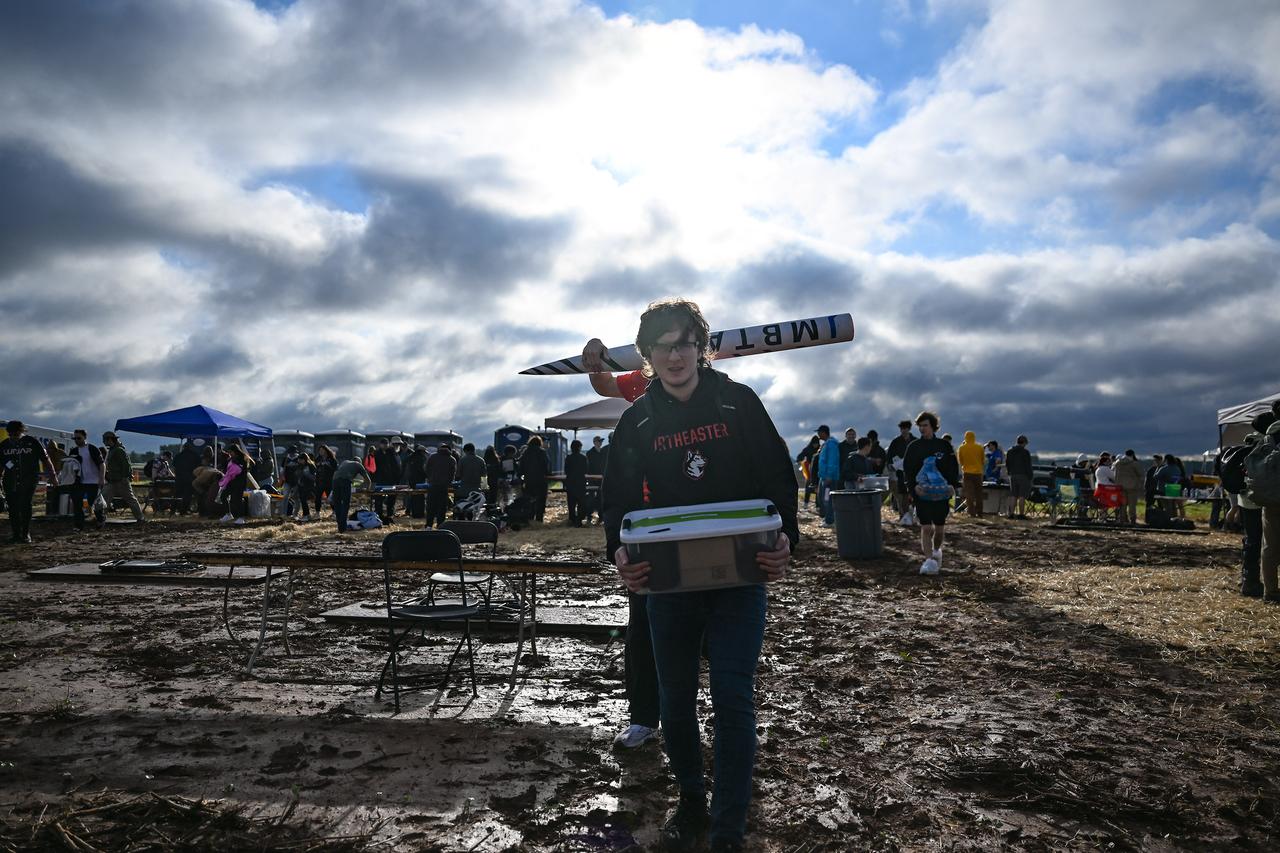
Over than 980 middle school, high school, and college students from across the nation launched more than 40 high-powered rockets just north of NASA’s Marshall Space Flight Center in Huntsville, Alabama. This year marked the 25th anniversary of the competition. To compete, students follow the NASA engineering design lifecycle by going through a series of reviews for nine months leading up to launch day. Each year, a payload challenge is issued to the university teams, and this year’s task took inspiration from the agency’s Artemis missions, where NASA will send astronauts to explore the Moon for scientific discovery, economic benefit, and to build the foundation for the first crewed missions to Mars. Teams were challenged to include “reports” from STEMnauts, non-living objects representing astronauts. The STEMnaut “crew” had to relay real-time data to the student team’s mission control, just as the Artemis astronaut crew will do as they explore the lunar surface. To learn more, visit: www.nasa.gov/studentlaunch.
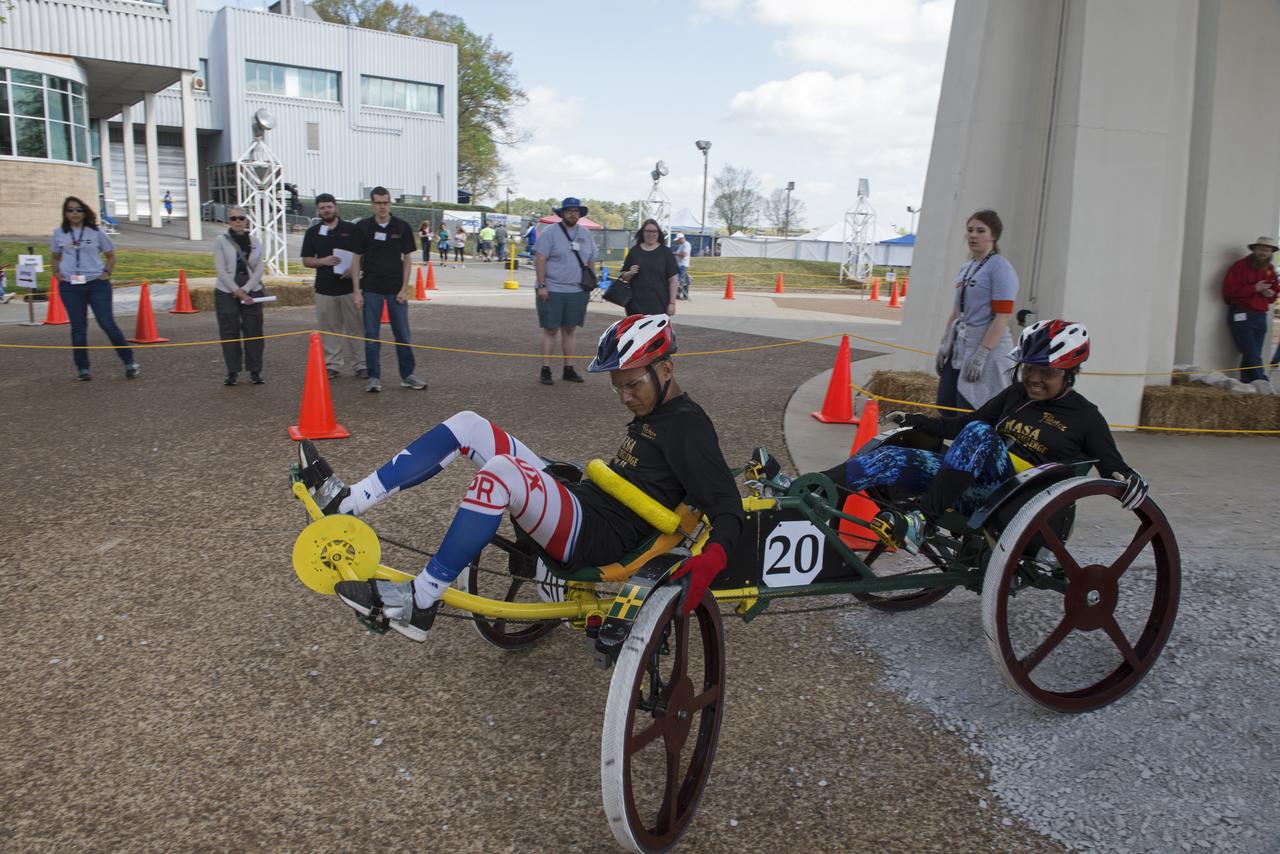
High school and university students competed in the 2018 Human Exploration Rover Challenge event at the U.S. Space and Rocket Center in Huntsville, Alabama. Students came from across the U.S. as well as several foreign countries such as Brazil, Germany, India, and Mexico. This event, which is normally a 2 day event, was shortened to 1 day in 2018 due to adverse weather conditions.
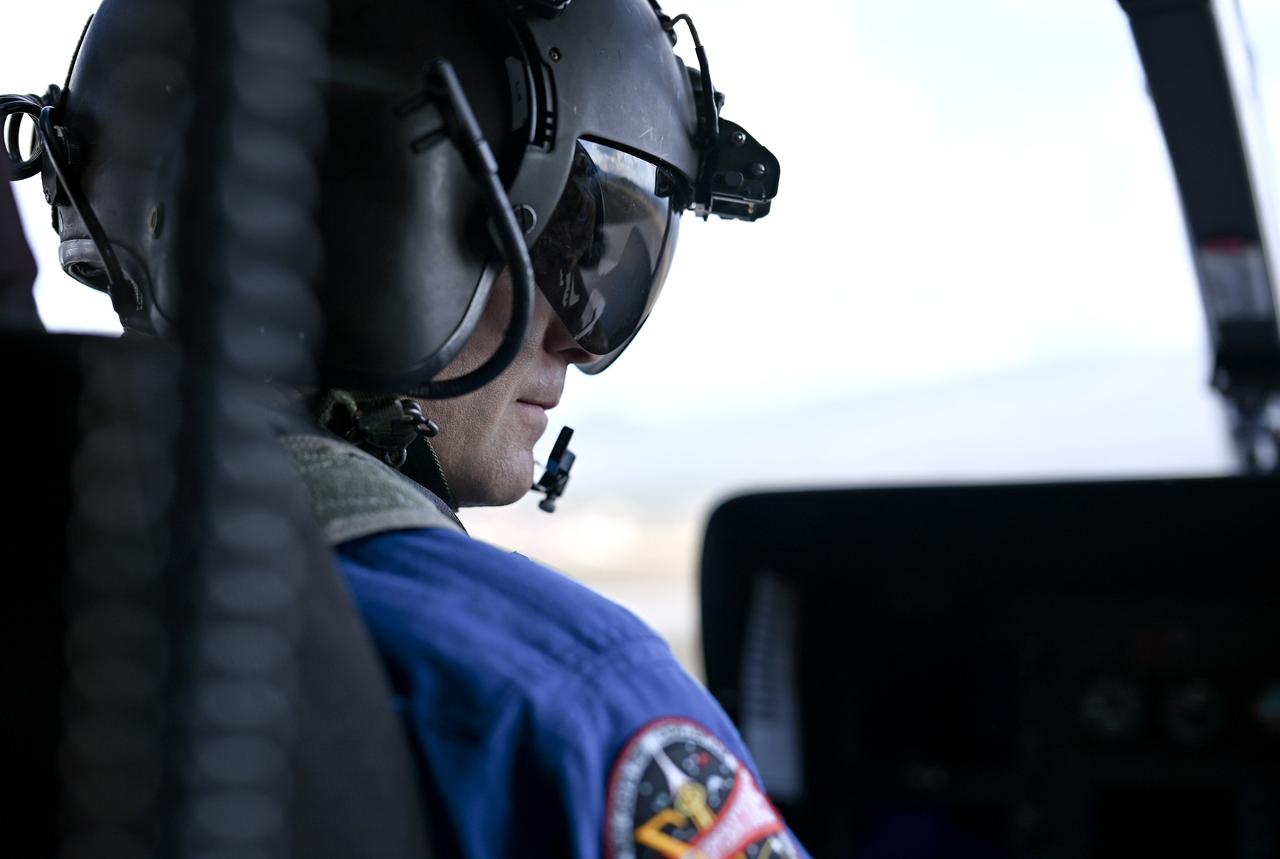
These photos and videos show how NASA certified a new lander flight training course using helicopters in the mountains of northern Colorado. NASA is partnering with the Colorado Army National Guard at its High-Altitude Army National Guard Aviation Training Site near Gypsum, Colorado, to develop the foundational flight training course that will help astronauts practice flight and landing procedures for the Moon. The certification marks an important milestone in crew training for Artemis missions to the Moon, when astronauts will use a commercial human landing system to land on the lunar surface. During the two-week certification run in late August 2025, NASA astronauts Matthew Dominick and Mark Vande Hei participated in flight and landing training to help certify the course. The pair, along with trained instructor pilots with the Army National Guard, took turns flying a helicopter and navigating to landing zones. Artemis flight crew trainers, mission control leads, and lunar lander operational experts from NASA Johnson joined them on each helicopter flight to assess the instruction, training environment, and technical applications for crewed lunar missions. For more information, contact NASA Marshall’s Office of Communications at 256-544
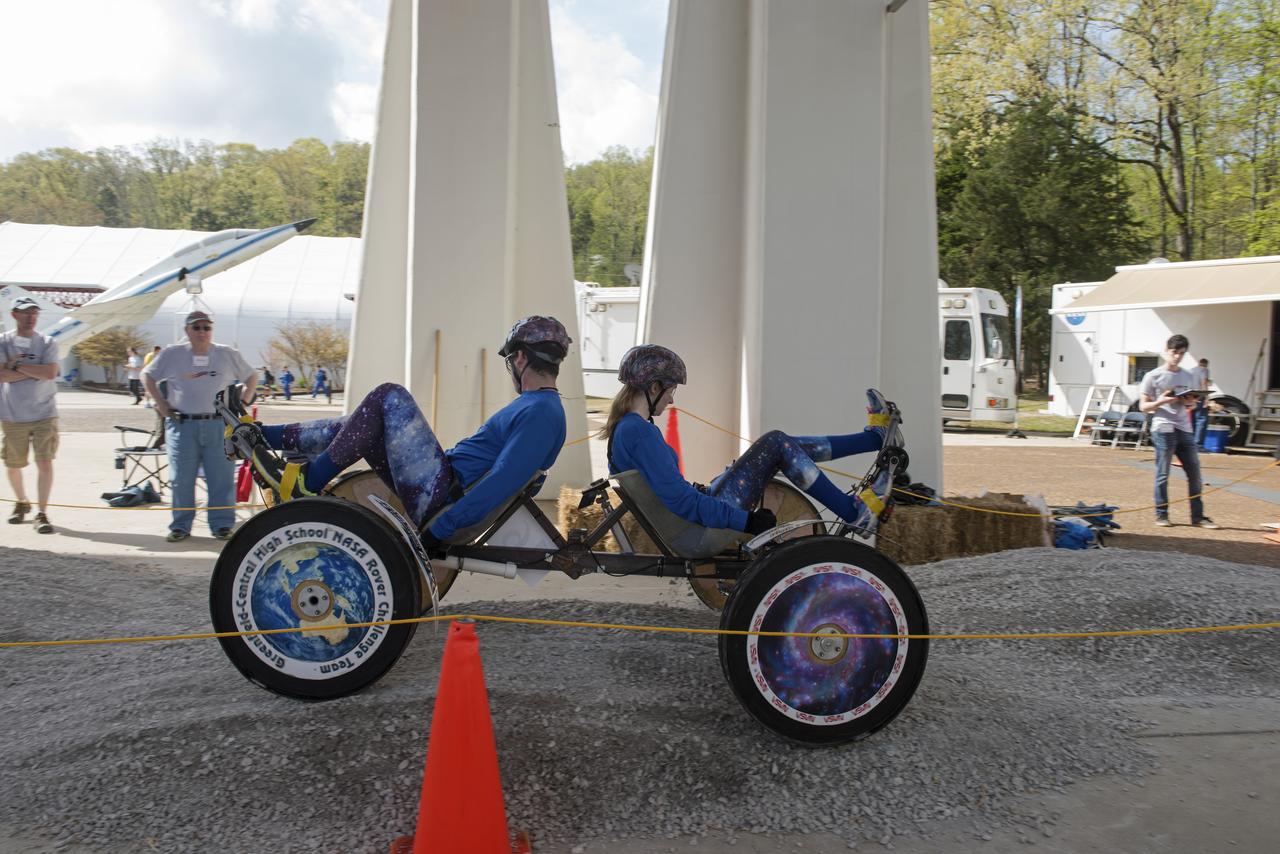
High school and university students competed in the 2018 Human Exploration Rover Challenge event at the U.S. Space and Rocket Center in Huntsville, Alabama. Students came from across the U.S. as well as several foreign countries such as Brazil, Germany, India, and Mexico. This event, which is normally a 2 day event, was shortened to 1 day in 2018 due to adverse weather conditions.
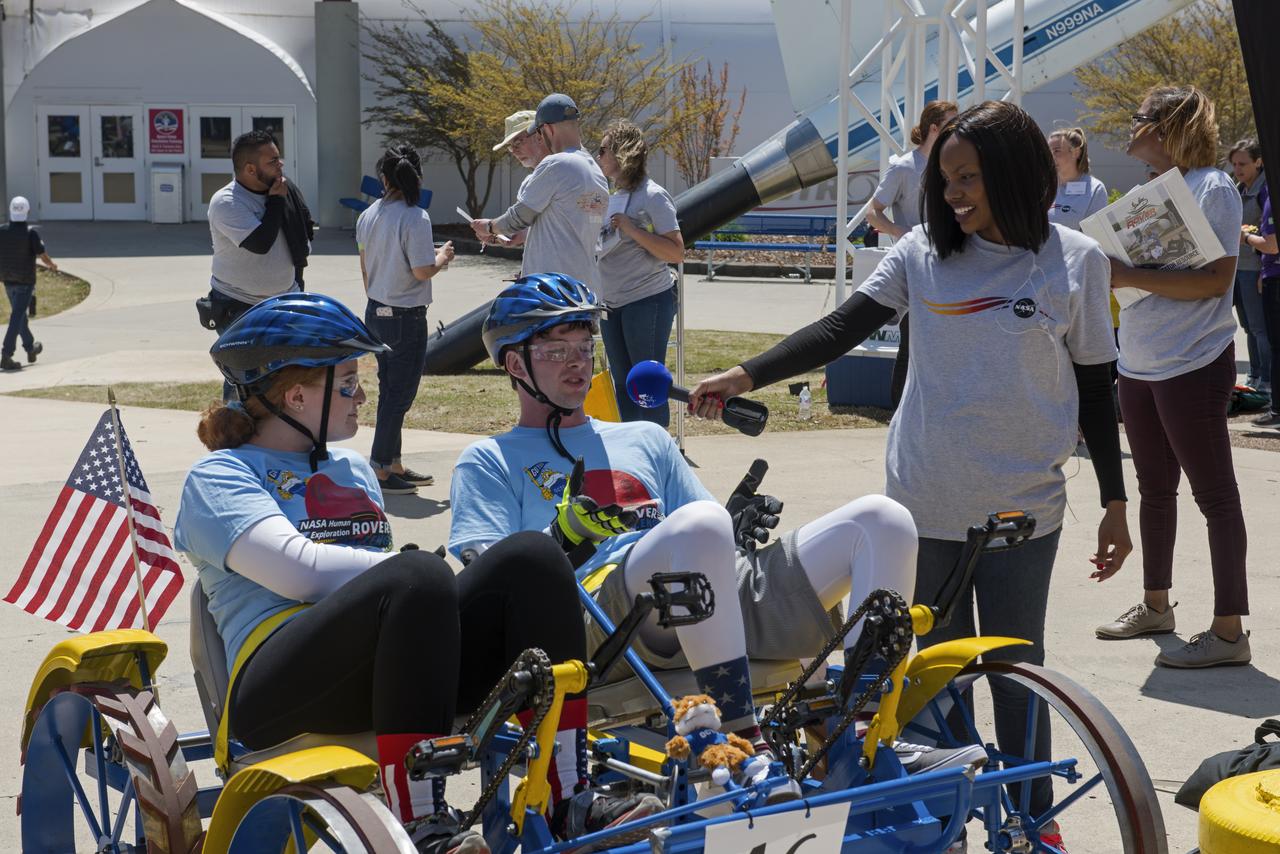
High school and university students competed in the 2018 Human Exploration Rover Challenge event at the U.S. Space and Rocket Center in Huntsville, Alabama. Students came from across the U.S. as well as several foreign countries such as Brazil, Germany, India, and Mexico. This event, which is normally a 2 day event, was shortened to 1 day in 2018 due to adverse weather conditions.
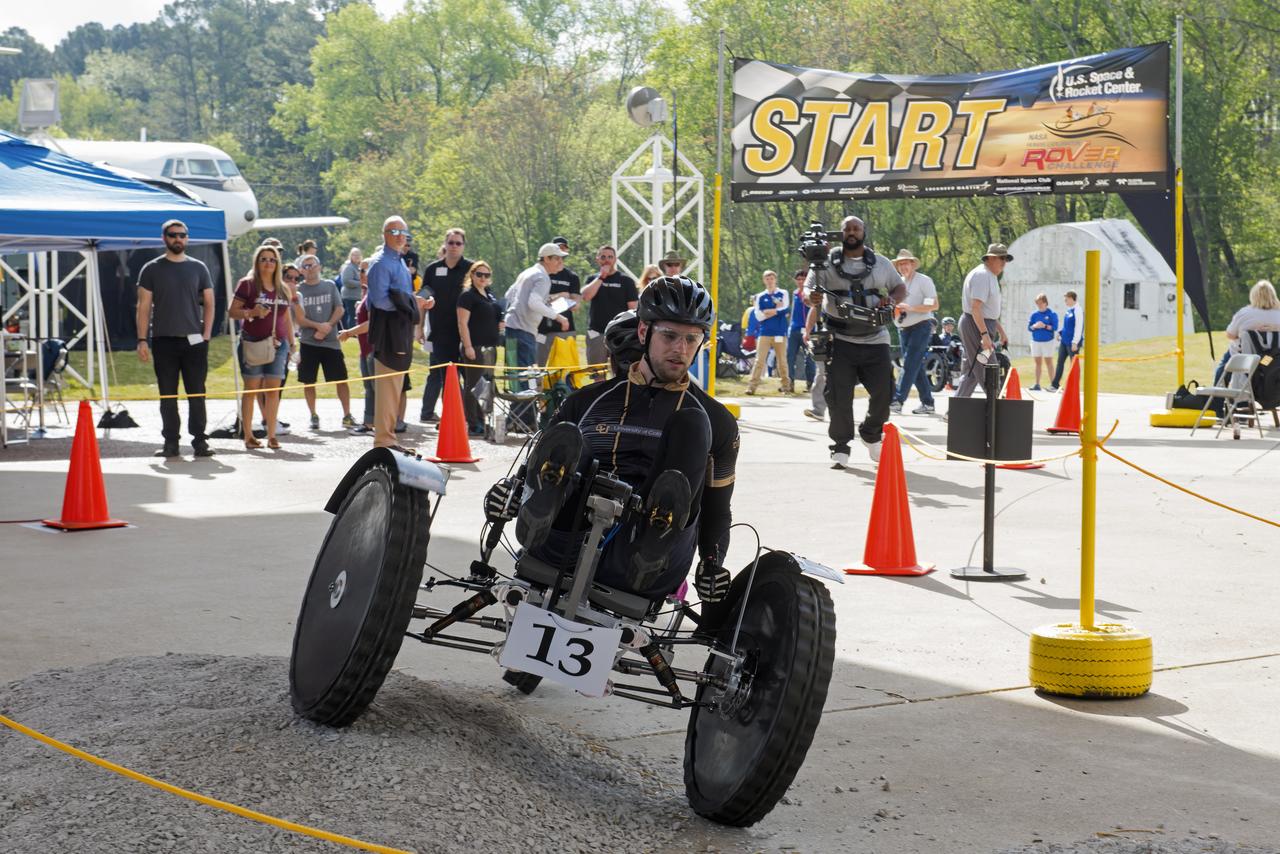
High school and university students competed in the 2018 Human Exploration Rover Challenge event at the U.S. Space and Rocket Center in Huntsville, Alabama. Students came from across the U.S. as well as several foreign countries such as Brazil, Germany, India, and Mexico. This event, which is normally a 2 day event, was shortened to 1 day in 2018 due to adverse weather conditions.
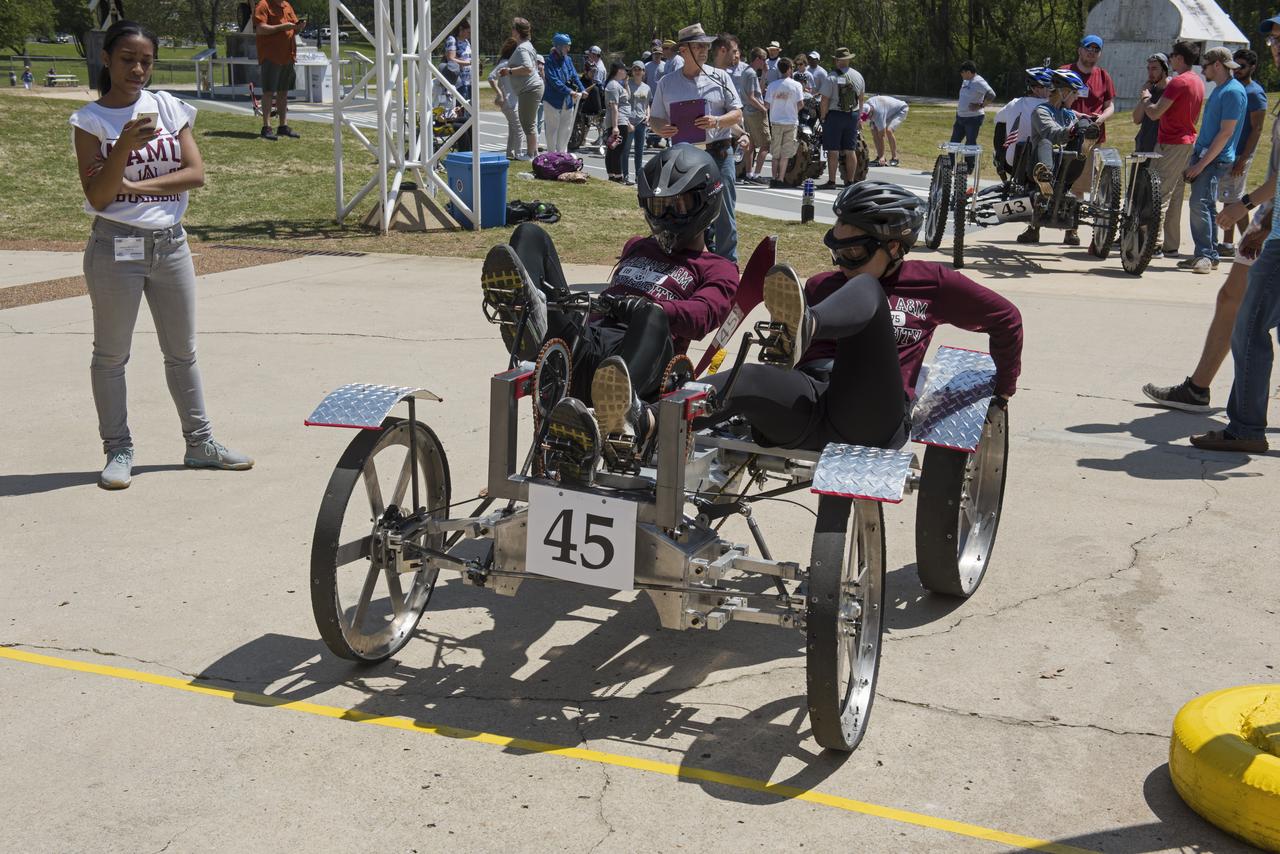
High school and university students competed in the 2018 Human Exploration Rover Challenge event at the U.S. Space and Rocket Center in Huntsville, Alabama. Students came from across the U.S. as well as several foreign countries such as Brazil, Germany, India, and Mexico. This event, which is normally a 2 day event, was shortened to 1 day in 2018 due to adverse weather conditions.
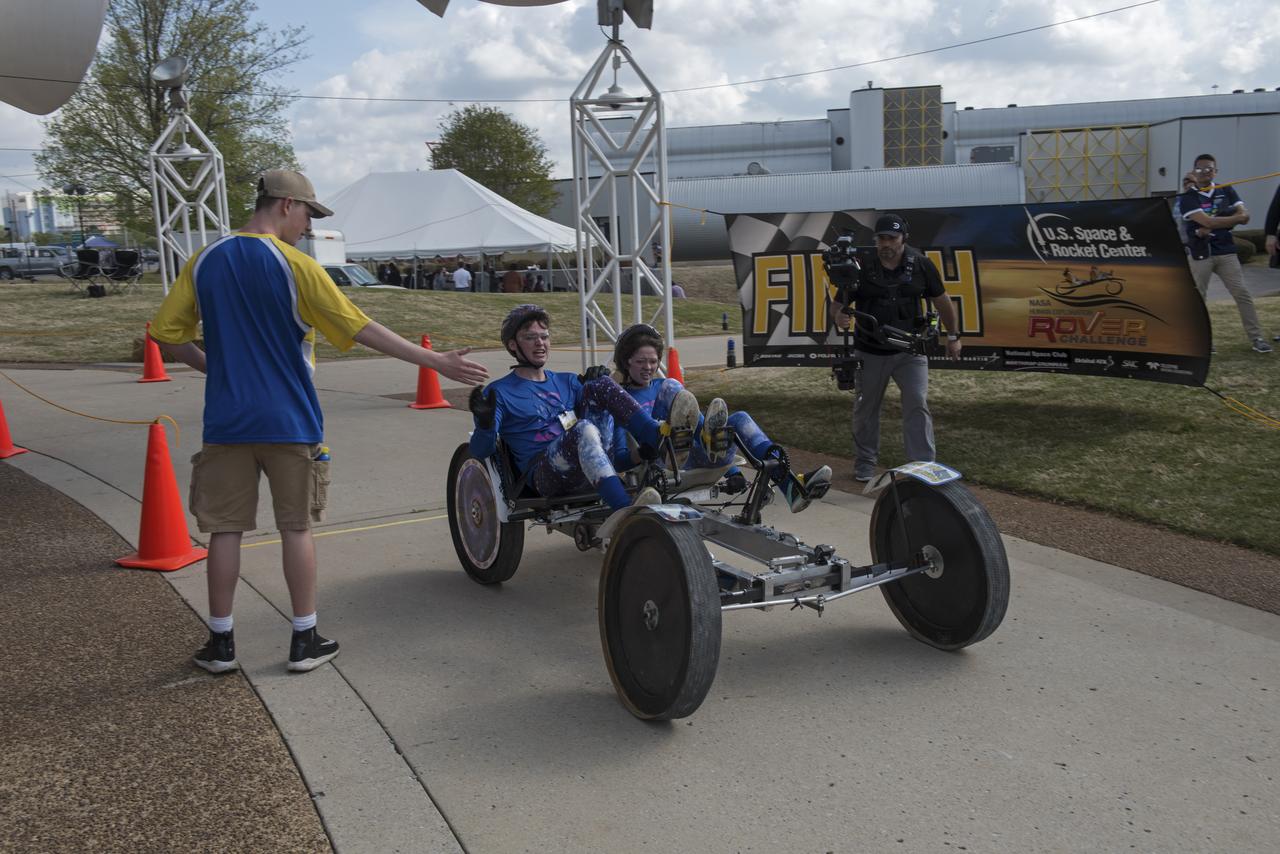
High school and university students competed in the 2018 Human Exploration Rover Challenge event at the U.S. Space and Rocket Center in Huntsville, Alabama. Students came from across the U.S. as well as several foreign countries such as Brazil, Germany, India, and Mexico. This event, which is normally a 2 day event, was shortened to 1 day in 2018 due to adverse weather conditions.
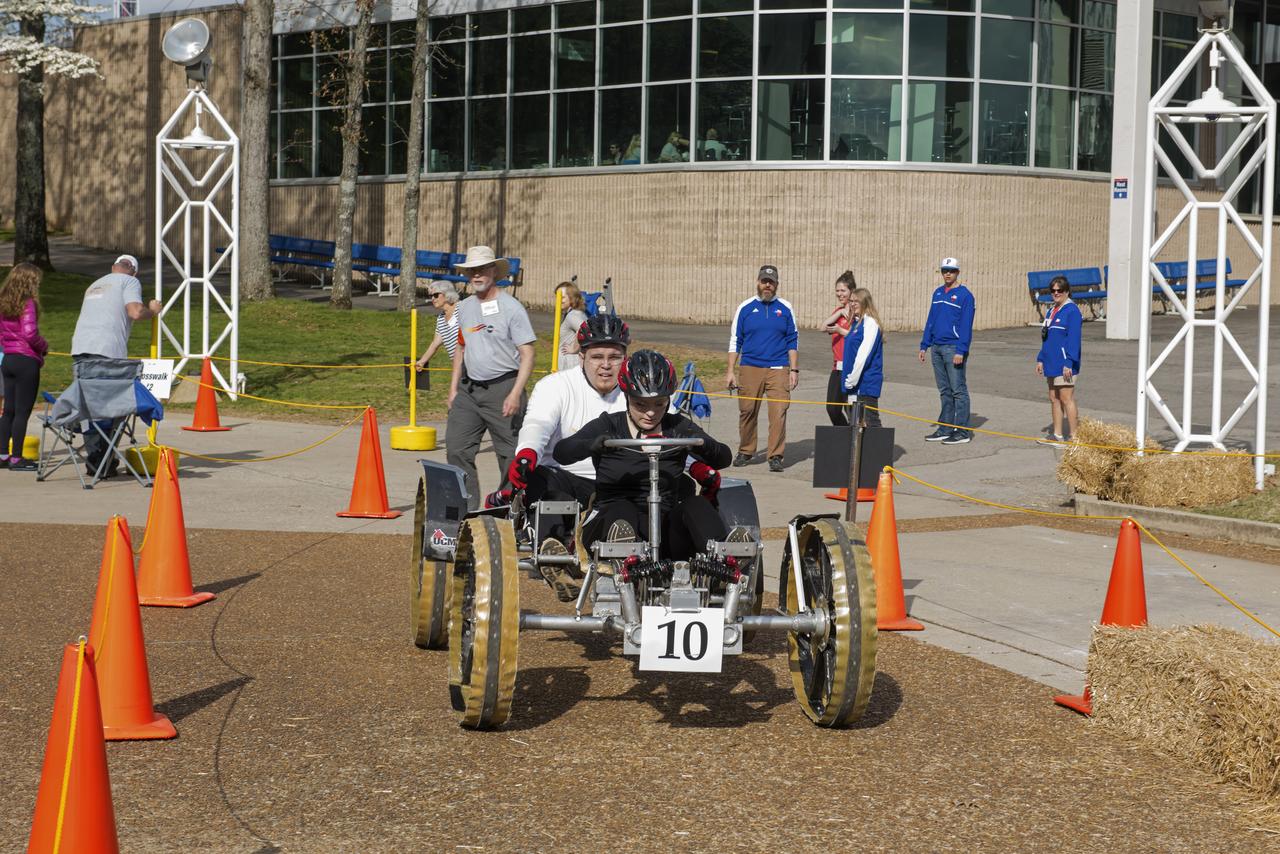
High school and university students competed in the 2018 Human Exploration Rover Challenge event at the U.S. Space and Rocket Center in Huntsville, Alabama. Students came from across the U.S. as well as several foreign countries such as Brazil, Germany, India, and Mexico. This event, which is normally a 2 day event, was shortened to 1 day in 2018 due to adverse weather conditions.
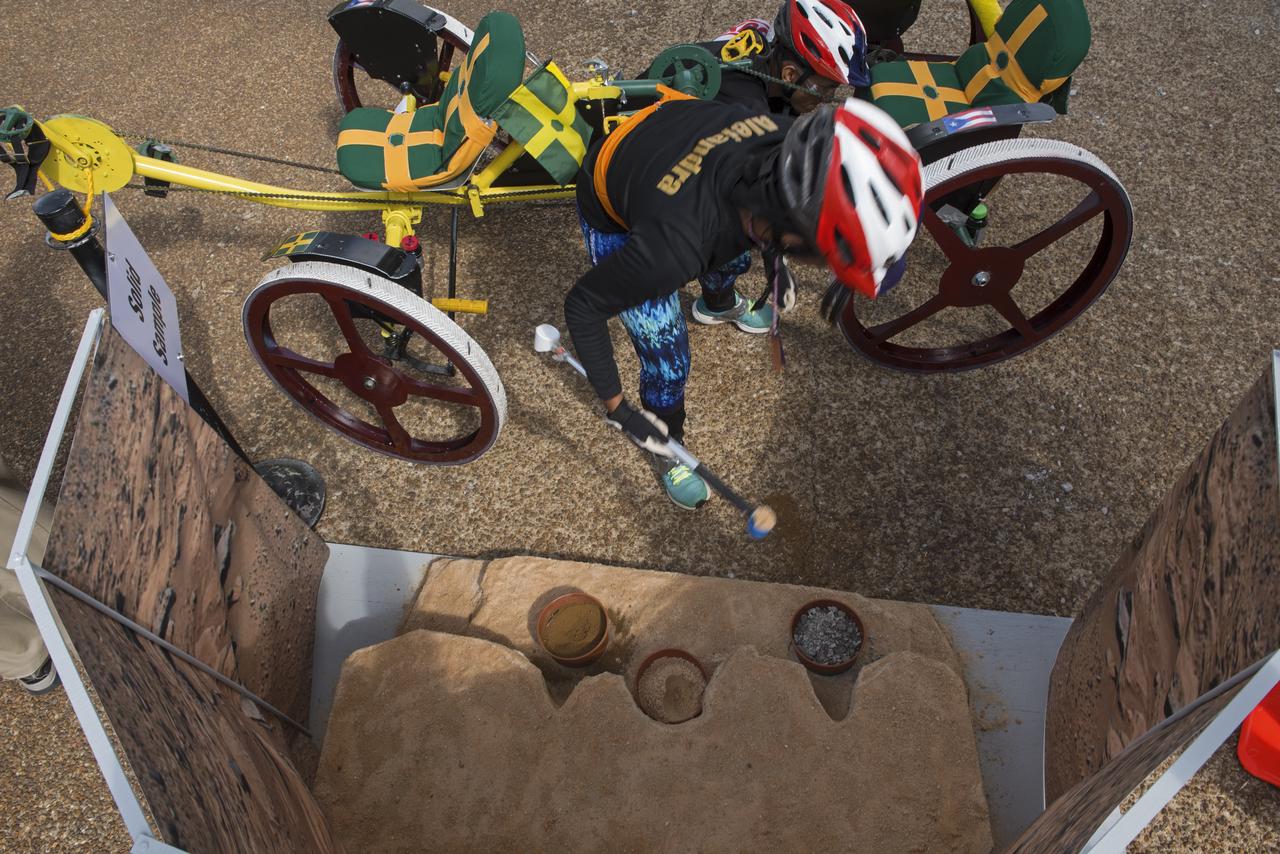
High school and university students competed in the 2018 Human Exploration Rover Challenge event at the U.S. Space and Rocket Center in Huntsville, Alabama. Students came from across the U.S. as well as several foreign countries such as Brazil, Germany, India, and Mexico. This event, which is normally a 2 day event, was shortened to 1 day in 2018 due to adverse weather conditions.
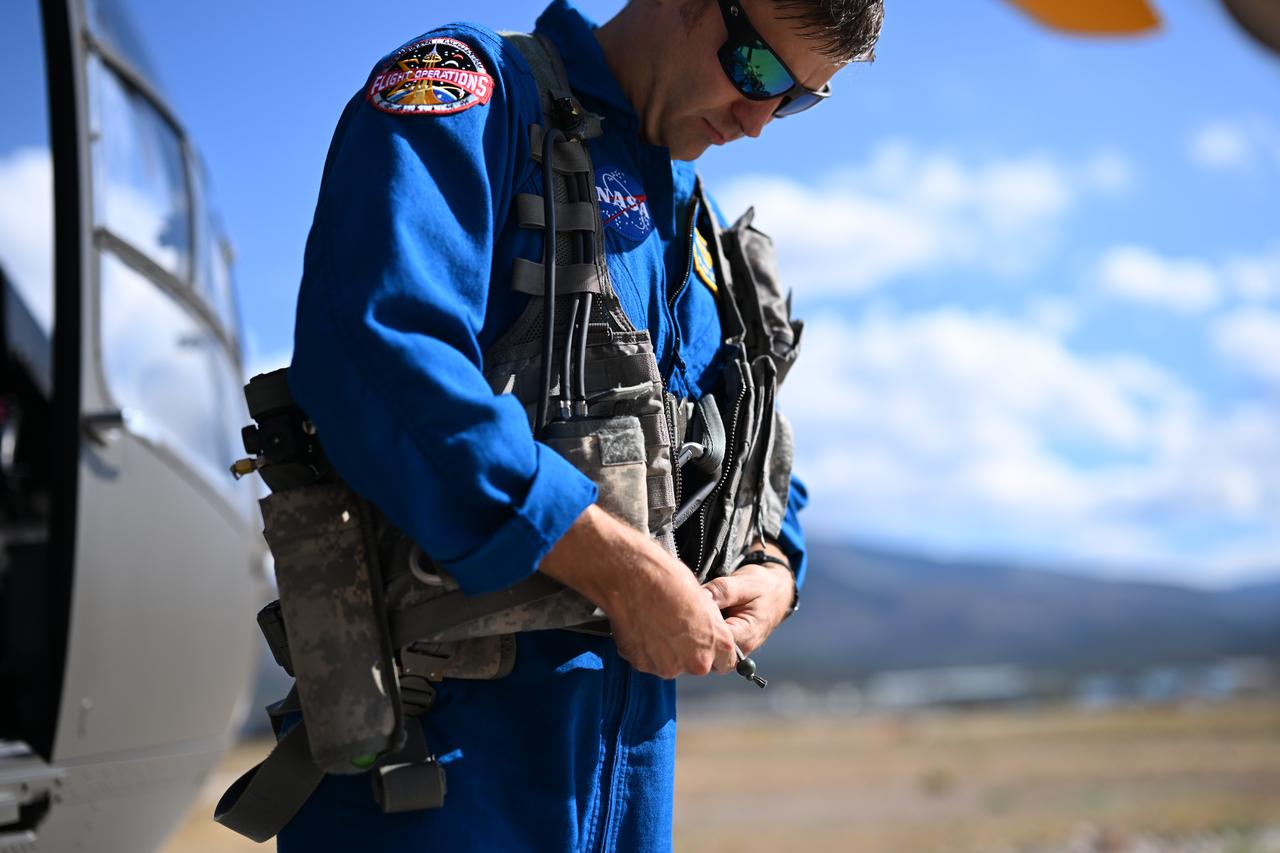
These photos and videos show how NASA certified a new lander flight training course using helicopters in the mountains of northern Colorado. NASA is partnering with the Colorado Army National Guard at its High-Altitude Army National Guard Aviation Training Site near Gypsum, Colorado, to develop the foundational flight training course that will help astronauts practice flight and landing procedures for the Moon. The certification marks an important milestone in crew training for Artemis missions to the Moon, when astronauts will use a commercial human landing system to land on the lunar surface. During the two-week certification run in late August 2025, NASA astronauts Matthew Dominick and Mark Vande Hei participated in flight and landing training to help certify the course. The pair, along with trained instructor pilots with the Army National Guard, took turns flying a helicopter and navigating to landing zones. Artemis flight crew trainers, mission control leads, and lunar lander operational experts from NASA Johnson joined them on each helicopter flight to assess the instruction, training environment, and technical applications for crewed lunar missions. For more information, contact NASA Marshall’s Office of Communications at 256-544
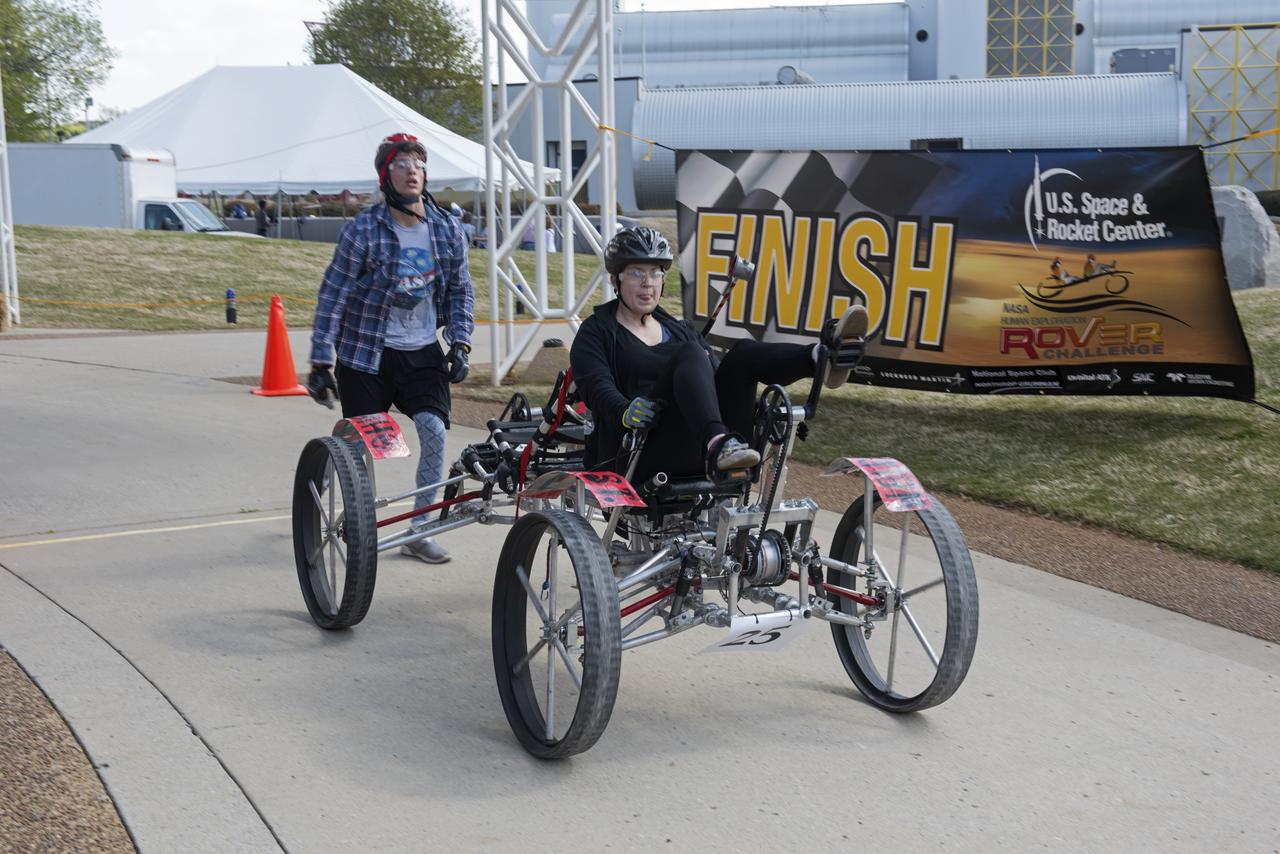
High school and university students competed in the 2018 Human Exploration Rover Challenge event at the U.S. Space and Rocket Center in Huntsville, Alabama. Students came from across the U.S. as well as several foreign countries such as Brazil, Germany, India, and Mexico. This event, which is normally a 2 day event, was shortened to 1 day in 2018 due to adverse weather conditions.
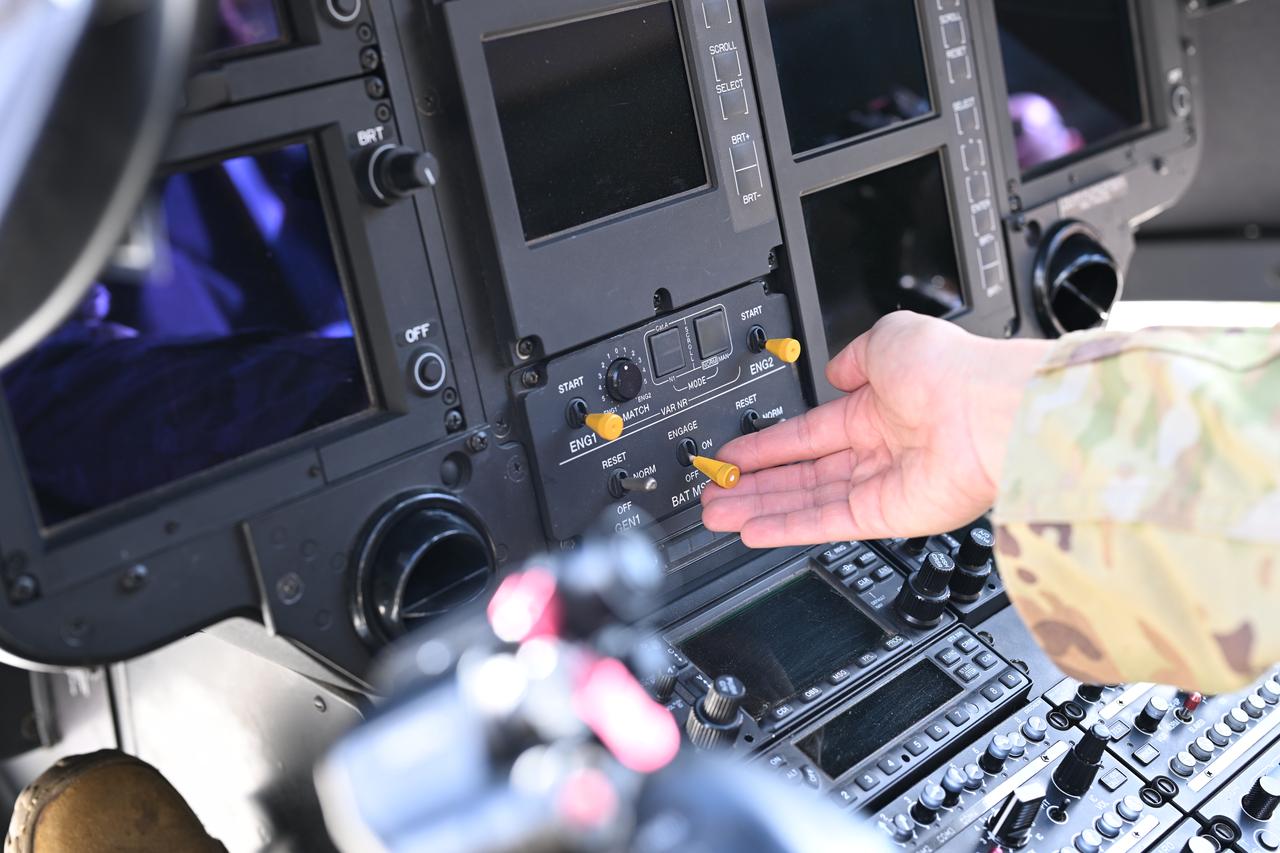
These photos and videos show how NASA certified a new lander flight training course using helicopters in the mountains of northern Colorado. NASA is partnering with the Colorado Army National Guard at its High-Altitude Army National Guard Aviation Training Site near Gypsum, Colorado, to develop the foundational flight training course that will help astronauts practice flight and landing procedures for the Moon. The certification marks an important milestone in crew training for Artemis missions to the Moon, when astronauts will use a commercial human landing system to land on the lunar surface. During the two-week certification run in late August 2025, NASA astronauts Matthew Dominick and Mark Vande Hei participated in flight and landing training to help certify the course. The pair, along with trained instructor pilots with the Army National Guard, took turns flying a helicopter and navigating to landing zones. Artemis flight crew trainers, mission control leads, and lunar lander operational experts from NASA Johnson joined them on each helicopter flight to assess the instruction, training environment, and technical applications for crewed lunar missions. For more information, contact NASA Marshall’s Office of Communications at 256-544
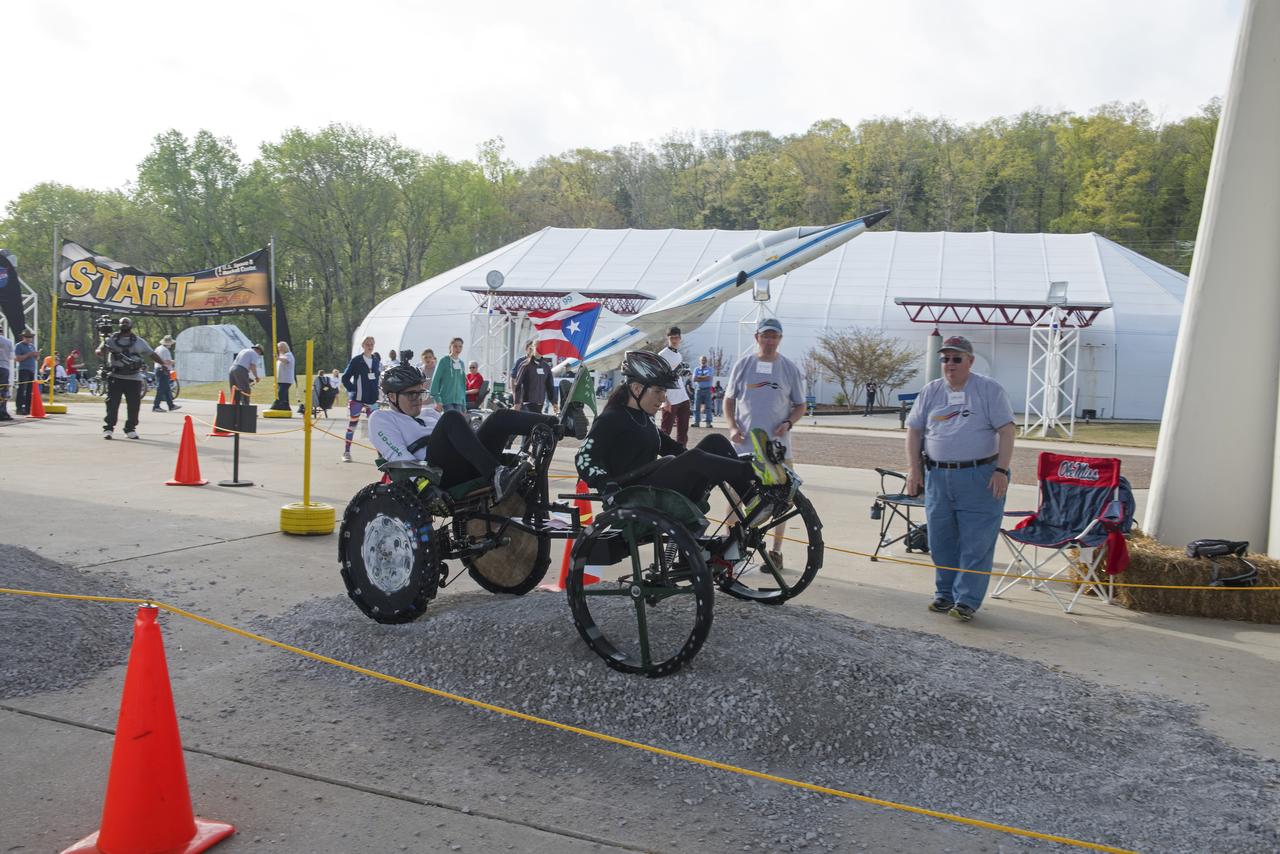
High school and university students competed in the 2018 Human Exploration Rover Challenge event at the U.S. Space and Rocket Center in Huntsville, Alabama. Students came from across the U.S. as well as several foreign countries such as Brazil, Germany, India, and Mexico. This event, which is normally a 2 day event, was shortened to 1 day in 2018 due to adverse weather conditions.
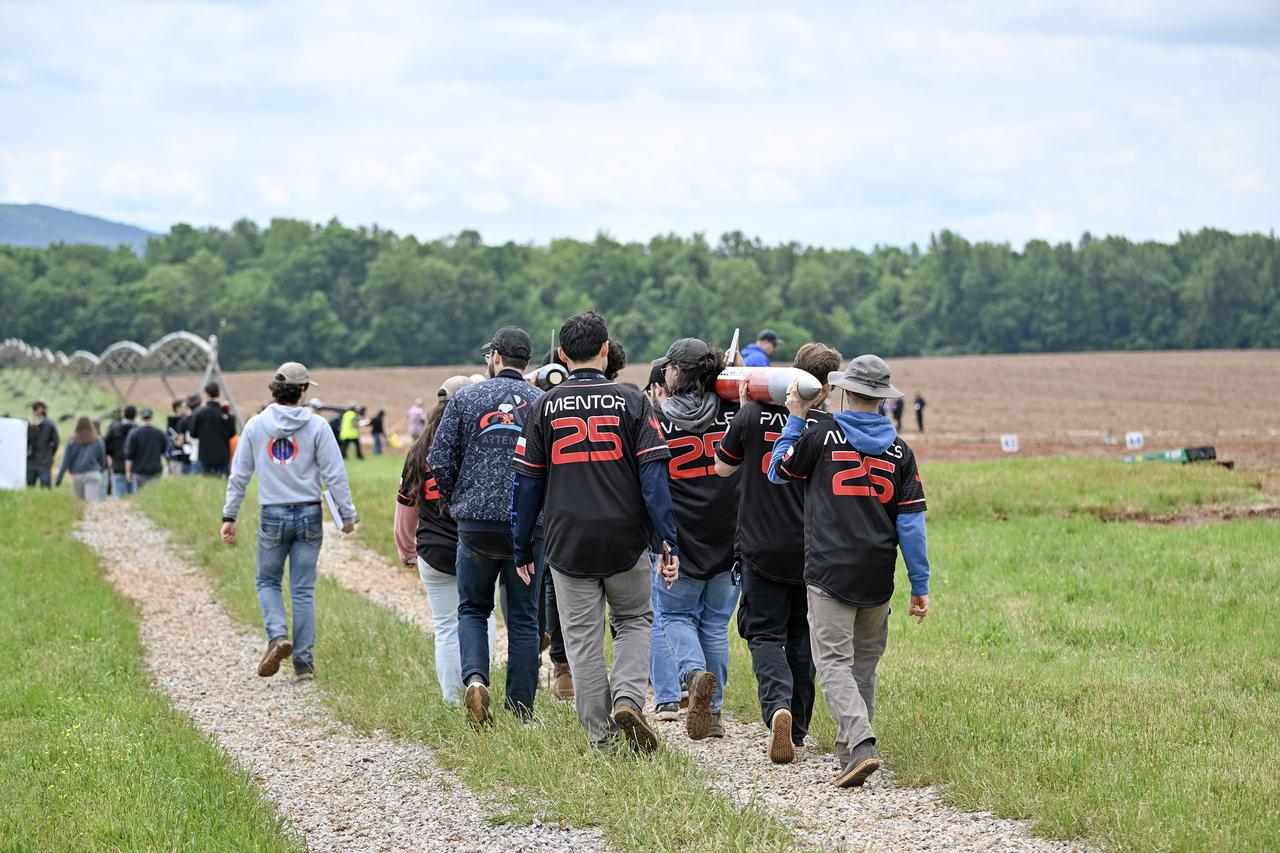
Over than 980 middle school, high school, and college students from across the nation launched more than 40 high-powered rockets just north of NASA’s Marshall Space Flight Center in Huntsville, Alabama. This year marked the 25th anniversary of the competition. To compete, students follow the NASA engineering design lifecycle by going through a series of reviews for nine months leading up to launch day. Each year, a payload challenge is issued to the university teams, and this year’s task took inspiration from the agency’s Artemis missions, where NASA will send astronauts to explore the Moon for scientific discovery, economic benefit, and to build the foundation for the first crewed missions to Mars. Teams were challenged to include “reports” from STEMnauts, non-living objects representing astronauts. The STEMnaut “crew” had to relay real-time data to the student team’s mission control, just as the Artemis astronaut crew will do as they explore the lunar surface. To learn more, visit: www.nasa.gov/studentlaunch.
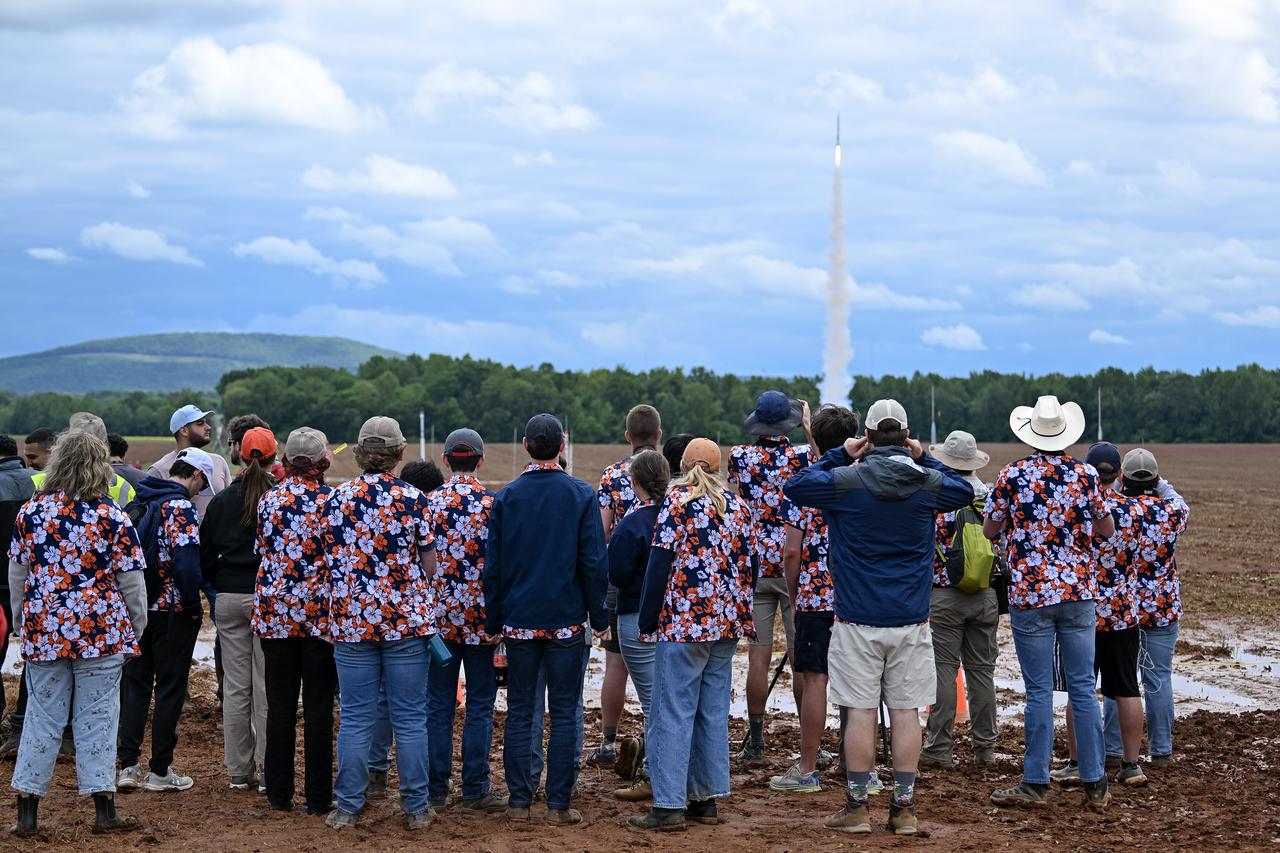
Over than 980 middle school, high school, and college students from across the nation launched more than 40 high-powered rockets just north of NASA’s Marshall Space Flight Center in Huntsville, Alabama. This year marked the 25th anniversary of the competition. To compete, students follow the NASA engineering design lifecycle by going through a series of reviews for nine months leading up to launch day. Each year, a payload challenge is issued to the university teams, and this year’s task took inspiration from the agency’s Artemis missions, where NASA will send astronauts to explore the Moon for scientific discovery, economic benefit, and to build the foundation for the first crewed missions to Mars. Teams were challenged to include “reports” from STEMnauts, non-living objects representing astronauts. The STEMnaut “crew” had to relay real-time data to the student team’s mission control, just as the Artemis astronaut crew will do as they explore the lunar surface. To learn more, visit: www.nasa.gov/studentlaunch.
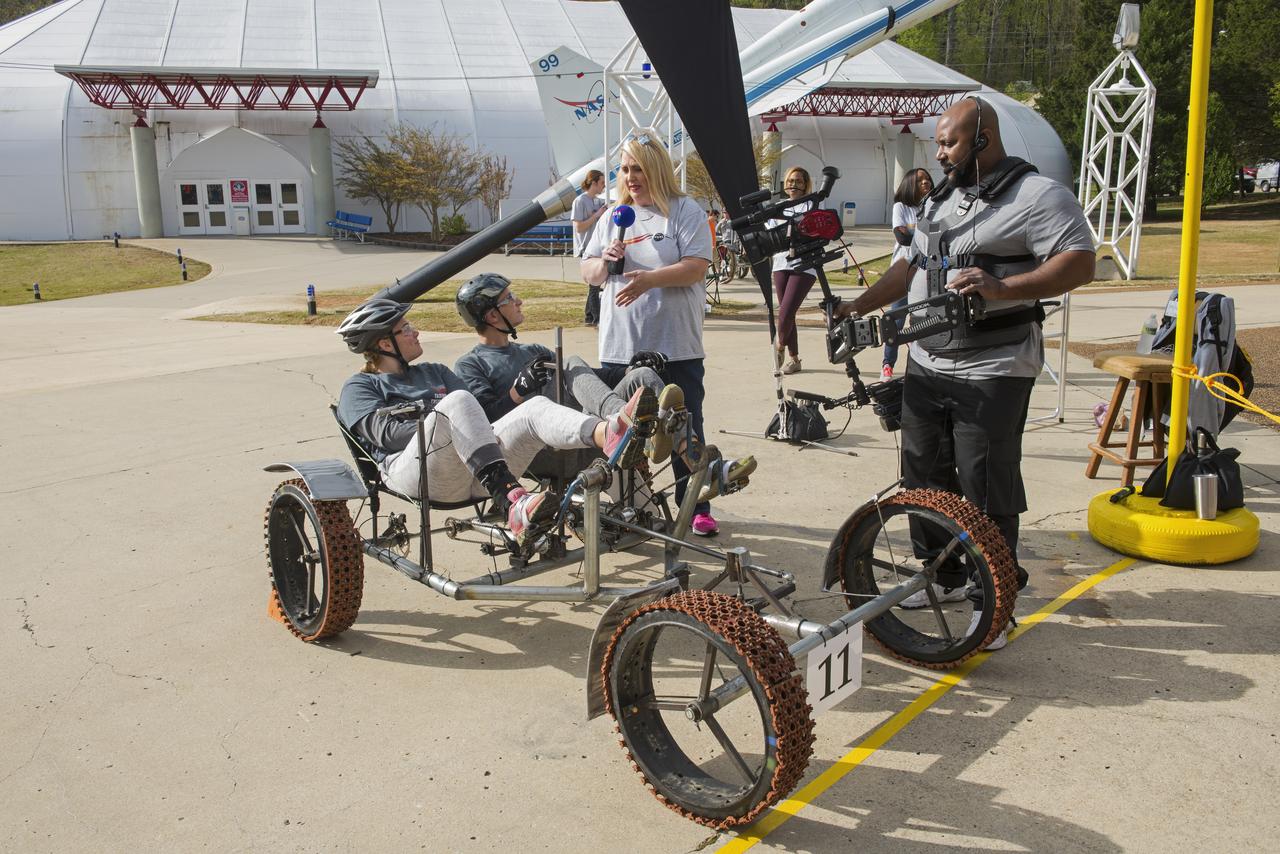
High school and university students competed in the 2018 Human Exploration Rover Challenge event at the U.S. Space and Rocket Center in Huntsville, Alabama. Students came from across the U.S. as well as several foreign countries such as Brazil, Germany, India, and Mexico. This event, which is normally a 2 day event, was shortened to 1 day in 2018 due to adverse weather conditions.
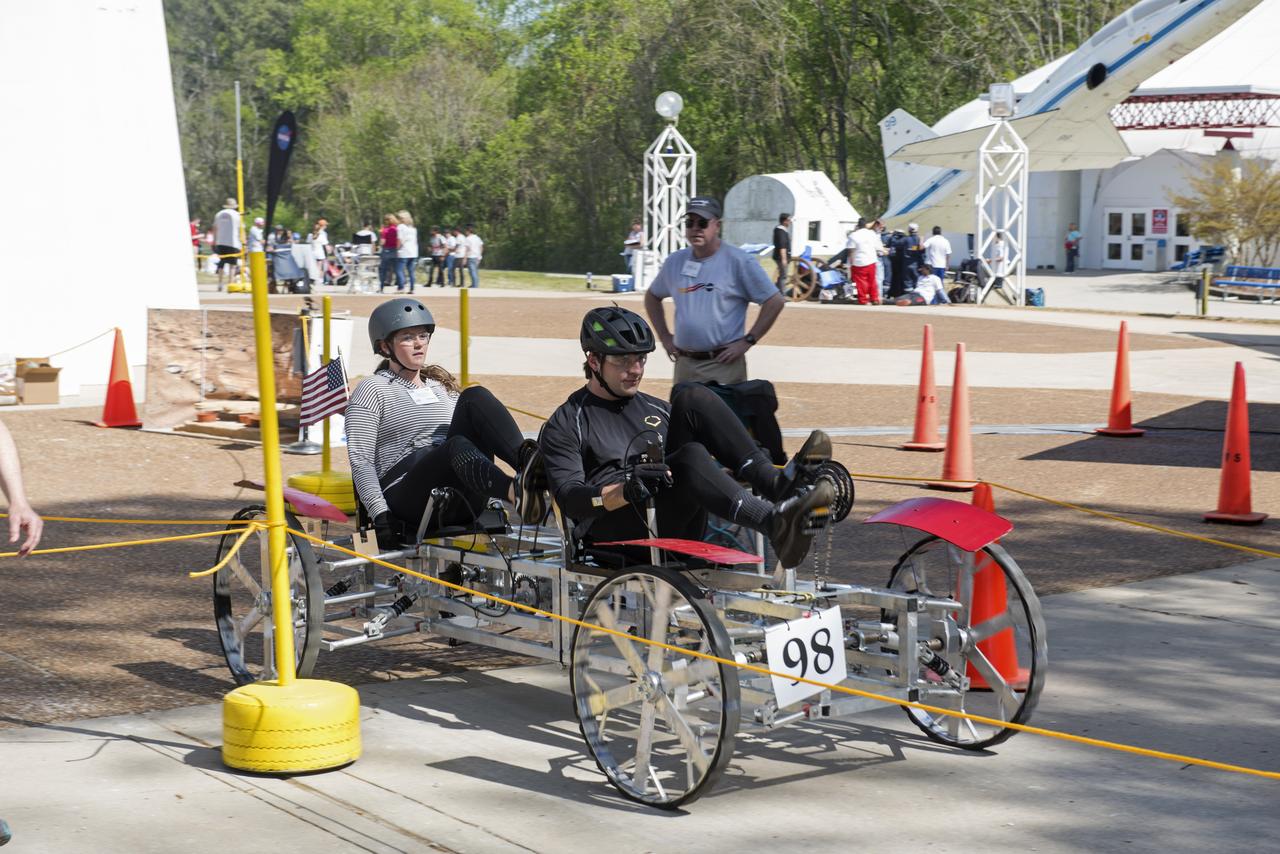
High school and university students competed in the 2018 Human Exploration Rover Challenge event at the U.S. Space and Rocket Center in Huntsville, Alabama. Students came from across the U.S. as well as several foreign countries such as Brazil, Germany, India, and Mexico. This event, which is normally a 2 day event, was shortened to 1 day in 2018 due to adverse weather conditions.
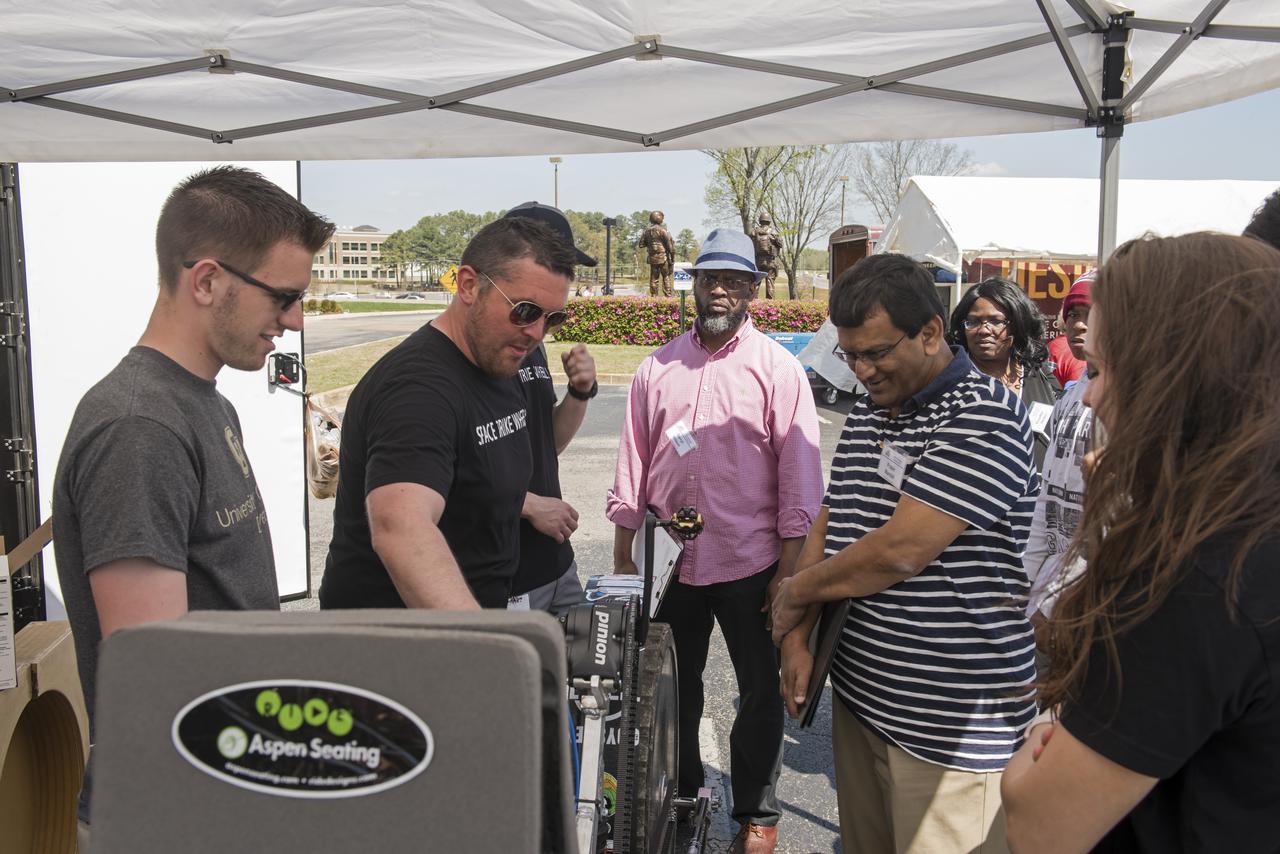
High school and university students competed in the 2018 Human Exploration Rover Challenge event at the U.S. Space and Rocket Center in Huntsville, Alabama. Students came from across the U.S. as well as several foreign countries such as Brazil, Germany, India, and Mexico. This event, which is normally a 2 day event, was shortened to 1 day in 2018 due to adverse weather conditions.
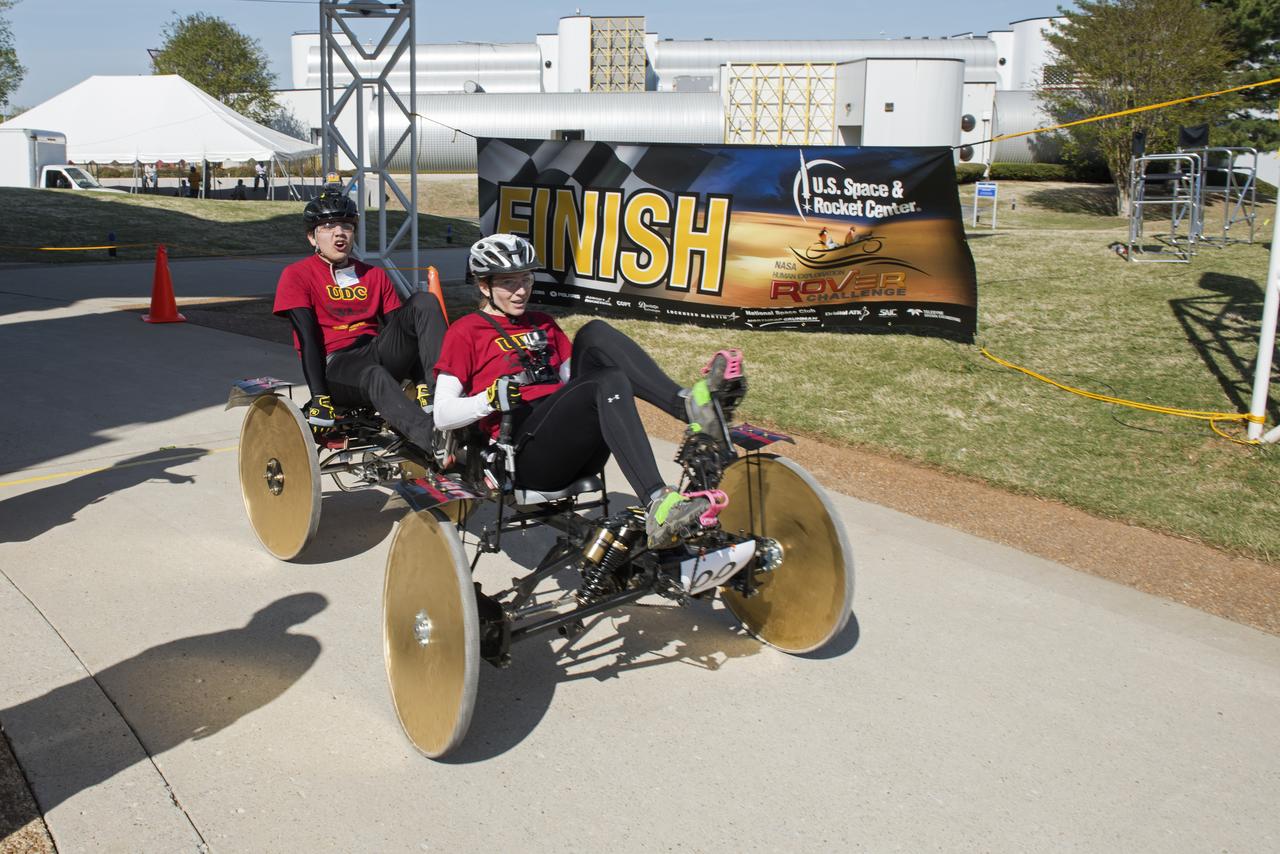
High school and university students competed in the 2018 Human Exploration Rover Challenge event at the U.S. Space and Rocket Center in Huntsville, Alabama. Students came from across the U.S. as well as several foreign countries such as Brazil, Germany, India, and Mexico. This event, which is normally a 2 day event, was shortened to 1 day in 2018 due to adverse weather conditions.
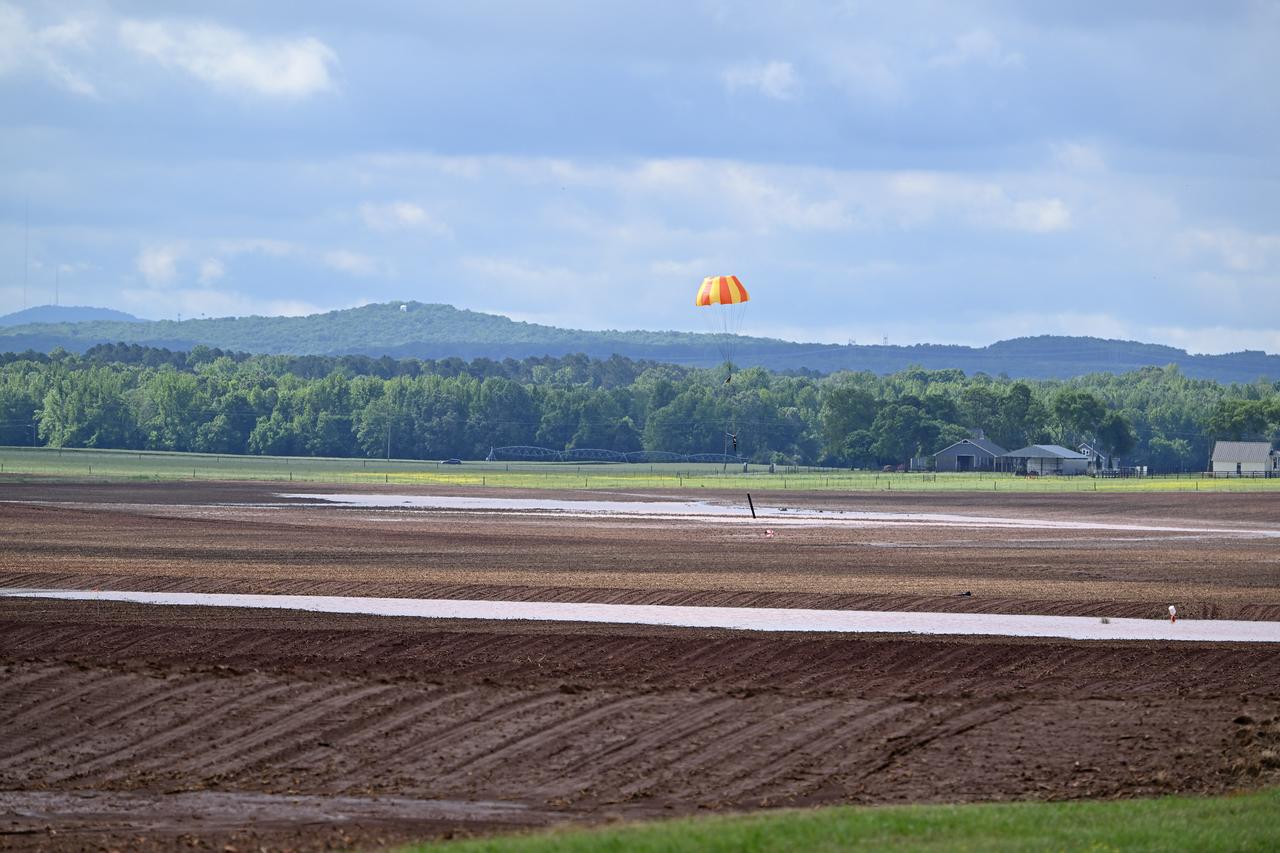
Over than 980 middle school, high school, and college students from across the nation launched more than 40 high-powered rockets just north of NASA’s Marshall Space Flight Center in Huntsville, Alabama. This year marked the 25th anniversary of the competition. To compete, students follow the NASA engineering design lifecycle by going through a series of reviews for nine months leading up to launch day. Each year, a payload challenge is issued to the university teams, and this year’s task took inspiration from the agency’s Artemis missions, where NASA will send astronauts to explore the Moon for scientific discovery, economic benefit, and to build the foundation for the first crewed missions to Mars. Teams were challenged to include “reports” from STEMnauts, non-living objects representing astronauts. The STEMnaut “crew” had to relay real-time data to the student team’s mission control, just as the Artemis astronaut crew will do as they explore the lunar surface. To learn more, visit: www.nasa.gov/studentlaunch.
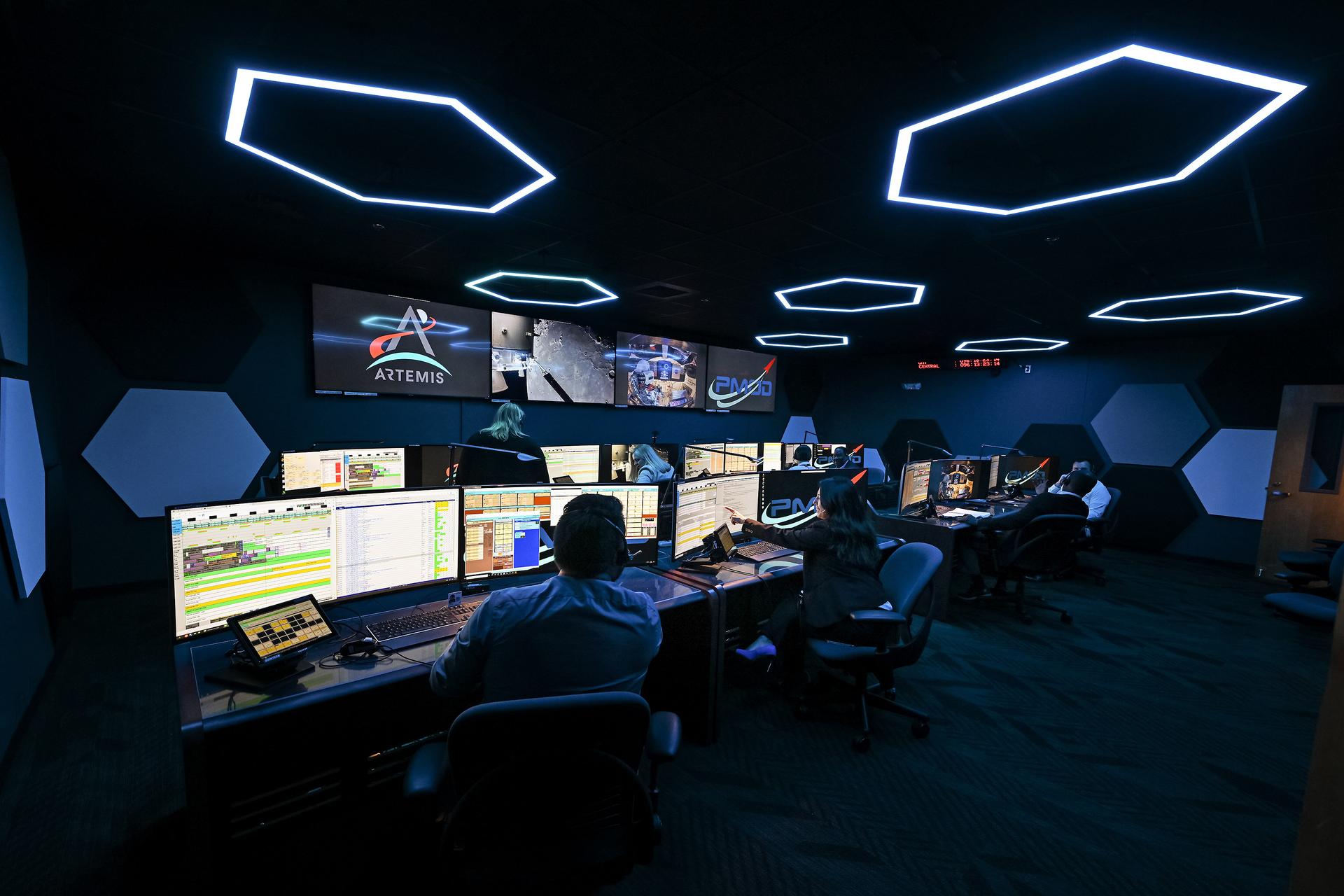
These photos offer a look inside the twin control rooms at NASA’s Marshall Space Flight Center in Huntsville, Alabama, where engineers will monitor Artemis science and future landing operations for Artemis. The LUCA (Lunar Utilization Control Area) and LESA (Lander Engineering Support Area) rooms are part of the Huntsville Operations Support Center at NASA Marshall. The LUCA is specially designed to support a wide variety of science operations on and around the Moon – and beyond. Engineers in the LUCA monitored operations for the Lunar Node-1 experiment, an autonomous navigation payload that was part of the first NASA Commercial Lunar Payload Services (CLPS) launch on Intuitive Machines’ Nova-C lunar lander in 2024. NASA Marshall flight controllers will use the LUCA again for Artemis II to monitor science operations. Beginning with Artemis III, members of the NASA Human Landing System Mission Insight Support Team – a group of engineers, safety leads, flight operations experts, and technical authorities – will work in the LESA. There, they will monitor lander systems in real-time and be involved in key decision-making processes throughout the mission. For more information, contact NASA Marshall’s Office of Communications at 256-544-0034.
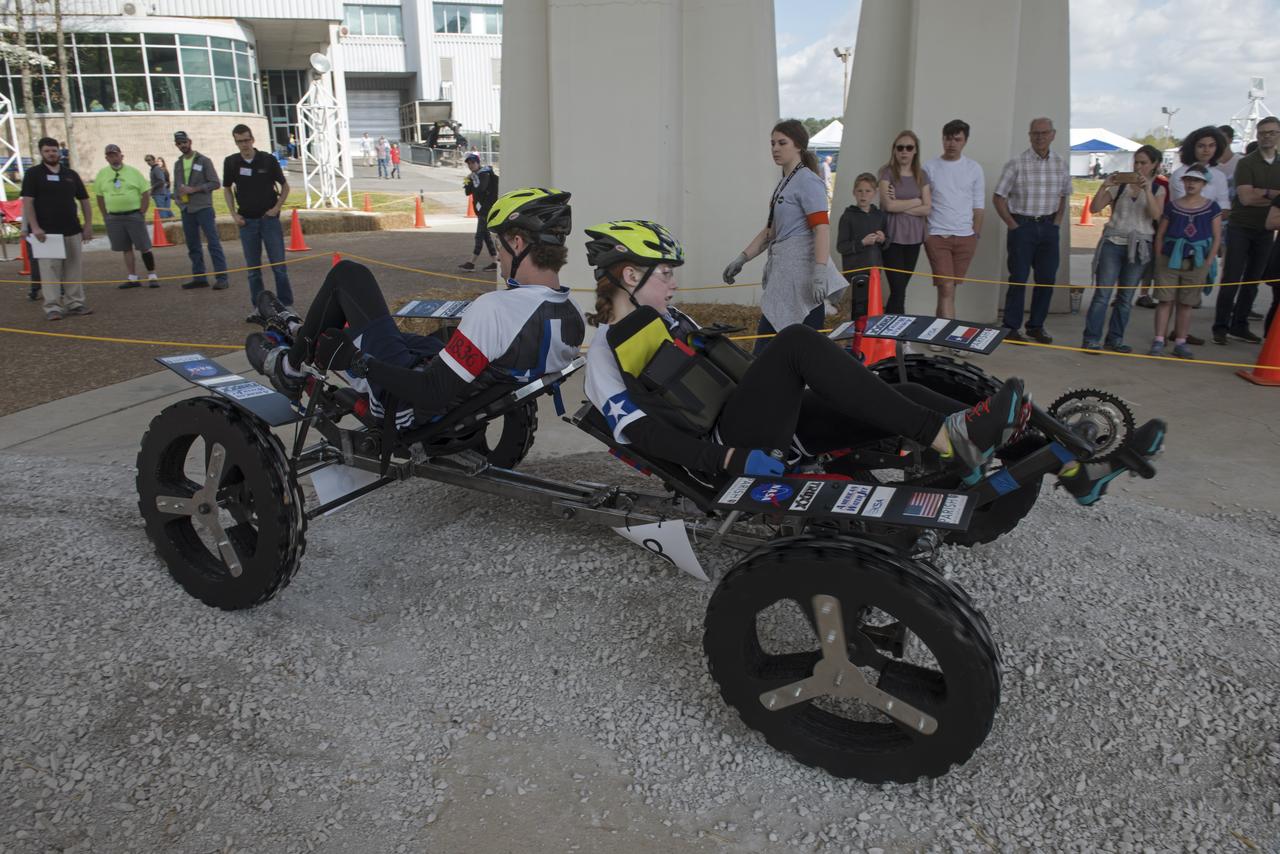
High school and university students competed in the 2018 Human Exploration Rover Challenge event at the U.S. Space and Rocket Center in Huntsville, Alabama. Students came from across the U.S. as well as several foreign countries such as Brazil, Germany, India, and Mexico. This event, which is normally a 2 day event, was shortened to 1 day in 2018 due to adverse weather conditions.
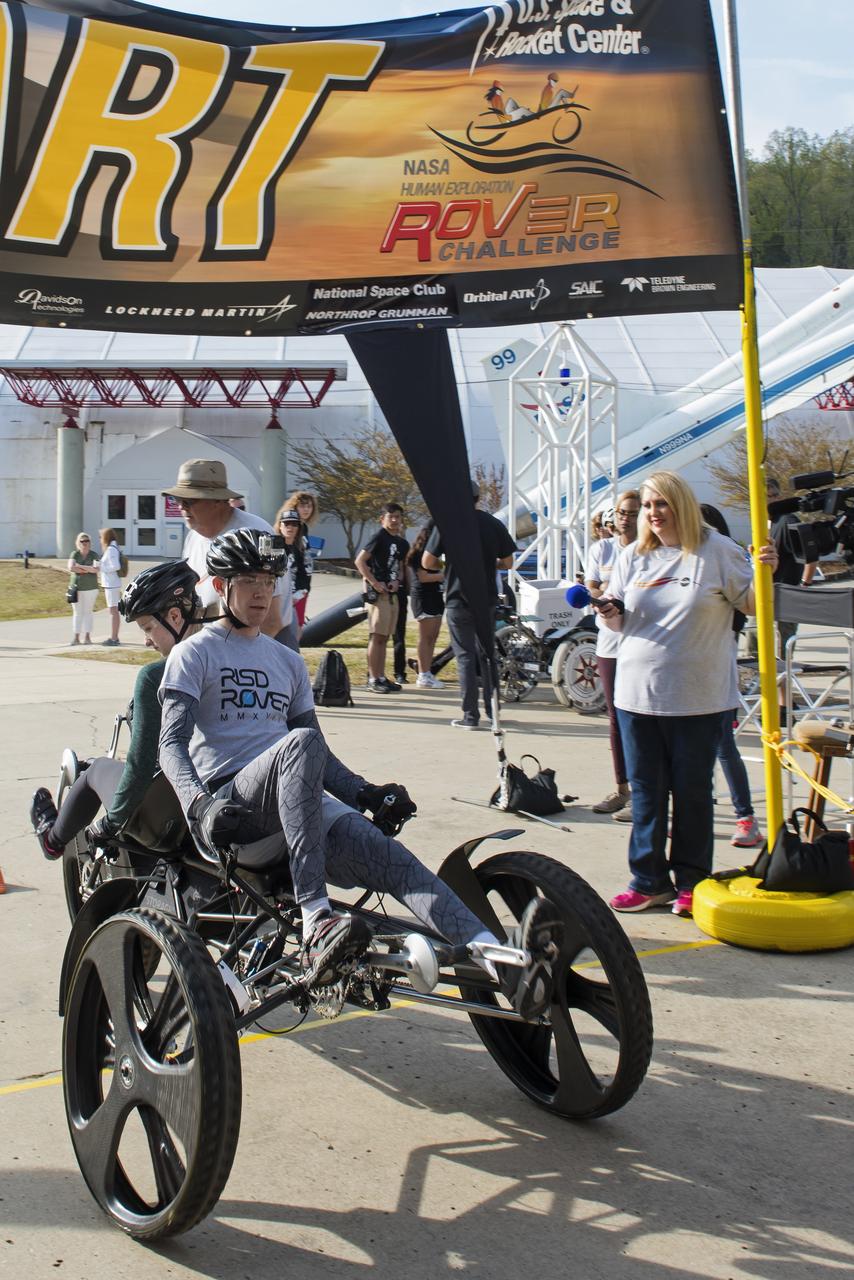
High school and university students competed in the 2018 Human Exploration Rover Challenge event at the U.S. Space and Rocket Center in Huntsville, Alabama. Students came from across the U.S. as well as several foreign countries such as Brazil, Germany, India, and Mexico. This event, which is normally a 2 day event, was shortened to 1 day in 2018 due to adverse weather conditions.
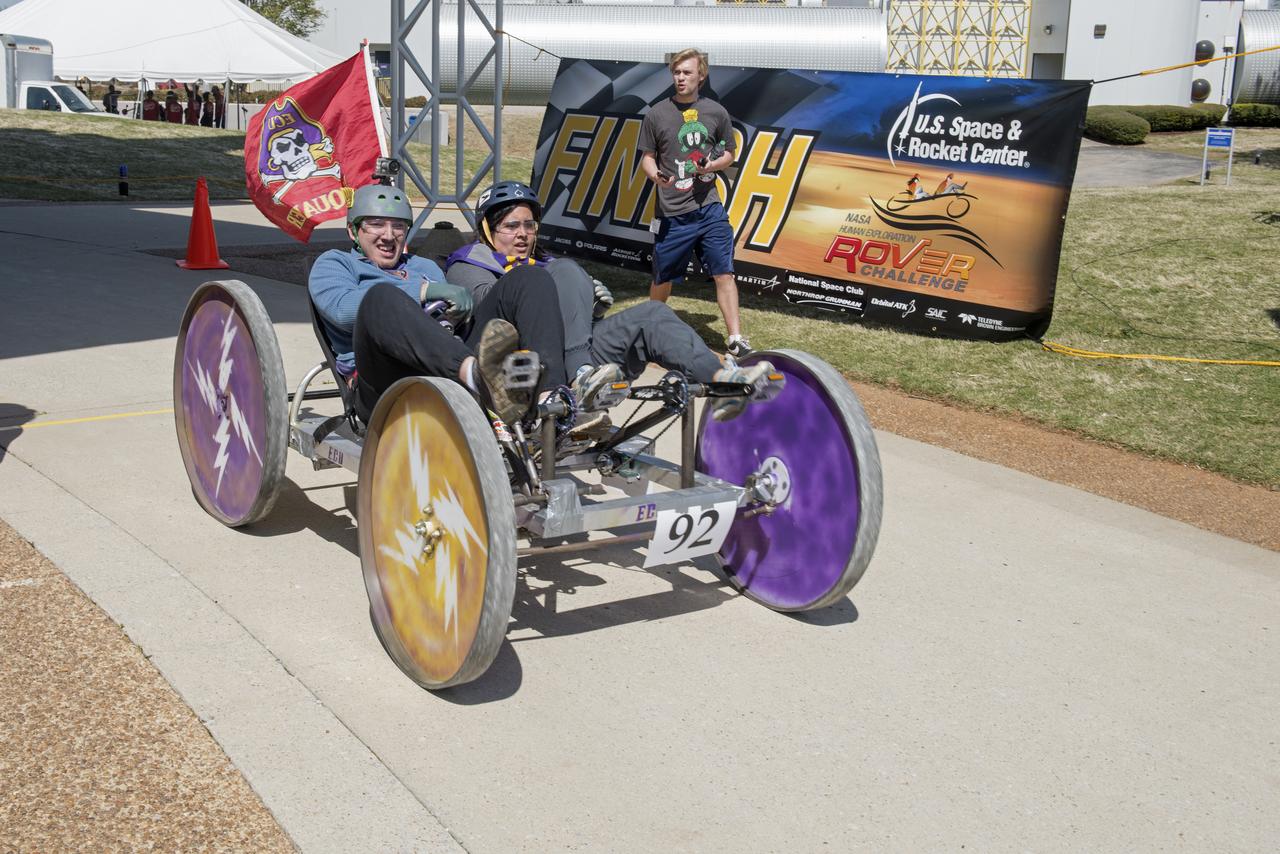
High school and university students competed in the 2018 Human Exploration Rover Challenge event at the U.S. Space and Rocket Center in Huntsville, Alabama. Students came from across the U.S. as well as several foreign countries such as Brazil, Germany, India, and Mexico. This event, which is normally a 2 day event, was shortened to 1 day in 2018 due to adverse weather conditions.
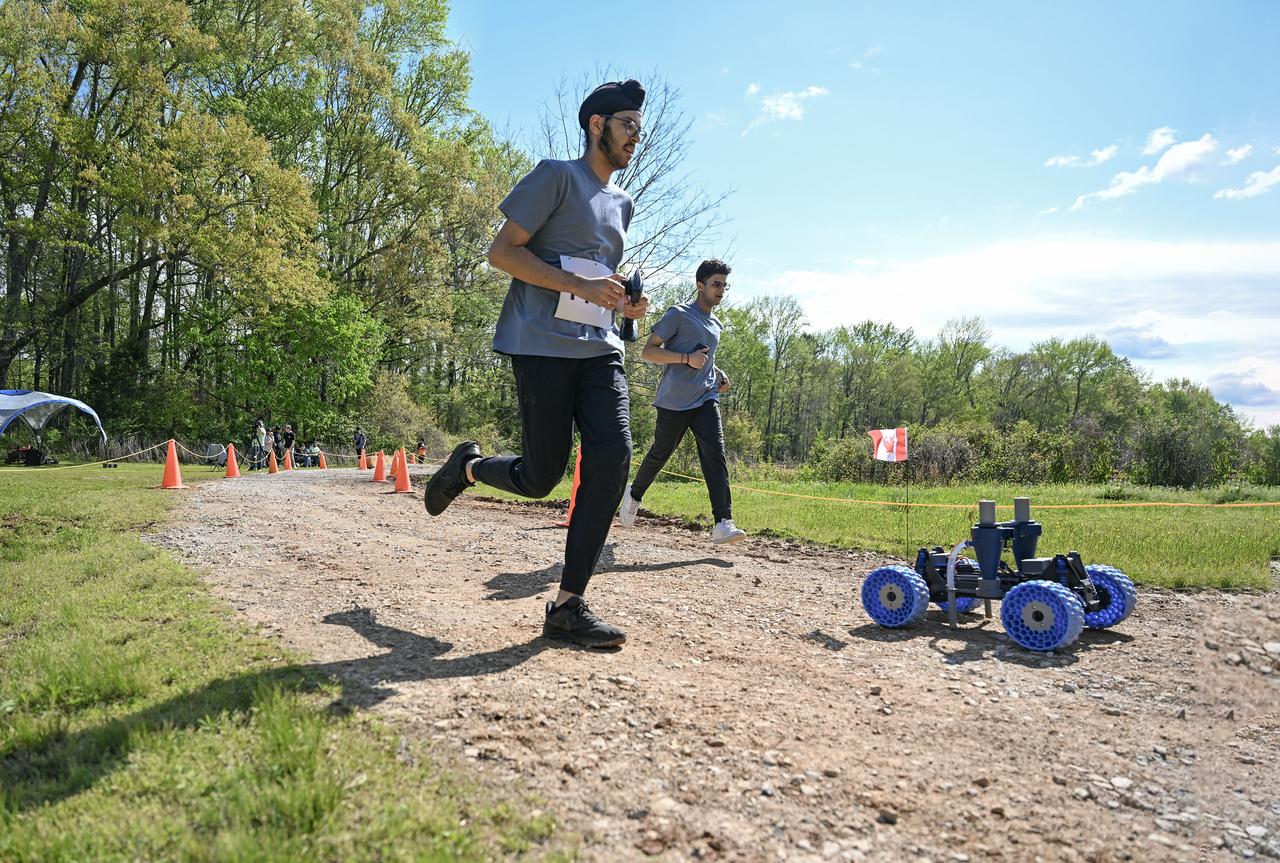
More than 500 students with 75 teams from around the world participated in the 31st year of NASA’s Human Exploration Rover Challenge (HERC) on April 11 and April 12, 2025, near NASA’s Marshall Space Flight Center in Huntsville, Alabama. Participating teams represented 35 colleges and universities, 38 high schools, and two middle schools from 20 states, Puerto Rico, and 16 other nations. NASA expanded the 2025 challenge to include a remote-control division - named Remote-Operated Vehicular Research - and invited middle school students to participate. Teams were awarded points based on navigating a half-mile obstacle course, conducting mission-specific task challenges, and completing multiple safety and design reviews with NASA engineers.
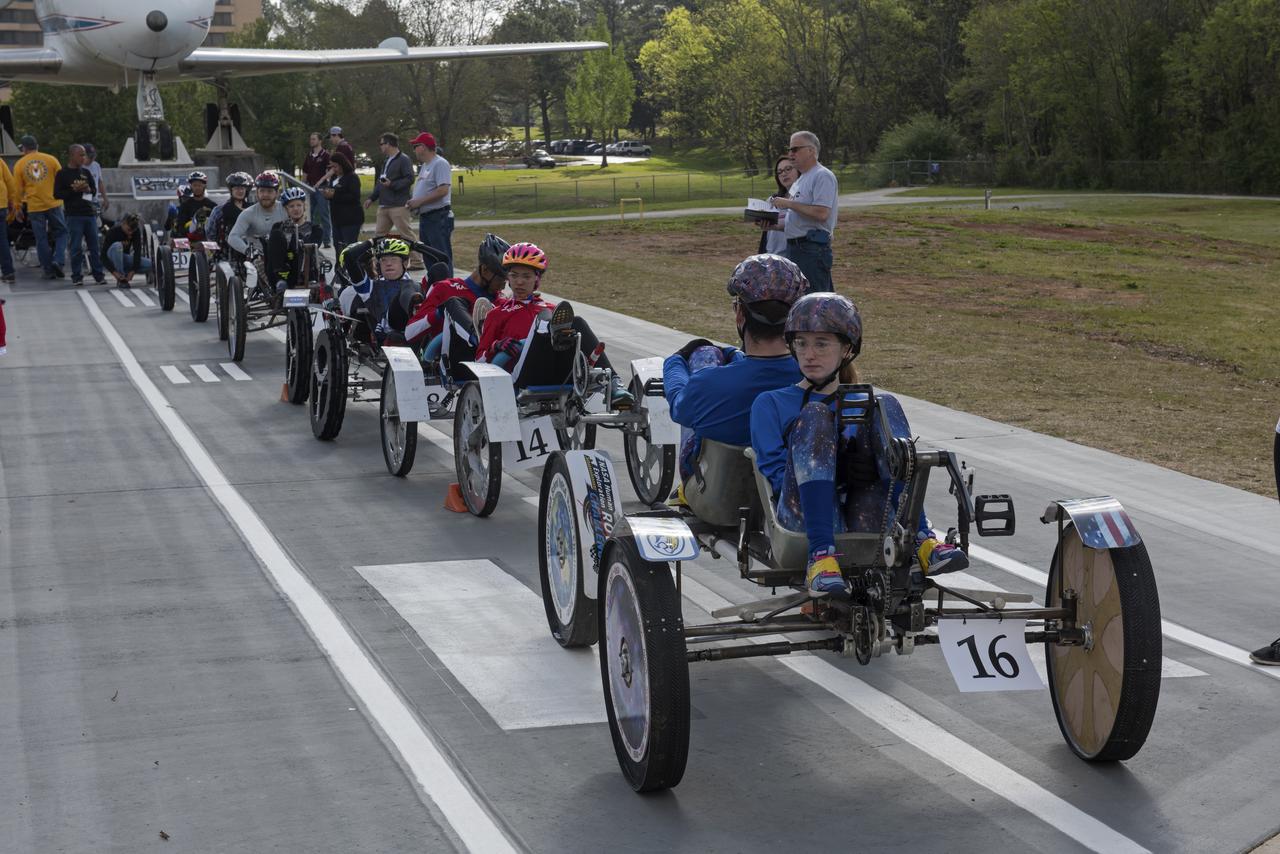
High school and university students competed in the 2018 Human Exploration Rover Challenge event at the U.S. Space and Rocket Center in Huntsville, Alabama. Students came from across the U.S. as well as several foreign countries such as Brazil, Germany, India, and Mexico. This event, which is normally a 2 day event, was shortened to 1 day in 2018 due to adverse weather conditions.
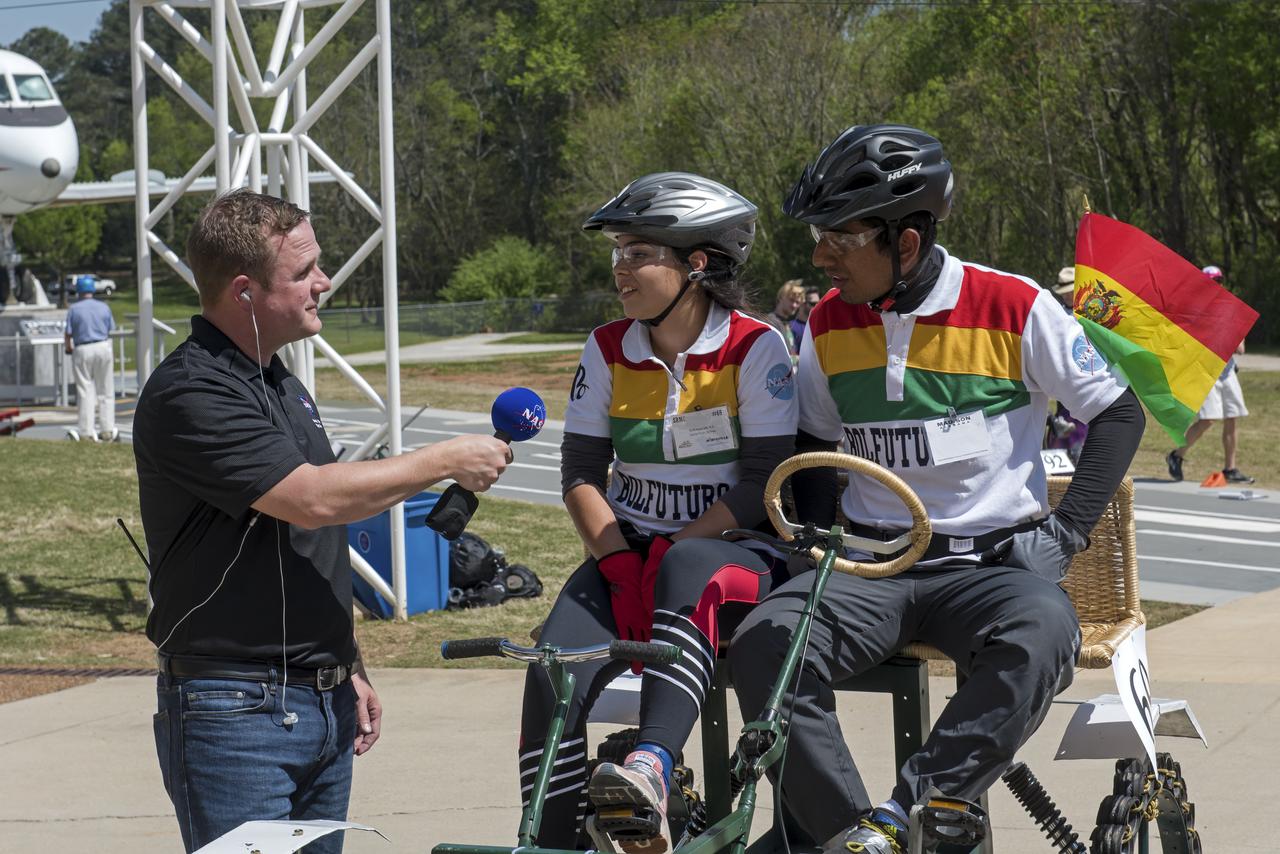
High school and university students competed in the 2018 Human Exploration Rover Challenge event at the U.S. Space and Rocket Center in Huntsville, Alabama. Students came from across the U.S. as well as several foreign countries such as Brazil, Germany, India, and Mexico. This event, which is normally a 2 day event, was shortened to 1 day in 2018 due to adverse weather conditions.
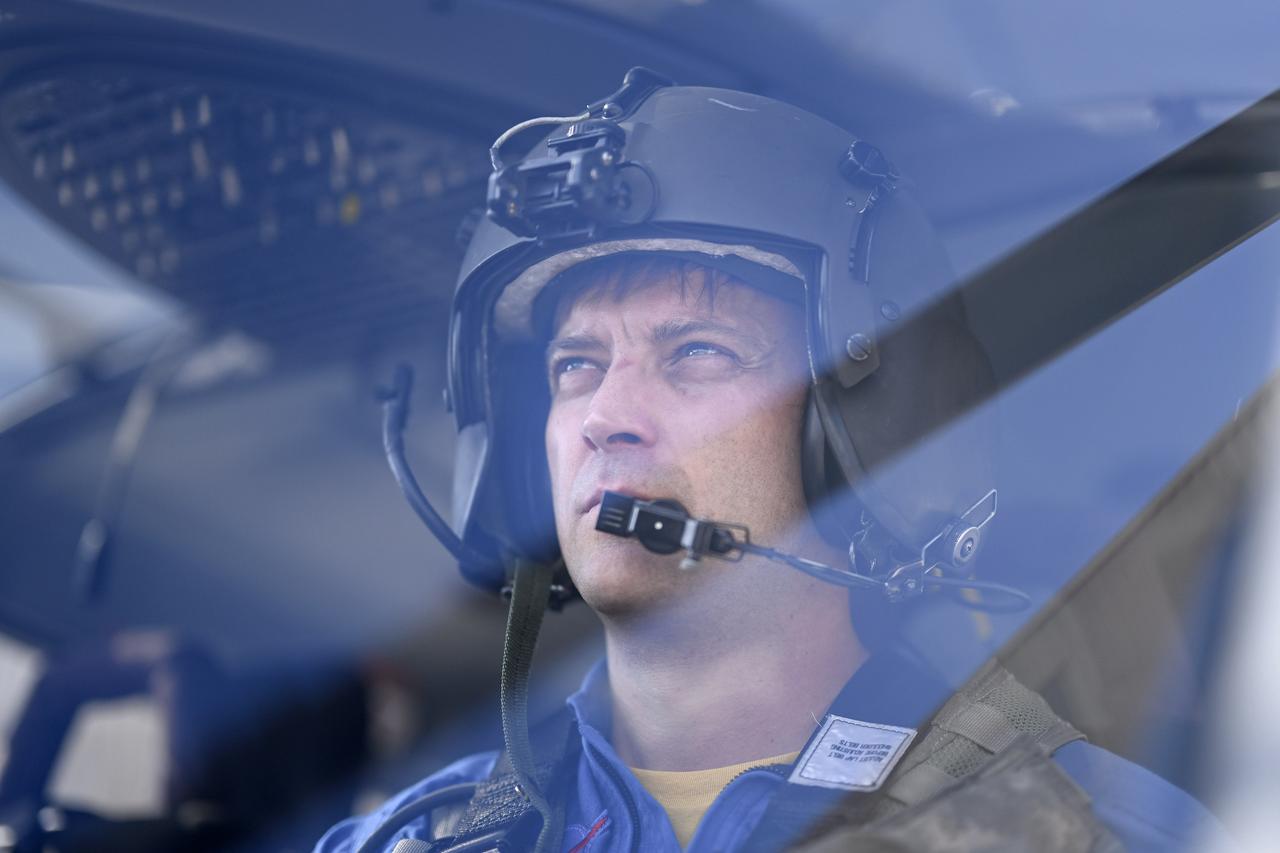
These photos and videos show how NASA certified a new lander flight training course using helicopters in the mountains of northern Colorado. NASA is partnering with the Colorado Army National Guard at its High-Altitude Army National Guard Aviation Training Site near Gypsum, Colorado, to develop the foundational flight training course that will help astronauts practice flight and landing procedures for the Moon. The certification marks an important milestone in crew training for Artemis missions to the Moon, when astronauts will use a commercial human landing system to land on the lunar surface. During the two-week certification run in late August 2025, NASA astronauts Matthew Dominick and Mark Vande Hei participated in flight and landing training to help certify the course. The pair, along with trained instructor pilots with the Army National Guard, took turns flying a helicopter and navigating to landing zones. Artemis flight crew trainers, mission control leads, and lunar lander operational experts from NASA Johnson joined them on each helicopter flight to assess the instruction, training environment, and technical applications for crewed lunar missions. For more information, contact NASA Marshall’s Office of Communications at 256-544
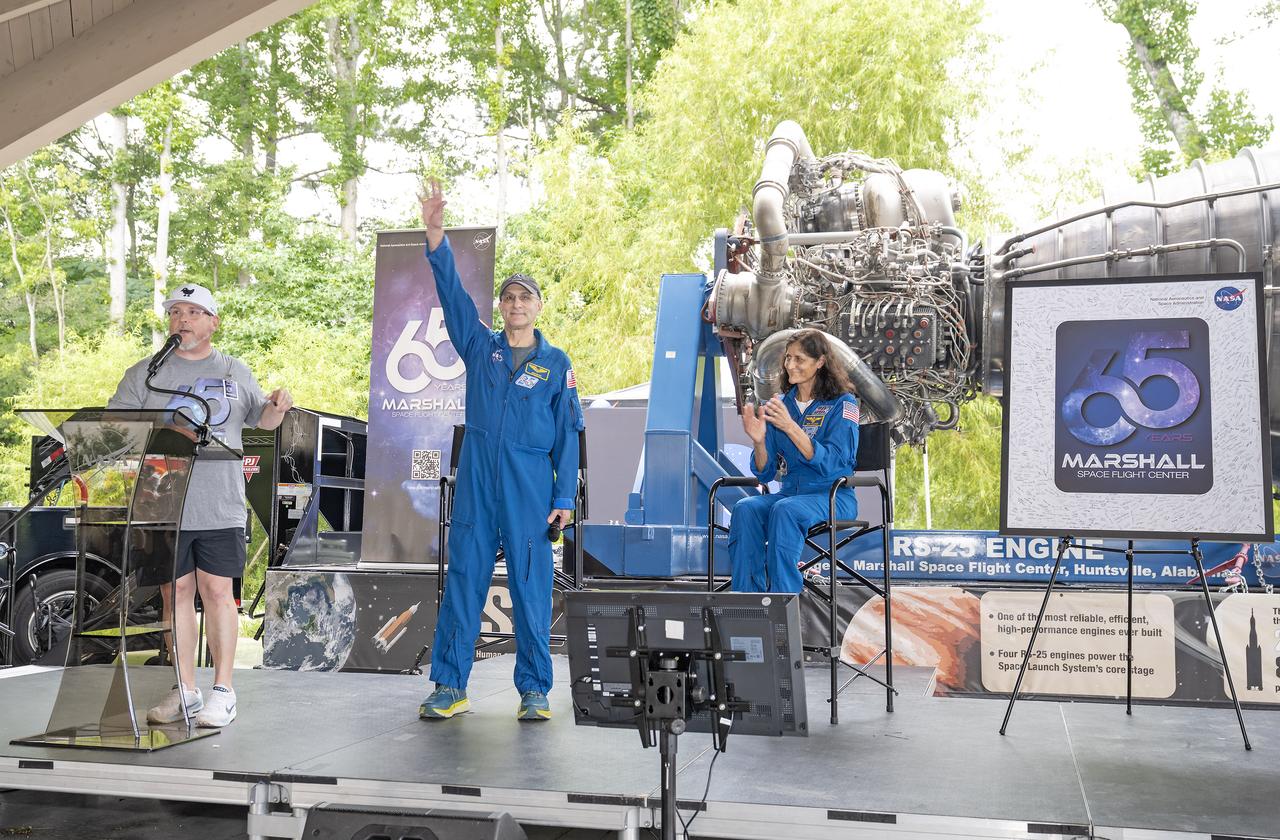
NASA’s Marshall Space Flight Center celebrated the 65th anniversary of its founding on July 19, 2025, with a free, public celebration at The Orion Amphitheater in Huntsville, Alabama. Thousands of team members, families, and “Rocket City” residents took part, enjoying live music, games, food, and exhibits commemorating Marshall’s legacy of ingenuity and service to the U.S. space program. During a program for the celebration, guests heard remarks from Joseph Pelfrey, director of NASA Marshall, Huntsville Mayor Tommy Battle, and Kamerra Liles, assistant general manager of The Orion Amphitheater, followed by Pelfrey sharing a new video overview about Marshall. The program continued with a video presentation from NASA astronauts from the Expedition 72 crew – which contributed more than 1,000 total hours of scientific studies on plant growth, stem cell growth for treating diseases, the resilience of microorganisms to the harsh space environment, and more on the International Space Station. NASA astronauts Suni Williams and Don Pettit, who served as space station commander and flight engineer, respectively, shared their experiences in space with the community and told the audience how vital Marshall’s on the ground support was to their mission success. Marshall has shaped and expanded human space exploration every decade since the NASA center opened its doors on July 1, 1960. The center’s civil service and contract workers built the nation’s flagship rockets, from the Saturn V to the SLS (Space Launch System), managed the space shuttle propulsion program, delivered the Chandra X-ray Observatory and critical elements of the International Space Station to orbit, and continue to spearhead numerous advances in science and engineering.
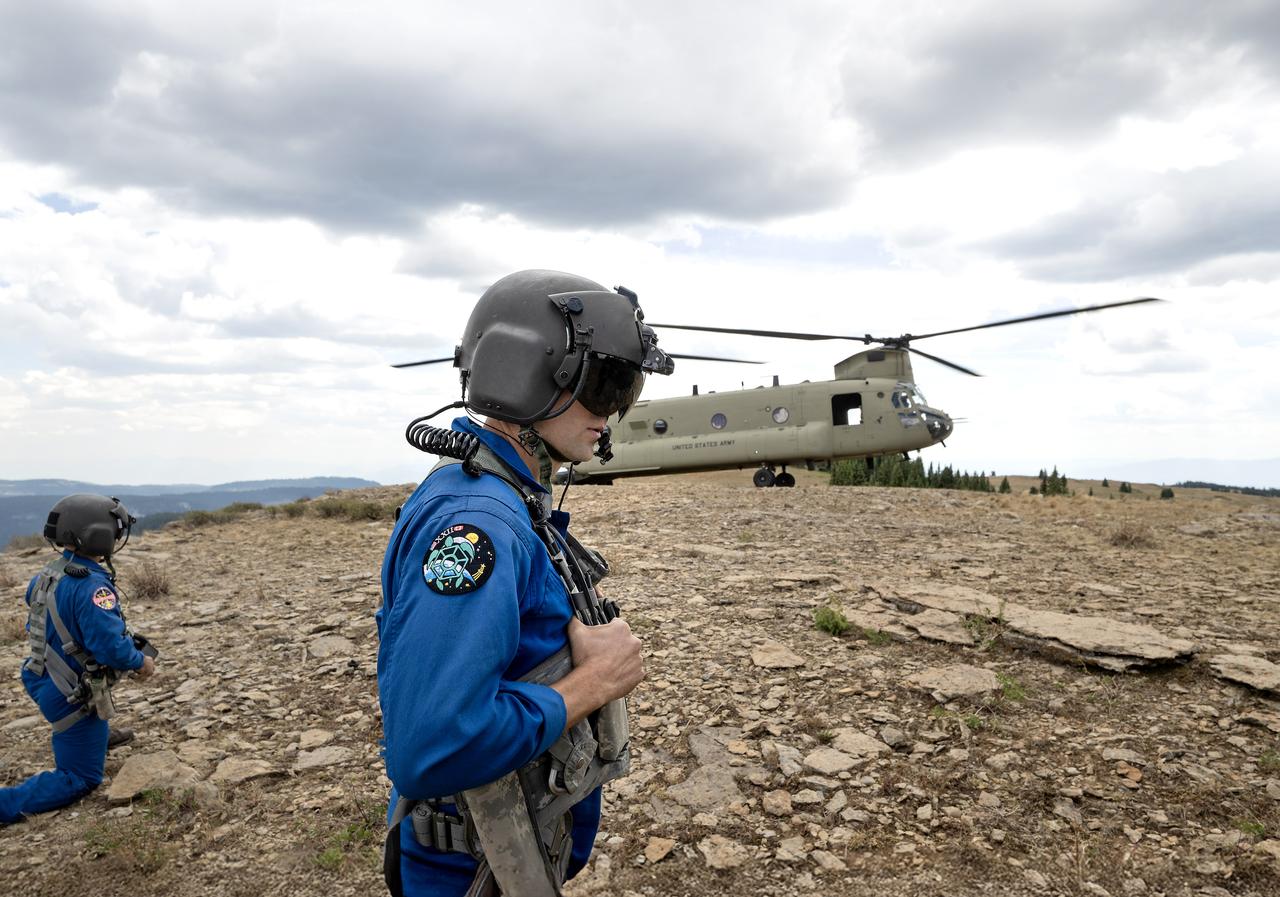
These photos and videos show how NASA certified a new lander flight training course using helicopters in the mountains of northern Colorado. NASA is partnering with the Colorado Army National Guard at its High-Altitude Army National Guard Aviation Training Site near Gypsum, Colorado, to develop the foundational flight training course that will help astronauts practice flight and landing procedures for the Moon. The certification marks an important milestone in crew training for Artemis missions to the Moon, when astronauts will use a commercial human landing system to land on the lunar surface. During the two-week certification run in late August 2025, NASA astronauts Matthew Dominick and Mark Vande Hei participated in flight and landing training to help certify the course. The pair, along with trained instructor pilots with the Army National Guard, took turns flying a helicopter and navigating to landing zones. Artemis flight crew trainers, mission control leads, and lunar lander operational experts from NASA Johnson joined them on each helicopter flight to assess the instruction, training environment, and technical applications for crewed lunar missions. For more information, contact NASA Marshall’s Office of Communications at 256-544
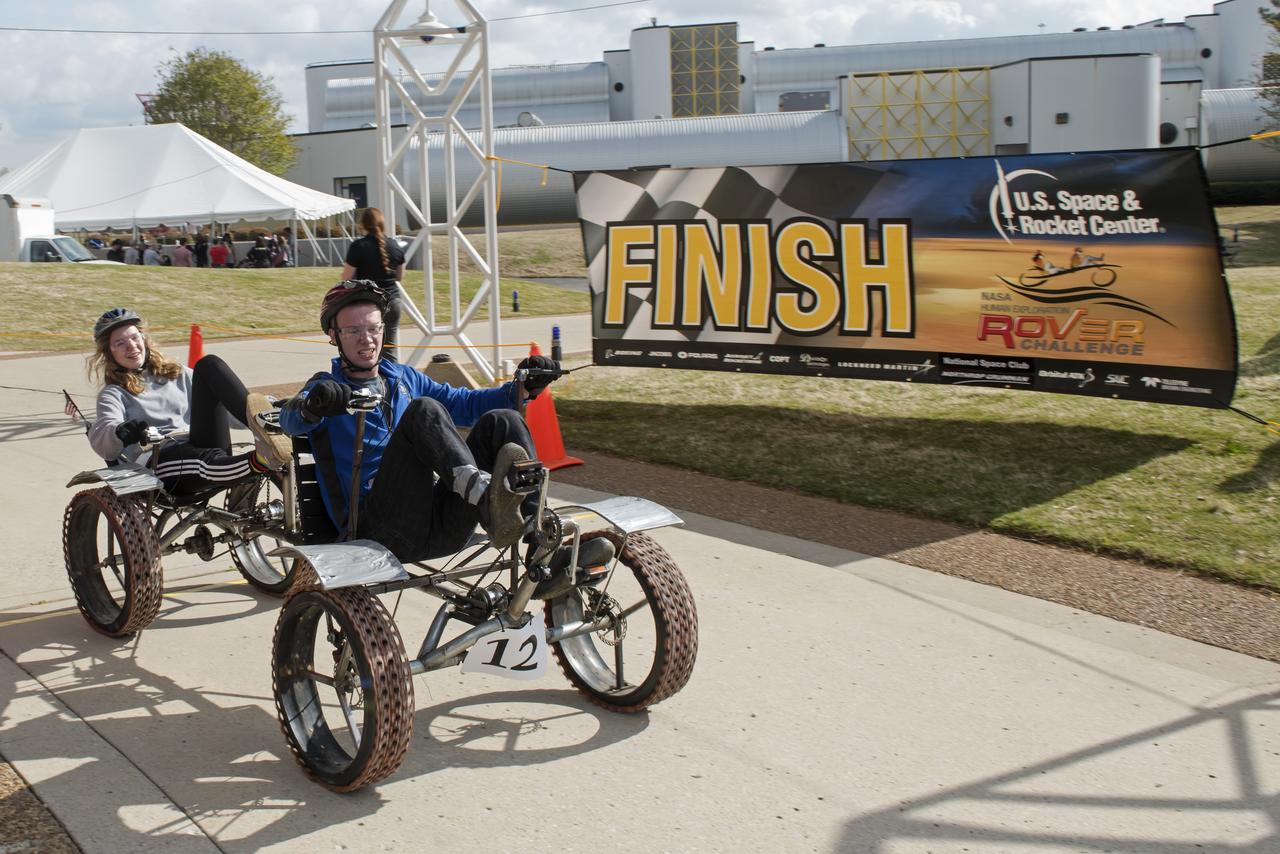
High school and university students competed in the 2018 Human Exploration Rover Challenge event at the U.S. Space and Rocket Center in Huntsville, Alabama. Students came from across the U.S. as well as several foreign countries such as Brazil, Germany, India, and Mexico. This event, which is normally a 2 day event, was shortened to 1 day in 2018 due to adverse weather conditions.
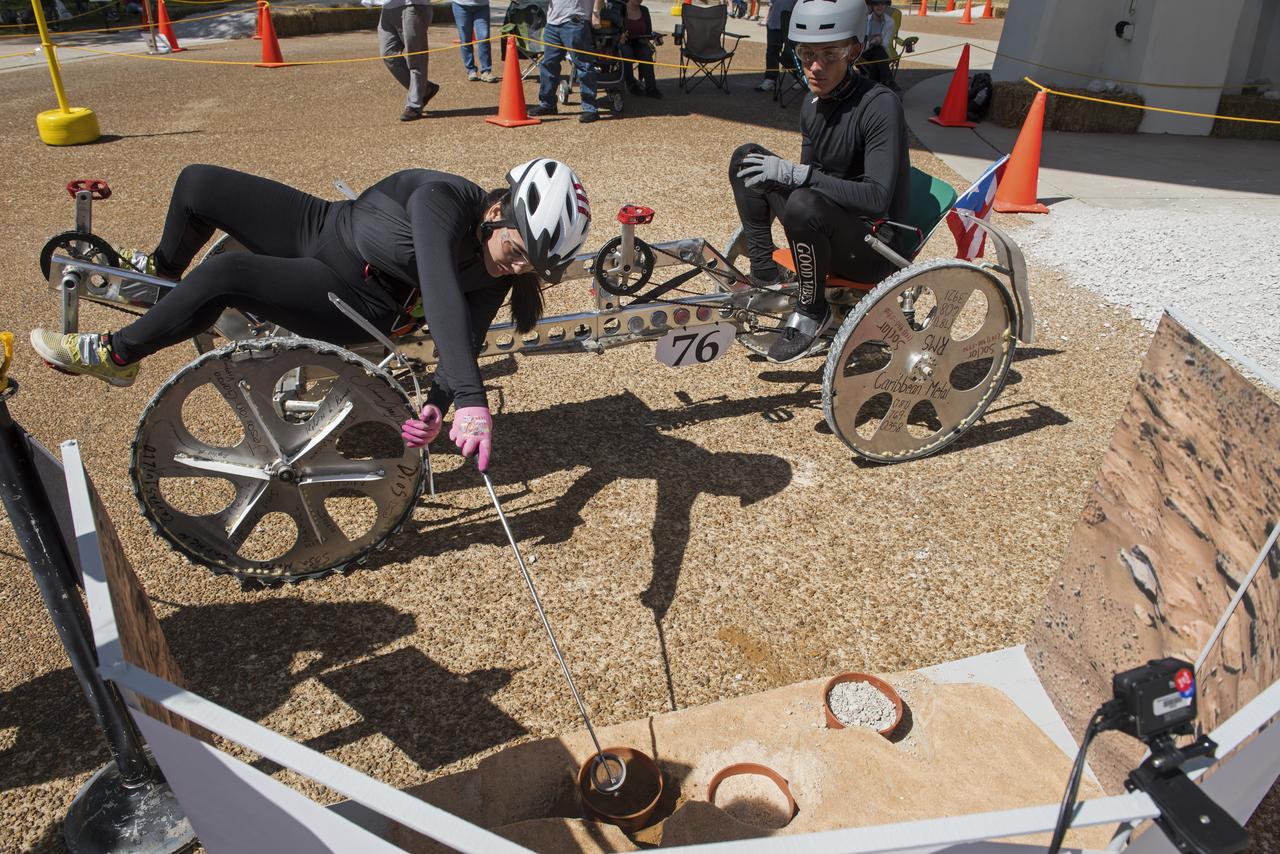
High school and university students competed in the 2018 Human Exploration Rover Challenge event at the U.S. Space and Rocket Center in Huntsville, Alabama. Students came from across the U.S. as well as several foreign countries such as Brazil, Germany, India, and Mexico. This event, which is normally a 2 day event, was shortened to 1 day in 2018 due to adverse weather conditions.
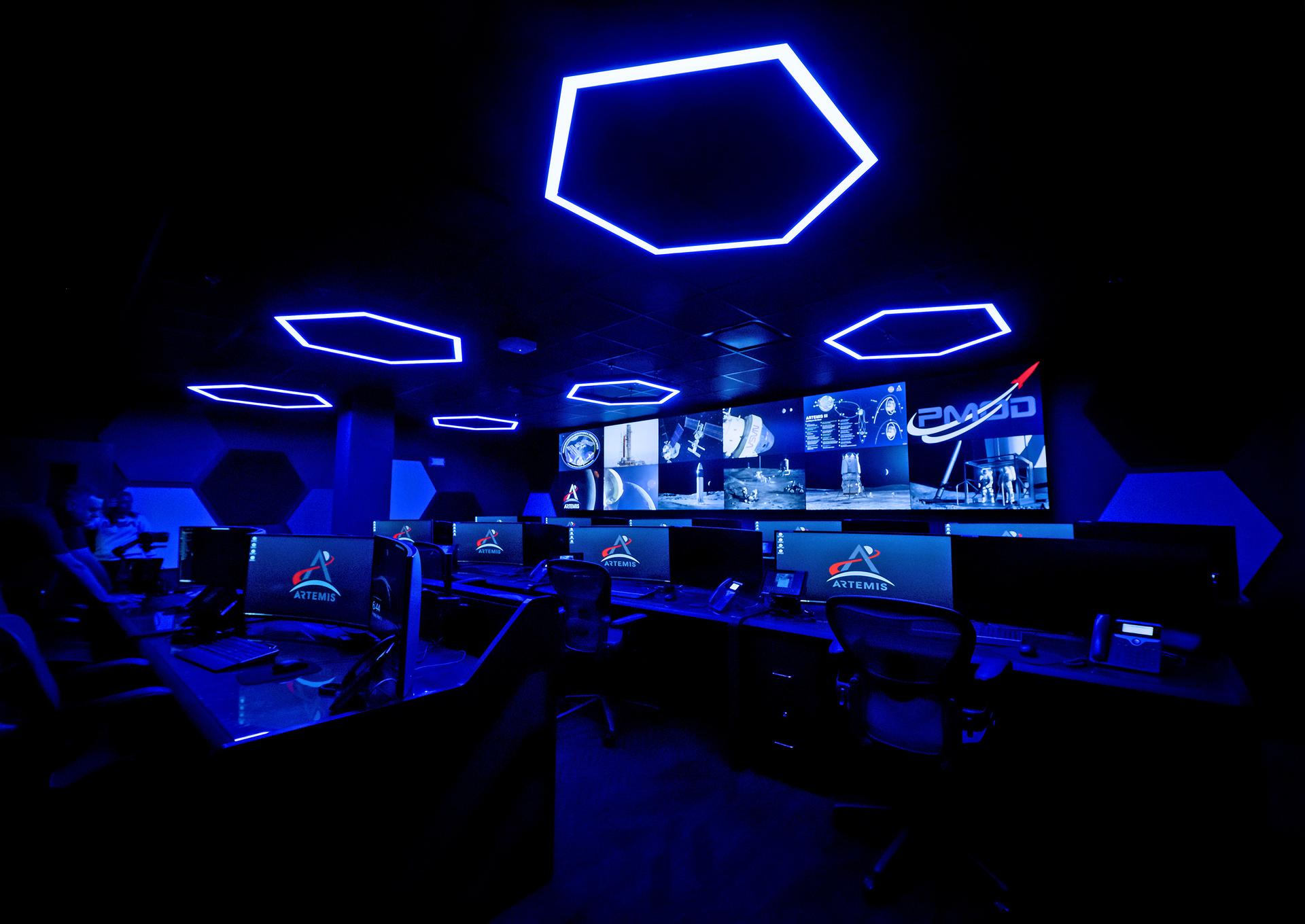
These photos offer a look inside the twin control rooms at NASA’s Marshall Space Flight Center in Huntsville, Alabama, where engineers will monitor Artemis science and future landing operations for Artemis. The LUCA (Lunar Utilization Control Area) and LESA (Lander Engineering Support Area) rooms are part of the Huntsville Operations Support Center at NASA Marshall. The LUCA is specially designed to support a wide variety of science operations on and around the Moon – and beyond. Engineers in the LUCA monitored operations for the Lunar Node-1 experiment, an autonomous navigation payload that was part of the first NASA Commercial Lunar Payload Services (CLPS) launch on Intuitive Machines’ Nova-C lunar lander in 2024. NASA Marshall flight controllers will use the LUCA again for Artemis II to monitor science operations. Beginning with Artemis III, members of the NASA Human Landing System Mission Insight Support Team – a group of engineers, safety leads, flight operations experts, and technical authorities – will work in the LESA. There, they will monitor lander systems in real-time and be involved in key decision-making processes throughout the mission. For more information, contact NASA Marshall’s Office of Communications at 256-544-0034.
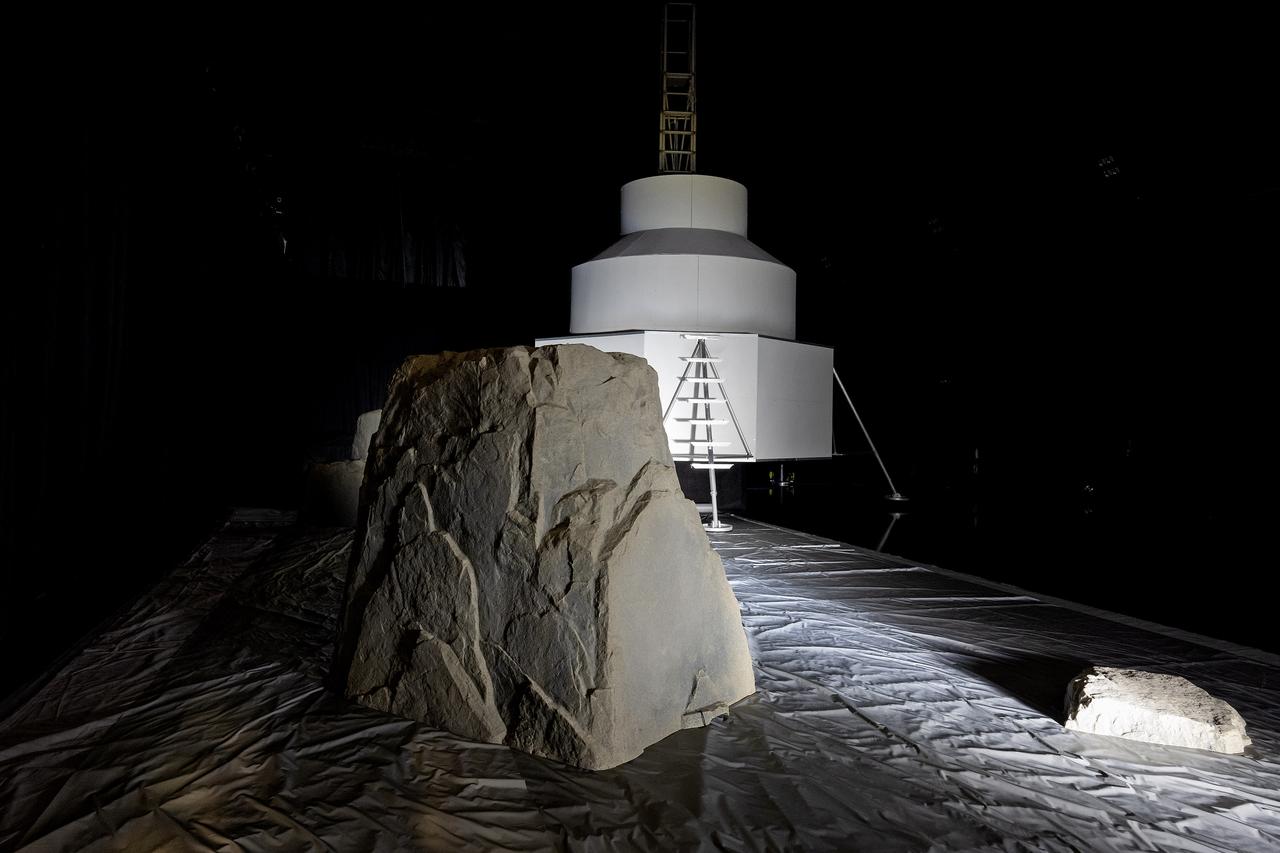
These photos show how teams at NASA’s Marshall Space Flight Center in Huntsville, Alabama, are using the Flat Floor Facility (Building 4619) to understand the lunar lighting environment in preparation for the Artemis III crewed lunar landing mission, slated for 2027. The Flat Floor Facility is an air-bearing floor, providing full-scale simulation capabilities for lunar surface systems by simulating zero gravity in two dimensions. Wearing low-fidelity materials, test engineers can understand how the extreme lighting of the Moon’s South Pole could affect surface operations during Artemis III. High-intensity lights are positioned at a low angle to replicate the strong shadows that are cast across the lunar South Pole by the Sun. Data and analysis from testing at NASA Marshall are improving models Artemis astronauts will use in preparation for lander and surface operations on the Moon during Artemis III. Testing in the facility is also helping cross-agency teams evaluate various tools astronauts may use. NASA Marshall manages the Human Landing System (HLS) Program. For more information, contact NASA Marshall’s Office of Communications at 256-544-0034.

These photos offer a look inside the twin control rooms at NASA’s Marshall Space Flight Center in Huntsville, Alabama, where engineers will monitor Artemis science and future landing operations for Artemis. The LUCA (Lunar Utilization Control Area) and LESA (Lander Engineering Support Area) rooms are part of the Huntsville Operations Support Center at NASA Marshall. The LUCA is specially designed to support a wide variety of science operations on and around the Moon – and beyond. Engineers in the LUCA monitored operations for the Lunar Node-1 experiment, an autonomous navigation payload that was part of the first NASA Commercial Lunar Payload Services (CLPS) launch on Intuitive Machines’ Nova-C lunar lander in 2024. NASA Marshall flight controllers will use the LUCA again for Artemis II to monitor science operations. Beginning with Artemis III, members of the NASA Human Landing System Mission Insight Support Team – a group of engineers, safety leads, flight operations experts, and technical authorities – will work in the LESA. There, they will monitor lander systems in real-time and be involved in key decision-making processes throughout the mission. For more information, contact NASA Marshall’s Office of Communications at 256-544-0034.
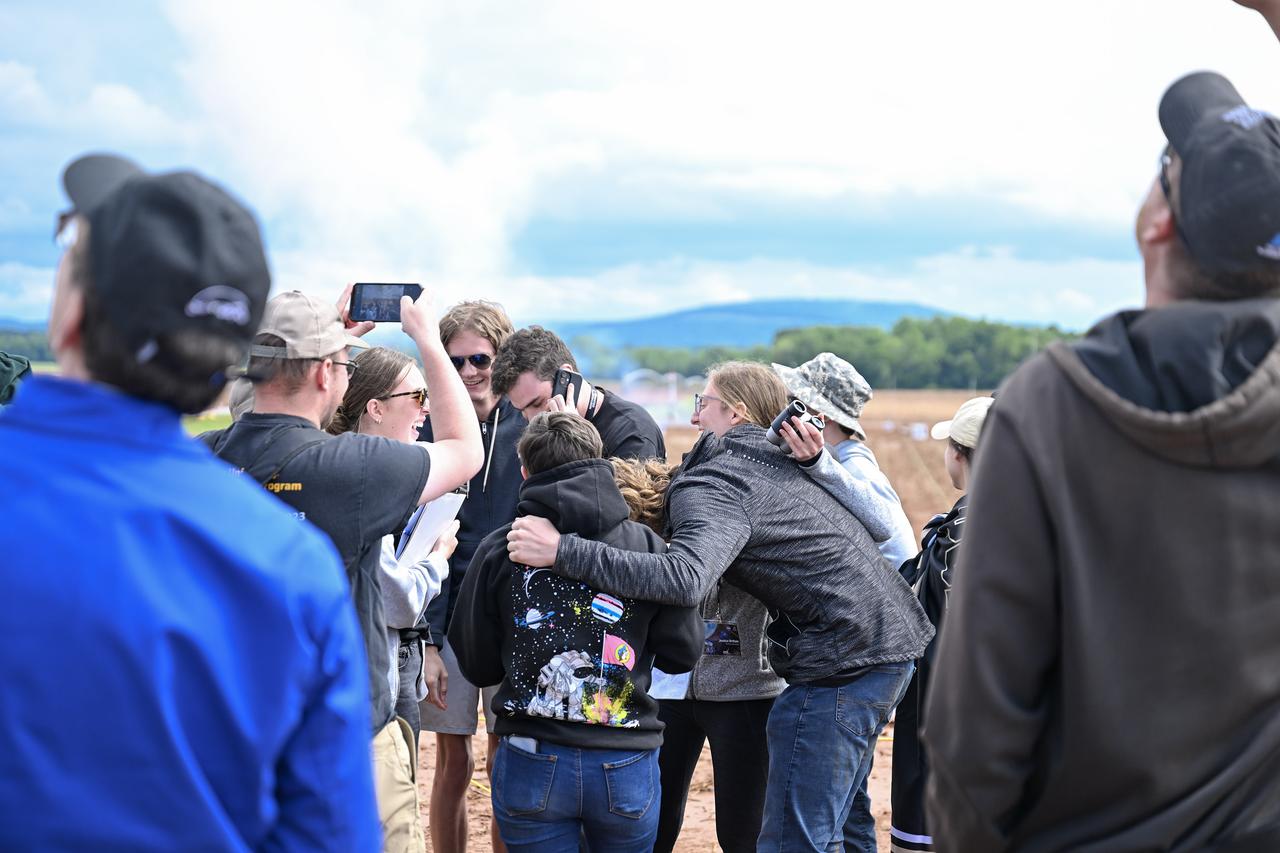
Over than 980 middle school, high school, and college students from across the nation launched more than 40 high-powered rockets just north of NASA’s Marshall Space Flight Center in Huntsville, Alabama. This year marked the 25th anniversary of the competition. To compete, students follow the NASA engineering design lifecycle by going through a series of reviews for nine months leading up to launch day. Each year, a payload challenge is issued to the university teams, and this year’s task took inspiration from the agency’s Artemis missions, where NASA will send astronauts to explore the Moon for scientific discovery, economic benefit, and to build the foundation for the first crewed missions to Mars. Teams were challenged to include “reports” from STEMnauts, non-living objects representing astronauts. The STEMnaut “crew” had to relay real-time data to the student team’s mission control, just as the Artemis astronaut crew will do as they explore the lunar surface. To learn more, visit: www.nasa.gov/studentlaunch.
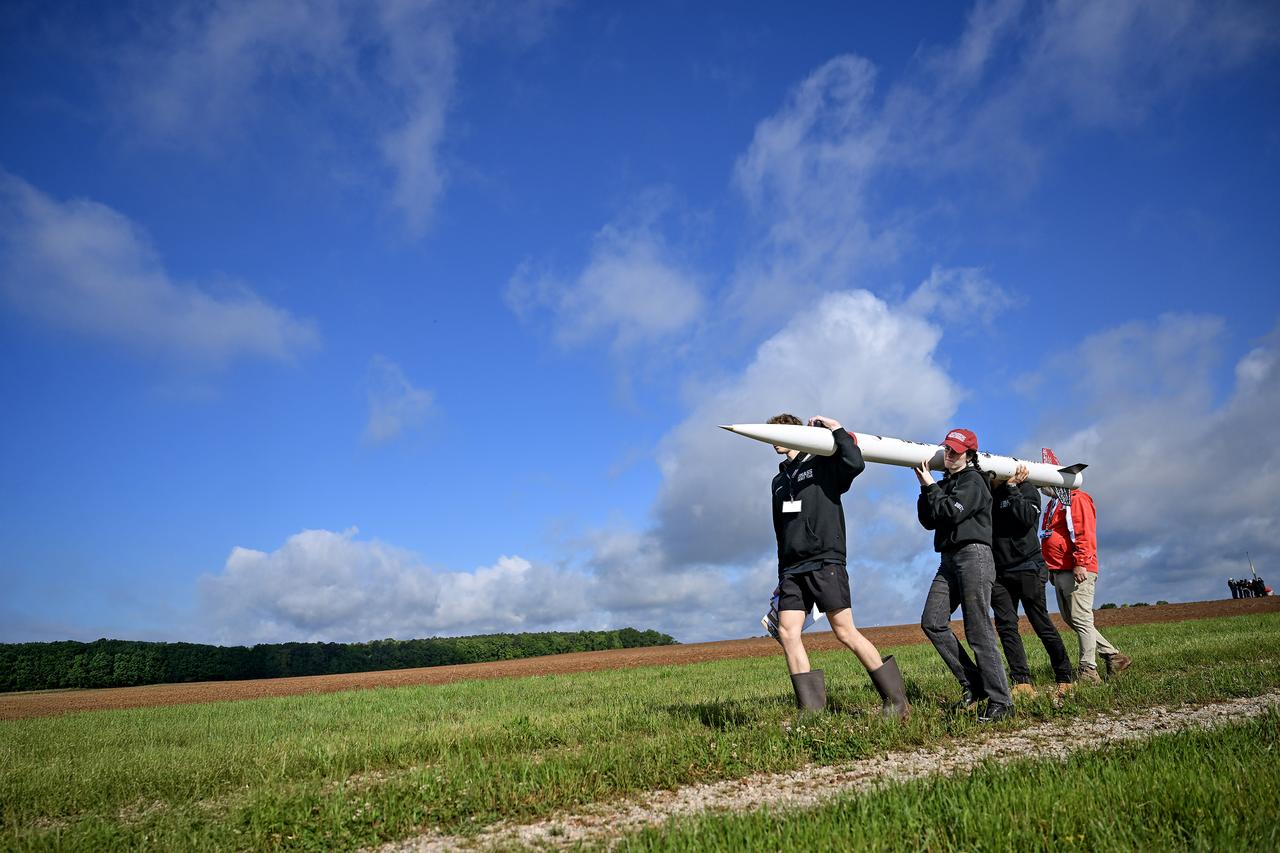
Students from the University of Massachusetts Amherst team carry their high-powered rocket toward the launch pad at NASA’s 2025 Student Launch launch day competition in Toney, Alabama, on May 4, 2025. More than 980 middle school, high school, and college students from across the nation launched more than 40 high-powered amateur rockets just north of NASA’s Marshall Space Flight Center in Huntsville, Alabama. This year marked the 25th anniversary of the competition. To compete, students follow the NASA engineering design lifecycle by going through a series of reviews for nine months leading up to launch day. Each year, a payload challenge is issued to the university teams, and this year’s task focused on communication. Teams were required to have “reports” from STEMnauts, non-living objects inside their rocket, that had to relay real-time data to the student team’s mission control. This Artemis Student Challenge took inspiration from the agency’s Artemis missions, where NASA will send astronauts to explore the Moon for scientific discovery, economic benefit, and to build the foundation for the first crewed missions to Mars. To learn more, visit: www.nasa.gov/studentlaunch.
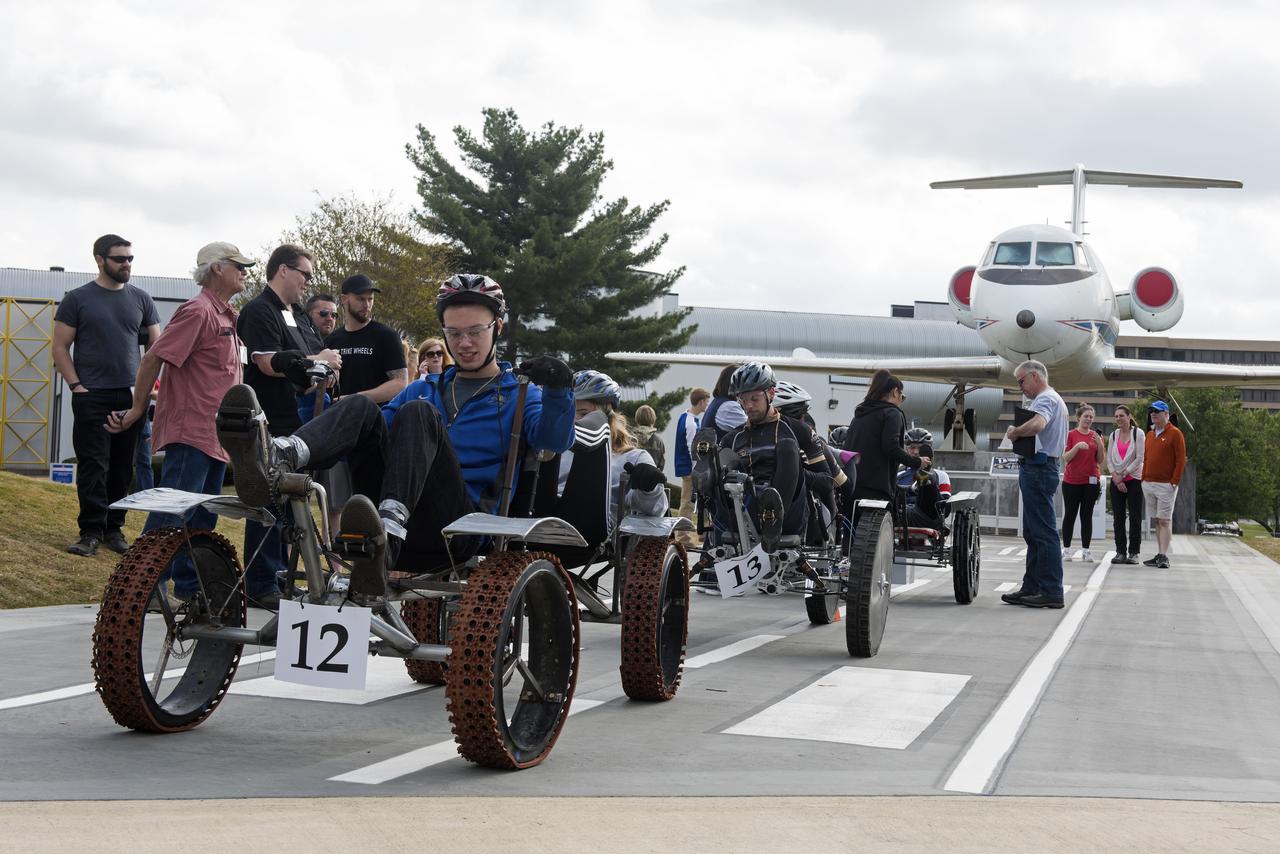
High school and university students competed in the 2018 Human Exploration Rover Challenge event at the U.S. Space and Rocket Center in Huntsville, Alabama. Students came from across the U.S. as well as several foreign countries such as Brazil, Germany, India, and Mexico. This event, which is normally a 2 day event, was shortened to 1 day in 2018 due to adverse weather conditions.
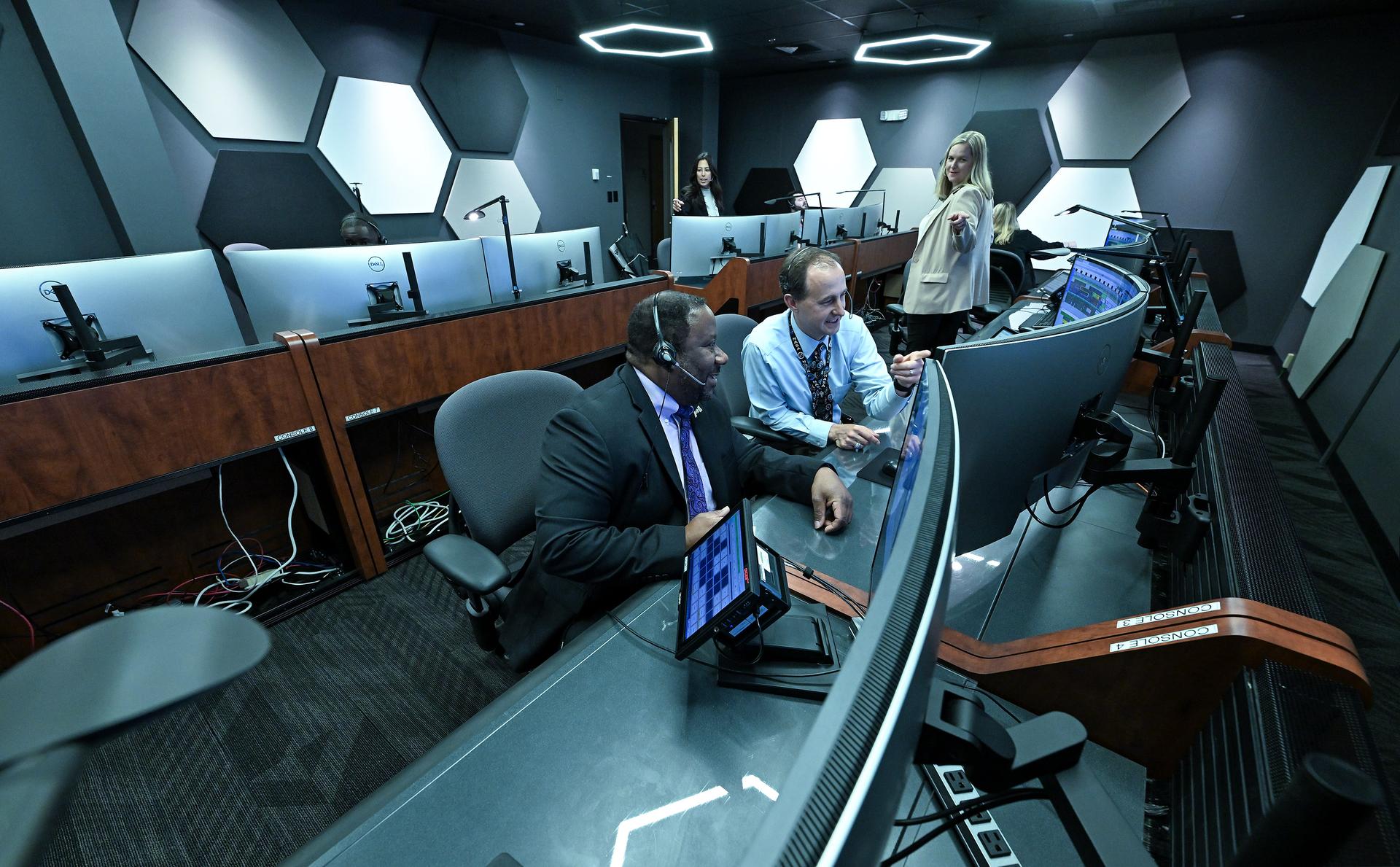
These photos offer a look inside the twin control rooms at NASA’s Marshall Space Flight Center in Huntsville, Alabama, where engineers will monitor Artemis science and future landing operations for Artemis. The LUCA (Lunar Utilization Control Area) and LESA (Lander Engineering Support Area) rooms are part of the Huntsville Operations Support Center at NASA Marshall. The LUCA is specially designed to support a wide variety of science operations on and around the Moon – and beyond. Engineers in the LUCA monitored operations for the Lunar Node-1 experiment, an autonomous navigation payload that was part of the first NASA Commercial Lunar Payload Services (CLPS) launch on Intuitive Machines’ Nova-C lunar lander in 2024. NASA Marshall flight controllers will use the LUCA again for Artemis II to monitor science operations. Beginning with Artemis III, members of the NASA Human Landing System Mission Insight Support Team – a group of engineers, safety leads, flight operations experts, and technical authorities – will work in the LESA. There, they will monitor lander systems in real-time and be involved in key decision-making processes throughout the mission. For more information, contact NASA Marshall’s Office of Communications at 256-544-0034.
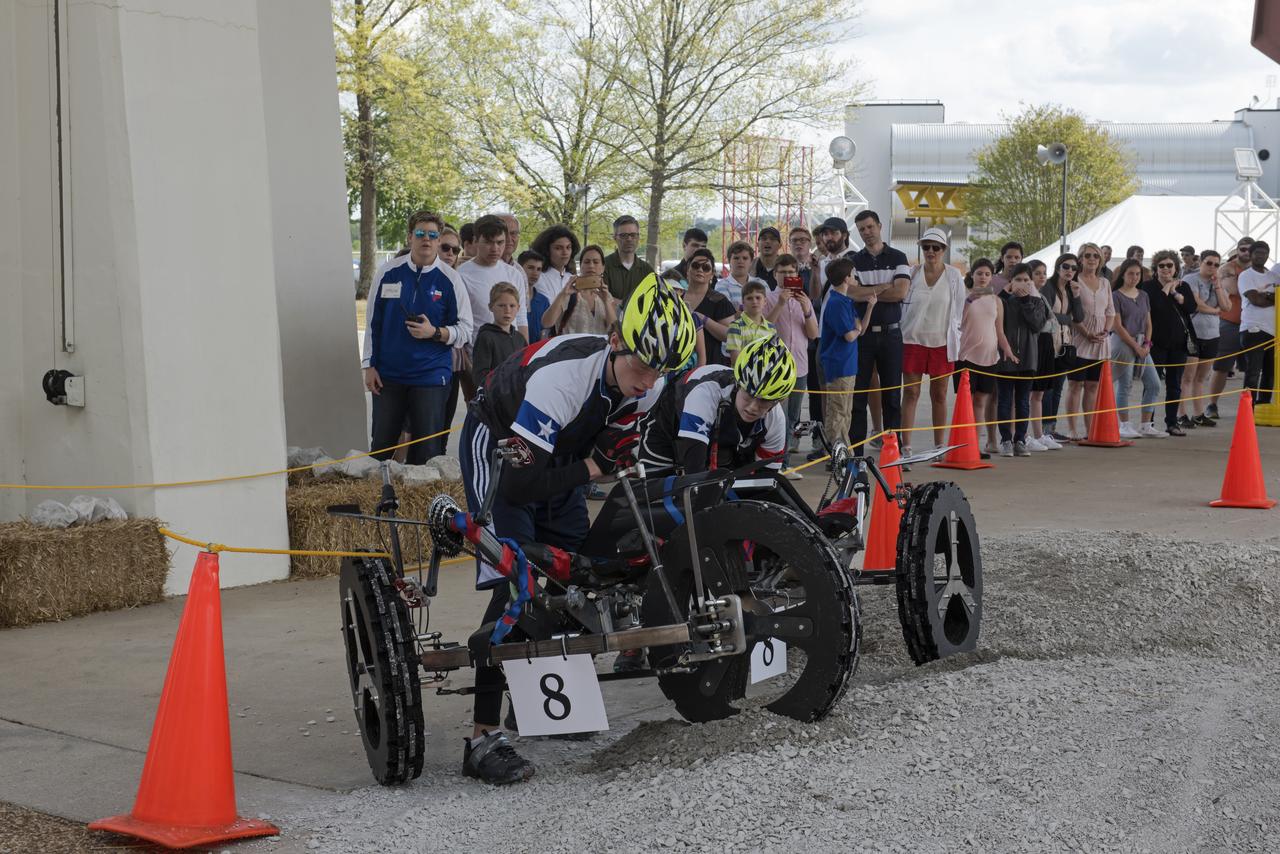
High school and university students competed in the 2018 Human Exploration Rover Challenge event at the U.S. Space and Rocket Center in Huntsville, Alabama. Students came from across the U.S. as well as several foreign countries such as Brazil, Germany, India, and Mexico. This event, which is normally a 2 day event, was shortened to 1 day in 2018 due to adverse weather conditions.
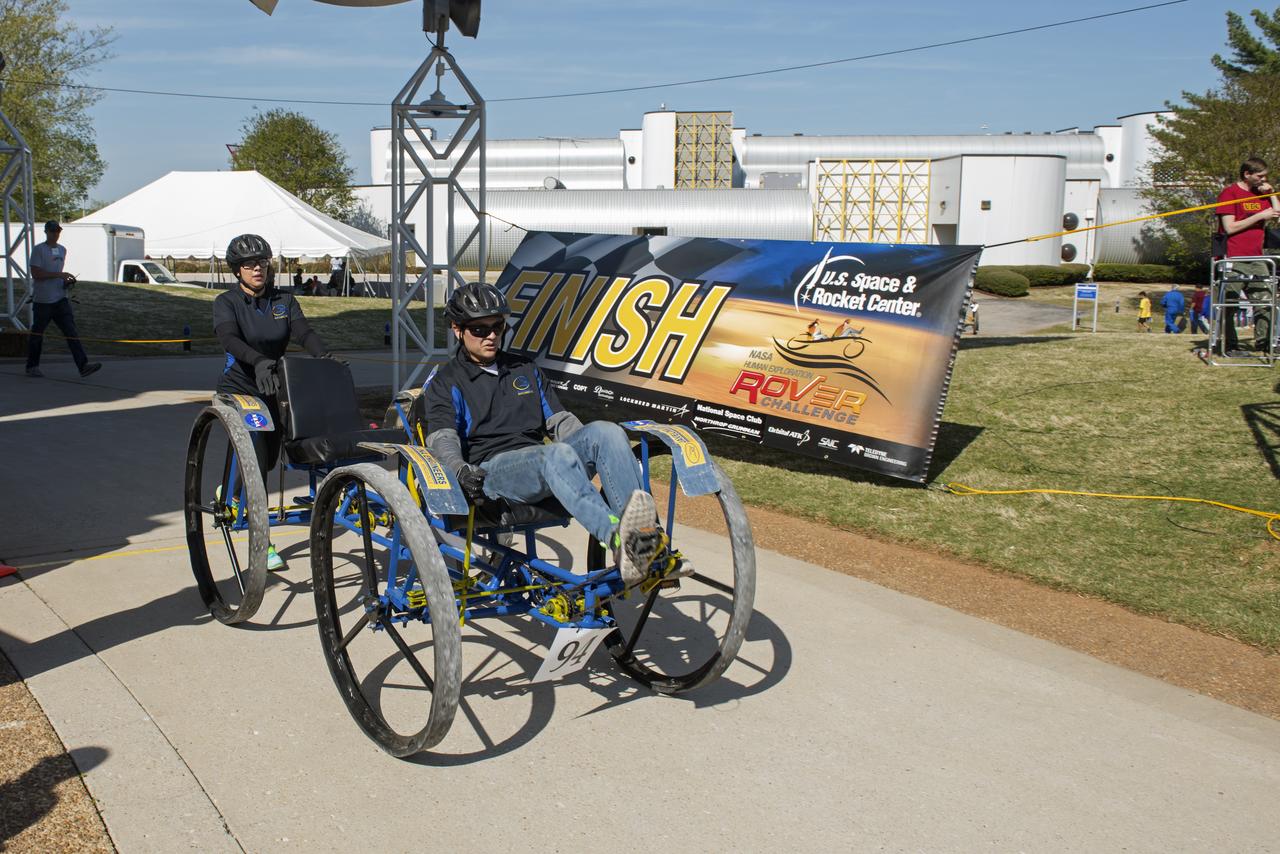
High school and university students competed in the 2018 Human Exploration Rover Challenge event at the U.S. Space and Rocket Center in Huntsville, Alabama. Students came from across the U.S. as well as several foreign countries such as Brazil, Germany, India, and Mexico. This event, which is normally a 2 day event, was shortened to 1 day in 2018 due to adverse weather conditions.
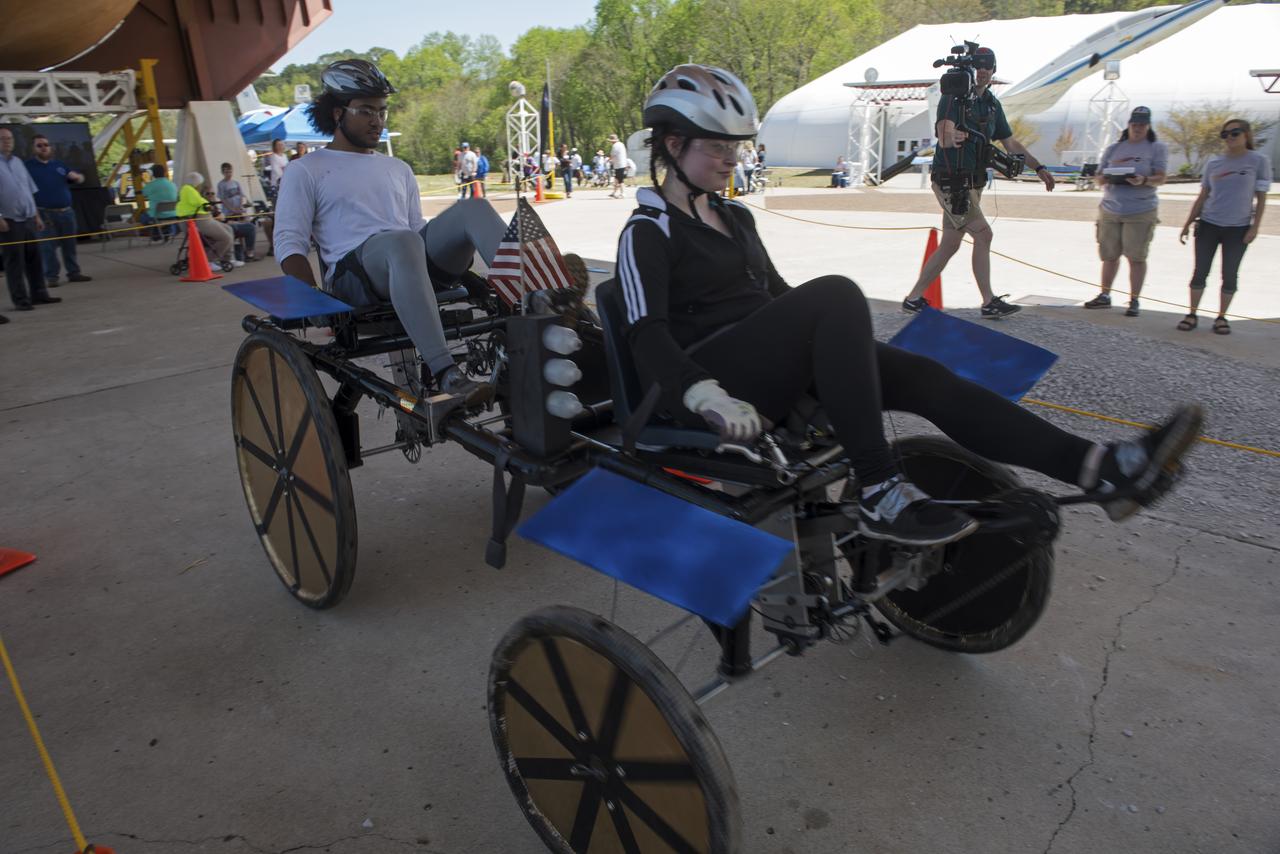
High school and university students competed in the 2018 Human Exploration Rover Challenge event at the U.S. Space and Rocket Center in Huntsville, Alabama. Students came from across the U.S. as well as several foreign countries such as Brazil, Germany, India, and Mexico. This event, which is normally a 2 day event, was shortened to 1 day in 2018 due to adverse weather conditions.
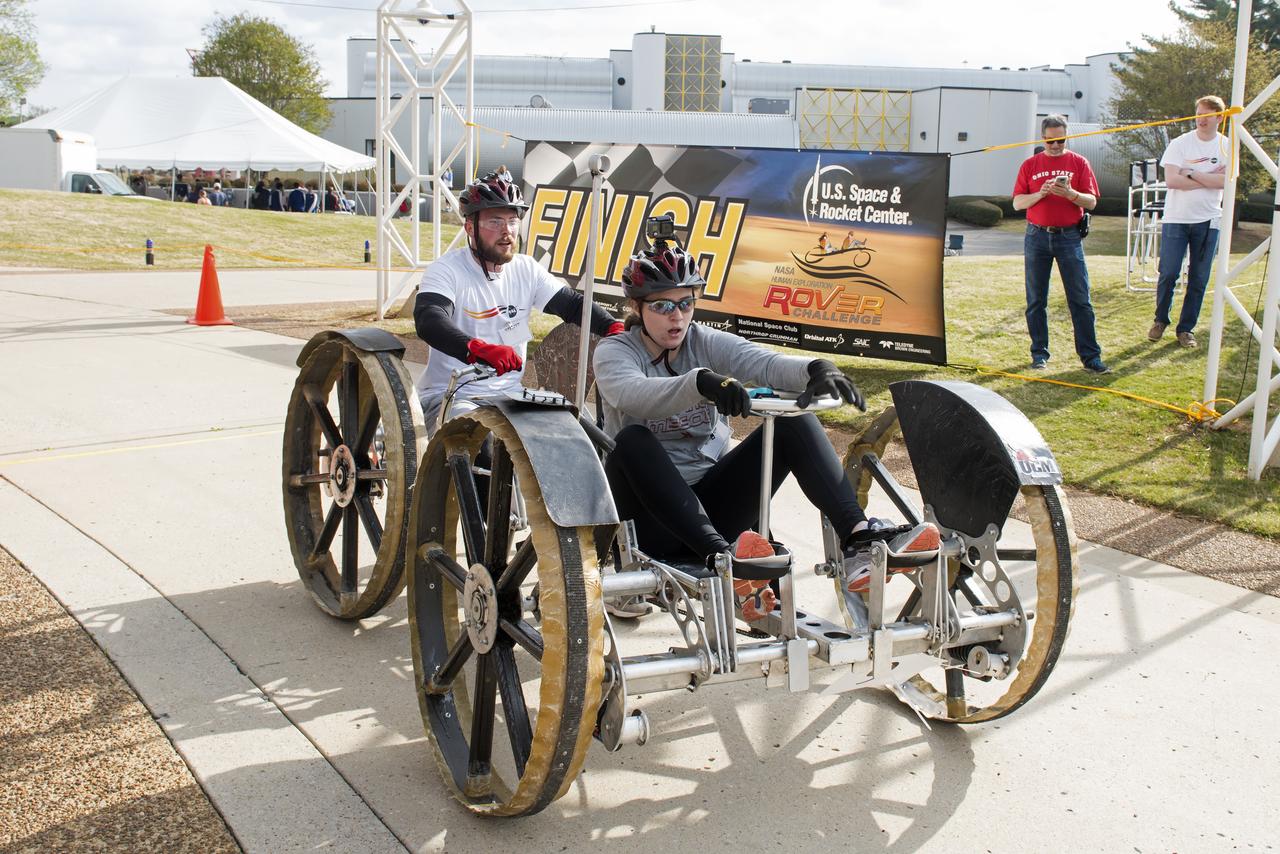
High school and university students competed in the 2018 Human Exploration Rover Challenge event at the U.S. Space and Rocket Center in Huntsville, Alabama. Students came from across the U.S. as well as several foreign countries such as Brazil, Germany, India, and Mexico. This event, which is normally a 2 day event, was shortened to 1 day in 2018 due to adverse weather conditions.
High school and university students competed in the 2018 Human Exploration Rover Challenge event at the U.S. Space and Rocket Center in Huntsville, Alabama. Students came from across the U.S. as well as several foreign countries such as Brazil, Germany, India, and Mexico. This event, which is normally a 2 day event, was shortened to 1 day in 2018 due to adverse weather conditions.
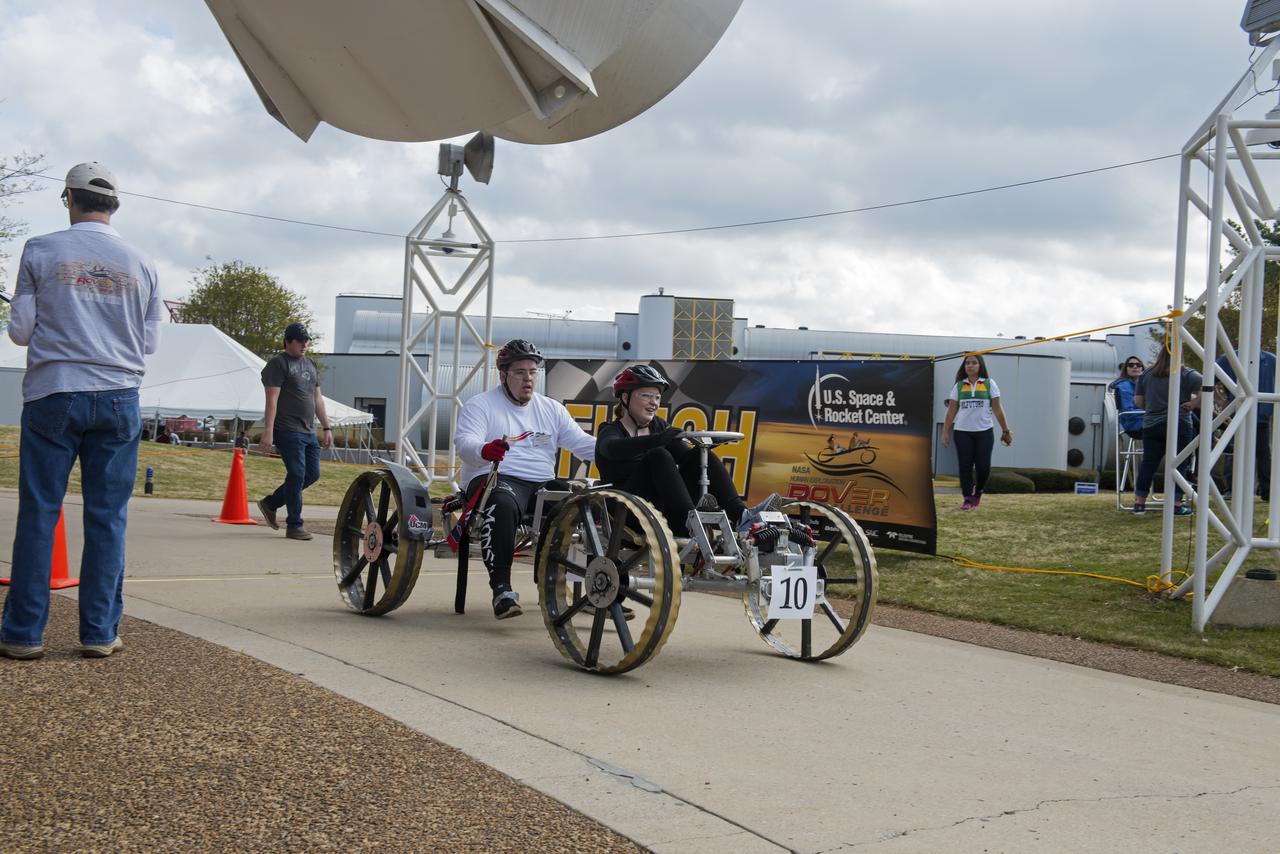
High school and university students competed in the 2018 Human Exploration Rover Challenge event at the U.S. Space and Rocket Center in Huntsville, Alabama. Students came from across the U.S. as well as several foreign countries such as Brazil, Germany, India, and Mexico. This event, which is normally a 2 day event, was shortened to 1 day in 2018 due to adverse weather conditions.
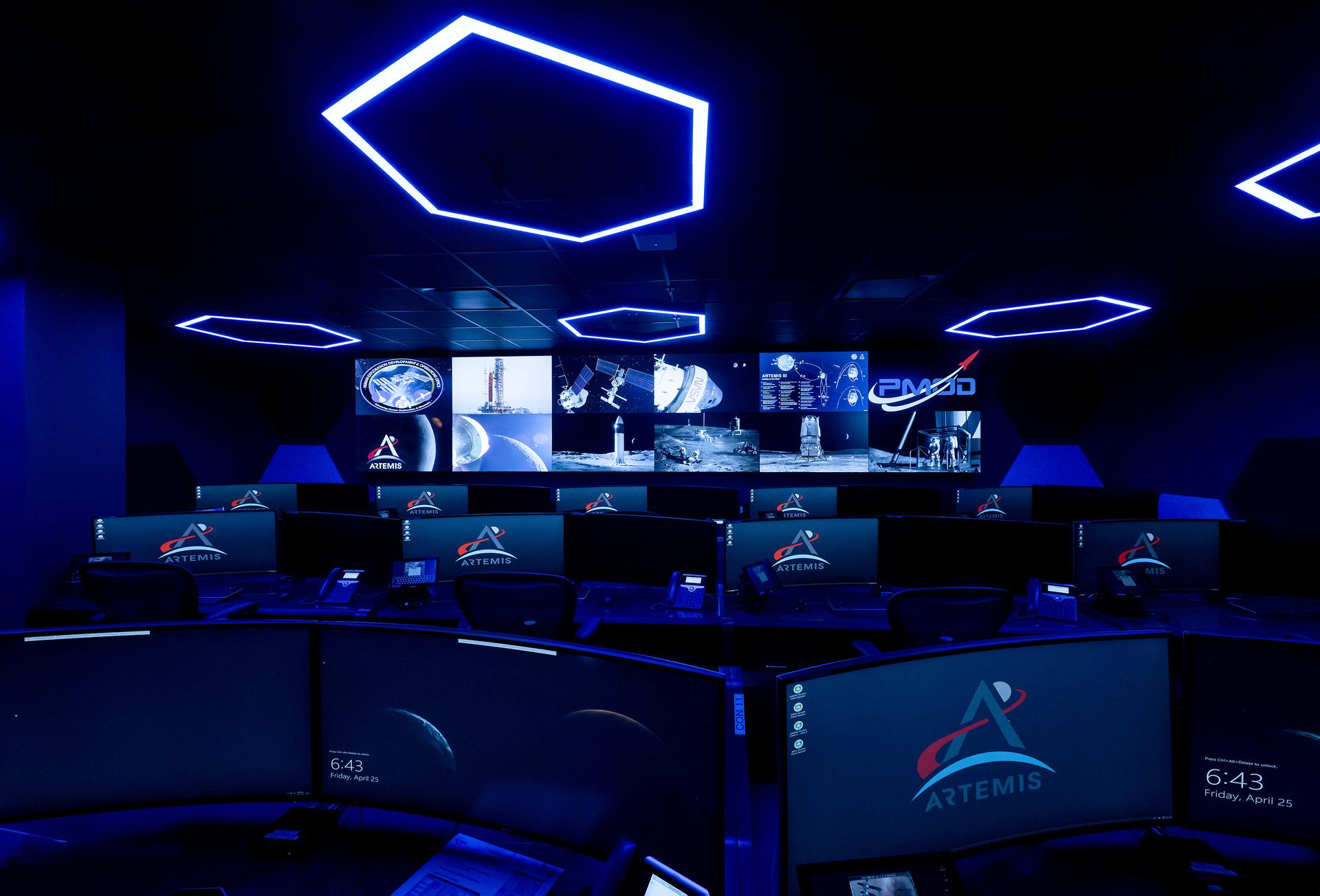
These photos offer a look inside the twin control rooms at NASA’s Marshall Space Flight Center in Huntsville, Alabama, where engineers will monitor Artemis science and future landing operations for Artemis. The LUCA (Lunar Utilization Control Area) and LESA (Lander Engineering Support Area) rooms are part of the Huntsville Operations Support Center at NASA Marshall. The LUCA is specially designed to support a wide variety of science operations on and around the Moon – and beyond. Engineers in the LUCA monitored operations for the Lunar Node-1 experiment, an autonomous navigation payload that was part of the first NASA Commercial Lunar Payload Services (CLPS) launch on Intuitive Machines’ Nova-C lunar lander in 2024. NASA Marshall flight controllers will use the LUCA again for Artemis II to monitor science operations. Beginning with Artemis III, members of the NASA Human Landing System Mission Insight Support Team – a group of engineers, safety leads, flight operations experts, and technical authorities – will work in the LESA. There, they will monitor lander systems in real-time and be involved in key decision-making processes throughout the mission. For more information, contact NASA Marshall’s Office of Communications at 256-544-0034.
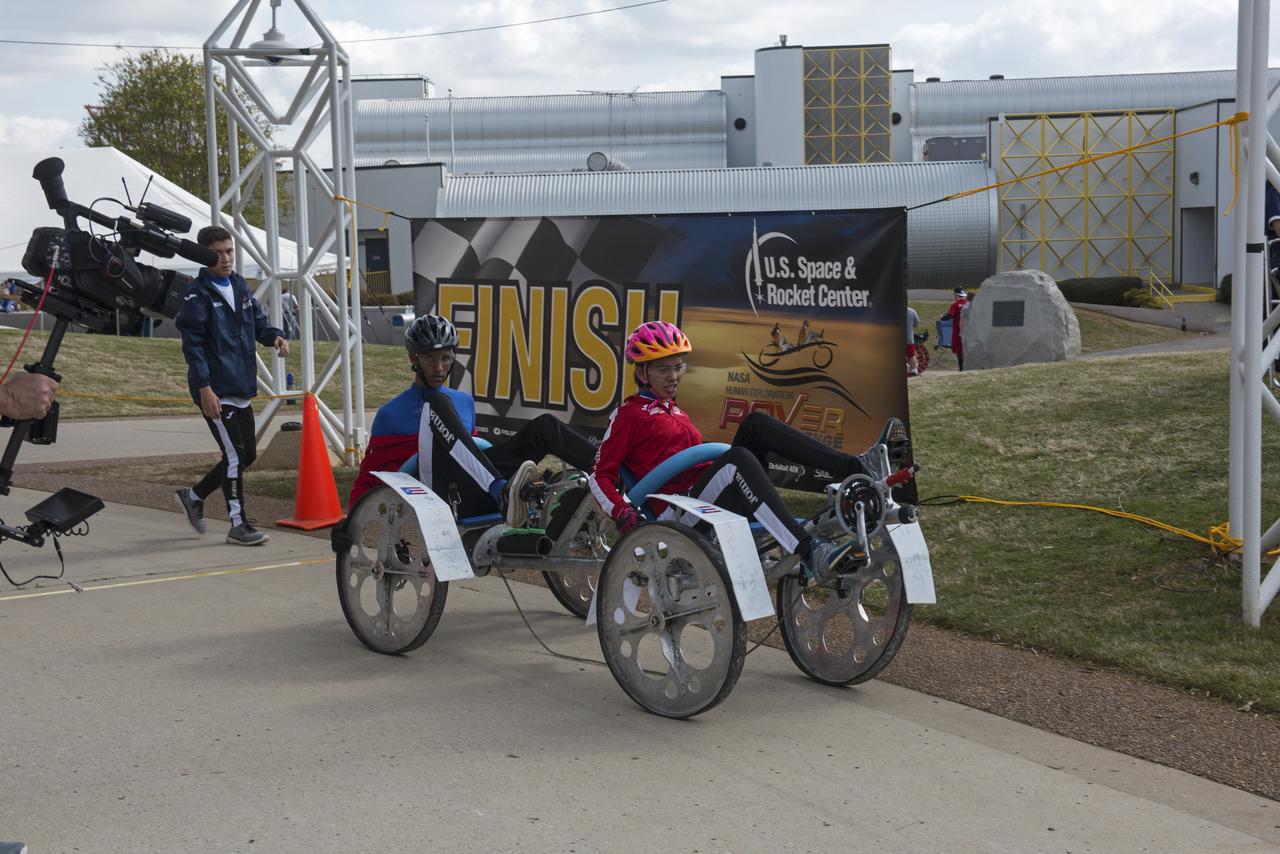
High school and university students competed in the 2018 Human Exploration Rover Challenge event at the U.S. Space and Rocket Center in Huntsville, Alabama. Students came from across the U.S. as well as several foreign countries such as Brazil, Germany, India, and Mexico. This event, which is normally a 2 day event, was shortened to 1 day in 2018 due to adverse weather conditions.
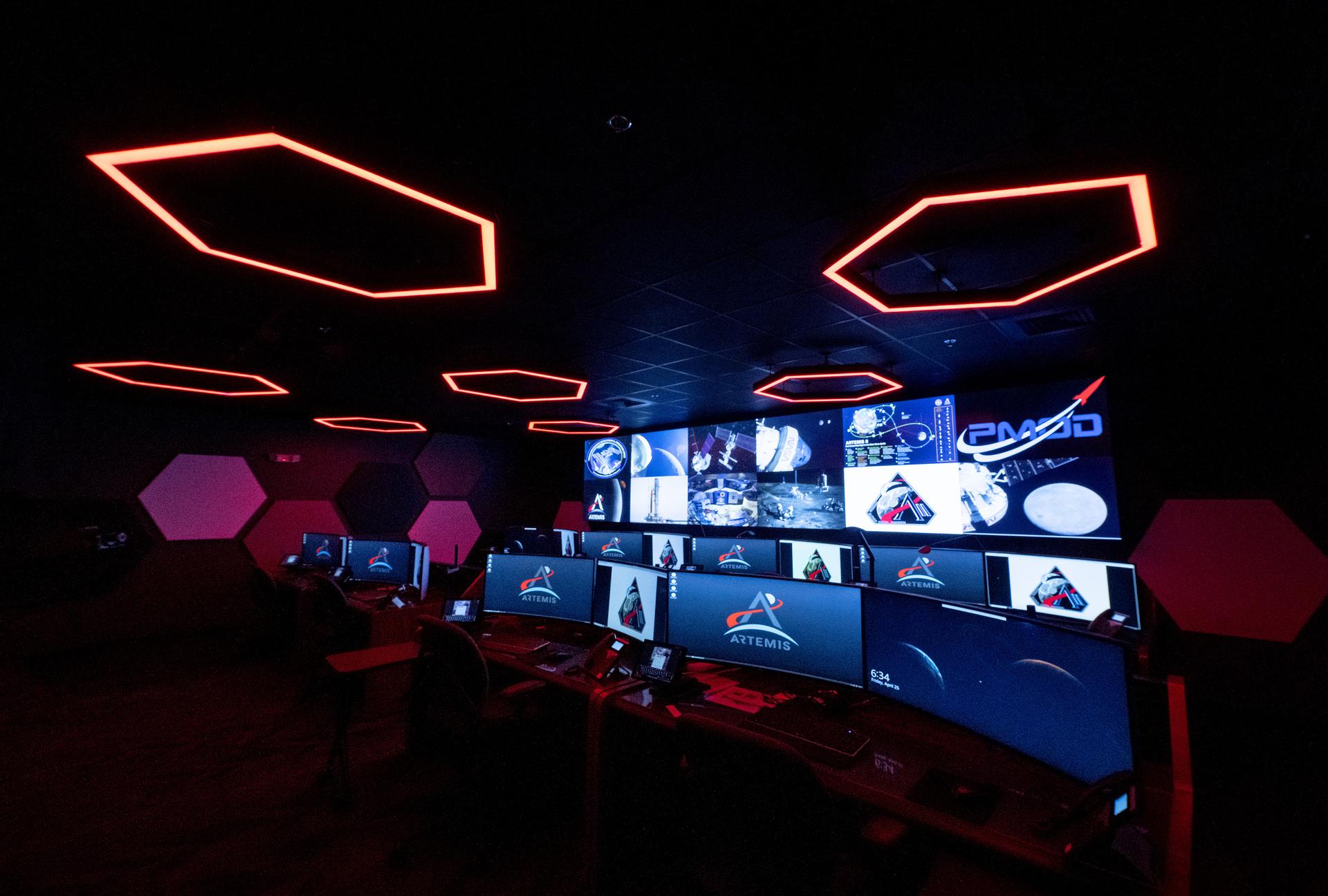
These photos offer a look inside the twin control rooms at NASA’s Marshall Space Flight Center in Huntsville, Alabama, where engineers will monitor Artemis science and future landing operations for Artemis. The LUCA (Lunar Utilization Control Area) and LESA (Lander Engineering Support Area) rooms are part of the Huntsville Operations Support Center at NASA Marshall. The LUCA is specially designed to support a wide variety of science operations on and around the Moon – and beyond. Engineers in the LUCA monitored operations for the Lunar Node-1 experiment, an autonomous navigation payload that was part of the first NASA Commercial Lunar Payload Services (CLPS) launch on Intuitive Machines’ Nova-C lunar lander in 2024. NASA Marshall flight controllers will use the LUCA again for Artemis II to monitor science operations. Beginning with Artemis III, members of the NASA Human Landing System Mission Insight Support Team – a group of engineers, safety leads, flight operations experts, and technical authorities – will work in the LESA. There, they will monitor lander systems in real-time and be involved in key decision-making processes throughout the mission. For more information, contact NASA Marshall’s Office of Communications at 256-544-0034.
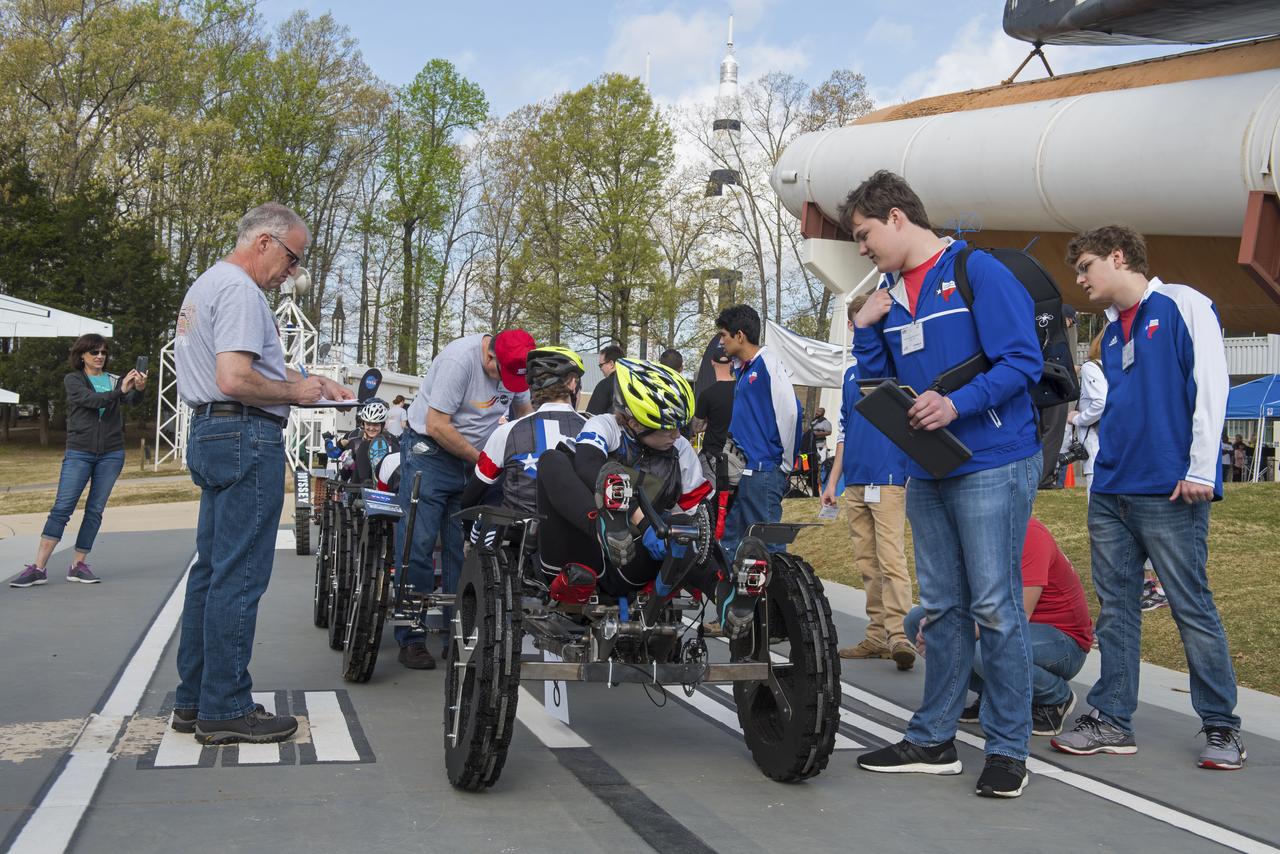
High school and university students competed in the 2018 Human Exploration Rover Challenge event at the U.S. Space and Rocket Center in Huntsville, Alabama. Students came from across the U.S. as well as several foreign countries such as Brazil, Germany, India, and Mexico. This event, which is normally a 2 day event, was shortened to 1 day in 2018 due to adverse weather conditions.
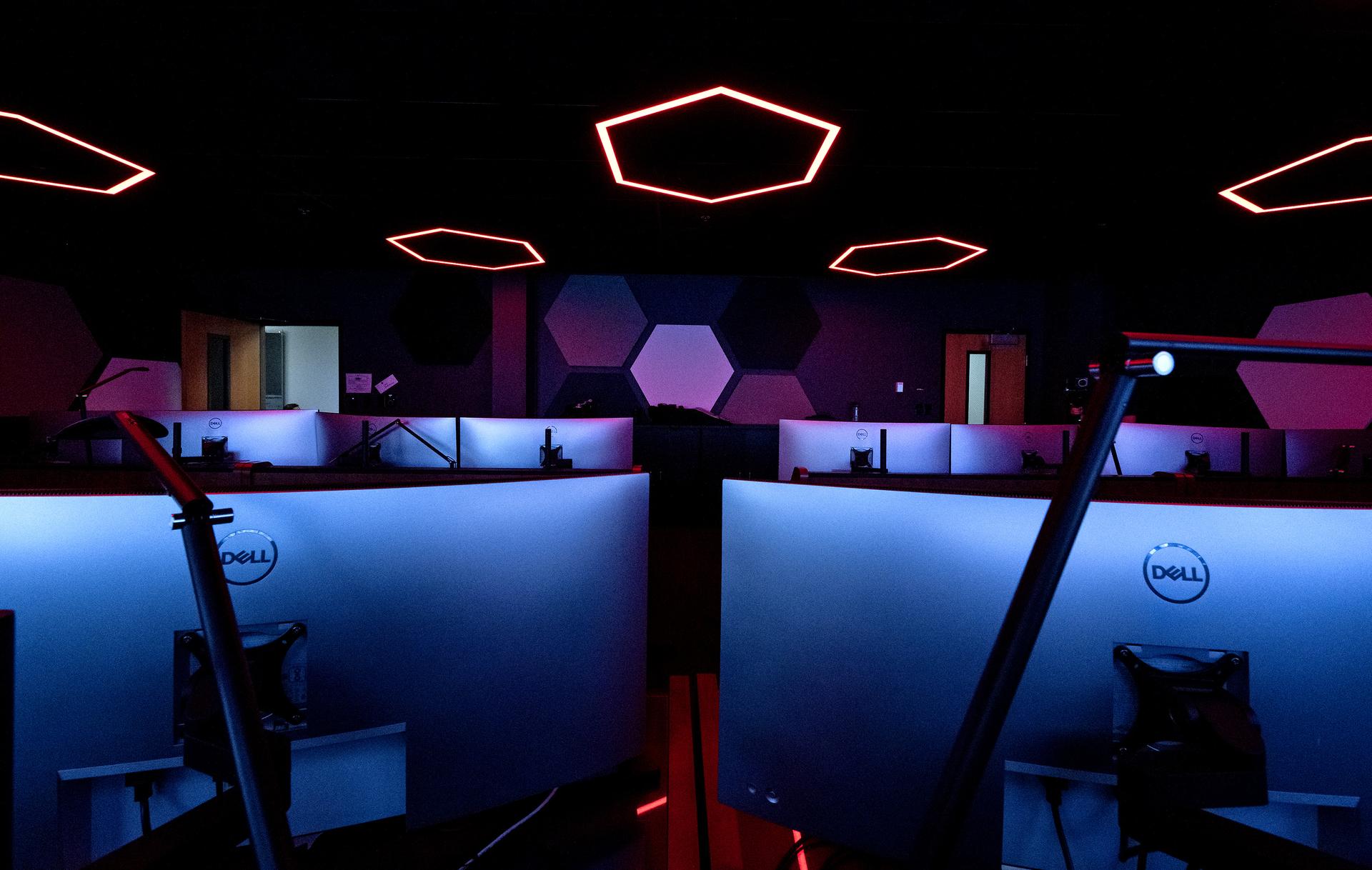
These photos offer a look inside the twin control rooms at NASA’s Marshall Space Flight Center in Huntsville, Alabama, where engineers will monitor Artemis science and future landing operations for Artemis. The LUCA (Lunar Utilization Control Area) and LESA (Lander Engineering Support Area) rooms are part of the Huntsville Operations Support Center at NASA Marshall. The LUCA is specially designed to support a wide variety of science operations on and around the Moon – and beyond. Engineers in the LUCA monitored operations for the Lunar Node-1 experiment, an autonomous navigation payload that was part of the first NASA Commercial Lunar Payload Services (CLPS) launch on Intuitive Machines’ Nova-C lunar lander in 2024. NASA Marshall flight controllers will use the LUCA again for Artemis II to monitor science operations. Beginning with Artemis III, members of the NASA Human Landing System Mission Insight Support Team – a group of engineers, safety leads, flight operations experts, and technical authorities – will work in the LESA. There, they will monitor lander systems in real-time and be involved in key decision-making processes throughout the mission. For more information, contact NASA Marshall’s Office of Communications at 256-544-0034.
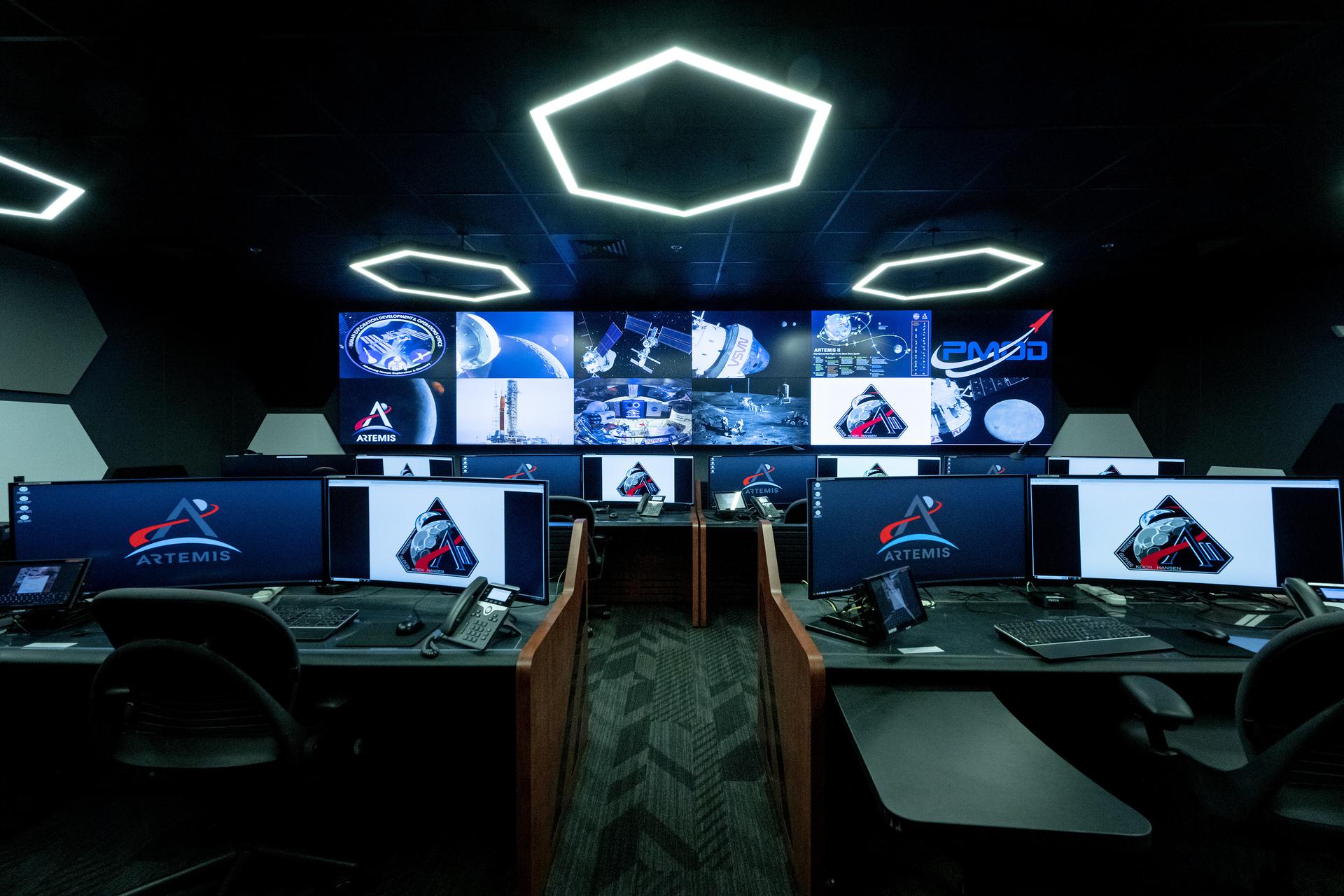
These photos offer a look inside the twin control rooms at NASA’s Marshall Space Flight Center in Huntsville, Alabama, where engineers will monitor Artemis science and future landing operations for Artemis. The LUCA (Lunar Utilization Control Area) and LESA (Lander Engineering Support Area) rooms are part of the Huntsville Operations Support Center at NASA Marshall. The LUCA is specially designed to support a wide variety of science operations on and around the Moon – and beyond. Engineers in the LUCA monitored operations for the Lunar Node-1 experiment, an autonomous navigation payload that was part of the first NASA Commercial Lunar Payload Services (CLPS) launch on Intuitive Machines’ Nova-C lunar lander in 2024. NASA Marshall flight controllers will use the LUCA again for Artemis II to monitor science operations. Beginning with Artemis III, members of the NASA Human Landing System Mission Insight Support Team – a group of engineers, safety leads, flight operations experts, and technical authorities – will work in the LESA. There, they will monitor lander systems in real-time and be involved in key decision-making processes throughout the mission. For more information, contact NASA Marshall’s Office of Communications at 256-544-0034.
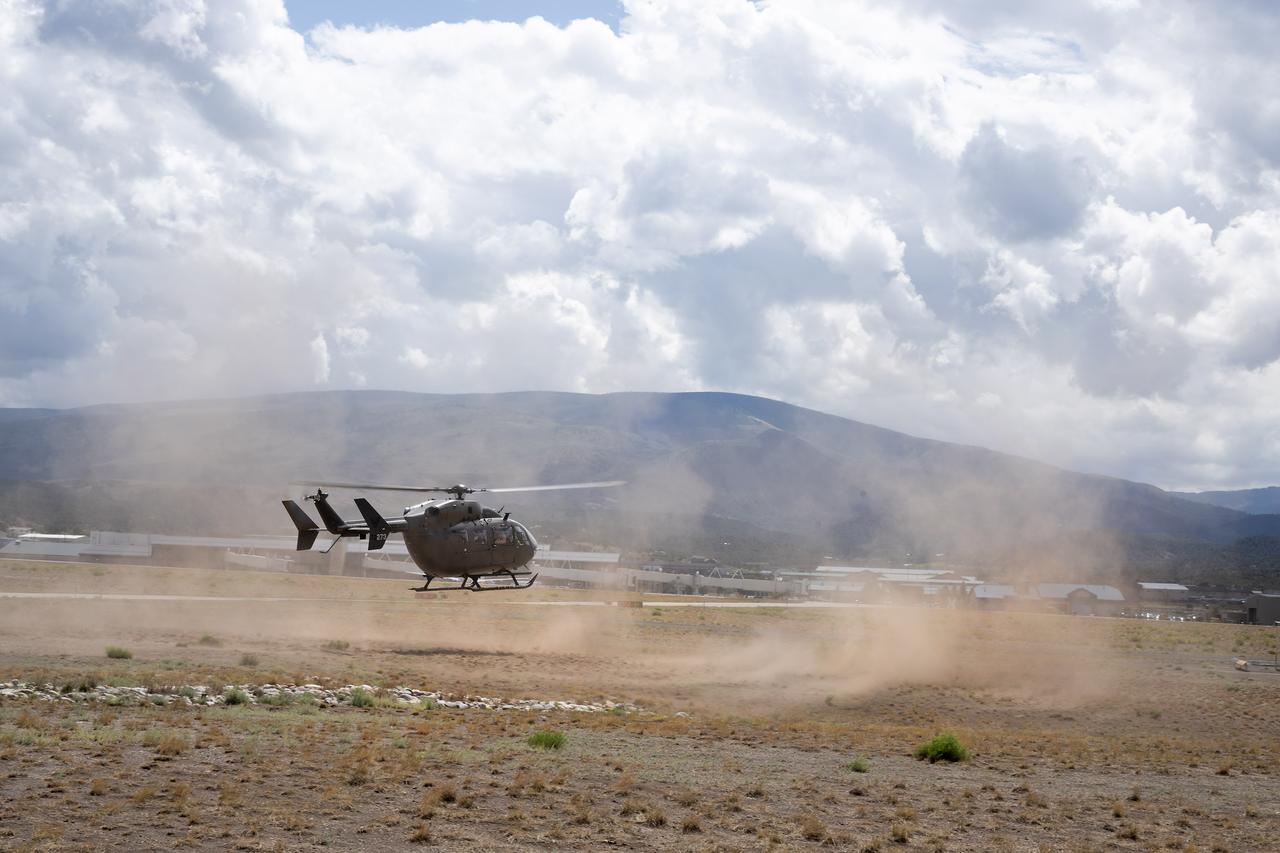
These photos and videos show how NASA certified a new lander flight training course using helicopters in the mountains of northern Colorado. NASA is partnering with the Colorado Army National Guard at its High-Altitude Army National Guard Aviation Training Site near Gypsum, Colorado, to develop the foundational flight training course that will help astronauts practice flight and landing procedures for the Moon. The certification marks an important milestone in crew training for Artemis missions to the Moon, when astronauts will use a commercial human landing system to land on the lunar surface. During the two-week certification run in late August 2025, NASA astronauts Matthew Dominick and Mark Vande Hei participated in flight and landing training to help certify the course. The pair, along with trained instructor pilots with the Army National Guard, took turns flying a helicopter and navigating to landing zones. Artemis flight crew trainers, mission control leads, and lunar lander operational experts from NASA Johnson joined them on each helicopter flight to assess the instruction, training environment, and technical applications for crewed lunar missions. For more information, contact NASA Marshall’s Office of Communications at 256-544
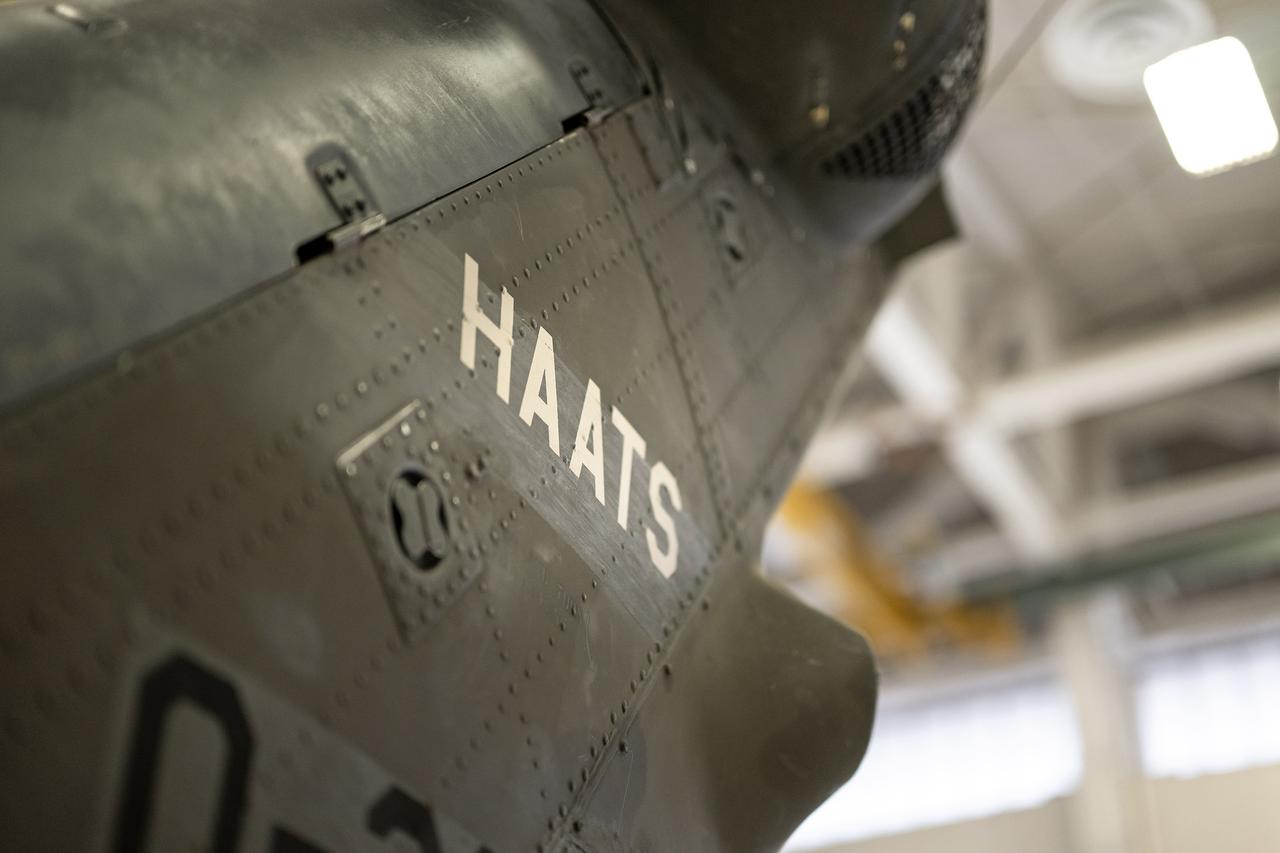
These photos and videos show how NASA certified a new lander flight training course using helicopters in the mountains of northern Colorado. NASA is partnering with the Colorado Army National Guard at its High-Altitude Army National Guard Aviation Training Site near Gypsum, Colorado, to develop the foundational flight training course that will help astronauts practice flight and landing procedures for the Moon. The certification marks an important milestone in crew training for Artemis missions to the Moon, when astronauts will use a commercial human landing system to land on the lunar surface. During the two-week certification run in late August 2025, NASA astronauts Matthew Dominick and Mark Vande Hei participated in flight and landing training to help certify the course. The pair, along with trained instructor pilots with the Army National Guard, took turns flying a helicopter and navigating to landing zones. Artemis flight crew trainers, mission control leads, and lunar lander operational experts from NASA Johnson joined them on each helicopter flight to assess the instruction, training environment, and technical applications for crewed lunar missions. For more information, contact NASA Marshall’s Office of Communications at 256-544
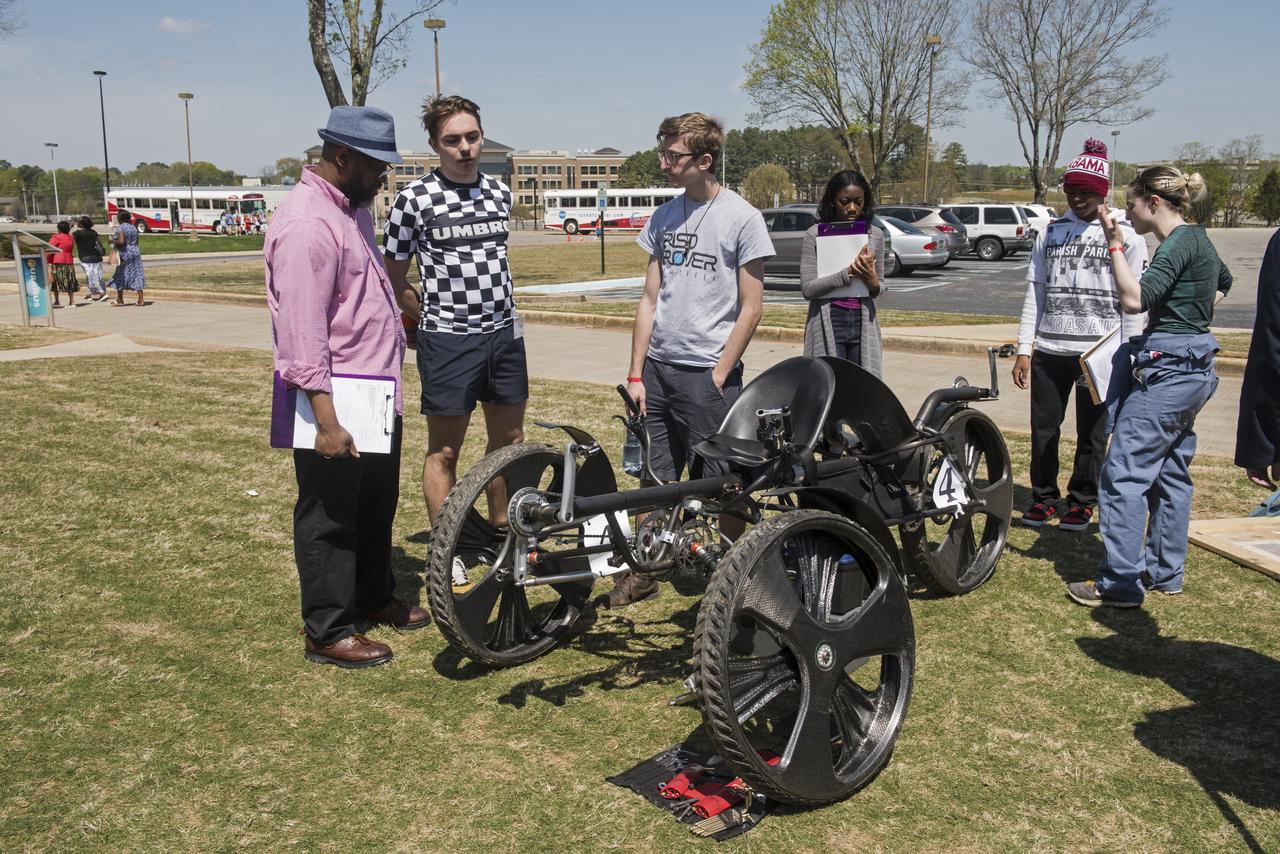
High school and university students competed in the 2018 Human Exploration Rover Challenge event at the U.S. Space and Rocket Center in Huntsville, Alabama. Students came from across the U.S. as well as several foreign countries such as Brazil, Germany, India, and Mexico. This event, which is normally a 2 day event, was shortened to 1 day in 2018 due to adverse weather conditions.
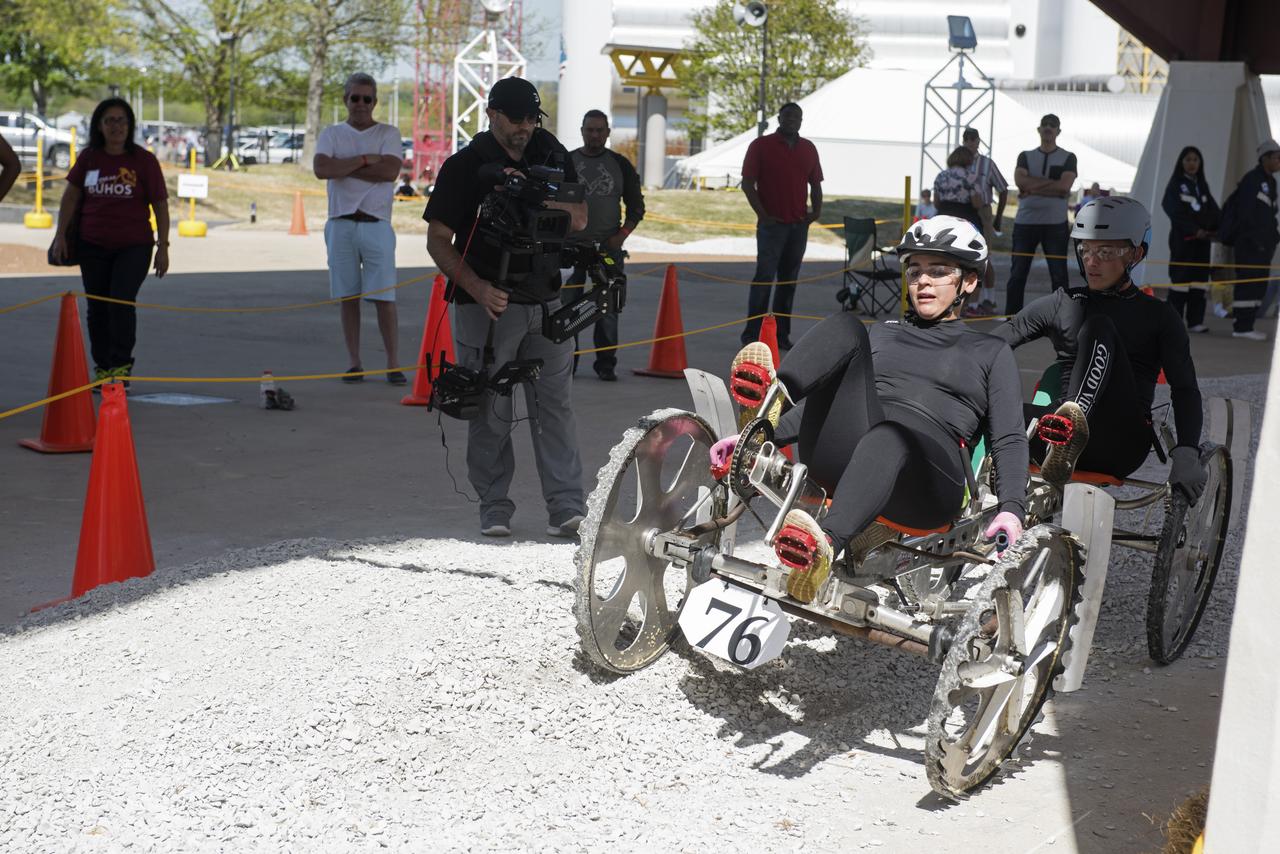
High school and university students competed in the 2018 Human Exploration Rover Challenge event at the U.S. Space and Rocket Center in Huntsville, Alabama. Students came from across the U.S. as well as several foreign countries such as Brazil, Germany, India, and Mexico. This event, which is normally a 2 day event, was shortened to 1 day in 2018 due to adverse weather conditions.
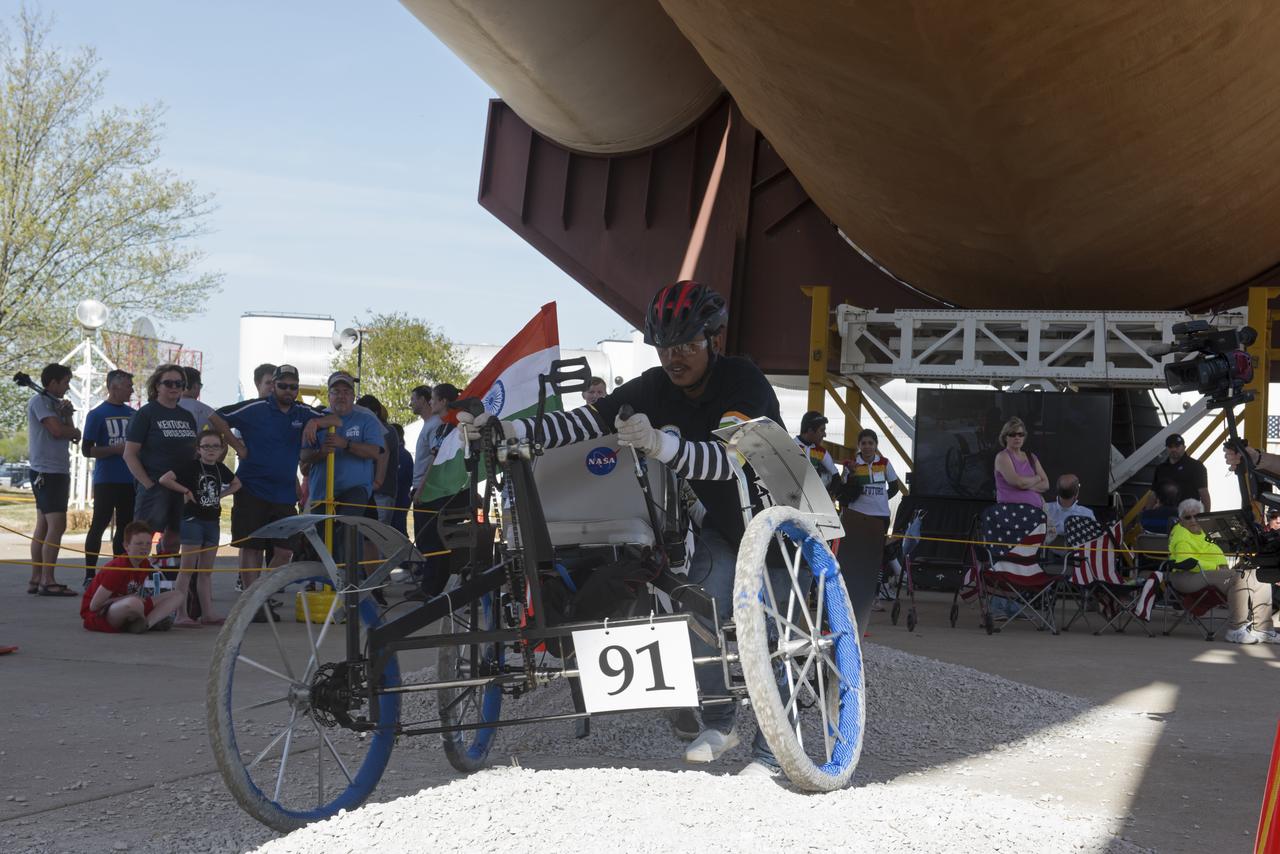
High school and university students competed in the 2018 Human Exploration Rover Challenge event at the U.S. Space and Rocket Center in Huntsville, Alabama. Students came from across the U.S. as well as several foreign countries such as Brazil, Germany, India, and Mexico. This event, which is normally a 2 day event, was shortened to 1 day in 2018 due to adverse weather conditions.
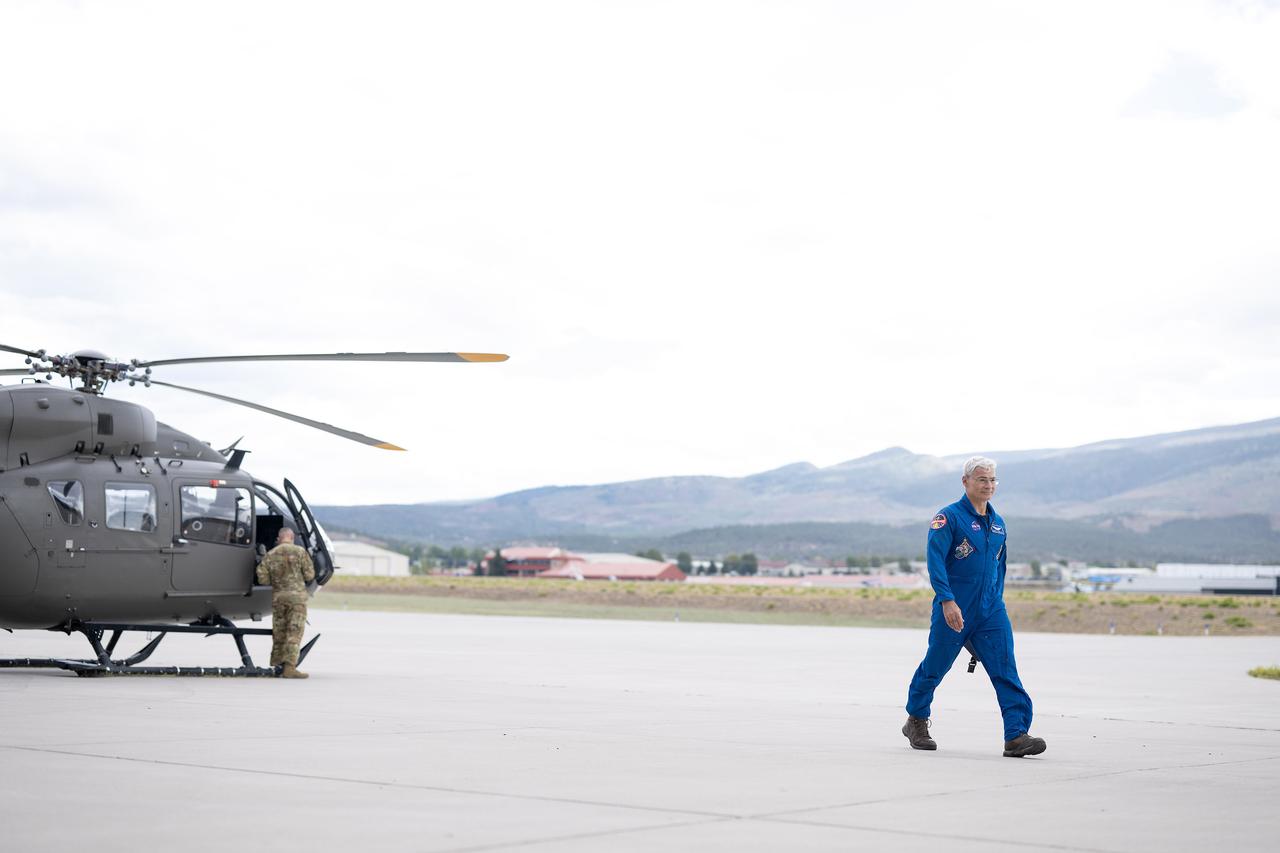
These photos and videos show how NASA certified a new lander flight training course using helicopters in the mountains of northern Colorado. NASA is partnering with the Colorado Army National Guard at its High-Altitude Army National Guard Aviation Training Site near Gypsum, Colorado, to develop the foundational flight training course that will help astronauts practice flight and landing procedures for the Moon. The certification marks an important milestone in crew training for Artemis missions to the Moon, when astronauts will use a commercial human landing system to land on the lunar surface. During the two-week certification run in late August 2025, NASA astronauts Matthew Dominick and Mark Vande Hei participated in flight and landing training to help certify the course. The pair, along with trained instructor pilots with the Army National Guard, took turns flying a helicopter and navigating to landing zones. Artemis flight crew trainers, mission control leads, and lunar lander operational experts from NASA Johnson joined them on each helicopter flight to assess the instruction, training environment, and technical applications for crewed lunar missions. For more information, contact NASA Marshall’s Office of Communications at 256-544
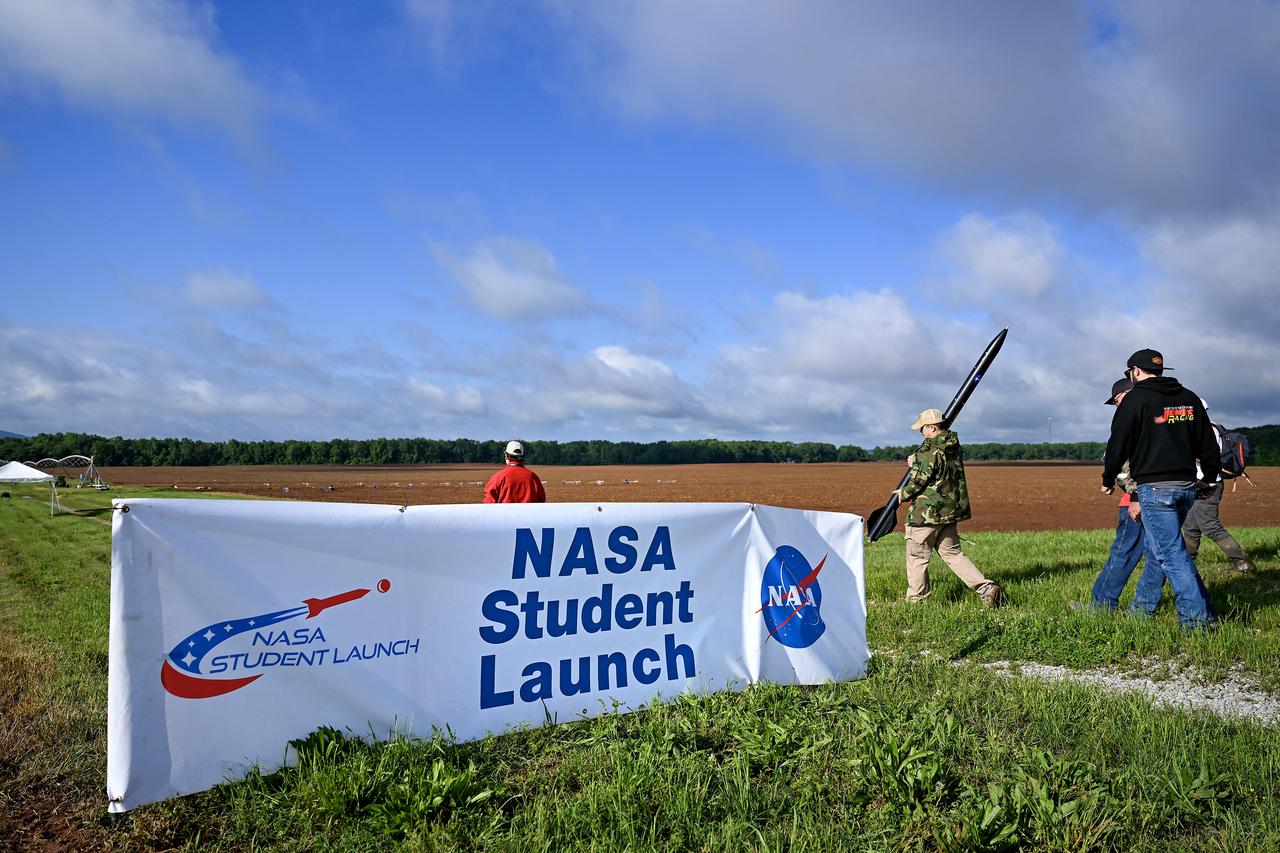
Over than 980 middle school, high school, and college students from across the nation launched more than 40 high-powered rockets just north of NASA’s Marshall Space Flight Center in Huntsville, Alabama. This year marked the 25th anniversary of the competition. To compete, students follow the NASA engineering design lifecycle by going through a series of reviews for nine months leading up to launch day. Each year, a payload challenge is issued to the university teams, and this year’s task took inspiration from the agency’s Artemis missions, where NASA will send astronauts to explore the Moon for scientific discovery, economic benefit, and to build the foundation for the first crewed missions to Mars. Teams were challenged to include “reports” from STEMnauts, non-living objects representing astronauts. The STEMnaut “crew” had to relay real-time data to the student team’s mission control, just as the Artemis astronaut crew will do as they explore the lunar surface. To learn more, visit: www.nasa.gov/studentlaunch.
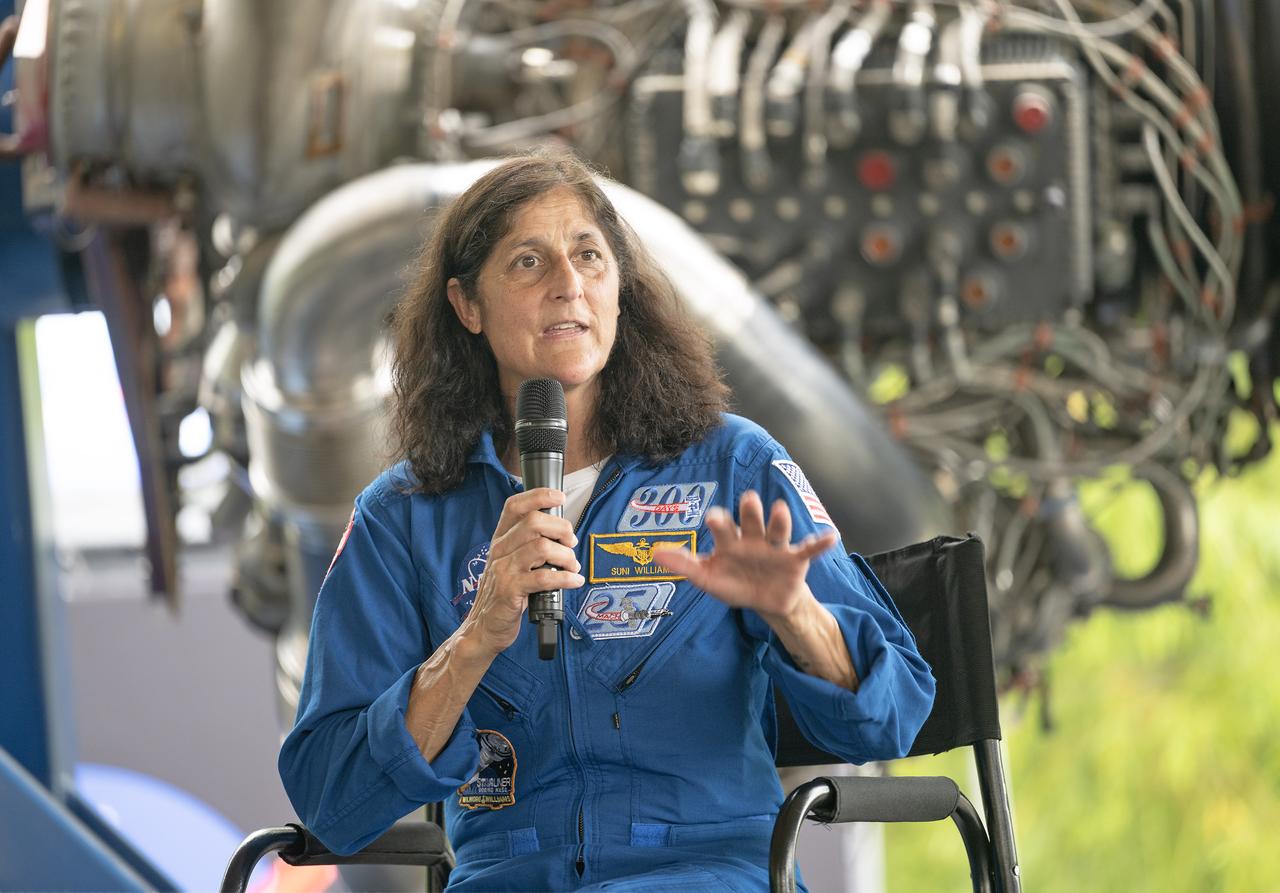
NASA’s Marshall Space Flight Center celebrated the 65th anniversary of its founding on July 19, 2025, with a free, public celebration at The Orion Amphitheater in Huntsville, Alabama. Thousands of team members, families, and “Rocket City” residents took part, enjoying live music, games, food, and exhibits commemorating Marshall’s legacy of ingenuity and service to the U.S. space program. During a program for the celebration, guests heard remarks from Joseph Pelfrey, director of NASA Marshall, Huntsville Mayor Tommy Battle, and Kamerra Liles, assistant general manager of The Orion Amphitheater, followed by Pelfrey sharing a new video overview about Marshall. The program continued with a video presentation from NASA astronauts from the Expedition 72 crew – which contributed more than 1,000 total hours of scientific studies on plant growth, stem cell growth for treating diseases, the resilience of microorganisms to the harsh space environment, and more on the International Space Station. NASA astronauts Suni Williams and Don Pettit, who served as space station commander and flight engineer, respectively, shared their experiences in space with the community and told the audience how vital Marshall’s on the ground support was to their mission success. Marshall has shaped and expanded human space exploration every decade since the NASA center opened its doors on July 1, 1960. The center’s civil service and contract workers built the nation’s flagship rockets, from the Saturn V to the SLS (Space Launch System), managed the space shuttle propulsion program, delivered the Chandra X-ray Observatory and critical elements of the International Space Station to orbit, and continue to spearhead numerous advances in science and engineering.
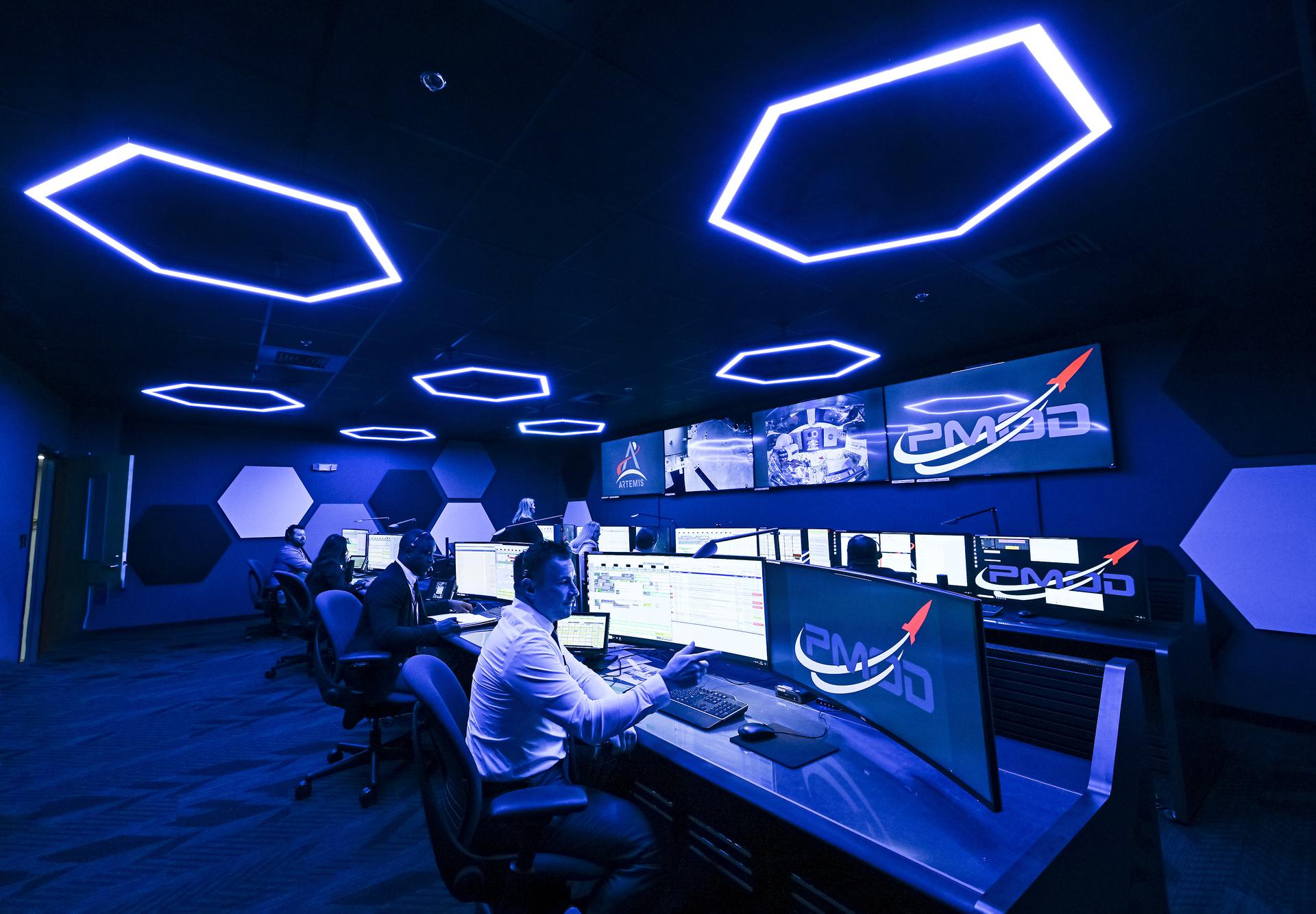
These photos offer a look inside the twin control rooms at NASA’s Marshall Space Flight Center in Huntsville, Alabama, where engineers will monitor Artemis science and future landing operations for Artemis. The LUCA (Lunar Utilization Control Area) and LESA (Lander Engineering Support Area) rooms are part of the Huntsville Operations Support Center at NASA Marshall. The LUCA is specially designed to support a wide variety of science operations on and around the Moon – and beyond. Engineers in the LUCA monitored operations for the Lunar Node-1 experiment, an autonomous navigation payload that was part of the first NASA Commercial Lunar Payload Services (CLPS) launch on Intuitive Machines’ Nova-C lunar lander in 2024. NASA Marshall flight controllers will use the LUCA again for Artemis II to monitor science operations. Beginning with Artemis III, members of the NASA Human Landing System Mission Insight Support Team – a group of engineers, safety leads, flight operations experts, and technical authorities – will work in the LESA. There, they will monitor lander systems in real-time and be involved in key decision-making processes throughout the mission. For more information, contact NASA Marshall’s Office of Communications at 256-544-0034.
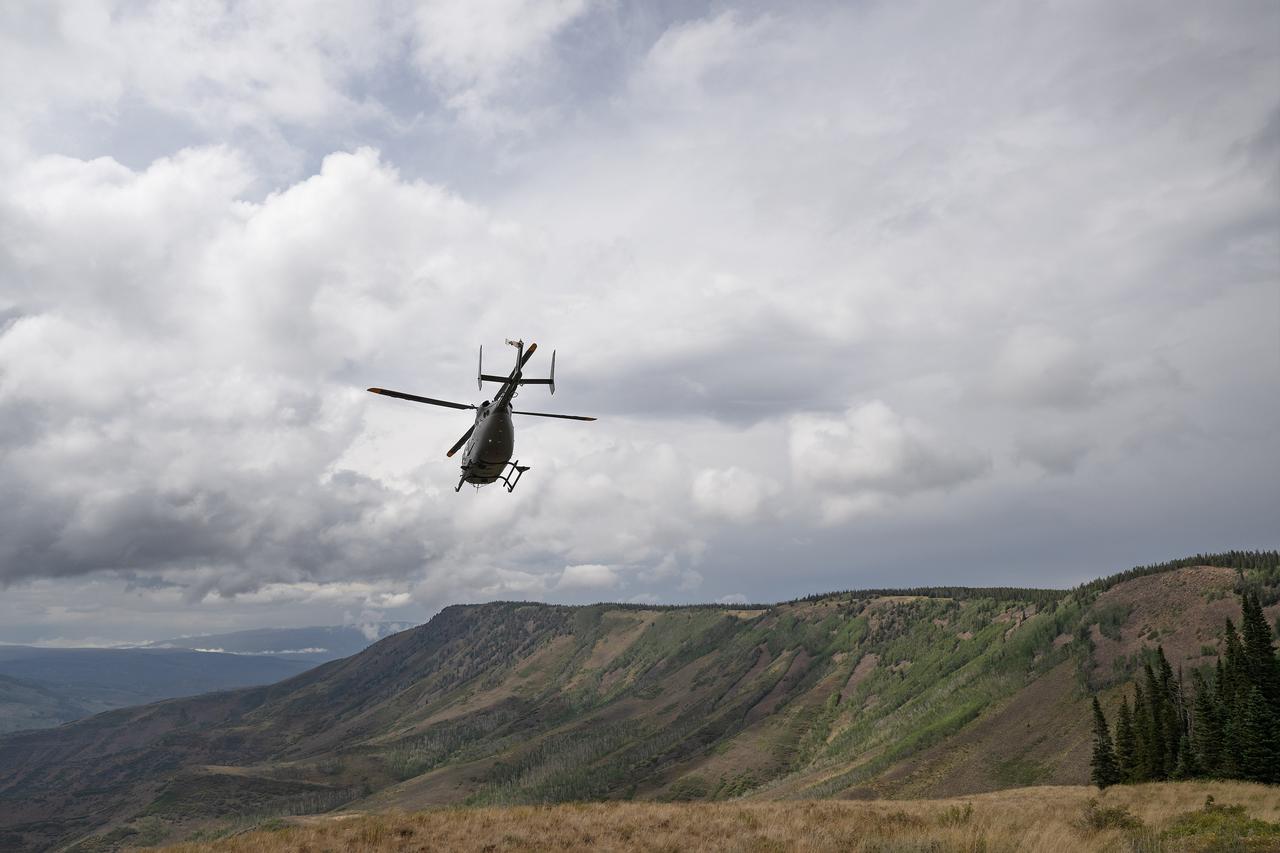
These photos and videos show how NASA certified a new lander flight training course using helicopters in the mountains of northern Colorado. NASA is partnering with the Colorado Army National Guard at its High-Altitude Army National Guard Aviation Training Site near Gypsum, Colorado, to develop the foundational flight training course that will help astronauts practice flight and landing procedures for the Moon. The certification marks an important milestone in crew training for Artemis missions to the Moon, when astronauts will use a commercial human landing system to land on the lunar surface. During the two-week certification run in late August 2025, NASA astronauts Matthew Dominick and Mark Vande Hei participated in flight and landing training to help certify the course. The pair, along with trained instructor pilots with the Army National Guard, took turns flying a helicopter and navigating to landing zones. Artemis flight crew trainers, mission control leads, and lunar lander operational experts from NASA Johnson joined them on each helicopter flight to assess the instruction, training environment, and technical applications for crewed lunar missions. For more information, contact NASA Marshall’s Office of Communications at 256-544
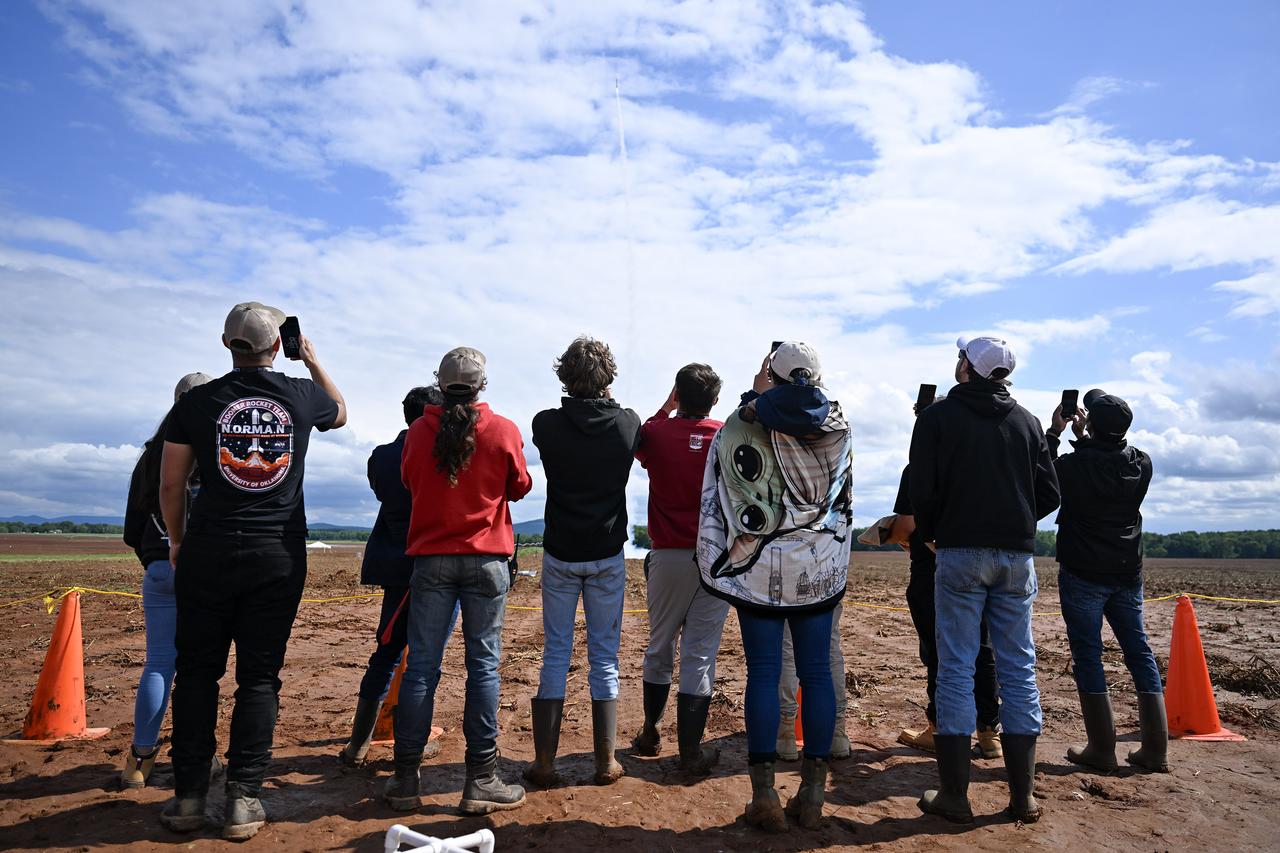
Over than 980 middle school, high school, and college students from across the nation launched more than 40 high-powered rockets just north of NASA’s Marshall Space Flight Center in Huntsville, Alabama. This year marked the 25th anniversary of the competition. To compete, students follow the NASA engineering design lifecycle by going through a series of reviews for nine months leading up to launch day. Each year, a payload challenge is issued to the university teams, and this year’s task took inspiration from the agency’s Artemis missions, where NASA will send astronauts to explore the Moon for scientific discovery, economic benefit, and to build the foundation for the first crewed missions to Mars. Teams were challenged to include “reports” from STEMnauts, non-living objects representing astronauts. The STEMnaut “crew” had to relay real-time data to the student team’s mission control, just as the Artemis astronaut crew will do as they explore the lunar surface. To learn more, visit: www.nasa.gov/studentlaunch.

Over than 980 middle school, high school, and college students from across the nation launched more than 40 high-powered rockets just north of NASA’s Marshall Space Flight Center in Huntsville, Alabama. This year marked the 25th anniversary of the competition. To compete, students follow the NASA engineering design lifecycle by going through a series of reviews for nine months leading up to launch day. Each year, a payload challenge is issued to the university teams, and this year’s task took inspiration from the agency’s Artemis missions, where NASA will send astronauts to explore the Moon for scientific discovery, economic benefit, and to build the foundation for the first crewed missions to Mars. Teams were challenged to include “reports” from STEMnauts, non-living objects representing astronauts. The STEMnaut “crew” had to relay real-time data to the student team’s mission control, just as the Artemis astronaut crew will do as they explore the lunar surface. To learn more, visit: www.nasa.gov/studentlaunch.
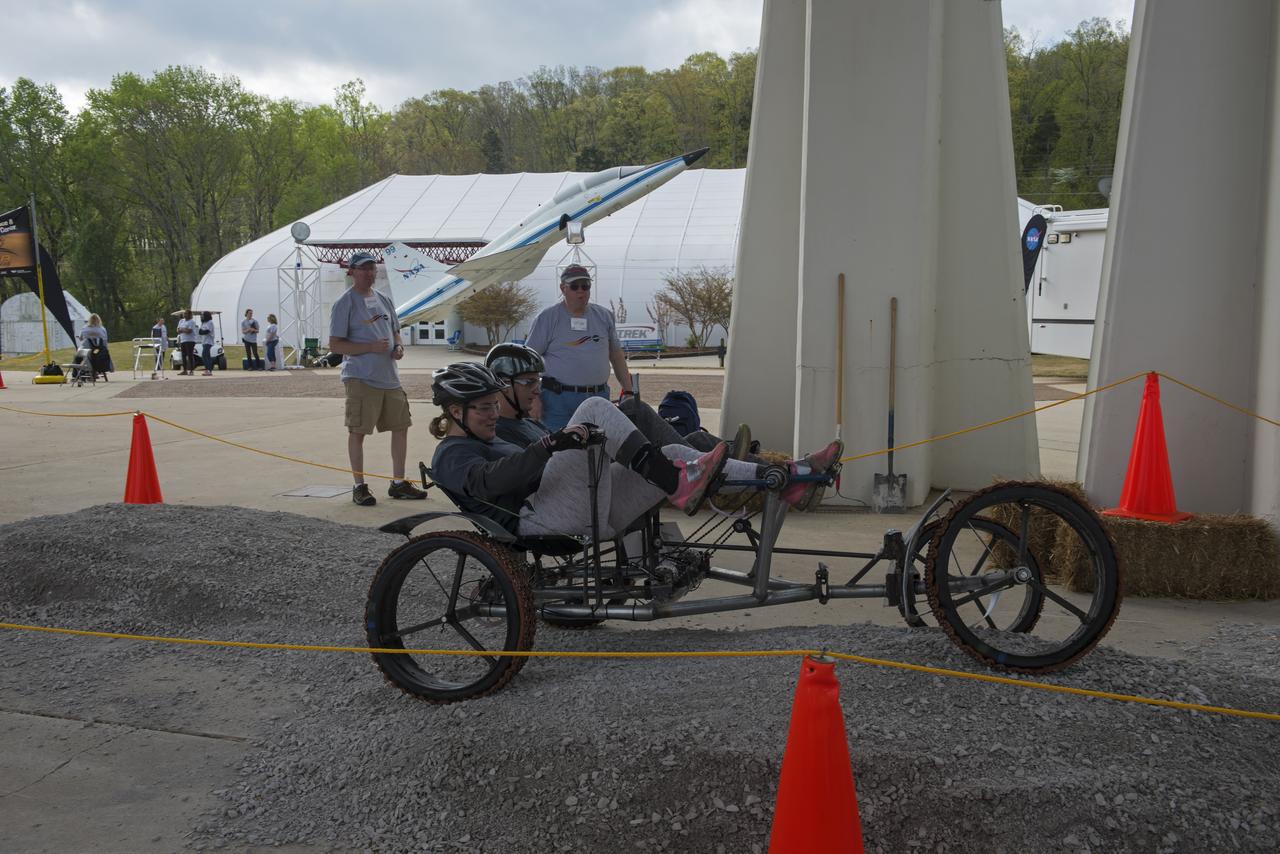
High school and university students competed in the 2018 Human Exploration Rover Challenge event at the U.S. Space and Rocket Center in Huntsville, Alabama. Students came from across the U.S. as well as several foreign countries such as Brazil, Germany, India, and Mexico. This event, which is normally a 2 day event, was shortened to 1 day in 2018 due to adverse weather conditions.
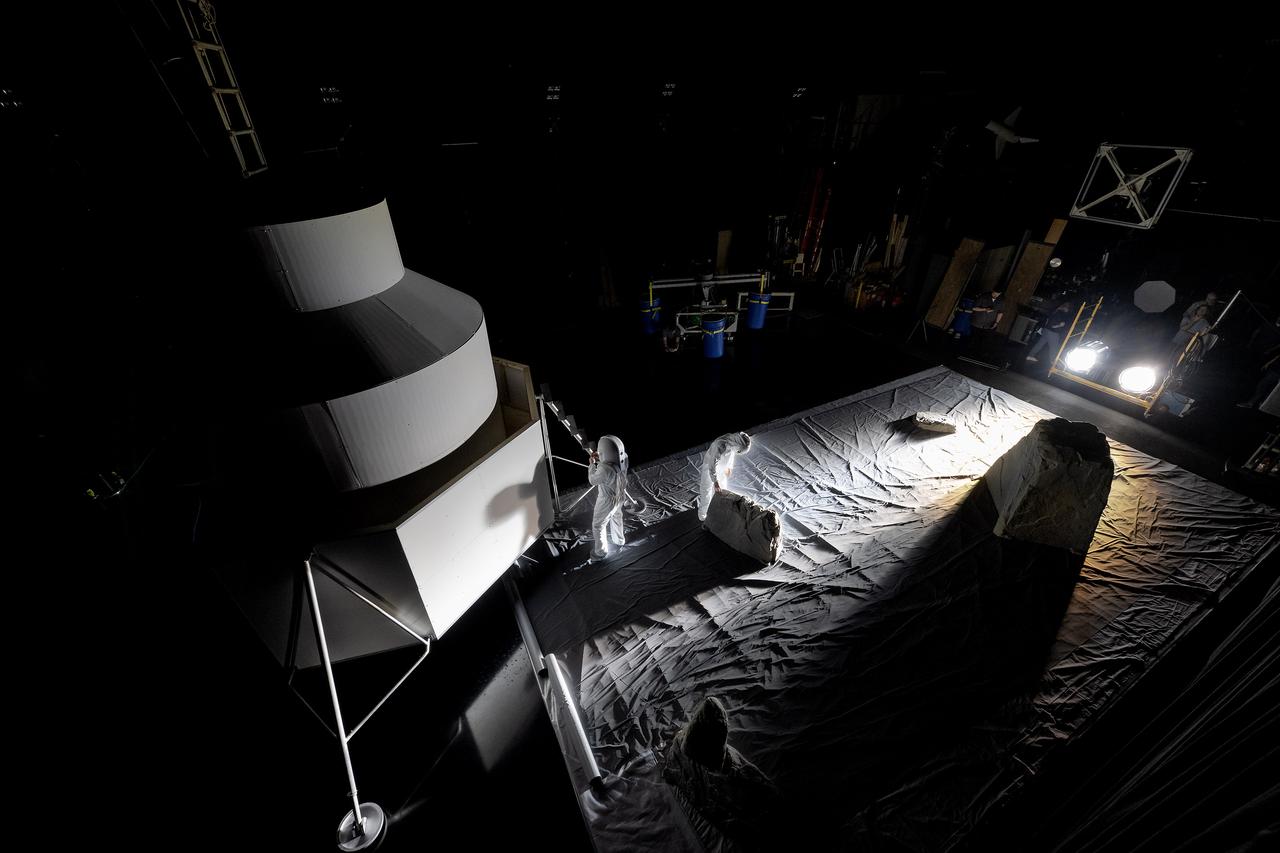
These photos show how teams at NASA’s Marshall Space Flight Center in Huntsville, Alabama, are using the Flat Floor Facility (Building 4619) to understand the lunar lighting environment in preparation for the Artemis III crewed lunar landing mission, slated for 2027. The Flat Floor Facility is an air-bearing floor, providing full-scale simulation capabilities for lunar surface systems by simulating zero gravity in two dimensions. Wearing low-fidelity materials, test engineers can understand how the extreme lighting of the Moon’s South Pole could affect surface operations during Artemis III. High-intensity lights are positioned at a low angle to replicate the strong shadows that are cast across the lunar South Pole by the Sun. Data and analysis from testing at NASA Marshall are improving models Artemis astronauts will use in preparation for lander and surface operations on the Moon during Artemis III. Testing in the facility is also helping cross-agency teams evaluate various tools astronauts may use. NASA Marshall manages the Human Landing System (HLS) Program. For more information, contact NASA Marshall’s Office of Communications at 256-544-0034.
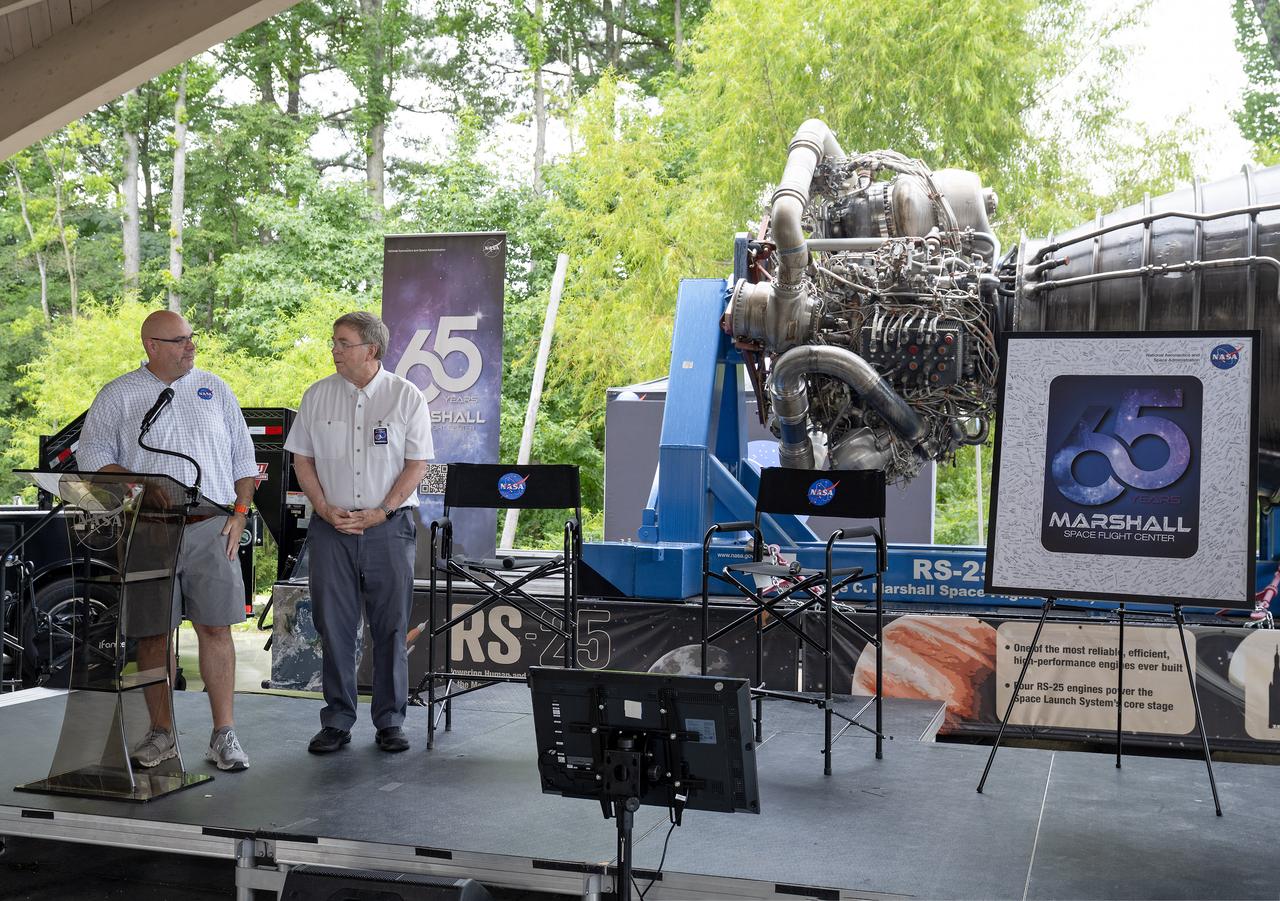
NASA’s Marshall Space Flight Center celebrated the 65th anniversary of its founding on July 19, 2025, with a free, public celebration at The Orion Amphitheater in Huntsville, Alabama. Thousands of team members, families, and “Rocket City” residents took part, enjoying live music, games, food, and exhibits commemorating Marshall’s legacy of ingenuity and service to the U.S. space program. During a program for the celebration, guests heard remarks from Joseph Pelfrey, director of NASA Marshall, Huntsville Mayor Tommy Battle, and Kamerra Liles, assistant general manager of The Orion Amphitheater, followed by Pelfrey sharing a new video overview about Marshall. The program continued with a video presentation from NASA astronauts from the Expedition 72 crew – which contributed more than 1,000 total hours of scientific studies on plant growth, stem cell growth for treating diseases, the resilience of microorganisms to the harsh space environment, and more on the International Space Station. NASA astronauts Suni Williams and Don Pettit, who served as space station commander and flight engineer, respectively, shared their experiences in space with the community and told the audience how vital Marshall’s on the ground support was to their mission success. Marshall has shaped and expanded human space exploration every decade since the NASA center opened its doors on July 1, 1960. The center’s civil service and contract workers built the nation’s flagship rockets, from the Saturn V to the SLS (Space Launch System), managed the space shuttle propulsion program, delivered the Chandra X-ray Observatory and critical elements of the International Space Station to orbit, and continue to spearhead numerous advances in science and engineering.
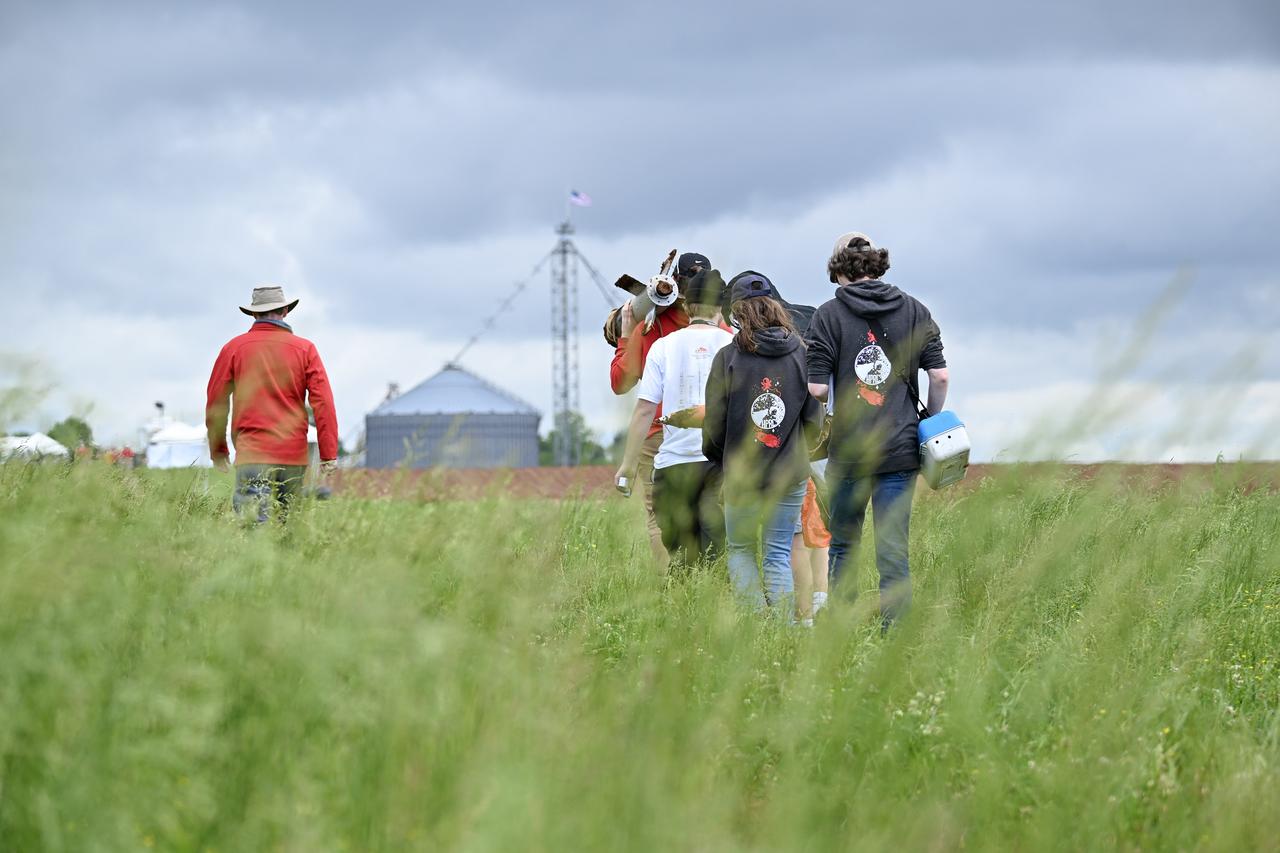
Over than 980 middle school, high school, and college students from across the nation launched more than 40 high-powered rockets just north of NASA’s Marshall Space Flight Center in Huntsville, Alabama. This year marked the 25th anniversary of the competition. To compete, students follow the NASA engineering design lifecycle by going through a series of reviews for nine months leading up to launch day. Each year, a payload challenge is issued to the university teams, and this year’s task took inspiration from the agency’s Artemis missions, where NASA will send astronauts to explore the Moon for scientific discovery, economic benefit, and to build the foundation for the first crewed missions to Mars. Teams were challenged to include “reports” from STEMnauts, non-living objects representing astronauts. The STEMnaut “crew” had to relay real-time data to the student team’s mission control, just as the Artemis astronaut crew will do as they explore the lunar surface. To learn more, visit: www.nasa.gov/studentlaunch.
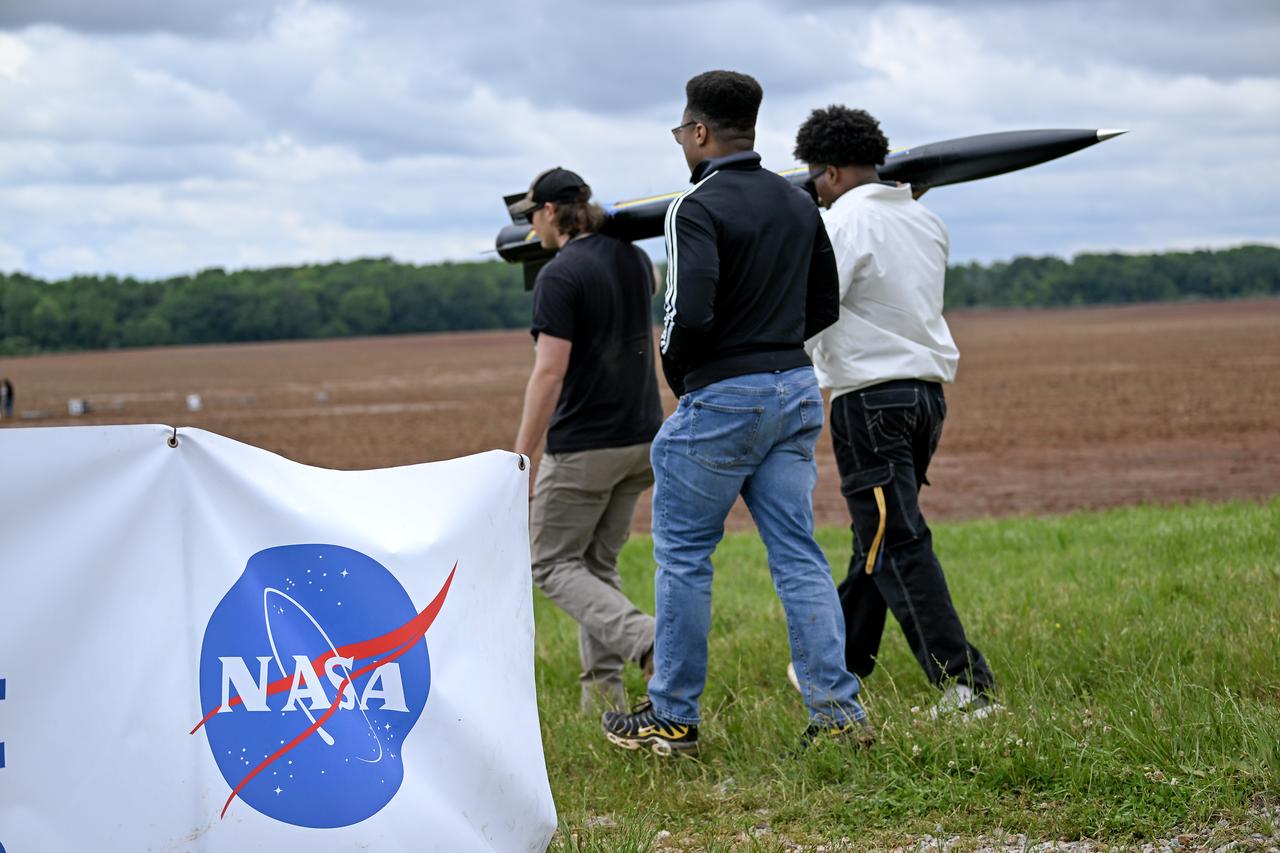
Over than 980 middle school, high school, and college students from across the nation launched more than 40 high-powered rockets just north of NASA’s Marshall Space Flight Center in Huntsville, Alabama. This year marked the 25th anniversary of the competition. To compete, students follow the NASA engineering design lifecycle by going through a series of reviews for nine months leading up to launch day. Each year, a payload challenge is issued to the university teams, and this year’s task took inspiration from the agency’s Artemis missions, where NASA will send astronauts to explore the Moon for scientific discovery, economic benefit, and to build the foundation for the first crewed missions to Mars. Teams were challenged to include “reports” from STEMnauts, non-living objects representing astronauts. The STEMnaut “crew” had to relay real-time data to the student team’s mission control, just as the Artemis astronaut crew will do as they explore the lunar surface. To learn more, visit: www.nasa.gov/studentlaunch.
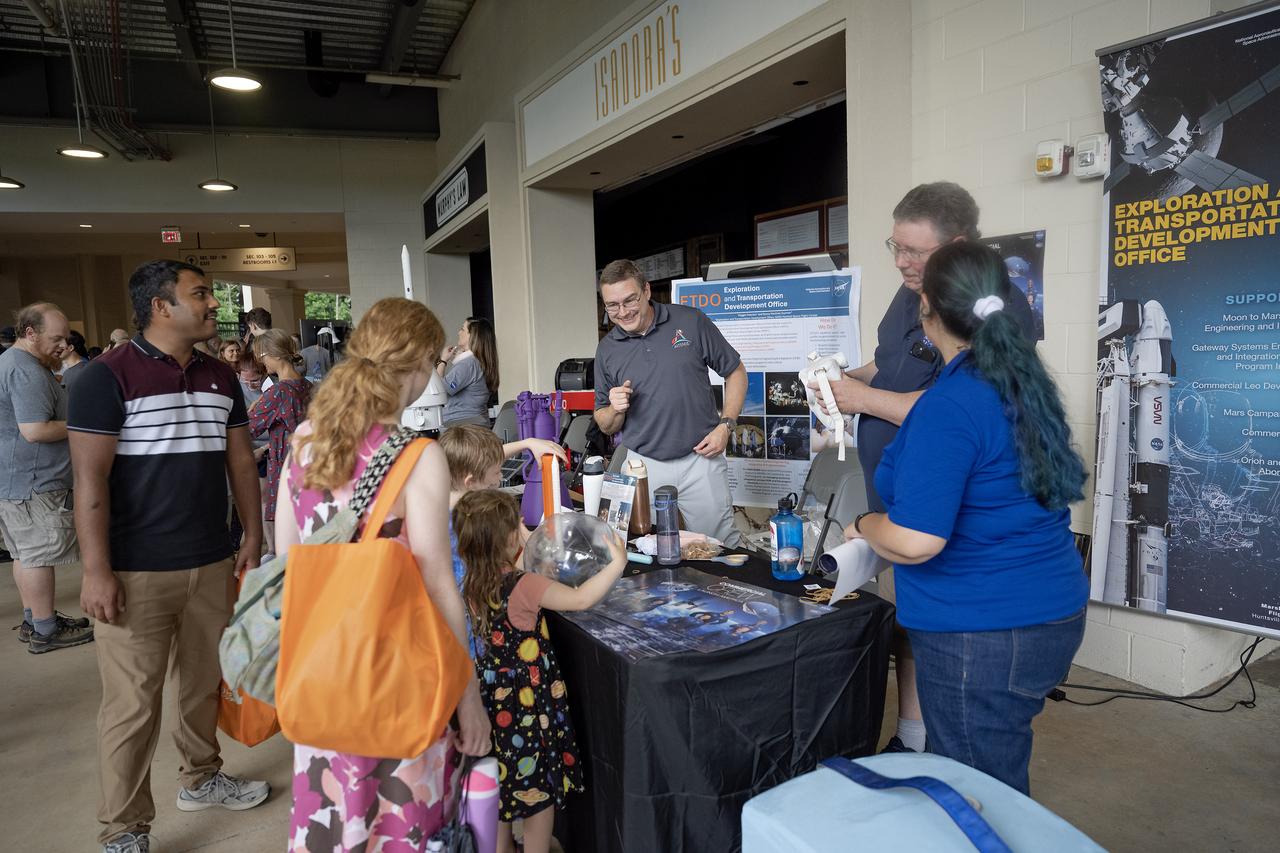
NASA’s Marshall Space Flight Center celebrated the 65th anniversary of its founding on July 19, 2025, with a free, public celebration at The Orion Amphitheater in Huntsville, Alabama. Thousands of team members, families, and “Rocket City” residents took part, enjoying live music, games, food, and exhibits commemorating Marshall’s legacy of ingenuity and service to the U.S. space program. During a program for the celebration, guests heard remarks from Joseph Pelfrey, director of NASA Marshall, Huntsville Mayor Tommy Battle, and Kamerra Liles, assistant general manager of The Orion Amphitheater, followed by Pelfrey sharing a new video overview about Marshall. The program continued with a video presentation from NASA astronauts from the Expedition 72 crew – which contributed more than 1,000 total hours of scientific studies on plant growth, stem cell growth for treating diseases, the resilience of microorganisms to the harsh space environment, and more on the International Space Station. NASA astronauts Suni Williams and Don Pettit, who served as space station commander and flight engineer, respectively, shared their experiences in space with the community and told the audience how vital Marshall’s on the ground support was to their mission success. Marshall has shaped and expanded human space exploration every decade since the NASA center opened its doors on July 1, 1960. The center’s civil service and contract workers built the nation’s flagship rockets, from the Saturn V to the SLS (Space Launch System), managed the space shuttle propulsion program, delivered the Chandra X-ray Observatory and critical elements of the International Space Station to orbit, and continue to spearhead numerous advances in science and engineering.

These photos show how teams at NASA’s Marshall Space Flight Center in Huntsville, Alabama, are using the Flat Floor Facility (Building 4619) to understand the lunar lighting environment in preparation for the Artemis III crewed lunar landing mission, slated for 2027. The Flat Floor Facility is an air-bearing floor, providing full-scale simulation capabilities for lunar surface systems by simulating zero gravity in two dimensions. Wearing low-fidelity materials, test engineers can understand how the extreme lighting of the Moon’s South Pole could affect surface operations during Artemis III. High-intensity lights are positioned at a low angle to replicate the strong shadows that are cast across the lunar South Pole by the Sun. Data and analysis from testing at NASA Marshall are improving models Artemis astronauts will use in preparation for lander and surface operations on the Moon during Artemis III. Testing in the facility is also helping cross-agency teams evaluate various tools astronauts may use. NASA Marshall manages the Human Landing System (HLS) Program. For more information, contact NASA Marshall’s Office of Communications at 256-544-0034.