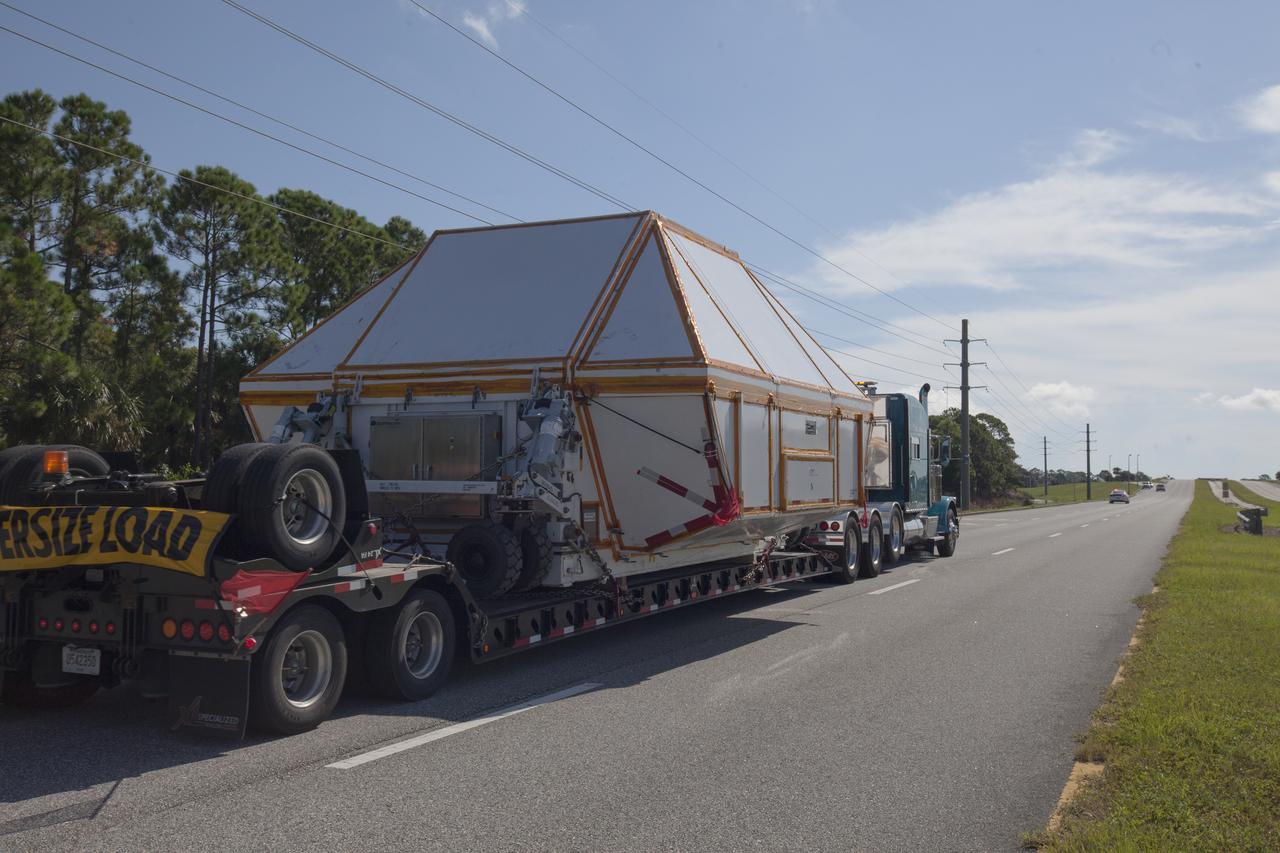
The Orion crew module pressure vessel for Exploration Mission-2 arrives at NASA's Kennedy Space Center in Florida on Aug. 24, 2018. The pressure vessel was transported in its Crew Module Transportation Fixture by super-wide transport truck from Michoud Assembly Facility near New Orleans. The pressure vessel is Orion's primary structure that holds the pressurized atmosphere astronauts will breathe and work in while in the vacuum of deep space. It will be moved into the Neil Armstrong Operations and Checkout Building high bay, where it will be secured on a precision alignment tool to begin preparing it for flight.
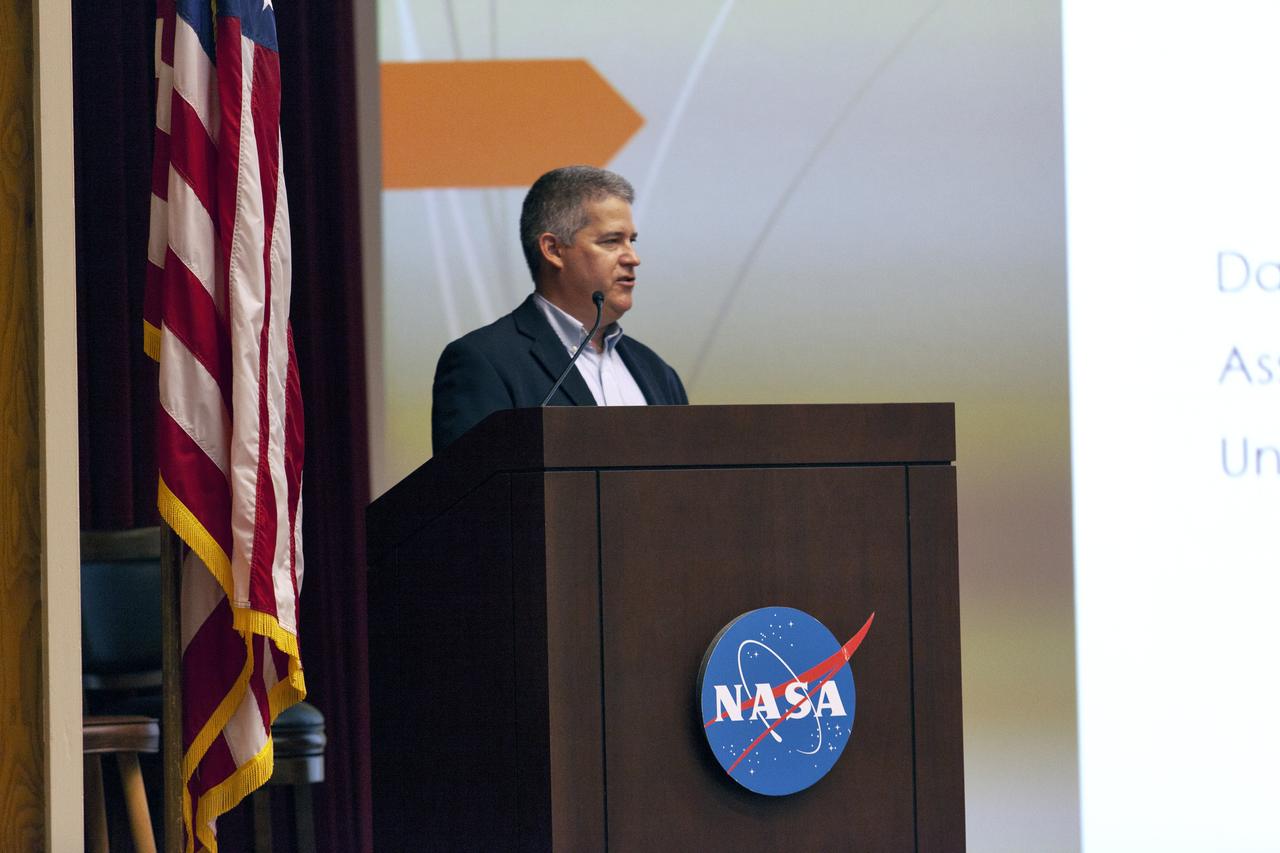
Daniel Murphree, Ph.D., associate professor of history at the University of Central Florida, presents information to NASA Kennedy Space Center employees on the impact Florida natives have had on, and how they were affected by, Atlantic World events from 1492 to the present. The presentation took place June 11, 2019, in Kennedy’s Training Auditorium and was brought to Kennedy by the Native American Heritage Initiative (NAHI) Employee Resource Group. One of eight resource groups at the Florida spaceport, NAHI aims to bring employees together, provide networking opportunities and inform the Kennedy workforce about Native American heritage.

Barbara Brown, chief technologist at NASA’s Kennedy Space Center in Florida, speaks at the fifth and final TED Talk-style informational session on Nov. 14, 2019, in the Kennedy Learning Institute. Sponsored by Kennedy’s Launching Leaders and Leadership for the Future, NASAtalks focuses on the topic of intentional careers and aims to provide employees with tools and knowledge that can be utilized for career growth. The theme of this session was organizations, and additional speakers included Director of Engineering Shawn Quinn, Chief Counsel Dan Shaver and Tim Dunn, launch director for the agency’s Launch Services Program, with a skill-building section on vision by Mark Wiese, logistics element manager for the Gateway Program.
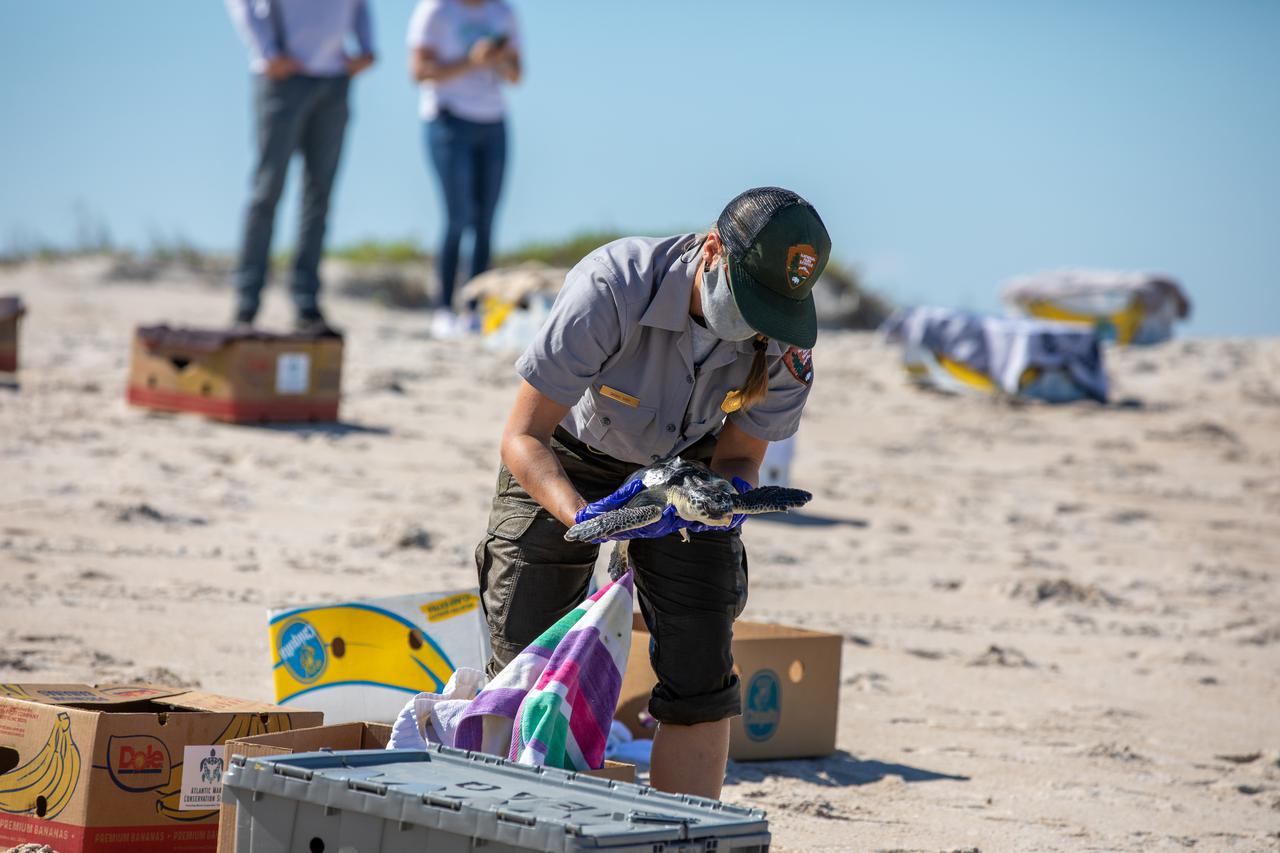
Staff with NASA, the National Park Service, Herndon Solutions Group, the center’s environmental services contractor, and others, prepare to release Kemp’s ridley sea turtles into the Atlantic Ocean at the Canaveral National Seashore near Kennedy Space Center on Feb. 26, 2021. The rescued and rehabilitated turtles were flown from aquatic centers in Massachusetts and New York to the Launch and Landing Facility, managed by Space Florida. NASA, U.S. Fish and Wildlife Service, NOAA Fisheries, Space Florida, and Herndon Solutions Group provided support. The Turtles Fly Too organization provided the flight to Kennedy. All marine turtle footage/images was obtained with the approval of the Florida Fish and Wildlife Conservation Commission (FWC) under conditions not harmful to marine turtles. Footage was acquired while conducting authorized conservation activities pursuant to: FWC 2021 Consent Permit, MTP-21-005 and MTP-21-114.
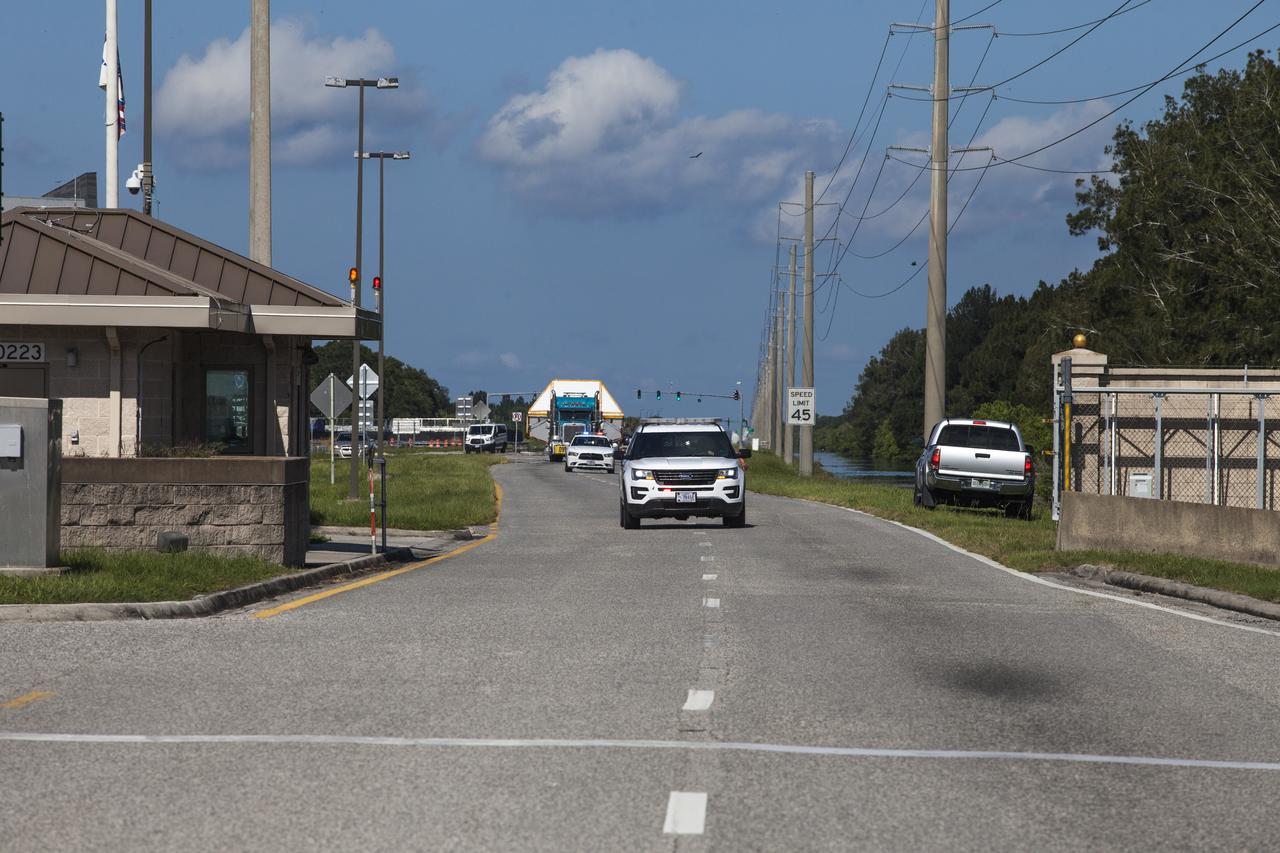
A super-wide truck carrying the Orion crew module pressure vessel for Exploration Mission-2 approaches the entrance gate at NASA's Kennedy Space Center in Florida on Aug. 24, 2018. The pressure vessel was transported in its Crew Module Transportation Fixture by truck from Michoud Assembly Facility near New Orleans. The pressure vessel is Orion's primary structure that holds the pressurized atmosphere astronauts will breathe and work in while in the vacuum of deep space. It will be moved into the Neil Armstrong Operations and Checkout Building high bay, where it will be secured on a precision alignment tool to begin preparing it for flight.
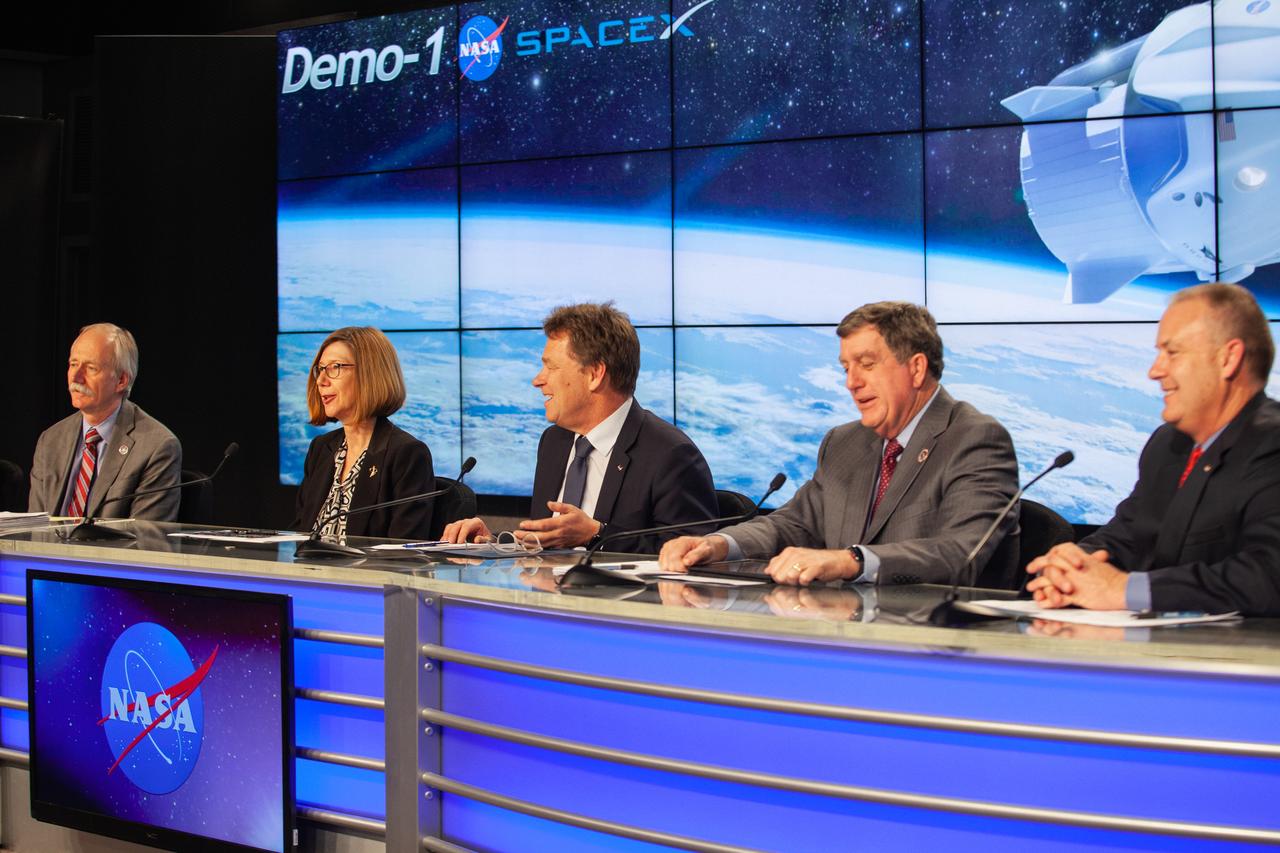
In Kennedy Space Center’s Press Site auditorium, agency and industry leaders speak to members of the media on Friday, Feb. 22, during the post-flight readiness review briefing for the SpaceX Demo-1 Commercial Crew Program (CCP) mission to the International Space Station. From left are: Josh Finch of NASA Communications; William Gerstenmaier, associate administrator, NASA Human Exploration and Operations; Kathy Lueders, manager, NASA Commercial Crew Program; Hans Koenigsmann, vice president, Build and Flight Reliability, SpaceX; Kirk Shireman, International Space Station Program manager; and Norm Knight, deputy director, NASA Johnson Space Center Flight Operations. The inaugural uncrewed flight of the SpaceX Crew Dragon, known as Demo-1, is targeted to lift off from Kennedy’s Launch Complex 39A on Saturday, March 2. EST. A SpaceX Falcon 9 rocket will launch the Crew Dragon on a mission designed to validate end-to-end systems and capabilities, leading to certification to fly crew.

A SpaceX Falcon 9 rocket carrying the company’s Dragon spacecraft for Axiom Space’s Axiom Mission 3 (Ax-3) to the International Space Station lifts off at 4:49 p.m. EST from Launch Complex 39A at NASA’s Kennedy Space Center in Florida on Thursday, Jan. 18, 2024. Ax-3 is the third all private astronaut mission to the space station, sending crew members Commander Michael López-Alegría, Pilot Walter Villadei, and Mission Specialists Marcus Wandt and Alper Gezeravci into orbit. The crew will spend about two weeks conducting microgravity research, educational outreach, and commercial activities aboard the space station.
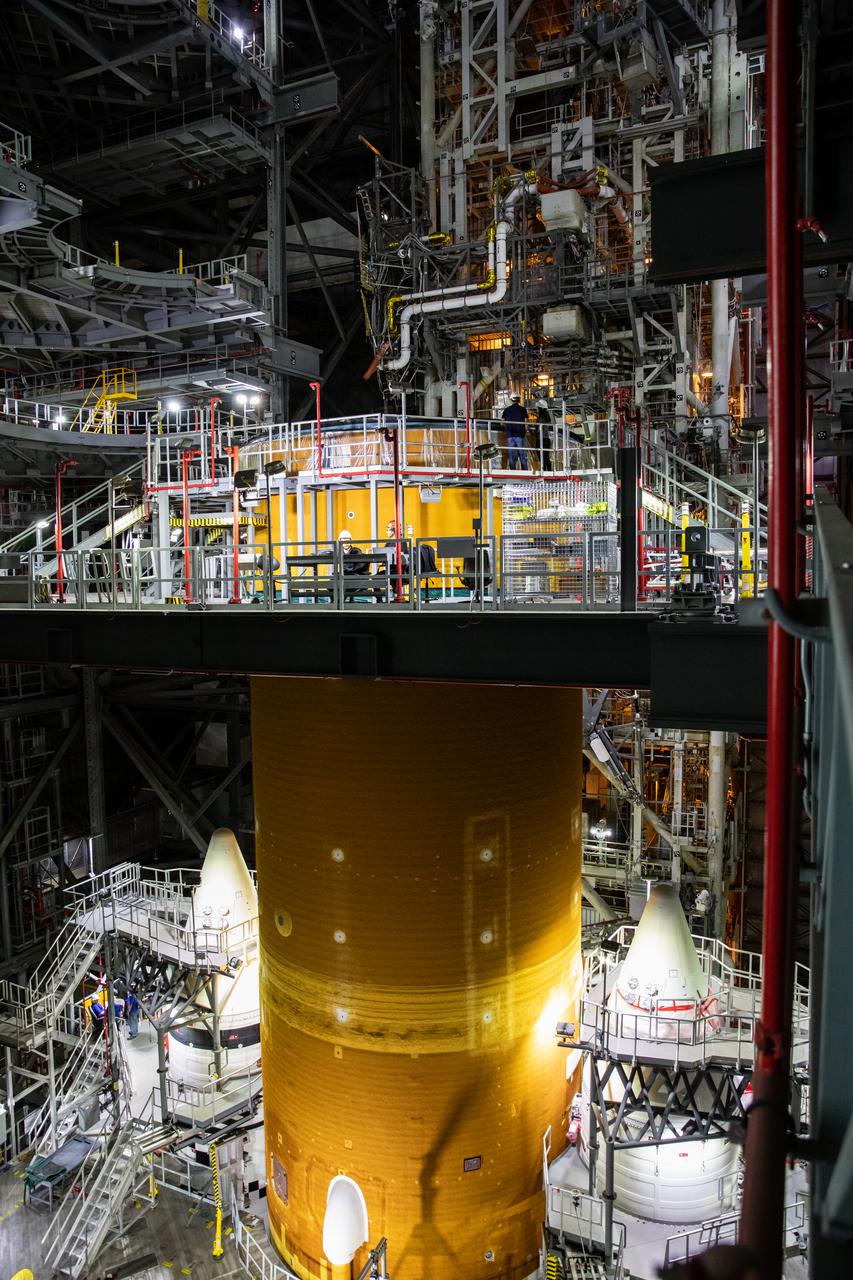
The Space Launch System (SLS) core stage is seen atop the mobile launcher inside High Bay 3 of the Vehicle Assembly Building at NASA’s Kennedy Space Center in Florida on June 15, 2021. Teams with NASA’s Exploration Ground Systems and contractor Jacobs lifted and lowered the core stage – the largest part of the rocket – onto the mobile launcher, placing it in between the twin solid rocket boosters. The 188,000-pound core stage, with its four RS-25 engines, will provide more than 2 million pounds of thrust during launch and ascent, and coupled with the boosters, will provide more than 8.8 million pounds of thrust to send the Artemis I mission to space. Under the Artemis program, NASA will land the first woman and first person of color on the Moon, as well as establish a sustainable presence on the lunar surface in preparation for human missions to Mars.
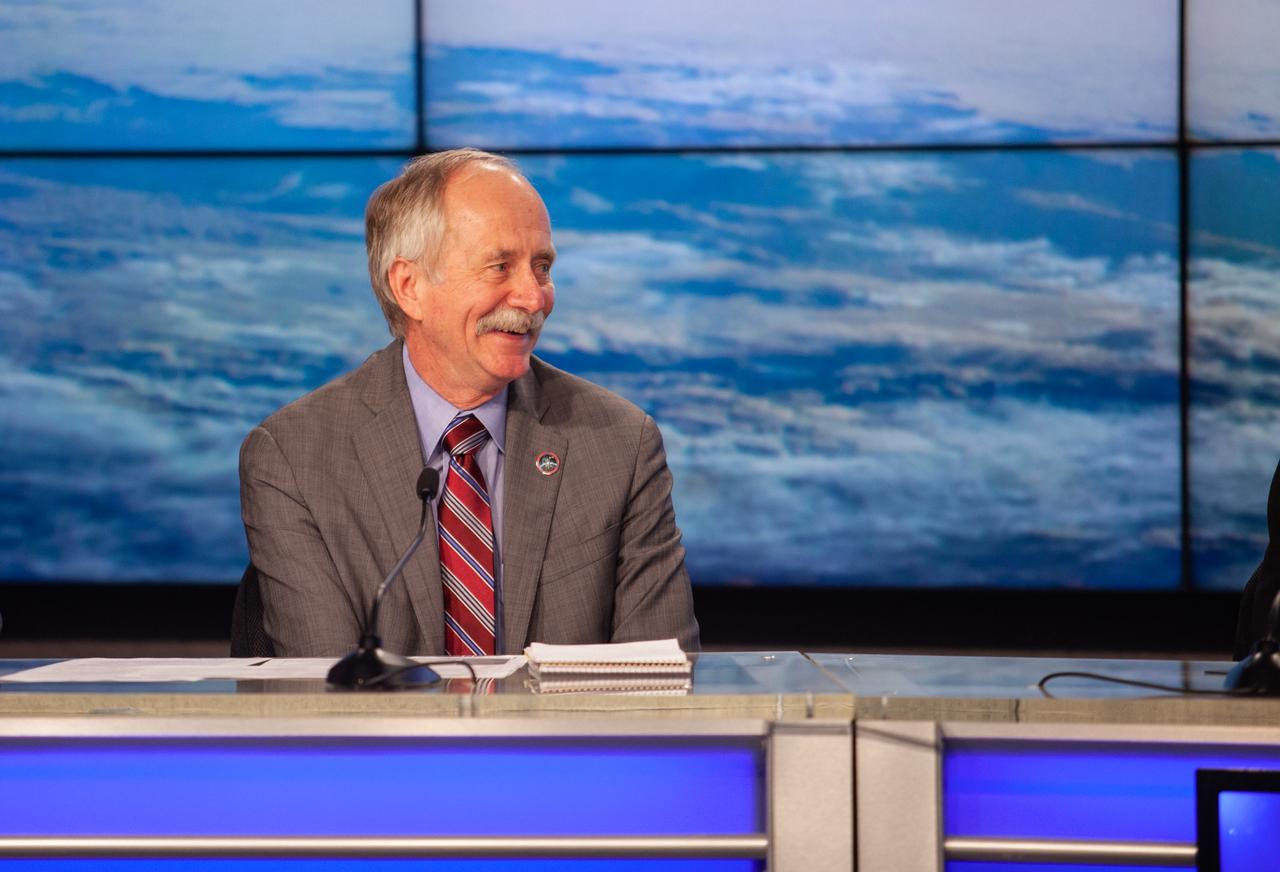
In Kennedy Space Center’s Press Site auditorium, agency and industry leaders speak to members of the media on Friday, Feb. 22, during the post-flight readiness review briefing for the SpaceX Demo-1 Commercial Crew Program (CCP) mission to the International Space Station. From left are: Josh Finch of NASA Communications and William Gerstenmaier, associate administrator, NASA Human Exploration and Operations. The inaugural uncrewed flight of the SpaceX Crew Dragon, known as Demo-1, is targeted to lift off from Kennedy’s Launch Complex 39A on Saturday, March 2. EST. A SpaceX Falcon 9 rocket will launch the Crew Dragon on a mission designed to validate end-to-end systems and capabilities, leading to certification to fly crew.

From left, Kennedy Space Center’s Chief Technologist Barbara Brown, Mark Wiese, logistics element manager for the Gateway Program, Tim Dunn, launch director for the agency’s Launch Services Program, Shawn Quinn, director of Engineering and Johnny Nguyen participate in the fifth and final TED Talk-style informational session on Nov. 14, 2019. Held in the Florida spaceport’s Kennedy Learning Institute and sponsored by the center’s Launching Leaders and Leadership for the Future, NASAtalks focuses on the topic of intentional careers and aims to provide employees with tools and knowledge that can be utilized for career growth. The theme of this final session was organizations.

Mark Wiese, logistics element manager for the Gateway Program at NASA’s Kennedy Space Center in Florida, speaks at the fifth and final TED Talk-style informational session on Nov. 14, 2019, in the Kennedy Learning Institute. Sponsored by Kennedy’s Launching Leaders and Leadership for the Future, NASAtalks focuses on the topic of intentional careers and aims to provide employees with tools and knowledge that can be utilized for career growth. The theme of this session was organizations, and additional speakers included Chief Counsel Dan Shaver, Director of Engineering Shawn Quinn, Chief Technologist Barbara Brown and Tim Dunn, launch director for the agency’s Launch Services Program.
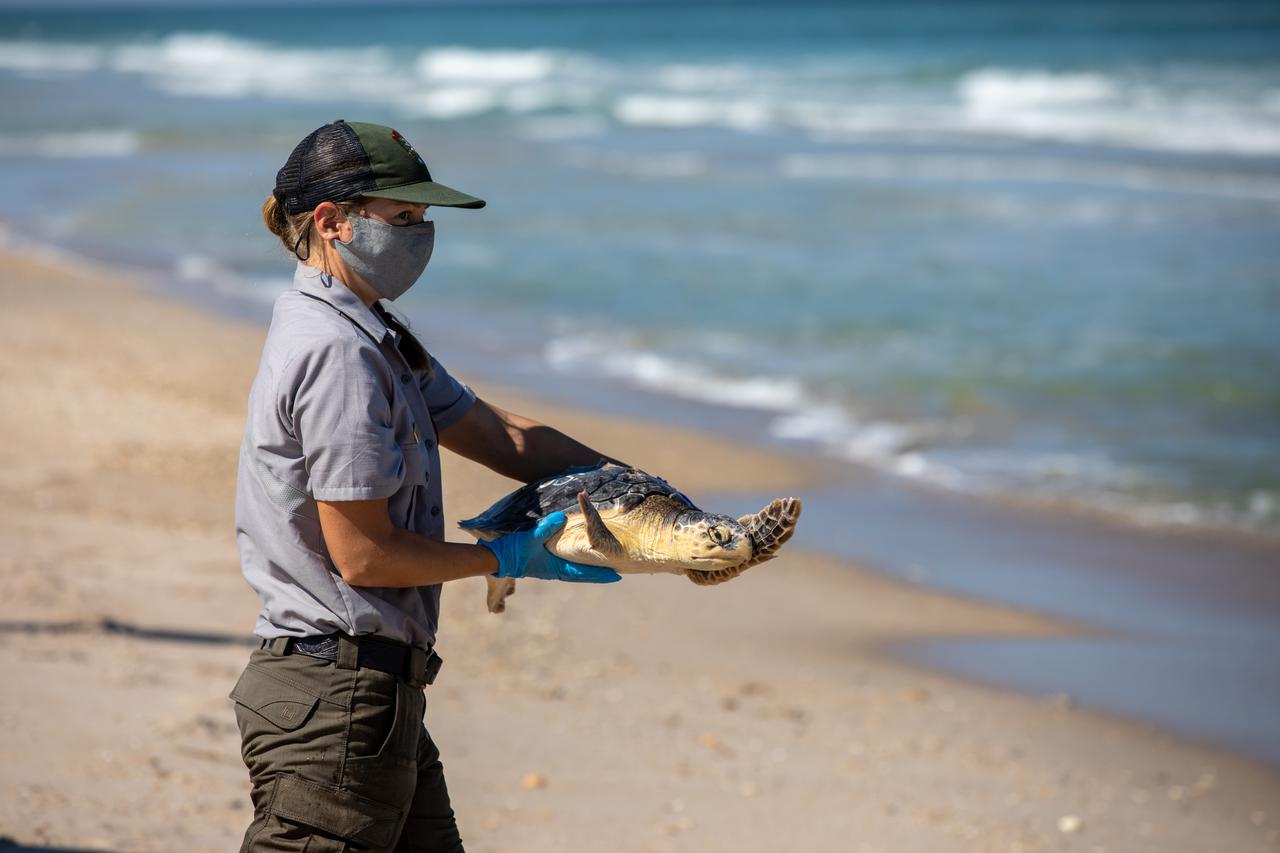
A National Park Service staff member prepares to release a Kemp’s ridley sea turtle into the Atlantic Ocean at the Canaveral National Seashore near Kennedy Space Center on Feb. 26, 2021. The rescued and rehabilitated turtles were flown from aquatic centers in Massachusetts and New York to the Launch and Landing Facility, managed by Space Florida. NASA, U.S. Fish and Wildlife Service, NOAA Fisheries, Space Florida, and Herndon Solutions Group provided support. The Turtles Fly Too organization provided the flight to Kennedy. All marine turtle footage/images was obtained with the approval of the Florida Fish and Wildlife Conservation Commission (FWC) under conditions not harmful to marine turtles. Footage was acquired while conducting authorized conservation activities pursuant to: FWC 2021 Consent Permit, MTP-21-005 and MTP-21-114.
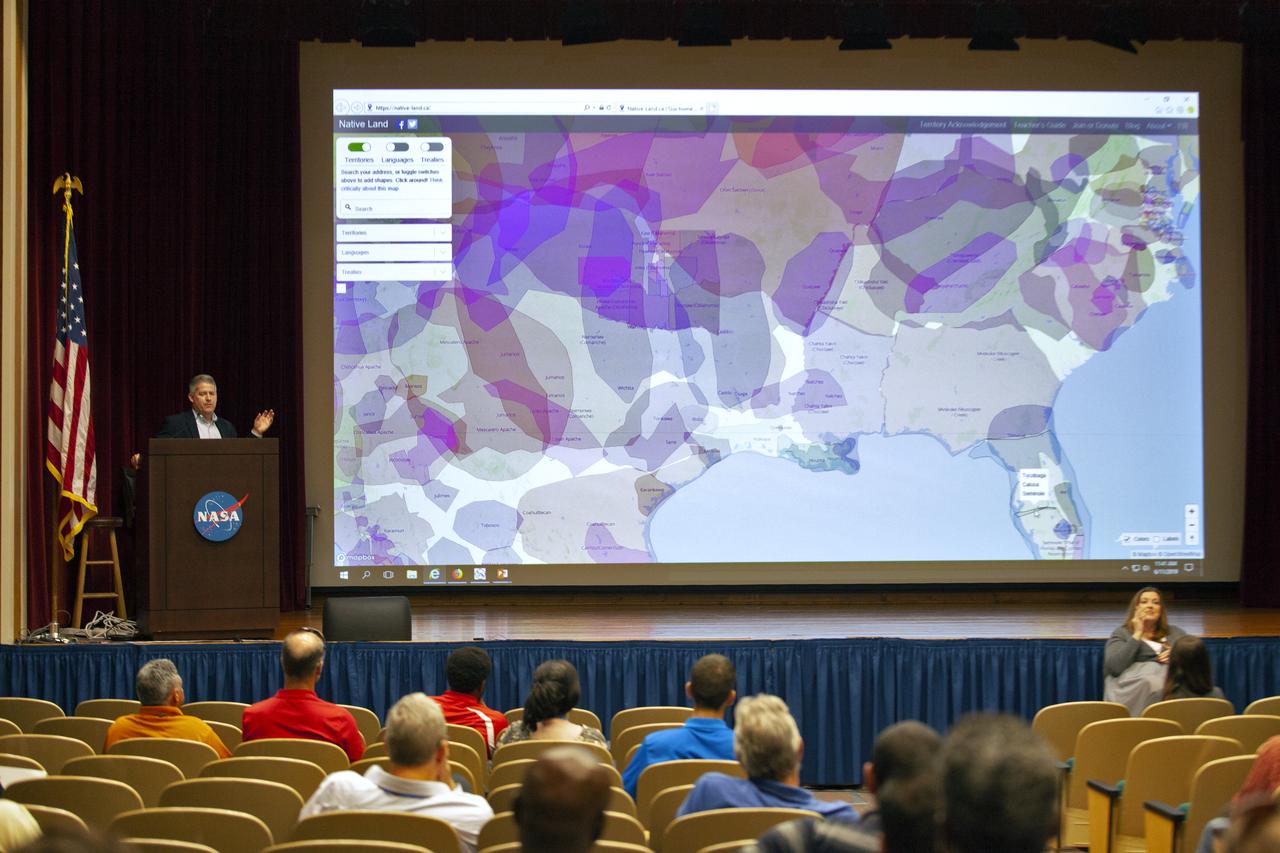
Daniel Murphree, Ph.D., associate professor of history at the University of Central Florida, presents information to NASA Kennedy Space Center employees on the impact Florida natives have had on, and how they were affected by, Atlantic World events from 1492 to the present. The presentation took place June 11, 2019, in Kennedy’s Training Auditorium and was brought to Kennedy by the Native American Heritage Initiative (NAHI) Employee Resource Group. One of eight resource groups at the Florida spaceport, NAHI aims to bring employees together, provide networking opportunities and inform the Kennedy workforce about Native American heritage.
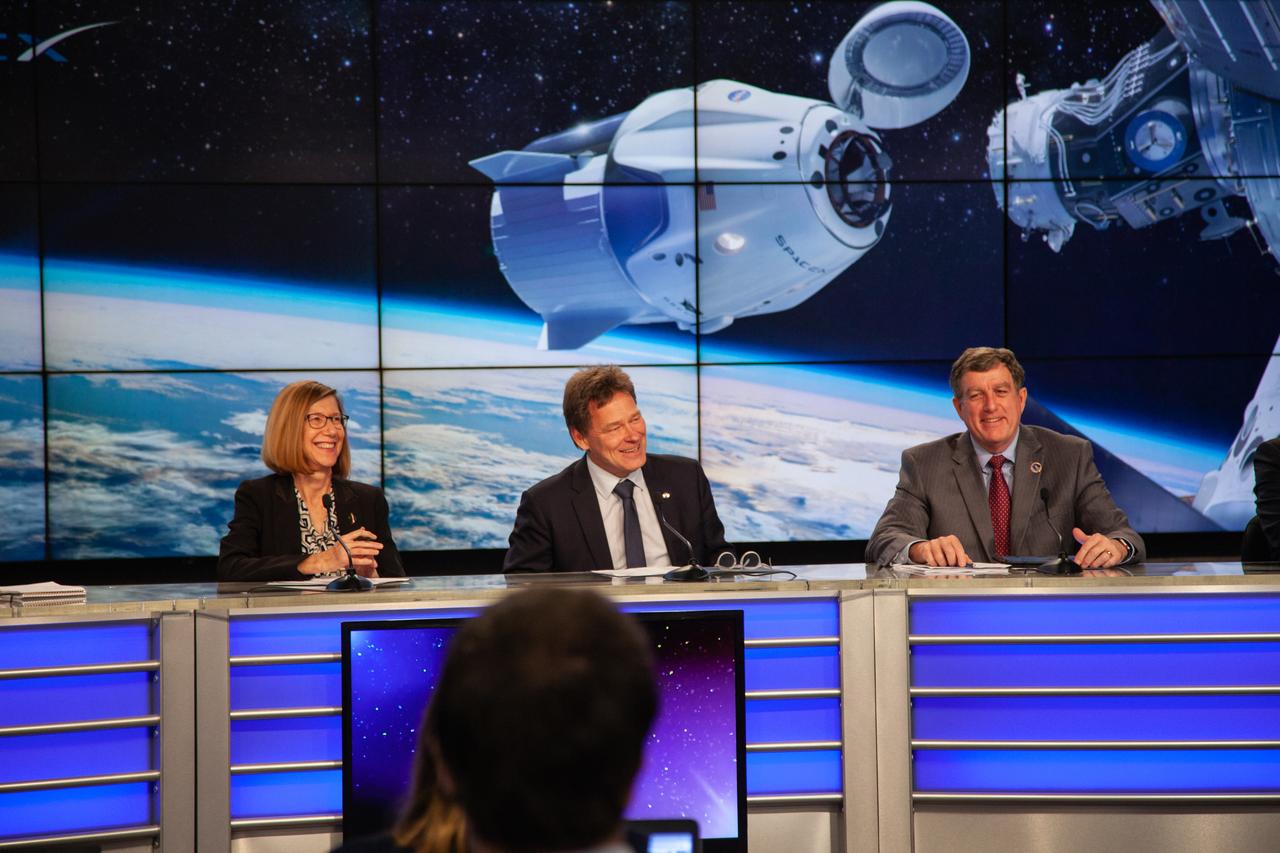
In Kennedy Space Center’s Press Site auditorium, agency and industry leaders speak to members of the media on Friday, Feb. 22, during the post-flight readiness review briefing for the SpaceX Demo-1 Commercial Crew Program (CCP) mission to the International Space Station. From left are: Kathy Lueders, manager, NASA Commercial Crew Program; Hans Koenigsmann, vice president, Build and Flight Reliability, SpaceX; and Kirk Shireman, International Space Station Program manager. The inaugural uncrewed flight of the SpaceX Crew Dragon, known as Demo-1, is targeted to lift off from Kennedy’s Launch Complex 39A on Saturday, March 2. EST. A SpaceX Falcon 9 rocket will launch the Crew Dragon on a mission designed to validate end-to-end systems and capabilities, leading to certification to fly crew.

Barbara Brown, chief technologist at NASA’s Kennedy Space Center in Florida, speaks at the fifth and final TED Talk-style informational session on Nov. 14, 2019, in the Kennedy Learning Institute. Sponsored by Kennedy’s Launching Leaders and Leadership for the Future, NASAtalks focuses on the topic of intentional careers and aims to provide employees with tools and knowledge that can be utilized for career growth. The theme of this session was organizations, and additional speakers included Director of Engineering Shawn Quinn, Chief Counsel Dan Shaver and Tim Dunn, launch director for the agency’s Launch Services Program, with a skill-building section on vision by Mark Wiese, logistics element manager for the Gateway Program.
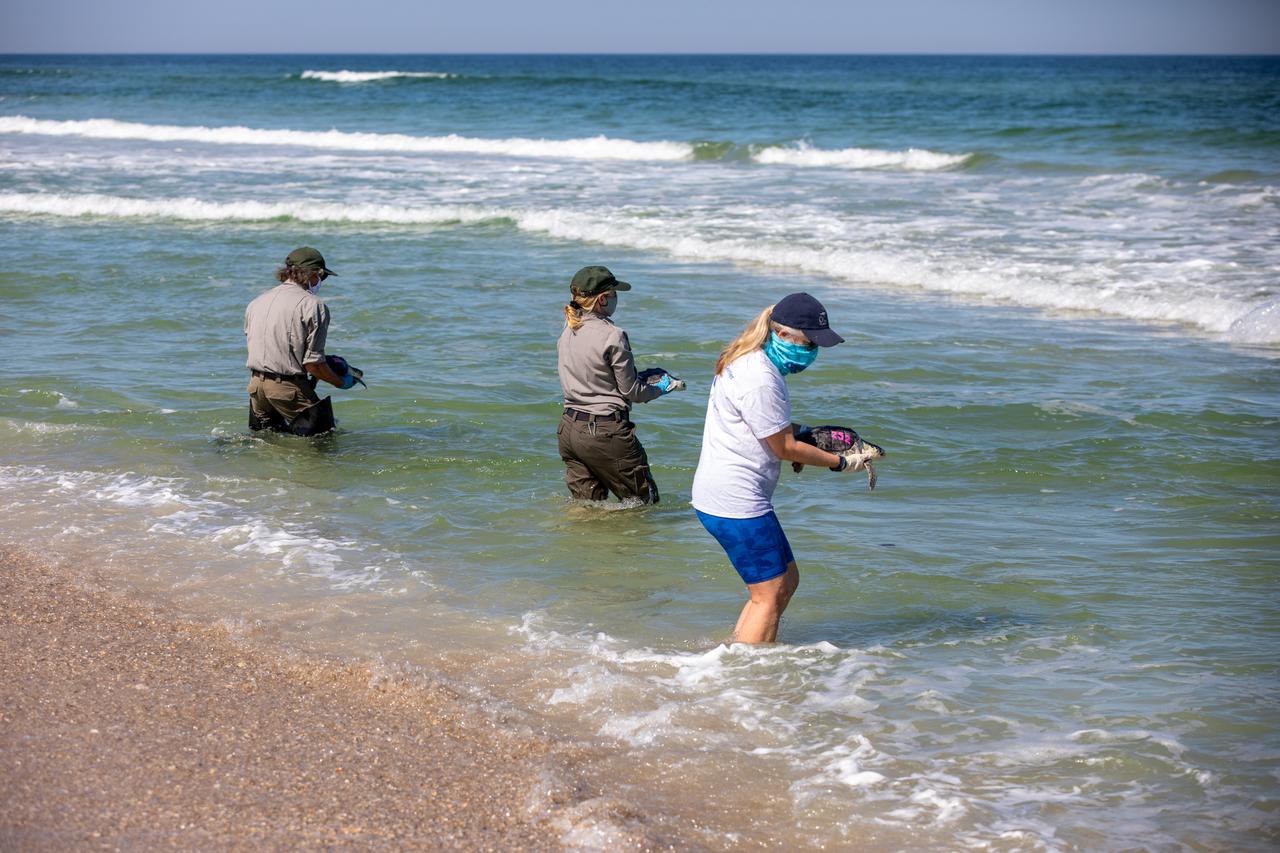
Staff with NASA, the National Park Service, Herndon Solutions Group, the center’s environmental services contractor, and others, prepare to release Kemp’s ridley sea turtles into the Atlantic Ocean at the Canaveral National Seashore near Kennedy Space Center on Feb. 26, 2021. The rescued and rehabilitated turtles were flown from aquatic centers in Massachusetts and New York to the Launch and Landing Facility, managed by Space Florida. NASA, U.S. Fish and Wildlife Service, NOAA Fisheries, Space Florida, and Herndon Solutions Group provided support. The Turtles Fly Too organization provided the flight to Kennedy. All marine turtle footage/images was obtained with the approval of the Florida Fish and Wildlife Conservation Commission (FWC) under conditions not harmful to marine turtles. Footage was acquired while conducting authorized conservation activities pursuant to: FWC 2021 Consent Permit, MTP-21-005 and MTP-21-114.
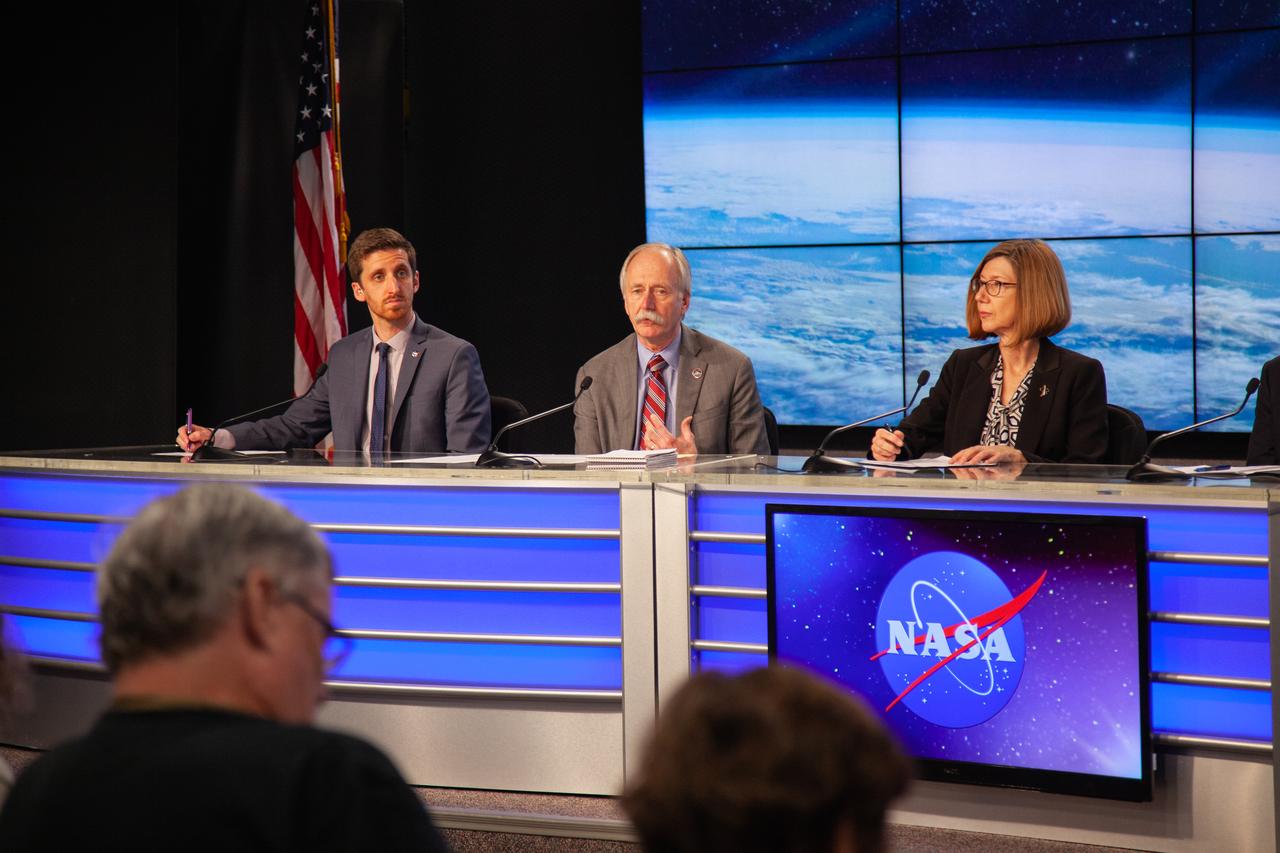
In Kennedy Space Center’s Press Site auditorium, agency and industry leaders speak to members of the media on Friday, Feb. 22, during the post-flight readiness review briefing for the SpaceX Demo-1 Commercial Crew Program (CCP) mission to the International Space Station. From left are: Josh Finch of NASA Communications; William Gerstenmaier, associate administrator, NASA Human Exploration and Operations; and Kathy Lueders, manager, NASA Commercial Crew Program. The inaugural uncrewed flight of the SpaceX Crew Dragon, known as Demo-1, is targeted to lift off from Kennedy’s Launch Complex 39A on Saturday, March 2. EST. A SpaceX Falcon 9 rocket will launch the Crew Dragon on a mission designed to validate end-to-end systems and capabilities, leading to certification to fly crew.
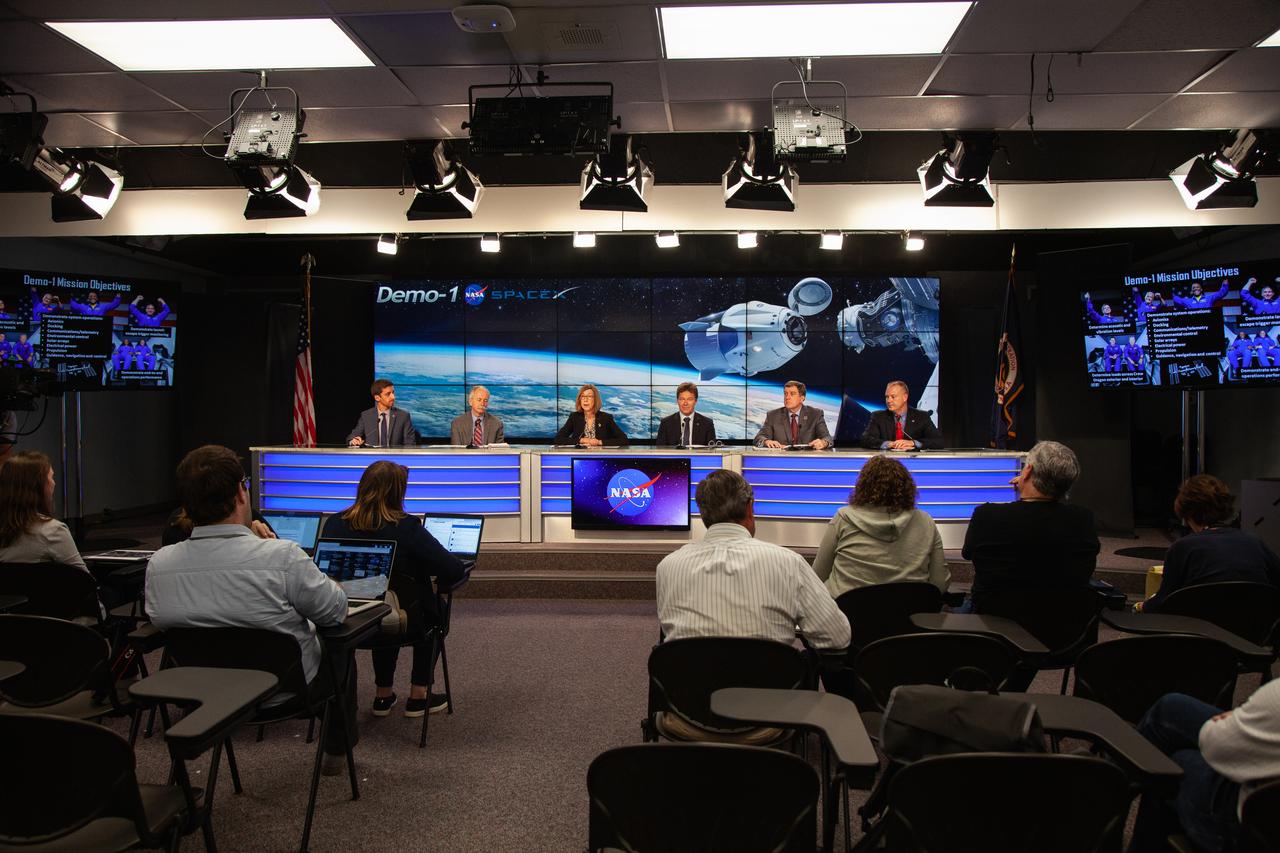
In Kennedy Space Center’s Press Site auditorium, agency and industry leaders speak to members of the media on Friday, Feb. 22, during the post-flight readiness review briefing for the SpaceX Demo-1 Commercial Crew Program (CCP) mission to the International Space Station. From left are: Josh Finch of NASA Communications; William Gerstenmaier, associate administrator, NASA Human Exploration and Operations; Kathy Lueders, manager, NASA Commercial Crew Program; Hans Koenigsmann, vice president, Build and Flight Reliability, SpaceX; Kirk Shireman, International Space Station Program manager; and Norm Knight, deputy director, NASA Johnson Space Center Flight Operations. The inaugural uncrewed flight of the SpaceX Crew Dragon, known as Demo-1, is targeted to lift off from Kennedy’s Launch Complex 39A on Saturday, March 2. EST. A SpaceX Falcon 9 rocket will launch the Crew Dragon on a mission designed to validate end-to-end systems and capabilities, leading to certification to fly crew.
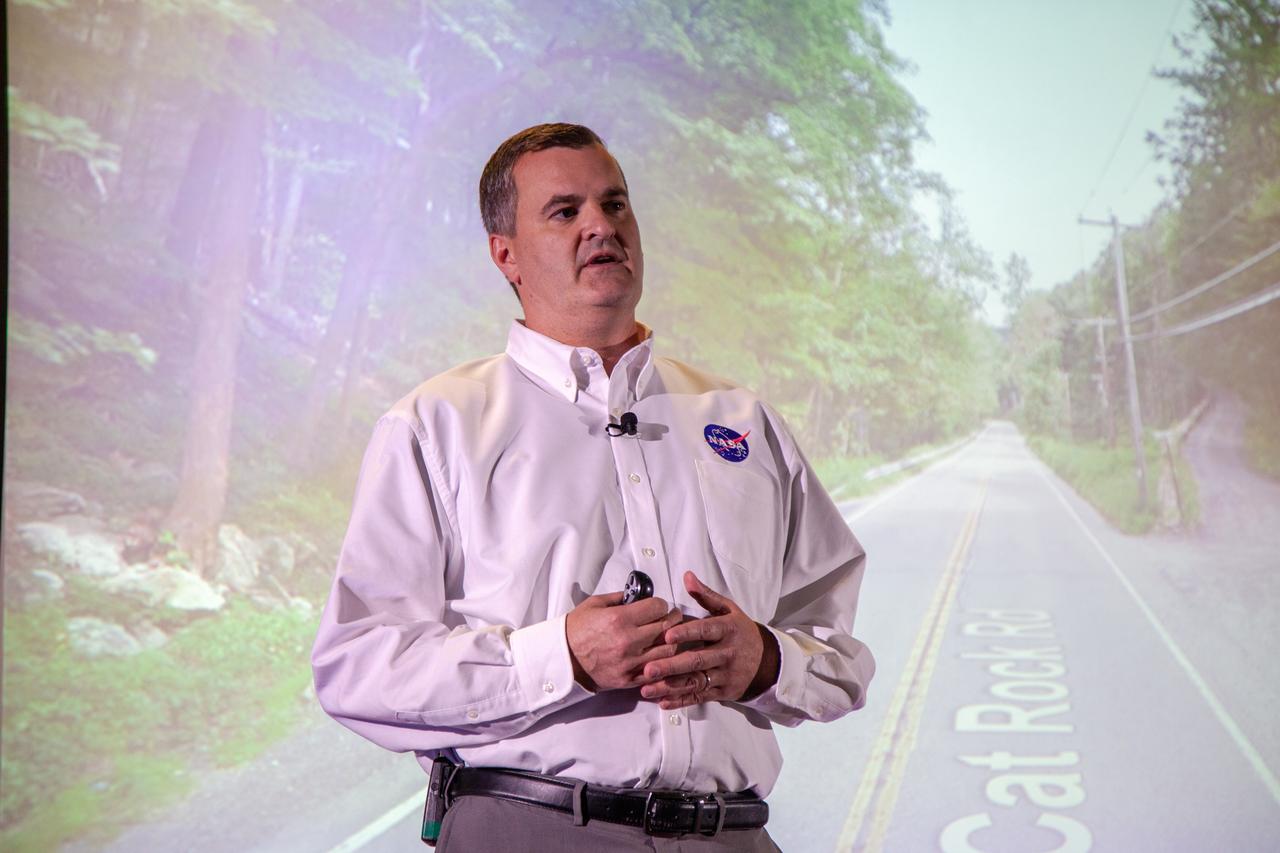
Mark Wiese, logistics element manager for the Gateway Program at NASA’s Kennedy Space Center in Florida, speaks at the fifth and final TED Talk-style informational session on Nov. 14, 2019, in the Kennedy Learning Institute. Sponsored by Kennedy’s Launching Leaders and Leadership for the Future, NASAtalks focuses on the topic of intentional careers and aims to provide employees with tools and knowledge that can be utilized for career growth. The theme of this session was organizations, and additional speakers included Chief Counsel Dan Shaver, Director of Engineering Shawn Quinn, Chief Technologist Barbara Brown and Tim Dunn, launch director for the agency’s Launch Services Program.

Shawn Quinn, director of Engineering at NASA’s Kennedy Space Center in Florida, speaks at the fifth and final TED Talk-style informational session on Nov. 14, 2019, in the Kennedy Learning Institute. Sponsored by Kennedy’s Launching Leaders and Leadership for the Future, NASAtalks focuses on the topic of intentional careers and aims to provide employees with tools and knowledge that can be utilized for career growth. The theme of this session was organizations, and additional speakers included Chief Counsel Dan Shaver, Chief Technologist Barbara Brown and Tim Dunn, launch director for the agency’s Launch Services Program, with a skill-building section on vision by Mark Wiese, logistics element manager for the Gateway Program.

Barbara Brown, chief technologist at NASA’s Kennedy Space Center in Florida, speaks at the fifth and final TED Talk-style informational session on Nov. 14, 2019, in the Kennedy Learning Institute. Sponsored by Kennedy’s Launching Leaders and Leadership for the Future, NASAtalks focuses on the topic of intentional careers and aims to provide employees with tools and knowledge that can be utilized for career growth. The theme of this session was organizations, and additional speakers included Director of Engineering Shawn Quinn, Chief Counsel Dan Shaver and Tim Dunn, launch director for the agency’s Launch Services Program, with a skill-building section on vision by Mark Wiese, logistics element manager for the Gateway Program.

Shawn Quinn, director of Engineering at NASA’s Kennedy Space Center in Florida, speaks at the fifth and final TED Talk-style informational session on Nov. 14, 2019, in the Kennedy Learning Institute. Sponsored by Kennedy’s Launching Leaders and Leadership for the Future, NASAtalks focuses on the topic of intentional careers and aims to provide employees with tools and knowledge that can be utilized for career growth. The theme of this session was organizations, and additional speakers included Chief Counsel Dan Shaver, Chief Technologist Barbara Brown and Tim Dunn, launch director for the agency’s Launch Services Program, with a skill-building section on vision by Mark Wiese, logistics element manager for the Gateway Program.
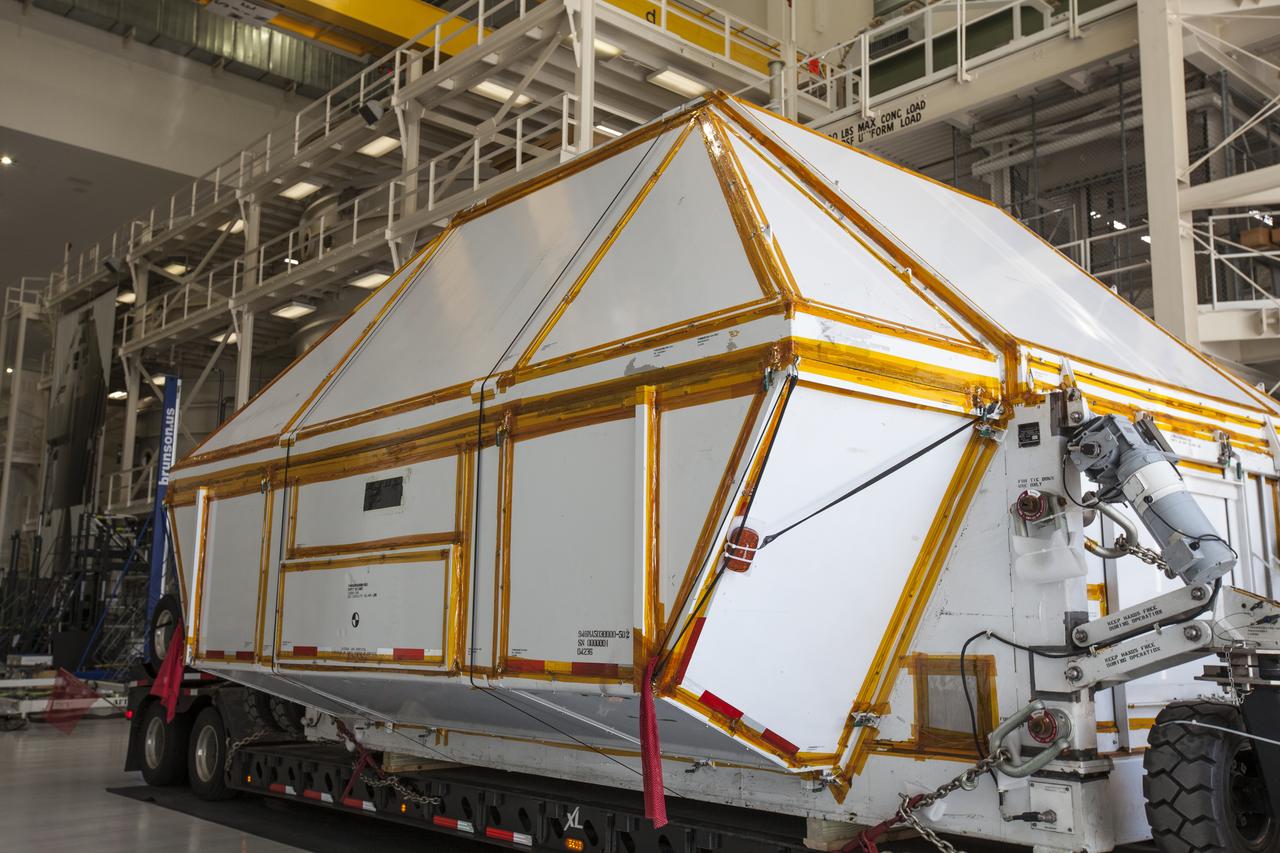
The Orion crew module pressure vessel for Exploration Mission-2 is backed into the high bay at the Neil Armstrong Operations and Checkout Building at NASA's Kennedy Space Center in Florida on Aug. 24, 2018. The pressure vessel was transported in its Crew Module Transportation Fixture by super-wide transport truck from Michoud Assembly Facility near New Orleans. The pressure vessel is Orion's primary structure that holds the pressurized atmosphere astronauts will breathe and work in while in the vacuum of deep space. Inside the facility's high bay, the pressure vessel will be secured on a precision alignment tool to begin preparing it for flight.
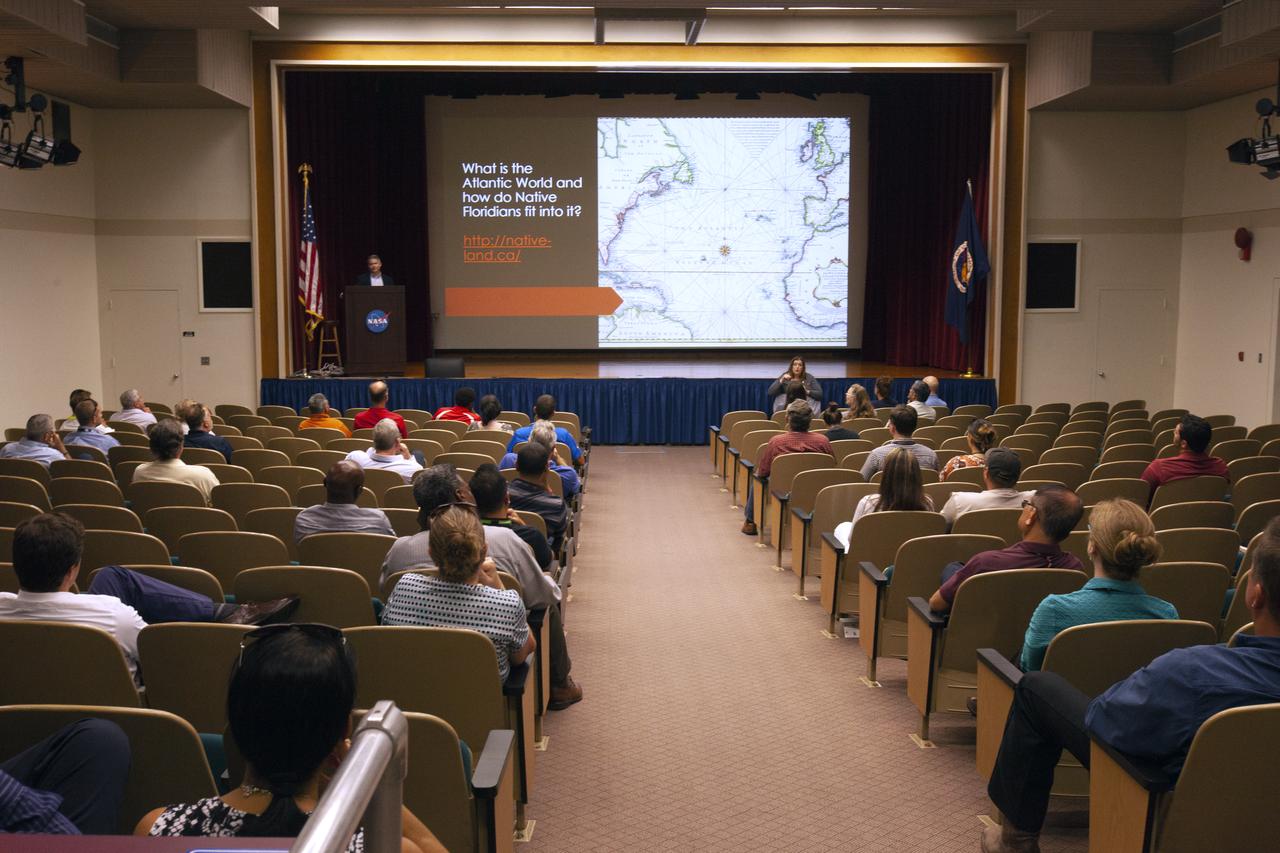
NASA Kennedy Space Center employees attend a presentation on June 11, 2019, on Native American presence in Florida in Kennedy’s Training Auditorium. Daniel Murphree, Ph.d., associate professor of history at the University of Central Florida, spoke on the impact Florida natives have had on, and how they were affected by, Atlantic World events from 1492 to the present. The presentation was brought to Kennedy by the Native American Heritage Initiative (NAHI) Employee Resource Group. One of eight resource groups at Kennedy, NAHI aims to bring employees together, provide networking opportunities and inform the Kennedy workforce about Native American heritage.
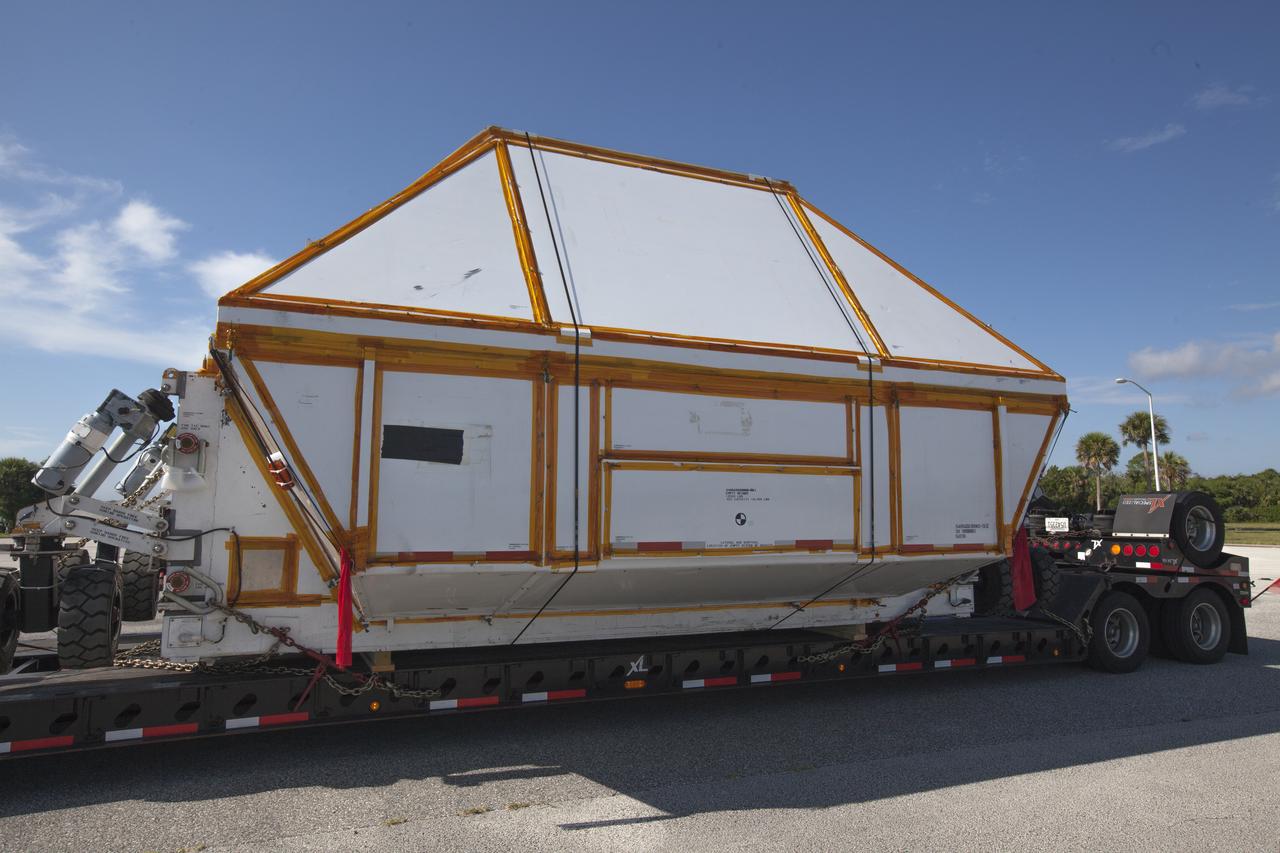
The Orion crew module pressure vessel for Exploration Mission-2 arrives at NASA's Kennedy Space Center in Florida on Aug. 24, 2018. The pressure vessel was transported in its Crew Module Transportation Fixture by super-wide transport truck from Michoud Assembly Facility near New Orleans. The pressure vessel is Orion's primary structure that holds the pressurized atmosphere astronauts will breathe and work in while in the vacuum of deep space. It will be moved into the Neil Armstrong Operations and Checkout Building high bay, where it will be secured on a precision alignment tool to begin preparing it for flight.
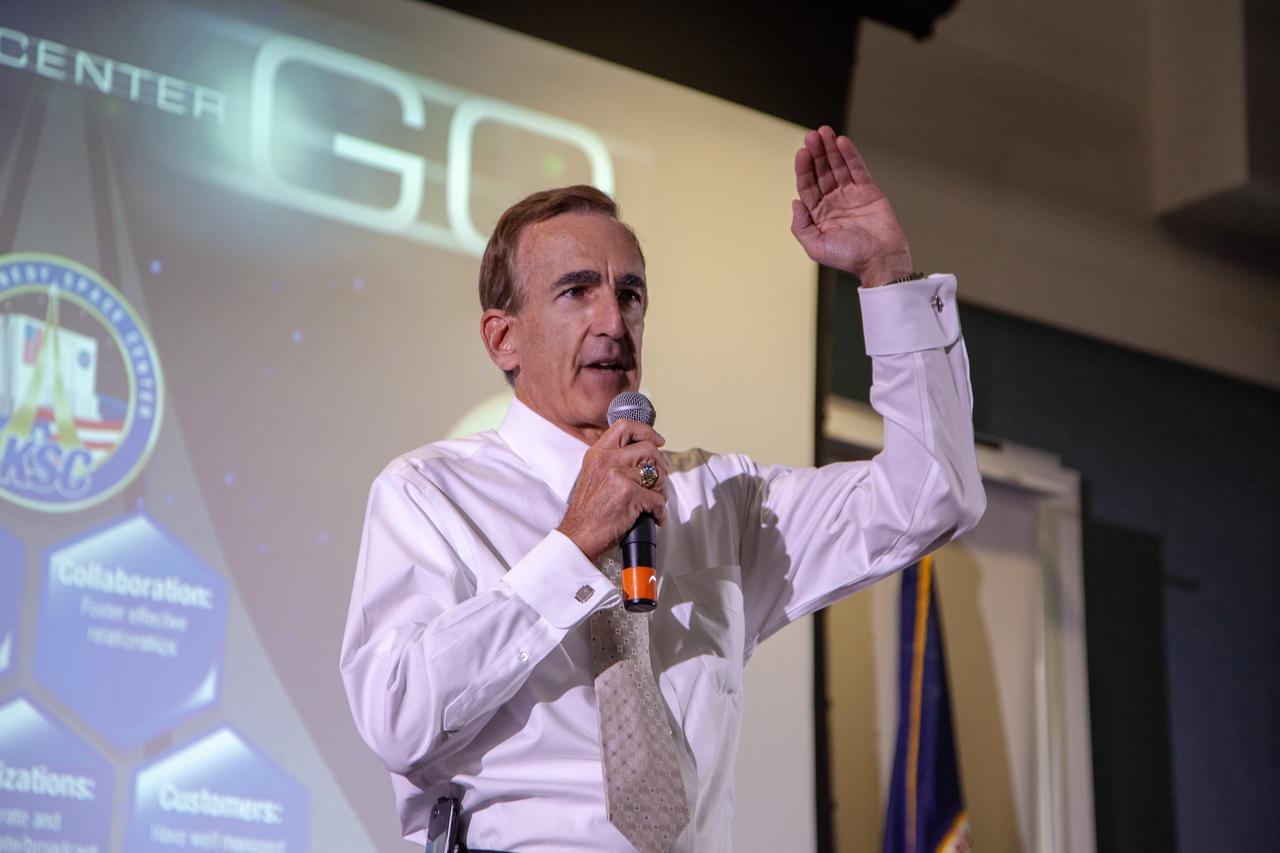
Dan Shaver, chief counsel at NASA’s Kennedy Space Center in Florida, speaks at the fifth and final TED Talk-style informational session on Nov. 14, 2019, in the Kennedy Learning Institute. Sponsored by Kennedy’s Launching Leaders and Leadership for the Future, NASAtalks focuses on the topic of intentional careers and aims to provide employees with tools and knowledge that can be utilized for career growth. The theme of this session was organizations, and additional speakers included Kennedy’s Director of Engineering Shawn Quinn, Chief Technologist Barbara Brown and Tim Dunn, launch director for the agency’s Launch Services Program, with a skill-building section on vision by Mark Wiese, logistics element manager for the Gateway Program.
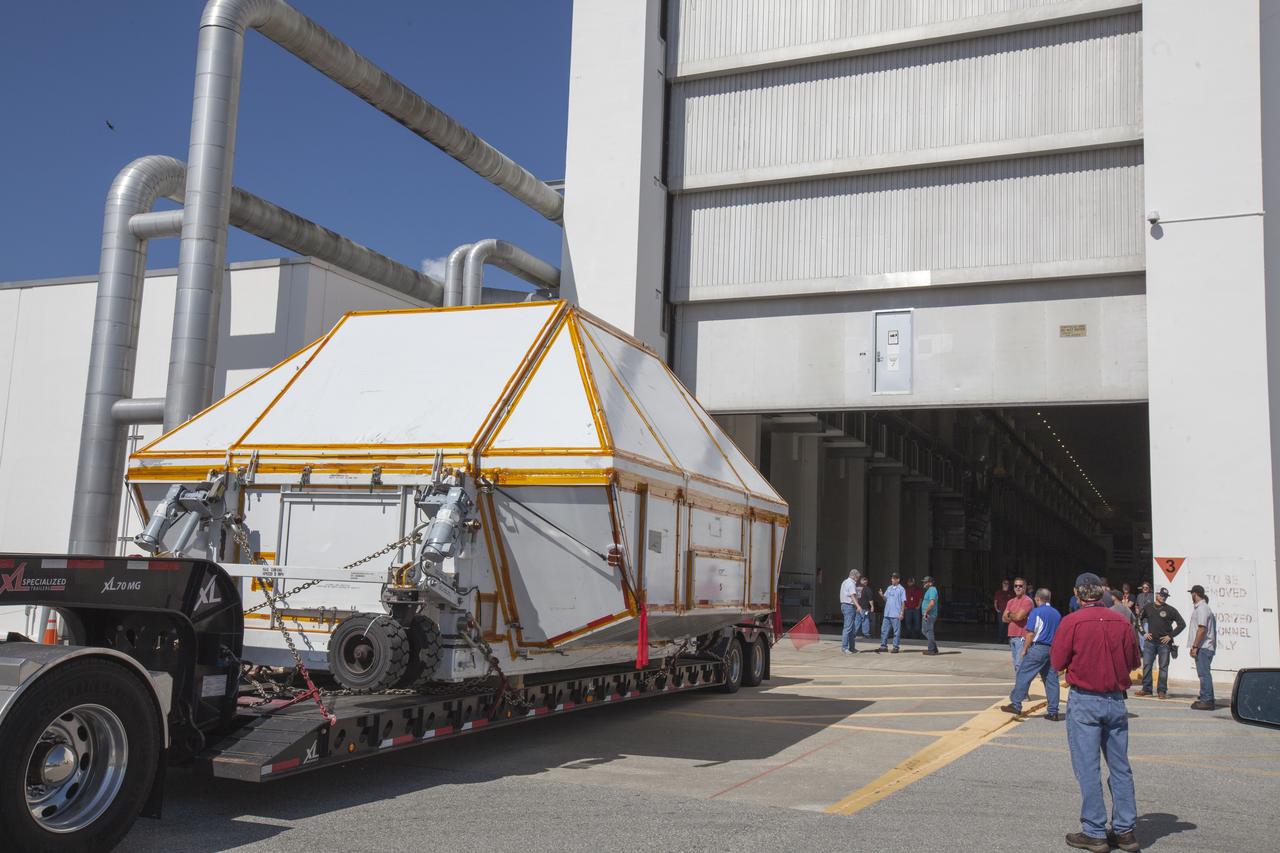
The Orion crew module pressure vessel for Exploration Mission-2 arrives at the Neil Armstrong Operations and Checkout Building at NASA's Kennedy Space Center in Florida on Aug. 24, 2018. The pressure vessel was transported in its Crew Module Transportation Fixture by super-wide transport truck from Michoud Assembly Facility near New Orleans. The pressure vessel is Orion's primary structure that holds the pressurized atmosphere astronauts will breathe and work in while in the vacuum of deep space. It will be moved into the facility's high bay, where it will be secured on a precision alignment tool to begin preparing it for flight.
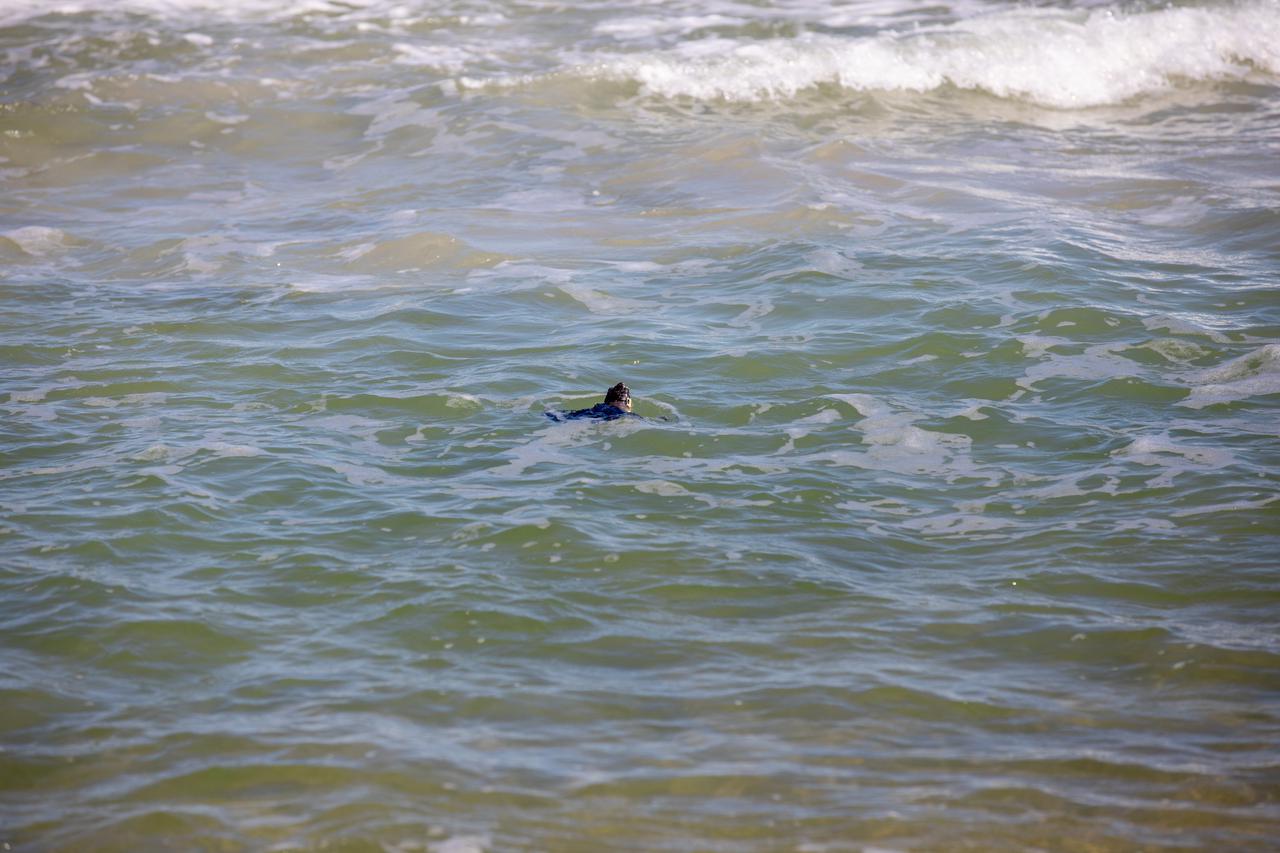
A Kemp’s ridley sea turtle swims in the surf after it is released into the Atlantic Ocean at the Canaveral National Seashore near Kennedy Space Center on Feb. 26, 2021. The rescued and rehabilitated turtles were flown from aquatic centers in Massachusetts and New York to the Launch and Landing Facility, managed by Space Florida. NASA, U.S. Fish and Wildlife Service, NOAA Fisheries, Space Florida, and Herndon Solutions Group provided support. The Turtles Fly Too organization provided the flight to Kennedy. All marine turtle footage/images was obtained with the approval of the Florida Fish and Wildlife Conservation Commission (FWC) under conditions not harmful to marine turtles. Footage was acquired while conducting authorized conservation activities pursuant to: FWC 2021 Consent Permit, MTP-21-005 and MTP-21-114.
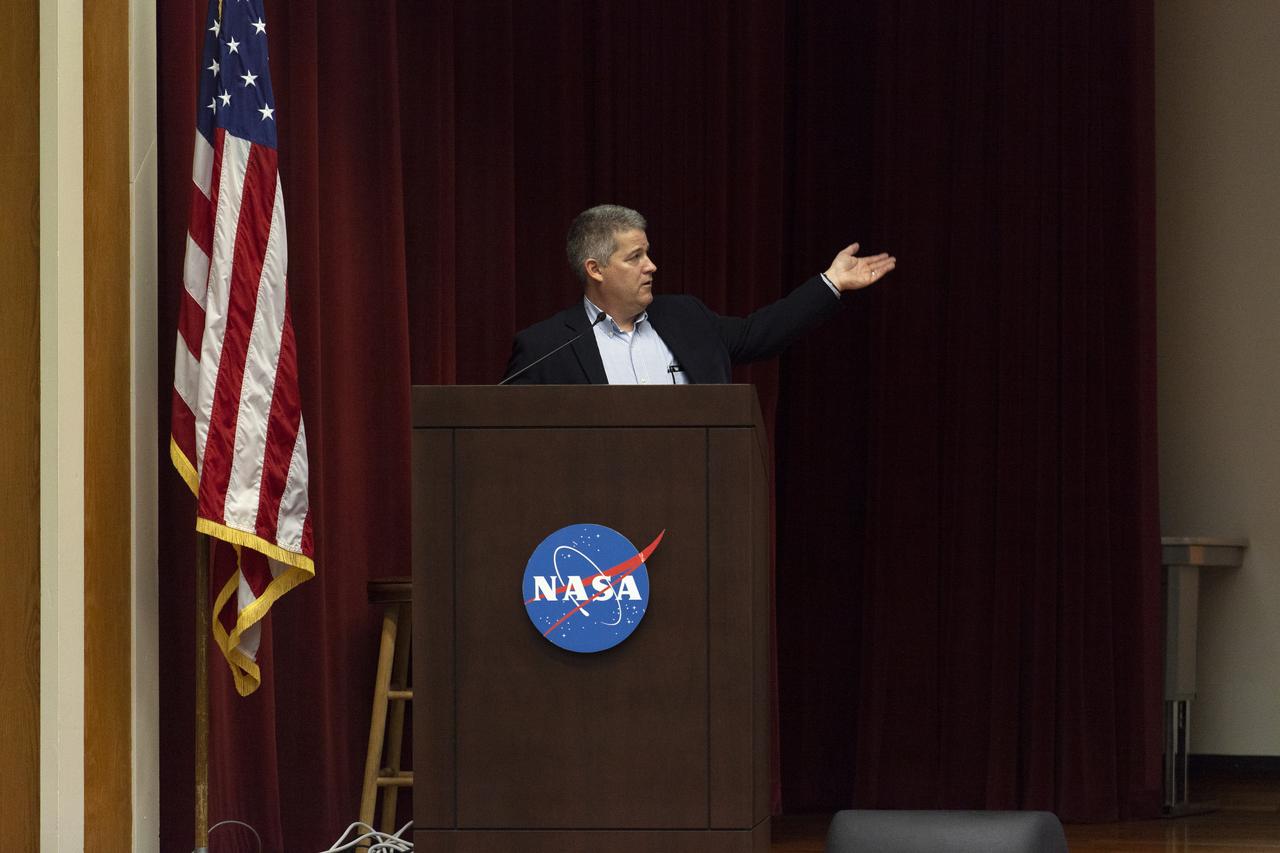
Daniel Murphree, Ph.D., associate professor of history at the University of Central Florida, presents information to NASA Kennedy Space Center employees on the impact Florida natives have had on, and how they were affected by, Atlantic World events from 1492 to the present. The presentation took place June 11, 2019, in Kennedy’s Training Auditorium and was brought to Kennedy by the Native American Heritage Initiative (NAHI) Employee Resource Group. One of eight resource groups at the Florida spaceport, NAHI aims to bring employees together, provide networking opportunities and inform the Kennedy workforce about Native American heritage.
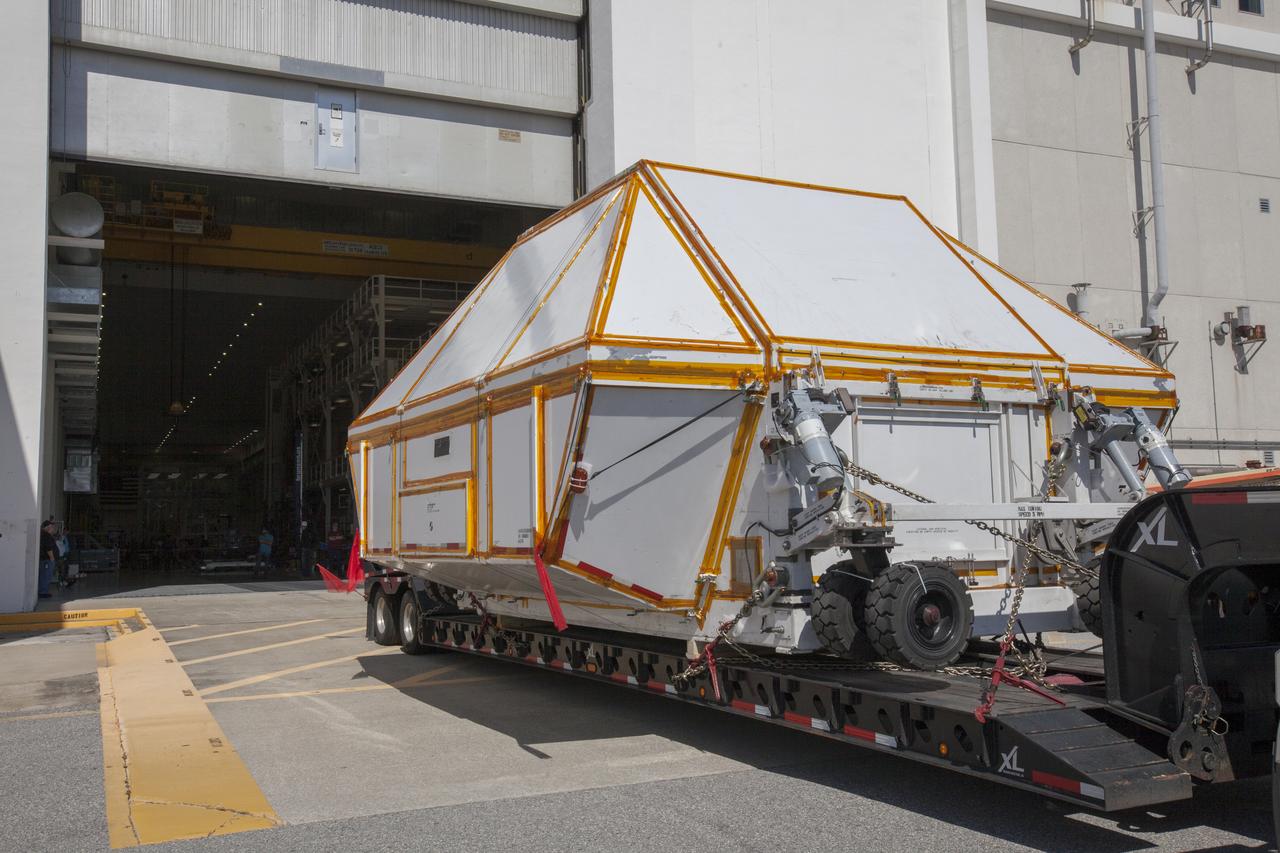
The Orion crew module pressure vessel for Exploration Mission-2 arrives at the Neil Armstrong Operations and Checkout Building at NASA's Kennedy Space Center in Florida on Aug. 24, 2018. The pressure vessel was transported in its Crew Module Transportation Fixture by super-wide transport truck from Michoud Assembly Facility near New Orleans. The pressure vessel is Orion's primary structure that holds the pressurized atmosphere astronauts will breathe and work in while in the vacuum of deep space. It will be moved into the facility's high bay, where it will be secured on a precision alignment tool to begin preparing it for flight.

A SpaceX Falcon 9 rocket carrying the company’s Dragon spacecraft for Axiom Space’s Axiom Mission 3 (Ax-3) to the International Space Station lifts off at 4:49 p.m. EST from Launch Complex 39A at NASA’s Kennedy Space Center in Florida on Thursday, Jan. 18, 2024. Ax-3 is the third all private astronaut mission to the space station, sending crew members Commander Michael López-Alegría, Pilot Walter Villadei, and Mission Specialists Marcus Wandt and Alper Gezeravci into orbit. The crew will spend about two weeks conducting microgravity research, educational outreach, and commercial activities aboard the space station.

A SpaceX Falcon 9 rocket carrying the company’s Dragon spacecraft for Axiom Space’s Axiom Mission 3 (Ax-3) to the International Space Station lifts off at 4:49 p.m. EST from Launch Complex 39A at NASA’s Kennedy Space Center in Florida on Thursday, Jan. 18, 2024. Ax-3 is the third all private astronaut mission to the space station, sending crew members Commander Michael López-Alegría, Pilot Walter Villadei, and Mission Specialists Marcus Wandt and Alper Gezeravci into orbit. The crew will spend about two weeks conducting microgravity research, educational outreach, and commercial activities aboard the space station.
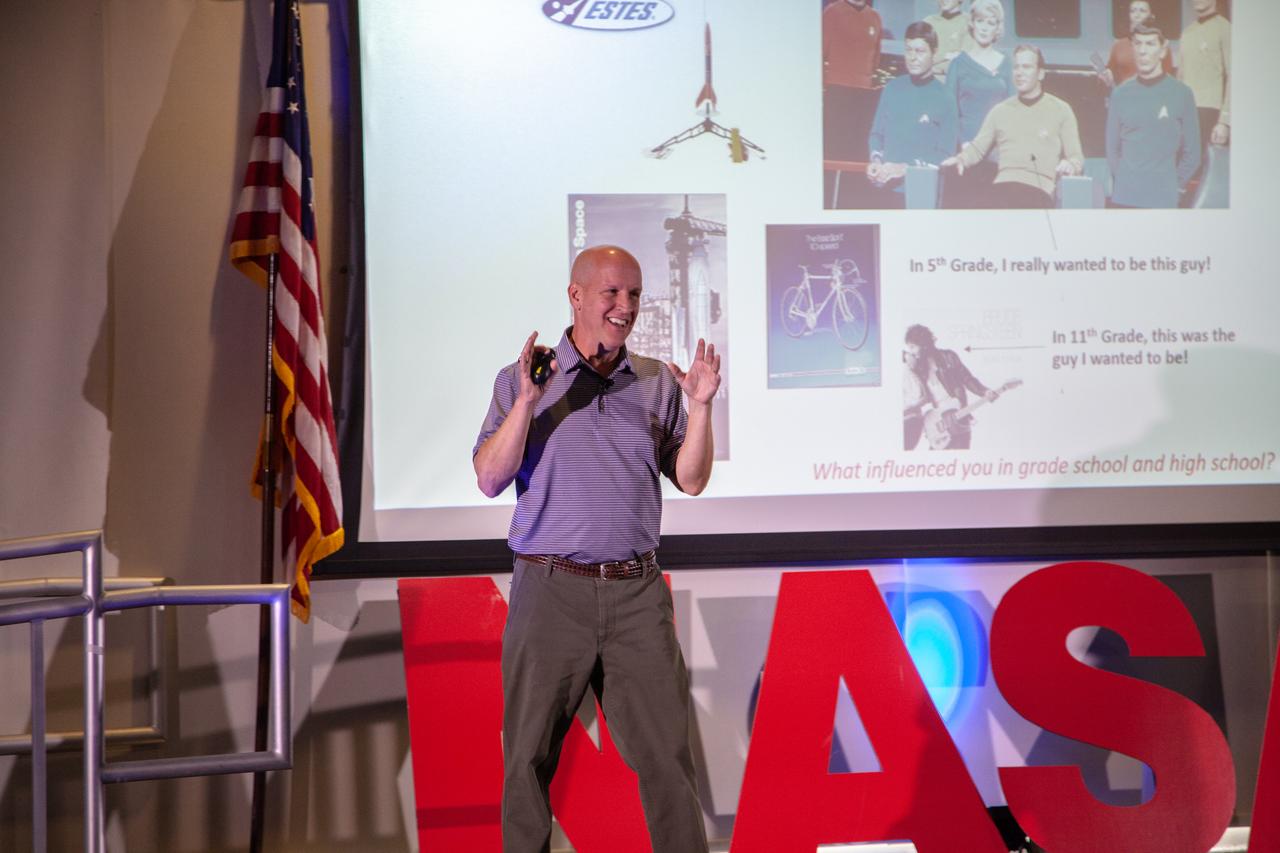
Tim Dunn, launch director for NASA’s Launch Services Program, speaks at the fifth and final TED Talk-style informational session at the agency’s Kennedy Space Center in Florida on Nov. 14, 2019. Hosted in the Kennedy Learning Institute and sponsored by the center’s Launching Leaders and Leadership for the Future, NASAtalks focuses on the topic of intentional careers and aims to provide employees with tools and knowledge that can be utilized for career growth. The theme of this session was organizations, and additional speakers included Director of Engineering Shawn Quinn, Chief Technologist Barbara Brown and Chief Counsel Dan Shaver, with a skill-building section on vision by Mark Wiese, logistics element manager for the Gateway Program.
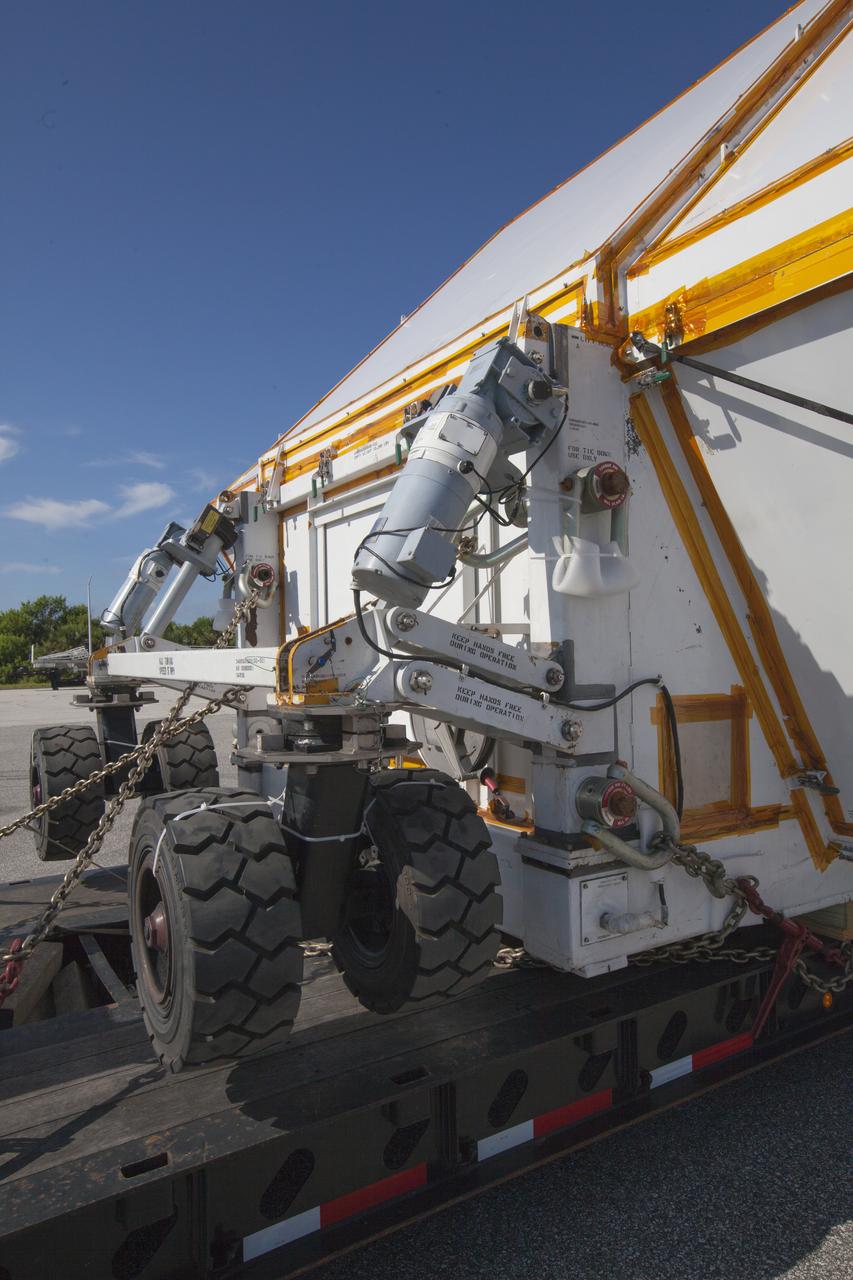
The Orion crew module pressure vessel for Exploration Mission-2 arrives at NASA's Kennedy Space Center in Florida on Aug. 24, 2018. The pressure vessel was transported in its Crew Module Transportation Fixture by super-wide transport truck from Michoud Assembly Facility near New Orleans. The pressure vessel is Orion's primary structure that holds the pressurized atmosphere astronauts will breathe and work in while in the vacuum of deep space. It will be moved into the Neil Armstrong Operations and Checkout Building high bay, where it will be secured on a precision alignment tool to begin preparing it for flight.

A SpaceX Falcon 9 rocket carrying the company’s Dragon spacecraft for Axiom Space’s Axiom Mission 3 (Ax-3) to the International Space Station lifts off at 4:49 p.m. EST from Launch Complex 39A at NASA’s Kennedy Space Center in Florida on Thursday, Jan. 18, 2024. Ax-3 is the third all private astronaut mission to the space station, sending crew members Commander Michael López-Alegría, Pilot Walter Villadei, and Mission Specialists Marcus Wandt and Alper Gezeravci into orbit. The crew will spend about two weeks conducting microgravity research, educational outreach, and commercial activities aboard the space station.
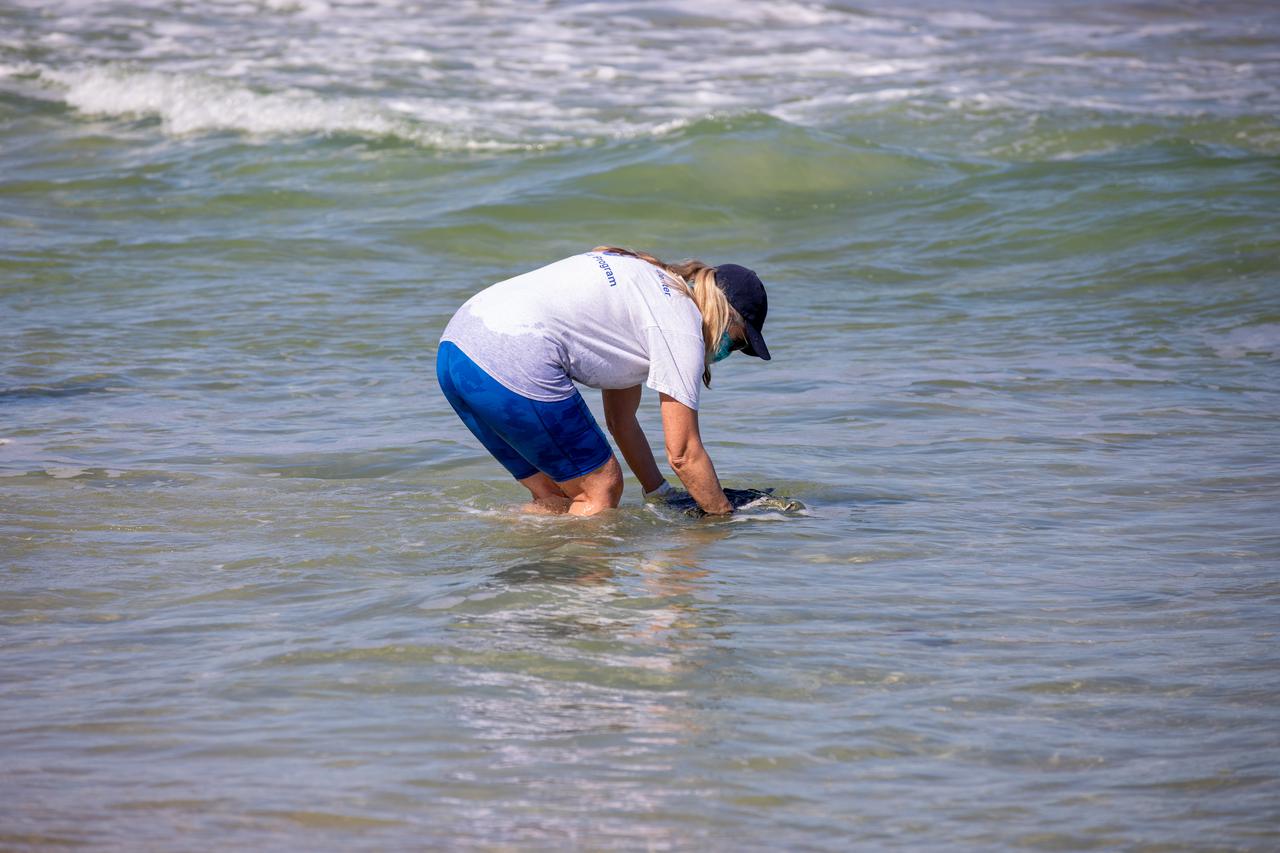
A biologist with Herndon Solutions Group, the center’s environmental services contractor, releases a Kemp’s ridley sea turtle into the Atlantic Ocean at the Canaveral National Seashore near Kennedy Space Center on Feb. 26, 2021. The rescued and rehabilitated turtles were flown from aquatic centers in Massachusetts and New York to the Launch and Landing Facility, managed by Space Florida. NASA, U.S. Fish and Wildlife Service, NOAA Fisheries, Space Florida, and Herndon Solutions Group provided support. The Turtles Fly Too organization provided the flight to Kennedy. All marine turtle footage/images was obtained with the approval of the Florida Fish and Wildlife Conservation Commission (FWC) under conditions not harmful to marine turtles. Footage was acquired while conducting authorized conservation activities pursuant to: FWC 2021 Consent Permit, MTP-21-005 and MTP-21-114.
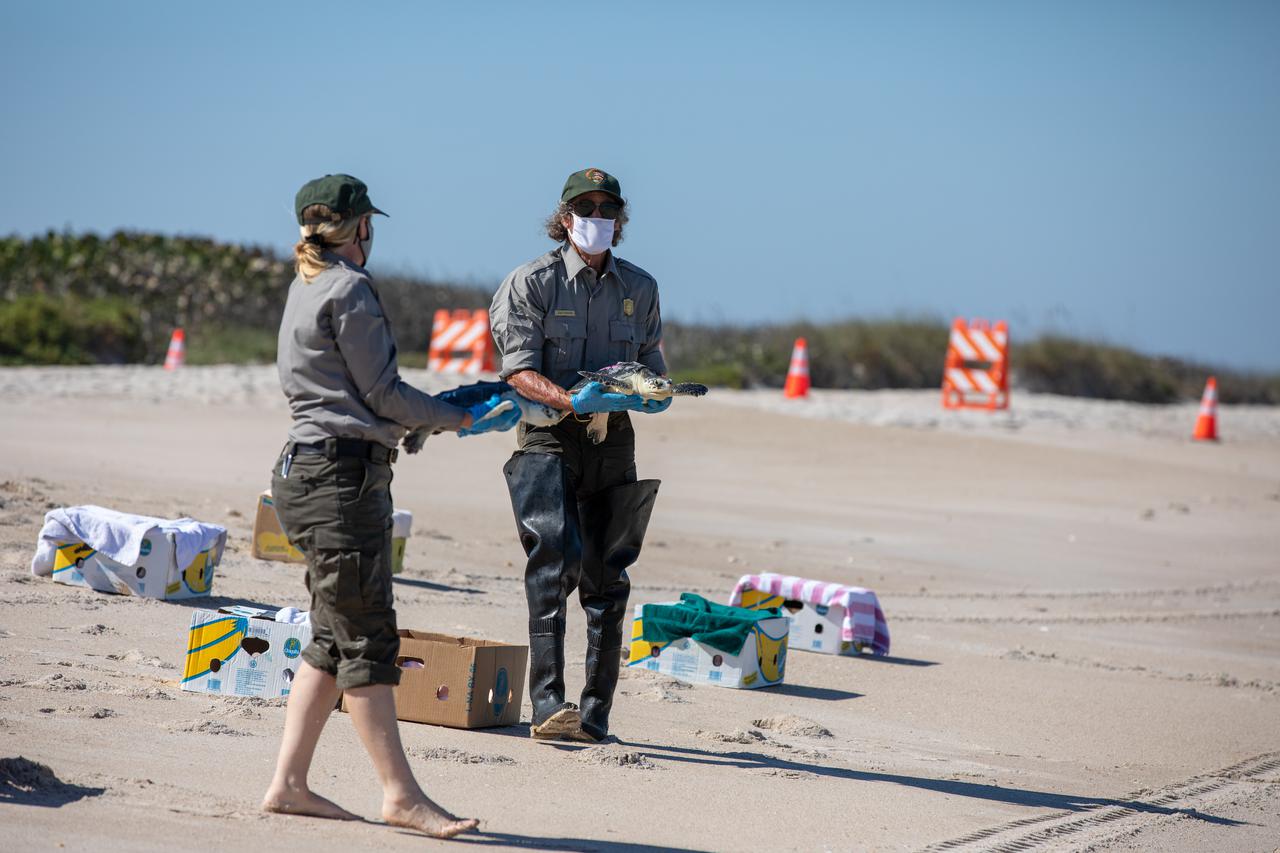
Staff with NASA, the National Park Service, Herndon Solutions Group, the center’s environmental services contractor, and others, prepare to release Kemp’s ridley sea turtles into the Atlantic Ocean at the Canaveral National Seashore near Kennedy Space Center on Feb. 26, 2021. The rescued and rehabilitated turtles were flown from aquatic centers in Massachusetts and New York to the Launch and Landing Facility, managed by Space Florida. NASA, U.S. Fish and Wildlife Service, NOAA Fisheries, Space Florida, and Herndon Solutions Group provided support. The Turtles Fly Too organization provided the flight to Kennedy. All marine turtle footage/images was obtained with the approval of the Florida Fish and Wildlife Conservation Commission (FWC) under conditions not harmful to marine turtles. Footage was acquired while conducting authorized conservation activities pursuant to: FWC 2021 Consent Permit, MTP-21-005 and MTP-21-114.
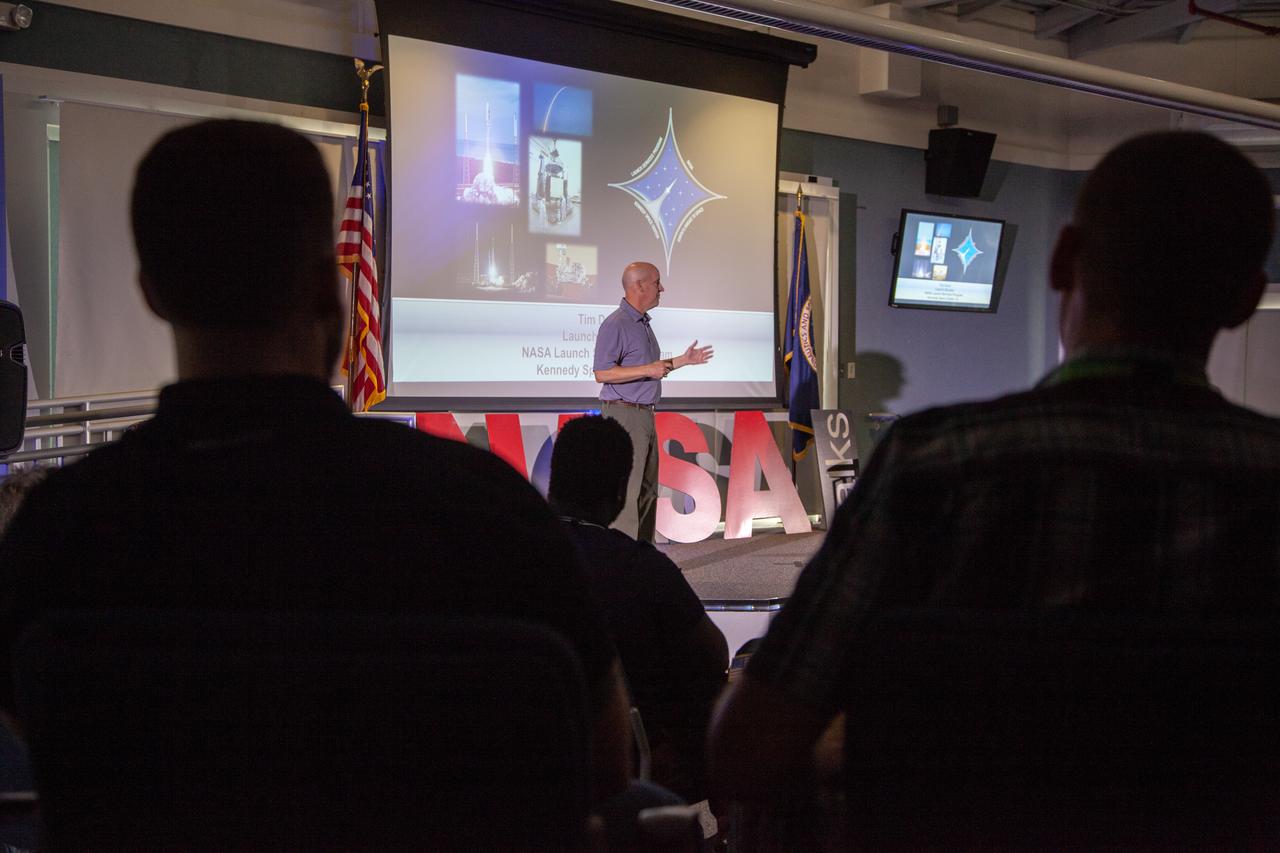
Tim Dunn, launch director for NASA’s Launch Services Program, speaks at the fifth and final TED Talk-style informational session at the agency’s Kennedy Space Center in Florida on Nov. 14, 2019. Hosted in the Kennedy Learning Institute and sponsored by the center’s Launching Leaders and Leadership for the Future, NASAtalks focuses on the topic of intentional careers and aims to provide employees with tools and knowledge that can be utilized for career growth. The theme of this session was organizations, and additional speakers included Director of Engineering Shawn Quinn, Chief Technologist Barbara Brown and Chief Counsel Dan Shaver, with a skill-building section on vision by Mark Wiese, logistics element manager for the Gateway Program.
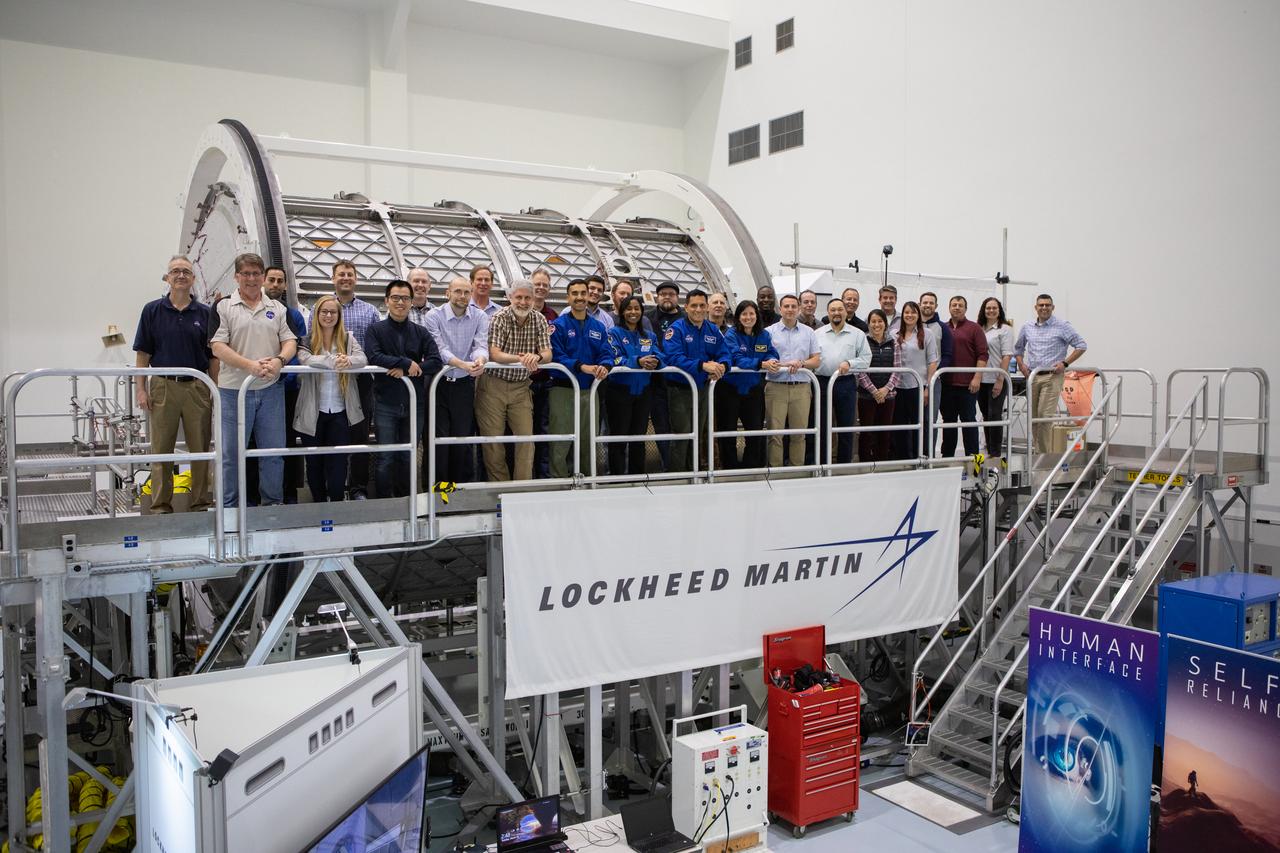
NASA began evaluating five habitat prototypes developed through NASA’s Next Space Exploration for Technologies Partnerships, or NextSTEP, to help engineers refine requirements for the design of an American-made deep space habitat for the Gateway. Lockheed Martin turned over its prototype to NASA, and testing began with crew on March 25, 2019, at Kennedy Space Center in Florida. Astronauts are participating in the evaluations to provide their perspectives as those who may one day live aboard the lunar outpost, which would be located about 250,000 miles from Earth. Ground prototypes developed by Bigelow Aerospace, Boeing, Northrop Grumman, and Sierra Nevada Corporation will be tested in the future at various facilities across the country. A sixth company, NanoRacks, plans to develop a prototype as well.

A SpaceX Falcon 9 rocket carrying the company’s Dragon spacecraft for Axiom Space’s Axiom Mission 3 (Ax-3) to the International Space Station lifts off at 4:49 p.m. EST from Launch Complex 39A at NASA’s Kennedy Space Center in Florida on Thursday, Jan. 18, 2024. Ax-3 is the third all private astronaut mission to the space station, sending crew members Commander Michael López-Alegría, Pilot Walter Villadei, and Mission Specialists Marcus Wandt and Alper Gezeravci into orbit. The crew will spend about two weeks conducting microgravity research, educational outreach, and commercial activities aboard the space station.

Dan Shaver, chief counsel at NASA’s Kennedy Space Center in Florida, speaks at the fifth and final TED Talk-style informational session on Nov. 14, 2019, in the Kennedy Learning Institute. Sponsored by Kennedy’s Launching Leaders and Leadership for the Future, NASAtalks focuses on the topic of intentional careers and aims to provide employees with tools and knowledge that can be utilized for career growth. The theme of this session was organizations, and additional speakers included Kennedy’s Director of Engineering Shawn Quinn, Chief Technologist Barbara Brown and Tim Dunn, launch director for the agency’s Launch Services Program, with a skill-building section on vision by Mark Wiese, logistics element manager for the Gateway Program.
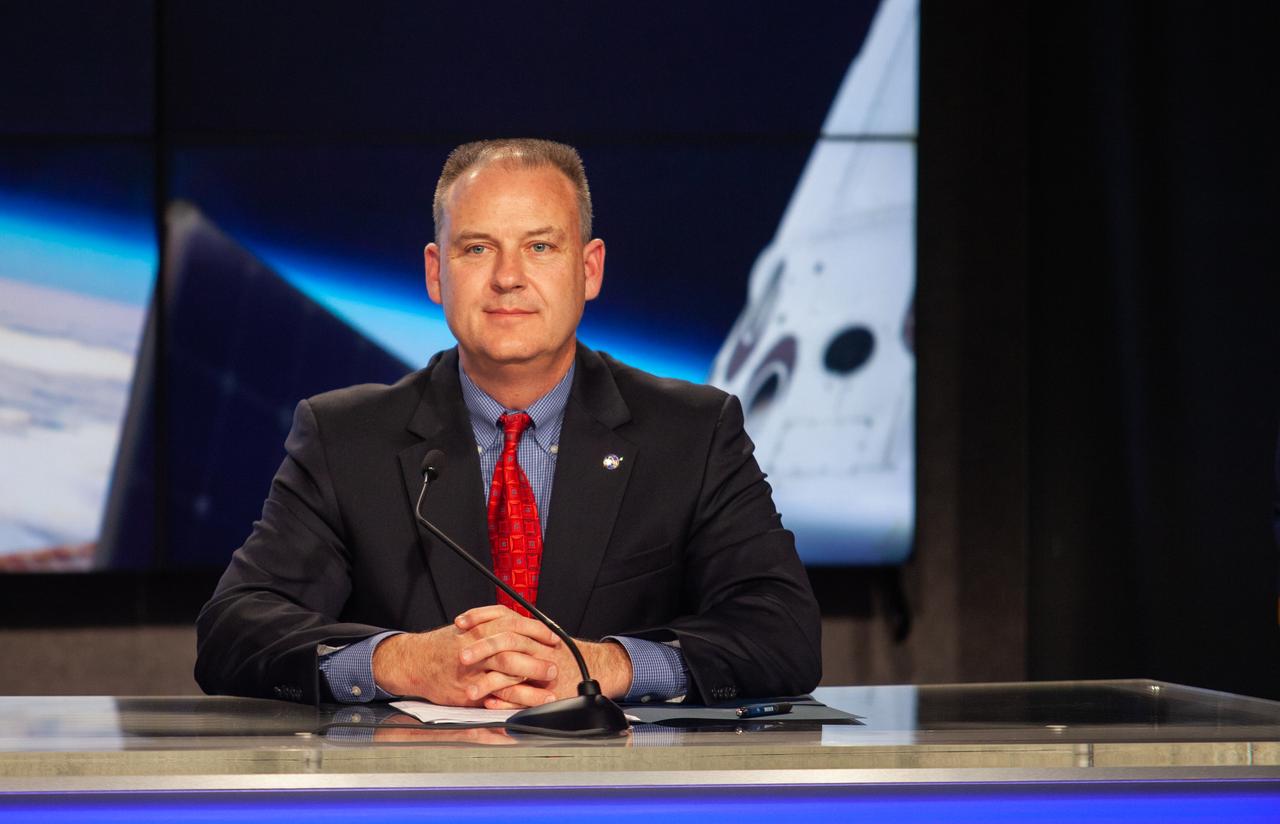
In Kennedy Space Center’s Press Site auditorium, agency and industry leaders speak to members of the media on Friday, Feb. 22, during the post-flight readiness review briefing for the SpaceX Demo-1 Commercial Crew Program (CCP) mission to the International Space Station. Pictured is Norm Knight, deputy director, NASA Johnson Space Center Flight Operations. The inaugural uncrewed flight of the SpaceX Crew Dragon, known as Demo-1, is targeted to lift off from Kennedy’s Launch Complex 39A on Saturday, March 2. EST. A SpaceX Falcon 9 rocket will launch the Crew Dragon on a mission designed to validate end-to-end systems and capabilities, leading to certification to fly crew.
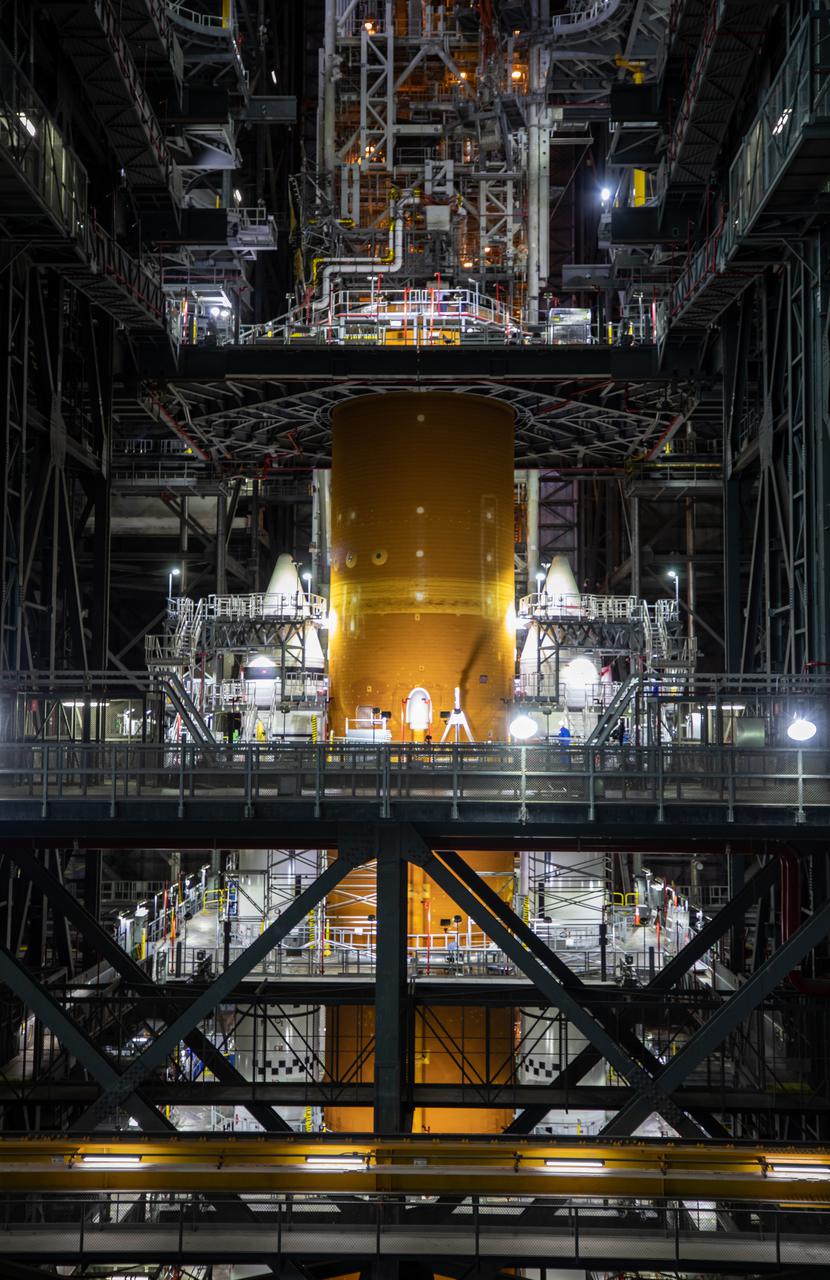
The Space Launch System (SLS) core stage is seen atop the mobile launcher inside High Bay 3 of the Vehicle Assembly Building at NASA’s Kennedy Space Center in Florida on June 15, 2021. Teams with NASA’s Exploration Ground Systems and contractor Jacobs lifted and lowered the core stage – the largest part of the rocket – onto the mobile launcher, placing it in between the twin solid rocket boosters. The 188,000-pound core stage, with its four RS-25 engines, will provide more than 2 million pounds of thrust during launch and ascent, and coupled with the boosters, will provide more than 8.8 million pounds of thrust to send the Artemis I mission to space. Under the Artemis program, NASA will land the first woman and first person of color on the Moon, as well as establish a sustainable presence on the lunar surface in preparation for human missions to Mars.
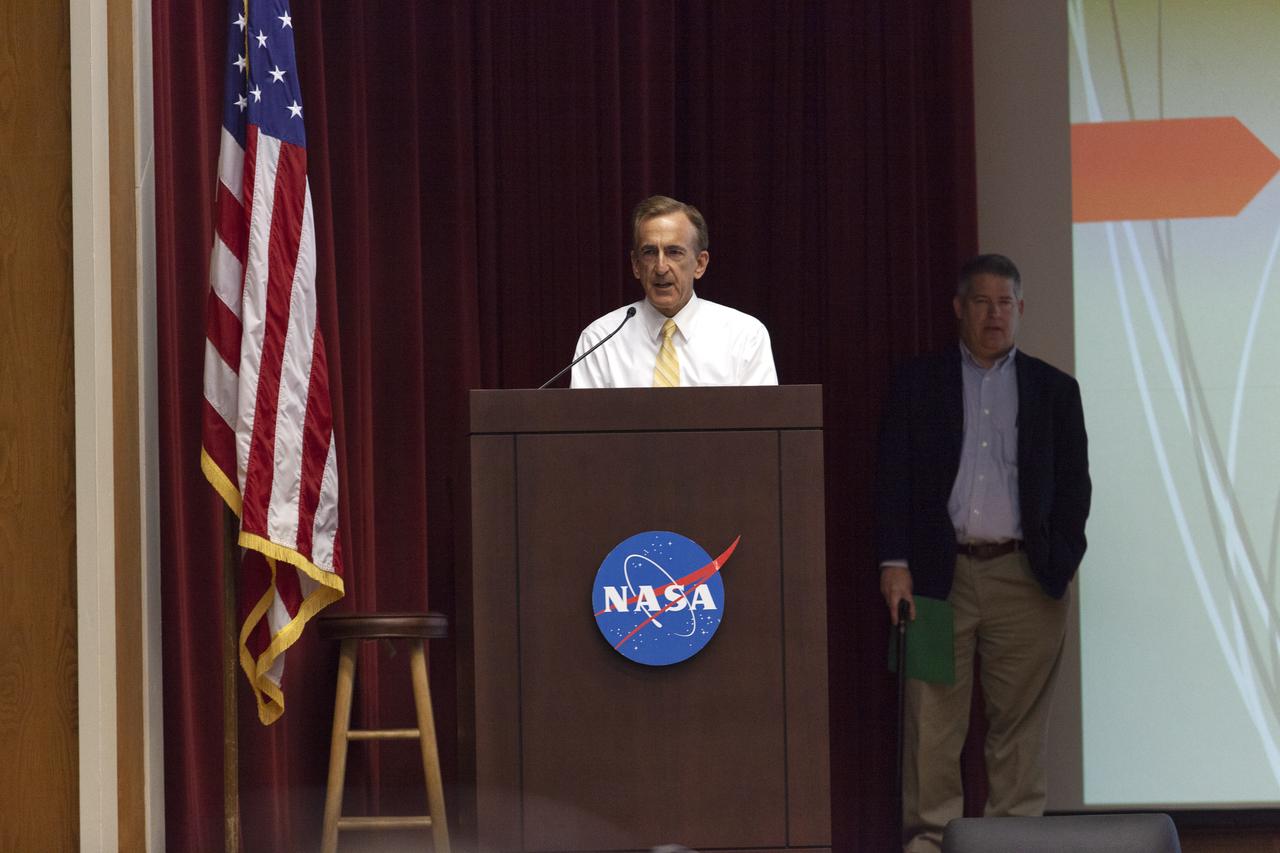
Dan Shaver, chief counsel of Kennedy Space Center in Florida, introduces Daniel Murphree, Ph.d., associate professor of history at the University of Central Florida, to NASA Kennedy Space Center employees in Kennedy’s Training Auditorium on June 11, 2019. Murphree presented information on the impact Florida natives have had on, and how they were affected by, Atlantic World events from 1492 to the present. The presentation, open for all employees to attend, was brought to Kennedy by the Native American Heritage Initiative (NAHI) Employee Resource Group. One of eight resource groups at Kennedy, NAHI aims to bring employees together, provide networking opportunities and inform the Kennedy workforce about Native American heritage.
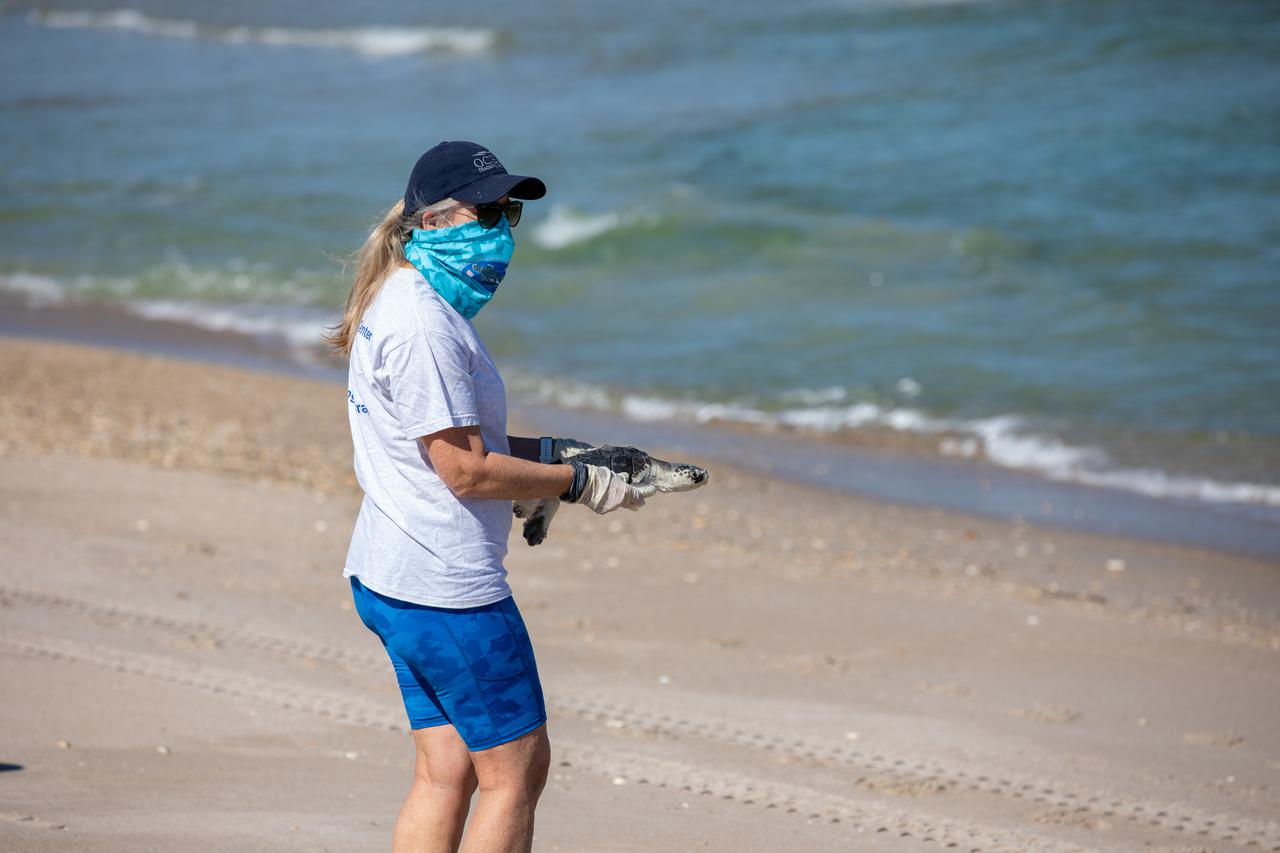
A biologist with Herndon Solutions Group, the center’s environmental services contractor, prepares to release Kemp’s ridley sea turtles into the Atlantic Ocean at the Canaveral National Seashore near Kennedy Space Center on Feb. 26, 2021. The rescued and rehabilitated turtles were flown from aquatic centers in Massachusetts and New York to the Launch and Landing Facility, managed by Space Florida. NASA, U.S. Fish and Wildlife Service, NOAA Fisheries, Space Florida, and Herndon Solutions Group provided support. The Turtles Fly Too organization provided the flight to Kennedy. All marine turtle footage/images was obtained with the approval of the Florida Fish and Wildlife Conservation Commission (FWC) under conditions not harmful to marine turtles. Footage was acquired while conducting authorized conservation activities pursuant to: FWC 2021 Consent Permit, MTP-21-005 and MTP-21-114.
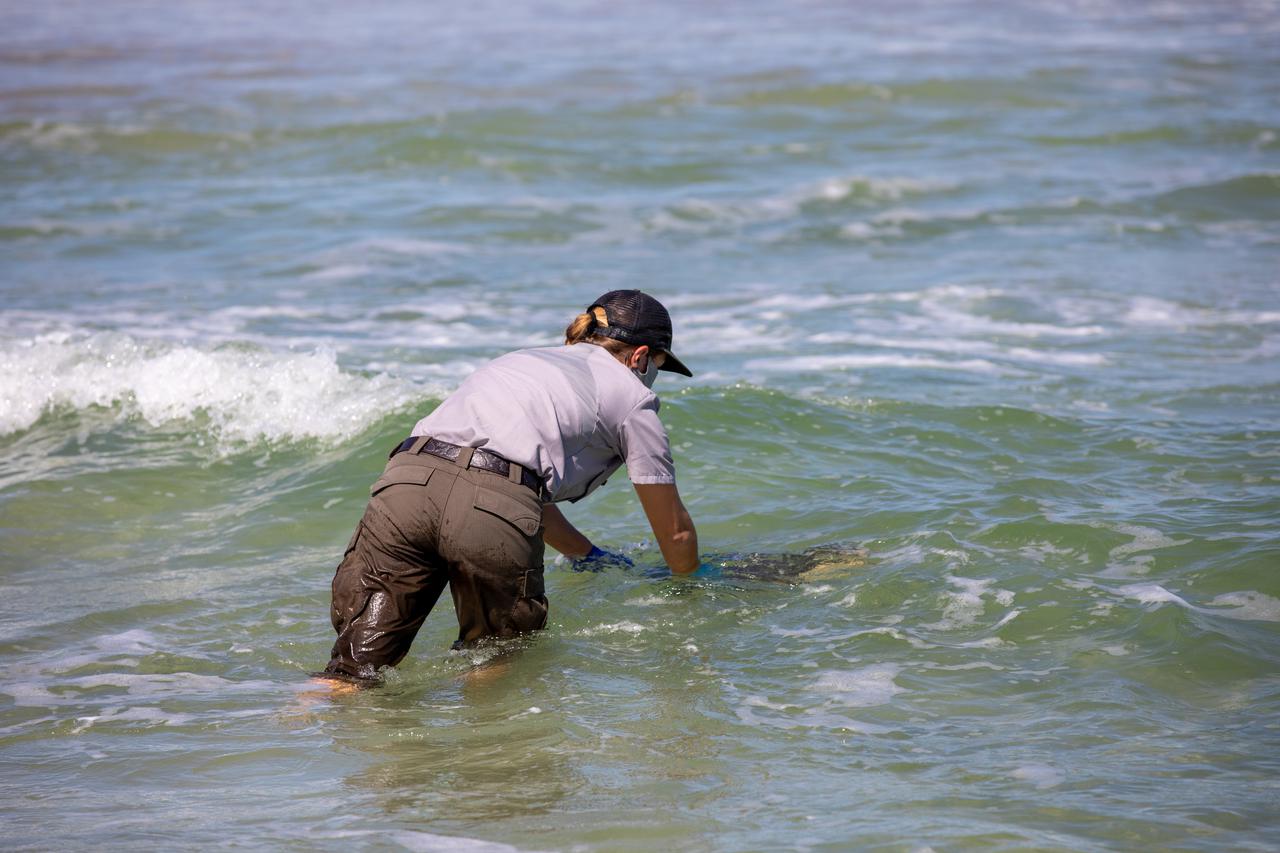
A National Park Service staff member releases a Kemp’s ridley sea turtle into the Atlantic Ocean at the Canaveral National Seashore near Kennedy Space Center on Feb. 26, 2021. The rescued and rehabilitated turtles were flown from aquatic centers in Massachusetts and New York to the Launch and Landing Facility, managed by Space Florida. NASA, U.S. Fish and Wildlife Service, NOAA Fisheries, Space Florida, and Herndon Solutions Group provided support. The Turtles Fly Too organization provided the flight to Kennedy. All marine turtle footage/images was obtained with the approval of the Florida Fish and Wildlife Conservation Commission (FWC) under conditions not harmful to marine turtles. Footage was acquired while conducting authorized conservation activities pursuant to: FWC 2021 Consent Permit, MTP-21-005 and MTP-21-114.
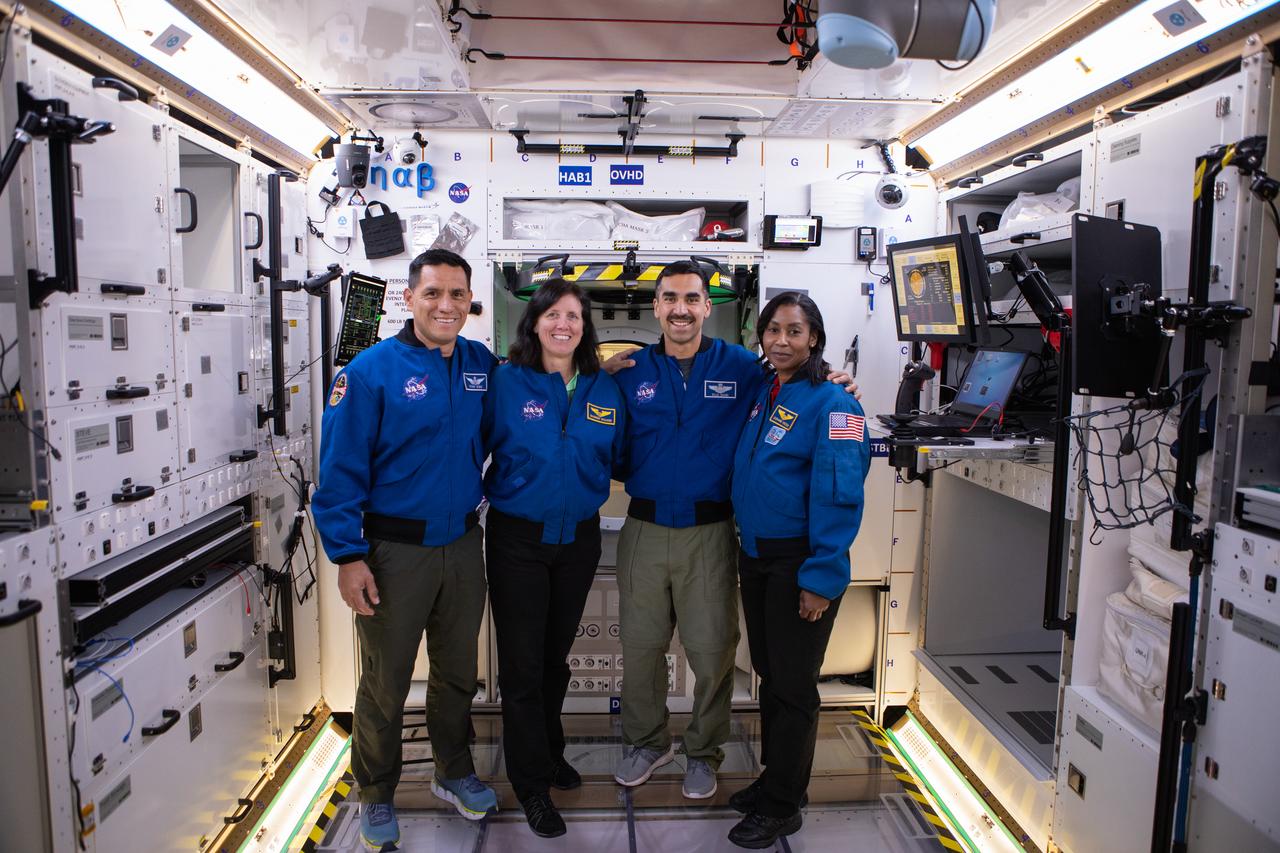
NASA began evaluating five habitat prototypes developed through NASA’s Next Space Exploration for Technologies Partnerships, or NextSTEP, to help engineers refine requirements for the design of an American-made deep space habitat for the Gateway. Lockheed Martin turned over its prototype to NASA, and testing began with crew on March 25, 2019, at Kennedy Space Center in Florida. Pictured, from left are astronauts Frank Rubio, Shannon Walker, Raja Chari and Stephanie Wilson. Astronauts are participating in the evaluations to provide their perspectives as those who may one day live aboard the lunar outpost, which would be located about 250,000 miles from Earth. Ground prototypes developed by Bigelow Aerospace, Boeing, Northrop Grumman, and Sierra Nevada Corporation will be tested in the future at various facilities across the country. A sixth company, NanoRacks, plans to develop a prototype as well.