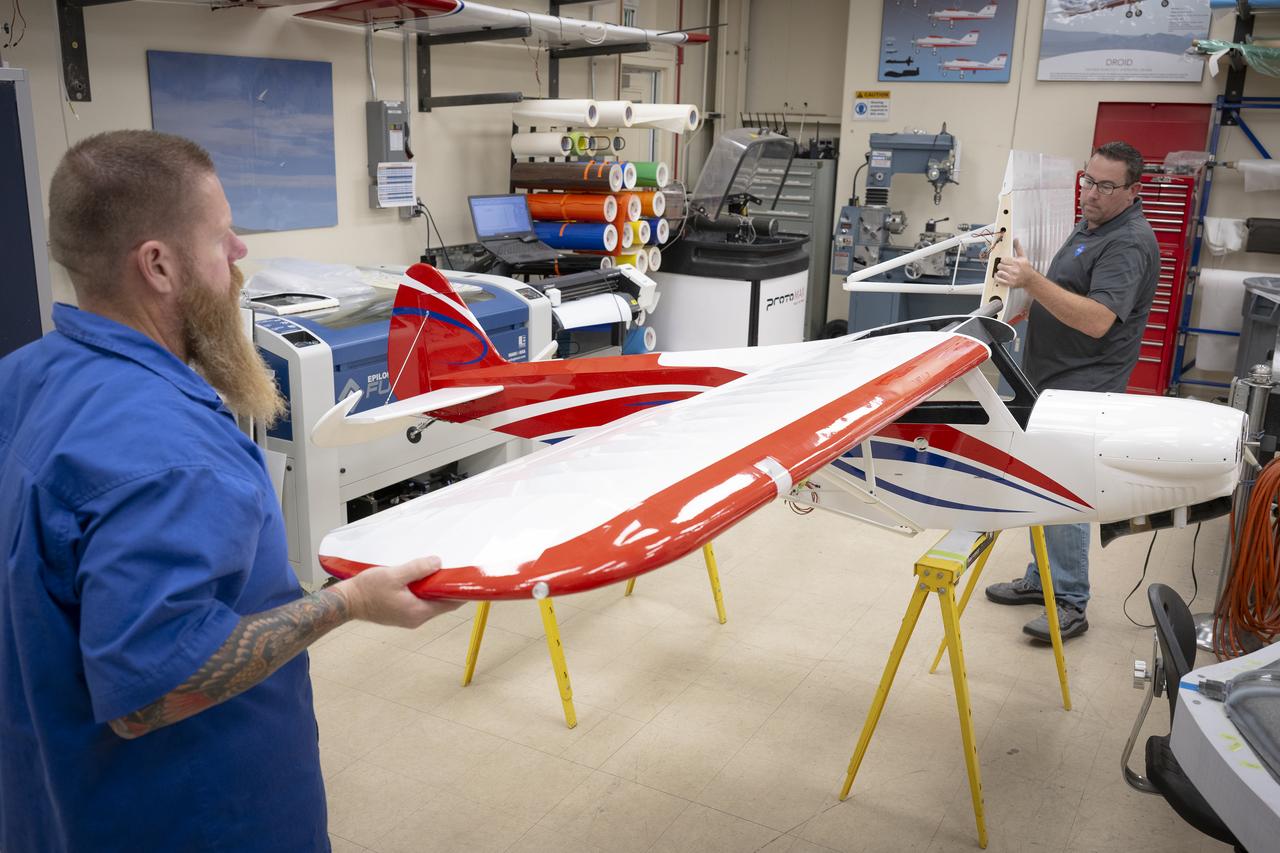
Justin Hall, left, and Justin Link attach the wings onto a subscale aircraft on Wednesday, Sept. 3, 2025, at NASA’s Armstong Flight Research Center in Edwards, California. Hall is chief pilot at the center’s Dale Reed Subscale Flight Research Laboratory and Link is a pilot for small uncrewed aircraft systems.
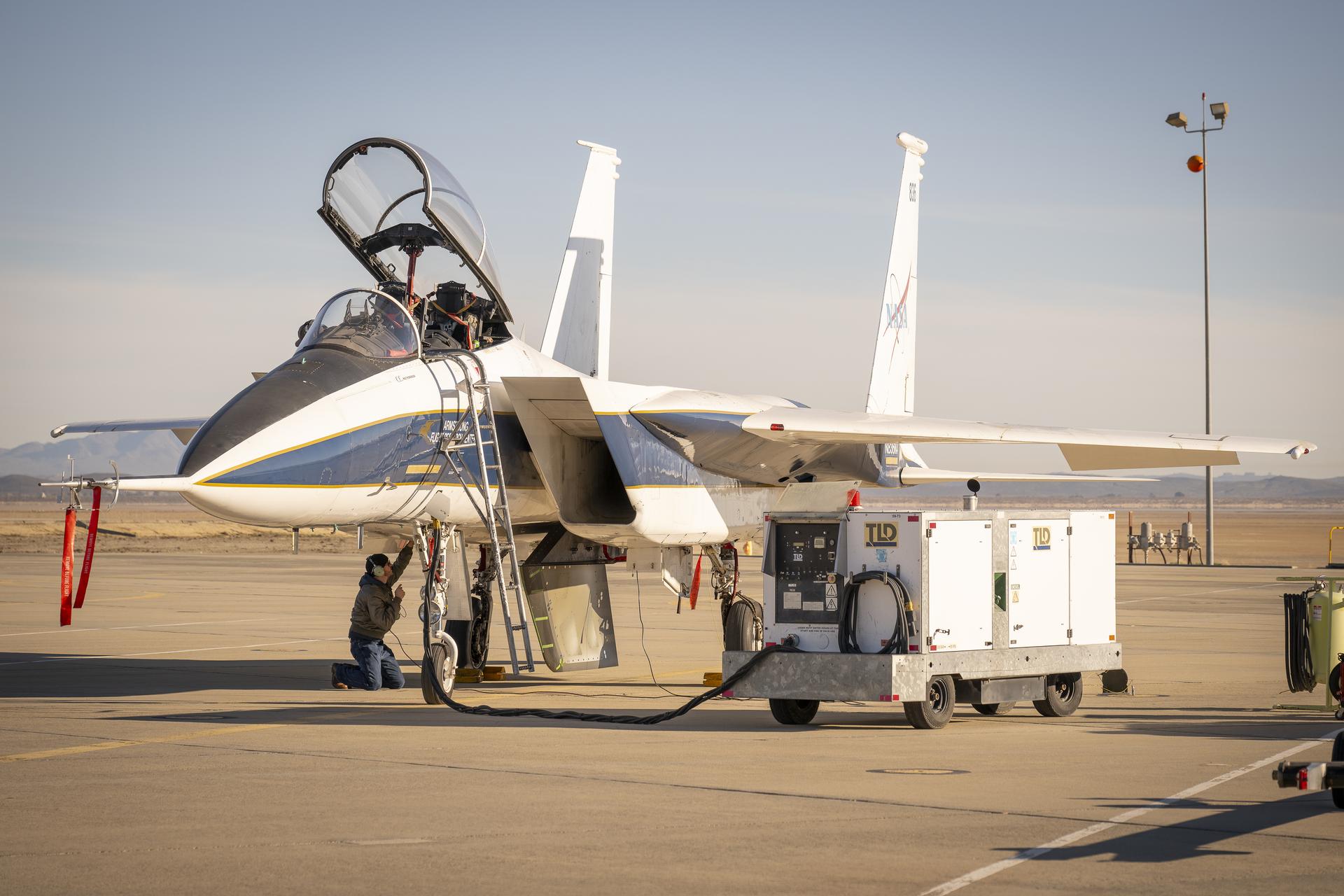
NASA ground crew prepares the agency’s F-15 research aircraft and Cross Flow Attenuated Natural Laminar Flow (CATNLF) test article ahead of its first high-speed taxi test on Tuesday, Jan. 12, 2026, at NASA’s Armstrong Flight Research Center in Edwards, California. The CATNLF design aims to reduce drag on wing surfaces to improve efficiency and, in turn, reduce fuel burn.
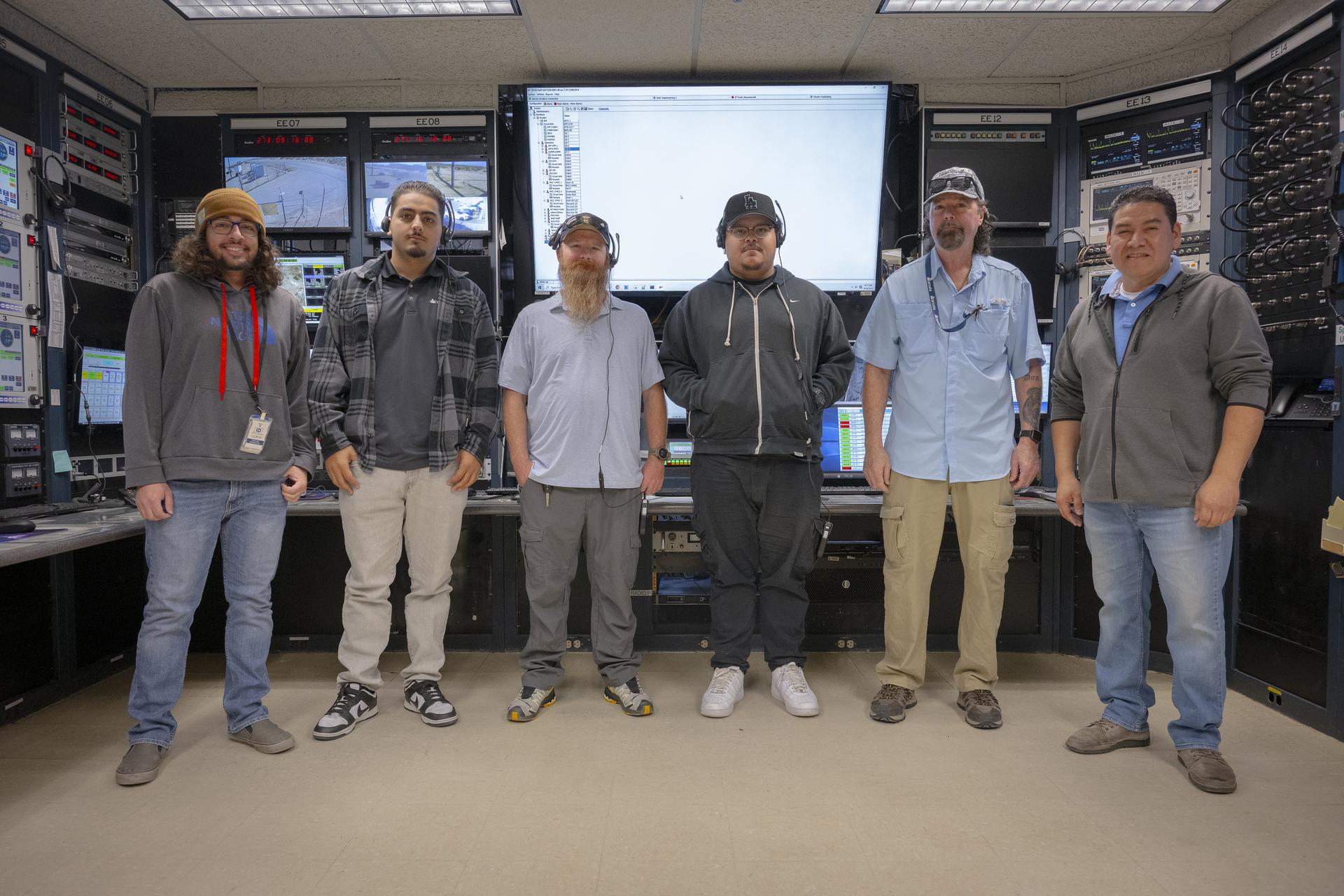
Mission technicians, from left, Adam Cataldo, Alex Oganesyan, Daniel Kelly, Deming Ingles, Mike Gibson, and Kelvin Menendez support communications backup for an International Space Station mission on Tuesday, Sept. 30, 2025, at NASA’s Armstong Flight Research Center in Edwards, California. The team is part of the center’s Dryden Aeronautical Test Range, which provides voice and tracking support to the space station.
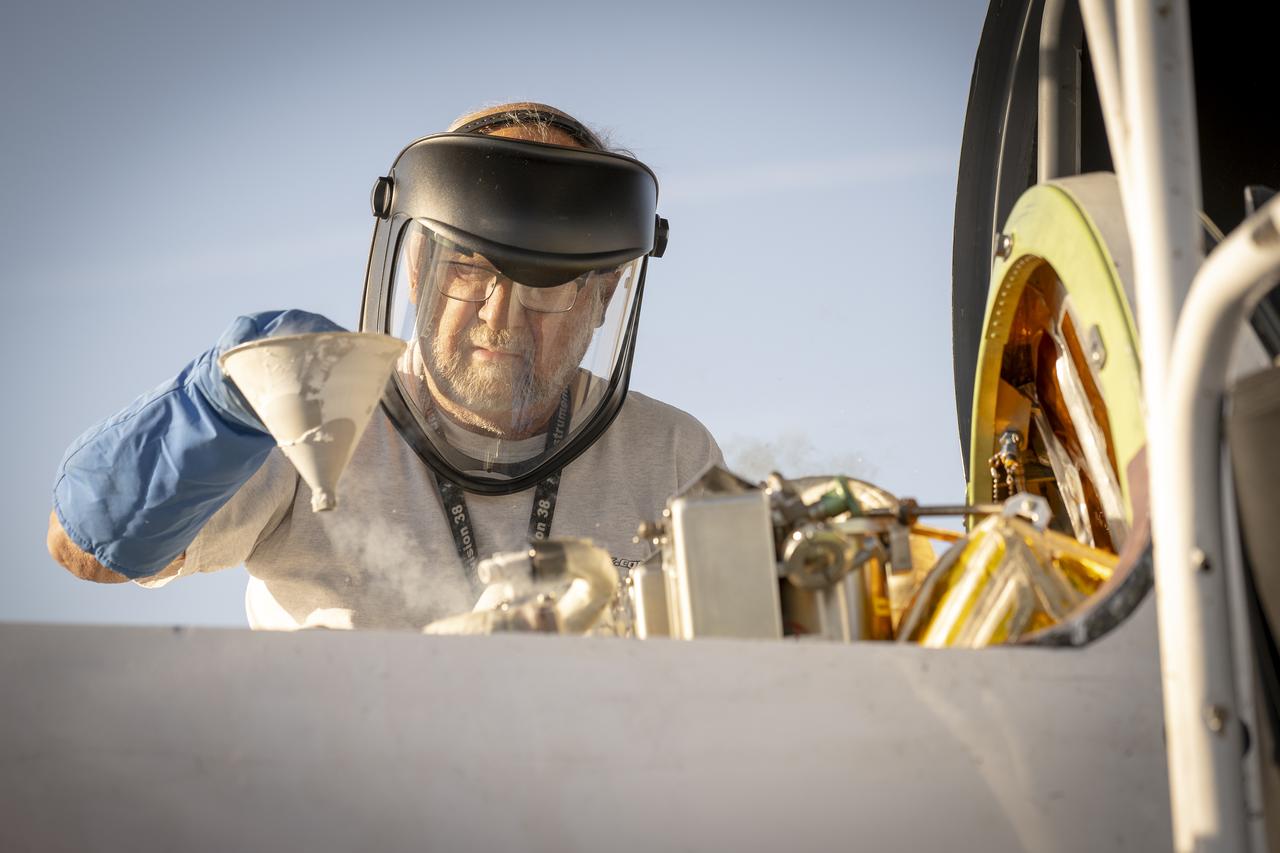
A crew member handles liquid nitrogen servicing for NASA’s Armstrong Flight Research Center’s ER-2 aircraft at Edwards, California, on Thursday, Aug. 21, 2025. Liquid nitrogen is used to support key science instruments for extended flight durations in critical research missions, such as the Geological Earth Mapping Experiment (GEMx), which requires flights of up to eight hours at approximately 65,000 feet altitude.
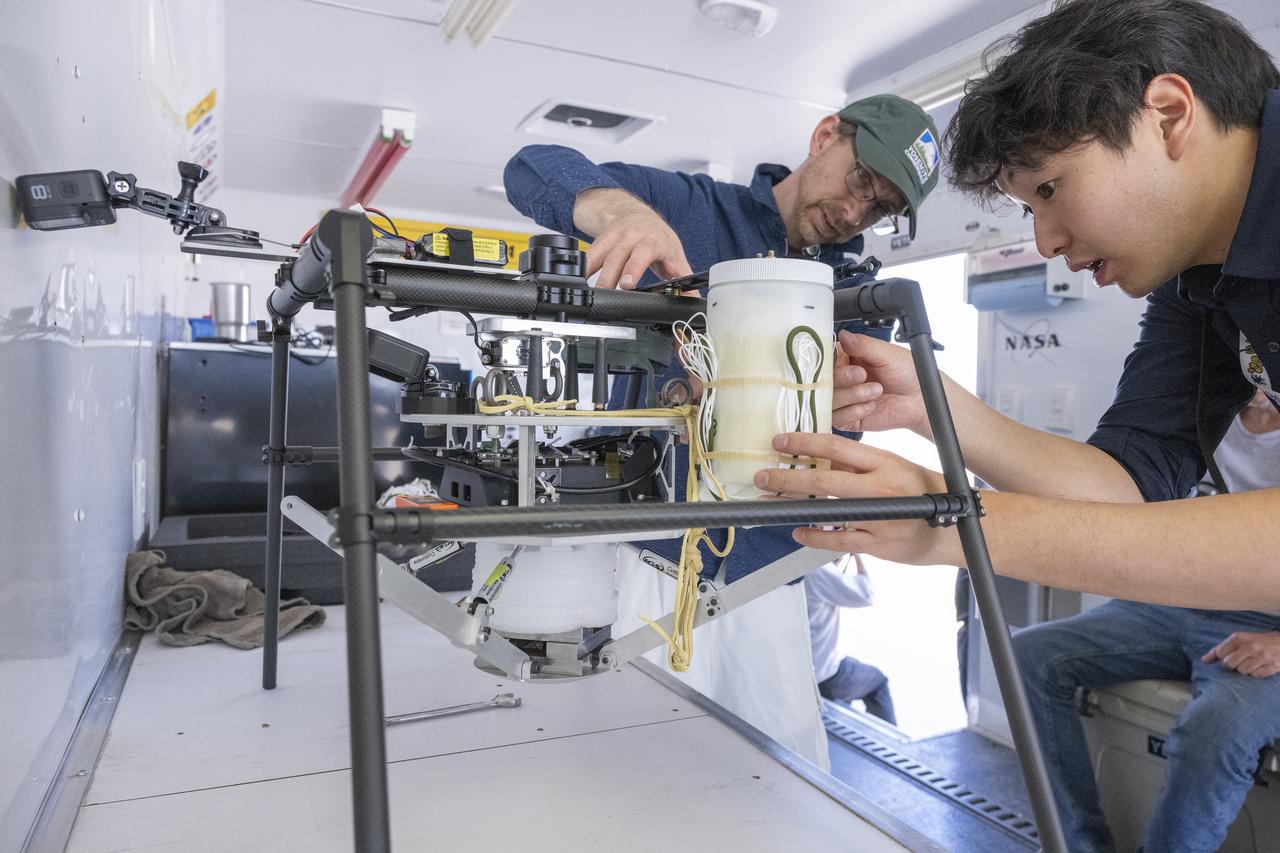
NASA researchers Paul Bean, center, and Mark Hagiwara, right, attach the capsule with parachute system to the Enhancing Parachutes by Instrumenting the Canopy test experiment on June 4, 2025, at NASA’s Armstong Flight Research Center in Edwards, California. NASA researchers are developing technology to make supersonic parachutes safer and more reliable for delivering science instruments and payloads to Mars.
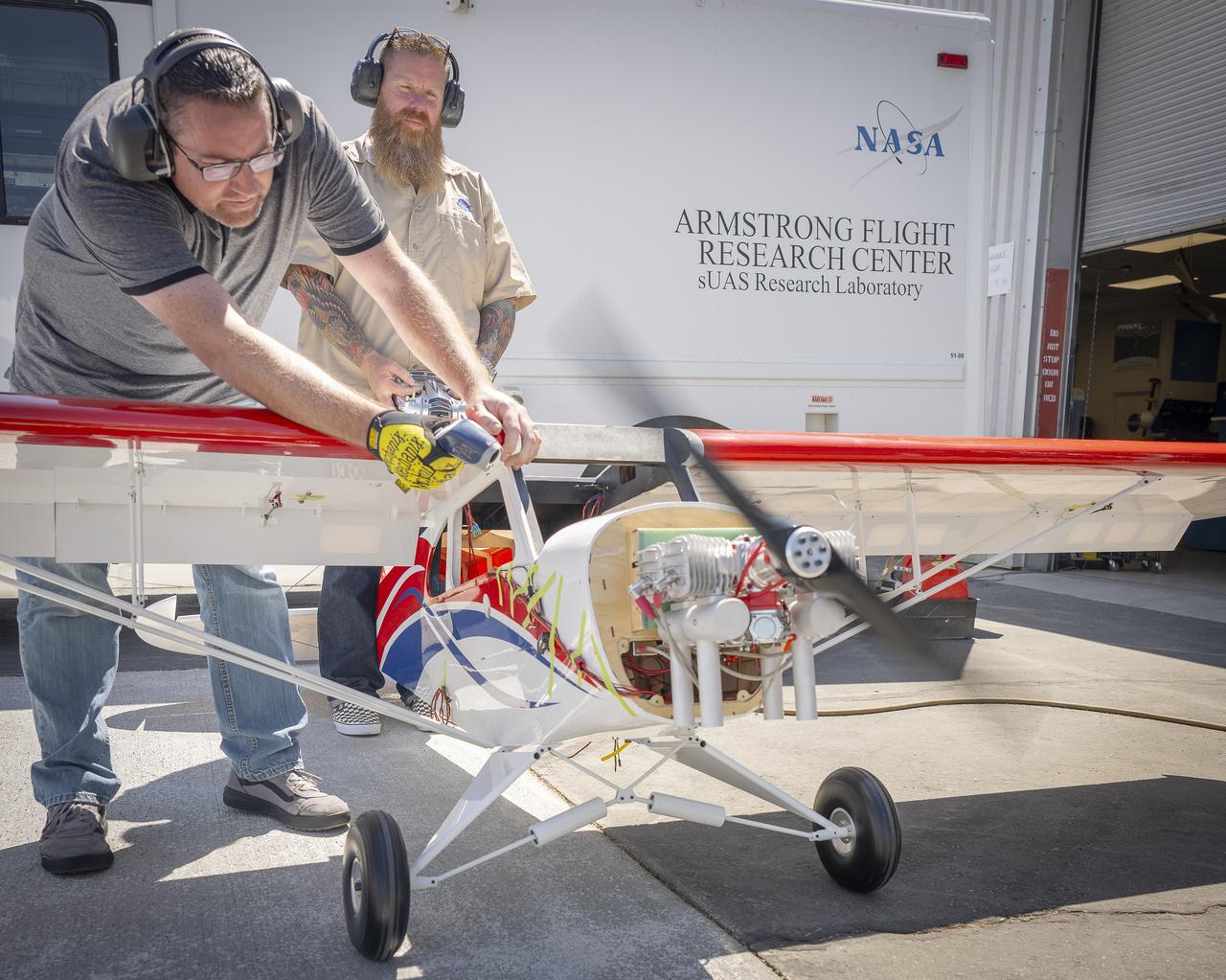
Justin Link, left, holds the subscale aircraft in place, while Justin Hall manages engine speed during preliminary engine tests on Friday, Sept. 12, 2025, at NASA’s Armstong Flight Research Center in Edwards, California. Link is a pilot for small uncrewed aircraft systems at the center’s Dale Reed Subscale Flight Research Laboratory and Hall is the chief pilot.
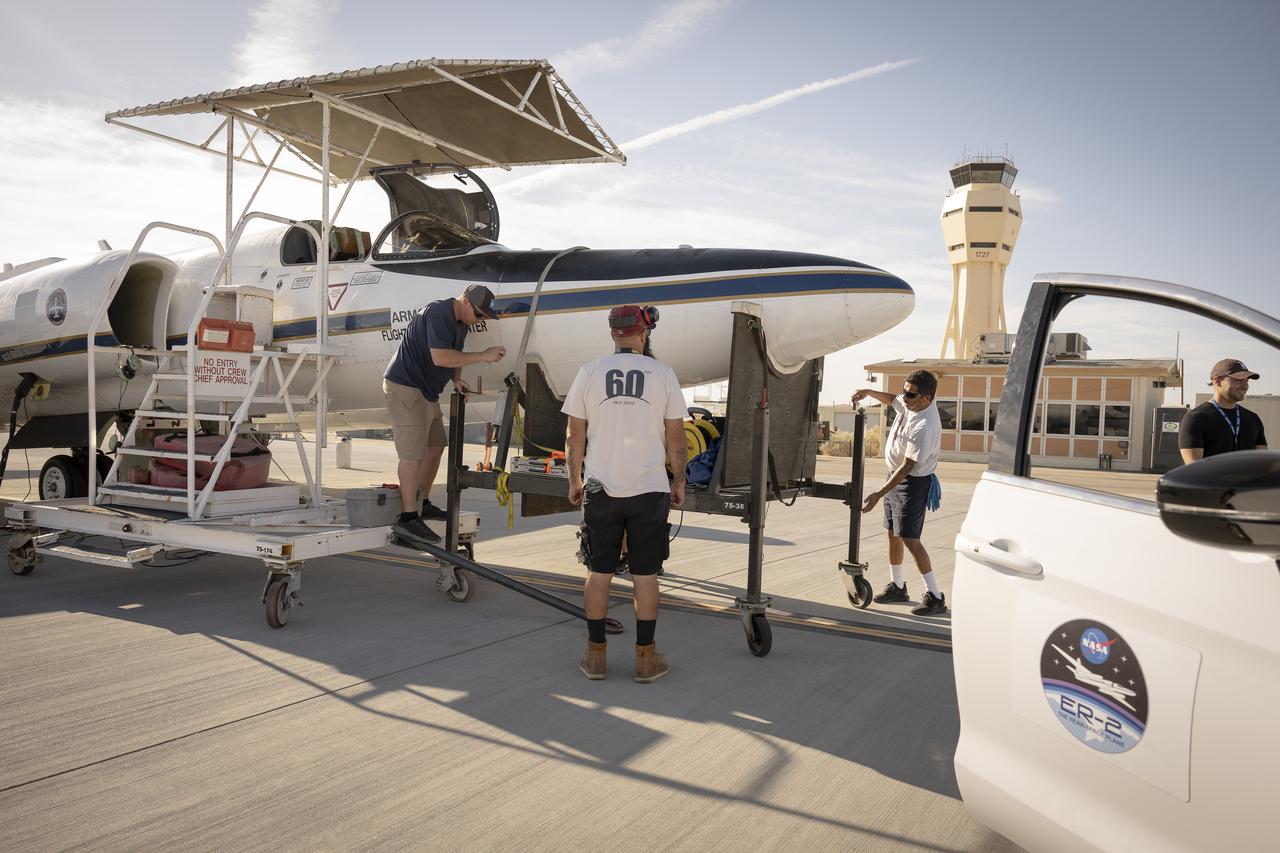
Ground crew members make final preparations on NASA Armstrong Flight Research Center’s ER-2 aircraft at Edwards, California, on Thursday, Aug. 21, 2025, ahead of a high-altitude mission for the Geological Earth Mapping Experiment (GEMx). The pilot will soon board the aircraft, which can fly at altitudes up to 70,000 feet.
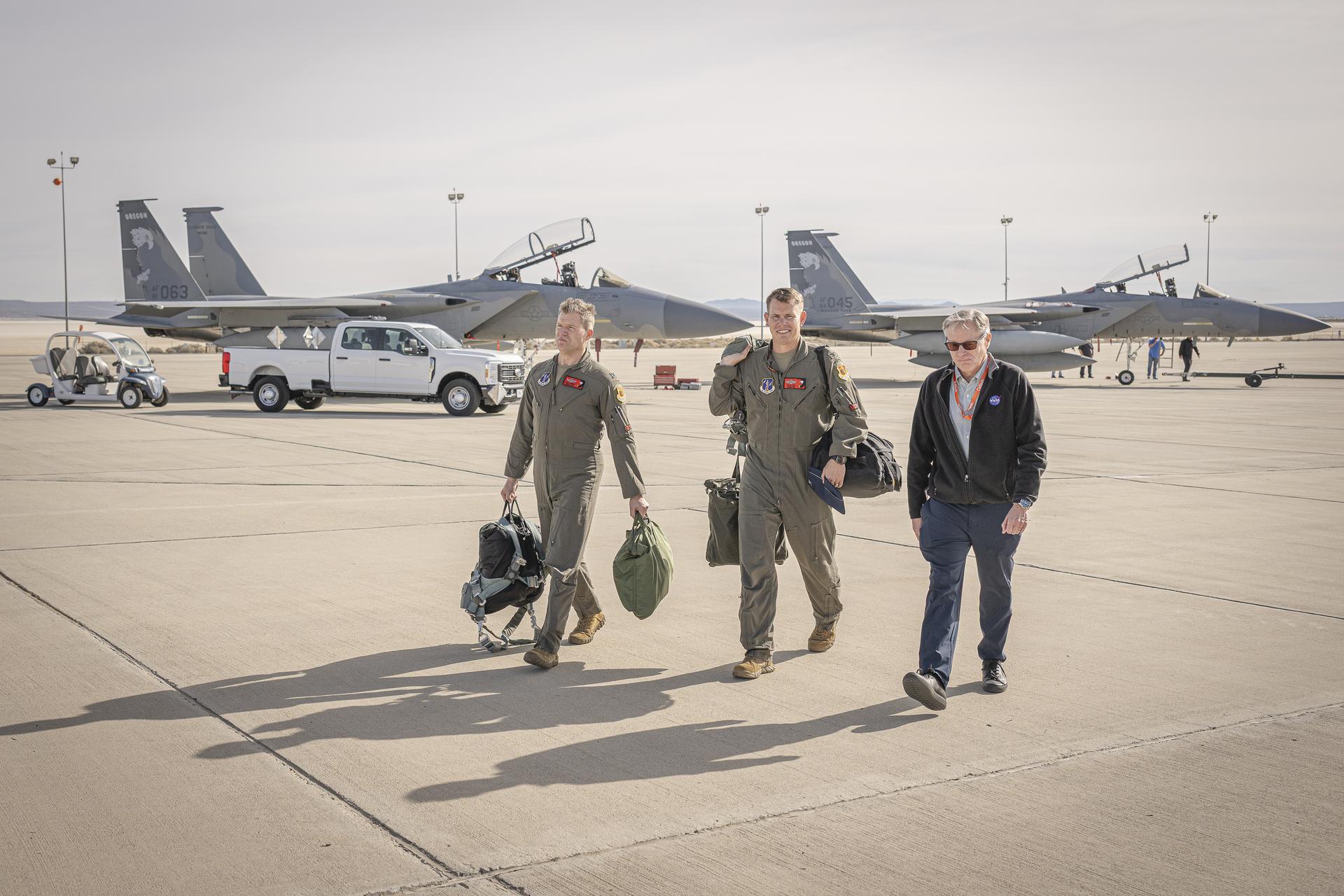
Oregon Air National Guard pilots deliver NASA’s newest F-15 aircraft from the Oregon Air National Guard’s 173rd Fighter Wing at Kingsley Field to NASA’s Armstrong Flight Research Center in Edwards, California, on Monday, Dec. 22, 2025. After completing their final flights with the Air Force, the two aircraft begin their new role supporting NASA’s flight research.
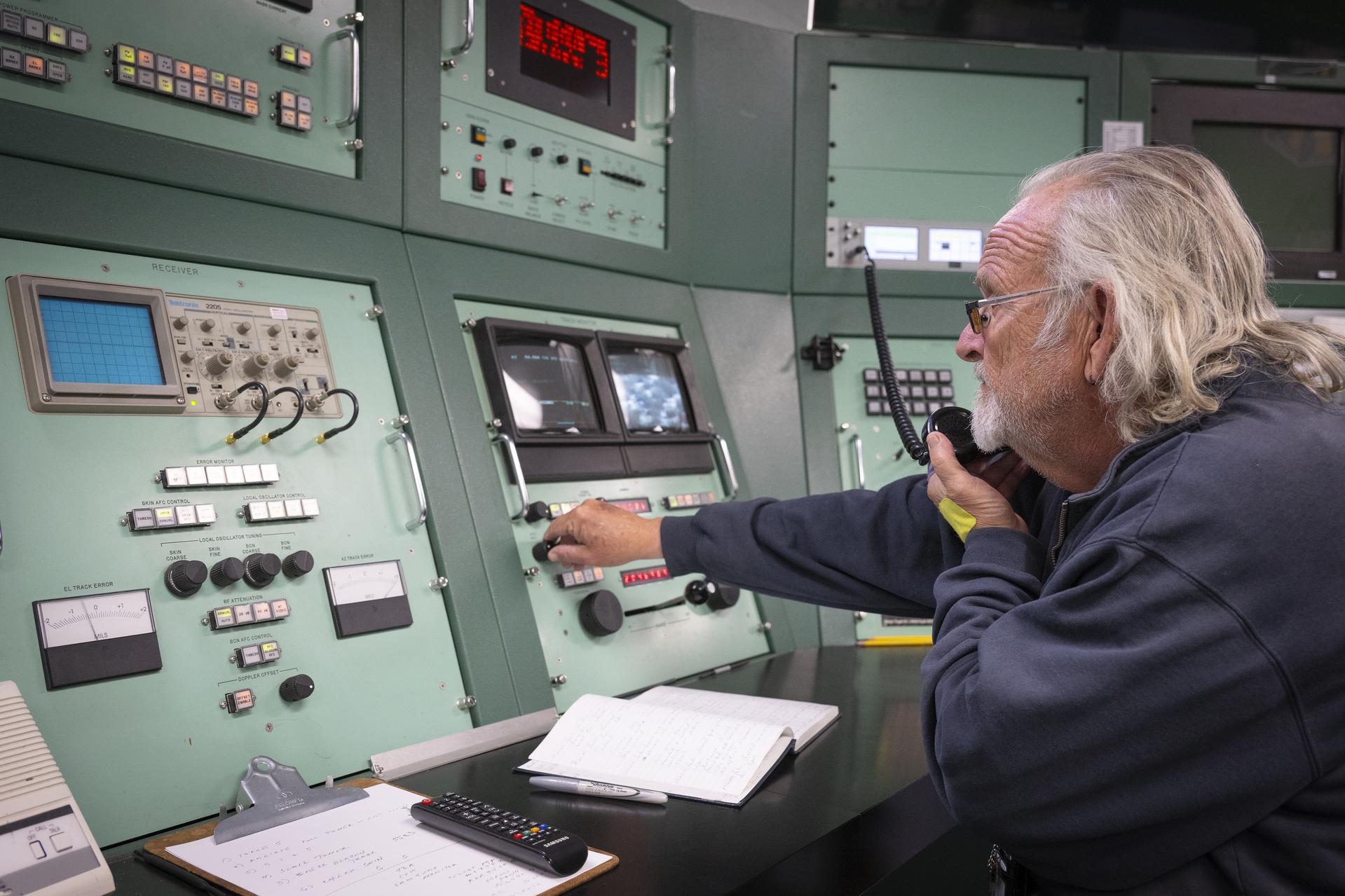
Mission operator Mike Webb sits at one of the radar stations used to track the International Space Station as it passes high above NASA’s Armstrong Flight Research Center in Edwards, California, on Sept. 30, 2025. Webb is part of the center’s Dryden Aeronautical Test Range, which provides voice and tracking support to the space station.
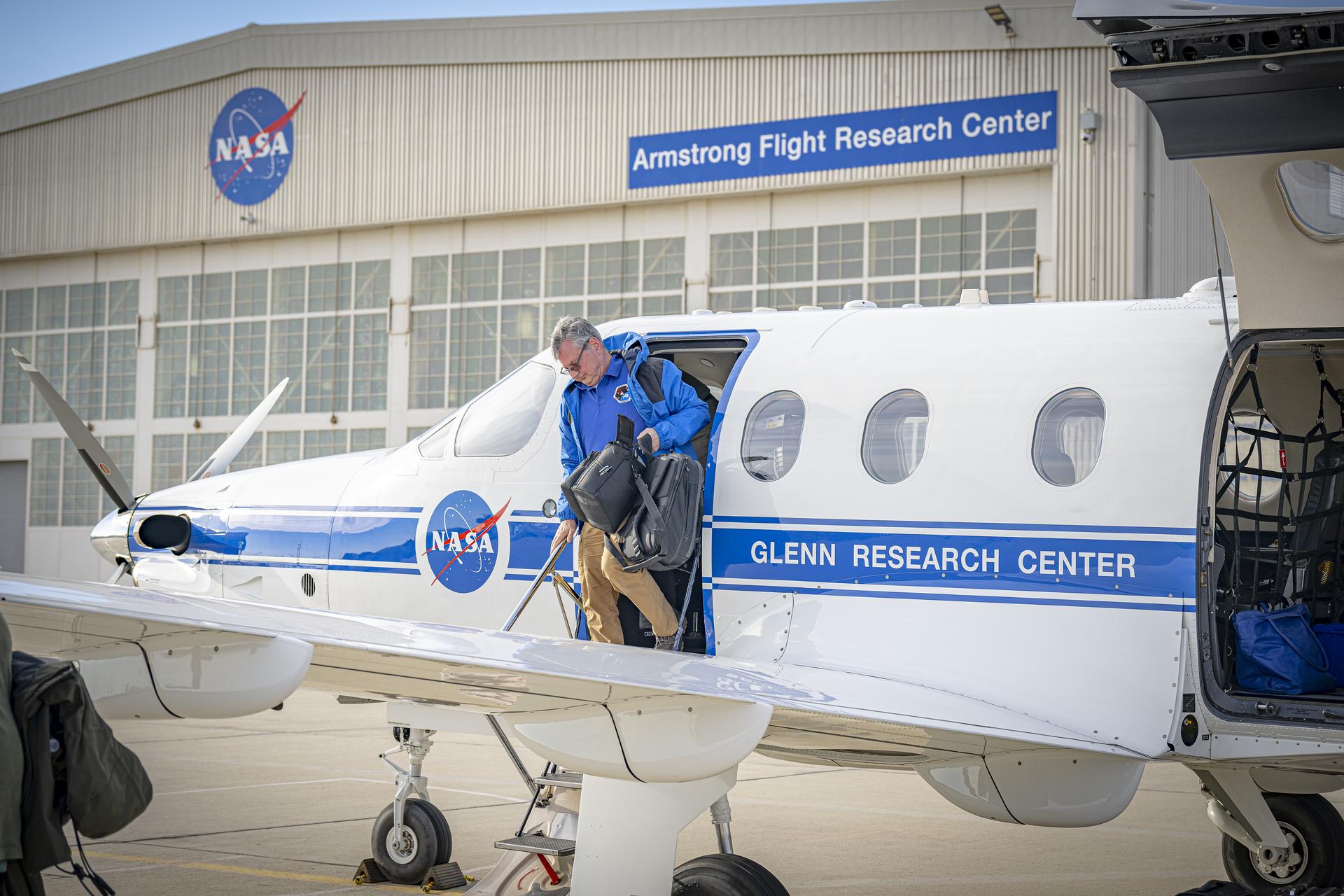
Kurt Blankenship, a NASA pilot from NASA’s Glenn Research Center in Cleveland, walks out of a NASA Pilatus PC-12 aircraft, tail number 606. This aircraft arrived at NASA’s Armstrong Flight Research Center in Edwards, California, on Feb. 11, 2026. The PC-12 is now housed at NASA Armstrong to continue supporting research at NASA’s Glenn, among other agency efforts.
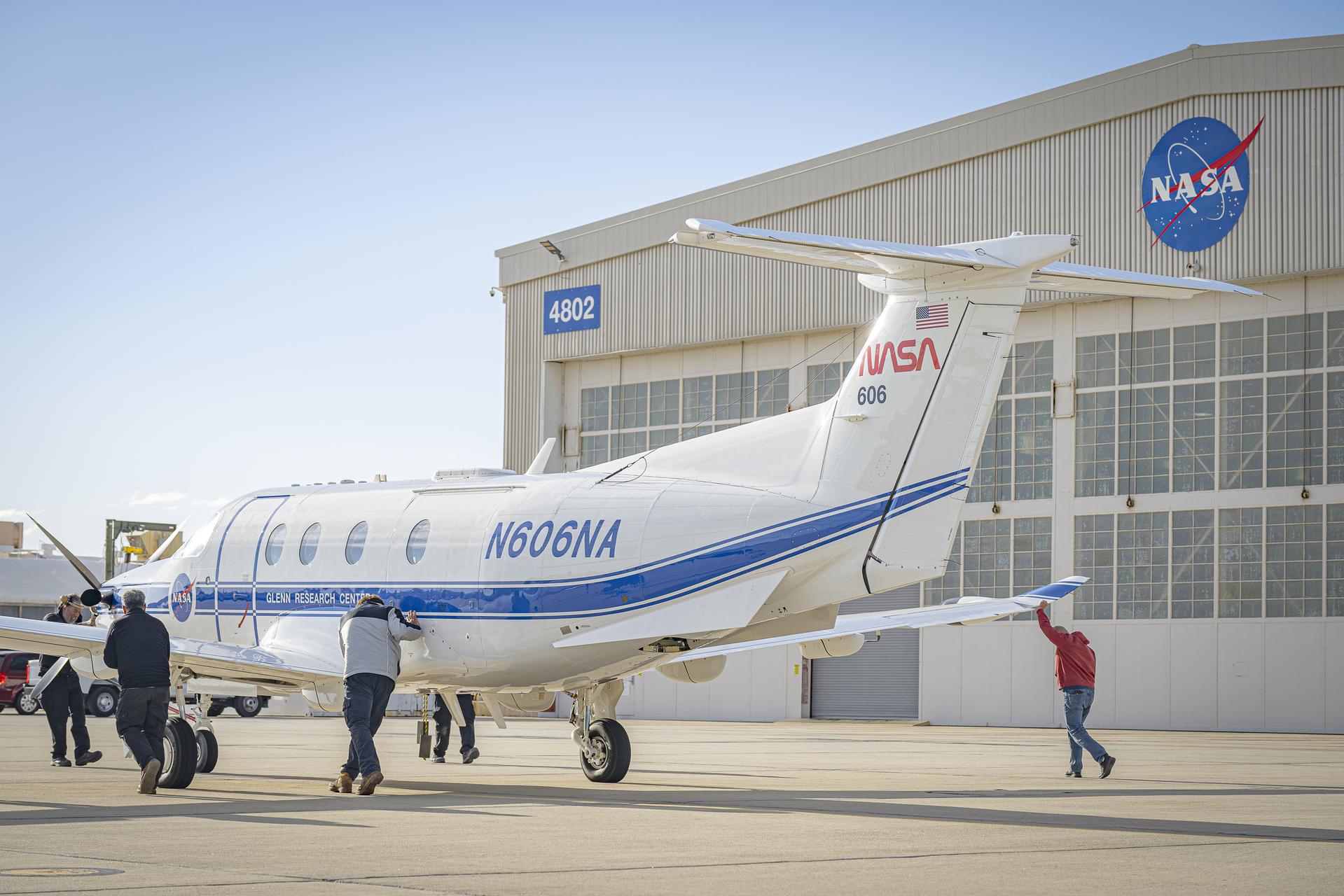
A Pilatus PC-12 aircraft, tail number 606, is being towed and pushed by a crew at NASA’s Armstrong Flight Research Center in Edwards, California, on Feb. 11, 2026. This aircraft is now housed at NASA Armstrong to continue supporting research at NASA’s Glenn Research Center in Cleveland, among other agency efforts.
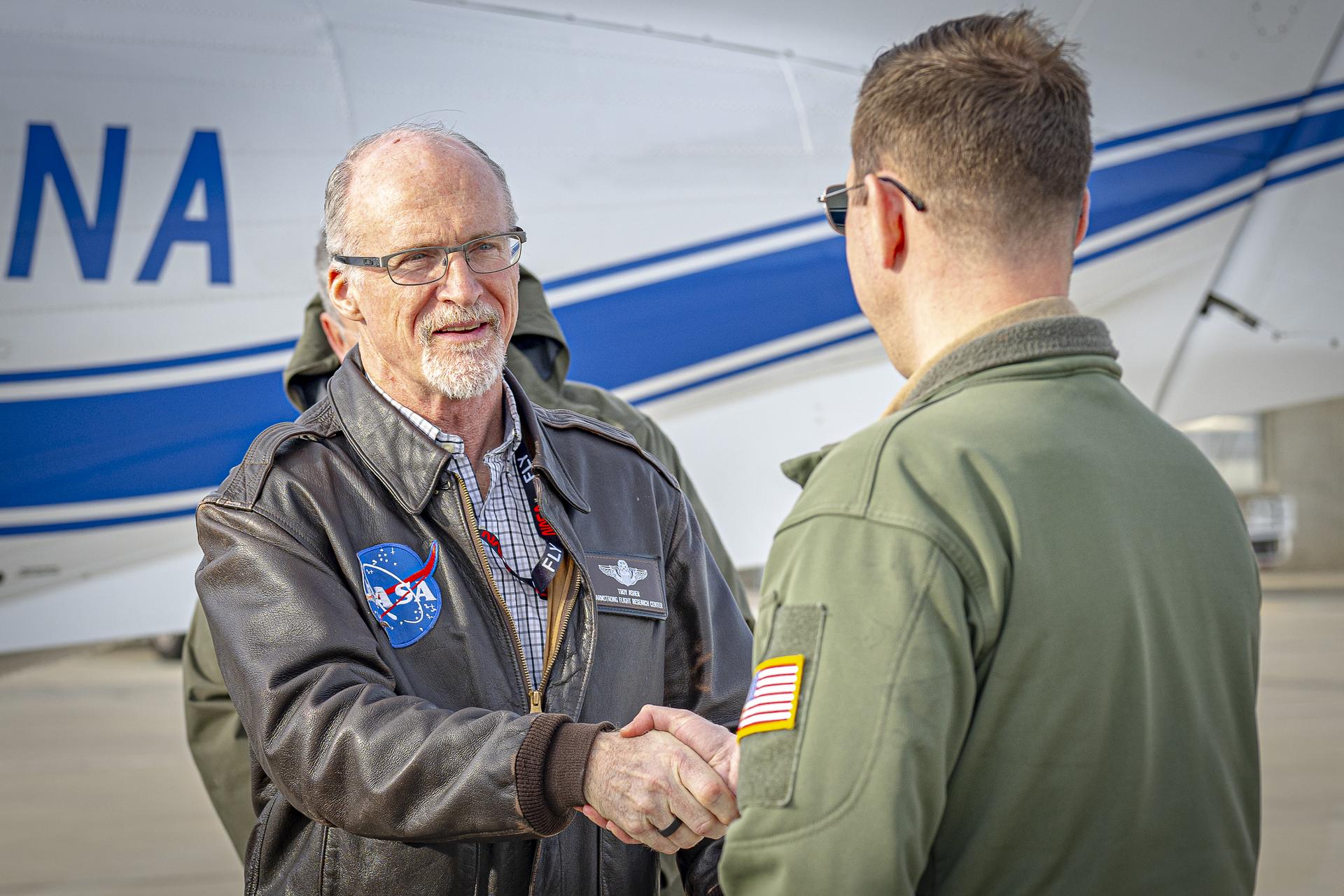
Troy Asher, director for flight operations at NASA’s Armstrong Flight Research Center in Edwards, California, shakes hands with Jeremy Johnson, a pilot with NASA’s Glenn Research Center in Cleveland. The two stand in front of a NASA Pilatus PC-12 aircraft, tail number 606, which arrived at the center Feb. 11, 2026. This aircraft is now housed at NASA Armstrong to continue supporting research at NASA Glenn, among other agency efforts.

A Pilatus PC-12 aircraft, tail number 606, is being towed and pushed by a crew at NASA’s Armstrong Flight Research Center in Edwards, California, on Feb. 11, 2026. This aircraft is now housed at NASA Armstrong to continue supporting research at NASA’s Glenn Research Center, among other agency efforts.
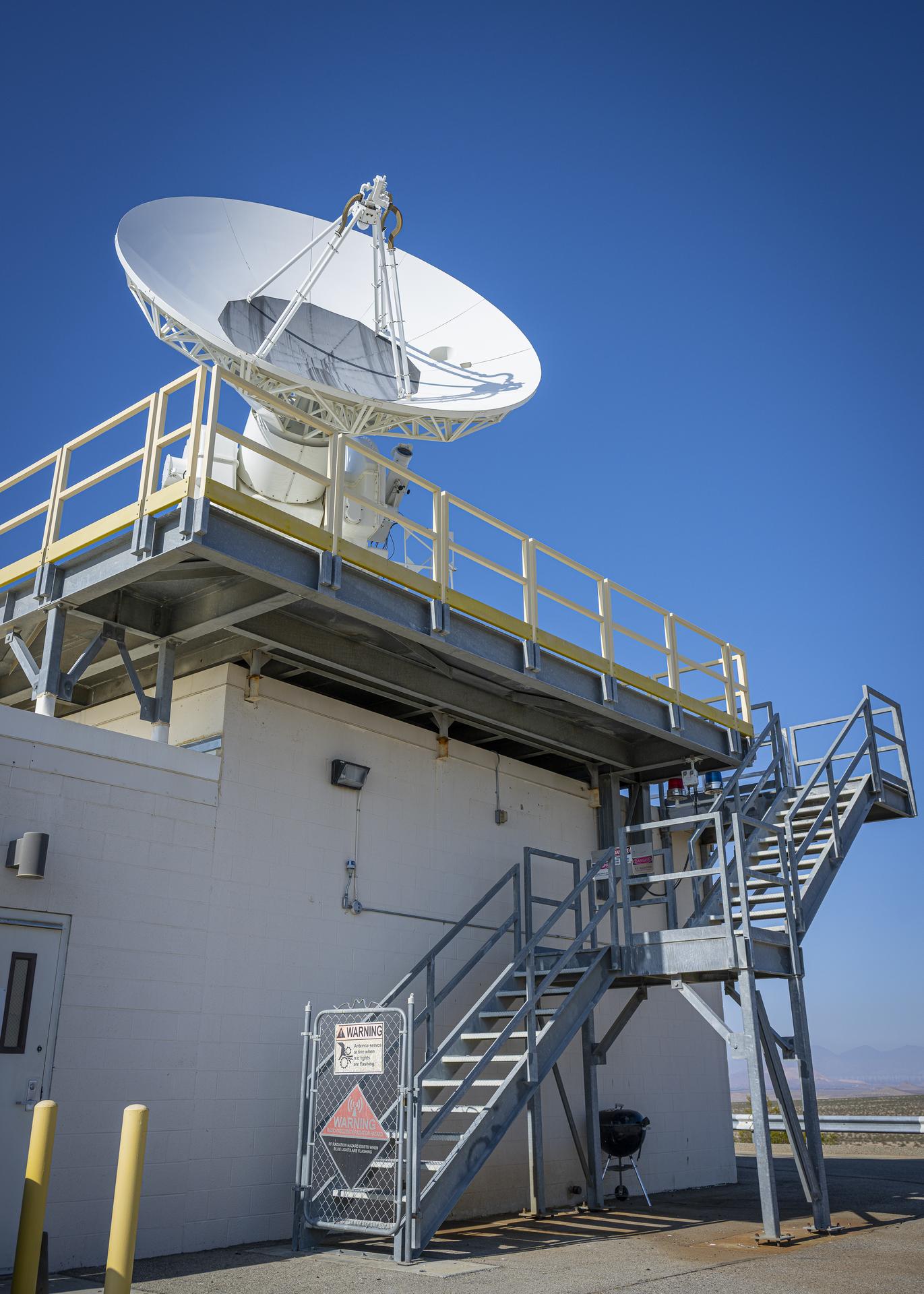
This is one of two radars that support radar tracking of the International Space Station at NASA’s Armstrong Flight Research Center in Edwards, California, on Sept. 30, 2025. Radar tracking is one of the key capabilities of the center’s Dryden Aeronautical Test Range, which provides voice and tracking support to the International Space Station.
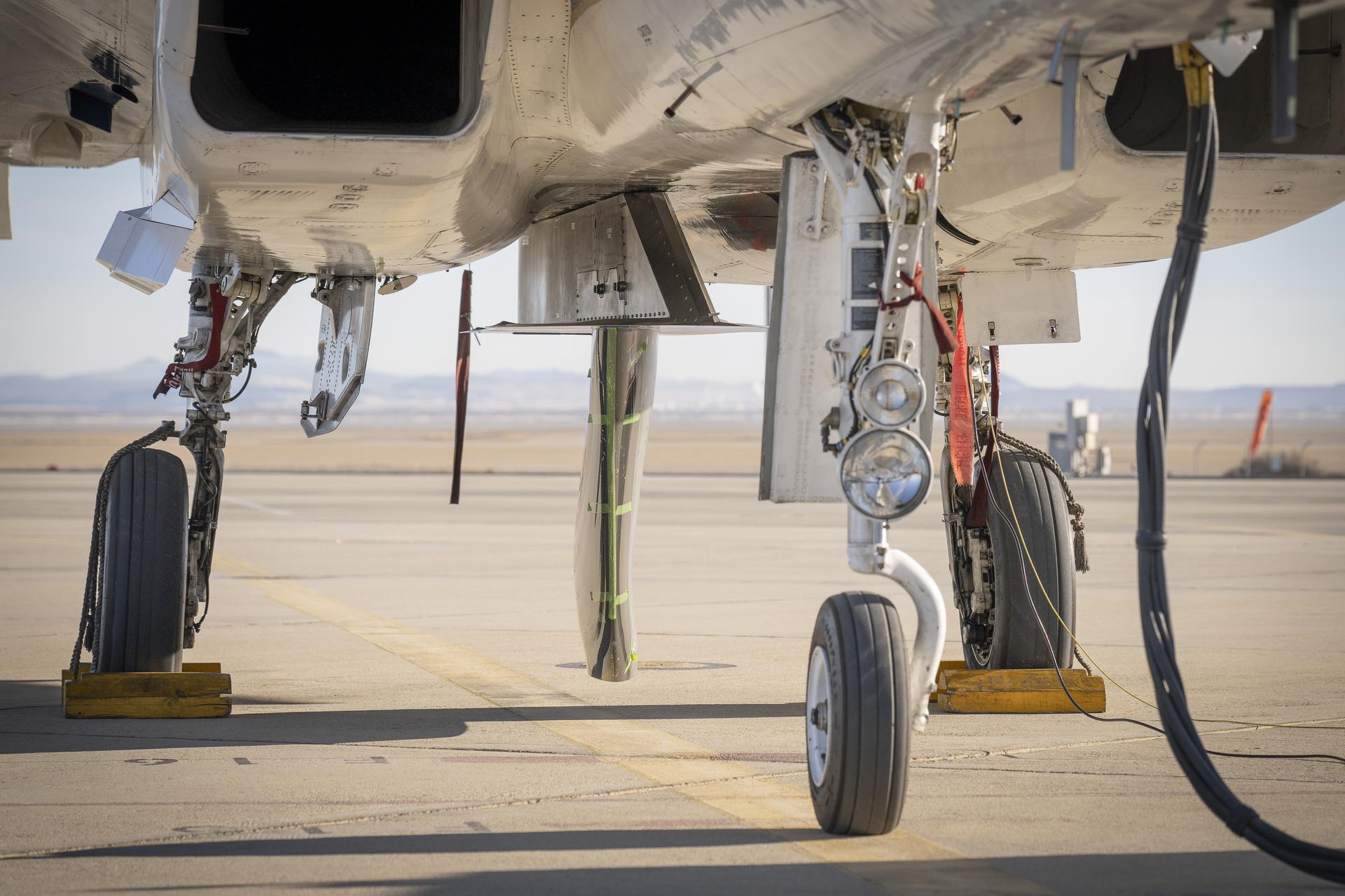
NASA’s Cross Flow Attenuated Natural Laminar Flow test article is mounted beneath the agency’s F-15 research aircraft ahead of the design’s high-speed taxi test on Tuesday, Jan. 12, 2026, at NASA’s Armstrong Flight Research Center in Edwards, California. The 3-foot-tall scale model is designed to increase a phenomenon known as laminar flow and reduce drag, improving efficiency in large, swept wings like those found on most commercial aircraft.
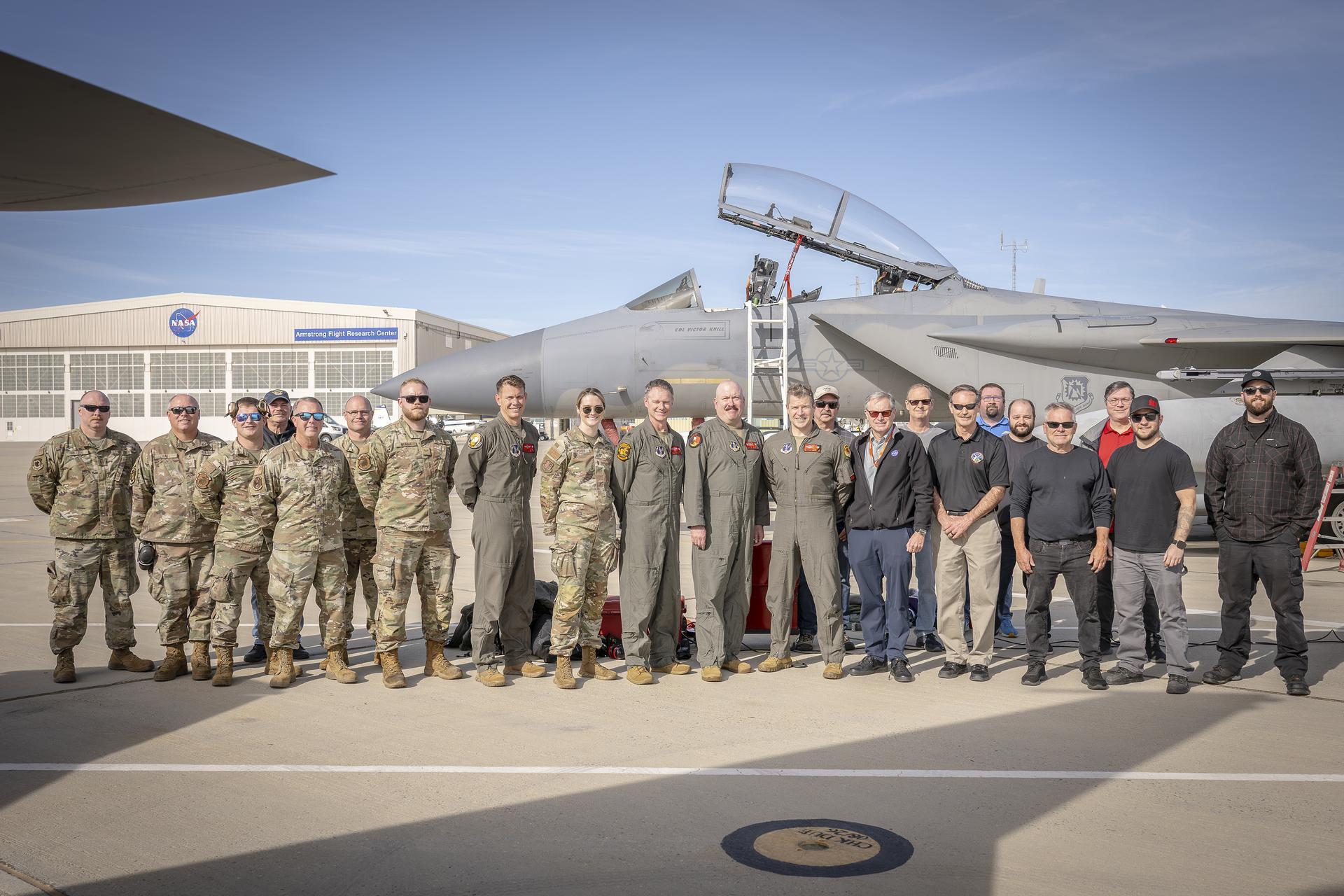
NASA staff and Oregon Air National Guard’s 173rd Fighter Wing crew pose for a group photo at NASA’s Armstrong Flight Research Center in Edwards, California, on Monday, Dec. 22, 2025. The group stands in front of one of two F-15 aircraft added to the agency’s flight research fleet.
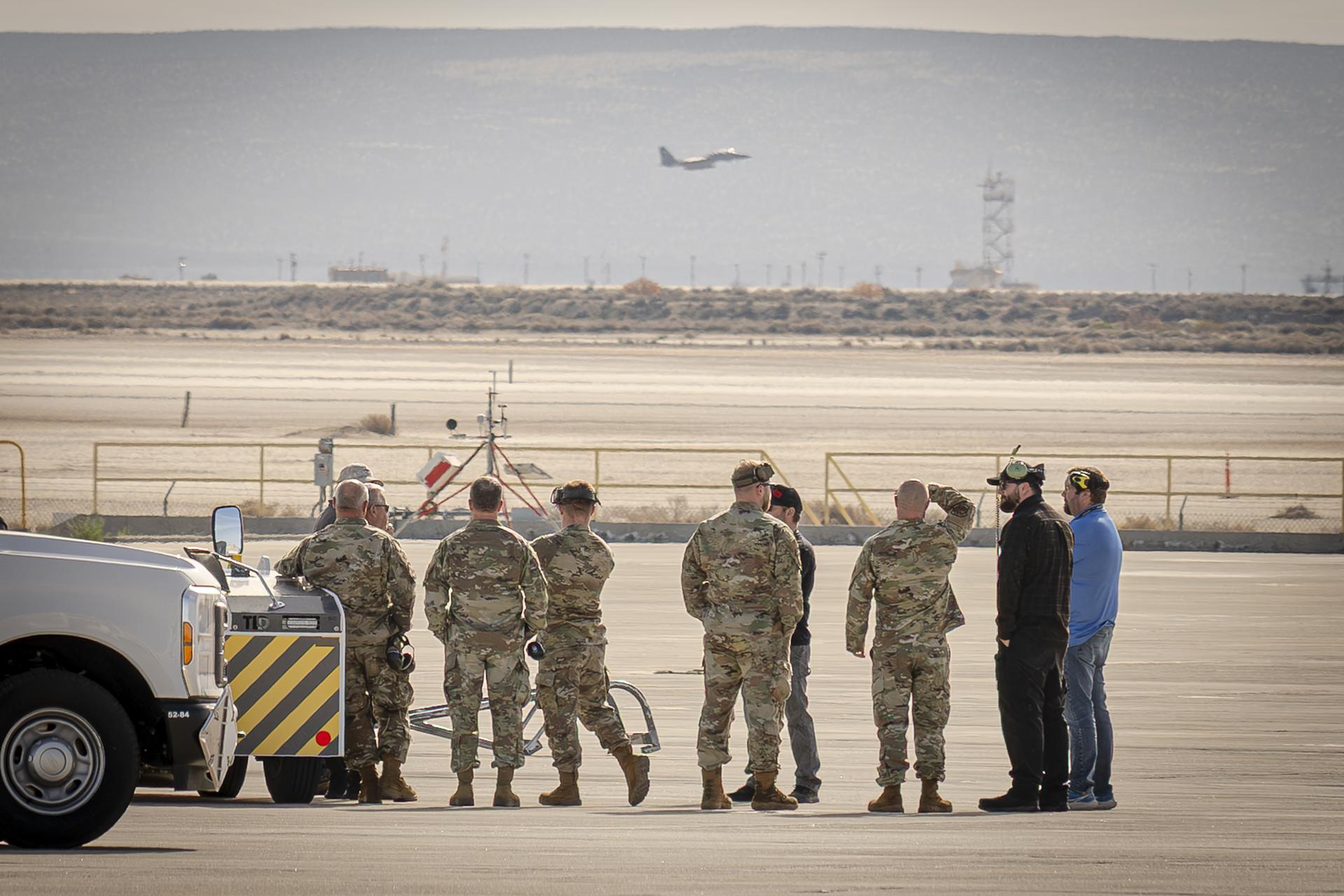
Oregon Air National Guard and NASA flight crew look out across the desert while awaiting the arrival of the NASA’s newest F-15 aircraft from the Oregon Air National Guard’s 173rd Fighter Wing to NASA’s Armstrong Flight Research Center in Edwards, California, on Monday, Dec. 22, 2025.
On June 17, 2025, NASA’s Armstrong Flight Research Center in Edwards, California, hosted Bring Kids to Work Day, offering hands-on activities that introduced children and their families to the exciting world of aeronautics and flight research.
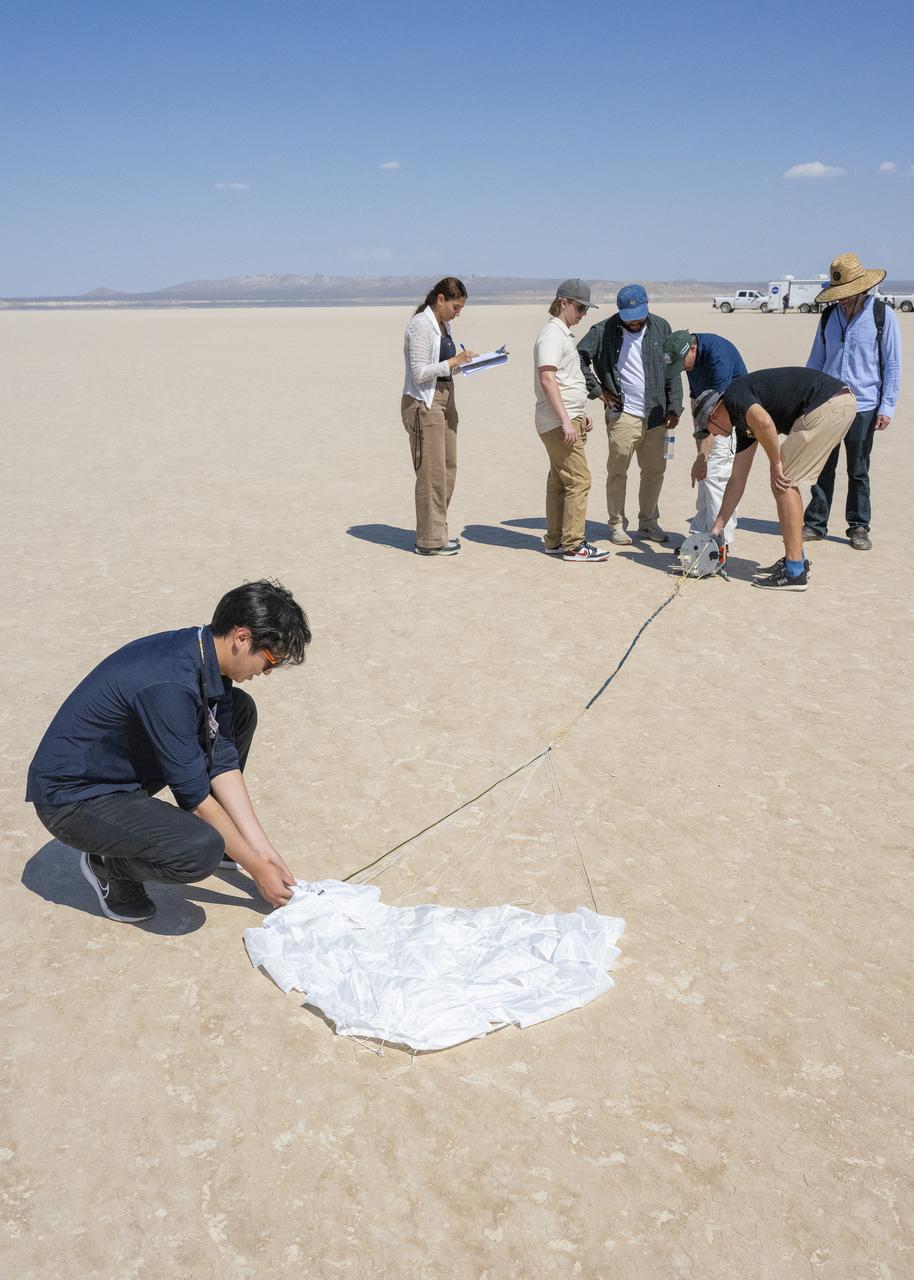
The Enhancing Parachutes by Instrumenting the Canopy project team examines a capsule and parachute following an air launch from an Alta X drone on June 4, 2025, at NASA’s Armstong Flight Research Center in Edwards, California. NASA researchers are developing technology to make supersonic parachutes safer and more reliable for delivering science instruments and payloads to Mars.
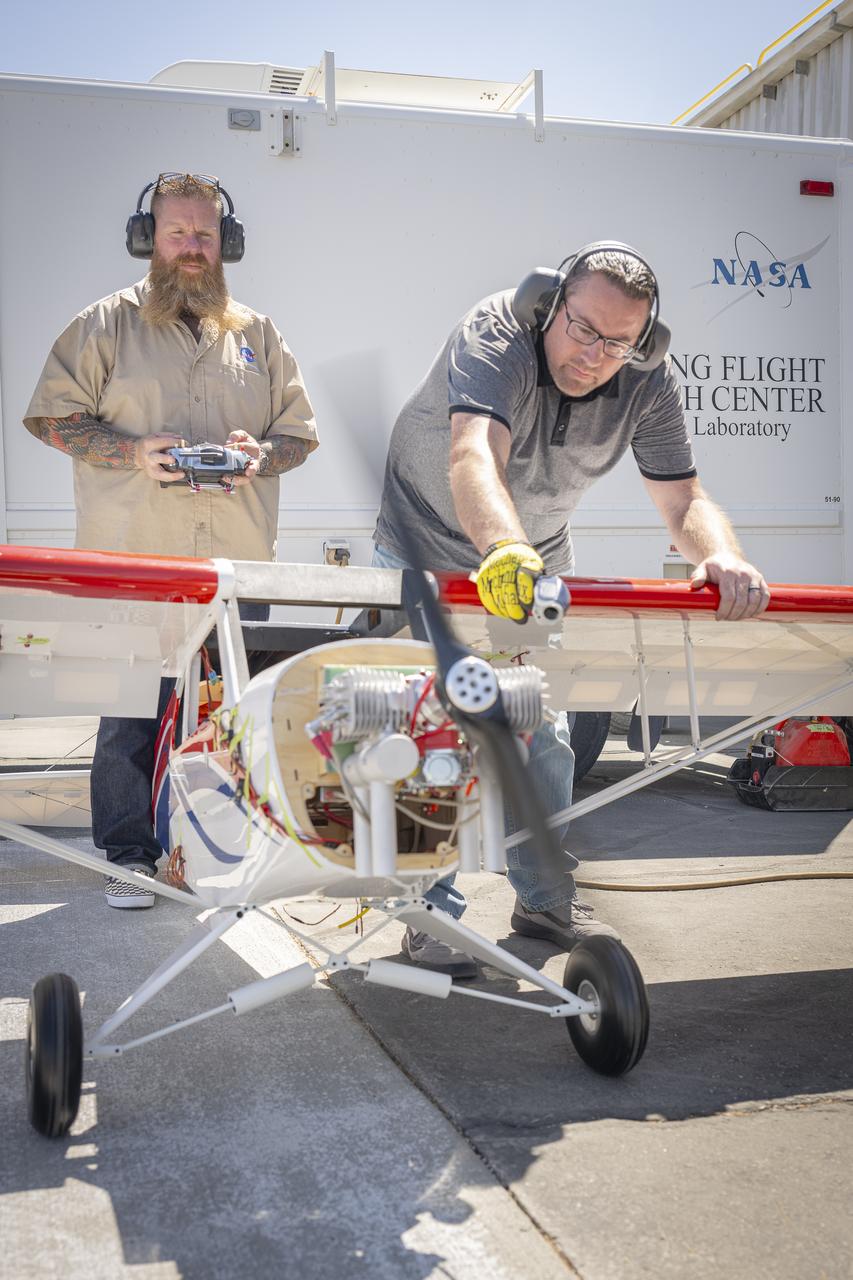
Justin Hall, left, controls a subscale aircraft as Justin Link holds the aircraft in place during preliminary engine tests on Friday, Sept. 12, 2025, at NASA’s Armstong Flight Research Center in Edwards, California. Hall is chief pilot at the center’s Dale Reed Subscale Flight Research Laboratory and Link is a pilot for small uncrewed aircraft systems.
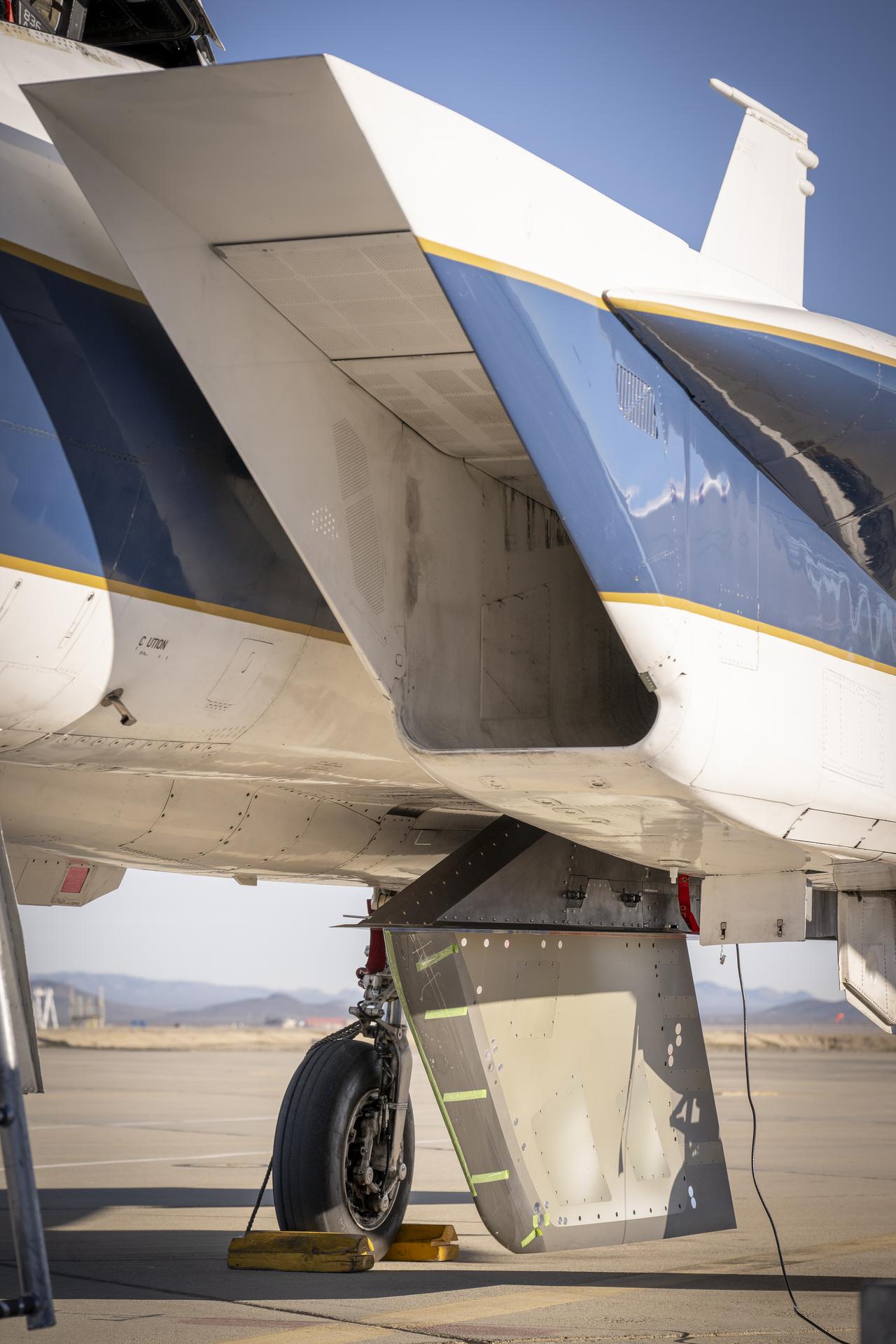
NASA’s Cross Flow Attenuated Natural Laminar Flow test article is mounted beneath the agency’s F-15 research aircraft ahead of the design’s high-speed taxi test on Tuesday, Jan. 12, 2026, at NASA’s Armstrong Flight Research Center in Edwards, California. The 3-foot-tall scale model is designed to increase a phenomenon known as laminar flow and reduce drag, improving efficiency in large, swept wings like those found on most commercial aircraft.
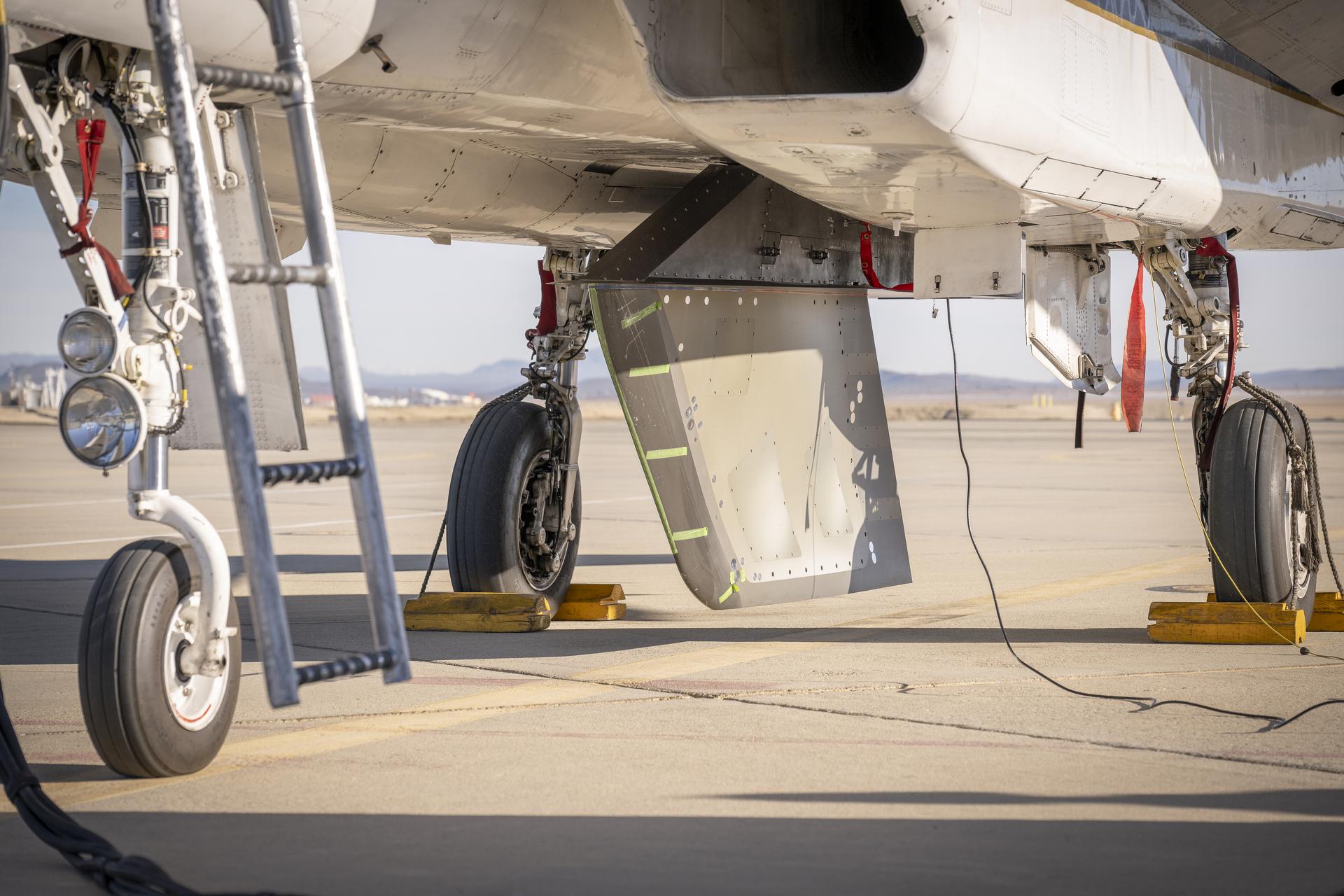
NASA’s Cross Flow Attenuated Natural Laminar Flow test article is mounted beneath the agency’s F-15 research aircraft ahead of the design’s high-speed taxi test on Tuesday, Jan. 12, 2026, at NASA’s Armstrong Flight Research Center in Edwards, California. The 3-foot-tall scale model is designed to increase a phenomenon known as laminar flow and reduce drag, improving efficiency in large, swept wings like those found on most commercial aircraft.
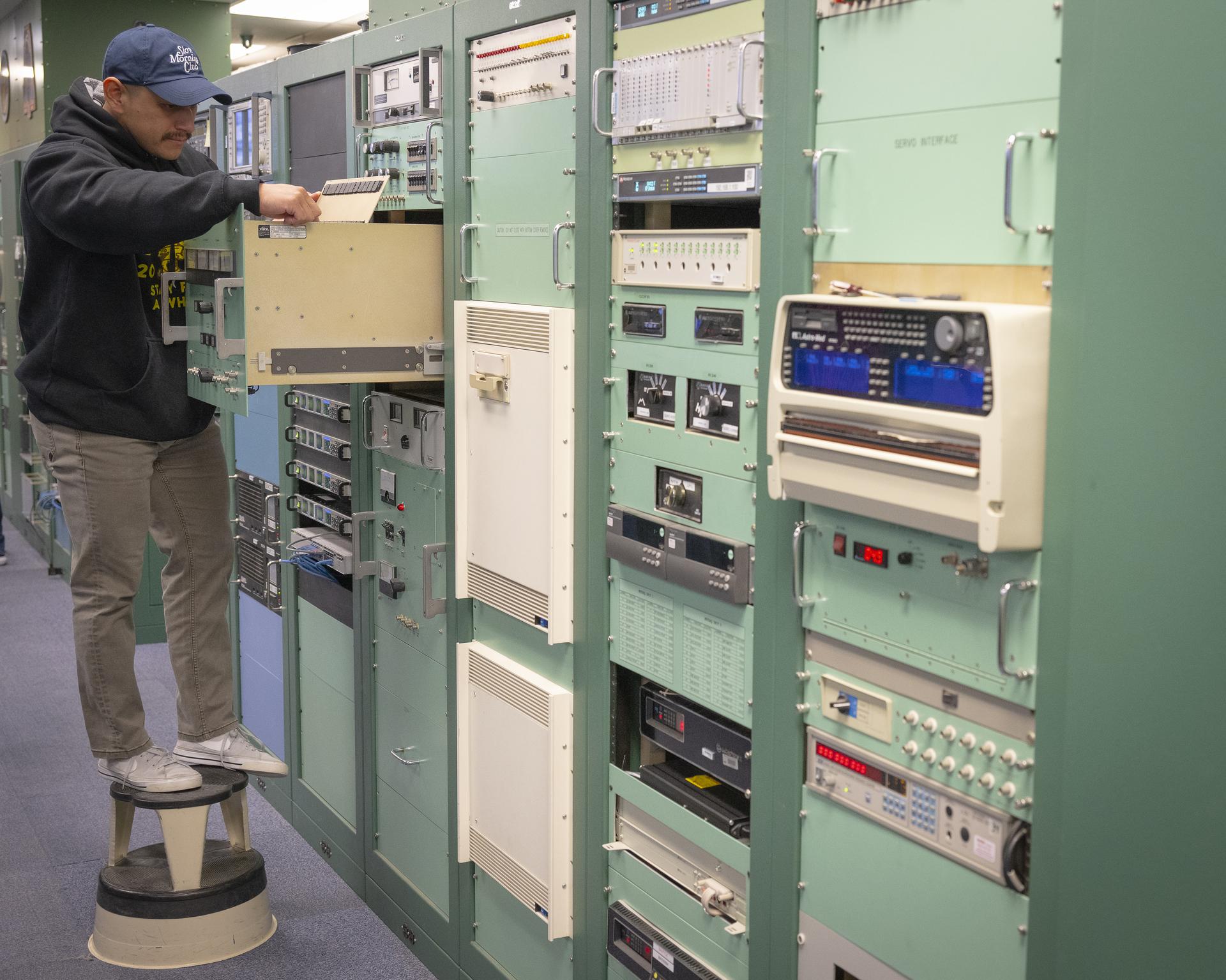
Mission technician Phillips Boche checks on components that support radar tracking at NASA’s Armstrong Flight Research Center in Edwards, California, on Sept. 30, 2025. Boche is part of the center’s Dryden Aeronautical Test Range, which provides voice and tracking support to the International Space Station.
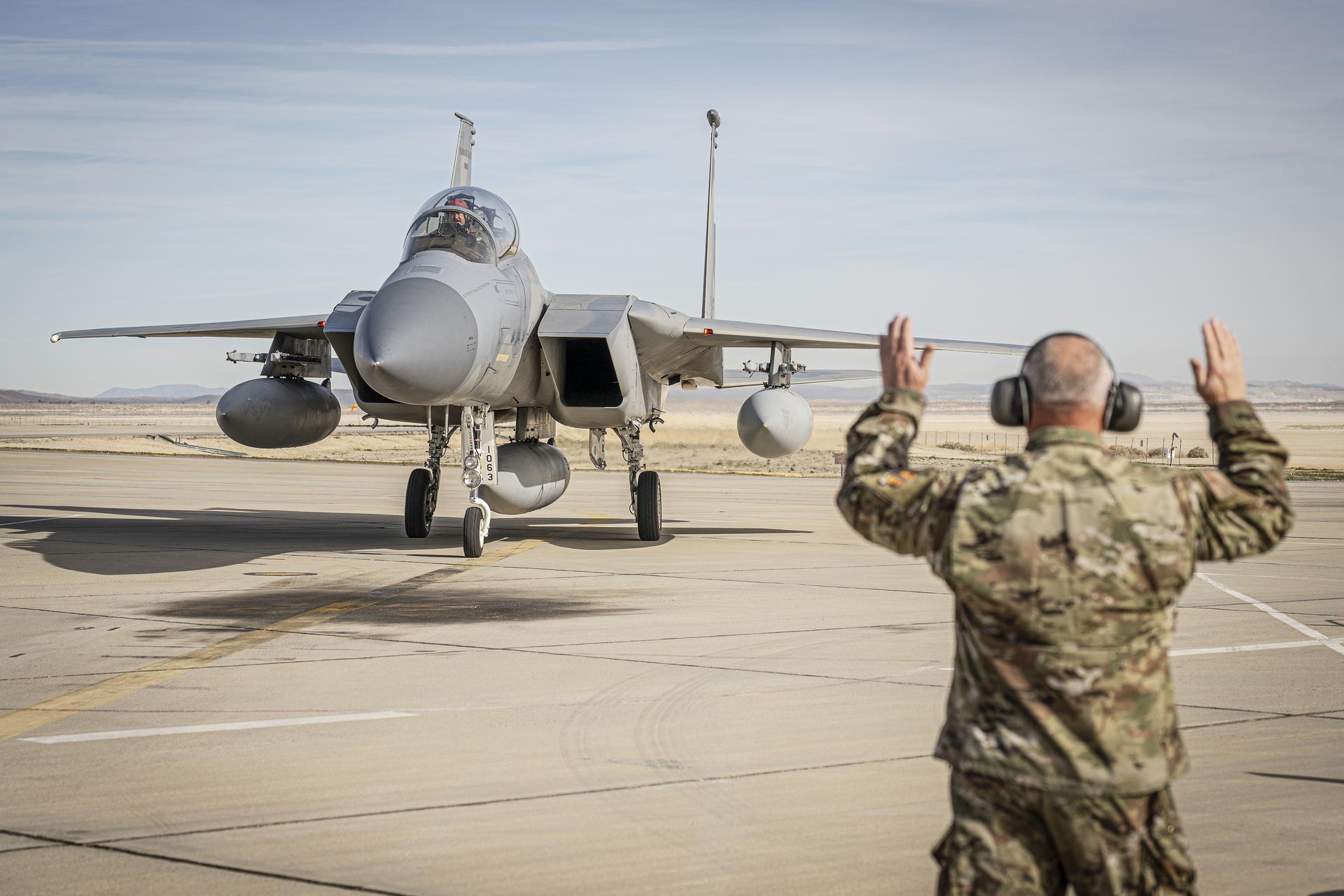
Oregon Air National Guard ground crew guides one of NASA’s newest F-15 aircraft onto the ramp at the agency’s Armstrong Flight Research Center in Edwards, California, on Monday, Dec. 22, 2025. The retired U.S. Air Force F-15s come from the Oregon Air National Guard’s 173rd Fighter Wing and will transition from military service to support NASA’s flight research fleet.
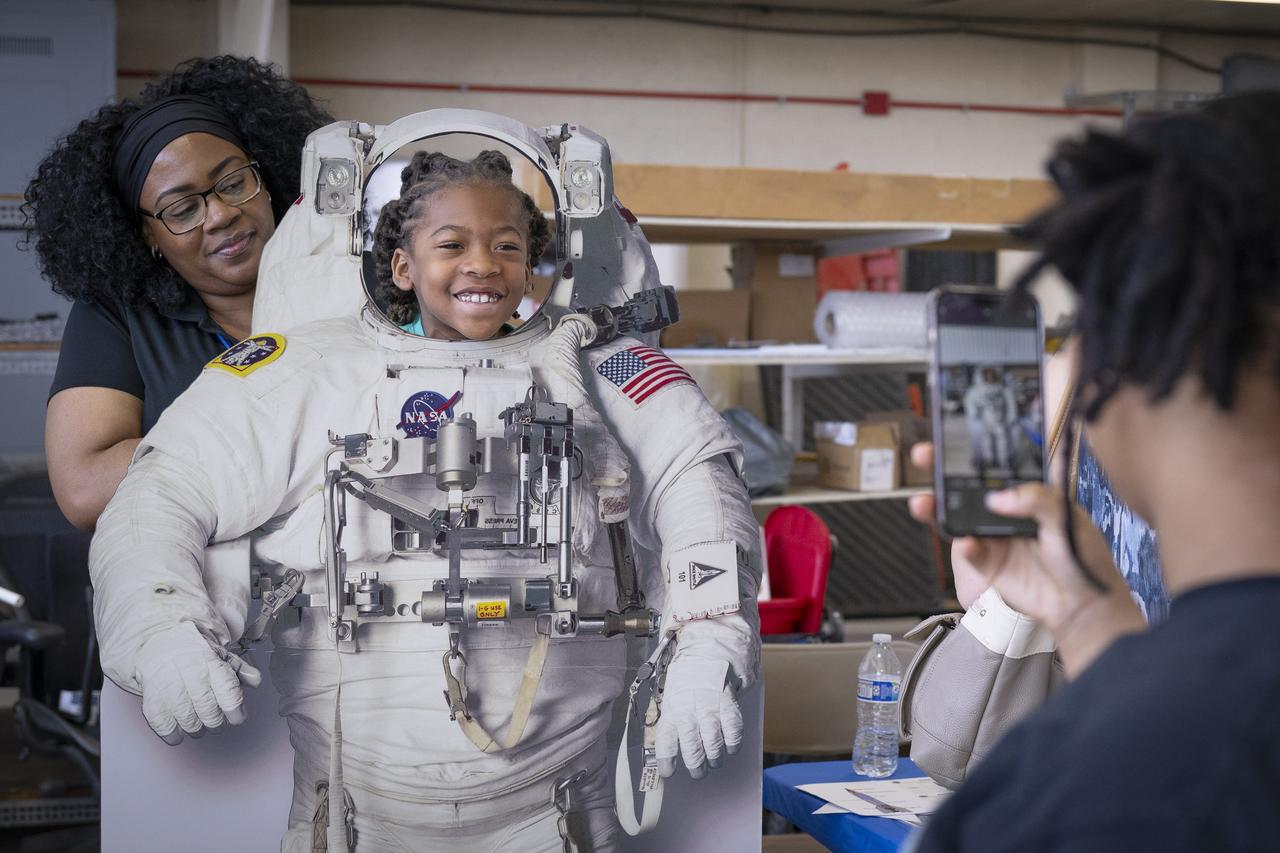
On June 17, 2025, NASA’s Armstrong Flight Research Center in Edwards, California, hosted Bring Kids to Work Day, offering hands-on activities that introduced children and their families to the exciting world of aeronautics and flight research.
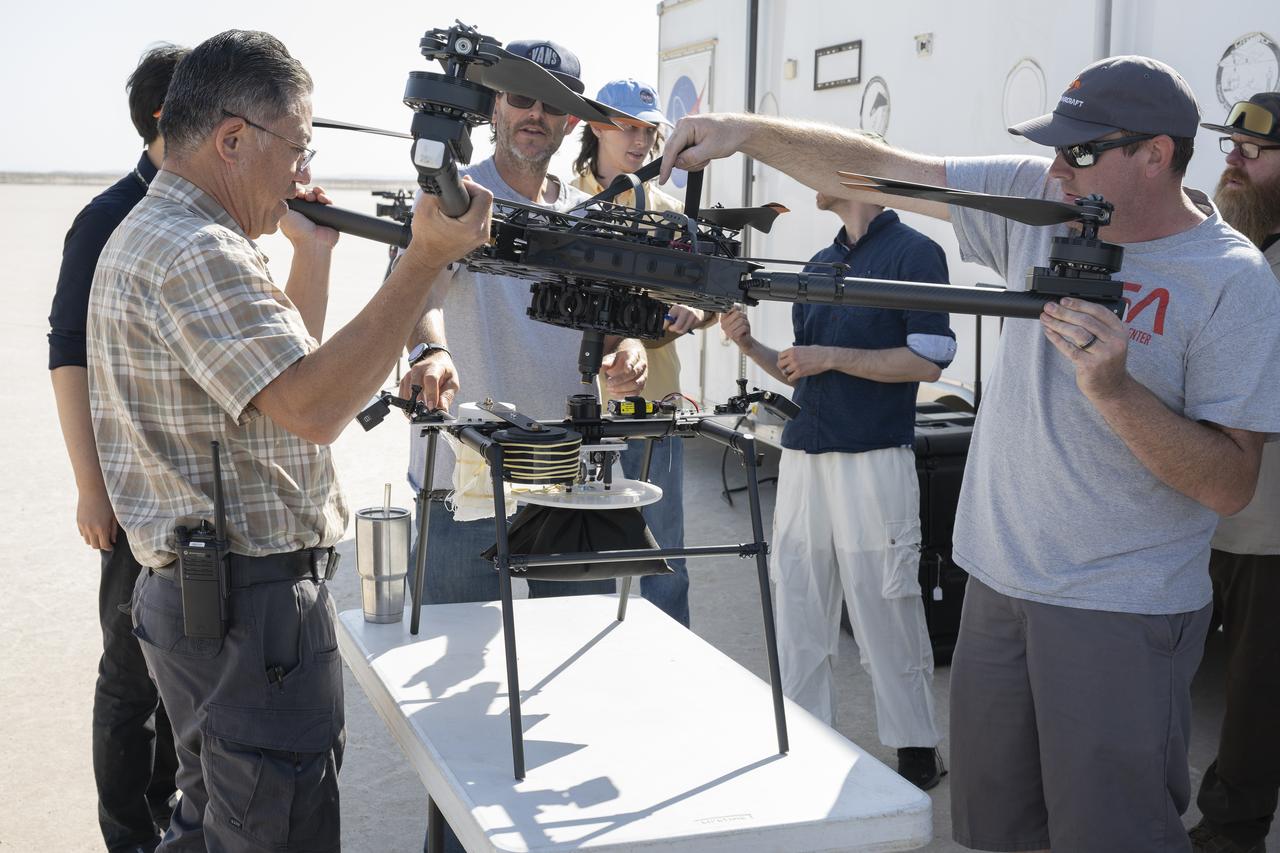
Derek Abramson, left, and Justin Link, right, attach an Alta X drone to the Enhancing Parachutes by Instrumenting the Canopy test experiment on June 4, 2025, at NASA’s Armstong Flight Research Center in Edwards, California. Abramson is NASA chief engineer at the center’s Dale Reed Subscale Flight Research Laboratory, where Link also works as a pilot for small uncrewed aircraft systems. NASA researchers are developing technology to make supersonic parachutes safer and more reliable for delivering science instruments and payloads to Mars.
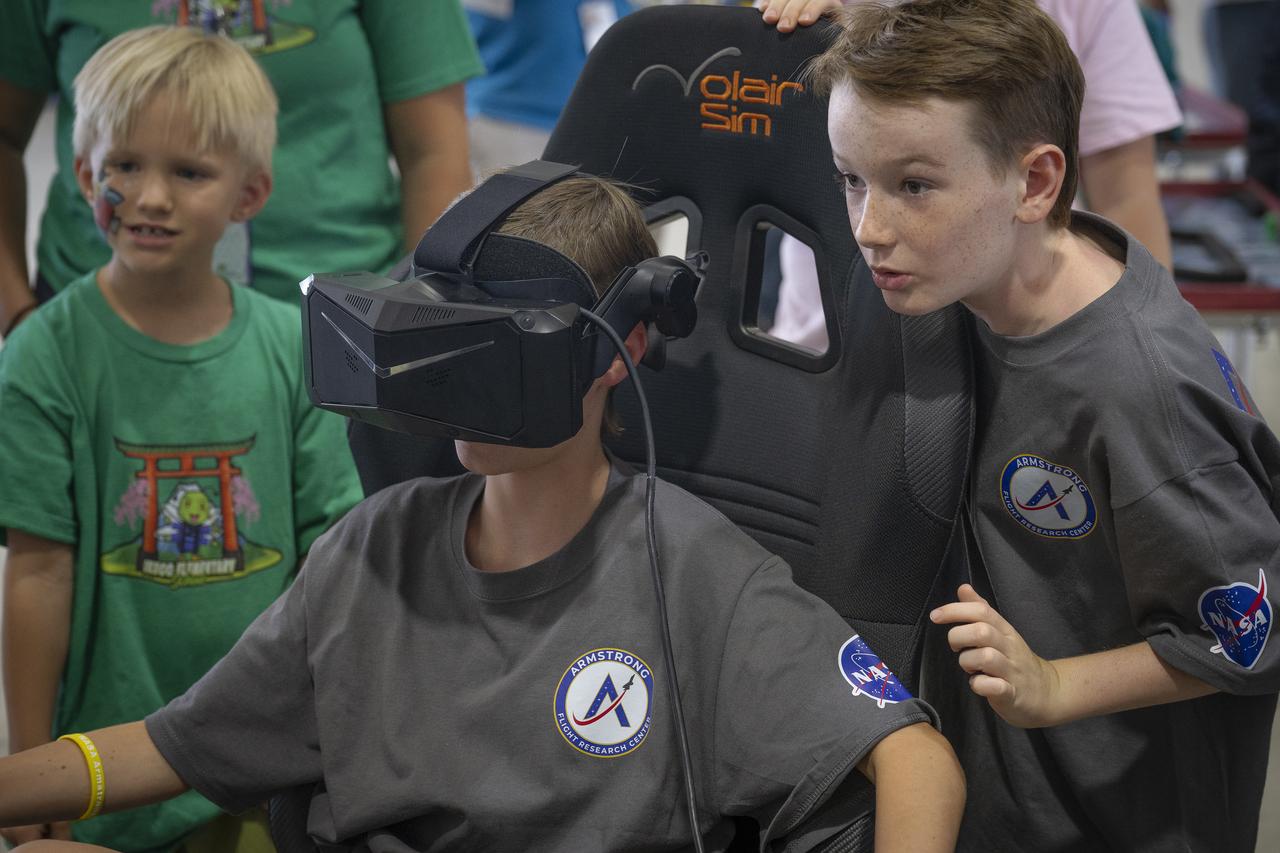
Children explore a virtual reality flight simulator during Bring Kids to Work Day on June 17, 2025, at NASA’s Armstrong Flight Research Center in Edwards, California. The immersive experience introduced participants to aerospace engineering and flight research in an engaging, hands-on environment.
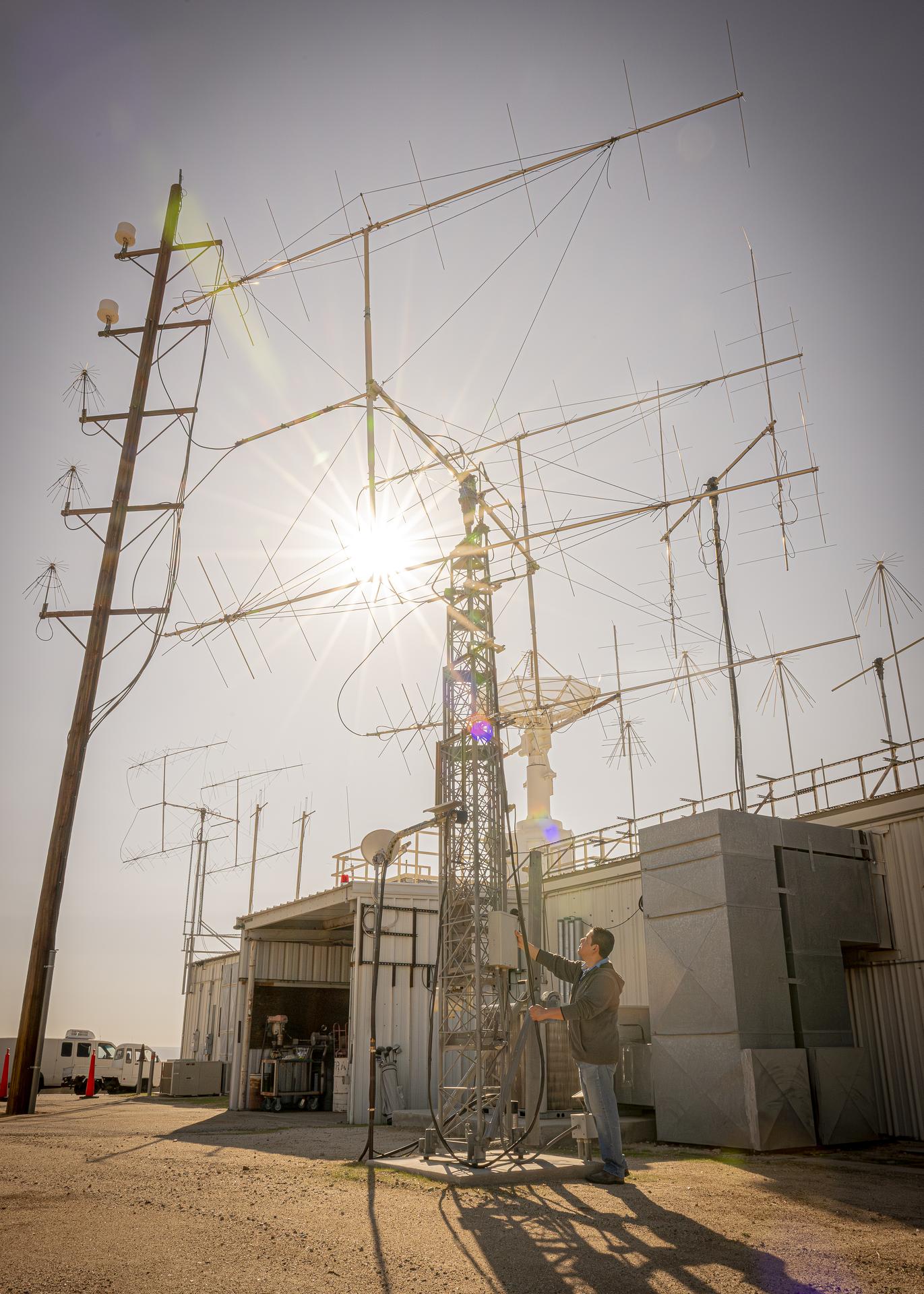
Mission operator Kelvin Menendez watches as antennas rise to track the International Space Station as it passes high above NASA’s Armstrong Flight Research Center in Edwards, California, on Sept. 30, 2025. Menendez is part of the center’s Dryden Aeronautical Test Range, which provides voice and tracking support to the space station.
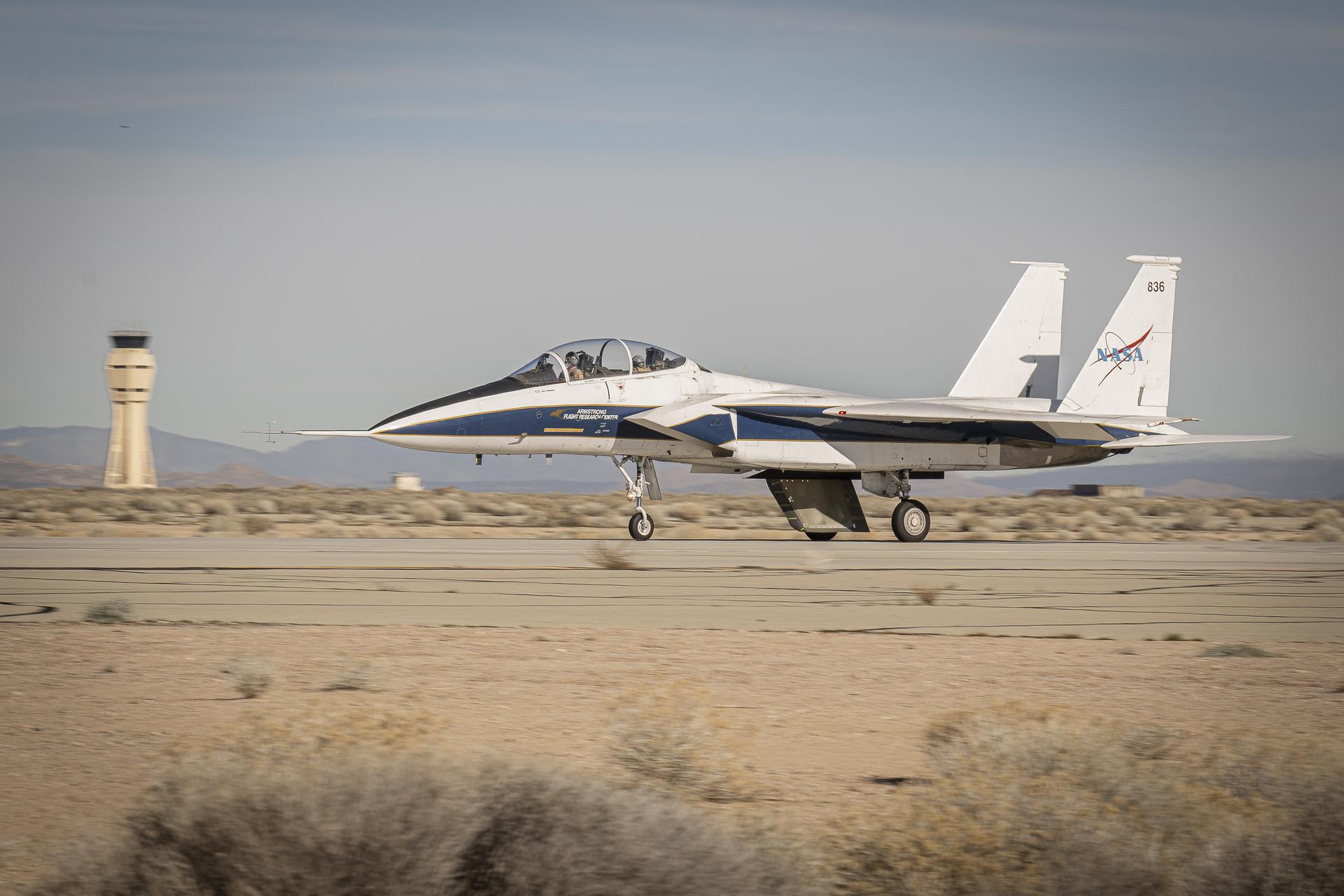
NASA’s Cross Flow Attenuated Natural Laminar Flow (CATNLF) scale model completes its first major milestone – high-speed taxi test – Tuesday, Jan. 12, 2026, at Edwards Air Force Base in California. NASA’s F-15 research aircraft, with the 3-foot-tall test article mounted on its underside, reached speeds of approximately 144 mph during testing. If successful, the technology could be applied to future commercial aircraft to improve efficiency and potentially reduce fuel consumption.
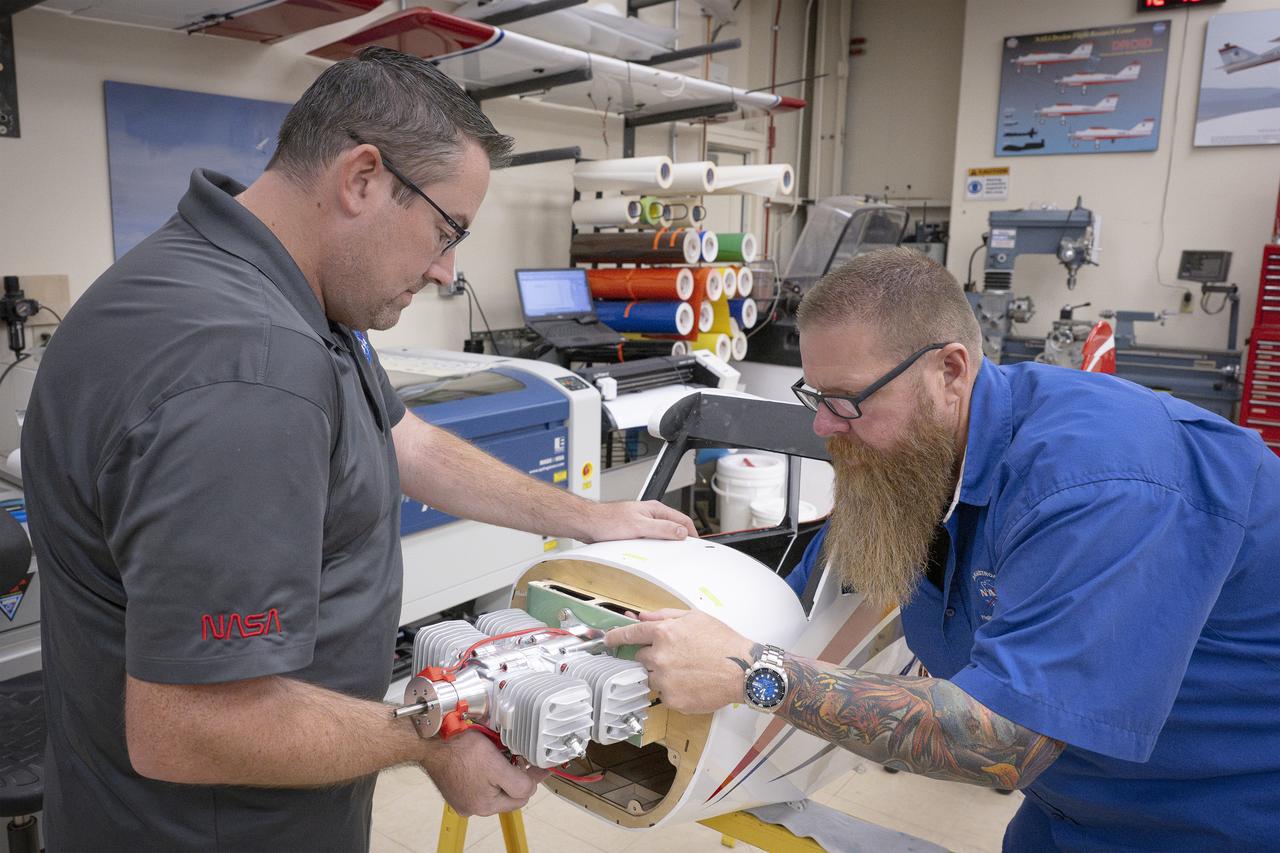
Justin Link, left, and Justin Hall attach an engine onto a subscale aircraft on Wednesday, Sept. 3, 2025, at NASA’s Armstong Flight Research Center in Edwards, California. Link is a pilot for small uncrewed aircraft systems at the center’s Dale Reed Subscale Flight Research Laboratory and Hall is the lab’s chief pilot.
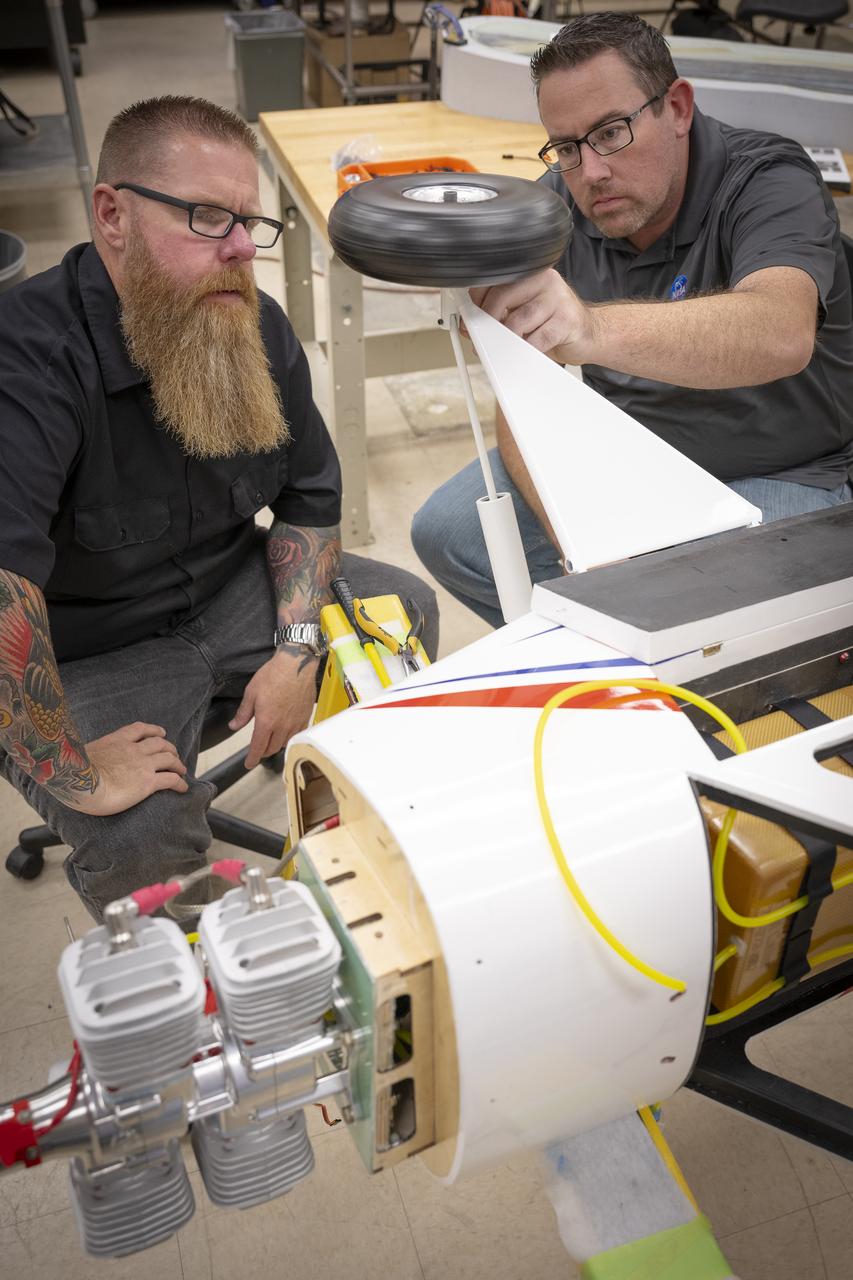
Justin Hall, left, and Justin Link attach a section of landing gear onto a subscale aircraft on Friday, Sept. 12, 2025, at NASA’s Armstong Flight Research Center in Edwards, California. Hall is chief pilot at the center’s Dale Reed Subscale Flight Research Laboratory and Link is a pilot for small uncrewed aircraft systems.
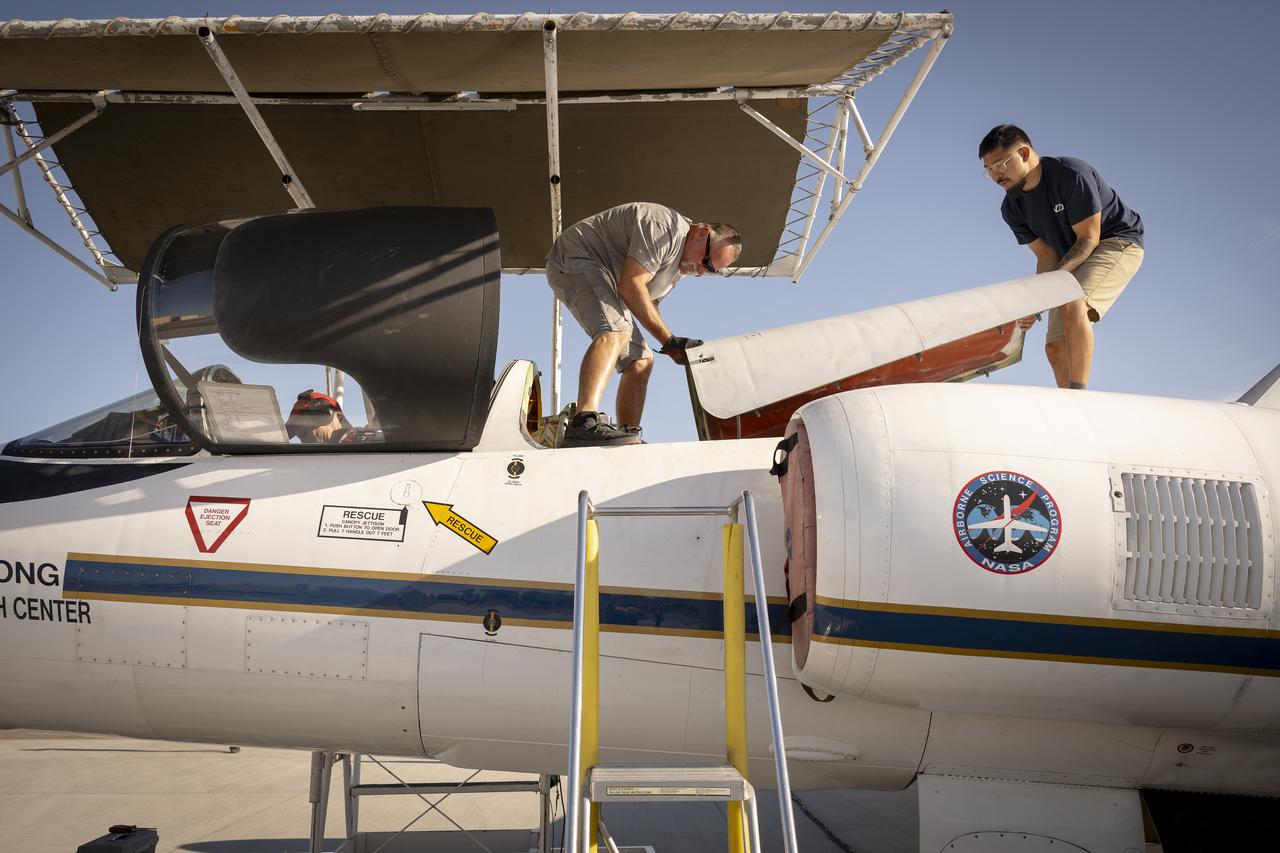
Ground crew members make final preparations on NASA Armstrong Flight Research Center’s ER-2 aircraft at Edwards, California, on Thursday, Aug. 21, 2025, ahead of a high-altitude mission for the Geological Earth Mapping Experiment (GEMx). The pilot will soon board the aircraft, which can fly at altitudes up to 70,000 feet.
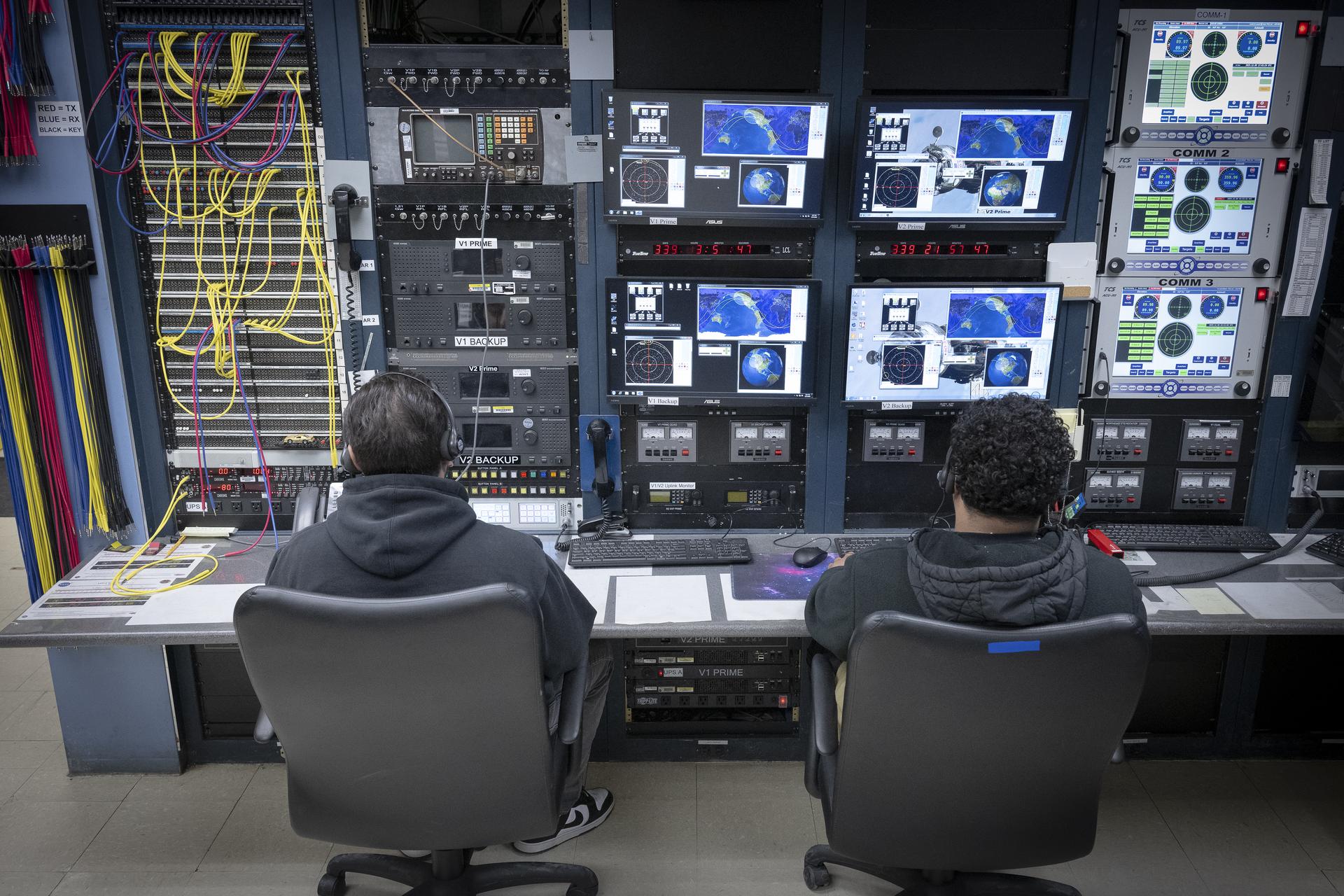
Range operators at the Dryden Aeronautical Test Range at NASA’s Armstong Flight Research Center in Edwards, California, provide voice and tracking support to the International Space Station. In this Friday, Dec. 6, 2025, photo, Alex Oganesyan, left, and Deming Ingles are shown at their workstations, where they support communications backup for space station missions.
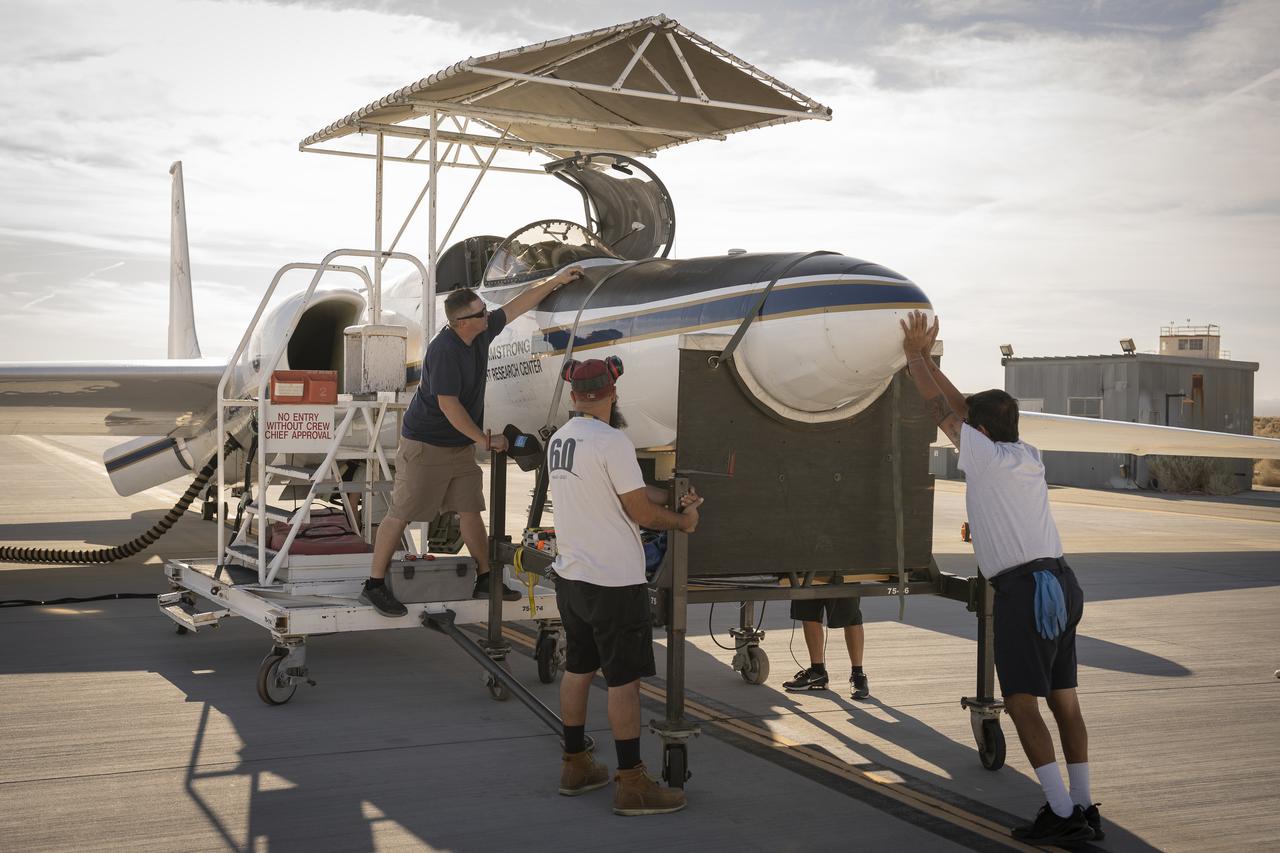
Crew members reattach the nose cone of NASA’s Armstrong Flight Research Center’s ER-2 aircraft at Edwards, California, on Thursday, Aug. 21, 2025, ahead of a mission for the Geological Earth Mapping Experiment (GEMx). The aircraft’s nose houses key science instruments used to collect data during flight.
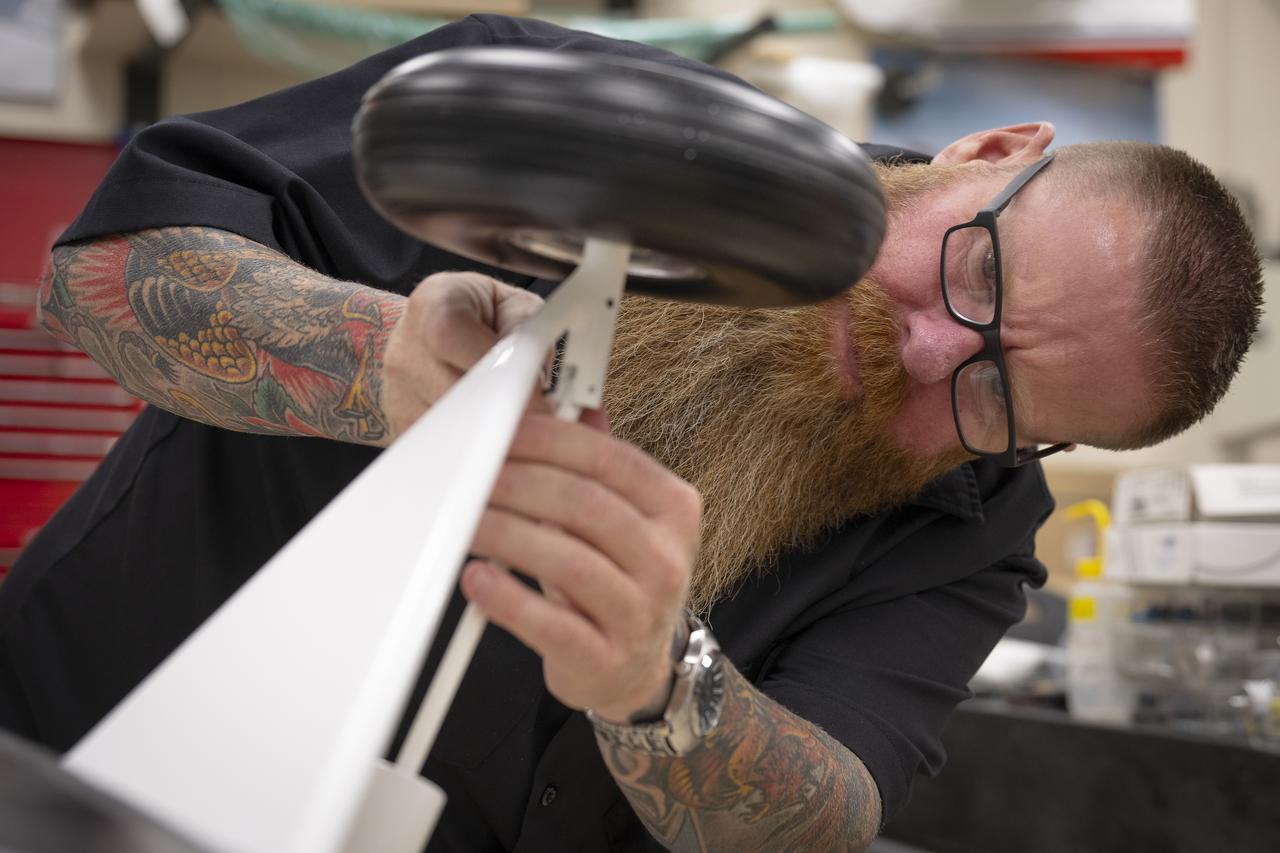
Justin Hall attaches part of the landing gear of a subscale aircraft on Friday, Sept. 12, 2025, at NASA’s Armstong Flight Research Center in Edwards, California. Hall is the chief pilot at the center’s Dale Reed Subscale Flight Research Laboratory.
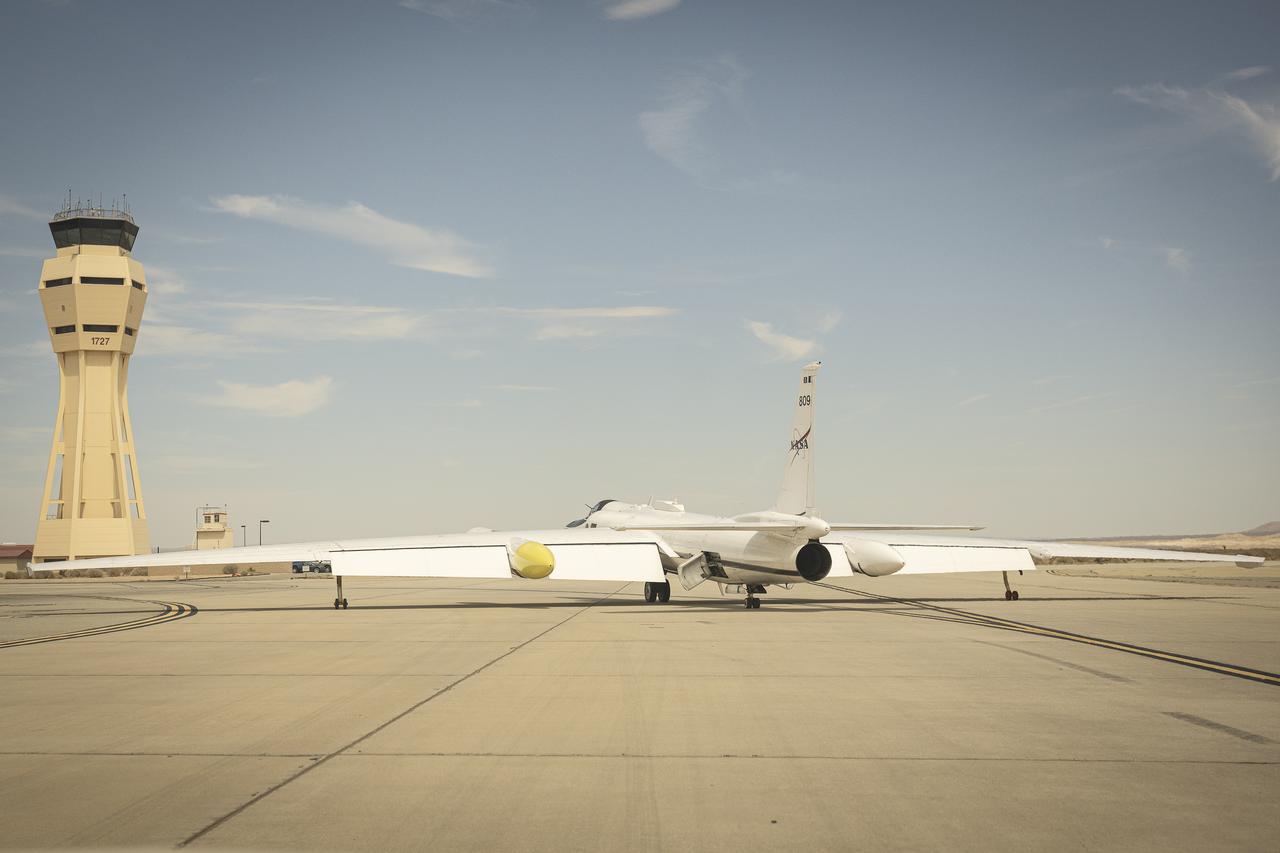
NASA Armstrong Flight Research Center’s ER-2 aircraft taxis at Edwards, California, on Thursday, Aug. 21, 2025, ahead of a high-altitude mission supporting the Geological Earth Mapping Experiment (GEMx), which requires flights of up to eight hours at approximately 65,000 feet altitude.
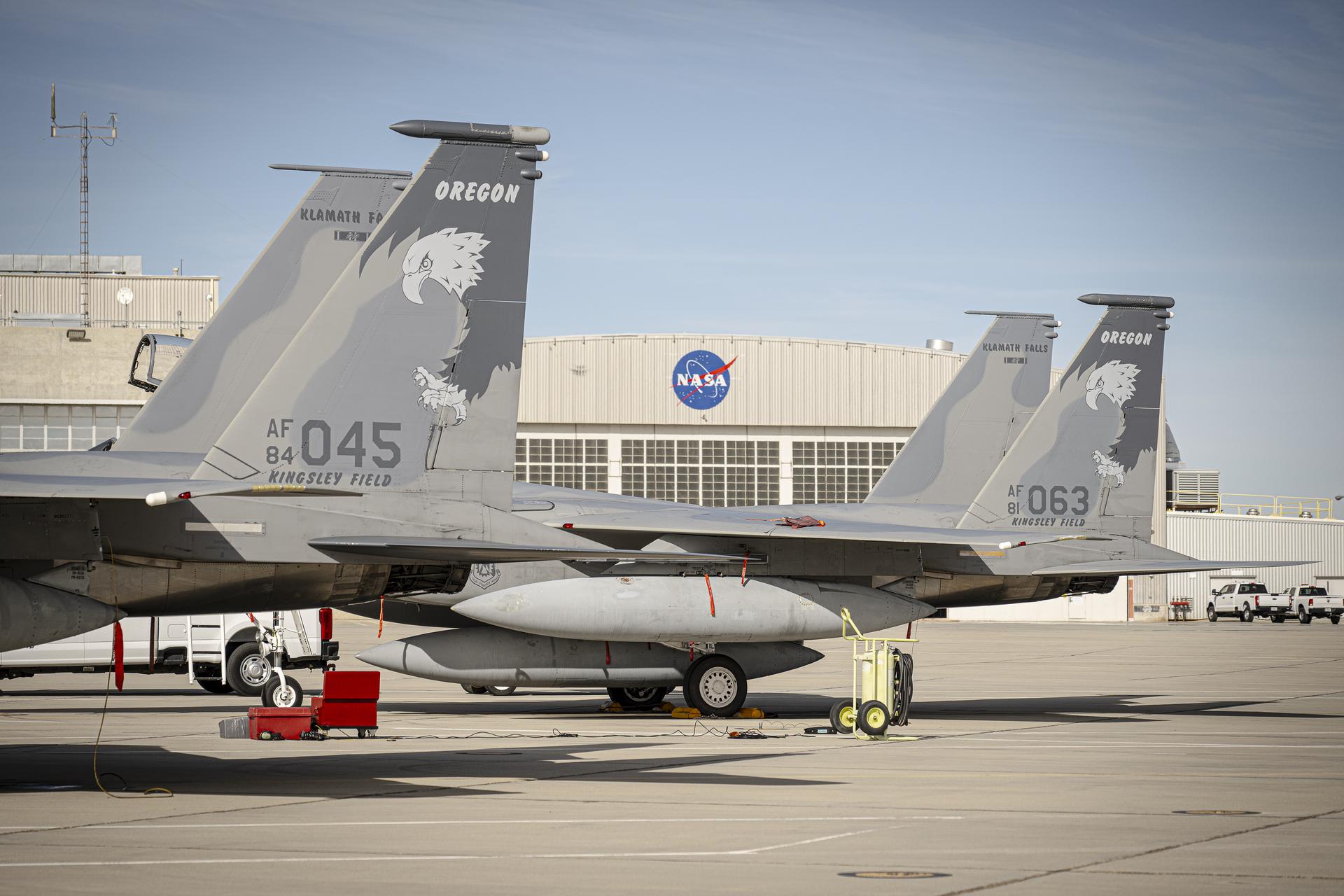
NASA’s newest F-15 aircraft arrive at the agency’s Armstrong Flight Research Center in Edwards, California, on Monday, Dec. 22, 2025. The two retired U.S. Air Force F-15s will support ongoing supersonic flight research for NASA’s Flight Demonstrations and Capabilities Project and the Quesst mission’s X-59 quiet supersonic research aircraft.
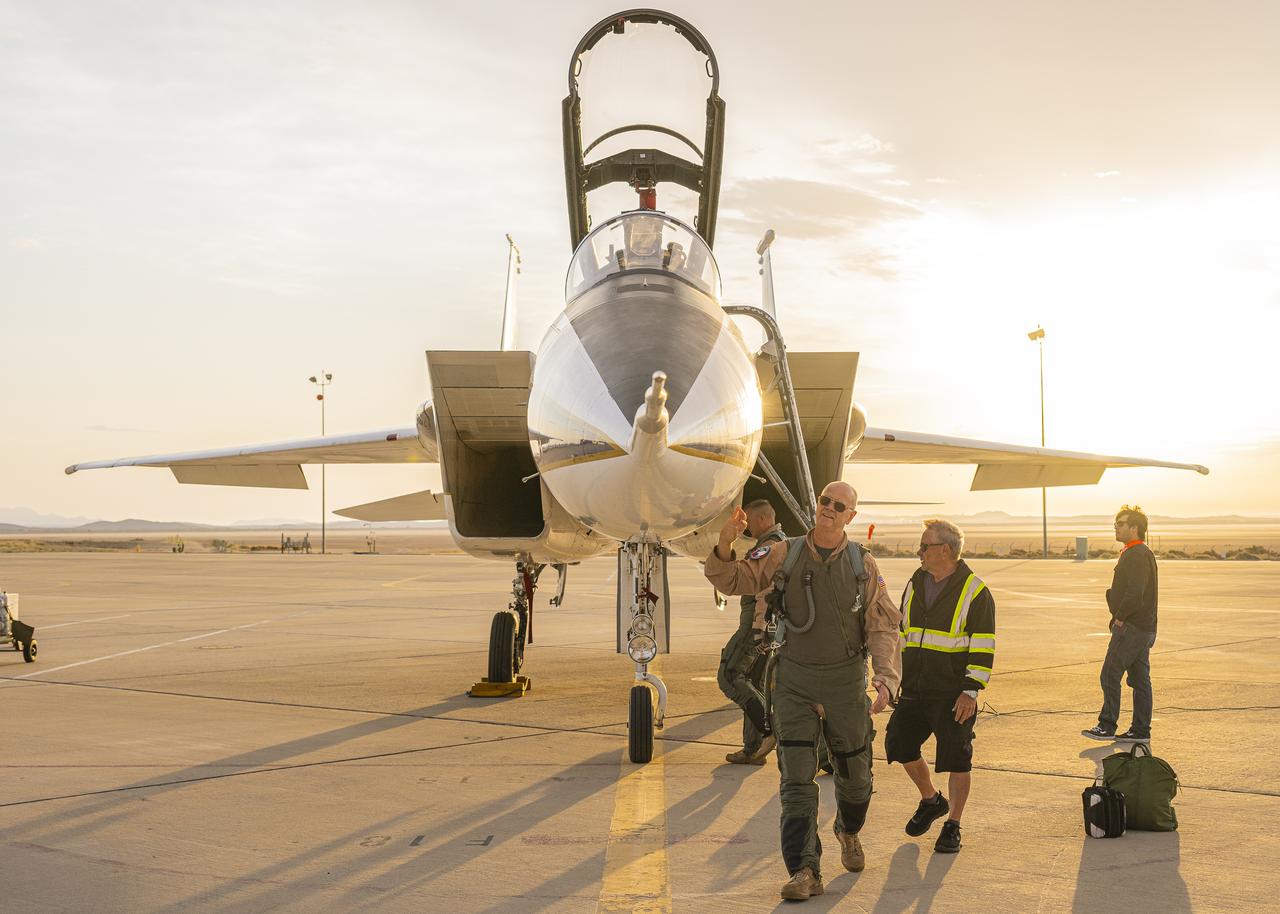
NASA test pilot Nils Larson walks around an F-15B research aircraft for a rehearsal flight supporting the agency’s Quesst mission at NASA’s Armstrong Flight Research Center in Edwards, California. The flight was part of a full-scale dress rehearsal for Phase 2 of the mission, which will eventually measure quiet sonic thumps generated by the X-59. The flight series helped NASA teams refine procedures and practice data collection ahead of future X-59 flights.
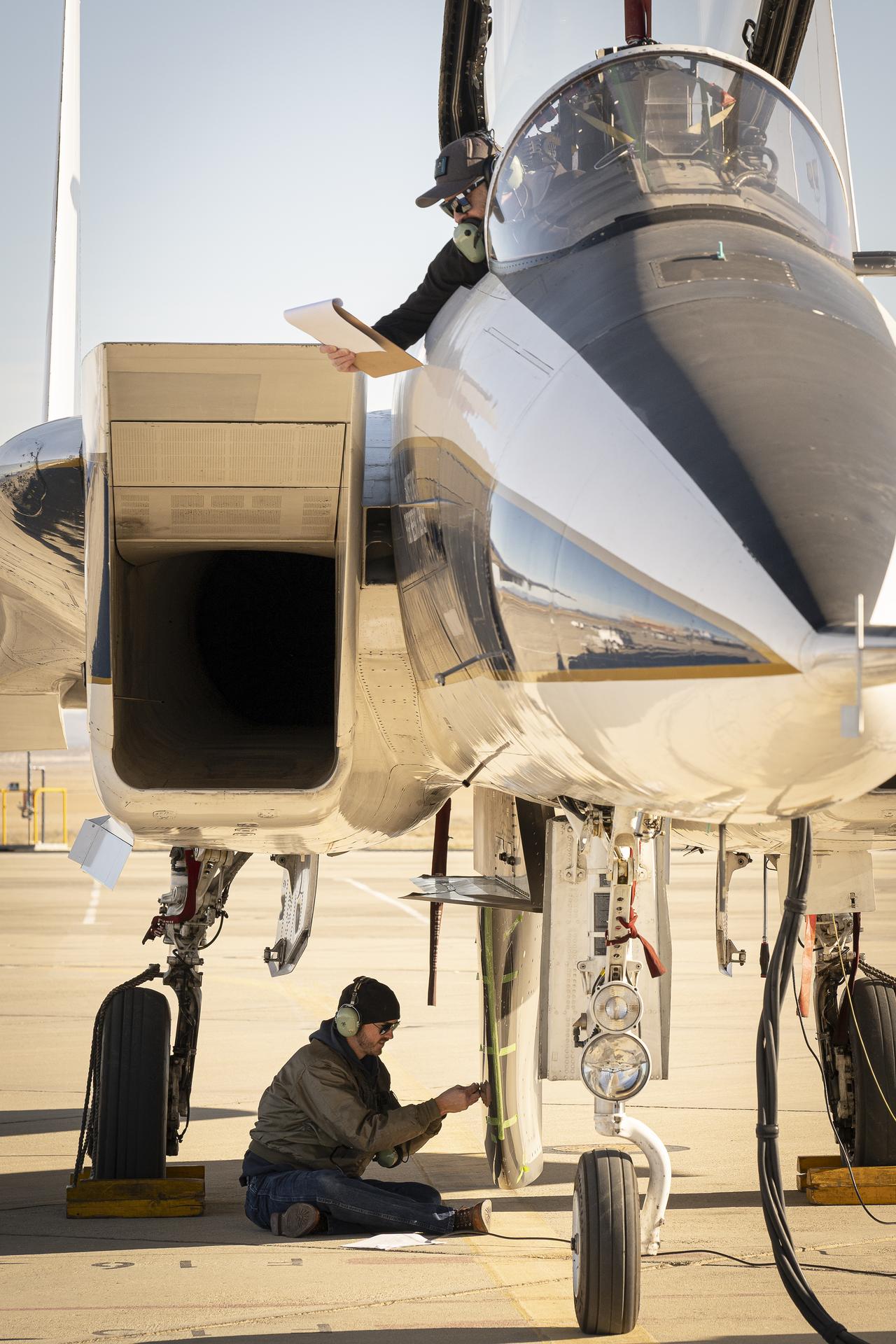
NASA ground crew prepares the agency’s F-15 research aircraft and Cross Flow Attenuated Natural Laminar Flow (CATNLF) test article ahead of its first high-speed taxi test on Tuesday, Jan. 12, 2026, at NASA’s Armstrong Flight Research Center in Edwards, California. The CATNLF design aims to reduce drag on wing surfaces to improve efficiency and, in turn, reduce fuel burn.

Suited up and ready, ER-2 pilot Kirt Stallings waits inside the transport vehicle at Edwards, California, on Thursday, Aug. 21, 2025, moments before boarding NASA’s Armstrong Flight Research Center’s ER-2 aircraft for a high-altitude mission supporting the Geological Earth Mapping Experiment (GEMx). Through the vehicle window, the aircraft can be seen being readied for flight.
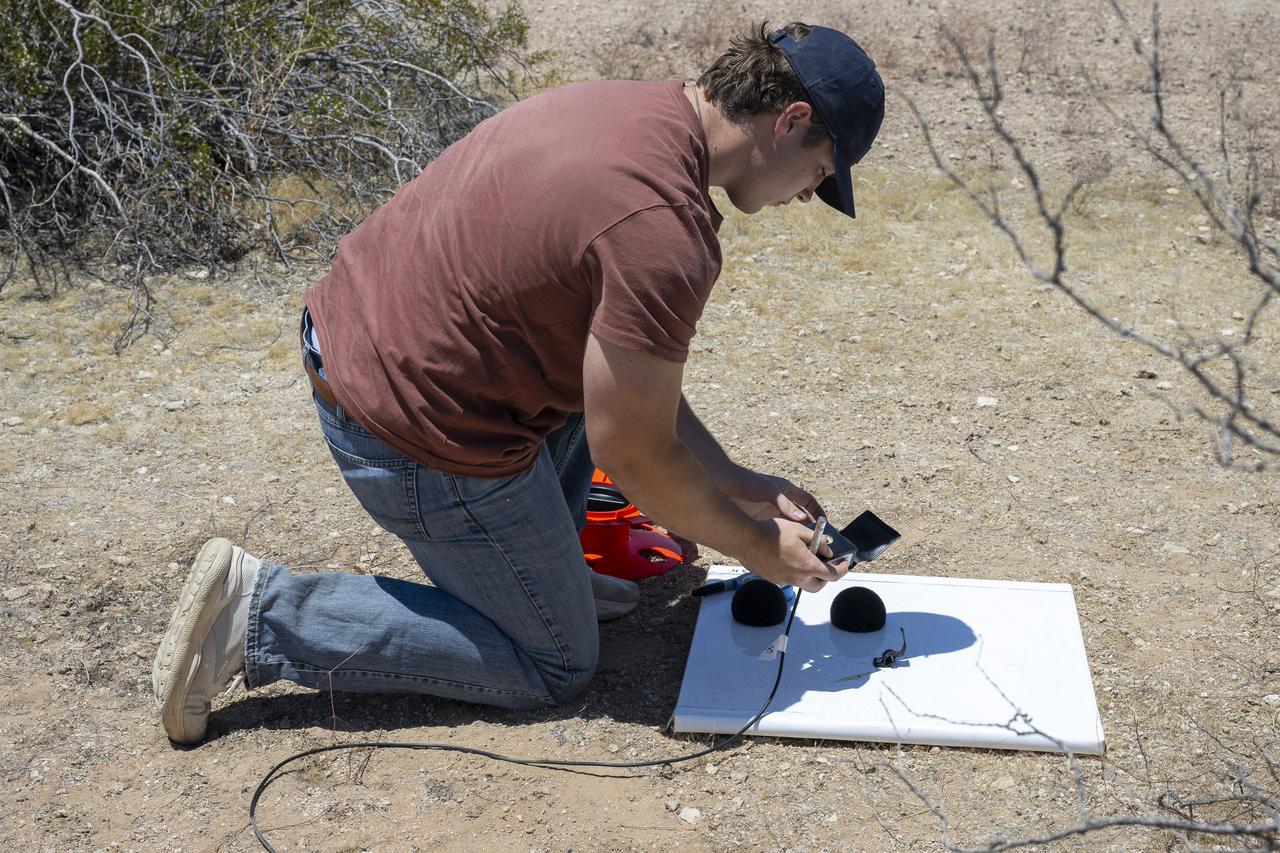
A NASA intern sets up ground recording system (GRS) units in California’s Mojave Desert during a Phase 2 rehearsal of the agency’s Quesst mission. The GRS units were placed across miles of desert terrain to capture the acoustic signature of supersonic aircraft during rehearsal flights and in preparation for the start of the actual tests.
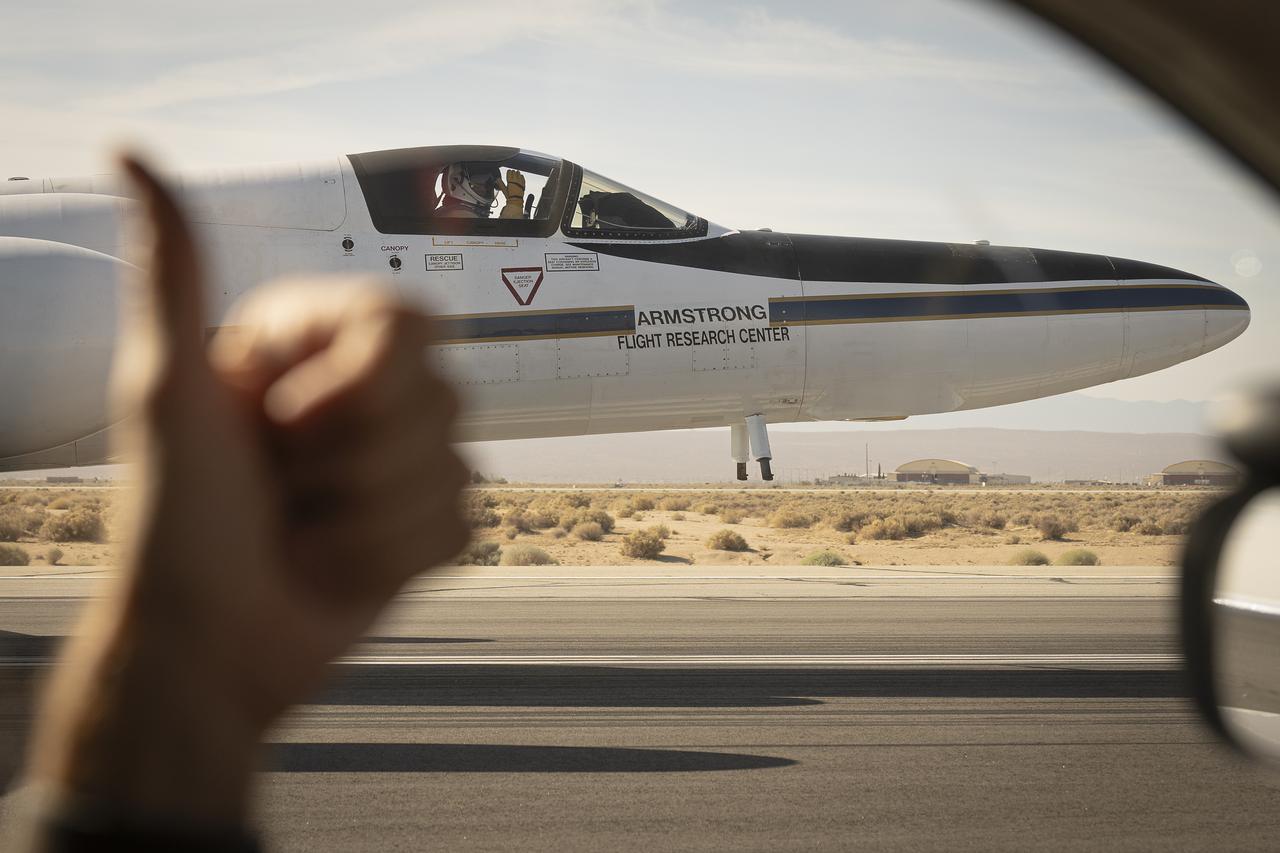
From the window of the ER-2 chase car, a crew member gives a thumbs up to the pilot as NASA Armstrong Flight Research Center’s ER-2 aircraft taxis at Edwards, California, on Thursday, Aug. 21, 2025. The gesture signals a final check before takeoff for the high-altitude mission supporting the Geological Earth Mapping Experiment (GEMx).
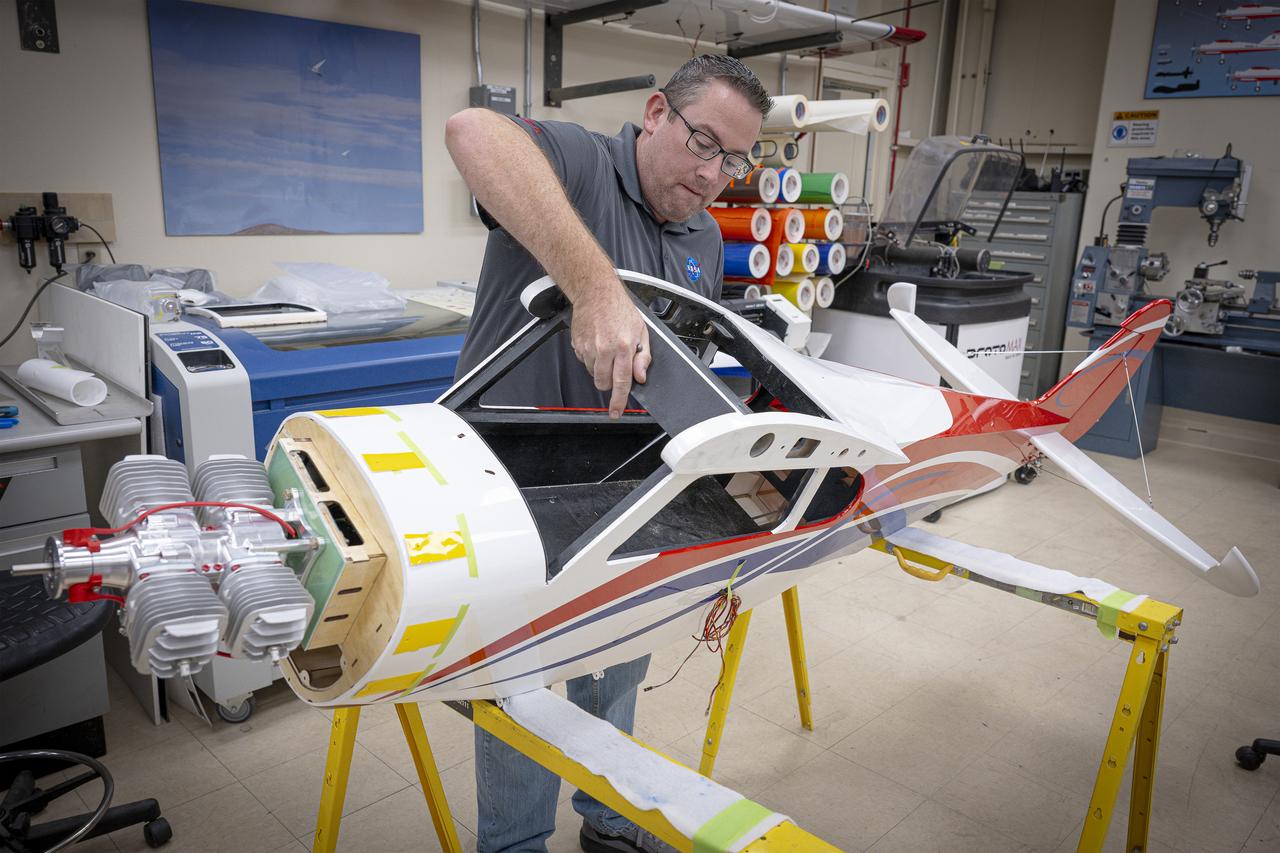
Justin Link turns a subscale aircraft on its side to continue work to mark where the engine cowl will go and where to line it up for attachment on Wednesday, Sept. 3, 2025, at NASA’s Armstong Flight Research Center in Edwards, California. Link is a pilot for small uncrewed aircraft systems at the center’s Dale Reed Subscale Flight Research Laboratory.
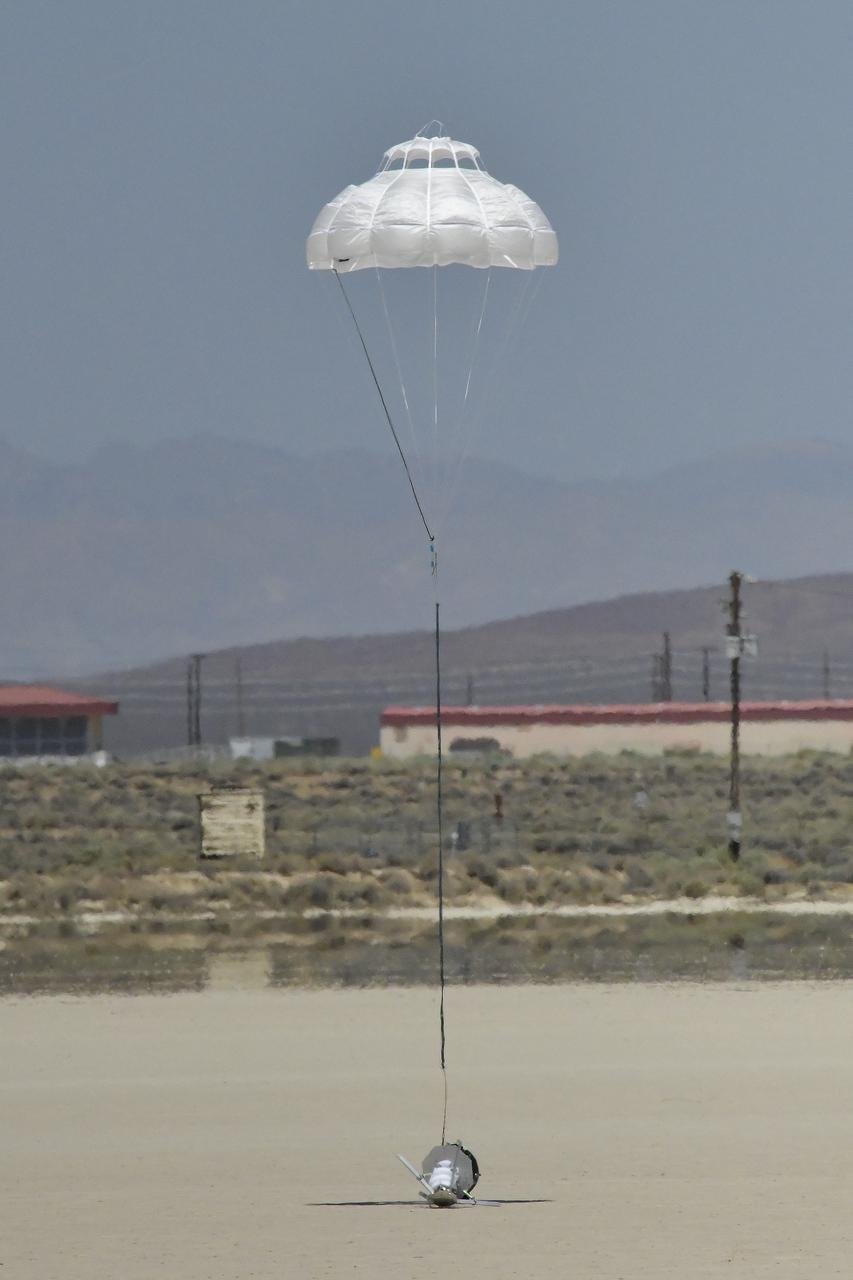
The Enhancing Parachutes by Instrumenting the Canopy test experiment lands following an air launch from an Alta X drone on June 4, 2025, at NASA’s Armstong Flight Research Center in Edwards, California. NASA researchers are developing technology to make supersonic parachutes safer and more reliable for delivering science instruments and payloads to Mars.
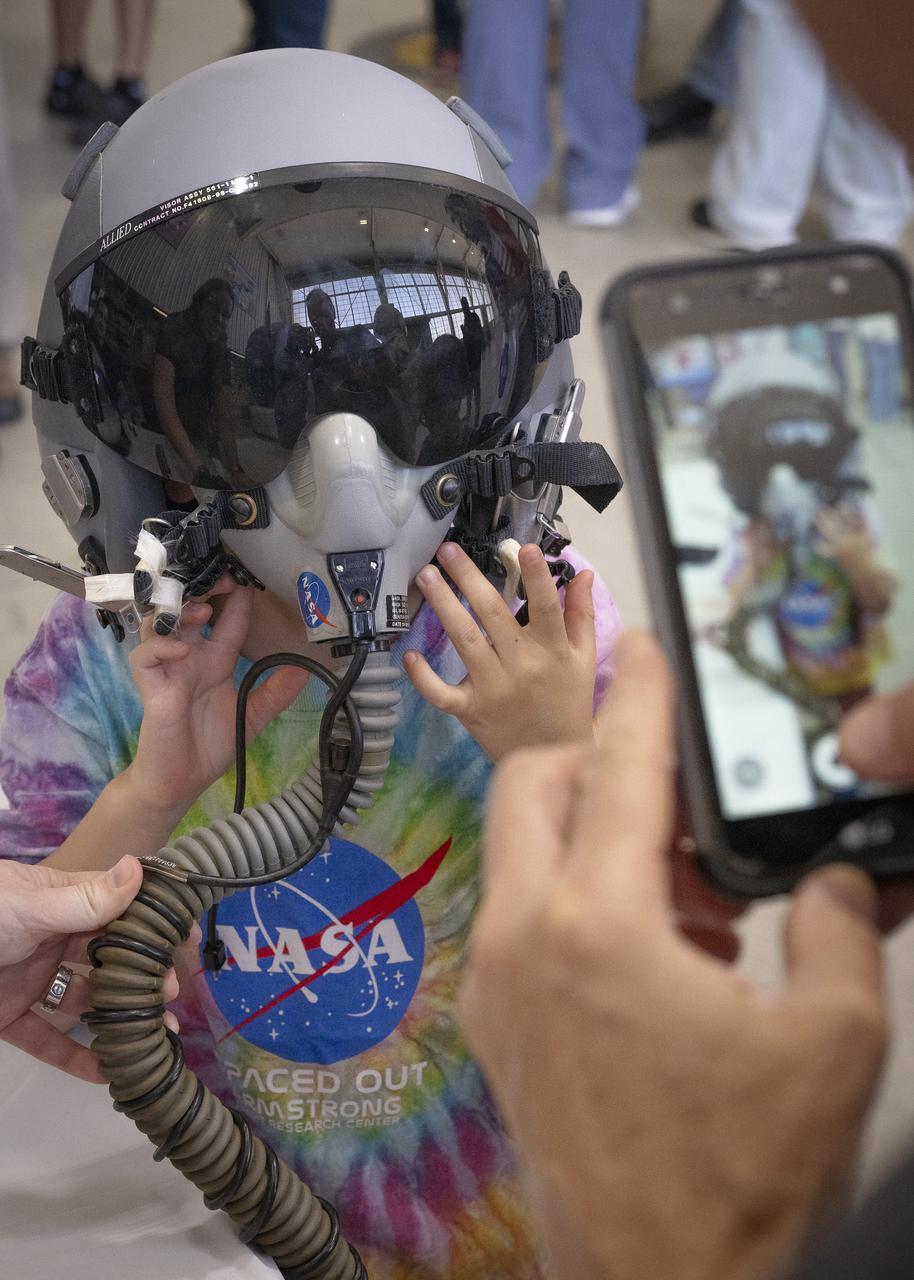
On June 17, 2025, NASA’s Armstrong Flight Research Center in Edwards, California, hosted Bring Kids to Work Day, offering hands-on activities that introduced children and their families to the exciting world of aeronautics and flight research.
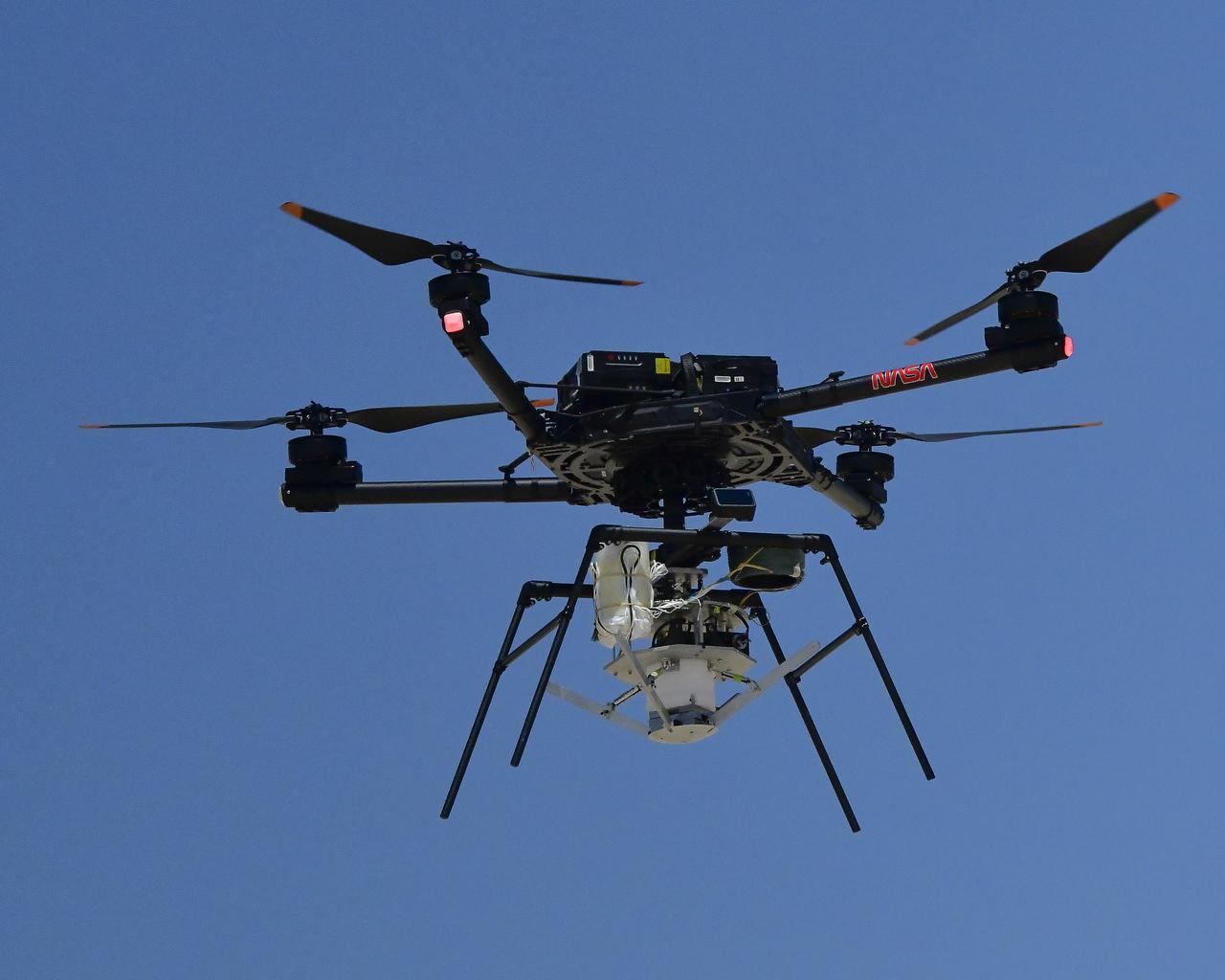
An Alta X drone is positioned at altitude for an air launch of the Enhancing Parachutes by Instrumenting the Canopy test experiment on June 4, 2025, at NASA’s Armstong Flight Research Center in Edwards, California. NASA researchers are developing technology to make supersonic parachutes safer and more reliable for delivering science instruments and payloads to Mars.
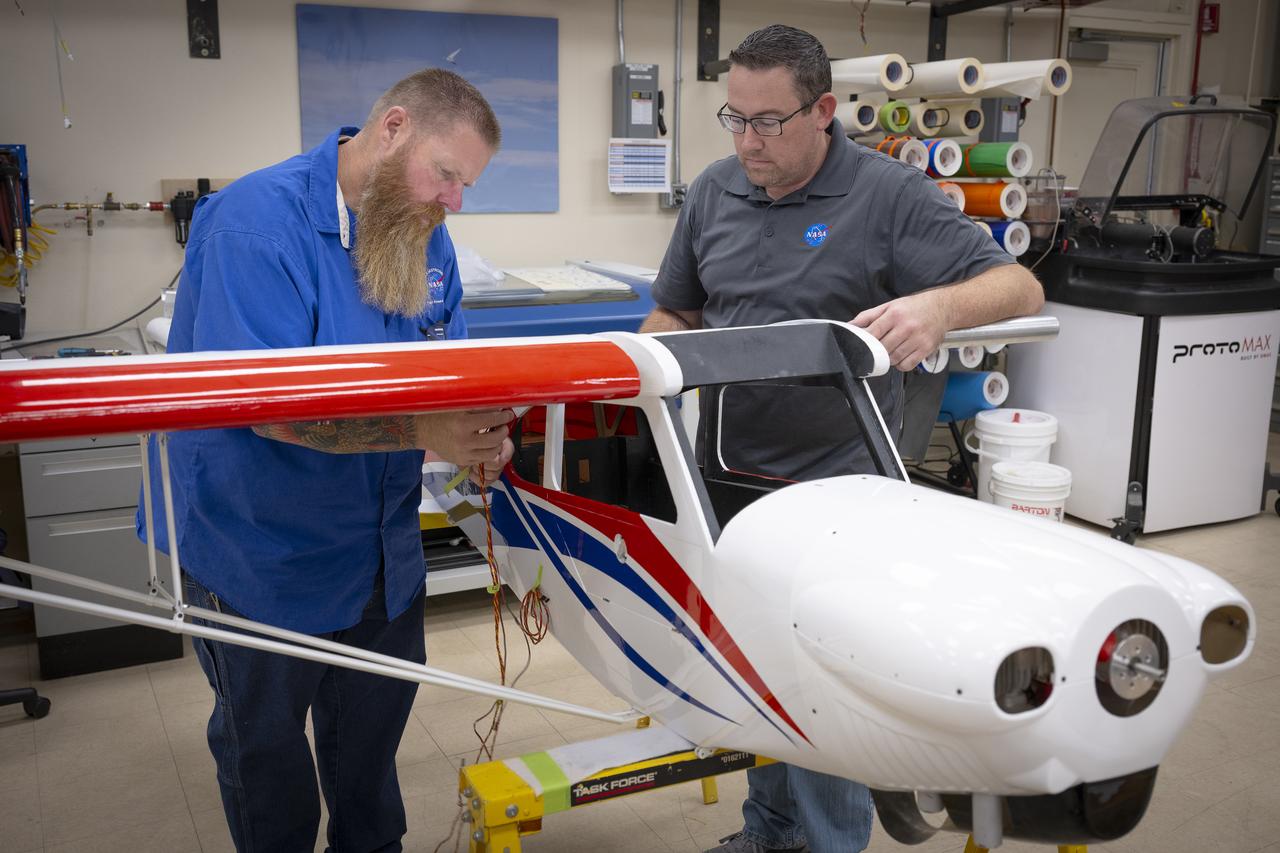
Justin Hall, left, and Justin Link secure a wing onto a subscale aircraft on Wednesday, Sept. 3, 2025, at NASA’s Armstong Flight Research Center in Edwards, California. Hall is chief pilot at the center’s Dale Reed Subscale Flight Research Laboratory and Link is a pilot for small uncrewed aircraft systems.
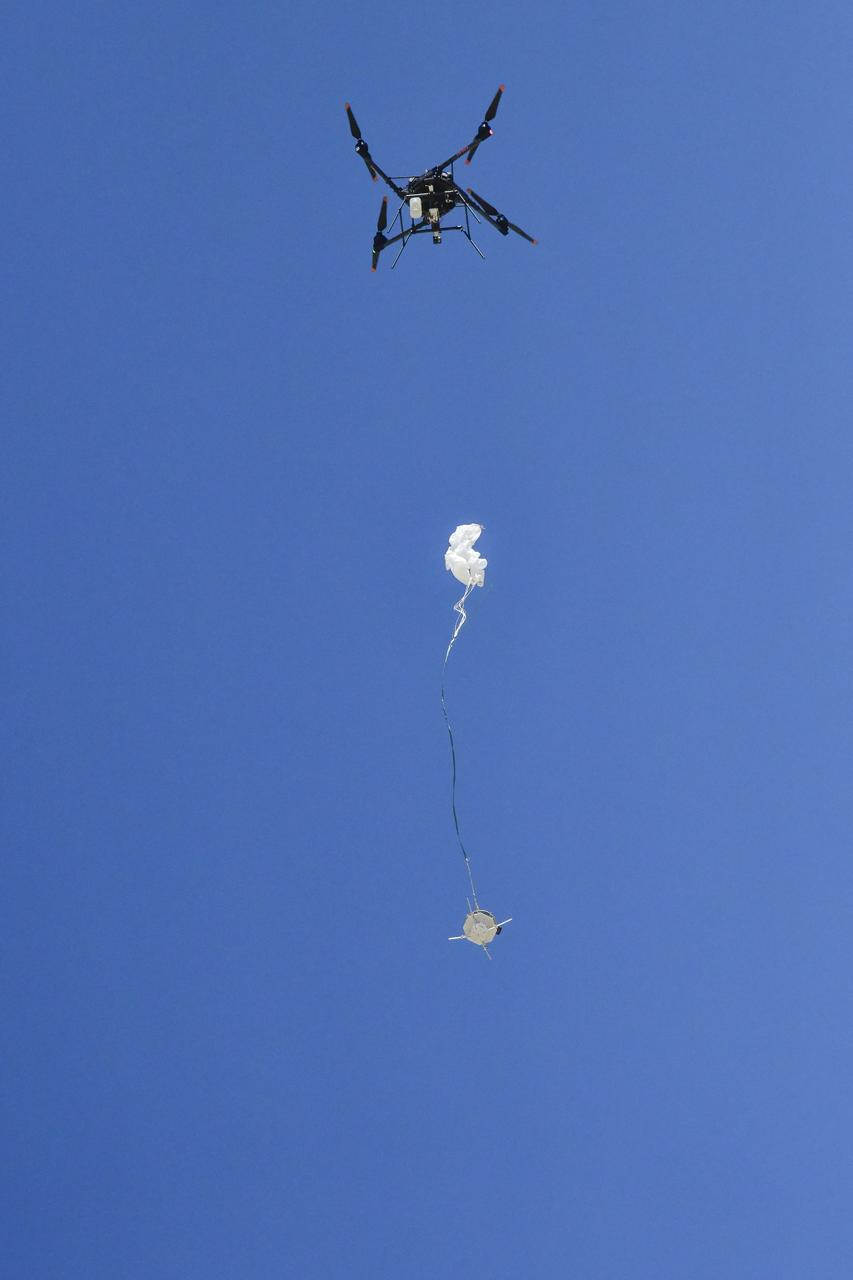
An Alta X drone air launches the Enhancing Parachutes by Instrumenting the Canopy test experiment on June 4, 2025, at NASA’s Armstong Flight Research Center in Edwards, California. NASA researchers are developing technology to make supersonic parachutes safer and more reliable for delivering science instruments and payloads to Mars.
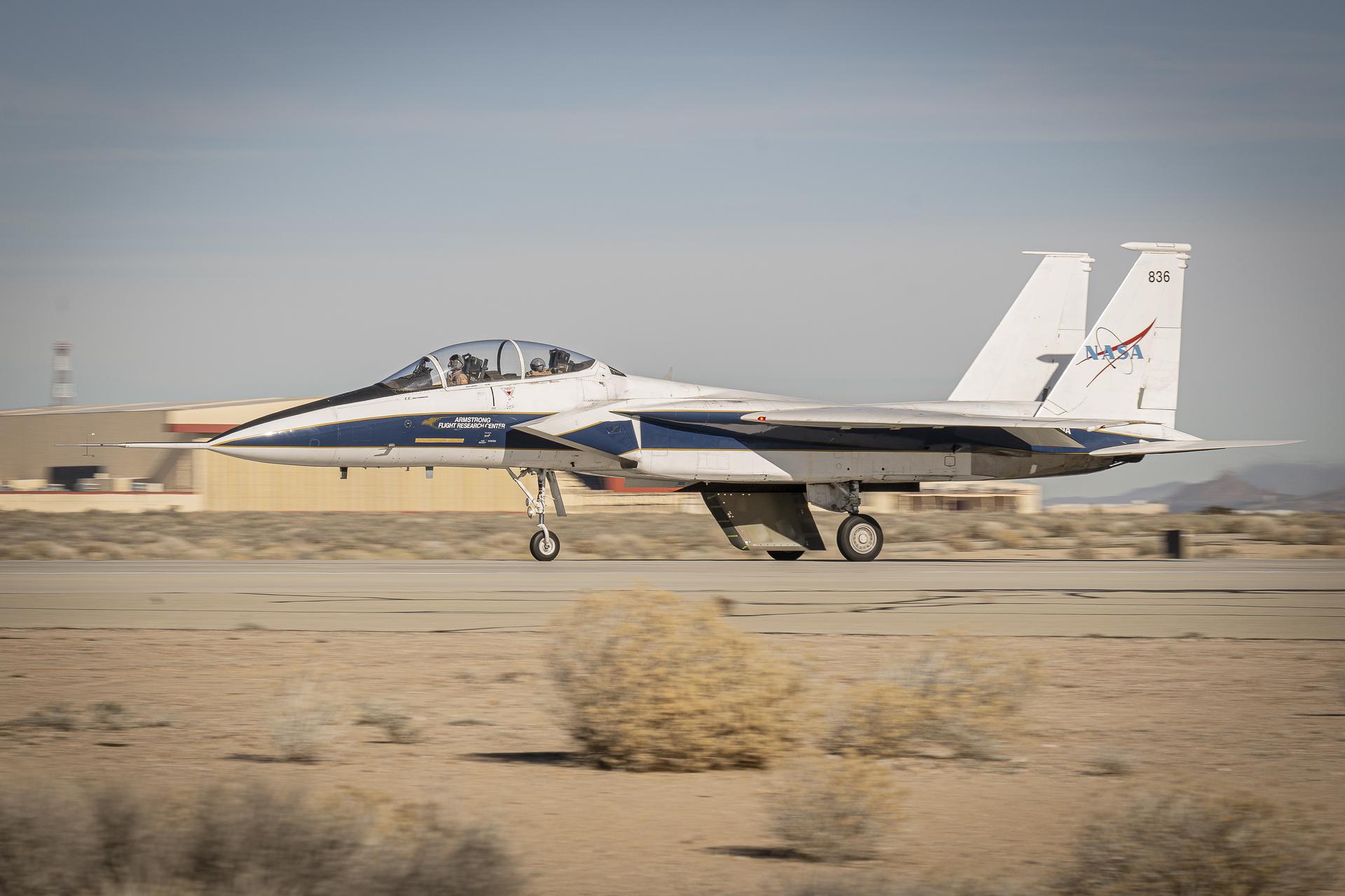
NASA’s Cross Flow Attenuated Natural Laminar Flow (CATNLF) scale model completes its first major milestone – high-speed taxi test – Tuesday, Jan. 12, 2026, at Edwards Air Force Base in California. NASA’s F-15 research aircraft, with the 3-foot-tall test article mounted on its underside, reached speeds of approximately 144 mph during testing. If successful, the technology could be applied to future commercial aircraft to improve efficiency and potentially reduce fuel consumption.
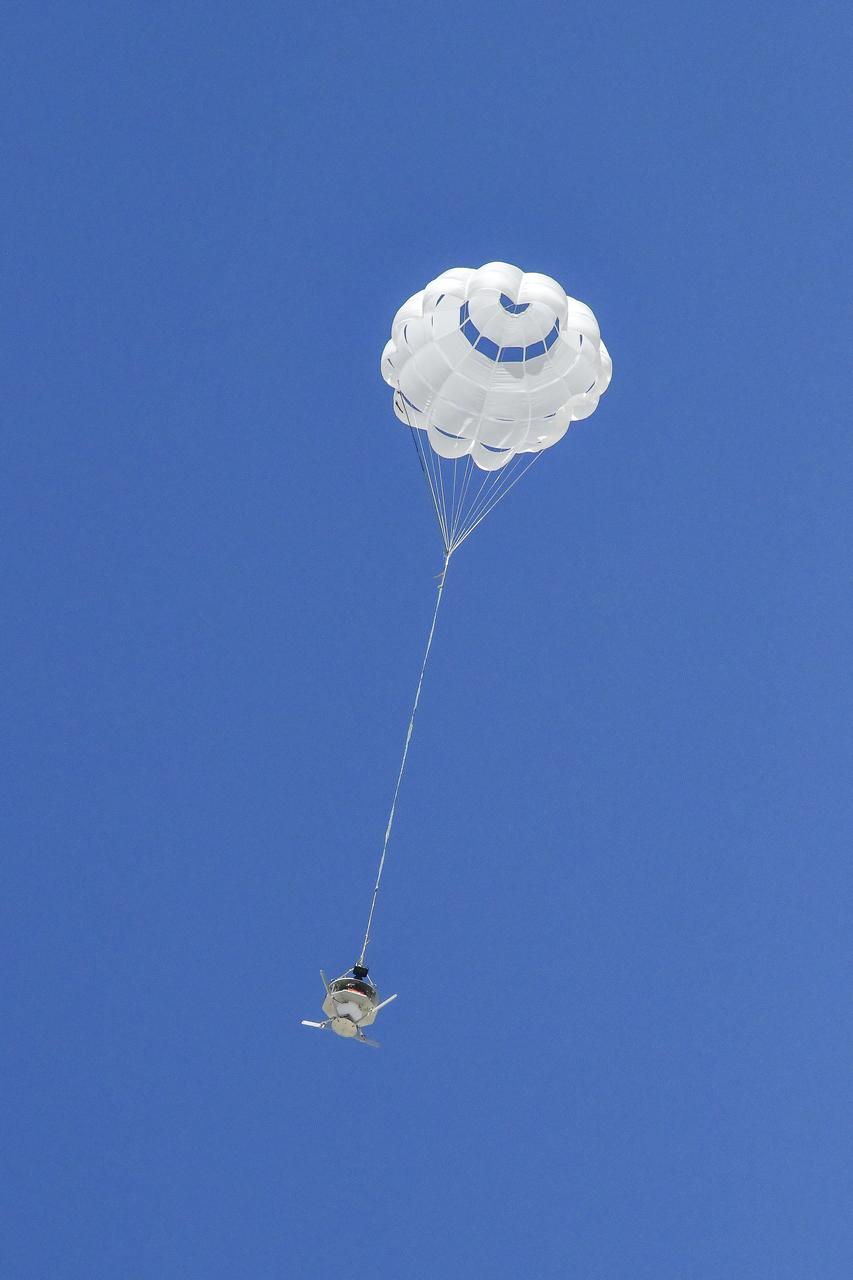
The parachute of the Enhancing Parachutes by Instrumenting the Canopy test experiment deploys following an air launch from an Alta X drone on June 4, 2025, at NASA’s Armstong Flight Research Center in Edwards, California. NASA researchers are developing technology to make supersonic parachutes safer and more reliable for delivering science instruments and payloads to Mars.
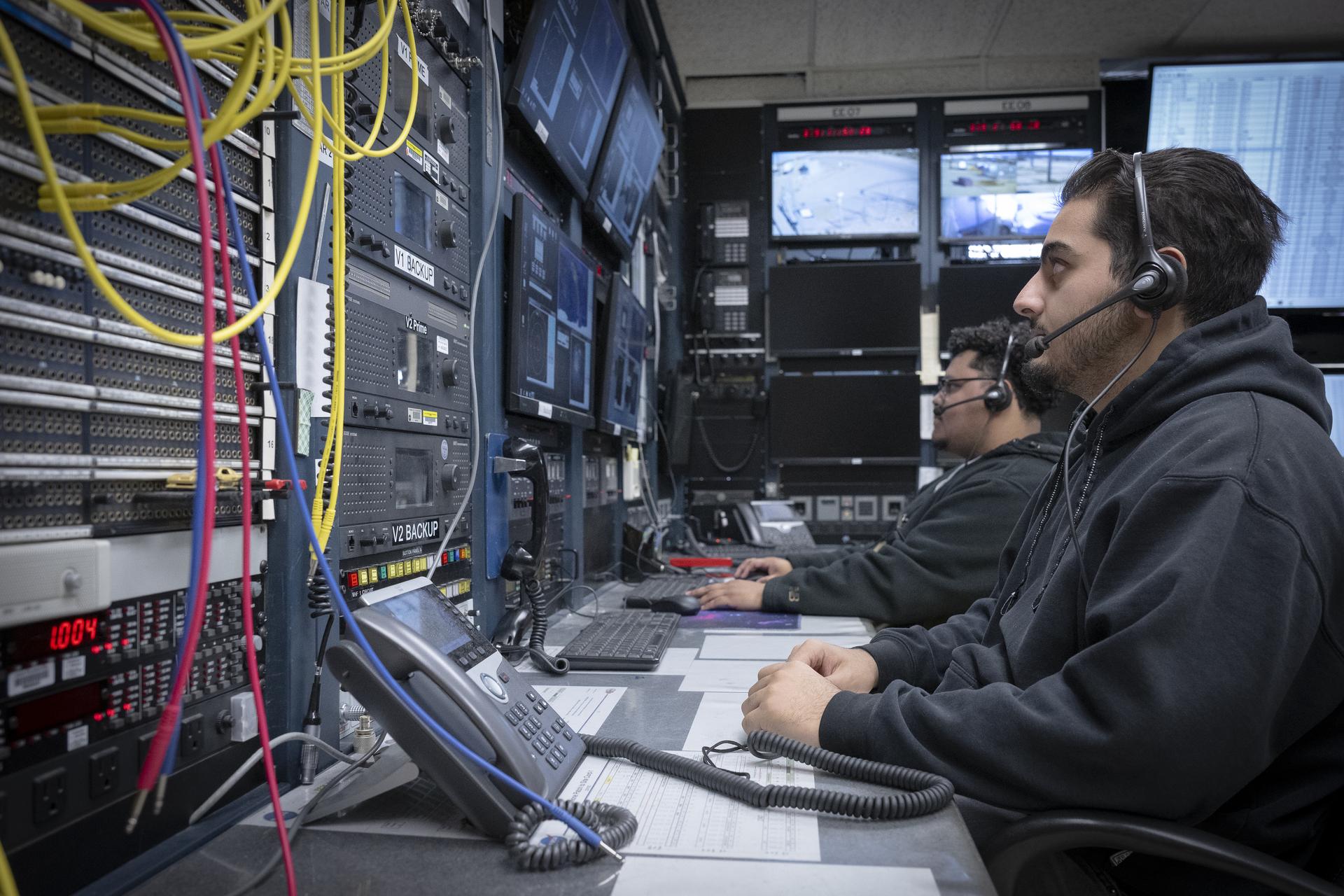
Range operators at the Dryden Aeronautical Test Range at NASA’s Armstong Flight Research Center in Edwards, California, provide voice and tracking support to the International Space Station. In this Friday, Dec. 6, 2025, photo, Alex Oganesyan, left, and Deming Ingles are shown at their workstations, where they support communications backup for space station missions.
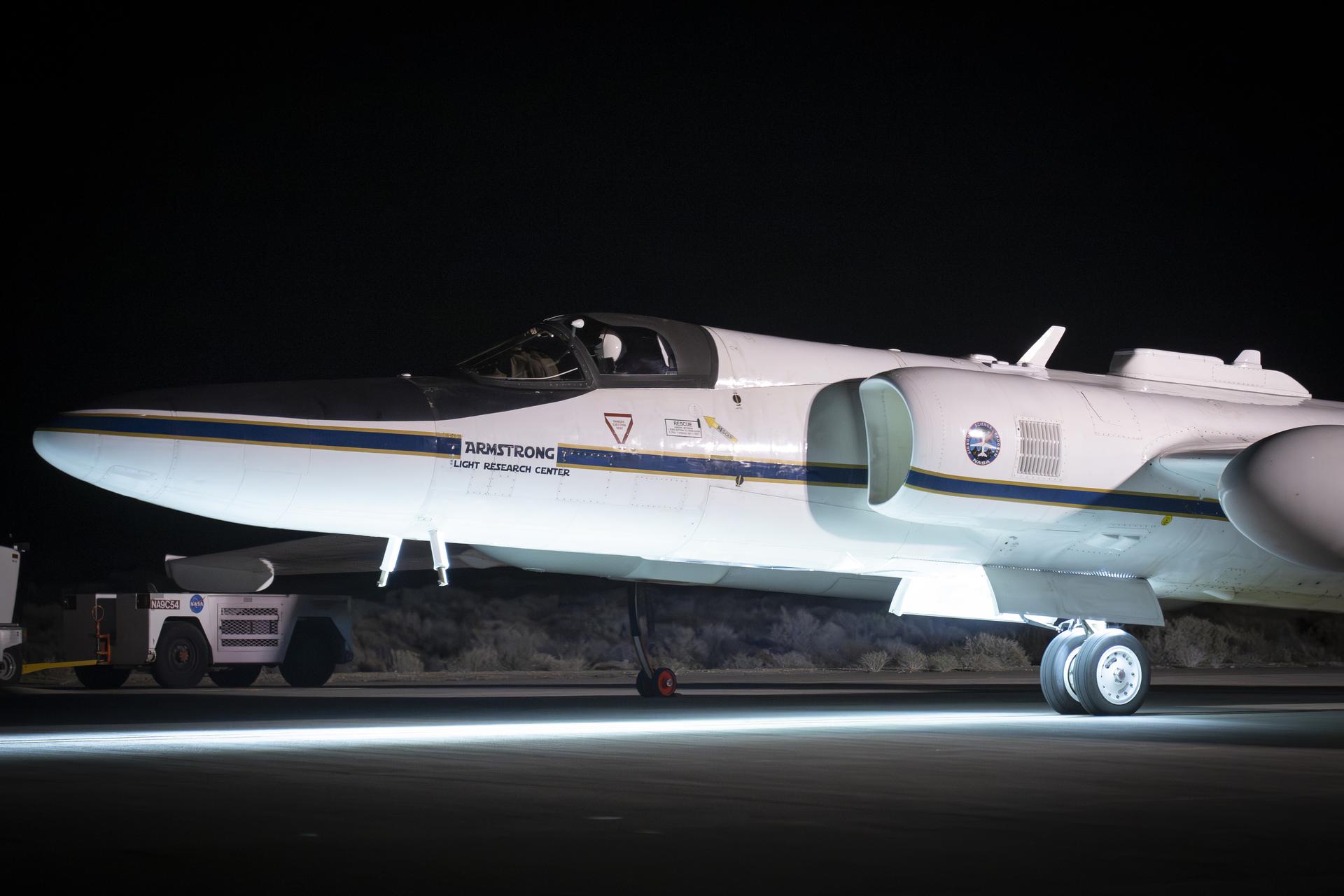
NASA’s ER-2 high-altitude aircraft prepares for a night flight with the Airborne Lunar Spectral Irradiance (air-LUSI) instrument on Monday, Feb. 2, 2026. The instrument measures Moonlight to improve accuracy of space-based sensors that forecast the weather, monitor agriculture, and study Earth’s ecosystem.

NASA’s X-59 quiet supersonic research aircraft sits inside Hangar 4826 at NASA’s Armstrong Flight Research Center in Edwards, California, on Nov. 18, 2025. Following its first flight on Oct. 25, 2025, in support of NASA’s Quesst mission, the aircraft entered scheduled maintenance as part of its transition into flight operations. Quesst aims to demonstrate quiet supersonic flight and reduce the disruptive sonic boom to a quieter sonic thump.

NASA’s X-59 quiet supersonic research aircraft sits outside Hangar 4826 at NASA’s Armstrong Flight Research Center in Edwards, California, on Nov. 19, 2025. The aircraft’s arrival at NASA Armstrong on Oct. 28, 2025, marked its transition into flight operations in support of NASA’s Quesst mission to gather data on quiet supersonic flight.

NASA’s X-59 quiet supersonic research aircraft sits outside Hangar 4826 at NASA’s Armstrong Flight Research Center in Edwards, California, on Nov. 19, 2025. The aircraft’s arrival at NASA Armstrong on Oct. 28, 2025, marked its transition into flight operations in support of NASA’s Quesst mission to gather data on quiet supersonic flight.
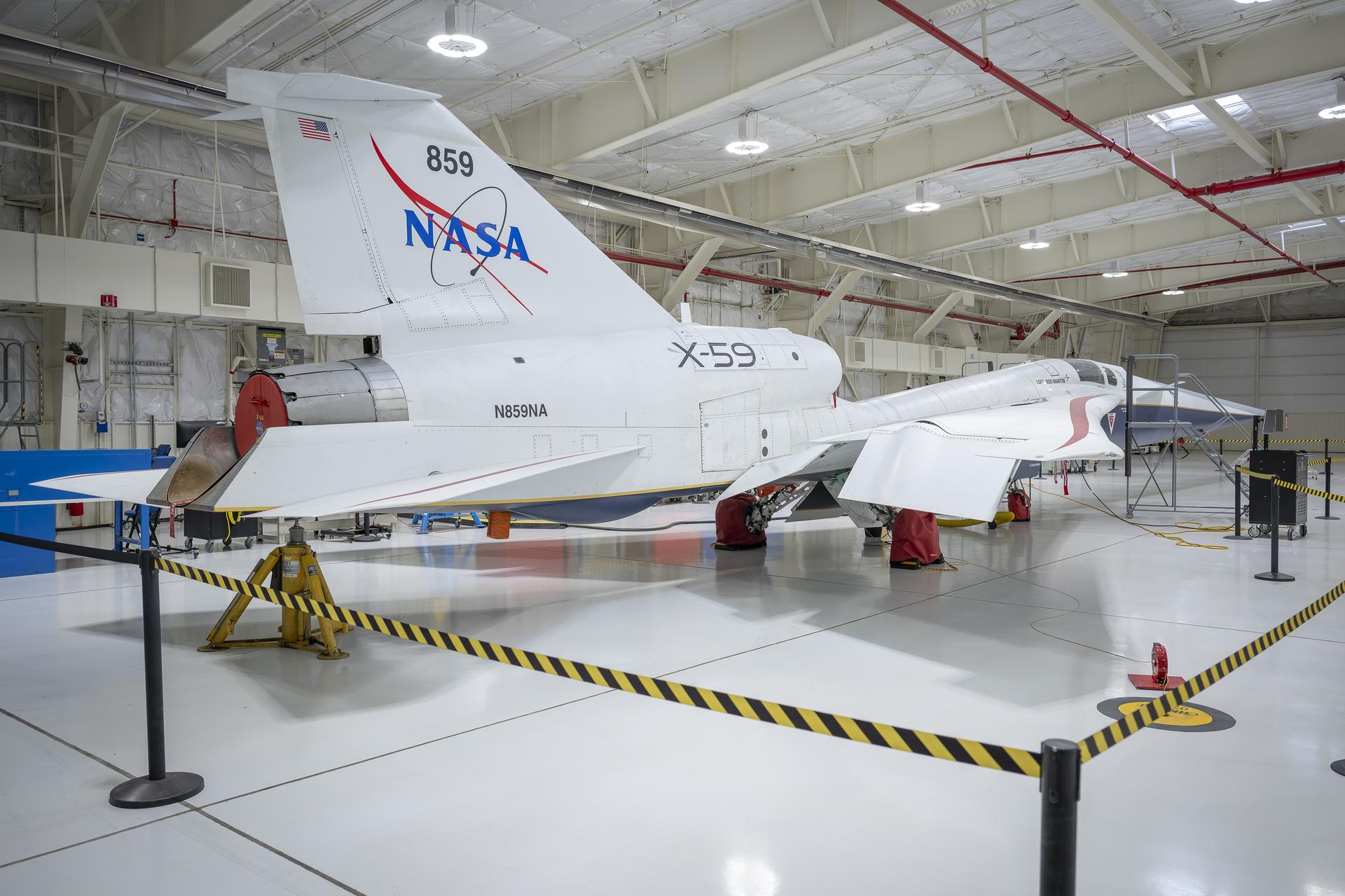
NASA’s X-59 quiet supersonic research aircraft sits inside Hangar 4826 at NASA’s Armstrong Flight Research Center in Edwards, California, on Nov. 18, 2025. Following its first flight on Oct. 25, 2025, in support of NASA’s Quesst mission, the aircraft entered scheduled maintenance as part of its transition into flight operations. Quesst aims to demonstrate quiet supersonic flight and reduce the disruptive sonic boom to a quieter sonic thump.
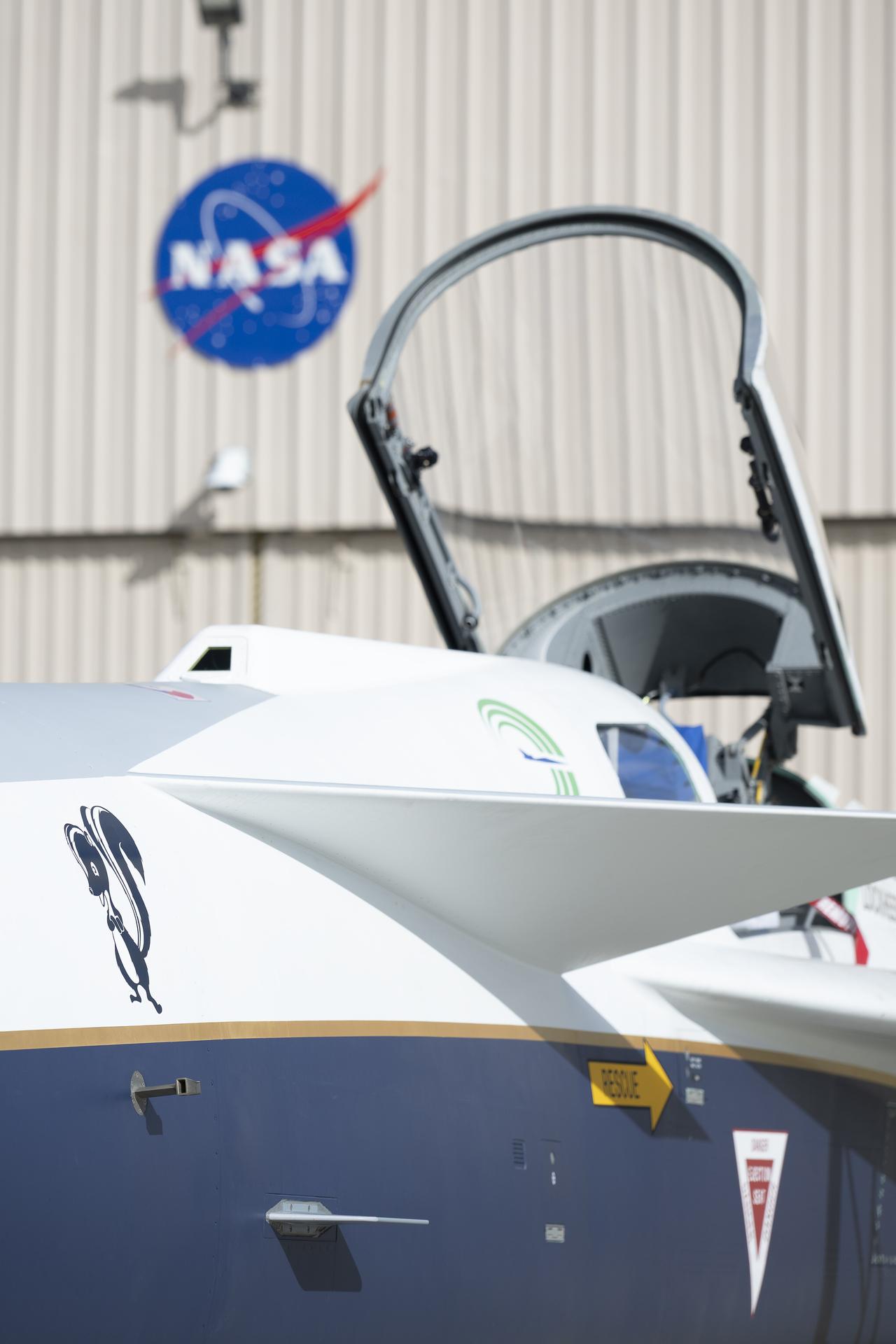
NASA’s X-59 quiet supersonic research aircraft sits outside Hangar 4826 at NASA’s Armstrong Flight Research Center in Edwards, California, on Nov. 19, 2025. The aircraft’s arrival at NASA Armstrong on Oct. 28, 2025, marked its transition into flight operations in support of NASA’s Quesst mission to gather data on quiet supersonic flight.

NASA’s X-59 quiet supersonic research aircraft sits outside Hangar 4826 at NASA’s Armstrong Flight Research Center in Edwards, California, on Nov. 19, 2025. The aircraft’s arrival at NASA Armstrong on Oct. 28, 2025, marked its transition into flight operations in support of NASA’s Quesst mission to gather data on quiet supersonic flight.

NASA’s X-59 quiet supersonic research aircraft sits inside Hangar 4826 at NASA’s Armstrong Flight Research Center in Edwards, California, on Nov. 18, 2025. Following its first flight on Oct. 25, 2025, in support of NASA’s Quesst mission, the aircraft entered scheduled maintenance as part of its transition into flight operations. Quesst aims to demonstrate quiet supersonic flight and reduce the disruptive sonic boom to a quieter sonic thump.

NASA’s X-59 quiet supersonic research aircraft sits inside Hangar 4826 at NASA’s Armstrong Flight Research Center in Edwards, California, on Nov. 18, 2025. Following its first flight on Oct. 25, 2025, in support of NASA’s Quesst mission, the aircraft entered scheduled maintenance as part of its transition into flight operations. Quesst aims to demonstrate quiet supersonic flight and reduce the disruptive sonic boom to a quieter sonic thump.

NASA’s X-59 quiet supersonic research aircraft sits outside Hangar 4826 at NASA’s Armstrong Flight Research Center in Edwards, California, on Nov. 19, 2025. The aircraft’s arrival at NASA Armstrong on Oct. 28, 2025, marked its transition into flight operations in support of NASA’s Quesst mission to gather data on quiet supersonic flight.

NASA’s X-59 quiet supersonic research aircraft sits inside Hangar 4826 at NASA’s Armstrong Flight Research Center in Edwards, California, on Nov. 18, 2025. Following its first flight on Oct. 25, 2025, in support of NASA’s Quesst mission, the aircraft entered scheduled maintenance as part of its transition into flight operations. Quesst aims to demonstrate quiet supersonic flight and reduce the disruptive sonic boom to a quieter sonic thump.
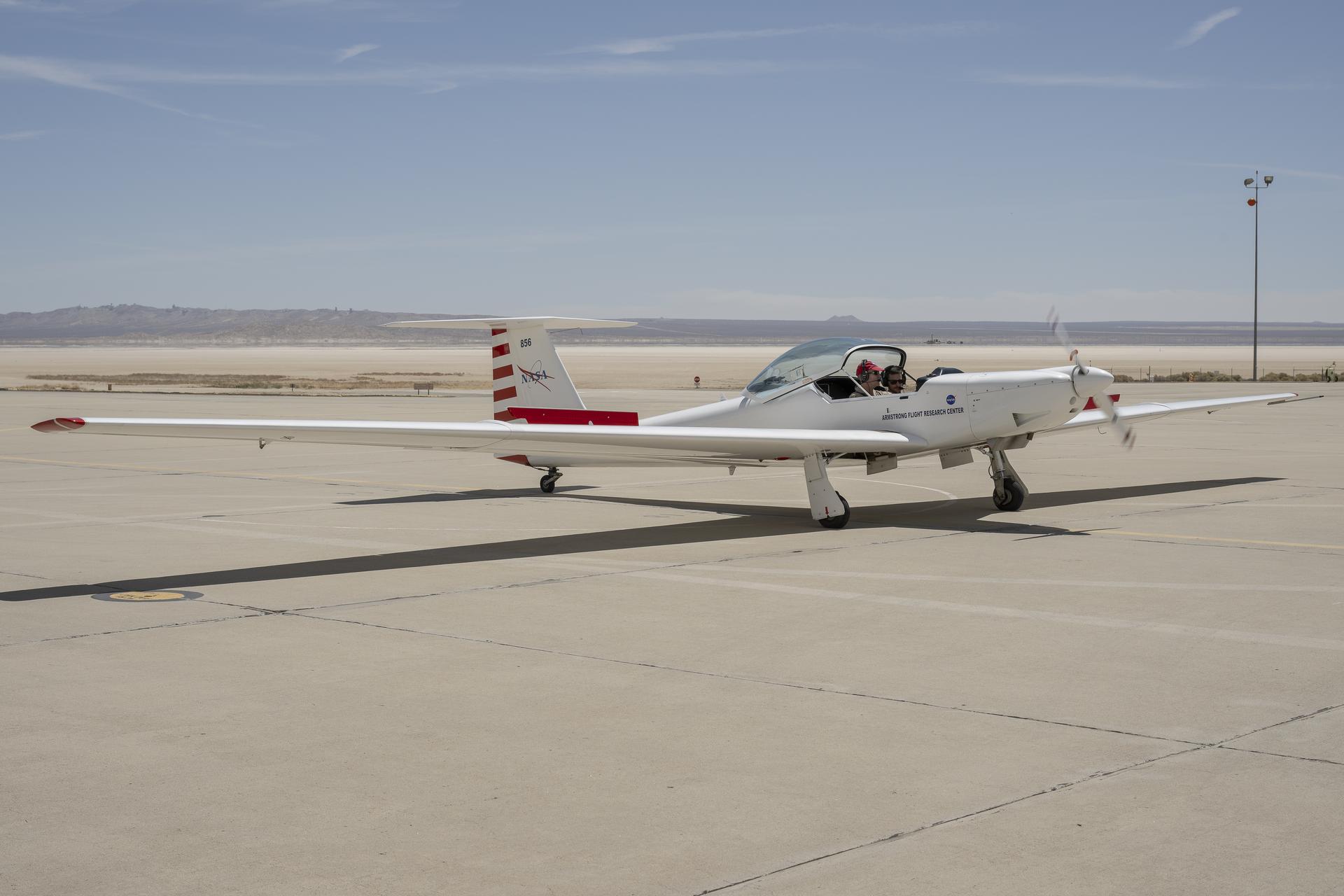
A NASA TG-14 sits on the ramp at NASA’s Armstrong Flight Research Center in Edwards, California, on Monday, Aug. 4, 2025, to support NASA’s Quesst mission.
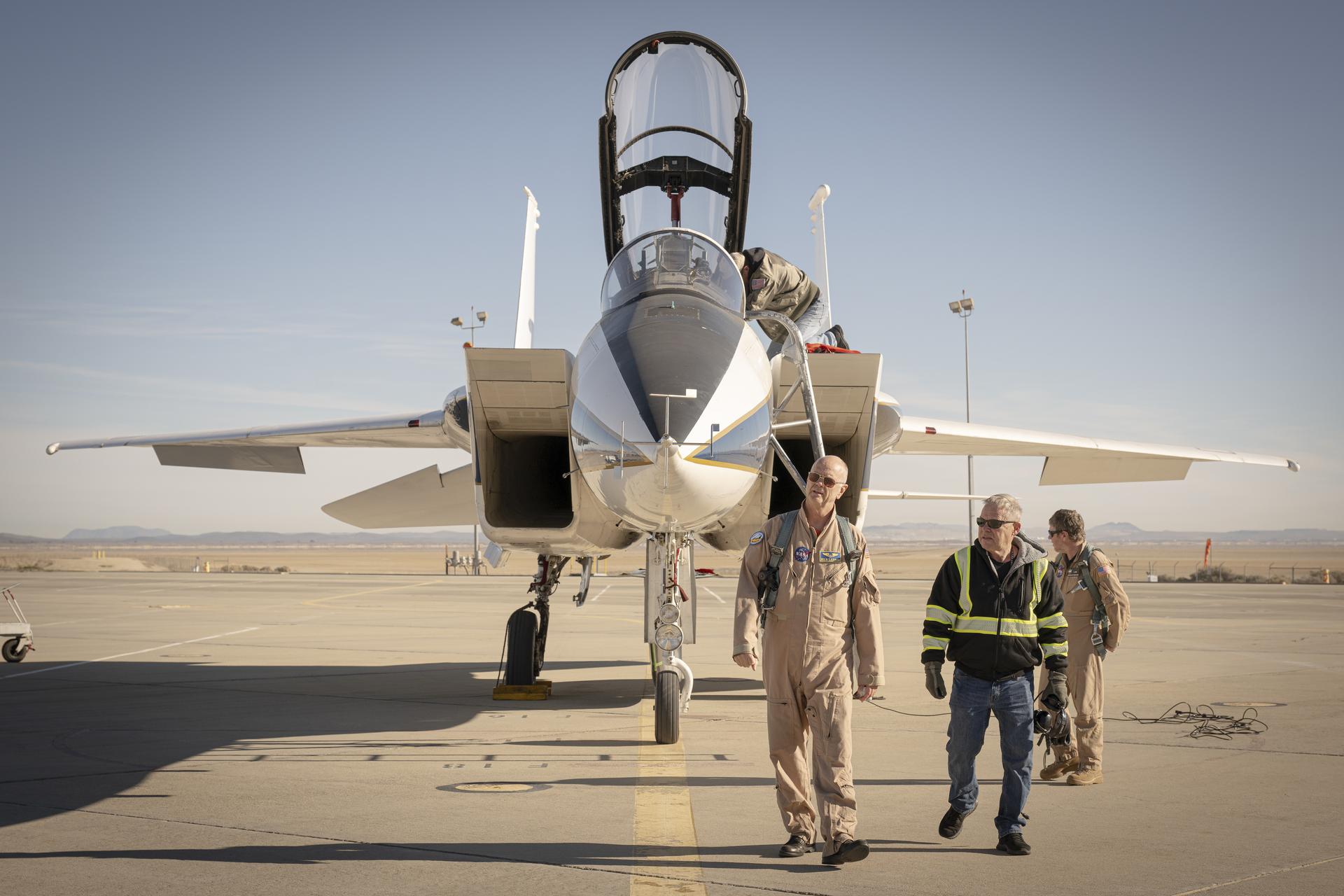
NASA pilot Nils Larson, left, walks next to crew chief Walt Kondracki, right, by an F-15 aircraft Tuesday, Jan. 13, 2026, at NASA’s Armstrong Flight Research Center in Edwards, California. In the background, NASA mechanic Tim Logan secures the cockpit inside of the F-15, and flight test engineer A.J. Jaffe stands to the right.

From left, NASA avionics technician Jesse Orellana; quality assurance employee Jose Prieto; mechanic Francisco Rodriguez; and mechanic Vincent Moreno work on an ER-2 aircraft Monday, Jan. 26, 2026, at NASA’s Armstrong Flight Research Center in Edwards, California.
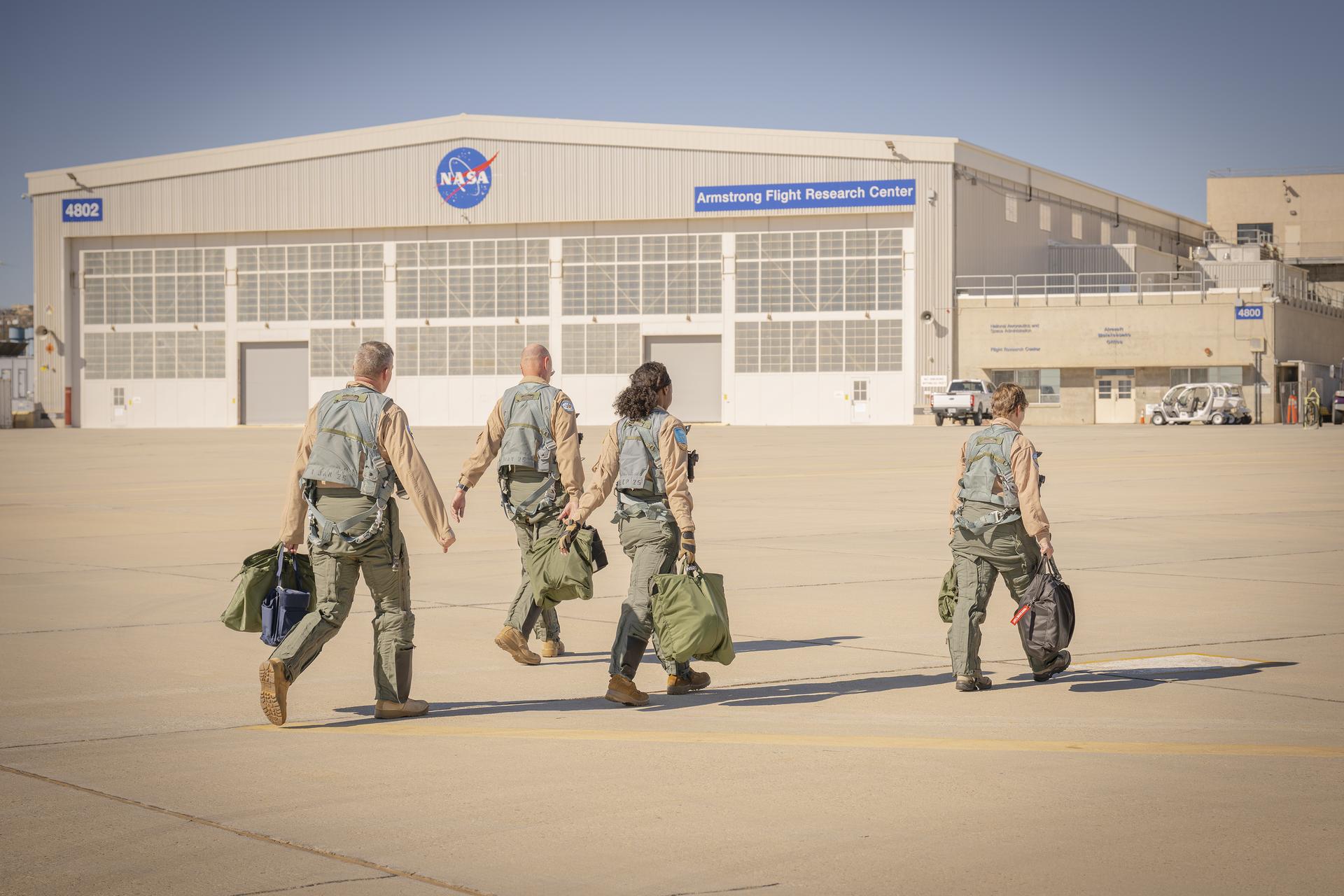
Four NASA employees walk toward a hangar after a flight Thursday, Feb. 4, 2026, at NASA’s Armstrong Flight Research Center in Edwards, California. The team supports the agency’s Crossflow Attenuated Natural Laminar Flow (CATNLF) project, which aims to lower fuel costs for future commercial aircraft by testing a scale-model wing designed to improve laminar flow.

NASA researchers Mike Frederick, right, and Michelle Banchy, left, along with Ashante Jordan and intern Phillip Nguyen, sit in a control room and prepare for a flight test Thursday, Jan. 29, 2026, at NASA’s Armstrong Flight Research Center in Edwards, California. The agency’s Crossflow Attenuated Natural Laminar Flow (CATNLF) project aims to lower fuel costs for future commercial aircraft by testing a scale-model wing designed to improve laminar flow.
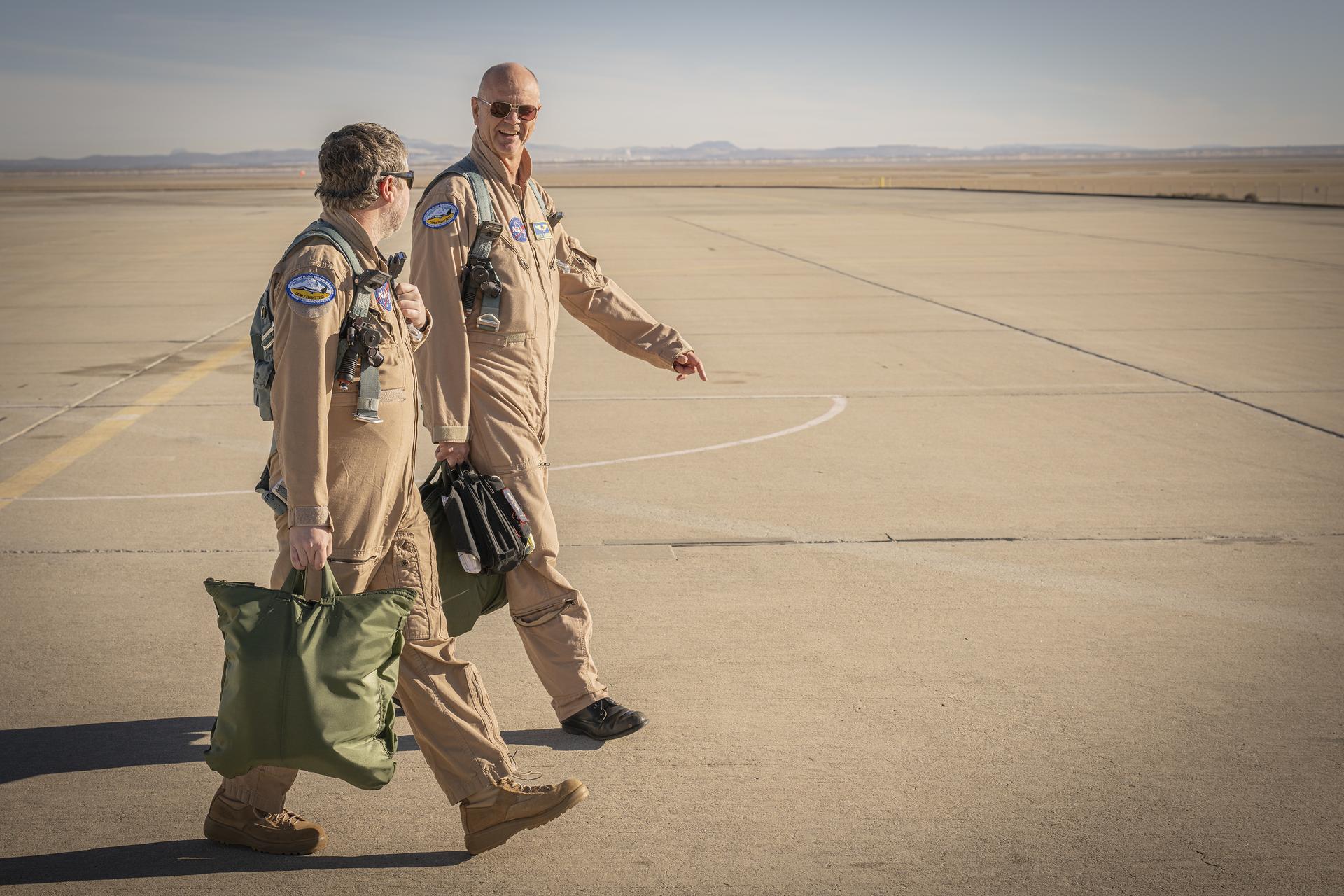
NASA flight test engineer A.J. Jaffe and pilot Nils Larson walk on the ramp before a flight Tuesday, Jan. 13, 2026, at NASA’s Armstrong Flight Research Center in Edwards, California. The two support the agency’s Crossflow Attenuated Natural Laminar Flow (CATNLF) project, which aims to lower fuel costs for future commercial aircraft by testing a scale-model wing designed to improve laminar flow.

NASA test pilots Jim Less, left, and Nils Larson walk away from a hangar at NASA’s Armstrong Flight Research Center in Edwards, California, on Thursday, Feb. 4, 2026. The pilots support the agency’s Crossflow Attenuated Natural Laminar Flow (CATNLF) project, which aims to lower fuel costs for future commercial aircraft by testing a scale-model wing designed to improve laminar flow.
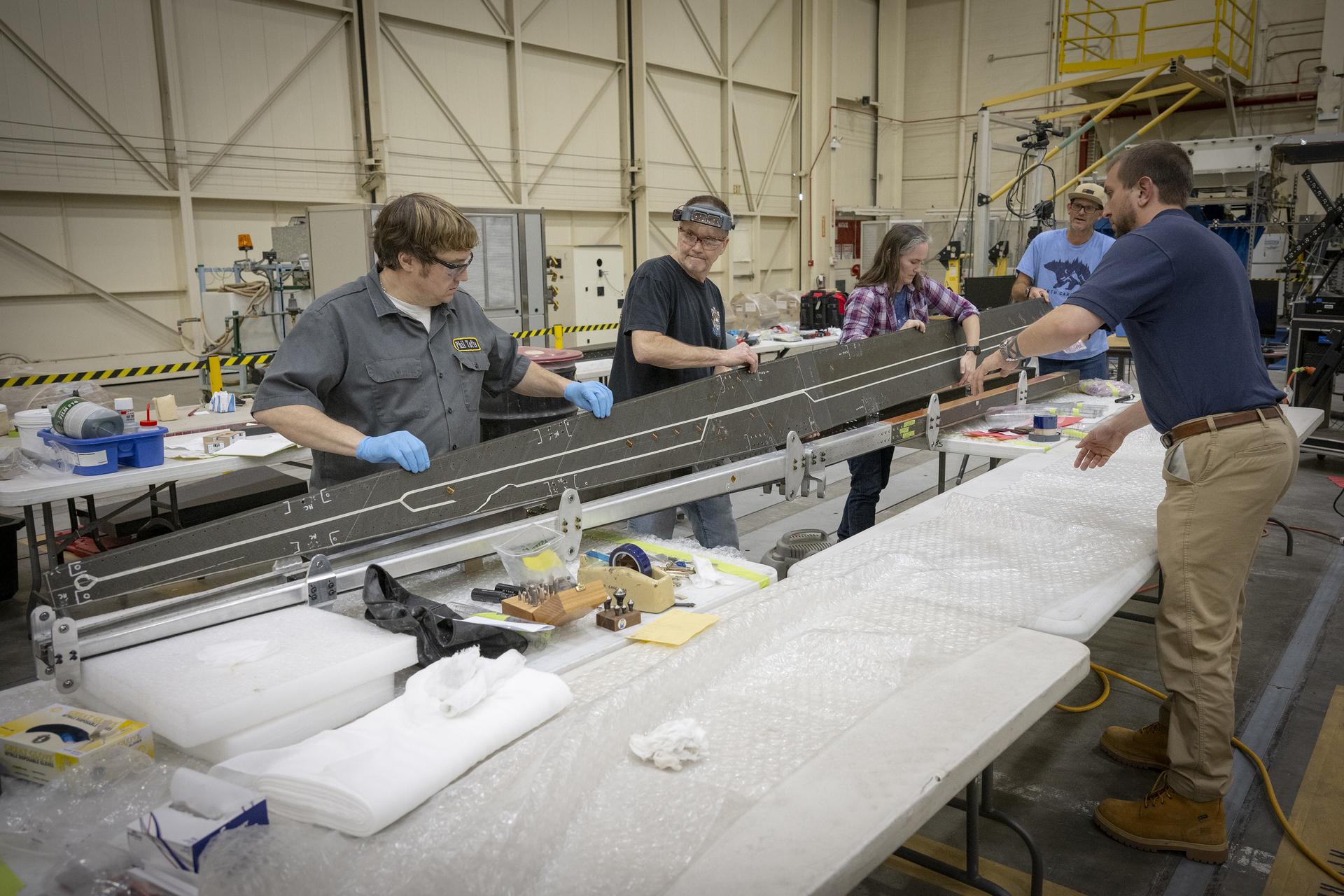
Lab technicians Phil Tofts, Chris McLain, and Jeff Howell and NASA engineers Erin Anderson and Richard Larson prepare the 15-foot Structural Wing Experiment Evaluating Truss-bracing model in the Flight Loads Laboratory at NASA’s Armstrong Flight Research Center in Edwards, California, on Thursday, Dec. 11, 2025. The model is part of NASA’s research to develop technologies for future ultra-efficient aircraft.
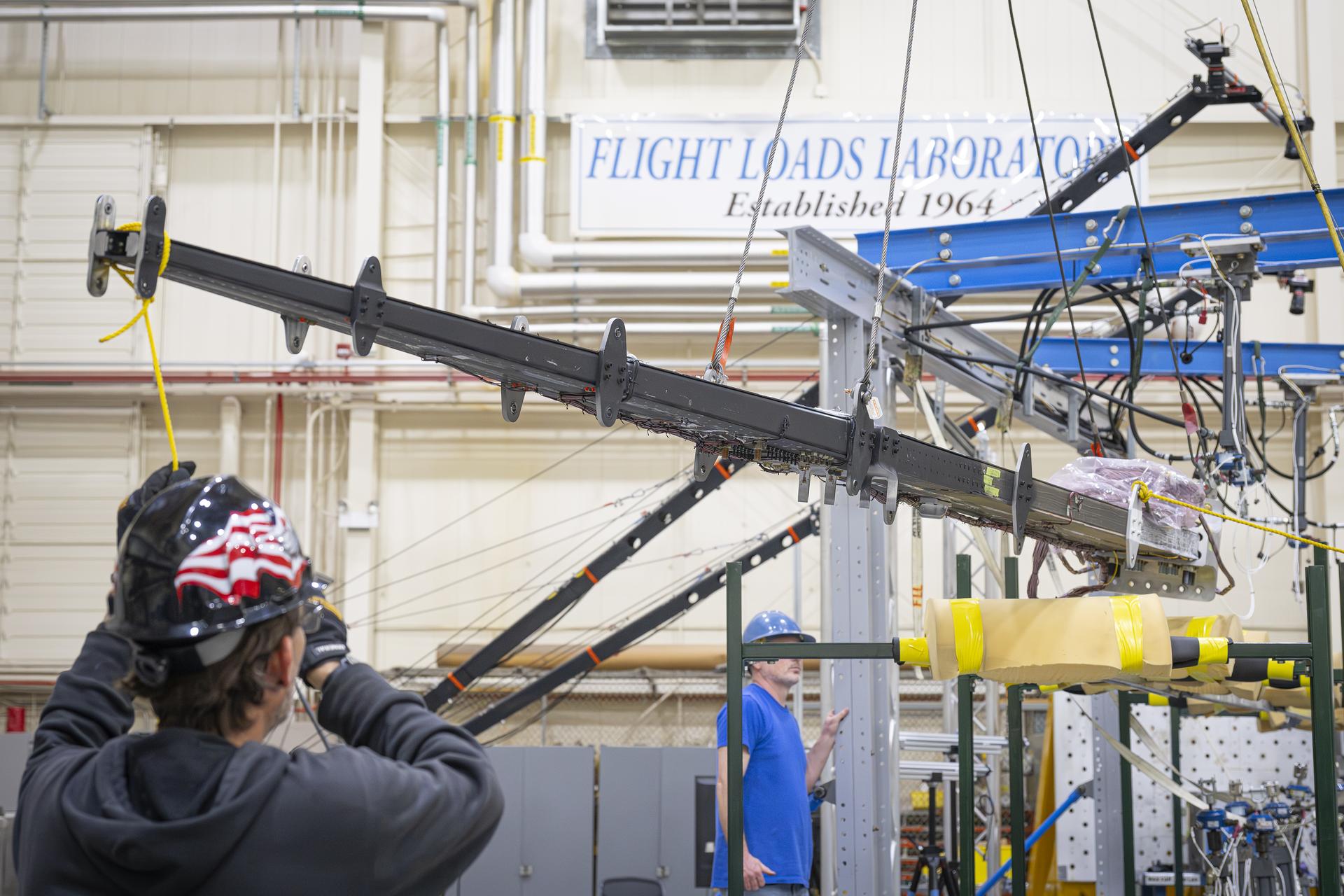
Lab technicians Jeff Howell, left and Chris Mount install the 15-foot Structural Wing Experiment Evaluating Truss-bracing model in the Flight Loads Lab at NASA’s Armstrong Flight Research Center in Edwards, California, Wednesday, February 11, 2026. The model is part of NASA’s research to develop technologies for future ultra-efficient aircraft.