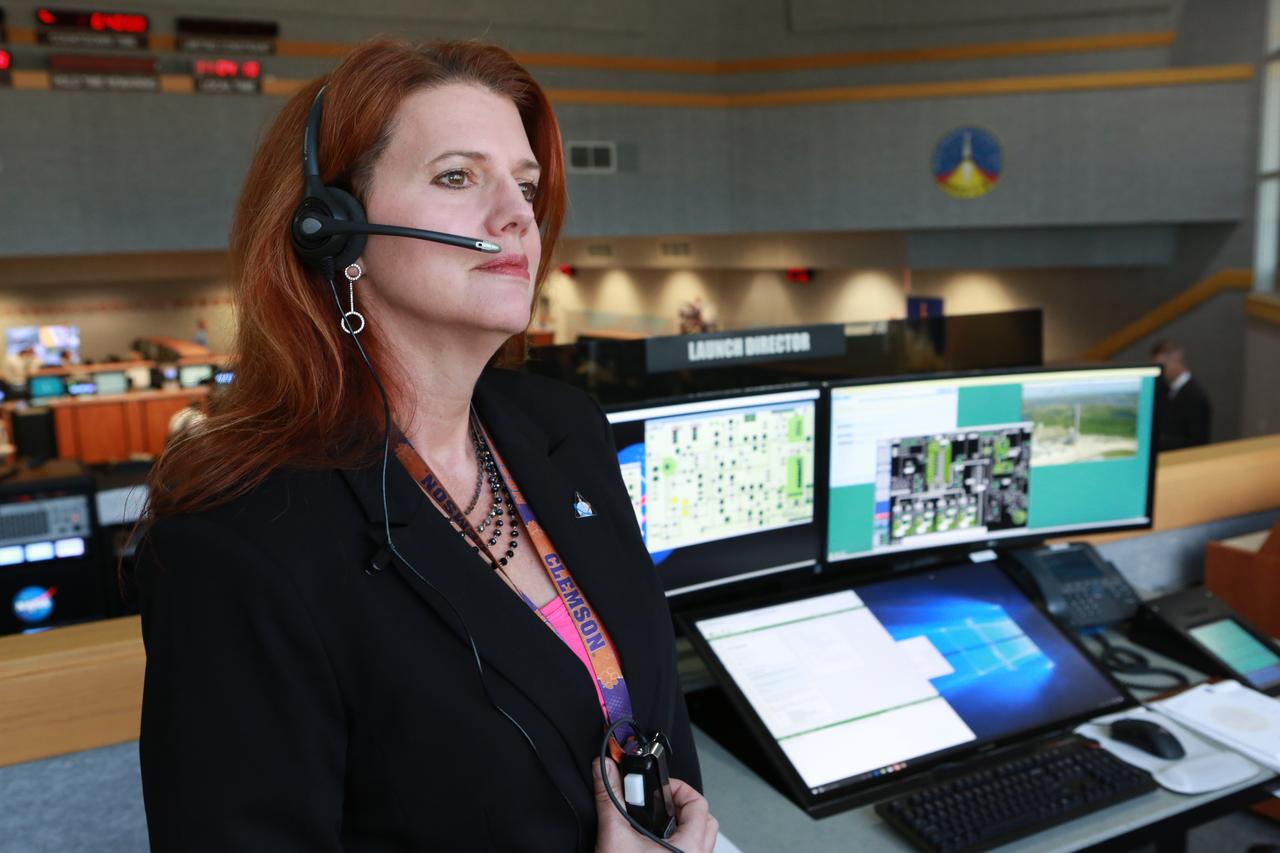
NASA Launch Director Charlie Blackwell-Thompson stands next to her console in Firing Room 1 at the Kennedy Space Center's Launch Control Center during a countdown simulation for Exploration Mission 1. It was the agency's first simulation of a portion of the countdown for the first launch of a Space Launch System rocket and Orion spacecraft that will eventually take astronauts beyond low-Earth orbit to destinations such as the Moon and Mars.

These ‘Red Robin’ dwarf tomato plants, photographed Jan. 10, 2020, inside a laboratory in the Space Station Processing Facility at NASA Kennedy Space Center in Florida, are growing from seeds that have been exposed to simulated solar particle radiation. The plants’ edible mass and nutrients will be measured and compared to those of a control crop, grown from non-irradiated seeds. The project was designed to confirm that nutritious, high-quality produce can be reliably grown in deep space, or to provide a baseline to guide development of countermeasures to protect future crop foods from radiation during missions beyond low-Earth orbit. The investigation on space radiation impact on seeds and crop production also will be carried on the Materials International Space Station Experiment (MISSE) platform outside the station, supported NASA’s Space Technology Mission Directorate and the Space Biology Program, and potentially on future beyond-low-Earth platforms.
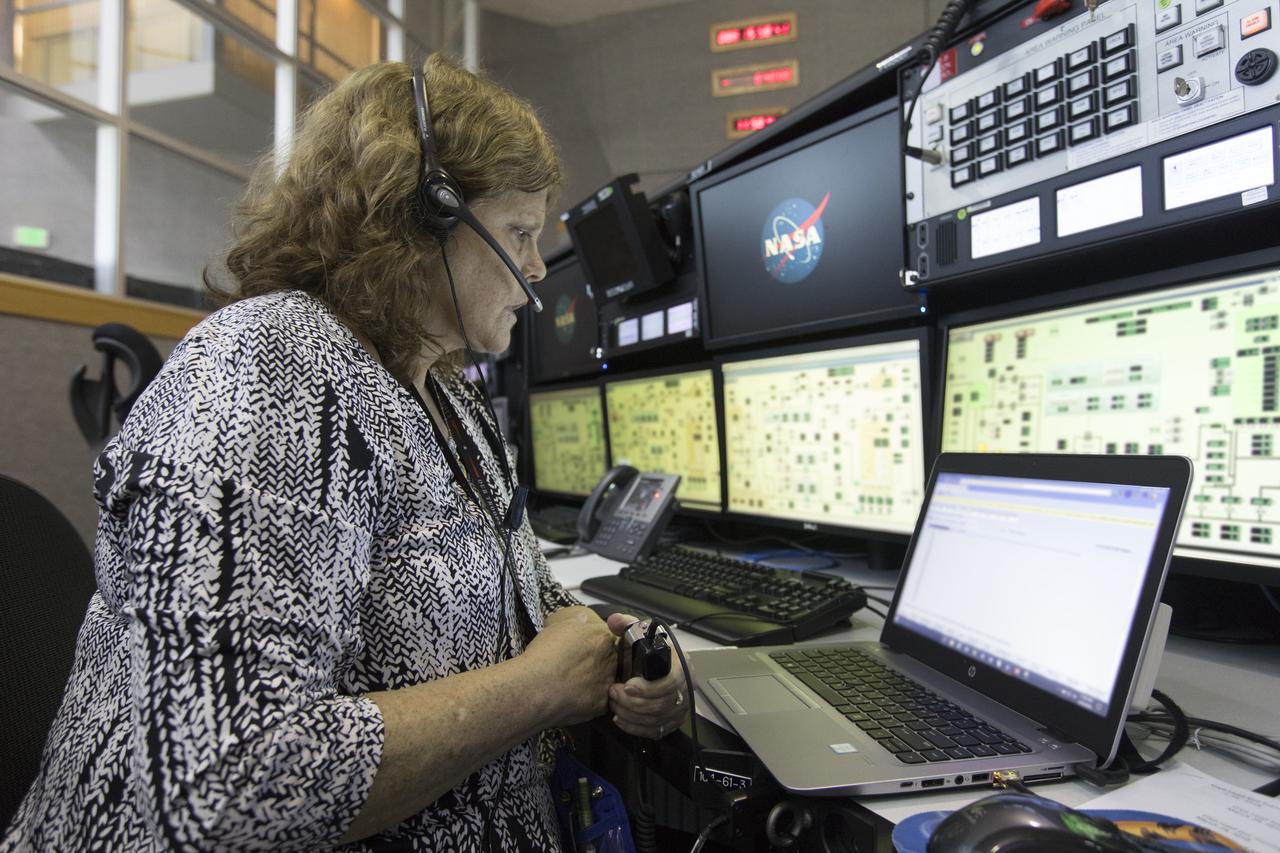
Roberta Wyrick, spacecraft test conductor with Jacobs, NASA's Test and Operations Support Contractor, monitors operations from her console in Firing Room 1 at the Kennedy Space Center's Launch Control Center during a countdown simulation for Exploration Mission 1. It was the agency's first simulation of a portion of the countdown for the first launch of a Space Launch System rocket and Orion spacecraft that will eventually take astronauts beyond low-Earth orbit to destinations such as the Moon and Mars.

The Mars 2020 rover arrives at the Launch and Landing Facility, formerly known as the Shuttle Landing Facility, at NASA’s Kennedy Space Center on Feb. 12, 2020. The rover was delivered to the Florida spaceport on a C-17 aircraft, making a cross-country trip that started at NASA’s Jet Propulsion Laboratory in Pasadena, California. The mission, targeted for mid-July 2020, will launch aboard an Atlas V 541 rocket from Cape Canaveral Air Force Station. NASA’s Launch Services Program based at Kennedy is managing the launch.

Retired NASA astronaut Bob Springer is the presenter during "Lunch with an Astronaut" on Nov. 7, 2018, at the NASA Kennedy Space Center Visitor Complex in Florida. Top scholars from Brevard County public high schools were invited to Kennedy Space Center for a tour of facilities, lunch and a roundtable discussion with engineers, scientists and business experts at the center. The 2018 Brevard Top Scholars event was hosted by the center's Academic Engagement Office to honor the top three scholars of the 2018-2019 graduating student class from each of Brevard County’s public high schools. The students received a personalized certificate of recognition at the end of the day.
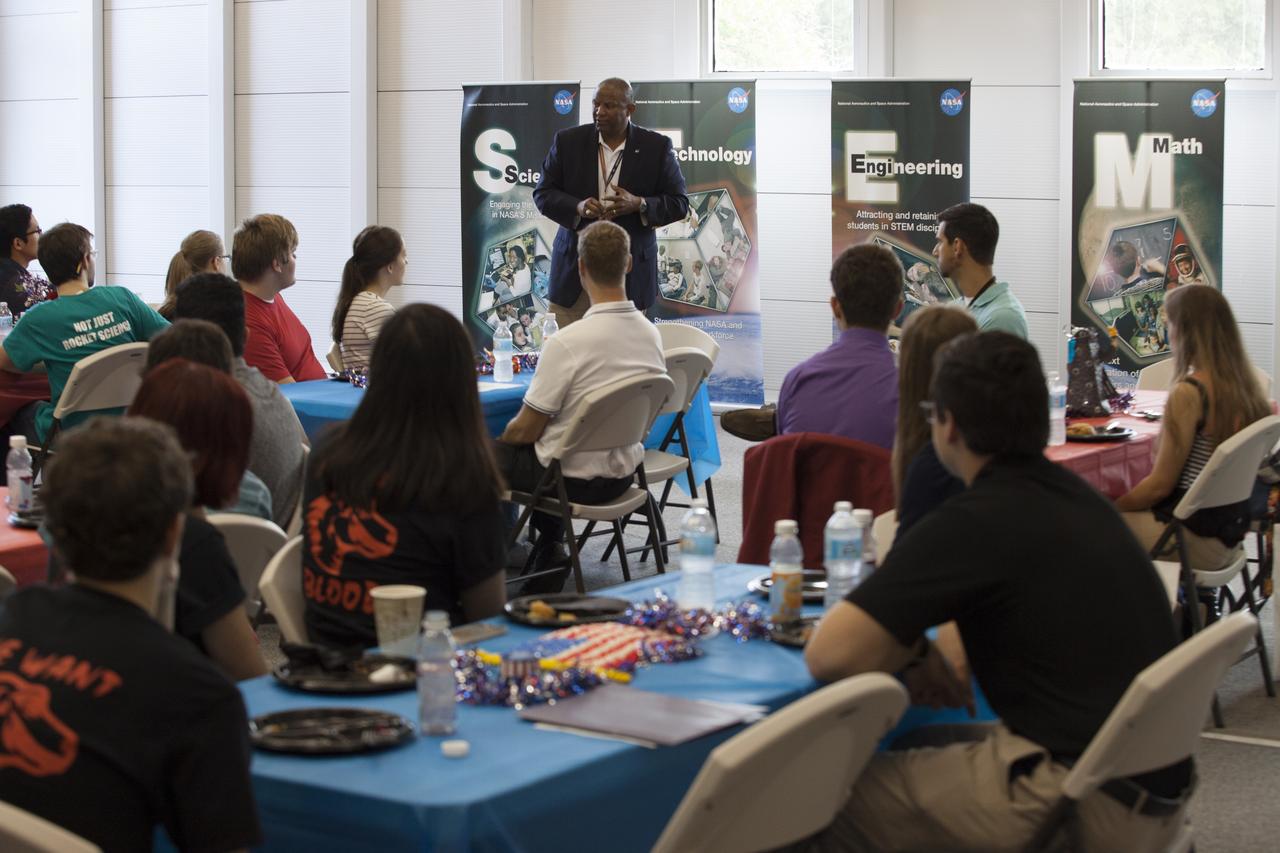
Kennedy Space Center Associate Director Kelvin Manning addresses about 40 Brevard County high school seniors regarding NASA's and Kennedy’s roles and missions during Brevard Top Scholars Day at Kennedy Space Center on May 5. Kennedy's Office of Education coordinated the event that featured a special behind-the-scenes tour of Kennedy, including prototype shops, cryogenic labs and facilities such as the Vehicle Assembly Building and the Launch Control Center firing rooms.
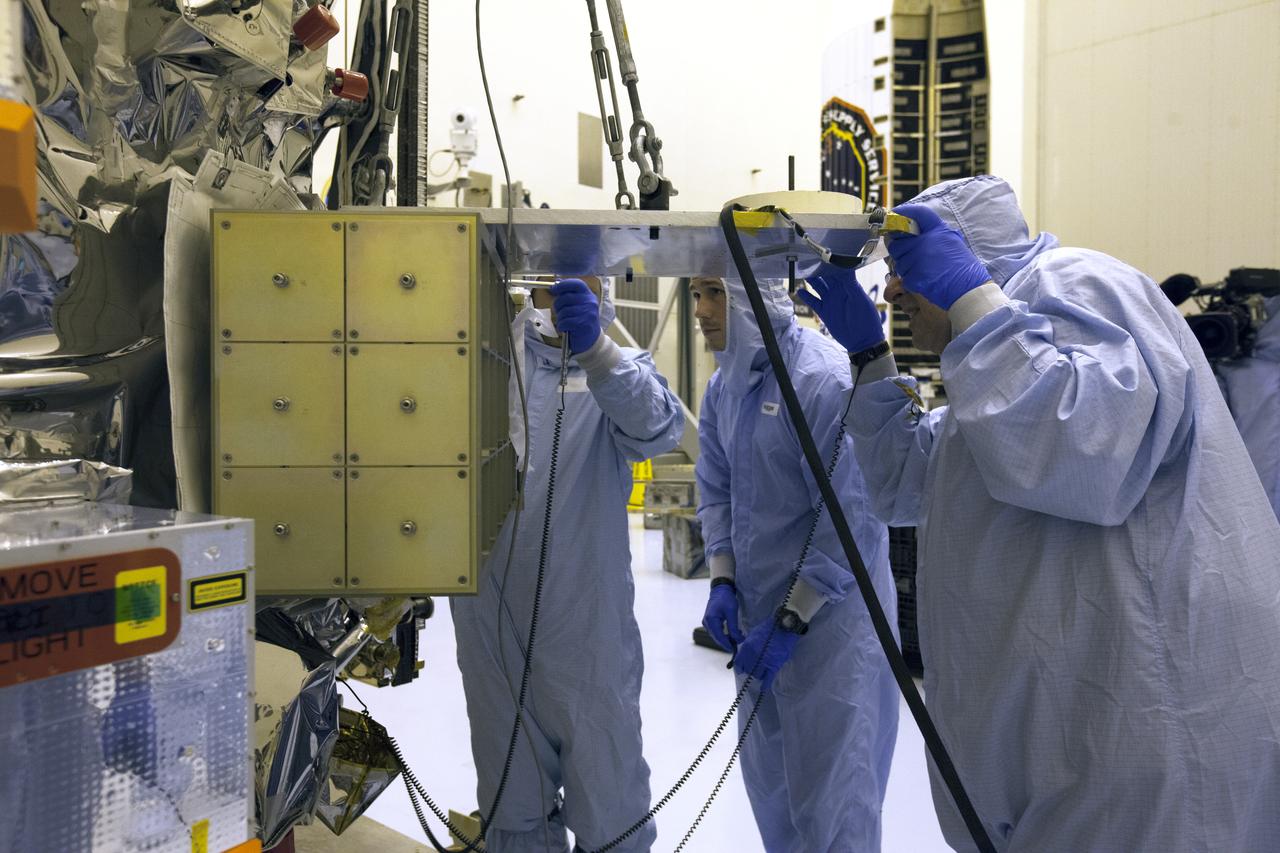
Inside the Payload Hazardous Servicing Facility at NASA's Kennedy Space Center in Florida, technicians begin the process to install several Nanoracks on the exterior of the Orbital ATK Cygnus pressurized cargo module. The Orbital ATK CRS-7 commercial resupply services mission to the International Space Station is scheduled to launch atop a United Launch Alliance Atlas V rocket from Space Launch Complex 41 at Cape Canaveral Air Force Station no earlier than March 21, 2017. Cygnus will deliver 7,600 pounds of supplies, equipment and scientific research materials to the space station.
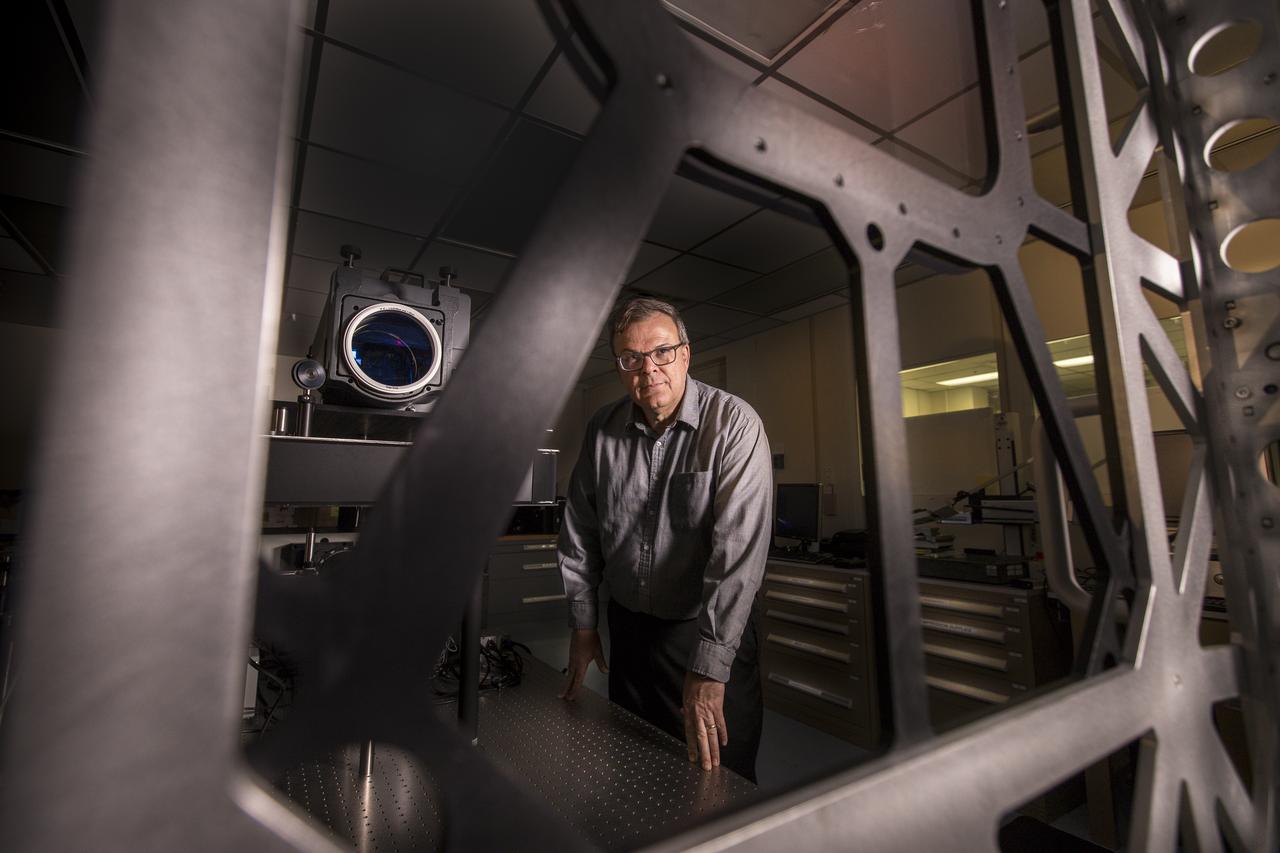
Mark Nurge, a physicist in Kennedy Space Center’s Applied Physics Lab, stands near a laser interferometer, which is used to determine if there are acceptable levels of distortion and imperfections in windows. Nurge recently completed optical metrology testing and evaluation of all flight windows on the Orion capsule for Artemis 1. The interferometer uses a laser source to do wavefront and transmission measurements, as well as evaluation of the color balance. Artemis 1 is an uncrewed flight that will pave the way for future crewed missions and enable future missions to the Moon, Mars, and beyond.

Inside a laboratory in the Space Station Processing Facility at NASA's Kennedy Space Center in Florida, quality technicians check the hardware for the Advanced Plant Habitat flight unit. The flight unit is an exact replica of the APH that was delivered to the International Space Station. Validation tests and post-delivery checkout was performed to prepare for space station in-orbit APH activities. The flight unit will be moved to the International Space Station Environmental Simulator to begin an experiment verification test for the science that will fly on the first mission, PH-01. Developed by NASA and ORBITEC of Madison, Wisconsin, the APH is the largest plant chamber built for the agency. It is a fully automated plant growth facility that will be used to conduct bioscience research on the space station.
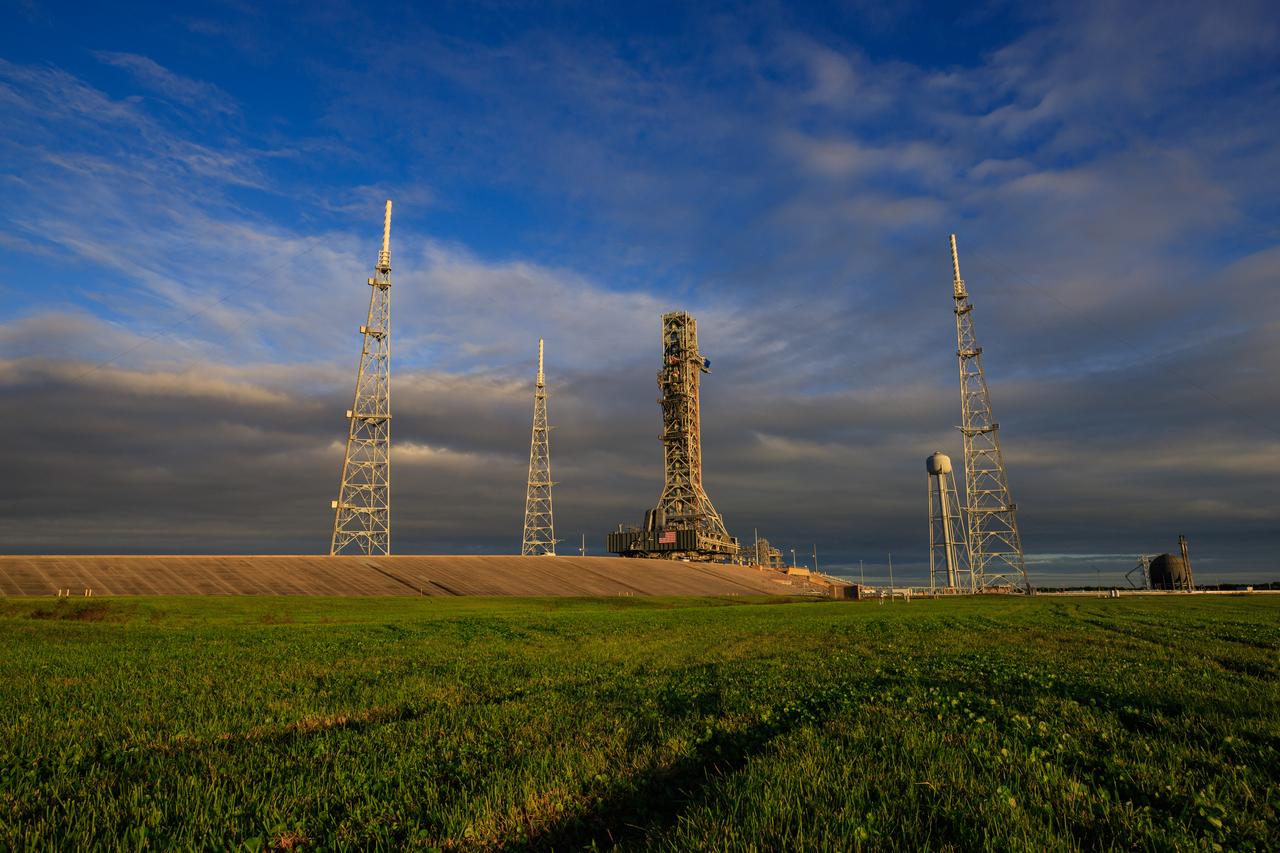
During sunrise on Oct. 30, 2020, the mobile launcher for the Artemis I mission, atop crawler-transporter 2, begins to depart Launch Pad 39B and return to the Vehicle Assembly Building at NASA’s Kennedy Space Center in Florida. The nearly 400-foot-tall mobile launcher was at the pad for 10 days, while engineers with Exploration Ground Systems and Jacobs performed several tasks, including a timing test to validate the launch team’s countdown timeline, and a thorough, top-to-bottom wash down of the mobile launcher to remove any debris remaining from construction and installation of the umbilical arms. Artemis I will test the Orion spacecraft and Space Launch System as an integrated system ahead of crewed flights to the Moon. Under the Artemis program, NASA will land the first woman and the next man on the Moon in 2024.
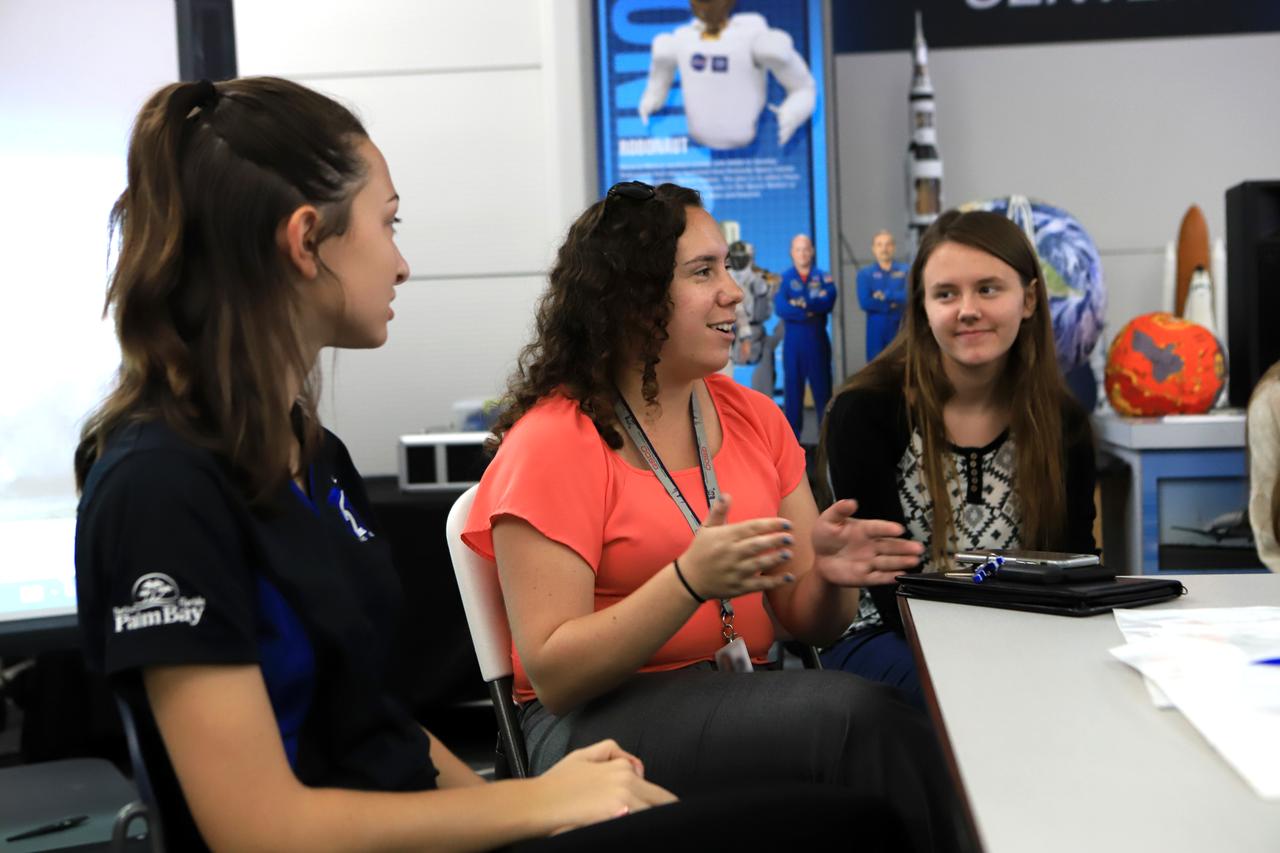
Rebecca Baturin, center, a project engineer in Exploration Ground Systems, speaks to students from Brevard County high schools during a panel discussion session at the NASA Kennedy Space Center Visitor Complex in Florida, on Nov. 7, 2018. The high school seniors were invited to Kennedy Space Center for a tour of facilities, lunch and a roundtable discussion with engineers, scientists and business experts at the center. The 2018 Brevard Top Scholars event was hosted by the center's Academic Engagement Office to honor the top three scholars of the 2018-2019 graduating student class from each of Brevard County’s public high schools. The students received a personalized certificate of recognition at the end of the day.
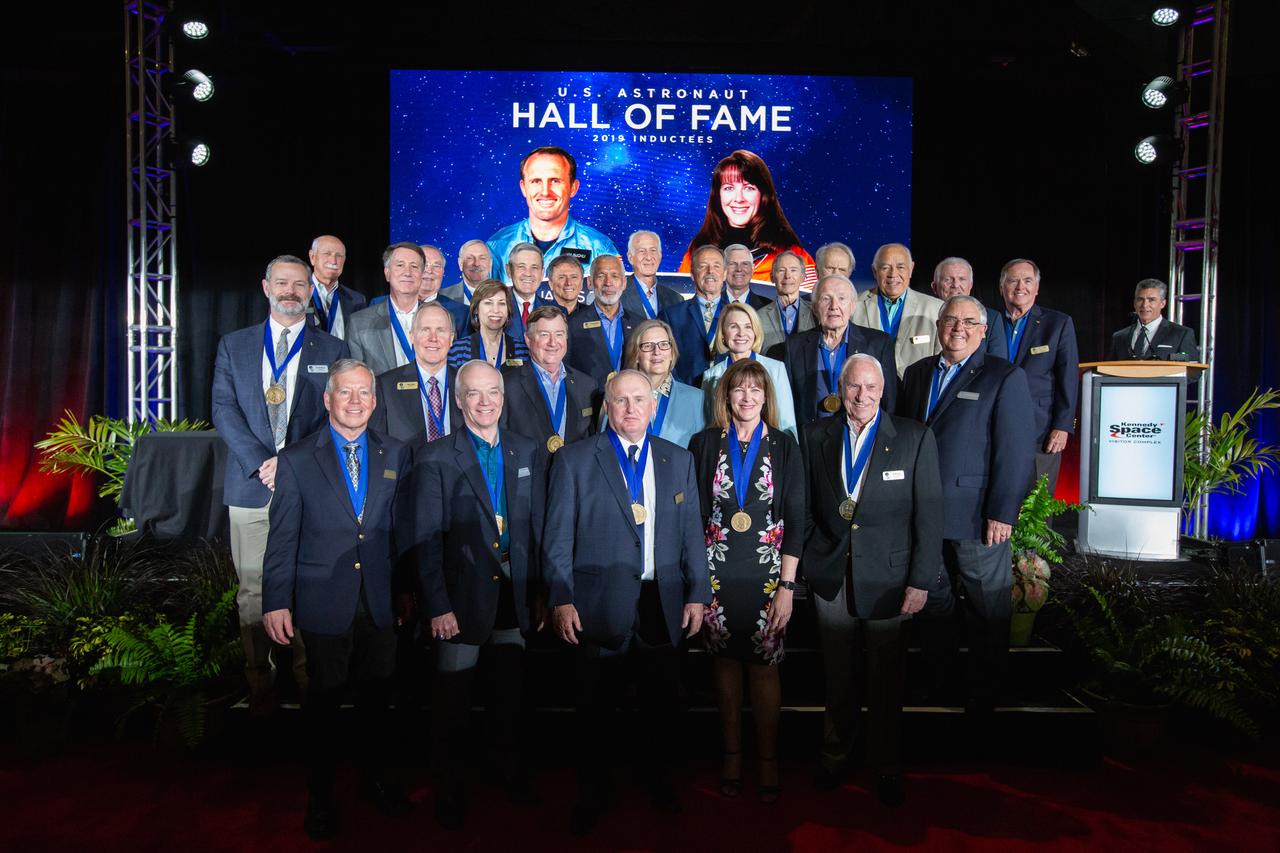
Veteran NASA astronauts James Buchli and Janet Kavandi were inducted into the U.S. Astronaut Hall of Fame in a public ceremony at Kennedy Space Center Visitor Complex in the Space Shuttle Atlantis attraction on April 6, 2019.
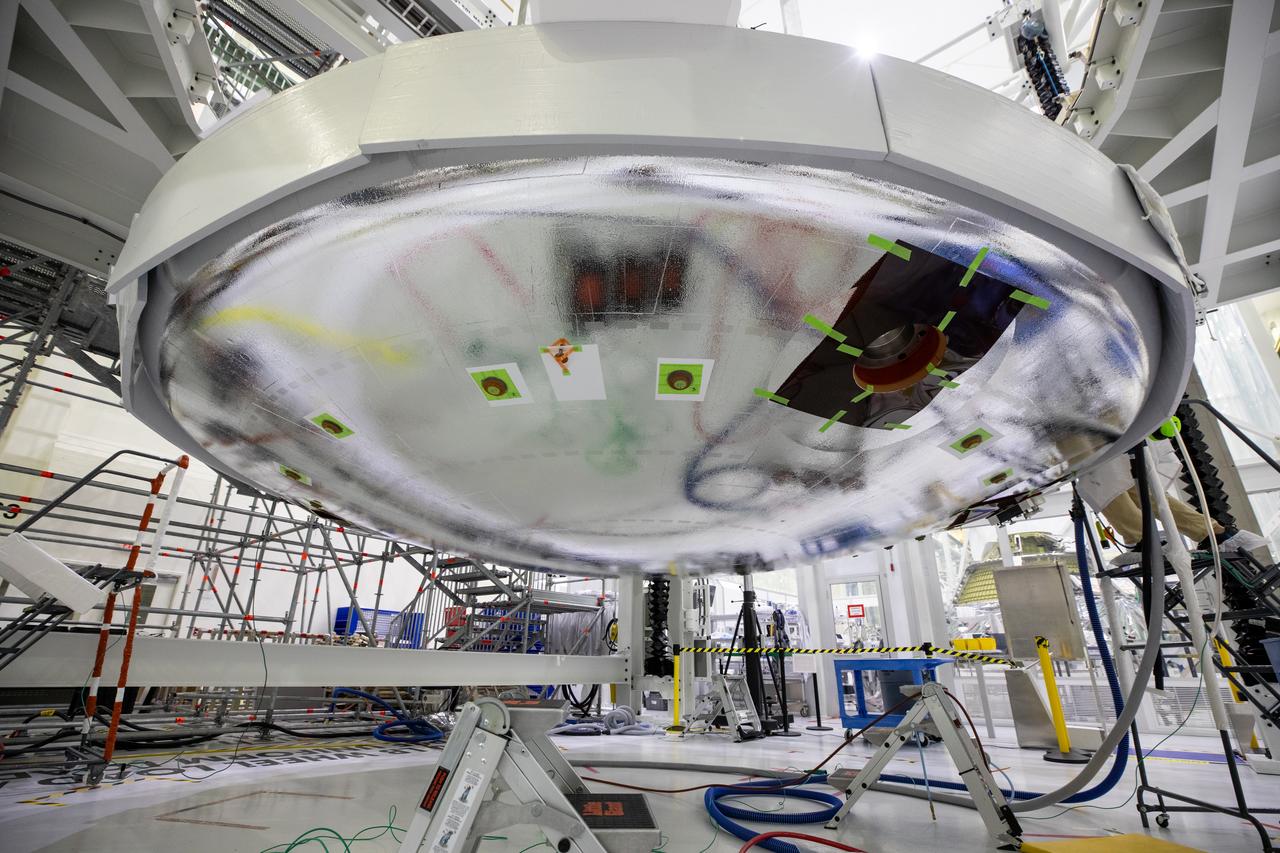
Teams install the heat shield on the Artemis II Orion spacecraft inside the high bay of the Neil Armstrong Operations and Checkout Building at NASA’s Kennedy Space Center in Florida on June 22, 2023. The 16.5-foot-wide shield will ensure the safe return of the astronauts on board as the spacecraft travels at speeds of about 25,000 miles per hour and experiences outside temperatures of nearly 5,000 degrees Fahrenheit. Artemis II will be the first mission with astronauts under Artemis that will test and check out all of Orion’s systems needed for future crewed missions.
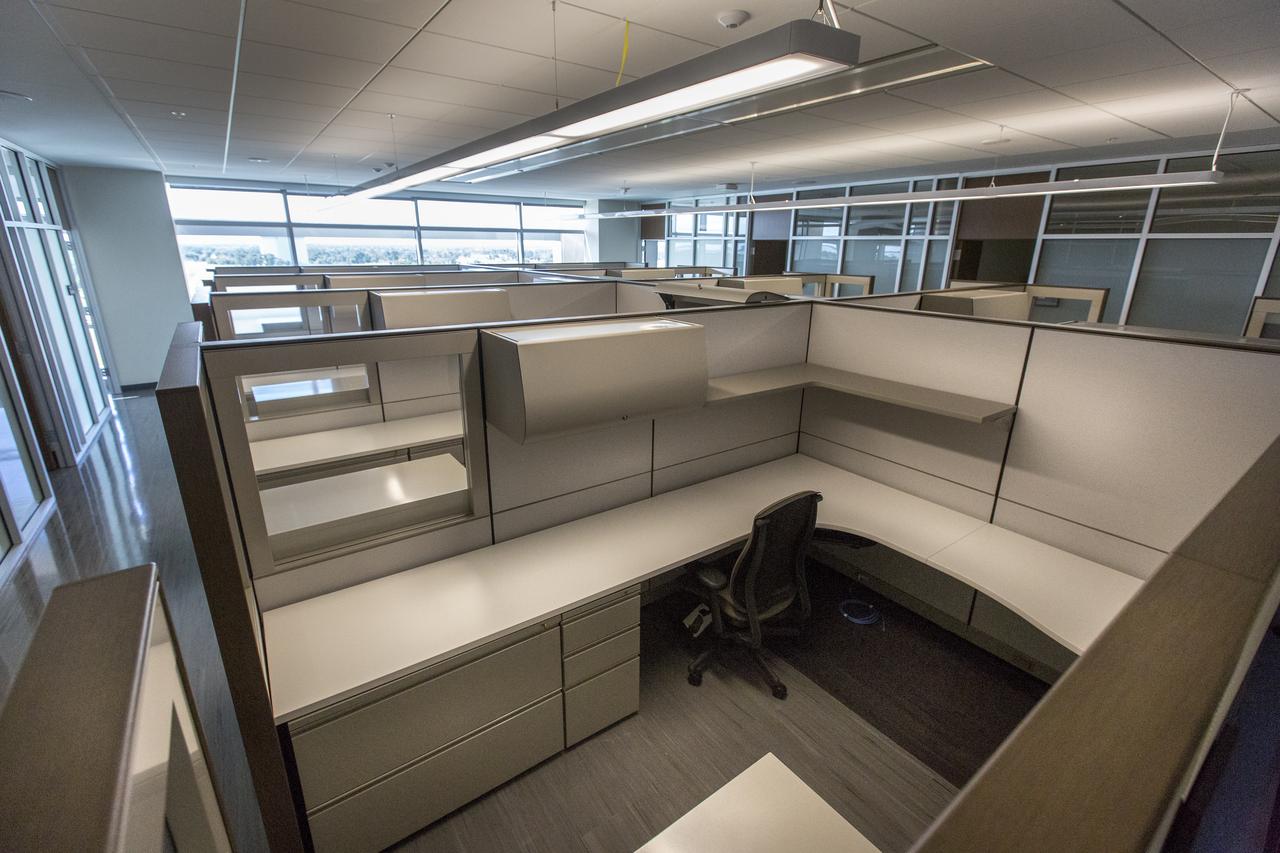
A view of some of the work stations in the new headquarters building on April 3, 2019, at NASA’s Kennedy Space Center in Florida. The newly constructed facility anchors the multi-user spaceport’s Central Campus. More than 500 civil service and contractor employees will be based in the 200,000-square-foot building. The facility earned the U.S. Green Building Council’s Leadership in Energy and Environmental Design (LEED) Gold designation. Features include LED lighting throughout, along with occupancy sensors to turn off unneeded lights; windows, screens and shades designed to maximize natural light; chilled beam HVAC technology reducing the need for ductwork, and more.
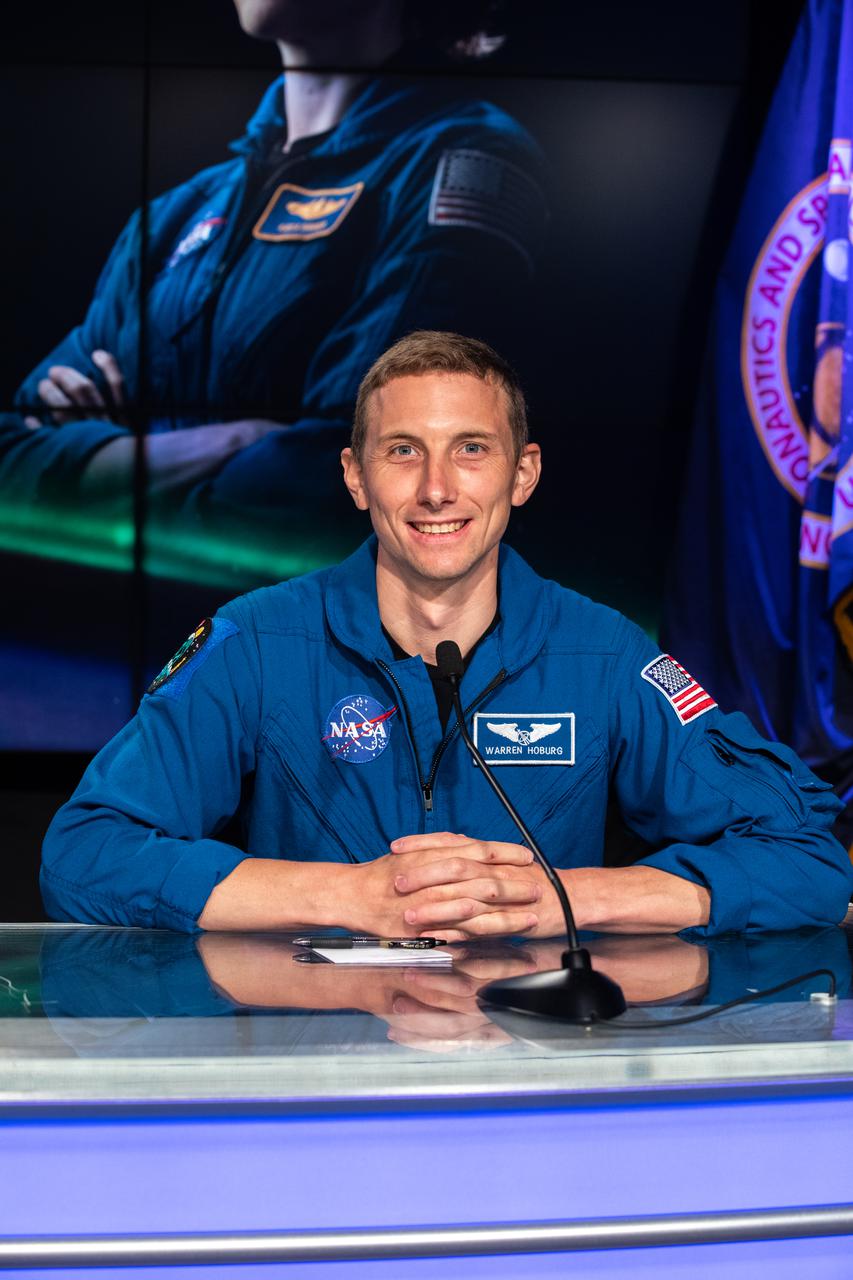
NASA astronaut Woody Hoburg speaks during a briefing for the upcoming SpaceX Crew-3 mission at the agency’s Kennedy Space Center in Florida on Oct. 29, 2021. The SpaceX Falcon 9 with Crew Dragon atop is scheduled to launch Oct. 31 at 2:21 a.m. EDT from Launch Complex 39A at Kennedy. Crew Dragon will carry four astronauts to the International Space Station for NASA’s Commercial Crew Program. Crew-3 is the third crew rotation flight to the space station, and the first flight of a new Crew Dragon spacecraft.
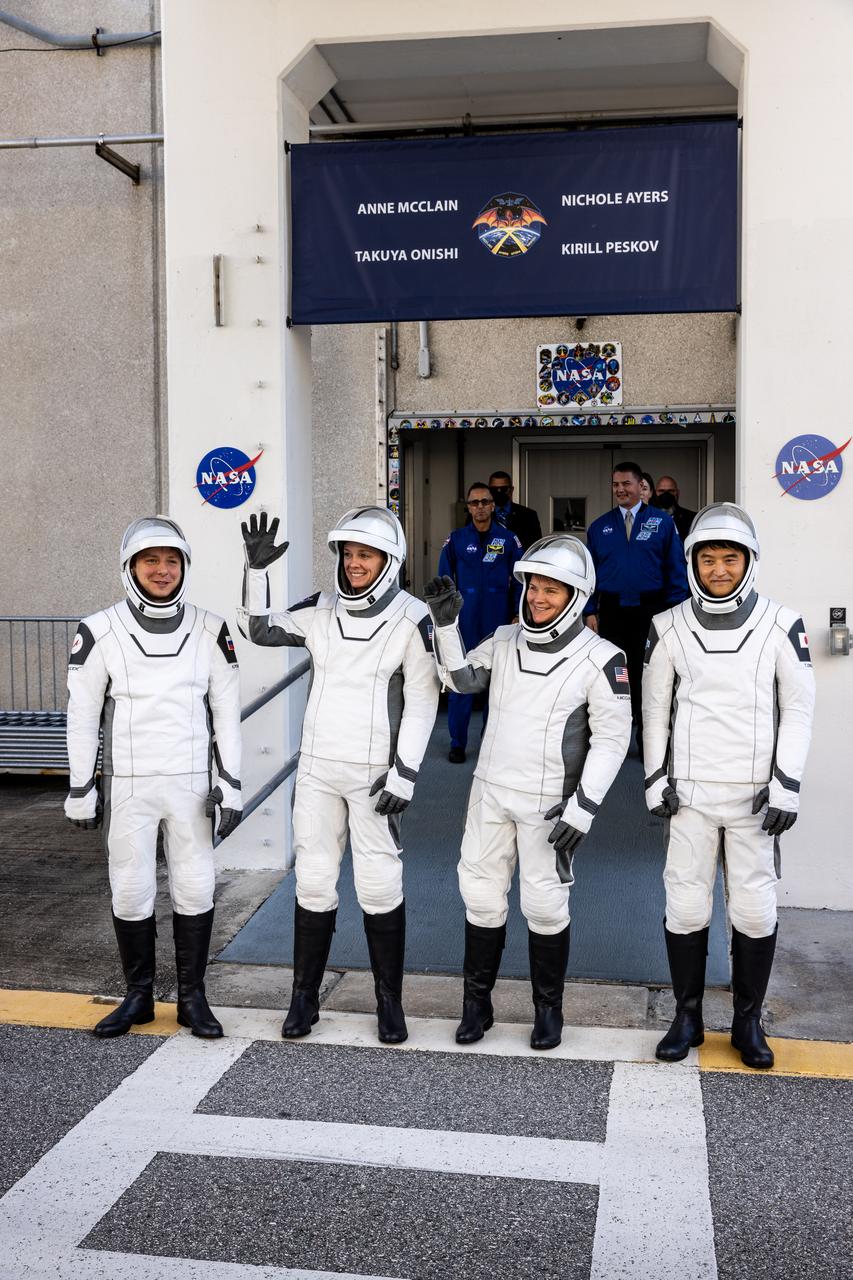
NASA’s SpaceX Crew-10 crew members wave to family and friends as they prepare to depart the Neil A. Armstrong Operations and Checkout Building at the agency’s Kennedy Space Center in Florida for nearby Launch Complex 39A for launch of Crew-10 on Wednesday, March 12, 2025. From left to right, Roscosmos cosmonaut Kirill Peskov, NASA astronauts Nichole Ayers and Anne McClain, along with JAXA (Japan Aerospace Exploration Agency) astronaut Takuya Onishi are scheduled to lift off aboard SpaceX’s Dragon spacecraft and Falcon 9 rocket at 7:48 p.m. EDT, from Launch Complex 39A at NASA Kennedy. Crew-10 is the tenth crew rotation mission with SpaceX to the space station as part of the agency’s Commercial Crew Program.
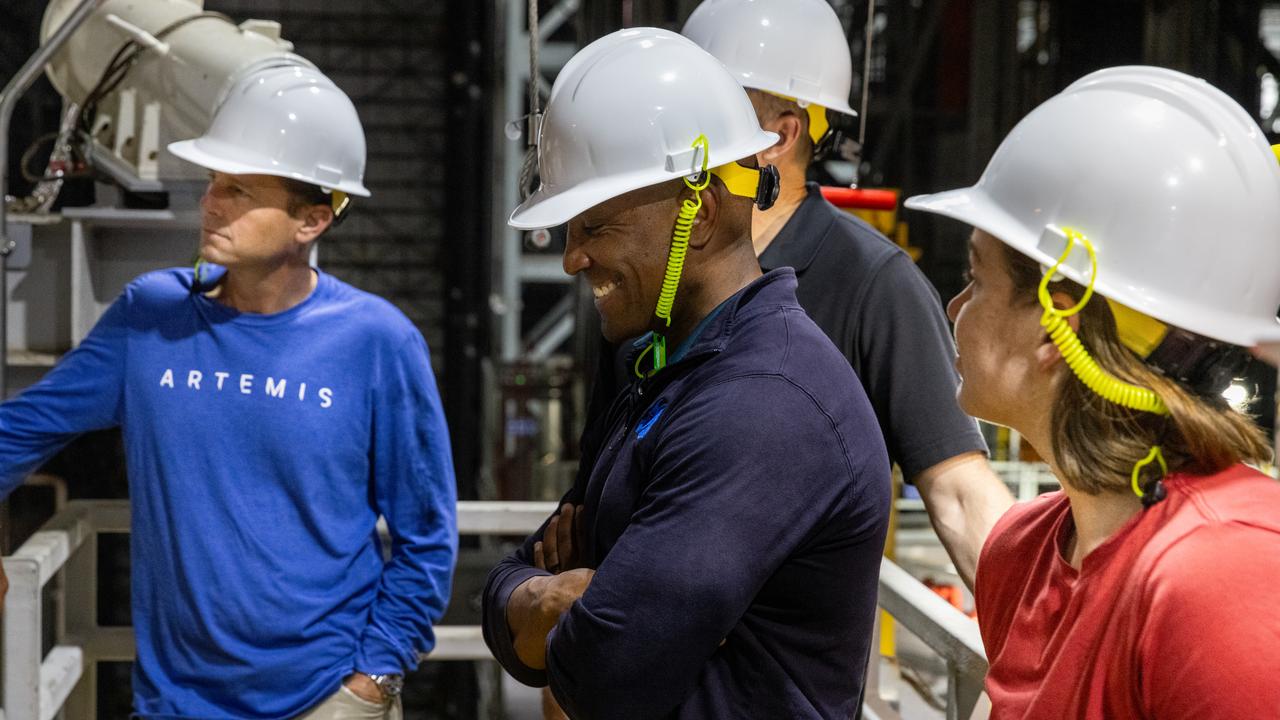
From left, NASA astronaut Reid Wiseman, Artemis II commander; NASA astronaut Victor Glover, Artemis II pilot; and CSA (Canadian Space Agency) astronaut Jenni Gibbons, Artemis II backup crew member, participate in emergency egress training with teams from the agency’s Exploration Ground Systems Program inside the Vehicle Assembly Building at NASA’s Kennedy Space Center in Florida on Monday, May 5, 2025. Artemis II will take four astronauts around the Moon, the first crewed mission on NASA’s path to establishing a long-term presence for science and exploration through Artemis.
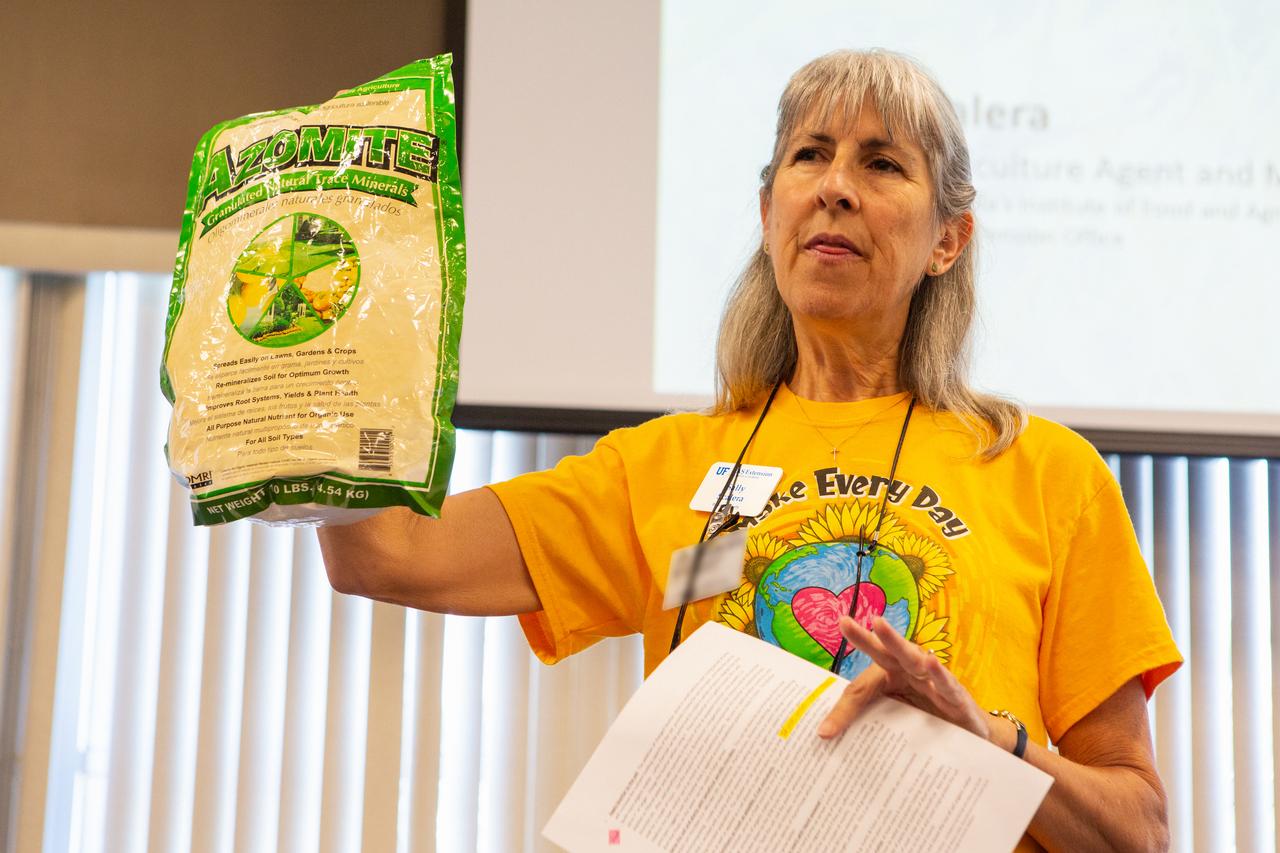
Sally Scalera, urban horticulture agent and master gardener coordinator from the University of Florida’s Institute of Food and Agricultural Sciences Brevard Extension Office, shows Kennedy Space Center employees some sustainable yard products available during her presentation on tips and tricks for a healthy yard and garden on April 24, 2019. Held inside the Florida spaceport’s Space Station Processing Facility Conference Center, Scalera also provided information on Florida-friendly landscaping practices. The lunch and learn was available for employees to attend as part of Kennedy’s Earth Day events.
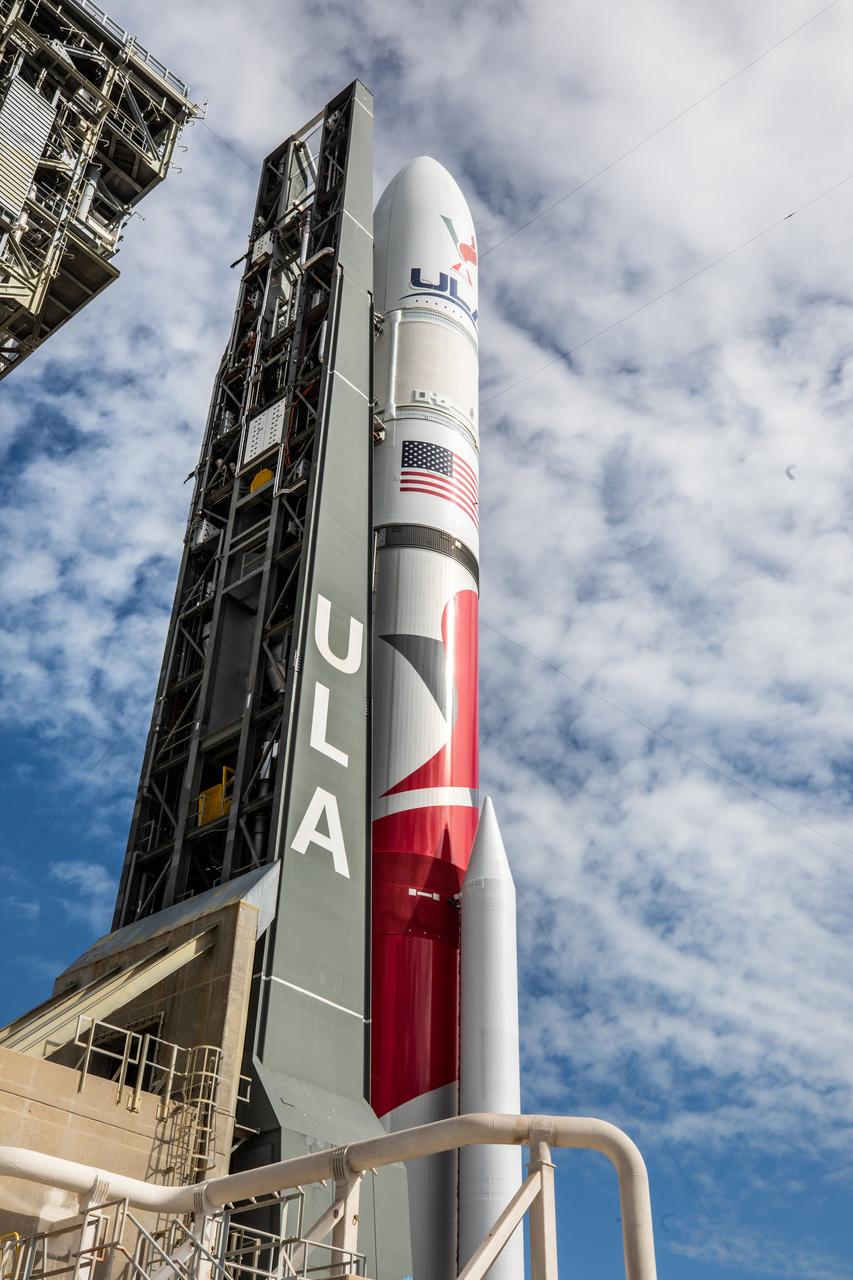
On Friday, Jan. 5, 2024, United Launch Alliance’s Vulcan rocket carrying Astrobotic’s Peregrine lunar lander is rolled out of the Vertical Integration Facility to the launch pad at Space Launch Complex 41 on Cape Canaveral Space Force Station in Florida in advance of a planned lift off at 2:18 a.m. EST Monday, Jan. 8, 2024. Astrobotic’s Peregrine Mission One will carry NASA and commercial payloads to the Moon to study the lunar exosphere, thermal properties, and hydrogen abundance of the lunar regolith, magnetic fields, and the radiation environment of the lunar surface.(Multiple values)
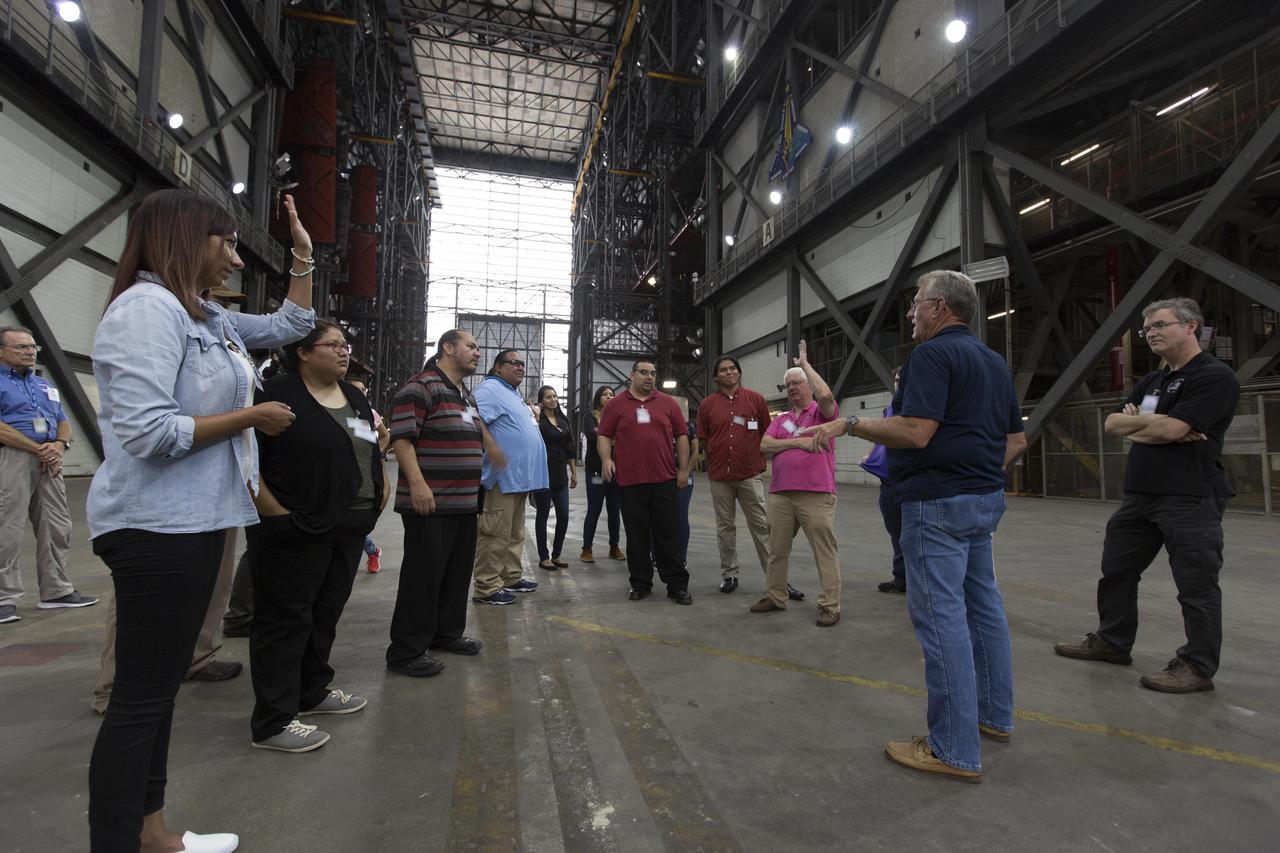
A group of 19 college students recently visited NASA's Kennedy Space Center as winners of the First Nations Launch competition in Wisconsin. They were part of teams that successfully flew high-powered rockets, earning them an opportunity to visit the Florida spaceport. During their visit, they toured the Vehicle Assembly Building, Launch Control Center and the Kennedy visitor complex. The competition is supported by NASA and the Wisconsin Space Grant Consortium. It provides an opportunity for students attending tribal colleges or universities, or who are members of a campus American Indian Science and Engineering Society, or AISES, chapter to design, build and launch a rocket at a competition in Kansasville, Wisconsin.

A SpaceX Falcon 9 rocket carrying the company's Dragon spacecraft launches NASA’s SpaceX Crew-8 mission to the International Space Station with NASA astronauts Matthew Dominick, Michael Barratt, and Jeanette Epps, and Roscosmos cosmonaut Alexander Grebenkin aboard at 10:53 p.m. EST on Sunday, March 3, 2024, from NASA’s Kennedy Space Center in Florida. NASA’s SpaceX Crew-8 mission is the eighth crew rotation mission with SpaceX to the station, and the ninth flight of Dragon with people as part of the agency’s Commercial Crew Program.
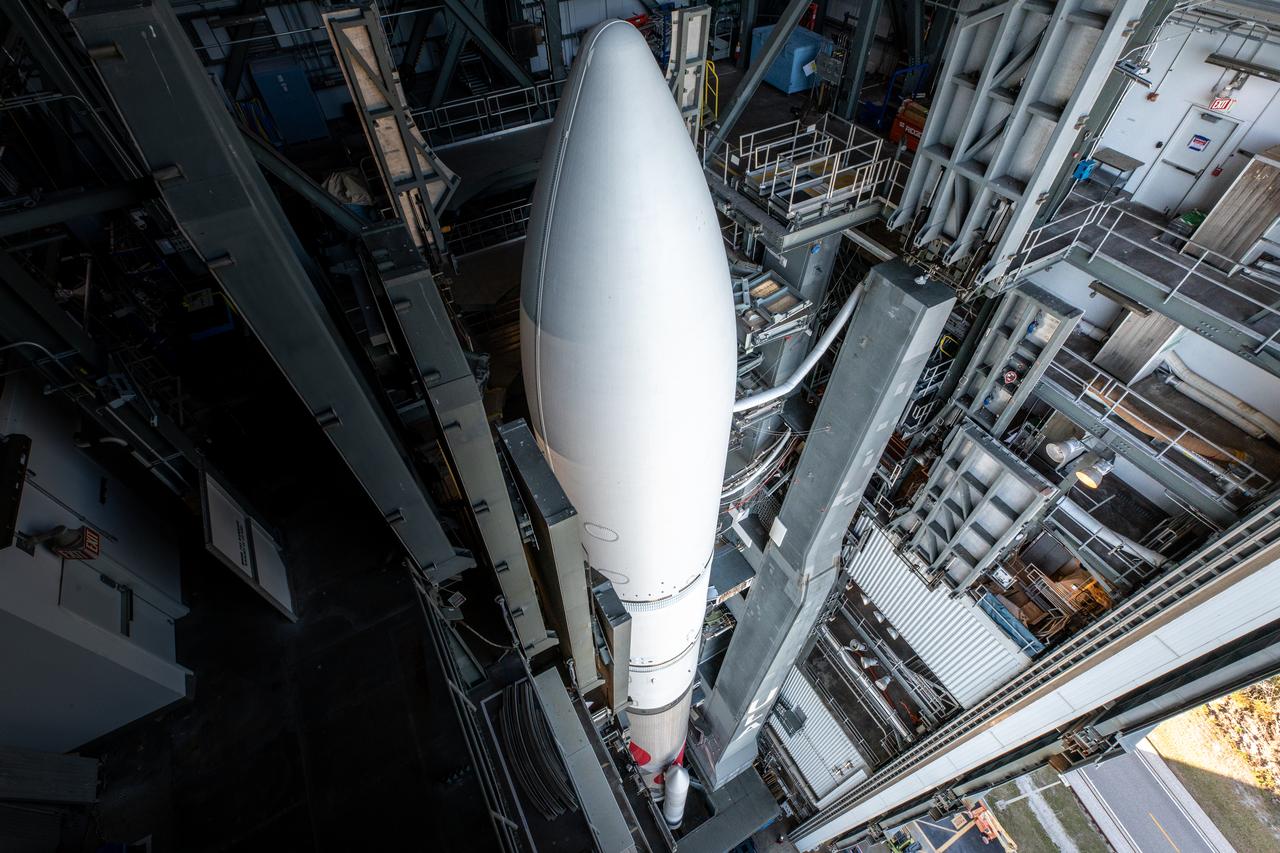
On Friday, Jan. 5, 2024, United Launch Alliance’s Vulcan rocket carrying Astrobotic’s Peregrine lunar lander is rolled out of the Vertical Integration Facility to the launch pad at Space Launch Complex 41 on Cape Canaveral Space Force Station in Florida in advance of a planned lift off at 2:18 a.m. EST Monday, Jan. 8, 2024. Astrobotic’s Peregrine Mission One will carry NASA and commercial payloads to the Moon to study the lunar exosphere, thermal properties, and hydrogen abundance of the lunar regolith, magnetic fields, and the radiation environment of the lunar surface.(Multiple values)
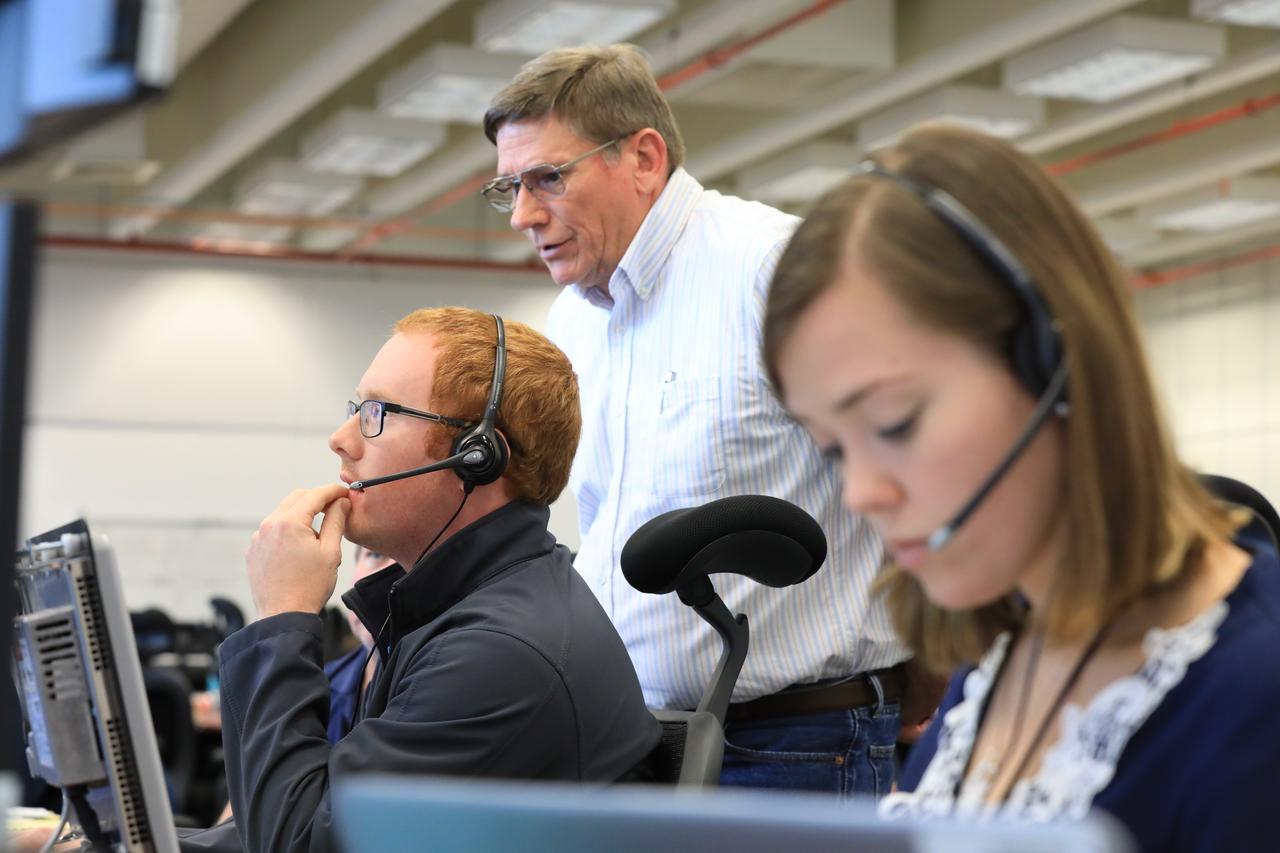
Tom Clark, standing, a manager with contractor ERC, works with Quentin Jones and Emily Hadley, both mechanical engineers for the liquid oxygen system, with ERC, during a countdown demonstration event of cryogenic propellant loading April 12, 2019, inside Firing Room 2 in the Launch Control Center at NASA’s Kennedy Space Center in Florida. The practice simulation involved loading of liquid hydrogen and liquid oxygen into the Space Launch System rocket’s core and upper stages to prepare for Exploration Mission-1 (EM-1). During the tanking exercise, the team worked through surprise issues in real-time. The practice countdown events are training opportunities coordinated by EM-1 Launch Director Charlie Blackwell-Thompson with Exploration Ground Systems.
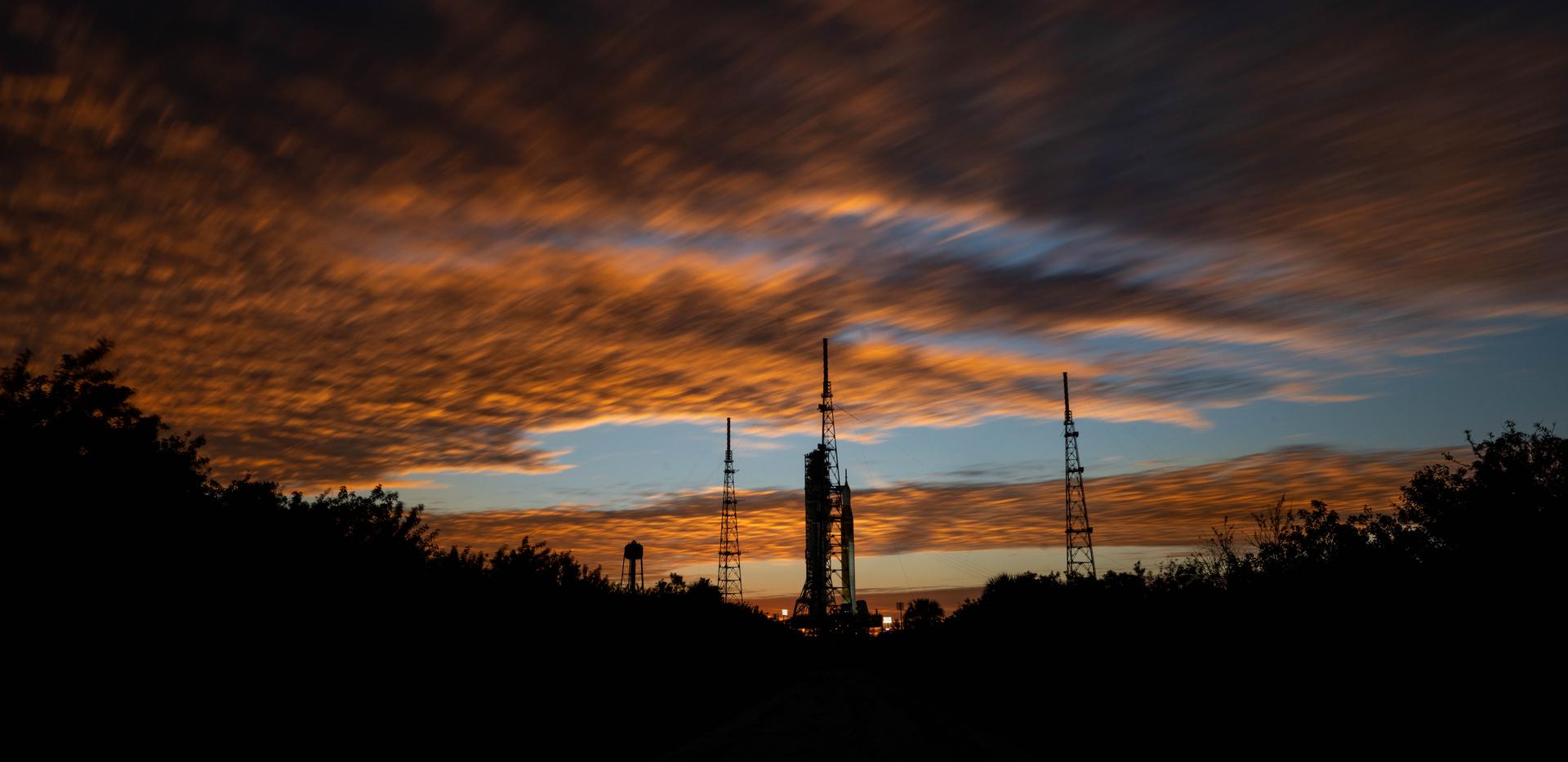
Clouds and the Sun illuminate the sky on Wednesday, Jan. 28, 2026, as NASA’s Artemis II SLS (Space Launch System) rocket and Orion spacecraft stand vertical at Launch Complex 39B at NASA’s Kennedy Space Center in Florida. The Artemis II test flight will take Commander Reid Wiseman, Pilot Victor Glover, and Mission Specialist Christina Koch from NASA and Mission Specialist Jeremy Hansen from the CSA (Canadian Space Agency), around the Moon and back to Earth no later than April 2026.
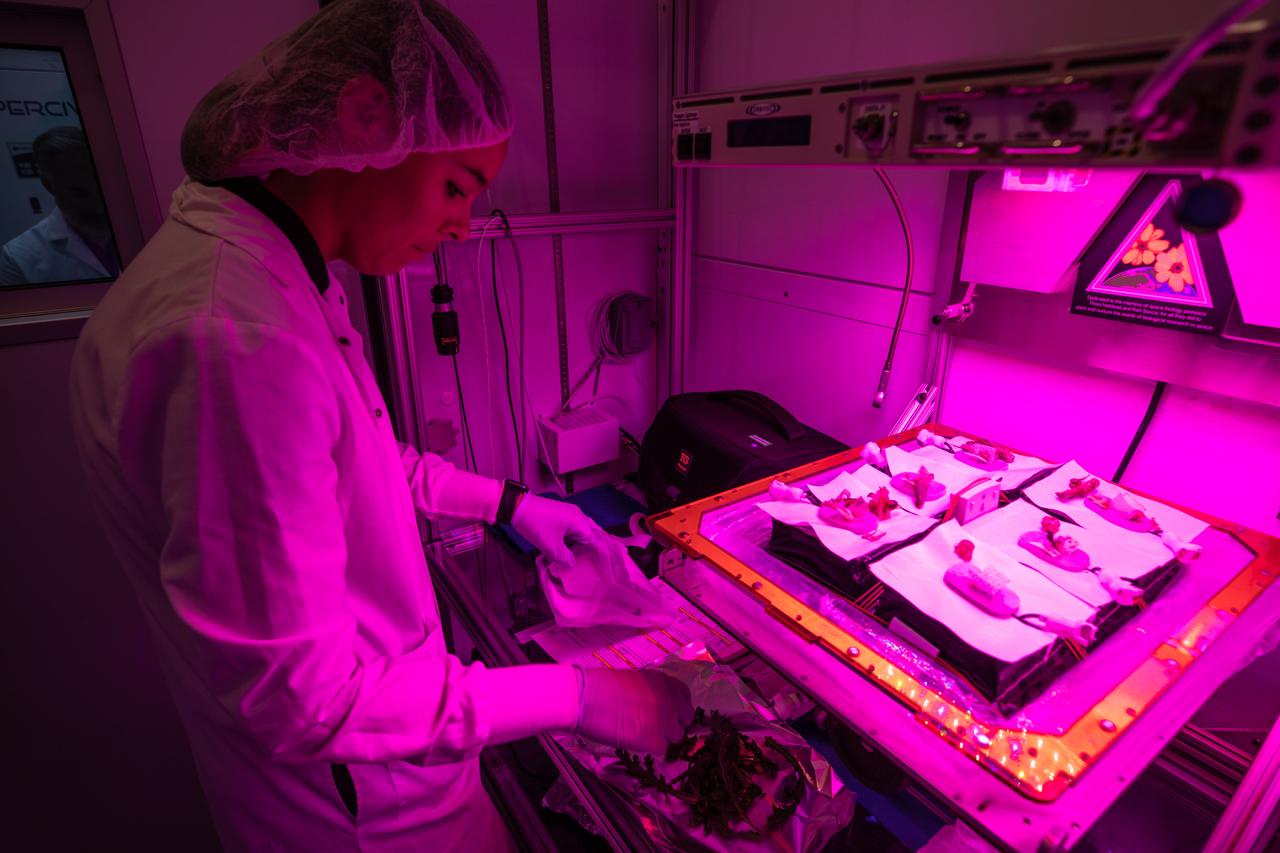
Kennedy Space Center employee Anna Maria Ruby harvests plant cultivars inside the Veggie growth chamber in the Space Station Processing Facility on Sept. 30, 2019, for a science verification test (SVT). This SVT will study the potential of three plants – amara mustard, ‘outredgeous’ red romaine lettuce and shungiku, an Asian green comparable to an edible chrysanthemum – to grow in space. All three lettuce plants were grown from seed film, making this the first SVT with this new plant growth material. Earlier this year, the amara mustard and shungiku plants were grown for the first time using seed bags – referred to as pillows – during the Sustained Veggie project, a study funded by the Human Research Program.
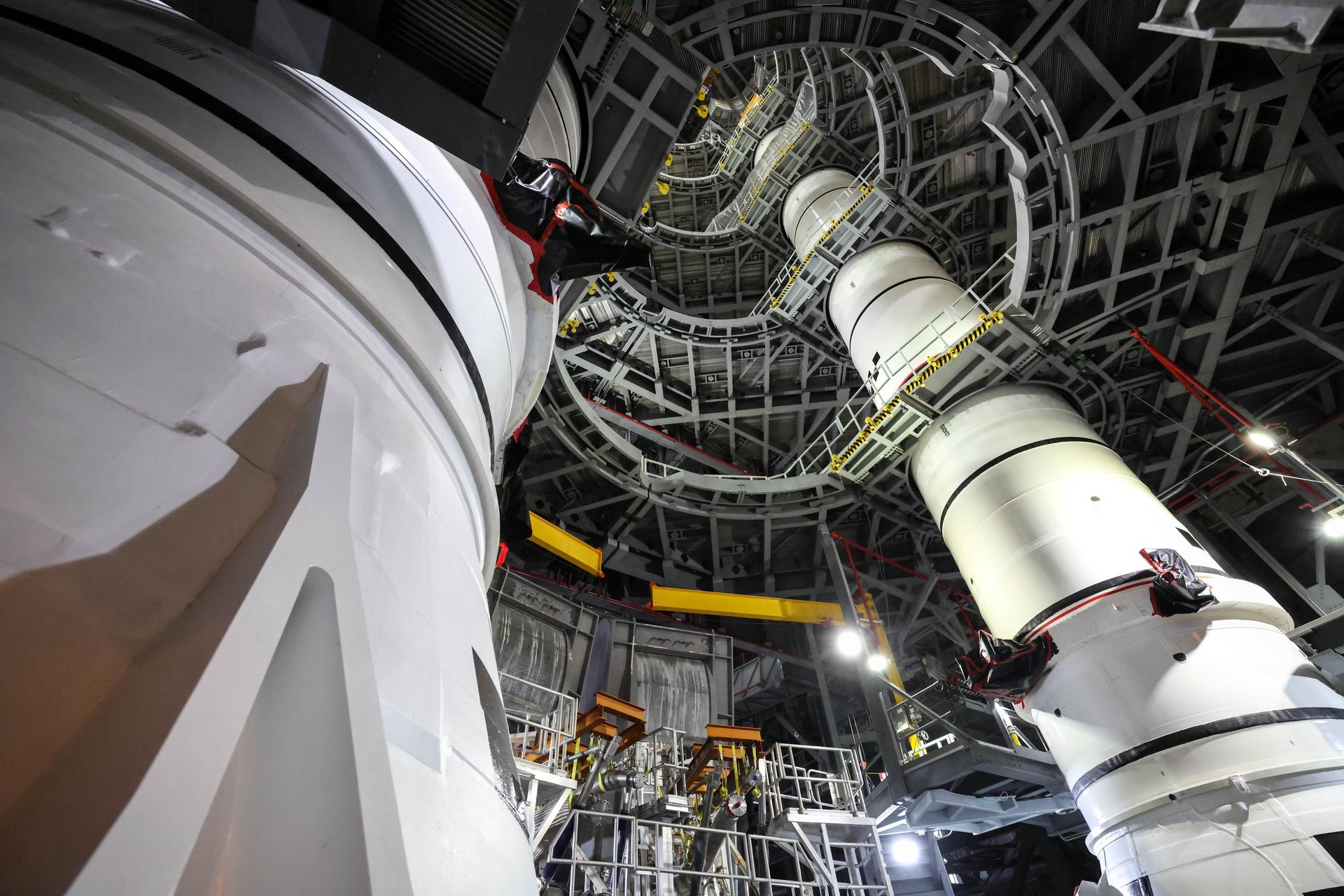
Technicians inside the Vehicle Assembly Building at NASA’s Kennedy Space Center in Florida complete integration of the left forward center solid rocket booster segment onto the left center center booster segment for the Artemis III SLS (Space Launch System) rocket on the mobile launcher inside High Bay 3 on Tuesday, Sept. 1, 2026. The twin boosters, comprising five segments each and manufactured by Northrop Grumman in Utah, provide more than 75 percent of the SLS rocket’s total thrust at liftoff. The Artemis III mission will launch crew in the Orion spacecraft on top of the SLS rocket to test rendezvous and docking capabilities between Orion and commercial spacecraft needed to land astronauts on the Moon.
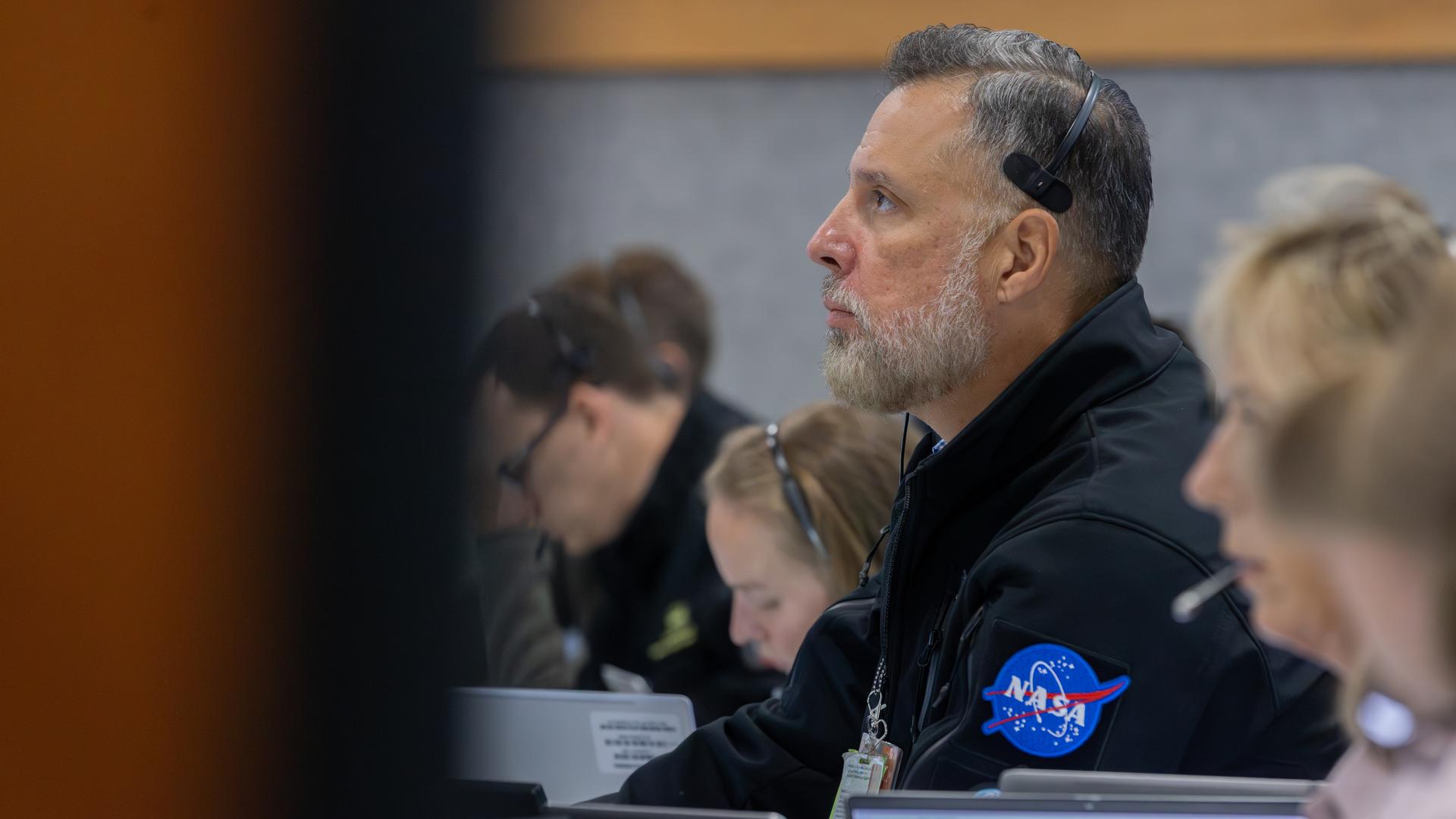
Carlos Moonge, branch chief of Test, Launch, and Recovery Operations, participates in a cryogenic propellant loading simulation for NASA’s Artemis III mission on Wednesday, Aug. 5, 2026, inside Firing Rooms 1 and 2 of the Rocco A. Petrone Launch Control Center at the agency’s Kennedy Space Center in Florida. Members of NASA’s Exploration Ground Systems team rehearse the steps to load the super-cooled liquid hydrogen and liquid oxygen into the SLS (Space Launch System) rocket core stage, a process that starts several hours before liftoff for the Artemis III mission. Artemis III will carry out a series of objectives in low Earth orbit designed to demonstrate critical systems needed for future lunar landings, beginning with Artemis IV.
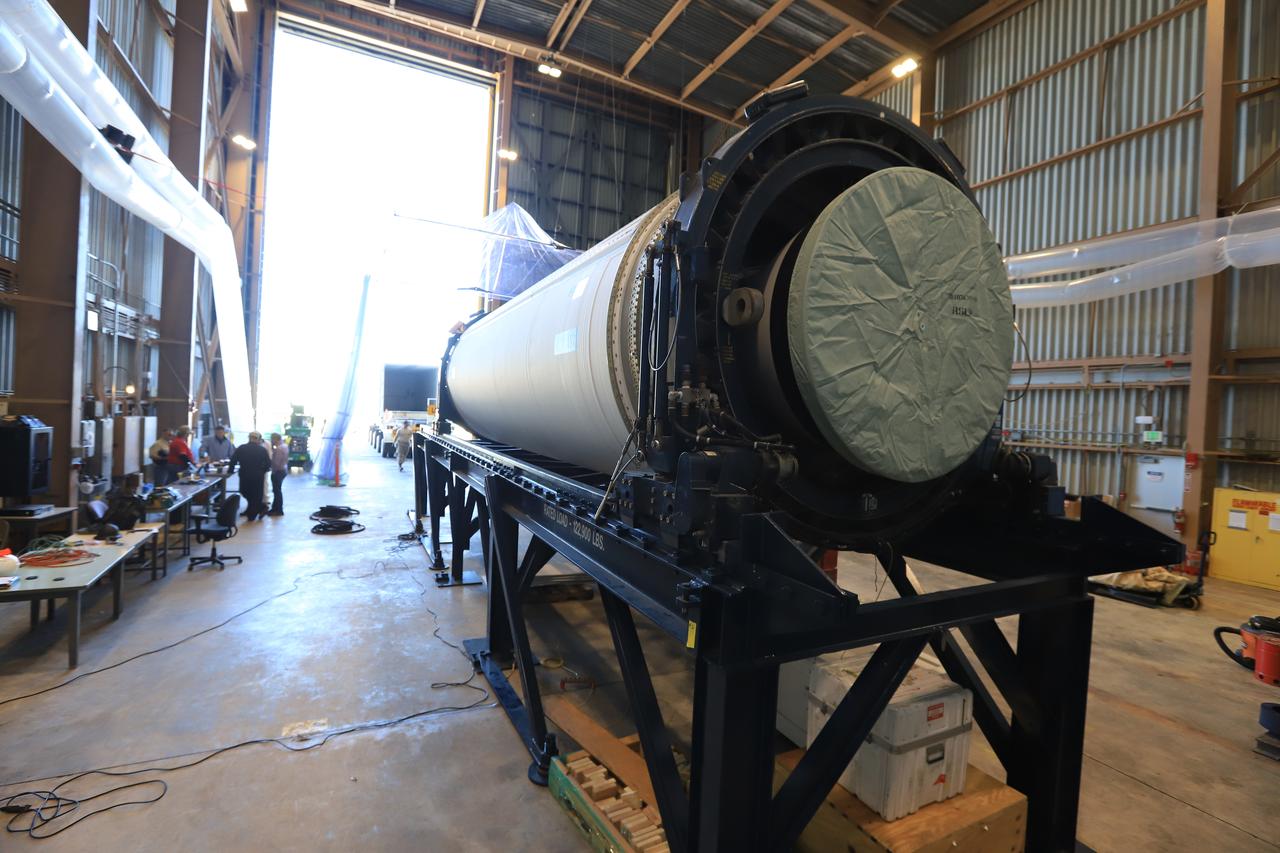
The Northrup Grumman SR118 for Ascent Abort-2 (AA-2) which is loaded with propellants moves from the Launch Abort System Facility (LASF) to the Rotation Protection and Surge Facility at Kennedy Space Center for continued flight processing on Jan. 29, 2019.
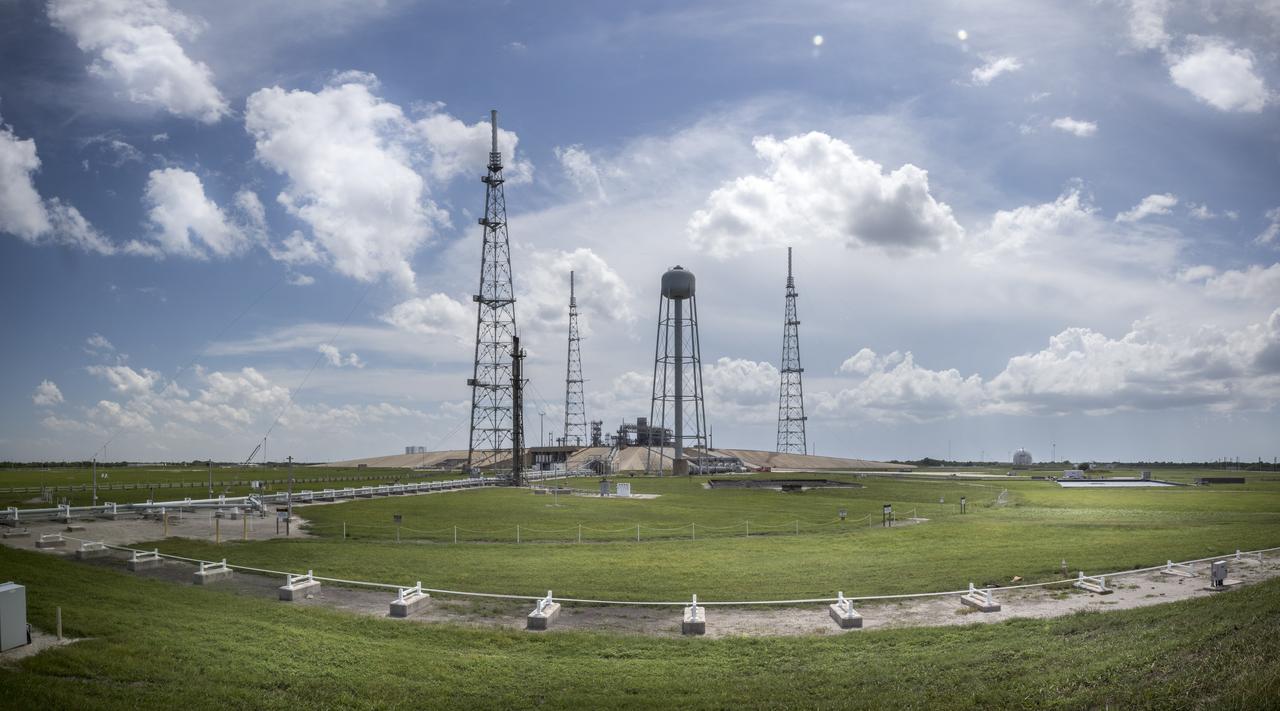
A full view of Launch Pad 39B at NASA's Kennedy Space Center in Florida on July 26, 2018. The launch pad has undergone upgrades and modifications to accommodate NASA's Space Launch System and Orion spacecraft for Exploration Mission-1 and other deep space missions. New heat-resistant bricks have been installed on the walls and a new flame deflector is in place. In view are the three lightning protection system towers and water tank. The clean pad concept is designed to support NASA and commercial launch providers at the multi-user spaceport.
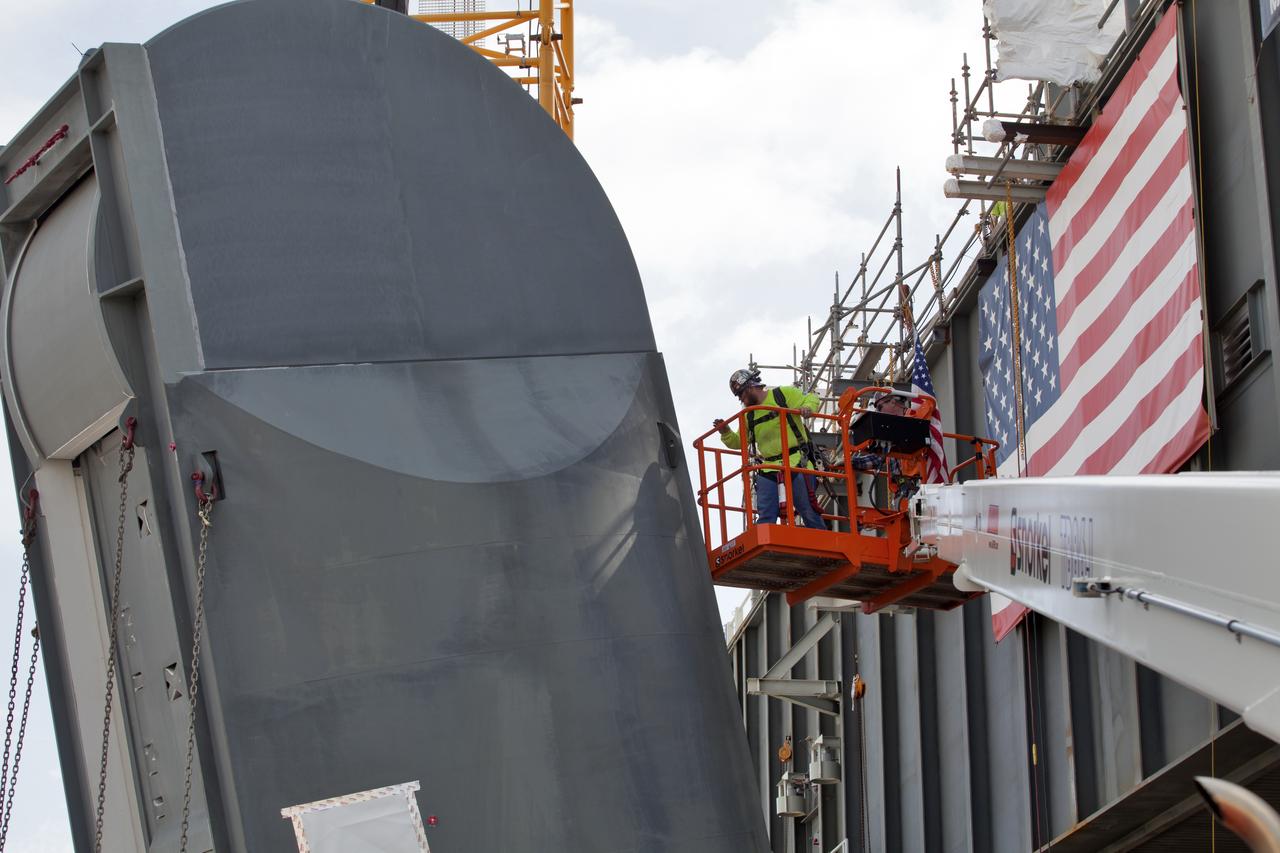
Preparations are underway to install the second of two Tail Service Mast Umbilicals on the 0-level deck of the mobile launcher on July 27, at NASA's Kennedy Space Center in Florida. The 35-foot-tall umbilical will connect to NASA's Space Launch System (SLS) rocket core stage aft section and provide liquid hydrogen and electrical cable connections to the core stage engine section to support propellant handling during prelaunch operations. The installation brings Exploration Ground Systems one step closer to supporting prelaunch operations for the agency's SLS rocket and Orion spacecraft on Exploration Mission-1 and deep space destinations.
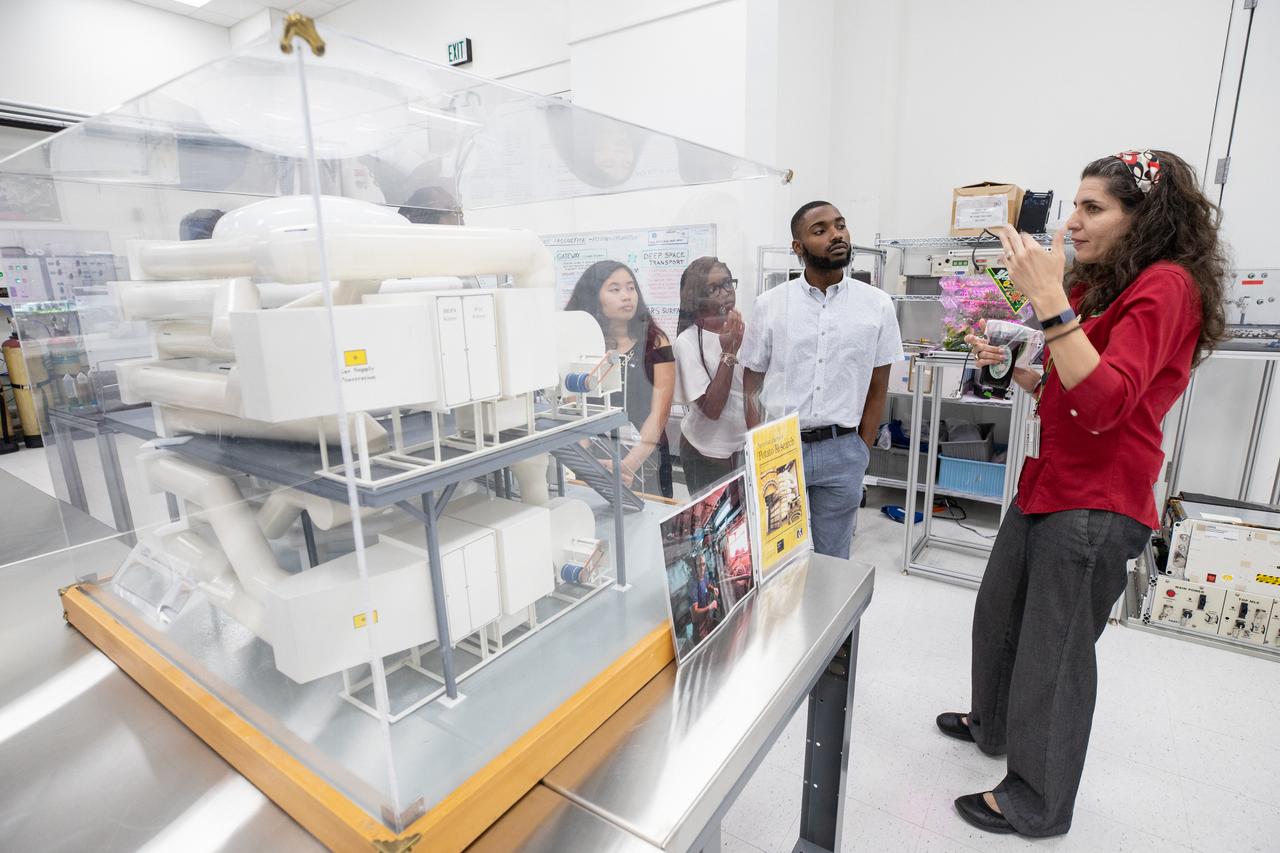
Dr. Gioia Massa, NASA Veggie project lead, addresses Langston University students inside a Space Station Processing Facility lab at Kennedy Space Center on Sept. 18, 2019. The tour of the Florida spaceport was organized by NASA’s Office of Education and Byron Quinn, Ph.D., Langston University director of the Science Research Institute. Students visited SwampWorks, the Neil Armstrong Operations and Checkout Building, the Vehicle Assembly Building, the visitor complex and the Center for Space Education.

A colorful sunrise serves as the backdrop in this view of the mobile launcher at NASA's Kennedy Space Center in Florida. The mobile launcher is equipped with a number of lines, called umbilicals, which will connect to NASA's Space Launch System (SLS) and Orion spacecraft. Exploration Ground Systems is preparing the mobile launcher and ground systems necessary to process and launch the SLS and Orion spacecraft on Exploration Mission-1 and deep space missions.
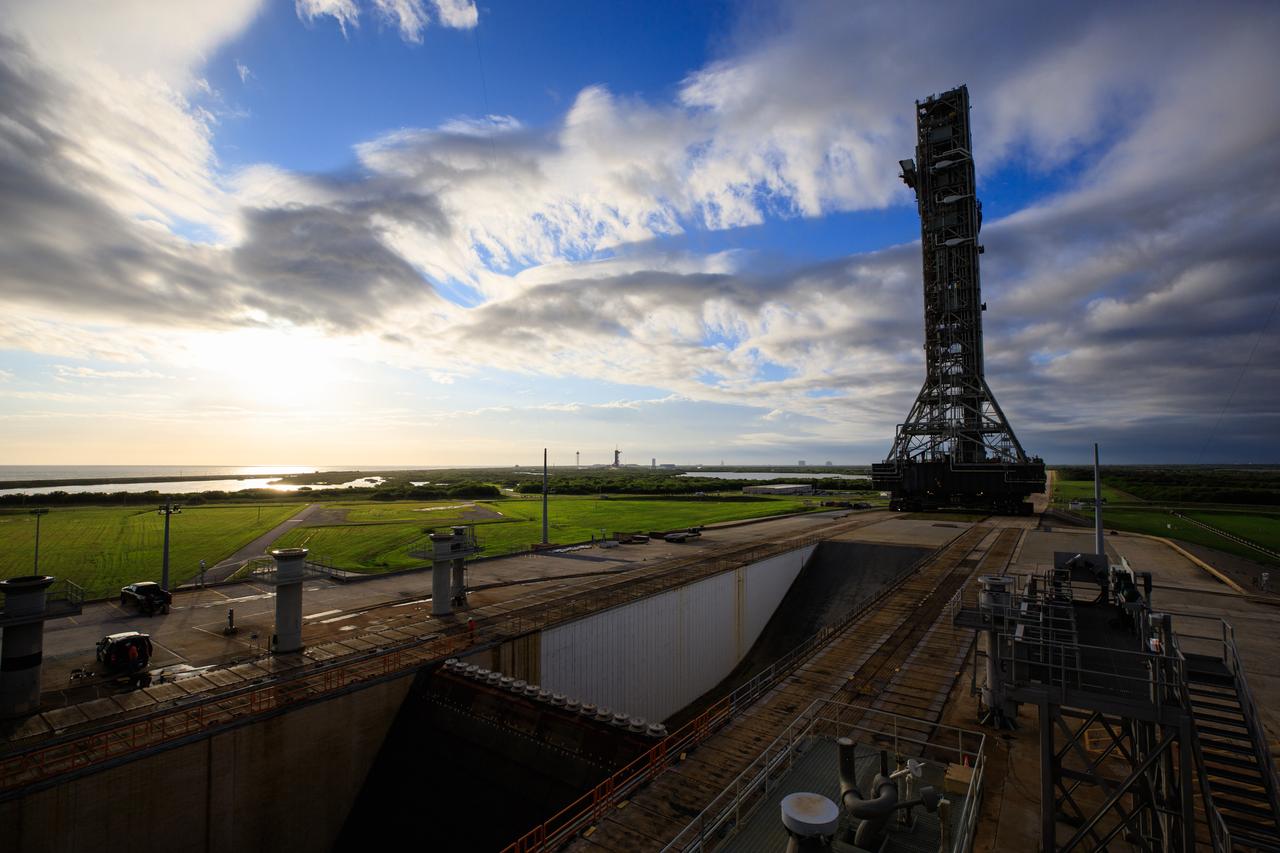
During sunrise on Oct. 30, 2020, the mobile launcher for the Artemis I mission, atop crawler-transporter 2, departs Launch Pad 39B and moves slowly down the ramp on the crawlerway to return to the Vehicle Assembly Building at NASA’s Kennedy Space Center in Florida. In view is the flame trench at the top of the pad. The nearly 400-foot-tall mobile launcher was at the pad for 10 days, while engineers with Exploration Ground Systems and Jacobs performed several tasks, including a timing test to validate the launch team’s countdown timeline, and a thorough, top-to-bottom wash down of the mobile launcher to remove any debris remaining from construction and installation of the umbilical arms. Artemis I will test the Orion spacecraft and Space Launch System as an integrated system ahead of crewed flights to the Moon. Under the Artemis program, NASA will land the first woman and the next man on the Moon in 2024.
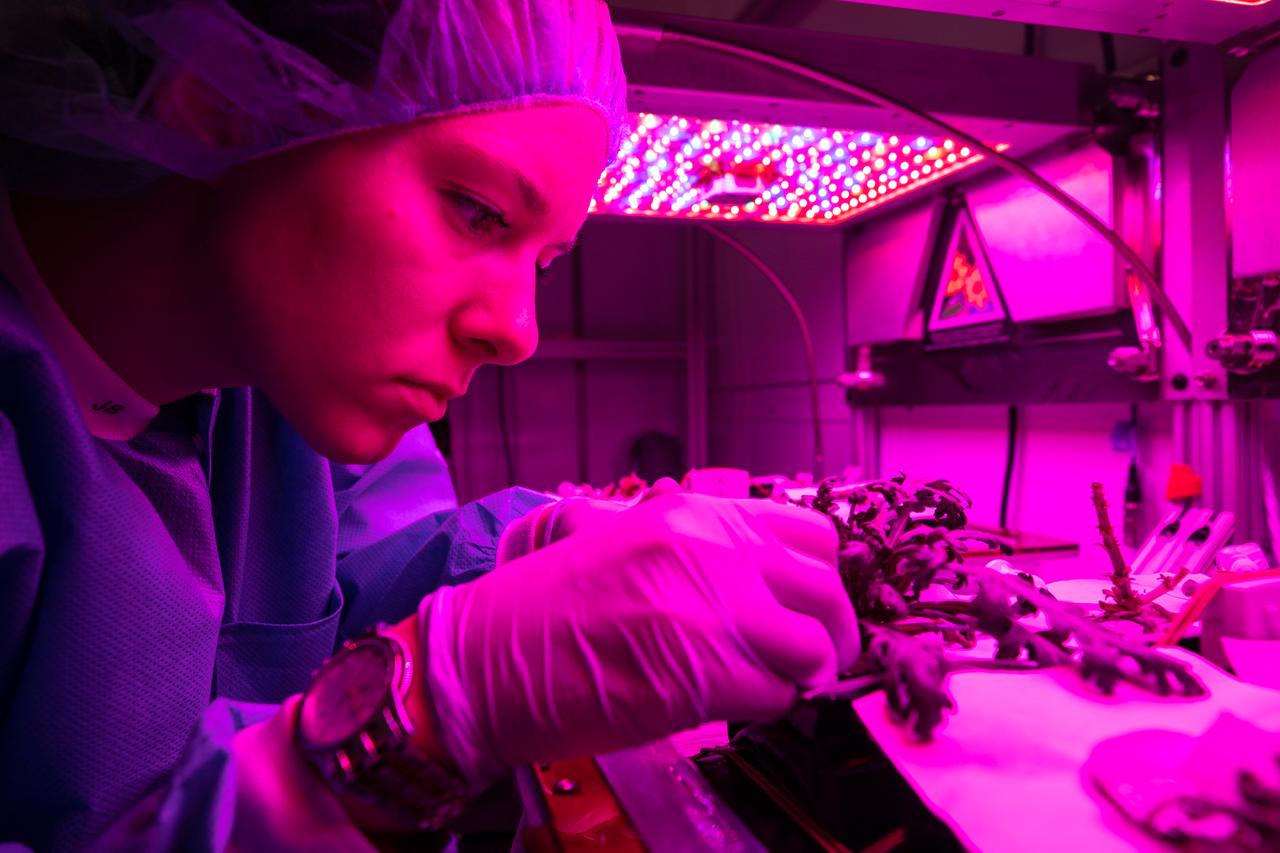
Jess Bunchek, an associate scientist at NASA’s Kennedy Space Center in Florida, harvests plant cultivars inside the Veggie growth chamber in the Space Station Processing Facility on Sept. 30, 2019, for a science verification test (SVT). This SVT will study the potential of three plants – amara mustard, ‘outredgeous’ red romaine lettuce and shungiku, an Asian green comparable to an edible chrysanthemum – to grow in space. All three lettuce plants were grown from seed film, making this the first SVT with this new plant growth material. Earlier this year, the amara mustard and shungiku plants were grown for the first time using seed bags – referred to as pillows – during the Sustained Veggie project, a study funded by the Human Research Program.
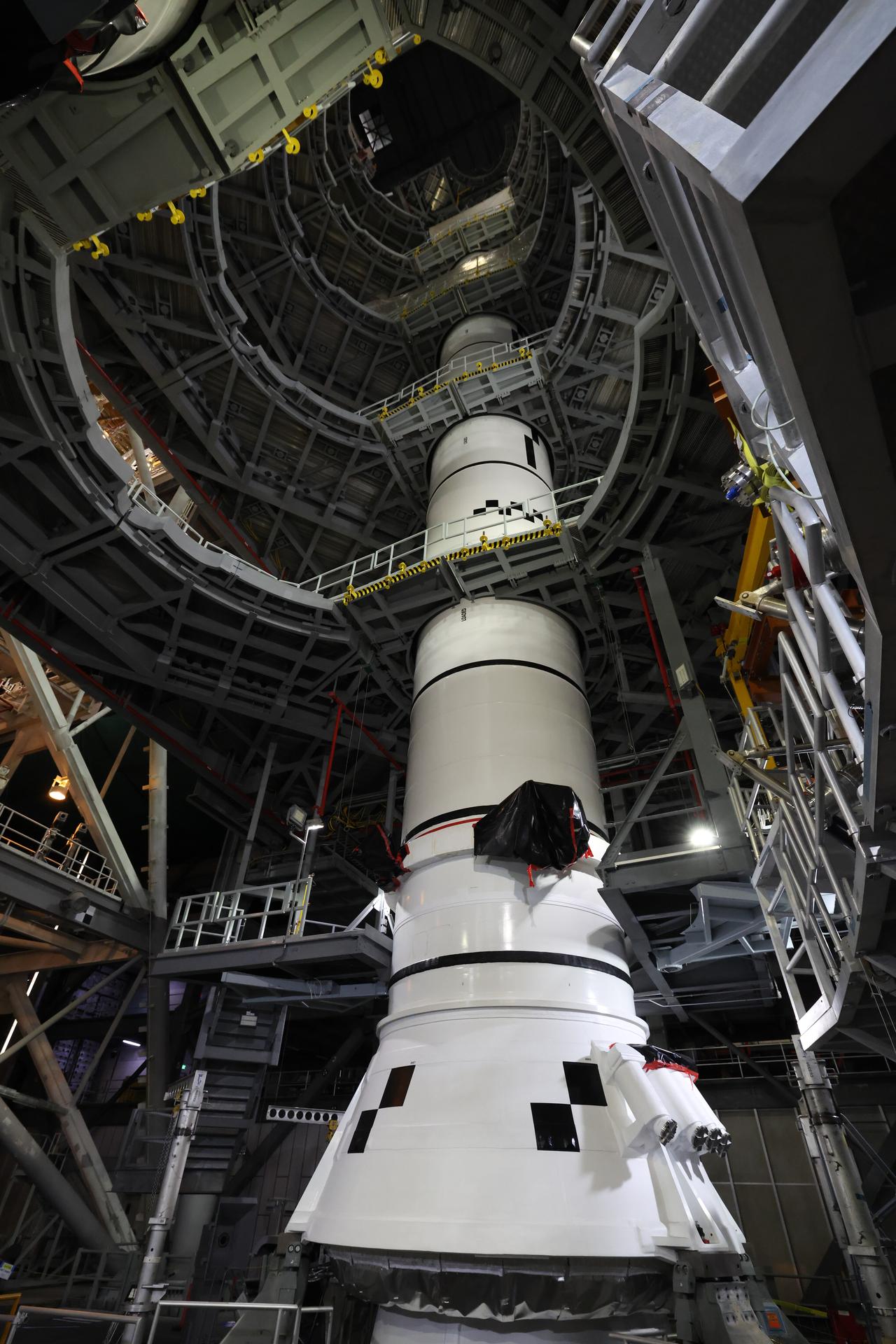
In High Bay 3 of the Vehicle Assembly Building at NASA’s Kennedy Space Center in Florida, the right forward center booster for Artemis III is integrated onto the right booster segments on the mobile launcher for the SLS (Space Launch System) rocket on Friday, Sept. 11, 2026. The twin boosters, comprising of five segments each manufactured by Northrop Grumman in Utah, will provide more than 75 percent of the SLS rocket’s total thrust at launch. The Artemis III mission will launch crew in the Orion spacecraft on top of the SLS rocket to test rendezvous and docking capabilities between Orion and commercial spacecraft needed to land astronauts on the Moon.
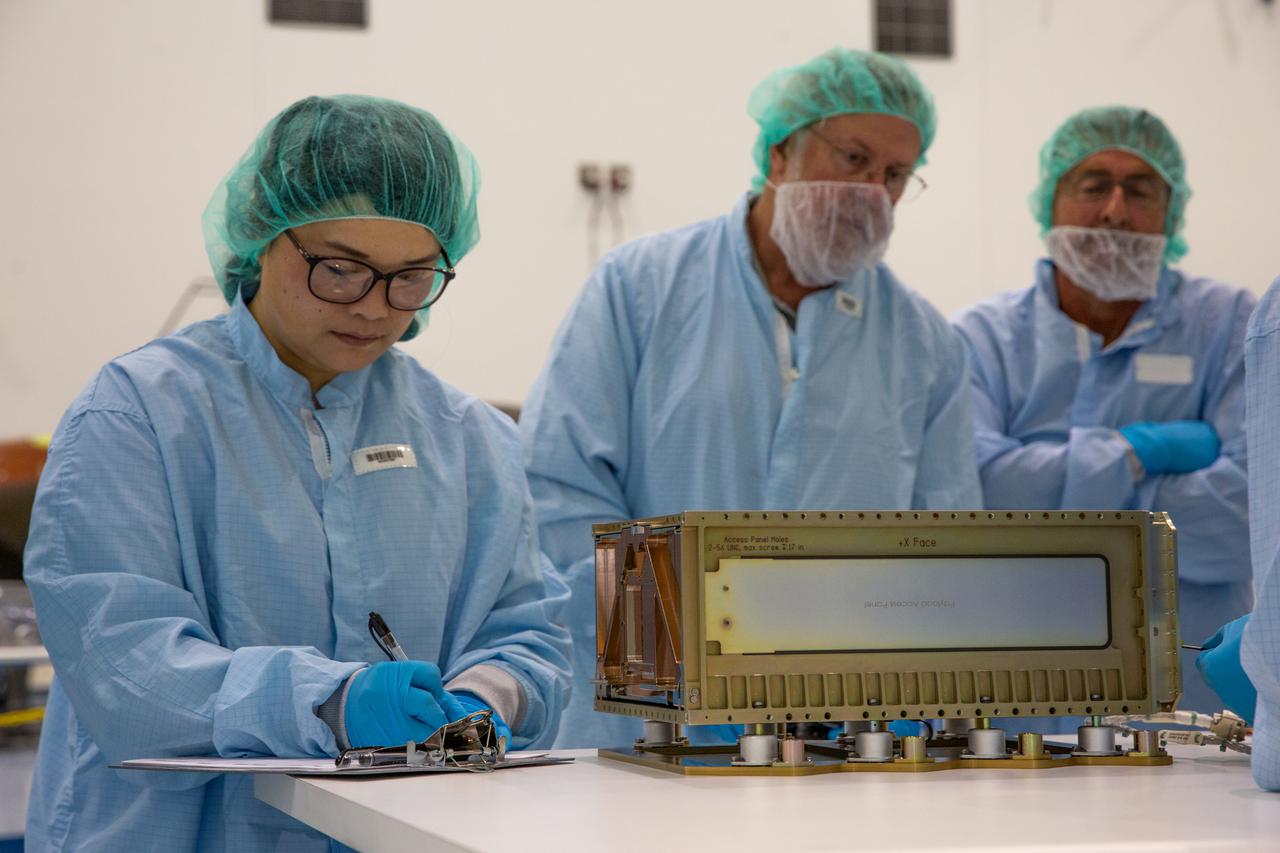
Teams worked on the final processing of their payloads that will fly aboard Artemis I. Housed within the Orion stage adapter, the satellites – called CubeSats – are roughly the size of a large shoe box and weigh no more than 30 pounds. Despite their small size, they enable science and technology experiments that may enhance our understanding of the deep space environment, expand our knowledge of the Moon, and demonstrate new technologies that could be used on future missions.
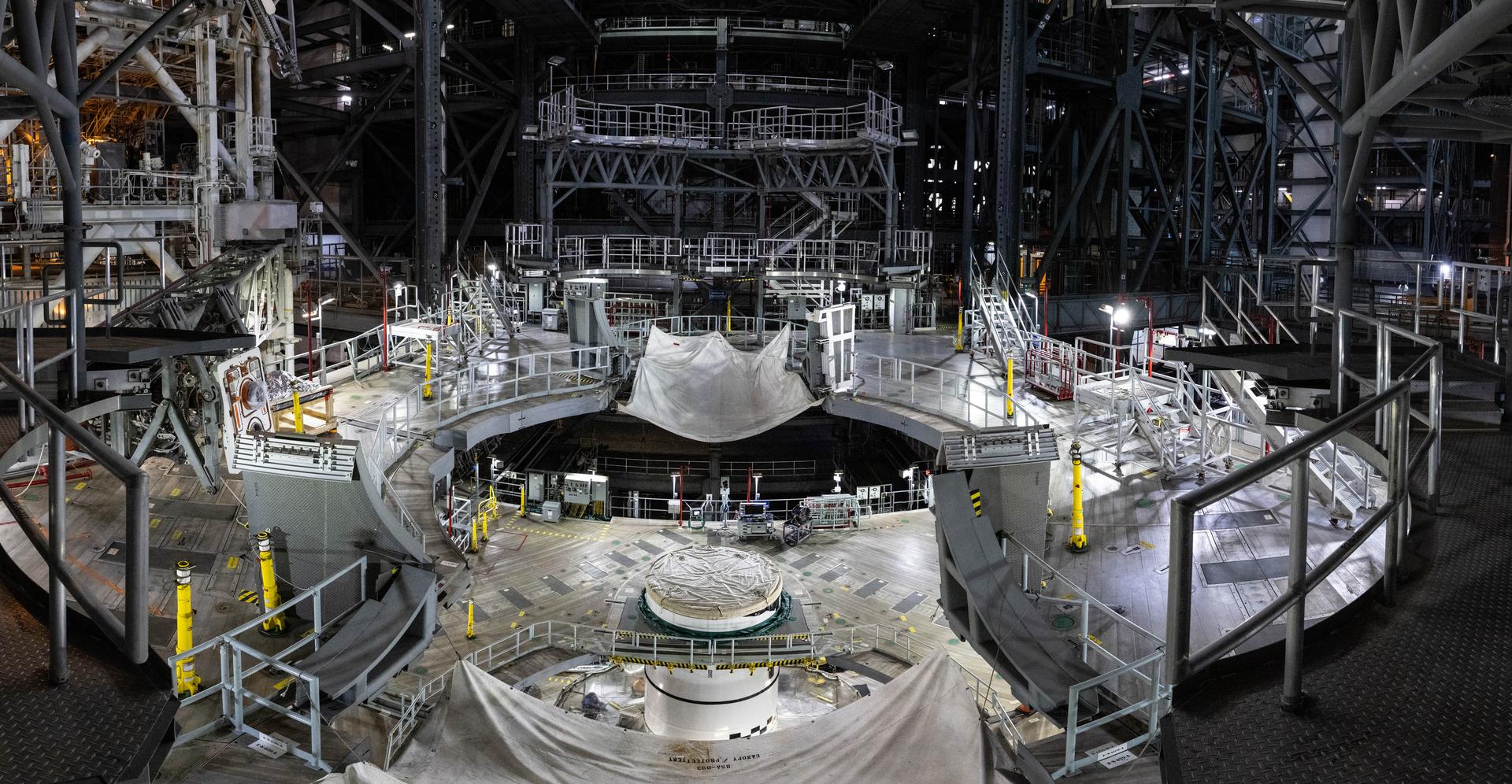
In High Bay 3 of the Vehicle Assembly Building at NASA’s Kennedy Space Center in Florida, the right forward center booster for Artemis III is integrated onto the right booster segments on the mobile launcher for the SLS (Space Launch System) rocket on Friday, Sept. 11, 2026. The twin boosters, comprising of five segments each manufactured by Northrop Grumman in Utah, will provide more than 75 percent of the SLS rocket’s total thrust at launch. The Artemis III mission will launch crew in the Orion spacecraft on top of the SLS rocket to test rendezvous and docking capabilities between Orion and commercial spacecraft needed to land astronauts on the Moon.

A SpaceX Falcon 9 rocket with a Dragon spacecraft atop carrying NASA astronauts Jessica Meir and Jack Hathaway, ESA (European Space Agency) astronaut Sophie Adenot, and Roscosmos cosmonaut Andrey Fedyaev lifts off at 5:15 a.m. EST Friday, Feb. 13, 2026, from Space Launch Complex 40 at Cape Canaveral Space Force Station in Florida to the International Space Station. NASA’s SpaceX Crew-12 is the 12th crew rotation mission of the SpaceX Dragon spacecraft and Falcon 9 rocket to the space station as part of NASA’s Commercial Crew Program.
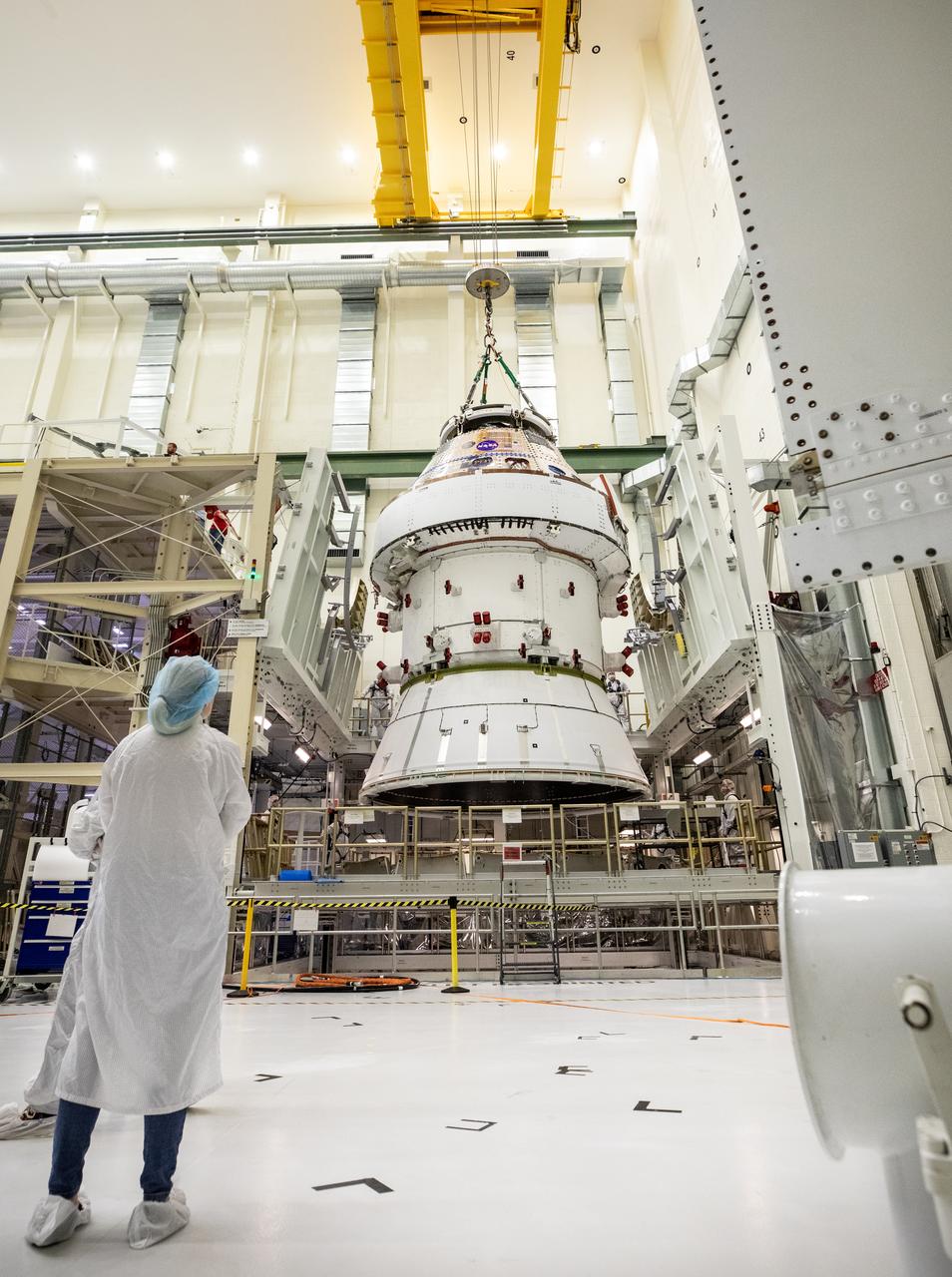
Technicians with NASA and Lockheed Martin operate a 30-ton crane to move NASA’s Artemis II Orion spacecraft out of the Final Assembly and System Testing cell inside the Neil A. Operations and Checkout Building at NASA’s Kennedy Space Center in Florida on Saturday, Feb. 22, 2025. The move prepares for the upcoming installation of four solar array wings and spacecraft adapter jettison fairings for the agency’s first crewed flight test under the Artemis campaign.
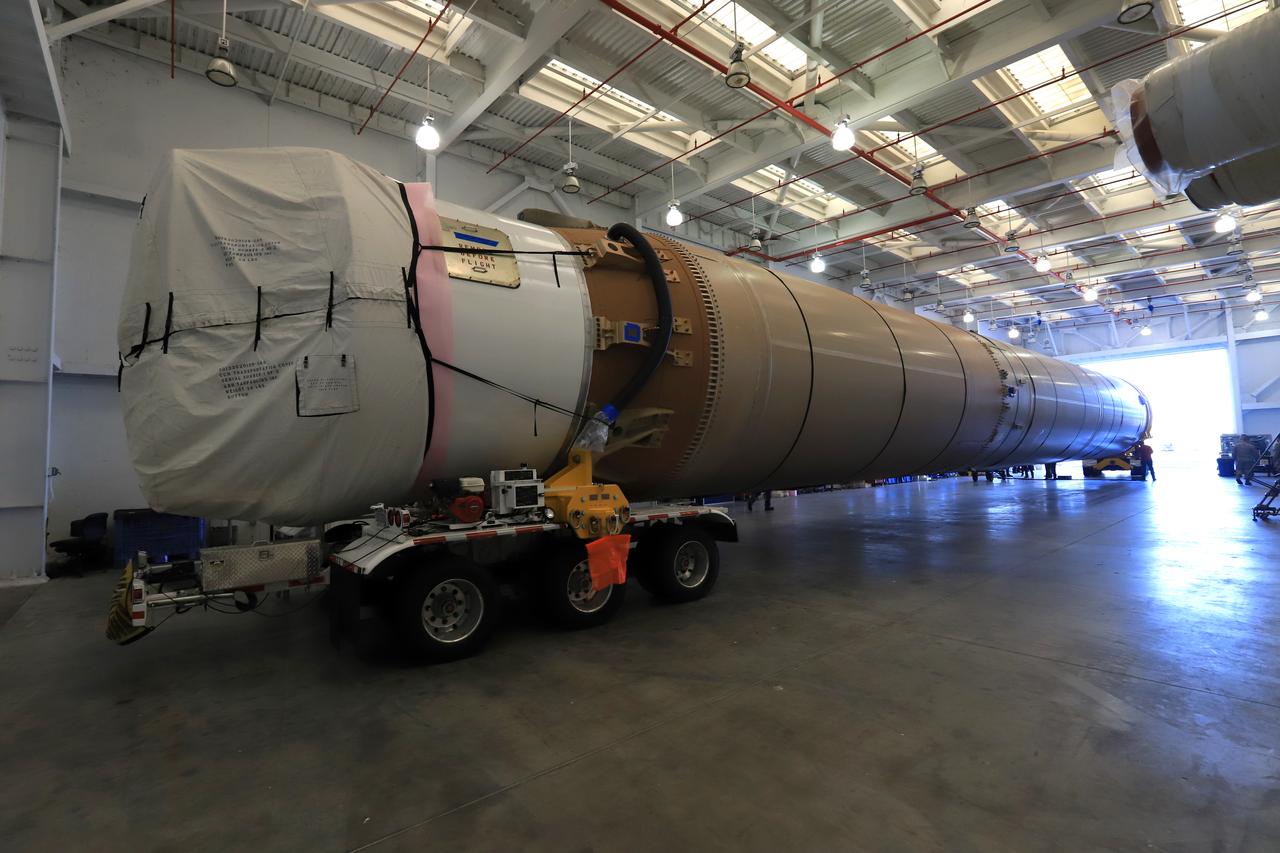
The first stage of the rocket that will launch Boeing's CST-100 Starliner spacecraft to the International Space Station on the company's uncrewed Orbital Flight Test arrives at the United Launch Alliance (ULA) Atlas Spaceflight Operations Center (ASOC) at Cape Canaveral Air Force Station in Florida on Dec. 7, 2018. The ULA Atlas V first stage booster was shipped aboard the company's Mariner cargo vessel from the company's manufacturing plant in Decatur, Alabama. It is the final piece of hardware that ULA needs to launch the first Boeing Starliner. Inside the ASOC, the booster will be inspected and checked out.
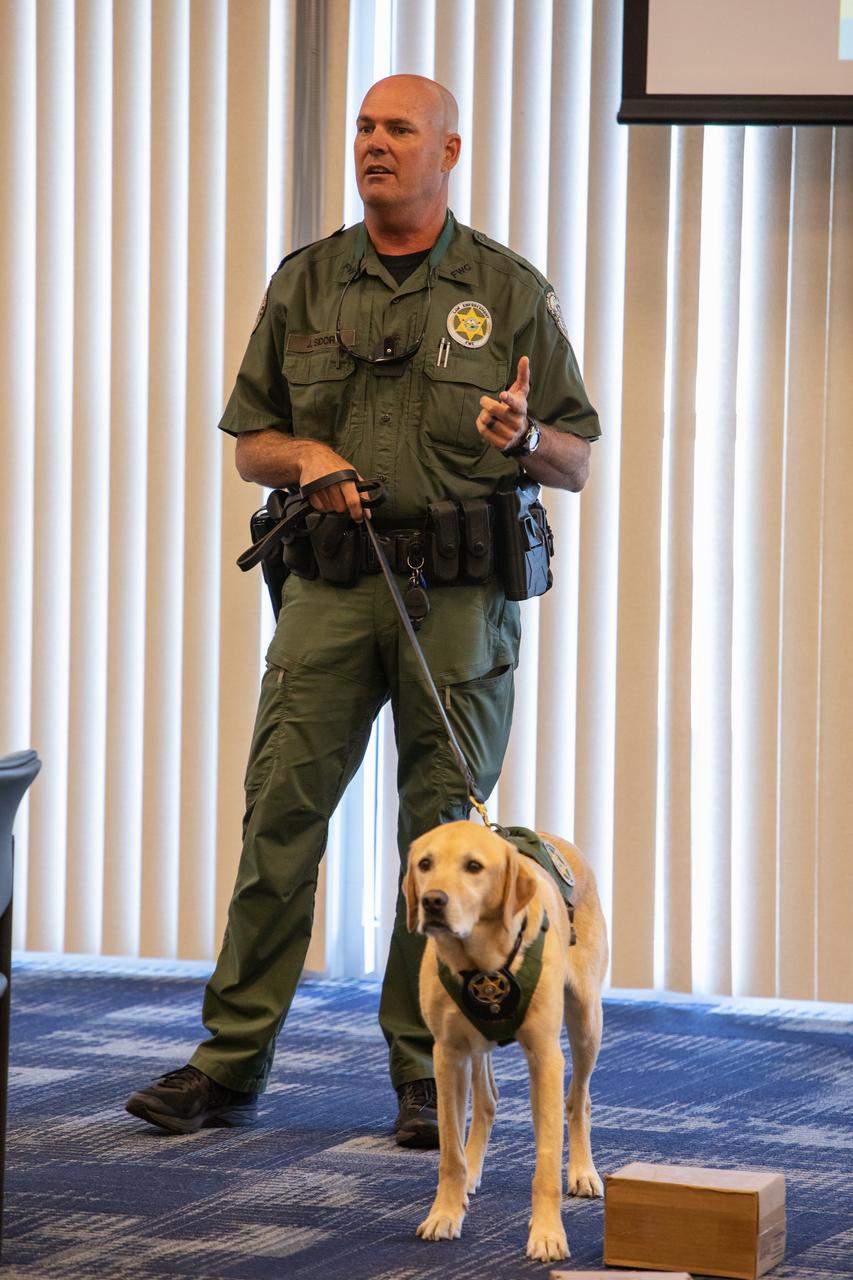
Fish and Wildlife Conservation Commission (FWC) Officer Jeff Sidor presents information on FWC’s Port K9 Program to Kennedy Space Center employees in the Space Station Processing Facility Conference Center on April 23, 2019. Officer Sidor brought a special K9, Harry, to demonstrate how FWC is using specially trained dogs in airports, seaports and mail facilities to detect illegal and invasive fish and wildlife species shipping into Florida. The demonstration involved Harry distinguishing which box, among many, contained a turtle shell. This lunch and learn was available for employees to attend as part of Kennedy’s Earth Day events.
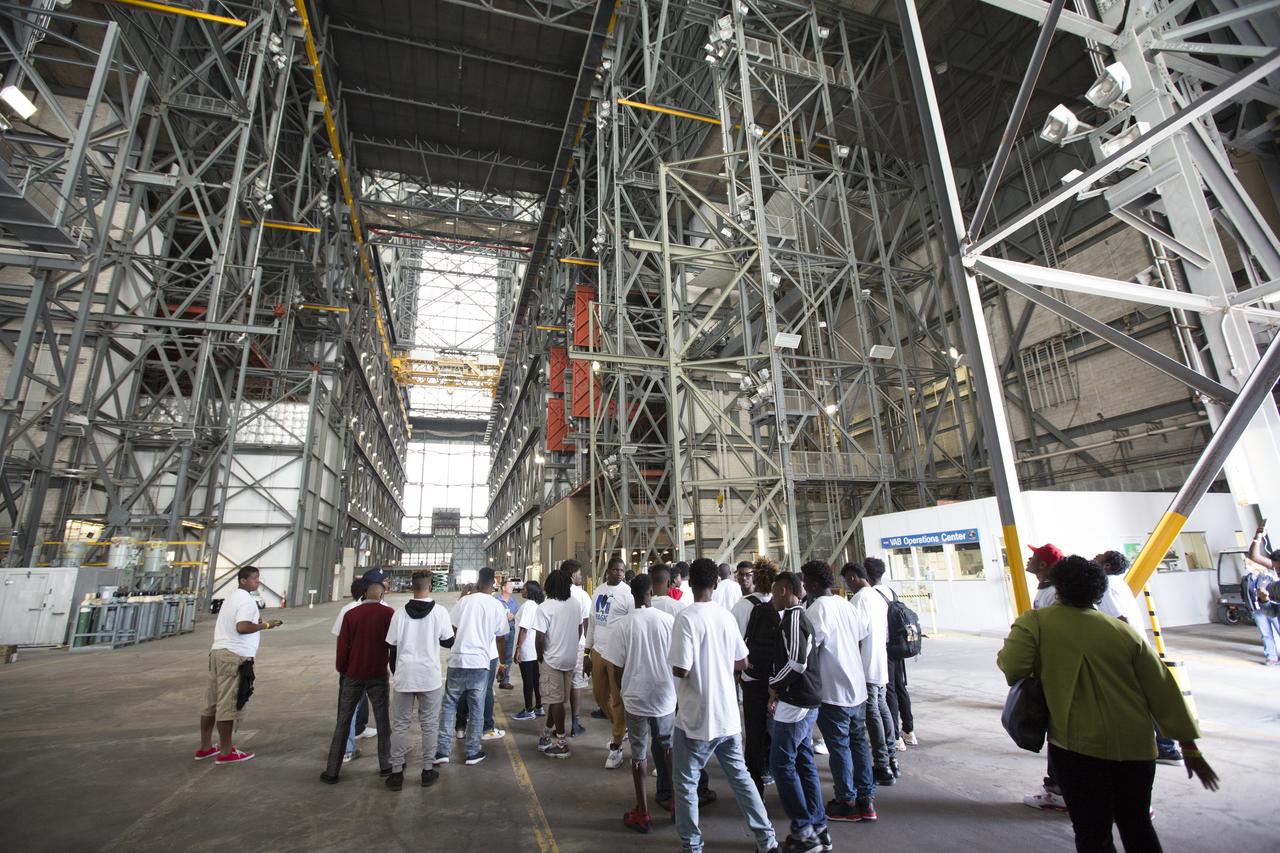
Students in the My Brother’s Keeper program get an inside look at NASA Kennedy Space Center’s iconic Vehicle Assembly Building from the transfer aisle. The Florida spaceport is one of six NASA centers that participated in My Brother’s Keeper National Lab Week. The event is a nationwide effort to bring youth from underrepresented communities into federal labs and centers for hands-on activities, tours and inspirational speakers. Sixty students from the nearby cities of Orlando and Sanford visited Kennedy, where they toured the Vehicle Assembly Building, the Space Station Processing Facility and the center’s innovative Swamp Works Labs. The students also had a chance to meet and ask questions of a panel of subject matter experts from across Kennedy.
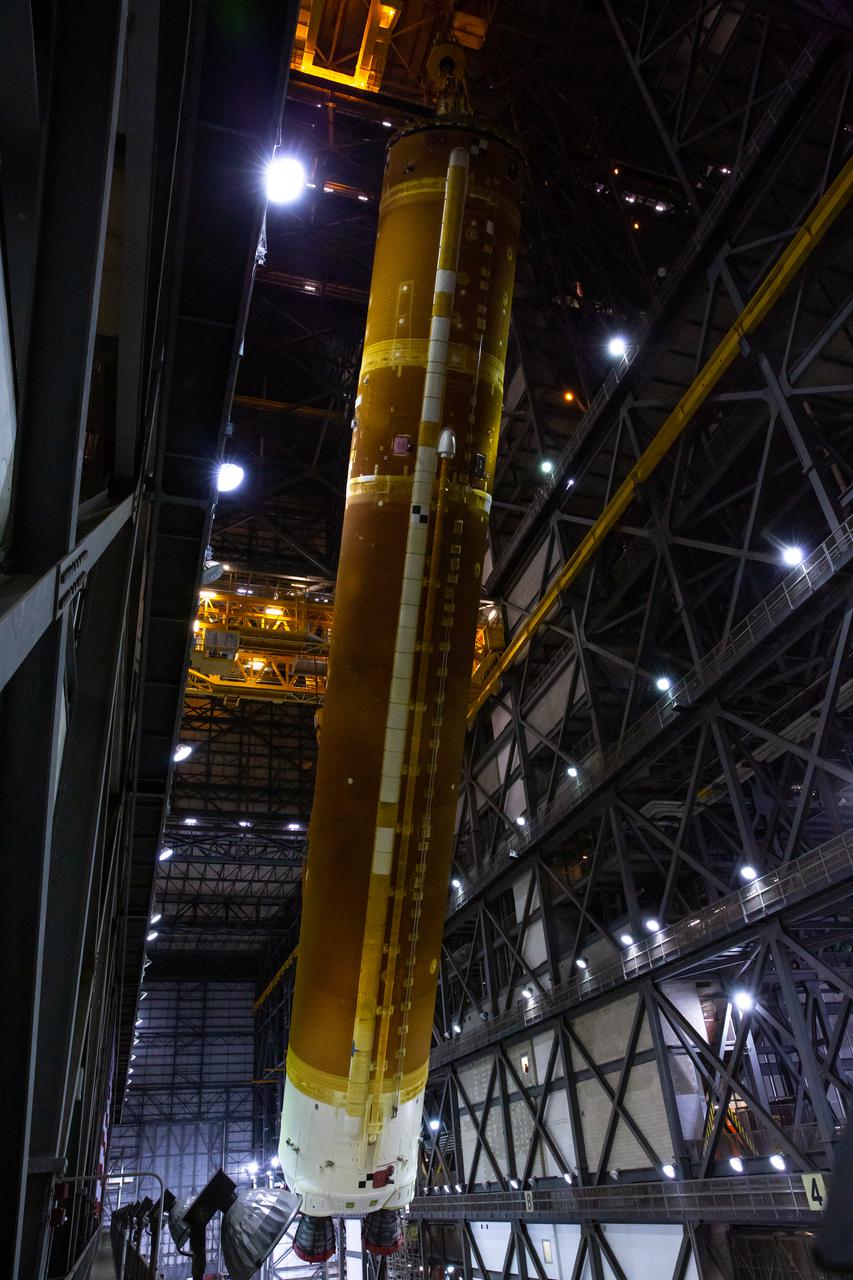
Teams with NASA’s Exploration Ground Systems and contractor Jacobs rotate the Space Launch System (SLS) core stage – the largest part of the rocket – into a vertical position in preparation for its move to High Bay 3 in the Vehicle Assembly Building, where it will be placed atop the mobile launcher in between the twin solid rocket boosters, at NASA’s Kennedy Space Center in Florida on June 11, 2021. The 188,000-pound core stage, with its four RS-25 engines, will provide more than 2 million pounds of thrust during launch and ascent, and coupled with the boosters, will provide more than 8.8 million pounds of thrust to send the Artemis I mission to space. Under the Artemis program, NASA will land the first woman and first person of color on the Moon, as well as establish a sustainable presence on the lunar surface in preparation for human missions to Mars.
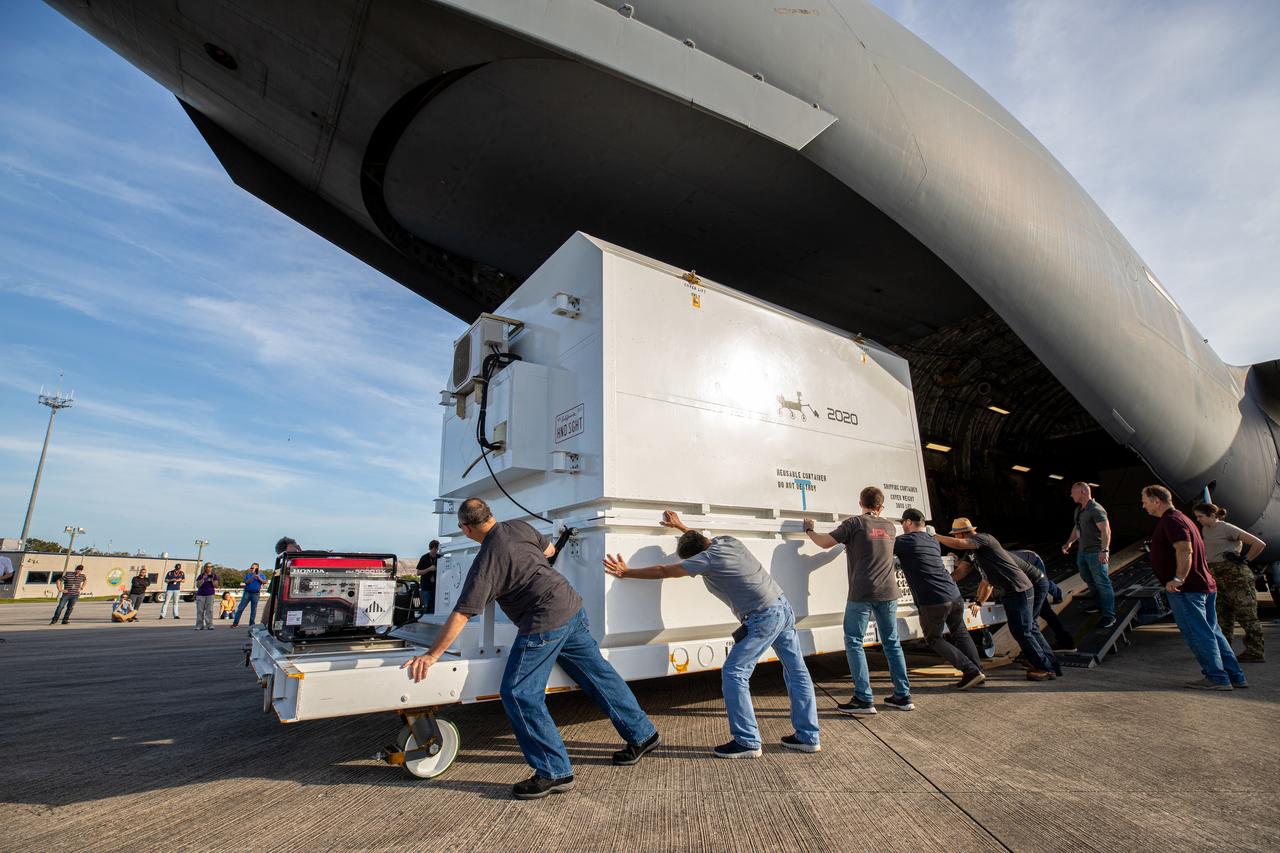
The Mars 2020 rover is offloaded from a C-17 aircraft at the Launch and Landing Facility, formerly known as the Shuttle Landing Facility, at NASA’s Kennedy Space Center on Feb. 12, 2020. The rover made a cross-country trip to the Florida spaceport that started at NASA’s Jet Propulsion Laboratory in Pasadena, California. The mission, targeted for mid-July 2020, will launch aboard an Atlas V 541 rocket from Cape Canaveral Air Force Station. NASA’s Launch Services Program based at Kennedy is managing the launch.
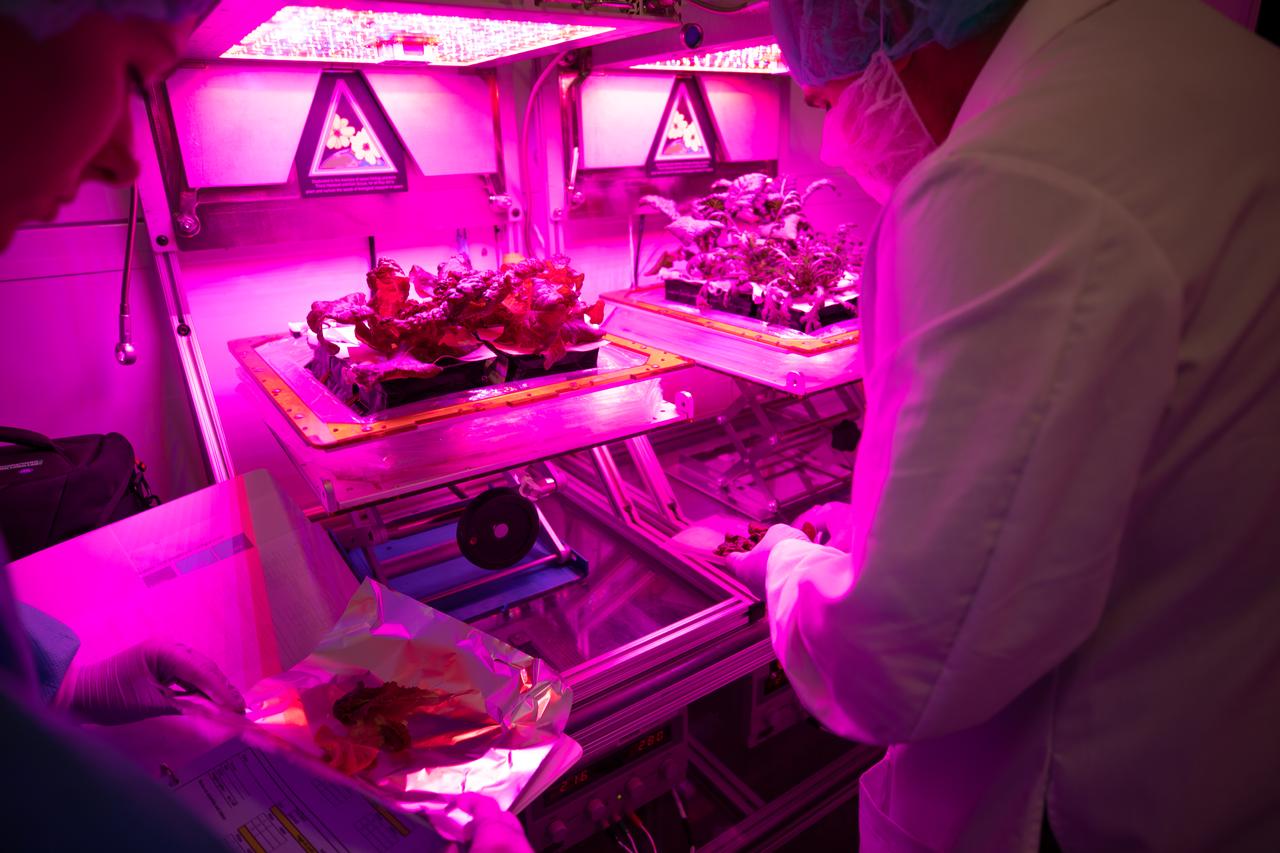
Kennedy Space Center Veggie Project Manager Trent Smith harvests test crops inside the Veggie growth chamber in the Florida spaceport’s Space Station Processing Facility on Sept. 30, 2019, for a science verification test (SVT) to study their potential to grown in space. The harvest included ‘outredgeous’ red romaine lettuce, which has been grown in space before, and two new plant cultivars – amara mustard and shungiku, an Asian green comparable to an edible chrysanthemum. All three lettuce plants were grown from seed film, making this the first SVT with this new plant growth material. Earlier this year, the amara mustard and shungiku plants were grown for the first time using seed bags – referred to as pillows – during the Sustained Veggie project, a study funded by the Human Research Program.
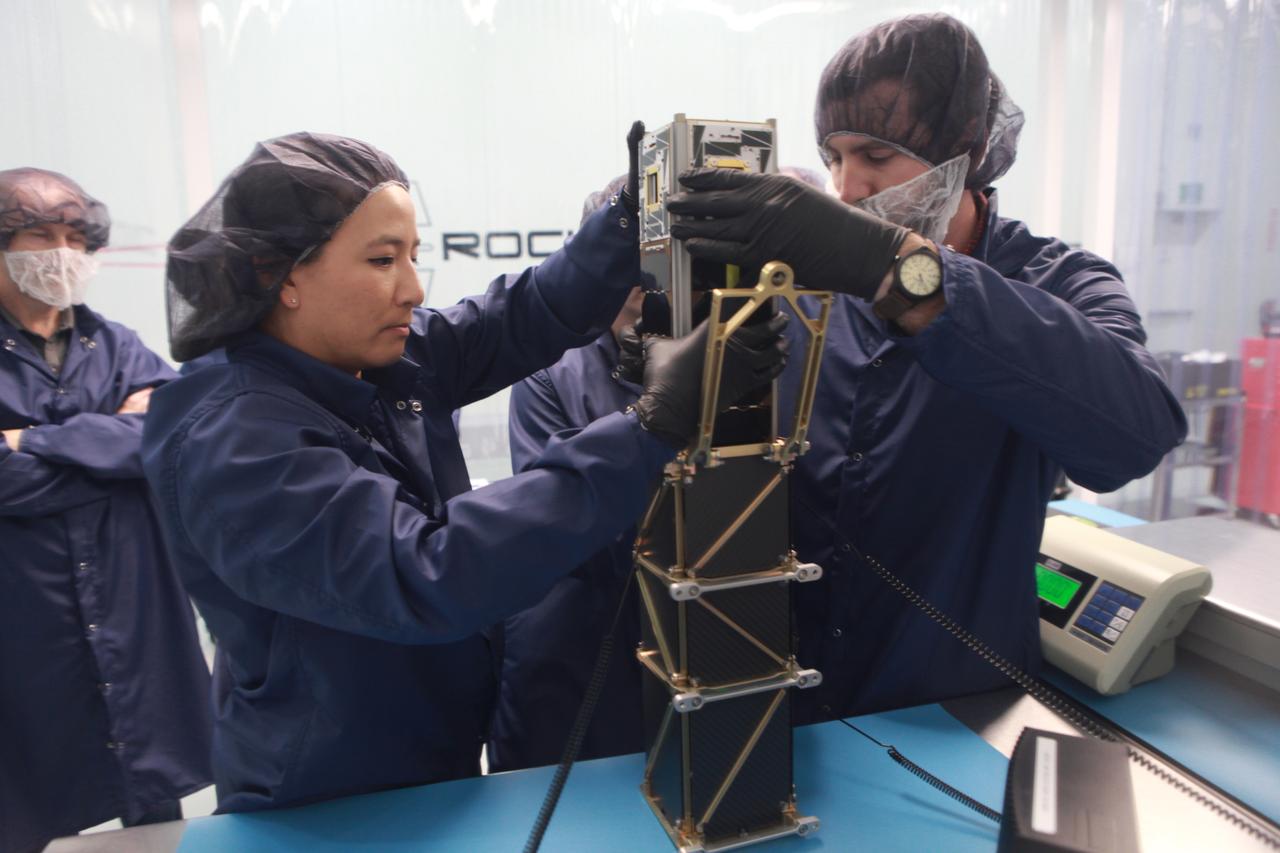
The goal of the CHOMPTT mission is to demonstrate new technologies that could be used for navigation and satellite networking in deep space. For future explorers and colonizers of the Moon or Mars, navigation systems like GPS here on Earth, will be essential. The key idea behind CHOMPTT is to use lasers to transfer time code data over long distances instead of radio waves. Because lasers can be more tightly beamed compared to radio waves, more of the transmitted energy reaches its intended target, making them more power-efficient. CHOMPTT takes advantage of this and of new miniature but very stable atomic clocks to produce a timing system with performance similar to that of GPS, but in a very compact and power efficient form factor. We will use a pulsed laser system, located at the Kennedy Space Center that will be synchronized with an atomic clock. Laser pulses will propagate from the ground to the orbiting CHOMPTT CubeSat and back. By precisely measuring the time of emission and detection of these pulses on the ground and in space we can calculate the time discrepancy between the ground atomic clock and the atomic clock on CHOMPTT. Our goal is to do this with an accuracy of 0.2 billionths of a second, or the time it takes light to travel just 6 centimeters. In the future, we envision using this technology on constellations or swarms of small satellites, for example orbiting the Moon, to equip them with precision navigation, networking, and ranging capabilities. CHOMPTT is a collaboration between the University of Florida and the NASA Ames Research Center. The CHOMPTT precision timing payload was designed and built by the Precision Space Systems Lab at the University of Florida, while the 3U CubeSat bus that has prior flight heritage, was provided by NASA Ames. The CHOMPTT mission has been funded by the Air Force Research Lab and by NASA.
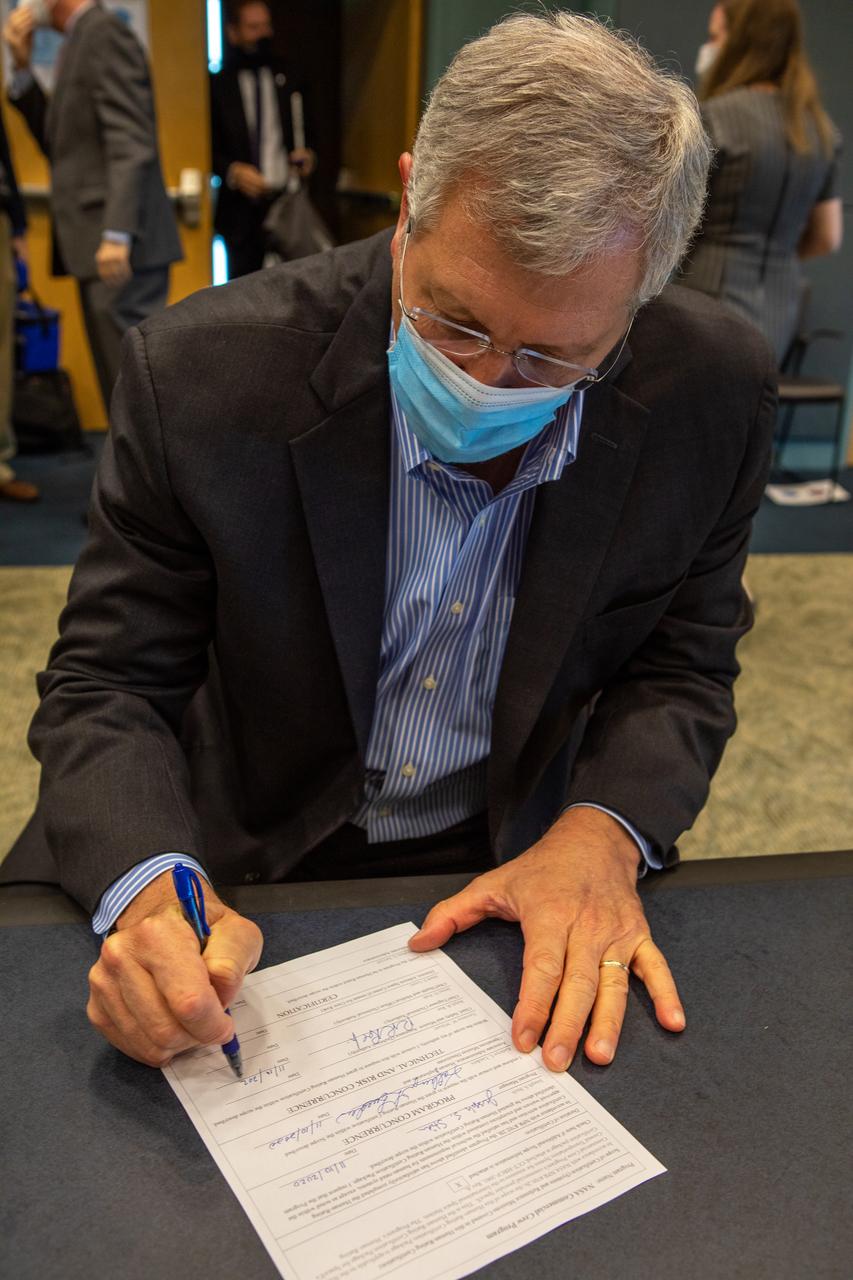
NASA Chief Engineer Ralph Roe signs the Human Rating Certification Plan for SpaceX’s crew transportation system, officially certifying the first commercial spacecraft system in history capable of transporting humans to and from the International Space Station as part of the agency’s Commercial Crew Program. The signing occurred during the Flight Readiness Review (FRR) for the NASA’s SpaceX Crew-1 mission at Kennedy Space Center in Florida on Nov. 10, 2020. The FRR focuses on the preparedness of SpaceX’s crew transportation system, the International Space Station, and its international partners to support the flight, and the certification of flight readiness. Crew-1 is the first regular crew mission of a U.S. commercial spacecraft with astronauts to the International Space Station as part of NASA’s Commercial Crew Program. The Crew Dragon Resilience capsule will launch atop a Falcon 9 rocket from Launch Complex 39A carrying NASA astronauts Michael Hopkins, Victor Glover, Shannon Walker and Japan Aerospace Exploration Agency (JAXA) astronaut Soichi Noguchi to the space station for a six-month science mission.
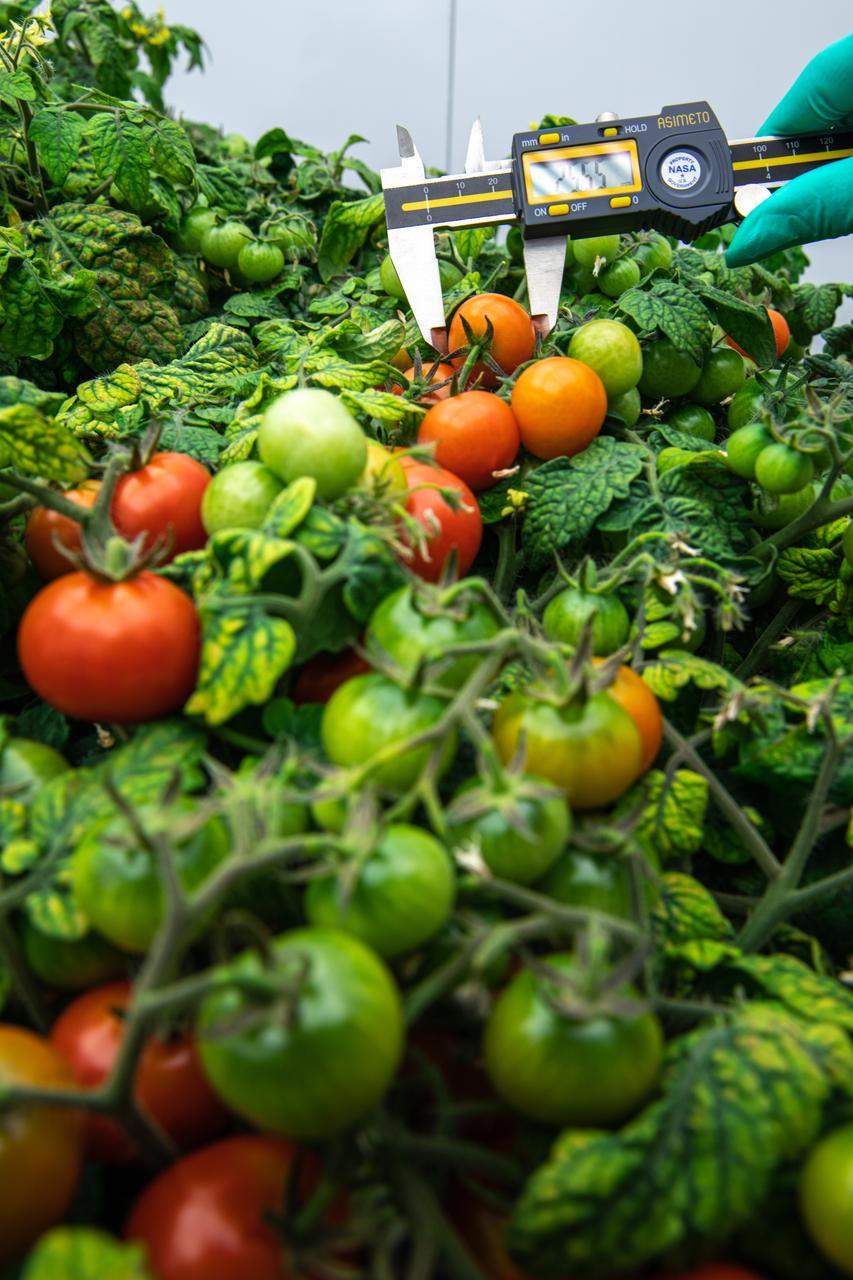
Lashelle Spencer, plant scientist with the Laboratory Support Services and Operations (LASSO) contract at NASA’s Kennedy Space Center in Florida, takes measurements on ‘Red Robin’ dwarf tomato plants, Jan. 10, 2020, inside a laboratory in the spaceport’s Space Station Processing Facility. The tomatoes are growing from seeds that have been exposed to simulated solar particle radiation. The plants’ edible mass and nutrients will be measured and compared to those of a control crop, grown from non-irradiated seeds. The project was designed to confirm that nutritious, high-quality produce can be reliably grown in deep space, or to provide a baseline to guide development of countermeasures to protect future crop foods from radiation during missions beyond low-Earth orbit. The investigation on space radiation impact on seeds and crop production also will be carried on the Materials International Space Station Experiment (MISSE) platform outside the station, supported NASA’s Space Technology Mission Directorate and the Space Biology Program, and potentially on future beyond-low-Earth platforms.
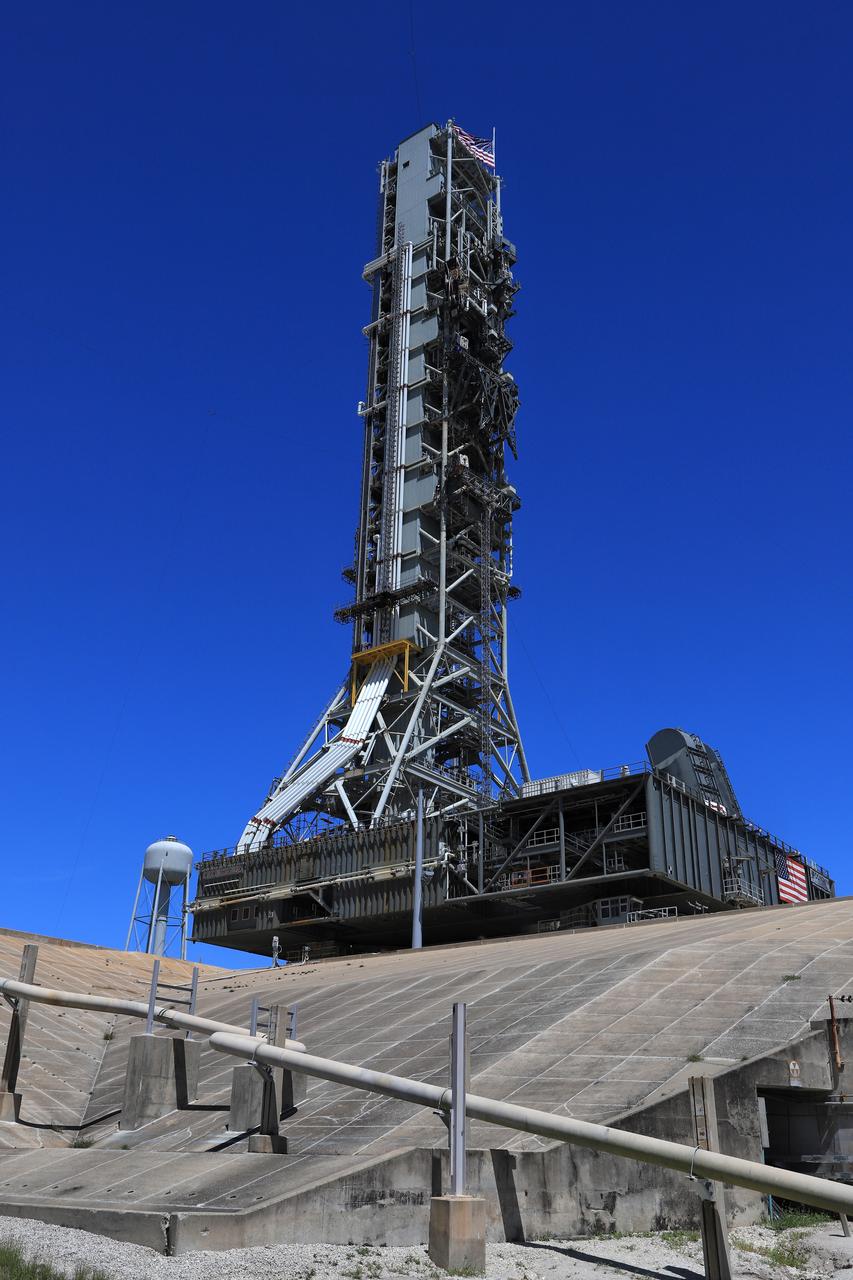
NASA's mobile launcher (ML) atop crawler-transporter 2 arrives at the top of Launch Pad 39B on Aug. 31, 2018, at the agency's Kennedy Space Center in Florida. The ML will undergo a fit check, followed by several days of systems testing. The 380-foot-tall mobile launcher is equipped with the crew access arm and several umbilicals that will provide power, environmental control, pneumatics, communication and electrical connections to NASA's Space Launch System (SLS) and Orion spacecraft. Exploration Ground Systems is preparing the ground systems necessary to launch SLS and Orion on Exploration Mission-1, missions to the Moon and on to Mars.
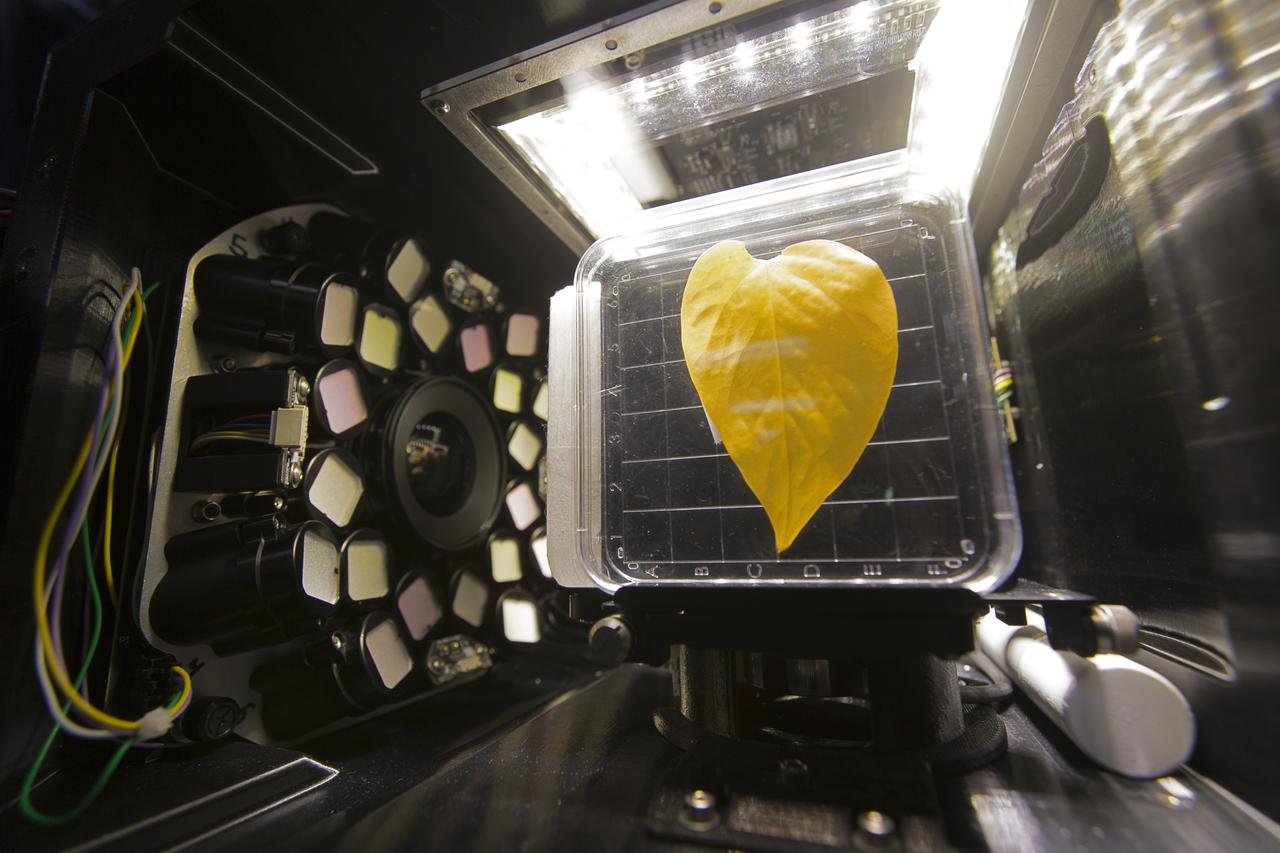
Inside the Spectrum prototype unit, organisms in a Petri plate are exposed to different colors of lighting. The device works by exposing organisms to different colors of fluorescent light while a camera records what's happening with time-lapse photography. Results from the Spectrum project will shed light on which living things are best suited for long-duration flights into deep space.

U.S. Coast Guard Admiral Linda Fagan receives NASA’s Silver Group Achievement Award from NASA’s Kennedy Space Center Director Janet Petro in a ceremony held at Kennedy’s headquarters building on Thursday, March 14, 2024. The Silver Group Achievement Award recognizes the commitment of the U.S. Coast Guard Sector Jacksonville in providing splashdown and recovery support for the safe return of crew and cargo space capsules.
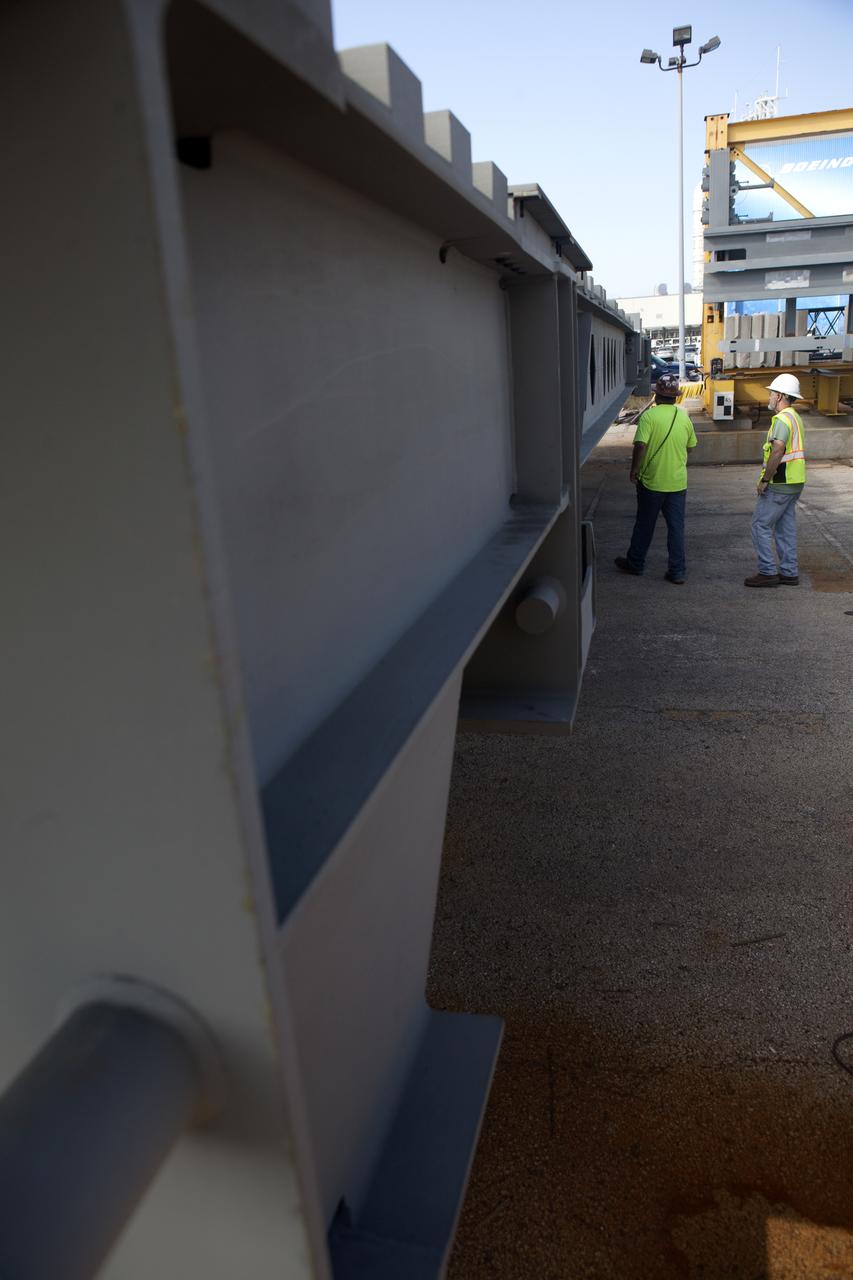
Workers prepare to unload the second half of the A-level work platforms, A north, for NASA's Space Launch System (SLS) rocket, from a heavy load transport truck in a staging area near the Vehicle Assembly Building (VAB) at NASA's Kennedy Space Center in Florida. This is the final platform delivered to Kennedy. The A-level platforms are the topmost platforms for High Bay 3 in the VAB. The Ground Systems Development and Operations Program is overseeing upgrades and modifications to High Bay 3 to support processing of the SLS and Orion spacecraft. A total of 10 levels of new platforms, 20 platform halves altogether, will surround the SLS rocket and Orion spacecraft and provide access for testing and processing.
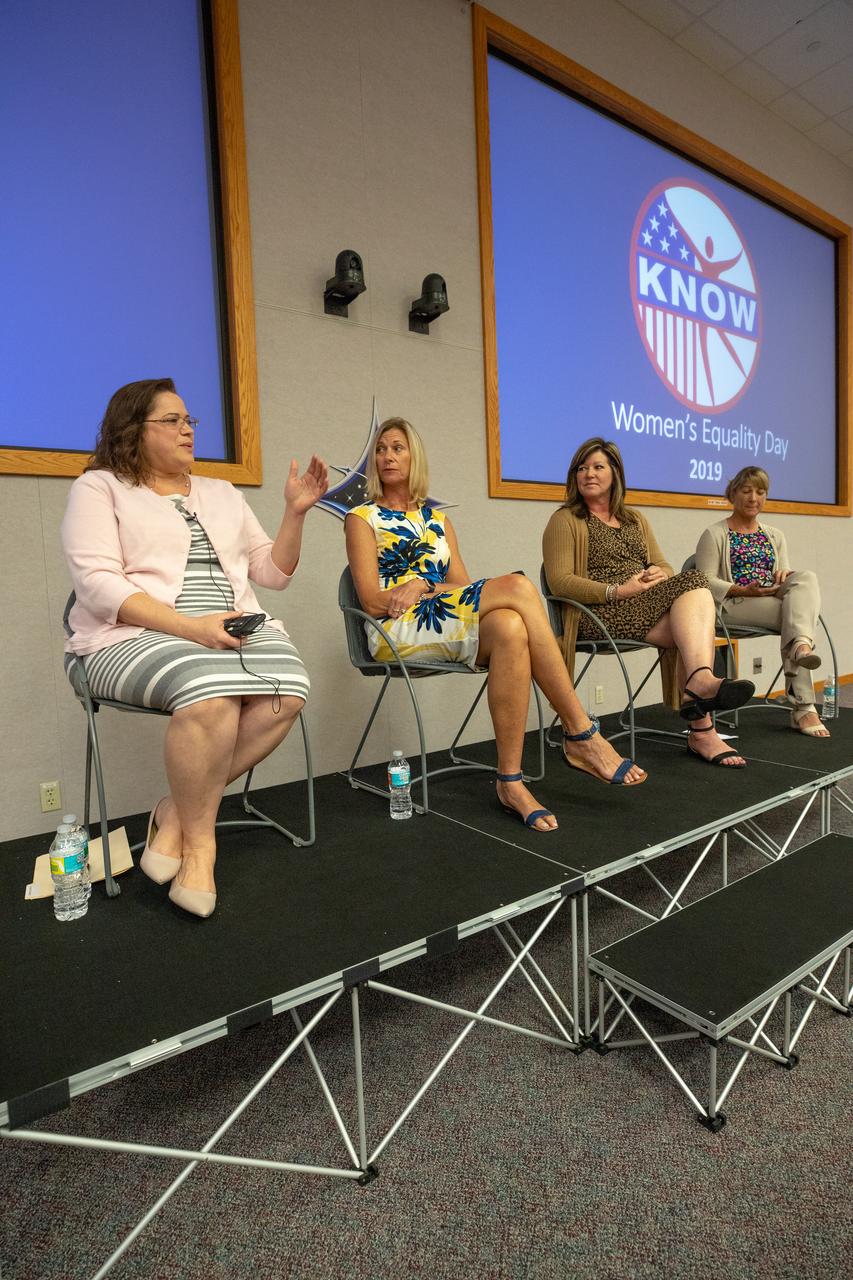
A panel discussion, featuring women in leadership roles at NASA’s Kennedy Space Center in Florida, is held on Aug. 26, 2019, to celebrate Women’s Equality Day. The event, sponsored by the Kennedy Networking Opportunities for Women (KNOW) employee resource group, honored the 100th anniversary of the passing of the 19th amendment guaranteeing all American women the right to vote. Seated from left, are Digna Carballosa, director of the Human Resources Office; Nancy Bray, director of Spaceport Integration and Services; Jennifer Kunz, director of Safety and Mission Assurance; and Amanda Mitskevich, Launch Services Program manager. The purpose of KNOW is to provide focus on issues such as employment, retention, promotion, training, career and personal development, education, and identify and eliminate barriers that hinder the advancement of women in the workforce.
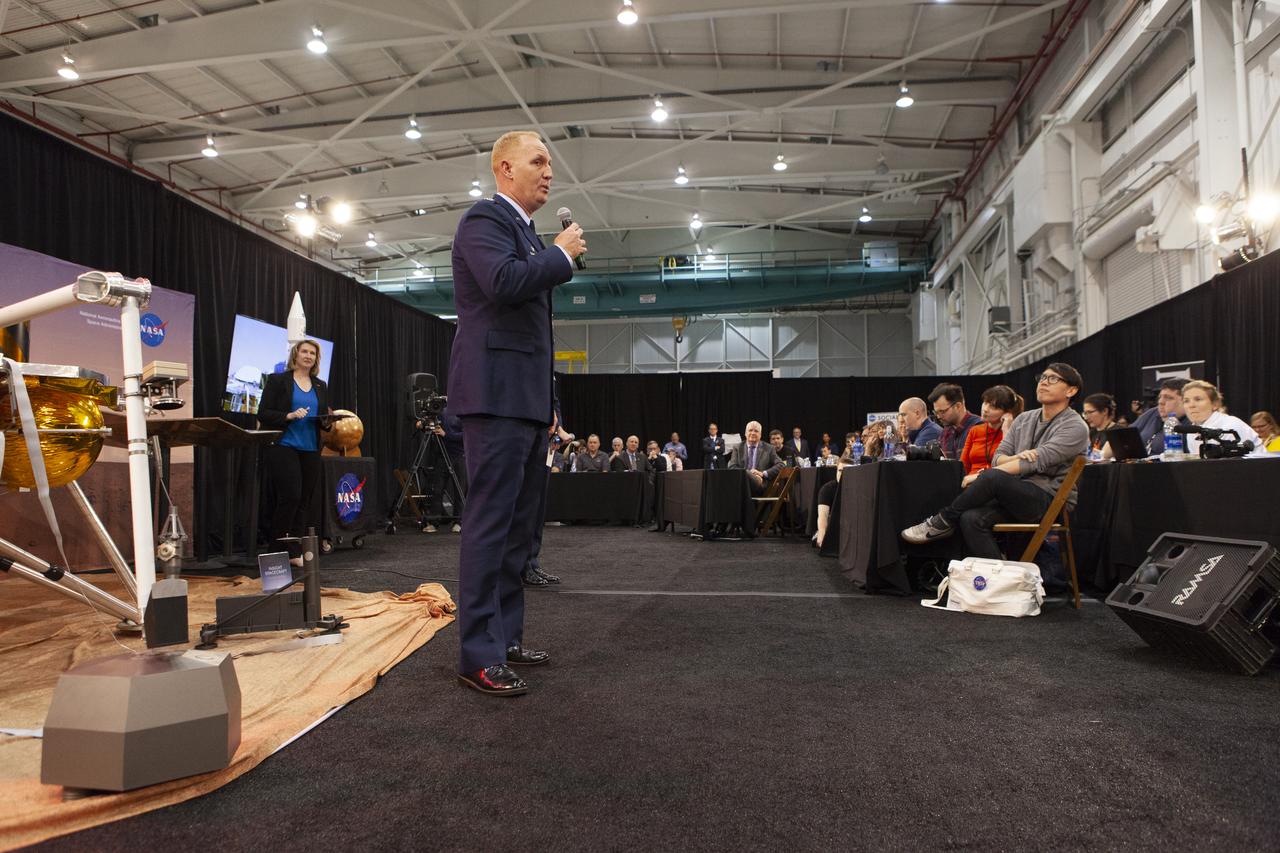
During a prelaunch briefing at Vandenberg Air Force Base in California, Col. Michael Hough, Commander 30th Space Wing, speaks to members of the media. The presentation focused on NASA's Interior Exploration using Seismic Investigations, Geodesy and Heat Transport, or InSight, Mars lander. InSight is scheduled for liftoff May 5, 2018, atop a United Launch Alliance (ULA) Atlas V rocket from Space Launch Complex 3 at Vandenberg. The spacecraft will be the first mission to look deep beneath the Martian surface studying the planet's interior by measuring its heat output and listen for marsquakes.
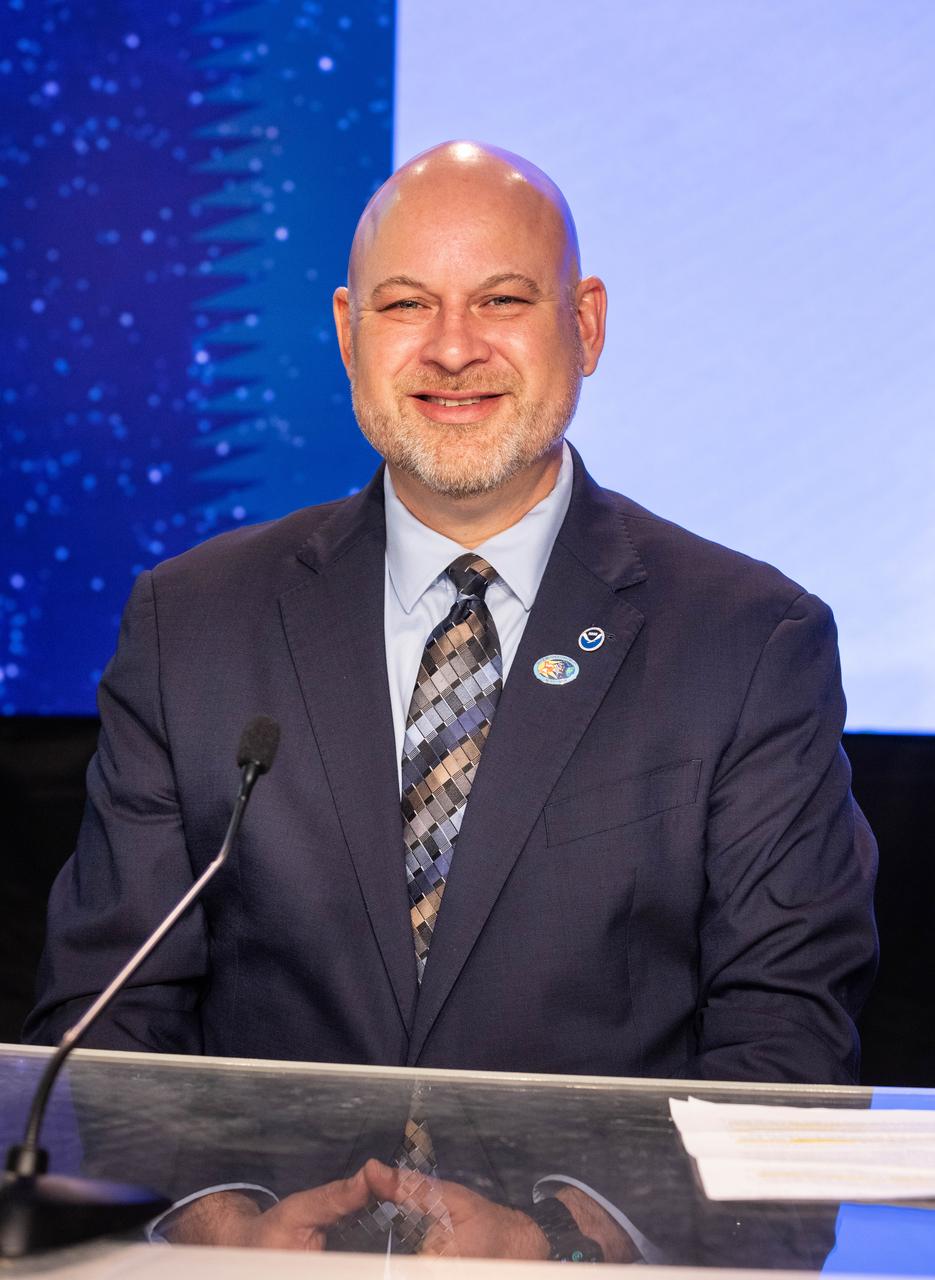
Clinton Wallace, director, National Oceanic and Atmospheric Administration (NOAA) Space Weather Prediction Center, participates in a science briefing on NASA’s IMAP (Interstellar Mapping and Acceleration Probe) mission and its two rideshares – NASA’s exosphere-studying Carruthers Geocorona Observatory and NOAA’s Space Weather Follow On–Lagrange 1 (SWFO-L1) observatory – at the agency’s Kennedy Space Center in Florida on Sunday, Sept. 21, 2025. NASA’s IMAP will use 10 science instruments to study and map the heliosphere, a vast magnetic bubble surrounding the Sun protecting our solar system from radiation incoming from interstellar space. The three missions will orbit the Sun near Lagrange point 1, about one million miles from Earth. Launch is targeted for 7:32 a.m. EDT, Tuesday, Sept. 23, from Launch Complex 39A at NASA Kennedy.
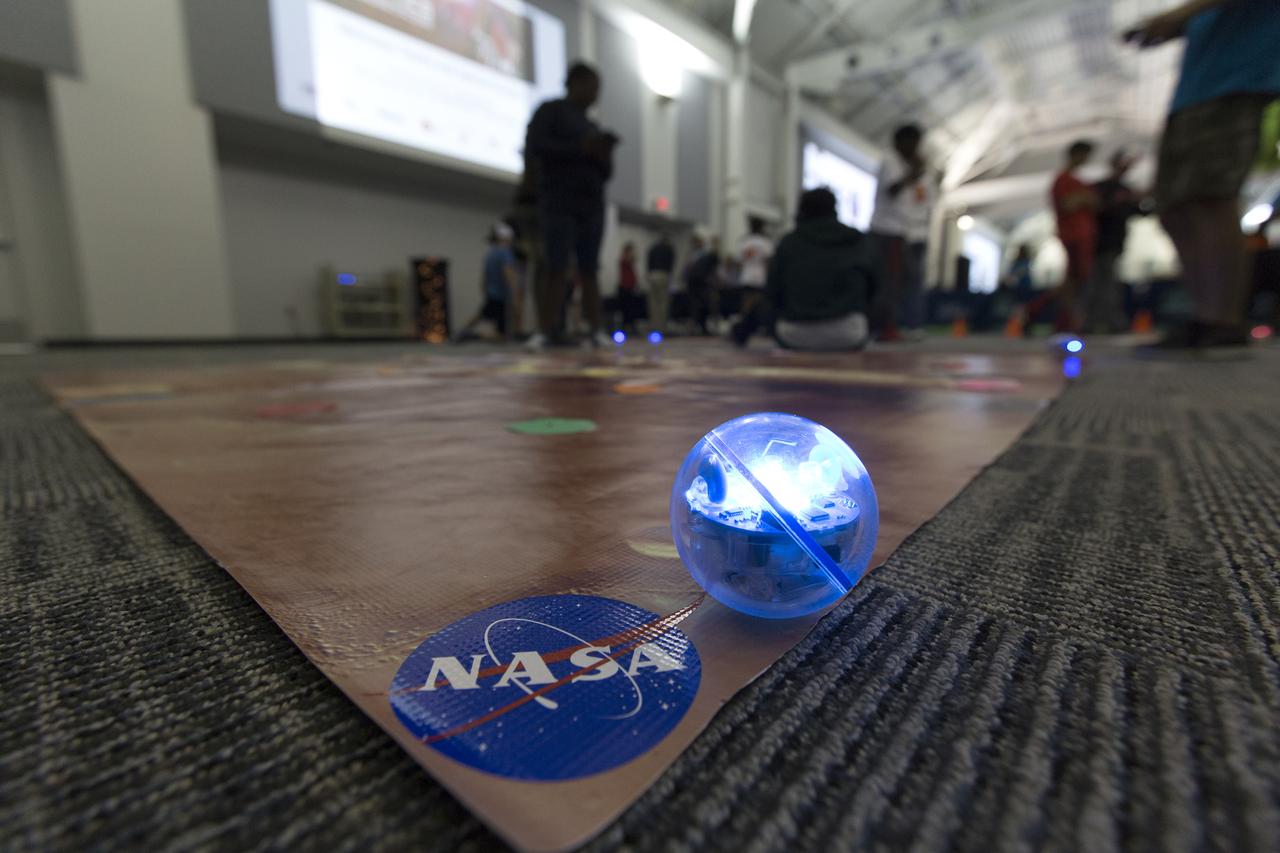
A programmable off-the-shelf Sphero robot is shown on a Mars mat at the Center for Space Education at NASA's Kennedy Space Center in Florida. The Spheros were available for students to practice their programming skills by navigating the robots around a challenge course on the mat. Students used the mat and Sphero robots during "loss of signal" times when the connection to the International Space Station was temporarily unavailable. Teams from across the state of Florida were gathered at Kennedy for the finals of the Zero Robotics Middle School Summer Program national championship. The five-week program allows rising sixth- through ninth-graders to write programs for small satellites called SPHERES (Synchronized, Position, Hold, Engage, Reorient, Experimental Satellites). Finalists saw their code tested aboard the orbiting laboratory.
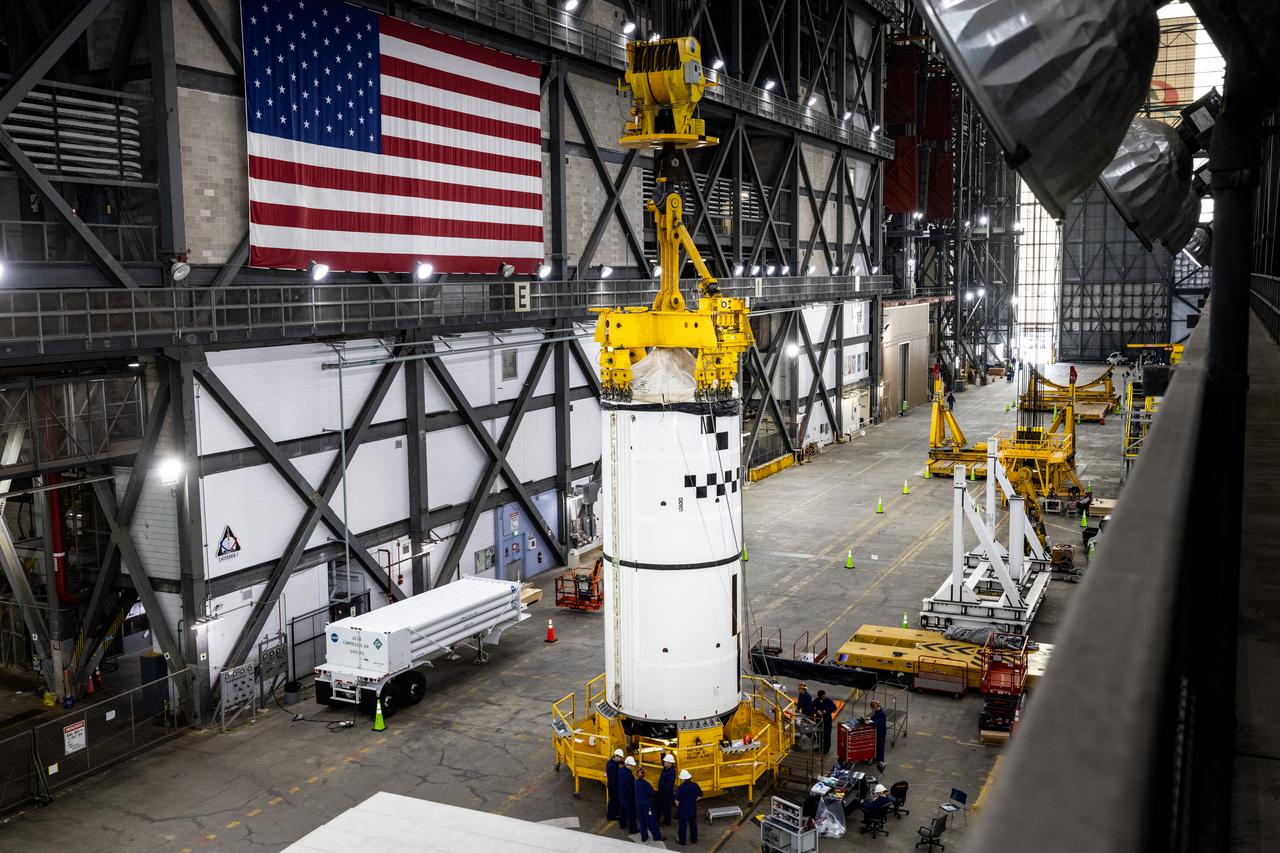
Technicians with NASA’s Exploration Ground Systems use a crane in the transfer aisle of the Vehicle Assembly Building at the agency’s Kennedy Space Center in Florida to prepare to lift the left forward segment for NASA’s SLS (Space Launch System) Moon rocket boosters on Wednesday, Feb. 5, 2025. The left forward segment will be transferred into High Bay 3 where it will be attached to the center forward segment on mobile launcher 1. The twin solid boosters, five segments on each side, will help support the remaining rocket components and the Orion spacecraft during final assembly of the Artemis II Moon rocket and provide more than 75 percent of the total SLS thrust during liftoff from NASA Kennedy’s Launch Pad 39B.
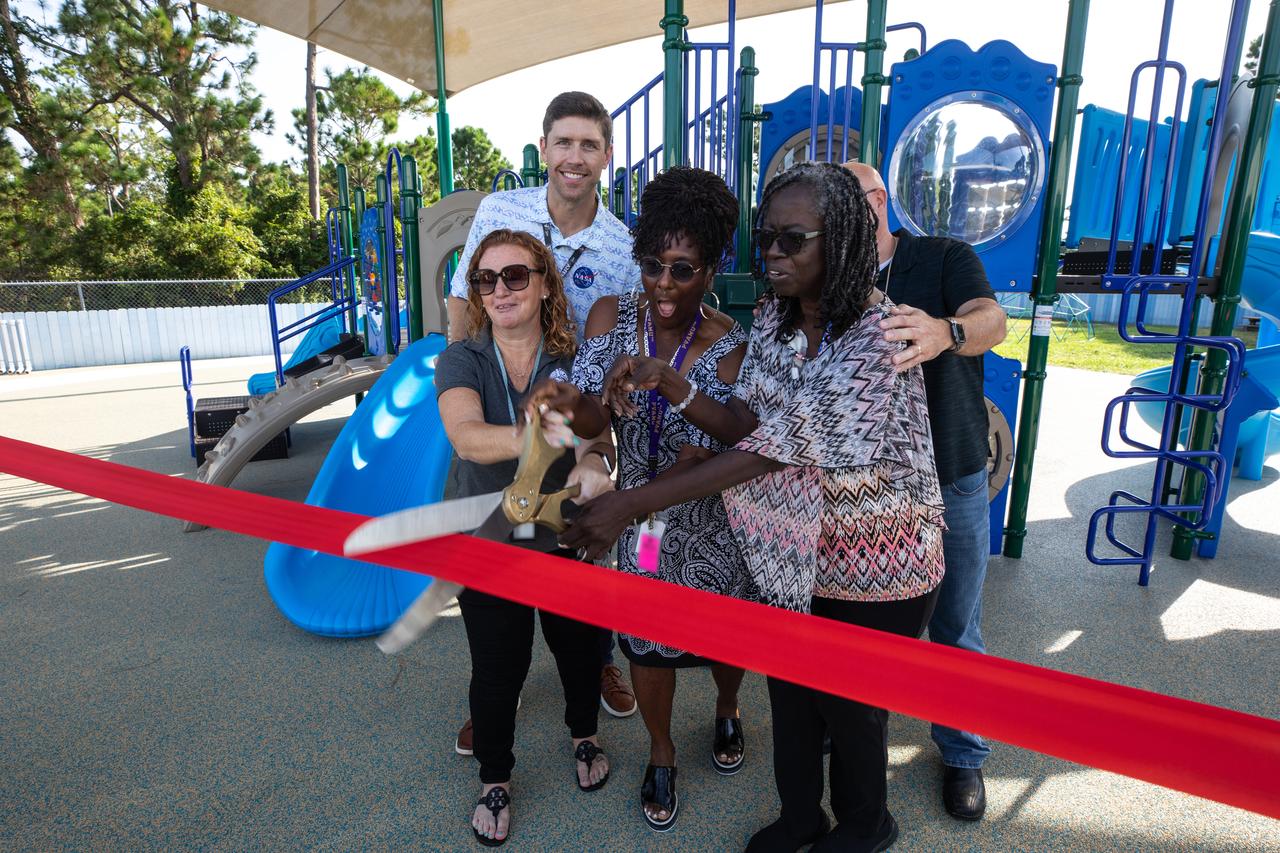
Staff members at Kennedy Space Center’s Child Development Center, along with members of the NASA Exchange, cut the ribbon to officially open a new playground at the facility on Aug. 10, 2023.
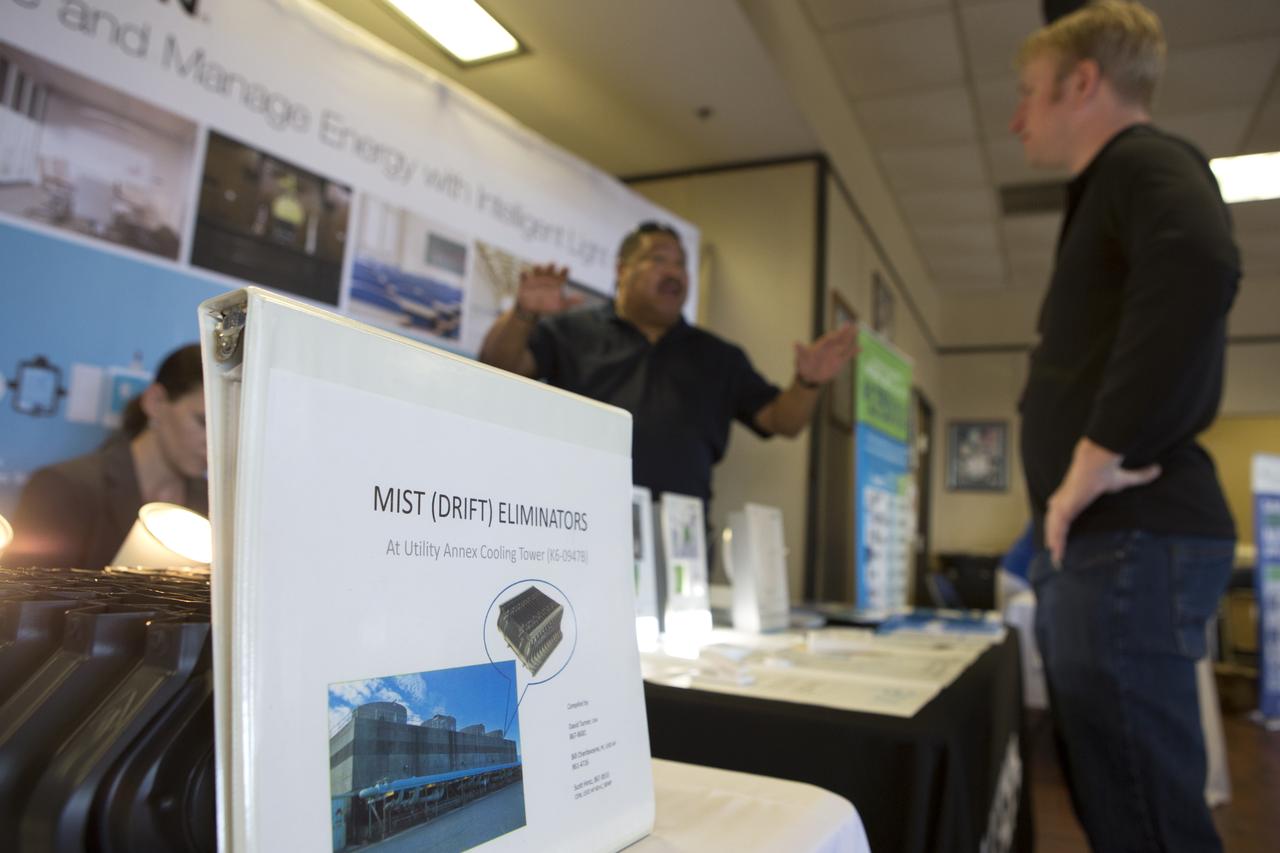
Cory Taylor, an energy and water conservation specialist at Kennedy Space Center, absorbs information from Mark Gonzalez, a sales engineer with MC2 during Energy Awareness Day at the Multi-Function Facility on Oct. 20. Every third Thursday of October, civil servants, contractors and several energy utilities promote the awareness of our sustainability goals at Kennedy Space Center and at home. Photo credit: Cory Huston
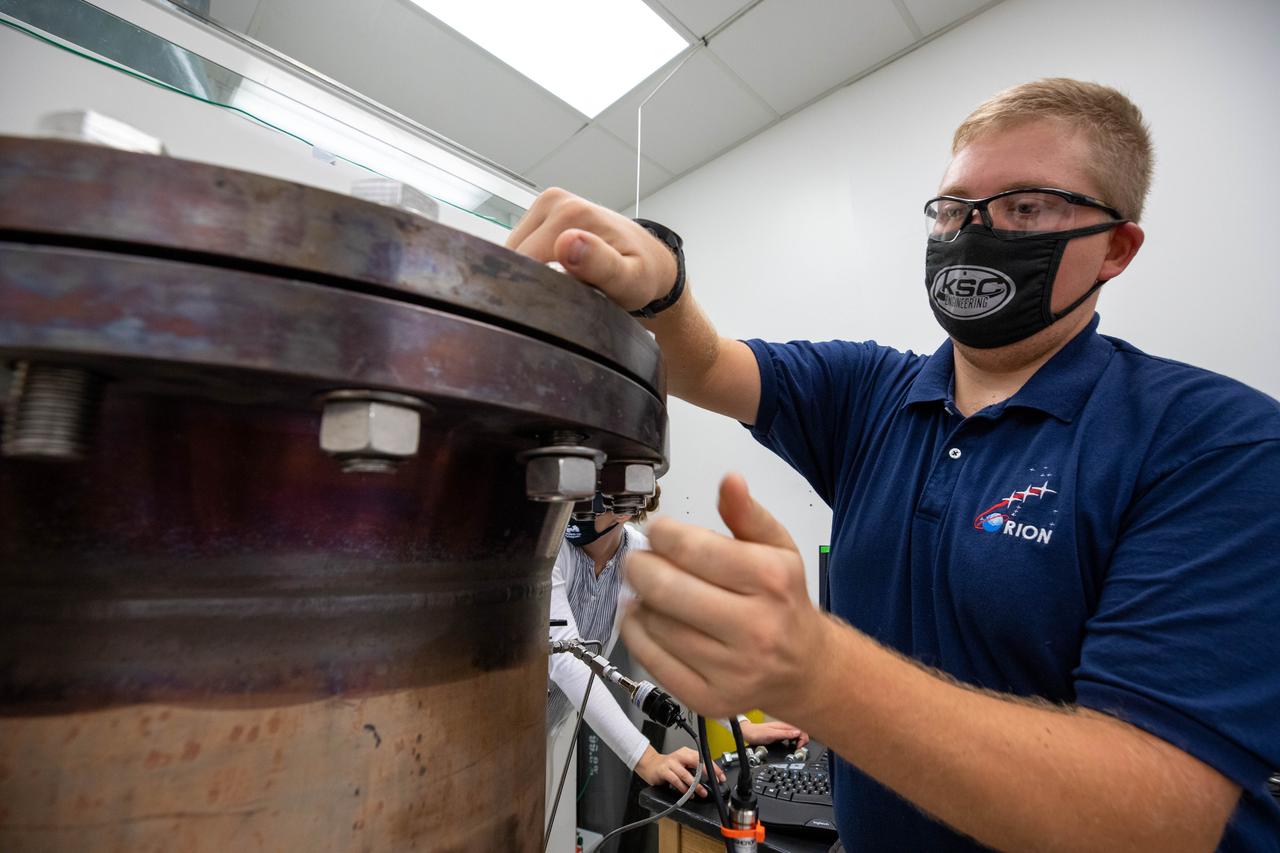
Evan Bell, a mechanical engineer and member of the Gaseous Lunar Oxygen from Regolith Electrolysis (GaLORE) project team at NASA’s Kennedy Space Center in Florida, checks the hardware that will be used to melt lunar regolith – dirt and dust on the Moon made from crushed rock – simulants during a test inside a laboratory at Kennedy’s Neil Armstrong Operations and Checkout Building on Oct. 29, 2020. GaLORE was selected as an Early Career Initiative project by the agency’s Space Technology Mission directorate, and the team was tasked with developing a device that could melt lunar regolith and turn it into oxygen. As NASA prepares to land the first woman and the next man on the Moon in 2024 as part of the Artemis program, technology such as this can assist with sustainable human lunar exploration and long-duration missions to Mars.
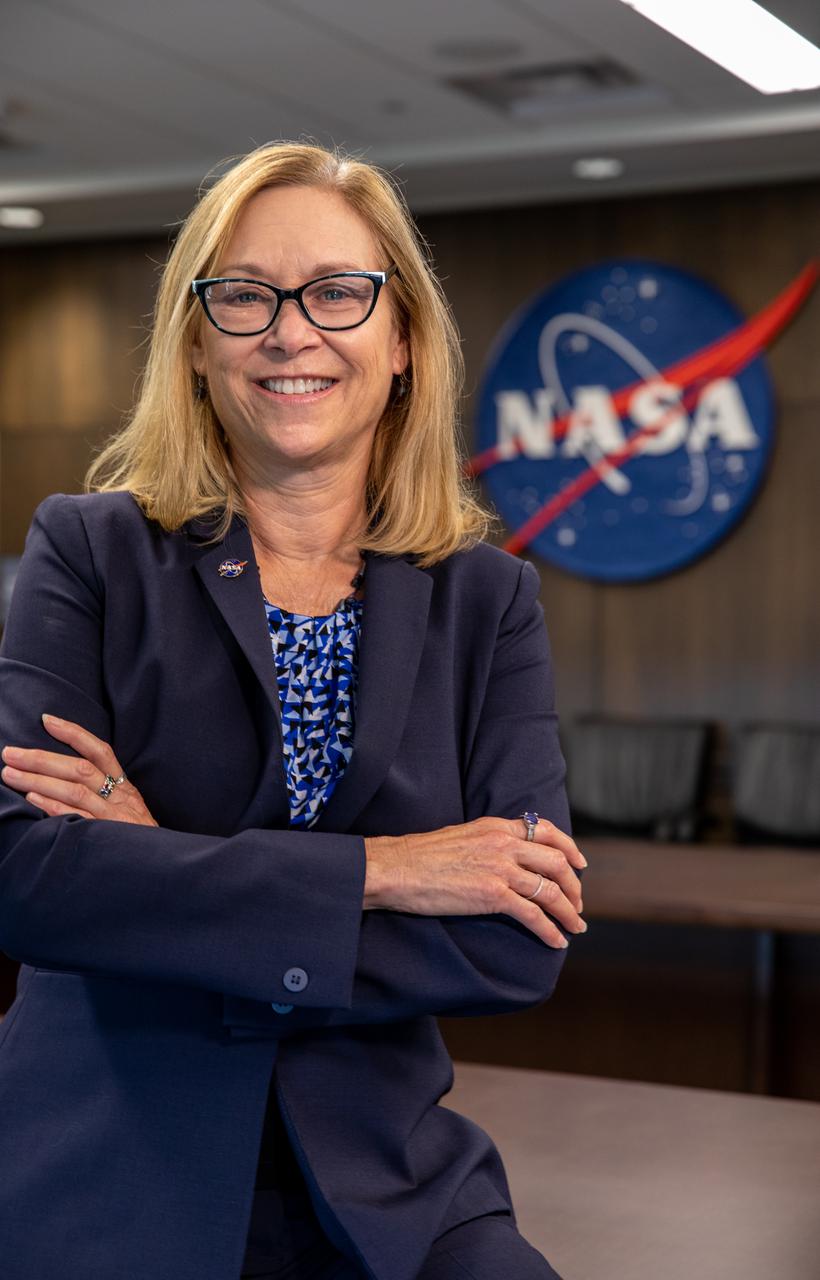
NASA Kennedy Space Center Director Janet Petro.

The engine vertical installer for NASA’s Space Launch System (SLS) arrives inside the Vehicle Assembly at NASA’s Kennedy Space Center in Florida on April 25, 2019. The engine installer arrived from the manufacturer, Precision Fabrication and Cleaning in Canaveral Groves, Florida. The new ground support equipment will be ready for preflight processing in the event one of the four RS-25 engines on the core stage of the SLS rocket needs to be replaced. During launch of the SLS and Orion spacecraft, the four core stage engines will provide the thrust needed to lift the rocket and Orion spacecraft off Launch Pad 39B at Kennedy for Exploration Mission-1. The uncrewed Orion will travel on a three-week test mission thousands of miles beyond the Moon and back to Earth for a splashdown in the Pacific Ocean.
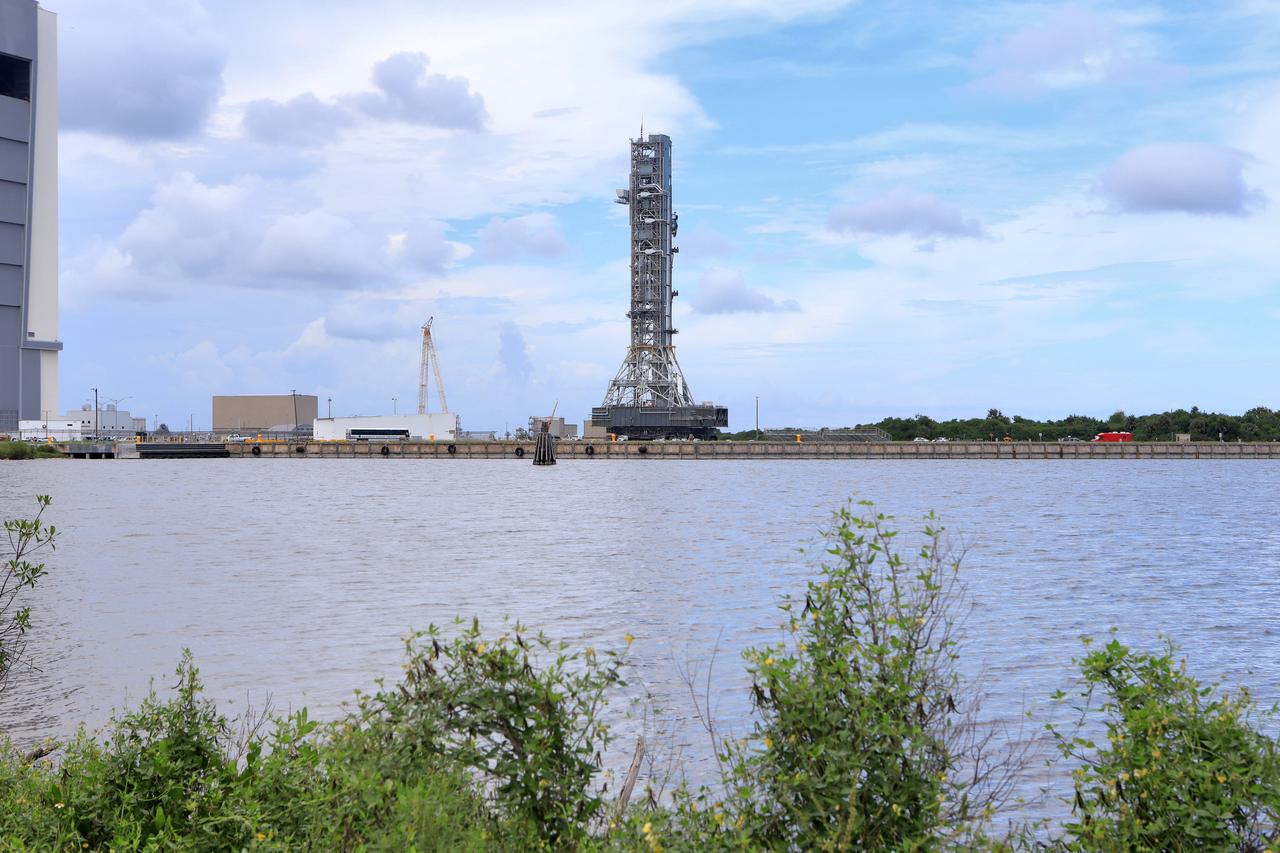
NASA's crawler-transporter 2 (CT-2) with the mobile launcher (ML) atop begins its trek along the crawlerway to Launch Pad 39B on Aug. 30, 2018, at the agency's Kennedy Space Center in Florida. CT-2 will move the ML up to the surface of the pad where it will undergo a fit check, followed by several days of systems testing. The 380-foot-tall mobile launcher is equipped with the crew access arm and several umbilicals that will provide power, environmental control, pneumatics, communication and electrical connections to NASA's Space Launch System (SLS) and Orion spacecraft. Exploration Ground Systems is preparing the ground systems necessary to launch SLS and Orion on Exploration Mission-1, missions to the Moon and on to Mars.

NASA Associate Administrator Bob Cabana participates in a NASA Social Live event at the agency’s Kennedy Space Center in Florida on Oct. 29, in advance of NASA’s SpaceX Crew-3 mission to the International Space Station as part of NASA’s Commercial Crew Program. Launch is currently targeted for 2:21 a.m. EDT Sunday, Oct. 31. The SpaceX Dragon spacecraft, named Endurance by the Crew-3 astronauts, will launch on a Falcon 9 rocket from Launch Complex 39A at Kennedy Space Center. The Crew-3 flight will carry NASA astronauts Raja Chari, mission commander, Tom Marshburn, pilot, and Kayla Barron, mission specialist and ESA (European Space Agency) astronaut Matthias Maurer, also a mission specialist, to the space station for a six-month science mission.
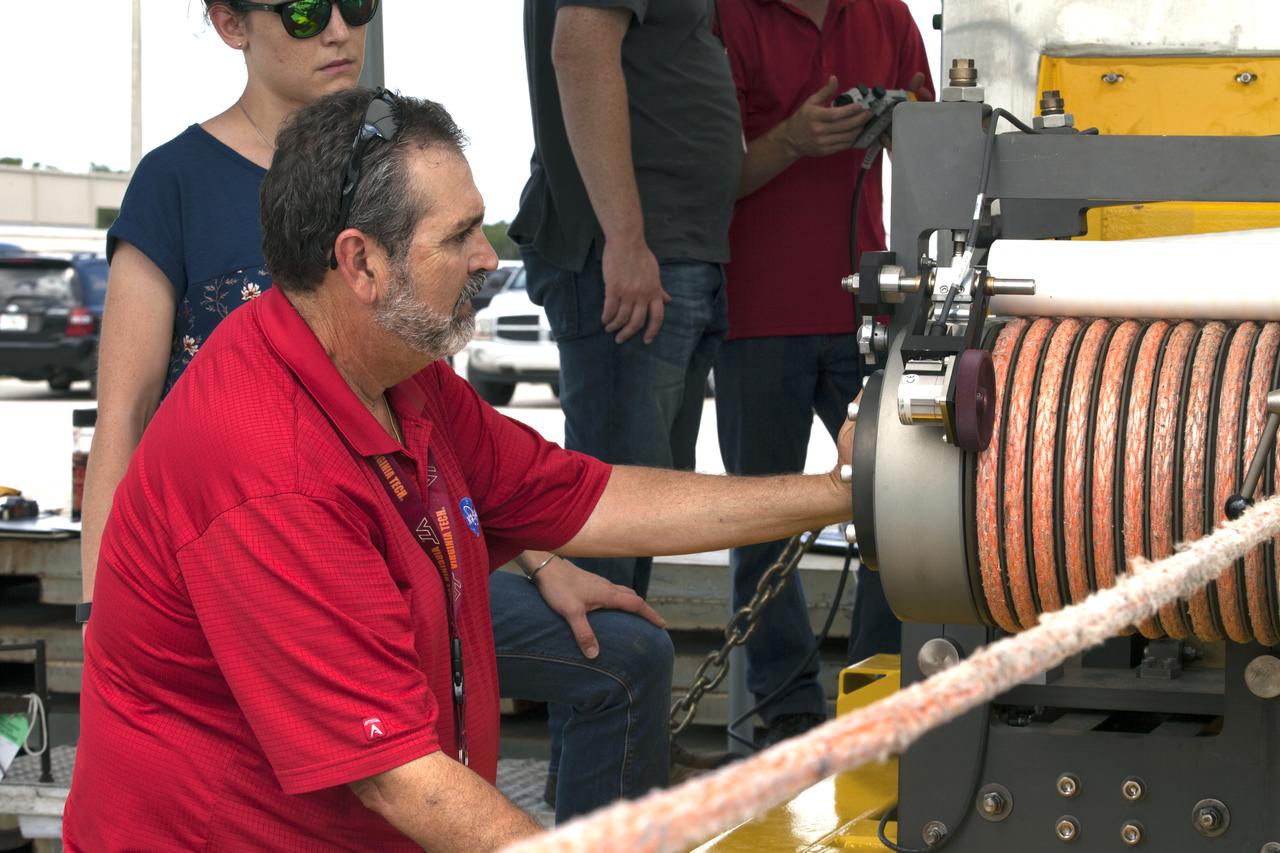
Orion Landing and Recovery team members with Jacobs practice using a winch to prepare for Underway Recovery Test 7 (URT-7) on Sept. 5, 2018, in the heavy equipment yard at NASA's Kennedy Space Center in Florida. In front is Pete Ruett. Behind him is Amy Hein. Both are handling and access engineers. During URT-7, the recovery team, including Exploration Ground Systems and the U.S. Navy, will practice recovering a test version of the Orion crew module in the Pacific Ocean, off the coast of California, and guiding it into the well deck of a ship. Over several days, the team will demonstrate and evaluate new recovery processes, procedures, hardware and personnel in open waters. Orion is the exploration spacecraft designed to carry astronauts to deep space destinations, including the Moon and on to Mars. Orion will have emergency abort capability, sustain the crew during space travel and provide safe re-entry from deep space return velocities.
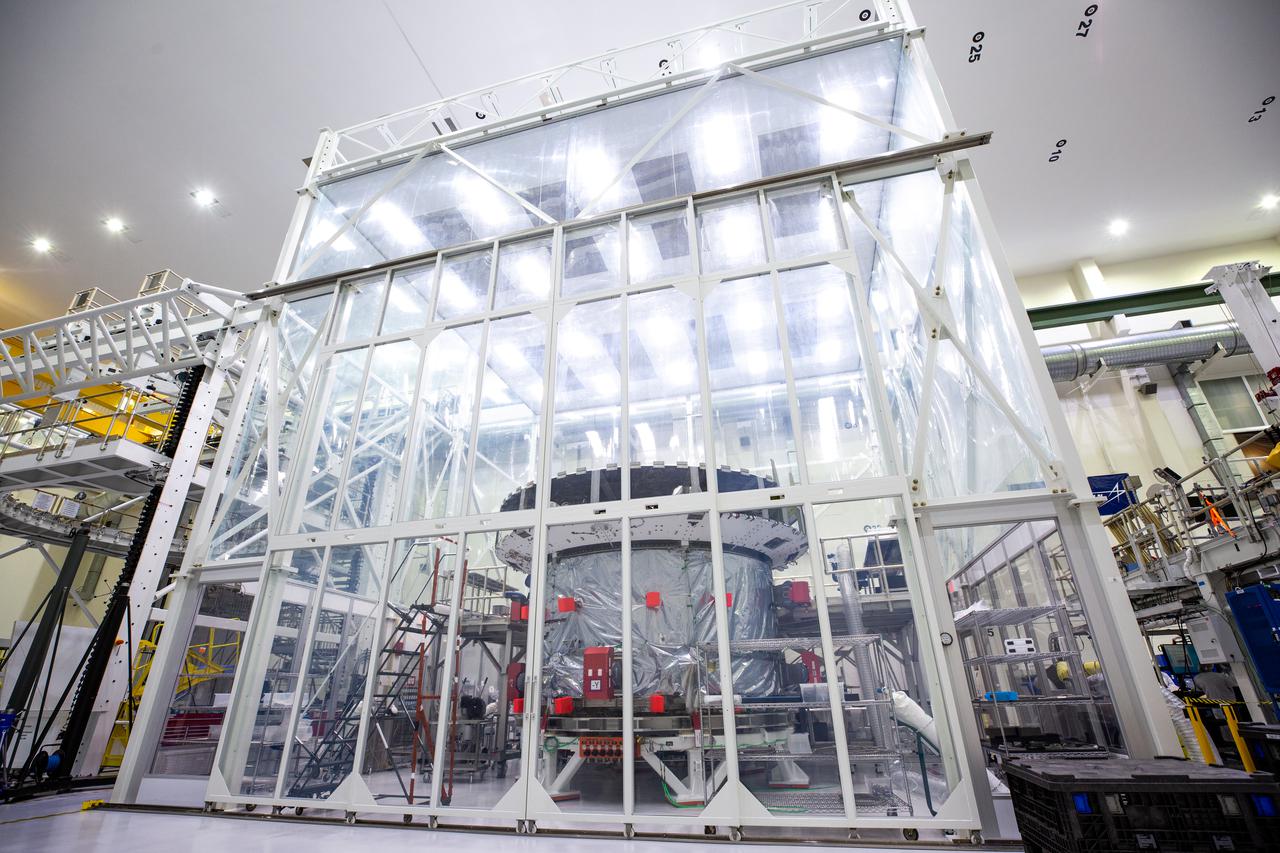
The European-built Service Module (ESM) for NASA’s Artemis II mission is on a work stand inside a clean room inside the high bay of the Neil A. Armstrong Operations and Checkout Building at NASA’s Kennedy Space Center in Florida on Jan. 12, 2022. Teams from NASA, Lockheed Martin, the European Space Agency and Airbus will prepare the service module to be integrated with the Orion crew module adapter and crew module, already housed in the facility. The powerhouse that will fuel and propel Orion in space, the ESM for Artemis II will be the first Artemis mission flying crew aboard Orion.
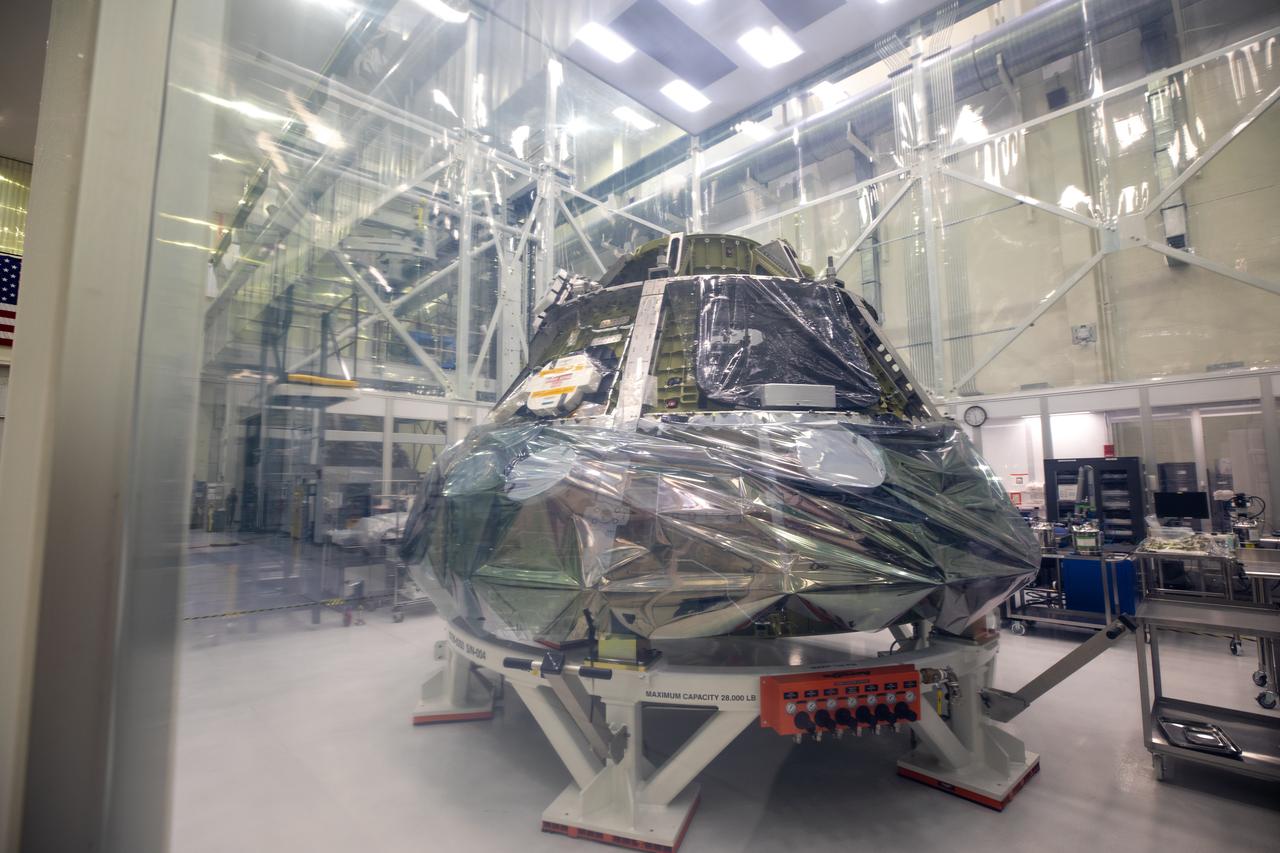
The Orion spacecraft for the Artemis III mission is in view inside a clean room in the high bay of the Neil Armstrong Operations and Checkout Building at NASA’s Kennedy Space Center in Florida on June 22, 2023. The Orion spacecraft is being prepared for its launch atop the Space Launch System rocket on Artemis III, which will send astronauts, including the first woman and first person of color, on a mission to the surface of the Moon.

NASA Administrator Charles Bolden talks with a member of the Orion recovery team on board the USS Anchorage as the ship makes its way out to sea to retrieve a test version of the Orion spacecraft and try out tools and techniques used to recover it on Sept. 15, 2014. Part of Batch image transfer from Flickr.
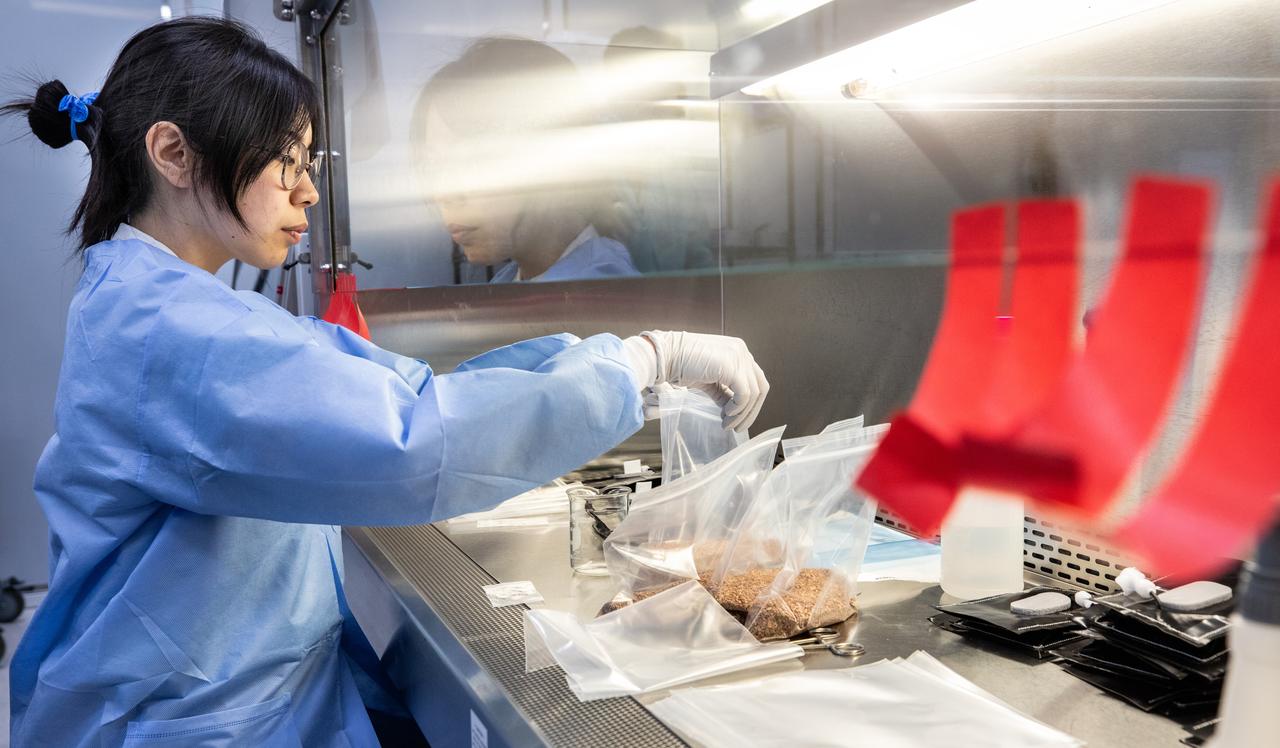
A member of the space crop production team pours substrate and controlled release fertilizer into a Veggie plant pillow on Thursday, May 29, 2025, inside the Space Systems Processing Facility at NASA’s Kennedy Space Center in Florida. The plant pillows, along with Veg-03 MNO seed films, which will carry seeds of Red Russian kale, Wasabi mustard greens, and Dragoon lettuce, are set to fly aboard NASA’s SpaceX Crew-11 mission to the International Space Station to grow in the space environment to study how microgravity impacts crop development compared to ground-grown plants. Seed films enable seed handling and planting of seeds into plant pillows allowing for astronaut choice of crops to grow. Plants can provide whole food nutrition, improve menu variety, and positively impact behavioral health of astronauts on long duration missions to the Moon and Mars and space crop research aboard the orbiting laboratory is enabled by NASA’s Biological and Physical Sciences Division and the International Space Station Program.
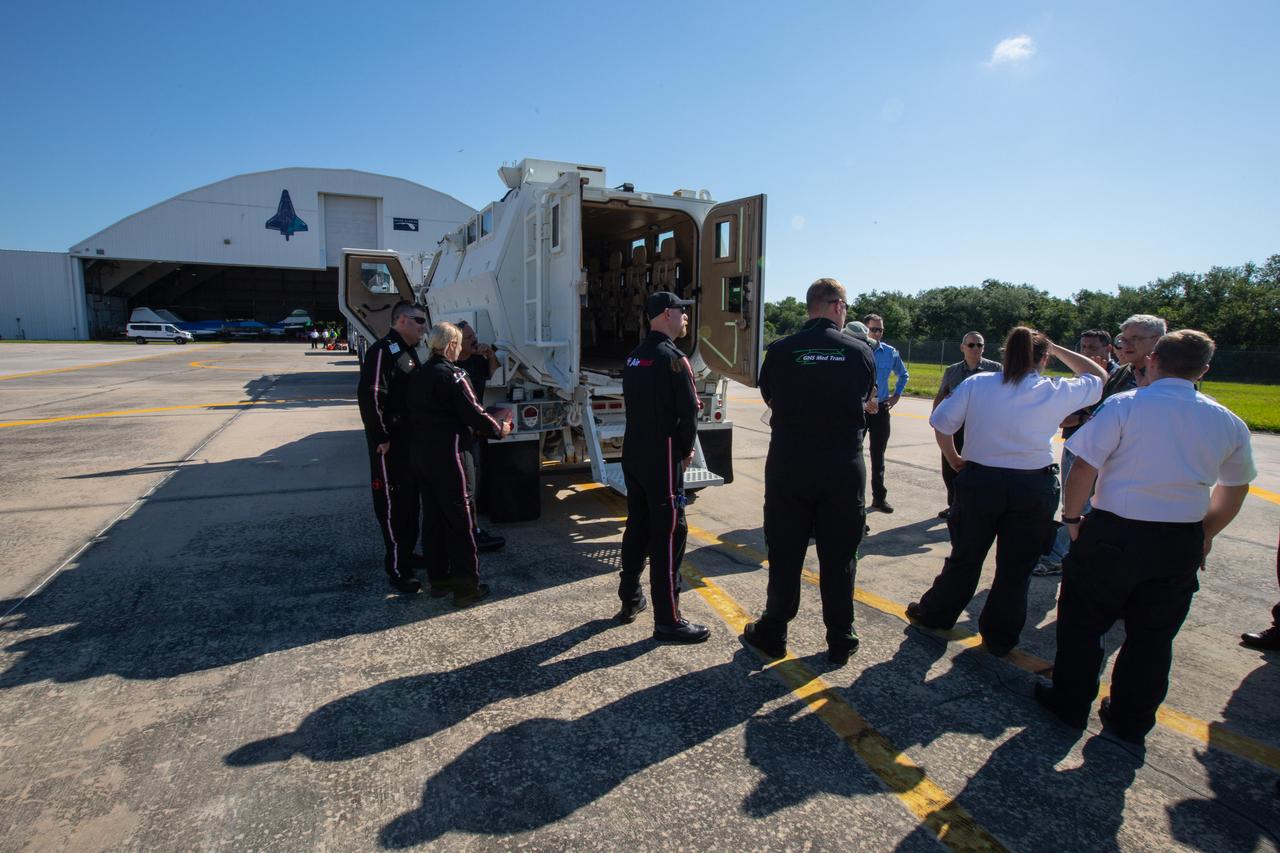
A Kennedy Space Center Mine Resistant Ambush Protected (MRAP) tactical vehicle stands at the ready during a medical support training course at the Florida spaceport’s Shuttle Landing Facility on May 17, 2019. Kennedy personnel and American Medical Response (AMR) contractor paramedics participated in the course, which was designed to familiarize the AMR paramedics with the center’s Triage Forces deployment, including medical team members, fire/rescue personnel, environmental health specialists and flight operations crew members, as well as a helicopter, MRAP, fire pumper truck and triage vehicles. The AMR paramedics will assist the agency in contingency planning for the return of human spaceflight from Kennedy.
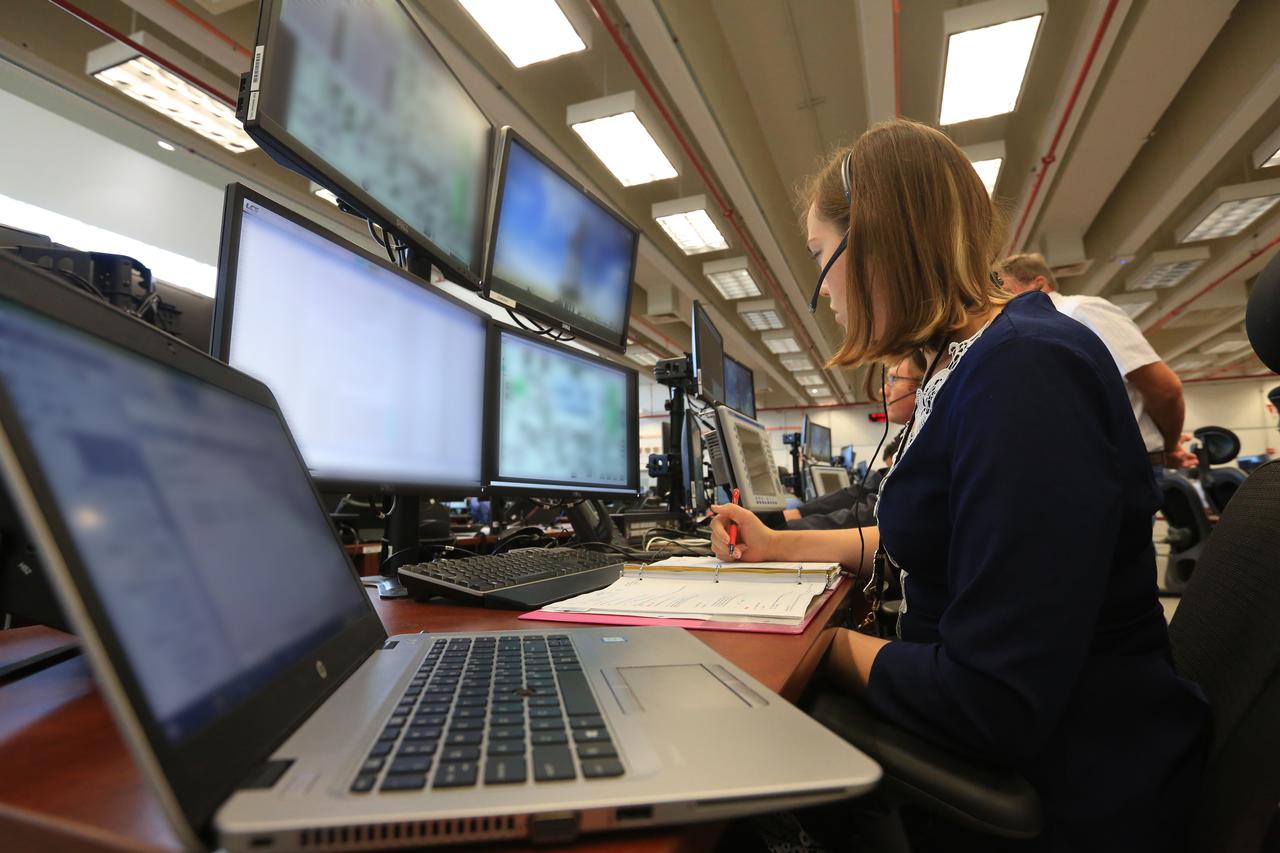
Engineers with NASA and contractor Jacobs monitor their consoles during a countdown demonstration event of cryogenic propellant loading April 12, 2019, inside Firing Room 2 in the Launch Control Center at NASA’s Kennedy Space Center in Florida. The practice simulation involved loading of liquid hydrogen and liquid oxygen into the Space Launch System rocket’s core and upper stages to prepare for Exploration Mission-1 (EM-1). During the tanking exercise, the team worked through surprise issues in real-time. The practice countdown events are training opportunities coordinated by EM-1 Launch Director Charlie Blackwell-Thompson with Exploration Ground Systems.

SpaceX Crew-11 Walkout of the O&C
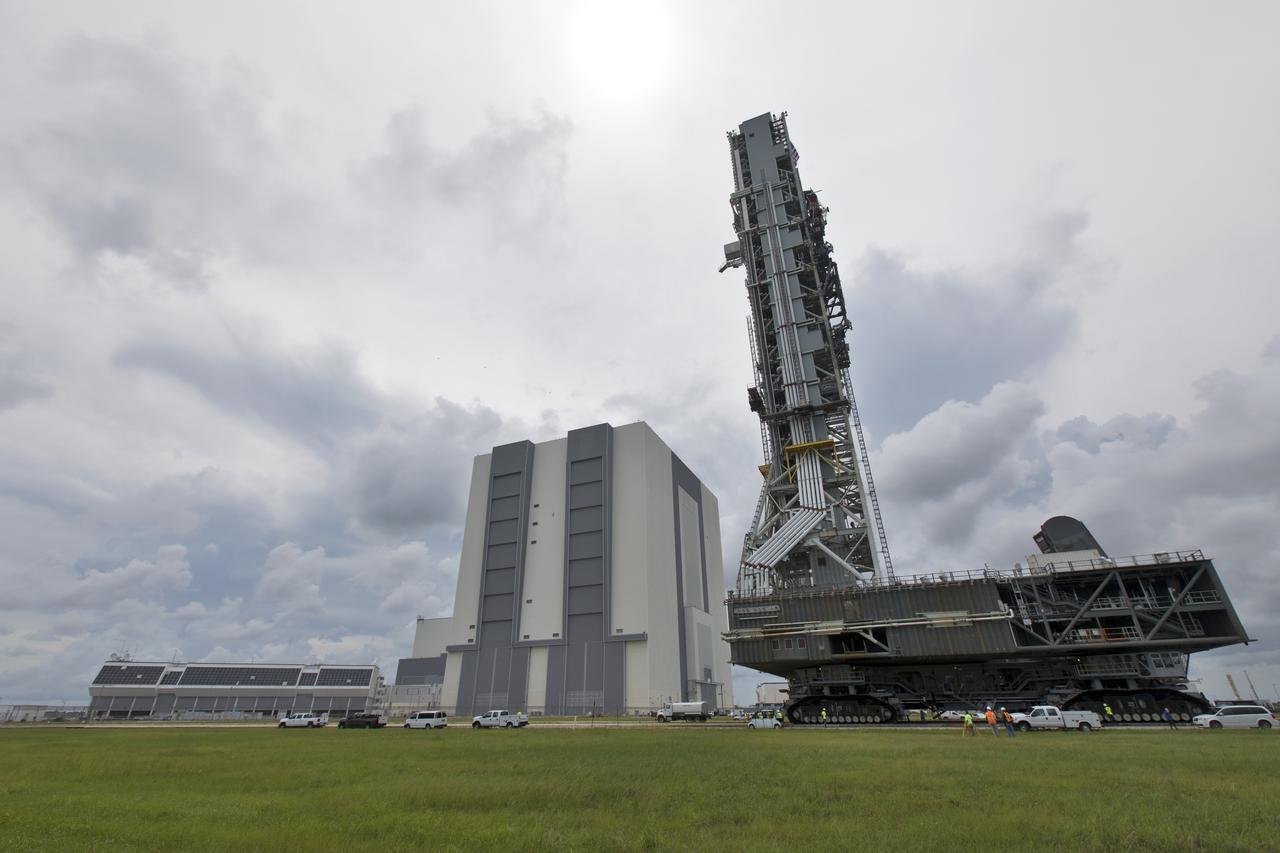
NASA's mobile launcher (ML) atop crawler-transporter 2 (CT-2) moves along the crawlerway on its trek to Launch Pad 39B on Aug. 31, 2018, at the agency's Kennedy Space Center in Florida. CT-2 will move the ML up to the surface of the pad where it will undergo a fit check, followed by several days of systems testing. The 380-foot-tall mobile launcher is equipped with the crew access arm and several umbilicals that will provide power, environmental control, pneumatics, communication and electrical connections to NASA's Space Launch System (SLS) and Orion spacecraft. Exploration Ground Systems is preparing the ground systems necessary to launch SLS and Orion on Exploration Mission-1, missions to the Moon and on to Mars.
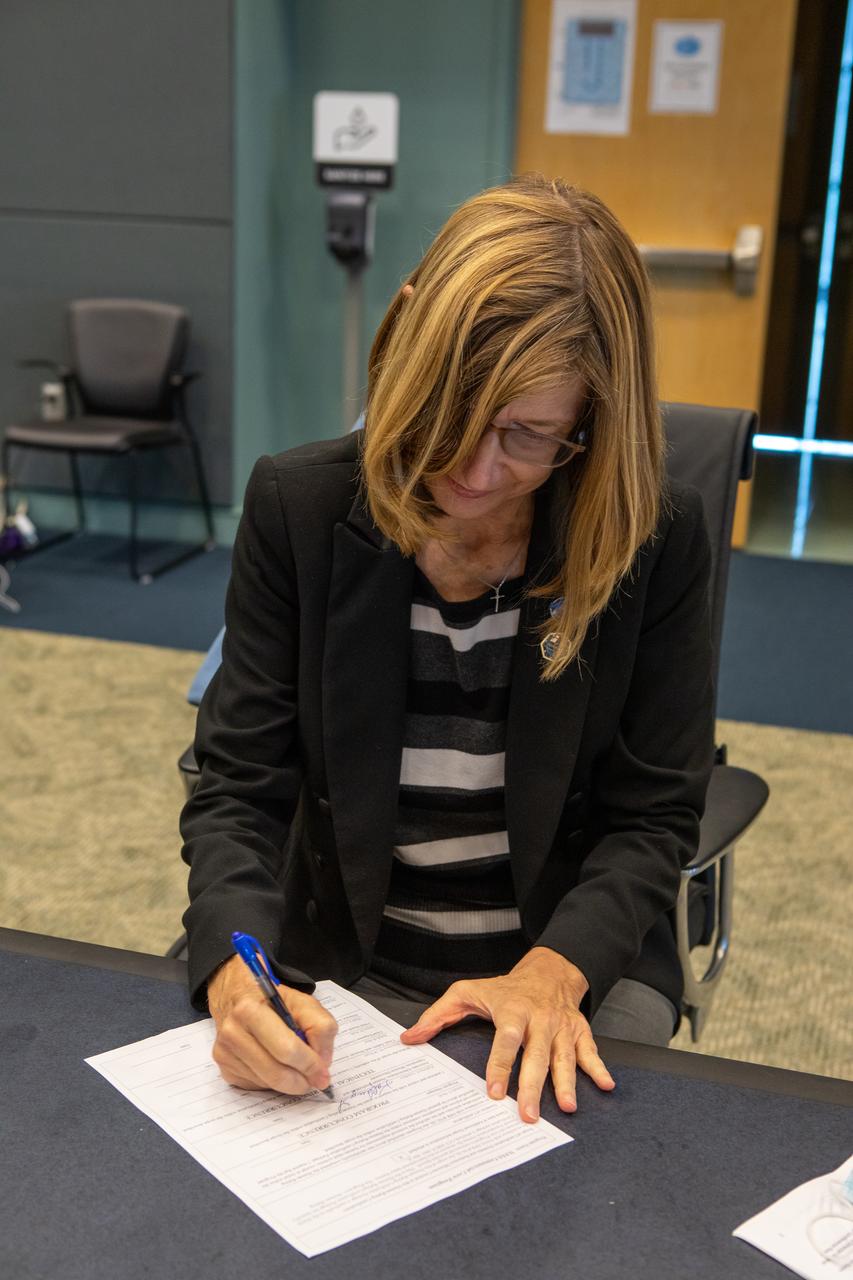
Kathy Lueders, NASA associate administrator of the Human Exploration and Operations Mission Directorate, signs the Human Rating Certification Plan for SpaceX’s crew transportation system, officially certifying the first commercial spacecraft system in history capable of transporting humans to and from the International Space Station as part of the agency’s Commercial Crew Program. The signing occurred during the Flight Readiness Review (FRR) for the agency’s SpaceX Crew-1 mission at NASA’s Kennedy Space Center in Florida on Nov. 10, 2020. The FRR focuses on the preparedness of SpaceX’s crew transportation system, the International Space Station, and its international partners to support the flight, and the certification of flight readiness. Crew-1 is the first regular crew mission of a U.S. commercial spacecraft with astronauts to the International Space Station as part of NASA’s Commercial Crew Program. The Crew Dragon Resilience capsule will launch atop a Falcon 9 rocket from Launch Complex 39A carrying NASA astronauts Michael Hopkins, Victor Glover, Shannon Walker and Japan Aerospace Exploration Agency (JAXA) astronaut Soichi Noguchi to the space station for a six-month science mission.
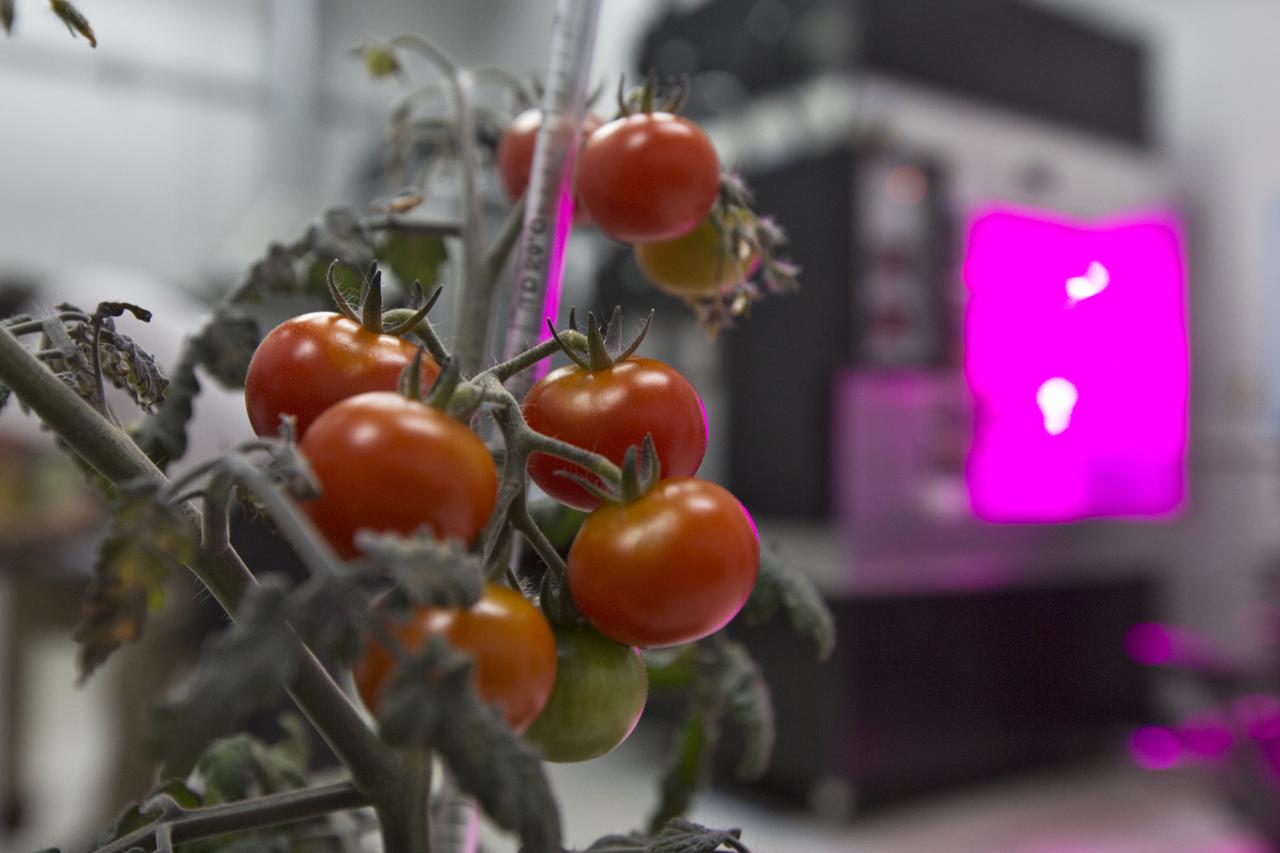
Tomato plants are growing inside a laboratory at the Space Station Processing Facility at NASA’s Kennedy Space Center in Florida. The plant growth is being tested in the Veggie Passive Orbital Nutrient Delivery System (PONDS). Veggie PONDS is a direct follow-on to the Veg-01 and Veg-03 hardware and plant growth validation tests. The primary goal of this newly developed plant growing system, Veggie PONDS, is to demonstrate uniform plant growth. PONDS units have features that are designed to mitigate microgravity effects on water distribution, increase oxygen exchange and provide sufficient room for root zone growth. PONDS is planned for use during Veg-04 and Veg-05 on the International Space Station after the Veggie PONDS Validation flights on SpaceX-14 and OA-9.
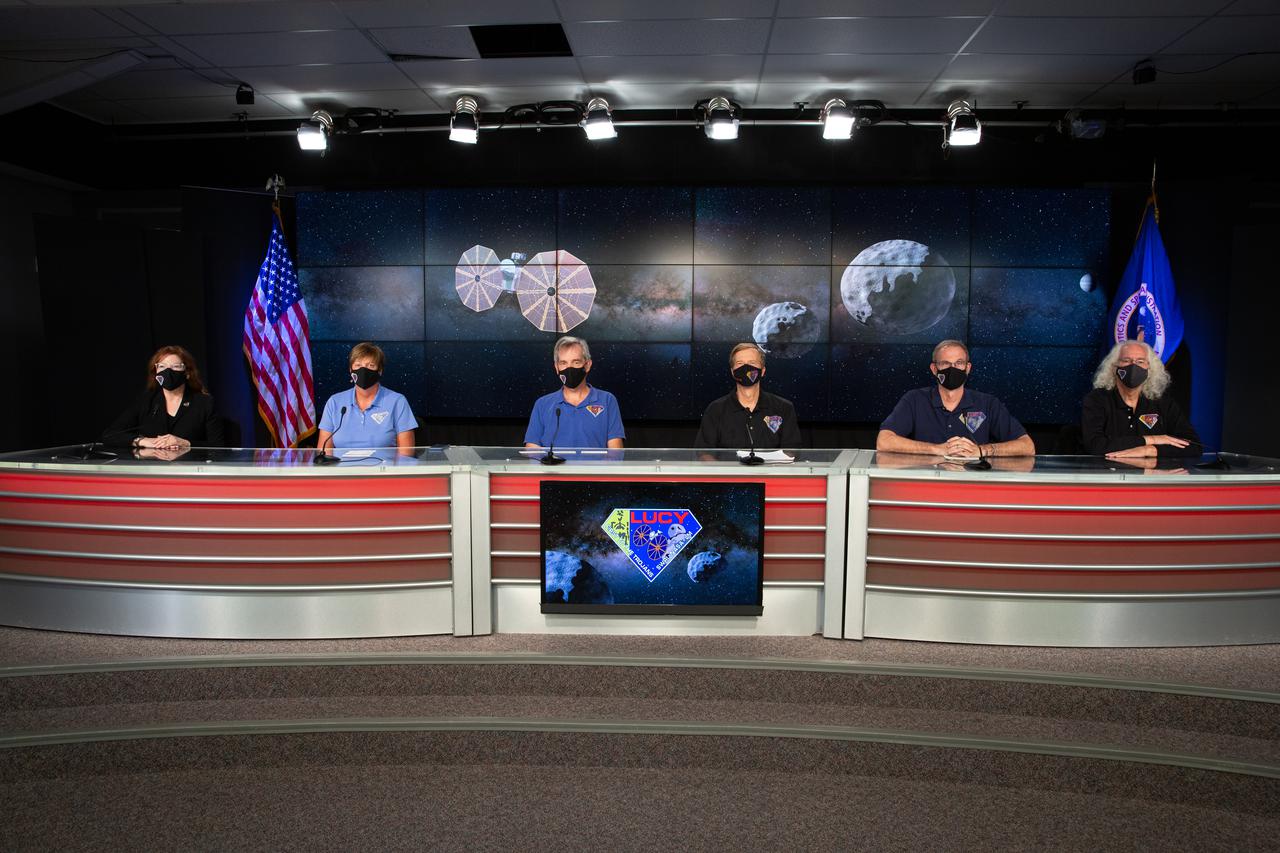
A science briefing for the Lucy mission is held inside the TV Auditorium at NASA’s Kennedy Space Center in Florida on Oct. 14, 2021. Participants included, from left to right, Adriana Ocampo, Lucy Program Executive, NASA Headquarters; Cathy Olkin, Lucy Deputy Principal Investigator, Southwest Research Institute; Keith Noll, Lucy Project Scientist at NASA’s Goddard Space Flight Center; Hal Weaver, L'LORRI Instrument Principal Investigator, Johns Hopkins Applied Physics Laboratory; Phil Christensen, L'TES Instrument Principal Investigator, Arizona State University; and Dennis Reuter, L’Ralph Instrument Principal Investigator at NASA’s Goddard Space Flight Center. Lucy is scheduled to launch at 5:34 a.m. EDT Saturday, Oct. 16, on a United Launch Alliance Atlas V 401 rocket from Space Launch Complex 41 at Cape Canaveral Space Force Station. NASA’s Launch Services Program, based at Kennedy, is managing the launch. Lucy is the first space mission to study the Trojan asteroids, which hold vital clues to the formation of our solar system.
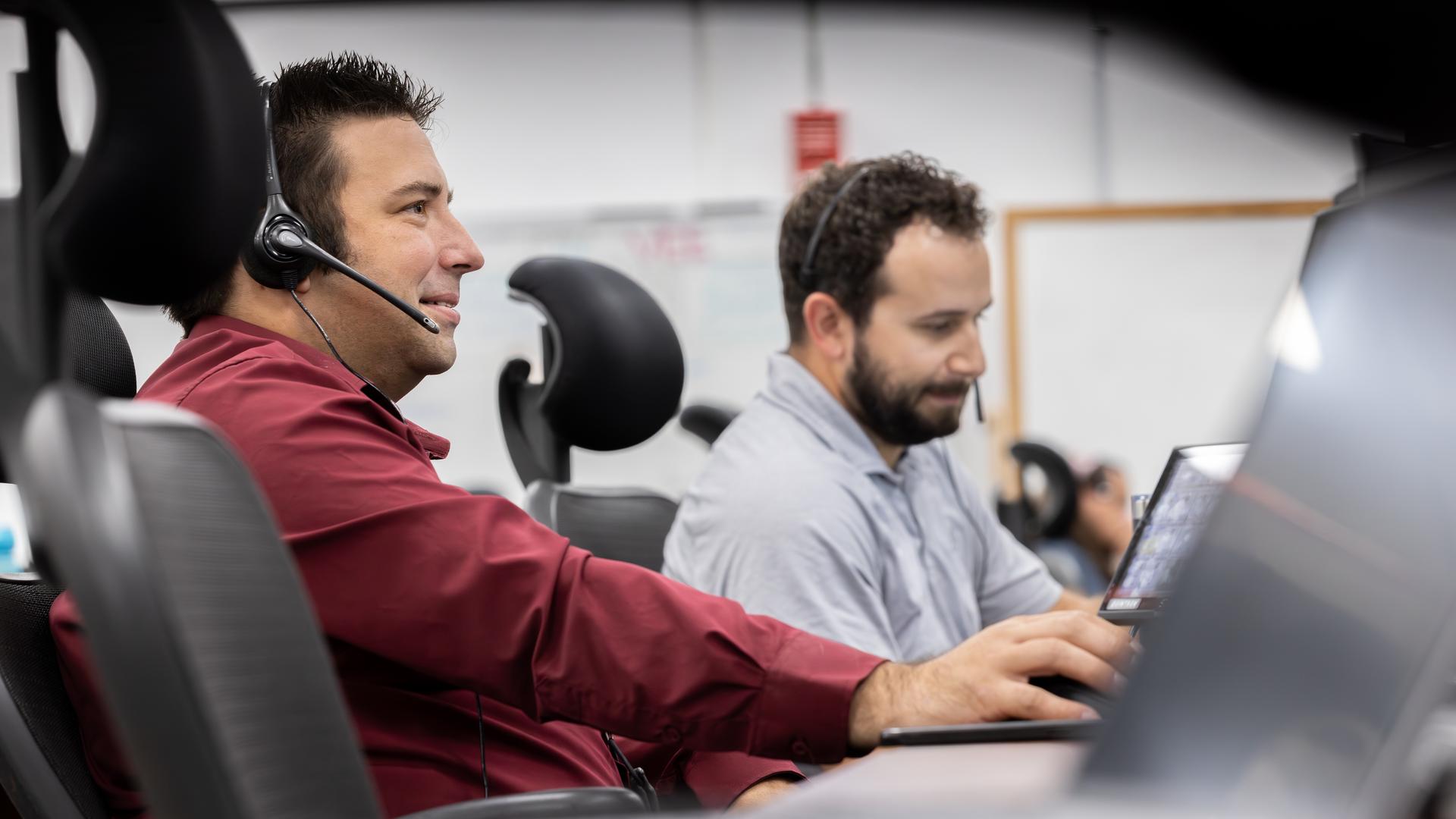
Artemis launch team members participate in a cryogenic propellant loading simulation for NASA’s Artemis III mission on Wednesday, Aug. 5, 2026, inside Firing Rooms 1 and 2 of the Rocco A. Petrone Launch Control Center at the agency’s Kennedy Space Center in Florida. Members of NASA’s Exploration Ground Systems team rehearse the steps to load the super-cooled liquid hydrogen and liquid oxygen into the SLS (Space Launch System) rocket core stage, a process that starts several hours before liftoff for the Artemis III mission. Artemis III will carry out a series of objectives in low Earth orbit designed to demonstrate critical systems needed for future lunar landings, beginning with Artemis IV.
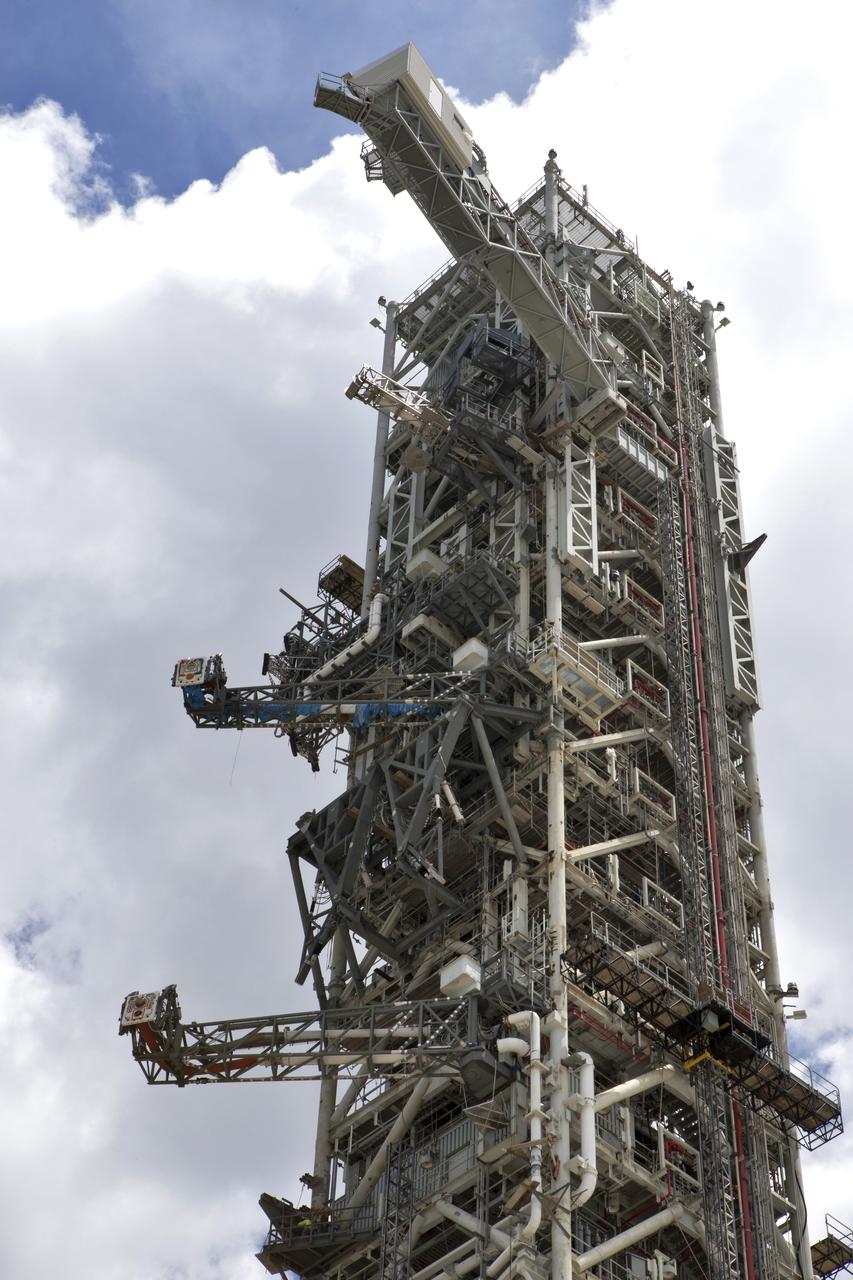
A swing test of the Orion crew access arm, topmost umbilical, is in progress on the mobile launcher at NASA's Kennedy Space Center in Florida, on Aug. 21, 2018. The crew access arm is located at about the 274-foot level on the mobile launcher tower. It will rotate from its retracted position and interface with the Orion crew hatch location to provide entry to the Orion crew module. Exploration Ground Systems extended all of the launch umbilicals on the ML tower to test their functionality before the mobile launcher, atop crawler-transporter 2, is moved to Launch Pad 39B and the Vehicle Assembly Building.
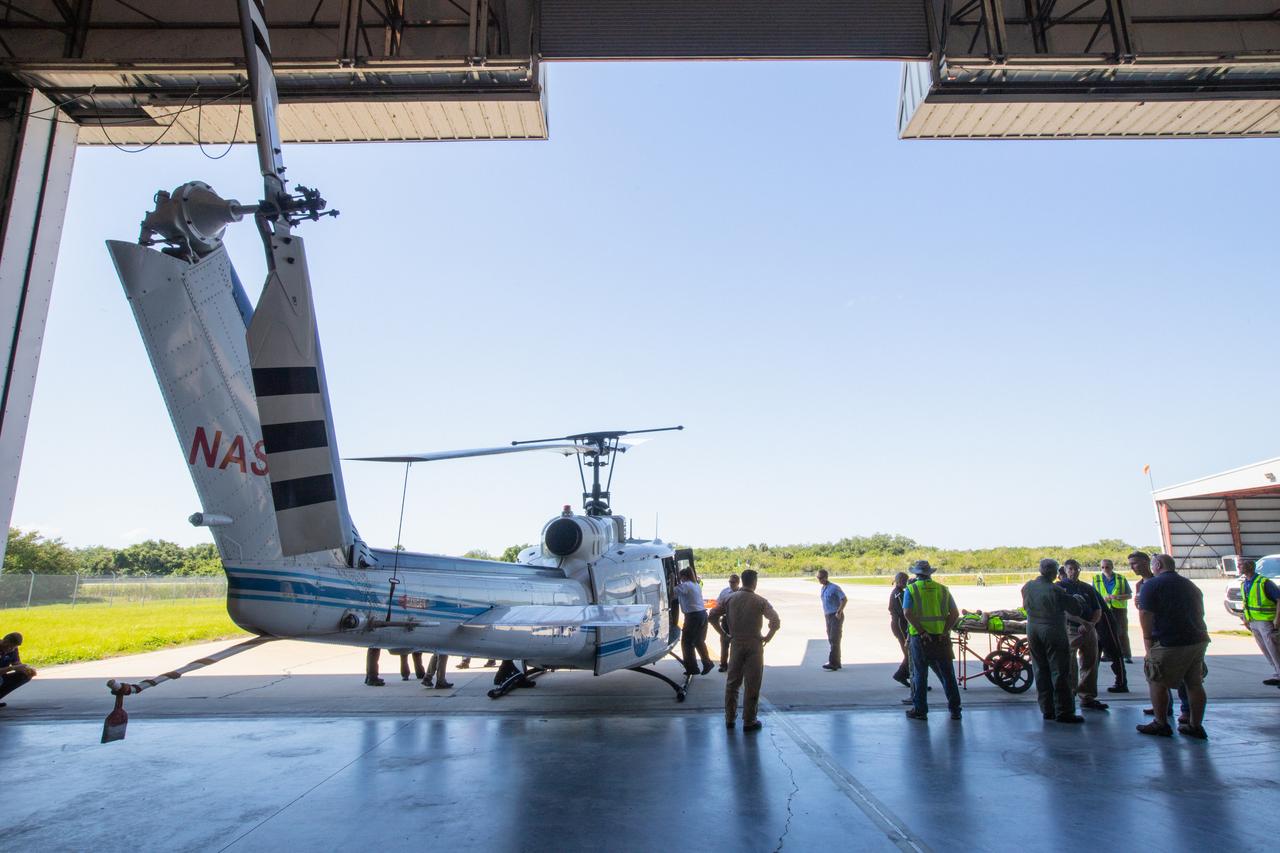
Kennedy Space Center personnel and American Medical Response (AMR) contractor paramedics gather near a NASA helicopter in the Space Florida hangar at the spaceport’s Shuttle Landing Facility on May 17, 2019, for a medical support training course. The course was designed to familiarize the AMR paramedics with the center’s Triage Forces deployment, which included medical team members, fire/rescue personnel, environmental health specialists and flight operations crew members, as well as the helicopter, Mine Resistant Ambush Protected (MRAP) tactical vehicle, fire pumper truck and triage vehicles. The AMR paramedics will assist the agency in contingency planning for the return of human spaceflight from Kennedy.
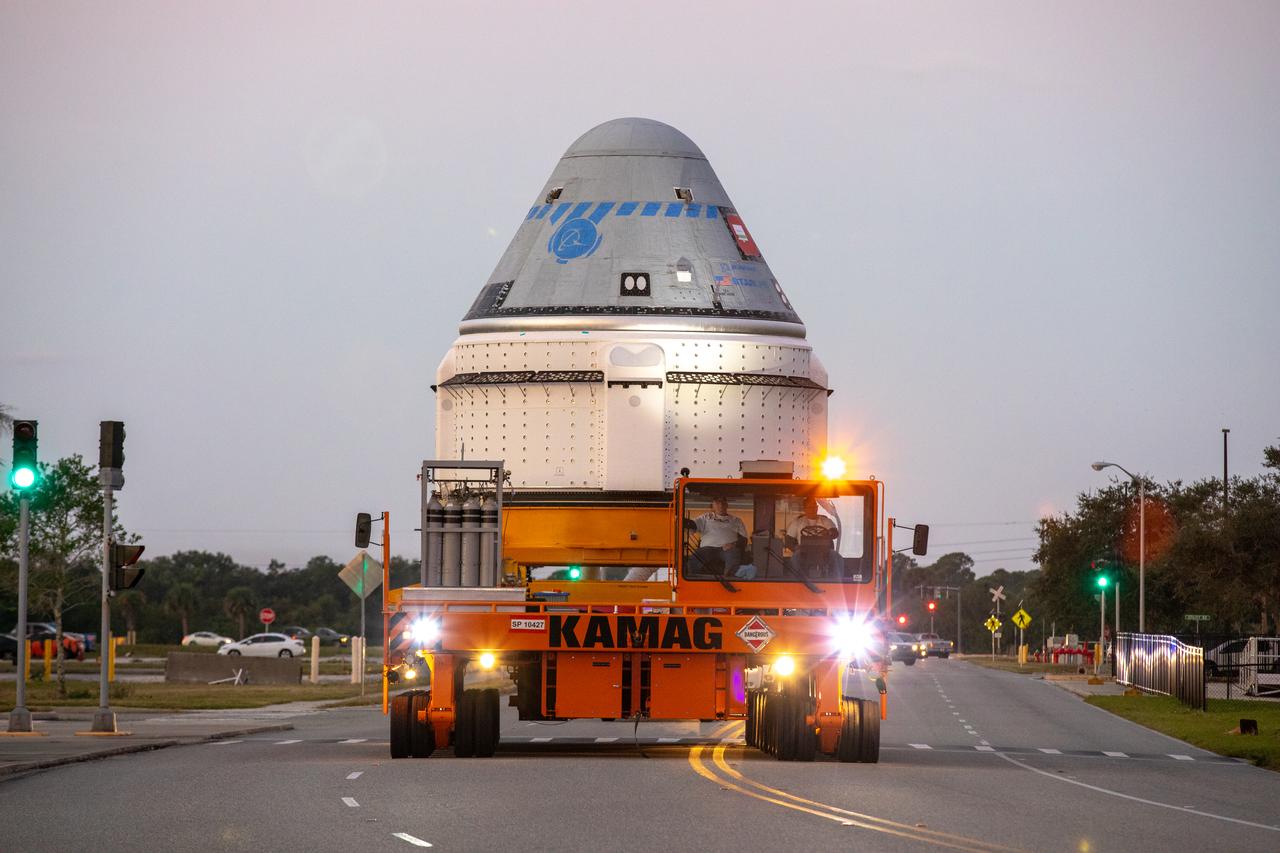
The Boeing CST-100 Starliner spacecraft rolls out from the company’s Commercial Crew and Cargo Processing Facility at NASA’s Kennedy Space Center in Florida on Nov. 21, 2019. The spacecraft will make the trip to Space Launch Complex 41 at Cape Canaveral Air Force Station where it will be prepared for Boeing’s Orbital Flight Test to the International Space Station for NASA’s Commercial Crew Program.
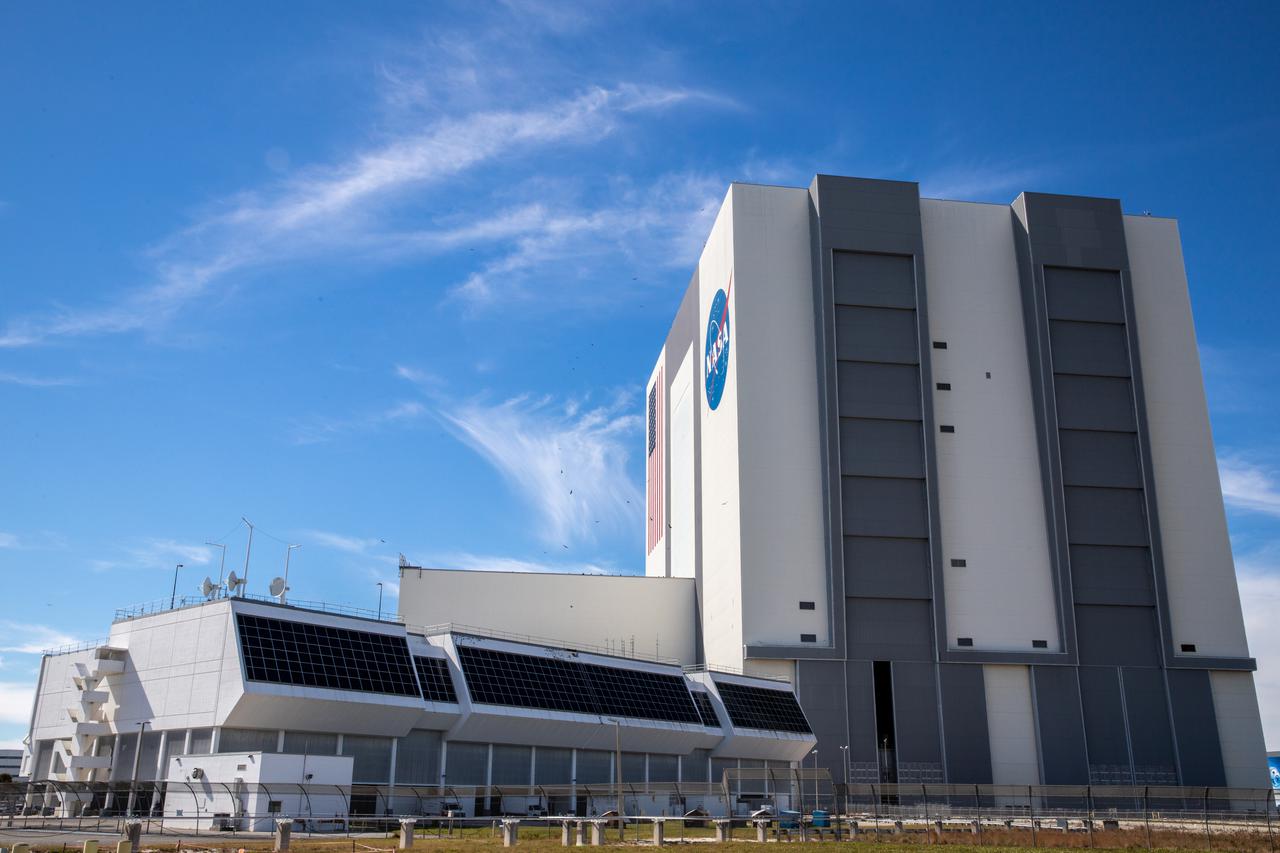
Following a ceremony at NASA’s Kennedy Space Center, the Florida spaceport’s launch control center was officially renamed the Rocco A. Petrone Launch Control Center. The facility serves as a nerve center where engineers and the launch director will monitor their flight consoles and give the “go” for the upcoming launch of Artemis I and later missions that will establish a sustainable presence on the Moon to prepare for missions to Mars. Petrone, who was instrumental in America’s first voyages to the Moon and headed the Apollo program, died in 2006 at the age of 80.
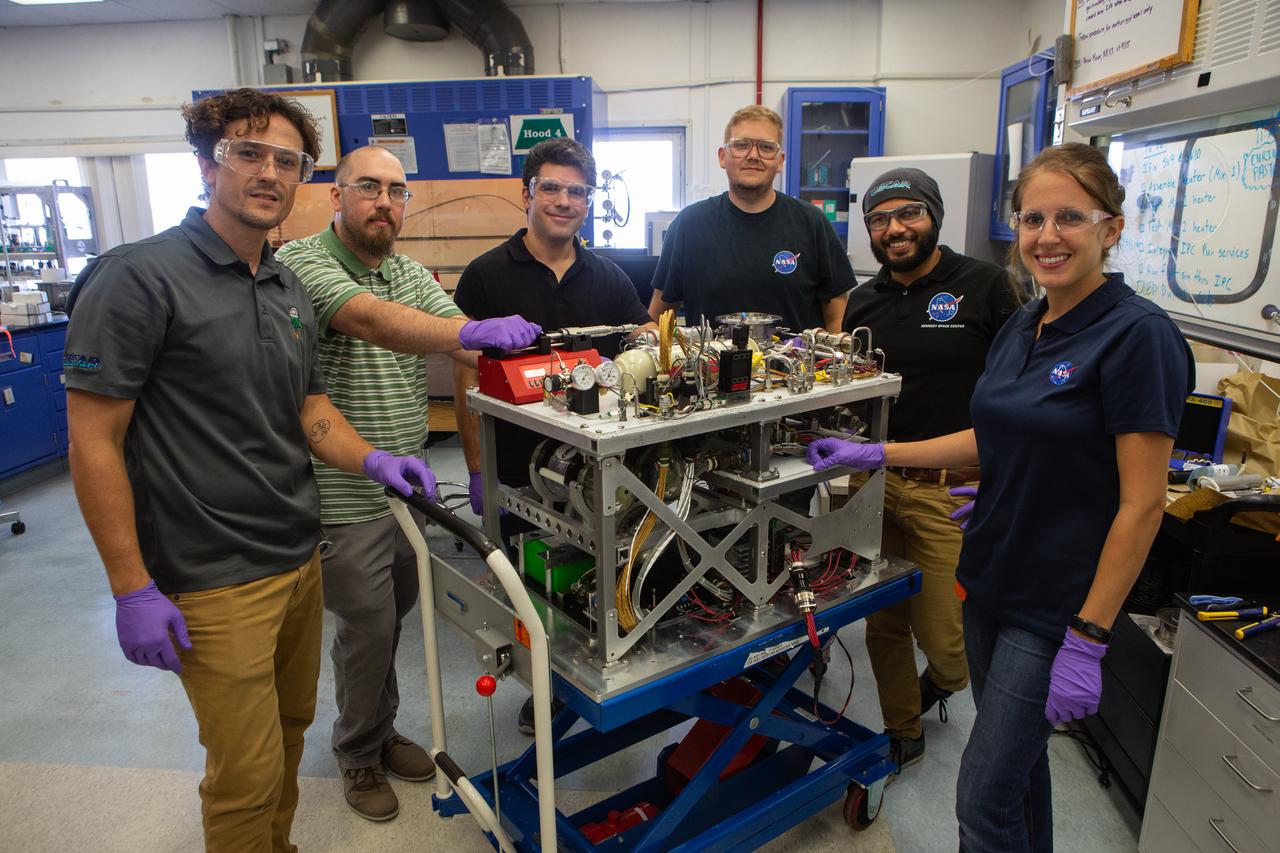
Members of NASA’s Orbital Syngas Commodity Augmentation Reactor, or OSCAR, team pause for a photo with the flight hardware on Oct. 10, 2019, in the Space Station Processing Facility at the agency’s Kennedy Space Center in Florida. From left are Gino Carro, Tom Cauvel, Jaime Toro, Evan Bell, Malay Shah and Annie Meier. OSCAR is an Early Career Initiative project at the spaceport that studies technology to convert trash and human waste into useful gasses such as methane, hydrogen and carbon dioxide. By processing small pieces of trash in a high-temperature reactor, OSCAR is advancing new and innovative technology for managing waste in space. A prototype has been developed, and the team is in the process of constructing a new rig for a suborbital flight test.
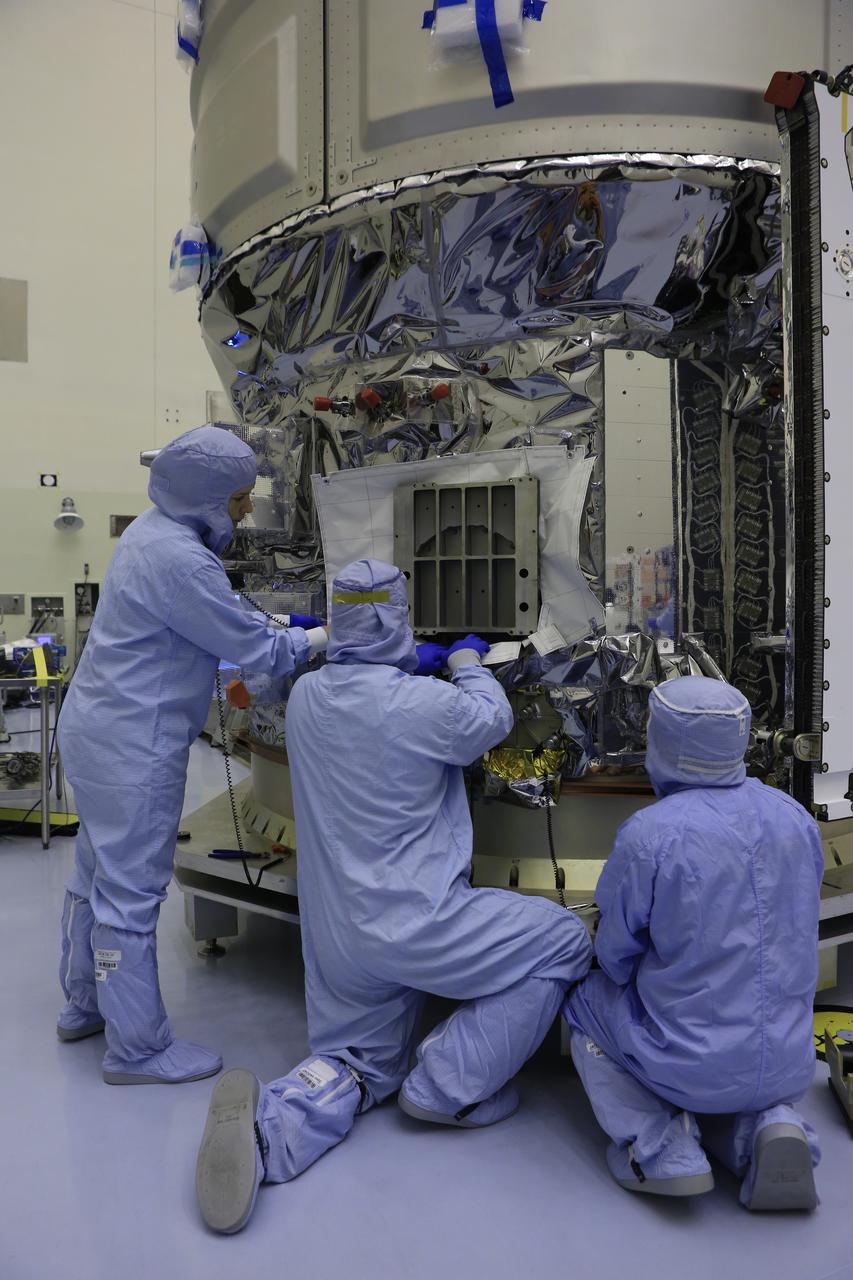
Inside the Payload Hazardous Servicing Facility at NASA's Kennedy Space Center in Florida, technicians install thermal blankets around the area where several Nanoracks will be installed on the exterior of the Orbital ATK Cygnus pressurized cargo module. The Orbital ATK CRS-7 commercial resupply services mission to the International Space Station is scheduled to launch atop a United Launch Alliance Atlas V rocket from Space Launch Complex 41 at Cape Canaveral Air Force Station no earlier than March 21, 2017. Cygnus will deliver 7,600 pounds of supplies, equipment and scientific research materials to the space station.
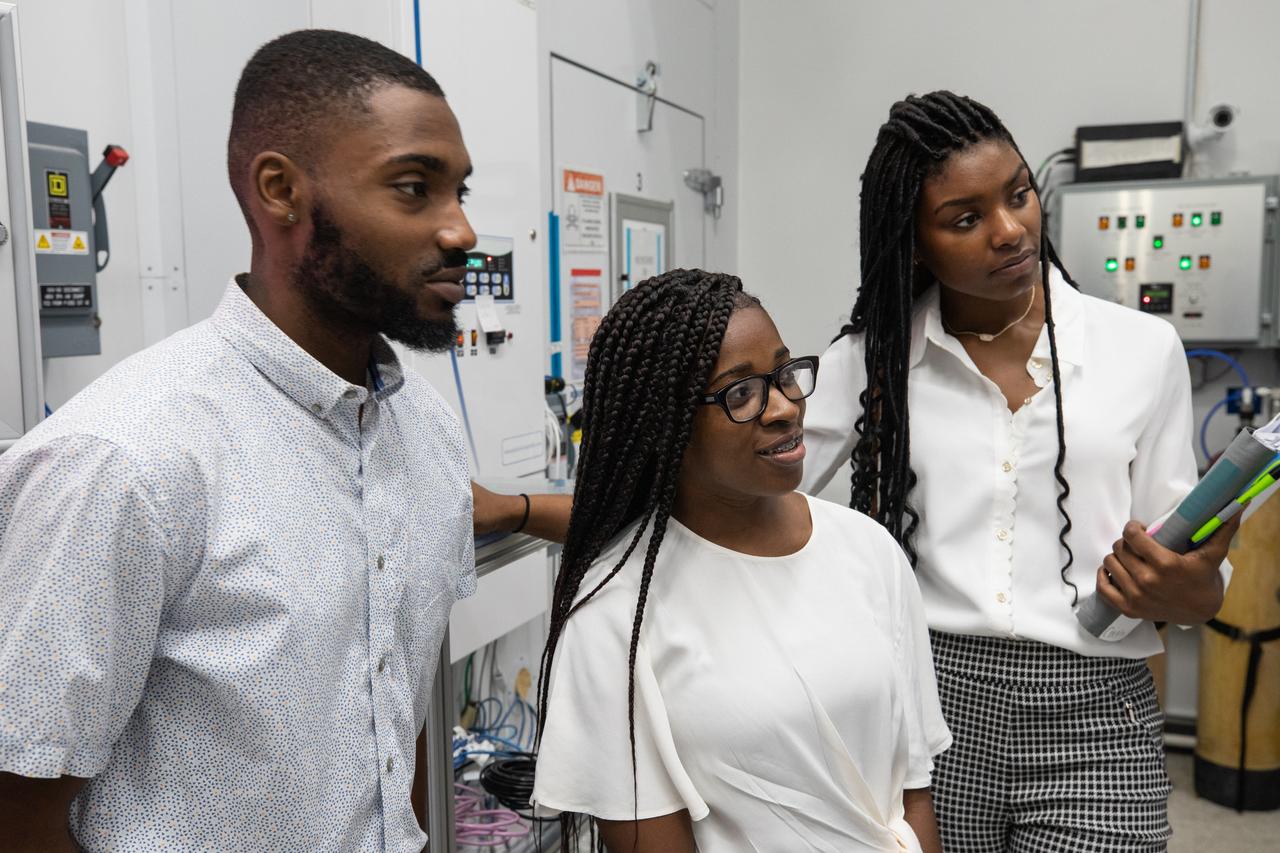
Langston University students, from left, Sherman Cravens, Makyah Farris and Courtney Miller listen to a presentation inside a Space Station Processing Facility lab at Kennedy Space Center on Sept. 18, 2019. The students were part of a tour of the Florida spaceport organized by NASA’s Office of Education and Byron Quinn, Ph.D., Langston University director of the Science Research Institute. The visit included stops at SwampWorks, the Neil Armstrong Operations and Checkout Building, the Vehicle Assembly Building, the visitor complex and the Center for Space Education.
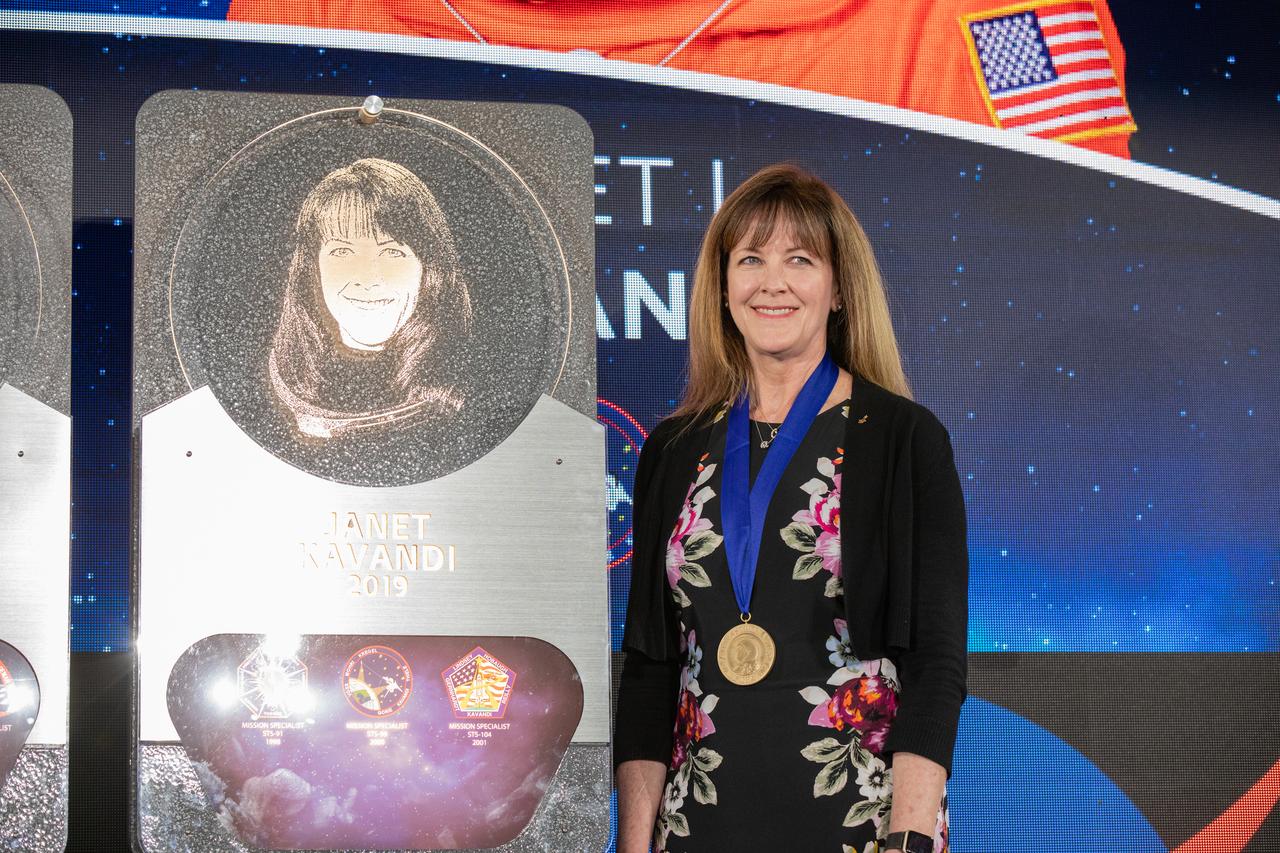
Veteran NASA astronauts James Buchli and Janet Kavandi were inducted into the U.S. Astronaut Hall of Fame in a public ceremony at Kennedy Space Center Visitor Complex in the Space Shuttle Atlantis attraction on April 6, 2019.
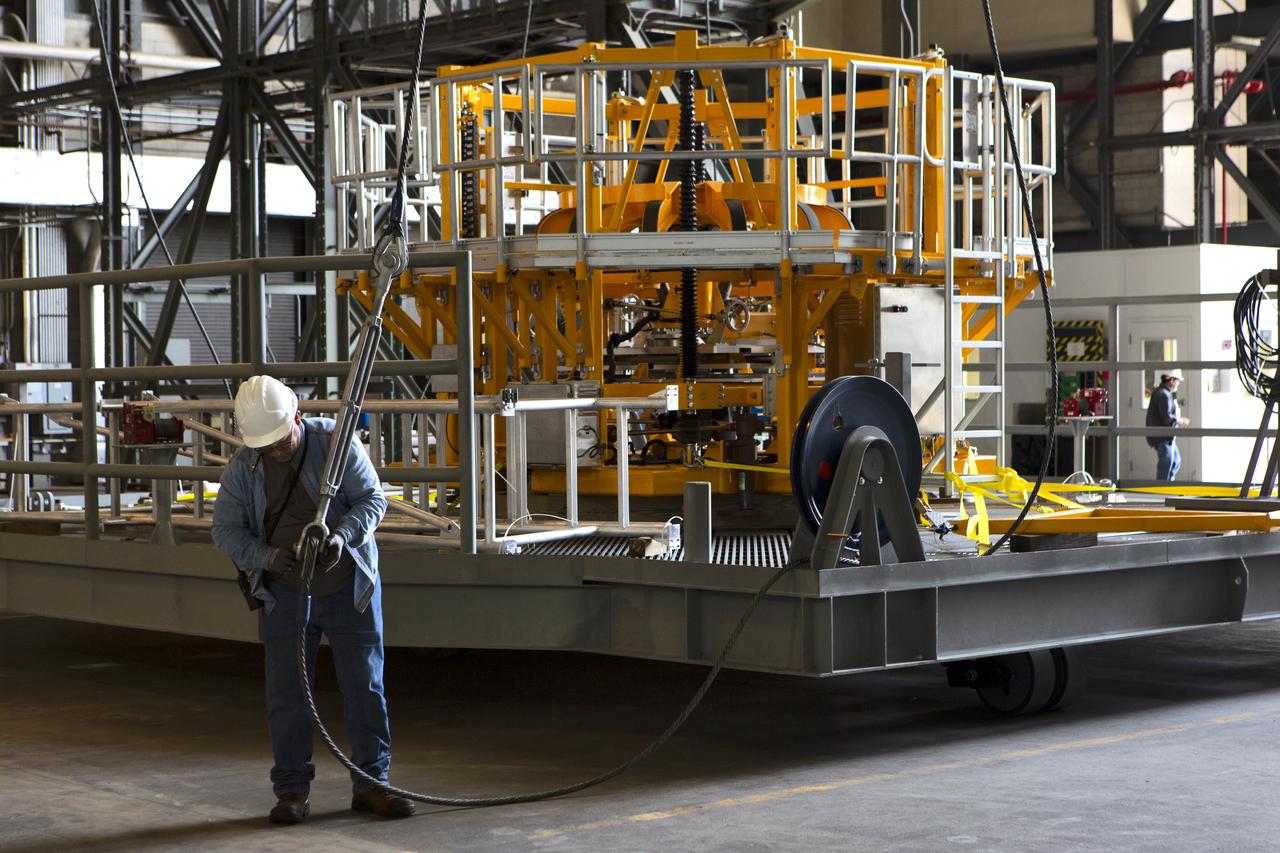
The engine vertical installer for NASA’s Space Launch System (SLS) is inside the Vehicle Assembly at NASA’s Kennedy Space Center in Florida on April 25, 2019. Preparations are underway to lift the engine installer up and into High Bay 3. The engine installer arrived from the manufacturer, Precision Fabrication and Cleaning in Canaveral Groves, Florida. The new ground support equipment will be ready for preflight processing in the event one of the four RS-25 engines on the core stage of the SLS rocket needs to be replaced. During launch of the SLS and Orion spacecraft, the four core stage engines will provide the thrust needed to lift the rocket and Orion spacecraft off Launch Pad 39B at Kennedy for Exploration Mission-1. The uncrewed Orion will travel on a three-week test mission thousands of miles beyond the Moon and back to Earth for a splashdown in the Pacific Ocean.
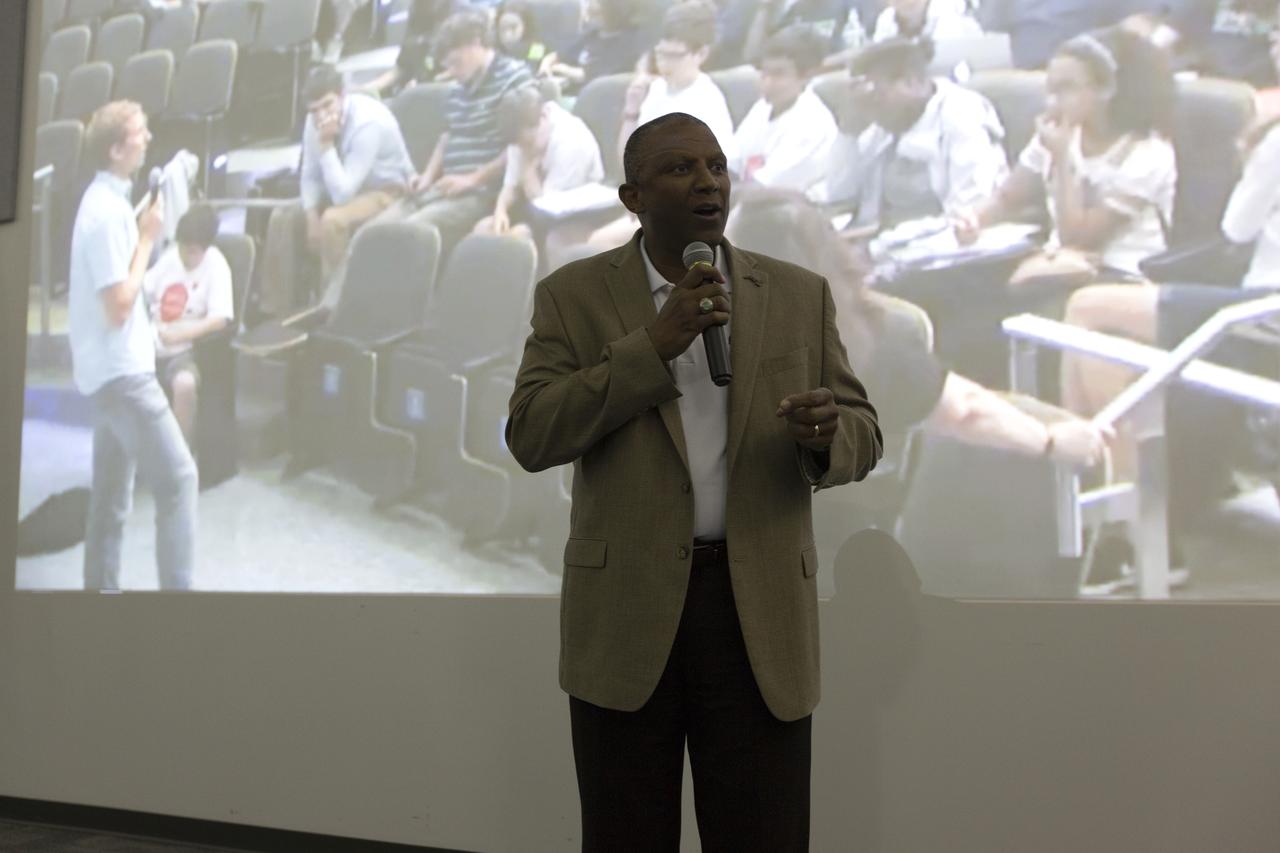
NASA Kennedy Space Center Associate Director Kelvin Manning speaks to students and sponsors in the spaceport’s Center for Space Education. Teams from across the state of Florida were gathered at Kennedy for the finals of the Zero Robotics Middle School Summer Program national championship. The five-week program allows rising sixth- through ninth-graders to write programs for small satellites called SPHERES (Synchronized, Position, Hold, Engage, Reorient, Experimental Satellites). Finalists saw their code tested aboard the International Space Station.
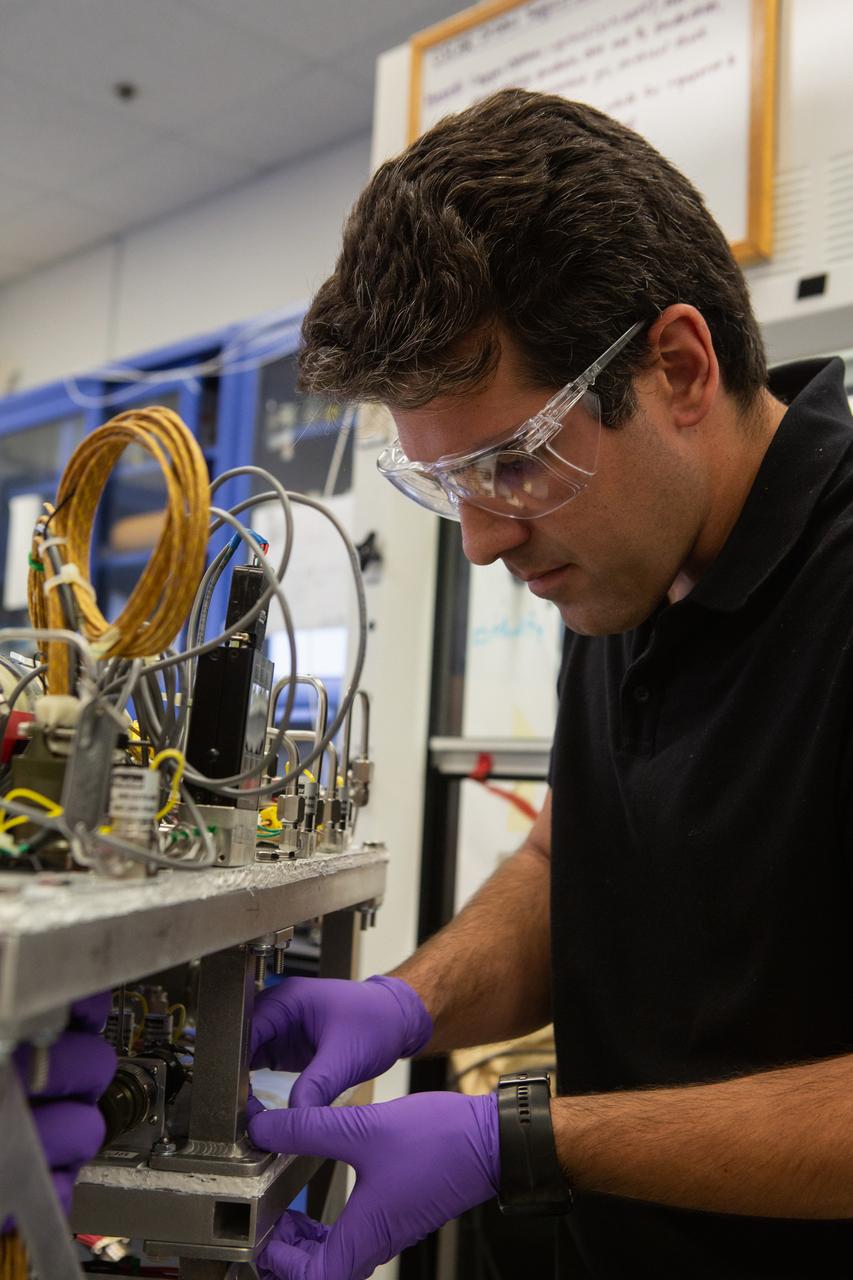
Jaime Toro assembles the flight hardware for NASA’s Orbital Syngas Commodity Augmentation Reactor, or OSCAR, on Oct. 10, 2019, in the Space Station Processing Facility at the agency’s Kennedy Space Center in Florida. OSCAR is an Early Career Initiative project at the spaceport that studies technology to convert trash and human waste into useful gasses such as methane, hydrogen and carbon dioxide. By processing small pieces of trash in a high-temperature reactor, OSCAR is advancing new and innovative technology for managing waste in space. A prototype has been developed, and the team is in the process of constructing a new rig for a suborbital flight test.
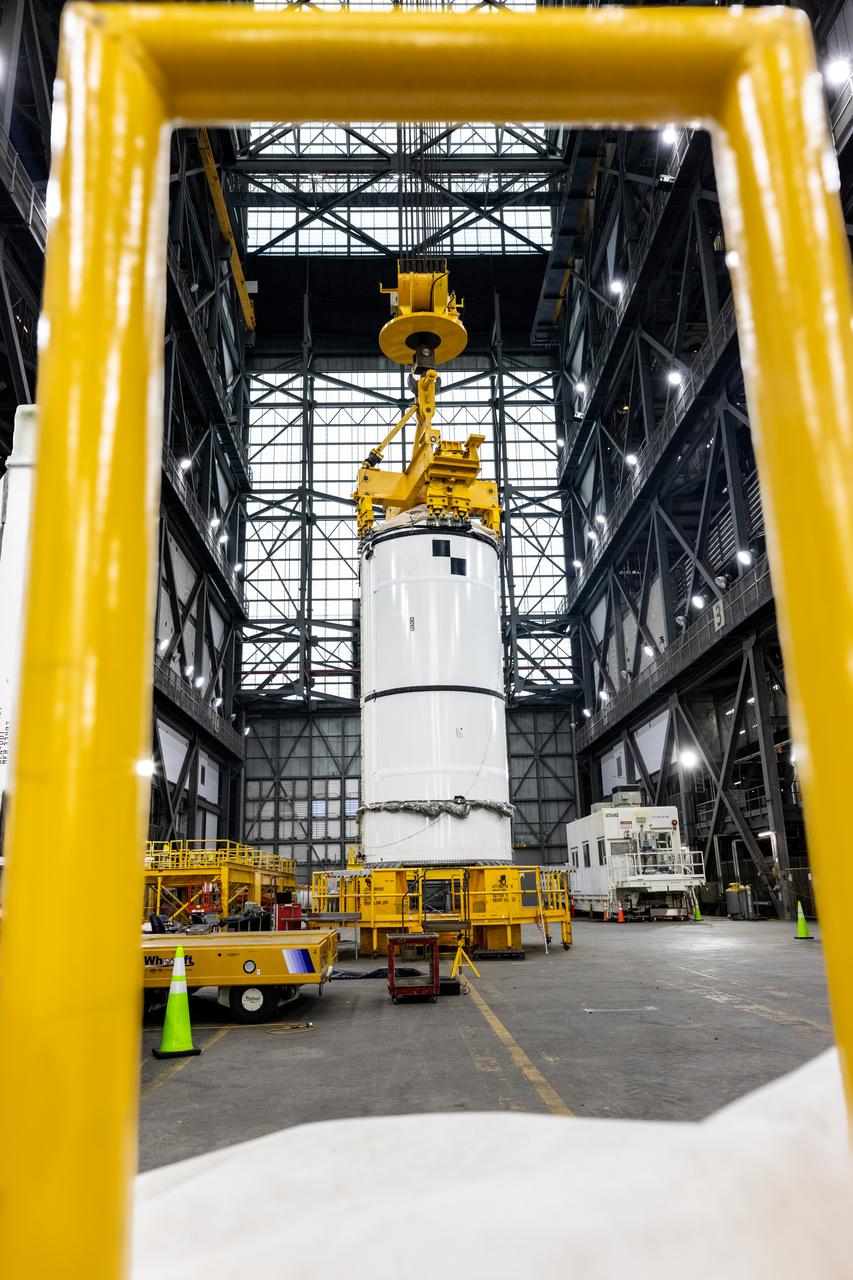
Technicians with Exploration Ground Systems prepare to transfer and lift the right forward segment for NASA’s SLS (Space Launch System) Moon rocket boosters into High Bay 3 inside NASA’s Vehicle Assembly Building in Florida on Wednesday, Feb. 12, 2025. The right forward segment will be attached to the center forward segment on mobile launcher 1. The twin solid boosters, five segments on each side, will help support the remaining rocket components and the Orion spacecraft during final assembly of the Artemis II Moon rocket and provide more than 75 percent of the total SLS thrust during liftoff from NASA Kennedy’s Launch Pad 39B.
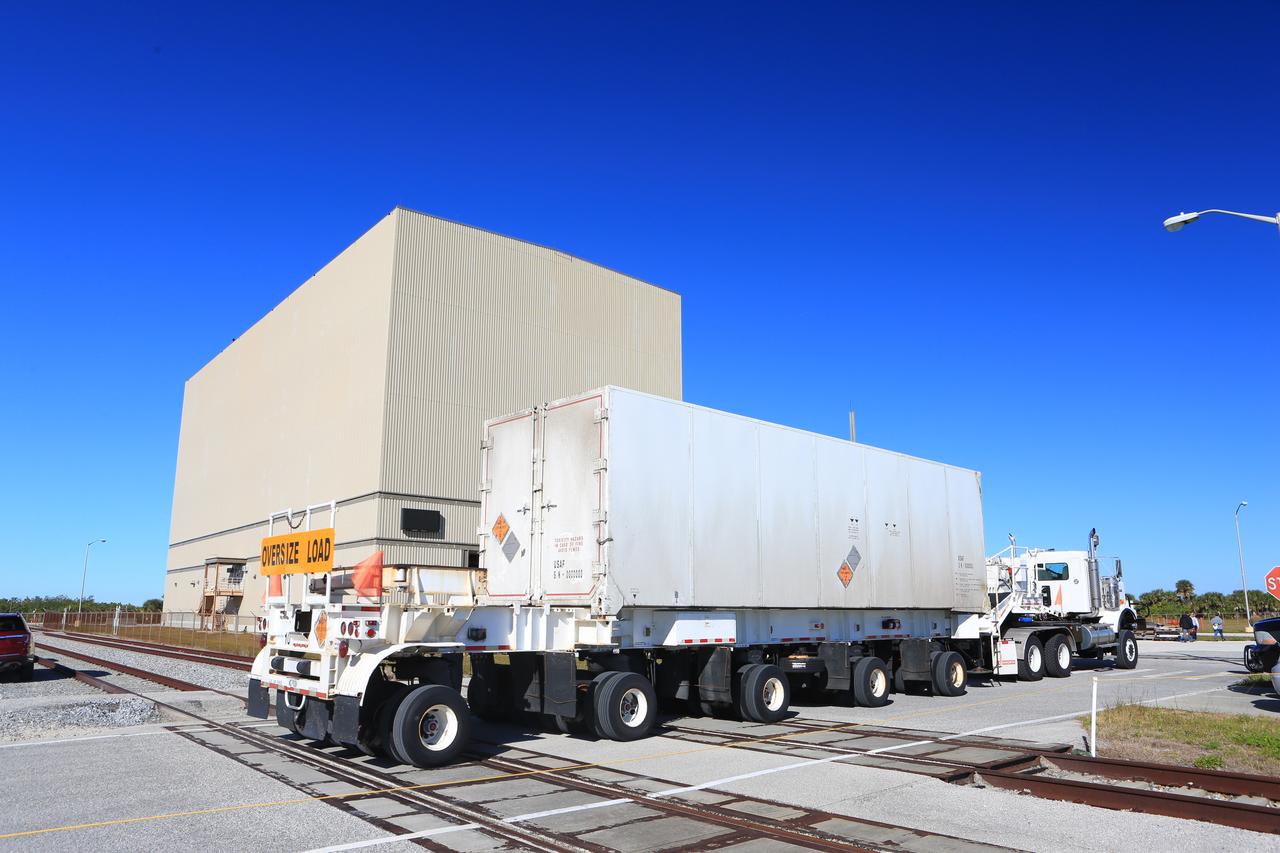
The Northrup Grumman SR118 for Ascent Abort-2 (AA-2) which is loaded with propellants moves from the Launch Abort System Facility (LASF) to the Rotation Protection and Surge Facility at Kennedy Space Center for continued flight processing on Jan. 29, 2019.
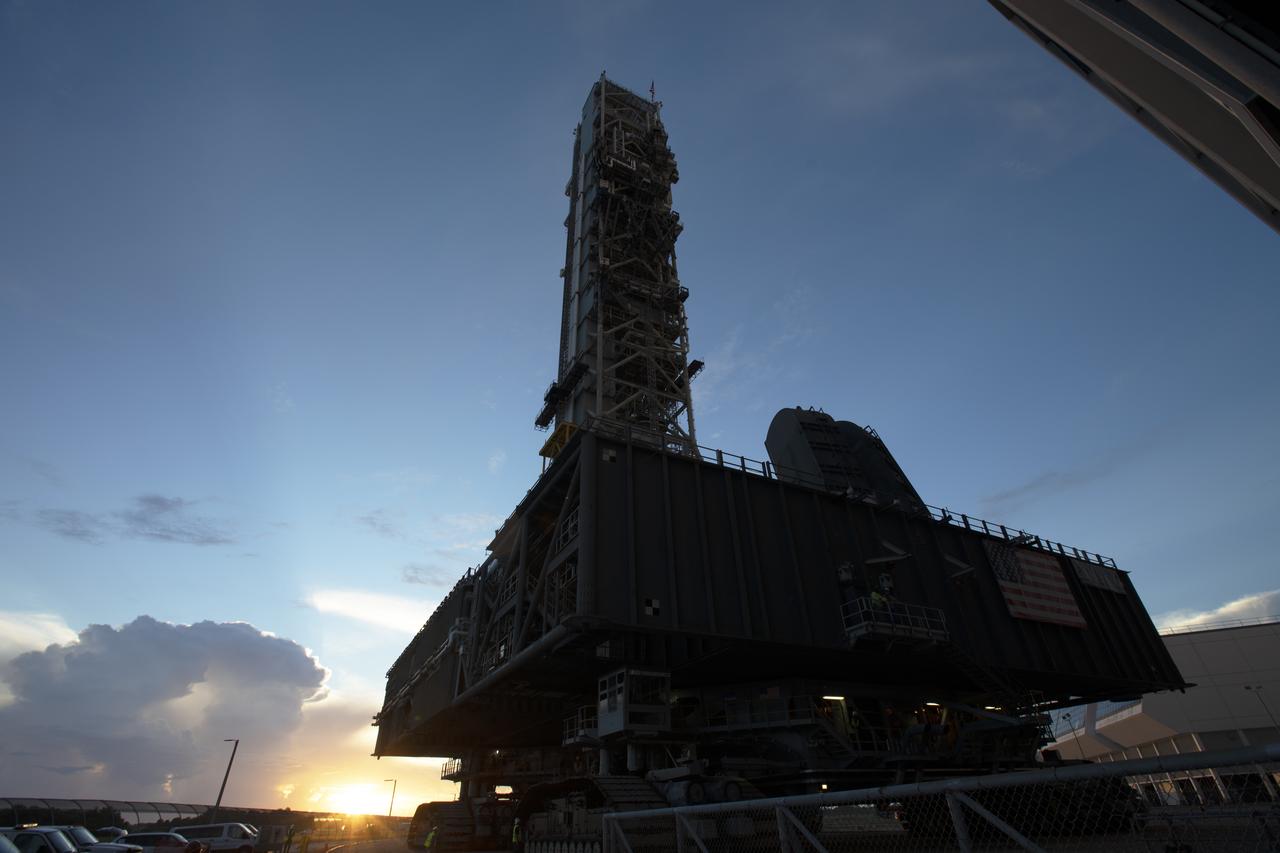
NASA's mobile launcher, atop crawler-transporter 2, is at the entrance to High Bay 3 at the Vehicle Assembly Building (VAB) at sunrise on Sept. 8, 2018, at NASA's Kennedy Space Center in Florida. The mobile launcher departed Launch Pad 39B after several days of testing with the pad. This is the first time that the modified mobile launcher made the trip to the pad and the VAB. The mobile launcher will spend seven months in the VAB undergoing testing. The 380-foot-tall structure is equipped with the crew access arm and several umbilicals that will provide power, environmental control, pneumatics, communication and electrical connections to the agency's Space Launch System and Orion spacecraft. Exploration Ground Systems is preparing the ground systems necessary to launch SLS and Orion on Exploration Mission-1, missions to the Moon and on to Mars.
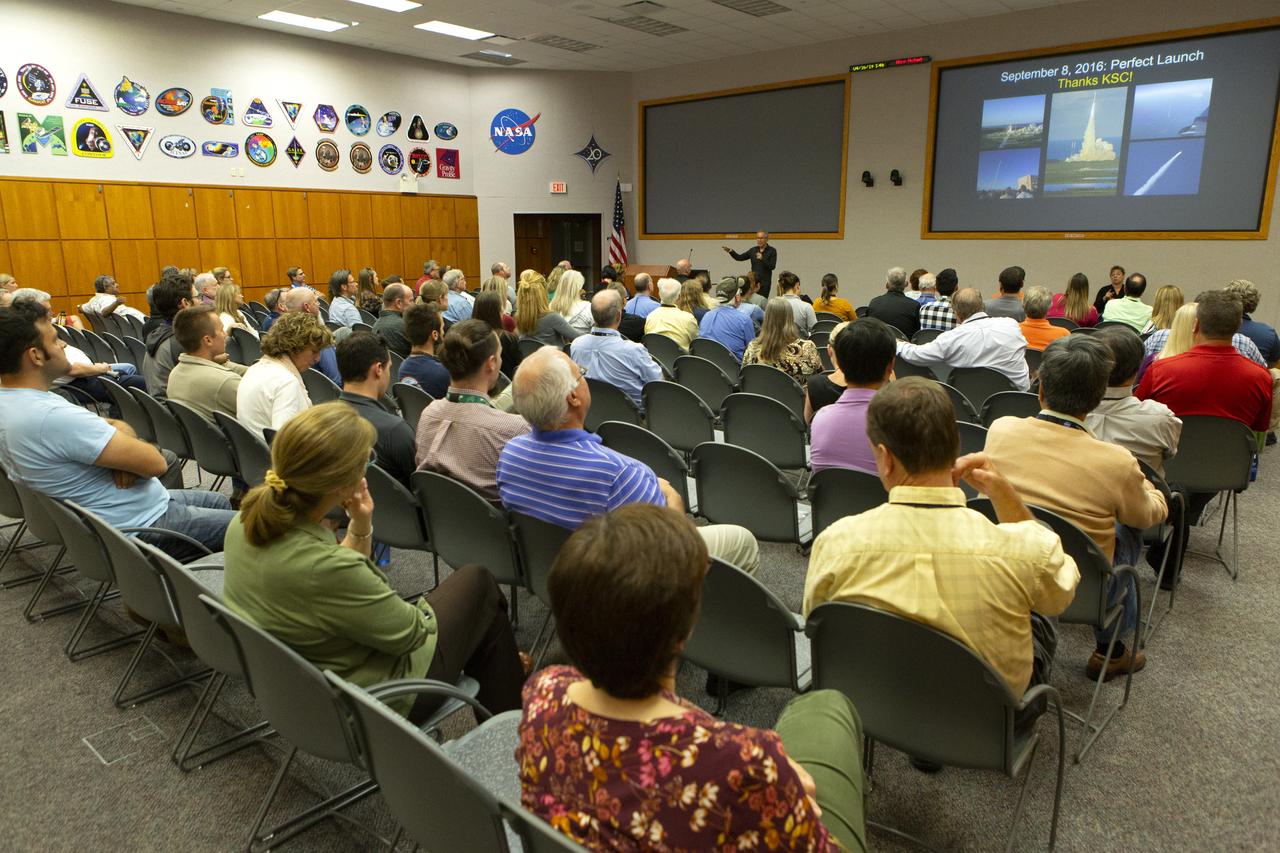
Kennedy Space Center employees gather in the Florida spaceport’s Neil Armstrong O&C Mission Briefing Room on April 16, 2019, to hear Dr. Humberto Campins from the University of Central Florida give a status update on NASA’s Origins, Spectral Interpretation, Resource Identification, Security-Regolith Explorer (OSIRIS-REx). The first U.S. mission to sample an asteroid, OSIRIS-REx launched from Cape Canaveral Air Force Station on Sept. 8, 2016 aboard a United Launch Alliance Atlas V rocket. Management of the launch service for OSIRIS-REx was the responsibility of NASA’s Launch Services Program, based at Kennedy.
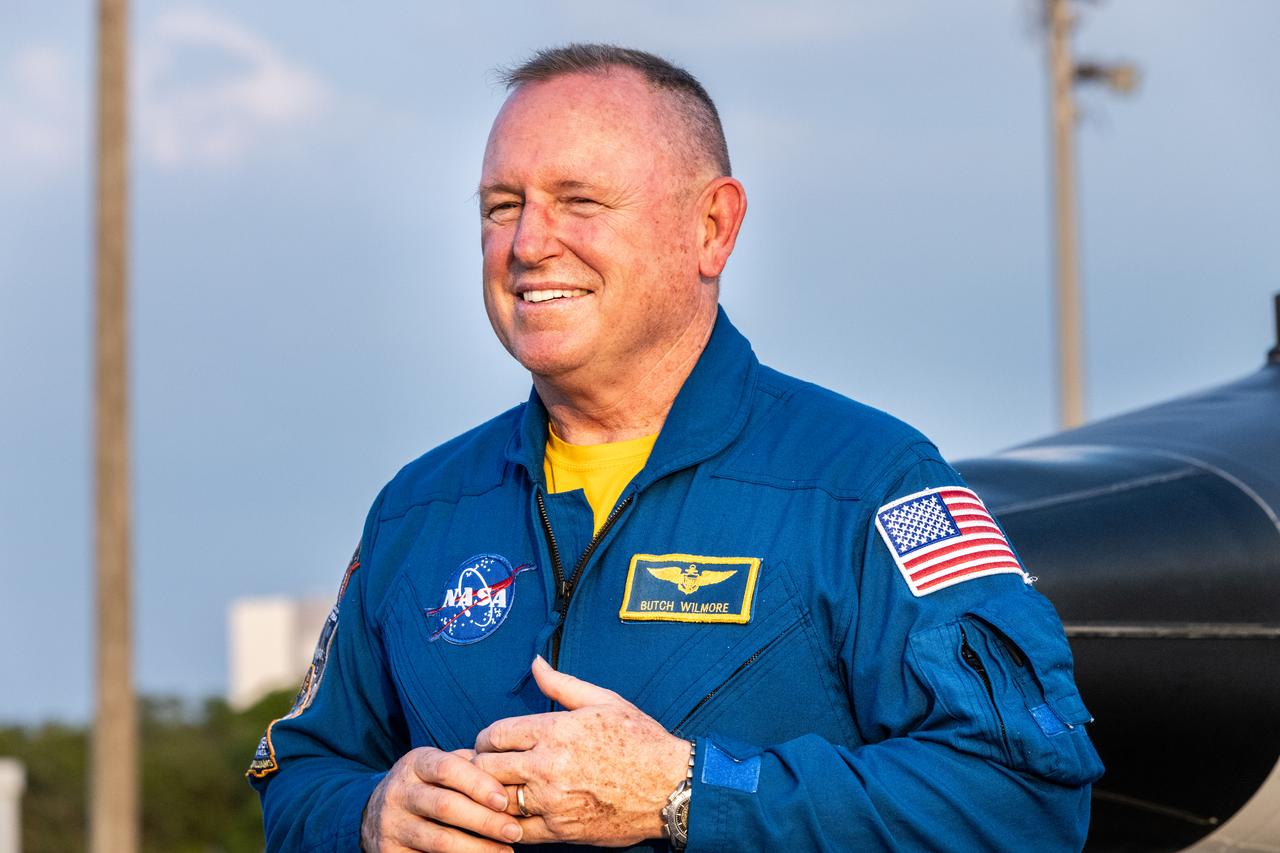
NASA astronaut Butch Wilmore poses for photos during his arrival back at the Launch and Landing Facility at the agency’s Kennedy Space Center in Florida on Tuesday, May 28, 2024, ahead of NASA’s Boeing Crew Flight Test. The first launch attempt on May 6 was scrubbed. As part of the agency’s Commercial Crew Program, Wilmore and fellow crew member Suni Williams are the first to launch to the International Space Station aboard Boeing’s Starliner spacecraft atop a United Launch Alliance Atlas V rocket from Space Launch Complex-41 at nearby Cape Canaveral Space Force Station. Liftoff is scheduled for 12:25 p.m. EDT on Saturday, June 1.
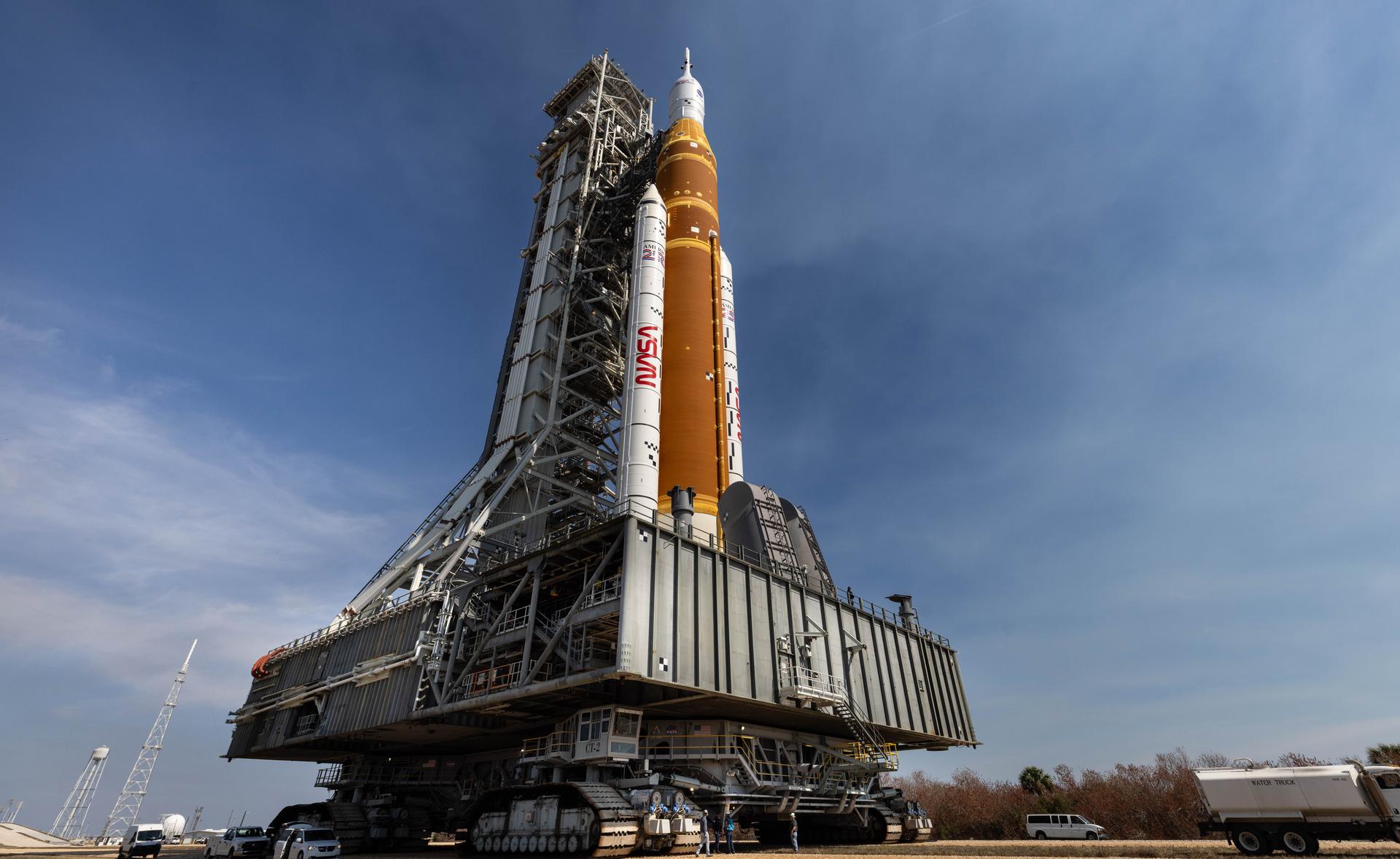
NASA’s crawler-transporter 2, carrying NASA’s Artemis II SLS (Space Launch System) rocket with the Orion spacecraft secured to mobile launcher 1, rolls back Wednesday, Feb. 25, 2026, to the Vehicle Assembly Building at NASA’s Kennedy Space Center in Florida to troubleshoot the flow of helium to the rocket’s upper stage, the interim cryogenic propulsion stage. Once complete, the SLS rocket will roll back to Launch Complex 39B to prepare to launch four astronauts around the Moon and back for the Artemis II test flight.
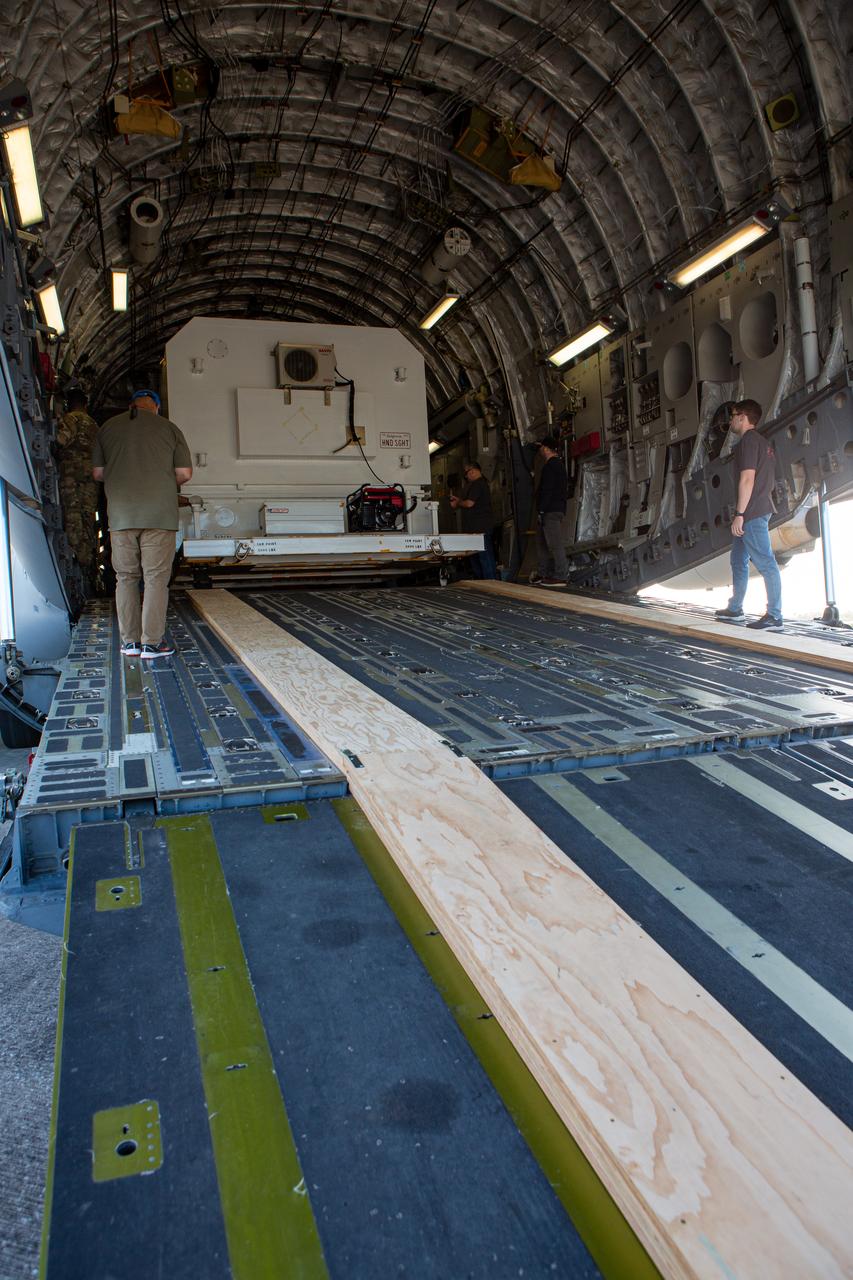
The Mars 2020 rover arrives at the Launch and Landing Facility, formerly known as the Shuttle Landing Facility, at NASA’s Kennedy Space Center on Feb. 12, 2020. The rover was delivered to the Florida spaceport on a C-17 aircraft, making a cross-country trip that started at NASA’s Jet Propulsion Laboratory in Pasadena, California. The mission, targeted for mid-July 2020, will launch aboard an Atlas V 541 rocket from Cape Canaveral Air Force Station. NASA’s Launch Services Program based at Kennedy is managing the launch.
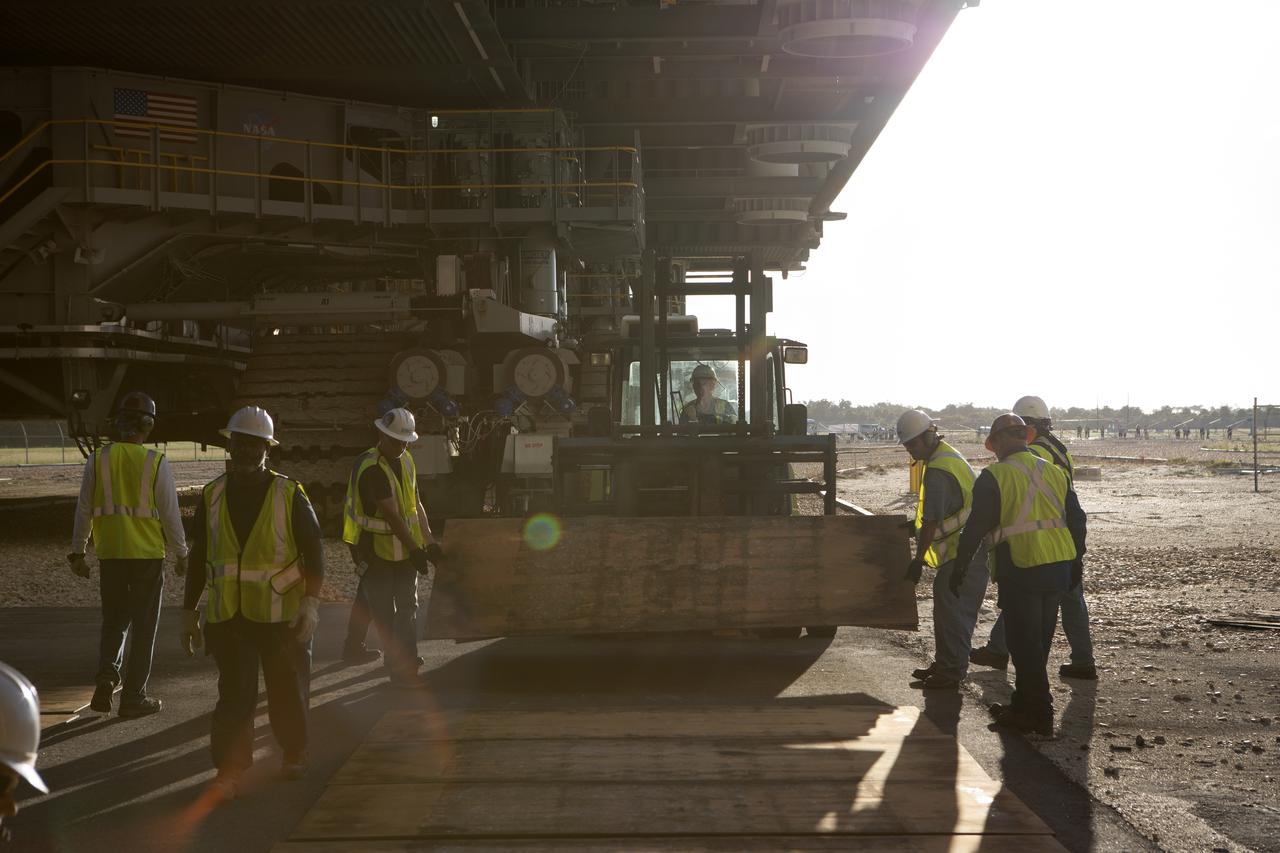
Technicians lay wooden planks down in the tracks to the entrance to High Bay 3 in the Vehicle Assembly Building (VAB), as mobile launcher, atop crawler-transporter 2, moves into the VAB on Sept. 8, 2018, at NASA's Kennedy Space Center in Florida. The mobile launcher departed Launch Pad 39B after several days of testing with the pad. This is the first time that the modified mobile launcher made the trip to the pad and the VAB. The mobile launcher will spend seven months in the VAB undergoing testing. The 380-foot-tall structure is equipped with the crew access arm and several umbilicals that will provide power, environmental control, pneumatics, communication and electrical connections to the agency's Space Launch System and Orion spacecraft. Exploration Ground Systems is preparing the ground systems necessary to launch SLS and Orion on Exploration Mission-1, missions to the Moon and on to Mars.
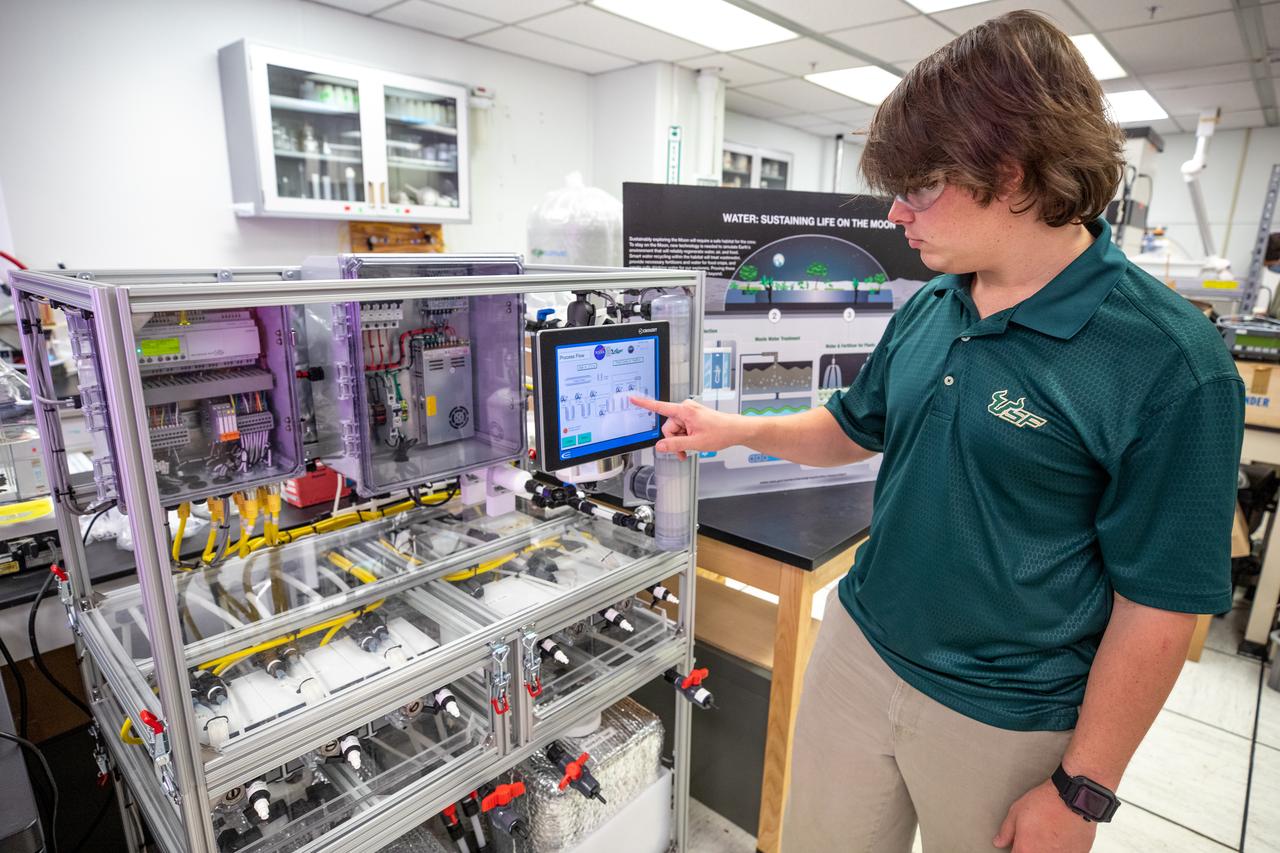
A prototype of Organic Processor Assembly (OPA) – technology capable of treating mixed organic wastes – arrives at the Neil Armstrong Operations and Checkout Building at NASA’s Kennedy Space Center in Florida on Aug. 19, 2020. Developed through a collaboration between Kennedy’s Dr. Luke Roberson and the University of South Florida’s Dr. Daniel Yeh, the OPA was designed for an early planetary base scenario to help close the resource recovery loop, decreasing the agency’s dependence on resupply missions. At the heart of the OPA is an anaerobic membrane bioreactor – a hybrid technology that couples anaerobic digestion with membrane filtration.
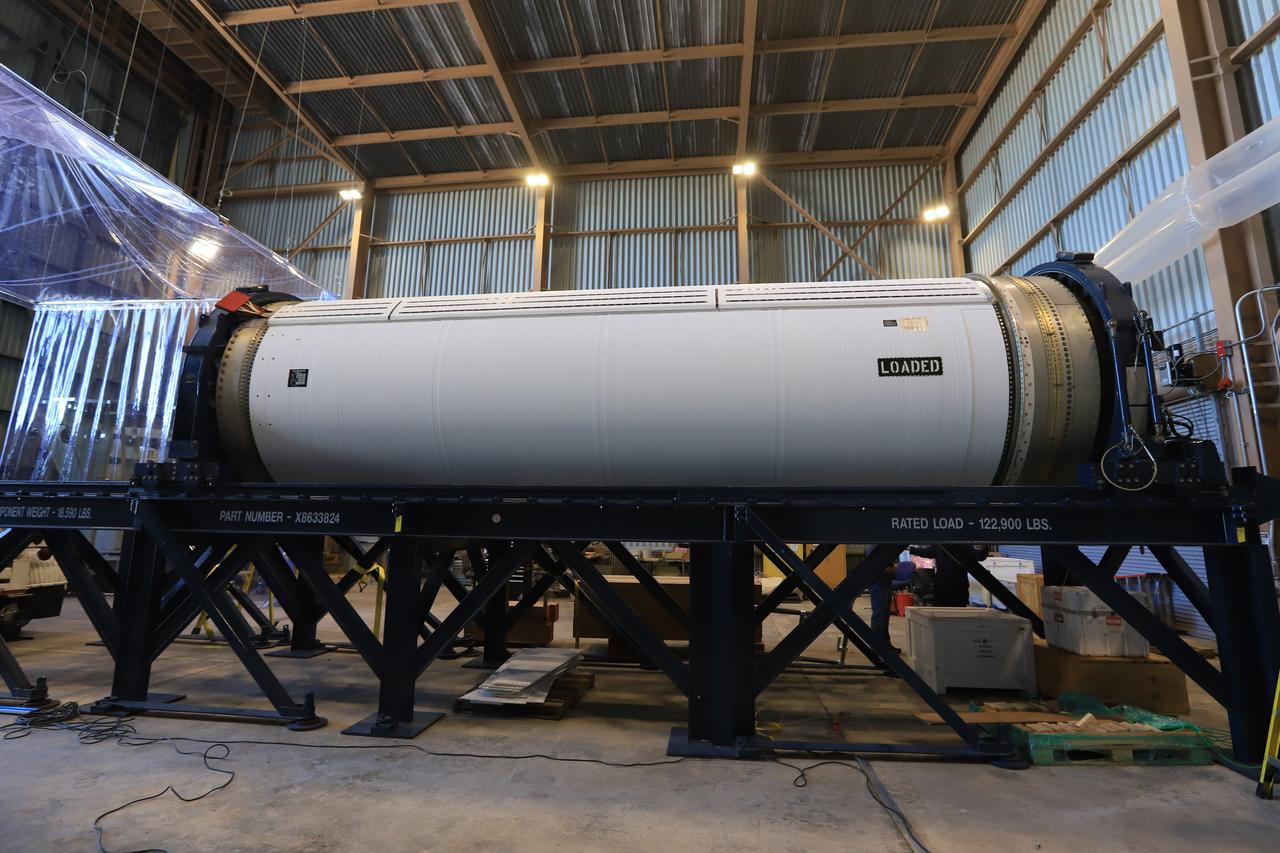
The Northrup Grumman SR118 for Ascent Abort-2 (AA-2) which is loaded with propellants moves from the Launch Abort System Facility (LASF) to the Rotation Protection and Surge Facility at Kennedy Space Center for continued flight processing on Jan. 29, 2019.
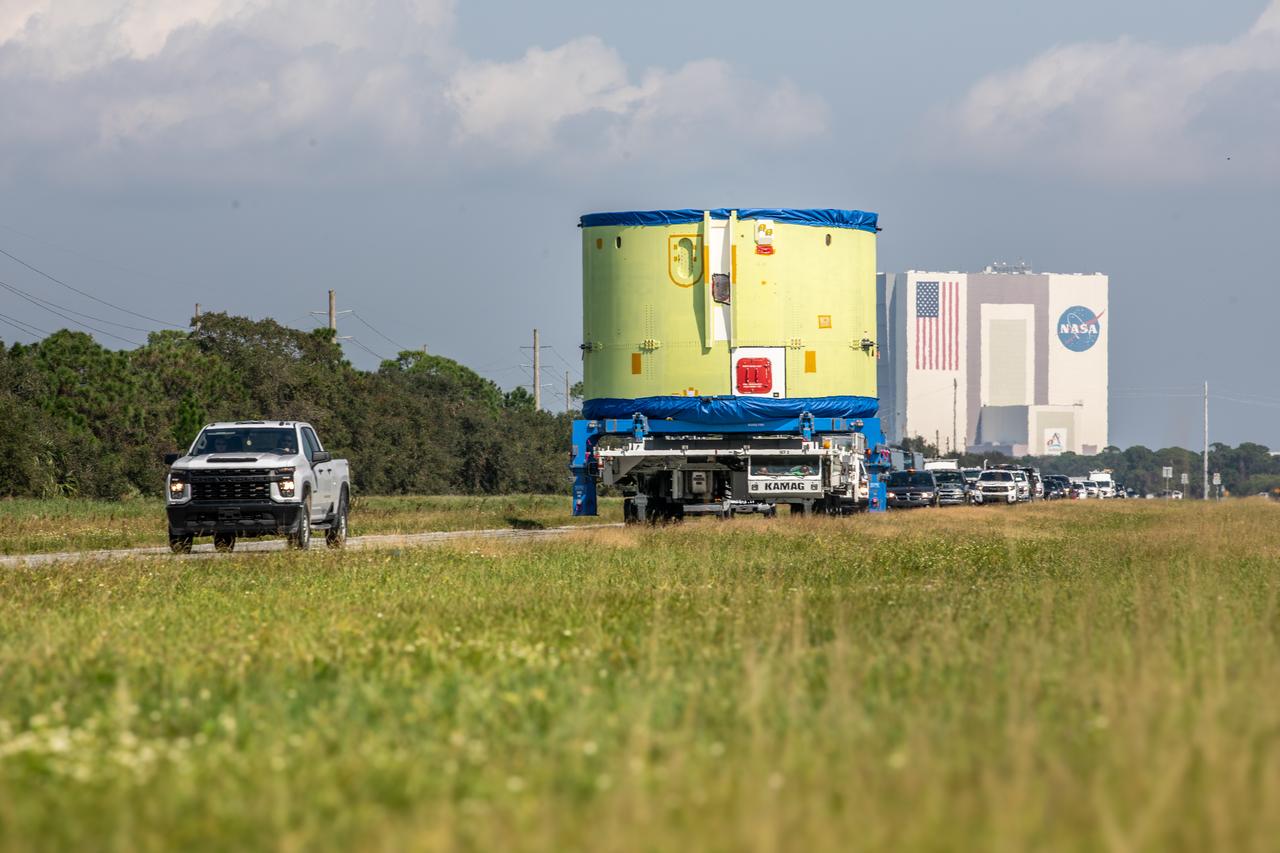
Teams from NASA’s Exploration Ground Systems transport the engine section of the agency’s Artemis IV SLS (Space Launch System) core stage from the Vehicle Assembly Building at NASA’s Kennedy Space Center in Florida to the spaceport’s Space Systems Processing Facility (SSPF) on Tuesday, Oct. 15, 2024. NASA’s Pegasus barge delivered the core stage engine section housing the four RS-25 engines from NASA’s Michoud Assembly Facility in New Orleans, Louisiana to NASA Kennedy on Thursday, Sept. 5, 2024. The engine section is one the most complex and intricate parts of the rocket stage that will help power the Artemis missions to the Moon.
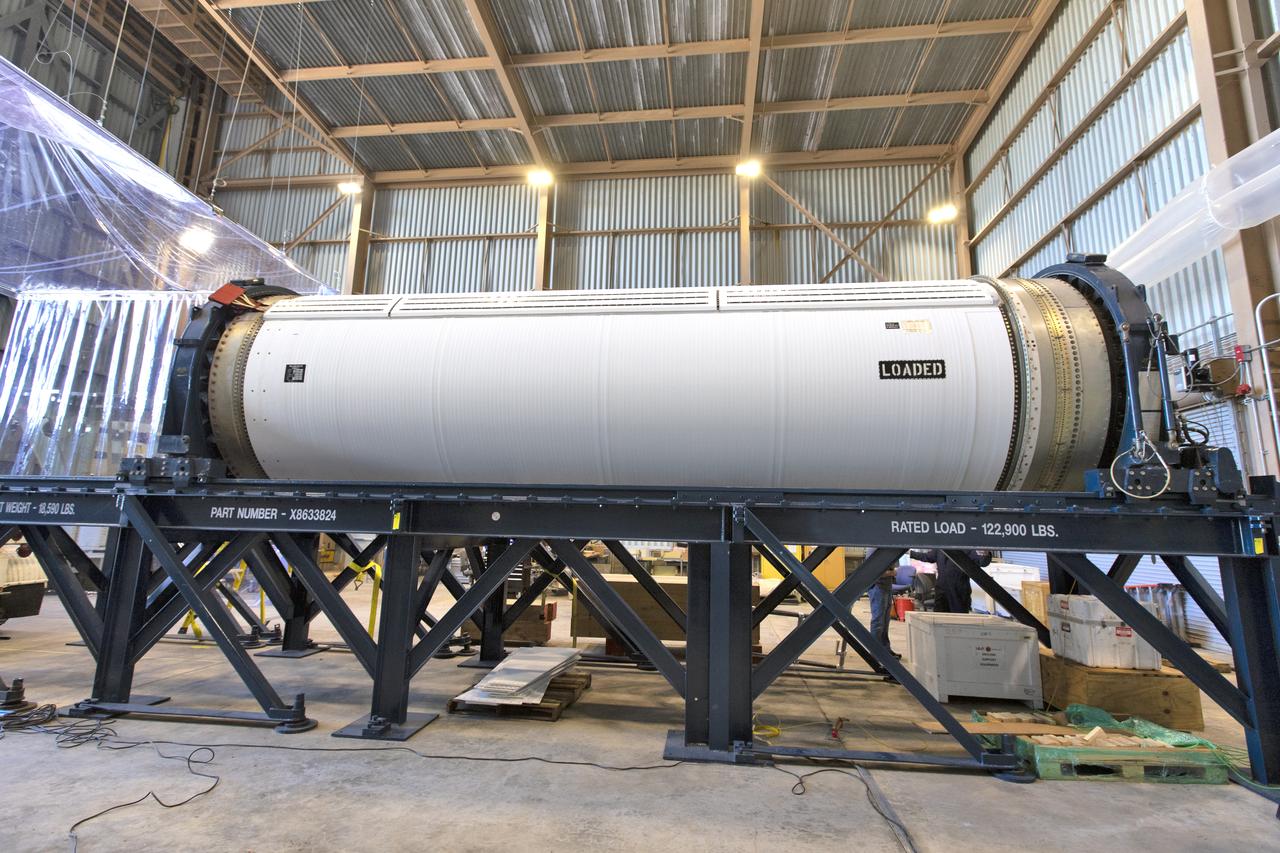
The Northrop Grumman-provided ascent test booster for the Orion Ascent Abort-2 (AA-2) Flight Test is secured on a work stand inside the Rotation, Processing and Surge Facility (RPSF) at NASA’s Kennedy Space Center in Florida on Jan. 29, 2019. The booster will be outfitted for flight. AA-2 is a full-stress test of the Launch Abort System, scheduled for April 2019. AA-2 will launch from Space Launch Complex 46, carrying a fully functional LAS and a 22,000-pound Orion test vehicle to an altitude of 31,000 feet and traveling at more than 1,000 miles an hour. The test will verify the LAS can steer the crew module and astronauts aboard to safety in the event of an issue with the Space Launch System (SLS) rocket when the spacecraft is under the highest aerodynamic loads it will experience during a rapid climb into space. NASA's Orion and Exploration Ground Systems programs and contractors from Jacob's and Northrup Grumman in conjunction with the Air Force Space and Missile Center's Launch Operations branch are performing flight operations for AA-2.