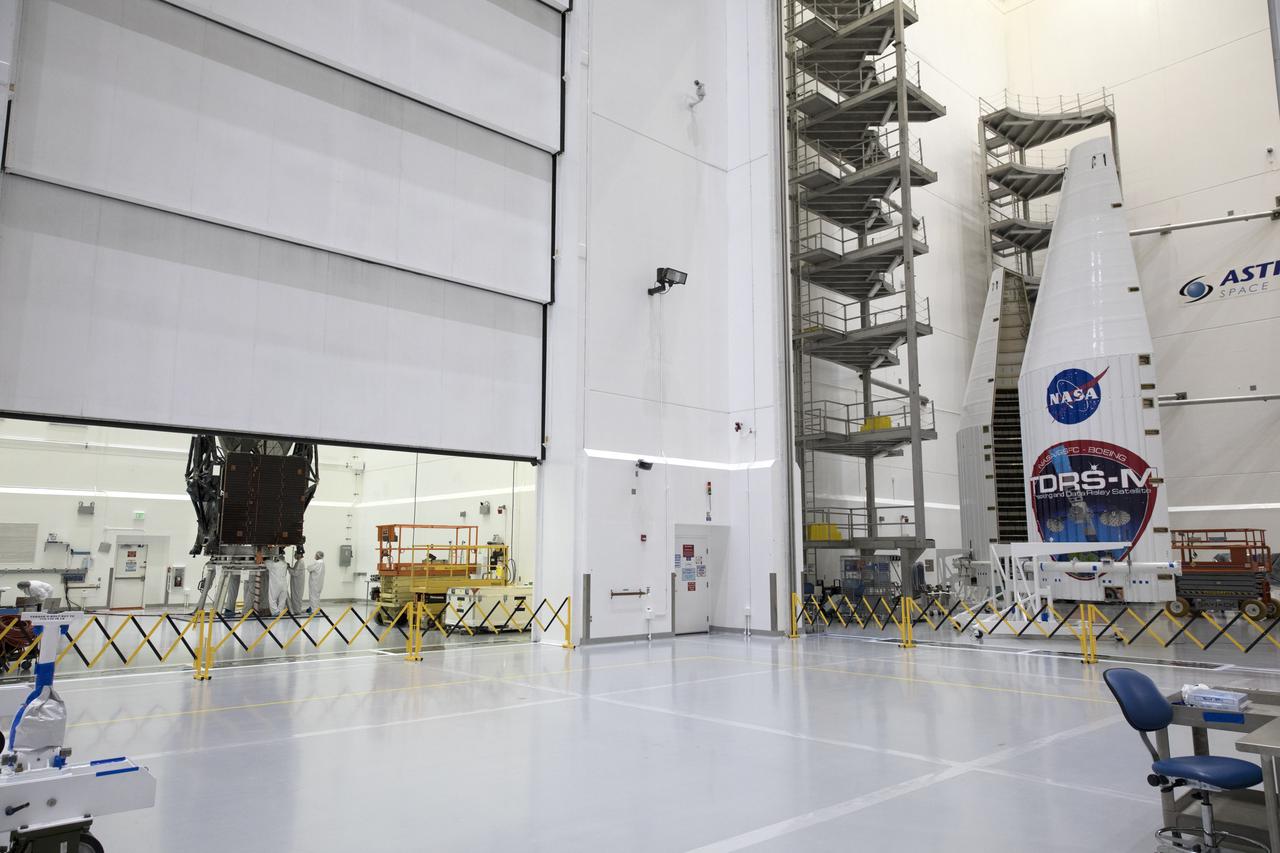
Inside the Astrotech facility in Titusville, Florida, NASA's Tracking and Data Relay Satellite, TDRS-M, is undergoing final checkouts in a test cell behind a large door. The spacecraft soon will be encapsulated in its payload fairing, seen on the right. TDRS-M is the latest spacecraft destined for the agency's constellation of communications satellites that allows nearly continuous contact with orbiting spacecraft ranging from the International Space Station and Hubble Space Telescope to the array of scientific observatories. Liftoff atop a United Launch Alliance Atlas V rocket is scheduled to take place from Space Launch Complex 41 at Cape Canaveral Air Force Station at 9:02 a.m. EDT Aug. 3, 2017.
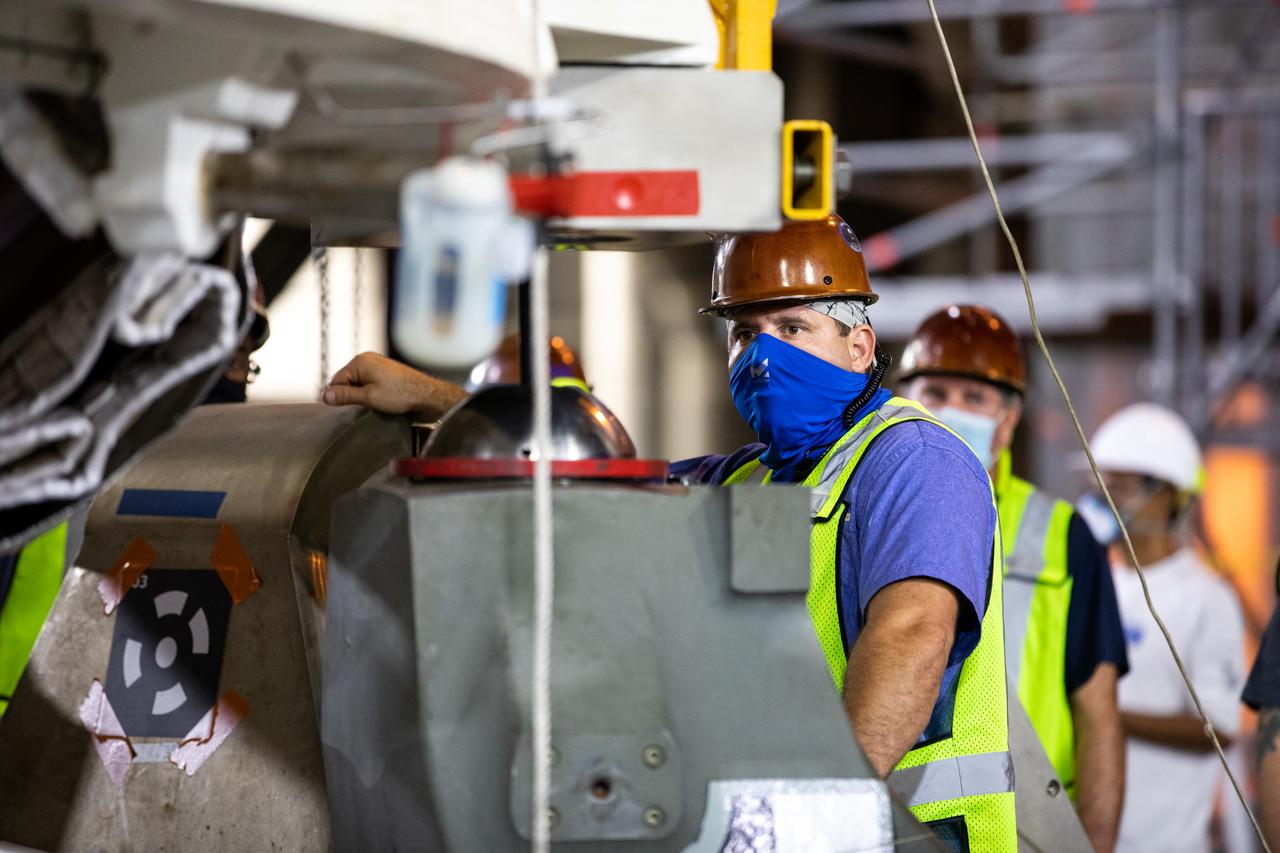
In the Vehicle Assembly Building (VAB) at NASA’s Kennedy Space Center in Florida, Tristan Bremner, a launch vehicle technician with Jacobs, helps secure the second of two Artemis I aft booster segments for the Space Launch System onto the mobile launcher in High Bay 3 on Nov. 24, 2020. Workers with Exploration Ground Systems and contractor Jacobs teams will stack the twin five-segment boosters on the mobile launcher over a number of weeks. When the core stage arrives, it will join the boosters on the mobile launcher, followed by the interim cryogenic propulsion stage and Orion spacecraft. Manufactured by Northrop Grumman in Utah, the twin boosters provide more than 75 percent of the total SLS thrust at launch. The SLS is managed by Marshall Space Flight Center in Huntsville, Alabama. Under the Artemis program, NASA will land the first woman and the next man on the Moon by 2024. The first in a series of increasingly complex missions, Artemis I will test the Orion spacecraft and SLS as an integrated system ahead of crewed flights to the Moon.
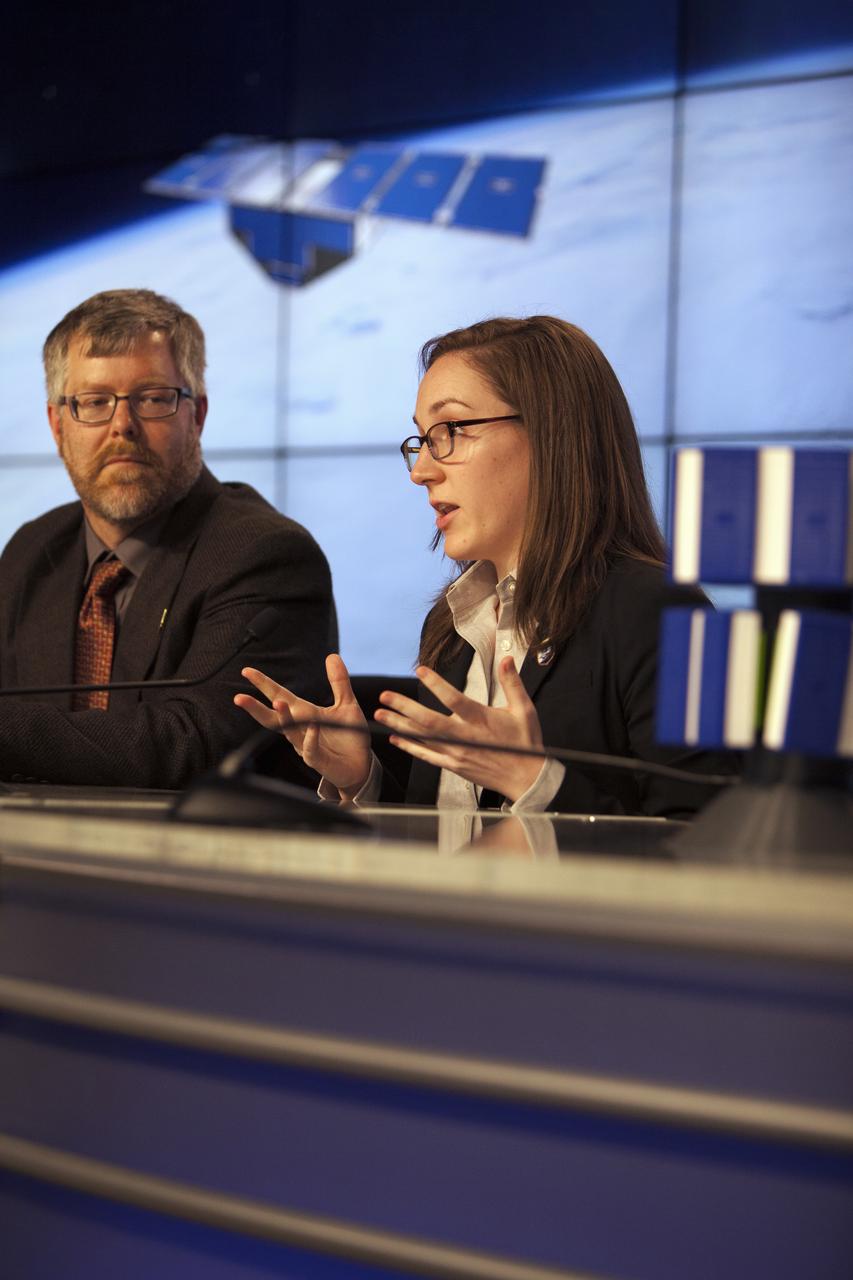
In the Kennedy Space Center’s Press Site auditorium, NASA and industry leaders speak to members of the media during a mission science briefing for the agency’s Cyclone Global Navigation Satellite System, or CYGNSS, spacecraft. From left are: Aaron Ridley, CYGNSS constellation scientist in the Climate and Space Department at the University of Michigan in Ann Arbor, Michigan; and Mary Morris, doctoral student in the Department of Climate and Space Sciences and Engineering at the University of Michigan. The eight CYGNSS satellites will make frequent and accurate measurements of ocean surface winds throughout the life cycle of tropical storms and hurricanes. The data will help scientists probe key air-sea interaction processes that take place near the core of storms, which are rapidly changing and play a crucial role in the beginning and intensification of hurricanes.
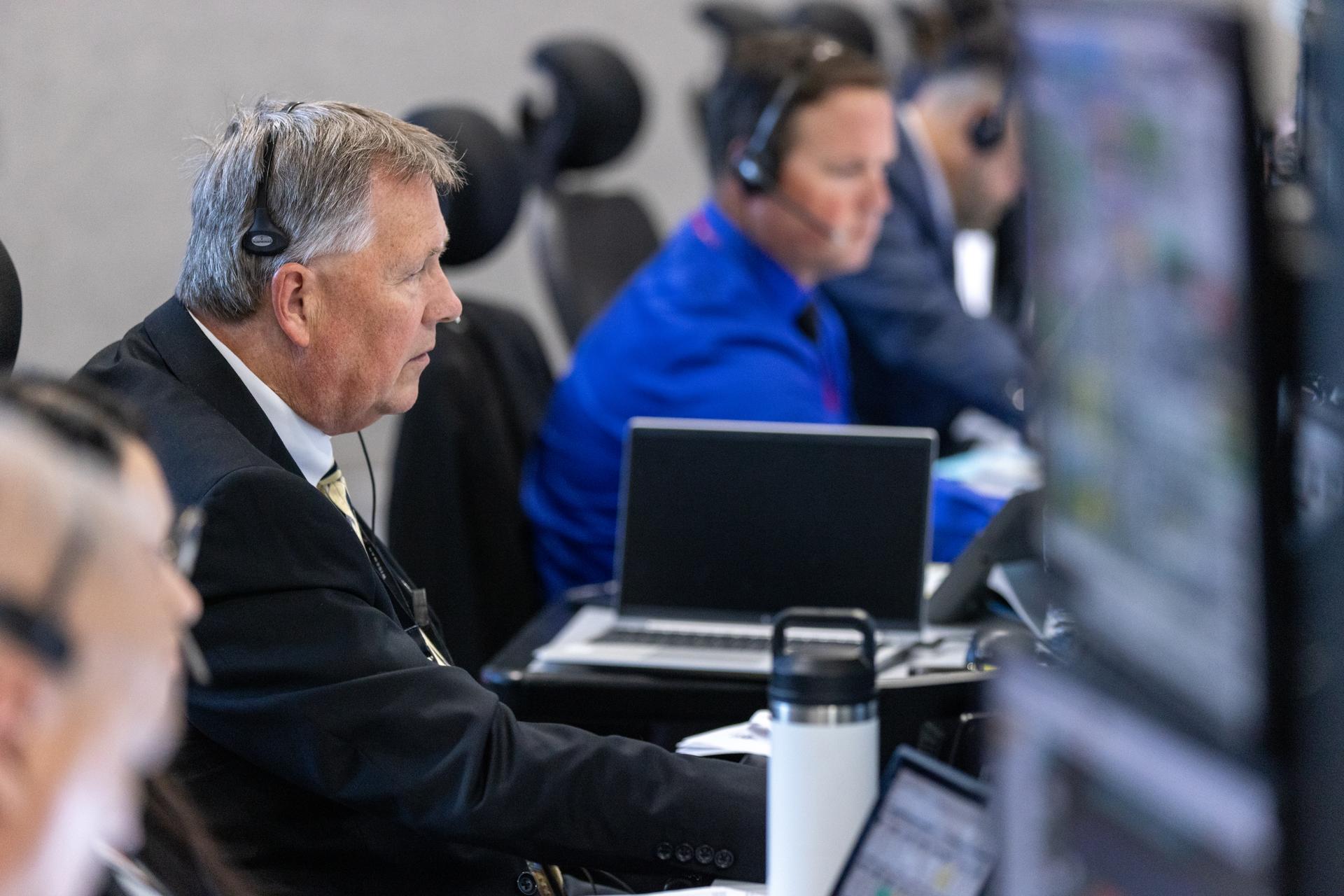
From left, Jeff Spaulding, senior NASA test director, and Wes Mosedale, NASA test director, monitor the progress of a countdown demonstration test with Artemis II crewmembers NASA astronauts Reid Wiseman, commander; Victor Glover, pilot; Christina Koch, mission specialist; and CSA (Canadian Space Agency) astronaut Jeremy Hansen, mission specialist onboard their Orion spacecraft from Firing Room 1 of the Rocco A. Petrone Launch Control Center, Saturday, Dec. 20, 2025, at NASA’s Kennedy Space Center in Florida. For this operation, the Artemis II crew and launch teams are simulating the launch day timeline including suit-up, walkout, and spacecraft ingress and egress. Through the Artemis campaign, NASA will send astronauts to explore the Moon for scientific discovery, economic benefits, and to build the foundation for the first crewed missions to Mars, for the benefit of all.
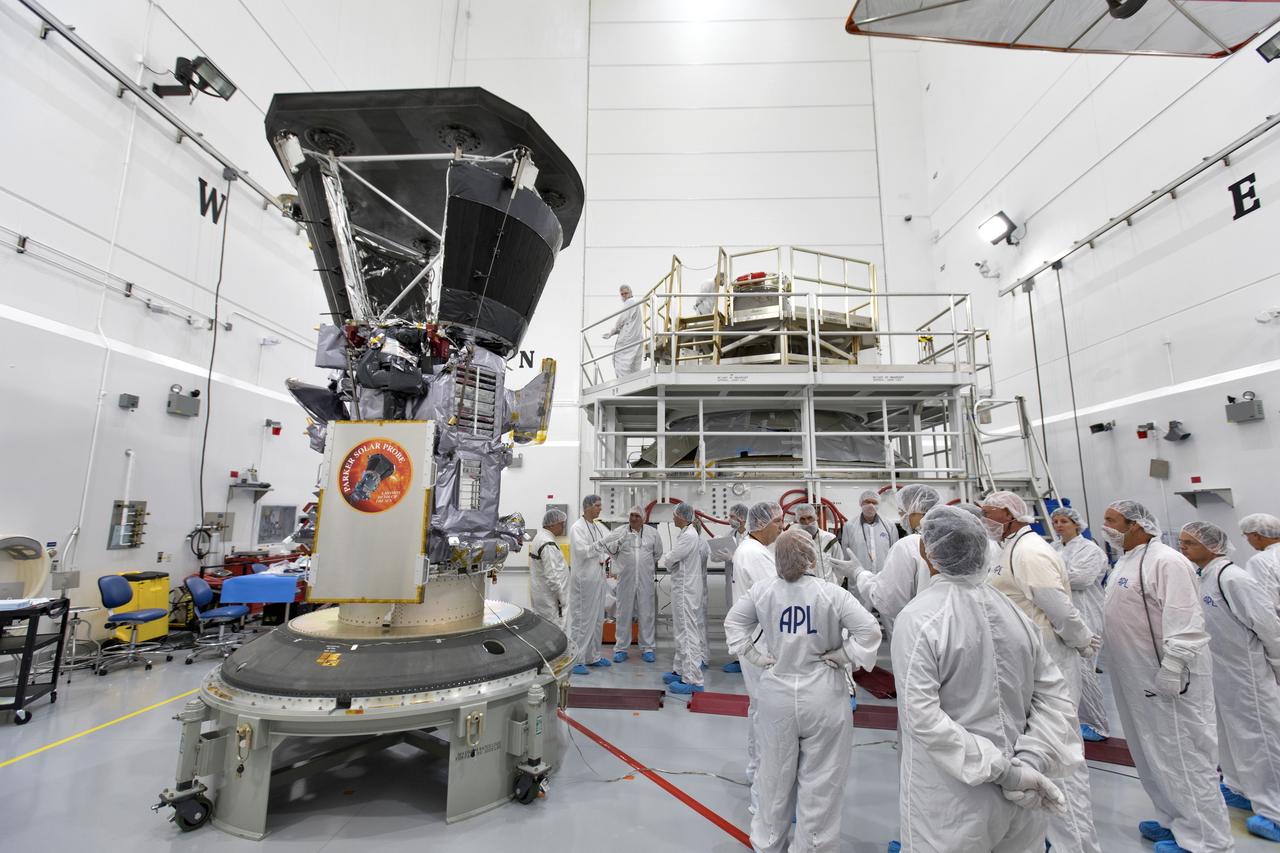
In the Astrotech processing facility in Titusville, Florida, near NASA's Kennedy Space Center, on Wednesday, July 11, 2018, technicians and engineers prepare to mate NASA's Parker Solar Probe to its third stage, built and tested by Northrup Grumman in Chandler Arizona. The Parker Solar Probe will launch on a United Launch Alliance Delta IV Heavy rocket from Space Launch Complex 37 at Cape Canaveral Air Force Station in Florida. The mission will perform the closest-ever observations of a star when it travels through the Sun's atmosphere, called the corona. The probe will rely on measurements and imaging to revolutionize our understanding of the corona and the Sun-Earth connection.
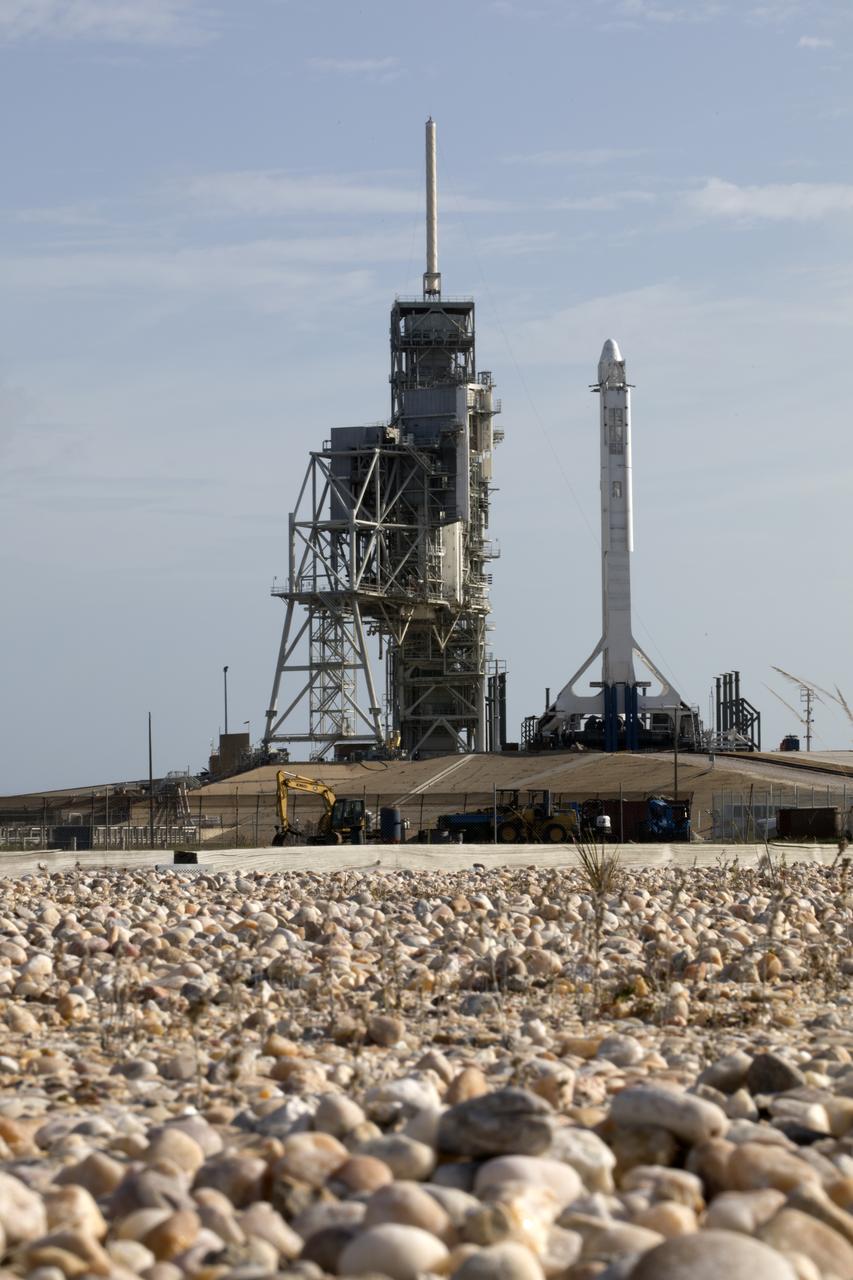
As a Falcon 9 rocket stands ready for liftoff at the Kennedy Space Center's Launch Complex 39A. The rocket will boost a Dragon resupply spacecraft to the International Space Station. Liftoff is scheduled for 5:55 p.m. EDT. On its 11th commercial resupply services mission to the space station, Dragon will bring up 6,000 pounds of supplies, such as the Neutron star Interior Composition Explorer, or NICER, instrument to study the extraordinary physics of neutron stars.
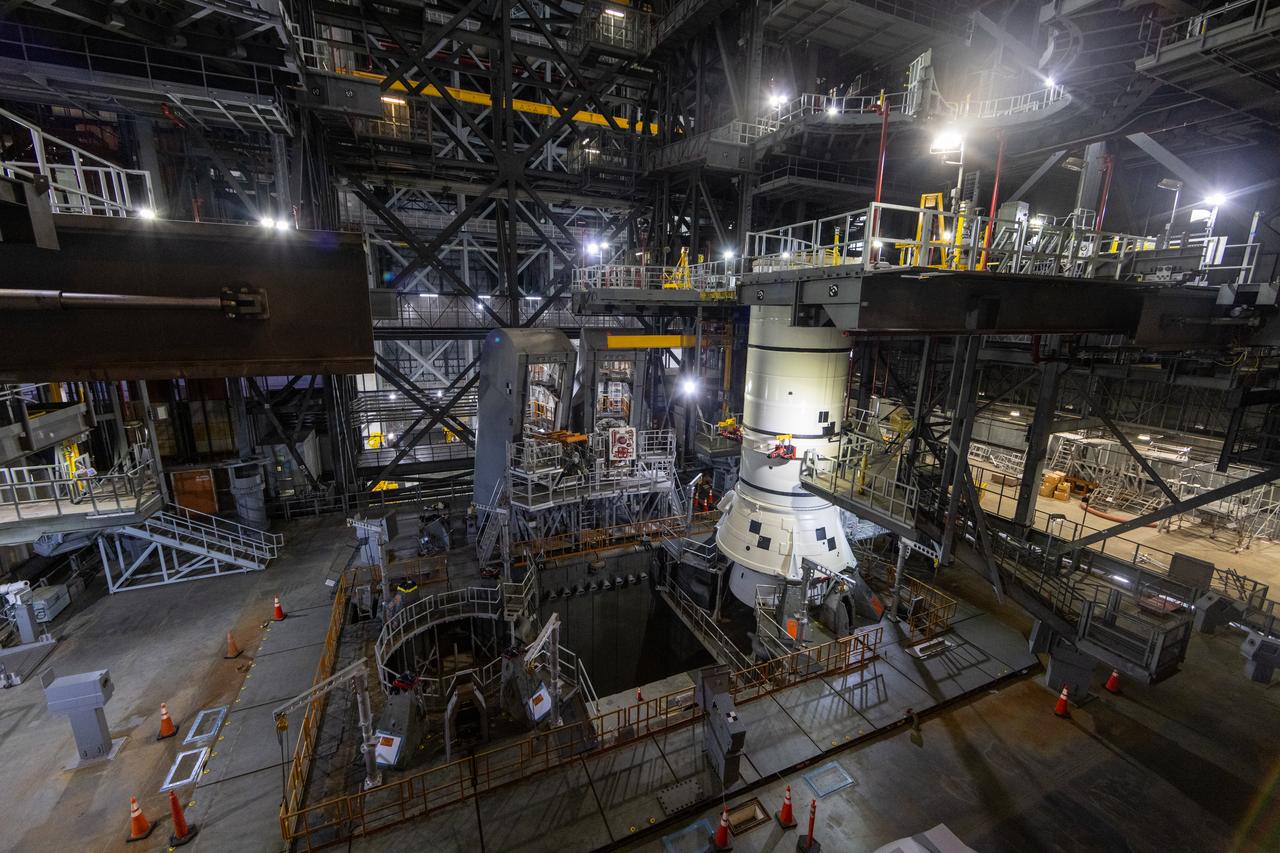
Engineers and technicians with the Exploration Ground Systems Program stack the first Moon rocket segment – the left aft assembly for the Artemis II SLS (Space Launch System) solid rocket booster onto mobile launcher 1 inside the Vehicle Assembly Building at NASA’s Kennedy Space Center on Wednesday, Nov. 20, 2024. The first of 10 booster segments to be stacked, the boosters will help support the remaining rocket components and the Orion spacecraft during final assembly of the Artemis II Moon rocket and provide more than 75 percent of the total SLS thrust during liftoff from NASA Kennedy’s Launch Pad 39B.
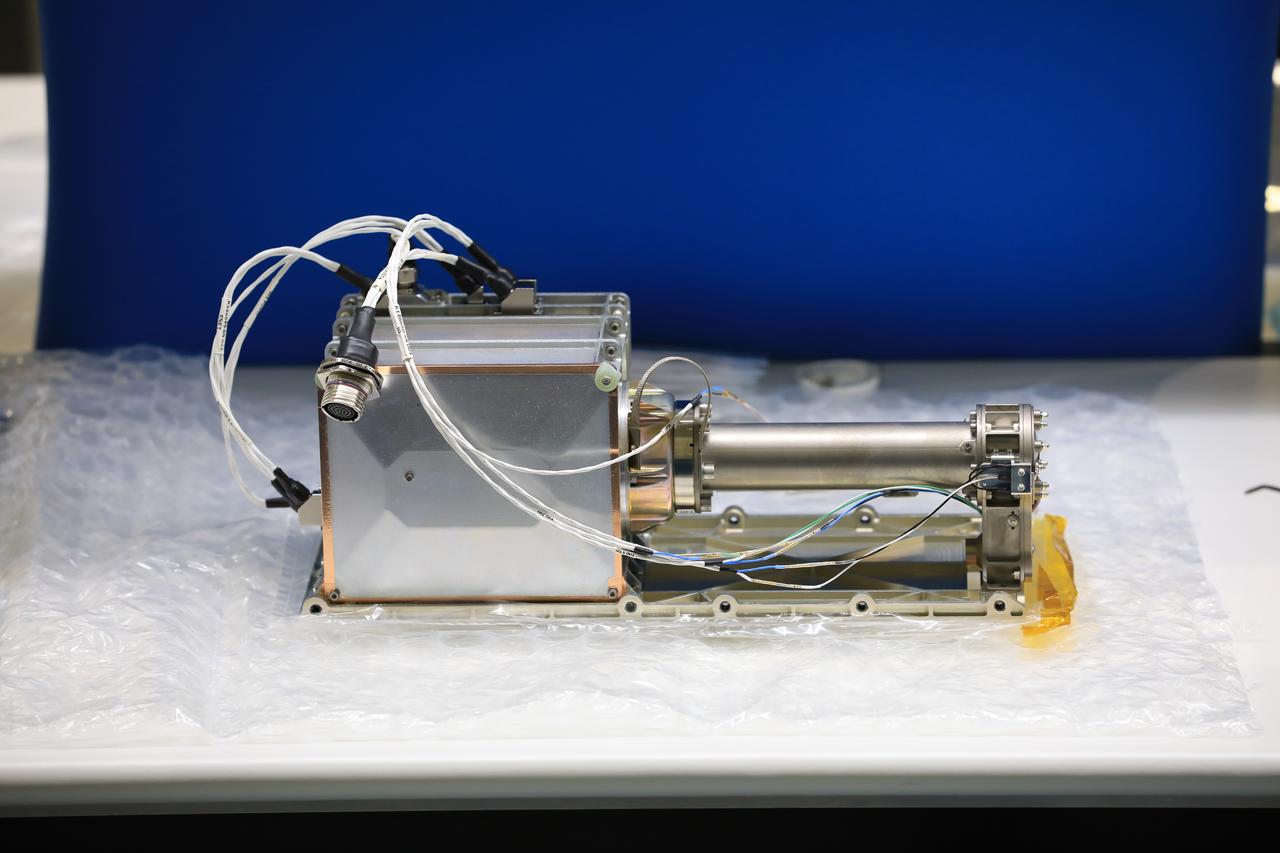
The Mass Spectrometer Observing Lunar Operations (MSolo) instrument is photographed inside the Space Station Processing Facility at NASA’s Kennedy Space Center in Florida following installation of its radiator on Sept. 25, 2020. MSolo will help analyze the chemical makeup of landing sites on the Moon, as well as study water on the lunar surface. The radiator will help keep the instrument’s temperature stable in the extreme heat and cold it will encounter. MSolo instruments are scheduled to launch on multiple robotic missions as part of NASA’s Commercial Lunar Payload Services (CLPS), with the first of these missions exploring Lacus Mortis, a large crater on the near side of the Moon, beginning in 2021. MSolo also will be one of three instruments on the agency’s water-hunting Volatiles Investigating Polar Exploration Rover, VIPER, scheduled to launch to the Moon’s South Pole in late 2023.
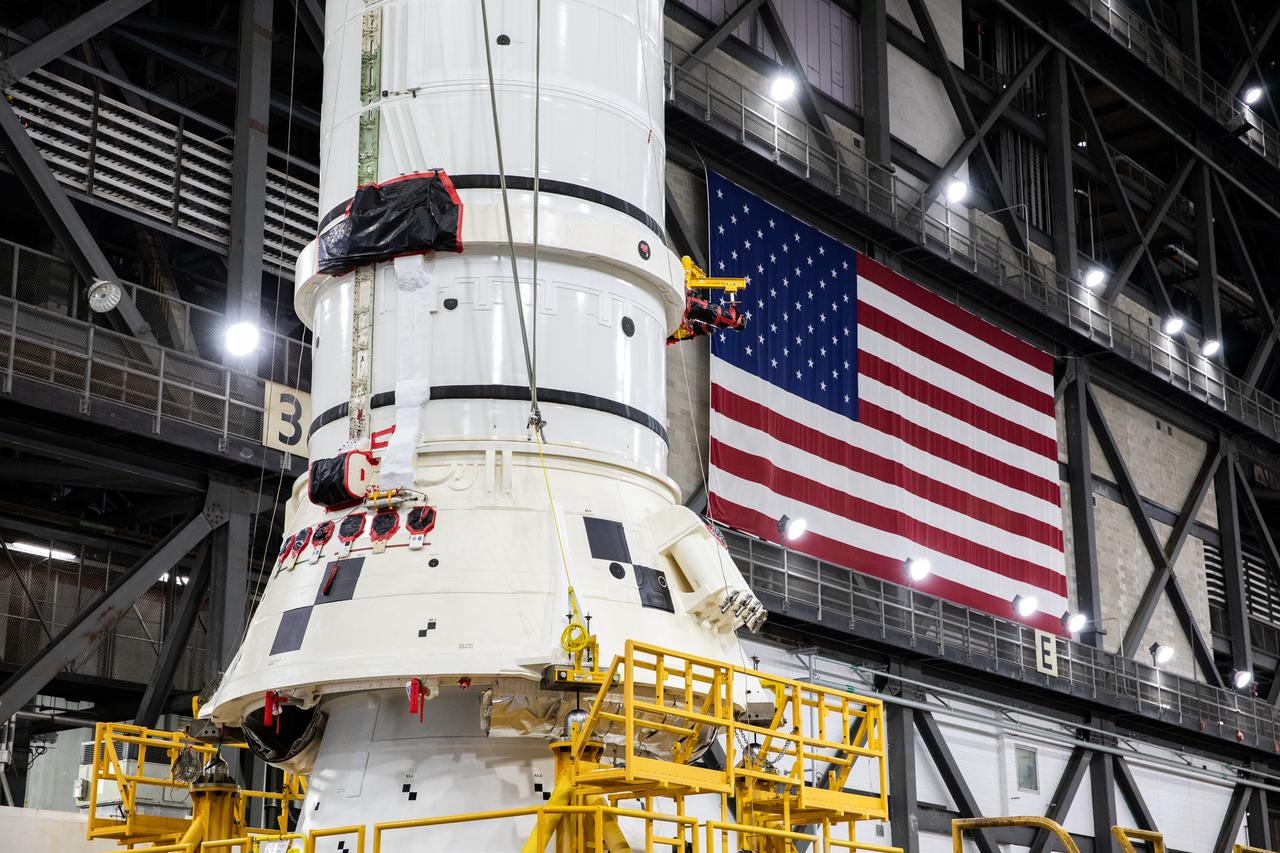
Engineers and technicians with the Exploration Ground Systems Program attach an overhead crane to the left aft assembly, or bottom portion of the solid rocket boosters for the SLS (Space Launch System) rocket, inside the Vehicle Assembly Building at NASA’s Kennedy Space Center on Tuesday, Nov. 19, 2024. The crane will lift the aft assembly on top of mobile launcher 1 followed by the right aft assembly and stack the remaining booster segments for the Artemis II mission.
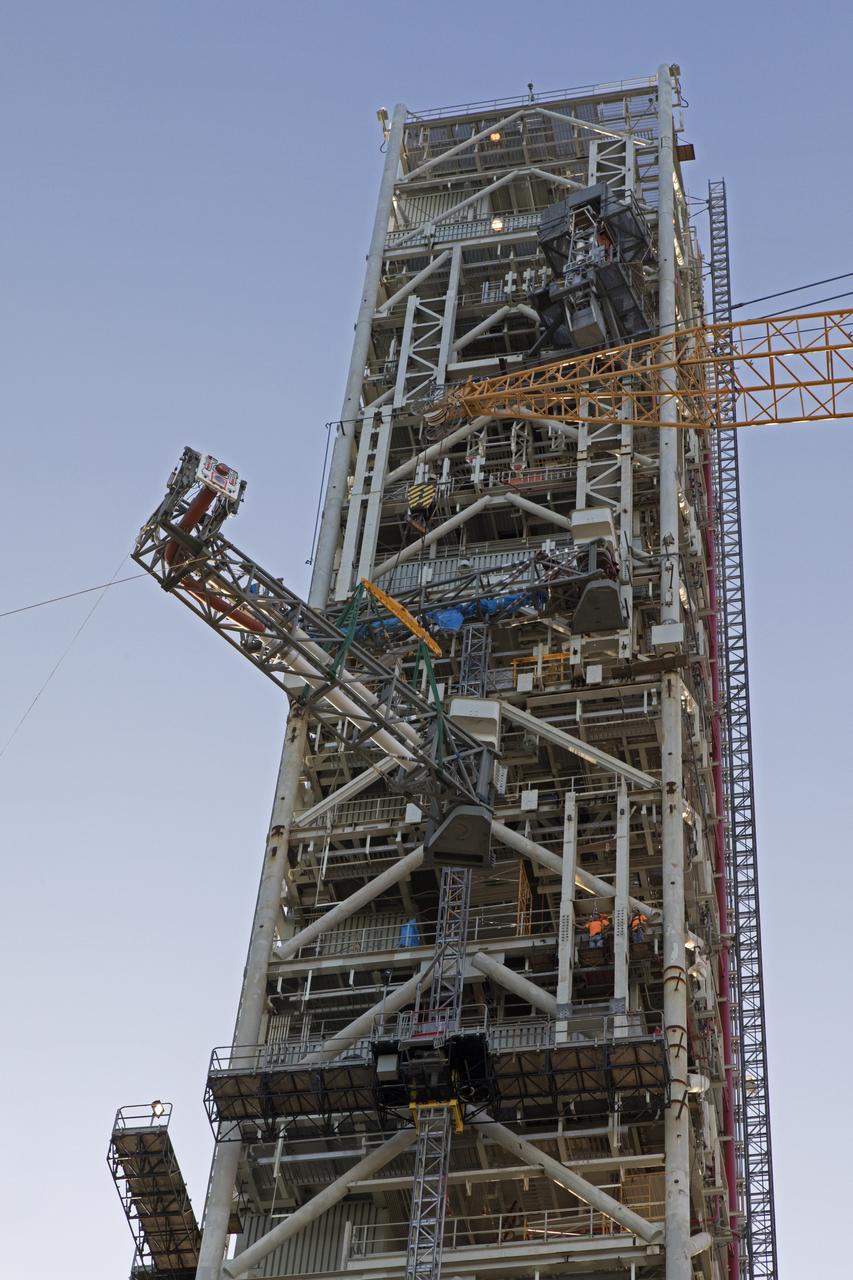
A heavy-lift crane moves the Core Stage Inter-tank Umbilical (CSITU) up to about the 140-foot level of the mobile launcher (ML) tower at NASA's Kennedy Space Center in Florida. The CSITU is moved into place for a fit check of the attachment hardware. The umbilical will be lowered down and installed permanently on the ML at a later date. The CSITU is a swing-arm umbilical that will connect to the Space Launch System core stage inter-tank. It will provide conditioned air, pressurized gases and power and data connection to the core stage. The Ground Systems Development and Operations Program is overseeing installation of the umbilicals.
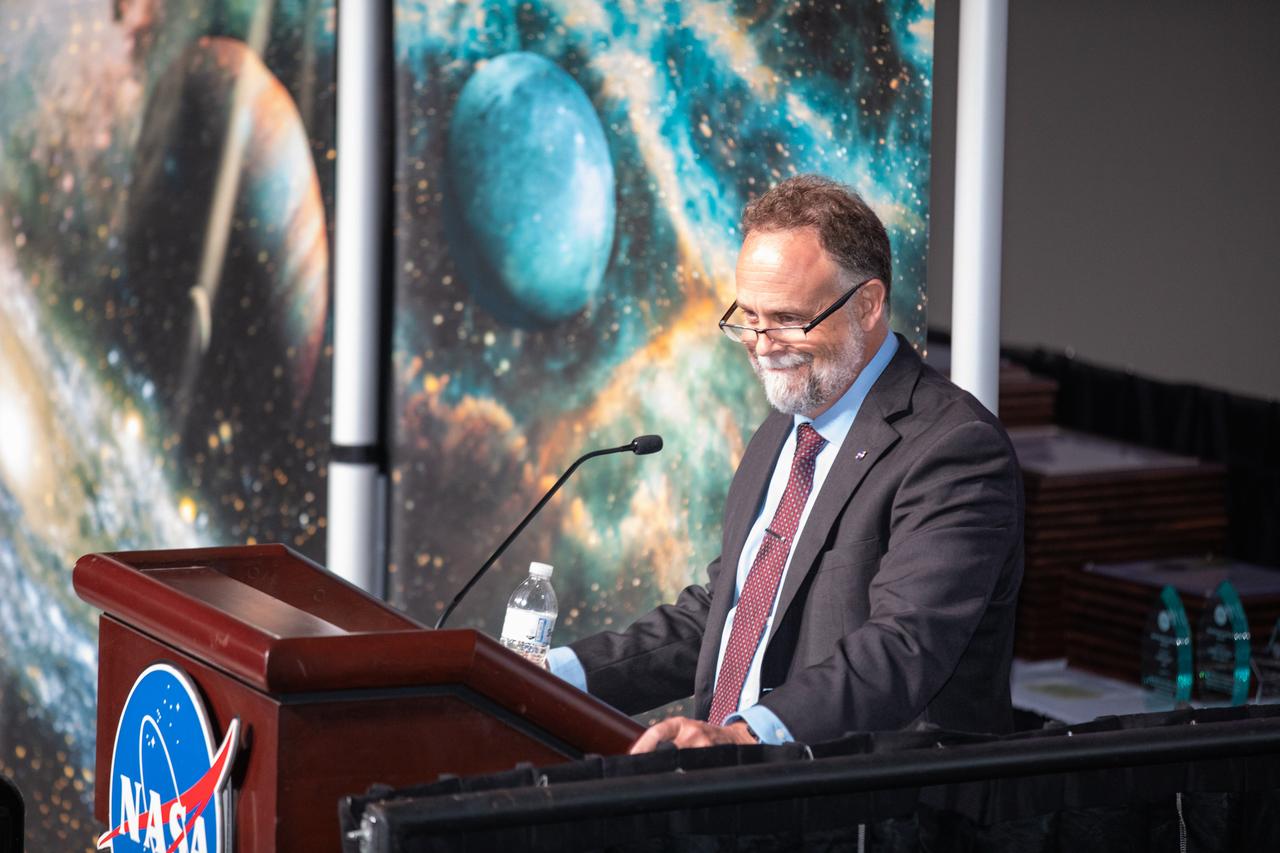
Shawn Quinn, director of Engineering at Kennedy Space Center, addresses attendees during the 2019 KSC Honor Awards Ceremony on April 18, 2019. Held inside the IMAX Theater at the Florida spaceport’s visitor complex, the ceremony honored both civil servants and contractors for their contributions to NASA and Kennedy.
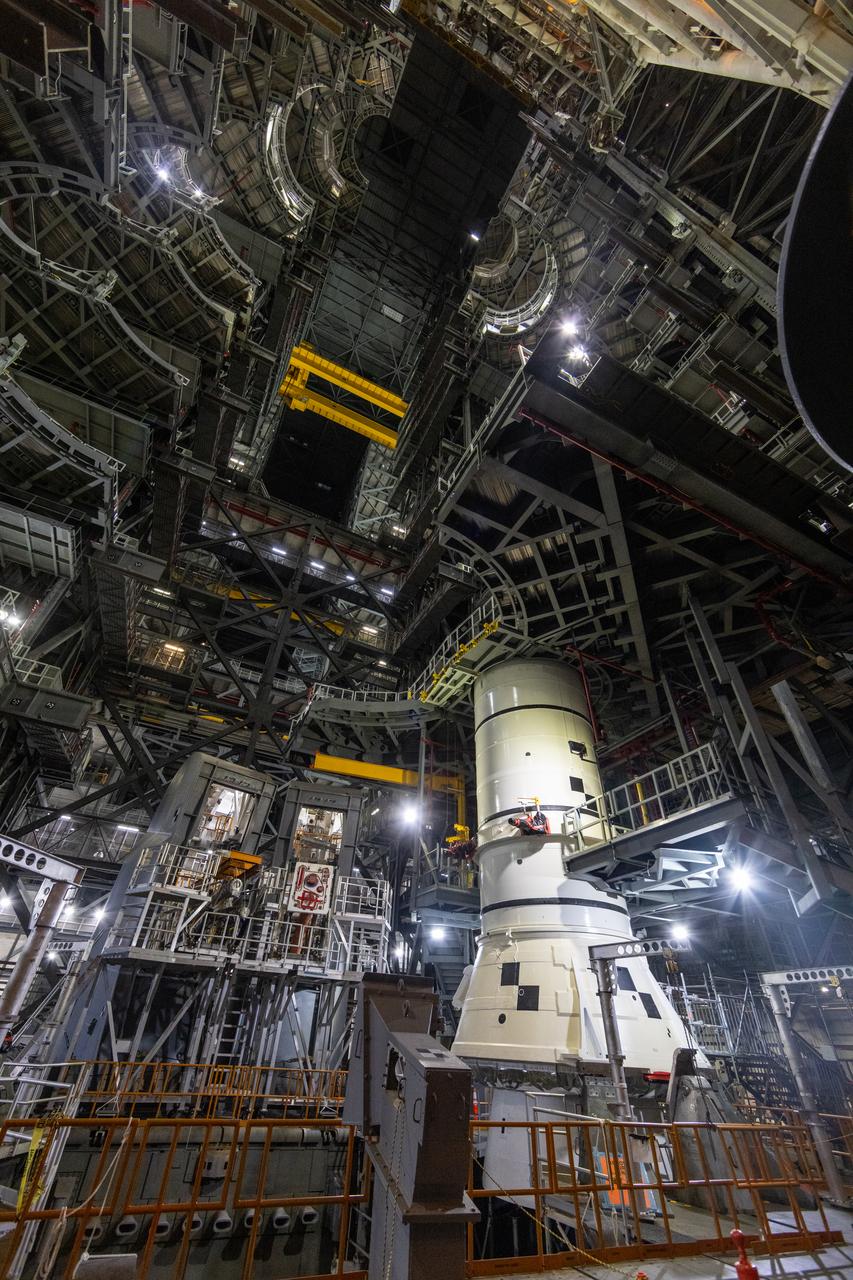
Engineers and technicians with the Exploration Ground Systems Program stack the first Moon rocket segment – the left aft assembly for the Artemis II SLS (Space Launch System) solid rocket booster onto mobile launcher 1 inside the Vehicle Assembly Building at NASA’s Kennedy Space Center on Wednesday, Nov. 20, 2024. The first of 10 booster segments to be stacked, the boosters will help support the remaining rocket components and the Orion spacecraft during final assembly of the Artemis II Moon rocket and provide more than 75 percent of the total SLS thrust during liftoff from NASA Kennedy’s Launch Pad 39B.
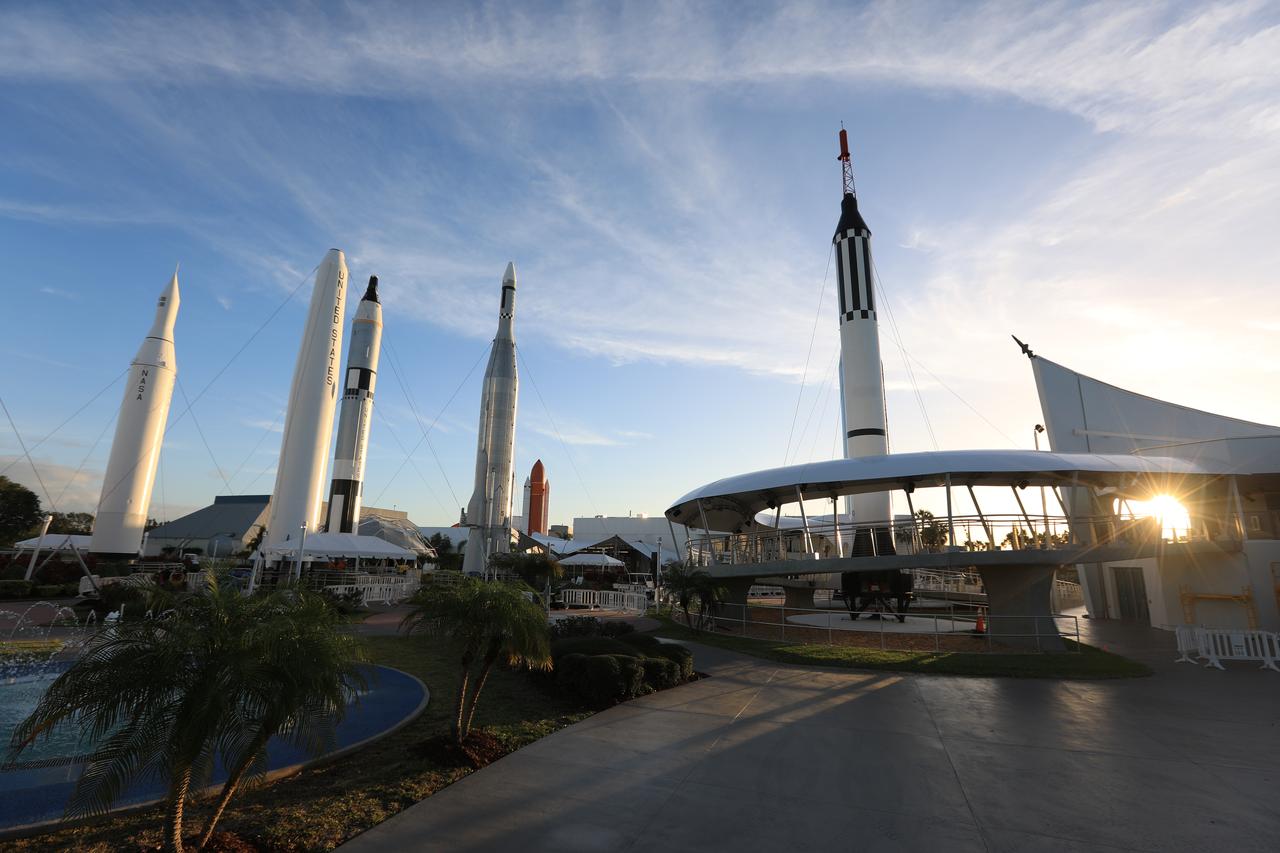
Entrance to the Heroes and Legends attraction at the Kennedy Space Center Visitor Complex is by way of a sweeping ramp designed to simulate a journey to the stars by way of the "Rocket Garden." The new facility includes the U.S. Astronaut Hall of Fame and looks back to the pioneering efforts of Mercury, Gemini and Apollo. It sets the stage by providing the background and context for space exploration and the legendary men and women who pioneered the nation's journey into space.
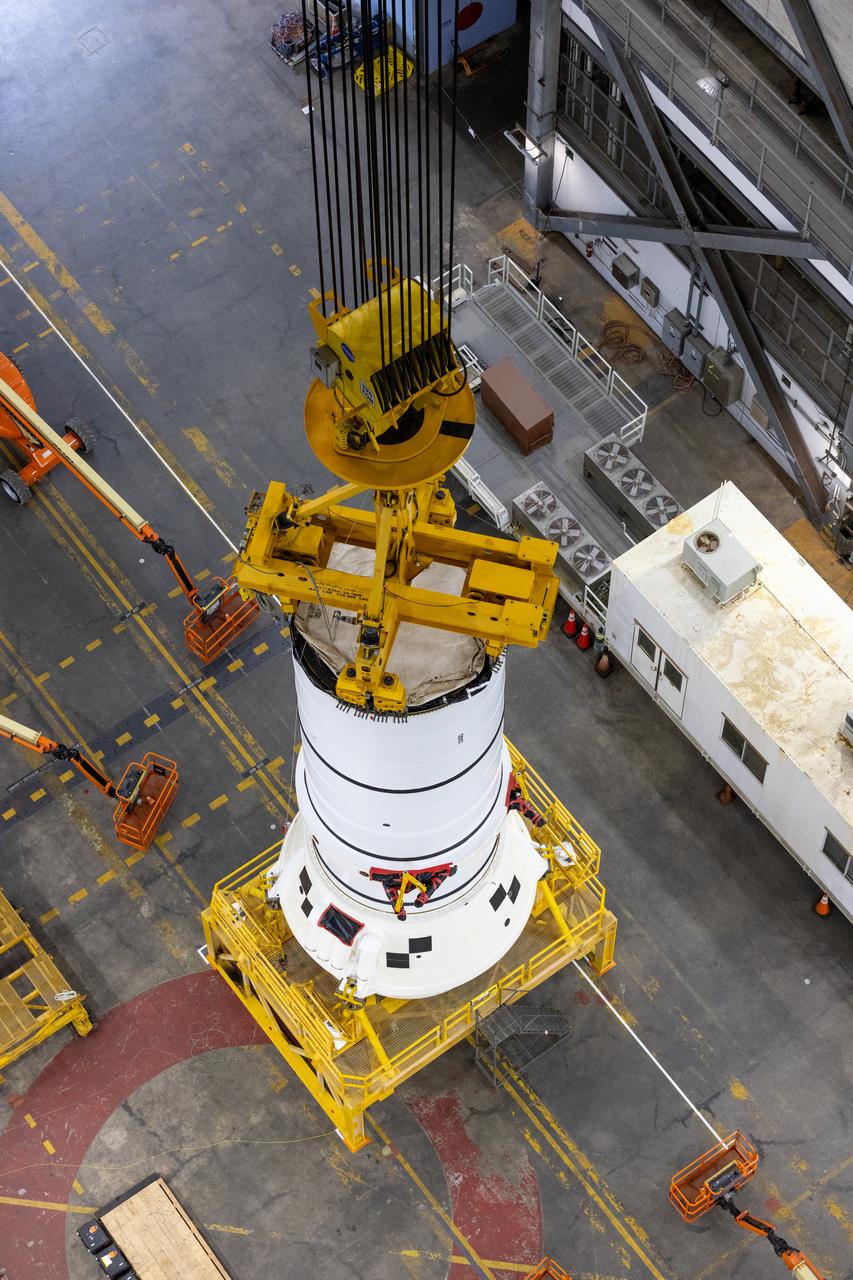
Engineers and technicians with the Exploration Ground Systems Program attach an overhead crane to the left aft assembly, or bottom portion of the solid rocket boosters for the SLS (Space Launch System) rocket inside the Vehicle Assembly Building at NASA’s Kennedy Space Center on Tuesday, Nov. 19, 2024. The crane will lift the aft assembly on top of mobile launcher 1 followed by the right aft assembly and stack the remaining booster segments for the Artemis II mission.
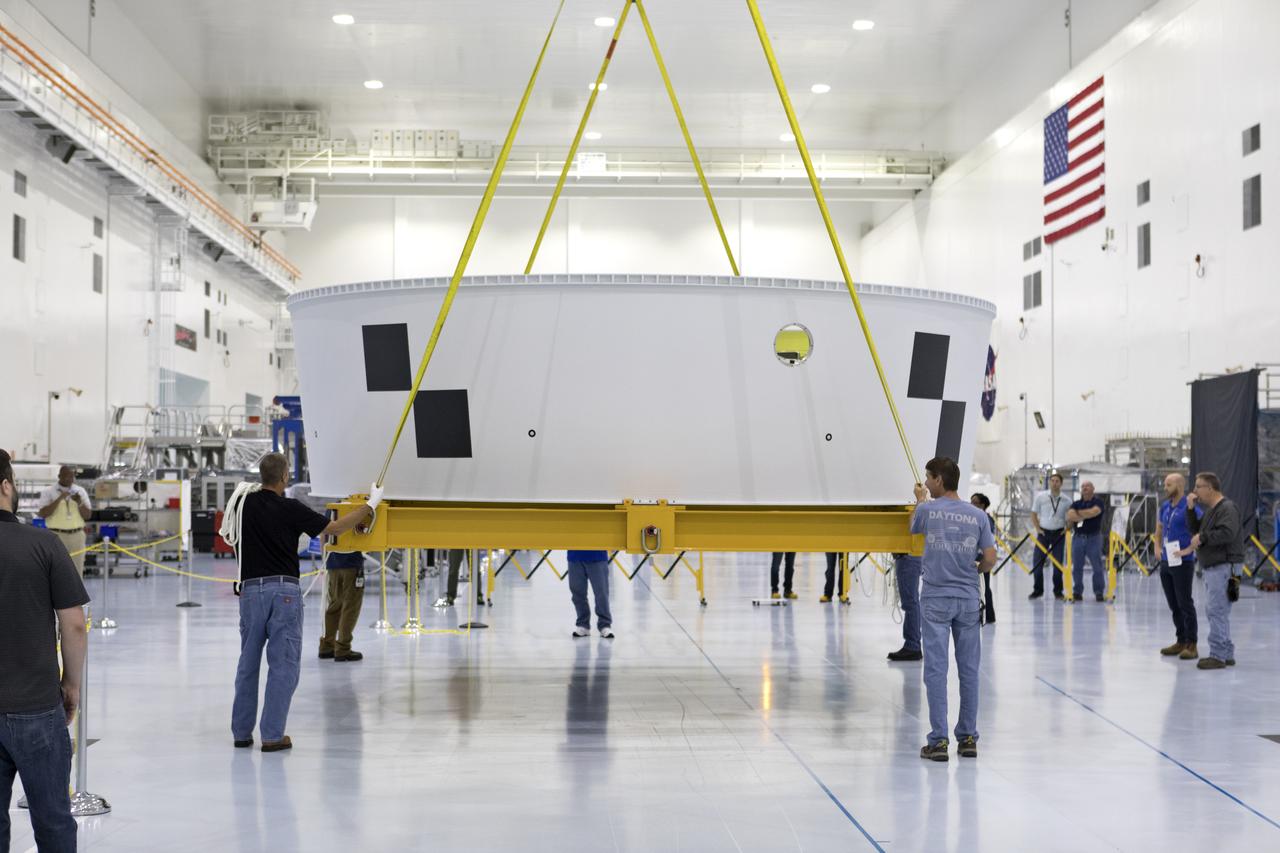
Inside the Space Station Processing Facility (SSPF) high bay at NASA's Kennedy Space Center in Florida, workers assist as a crane moves the Orion Stage Adapter (OSA) to a work area. The OSA is the second flight-hardware section of the agency's Space Launch System (SLS) rocket to arrive at Kennedy. The OSA will connect the Orion spacecraft to the upper part of the SLS, the interim cryogenic propulsion stage (ICPS). Both the OSA and ICPS are being stored for processing in the center's SSSPF in preparation for Exploration Mission-1, the first uncrewed, integrated launch of the SLS rocket and Orion spacecraft.
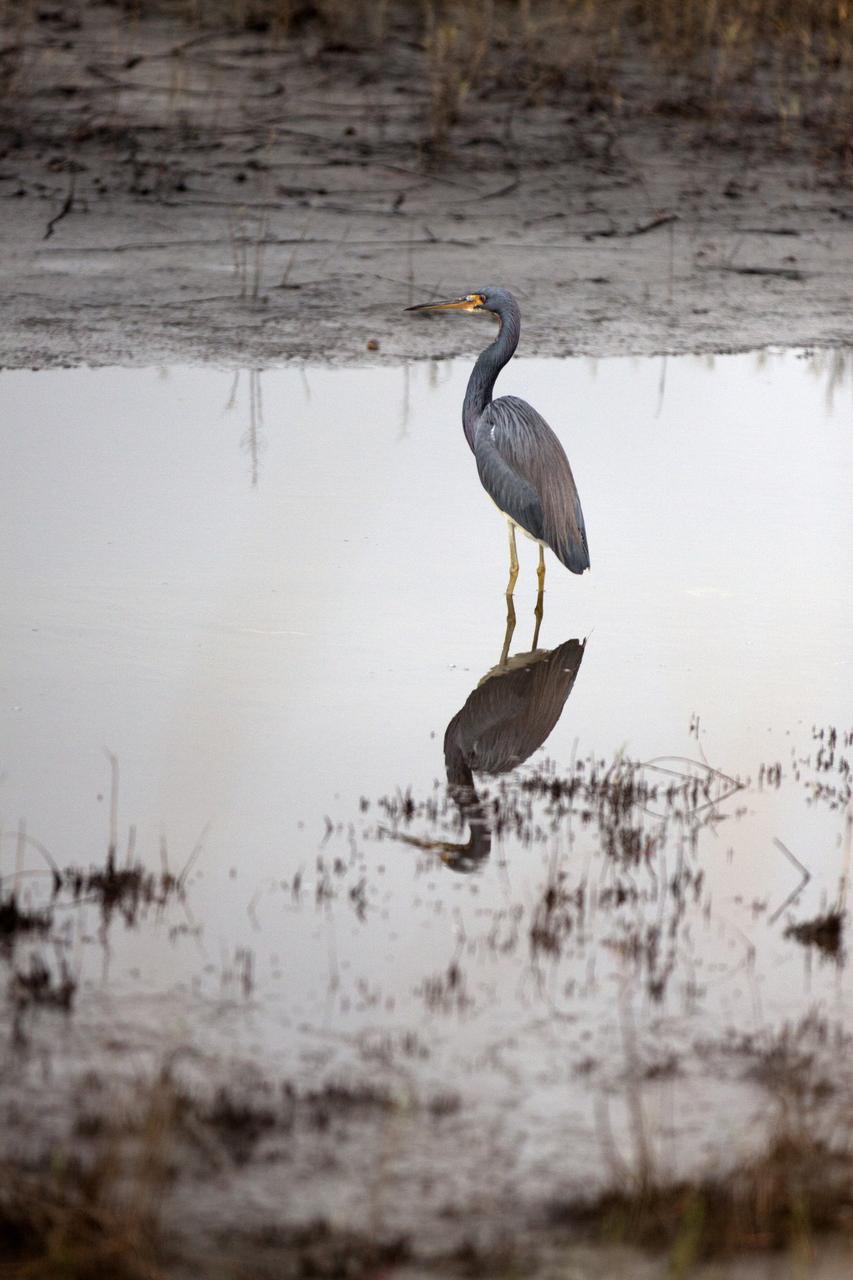
A Great Blue Heron wades in a waterway at NASA's Kennedy Space Center in Florida. The center shares a border with the Merritt Island National Wildlife Refuge. The bird is one of more than 330 native and migratory bird species, 25 mammals, 117 fishes and 65 amphibians and reptiles that call Kennedy and the wildlife refuge home.
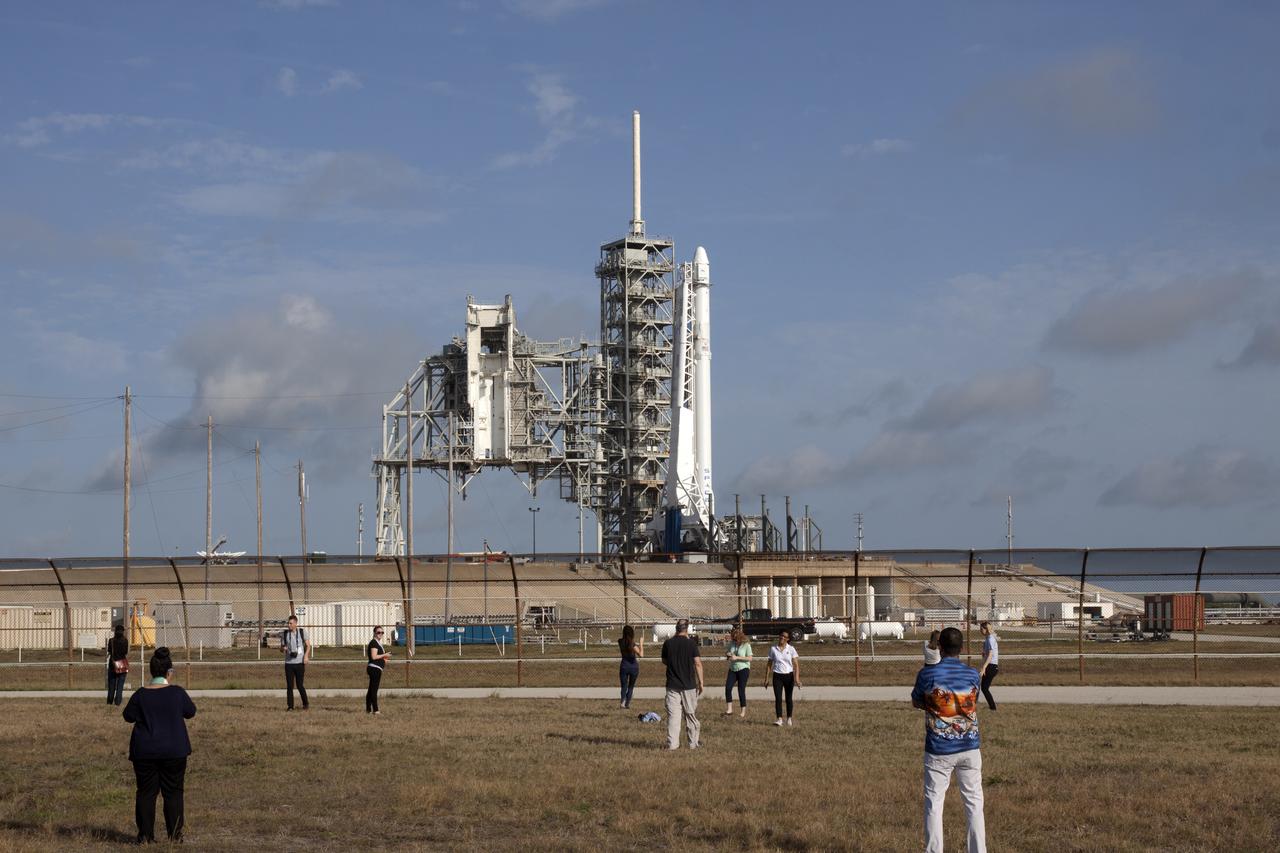
As a Falcon 9 rocket stands ready for liftoff at the Kennedy Space Center's Launch Complex 39A. The rocket will boost a Dragon resupply spacecraft to the International Space Station. Liftoff is scheduled for 5:55 p.m. EDT. On its 11th commercial resupply services mission to the space station, Dragon will bring up 6,000 pounds of supplies, such as the Neutron star Interior Composition Explorer, or NICER, instrument to study the extraordinary physics of neutron stars.
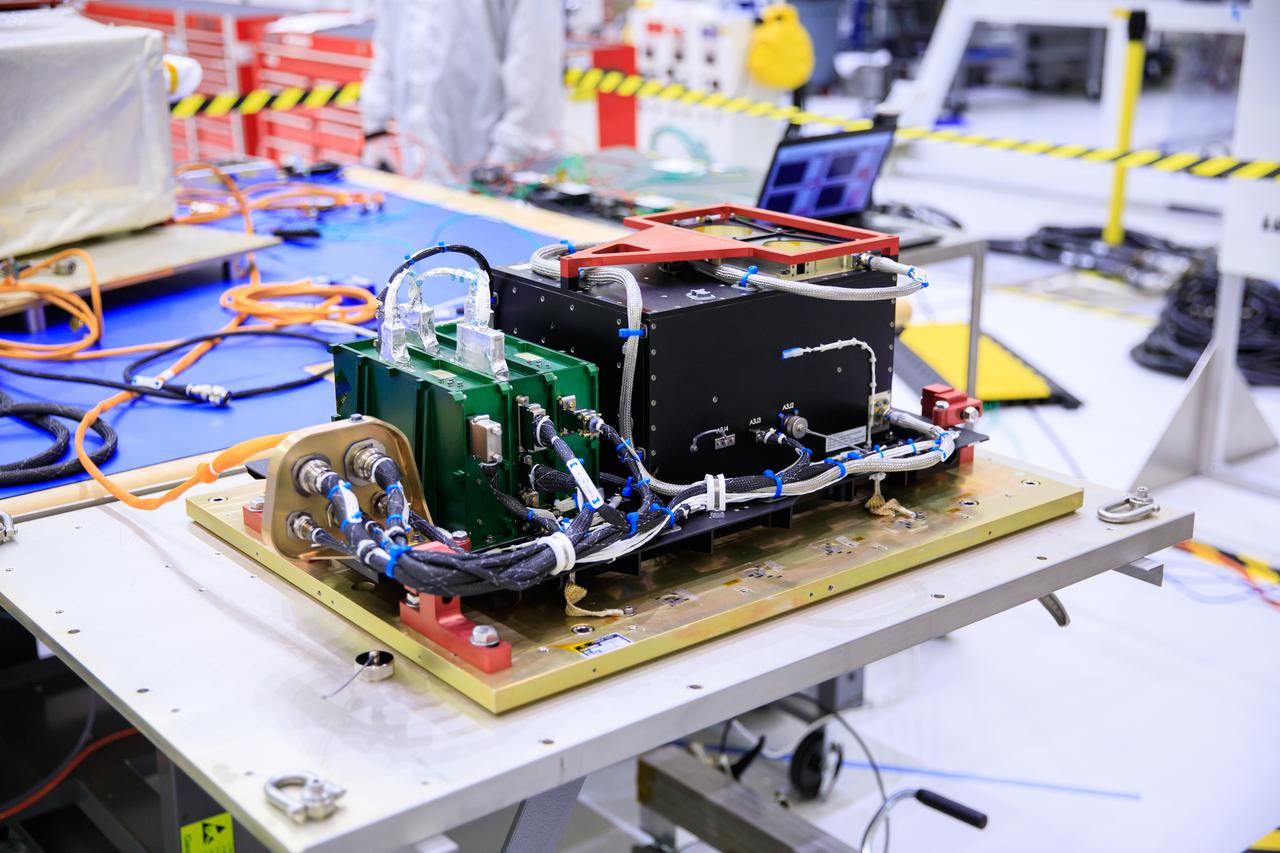
A close-up view of one of the parts of the Optical Communications System for the Artemis II mission inside the Neil Armstrong Operations and Checkout Building high bay on June 2, 2023. Optical communications is the latest space communications technology that is able to provide data rates as much as a hundred times higher than current systems. This will allow astronauts to send and receive ultra-high-definition video from the surface of the Moon or other planets such as Mars. Artemis II will be the first Artemis mission flying crew aboard Orion.

On the same day it arrived, the Atlas V Centaur stage is moved into the Atlas Spaceflight Operations Center near Space Launch Complex 41 at Cape Canaveral Air Force Station in Florida. The Geostationary Operational Environmental Satellite (GOES-R) will launch aboard the Atlas V rocket in November. GOES-R will be the first satellite in a series of next-generation NOAA GOES Satellites.
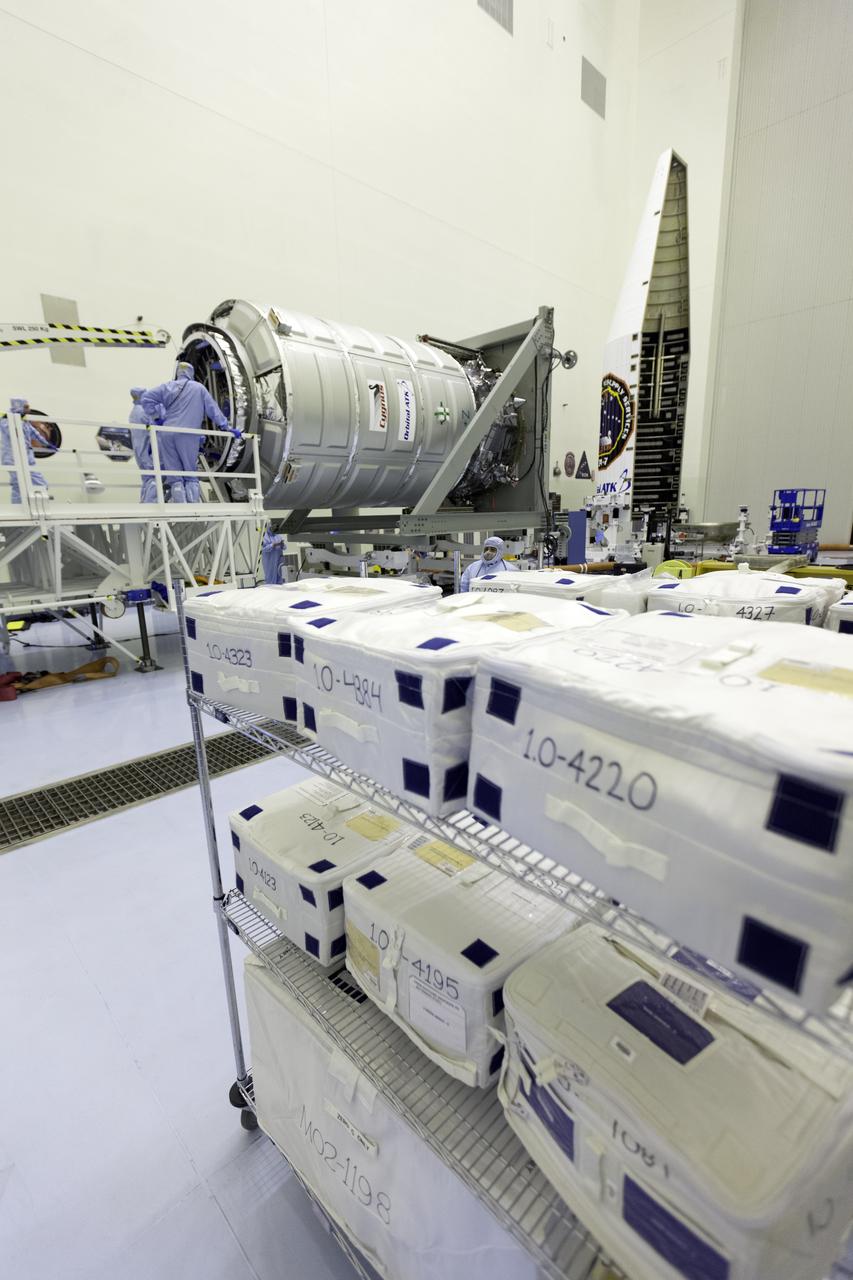
Inside the Payload Hazardous Servicing Facility at NASA's Kennedy Space Center in Florida, technicians are opening the hatch on the Orbital ATK Cygnus pressurized cargo module to prepare for late stowage of supplies and hardware. The Orbital ATK CRS-7 commercial resupply services mission to the International Space Station is scheduled to launch atop a United Launch Alliance Atlas V rocket from Space Launch Complex 41 at Cape Canaveral Air Force Station targeted for March 24, 2017. Cygnus will deliver 7,600 pounds of supplies, equipment and scientific research materials to the space station.
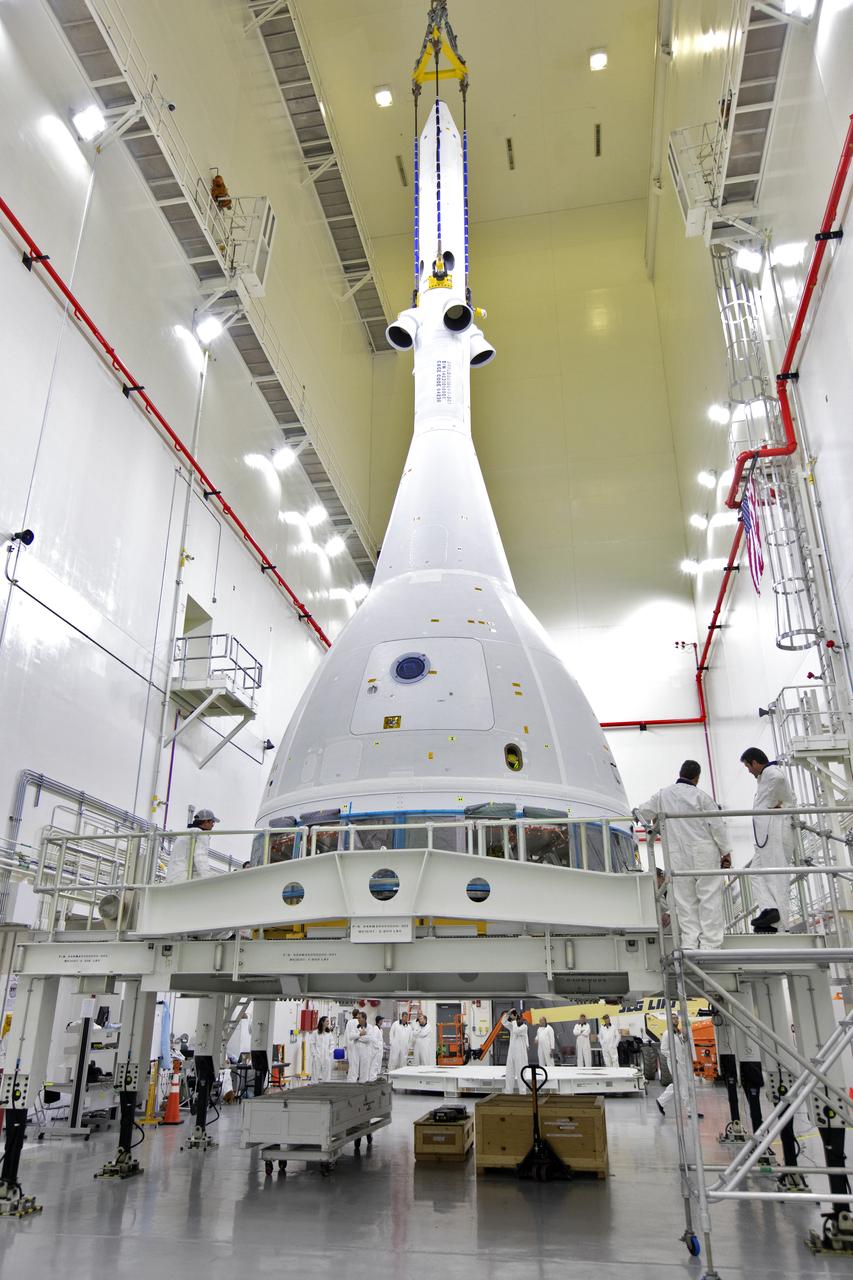
Inside the Launch Abort System Facility (LASF) at NASA’s Kennedy Space Center in Florida, a test version of the Orion crew module has been integrated with the Launch Abort System (LAS) on May 18, 2019. The test vehicle and the LAS will be used for the Orion Ascent Abort-2 (AA-2) Flight Test. AA-2 is a full-stress test of the LAS, planned for July 2. AA-2 will launch from Space Launch Complex 46, carrying a fully functional LAS and a 22,000-pound Orion test vehicle to an altitude of 31,000 feet and traveling at more than 1,000 miles an hour. The test will verify the LAS can steer the crew module and astronauts aboard to safety if an emergency occurs during ascent on the Space Launch System (SLS) rocket. NASA's Orion and Exploration Ground Systems programs, contractors Jacob's, Lockheed Martin and Northrop Grumman, in conjunction with the Air Force Space and Missile Center's Launch Operations branch and the 45th Space Wing are performing flight operations for AA-2.
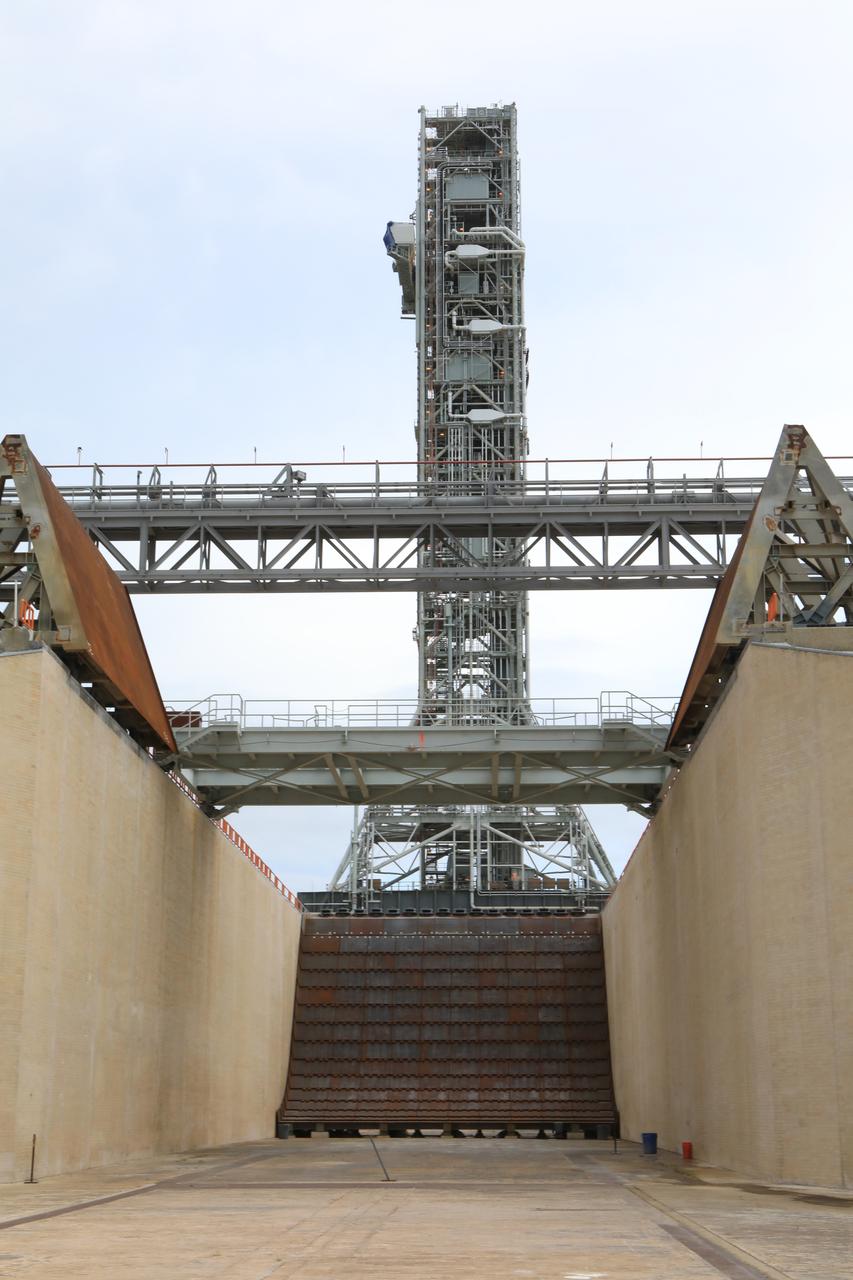
In this view from the flame trench at Kennedy Space Center’s Launch Complex 39B in Florida, Exploration Ground Systems’ mobile launcher can be seen on the pad surface on June 28, 2019. The mobile launcher began its final solo trek – atop crawler-transporter 2 – to the pad at midnight on June 27, departing from NASA’s Vehicle Assembly Building and continuing up to the pad surface on June 28. The mobile launcher will remain at the pad over the summer, undergoing final testing and checkouts. Its next roll to the pad will be with the agency’s Space Launch System rocket and Orion in preparation for the launch of Artemis 1.
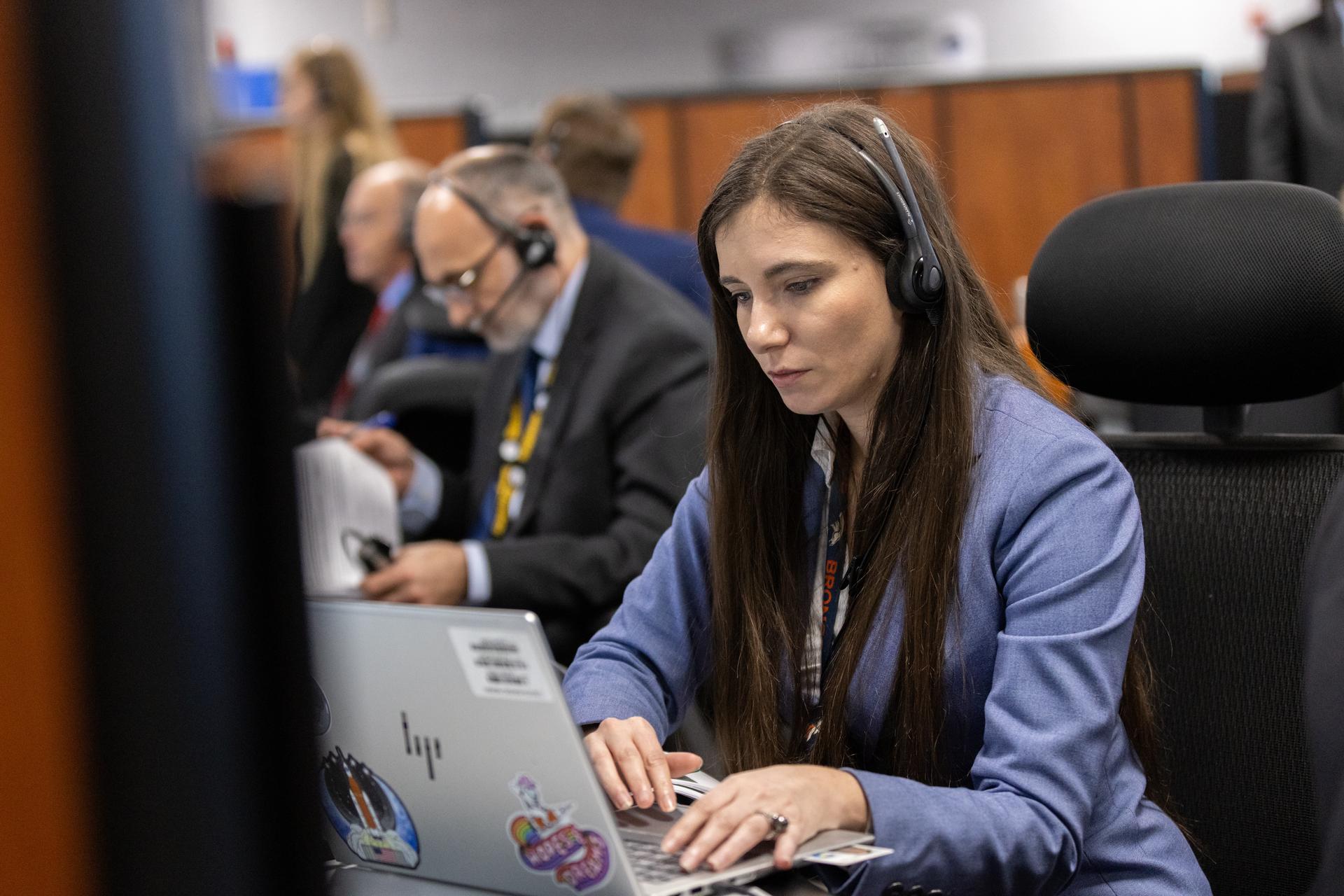
Teams monitor the progress of a countdown demonstration test with Artemis II crewmembers NASA astronauts Reid Wiseman, commander; Victor Glover, pilot; Christina Koch, mission specialist; and CSA (Canadian Space Agency) astronaut Jeremy Hansen, mission specialist onboard their Orion spacecraft from Firing Room 1 of the Rocco A. Petrone Launch Control Center, Saturday, Dec. 20, 2025, at NASA’s Kennedy Space Center in Florida. For this operation, the Artemis II crew and launch teams are simulating the launch day timeline including suit-up, walkout, and spacecraft ingress and egress. Through the Artemis campaign, NASA will send astronauts to explore the Moon for scientific discovery, economic benefits, and to build the foundation for the first crewed missions to Mars, for the benefit of all.
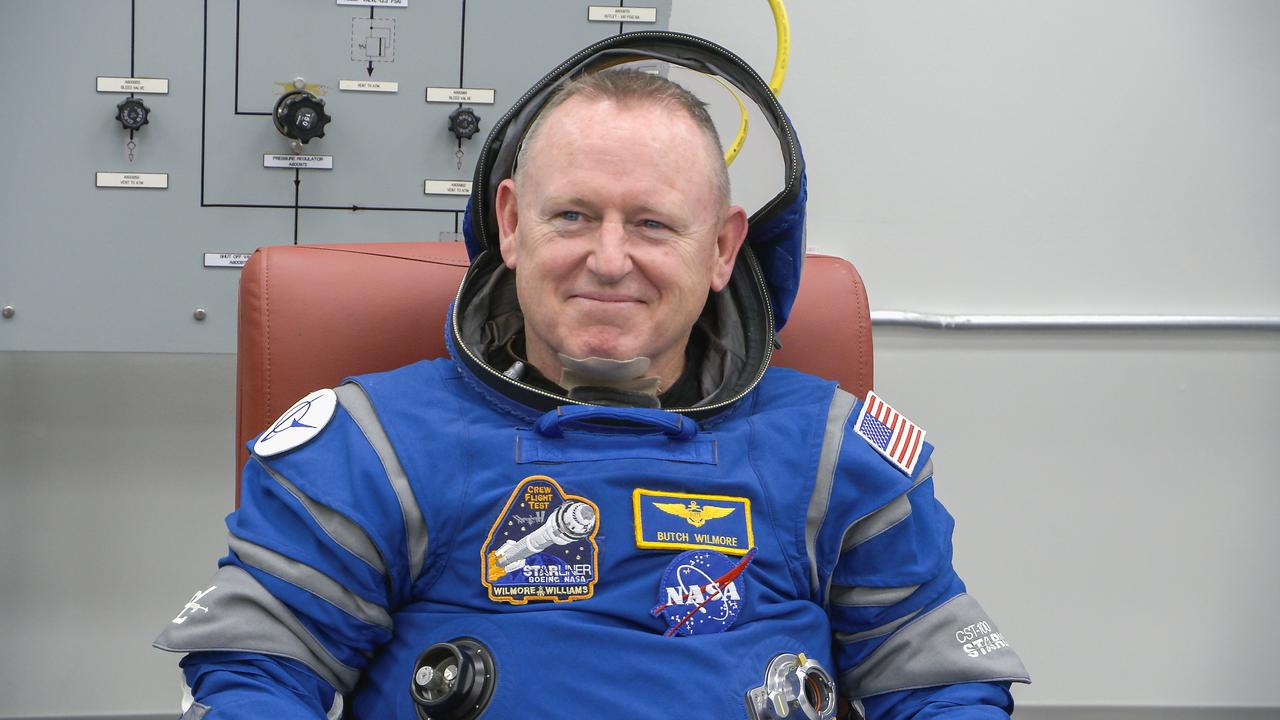
NASA’s Boeing Crew Flight Test astronaut Butch Wilmore relaxes in the suit-up room in the Astronaut Crew Quarters inside Kennedy Space Center’s Neil A. Armstrong Operations and Checkout Building in Florida a few hours during a launch attempt on Saturday, June 1, 2024. As part of NASA’s Commercial Crew Program, Wilmore, joined by NASA astronaut Suni Williams, is preparing for the first crewed launch to the International Space Station aboard Boeing’s Starliner spacecraft atop a United Launch Alliance Atlas V rocket from Space Launch Complex-41 at nearby Cape Canaveral Space Force Station. Liftoff was targeted for 12:25 p.m. EDT but scrubbed for the day.
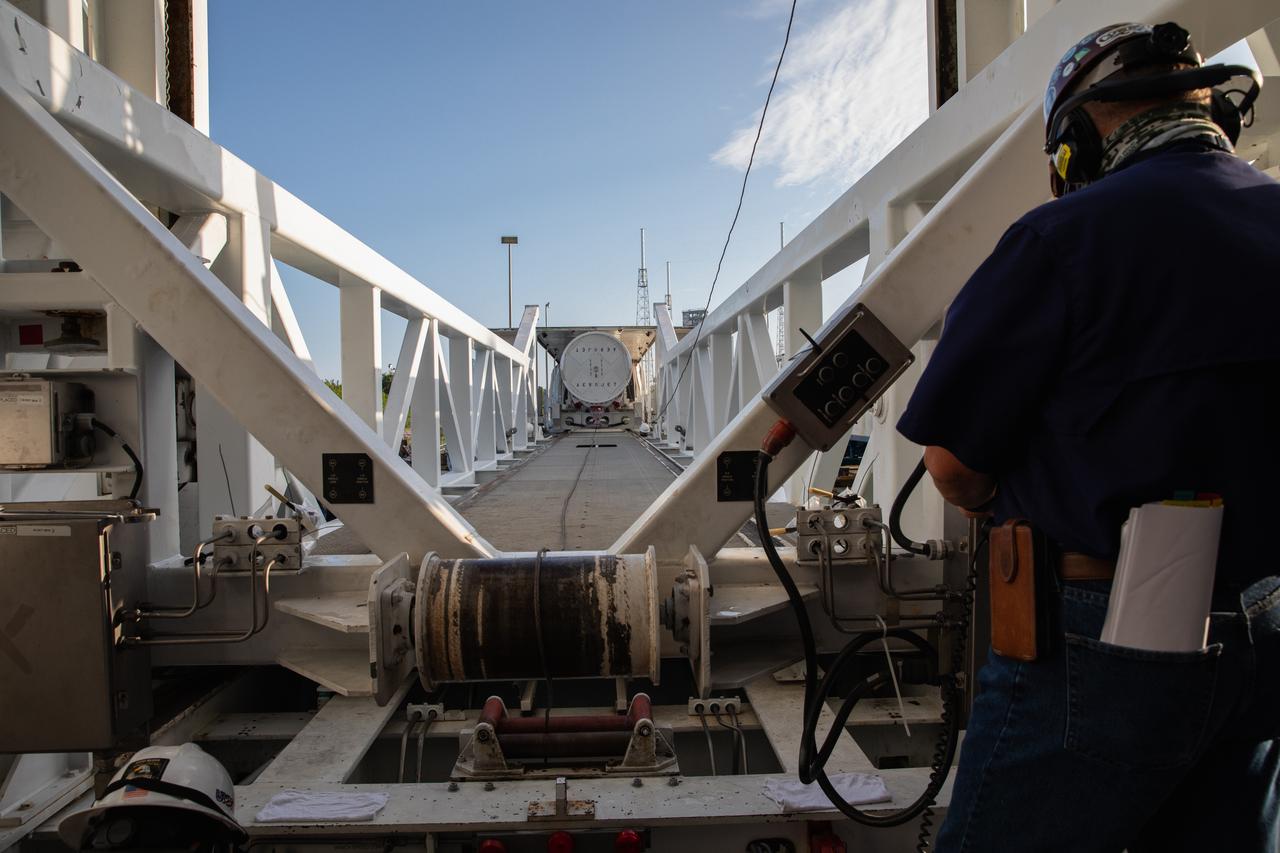
Preparations are underway to lift the fourth and final solid rocket booster (SRB) for the United Launch Alliance Atlas V 541 rocket into the Vertical Integration Facility (VIF) at Space Launch Complex 41 at Cape Canaveral Air Force Station (CCAFS) in Florida on June 9, 2020. The SRB will be lifted and mated to the Atlas V booster in the VIF. The Mars Perseverance rover is scheduled to launch in July 2020, atop the Atlas V rocket from Pad 41. The rover is part of NASA’s Mars Exploration Program, a long-term effort of robotic exploration of the Red Planet. The rover’s seven instruments will search for habitable conditions in the ancient past and signs of past microbial life on Mars. The Launch Services Program at Kennedy is responsible for launch management.
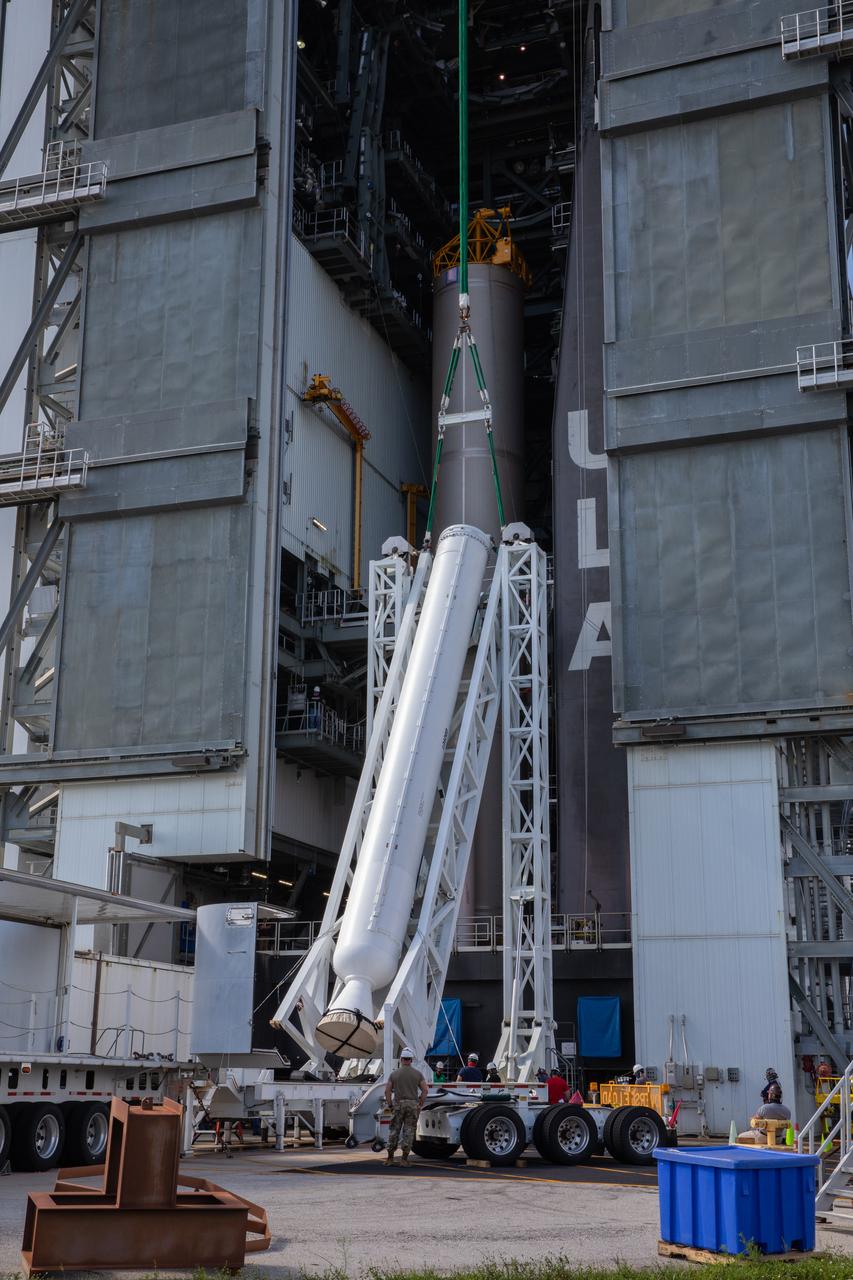
A lifting device raises the fourth and final solid rocket booster (SRB) for the United Launch Alliance Atlas V 541 rocket into the vertical position at the Vertical Integration Facility (VIF) at Space Launch Complex 41 at Cape Canaveral Air Force Station (CCAFS) in Florida on June 9, 2020. The SRB will be lifted up and mated to the Atlas V booster in the VIF. NASA’s Mars 2020 mission with the Perseverance rover is scheduled to launch in July 2020, atop the Atlas V rocket from Pad 41. The rover is part of NASA’s Mars Exploration Program, a long-term effort of robotic exploration of the Red Planet. The rover’s seven instruments will search for habitable conditions in the ancient past and signs of past microbial life on Mars. The Launch Services Program at Kennedy is responsible for launch management.

Maggie Persinger accepts a certificate naming her a Kennedy Chronicler during a May 15 ceremony at the Press Site at NASA’s Kennedy Space Center in Florida. Persinger, a retired NASA media librarian, was among three reporters and industry professionals who were nominated by their peers and selected by a panel of NASA officials and current space reporters for their efforts in helping tell the story of America’s space program. Brass plates bearing their names were added to the wall of the “bull pen,” where reporters traditionally gather to cover launches and events at NASA Kennedy.
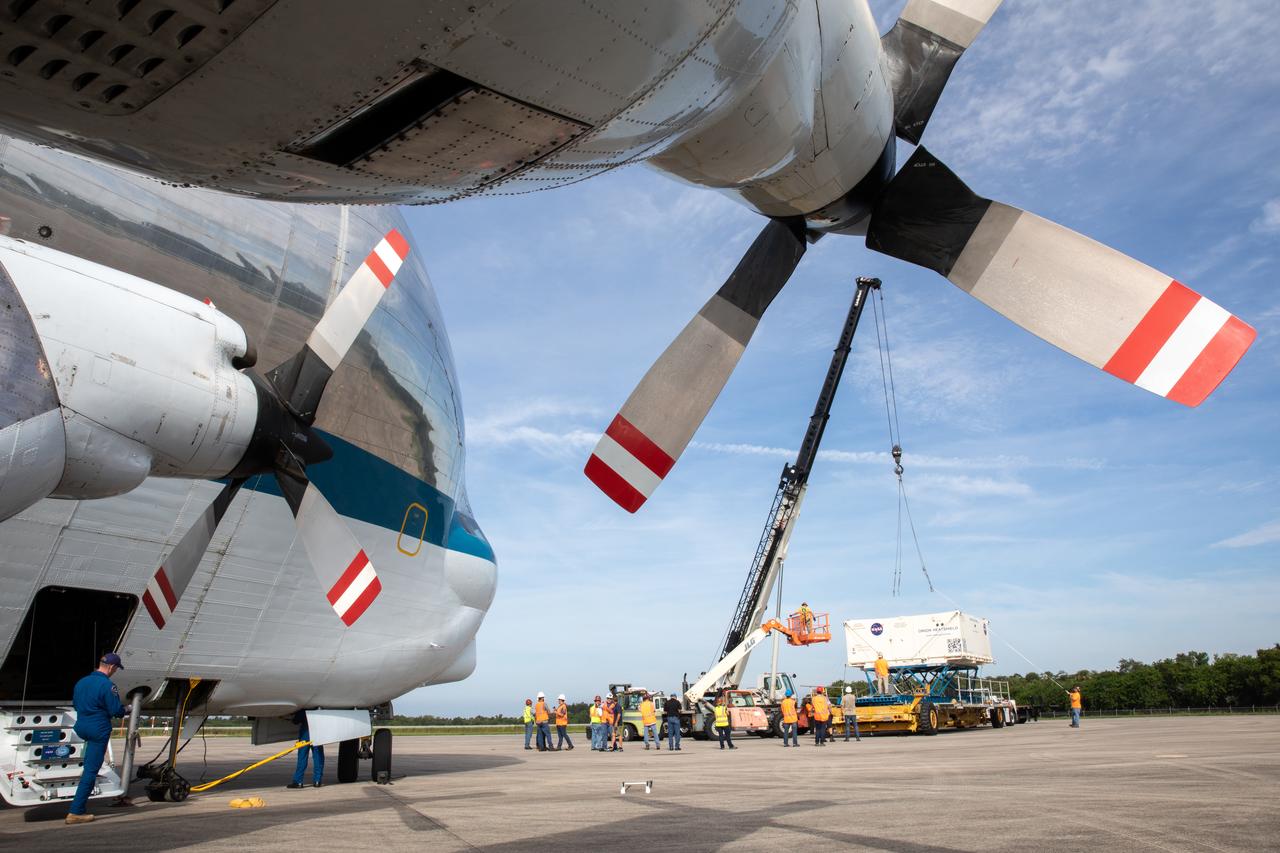
The shipping container carrying the heat shield for Orion’s Artemis 2 mission, NASA’s first crewed mission, has been unloaded from NASA’s Super Guppy aircraft at the agency’s Kennedy Space Center Shuttle Landing Facility in Florida on July 9, 2019. The heat shield, measuring roughly 16 feet in diameter, will protect astronauts upon re-entry on the second mission of Artemis. The heat shield arrived from Lockheed Martin’s manufacturing facility near Denver. It will be delivered to the Neil Armstrong Operations and Checkout facility high bay. The heat shield is a base titanium truss structure. Over the next several months, technicians will apply Avcoat, an ablative material that will provide the thermal protection. Artemis 2 will confirm all of the spacecraft’s systems operate as designed in the actual environment of deep space with astronauts aboard.
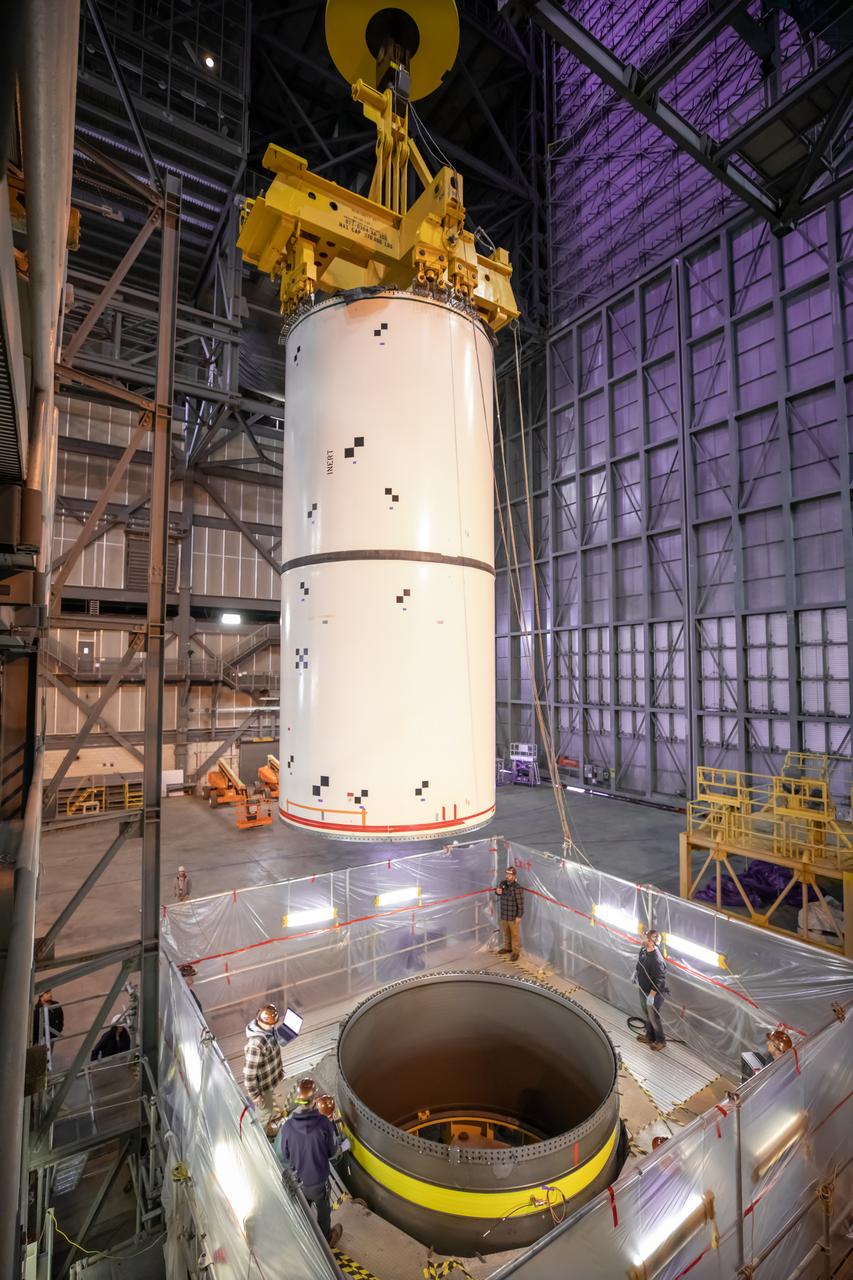
In High Bay 4 of the Vehicle Assembly Building at NASA’s Kennedy Space Center in Florida, pathfinders, or full-scale replicas of Space Launch System (SLS) solid rocket booster segments, are being stacked during a training exercise on Jan. 8, 2020. A team of engineers with Exploration Ground Systems and crane operators and technicians with contractor Jacobs are practicing lifting, moving and stacking maneuvers, using important ground support equipment to train employees and certify all the equipment works properly. The booster pathfinders are inert, full-scale replicas of the actual booster hardware that will be attached to the SLS rocket for Artemis missions. The five-segment, 17-story-tall twin boosters will provide 3.6 million pounds of thrust each at liftoff to help launch Orion on Artemis I, its first uncrewed mission beyond the Moon.
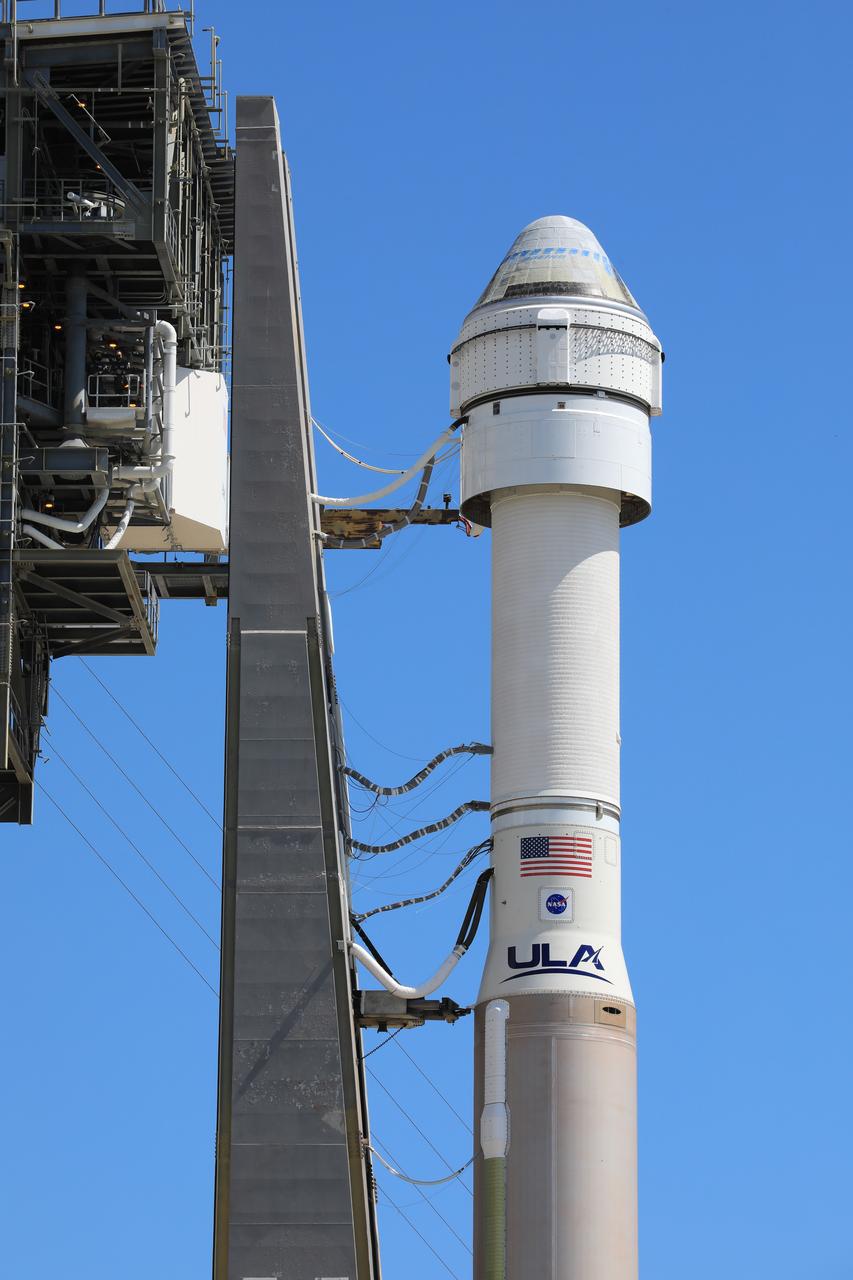
Boeing’s Starliner spacecraft atop the United Launch Alliance Atlas V rocket is seen on the launch pad of Space Launch Complex-41 at Cape Canaveral Space Force Station in Florida on Saturday, May 4, 2024, ahead of NASA’s Boeing Crew Flight Test. As part of the agency’s Commercial Crew Program, NASA astronauts Butch Wilmore and Suni Williams are the first to launch to the International Space Station aboard Boeing’s Starliner spacecraft. Liftoff is scheduled for 10:34 p.m. ET Monday, May 6.
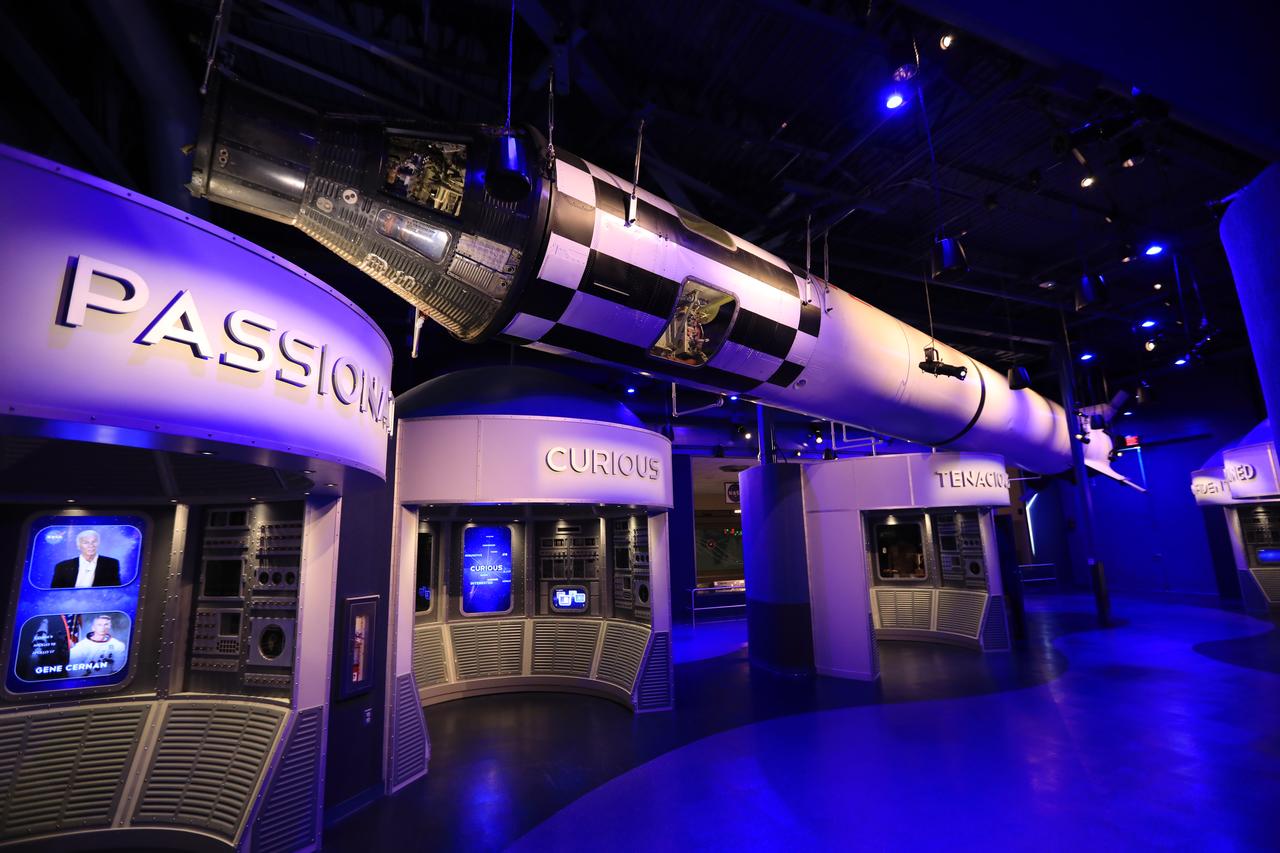
Inside the Heroes and Legends attraction at the Kennedy Space Center Visitor Complex, the Sigma 7 Mercury spacecraft in this exhibit was piloted by astronaut Wally Schirra during his six-orbit mission on Oct. 3, 1962. For display purposes, it is shown here attached to a Redstone launch vehicle like the one that boosted astronauts Alan Shepard and Gus Grissom on sub-orbital flights in 1961. Schirra's capsule was actually launched by the more powerful Atlas rocket in order to reach orbit. The new facility looks back to the pioneering efforts of Mercury, Gemini and Apollo. It sets the stage by providing the background and context for space exploration and the legendary men and women who pioneered the nation's journey into space.
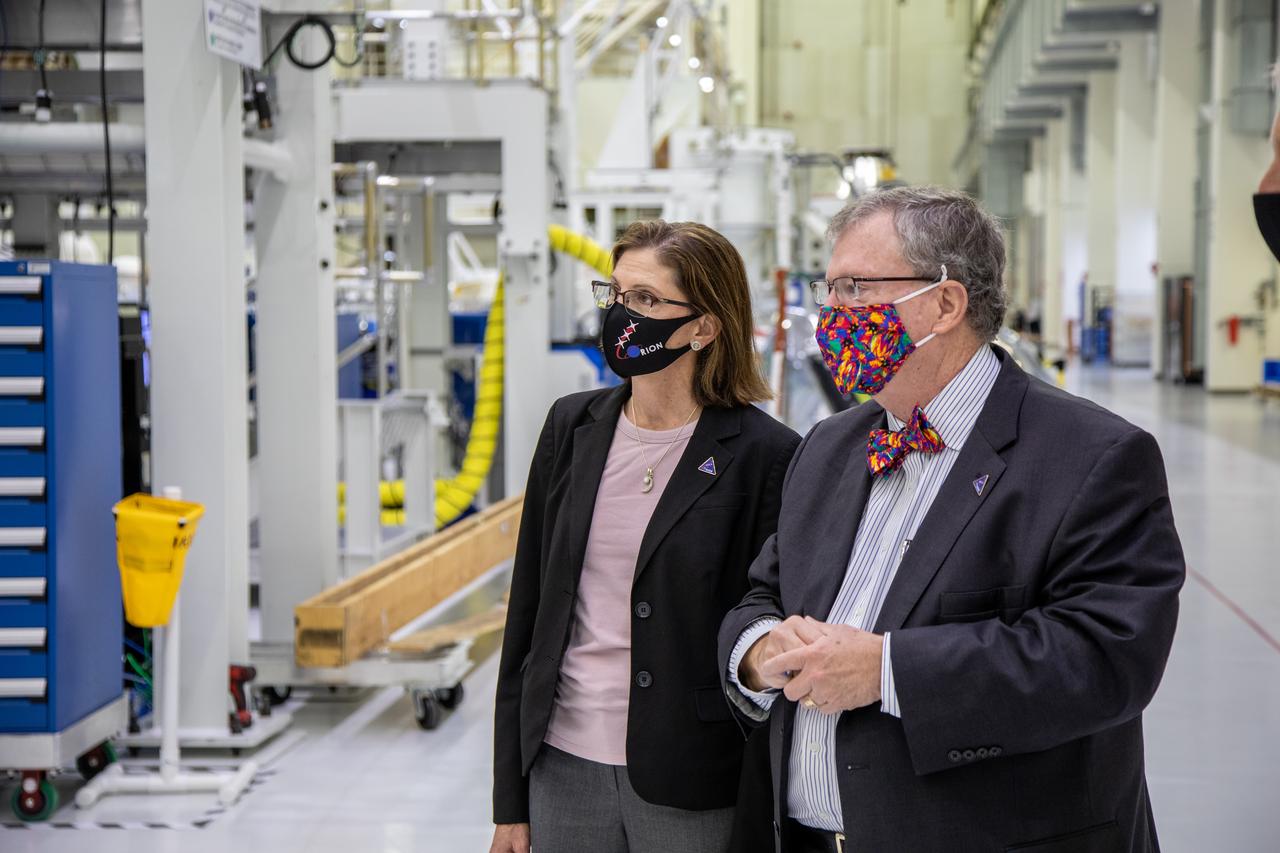
Catherine Koerner, at left, NASA Orion Program manager, along with senior managers from Orion and Lockheed Martin, tours the Neil Armstrong Operations and Checkout Building at NASA’s Kennedy Space Center in Florida on Oct. 6, 2020. Accompanying her, at right is Mike Hawes, Lockheed Martin vice president and Orion Program manager. Koerner viewed Orion spacecraft for the Artemis I and II missions. The first in a series of increasingly complex missions, Artemis I will test the Orion spacecraft and Space Launch System as an integrated system ahead of crewed flights to the Moon. Under the Artemis program, NASA will land the first woman and the next man on the Moon in 2024.
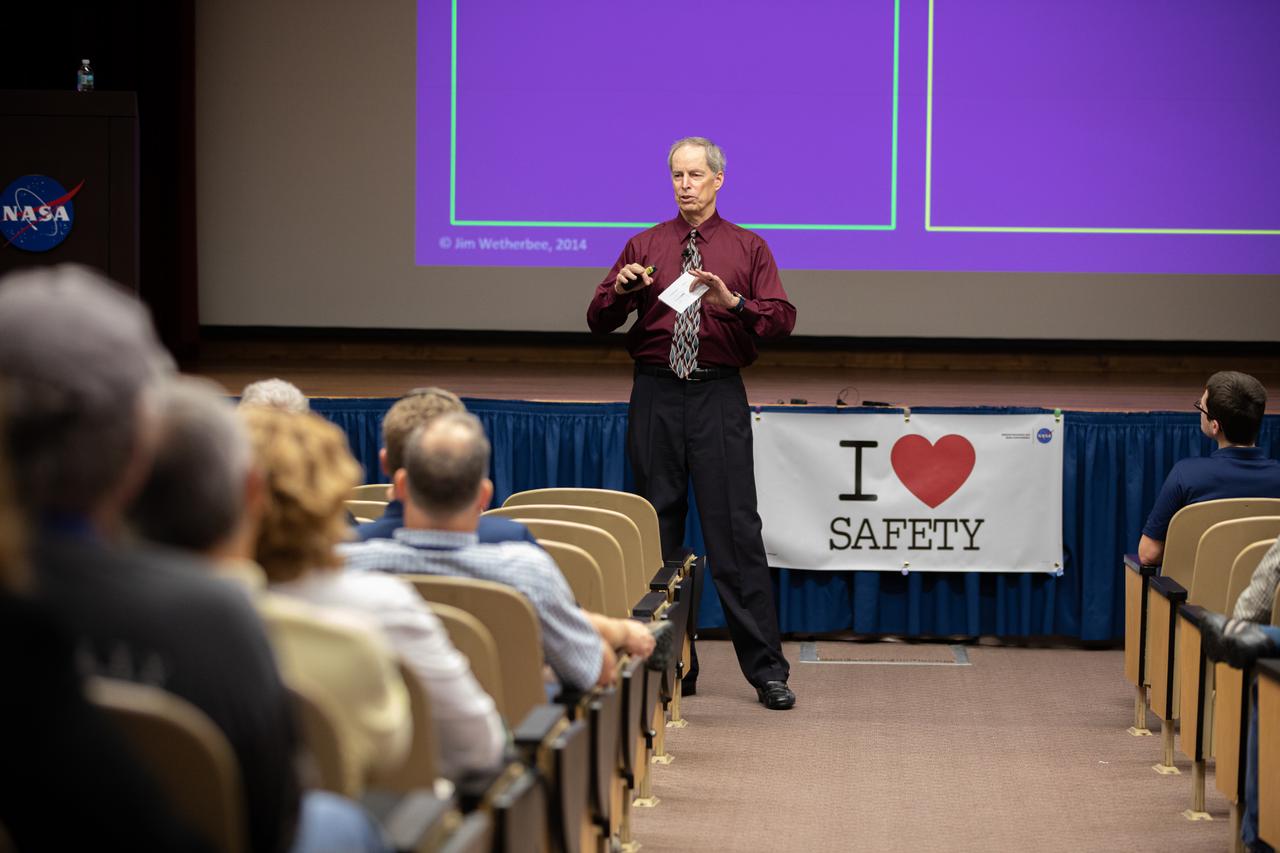
Jim Wetherbee, a retired U.S. Navy captain and former NASA astronaut, speaks to Kennedy Space Center employees inside the Florida spaceport’s Training Auditorium on March 4, 2020, during the center’s annual Safety and Health Days. Taking place March 2 through March 6, Safety and Health Days provides Kennedy employees with a variety of presentations to attend – all of which focus on how to maintain a safe and healthy workforce. Wetherbee’s presentation included information on adverse conditions existing in various organizations prior to those organizations experiencing disasters or accidents.
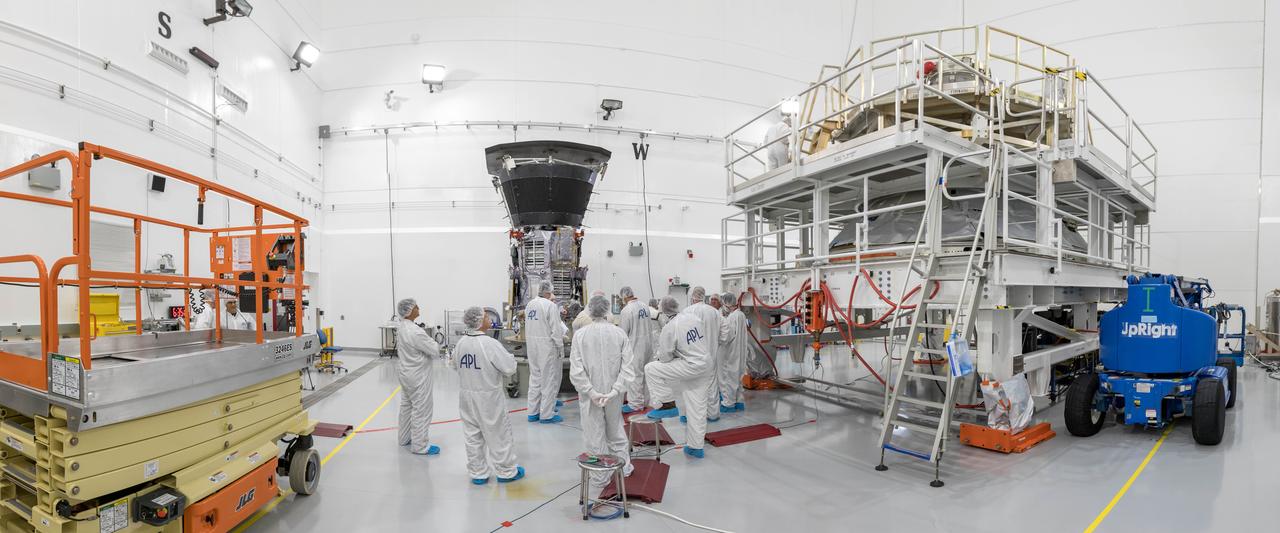
In a wide-angle view at the Astrotech processing facility in Titusville, Florida, near NASA's Kennedy Space Center, on Wednesday, July 11, 2018, technicians and engineers prepare to mate NASA's Parker Solar Probe to its third stage, built and tested by Northrup Grumman in Chandler Arizona. The Parker Solar Probe will launch on a United Launch Alliance Delta IV Heavy rocket from Space Launch Complex 37 at Cape Canaveral Air Force Station in Florida. The mission will perform the closest-ever observations of a star when it travels through the Sun's atmosphere, called the corona. The probe will rely on measurements and imaging to revolutionize our understanding of the corona and the Sun-Earth connection.
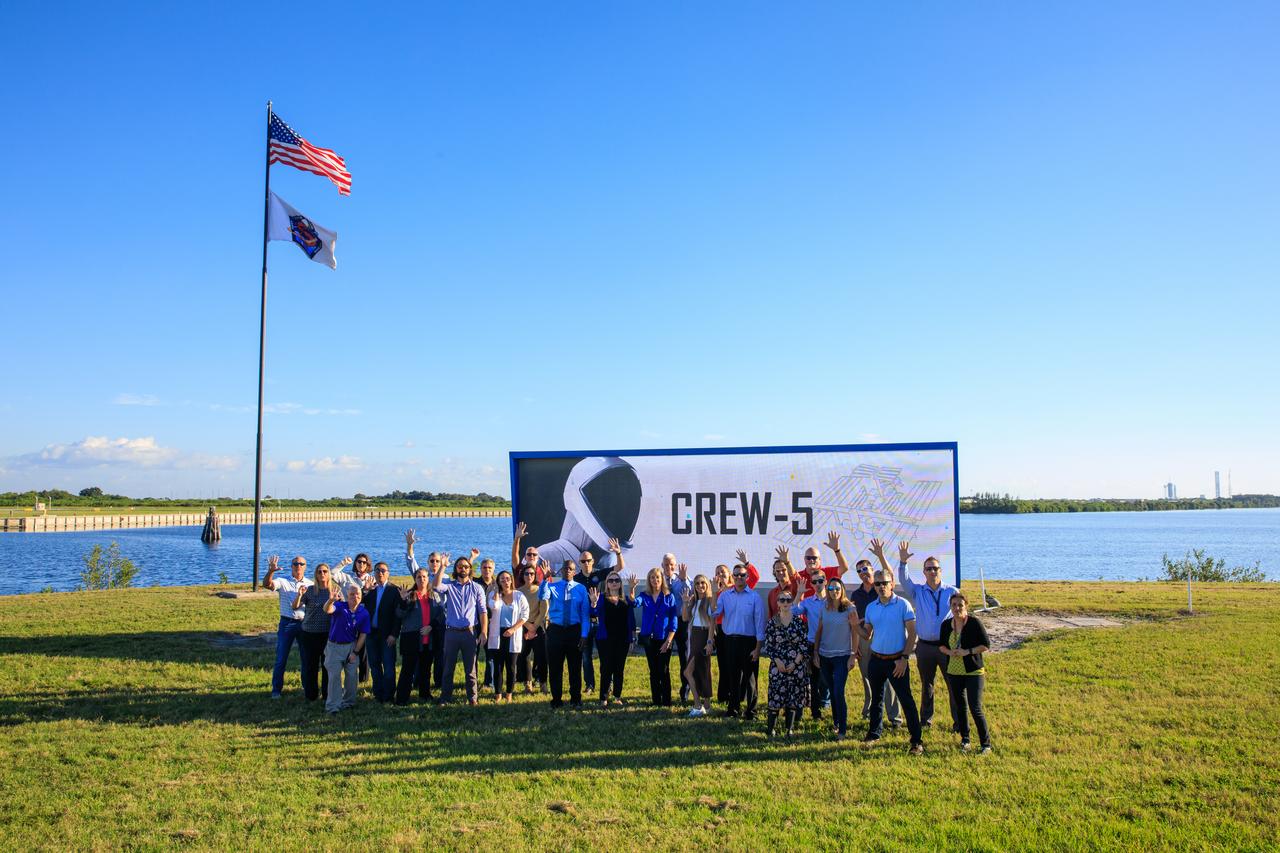
NASA Commercial Crew Program (CCP) employees are photographed in front of Kennedy Space Center’s iconic countdown clock at the Press Site after the Crew-5 flag was raised on Oct. 3, 2022, in Florida. NASA’s SpaceX Crew-5 mission will carry NASA astronauts Josh Cassada and Nicole Aunapu Mann, Roscosmos cosmonaut Anna Kikina, and JAXA (Japan Aerospace Exploration Agency) to the International Space Station for a science expedition mission as part of the agency’s CCP. SpaceX’s Falcon 9 rocket and Crew Dragon Endurance spacecraft are scheduled to lift off from Kennedy’s Launch Complex 39A at noon EDT on Oct. 5, 2022.
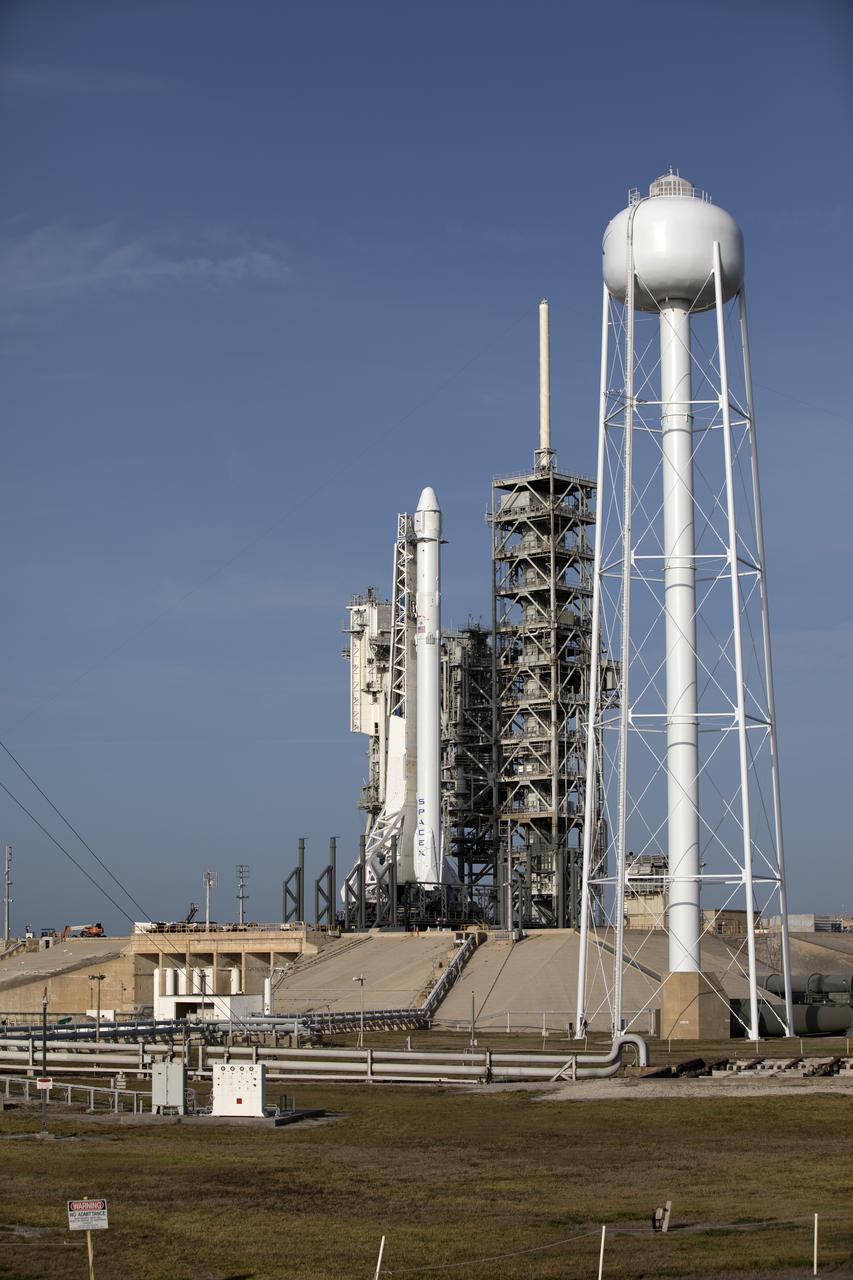
As a Falcon 9 rocket stands ready for liftoff at the Kennedy Space Center's Launch Complex 39A. The rocket will boost a Dragon resupply spacecraft to the International Space Station. Liftoff is scheduled for 5:55 p.m. EDT. On its 11th commercial resupply services mission to the space station, Dragon will bring up 6,000 pounds of supplies, such as the Neutron star Interior Composition Explorer, or NICER, instrument to study the extraordinary physics of neutron stars.
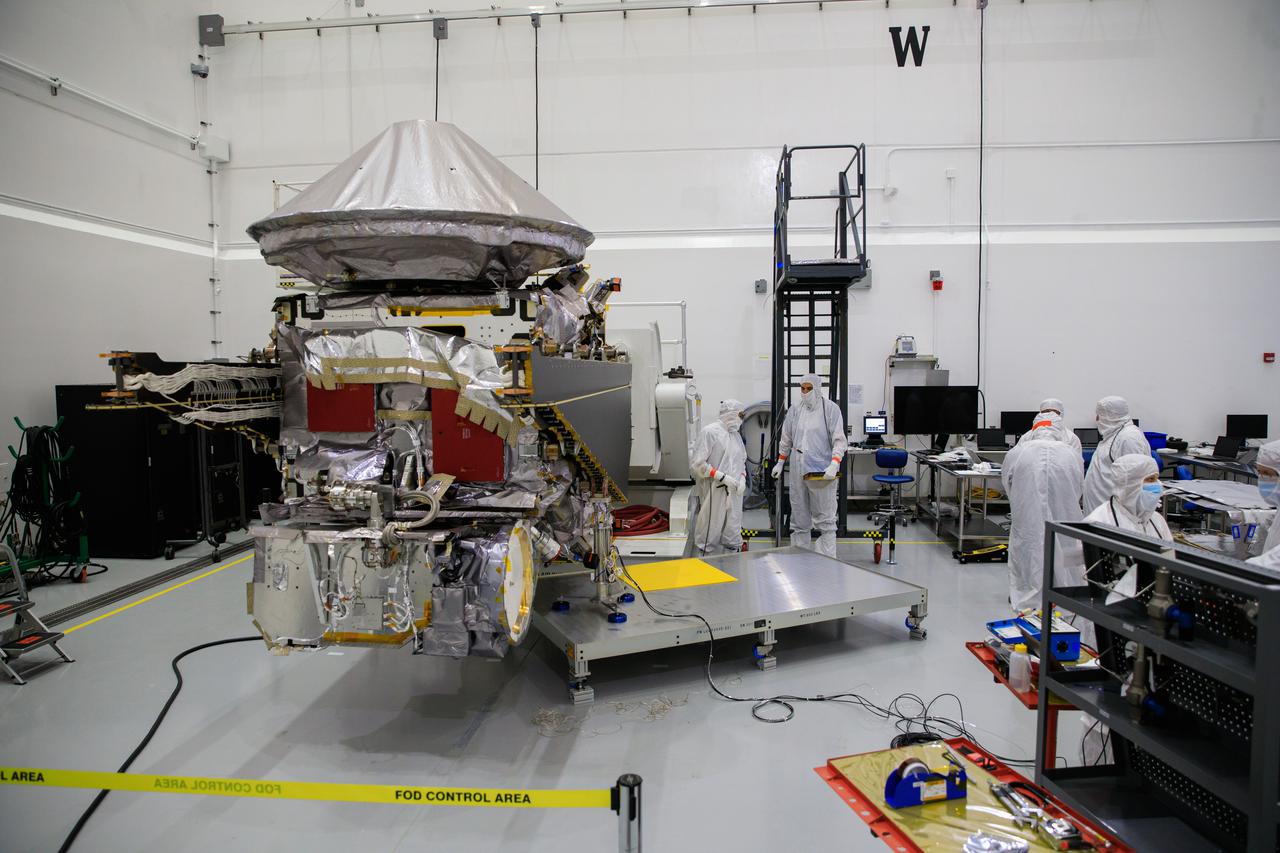
Workers inside the Astrotech Space Operations Facility in Titusville, Florida, begin to extend one of the solar arrays on NASA’s Lucy spacecraft on Aug. 19, 2021. Both solar arrays will be opened to make sure they operate correctly. In view installed on top of the spacecraft is the high gain antenna. Lucy is scheduled to launch no earlier than Saturday, Oct. 16, on a United Launch Alliance Atlas V 401 rocket from Space Launch Complex 41 at Cape Canaveral Space Force Station. NASA’s Launch Services Program based at Kennedy Space Center is managing the launch. Over its 12-year primary mission, Lucy will explore a record-breaking number of asteroids, flying by one asteroid in the solar system’s main belt and seven Trojan asteroids. Additionally, Lucy’s path will circle back to Earth three times for gravity assists, making it the first spacecraft ever to return to the vicinity of Earth from the outer solar system.
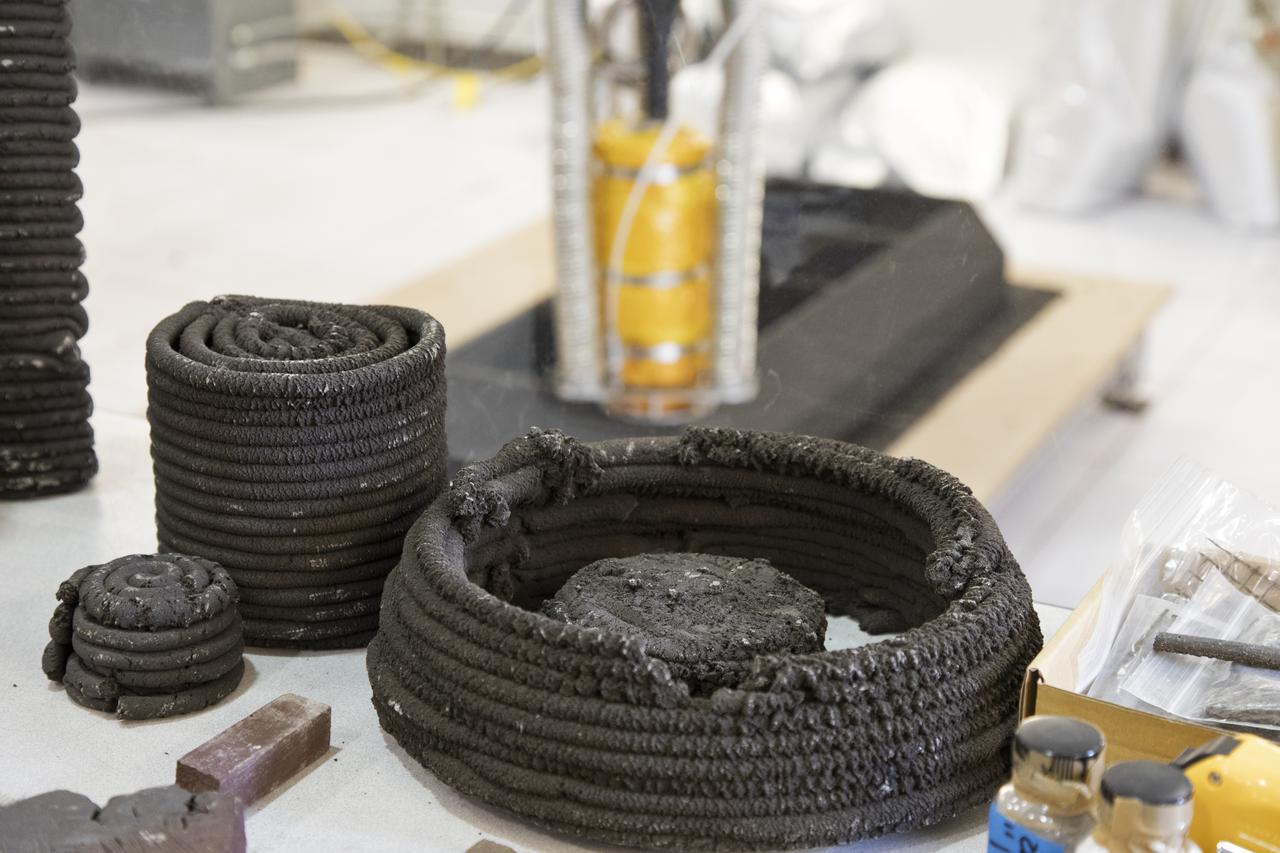
Pellets made from simulated lunar regolith, or dirt, and polymers are being used to test a Zero Launch Mass 3-D printer in the Swamp Works at NASA's Kennedy Space Center in Florida. The printer can be used for construction projects on the Moon and Mars, and even for troops in remote locations on Earth. Zero launch mass refers to the fact that the printer uses these pellets to prove that space explorers can use resources at their destination instead of taking everything with them, saving them launch mass and money. The group is working with Marshall Space Flight Center in Huntsville, Alabama, and the U.S. Army Corps of Engineers to develop a system that can 3-D print barracks in remote locations on Earth, using the resources they have where they are.
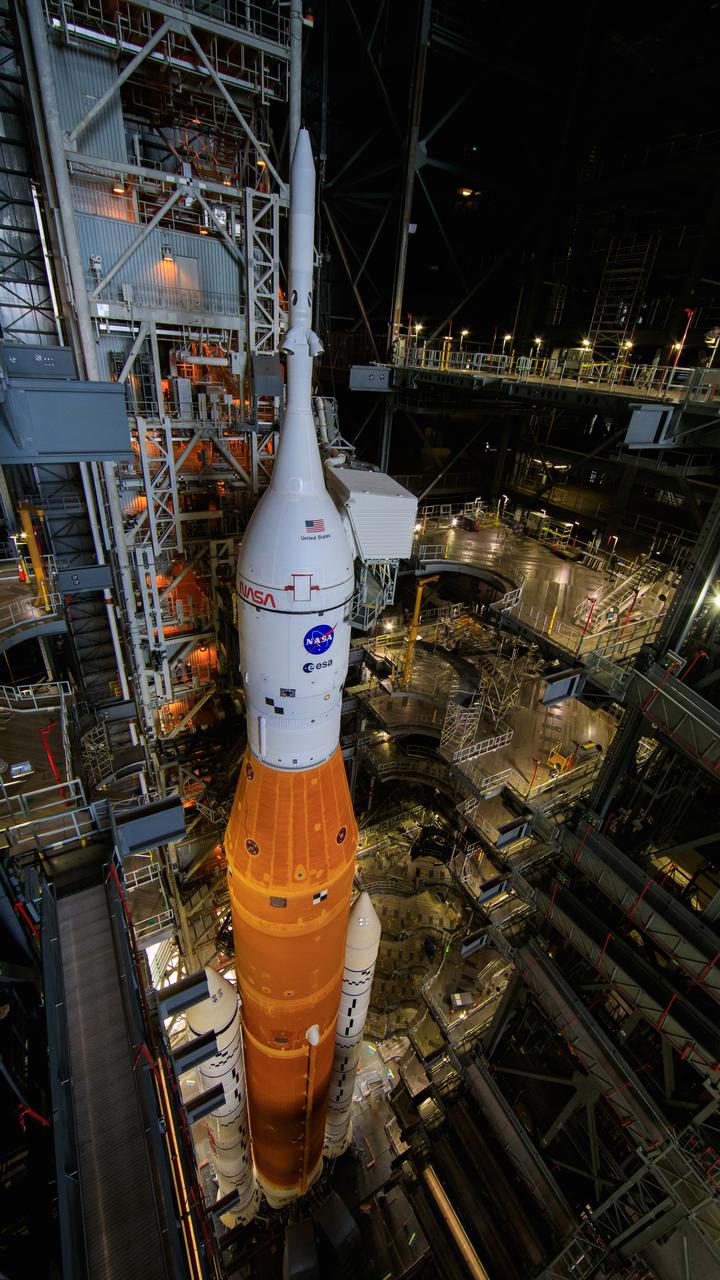
With all of the work platforms retracted, NASA’s Space Launch System and Orion spacecraft atop the mobile launcher are in view in High Bay 3 of the Vehicle Assembly Building at the agency’s Kennedy Space Center in Florida on June 3, 2022. The crawler-transporter, driven by engineers, will slide under the Artemis I stack atop the mobile launcher and carry it to Launch Complex 39B for a wet dress rehearsal test ahead of the Artemis I launch. Artemis I will be the first integrated test of the SLS and Orion spacecraft. In later missions, NASA will land the first woman and the first person of color on the surface of the Moon, paving the way for a long-term lunar presence and serving as a steppingstone on the way to Mars.
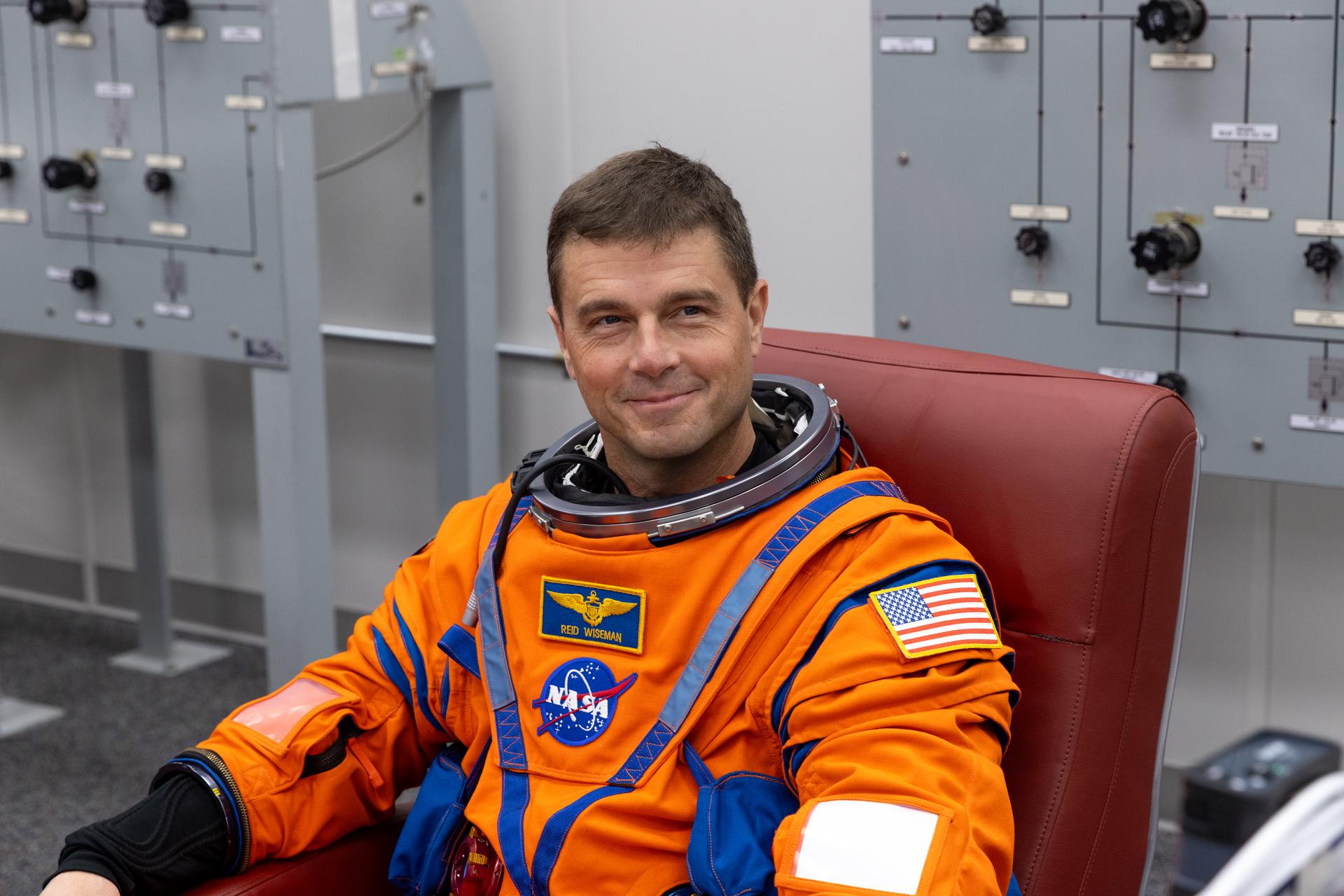
NASA astronaut Reid Wiseman, Artemis II commander, undergoes spacesuit checks inside the crew quarters suit-up room in the Neil A. Armstrong Operations and Checkout Building part of the Artemis II Countdown Demonstration Test at the agency’s Kennedy Space Center on Saturday, Dec. 20, 2025. For this operation, the Artemis II crew and launch team are simulating the launch day timeline including suit-up, walkout, and climbing in and out of the spacecraft. Through the Artemis campaign, NASA will send astronauts to explore the Moon for scientific discovery, economic benefits, and to build the foundation for the first crewed missions to Mars, for the benefit of all.
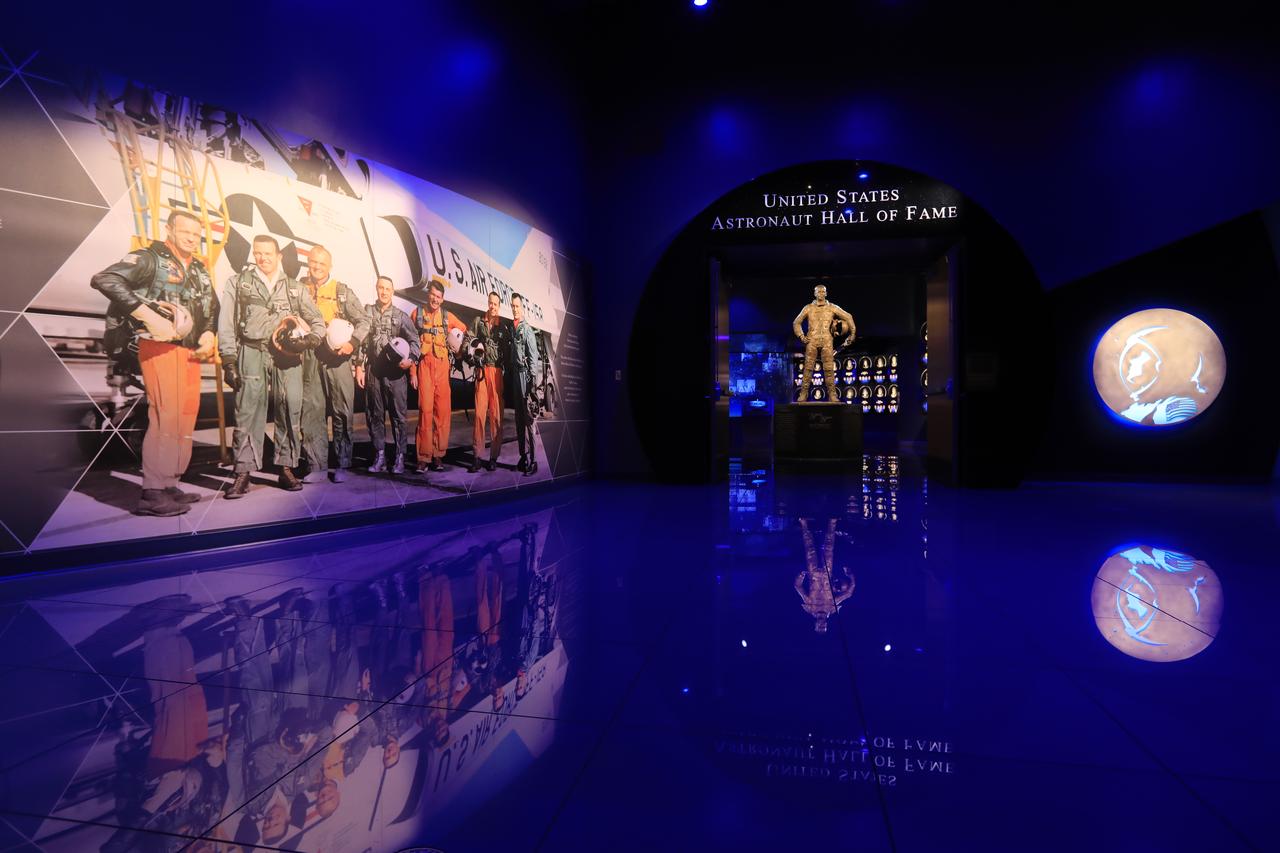
Inside the Heroes and Legends attraction at the Kennedy Space Center Visitor Complex, a statue of astronaut Alan Shepard, America's first person in space, stands just inside the doors to the U.S. Astronaut Hall of Fame. In addition to displays honoring the Americans currently enshrined in the U. S. Astronaut Hall of Fame, the new facility looks back to the pioneering efforts of Mercury, Gemini and Apollo. It sets the stage by providing the background and context for space exploration and the legendary men and women who pioneered the nation's journey into space.
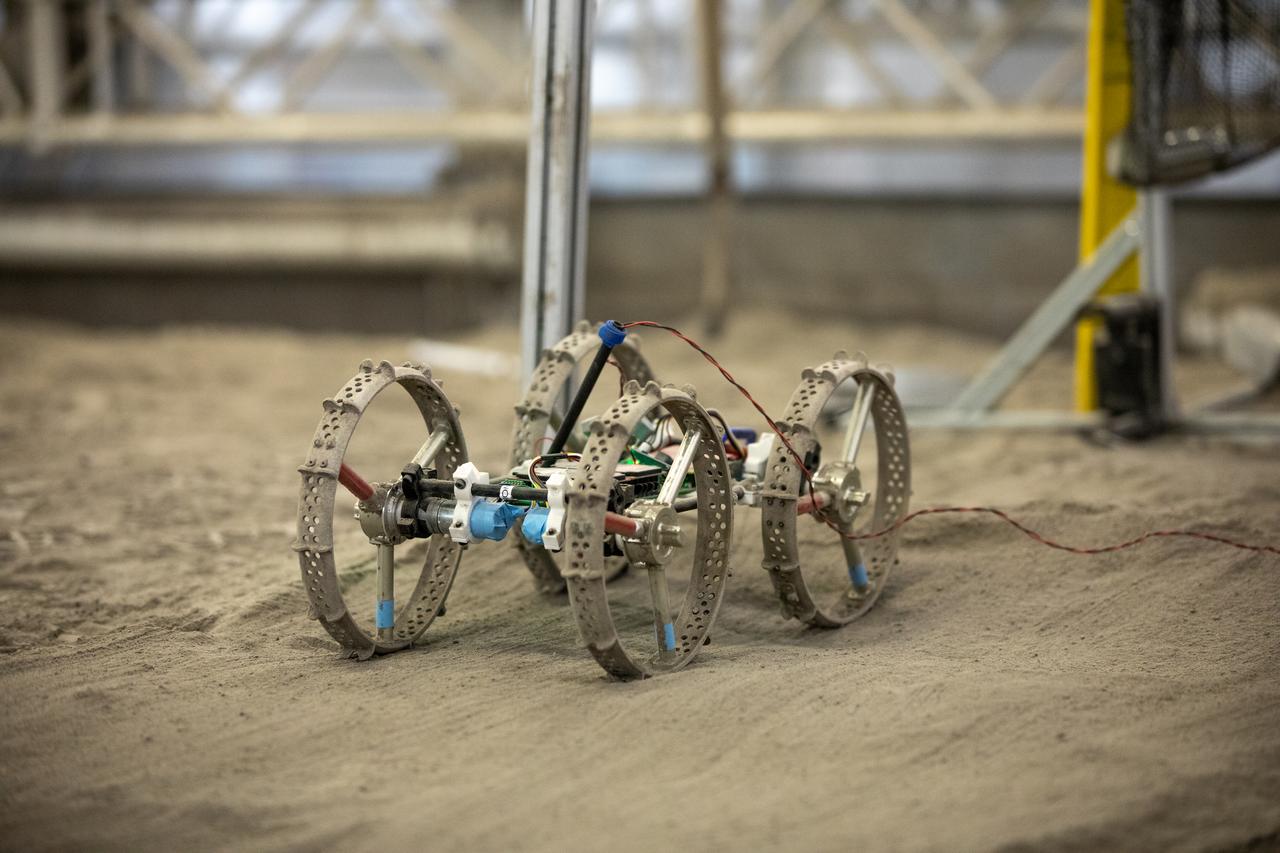
A mass-offloaded version of Astrobotic’s CubeRover – a lightweight, modular planetary rover – is used to simulate mobility in low lunar gravity inside the Granular Mechanics and Regolith Operations (GMRO) Laboratory’s regolith pit at NASA Kennedy Space Center’s Swamp Works facility on June 30, 2022. Astrobotic – a Pittsburgh-based space robotics company – is using the GMRO lab’s regolith bin, which holds approximately 120 tons of lunar regolith simulant, to depict how the company’s CubeRover would perform on the Moon. NASA’s Small Business Innovation Research program provided the funding for initial development, and a $2 million Tipping Point award from the agency has provided additional funding for continued development into a more mature rover.
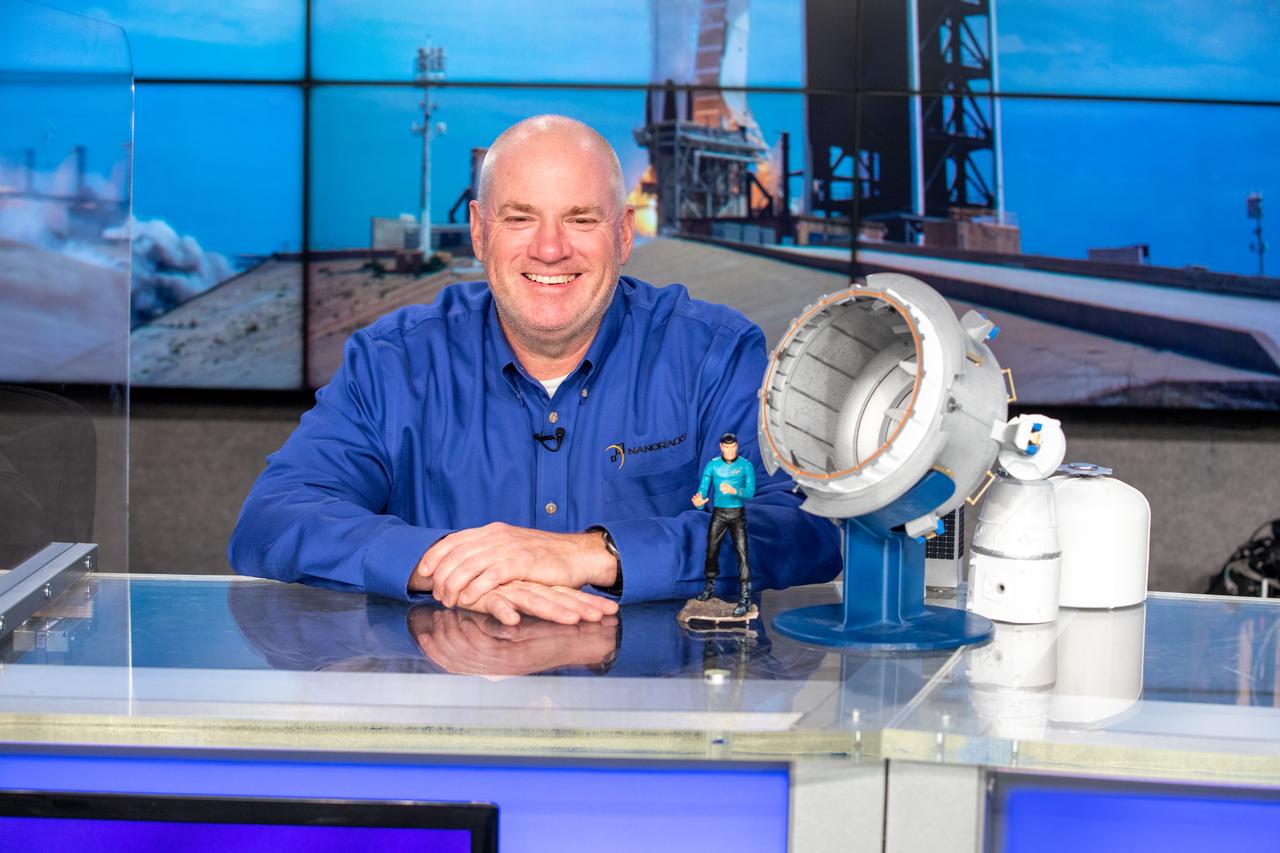
Brock Howe, airlock program manager, Nanoracks, participates in a #NASASocial Science and Station Q&A show at the agency’s Kennedy Space Center in Florida on Dec. 4, 2020. Jennifer Scott-Williams, ISS Program Research Office; and Pinar Mesci, project scientist, Sanford Consortium for Regenerative Medicine, UC San Diego, also participated in the event, which was moderated by NASA Communications’ Kenna Pell. SpaceX’s 21st Commercial Resupply Services (CRS-21) mission is scheduled to launch from Kennedy’s Launch Complex 39A on Dec. 5, 2020. Liftoff of the SpaceX Falcon 9 rocket and cargo Dragon spacecraft is targeted for 11:39 a.m. EST.
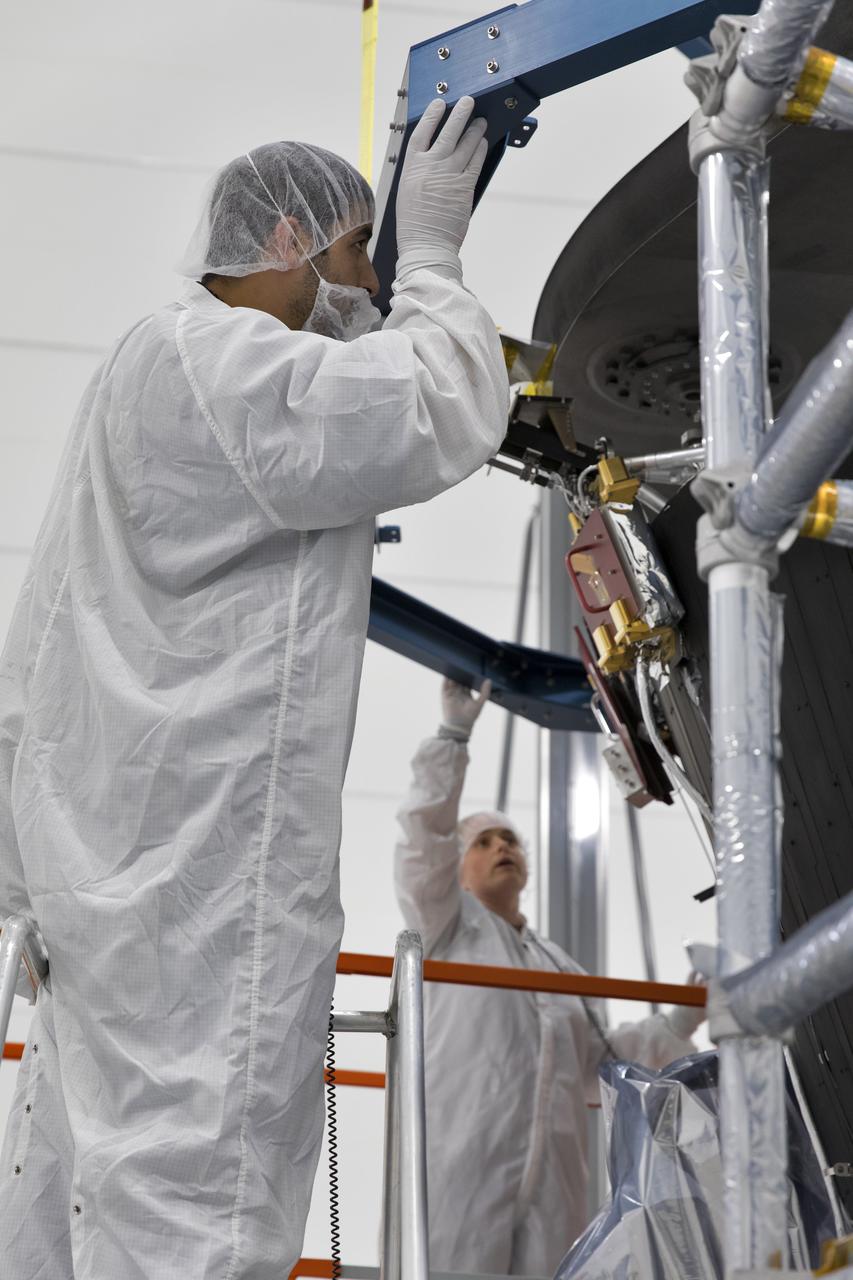
In the Astrotech processing facility in Titusville, Florida, near NASA's Kennedy Space Center, on Wednesday, June 27, 2018, technicians and engineers install the heat shield on NASA's Parker Solar Probe. The Parker Solar Probe will launch on a United Launch Alliance Delta IV Heavy rocket from Space Launch Complex 37 at Cape Canaveral Air Force Station in Florida no earlier than Aug. 4, 2018. The mission will perform the closest-ever observations of a star when it travels through the Sun's atmosphere, called the corona. The probe will rely on measurements and imaging to revolutionize our understanding of the corona and the Sun-Earth connection.
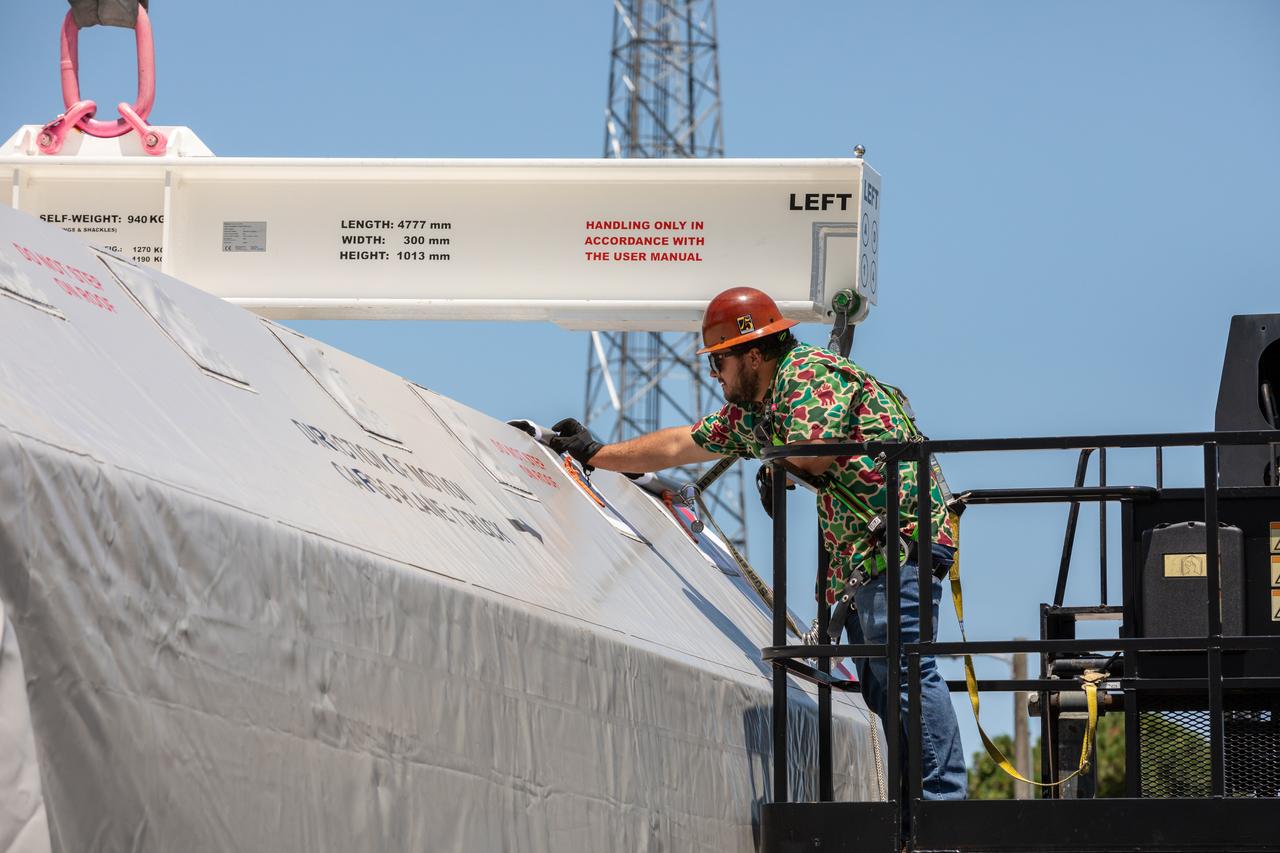
NASA’s largest planetary mission spacecraft, Europa Clipper, arrives at the Payload Hazardous Servicing Facility at the agency’s Kennedy Space Center in Florida on Friday, May 24, 2024. Slated to launch aboard a SpaceX Falcon Heavy rocket later this year from Launch Complex 39A at Kennedy, Europa Clipper will help determine if conditions exist below the surface Jupiter’s fourth largest moon, Europa, that could support life.
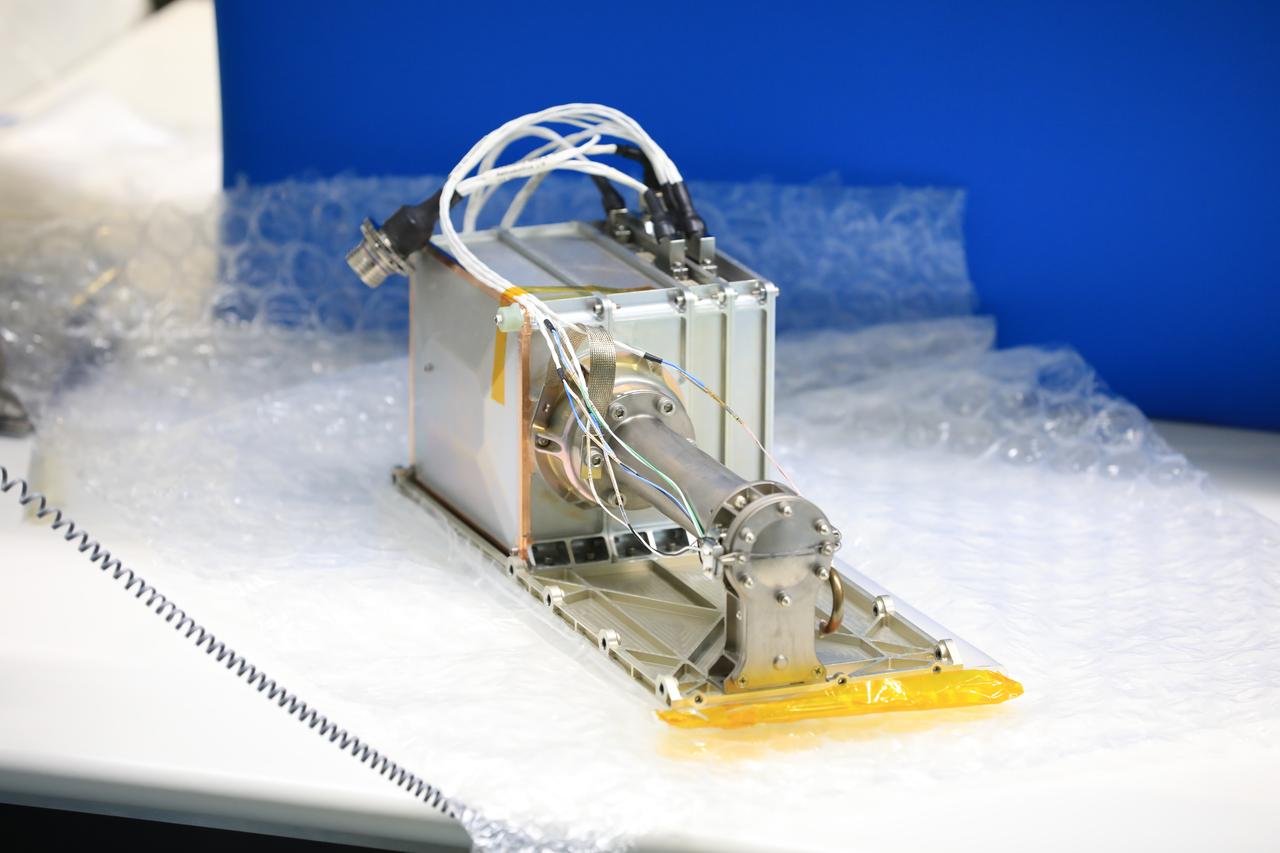
The Mass Spectrometer Observing Lunar Operations (MSolo) instrument is photographed inside the Space Station Processing Facility at NASA’s Kennedy Space Center in Florida following installation of its radiator on Sept. 25, 2020. MSolo will help analyze the chemical makeup of landing sites on the Moon, as well as study water on the lunar surface. The radiator will help keep the instrument’s temperature stable in the extreme heat and cold it will encounter. MSolo instruments are scheduled to launch on multiple robotic missions as part of NASA’s Commercial Lunar Payload Services (CLPS), with the first of these missions exploring Lacus Mortis, a large crater on the near side of the Moon, beginning in 2021. MSolo also will be one of three instruments on the agency’s water-hunting Volatiles Investigating Polar Exploration Rover, VIPER, scheduled to launch to the Moon’s South Pole in late 2023.
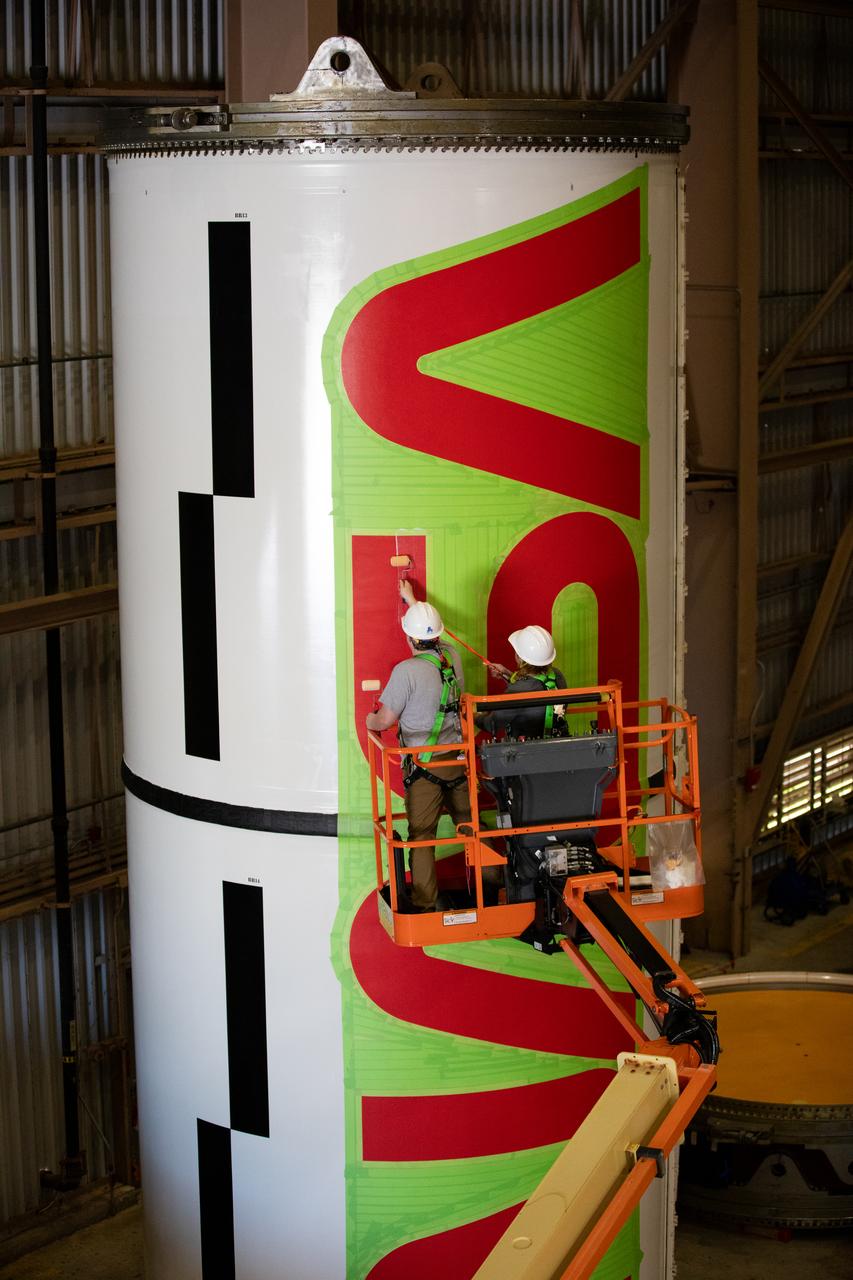
Workers with NASA’s Exploration Ground Systems (EGS) paint the bright red NASA “worm” logo on the side of an Artemis II solid rocket booster segment inside the Rotation, Processing and Surge Facility (RPSF) at Kennedy Space Center in Florida on Tuesday, Jan. 30, 2024. The EGS team used a laser projector to mask off the logo with tape, then painted the first coat of the iconic design. The booster segments will help propel the Space Launch System (SLS) rocket on the Artemis II mission to send four astronauts around the Moon as part of the agency’s effort to establish a long-term science and exploration presence at the Moon, and eventually Mars.
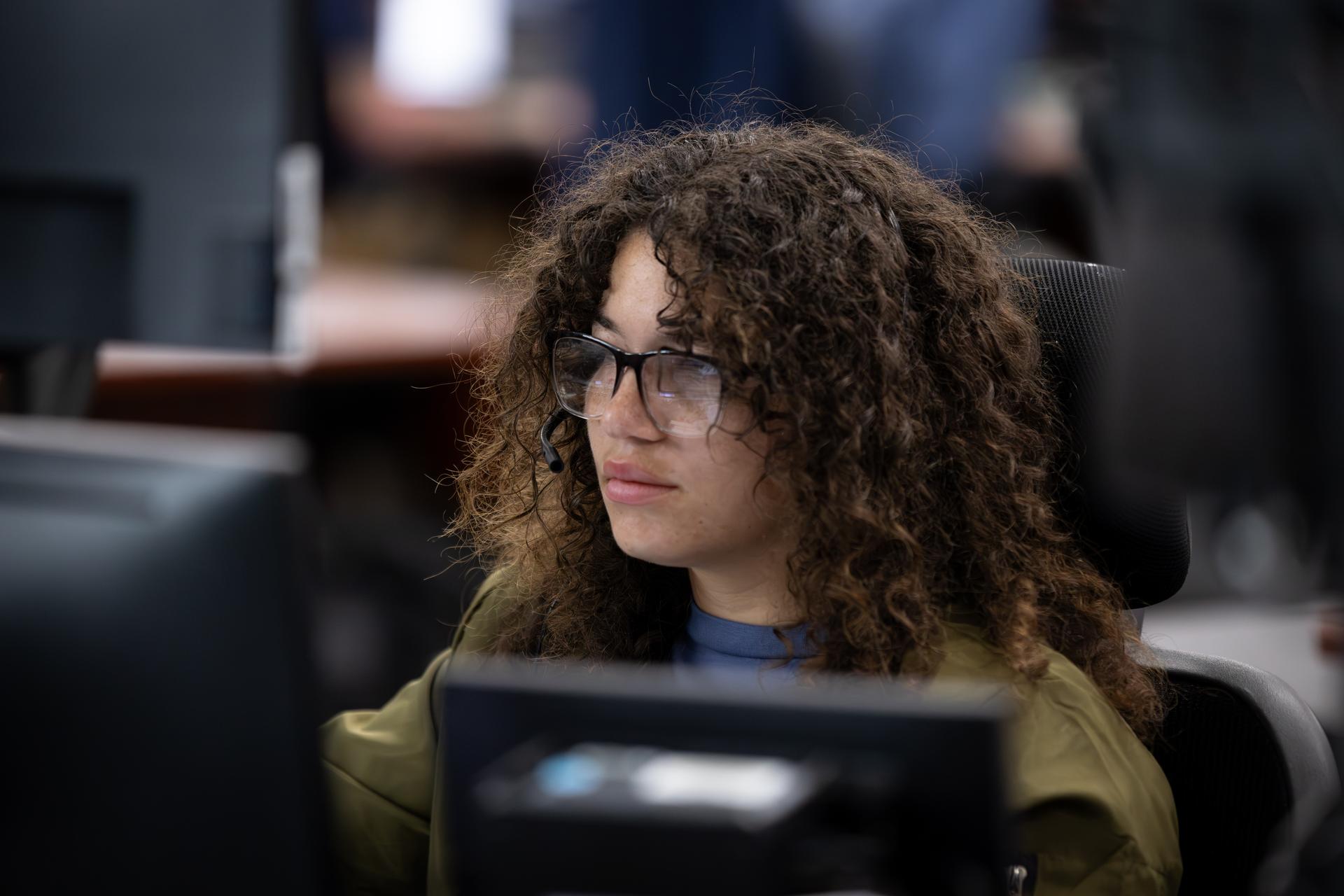
Artemis launch team members participate in a terminal countdown simulation for Artemis III on Thursday, June 11, 2026, inside Firing Room 1 and 2 of the Rocco A. Petrone Launch Control Center at NASA’s Kennedy Space Center in Florida. The terminal count simulation conducted by NASA’s Exploration Ground Systems team runs through the final five hours of launch countdown, including terminal count - the remaining 10 minutes of the countdown. Artemis III will carry out a series of objectives in low Earth orbit designed to demonstrate critical systems needed for future lunar landings, beginning with Artemis IV.
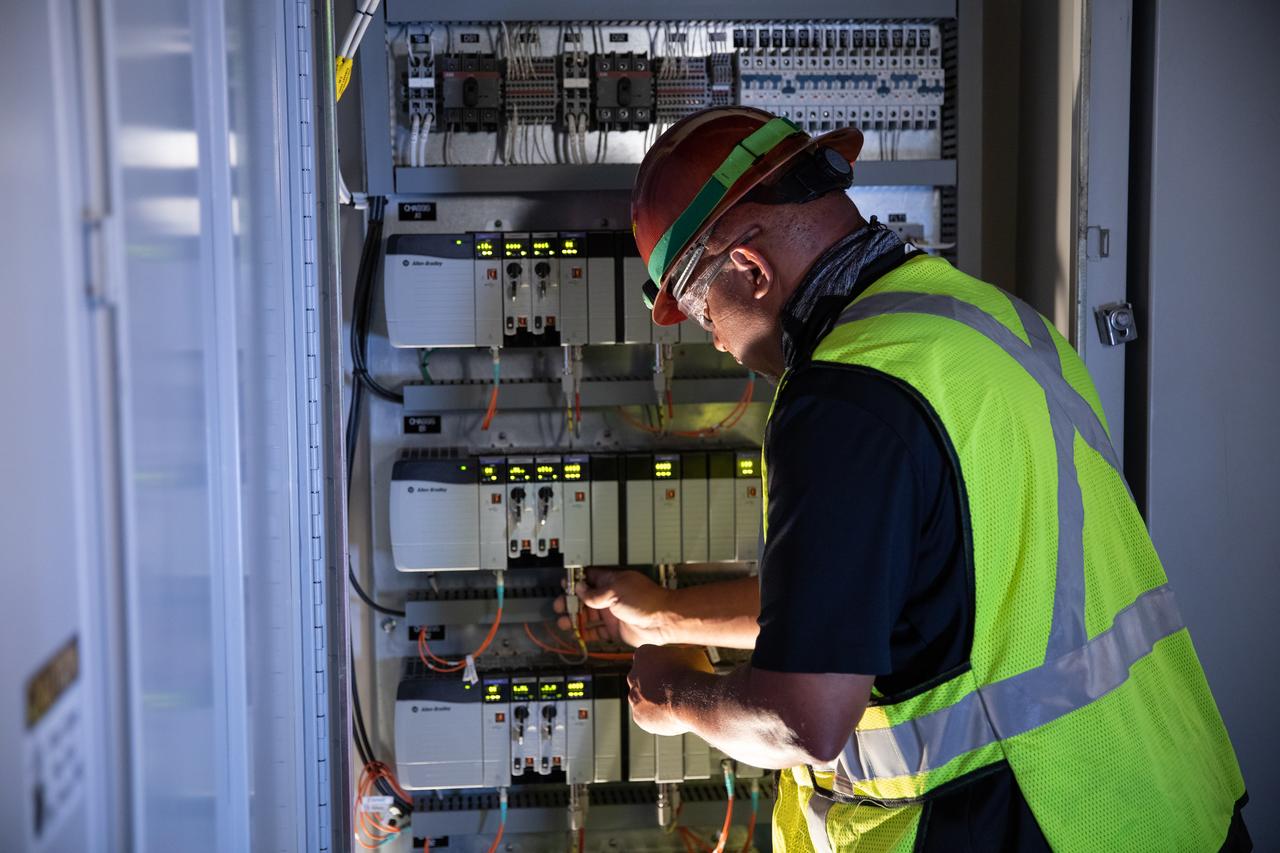
Launch Software Team in Launch Control Center.
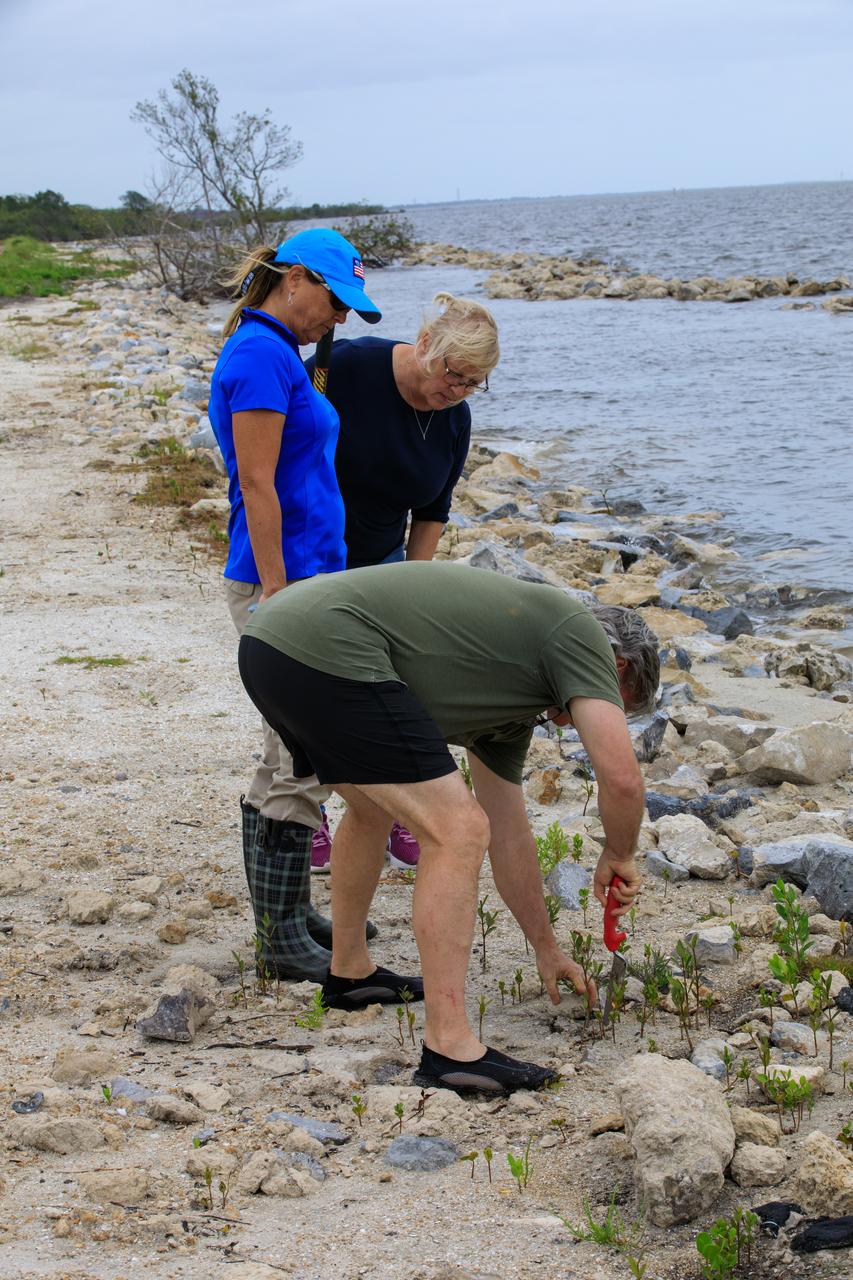
A team from Kennedy’s Environmental Management Branch works to remove a mangrove seedling on the shoreline of Kennedy Athletic, Recreation, and Social (KARS) Park at Kennedy Space Center in Florida on April 12, 2023. Employees from Kennedy’s Environmental Management Branch removed over 100 mangrove seedlings from the shoreline and repotted them for protection during the final stages of a shoreline restoration project inside KARS Park. The mangrove seedlings will be replanted upon completion of the project to create a living shoreline better able to counter the effects of erosion caused by storm waves and rising sea levels.
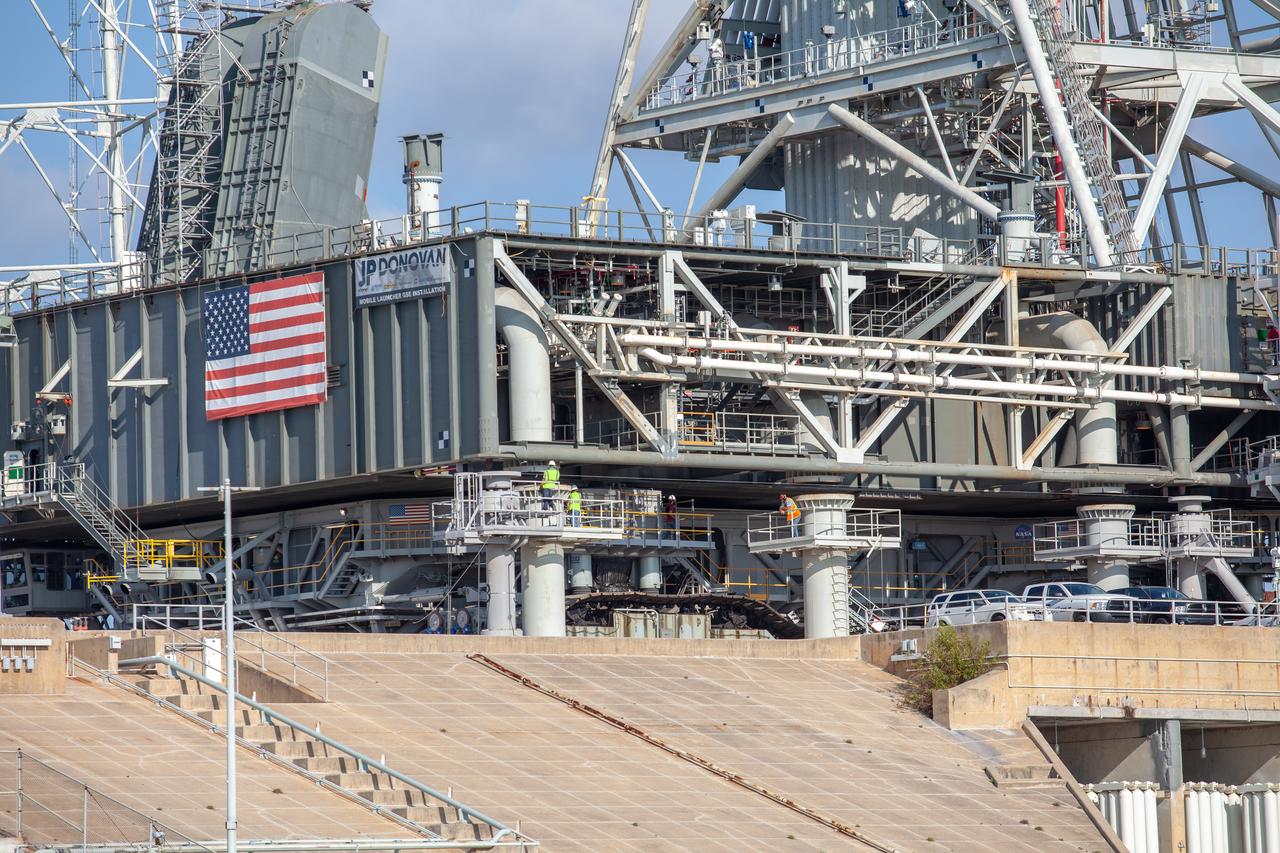
The mobile launcher for Artemis missions is at Launch Pad 39B on Sept. 11, 2019, at NASA’s Kennedy Space Center in Florida, after spending a week and a half inside the Vehicle Assembly Building (VAB) due to the approach of Hurricane Dorian. The nearly 400-foot-tall structure was moved from Launch Pad 39B to the VAB for safekeeping on Aug. 30. The storm passed about 70 miles east of the spaceport during the overnight hours Tuesday, Sept. 3, and Wednesday, Sept. 4. NASA’s Exploration Ground Systems moved the mobile launcher back to the launch pad, where teams will complete testing and checkout on the launcher in the coming weeks for the Artemis I mission.
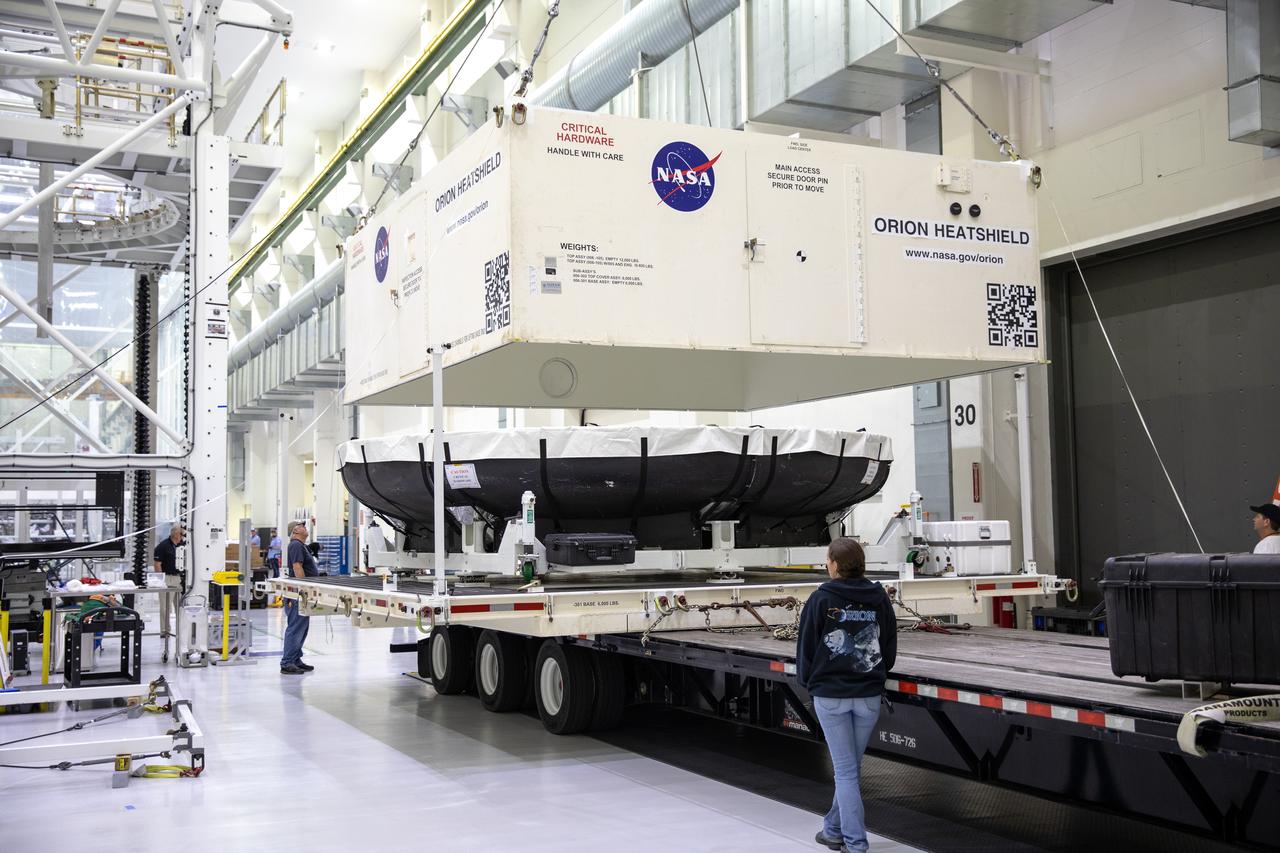
The cover of the shipping container carrying the heat shield for Orion’s Artemis 2 mission, NASA’s first crewed mission, is lifted up inside the Neil Armstrong Operations and Checkout Building high bay at the agency’s Kennedy Space Center in Florida on July 10, 2019. The heat shield, measuring roughly 16 feet in diameter, will protect astronauts upon re-entry on the second mission of Artemis. The heat shield arrived from Lockheed Martin’s manufacturing facility near Denver aboard NASA’s Super Guppy Aircraft. The heat shield is a base titanium truss structure. Over the next several months, technicians will apply Avcoat, an ablative material that will provide the thermal protection. Artemis 2 will confirm all of the spacecraft’s systems operate as designed in the actual environment of deep space with astronauts aboard.
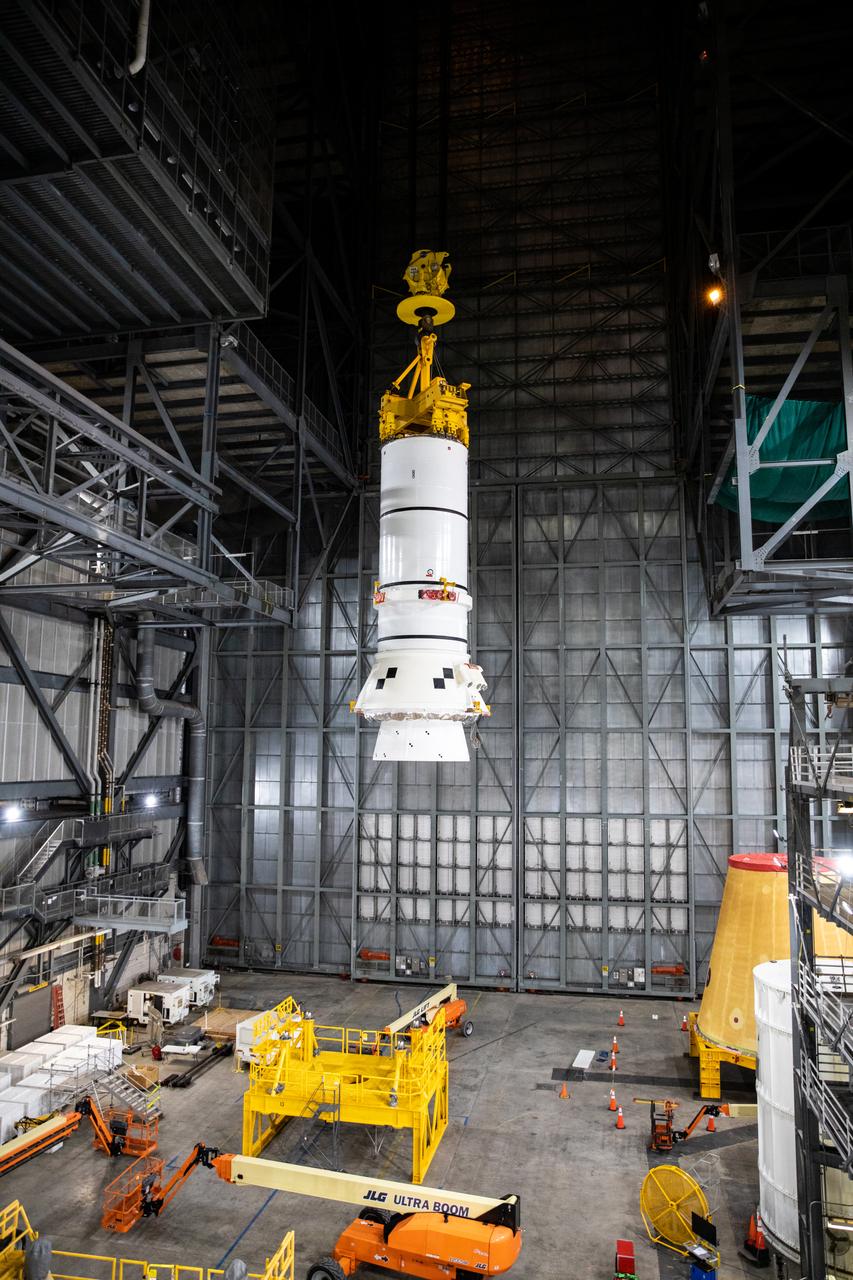
In the transfer aisle of the Vehicle Assembly Building (VAB) at NASA’s Kennedy Space Center in Florida, the second of two Artemis I aft booster segments for the Space Launch System is lifted by crane for its move into High Bay 3 on Nov. 24, 2020. Workers with Exploration Ground Systems and contractor Jacobs teams will stack the twin five-segment boosters on the mobile launcher in High Bay 3 over a number of weeks. When the core stage arrives, it will join the boosters on the mobile launcher, followed by the interim cryogenic propulsion stage and Orion spacecraft. Manufactured by Northrop Grumman in Utah, the twin boosters provide more than 75 percent of the total SLS thrust at launch. The SLS is managed by Marshall Space Flight Center in Huntsville, Alabama. Under the Artemis program, NASA will land the first woman and the next man on the Moon by 2024. The first in a series of increasingly complex missions, Artemis I will test the Orion spacecraft and SLS as an integrated system ahead of crewed flights to the Moon.
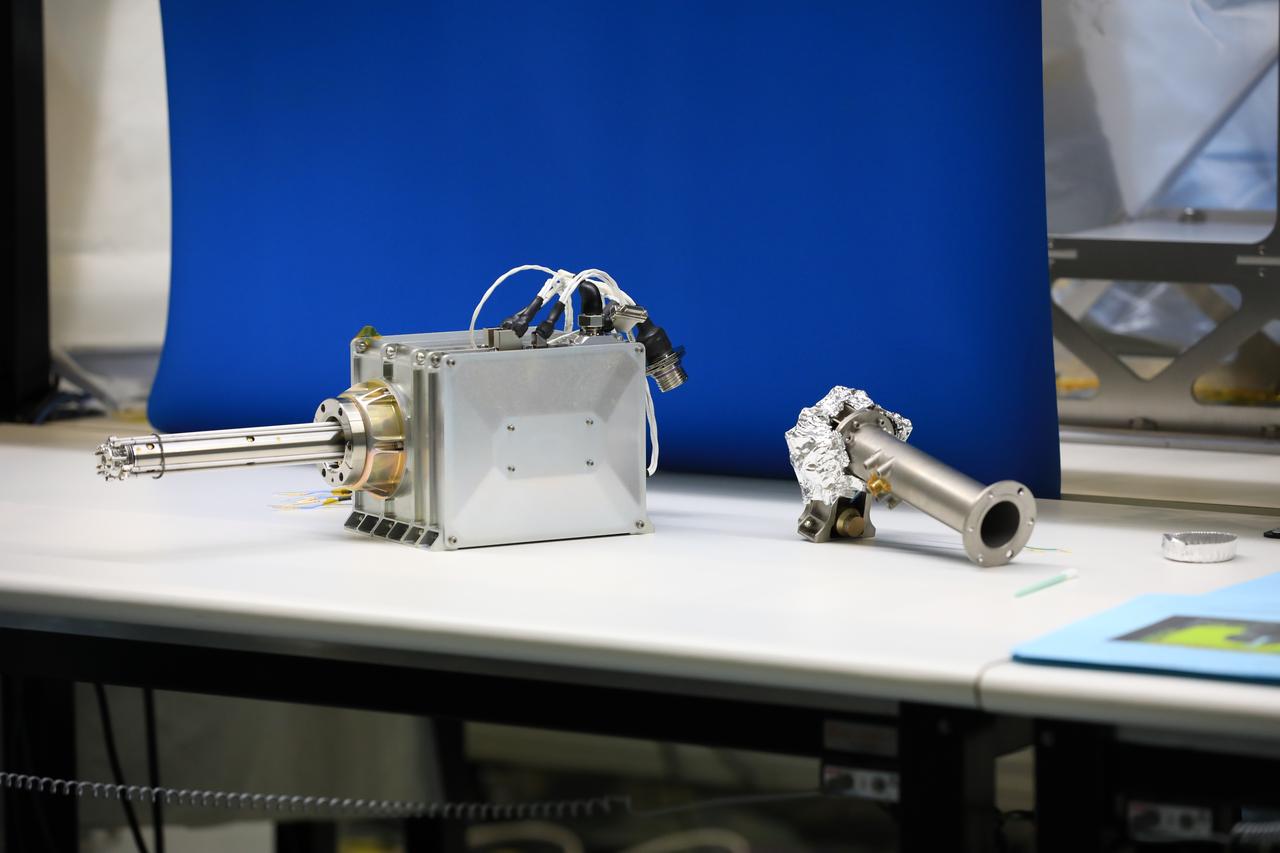
Instruments for the Mass Spectrometer observing lunar operations (MSolo) are in view inside the Space Station Processing Facility at NASA’s Kennedy Space Center in Florida on Sept. 25, 2020. MSolo is a commercial off-the-shelf mass spectrometer modified to work in space and it will help analyze the chemical makeup of landing sites on the Moon, as well as study water on the lunar surface. This work is preparing MSolo hardware for a robotic mission as part of the Commercial Lunar Payload Services (CLPS) launching to exploring Lacus Mortis, a large crater on the near side of the Moon in 2021. A future mission will send a mobile robot named the Volatiles Investigating Polar Exploration Rover (VIPER) to the Moon to prospect for water. VIPER will have several instruments that will allow it to detect and sample water including MSolo, the Neutron Spectrometer System, the Near Infrared Volatiles Spectrometer System and The Regolith and Ice Drill for Exploring New Terrain (TRIDENT).
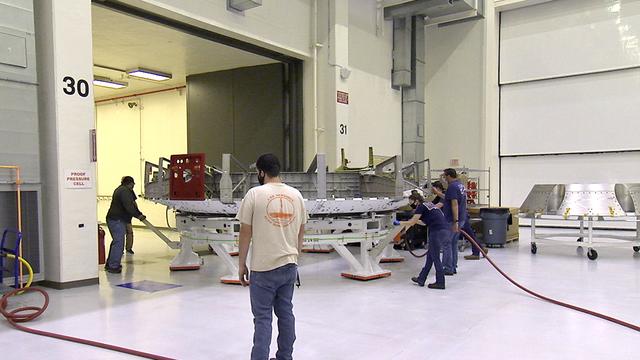
Inside the Neil Armstrong Operations and Checkout Building at NASA's Kennedy Space Center in Florida, the Artemis II crew module adapter (CMA) is being relocated from the clean room to the Pressure Proof Cell for additional testing and maintenance. The CMA connects the crew module to the service module. Artemis II is the first crewed mission in a series of missions to the Moon and on to Mars. Artemis II will confirm all of the Orion spacecraft’s systems operate as designed in the actual environment of deep space with astronauts aboard.
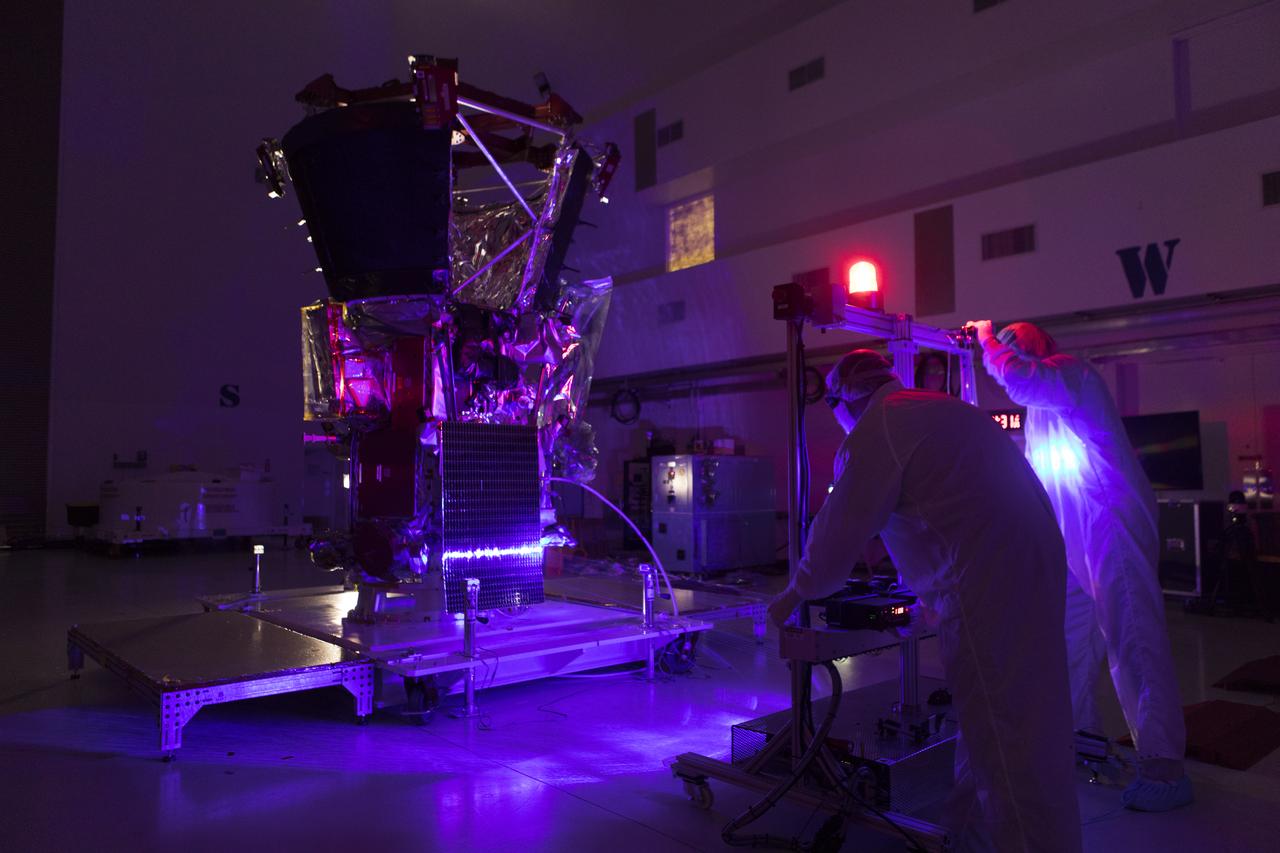
In the Astrotech processing facility in Titusville, Florida, near NASA's Kennedy Space Center, on Tuesday, June 5, 2018, technicians and engineers perform light bar testing on NASA's Parker Solar Probe. The Parker Solar Probe will launch on a United Launch Alliance Delta IV Heavy rocket from Space Launch Complex 37 at Cape Canaveral Air Force Station in Florida no earlier than Aug. 4, 2018. The mission will perform the closest-ever observations of a star when it travels through the Sun's atmosphere, called the corona. The probe will rely on measurements and imaging to revolutionize our understanding of the corona and the Sun-Earth connection.
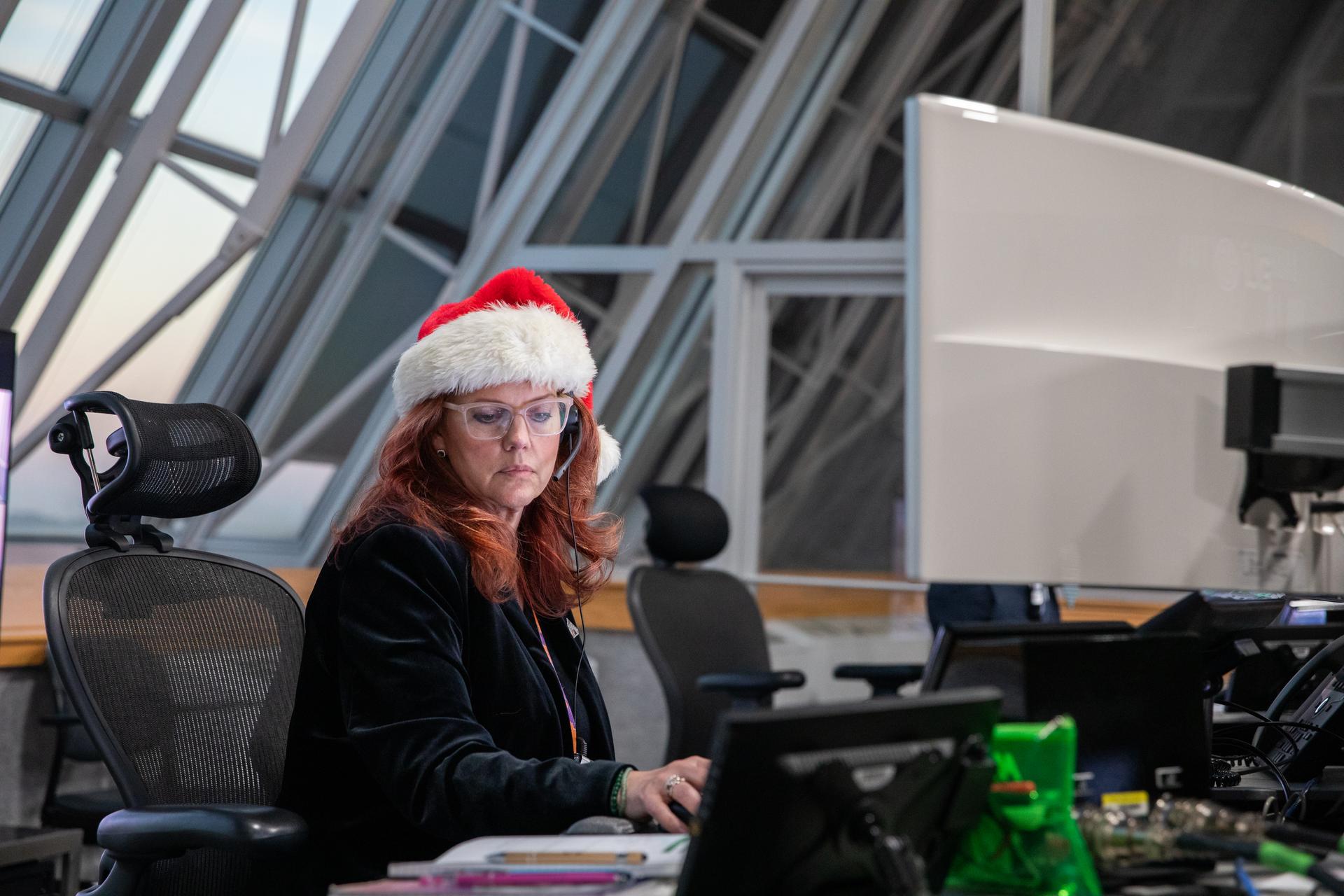
Charlie Blackwell-Thompson, Artemis launch director, monitors the progress of a countdown demonstration test with Artemis II crewmembers NASA astronauts Reid Wiseman, commander; Victor Glover, pilot; Christina Koch, mission specialist; and CSA (Canadian Space Agency) astronaut Jeremy Hansen, mission specialist onboard their Orion spacecraft from Firing Room 1 of the Rocco A. Petrone Launch Control Center, Saturday, Dec. 20, 2025, at NASA’s Kennedy Space Center in Florida. For this operation, the Artemis II crew and launch teams are simulating the launch day timeline including suit-up, walkout, and spacecraft ingress and egress. Through the Artemis campaign, NASA will send astronauts to explore the Moon for scientific discovery, economic benefits, and to build the foundation for the first crewed missions to Mars, for the benefit of all.
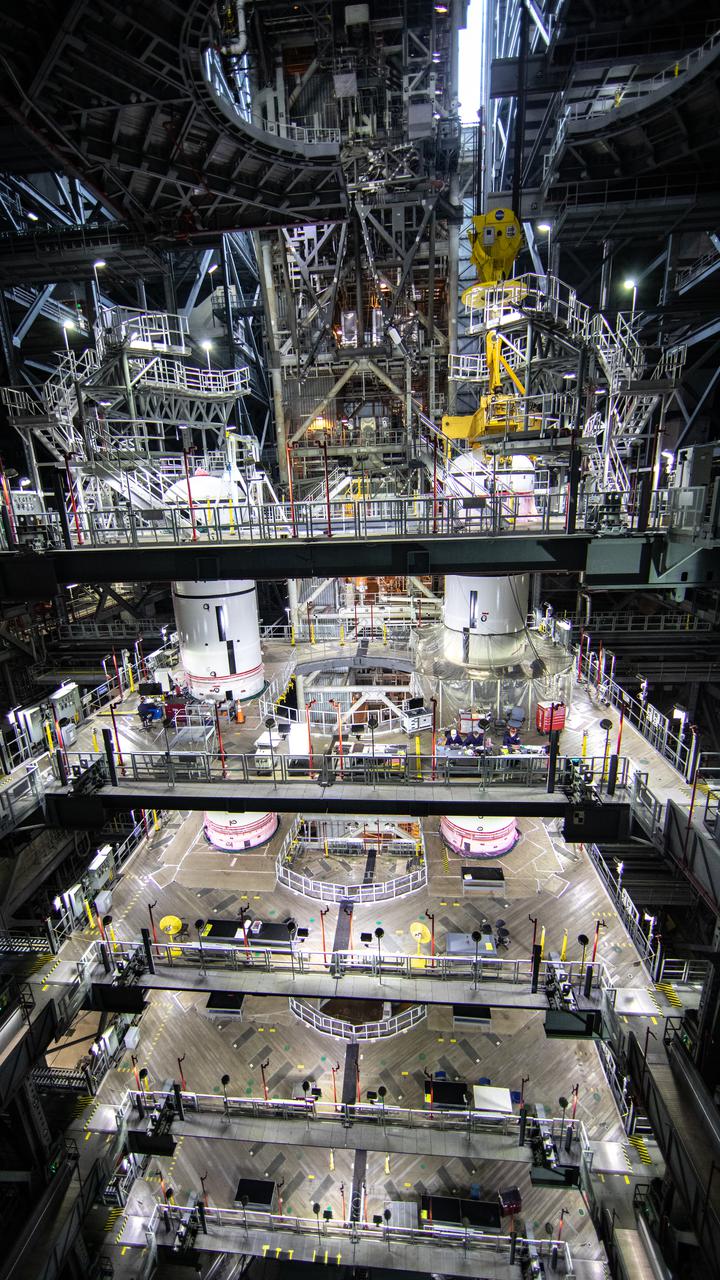
Inside High Bay 3 of the Vehicle Assembly Building at NASA’s Kennedy Space Center in Florida, a crane lowers the right-hand forward segment onto the center forward segment on Feb. 23, 2021. Workers with Exploration Ground Systems and contractor Jacobs are completing the stacking of the twin solid rocket boosters on the mobile launcher for NASA’s Space Launch System (SLS). In view at left is the left-hand solid rocket booster. When the core stage arrives, it will join the boosters on the mobile launcher, followed by the interim cryogenic propulsion stage and Orion spacecraft. Manufactured by Northrop Grumman in Utah, the twin boosters provide more than 75 percent of the total SLS thrust at launch. The SLS is managed by Marshall Space Flight Center in Huntsville, Alabama. Under the Artemis program, NASA will land the first woman and the next man on the Moon by 2024. The first in a series of increasingly complex missions, Artemis I will test the Orion spacecraft and SLS as an integrated system ahead of crewed flights to the Moon.
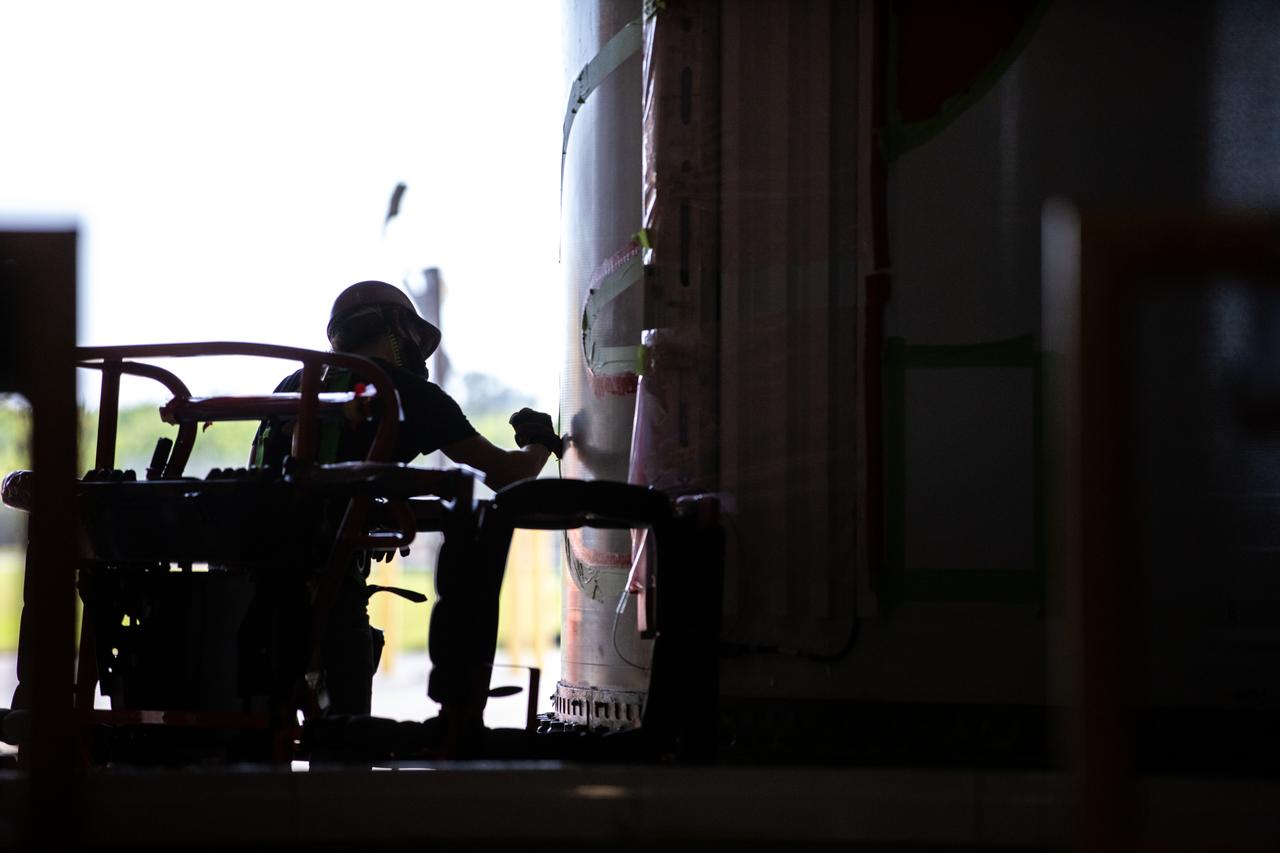
Silhouetted against the bright Florida sunlight outside, a worker with NASA’s Exploration Ground Systems (EGS) applies bright red paint to the agency’s “worm” logo taking shape on the side of an Artemis I solid rocket booster segment inside the Rotation, Processing and Surge Facility (RPSF) at Kennedy Space Center. The EGS team used a laser projector to mask off the logo with tape, then painted the first coat of the iconic design. The booster segments will help propel the Space Launch System (SLS) rocket on Artemis I, a test of the Orion spacecraft and SLS as an integrated system ahead of crewed flights to the Moon. Northrop Grumman, which built the booster segments, is covering the cost of the painting.
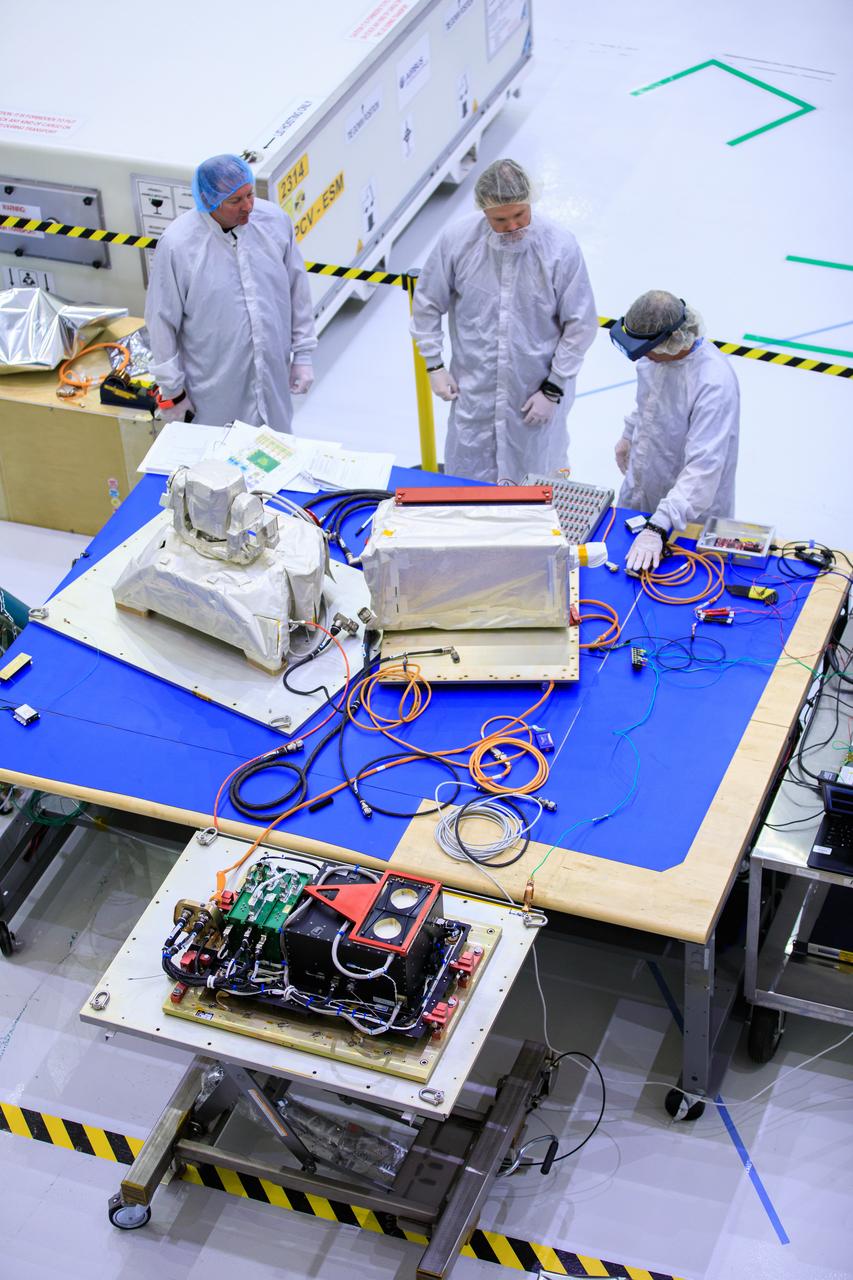
Inside the high bay of the Neil Armstrong Operations and Checkout Building at NASA’s Kennedy Space Center in Florida, technicians assemble on the Optical Communications System for the Artemis II mission on June 2, 2023. Optical communications is the latest space communications technology that is able to provide data rates as much as a hundred times higher than current systems. This will allow astronauts to send and receive ultra-high-definition video from the surface of the Moon or other planets such as Mars. Artemis II will be the first Artemis mission flying crew aboard Orion.
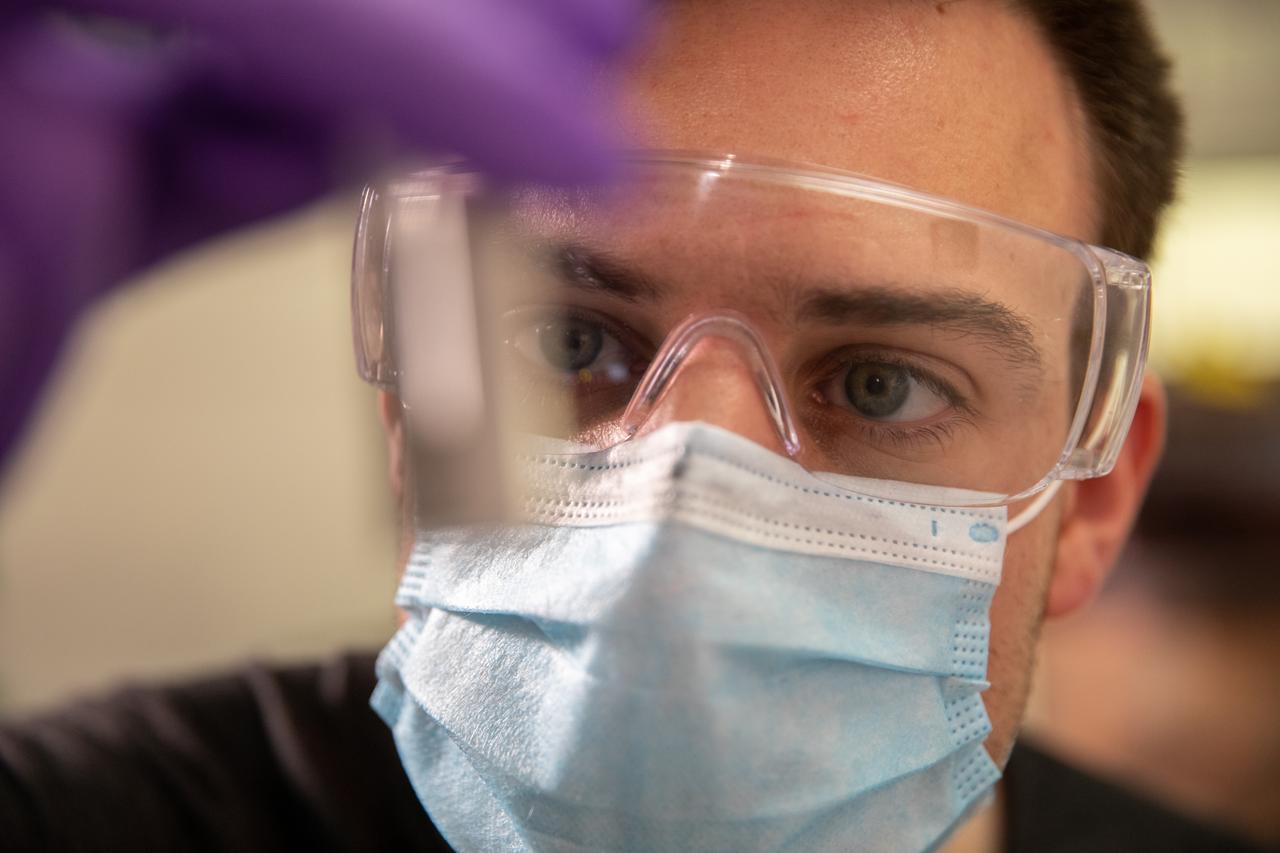
Kevin Grossman, project lead for the Gaseous Lunar Oxygen from Regolith Electrolysis (GaLORE) project at NASA Kennedy Space Center’s Swamp Works, inspects a piece of hardware for GaLORE on July 21, 2020, inside a laboratory at the center’s Neil Armstrong Operations and Checkout Building. Grossman is leading an Early Career Initiative project that is investing in turning lunar regolith into oxygen that could be used for life support for sustainable human lunar exploration on long-duration missions to Mars. GaLORE was selected as an Early Career Initiative project by NASA’s Space Technology Mission directorate.
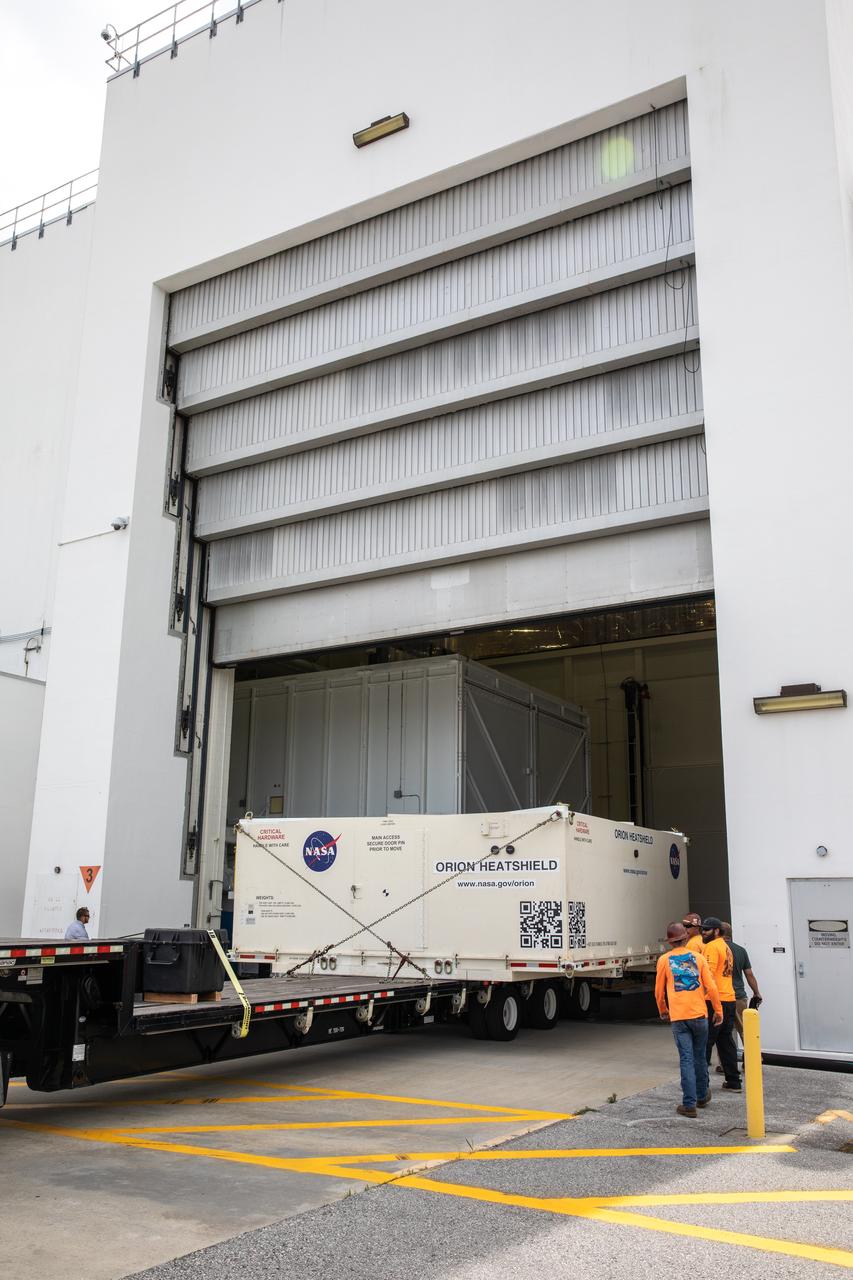
A flatbed truck with the shipping container carrying the heat shield for Orion’s Artemis 2 mission, NASA’s first crewed mission, arrives at the Neil Armstrong Operations and Checkout Building high bay entrance at the agency’s Kennedy Space Center in Florida on July 9, 2019. The heat shield, measuring roughly 16 feet in diameter, will protect astronauts upon re-entry on the second mission of Artemis. The heat shield arrived from Lockheed Martin’s manufacturing facility near Denver aboard NASA’s Super Guppy Aircraft. The heat shield is a base titanium truss structure. Over the next several months, technicians will apply Avcoat, an ablative material that will provide the thermal protection. Artemis 2 will confirm all of the spacecraft’s systems operate as designed in the actual environment of deep space with astronauts aboard.

Kennedy Space Center Launch Director Charlie Blackwell-Thompson speaks during a ceremony renaming the Florida spaceport’s launch control center to the Rocco A. Petrone Launch Control Center on Feb. 22, 2022. Petrone was instrumental in America’s first voyages to the Moon and headed the Apollo program. He died in 2006 at the age of 80.
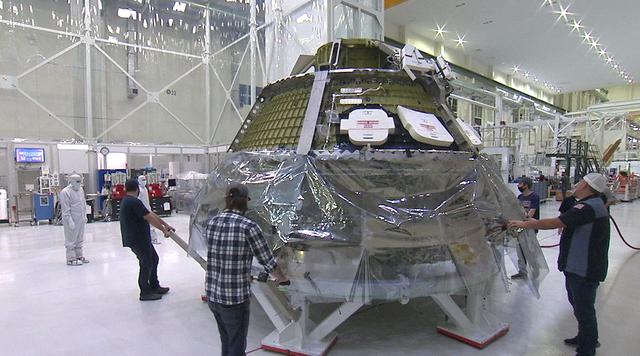
Inside the Neil Armstrong Operations and Checkout Building high bay at NASA’s Kennedy Space Center in Florida, the Artemis II crew module is relocated into a clean room on June 10, 2020. Workers will perform tube welds of the propulsion system and the Environmental Control & Life Support Systems. Artemis II is the first crewed mission in a series of missions to the Moon and on to Mars. Artemis II will confirm all of the Orion spacecraft’s systems operate as designed in the actual environment of deep space with astronauts aboard. As part of the Artemis Program, NASA will send the first woman and next man to the Moon by 2024.
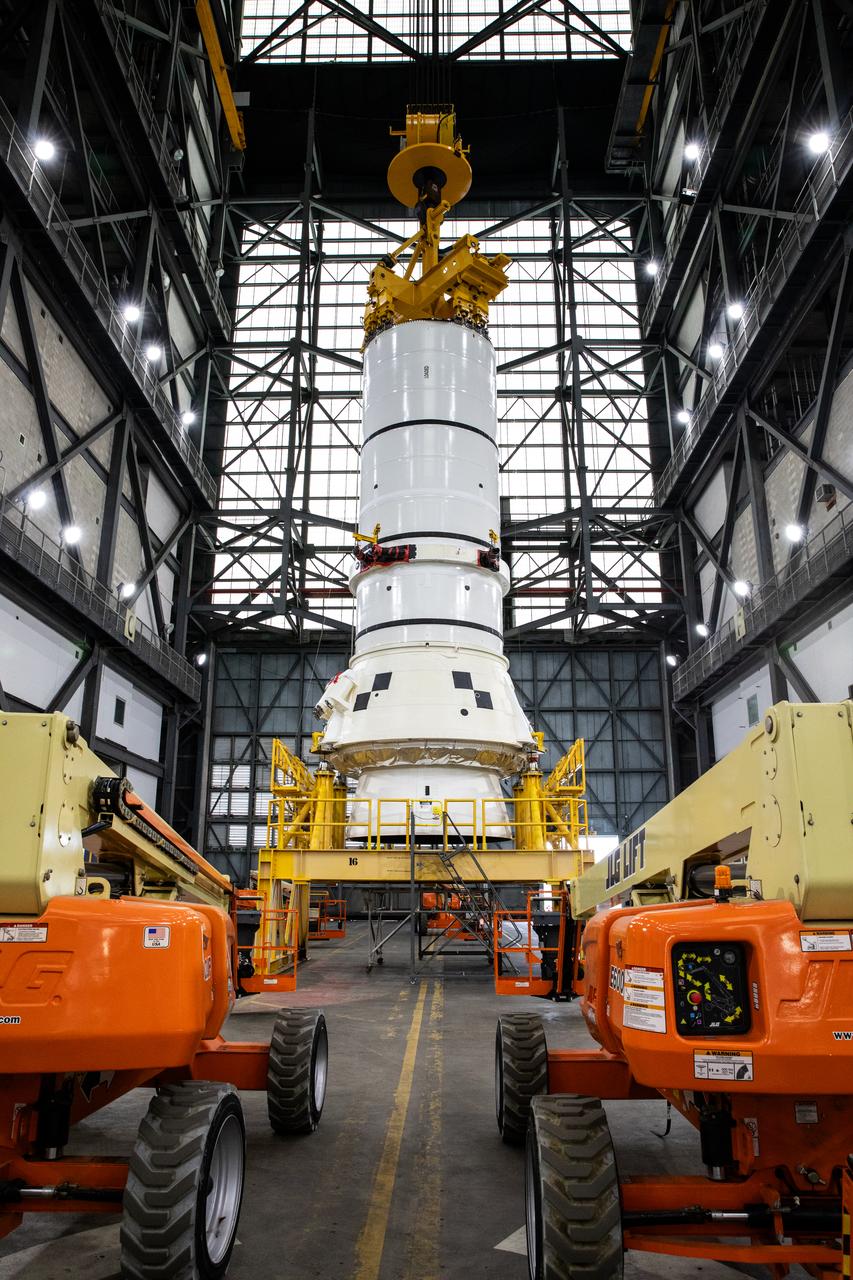
Engineers and technicians with the Exploration Ground Systems Program attach an overhead crane to the left aft assembly, or bottom portion of the solid rocket boosters for the SLS (Space Launch System) rocket, inside the Vehicle Assembly Building at NASA’s Kennedy Space Center on Tuesday, Nov. 19, 2024. The crane will lift the aft assembly on top of mobile launcher 1 followed by the right aft assembly and stack the remaining booster segments for the Artemis II mission.
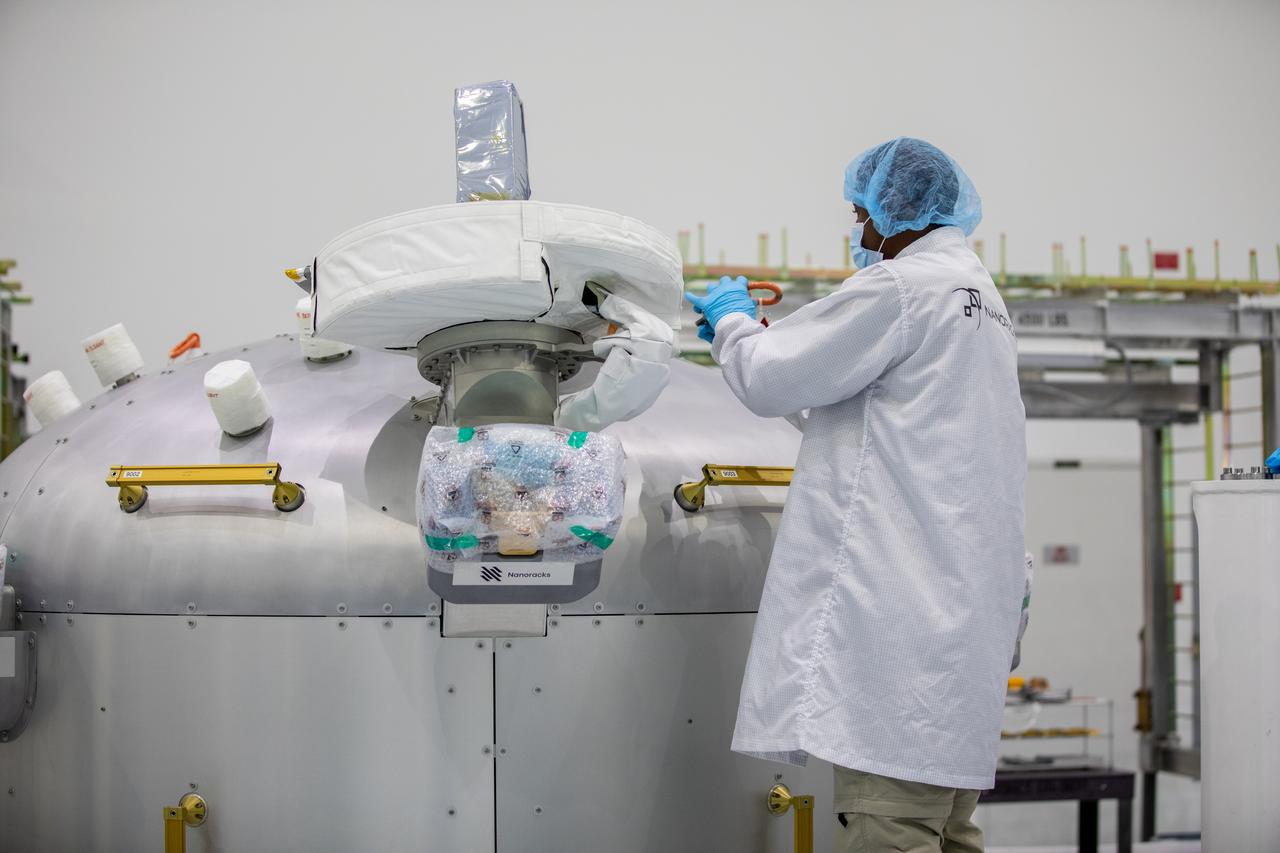
A Nanoracks technician works on the Nanoracks Bishop Airlock inside the Space Station Processing Facility at NASA's Kennedy Space Center in Florida on Sept. 29, 2020. The next-generation Nanoracks payload facility is being prepared for its flight to the International Space Station on SpaceX’s 21st commercial resupply services mission (CRS-21) to the International Space Station. The Bishop Airlock is the first commercially funded airlock for the space station. It will provide payload hosting, robotics testing, satellite deployment, and serve as an outside toolbox for station crew spacewalks, and more. CRS-21 is scheduled to launch on a SpaceX Falcon 9 rocket no earlier than November from Launch Complex 39A at Kennedy Space Center.
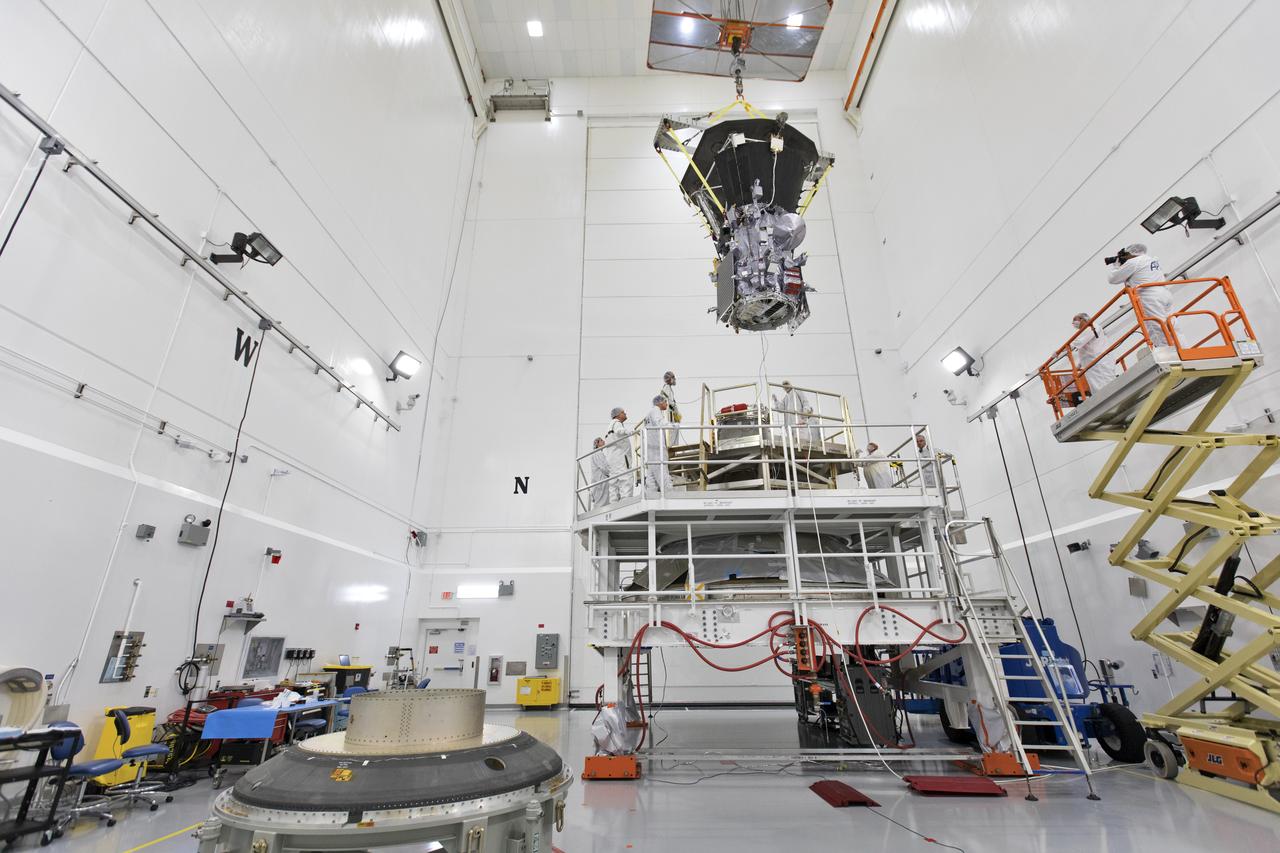
In the Astrotech processing facility in Titusville, Florida, near NASA's Kennedy Space Center, on Wednesday, July 11, 2018, technicians and engineers use a crane to move NASA's Parker Solar Probe into position for mating to its third stage, built and tested by Northrup Grumman in Chandler Arizona. The Parker Solar Probe will launch on a United Launch Alliance Delta IV Heavy rocket from Space Launch Complex 37 at Cape Canaveral Air Force Station in Florida. The mission will perform the closest-ever observations of a star when it travels through the Sun's atmosphere, called the corona. The probe will rely on measurements and imaging to revolutionize our understanding of the corona and the Sun-Earth connection.
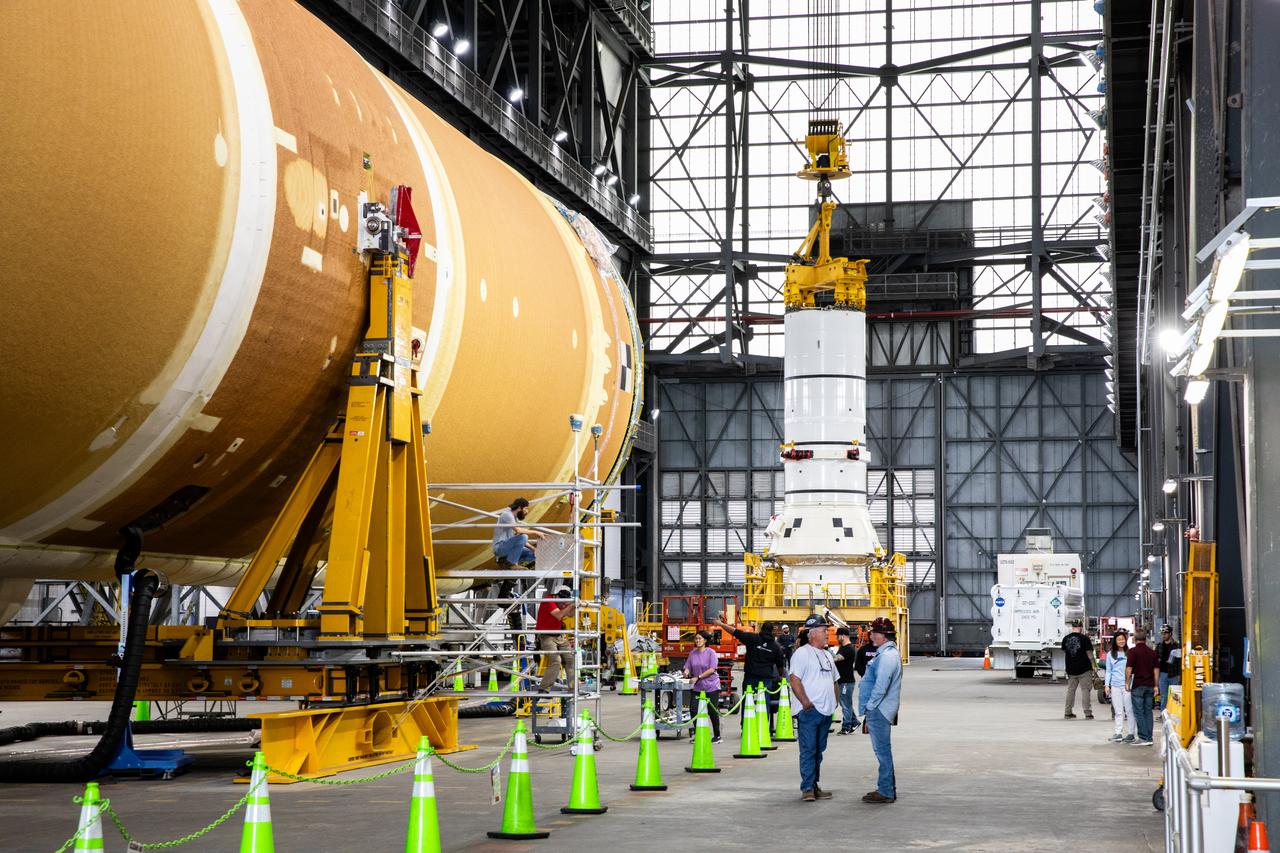
Down the transfer aisle from the Artemis II SLS (Space Launch System) core stage, engineers and technicians with the Exploration Ground Systems Program attach an overhead crane to the left aft assembly, or bottom portion of the solid rocket boosters for the SLS rocket, inside the Vehicle Assembly Building at NASA’s Kennedy Space Center on Tuesday, Nov. 19, 2024. The crane will lift the aft assembly on top of the mobile launcher 1 followed by the right aft assembly and stack the remaining booster segments for the Artemis II mission.
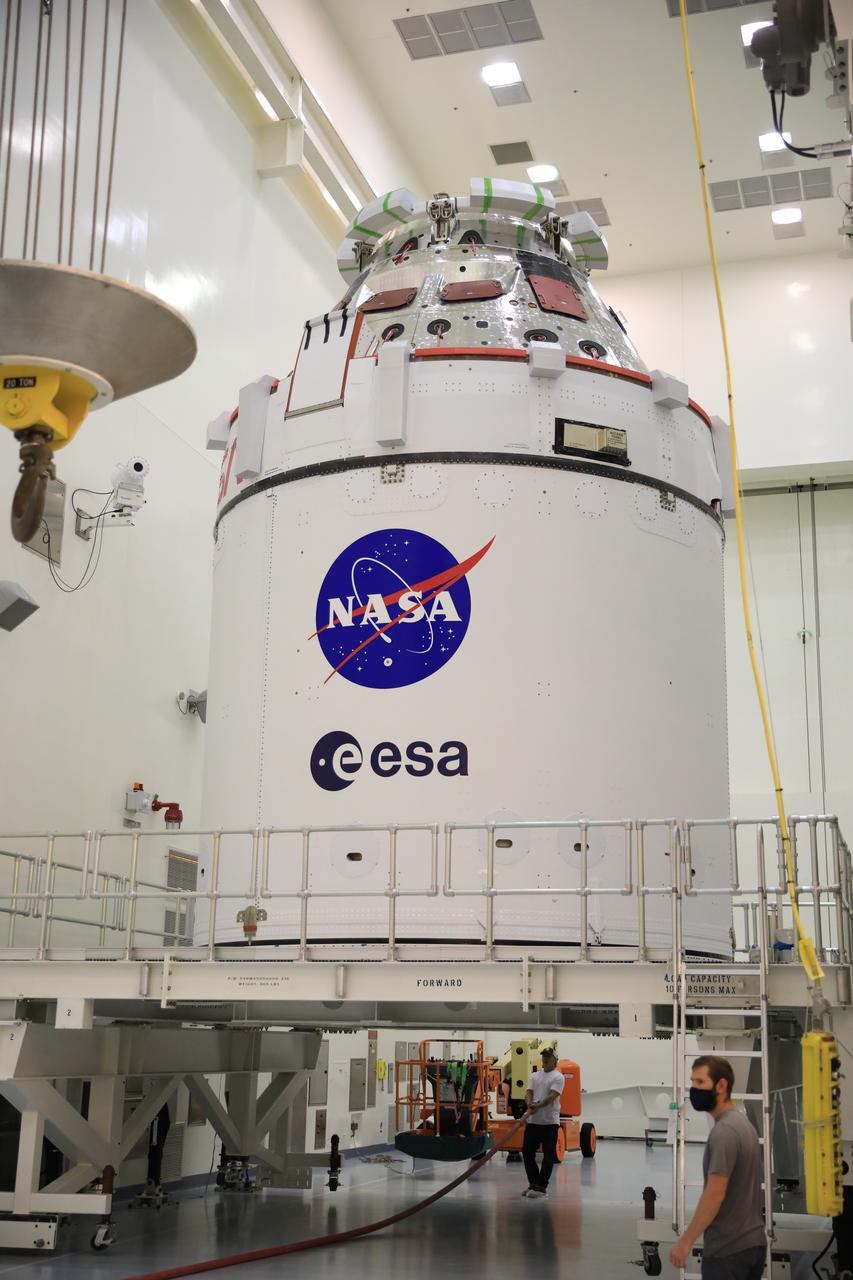
Fueling and servicing checks on the Orion spacecraft for the Artemis I mission are completed inside Kennedy Space Center’s Multi-Payload Processing Facility on July 8, 2021. The capsule will be transported to the Florida spaceport’s Launch Abort System Facility, where teams with Exploration Ground Systems and contractor Jacobs will work to add parts of the launch abort system onto the spacecraft. Launching later this year, Artemis I will be a test of the Orion spacecraft and SLS rocket as an integrated system ahead of crewed flights to the Moon.
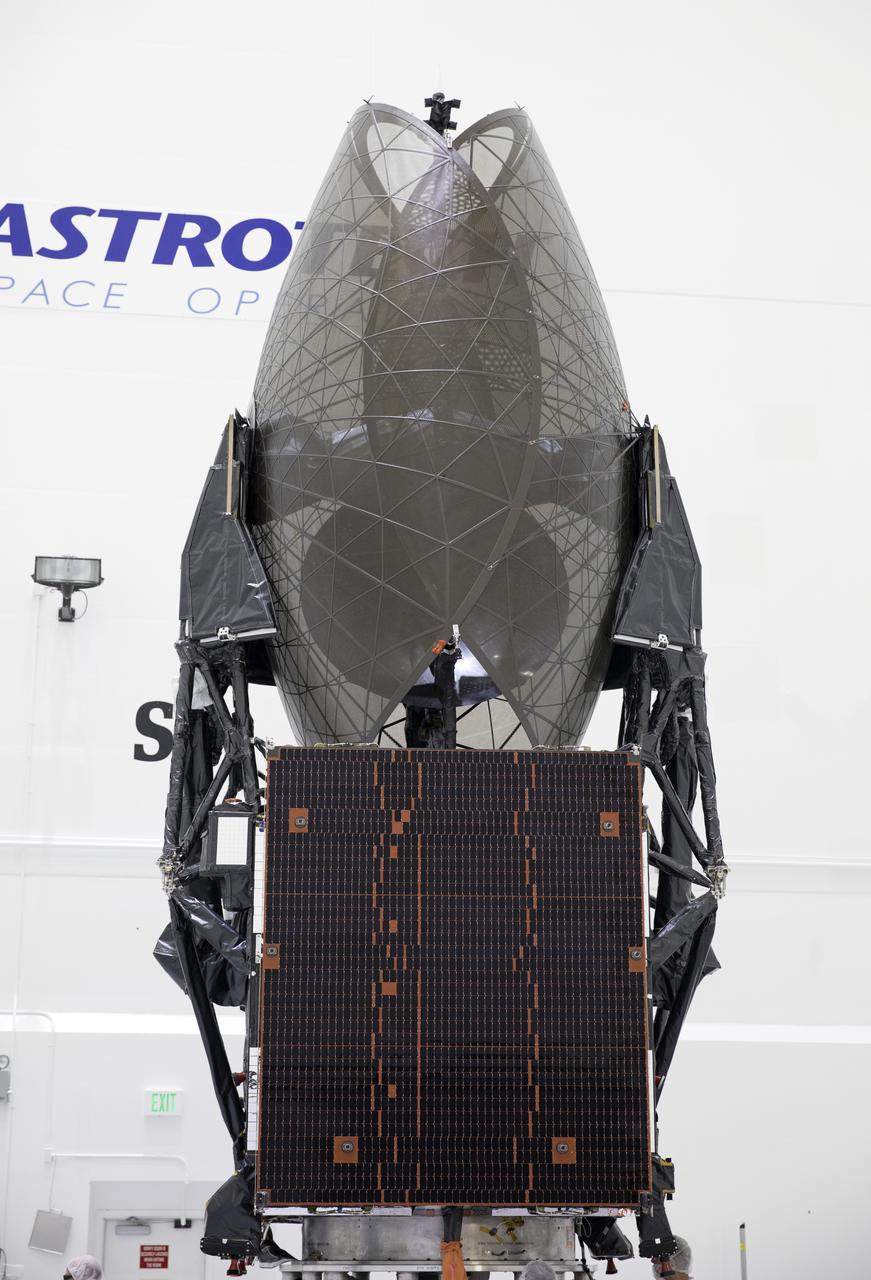
Inside the Astrotech facility in Titusville, Florida, NASA's Tracking and Data Relay Satellite, TDRS-M, is undergoing final checkouts prior to encapsulation in its payload fairing. TDRS-M is the latest spacecraft destined for the agency's constellation of communications satellites that allows nearly continuous contact with orbiting spacecraft ranging from the International Space Station and Hubble Space Telescope to the array of scientific observatories. Liftoff atop a United Launch Alliance Atlas V rocket is scheduled to take place from Space Launch Complex 41 at Cape Canaveral Air Force Station at 9:02 a.m. EDT Aug. 3, 2017.
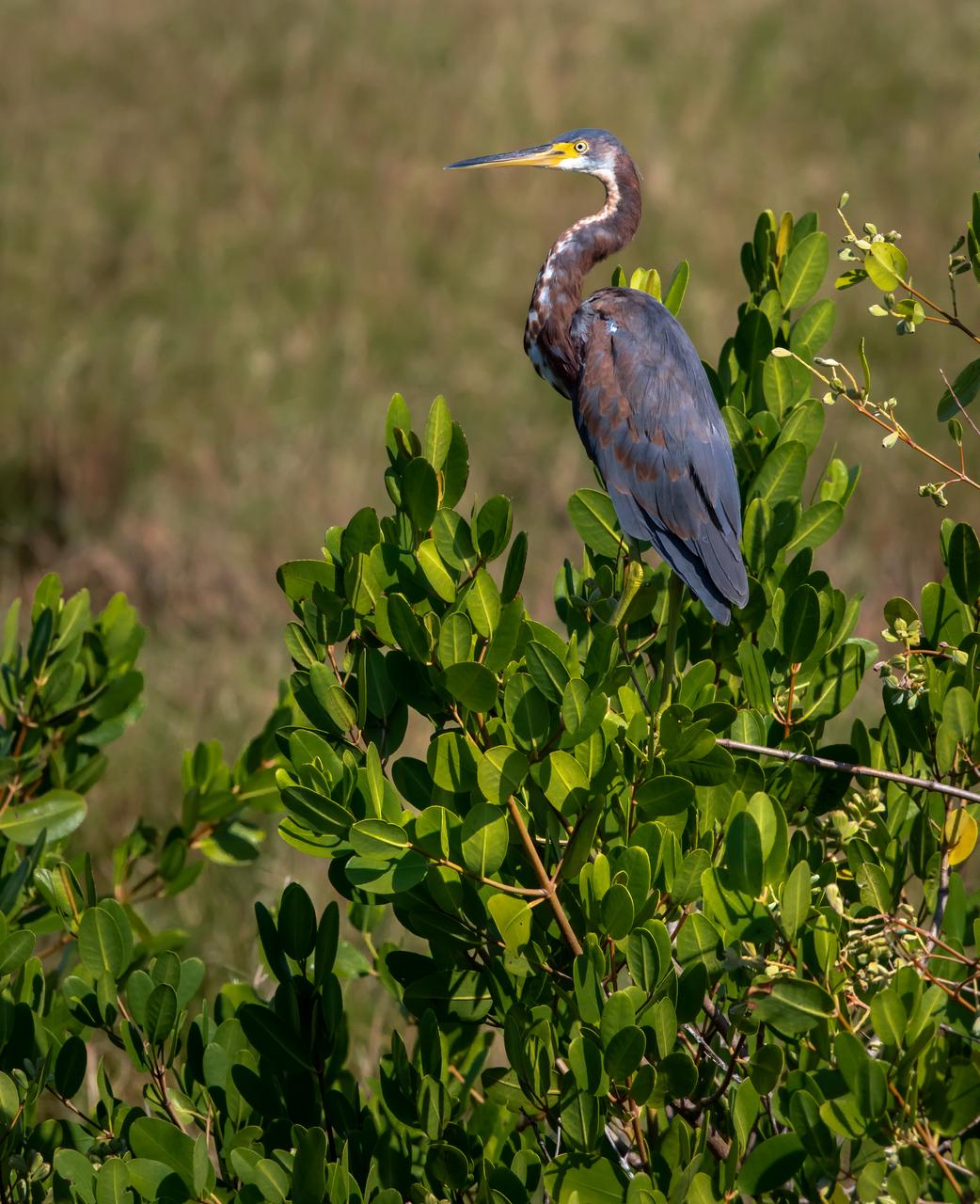
A Reddish Egret perches in a tree at NASA's Kennedy Space Center in Florida. The center shares a border with the Merritt Island National Wildlife Refuge. More than 330 native and migratory bird species, 25 mammal, 117 fish and 65 amphibian and reptile species call Kennedy and the wildlife refuge home.
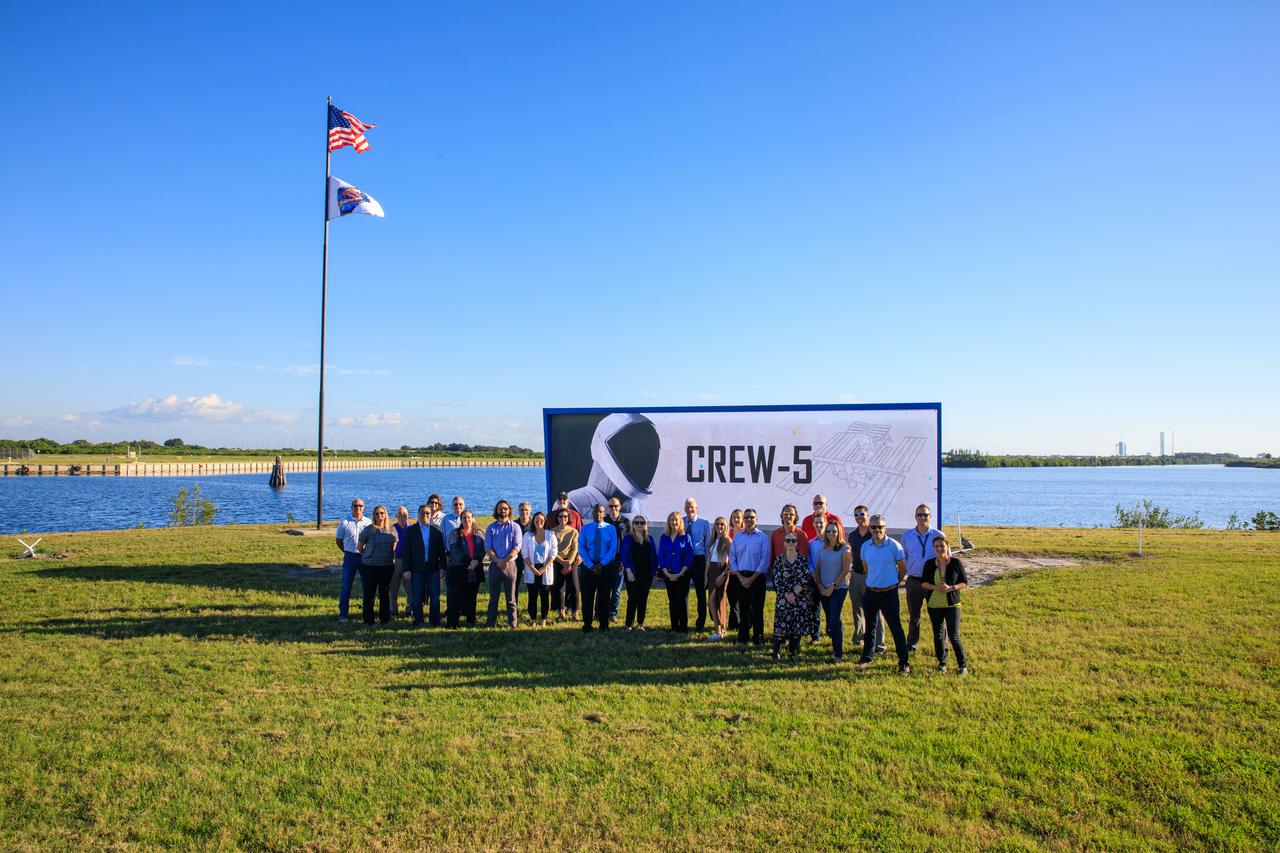
NASA Commercial Crew Program (CCP) employees are photographed in front of Kennedy Space Center’s iconic countdown clock at the Press Site after the Crew-5 flag was raised on Oct. 3, 2022, in Florida. NASA’s SpaceX Crew-5 mission will carry NASA astronauts Josh Cassada and Nicole Aunapu Mann, Roscosmos cosmonaut Anna Kikina, and JAXA (Japan Aerospace Exploration Agency) to the International Space Station for a science expedition mission as part of the agency’s CCP. SpaceX’s Falcon 9 rocket and Crew Dragon Endurance spacecraft are scheduled to lift off from Kennedy’s Launch Complex 39A at noon EDT on Oct. 5, 2022.
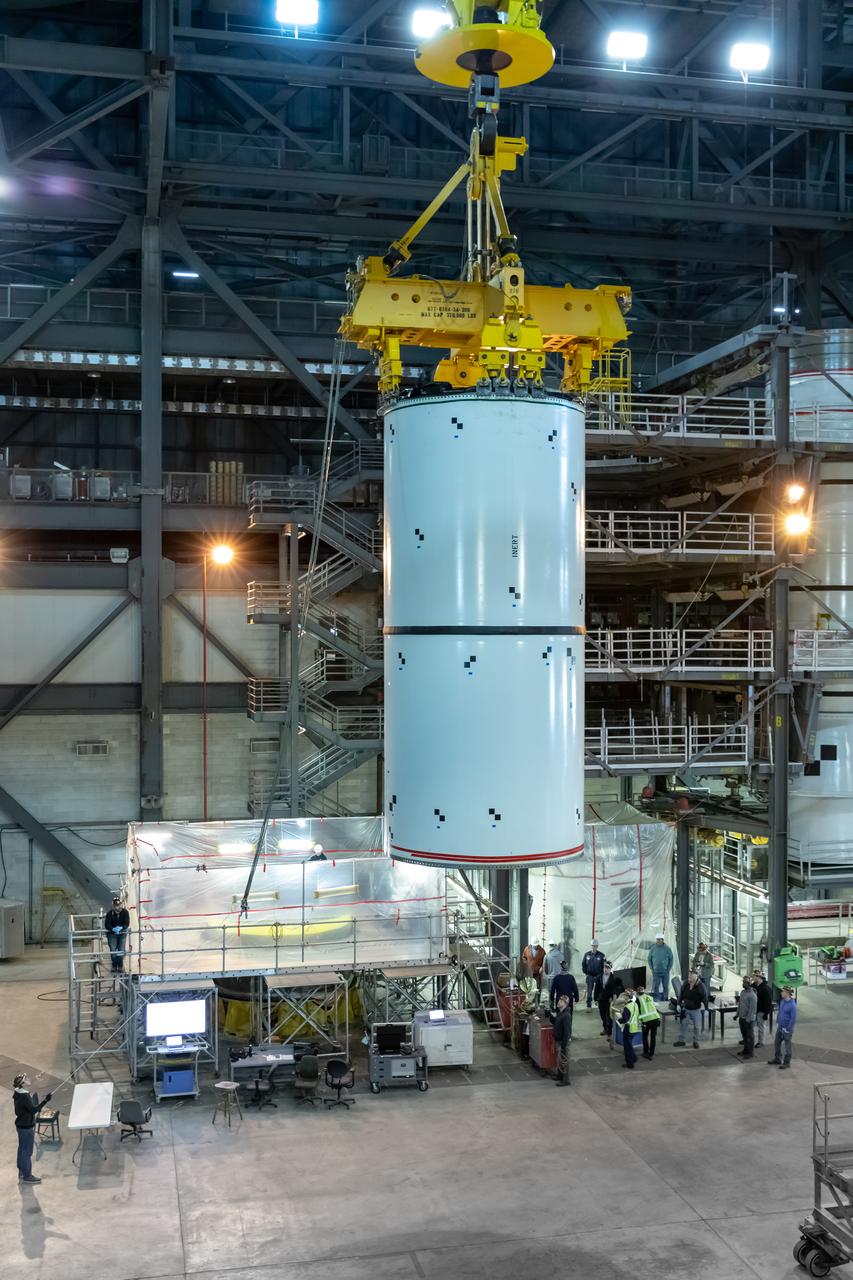
In High Bay 4 of the Vehicle Assembly Building at NASA’s Kennedy Space Center in Florida, a crane moves Space Launch System (SLS) solid rocket booster pathfinder segments toward a platform during a training exercise on Jan. 8, 2020. A team of engineers with Exploration Ground Systems and crane operators and technicians with contractor Jacobs are practicing lifting, moving and stacking maneuvers, using important ground support equipment to train employees and certify all the equipment works properly. The booster pathfinders are inert, full-scale replicas of the actual booster hardware that will be attached to the SLS rocket for Artemis missions. The five-segment, 17-story-tall twin boosters will provide 3.6 million pounds of thrust each at liftoff to help launch Orion on Artemis I, its first uncrewed mission beyond the Moon.
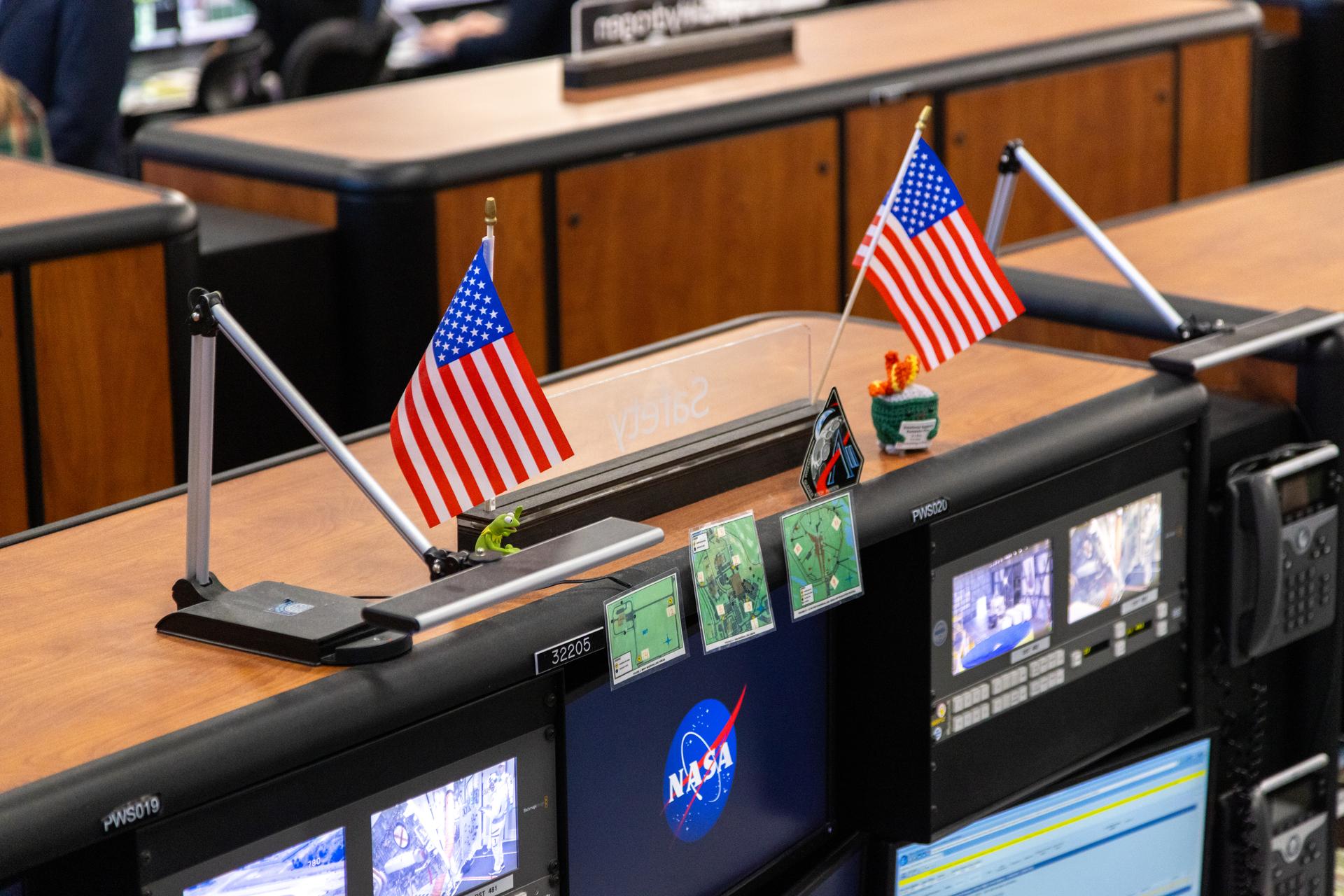
Teams monitor the progress of a countdown demonstration test with Artemis II crewmembers NASA astronauts Reid Wiseman, commander; Victor Glover, pilot; Christina Koch, mission specialist; and CSA (Canadian Space Agency) astronaut Jeremy Hansen, mission specialist onboard their Orion spacecraft from Firing Room 1 of the Rocco A. Petrone Launch Control Center, Saturday, Dec. 20, 2025, at NASA’s Kennedy Space Center in Florida. For this operation, the Artemis II crew and launch teams are simulating the launch day timeline including suit-up, walkout, and spacecraft ingress and egress. Through the Artemis campaign, NASA will send astronauts to explore the Moon for scientific discovery, economic benefits, and to build the foundation for the first crewed missions to Mars, for the benefit of all.
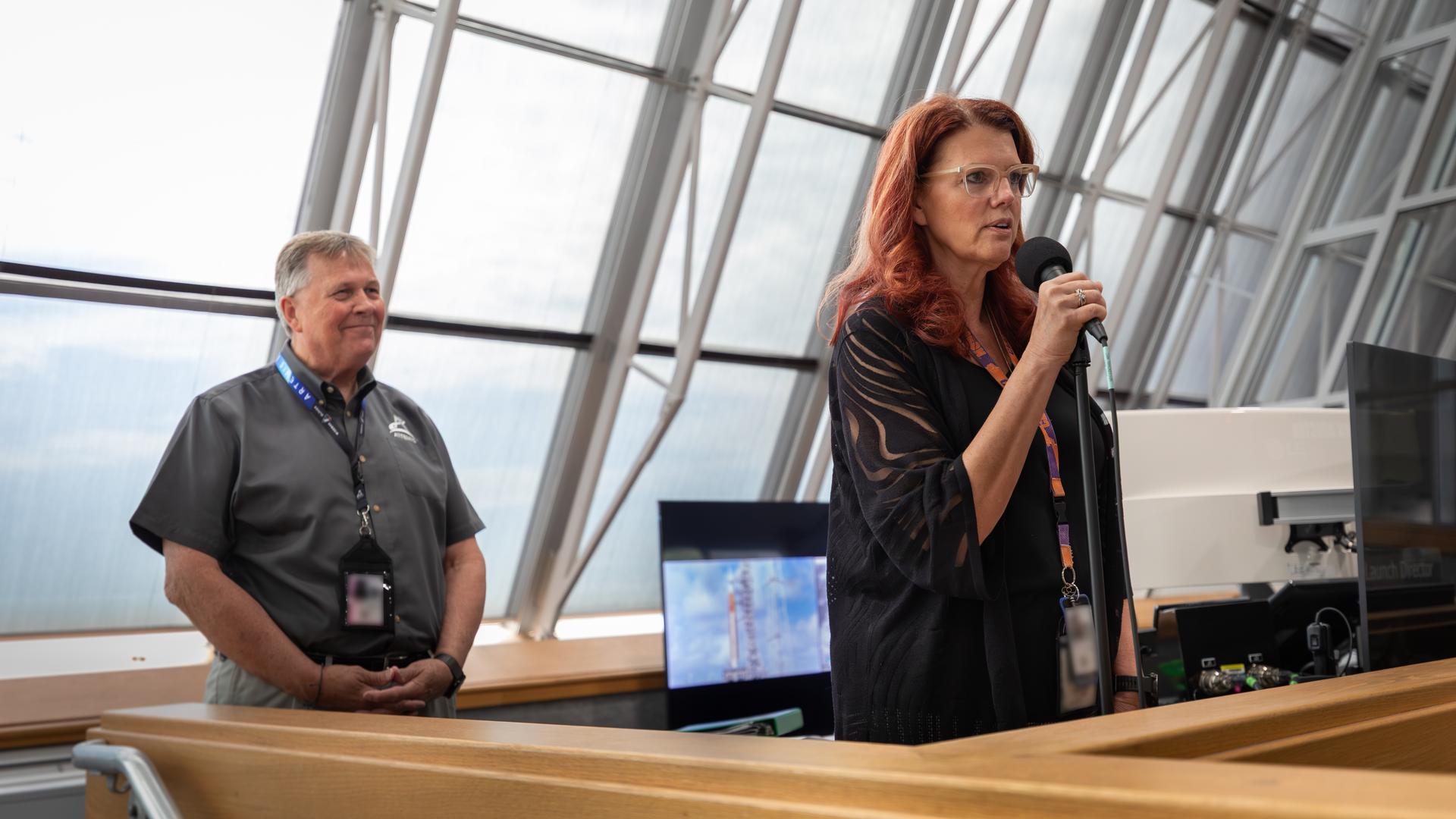
Artemis Launch Director Charlie Blackwell-Thompson delivers a speech on Thursday, June 11, 2026, about the retirement of NASA Test Director Jeff Spaulding inside Firing Room 1 of the Rocco A. Petrone Launch Control Center at NASA’s Kennedy Space Center in Florida. Spaulding began his career at NASA in 1987 as a NASA operations engineer overseeing orbiter processing activities for seven shuttle missions. He later went on to lead the Artemis II launch team during planning, scheduling, and execution on Artemis II on April 1, 2026.
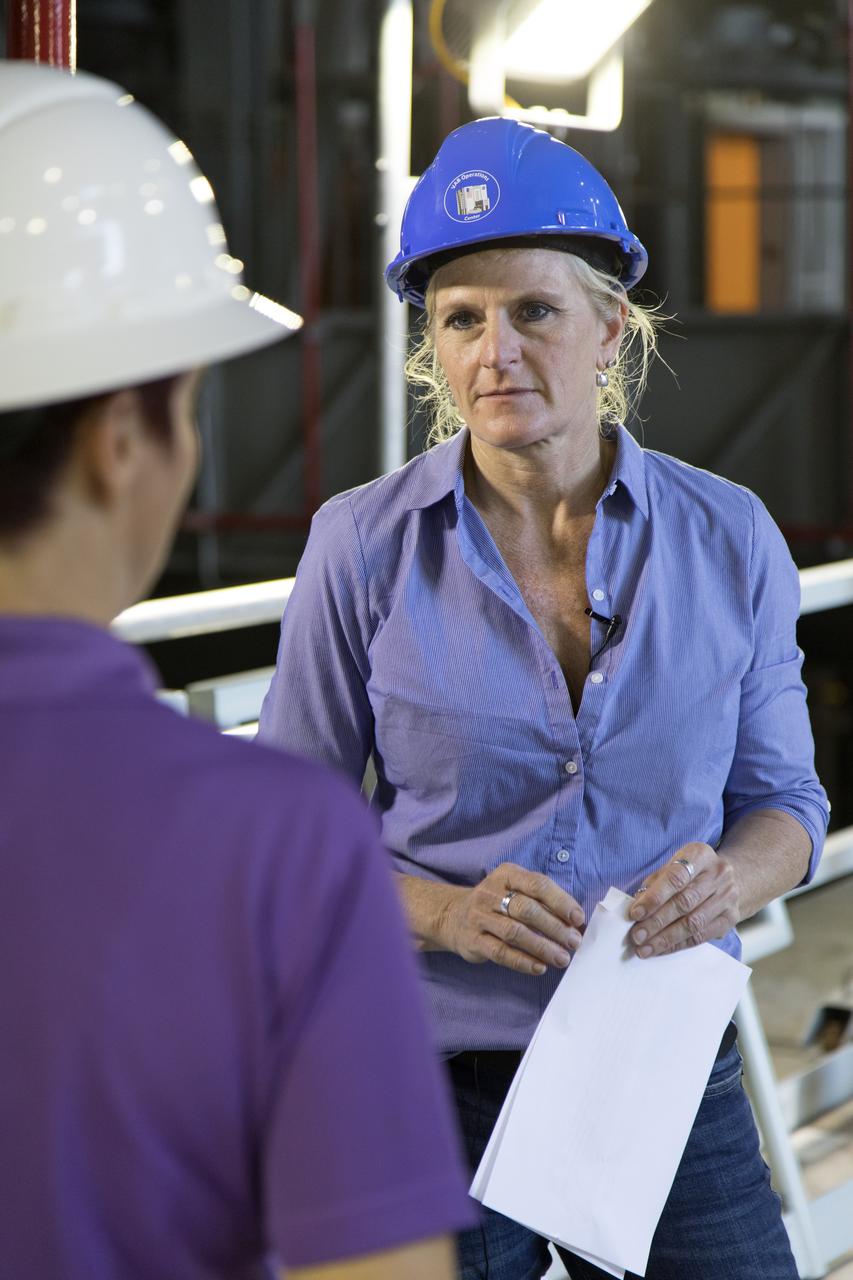
NASA engineer Krista Shaffer, right, is interviewed by Rachel Power of NASA’s Digital Expansion to Engage the Public (DEEP) Network inside Kennedy Space Center’s Vehicle Assembly Building during Introduce a Girl to Engineering Day. Held in conjunction with National Engineers Week and Girl Day, the event allowed students from throughout the nation to speak with female NASA scientists and technical experts.
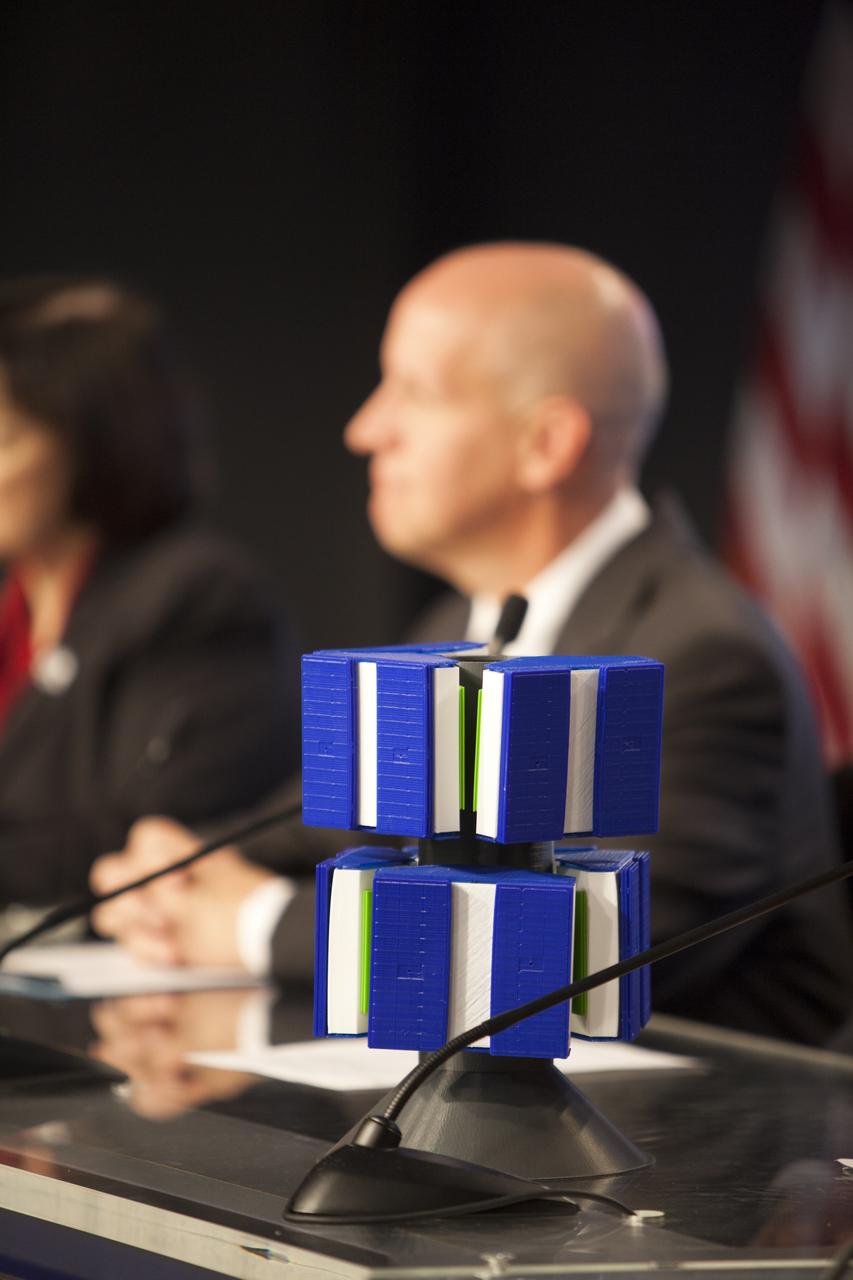
In the Kennedy Space Center’s Press Site auditorium, NASA and industry leaders speak to members of the media during a prelaunch news conference for the agency’s Cyclone Global Navigation Satellite System, or CYGNSS, spacecraft. The model depicts the deployment module from which the eight micro-satellites will be deployed. In the background is Tim Dunn, NASA launch director at Kennedy. The CYGNSS satellites will make frequent and accurate measurements of ocean surface winds throughout the life cycle of tropical storms and hurricanes. The data will help scientists probe key air-sea interaction processes that take place near the core of storms, which are rapidly changing and play a crucial role in the beginning and intensification of hurricanes.

In the Kennedy Space Center’s Press Site auditorium, NASA and industry leaders speak to members of the media during a mission science briefing for the agency’s Cyclone Global Navigation Satellite System, or CYGNSS, spacecraft. From left are: Sean Potter of NASA Communications; Dr. Chris Ruf, CYGNSS principal investigator, Department of Climate and Space Sciences and Engineering at the University of Michigan; Aaron Ridley, CYGNSS constellation scientist in the Climate and Space Department at the University of Michigan in Ann Arbor, Michigan; and Mary Morris, doctoral student in the Department of Climate and Space Sciences and Engineering at the University of Michigan. The eight CYGNSS satellites will make frequent and accurate measurements of ocean surface winds throughout the life cycle of tropical storms and hurricanes. The data will help scientists probe key air-sea interaction processes that take place near the core of storms, which are rapidly changing and play a crucial role in the beginning and intensification of hurricanes.
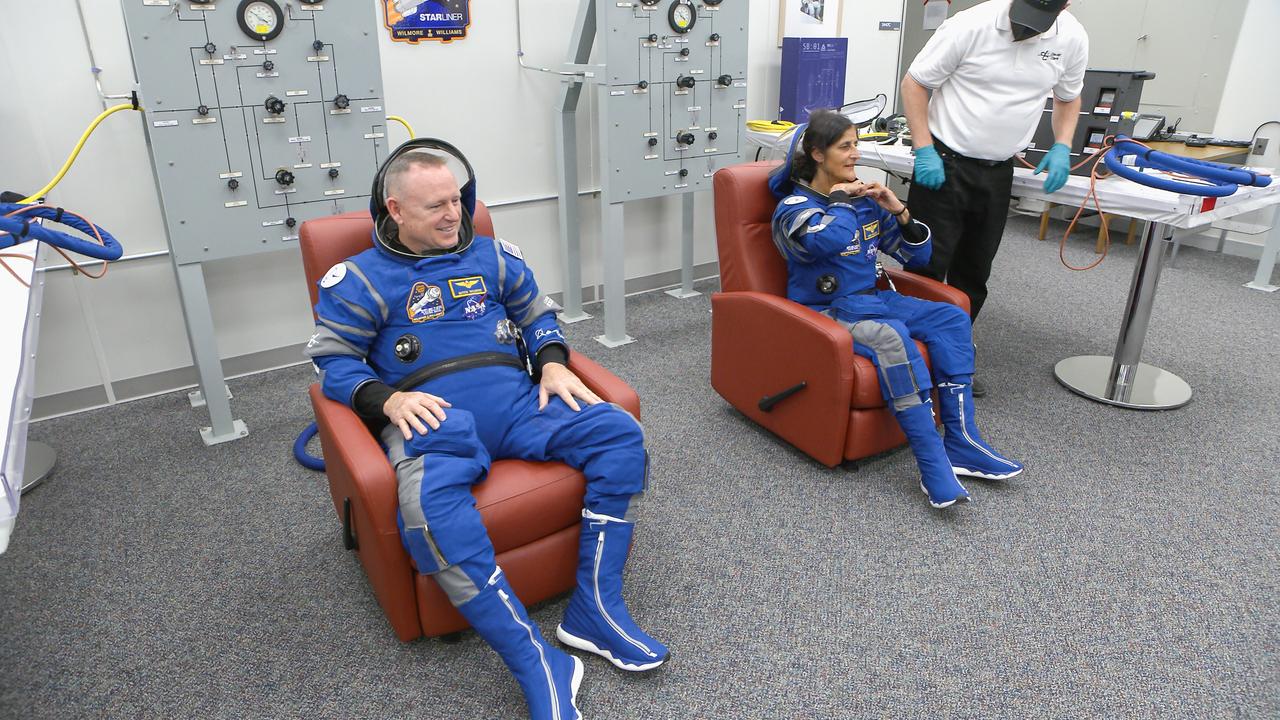
NASA’s Boeing Crew Flight Test astronauts Butch Wilmore and Suni Williams relax inside the crew suit-up room inside the Neil A. Armstrong Operations and Checkout Building at NASA’s Kennedy Space Center in Florida during a launch attempt on Saturday, June 1, 2024. As part of the agency’s Commercial Crew Program, Wilmore and Williams are preparing for the first crewed launch to the International Space Station aboard Boeing’s Starliner spacecraft atop a United Launch Alliance Atlas V rocket from Space Launch Complex-41 at nearby Cape Canaveral Space Force Station. Liftoff was targeted for 12:25 p.m. EDT but scrubbed for the day.
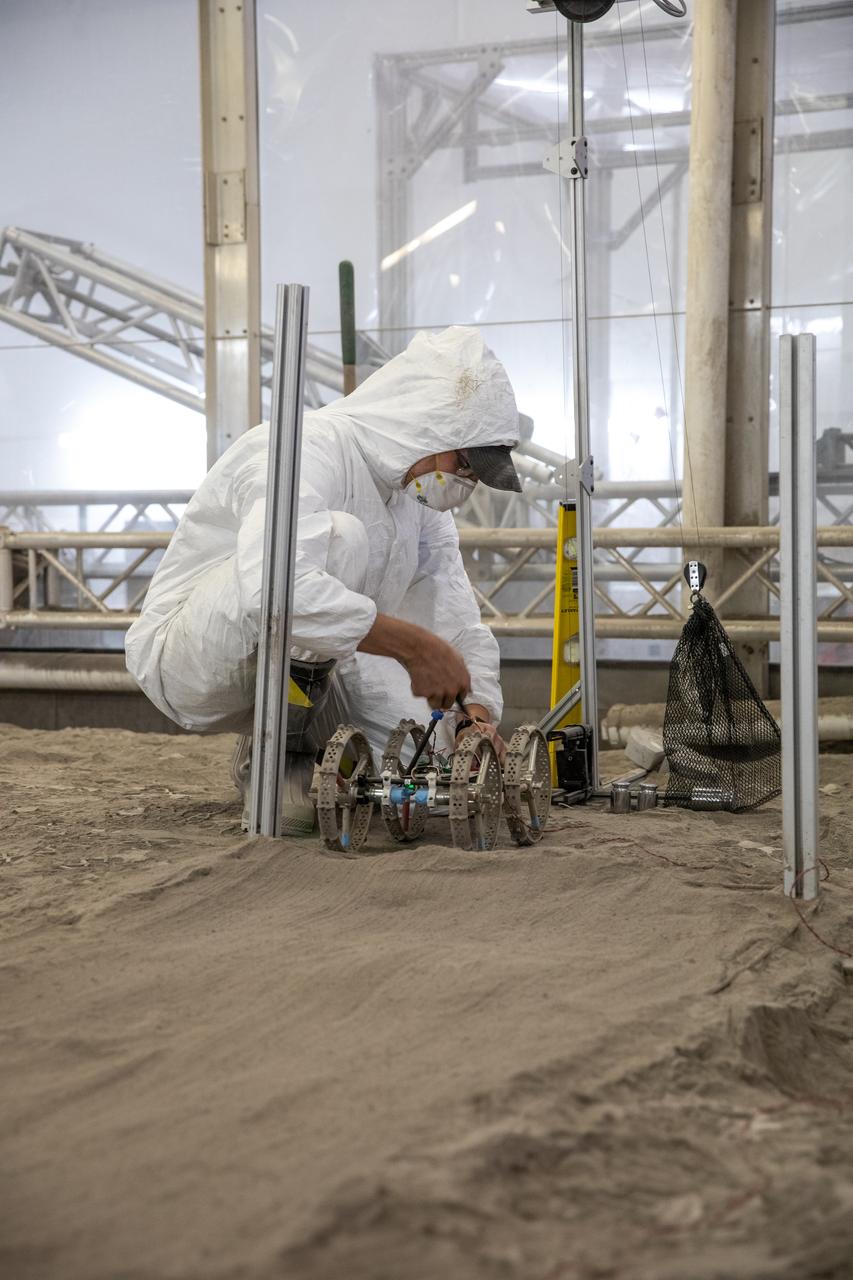
Senior Software Engineer Taylor Whitaker stages Astrobotic’s mass-offloaded CubeRover – a lightweight, modular planetary rover – for a drawbar pull test inside the Granular Mechanics and Regolith Operations (GMRO) Laboratory’s regolith pit at NASA Kennedy Space Center’s Swamp Works facility on June 30, 2022. Astrobotic – a Pittsburgh-based space robotics company – is using the GMRO lab’s regolith bin, which holds approximately 120 tons of lunar regolith simulant, to depict how the company’s CubeRover would perform on the Moon. NASA’s Small Business Innovation Research program provided the funding for initial development, and a $2 million Tipping Point award from the agency has provided additional funding for continued development into a more mature rover.
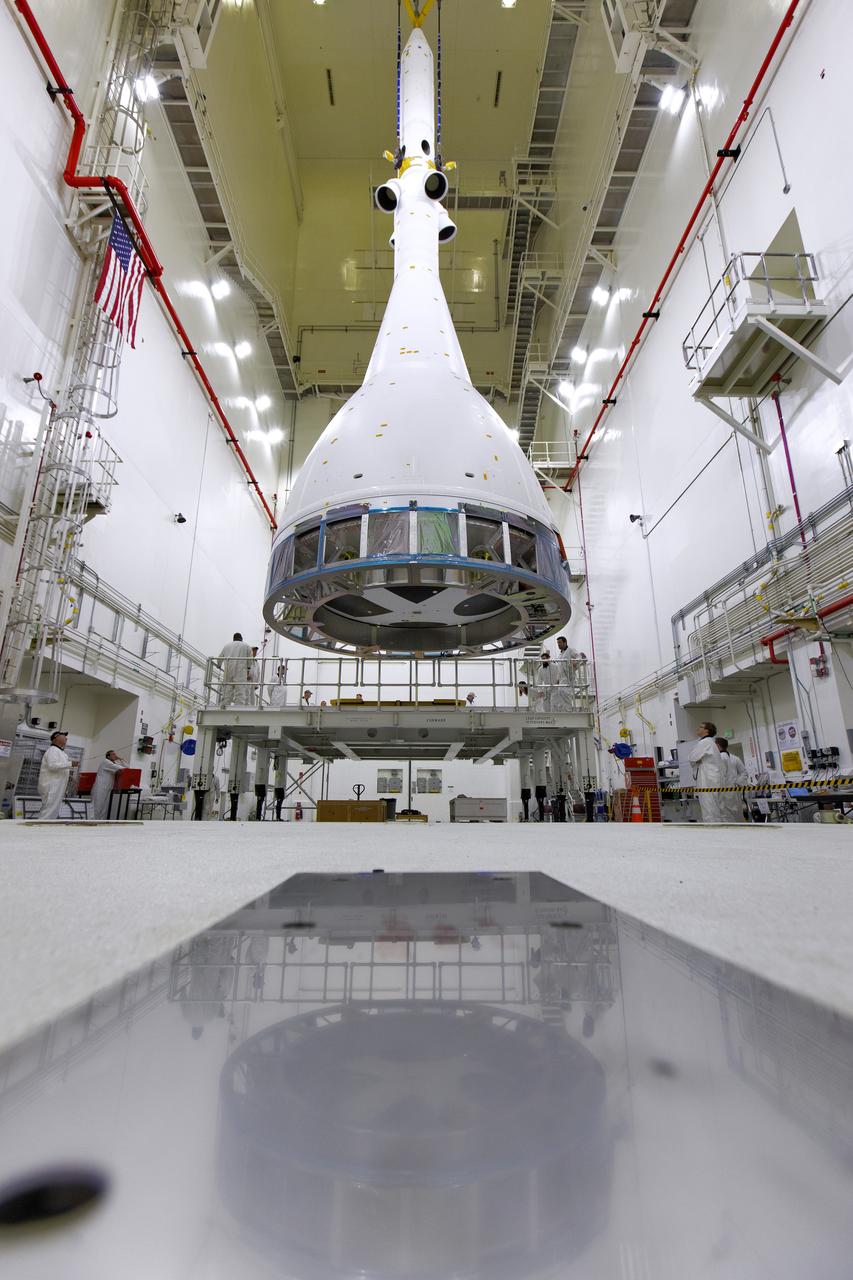
Inside the Launch Abort System Facility (LASF) at NASA’s Kennedy Space Center in Florida, a test version of the Orion crew module has been integrated with the Launch Abort System (LAS) on May 18, 2019. It is being lifted by crane for transfer to a KAMAG transporter. The test vehicle and the LAS will be used for the Orion Ascent Abort-2 (AA-2) Flight Test. AA-2 is a full-stress test of the LAS, planned for July 2. AA-2 will launch from Space Launch Complex 46, carrying a fully functional LAS and a 22,000-pound Orion test vehicle to an altitude of 31,000 feet and traveling at more than 1,000 miles an hour. The test will verify the LAS can steer the crew module and astronauts aboard to safety if an emergency occurs during ascent on the Space Launch System (SLS) rocket. NASA's Orion and Exploration Ground Systems programs, contractors Jacob's, Lockheed Martin and Northrop Grumman, in conjunction with the Air Force Space and Missile Center's Launch Operations branch and the 45th Space Wing are performing flight operations for AA-2.
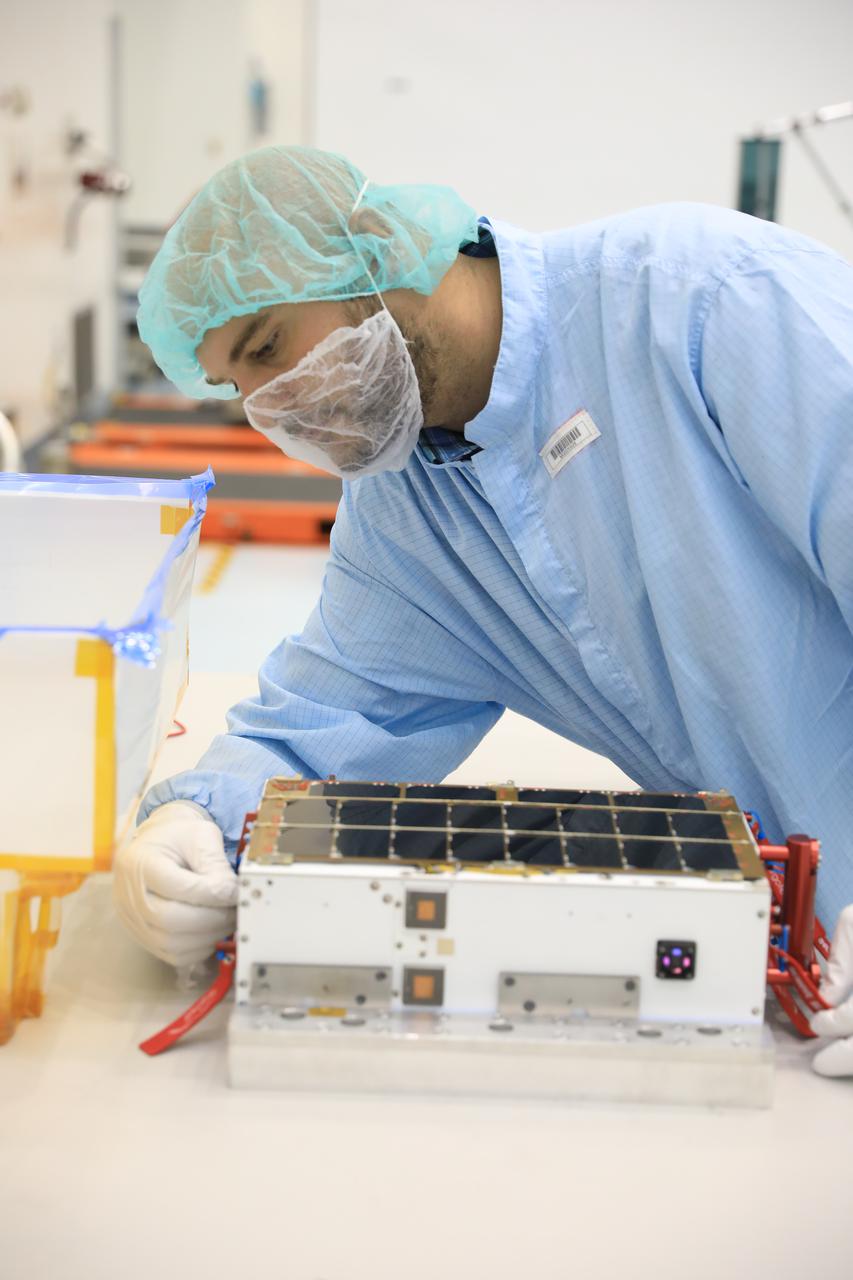
Teams worked on the final processing of their payloads that will fly aboard Artemis I. Housed within the Orion stage adapter, the satellites – called CubeSats – are roughly the size of a large shoe box and weigh no more than 30 pounds. Despite their small size, they enable science and technology experiments that may enhance our understanding of the deep space environment, expand our knowledge of the Moon, and demonstrate new technologies that could be used on future missions.
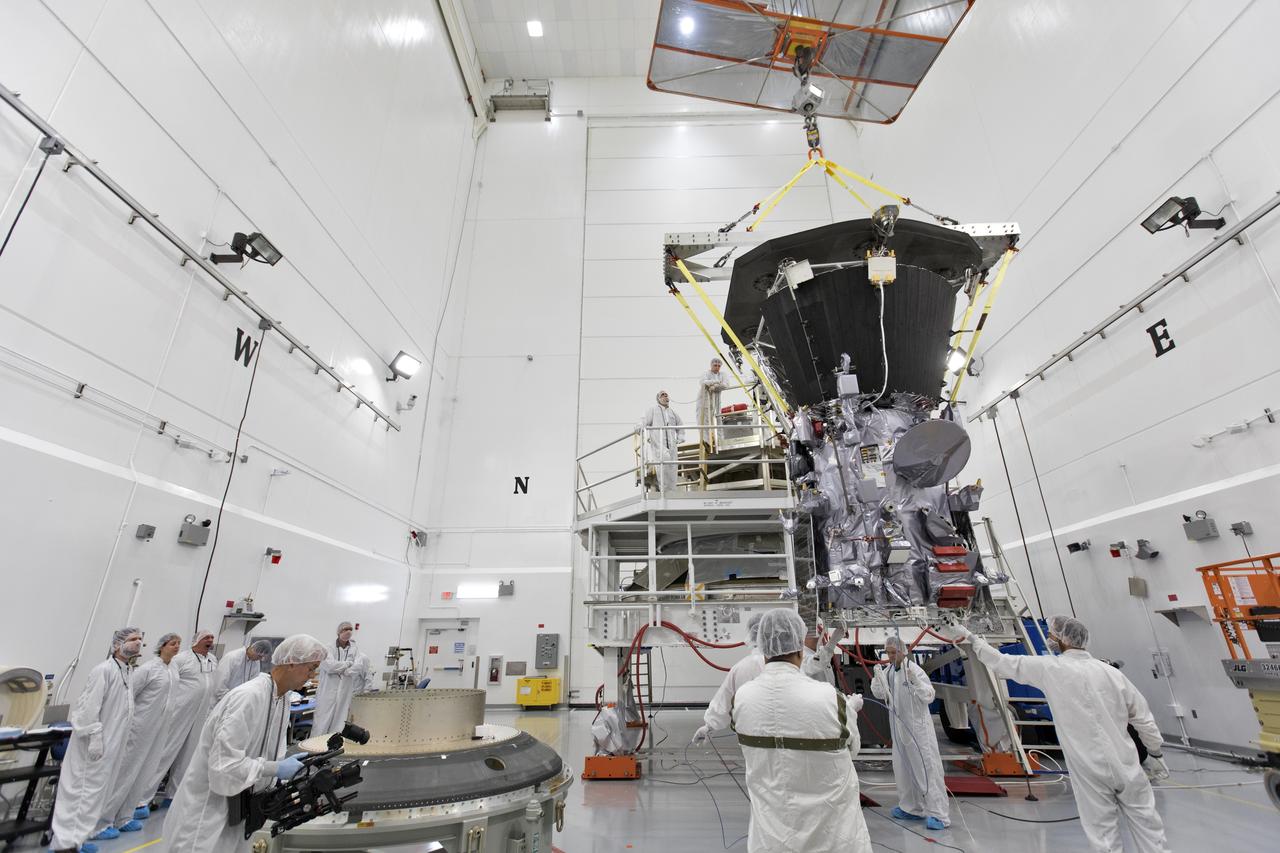
In the Astrotech processing facility in Titusville, Florida, near NASA's Kennedy Space Center, on Wednesday, July 11, 2018, technicians and engineers use a crane to move NASA's Parker Solar Probe into position for mating to its third stage, built and tested by Northrup Grumman in Chandler Arizona. The Parker Solar Probe will launch on a United Launch Alliance Delta IV Heavy rocket from Space Launch Complex 37 at Cape Canaveral Air Force Station in Florida. The mission will perform the closest-ever observations of a star when it travels through the Sun's atmosphere, called the corona. The probe will rely on measurements and imaging to revolutionize our understanding of the corona and the Sun-Earth connection.
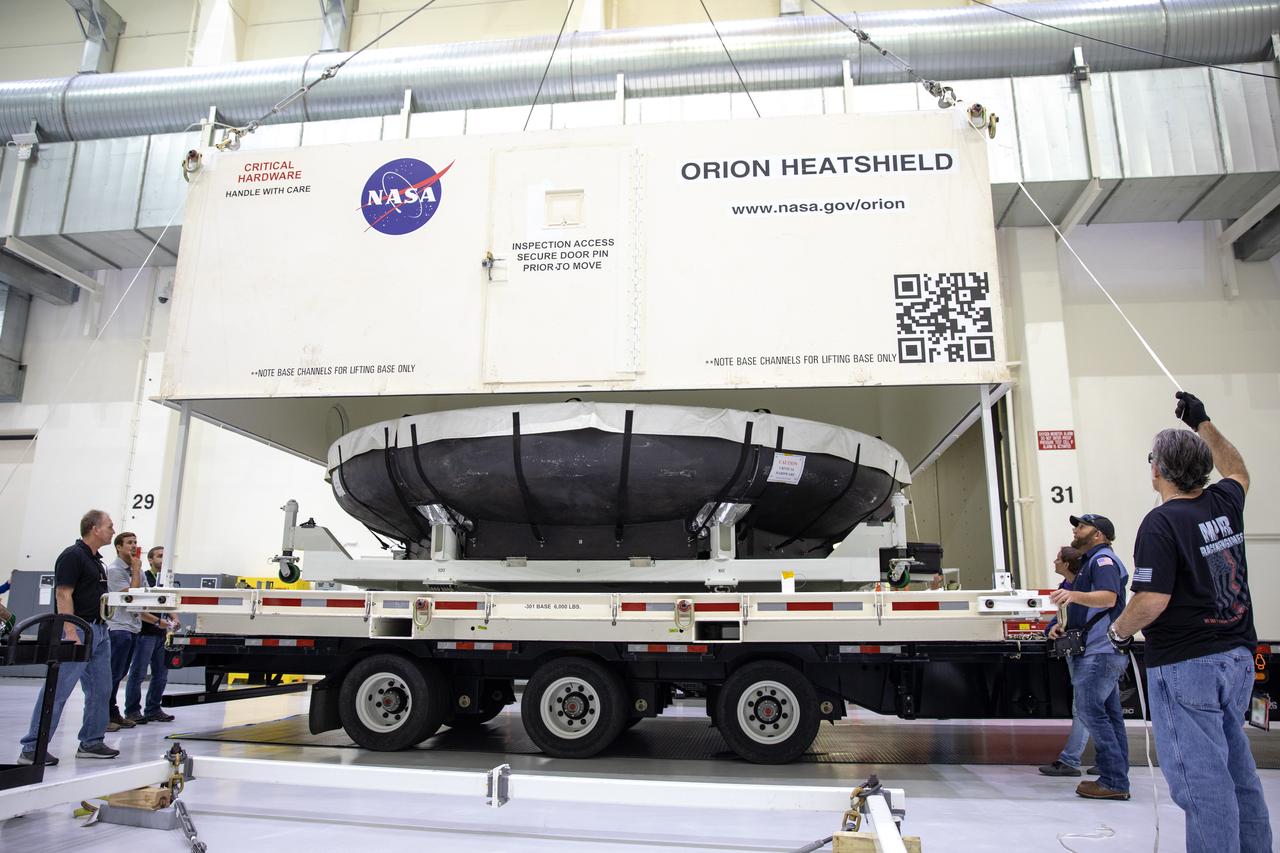
The cover of the shipping container carrying the heat shield for Orion’s Artemis 2 mission, NASA’s first crewed mission, is lifted up inside the Neil Armstrong Operations and Checkout Building high bay at the agency’s Kennedy Space Center in Florida on July 10, 2019. The heat shield, measuring roughly 16 feet in diameter, will protect astronauts upon re-entry on the second mission of Artemis. The heat shield arrived from Lockheed Martin’s manufacturing facility near Denver aboard NASA’s Super Guppy Aircraft. The heat shield is a base titanium truss structure. Over the next several months, technicians will apply Avcoat, an ablative material that will provide the thermal protection. Artemis 2 will confirm all of the spacecraft’s systems operate as designed in the actual environment of deep space with astronauts aboard.
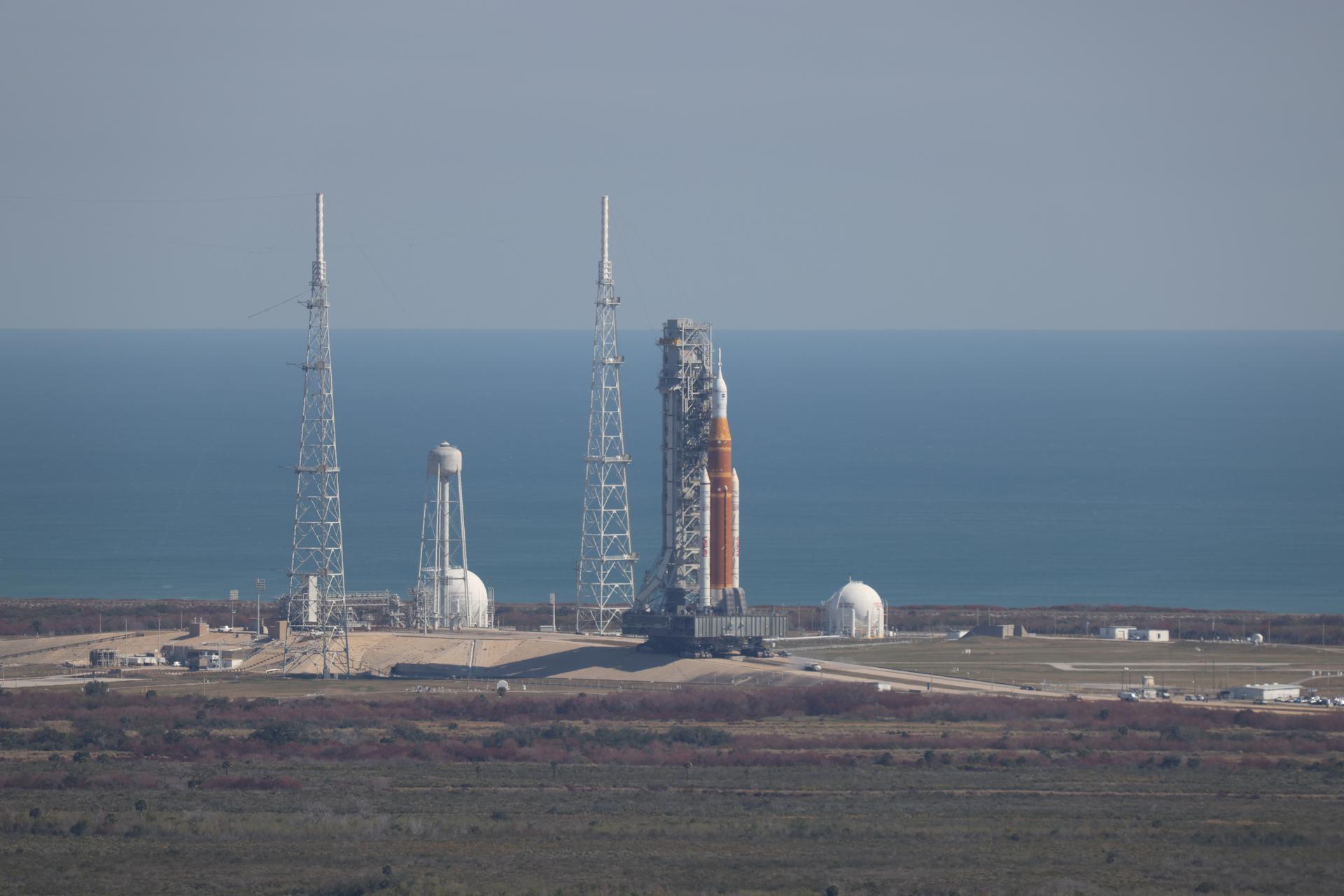
NASA’s crawler-transporter 2, carrying NASA’s Artemis II SLS (Space Launch System) rocket with the Orion spacecraft secured to mobile launcher 1, leaves Launch Complex 39B to roll back to the Vehicle Assembly Building at NASA’s Kennedy Space Center in Florida on Wednesday, Feb. 25, 2026, to troubleshoot the flow of helium to the rocket’s upper stage, the interim cryogenic propulsion stage. Once complete, the SLS rocket will roll back to Launch Complex 39B to prepare to launch four astronauts around the Moon and back for the Artemis II test flight.

Artemis III launch team members participate in a cryogenic propellant loading simulation on Wednesday, June 10, 2026, inside Firing Room 1 and 2 of the Rocco A. Petrone Launch Control Center at NASA’s Kennedy Space Center in Florida. Members of NASA’s Exploration Ground Systems team rehearse the steps to load the super-cooled liquid hydrogen and liquid oxygen into the SLS (Space Launch System) rocket core stage, a process that starts several hours before liftoff for the Artemis III mission. Artemis III will carry out a series of objectives in low Earth orbit designed to demonstrate critical systems needed for future lunar landings, beginning with Artemis IV.
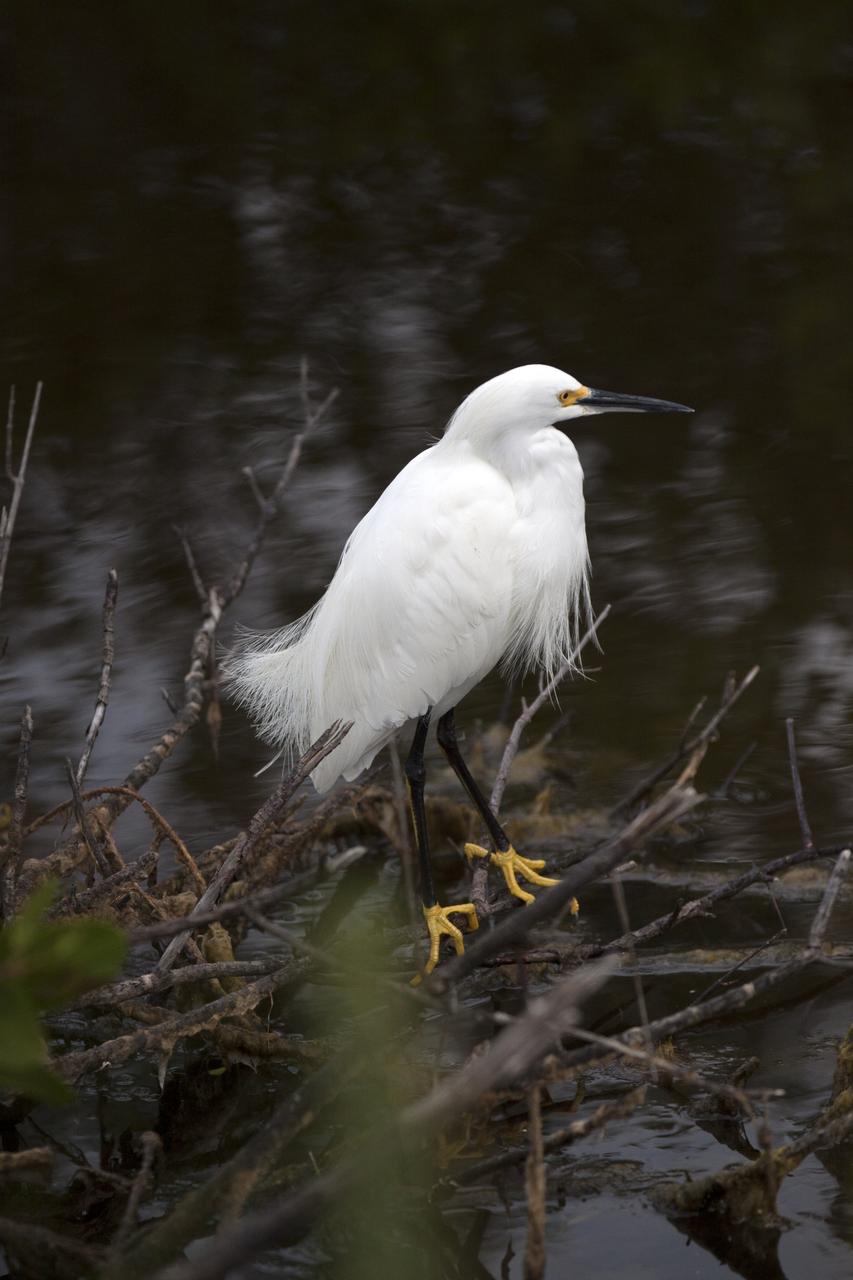
A snowy egret perches on a branch near a waterway at NASA's Kennedy Space Center in Florida. The center shares a border with the Merritt Island National Wildlife Refuge. The bird is one of more than 330 native and migratory bird species, 25 mammals, 117 fishes and 65 amphibians and reptiles that call Kennedy and the wildlife refuge home.
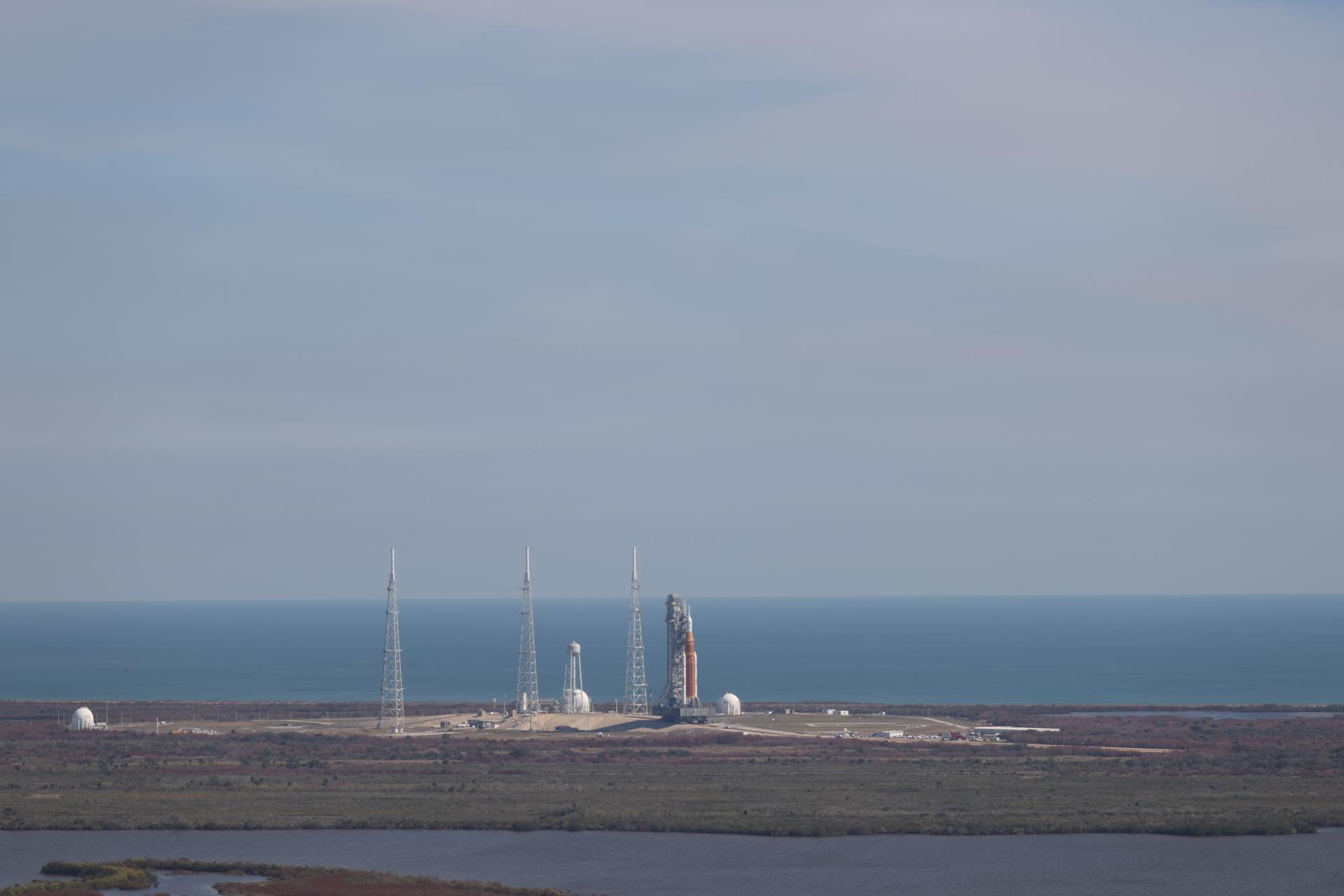
NASA’s crawler-transporter 2, carrying NASA’s Artemis II SLS (Space Launch System) rocket with the Orion spacecraft secured to mobile launcher 1, leaves Launch Complex 39B to roll back to the Vehicle Assembly Building at NASA’s Kennedy Space Center in Florida on Wednesday, Feb. 25, 2026, to troubleshoot the flow of helium to the rocket’s upper stage, the interim cryogenic propulsion stage. Once complete, the SLS rocket will roll back to Launch Complex 39B to prepare to launch four astronauts around the Moon and back for the Artemis II test flight.
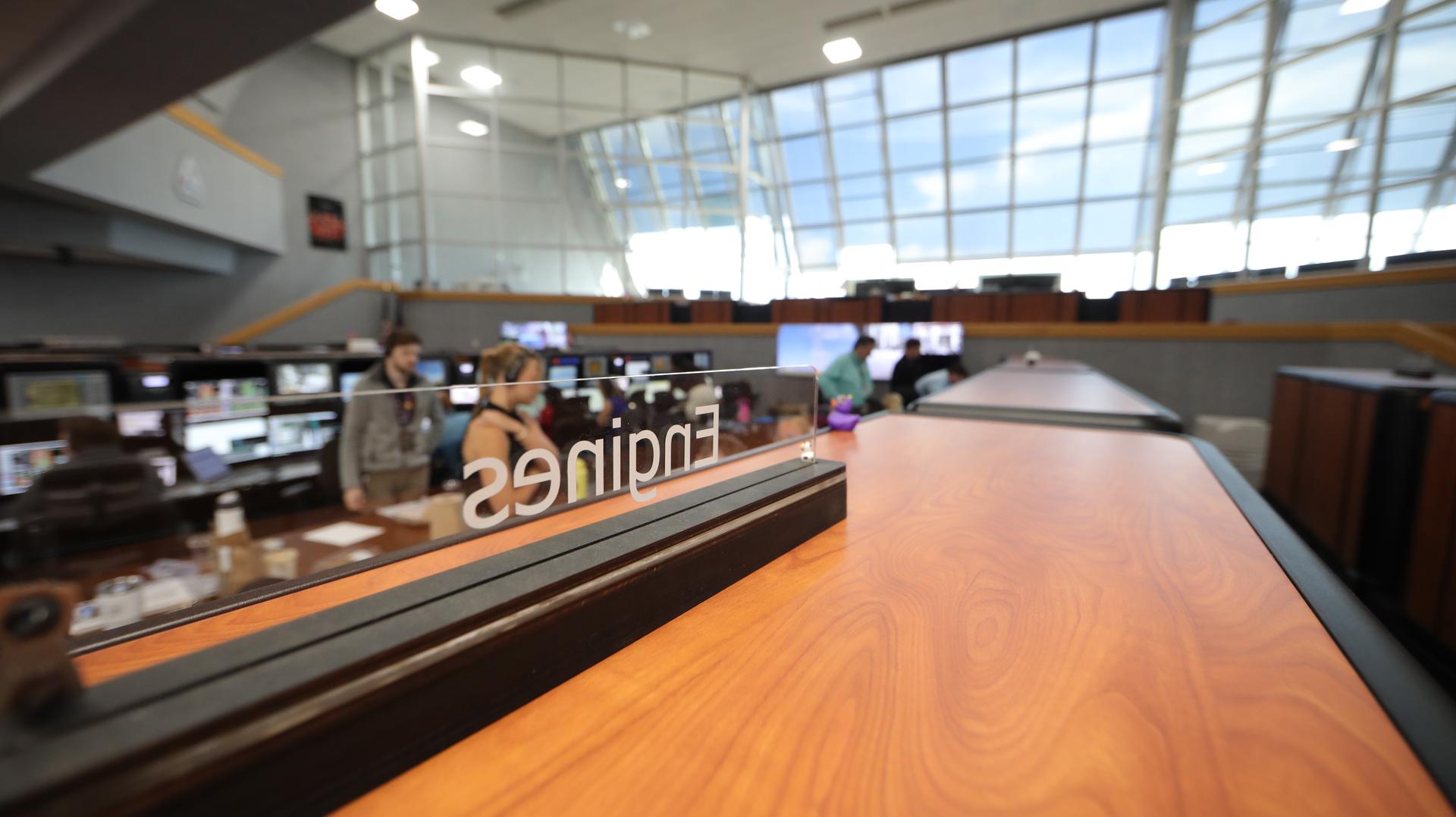
Artemis launch team members participate in a terminal countdown simulation for Artemis III on Thursday, Sept. 10, 2026, inside Firing Room 1 and 2 of the Rocco A. Petrone Launch Control Center at NASA’s Kennedy Space Center in Florida. Terminal count simulations conducted by NASA’s Exploration Ground Systems team run through the final five hours of launch countdown, including terminal count - the remaining 10 minutes of the countdown. Artemis III will carry out a series of objectives in low Earth orbit designed to demonstrate critical systems needed for future lunar landings, beginning with Artemis IV.
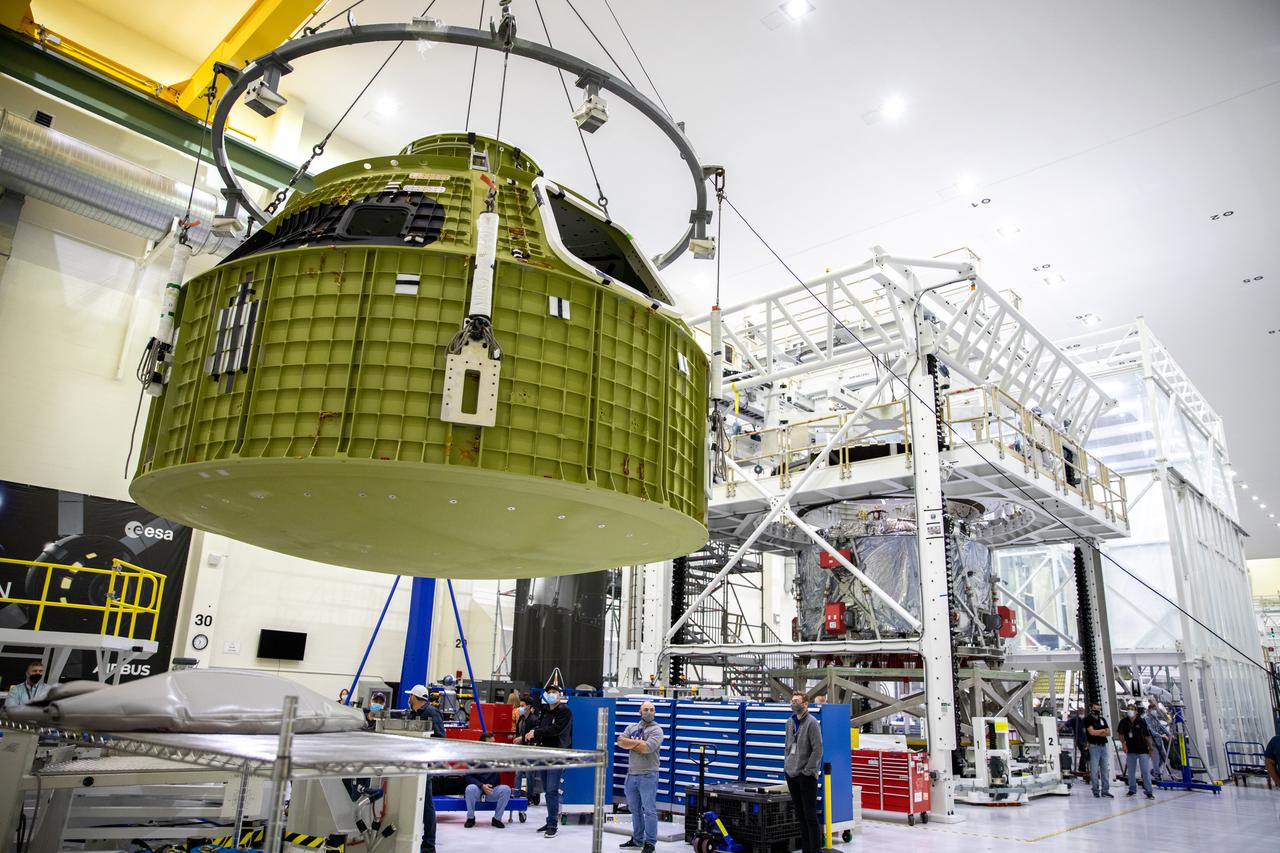
The Orion pressure vessel for NASA’s Artemis III mission is lifted by crane for its move onto a work stand in the high bay of the Neil A. Armstrong Operations and Checkout Building at NASA’s Kennedy Space Center in Florida on Oct. 20, 2021. The pressure vessel will be secured onto the work stand where Lockheed Matin technicians will begin the work to prepare the spacecraft for its launch atop a Space Launch System rocket. Artemis III will send astronauts, including the first woman and first person of color, on a mission to the surface of the Moon by 2024.

NASA Administrator Jim Bridenstine speaks to members of the media during a press briefing Nov. 13, 2020, near the Press Site countdown clock at the agency’s Kennedy Space Center in Florida ahead of NASA’s SpaceX Crew-1 launch. Crew-1 is the first regular crew mission of a U.S. commercial spacecraft with astronauts to the International Space Station as part of NASA’s Commercial Crew Program. The SpaceX Crew Dragon Resilience capsule will launch atop the company’s Falcon 9 rocket from Launch Complex 39A to the space station for a six-month science mission.
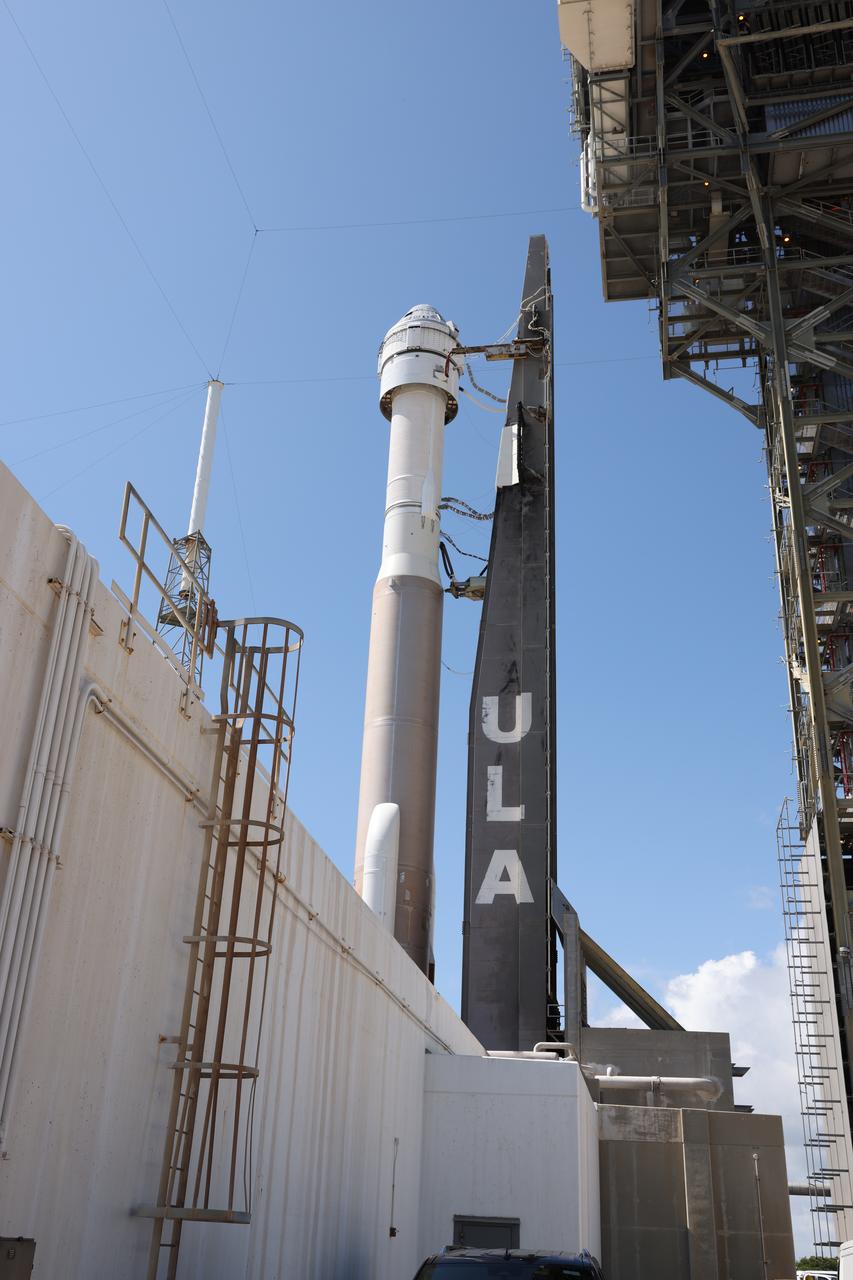
Boeing’s Starliner spacecraft atop the United Launch Alliance Atlas V rocket rolls out from the Vertical Integration Facility to the launch pad of Space Launch Complex-41 at Cape Canaveral Space Force Station in Florida on Saturday, May 4, 2024, ahead of NASA’s Boeing Crew Flight Test. As part of the agency’s Commercial Crew Program, NASA astronauts Butch Wilmore and Suni Williams are the first to launch to the International Space Station aboard Boeing’s Starliner spacecraft. Liftoff is scheduled for 10:34 p.m. ET Monday, May 6.
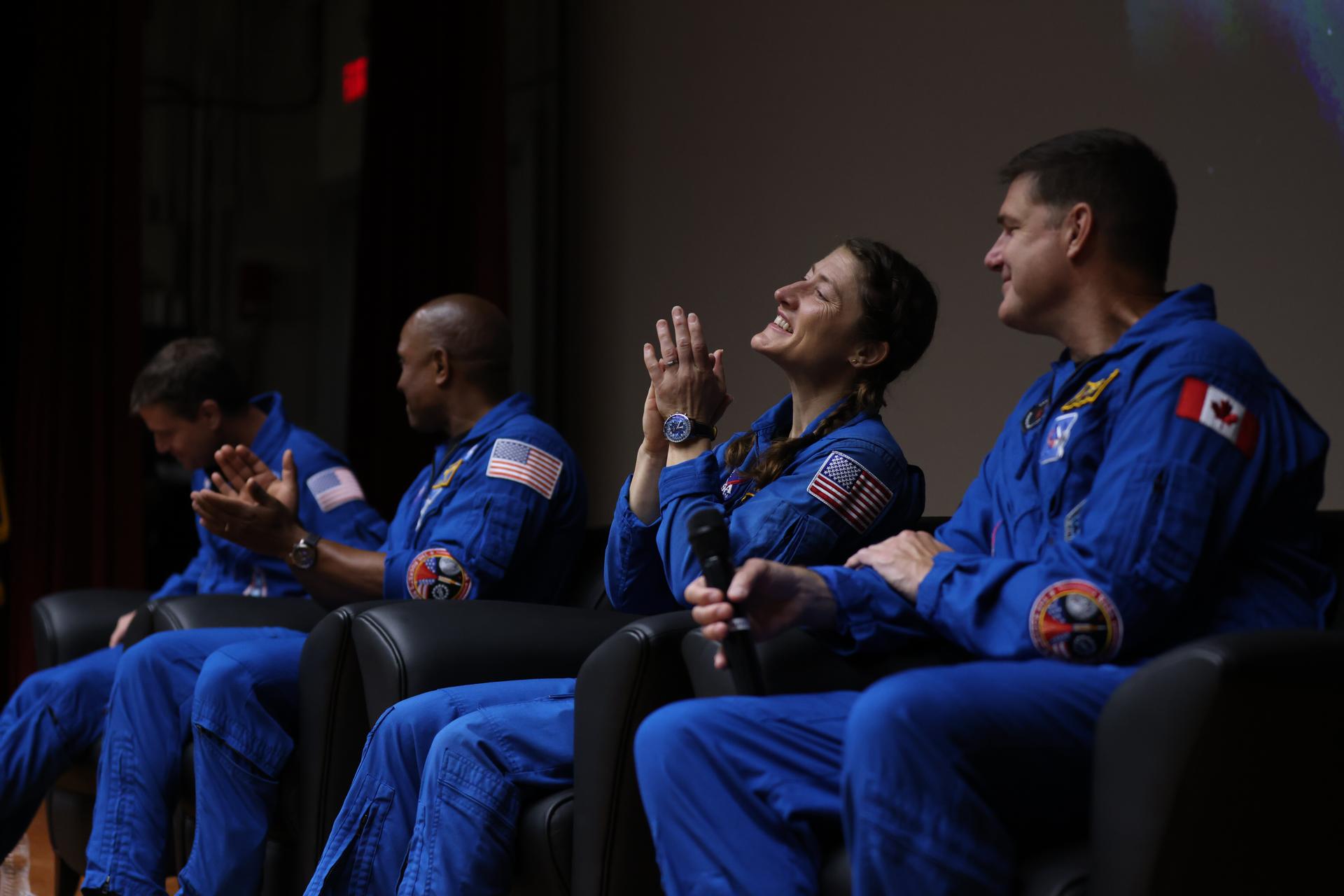
From left, Artemis II NASA astronauts Reid Wiseman, Victor Glover, Christina Koch, along with CSA (Canadian Space Agency) astronaut Jeremy Hansen speak to employees in the Training Auditorium at NASA’s Kennedy Space Center in Florida on Tuesday, July 7, 2026. The crew returned to NASA Kennedy for their first official visit since launch of Artemis II on Wednesday, April 1, 2026, to visit with the center’s workforce and tour facilities to view progress on Artemis III prelaunch processing.

Charlie Blackwell-Thompson, Artemis launch director, participates in a cryogenic propellant loading simulation for NASA’s Artemis III mission on Wednesday, June 10, 2026, inside Firing Room 1 of the Rocco A. Petrone Launch Control Center at the agency’s Kennedy Space Center in Florida. Members of NASA’s Exploration Ground Systems team rehearse the steps to load the super-cooled liquid hydrogen and liquid oxygen into the SLS (Space Launch System) rocket core stage, a process that starts several hours before liftoff for the Artemis III mission. Artemis III will carry out a series of objectives in low Earth orbit designed to demonstrate critical systems needed for future lunar landings, beginning with Artemis IV.
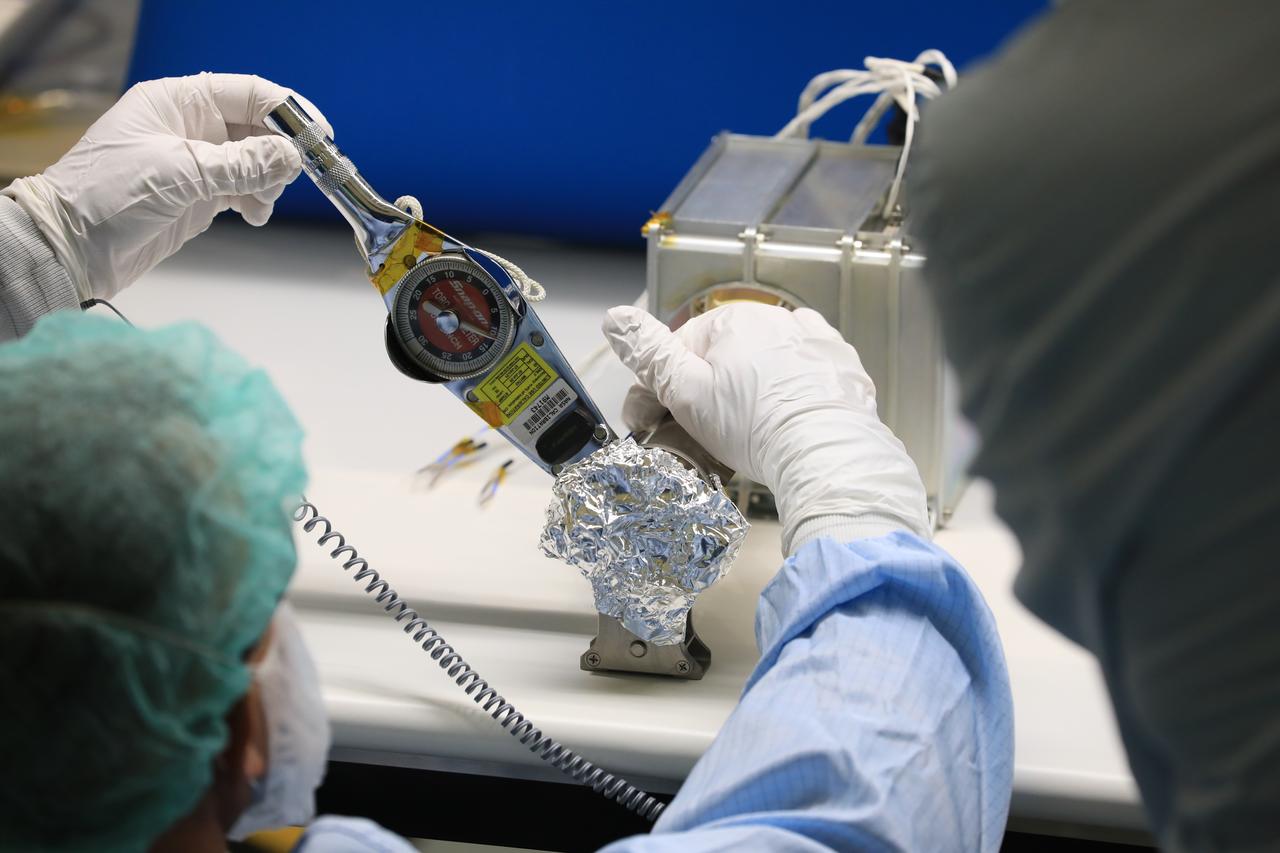
Engineers and technicians at NASA’s Kennedy Space Center in Florida work with instruments for Mass Spectrometer observing lunar operations (MSolo) inside the Space Station Processing on Sept. 25, 2020. MSolo is a commercial off-the-shelf mass spectrometer modified to work in space and it will help analyze the chemical makeup of landing sites on the Moon, as well as study water on the lunar surface. This work is preparing MSolo hardware for a robotic mission as part of the Commercial Lunar Payload Services (CLPS) launching to exploring Lacus Mortis, a large crater on the near side of the Moon in 2021. A future mission will send a mobile robot named the Volatiles Investigating Polar Exploration Rover (VIPER) to the Moon to prospect for water. VIPER will have several instruments that will allow it to detect and sample water including MSolo, the Neutron Spectrometer System, the Near Infrared Volatiles Spectrometer System and The Regolith and Ice Drill for Exploring New Terrain (TRIDENT).
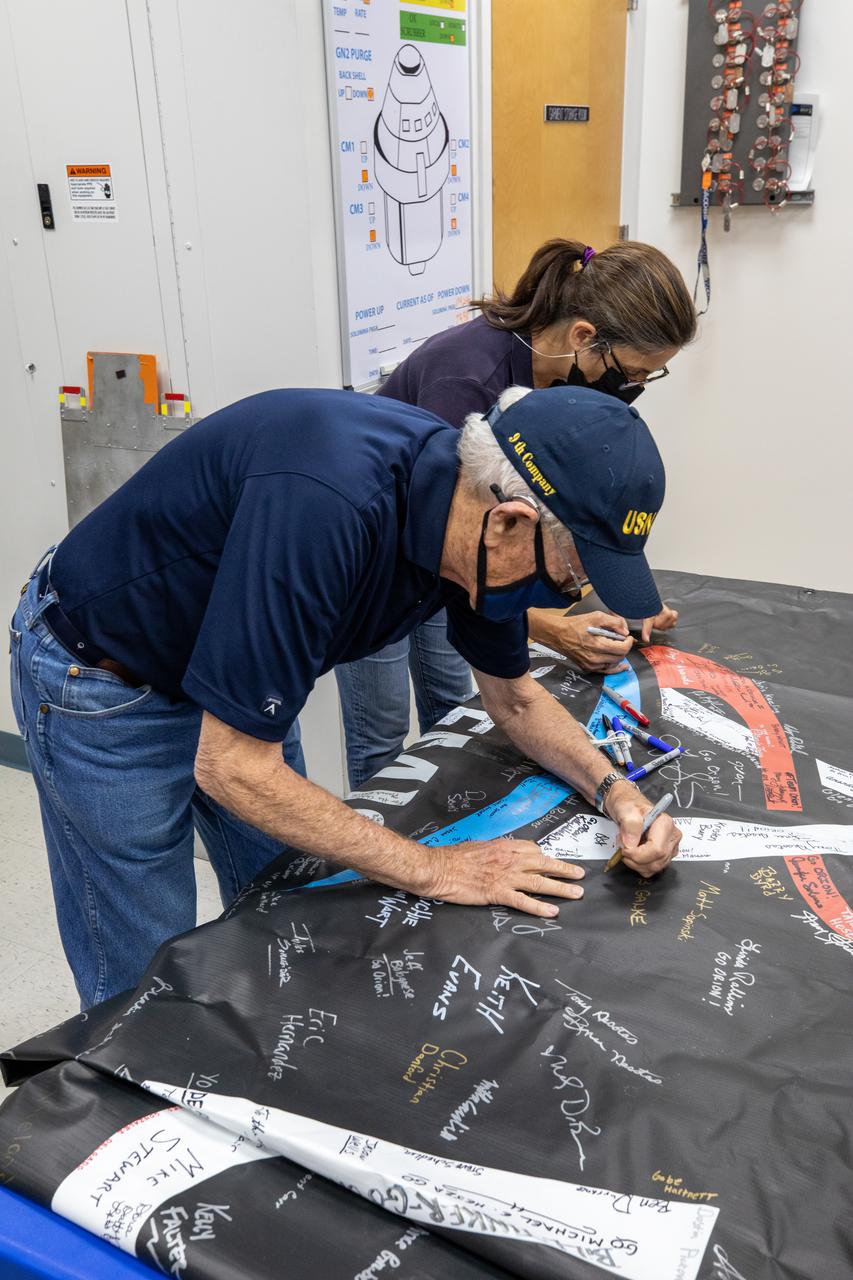
Charlie Duke, NASA Astronaut (former), and Nicole Stott, NASA Astronaut (former), add their signatures to the Artemis “We Are Going” banner inside the Multi-Payload Processing Facility (MPPF) during a visit to NASA’s Kennedy Space Center in Florida on May 10, 2021. During their time at Kennedy, they also had the opportunity to view the Orion spacecraft and Interim Cryogenic Propulsion Stage currently being serviced inside the MPPF ahead of the Artemis I launch. The first in a series of increasingly complex missions, Artemis I will test Orion and the Space Launch System rocket as an integrated system prior to crewed flights to the Moon.
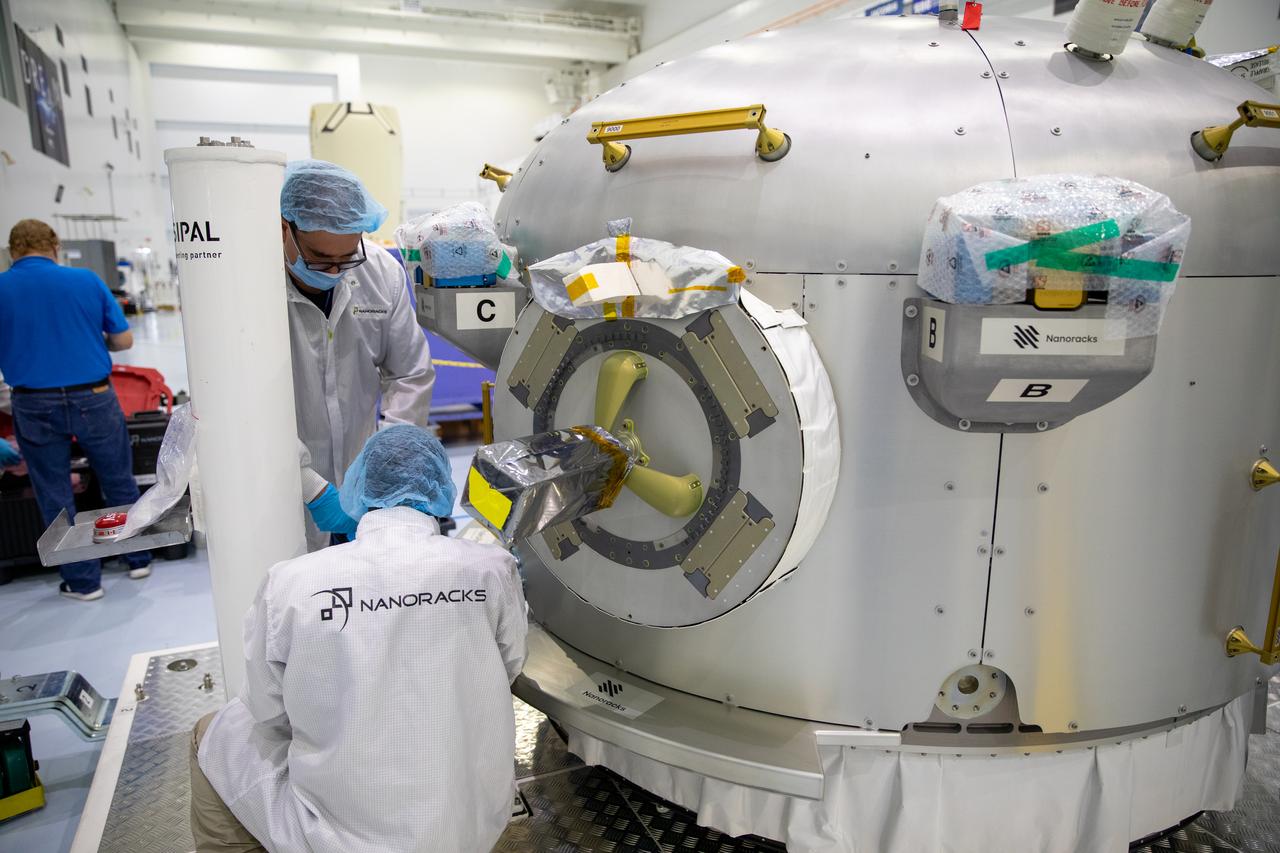
Nanoracks technicians work on the NanoRacks Bishop Airlock inside the Space Station Processing Facility at NASA's Kennedy Space Center in Florida on Sept. 29, 2020. The next-generation Nanoracks payload facility is being prepared for its flight to the International Space Station on SpaceX’s 21st commercial resupply services mission (CRS-21) to the International Space Station. The Bishop Airlock is the first commercially funded airlock for the space station. It will provide payload hosting, robotics testing, satellite deployment, serve as an outside toolbox for station crew spacewalks, and more. CRS-21 is scheduled to launch on a SpaceX Falcon 9 rocket no earlier than November from Launch Complex 39A at Kennedy Space Center.
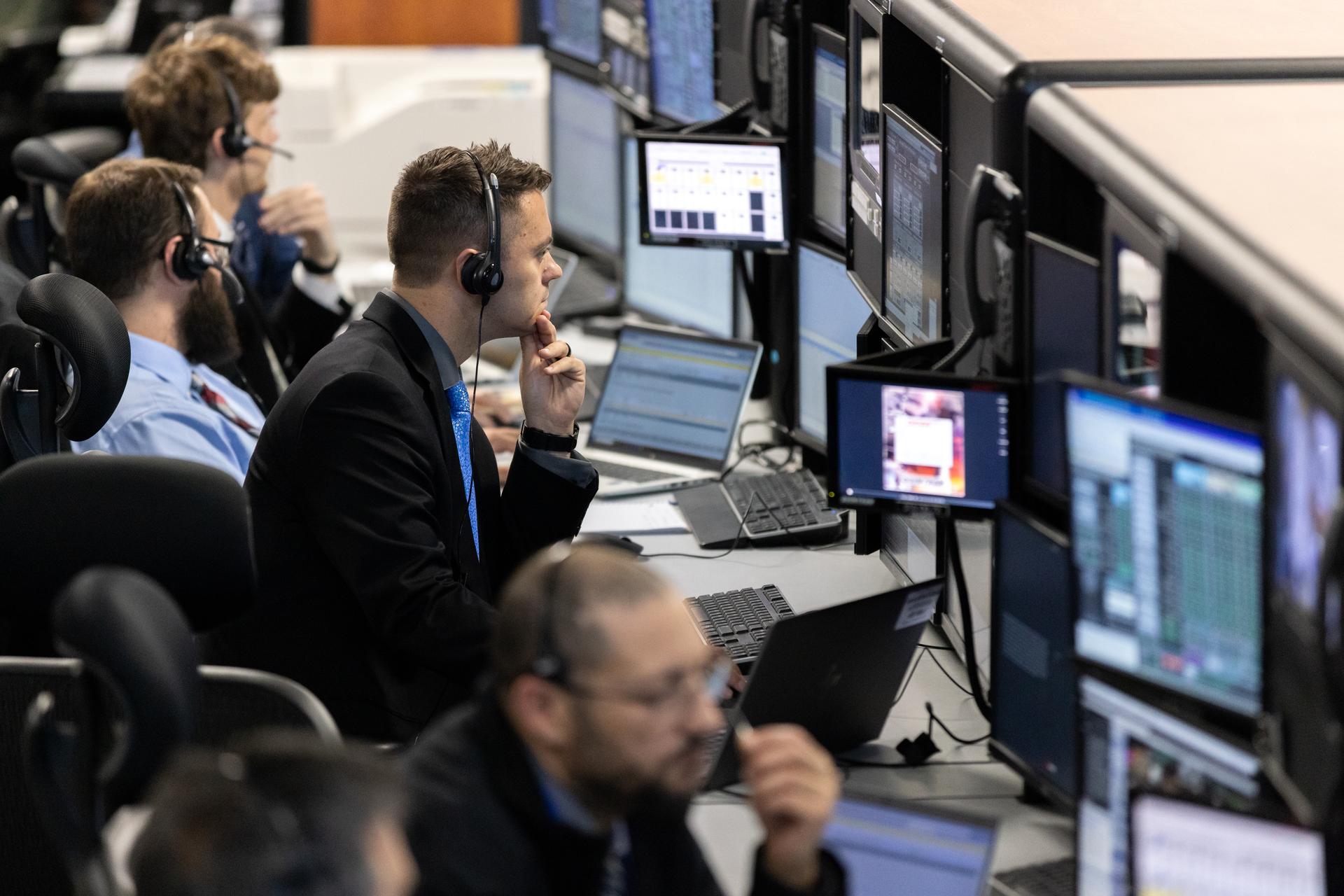
Teams monitor the progress of a countdown demonstration test with Artemis II crewmembers NASA astronauts Reid Wiseman, commander; Victor Glover, pilot; Christina Koch, mission specialist; and CSA (Canadian Space Agency) astronaut Jeremy Hansen, mission specialist onboard their Orion spacecraft from Firing Room 1 of the Rocco A. Petrone Launch Control Center, Saturday, Dec. 20, 2025, at NASA’s Kennedy Space Center in Florida. For this operation, the Artemis II crew and launch teams are simulating the launch day timeline including suit-up, walkout, and spacecraft ingress and egress. Through the Artemis campaign, NASA will send astronauts to explore the Moon for scientific discovery, economic benefits, and to build the foundation for the first crewed missions to Mars, for the benefit of all.
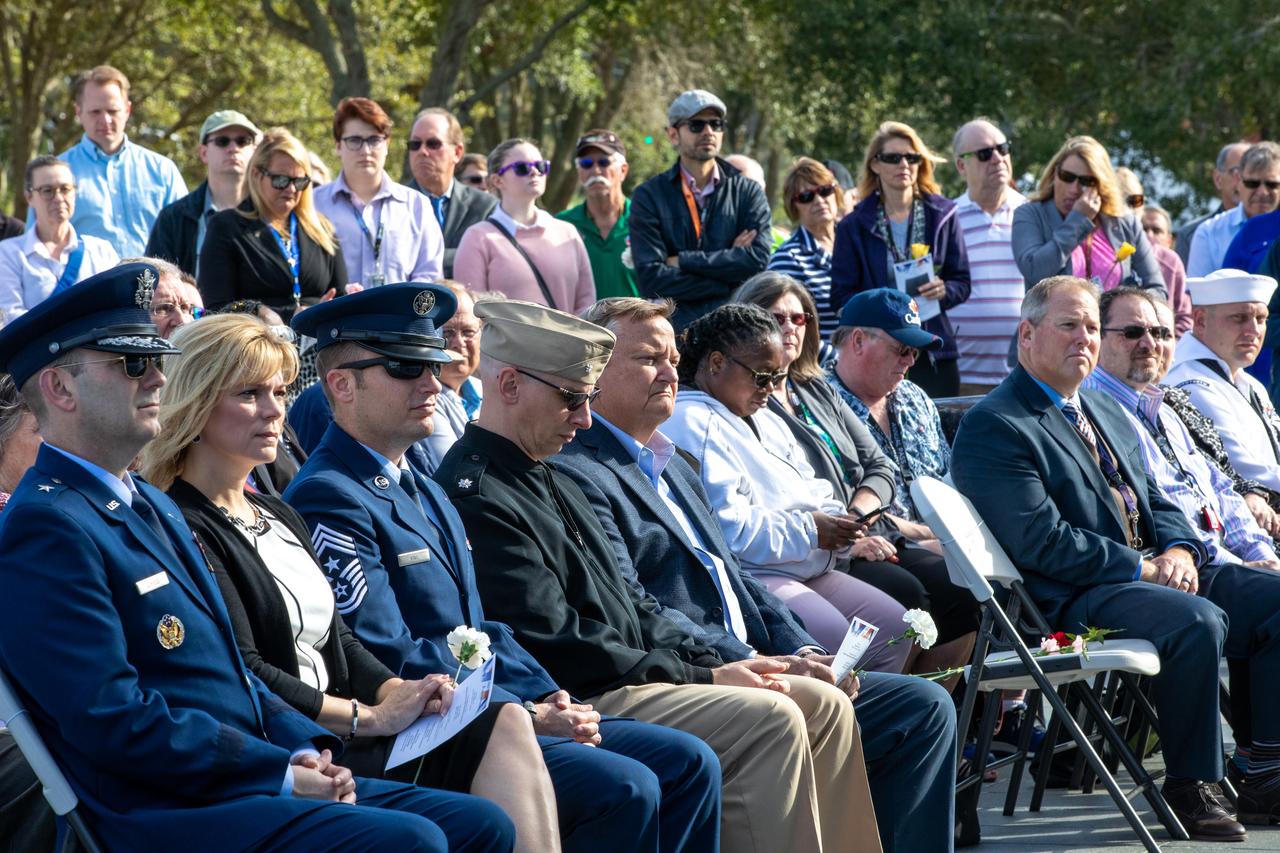
The audience looks on during the NASA Day of Remembrance ceremony at the Space Mirror Memorial in the Kennedy Space Center Visitor Complex on Jan. 30, 2020. The crews of Apollo 1 and space shuttles Challenger and Columbia, as well as other fallen astronauts who lost their lives in the name of space exploration and discovery, were honored at the annual event.
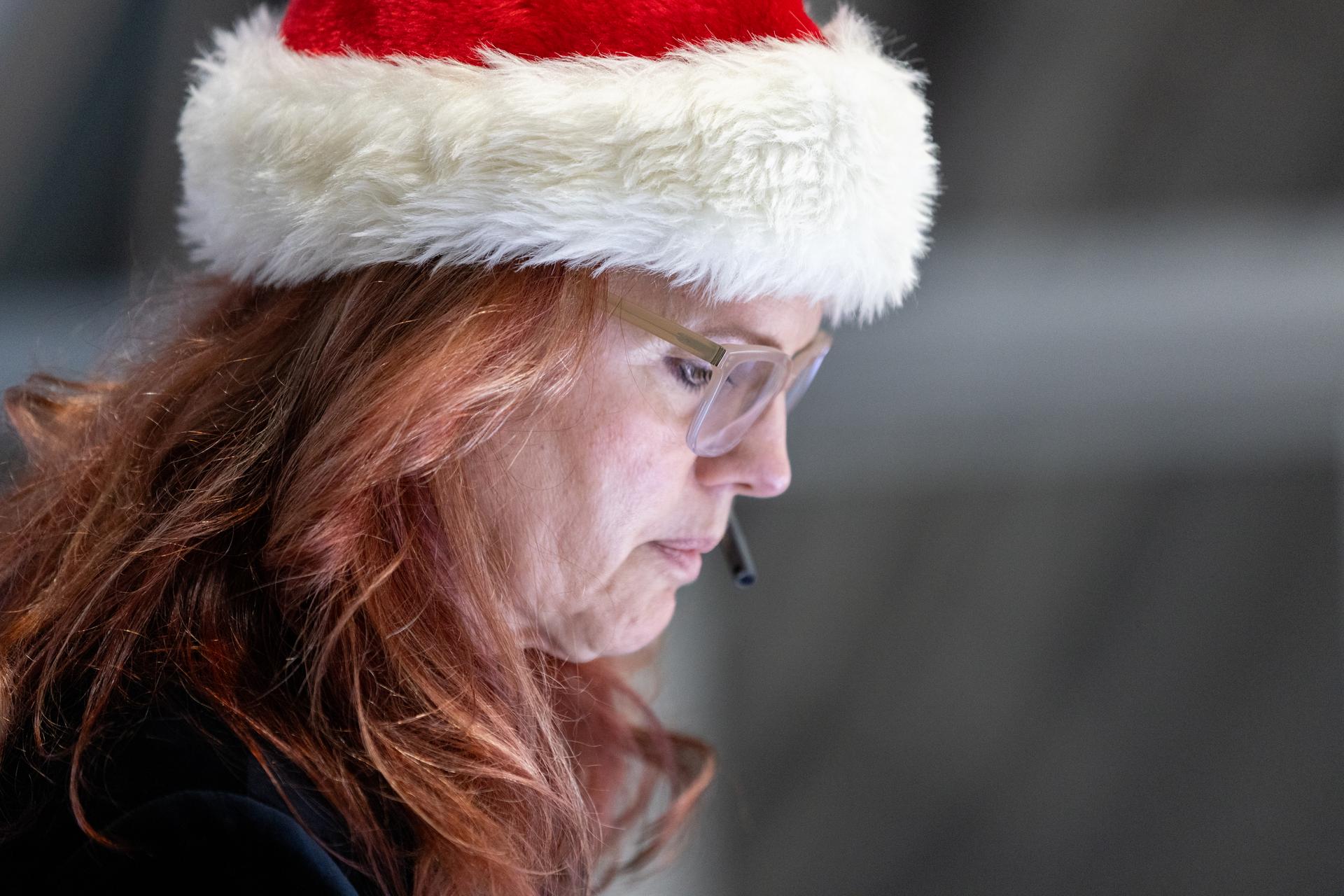
Charlie Blackwell-Thompson, Artemis launch director, monitors the progress of a countdown demonstration test with Artemis II crewmembers NASA astronauts Reid Wiseman, commander; Victor Glover, pilot; Christina Koch, mission specialist; and CSA (Canadian Space Agency) astronaut Jeremy Hansen, mission specialist onboard their Orion spacecraft from Firing Room 1 of the Rocco A. Petrone Launch Control Center, Saturday, Dec. 20, 2025, at NASA’s Kennedy Space Center in Florida. For this operation, the Artemis II crew and launch teams are simulating the launch day timeline including suit-up, walkout, and spacecraft ingress and egress. Through the Artemis campaign, NASA will send astronauts to explore the Moon for scientific discovery, economic benefits, and to build the foundation for the first crewed missions to Mars, for the benefit of all.