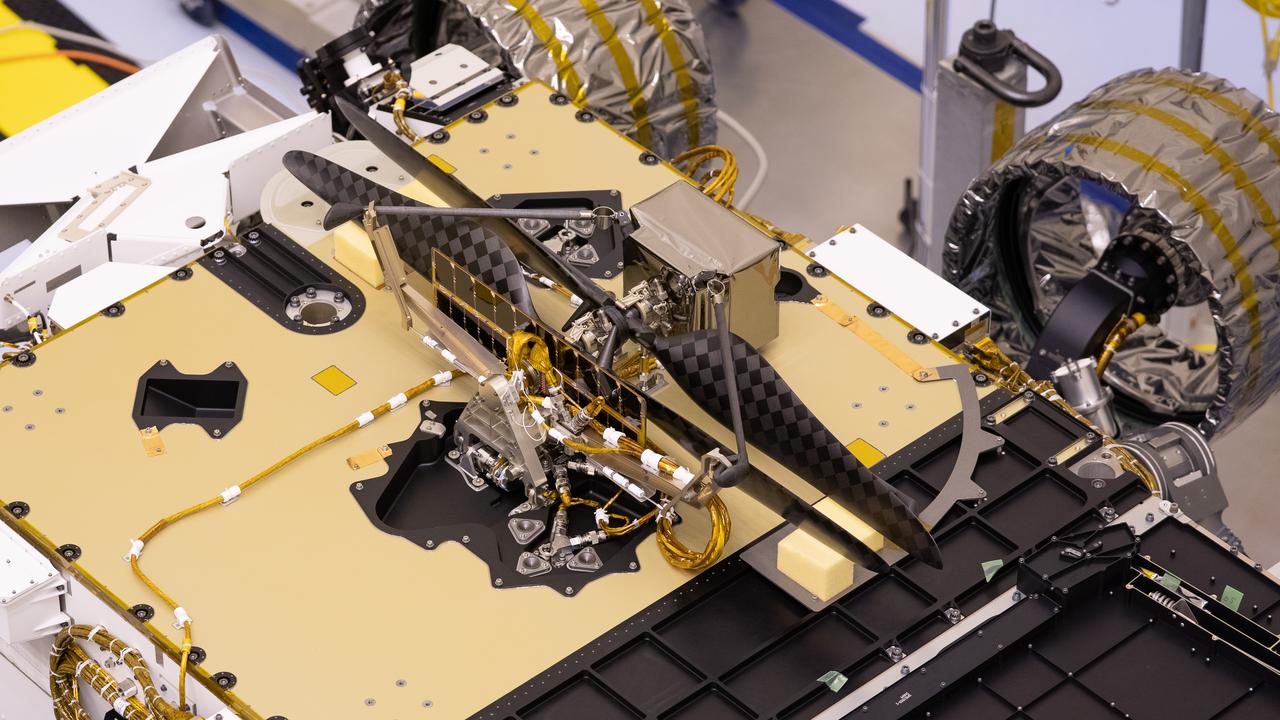
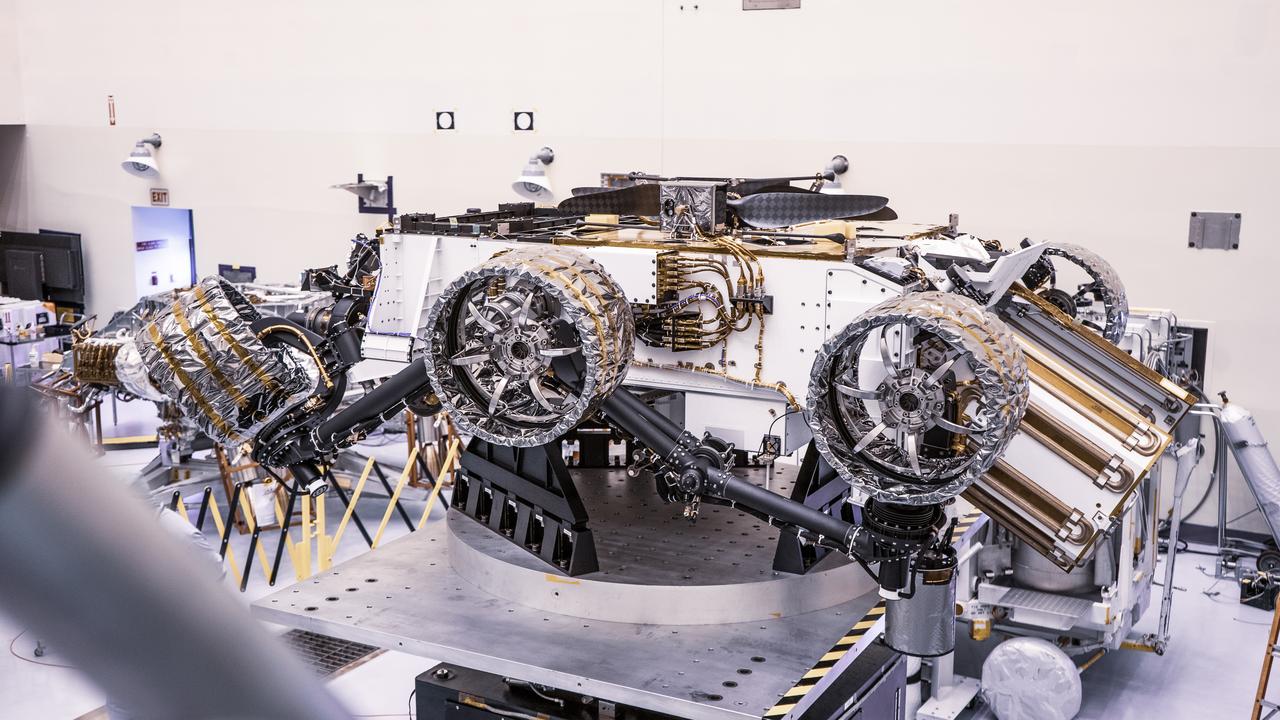
NASA’s Mars Helicopter is installed on the agency’s Mars Perseverance rover inside the Payload Hazardous Servicing Facility at Florida’s Kennedy Space Center on April 6, 2020. Perseverance safely lands on Mars, the helicopter will be released to perform the first in a series of flight tests that will take place during a period of about 30 days. The helicopter will be the first aircraft to fly on another planet. Perseverance, carrying the helicopter, will touch down on the Red Planet on Feb. 18, 2021. Liftoff aboard a United Launch Alliance Atlas V 541 rocket is targeted between July 17 and Aug. 5 from Cape Canaveral Air Force Station.
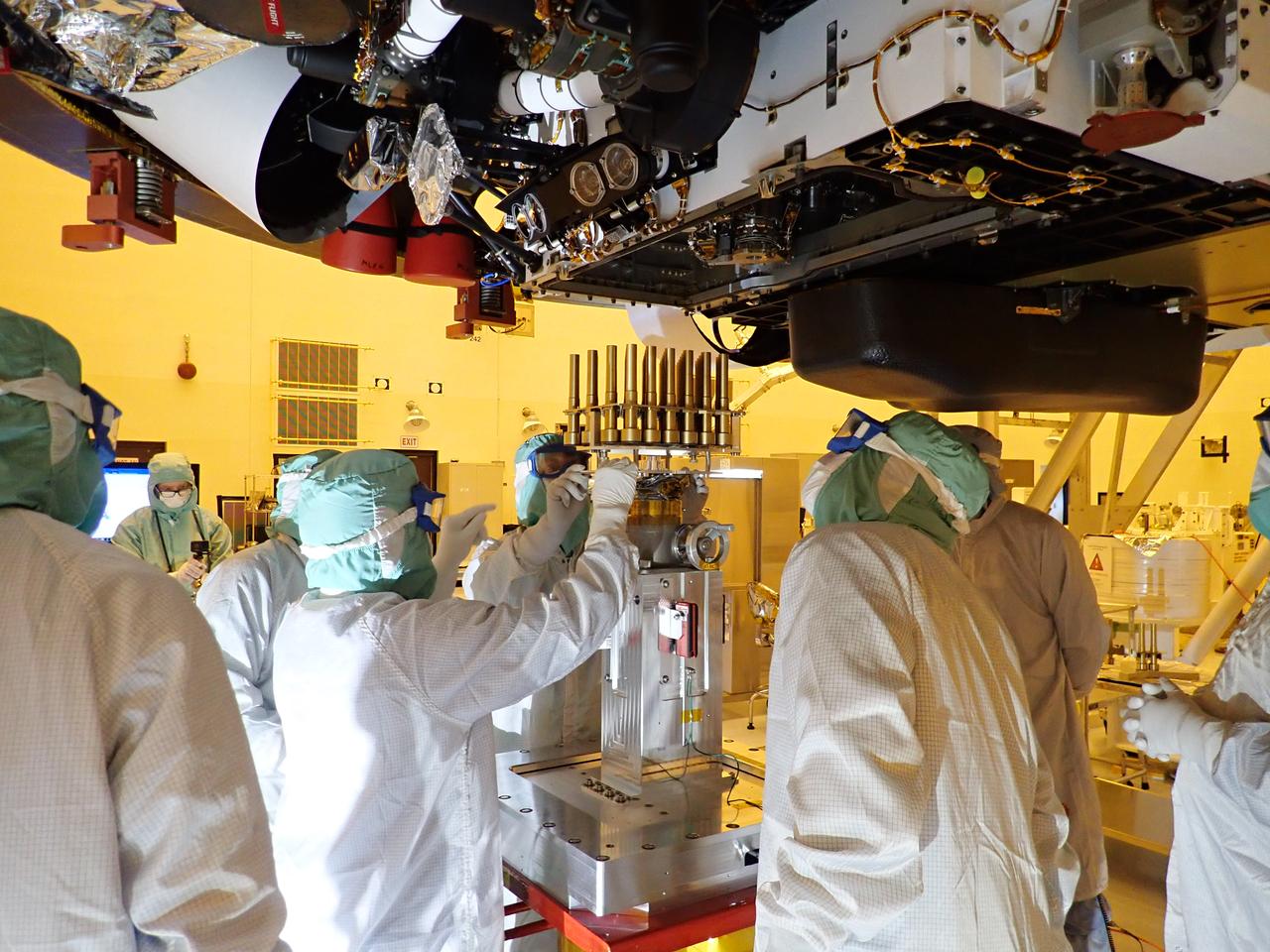
Inside the Payload Hazardous Servicing Facility at NASA’s Kennedy Space Center in Florida, workers prepare to install the Sample Caching System Sterile Flight Model hardware on the Mars Perseverance rover on May 21, 2020. The system includes 39 sample tubes that will be inserted into the underside of the rover. Each tube is sheathed in a gold-colored cylindrical enclosure to protect it from contamination. Perseverance rover will carry 43 sample tubes in total to Mars' Jezero Crater. The Mars Perseverance rover is scheduled to launch in mid-July atop a United Launch Alliance Atlas V 541 rocket from Pad 41 at nearby Cape Canaveral Air Force Station. The rover is part of NASA’s Mars Exploration Program, a long-term effort of robotic exploration of the Red Planet. The rover will search for habitable conditions in the ancient past and signs of past microbial life on Mars. The Launch Services Program at Kennedy is responsible for launch management.
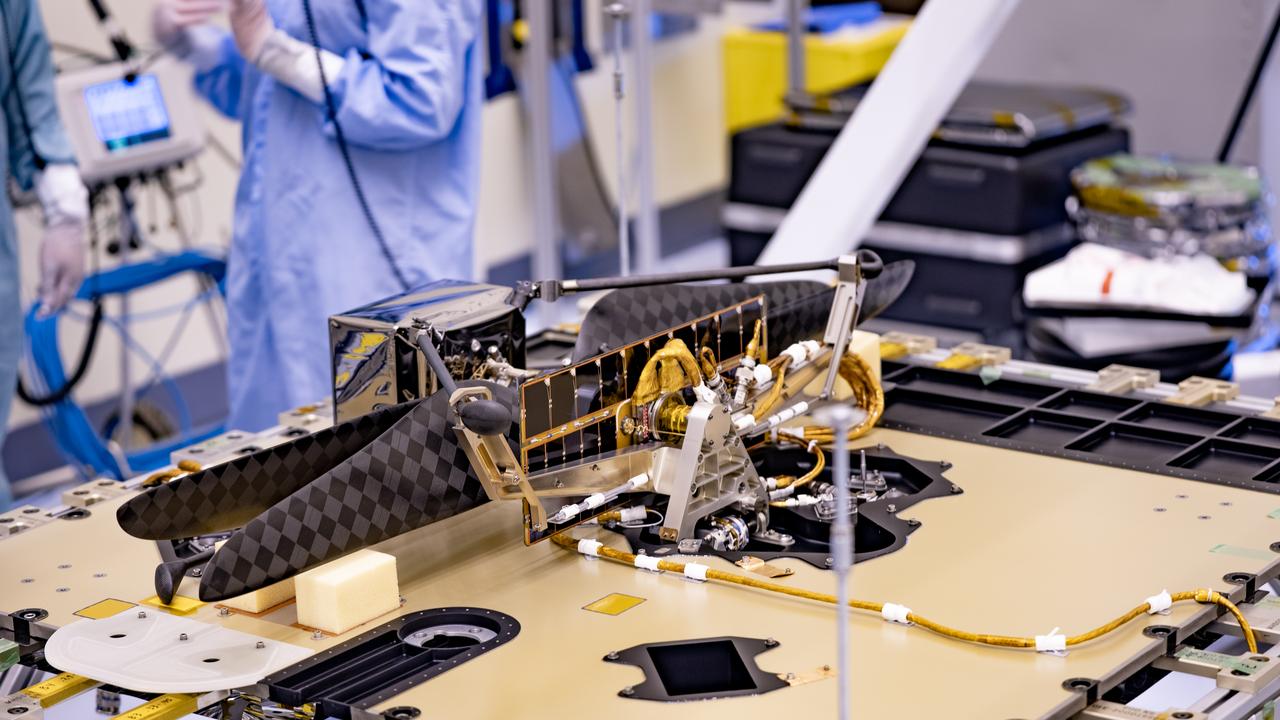
NASA’s Mars Helicopter is installed on the agency’s Mars Perseverance rover inside the Payload Hazardous Servicing Facility at Florida’s Kennedy Space Center on April 6, 2020. Perseverance safely lands on Mars, the helicopter will be released to perform the first in a series of flight tests that will take place during a period of about 30 days. The helicopter will be the first aircraft to fly on another planet. Perseverance, carrying the helicopter, will touch down on the Red Planet on Feb. 18, 2021. Liftoff aboard a United Launch Alliance Atlas V 541 rocket is targeted between July 17 and Aug. 5 from Cape Canaveral Air Force Station.
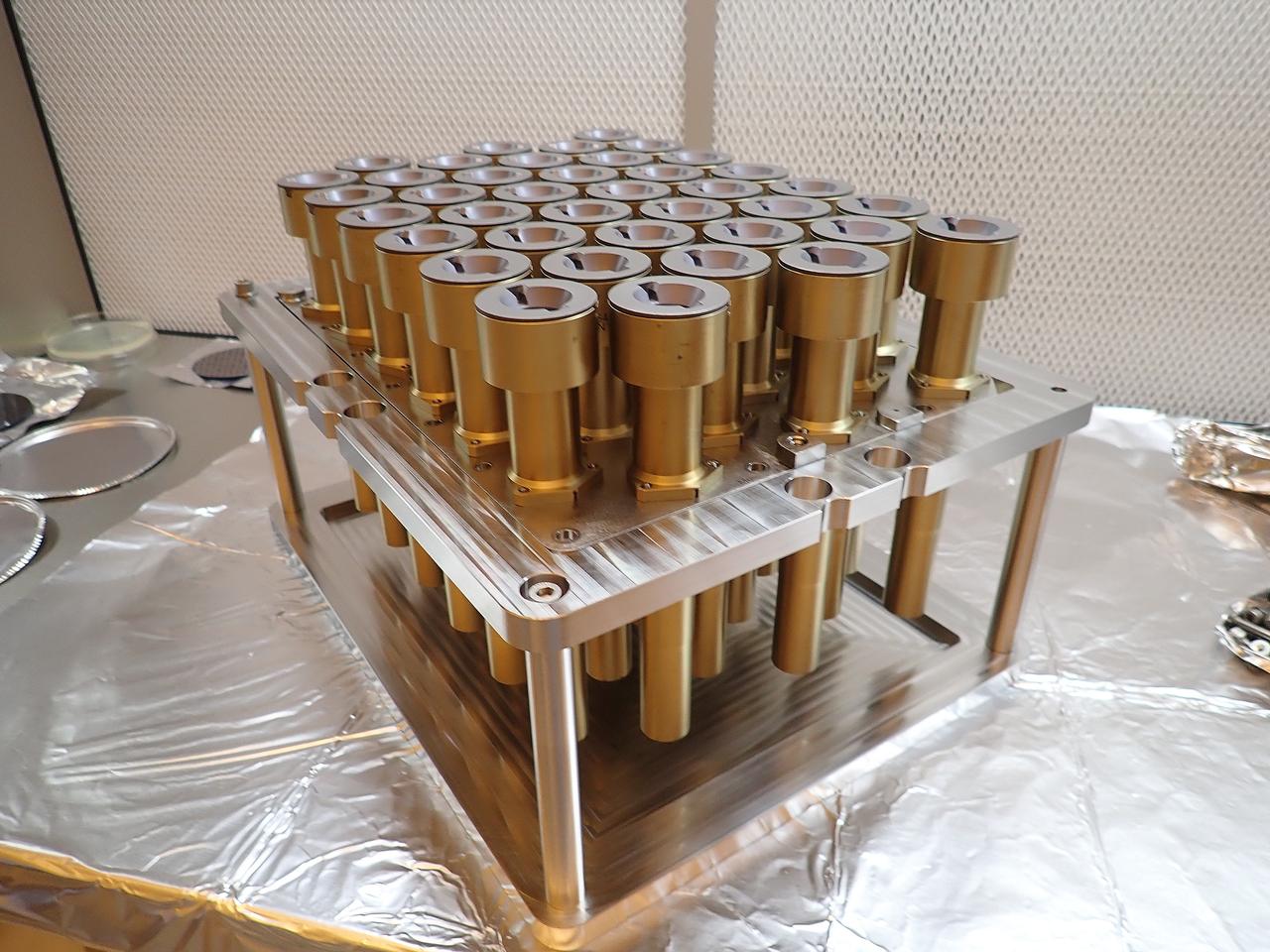
Inside the Payload Hazardous Servicing Facility at NASA’s Kennedy Space Center in Florida, the Sample Caching System Sterile Flight Model hardware is being prepared for installation on the Mars Perseverance rover on May 21, 2020. The system includes 39 sample tubes that will be inserted into the underside of the rover. Each tube is sheathed in a gold-colored cylindrical enclosure to protect it from contamination. Perseverance rover will carry 43 sample tubes in total to Mars' Jezero Crater. The Mars Perseverance rover is scheduled to launch in mid-July atop a United Launch Alliance Atlas V 541 rocket from Pad 41 at nearby Cape Canaveral Air Force Station. The rover is part of NASA’s Mars Exploration Program, a long-term effort of robotic exploration of the Red Planet. The rover will search for habitable conditions in the ancient past and signs of past microbial life on Mars. The Launch Services Program at Kennedy is responsible for launch management.
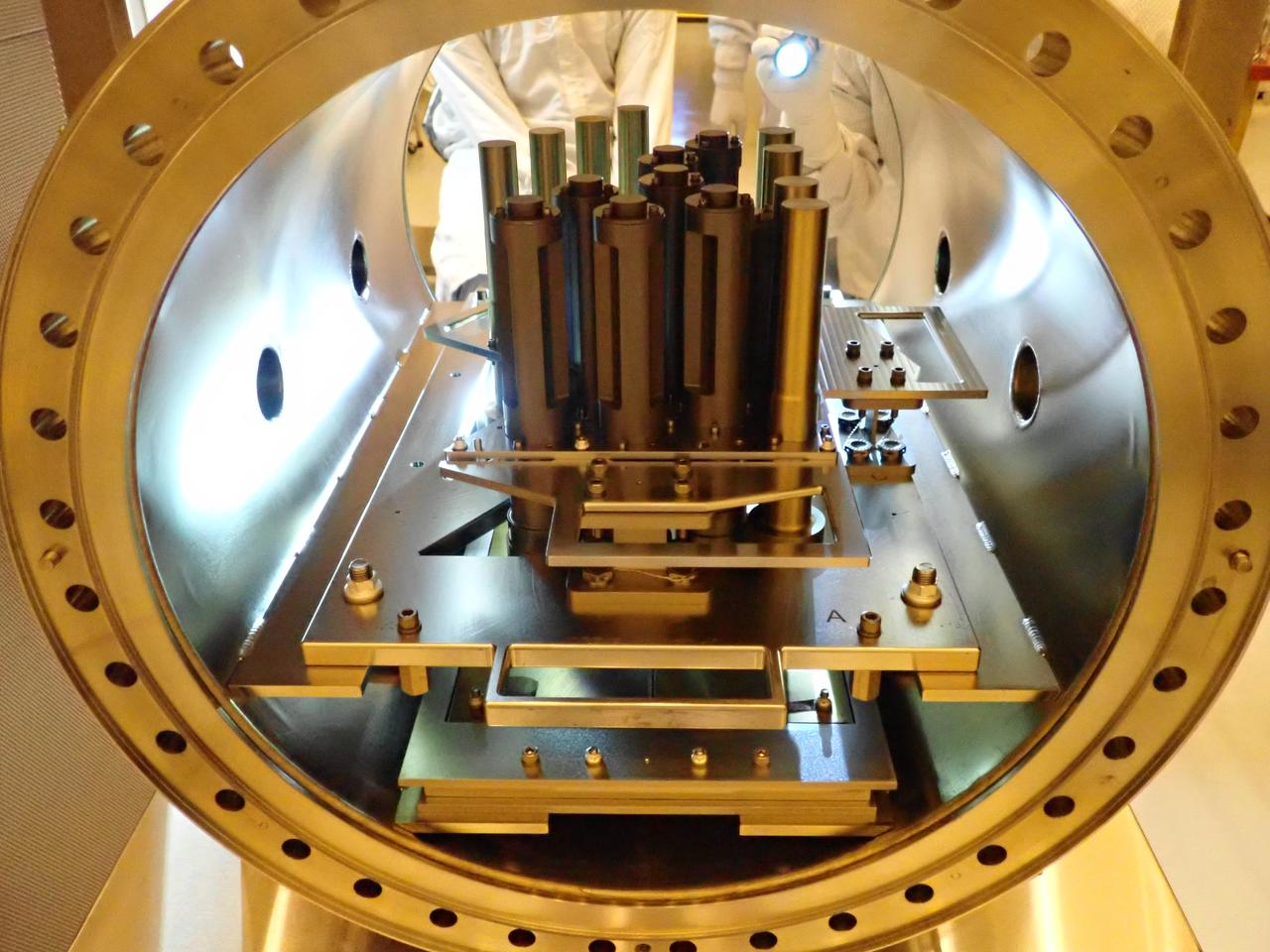
Inside the Payload Hazardous Servicing Facility at NASA’s Kennedy Space Center in Florida, the Sample Caching System Sterile Flight Model hardware is being prepared for installation on the Mars Perseverance rover on May 20, 2020. The system includes 39 sample tubes that will be inserted into the underside of the rover. Each tube is sheathed in a gold-colored cylindrical enclosure to protect it from contamination. Perseverance rover will carry 43 sample tubes in total to Mars' Jezero Crater. The Mars Perseverance rover is scheduled to launch in mid-July atop a United Launch Alliance Atlas V 541 rocket from Pad 41 at nearby Cape Canaveral Air Force Station. The rover is part of NASA’s Mars Exploration Program, a long-term effort of robotic exploration of the Red Planet. The rover will search for habitable conditions in the ancient past and signs of past microbial life on Mars. The Launch Services Program at Kennedy is responsible for launch management.
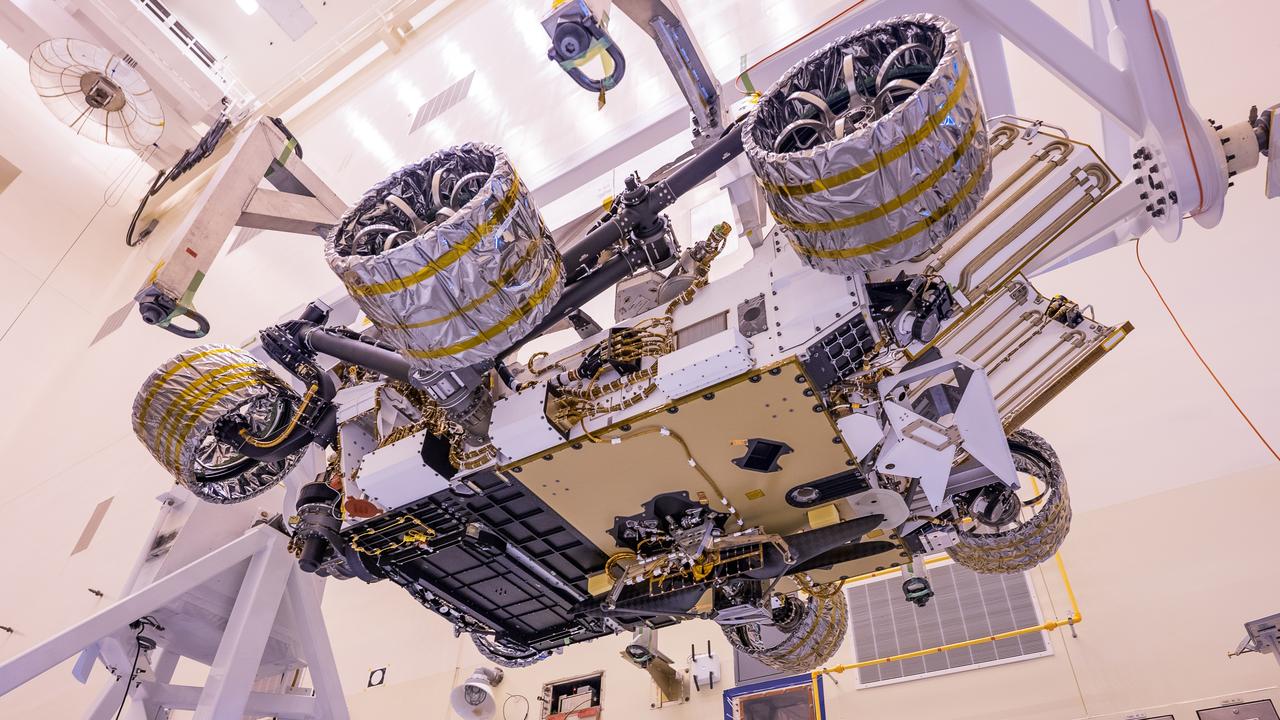
NASA’s Mars Helicopter is installed on the agency’s Mars Perseverance rover inside the Payload Hazardous Servicing Facility at Florida’s Kennedy Space Center on April 6, 2020. Perseverance safely lands on Mars, the helicopter will be released to perform the first in a series of flight tests that will take place during a period of about 30 days. The helicopter will be the first aircraft to fly on another planet. Perseverance, carrying the helicopter, will touch down on the Red Planet on Feb. 18, 2021. Liftoff aboard a United Launch Alliance Atlas V 541 rocket is targeted between July 17 and Aug. 5 from Cape Canaveral Air Force Station.
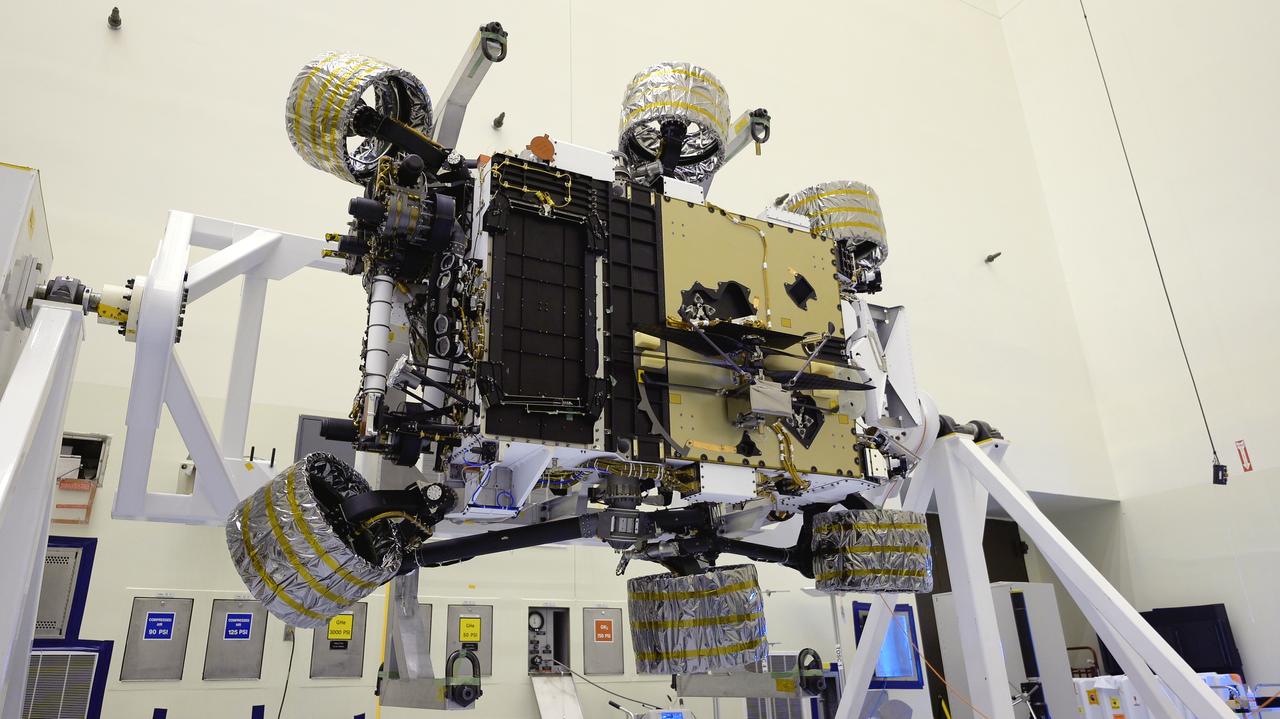
NASA’s Mars Helicopter is installed on the agency’s Mars Perseverance rover inside the Payload Hazardous Servicing Facility at Florida’s Kennedy Space Center on April 6, 2020. Perseverance safely lands on Mars, the helicopter will be released to perform the first in a series of flight tests that will take place during a period of about 30 days. The helicopter will be the first aircraft to fly on another planet. Perseverance, carrying the helicopter, will touch down on the Red Planet on Feb. 18, 2021. Liftoff aboard a United Launch Alliance Atlas V 541 rocket is targeted between July 17 and Aug. 5 from Cape Canaveral Air Force Station.
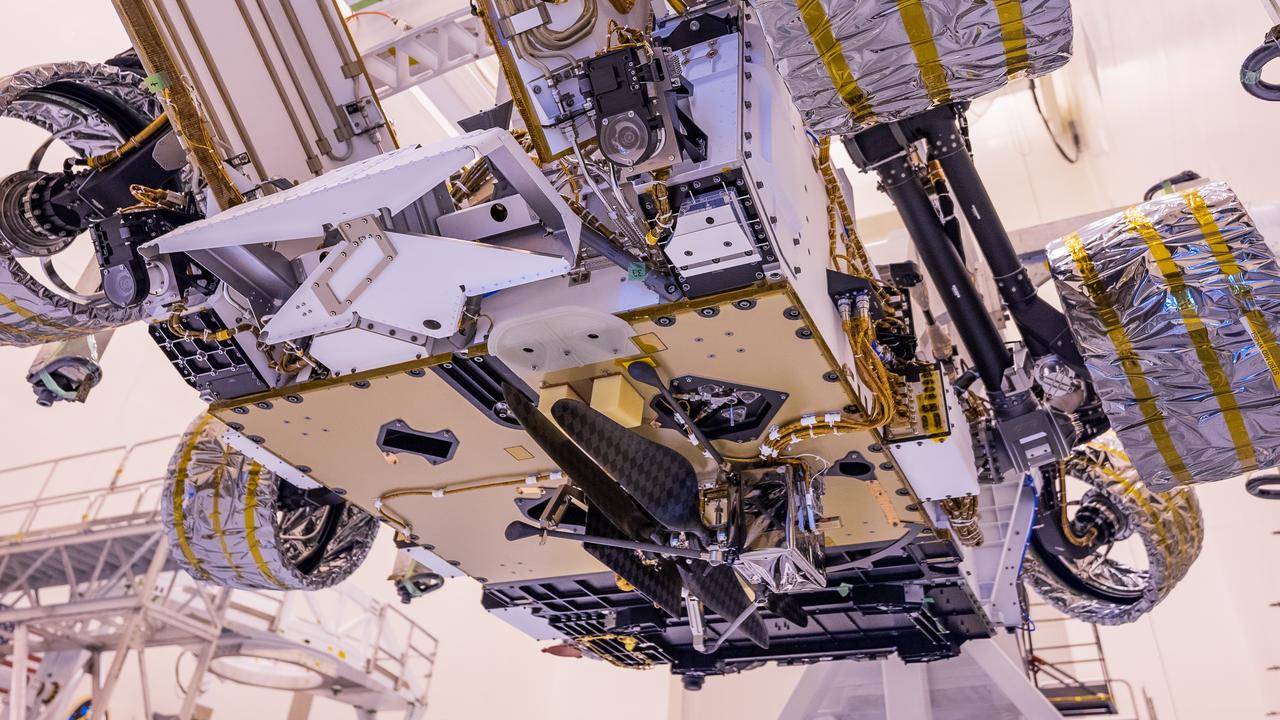
NASA’s Mars Helicopter is installed on the agency’s Mars Perseverance rover inside the Payload Hazardous Servicing Facility at Florida’s Kennedy Space Center on April 6, 2020. Perseverance safely lands on Mars, the helicopter will be released to perform the first in a series of flight tests that will take place during a period of about 30 days. The helicopter will be the first aircraft to fly on another planet. Perseverance, carrying the helicopter, will touch down on the Red Planet on Feb. 18, 2021. Liftoff aboard a United Launch Alliance Atlas V 541 rocket is targeted between July 17 and Aug. 5 from Cape Canaveral Air Force Station.
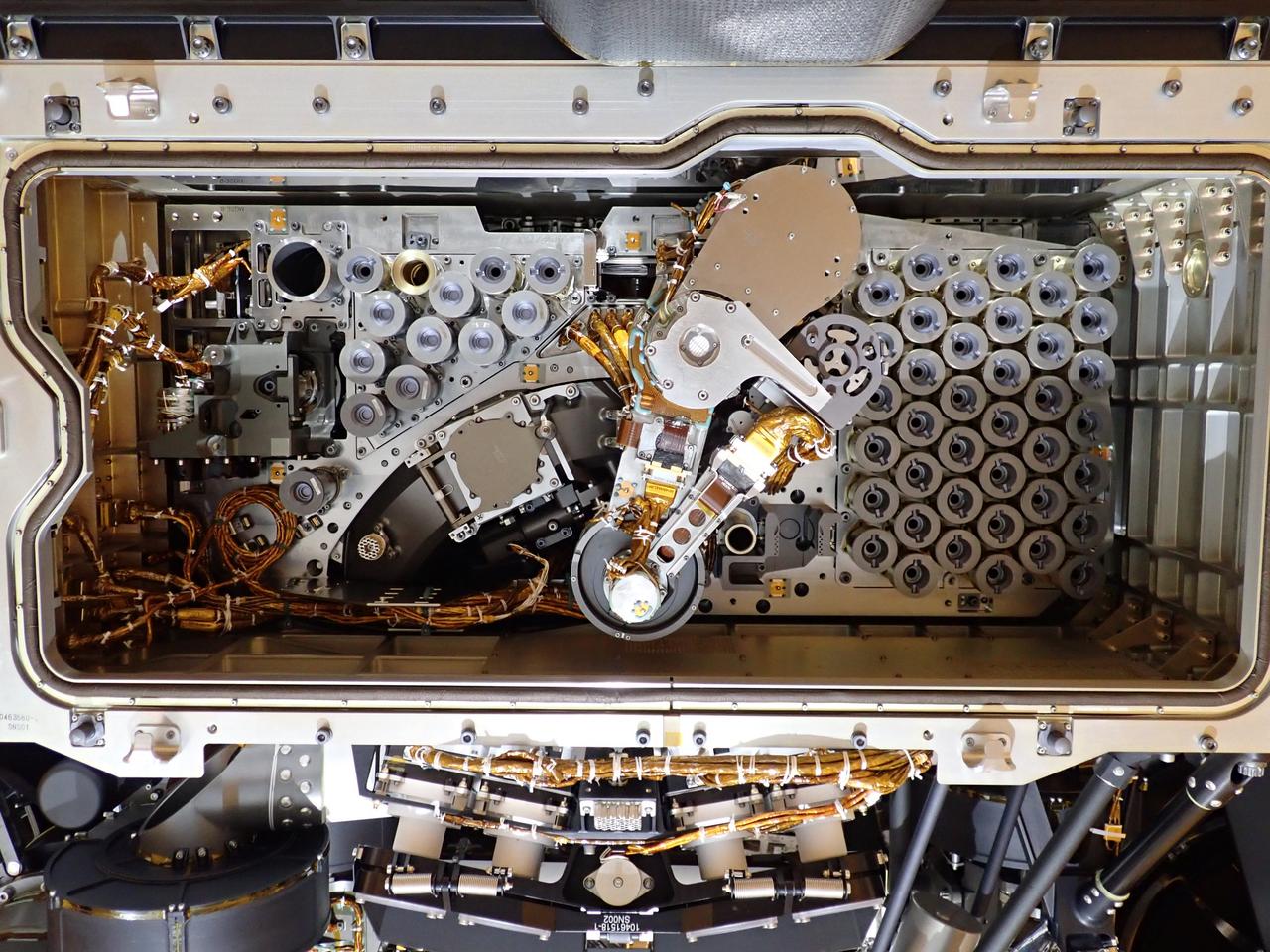
Inside the Payload Hazardous Servicing Facility at NASA’s Kennedy Space Center in Florida, the Sample Caching System Sterile Flight Model hardware was installed on the Mars Perseverance rover on May 21, 2020. The system includes 39 sample tubes. Each tube is sheathed in a gold-colored cylindrical enclosure to protect it from contamination. Perseverance rover will carry 43 sample tubes in total to Mars' Jezero Crater. The Mars Perseverance rover is scheduled to launch in mid-July atop a United Launch Alliance Atlas V 541 rocket from Pad 41 at nearby Cape Canaveral Air Force Station. The rover is part of NASA’s Mars Exploration Program, a long-term effort of robotic exploration of the Red Planet. The rover will search for habitable conditions in the ancient past and signs of past microbial life on Mars. The Launch Services Program at Kennedy is responsible for launch management.
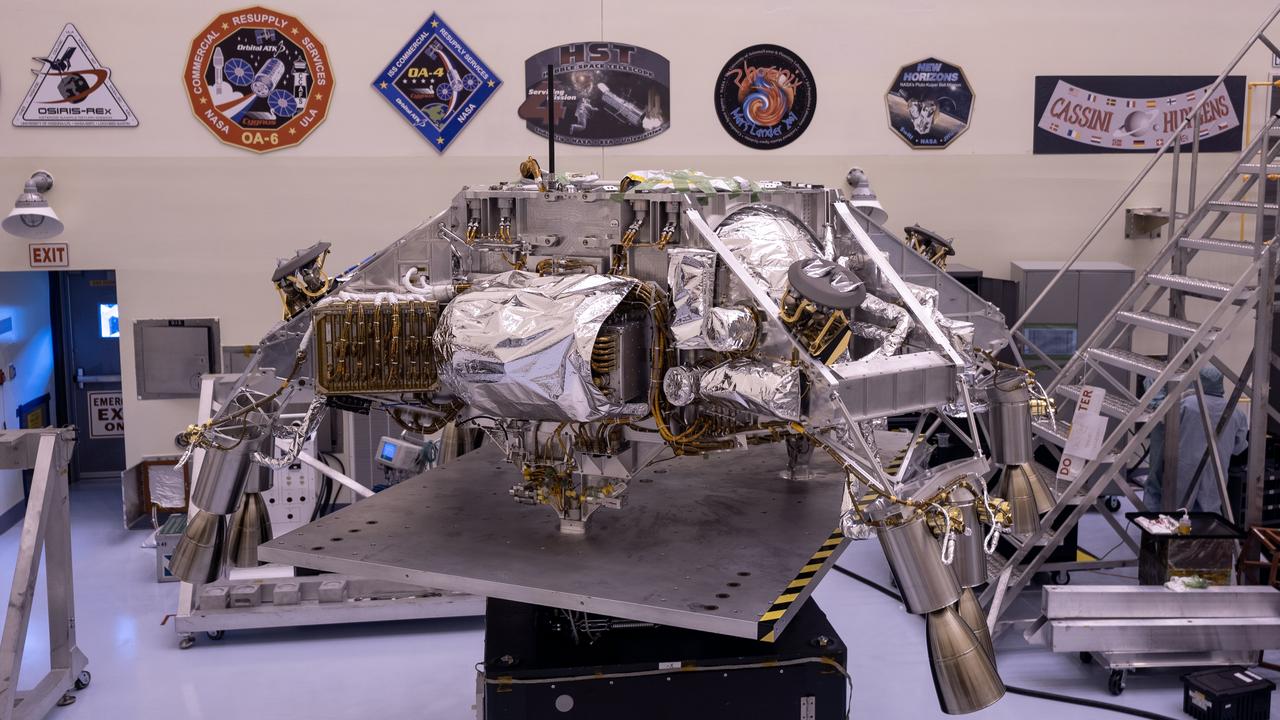
Engineers perform mass properties testing on the rocket-powered descent stage of NASA’s Mars Perseverance rover at Kennedy Space Center on April 12, 2020. The testing to determine the center of gravity, or the point at which weight is evenly dispersed on all sides, was performed inside the Florida spaceport’s Payload Hazardous Servicing Facility. The descent stage will lower the rover through the thin Martian atmosphere and onto the surface on Feb. 18, 2021. Liftoff, aboard a United Launch Alliance Atlas V 541 rocket, is targeted between July 17 and Aug. 5 from Cape Canaveral Air Force Station. NASA’s Launch Services Program based at Kennedy is managing the launch. The rover will seek signs of ancient life and collect rock and soil samples for possible return to Earth.
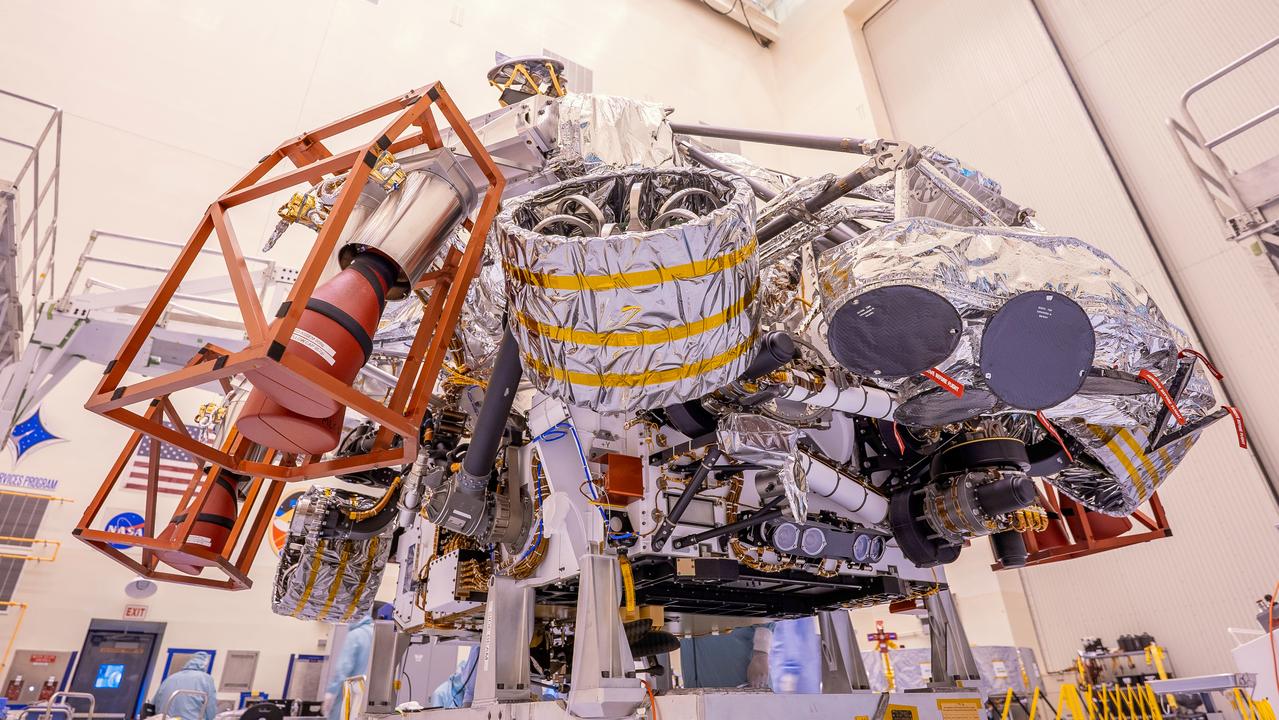
The Mars Perseverance rover is attached to its rocket-powered descent stage inside the Payload Hazardous Servicing Facility at NASA’s Kennedy Space Center in Florida on April 23, 2020. The rover and descent stage are the first spacecraft components to come together for launch — and they will be the last to separate when the spacecraft reaches Mars. At about 65 feet over the Martian surface, separation bolts will fire and the descent stage will lower Perseverance onto the Red Planet. Launch, aboard a United Launch Alliance Atlas V 541 rocket, is targeted between July 17 and Aug. 5 from Cape Canaveral Air Force Station. NASA’s Launch Services Program based at Kennedy is managing the launch.
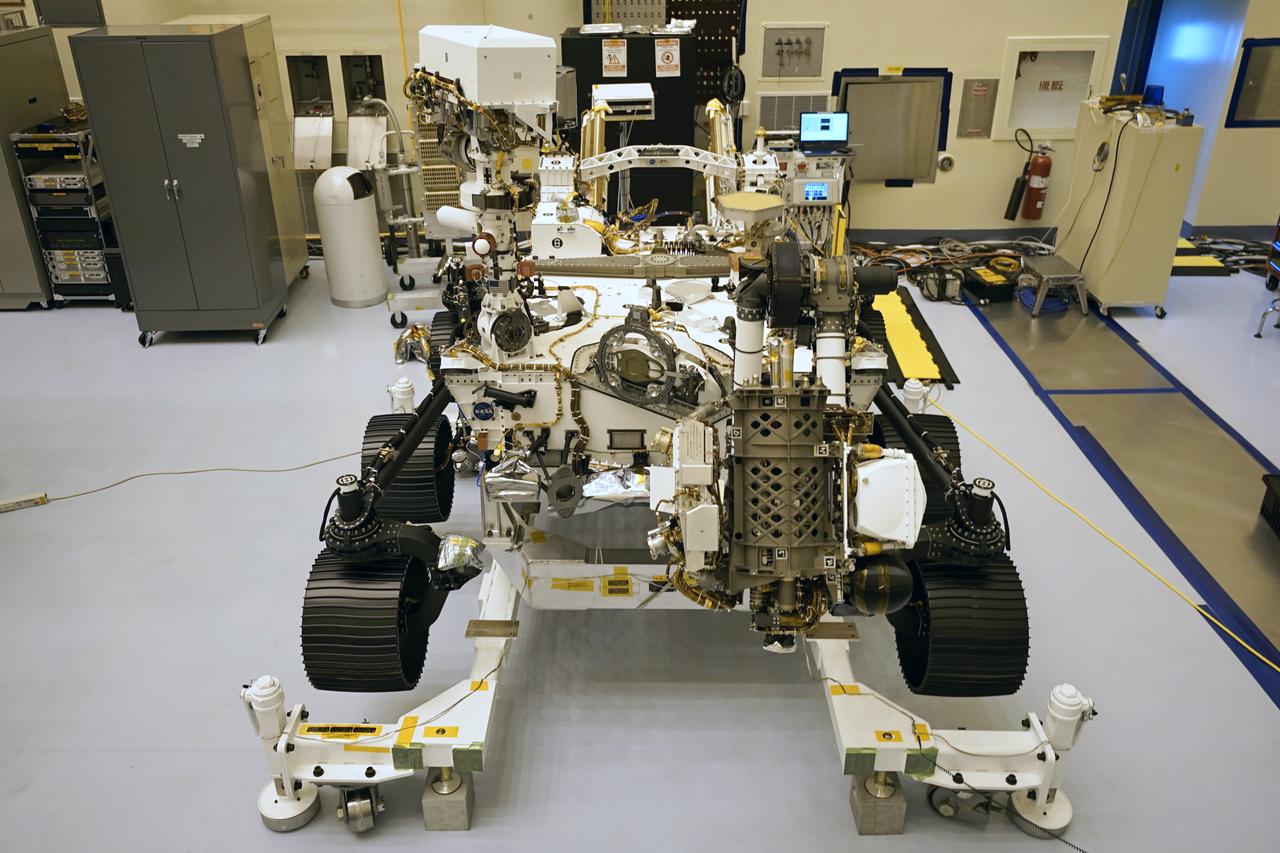
The “Send Your Name to Mars” logo is installed on the Mars Perseverance rover on March 16, 2020, inside the Payload Hazardous Servicing Facility at NASA’s Kennedy Space Center in Florida. When the rover lands on the Red Planet on Feb. 18, 2021, it will be carrying the names of more than 10 million people throughout the world. Those names were etched onto a microchip, which was placed aboard Perseverance. Liftoff aboard a United Launch Alliance Atlas V 541 rocket is targeted for mid-July from Cape Canaveral Air Force Station. NASA’s Launch Services Program based at Kennedy is managing the launch.
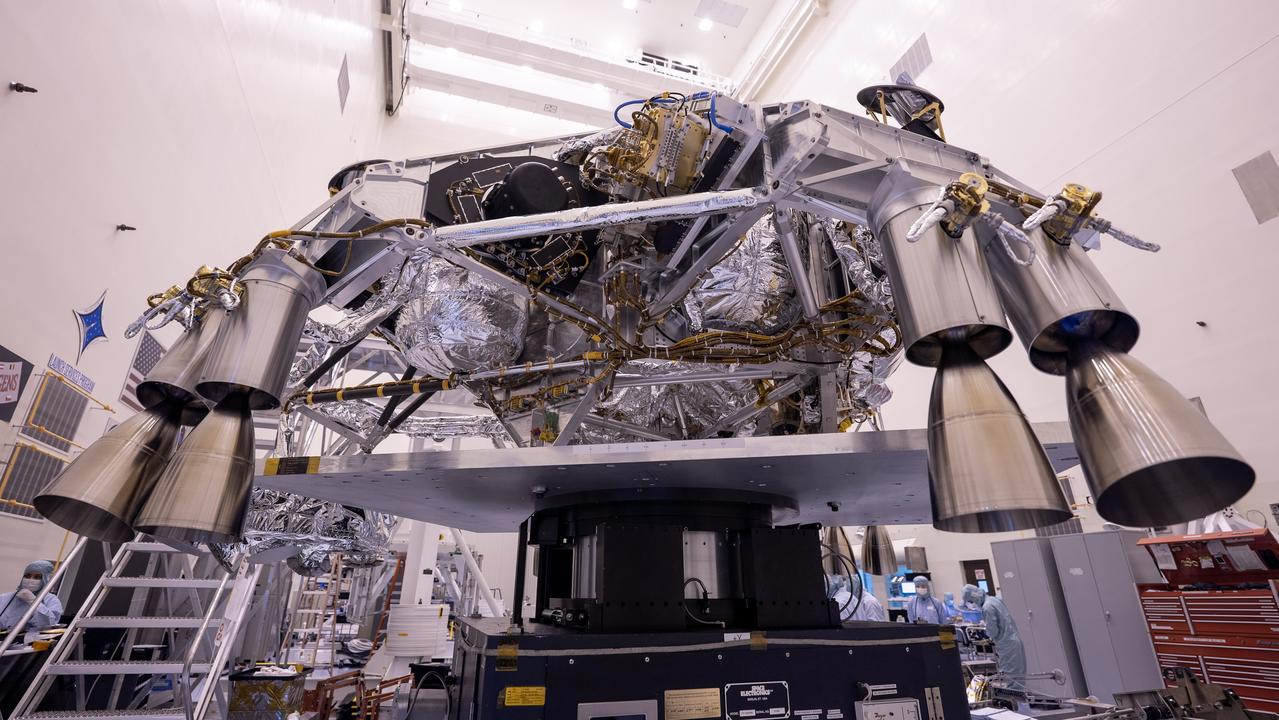
Engineers perform mass properties testing on the rocket-powered descent stage of NASA’s Mars Perseverance rover at Kennedy Space Center on April 12, 2020. The testing to determine the center of gravity, or the point at which weight is evenly dispersed on all sides, was performed inside the Florida spaceport’s Payload Hazardous Servicing Facility. The descent stage will lower the rover through the thin Martian atmosphere and onto the surface on Feb. 18, 2021. Liftoff, aboard a United Launch Alliance Atlas V 541 rocket, is targeted between July 17 and Aug. 5 from Cape Canaveral Air Force Station. NASA’s Launch Services Program based at Kennedy is managing the launch. The rover will seek signs of ancient life and collect rock and soil samples for possible return to Earth.
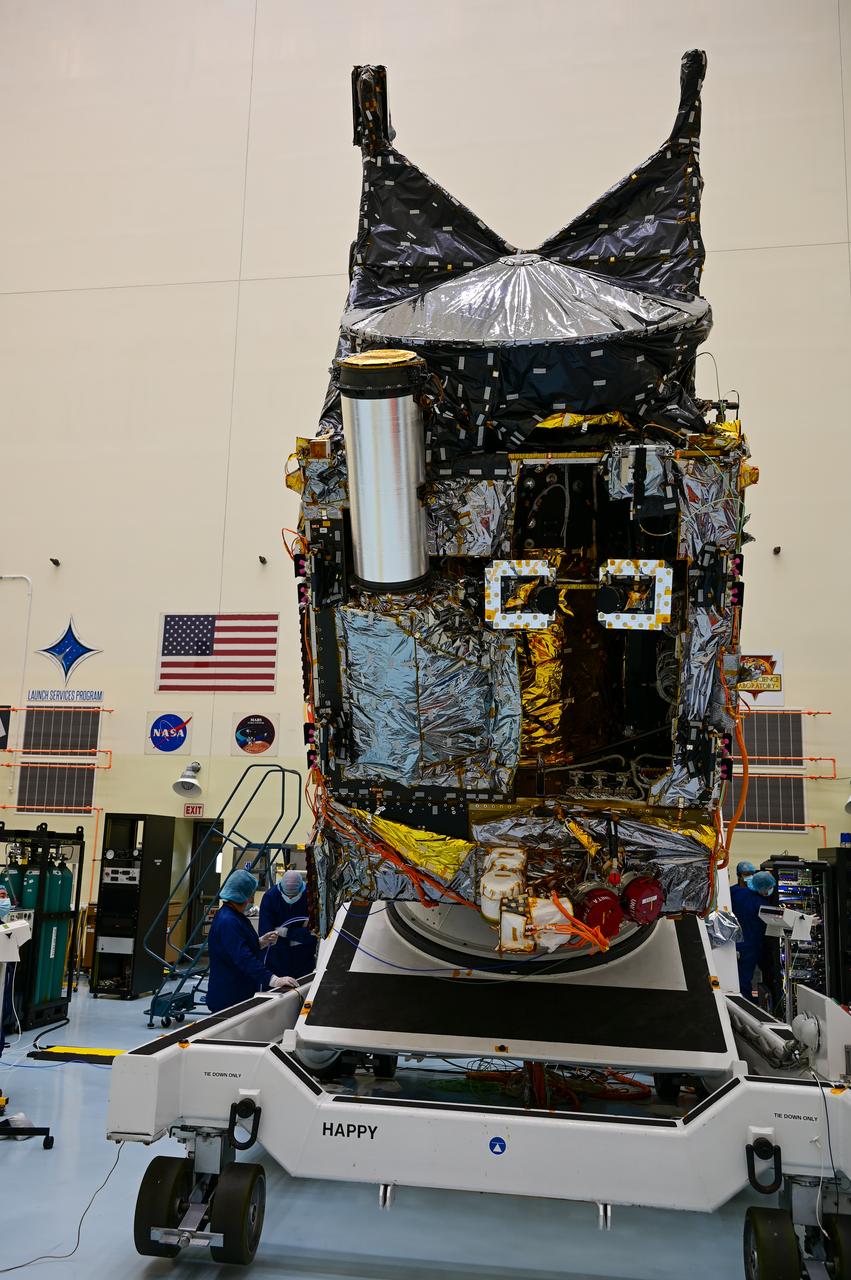
A team working on NASA’s Psyche spacecraft transitioning it from a vertical to horizontal test configuration during prelaunch processing inside the Payload Hazardous Servicing Facility at NASA’s Kennedy Space Center in Florida on May 9, 2022. The mission is targeting an Aug. 1 launch atop a SpaceX Falcon Heavy rocket from Launch Complex 39A at Kennedy. The spacecraft will use solar-electric propulsion to travel approximately 1.5 billion miles to rendezvous with its namesake asteroid in 2026. The Psyche mission is led by Arizona State University. NASA’s Jet Propulsion Laboratory, which is managed for the agency by Caltech in Pasadena, California, is responsible for the mission’s overall management, system engineering, integration and testing, and mission operations. Maxar Technologies in Palo Alto, California, provided the high-power solar electric propulsion spacecraft chassis. NASA’s Launch Services Program (LSP), based at Kennedy, is managing the launch.

Juniper Doucette and her mother Chloe Doucette, head of education at the museum of Idaho Falls, enjoying the 2017 total solar eclipse.
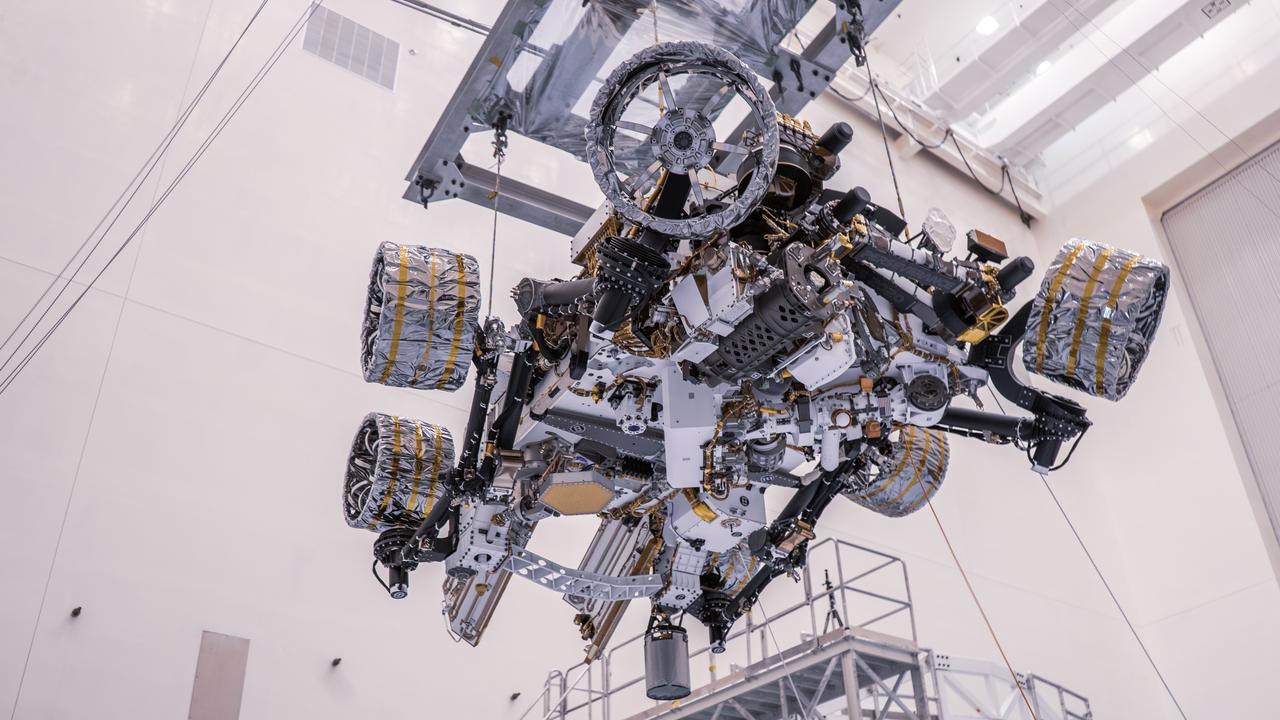
Engineers perform mass properties testing on NASA’s Mars Perseverance rover inside Kennedy Space Center’s Payload Hazardous Servicing Facility on April 7, 2020. The rover was rotated clockwise and counterclockwise on a spin table to determine the center of gravity, or the point at which weight is evenly dispersed on all sides. Establishing the rover’s center of gravity will help ensure the spacecraft will land on Mars as calculated. Perseverance will touch down on the Red Planet on Feb. 18, 2021. Liftoff aboard a United Launch Alliance Atlas V 541 rocket is targeted between July 17 and Aug. 5 from Cape Canaveral Air Force Station. NASA’s Launch Services Program based at Kennedy is managing the launch.
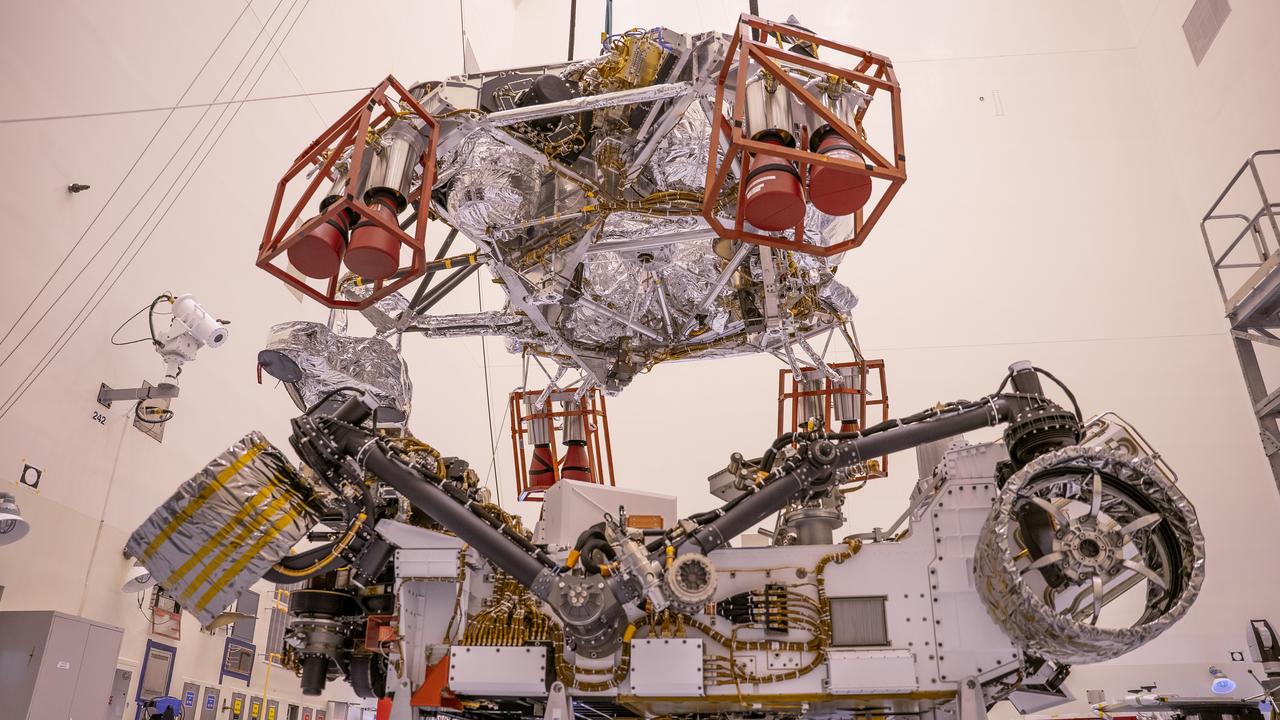
The Mars Perseverance rover is attached to its rocket-powered descent stage inside the Payload Hazardous Servicing Facility at NASA’s Kennedy Space Center in Florida on April 23, 2020. The rover and descent stage are the first spacecraft components to come together for launch — and they will be the last to separate when the spacecraft reaches Mars. At about 65 feet over the Martian surface, separation bolts will fire and the descent stage will lower Perseverance onto the Red Planet. Launch, aboard a United Launch Alliance Atlas V 541 rocket, is targeted between July 17 and Aug. 5 from Cape Canaveral Air Force Station. NASA’s Launch Services Program based at Kennedy is managing the launch.
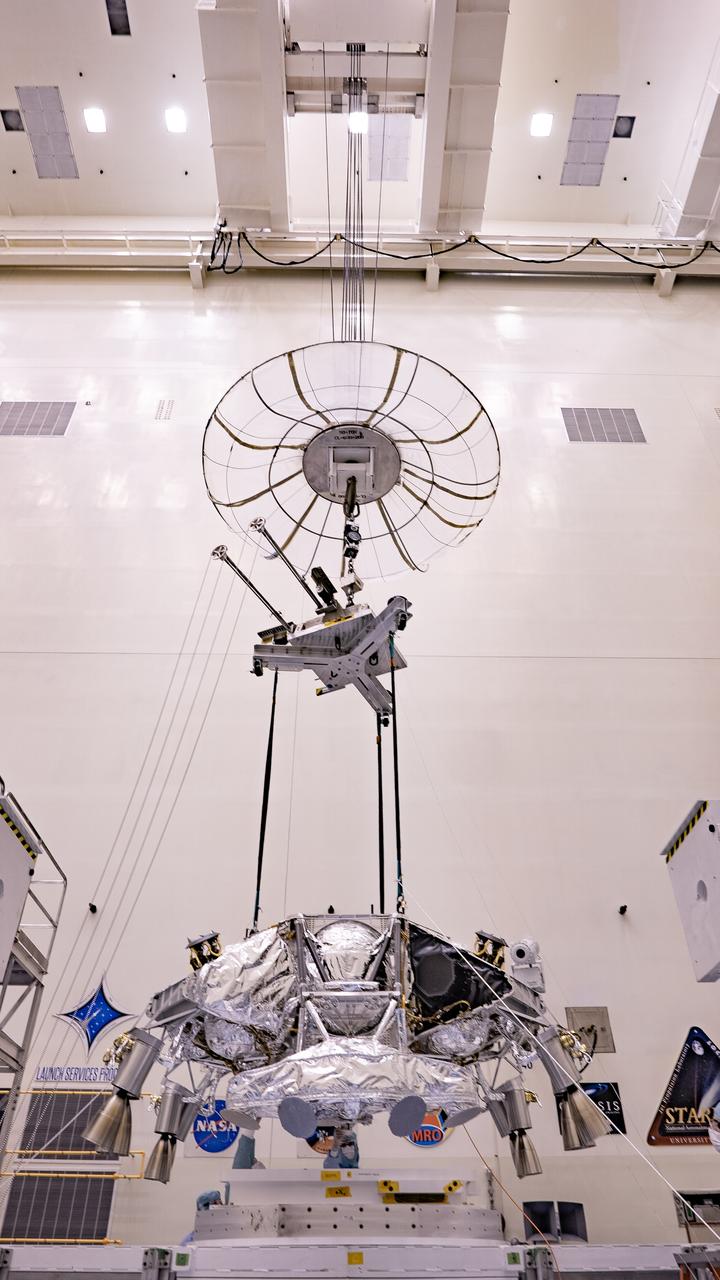
Engineers perform mass properties testing on the rocket-powered descent stage of NASA’s Mars Perseverance rover at Kennedy Space Center on April 9, 2020. The testing to determine the center of gravity, or the point at which weight is evenly dispersed on all sides, was performed inside the Florida spaceport’s Payload Hazardous Servicing Facility. The descent stage will lower the rover through the thin Martian atmosphere and onto the surface on Feb. 18, 2021. Liftoff, aboard a United Launch Alliance Atlas V 541 rocket, is targeted between July 17 and Aug. 5 from Cape Canaveral Air Force Station. NASA’s Launch Services Program based at Kennedy is managing the launch. The rover will seek signs of ancient life and collect rock and soil samples for possible return to Earth.
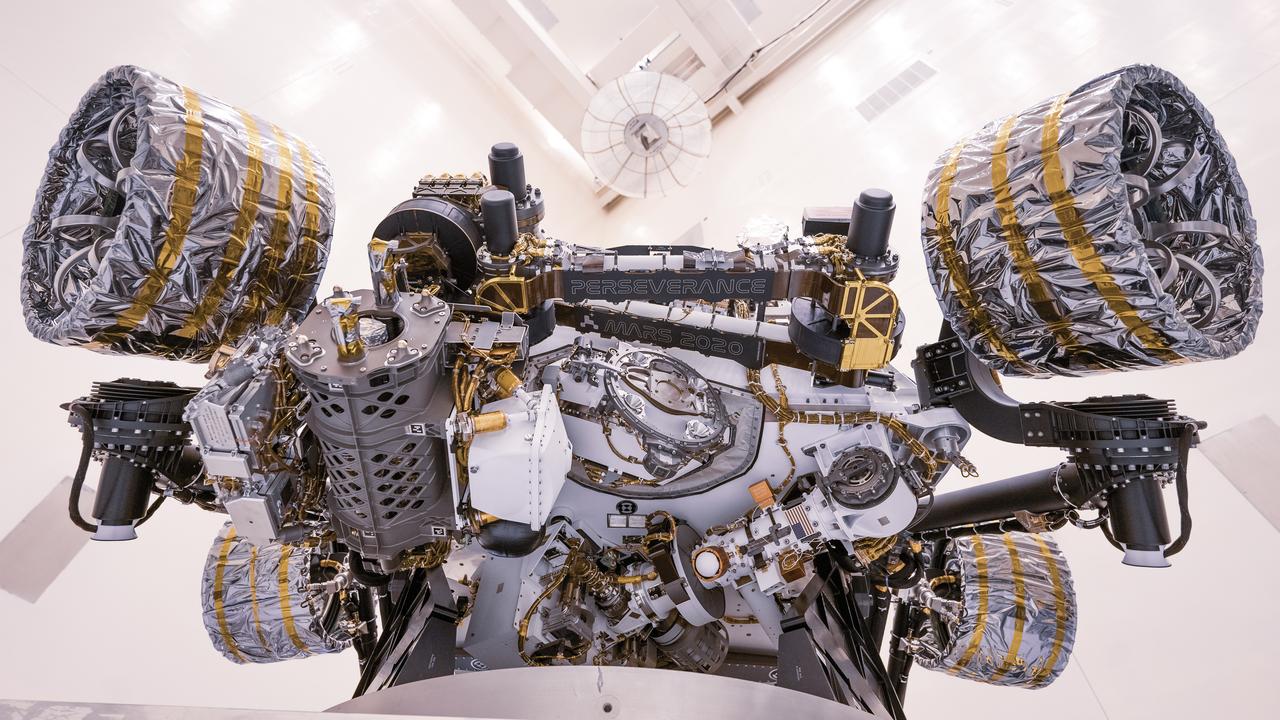
Engineers perform mass properties testing on NASA’s Mars Perseverance rover inside Kennedy Space Center’s Payload Hazardous Servicing Facility on April 7, 2020. The rover was rotated clockwise and counterclockwise on a spin table to determine the center of gravity, or the point at which weight is evenly dispersed on all sides. Establishing the rover’s center of gravity will help ensure the spacecraft will land on Mars as calculated. Perseverance will touch down on the Red Planet on Feb. 18, 2021. Liftoff aboard a United Launch Alliance Atlas V 541 rocket is targeted between July 17 and Aug. 5 from Cape Canaveral Air Force Station. NASA’s Launch Services Program based at Kennedy is managing the launch.
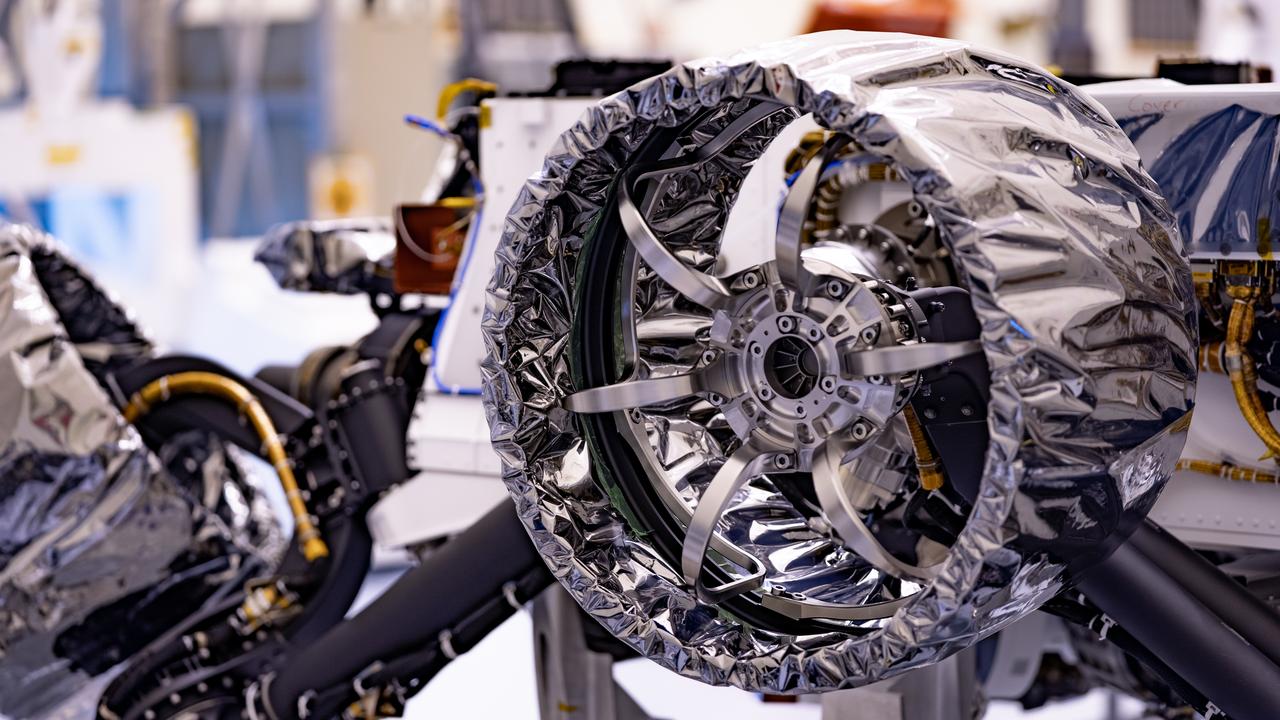
Wheels are installed on NASA’s Mars Perseverance rover inside Kennedy Space Center’s Payload Hazardous Servicing Facility on March 30, 2020. Perseverance will liftoff aboard a United Launch Alliance Atlas V 541 rocket from Cape Canaveral Air Force Station in July 2020. NASA’s Launch Services Program based at Kennedy is managing the launch. The rover will land on Mars on Feb. 18, 2021.
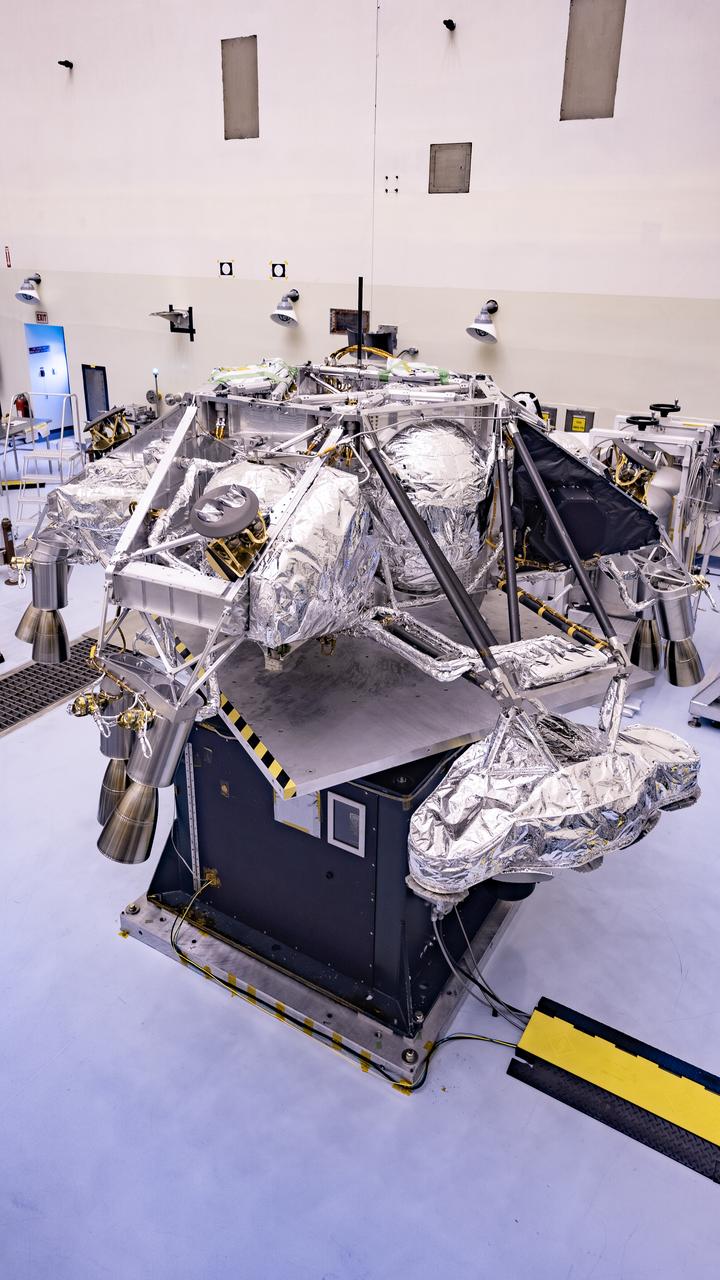
Engineers perform mass properties testing on the rocket-powered descent stage of NASA’s Mars Perseverance rover at Kennedy Space Center on April 12, 2020. The testing to determine the center of gravity, or the point at which weight is evenly dispersed on all sides, was performed inside the Florida spaceport’s Payload Hazardous Servicing Facility. The descent stage will lower the rover through the thin Martian atmosphere and onto the surface on Feb. 18, 2021. Liftoff, aboard a United Launch Alliance Atlas V 541 rocket, is targeted between July 17 and Aug. 5 from Cape Canaveral Air Force Station. NASA’s Launch Services Program based at Kennedy is managing the launch. The rover will seek signs of ancient life and collect rock and soil samples for possible return to Earth.
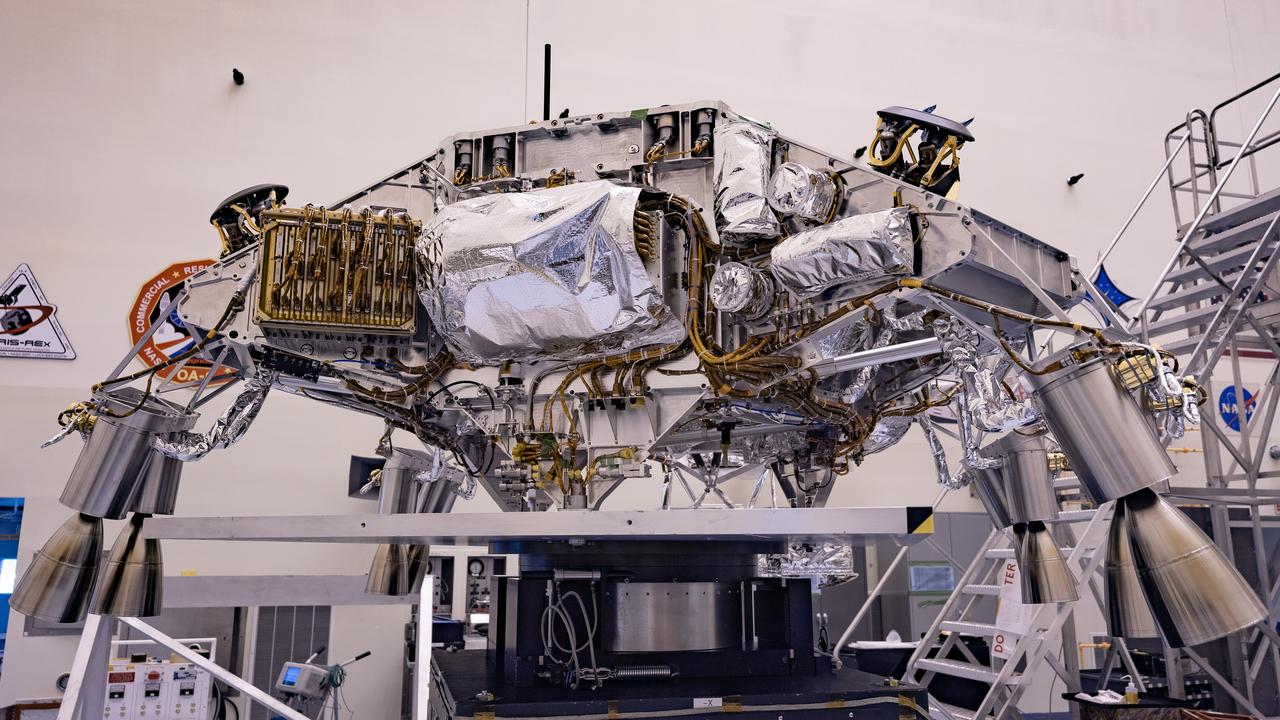
Engineers perform mass properties testing on the rocket-powered descent stage of NASA’s Mars Perseverance rover at Kennedy Space Center on April 12, 2020. The testing to determine the center of gravity, or the point at which weight is evenly dispersed on all sides, was performed inside the Florida spaceport’s Payload Hazardous Servicing Facility. The descent stage will lower the rover through the thin Martian atmosphere and onto the surface on Feb. 18, 2021. Liftoff, aboard a United Launch Alliance Atlas V 541 rocket, is targeted between July 17 and Aug. 5 from Cape Canaveral Air Force Station. NASA’s Launch Services Program based at Kennedy is managing the launch. The rover will seek signs of ancient life and collect rock and soil samples for possible return to Earth.
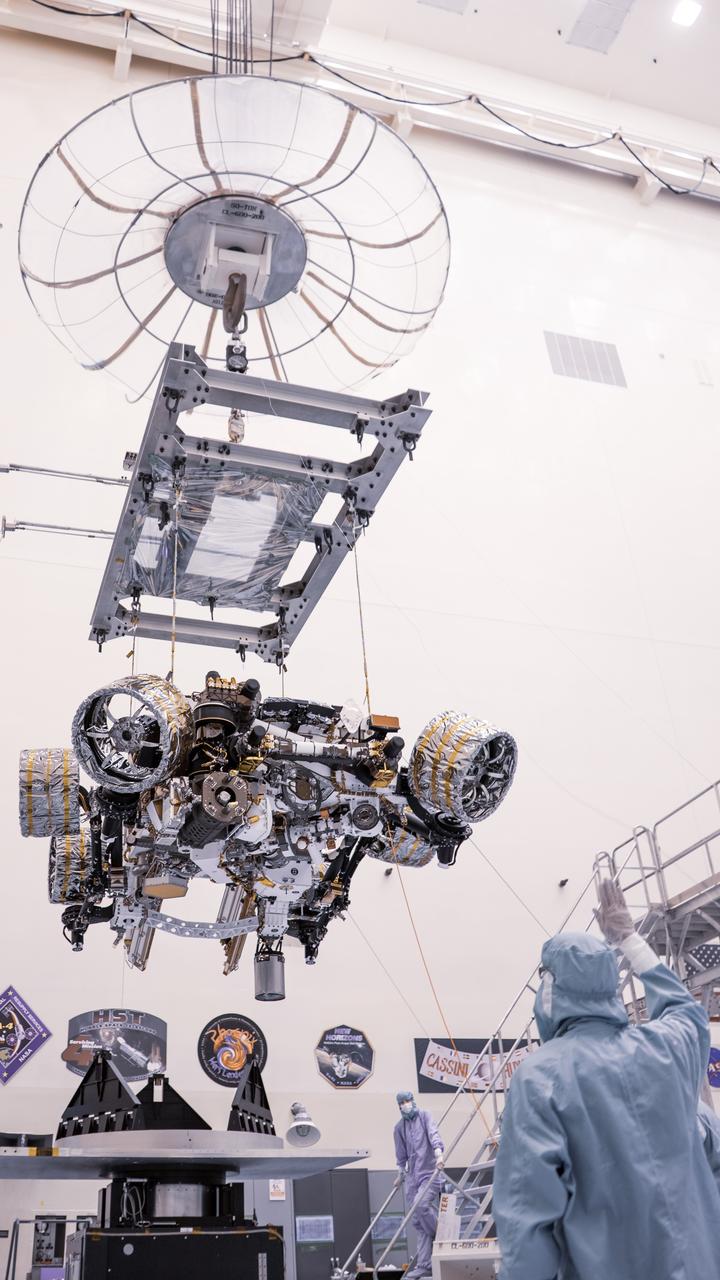
Engineers perform mass properties testing on NASA’s Mars Perseverance rover inside Kennedy Space Center’s Payload Hazardous Servicing Facility on April 7, 2020. The rover was rotated clockwise and counterclockwise on a spin table to determine the center of gravity, or the point at which weight is evenly dispersed on all sides. Establishing the rover’s center of gravity will help ensure the spacecraft will land on Mars as calculated. Perseverance will touch down on the Red Planet on Feb. 18, 2021. Liftoff aboard a United Launch Alliance Atlas V 541 rocket is targeted between July 17 and Aug. 5 from Cape Canaveral Air Force Station. NASA’s Launch Services Program based at Kennedy is managing the launch.
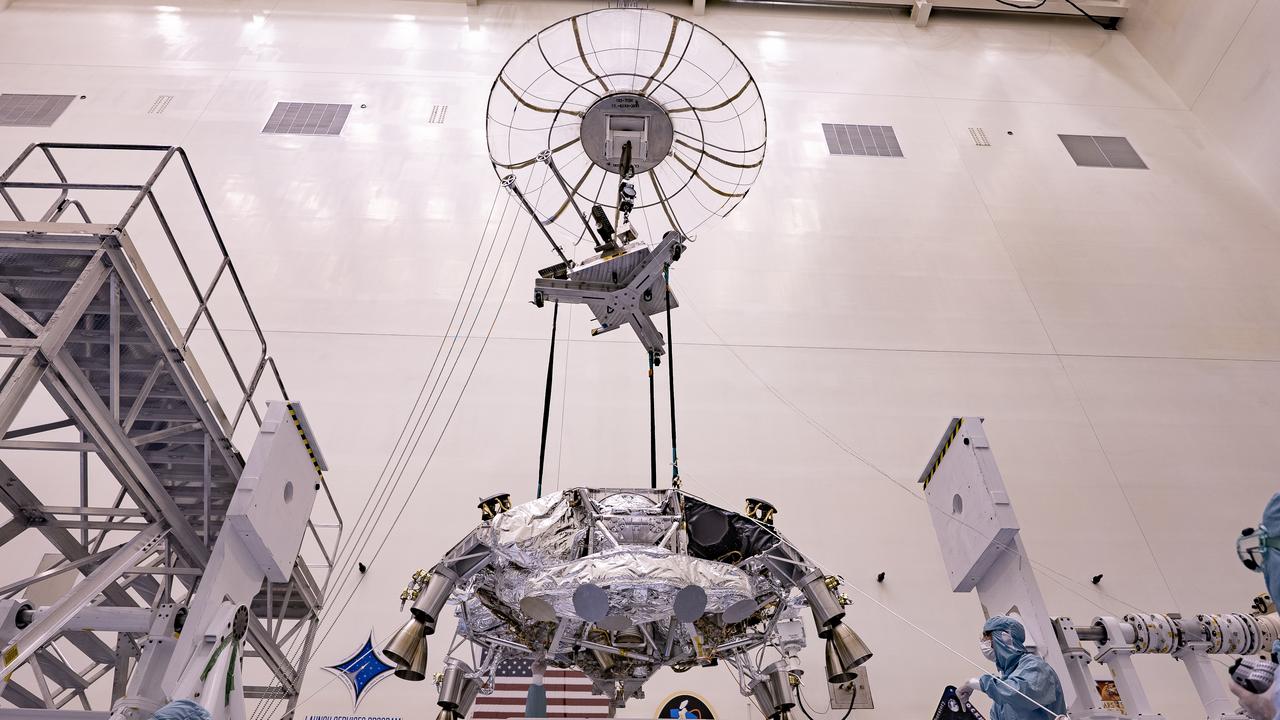
Engineers perform mass properties testing on the rocket-powered descent stage of NASA’s Mars Perseverance rover at Kennedy Space Center on April 9, 2020. The testing to determine the center of gravity, or the point at which weight is evenly dispersed on all sides, was performed inside the Florida spaceport’s Payload Hazardous Servicing Facility. The descent stage will lower the rover through the thin Martian atmosphere and onto the surface on Feb. 18, 2021. Liftoff, aboard a United Launch Alliance Atlas V 541 rocket, is targeted between July 17 and Aug. 5 from Cape Canaveral Air Force Station. NASA’s Launch Services Program based at Kennedy is managing the launch. The rover will seek signs of ancient life and collect rock and soil samples for possible return to Earth.
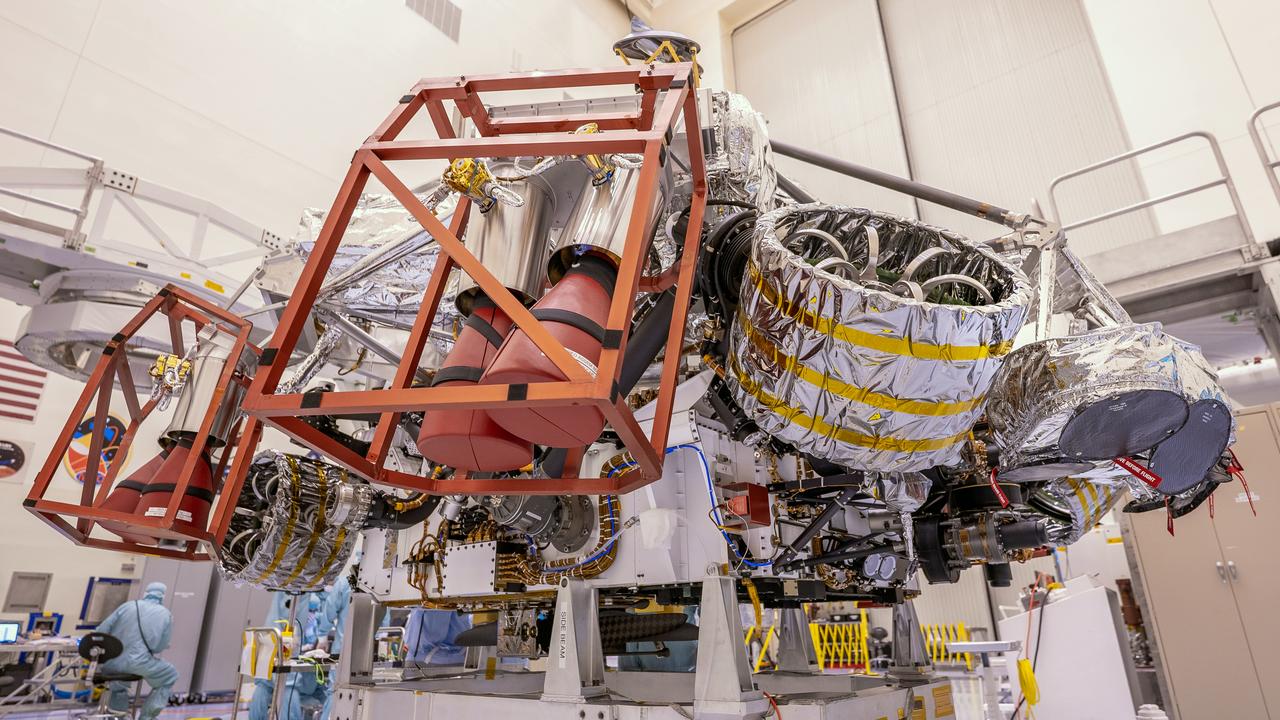
The Mars Perseverance rover is attached to its rocket-powered descent stage inside the Payload Hazardous Servicing Facility at NASA’s Kennedy Space Center in Florida on April 23, 2020. The rover and descent stage are the first spacecraft components to come together for launch — and they will be the last to separate when the spacecraft reaches Mars. At about 65 feet over the Martian surface, separation bolts will fire and the descent stage will lower Perseverance onto the Red Planet. Launch, aboard a United Launch Alliance Atlas V 541 rocket, is targeted between July 17 and Aug. 5 from Cape Canaveral Air Force Station. NASA’s Launch Services Program based at Kennedy is managing the launch.

The crowd at a NASA event during the 2017 total solar eclipse in Idaho Falls, Idaho
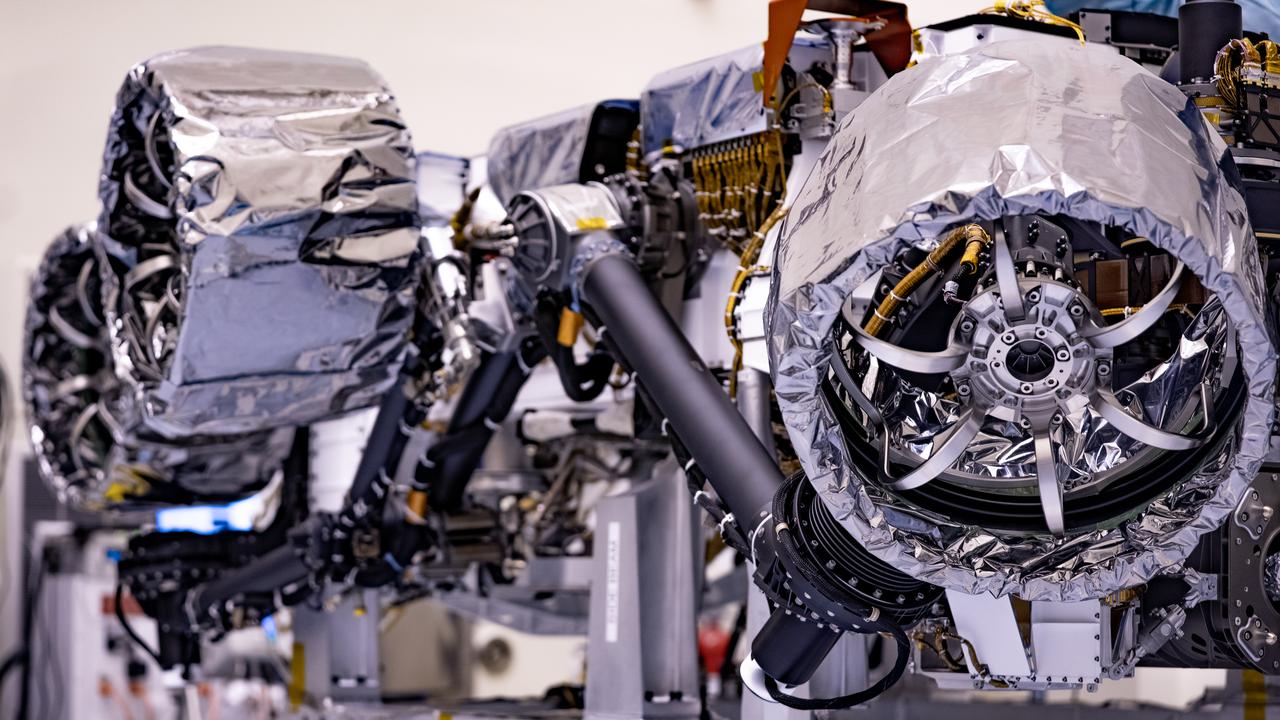
Wheels are installed on NASA’s Mars Perseverance rover inside Kennedy Space Center’s Payload Hazardous Servicing Facility on March 30, 2020. Perseverance will liftoff aboard a United Launch Alliance Atlas V 541 rocket from Cape Canaveral Air Force Station in July 2020. NASA’s Launch Services Program based at Kennedy is managing the launch. The rover will land on Mars on Feb. 18, 2021.
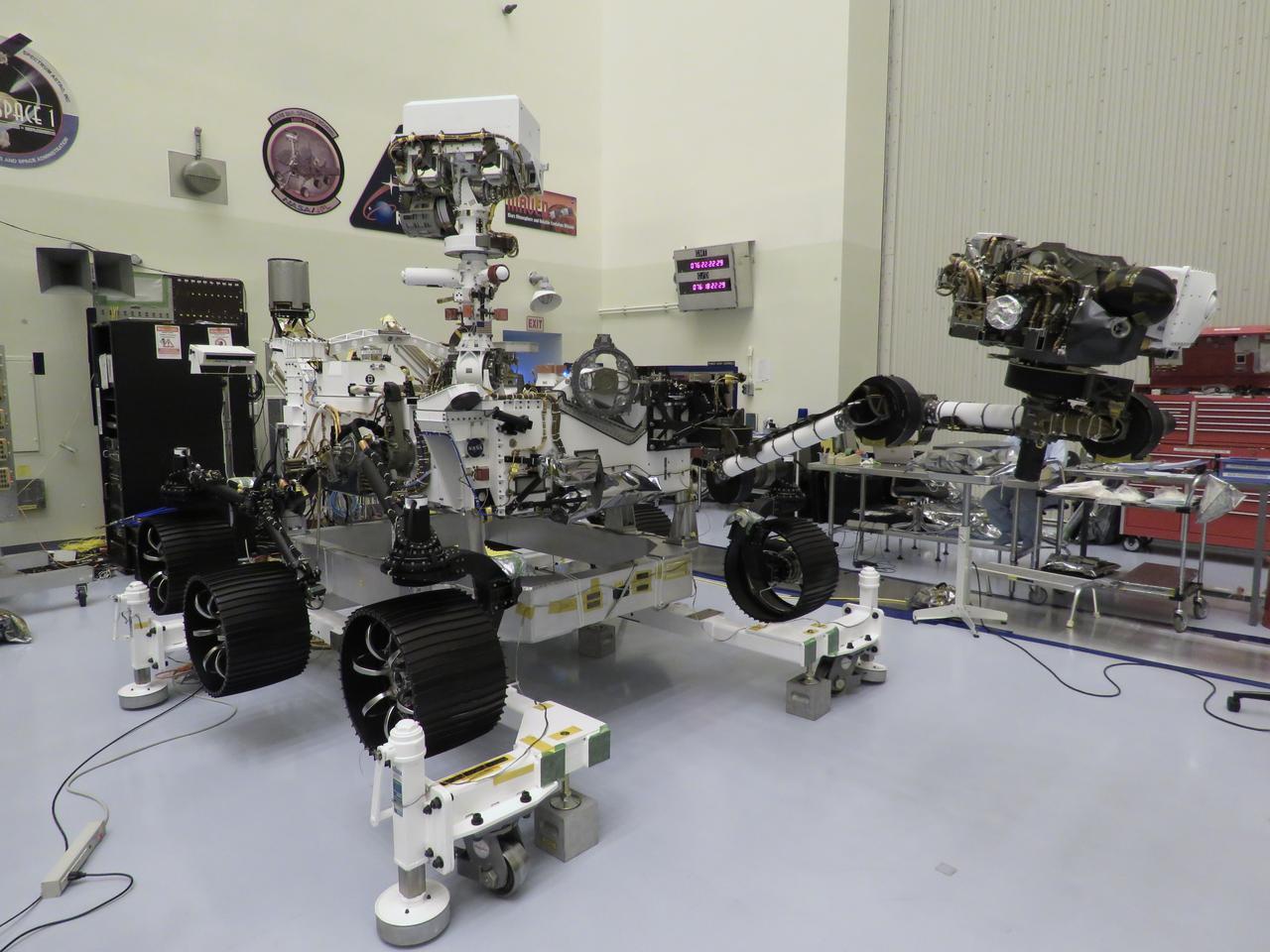
The “Send Your Name to Mars” logo is installed on the Mars Perseverance rover on March 16, 2020, inside the Payload Hazardous Servicing Facility at NASA’s Kennedy Space Center in Florida. When the rover lands on the Red Planet on Feb. 18, 2021, it will be carrying the names of more than 10 million people throughout the world. Those names were etched onto a microchip, which was placed aboard Perseverance. Liftoff aboard a United Launch Alliance Atlas V 541 rocket is targeted for mid-July from Cape Canaveral Air Force Station. NASA’s Launch Services Program based at Kennedy is managing the launch.
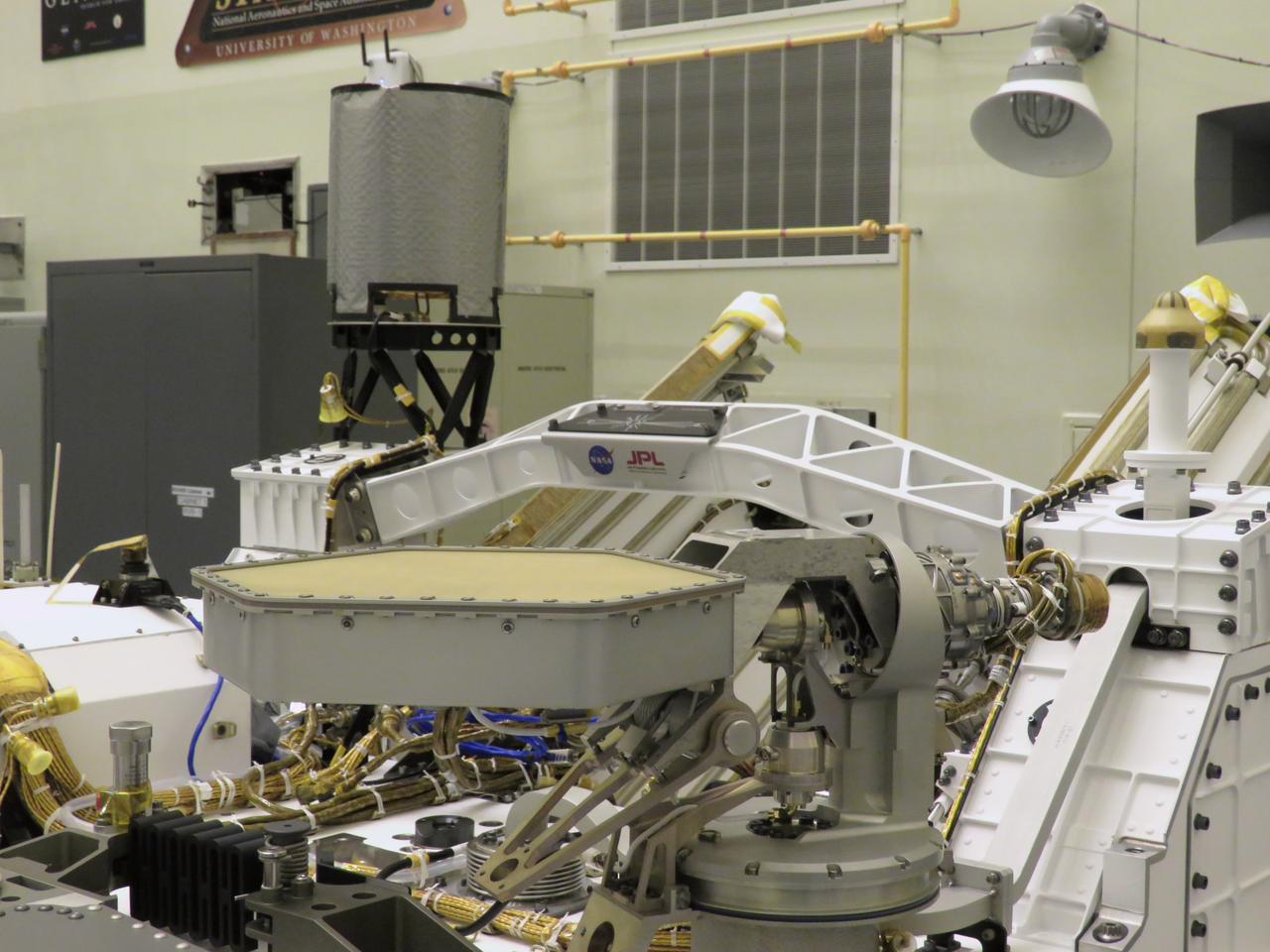
The “Send Your Name to Mars” logo is installed on the Mars Perseverance rover on March 16, 2020, inside the Payload Hazardous Servicing Facility at NASA’s Kennedy Space Center in Florida. When the rover lands on the Red Planet on Feb. 18, 2021, it will be carrying the names of more than 10 million people throughout the world. Those names were etched onto a microchip, which was placed aboard Perseverance. Liftoff aboard a United Launch Alliance Atlas V 541 rocket is targeted for mid-July from Cape Canaveral Air Force Station. NASA’s Launch Services Program based at Kennedy is managing the launch.
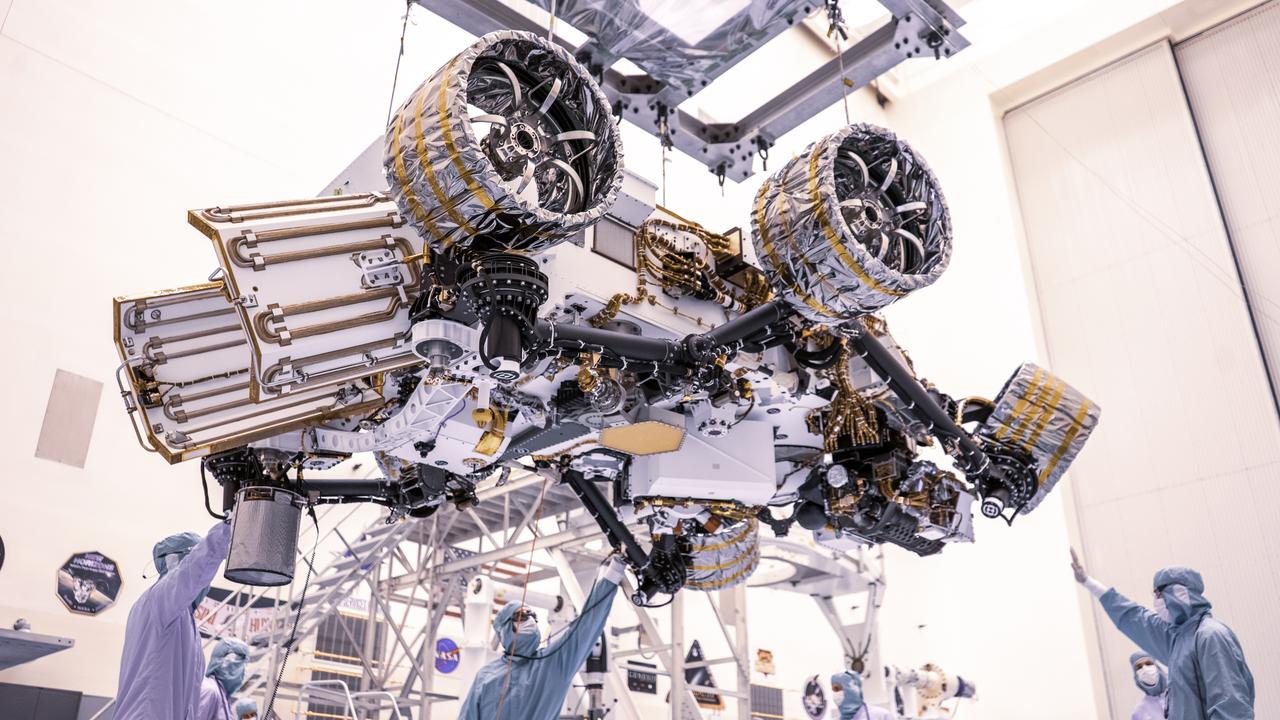
Engineers perform mass properties testing on NASA’s Mars Perseverance rover inside Kennedy Space Center’s Payload Hazardous Servicing Facility on April 7, 2020. The rover was rotated clockwise and counterclockwise on a spin table to determine the center of gravity, or the point at which weight is evenly dispersed on all sides. Establishing the rover’s center of gravity will help ensure the spacecraft will land on Mars as calculated. Perseverance will touch down on the Red Planet on Feb. 18, 2021. Liftoff aboard a United Launch Alliance Atlas V 541 rocket is targeted between July 17 and Aug. 5 from Cape Canaveral Air Force Station. NASA’s Launch Services Program based at Kennedy is managing the launch.
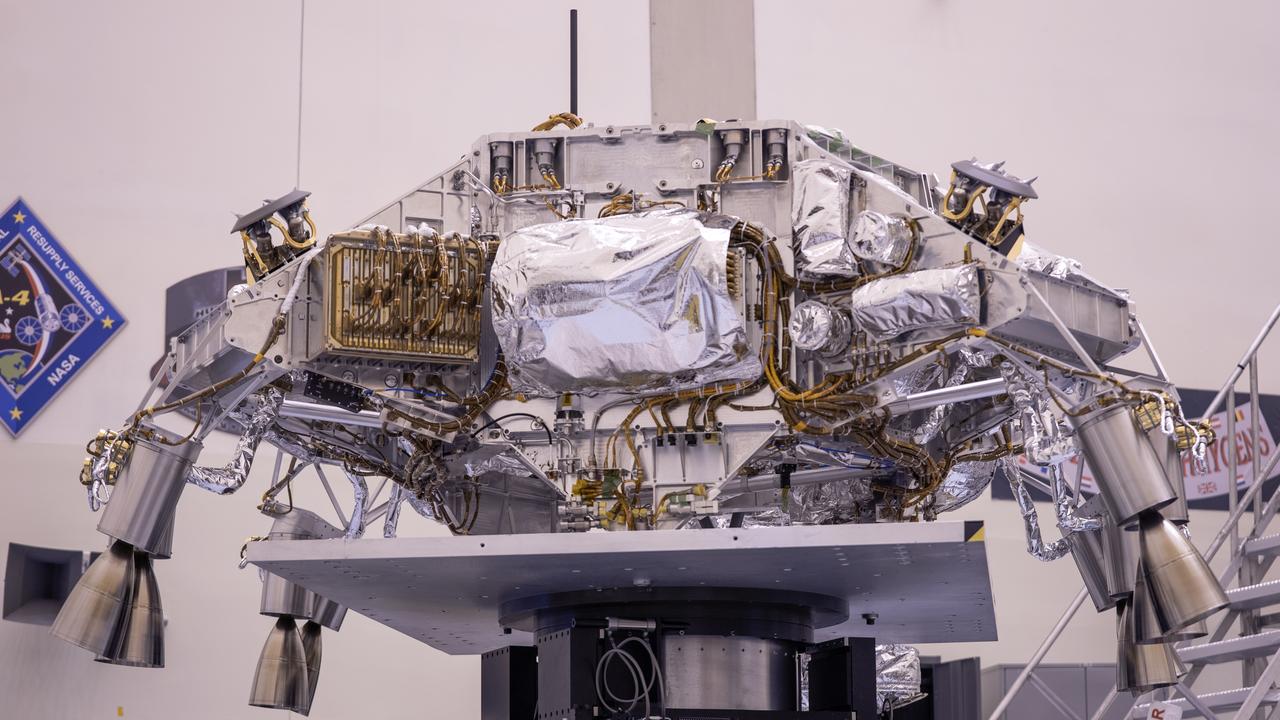
Engineers perform mass properties testing on the rocket-powered descent stage of NASA’s Mars Perseverance rover at Kennedy Space Center on April 12, 2020. The testing to determine the center of gravity, or the point at which weight is evenly dispersed on all sides, was performed inside the Florida spaceport’s Payload Hazardous Servicing Facility. The descent stage will lower the rover through the thin Martian atmosphere and onto the surface on Feb. 18, 2021. Liftoff, aboard a United Launch Alliance Atlas V 541 rocket, is targeted between July 17 and Aug. 5 from Cape Canaveral Air Force Station. NASA’s Launch Services Program based at Kennedy is managing the launch. The rover will seek signs of ancient life and collect rock and soil samples for possible return to Earth.

The “Send Your Name to Mars” logo is installed on the Mars Perseverance rover on March 16, 2020, inside the Payload Hazardous Servicing Facility at NASA’s Kennedy Space Center in Florida. When the rover lands on the Red Planet on Feb. 18, 2021, it will be carrying the names of more than 10 million people throughout the world. Those names were etched onto a microchip, which was placed aboard Perseverance. Liftoff aboard a United Launch Alliance Atlas V 541 rocket is targeted for mid-July from Cape Canaveral Air Force Station. NASA’s Launch Services Program based at Kennedy is managing the launch.
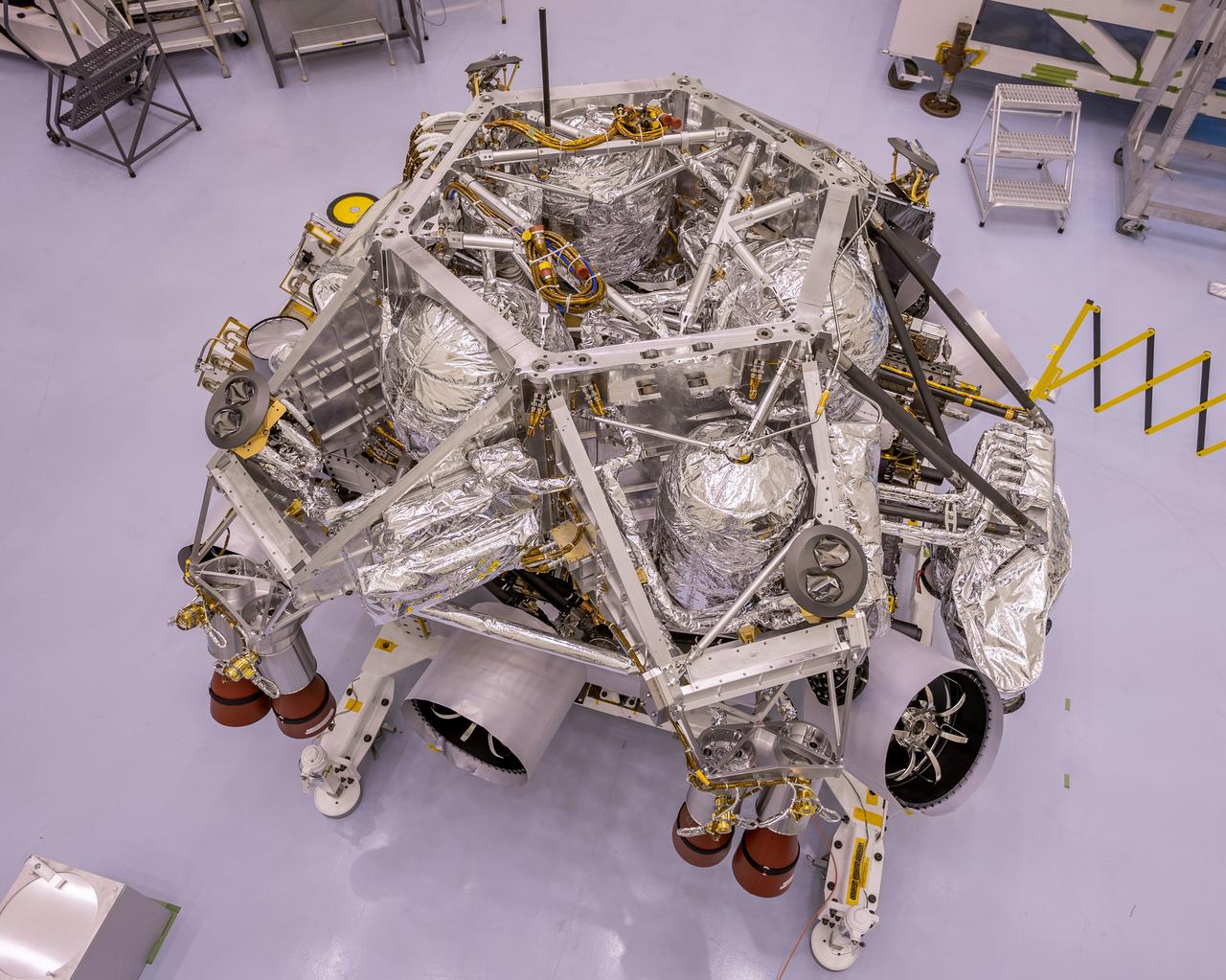
The powered descent vehicle for the Mars Perseverance rover is stacked inside the Payload Hazardous Servicing Facility at NASA’s Kennedy Space Center in Florida on April 28, 2020. The rover and descent stage were the first spacecraft components to come together for launch — and they will be the last to separate when the spacecraft reaches Mars on Feb. 18, 2021. Launch, aboard a United Launch Alliance Atlas V 541 rocket, is targeted for summer 2020 from Cape Canaveral Air Force Station. NASA’s Launch Services Program based at Kennedy is managing the launch.
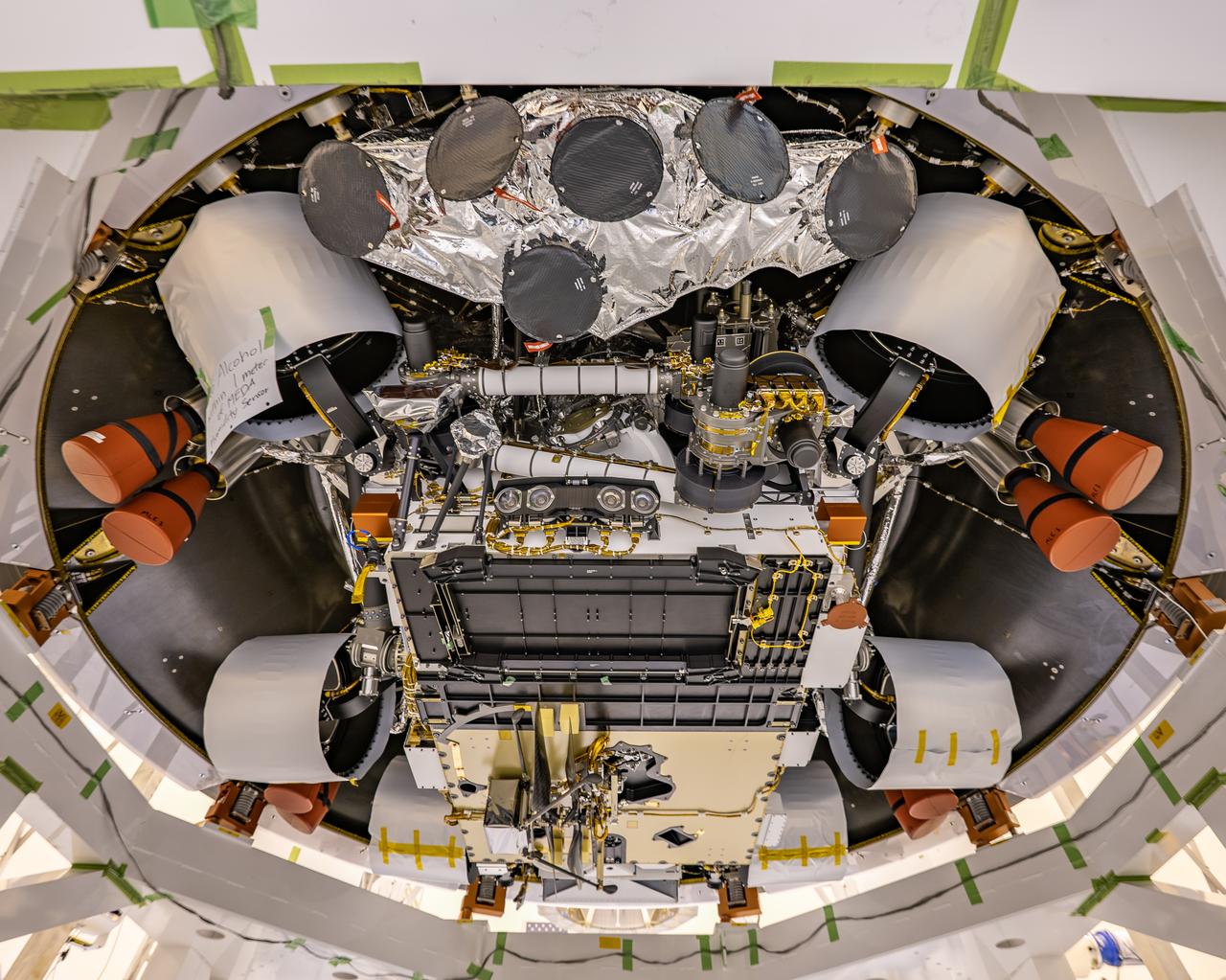
The aeroshell backshell for the Mars Perseverance rover is attached to the rocket-powered descent stage inside the Payload Hazardous Servicing Facility at NASA’s Kennedy Space Center in Florida on April 29, 2020. The aeroshell will encapsulate and protect Perseverance and its descent stage during their deep space journey to Mars and during descent through the Martian atmosphere. It will reach the Red Planet on Feb. 18, 2021. Launch, aboard a United Launch Alliance Atlas V 541 rocket, is targeted for summer 2020 from Cape Canaveral Air Force Station. NASA’s Launch Services Program based at Kennedy is managing the launch.
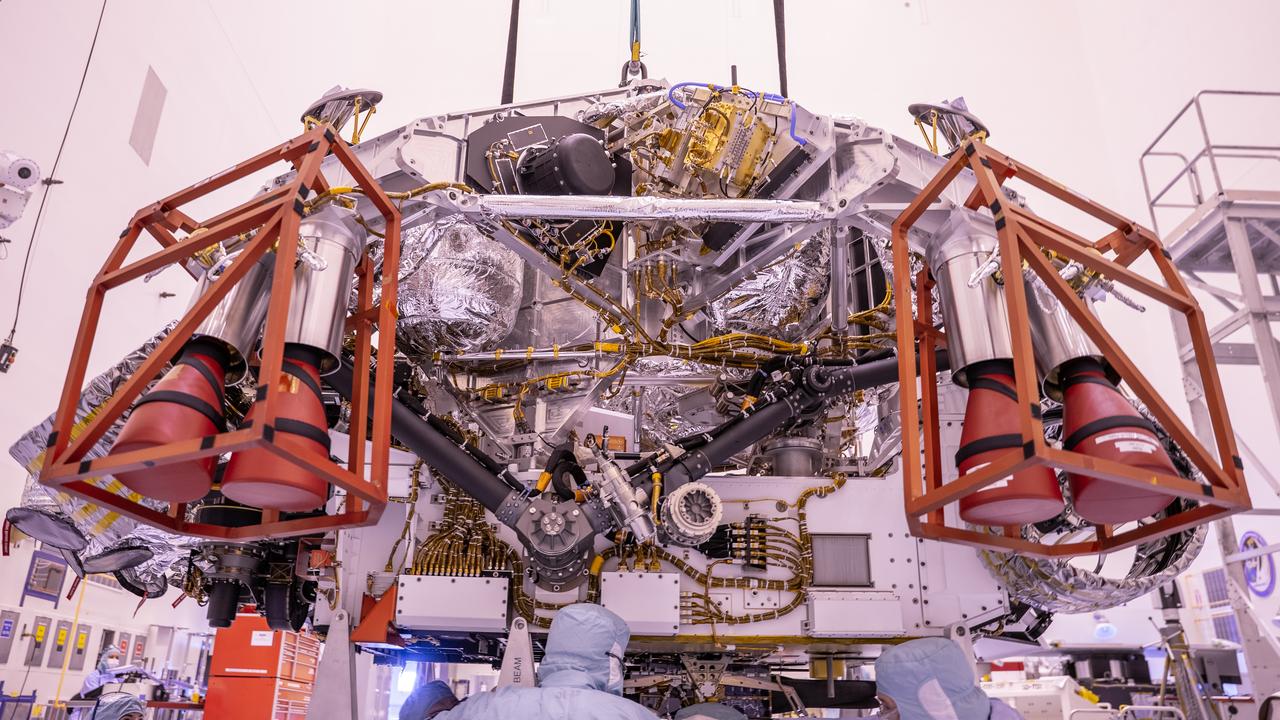
The Mars Perseverance rover is attached to its rocket-powered descent stage inside the Payload Hazardous Servicing Facility at NASA’s Kennedy Space Center in Florida on April 23, 2020. The rover and descent stage are the first spacecraft components to come together for launch — and they will be the last to separate when the spacecraft reaches Mars. At about 65 feet over the Martian surface, separation bolts will fire and the descent stage will lower Perseverance onto the Red Planet. Launch, aboard a United Launch Alliance Atlas V 541 rocket, is targeted between July 17 and Aug. 5 from Cape Canaveral Air Force Station. NASA’s Launch Services Program based at Kennedy is managing the launch.
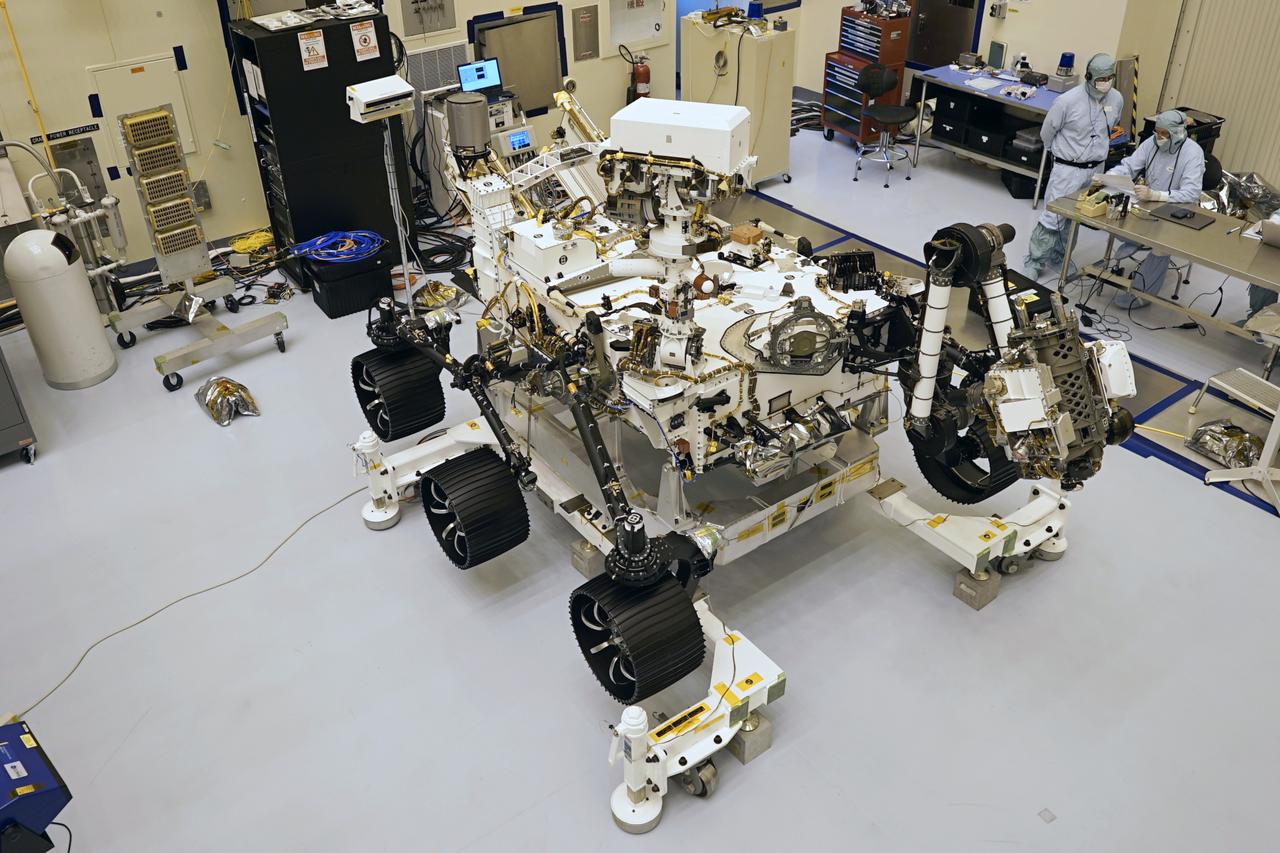
Engineers perform mass properties testing on NASA’s Mars Perseverance rover inside Kennedy Space Center’s Payload Hazardous Servicing Facility on April 7, 2020. The rover was rotated clockwise and counterclockwise on a spin table to determine the center of gravity, or the point at which weight is evenly dispersed on all sides. Establishing the rover’s center of gravity will help ensure the spacecraft will land on Mars as calculated. Perseverance will touch down on the Red Planet on Feb. 18, 2021. Liftoff aboard a United Launch Alliance Atlas V 541 rocket is targeted between July 17 and Aug. 5 from Cape Canaveral Air Force Station. NASA’s Launch Services Program based at Kennedy is managing the launch.
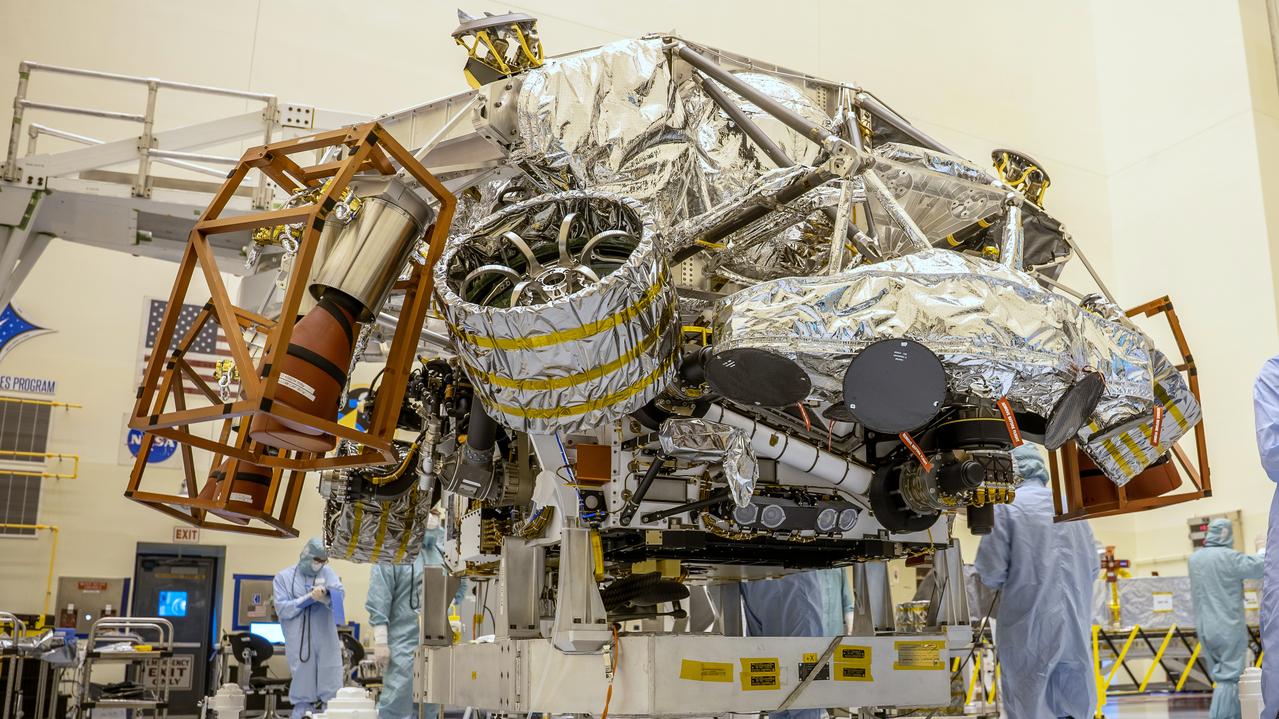
The Mars Perseverance rover is attached to its rocket-powered descent stage inside the Payload Hazardous Servicing Facility at NASA’s Kennedy Space Center in Florida on April 23, 2020. The rover and descent stage are the first spacecraft components to come together for launch — and they will be the last to separate when the spacecraft reaches Mars. At about 65 feet over the Martian surface, separation bolts will fire and the descent stage will lower Perseverance onto the Red Planet. Launch, aboard a United Launch Alliance Atlas V 541 rocket, is targeted between July 17 and Aug. 5 from Cape Canaveral Air Force Station. NASA’s Launch Services Program based at Kennedy is managing the launch.
The “Send Your Name to Mars” logo is installed on the Mars Perseverance rover on March 16, 2020, inside the Payload Hazardous Servicing Facility at NASA’s Kennedy Space Center in Florida. When the rover lands on the Red Planet on Feb. 18, 2021, it will be carrying the names of more than 10 million people throughout the world. Those names were etched onto a microchip, which was placed aboard Perseverance. Liftoff aboard a United Launch Alliance Atlas V 541 rocket is targeted for mid-July from Cape Canaveral Air Force Station. NASA’s Launch Services Program based at Kennedy is managing the launch.The “Send Your Name to Mars” logo is installed on the Mars Perseverance rover on March 16, 2020, inside the Payload Hazardous Servicing Facility at NASA’s Kennedy Space Center in Florida. When the rover lands on the Red Planet on Feb. 18, 2021, it will be carrying the names of more than 10 million people throughout the world. Those names were etched onto a microchip, which was placed aboard Perseverance. Liftoff aboard a United Launch Alliance Atlas V 541 rocket is targeted for mid-July from Cape Canaveral Air Force Station. NASA’s Launch Services Program based at Kennedy is managing the launch.
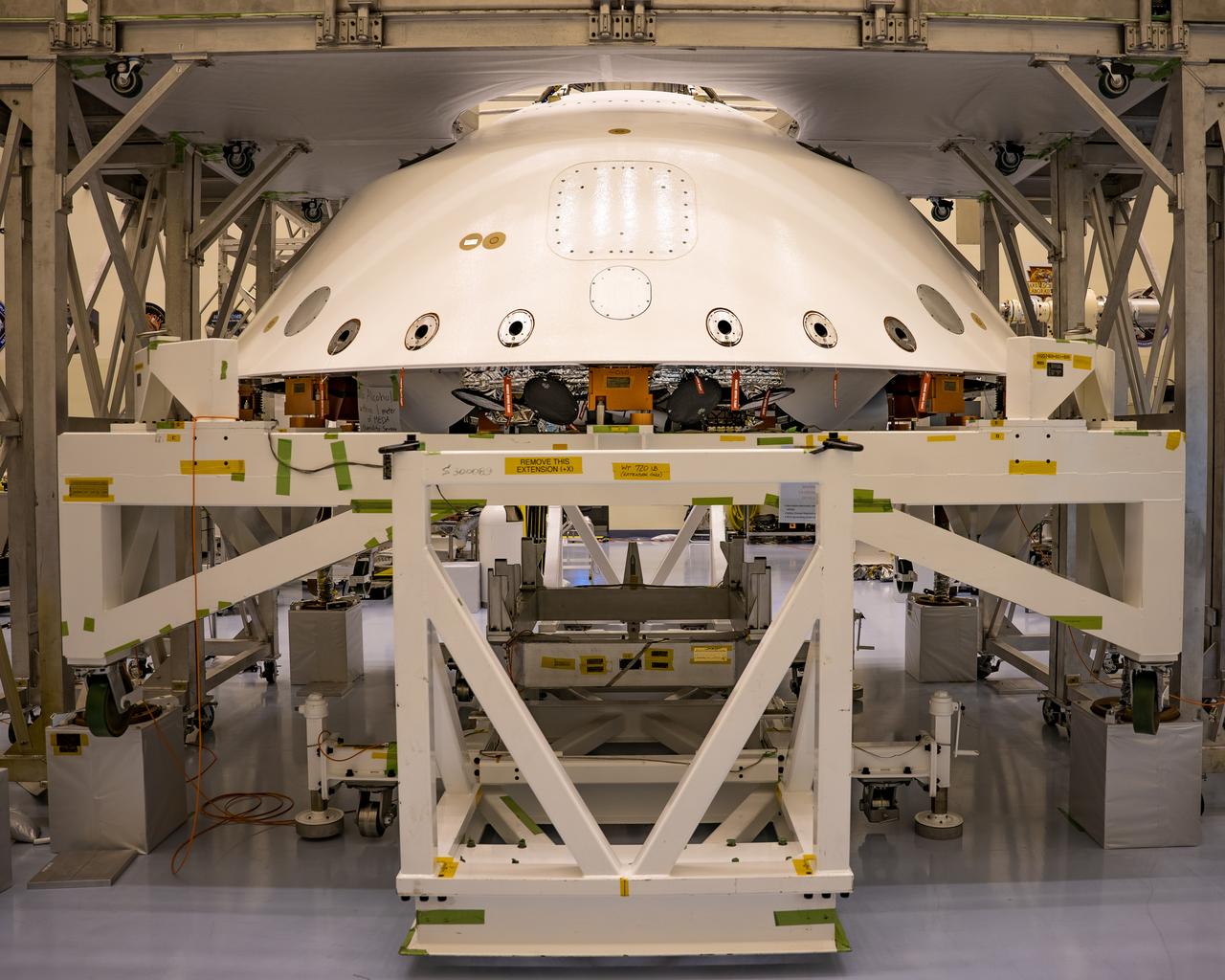
The aeroshell backshell for the Mars Perseverance rover is attached to the rocket-powered descent stage inside the Payload Hazardous Servicing Facility at NASA’s Kennedy Space Center in Florida on April 29, 2020. The aeroshell will encapsulate and protect Perseverance and its descent stage during their deep space journey to Mars and during descent through the Martian atmosphere. It will reach the Red Planet on Feb. 18, 2021. Launch, aboard a United Launch Alliance Atlas V 541 rocket, is targeted for summer 2020 from Cape Canaveral Air Force Station. NASA’s Launch Services Program based at Kennedy is managing the launch.
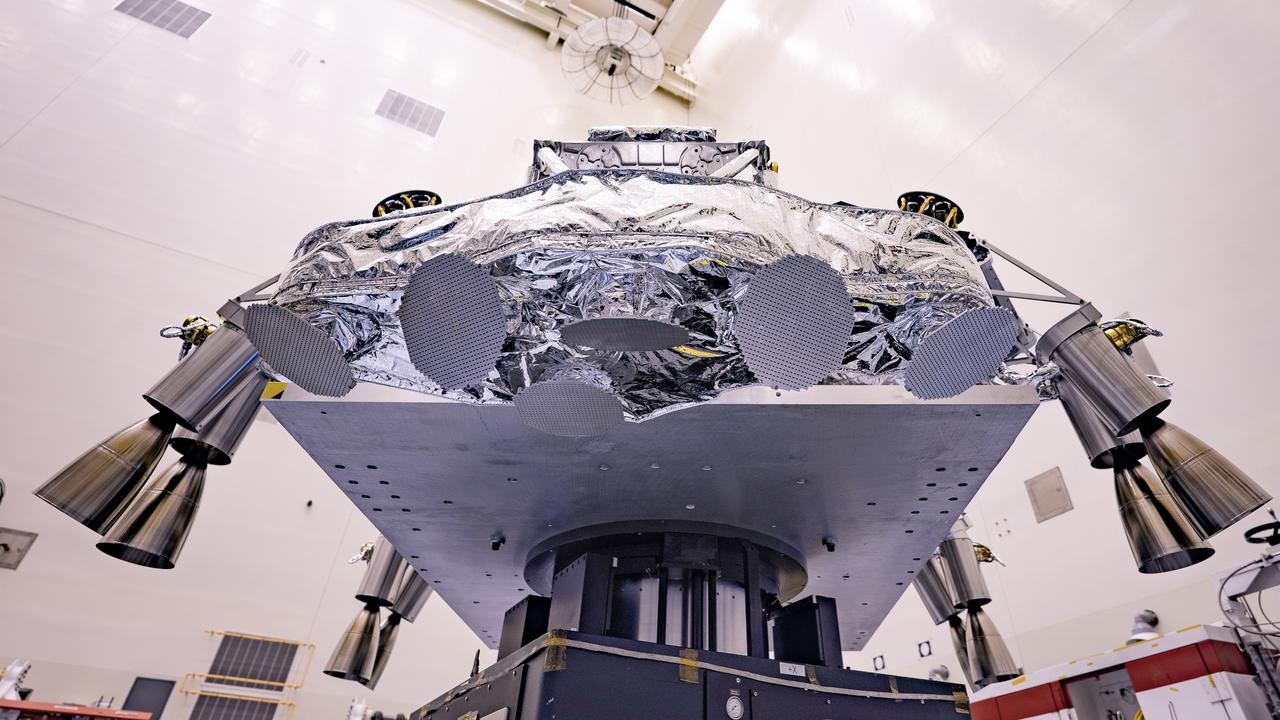
Engineers perform mass properties testing on the rocket-powered descent stage of NASA’s Mars Perseverance rover at Kennedy Space Center on April 12, 2020. The testing to determine the center of gravity, or the point at which weight is evenly dispersed on all sides, was performed inside the Florida spaceport’s Payload Hazardous Servicing Facility. The descent stage will lower the rover through the thin Martian atmosphere and onto the surface on Feb. 18, 2021. Liftoff, aboard a United Launch Alliance Atlas V 541 rocket, is targeted between July 17 and Aug. 5 from Cape Canaveral Air Force Station. NASA’s Launch Services Program based at Kennedy is managing the launch. The rover will seek signs of ancient life and collect rock and soil samples for possible return to Earth.
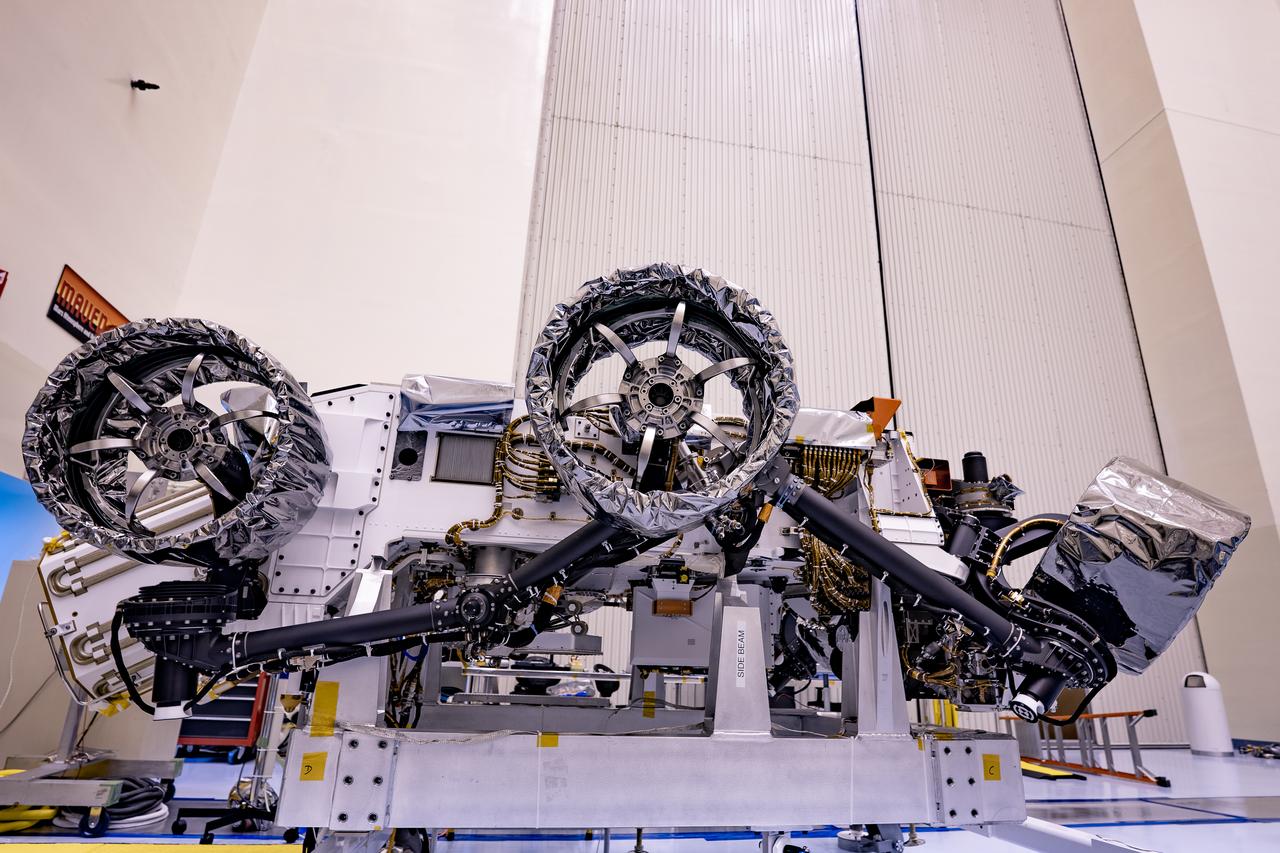
Wheels are installed on NASA’s Mars Perseverance rover inside Kennedy Space Center’s Payload Hazardous Servicing Facility on March 30, 2020. Perseverance will liftoff aboard a United Launch Alliance Atlas V 541 rocket from Cape Canaveral Air Force Station in July 2020. NASA’s Launch Services Program based at Kennedy is managing the launch. The rover will land on Mars on Feb. 18, 2021.
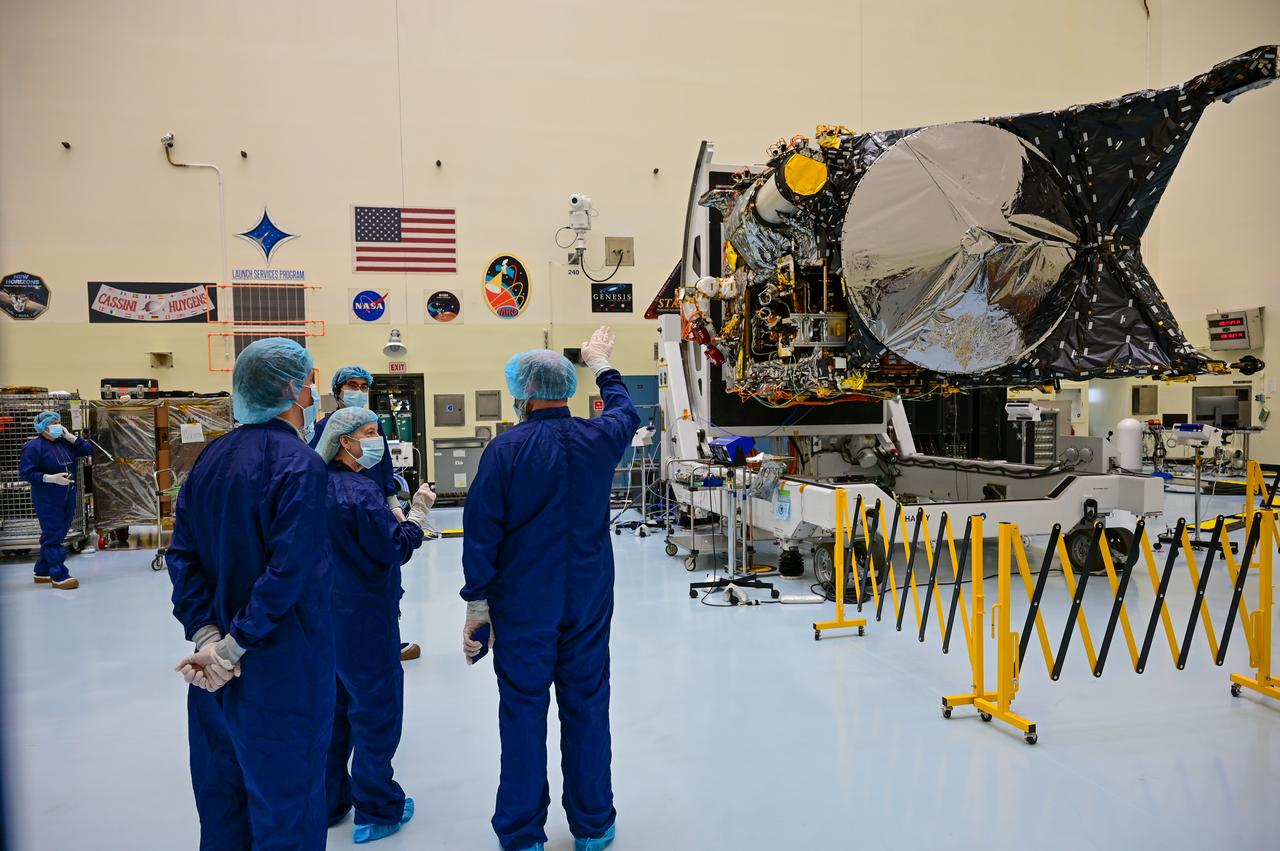
NASA Deputy Administrator Pam Melroy visits Kennedy Space Center in Florida and receives a briefing by team members from the Jet Propulsion Laboratory on the agency’s Psyche spacecraft inside the Payload Hazardous Servicing Facility on May 19, 2022. Melroy is in view second from right. The mission is targeting an Aug. 1 launch atop a SpaceX Falcon Heavy rocket from Launch Complex 39A at Kennedy. The spacecraft will use solar-electric propulsion to travel approximately 1.5 billion miles to rendezvous with its namesake asteroid in 2026. The Psyche mission is led by Arizona State University. NASA’s Jet Propulsion Laboratory, which is managed for the agency by Caltech in Pasadena, California, is responsible for the mission’s overall management, system engineering, integration and testing, and mission operations. Maxar Technologies in Palo Alto, California, provided the high-power solar electric propulsion spacecraft chassis. NASA’s Launch Services Program (LSP), based at Kennedy, is managing the launch.
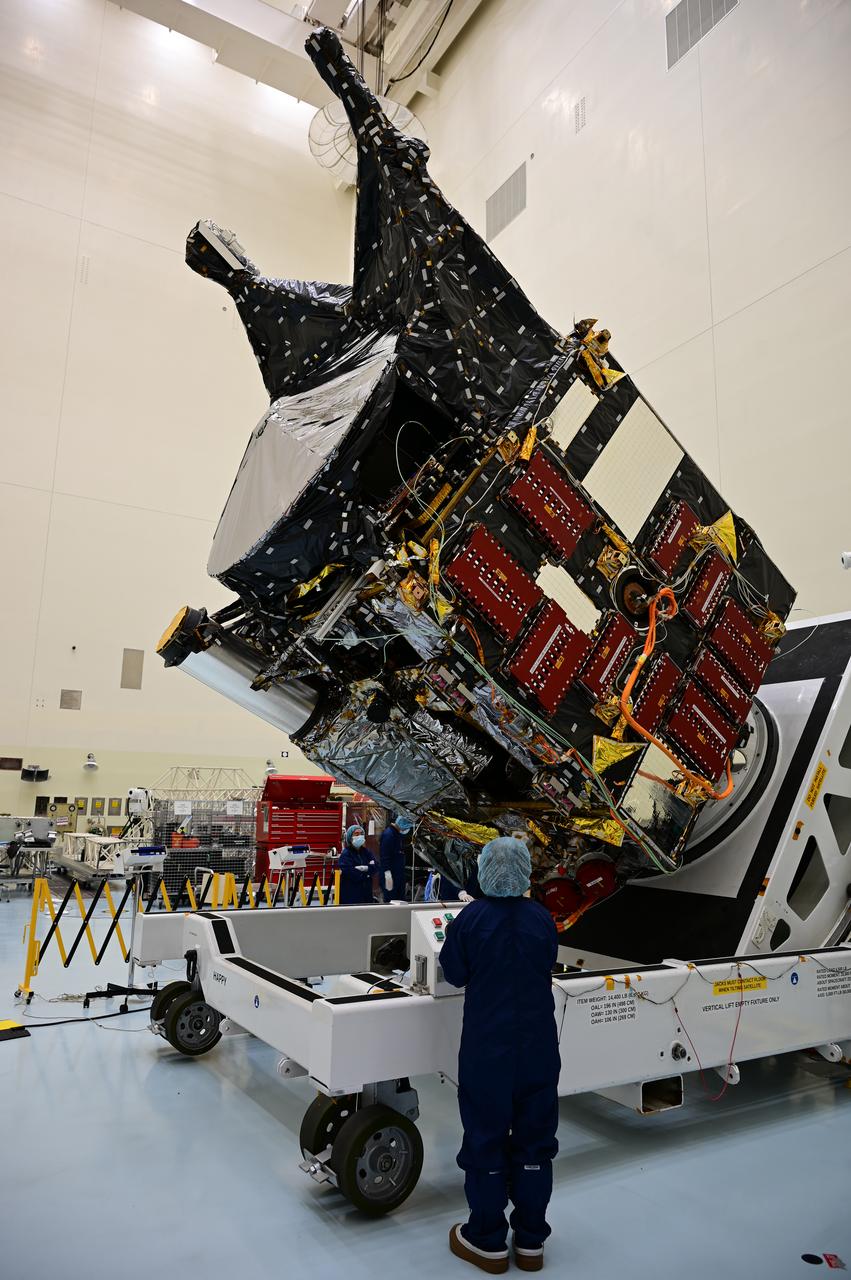
A team working on NASA’s Psyche spacecraft transitioned it from a vertical to a horizontal test configuration during prelaunch processing inside the Payload Hazardous Servicing Facility at NASA’s Kennedy Space Center in Florida on May 9, 2022. The mission is targeting an Aug. 1 launch atop a SpaceX Falcon Heavy rocket from Launch Complex 39A at Kennedy. The spacecraft will use solar-electric propulsion to travel approximately 1.5 billion miles to rendezvous with its namesake asteroid in 2026. The Psyche mission is led by Arizona State University. NASA’s Jet Propulsion Laboratory, which is managed for the agency by Caltech in Pasadena, California, is responsible for the mission’s overall management, system engineering, integration and testing, and mission operations. Maxar Technologies in Palo Alto, California, provided the high-power solar electric propulsion spacecraft chassis. NASA’s Launch Services Program (LSP), based at Kennedy, is managing the launch.
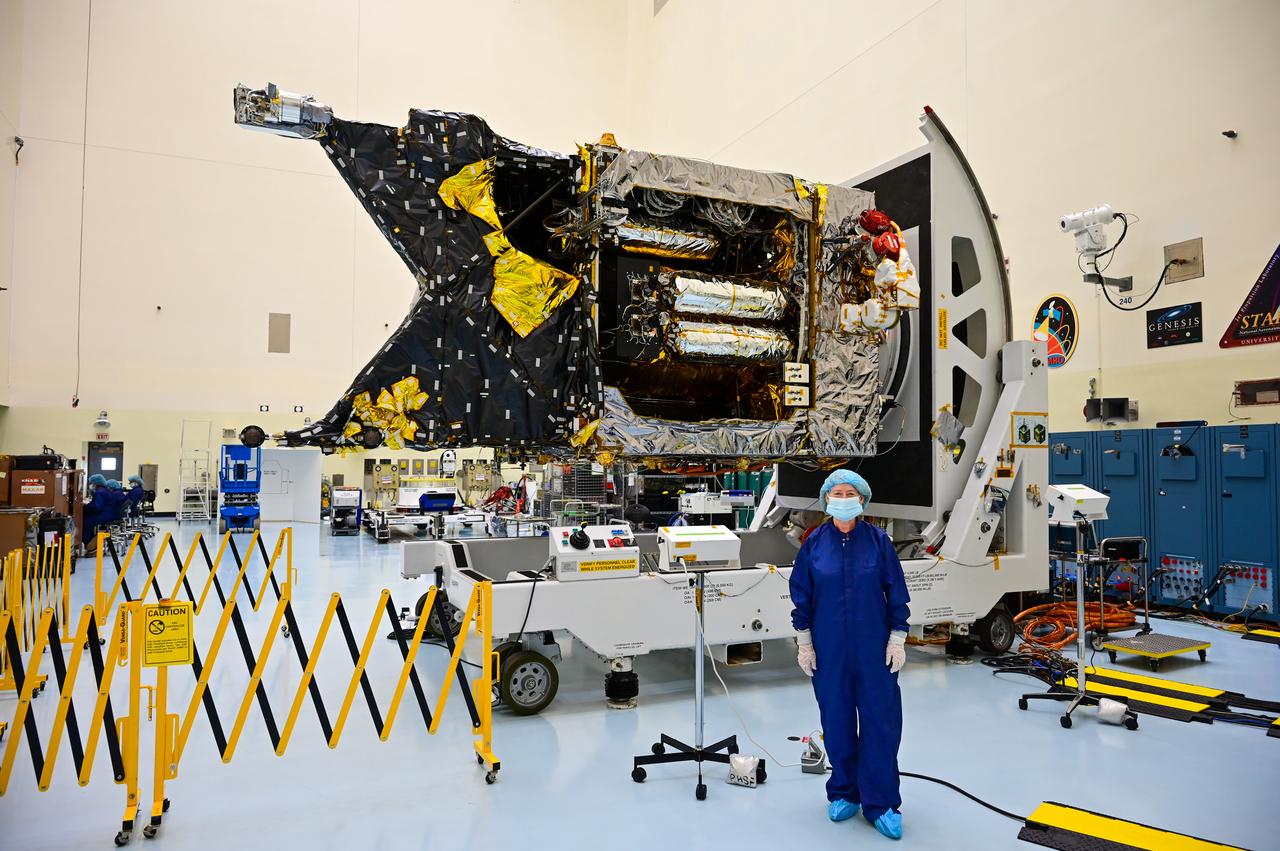
NASA Deputy Administrator Pam Melroy visits Kennedy Space Center in Florida and views the agency’s Psyche spacecraft inside the Payload Hazardous Servicing Facility on May 19, 2022. The mission is targeting an Aug. 1 launch atop a SpaceX Falcon Heavy rocket from Launch Complex 39A at Kennedy. The spacecraft will use solar-electric propulsion to travel approximately 1.5 billion miles to rendezvous with its namesake asteroid in 2026. The Psyche mission is led by Arizona State University. NASA’s Jet Propulsion Laboratory, which is managed for the agency by Caltech in Pasadena, California, is responsible for the mission’s overall management, system engineering, integration and testing, and mission operations. Maxar Technologies in Palo Alto, California, provided the high-power solar electric propulsion spacecraft chassis. NASA’s Launch Services Program (LSP), based at Kennedy, is managing the launch.
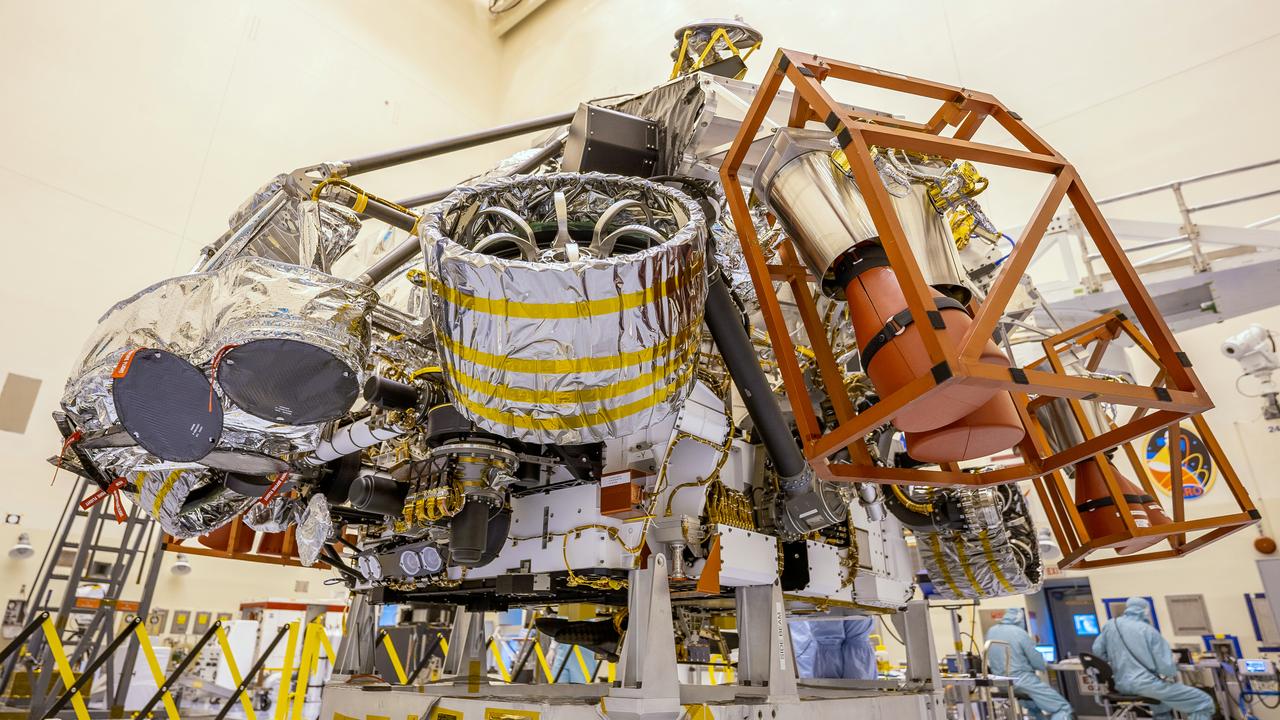
The Mars Perseverance rover is attached to its rocket-powered descent stage inside the Payload Hazardous Servicing Facility at NASA’s Kennedy Space Center in Florida on April 23, 2020. The rover and descent stage are the first spacecraft components to come together for launch — and they will be the last to separate when the spacecraft reaches Mars. At about 65 feet over the Martian surface, separation bolts will fire and the descent stage will lower Perseverance onto the Red Planet. Launch, aboard a United Launch Alliance Atlas V 541 rocket, is targeted between July 17 and Aug. 5 from Cape Canaveral Air Force Station. NASA’s Launch Services Program based at Kennedy is managing the launch.
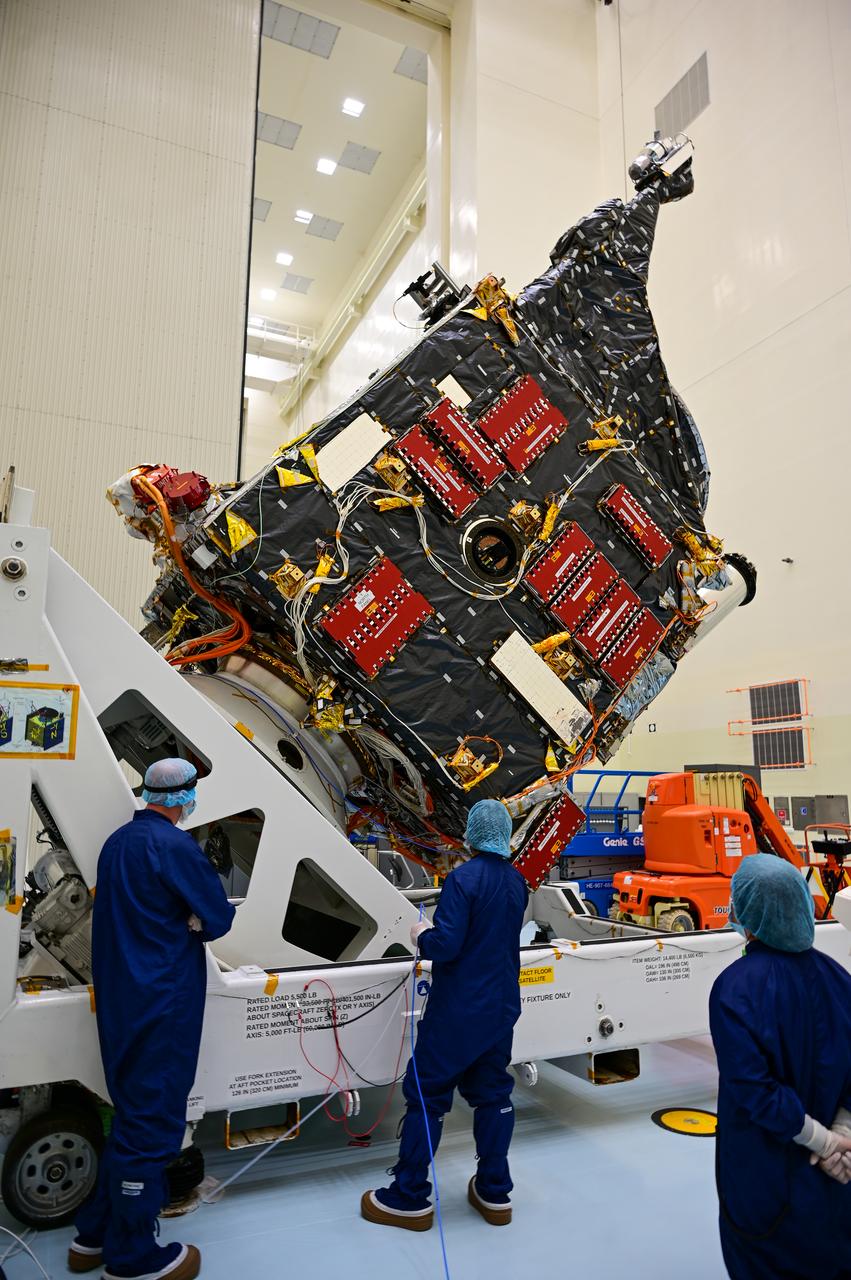
A team working on NASA’s Psyche spacecraft transitioned it from a vertical to horizontal test configuration during prelaunch processing inside the Payload Hazardous Servicing Facility at NASA’s Kennedy Space Center in Florida on May 9, 2022. The mission is targeting an Aug. 1 launch atop a SpaceX Falcon Heavy rocket from Launch Complex 39A at Kennedy. The spacecraft will use solar-electric propulsion to travel approximately 1.5 billion miles to rendezvous with its namesake asteroid in 2026. The Psyche mission is led by Arizona State University. NASA’s Jet Propulsion Laboratory, which is managed for the agency by Caltech in Pasadena, California, is responsible for the mission’s overall management, system engineering, integration and testing, and mission operations. Maxar Technologies in Palo Alto, California, provided the high-power solar electric propulsion spacecraft chassis. NASA’s Launch Services Program (LSP), based at Kennedy, is managing the launch.
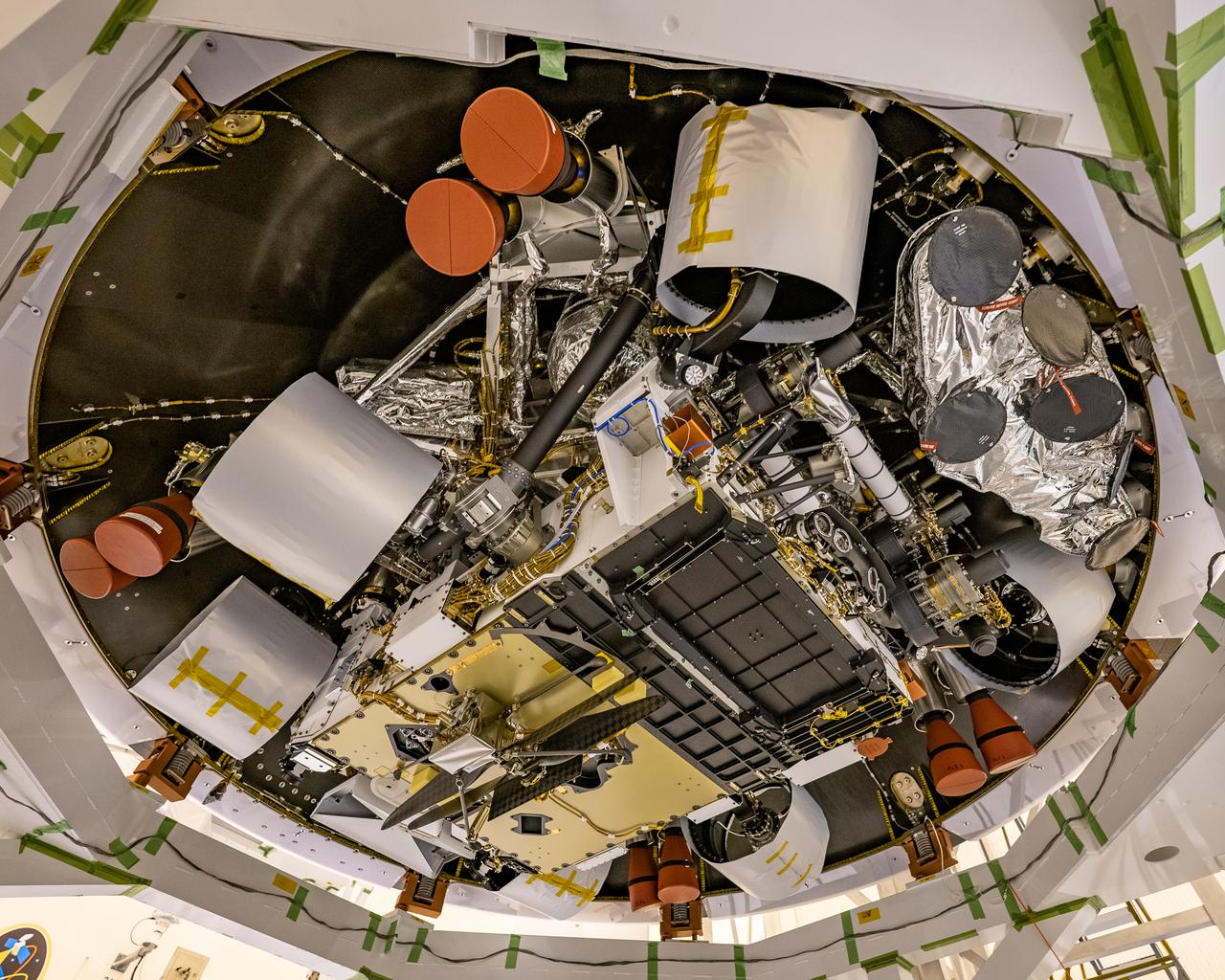
The aeroshell backshell for the Mars Perseverance rover is attached to the rocket-powered descent stage inside the Payload Hazardous Servicing Facility at NASA’s Kennedy Space Center in Florida on April 29, 2020. The aeroshell will encapsulate and protect Perseverance and its descent stage during their deep space journey to Mars and during descent through the Martian atmosphere. It will reach the Red Planet on Feb. 18, 2021. Launch, aboard a United Launch Alliance Atlas V 541 rocket, is targeted for summer 2020 from Cape Canaveral Air Force Station. NASA’s Launch Services Program based at Kennedy is managing the launch.
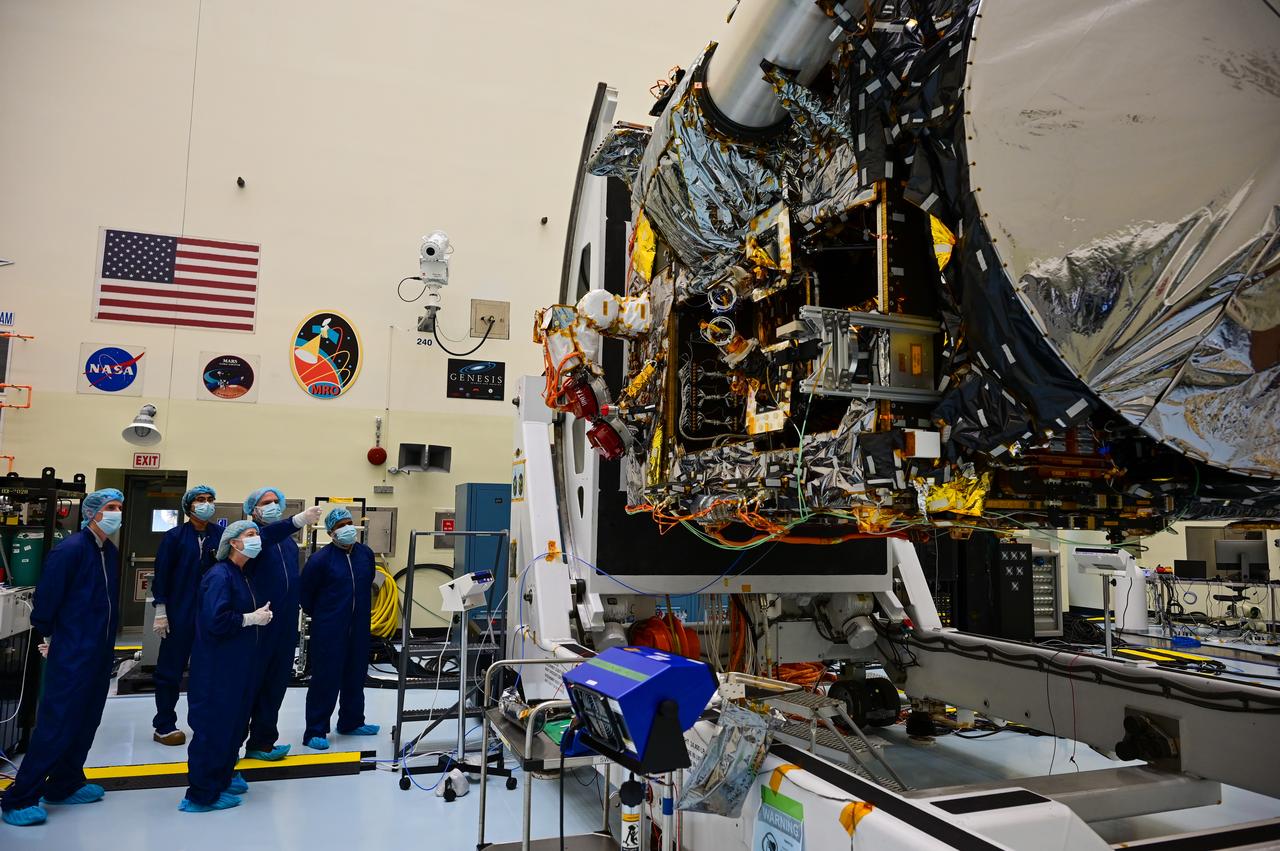
NASA Deputy Administrator Pam Melroy visits Kennedy Space Center in Florida and receives a briefing by team members from the Jet Propulsion Laboratory on the agency’s Psyche spacecraft inside the Payload Hazardous Servicing Facility on May 19, 2022. Melroy is standing in front of the group. The mission is targeting an Aug. 1 launch atop a SpaceX Falcon Heavy rocket from Launch Complex 39A at Kennedy. The spacecraft will use solar-electric propulsion to travel approximately 1.5 billion miles to rendezvous with its namesake asteroid in 2026. The Psyche mission is led by Arizona State University. NASA’s Jet Propulsion Laboratory, which is managed for the agency by Caltech in Pasadena, California, is responsible for the mission’s overall management, system engineering, integration and testing, and mission operations. Maxar Technologies in Palo Alto, California, provided the high-power solar electric propulsion spacecraft chassis. NASA’s Launch Services Program (LSP), based at Kennedy, is managing the launch.
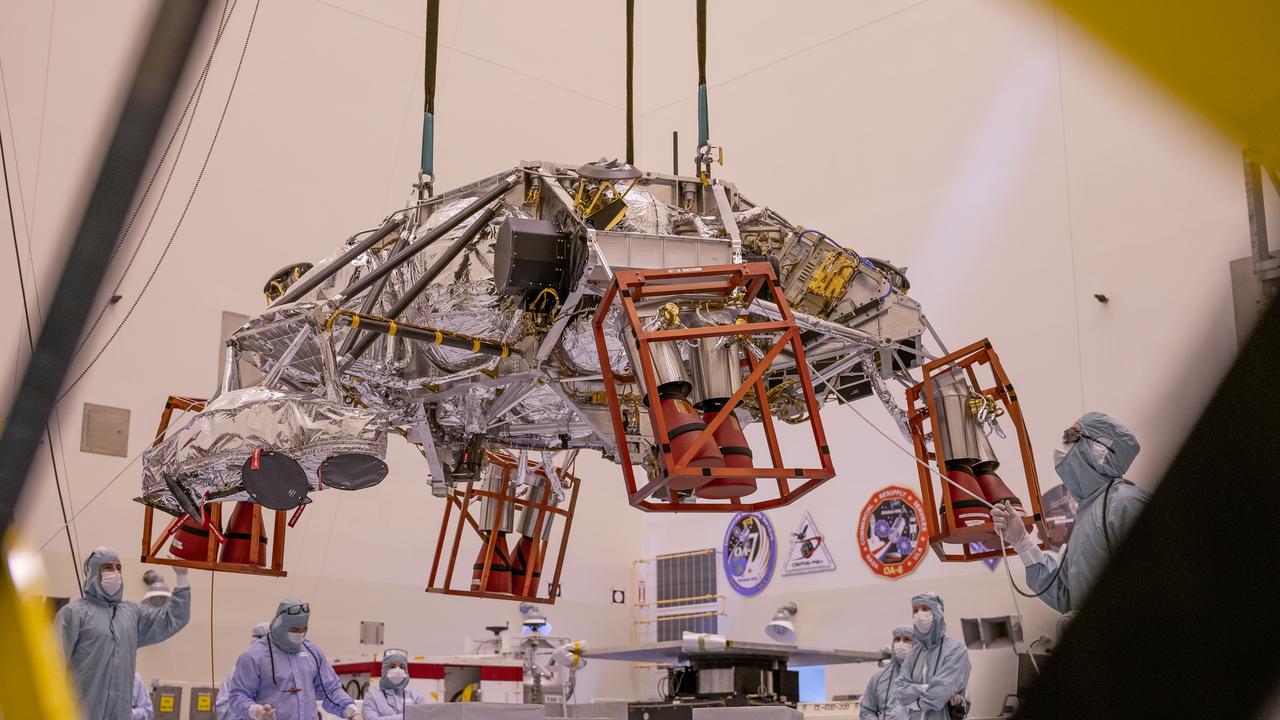
The Mars Perseverance rover is attached to its rocket-powered descent stage inside the Payload Hazardous Servicing Facility at NASA’s Kennedy Space Center in Florida on April 23, 2020. The rover and descent stage are the first spacecraft components to come together for launch — and they will be the last to separate when the spacecraft reaches Mars. At about 65 feet over the Martian surface, separation bolts will fire and the descent stage will lower Perseverance onto the Red Planet. Launch, aboard a United Launch Alliance Atlas V 541 rocket, is targeted between July 17 and Aug. 5 from Cape Canaveral Air Force Station. NASA’s Launch Services Program based at Kennedy is managing the launch.
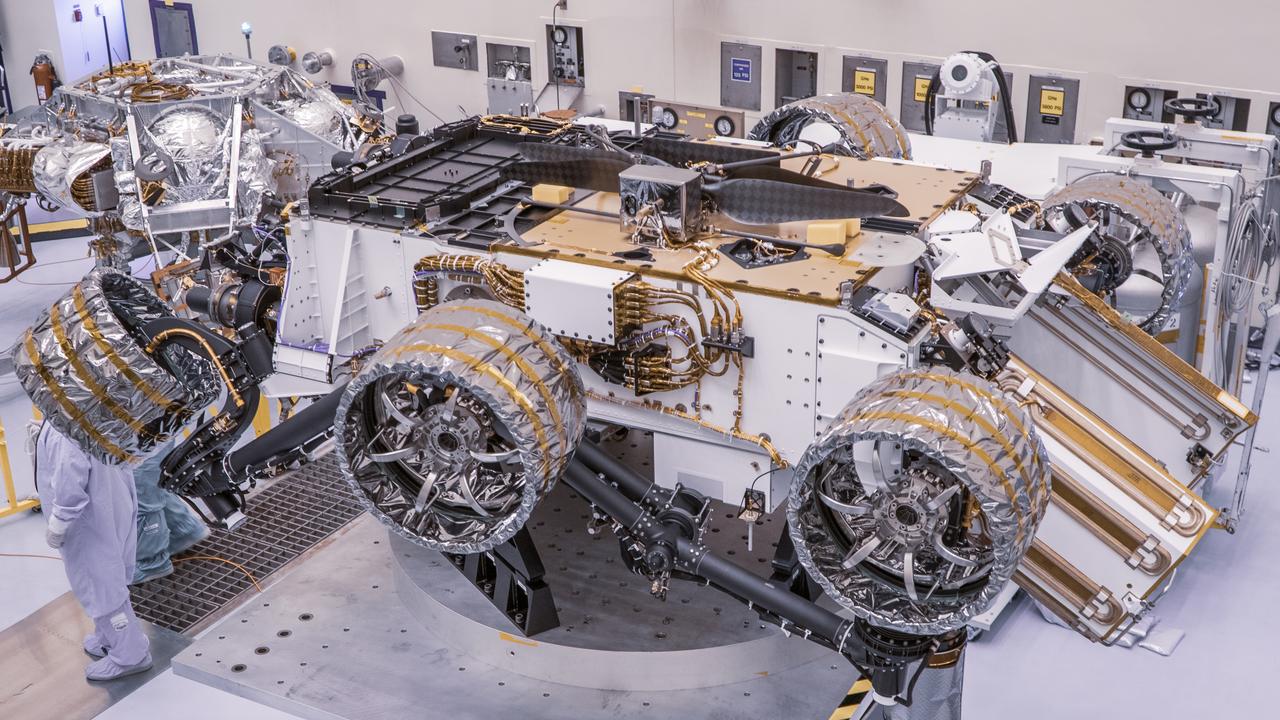
Engineers perform mass properties testing on NASA’s Mars Perseverance rover inside Kennedy Space Center’s Payload Hazardous Servicing Facility on April 7, 2020. The rover was rotated clockwise and counterclockwise on a spin table to determine the center of gravity, or the point at which weight is evenly dispersed on all sides. Establishing the rover’s center of gravity will help ensure the spacecraft will land on Mars as calculated. Perseverance will touch down on the Red Planet on Feb. 18, 2021. Liftoff aboard a United Launch Alliance Atlas V 541 rocket is targeted between July 17 and Aug. 5 from Cape Canaveral Air Force Station. NASA’s Launch Services Program based at Kennedy is managing the launch.
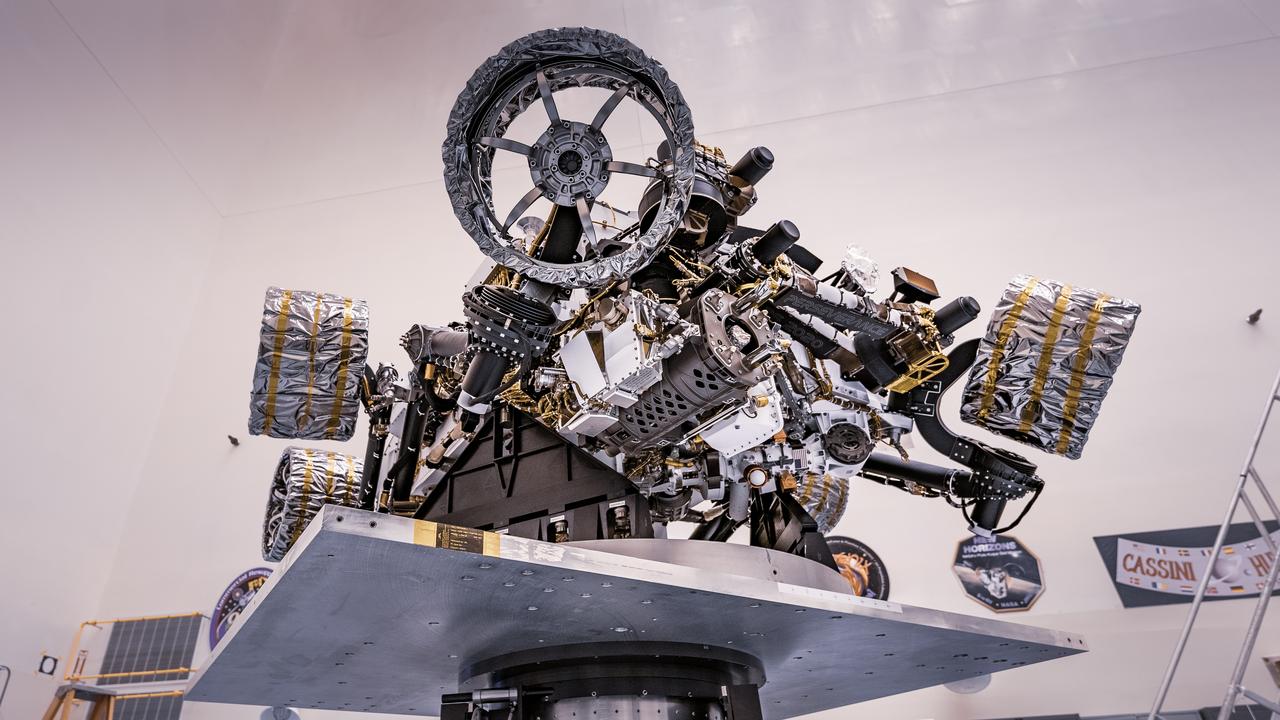
Engineers perform mass properties testing on NASA’s Mars Perseverance rover inside Kennedy Space Center’s Payload Hazardous Servicing Facility on April 7, 2020. The rover was rotated clockwise and counterclockwise on a spin table to determine the center of gravity, or the point at which weight is evenly dispersed on all sides. Establishing the rover’s center of gravity will help ensure the spacecraft will land on Mars as calculated. Perseverance will touch down on the Red Planet on Feb. 18, 2021. Liftoff aboard a United Launch Alliance Atlas V 541 rocket is targeted between July 17 and Aug. 5 from Cape Canaveral Air Force Station. NASA’s Launch Services Program based at Kennedy is managing the launch.
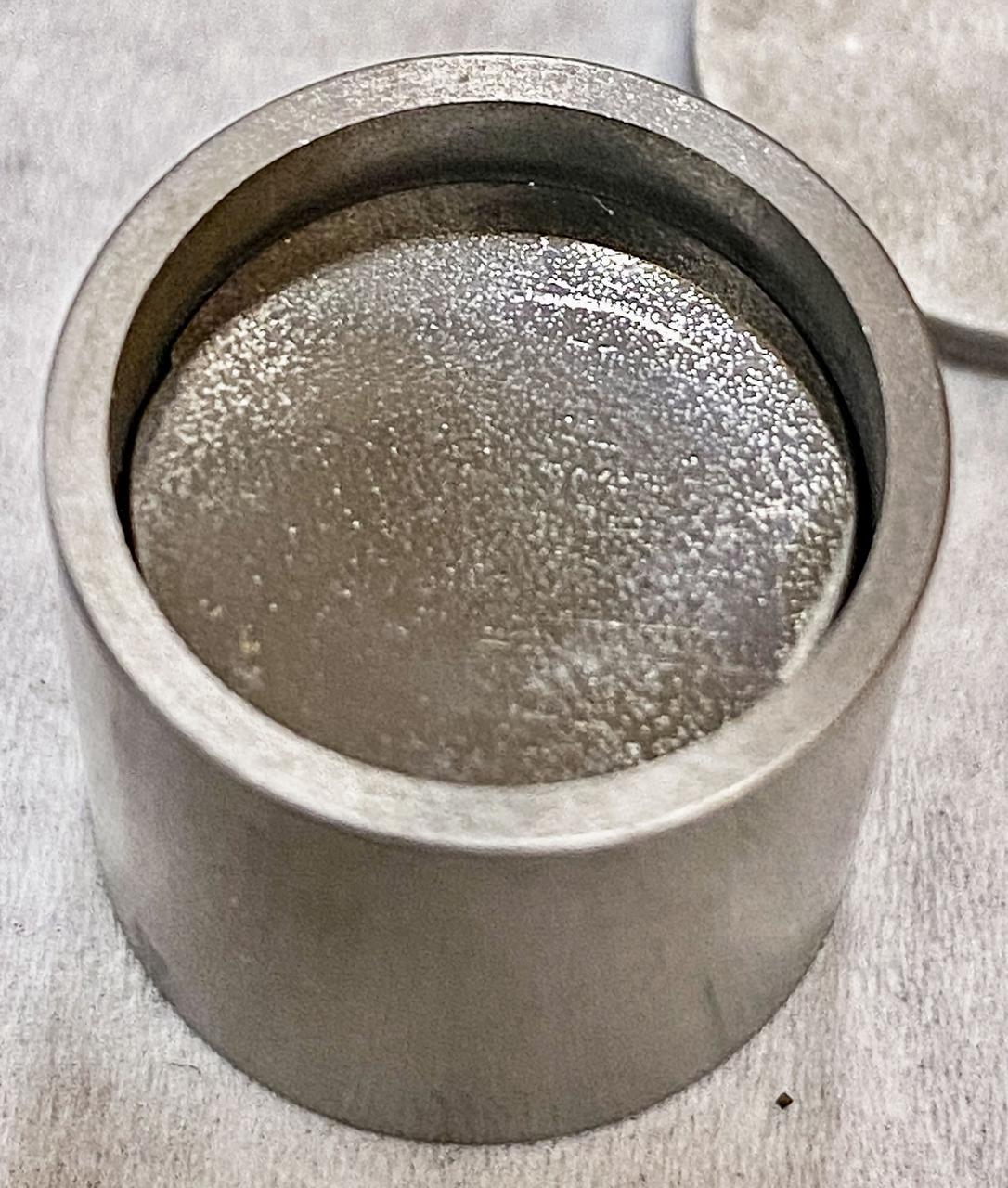
jsc2022e072974 (4/15/2022) --- A preflight sample from the Fabrication of Amorphous Metals in Space (MSL SCA-FAMIS) investigation shows tungsten spheres embedded in a glass-forming alloy loaded into a tungsten crucible. Image courtesy of Douglas Hofmann, NASA JPL/Caltech.

This composite image contains the deepest X-ray image ever made of the spectacular star forming region called 30 Doradus. By combining X-ray data from NASA’s Chandra X-ray Observatory (blue and green) with optical data from NASA’s Hubble Space Telescope (yellow) and radio data from the Atacama Large Millimeter/submillimeter Array (orange), this stellar arrangement comes alive.