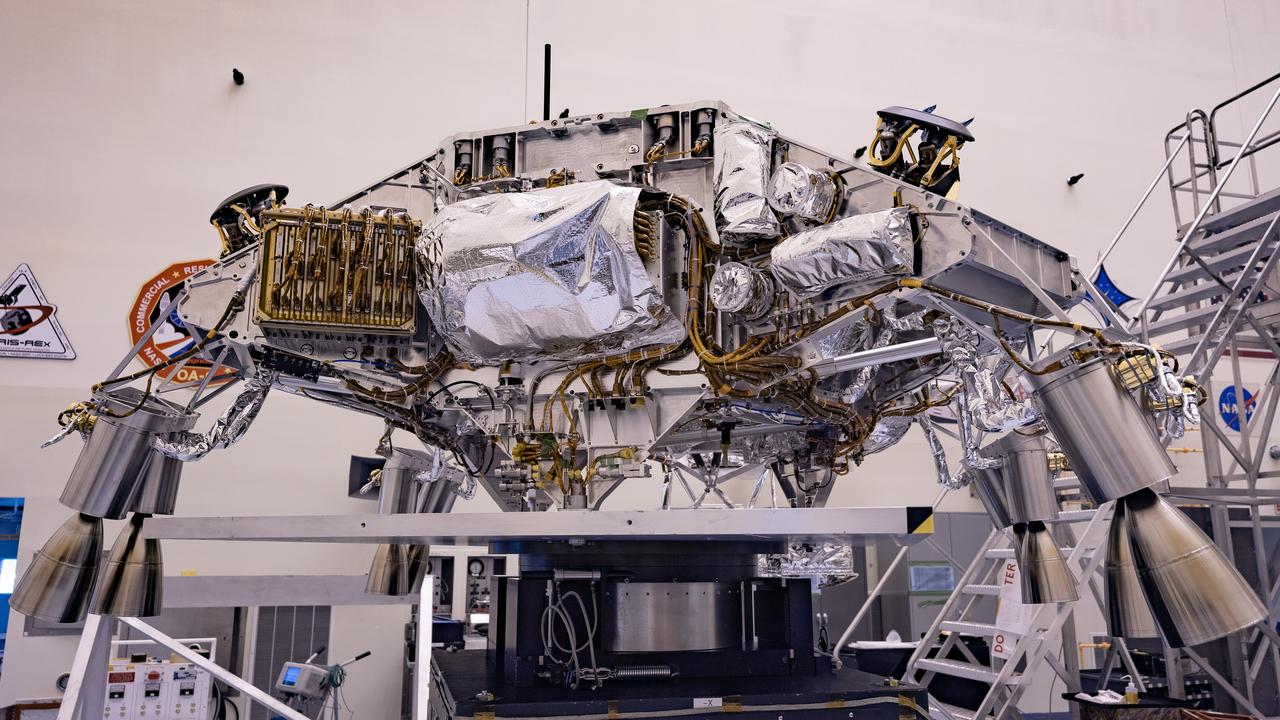
Engineers perform mass properties testing on the rocket-powered descent stage of NASA’s Mars Perseverance rover at Kennedy Space Center on April 12, 2020. The testing to determine the center of gravity, or the point at which weight is evenly dispersed on all sides, was performed inside the Florida spaceport’s Payload Hazardous Servicing Facility. The descent stage will lower the rover through the thin Martian atmosphere and onto the surface on Feb. 18, 2021. Liftoff, aboard a United Launch Alliance Atlas V 541 rocket, is targeted between July 17 and Aug. 5 from Cape Canaveral Air Force Station. NASA’s Launch Services Program based at Kennedy is managing the launch. The rover will seek signs of ancient life and collect rock and soil samples for possible return to Earth.
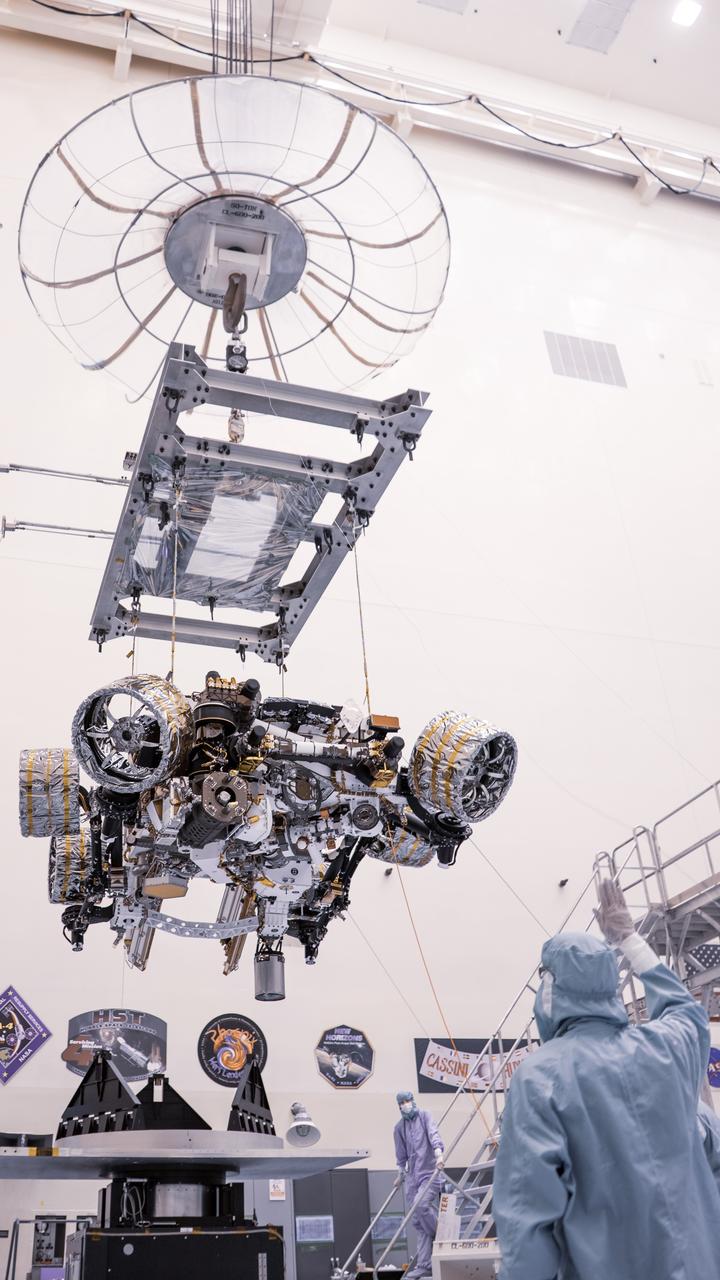
Engineers perform mass properties testing on NASA’s Mars Perseverance rover inside Kennedy Space Center’s Payload Hazardous Servicing Facility on April 7, 2020. The rover was rotated clockwise and counterclockwise on a spin table to determine the center of gravity, or the point at which weight is evenly dispersed on all sides. Establishing the rover’s center of gravity will help ensure the spacecraft will land on Mars as calculated. Perseverance will touch down on the Red Planet on Feb. 18, 2021. Liftoff aboard a United Launch Alliance Atlas V 541 rocket is targeted between July 17 and Aug. 5 from Cape Canaveral Air Force Station. NASA’s Launch Services Program based at Kennedy is managing the launch.
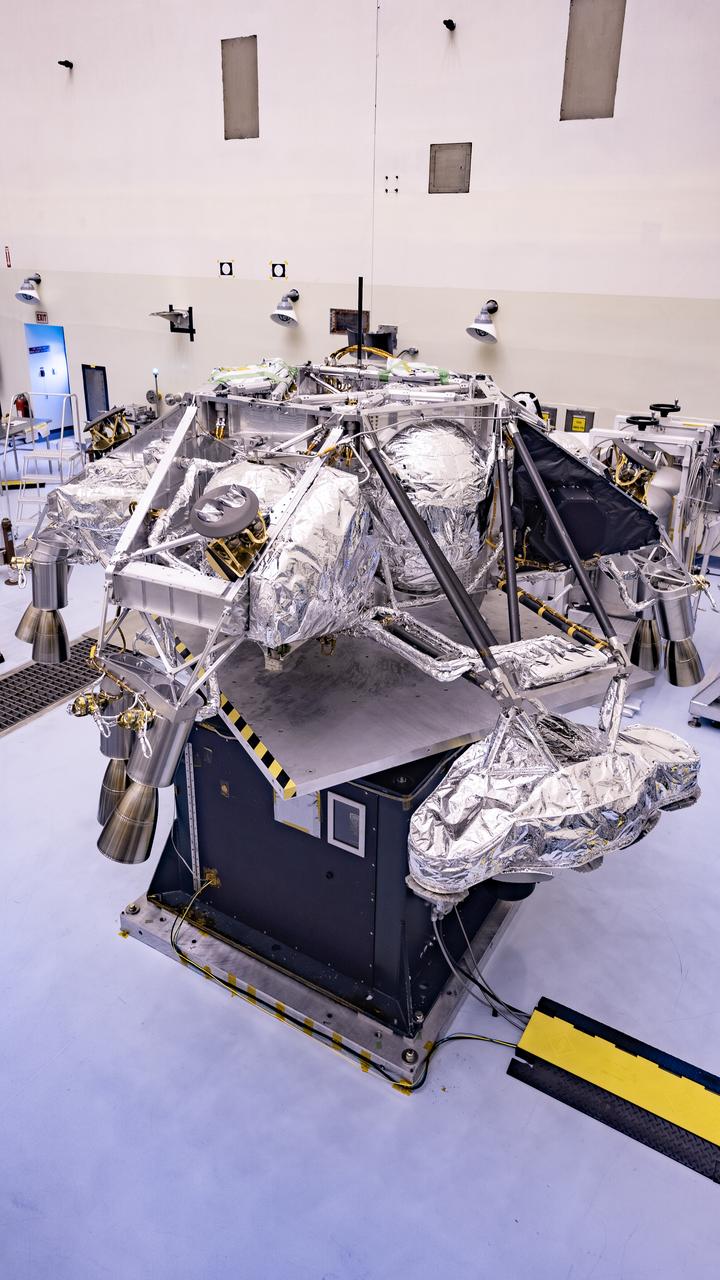
Engineers perform mass properties testing on the rocket-powered descent stage of NASA’s Mars Perseverance rover at Kennedy Space Center on April 12, 2020. The testing to determine the center of gravity, or the point at which weight is evenly dispersed on all sides, was performed inside the Florida spaceport’s Payload Hazardous Servicing Facility. The descent stage will lower the rover through the thin Martian atmosphere and onto the surface on Feb. 18, 2021. Liftoff, aboard a United Launch Alliance Atlas V 541 rocket, is targeted between July 17 and Aug. 5 from Cape Canaveral Air Force Station. NASA’s Launch Services Program based at Kennedy is managing the launch. The rover will seek signs of ancient life and collect rock and soil samples for possible return to Earth.
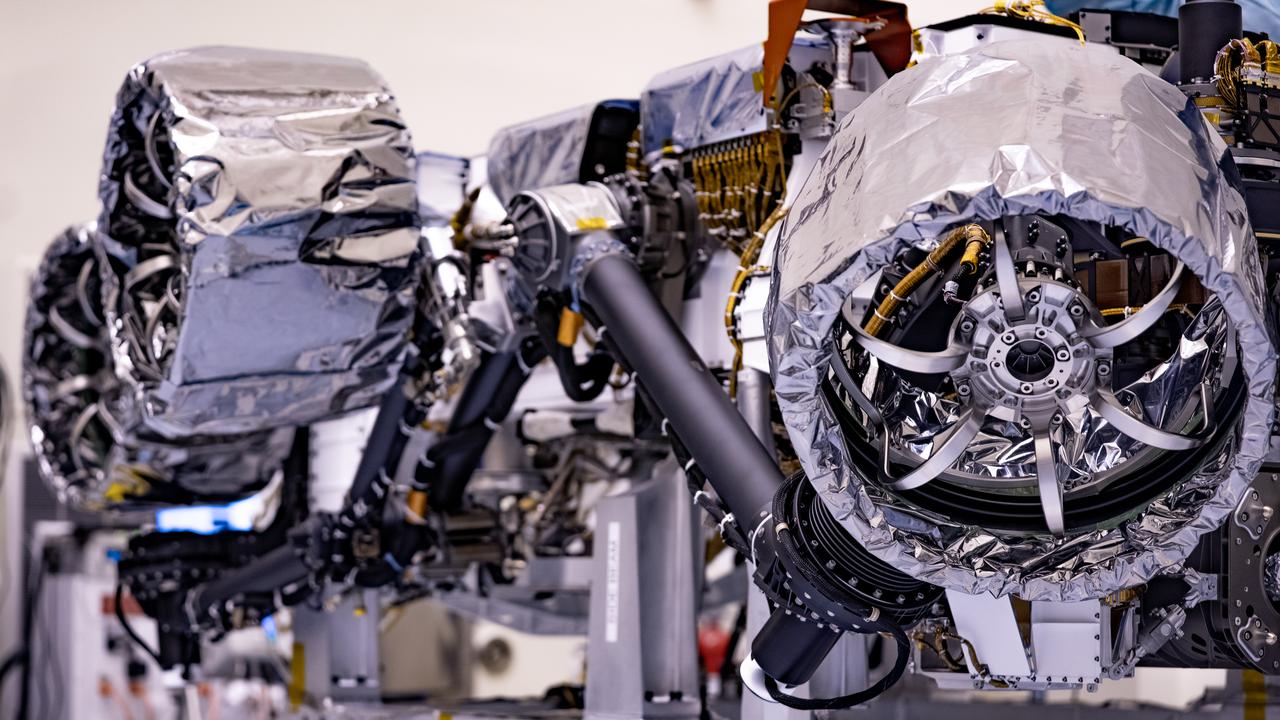
Wheels are installed on NASA’s Mars Perseverance rover inside Kennedy Space Center’s Payload Hazardous Servicing Facility on March 30, 2020. Perseverance will liftoff aboard a United Launch Alliance Atlas V 541 rocket from Cape Canaveral Air Force Station in July 2020. NASA’s Launch Services Program based at Kennedy is managing the launch. The rover will land on Mars on Feb. 18, 2021.
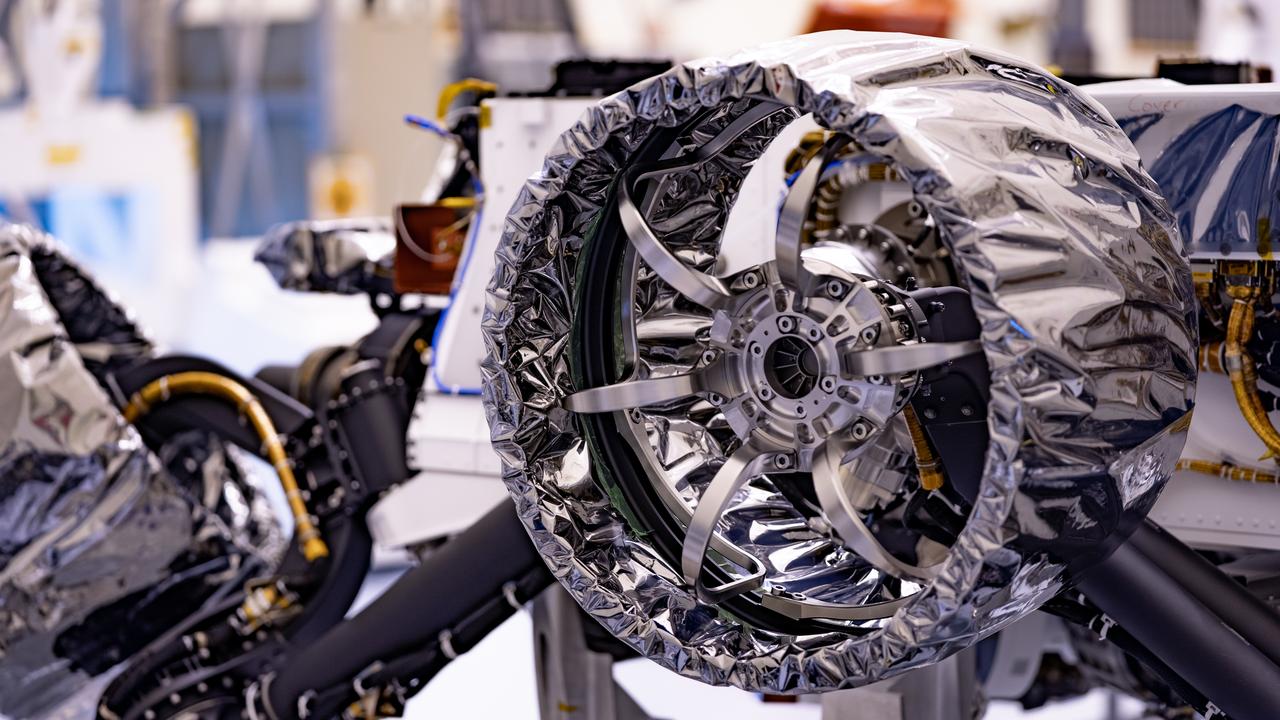
Wheels are installed on NASA’s Mars Perseverance rover inside Kennedy Space Center’s Payload Hazardous Servicing Facility on March 30, 2020. Perseverance will liftoff aboard a United Launch Alliance Atlas V 541 rocket from Cape Canaveral Air Force Station in July 2020. NASA’s Launch Services Program based at Kennedy is managing the launch. The rover will land on Mars on Feb. 18, 2021.
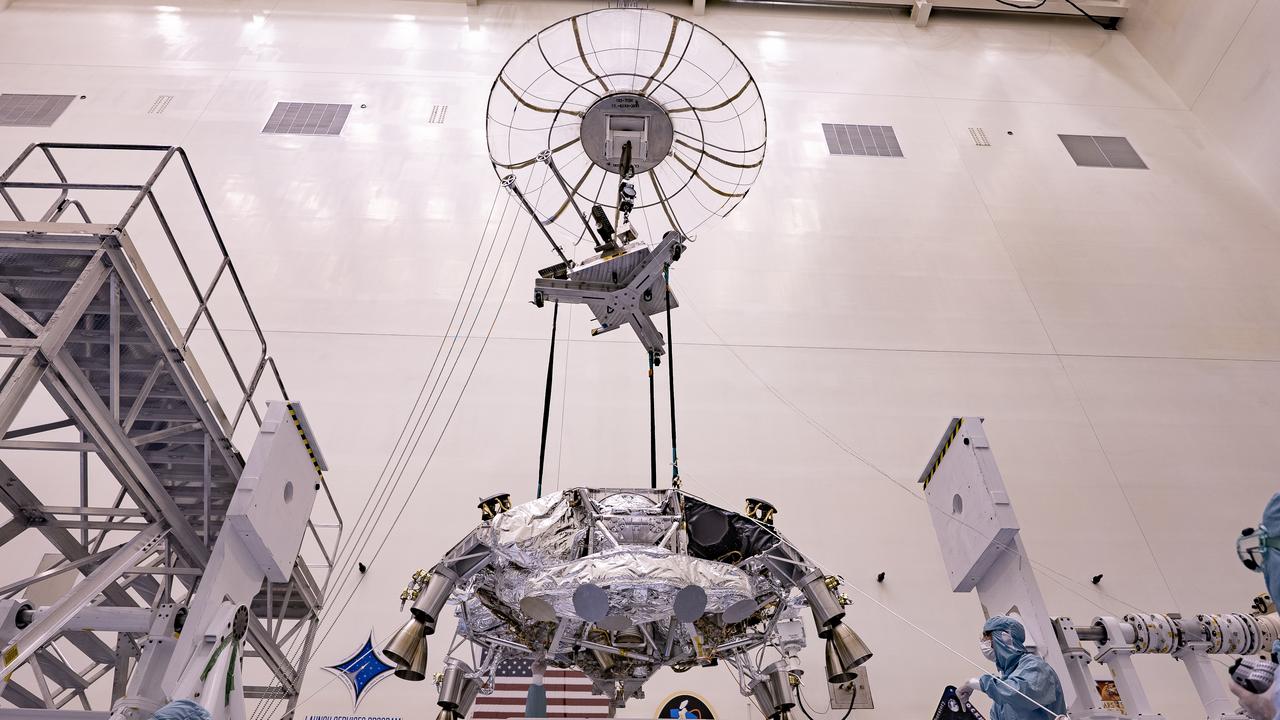
Engineers perform mass properties testing on the rocket-powered descent stage of NASA’s Mars Perseverance rover at Kennedy Space Center on April 9, 2020. The testing to determine the center of gravity, or the point at which weight is evenly dispersed on all sides, was performed inside the Florida spaceport’s Payload Hazardous Servicing Facility. The descent stage will lower the rover through the thin Martian atmosphere and onto the surface on Feb. 18, 2021. Liftoff, aboard a United Launch Alliance Atlas V 541 rocket, is targeted between July 17 and Aug. 5 from Cape Canaveral Air Force Station. NASA’s Launch Services Program based at Kennedy is managing the launch. The rover will seek signs of ancient life and collect rock and soil samples for possible return to Earth.
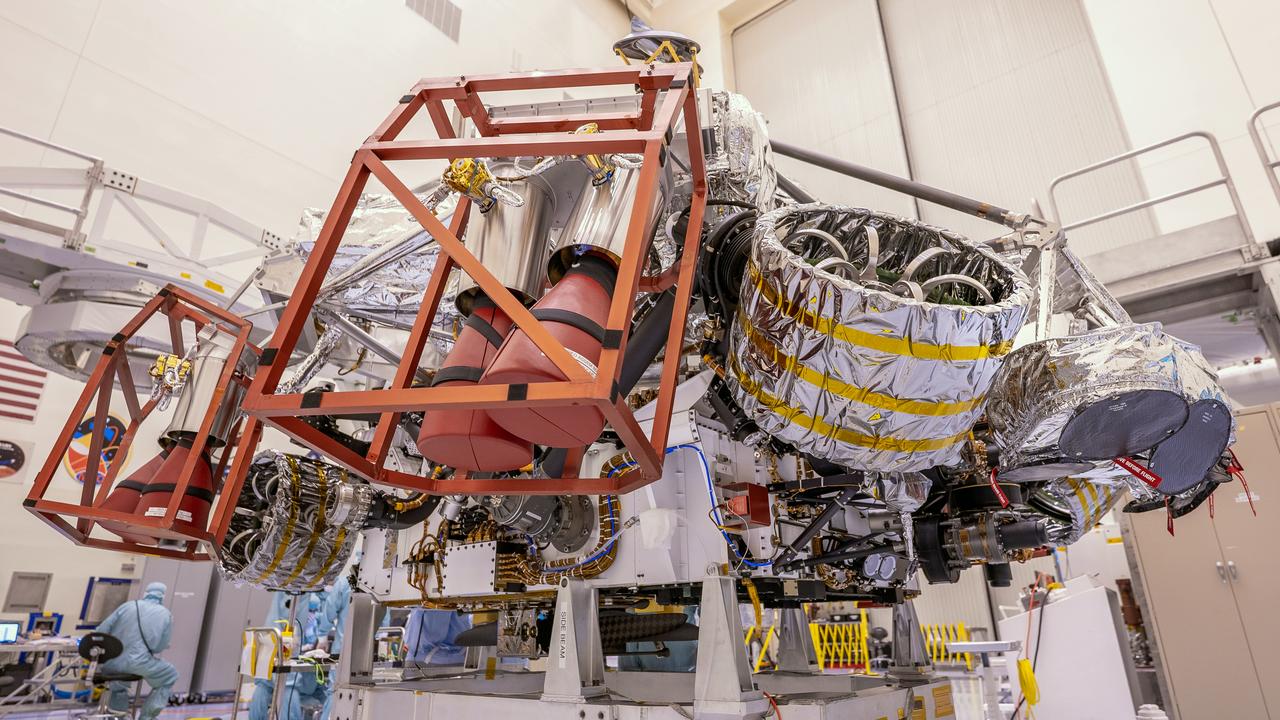
The Mars Perseverance rover is attached to its rocket-powered descent stage inside the Payload Hazardous Servicing Facility at NASA’s Kennedy Space Center in Florida on April 23, 2020. The rover and descent stage are the first spacecraft components to come together for launch — and they will be the last to separate when the spacecraft reaches Mars. At about 65 feet over the Martian surface, separation bolts will fire and the descent stage will lower Perseverance onto the Red Planet. Launch, aboard a United Launch Alliance Atlas V 541 rocket, is targeted between July 17 and Aug. 5 from Cape Canaveral Air Force Station. NASA’s Launch Services Program based at Kennedy is managing the launch.
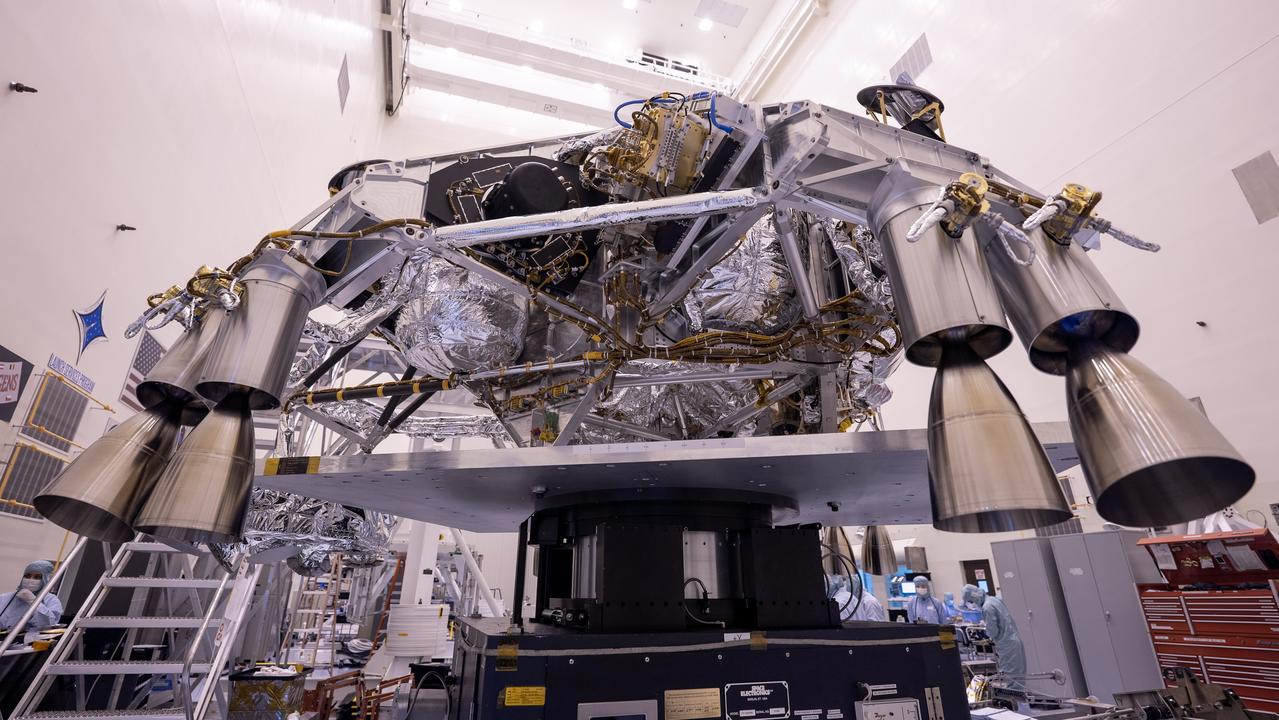
Engineers perform mass properties testing on the rocket-powered descent stage of NASA’s Mars Perseverance rover at Kennedy Space Center on April 12, 2020. The testing to determine the center of gravity, or the point at which weight is evenly dispersed on all sides, was performed inside the Florida spaceport’s Payload Hazardous Servicing Facility. The descent stage will lower the rover through the thin Martian atmosphere and onto the surface on Feb. 18, 2021. Liftoff, aboard a United Launch Alliance Atlas V 541 rocket, is targeted between July 17 and Aug. 5 from Cape Canaveral Air Force Station. NASA’s Launch Services Program based at Kennedy is managing the launch. The rover will seek signs of ancient life and collect rock and soil samples for possible return to Earth.
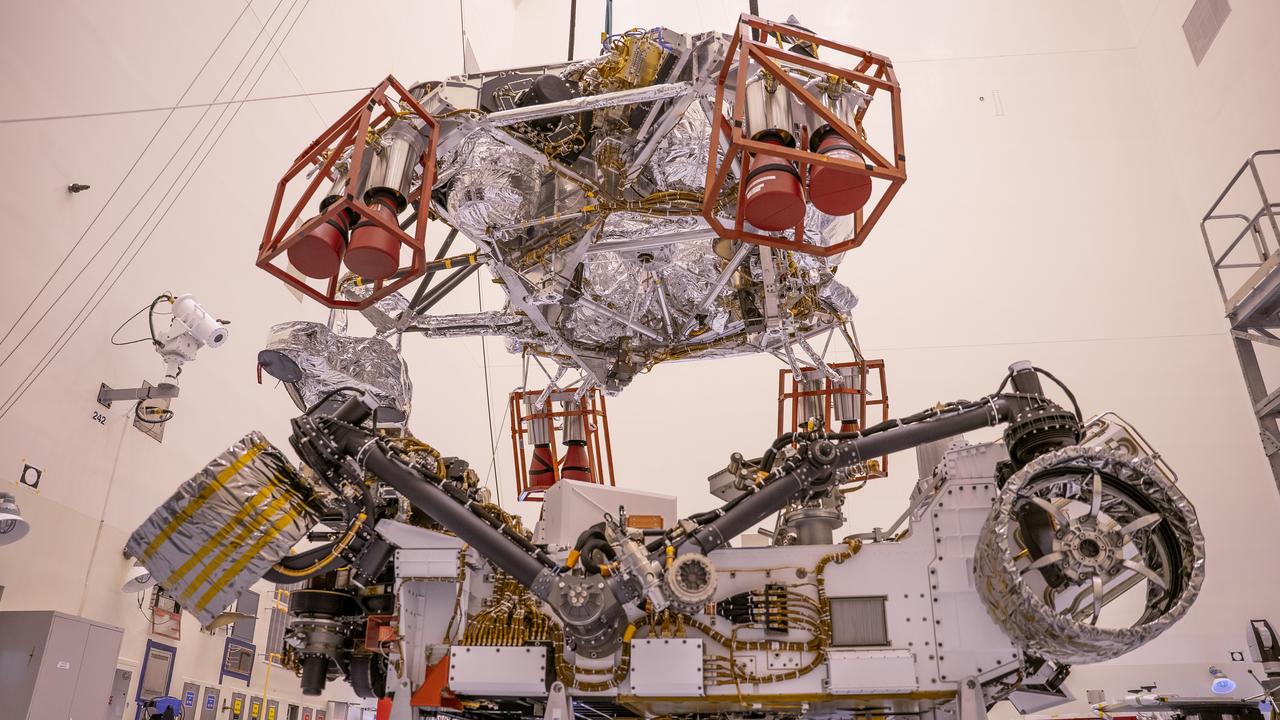
The Mars Perseverance rover is attached to its rocket-powered descent stage inside the Payload Hazardous Servicing Facility at NASA’s Kennedy Space Center in Florida on April 23, 2020. The rover and descent stage are the first spacecraft components to come together for launch — and they will be the last to separate when the spacecraft reaches Mars. At about 65 feet over the Martian surface, separation bolts will fire and the descent stage will lower Perseverance onto the Red Planet. Launch, aboard a United Launch Alliance Atlas V 541 rocket, is targeted between July 17 and Aug. 5 from Cape Canaveral Air Force Station. NASA’s Launch Services Program based at Kennedy is managing the launch.
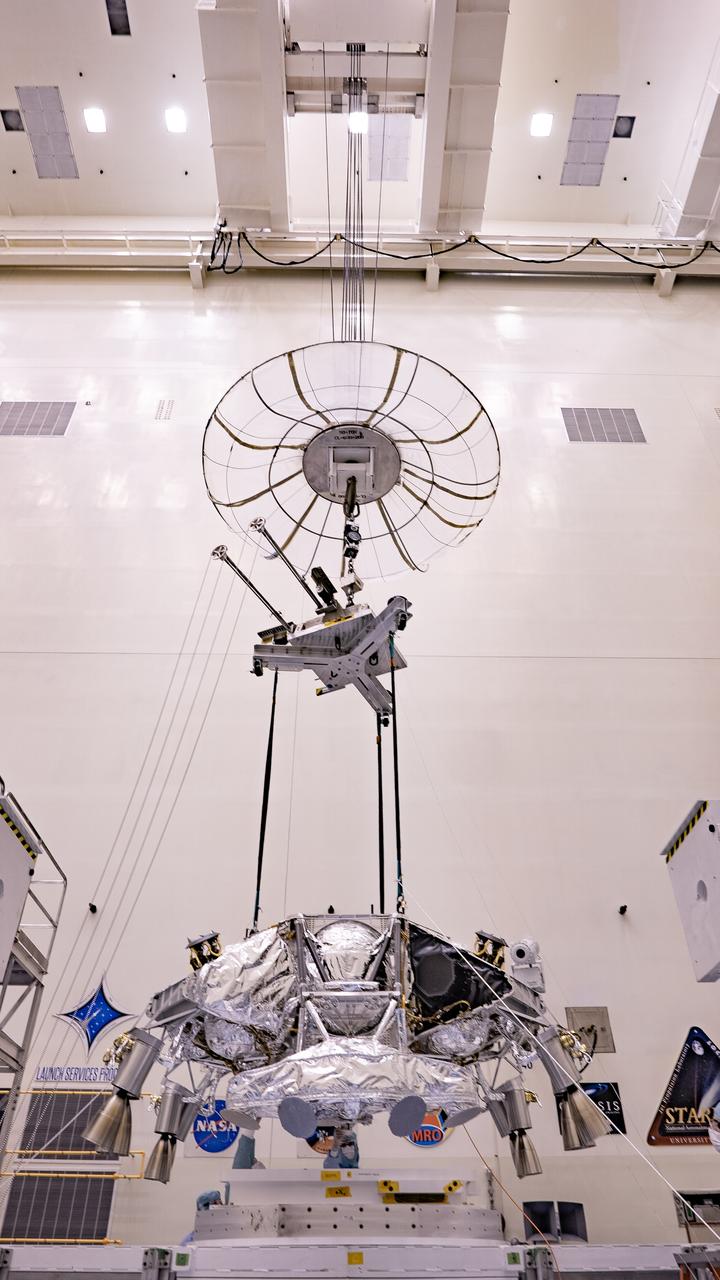
Engineers perform mass properties testing on the rocket-powered descent stage of NASA’s Mars Perseverance rover at Kennedy Space Center on April 9, 2020. The testing to determine the center of gravity, or the point at which weight is evenly dispersed on all sides, was performed inside the Florida spaceport’s Payload Hazardous Servicing Facility. The descent stage will lower the rover through the thin Martian atmosphere and onto the surface on Feb. 18, 2021. Liftoff, aboard a United Launch Alliance Atlas V 541 rocket, is targeted between July 17 and Aug. 5 from Cape Canaveral Air Force Station. NASA’s Launch Services Program based at Kennedy is managing the launch. The rover will seek signs of ancient life and collect rock and soil samples for possible return to Earth.
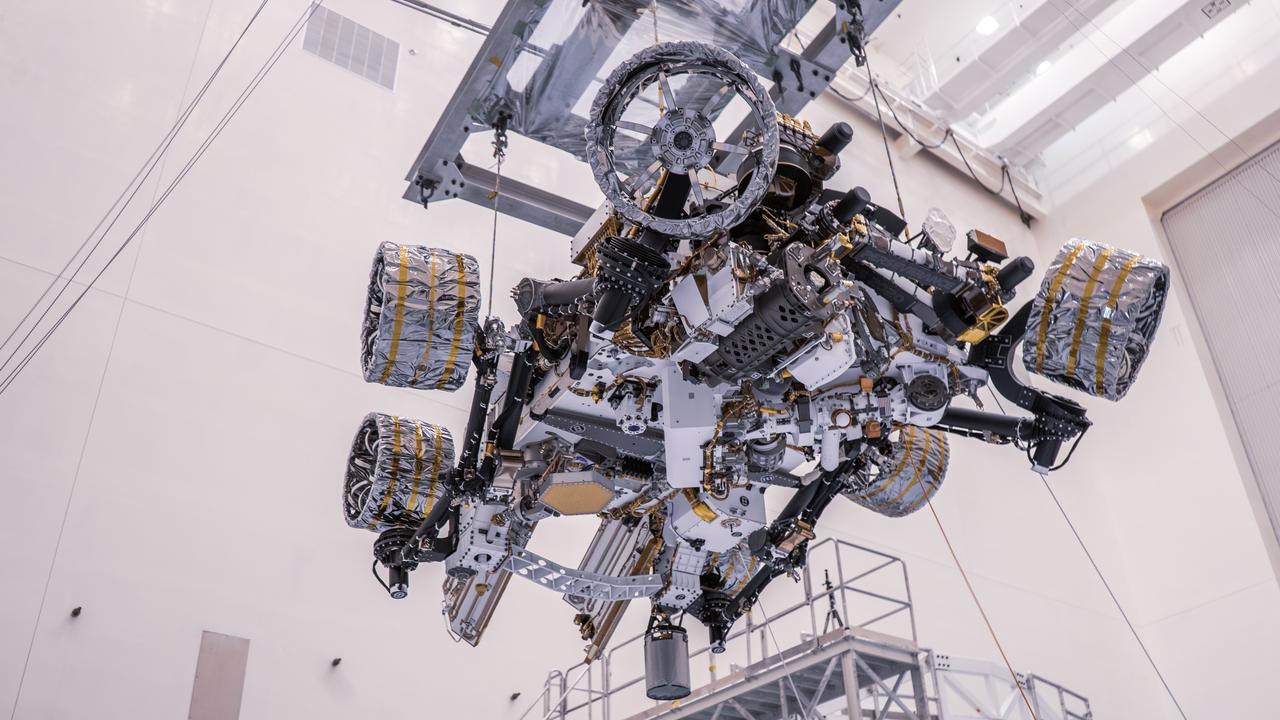
Engineers perform mass properties testing on NASA’s Mars Perseverance rover inside Kennedy Space Center’s Payload Hazardous Servicing Facility on April 7, 2020. The rover was rotated clockwise and counterclockwise on a spin table to determine the center of gravity, or the point at which weight is evenly dispersed on all sides. Establishing the rover’s center of gravity will help ensure the spacecraft will land on Mars as calculated. Perseverance will touch down on the Red Planet on Feb. 18, 2021. Liftoff aboard a United Launch Alliance Atlas V 541 rocket is targeted between July 17 and Aug. 5 from Cape Canaveral Air Force Station. NASA’s Launch Services Program based at Kennedy is managing the launch.
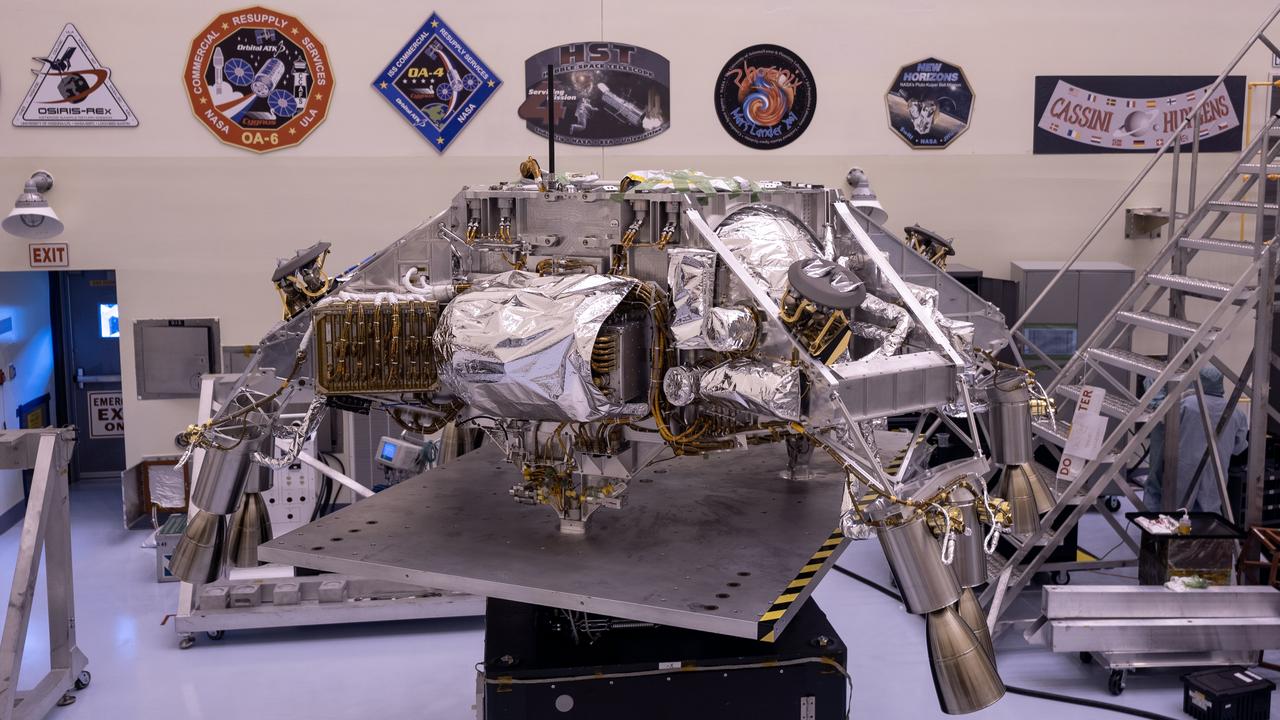
Engineers perform mass properties testing on the rocket-powered descent stage of NASA’s Mars Perseverance rover at Kennedy Space Center on April 12, 2020. The testing to determine the center of gravity, or the point at which weight is evenly dispersed on all sides, was performed inside the Florida spaceport’s Payload Hazardous Servicing Facility. The descent stage will lower the rover through the thin Martian atmosphere and onto the surface on Feb. 18, 2021. Liftoff, aboard a United Launch Alliance Atlas V 541 rocket, is targeted between July 17 and Aug. 5 from Cape Canaveral Air Force Station. NASA’s Launch Services Program based at Kennedy is managing the launch. The rover will seek signs of ancient life and collect rock and soil samples for possible return to Earth.
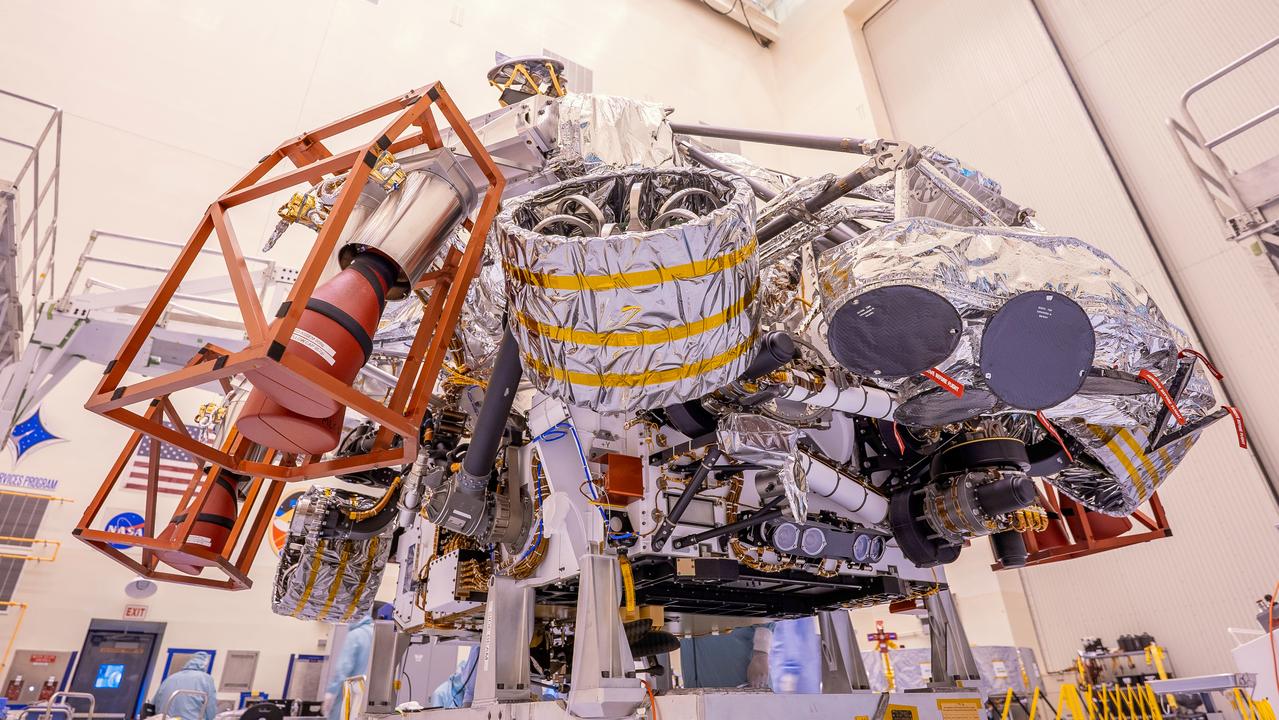
The Mars Perseverance rover is attached to its rocket-powered descent stage inside the Payload Hazardous Servicing Facility at NASA’s Kennedy Space Center in Florida on April 23, 2020. The rover and descent stage are the first spacecraft components to come together for launch — and they will be the last to separate when the spacecraft reaches Mars. At about 65 feet over the Martian surface, separation bolts will fire and the descent stage will lower Perseverance onto the Red Planet. Launch, aboard a United Launch Alliance Atlas V 541 rocket, is targeted between July 17 and Aug. 5 from Cape Canaveral Air Force Station. NASA’s Launch Services Program based at Kennedy is managing the launch.
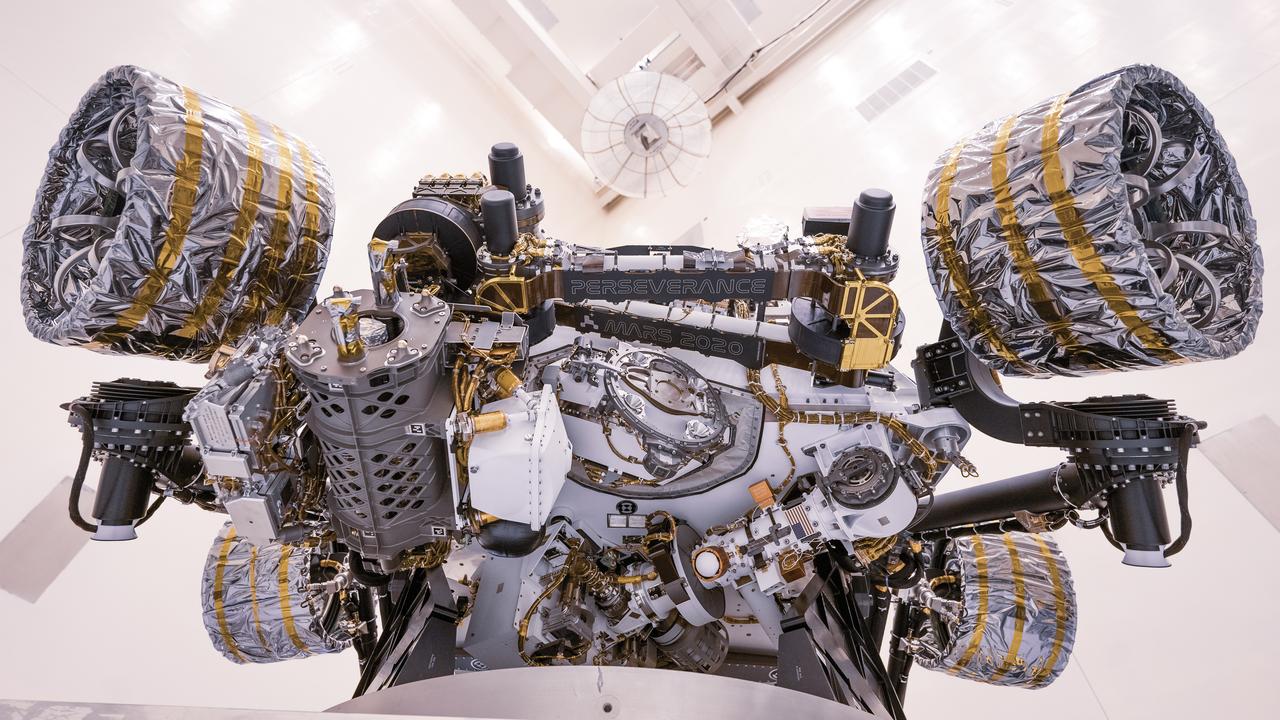
Engineers perform mass properties testing on NASA’s Mars Perseverance rover inside Kennedy Space Center’s Payload Hazardous Servicing Facility on April 7, 2020. The rover was rotated clockwise and counterclockwise on a spin table to determine the center of gravity, or the point at which weight is evenly dispersed on all sides. Establishing the rover’s center of gravity will help ensure the spacecraft will land on Mars as calculated. Perseverance will touch down on the Red Planet on Feb. 18, 2021. Liftoff aboard a United Launch Alliance Atlas V 541 rocket is targeted between July 17 and Aug. 5 from Cape Canaveral Air Force Station. NASA’s Launch Services Program based at Kennedy is managing the launch.
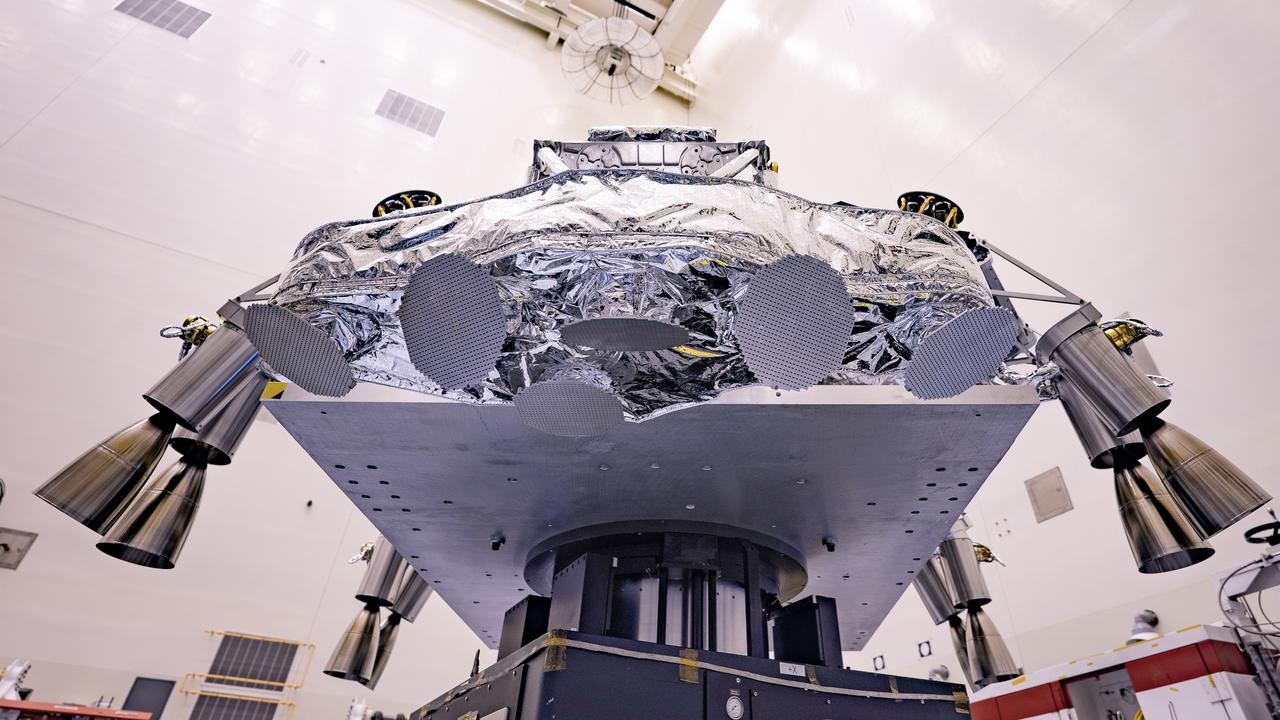
Engineers perform mass properties testing on the rocket-powered descent stage of NASA’s Mars Perseverance rover at Kennedy Space Center on April 12, 2020. The testing to determine the center of gravity, or the point at which weight is evenly dispersed on all sides, was performed inside the Florida spaceport’s Payload Hazardous Servicing Facility. The descent stage will lower the rover through the thin Martian atmosphere and onto the surface on Feb. 18, 2021. Liftoff, aboard a United Launch Alliance Atlas V 541 rocket, is targeted between July 17 and Aug. 5 from Cape Canaveral Air Force Station. NASA’s Launch Services Program based at Kennedy is managing the launch. The rover will seek signs of ancient life and collect rock and soil samples for possible return to Earth.
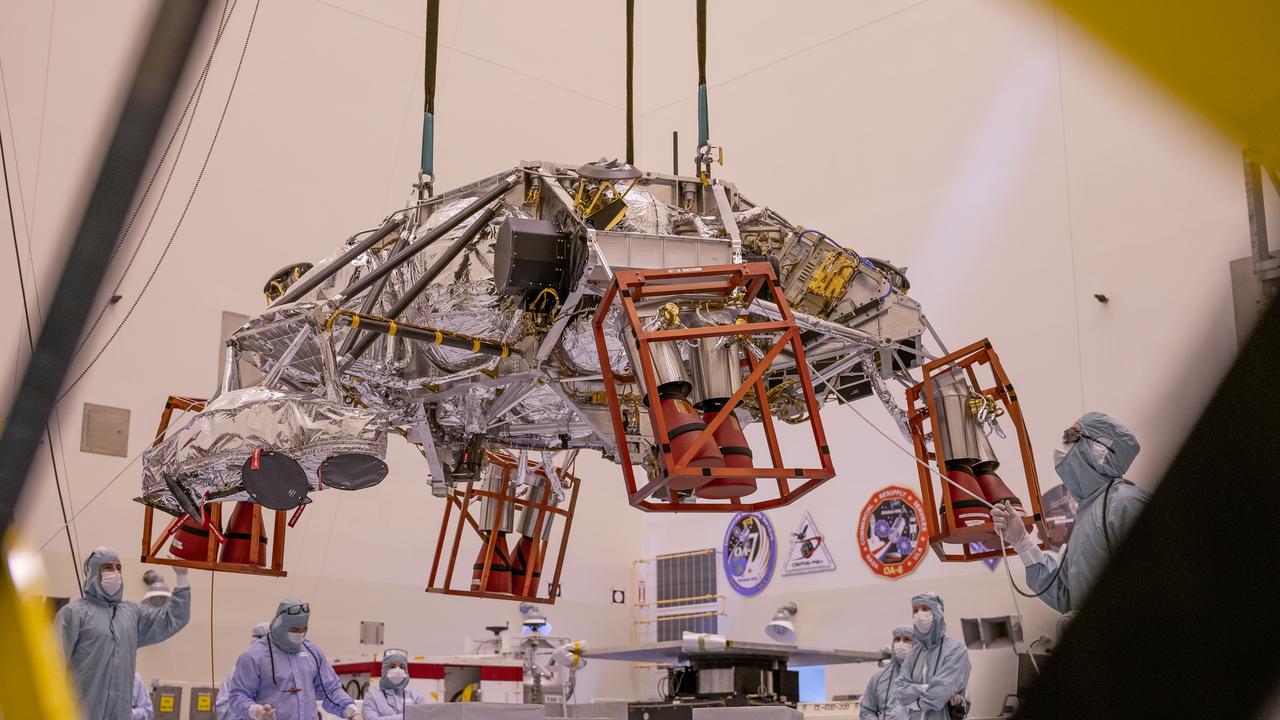
The Mars Perseverance rover is attached to its rocket-powered descent stage inside the Payload Hazardous Servicing Facility at NASA’s Kennedy Space Center in Florida on April 23, 2020. The rover and descent stage are the first spacecraft components to come together for launch — and they will be the last to separate when the spacecraft reaches Mars. At about 65 feet over the Martian surface, separation bolts will fire and the descent stage will lower Perseverance onto the Red Planet. Launch, aboard a United Launch Alliance Atlas V 541 rocket, is targeted between July 17 and Aug. 5 from Cape Canaveral Air Force Station. NASA’s Launch Services Program based at Kennedy is managing the launch.
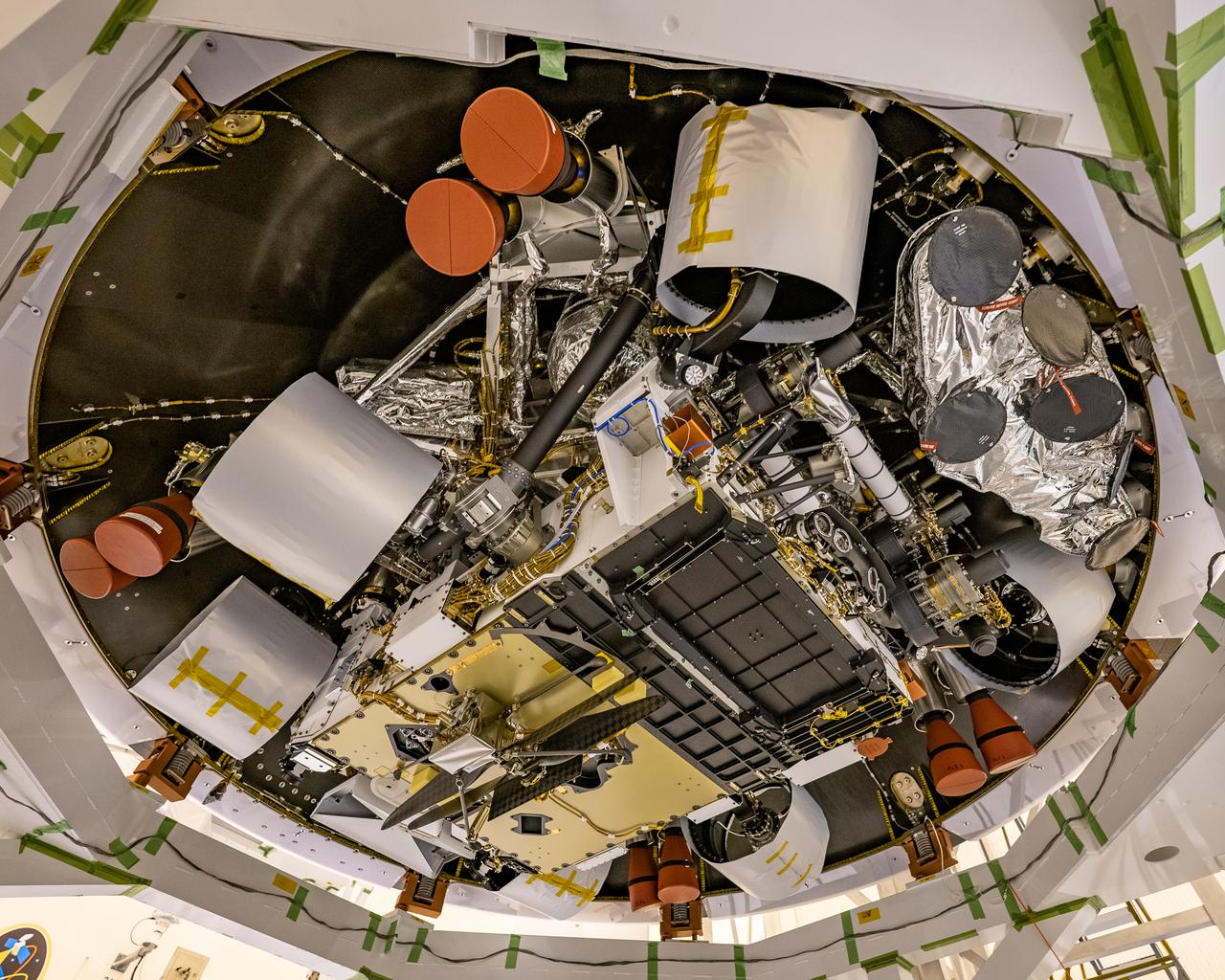
The aeroshell backshell for the Mars Perseverance rover is attached to the rocket-powered descent stage inside the Payload Hazardous Servicing Facility at NASA’s Kennedy Space Center in Florida on April 29, 2020. The aeroshell will encapsulate and protect Perseverance and its descent stage during their deep space journey to Mars and during descent through the Martian atmosphere. It will reach the Red Planet on Feb. 18, 2021. Launch, aboard a United Launch Alliance Atlas V 541 rocket, is targeted for summer 2020 from Cape Canaveral Air Force Station. NASA’s Launch Services Program based at Kennedy is managing the launch.
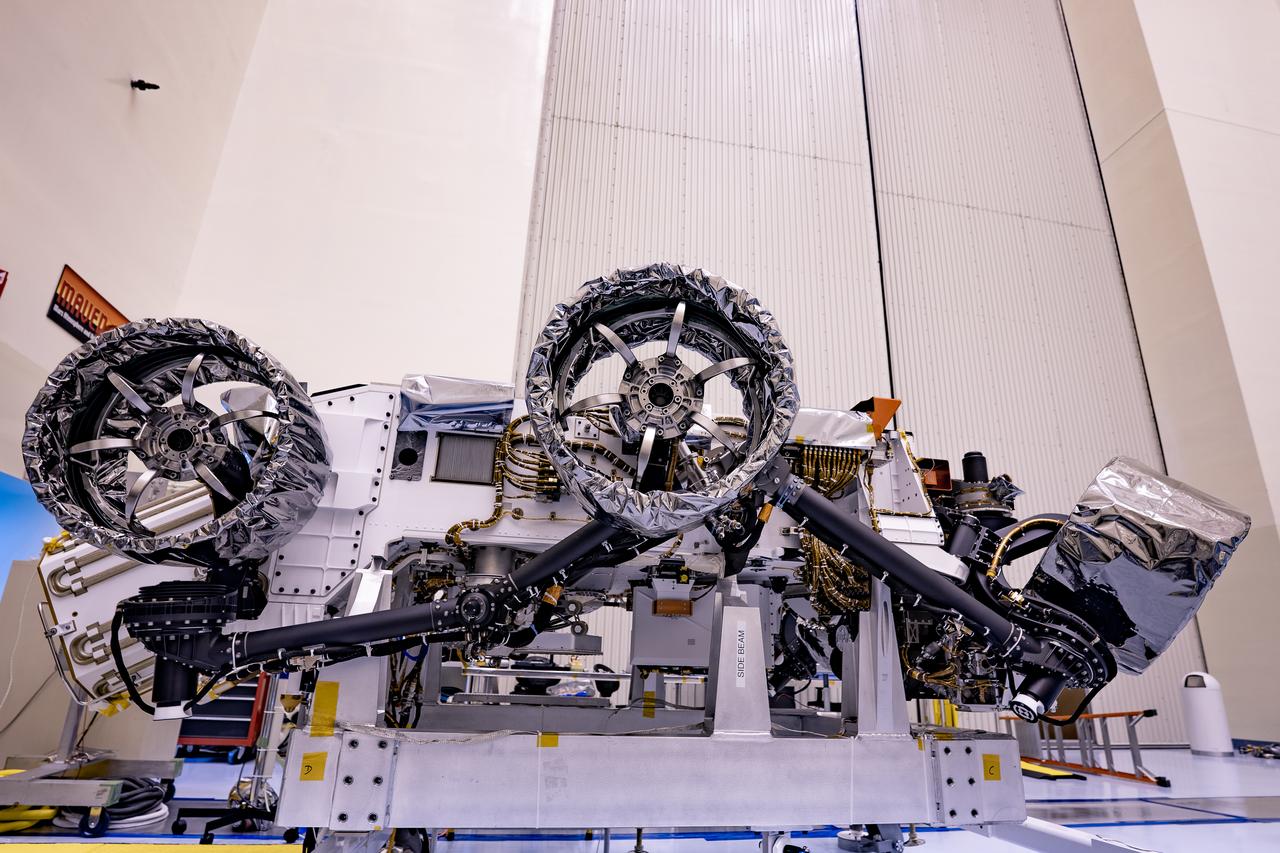
Wheels are installed on NASA’s Mars Perseverance rover inside Kennedy Space Center’s Payload Hazardous Servicing Facility on March 30, 2020. Perseverance will liftoff aboard a United Launch Alliance Atlas V 541 rocket from Cape Canaveral Air Force Station in July 2020. NASA’s Launch Services Program based at Kennedy is managing the launch. The rover will land on Mars on Feb. 18, 2021.
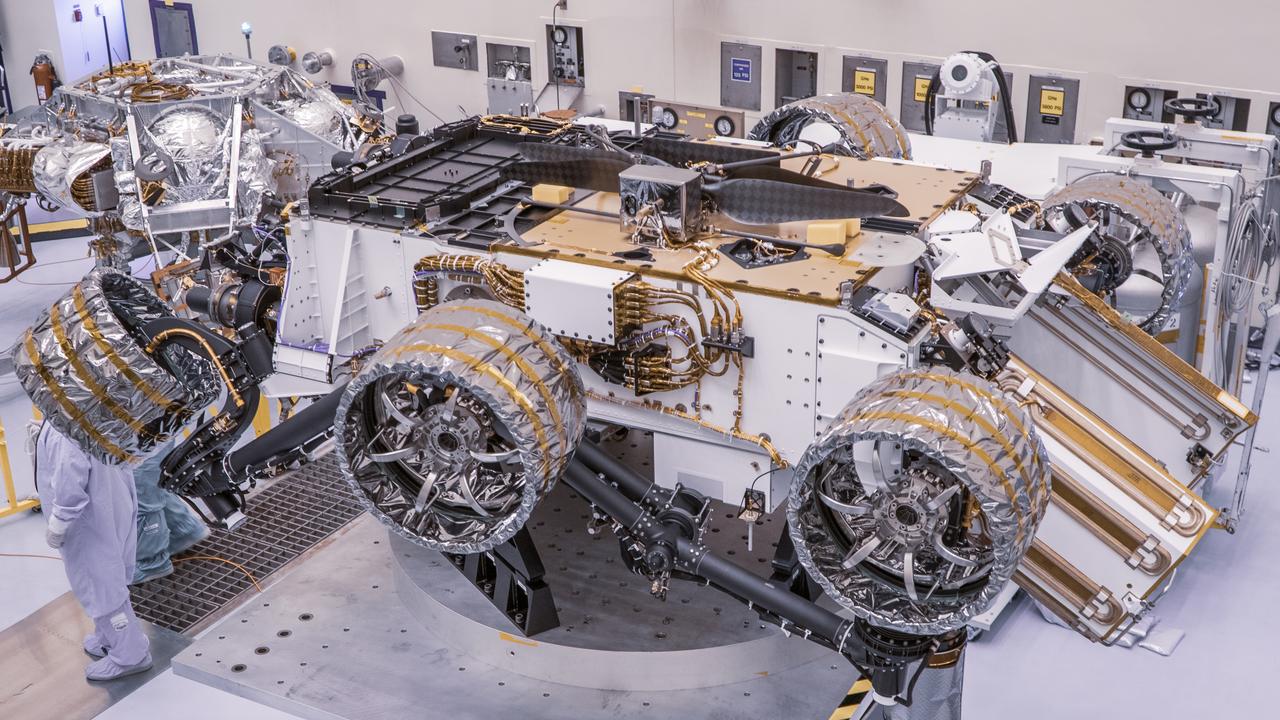
Engineers perform mass properties testing on NASA’s Mars Perseverance rover inside Kennedy Space Center’s Payload Hazardous Servicing Facility on April 7, 2020. The rover was rotated clockwise and counterclockwise on a spin table to determine the center of gravity, or the point at which weight is evenly dispersed on all sides. Establishing the rover’s center of gravity will help ensure the spacecraft will land on Mars as calculated. Perseverance will touch down on the Red Planet on Feb. 18, 2021. Liftoff aboard a United Launch Alliance Atlas V 541 rocket is targeted between July 17 and Aug. 5 from Cape Canaveral Air Force Station. NASA’s Launch Services Program based at Kennedy is managing the launch.
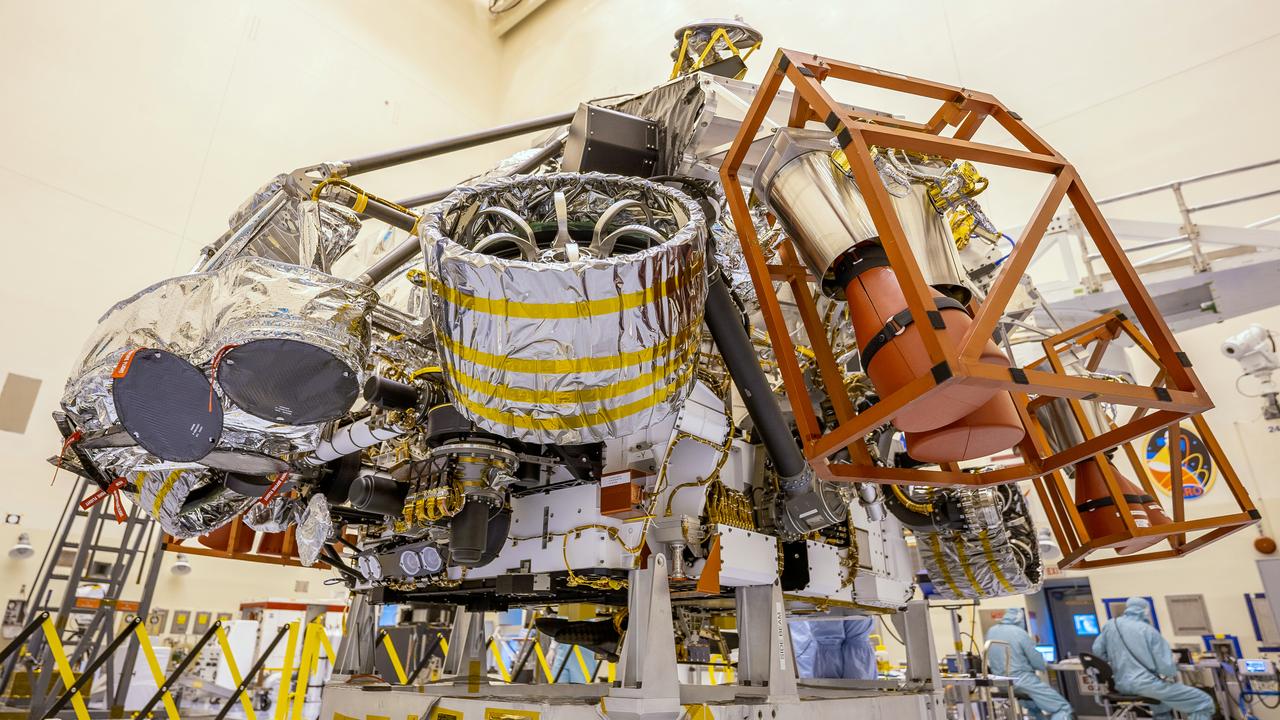
The Mars Perseverance rover is attached to its rocket-powered descent stage inside the Payload Hazardous Servicing Facility at NASA’s Kennedy Space Center in Florida on April 23, 2020. The rover and descent stage are the first spacecraft components to come together for launch — and they will be the last to separate when the spacecraft reaches Mars. At about 65 feet over the Martian surface, separation bolts will fire and the descent stage will lower Perseverance onto the Red Planet. Launch, aboard a United Launch Alliance Atlas V 541 rocket, is targeted between July 17 and Aug. 5 from Cape Canaveral Air Force Station. NASA’s Launch Services Program based at Kennedy is managing the launch.
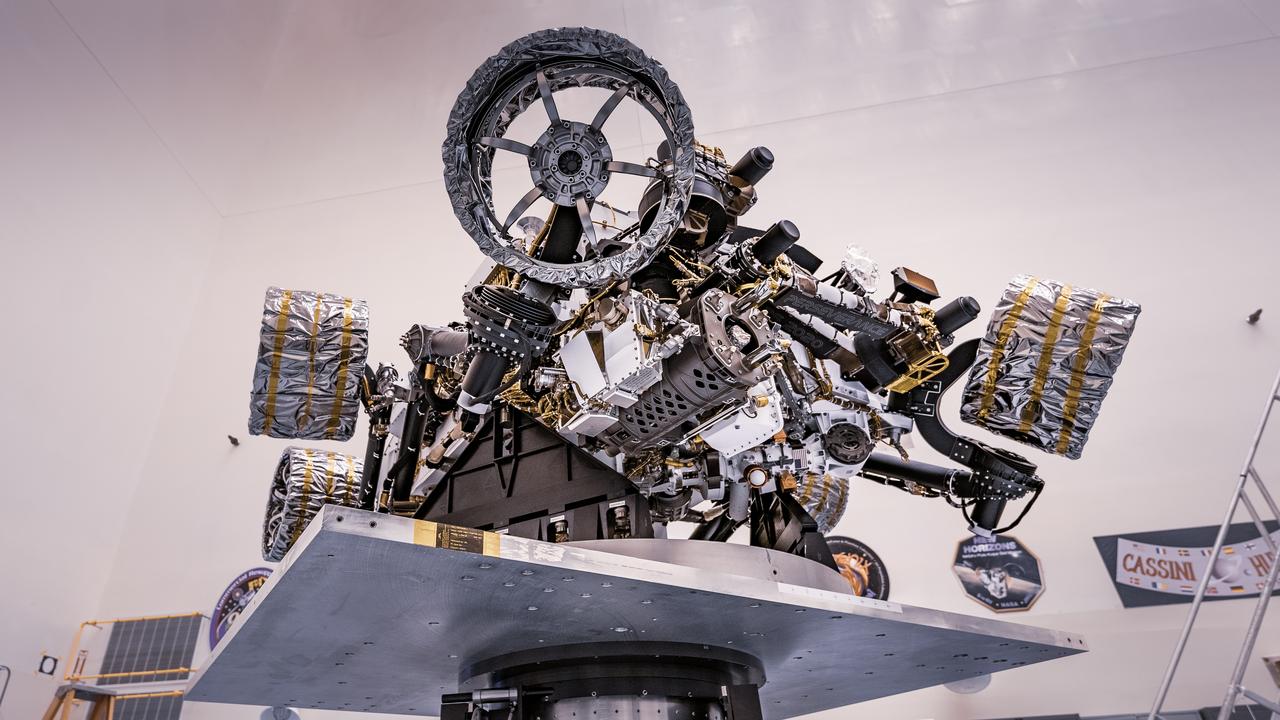
Engineers perform mass properties testing on NASA’s Mars Perseverance rover inside Kennedy Space Center’s Payload Hazardous Servicing Facility on April 7, 2020. The rover was rotated clockwise and counterclockwise on a spin table to determine the center of gravity, or the point at which weight is evenly dispersed on all sides. Establishing the rover’s center of gravity will help ensure the spacecraft will land on Mars as calculated. Perseverance will touch down on the Red Planet on Feb. 18, 2021. Liftoff aboard a United Launch Alliance Atlas V 541 rocket is targeted between July 17 and Aug. 5 from Cape Canaveral Air Force Station. NASA’s Launch Services Program based at Kennedy is managing the launch.
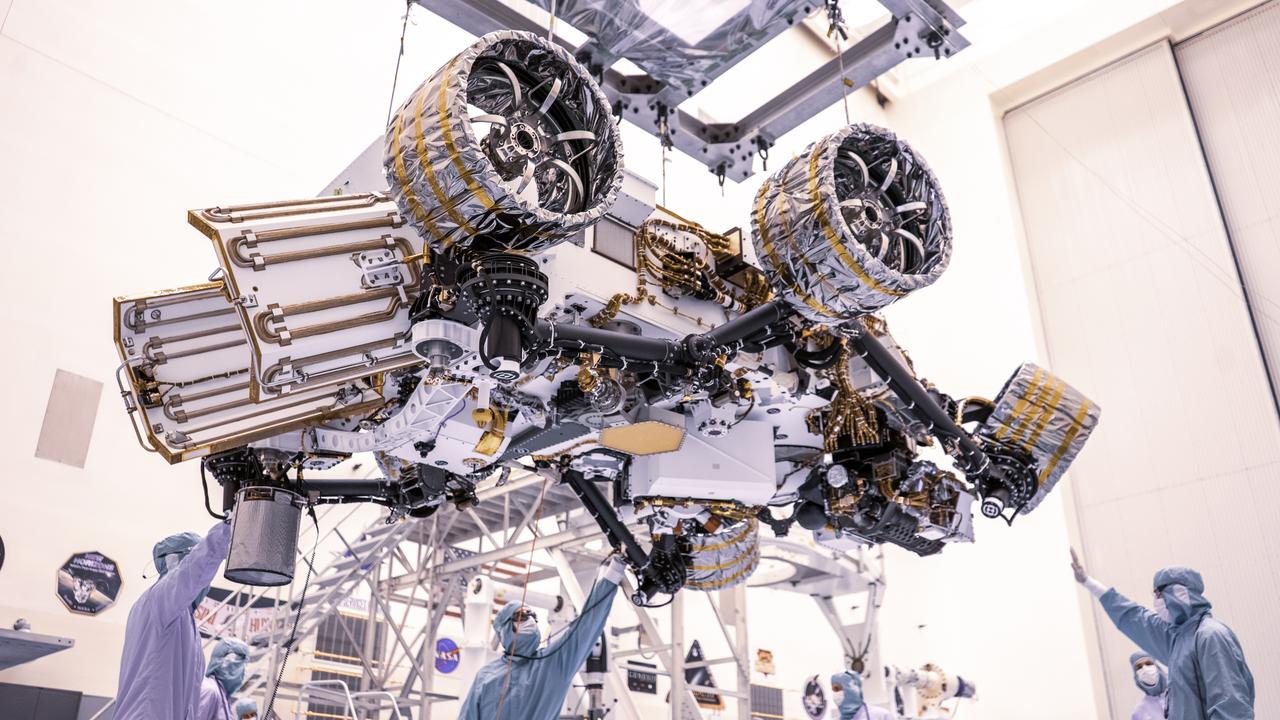
Engineers perform mass properties testing on NASA’s Mars Perseverance rover inside Kennedy Space Center’s Payload Hazardous Servicing Facility on April 7, 2020. The rover was rotated clockwise and counterclockwise on a spin table to determine the center of gravity, or the point at which weight is evenly dispersed on all sides. Establishing the rover’s center of gravity will help ensure the spacecraft will land on Mars as calculated. Perseverance will touch down on the Red Planet on Feb. 18, 2021. Liftoff aboard a United Launch Alliance Atlas V 541 rocket is targeted between July 17 and Aug. 5 from Cape Canaveral Air Force Station. NASA’s Launch Services Program based at Kennedy is managing the launch.
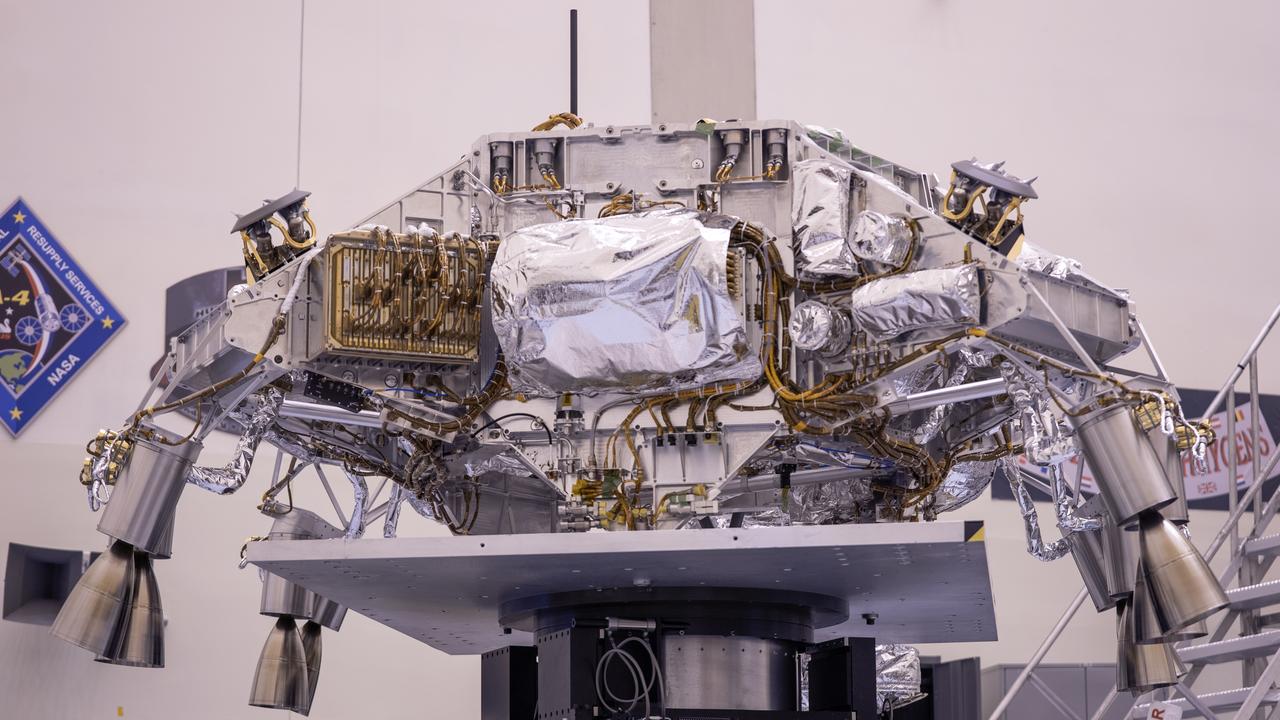
Engineers perform mass properties testing on the rocket-powered descent stage of NASA’s Mars Perseverance rover at Kennedy Space Center on April 12, 2020. The testing to determine the center of gravity, or the point at which weight is evenly dispersed on all sides, was performed inside the Florida spaceport’s Payload Hazardous Servicing Facility. The descent stage will lower the rover through the thin Martian atmosphere and onto the surface on Feb. 18, 2021. Liftoff, aboard a United Launch Alliance Atlas V 541 rocket, is targeted between July 17 and Aug. 5 from Cape Canaveral Air Force Station. NASA’s Launch Services Program based at Kennedy is managing the launch. The rover will seek signs of ancient life and collect rock and soil samples for possible return to Earth.
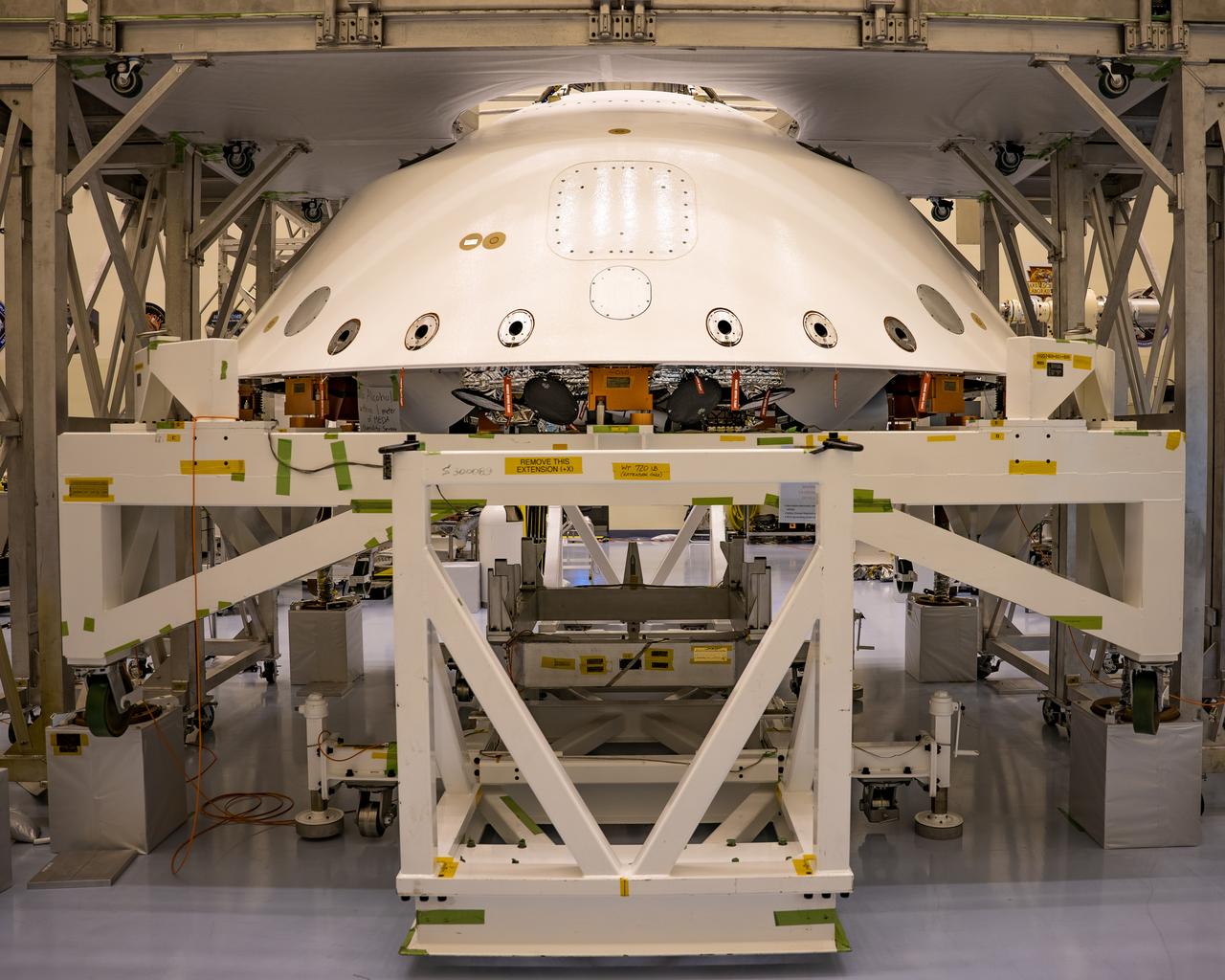
The aeroshell backshell for the Mars Perseverance rover is attached to the rocket-powered descent stage inside the Payload Hazardous Servicing Facility at NASA’s Kennedy Space Center in Florida on April 29, 2020. The aeroshell will encapsulate and protect Perseverance and its descent stage during their deep space journey to Mars and during descent through the Martian atmosphere. It will reach the Red Planet on Feb. 18, 2021. Launch, aboard a United Launch Alliance Atlas V 541 rocket, is targeted for summer 2020 from Cape Canaveral Air Force Station. NASA’s Launch Services Program based at Kennedy is managing the launch.
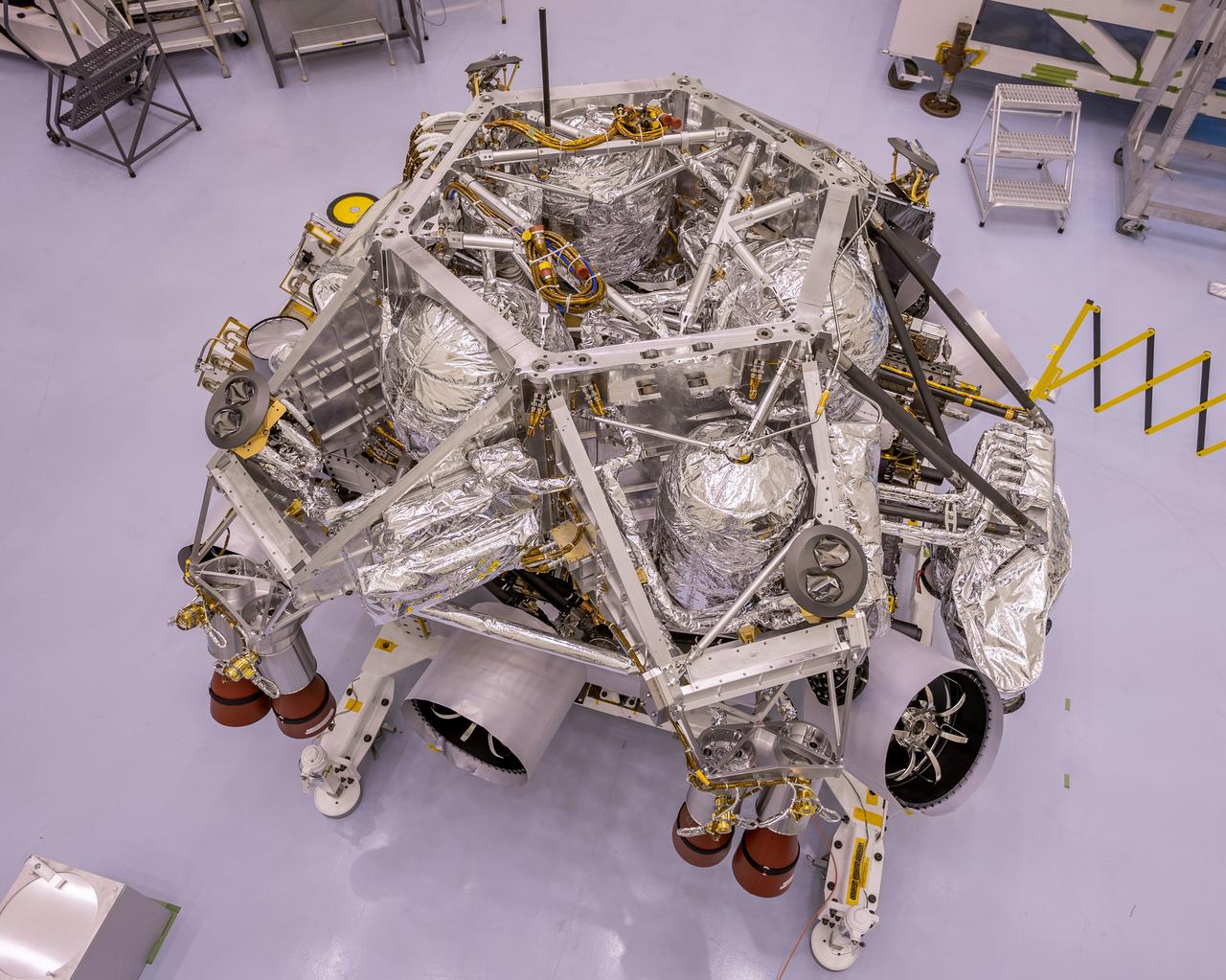
The powered descent vehicle for the Mars Perseverance rover is stacked inside the Payload Hazardous Servicing Facility at NASA’s Kennedy Space Center in Florida on April 28, 2020. The rover and descent stage were the first spacecraft components to come together for launch — and they will be the last to separate when the spacecraft reaches Mars on Feb. 18, 2021. Launch, aboard a United Launch Alliance Atlas V 541 rocket, is targeted for summer 2020 from Cape Canaveral Air Force Station. NASA’s Launch Services Program based at Kennedy is managing the launch.
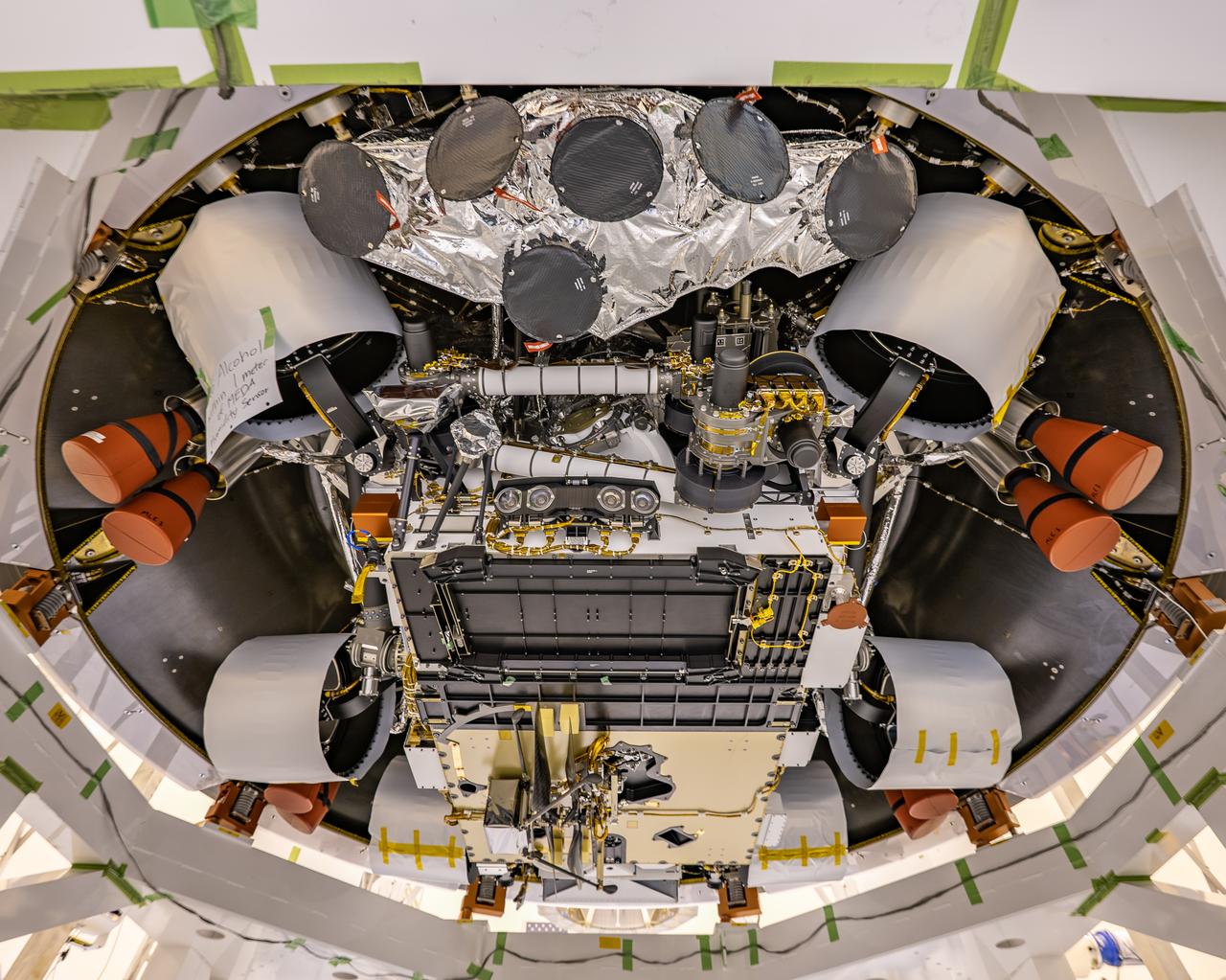
The aeroshell backshell for the Mars Perseverance rover is attached to the rocket-powered descent stage inside the Payload Hazardous Servicing Facility at NASA’s Kennedy Space Center in Florida on April 29, 2020. The aeroshell will encapsulate and protect Perseverance and its descent stage during their deep space journey to Mars and during descent through the Martian atmosphere. It will reach the Red Planet on Feb. 18, 2021. Launch, aboard a United Launch Alliance Atlas V 541 rocket, is targeted for summer 2020 from Cape Canaveral Air Force Station. NASA’s Launch Services Program based at Kennedy is managing the launch.
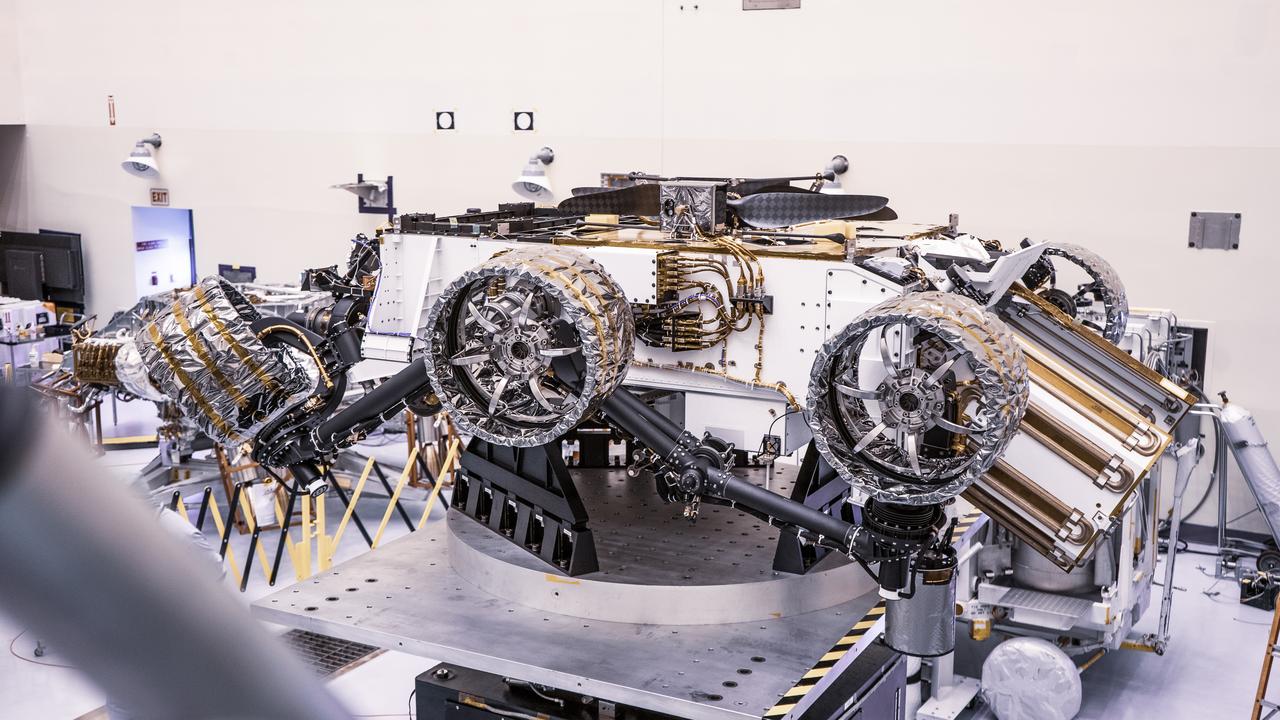
Engineers perform mass properties testing on NASA’s Mars Perseverance rover inside Kennedy Space Center’s Payload Hazardous Servicing Facility on April 7, 2020. The rover was rotated clockwise and counterclockwise on a spin table to determine the center of gravity, or the point at which weight is evenly dispersed on all sides. Establishing the rover’s center of gravity will help ensure the spacecraft will land on Mars as calculated. Perseverance will touch down on the Red Planet on Feb. 18, 2021. Liftoff aboard a United Launch Alliance Atlas V 541 rocket is targeted between July 17 and Aug. 5 from Cape Canaveral Air Force Station. NASA’s Launch Services Program based at Kennedy is managing the launch.
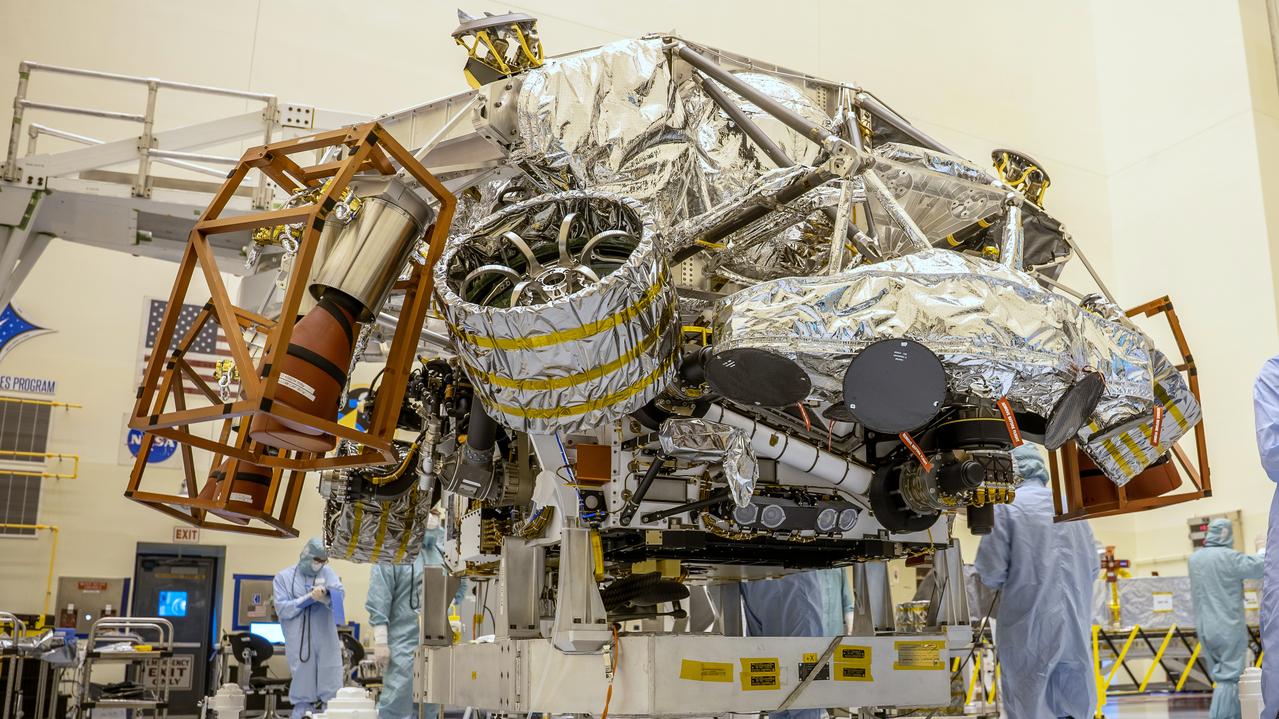
The Mars Perseverance rover is attached to its rocket-powered descent stage inside the Payload Hazardous Servicing Facility at NASA’s Kennedy Space Center in Florida on April 23, 2020. The rover and descent stage are the first spacecraft components to come together for launch — and they will be the last to separate when the spacecraft reaches Mars. At about 65 feet over the Martian surface, separation bolts will fire and the descent stage will lower Perseverance onto the Red Planet. Launch, aboard a United Launch Alliance Atlas V 541 rocket, is targeted between July 17 and Aug. 5 from Cape Canaveral Air Force Station. NASA’s Launch Services Program based at Kennedy is managing the launch.
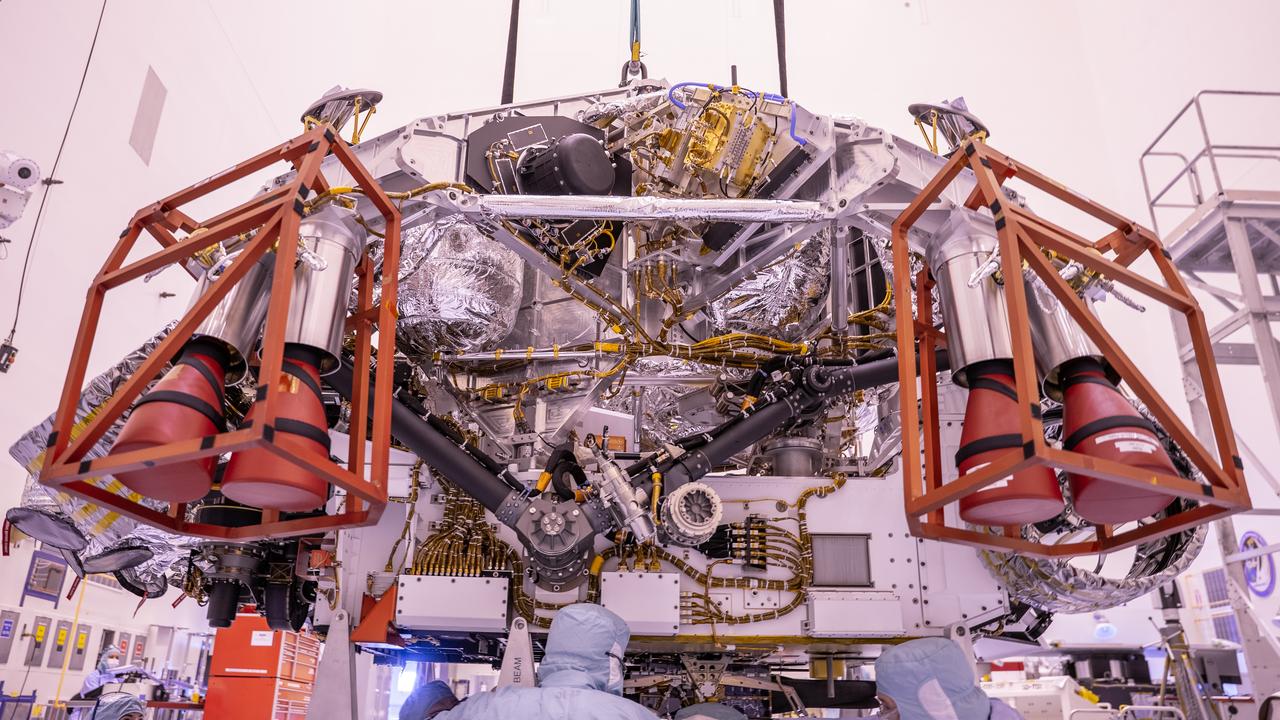
The Mars Perseverance rover is attached to its rocket-powered descent stage inside the Payload Hazardous Servicing Facility at NASA’s Kennedy Space Center in Florida on April 23, 2020. The rover and descent stage are the first spacecraft components to come together for launch — and they will be the last to separate when the spacecraft reaches Mars. At about 65 feet over the Martian surface, separation bolts will fire and the descent stage will lower Perseverance onto the Red Planet. Launch, aboard a United Launch Alliance Atlas V 541 rocket, is targeted between July 17 and Aug. 5 from Cape Canaveral Air Force Station. NASA’s Launch Services Program based at Kennedy is managing the launch.