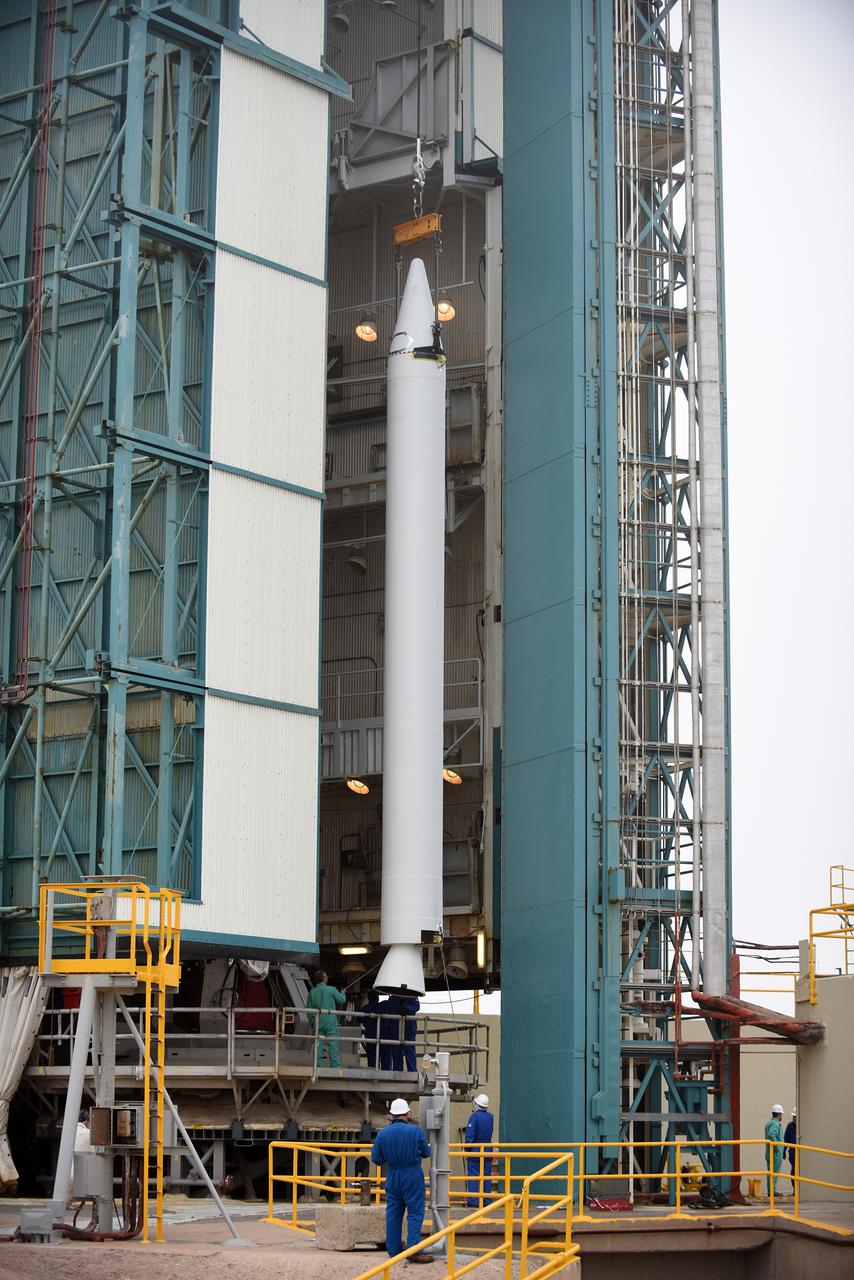
At Vandenberg Air Force Base in California, a solid rocket motor is lifted at Space Launch Complex 2 to be attached to a United Launch Alliance Delta II rocket. Preparations are continuing for launch of the Joint Polar Satellite System (JPSS-1) spacecraft on March 27, 2017. JPSS-1 is part of the next-generation environmental satellite system, a collaborative program between the National Oceanic and Atmospheric Administration (NOAA) and NASA.
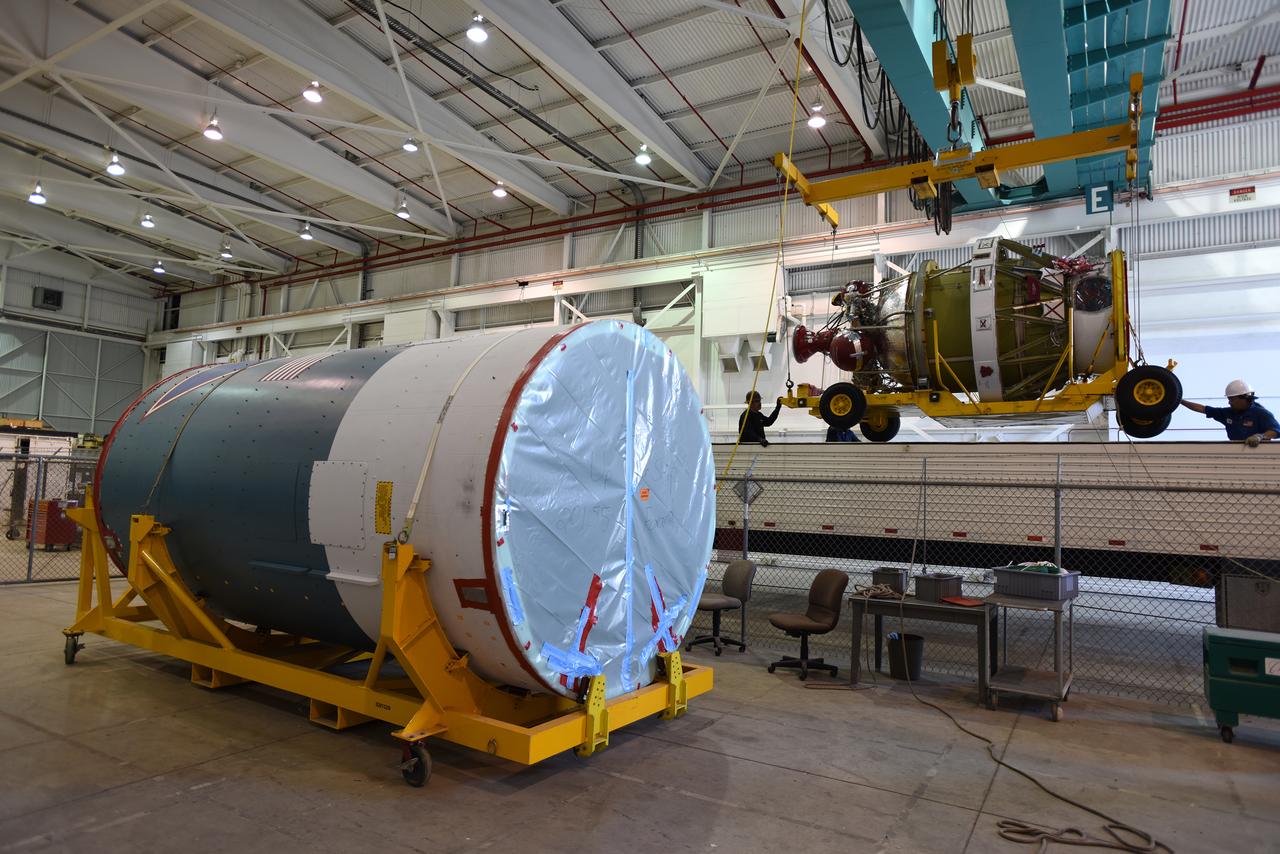
Technicians offload the second stage of a Delta II rocket from a transport trailer inside NASA Hangar 836 at Vandenberg Air Force Base in California in preparation to launch the Joint Polar Satellite System spacecraft in 2017. JPSS-1 is part of the next-generation environmental satellite system, a collaborative program between the National Oceanic and Atmospheric Administration (NOAA) and NASA. To learn more about JPSS-1, visit http://www.jpss.noaa.gov.
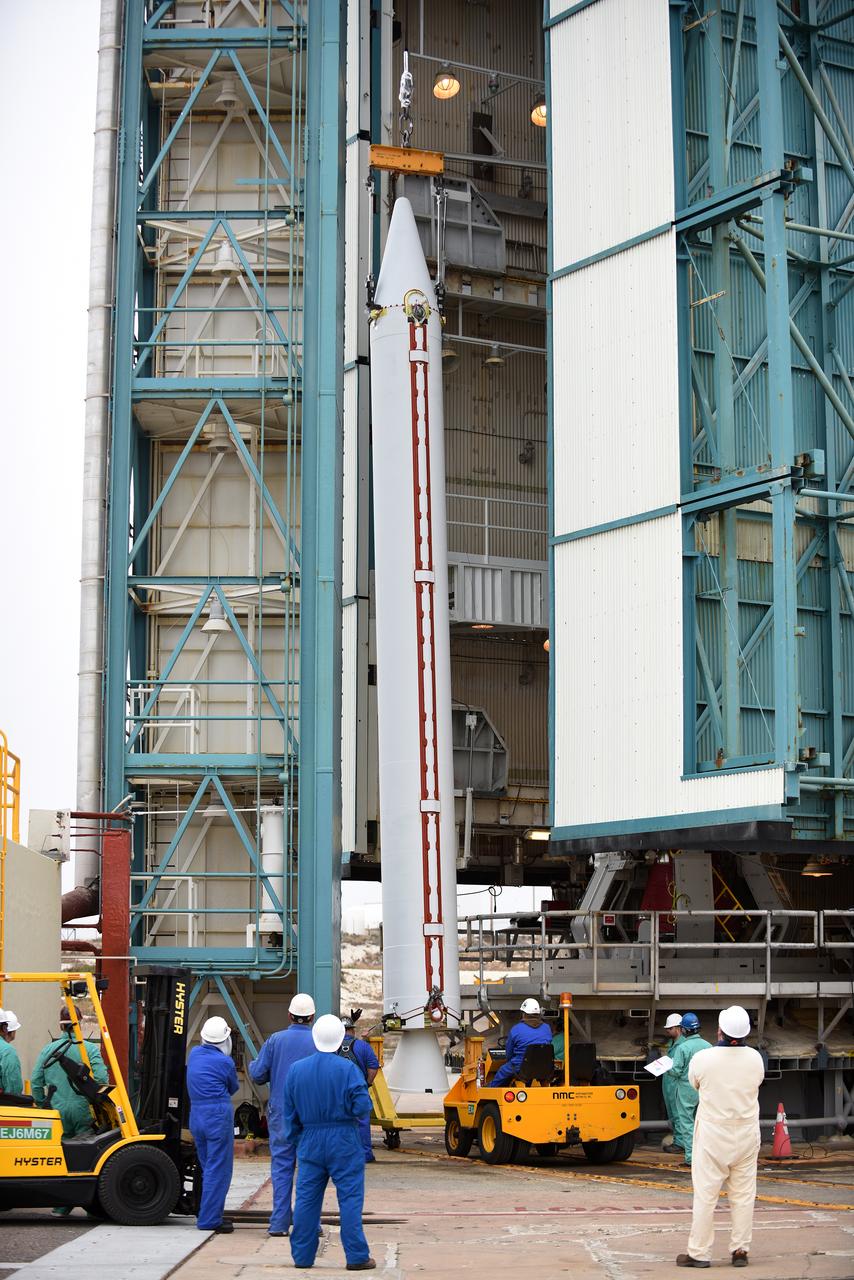
At Vandenberg Air Force Base in California, a solid rocket motor is lifted at Space Launch Complex 2 to be attached to a United Launch Alliance Delta II rocket. Preparations are continuing for launch of the Joint Polar Satellite System (JPSS-1) spacecraft on March 27, 2017. JPSS-1 is part of the next-generation environmental satellite system, a collaborative program between the National Oceanic and Atmospheric Administration (NOAA) and NASA.
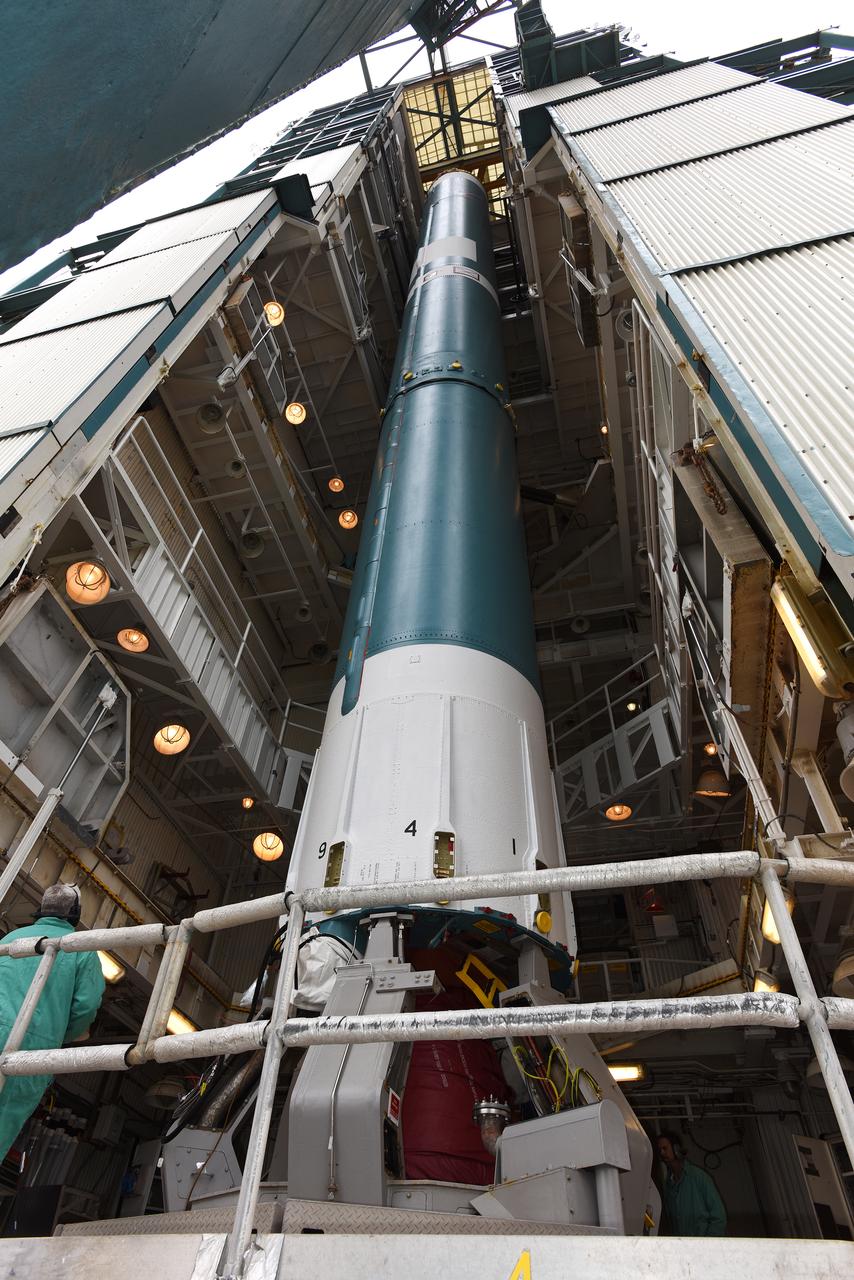
At Vandenberg Air Force Base in California, a United Launch Alliance Delta II rocket stands at Space Launch Complex 2 as preparations are continuing for launch of the Joint Polar Satellite System (JPSS-1) spacecraft on March 27, 2017. JPSS-1 is part of the next-generation environmental satellite system, a collaborative program between the National Oceanic and Atmospheric Administration (NOAA) and NASA.
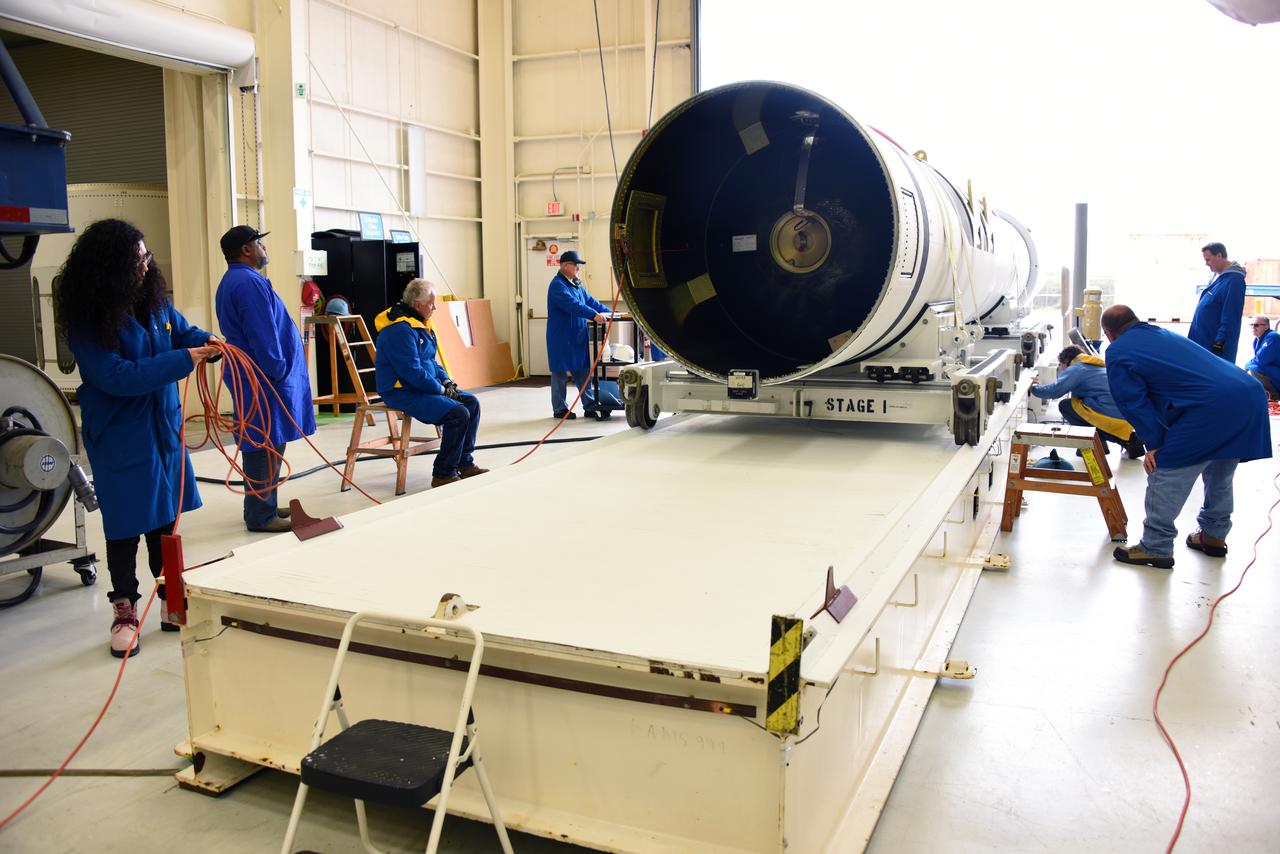
The first stage motor for the Orbital ATK Pegasus XL rocket is moved inside Building 1555 at Vandenberg Air Force Base in California. In the background are the second and third stage segments. The rocket is being prepared for NASA's Ionospheric Connection Explorer, or ICON, mission. ICON will launch from the Kwajalein Atoll aboard the Pegasus XL on Dec. 8, 2017. ICON will study the frontier of space - the dynamic zone high in Earth's atmosphere where terrestrial weather from below meets space weather above. The explorer will help determine the physics of Earth's space environment and pave the way for mitigating its effects on our technology, communications systems and society.

At Vandenberg Air Force Base in California, a solid rocket motor is lifted at Space Launch Complex 2 to be attached to a United Launch Alliance Delta II rocket. Preparations are continuing for launch of the Joint Polar Satellite System (JPSS-1) spacecraft on March 27, 2017. JPSS-1 is part of the next-generation environmental satellite system, a collaborative program between the National Oceanic and Atmospheric Administration (NOAA) and NASA.
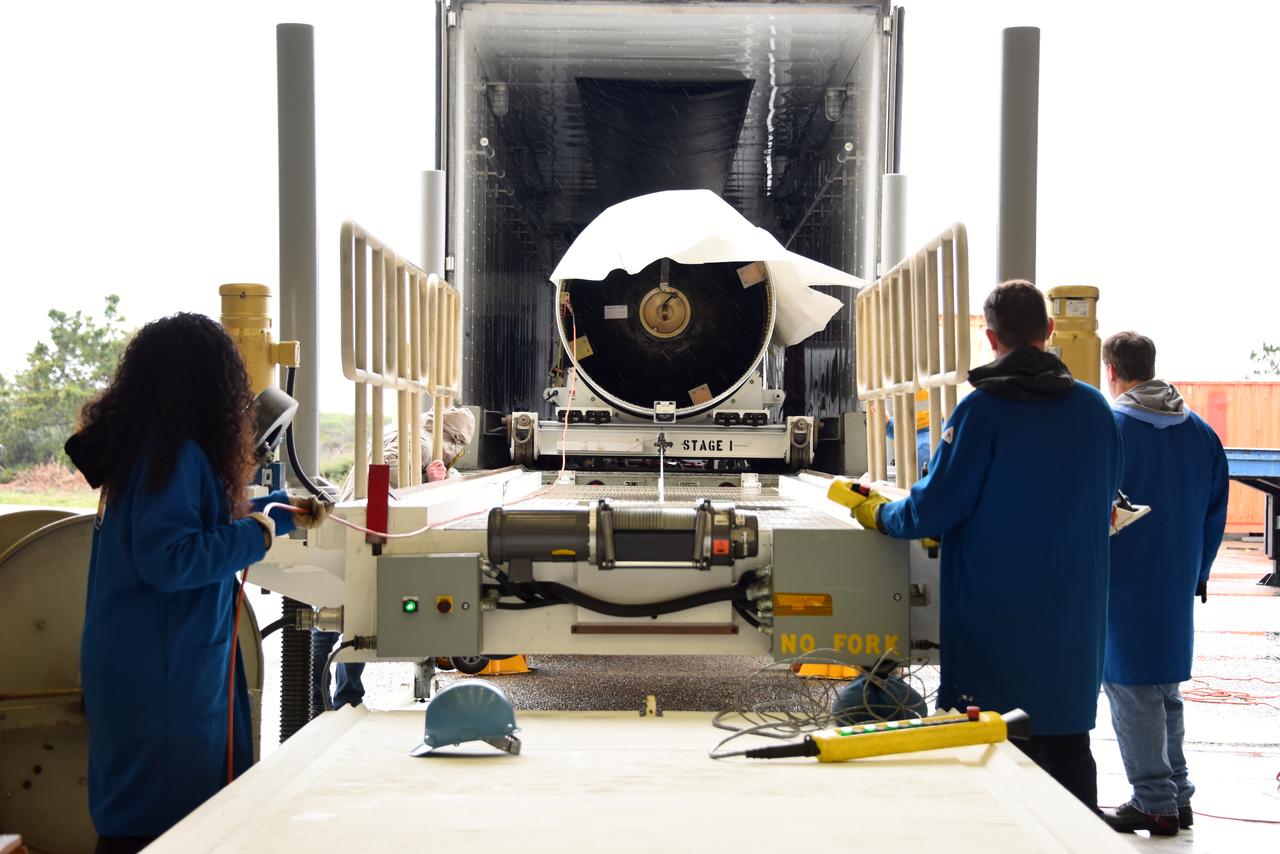
The first stage motor for the Orbital ATK Pegasus XL rocket is offloaded from a truck at Building 1555 at Vandenberg Air Force Base in California. The Pegasus rocket is being prepared for NASA's Ionospheric Connection Explorer, or ICON, mission. ICON will launch from the Kwajalein Atoll aboard the Pegasus XL on Dec. 8, 2017. ICON will study the frontier of space - the dynamic zone high in Earth's atmosphere where terrestrial weather from below meets space weather above. The explorer will help determine the physics of Earth's space environment and pave the way for mitigating its effects on our technology, communications systems and society.
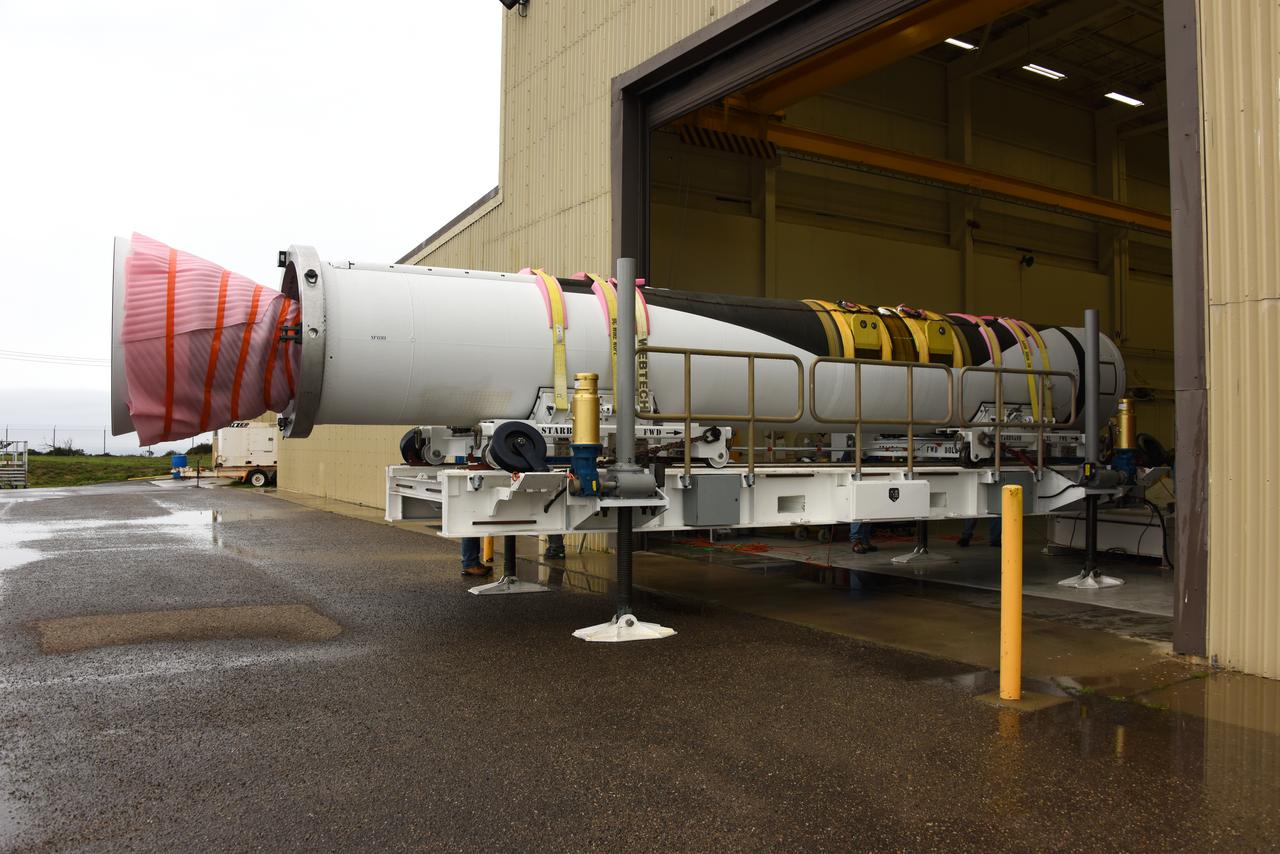
The first stage motor for the Orbital ATK Pegasus XL rocket is moved inside Building 1555 at Vandenberg Air Force Base in California. In the background are the second and third stage segments. The rocket is being prepared for NASA's Ionospheric Connection Explorer, or ICON, mission. ICON will launch from the Kwajalein Atoll aboard the Pegasus XL on Dec. 8, 2017. ICON will study the frontier of space - the dynamic zone high in Earth's atmosphere where terrestrial weather from below meets space weather above. The explorer will help determine the physics of Earth's space environment and pave the way for mitigating its effects on our technology, communications systems and society.
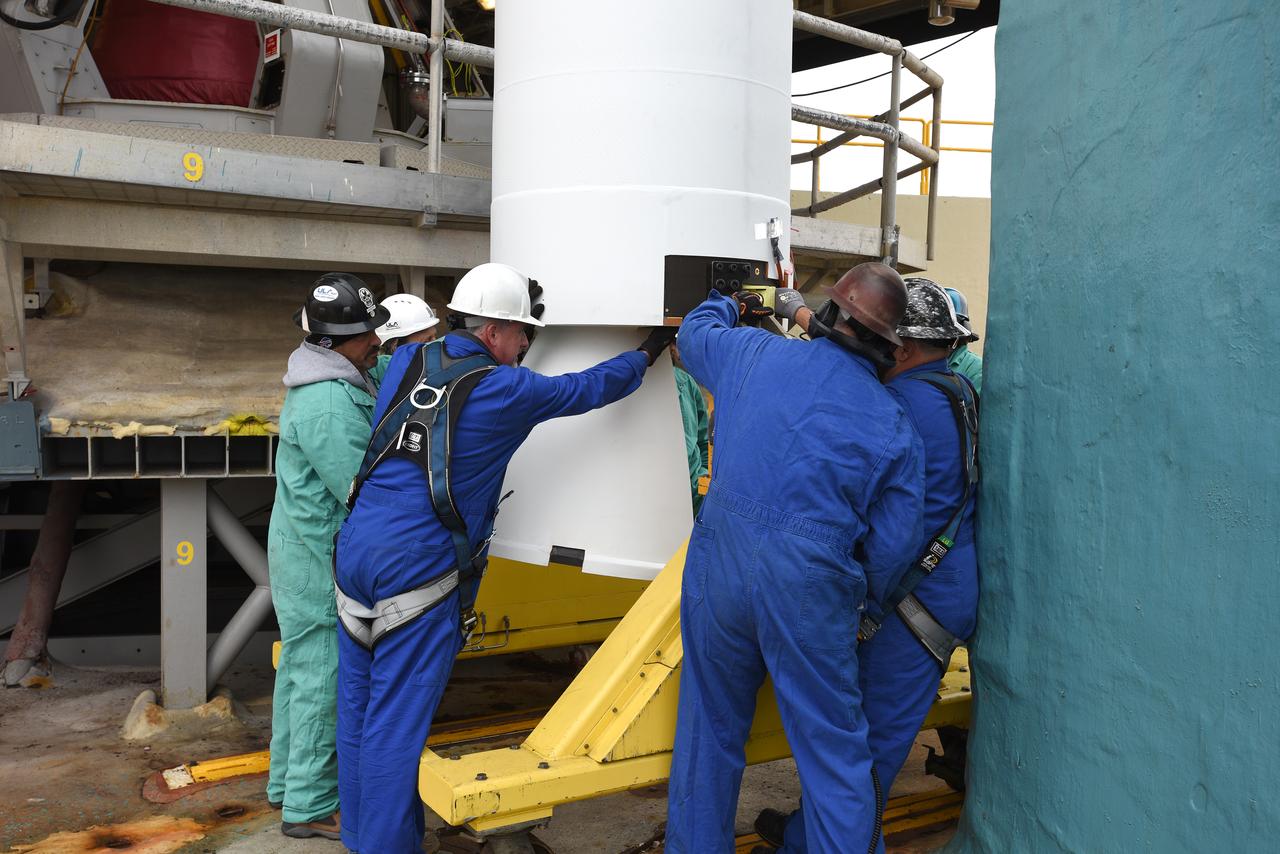
At Vandenberg Air Force Base in California, technicians inspect a solid rocket motor at Space Launch Complex 2 as it is attached to a United Launch Alliance Delta II rocket. Preparations are continuing for launch of the Joint Polar Satellite System (JPSS-1) spacecraft on March 27, 2017. JPSS-1 is part of the next-generation environmental satellite system, a collaborative program between the National Oceanic and Atmospheric Administration (NOAA) and NASA.
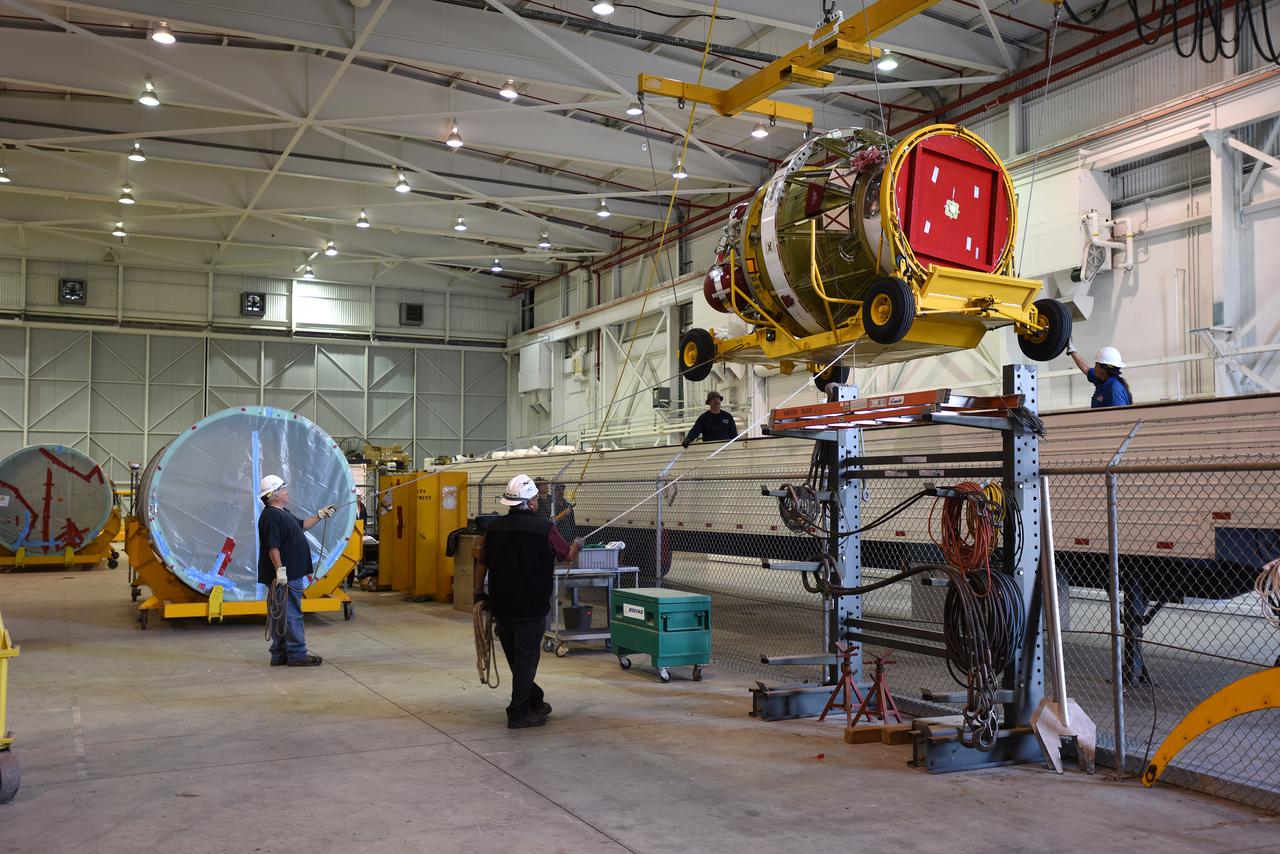
Technicians place the second stage of a Delta II rocket onto a transport trailer inside NASA Hangar 836 at Vandenberg Air Force Base in California in preparation to launch the Joint Polar Satellite System spacecraft in 2017. JPSS-1 is part of the next-generation environmental satellite system, a collaborative program between the National Oceanic and Atmospheric Administration (NOAA) and NASA. To learn more about JPSS-1, visit http://www.jpss.noaa.gov.
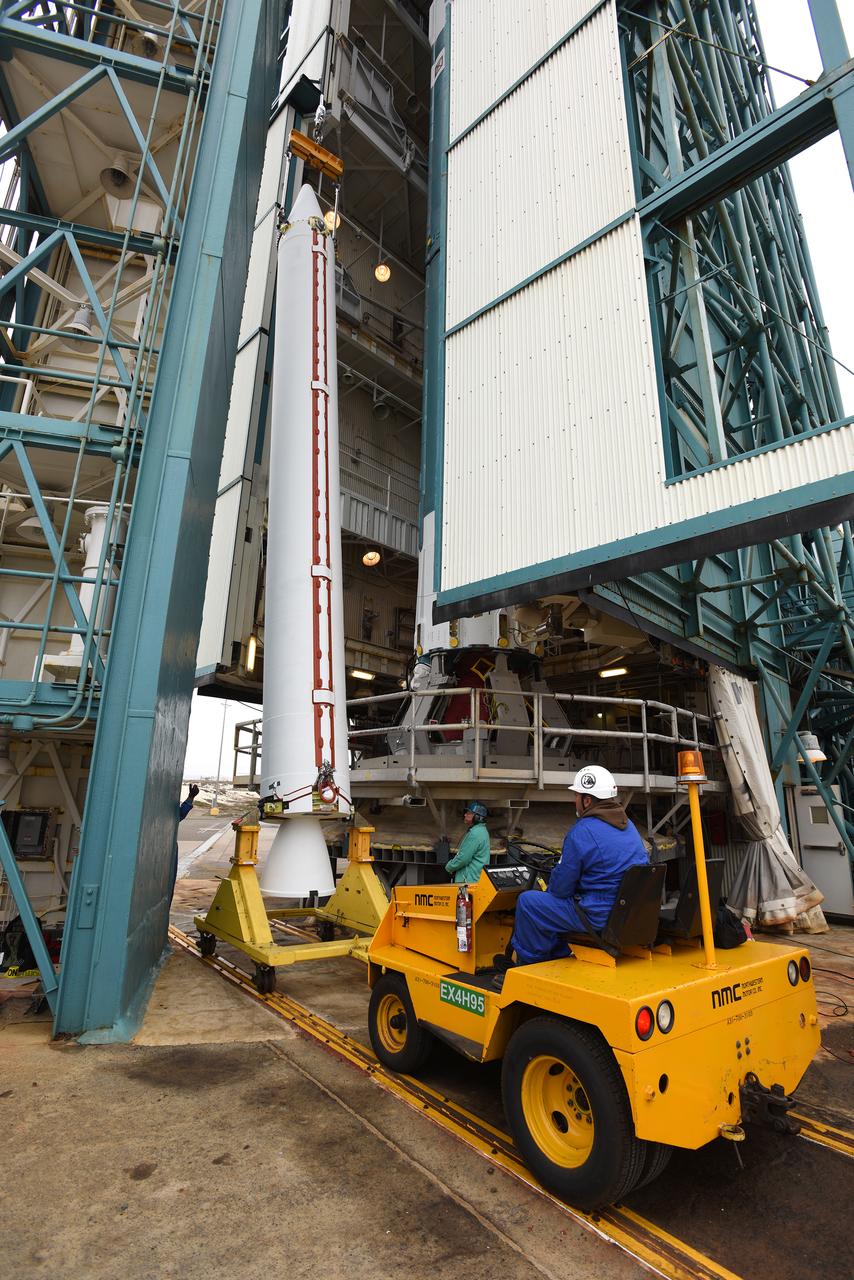
At Vandenberg Air Force Base in California, a solid rocket motor is lifted at Space Launch Complex 2 to be attached to a United Launch Alliance Delta II rocket. Preparations are continuing for launch of the Joint Polar Satellite System (JPSS-1) spacecraft on March 27, 2017. JPSS-1 is part of the next-generation environmental satellite system, a collaborative program between the National Oceanic and Atmospheric Administration (NOAA) and NASA.
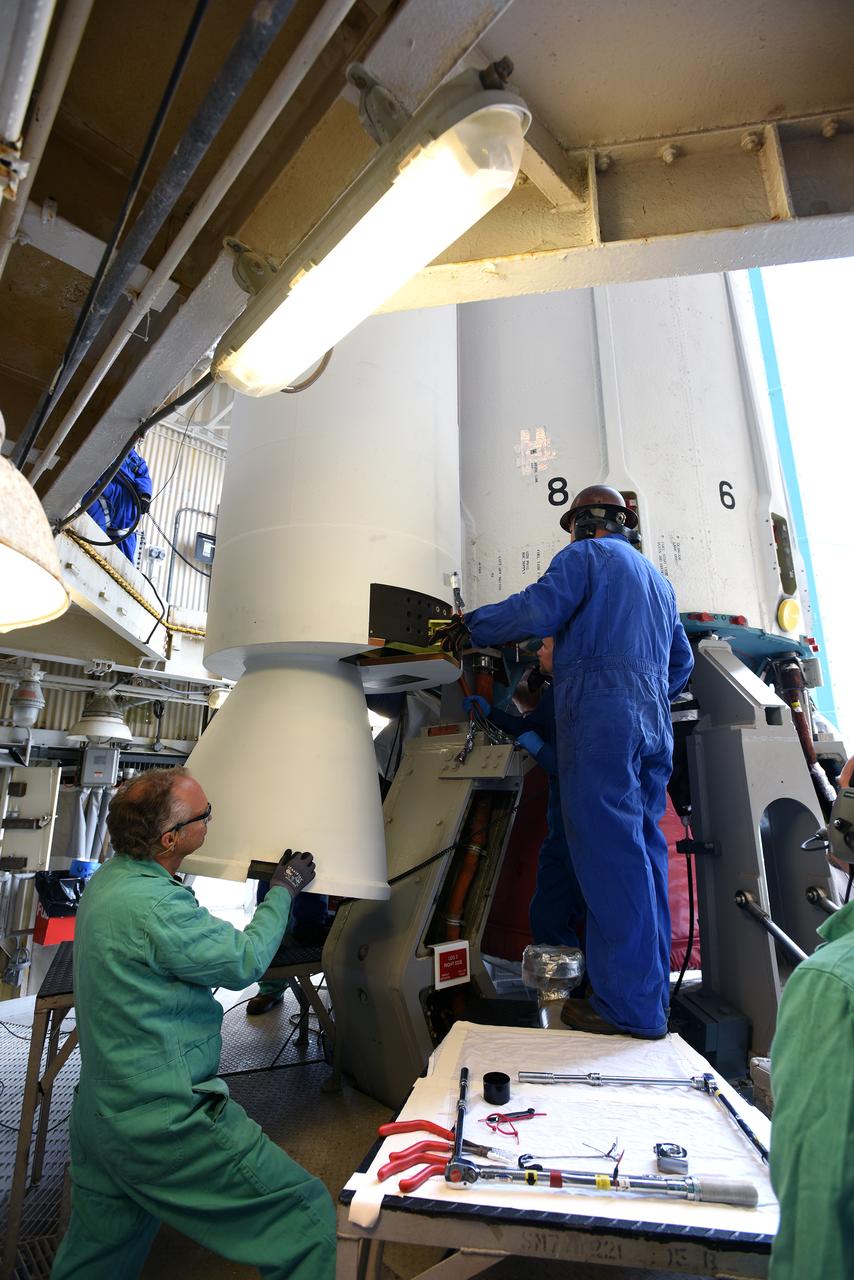
At Vandenberg Air Force Base in California, technicians inspect a solid rocket motor at Space Launch Complex 2 as it is attached to a United Launch Alliance Delta II rocket. Preparations are continuing for launch of the Joint Polar Satellite System (JPSS-1) spacecraft on March 27, 2017. JPSS-1 is part of the next-generation environmental satellite system, a collaborative program between the National Oceanic and Atmospheric Administration (NOAA) and NASA.
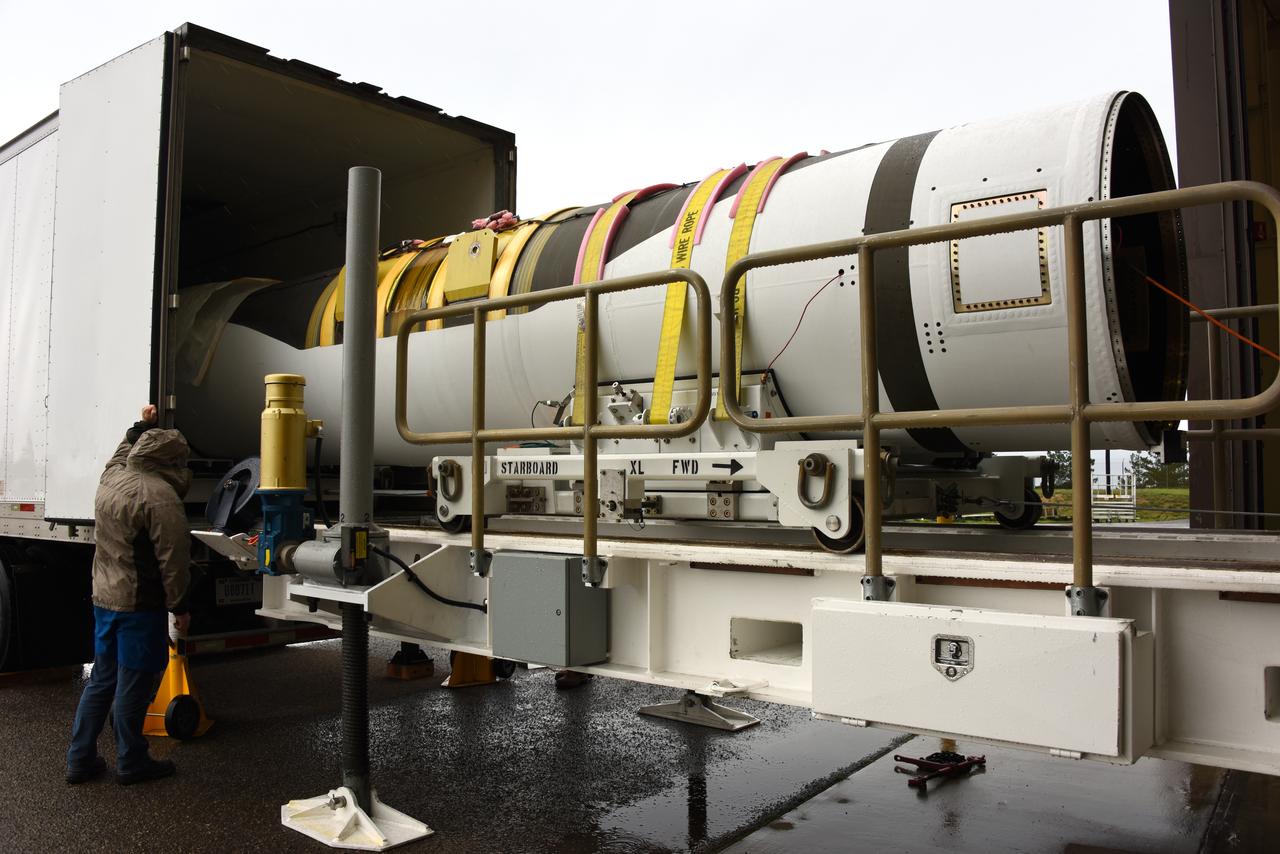
The first stage motor for the Orbital ATK Pegasus XL rocket is offloaded from a truck at Building 1555 at Vandenberg Air Force Base in California. The Pegasus rocket is being prepared for NASA's Ionospheric Connection Explorer, or ICON, mission. ICON will launch from the Kwajalein Atoll aboard the Pegasus XL on Dec. 8, 2017. ICON will study the frontier of space - the dynamic zone high in Earth's atmosphere where terrestrial weather from below meets space weather above. The explorer will help determine the physics of Earth's space environment and pave the way for mitigating its effects on our technology, communications systems and society.
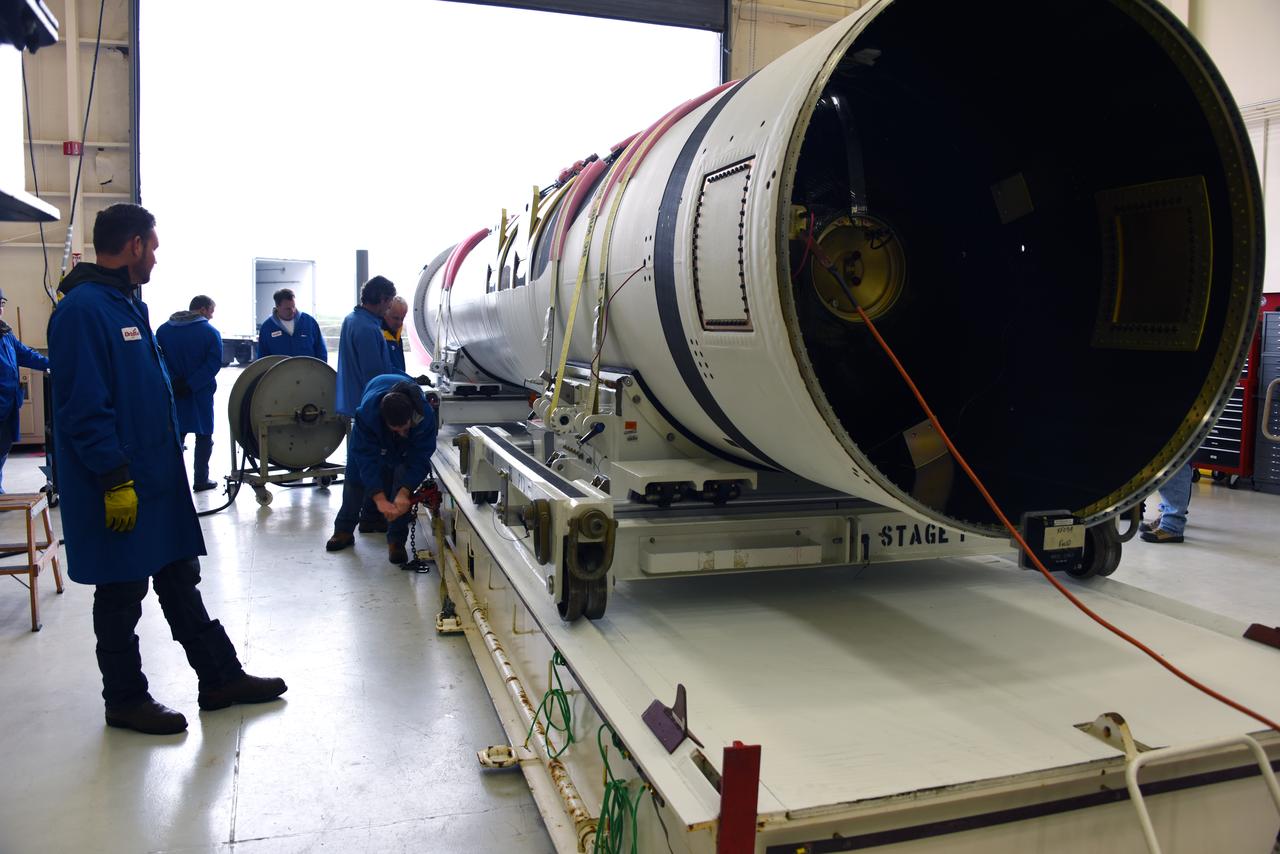
The first stage motor for the Orbital ATK Pegasus XL rocket was moved inside Building 1555 at Vandenberg Air Force Base in California. In the background are the second and third stage segments. The rocket is being prepared for NASA's Ionospheric Connection Explorer, or ICON, mission. ICON will launch from the Kwajalein Atoll aboard the Pegasus XL on Dec. 8, 2017. ICON will study the frontier of space - the dynamic zone high in Earth's atmosphere where terrestrial weather from below meets space weather above. The explorer will help determine the physics of Earth's space environment and pave the way for mitigating its effects on our technology, communications systems and society.
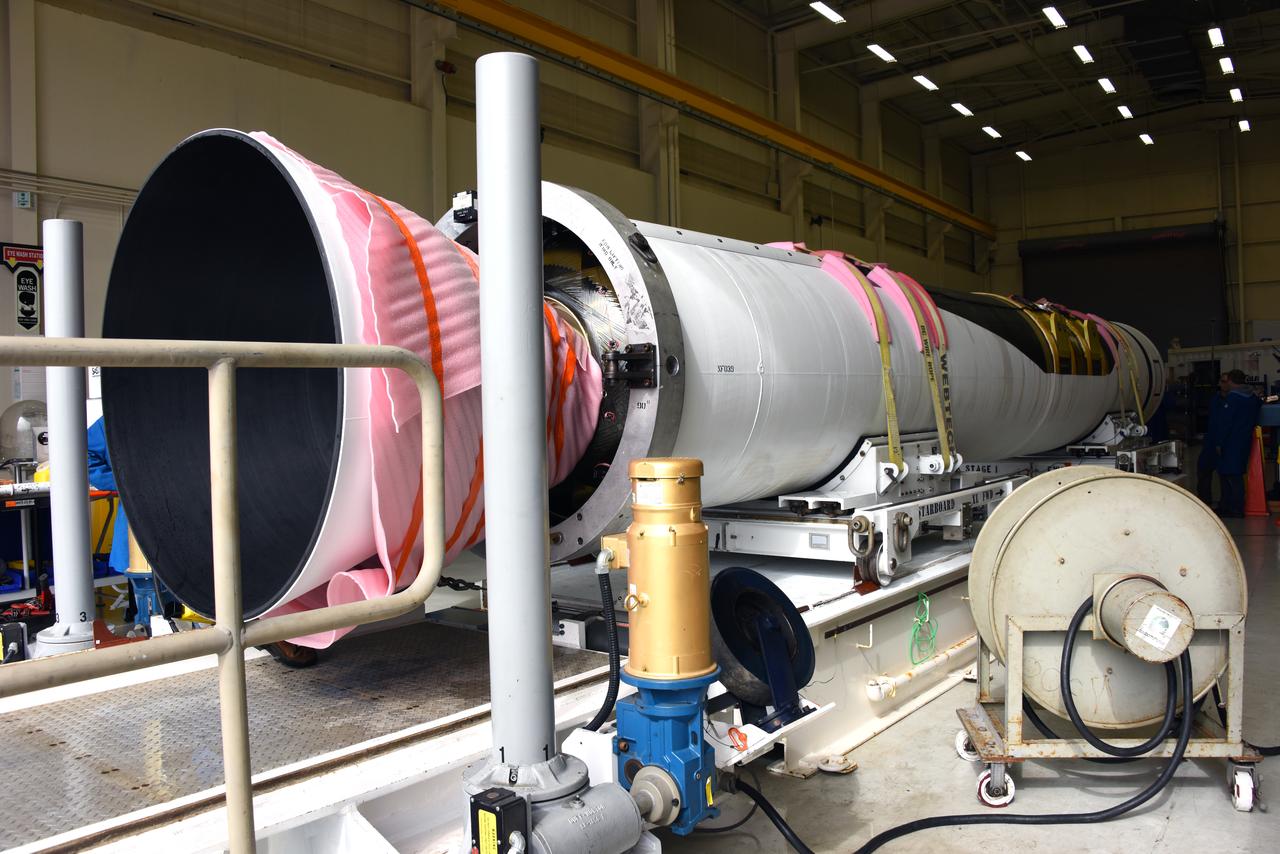
The first stage motor for the Orbital ATK Pegasus XL rocket was moved inside Building 1555 at Vandenberg Air Force Base in California. In the background are the second and third stage segments. The rocket is being prepared for NASA's Ionospheric Connection Explorer, or ICON, mission. ICON will launch from the Kwajalein Atoll aboard the Pegasus XL on Dec. 8, 2017. ICON will study the frontier of space - the dynamic zone high in Earth's atmosphere where terrestrial weather from below meets space weather above. The explorer will help determine the physics of Earth's space environment and pave the way for mitigating its effects on our technology, communications systems and society.
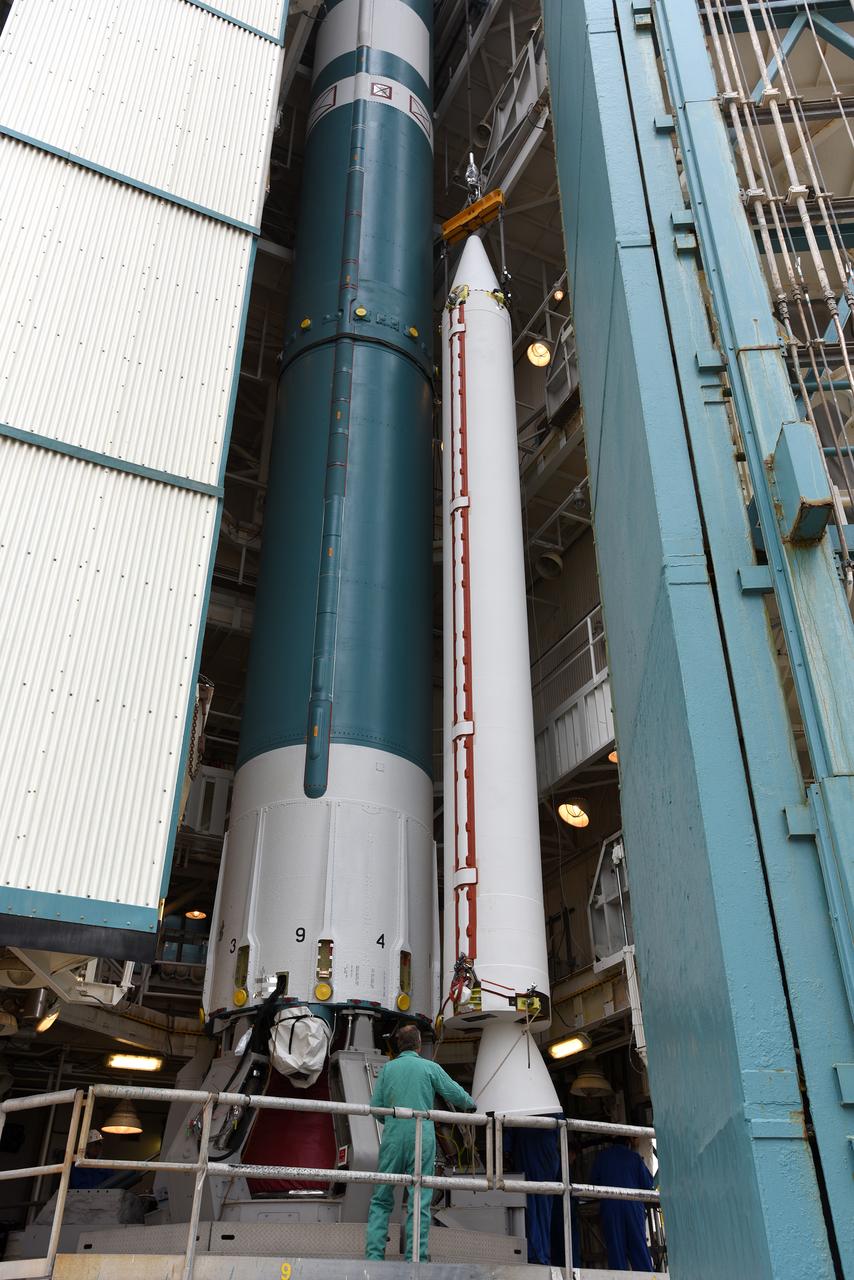
At Vandenberg Air Force Base in California, a solid rocket motor is attached to a United Launch Alliance Delta II rocket at Space Launch Complex 2. Preparations are continuing for launch of the Joint Polar Satellite System (JPSS-1) spacecraft on March 27, 2017. JPSS-1 is part of the next-generation environmental satellite system, a collaborative program between the National Oceanic and Atmospheric Administration (NOAA) and NASA.
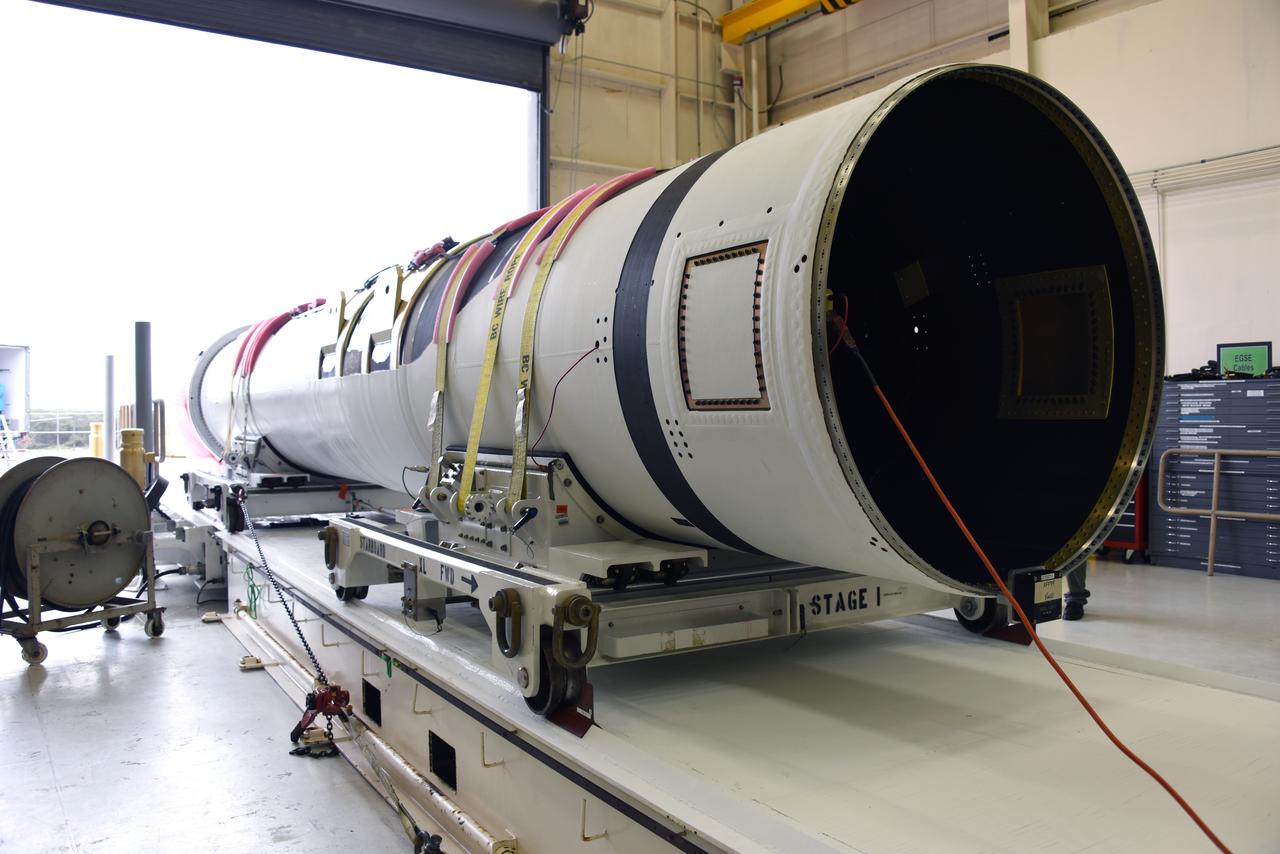
The first stage motor for the Orbital ATK Pegasus XL rocket was moved inside Building 1555 at Vandenberg Air Force Base in California. In the background are the second and third stage segments. The rocket is being prepared for NASA's Ionospheric Connection Explorer, or ICON, mission. ICON will launch from the Kwajalein Atoll aboard the Pegasus XL on Dec. 8, 2017. ICON will study the frontier of space - the dynamic zone high in Earth's atmosphere where terrestrial weather from below meets space weather above. The explorer will help determine the physics of Earth's space environment and pave the way for mitigating its effects on our technology, communications systems and society.