
NASA and science investigators from MIT participate in a science briefing for the agency's Transiting Exoplanet Survey Satellite (TESS) in the Press Site auditorium at Kennedy Space Center in Florida. Padi Boyd, TESS Guest Investigator Program lead, NASA’s Goddard Space Flight Center, answered questions during the briefing. TESS is the next step in the search for planets outside of our solar system. The mission will find exoplanets that periodically block part of the light from their host stars, events called transits. The satellite will survey the nearest and brightest stars for two years to search for transiting exoplanets. TESS will launch on a SpaceX Falcon 9 rocket from Space Launch Complex 40 at Cape Canaveral Air Force Station no earlier than 6:32 p.m. EDT on Monday, April 16.
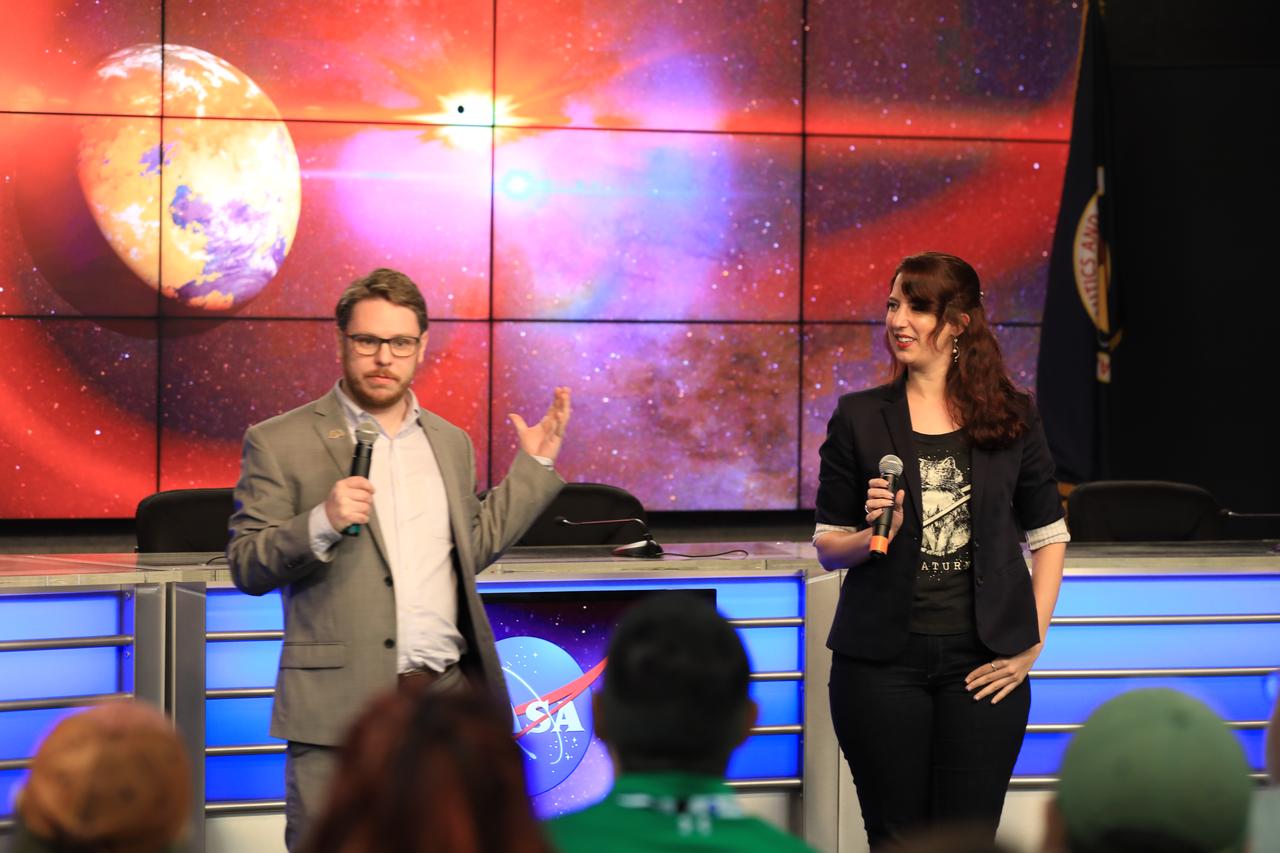
NASA and industry leaders speak to NASA Social participants about the agency's Transiting Exoplanet Survey Satellite (TESS) in the Press Site auditorium at Kennedy Space Center in Florida. Speaking to the group, from left are Tom Barclay, TESS scientist, NASA’s Goddard Space Flight Center, and Jenn Burt, Torres Postdoctoral Fellow, Massachusetts Institute of Technology. TESS is the next step in the search for planets outside of our solar system. The mission will find exoplanets that periodically block part of the light from their host stars, events called transits. The satellite will survey the nearest and brightest stars for two years to search for transiting exoplanets. TESS will launch on a SpaceX Falcon 9 rocket from Space Launch Complex 40 at Cape Canaveral Air Force Station no earlier than 6:32 p.m. EDT on Monday, April 16.
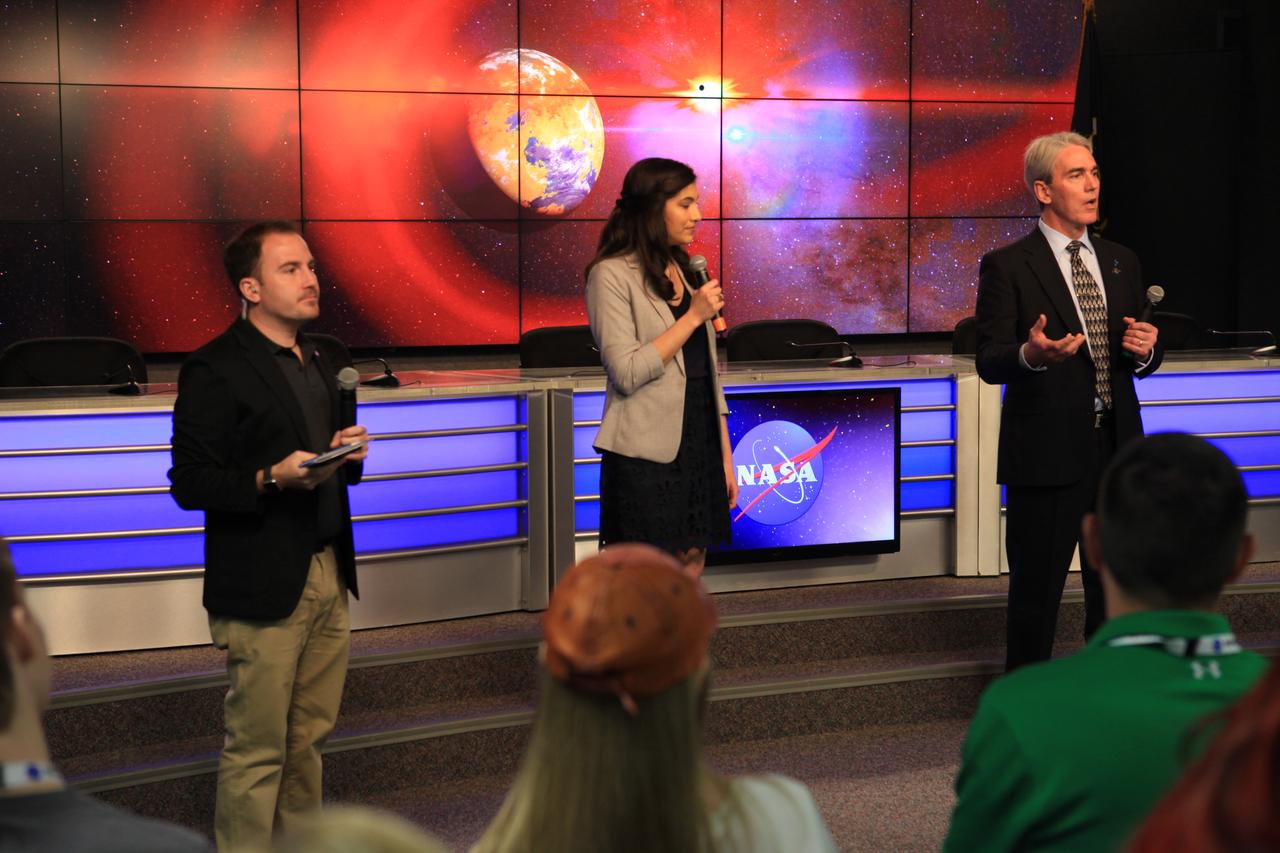
NASA and industry leaders speak to NASA Social participants about the agency's Transiting Exoplanet Survey Satellite (TESS) in the Press Site auditorium at Kennedy Space Center in Florida. Speaking to the group from center are Natalia Guerrero, TESS researcher, Massachusetts Institute of Technology, and Robert Lockwood, TESS Spacecraft Program Manager, Orbital ATK. At far left is Jason Townsend, NASA Communications. TESS is the next step in the search for planets outside of our solar system. The mission will find exoplanets that periodically block part of the light from their host stars, events called transits. The satellite will survey the nearest and brightest stars for two years to search for transiting exoplanets. TESS will launch on a SpaceX Falcon 9 rocket from Space Launch Complex 40 at Cape Canaveral Air Force Station no earlier than 6:32 p.m. EDT on Monday, April 16.

NASA and industry leaders speak to NASA Social participants about the agency's Transiting Exoplanet Survey Satellite (TESS) in the Press Site auditorium at Kennedy Space Center in Florida. Speaking to the group is Jessie Christiansen, staff scientiest, NASA Exoplaneet Science Institute, California Institute of Technology. TESS is the next step in the search for planets outside of our solar system. The mission will find exoplanets that periodically block part of the light from their host stars, events called transits. The satellite will survey the nearest and brightest stars for two years to search for transiting exoplanets. TESS will launch on a SpaceX Falcon 9 rocket from Space Launch Complex 40 at Cape Canaveral Air Force Station no earlier than 6:32 p.m. EDT on Monday, April 16.
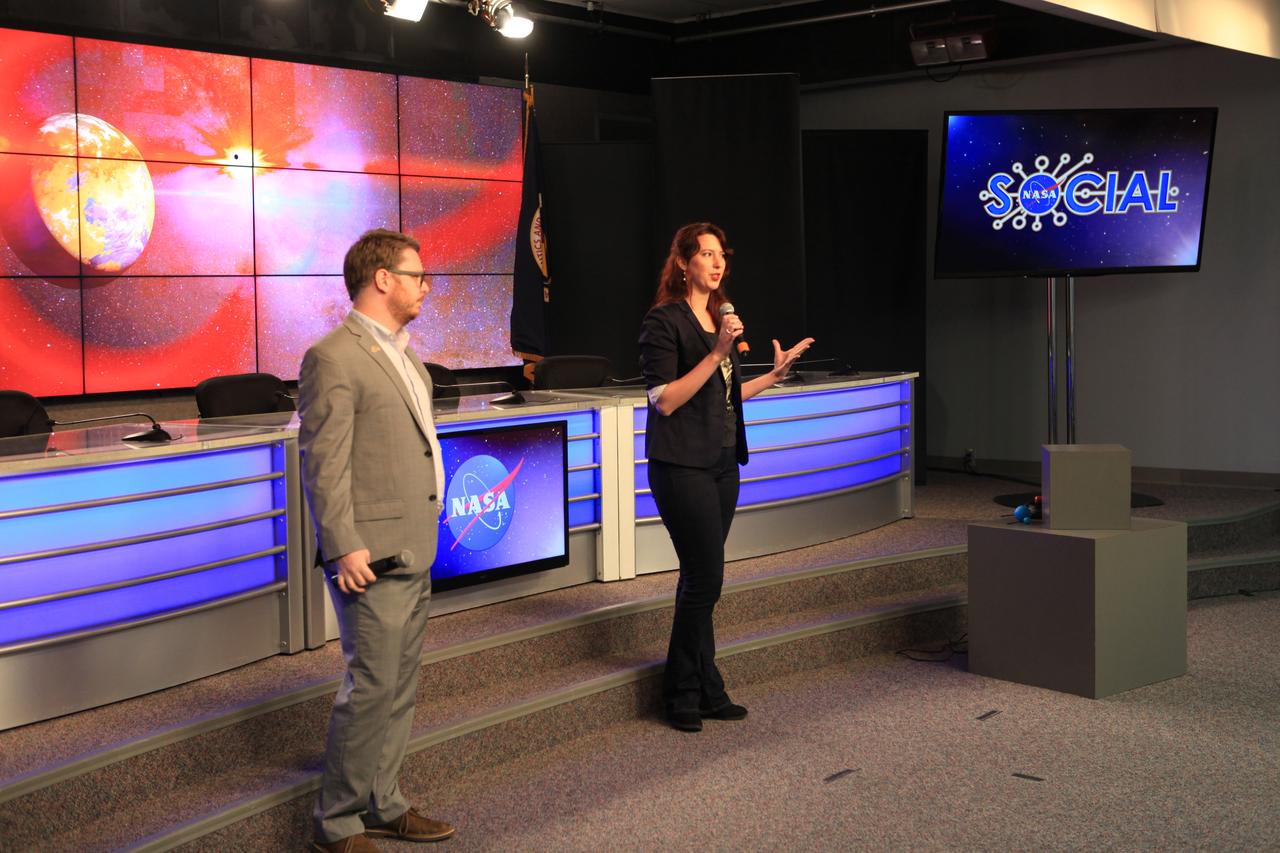
NASA and industry leaders speak to NASA Social participants about the agency's Transiting Exoplanet Survey Satellite (TESS) in the Press Site auditorium at Kennedy Space Center in Florida. Speaking to the group from left are Tom Barclay, TESS scientist, NASA’s Goddard Space Flight Center, and Jenn Burt, Torres Postdoctoral Fellow, Massachusetts Institute of Technology. TESS is the next step in the search for planets outside of our solar system. The mission will find exoplanets that periodically block part of the light from their host stars, events called transits. The satellite will survey the nearest and brightest stars for two years to search for transiting exoplanets. TESS will launch on a SpaceX Falcon 9 rocket from Space Launch Complex 40 at Cape Canaveral Air Force Station no earlier than 6:32 p.m. EDT on Monday, April 16.
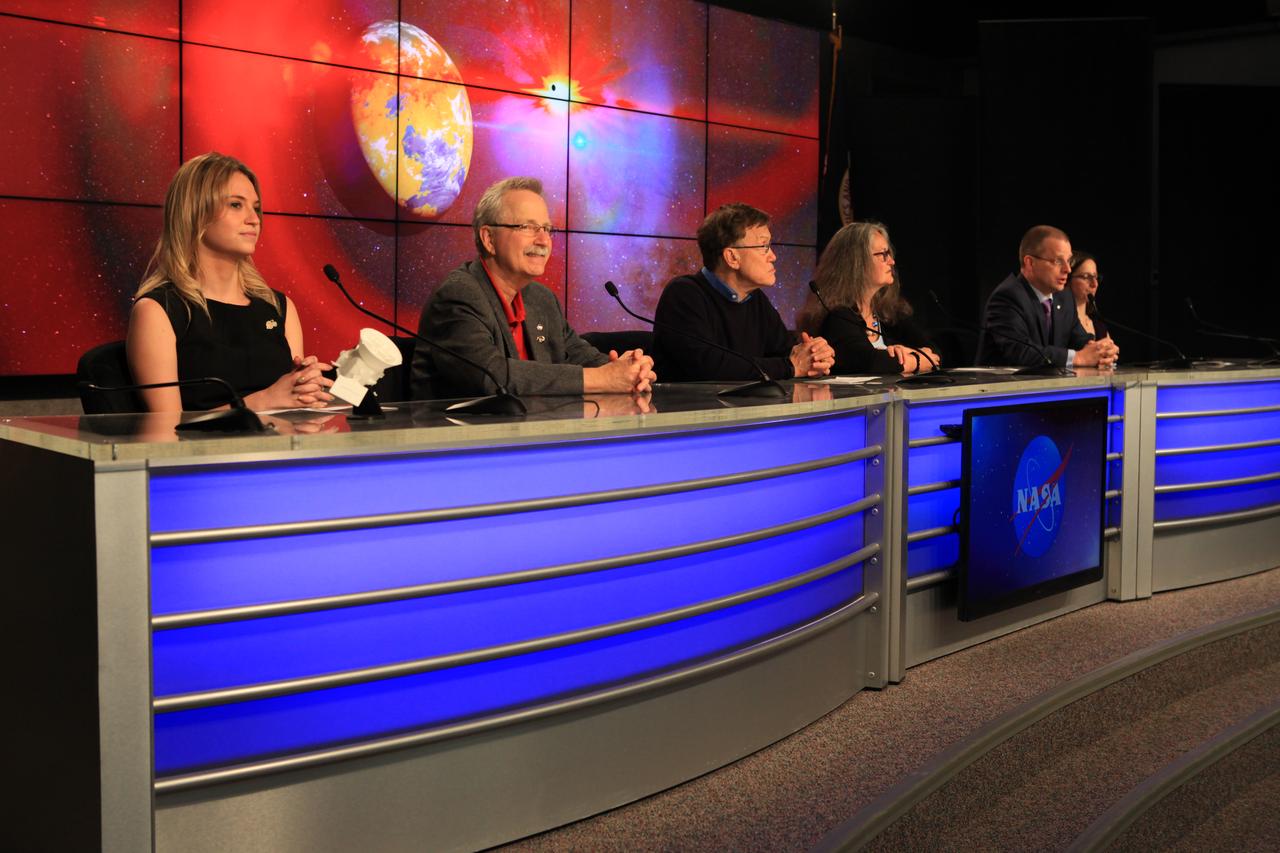
NASA and science investigators from MIT participate in a science briefing for the agency's Transiting Exoplanet Survey Satellite (TESS) in the Press Site auditorium at Kennedy Space Center in Florida. From left are moderator Claire Saravia, NASA Communications; Paul Hertz, Astrophysics Division director, NASA Headquarters; George Ricker, TESS principal investigator, Massachusetts Institute of Technology; Padi Boyd, TESS Guest Investigator Program lead, NASA’s Goddard Space Flight Center; Stephen Rinehart, TESS Project scientist, NASA’s Goddard Space Flight Center; and Diana Dragomir, NASA Hubble Postdoctoral Fellow, Massachusetts Institute of Technology. TESS is the next step in the search for planets outside of our solar system. The mission will find exoplanets that periodically block part of the light from their host stars, events called transits. The satellite will survey the nearest and brightest stars for two years to search for transiting exoplanets. TESS will launch on a SpaceX Falcon 9 rocket from Space Launch Complex 40 at Cape Canaveral Air Force Station no earlier than 6:32 p.m. EDT on Monday, April 16.

NASA and science investigators from MIT participate in a science briefing for the agency's Transiting Exoplanet Survey Satellite (TESS) in the Press Site auditorium at Kennedy Space Center in Florida. Stephen Rinehart, TESS Project scientist, NASA’s Goddard Space Flight Center, answered questions during the briefing. TESS is the next step in the search for planets outside of our solar system. The mission will find exoplanets that periodically block part of the light from their host stars, events called transits. The satellite will survey the nearest and brightest stars for two years to search for transiting exoplanets. TESS will launch on a SpaceX Falcon 9 rocket from Space Launch Complex 40 at Cape Canaveral Air Force Station no earlier than 6:32 p.m. EDT on Monday, April 16.
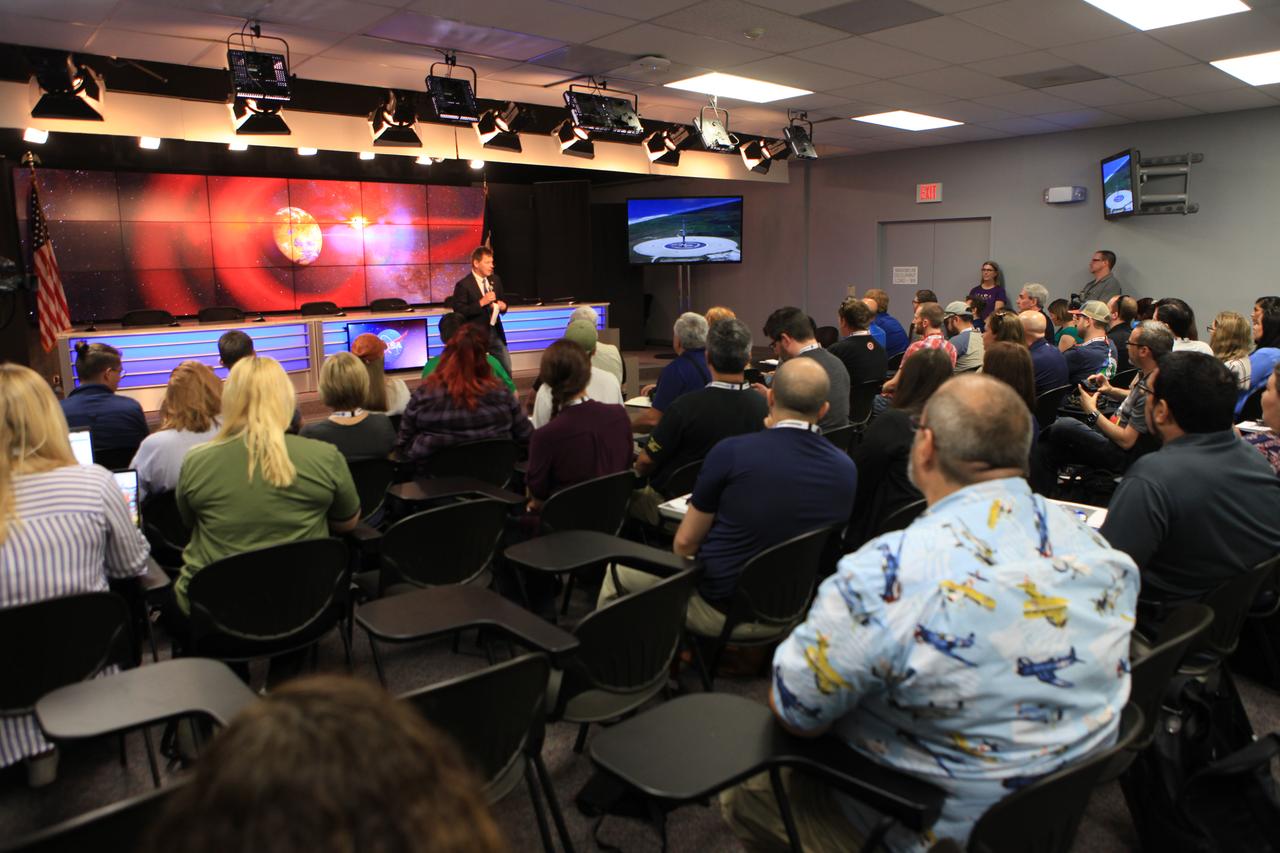
NASA and industry leaders speak to NASA Social participants about the agency's Transiting Exoplanet Survey Satellite (TESS) in the Press Site auditorium at Kennedy Space Center in Florida. Speaking to the group is Hans Koenigsmann, vice president of Build and Flight Reliability at SpaceX. TESS is the next step in the search for planets outside of our solar system. The mission will find exoplanets that periodically block part of the light from their host stars, events called transits. The satellite will survey the nearest and brightest stars for two years to search for transiting exoplanets. TESS will launch on a SpaceX Falcon 9 rocket from Space Launch Complex 40 at Cape Canaveral Air Force Station no earlier than 6:32 p.m. EDT on Monday, April 16.
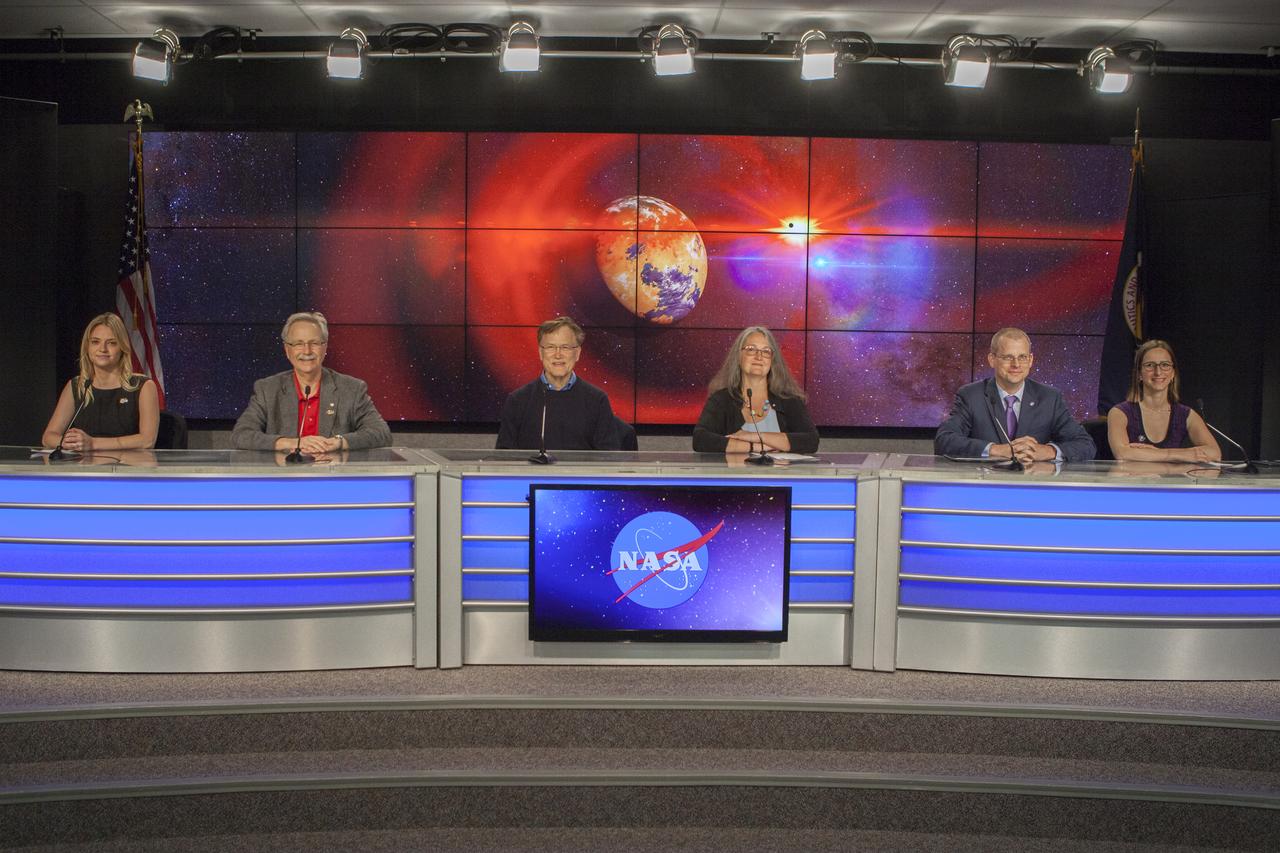
NASA and science investigators from MIT participate in a science briefing for the agency's Transiting Exoplanet Survey Satellite (TESS) in the Press Site auditorium at Kennedy Space Center in Florida. From left are moderator Claire Saravia, NASA Communications; Paul Hertz, Astrophysics Division director, NASA Headquarters; George Ricker, TESS principal investigator, Massachusetts Institute of Technology; Padi Boyd, TESS Guest Investigator Program lead, NASA’s Goddard Space Flight Center; Stephen Rinehart, TESS Project scientist, NASA’s Goddard Space Flight Center; and Diana Dragomir, NASA Hubble Postdoctoral Fellow, Massachusetts Institute of Technology. TESS is the next step in the search for planets outside of our solar system. The mission will find exoplanets that periodically block part of the light from their host stars, events called transits. The satellite will survey the nearest and brightest stars for two years to search for transiting exoplanets. TESS will launch on a SpaceX Falcon 9 rocket from Space Launch Complex 40 at Cape Canaveral Air Force Station no earlier than 6:32 p.m. EDT on Monday, April 16.

NASA’s Pegasus barge, carrying several pieces of the agency’s Artemis campaign hardware, including Artemis II’s launch vehicle stage adapter, Artemis III’s core stage boat tail, and Artemis IV’s core stage engine section arrives at NASA’s Kennedy Space Center Complex 39 turn basin wharf in Florida on Thursday, Sept. 5, 2024.
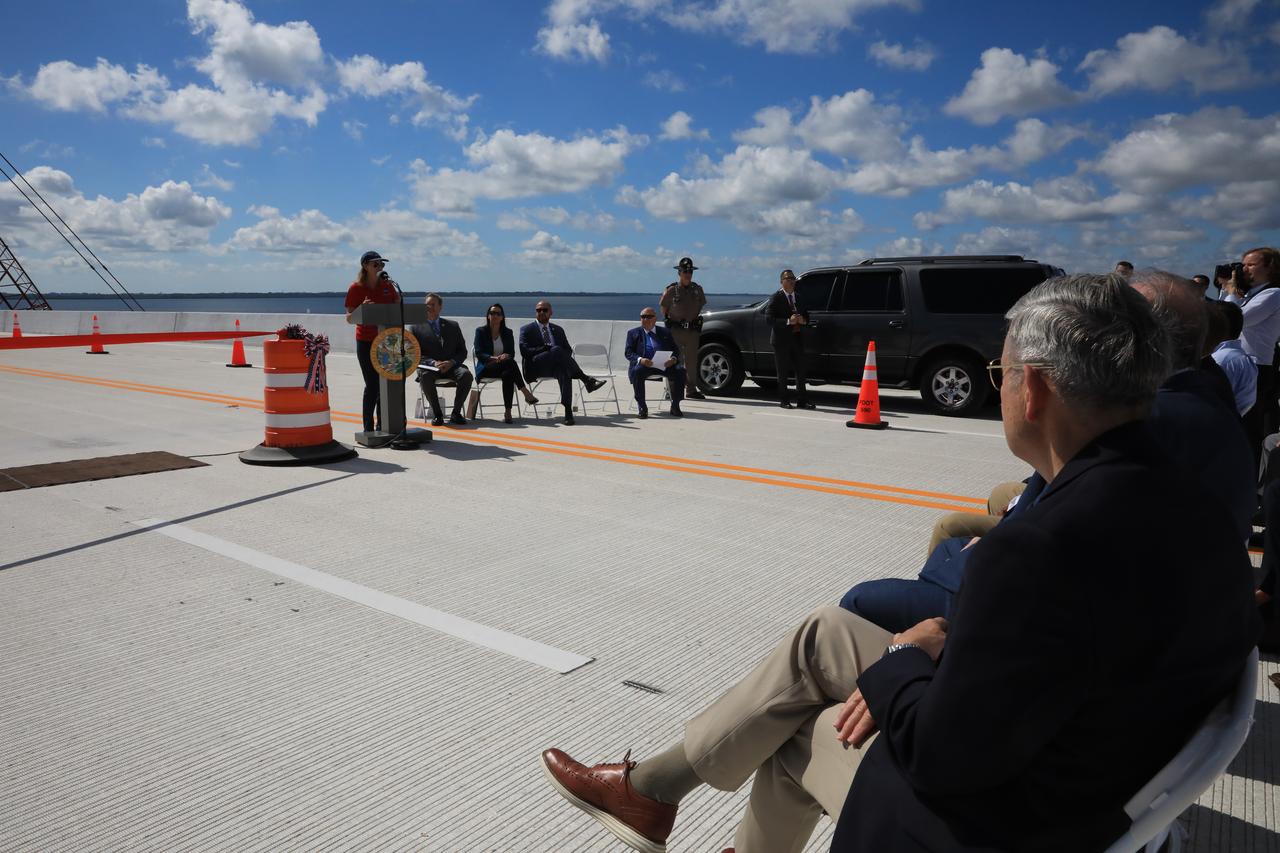
NASA Kennedy Space Center Director Janet Petro speaks during the grand opening ceremony for the upgraded eastbound span of the Indian River Bridge near Kennedy Space Center on June 9, 2023. The new high-rise bridge serves as the primary entrance and exit to the space center for employees and visitors. The bridge spans the Indian River Lagoon and connects Kennedy and the Cape Canaveral Space Force Station to the mainland via State Road 405/NASA Causeway in Titusville. This first section of the bridge replaces the two-lane drawbridge which was built in the mid-1960s to support the Apollo program.
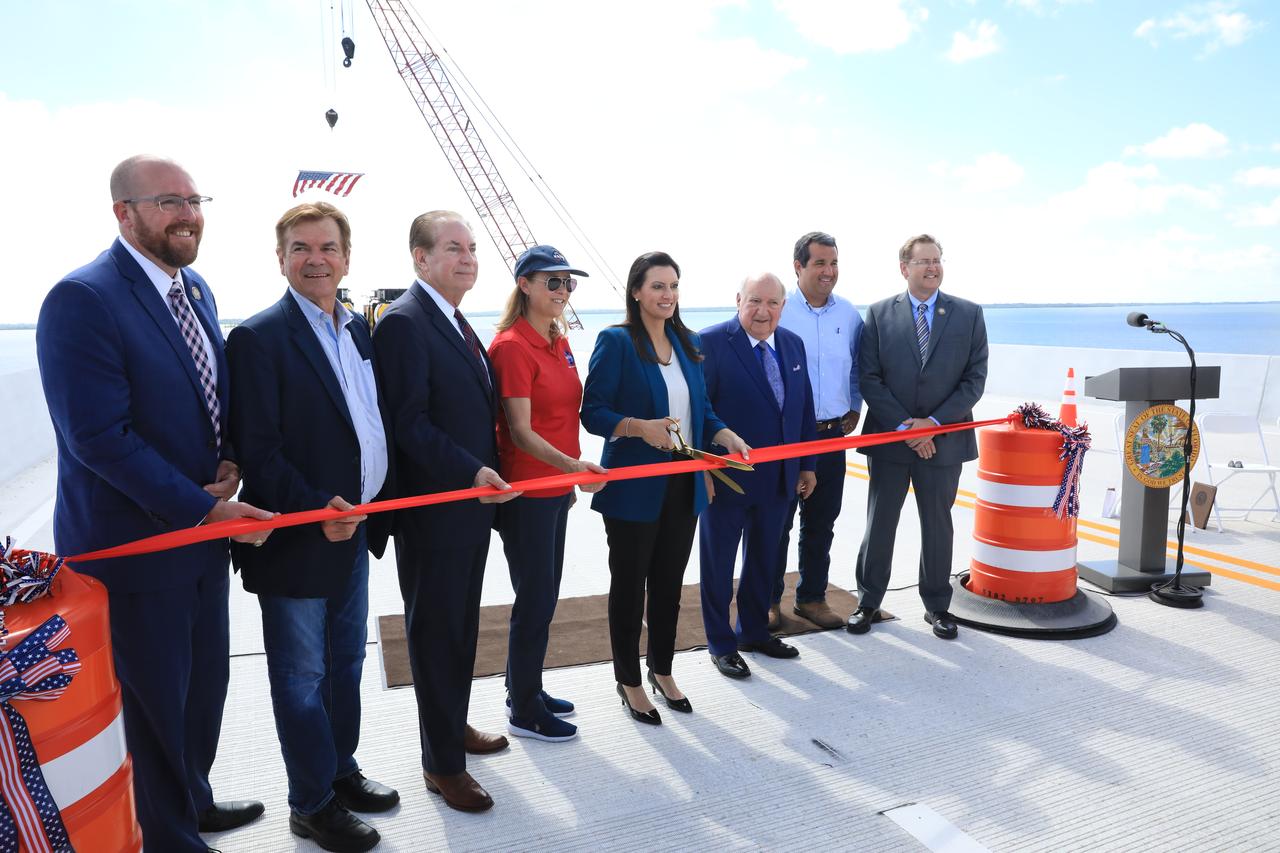
A ribbon cutting ceremony on the upgraded eastbound span of the Indian River Bridge is held on June 9, 2023 near NASA’s Kennedy Space Center in Florida. From left are Florida Department of Transportation State Secretary Jared Perdue; Florida State House Representative Thad Altman; Florida State Senator Tom Wright; Kennedy Space Center Director Janet Petro; Florida Lieutenant Governor Jeanette Nuñez (cutting the ribbon); Frank DiBello, Space Florida President/Chief Executive Officer; Florida State House Representative Tyler Sirois; and FDOT District Five Secretary John Tyler. The new high-rise bridge serves as the primary entrance and exit to the space center for employees and visitors. The bridge spans the Indian River Lagoon and connects Kennedy and the Cape Canaveral Space Force Station to the mainland via State Road 405/NASA Causeway in Titusville. This first section of the bridge replaces the two-lane drawbridge which was built in the mid-1960s to support the Apollo program.
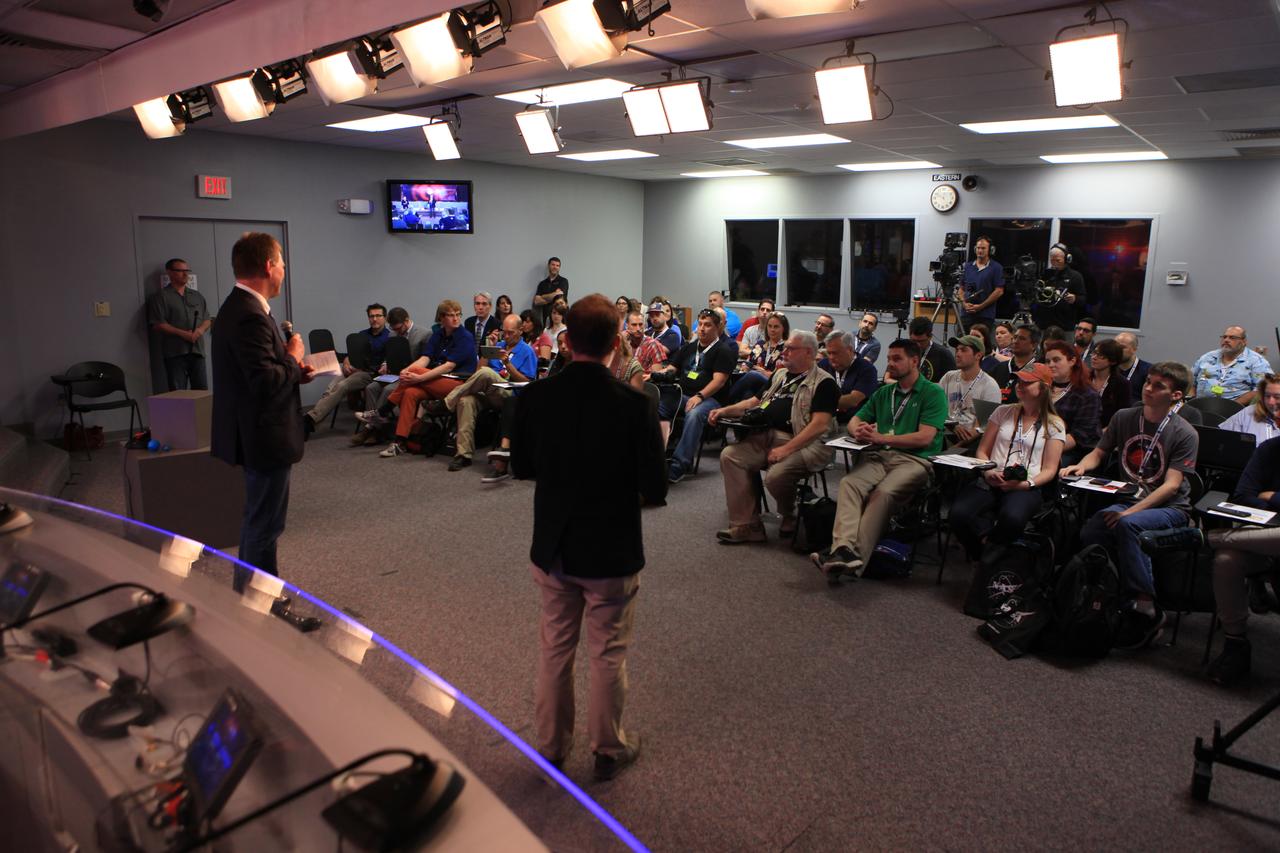
NASA and industry leaders speak to NASA Social participants about the agency's Transiting Exoplanet Survey Satellite (TESS) in the Press Site auditorium at Kennedy Space Center in Florida. Speaking to the group, at left is Hans Koenigsmann, vice president of Build and Flight Reliability at SpaceX. TESS is the next step in the search for planets outside of our solar system. The mission will find exoplanets that periodically block part of the light from their host stars, events called transits. The satellite will survey the nearest and brightest stars for two years to search for transiting exoplanets. TESS will launch on a SpaceX Falcon 9 rocket from Space Launch Complex 40 at Cape Canaveral Air Force Station no earlier than 6:32 p.m. EDT on Monday, April 16.
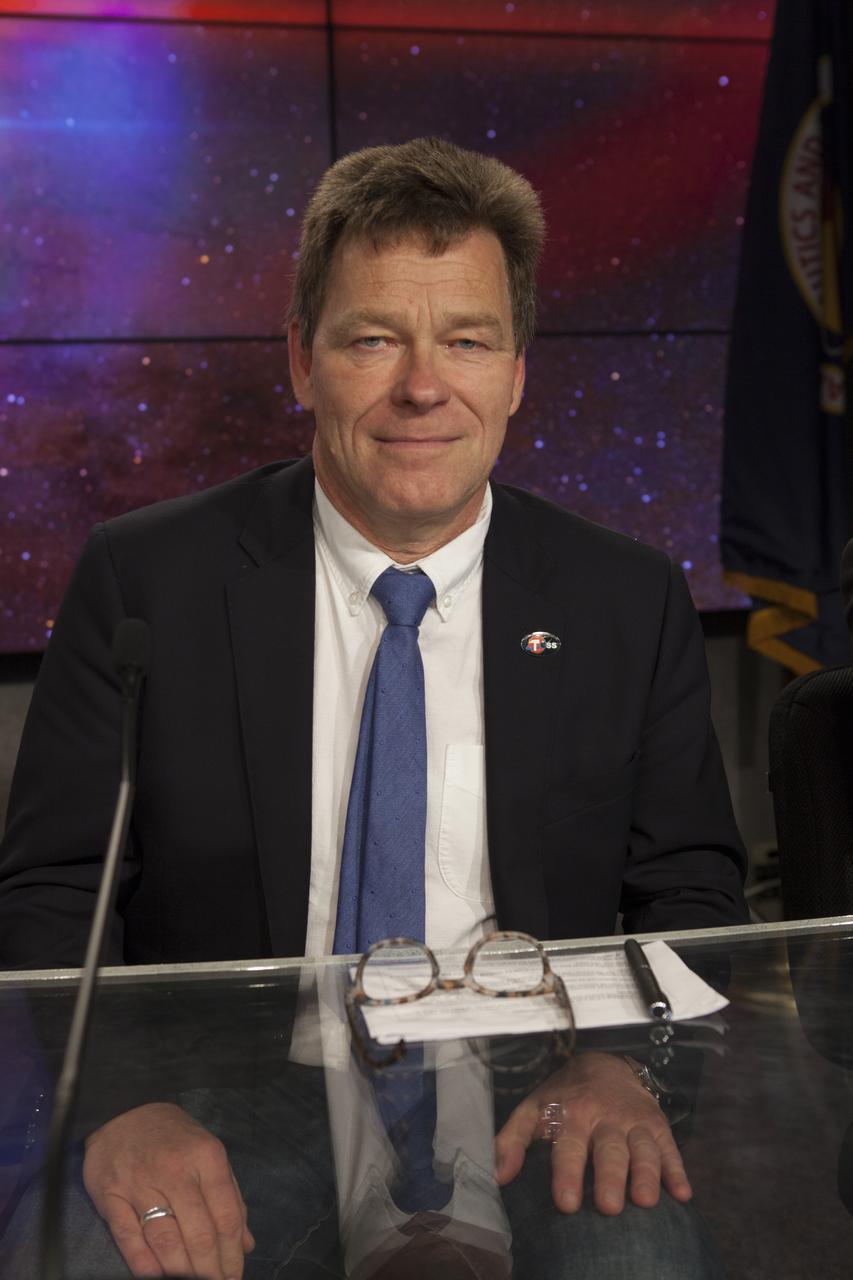
In Kennedy Space Center's Press Site auditorium, members of the media participate in a mission briefing on NASA's Transiting Exoplanet Survey Satellite (TESS). Hans Koenigsmann, vice president of Build and Flight Reliability at SpaceX, answers questions during the briefing. TESS is the next step in the search for planets outside of our solar system. The mission will find exoplanets that periodically block part of the light from their host stars, events called transits. The satellite will survey the nearest and brightest stars for two years to search for transiting exoplanets. TESS will launch on a SpaceX Falcon 9 rocket from Space Launch Complex 40 at Cape Canaveral Air Force Station no earlier than 6:32 p.m. EDT on Monday, April 16.

NASA and science investigators from MIT participate in a science briefing for the agency's Transiting Exoplanet Survey Satellite (TESS) in the Press Site auditorium at Kennedy Space Center in Florida. Claire Saravia, NASA Communications, moderated the briefing. TESS is the next step in the search for planets outside of our solar system. The mission will find exoplanets that periodically block part of the light from their host stars, events called transits. The satellite will survey the nearest and brightest stars for two years to search for transiting exoplanets. TESS will launch on a SpaceX Falcon 9 rocket from Space Launch Complex 40 at Cape Canaveral Air Force Station no earlier than 6:32 p.m. EDT on Monday, April 16.

In Kennedy Space Center's Press Site auditorium, members of the media participate in a mission briefing on NASA's Transiting Exoplanet Survey Satellite (TESS). Josh Finch, NASA Communications, moderates the briefing. TESS is the next step in the search for planets outside of our solar system. The mission will find exoplanets that periodically block part of the light from their host stars, events called transits. The satellite will survey the nearest and brightest stars for two years to search for transiting exoplanets. TESS will launch on a SpaceX Falcon 9 rocket from Space Launch Complex 40 at Cape Canaveral Air Force Station no earlier than 6:32 p.m. EDT on Monday, April 16.
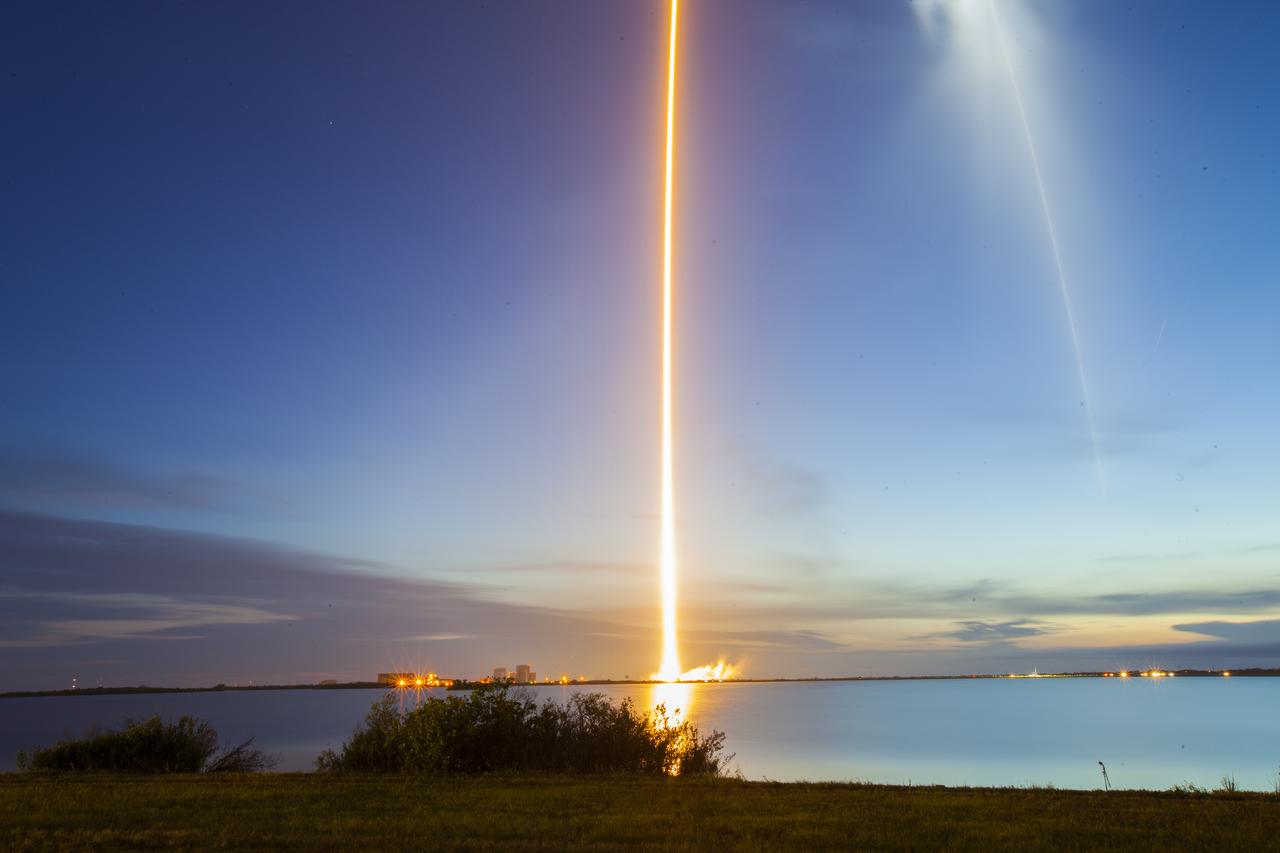
The two-stage SpaceX Falcon 9 launch vehicle lifts off from Space Launch Complex 40 at Cape Canaveral Air Force Station, carrying the SpaceX Dragon resupply spacecraft to the International Space Station. Liftoff was at 5:42 a.m. EDT on Friday, June 29, 2018. On the company’s 15th Commercial Resupply Services mission to the International Space Station, Dragon is filled with supplies and payloads, including critical materials to support several science and research investigations that will occur during Expedition 56. The spacecraft’s unpressurized trunk is carrying a Canadian-built Latching End Effector, or LEE. This new LEE will replace a failed unit astronauts removed during a series of spacewalks in the fall of 2017. Each end of the Canadarm2 robotic arm has an identical LEE, and they are used as the “hands” that grapple payloads and visiting cargo spaceships.
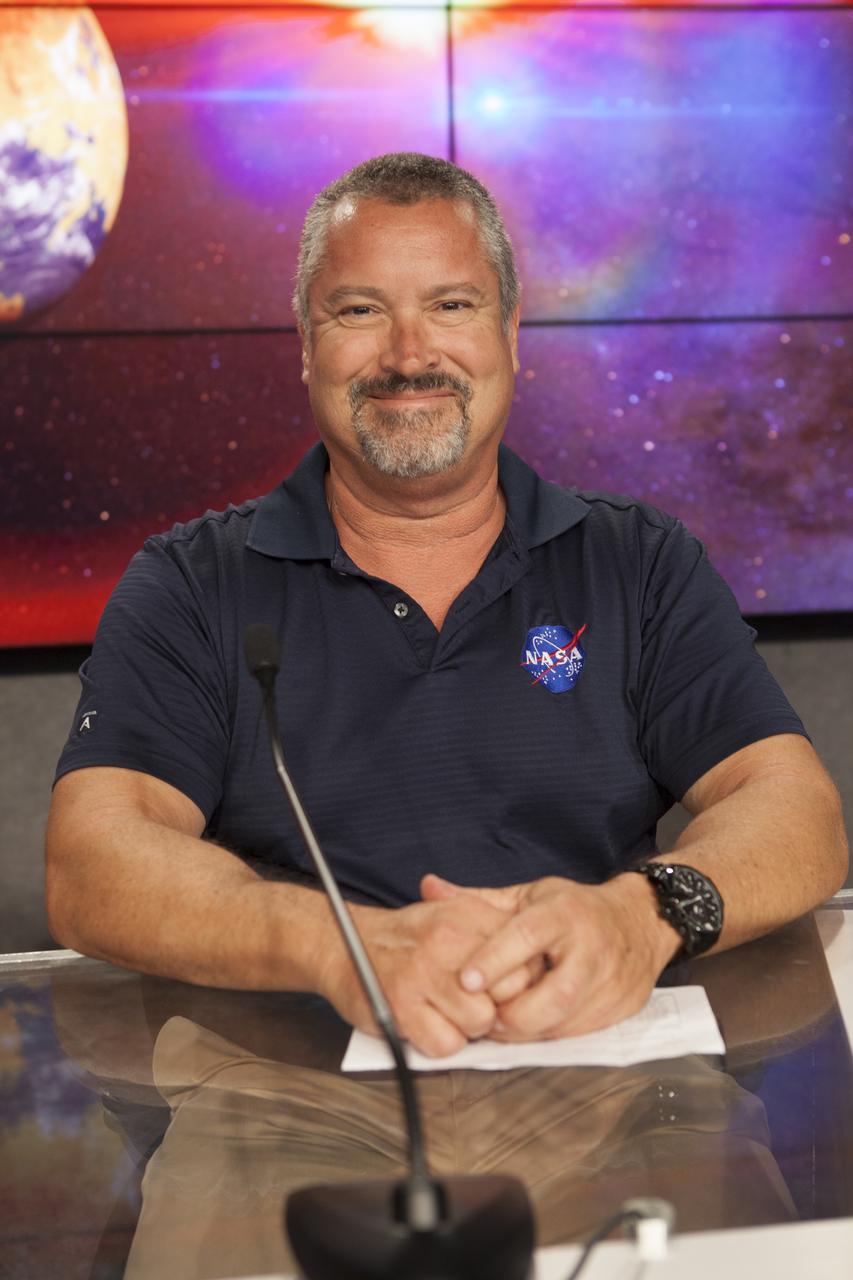
In Kennedy Space Center's Press Site auditorium, members of the media participate in a mission briefing on NASA's Transiting Exoplanet Survey Satellite (TESS). Omar Baez, launch director, NASA’s Launch Services Program, answers questions during the briefing. TESS is the next step in the search for planets outside of our solar system. The mission will find exoplanets that periodically block part of the light from their host stars, events called transits. The satellite will survey the nearest and brightest stars for two years to search for transiting exoplanets. TESS will launch on a SpaceX Falcon 9 rocket from Space Launch Complex 40 at Cape Canaveral Air Force Station no earlier than 6:32 p.m. EDT on Monday, April 16.

In Kennedy Space Center's Press Site auditorium, members of the media participate in a mission briefing on NASA's Transiting Exoplanet Survey Satellite (TESS). Sandra Connelly, deputy associate administrator of programs, NASA’s Science Mission Directorate, answers questions during the briefing. TESS is the next step in the search for planets outside of our solar system. The mission will find exoplanets that periodically block part of the light from their host stars, events called transits. The satellite will survey the nearest and brightest stars for two years to search for transiting exoplanets. TESS will launch on a SpaceX Falcon 9 rocket from Space Launch Complex 40 at Cape Canaveral Air Force Station no earlier than 6:32 p.m. EDT on Monday, April 16.
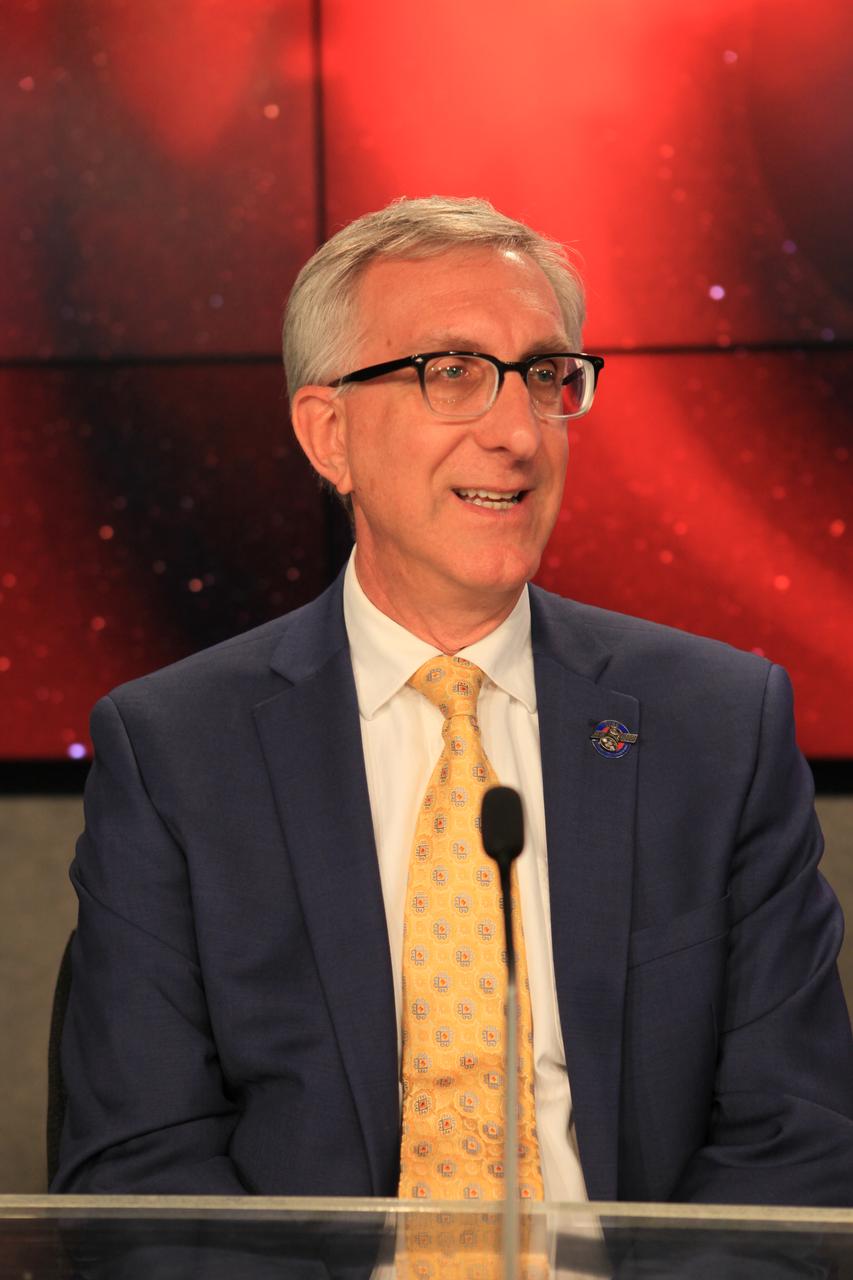
In Kennedy Space Center's Press Site auditorium, members of the media participate in a mission briefing on NASA's Transiting Exoplanet Survey Satellite (TESS). Jeff Volosin, TESS project manager, NASA’s Goddard Space Flight Center, answers questions during the briefing. TESS is the next step in the search for planets outside of our solar system. The mission will find exoplanets that periodically block part of the light from their host stars, events called transits. The satellite will survey the nearest and brightest stars for two years to search for transiting exoplanets. TESS will launch on a SpaceX Falcon 9 rocket from Space Launch Complex 40 at Cape Canaveral Air Force Station no earlier than 6:32 p.m. EDT on Monday, April 16.

The jettison, abort, and attitude control motors for Artemis II are secured on a work stand inside the Launch Abort System Facility at NASA’s Kennedy Space Center in Florida on Nov. 17, 2021. The motors will continue undergoing inspections, testing, and assembly ahead of the first crewed Artemis mission. The launch abort system is designed to protect astronauts if a problem arises during launch by pulling the Orion spacecraft away from a failing rocket. Artemis II will confirm all the Orion spacecraft’s systems operate as designed in the actual environment of deep space with astronauts aboard.
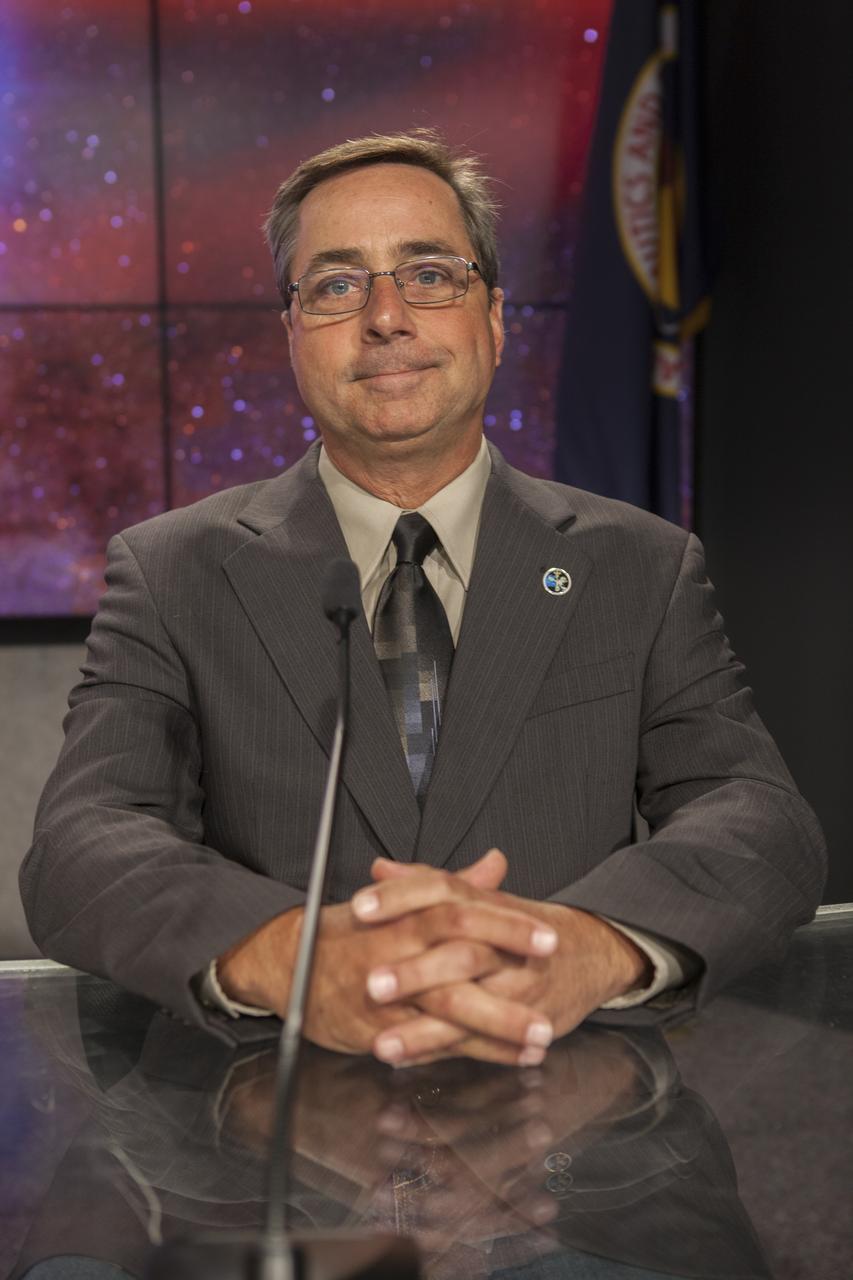
In Kennedy Space Center's Press Site auditorium, members of the media participate in a mission briefing on NASA's Transiting Exoplanet Survey Satellite (TESS). Mike McAleenan, weather officer, 45th Weather Squadron, gives a weather update and answers questions during the briefing. TESS is the next step in the search for planets outside of our solar system. The mission will find exoplanets that periodically block part of the light from their host stars, events called transits. The satellite will survey the nearest and brightest stars for two years to search for transiting exoplanets. TESS will launch on a SpaceX Falcon 9 rocket from Space Launch Complex 40 at Cape Canaveral Air Force Station no earlier than 6:32 p.m. EDT on Monday, April 16.
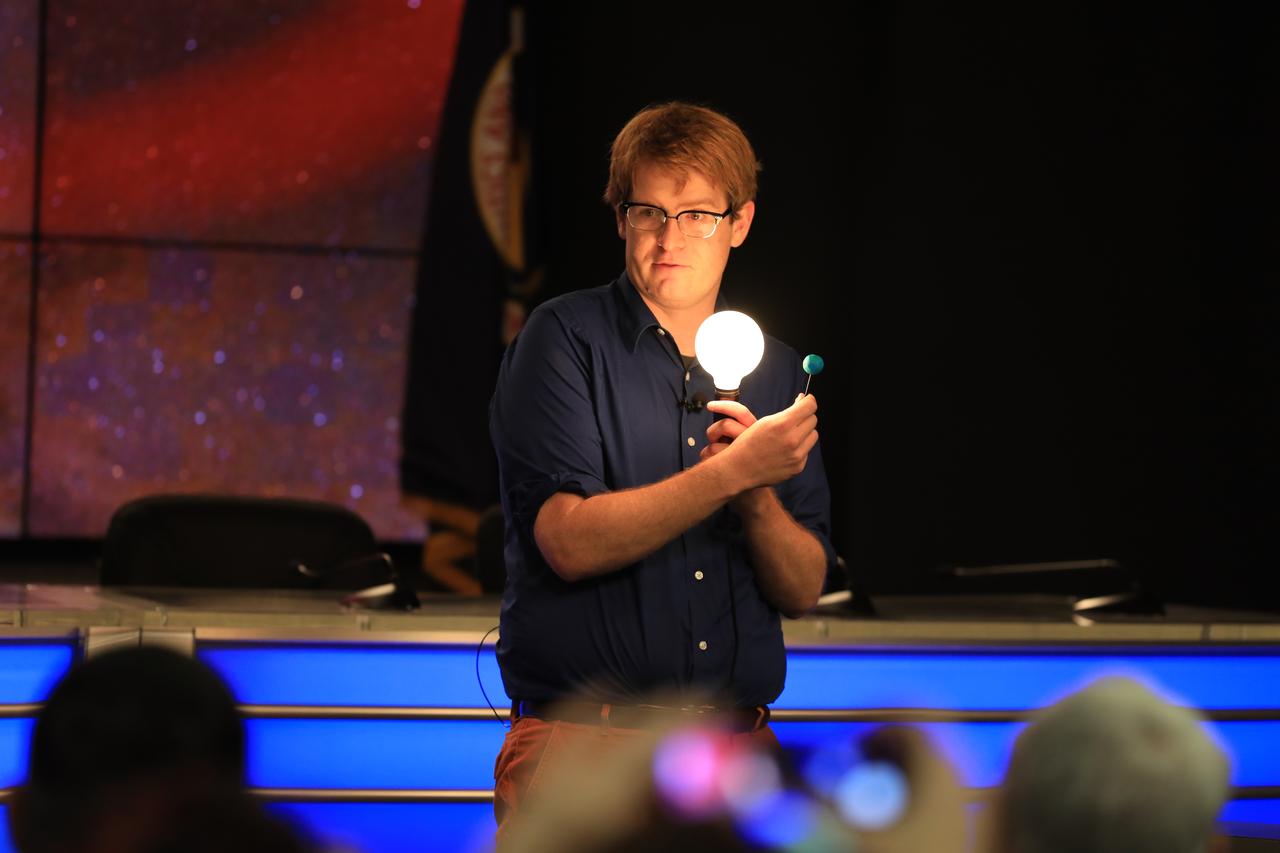
NASA and industry leaders speak to NASA Social participants about the agency's Transiting Exoplanet Survey Satellite (TESS) in the Press Site auditorium at Kennedy Space Center in Florida. Speaking to the group is Zach Berta-Thompson, assistant professor, University of Colorado Boulder. TESS is the next step in the search for planets outside of our solar system. The mission will find exoplanets that periodically block part of the light from their host stars, events called transits. The satellite will survey the nearest and brightest stars for two years to search for transiting exoplanets. TESS will launch on a SpaceX Falcon 9 rocket from Space Launch Complex 40 at Cape Canaveral Air Force Station no earlier than 6:32 p.m. EDT on Monday, April 16.
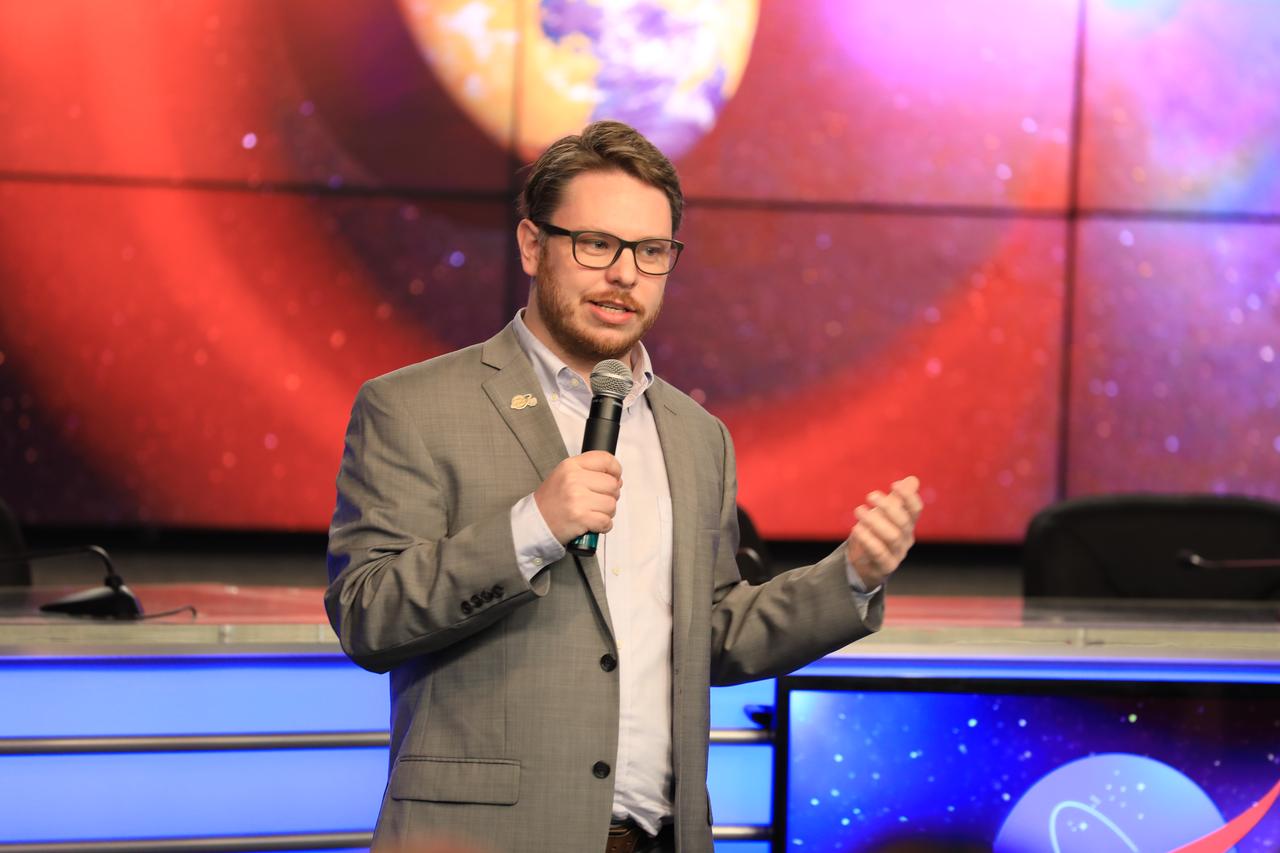
NASA and industry leaders speak to NASA Social participants about the agency's Transiting Exoplanet Survey Satellite (TESS) in the Press Site auditorium at Kennedy Space Center in Florida. Speaking to the group is Tom Barclay, TESS scientist, NASA’s Goddard Space Flight Center. TESS is the next step in the search for planets outside of our solar system. The mission will find exoplanets that periodically block part of the light from their host stars, events called transits. The satellite will survey the nearest and brightest stars for two years to search for transiting exoplanets. TESS will launch on a SpaceX Falcon 9 rocket from Space Launch Complex 40 at Cape Canaveral Air Force Station no earlier than 6:32 p.m. EDT on Monday, April 16.
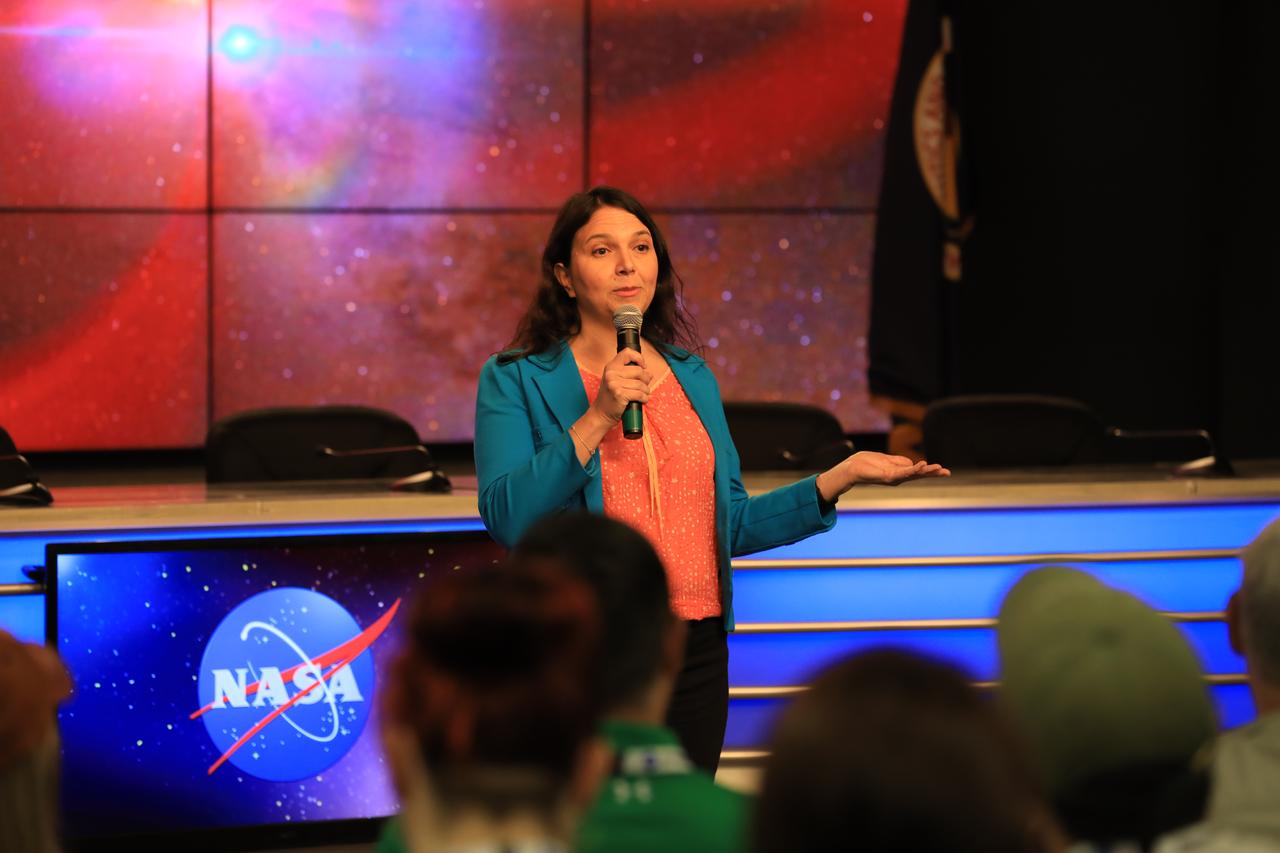
NASA and industry leaders speak to NASA Social participants about the agency's Transiting Exoplanet Survey Satellite (TESS) in the Press Site auditorium at Kennedy Space Center in Florida. Speaking to the group is Elisa Quintana, TESS scientist, NASA's Goddard Space Flight Center. TESS is the next step in the search for planets outside of our solar system. The mission will find exoplanets that periodically block part of the light from their host stars, events called transits. The satellite will survey the nearest and brightest stars for two years to search for transiting exoplanets. TESS will launch on a SpaceX Falcon 9 rocket from Space Launch Complex 40 at Cape Canaveral Air Force Station no earlier than 6:32 p.m. EDT on Monday, April 16.

NASA and science investigators from MIT participate in a science briefing for the agency's Transiting Exoplanet Survey Satellite (TESS) in the Press Site auditorium at Kennedy Space Center in Florida. Felicia Chou, NASA Communications, asks questions from online participants during the briefing. TESS is the next step in the search for planets outside of our solar system. The mission will find exoplanets that periodically block part of the light from their host stars, events called transits. The satellite will survey the nearest and brightest stars for two years to search for transiting exoplanets. TESS will launch on a SpaceX Falcon 9 rocket from Space Launch Complex 40 at Cape Canaveral Air Force Station no earlier than 6:32 p.m. EDT on Monday, April 16.
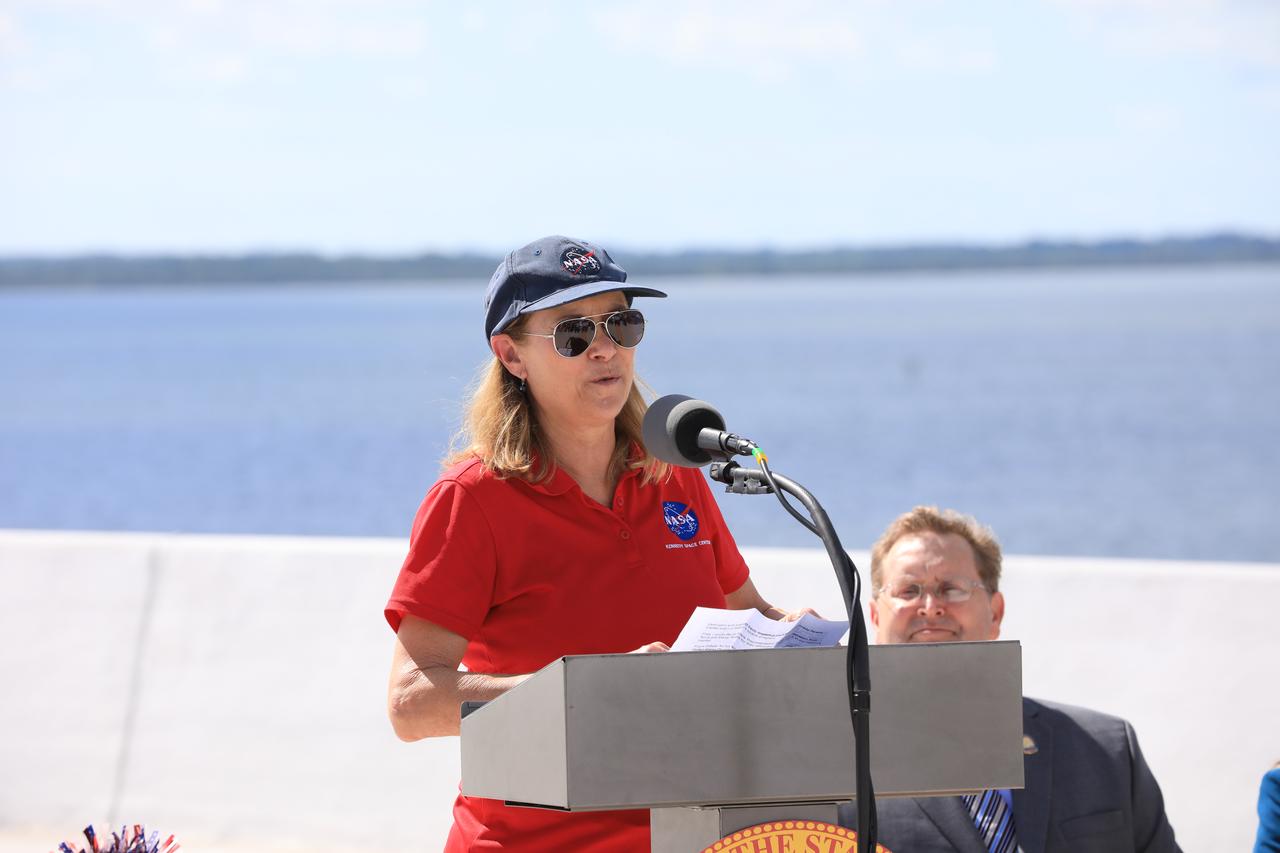
NASA Kennedy Space Center Director Janet Petro speaks during the grand opening ceremony for the upgraded eastbound span of the Indian River Bridge near the center on June 9, 2023. The new high-rise bridge serves as the primary entrance and exit to the space center for employees and visitors. The bridge spans the Indian River Lagoon and connects Kennedy and the Cape Canaveral Space Force Station to the mainland via State Road 405/NASA Causeway in Titusville. This first section of the bridge replaces the two-lane drawbridge which was built in the mid-1960s to support the Apollo program.
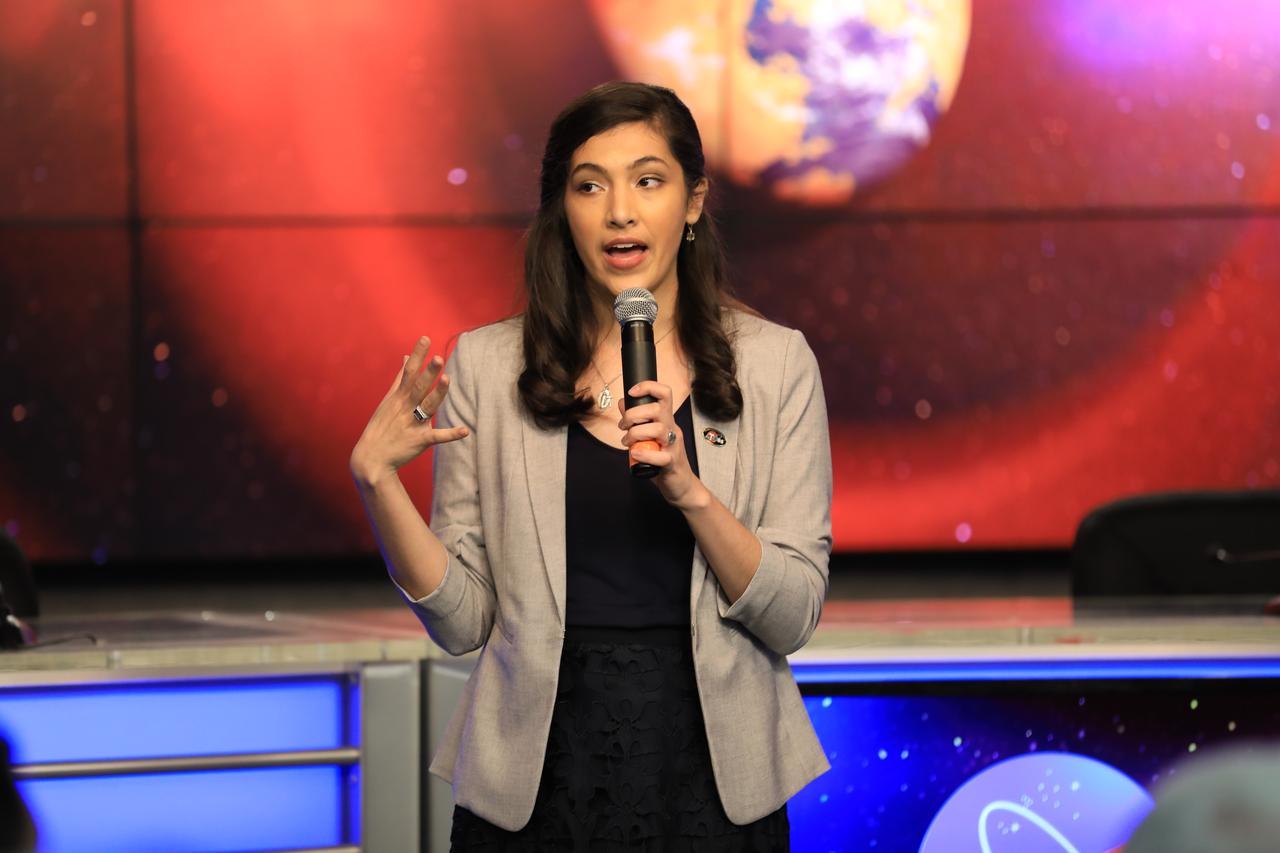
NASA and industry leaders speak to NASA Social participants about the agency's Transiting Exoplanet Survey Satellite (TESS) in the Press Site auditorium at Kennedy Space Center in Florida. Speaking to the group is Natalia Guerrero, TESS researcher, Massachusetts Institute of Technology. TESS is the next step in the search for planets outside of our solar system. The mission will find exoplanets that periodically block part of the light from their host stars, events called transits. The satellite will survey the nearest and brightest stars for two years to search for transiting exoplanets. TESS will launch on a SpaceX Falcon 9 rocket from Space Launch Complex 40 at Cape Canaveral Air Force Station no earlier than 6:32 p.m. EDT on Monday, April 16.
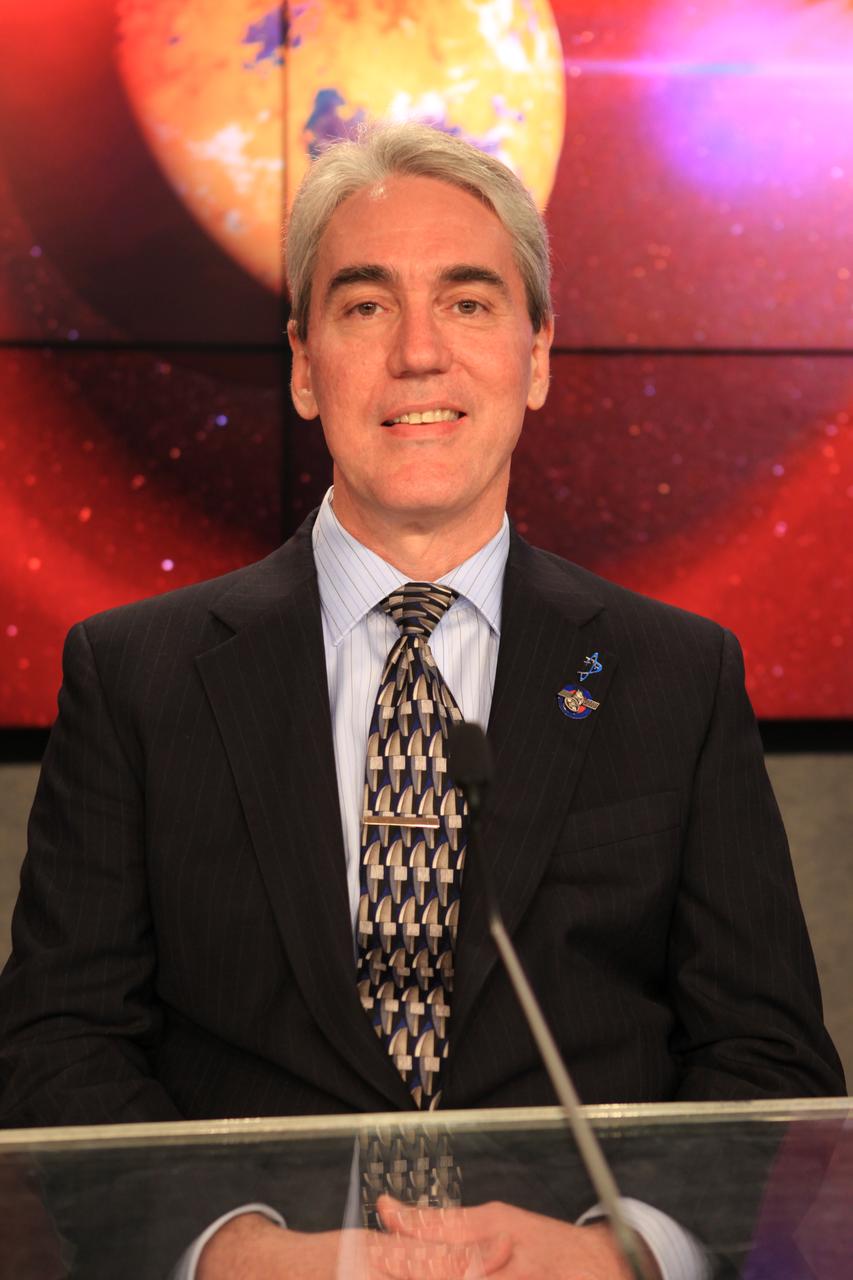
In Kennedy Space Center's Press Site auditorium, members of the media participate in a mission briefing on NASA's Transiting Exoplanet Survey Satellite (TESS). Robert Lockwood, TESS spacecraft program manager, Orbital ATK, answers questions during the briefing. TESS is the next step in the search for planets outside of our solar system. The mission will find exoplanets that periodically block part of the light from their host stars, events called transits. The satellite will survey the nearest and brightest stars for two years to search for transiting exoplanets. TESS will launch on a SpaceX Falcon 9 rocket from Space Launch Complex 40 at Cape Canaveral Air Force Station no earlier than 6:32 p.m. EDT on Monday, April 16.

The jettison, abort, and attitude control motors for Artemis II are secured on a work stand inside the Launch Abort System Facility at NASA’s Kennedy Space Center in Florida on Nov. 17, 2021. The motors will continue undergoing inspections, testing, and assembly ahead of the first crewed Artemis mission. The launch abort system is designed to protect astronauts if a problem arises during launch by pulling the Orion spacecraft away from a failing rocket. Artemis II will confirm all the Orion spacecraft’s systems operate as designed in the actual environment of deep space with astronauts aboard.
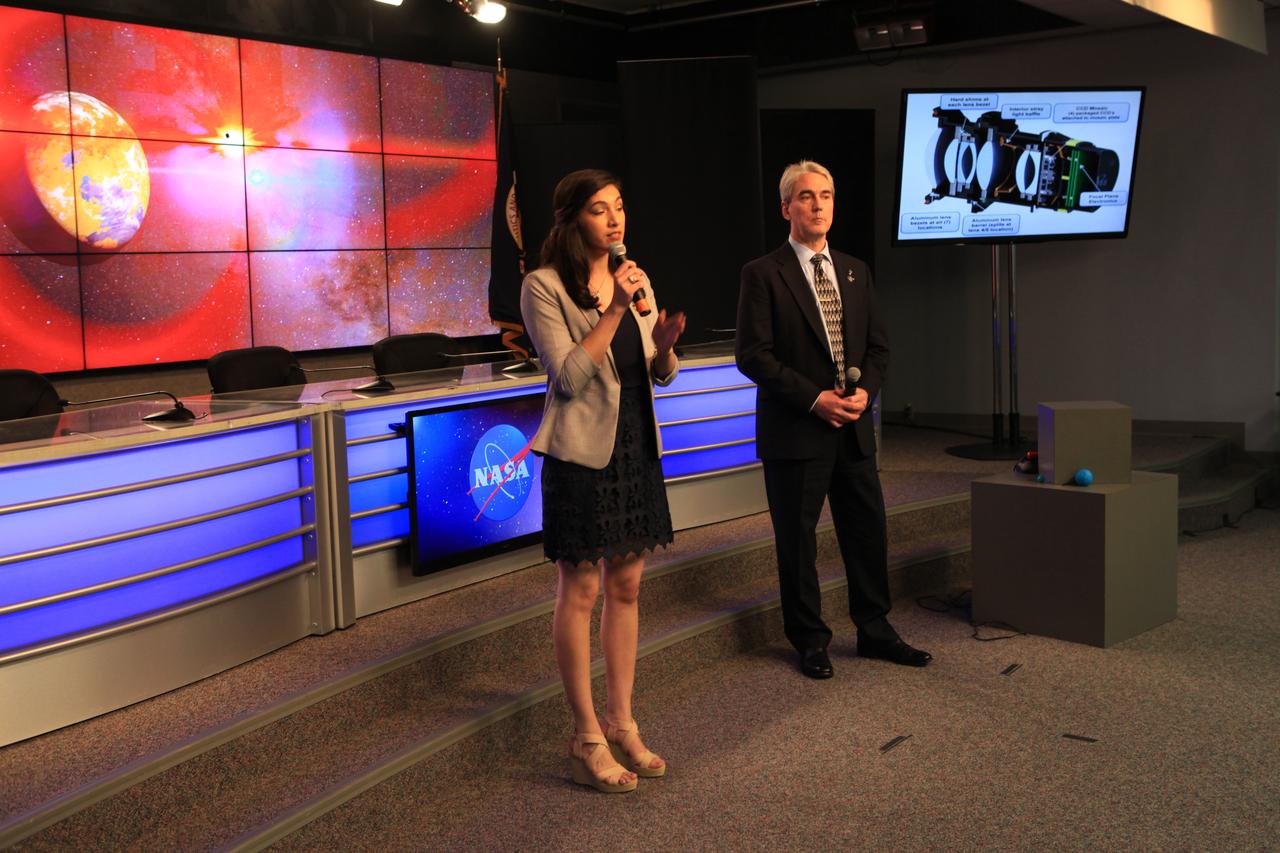
NASA and industry leaders speak to NASA Social participants about the agency's Transiting Exoplanet Survey Satellite (TESS) in the Press Site auditorium at Kennedy Space Center in Florida. Speaking to the group, from left are Natalia Guerrero, TESS researcher, Massachusetts Institute of Technology, and Robert Lockwood, TESS Spacecraft Program Manager, Orbital ATK. TESS is the next step in the search for planets outside of our solar system. The mission will find exoplanets that periodically block part of the light from their host stars, events called transits. The satellite will survey the nearest and brightest stars for two years to search for transiting exoplanets. TESS will launch on a SpaceX Falcon 9 rocket from Space Launch Complex 40 at Cape Canaveral Air Force Station no earlier than 6:32 p.m. EDT on Monday, April 16.
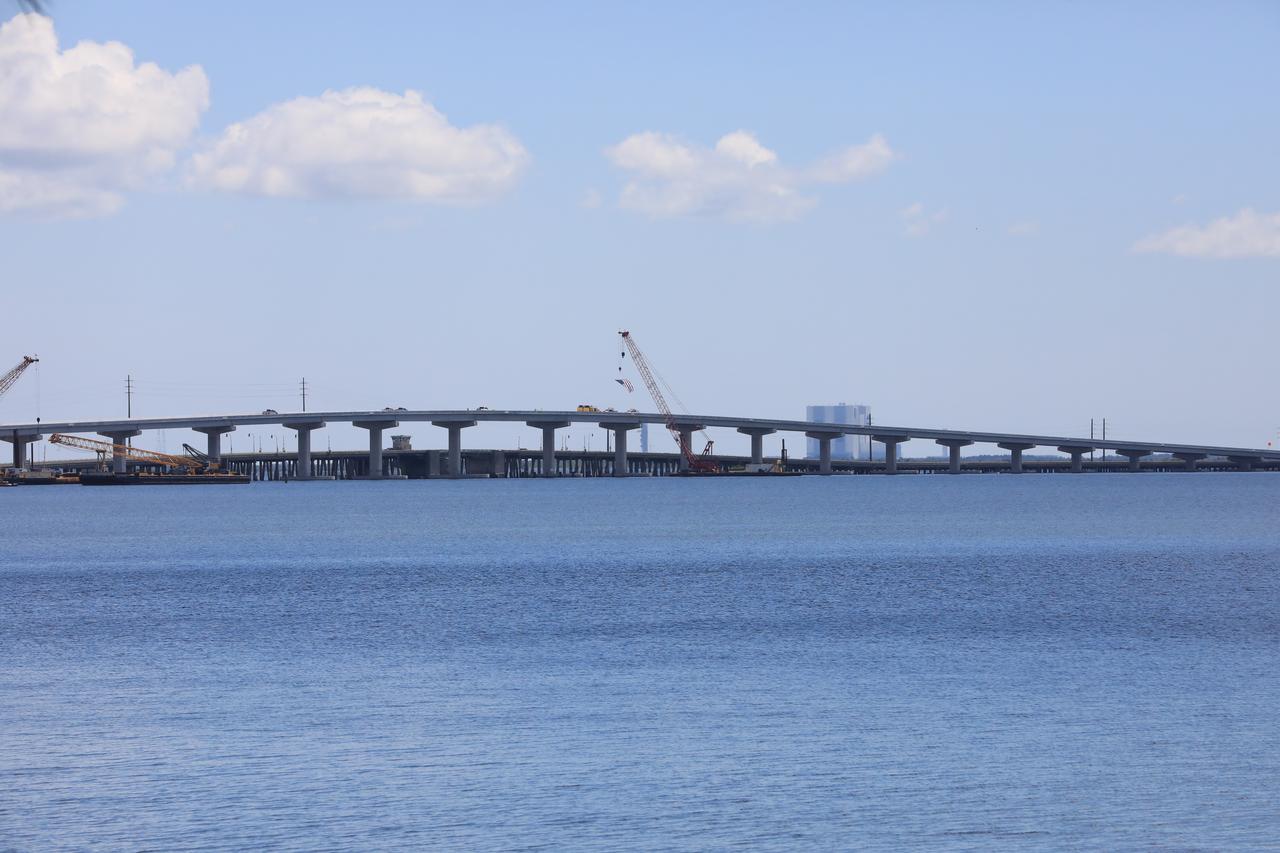
In view is the upgraded eastbound span of the Indian River Bridge leading to NASA’s Kennedy Space Center in Florida. A ribbon cutting ceremony was held June 9, 2023 to officially open the East part of the bridge. The new high-rise bridge serves as the primary entrance and exit to the space center for employees and visitors. The bridge spans the Indian River Lagoon and connects Kennedy and the Cape Canaveral Space Force Station to the mainland via State Road 405/NASA Causeway in Titusville. This first section of the bridge replaces the two-lane drawbridge which was built in the mid-1960s to support the Apollo program.

NASA and industry leaders speak to NASA Social participants about the agency's Transiting Exoplanet Survey Satellite (TESS) in the Press Site auditorium at Kennedy Space Center in Florida. Speaking to the group from center, are Martin Still, TESS Program Scientist, NASA Headquarters, and Jessie Christiansen, Staff scientist, NASA Exoplanet Science Institute, California Institute of Technology. At far left is Jason Townsend, NASA Communications. TESS is the next step in the search for planets outside of our solar system. The mission will find exoplanets that periodically block part of the light from their host stars, events called transits. The satellite will survey the nearest and brightest stars for two years to search for transiting exoplanets. TESS will launch on a SpaceX Falcon 9 rocket from Space Launch Complex 40 at Cape Canaveral Air Force Station no earlier than 6:32 p.m. EDT on Monday, April 16.

NASA and science investigators from MIT participate in a science briefing for the agency's Transiting Exoplanet Survey Satellite (TESS) in the Press Site auditorium at Kennedy Space Center in Florida. Diana Dragomir, NASA Hubble Postdoctoral Fellow, Massachusetts Institute of Technology, answered questions during the briefing. TESS is the next step in the search for planets outside of our solar system. The mission will find exoplanets that periodically block part of the light from their host stars, events called transits. The satellite will survey the nearest and brightest stars for two years to search for transiting exoplanets. TESS will launch on a SpaceX Falcon 9 rocket from Space Launch Complex 40 at Cape Canaveral Air Force Station no earlier than 6:32 p.m. EDT on Monday, April 16.

NASA and science investigators from MIT participate in a science briefing for the agency's Transiting Exoplanet Survey Satellite (TESS) in the Press Site auditorium at Kennedy Space Center in Florida. Paul Hertz, Astrophysics Division director, NASA Headquarters, answered questions during the briefing. TESS is the next step in the search for planets outside of our solar system. The mission will find exoplanets that periodically block part of the light from their host stars, events called transits. The satellite will survey the nearest and brightest stars for two years to search for transiting exoplanets. TESS will launch on a SpaceX Falcon 9 rocket from Space Launch Complex 40 at Cape Canaveral Air Force Station no earlier than 6:32 p.m. EDT on Monday, April 16.

NASA and science investigators from MIT participate in a science briefing for the agency's Transiting Exoplanet Survey Satellite (TESS) in the Press Site auditorium at Kennedy Space Center in Florida. George Ricker, TESS principal investigator, Massachusetts Institute of Technology, answered questions during the briefing. TESS is the next step in the search for planets outside of our solar system. The mission will find exoplanets that periodically block part of the light from their host stars, events called transits. The satellite will survey the nearest and brightest stars for two years to search for transiting exoplanets. TESS will launch on a SpaceX Falcon 9 rocket from Space Launch Complex 40 at Cape Canaveral Air Force Station no earlier than 6:32 p.m. EDT on Monday, April 16.
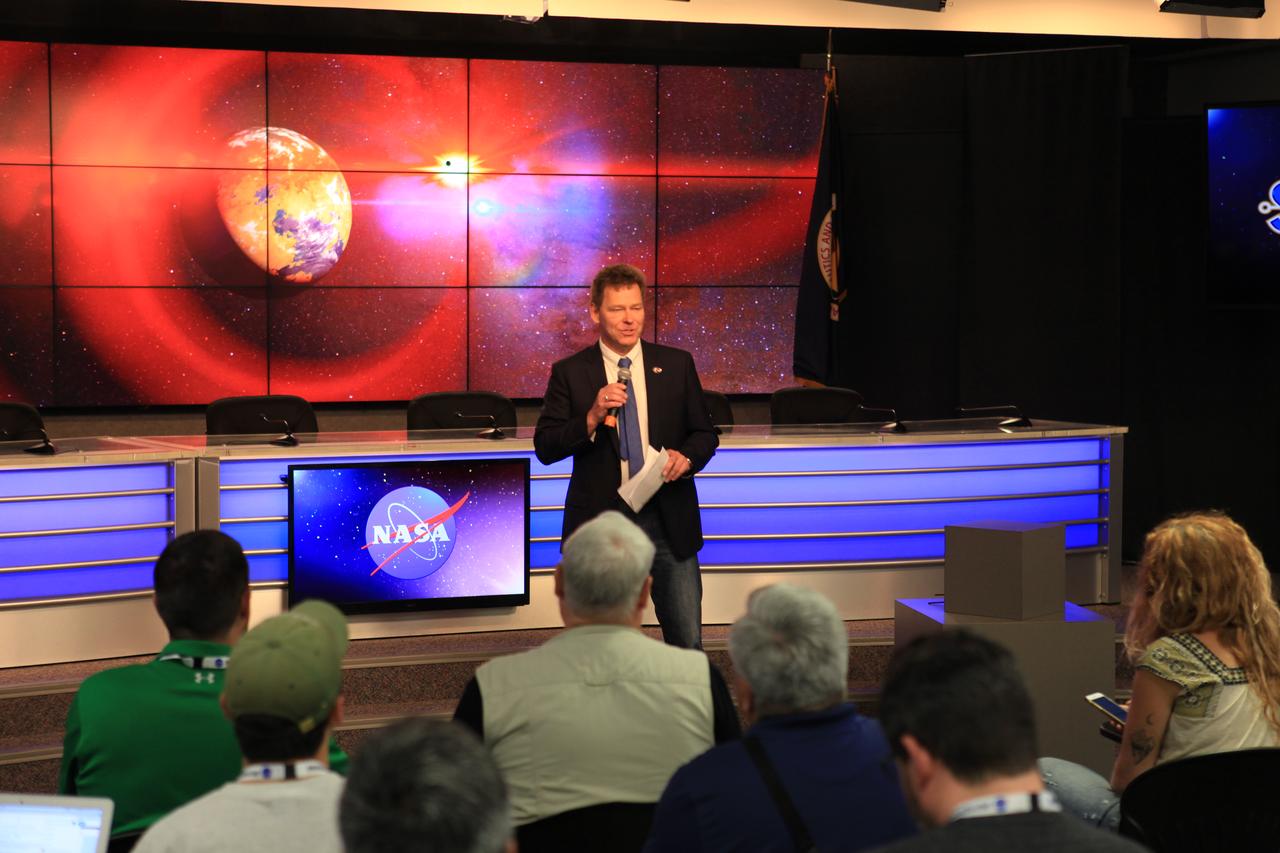
NASA and industry leaders speak to NASA Social participants about the agency's Transiting Exoplanet Survey Satellite (TESS) in the Press Site auditorium at Kennedy Space Center in Florida. Speaking to the group is Hans Koenigsmann, vice president of Build and Flight Reliability at SpaceX. TESS is the next step in the search for planets outside of our solar system. The mission will find exoplanets that periodically block part of the light from their host stars, events called transits. The satellite will survey the nearest and brightest stars for two years to search for transiting exoplanets. TESS will launch on a SpaceX Falcon 9 rocket from Space Launch Complex 40 at Cape Canaveral Air Force Station no earlier than 6:32 p.m. EDT on Monday, April 16.