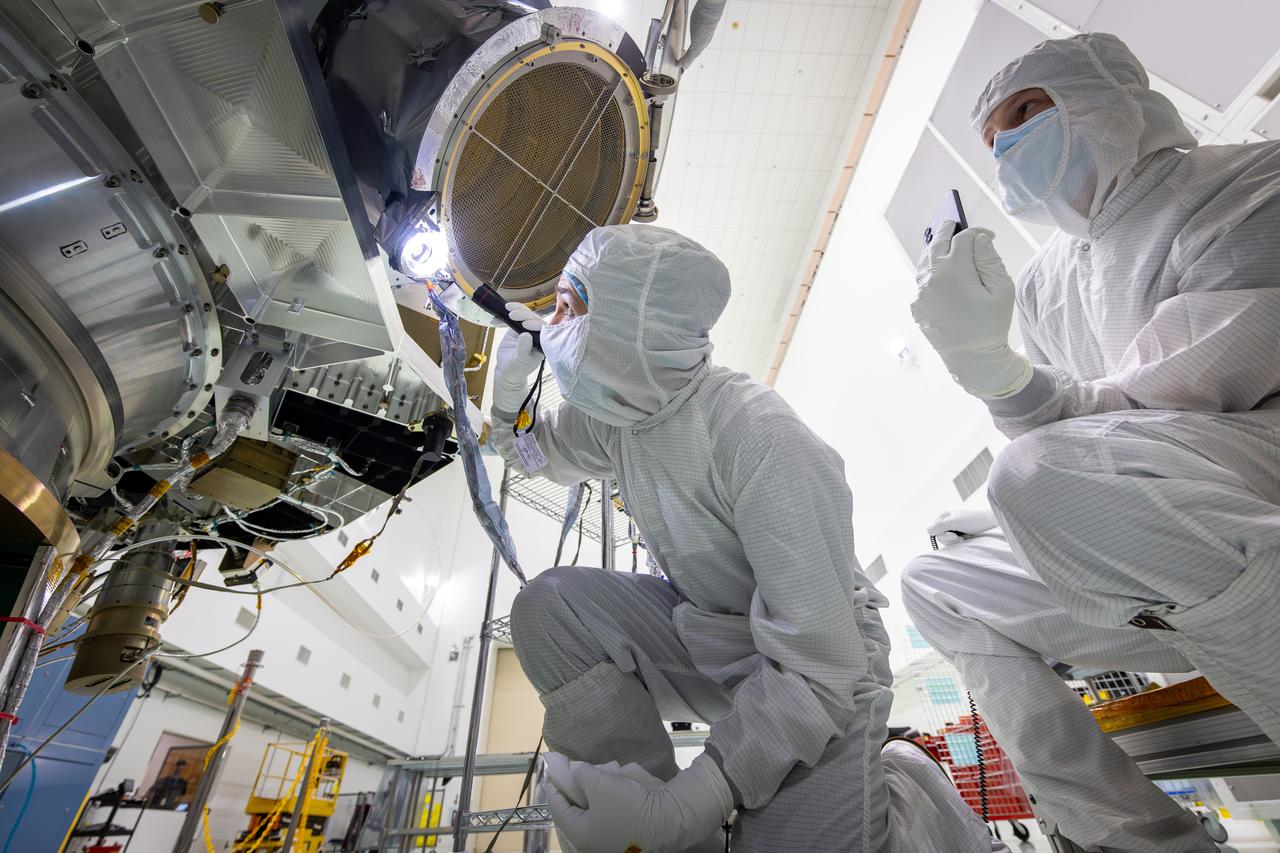
Technicians test the spring-activated door on the Interstellar Dust Experiment (IDEX) instrument of NASA’s IMAP (Interstellar Mapping and Acceleration Probe) observatory inside the high bay at the Astrotech Space Operations Facility near the agency’s Kennedy Space Center in Florida on Tuesday, June 3, 2025. The door will remain closed to protect IDEX from contamination during integration and launch. Once in space, the door will swing open permanently to allow interstellar and interplanetary dust to flow into the instrument for measurement. The IMAP observatory will study how the Sun shapes the boundaries of the heliosphere, the protective bubble around our solar system. Launch is targeted for no earlier than September 2025 aboard a SpaceX Falcon 9 rocket from Launch Complex 39A at NASA Kennedy.
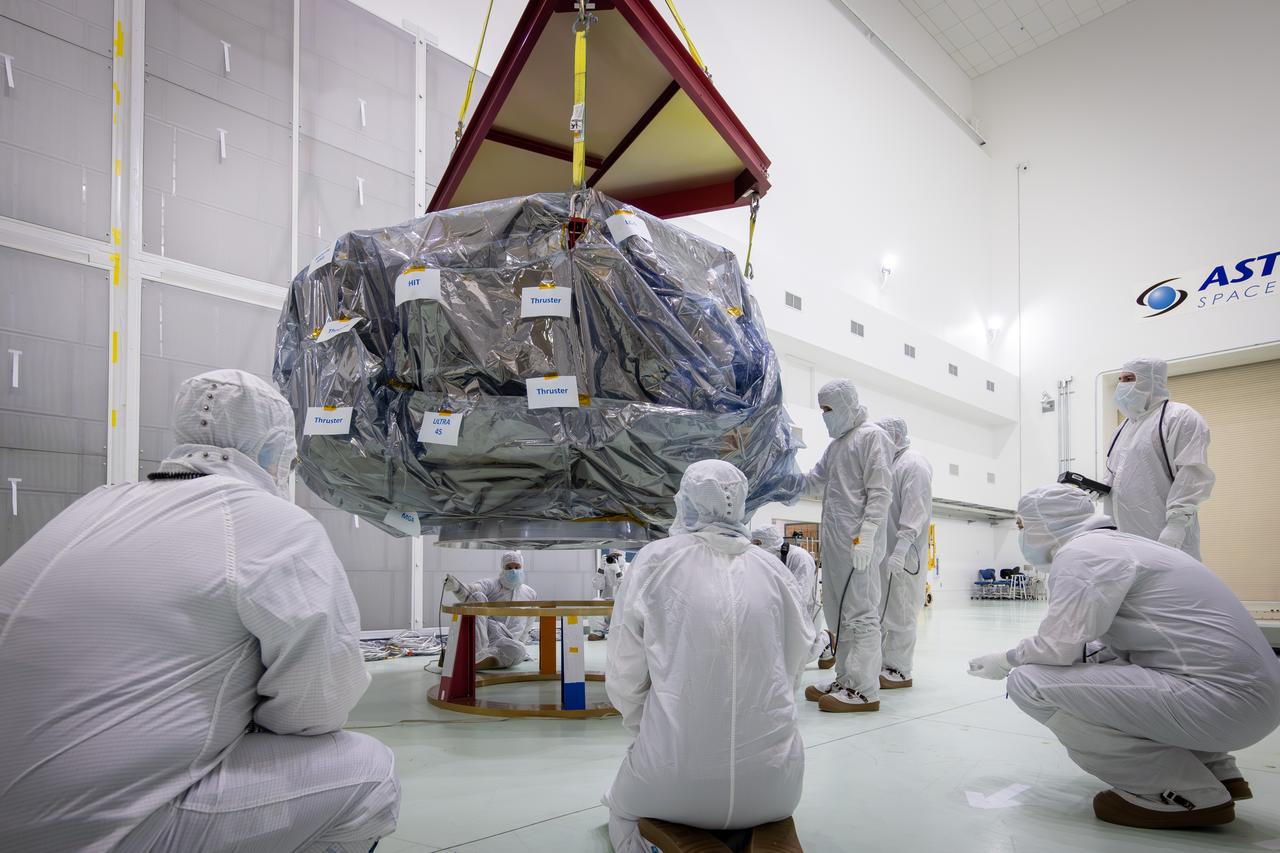
Technicians lift NASA’s IMAP (Interstellar Mapping and Acceleration Probe) spacecraft onto a work stand inside the high bay at the Astrotech Space Operations Facility near the agency’s Kennedy Space Center in Florida on Thursday, May 29, 2025. The observatory will study how the Sun shapes the boundaries of the heliosphere, the bubble protecting around our solar system, and is targeted for launch this fall aboard a SpaceX Falcon 9 rocket from Launch Complex 39A at NASA Kennedy.
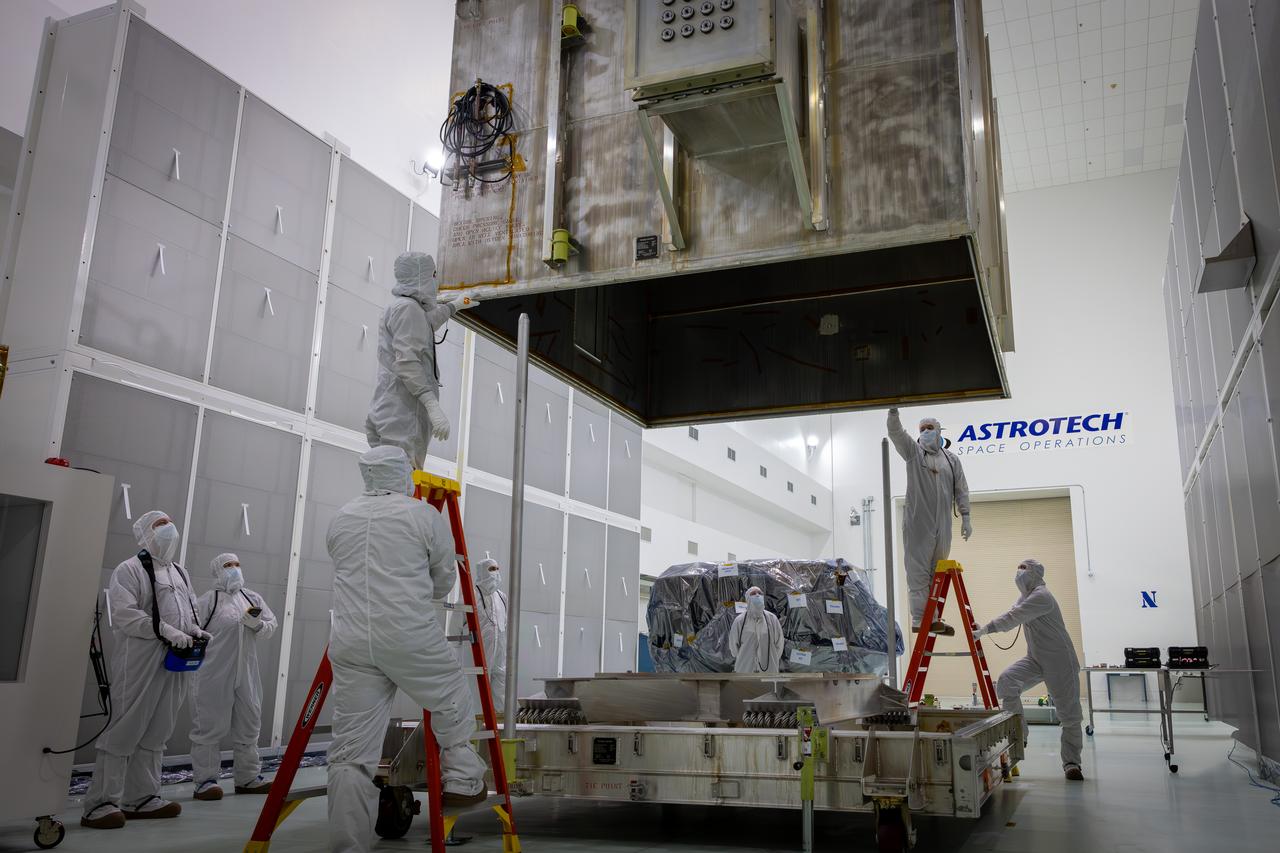
Technicians remove NASA’s IMAP (Interstellar Mapping and Acceleration Probe) spacecraft from its shipping container inside the high bay at the Astrotech Space Operations Facility near the agency’s Kennedy Space Center in Florida on Thursday, May 29, 2025. The observatory will study how the Sun shapes the boundaries of the heliosphere, the bubble protecting around our solar system, and is targeted for launch this fall aboard a SpaceX Falcon 9 rocket from Launch Complex 39A at NASA Kennedy.

Technicians test the spring-activated door on the Interstellar Dust Experiment (IDEX) instrument of NASA’s IMAP (Interstellar Mapping and Acceleration Probe) observatory inside the high bay at the Astrotech Space Operations Facility near the agency’s Kennedy Space Center in Florida on Tuesday, June 3, 2025. The door will remain closed to protect IDEX from contamination during integration and launch. Once in space, the door will swing open permanently to allow interstellar and interplanetary dust to flow into the instrument for measurement. The IMAP observatory will study how the Sun shapes the boundaries of the heliosphere, the protective bubble around our solar system. Launch is targeted for no earlier than September 2025 aboard a SpaceX Falcon 9 rocket from Launch Complex 39A at NASA Kennedy.
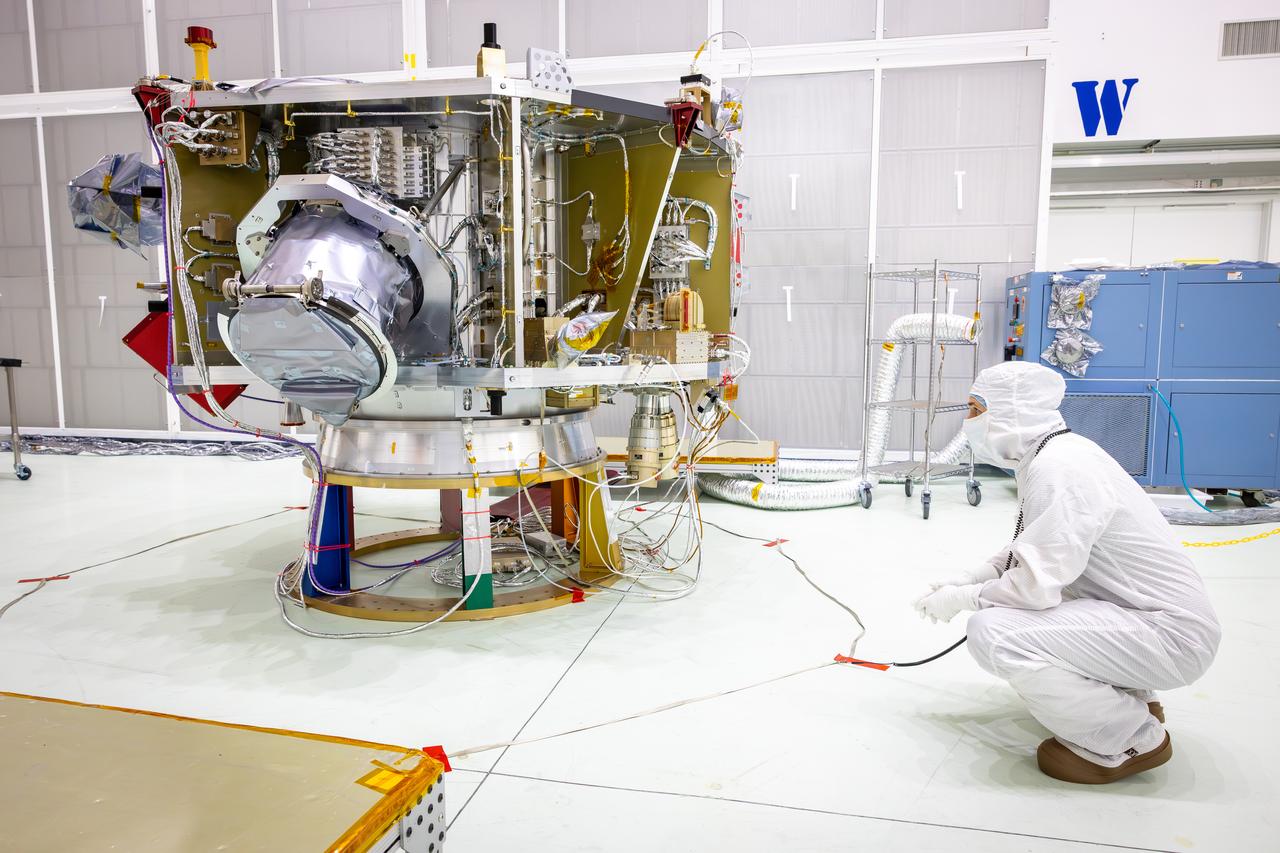
Technicians test the spring-activated door on the Interstellar Dust Experiment (IDEX) instrument of NASA’s IMAP (Interstellar Mapping and Acceleration Probe) observatory inside the high bay at the Astrotech Space Operations Facility near the agency’s Kennedy Space Center in Florida on Tuesday, June 3, 2025. The door will remain closed to protect IDEX from contamination during integration and launch. Once in space, the door will swing open permanently to allow interstellar and interplanetary dust to flow into the instrument for measurement. The IMAP observatory will study how the Sun shapes the boundaries of the heliosphere, the protective bubble around our solar system. Launch is targeted for no earlier than September 2025 aboard a SpaceX Falcon 9 rocket from Launch Complex 39A at NASA Kennedy.
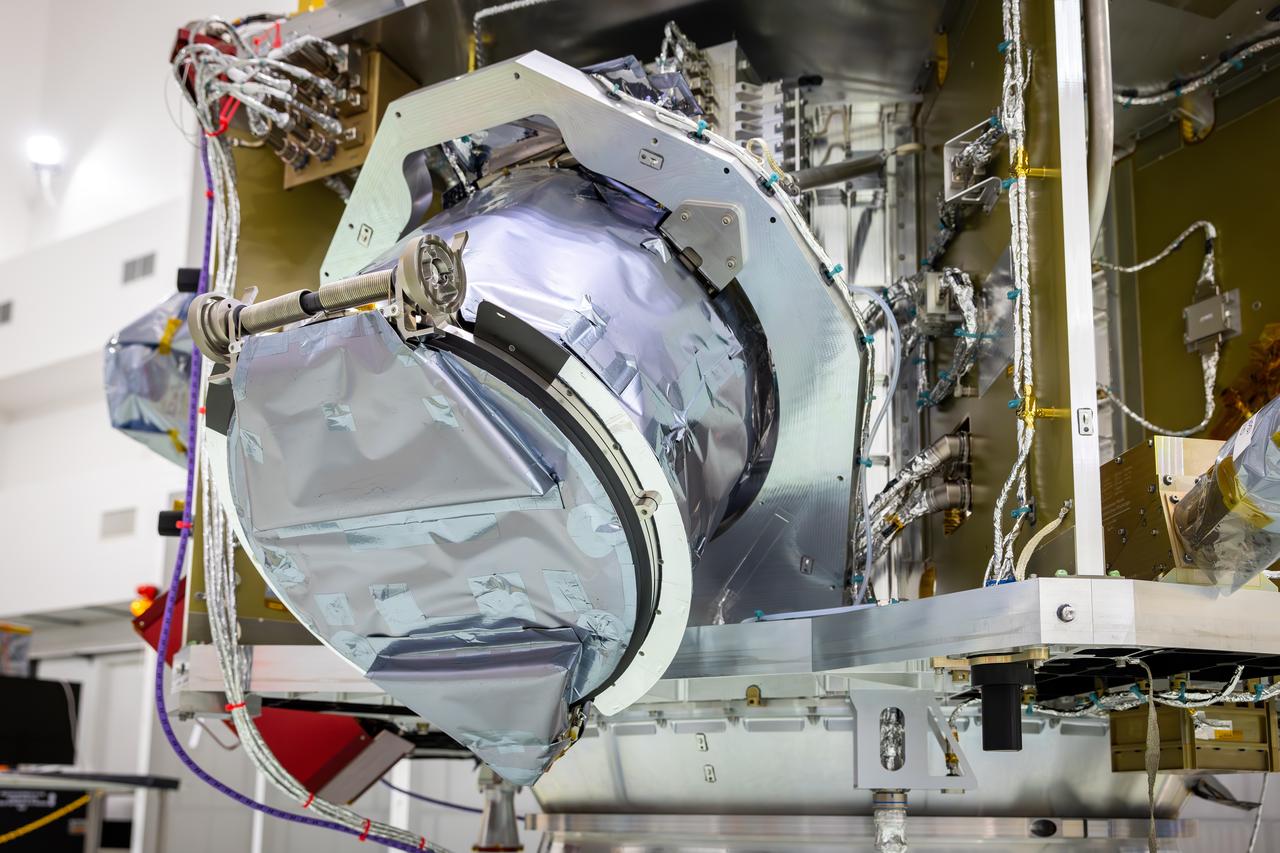
Technicians test the spring-activated door on the Interstellar Dust Experiment (IDEX) instrument of NASA’s IMAP (Interstellar Mapping and Acceleration Probe) observatory inside the high bay at the Astrotech Space Operations Facility near the agency’s Kennedy Space Center in Florida on Tuesday, June 3, 2025. The door will remain closed to protect IDEX from contamination during integration and launch. Once in space, the door will swing open permanently to allow interstellar and interplanetary dust to flow into the instrument for measurement. The IMAP observatory will study how the Sun shapes the boundaries of the heliosphere, the protective bubble around our solar system. Launch is targeted for no earlier than September 2025 aboard a SpaceX Falcon 9 rocket from Launch Complex 39A at NASA Kennedy.
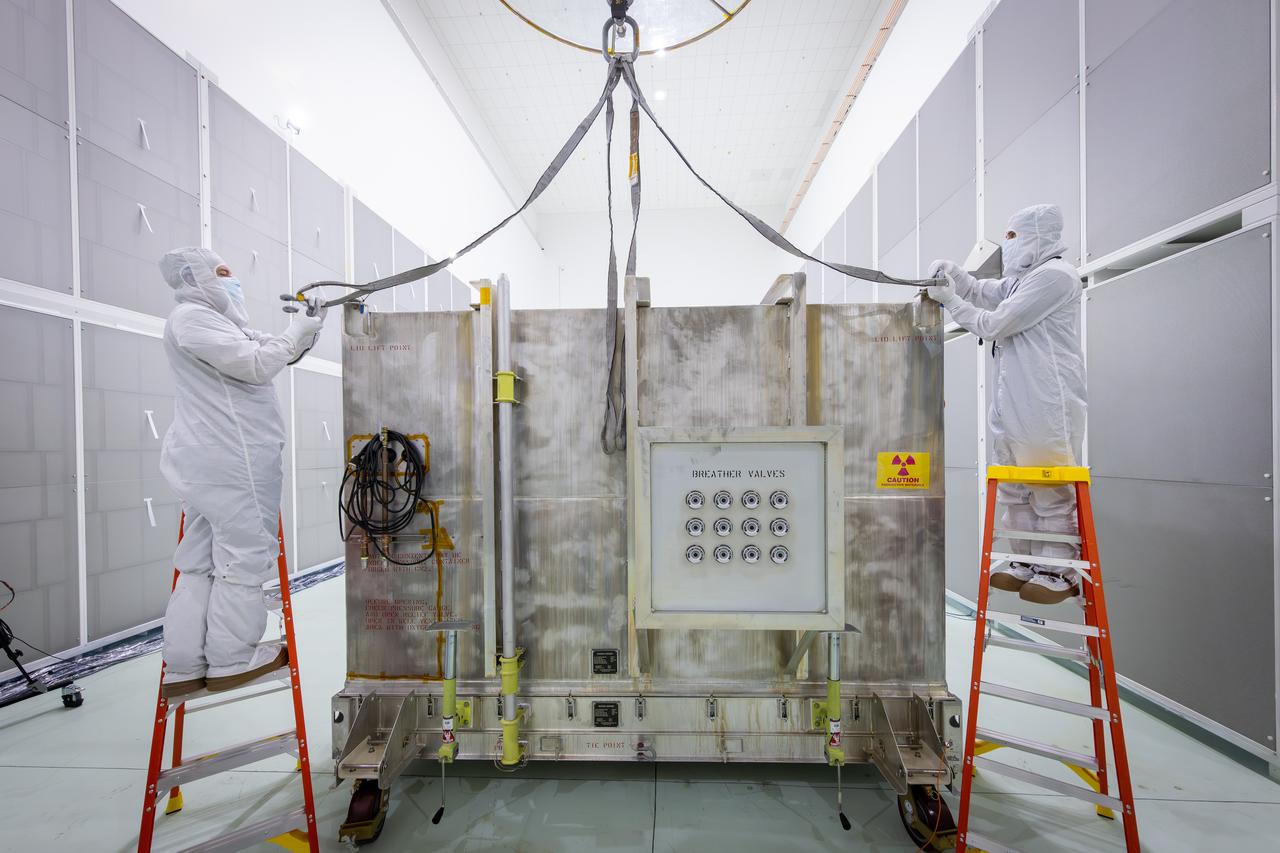
Technicians remove NASA’s IMAP (Interstellar Mapping and Acceleration Probe) spacecraft from its shipping container inside the high bay at the Astrotech Space Operations Facility near the agency’s Kennedy Space Center in Florida on Thursday, May 29, 2025. The observatory will study how the Sun shapes the boundaries of the heliosphere, the bubble protecting around our solar system, and is targeted for launch this fall aboard a SpaceX Falcon 9 rocket from Launch Complex 39A at NASA Kennedy.
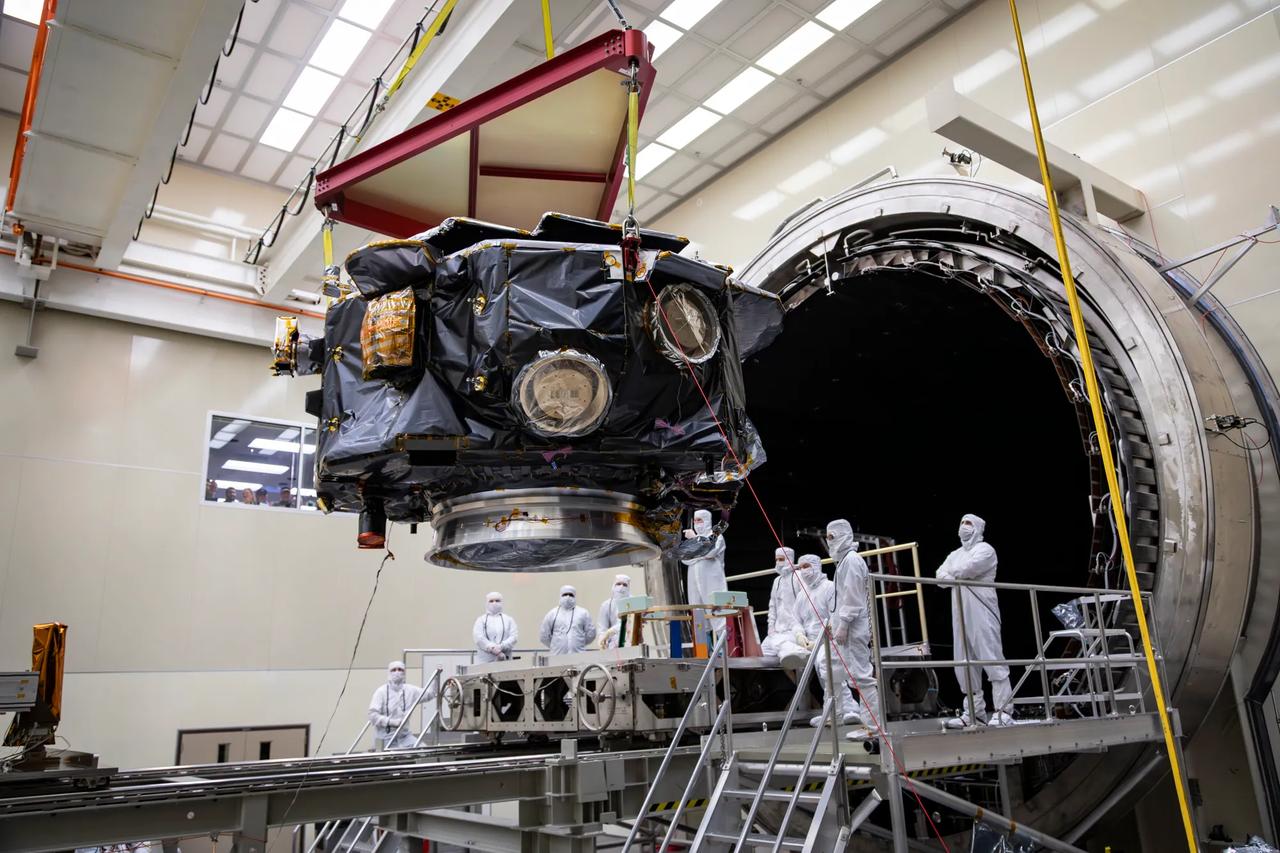
These photos and timelapse show NASA’s IMAP mission being loaded into the thermal vacuum chamber of NASA Marshall Space Flight Center’s X-Ray and Cryogenic Facility (XRCF) in Huntsville, Alabama. IMAP arrived at Marshall March 18 and was loaded into the chamber March 19. IMAP will undergo testing such as dramatic temperature changes to simulate the harsh environment of space. The XRCF’s vacuum chamber is is 20 feet in diameter and 60 feet long making it one of the largest across NASA. The IMAP mission is a modern-day celestial cartographer that will map the solar system by studying the heliosphere, a giant bubble created by the Sun’s solar wind that surrounds our solar system and protects it from harmful interstellar radiation. Photos and video courtesy of Ed Whitman from Johns Hopkins University’s Applied Physics Laboratory. For more information, contact NASA Marshall’s Office of Communications at 256-544-0034.
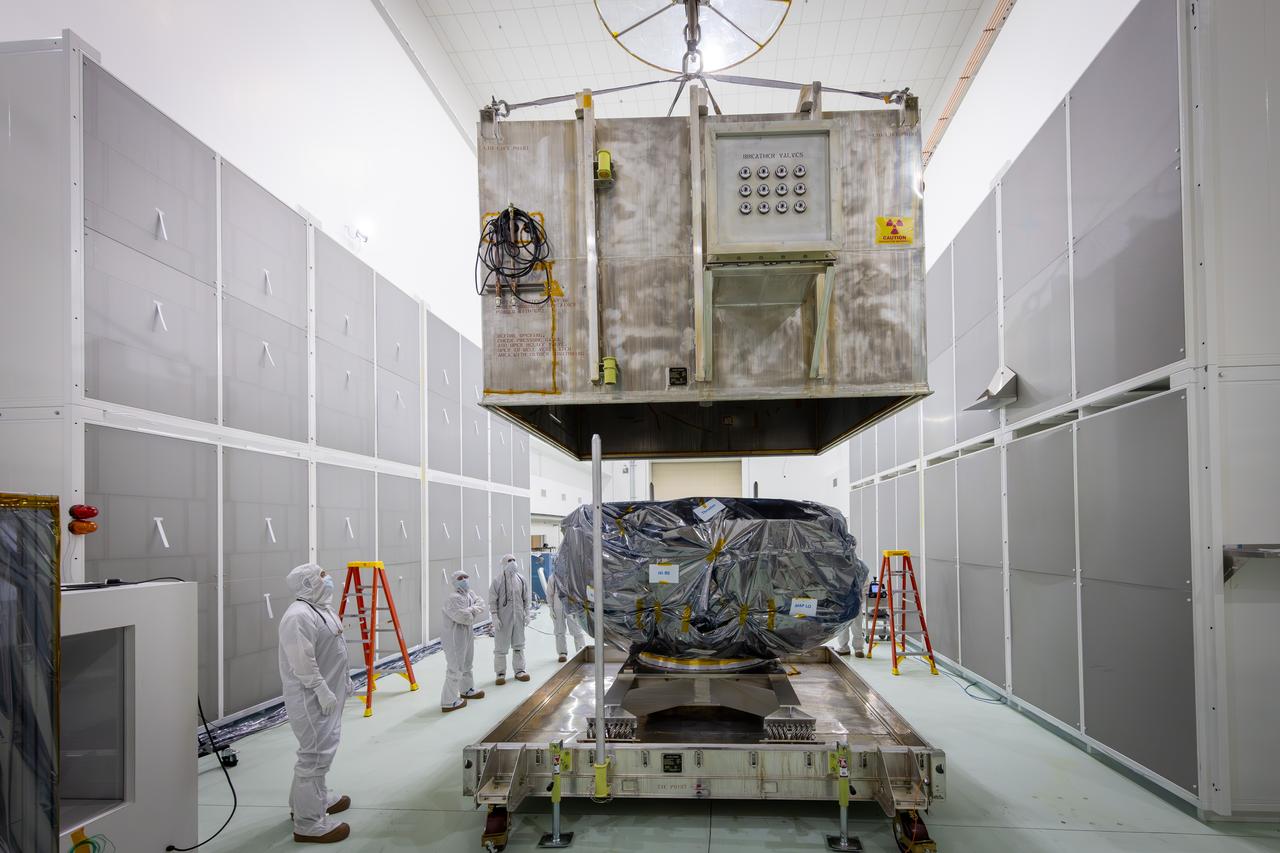
Technicians remove NASA’s IMAP (Interstellar Mapping and Acceleration Probe) spacecraft from its shipping container inside the high bay at the Astrotech Space Operations Facility near the agency’s Kennedy Space Center in Florida on Thursday, May 29, 2025. The observatory will study how the Sun shapes the boundaries of the heliosphere, the bubble protecting around our solar system, and is targeted for launch this fall aboard a SpaceX Falcon 9 rocket from Launch Complex 39A at NASA Kennedy.
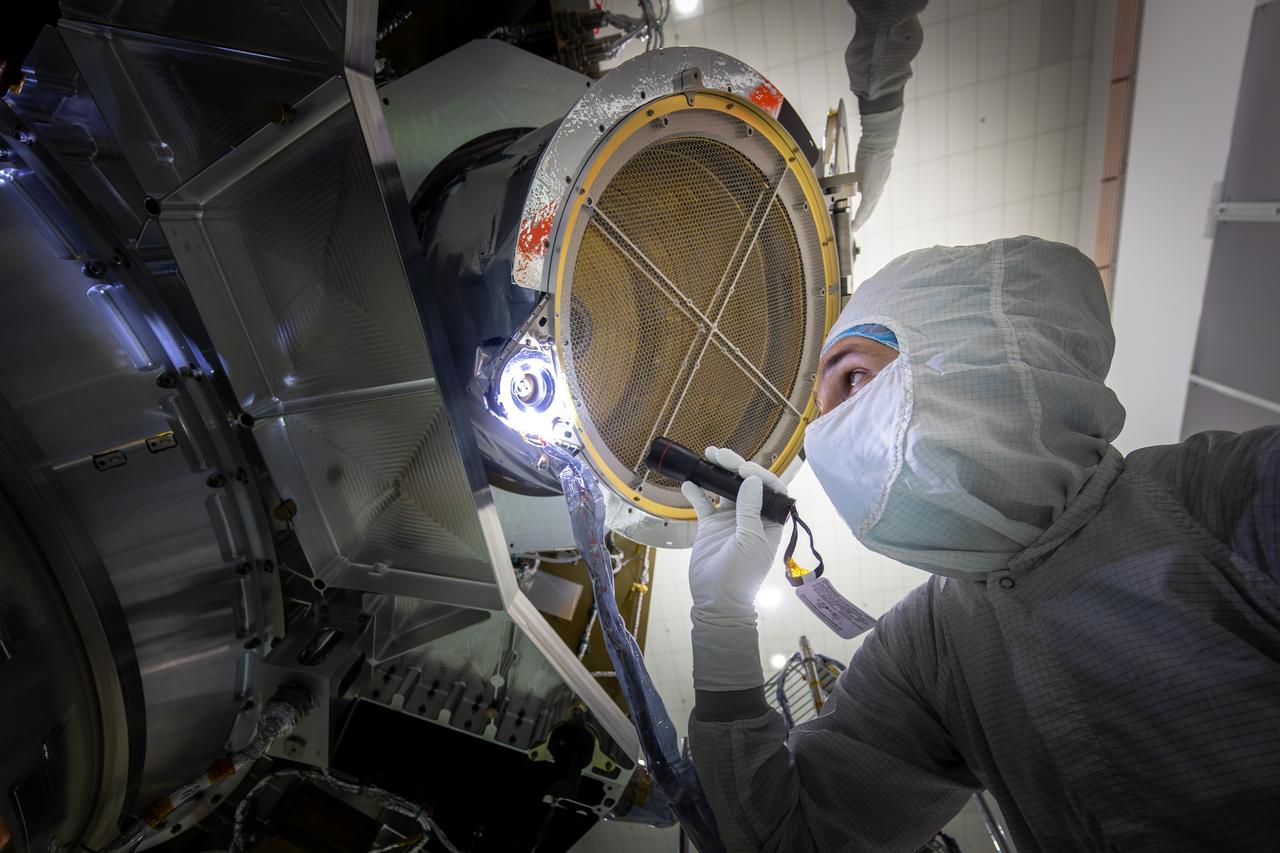
Technicians test the spring-activated door on the Interstellar Dust Experiment (IDEX) instrument of NASA’s IMAP (Interstellar Mapping and Acceleration Probe) observatory inside the high bay at the Astrotech Space Operations Facility near the agency’s Kennedy Space Center in Florida on Tuesday, June 3, 2025. The door will remain closed to protect IDEX from contamination during integration and launch. Once in space, the door will swing open permanently to allow interstellar and interplanetary dust to flow into the instrument for measurement. The IMAP observatory will study how the Sun shapes the boundaries of the heliosphere, the protective bubble around our solar system. Launch is targeted for no earlier than September 2025 aboard a SpaceX Falcon 9 rocket from Launch Complex 39A at NASA Kennedy.
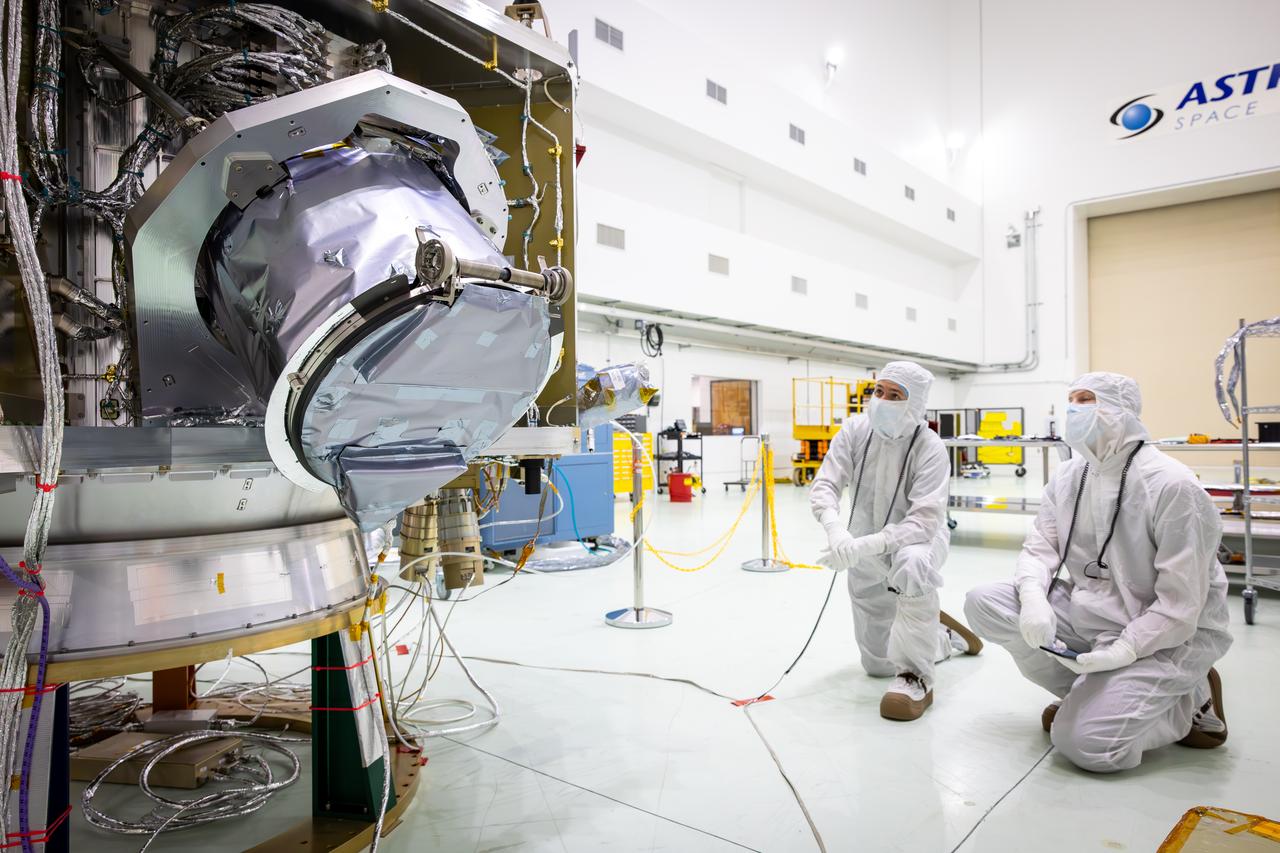
Technicians test the spring-activated door on the Interstellar Dust Experiment (IDEX) instrument of NASA’s IMAP (Interstellar Mapping and Acceleration Probe) observatory inside the high bay at the Astrotech Space Operations Facility near the agency’s Kennedy Space Center in Florida on Tuesday, June 3, 2025. The door will remain closed to protect IDEX from contamination during integration and launch. Once in space, the door will swing open permanently to allow interstellar and interplanetary dust to flow into the instrument for measurement. The IMAP observatory will study how the Sun shapes the boundaries of the heliosphere, the protective bubble around our solar system. Launch is targeted for no earlier than September 2025 aboard a SpaceX Falcon 9 rocket from Launch Complex 39A at NASA Kennedy.
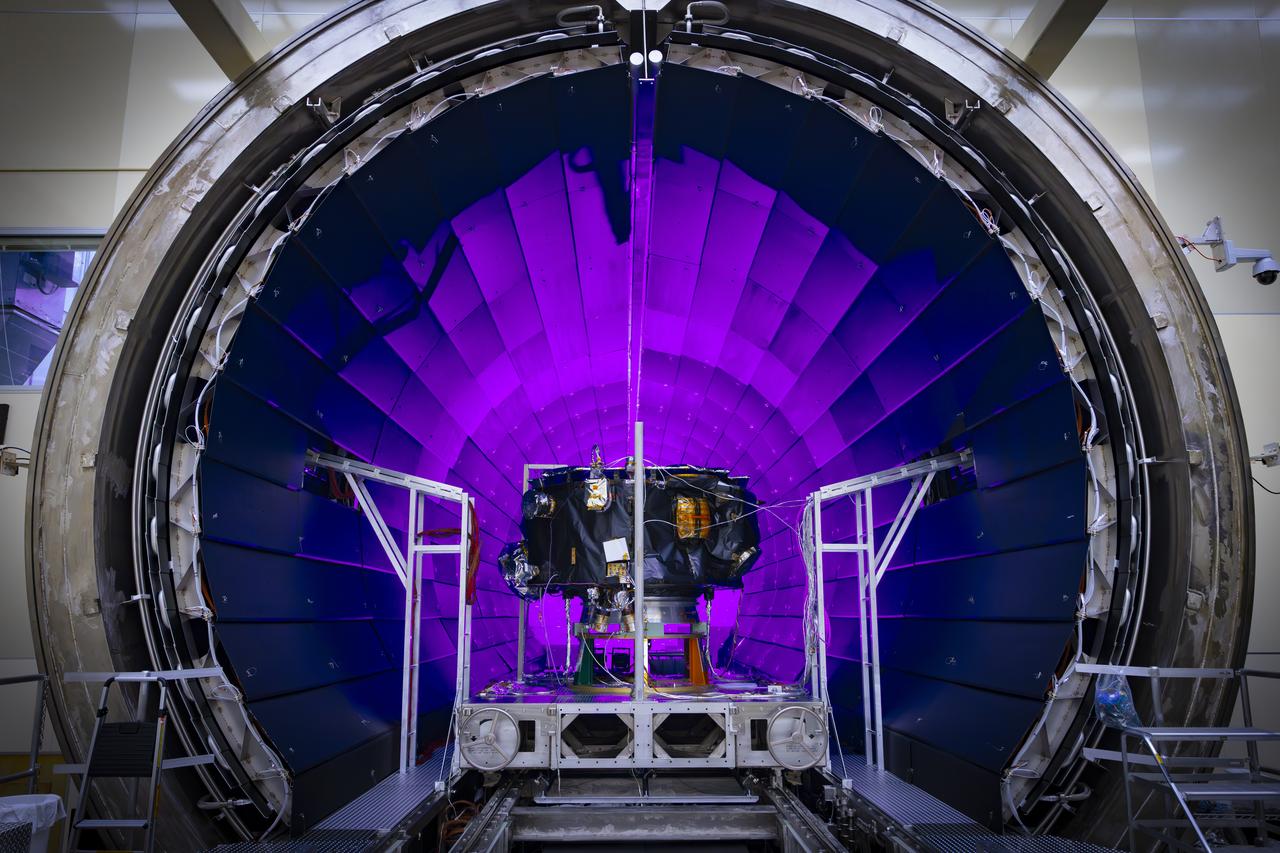
These photos and timelapse show NASA’s IMAP mission being loaded into the thermal vacuum chamber of NASA Marshall Space Flight Center’s X-Ray and Cryogenic Facility (XRCF) in Huntsville, Alabama. IMAP arrived at Marshall March 18 and was loaded into the chamber March 19. IMAP will undergo testing such as dramatic temperature changes to simulate the harsh environment of space. The XRCF’s vacuum chamber is is 20 feet in diameter and 60 feet long making it one of the largest across NASA. The IMAP mission is a modern-day celestial cartographer that will map the solar system by studying the heliosphere, a giant bubble created by the Sun’s solar wind that surrounds our solar system and protects it from harmful interstellar radiation. Photos and video courtesy of Ed Whitman from Johns Hopkins University’s Applied Physics Laboratory. For more information, contact NASA Marshall’s Office of Communications at 256-544-0034.

Technicians test the spring-activated door on the Interstellar Dust Experiment (IDEX) instrument of NASA’s IMAP (Interstellar Mapping and Acceleration Probe) observatory inside the high bay at the Astrotech Space Operations Facility near the agency’s Kennedy Space Center in Florida on Tuesday, June 3, 2025. The door will remain closed to protect IDEX from contamination during integration and launch. Once in space, the door will swing open permanently to allow interstellar and interplanetary dust to flow into the instrument for measurement. The IMAP observatory will study how the Sun shapes the boundaries of the heliosphere, the protective bubble around our solar system. Launch is targeted for no earlier than September 2025 aboard a SpaceX Falcon 9 rocket from Launch Complex 39A at NASA Kennedy.
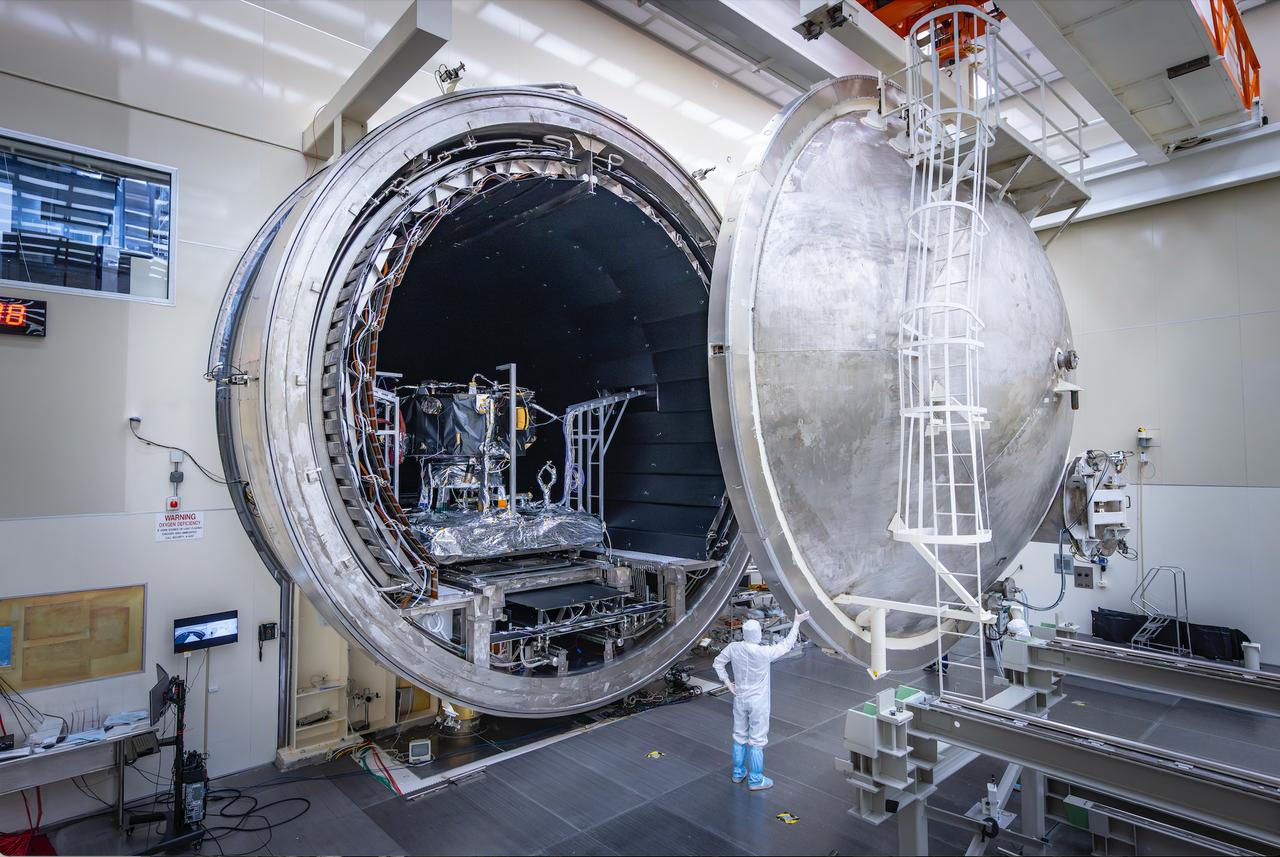
These photos and timelapse show NASA’s IMAP mission being loaded into the thermal vacuum chamber of NASA Marshall Space Flight Center’s X-Ray and Cryogenic Facility (XRCF) in Huntsville, Alabama. IMAP arrived at Marshall March 18 and was loaded into the chamber March 19. IMAP will undergo testing such as dramatic temperature changes to simulate the harsh environment of space. The XRCF’s vacuum chamber is is 20 feet in diameter and 60 feet long making it one of the largest across NASA. The IMAP mission is a modern-day celestial cartographer that will map the solar system by studying the heliosphere, a giant bubble created by the Sun’s solar wind that surrounds our solar system and protects it from harmful interstellar radiation. Photos and video courtesy of Ed Whitman from Johns Hopkins University’s Applied Physics Laboratory. For more information, contact NASA Marshall’s Office of Communications at 256-544-0034.
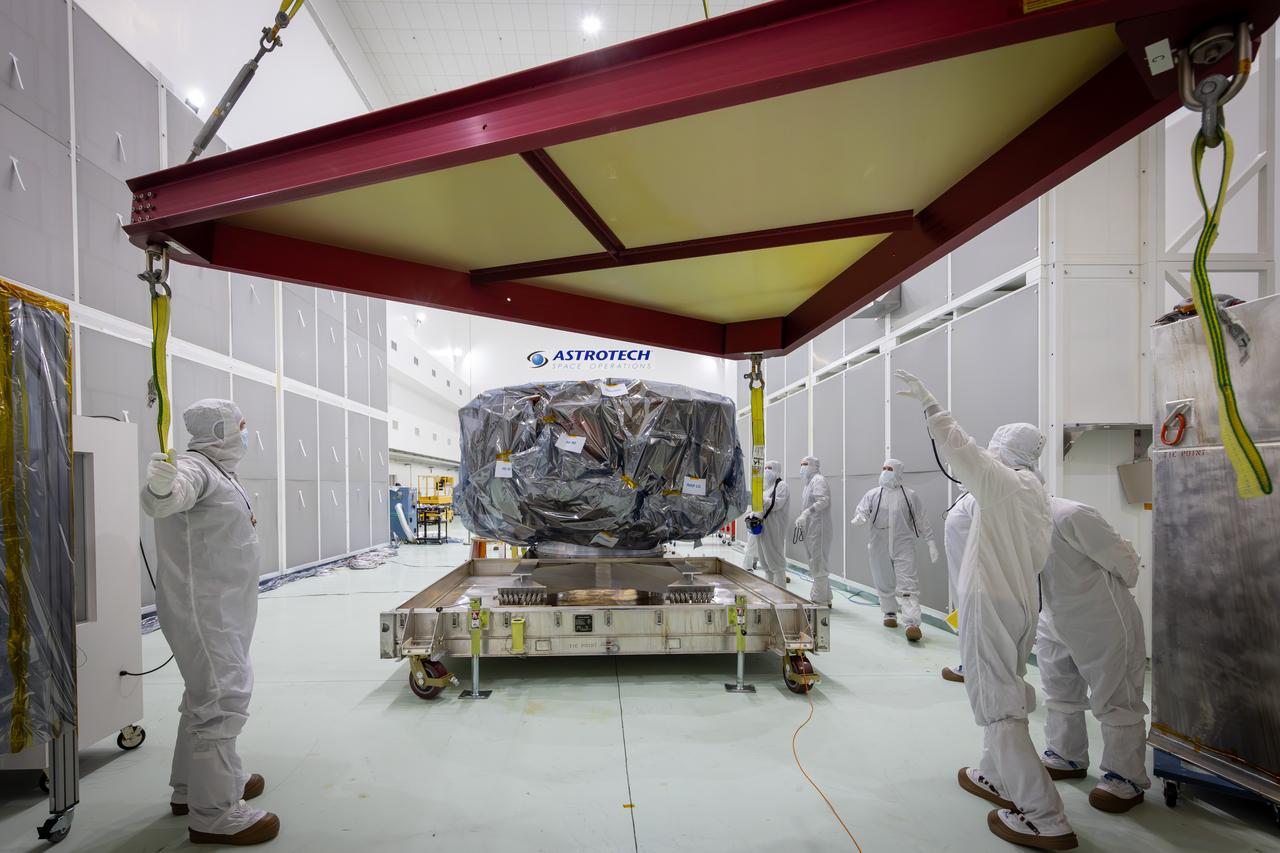
Technicians lift NASA’s IMAP (Interstellar Mapping and Acceleration Probe) spacecraft onto a work stand inside the high bay at the Astrotech Space Operations Facility near the agency’s Kennedy Space Center in Florida on Thursday, May 29, 2025. The observatory will study how the Sun shapes the boundaries of the heliosphere, the bubble protecting around our solar system, and is targeted for launch this fall aboard a SpaceX Falcon 9 rocket from Launch Complex 39A at NASA Kennedy.