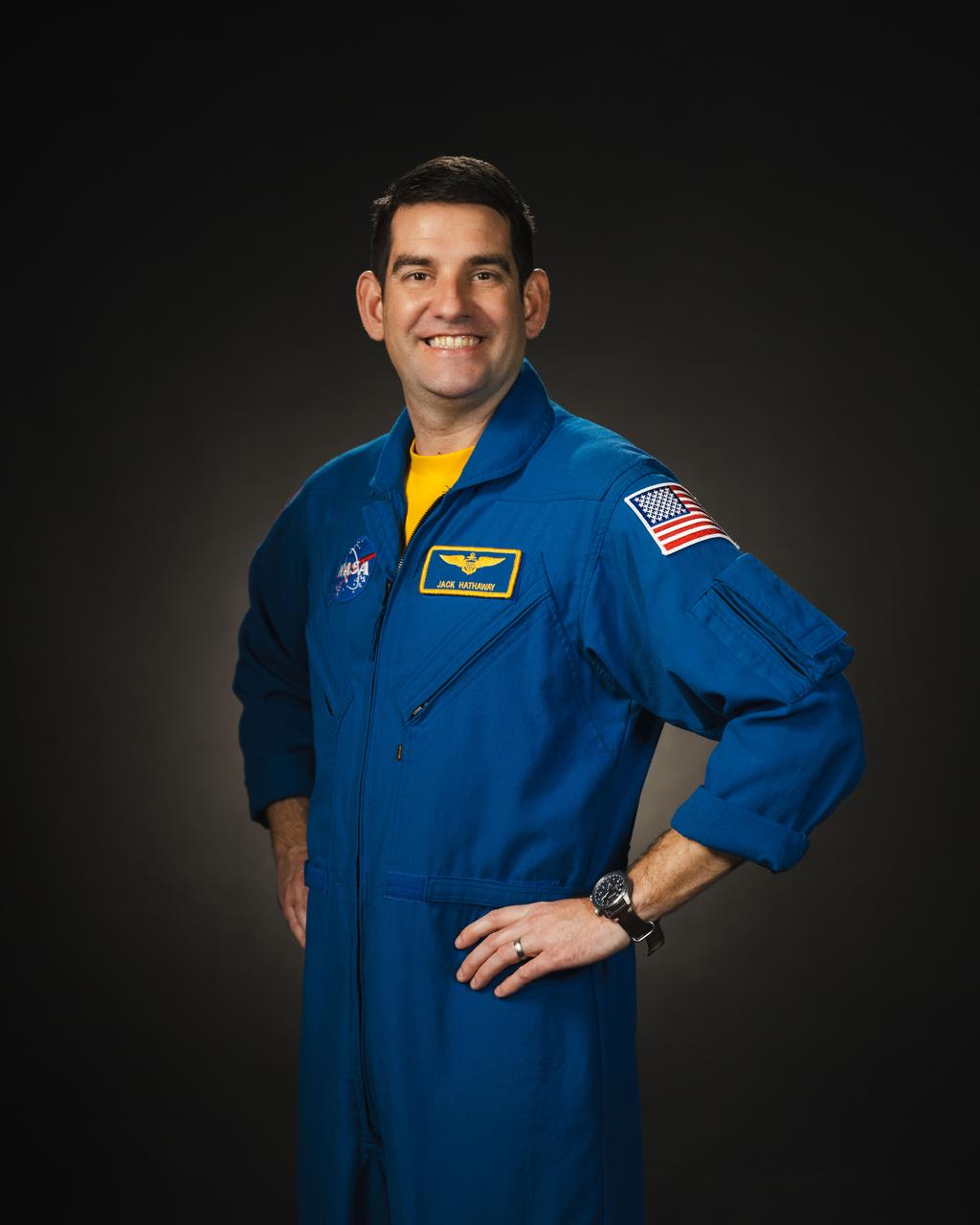
jsc2024e013673 (February 8, 2024) --- NASA astronaut Jack Hathaway poses for a portrait at NASA’s Johnson Space Center in Houston, Texas. Credit: NASA/ Josh Valcarcel
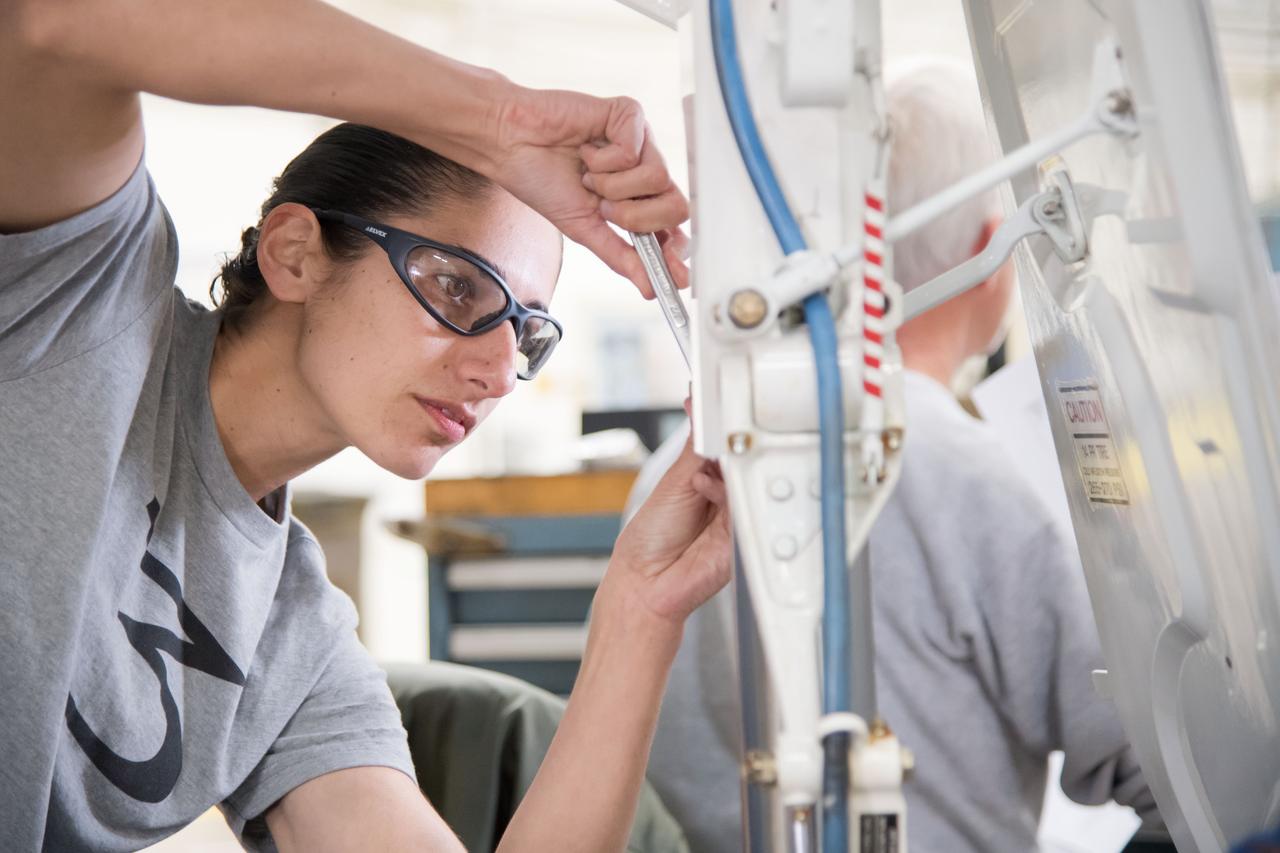
jsc2018e035270 (April 09, 2018) --- 2017 NASA astronaut candidate Jasmin Moghbeli during T-38 engine maintenance training at Ellington Field in Houston. Photo Credit: (NASA/Josh Valcarcel)
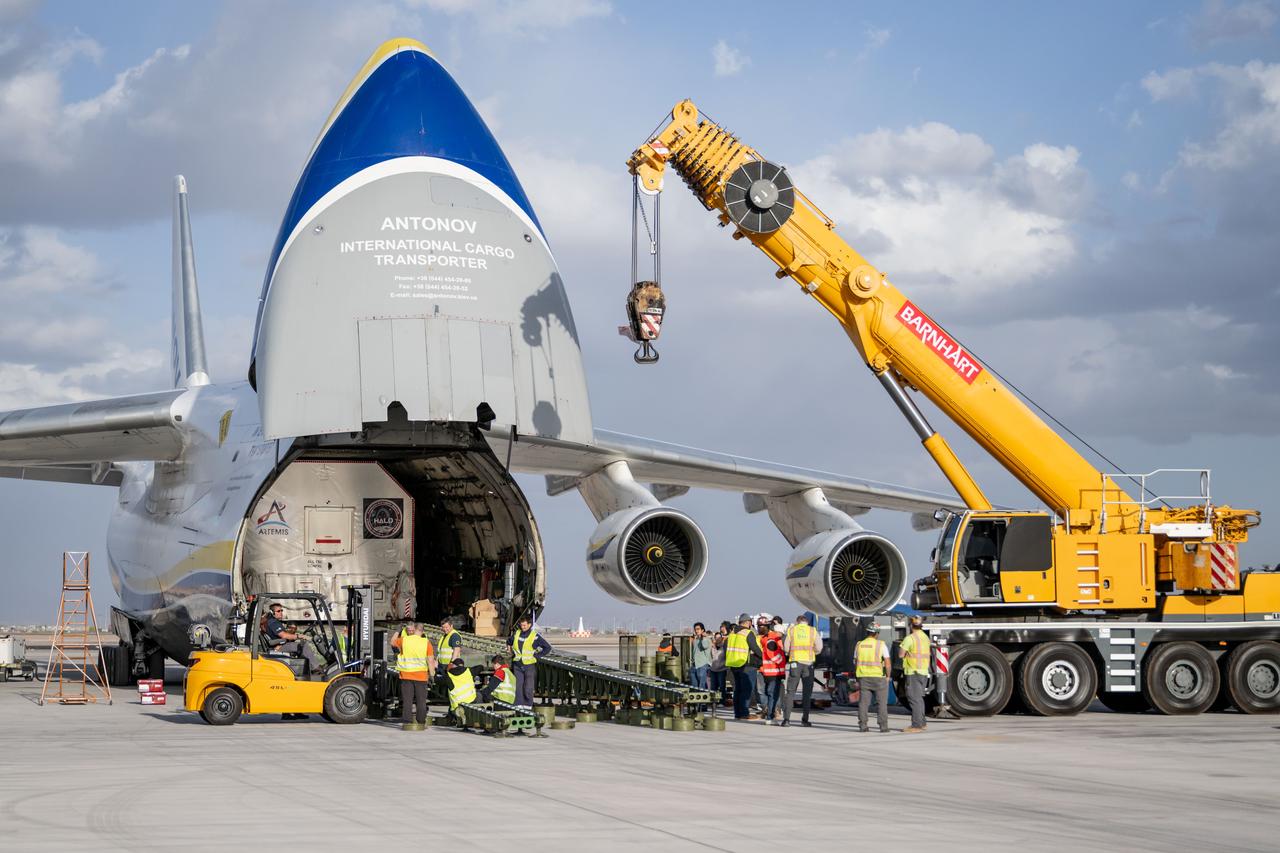
Gateway’s HALO (Habitation and Logistics Outpost) arrives in Mesa, Arizona, after traveling from Italy, where Thales Alenia Space fabricated its primary structure. Delivered by cargo aircraft to Phoenix-Mesa Gateway Airport, HALO will be transported to Northrop Grumman’s facility in Gilbert for final outfitting.
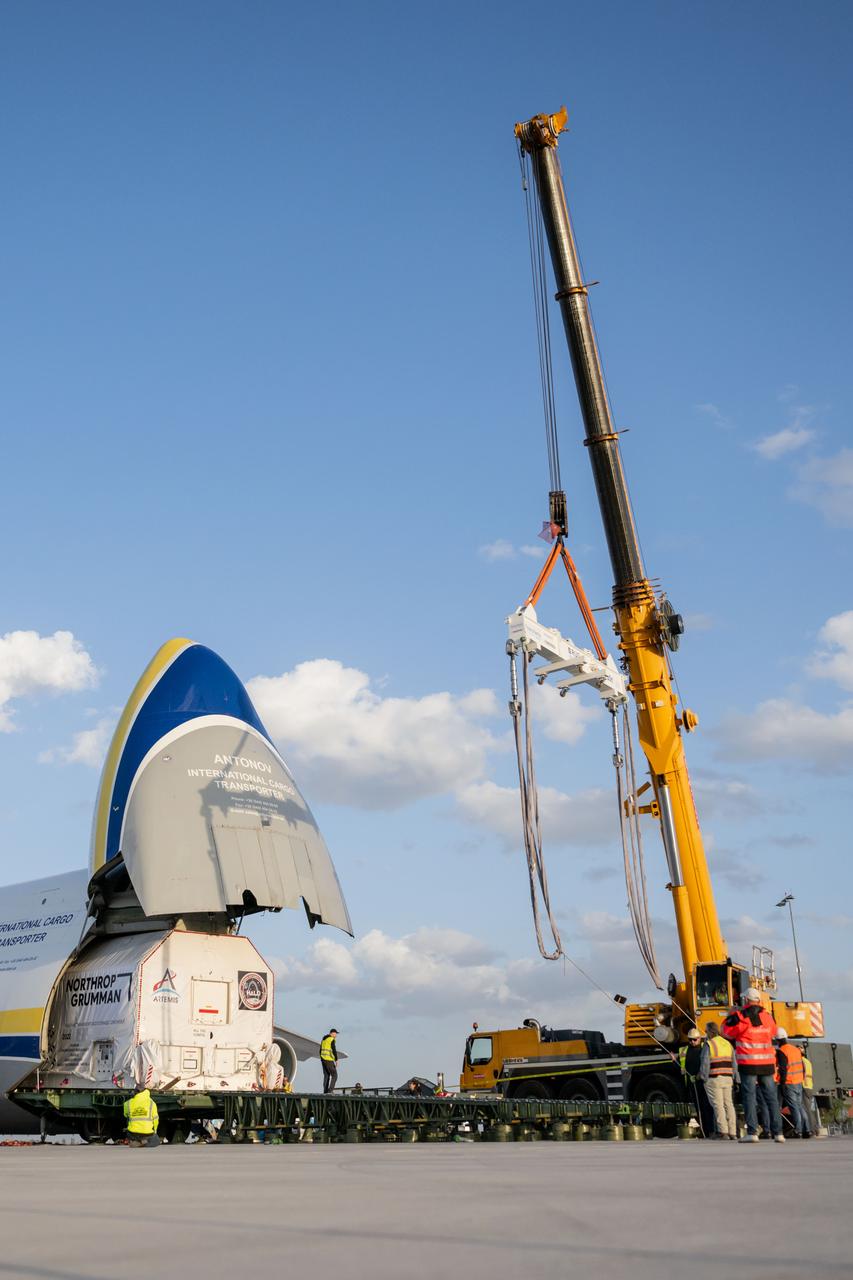
Gateway’s HALO (Habitation and Logistics Outpost) arrives in Mesa, Arizona, after traveling from Italy, where Thales Alenia Space fabricated its primary structure. Delivered by cargo aircraft to Phoenix-Mesa Gateway Airport, HALO will be transported to Northrop Grumman’s facility in Gilbert for final outfitting.
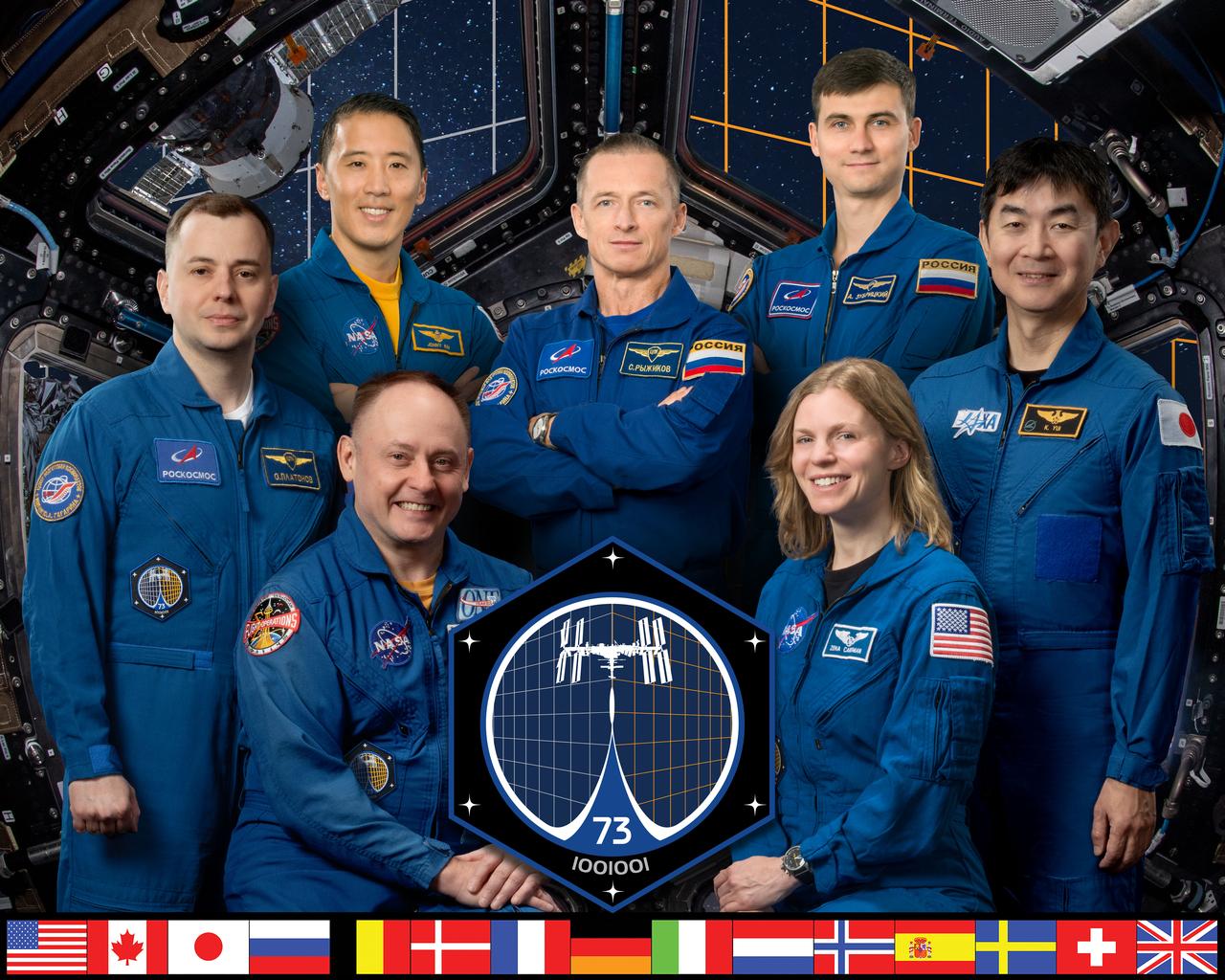
iss073-s-002b (Oct. 16, 2024) --- The updated official portrait of the International Space Station's seven-member Expedition 73 crew from three different space agencies. Seated in the front row are NASA astronauts Mike Fincke and Zena Cardman. In the back row from left are, Roscosmos cosmonaut Oleg Platonov; NASA astronaut Jonny Kim; Roscosmos cosmonauts Sergey Ryzhikov and Alexey Zubritsky; and JAXA (Japan Aerospace Exploration Agency) astronaut Kimiya Yui. Credit: NASA/Josh Valcarcel
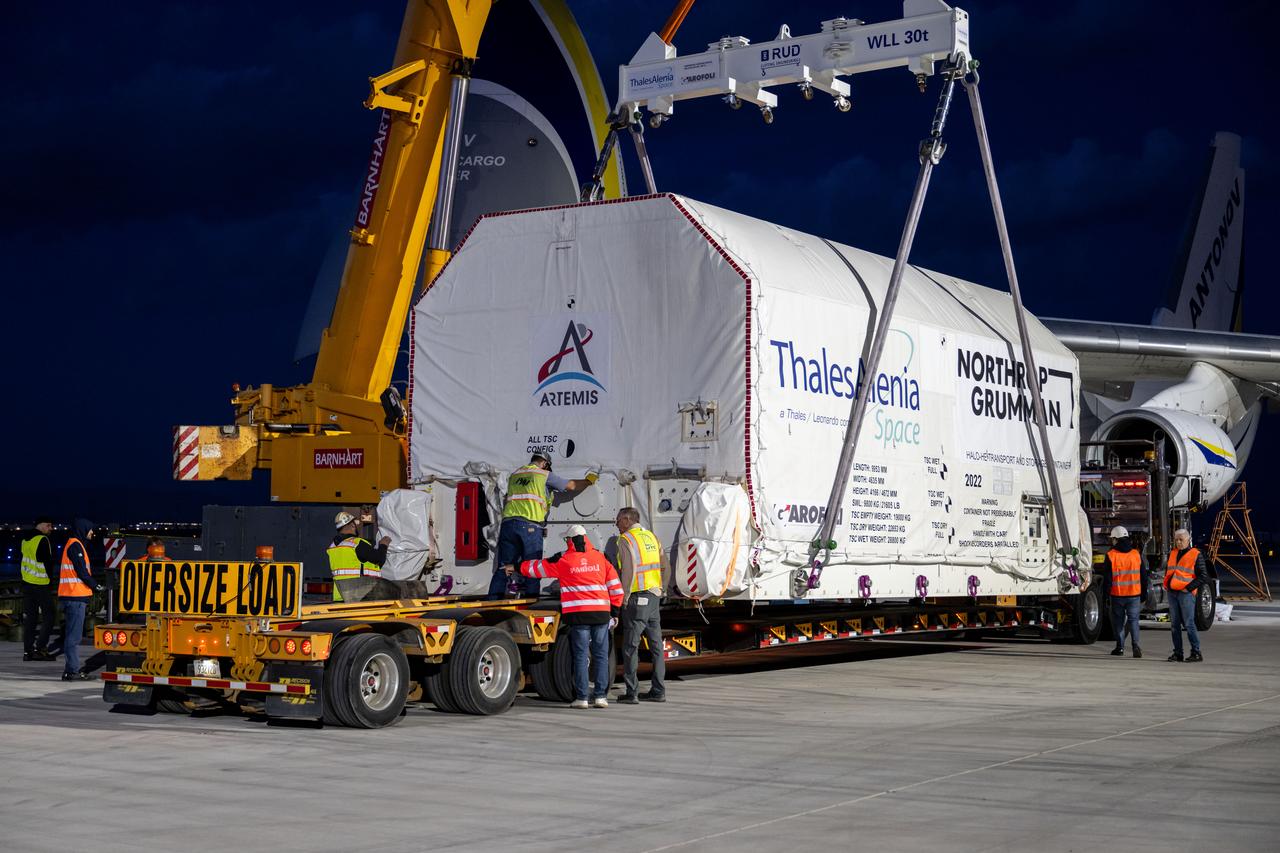
Gateway’s HALO (Habitation and Logistics Outpost) arrives in Mesa, Arizona, after traveling from Italy, where Thales Alenia Space fabricated its primary structure. Delivered by cargo aircraft to Phoenix-Mesa Gateway Airport, HALO will be transported to Northrop Grumman’s facility in Gilbert for final outfitting.
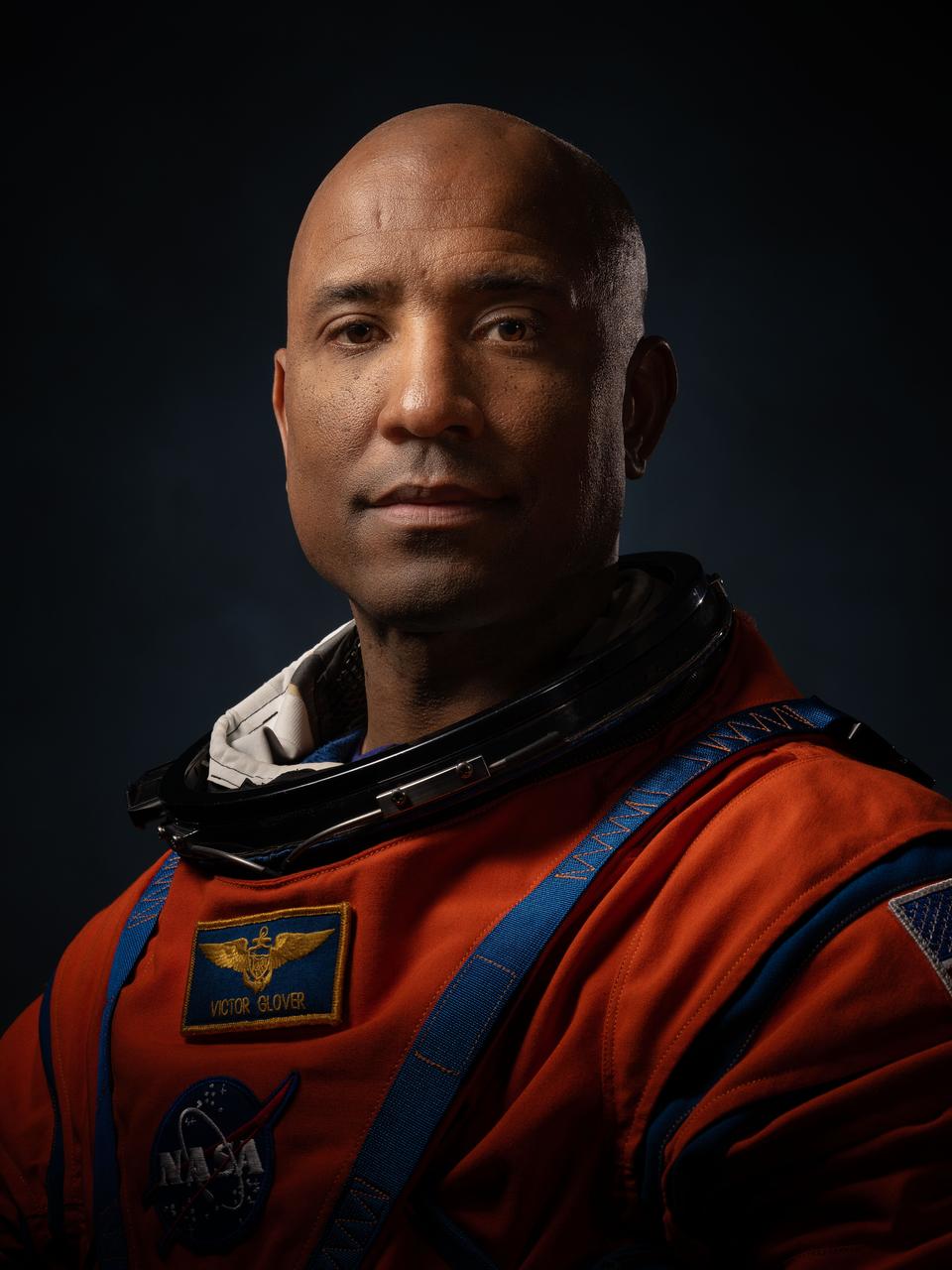
NASA Astronaut Victor Glover will be making his second flight to space as the pilot of the Artemis II mission. Glover previously served as pilot on NASA’s SpaceX Crew-1, which landed May 2, 2021, after 168 days in space. As a flight engineer aboard the space station for Expedition 64, he contributed to scientific investigations, technology demonstrations, and participated in four spacewalks. PHOTOGRAPHER: Josh Valcarcel
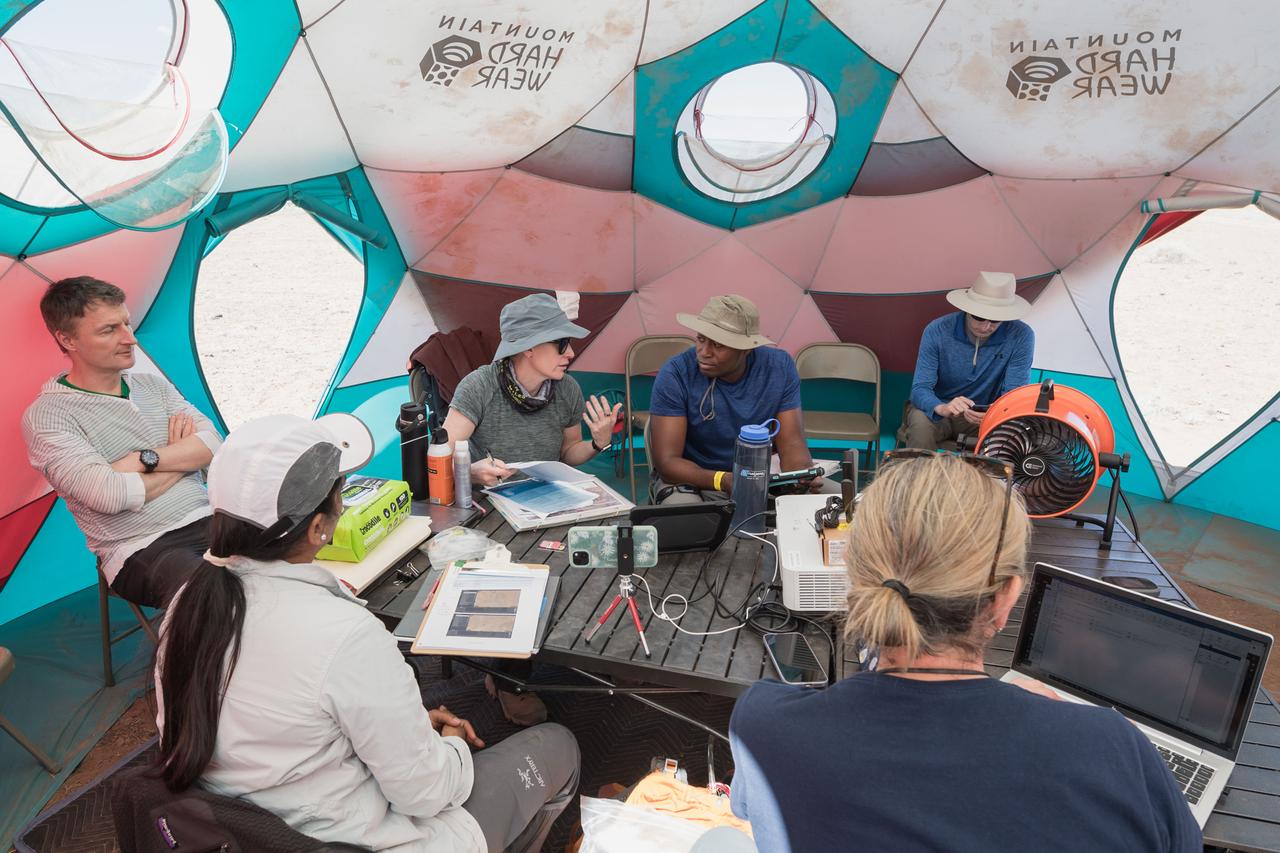
NASA astronauts Kate Rubins and Andre Douglas meet with teams to review test objectives and traverse plans before their first simulated moonwalk in a week-long field test consisting of four simulated moonwalks and six advanced technology runs in the San Francisco Volcanic Field in Northern Arizona on May 13, 2024. Credit: NASA/Josh Valcarcel
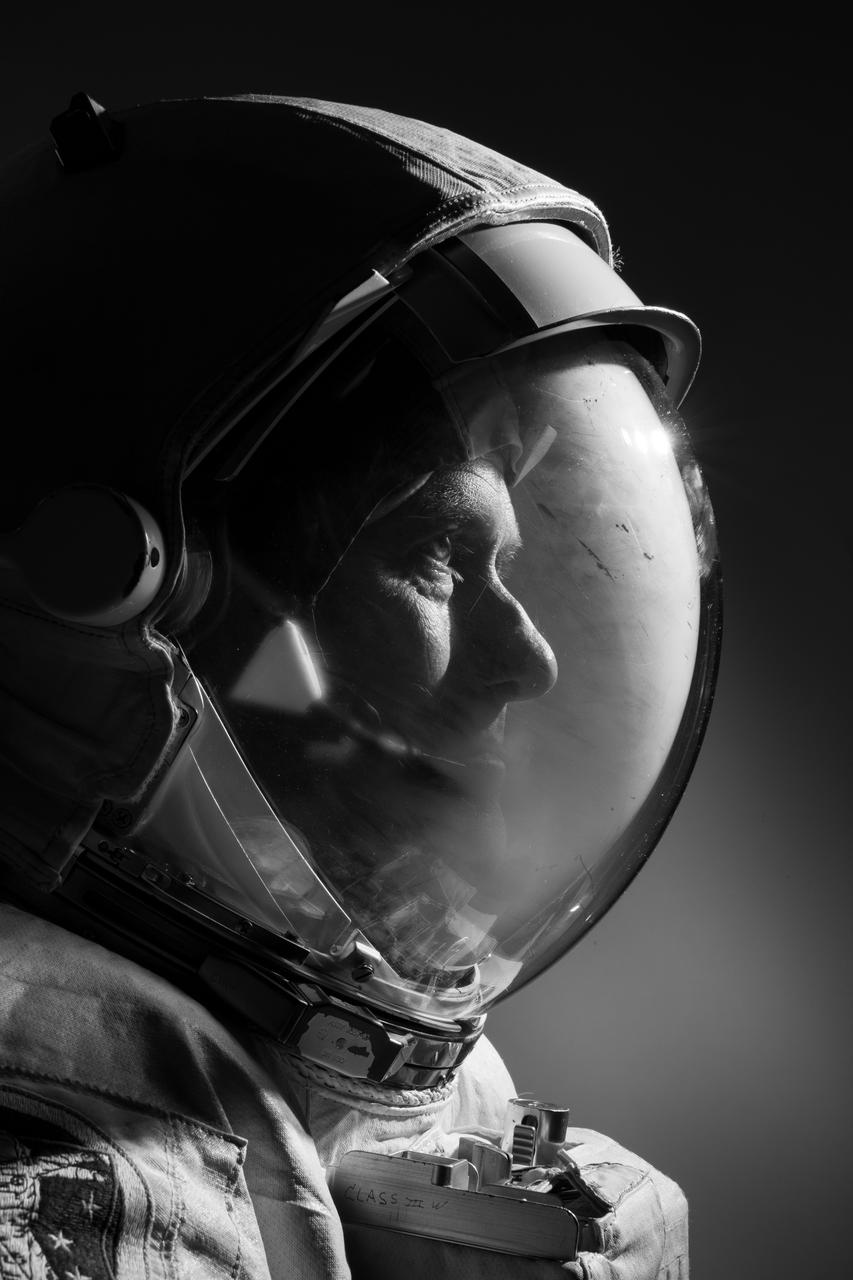
Official NASA Portrait of astronaut Tom Marshburn wearing the Extravehicular Mobility Unit spacesuit in Building 8’s Photo Studio at the Johnson Space Center, July 19, 2021. PHOTOGRAPHER: Josh Valcarcel – Johnson Space Center
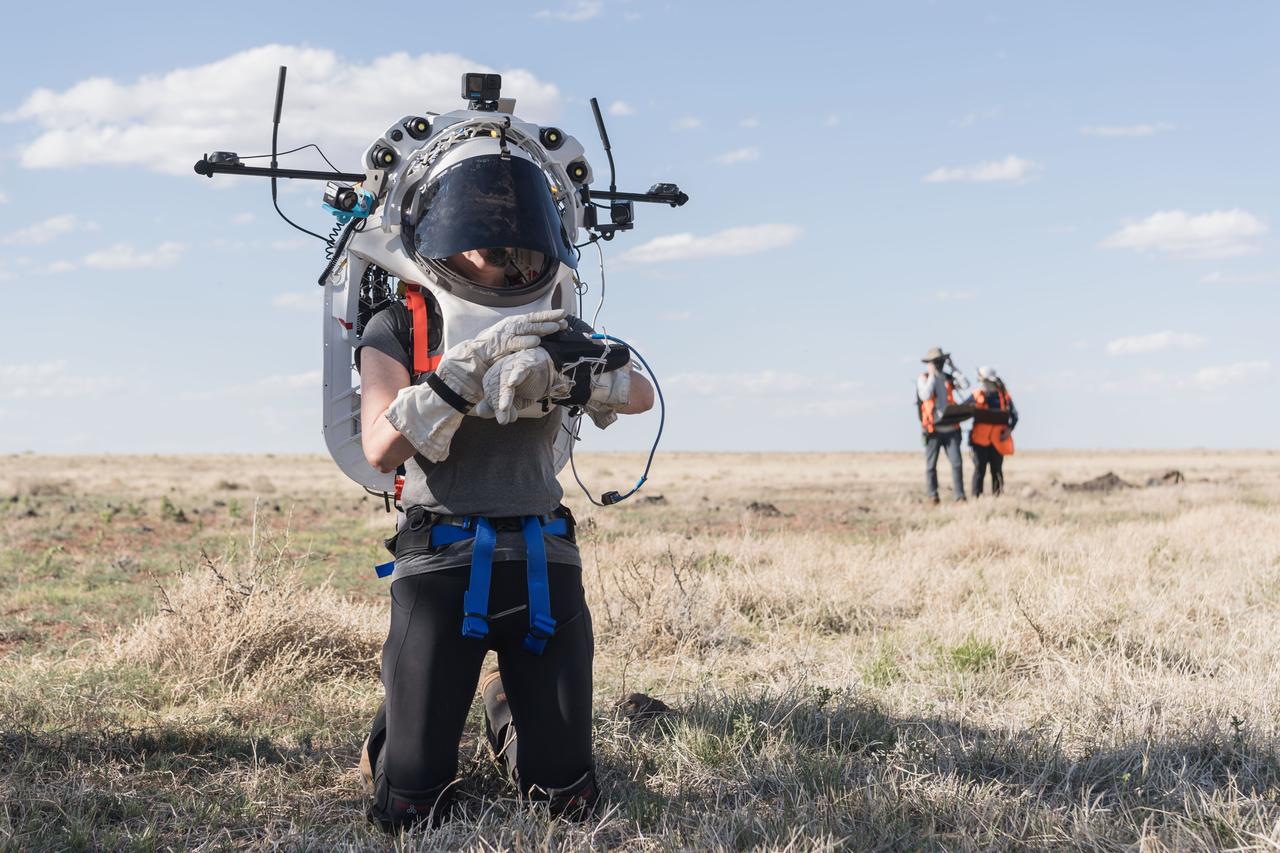
NASA astronaut Kate Rubins uses the hand controller on her wrist to display information while wearing the Joint AR (Joint Augmented Reality Visual Informatics System) display during an advanced technology run in the San Francisco Volcanic Field in Northern Arizona on May 21, 2024. The suit display features include navigation, photo capture, graphical format of consumables, procedure viewing, mission control updates, and other augmented reality cues and graphics. The team successfully tested navigation displays using data from four different data streams: GPS (Global Positioning System)/IMU (Inertial Measurement Unit), camera/IMU, LiDAR (Light Detection and Ranging), and static maps. Technology like this may be used for future Artemis missions to augment mission control communication and help guide crew back to the lunar lander. Credit: NASA/Josh Valcarcel
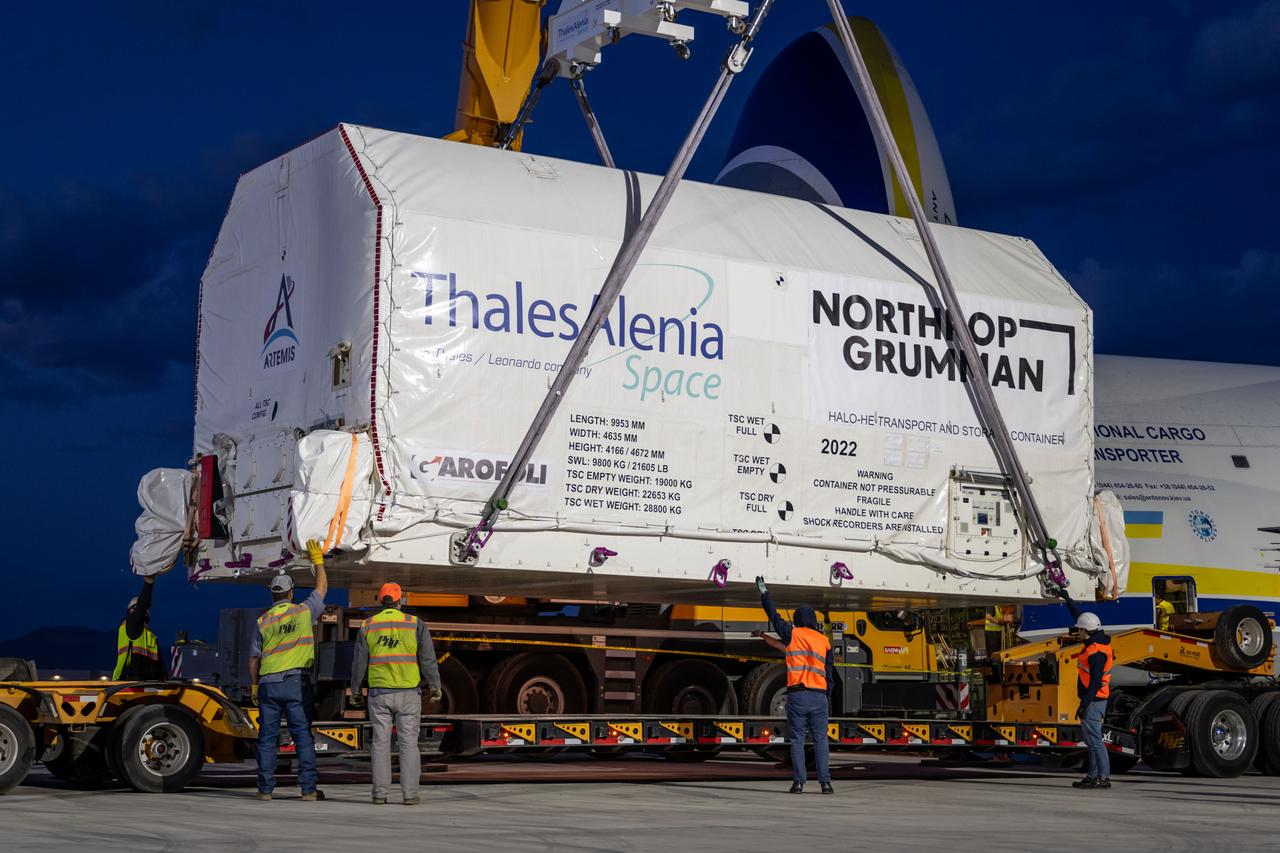
Gateway’s HALO (Habitation and Logistics Outpost) arrives in Mesa, Arizona, after traveling from Italy, where Thales Alenia Space fabricated its primary structure. Delivered by cargo aircraft to Phoenix-Mesa Gateway Airport, HALO will be transported to Northrop Grumman’s facility in Gilbert for final outfitting.
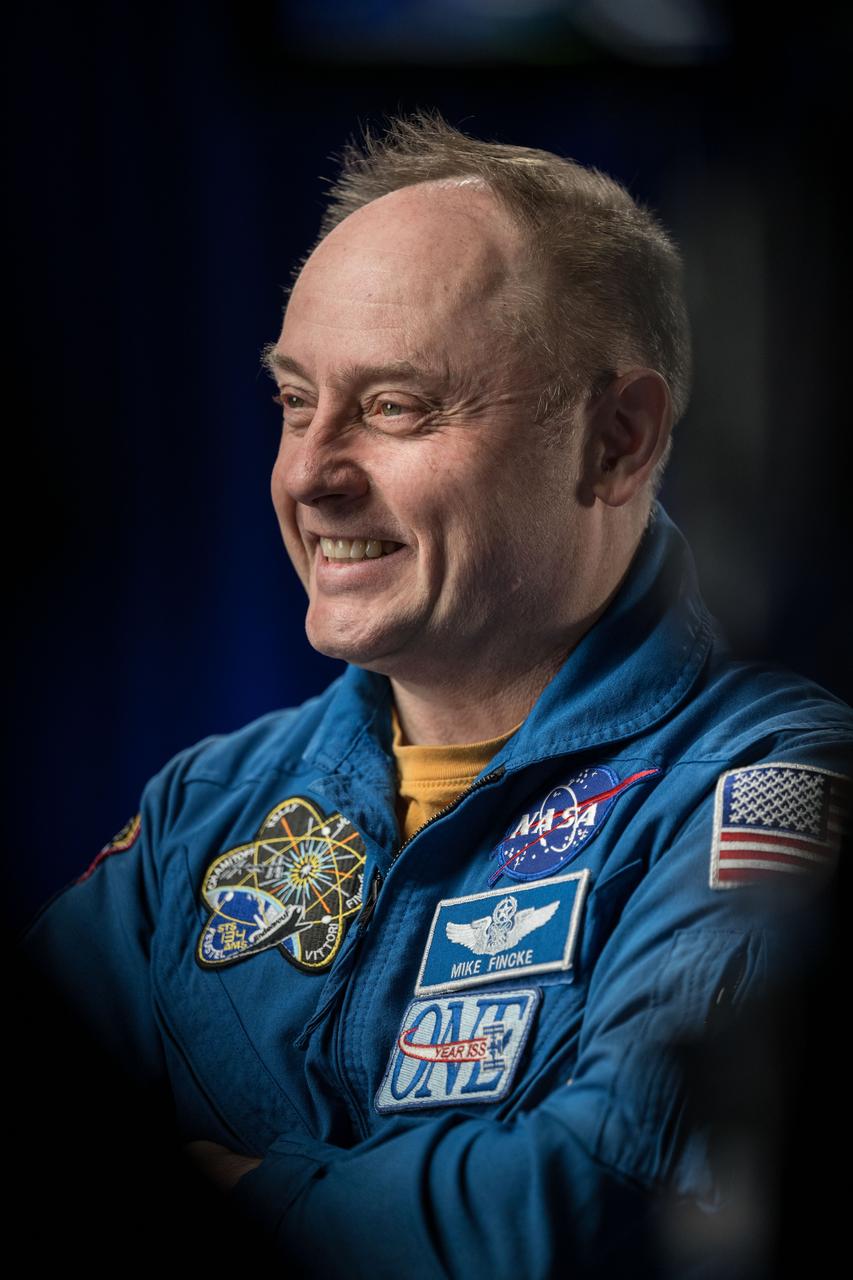
jsc2025e005132 (Jan. 29, 2025) --- NASA astronaut Mike Fincke is photographed during an interview at NASA’s Johnson Space Center in Houston, Texas. Credit: NASA/Josh Valcarcel
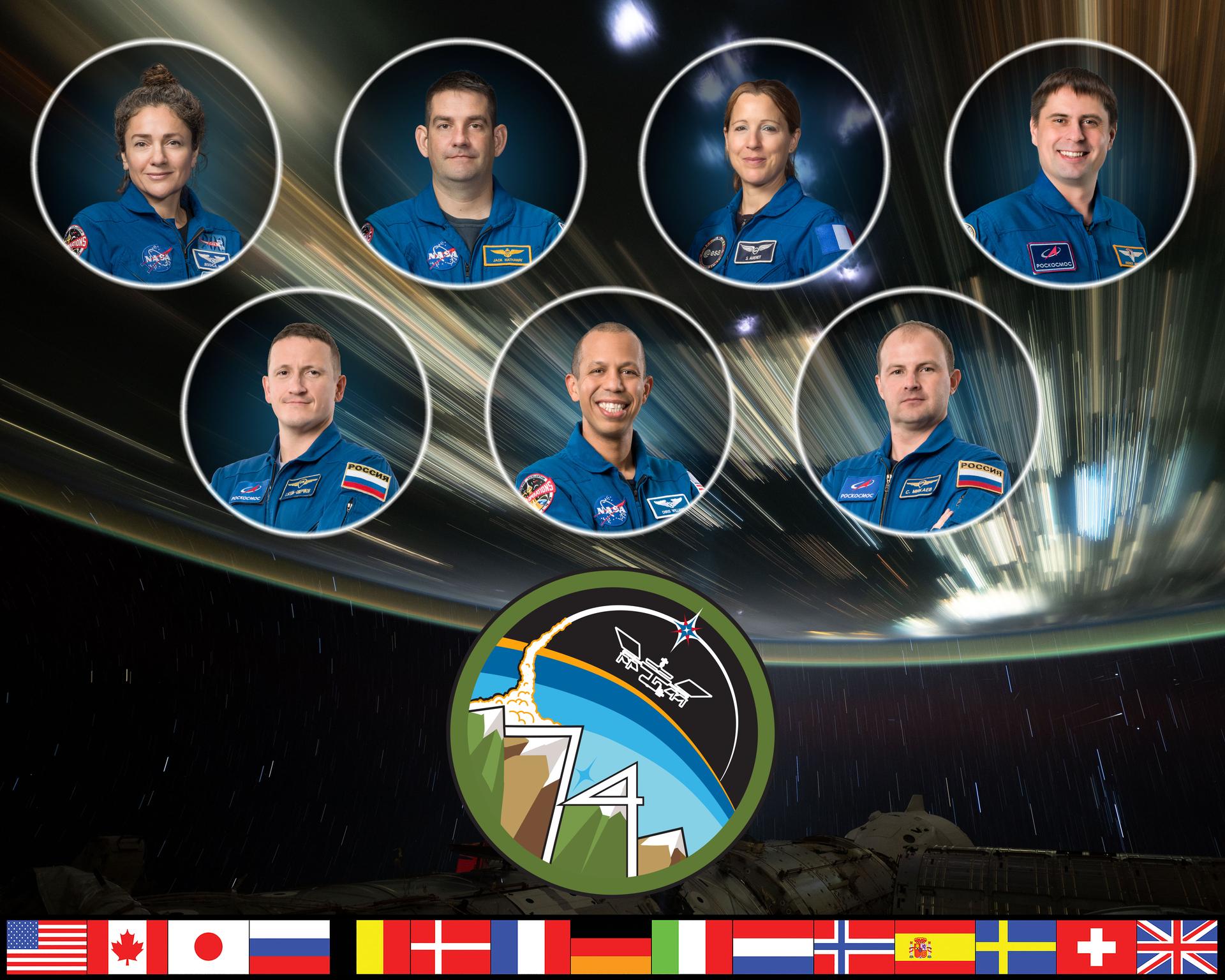
iss074-s-002b (Oct. 16, 2024) --- The official portrait of the Expedition 74 crew on the International Space Station. Top row from left, Flight Engineers Jessica Meir and Jack Hathaway, both NASA astronauts, and Flight Engineers Sophie Adenot of ESA (European Space Agency) and Andrey Fedyaev of Roscosmos. Bottom row, station Commander Sergey Kud-Sverchkov of Roscosmos and Flight Engineers Chris Williams of NASA and Sergei Mikaev of Roscosmos. Credit: NASA/Josh Valcarcel
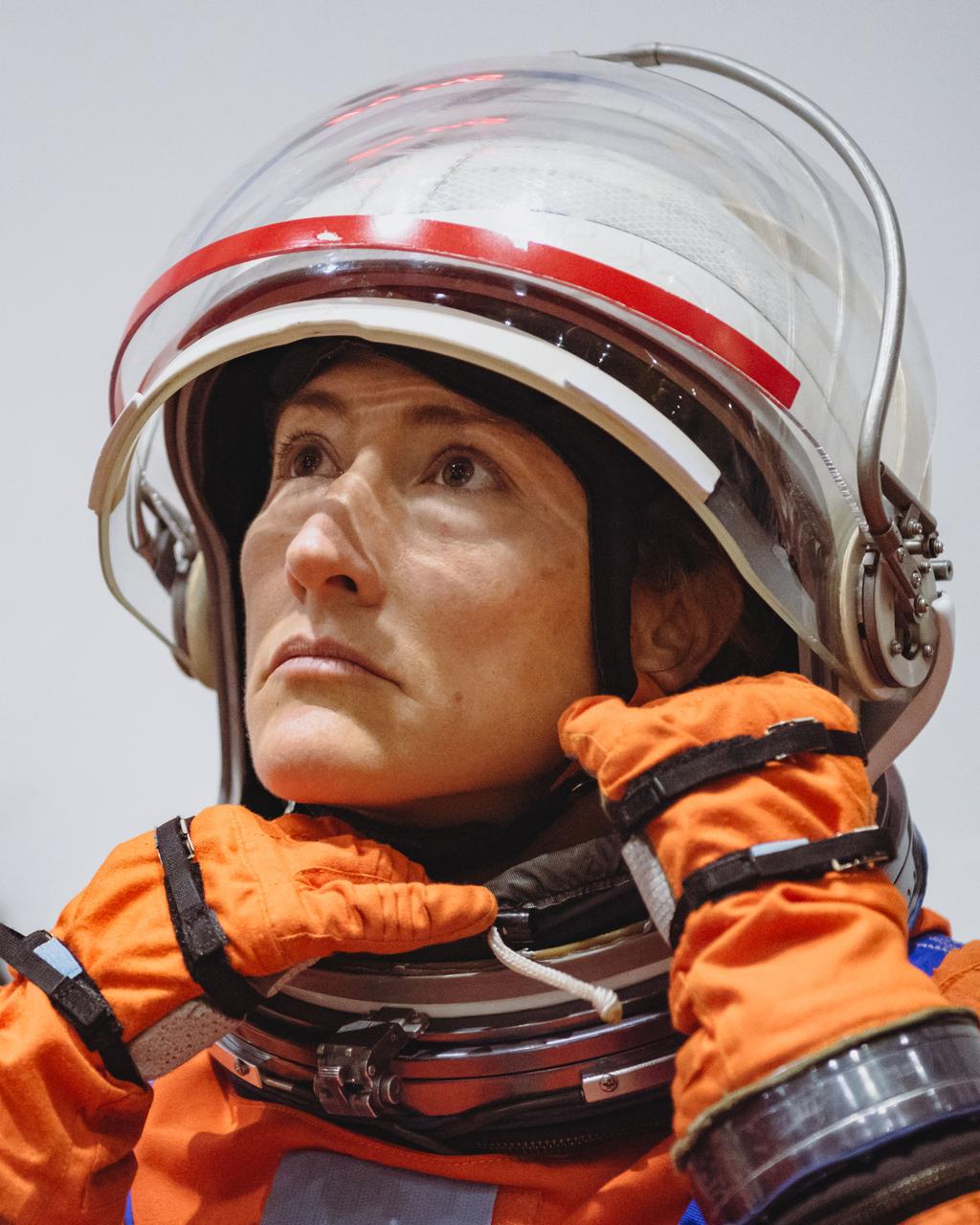
jsc2024e009651 (Jan. 23, 2024) --- NASA astronaut and Artemis II mission specialist Christina Koch participates in training Jan. 23 in the Neutral Buoyancy Lab at the agency’s Johnson Space Center in Houston.
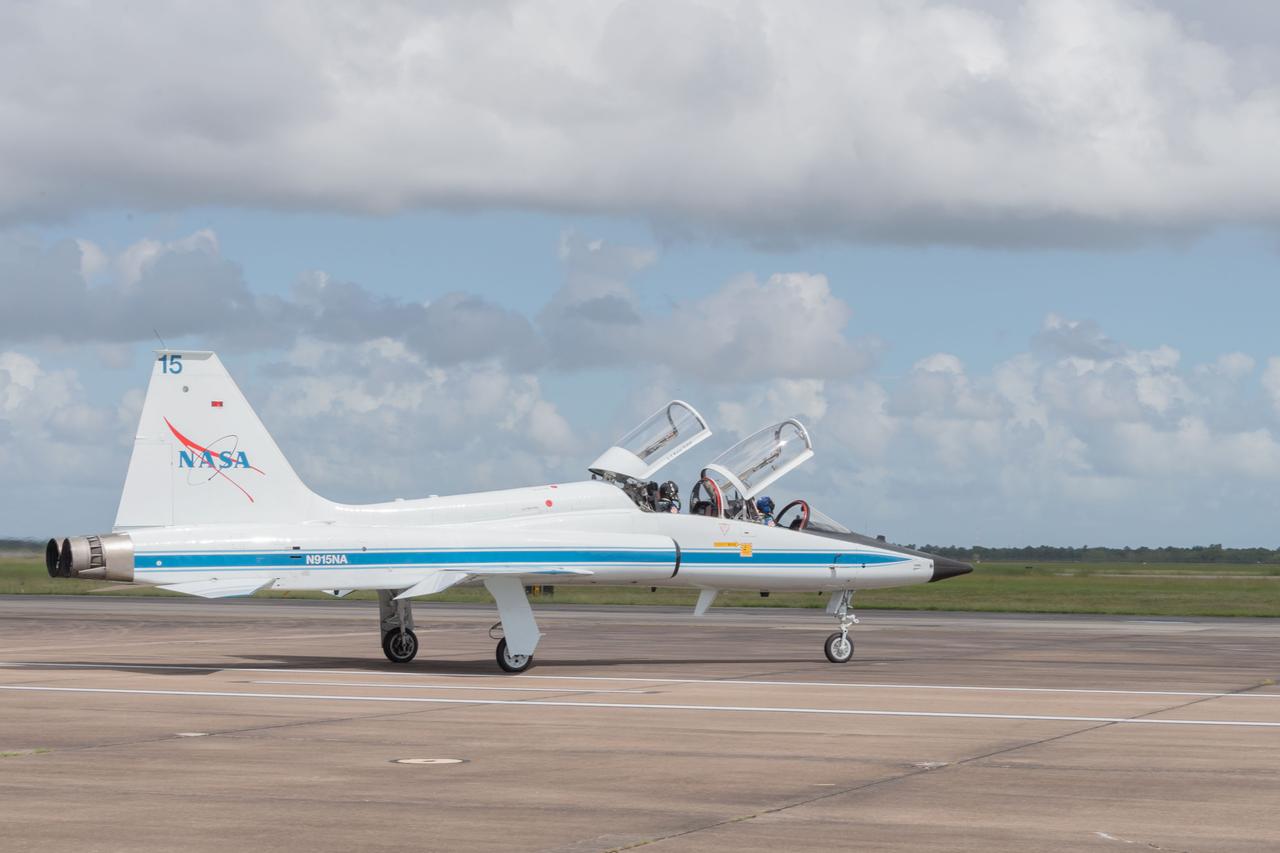
NASA commercial crew astronauts Josh Cassada and Suni Williams prepare for T-38 training flights at Ellington Field Joint Reserve Base in Houston. Cassada and Williams are assigned to the Boeing Starliner’s second crewed flight.
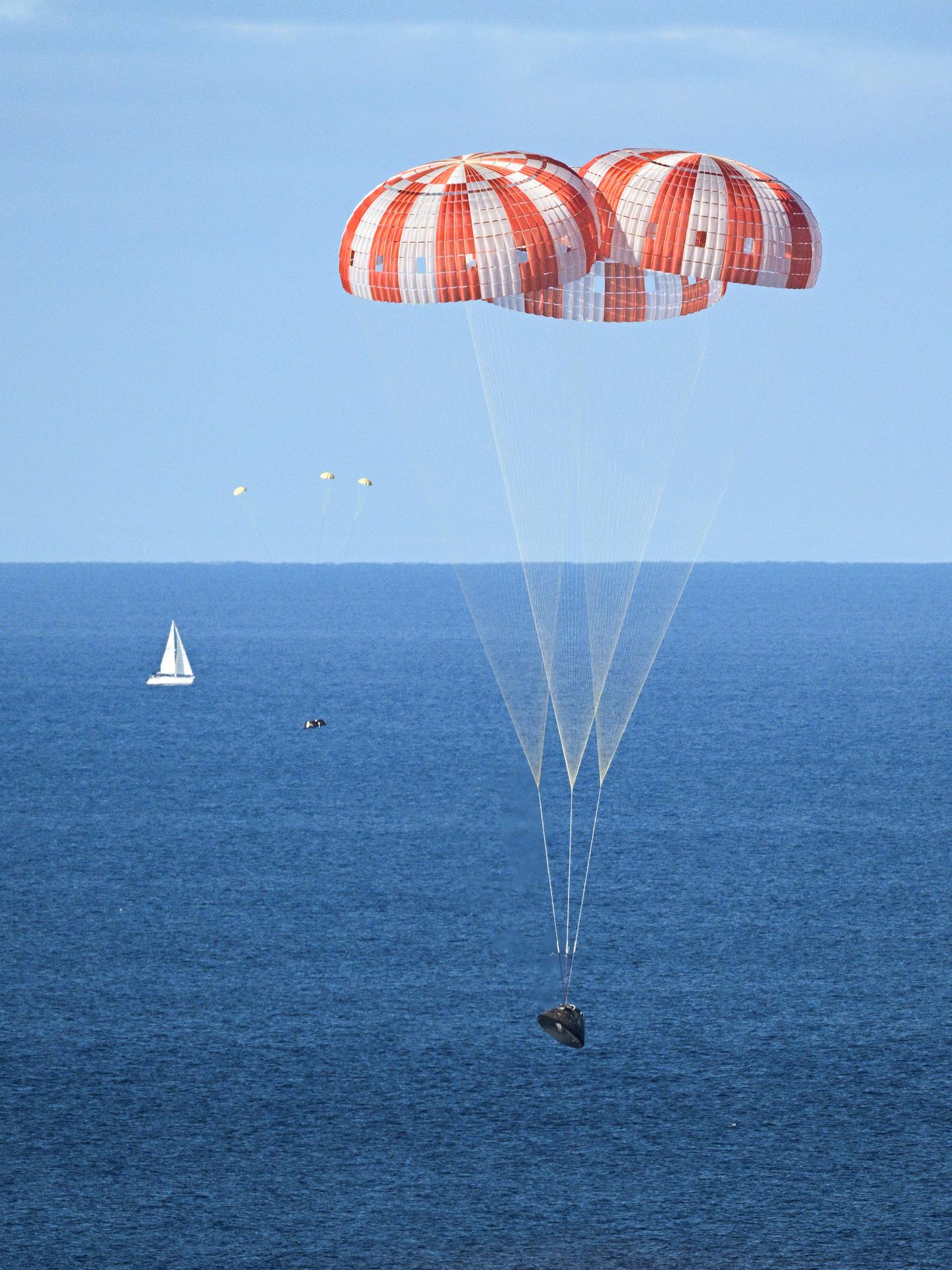
jsc2026e022246 (April 10, 2026) - NASA's Orion spacecraft carrying Artemis II Commander Reid Wiseman, Pilot Victor Glover, and Mission Specialist Christina Koch from NASA, along with Mission Specialist Jeremy Hansen from the CSA (Canadian Space Agency), splashes down in the Pacific Ocean near San Diego, California, at 5:07 p.m. PDT, (8:07 p.m. EDT) on Friday, April 10, 2026. The Artemis II test flight launched on Wednesday, April 1, from NASA’s Kennedy Space Center in Florida to begin its 10-day journey around the Moon for scientific discovery, economic benefits, and to build on our foundation for the first crewed missions to Mars. NASA’s Landing and Recovery team and the U.S. military are coordinating efforts to extract the Artemis II crew from the Orion spacecraft.

NASA’s Air Operations Co-Lead Don Reed briefs the air ops team during Underway Recovery Test 9 (URT-9) aboard the USS John P. Murtha. During the weeklong test, NASA’s Landing and Recovery team is performing their final mission certification ahead of Artemis I.

NASA astronaut Andre Douglas collects soil samples during the first in a series of four simulated moonwalks in the San Francisco Volcanic Field in Norther Arizona on May 13, 2024. Credit: NASA/Josh Valcarcel
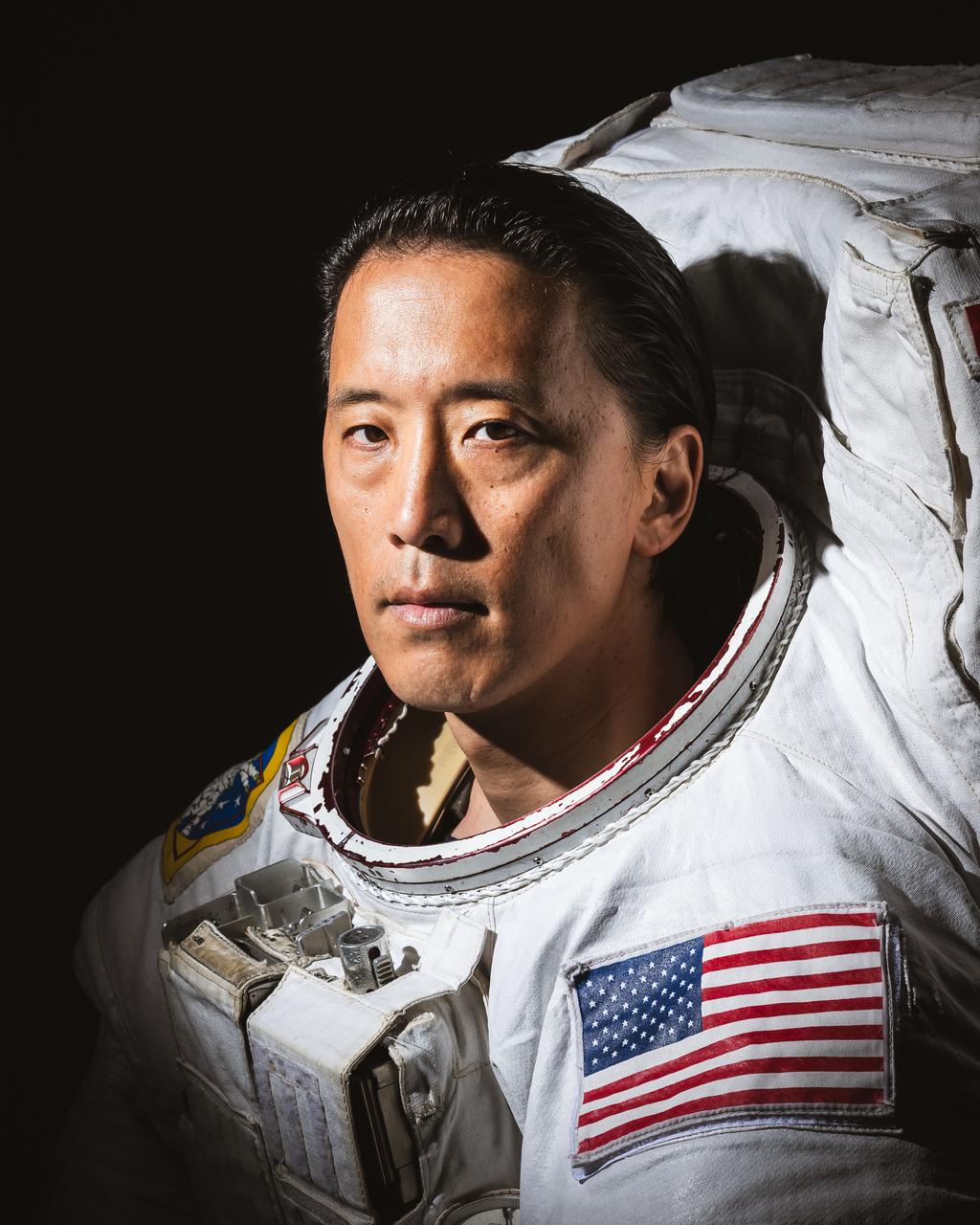
jsc2024e052674_alt (July 17, 2024) --- Portrait of NASA Astronaut Jonny Kim in an Extravehicular Mobility Unit (EMU) spacesuit taken at NASA's Johnson Space Center in Houston, Texas. Credit: NASA/Josh Valcarcel
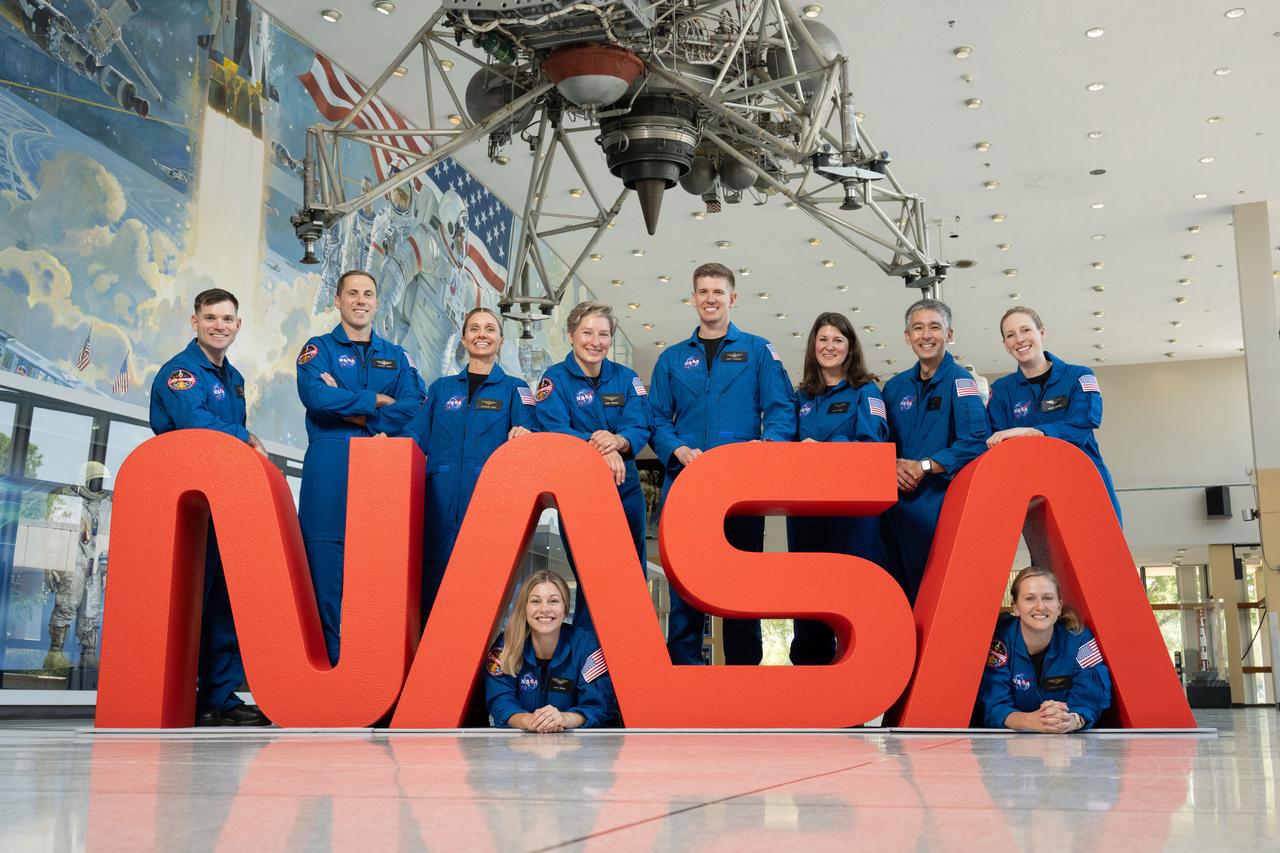
PHOTO DATE: September 17, 2025. LOCATION: Bldg. 2s, Teague Lobby. SUBJECT: Astronaut Candidate Group Photo - ASCAN Class of 2025. PHOTOGRAPHER: Josh Valcarcel
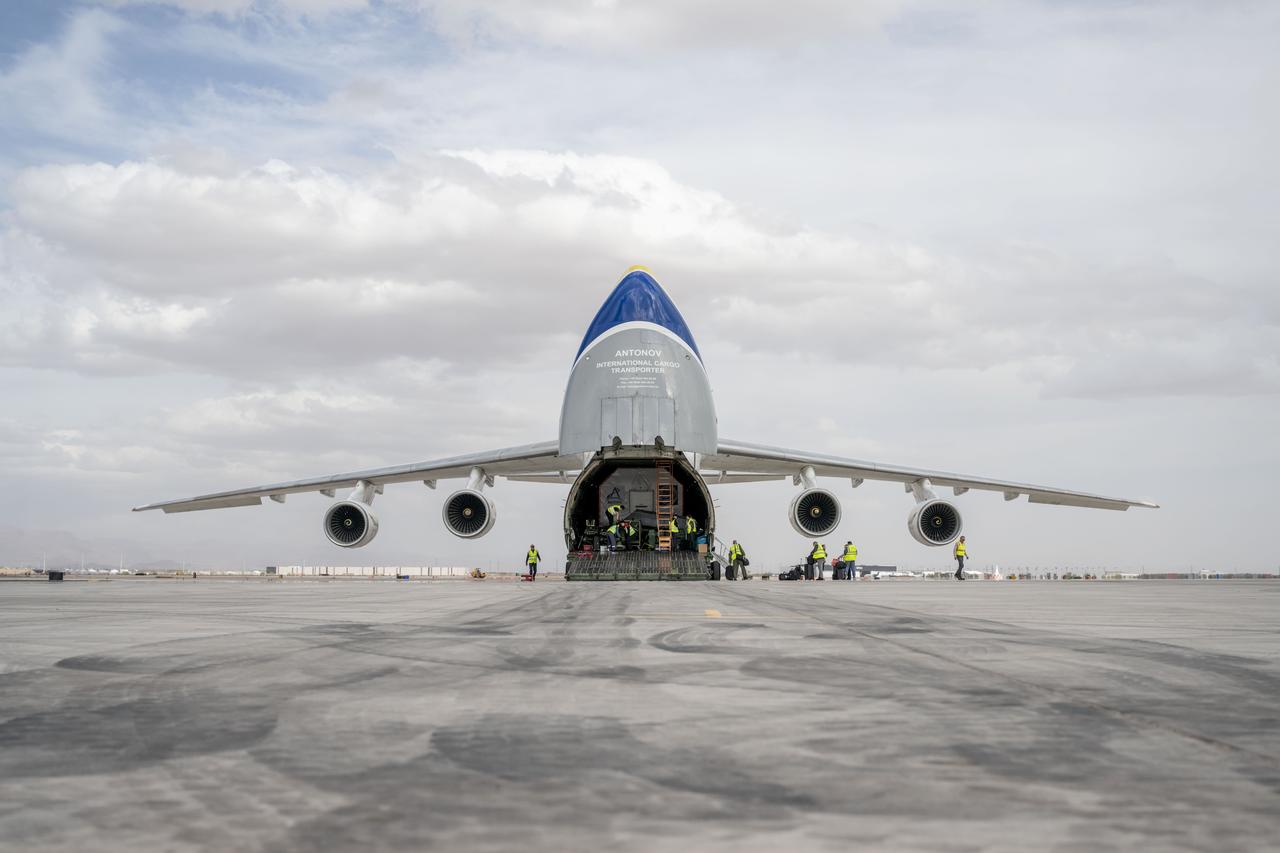
Gateway’s HALO (Habitation and Logistics Outpost) arrives in Mesa, Arizona, after traveling from Italy, where Thales Alenia Space fabricated its primary structure. Delivered by cargo aircraft to Phoenix-Mesa Gateway Airport, HALO will be transported to Northrop Grumman’s facility in Gilbert for final outfitting.

jsc2018e005521 (February 9, 2018) --- Expedition 56-57 crew members (from left) Alexander Gerst of the European Space Agency and Serena Auñón-Chancellor of NASA train for their mission inside a space station simulator at the Johnson Space Center.
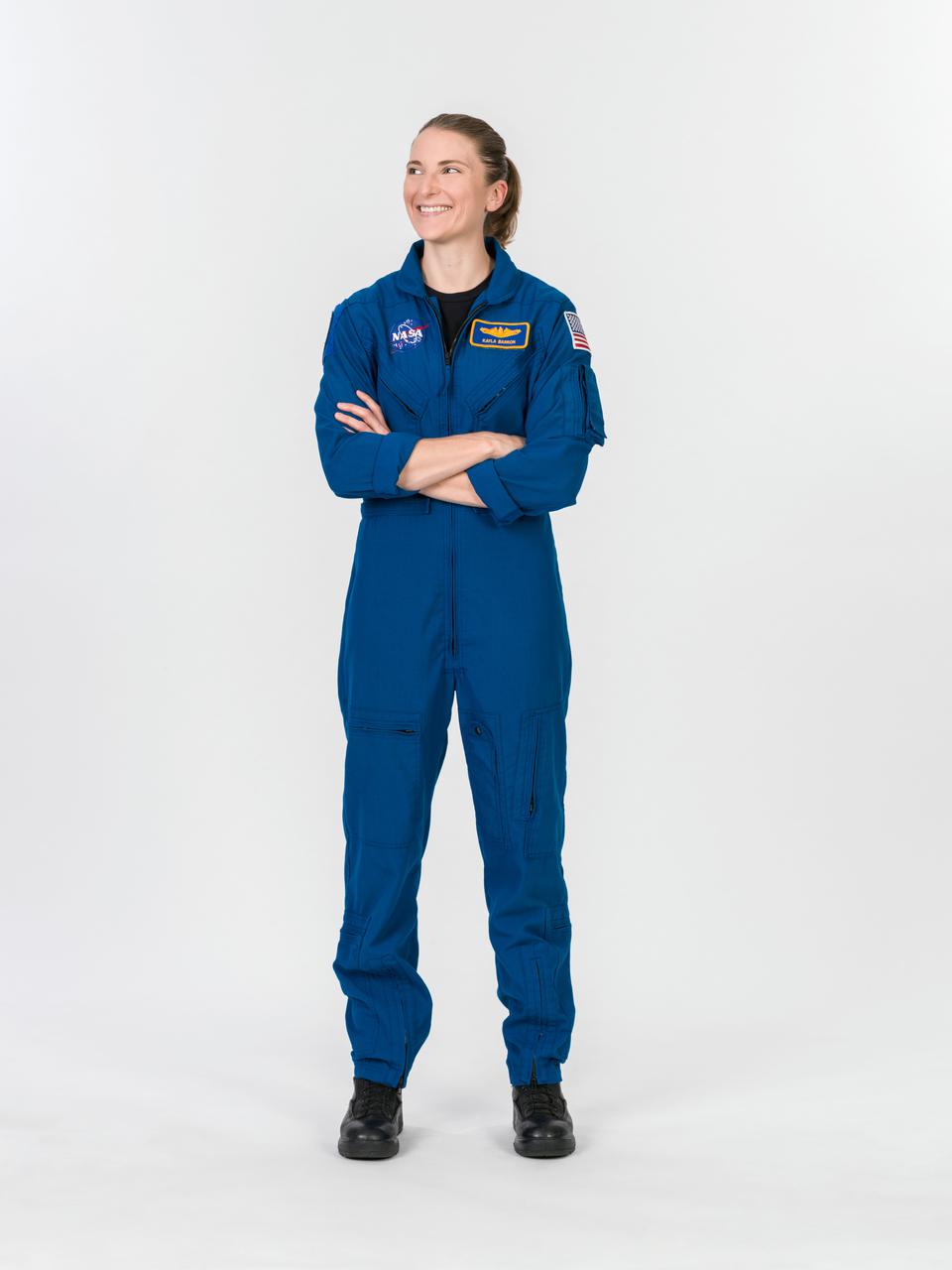
jsc2021e099416_alt (May 20, 2020) --- NASA astronaut and SpaceX Crew-3 Mission Specialist Kayla Barron poses for a portrait at NASA's Johnson Space Center in Houston, Texas.
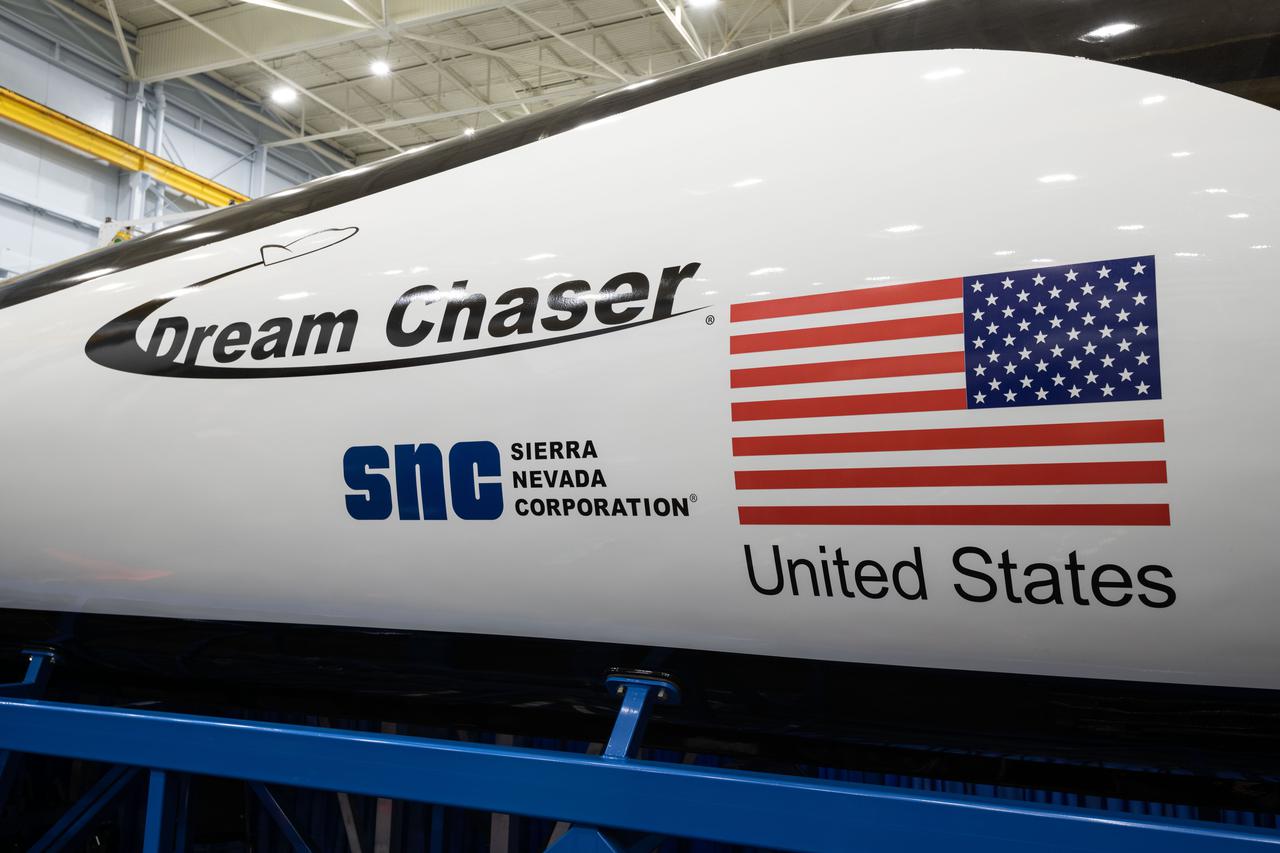
jsc2021e004388 (Jan. 21, 2021) --- External view of the Sierra Nevada Dream Chaser mockup located in Building 9N, Space Vehicle Mockup Facility (SVMF) at the NASA Johnson Space Center.
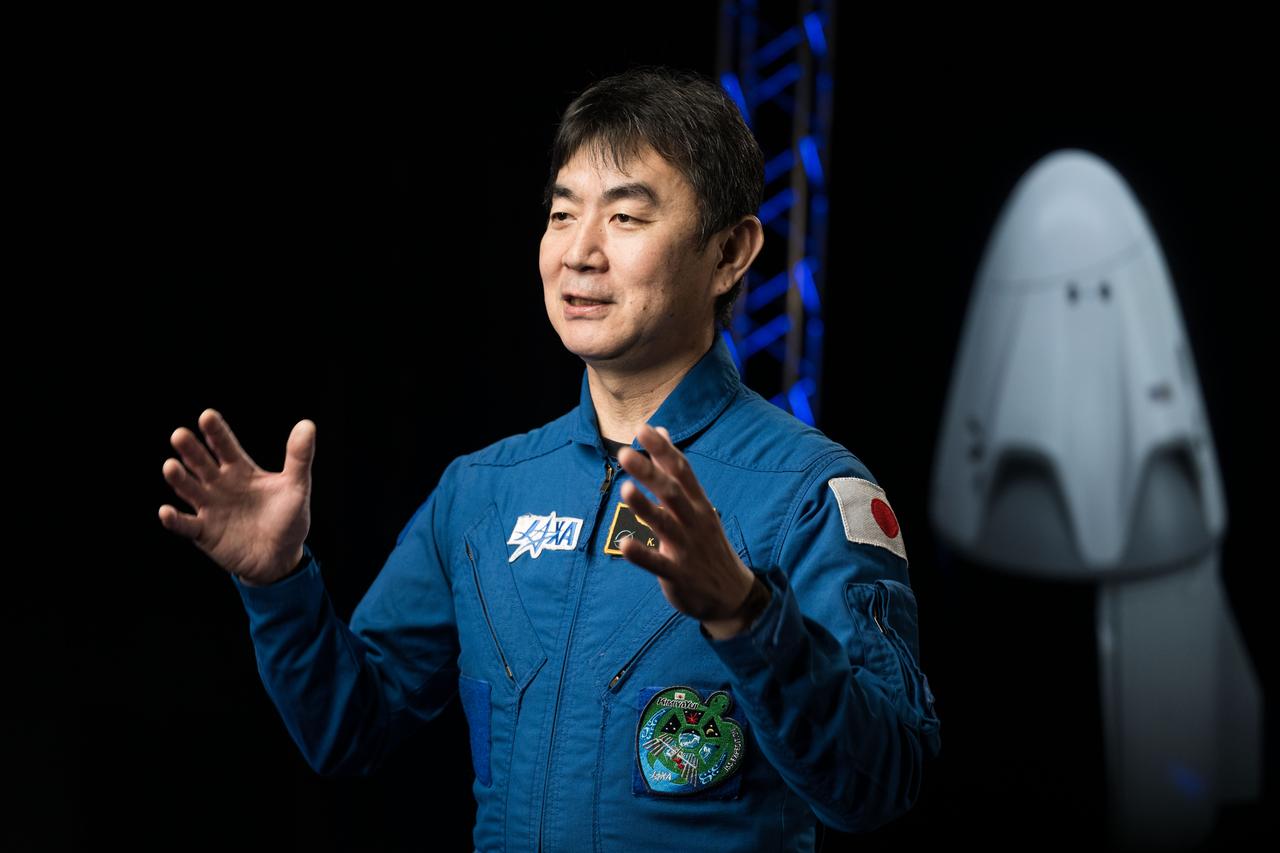
jsc2025e032707 (March 20, 2025) --- JAXA astronaut Kimiya Yui is photographed during an interview in a studio at NASA’s Johnson Space Center in Houston, Texas, before his upcoming mission to the International Space Station. Credit: NASA/Josh Valcarcel
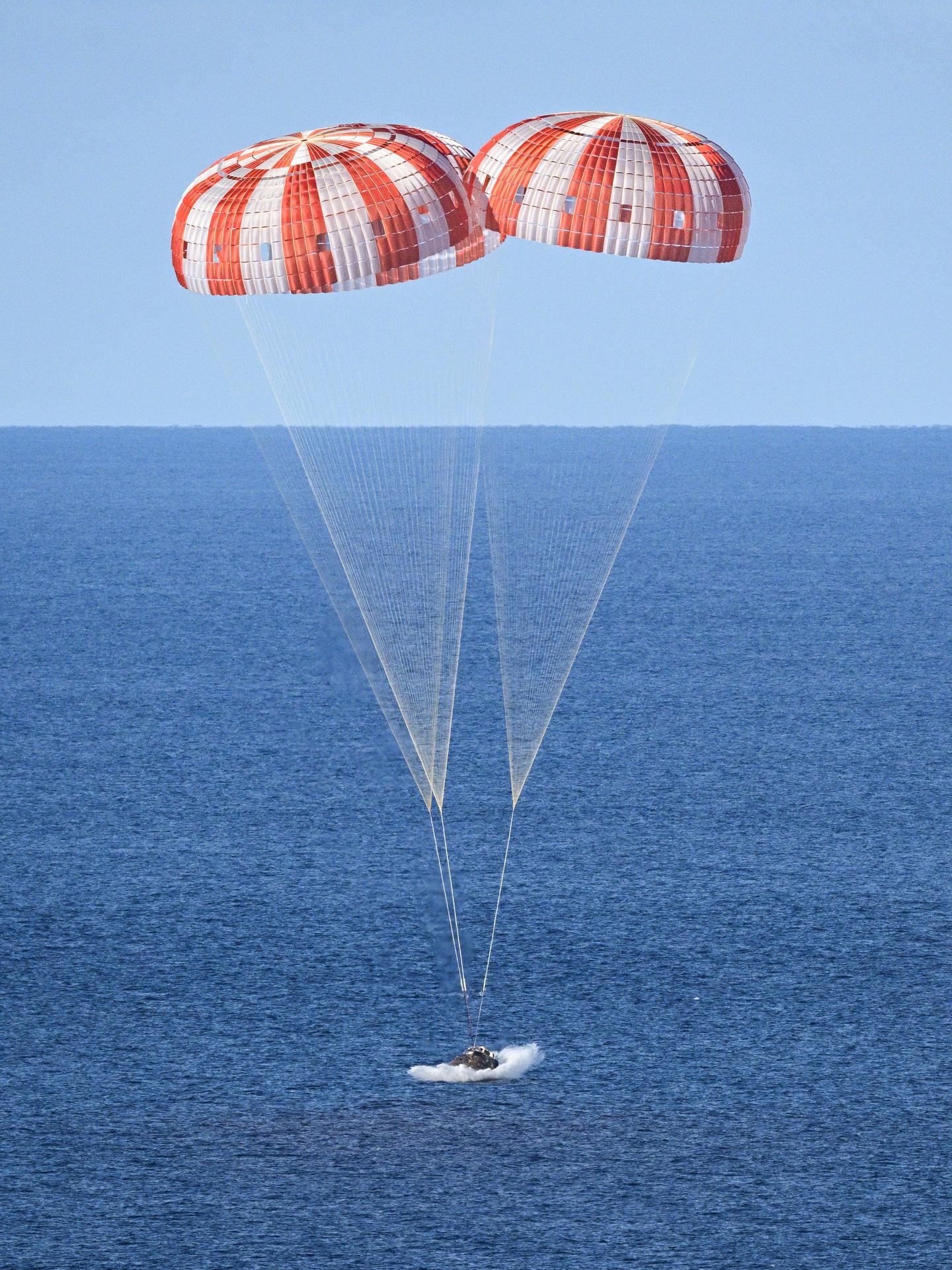
jsc2026e022247 (April 10, 2026) - NASA's Orion spacecraft carrying Artemis II Commander Reid Wiseman, Pilot Victor Glover, and Mission Specialist Christina Koch from NASA, along with Mission Specialist Jeremy Hansen from the CSA (Canadian Space Agency), splashes down in the Pacific Ocean near San Diego, California, at 5:07 p.m. PDT, (8:07 p.m. EDT) on Friday, April 10, 2026. The Artemis II test flight launched on Wednesday, April 1, from NASA’s Kennedy Space Center in Florida to begin its 10-day journey around the Moon for scientific discovery, economic benefits, and to build on our foundation for the first crewed missions to Mars. NASA’s Landing and Recovery team and the U.S. military are coordinating efforts to extract the Artemis II crew from the Orion spacecraft.
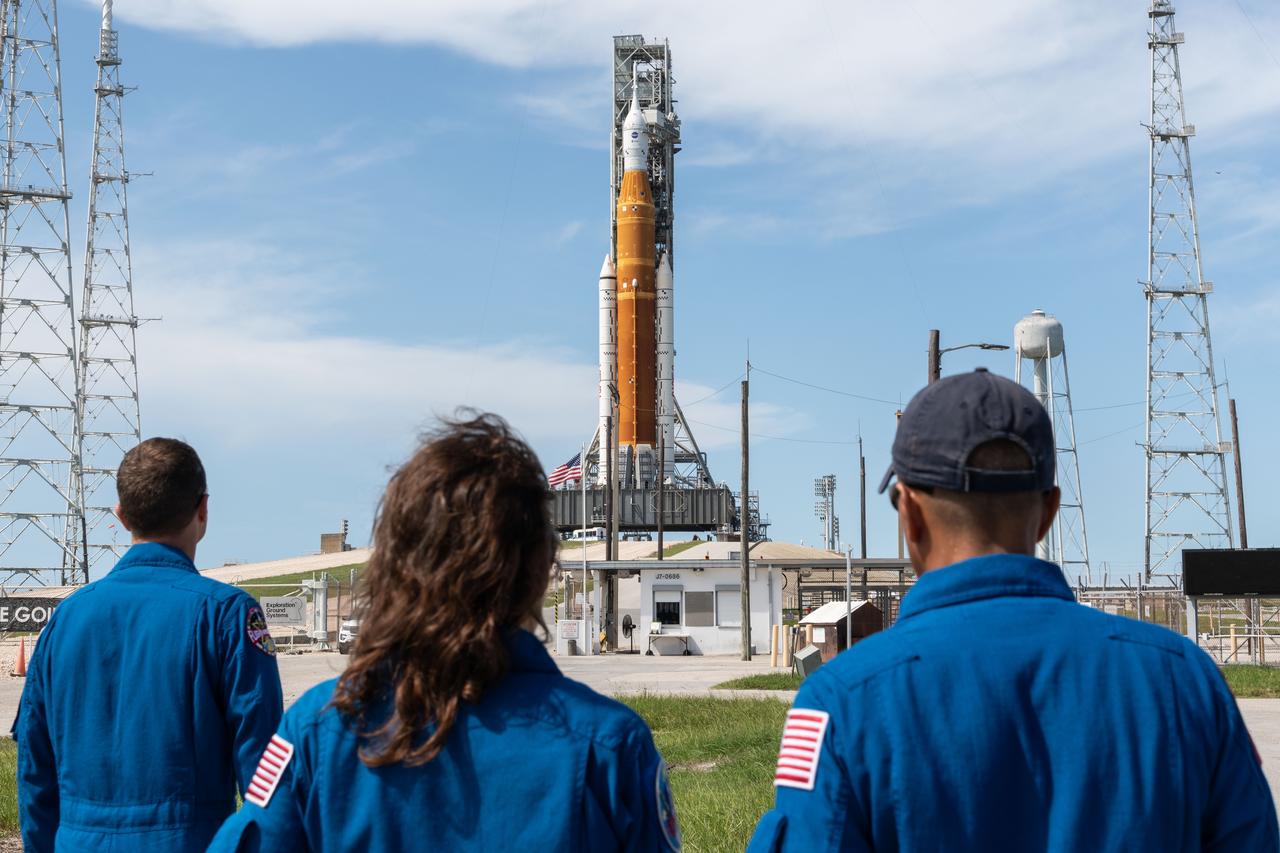
From left to right, NASA Astronauts Reid Wiseman, Christina Koch, and Joe Acaba view the Space Launch System and Orion spacecraft on Launch Pad 39B. They arrived via T-38 jet to support various pre-launch activities. Credit: NASA/Josh Valcarcel.
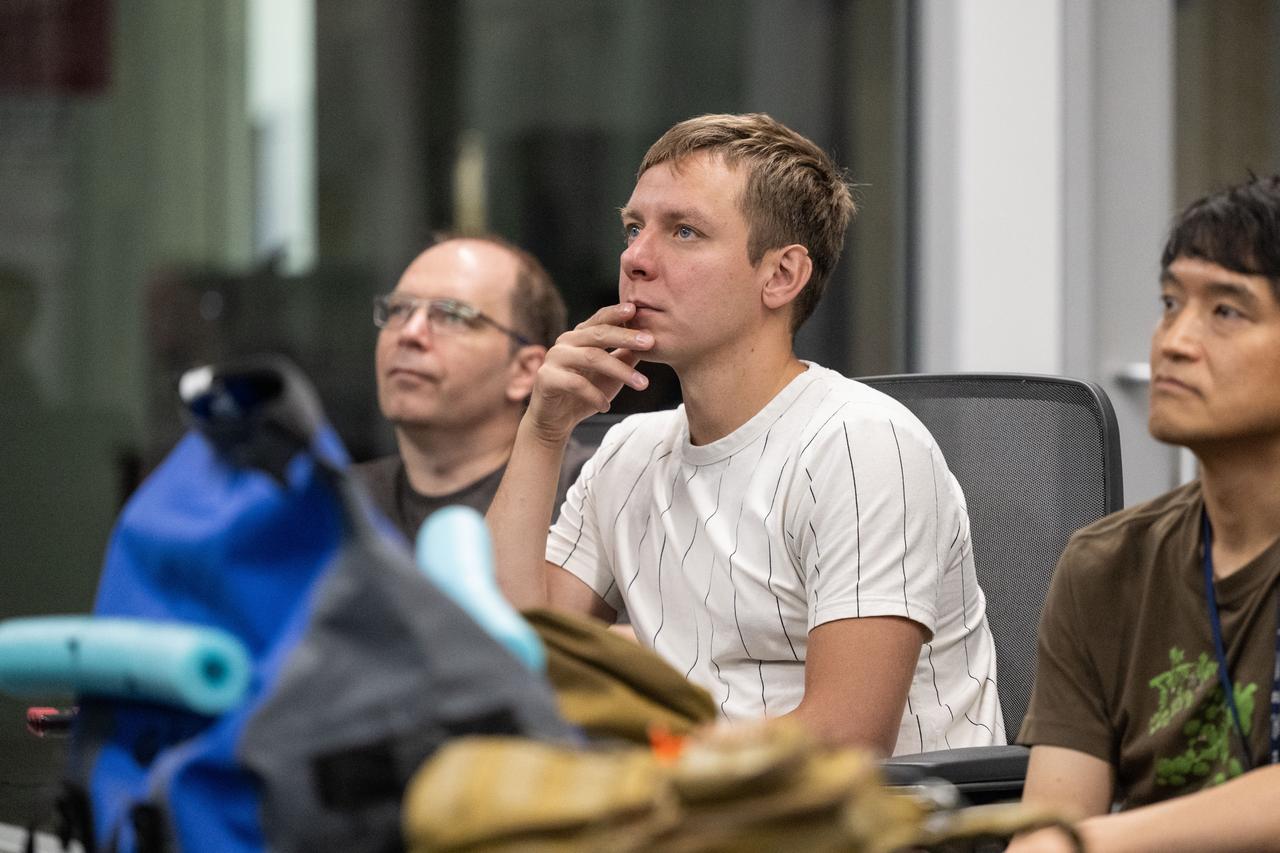
jsc2023e040978 (June 7, 2024) --- (From left) A mission trainer and SpaceX Crew-10 Mission Specialists Kirill Peskov of Roscosmos and Takuya Onishi of JAXA (Japan Aerospace Exploration Agency) watch a demonstration before water survival training in the Neutral Buoyancy Laboratory at NASA's Johnson Space Center.
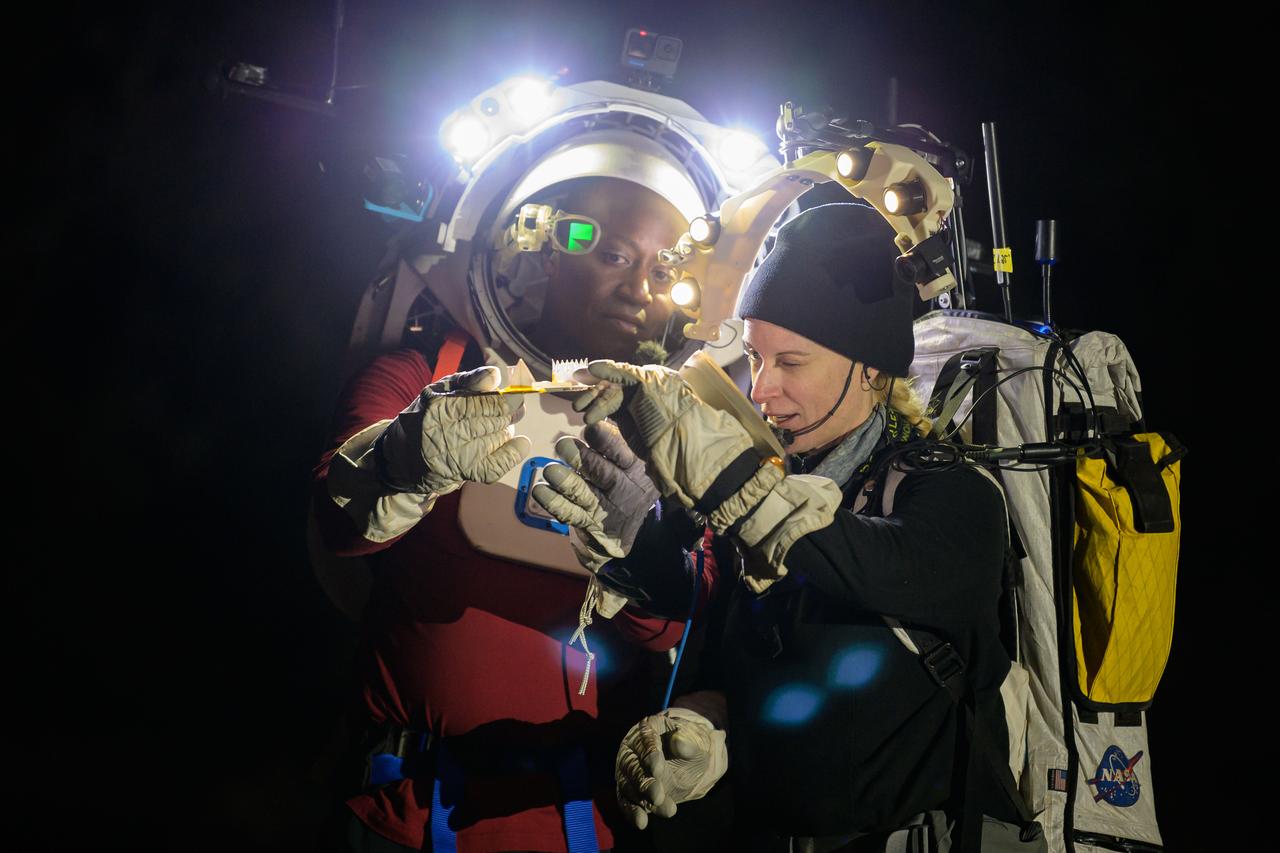
NASA astronauts Andre Douglas and Kate Rubins during a nighttime advanced technology run in the San Francisco Volcanic Field in Northern Arizona on May 21, 2024. Douglas is wearing the Joint AR (Joint Augmented Reality Visual Informatics System) display. The suit display features include navigation, photo capture, graphical format of consumables, procedure viewing, mission control updates, and other augmented reality cues and graphics. The team successfully tested navigation displays using data from four different data streams: GPS (Global Positioning System)/IMU (Inertial Measurement Unit), camera/IMU, LiDAR (Light Detection and Ranging), and static maps. Technology like this may be used for future Artemis missions to augment mission control communication and help guide crew back to the lunar lander. Credit: NASA/Josh Valcarcel

NASA astronauts Andre Douglas and Kate Rubins review procedures during a simulated moonwalk in the San Francisco Volcanic Field in Northern Arizona on May 14, 2024. Credit: NASA/Josh Valcarcel
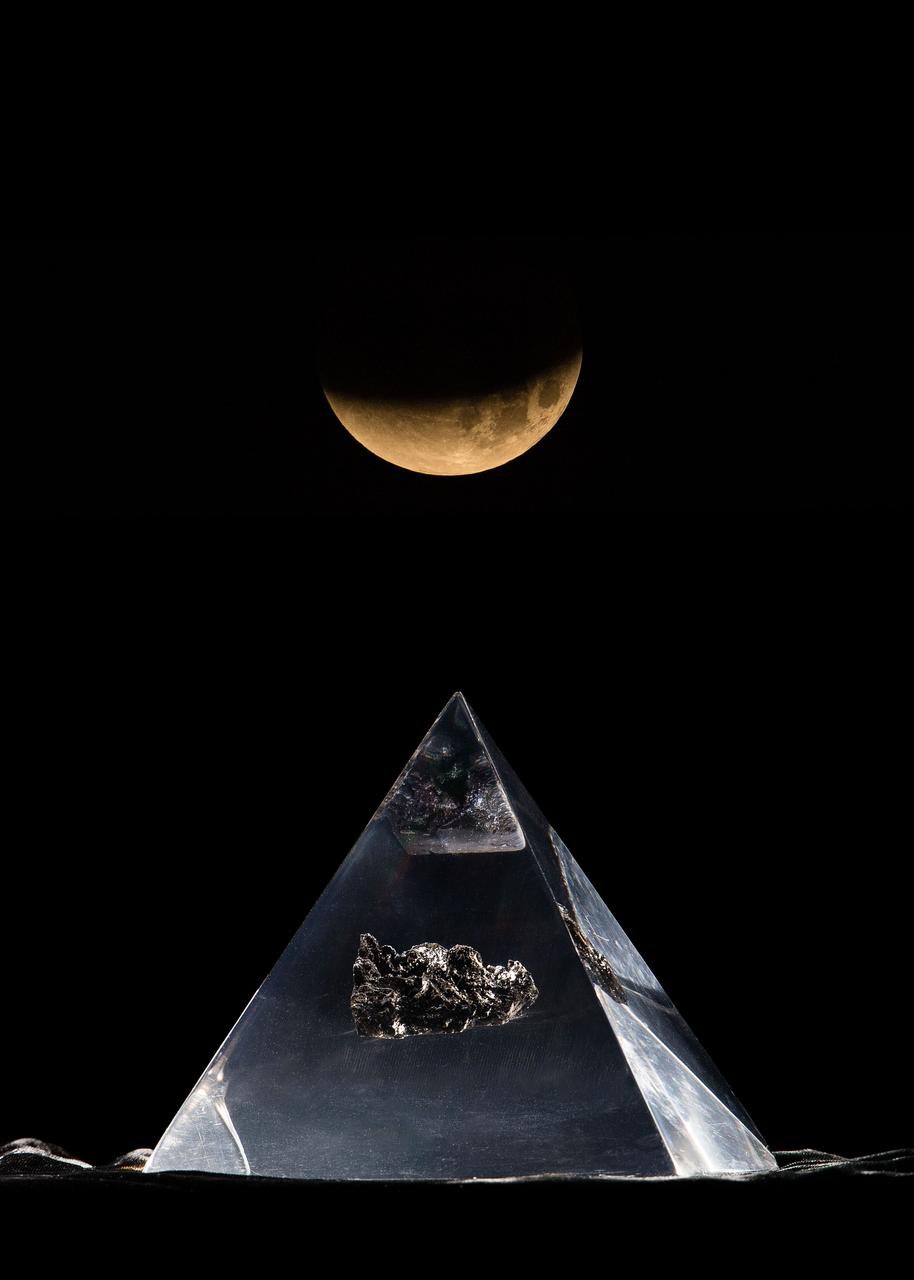
jsc2018e003239_alt (Jan. 31, 2018) --- Composite image of an Apollo lunar sample in front of the lunar eclipse "Blood Moon". Credit: NASA/Josh Valcarcel
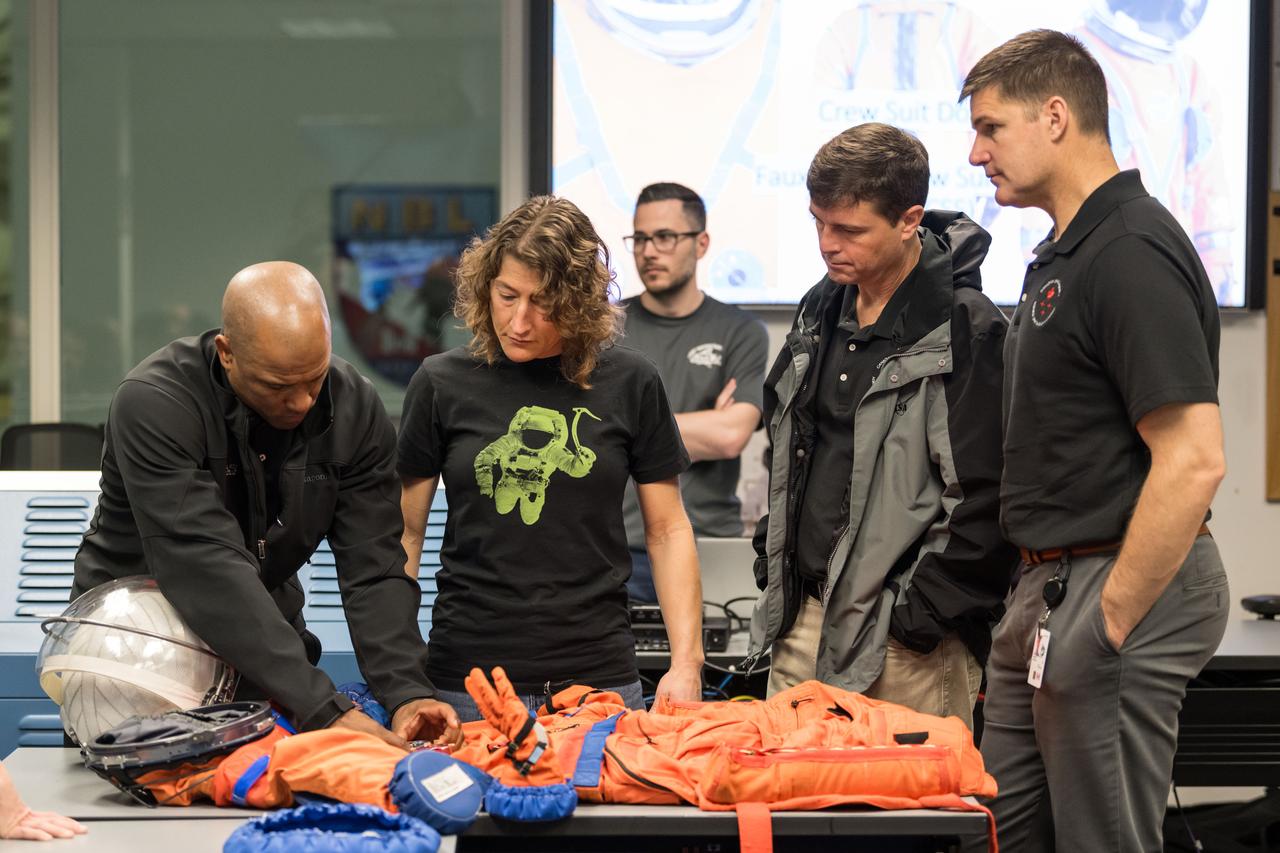
jsc2024e010142 (Jan. 23, 2024) --- The Artemis II crew is pictured during training Jan. 23 in the Neutral Buoyancy Lab at the agency’s Johnson Space Center in Houston. As part of training for their mission around the Moon next year, the first crewed flight under NASA’s Artemis campaign, the crew practiced the recovery procedures they will use when the splash down in the Pacific Ocean.
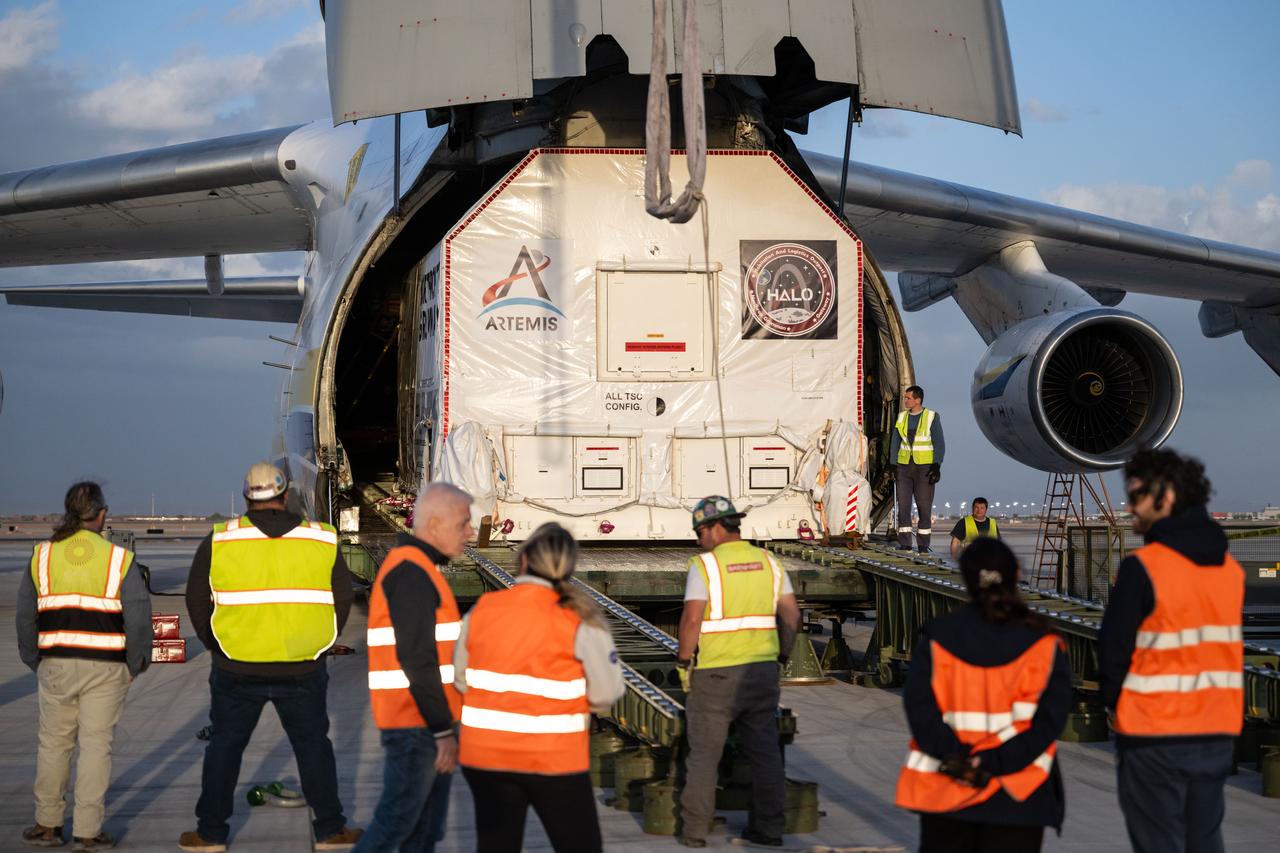
Gateway’s HALO (Habitation and Logistics Outpost) arrives in Mesa, Arizona, after traveling from Italy, where Thales Alenia Space fabricated its primary structure. Delivered by cargo aircraft to Phoenix-Mesa Gateway Airport, HALO will be transported to Northrop Grumman’s facility in Gilbert for final outfitting.
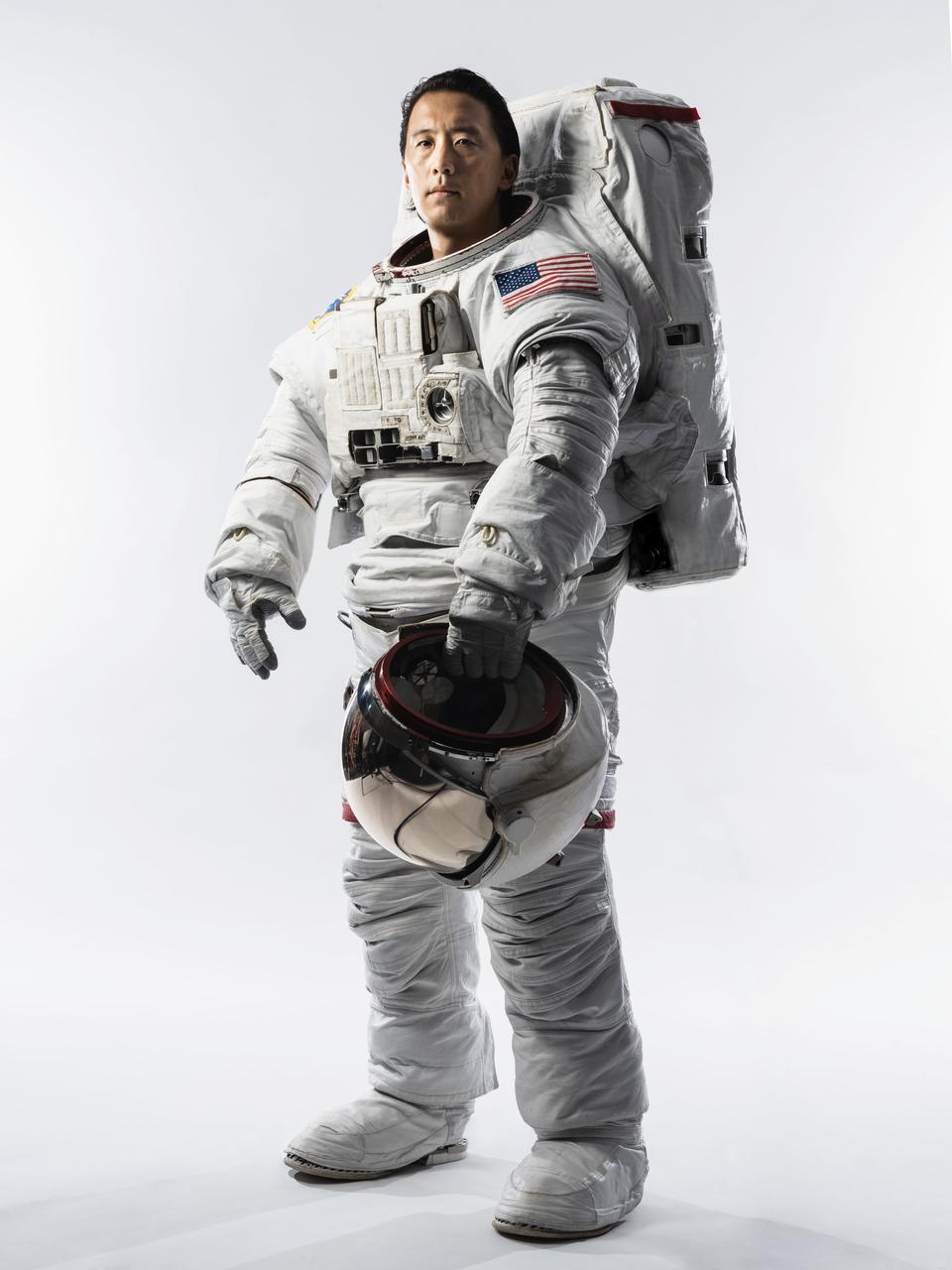
jsc2024e052672_alt2 (July 17, 2024) --- Portrait of NASA Astronaut Jonny Kim in an Extravehicular Mobility Unit (EMU) spacesuit taken at NASA's Johnson Space Center in Houston, Texas. Credit: NASA/Josh Valcarcel
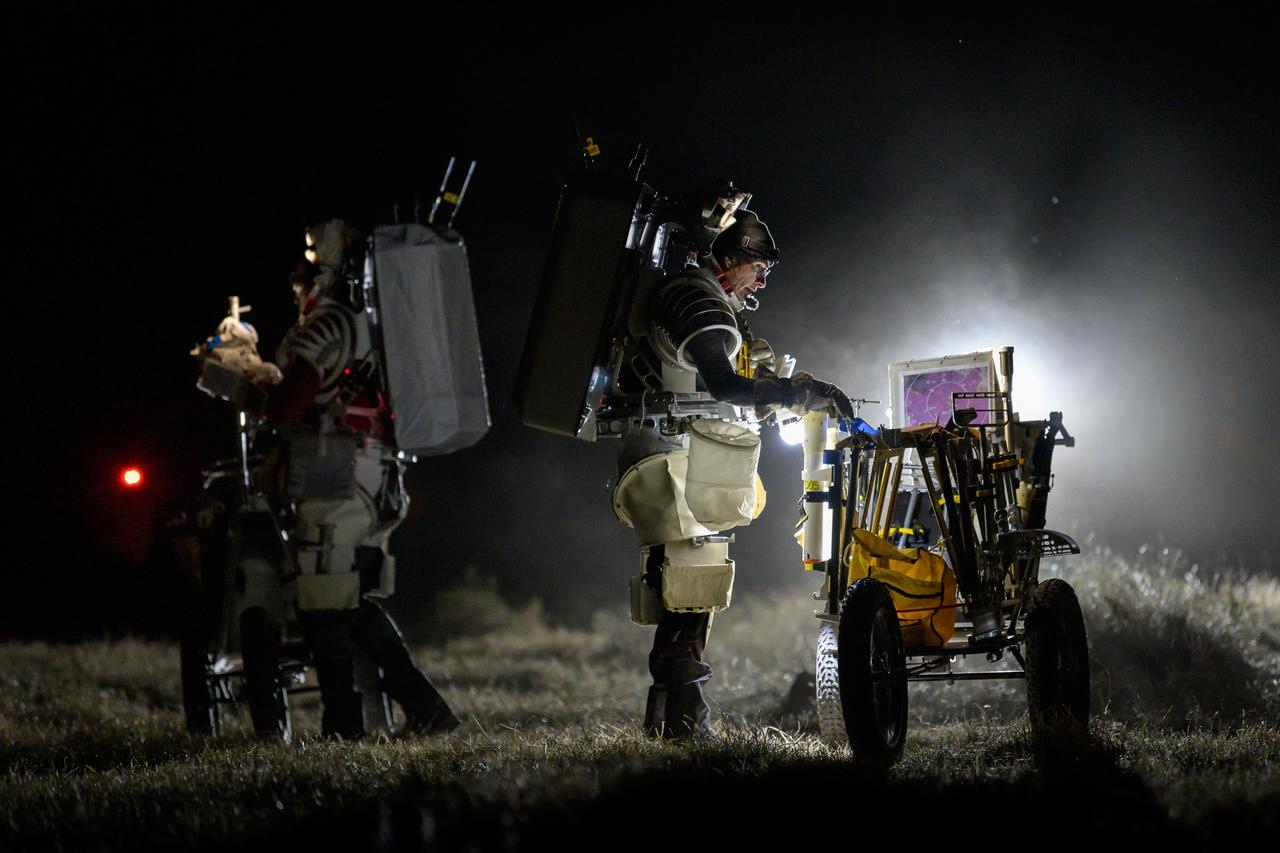
NASA astronaut Kate Rubins conducts a tool audit to ensure she has all of her tools while NASA astronaut Andre Douglas reviews procedures during a nighttime simulated moonwalk in the San Francisco Volcanic Field in Northern Arizona on May 16, 2024. Credit: NASA/Josh Valcarcel

NASA astronaut Andre Douglas wears the Joint AR (Joint Augmented Reality Visual Informatics System) display during a nighttime advanced technology run in the San Francisco Volcanic Field in Northern Arizona on May 21, 2024. The suit display features include navigation, photo capture, graphical format of consumables, procedure viewing, mission control updates, and other augmented reality cues and graphics. The team successfully tested navigation displays using data from four different data streams: GPS (Global Positioning System)/IMU (Inertial Measurement Unit), camera/IMU, LiDAR (Light Detection and Ranging), and static maps. Technology like this may be used for future Artemis missions to augment mission control communication and help guide crew back to the lunar lander. Credit: NASA/Josh Valcarcel
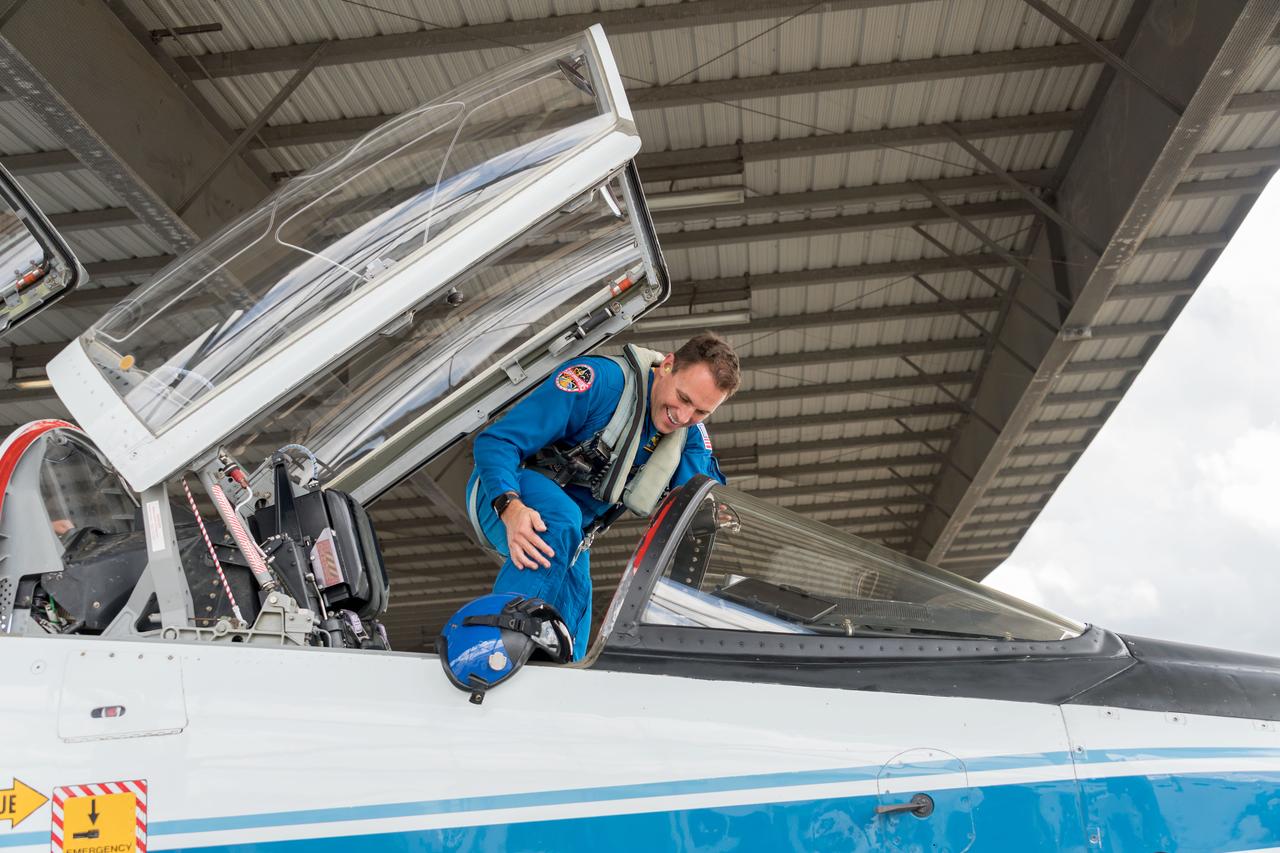
NASA commercial crew astronaut Josh Cassada prepares for T-38 training flights at Ellington Field Joint Reserve Base in Houston. Cassada is assigned to the Boeing Starliner’s second crewed flight.
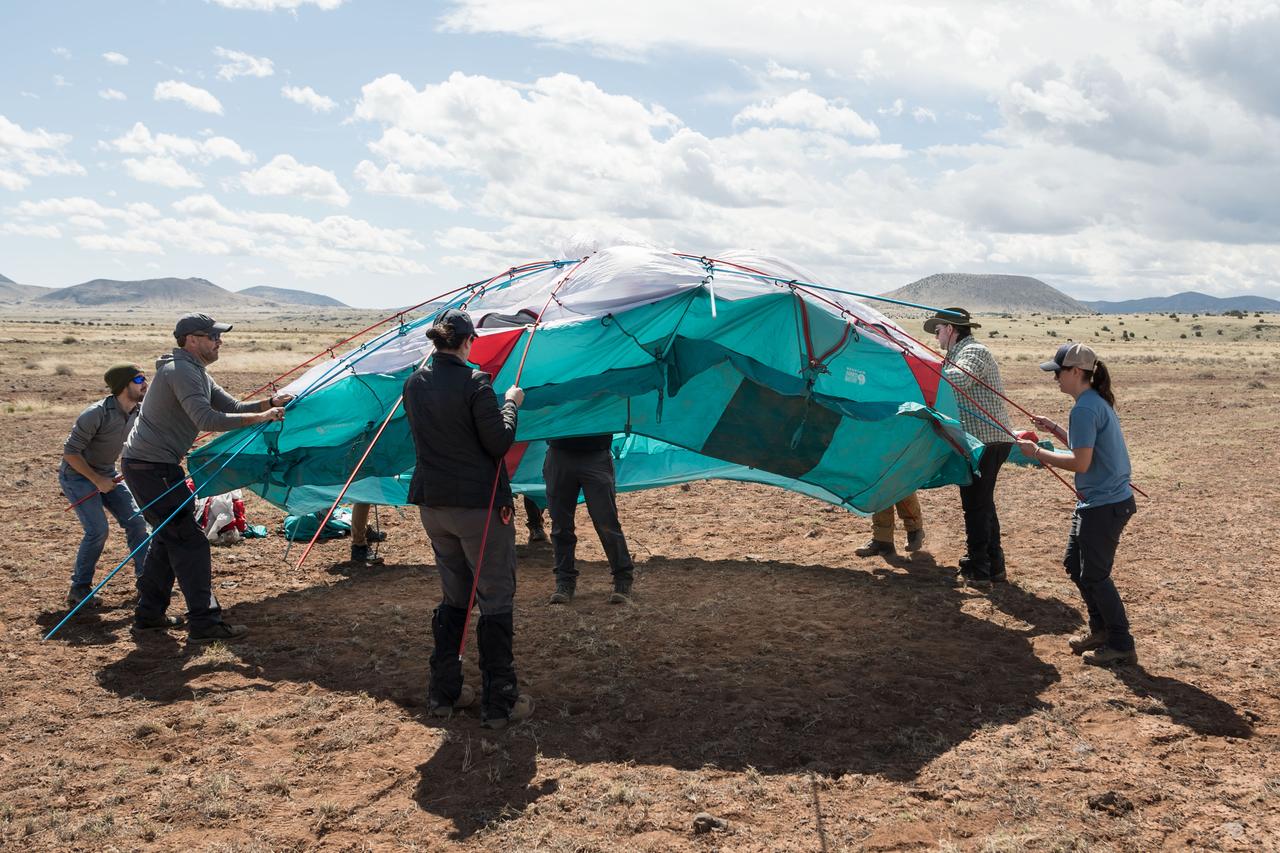
NASA teams work to set up a one of many tents that will serve as the base camp for the Joint Extravehicular Activity and Human Surface Mobility Test Team Field Test 5 (JETT5) in the San Francisco Volcanic Field in Northern Arizona on May 11, 2024. Credit: NASA/Josh Valcarcel
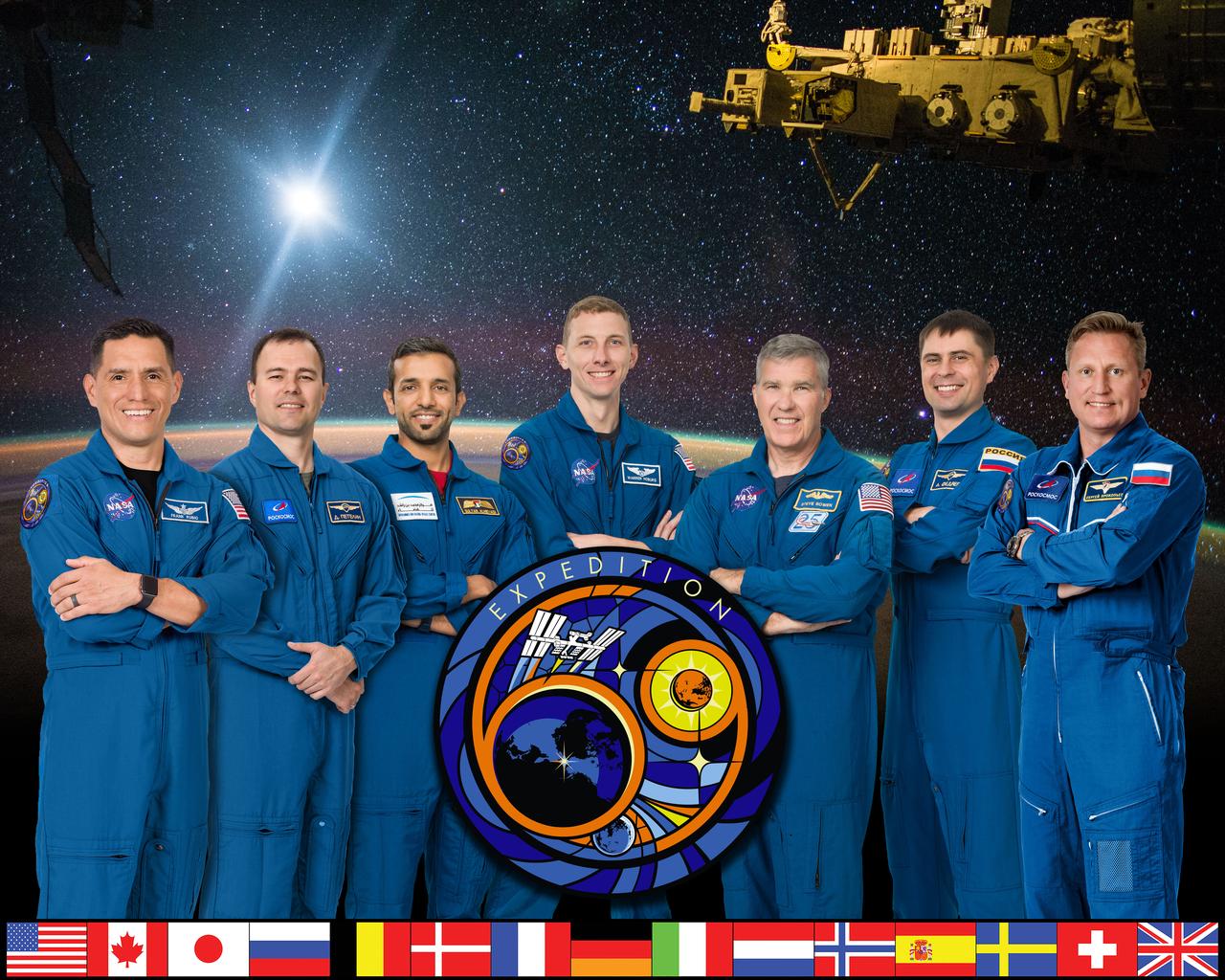
iss069-s-002 (Feb. 7, 2023) --- The official Expedition 69 crew portrait with (from left) flight engineers Frank Rubio from NASA, Dmitri Petelin from Roscosmos, Sultan Alneyadi from UAE (United Arab Emirates), Woody Hoburg from NASA, Stephen Bowen from NASA, Andrey Fedyaev from Roscosmos, and Commander Sergey Prokopyev from Roscosmos.
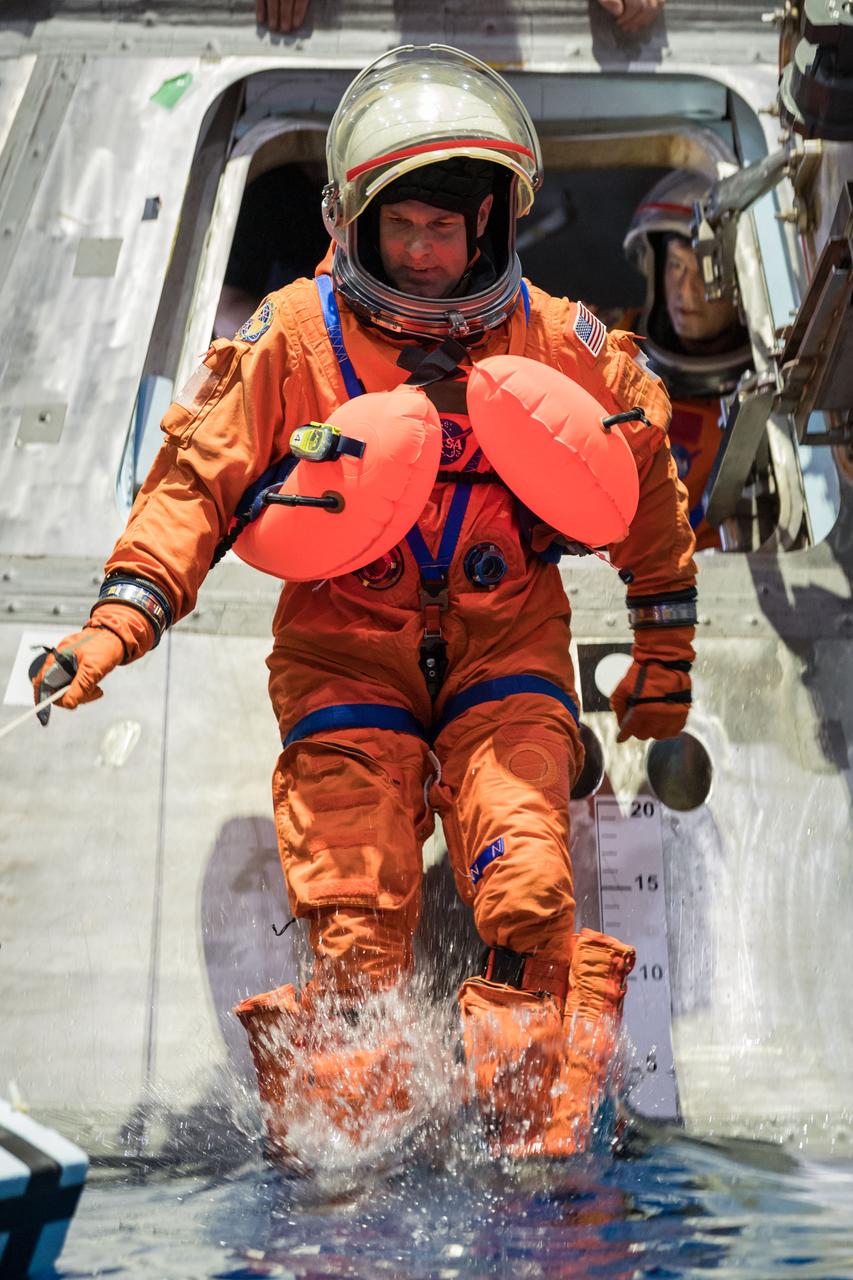
jsc2024e009647 (Jan. 23, 2024) --- Artemis II crew member and Canadian Space Agency astronaut Jeremy Hansen exits a mockup of the Orion spacecraft during a training exercise in the Neutral Buoyance Lab at NASA’s Johnson Space Center in Houston, January 23. The crew practiced exiting the spacecraft in a variety of scenarios in preparation for the mission around the Moon next year.
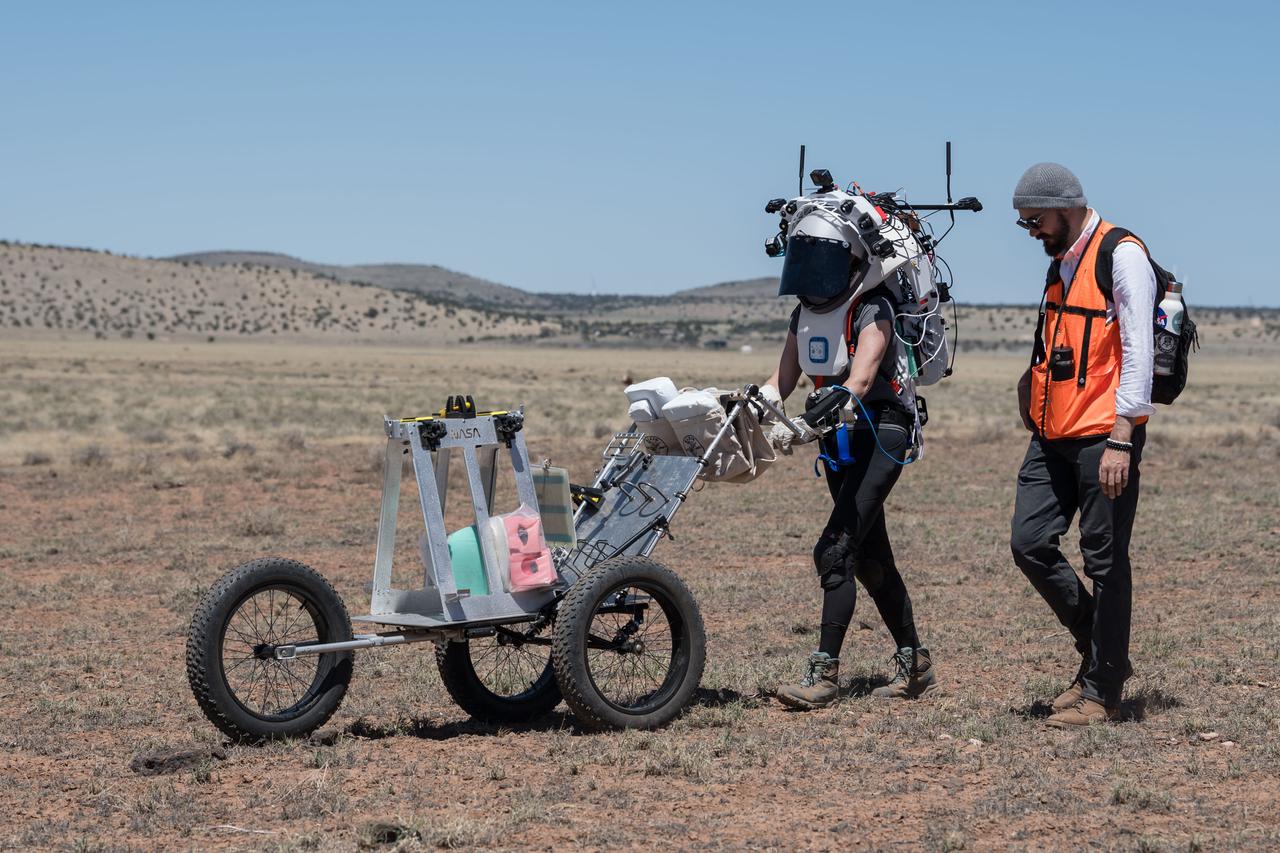
NASA astronaut Kate Rubins pushes a cart through the lunar-like landscape while wearing the Joint AR (Joint Augmented Reality Visual Informatics System) display during an advanced technology run in the San Francisco Volcanic Field in Northern Arizona on May 19, 2024. The suit display features include navigation, photo capture, graphical format of consumables, procedure viewing, mission control updates, and other augmented reality cues and graphics. The team successfully tested navigation displays using data from four different data streams: GPS (Global Positioning System)/IMU (Inertial Measurement Unit), camera/IMU, LiDAR (Light Detection and Ranging), and static maps. Technology like this may be used for future Artemis missions to augment mission control communication and help guide crew back to the lunar lander. Credit: NASA/Josh Valcarcel

jsc2026e011296 (March 3, 2026) --- From left, Expedition 75 crew members Anil Menon, Anna Kikina, and Pyotr Dubrov participate in an emergency training session at Johnson Space Center's Space Vehicle Mockup Facility in Houston, Texas, ahead of their upcoming mission to the International Space Station. Credit: NASA/Josh Valcarcel

Spacesuit engineers Sheldon Stockfleth and Christine Jerome work to set up the base camp for the Joint Extravehicular Activity and Human Surface Mobility Test Team Field Test 5 (JETT5) in the San Francisco Volcanic Field in Northern Arizona on May 11, 2024. Credit: NASA/Josh Valcarcel
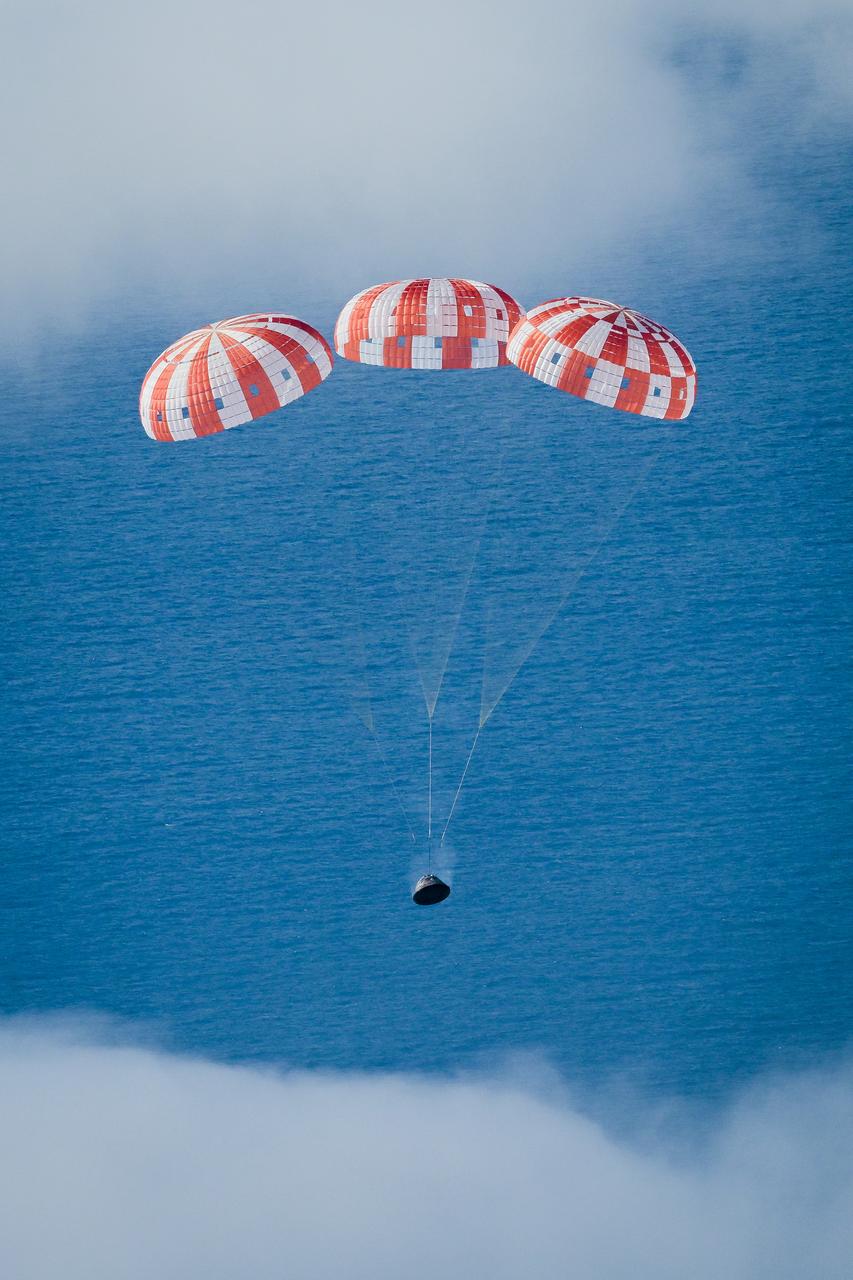
At 12:40 p.m. EST, Dec. 11, 2022, NASA’s Orion spacecraft for the Artemis I mission splashed down in the Pacific Ocean after a 25.5 day mission to the Moon. Orion will be recovered by NASA’s Landing and Recovery team, U.S. Navy and Department of Defense partners aboard the USS Portland.
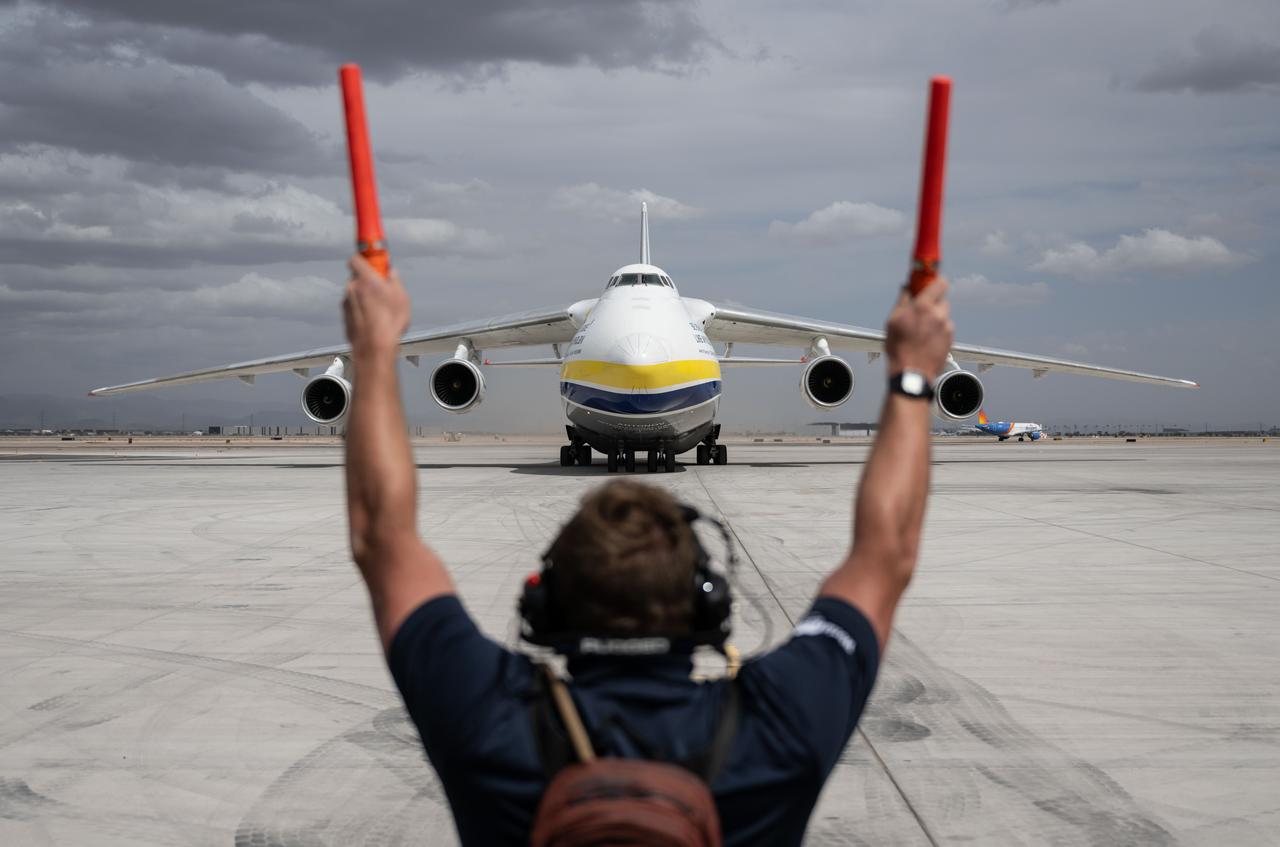
Gateway’s HALO (Habitation and Logistics Outpost) arrives in Mesa, Arizona, after traveling from Italy, where Thales Alenia Space fabricated its primary structure. Delivered by cargo aircraft to Phoenix-Mesa Gateway Airport, HALO will be transported to Northrop Grumman’s facility in Gilbert for final outfitting.
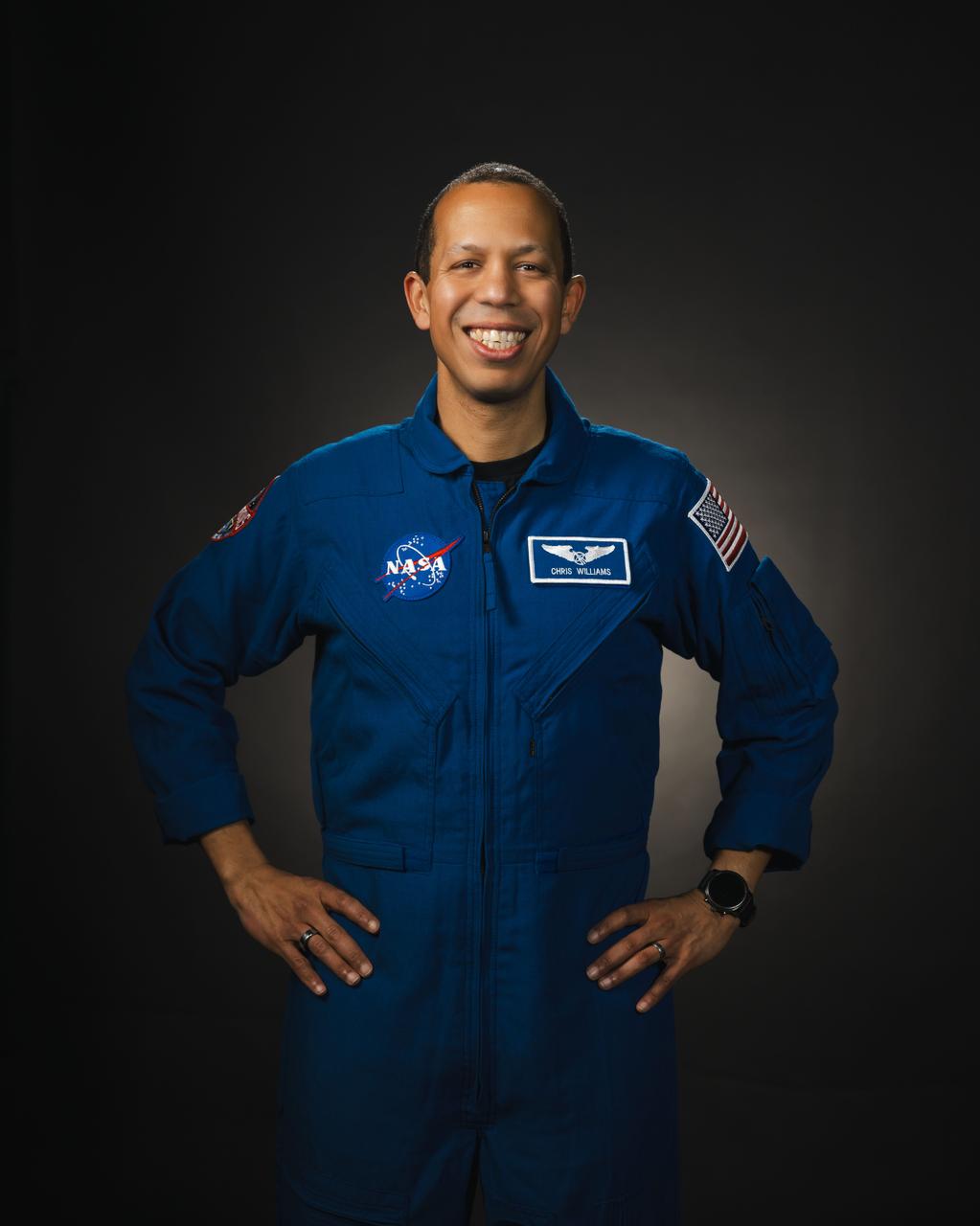
jsc2024e013678 (February 8, 2024) --- NASA astronaut Christopher Williams poses for a portrait at NASA’s Johnson Space Center in Houston, Texas. Credit: NASA/ Josh Valcarcel
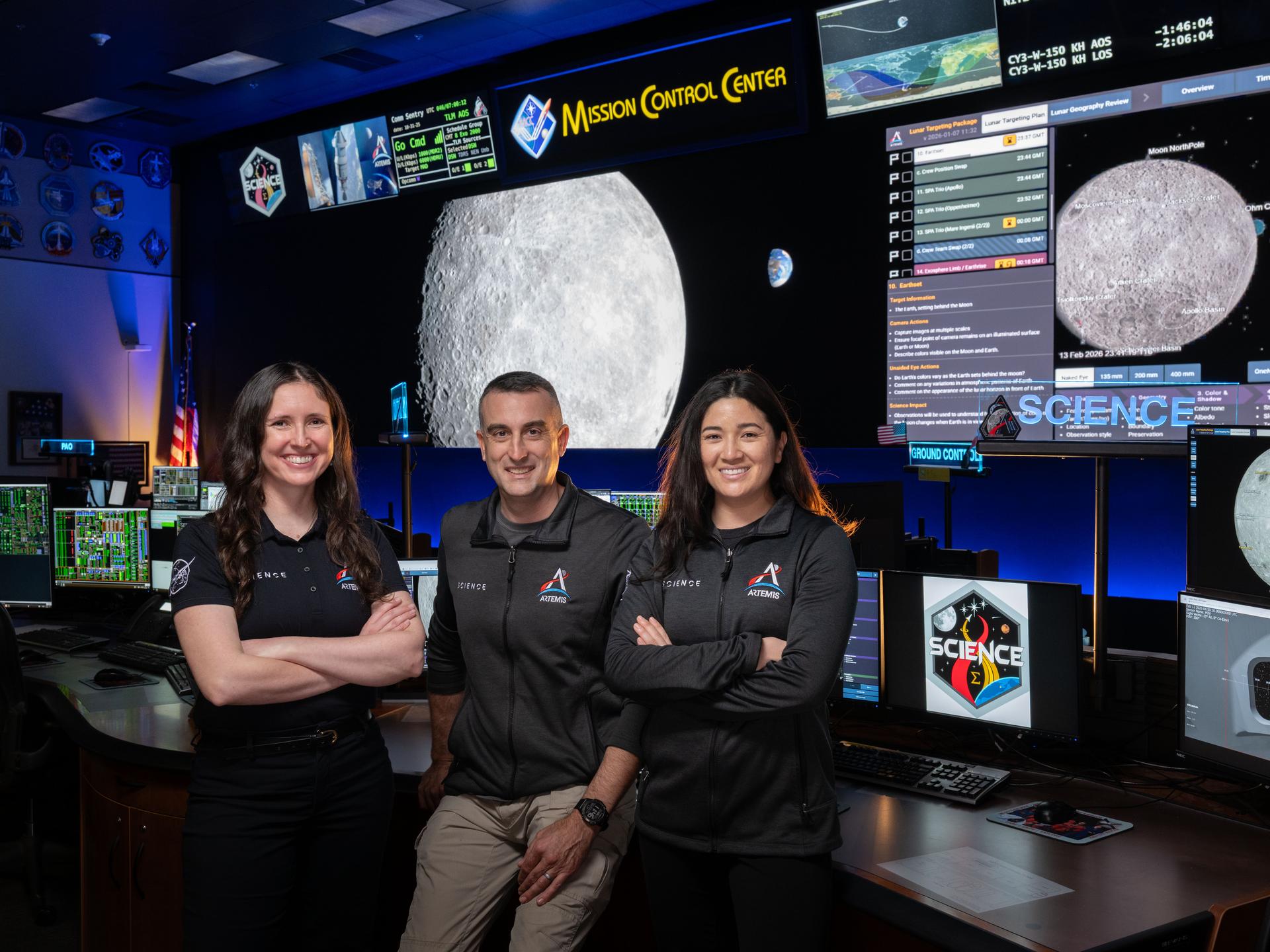
Artemis science officers, from left, Kelsey Young, Trevor Graff, and Angela Garcia stand at the new SCIENCE console in the Mission Control Center at NASA’s Johnson Space Center in Houston. Credits: NASA/Josh Valcarcel
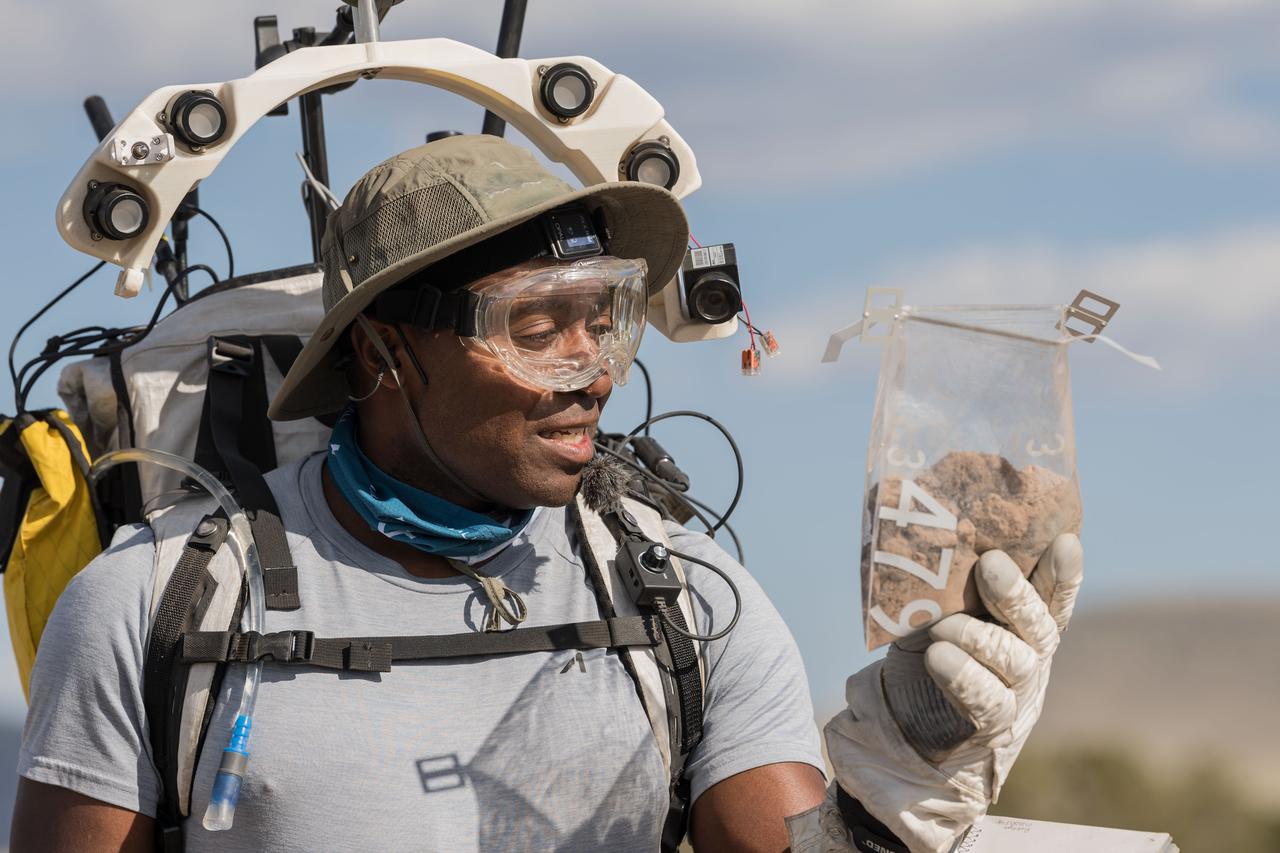
NASA astronaut Andre Douglas takes a closer look at the geologic samples he collected during a simulated moonwalk in the San Francisco Volcanic Field in Northern Arizona on May 17, 2024. Credit: NASA/Josh Valcarcel

After splashing down at 12:40 p.m. EST on Dec. 11, 2022, U.S. Navy divers help recover the Orion Spacecraft for the Artemis I mission. NASA, the Navy and other Department of Defense partners worked together to secure the spacecraft inside the well deck of USS Portland approximately five hours after Orion splashed down in the Pacific Ocean off the coast of California.
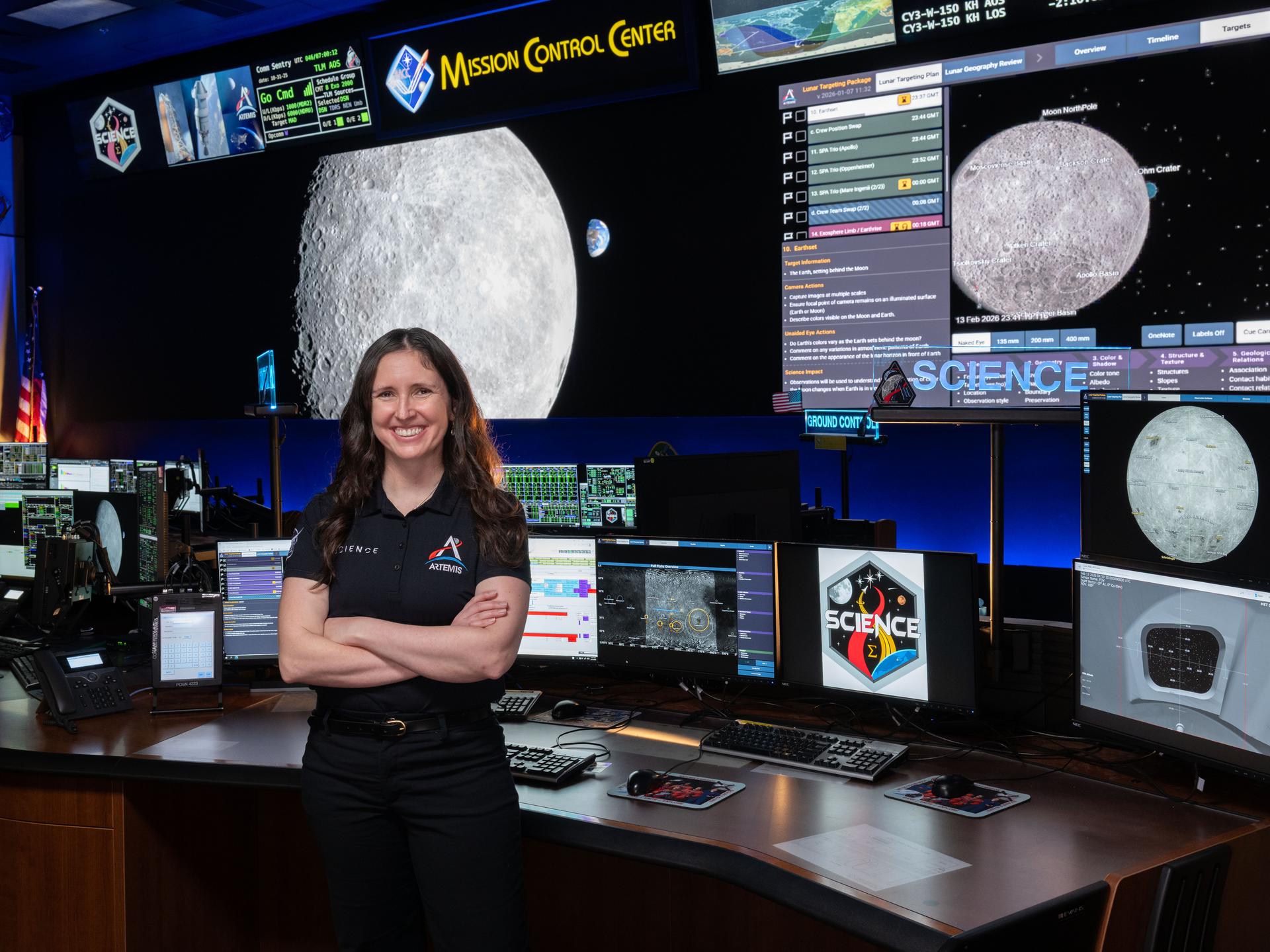
Artemis science officer, Kelsey Young, stands at the new SCIENCE console in the Mission Control Center at NASA’s Johnson Space Center in Houston. Credits: NASA/Josh Valcarcel
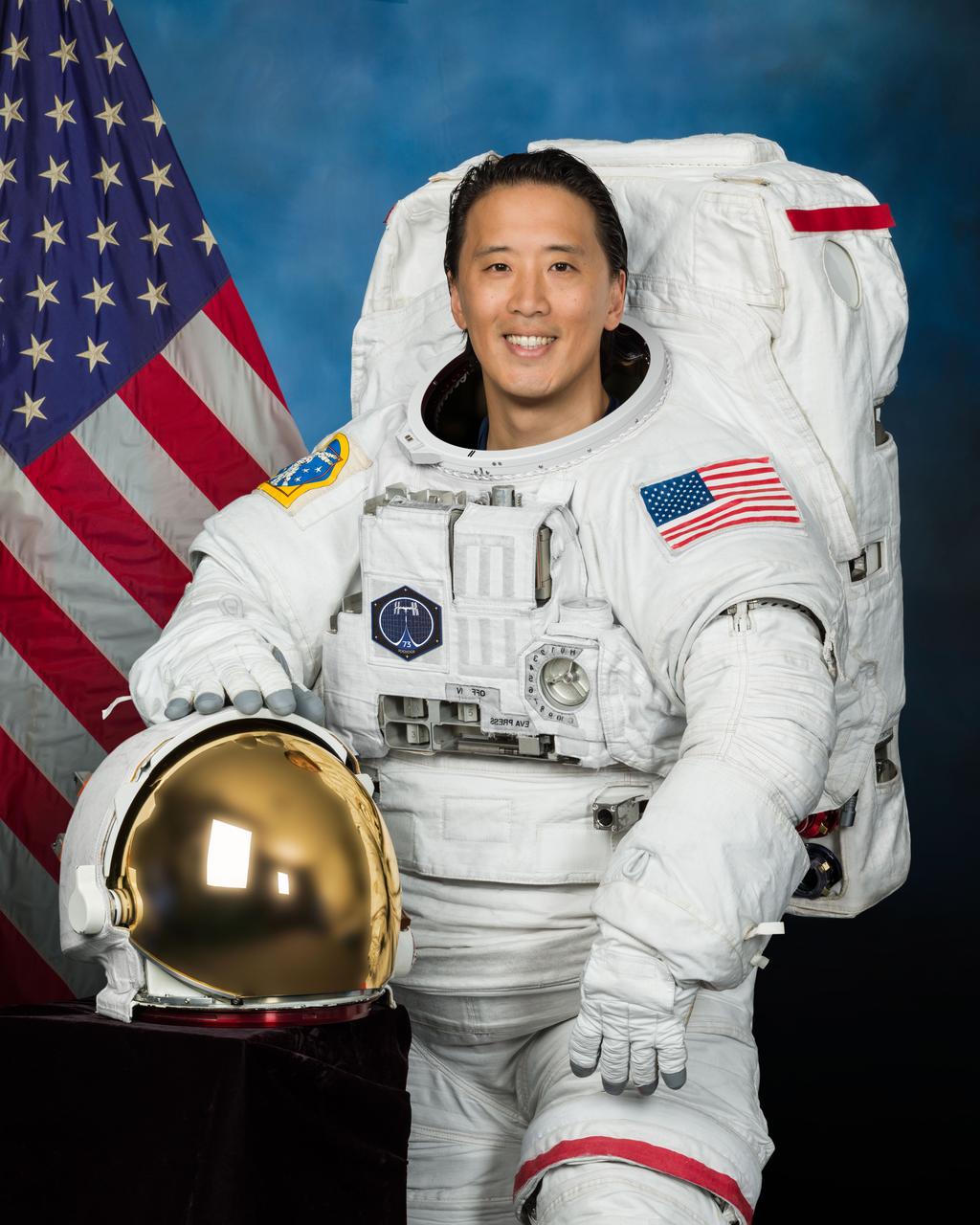
jsc2024e052605_alt (Aug. 6, 2024) --- Official portrait of NASA astronaut Jonny Kim posing in a spacesuit at NASA's Johnson Space Center. Credit: NASA/Josh Valcarcel
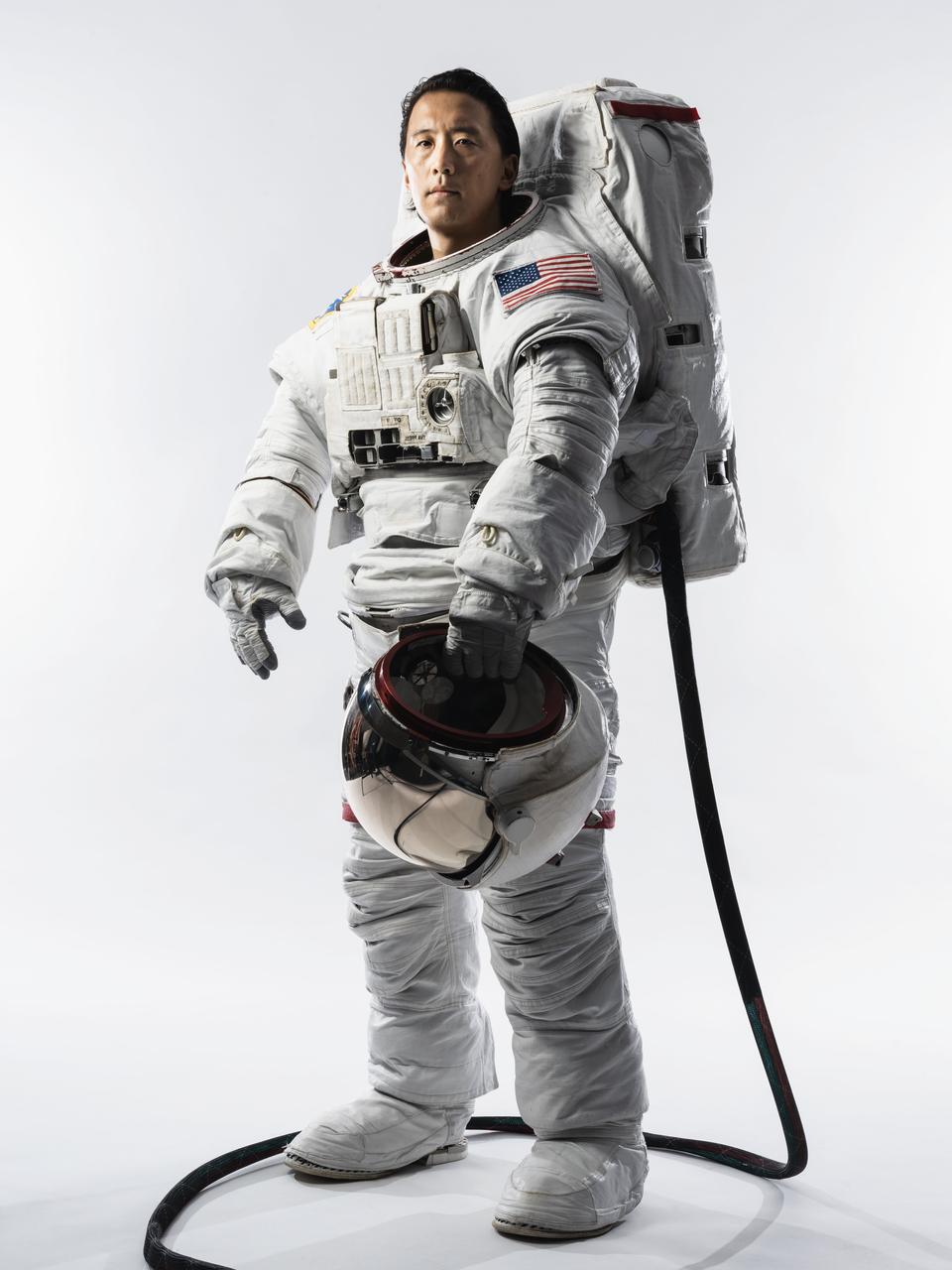
jsc2024e052672_alt (July 17, 2024) --- Portrait of NASA Astronaut Jonny Kim in an Extravehicular Mobility Unit (EMU) spacesuit taken at NASA's Johnson Space Center in Houston, Texas. Credit: NASA/Josh Valcarcel
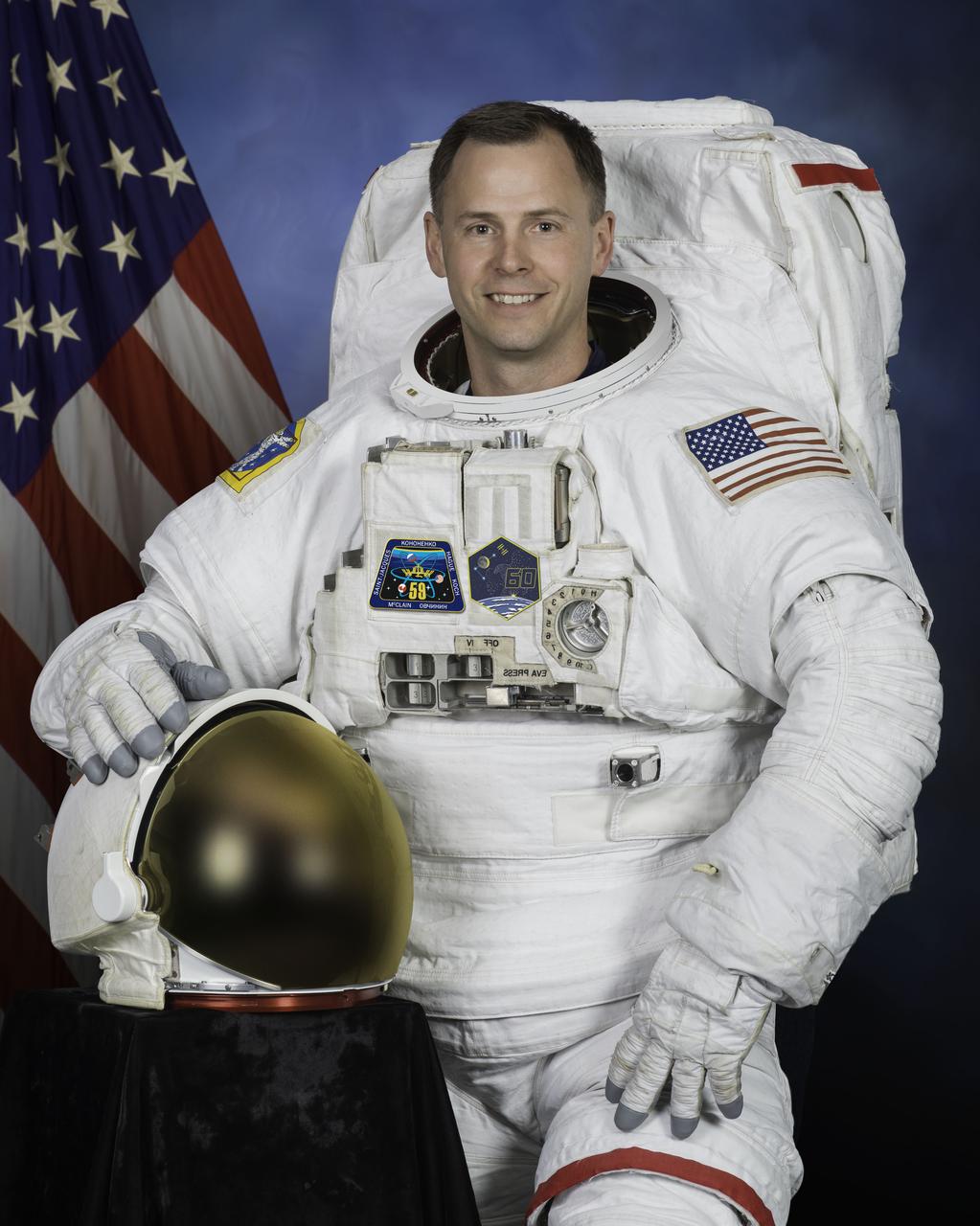
jsc2018e037944_alt2 (May 31, 2018) --- Official portrait of NASA astronaut Nick Hague in a U.S. spacesuit, also known as an Extravehicular Mobility Unit (EMU).
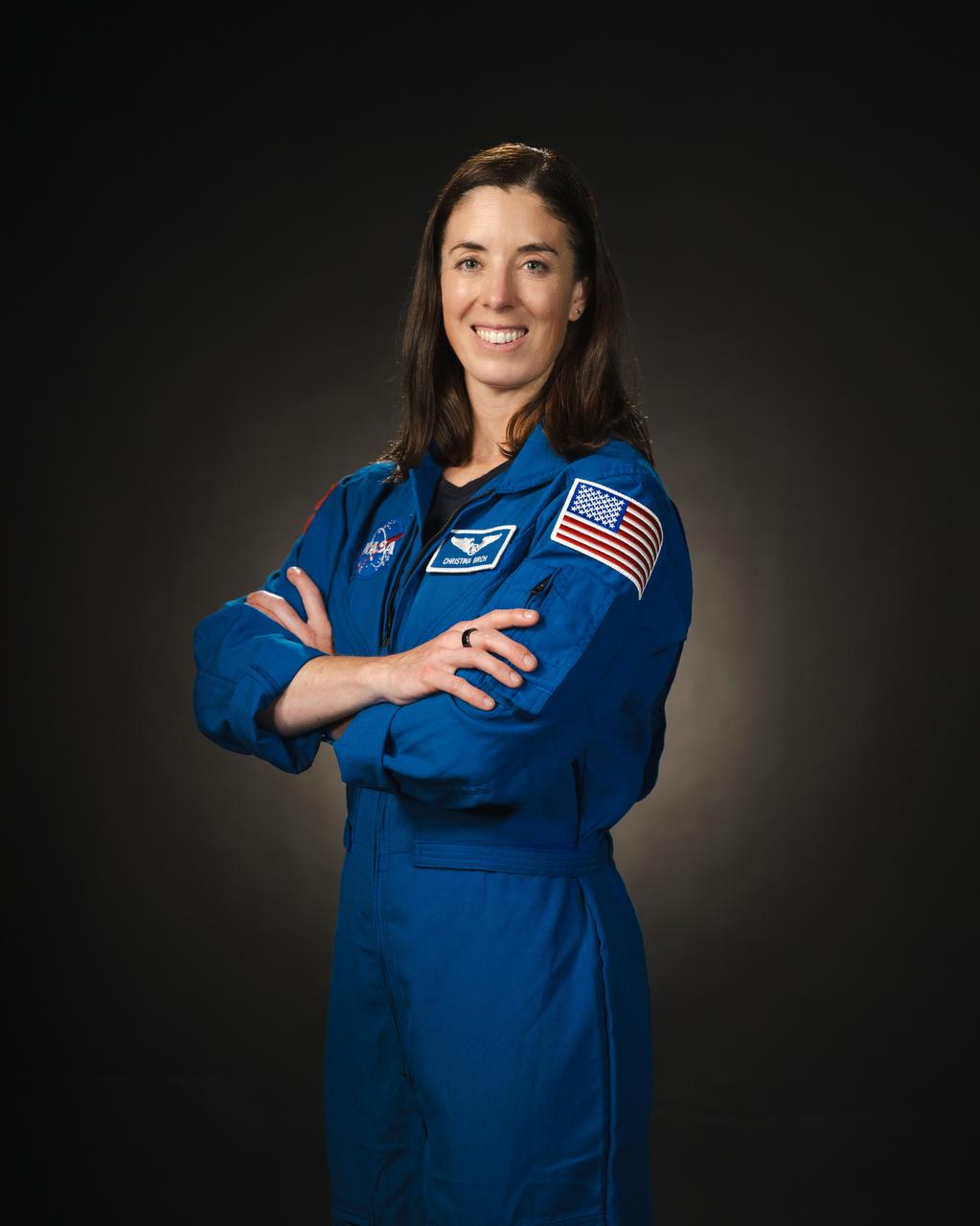
jsc2024e013675 (February 8, 2024) --- NASA astronaut Christina Birch poses for a portrait at NASA’s Johnson Space Center in Houston, Texas. Credit: NASA/ Josh Valcarcel
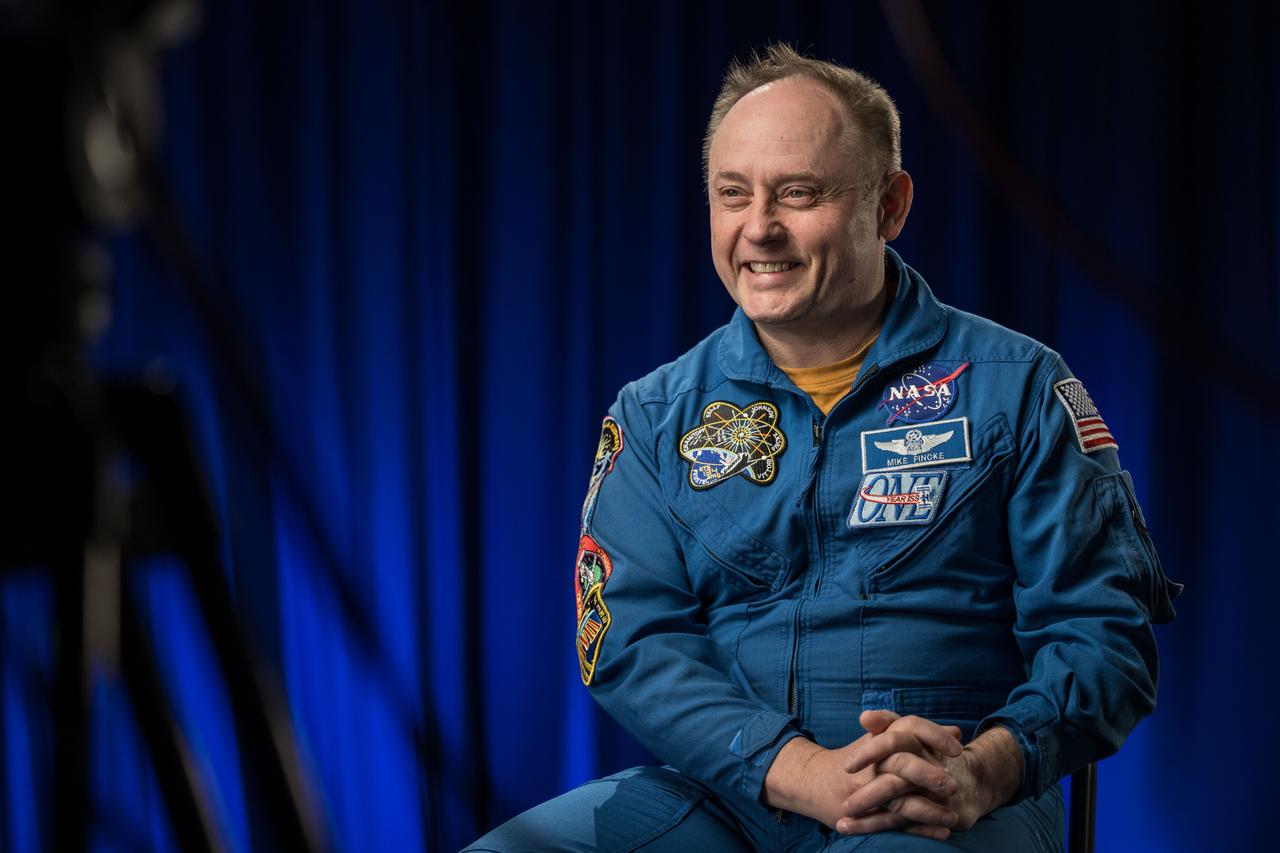
jsc2025e005133 (Jan. 29, 2025) --- NASA astronaut Mike Fincke is photographed during an interview at NASA’s Johnson Space Center in Houston, Texas. Credit: NASA/Josh Valcarcel

jsc2024e013666 (February 8, 2024) --- NASA astronaut Deniz Burnham poses for a portrait at NASA’s Johnson Space Center in Houston, Texas. Credit: NASA/ Josh Valcarcel
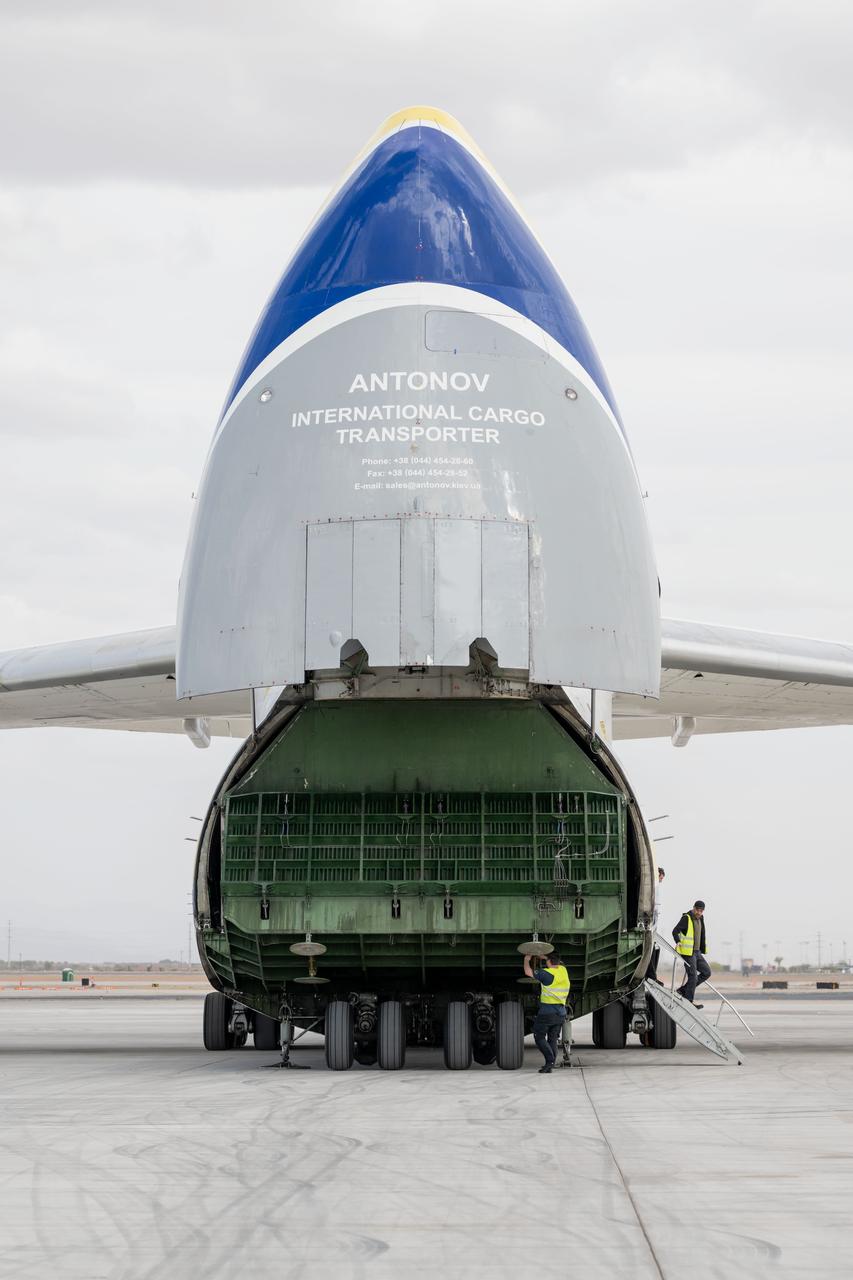
Gateway’s HALO (Habitation and Logistics Outpost) arrives in Mesa, Arizona, after traveling from Italy, where Thales Alenia Space fabricated its primary structure. Delivered by cargo aircraft to Phoenix-Mesa Gateway Airport, HALO will be transported to Northrop Grumman’s facility in Gilbert for final outfitting.
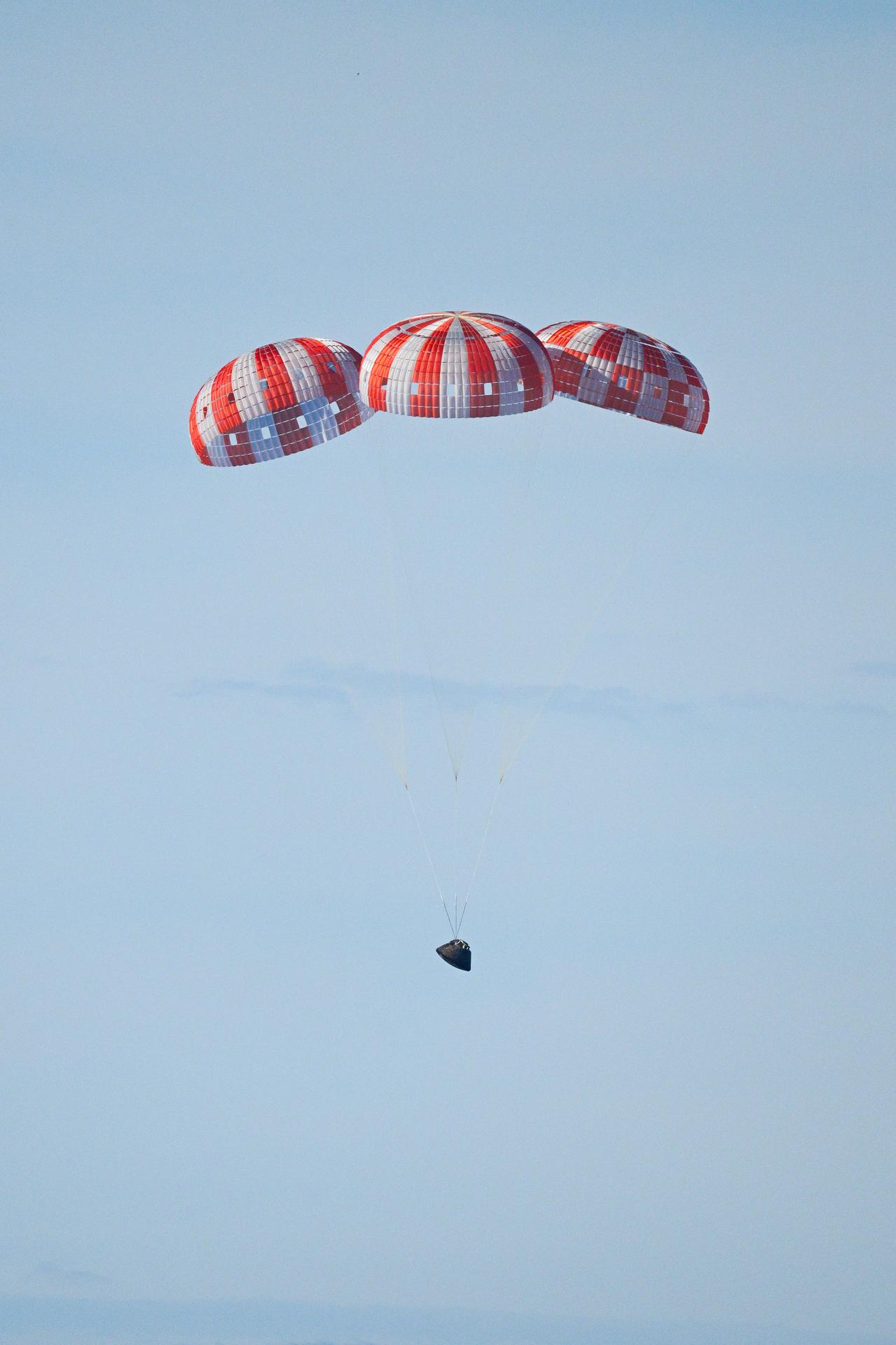
Parachutes secured to NASA’s Orion spacecraft deploy before splashdown in the Pacific Ocean near San Diego, California, on Friday, April 10, 2026, for the Artemis II test flight. The Artemis II mission carrying Artemis II Commander Reid Wiseman, Pilot Victor Glover, and Mission Specialist Christina Koch from NASA, along with Mission Specialist Jeremy Hansen from the CSA (Canadian Space Agency), launched on Wednesday, April 1, from NASA’s Kennedy Space Center in Florida to begin its 10-day journey around the Moon for scientific discovery, economic benefits, and to build on our foundation for the first crewed missions to Mars. NASA’s Landing and Recovery team and the U.S. military are coordinating efforts to extract the Artemis II crew from Orion.

jsc2026e037769 (May 5, 2026) --- CSA (Canadian Space Agency) astronaut Josh Kutryk practices suiting up in a spacesuit in an International Space Station airlock simulator at Johnson Space Center’s (JSC) Space Vehicle Mockup Facility in Houston, Texas. Astronauts familiarize themselves with spacesuit systems and procedures and practice Quest airlock operations before conducting spacewalk training at JSC’s Neutral Buoyancy Laboratory in simulated microgravity. Credit: NASA/Josh Valcarcel
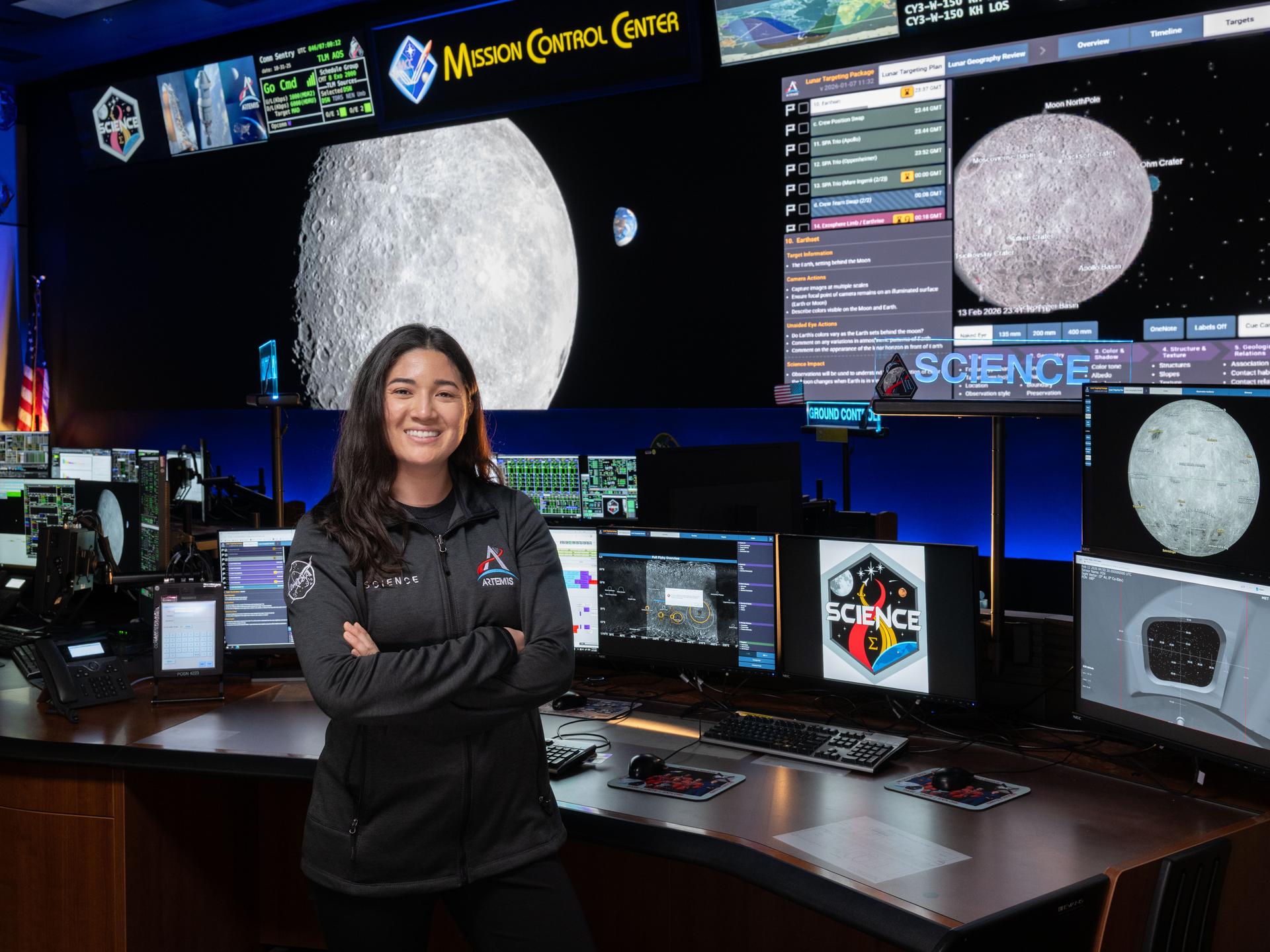
Artemis science officer, Angela Garcia, stands at the new SCIENCE console in the Mission Control Center at NASA’s Johnson Space Center in Houston. Credits: NASA/Josh Valcarcel
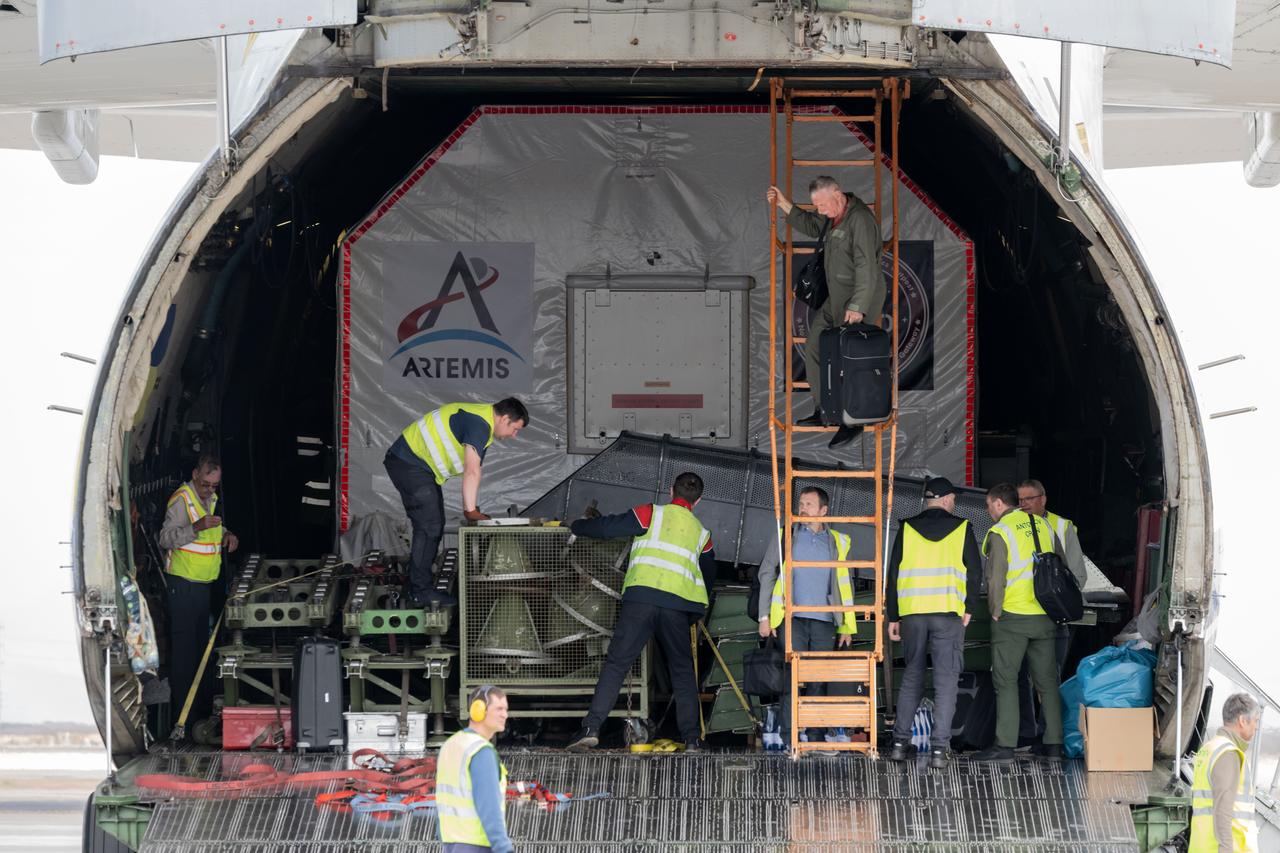
PHOTO DATE: April 01, 2025. LOCATION: Mesa Gateway Airport. SUBJECT: Gateway Habitation and Logistics Outpost (HALO) module delivery to Northrup Grumman Facility in Gilbert, AZ. PHOTO CREDIT: NASA/Josh Valcarcel

NASA Astronaut Reid Wiseman will serve as the Commander for the Artemis II mission. Wiseman flew previously as a flight engineer aboard the International Station for Expedition 41 from May through November 2014, logging more than 165 days in space. Prior to his assignment, Wiseman served as chief of the Astronaut Office from December 2020 until November 2022. PHOTOGRAPHER: Josh Valcarcel
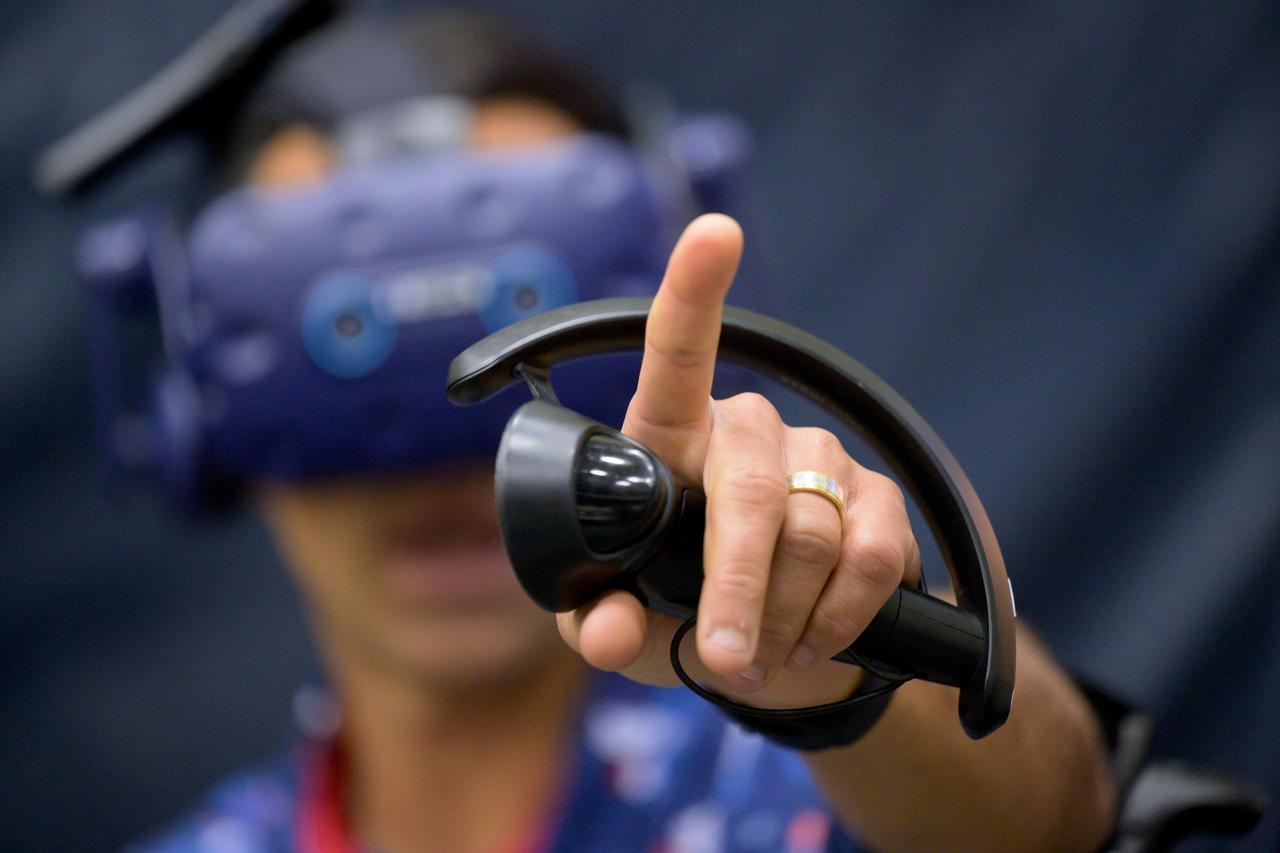
NASA astronaut Raja Chari participates in virtual reality testing of the Gateway lunar space station to ensure its comfort and safety when astronauts live and conduct science there on future Artemis missions. PHOTO DATE: February 09, 2022. LOCATION: Bldg. 15 - VR Lab SUBJECT: VR Technology for Interior Gateway Training with astronaut Raja Chari. Photo Credit: NASA / Josh Valcarcel
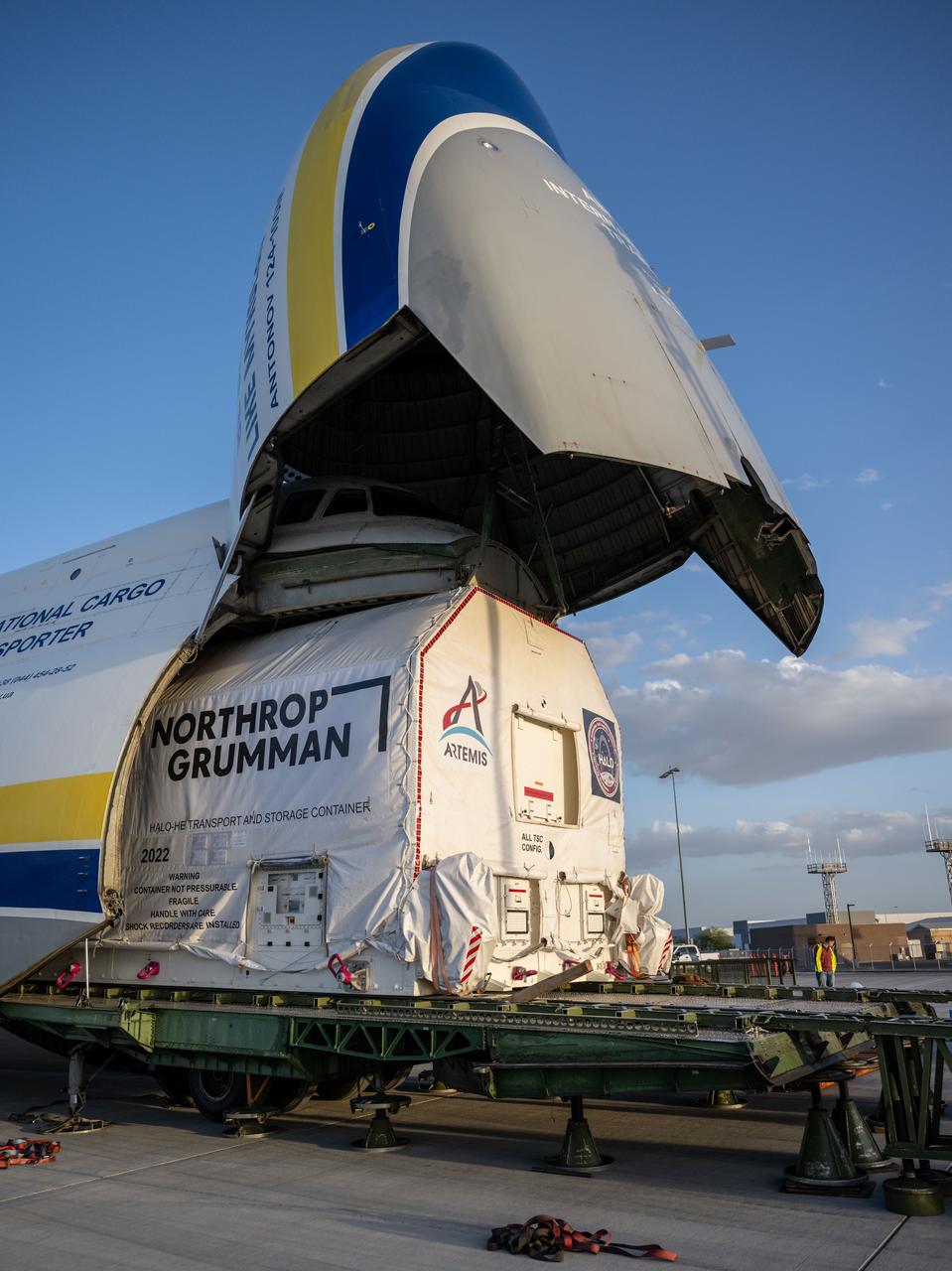
Gateway’s HALO (Habitation and Logistics Outpost) arrives in Mesa, Arizona, after traveling from Italy, where Thales Alenia Space fabricated its primary structure. Delivered by cargo aircraft to Phoenix-Mesa Gateway Airport, HALO will be transported to Northrop Grumman’s facility in Gilbert for final outfitting.
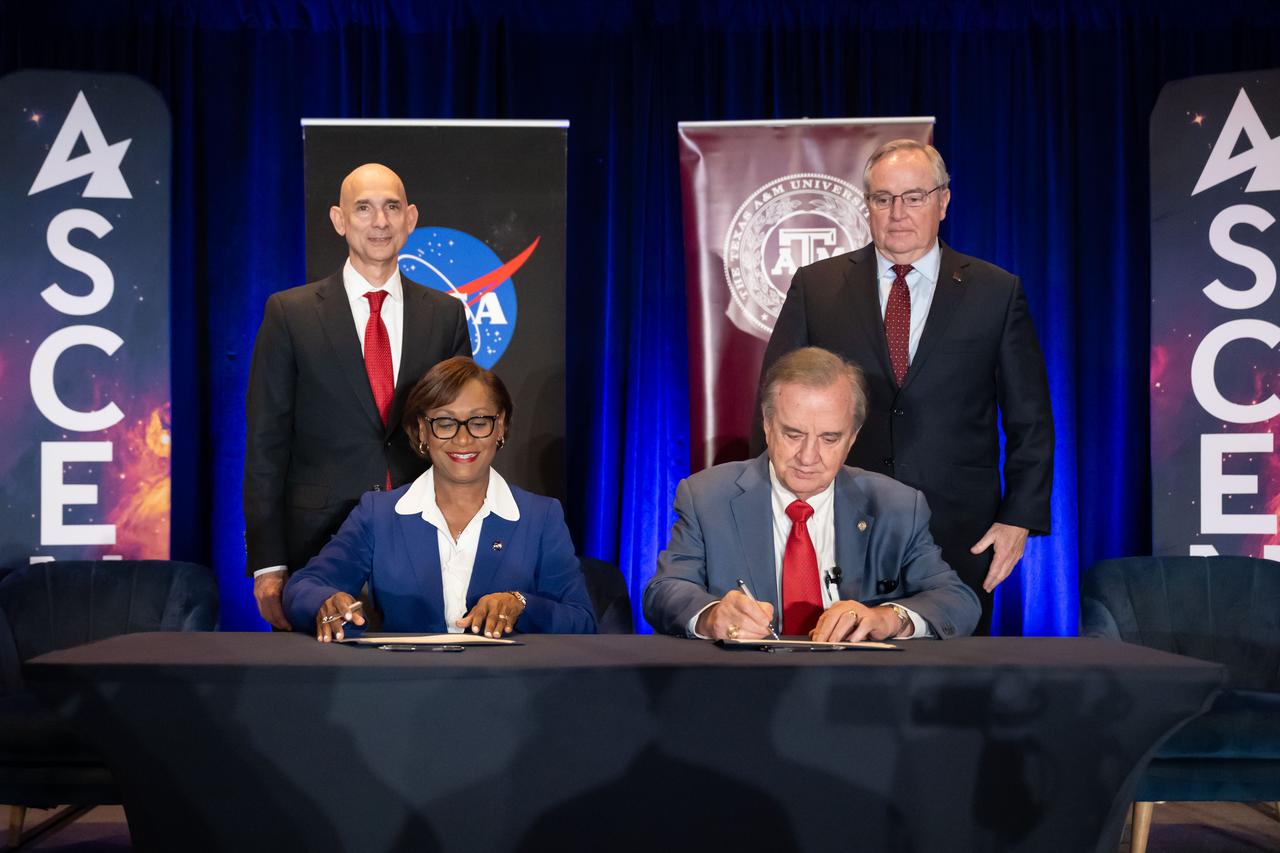
jsc2024e013569 (Feb. 15, 2024) NASA and the Texas A&M University System sign an agreement for a 240-acre Exploration Park on underutilized land at NASA’s Johnson Space Center in Houston. From left: Texas State Rep. Greg Bonnen, NASA Johnson Director Vanessa Wyche, Texas A&M University System Chancellor John Sharp, and Texas A&M University President Mark Welsh III. The announcement of the new lease agreement will allow the A&M System and others to use NASA Johnson land to create facilities for a collaborative environment that increases commercial access and enhances the United States’ commercial competitiveness in the space and aerospace industries. The announcement took place at the AIAA-hosted Ascend Texas (ASCENDxTexas) Conference at South Shore Harbour Conference Center.
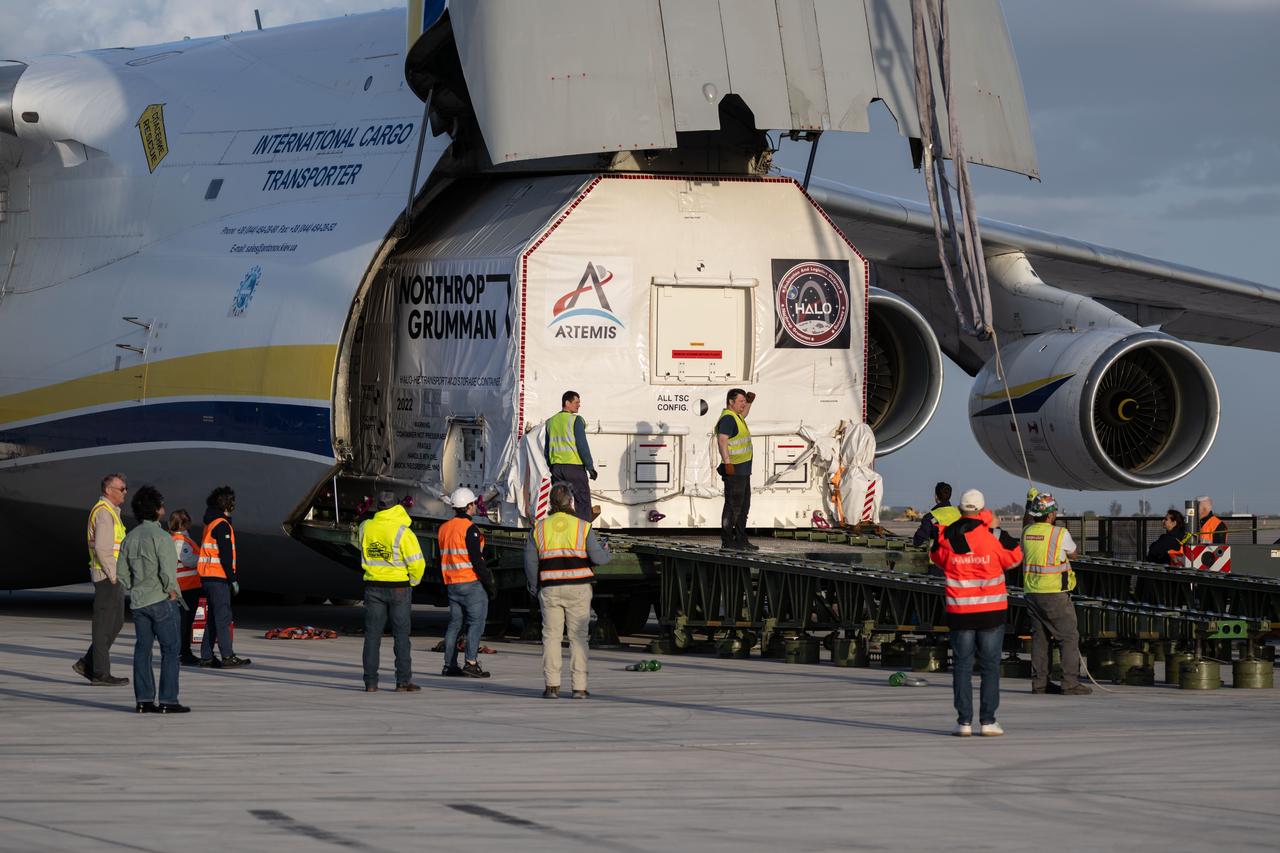
Gateway’s HALO (Habitation and Logistics Outpost) arrives in Mesa, Arizona, after traveling from Italy, where Thales Alenia Space fabricated its primary structure. Delivered by cargo aircraft to Phoenix-Mesa Gateway Airport, HALO will be transported to Northrop Grumman’s facility in Gilbert for final outfitting.
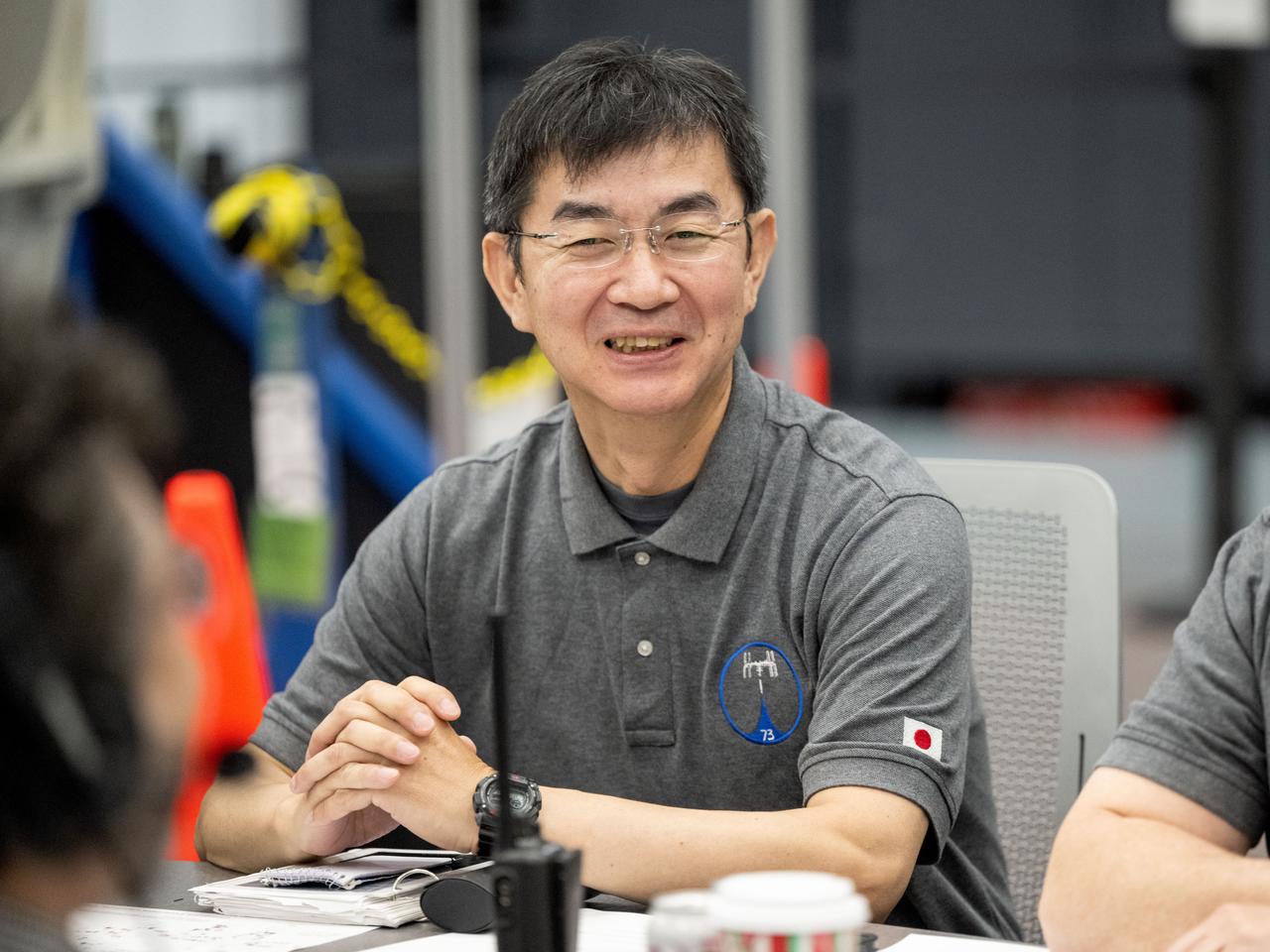
jsc2024e074737 (Nov. 13, 2024) --- JAXA astronaut Kimiya Yui conducts training for the unlikely event of an emergency at the Space Vehicle Mockup Facility at NASA’s Johnson Space Center in Houston, Texas. Credit: NASA/Josh Valcarcel
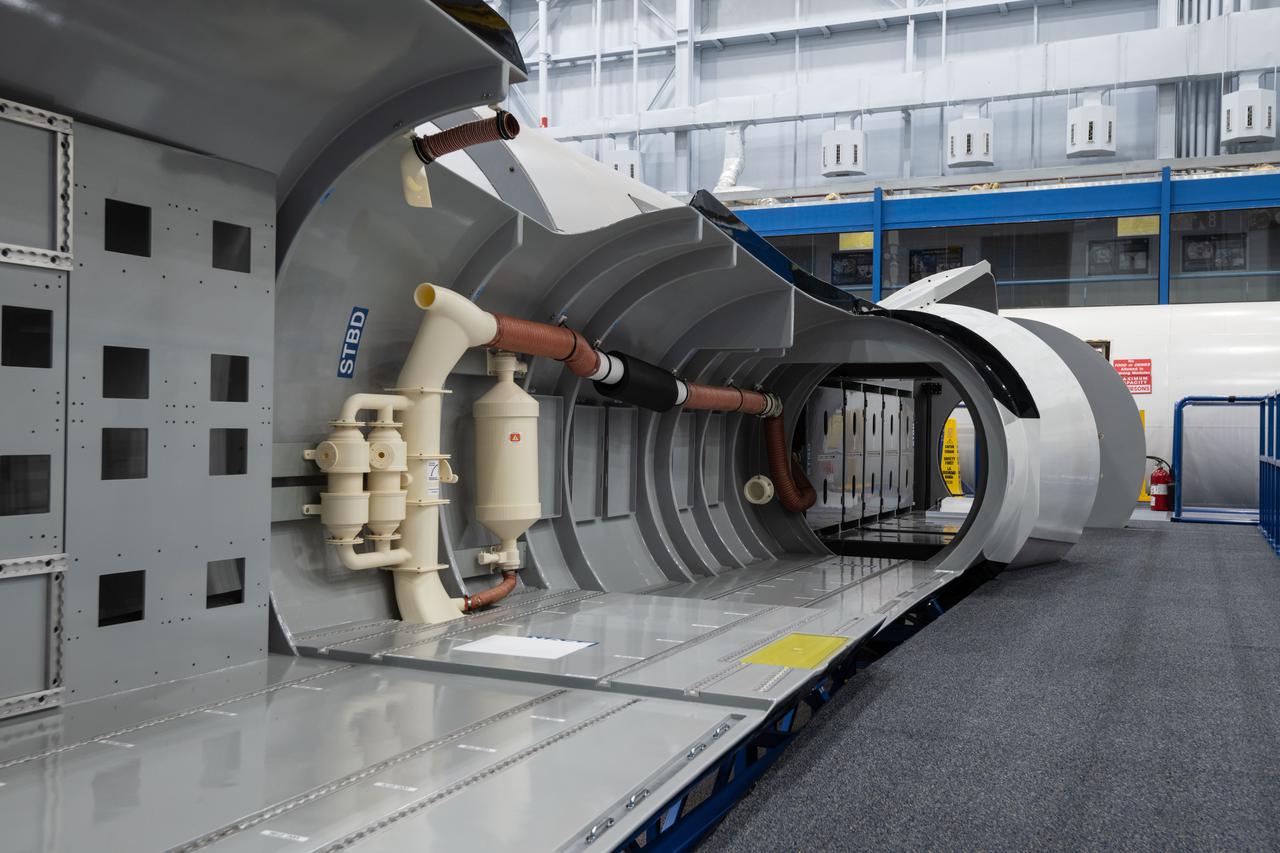
jsc2021e004398 (Jan. 21, 2021) --- Internal view of the Sierra Nevada Dream Chaser mockup located in Building 9N, Space Vehicle Mockup Facility (SVMF) at the NASA Johnson Space Center.
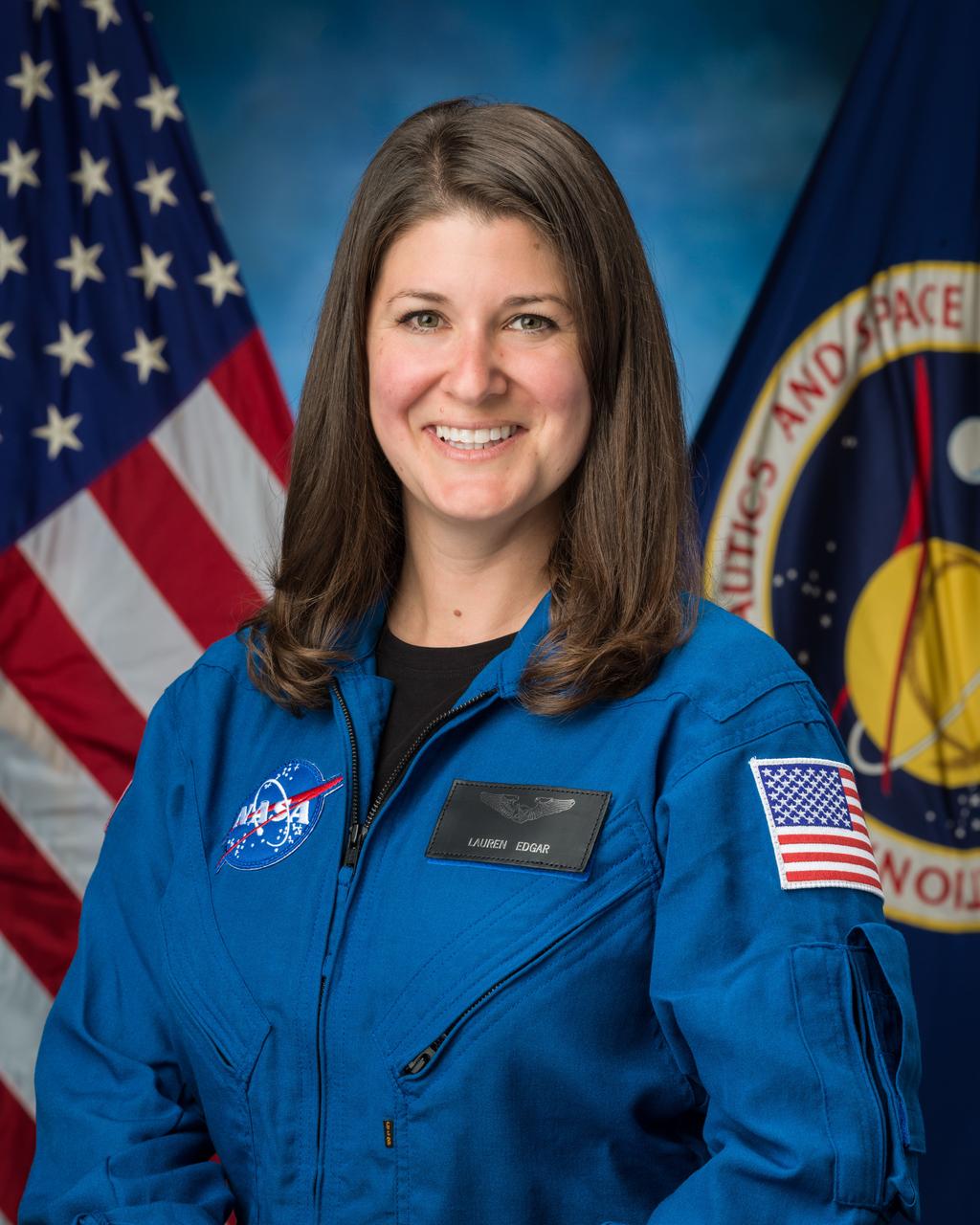
jsc2025e074863 (September 16, 2025) --- NASA astronaut candidate Lauren Edgar poses for a portrait at NASA’s Johnson Space Center in Houston, Texas. Edgar was selected by NASA to join the 2025 astronaut candidate class and reported for duty in September 2025. Credit: NASA/Josh Valcarcel
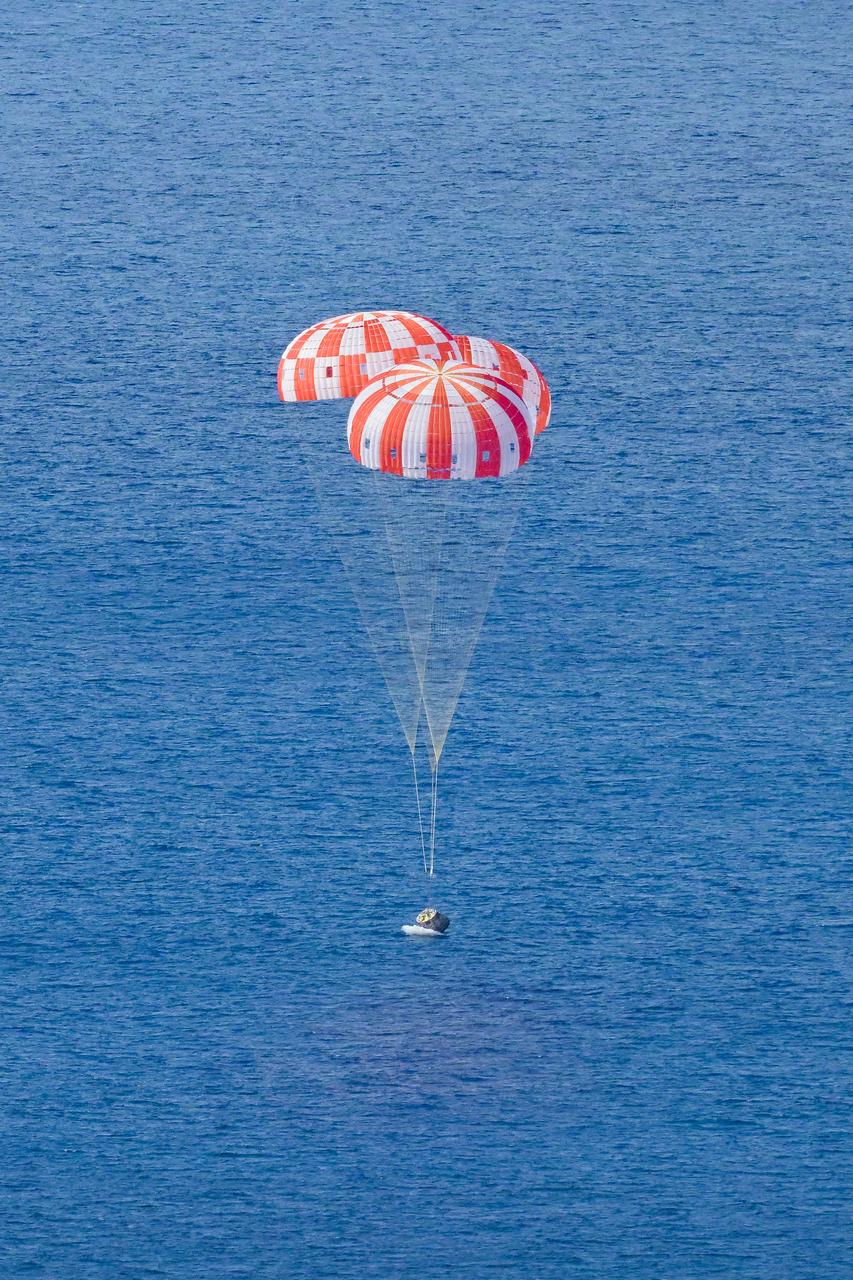
At 12:40 p.m. EST, Dec. 11, 2022, NASA’s Orion spacecraft for the Artemis I mission splashed down in the Pacific Ocean after a 25.5 day mission to the Moon. Orion will be recovered by NASA’s Landing and Recovery team, U.S. Navy and Department of Defense partners aboard the USS Portland.
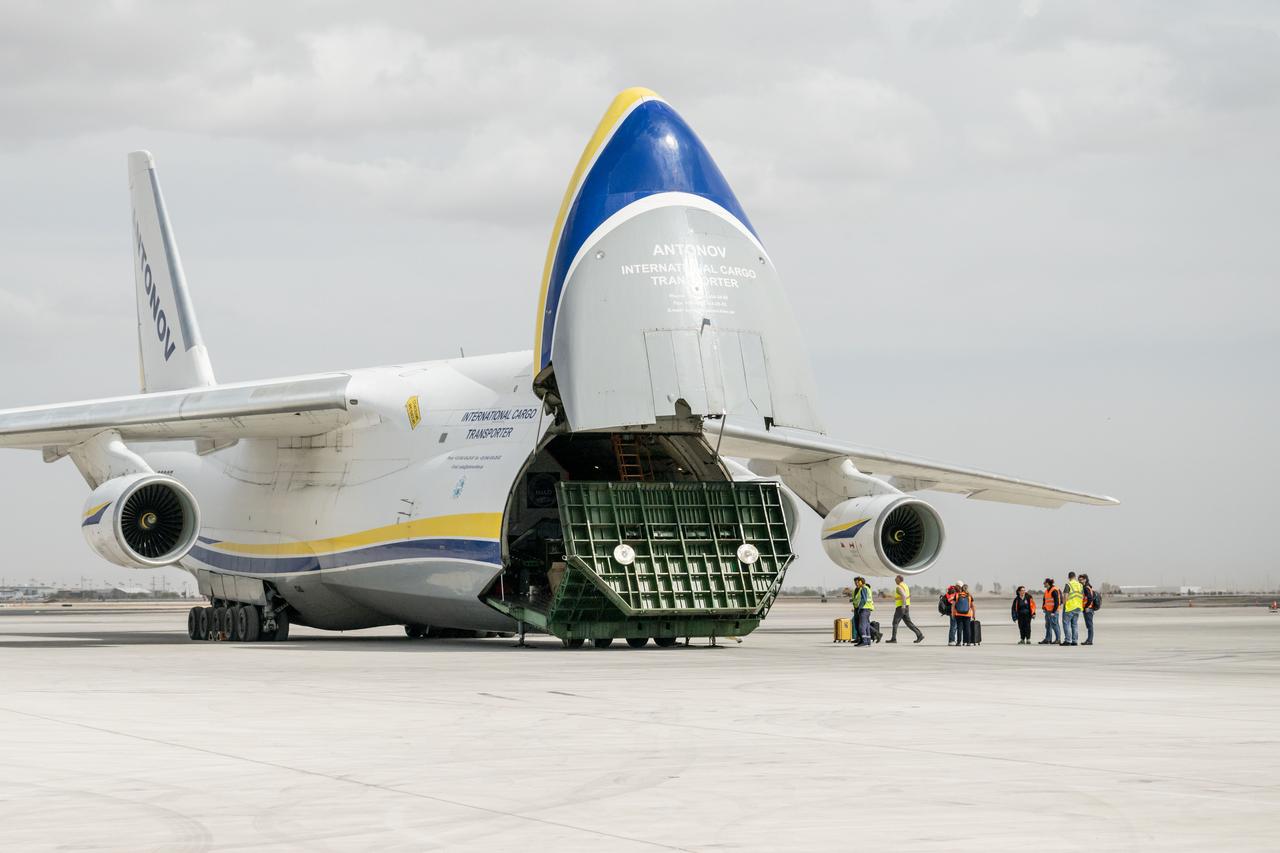
Gateway’s HALO (Habitation and Logistics Outpost) arrives in Mesa, Arizona, after traveling from Italy, where Thales Alenia Space fabricated its primary structure. Delivered by cargo aircraft to Phoenix-Mesa Gateway Airport, HALO will be transported to Northrop Grumman’s facility in Gilbert for final outfitting.
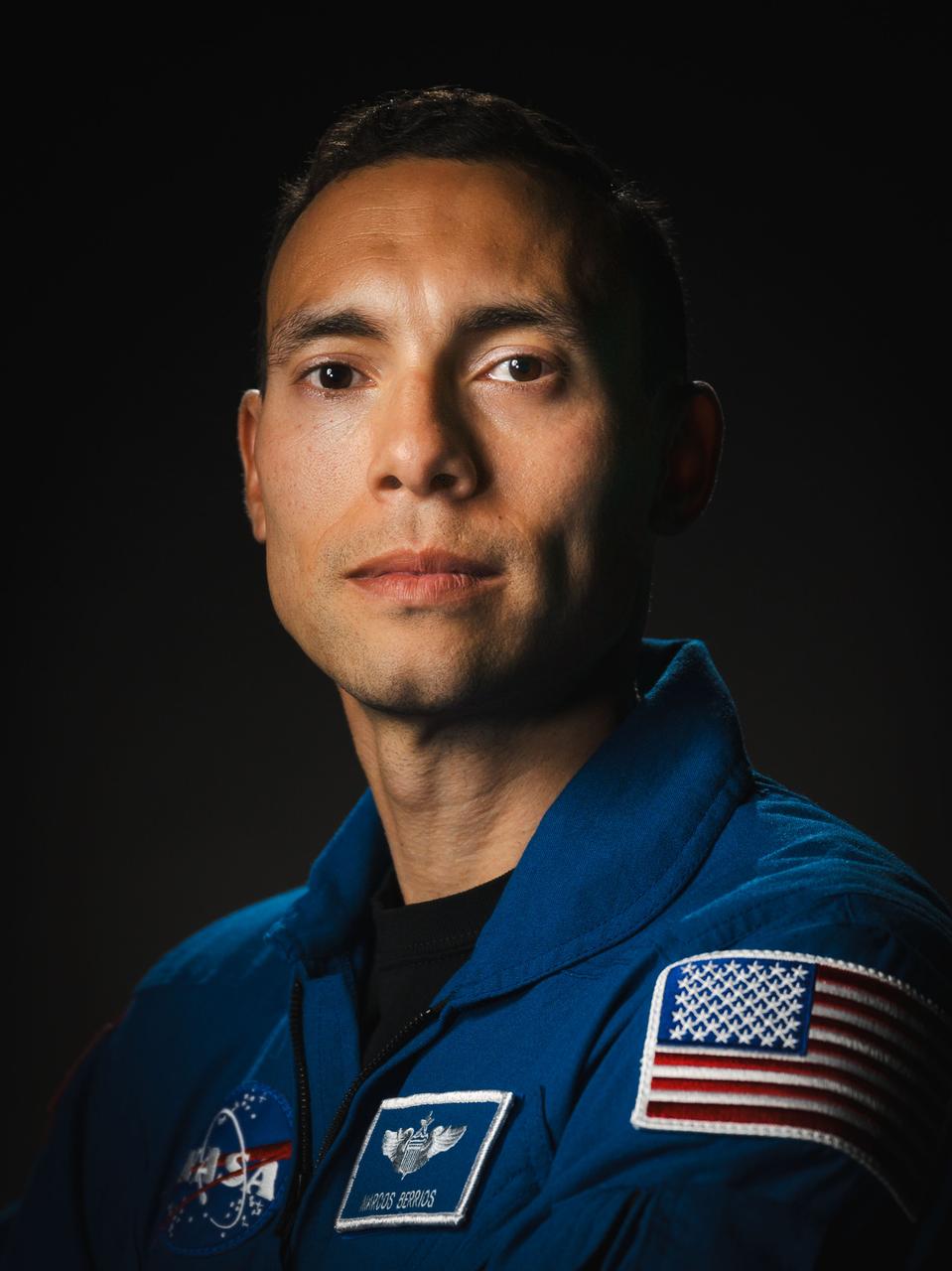
jsc2024e013681_alt (February 8, 2024) --- NASA astronaut Marcos Berrios poses for a portrait at NASA’s Johnson Space Center in Houston, Texas. Credit: NASA/ Josh Valcarcel
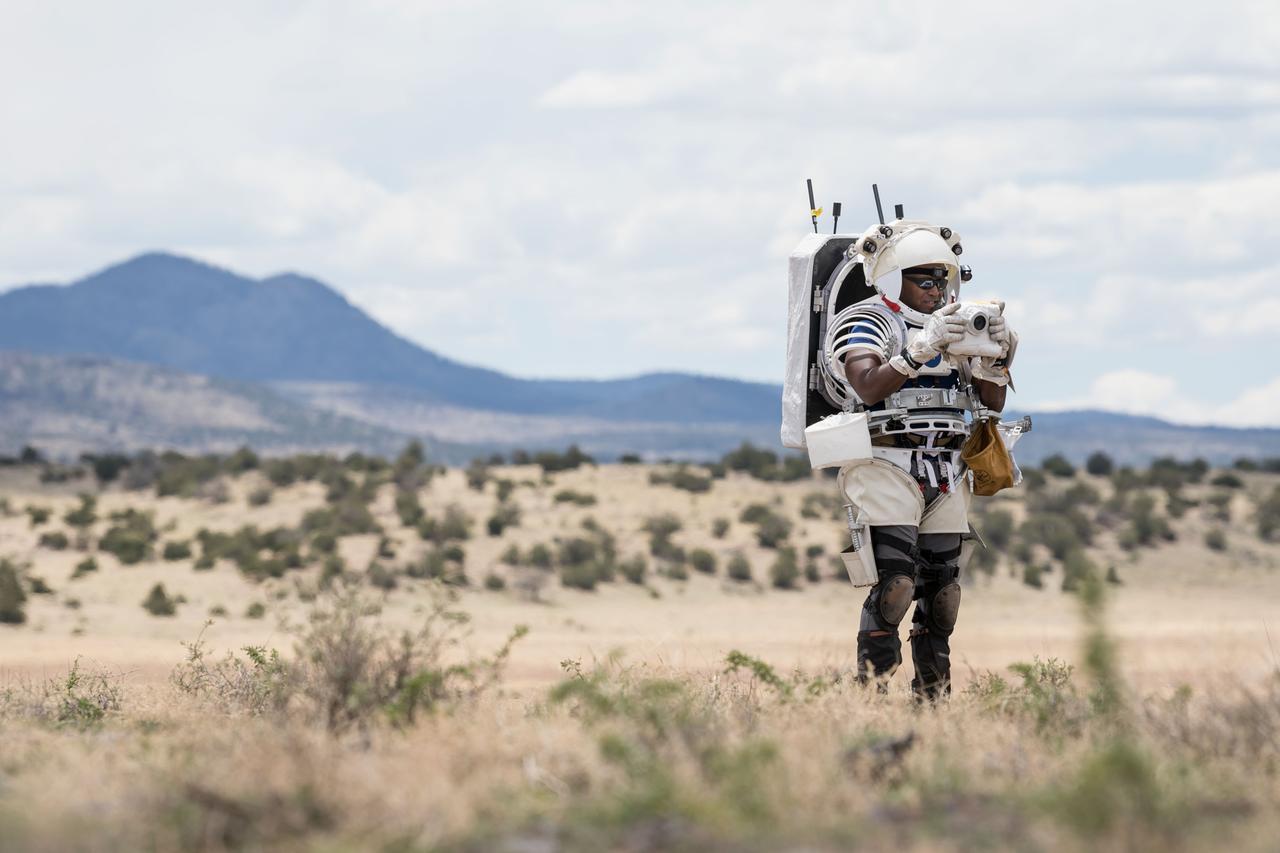
NASA astronaut Andre Douglas takes a picture of the lunar-like landscape during a simulated moonwalk in the San Francisco Volcanic Field in Northern Arizona on May 13, 2024. Credit: NASA/Josh Valcarcel

jsc2020e053345_alt (Dec. 9, 2020) --- Portrait of European Space Agency (ESA) astronaut and SpaceX Crew-2 Mission Specialist Thomas Pesquet.
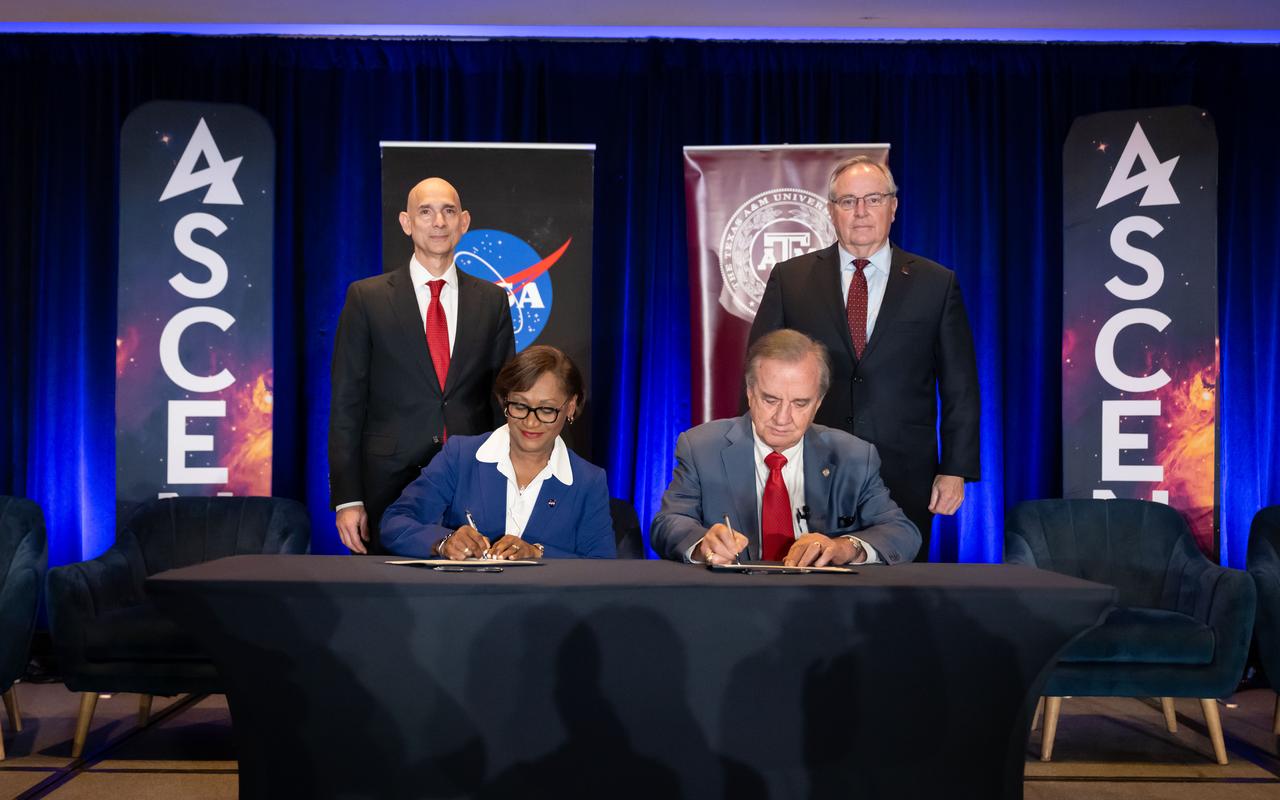
jsc2024e013573 (Feb. 15, 2024) NASA and the Texas A&M University System sign an agreement for a 240-acre Exploration Park on underutilized land at NASA’s Johnson Space Center in Houston. From left: Texas State Rep. Greg Bonnen, NASA Johnson Director Vanessa Wyche, Texas A&M University System Chancellor John Sharp, and Texas A&M University President Mark Welsh III. The announcement of the new lease agreement will allow the A&M System and others to use NASA Johnson land to create facilities for a collaborative environment that increases commercial access and enhances the United States’ commercial competitiveness in the space and aerospace industries. The announcement took place at the AIAA-hosted Ascend Texas (ASCENDxTexas) Conference at South Shore Harbour Conference Center.
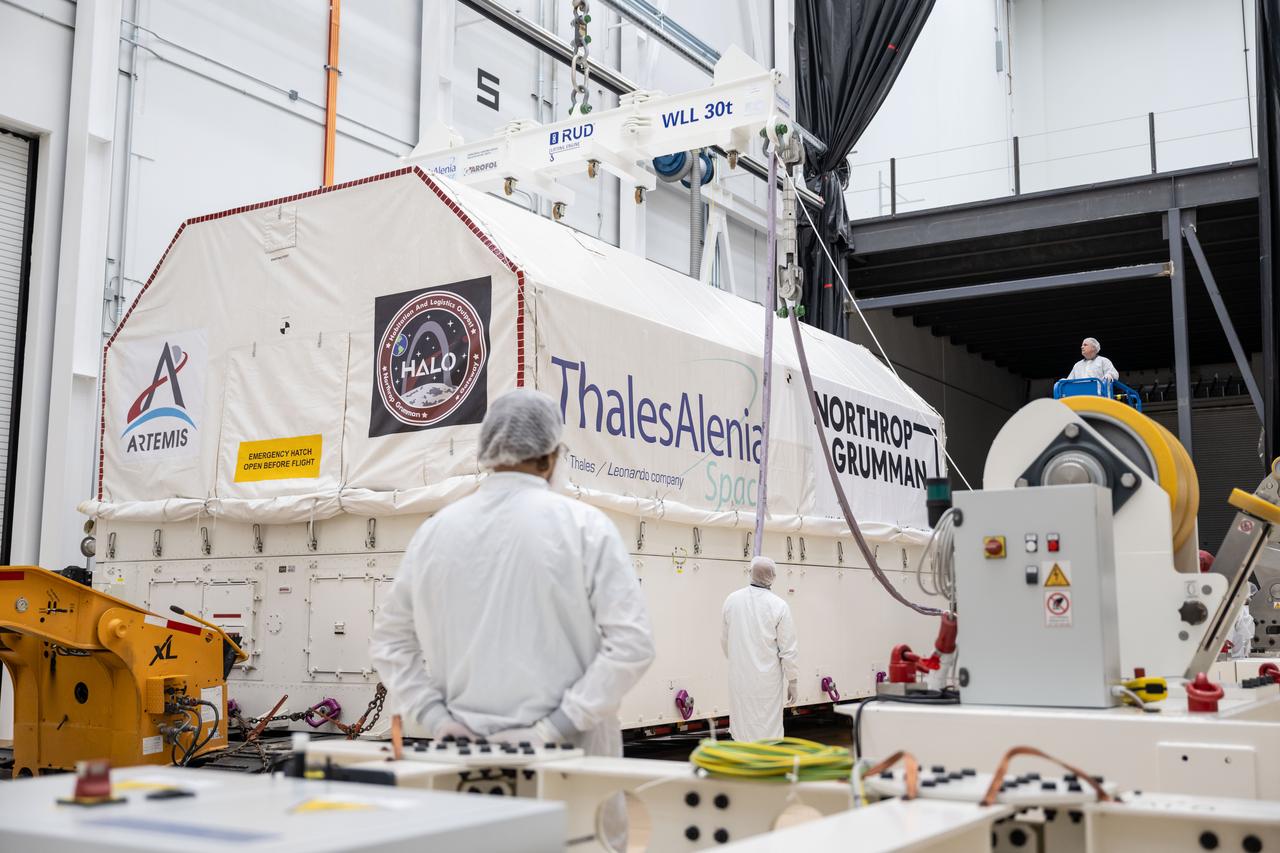
At Northrop Grumman’s Gilbert, Arizona, facility, teams begin removing Gateway’s HALO (Habitation and Logistics Outpost) from its transport container. HALO arrived from Turin, Italy, where Thales Alenia Space fabricated its primary structure. The module will undergo final outfitting in Gilbert before being integrated with the Power and Propulsion Element and launched to lunar orbit.
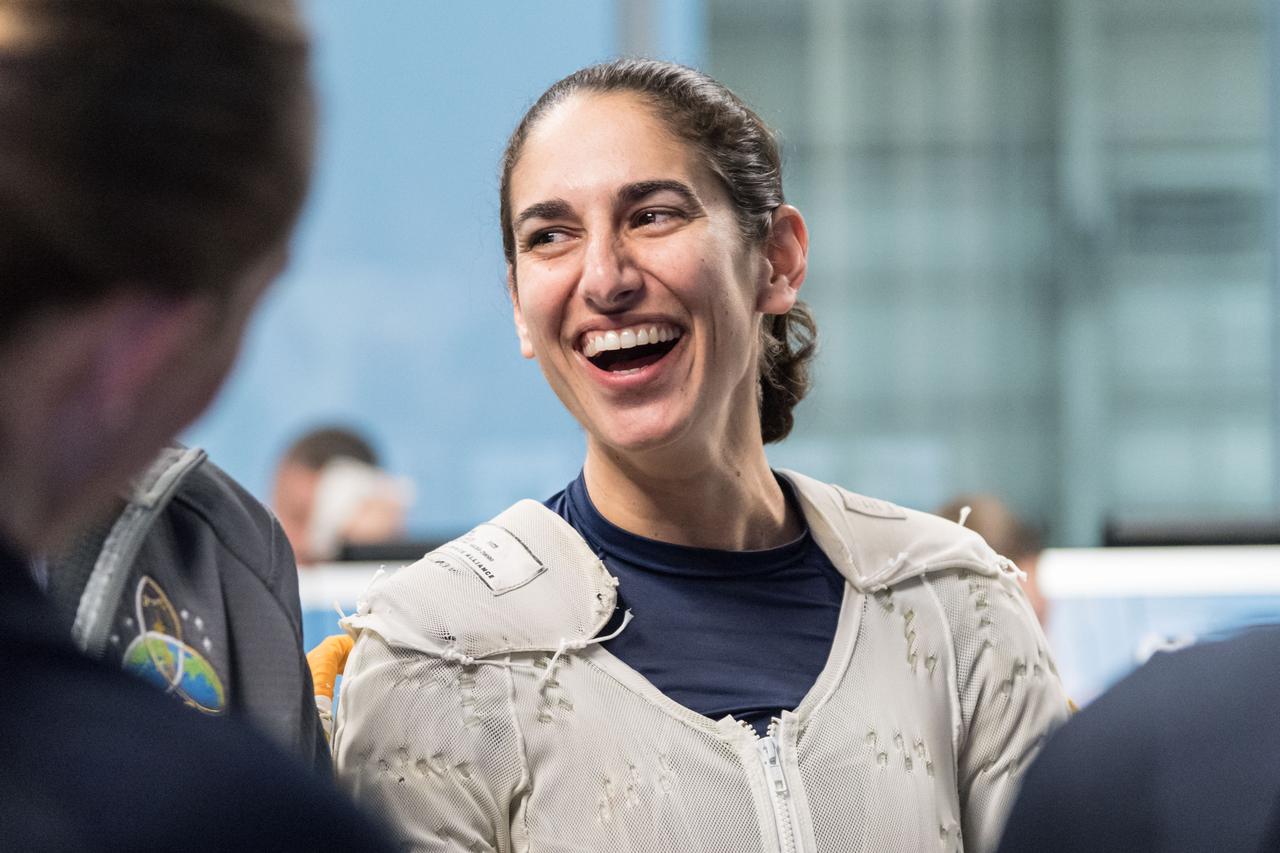
jsc2018e035892 (April 11, 2018) --- NASA astronaut candidate Jasmin Moghbeli wears a Liquid Cooling and Ventilation Garment prior to underwater spacewalk training at NASA Johnson Space Center’s Neutral Buoyancy Laboratory. The cooling garment runs water throughout the suit to keep her cool during training. Photo Credit: (NASA/Josh Valcarcel)
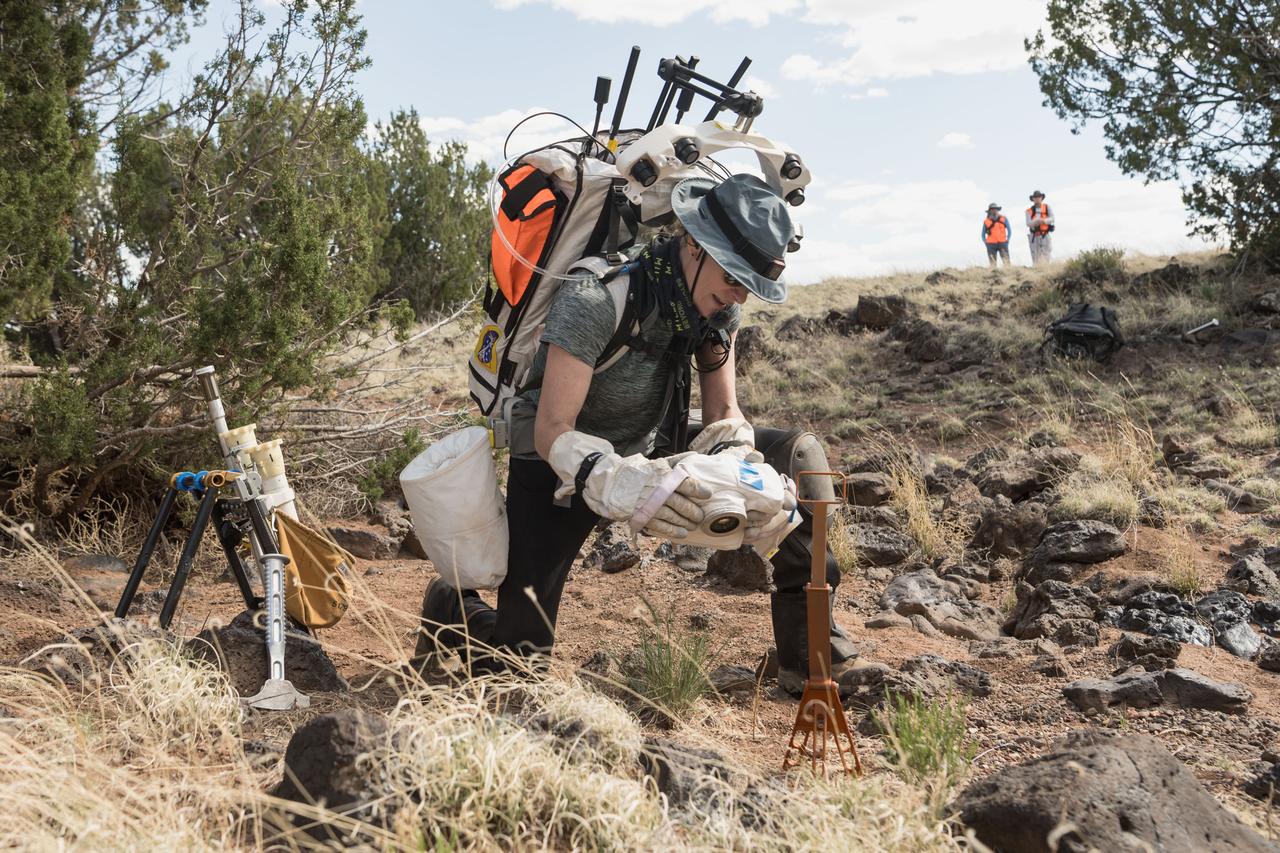
NASA astronaut Kate Rubins takes a picture of a geologic sample during a simulated moonwalk in the San Francisco Volcanic Field in Northern Arizona on May 17, 2024. Credit: NASA/Josh Valcarcel
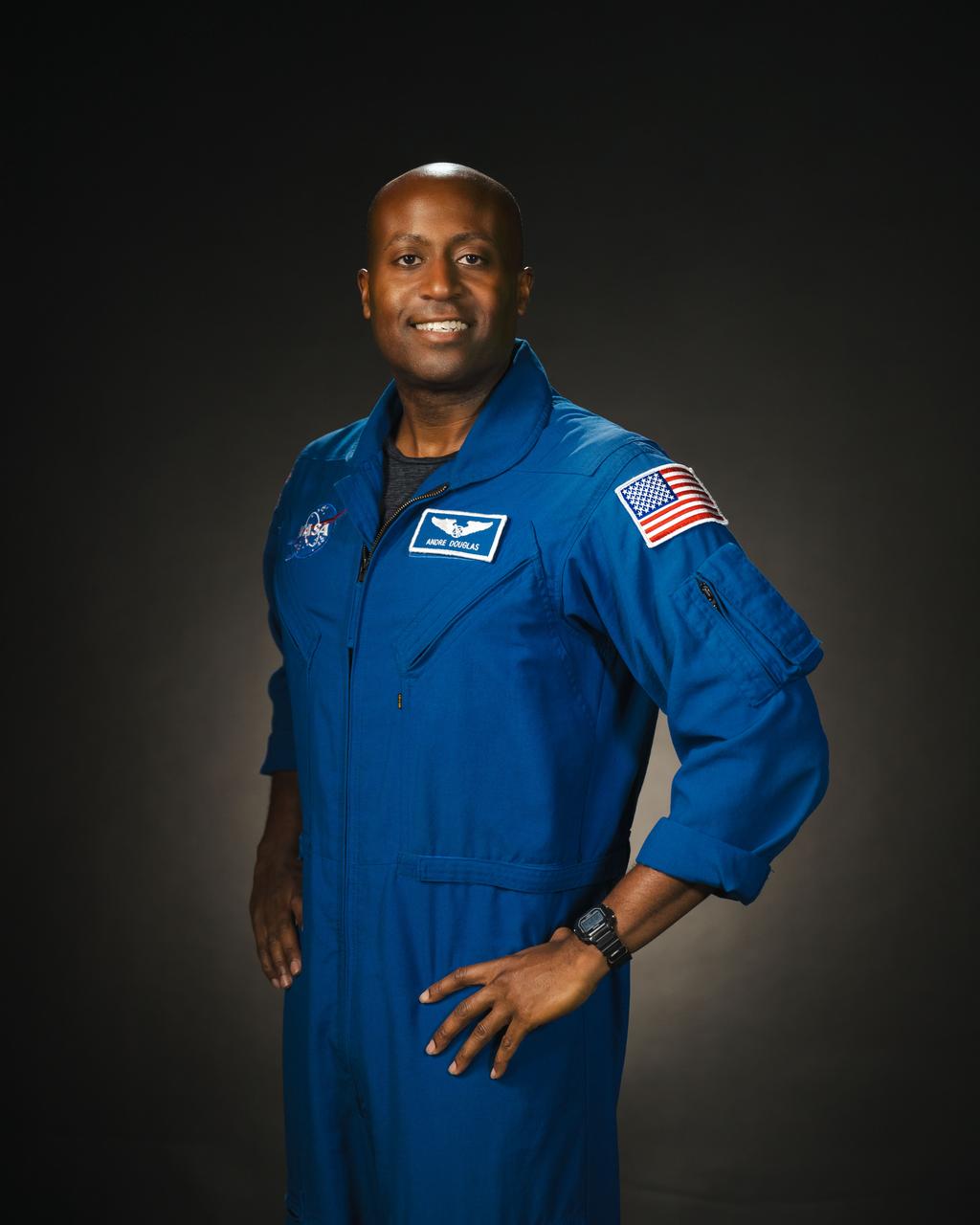
jsc2024e013660 (February 8, 2024) --- NASA astronaut Andre Douglas poses for a portrait at NASA’s Johnson Space Center in Houston, Texas. Credit: NASA/ Josh Valcarcel
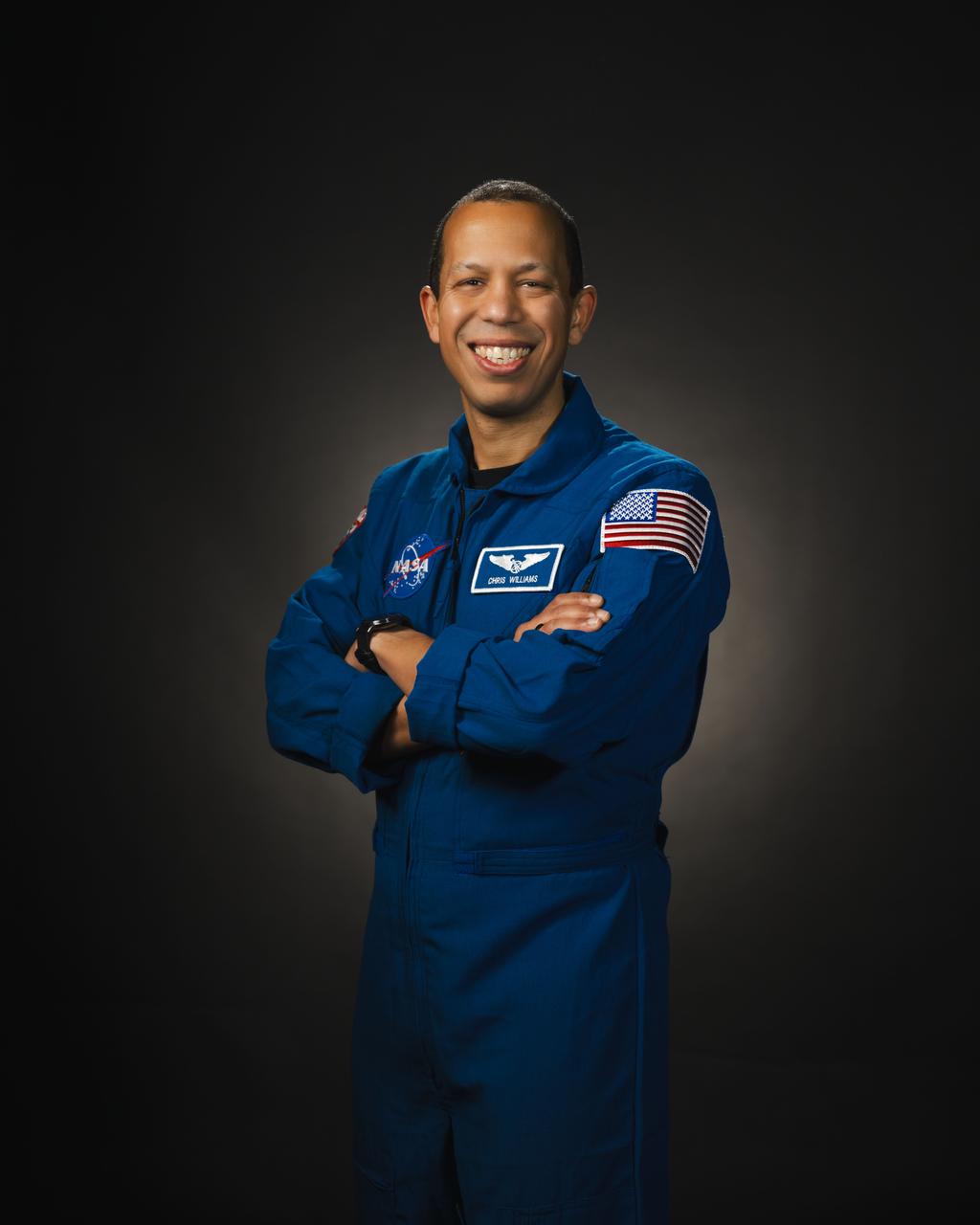
jsc2024e013679 (February 8, 2024) --- NASA astronaut Christopher Williams poses for a portrait at NASA’s Johnson Space Center in Houston, Texas. Credit: NASA/ Josh Valcarcel
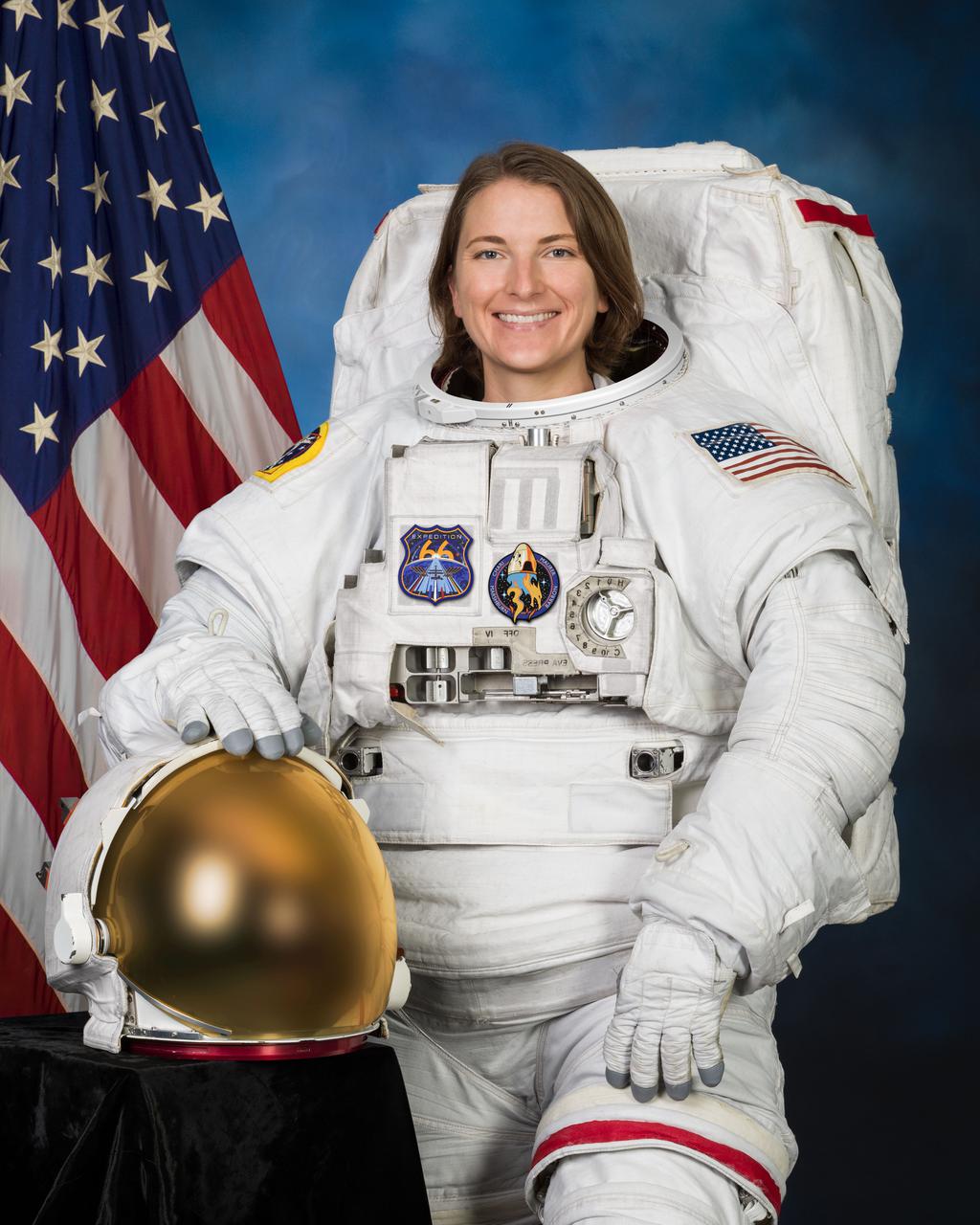
jsc2021e044312_alt (Sept. 22, 2021) --- Portrait of NASA astronaut Kayla Barron.
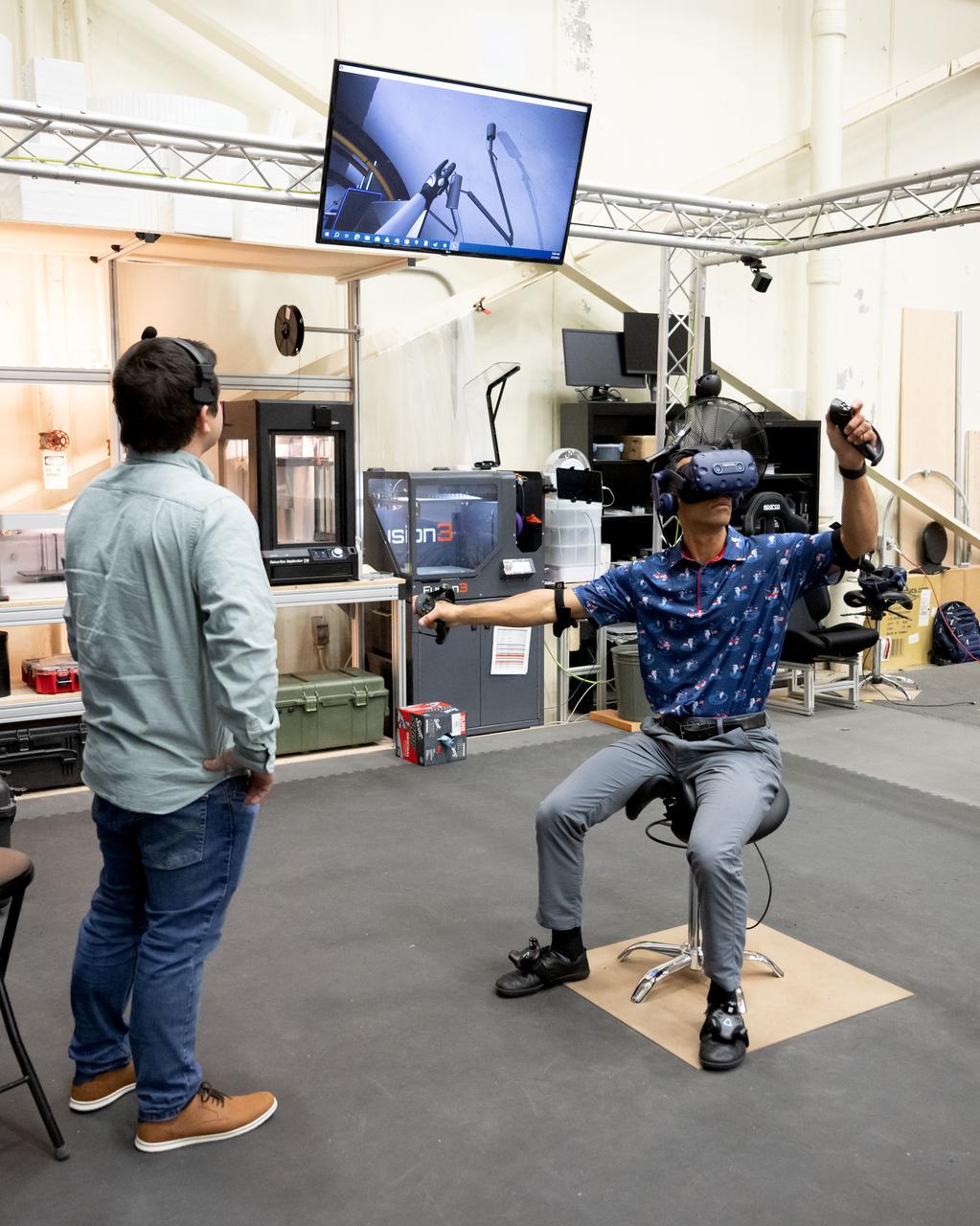
NASA astronaut Raja Chari participates in virtual reality testing of the Gateway lunar space station to ensure its comfort and safety when astronauts live and conduct science there on future Artemis missions. PHOTO DATE: February 09, 2022. LOCATION: Bldg. 15 - VR Lab SUBJECT: VR Technology for Interior Gateway Training with astronaut Raja Chari. Photo Credit: NASA / Josh Valcarcel
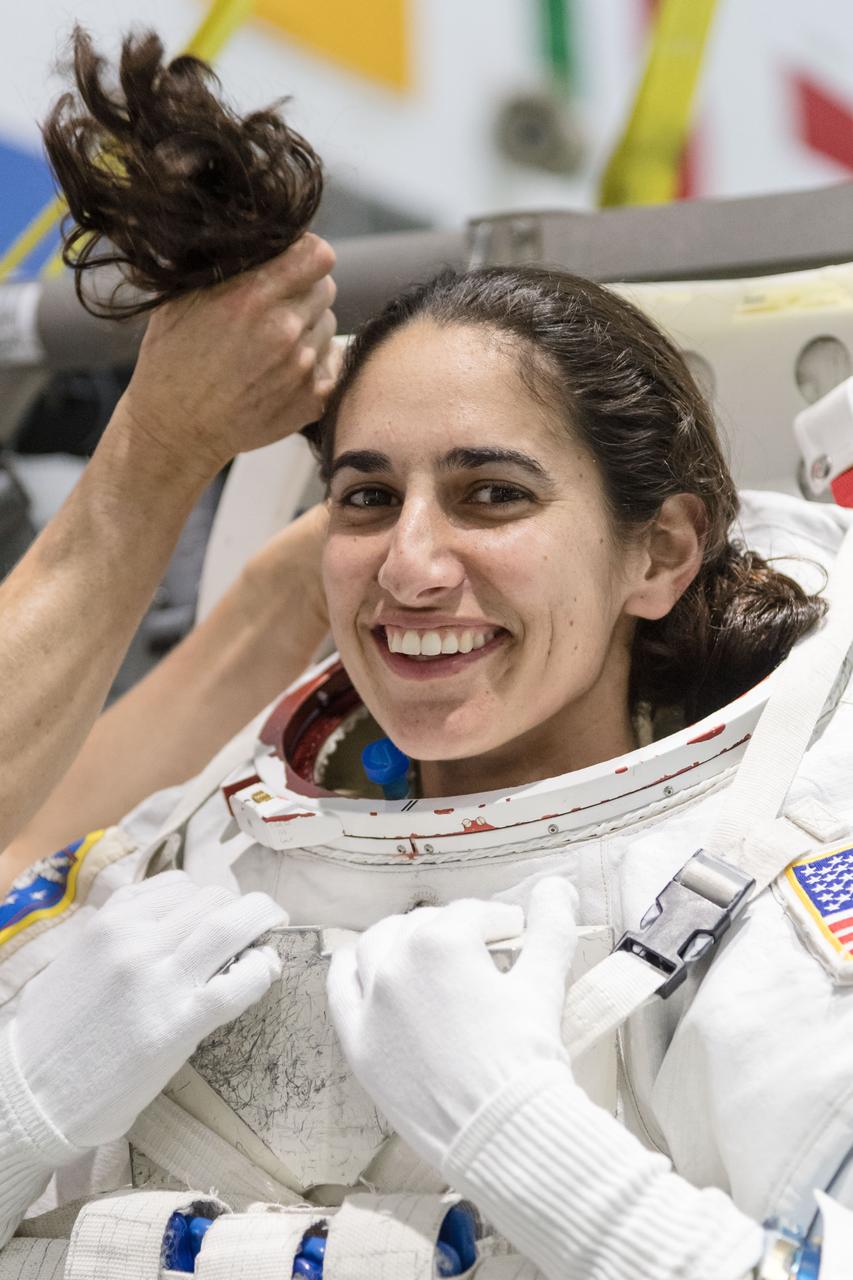
jsc2018e035916 (April 11, 2018) --- 2017 NASA astronaut candidate Jasmin Moghbeli is helped into a spacesuit prior to underwater spacewalk training at NASA Johnson Space Center’s Neutral Buoyancy Laboratory. Photo Credit: (NASA/Josh Valcarcel)
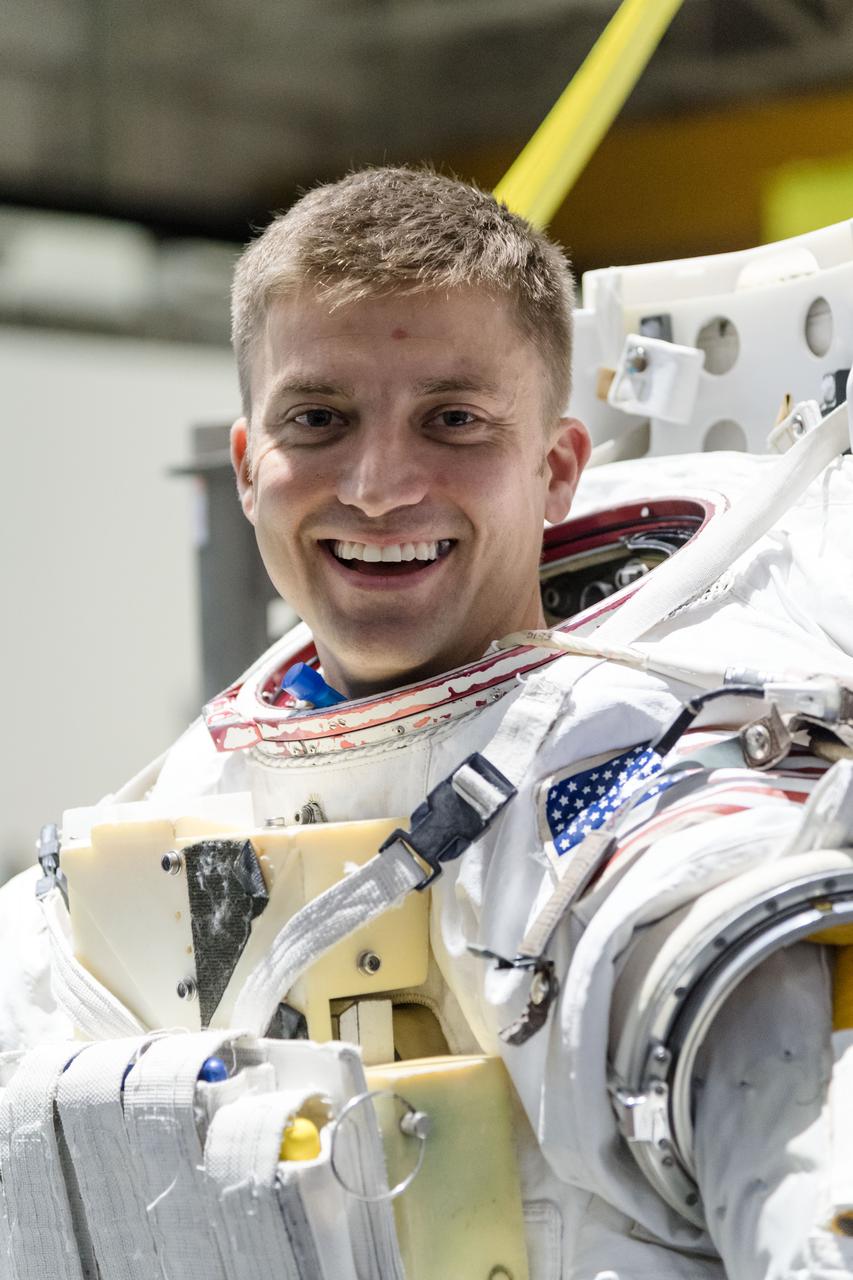
jsc2018e035904 (April 11, 2018) --- 2017 NASA astronaut candidate Matthew Dominick wears a spacesuit prior to underwater spacewalk training at NASA Johnson Space Center’s Neutral Buoyancy Laboratory. Photo Credit: (NASA/Josh Valcarcel)
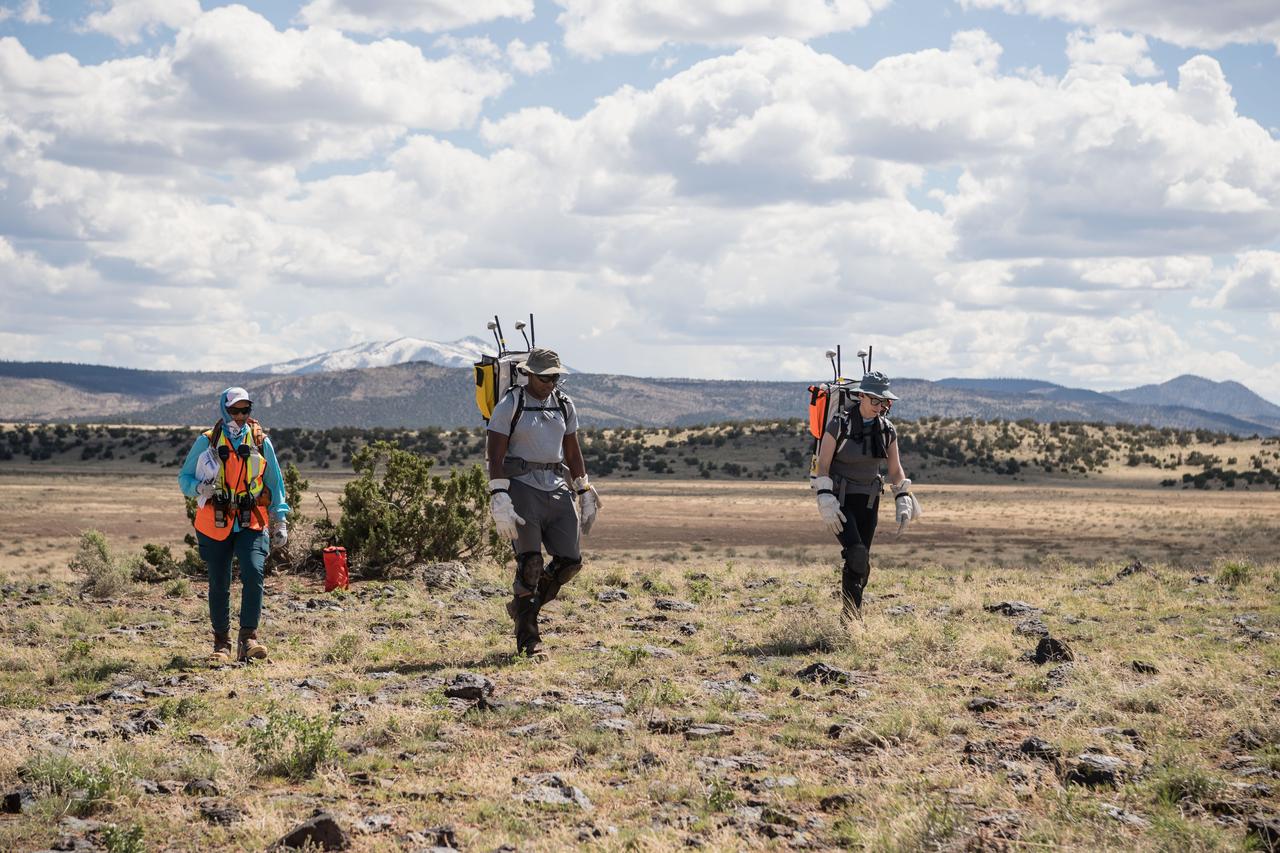
NASA astronauts Andre Douglas (middle) and Kate Rubins (right) walk through the desert during an engineering dry run before the start of a week-long field test consisting of four simulated moonwalks and six advanced technology runs in the San Francisco Volcanic Field in Northern Arizona on May 12, 2024. Image: NASA/Josh Valcarcel
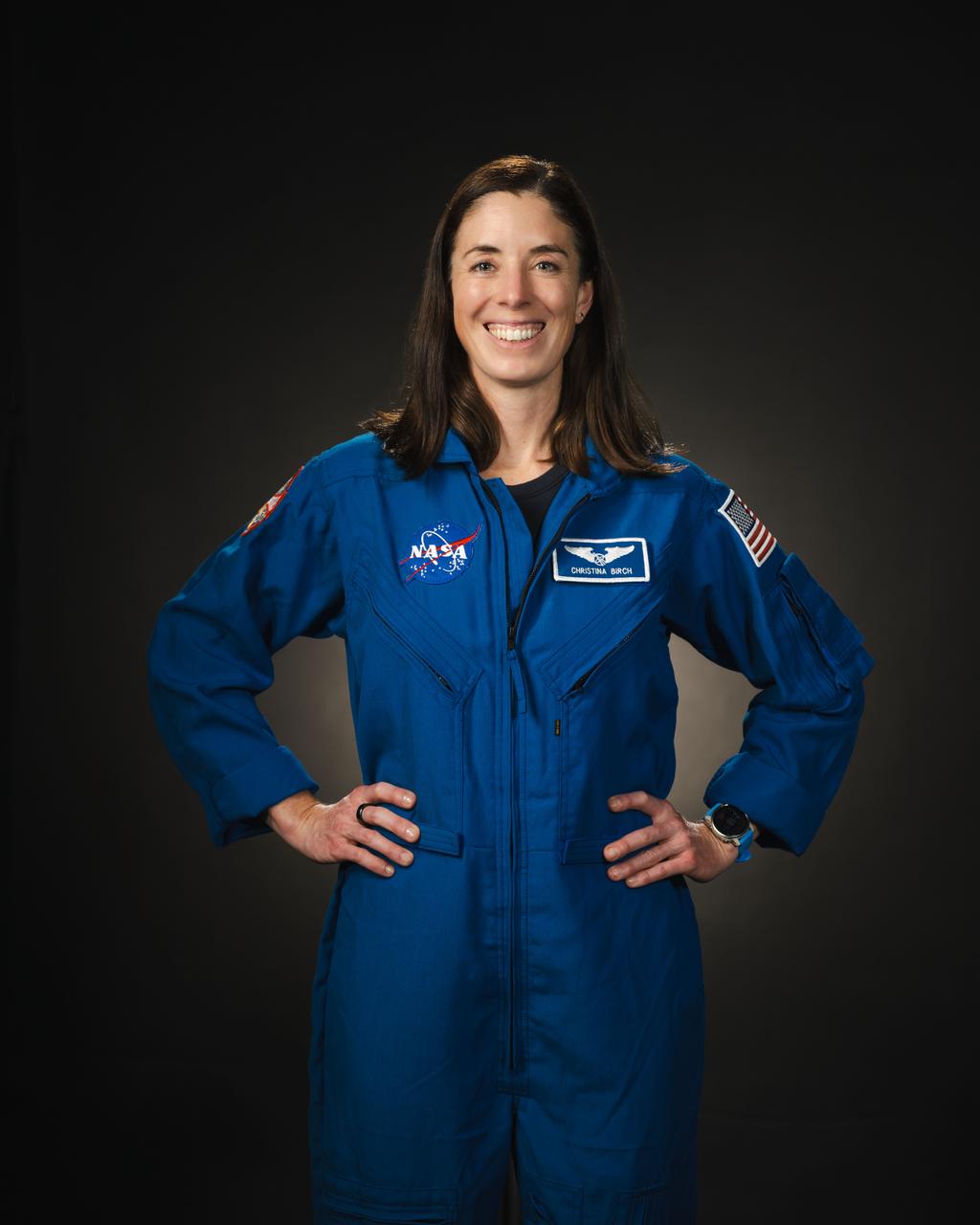
jsc2024e013674 (February 8, 2024) --- NASA astronaut Christina Birch poses for a portrait at NASA’s Johnson Space Center in Houston, Texas. Credit: NASA/ Josh Valcarcel
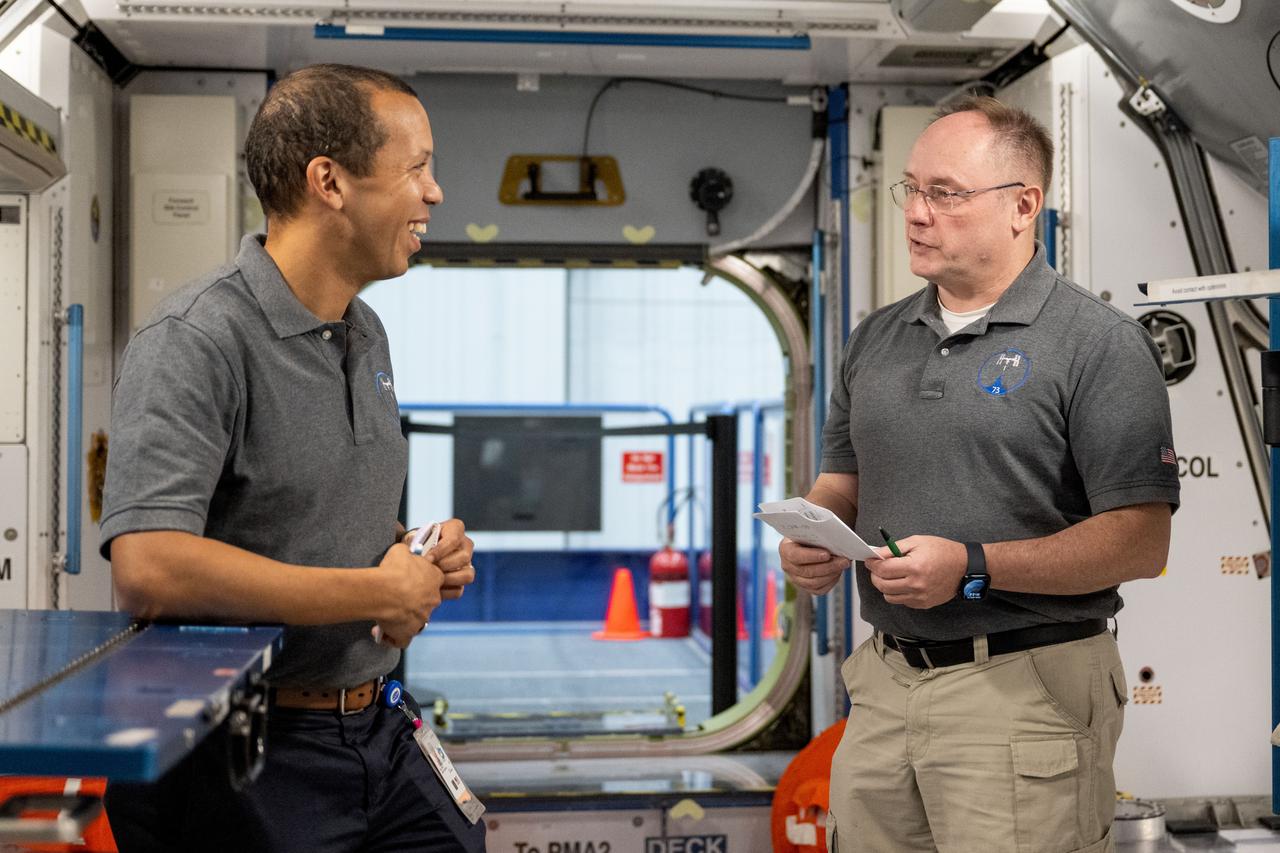
jsc2024e074755 (Nov. 13, 2025) --- NASA astronauts Chris Williams (left) and Mike Fincke (right) participate in a training session at the Space Vehicle Mockup Facility at NASA’s Johnson Space Center in Houston, Texas, to prepare for the unlikely event of an emergency during their International Space Station mission.
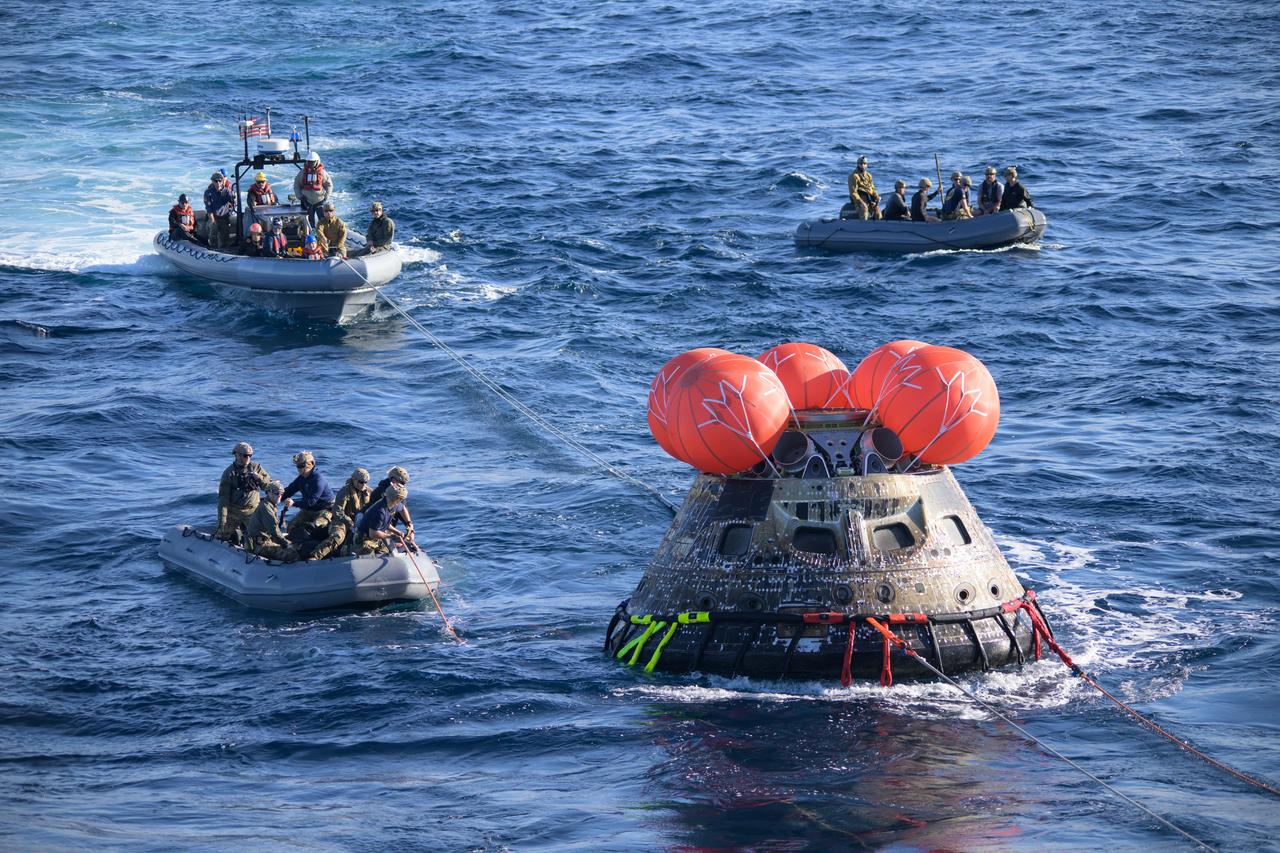
After splashing down at 12:40 p.m. EST on Dec. 11, 2022, U.S. Navy divers help recover the Orion Spacecraft for the Artemis I mission. NASA, the Navy and other Department of Defense partners worked together to secure the spacecraft inside the well deck of USS Portland approximately five hours after Orion splashed down in the Pacific Ocean off the coast of California.
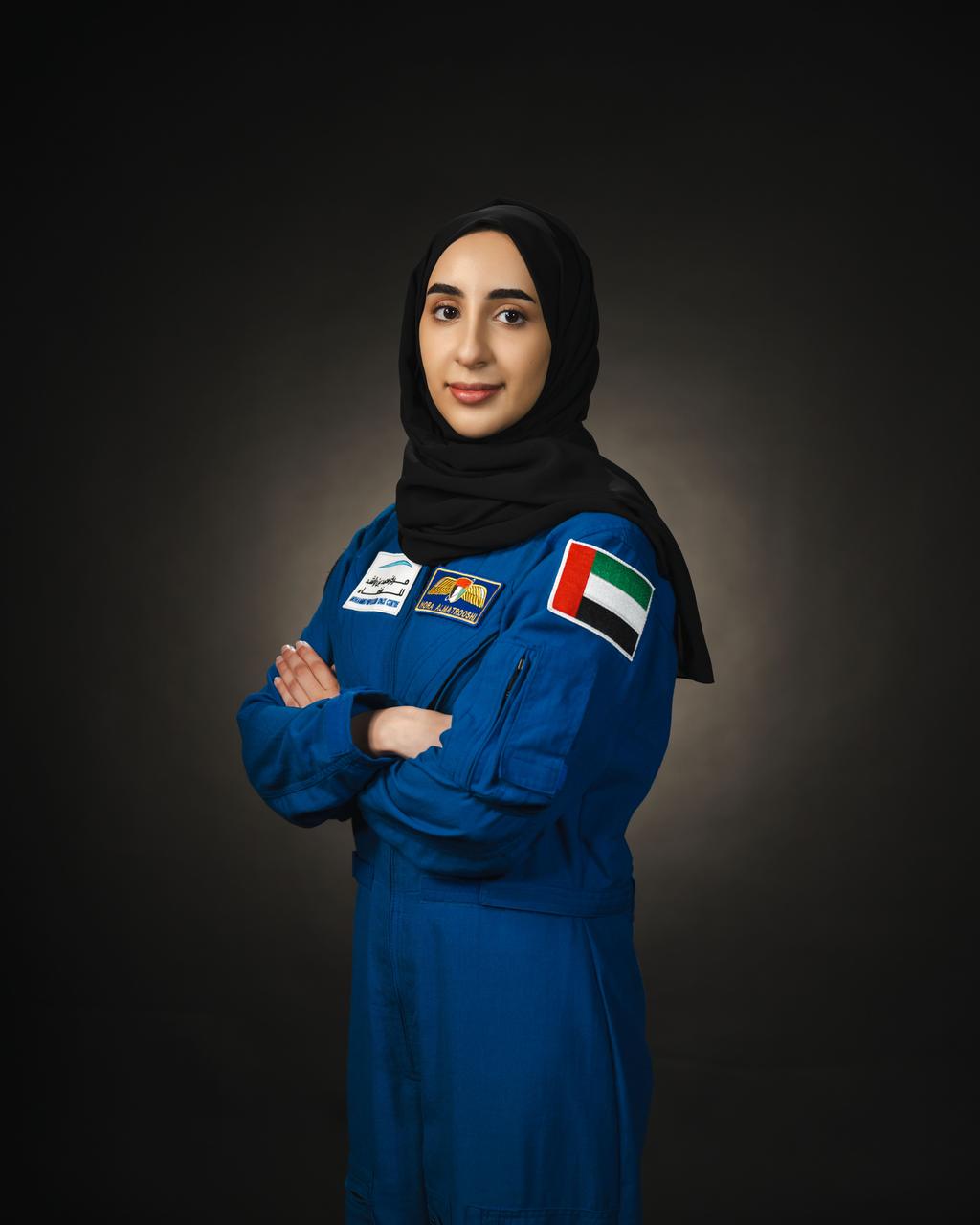
jsc2024e013669 (February 8, 2024) --- UAE astronaut Nora Almatrooshi poses for a portrait at NASA’s Johnson Space Center in Houston, Texas. Credit: NASA/ Josh Valcarcel
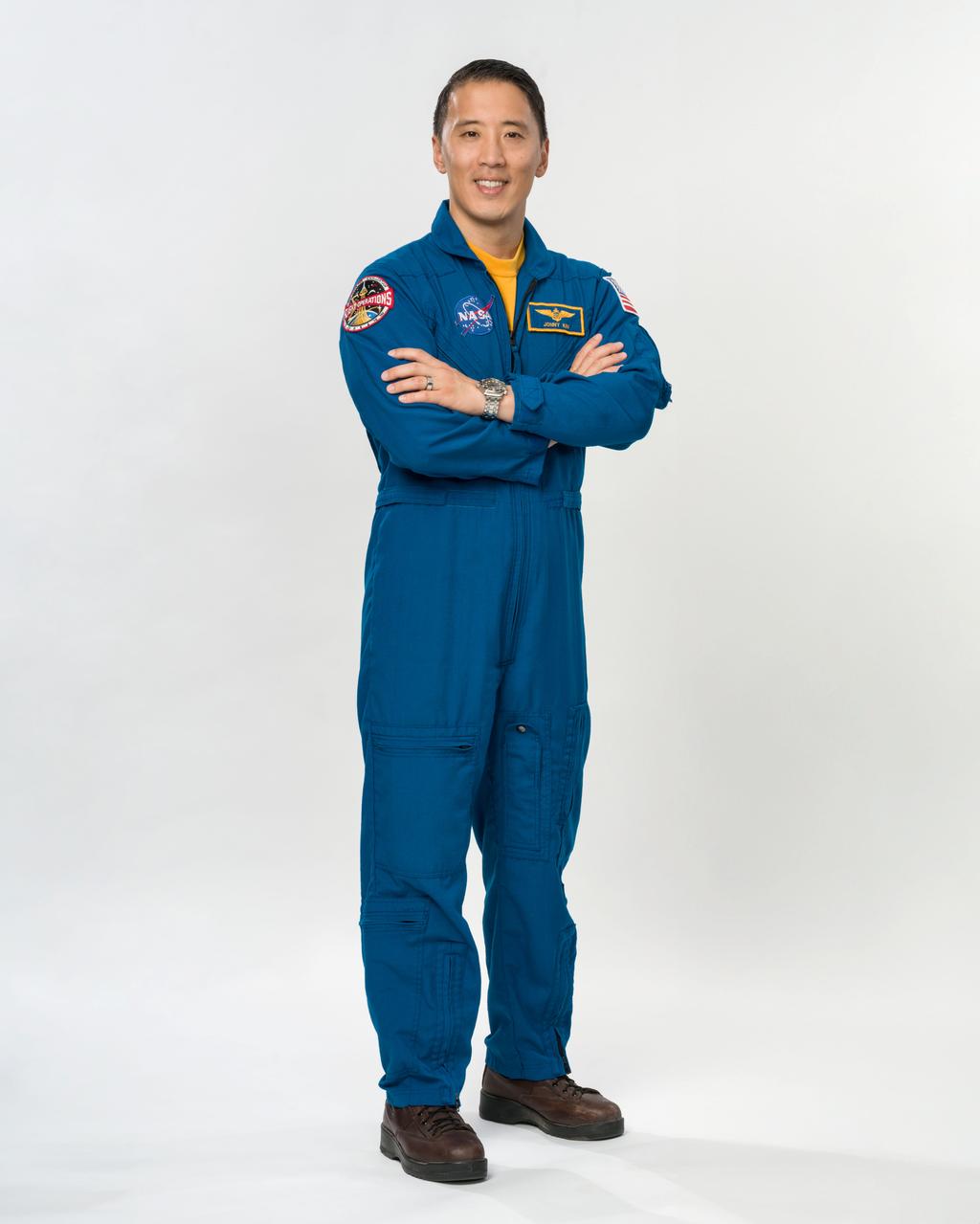
jsc2024e067200_alt (July 17, 2024) --- NASA astronaut Jonny Kim poses for a portrait at NASA’s Johnson Space Center in Houston, Texas. Credit: NASA/Josh Valcarcel
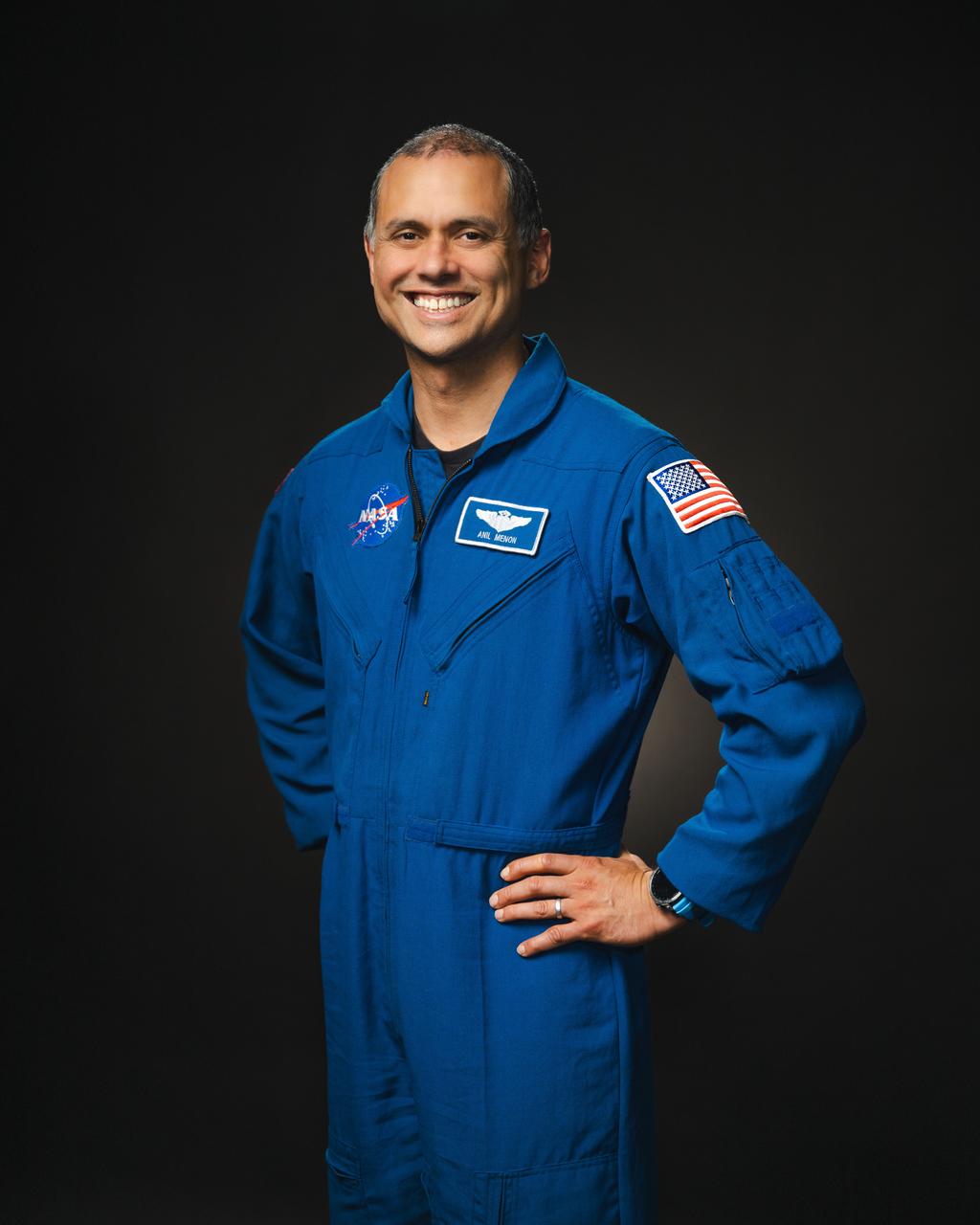
jsc2024e015919 (February 21, 2024) --- NASA astronaut Anil Menon poses for a portrait at NASA’s Johnson Space Center in Houston, Texas. Credit: NASA/ Josh Valcarcel
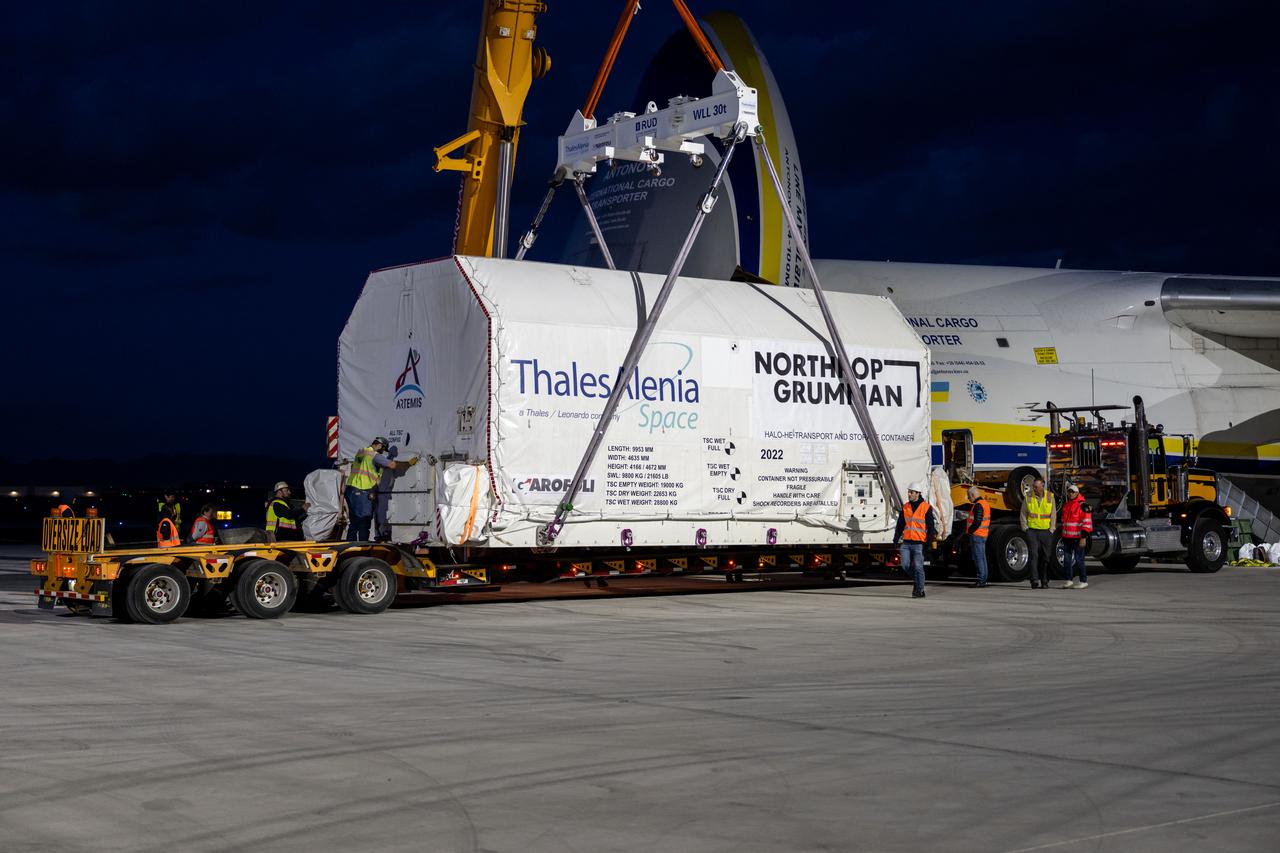
Gateway’s HALO (Habitation and Logistics Outpost) arrives in Mesa, Arizona, after traveling from Italy, where Thales Alenia Space fabricated its primary structure. Delivered by cargo aircraft to Phoenix-Mesa Gateway Airport, HALO will be transported to Northrop Grumman’s facility in Gilbert for final outfitting.
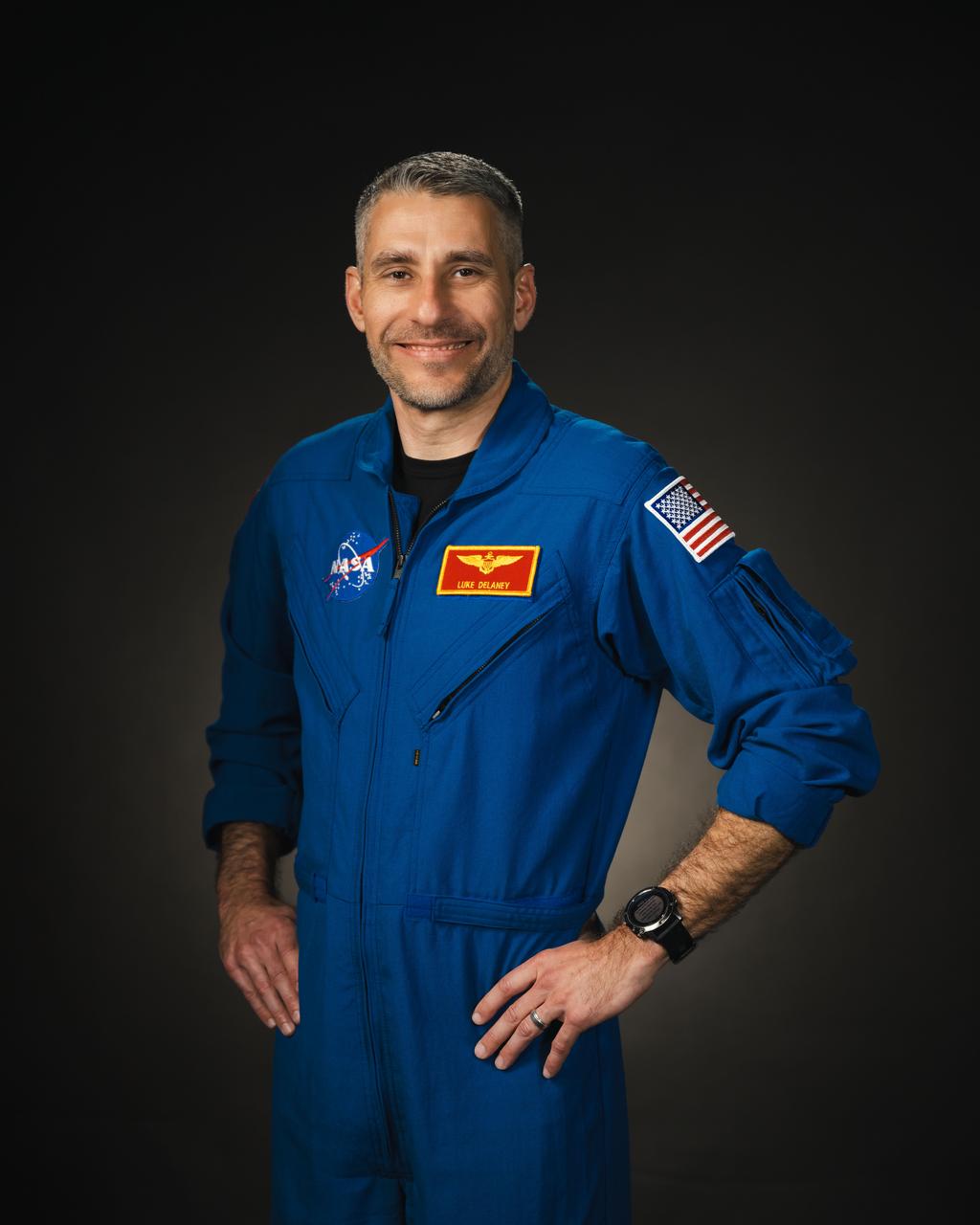
jsc2024e013665 (February 8, 2024) --- NASA astronaut Luke Delaney poses for a portrait at NASA’s Johnson Space Center in Houston, Texas. Credit: NASA/ Josh Valcarcel

NASA T-38s fly in formation above the Space Launch System rocket and Orion spacecraft on Launch Pad 39B at NASA's Kennedy Space Center in Florida. Aircraft designations and passengers: NASA 901: Chris Condon / Astronaut Zena Cardman. 902: Astronaut Candidate Nicole Ayers / Astronaut Christina Koch. 903: Canadian Space Agency Astronaut Jeremy Hansen / Astronaut Drew Morgan. 904: Chief Astronaut Reid Wiseman / Astronaut Joe Acaba. 905 (Photo Chase): Astronaut Candidate Jack Hathaway / Josh Valcarcel. Credit: NASA/Josh Valcarcel
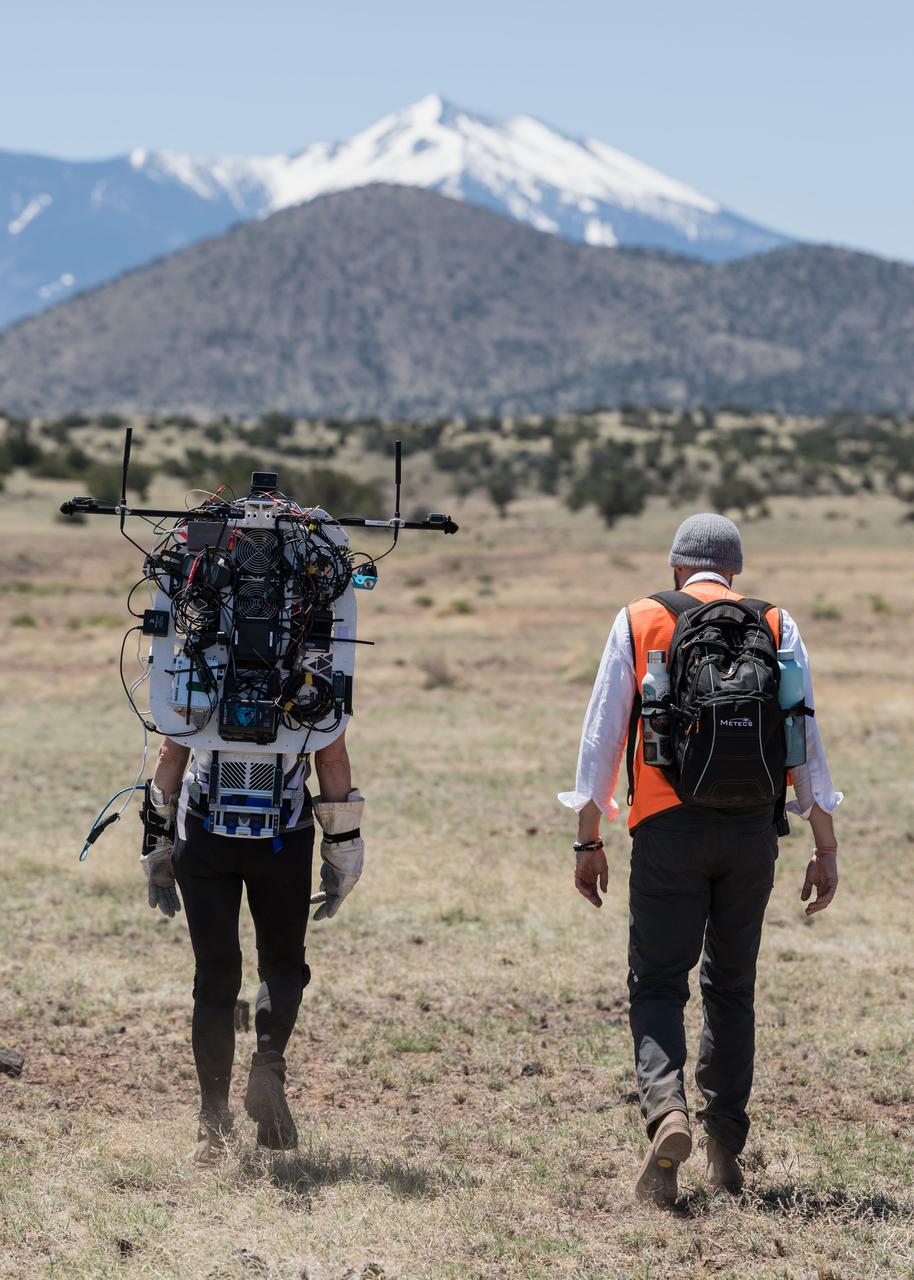
NASA astronaut Kate Rubins walks through the lunar-like landscape wearing the Joint AR (Joint Augmented Reality Visual Informatics System) display during an advanced technology run in the San Francisco Volcanic Field in Northern Arizona on May 19, 2024. The suit display features include navigation, photo capture, graphical format of consumables, procedure viewing, mission control updates, and other augmented reality cues and graphics. The team successfully tested navigation displays using data from four different data streams: GPS (Global Positioning System)/IMU (Inertial Measurement Unit), camera/IMU, LiDAR (Light Detection and Ranging), and static maps. Technology like this may be used for future Artemis missions to augment mission control communication and help guide crew back to the lunar lander. Credit: NASA/Josh Valcarcel
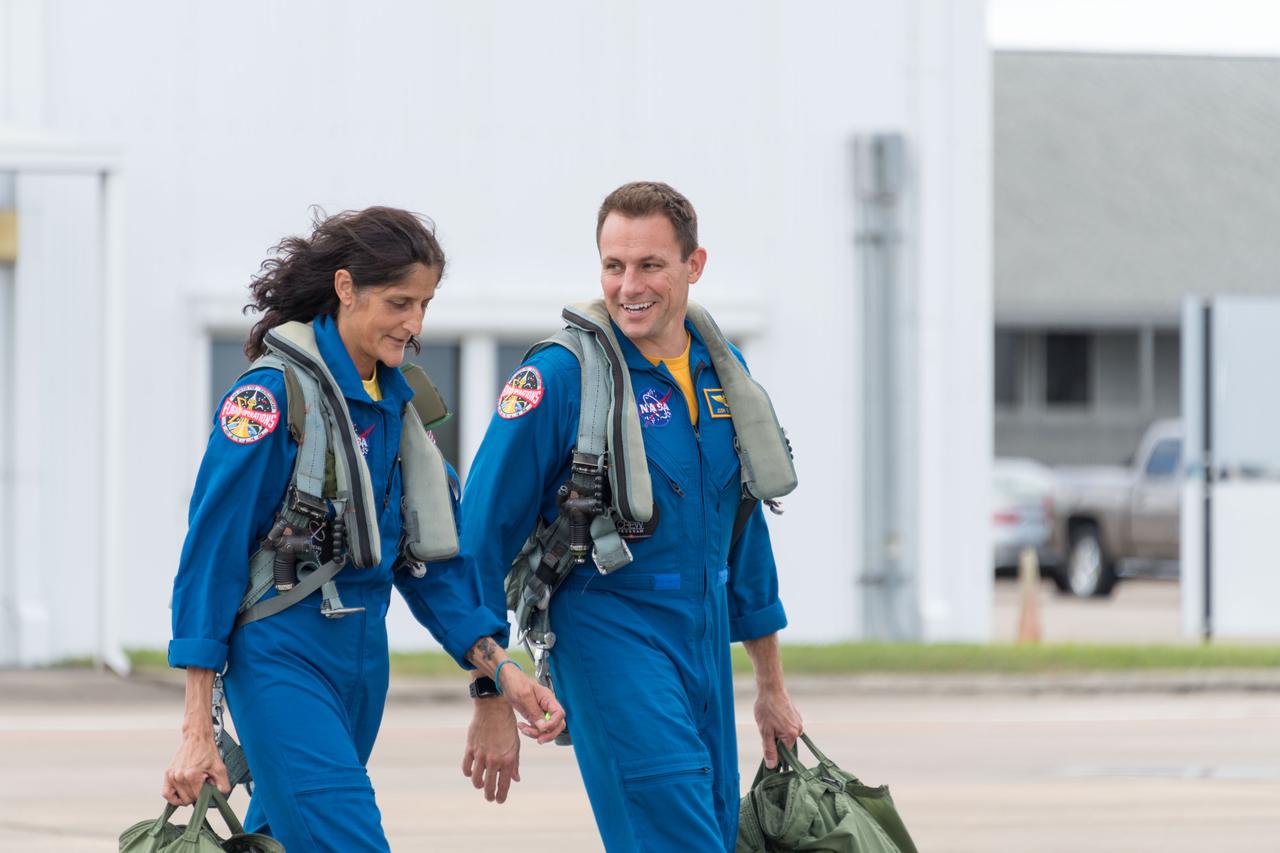
NASA commercial crew astronauts Josh Cassada and Suni Williams prepare for T-38 training flights at Ellington Field Joint Reserve Base in Houston. Cassada and Williams are assigned to the Boeing Starliner’s second crewed flight.
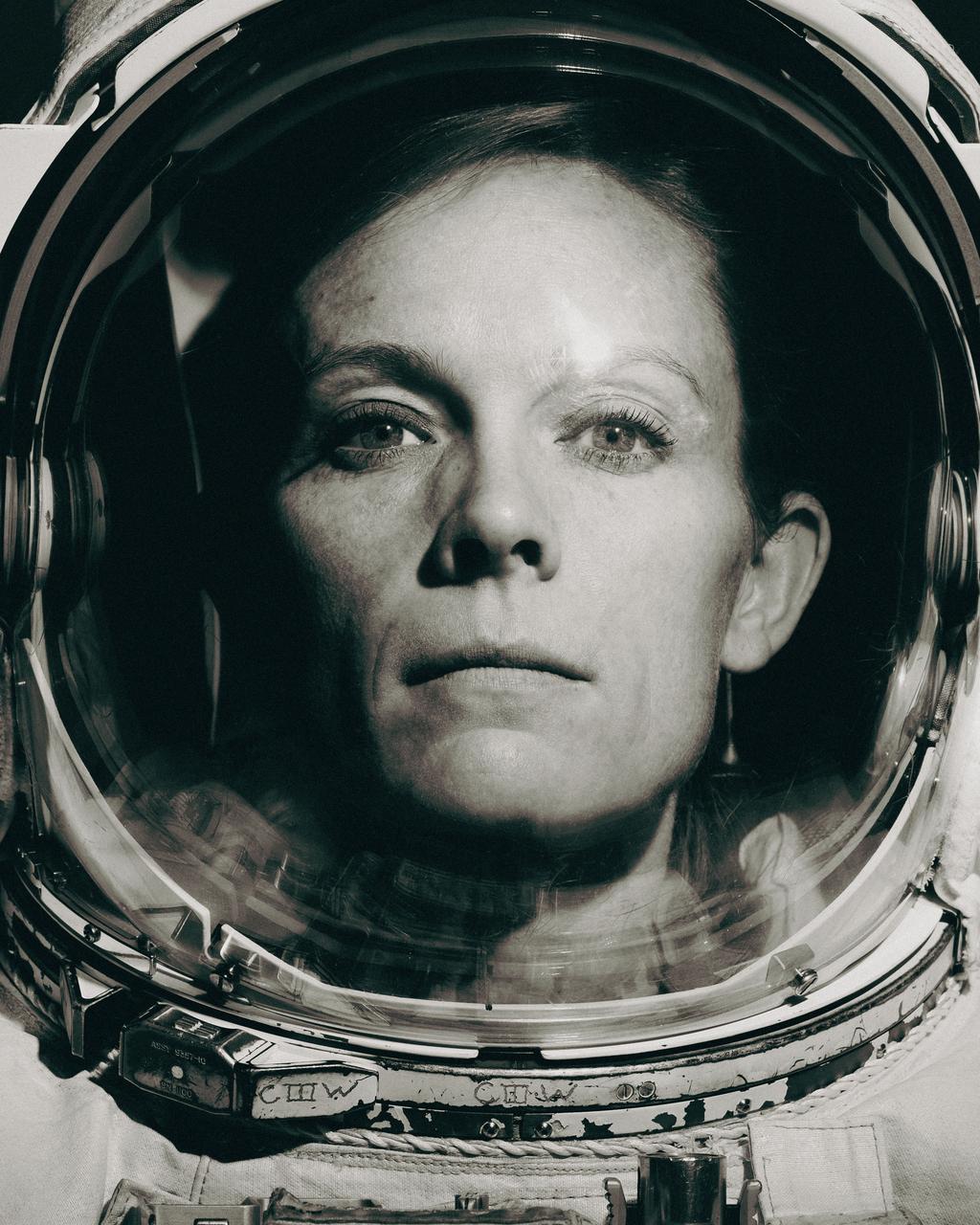
jsc2024e069023_alt NASA astronaut Nichole “Vapor” Ayers at the NASA Johnson Space Center photo studio on October 24, 2024. Photographer: Josh Valcarcel – Johnson Space Center
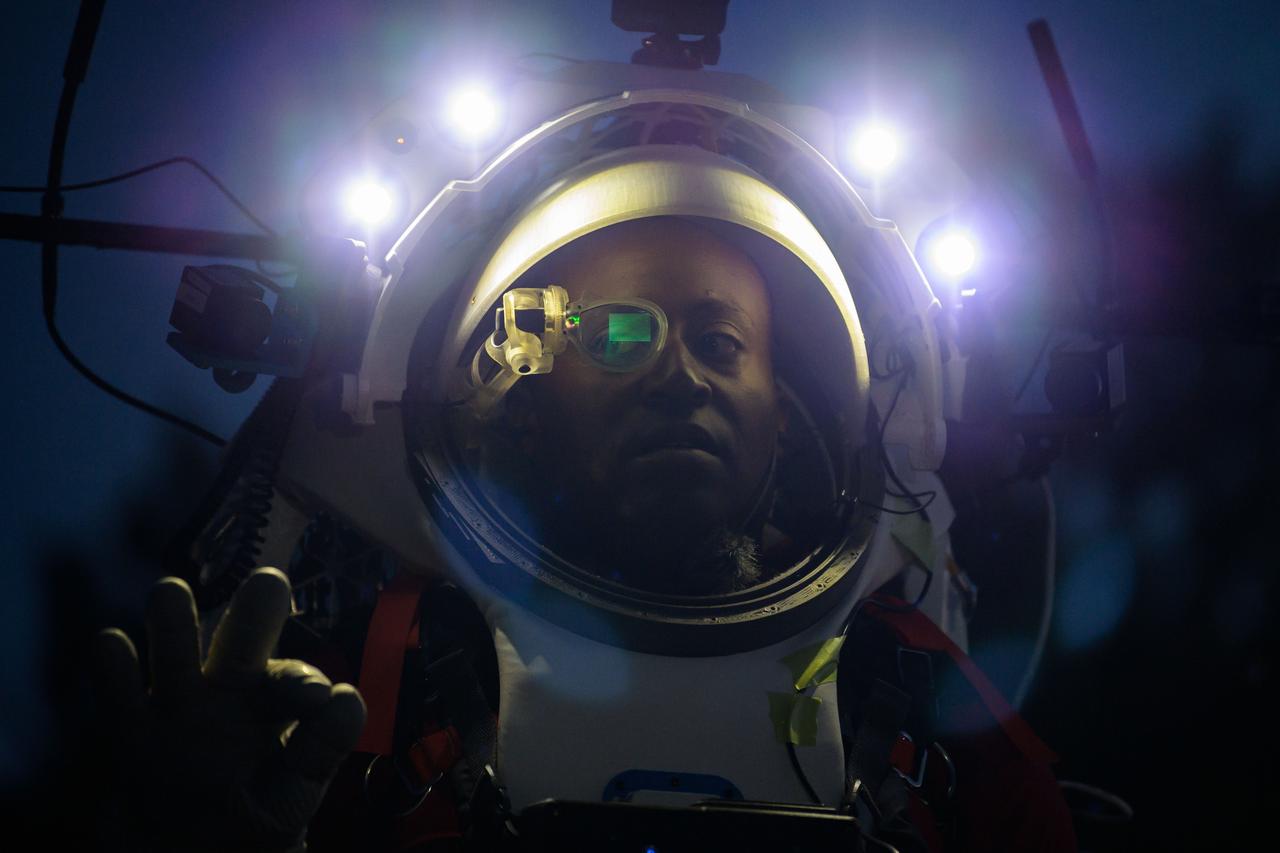
NASA astronaut Andre Douglas wears AR (Augmented Reality) display technology during a nighttime advanced technology run in the San Francisco Volcanic Field in Northern Arizona on May 21, 2024. The monocular lens consists of a pico-projector and waveguide optical element to focus an image for crew to see their real world overlaid with digital information. These unique near-eye form factors may be used to improve the usability and minimally impact the complex biomechanics of working in a pressurized suit environment. Credit: NASA/Josh Valcarcel

jsc2026e037789 (May 5, 2026) --- NASA astronaut Jessica Watkins (center), backed up by training specialists, assists CSA (Canadian Space Agency) astronaut Josh Kutryk as he practices suiting up in a spacesuit in an International Space Station airlock simulator at Johnson Space Center’s (JSC) Space Vehicle Mockup Facility in Houston, Texas. Astronauts familiarize themselves with spacesuit systems and procedures and practice Quest airlock operations before conducting spacewalk training at JSC’s Neutral Buoyancy Laboratory in simulated microgravity. Credit: NASA/Josh Valcarcel
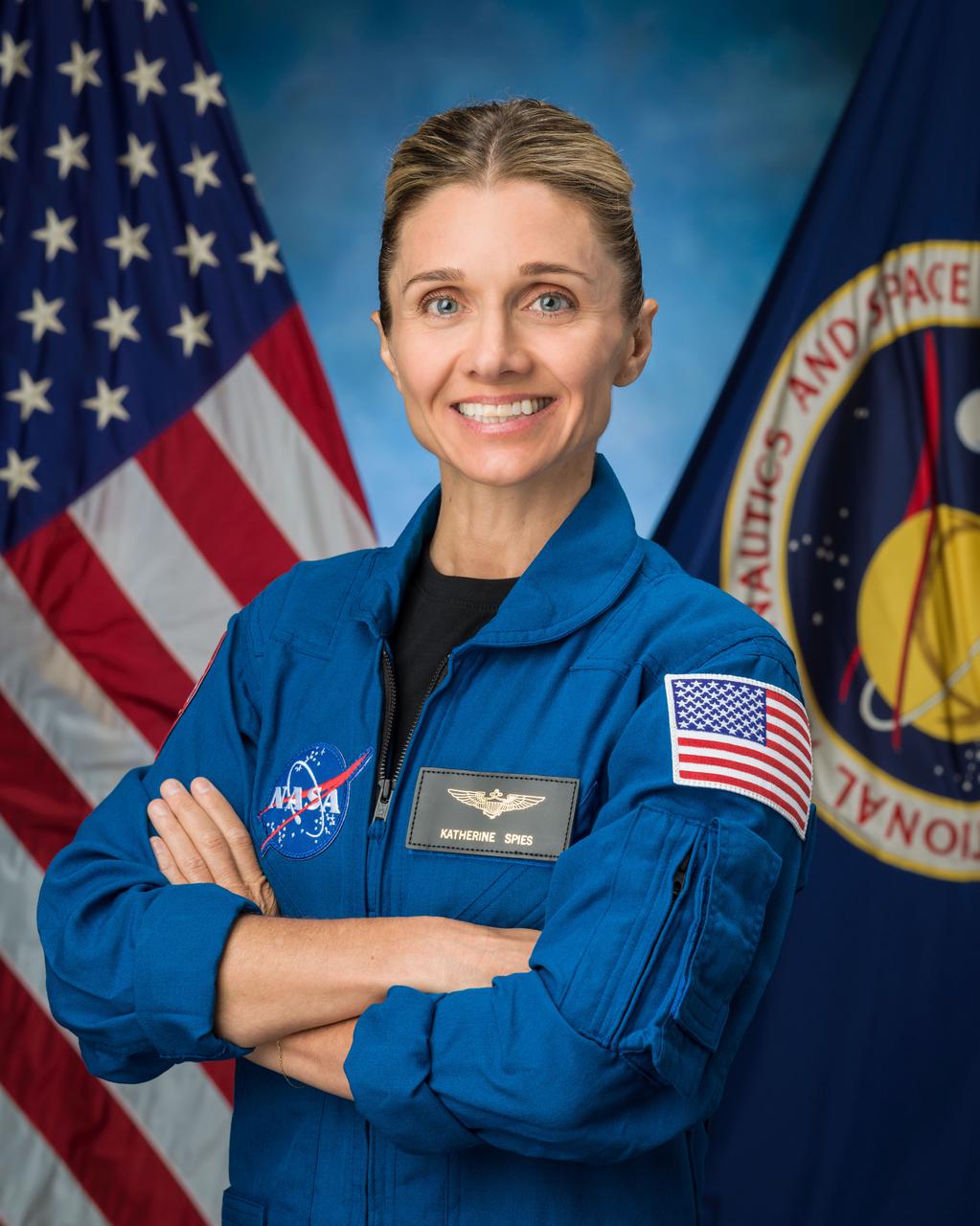
jsc2025e074862 (September 16, 2025) --- NASA astronaut candidate Katherine Spies poses for a portrait at NASA’s Johnson Space Center in Houston, Texas. Spies was selected by NASA to join the 2025 astronaut candidate class and reported for duty in September 2025. Credit: NASA/Josh Valcarcel