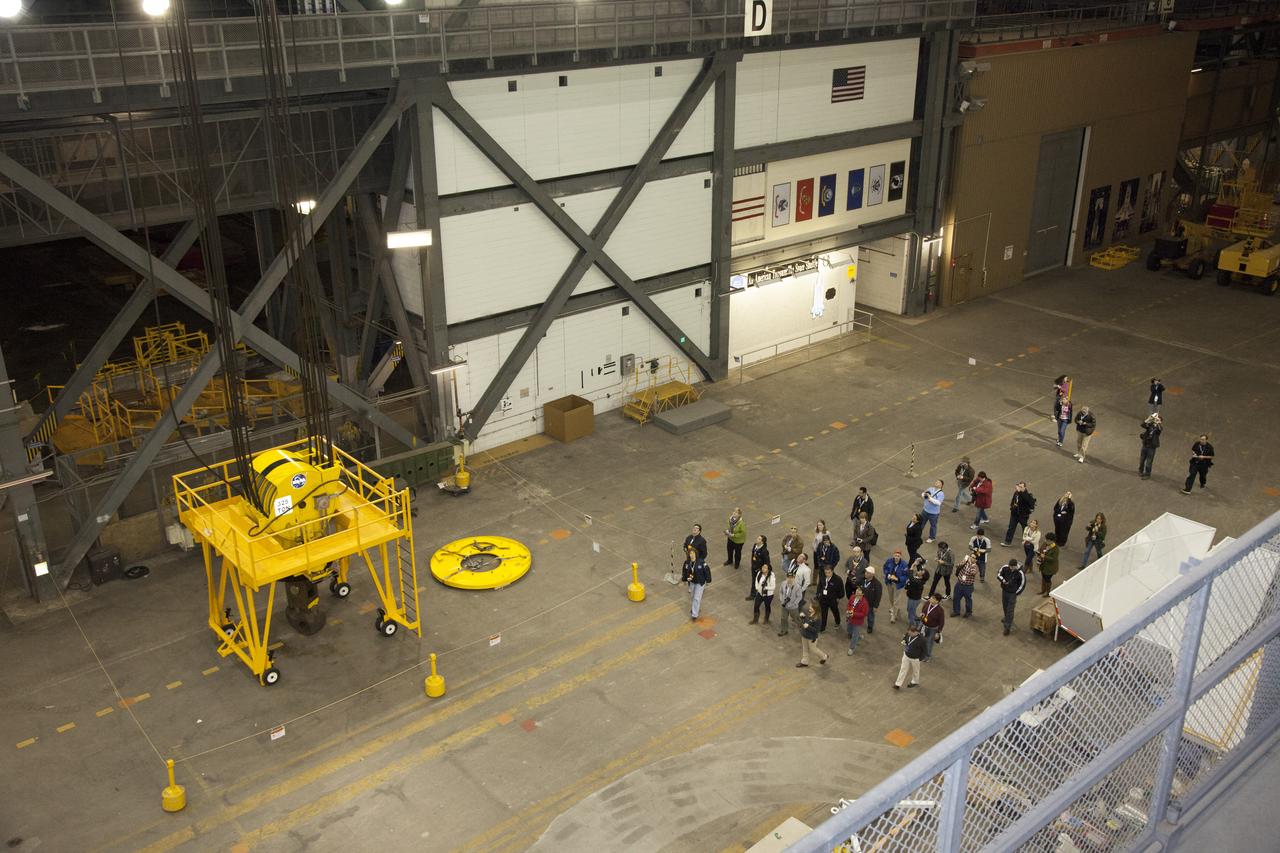
CAPE CANAVERAL, Fla. -- At NASA's Kennedy Space Center in Florida, social media participants were given an opportunity to go inside the spaceport's Vehicle Assembly Building. After serving through the Apollo and Space Shuttle Programs, the structure now is undergoing renovations to accommodate future launch vehicles and to continue as a major part of America's efforts to explore space. The social media participants gathered at the Florida spaceport for the launch of the Tracking and Data Relay Satellite, or TDRS-L spacecraft. Their visit included tours of key facilities and participating in presentations by key NASA leaders who updated the space agency's current efforts. Photo credit: NASA/Dan Casper
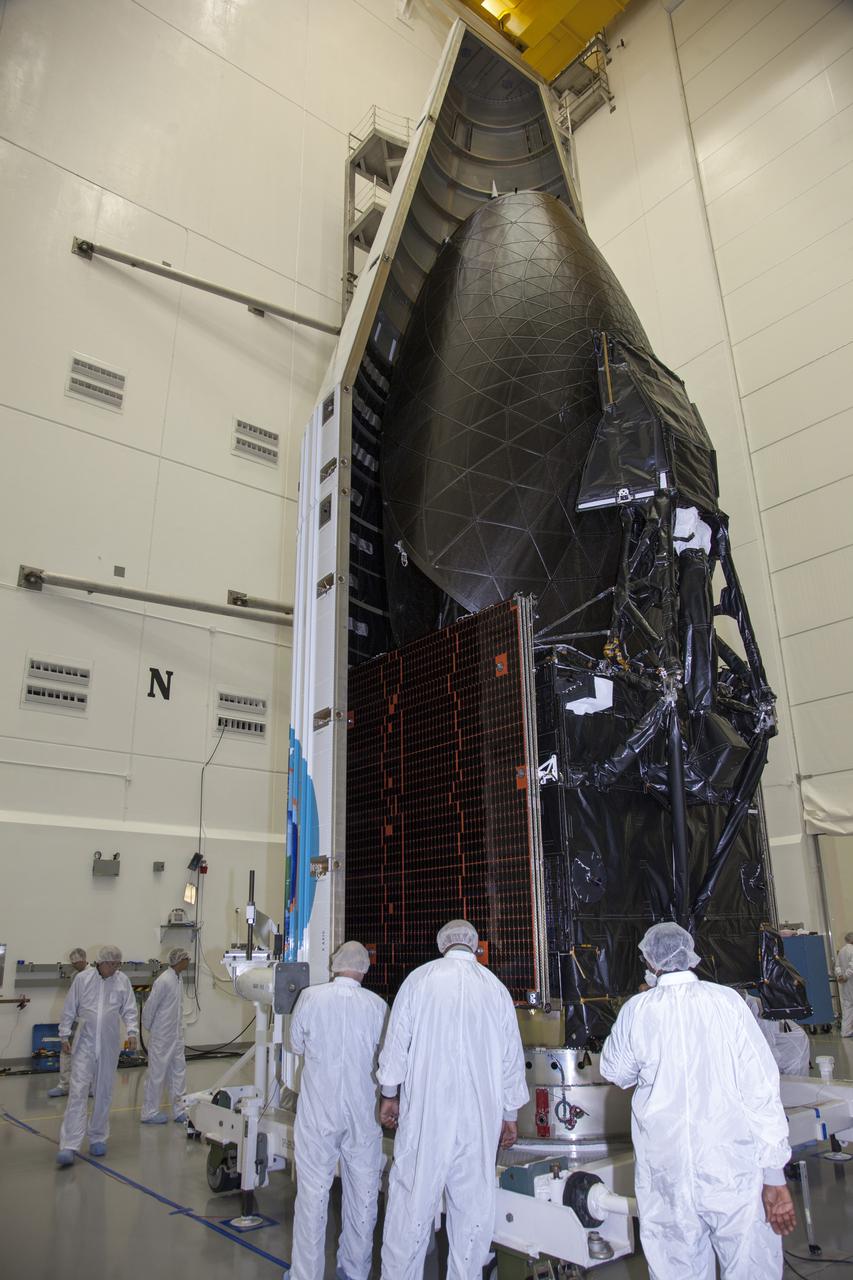
TITUSVILLE, Fla. – Inside the Astrotech payload processing facility in Titusville, United Launch Alliance engineers and technicians encapsulate the Tracking and Data Relay Satellite, or TDRS-L, spacecraft in its payload fairing. TDRS-L will then be transported to Launch Complex 41 at Cape Canaveral Air Force Station. The TDRS-L satellite will be a part of the second of three next-generation spacecraft designed to ensure vital operational continuity for the NASA Space Network. It is scheduled to launch from Cape Canaveral's Space Launch Complex 41 atop a United Launch Alliance Atlas V rocket on January 23, 2014. The current Tracking and Data Relay Satellite system consists of eight in-orbit satellites distributed to provide near continuous information relay contact with orbiting spacecraft ranging from the International Space Station and Hubble Space Telescope to the array of scientific observatories. For more information, visit: http://www.nasa.gov/mission_pages/tdrs/home/index.html
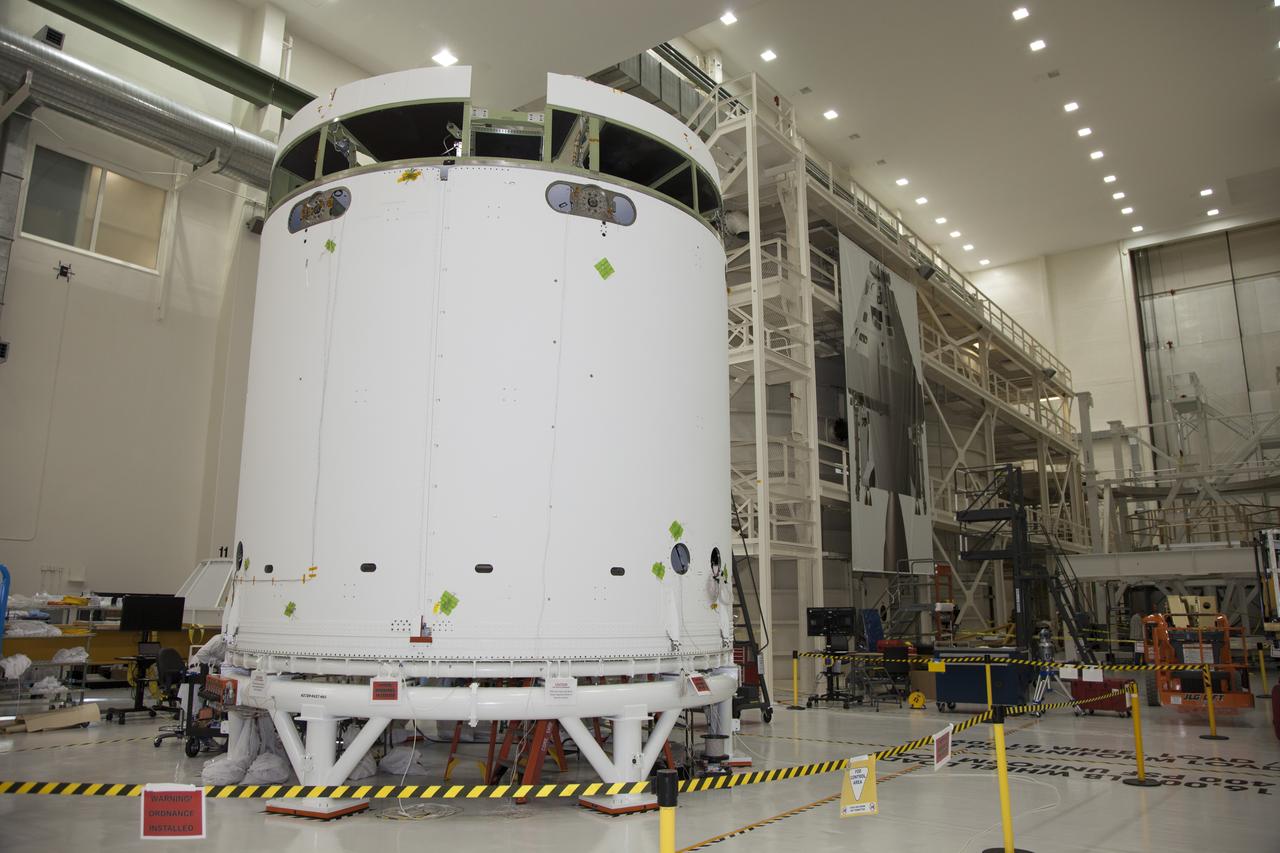
CAPE CANAVERAL, Fla. – Inside the Operations and Checkout Building high bay at NASA’s Kennedy Space Center in Florida, the service module for the Orion spacecraft is secured to a work stand and all three of the fairings have been installed around it. The fairings will protect the service module during launch. The Orion spacecraft is being prepared for its first unpiloted flight test, Exploration Flight Test-1, or EFT-1, scheduled for launch atop a Delta IV rocket in September 2014. The Orion spacecraft is designed to carry astronauts to destinations not yet explored by humans. It will have emergency abort capability, sustain the crew during space travel and provide safe re-entry from deep space return velocities. Orion is scheduled to launch atop NASA’s Space Launch System rocket in 2017. For more information, visit http://www.nasa.gov/orion. Photo credit: NASA/Daniel Casper
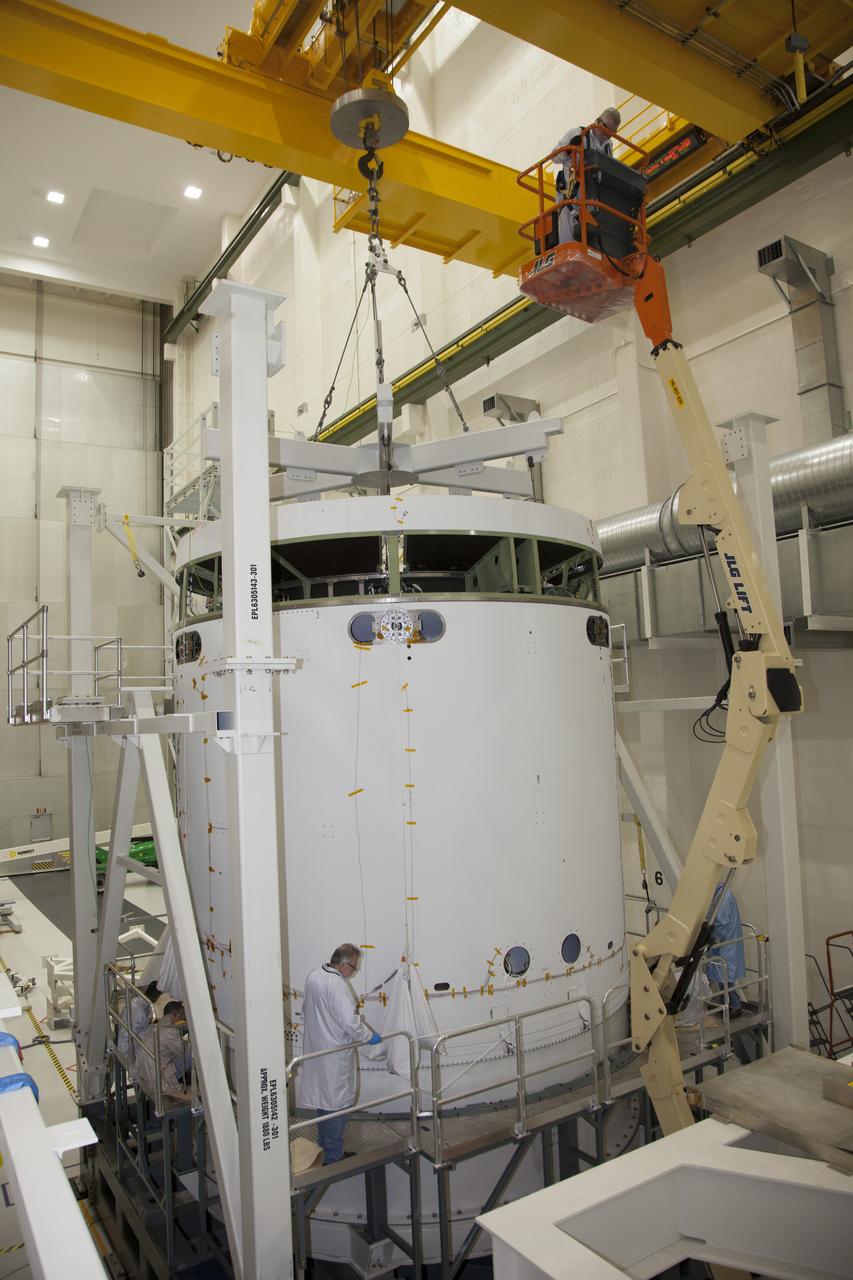
CAPE CANAVERAL, Fla. - Inside the Operations and Checkout Building high bay at NASA’s Kennedy Space Center in Florida, technicians on a platform monitor the progress as a crane lowers the service module for the Orion spacecraft onto a static test stand. Orion is the exploration spacecraft designed to carry astronauts to destinations not yet explored by humans, including an asteroid and Mars. It will have emergency abort capability, sustain the crew during space travel and provide safe re-entry from deep space return velocities. The first unpiloted test flight of the Orion is scheduled to launch in 2014 atop a Delta IV rocket and in 2017 on NASA’s Space Launch System rocket. For more information, visit http://www.nasa.gov/orion. Photo credit: NASA/Daniel Casper
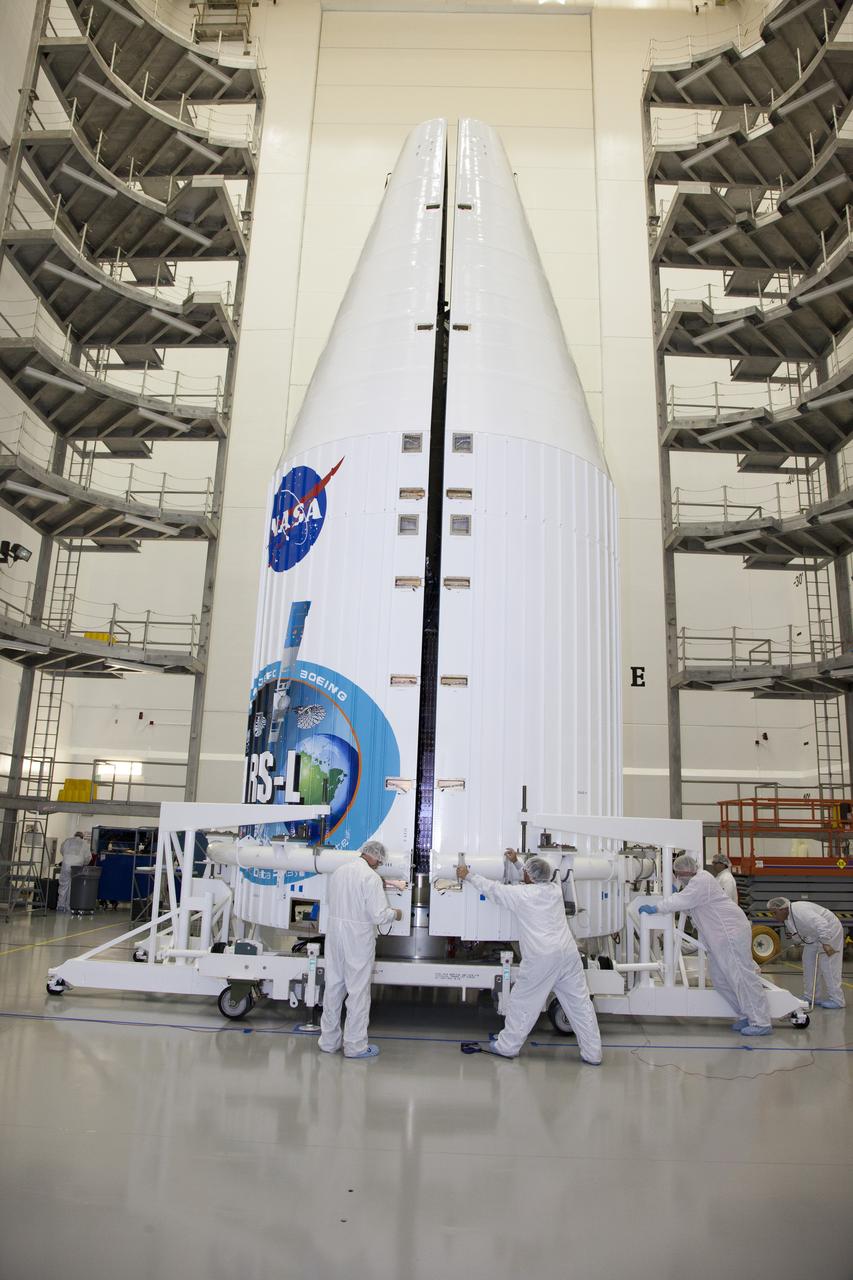
TITUSVILLE, Fla. – Inside the Astrotech payload processing facility in Titusville, United Launch Alliance engineers and technicians encapsulate the Tracking and Data Relay Satellite, or TDRS-L, spacecraft in its payload fairing. TDRS-L will then be transported to Launch Complex 41 at Cape Canaveral Air Force Station. The TDRS-L satellite will be a part of the second of three next-generation spacecraft designed to ensure vital operational continuity for the NASA Space Network. It is scheduled to launch from Cape Canaveral's Space Launch Complex 41 atop a United Launch Alliance Atlas V rocket on January 23, 2014. The current Tracking and Data Relay Satellite system consists of eight in-orbit satellites distributed to provide near continuous information relay contact with orbiting spacecraft ranging from the International Space Station and Hubble Space Telescope to the array of scientific observatories. For more information, visit: http://www.nasa.gov/mission_pages/tdrs/home/index.html
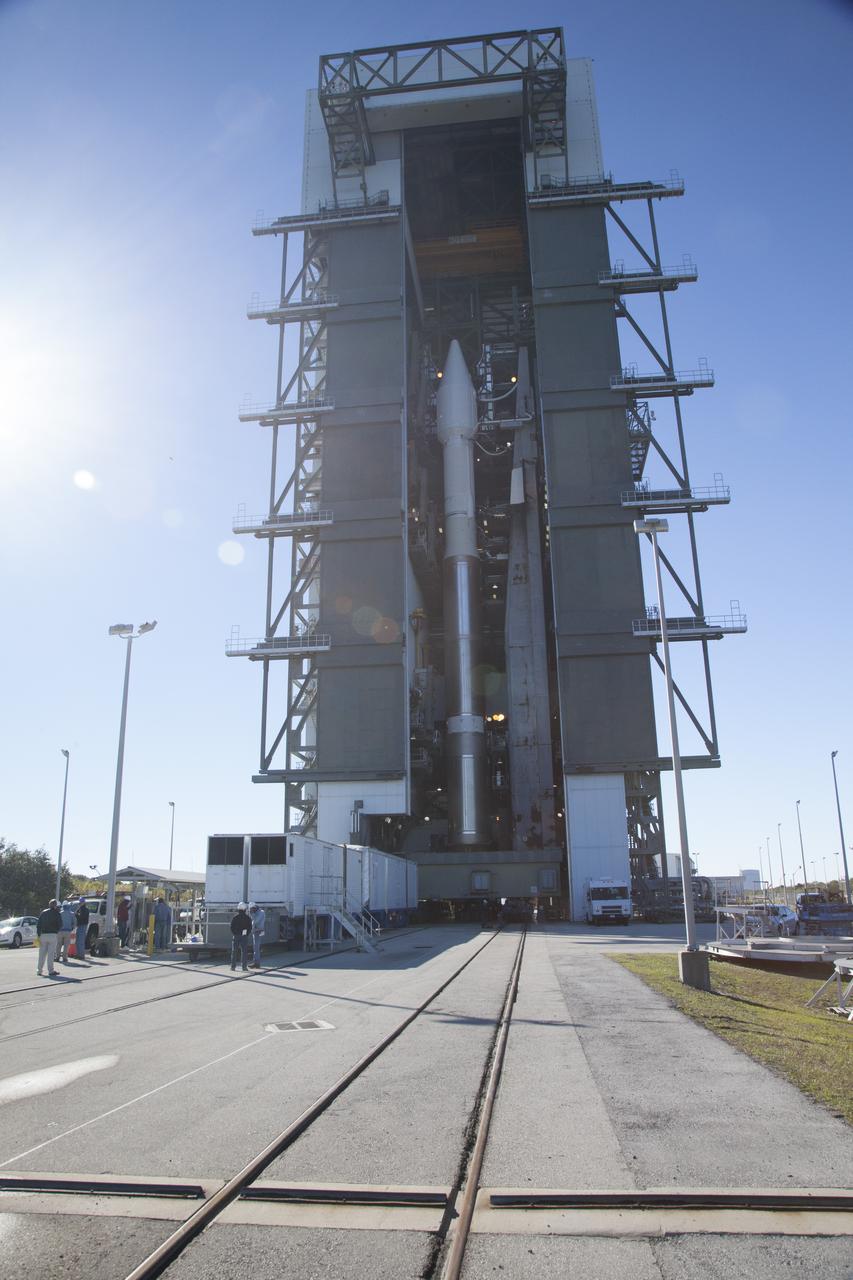
CAPE CANAVERAL, Fla. – At Cape Canaveral Air Force Station's Launch Complex 41, a United Launch Alliance Atlas V with NASA's Tracking and Data Relay Satellite, or TDRS-L, spacecraft atop, is being prepared for rollout from the Vertical Integration Facility to the launch pad. The TDRS-L spacecraft is the second of three new satellites designed to ensure vital operational continuity for NASA by expanding the lifespan of the Tracking and Data Relay Satellite System TDRSS fleet, which consists of eight satellites in geosynchronous orbit. The spacecraft provide tracking, telemetry, command and high bandwidth data return services for numerous science and human exploration missions orbiting Earth. These include NASA's Hubble Space Telescope and the International Space Station. TDRS-L has a high-performance solar panel designed for more spacecraft power to meet the growing S-band communications requirements. TDRSS is one of NASA Space Communication and Navigation’s SCaN three networks providing space communications to NASA’s missions. For more information more about TDRS-L, visit: http://www.nasa.gov/tdrs To learn more about SCaN, visit: www.nasa.gov/scan Photo credit: NASA/Daniel Casper
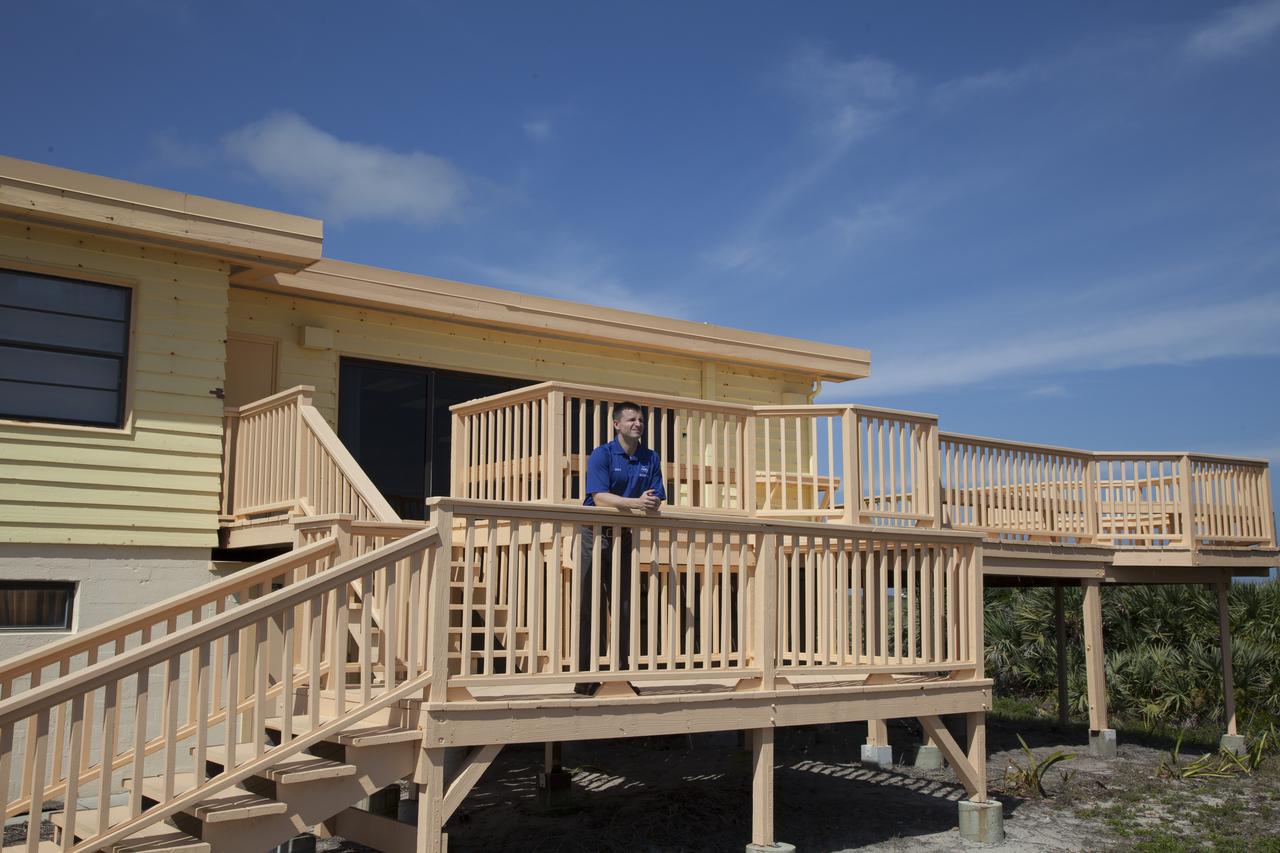
CAPE CANAVERAL, Fla. - NASA astronaut candidate Andrew Morgan looks over the beach while standing at the Beach House at NASA's Kennedy Space Center. The Beach House is a traditional gathering place for astronauts before they fly into space. The astronaut class of 2013 was selected by NASA after an extensive year-and-a-half search. The new group will help the agency push the boundaries of exploration and travel to new destinations in the solar system. To learn more about the astronaut class of 2013, visit: http://www.nasa.gov/astronauts/2013astroclass.html Photo credit: NASA/Daniel Casper
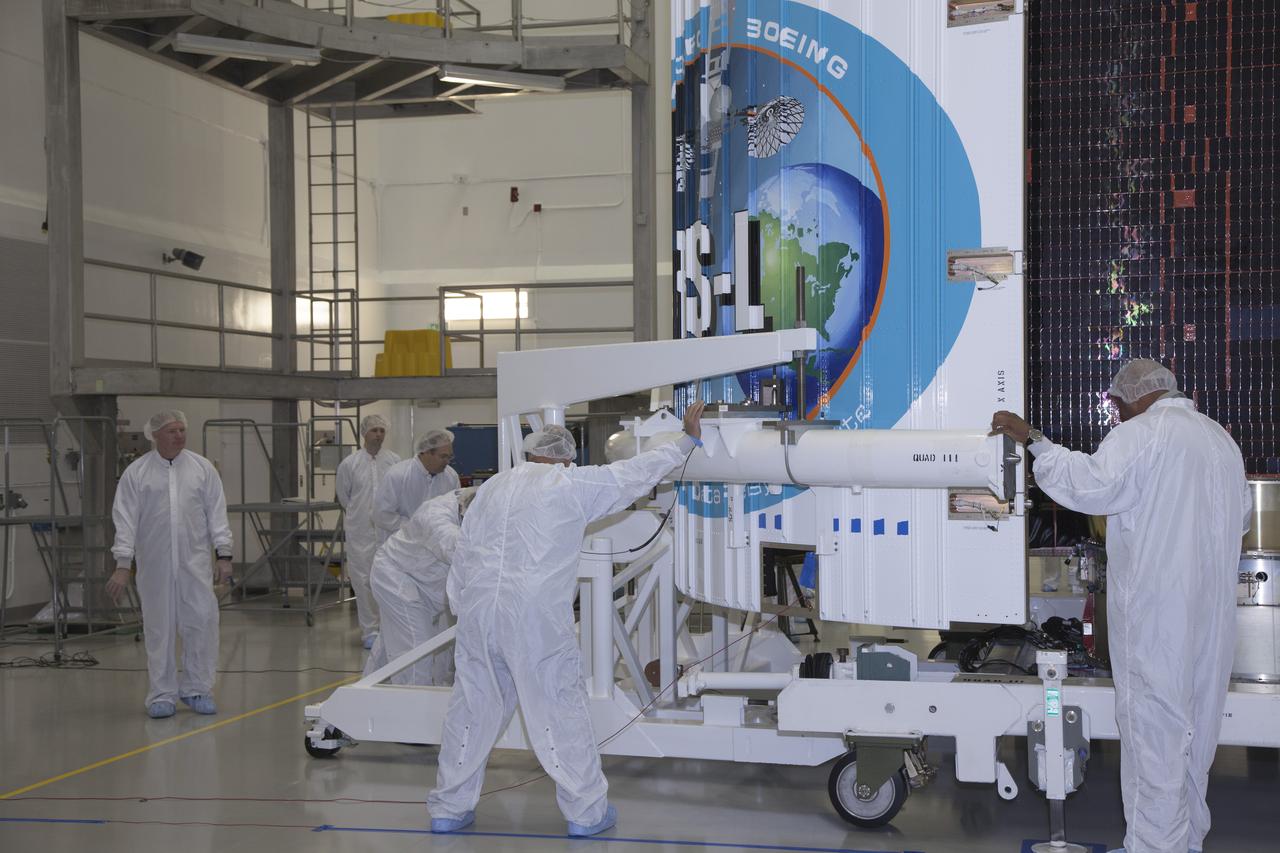
TITUSVILLE, Fla. – Inside the Astrotech payload processing facility in Titusville, United Launch Alliance engineers and technicians encapsulate the Tracking and Data Relay Satellite, or TDRS-L, spacecraft in its payload fairing. TDRS-L will then be transported to Launch Complex 41 at Cape Canaveral Air Force Station. The TDRS-L satellite will be a part of the second of three next-generation spacecraft designed to ensure vital operational continuity for the NASA Space Network. It is scheduled to launch from Cape Canaveral's Space Launch Complex 41 atop a United Launch Alliance Atlas V rocket on January 23, 2014. The current Tracking and Data Relay Satellite system consists of eight in-orbit satellites distributed to provide near continuous information relay contact with orbiting spacecraft ranging from the International Space Station and Hubble Space Telescope to the array of scientific observatories. For more information, visit: http://www.nasa.gov/mission_pages/tdrs/home/index.html
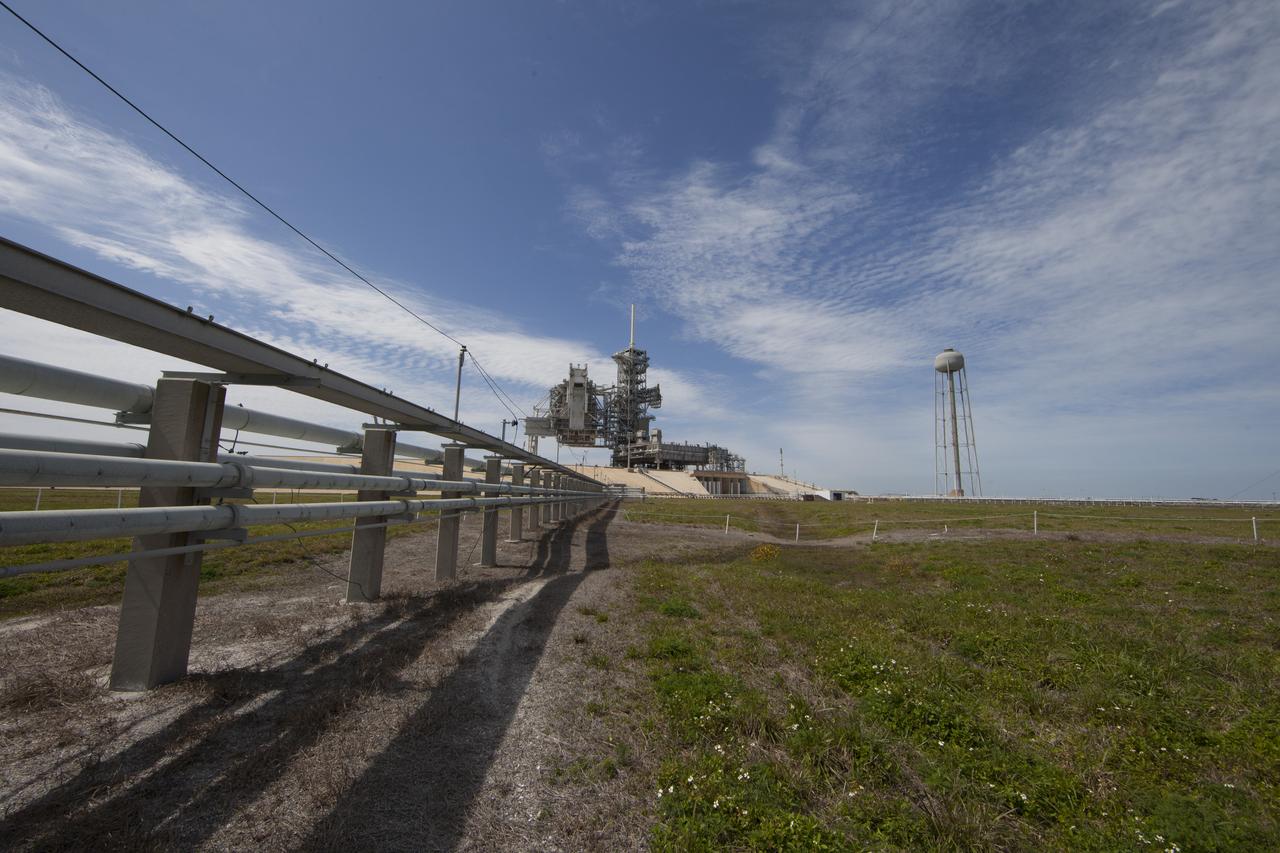
CAPE CANAVERAL, Fla. -- At NASA's Kennedy Space Center in Florida, launch pad 39A looks much like it did after the liftoff of STS-135, the final space shuttle mission, on July 8, 2011. Both launch pad 39A and 39B pad 39A was originally built for the Apollo/Saturn V rockets that launched American astronauts on their historic journeys to the moon and later modified to support the 30-year shuttle program. To learn more about Launch Pad 39A visit: http://www.nasa.gov/mission_pages/shuttle/launch/launch-complex39-toc.html Photo credit: NASA/Dan Casper
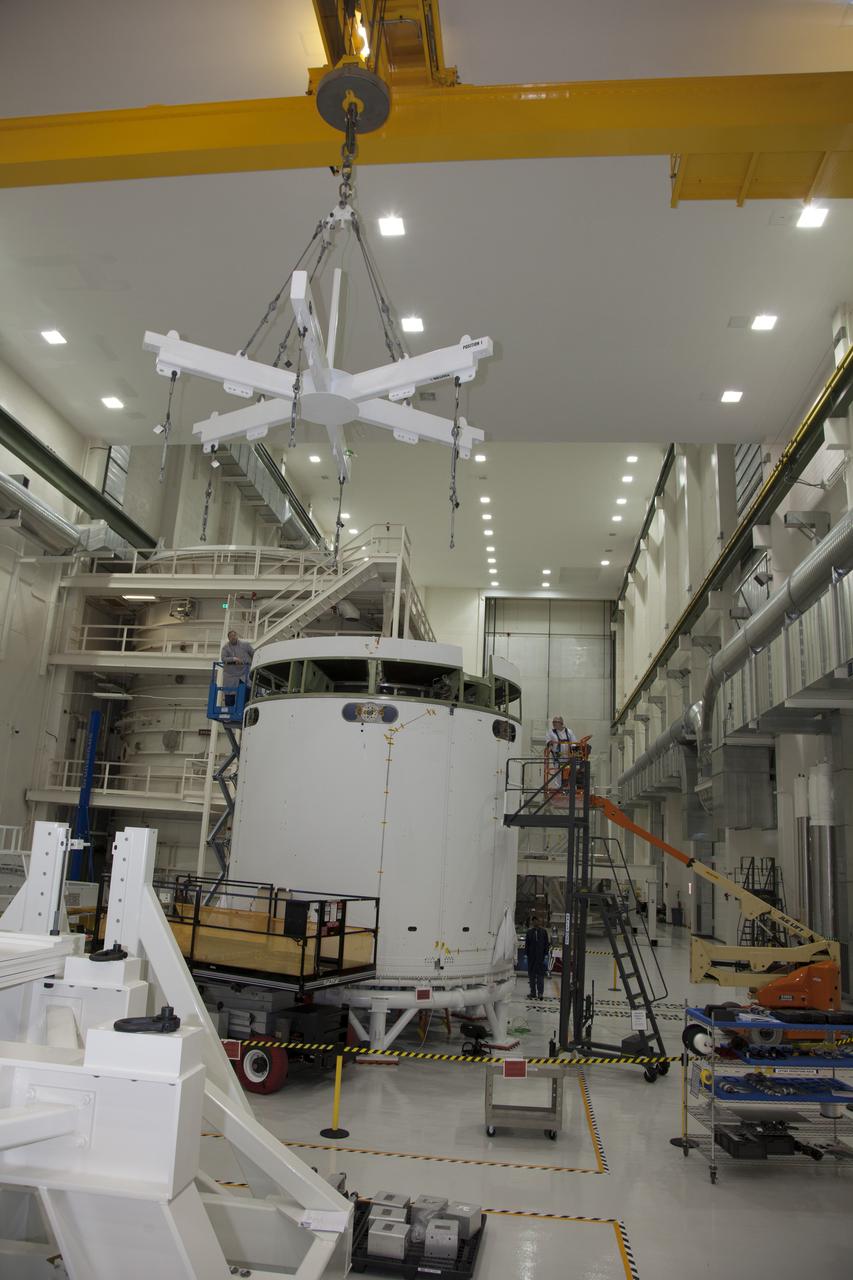
CAPE CANAVERAL, Fla. - Inside the Operations and Checkout Building high bay at NASA’s Kennedy Space Center in Florida, a crane is used to lift a ground support tool that will be used to transfer the service module for the Orion spacecraft to a static test stand. Orion is the exploration spacecraft designed to carry astronauts to destinations not yet explored by humans, including an asteroid and Mars. It will have emergency abort capability, sustain the crew during space travel and provide safe re-entry from deep space return velocities. The first unpiloted test flight of the Orion is scheduled to launch in 2014 atop a Delta IV rocket and in 2017 on NASA’s Space Launch System rocket. For more information, visit http://www.nasa.gov/orion. Photo credit: NASA/Daniel Casper
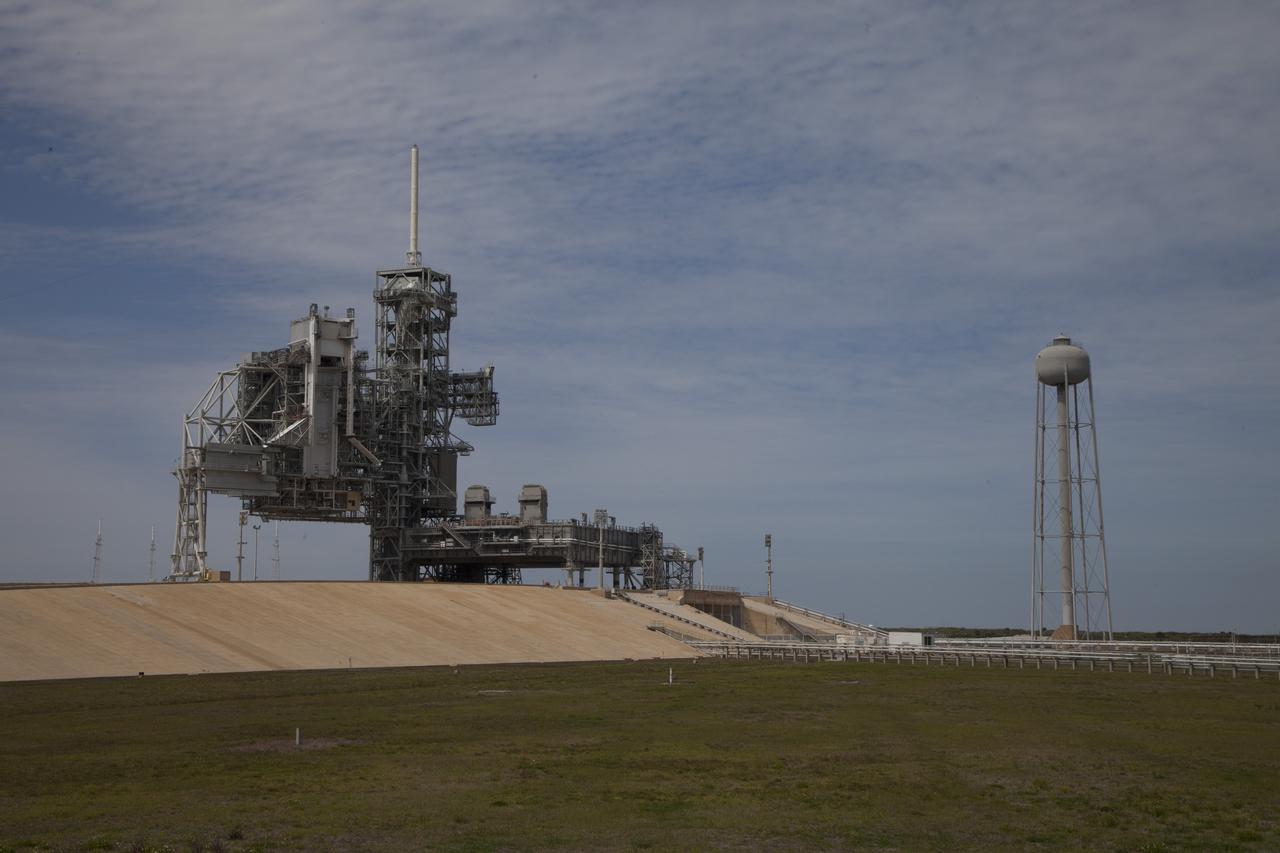
CAPE CANAVERAL, Fla. -- At NASA's Kennedy Space Center in Florida, launch pad 39A looks much like it did after the liftoff of STS-135, the final space shuttle mission, on July 8, 2011. The mobile launcher platform remains in place next to the fixed service structure and rotating service structure. Both launch pad 39A and 39B pad 39A was originally built for the Apollo/Saturn V rockets that launched American astronauts on their historic journeys to the moon and later modified to support the 30-year shuttle program. To learn more about Launch Pad 39A visit: http://www.nasa.gov/mission_pages/shuttle/launch/launch-complex39-toc.html Photo credit: NASA/Dan Casper
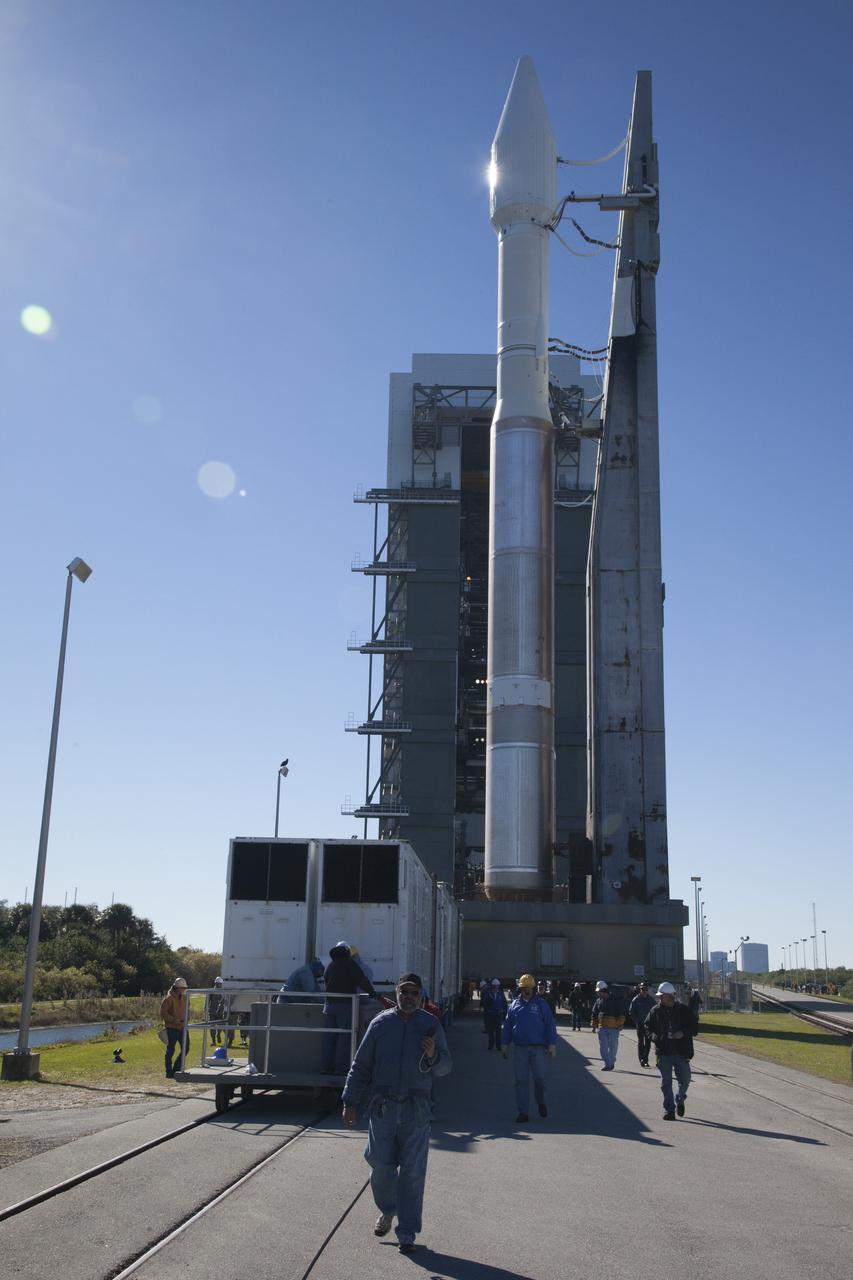
CAPE CANAVERAL, Fla. – At Cape Canaveral Air Force Station's Launch Complex 41, a United Launch Alliance Atlas V with NASA's Tracking and Data Relay Satellite, or TDRS-L, spacecraft atop, begins its rollout from the Vertical Integration Facility to the launch pad. The TDRS-L spacecraft is the second of three new satellites designed to ensure vital operational continuity for NASA by expanding the lifespan of the Tracking and Data Relay Satellite System TDRSS fleet, which consists of eight satellites in geosynchronous orbit. The spacecraft provide tracking, telemetry, command and high bandwidth data return services for numerous science and human exploration missions orbiting Earth. These include NASA's Hubble Space Telescope and the International Space Station. TDRS-L has a high-performance solar panel designed for more spacecraft power to meet the growing S-band communications requirements. TDRSS is one of NASA Space Communication and Navigation’s SCaN three networks providing space communications to NASA’s missions. For more information more about TDRS-L, visit: http://www.nasa.gov/tdrs To learn more about SCaN, visit: www.nasa.gov/scan Photo credit: NASA/Daniel Casper
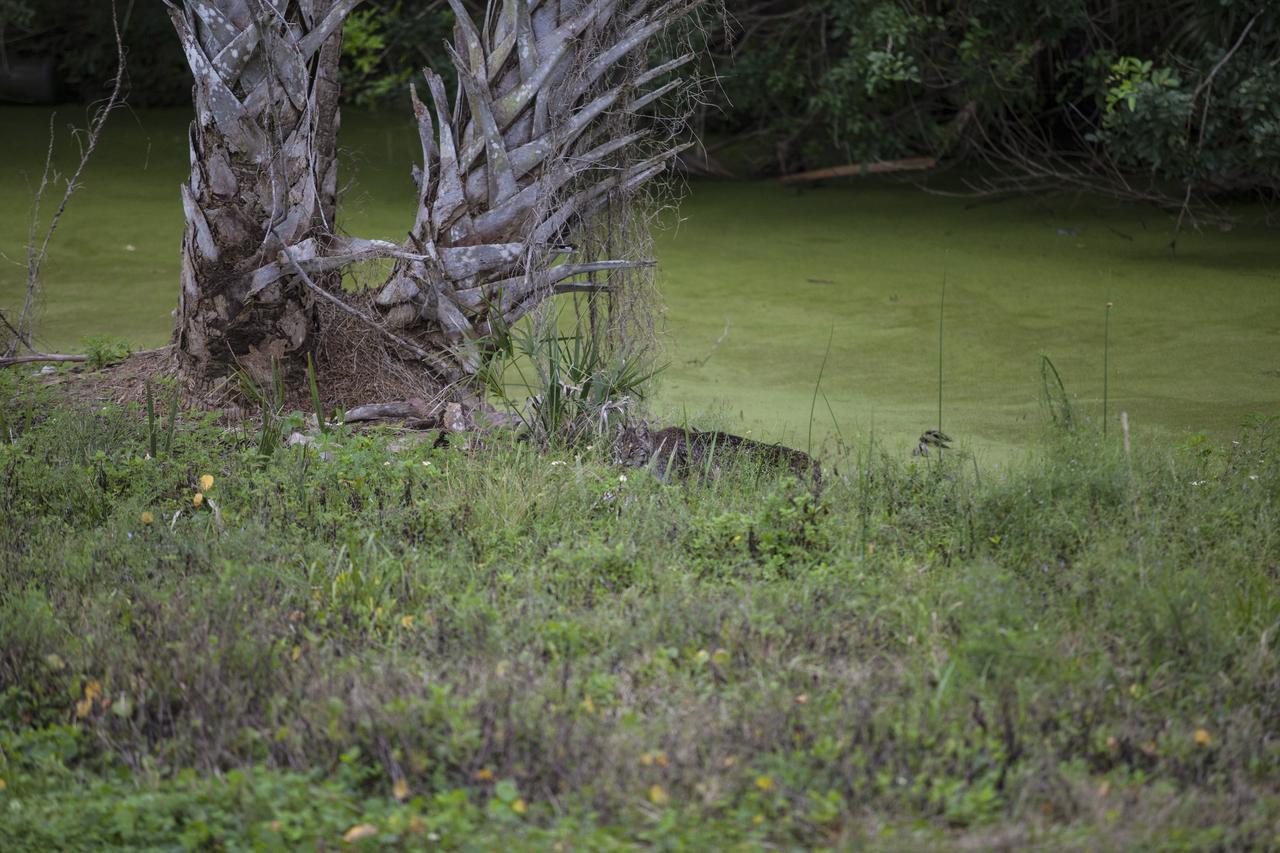
CAPE CANAVERAL, Fla. – A bobcat walks along a canal near the NASA News Center at Kennedy Space Center in Florida. The center shares a boundary with the Merritt Island National Wildlife Refuge. The refuge encompasses 140,000 acres that are a habitat for more than 330 species of birds, 31 mammals, 117 fishes, and 65 amphibians and reptiles. Photo credit: NASA/Daniel Casper
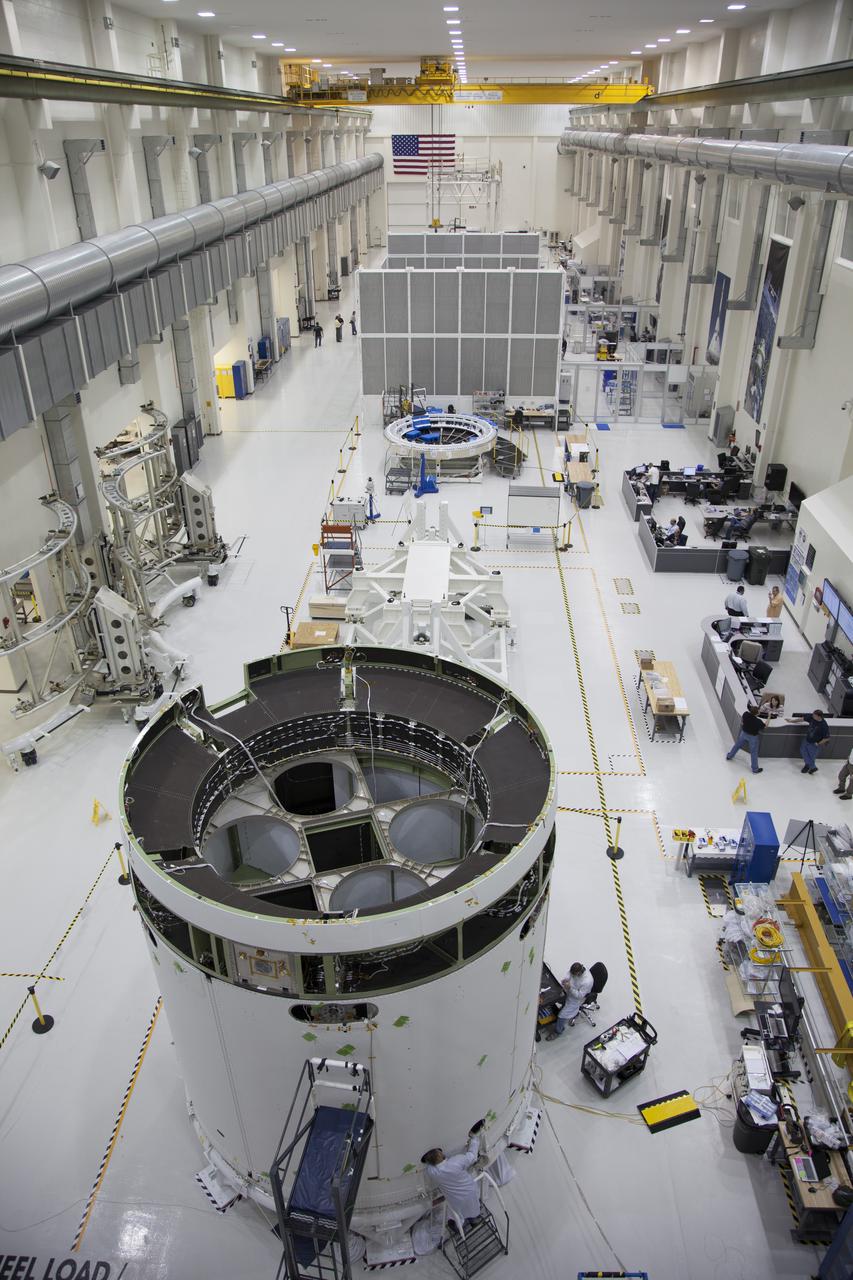
CAPE CANAVERAL, Fla. – A view from above inside the Operations and Checkout Building high bay at NASA’s Kennedy Space Center in Florida, shows the service module for the Orion spacecraft secured to a work stand. Technicians are completing the installation of the three fairings around the service module that will protect it during launch. The Orion spacecraft is being prepared for its first unpiloted flight test, Exploration Flight Test-1, or EFT-1, scheduled for launch atop a Delta IV rocket in September 2014. The Orion spacecraft is designed to carry astronauts to destinations not yet explored by humans. It will have emergency abort capability, sustain the crew during space travel and provide safe re-entry from deep space return velocities. Orion is scheduled to launch atop NASA’s Space Launch System rocket in 2017. For more information, visit http://www.nasa.gov/orion. Photo credit: NASA/Daniel Casper
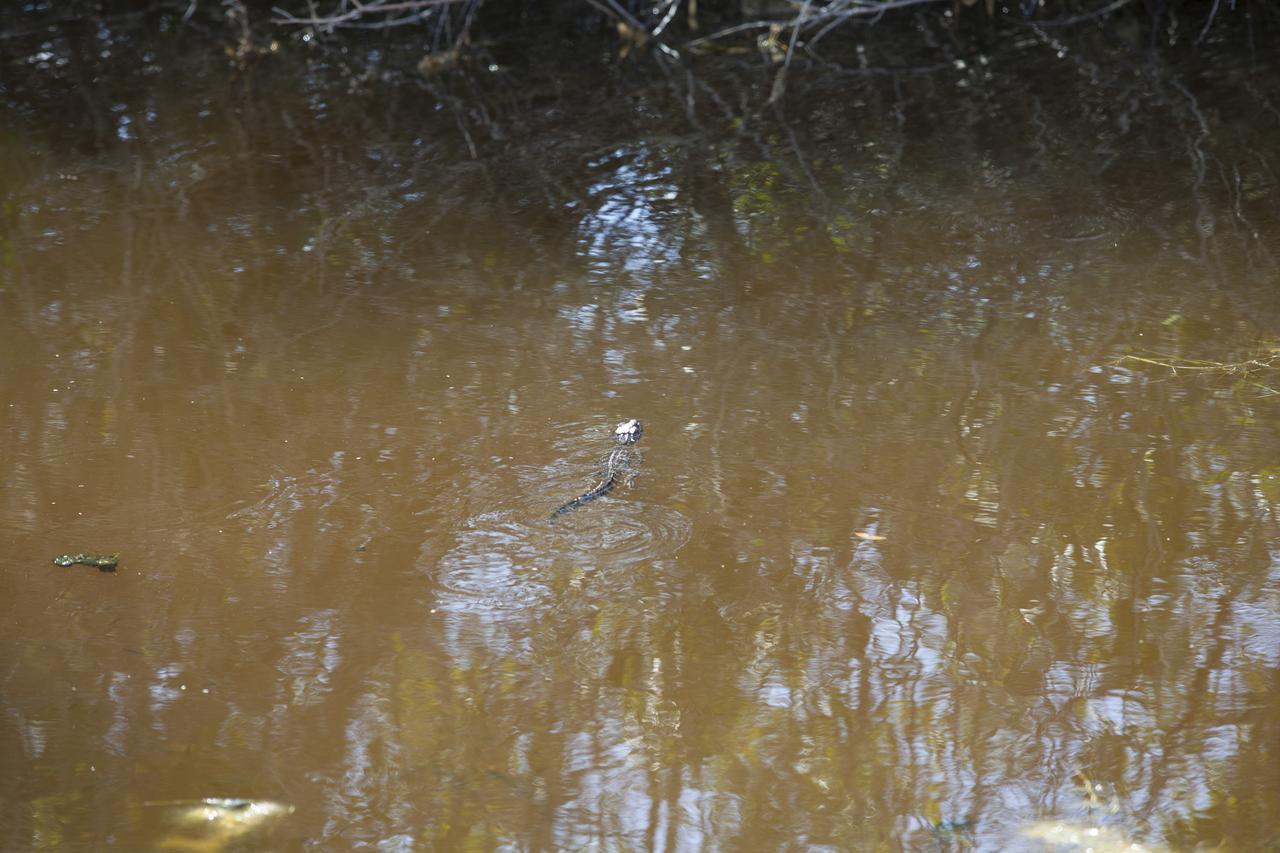
CAPE CANAVERAL, Fla. - An American alligator swims in a stream at NASA’s Kennedy Space Center in Florida. The center shares a boundary with the Merritt Island National Wildlife Refuge. The refuge encompasses 140,000 acres that are a habitat for more than 330 species of birds, 31 mammals, 117 fishes, and 65 amphibians and reptiles. It contains more than 1,000 known plant species. The marshes and open water of the refuge provide wintering areas for 23 species of migratory waterfowl, as well as a year-round home for great blue herons, great egrets, wood storks, cormorants, brown pelicans and other species of marsh and shore birds, and a variety of insects. Photo credit: NASA/Daniel Casper
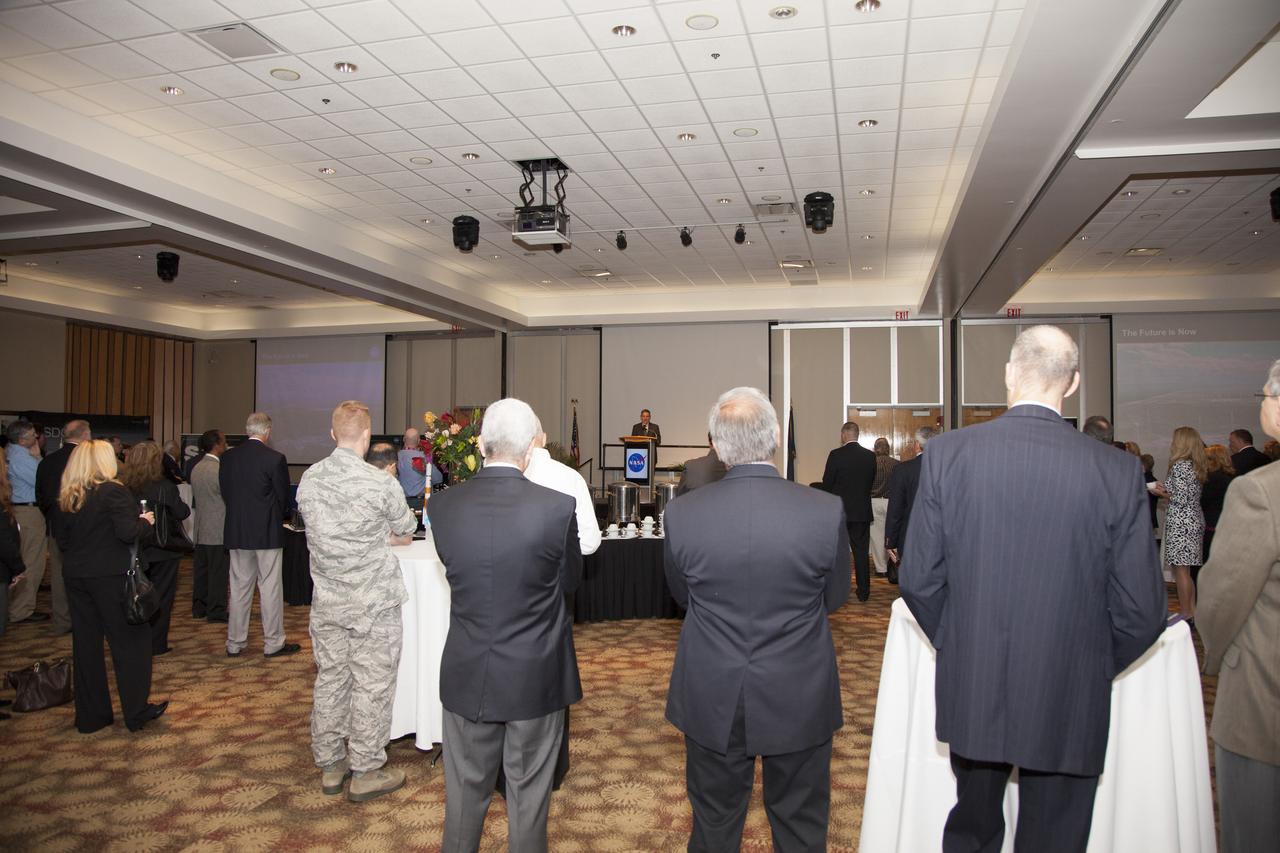
CAPE CANAVERAL, Fla. – NASA Kennedy Space Center Director Robert Cabana addresses the community leaders, business executives, educators, community organizers, and state and local government leaders attending the Kennedy Space Center Director in the Kennedy Space Center Visitor Complex Debus Center. Attendees talked with Cabana and other senior Kennedy managers and visited displays featuring updates on Kennedy programs and projects, including International Space Station, Commercial Crew, Ground System Development and Operations, Launch Services, Center Planning and Development, Technology, KSC Swamp Works and NASA Education. The morning concluded with a tour of the new Space Shuttle Atlantis exhibit at the visitor complex. For more information, visit http://www.nasa.gov/kennedy. Photo credit: NASA/Daniel Casper
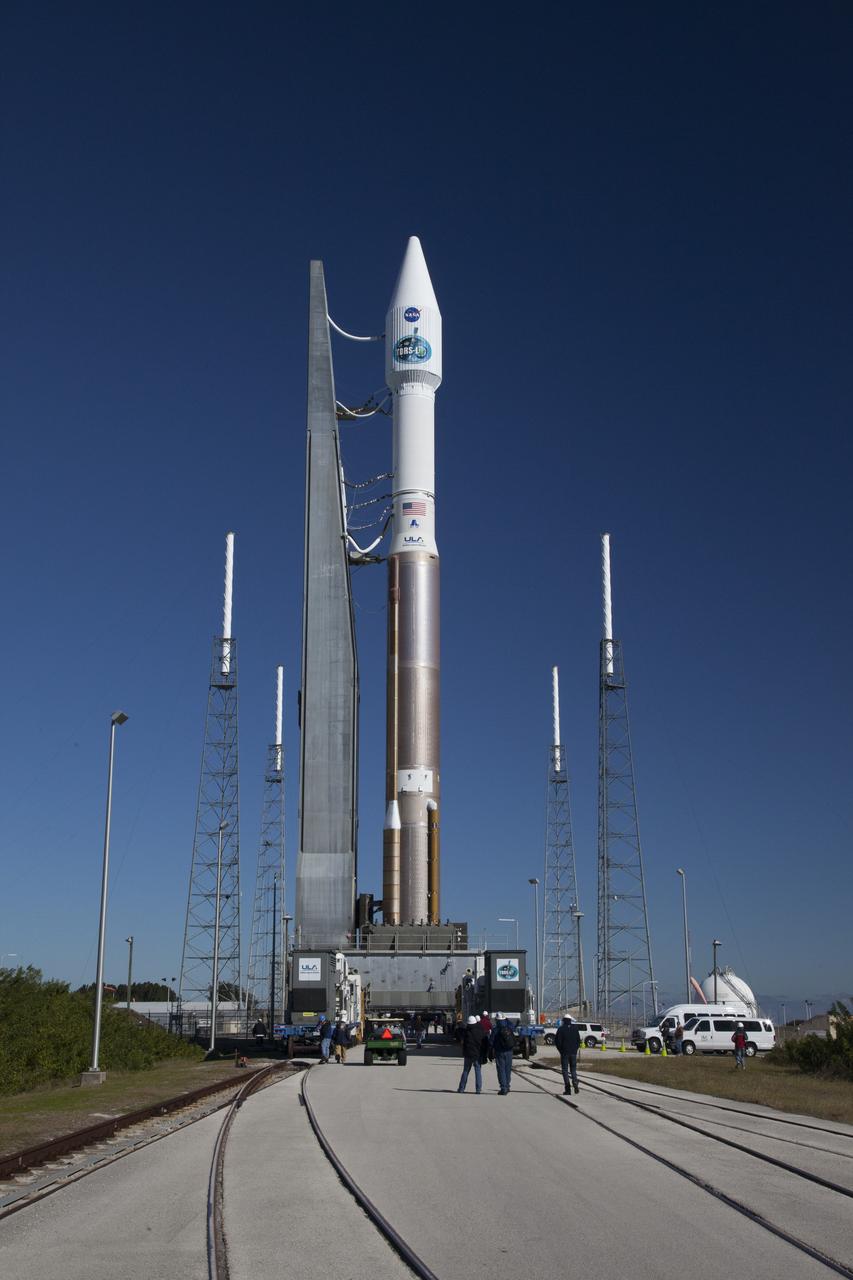
CAPE CANAVERAL, Fla. – At Cape Canaveral Air Force Station's Launch Complex 41, a United Launch Alliance Atlas V with NASA's Tracking and Data Relay Satellite, or TDRS-L, spacecraft atop, rolls out to the launch pad. The TDRS-L spacecraft is the second of three new satellites designed to ensure vital operational continuity for NASA by expanding the lifespan of the Tracking and Data Relay Satellite System TDRSS fleet, which consists of eight satellites in geosynchronous orbit. The spacecraft provide tracking, telemetry, command and high bandwidth data return services for numerous science and human exploration missions orbiting Earth. These include NASA's Hubble Space Telescope and the International Space Station. TDRS-L has a high-performance solar panel designed for more spacecraft power to meet the growing S-band communications requirements. TDRSS is one of NASA Space Communication and Navigation’s SCaN three networks providing space communications to NASA’s missions. For more information more about TDRS-L, visit: http://www.nasa.gov/tdrs To learn more about SCaN, visit: www.nasa.gov/scan Photo credit: NASA/Daniel Casper
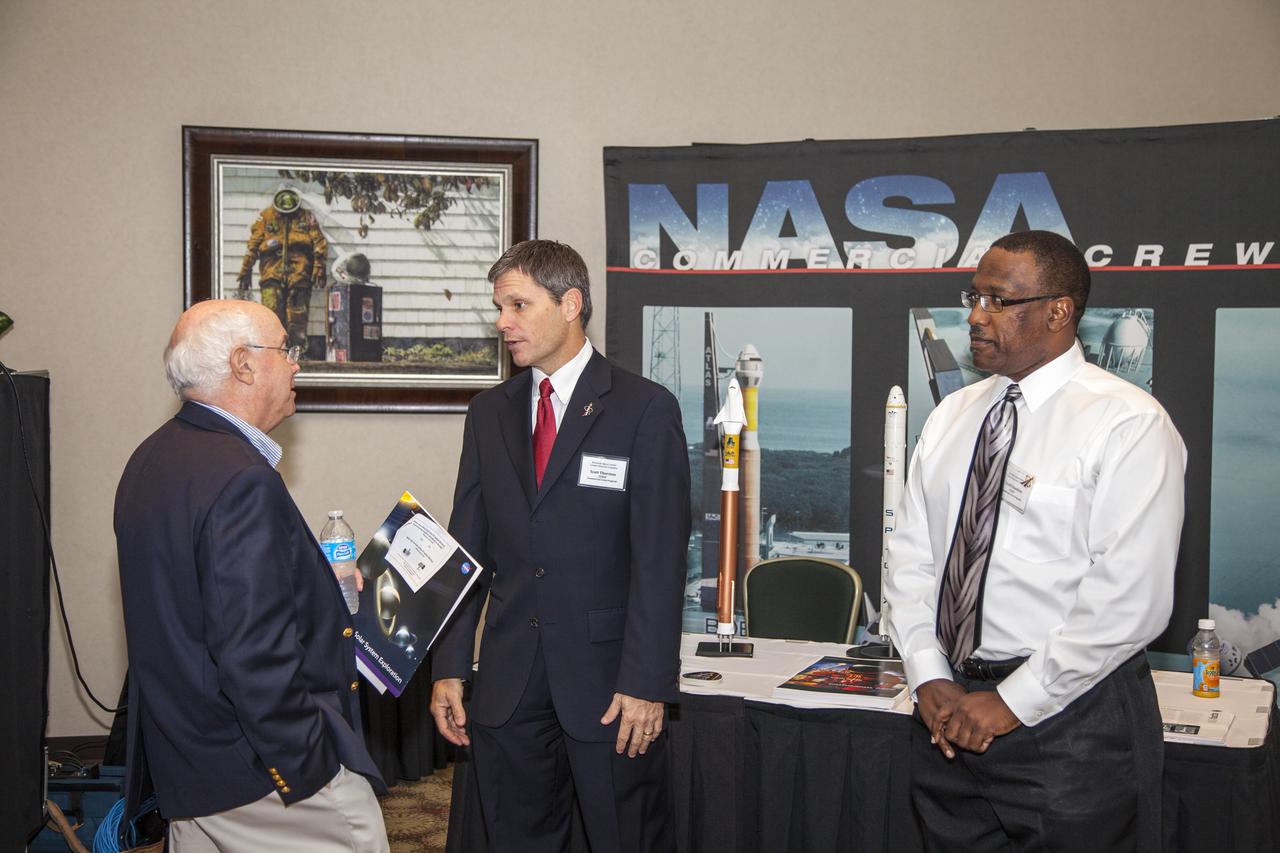
CAPE CANAVERAL, Fla. - Community leaders, business executives, educators, and state and local government leaders were updated on NASA Kennedy Space Center programs and accomplishments during Center Director Bob Cabana’s Center Director Update at the Debus Center at the Kennedy Space Center Visitor Complex in Florida. An attendee talks with Scott Thurston, Kennedy deputy of the spacecraft office at the Commercial Crew Program display. Attendees talked with Cabana and other senior Kennedy managers and visited displays featuring updates on Kennedy programs and projects, including International Space Station, Commercial Crew, Ground System Development and Operations, Launch Services, Center Planning and Development, Technology, KSC Swamp Works and NASA Education. The morning concluded with a tour of the new Space Shuttle Atlantis exhibit at the visitor complex. For more information, visit http://www.nasa.gov/kennedy. Photo credit: NASA/Daniel Casper

CAPE CANAVERAL, Fla. – At Cape Canaveral Air Force Station's Launch Complex 41, a United Launch Alliance Atlas V with NASA's Tracking and Data Relay Satellite, or TDRS-L, spacecraft atop, arrives at the launch pad. The TDRS-L spacecraft is the second of three new satellites designed to ensure vital operational continuity for NASA by expanding the lifespan of the Tracking and Data Relay Satellite System TDRSS fleet, which consists of eight satellites in geosynchronous orbit. The spacecraft provide tracking, telemetry, command and high bandwidth data return services for numerous science and human exploration missions orbiting Earth. These include NASA's Hubble Space Telescope and the International Space Station. TDRS-L has a high-performance solar panel designed for more spacecraft power to meet the growing S-band communications requirements. TDRSS is one of NASA Space Communication and Navigation’s SCaN three networks providing space communications to NASA’s missions. For more information more about TDRS-L, visit: http://www.nasa.gov/tdrs To learn more about SCaN, visit: www.nasa.gov/scan Photo credit: NASA/Daniel Casper
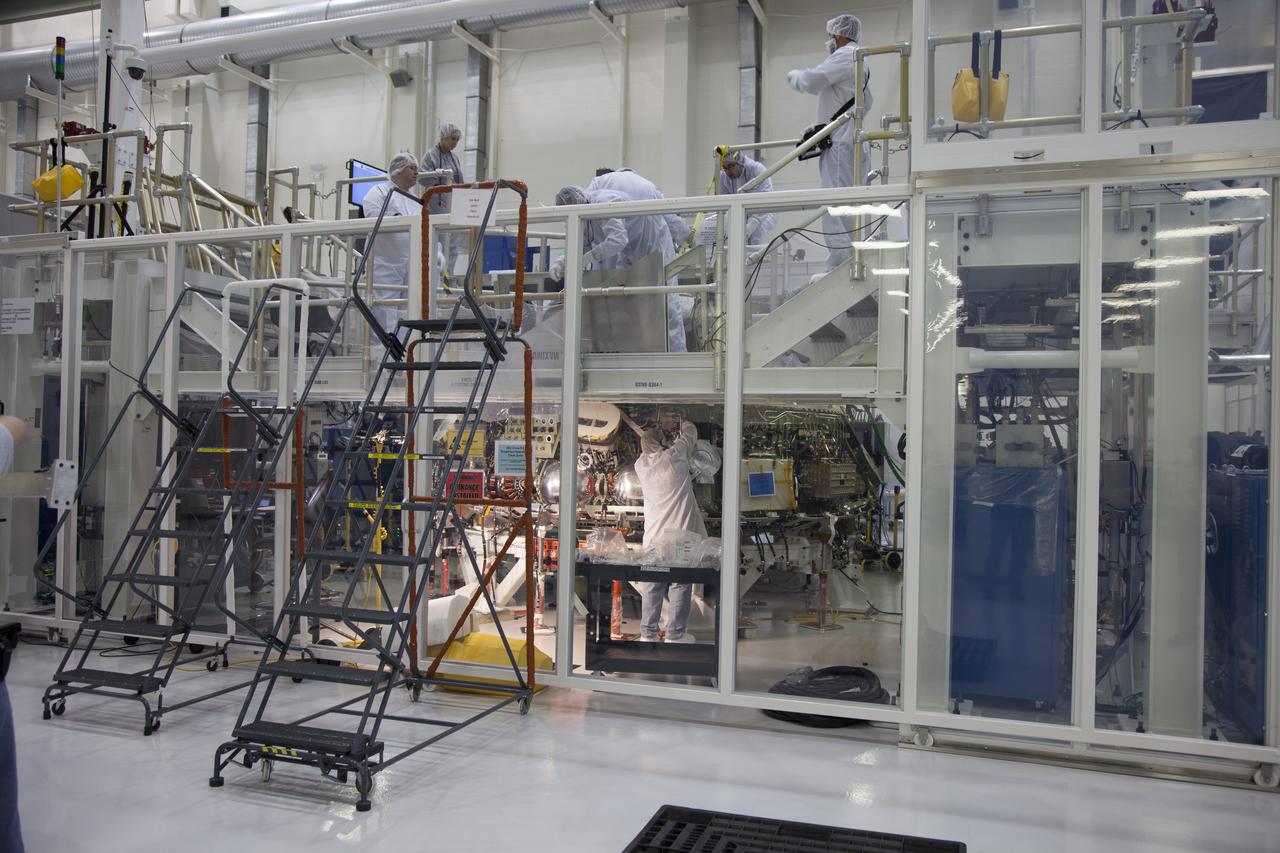
CAPE CANAVERAL, Fla. – Inside the Operations and Checkout Building high bay at NASA’s Kennedy Space Center in Florida, engineers work on the Orion crew module inside a temporary clean room. Welding on the crew module was completed this month. The Orion spacecraft is being prepared for its first unpiloted flight test, Exploration Flight Test-1, or EFT-1, scheduled for launch atop a Delta IV rocket in September 2014. The Orion spacecraft is designed to carry astronauts to destinations not yet explored by humans. It will have emergency abort capability, sustain the crew during space travel and provide safe re-entry from deep space return velocities. Orion is scheduled to launch atop NASA’s Space Launch System rocket in 2017. For more information, visit http://www.nasa.gov/orion. Photo credit: NASA/Daniel Casper
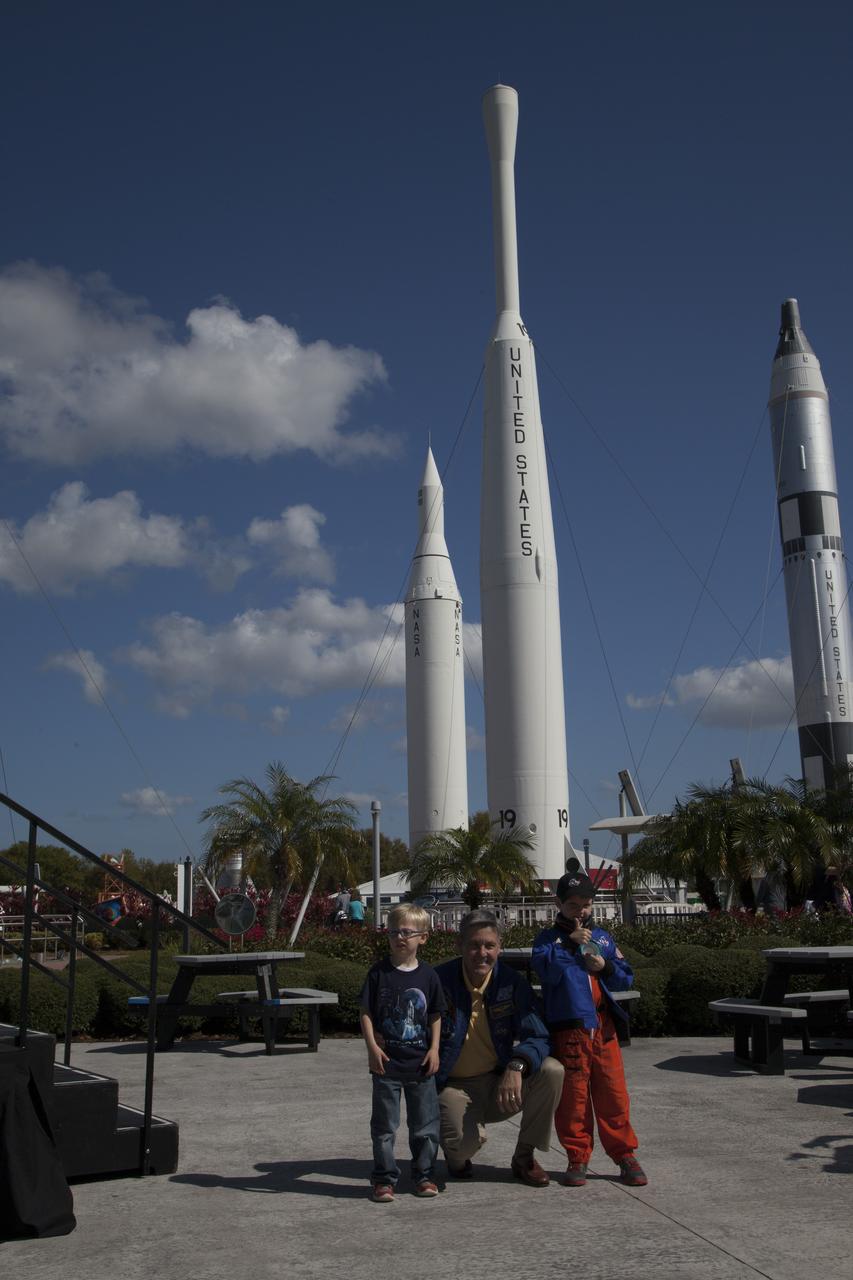
CAPE CANAVERAL, Fla. – Six-year-old Connor Johnson gives a big thumbs up following a ceremony in the Kennedy Space Center Visitor Complex' Rocket Garden during which NASA Kennedy Space Center Director and former astronaut Robert Cabana presented him with space mementos to inspire the youngster to continue the dream he has had since the age of three of becoming an astronaut. From left are Connor's brother Liam, Cabana and Connor. Connor, of Denver, Colo., gained national attention for having the "right stuff" when he launched an online petition on the White House website in December 2013 to save NASA’s funding from budget cuts. One of the mementos, a piece of space history, was a bolt used to hold the International Space Station's Unity module in place in space shuttle Endeavour's payload bay on the STS-88 mission, the first station assembly mission and Cabana's fourth and final spaceflight. Connor and his family were the guests of Delaware North Companies Parks & Resorts, the concessionaire managing the visitor complex. During his visit, Connor had the opportunity to meet with astronauts, see space vehicles and witness the Robot Rocket Rally underway in the complex' Rocket Garden over the weekend. To learn more about the educational activities available daily at the Kennedy Space Center Visitor Complex, visit http://www.kennedyspacecenter.com. Photo credit: NASA/Dan Casper
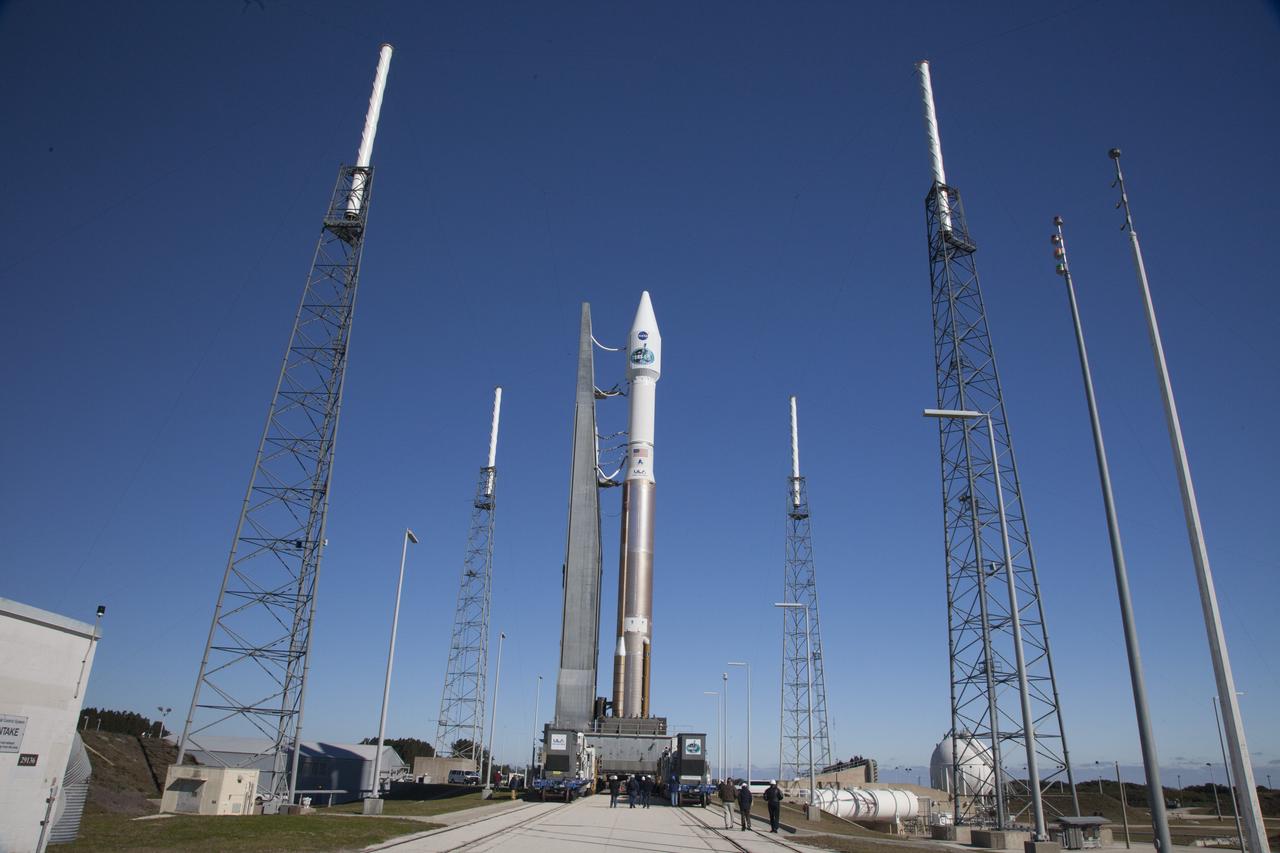
CAPE CANAVERAL, Fla. – At Cape Canaveral Air Force Station's Launch Complex 41, a United Launch Alliance Atlas V with NASA's Tracking and Data Relay Satellite, or TDRS-L, spacecraft atop, arrives at the launch pad. The TDRS-L spacecraft is the second of three new satellites designed to ensure vital operational continuity for NASA by expanding the lifespan of the Tracking and Data Relay Satellite System TDRSS fleet, which consists of eight satellites in geosynchronous orbit. The spacecraft provide tracking, telemetry, command and high bandwidth data return services for numerous science and human exploration missions orbiting Earth. These include NASA's Hubble Space Telescope and the International Space Station. TDRS-L has a high-performance solar panel designed for more spacecraft power to meet the growing S-band communications requirements. TDRSS is one of NASA Space Communication and Navigation’s SCaN three networks providing space communications to NASA’s missions. For more information more about TDRS-L, visit: http://www.nasa.gov/tdrs To learn more about SCaN, visit: www.nasa.gov/scan Photo credit: NASA/Daniel Casper
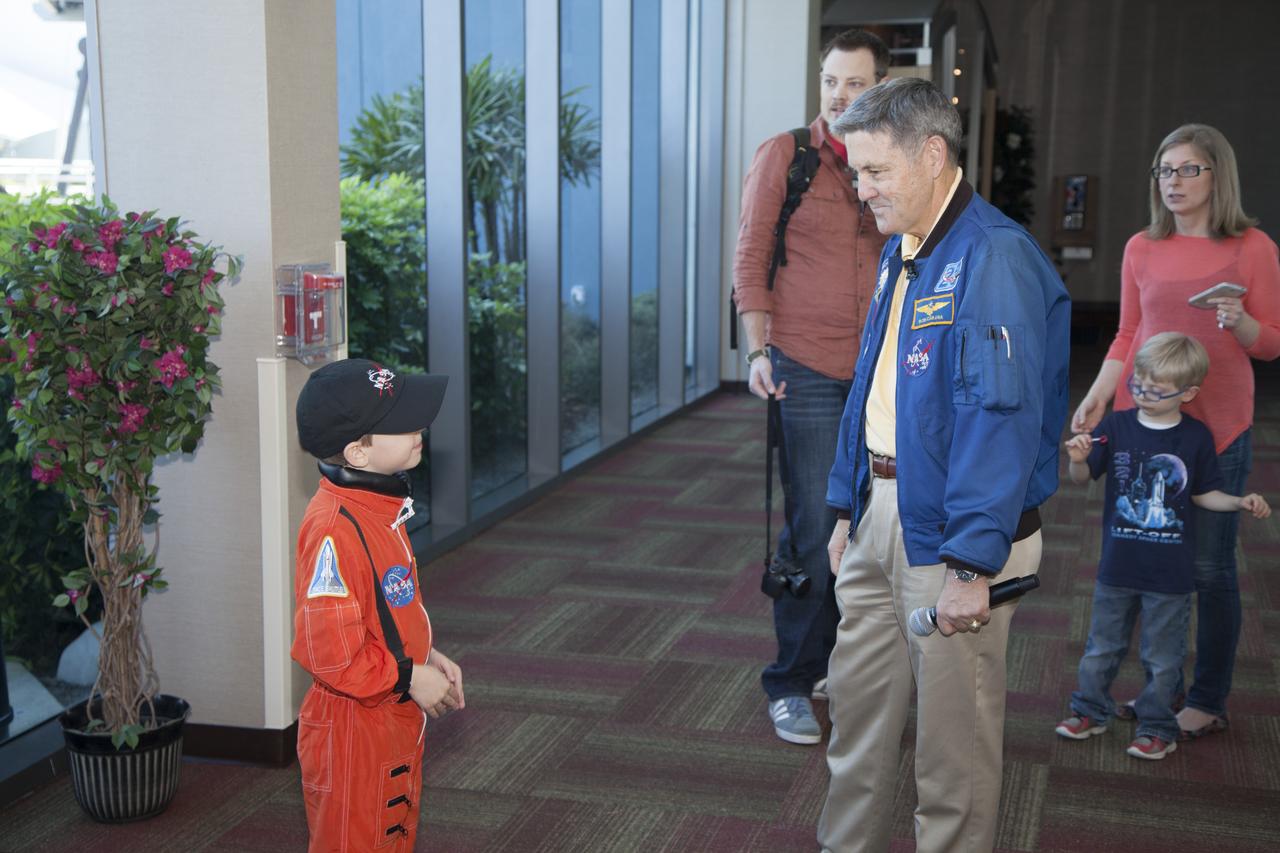
CAPE CANAVERAL, Fla. – Six-year-old Connor Johnson, left, is welcomed to the Kennedy Space Center Visitor Complex in Florida by NASA Kennedy Space Center Director and former astronaut Robert Cabana for a ceremony in which he will present Connor with space mementos to inspire the youngster to continue the dream he has had since the age of three of becoming an astronaut. Connor is accompanied by his parents Eric and Lauren and younger brother Liam, in the background. Connor, of Denver, Colo., gained national attention for having the "right stuff" when he launched an online petition on the White House website in December 2013 to save NASA’s funding from budget cuts. One of the mementos, a piece of space history, was a bolt used to hold the International Space Station's Unity module in place in space shuttle Endeavour's payload bay on the STS-88 mission, the first station assembly mission and Cabana's fourth and final spaceflight. Connor and his family were the guests of Delaware North Companies Parks & Resorts, the concessionaire managing the visitor complex. During his visit, Connor had the opportunity to meet with astronauts, see space vehicles and witness the Robot Rocket Rally underway in the complex' Rocket Garden over the weekend. To learn more about the educational activities available daily at the Kennedy Space Center Visitor Complex, visit http://www.kennedyspacecenter.com. Photo credit: NASA/Dan Casper
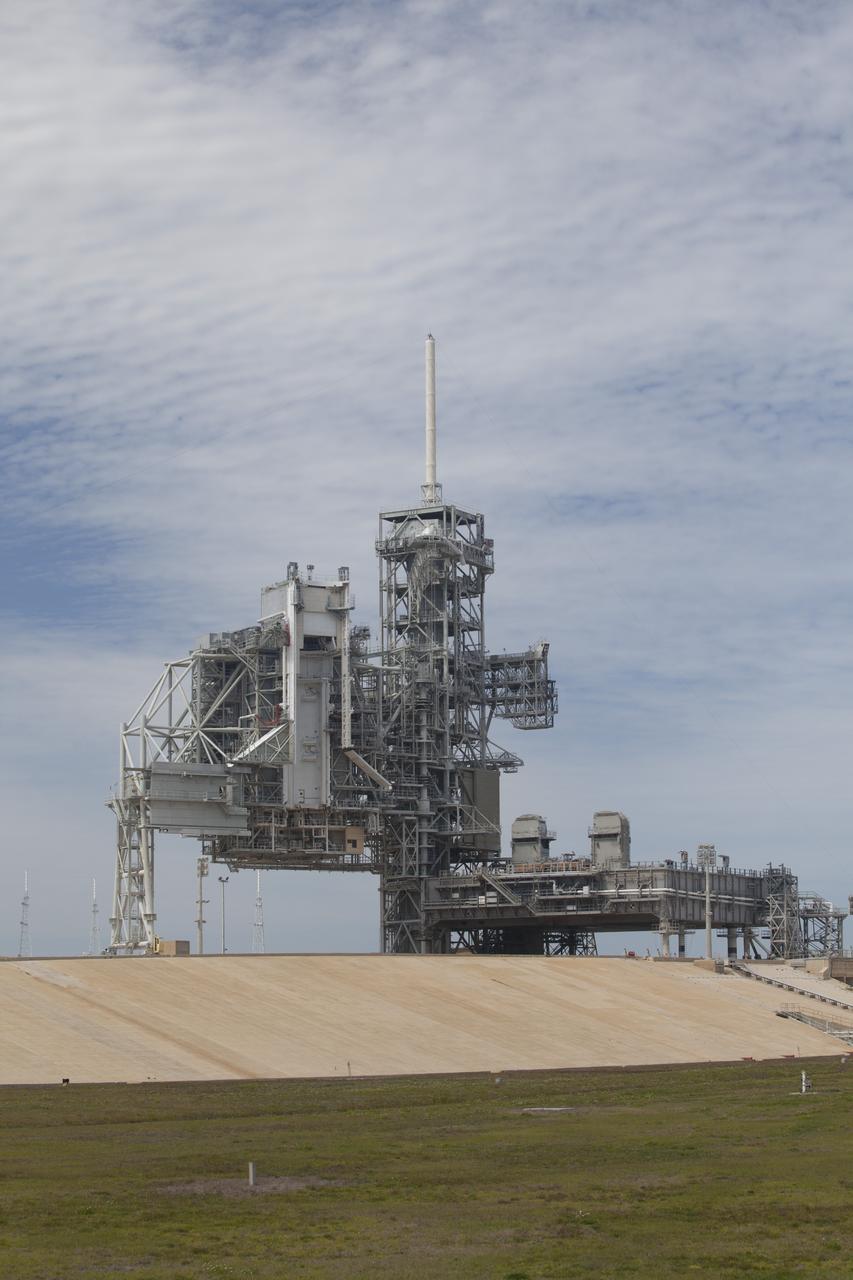
CAPE CANAVERAL, Fla. -- At NASA's Kennedy Space Center in Florida, launch pad 39A looks much like it did after the liftoff of STS-135, the final space shuttle mission, on July 8, 2011. The mobile launcher platform remains in place next to the fixed service structure and rotating service structure. Both launch pad 39A and 39B pad 39A was originally built for the Apollo/Saturn V rockets that launched American astronauts on their historic journeys to the moon and later modified to support the 30-year shuttle program. To learn more about Launch Pad 39A visit: http://www.nasa.gov/mission_pages/shuttle/launch/launch-complex39-toc.html Photo credit: NASA/Dan Casper
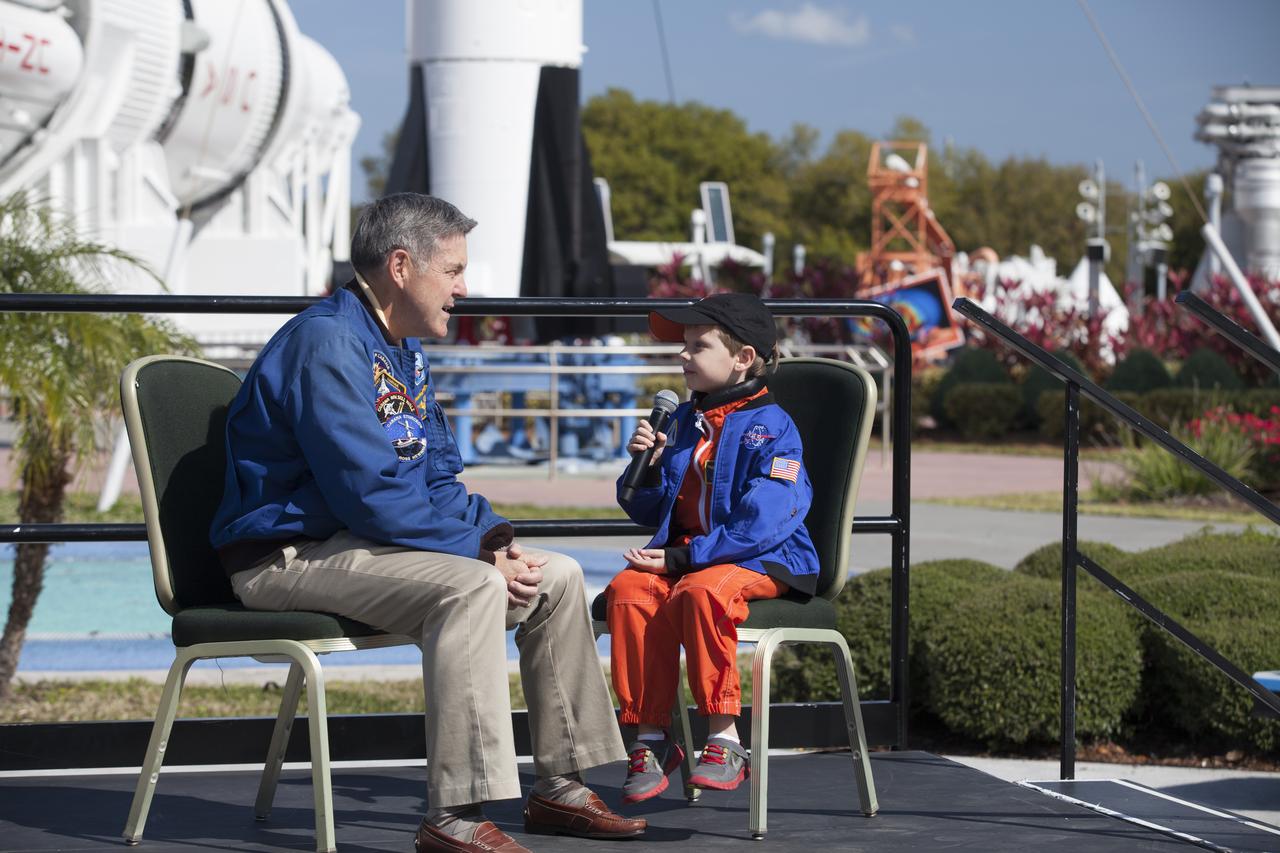
CAPE CANAVERAL, Fla. – Six-year-old Connor Johnson, right, discusses his interest in the space program with NASA Kennedy Space Center Director and former astronaut Robert Cabana during a ceremony in the Kennedy Space Center Visitor Complex' Rocket Garden. During the ceremony, Cabana will present Connor with mementos to inspire the youngster to continue the dream he has had since the age of three of becoming an astronaut. Connor, of Denver, Colo., gained national attention for having the "right stuff" when he launched an online petition on the White House website in December 2013 to save NASA’s funding from budget cuts. One of the mementos, a piece of space history, was a bolt used to hold the International Space Station's Unity module in place in space shuttle Endeavour's payload bay on the STS-88 mission, the first station assembly mission and Cabana's fourth and final spaceflight. Connor and his family were the guests of Delaware North Companies Parks & Resorts, the concessionaire managing the visitor complex. During his visit, Connor had the opportunity to meet with astronauts, see space vehicles and witness the Robot Rocket Rally underway in the complex' Rocket Garden over the weekend. To learn more about the educational activities available daily at the Kennedy Space Center Visitor Complex, visit http://www.kennedyspacecenter.com. Photo credit: NASA/Dan Casper
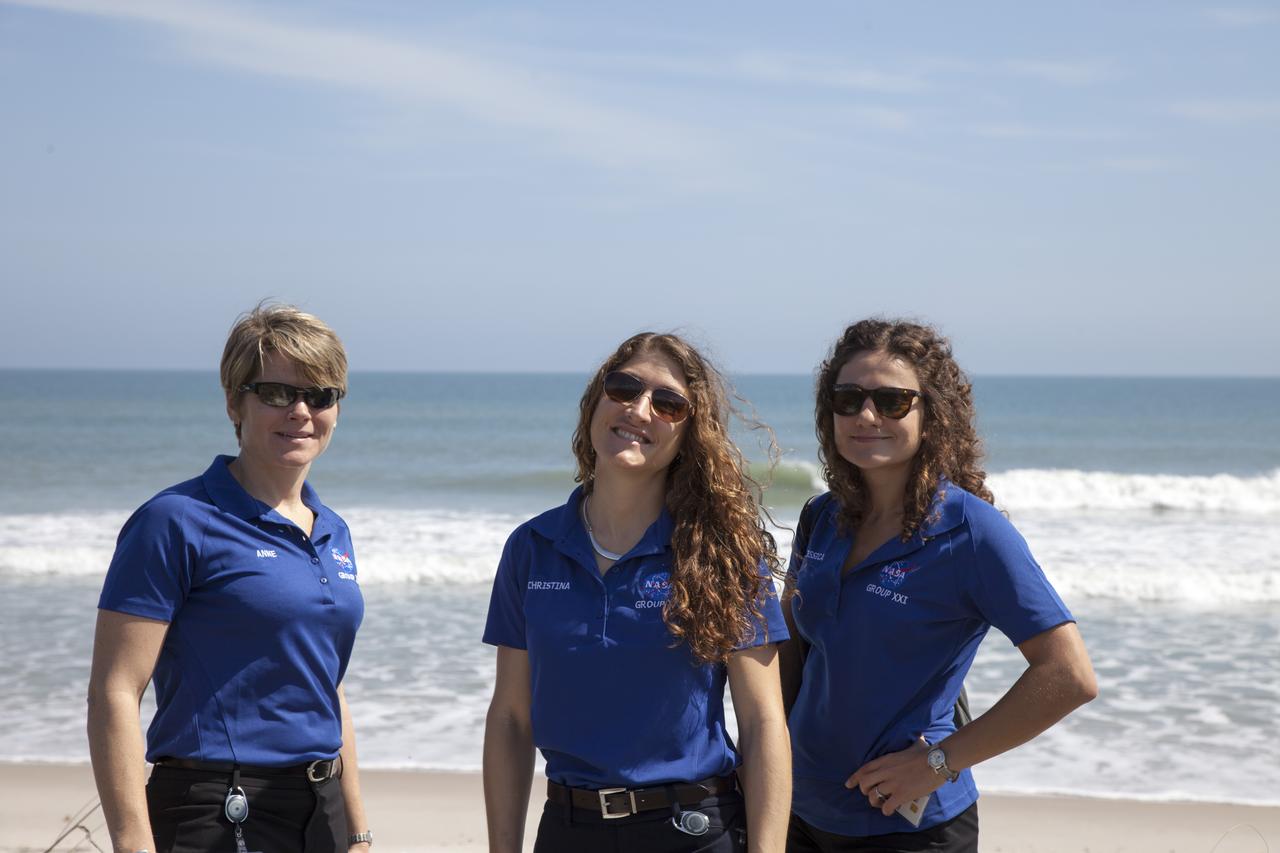
CAPE CANAVERAL, Fla. - NASA astronaut candidates, from left, Anne McClain, Christina Hammock and Jessica Meir stand on the beach overlooking the Atlantic Ocean at the Beach House at NASA's Kennedy Space Center. The Beach House is a traditional gathering place for astronauts before they fly into space. The astronaut class of 2013 was selected by NASA after an extensive year-and-a-half search. The new group will help the agency push the boundaries of exploration and travel to new destinations in the solar system. To learn more about the astronaut class of 2013, visit: http://www.nasa.gov/astronauts/2013astroclass.html Photo credit: NASA/Daniel Casper
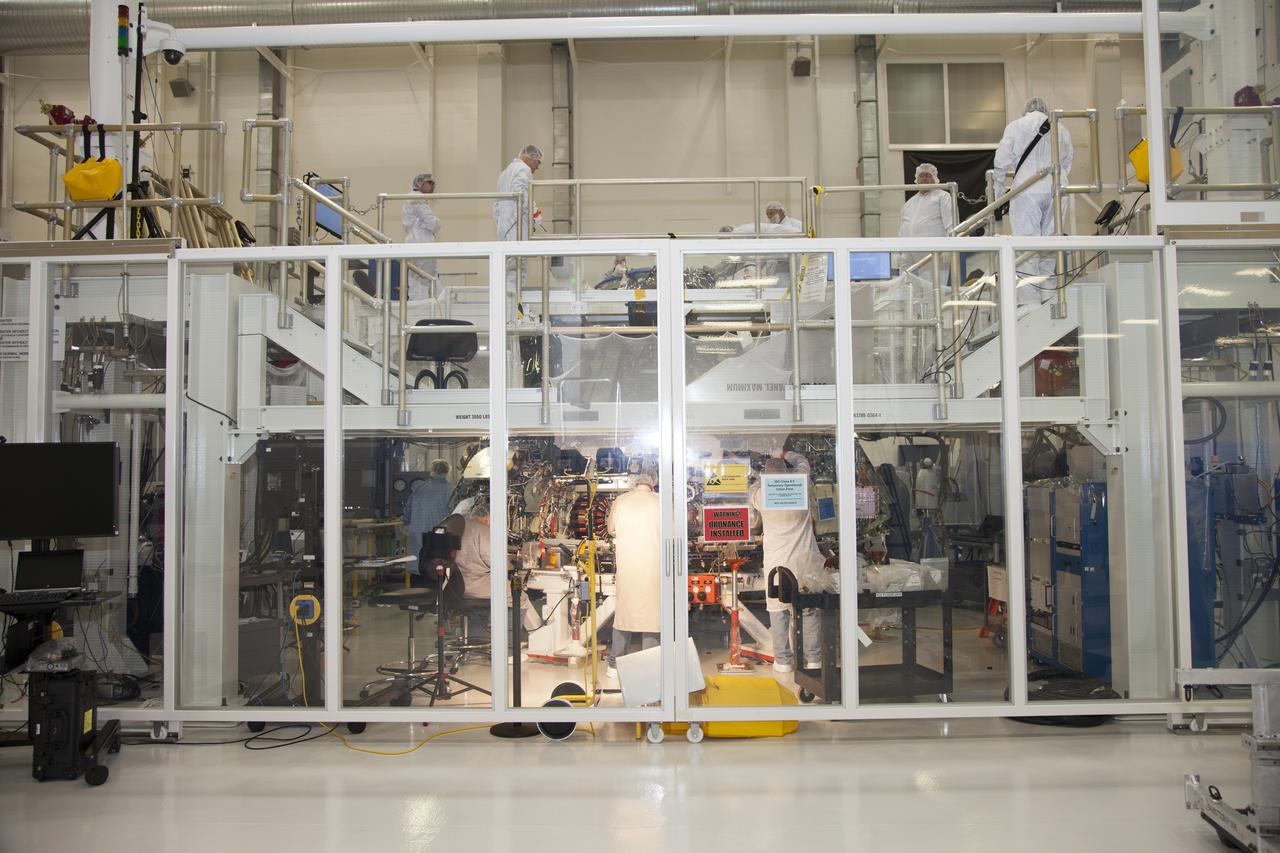
CAPE CANAVERAL, Fla. – Inside the Operations and Checkout Building high bay at NASA’s Kennedy Space Center in Florida, engineers work on the Orion crew module inside a temporary clean room. Welding on the crew module was completed this month. The Orion spacecraft is being prepared for its first unpiloted flight test, Exploration Flight Test-1, or EFT-1, scheduled for launch atop a Delta IV rocket in September 2014. The Orion spacecraft is designed to carry astronauts to destinations not yet explored by humans. It will have emergency abort capability, sustain the crew during space travel and provide safe re-entry from deep space return velocities. Orion is scheduled to launch atop NASA’s Space Launch System rocket in 2017. For more information, visit http://www.nasa.gov/orion. Photo credit: NASA/Daniel Casper
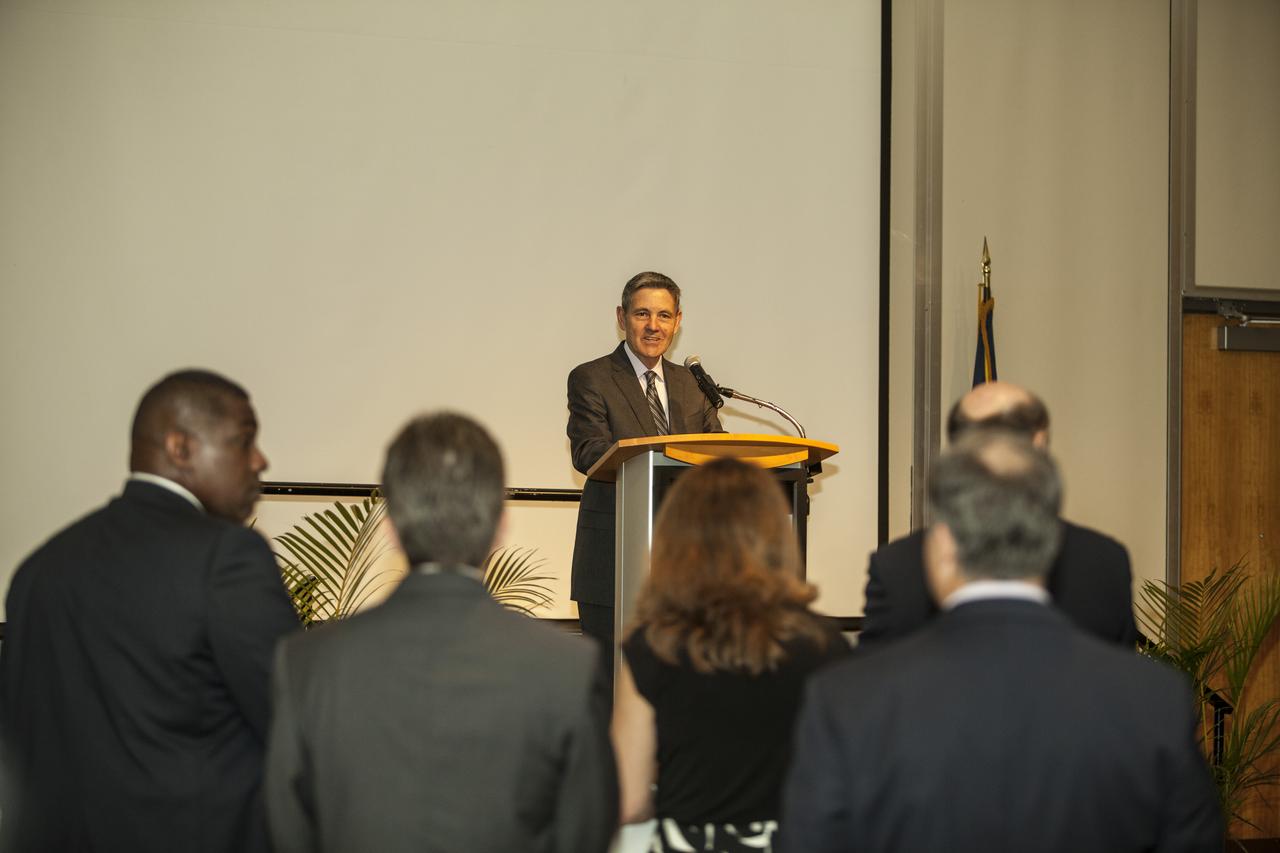
CAPE CANAVERAL, Fla. – NASA Kennedy Space Center Director Robert Cabana briefs the community leaders, business executives, educators, community organizers, and state and local government leaders attending the Kennedy Space Center Director in the Kennedy Space Center Visitor Complex Debus Center. Attendees talked with Cabana and other senior Kennedy managers and visited displays featuring updates on Kennedy programs and projects, including International Space Station, Commercial Crew, Ground System Development and Operations, Launch Services, Center Planning and Development, Technology, KSC Swamp Works and NASA Education. The morning concluded with a tour of the new Space Shuttle Atlantis exhibit at the visitor complex. For more information, visit http://www.nasa.gov/kennedy. Photo credit: NASA/Daniel Casper
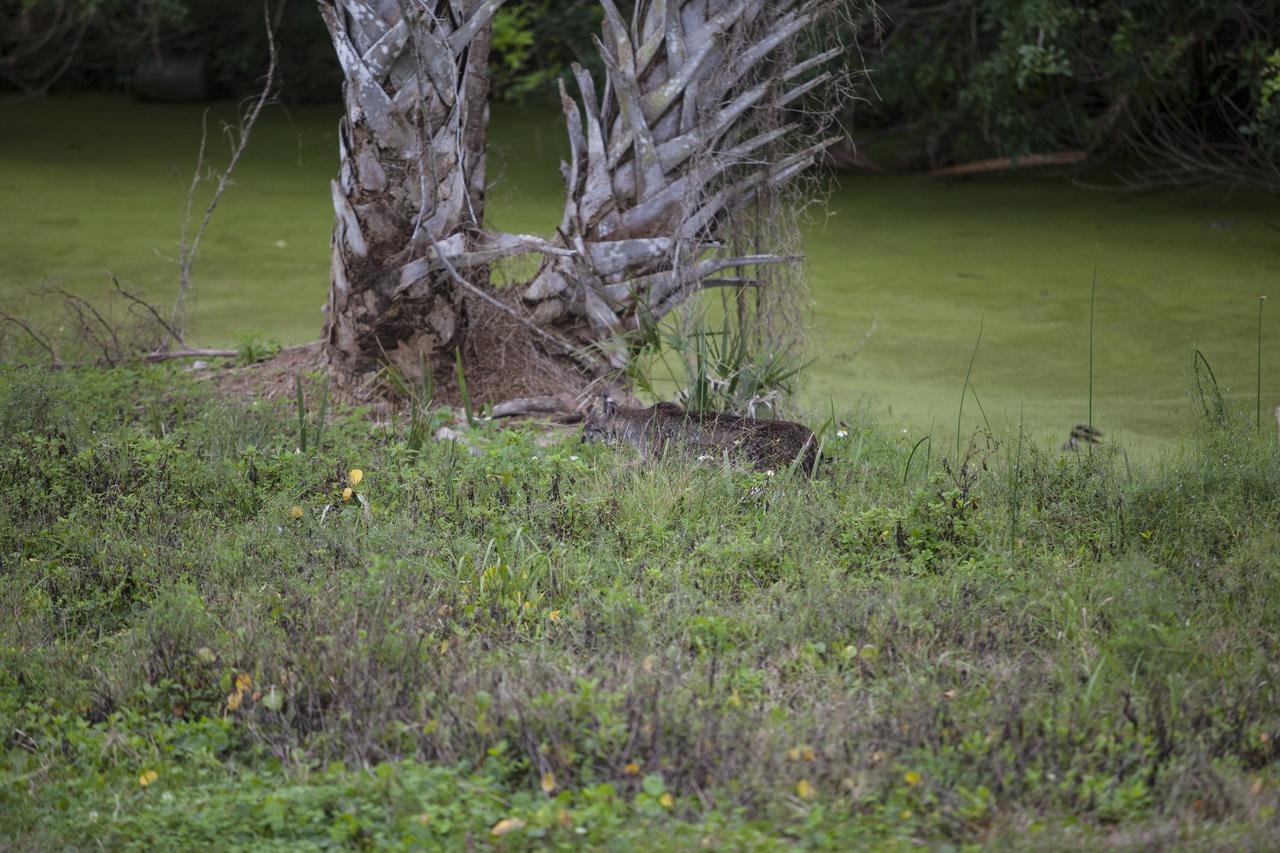
CAPE CANAVERAL, Fla. – A bobcat walks along a canal near the NASA News Center at Kennedy Space Center in Florida. The center shares a boundary with the Merritt Island National Wildlife Refuge. The refuge encompasses 140,000 acres that are a habitat for more than 330 species of birds, 31 mammals, 117 fishes, and 65 amphibians and reptiles. Photo credit: NASA/Daniel Casper
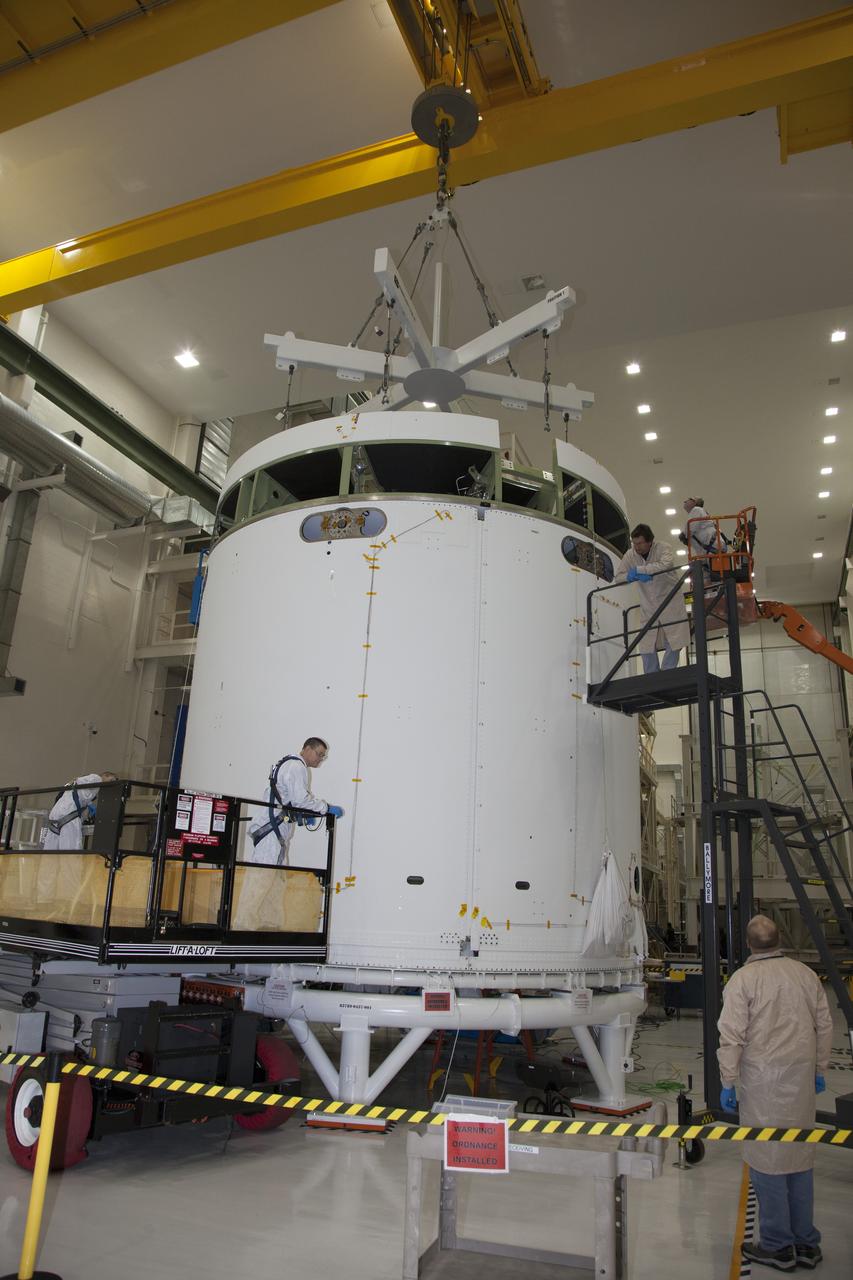
CAPE CANAVERAL, Fla. - Inside the Operations and Checkout Building high bay at NASA’s Kennedy Space Center in Florida, a crane lowers a ground support tool toward the service module for the Orion spacecraft. The service module will be transferred to a static test stand. Orion is the exploration spacecraft designed to carry astronauts to destinations not yet explored by humans, including an asteroid and Mars. It will have emergency abort capability, sustain the crew during space travel and provide safe re-entry from deep space return velocities. The first unpiloted test flight of the Orion is scheduled to launch in 2014 atop a Delta IV rocket and in 2017 on NASA’s Space Launch System rocket. For more information, visit http://www.nasa.gov/orion. Photo credit: NASA/Daniel Casper
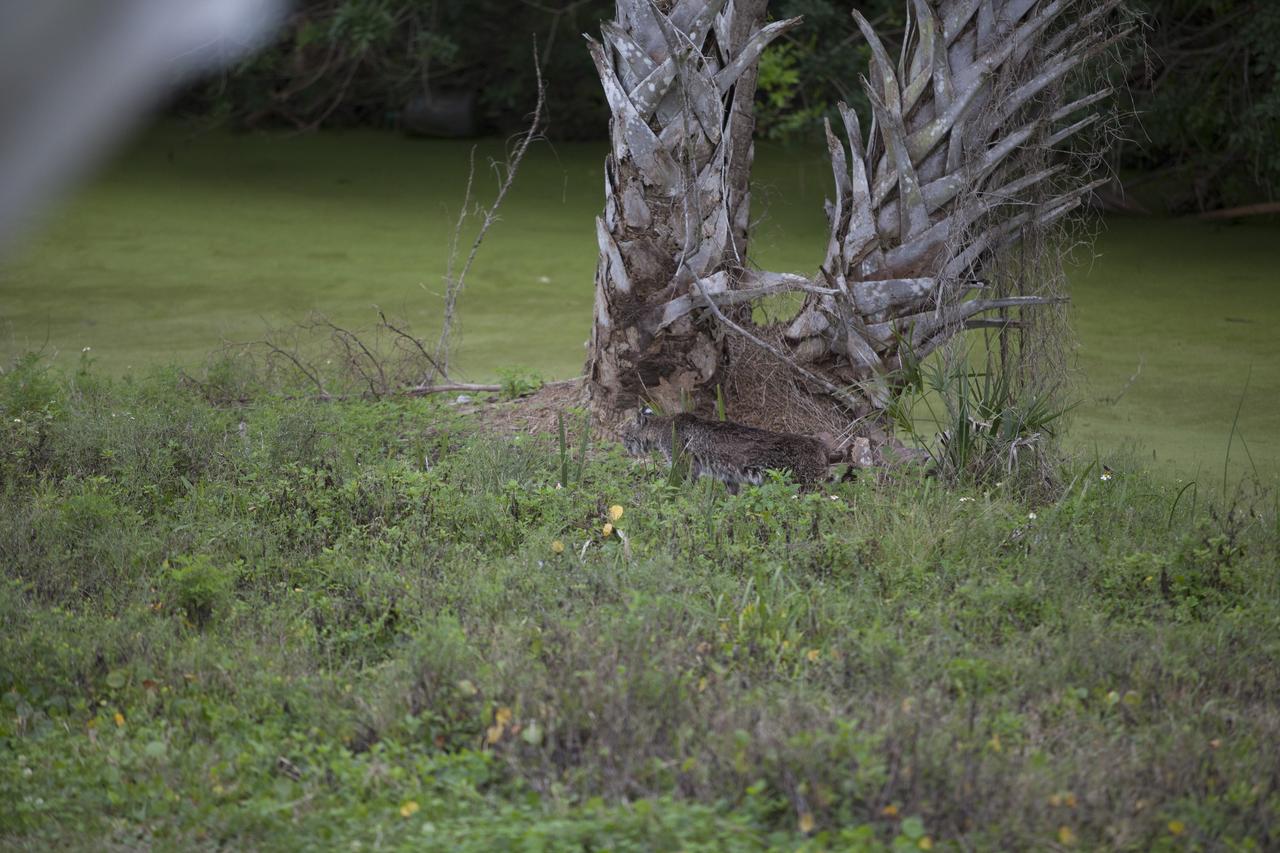
CAPE CANAVERAL, Fla. – A bobcat walks along a canal near the NASA News Center at Kennedy Space Center in Florida. The center shares a boundary with the Merritt Island National Wildlife Refuge. The refuge encompasses 140,000 acres that are a habitat for more than 330 species of birds, 31 mammals, 117 fishes, and 65 amphibians and reptiles. Photo credit: NASA/Daniel Casper. Note: Selected image is cropped

CAPE CANAVERAL, Fla. – At Cape Canaveral Air Force Station's Launch Complex 41, a United Launch Alliance Atlas V with NASA's Tracking and Data Relay Satellite, or TDRS-L, spacecraft atop, is being prepared for rollout from the Vertical Integration Facility to the launch pad. The TDRS-L spacecraft is the second of three new satellites designed to ensure vital operational continuity for NASA by expanding the lifespan of the Tracking and Data Relay Satellite System TDRSS fleet, which consists of eight satellites in geosynchronous orbit. The spacecraft provide tracking, telemetry, command and high bandwidth data return services for numerous science and human exploration missions orbiting Earth. These include NASA's Hubble Space Telescope and the International Space Station. TDRS-L has a high-performance solar panel designed for more spacecraft power to meet the growing S-band communications requirements. TDRSS is one of NASA Space Communication and Navigation’s SCaN three networks providing space communications to NASA’s missions. For more information more about TDRS-L, visit: http://www.nasa.gov/tdrs To learn more about SCaN, visit: www.nasa.gov/scan Photo credit: NASA/Daniel Casper
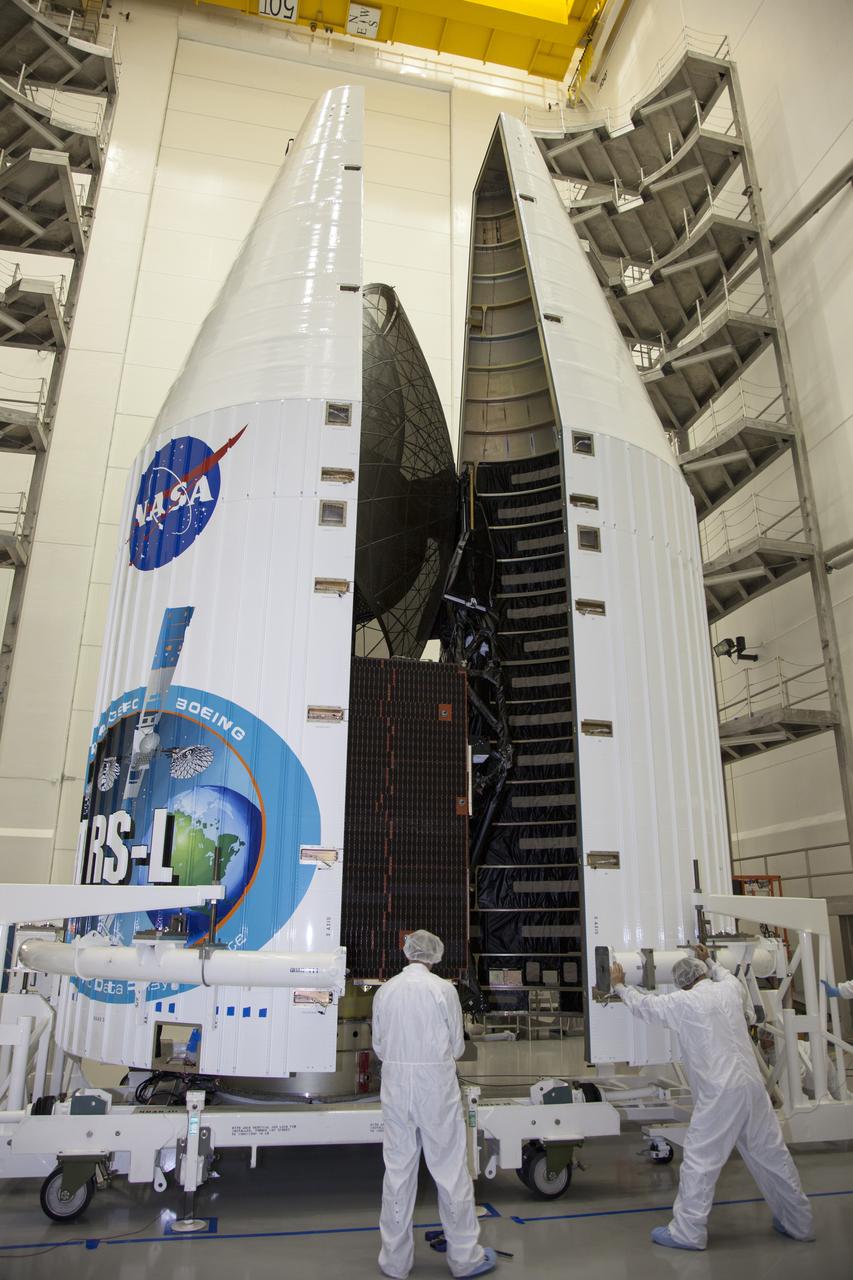
TITUSVILLE, Fla. – Inside the Astrotech payload processing facility in Titusville, United Launch Alliance engineers and technicians encapsulate the Tracking and Data Relay Satellite, or TDRS-L, spacecraft in its payload fairing. TDRS-L will then be transported to Launch Complex 41 at Cape Canaveral Air Force Station. The TDRS-L satellite will be a part of the second of three next-generation spacecraft designed to ensure vital operational continuity for the NASA Space Network. It is scheduled to launch from Cape Canaveral's Space Launch Complex 41 atop a United Launch Alliance Atlas V rocket on January 23, 2014. The current Tracking and Data Relay Satellite system consists of eight in-orbit satellites distributed to provide near continuous information relay contact with orbiting spacecraft ranging from the International Space Station and Hubble Space Telescope to the array of scientific observatories. For more information, visit: http://www.nasa.gov/mission_pages/tdrs/home/index.html
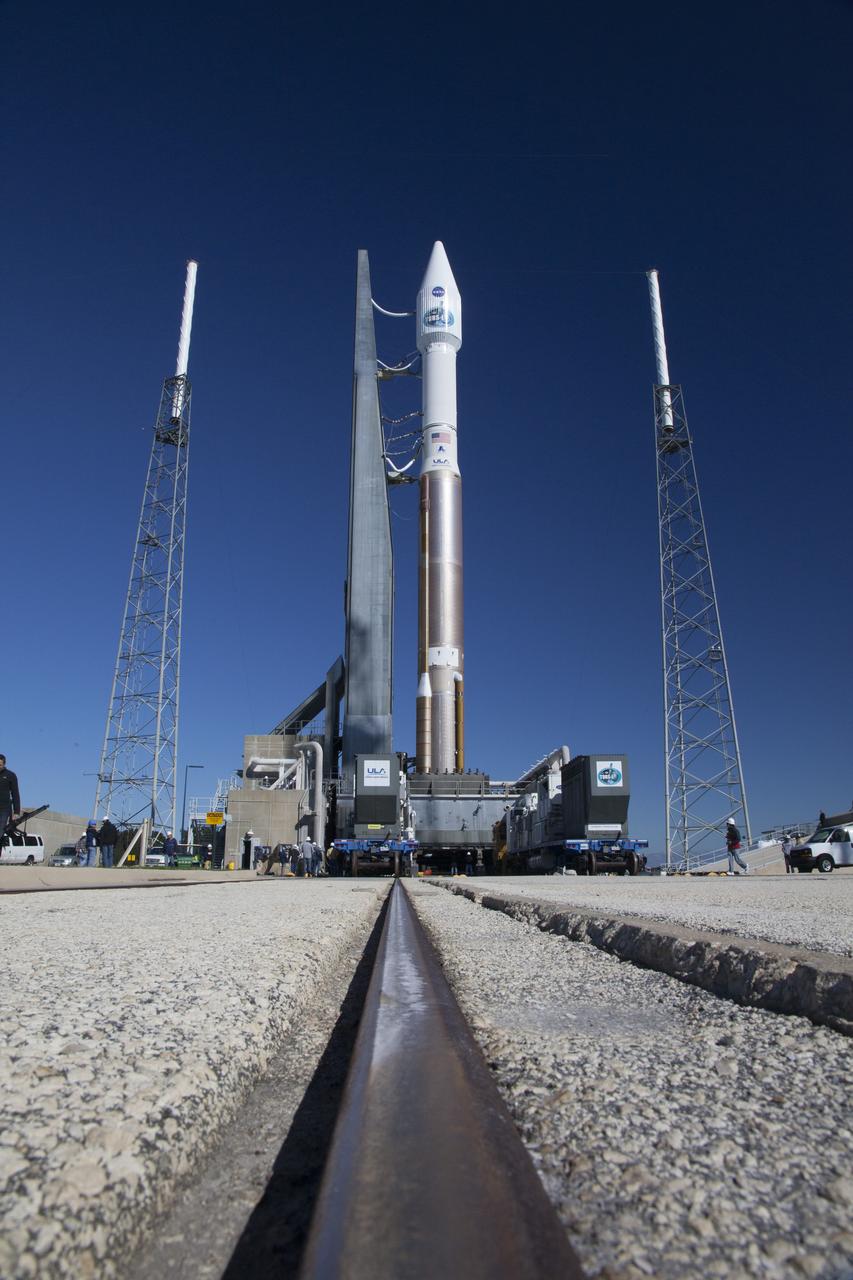
CAPE CANAVERAL, Fla. – At Cape Canaveral Air Force Station's Launch Complex 41, a United Launch Alliance Atlas V with NASA's Tracking and Data Relay Satellite, or TDRS-L, spacecraft atop, arrives at the launch pad. The TDRS-L spacecraft is the second of three new satellites designed to ensure vital operational continuity for NASA by expanding the lifespan of the Tracking and Data Relay Satellite System TDRSS fleet, which consists of eight satellites in geosynchronous orbit. The spacecraft provide tracking, telemetry, command and high bandwidth data return services for numerous science and human exploration missions orbiting Earth. These include NASA's Hubble Space Telescope and the International Space Station. TDRS-L has a high-performance solar panel designed for more spacecraft power to meet the growing S-band communications requirements. TDRSS is one of NASA Space Communication and Navigation’s SCaN three networks providing space communications to NASA’s missions. For more information more about TDRS-L, visit: http://www.nasa.gov/tdrs To learn more about SCaN, visit: www.nasa.gov/scan Photo credit: NASA/Daniel Casper
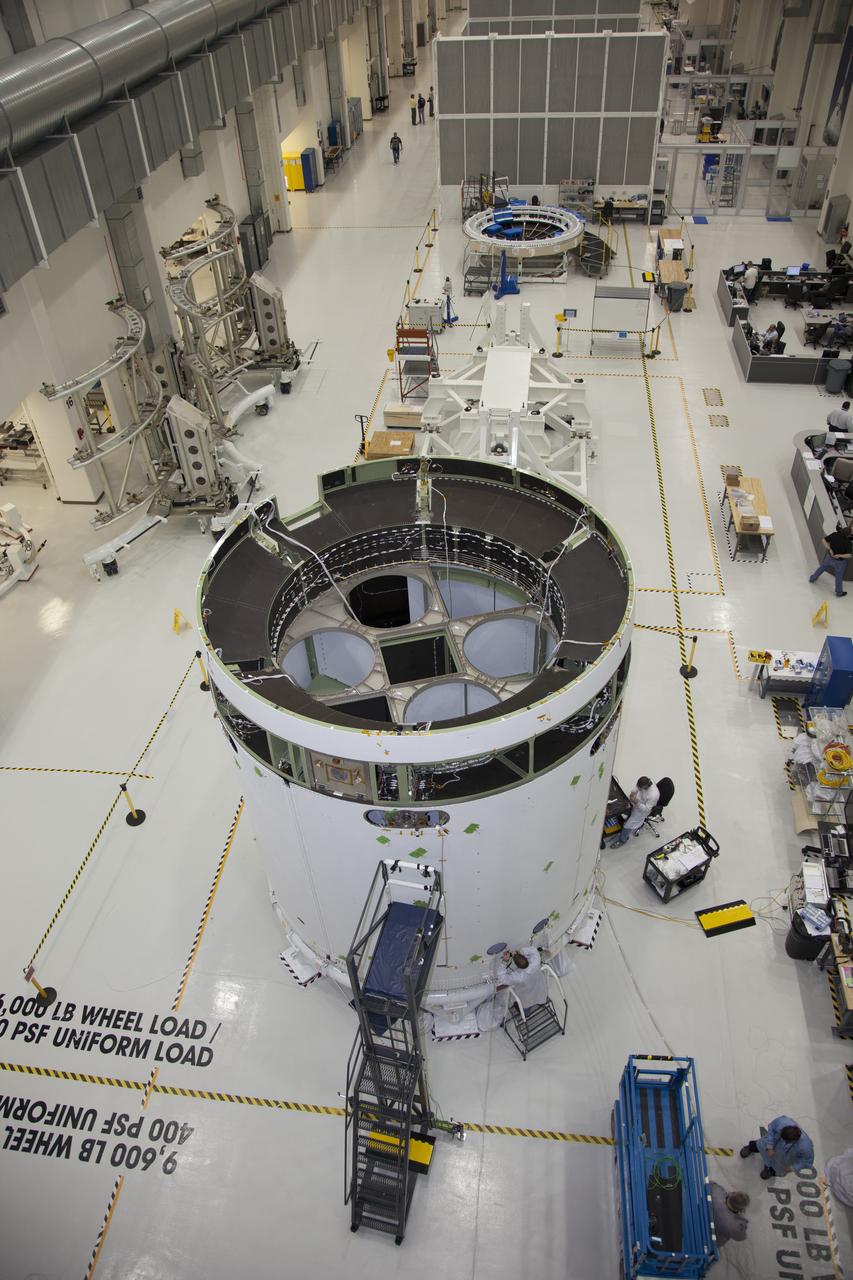
CAPE CANAVERAL, Fla. – A view from above inside the Operations and Checkout Building high bay at NASA’s Kennedy Space Center in Florida, shows the service module for the Orion spacecraft secured to a work stand. Technicians are completing the installation of the three fairings around the service module that will protect it during launch. The Orion spacecraft is being prepared for its first unpiloted flight test, Exploration Flight Test-1, or EFT-1, scheduled for launch atop a Delta IV rocket in September 2014. The Orion spacecraft is designed to carry astronauts to destinations not yet explored by humans. It will have emergency abort capability, sustain the crew during space travel and provide safe re-entry from deep space return velocities. Orion is scheduled to launch atop NASA’s Space Launch System rocket in 2017. For more information, visit http://www.nasa.gov/orion. Photo credit: NASA/Daniel Casper
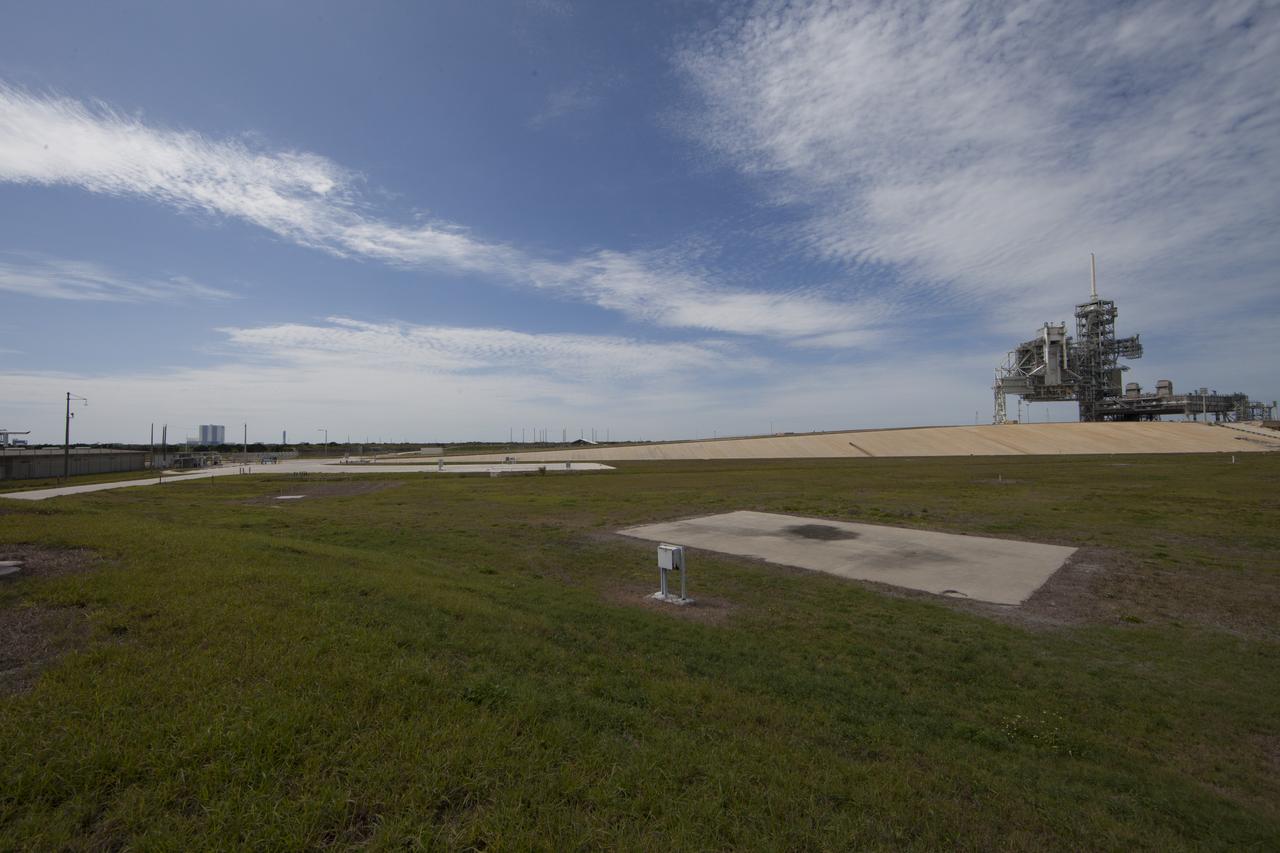
CAPE CANAVERAL, Fla. -- At NASA's Kennedy Space Center in Florida, launch pad 39A looks much like it did after the liftoff of STS-135, the final space shuttle mission, on July 8, 2011. Both launch pad 39A and 39B pad 39A was originally built for the Apollo/Saturn V rockets that launched American astronauts on their historic journeys to the moon and later modified to support the 30-year shuttle program. To learn more about Launch Pad 39A visit: http://www.nasa.gov/mission_pages/shuttle/launch/launch-complex39-toc.html Photo credit: NASA/Dan Casper
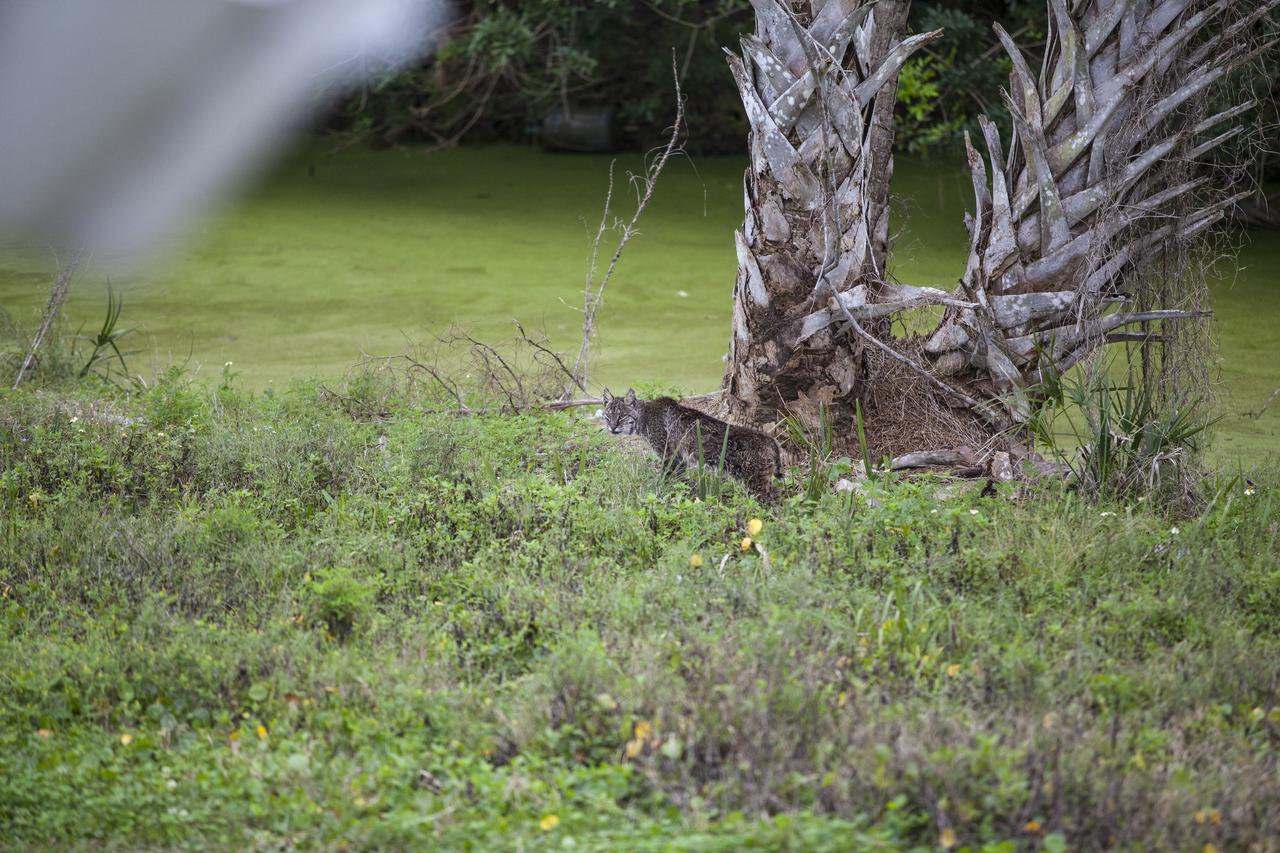
CAPE CANAVERAL, Fla. – A bobcat pauses to look back at the photographer while out for a walk at NASA's Kennedy Space Center in Florida. The center shares a boundary with the Merritt Island National Wildlife Refuge. The refuge encompasses 140,000 acres that are a habitat for more than 330 species of birds, 31 mammals, 117 fishes, and 65 amphibians and reptiles. Photo credit: NASA/Daniel Casper Note: selected image is cropped
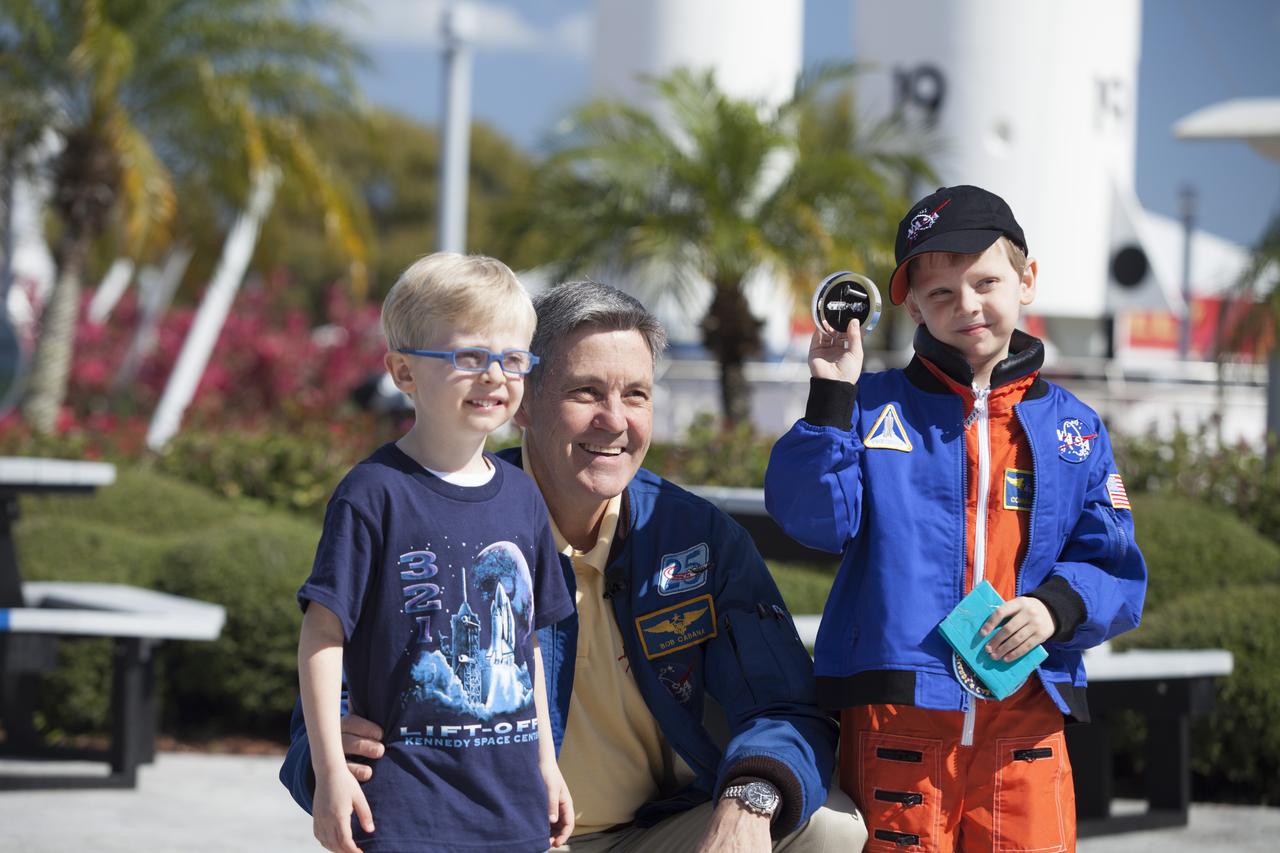
CAPE CANAVERAL, Fla. – Six-year-old Connor Johnson shows off space mementos presented to him by Kennedy Space Center Director and former astronaut Robert Cabana to inspire the youngster to continue the dream he has had since the age of three of becoming an astronaut, following a ceremony in the Kennedy Space Center Visitor Complex' Rocket Garden. From left are Connor's brother Liam, Cabana and Connor. Connor, of Denver, Colo., gained national attention for having the "right stuff" when he launched an online petition on the White House website in December 2013 to save NASA’s funding from budget cuts. One of the mementos, a piece of space history, was a bolt used to hold the International Space Station's Unity module in place in space shuttle Endeavour's payload bay on the STS-88 mission, the first station assembly mission and Cabana's fourth and final spaceflight. Connor and his family were the guests of Delaware North Companies Parks & Resorts, the concessionaire managing the visitor complex. During his visit, Connor had the opportunity to meet with astronauts, see space vehicles and witness the Robot Rocket Rally underway in the complex' Rocket Garden over the weekend. To learn more about the educational activities available daily at the Kennedy Space Center Visitor Complex, visit http://www.kennedyspacecenter.com. Photo credit: NASA/Dan Casper
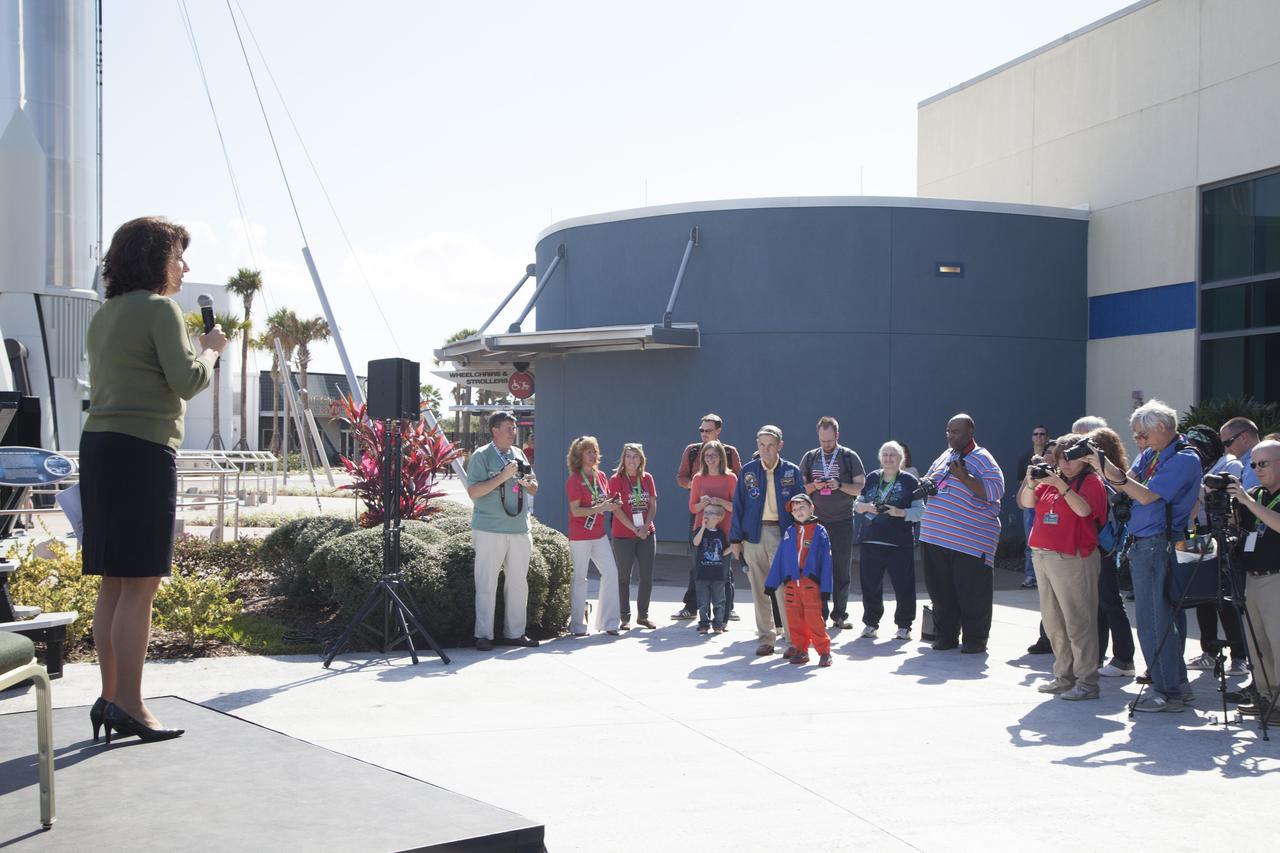
CAPE CANAVERAL, Fla. – Andrea Farmer, public relations manager for the Kennedy Space Center Visitor Complex concessionaire Delaware North Companies Parks & Resorts, welcomes representatives of the news and social media to the complex' Rocket Garden for a ceremony honoring six-year-old Connor Johnson. During the ceremony, Connor will be presented with space mementos by NASA Kennedy Space Center Director and former astronaut Robert Cabana to inspire the youngster to continue the dream he has had since the age of three of becoming an astronaut. Connor, of Denver, Colo., gained national attention for having the "right stuff" when he launched an online petition on the White House website in December 2013 to save NASA’s funding from budget cuts. One of the mementos, a piece of space history, was a bolt used to hold the International Space Station's Unity module in place in space shuttle Endeavour's payload bay on the STS-88 mission, the first station assembly mission and Cabana's fourth and final spaceflight. Connor and his family were the guests of Delaware North Companies Parks & Resorts, the concessionaire managing the visitor complex. During his visit, Connor had the opportunity to meet with astronauts, see space vehicles and witness the Robot Rocket Rally underway in the complex' Rocket Garden over the weekend. To learn more about the educational activities available daily at the Kennedy Space Center Visitor Complex, visit http://www.kennedyspacecenter.com. Photo credit: NASA/Dan Casper
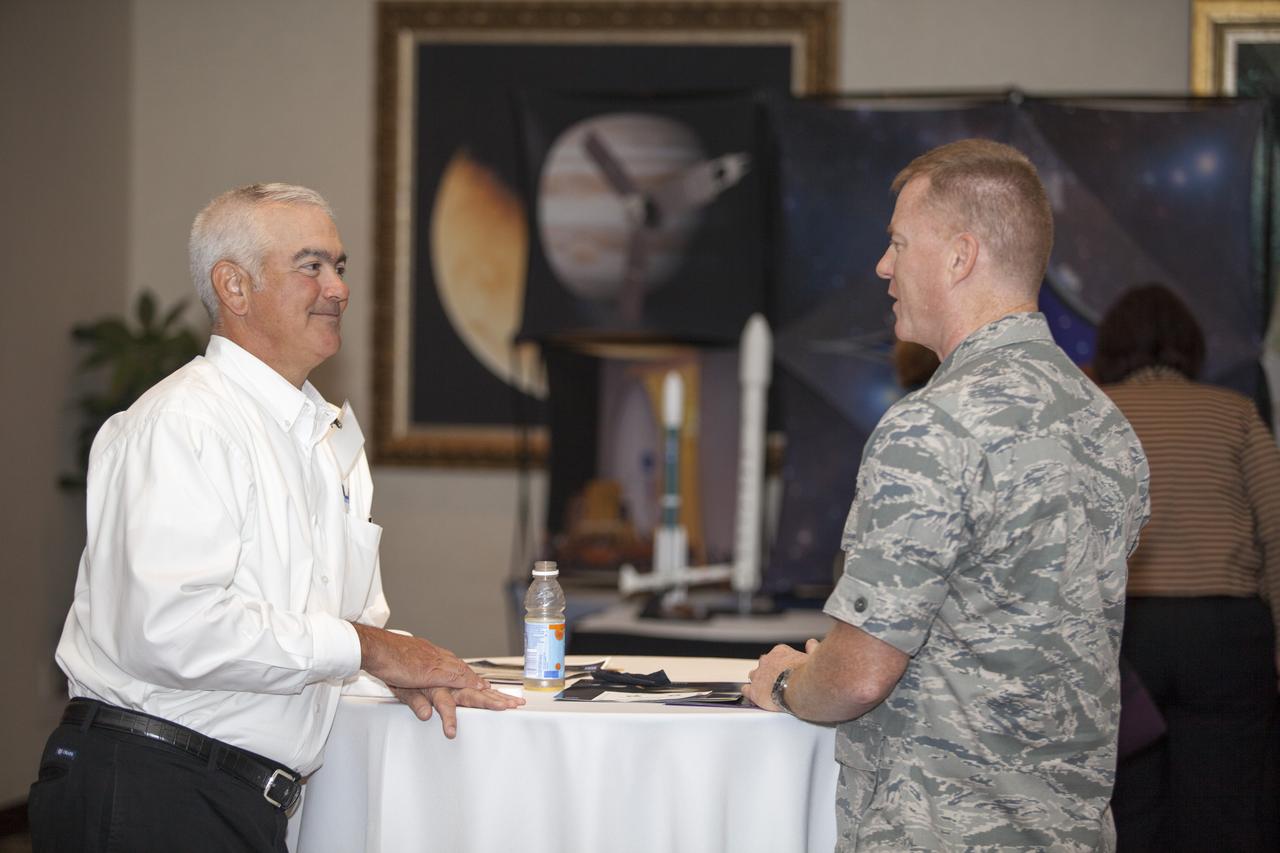
CAPE CANAVERAL, Fla. - Community leaders, business executives, educators, and state and local government leaders were updated on NASA Kennedy Space Center programs and accomplishments during KSC Center Director Bob Cabana’s Center Director Update at the Debus Center at the Kennedy Space Center Visitor Complex in Florida. Attendees talked with Cabana and other senior Kennedy managers and visited displays featuring updates on Kennedy programs and projects, including International Space Station, Commercial Crew, Ground System Development and Operations, Launch Services, Center Planning and Development, Technology, KSC Swamp Works and NASA Education. The morning concluded with a tour of the new Space Shuttle Atlantis exhibit at the visitor complex. For more information, visit http://www.nasa.gov/kennedy. Photo credit: NASA/Daniel Casper
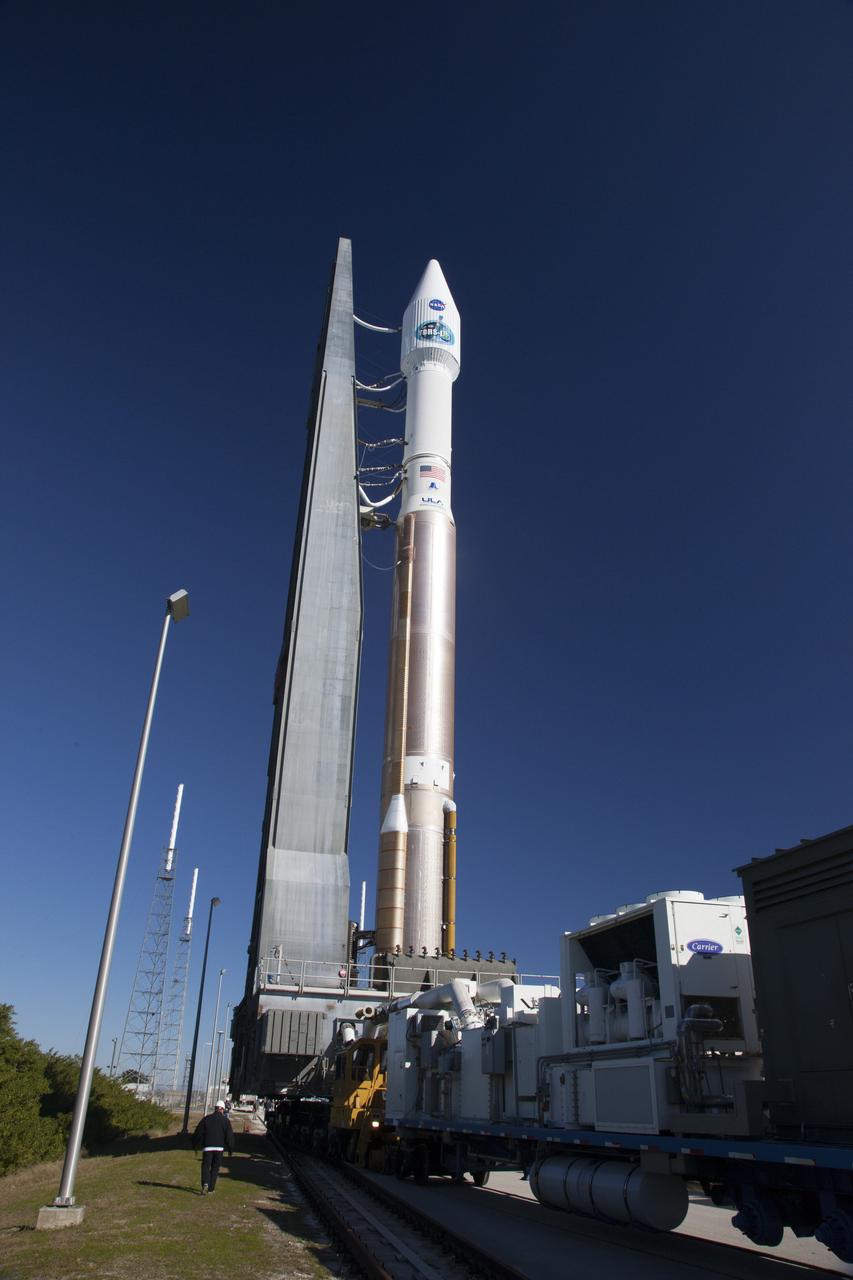
CAPE CANAVERAL, Fla. – At Cape Canaveral Air Force Station's Launch Complex 41, a United Launch Alliance Atlas V with NASA's Tracking and Data Relay Satellite, or TDRS-L, spacecraft atop, rolls out to the launch pad. The TDRS-L spacecraft is the second of three new satellites designed to ensure vital operational continuity for NASA by expanding the lifespan of the Tracking and Data Relay Satellite System TDRSS fleet, which consists of eight satellites in geosynchronous orbit. The spacecraft provide tracking, telemetry, command and high bandwidth data return services for numerous science and human exploration missions orbiting Earth. These include NASA's Hubble Space Telescope and the International Space Station. TDRS-L has a high-performance solar panel designed for more spacecraft power to meet the growing S-band communications requirements. TDRSS is one of NASA Space Communication and Navigation’s SCaN three networks providing space communications to NASA’s missions. For more information more about TDRS-L, visit: http://www.nasa.gov/tdrs To learn more about SCaN, visit: www.nasa.gov/scan Photo credit: NASA/Daniel Casper
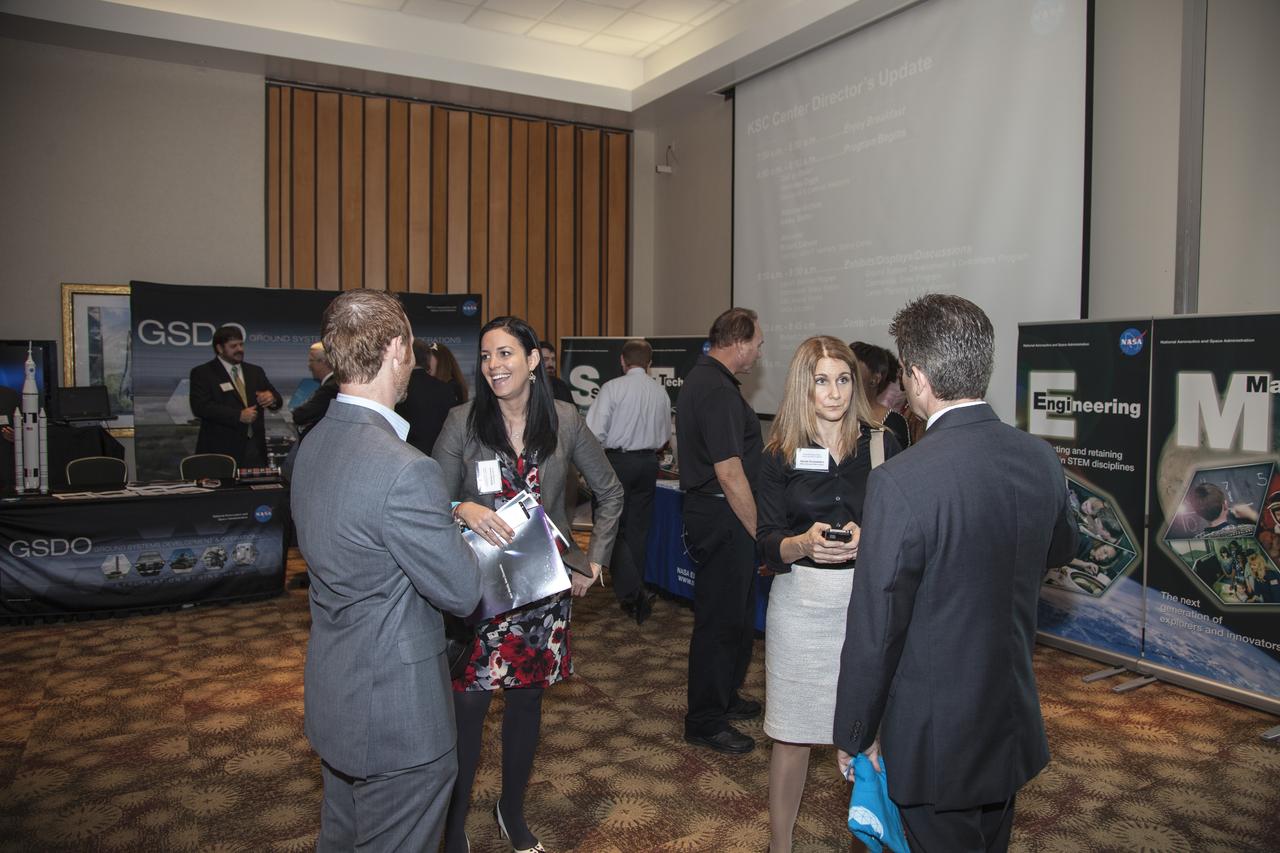
CAPE CANAVERAL, Fla. - Community leaders, business executives, educators, and state and local government leaders were updated on NASA Kennedy Space Center programs and accomplishments during Center Director Bob Cabana’s Center Director Update at the Debus Center at the Kennedy Space Center Visitor Complex in Florida. Attendees mingled and visited various displays, including Ground Systems Development and Operations Program and Education Office displays. Attendees talked with Cabana and other senior Kennedy managers and visited displays featuring updates on Kennedy programs and projects, including International Space Station, Commercial Crew, Ground System Development and Operations, Launch Services, Center Planning and Development, Technology, KSC Swamp Works and NASA Education. The morning concluded with a tour of the new Space Shuttle Atlantis exhibit at the visitor complex. For more information, visit http://www.nasa.gov/kennedy. Photo credit: NASA/Daniel Casper

CAPE CANAVERAL, Fla. – At Cape Canaveral Air Force Station's Launch Complex 41, a United Launch Alliance Atlas V with NASA's Tracking and Data Relay Satellite, or TDRS-L, spacecraft atop, rolls out to the launch pad. The TDRS-L spacecraft is the second of three new satellites designed to ensure vital operational continuity for NASA by expanding the lifespan of the Tracking and Data Relay Satellite System TDRSS fleet, which consists of eight satellites in geosynchronous orbit. The spacecraft provide tracking, telemetry, command and high bandwidth data return services for numerous science and human exploration missions orbiting Earth. These include NASA's Hubble Space Telescope and the International Space Station. TDRS-L has a high-performance solar panel designed for more spacecraft power to meet the growing S-band communications requirements. TDRSS is one of NASA Space Communication and Navigation’s SCaN three networks providing space communications to NASA’s missions. For more information more about TDRS-L, visit: http://www.nasa.gov/tdrs To learn more about SCaN, visit: www.nasa.gov/scan Photo credit: NASA/Daniel Casper
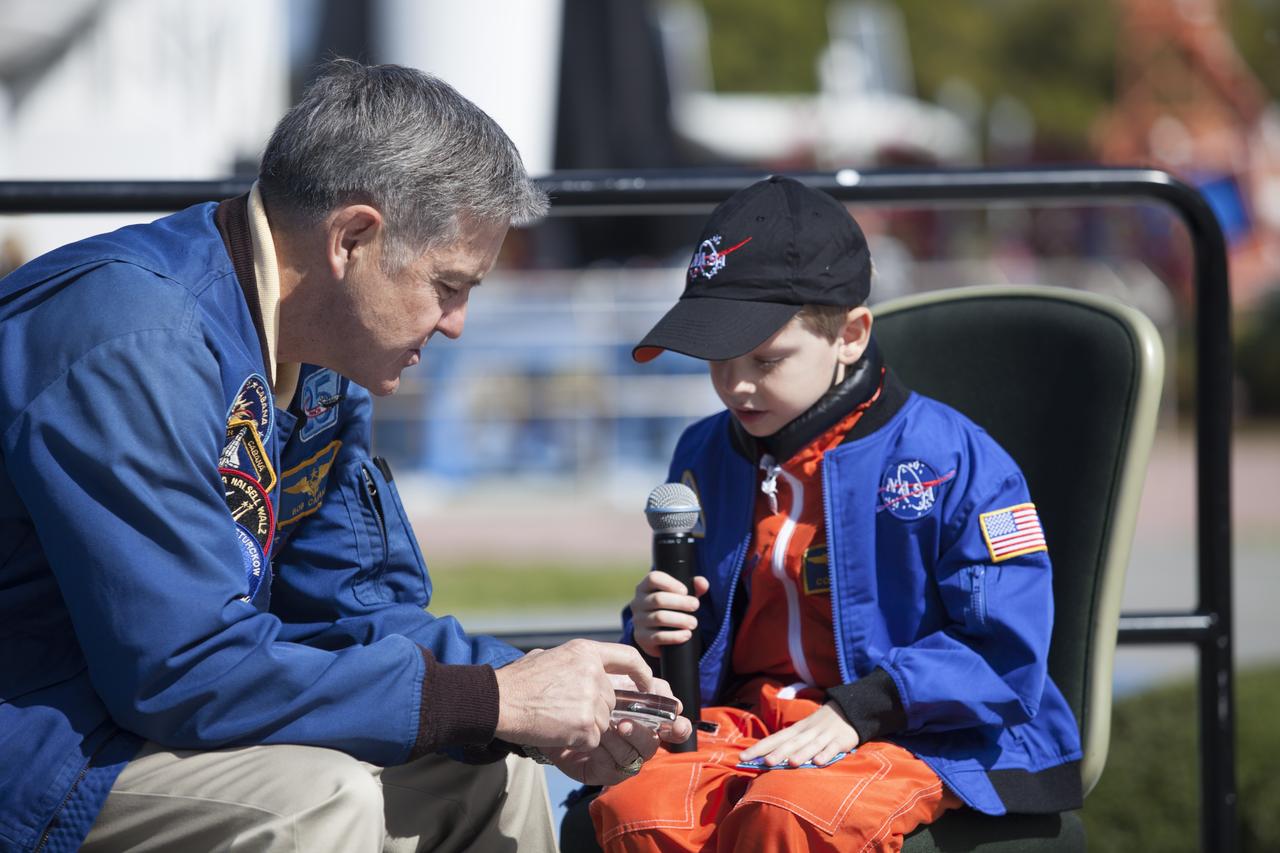
CAPE CANAVERAL, Fla. – NASA Kennedy Space Center Director and former astronaut Robert Cabana, left, presents a space-program memento to six-year-old Connor Johnson in the Kennedy Space Center Visitor Complex' Rocket Garden to inspire the youngster to continue the dream he has had since the age of three of becoming an astronaut. Connor, of Denver, Colo., gained national attention for having the "right stuff" when he launched an online petition on the White House website in December 2013 to save NASA’s funding from budget cuts. One of the mementos, a piece of space history, was a bolt used to hold the International Space Station's Unity module in place in space shuttle Endeavour's payload bay on the STS-88 mission, the first station assembly mission and Cabana's fourth and final spaceflight. Connor and his family were the guests of Delaware North Companies Parks & Resorts, the concessionaire managing the visitor complex. During his visit, Connor had the opportunity to meet with astronauts, see space vehicles and witness the Robot Rocket Rally underway in the complex' Rocket Garden over the weekend. To learn more about the educational activities available daily at the Kennedy Space Center Visitor Complex, visit http://www.kennedyspacecenter.com. Photo credit: NASA/Dan Casper
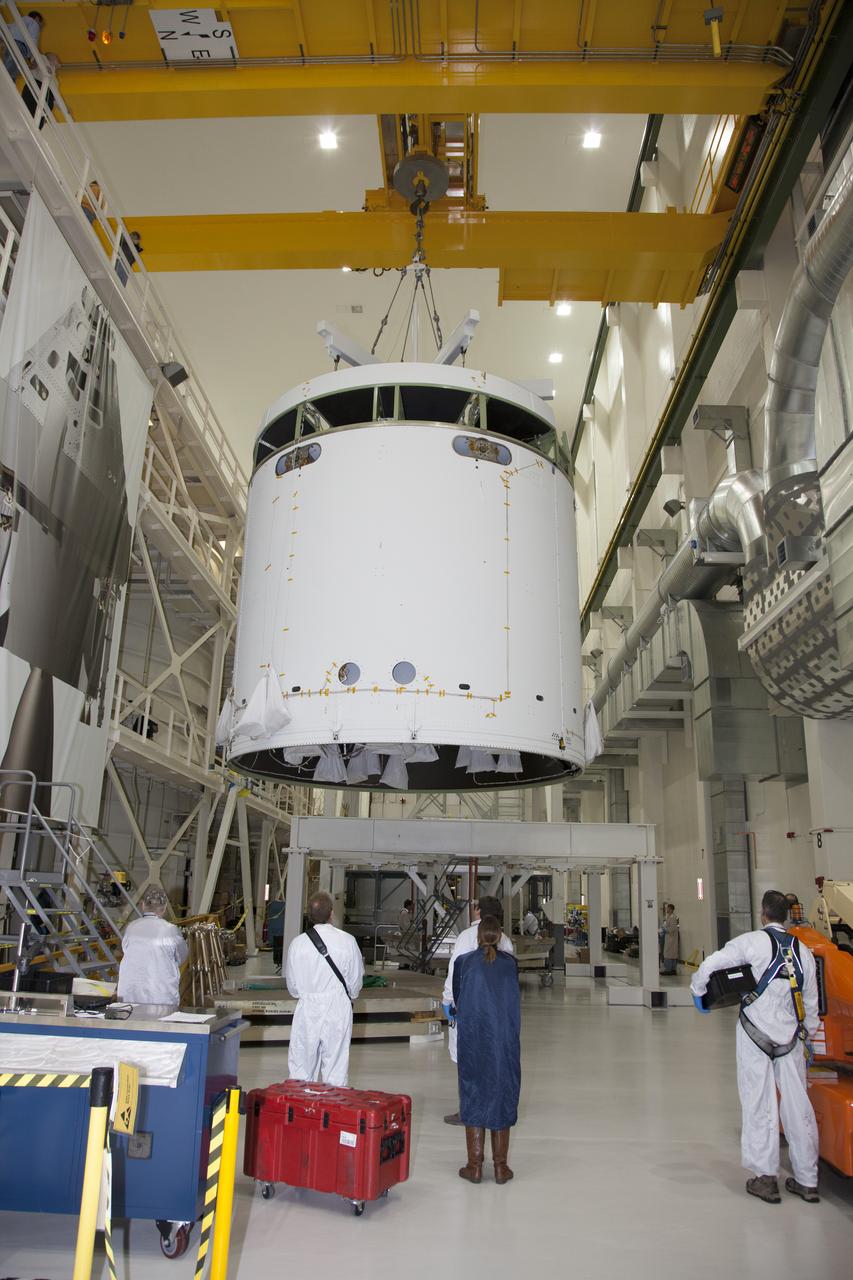
CAPE CANAVERAL, Fla. - Inside the Operations and Checkout Building high bay at NASA’s Kennedy Space Center in Florida, a ground support tool attached to a crane is used to lift the service module for the Orion spacecraft from a stand. The service module is being transferred to a static test stand. Orion is the exploration spacecraft designed to carry astronauts to destinations not yet explored by humans, including an asteroid and Mars. It will have emergency abort capability, sustain the crew during space travel and provide safe re-entry from deep space return velocities. The first unpiloted test flight of the Orion is scheduled to launch in 2014 atop a Delta IV rocket and in 2017 on NASA’s Space Launch System rocket. For more information, visit http://www.nasa.gov/orion. Photo credit: NASA/Daniel Casper
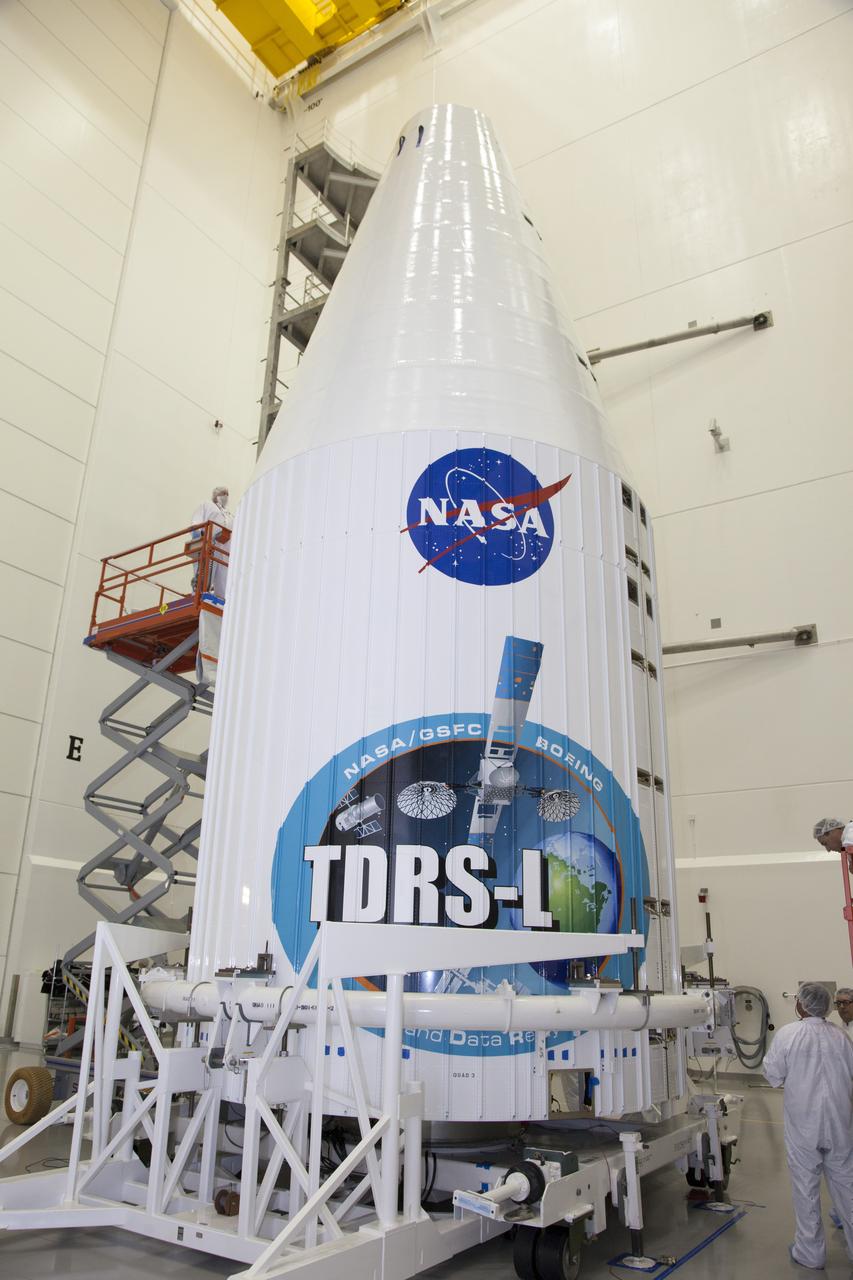
TITUSVILLE, Fla. – Inside the Astrotech payload processing facility in Titusville, NASA's Tracking and Data Relay Satellite, or TDRS-L, spacecraft has been encapsulated in its payload fairing. TDRS-L will then be transported to Launch Complex 41 at Cape Canaveral Air Force Station. The TDRS-L satellite will be a part of the second of three next-generation spacecraft designed to ensure vital operational continuity for the NASA Space Network. It is scheduled to launch from Cape Canaveral's Space Launch Complex 41 atop a United Launch Alliance Atlas V rocket on January 23, 2014. The current Tracking and Data Relay Satellite system consists of eight in-orbit satellites distributed to provide near continuous information relay contact with orbiting spacecraft ranging from the International Space Station and Hubble Space Telescope to the array of scientific observatories. For more information, visit: http://www.nasa.gov/mission_pages/tdrs/home/index.html
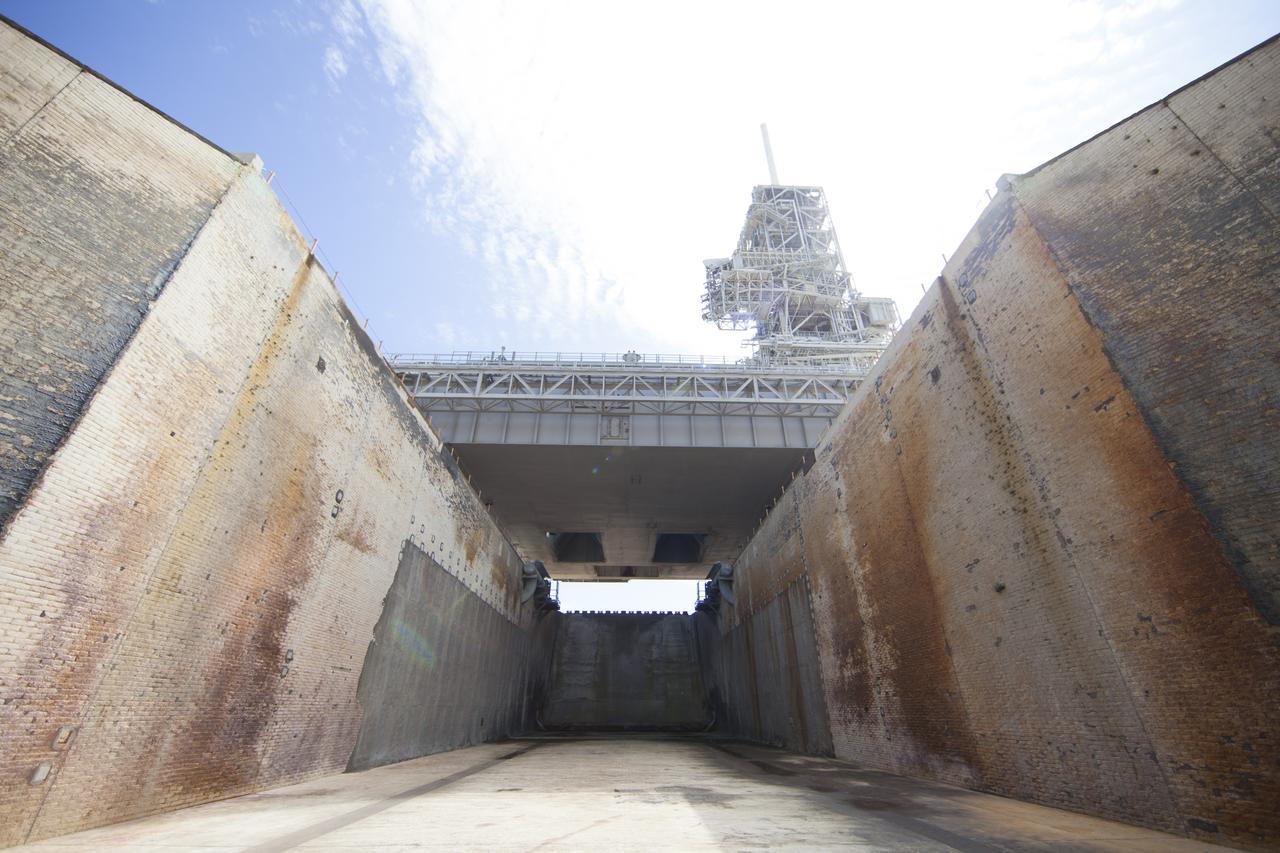
CAPE CANAVERAL, Fla. -- At NASA's Kennedy Space Center in Florida, launch pad 39A looks much like it did after the liftoff of STS-135, the final space shuttle mission, on July 8, 2011. This view shows the flame trench where smoke and flame from the shuttle's twin solid rocket boosters were deflected away from the pad. Both launch pad 39A and 39B pad 39A was originally built for the Apollo/Saturn V rockets that launched American astronauts on their historic journeys to the moon and later modified to support the 30-year shuttle program. To learn more about Launch Pad 39A visit: http://www.nasa.gov/mission_pages/shuttle/launch/launch-complex39-toc.html Photo credit: NASA/Dan Casper
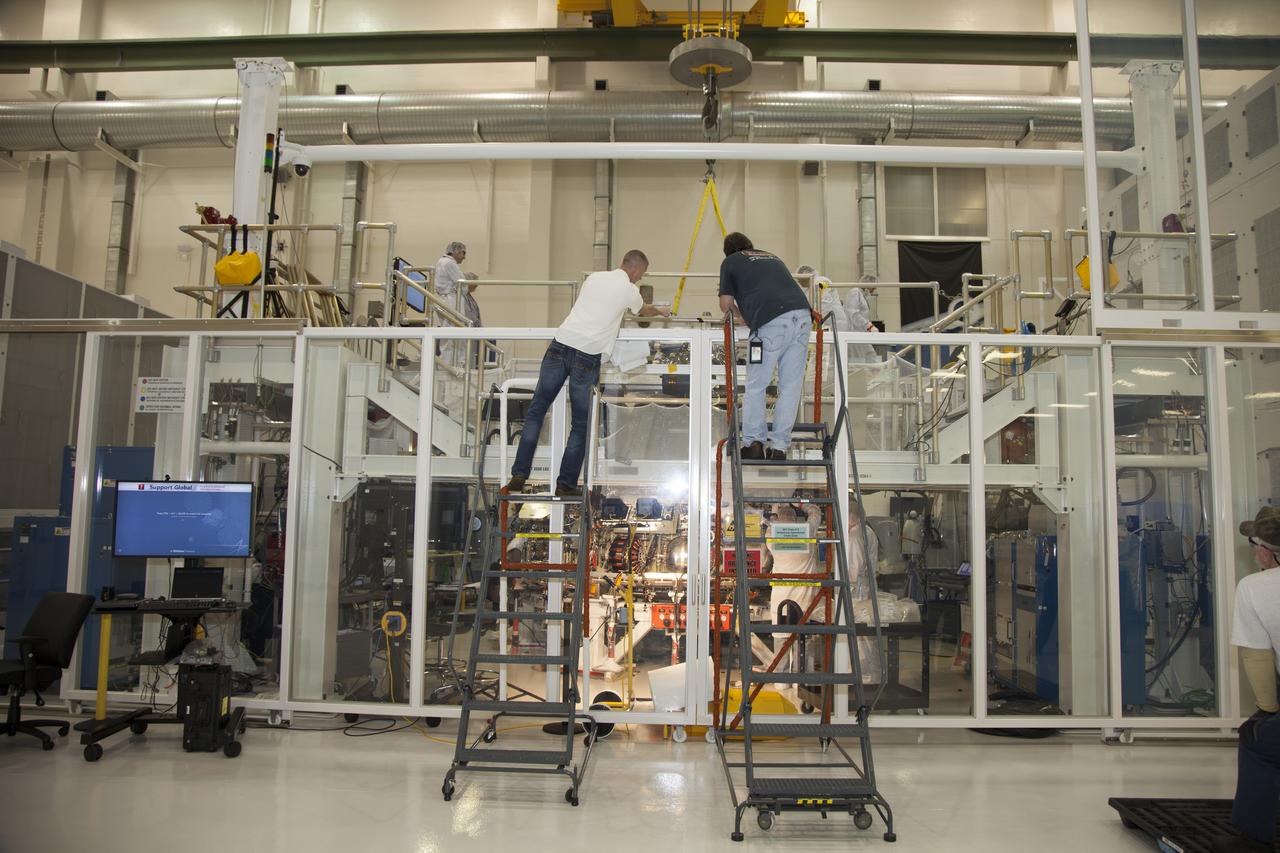
CAPE CANAVERAL, Fla. – Inside the Operations and Checkout Building high bay at NASA’s Kennedy Space Center in Florida, engineers work on the Orion crew module inside a temporary clean room. Welding on the crew module was completed this month. The Orion spacecraft is being prepared for its first unpiloted flight test, Exploration Flight Test-1, or EFT-1, scheduled for launch atop a Delta IV rocket in September 2014. The Orion spacecraft is designed to carry astronauts to destinations not yet explored by humans. It will have emergency abort capability, sustain the crew during space travel and provide safe re-entry from deep space return velocities. Orion is scheduled to launch atop NASA’s Space Launch System rocket in 2017. For more information, visit http://www.nasa.gov/orion. Photo credit: NASA/Daniel Casper
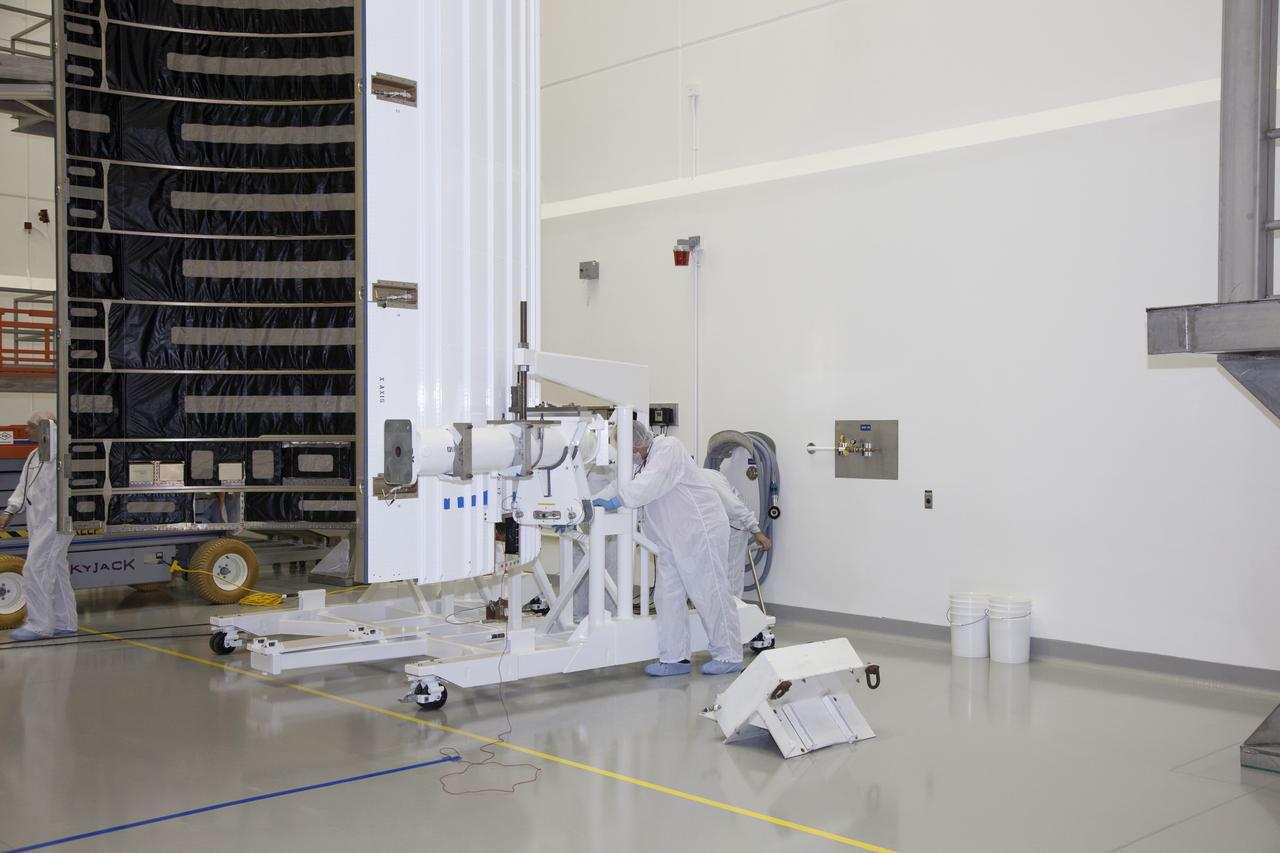
TITUSVILLE, Fla. – Inside the Astrotech payload processing facility in Titusville NASA's Tracking and Data Relay Satellite, or TDRS-L, spacecraft is being encapsulated in its payload fairing prior to being transported to Launch Complex 41 at Cape Canaveral Air Force Station. The TDRS-L satellite will be a part of the second of three next-generation spacecraft designed to ensure vital operational continuity for the NASA Space Network. It is scheduled to launch from Cape Canaveral's Space Launch Complex 41 atop a United Launch Alliance Atlas V rocket on January 23, 2014. The current Tracking and Data Relay Satellite system consists of eight in-orbit satellites distributed to provide near continuous information relay contact with orbiting spacecraft ranging from the International Space Station and Hubble Space Telescope to the array of scientific observatories. For more information, visit: http://www.nasa.gov/mission_pages/tdrs/home/index.html
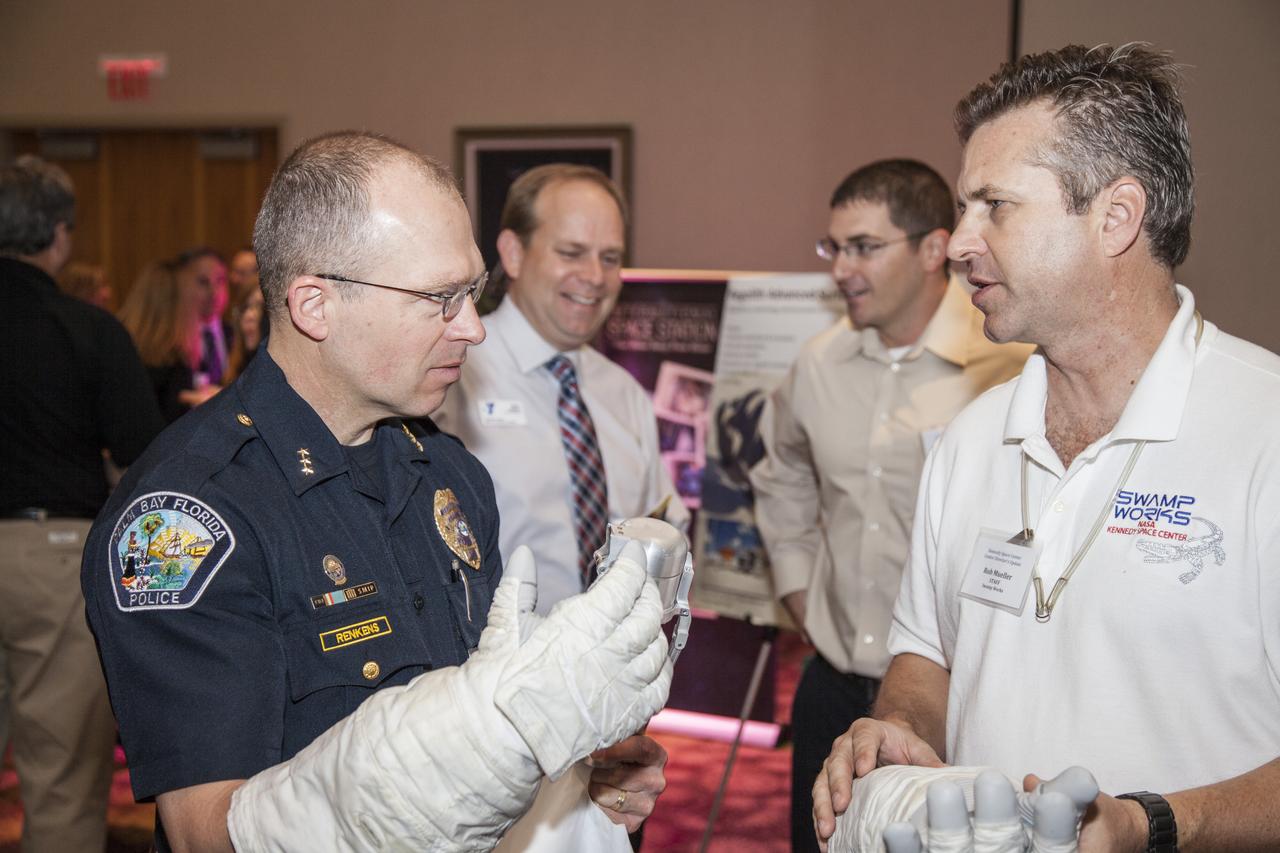
CAPE CANAVERAL, Fla. - Community leaders, business executives, educators, and state and local government leaders were updated on NASA Kennedy Space Center programs and accomplishments during Center Director Bob Cabana’s Center Director Update at the Debus Center at the Kennedy Space Center Visitor Complex in Florida. Rob Mueller, senior technologist, talks with attendees at the Swamp Works display. Attendees talked with Cabana and other senior Kennedy managers and visited displays featuring updates on Kennedy programs and projects, including International Space Station, Commercial Crew, Ground System Development and Operations, Launch Services, Center Planning and Development, Technology, KSC Swamp Works and NASA Education. The morning concluded with a tour of the new Space Shuttle Atlantis exhibit at the visitor complex. For more information, visit http://www.nasa.gov/kennedy. Photo credit: NASA/Daniel Casper
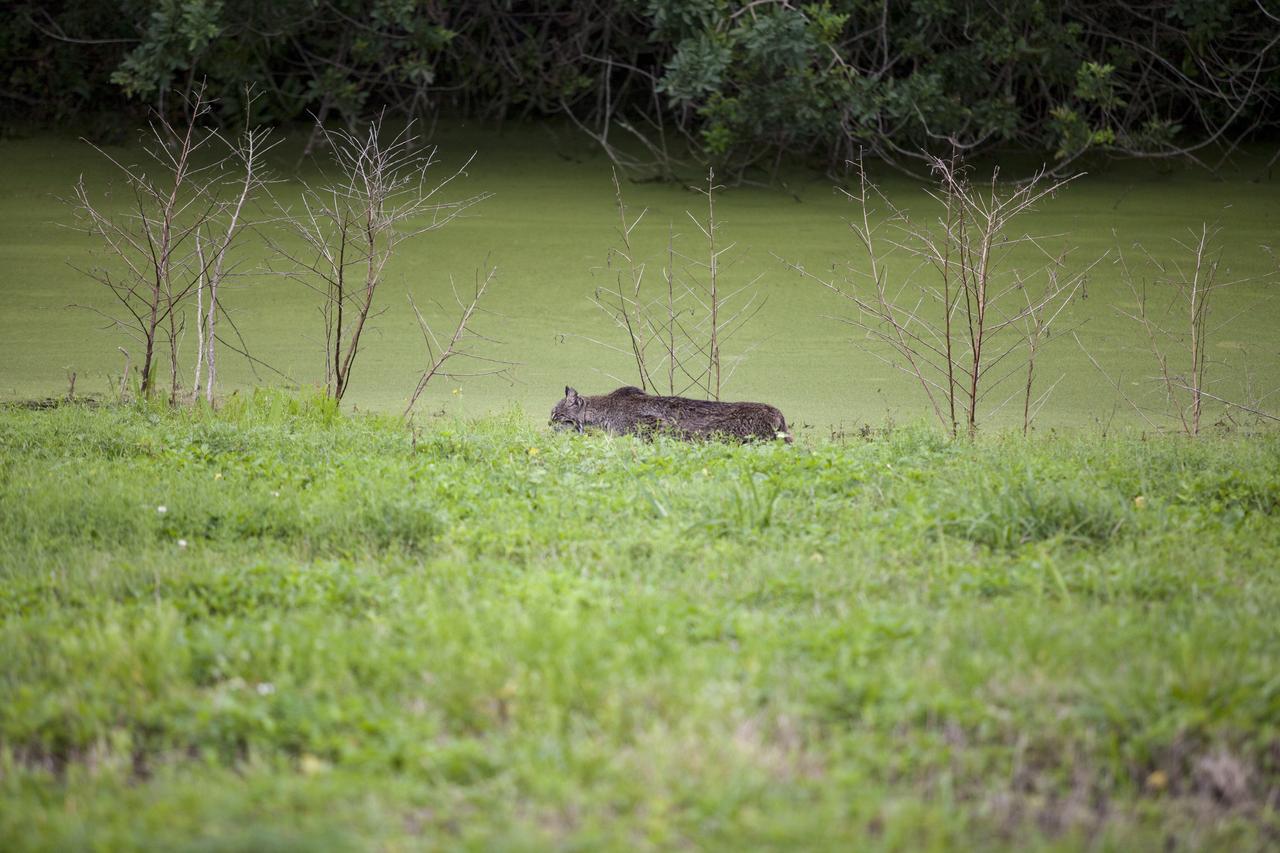
CAPE CANAVERAL, Fla. – A bobcat walks on the shore of a canal near the NASA News Center at Kennedy Space Center in Florida. The center shares a boundary with the Merritt Island National Wildlife Refuge. The refuge encompasses 140,000 acres that are a habitat for more than 330 species of birds, 31 mammals, 117 fishes, and 65 amphibians and reptiles. Photo credit: NASA/Daniel Casper
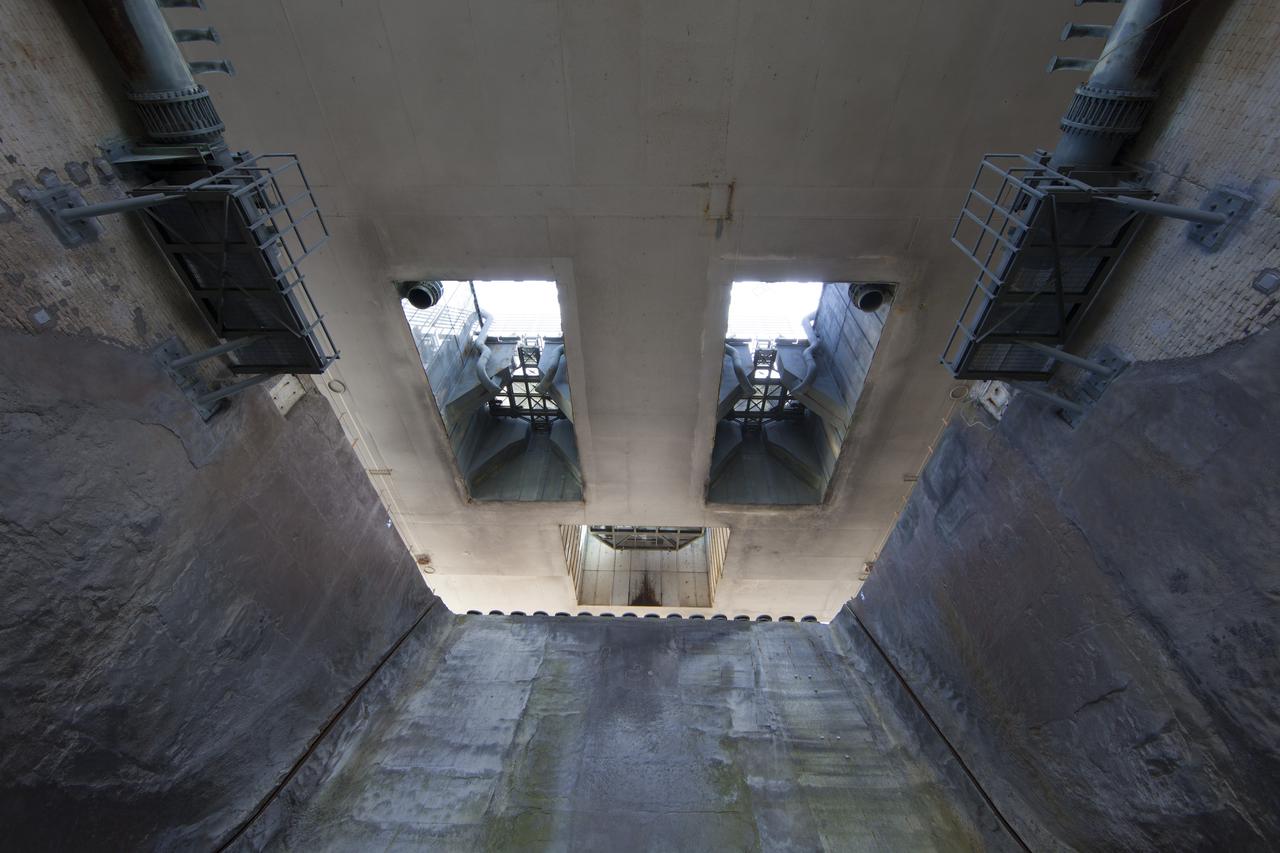
CAPE CANAVERAL, Fla. -- At NASA's Kennedy Space Center in Florida, launch pad 39A looks much like it did after the liftoff of STS-135, the final space shuttle mission, on July 8, 2011. This view shows the flame trench where smoke and flame from the shuttle's twin solid rocket boosters were deflected away from the pad. Both launch pad 39A and 39B pad 39A was originally built for the Apollo/Saturn V rockets that launched American astronauts on their historic journeys to the moon and later modified to support the 30-year shuttle program. To learn more about Launch Pad 39A visit: http://www.nasa.gov/mission_pages/shuttle/launch/launch-complex39-toc.html Photo credit: NASA/Dan Casper
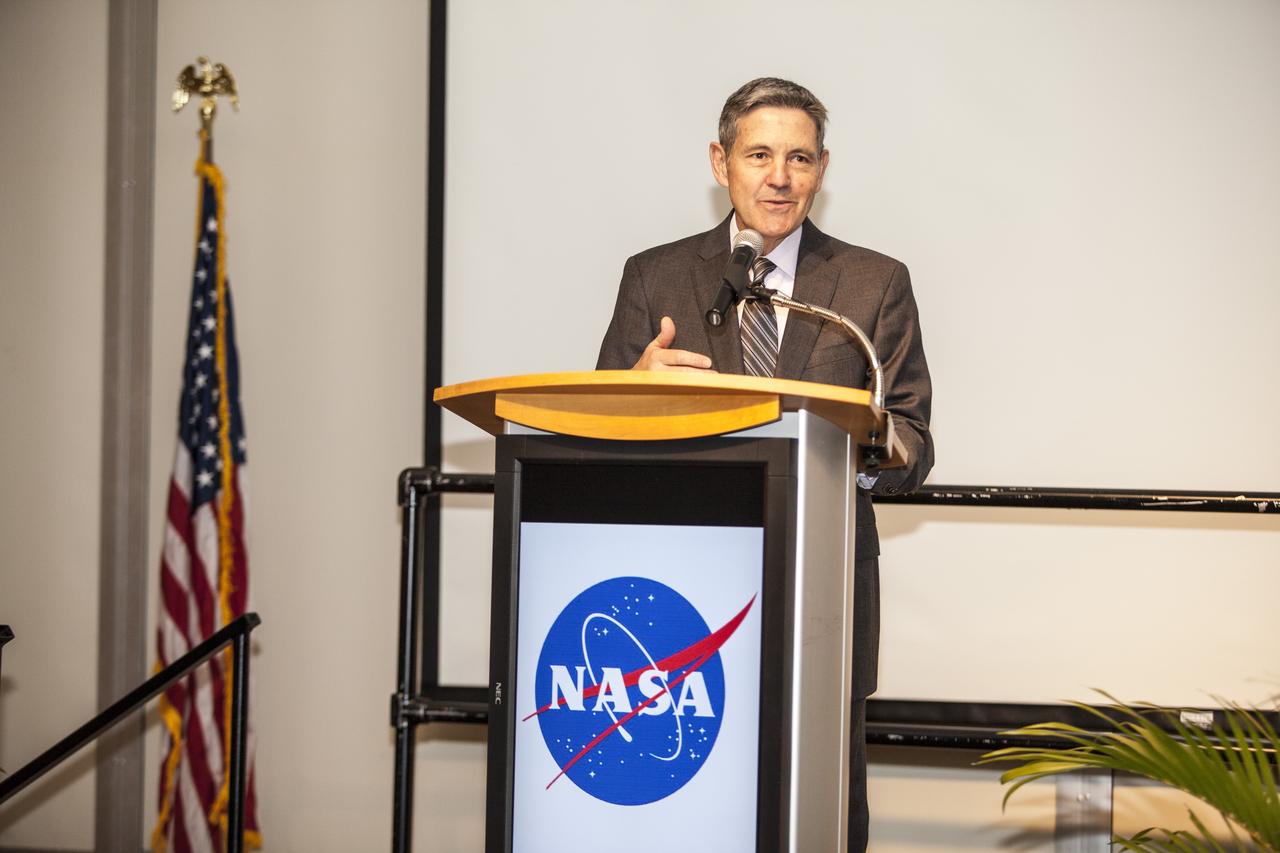
CAPE CANAVERAL, Fla. – NASA Kennedy Space Center Director Robert Cabana welcomes community leaders, business executives, educators, community organizers, and state and local government leaders to the Kennedy Space Center Visitor Complex Debus Center for the Kennedy Space Center Director Update. Attendees talked with Cabana and other senior Kennedy managers and visited displays featuring updates on Kennedy programs and projects, including International Space Station, Commercial Crew, Ground System Development and Operations, Launch Services, Center Planning and Development, Technology, KSC Swamp Works and NASA Education. The morning concluded with a tour of the new Space Shuttle Atlantis exhibit at the visitor complex. For more information, visit http://www.nasa.gov/kennedy. Photo credit: NASA/Daniel Casper
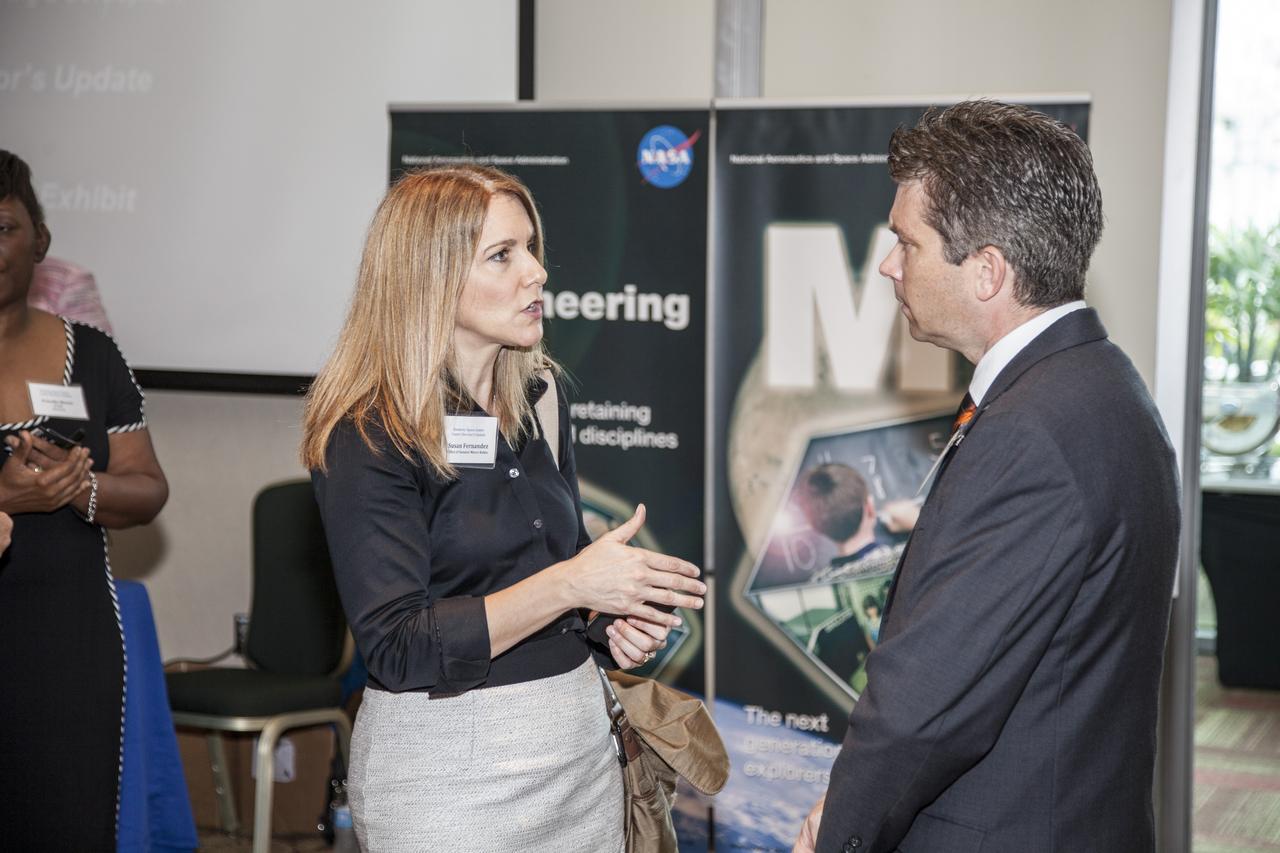
CAPE CANAVERAL, Fla. - Community leaders, business executives, educators, and state and local government leaders were updated on NASA Kennedy Space Center programs and accomplishments during Center Director Bob Cabana’s Center Director Update at the Debus Center at the Kennedy Space Center Visitor Complex in Florida. At left, Susan Fernandez from the Office of Senator Marco Rubio talks with another attendee near the Education display. Attendees talked with Cabana and other senior Kennedy managers and visited displays featuring updates on Kennedy programs and projects, including International Space Station, Commercial Crew, Ground System Development and Operations, Launch Services, Center Planning and Development, Technology, KSC Swamp Works and NASA Education. The morning concluded with a tour of the new Space Shuttle Atlantis exhibit at the visitor complex. For more information, visit http://www.nasa.gov/kennedy. Photo credit: NASA/Daniel Casper
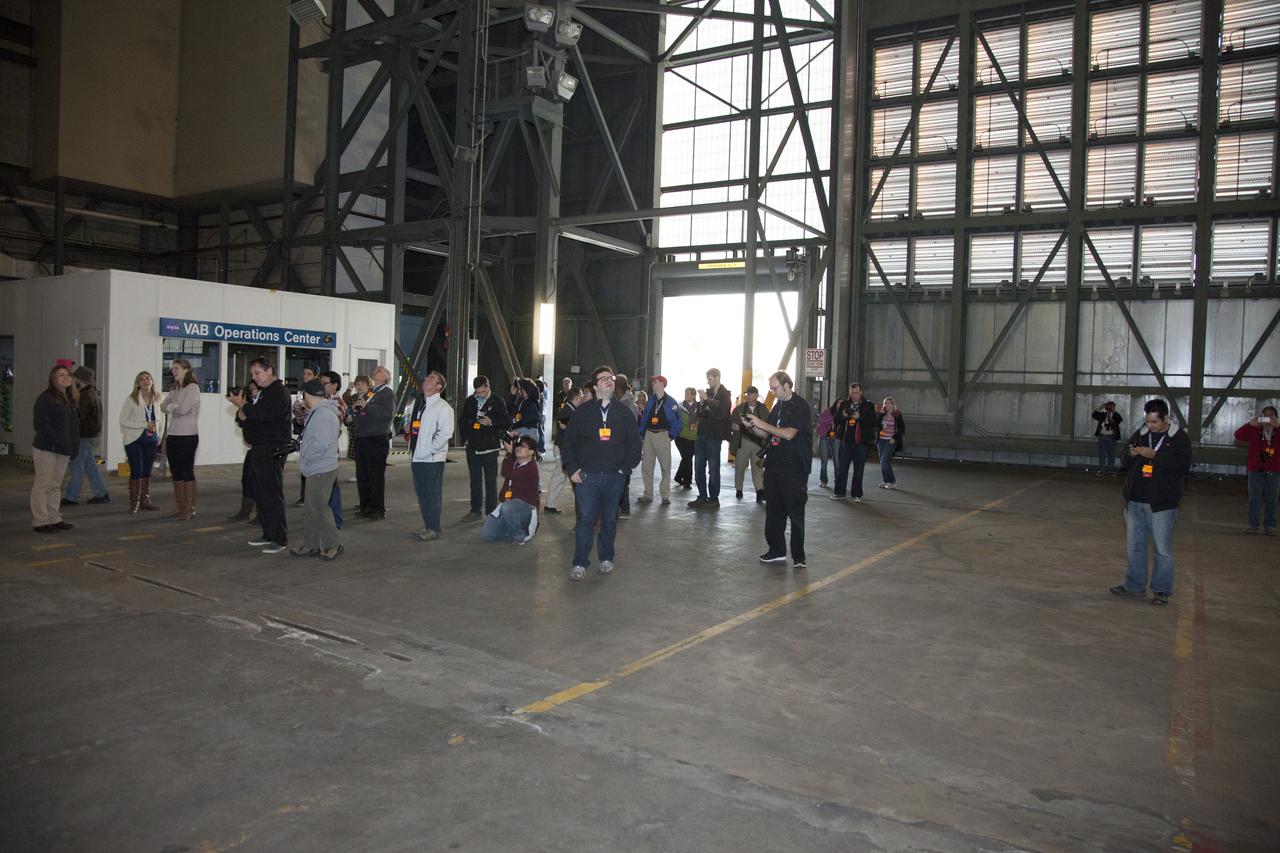
CAPE CANAVERAL, Fla. -- At NASA's Kennedy Space Center in Florida, social media participants were given an opportunity to go inside the spaceport's Vehicle Assembly Building. After serving through the Apollo and Space Shuttle Programs, the structure now is undergoing renovations to accommodate future launch vehicles and to continue as a major part of America's efforts to explore space. The social media participants gathered at the Florida spaceport for the launch of the Tracking and Data Relay Satellite, or TDRS-L spacecraft. Their visit included tours of key facilities and participating in presentations by key NASA leaders who updated the space agency's current efforts. Photo credit: NASA/Dan Casper
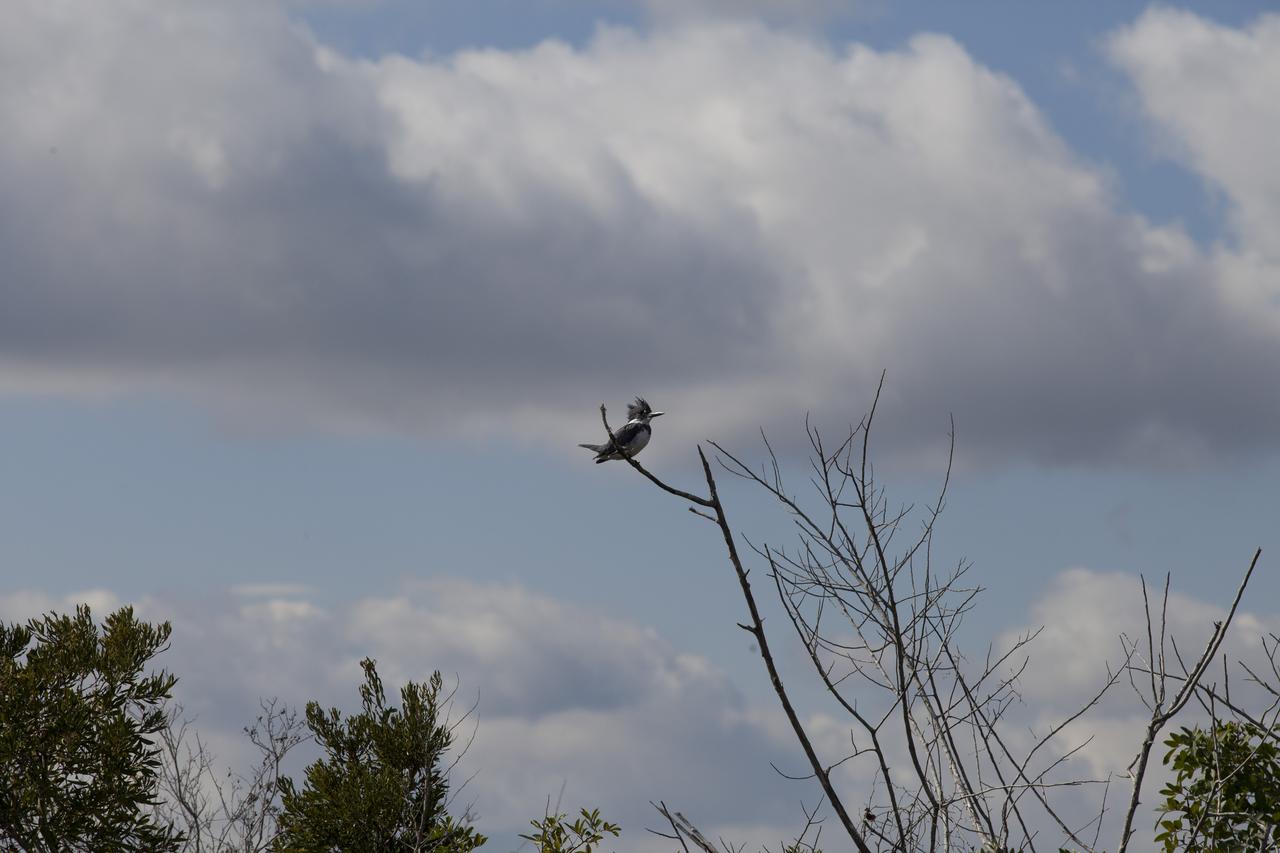
CAPE CANAVERAL, Fla. - A Kingfisher perches on the branch of a tree at NASA’s Kennedy Space Center in Florida. The center shares a boundary with the Merritt Island National Wildlife Refuge. The refuge encompasses 140,000 acres that are a habitat for more than 330 species of birds, 31 mammals, 117 fishes, and 65 amphibians and reptiles. It contains more than 1,000 known plant species. The marshes and open water of the refuge provide wintering areas for 23 species of migratory waterfowl, as well as a year-round home for great blue herons, great egrets, wood storks, cormorants, brown pelicans and other species of marsh and shore birds, and a variety of insects. Photo credit: NASA/Daniel Casper
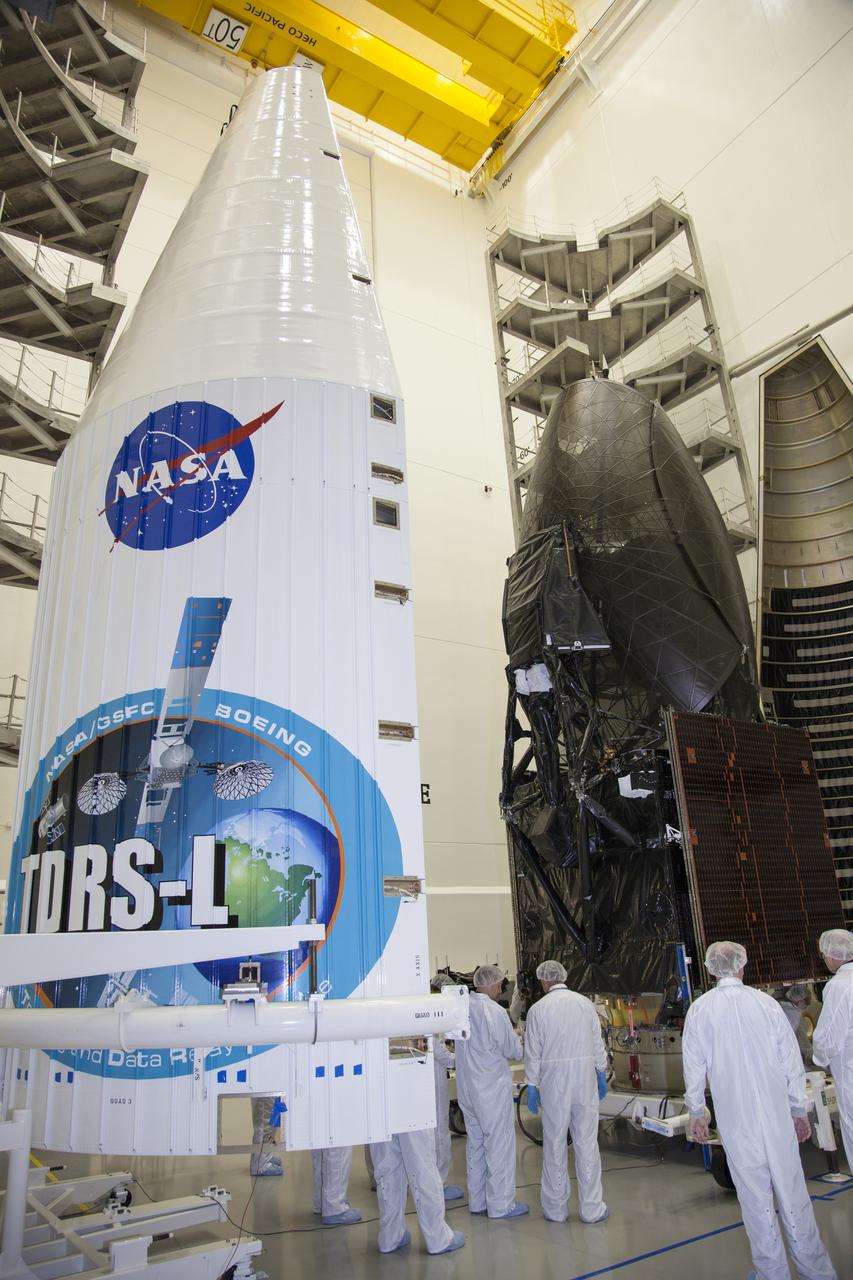
TITUSVILLE, Fla. – Inside the Astrotech payload processing facility in Titusville, the Tracking and Data Relay Satellite, or TDRS-L, spacecraft is being encapsulated in its payload fairing in preparation for being transported to Launch Complex 41 at Cape Canaveral Air Force Station. The TDRS-L satellite will be a part of the second of three next-generation spacecraft designed to ensure vital operational continuity for the NASA Space Network. It is scheduled to launch from Cape Canaveral's Space Launch Complex 41 atop a United Launch Alliance Atlas V rocket on January 23, 2014. The current Tracking and Data Relay Satellite system consists of eight in-orbit satellites distributed to provide near continuous information relay contact with orbiting spacecraft ranging from the International Space Station and Hubble Space Telescope to the array of scientific observatories. For more information, visit: http://www.nasa.gov/mission_pages/tdrs/home/index.html
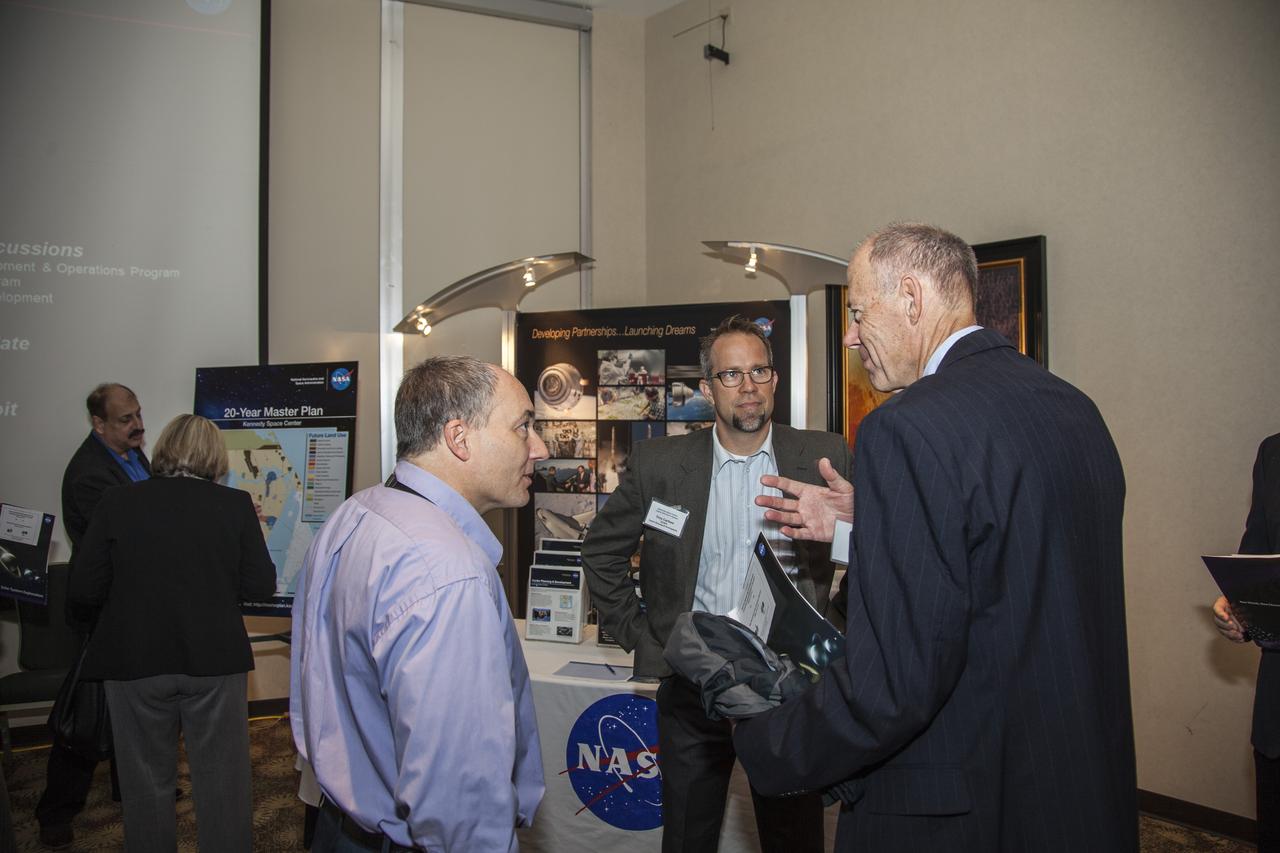
CAPE CANAVERAL, Fla. - Community leaders, business executives, educators, and state and local government leaders were updated on NASA Kennedy Space Center programs and accomplishments during Center Director Bob Cabana’s Center Director Update at the Debus Center at the Kennedy Space Center Visitor Complex in Florida. Attendees talk with Trey Carlson, Kennedy Master Planner, at the Center Planning and Development Directorate, or CPDD, display. In the background is Mario Busacca, chief of CPDD’s Spaceport Planning Office. Attendees talked with Cabana and other senior Kennedy managers and visited displays featuring updates on Kennedy programs and projects, including International Space Station, Commercial Crew, Ground System Development and Operations, Launch Services, Center Planning and Development, Technology, KSC Swamp Works and NASA Education. The morning concluded with a tour of the new Space Shuttle Atlantis exhibit at the visitor complex. For more information, visit http://www.nasa.gov/kennedy. Photo credit: NASA/Daniel Casper
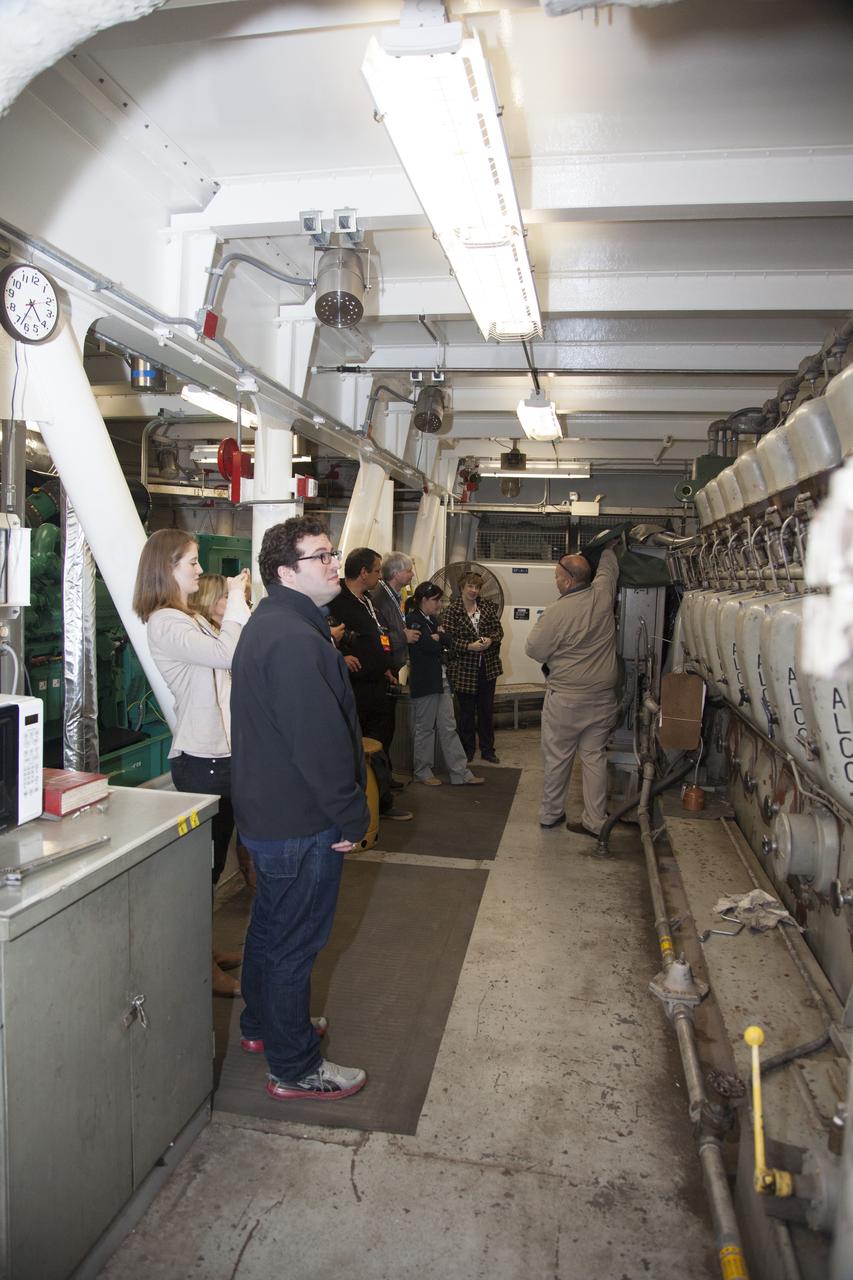
CAPE CANAVERAL, Fla. -- At NASA's Kennedy Space Center in Florida, social media participants were given an up-close look at the interior of one of the spaceport's mammoth crawler-transporters. Recent work has included preparations to install upgraded components that will enable the crawler to carry the greater loads anticipated with the agency's new rocket designed to take astronauts beyond low-Earth orbit for the first time since the early 1970s. The social media participants gathered at the Florida spaceport for the launch of the Tracking and Data Relay Satellite, or TDRS-L spacecraft. Their visit included tours of key facilities and participating in presentations by key NASA leaders who updated the space agency's current efforts. Photo credit: NASA/Dan Casper
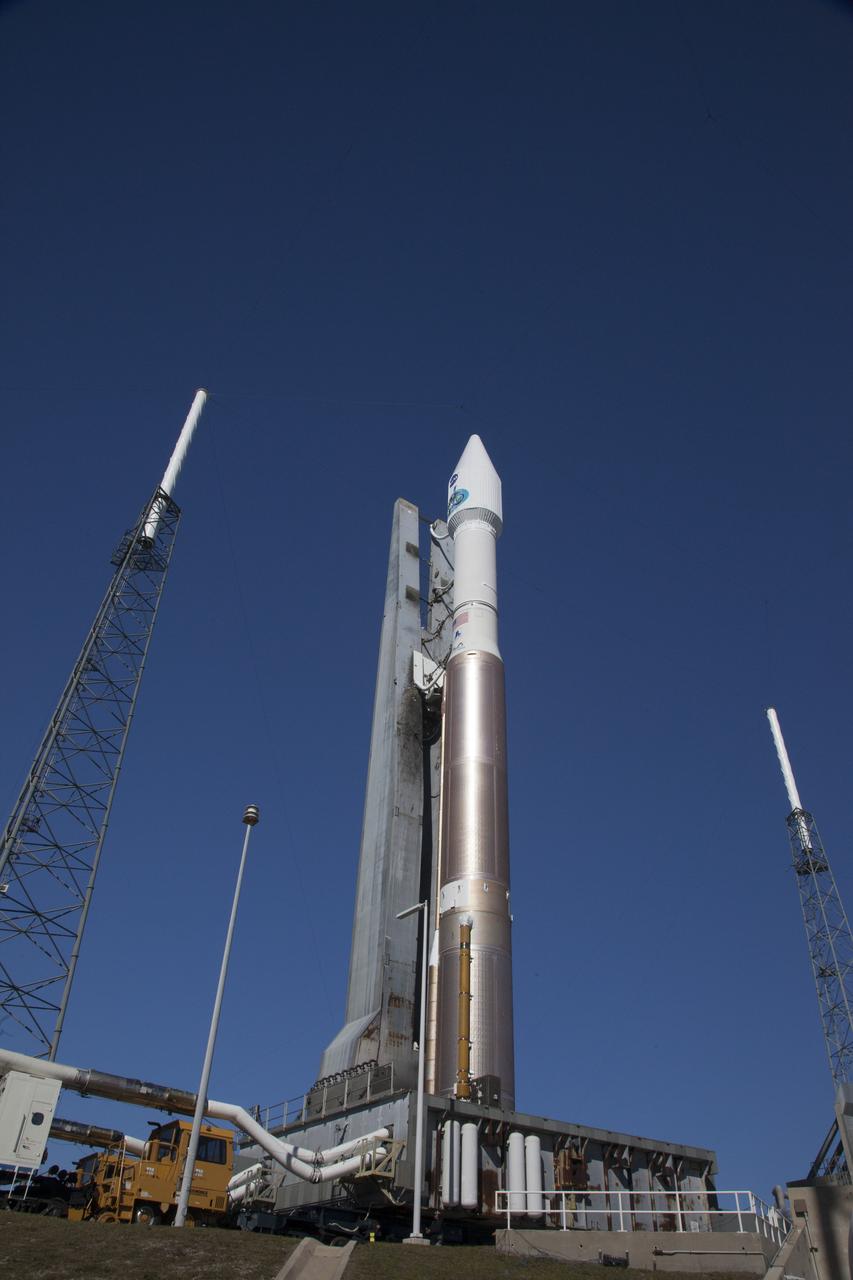
CAPE CANAVERAL, Fla. – At Cape Canaveral Air Force Station's Launch Complex 41, a United Launch Alliance Atlas V with NASA's Tracking and Data Relay Satellite, or TDRS-L, spacecraft atop, arrives at the launch pad. The TDRS-L spacecraft is the second of three new satellites designed to ensure vital operational continuity for NASA by expanding the lifespan of the Tracking and Data Relay Satellite System TDRSS fleet, which consists of eight satellites in geosynchronous orbit. The spacecraft provide tracking, telemetry, command and high bandwidth data return services for numerous science and human exploration missions orbiting Earth. These include NASA's Hubble Space Telescope and the International Space Station. TDRS-L has a high-performance solar panel designed for more spacecraft power to meet the growing S-band communications requirements. TDRSS is one of NASA Space Communication and Navigation’s SCaN three networks providing space communications to NASA’s missions. For more information more about TDRS-L, visit: http://www.nasa.gov/tdrs To learn more about SCaN, visit: www.nasa.gov/scan Photo credit: NASA/Daniel Casper
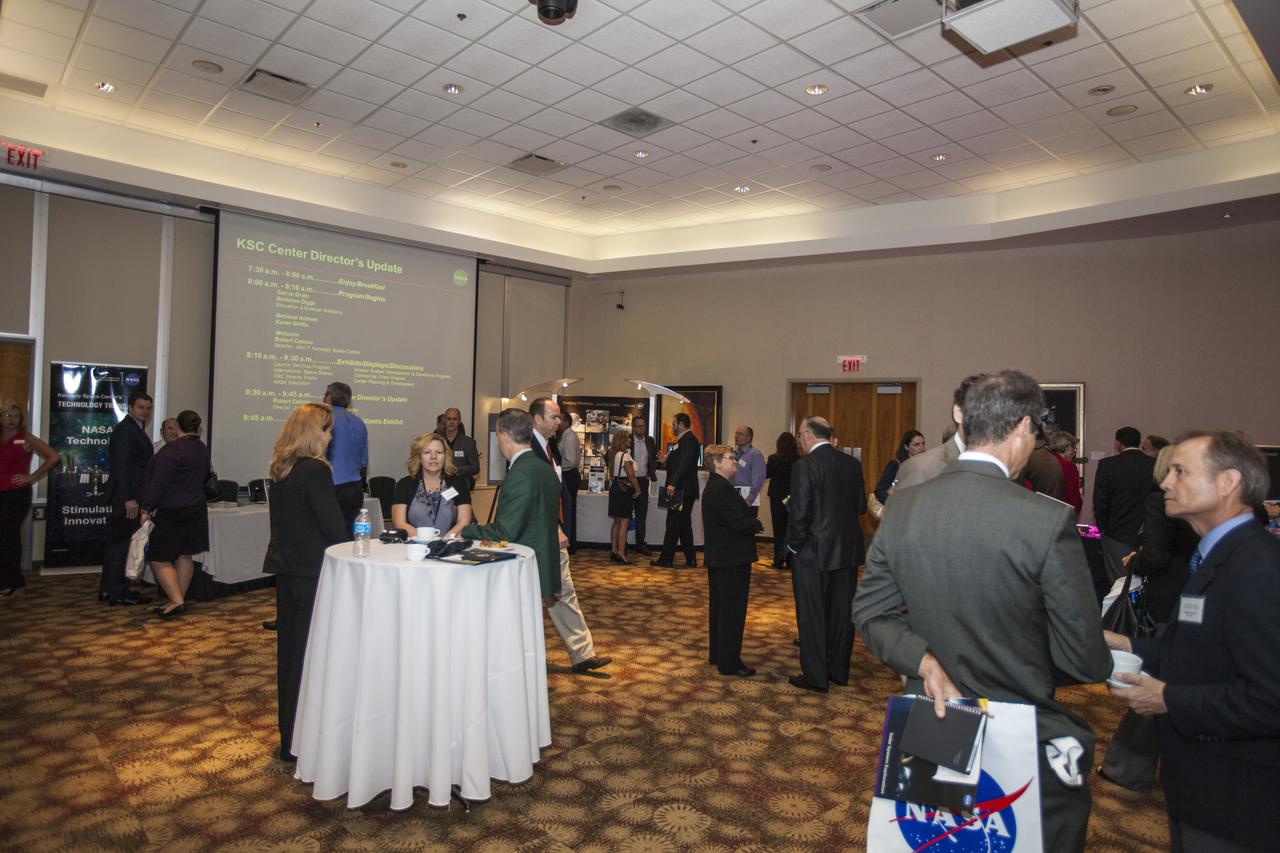
CAPE CANAVERAL, Fla. - Community leaders, business executives, educators, and state and local government leaders were updated on NASA Kennedy Space Center programs and accomplishments during Center Director Bob Cabana’s Center Director Update at the Debus Center at the Kennedy Space Center Visitor Complex in Florida. Attendees talked with Cabana and other senior Kennedy managers and visited displays featuring updates on Kennedy programs and projects, including International Space Station, Commercial Crew, Ground System Development and Operations, Launch Services, Center Planning and Development, Technology, KSC Swamp Works and NASA Education. The morning concluded with a tour of the new Space Shuttle Atlantis exhibit at the visitor complex. For more information, visit http://www.nasa.gov/kennedy. Photo credit: NASA/Daniel Casper
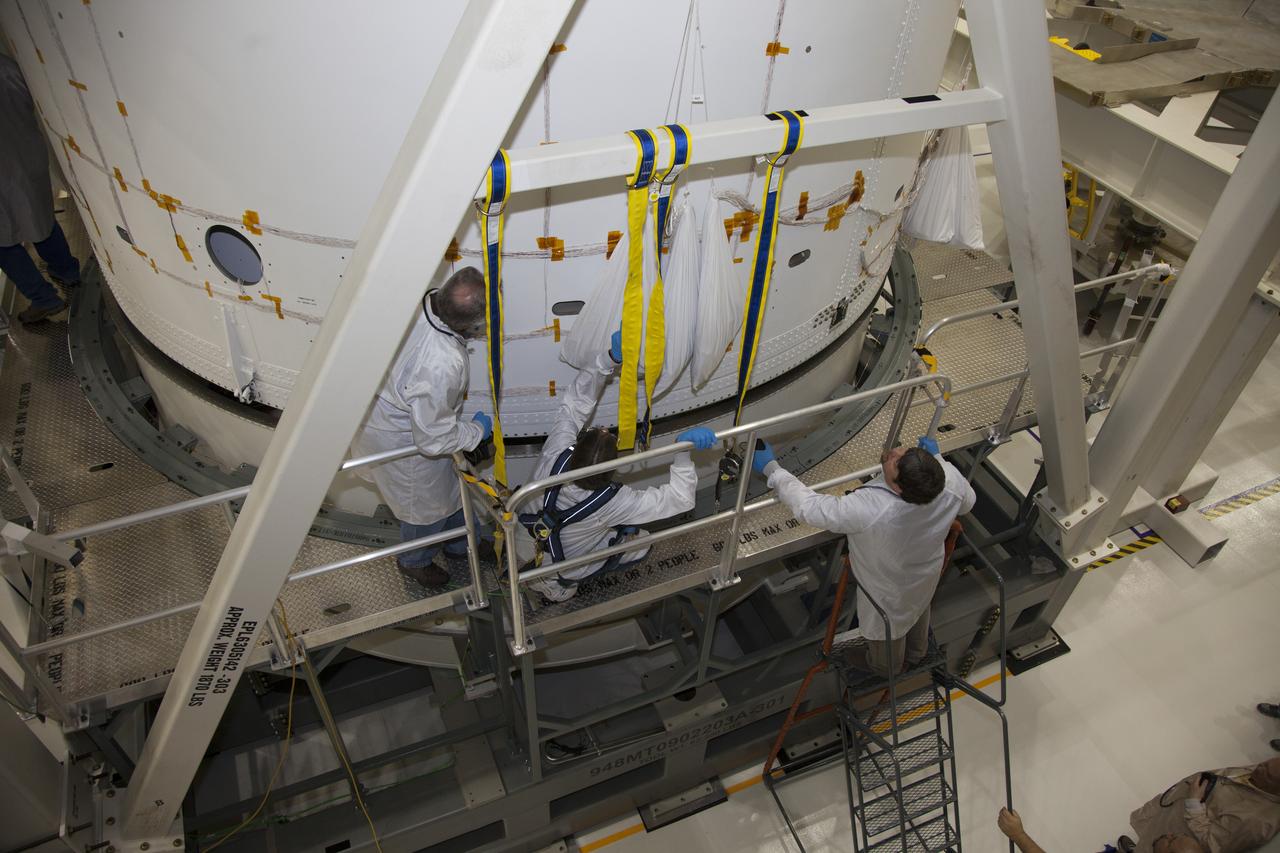
CAPE CANAVERAL, Fla. - Inside the Operations and Checkout Building high bay at NASA’s Kennedy Space Center in Florida, technicians on a platform monitor the progress as a crane lowers the service module for the Orion spacecraft onto a static test stand. Orion is the exploration spacecraft designed to carry astronauts to destinations not yet explored by humans, including an asteroid and Mars. It will have emergency abort capability, sustain the crew during space travel and provide safe re-entry from deep space return velocities. The first unpiloted test flight of the Orion is scheduled to launch in 2014 atop a Delta IV rocket and in 2017 on NASA’s Space Launch System rocket. For more information, visit http://www.nasa.gov/orion. Photo credit: NASA/Daniel Casper
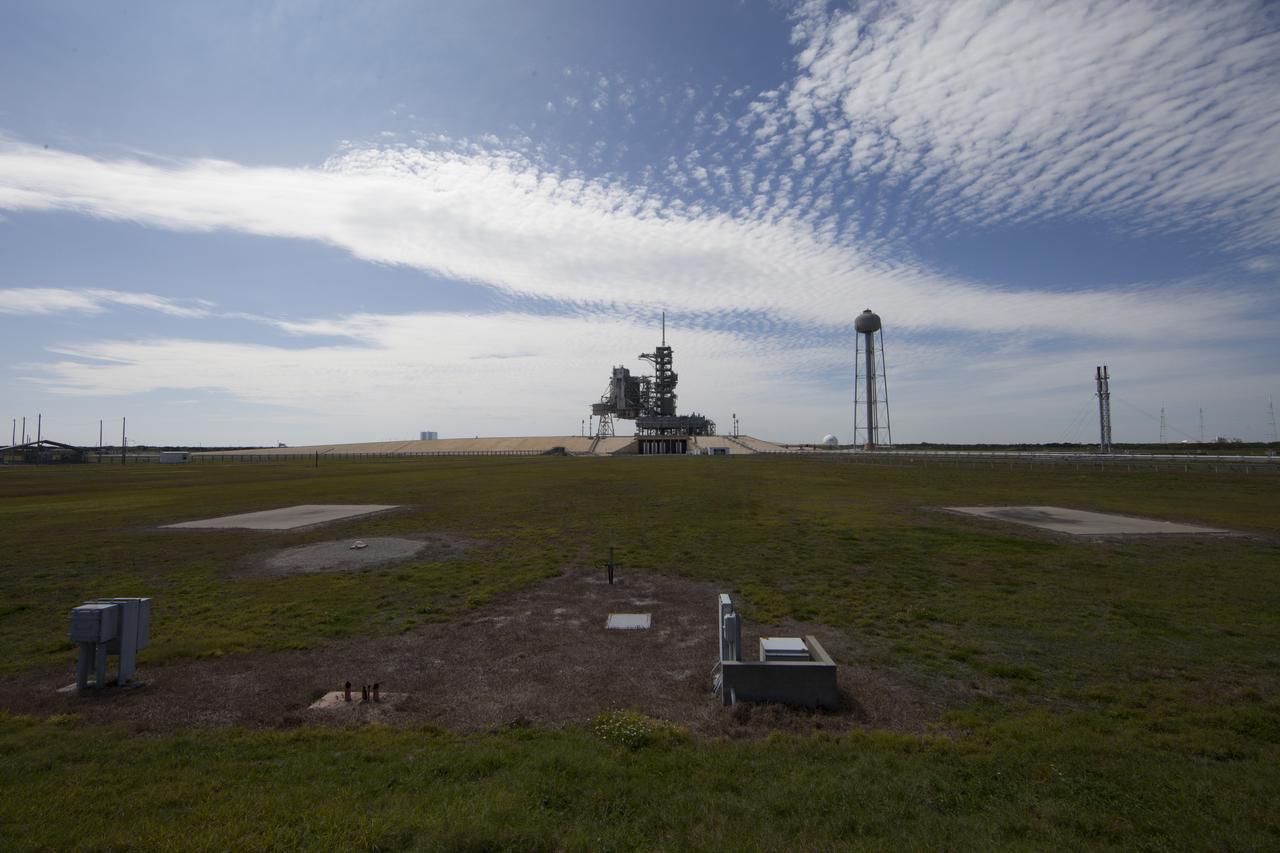
CAPE CANAVERAL, Fla. -- At NASA's Kennedy Space Center in Florida, launch pad 39A looks much like it did after the liftoff of STS-135, the final space shuttle mission, on July 8, 2011. Both launch pad 39A and 39B pad 39A was originally built for the Apollo/Saturn V rockets that launched American astronauts on their historic journeys to the moon and later modified to support the 30-year shuttle program. To learn more about Launch Pad 39A visit: http://www.nasa.gov/mission_pages/shuttle/launch/launch-complex39-toc.html Photo credit: NASA/Dan Casper
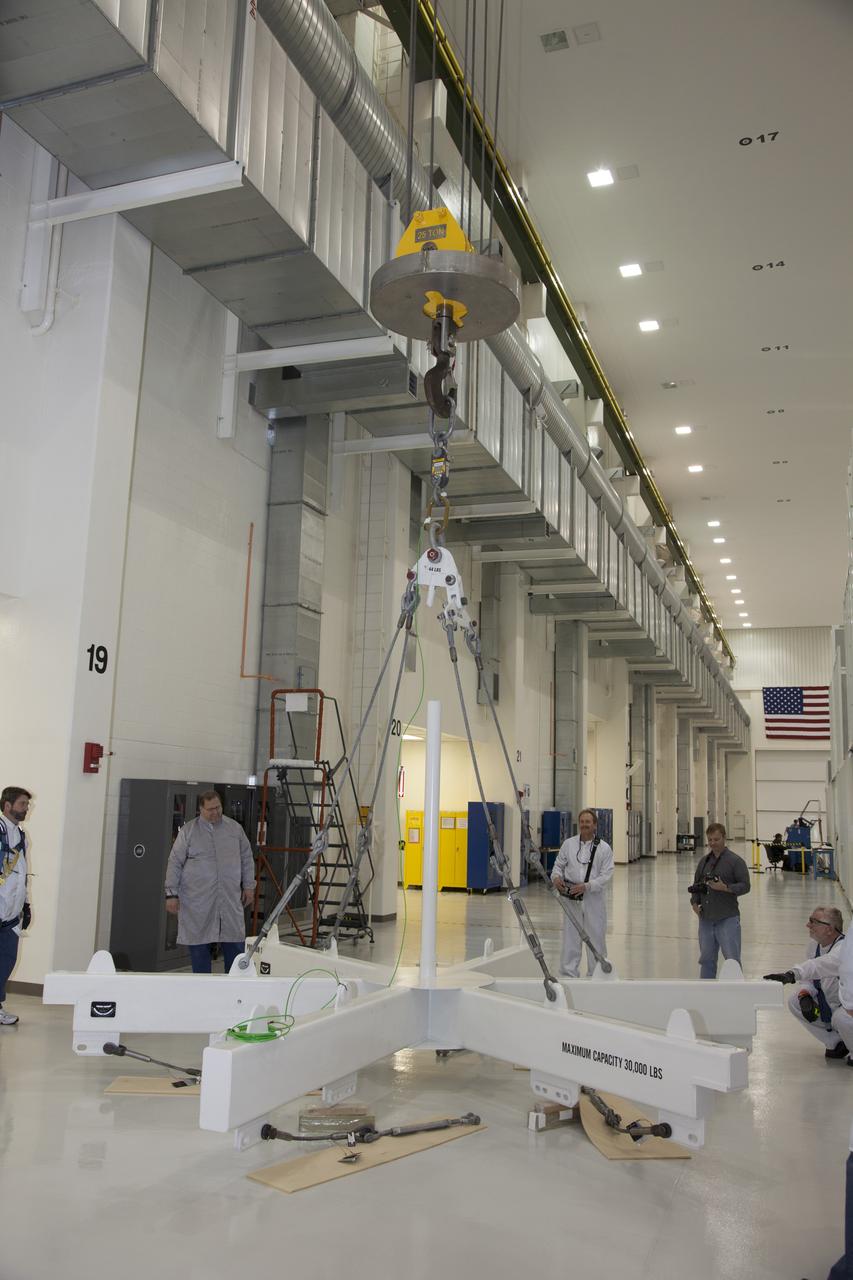
CAPE CANAVERAL, Fla. - Inside the Operations and Checkout Building high bay at NASA’s Kennedy Space Center in Florida, technicians monitor the progress as a crane lifts a ground support tool that will be used to transfer the service module for the Orion spacecraft to a static test stand. Orion is the exploration spacecraft designed to carry astronauts to destinations not yet explored by humans, including an asteroid and Mars. It will have emergency abort capability, sustain the crew during space travel and provide safe re-entry from deep space return velocities. The first unpiloted test flight of the Orion is scheduled to launch in 2014 atop a Delta IV rocket and in 2017 on NASA’s Space Launch System rocket. For more information, visit http://www.nasa.gov/orion. Photo credit: NASA/Daniel Casper
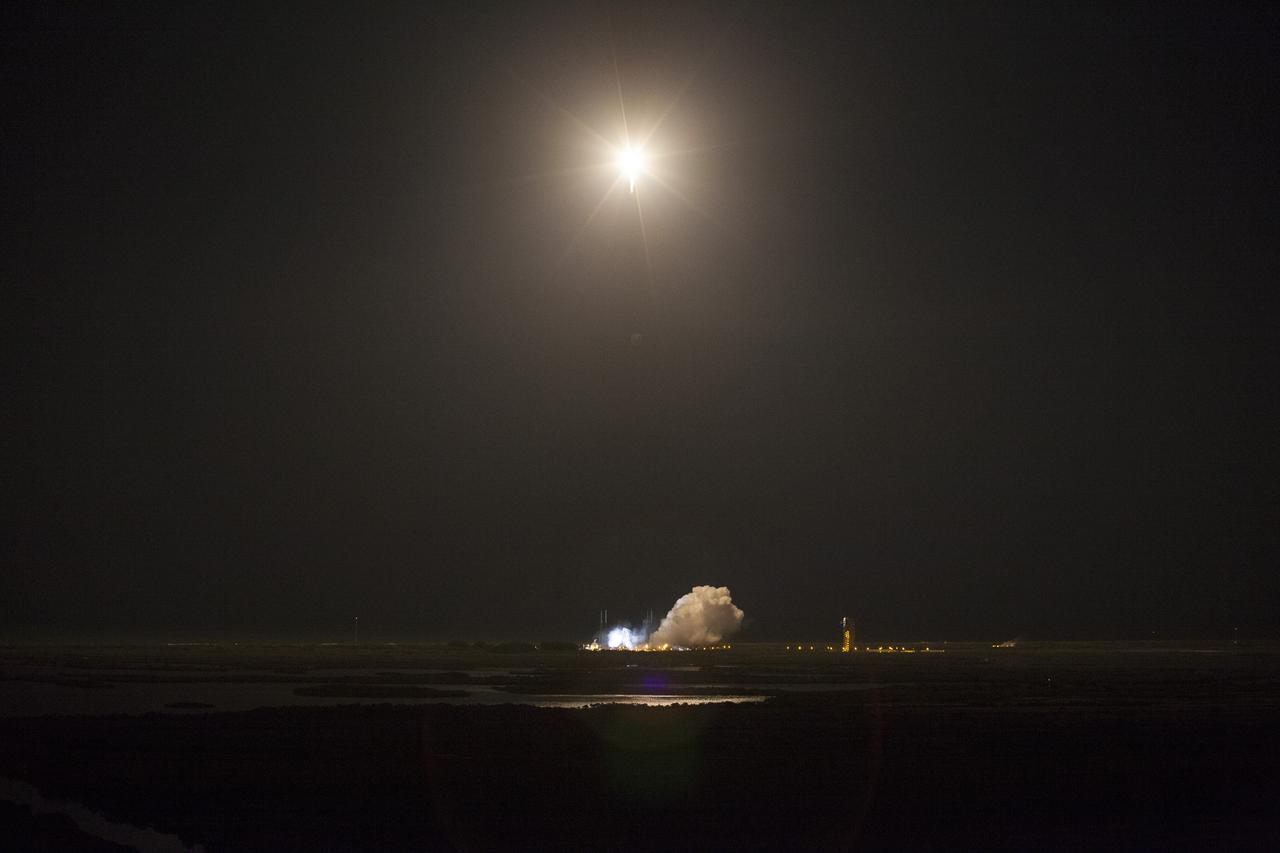
CAPE CANAVERAL, Fla. -- Only the exhaust plume remains at Space Launch Complex 41 on Cape Canaveral Air Force Station in Florida as the United Launch Alliance Atlas V rocket carrying NASA's Tracking and Data Relay Satellite, or TDRS-L, to Earth orbit soars into the night. Launch was at 9:33 p.m. EST Jan. 23 during a 40-minute launch window. The TDRS-L spacecraft is the second of three new satellites designed to ensure vital operational continuity for NASA by expanding the lifespan of the Tracking and Data Relay Satellite System TDRSS fleet, which consists of eight satellites in geosynchronous orbit. The spacecraft provide tracking, telemetry, command and high-bandwidth data return services for numerous science and human exploration missions orbiting Earth. These include NASA's Hubble Space Telescope and the International Space Station. TDRS-L has a high-performance solar panel designed for more spacecraft power to meet the growing S-band communications requirements. TDRSS is one of three NASA Space Communication and Navigation SCaN networks providing space communications to NASA’s missions. For more information more about TDRS-L, visit http://www.nasa.gov/tdrs. To learn more about SCaN, visit www.nasa.gov/scan. Photo credit: NASA/Dan Casper
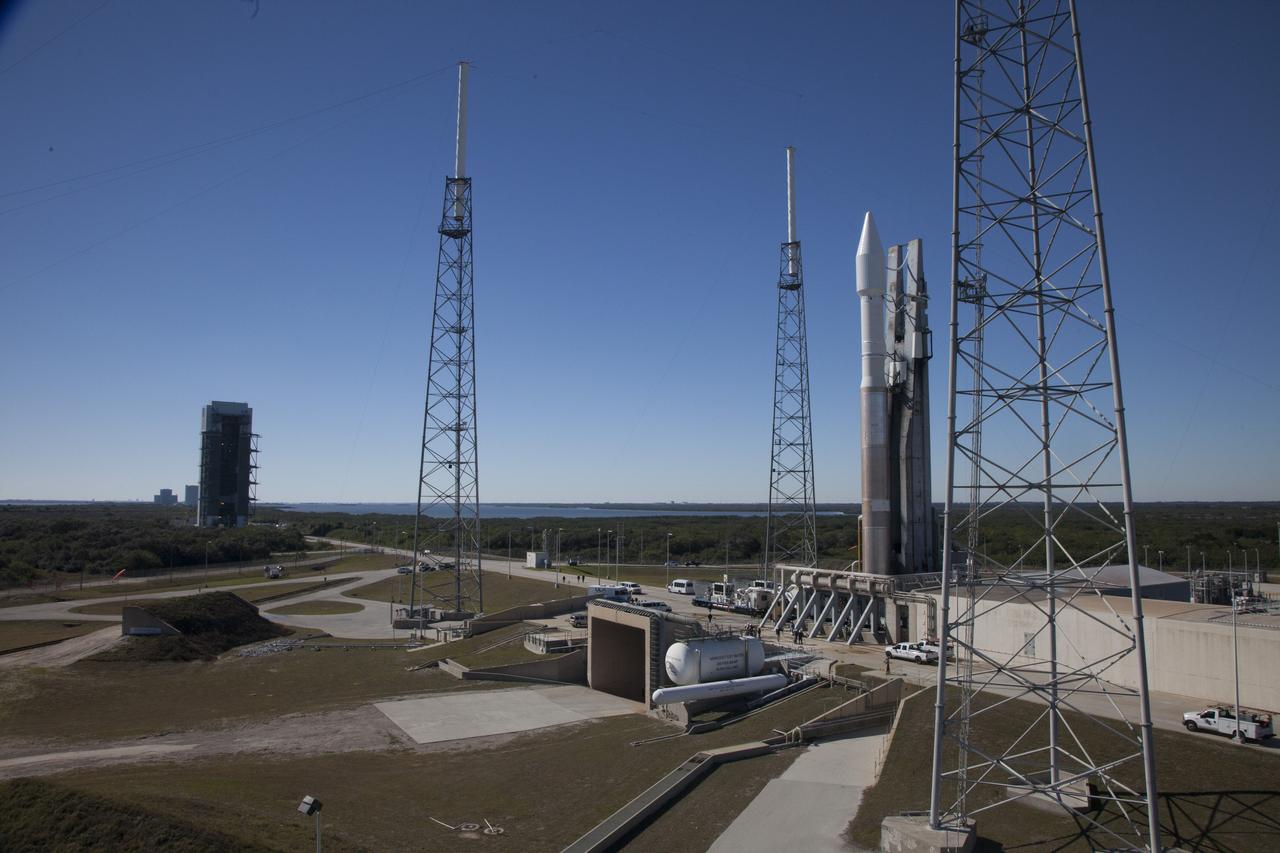
CAPE CANAVERAL, Fla. – At Cape Canaveral Air Force Station's Launch Complex 41, a United Launch Alliance Atlas V with NASA's Tracking and Data Relay Satellite, or TDRS-L, spacecraft atop, arrives at the launch pad. The TDRS-L spacecraft is the second of three new satellites designed to ensure vital operational continuity for NASA by expanding the lifespan of the Tracking and Data Relay Satellite System TDRSS fleet, which consists of eight satellites in geosynchronous orbit. The spacecraft provide tracking, telemetry, command and high bandwidth data return services for numerous science and human exploration missions orbiting Earth. These include NASA's Hubble Space Telescope and the International Space Station. TDRS-L has a high-performance solar panel designed for more spacecraft power to meet the growing S-band communications requirements. TDRSS is one of NASA Space Communication and Navigation’s SCaN three networks providing space communications to NASA’s missions. For more information more about TDRS-L, visit: http://www.nasa.gov/tdrs To learn more about SCaN, visit: www.nasa.gov/scan Photo credit: NASA/Daniel Casper
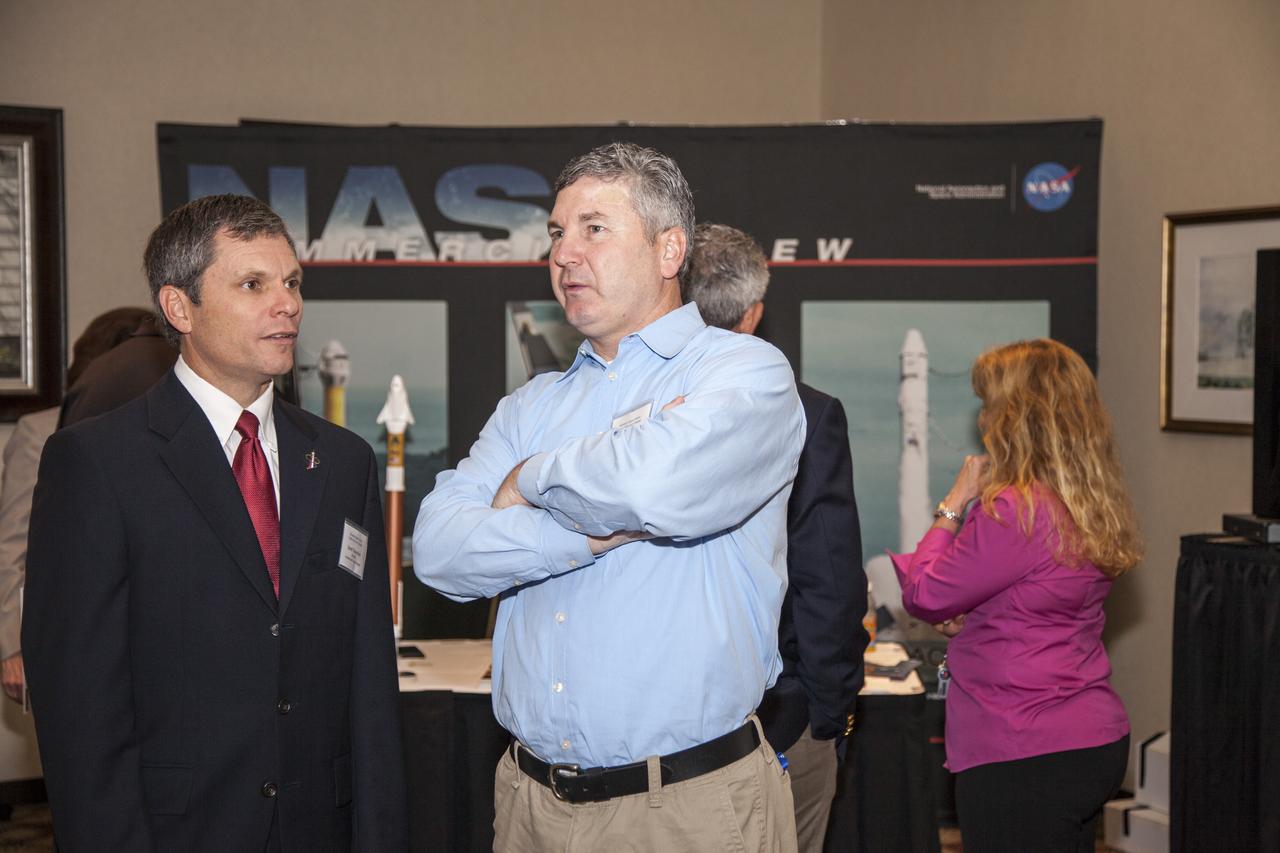
CAPE CANAVERAL, Fla. - Community leaders, business executives, educators, and state and local government leaders were updated on NASA Kennedy Space Center programs and accomplishments during Center Director Bob Cabana’s Center Director Update at the Debus Center at the Kennedy Space Center Visitor Complex in Florida. From left, Scott Thurston, Kennedy deputy of the spacecraft office of the Commercial Crew Program, talks with Scott Colloredo, director of the Center Planning and Development Directorate. Attendees talked with Cabana and other senior Kennedy managers and visited displays featuring updates on Kennedy programs and projects, including International Space Station, Commercial Crew, Ground System Development and Operations, Launch Services, Center Planning and Development, Technology, KSC Swamp Works and NASA Education. The morning concluded with a tour of the new Space Shuttle Atlantis exhibit at the visitor complex. For more information, visit http://www.nasa.gov/kennedy. Photo credit: NASA/Daniel Casper
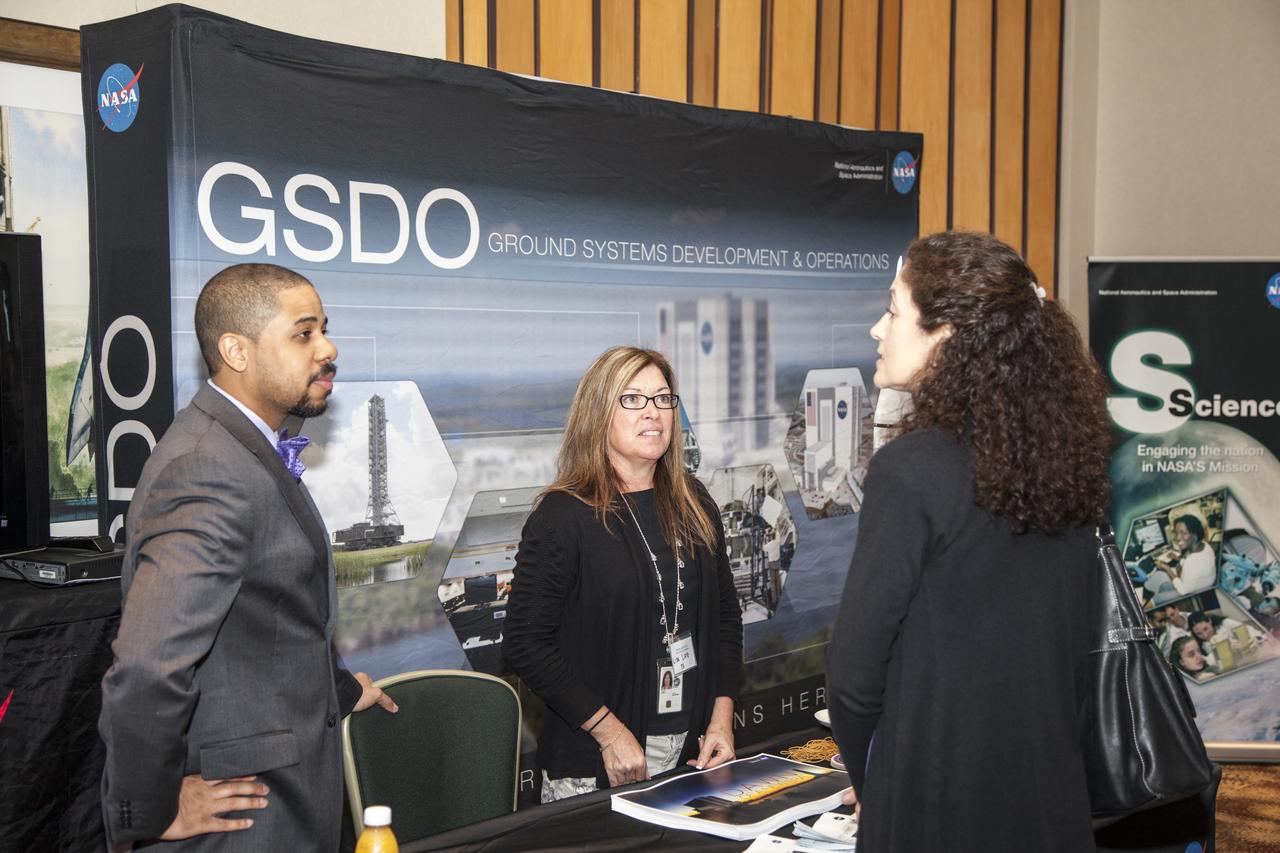
CAPE CANAVERAL, Fla. - Community leaders, business executives, educators, and state and local government leaders were updated on NASA Kennedy Space Center programs and accomplishments during Center Director Bob Cabana’s Center Director Update at the Debus Center at the Kennedy Space Center Visitor Complex in Florida. An attendee talks with engineers Jason Hopkins and Lisa Lutz, at the Ground Systems Development and Operations display. Attendees talked with Cabana and other senior Kennedy managers and visited displays featuring updates on Kennedy programs and projects, including International Space Station, Commercial Crew, Ground System Development and Operations, Launch Services, Center Planning and Development, Technology, KSC Swamp Works and NASA Education. The morning concluded with a tour of the new Space Shuttle Atlantis exhibit at the visitor complex. For more information, visit http://www.nasa.gov/kennedy. Photo credit: NASA/Daniel Casper
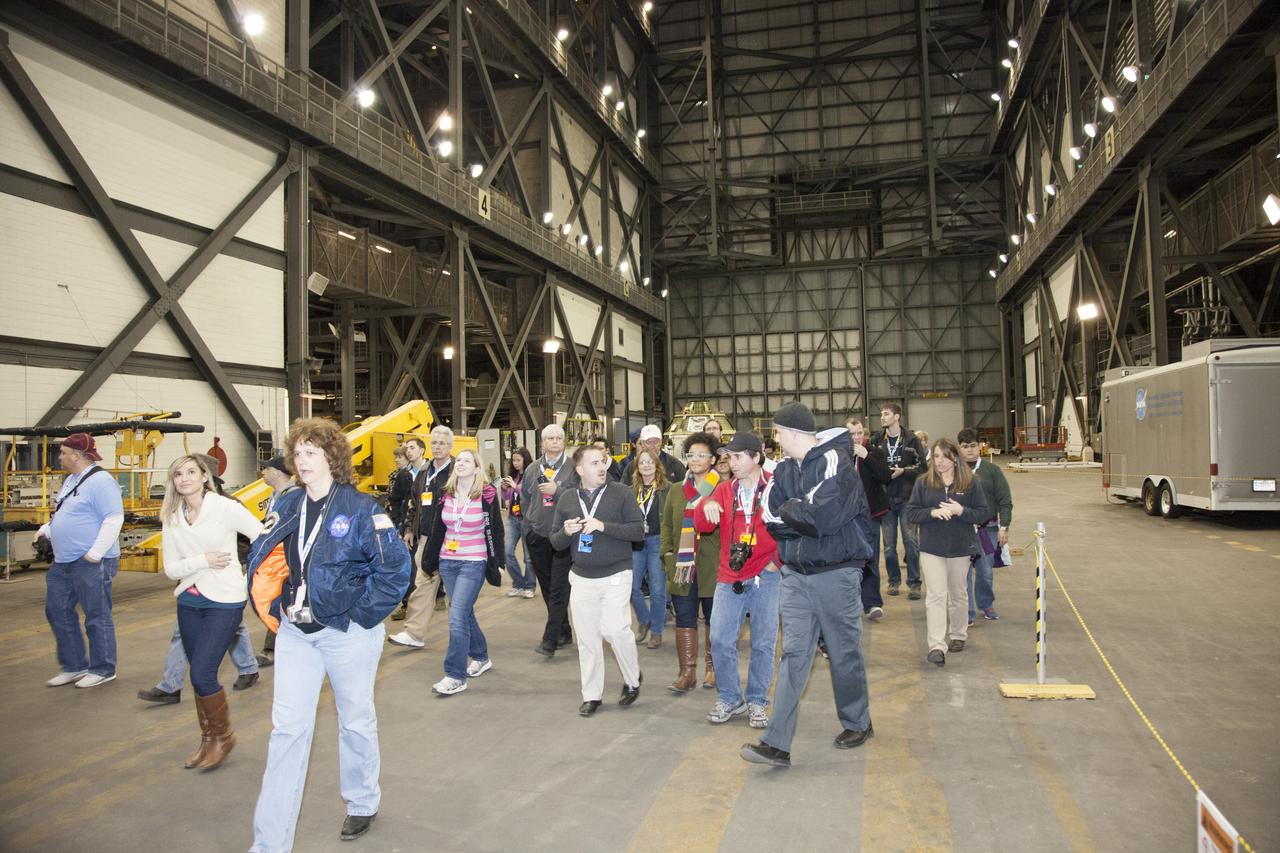
CAPE CANAVERAL, Fla. -- At NASA's Kennedy Space Center in Florida, social media participants were given an opportunity to go inside the spaceport's Vehicle Assembly Building. After serving through the Apollo and Space Shuttle Programs, the structure now is undergoing renovations to accommodate future launch vehicles and to continue as a major part of America's efforts to explore space. The social media participants gathered at the Florida spaceport for the launch of the Tracking and Data Relay Satellite, or TDRS-L spacecraft. Their visit included tours of key facilities and participating in presentations by key NASA leaders who updated the space agency's current efforts. Photo credit: NASA/Dan Casper
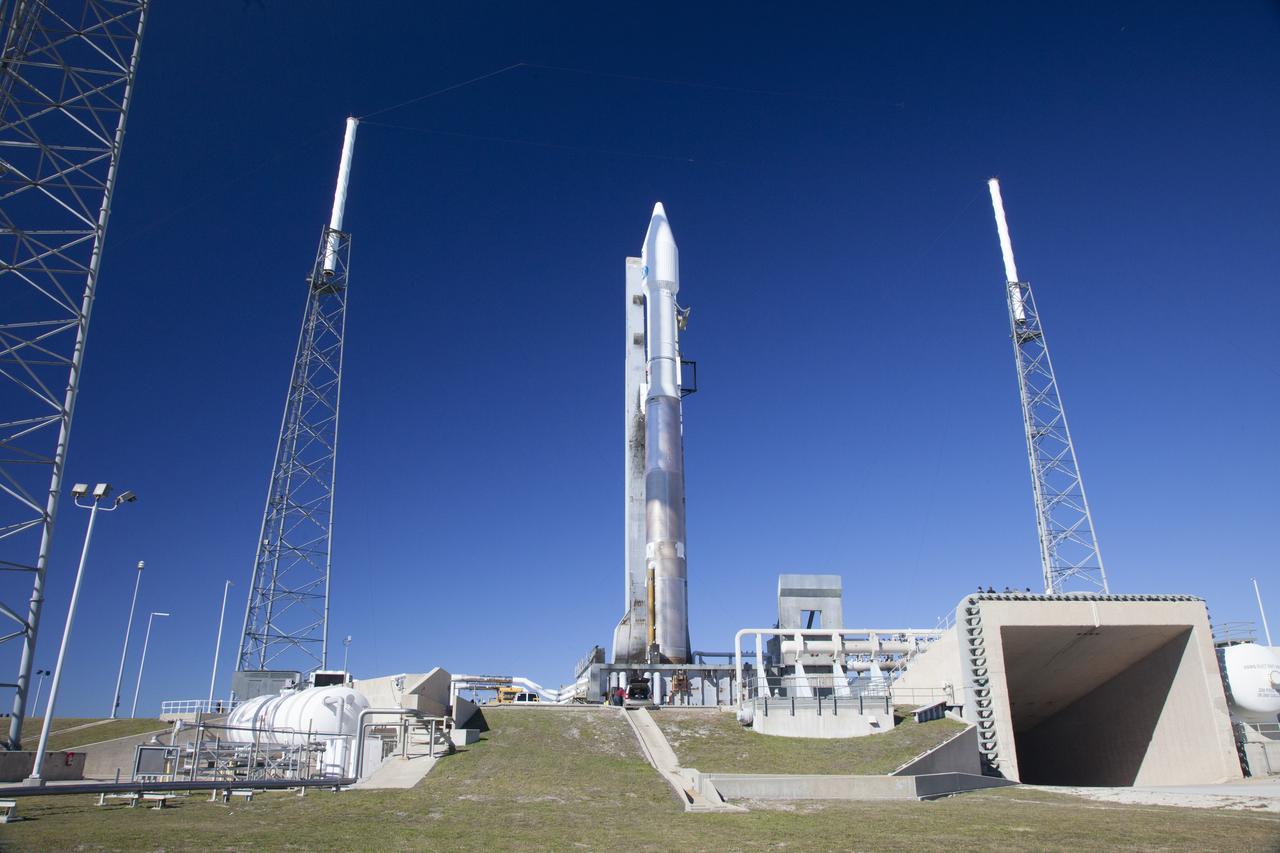
CAPE CANAVERAL, Fla. – At Cape Canaveral Air Force Station's Launch Complex 41, a United Launch Alliance Atlas V with NASA's Tracking and Data Relay Satellite, or TDRS-L, spacecraft atop, arrives at the launch pad. The TDRS-L spacecraft is the second of three new satellites designed to ensure vital operational continuity for NASA by expanding the lifespan of the Tracking and Data Relay Satellite System TDRSS fleet, which consists of eight satellites in geosynchronous orbit. The spacecraft provide tracking, telemetry, command and high bandwidth data return services for numerous science and human exploration missions orbiting Earth. These include NASA's Hubble Space Telescope and the International Space Station. TDRS-L has a high-performance solar panel designed for more spacecraft power to meet the growing S-band communications requirements. TDRSS is one of NASA Space Communication and Navigation’s SCaN three networks providing space communications to NASA’s missions. For more information more about TDRS-L, visit: http://www.nasa.gov/tdrs To learn more about SCaN, visit: www.nasa.gov/scan Photo credit: NASA/Daniel Casper
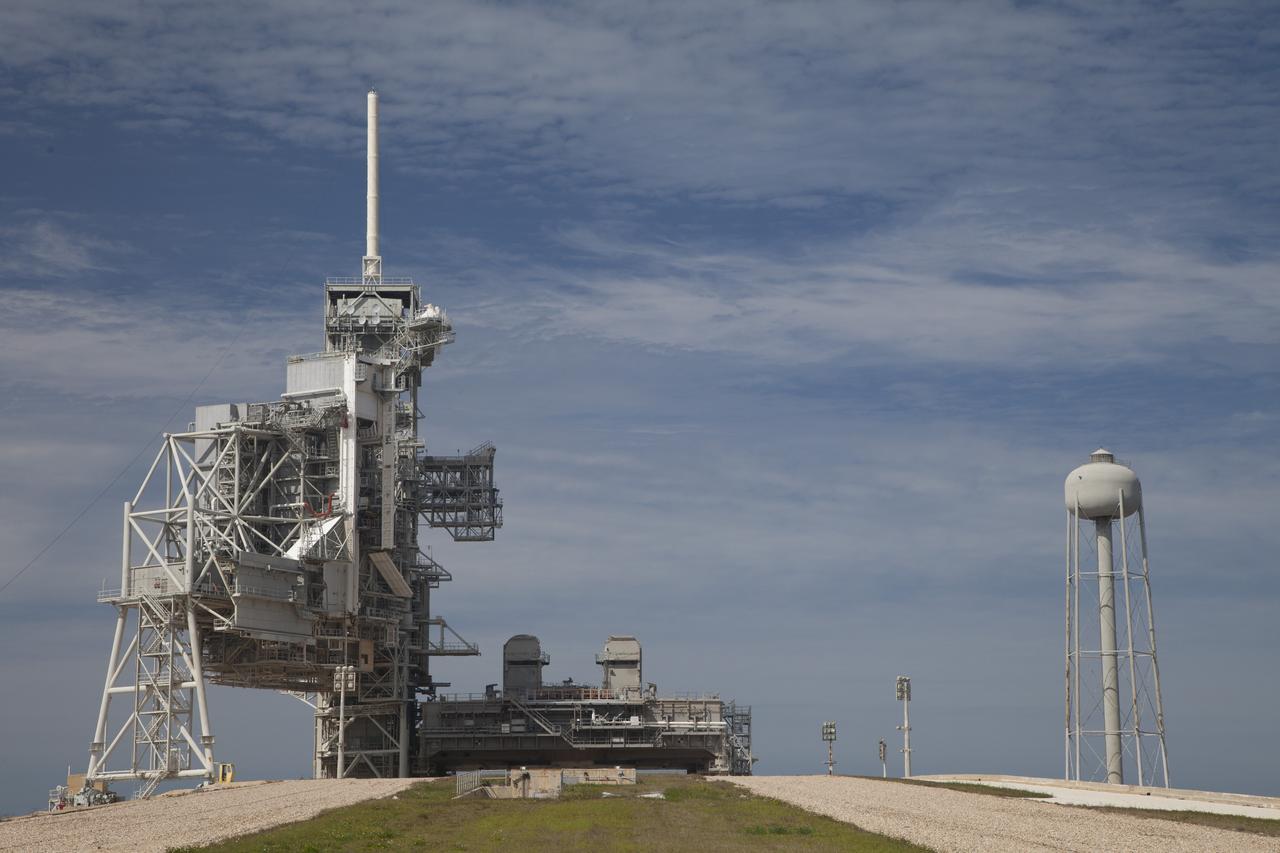
CAPE CANAVERAL, Fla. -- Launch pad 39A looks much like it did after the liftoff of STS-135, the final space shuttle mission, on July 8, 2011. The mobile launcher platform remains in place next to the fixed service structure and rotating service structure. Located at NASA's Kennedy Space Center in Florida, pad 39A was originally built for the Apollo/Saturn V rockets that launched American astronauts on their historic journeys to the moon and later modified to support the 30-year shuttle program. Both launch pad 39A and 39B pad 39A was originally built for the Apollo/Saturn V rockets that launched American astronauts on their historic journeys to the moon and later modified to support the 30-year shuttle program. To learn more about Launch Pad 39A visit: http://www.nasa.gov/mission_pages/shuttle/launch/launch-complex39-toc.html Photo credit: NASA/Dan Casper
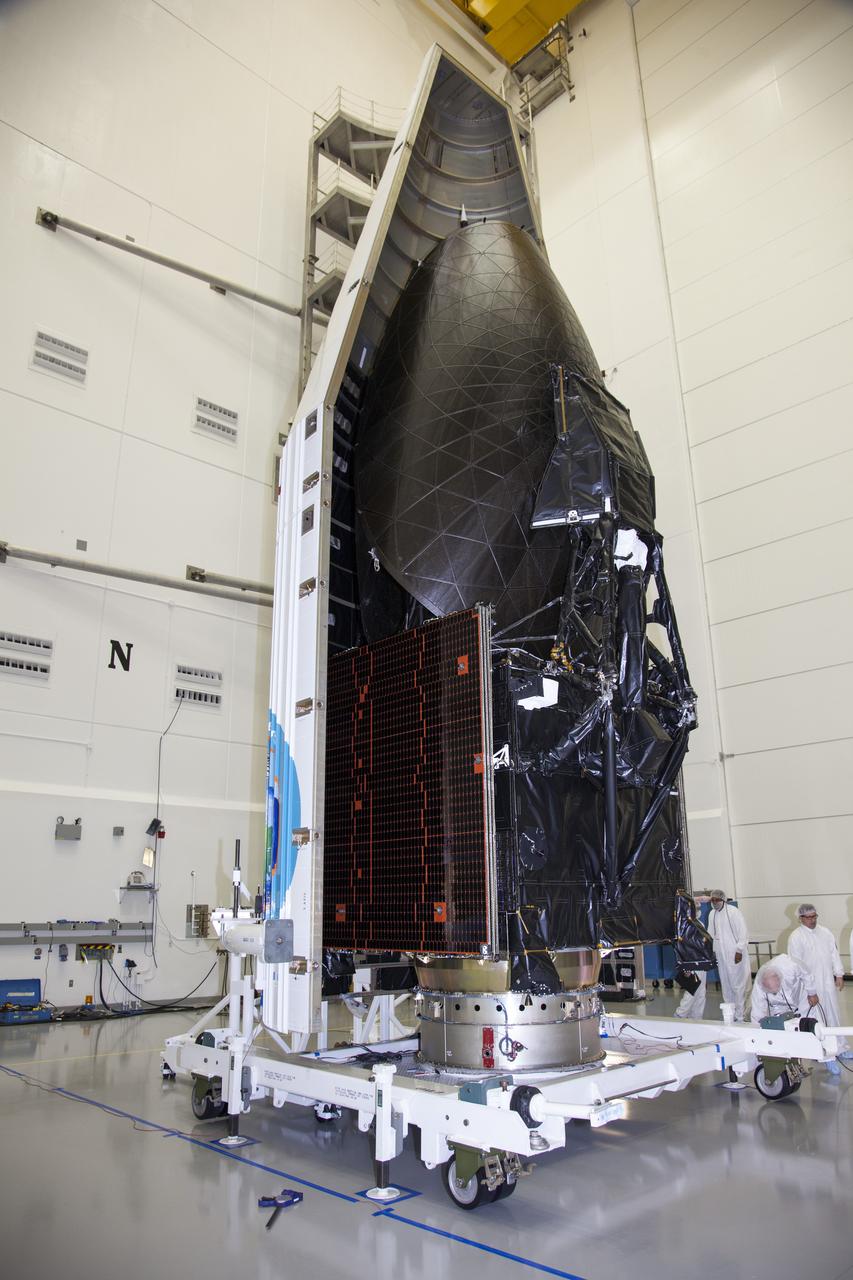
TITUSVILLE, Fla. – Inside the Astrotech payload processing facility in Titusville NASA's Tracking and Data Relay Satellite, or TDRS-L, spacecraft is being encapsulated in its payload fairing prior to being transported to Launch Complex 41 at Cape Canaveral Air Force Station. The TDRS-L satellite will be a part of the second of three next-generation spacecraft designed to ensure vital operational continuity for the NASA Space Network. It is scheduled to launch from Cape Canaveral's Space Launch Complex 41 atop a United Launch Alliance Atlas V rocket on January 23, 2014. The current Tracking and Data Relay Satellite system consists of eight in-orbit satellites distributed to provide near continuous information relay contact with orbiting spacecraft ranging from the International Space Station and Hubble Space Telescope to the array of scientific observatories. For more information, visit: http://www.nasa.gov/mission_pages/tdrs/home/index.html

CAPE CANAVERAL, Fla. – Six-year-old Connor Johnson gives a big thumbs up following a ceremony in the Kennedy Space Center Visitor Complex' Rocket Garden in which NASA Kennedy Space Center Director and former astronaut Robert Cabana presented him with mementos to inspire the youngster to continue the dream he has had since the age of three of becoming an astronaut. From left are Connor's brother Liam, Cabana and Connor. Connor, of Denver, Colo., gained national attention for having the "right stuff" when he launched an online petition on the White House website in December 2013 to save NASA’s funding from budget cuts. One of the mementos, a piece of space history, was a bolt used to hold the International Space Station's Unity module in place in space shuttle Endeavour's payload bay on the STS-88 mission, the first station assembly mission and Cabana's fourth and final spaceflight. Connor and his family were the guests of Delaware North Companies Parks & Resorts, the concessionaire managing the visitor complex. During his visit, Connor had the opportunity to meet with astronauts, see space vehicles and witness the Robot Rocket Rally underway in the complex' Rocket Garden over the weekend. To learn more about the educational activities available daily at the Kennedy Space Center Visitor Complex, visit http://www.kennedyspacecenter.com. Photo credit: NASA/Dan Casper
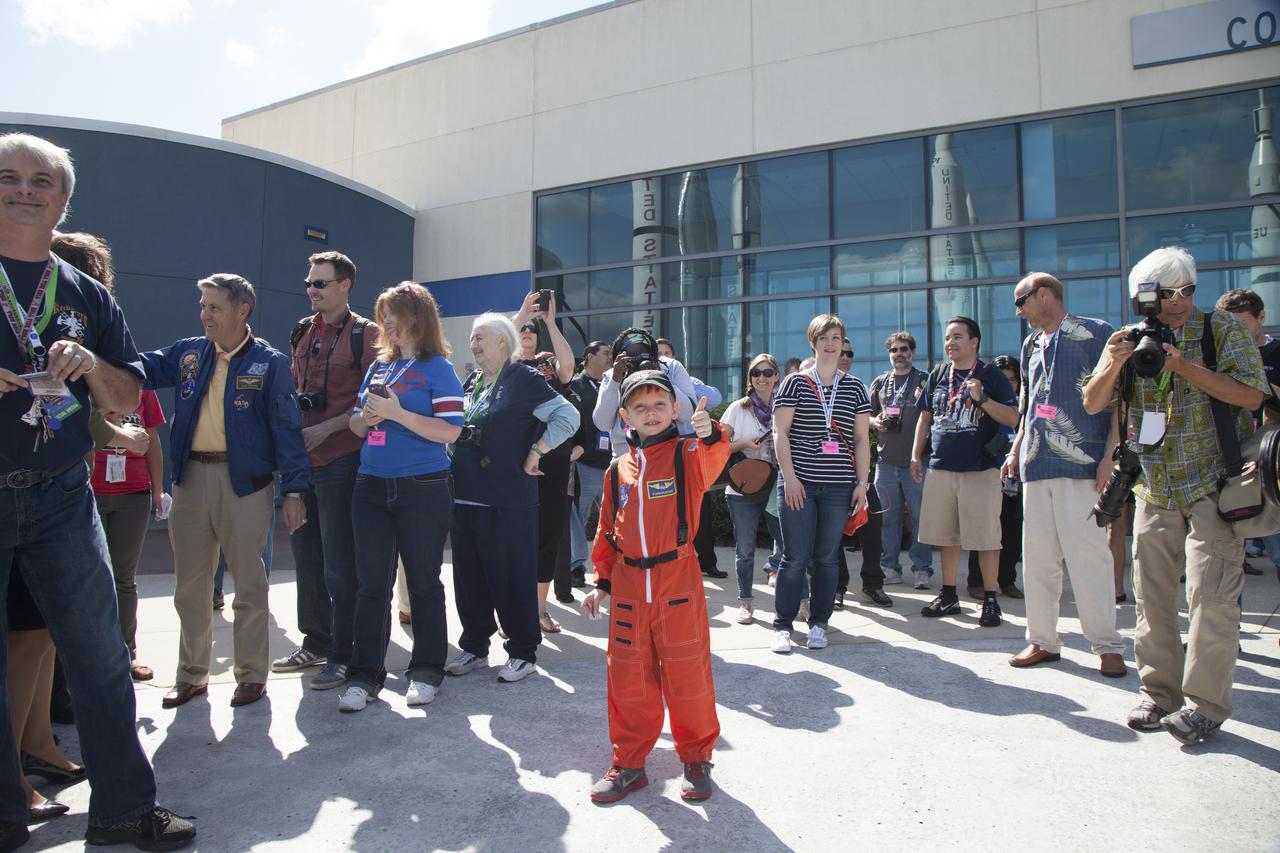
CAPE CANAVERAL, Fla. – Six-year-old Connor Johnson gives a big thumbs up following a ceremony in the Kennedy Space Center Visitor Complex' Rocket Garden during which NASA Kennedy Space Center Director and former astronaut Robert Cabana presented him with space mementos to inspire the youngster to continue the dream he has had since the age of three of becoming an astronaut. Behind Connor is Cabana, second from left, and representatives of news and social media who attended the event. Connor, of Denver, Colo., gained national attention for having the "right stuff" when he launched an online petition on the White House website in December 2013 to save NASA’s funding from budget cuts. One of the mementos, a piece of space history, was a bolt used to hold the International Space Station's Unity module in place in space shuttle Endeavour's payload bay on the STS-88 mission, the first station assembly mission and Cabana's fourth and final spaceflight. Connor and his family were the guests of Delaware North Companies Parks & Resorts, the concessionaire managing the visitor complex. During his visit, Connor had the opportunity to meet with astronauts, see space vehicles and witness the Robot Rocket Rally underway in the complex' Rocket Garden over the weekend. To learn more about the educational activities available daily at the Kennedy Space Center Visitor Complex, visit http://www.kennedyspacecenter.com. Photo credit: NASA/Dan Casper
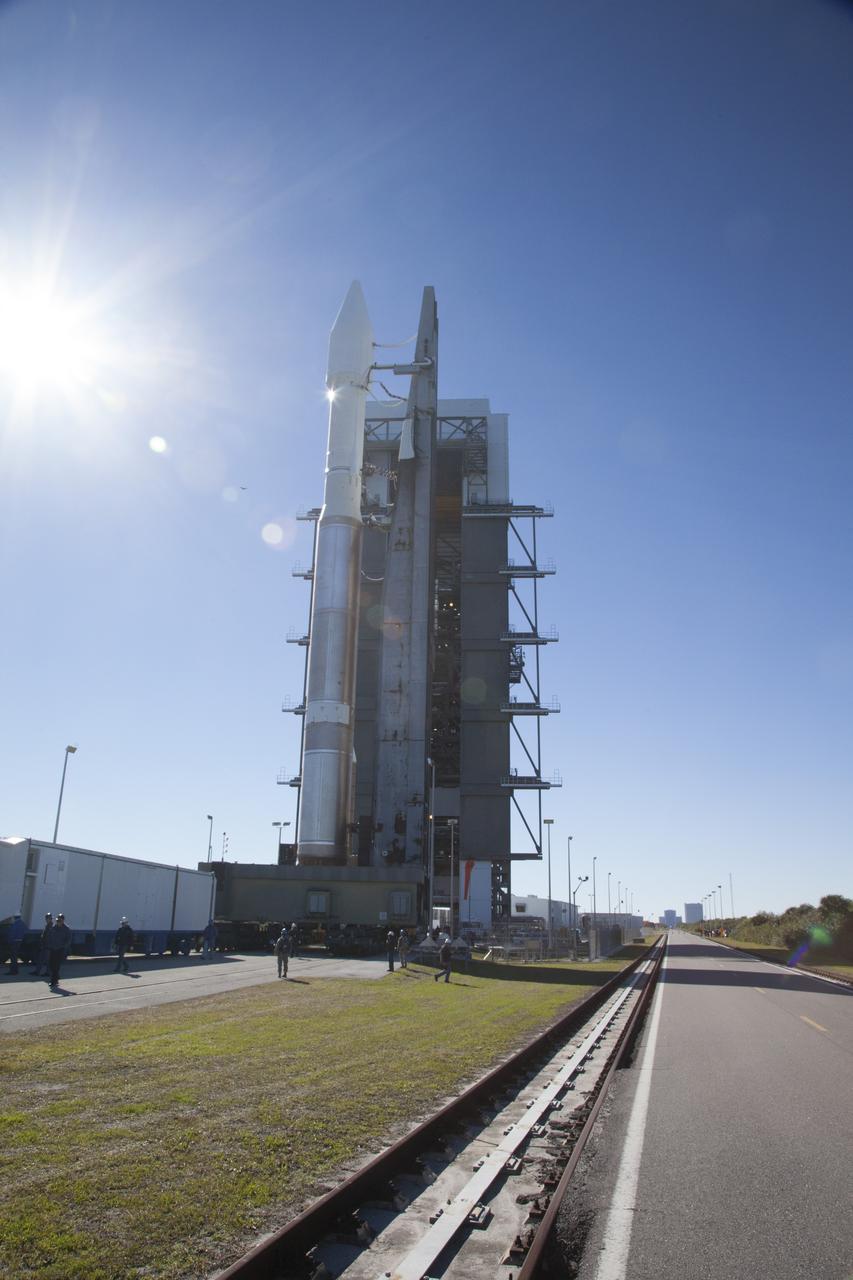
CAPE CANAVERAL, Fla. – At Cape Canaveral Air Force Station's Launch Complex 41, a United Launch Alliance Atlas V with NASA's Tracking and Data Relay Satellite, or TDRS-L, spacecraft atop, begins its rollout from the Vertical Integration Facility to the launch pad. The TDRS-L spacecraft is the second of three new satellites designed to ensure vital operational continuity for NASA by expanding the lifespan of the Tracking and Data Relay Satellite System TDRSS fleet, which consists of eight satellites in geosynchronous orbit. The spacecraft provide tracking, telemetry, command and high bandwidth data return services for numerous science and human exploration missions orbiting Earth. These include NASA's Hubble Space Telescope and the International Space Station. TDRS-L has a high-performance solar panel designed for more spacecraft power to meet the growing S-band communications requirements. TDRSS is one of NASA Space Communication and Navigation’s SCaN three networks providing space communications to NASA’s missions. For more information more about TDRS-L, visit: http://www.nasa.gov/tdrs To learn more about SCaN, visit: www.nasa.gov/scan Photo credit: NASA/Daniel Casper
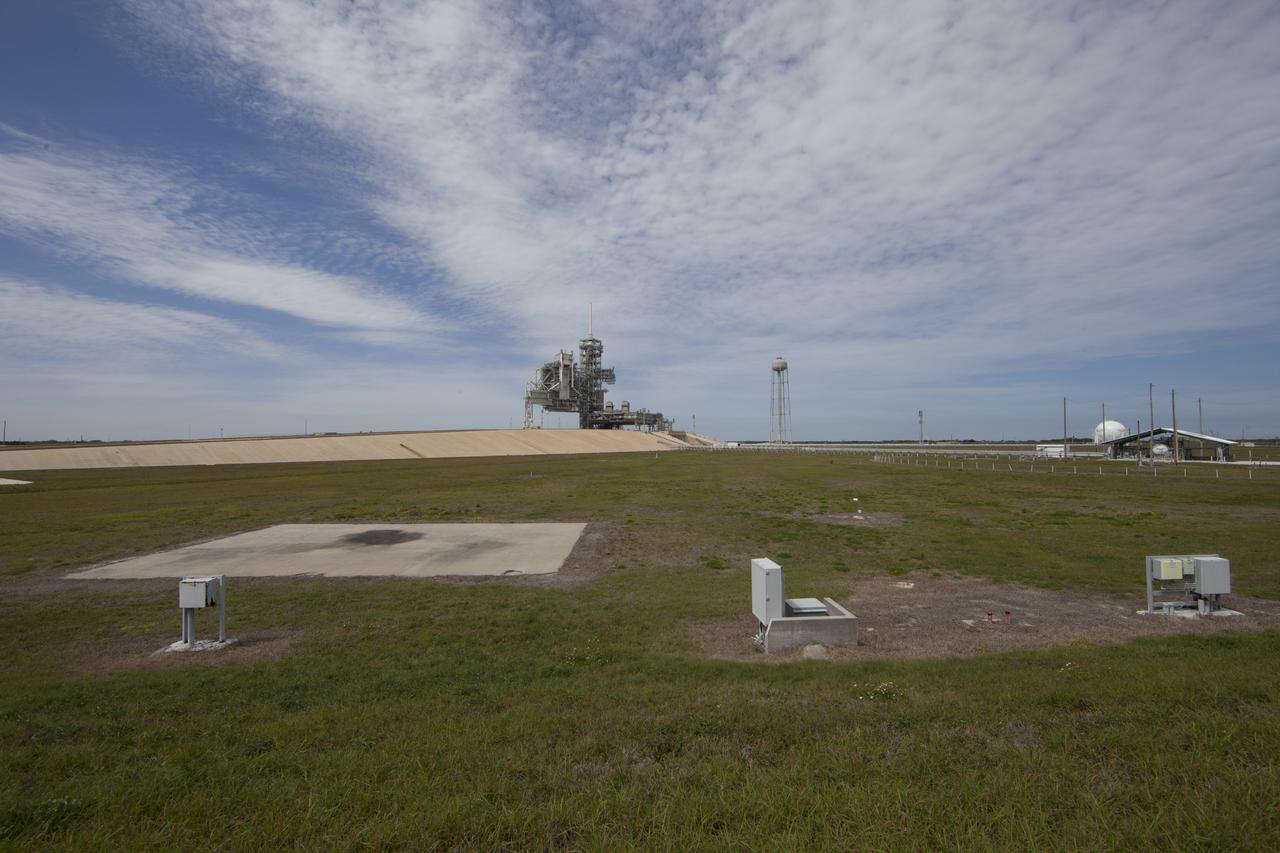
CAPE CANAVERAL, Fla. -- At NASA's Kennedy Space Center in Florida, launch pad 39A looks much like it did after the liftoff of STS-135, the final space shuttle mission, on July 8, 2011. Both launch pad 39A and 39B pad 39A was originally built for the Apollo/Saturn V rockets that launched American astronauts on their historic journeys to the moon and later modified to support the 30-year shuttle program. To learn more about Launch Pad 39A visit: http://www.nasa.gov/mission_pages/shuttle/launch/launch-complex39-toc.html Photo credit: NASA/Dan Casper
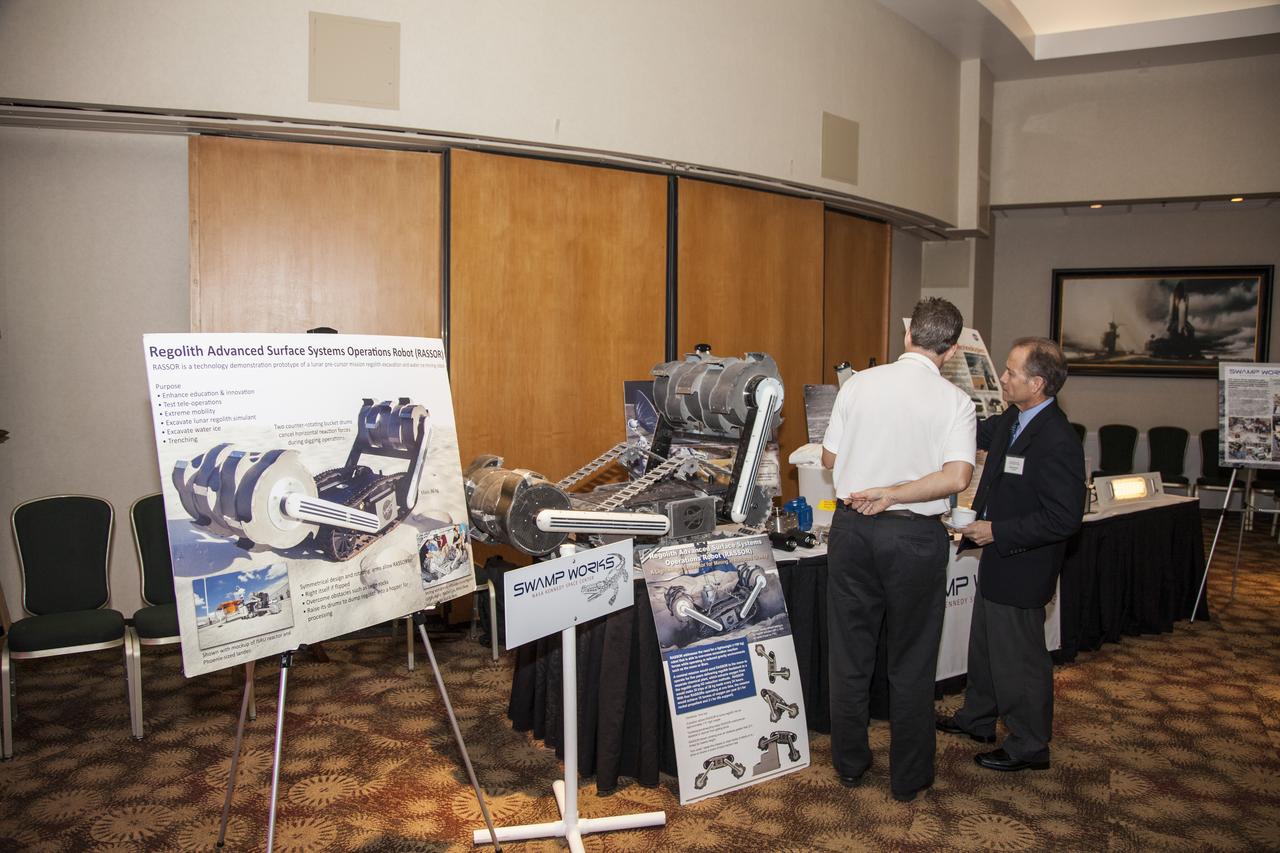
CAPE CANAVERAL, Fla. - Community leaders, business executives, educators, and state and local government leaders were updated on NASA Kennedy Space Center programs and accomplishments during Center Director Bob Cabana’s Center Director Update at the Debus Center at the Kennedy Space Center Visitor Complex in Florida. Rob Mueller, a senior technologist, talks to an attendee about Kennedy’s Swamp Works Laboratory. Attendees talked with Cabana and other senior Kennedy managers and visited displays featuring updates on Kennedy programs and projects, including International Space Station, Commercial Crew, Ground System Development and Operations, Launch Services, Center Planning and Development, Technology, KSC Swamp Works and NASA Education. The morning concluded with a tour of the new Space Shuttle Atlantis exhibit at the visitor complex. For more information, visit http://www.nasa.gov/kennedy. Photo credit: NASA/Daniel Casper
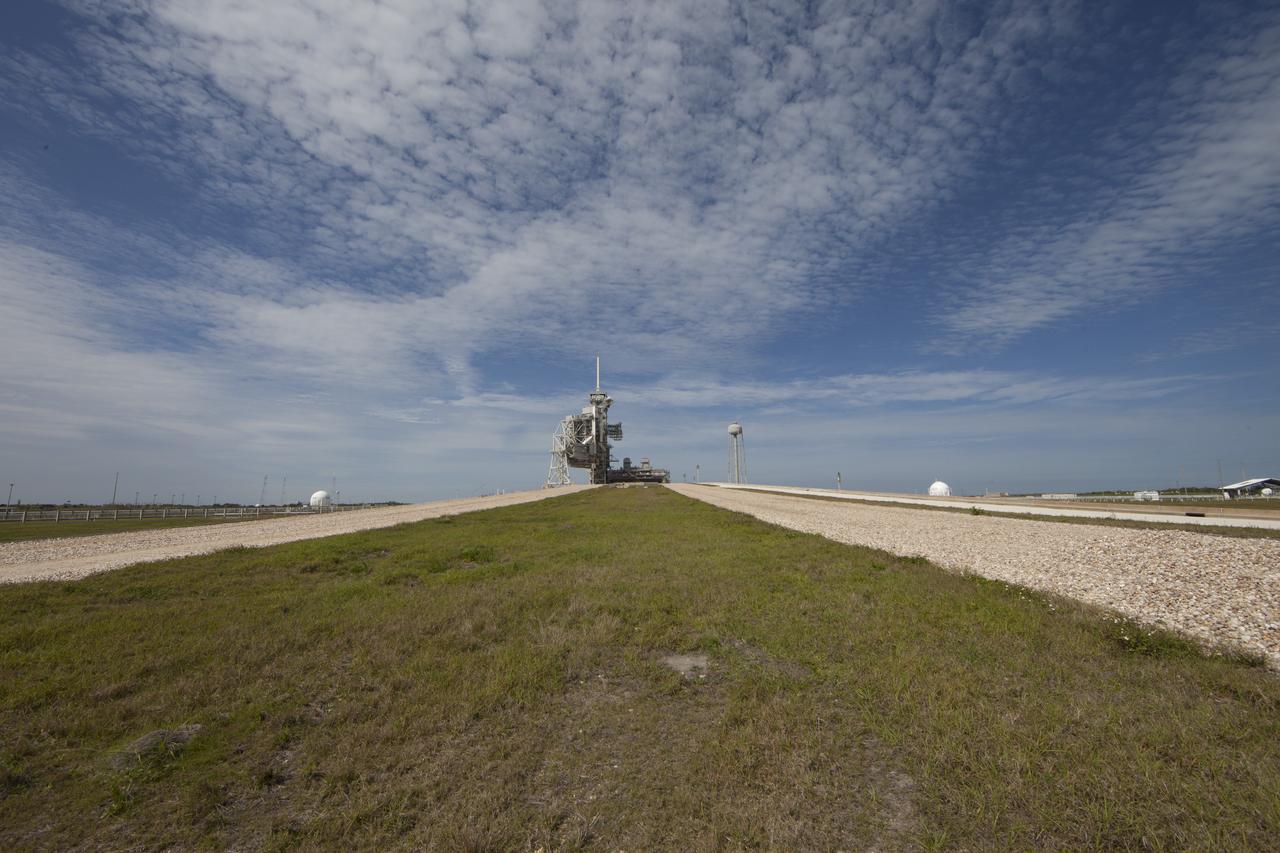
CAPE CANAVERAL, Fla. -- At NASA's Kennedy Space Center in Florida, launch pad 39A looks much like it did after the liftoff of STS-135, the final space shuttle mission, on July 8, 2011. Both launch pad 39A and 39B pad 39A was originally built for the Apollo/Saturn V rockets that launched American astronauts on their historic journeys to the moon and later modified to support the 30-year shuttle program. To learn more about Launch Pad 39A visit: http://www.nasa.gov/mission_pages/shuttle/launch/launch-complex39-toc.html Photo credit: NASA/Dan Casper
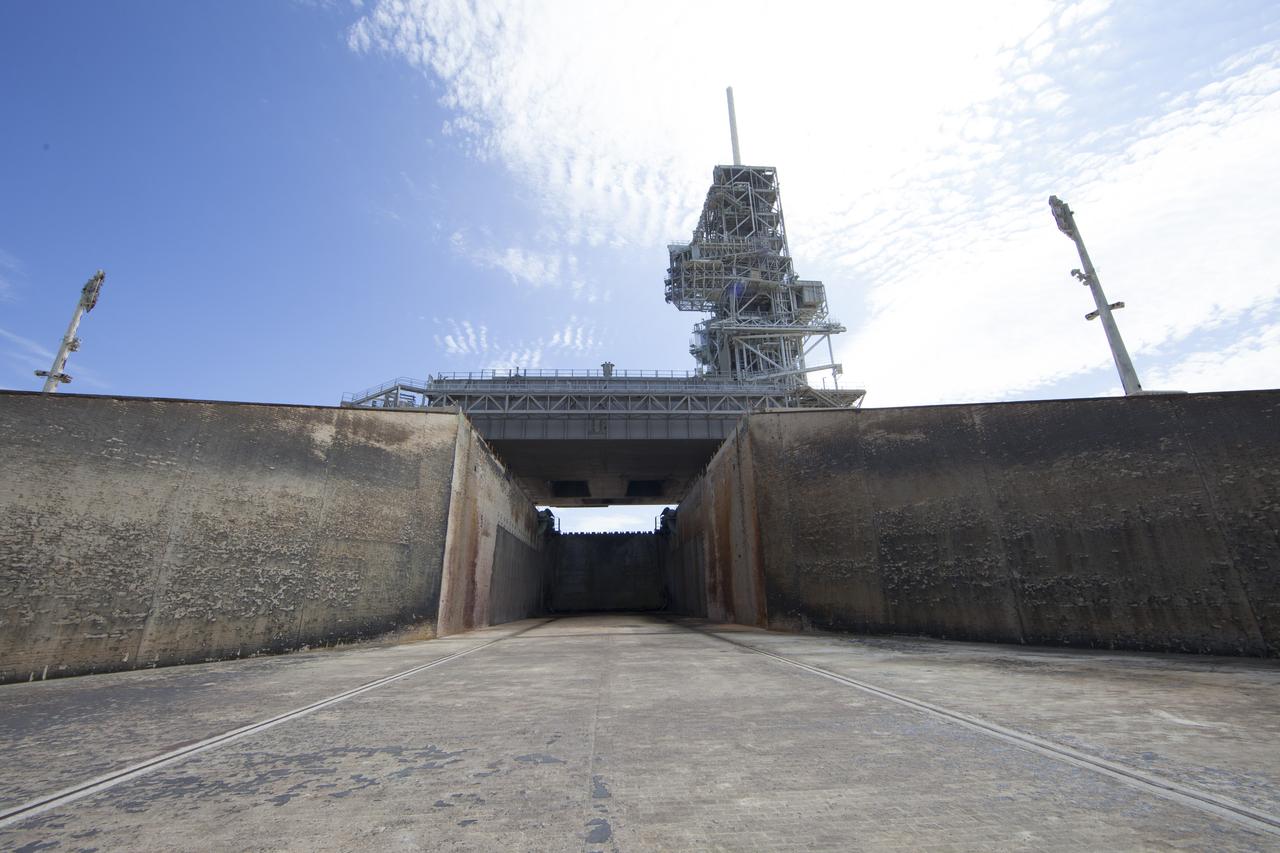
CAPE CANAVERAL, Fla. -- At NASA's Kennedy Space Center in Florida, launch pad 39A looks much like it did after the liftoff of STS-135, the final space shuttle mission, on July 8, 2011. This view shows the flame trench where smoke and flame from the shuttle's twin solid rocket boosters were deflected away from the pad. Both launch pad 39A and 39B pad 39A was originally built for the Apollo/Saturn V rockets that launched American astronauts on their historic journeys to the moon and later modified to support the 30-year shuttle program. To learn more about Launch Pad 39A visit: http://www.nasa.gov/mission_pages/shuttle/launch/launch-complex39-toc.html Photo credit: NASA/Dan Casper
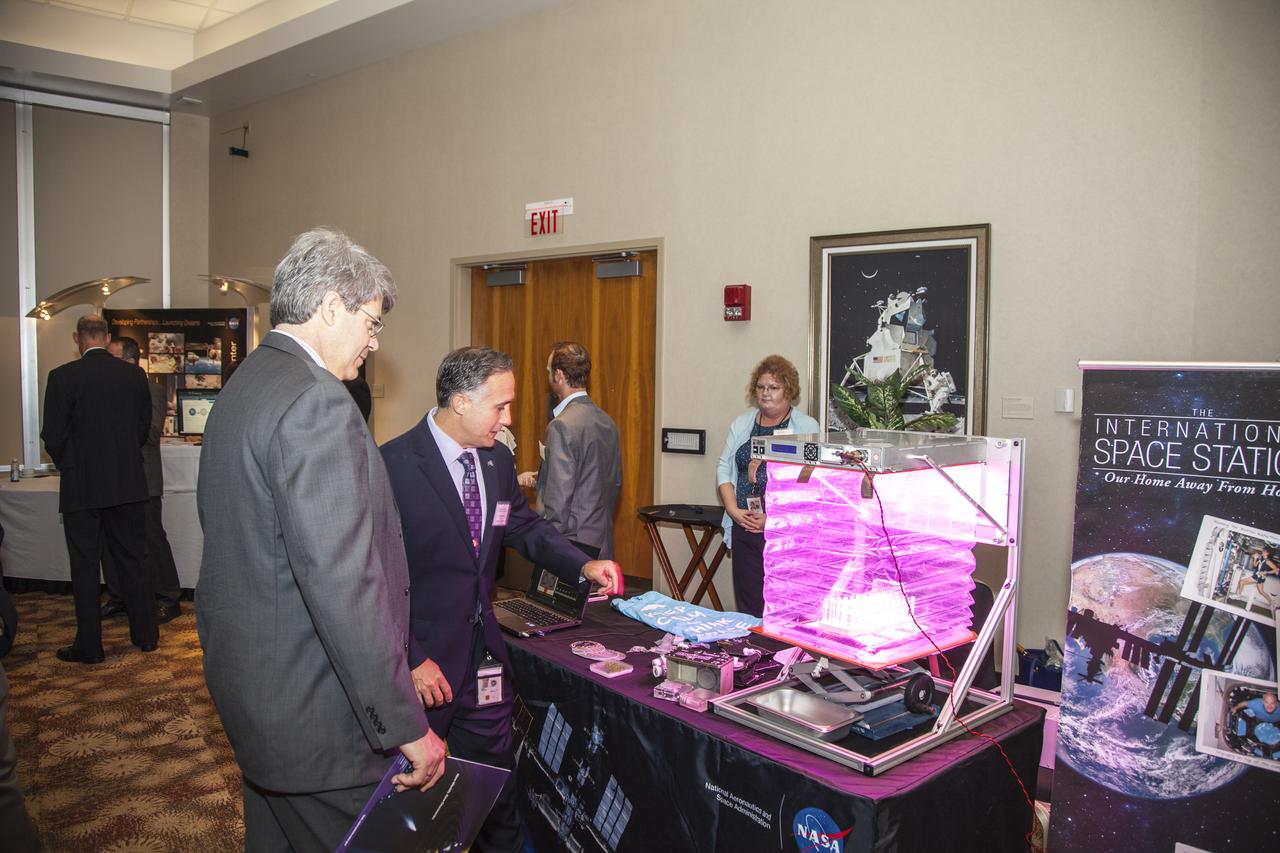
CAPE CANAVERAL, Fla. - Community leaders, business executives, educators, and state and local government leaders were updated on NASA Kennedy Space Center programs and accomplishments during Center Director Bob Cabana’s Center Director Update at the Debus Center at the Kennedy Space Center Visitor Complex in Florida. An attendee talks with Trent Smith, program manager, and Tammy Belk, a program specialist, at the ISS Ground Processing and Research Office display. Attendees talked with Cabana and other senior Kennedy managers and visited displays featuring updates on Kennedy programs and projects, including International Space Station, Commercial Crew, Ground System Development and Operations, Launch Services, Center Planning and Development, Technology, KSC Swamp Works and NASA Education. The morning concluded with a tour of the new Space Shuttle Atlantis exhibit at the visitor complex. For more information, visit http://www.nasa.gov/kennedy. Photo credit: NASA/Daniel Casper
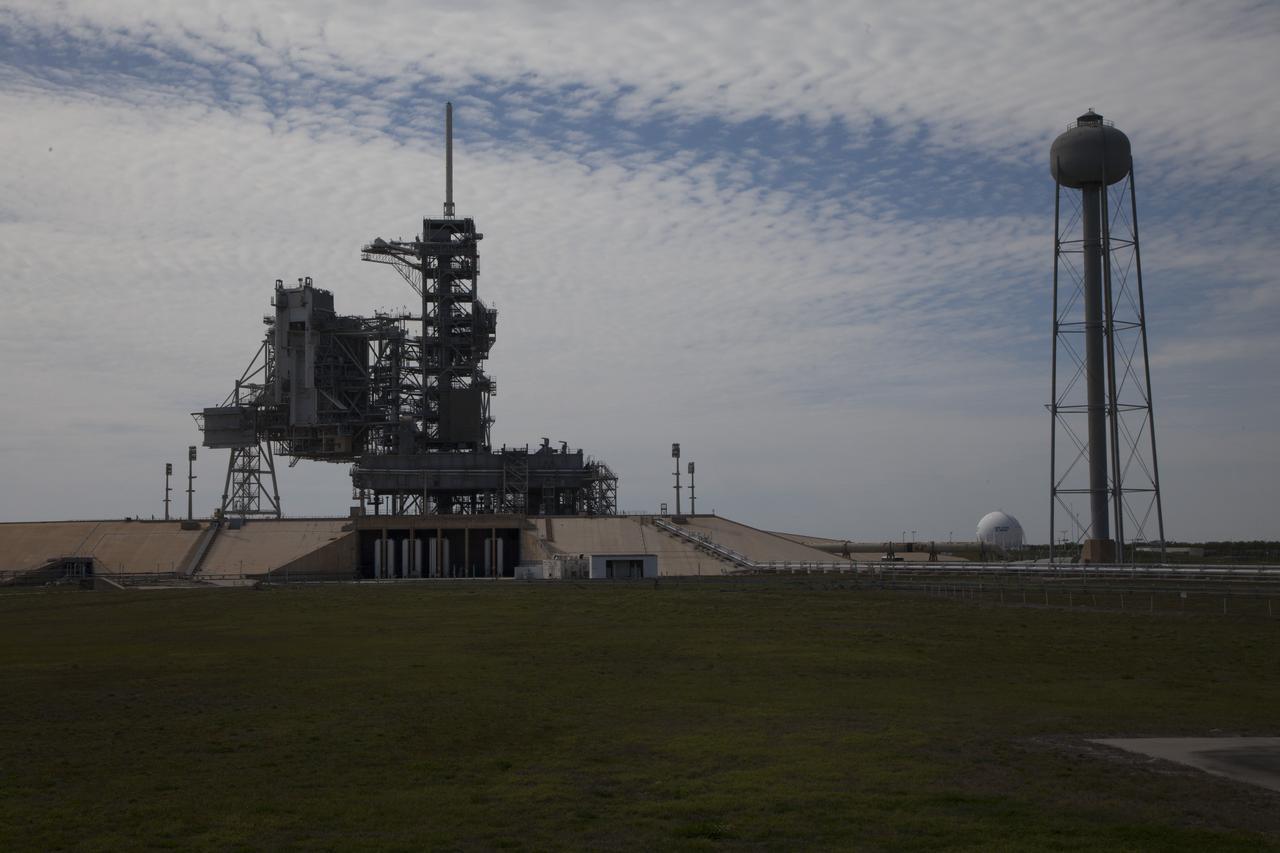
CAPE CANAVERAL, Fla. -- At NASA's Kennedy Space Center in Florida, launch pad 39A looks much like it did after the liftoff of STS-135, the final space shuttle mission, on July 8, 2011. The mobile launcher platform remains in place next to the fixed service structure and rotating service structure. During the shuttle program, water was stored in the 290-foot-high, 300,000 gallon tank on the right. Water was released just prior to the main engine ignition and flows by gravity to special outlets on the platform to protect the orbiter and its payloads from being damaged by acoustical energy reflected from the platform during liftoff. Both launch pad 39A and 39B pad 39A was originally built for the Apollo/Saturn V rockets that launched American astronauts on their historic journeys to the moon and later modified to support the 30-year shuttle program. To learn more about Launch Pad 39A visit: http://www.nasa.gov/mission_pages/shuttle/launch/launch-complex39-toc.html Photo credit: NASA/Dan Casper
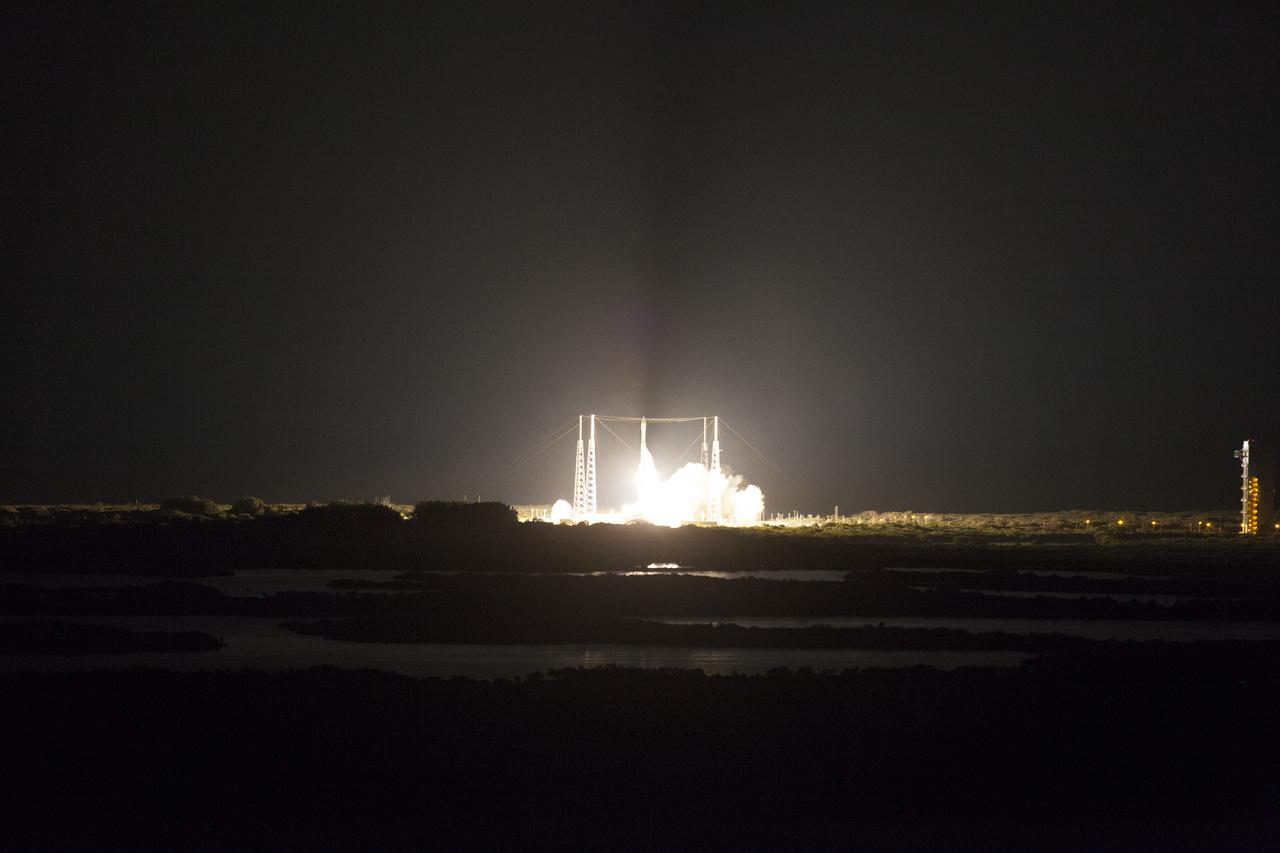
CAPE CANAVERAL, Fla. -- The exhaust plume builds at Space Launch Complex 41 on Cape Canaveral Air Force Station in Florida following engine ignition under the United Launch Alliance Atlas V rocket carrying NASA's Tracking and Data Relay Satellite, or TDRS-L, to Earth orbit. Launch was at 9:33 p.m. EST Jan. 23 during a 40-minute launch window. The TDRS-L spacecraft is the second of three new satellites designed to ensure vital operational continuity for NASA by expanding the lifespan of the Tracking and Data Relay Satellite System TDRSS fleet, which consists of eight satellites in geosynchronous orbit. The spacecraft provide tracking, telemetry, command and high-bandwidth data return services for numerous science and human exploration missions orbiting Earth. These include NASA's Hubble Space Telescope and the International Space Station. TDRS-L has a high-performance solar panel designed for more spacecraft power to meet the growing S-band communications requirements. TDRSS is one of three NASA Space Communication and Navigation SCaN networks providing space communications to NASA’s missions. For more information more about TDRS-L, visit http://www.nasa.gov/tdrs. To learn more about SCaN, visit www.nasa.gov/scan. Photo credit: NASA/Dan Casper
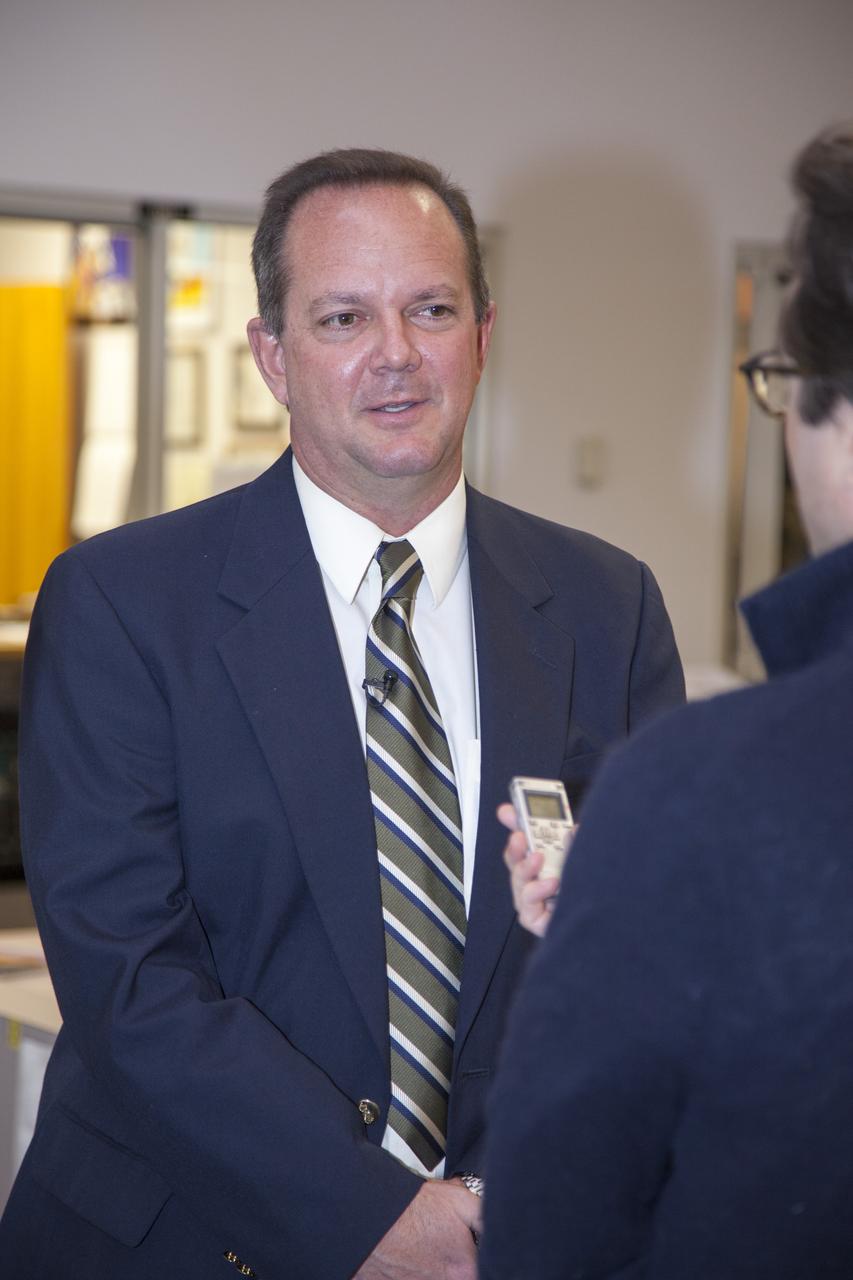
CAPE CANAVERAL, Fla. – Tom Engler, the deputy director of the Center Planning and Development Directorate at NASA’s Kennedy Space Center in Florida, speaks to reporter James Dean from Florida Today newspaper during an interview at the Kennedy News Center. Kennedy Space Center is working with private industry in new and innovative ways as the agency's premier launch center adapts to changing spaceflight, research and exploration goals in America. Opportunities are rich and varied, ranging from working with the private launch industry, to involvement with NASA's expendable launch vehicles programs to beginning or participating in research in a number of advancing fields. For more information on CPDD, visit http://www.nasa.gov/centers/kennedy/business/index.html. Photo credit: NASA/Daniel Casper
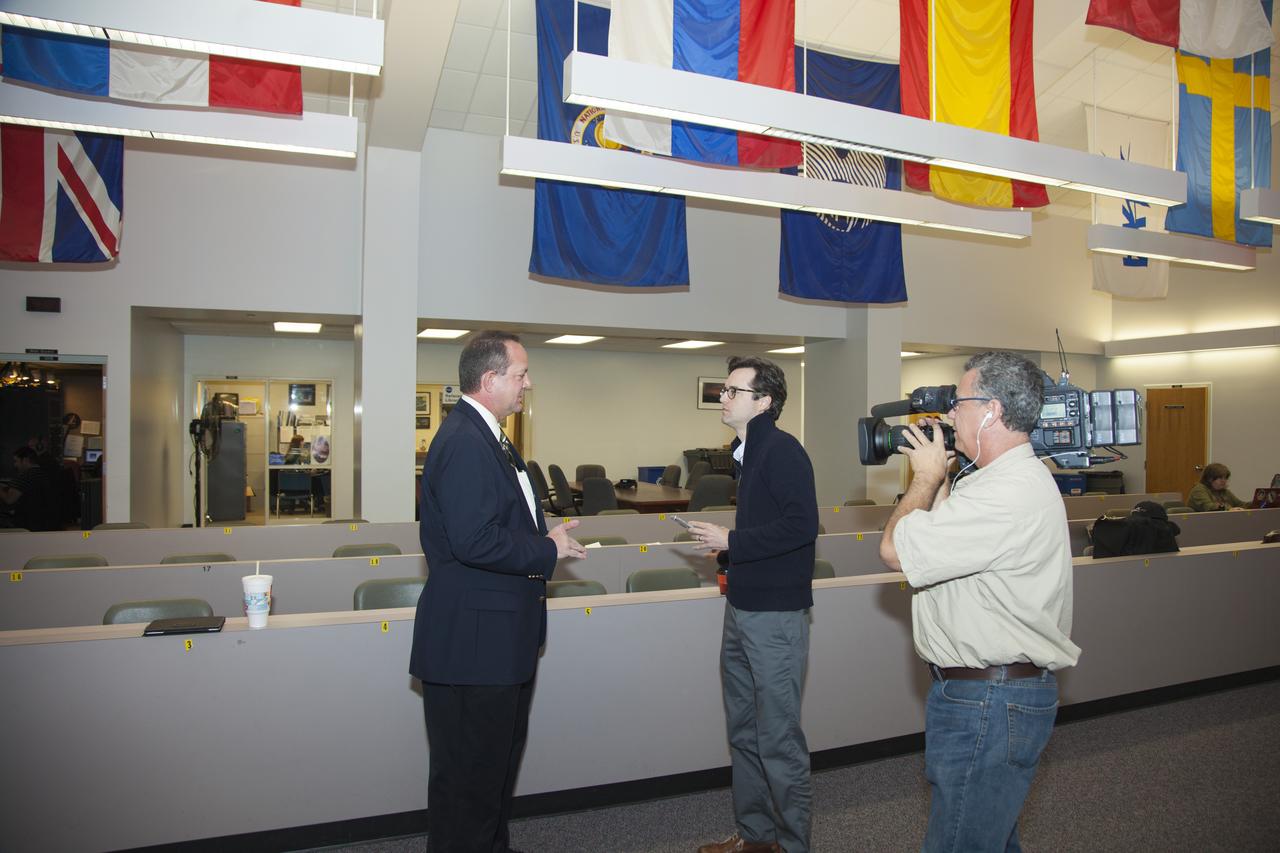
CAPE CANAVERAL, Fla. – Tom Engler, at left, the deputy director of the Center Planning and Development Directorate, or CPDD, at NASA’s Kennedy Space Center in Florida, speaks to reporter James Dean from Florida Today newspaper during an interview at the Kennedy News Center. Kennedy Space Center is working with private industry in new and innovative ways as the agency's premier launch center adapts to changing spaceflight, research and exploration goals in America. Opportunities are rich and varied, ranging from working with the private launch industry, to involvement with NASA's expendable launch vehicles programs to beginning or participating in research in a number of advancing fields. For more information on CPDD, visit http://www.nasa.gov/centers/kennedy/business/index.html. Photo credit: NASA/Daniel Casper
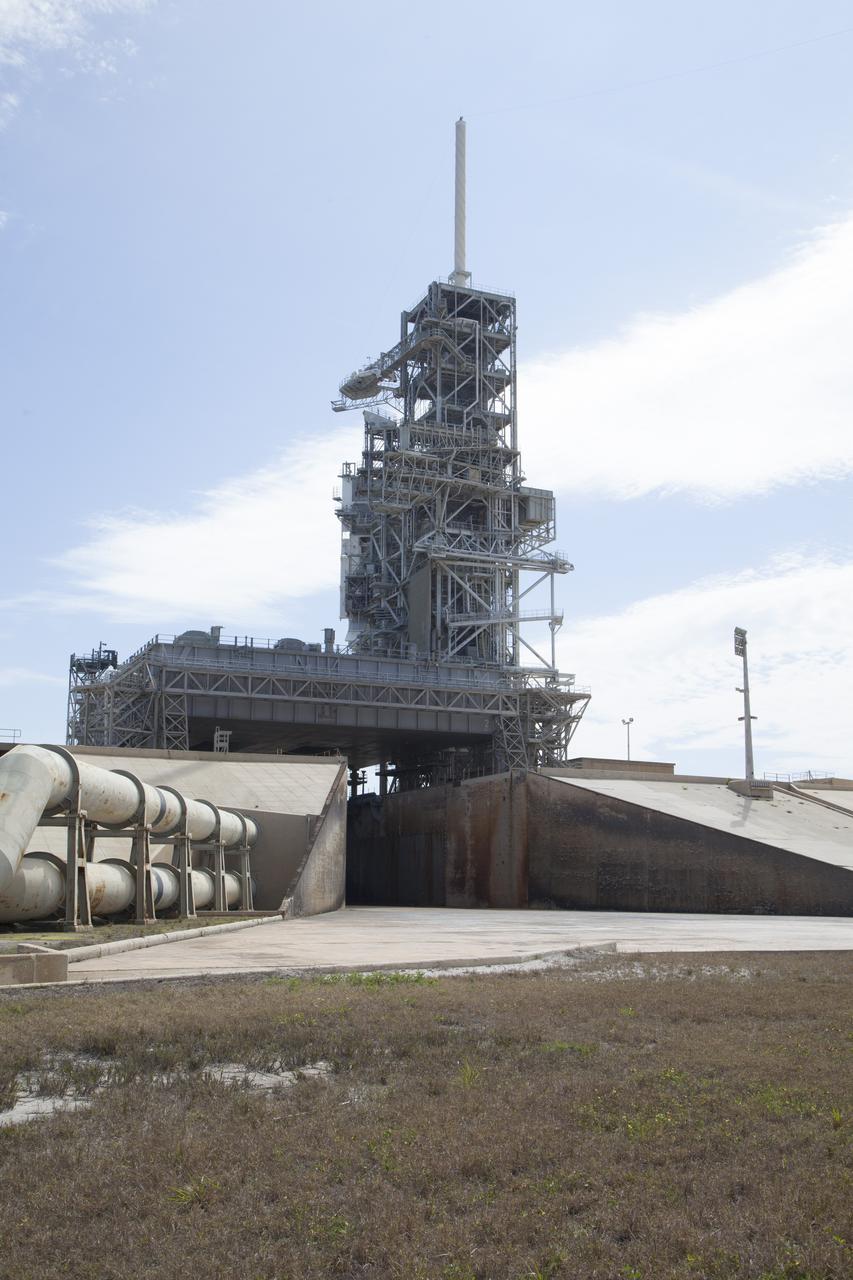
CAPE CANAVERAL, Fla. -- At NASA's Kennedy Space Center in Florida, launch pad 39A looks much like it did after the liftoff of STS-135, the final space shuttle mission, on July 8, 2011. This view shows the flame trench where smoke and flame from the shuttle's twin solid rocket boosters were deflected away from the pad. Both launch pad 39A and 39B pad 39A was originally built for the Apollo/Saturn V rockets that launched American astronauts on their historic journeys to the moon and later modified to support the 30-year shuttle program. To learn more about Launch Pad 39A visit: http://www.nasa.gov/mission_pages/shuttle/launch/launch-complex39-toc.html Photo credit: NASA/Dan Casper

CAPE CANAVERAL, Fla. – At Cape Canaveral Air Force Station's Launch Complex 41, a United Launch Alliance Atlas V with NASA's Tracking and Data Relay Satellite, or TDRS-L, spacecraft atop, rolls out to the launch pad. The TDRS-L spacecraft is the second of three new satellites designed to ensure vital operational continuity for NASA by expanding the lifespan of the Tracking and Data Relay Satellite System TDRSS fleet, which consists of eight satellites in geosynchronous orbit. The spacecraft provide tracking, telemetry, command and high bandwidth data return services for numerous science and human exploration missions orbiting Earth. These include NASA's Hubble Space Telescope and the International Space Station. TDRS-L has a high-performance solar panel designed for more spacecraft power to meet the growing S-band communications requirements. TDRSS is one of NASA Space Communication and Navigation’s SCaN three networks providing space communications to NASA’s missions. For more information more about TDRS-L, visit: http://www.nasa.gov/tdrs To learn more about SCaN, visit: www.nasa.gov/scan Photo credit: NASA/Daniel Casper
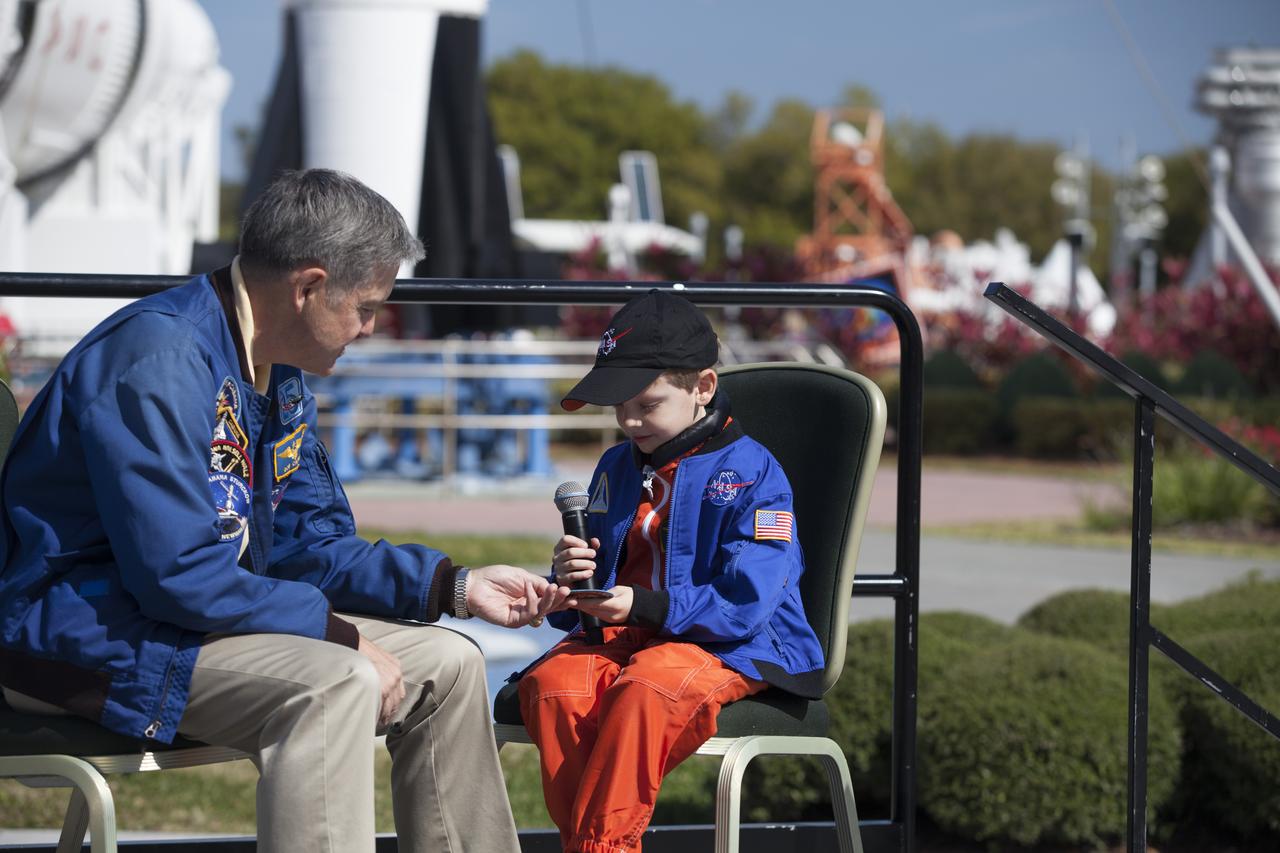
CAPE CANAVERAL, Fla. – NASA Kennedy Space Center Director and former astronaut Robert Cabana, left, presents a space patch and other mementos to six-year-old Connor Johnson at the Kennedy Space Center Visitor Complex' Rocket Garden to inspire the youngster to continue the dream he has had since the age of three of becoming an astronaut. Connor, of Denver, Colo., gained national attention for having the "right stuff" when he launched an online petition on the White House website in December 2013 to save NASA’s funding from budget cuts. One of the mementos, a piece of space history, was a bolt used to hold the International Space Station's Unity module in place in space shuttle Endeavour's payload bay on the STS-88 mission, the first station assembly mission and Cabana's fourth and final spaceflight. Connor and his family were the guests of Delaware North Companies Parks & Resorts, the concessionaire managing the visitor complex. During his visit, Connor had the opportunity to meet with astronauts, see space vehicles and witness the Robot Rocket Rally underway in the complex' Rocket Garden over the weekend. To learn more about the educational activities available daily at the Kennedy Space Center Visitor Complex, visit http://www.kennedyspacecenter.com. Photo credit: NASA/Dan Casper
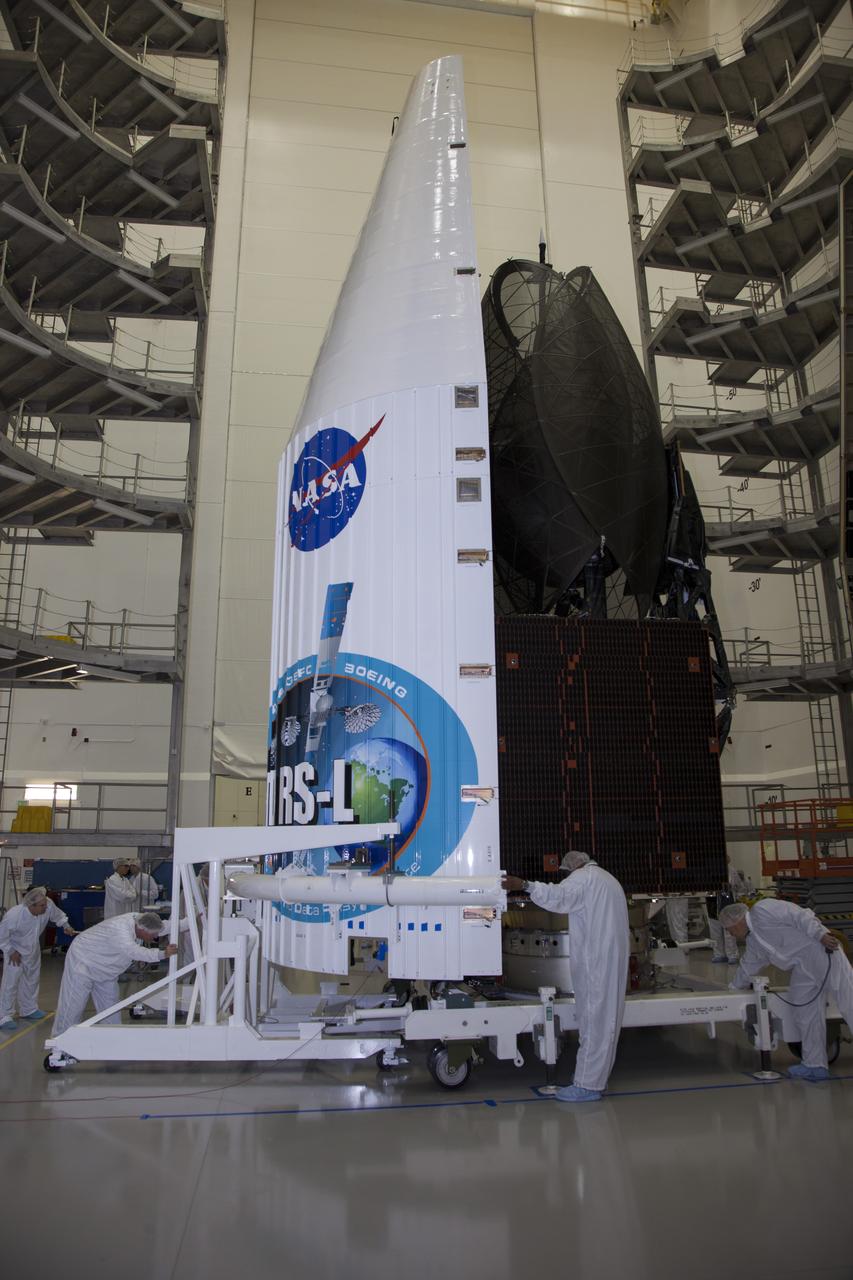
TITUSVILLE, Fla. – Inside the Astrotech payload processing facility in Titusville, the Tracking and Data Relay Satellite, or TDRS-L, spacecraft is being encapsulated in its payload fairing in preparation for begin transported to Launch Complex 41 at Cape Canaveral Air Force Station. The TDRS-L satellite will be a part of the second of three next-generation spacecraft designed to ensure vital operational continuity for the NASA Space Network. It is scheduled to launch from Cape Canaveral's Space Launch Complex 41 atop a United Launch Alliance Atlas V rocket on January 23, 2014. The current Tracking and Data Relay Satellite system consists of eight in-orbit satellites distributed to provide near continuous information relay contact with orbiting spacecraft ranging from the International Space Station and Hubble Space Telescope to the array of scientific observatories. For more information, visit: http://www.nasa.gov/mission_pages/tdrs/home/index.html
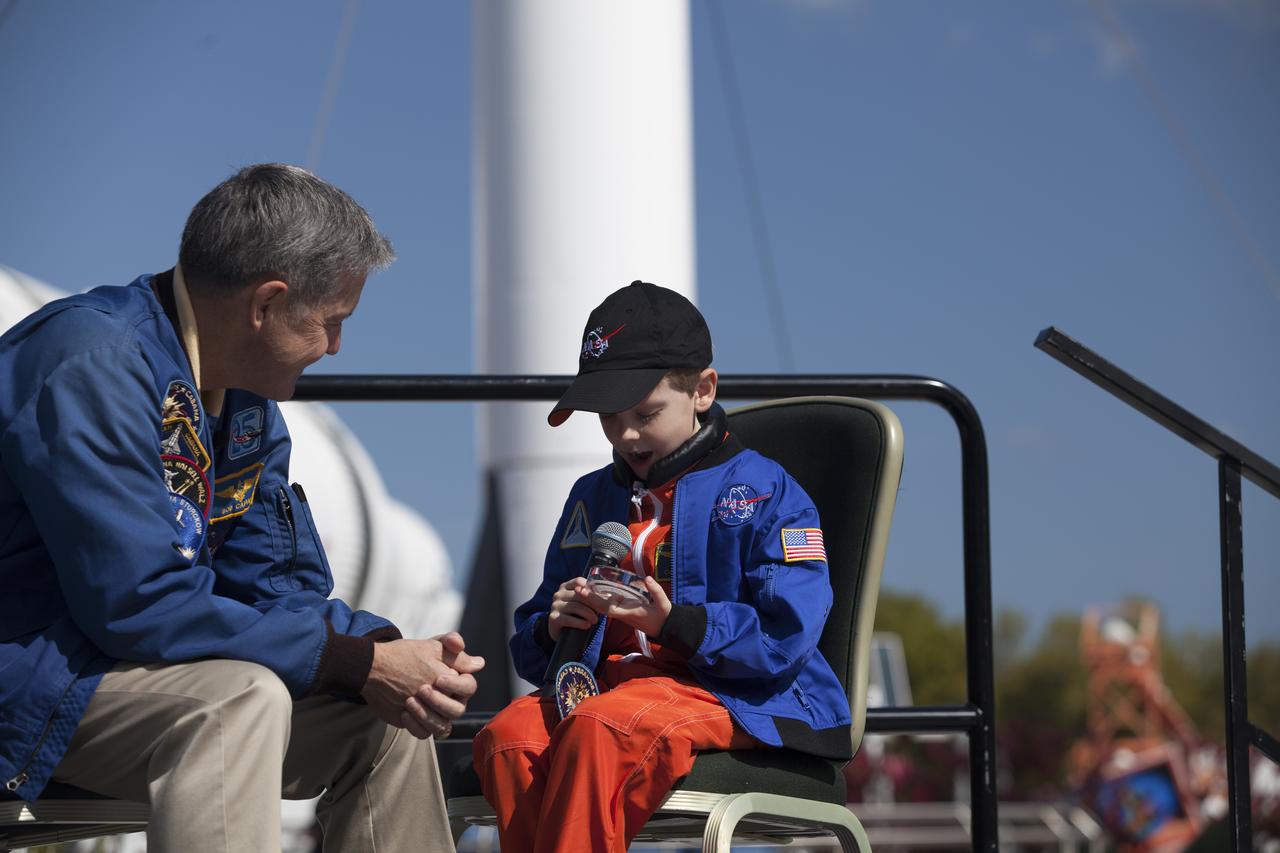
CAPE CANAVERAL, Fla. – Six-year-old Connor Johnson, right, show his delight at being presented with space mementos to inspire the youngster to continue the dream he has had since the age of three of becoming an astronaut, by NASA Kennedy Space Center Director and former astronaut Robert Cabana in the Kennedy Space Center Visitor Complex' Rocket Garden. Connor, of Denver, Colo., gained national attention for having the "right stuff" when he launched an online petition on the White House website in December 2013 to save NASA’s funding from budget cuts. One of the mementos, a piece of space history, was a bolt used to hold the International Space Station's Unity module in place in space shuttle Endeavour's payload bay on the STS-88 mission, the first station assembly mission and Cabana's fourth and final spaceflight. Connor and his family were the guests of Delaware North Companies Parks & Resorts, the concessionaire managing the visitor complex. During his visit, Connor had the opportunity to meet with astronauts, see space vehicles and witness the Robot Rocket Rally underway in the complex' Rocket Garden over the weekend. To learn more about the educational activities available daily at the Kennedy Space Center Visitor Complex, visit http://www.kennedyspacecenter.com. Photo credit: NASA/Dan Casper
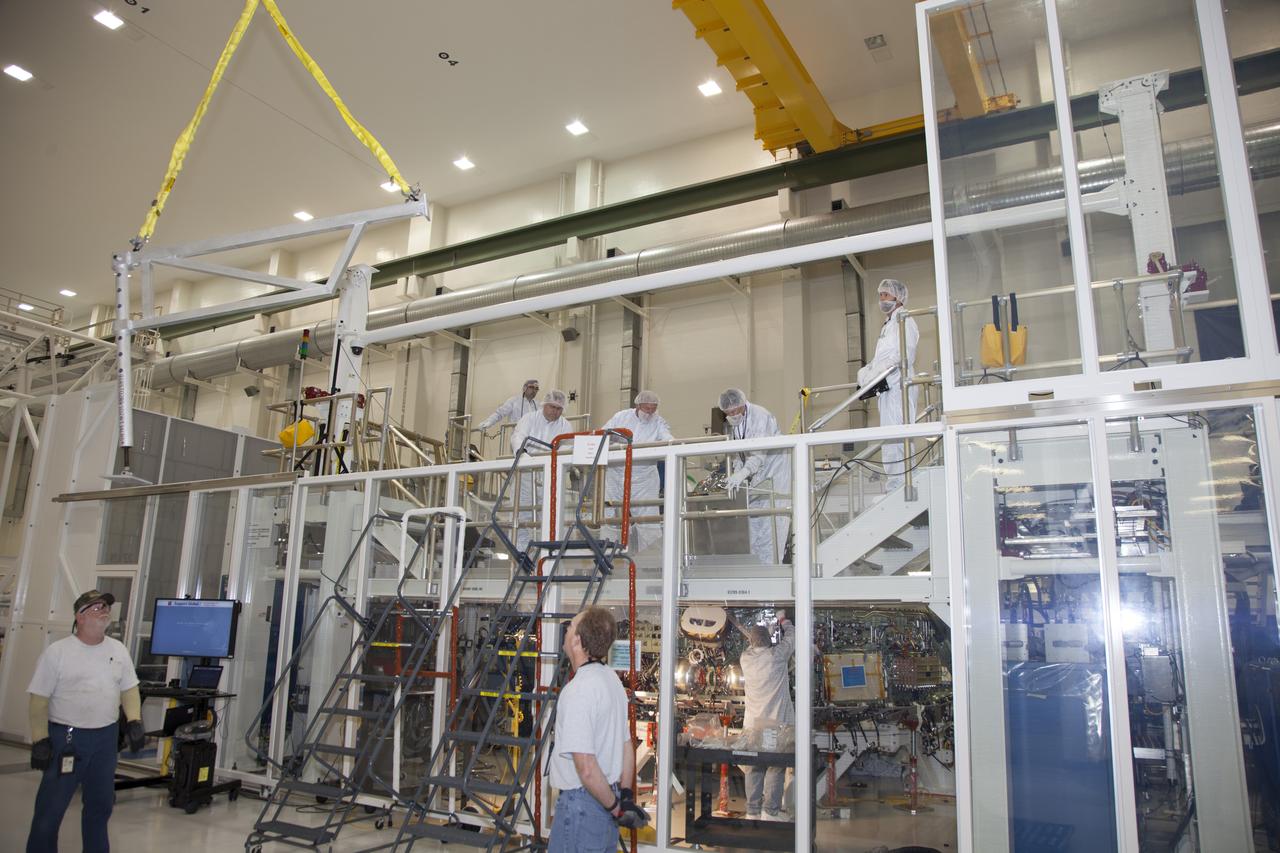
CAPE CANAVERAL, Fla. – Inside the Operations and Checkout Building high bay at NASA’s Kennedy Space Center in Florida, engineers work on the Orion crew module inside a temporary clean room. Welding on the crew module was completed this month. The Orion spacecraft is being prepared for its first unpiloted flight test, Exploration Flight Test-1, or EFT-1, scheduled for launch atop a Delta IV rocket in September 2014. The Orion spacecraft is designed to carry astronauts to destinations not yet explored by humans. It will have emergency abort capability, sustain the crew during space travel and provide safe re-entry from deep space return velocities. Orion is scheduled to launch atop NASA’s Space Launch System rocket in 2017. For more information, visit http://www.nasa.gov/orion. Photo credit: NASA/Daniel Casper

CAPE CANAVERAL, Fla. - A Kingfisher perches on a branch in the shrubs near the shoreline of the Atlantic Ocean at NASA’s Kennedy Space Center in Florida. The center shares a boundary with the Merritt Island National Wildlife Refuge. The refuge encompasses 140,000 acres that are a habitat for more than 330 species of birds, 31 mammals, 117 fishes, and 65 amphibians and reptiles. It contains more than 1,000 known plant species. The marshes and open water of the refuge provide wintering areas for 23 species of migratory waterfowl, as well as a year-round home for great blue herons, great egrets, wood storks, cormorants, brown pelicans and other species of marsh and shore birds, and a variety of insects. Photo credit: NASA/Daniel Casper
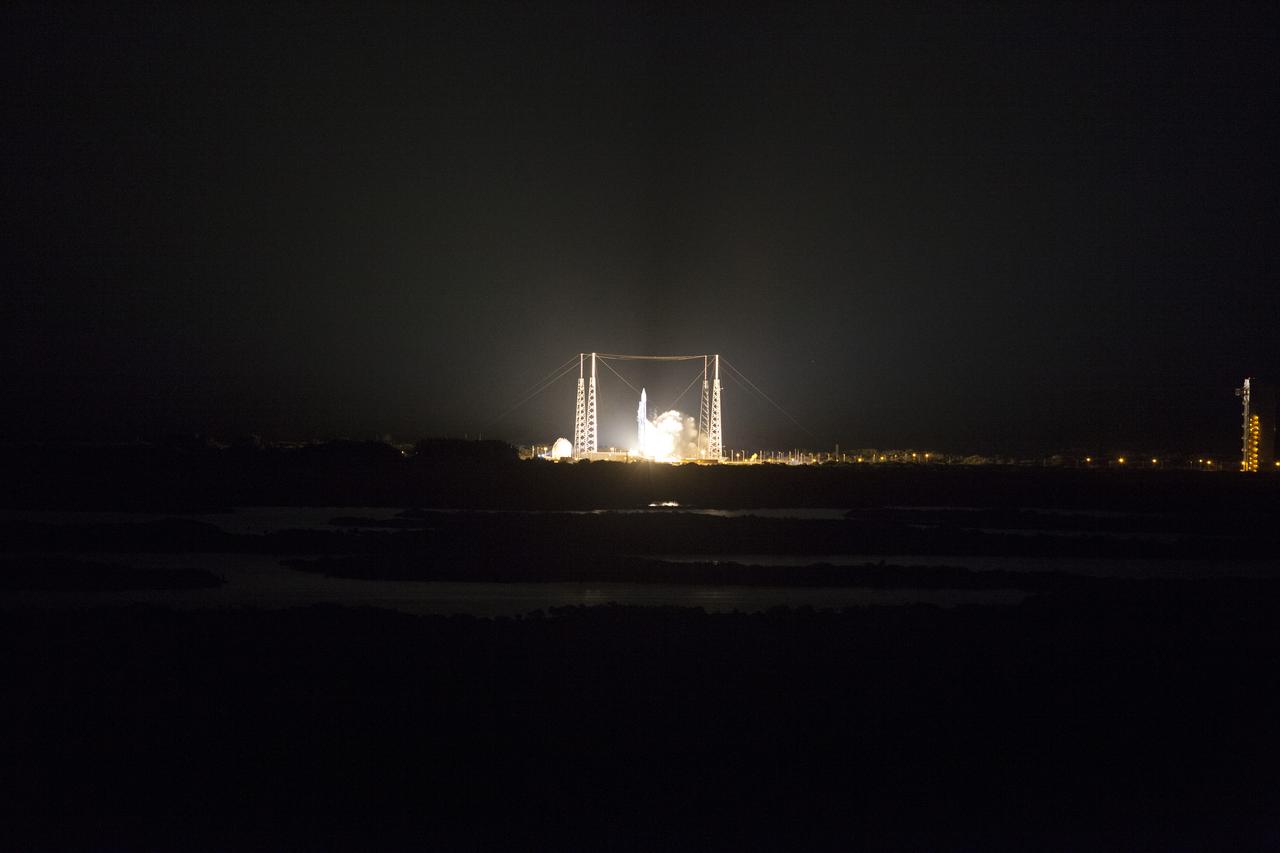
CAPE CANAVERAL, Fla. – Dual rocket engines roar to life under the United Launch Alliance Atlas V rocket at Space Launch Complex 41 on Cape Canaveral Air Force Station in Florida that will boost NASA's Tracking and Data Relay Satellite, or TDRS-L, to Earth orbit. Liftoff was at 9:33 p.m. EST Jan. 23 during a 40-minute launch window. The TDRS-L spacecraft is the second of three new satellites designed to ensure vital operational continuity for NASA by expanding the lifespan of the Tracking and Data Relay Satellite System TDRSS fleet, which consists of eight satellites in geosynchronous orbit. The spacecraft provide tracking, telemetry, command and high-bandwidth data return services for numerous science and human exploration missions orbiting Earth. These include NASA's Hubble Space Telescope and the International Space Station. TDRS-L has a high-performance solar panel designed for more spacecraft power to meet the growing S-band communications requirements. TDRSS is one of three NASA Space Communication and Navigation SCaN networks providing space communications to NASA’s missions. For more information more about TDRS-L, visit http://www.nasa.gov/tdrs. To learn more about SCaN, visit www.nasa.gov/scan. Photo credit: NASA/Dan Casper
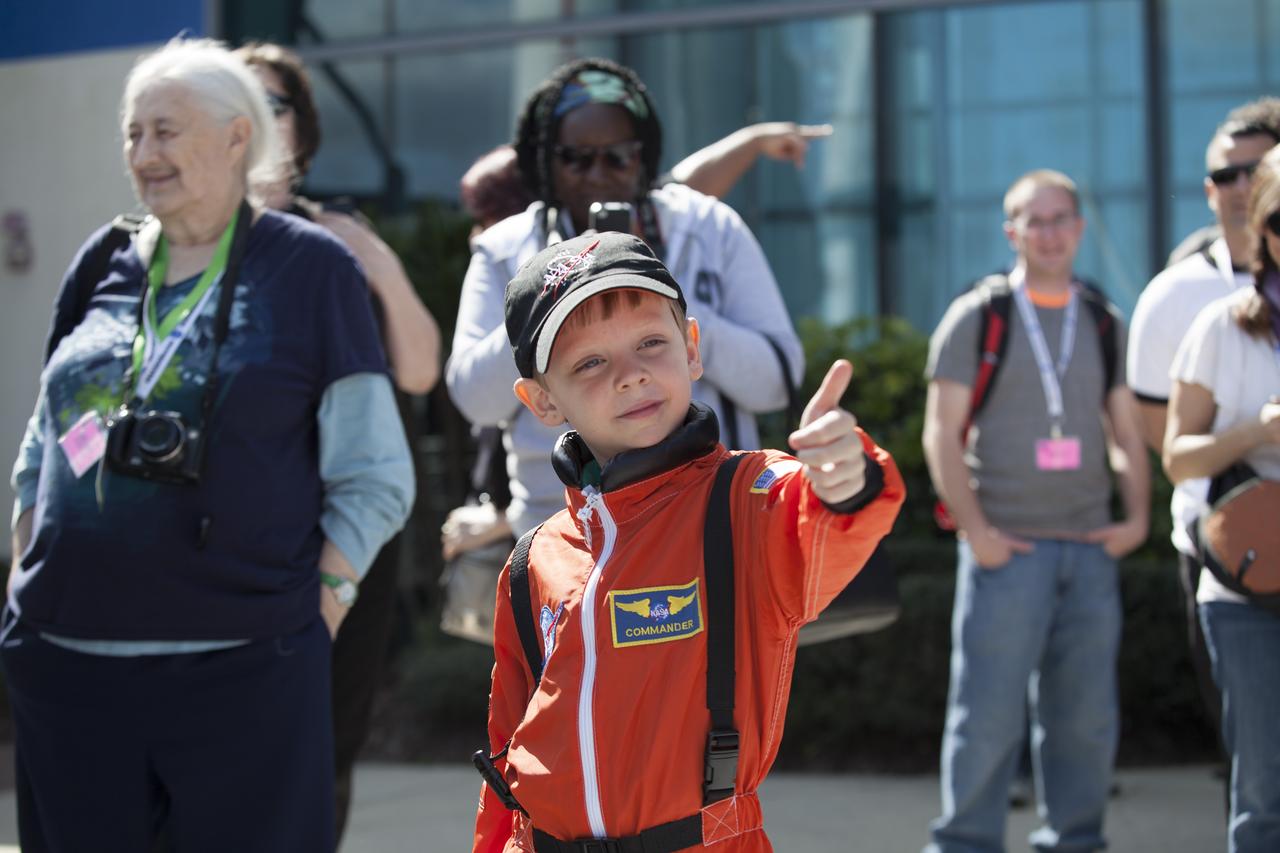
CAPE CANAVERAL, Fla. – Six-year-old Connor Johnson gives a big thumbs up following a ceremony in the Kennedy Space Center Visitor Complex' Rocket Garden during which NASA Kennedy Space Center Director and former astronaut Robert Cabana presented him with space mementos to inspire the youngster to continue the dream he has had since the age of three of becoming an astronaut. Behind Connor are representatives of the news and social media who attended the event. Connor, of Denver, Colo., gained national attention for having the "right stuff" when he launched an online petition on the White House website in December 2013 to save NASA’s funding from budget cuts. One of the mementos, a piece of space history, was a bolt used to hold the International Space Station's Unity module in place in space shuttle Endeavour's payload bay on the STS-88 mission, the first station assembly mission and Cabana's fourth and final spaceflight. Connor and his family were the guests of Delaware North Companies Parks & Resorts, the concessionaire managing the visitor complex. During his visit, Connor had the opportunity to meet with astronauts, see space vehicles and witness the Robot Rocket Rally underway in the complex' Rocket Garden over the weekend. To learn more about the educational activities available daily at the Kennedy Space Center Visitor Complex, visit http://www.kennedyspacecenter.com. Photo credit: NASA/Dan Casper
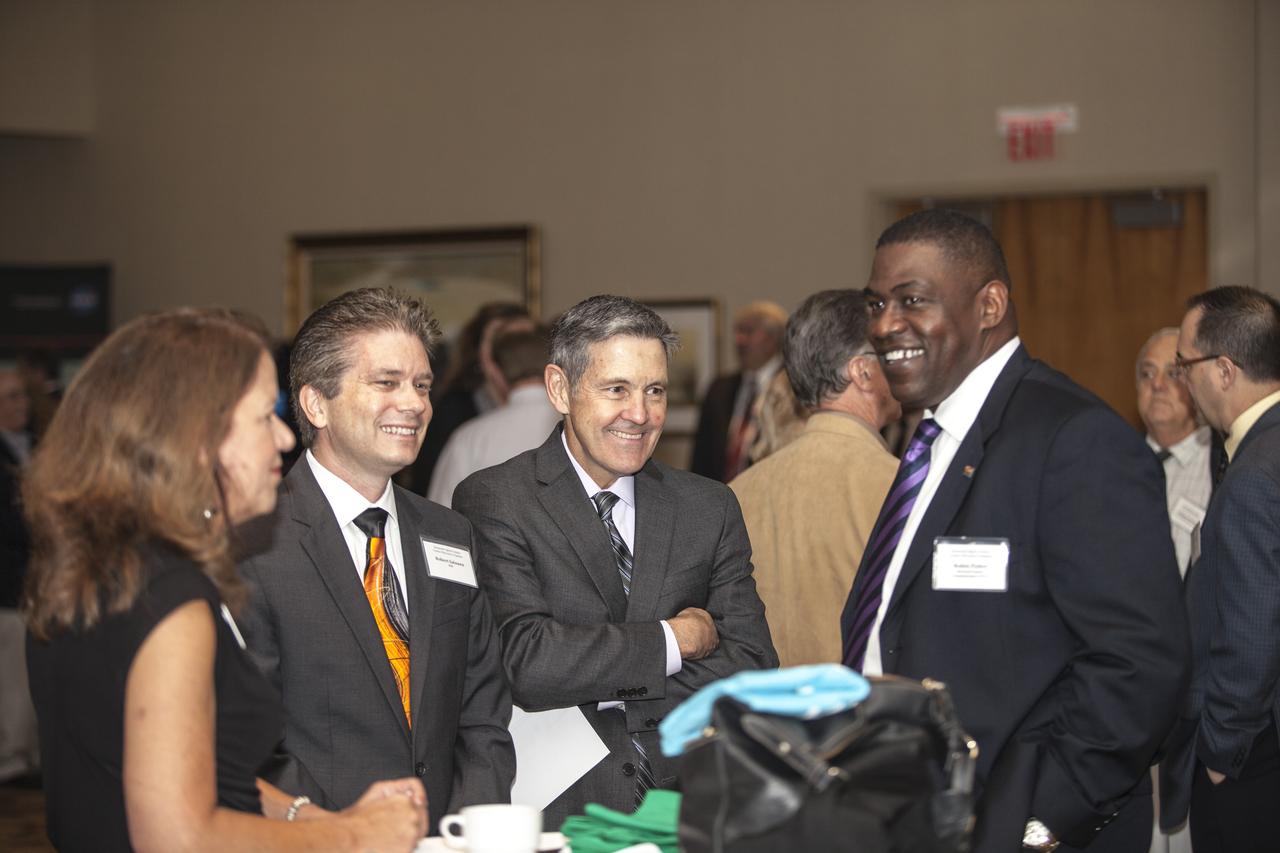
CAPE CANAVERAL, Fla. - NASA Kennedy Space Center Director Robert Cabana, second from right, welcomes community leaders, business executives, educators, community organizers, and state and local government leaders to the Kennedy Space Center Visitor Complex Debus Center for the Kennedy Space Center Director Update. At far right is Brevard County District 1 Commissioner Robin Fisher. Attendees talked with Cabana and other senior Kennedy managers and visited displays featuring updates on Kennedy programs and projects, including International Space Station, Commercial Crew, Ground System Development and Operations, Launch Services, Center Planning and Development, Technology, KSC Swamp Works and NASA Education. The morning concluded with a tour of the new Space Shuttle Atlantis exhibit at the visitor complex. For more information, visit http://www.nasa.gov/kennedy. Photo credit: NASA/Daniel Casper
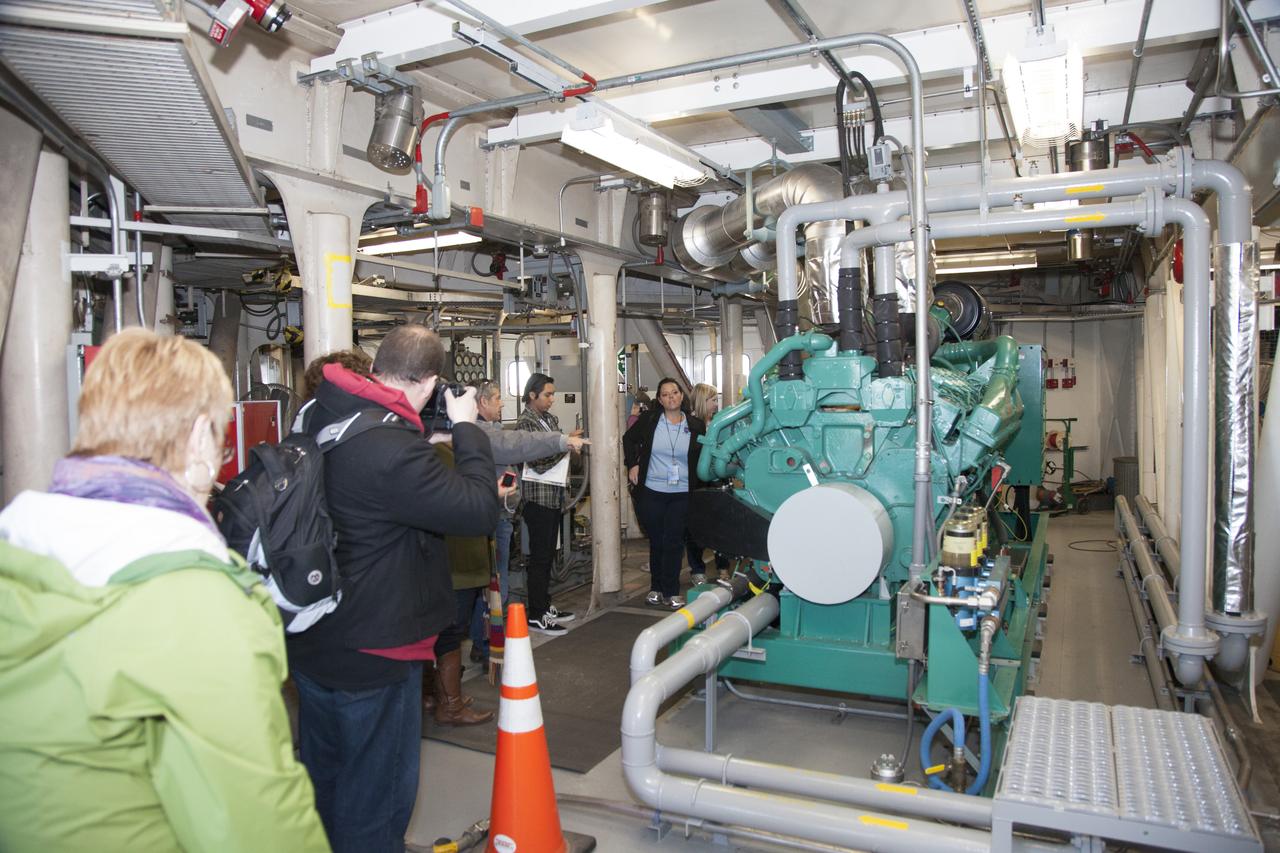
CAPE CANAVERAL, Fla. -- At NASA's Kennedy Space Center in Florida, social media participants were given an up-close look at the interior of one of the spaceport's mammoth crawler-transporters. Recent work has included preparations to install upgraded components that will enable the crawler to carry the greater loads anticipated with the agency's new rocket designed to take astronauts beyond low-Earth orbit for the first time since the early 1970s. The social media participants gathered at the Florida spaceport for the launch of the Tracking and Data Relay Satellite, or TDRS-L spacecraft. Their visit included tours of key facilities and participating in presentations by key NASA leaders who updated the space agency's current efforts. Photo credit: NASA/Dan Casper
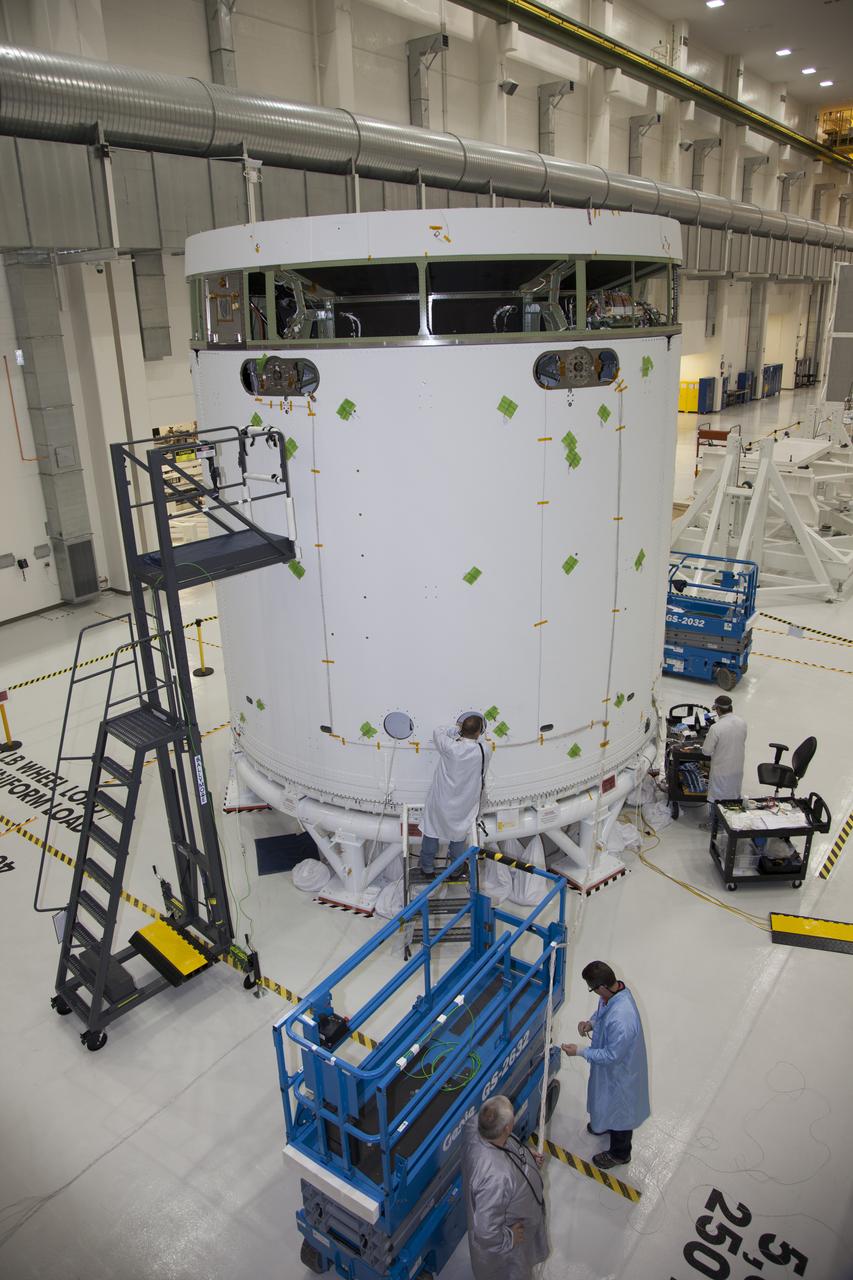
CAPE CANAVERAL, Fla. – Inside the Operations and Checkout Building high bay at NASA’s Kennedy Space Center in Florida, technicians complete the installation of the fairings on the service module for the Orion spacecraft. The fairings will protect the service module during launch. The Orion spacecraft is being prepared for its first unpiloted flight test, Exploration Flight Test-1, or EFT-1, scheduled for launch atop a Delta IV rocket in September 2014. The Orion spacecraft is designed to carry astronauts to destinations not yet explored by humans. It will have emergency abort capability, sustain the crew during space travel and provide safe re-entry from deep space return velocities. Orion is scheduled to launch atop NASA’s Space Launch System rocket in 2017. For more information, visit http://www.nasa.gov/orion. Photo credit: NASA/Daniel Casper
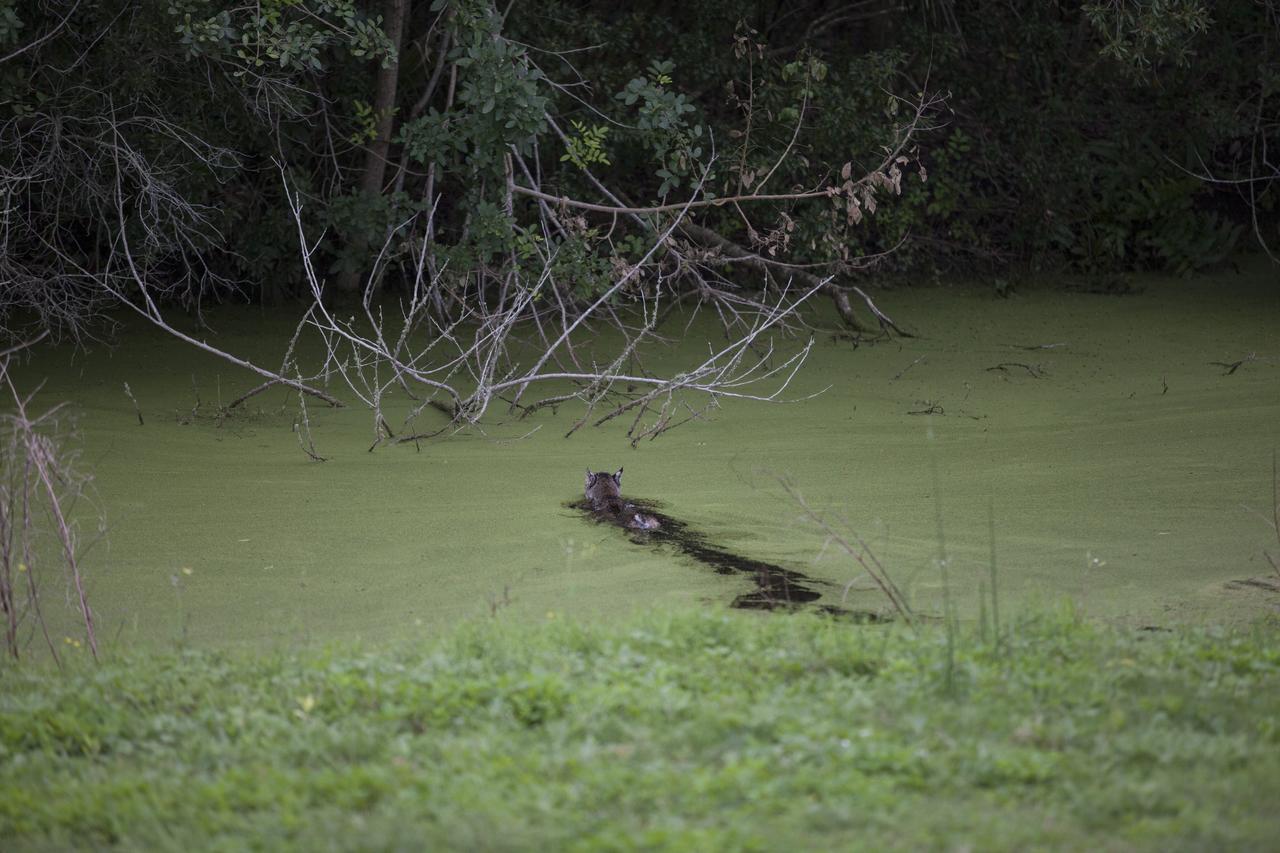
CAPE CANAVERAL, Fla. – A bobcat leaves a trail as it swims across an algae-covered canal near the NASA News Center at Kennedy Space Center in Florida. The center shares a boundary with the Merritt Island National Wildlife Refuge. The refuge encompasses 140,000 acres that are a habitat for more than 330 species of birds, 31 mammals, 117 fishes, and 65 amphibians and reptiles. Photo credit: NASA/Daniel Casper

Tom Engler, the deputy director of the Center Planning and Development Directorate, or CPDD, at NASA’s Kennedy Space Center in Florida, speaks to reporter James Dean from Florida Today newspaper during an interview at the Kennedy News Center.
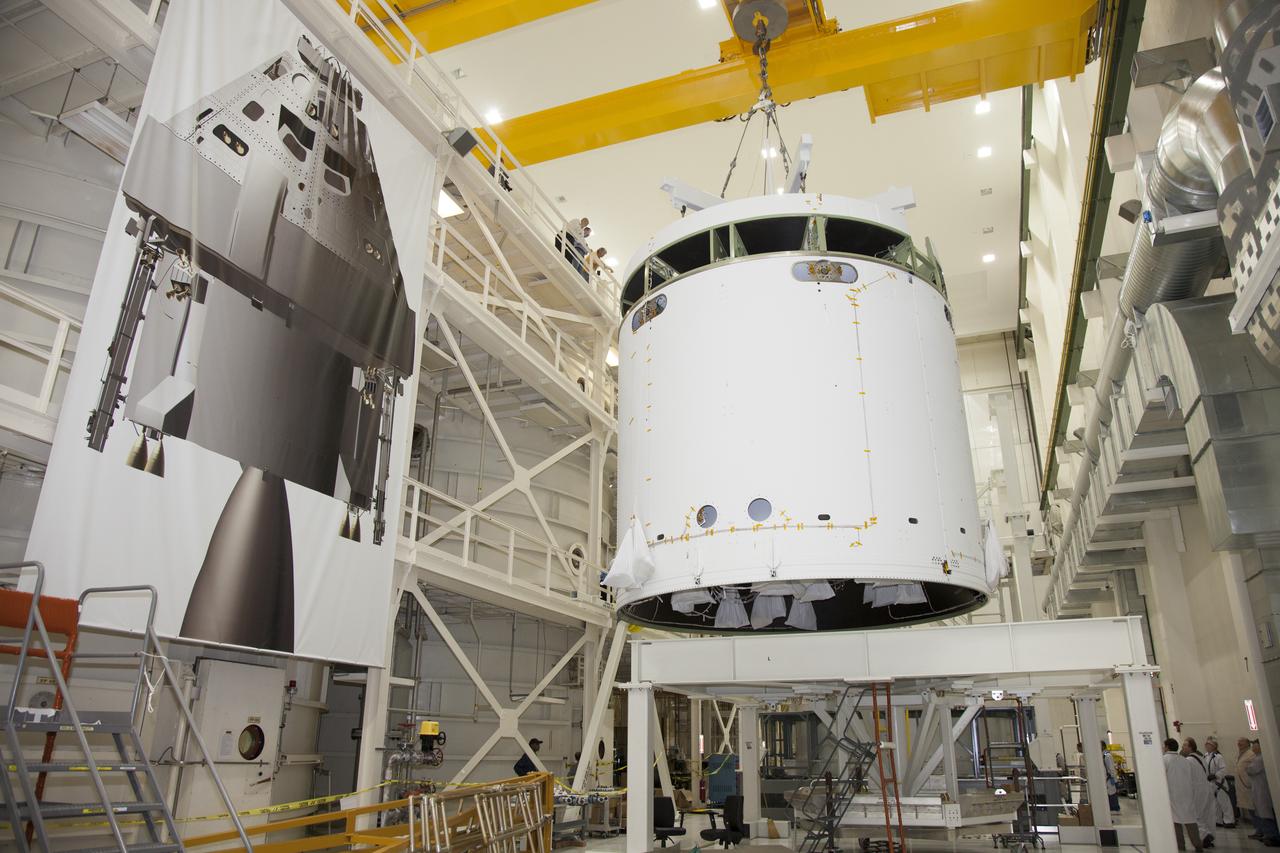
CAPE CANAVERAL, Fla. - Inside the Operations and Checkout Building high bay at NASA’s Kennedy Space Center in Florida, a ground support tool attached to a crane is used to lift the service module for the Orion spacecraft from a stand. The service module is being transferred to a static test stand. Orion is the exploration spacecraft designed to carry astronauts to destinations not yet explored by humans, including an asteroid and Mars. It will have emergency abort capability, sustain the crew during space travel and provide safe re-entry from deep space return velocities. The first unpiloted test flight of the Orion is scheduled to launch in 2014 atop a Delta IV rocket and in 2017 on NASA’s Space Launch System rocket. For more information, visit http://www.nasa.gov/orion. Photo credit: NASA/Daniel Casper
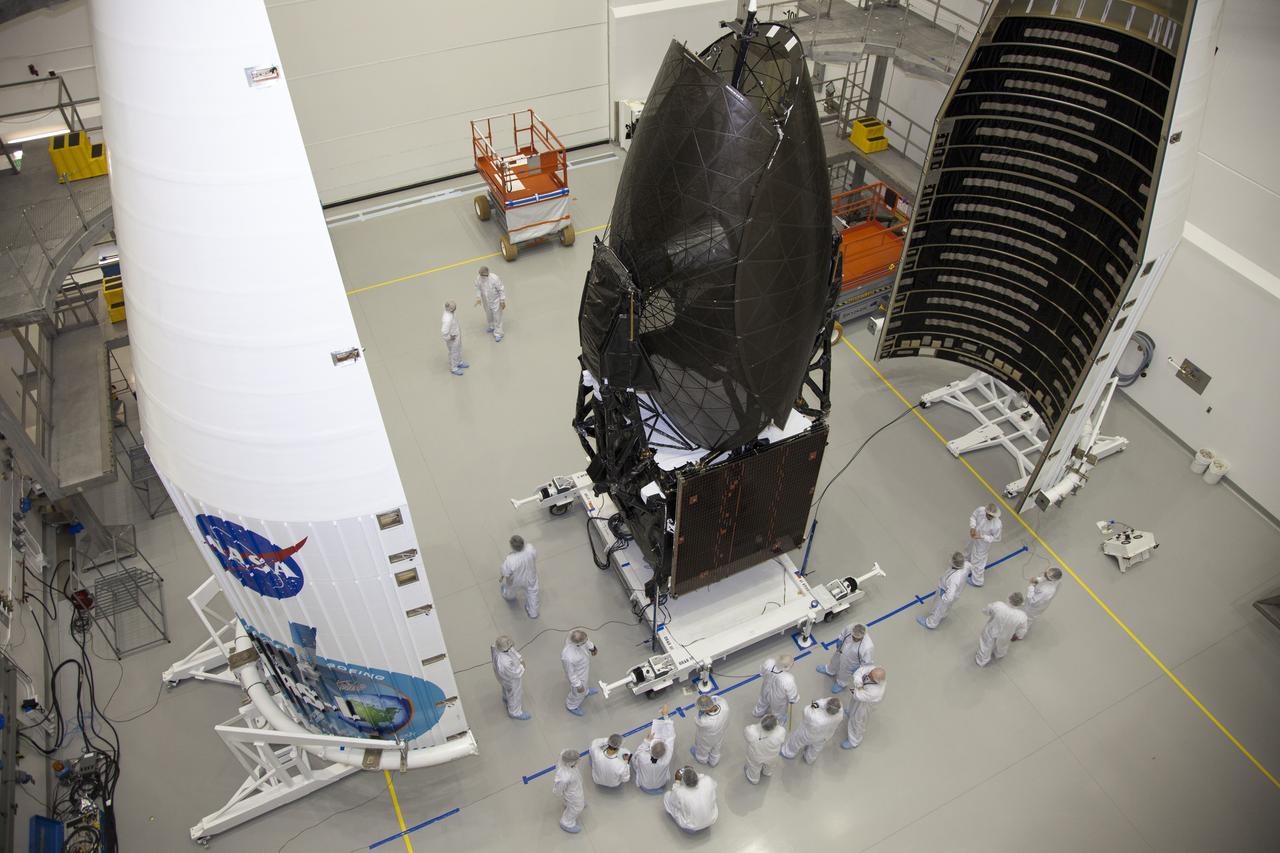
TITUSVILLE, Fla. – Inside the Astrotech payload processing facility in Titusville, the Tracking and Data Relay Satellite, or TDRS-L, spacecraft is being encapsulated in its payload fairing in preparation for begin transported to Launch Complex 41 at Cape Canaveral Air Force Station. The TDRS-L satellite will be a part of the second of three next-generation spacecraft designed to ensure vital operational continuity for the NASA Space Network. It is scheduled to launch from Cape Canaveral's Space Launch Complex 41 atop a United Launch Alliance Atlas V rocket on January 23, 2014. The current Tracking and Data Relay Satellite system consists of eight in-orbit satellites distributed to provide near continuous information relay contact with orbiting spacecraft ranging from the International Space Station and Hubble Space Telescope to the array of scientific observatories. For more information, visit: http://www.nasa.gov/mission_pages/tdrs/home/index.html