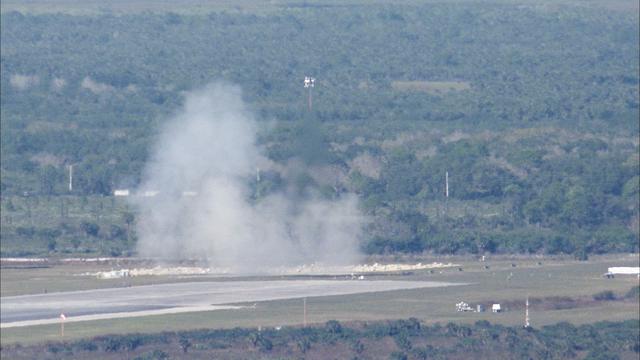
CAPE CANAVERAL, Fla. – The Project Morpheus prototype lander soars high and moves forward after launching on its third free flight test at the north end of the Shuttle Landing Facility at NASA’s Kennedy Space Center in Florida. The 57-second test began at 1:15 p.m. EST with the Morpheus lander launching from the ground over a flame trench and ascending about 187 feet, nearly doubling the target ascent velocity from the last test in December 2013. The lander flew forward, covering about 154 feet in 20 seconds before descending and landing within 11 inches of its target on a dedicated pad inside the autonomous landing and hazard avoidance technology, or ALHAT, hazard field. Project Morpheus tests NASA’s ALHAT and an engine that runs on liquid oxygen and methane, or green propellants, into a fully-operational lander that could deliver cargo to other planetary surfaces. The landing facility provides the lander with the kind of field necessary for realistic testing, complete with rocks, craters and hazards to avoid. Morpheus’ ALHAT payload allows it to navigate to clear landing sites amidst rocks, craters and other hazards during its descent. Project Morpheus is being managed under the Advanced Exploration Systems, or AES, Division in NASA’s Human Exploration and Operations Mission Directorate. The efforts in AES pioneer new approaches for rapidly developing prototype systems, demonstrating key capabilities and validating operational concepts for future human missions beyond Earth orbit. For more information on Project Morpheus, visit http://www.nasa.gov/centers/johnson/exploration/morpheus. Photo credit: NASA/Frankie Martin
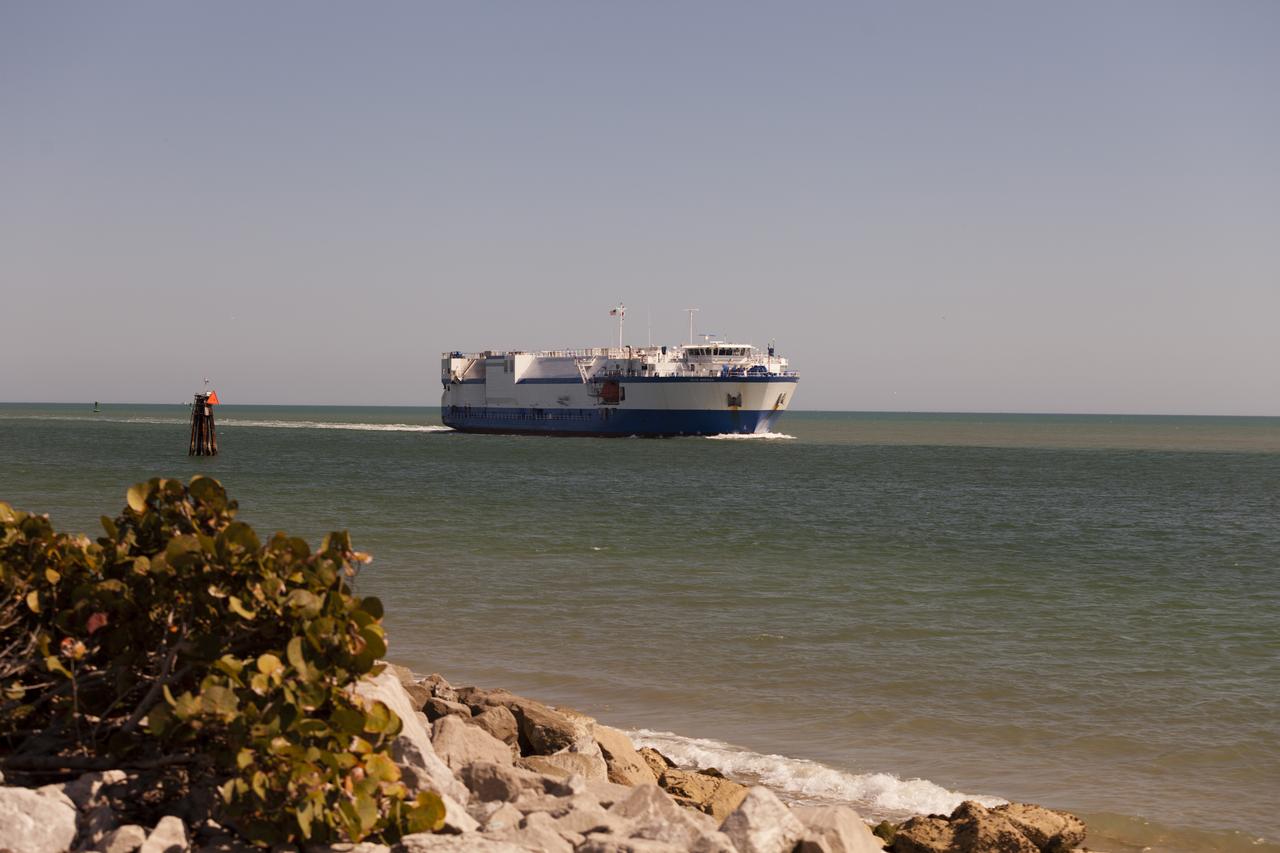
CAPE CANAVERAL, Fla. – The United Launch Alliance barge Delta Mariner enters Port Canaveral in Florida. The barge is carrying two of the booster stages for the Delta IV Heavy rocket slated for Orion's Exploration Flight Test-1, or EFT-1. Orion is the exploration spacecraft designed to carry astronauts to destinations not yet explored by humans. It will have emergency abort capability, sustain the crew during space travel and provide safe re-entry from deep-space return velocities. The first unpiloted test flight of Orion is scheduled to launch in September 2014 atop a Delta IV Heavy rocket and in 2017 on NASA’s Space Launch System rocket. For more information, visit www.nasa.gov/orion. Photo credit: NASA/Frankie Martin
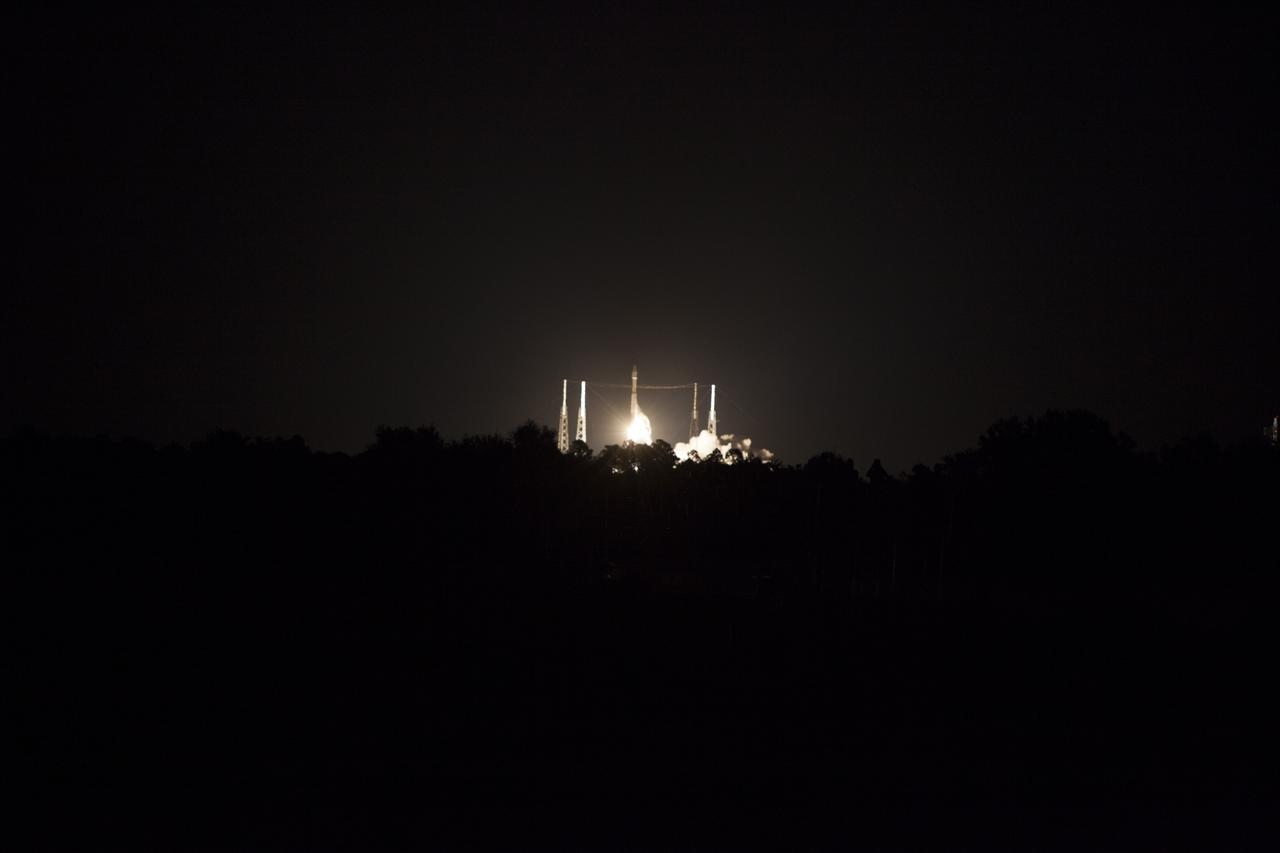
CAPE CANAVERAL, Fla. -- The engines ignite under the United Launch Alliance Atlas V rocket, lifting NASA's Tracking and Data Relay Satellite, or TDRS-L, off Space Launch Complex 41 on Cape Canaveral Air Force Station in Florida. Launch was at 9:33 p.m. EST Jan. 23 during a 40-minute launch window. The TDRS-L spacecraft is the second of three new satellites designed to ensure vital operational continuity for NASA by expanding the lifespan of the Tracking and Data Relay Satellite System TDRSS fleet, which consists of eight satellites in geosynchronous orbit. The spacecraft provide tracking, telemetry, command and high-bandwidth data return services for numerous science and human exploration missions orbiting Earth. These include NASA's Hubble Space Telescope and the International Space Station. TDRS-L has a high-performance solar panel designed for more spacecraft power to meet the growing S-band communications requirements. TDRSS is one of three NASA Space Communication and Navigation SCaN networks providing space communications to NASA’s missions. For more information more about TDRS-L, visit http://www.nasa.gov/tdrs. To learn more about SCaN, visit www.nasa.gov/scan. Photo credit: NASA/Frankie Martin
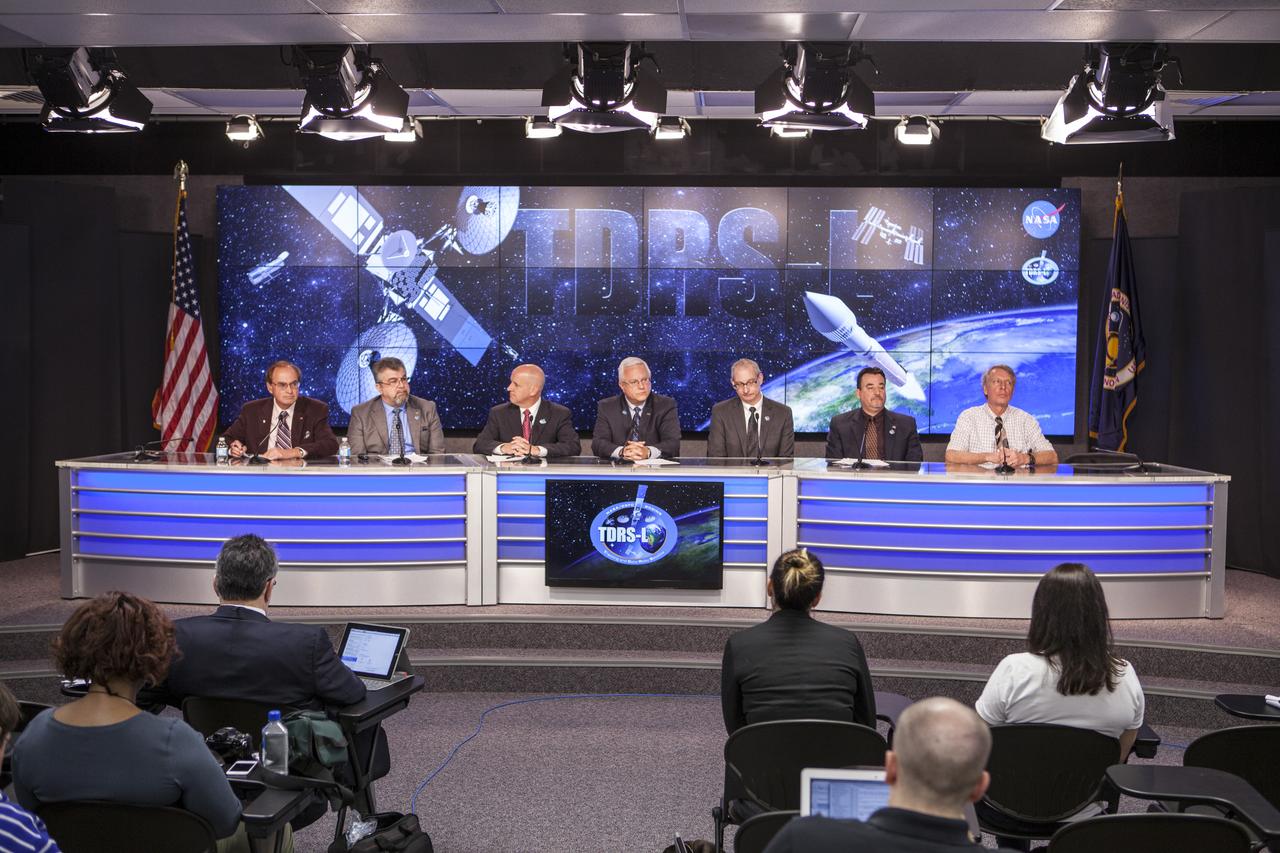
CAPE CANAVERAL, Fla. –During a news conference at NASA's Kennedy Space Center in Florida, agency and contractor officials discussed preparations for the launch of NASA's Tracking and Data Relay Satellite, or TDRS-L, spacecraft. Participating in the briefing, from the left, are George Diller of NASA Public Affairs, Badri Younes, deputy associate administrator, Space Communications and Navigation SCaN NASA Human Exploration and Operations Mission Directorate at NASA Headquarters in Washington D.C., Tim Dunn, NASA launch director at Kennedy, Vernon Thorp, program manager for NASA Missions with United Launch Alliance in Denver, Colo., Jeffrey Gramling, NASA's TDRS-L project manager at the Goddard Space Flight Center in Greenbelt, Md., Andy Kopito, Civil Space Programs director for Boeing Space & Intelligence Systems in El Segundo, Calif., and Clay Flinn, launch weather officer for the 45th Weather Squadron at Cape Canaveral Air Force Station, Fla. The TDRS-L spacecraft is the second of three new satellites designed to ensure vital operational continuity for NASA by expanding the lifespan of the Tracking and Data Relay Satellite System TDRSS fleet, which consists of eight satellites in geosynchronous orbit. The spacecraft provide tracking, telemetry, command and high bandwidth data return services for numerous science and human exploration missions orbiting Earth. These include NASA's Hubble Space Telescope and the International Space Station. TDRS-L has a high-performance solar panel designed for more spacecraft power to meet the growing S-band communications requirements. TDRSS is one of NASA Space Communication and Navigation’s SCaN three networks providing space communications to NASA’s missions. For more information more about TDRS-L, visit: http://www.nasa.gov/tdrs To learn more about SCaN, visit: www.nasa.gov/scan Photo credit: NASA/Frankie Martin
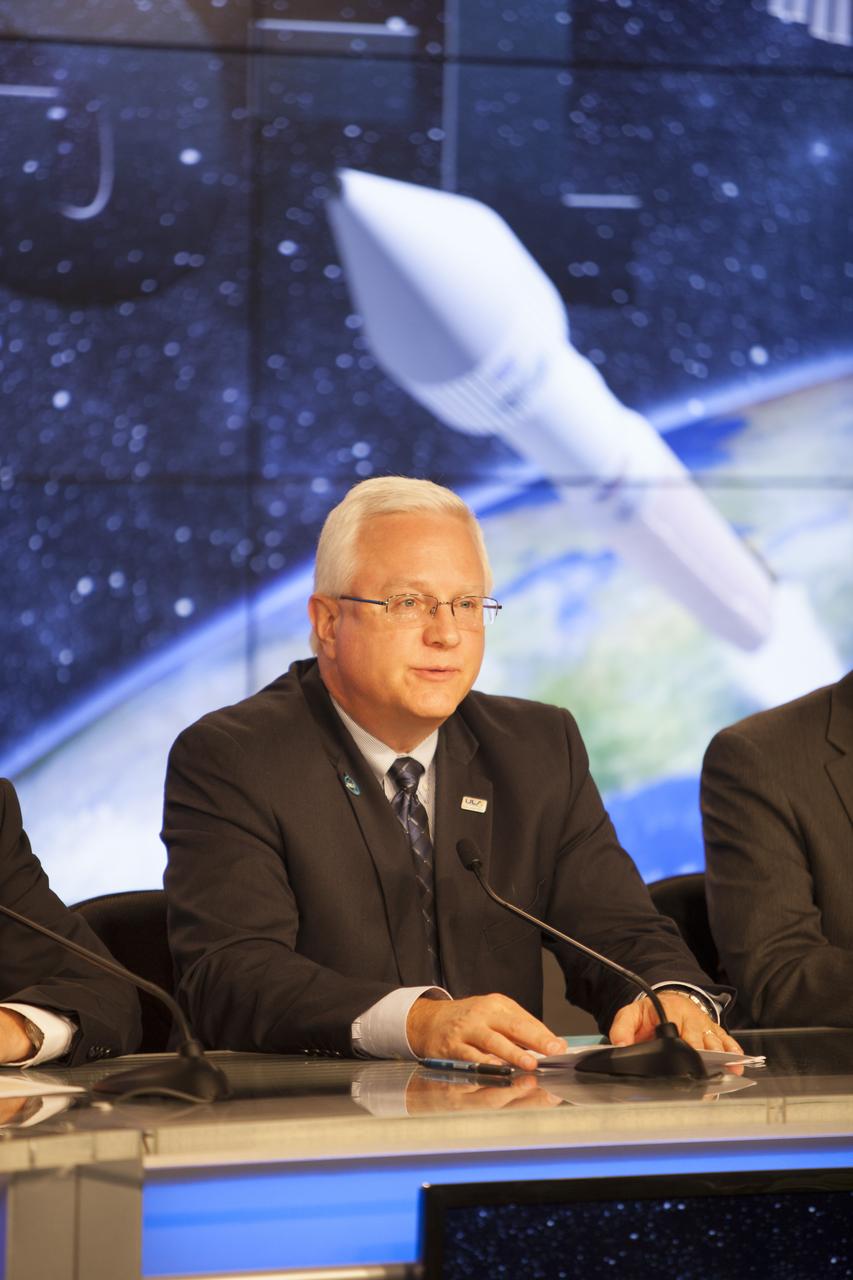
CAPE CANAVERAL, Fla. – During a news conference at NASA's Kennedy Space Center in Florida, agency and contractor officials discussed preparations for the launch of NASA's Tracking and Data Relay Satellite, or TDRS-L, spacecraft. Participants included Vernon Thorp, program manager for NASA Missions with United Launch Alliance in Denver, Colo. The TDRS-L spacecraft is the second of three new satellites designed to ensure vital operational continuity for NASA by expanding the lifespan of the Tracking and Data Relay Satellite System TDRSS fleet, which consists of eight satellites in geosynchronous orbit. The spacecraft provide tracking, telemetry, command and high bandwidth data return services for numerous science and human exploration missions orbiting Earth. These include NASA's Hubble Space Telescope and the International Space Station. TDRS-L has a high-performance solar panel designed for more spacecraft power to meet the growing S-band communications requirements. TDRSS is one of NASA Space Communication and Navigation’s SCaN three networks providing space communications to NASA’s missions. For more information more about TDRS-L, visit: http://www.nasa.gov/tdrs To learn more about SCaN, visit: www.nasa.gov/scan Photo credit: NASA/Frankie Martin

CAPE CANAVERAL, Fla. - Kathy Lueders, manager of NASA's Commercial Crew Program, listens to updates during a meeting with the staff at NASA's Kennedy Space Center in Florida. Photo credit: NASA/Frankie Martin
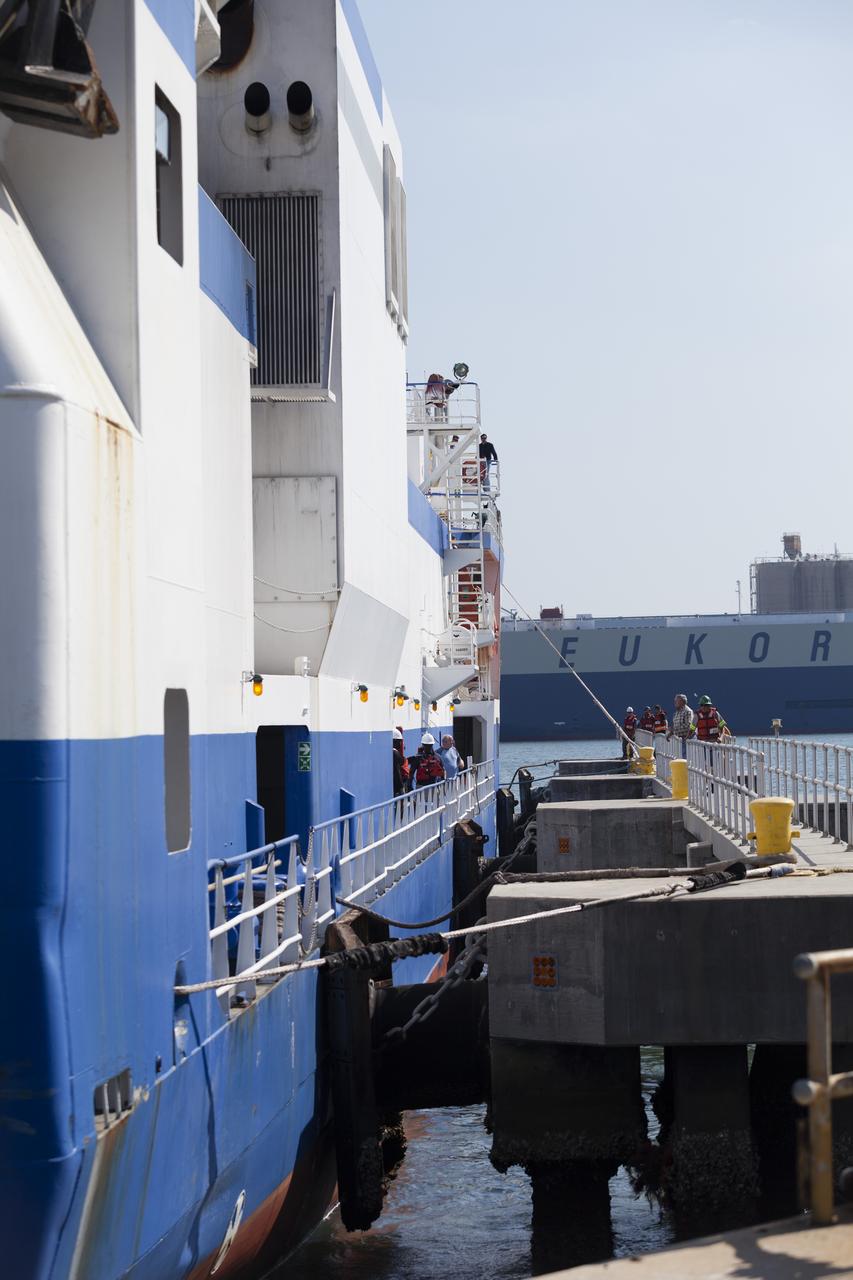
CAPE CANAVERAL, Fla. – The United Launch Alliance barge Delta Mariner is secured to the dock in Port Canaveral in Florida. The barge is carrying two of the booster stages for the Delta IV Heavy rocket slated for Orion's Exploration Flight Test-1, or EFT-1. Orion is the exploration spacecraft designed to carry astronauts to destinations not yet explored by humans. It will have emergency abort capability, sustain the crew during space travel and provide safe re-entry from deep-space return velocities. The first unpiloted test flight of Orion is scheduled to launch in September 2014 atop a Delta IV Heavy rocket and in 2017 on NASA’s Space Launch System rocket. For more information, visit www.nasa.gov/orion. Photo credit: NASA/Frankie Martin
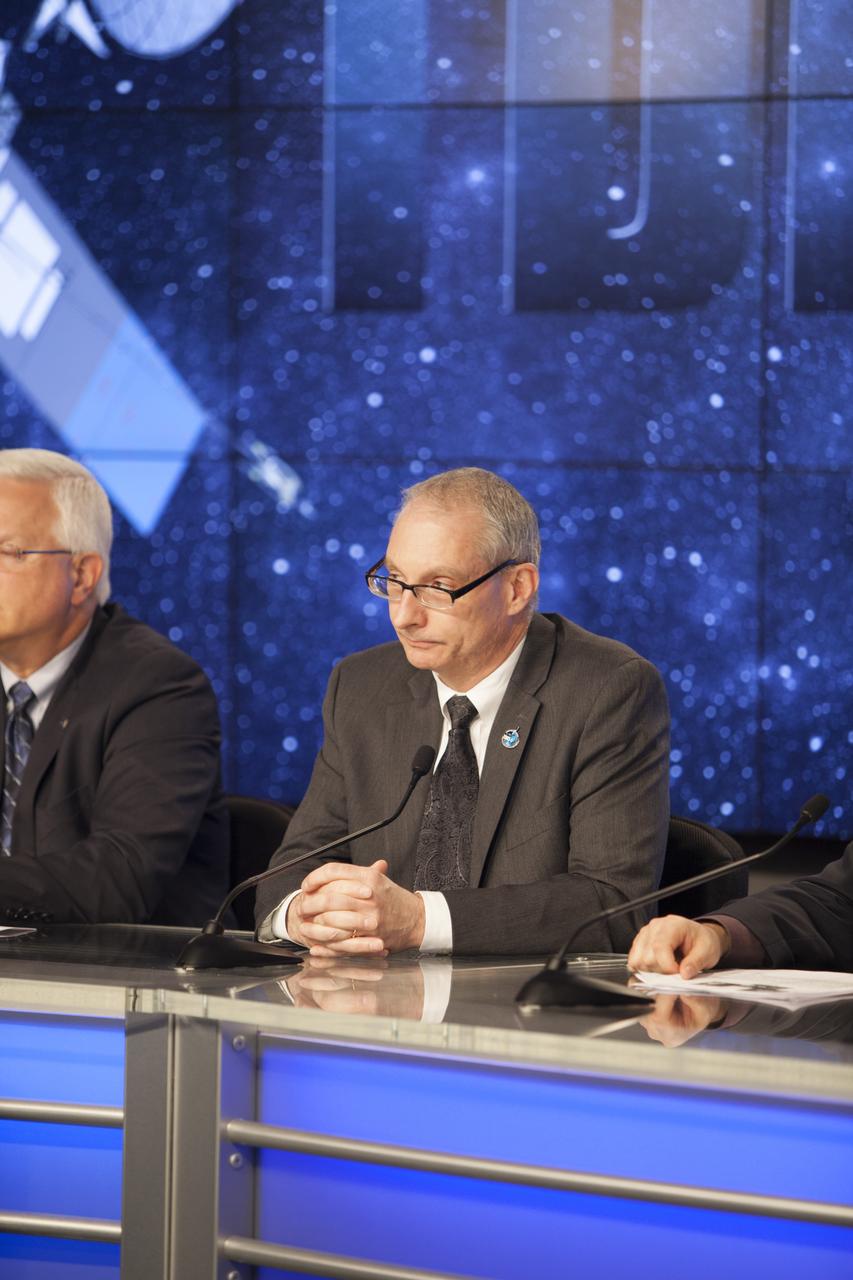
CAPE CANAVERAL, Fla. – During a news conference at NASA's Kennedy Space Center in Florida, agency and contractor officials discussed preparations for the launch of NASA's Tracking and Data Relay Satellite, or TDRS-L, spacecraft. Participants included Jeffrey Gramling, NASA's TDRS-L project manager at the Goddard Space Flight Center in Greenbelt, Md. The TDRS-L spacecraft is the second of three new satellites designed to ensure vital operational continuity for NASA by expanding the lifespan of the Tracking and Data Relay Satellite System TDRSS fleet, which consists of eight satellites in geosynchronous orbit. The spacecraft provide tracking, telemetry, command and high bandwidth data return services for numerous science and human exploration missions orbiting Earth. These include NASA's Hubble Space Telescope and the International Space Station. TDRS-L has a high-performance solar panel designed for more spacecraft power to meet the growing S-band communications requirements. TDRSS is one of NASA Space Communication and Navigation’s SCaN three networks providing space communications to NASA’s missions. For more information more about TDRS-L, visit: http://www.nasa.gov/tdrs To learn more about SCaN, visit: www.nasa.gov/scan Photo credit: NASA/Frankie Martin
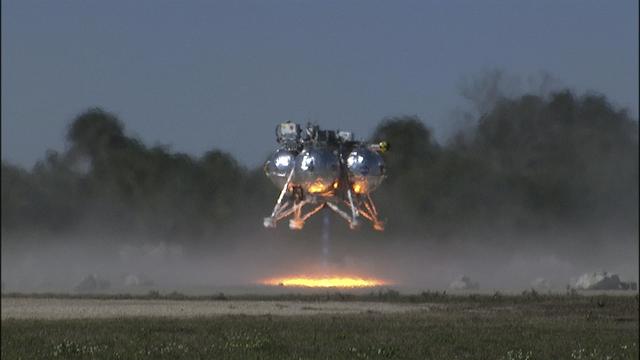
CAPE CANAVERAL, Fla. – The Project Morpheus prototype lander begins its ascent from a launch pad during the third free flight test at the north end of the Shuttle Landing Facility at NASA’s Kennedy Space Center in Florida. The 57-second test began at 1:15 p.m. EST with the Morpheus lander launching from the ground over a flame trench and ascending about 187 feet, nearly doubling the target ascent velocity from the last test in December 2013. The lander flew forward, covering about 154 feet in 20 seconds before descending and landing within 11 inches of its target on a dedicated pad inside the autonomous landing and hazard avoidance technology, or ALHAT, hazard field. Project Morpheus tests NASA’s ALHAT and an engine that runs on liquid oxygen and methane, or green propellants, into a fully-operational lander that could deliver cargo to other planetary surfaces. The landing facility provides the lander with the kind of field necessary for realistic testing, complete with rocks, craters and hazards to avoid. Morpheus’ ALHAT payload allows it to navigate to clear landing sites amidst rocks, craters and other hazards during its descent. Project Morpheus is being managed under the Advanced Exploration Systems, or AES, Division in NASA’s Human Exploration and Operations Mission Directorate. The efforts in AES pioneer new approaches for rapidly developing prototype systems, demonstrating key capabilities and validating operational concepts for future human missions beyond Earth orbit. For more information on Project Morpheus, visit http://www.nasa.gov/centers/johnson/exploration/morpheus. Photo credit: NASA/Frankie Martin
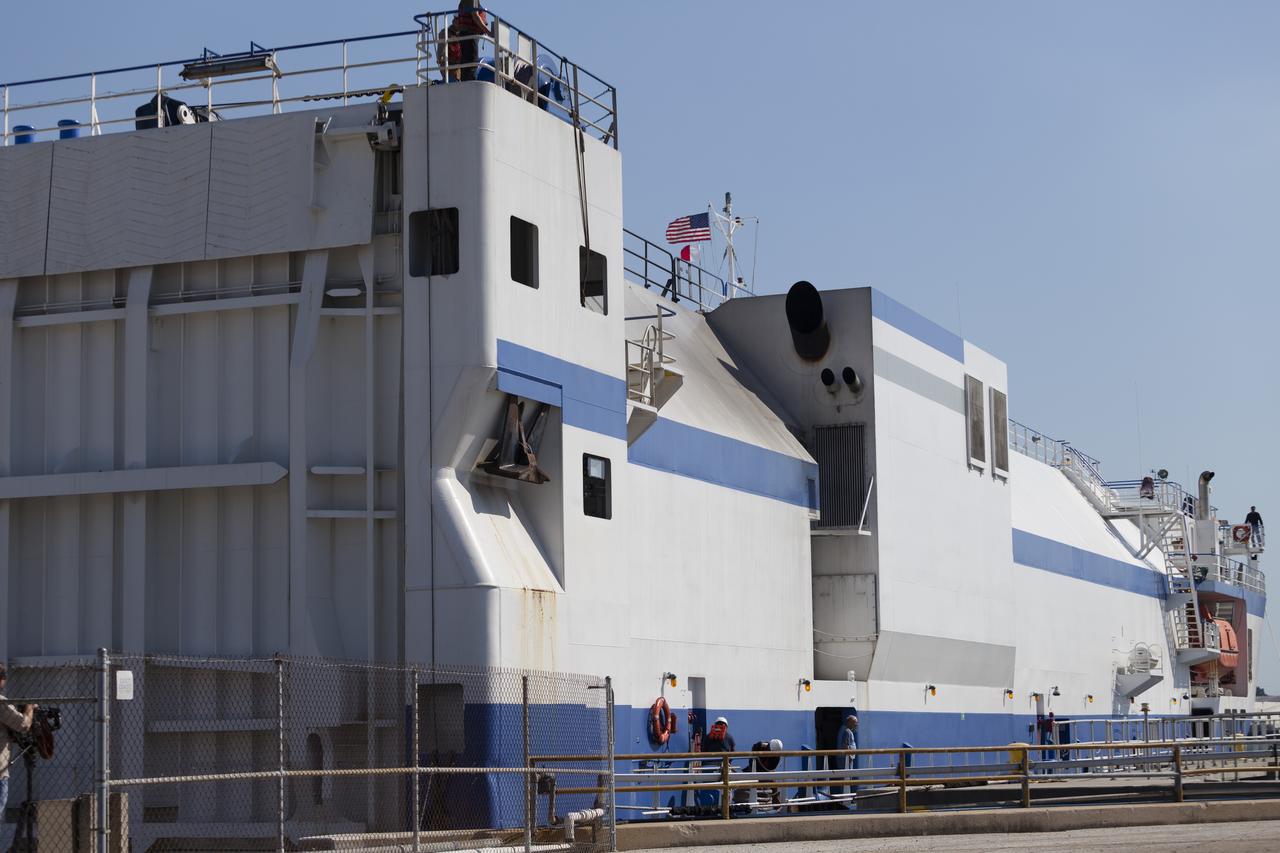
CAPE CANAVERAL, Fla. – The United Launch Alliance barge Delta Mariner is secured to the dock in Port Canaveral in Florida. The barge is carrying two of the booster stages for the Delta IV Heavy rocket slated for Orion's Exploration Flight Test-1, or EFT-1. Orion is the exploration spacecraft designed to carry astronauts to destinations not yet explored by humans. It will have emergency abort capability, sustain the crew during space travel and provide safe re-entry from deep-space return velocities. The first unpiloted test flight of Orion is scheduled to launch in September 2014 atop a Delta IV Heavy rocket and in 2017 on NASA’s Space Launch System rocket. For more information, visit www.nasa.gov/orion. Photo credit: NASA/Frankie Martin
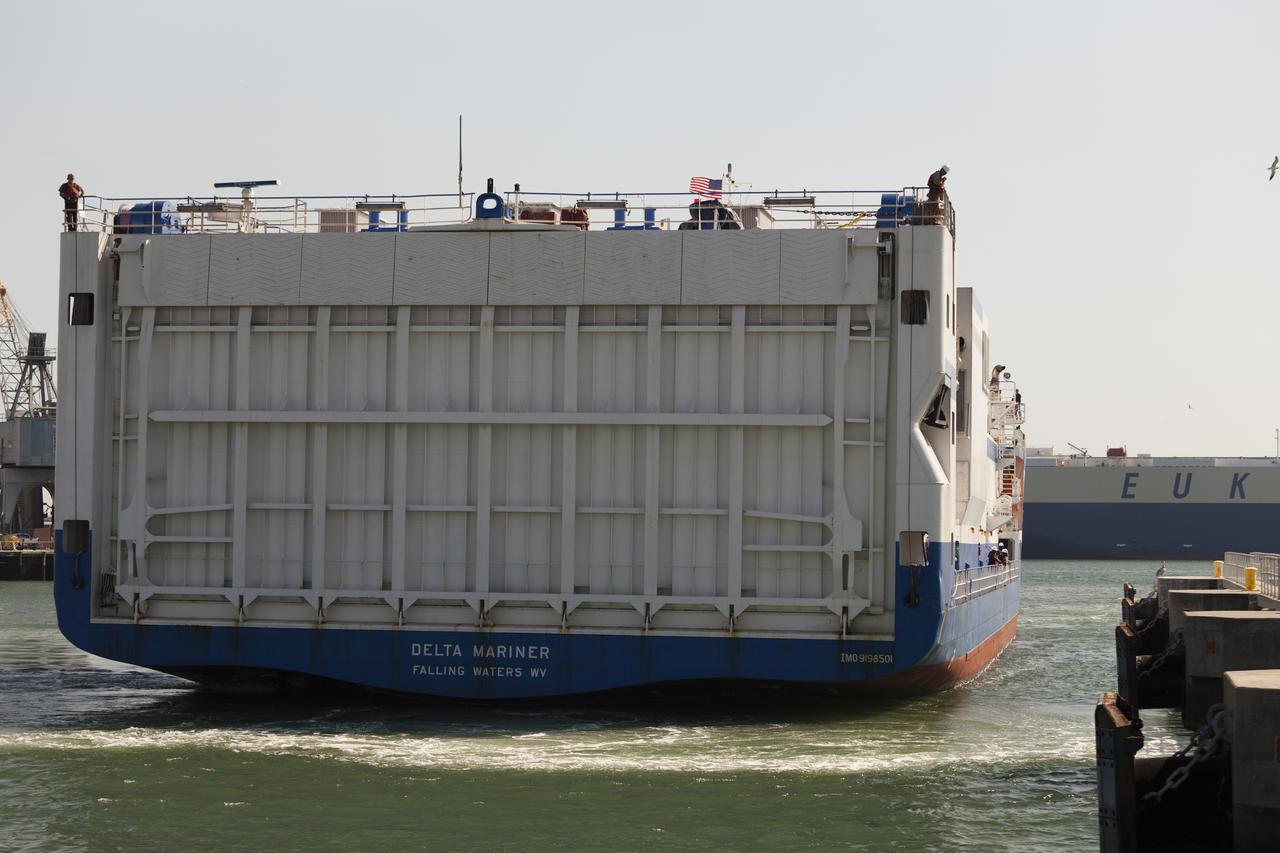
CAPE CANAVERAL, Fla. – The United Launch Alliance barge Delta Mariner prepares to dock in Port Canaveral in Florida. The barge is carrying two of the booster stages for the Delta IV Heavy rocket slated for Orion's Exploration Flight Test-1, or EFT-1. Orion is the exploration spacecraft designed to carry astronauts to destinations not yet explored by humans. It will have emergency abort capability, sustain the crew during space travel and provide safe re-entry from deep-space return velocities. The first unpiloted test flight of Orion is scheduled to launch in September 2014 atop a Delta IV Heavy rocket and in 2017 on NASA’s Space Launch System rocket. For more information, visit www.nasa.gov/orion. Photo credit: NASA/Frankie Martin
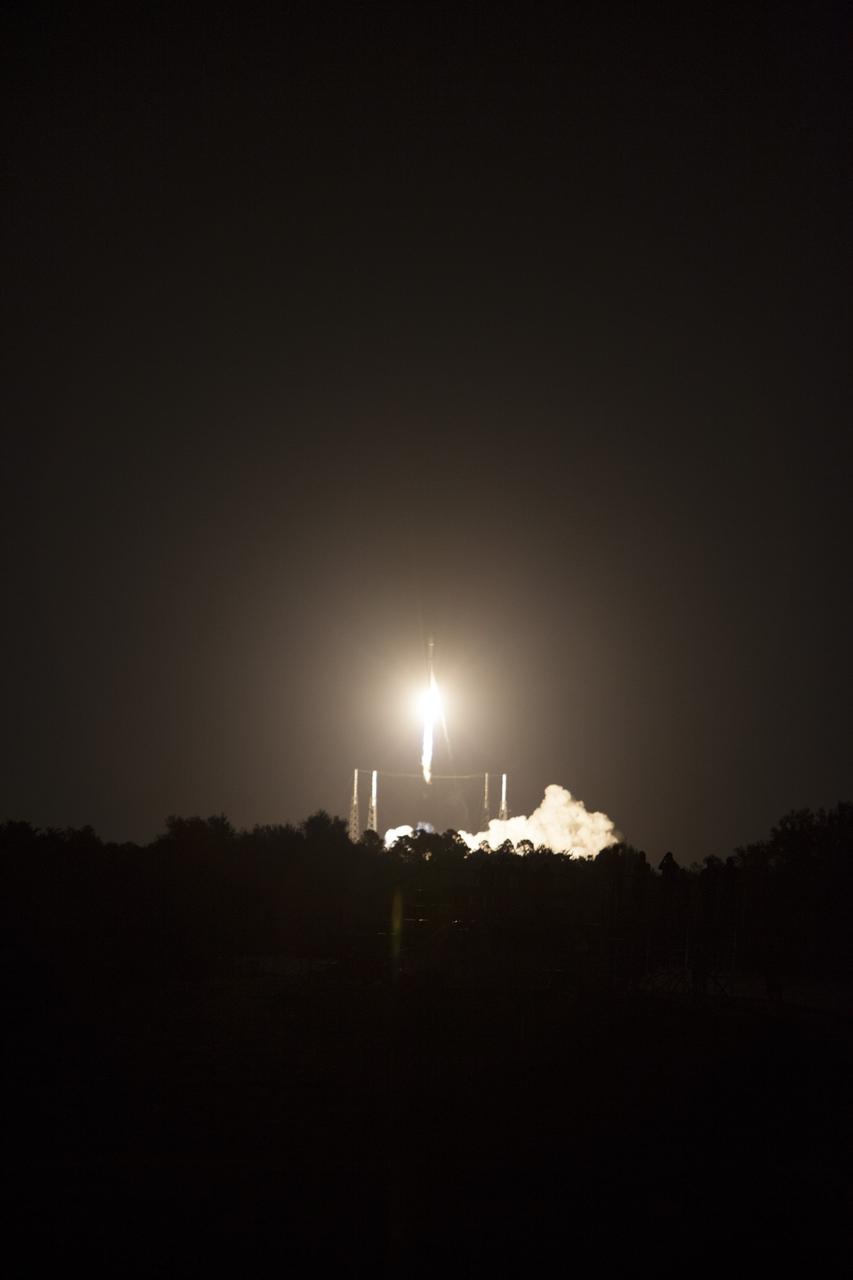
CAPE CANAVERAL, Fla. -- The United Launch Alliance Atlas V rocket carrying NASA's Tracking and Data Relay Satellite, or TDRS-L, soars off Space Launch Complex 41 on Cape Canaveral Air Force Station in Florida. Launch was at 9:33 p.m. EST Jan. 23 during a 40-minute launch window. The TDRS-L spacecraft is the second of three new satellites designed to ensure vital operational continuity for NASA by expanding the lifespan of the Tracking and Data Relay Satellite System TDRSS fleet, which consists of eight satellites in geosynchronous orbit. The spacecraft provide tracking, telemetry, command and high-bandwidth data return services for numerous science and human exploration missions orbiting Earth. These include NASA's Hubble Space Telescope and the International Space Station. TDRS-L has a high-performance solar panel designed for more spacecraft power to meet the growing S-band communications requirements. TDRSS is one of three NASA Space Communication and Navigation SCaN networks providing space communications to NASA’s missions. For more information more about TDRS-L, visit http://www.nasa.gov/tdrs. To learn more about SCaN, visit www.nasa.gov/scan. Photo credit: NASA/Frankie Martin
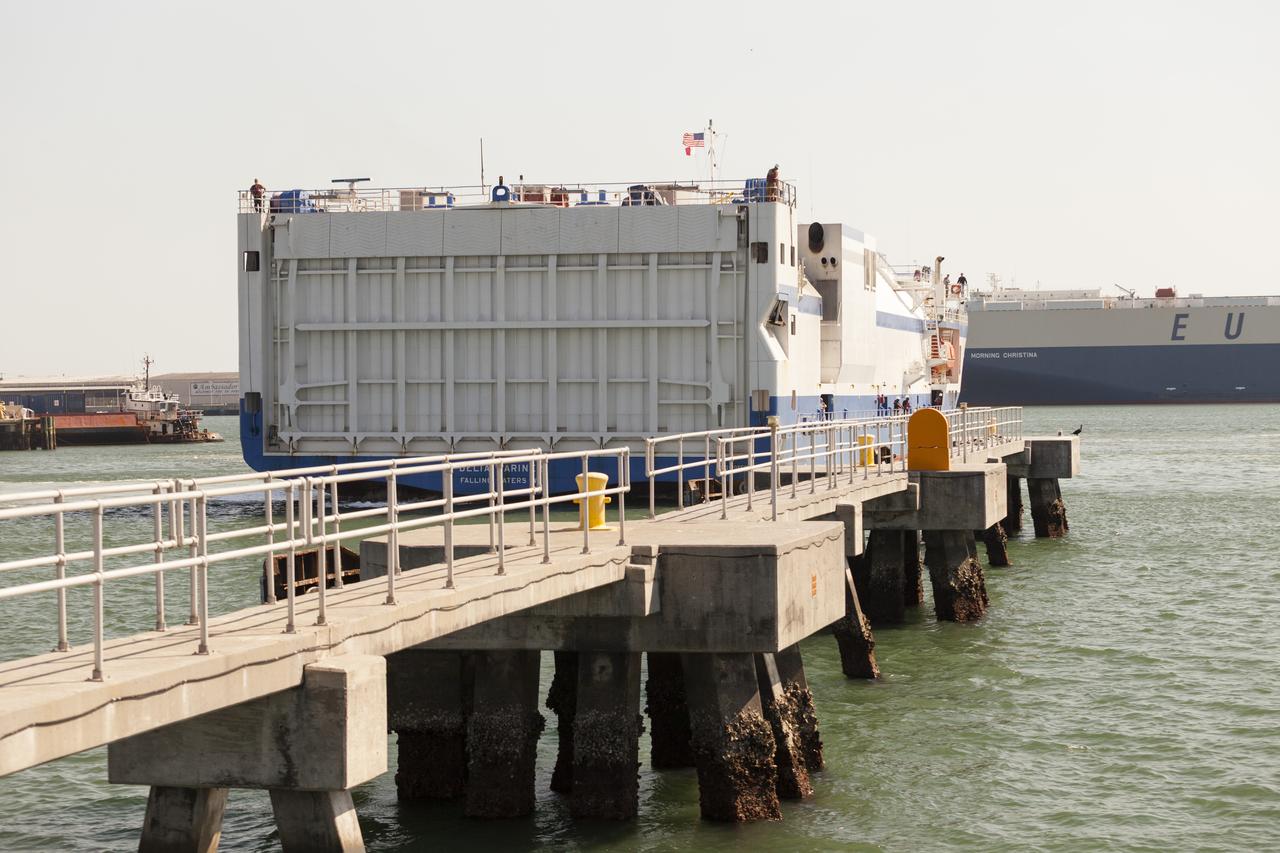
CAPE CANAVERAL, Fla. – The United Launch Alliance barge Delta Mariner nears the dock in Port Canaveral in Florida. The barge is carrying two of the booster stages for the Delta IV Heavy rocket slated for Orion's Exploration Flight Test-1, or EFT-1. Orion is the exploration spacecraft designed to carry astronauts to destinations not yet explored by humans. It will have emergency abort capability, sustain the crew during space travel and provide safe re-entry from deep-space return velocities. The first unpiloted test flight of Orion is scheduled to launch in September 2014 atop a Delta IV Heavy rocket and in 2017 on NASA’s Space Launch System rocket. For more information, visit www.nasa.gov/orion. Photo credit: NASA/Frankie Martin
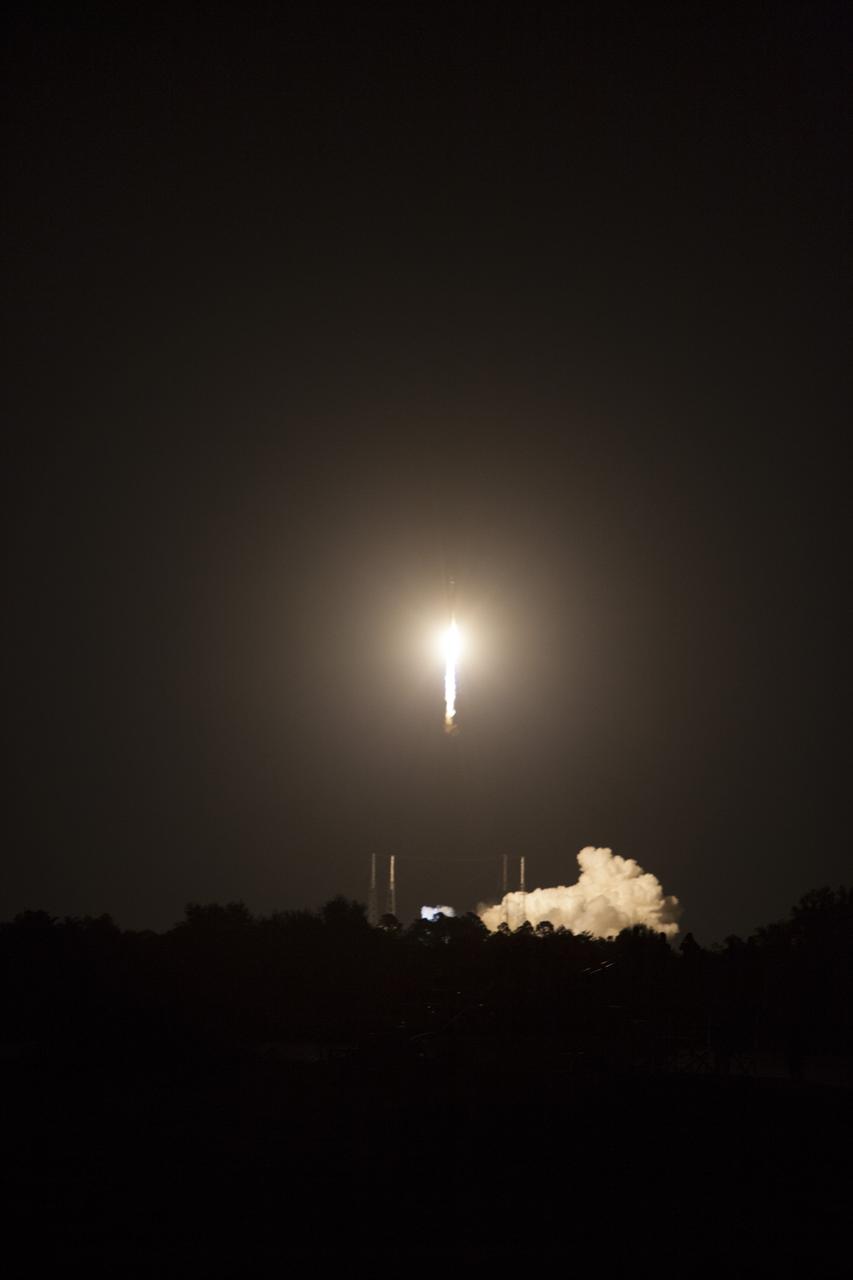
CAPE CANAVERAL, Fla. -- A United Launch Alliance Atlas V rocket soars into the night from Space Launch Complex 41 at Cape Canaveral Air Force Station in Florida, carrying NASA's Tracking and Data Relay Satellite, or TDRS-L, to Earth orbit. Launch was at 9:33 p.m. EST Jan. 23 during a 40-minute launch window. The TDRS-L spacecraft is the second of three new satellites designed to ensure vital operational continuity for NASA by expanding the lifespan of the Tracking and Data Relay Satellite System TDRSS fleet, which consists of eight satellites in geosynchronous orbit. The spacecraft provide tracking, telemetry, command and high-bandwidth data return services for numerous science and human exploration missions orbiting Earth. These include NASA's Hubble Space Telescope and the International Space Station. TDRS-L has a high-performance solar panel designed for more spacecraft power to meet the growing S-band communications requirements. TDRSS is one of three NASA Space Communication and Navigation SCaN networks providing space communications to NASA’s missions. For more information more about TDRS-L, visit http://www.nasa.gov/tdrs. To learn more about SCaN, visit www.nasa.gov/scan. Photo credit: NASA/Frankie Martin
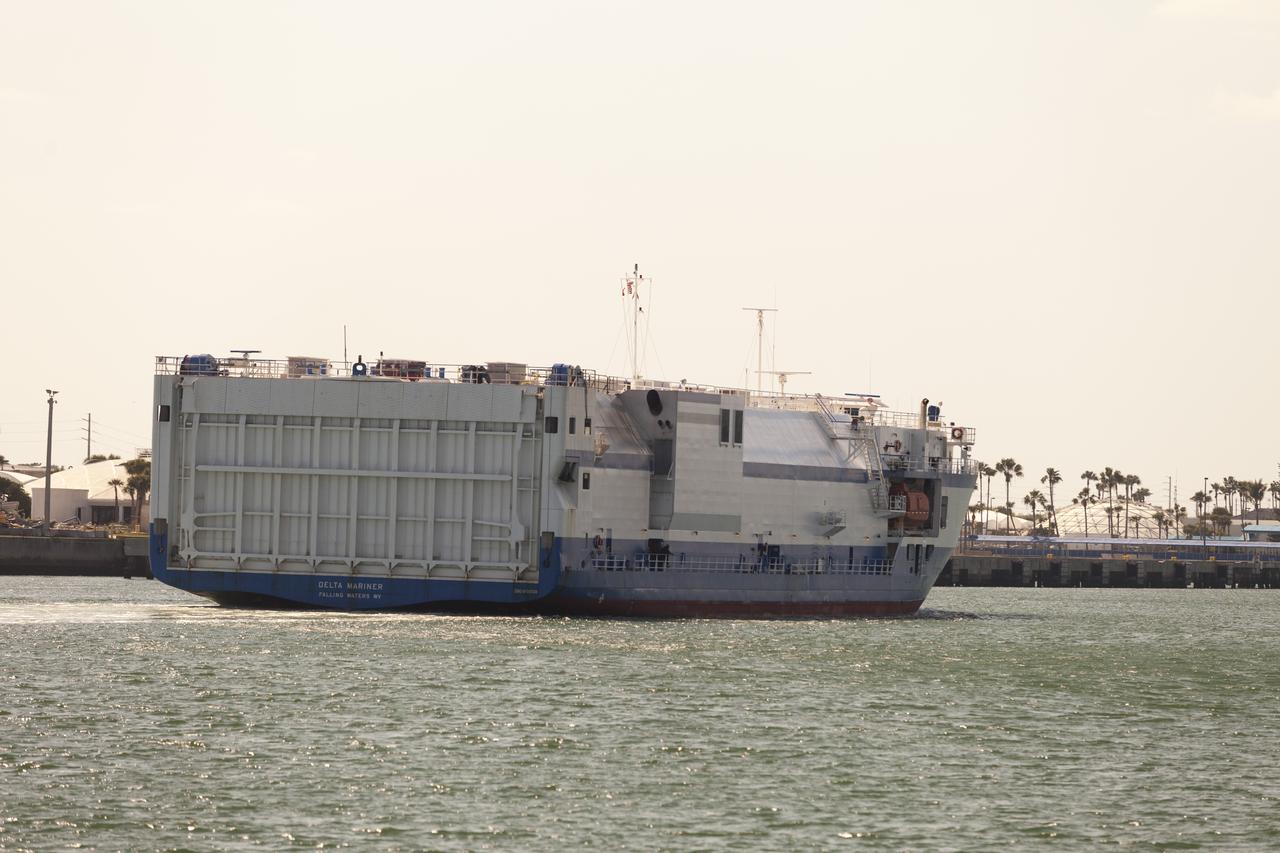
CAPE CANAVERAL, Fla. – The United Launch Alliance barge Delta Mariner travels through Port Canaveral in Florida. The barge is carrying two of the booster stages for the Delta IV Heavy rocket slated for Orion's Exploration Flight Test-1, or EFT-1. Orion is the exploration spacecraft designed to carry astronauts to destinations not yet explored by humans. It will have emergency abort capability, sustain the crew during space travel and provide safe re-entry from deep-space return velocities. The first unpiloted test flight of Orion is scheduled to launch in September 2014 atop a Delta IV Heavy rocket and in 2017 on NASA’s Space Launch System rocket. For more information, visit www.nasa.gov/orion. Photo credit: NASA/Frankie Martin
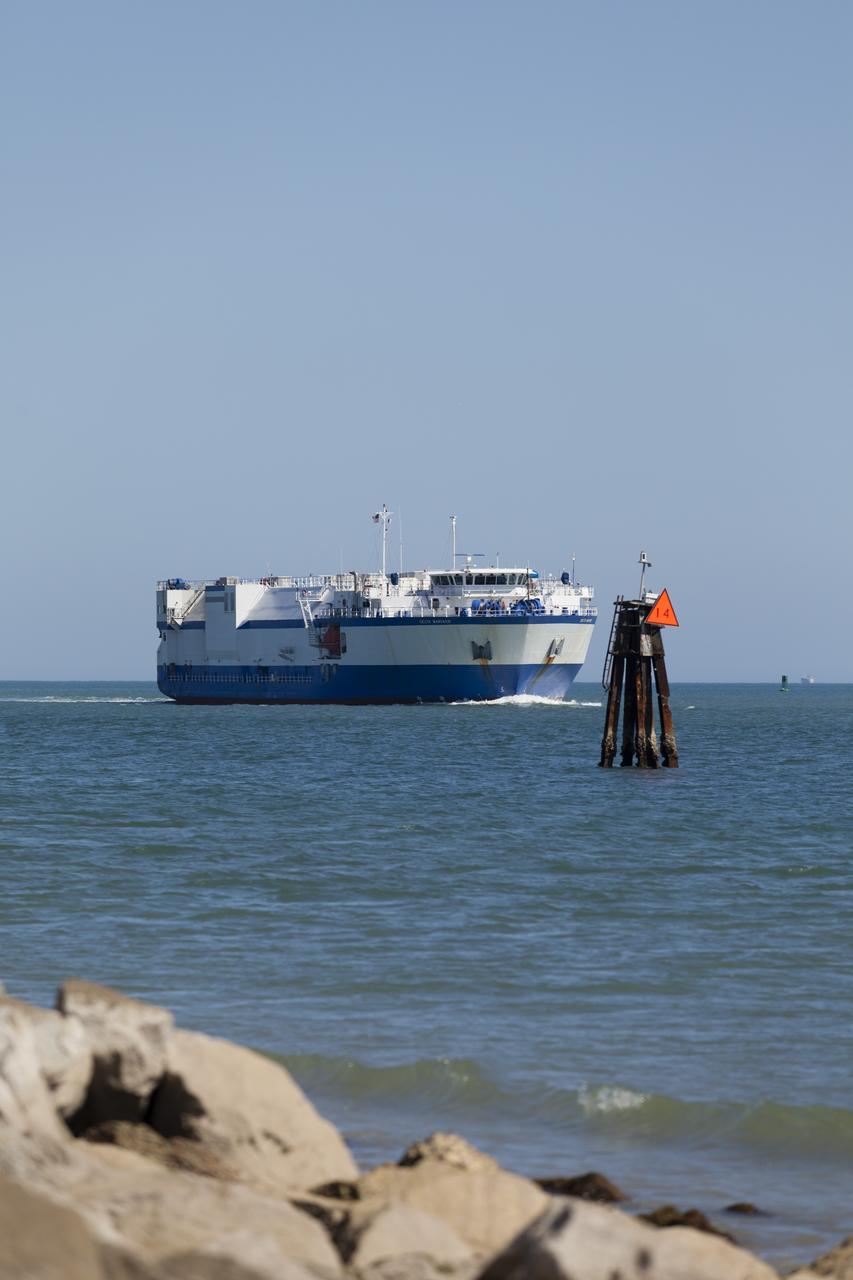
CAPE CANAVERAL, Fla. – The United Launch Alliance barge Delta Mariner enters Port Canaveral in Florida. The barge is carrying two of the booster stages for the Delta IV Heavy rocket slated for Orion's Exploration Flight Test-1, or EFT-1. Orion is the exploration spacecraft designed to carry astronauts to destinations not yet explored by humans. It will have emergency abort capability, sustain the crew during space travel and provide safe re-entry from deep-space return velocities. The first unpiloted test flight of Orion is scheduled to launch in September 2014 atop a Delta IV Heavy rocket and in 2017 on NASA’s Space Launch System
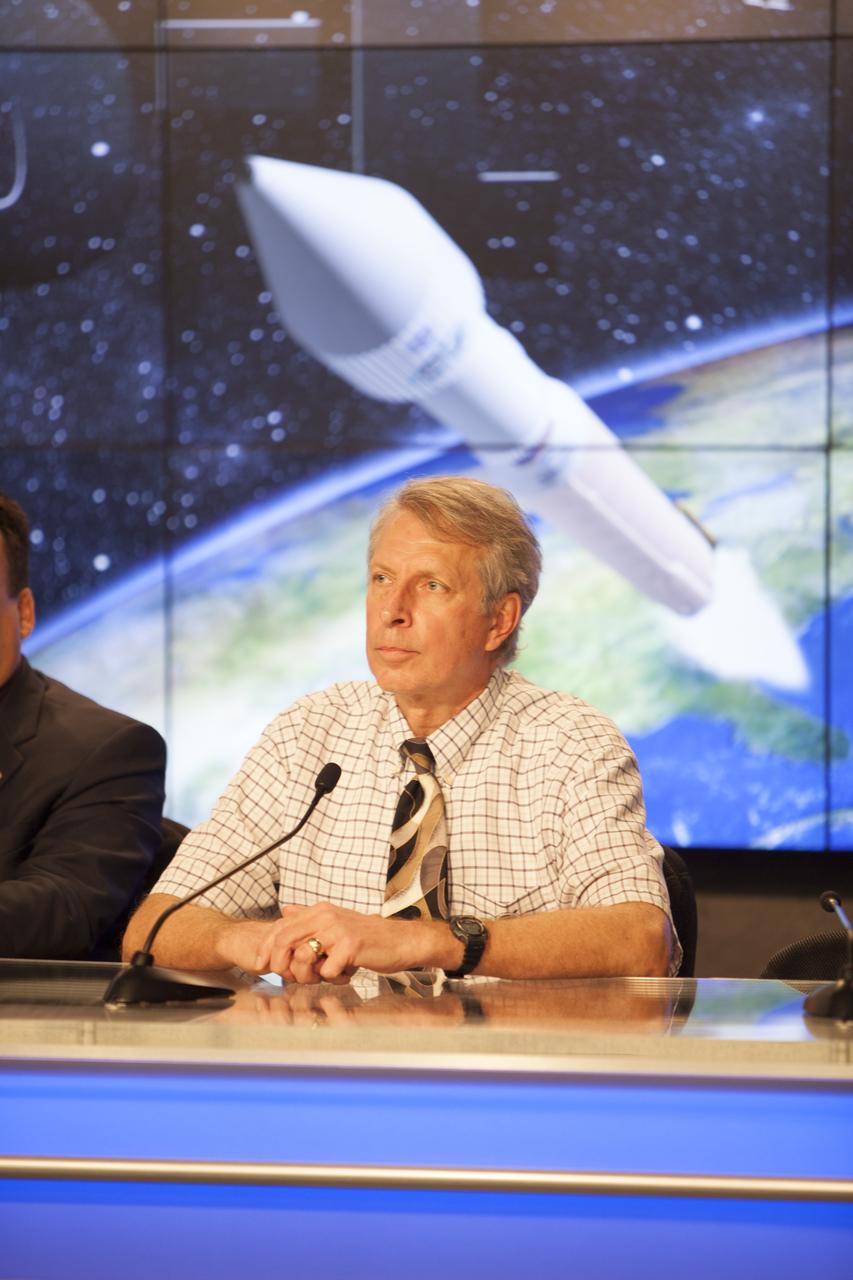
CAPE CANAVERAL, Fla. – During a news conference at NASA's Kennedy Space Center in Florida, agency and contractor officials discussed preparations for the launch of NASA's Tracking and Data Relay Satellite, or TDRS-L, spacecraft. Participants included Clay Flinn, launch weather officer for the 45th Weather Squadron at Cape Canaveral Air Force Station, Fla. The TDRS-L spacecraft is the second of three new satellites designed to ensure vital operational continuity for NASA by expanding the lifespan of the Tracking and Data Relay Satellite System TDRSS fleet, which consists of eight satellites in geosynchronous orbit. The spacecraft provide tracking, telemetry, command and high bandwidth data return services for numerous science and human exploration missions orbiting Earth. These include NASA's Hubble Space Telescope and the International Space Station. TDRS-L has a high-performance solar panel designed for more spacecraft power to meet the growing S-band communications requirements. TDRSS is one of NASA Space Communication and Navigation’s SCaN three networks providing space communications to NASA’s missions. For more information more about TDRS-L, visit: http://www.nasa.gov/tdrs To learn more about SCaN, visit: www.nasa.gov/scan Photo credit: NASA/Frankie Martin
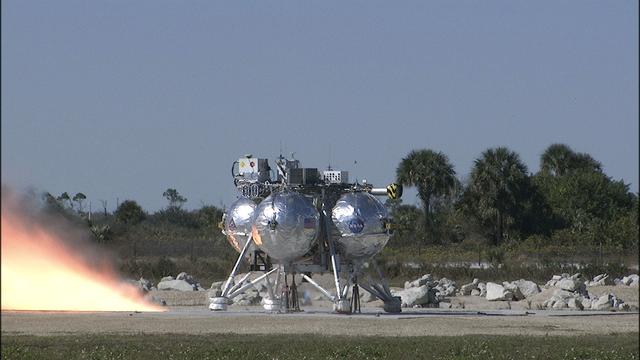
CAPE CANAVERAL, Fla. – The Project Morpheus prototype lander third free flight test begins at the north end of the Shuttle Landing Facility at NASA’s Kennedy Space Center in Florida. The 57-second test began at 1:15 p.m. EST with the Morpheus lander launching from the ground over a flame trench and ascending about 187 feet, nearly doubling the target ascent velocity from the last test in December 2013. The lander flew forward, covering about 154 feet in 20 seconds before descending and landing within 11 inches of its target on a dedicated pad inside the autonomous landing and hazard avoidance technology, or ALHAT, hazard field. Project Morpheus tests NASA’s ALHAT and an engine that runs on liquid oxygen and methane, or green propellants, into a fully-operational lander that could deliver cargo to other planetary surfaces. The landing facility provides the lander with the kind of field necessary for realistic testing, complete with rocks, craters and hazards to avoid. Morpheus’ ALHAT payload allows it to navigate to clear landing sites amidst rocks, craters and other hazards during its descent. Project Morpheus is being managed under the Advanced Exploration Systems, or AES, Division in NASA’s Human Exploration and Operations Mission Directorate. The efforts in AES pioneer new approaches for rapidly developing prototype systems, demonstrating key capabilities and validating operational concepts for future human missions beyond Earth orbit. For more information on Project Morpheus, visit http://www.nasa.gov/centers/johnson/exploration/morpheus. Photo credit: NASA/Frankie Martin

CAPE CANAVERAL, Fla. - Kathy Lueders, manager of NASA's Commercial Crew Program, discusses program progress during a meeting with the staff at NASA's Kennedy Space Center in Florida. Photo credit: NASA/Frankie Martin
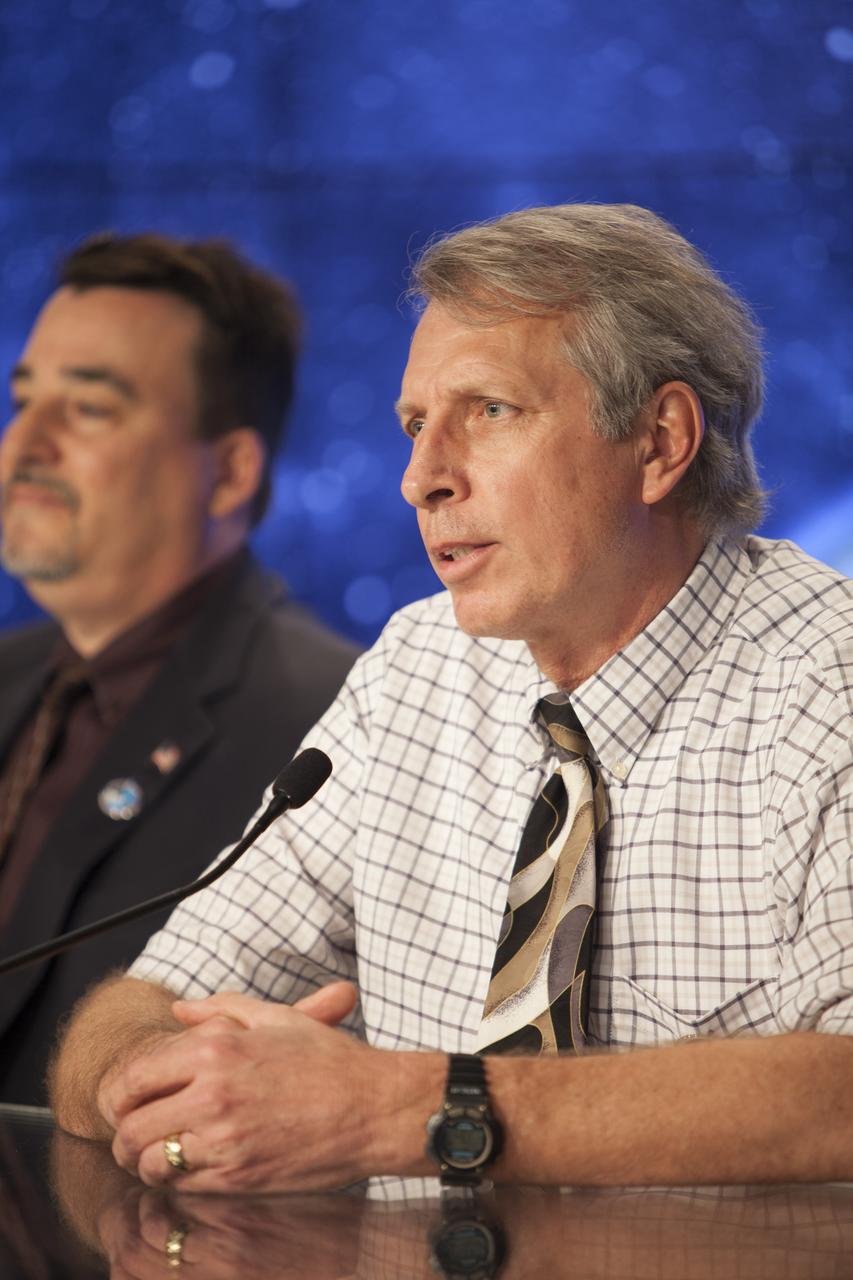
CAPE CANAVERAL, Fla. – During a news conference at NASA's Kennedy Space Center in Florida, agency and contractor officials discussed preparations for the launch of NASA's Tracking and Data Relay Satellite, or TDRS-L, spacecraft. Participants included Clay Flinn, launch weather officer for the 45th Weather Squadron at Cape Canaveral Air Force Station, Fla. Seated behind Flinn is Andy Kopito, Civil Space Programs director for Boeing Space & Intelligence Systems in El Segundo, Calif. The TDRS-L spacecraft is the second of three new satellites designed to ensure vital operational continuity for NASA by expanding the lifespan of the Tracking and Data Relay Satellite System TDRSS fleet, which consists of eight satellites in geosynchronous orbit. The spacecraft provide tracking, telemetry, command and high bandwidth data return services for numerous science and human exploration missions orbiting Earth. These include NASA's Hubble Space Telescope and the International Space Station. TDRS-L has a high-performance solar panel designed for more spacecraft power to meet the growing S-band communications requirements. TDRSS is one of NASA Space Communication and Navigation’s SCaN three networks providing space communications to NASA’s missions. For more information more about TDRS-L, visit: http://www.nasa.gov/tdrs To learn more about SCaN, visit: www.nasa.gov/scan Photo credit: NASA/Frankie Martin
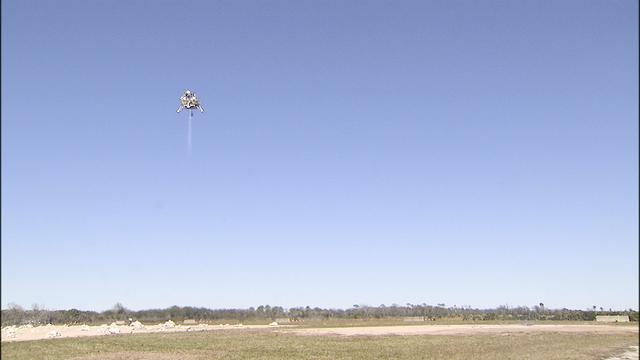
CAPE CANAVERAL, Fla. – The Project Morpheus prototype lander soars high after launching on its third free flight test at the north end of the Shuttle Landing Facility at NASA’s Kennedy Space Center in Florida. The 57-second test began at 1:15 p.m. EST with the Morpheus lander launching from the ground over a flame trench and ascending about 187 feet, nearly doubling the target ascent velocity from the last test in December 2013. The lander flew forward, covering about 154 feet in 20 seconds before descending and landing within 11 inches of its target on a dedicated pad inside the autonomous landing and hazard avoidance technology, or ALHAT, hazard field. Project Morpheus tests NASA’s ALHAT and an engine that runs on liquid oxygen and methane, or green propellants, into a fully-operational lander that could deliver cargo to other planetary surfaces. The landing facility provides the lander with the kind of field necessary for realistic testing, complete with rocks, craters and hazards to avoid. Morpheus’ ALHAT payload allows it to navigate to clear landing sites amidst rocks, craters and other hazards during its descent. Project Morpheus is being managed under the Advanced Exploration Systems, or AES, Division in NASA’s Human Exploration and Operations Mission Directorate. The efforts in AES pioneer new approaches for rapidly developing prototype systems, demonstrating key capabilities and validating operational concepts for future human missions beyond Earth orbit. For more information on Project Morpheus, visit http://www.nasa.gov/centers/johnson/exploration/morpheus. Photo credit: NASA/Frankie Martin
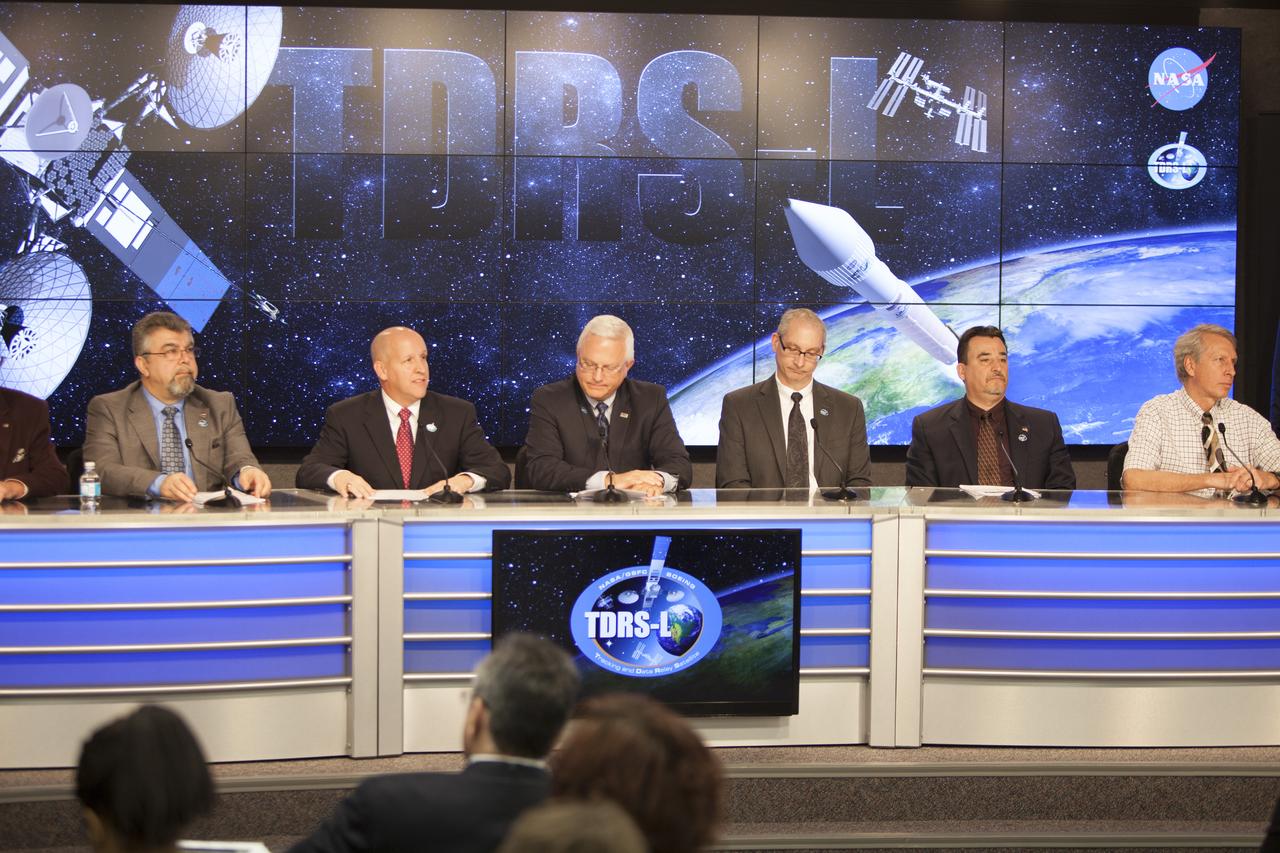
CAPE CANAVERAL, Fla. –During a news conference at NASA's Kennedy Space Center in Florida, agency and contractor officials discussed preparations for the launch of NASA's Tracking and Data Relay Satellite, or TDRS-L, spacecraft. Participating in the briefing, from the left, are Badri Younes, deputy associate administrator, Space Communications and Navigation SCaN NASA Human Exploration and Operations Mission Directorate at NASA Headquarters in Washington D.C., Tim Dunn, NASA launch director at Kennedy, Vernon Thorp, program manager for NASA Missions with United Launch Alliance in Denver, Colo., Jeffrey Gramling, NASA's TDRS-L project manager at the Goddard Space Flight Center in Greenbelt, Md., Andy Kopito, Civil Space Programs director for Boeing Space & Intelligence Systems in El Segundo, Calif., and Clay Flinn, launch weather officer for the 45th Weather Squadron at Cape Canaveral Air Force Station, Fla. The TDRS-L spacecraft is the second of three new satellites designed to ensure vital operational continuity for NASA by expanding the lifespan of the Tracking and Data Relay Satellite System TDRSS fleet, which consists of eight satellites in geosynchronous orbit. The spacecraft provide tracking, telemetry, command and high bandwidth data return services for numerous science and human exploration missions orbiting Earth. These include NASA's Hubble Space Telescope and the International Space Station. TDRS-L has a high-performance solar panel designed for more spacecraft power to meet the growing S-band communications requirements. TDRSS is one of NASA Space Communication and Navigation’s SCaN three networks providing space communications to NASA’s missions. For more information more about TDRS-L, visit: http://www.nasa.gov/tdrs To learn more about SCaN, visit: www.nasa.gov/scan Photo credit: NASA/Frankie Martin
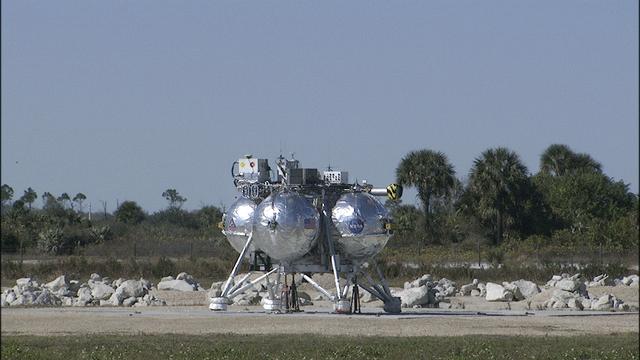
CAPE CANAVERAL, Fla. – The Project Morpheus prototype lander is positioned on a launch pad in preparation for its third free flight test at the north end of the Shuttle Landing Facility at NASA’s Kennedy Space Center in Florida. The 57-second test began at 1:15 p.m. EST with the Morpheus lander launching from the ground over a flame trench and ascending about 187 feet, nearly doubling the target ascent velocity from the last test in December 2013. The lander flew forward, covering about 154 feet in 20 seconds before descending and landing within 11 inches of its target on a dedicated pad inside the autonomous landing and hazard avoidance technology, or ALHAT, hazard field. Project Morpheus tests NASA’s ALHAT and an engine that runs on liquid oxygen and methane, or green propellants, into a fully-operational lander that could deliver cargo to other planetary surfaces. The landing facility provides the lander with the kind of field necessary for realistic testing, complete with rocks, craters and hazards to avoid. Morpheus’ ALHAT payload allows it to navigate to clear landing sites amidst rocks, craters and other hazards during its descent. Project Morpheus is being managed under the Advanced Exploration Systems, or AES, Division in NASA’s Human Exploration and Operations Mission Directorate. The efforts in AES pioneer new approaches for rapidly developing prototype systems, demonstrating key capabilities and validating operational concepts for future human missions beyond Earth orbit. For more information on Project Morpheus, visit http://www.nasa.gov/centers/johnson/exploration/morpheus. Photo credit: NASA/Frankie Martin
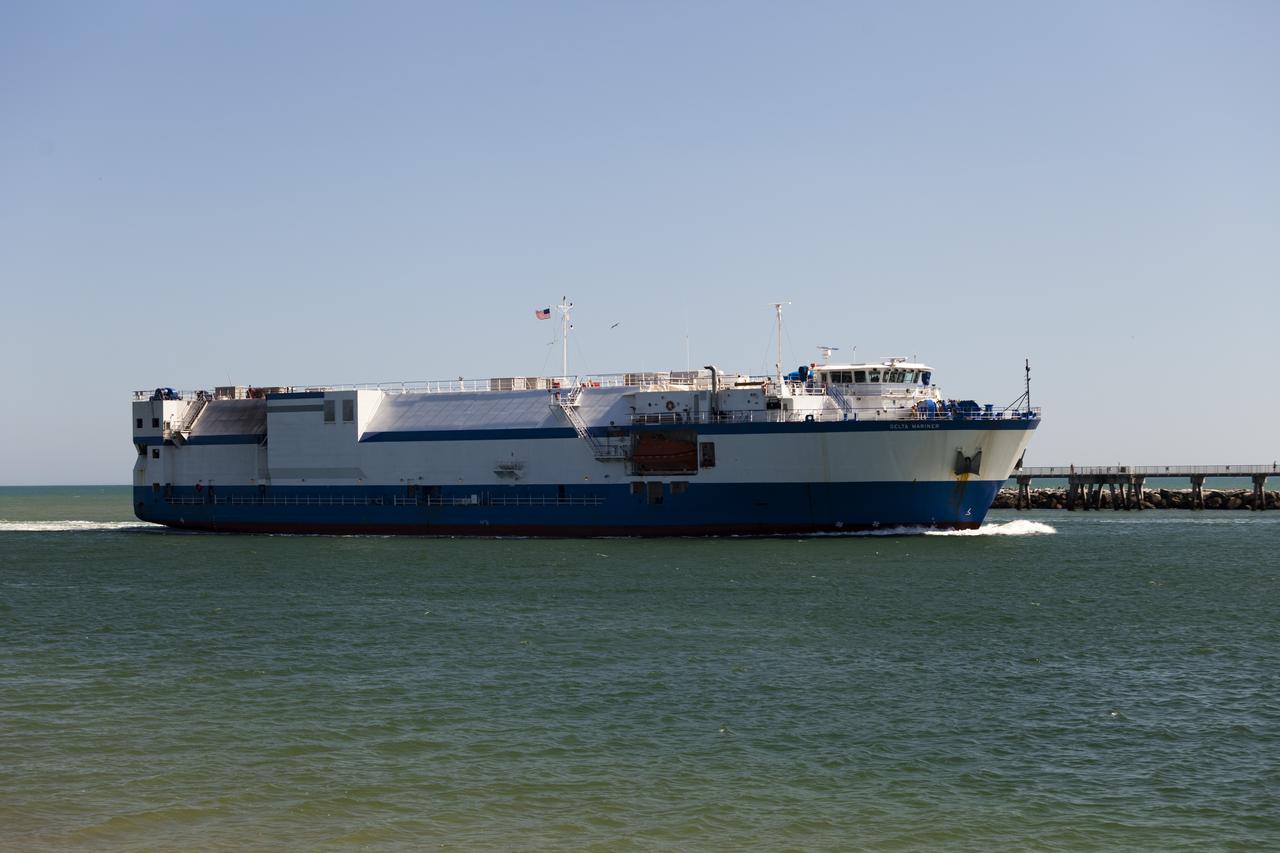
CAPE CANAVERAL, Fla. – The United Launch Alliance barge Delta Mariner glides past the jetties as it enters Port Canaveral in Florida. The barge is carrying two of the booster stages for the Delta IV Heavy rocket slated for Orion's Exploration Flight Test-1, or EFT-1. Orion is the exploration spacecraft designed to carry astronauts to destinations not yet explored by humans. It will have emergency abort capability, sustain the crew during space travel and provide safe re-entry from deep-space return velocities. The first unpiloted test flight of Orion is scheduled to launch in September 2014 atop a Delta IV Heavy rocket and in 2017 on NASA’s Space Launch System rocket. For more information, visit www.nasa.gov/orion. Photo credit: NASA/Frankie Martin

CAPE CANAVERAL, Fla. - Kathy Lueders, manager of NASA's Commercial Crew Program, listens to updates from program engineers at NASA's Kennedy Space Center in Florida. Photo credit: NASA/Frankie Martin
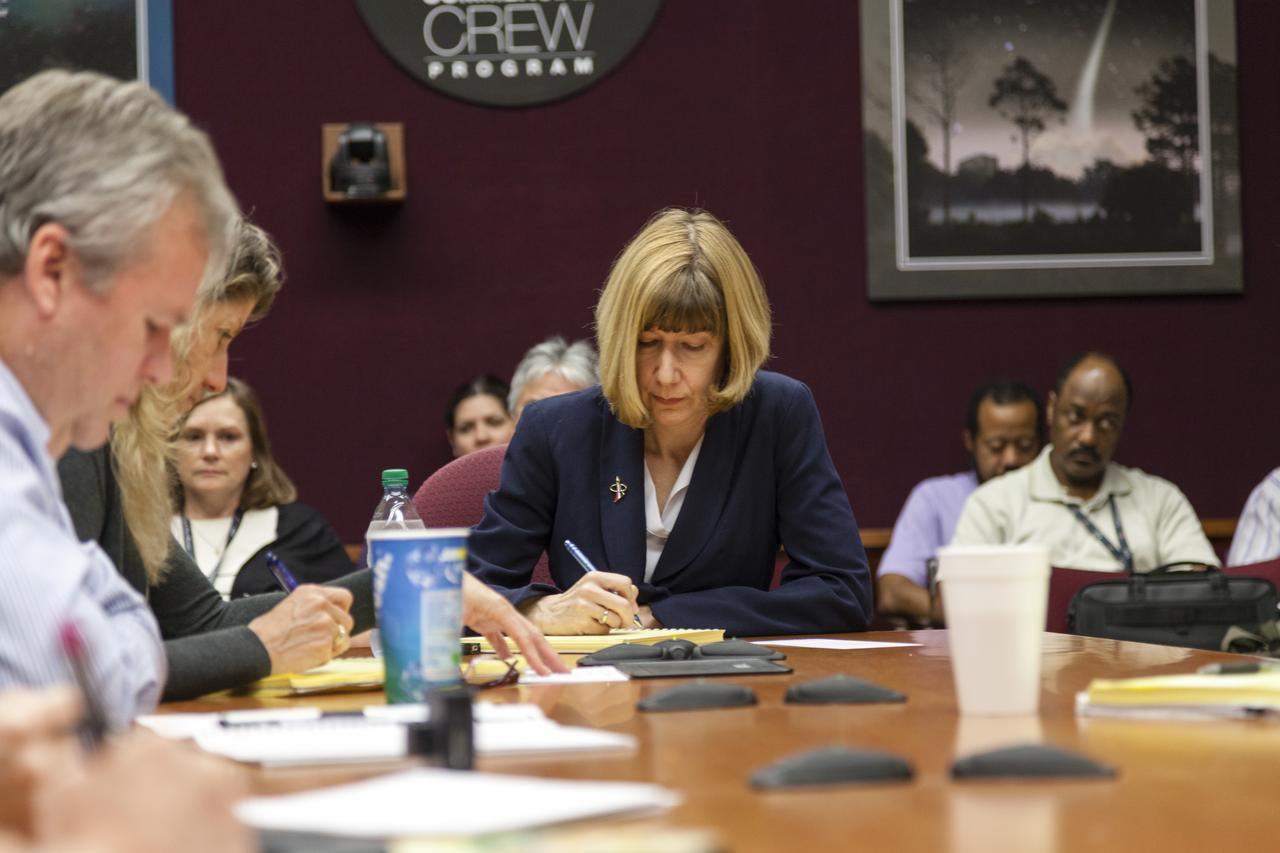
CAPE CANAVERAL, Fla. - Kathy Lueders, manager of NASA's Commercial Crew Program, listens to updates during a meeting with the staff at NASA's Kennedy Space Center in Florida. Photo credit: NASA/Frankie Martin
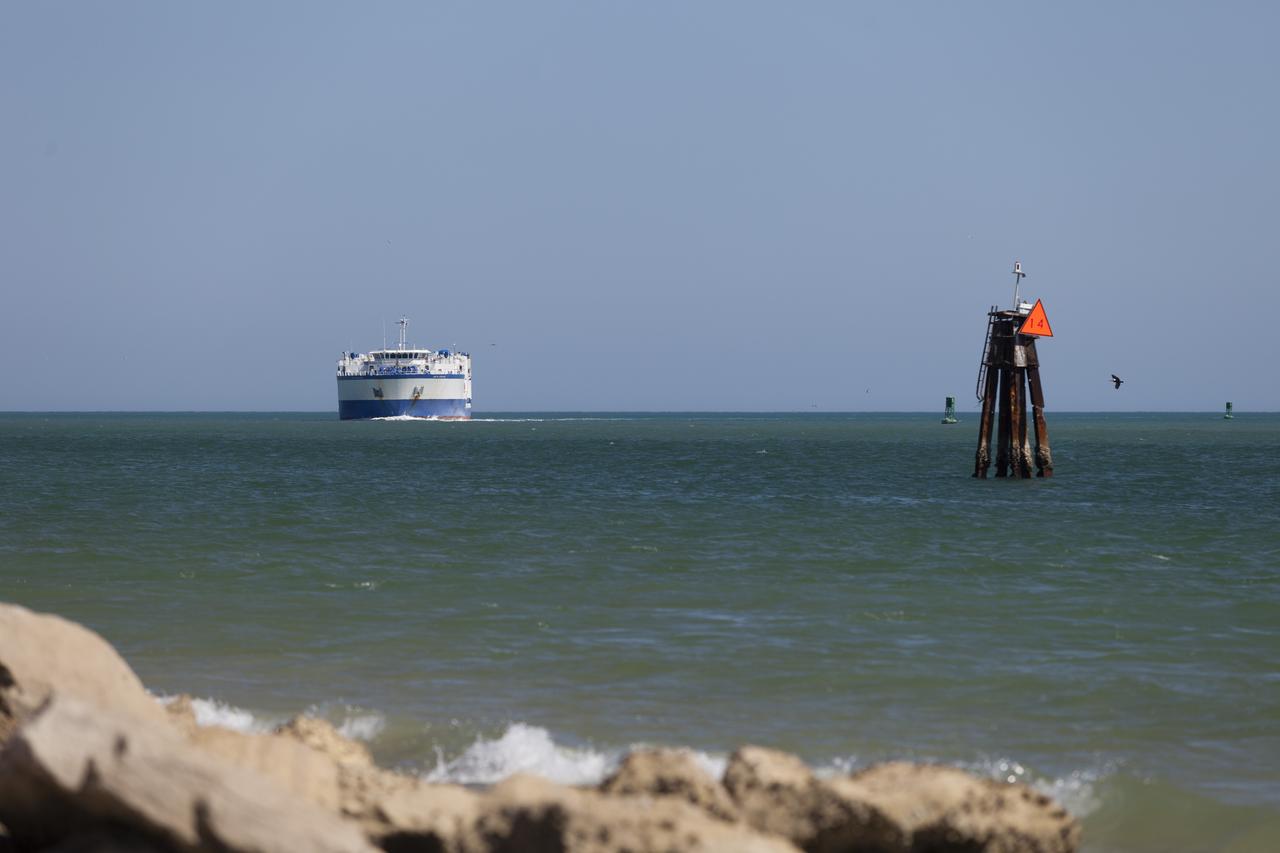
CAPE CANAVERAL, Fla. – The United Launch Alliance barge Delta Mariner approaches the mouth of Port Canaveral in Florida. The barge is carrying two of the booster stages for the Delta IV Heavy rocket slated for Orion's Exploration Flight Test-1, or EFT-1. Orion is the exploration spacecraft designed to carry astronauts to destinations not yet explored by humans. It will have emergency abort capability, sustain the crew during space travel and provide safe re-entry from deep-space return velocities. The first unpiloted test flight of Orion is scheduled to launch in September 2014 atop a Delta IV Heavy rocket and in 2017 on NASA’s Space Launch System rocket. For more information, visit www.nasa.gov/orion. Photo credit: NASA/Frankie Martin
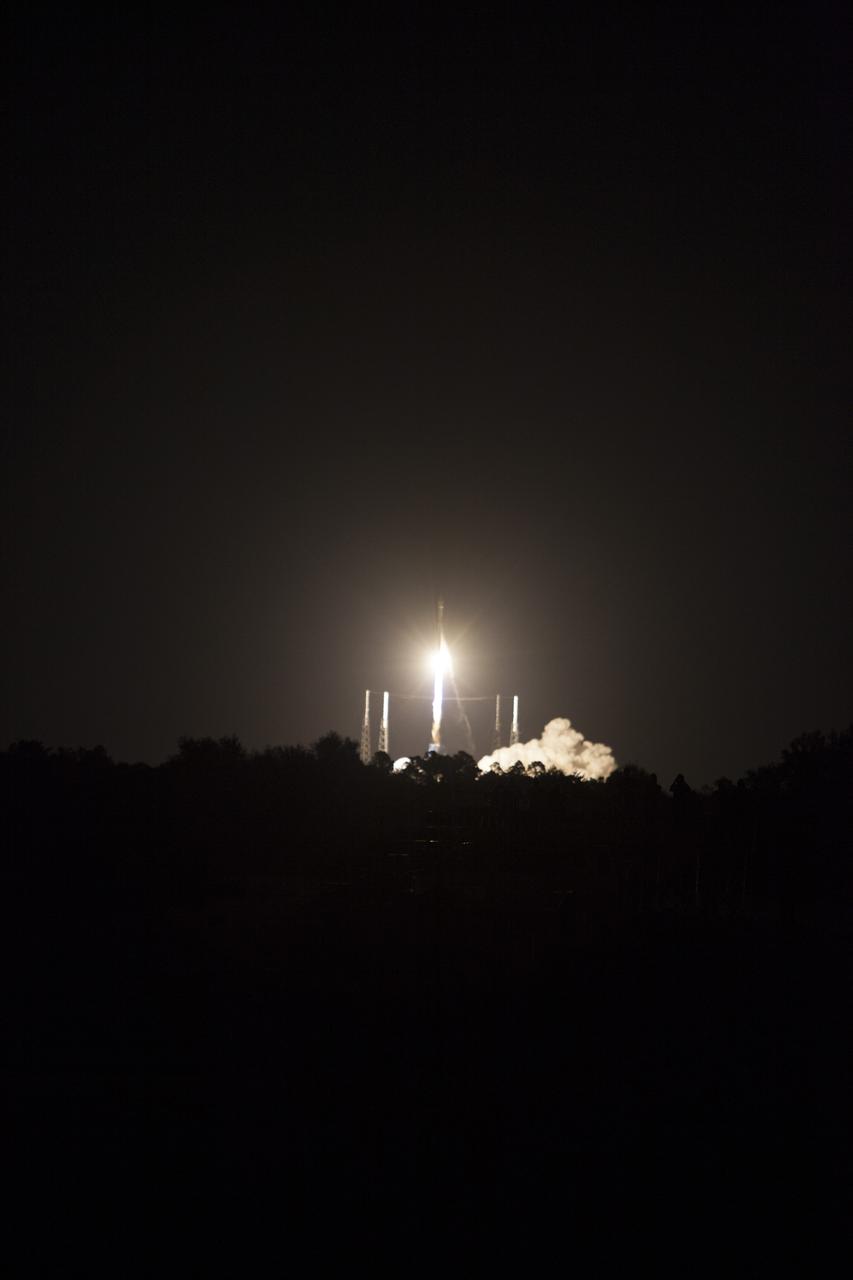
CAPE CANAVERAL, Fla. – A United Launch Alliance Atlas V rocket lifts off from Space Launch Complex 41 on Cape Canaveral Air Force Station carrying NASA's Tracking and Data Relay Satellite, or TDRS-L, to Earth orbit. Liftoff was at 9:33 p.m. EST Jan. 23 during a 40-minute launch window. The TDRS-L spacecraft is the second of three new satellites designed to ensure vital operational continuity for NASA by expanding the lifespan of the Tracking and Data Relay Satellite System TDRSS fleet, which consists of eight satellites in geosynchronous orbit. The spacecraft provide tracking, telemetry, command and high-bandwidth data return services for numerous science and human exploration missions orbiting Earth. These include NASA's Hubble Space Telescope and the International Space Station. TDRS-L has a high-performance solar panel designed for more spacecraft power to meet the growing S-band communications requirements. TDRSS is one of three NASA Space Communication and Navigation SCaN networks providing space communications to NASA’s missions. For more information more about TDRS-L, visit http://www.nasa.gov/tdrs. To learn more about SCaN, visit www.nasa.gov/scan. Photo credit: NASA/Frankie Martin
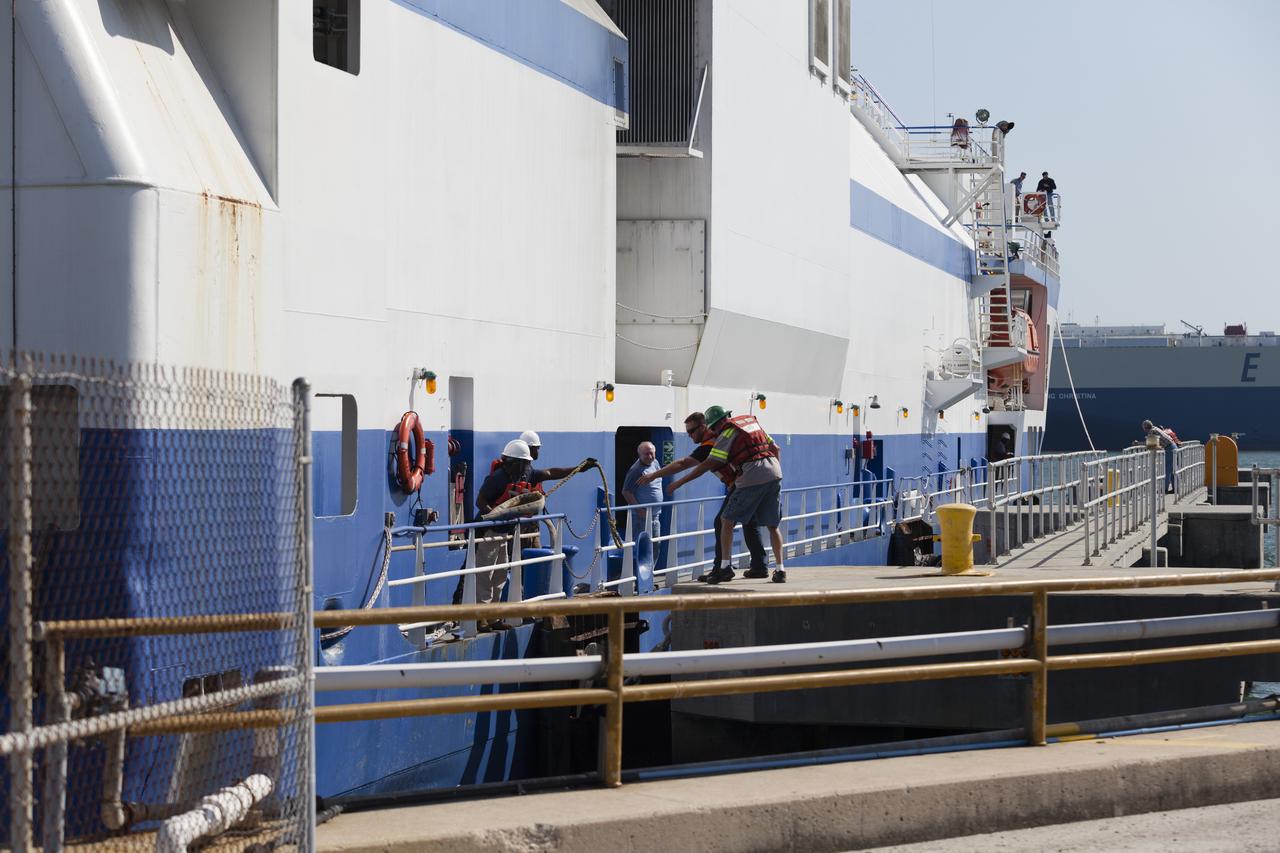
CAPE CANAVERAL, Fla. – The United Launch Alliance barge Delta Mariner docks in Port Canaveral in Florida. The barge is carrying two of the booster stages for the Delta IV Heavy rocket slated for Orion's Exploration Flight Test-1, or EFT-1. Orion is the exploration spacecraft designed to carry astronauts to destinations not yet explored by humans. It will have emergency abort capability, sustain the crew during space travel and provide safe re-entry from deep-space return velocities. The first unpiloted test flight of Orion is scheduled to launch in September 2014 atop a Delta IV Heavy rocket and in 2017 on NASA’s Space Launch System rocket. For more information, visit www.nasa.gov/orion. Photo credit: NASA/Frankie Martin
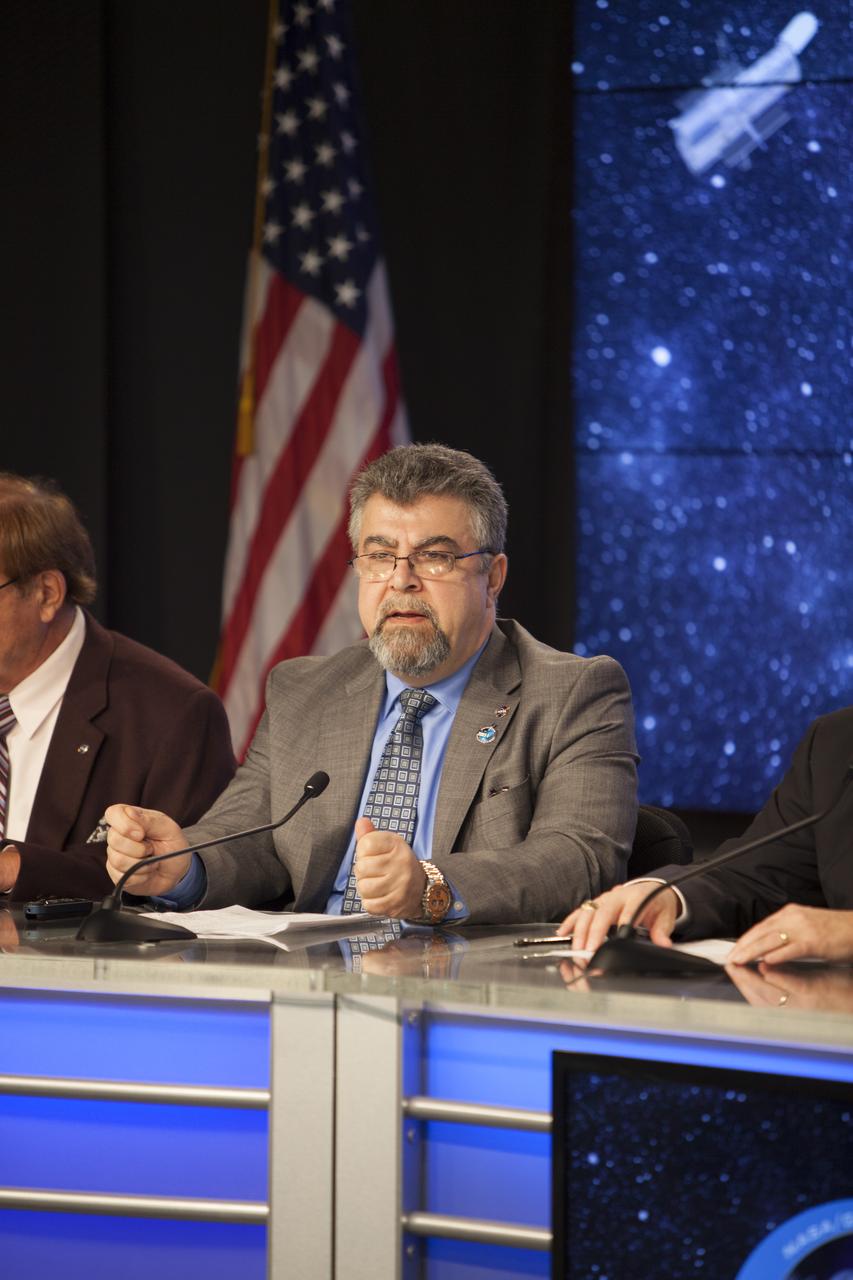
CAPE CANAVERAL, Fla. – During a news conference at NASA's Kennedy Space Center in Florida, agency and contractor officials discussed preparations for the launch of NASA's Tracking and Data Relay Satellite, or TDRS-L, spacecraft. Participants included Badri Younes, deputy associate administrator, Space Communications and Navigation SCaN NASA Human Exploration and Operations Mission Directorate at NASA Headquarters in Washington D.C. The TDRS-L spacecraft is the second of three new satellites designed to ensure vital operational continuity for NASA by expanding the lifespan of the Tracking and Data Relay Satellite System TDRSS fleet, which consists of eight satellites in geosynchronous orbit. The spacecraft provide tracking, telemetry, command and high bandwidth data return services for numerous science and human exploration missions orbiting Earth. These include NASA's Hubble Space Telescope and the International Space Station. TDRS-L has a high-performance solar panel designed for more spacecraft power to meet the growing S-band communications requirements. TDRSS is one of NASA Space Communication and Navigation’s SCaN three networks providing space communications to NASA’s missions. For more information more about TDRS-L, visit: http://www.nasa.gov/tdrs To learn more about SCaN, visit: www.nasa.gov/scan Photo credit: NASA/Frankie Martin
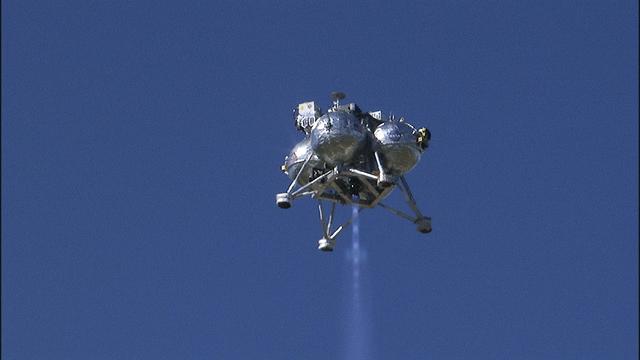
CAPE CANAVERAL, Fla. – The Project Morpheus prototype lander ascends after launching on its third free flight test at the north end of the Shuttle Landing Facility at NASA’s Kennedy Space Center in Florida. The 57-second test began at 1:15 p.m. EST with the Morpheus lander launching from the ground over a flame trench and ascending about 187 feet, nearly doubling the target ascent velocity from the last test in December 2013. The lander flew forward, covering about 154 feet in 20 seconds before descending and landing within 11 inches of its target on a dedicated pad inside the autonomous landing and hazard avoidance technology, or ALHAT, hazard field. Project Morpheus tests NASA’s ALHAT and an engine that runs on liquid oxygen and methane, or green propellants, into a fully-operational lander that could deliver cargo to other planetary surfaces. The landing facility provides the lander with the kind of field necessary for realistic testing, complete with rocks, craters and hazards to avoid. Morpheus’ ALHAT payload allows it to navigate to clear landing sites amidst rocks, craters and other hazards during its descent. Project Morpheus is being managed under the Advanced Exploration Systems, or AES, Division in NASA’s Human Exploration and Operations Mission Directorate. The efforts in AES pioneer new approaches for rapidly developing prototype systems, demonstrating key capabilities and validating operational concepts for future human missions beyond Earth orbit. For more information on Project Morpheus, visit http://www.nasa.gov/centers/johnson/exploration/morpheus. Photo credit: NASA/Frankie Martin
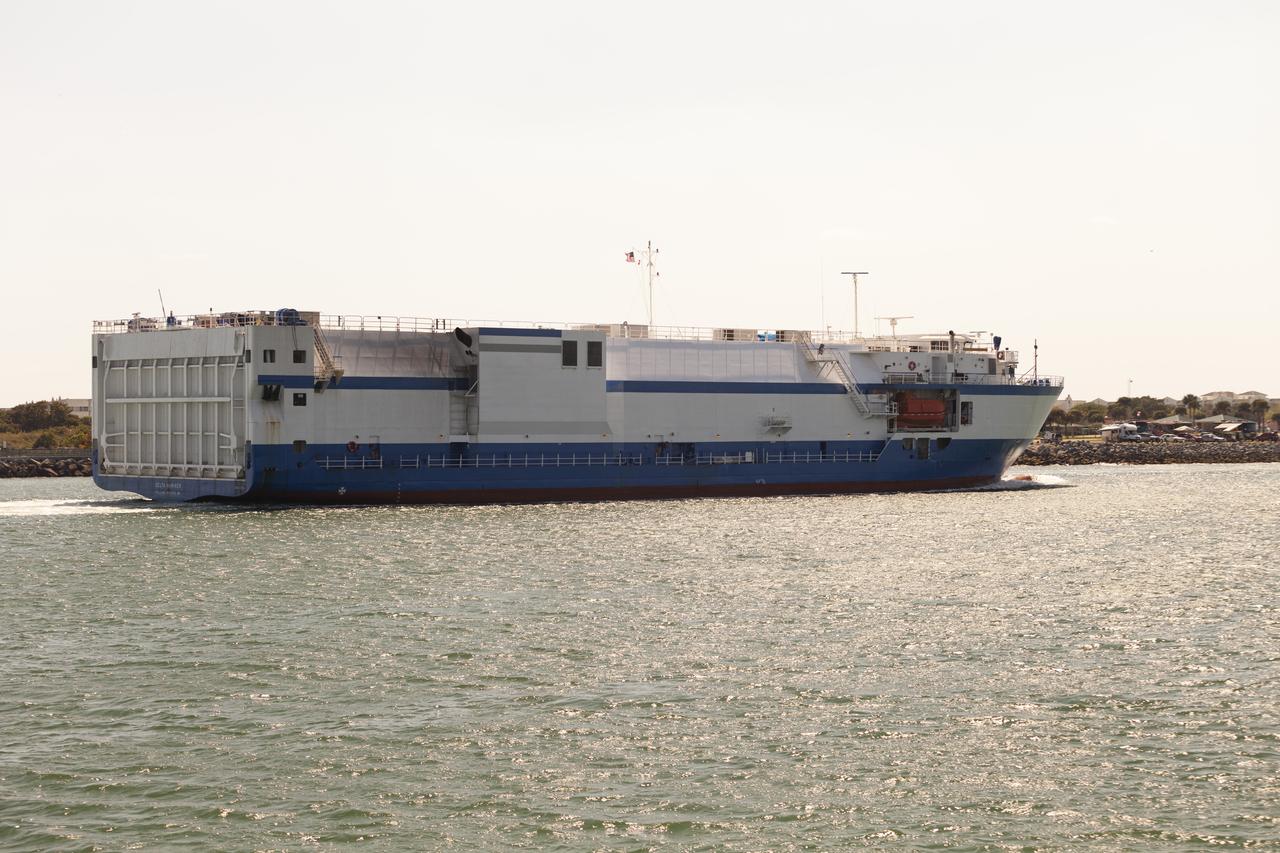
CAPE CANAVERAL, Fla. – The United Launch Alliance barge Delta Mariner glides past the jetties as it enters Port Canaveral in Florida. The barge is carrying two of the booster stages for the Delta IV Heavy rocket slated for Orion's Exploration Flight Test-1, or EFT-1. Orion is the exploration spacecraft designed to carry astronauts to destinations not yet explored by humans. It will have emergency abort capability, sustain the crew during space travel and provide safe re-entry from deep-space return velocities. The first unpiloted test flight of Orion is scheduled to launch in September 2014 atop a Delta IV Heavy rocket and in 2017 on NASA’s Space Launch System rocket. For more information, visit www.nasa.gov/orion. Photo credit: NASA/Frankie Martin

CAPE CANAVERAL, Fla. - Kathy Lueders, manager of NASA's Commercial Crew Program, listens to updates from program engineers at NASA's Kennedy Space Center in Florida. Photo credit: NASA/Frankie Martin
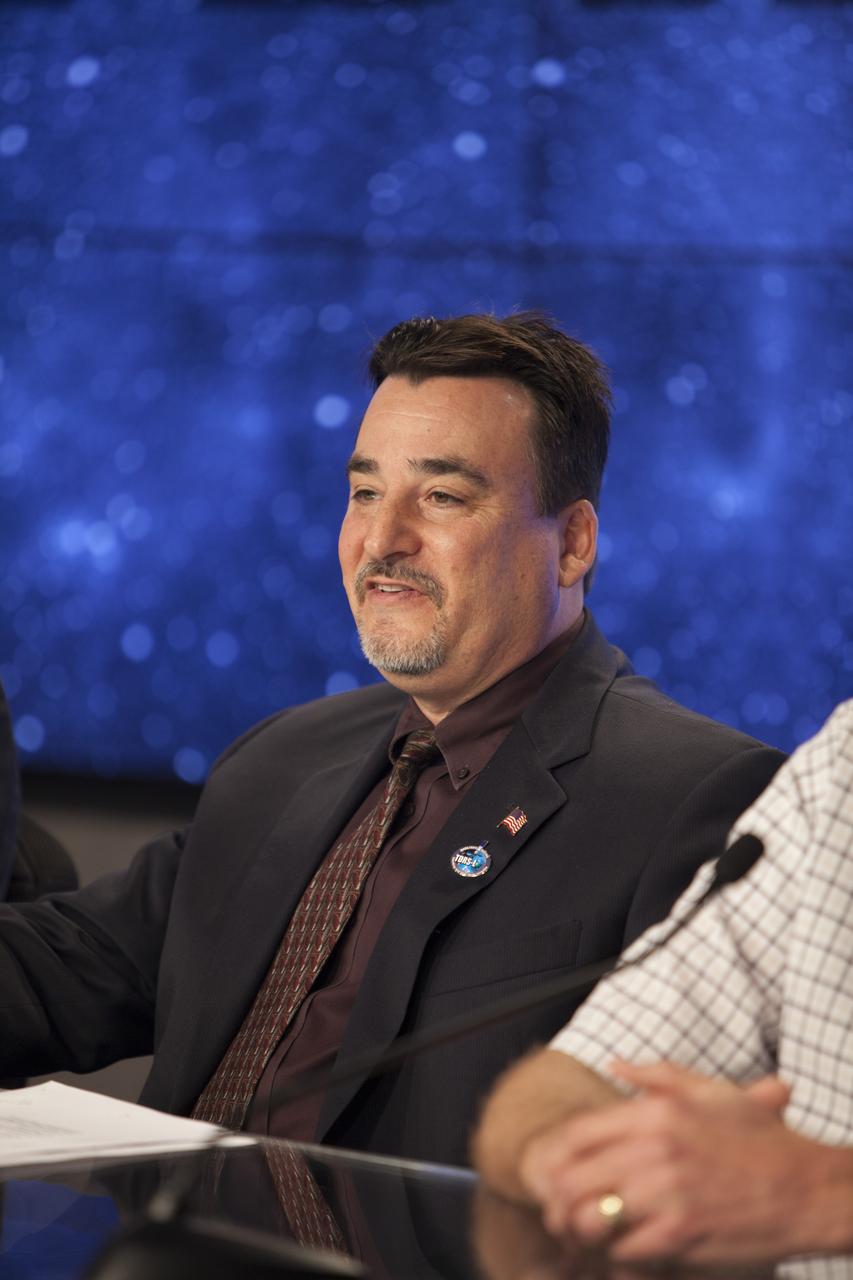
CAPE CANAVERAL, Fla. – During a news conference at NASA's Kennedy Space Center in Florida, agency and contractor officials discussed preparations for the launch of NASA's Tracking and Data Relay Satellite, or TDRS-L, spacecraft. Participants included Andy Kopito, Civil Space Programs director for Boeing Space & Intelligence Systems in El Segundo, Calif. The TDRS-L spacecraft is the second of three new satellites designed to ensure vital operational continuity for NASA by expanding the lifespan of the Tracking and Data Relay Satellite System TDRSS fleet, which consists of eight satellites in geosynchronous orbit. The spacecraft provide tracking, telemetry, command and high bandwidth data return services for numerous science and human exploration missions orbiting Earth. These include NASA's Hubble Space Telescope and the International Space Station. TDRS-L has a high-performance solar panel designed for more spacecraft power to meet the growing S-band communications requirements. TDRSS is one of NASA Space Communication and Navigation’s SCaN three networks providing space communications to NASA’s missions. For more information more about TDRS-L, visit: http://www.nasa.gov/tdrs To learn more about SCaN, visit: www.nasa.gov/scan Photo credit: NASA/Frankie Martin
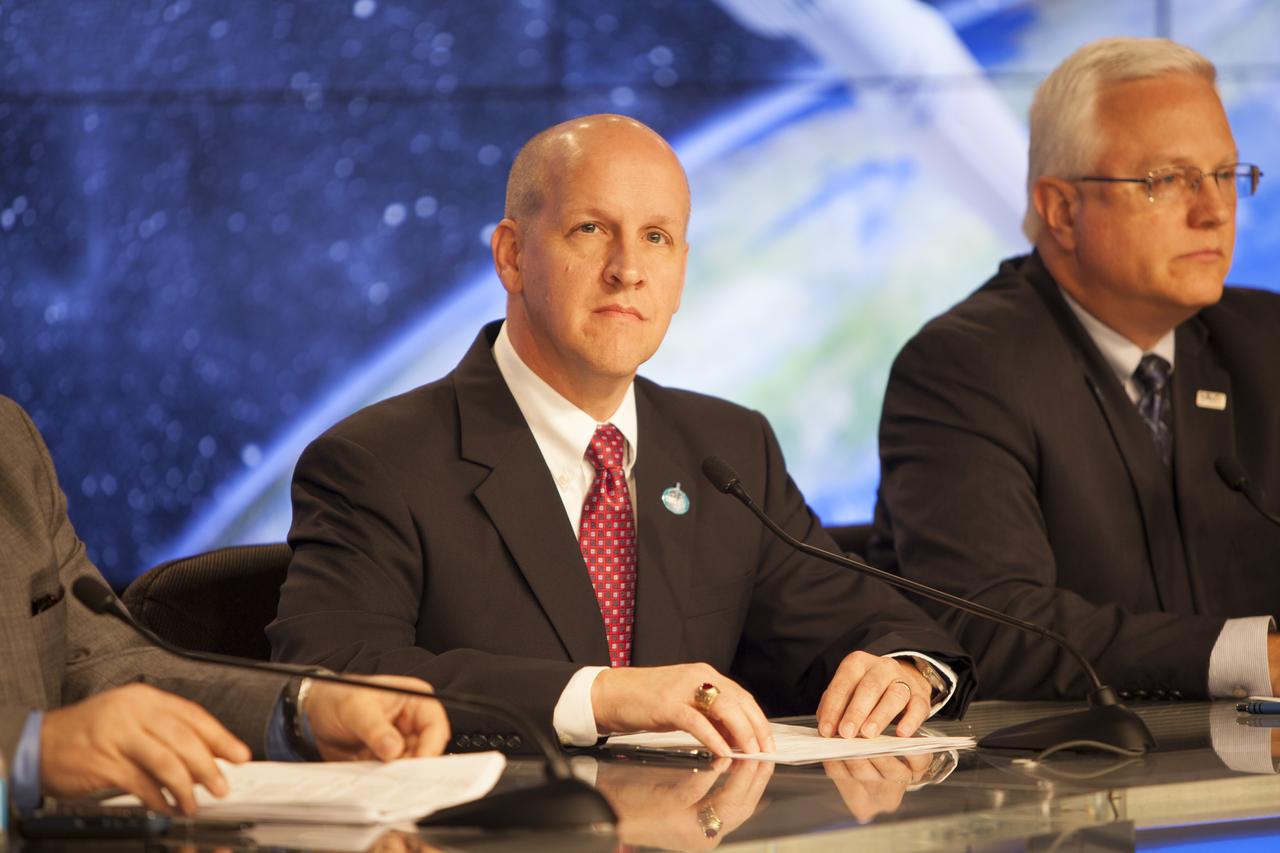
CAPE CANAVERAL, Fla. – During a news conference at NASA's Kennedy Space Center in Florida, agency and contractor officials discussed preparations for the launch of NASA's Tracking and Data Relay Satellite, or TDRS-L, spacecraft. Participants included Tim Dunn, NASA launch director at Kennedy, left, and Vernon Thorp, program manager for NASA Missions with United Launch Alliance in Denver, Colo. The TDRS-L spacecraft is the second of three new satellites designed to ensure vital operational continuity for NASA by expanding the lifespan of the Tracking and Data Relay Satellite System TDRSS fleet, which consists of eight satellites in geosynchronous orbit. The spacecraft provide tracking, telemetry, command and high bandwidth data return services for numerous science and human exploration missions orbiting Earth. These include NASA's Hubble Space Telescope and the International Space Station. TDRS-L has a high-performance solar panel designed for more spacecraft power to meet the growing S-band communications requirements. TDRSS is one of NASA Space Communication and Navigation’s SCaN three networks providing space communications to NASA’s missions. For more information more about TDRS-L, visit: http://www.nasa.gov/tdrs To learn more about SCaN, visit: www.nasa.gov/scan Photo credit: NASA/Frankie Martin