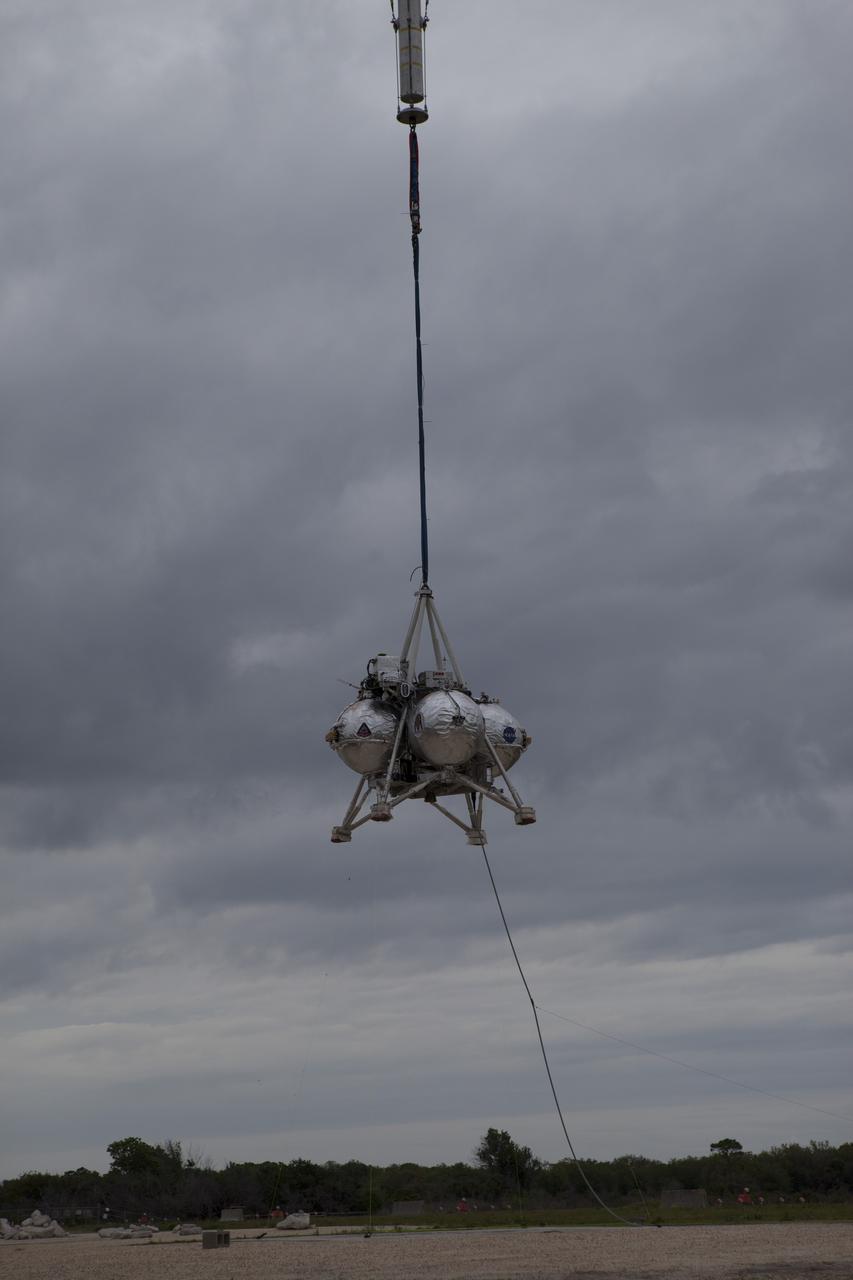
CAPE CANAVERAL, Fla. – NASA's Project Morpheus prototype lander is lifted by crane during a tethered test near a new launch site at the north end of the Shuttle Landing Facility at NASA's Kennedy Space Center in Florida. The launch pad was moved to a different location at the landing facility to support the next phase of flight testing. The test was performed to verify the lander's recently installed autonomous landing and hazard avoidance technology, or ALHAT, sensors and integration systems. During the test, Morpheus was lifted by crane to 20 feet for an engine firing of about 74 seconds and then lowered to the ground. With the successful completion of the test, the Morpheus project team will begin preparing for the first free flight test with ALHAT. Morpheus tests NASA’s ALHAT, and an engine that runs on liquid oxygen and methane, or green propellants, into a fully-operational lander that could deliver cargo to other planetary surfaces. The landing facility provides the lander with the kind of field necessary for realistic testing, complete with rocks, craters and hazards to avoid. Morpheus’ ALHAT payload allows it to navigate to clear landing sites amidst rocks, craters and other hazards during its descent. Project Morpheus is being managed under the Advanced Exploration Systems, or AES, Division in NASA’s Human Exploration and Operations Mission Directorate. The efforts in AES pioneer new approaches for rapidly developing prototype systems, demonstrating key capabilities and validating operational concepts for future human missions beyond Earth orbit. For more information on Project Morpheus, visit http://morpheuslander.jsc.nasa.gov/. Photo credit: NASA/Glenn Benson
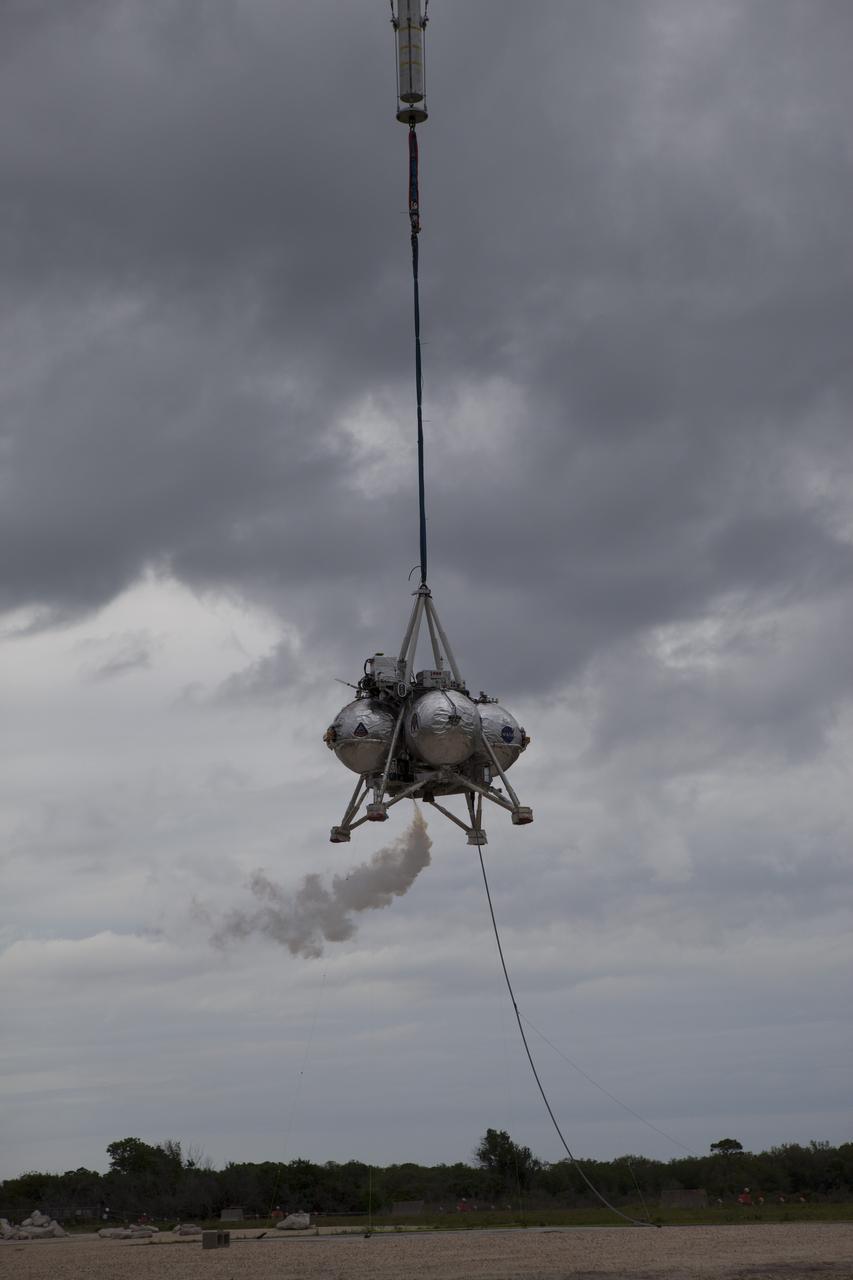
CAPE CANAVERAL, Fla. – NASA's Project Morpheus prototype lander is lifted by crane during a tethered test near a new launch site at the north end of the Shuttle Landing Facility at NASA's Kennedy Space Center in Florida. The launch pad was moved to a different location at the landing facility to support the next phase of flight testing. The test was performed to verify the lander's recently installed autonomous landing and hazard avoidance technology, or ALHAT, sensors and integration systems. During the test, Morpheus was lifted by crane to 20 feet for an engine firing of about 74 seconds and then lowered to the ground. With the successful completion of the test, the Morpheus project team will begin preparing for the first free flight test with ALHAT. Morpheus tests NASA’s ALHAT, and an engine that runs on liquid oxygen and methane, or green propellants, into a fully-operational lander that could deliver cargo to other planetary surfaces. The landing facility provides the lander with the kind of field necessary for realistic testing, complete with rocks, craters and hazards to avoid. Morpheus’ ALHAT payload allows it to navigate to clear landing sites amidst rocks, craters and other hazards during its descent. Project Morpheus is being managed under the Advanced Exploration Systems, or AES, Division in NASA’s Human Exploration and Operations Mission Directorate. The efforts in AES pioneer new approaches for rapidly developing prototype systems, demonstrating key capabilities and validating operational concepts for future human missions beyond Earth orbit. For more information on Project Morpheus, visit http://morpheuslander.jsc.nasa.gov/. Photo credit: NASA/Glenn Benson
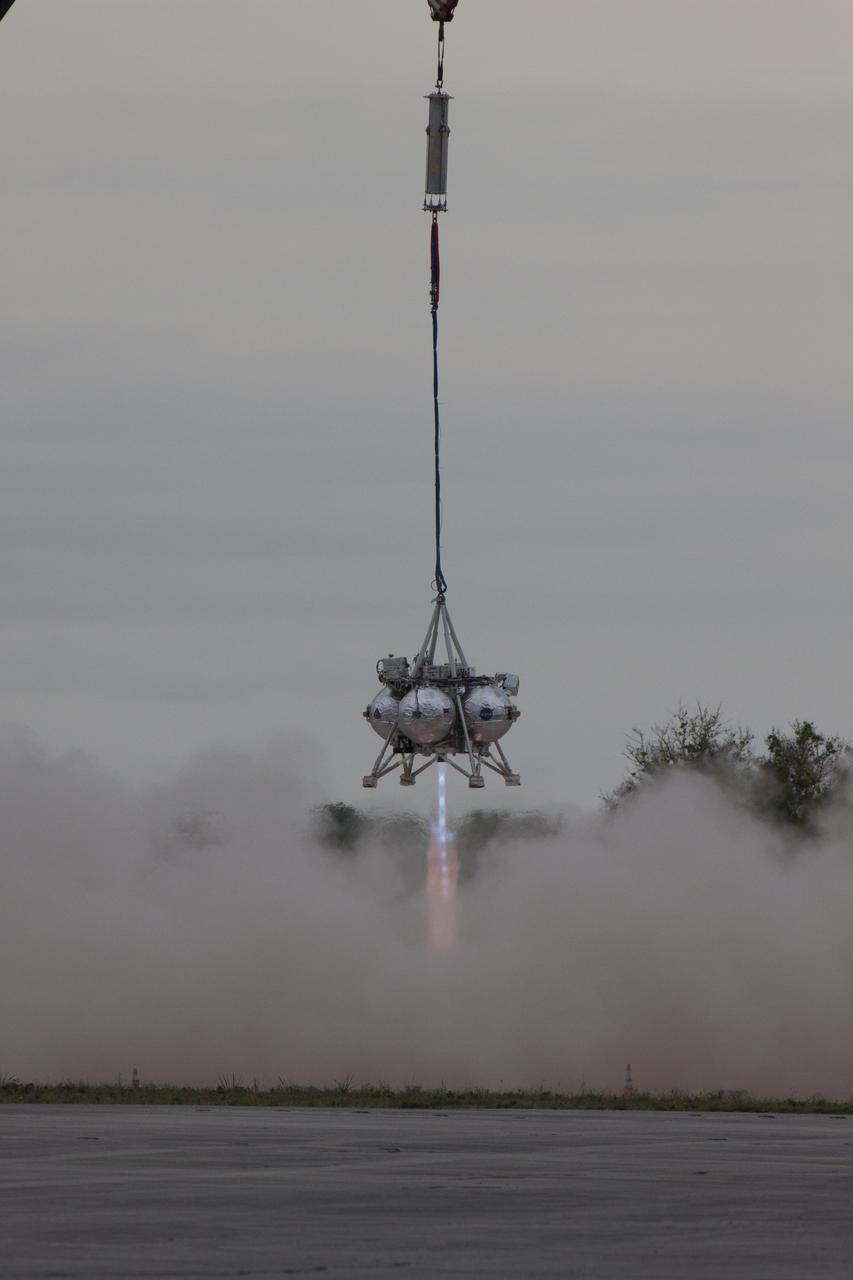
CAPE CANAVERAL, Fla. – NASA's Project Morpheus prototype lander is lifted by crane and its engine is ignited during a tethered test near a new launch site at the north end of the Shuttle Landing Facility at NASA's Kennedy Space Center in Florida. The launch pad was moved to a different location at the landing facility to support the next phase of flight testing. The test was performed to verify the lander's recently installed autonomous landing and hazard avoidance technology, or ALHAT, sensors and integration systems. During the test, Morpheus was lifted by crane to 20 feet for an engine firing of about 74 seconds and then lowered to the ground. With the successful completion of the test, the Morpheus project team will begin preparing for the first free flight test with ALHAT. Morpheus tests NASA’s ALHAT, and an engine that runs on liquid oxygen and methane, or green propellants, into a fully-operational lander that could deliver cargo to other planetary surfaces. The landing facility provides the lander with the kind of field necessary for realistic testing, complete with rocks, craters and hazards to avoid. Morpheus’ ALHAT payload allows it to navigate to clear landing sites amidst rocks, craters and other hazards during its descent. Project Morpheus is being managed under the Advanced Exploration Systems, or AES, Division in NASA’s Human Exploration and Operations Mission Directorate. The efforts in AES pioneer new approaches for rapidly developing prototype systems, demonstrating key capabilities and validating operational concepts for future human missions beyond Earth orbit. For more information on Project Morpheus, visit http://morpheuslander.jsc.nasa.gov/. Photo credit: NASA/Glenn Benson
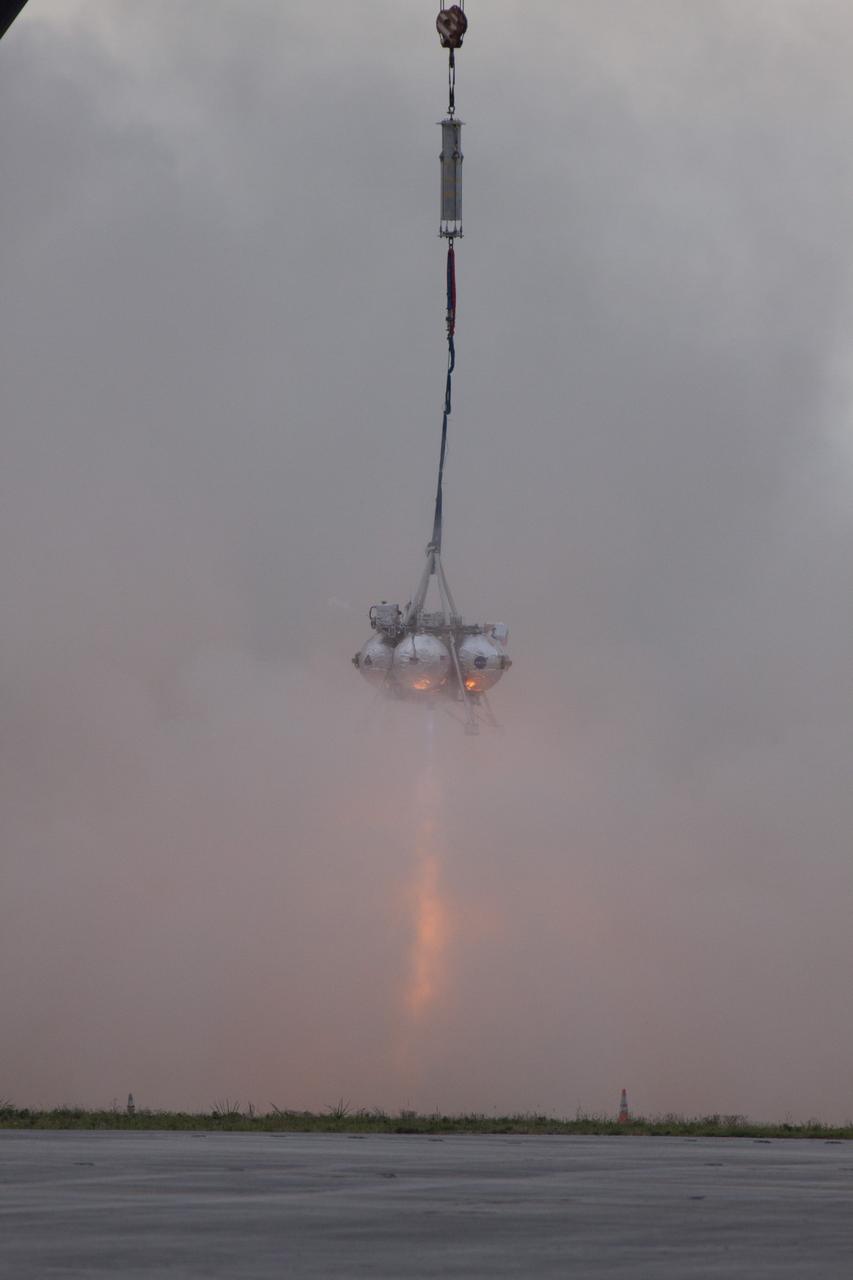
CAPE CANAVERAL, Fla. – NASA's Project Morpheus prototype lander is lifted by crane and its engine is ignited during a tethered test near a new launch site at the north end of the Shuttle Landing Facility at NASA's Kennedy Space Center in Florida. The launch pad was moved to a different location at the landing facility to support the next phase of flight testing. The test was performed to verify the lander's recently installed autonomous landing and hazard avoidance technology, or ALHAT, sensors and integration systems. During the test, Morpheus was lifted by crane to 20 feet for an engine firing of about 74 seconds and then lowered to the ground. With the successful completion of the test, the Morpheus project team will begin preparing for the first free flight test with ALHAT. Morpheus tests NASA’s ALHAT, and an engine that runs on liquid oxygen and methane, or green propellants, into a fully-operational lander that could deliver cargo to other planetary surfaces. The landing facility provides the lander with the kind of field necessary for realistic testing, complete with rocks, craters and hazards to avoid. Morpheus’ ALHAT payload allows it to navigate to clear landing sites amidst rocks, craters and other hazards during its descent. Project Morpheus is being managed under the Advanced Exploration Systems, or AES, Division in NASA’s Human Exploration and Operations Mission Directorate. The efforts in AES pioneer new approaches for rapidly developing prototype systems, demonstrating key capabilities and validating operational concepts for future human missions beyond Earth orbit. For more information on Project Morpheus, visit http://morpheuslander.jsc.nasa.gov/. Photo credit: NASA/Glenn Benson
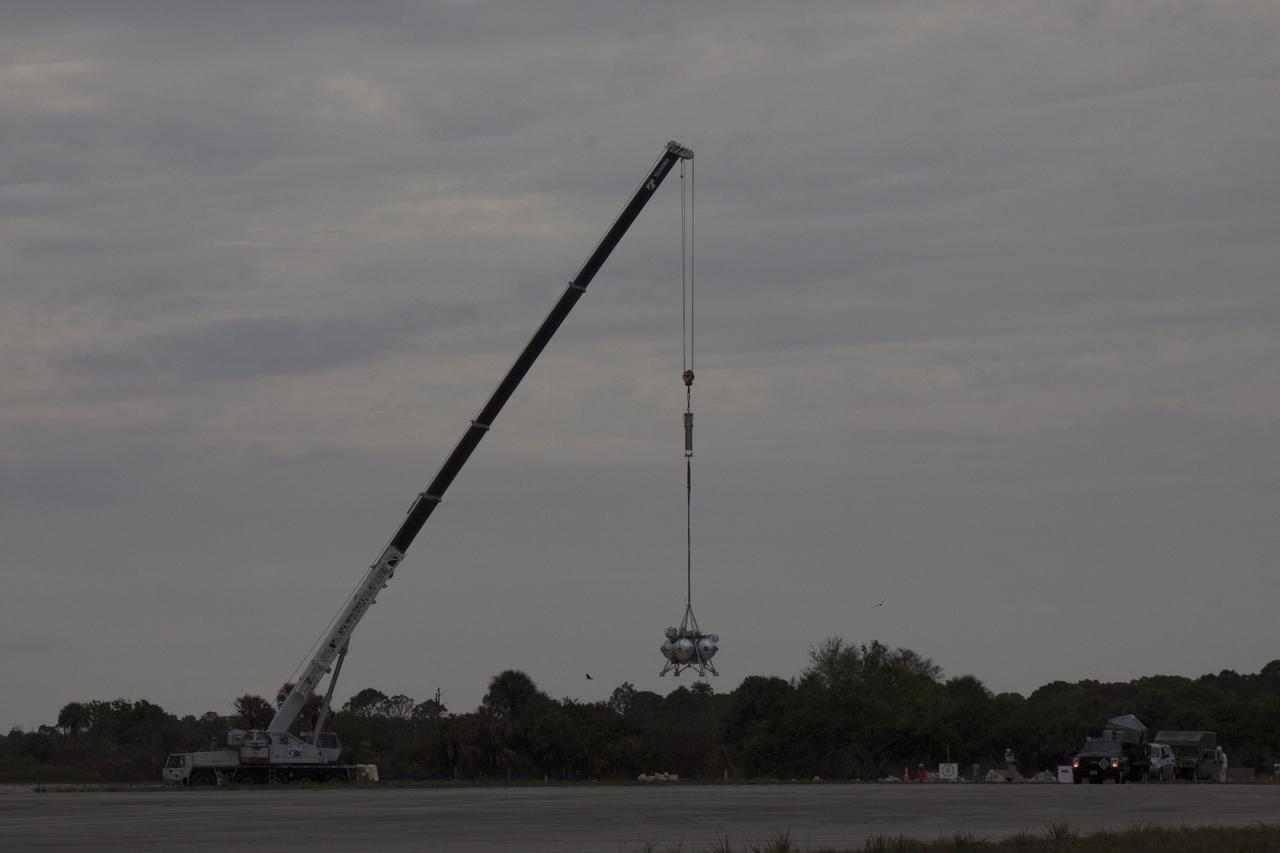
CAPE CANAVERAL, Fla. – NASA's Project Morpheus prototype lander is lifted by crane for a tethered test near a new launch site at the north end of the Shuttle Landing Facility at NASA’s Kennedy Space Center in Florida. The launch pad was moved to a different location at the landing facility to support the next phase of flight testing. The test was performed to verify the lander's recently installed autonomous landing and hazard avoidance technology, or ALHAT, sensors and integration systems. During the test, Morpheus was lifted by crane to 20 feet for an engine firing of about 74 seconds and then lowered to the ground. With the successful completion of the test, the Morpheus project team will begin preparing for the first free flight test with ALHAT. Morpheus tests NASA’s ALHAT, and an engine that runs on liquid oxygen and methane, or green propellants, into a fully-operational lander that could deliver cargo to other planetary surfaces. The landing facility provides the lander with the kind of field necessary for realistic testing, complete with rocks, craters and hazards to avoid. Morpheus’ ALHAT payload allows it to navigate to clear landing sites amidst rocks, craters and other hazards during its descent. Project Morpheus is being managed under the Advanced Exploration Systems, or AES, Division in NASA’s Human Exploration and Operations Mission Directorate. The efforts in AES pioneer new approaches for rapidly developing prototype systems, demonstrating key capabilities and validating operational concepts for future human missions beyond Earth orbit. For more information on Project Morpheus, visit http://morpheuslander.jsc.nasa.gov/. Photo credit: NASA/Glenn Benson
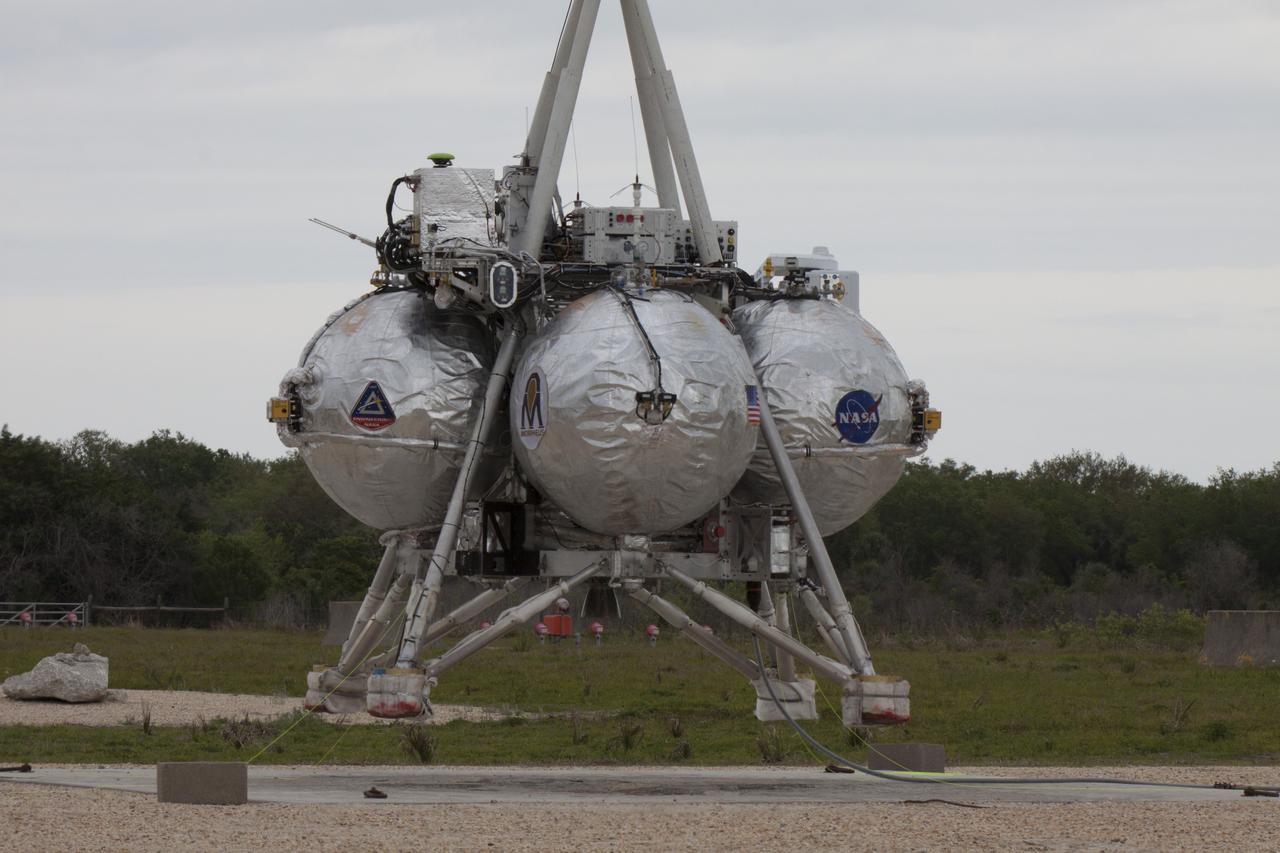
CAPE CANAVERAL, Fla. – NASA's Project Morpheus prototype lander is positioned near a new launch site at the north end of the Shuttle Landing Facility at NASA’s Kennedy Space Center in Florida for a tethered test. The test will be performed to verify the lander's recently installed autonomous landing and hazard avoidance technology, or ALHAT, sensors and integration system. The launch pad was moved to a different location at the landing facility to support the next phase of flight testing. Project Morpheus tests NASA’s ALHAT, and an engine that runs on liquid oxygen and methane, or green propellants, into a fully-operational lander that could deliver cargo to other planetary surfaces. The landing facility provides the lander with the kind of field necessary for realistic testing, complete with rocks, craters and hazards to avoid. Morpheus’ ALHAT payload allows it to navigate to clear landing sites amidst rocks, craters and other hazards during its descent. Project Morpheus is being managed under the Advanced Exploration Systems, or AES, Division in NASA’s Human Exploration and Operations Mission Directorate. The efforts in AES pioneer new approaches for rapidly developing prototype systems, demonstrating key capabilities and validating operational concepts for future human missions beyond Earth orbit. For more information on Project Morpheus, visit http://morpheuslander.jsc.nasa.gov/. Photo credit: NASA/Glenn Benson
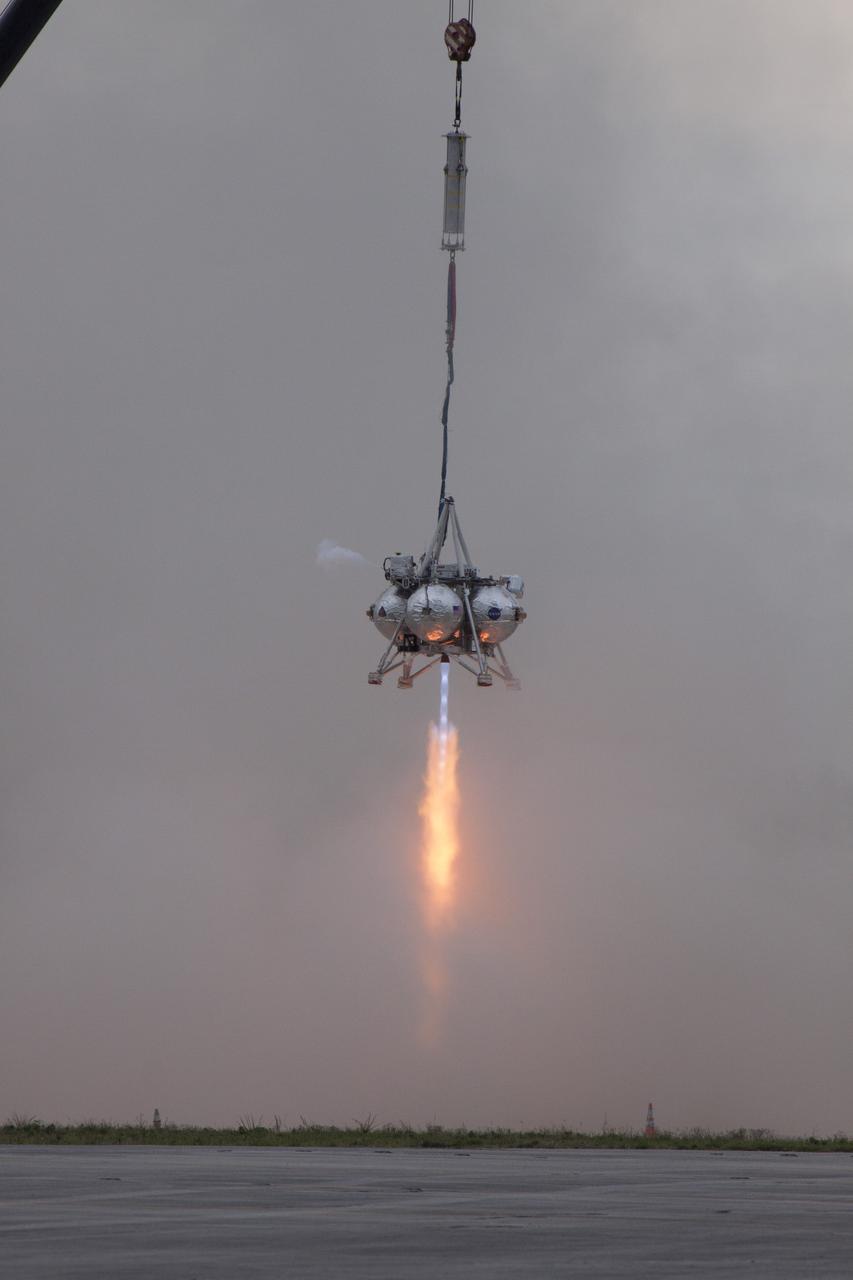
CAPE CANAVERAL, Fla. – NASA's Project Morpheus prototype lander is lifted by crane and its engine is ignited during a tethered test near a new launch site at the north end of the Shuttle Landing Facility at NASA's Kennedy Space Center in Florida. The launch pad was moved to a different location at the landing facility to support the next phase of flight testing. The test was performed to verify the lander's recently installed autonomous landing and hazard avoidance technology, or ALHAT, sensors and integration systems. During the test, Morpheus was lifted by crane to 20 feet for an engine firing of about 74 seconds and then lowered to the ground. With the successful completion of the test, the Morpheus project team will begin preparing for the first free flight test with ALHAT. Morpheus tests NASA’s ALHAT, and an engine that runs on liquid oxygen and methane, or green propellants, into a fully-operational lander that could deliver cargo to other planetary surfaces. The landing facility provides the lander with the kind of field necessary for realistic testing, complete with rocks, craters and hazards to avoid. Morpheus’ ALHAT payload allows it to navigate to clear landing sites amidst rocks, craters and other hazards during its descent. Project Morpheus is being managed under the Advanced Exploration Systems, or AES, Division in NASA’s Human Exploration and Operations Mission Directorate. The efforts in AES pioneer new approaches for rapidly developing prototype systems, demonstrating key capabilities and validating operational concepts for future human missions beyond Earth orbit. For more information on Project Morpheus, visit http://morpheuslander.jsc.nasa.gov/. Photo credit: NASA/Glenn Benson
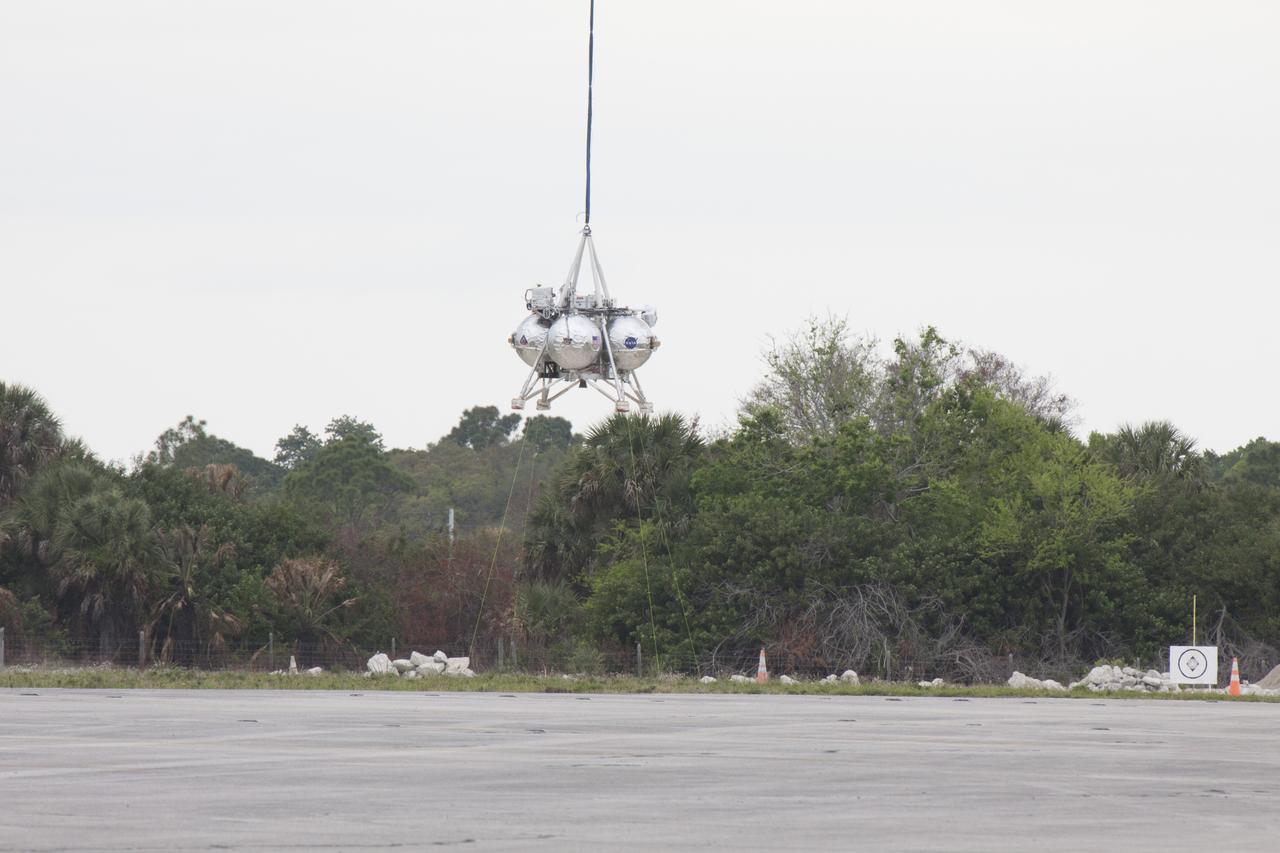
CAPE CANAVERAL, Fla. – NASA's Project Morpheus prototype lander is lifted by crane during a tethered test near a new launch site at the north end of the Shuttle Landing Facility at NASA's Kennedy Space Center in Florida. The launch pad was moved to a different location at the landing facility to support the next phase of flight testing. The test was performed to verify the lander's recently installed autonomous landing and hazard avoidance technology, or ALHAT, sensors and integration systems. During the test, Morpheus was lifted by crane to 20 feet for an engine firing of about 74 seconds and then lowered to the ground. With the successful completion of the test, the Morpheus project team will begin preparing for the first free flight test with ALHAT. Morpheus tests NASA’s ALHAT, and an engine that runs on liquid oxygen and methane, or green propellants, into a fully-operational lander that could deliver cargo to other planetary surfaces. The landing facility provides the lander with the kind of field necessary for realistic testing, complete with rocks, craters and hazards to avoid. Morpheus’ ALHAT payload allows it to navigate to clear landing sites amidst rocks, craters and other hazards during its descent. Project Morpheus is being managed under the Advanced Exploration Systems, or AES, Division in NASA’s Human Exploration and Operations Mission Directorate. The efforts in AES pioneer new approaches for rapidly developing prototype systems, demonstrating key capabilities and validating operational concepts for future human missions beyond Earth orbit. For more information on Project Morpheus, visit http://morpheuslander.jsc.nasa.gov/. Photo credit: NASA/Glenn Benson

CAPE CANAVERAL, Fla. – NASA's Project Morpheus prototype lander is lifted by crane and its engine is ignited during a tethered test near a new launch site at the north end of the Shuttle Landing Facility at NASA's Kennedy Space Center in Florida. The launch pad was moved to a different location at the landing facility to support the next phase of flight testing. The test was performed to verify the lander's recently installed autonomous landing and hazard avoidance technology, or ALHAT, sensors and integration systems. During the test, Morpheus was lifted by crane to 20 feet for an engine firing of about 74 seconds and then lowered to the ground. With the successful completion of the test, the Morpheus project team will begin preparing for the first free flight test with ALHAT. Morpheus tests NASA’s ALHAT, and an engine that runs on liquid oxygen and methane, or green propellants, into a fully-operational lander that could deliver cargo to other planetary surfaces. The landing facility provides the lander with the kind of field necessary for realistic testing, complete with rocks, craters and hazards to avoid. Morpheus’ ALHAT payload allows it to navigate to clear landing sites amidst rocks, craters and other hazards during its descent. Project Morpheus is being managed under the Advanced Exploration Systems, or AES, Division in NASA’s Human Exploration and Operations Mission Directorate. The efforts in AES pioneer new approaches for rapidly developing prototype systems, demonstrating key capabilities and validating operational concepts for future human missions beyond Earth orbit. For more information on Project Morpheus, visit http://morpheuslander.jsc.nasa.gov/. Photo credit: NASA/Glenn Benson