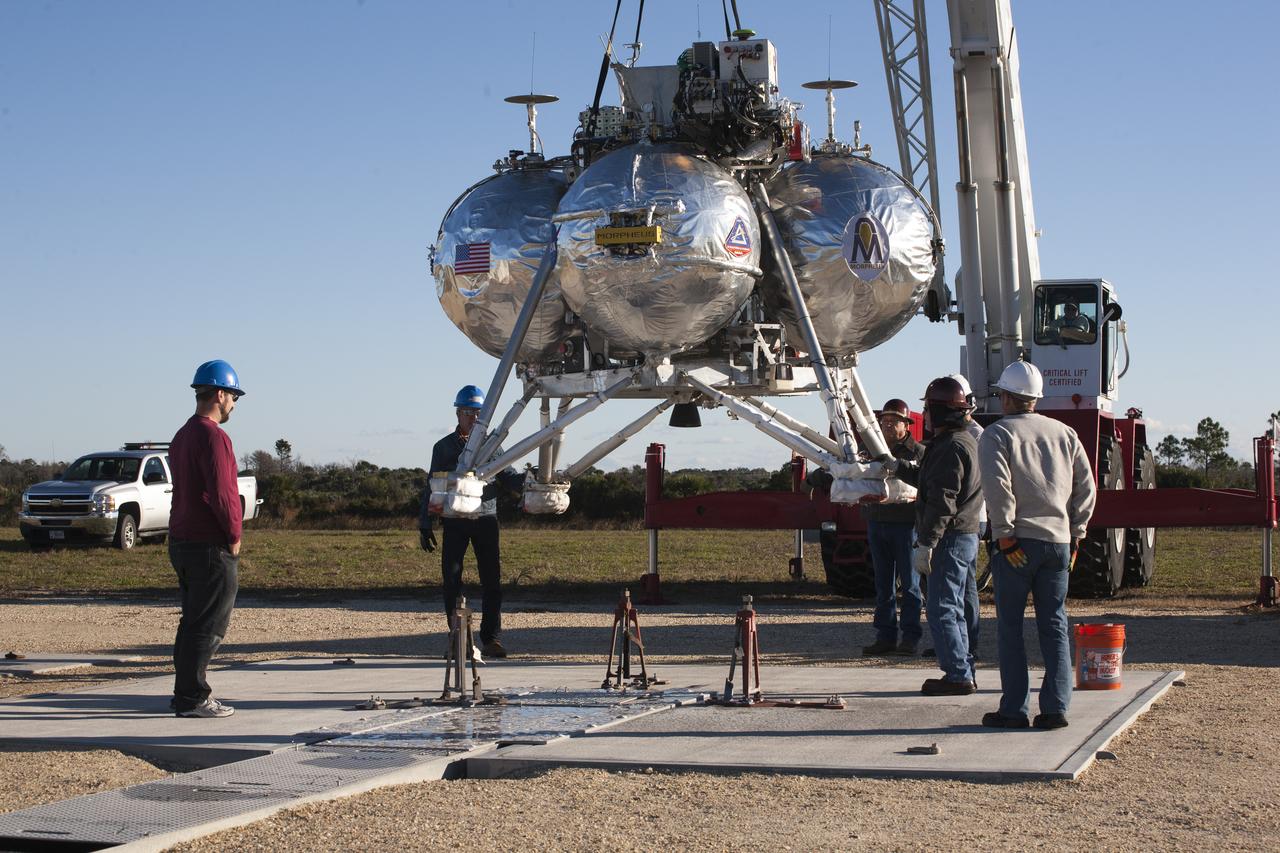
CAPE CANAVERAL, Fla. – Engineers and technicians monitor the progress as the Project Morpheus prototype lander is lowered onto the launch site for its third free flight test at the north end of the Shuttle Landing Facility at NASA’s Kennedy Space Center in Florida. The 57-second test began at 1:15 p.m. EST with the Morpheus lander launching from the ground over a flame trench and ascending about 187 feet, nearly doubling the target ascent velocity from the last test in December 2013. The lander flew forward, covering about 154 feet in 20 seconds before descending and landing within 11 inches of its target on a dedicated pad inside the autonomous landing and hazard avoidance technology, or ALHAT, hazard field. Project Morpheus tests NASA’s ALHAT and an engine that runs on liquid oxygen and methane, or green propellants, into a fully-operational lander that could deliver cargo to other planetary surfaces. The landing facility provides the lander with the kind of field necessary for realistic testing, complete with rocks, craters and hazards to avoid. Morpheus’ ALHAT payload allows it to navigate to clear landing sites amidst rocks, craters and other hazards during its descent. Project Morpheus is being managed under the Advanced Exploration Systems, or AES, Division in NASA’s Human Exploration and Operations Mission Directorate. The efforts in AES pioneer new approaches for rapidly developing prototype systems, demonstrating key capabilities and validating operational concepts for future human missions beyond Earth orbit. For more information on Project Morpheus, visit http://www.nasa.gov/centers/johnson/exploration/morpheus. Photo credit: NASA/Kim Shiflett
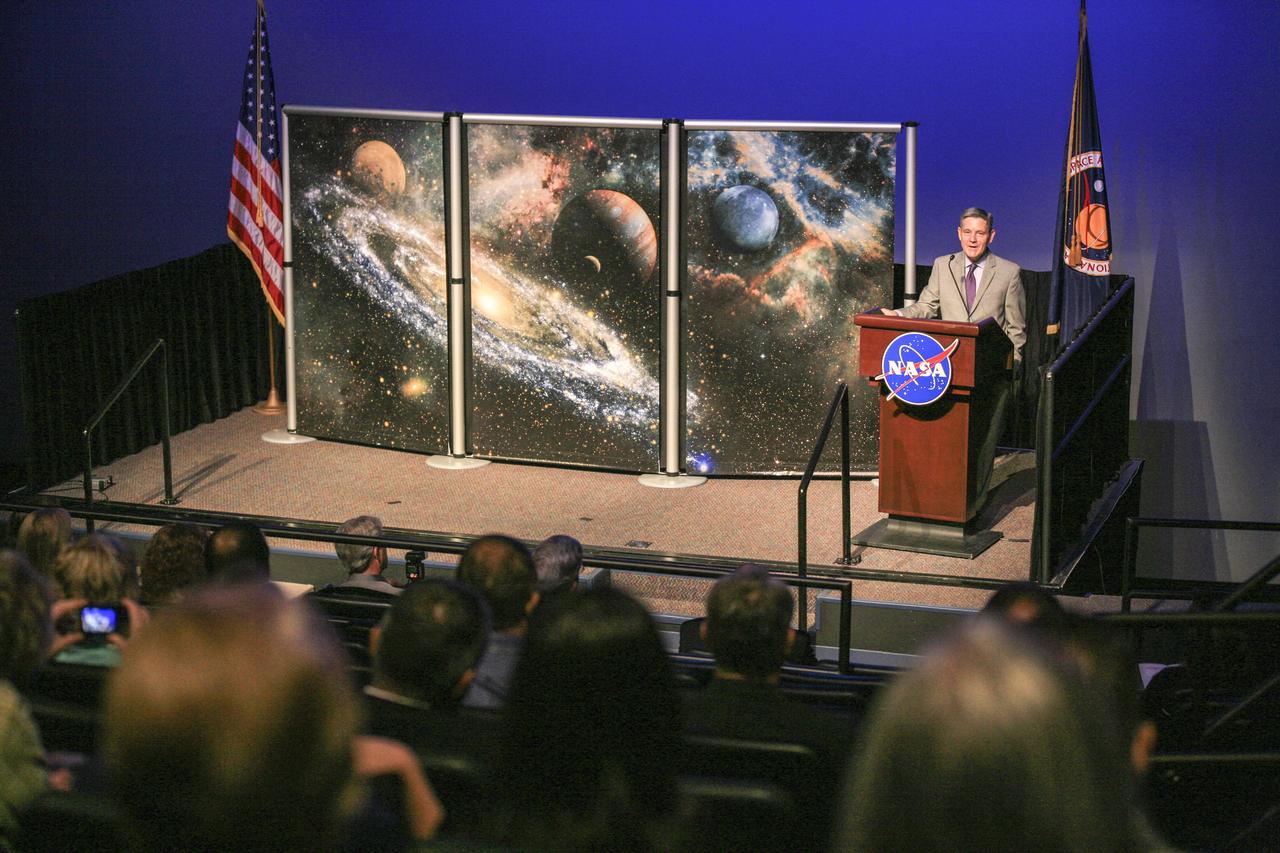
CAPE CANAVERAL, Fla. – Kennedy Space Center Director Robert Cabana addresses NASA civil service and contractor employees and their families attending the 2013 KSC Honor Awards Ceremony in the IMAX theater at the Kennedy Space Center Visitor Complex in Florida. Kennedy conducts its Annual Honor Awards Ceremony each spring. During the ceremony, the center's director and deputy director present deserving employees with various awards in the form of medals and certificates. The ceremony is open to all employees and broadcast to employees who are unable to attend. For more information about NASA's Kennedy Space Center, visit http://www.nasa.gov/kennedy. Photo credit: NASA/Kim Shiflett
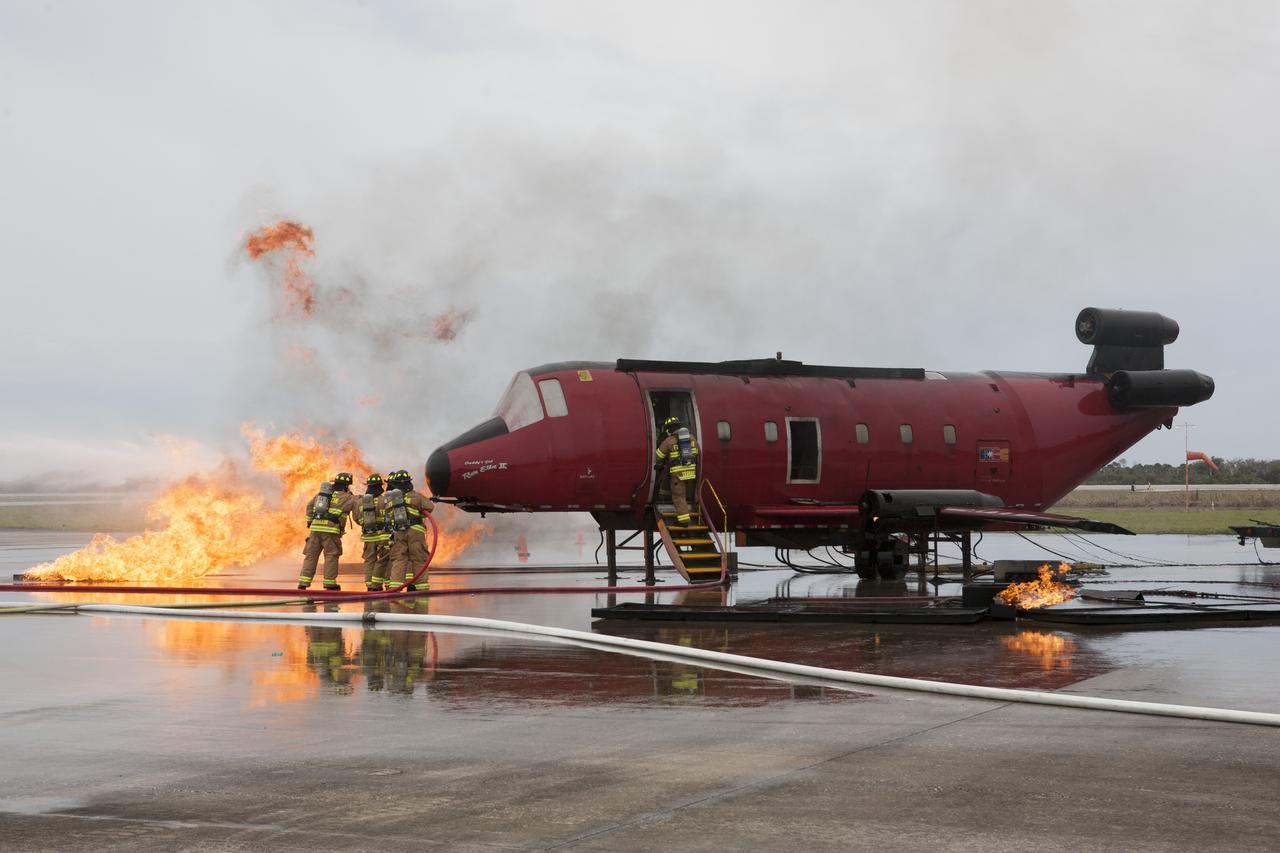
CAPE CANAVERAL, Fla. - Special Rescue Operations firefighters with NASA Fire Rescue Services in the Protective Services Office at NASA’s Kennedy Space Center in Florida participate in a training exercise at the Shuttle Landing Facility. Firefighters, wearing protective gear, use hoses to put out a fire burning near the mock-up of a small plane as another firefighter checks inside the plane. Kennedy’s firefighters recently achieved Pro Board Certification in aerial fire truck operations and completed vehicle extrication training using the Jaws of Life. The Protective Services Office is one step closer to achieving certification in vehicle machinery extrication and other rescue skills. Kennedy’s firefighters are with G4S Government Solutions Inc., on the Kennedy Protective Services Contract. Photo credit: NASA/Kim Shiflett
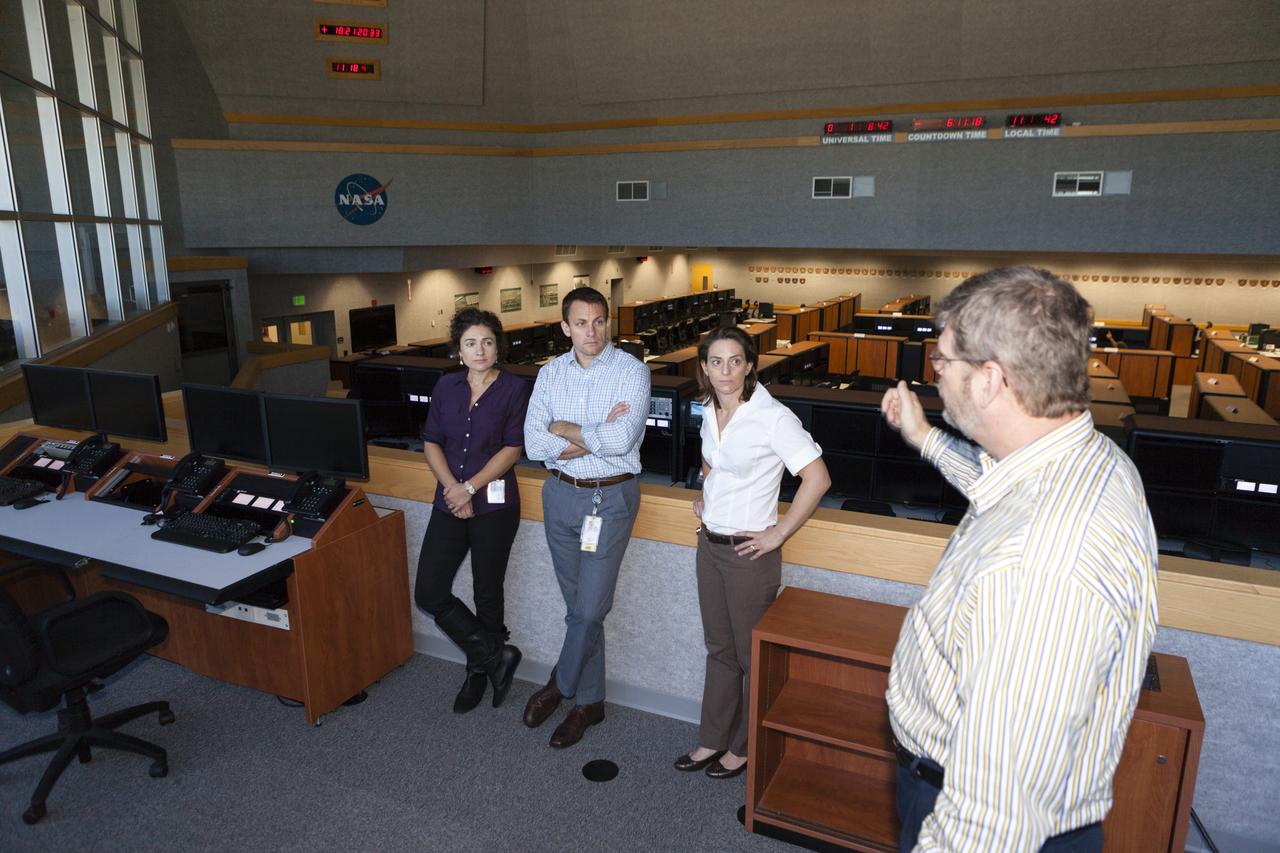
CAPE CANAVERAL, Fla. – NASA astronaut candidates Andrew Morgan, from left, Nicole Mann, Tyler Nick Hague, Josh Cassada, Anne McClain, Christina Hammock and Victor Glover listen to a discussion about firing rooms inside the Launch Control Center at Kennedy Space Center in Florida during a daylong set of briefings and tours of different facilities at NASA's primary launch center. The astronaut class of 2013 was selected by NASA after an extensive year-and-a-half search. The new group will help the agency push the boundaries of exploration and travel to new destinations in the solar system. To learn more about the astronaut class of 2013, visit: http://www.nasa.gov/astronauts/2013astroclass.html Photo credit: NASA/Kim Shiflett
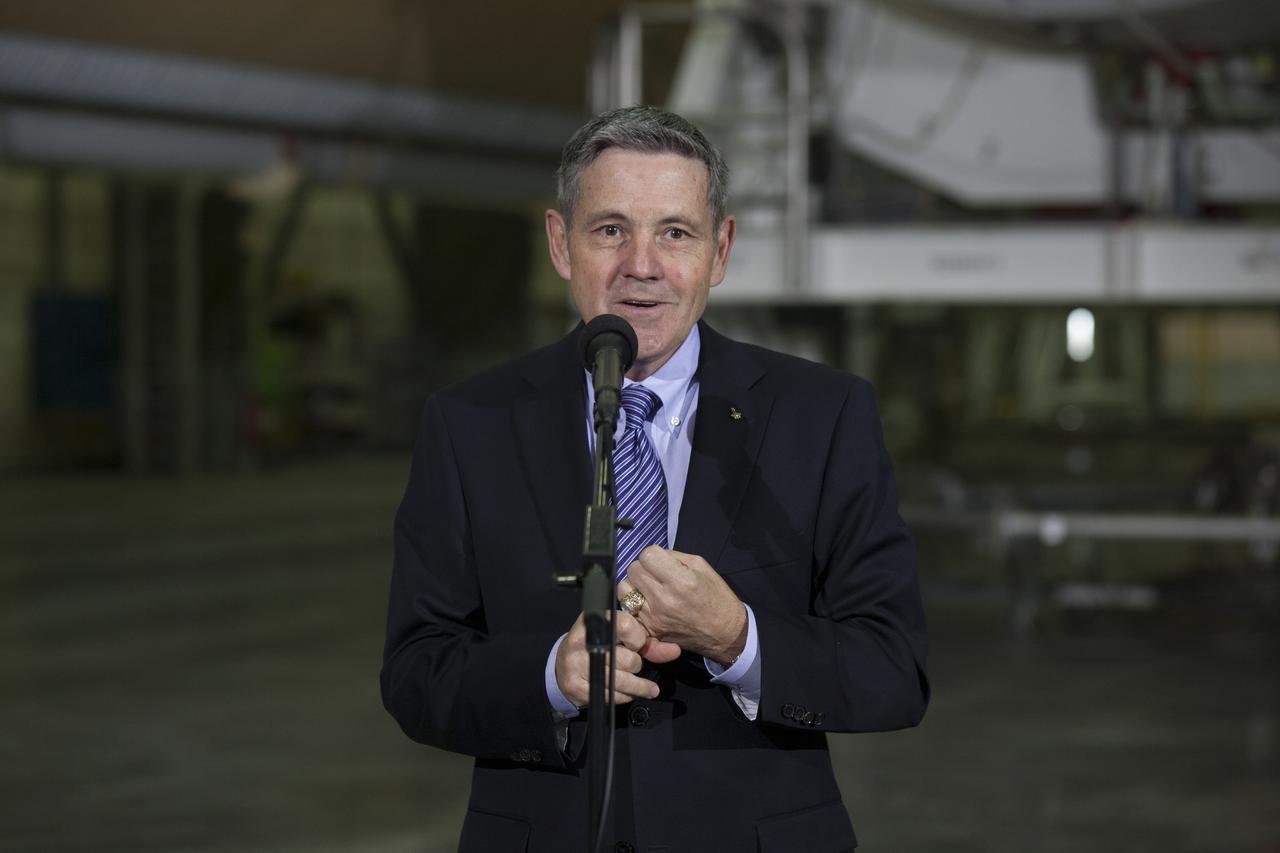
CAPE CANAVERAL, Fla. – During a media event inside the Horizontal Integration Facility at Launch Complex 37 at Cape Canaveral Air Force Station in Florida, Kennedy Space Center Director Bob Cabana speaks to members of the media. Behind him are two of the United Launch Alliance Delta IV boosters for the Orion Exploration Flight Test-1, or EFT-1, mission. Orion is the exploration spacecraft designed to carry astronauts to destinations not yet explored by humans, including an asteroid and Mars. It will have emergency abort capability, sustain the crew during space travel and provide safe re-entry from deep space return velocities. The first unpiloted test flight of Orion, EFT-1, is scheduled to launch in 2014 atop a Delta IV rocket and in 2017 on NASA’s Space Launch System rocket. For more information, visit http://www.nasa.gov/orion. Photo credit: NASA/Kim Shiflett
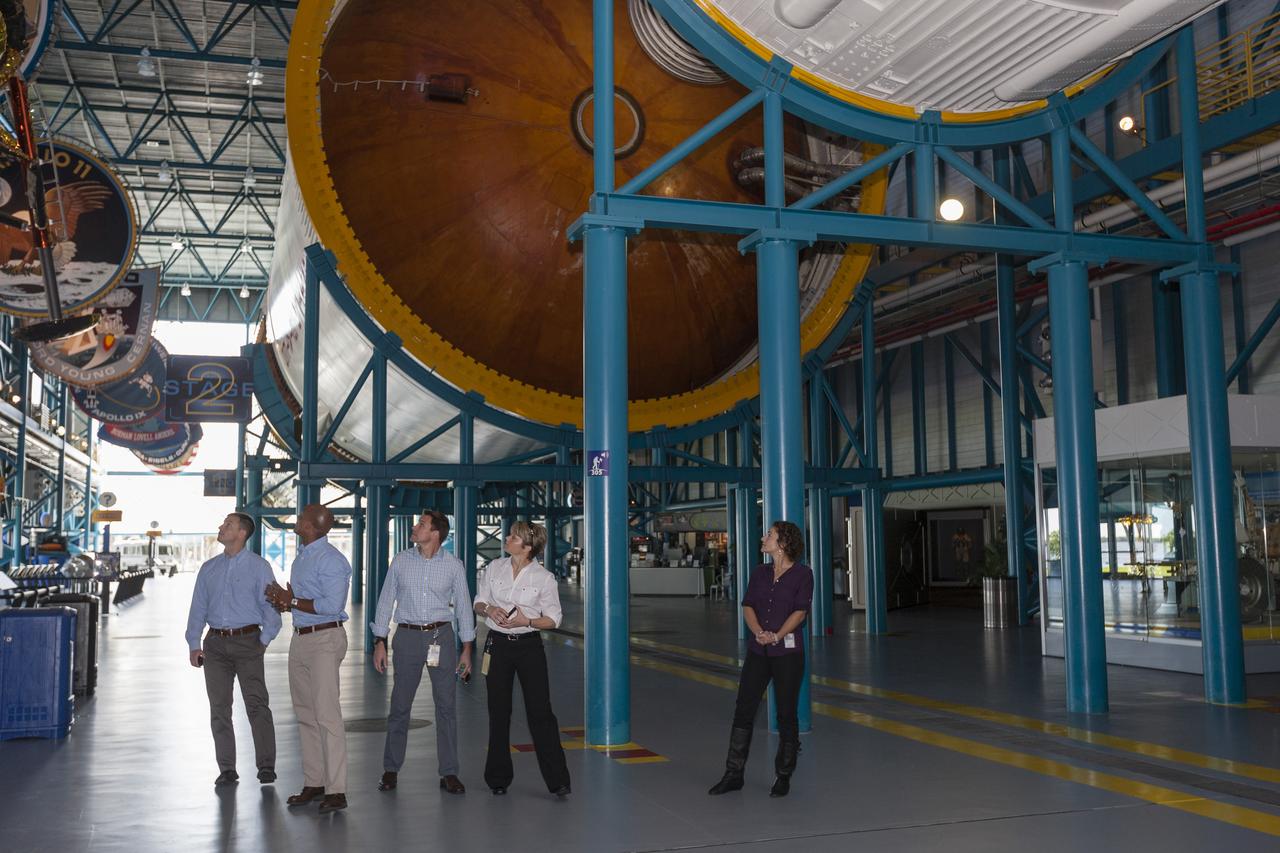
CAPE CANAVERAL, Fla. – NASA astronaut candidates Andrew Morgan, from left, Victor Glover, Josh Cassada, Anne McClain and Jessica Meir tour the Apollo Saturn V Center at Kennedy Space Center in Florida during a daylong set of briefings and tours of different facilities at NASA's primary launch center. The astronaut class of 2013 was selected by NASA after an extensive year-and-a-half search. The new group will help the agency push the boundaries of exploration and travel to new destinations in the solar system. To learn more about the astronaut class of 2013, visit: http://www.nasa.gov/astronauts/2013astroclass.html Photo credit: NASA/Kim Shiflett
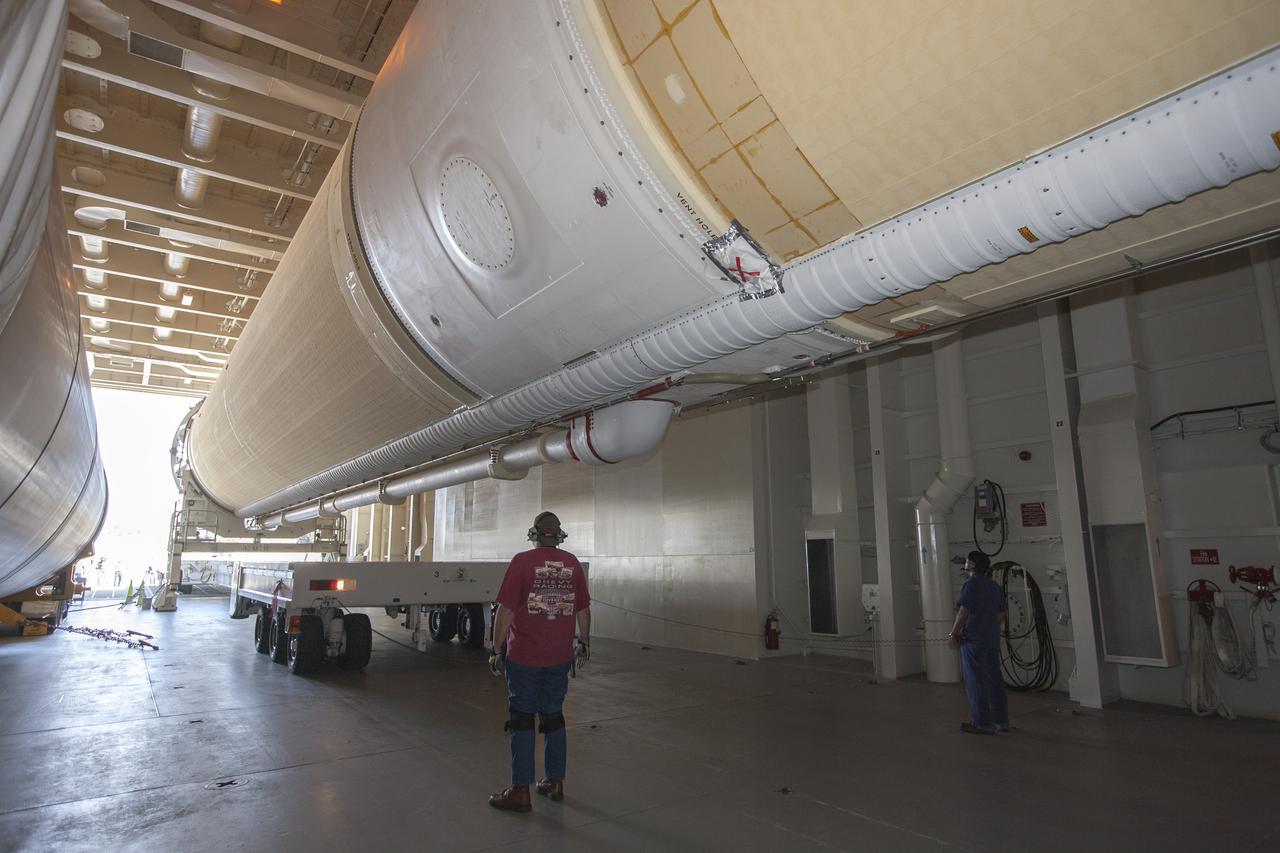
CAPE CANAVERAL, Fla. – Two of the three United Launch Alliance Delta IV heavy boosters for NASA’s upcoming Exploration Flight Test-1, or EFT-1, mission with the Orion spacecraft, have arrived by barge at the U.S. Army Outpost wharf at Port Canaveral in Florida. The core booster and starboard booster will be offloaded and then transported to the Horizontal Integration Facility, or HIF, at Space Launch Complex 37 on Cape Canaveral Air Force Station. The port booster and the upper stage are planned to be shipped to Cape Canaveral in April. At the HIF, all three boosters will be processed and checked out before being moved to the nearby launch pad and hoisted into position. During the EFT-1 mission, Orion will travel farther into space than any human spacecraft has gone in more than 40 years. The data gathered during the flight will influence design decisions, validate existing computer models and innovative new approaches to space systems development, as well as reduce overall mission risks and costs for later Orion flights. Liftoff of Orion on EFT-1 is planned for fall 2014. Photo credit: NASA/Kim Shiflett
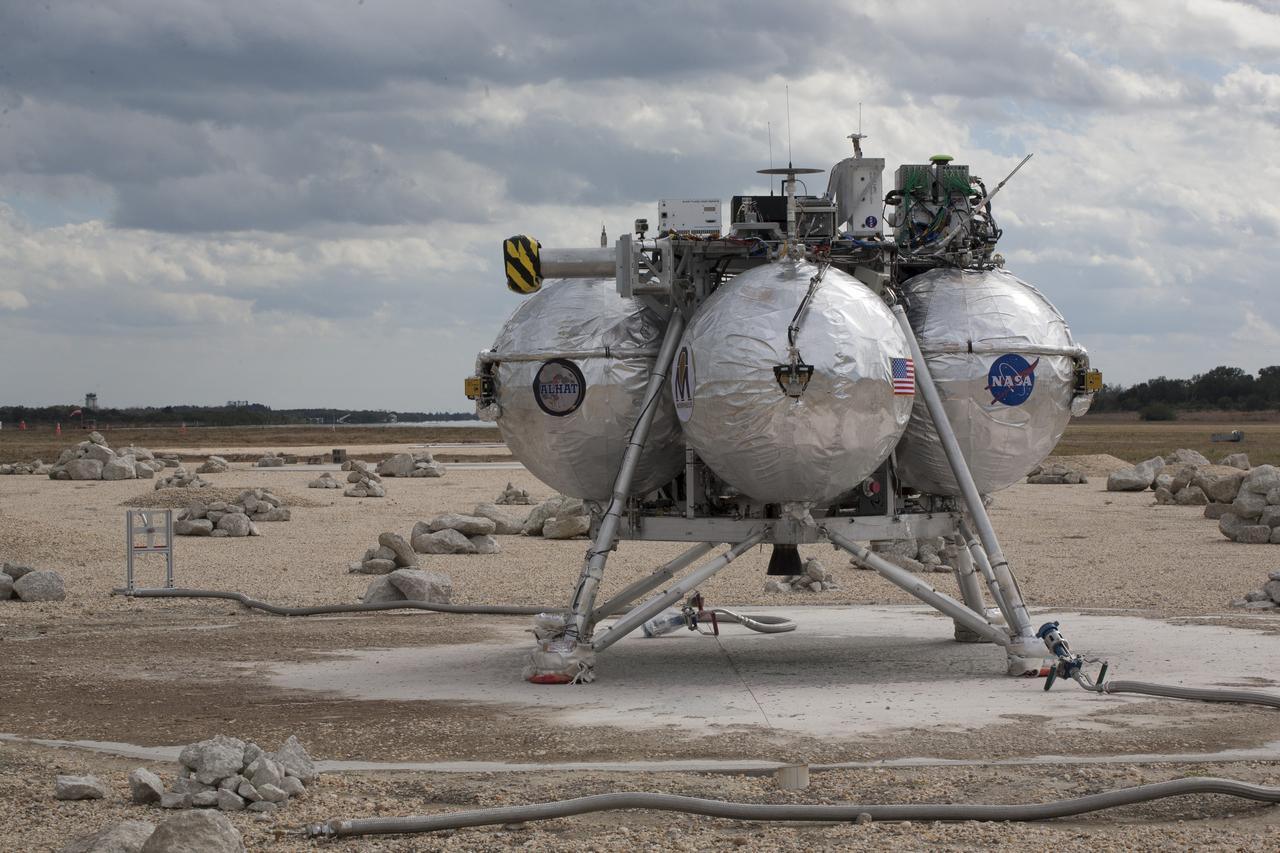
CAPE CANAVERAL, Fla. – The Project Morpheus prototype lander touched down in the autonomous landing and hazard avoidance technology, or ALHAT, hazard field after launching on its fourth free flight test at the north end of the Shuttle Landing Facility at NASA’s Kennedy Space Center in Florida. The 64-second test began at 1:15 p.m. EST with the Morpheus lander launching from the ground over a flame trench and ascending about 305 feet, significantly increasing the ascent velocity from the last test. The lander flew forward, covering about 358 feet in 25 seconds before descending and landing within 15 inches of its target on a dedicated pad inside the ALHAT hazard field. Project Morpheus tests NASA’s ALHAT and an engine that runs on liquid oxygen and methane, or green propellants, into a fully-operational lander that could deliver cargo to other planetary surfaces. The landing facility provides the lander with the kind of field necessary for realistic testing, complete with rocks, craters and hazards to avoid. Morpheus’ ALHAT payload allows it to navigate to clear landing sites amidst rocks, craters and other hazards during its descent. Project Morpheus is being managed under the Advanced Exploration Systems, or AES, Division in NASA’s Human Exploration and Operations Mission Directorate. The efforts in AES pioneer new approaches for rapidly developing prototype systems, demonstrating key capabilities and validating operational concepts for future human missions beyond Earth orbit. For more information on Project Morpheus, visit http://www.nasa.gov/centers/johnson/exploration/morpheus. Photo credit: NASA/Kim Shiflett

TITUSVILLE, Fla. – Under the watchful eyes of engineers and technicians at the Astrotech payload processing facility in Titusville, NASA's Tracking and Data Relay Satellite, or TDRS-L, spacecraft is being encapsulated in its payload fairing. It is being prepared for its trip to Launch Complex 41 at Cape Canaveral Air Force Station. The TDRS-L satellite will be a part of the second of three next-generation spacecraft designed to ensure vital operational continuity for the NASA Space Network. It is scheduled to launch from Cape Canaveral's Space Launch Complex 41 atop a United Launch Alliance Atlas V rocket on January 23, 2014. The current Tracking and Data Relay Satellite system consists of eight in-orbit satellites distributed to provide near continuous information relay contact with orbiting spacecraft ranging from the International Space Station and Hubble Space Telescope to the array of scientific observatories. For more information, visit: http://www.nasa.gov/mission_pages/tdrs/home/index.html Photo credit: NASA/Kim Shiflett
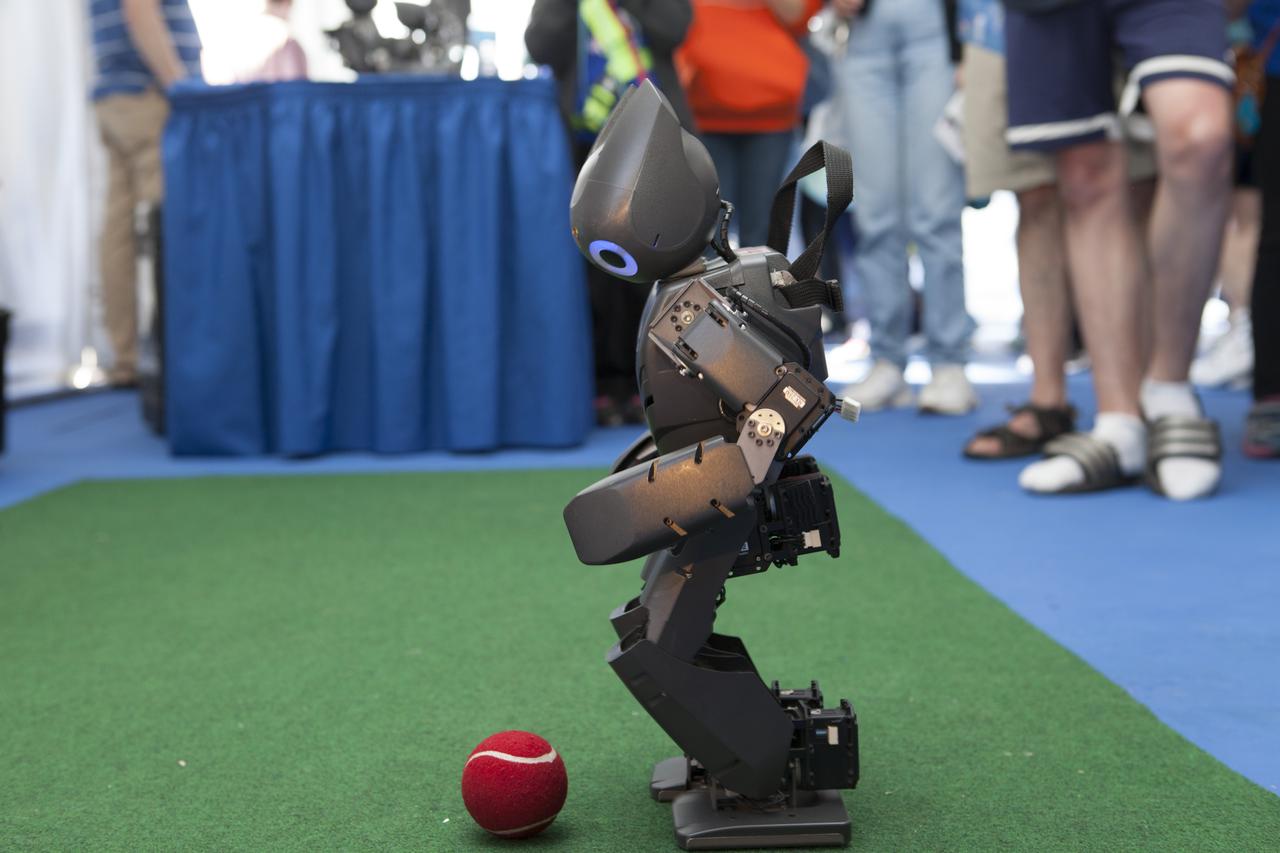
CAPE CANAVERAL, Fla. – A miniature humanoid robot known as DARwin-OP, from Virginia Tech Robotics, plays soccer with a red tennis ball for a crowd of students at the Robot Rocket Rally. The three-day event at Florida's Kennedy Space Center Visitor Complex is highlighted by exhibits, games and demonstrations of a variety of robots, with exhibitors ranging from school robotics clubs to veteran NASA scientists and engineers. Photo credit: NASA/Kim Shiflett
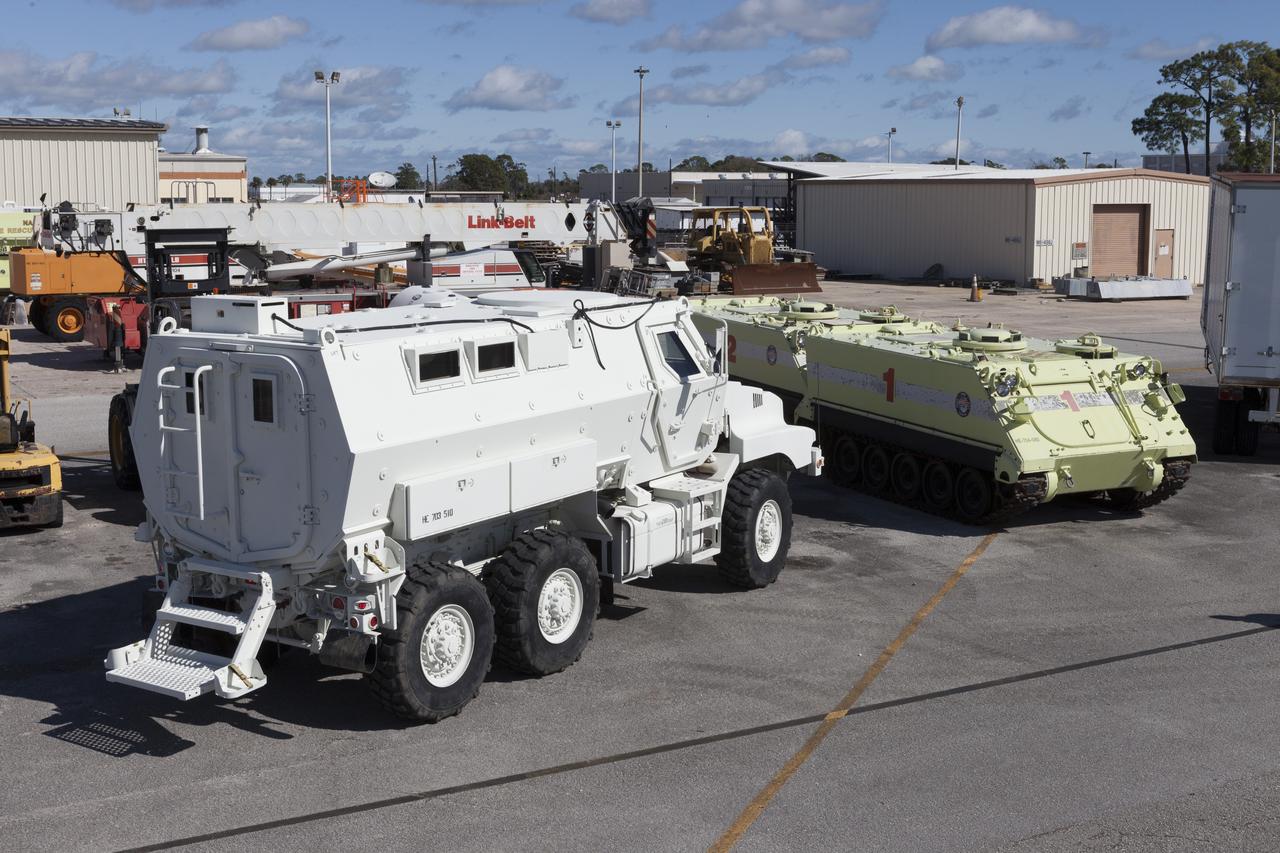
CAPE CANAVERAL, Fla. – One of four new emergency egress vehicles, called Mine-Resistant Ambush-Protection, or MRAP, vehicles sits near space shuttle-era M-113 vehicles at the Maintenance and Operations Facility at NASA’s Kennedy Space Center in Florida. The MRAPs arrived from the U.S. Army Red River Depot in Texarkana, Texas in December 2013. The vehicles were processed in and then transported to the Rotation, Processing and Surge Facility near the Vehicle Assembly Building for temporary storage. The Ground Systems Development and Operations Program at Kennedy led the efforts to an emergency egress vehicle that future astronauts could quickly use to leave the Launch Complex 39 area in case of an emergency. During crewed launches of NASA’s Space Launch System and Orion spacecraft, the MRAP will be stationed by the slidewire termination area at the pad. In case of an emergency, the crew will ride a slidewire to the ground and immediately board the MRAP for safe egress from the pad. The new vehicles replace the M-113 vehicles that were used during the Space Shuttle Program. Photo credit: NASA/Kim Shiflett
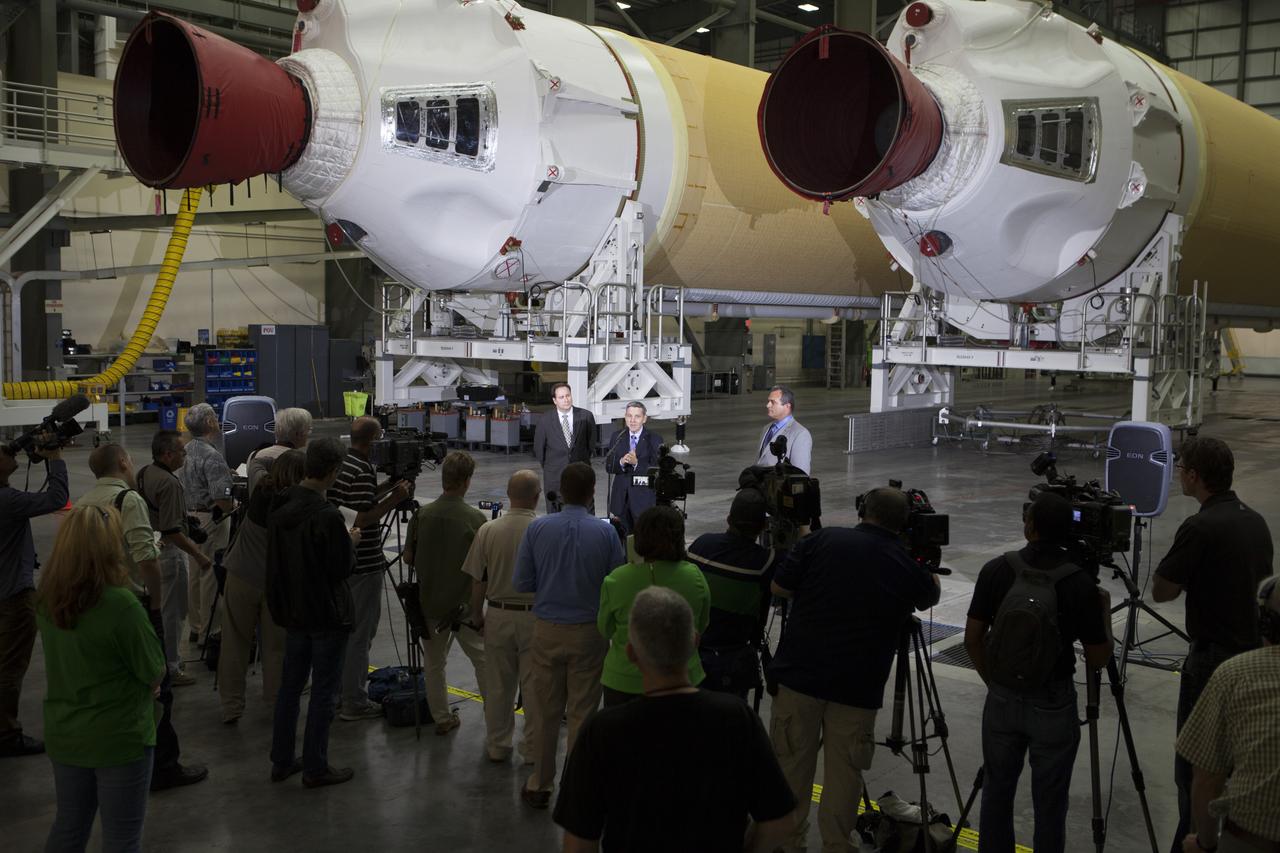
CAPE CANAVERAL, Fla. – During a media event inside the Horizontal Integration Facility at Launch Complex 37 at Cape Canaveral Air Force Station in Florida, Kennedy Space Center Director Bob Cabana speaks to members of the media. To his right is Tony Taliancich, director of East Coast Launch Operations with United Launch Alliance, or ULA. To his left is NASA Associate Administrator Robert Lightfoot. The event was held to showcase two of the ULA Delta IV boosters for the Orion Exploration Flight Test-1, or EFT-1, mission. Orion is the exploration spacecraft designed to carry astronauts to destinations not yet explored by humans, including an asteroid and Mars. It will have emergency abort capability, sustain the crew during space travel and provide safe re-entry from deep space return velocities. The first unpiloted test flight of Orion, EFT-1, is scheduled to launch in 2014 atop a Delta IV rocket and in 2017 on NASA’s Space Launch System rocket. For more information, visit http://www.nasa.gov/orion. Photo credit: NASA/Kim Shiflett
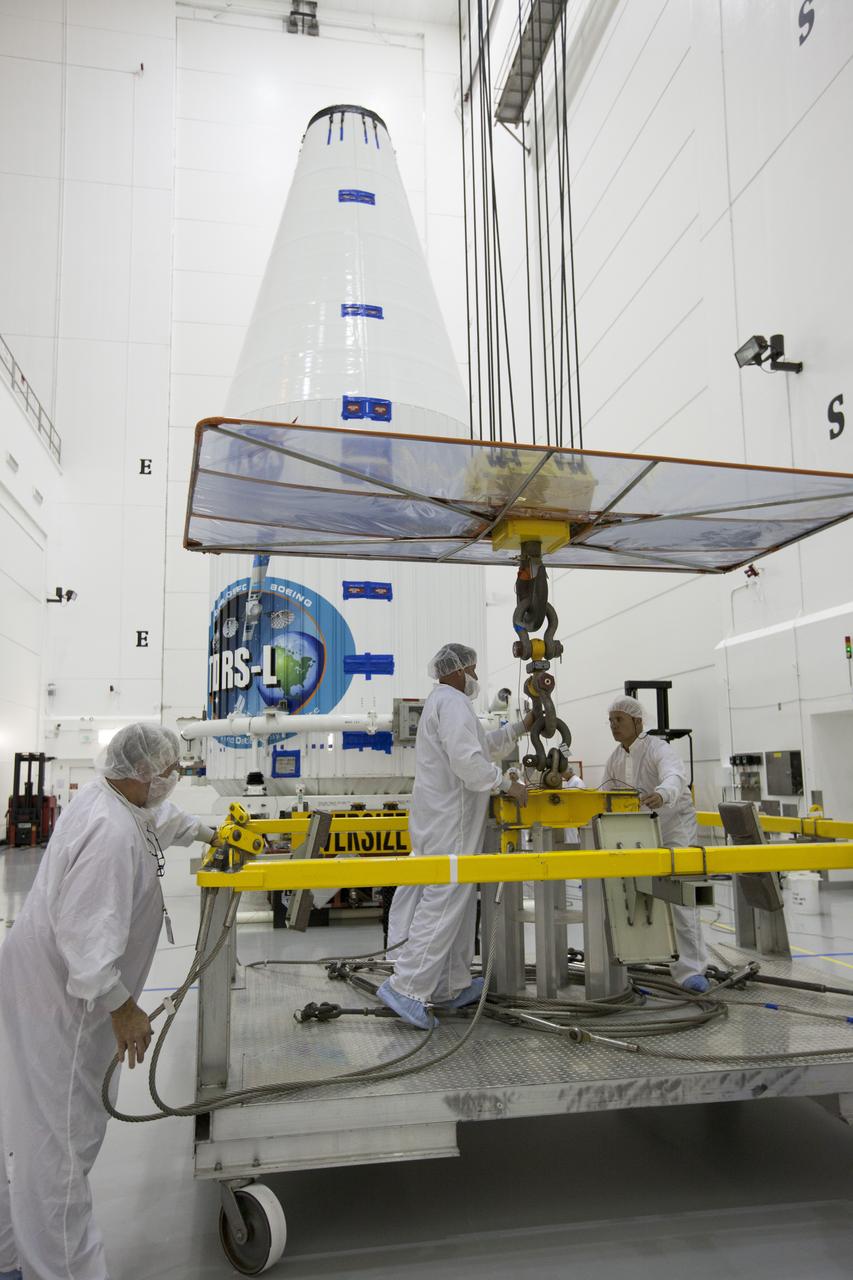
TITUSVILLE, Fla. – Inside the Astrotech payload processing facility in Titusville, a crane is disengaged from ground support equipment used to mount NASA's Tracking and Data Relay Satellite, or TDRS-L, spacecraft on a transporter for its trip to Launch Complex 41 at Cape Canaveral Air Force Station. The TDRS-L satellite will be a part of the second of three next-generation spacecraft designed to ensure vital operational continuity for the NASA Space Network. It is scheduled to launch from Cape Canaveral's Space Launch Complex 41 atop a United Launch Alliance Atlas V rocket on January 23, 2014. The current Tracking and Data Relay Satellite system consists of eight in-orbit satellites distributed to provide near continuous information relay contact with orbiting spacecraft ranging from the International Space Station and Hubble Space Telescope to the array of scientific observatories. For more information, visit: http://www.nasa.gov/mission_pages/tdrs/home/index.html Photo credit: NASA/Kim Shiflett
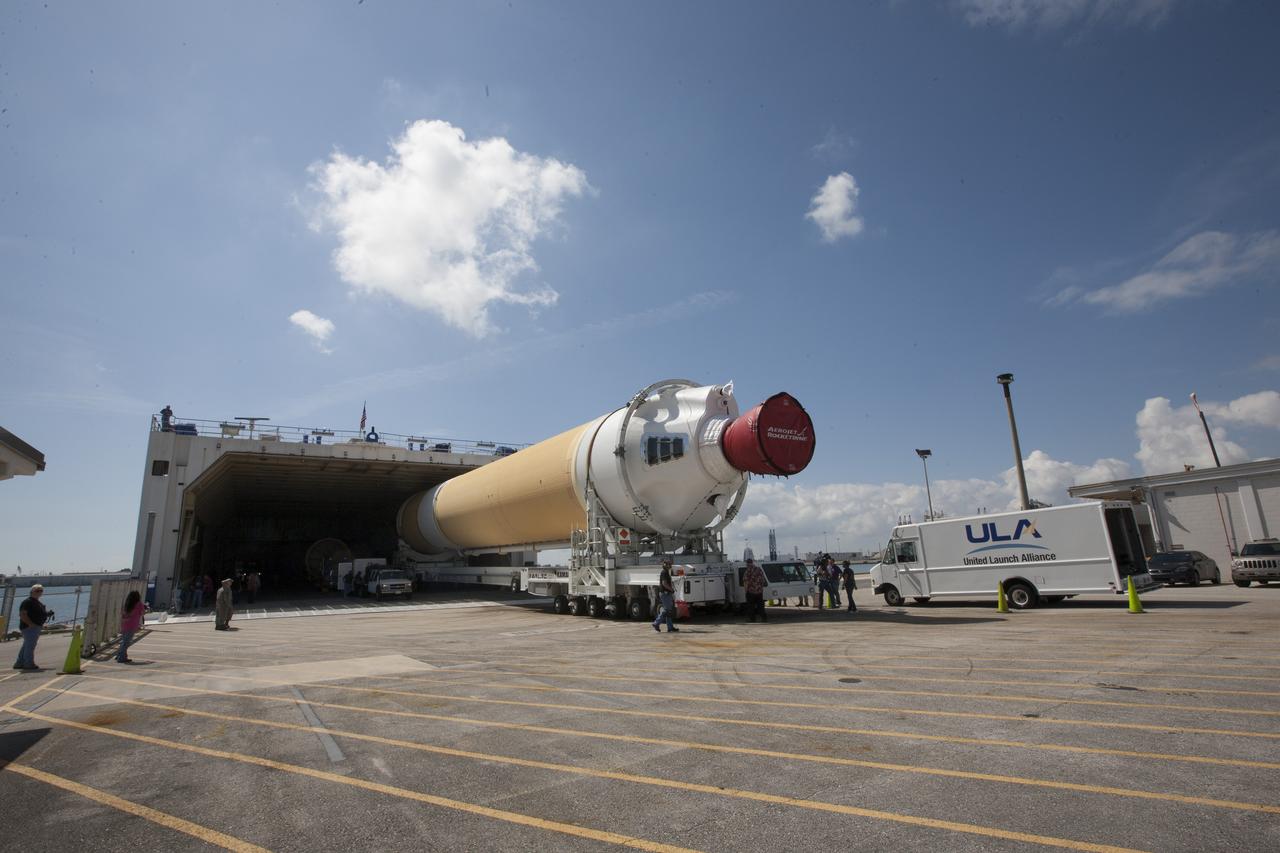
CAPE CANAVERAL, Fla. – Two of the three United Launch Alliance Delta IV heavy boosters for NASA’s upcoming Exploration Flight Test-1, or EFT-1, mission with the Orion spacecraft, have arrived by barge at the U.S. Army Outpost wharf at Port Canaveral in Florida. The core booster and starboard booster are being offloaded and will be transported to the Horizontal Integration Facility, or HIF, at Space Launch Complex 37 on Cape Canaveral Air Force Station. The port booster and the upper stage are planned to be shipped to Cape Canaveral in April. At the HIF, all three boosters will be processed and checked out before being moved to the nearby launch pad and hoisted into position. During the EFT-1 mission, Orion will travel farther into space than any human spacecraft has gone in more than 40 years. The data gathered during the flight will influence design decisions, validate existing computer models and innovative new approaches to space systems development, as well as reduce overall mission risks and costs for later Orion flights. Liftoff of Orion on EFT-1 is planned for fall 2014. Photo credit: NASA/Kim Shiflett
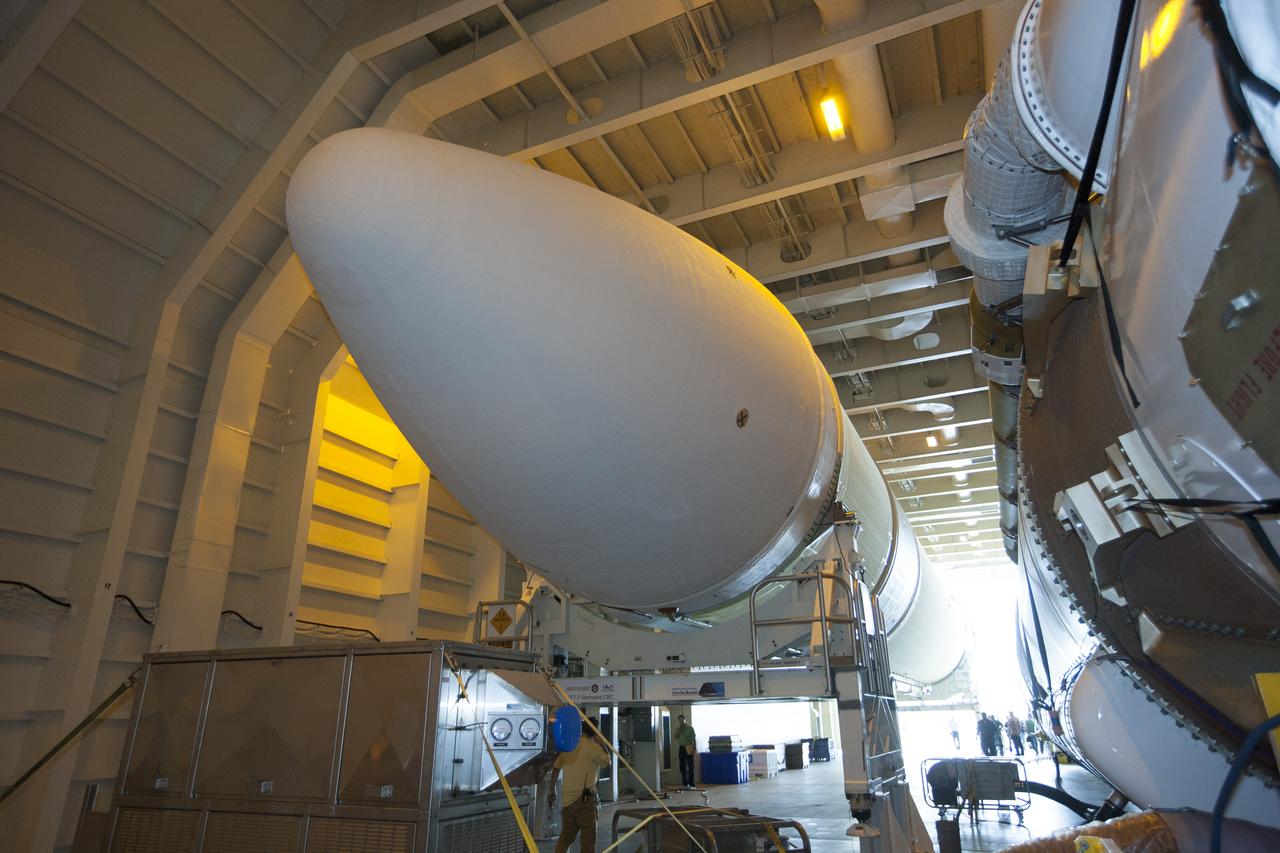
CAPE CANAVERAL, Fla. – Two of the three United Launch Alliance Delta IV heavy boosters for NASA’s upcoming Exploration Flight Test-1, or EFT-1, mission with the Orion spacecraft, have arrived by barge at the U.S. Army Outpost wharf at Port Canaveral in Florida. The core booster and starboard booster will be offloaded and then transported to the Horizontal Integration Facility, or HIF, at Space Launch Complex 37 on Cape Canaveral Air Force Station. The port booster and the upper stage are planned to be shipped to Cape Canaveral in April. At the HIF, all three boosters will be processed and checked out before being moved to the nearby launch pad and hoisted into position. During the EFT-1 mission, Orion will travel farther into space than any human spacecraft has gone in more than 40 years. The data gathered during the flight will influence design decisions, validate existing computer models and innovative new approaches to space systems development, as well as reduce overall mission risks and costs for later Orion flights. Liftoff of Orion on EFT-1 is planned for fall 2014. Photo credit: NASA/Kim Shiflett
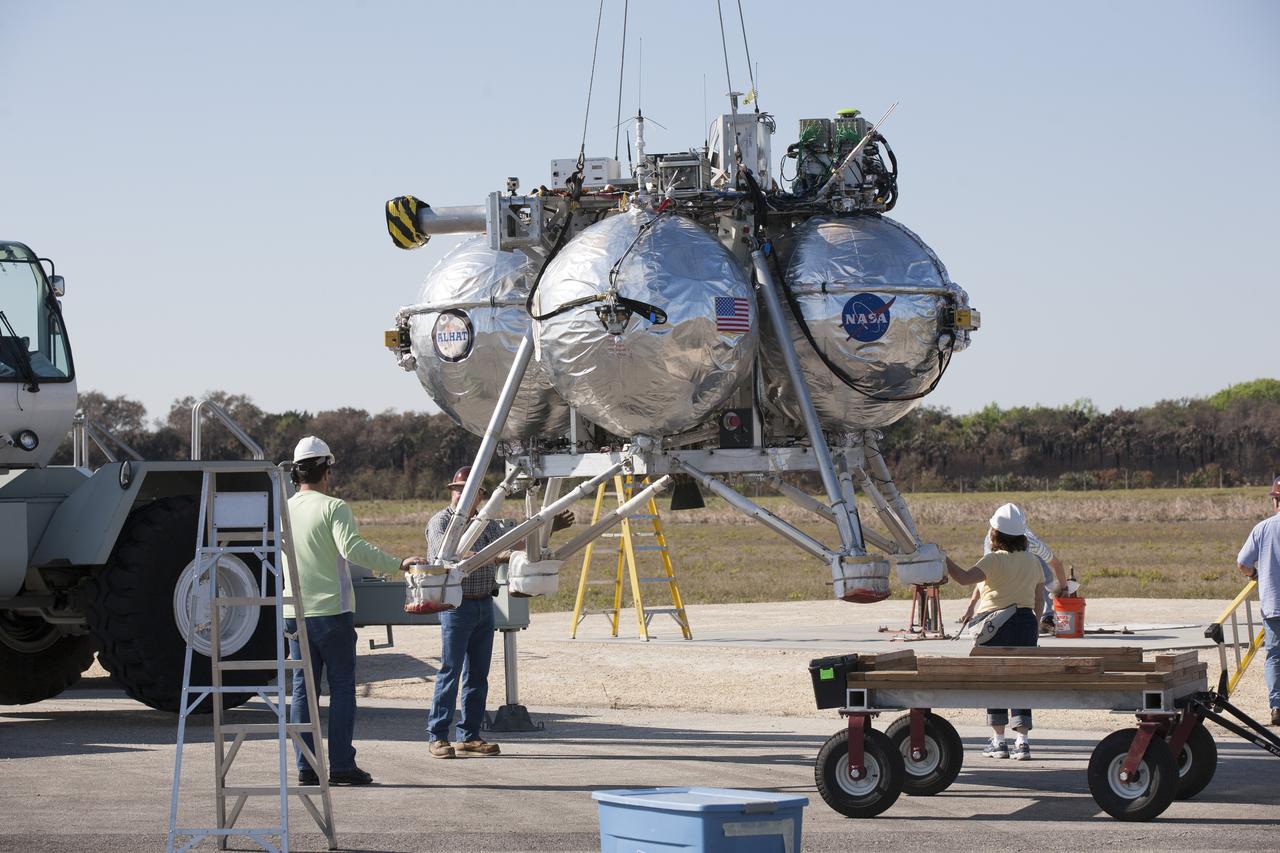
CAPE CANAVERAL, Fla. - Engineers and technicians assist as a crane lowers the Project Morpheus prototype lander in preparation for its seventh free flight test at the north end of the Shuttle Landing Facility at NASA’s Kennedy Space Center in Florida. The 83-second test began at 3:41 p.m. EDT with the Morpheus lander launching from the ground over a flame trench and ascending to 580 feet, its highest to date. Morpheus then flew its fastest downrange trek at 30 mph, travelling farther than before, 837 feet. The lander performed a 42-foot divert to emulate a hazard avoidance maneuver before descending and touching down on Landing Site 2, at the northern landing pad inside the automated landing and hazard avoidance technology ALHAT hazard field. Morpheus landed within one foot of its intended target. Project Morpheus tests NASA’s ALHAT and an engine that runs on liquid oxygen and methane, or green propellants, into a fully-operational lander that could deliver cargo to other planetary surfaces. The landing facility provides the lander with the kind of field necessary for realistic testing, complete with rocks, craters and hazards to avoid. Morpheus’ ALHAT payload allows it to navigate to clear landing sites amidst rocks, craters and other hazards during its descent. Project Morpheus is being managed under the Advanced Exploration Systems, or AES, Division in NASA’s Human Exploration and Operations Mission Directorate. The efforts in AES pioneer new approaches for rapidly developing prototype systems, demonstrating key capabilities and validating operational concepts for future human missions beyond Earth orbit. For more information on Project Morpheus, visit http://morpheuslander.jsc.nasa.gov/. Photo credit: NASA/Kim Shiflett
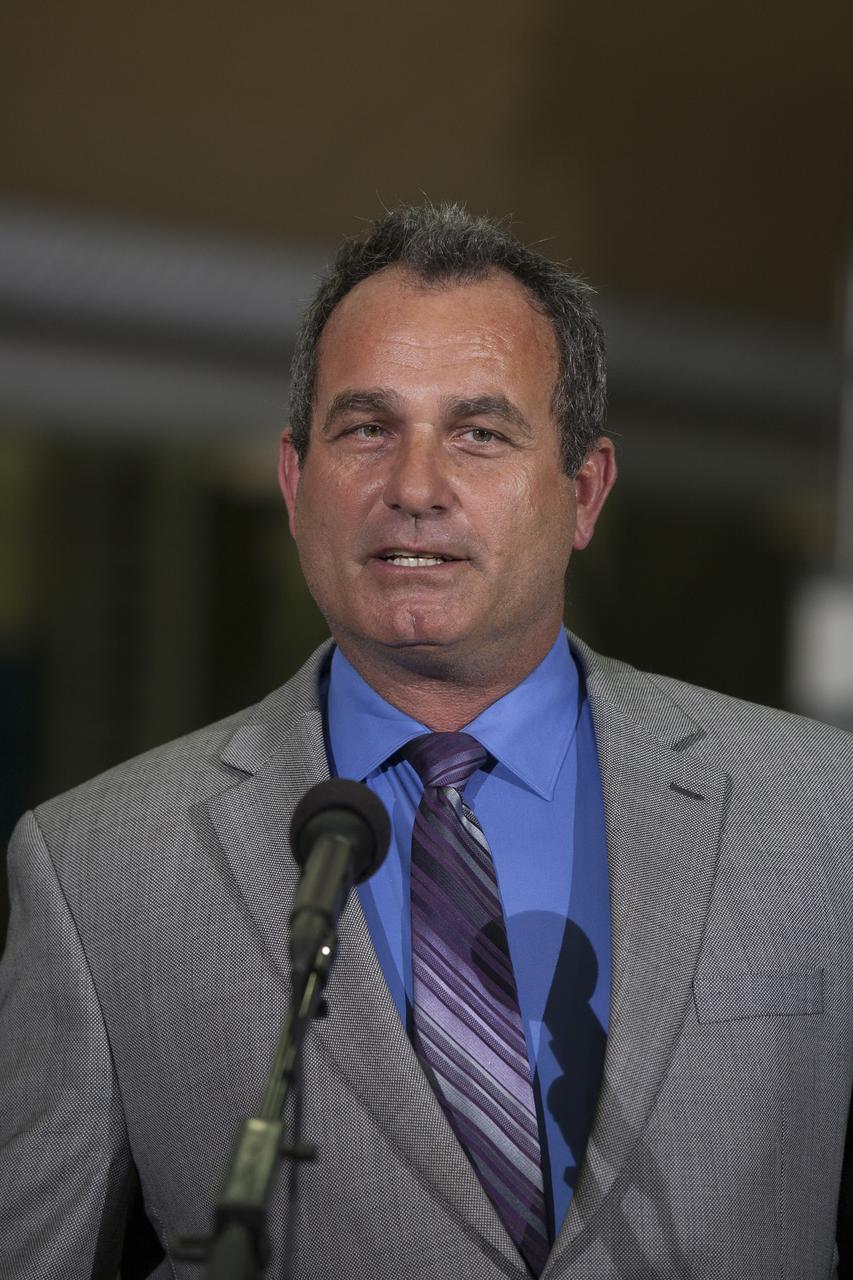
CAPE CANAVERAL, Fla. – During a media event inside the Horizontal Integration Facility at Launch Complex 37 at Cape Canaveral Air Force Station in Florida, Tony Taliancich, director of East Coast Launch Operations with United Launch Alliance, or ULA, speaks to members of the media. Also with him at the briefing were Kennedy Space Center Director Bob Cabana and NASA Associate Administrator Robert Lightfoot. The event was held to showcase two of the ULA Delta IV boosters for the Orion Exploration Flight Test-1, or EFT-1, mission. Orion is the exploration spacecraft designed to carry astronauts to destinations not yet explored by humans, including an asteroid and Mars. It will have emergency abort capability, sustain the crew during space travel and provide safe re-entry from deep space return velocities. The first unpiloted test flight of Orion, EFT-1, is scheduled to launch in 2014 atop a Delta IV rocket and in 2017 on NASA’s Space Launch System rocket. For more information, visit http://www.nasa.gov/orion. Photo credit: NASA/Kim Shiflett
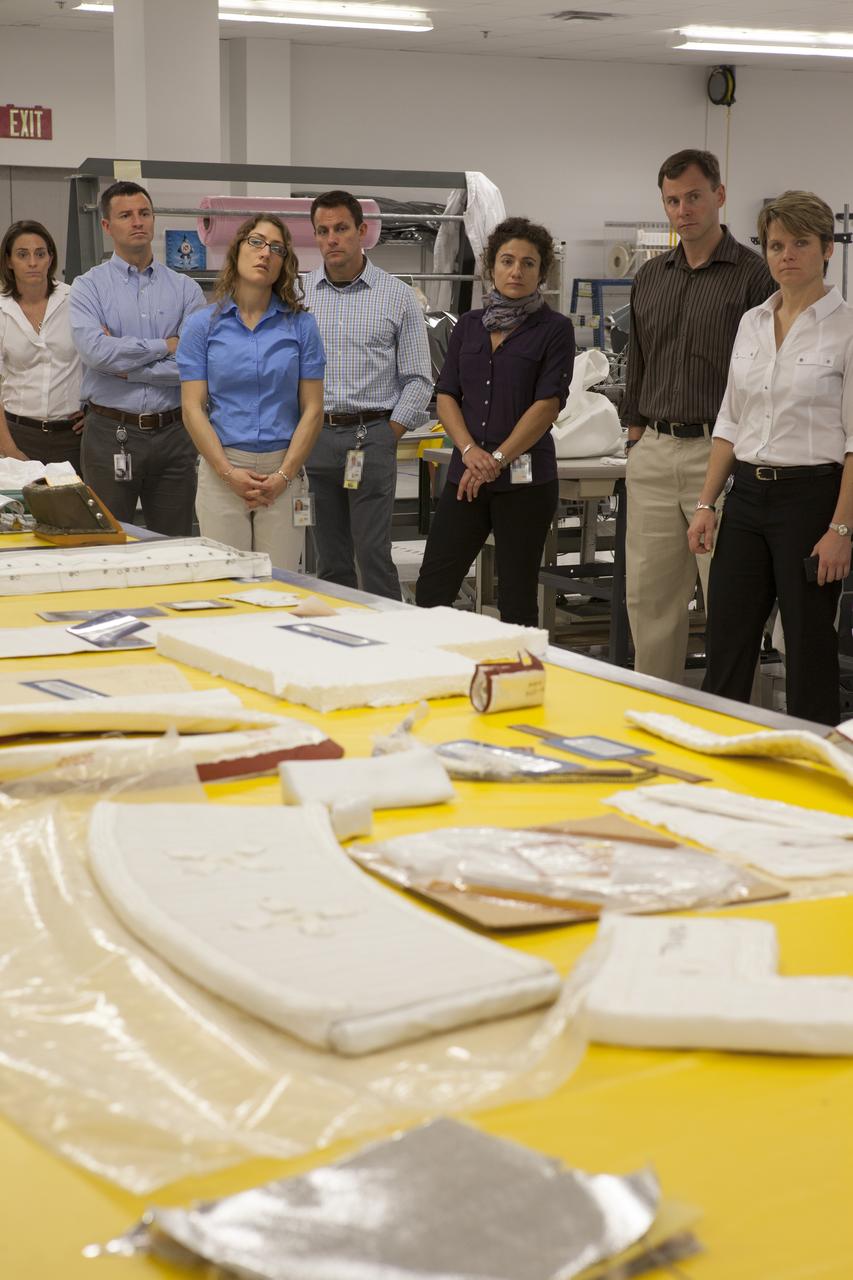
CAPE CANAVERAL, Fla. -- In the Thermal Protection System Facility NASA's Kennedy Space Center in Florida, agency astronaut candidates are briefed on thermal blankets being manufactured for agency spacecraft. Looking at sample thermal blankets are, from the left, Nicole Mann, Andrew Morgan, Christina Hammock, Josh Cassada, Jessica Meir, Tyler ‘Nick’ Hague, and Anne McClain. Plans call for the Lockheed Martin-built Orion to launch atop a United Launch Alliance Delta IV Heavy rocket from Cape Canaveral Air Force Station on Exploration Flight Test EFT-1 later this year. The astronaut class of 2013 was selected by NASA after an extensive year-and-a-half search. The new group will help the agency push the boundaries of exploration and travel to new destinations in the solar system. To learn more about the astronaut class of 2013, visit: http://www.nasa.gov/astronauts/2013astroclass.html Photo credit: NASA/Kim Shiflett
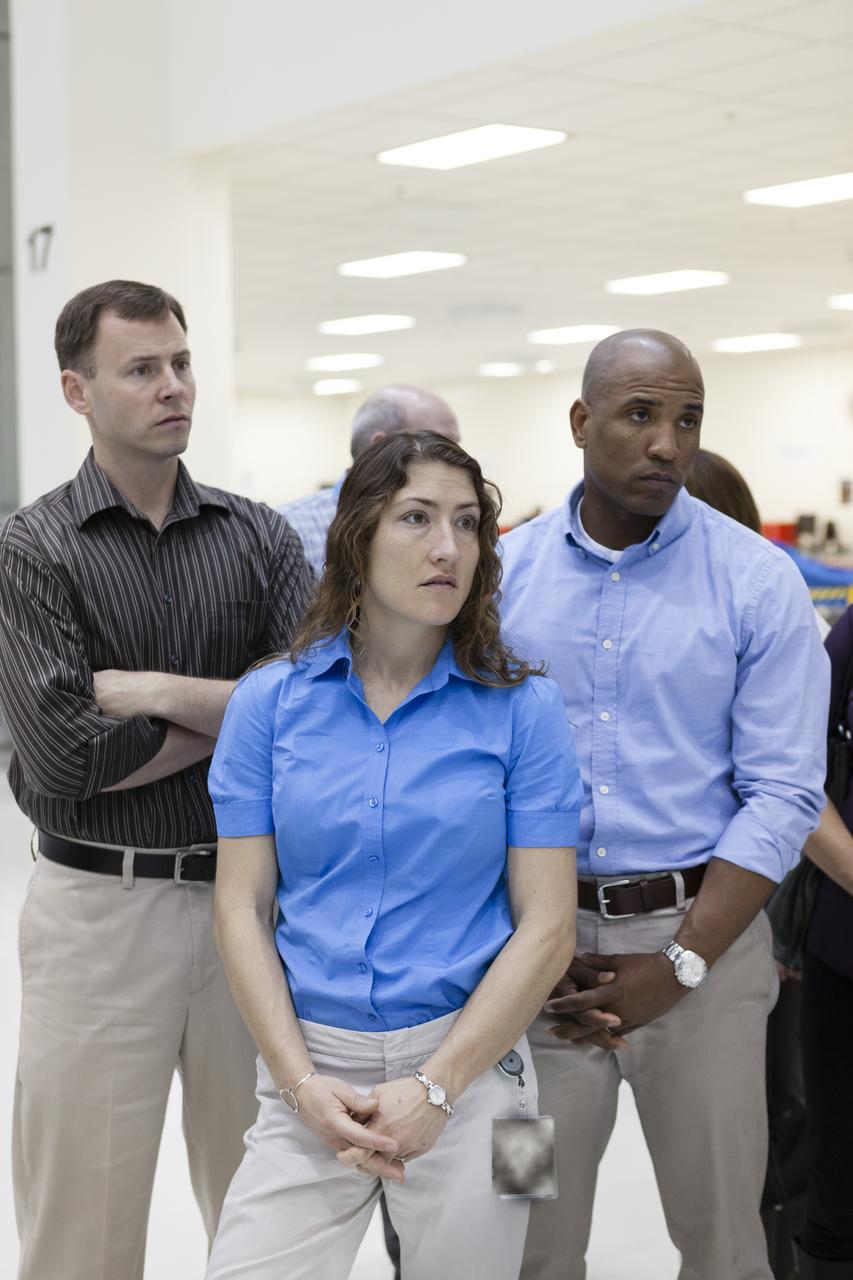
CAPE CANAVERAL, Fla. -- In the Operations and Checkout Building of NASA's Kennedy Space Center in Florida, astronaut candidates Tyler Nick Hague, left, Christina Hammock, center, and Victor Glover listen to a briefing on preparations for the launch the Orion spacecraft on Exploration Flight Test EFT-1. Plans call for the Lockheed Martin-built Orion to launch atop a United Launch Alliance Delta IV Heavy rocket from Cape Canaveral Air Force Station. The astronaut class of 2013 was selected by NASA after an extensive year-and-a-half search. The new group will help the agency push the boundaries of exploration and travel to new destinations in the solar system. To learn more about the astronaut class of 2013, visit: http://www.nasa.gov/astronauts/2013astroclass.html Photo credit: NASA/Kim Shiflett
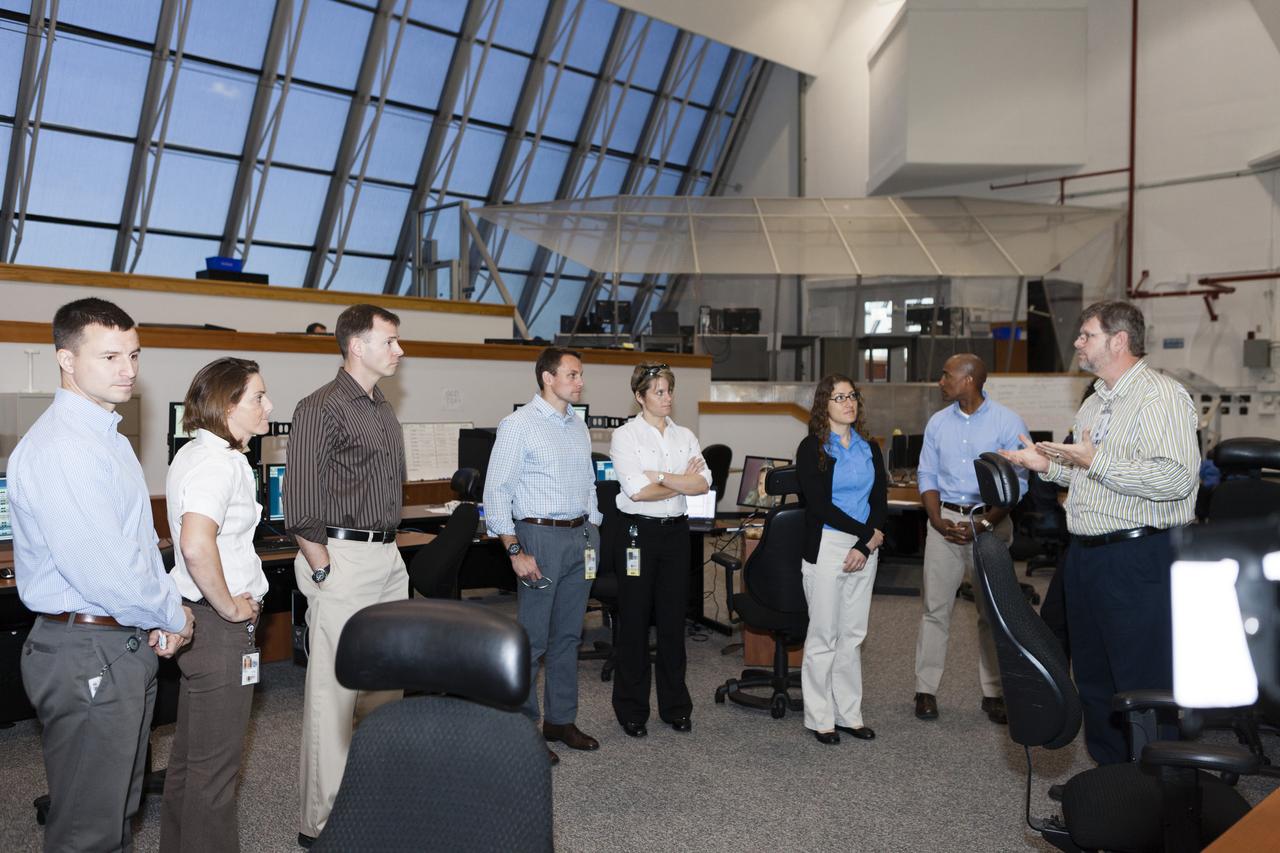
CAPE CANAVERAL, Fla. – NASA astronaut candidates Andrew Morgan, from left, Nicole Mann, Tyler Nick Hague, Josh Cassada, Anne McClain, Christina Hammock and Victor Glover listen as Steve Cox or Flight Systems and Operations Integration in Kennedy Ground Systems Development and Operations, far right, briefed on firing rooms inside the Launch Control Center at Kennedy Space Center in Florida during a daylong set of briefings and tours of different facilities at NASA's primary launch center. The astronaut class of 2013 was selected by NASA after an extensive year-and-a-half search. The new group will help the agency push the boundaries of exploration and travel to new destinations in the solar system. To learn more about the astronaut class of 2013, visit: http://www.nasa.gov/astronauts/2013astroclass.html Photo credit: NASA/Kim Shiflett
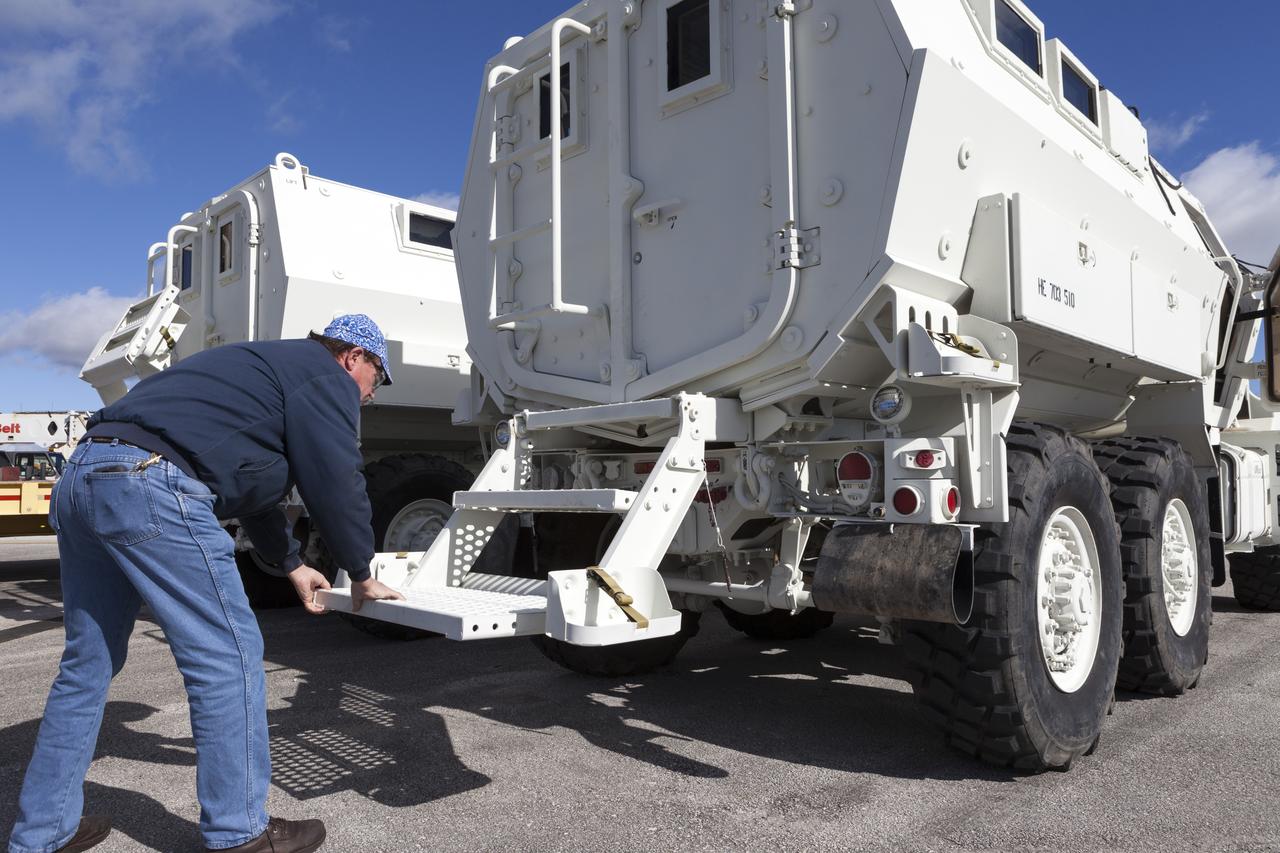
CAPE CANAVERAL, Fla. – A URS Federal Services worker pulls down the steps to the entrance of one of the four new emergency egress vehicles, called Mine-Resistant Ambush-Protected, or MRAP, vehicles at the Maintenance and Operations Facility at NASA’s Kennedy Space Center in Florida. The MRAPs arrived from the U.S. Army Red River Depot in Texarkana, Texas in December 2013. The vehicles were processed in and then transported to the Rotation, Processing and Surge Facility near the Vehicle Assembly Building for temporary storage. The Ground Systems Development and Operations Program at Kennedy led the efforts to an emergency egress vehicle that future astronauts could quickly use to leave the Launch Complex 39 area in case of an emergency. During crewed launches of NASA’s Space Launch System and Orion spacecraft, the MRAP will be stationed by the slidewire termination area at the pad. In case of an emergency, the crew will ride a slidewire to the ground and immediately board the MRAP for safe egress from the pad. The new vehicles replace the M-113 vehicles that were used during the Space Shuttle Program. Photo credit: NASA/Kim Shiflett
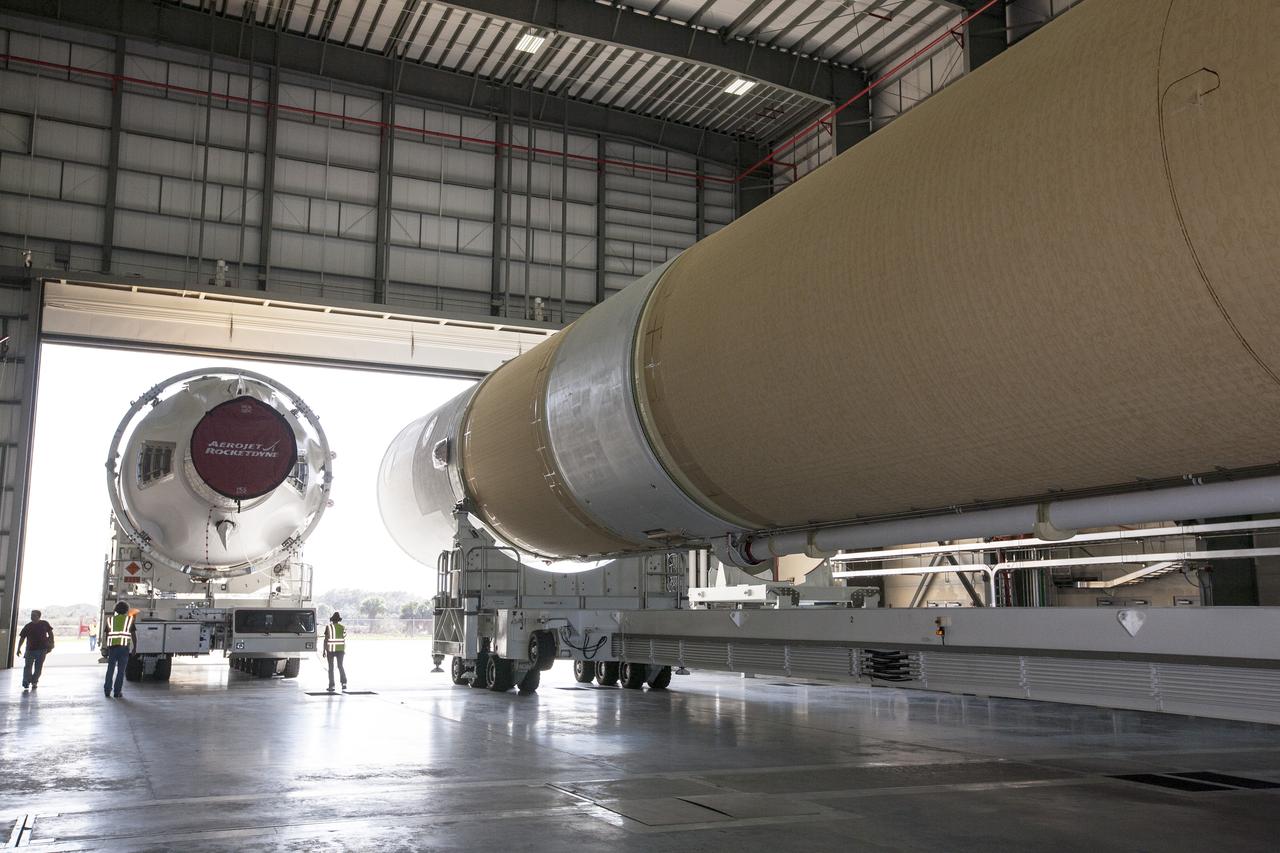
CAPE CANAVERAL, Fla. – Two of the three United Launch Alliance Delta IV heavy boosters for NASA’s upcoming Exploration Flight Test-1, or EFT-1, mission with the Orion spacecraft, were transported to the Horizontal Integration Facility, or HIF, at Space Launch Complex 37 on Cape Canaveral Air Force Station in Florida. The core booster and starboard booster arrived by barge at the U.S. Army Outpost wharf at Port Canaveral. The port booster and the upper stage are planned to be shipped to Cape Canaveral in April. At the HIF, all three boosters will be processed and checked out before being moved to the nearby launch pad and hoisted into position. During the EFT-1 mission, Orion will travel farther into space than any human spacecraft has gone in more than 40 years. The data gathered during the flight will influence design decisions, validate existing computer models and innovative new approaches to space systems development, as well as reduce overall mission risks and costs for later Orion flights. Liftoff of Orion on EFT-1 is planned for fall 2014. Photo credit: NASA/Kim Shiflett
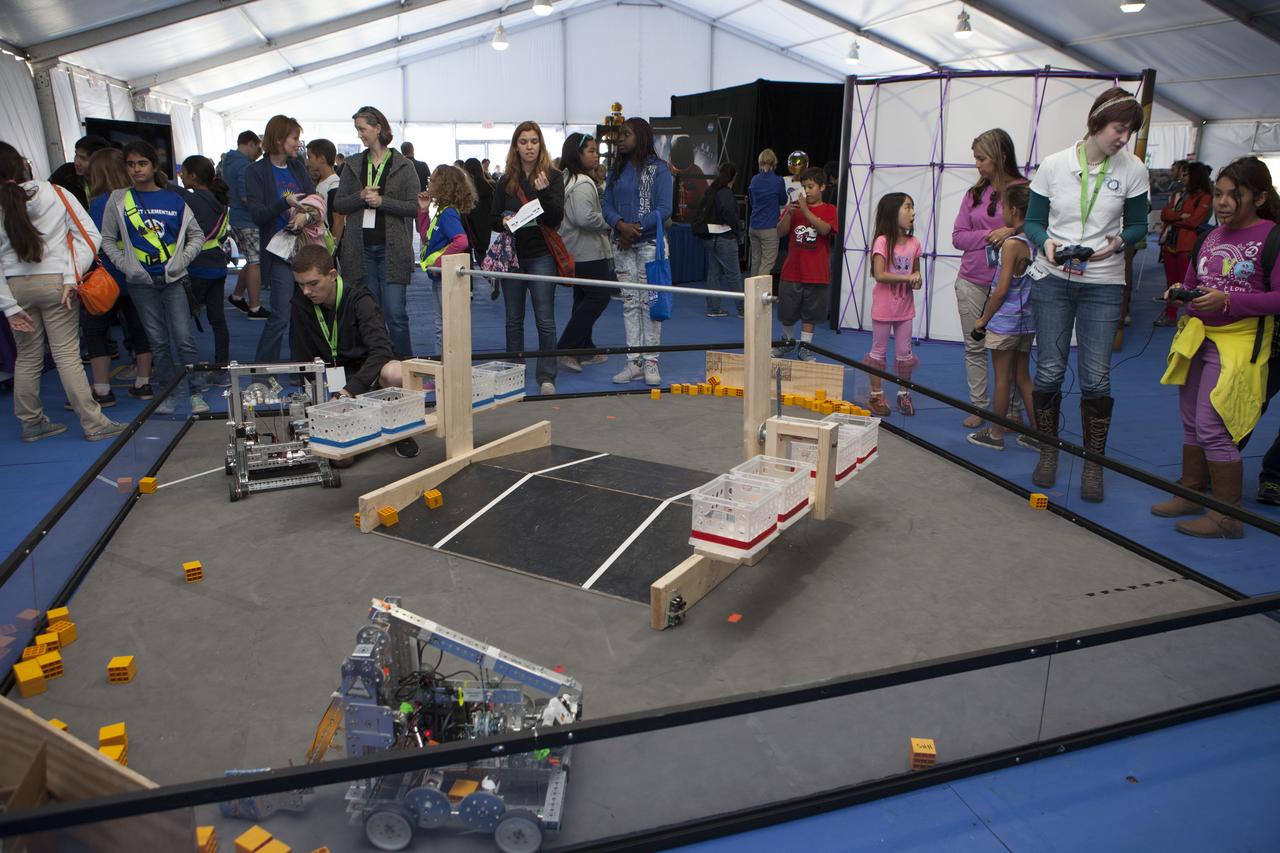
CAPE CANAVERAL, Fla. – Students from Hagerty High School in Oviedo, Fla., participants in FIRST Robotics, show off their robots' capabilities at the Robot Rocket Rally. The three-day event at Florida's Kennedy Space Center Visitor Complex is highlighted by exhibits, games and demonstrations of a variety of robots, with exhibitors ranging from school robotics clubs to veteran NASA scientists and engineers. Photo credit: NASA/Kim Shiflett
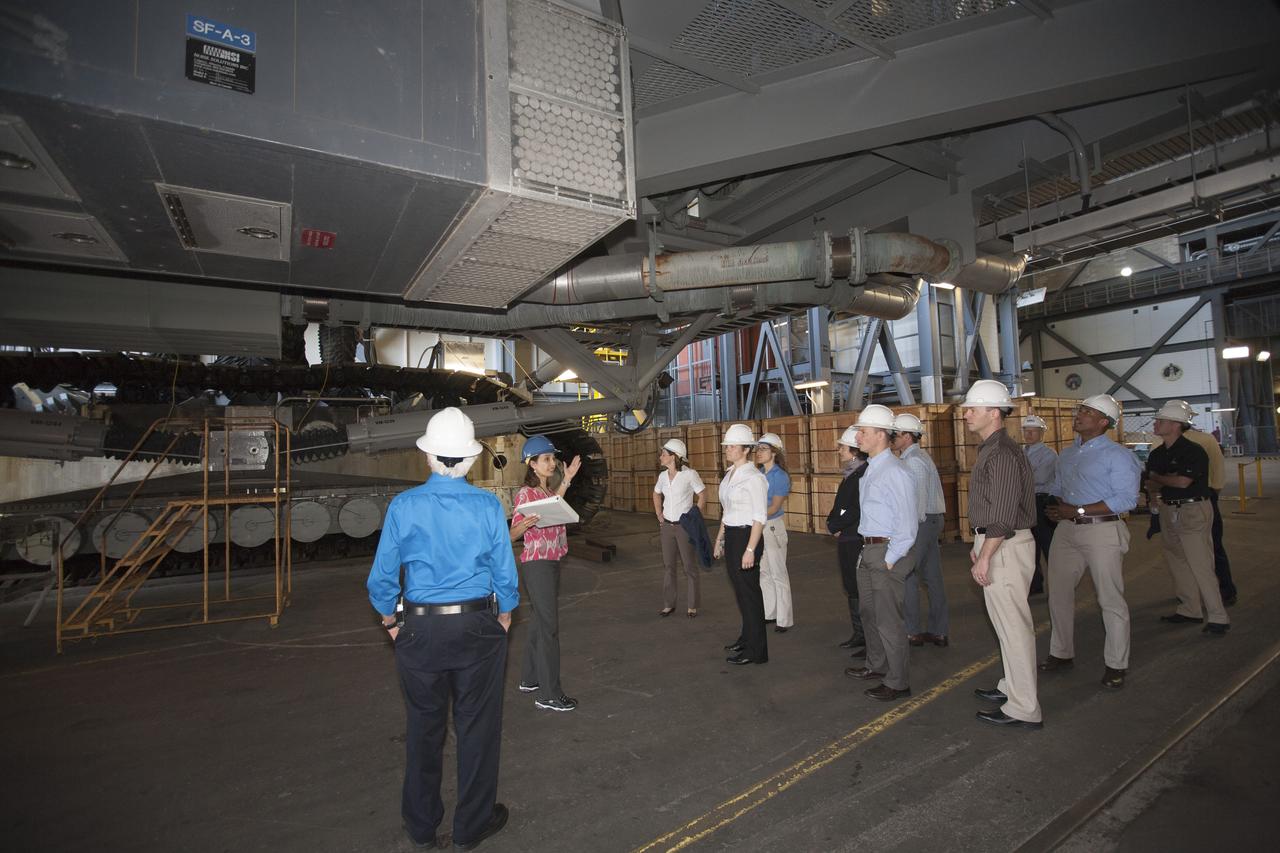
CAPE CANAVERAL, Fla. - Mary Hanna, crawler-transporter integration manager, discusses the crawler-transporter with astronaut candidates Nicole Mann, Anne McClain, Christina Hammock, Jessica Meir, Andrew Morgan, Josh Cassada, Tyler "Nick" Hague and Victor Glover in the Vehicle Assembly Building at NASA's Kennedy Space Center during a daylong set of briefings and tours of different facilities at NASA's primary launch center. The astronaut class of 2013 was selected by NASA after an extensive year-and-a-half search. The new group will help the agency push the boundaries of exploration and travel to new destinations in the solar system. To learn more about the astronaut class of 2013, visit: http://www.nasa.gov/astronauts/2013astroclass.html Photo credit: NASA/Kim Shiflett
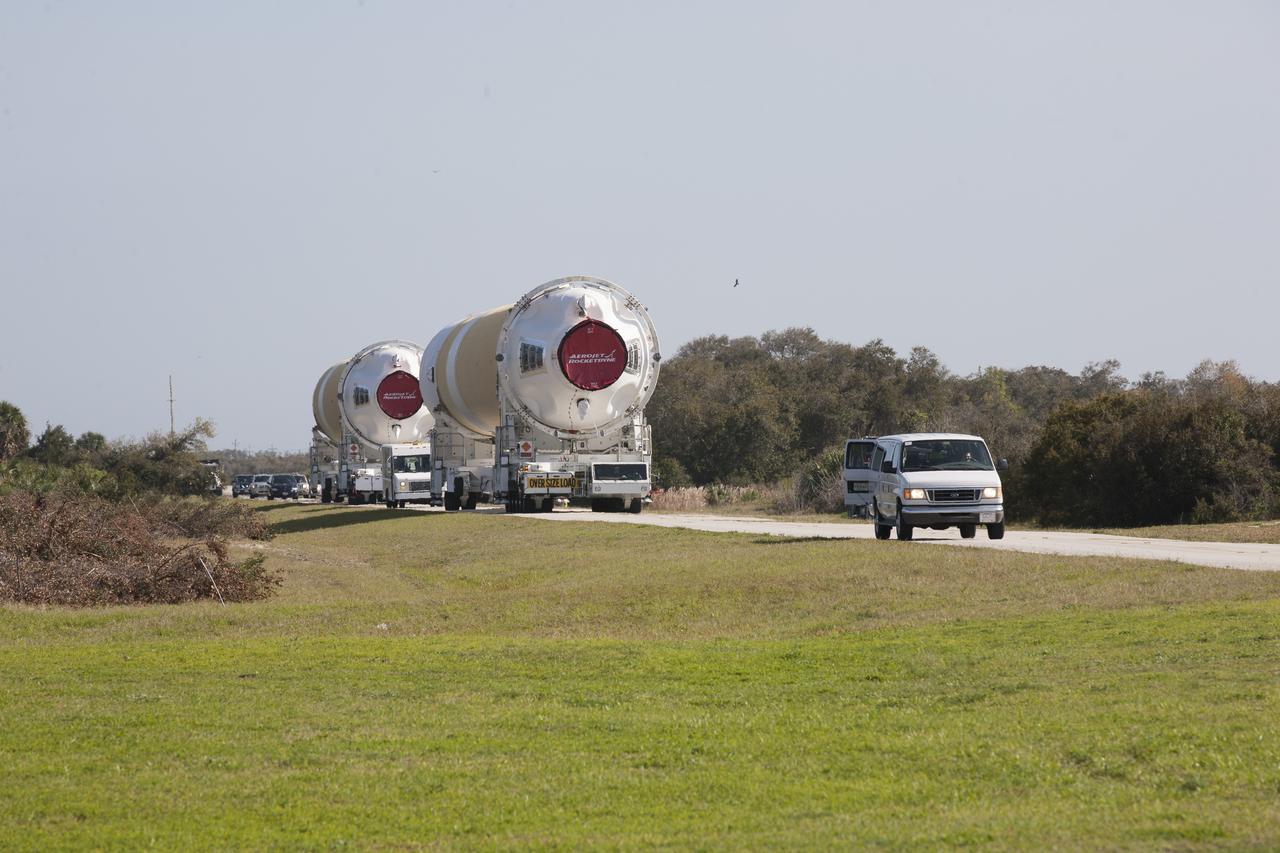
CAPE CANAVERAL, Fla. – Two of the three United Launch Alliance Delta IV heavy boosters for NASA’s upcoming Exploration Flight Test-1, or EFT-1, mission with the Orion spacecraft, arrived by barge at the U.S. Army Outpost wharf at Port Canaveral in Florida. The core booster and starboard booster were offloaded and are being transported to the Horizontal Integration Facility, or HIF, at Space Launch Complex 37 on Cape Canaveral Air Force Station. The port booster and the upper stage are planned to be shipped to Cape Canaveral in April. At the HIF, all three boosters will be processed and checked out before being moved to the nearby launch pad and hoisted into position. During the EFT-1 mission, Orion will travel farther into space than any human spacecraft has gone in more than 40 years. The data gathered during the flight will influence design decisions, validate existing computer models and innovative new approaches to space systems development, as well as reduce overall mission risks and costs for later Orion flights. Liftoff of Orion on EFT-1 is planned for fall 2014. Photo credit: NASA/Kim Shiflett
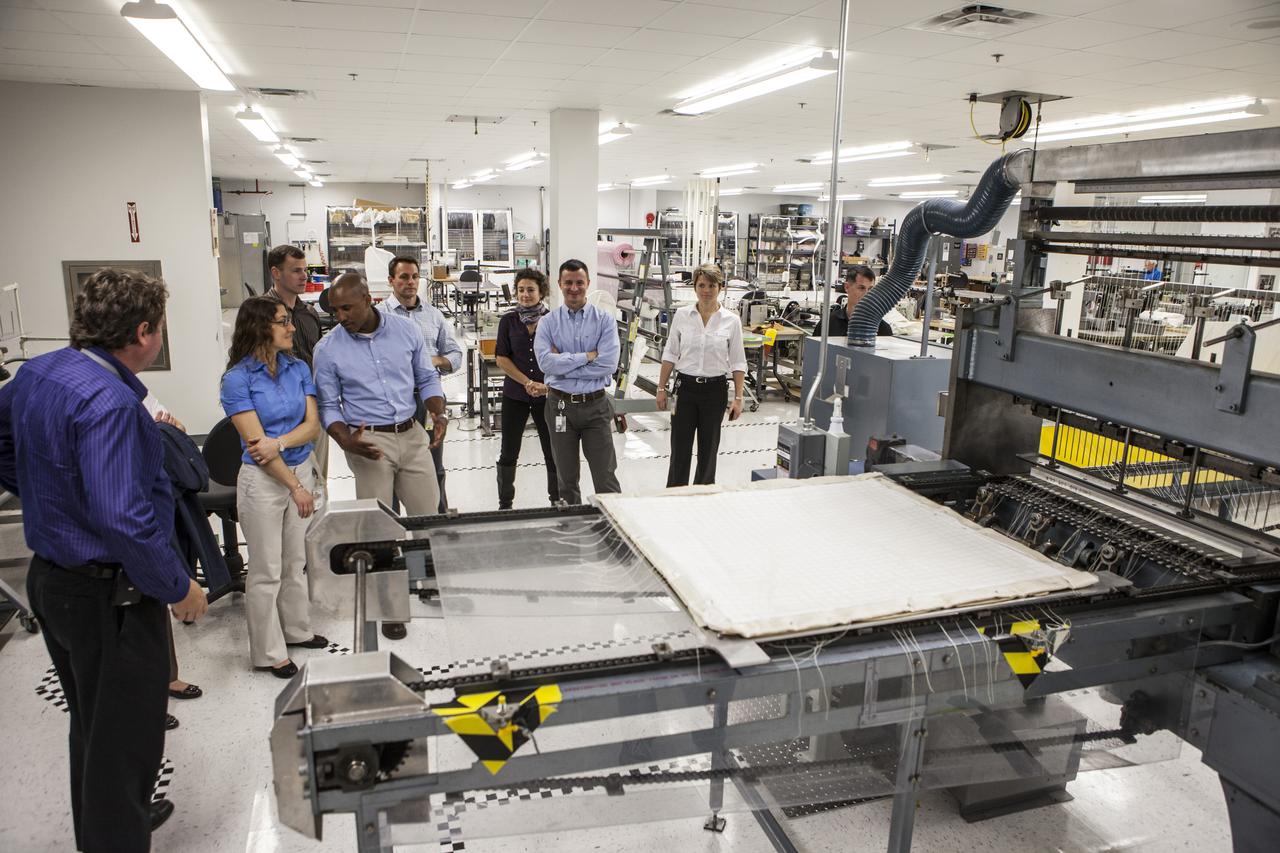
CAPE CANAVERAL, Fla. -- In the Thermal Protection System Facility NASA's Kennedy Space Center in Florida, agency astronaut candidates are briefed on thermal blankets being manufactured for agency spacecraft by TPSF manager, Martin Wilson of Jacobs Technology, far left. Participating in the briefing, from the left, are Christina Hammock, Tyler ‘Nick’ Hague, Victor Glover, John Cassada, Jessica Meir, Andrew Morgan and Anne McClain. Plans call for the Lockheed Martin-built Orion to launch atop a United Launch Alliance Delta IV Heavy rocket from Cape Canaveral Air Force Station on Exploration Flight Test EFT-1 later this year. The astronaut class of 2013 was selected by NASA after an extensive year-and-a-half search. The new group will help the agency push the boundaries of exploration and travel to new destinations in the solar system. To learn more about the astronaut class of 2013, visit: http://www.nasa.gov/astronauts/2013astroclass.html Photo credit: NASA/Kim Shiflett
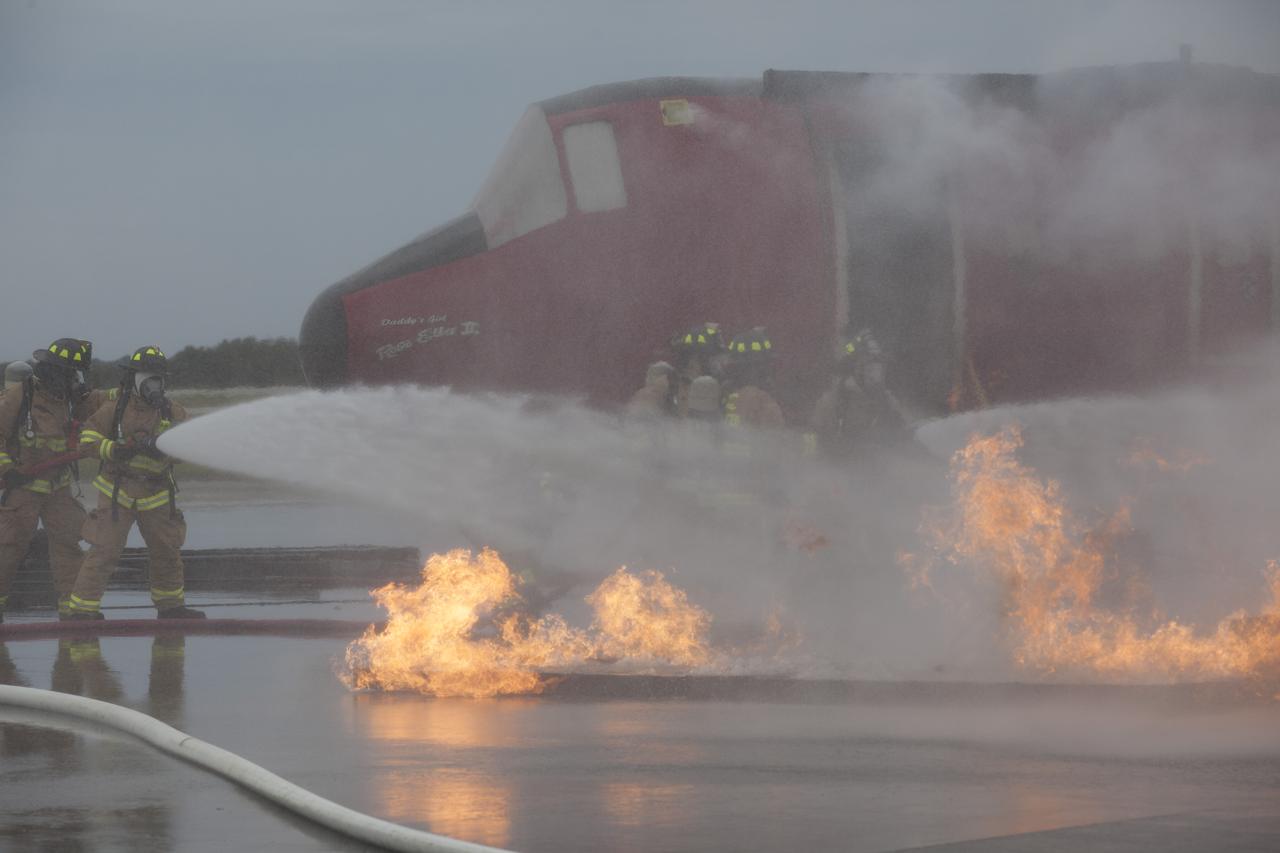
CAPE CANAVERAL, Fla. - Special Rescue Operations firefighters with NASA Fire Rescue Services in the Protective Services Office at NASA’s Kennedy Space Center in Florida participate in a training exercise at the Shuttle Landing Facility. Firefighters, wearing protective gear, use hoses to put out a fire burning close to a mock-up of a small plane. Kennedy’s firefighters recently achieved Pro Board Certification in aerial fire truck operations and completed vehicle extrication training using the Jaws of Life. The Protective Services Office is one step closer to achieving certification in vehicle machinery extrication and other rescue skills. Kennedy’s firefighters are with G4S Government Solutions Inc., on the Kennedy Protective Services Contract. Photo credit: NASA/Kim Shiflett
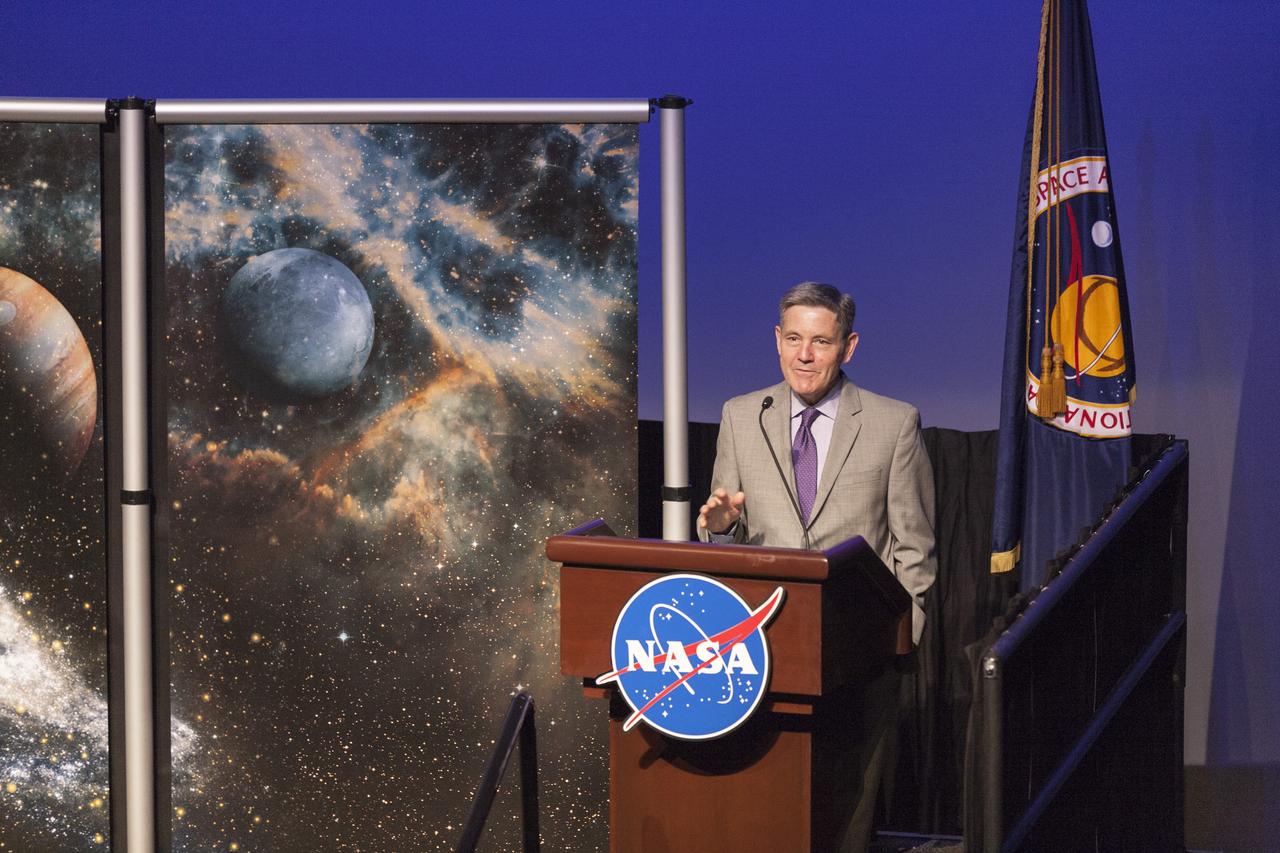
CAPE CANAVERAL, Fla. – Kennedy Space Center Director Robert Cabana welcomes NASA civil service and contractor employees and their families to the IMAX theater at the Kennedy Space Center Visitor Complex in Florida for the 2013 KSC Honor Awards Ceremony. Kennedy conducts its Annual Honor Awards Ceremony each spring. During the ceremony, the center's director and deputy director present deserving employees with various awards in the form of medals and certificates. The ceremony is open to all employees and broadcast to employees who are unable to attend. For more information about NASA's Kennedy Space Center, visit http://www.nasa.gov/kennedy. Photo credit: NASA/Kim Shiflett

CAPE CANAVERAL, Fla. – The Project Morpheus prototype lander begins to ascend on its sixth free flight test at the north end of the Shuttle Landing Facility at NASA’s Kennedy Space Center in Florida. The 82-second test began at 11:32 a.m. EST with the Morpheus lander launching from the ground over a flame trench and ascending to 465 feet. The lander flew forward, covering 633 feet while performing a 55-foot divert to emulate a hazard avoidance maneuver before descending and landing on a dedicated pad inside the automated landing and hazard avoidance technology, or ALHAT, hazard field. Morpheus landed 10 inches west of its intended target. Project Morpheus tests NASA’s ALHAT and an engine that runs on liquid oxygen and methane, or green propellants, into a fully-operational lander that could deliver cargo to other planetary surfaces. The landing facility provides the lander with the kind of field necessary for realistic testing, complete with rocks, craters and hazards to avoid. Morpheus’ ALHAT payload allows it to navigate to clear landing sites amidst rocks, craters and other hazards during its descent. Project Morpheus is being managed under the Advanced Exploration Systems, or AES, Division in NASA’s Human Exploration and Operations Mission Directorate. The efforts in AES pioneer new approaches for rapidly developing prototype systems, demonstrating key capabilities and validating operational concepts for future human missions beyond Earth orbit. For more information on Project Morpheus, visit http://morpheuslander.jsc.nasa.gov/. Photo credit: NASA/Kim Shiflett

CAPE CANAVERAL, Fla. - In the Space Station Processing Facility at NASA's Kennedy Space Center in Florida, John Carver, a project manager with Jacobs Technology checks the Advanced Plant Experiment, or APEX, experiment as it is being prepared for launch to the International Space Station aboard a SpaceX Dragon spacecraft. Scheduled for launch on March 16 atop a Falcon 9 rocket, Dragon will be marking its fourth trip to the space station. The SpaceX-3 mission is the third of 12 flights contracted by NASA to resupply the orbiting laboratory. For more information, visit http://www.nasa.gov/mission_pages/station/structure/launch/index.html Photo credit: NASA/Kim Shiflett
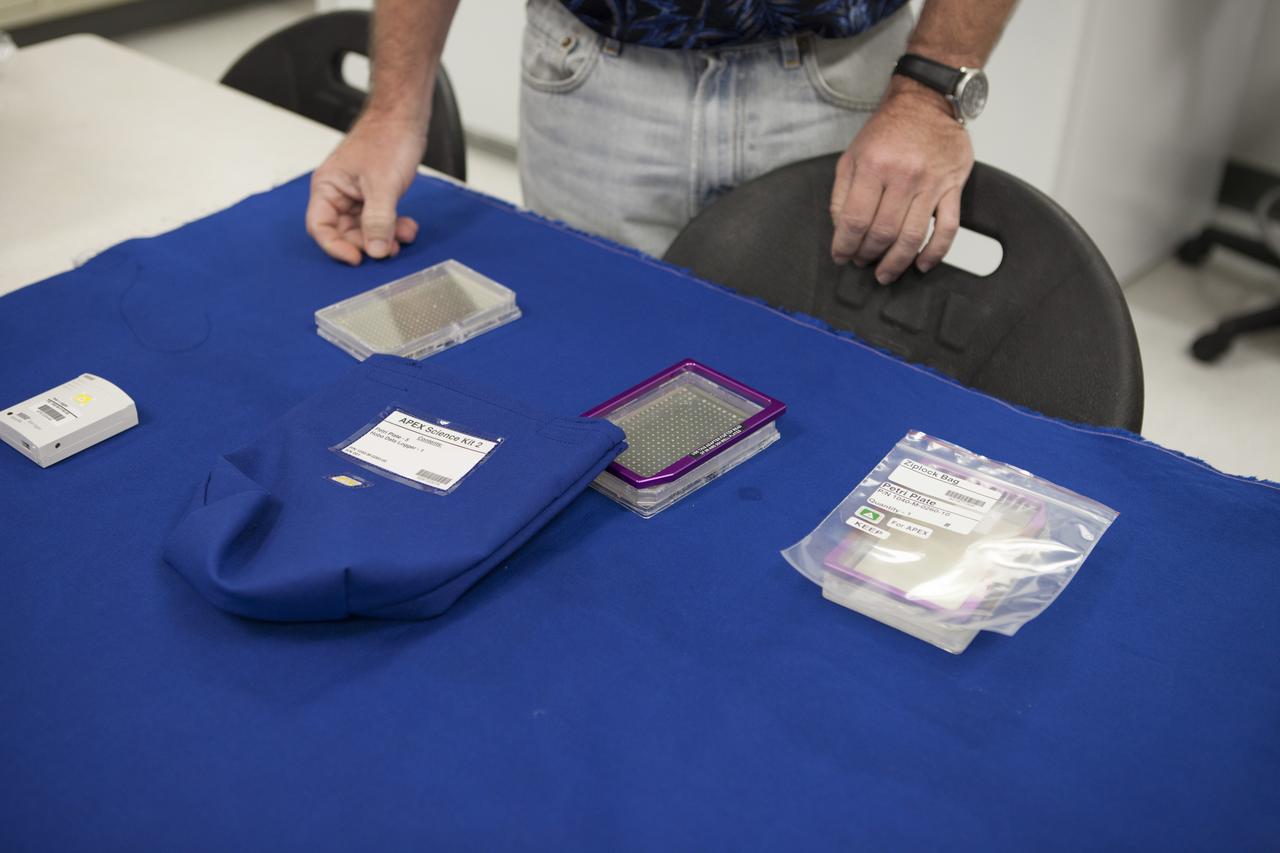
CAPE CANAVERAL, Fla. - In the Space Station Processing Facility at NASA's Kennedy Space Center in Florida, portions of the Advanced Plant Experiment, or APEX, experiment are checked out as it is prepared for launch to the International Space Station aboard a SpaceX Dragon spacecraft. Scheduled for launch on March 16 atop a Falcon 9 rocket, Dragon will be marking its fourth trip to the space station. The SpaceX-3 mission is the third of 12 flights contracted by NASA to resupply the orbiting laboratory. For more information, visit http://www.nasa.gov/mission_pages/station/structure/launch/index.html Photo credit: NASA/Kim Shiflett

CAPE CANAVERAL, Fla. – NASA astronaut candidates Jessica Meir, Tyler Nick Hague and Nicole Mann listen to a discussion about firing rooms inside the Launch Control Center at Kennedy Space Center in Florida during a daylong set of briefings and tours of different facilities at NASA's primary launch center. The astronaut class of 2013 was selected by NASA after an extensive year-and-a-half search. The new group will help the agency push the boundaries of exploration and travel to new destinations in the solar system. To learn more about the astronaut class of 2013, visit: http://www.nasa.gov/astronauts/2013astroclass.html Photo credit: NASA/Kim Shiflett
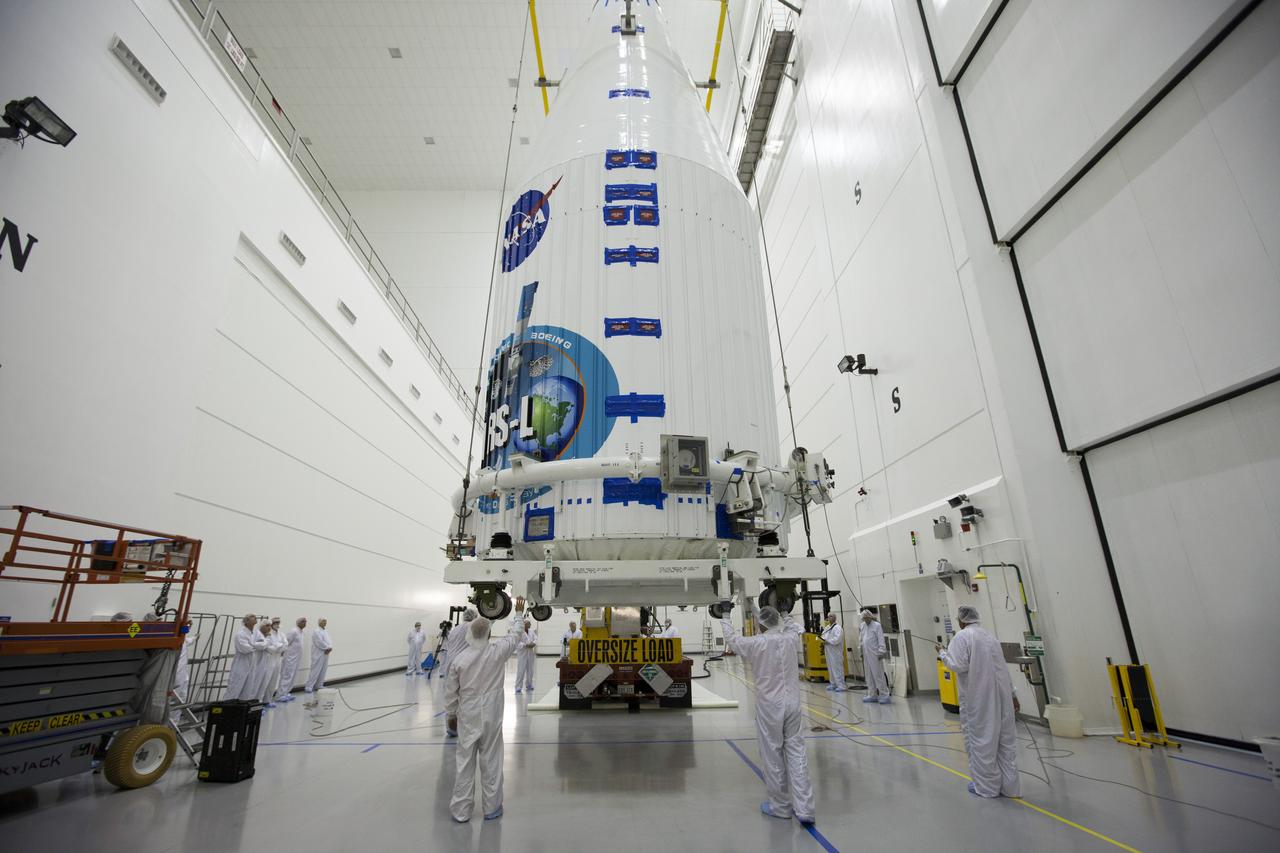
TITUSVILLE, Fla. – Inside the Astrotech payload processing facility in Titusville, NASA's Tracking and Data Relay Satellite, or TDRS-L, spacecraft has been encapsulated in its payload fairing. It is being lifted by crane for mounting on a transporter for its trip to Launch Complex 41 at Cape Canaveral Air Force Station. The TDRS-L satellite will be a part of the second of three next-generation spacecraft designed to ensure vital operational continuity for the NASA Space Network. It is scheduled to launch from Cape Canaveral's Space Launch Complex 41 atop a United Launch Alliance Atlas V rocket on January 23, 2014. The current Tracking and Data Relay Satellite system consists of eight in-orbit satellites distributed to provide near continuous information relay contact with orbiting spacecraft ranging from the International Space Station and Hubble Space Telescope to the array of scientific observatories. For more information, visit: http://www.nasa.gov/mission_pages/tdrs/home/index.html Photo credit: NASA/Kim Shiflett
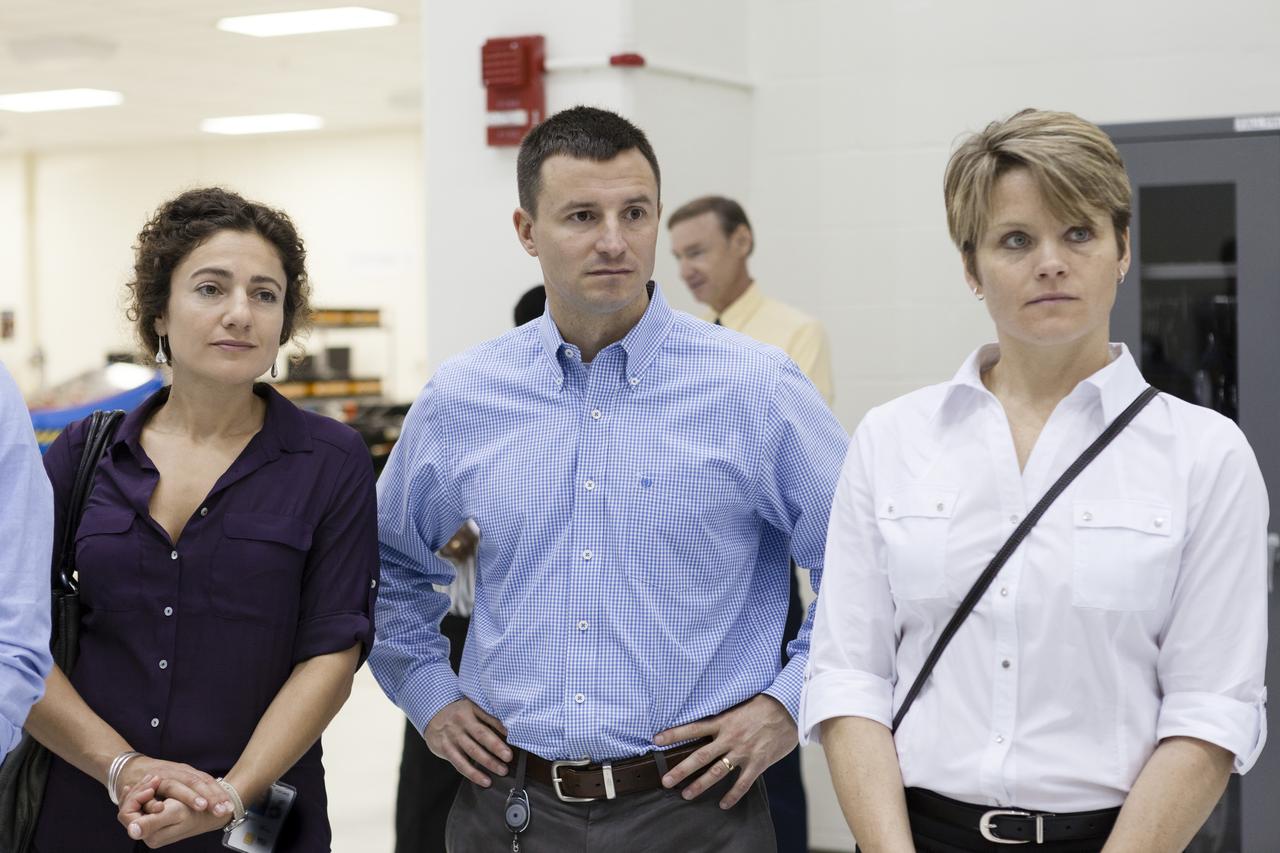
CAPE CANAVERAL, Fla. -- In the Operations and Checkout Building of NASA's Kennedy Space Center in Florida, astronaut candidates Jessica Meir, left, Andrew Morgan, center, and Anne McClain listen to a briefing on preparations for the launch the Orion spacecraft on Exploration Flight Test EFT-1. Plans call for the Lockheed Martin-built Orion to launch atop a United Launch Alliance Delta IV Heavy rocket from Cape Canaveral Air Force Station. The astronaut class of 2013 was selected by NASA after an extensive year-and-a-half search. The new group will help the agency push the boundaries of exploration and travel to new destinations in the solar system. To learn more about the astronaut class of 2013, visit: http://www.nasa.gov/astronauts/2013astroclass.html Photo credit: NASA/Kim Shiflett

CAPE CANAVERAL, Fla. – Former NASA astronauts Gerald P. Carr, left, and Edward G. Gibson place a wreath on an easel during a ceremony to honor former NASA astronaut William R. Pogue at the United States Astronaut Hall of Fame at the Kennedy Space Center Visitor Complex. In the background is a painting by former NASA astronaut Alan Bean. Col. Pogue, pilot on NASA's Skylab 4 mission in 1973-74, died March 3. He was 84 years old. Skylab 4 was the third and final manned visit to the Skylab orbital workshop, launched Nov. 16, 1973, and concluded Feb. 8, 1974. At 84 days, 1 hour and 15 minutes, Skylab 4 was the longest manned space flight to that date. Pogue was accompanied on the record-setting 34.5-million-mile flight by Commander Carr and science-pilot Gibson. They conducted dozens of experiments and science demonstrations during their 1,214 orbits of Earth. Pogue logged 13 hours and 31 minutes in two spacewalks outside the orbital workshop. For more information, visit http://www.nasa.gov/content/skylab-4-pilot-william-pogue-dies. Photo credit: NASA/Kim Shiflett
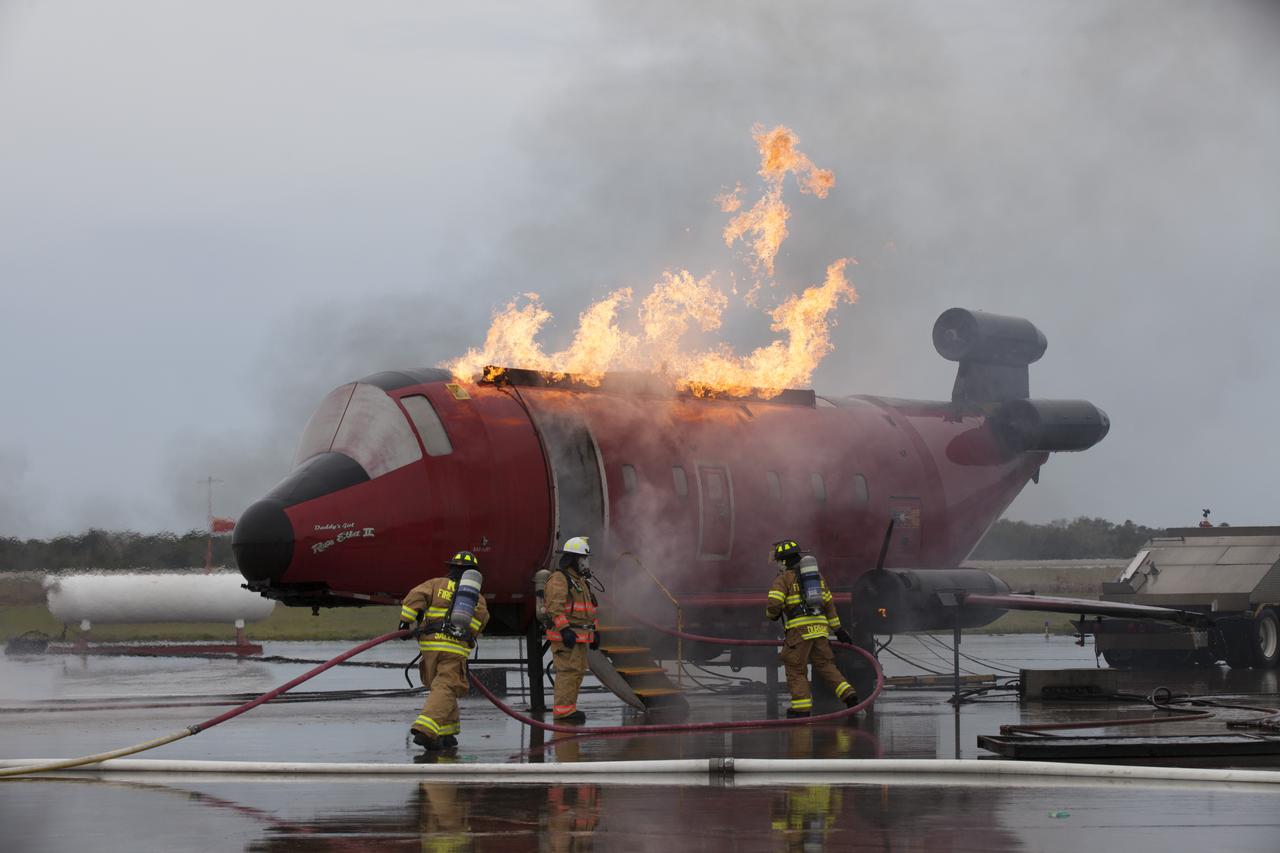
CAPE CANAVERAL, Fla. - Special Rescue Operations firefighters with NASA Fire Rescue Services in the Protective Services Office at NASA’s Kennedy Space Center in Florida participate in a training exercise at the Shuttle Landing Facility. Firefighters, wearing protective gear, use hoses to put out a fire burning on a mock-up of a small plane. Kennedy’s firefighters recently achieved Pro Board Certification in aerial fire truck operations and completed vehicle extrication training using the Jaws of Life. The Protective Services Office is one step closer to achieving certification in vehicle machinery extrication and other rescue skills. Kennedy’s firefighters are with G4S Government Solutions Inc., on the Kennedy Protective Services Contract. Photo credit: NASA/Kim Shiflett
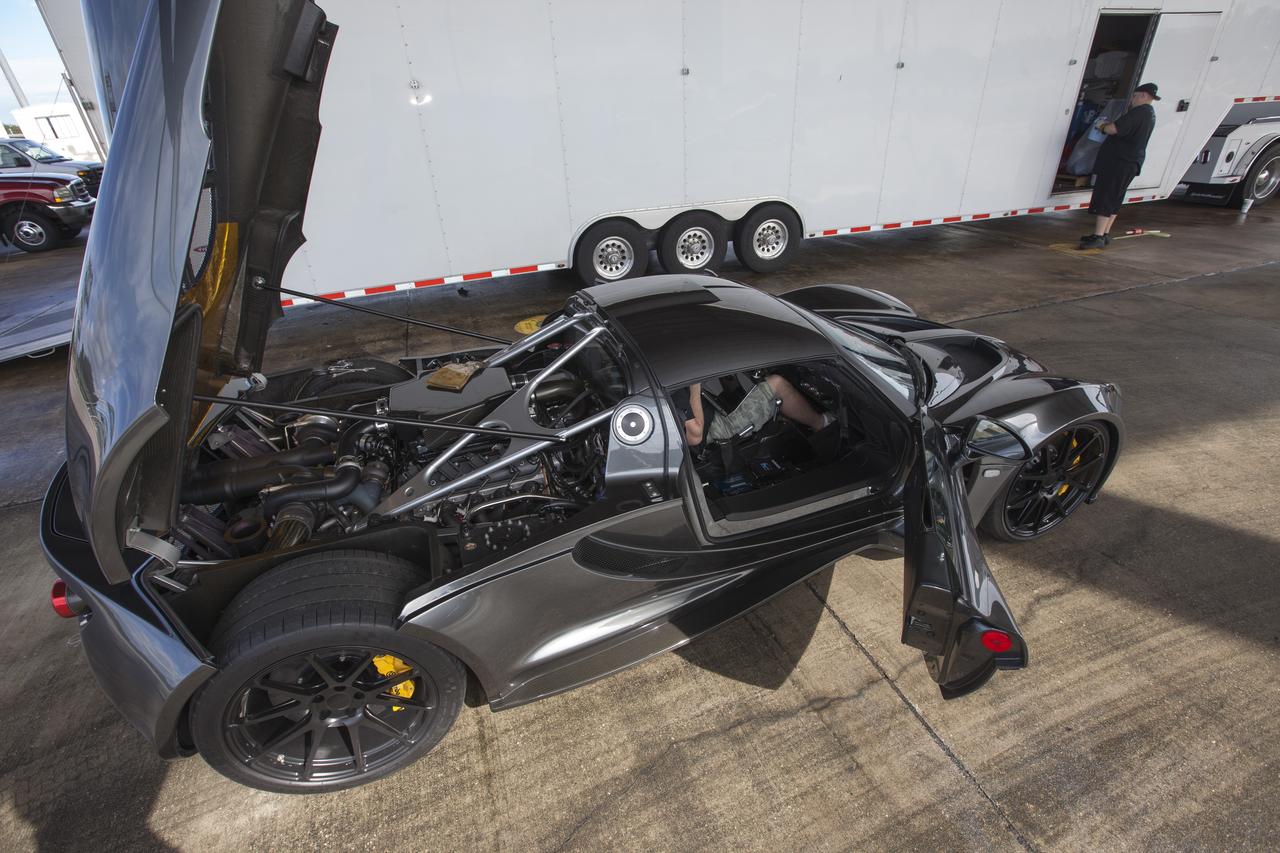
CAPE CANAVERAL, Fla. - An engineer readies a Hennessey Venom GT for test runs on the 3.5-mile long runway at the Shuttle Landing Facility at NASA's Kennedy Space Center in Florida. The flat concrete runway is one of the few places in the world where high performance automobiles can be tested for aerodynamic and safety designs. Hennessey Performance of Sealy, Texas, worked with Performance Power Racing in West Palm Beach to arrange use of the NASA facility. Performance Power Racing has conducted numerous engineering tests on the runway with a variety of vehicles. Photo credit: NASA/Kim Shiflett
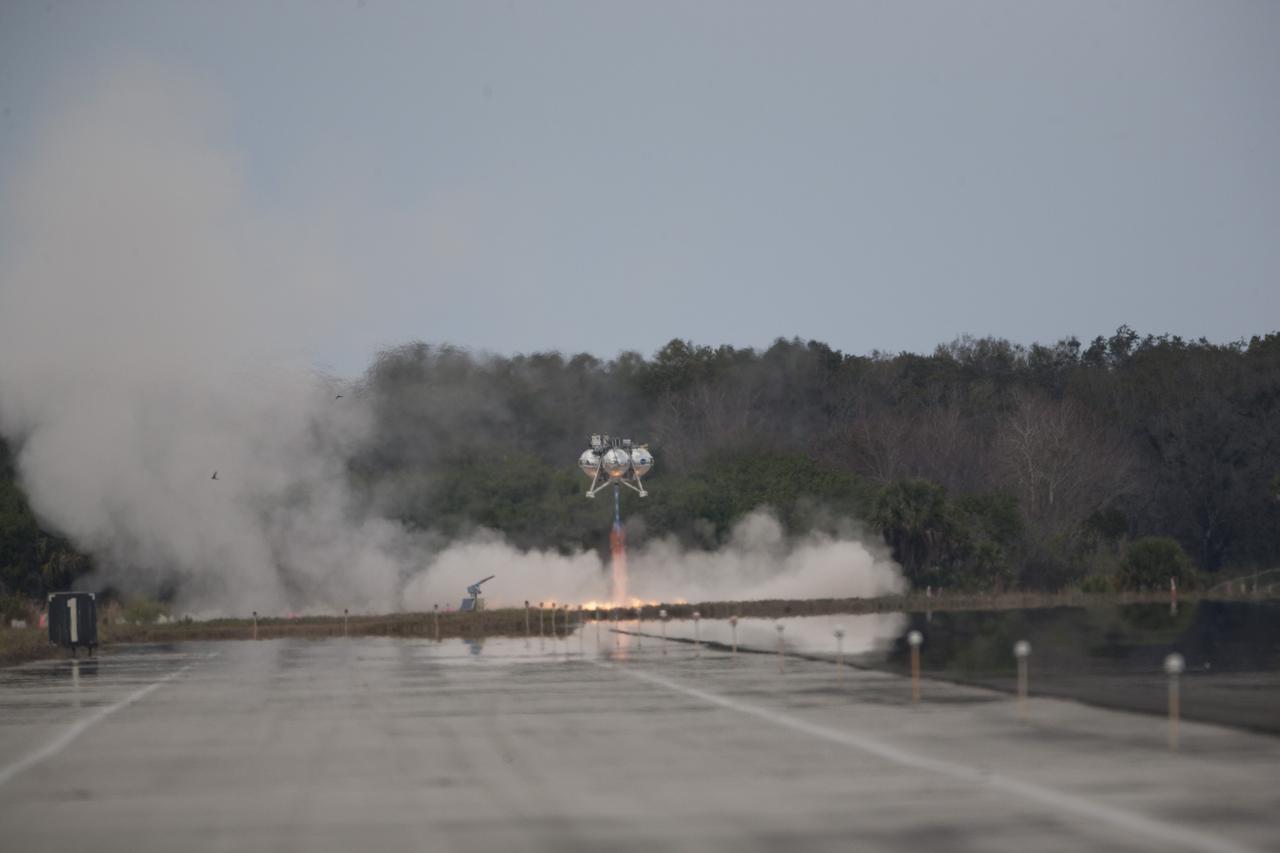
CAPE CANAVERAL, Fla. – The Project Morpheus prototype lander begins to ascend after launching on its fourth free flight test at the north end of the Shuttle Landing Facility at NASA’s Kennedy Space Center in Florida. The 64-second test began at 1:15 p.m. EST with the Morpheus lander launching from the ground over a flame trench and ascending about 305 feet, significantly increasing the ascent velocity from the last test. The lander flew forward, covering about 358 feet in 25 seconds before descending and landing within 15 inches of its target on a dedicated pad inside the autonomous landing and hazard avoidance technology, or ALHAT, hazard field. Project Morpheus tests NASA’s ALHAT and an engine that runs on liquid oxygen and methane, or green propellants, into a fully-operational lander that could deliver cargo to other planetary surfaces. The landing facility provides the lander with the kind of field necessary for realistic testing, complete with rocks, craters and hazards to avoid. Morpheus’ ALHAT payload allows it to navigate to clear landing sites amidst rocks, craters and other hazards during its descent. Project Morpheus is being managed under the Advanced Exploration Systems, or AES, Division in NASA’s Human Exploration and Operations Mission Directorate. The efforts in AES pioneer new approaches for rapidly developing prototype systems, demonstrating key capabilities and validating operational concepts for future human missions beyond Earth orbit. For more information on Project Morpheus, visit http://www.nasa.gov/centers/johnson/exploration/morpheus. Photo credit: NASA/Kim Shiflett
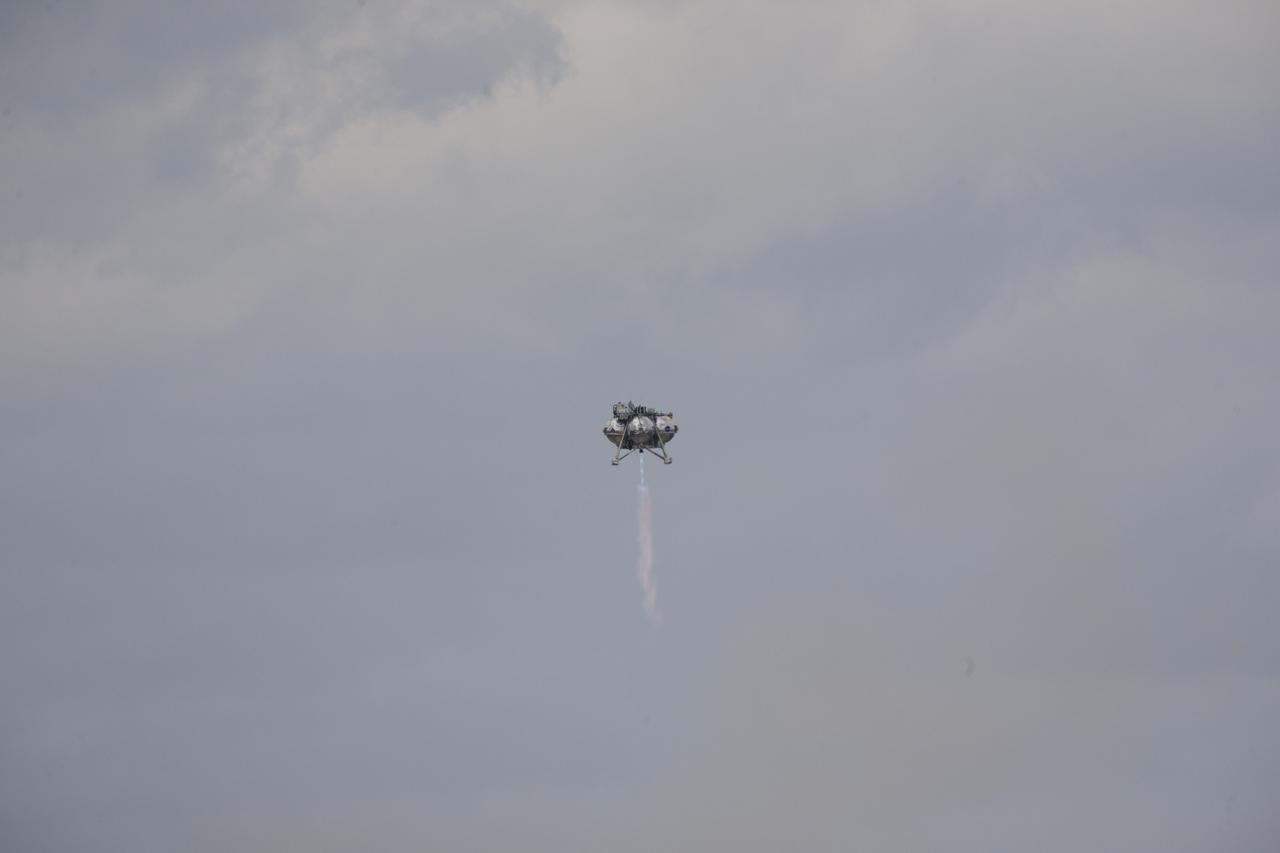
CAPE CANAVERAL, Fla. – The Project Morpheus prototype lander soars high after launching on its fourth free flight test at the north end of the Shuttle Landing Facility at NASA’s Kennedy Space Center in Florida. The 64-second test began at 1:15 p.m. EST with the Morpheus lander launching from the ground over a flame trench and ascending about 305 feet, significantly increasing the ascent velocity from the last test. The lander flew forward, covering about 358 feet in 25 seconds before descending and landing within 15 inches of its target on a dedicated pad inside the autonomous landing and hazard avoidance technology, or ALHAT, hazard field. Project Morpheus tests NASA’s ALHAT and an engine that runs on liquid oxygen and methane, or green propellants, into a fully-operational lander that could deliver cargo to other planetary surfaces. The landing facility provides the lander with the kind of field necessary for realistic testing, complete with rocks, craters and hazards to avoid. Morpheus’ ALHAT payload allows it to navigate to clear landing sites amidst rocks, craters and other hazards during its descent. Project Morpheus is being managed under the Advanced Exploration Systems, or AES, Division in NASA’s Human Exploration and Operations Mission Directorate. The efforts in AES pioneer new approaches for rapidly developing prototype systems, demonstrating key capabilities and validating operational concepts for future human missions beyond Earth orbit. For more information on Project Morpheus, visit http://www.nasa.gov/centers/johnson/exploration/morpheus. Photo credit: NASA/Kim Shiflett
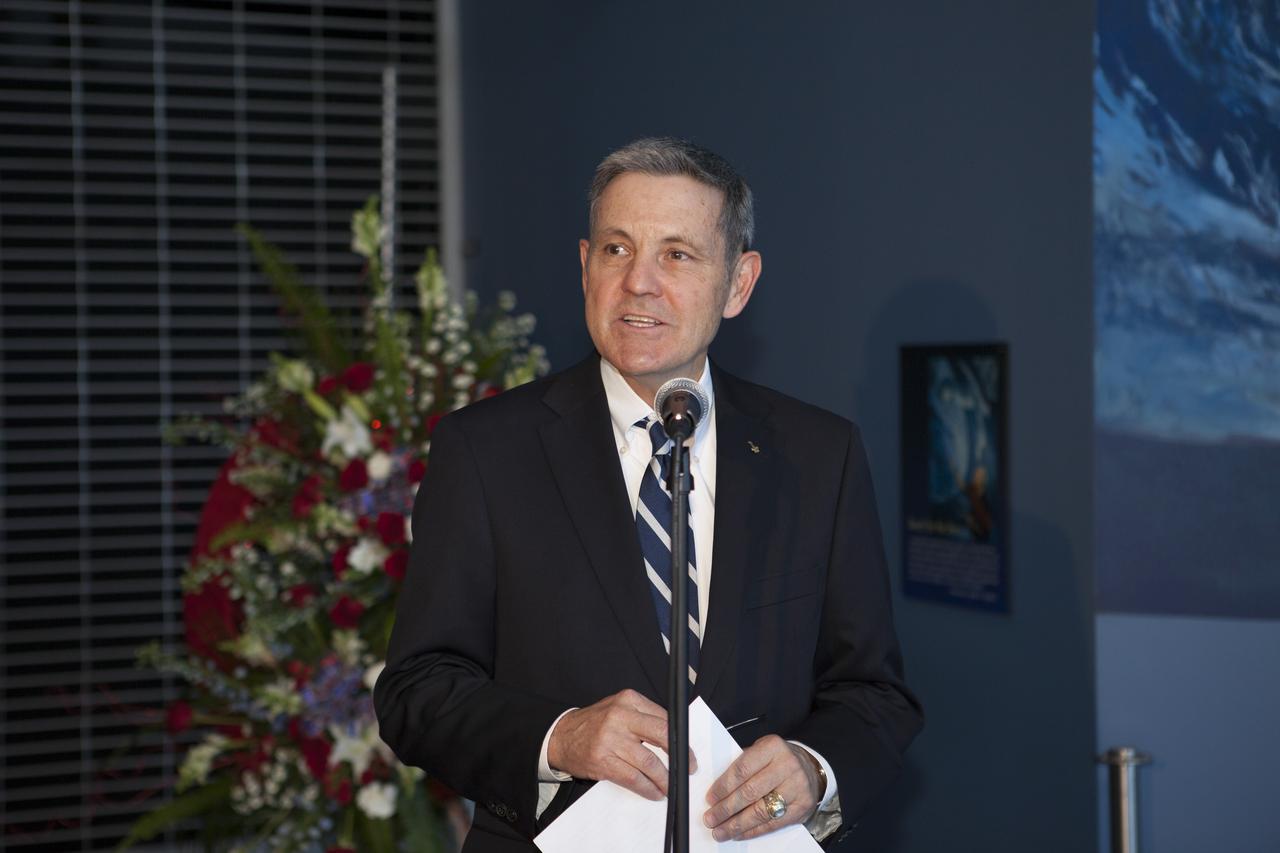
CAPE CANAVERAL, Fla. – NASA Kennedy Space Center Director Robert Cabana welcomes guests to the United States Astronaut Hall of Fame at the Kennedy Space Center Visitor Complex for a wreath laying ceremony to honor former NASA astronaut William R. Pogue. Col. Pogue, pilot on NASA's Skylab 4 mission in 1973-74, died March 3. He was 84 years old. Skylab 4 was the third and final manned visit to the Skylab orbital workshop, launched Nov. 16, 1973, and concluded Feb. 8, 1974. At 84 days, 1 hour and 15 minutes, Skylab 4 was the longest manned space flight to that date. Pogue was accompanied on the record-setting 34.5-million-mile flight by Commander Gerald P. Carr and science-pilot Dr. Edward G. Gibson. They conducted dozens of experiments and science demonstrations during their 1,214 orbits of Earth. Pogue logged 13 hours and 31 minutes in two spacewalks outside the orbital workshop. For more information, visit http://www.nasa.gov/content/skylab-4-pilot-william-pogue-dies. Photo credit: NASA/Kim Shiflett
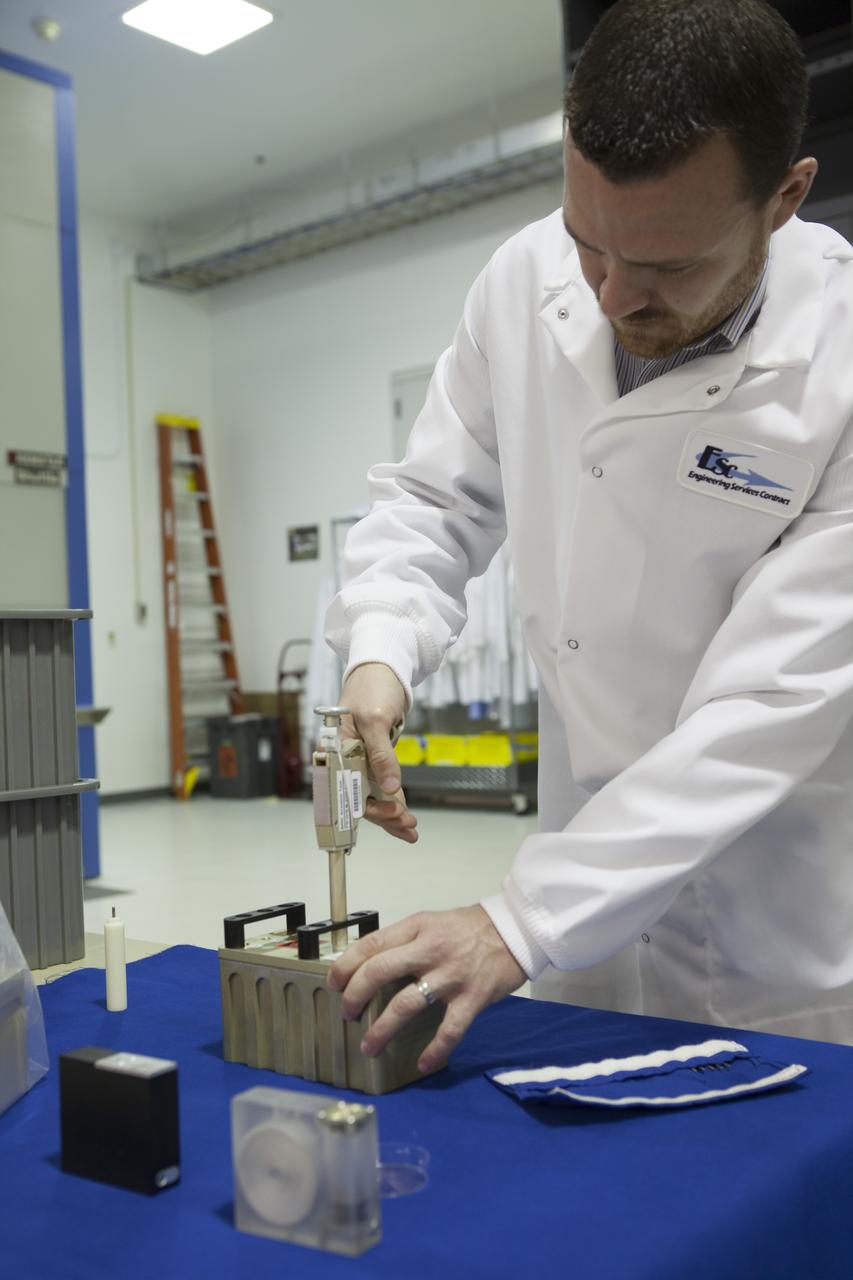
CAPE CANAVERAL, Fla. - In the Space Station Processing Facility at NASA's Kennedy Space Center in Florida, Terry Tullis, a QinetiQ North America mechanical engineer, prepares the Biological Research In Canisters, or BRIC, 18-1 and 18-2 experiments which will be launched to the International Space Station aboard a SpaceX Dragon spacecraft. Scheduled for launch on March 16 atop a Falcon 9 rocket, Dragon will be marking its fourth trip to the space station. The SpaceX-3 mission is the third of 12 flights contracted by NASA to resupply the orbiting laboratory. For more information, visit http://www.nasa.gov/mission_pages/station/structure/launch/index.html Photo credit: NASA/Kim Shiflett

CAPE CANAVERAL, Fla. - In the Space Station Processing Facility at NASA's Kennedy Space Center in Florida, the Biotube experiment is being prepared for launch to the International Space Station aboard a SpaceX Dragon spacecraft. Biotube-MICRO will investigate the potential for magnetic fields to orient plant roots as they grow in microgravity. Scheduled for launch on March 16 atop a Falcon 9 rocket, Dragon will be marking its fourth trip to the space station. The SpaceX-3 mission is the third of 12 flights contracted by NASA to resupply the orbiting laboratory. For more information, visit http://www.nasa.gov/mission_pages/station/structure/launch/index.html Photo credit: NASA/Kim Shiflett
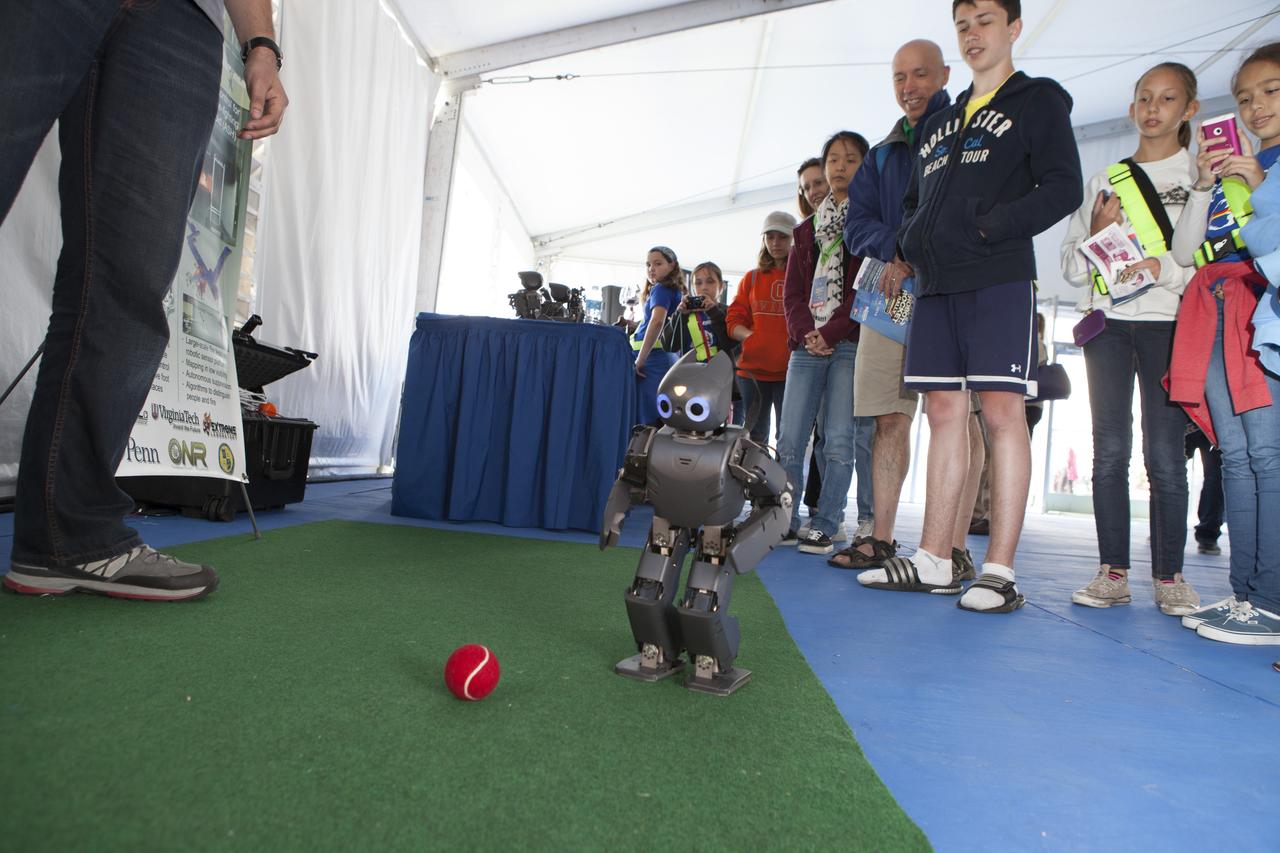
CAPE CANAVERAL, Fla. – Students gather to watch as a DARwin-OP miniature humanoid robot from Virginia Tech Robotics demonstrates its soccer abilities at the Robot Rocket Rally. The three-day event at Florida's Kennedy Space Center Visitor Complex is highlighted by exhibits, games and demonstrations of a variety of robots, with exhibitors ranging from school robotics clubs to veteran NASA scientists and engineers. Photo credit: NASA/Kim Shiflett

CAPE CANAVERAL, Fla. – One of four new emergency egress vehicles, called Mine-Resistant Ambush-Protection, or MRAP, vehicles is driven to the Maintenance and Operations Facility at Kennedy Space Center in Florida. The MRAPs arrived from the U.S. Army Red River Depot in Texarkana, Texas in December 2013. The vehicles were processed in and then transported to the Rotation, Processing and Surge Facility near the Vehicle Assembly Building for temporary storage. The Ground Systems Development and Operations Program at Kennedy led the efforts to an emergency egress vehicle that future astronauts could quickly use to leave the Launch Complex 39 area in case of an emergency. During crewed launches of NASA’s Space Launch System and Orion spacecraft, the MRAP will be stationed by the slidewire termination area at the pad. In case of an emergency, the crew will ride a slidewire to the ground and immediately board the MRAP for safe egress from the pad. The new vehicles replace the M-113 vehicles that were used during the Space Shuttle Program. Photo credit: NASA/Kim Shiflett
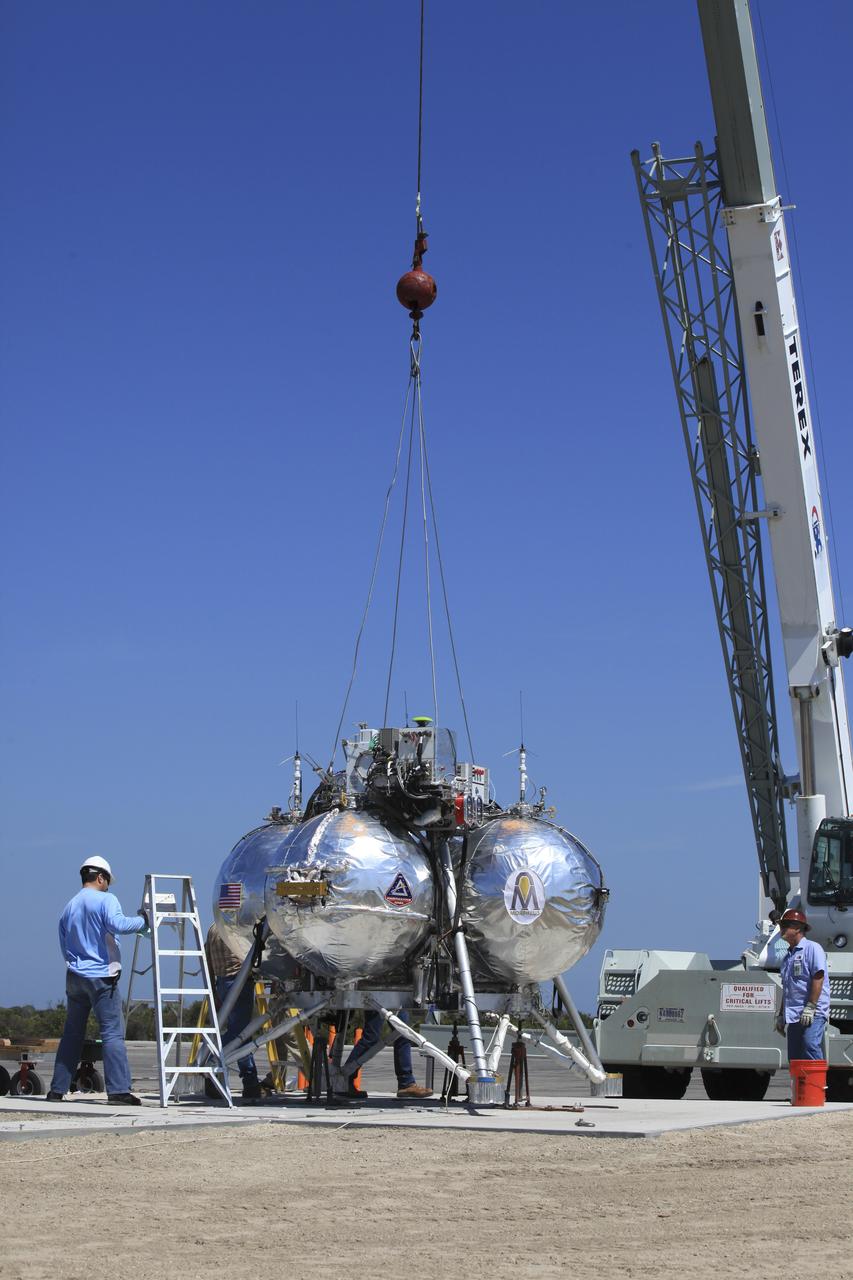
CAPE CANAVERAL, Fla. – A crane lowers the Project Morpheus prototype lander onto a launch pad at a new launch site at the north end of the Shuttle Landing Facility at NASA's Kennedy Space Center in Florida. Engineers and technicians are preparing Morpheus for an automated landing and hazard avoidance technology, or ALHAT, and laser test at the new launch site. The launch pad was moved to a different location at the landing facility to support the next phase of flight testing. The seventh free flight test of Morpheus occurred on March 11. The 83-second test began at 3:41 p.m. EDT with the Morpheus lander launching from the ground over a flame trench and ascending to 580 feet. Morpheus then flew its fastest downrange trek at 30 mph, travelling farther than before, 837 feet. The lander performed a 42-foot divert to emulate a hazard avoidance maneuver before descending and touching down on Landing Site 2, at the northern landing pad inside the ALHAT hazard field. Morpheus landed within one foot of its intended target. Project Morpheus tests NASA’s ALHAT and an engine that runs on liquid oxygen and methane, or green propellants, into a fully-operational lander that could deliver cargo to other planetary surfaces. The landing facility provides the lander with the kind of field necessary for realistic testing, complete with rocks, craters and hazards to avoid. Morpheus’ ALHAT payload allows it to navigate to clear landing sites amidst rocks, craters and other hazards during its descent. Project Morpheus is being managed under the Advanced Exploration Systems, or AES, Division in NASA’s Human Exploration and Operations Mission Directorate. The efforts in AES pioneer new approaches for rapidly developing prototype systems, demonstrating key capabilities and validating operational concepts for future human missions beyond Earth orbit. For more information on Project Morpheus, visit http://morpheuslander.jsc.nasa.gov/. Photo credit: NASA/Kim Shiflett
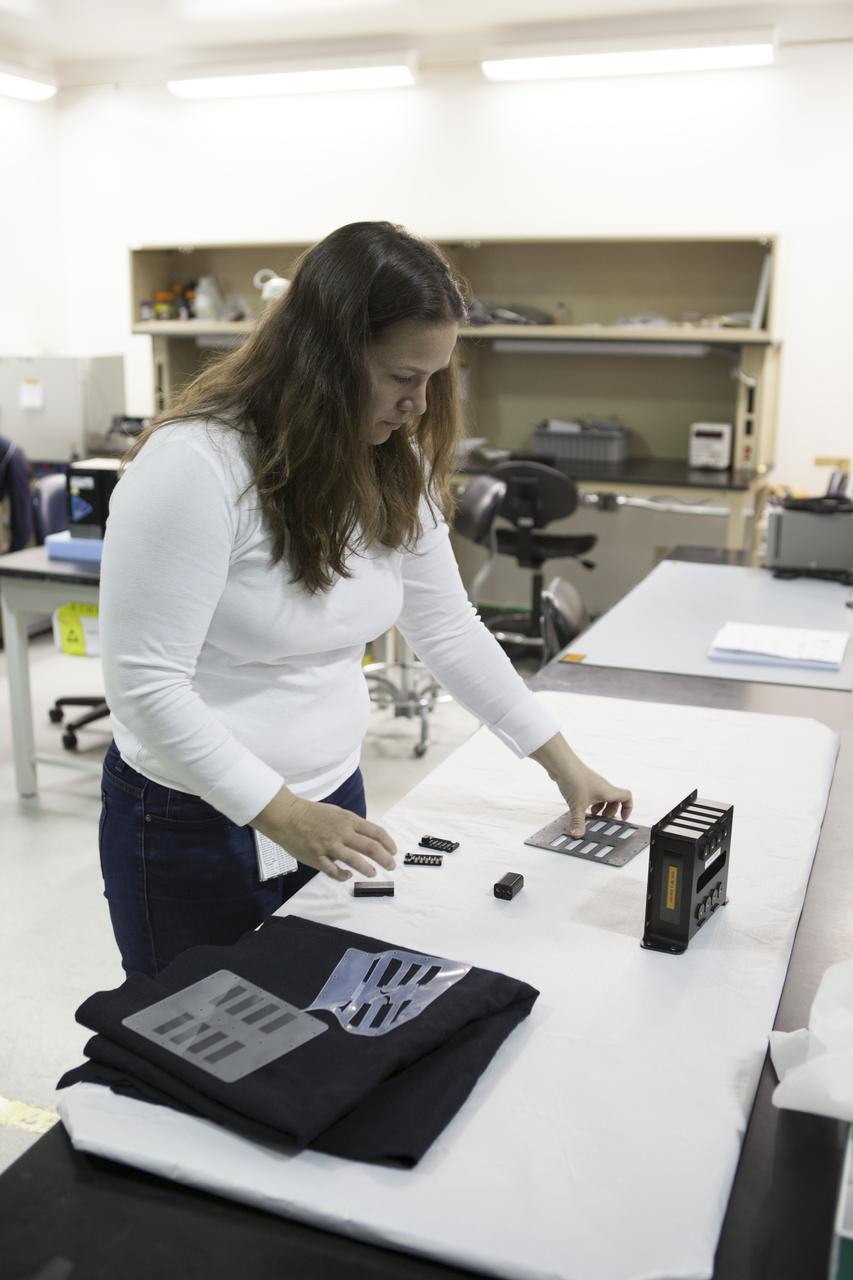
CAPE CANAVERAL, Fla. - In the Space Station Processing Facility at NASA's Kennedy Space Center in Florida, Allison Caron, a QinetiQ mechanical engineer, checks out part of the Biotube experiment which will be launched to the International Space Station aboard a SpaceX Dragon spacecraft. Scheduled for launch on March 16 atop a Falcon 9 rocket, Dragon will be marking its fourth trip to the space station. The SpaceX-3 mission is the third of 12 flights contracted by NASA to resupply the orbiting laboratory. For more information, visit http://www.nasa.gov/mission_pages/station/structure/launch/index.html Photo credit: NASA/Kim Shiflett
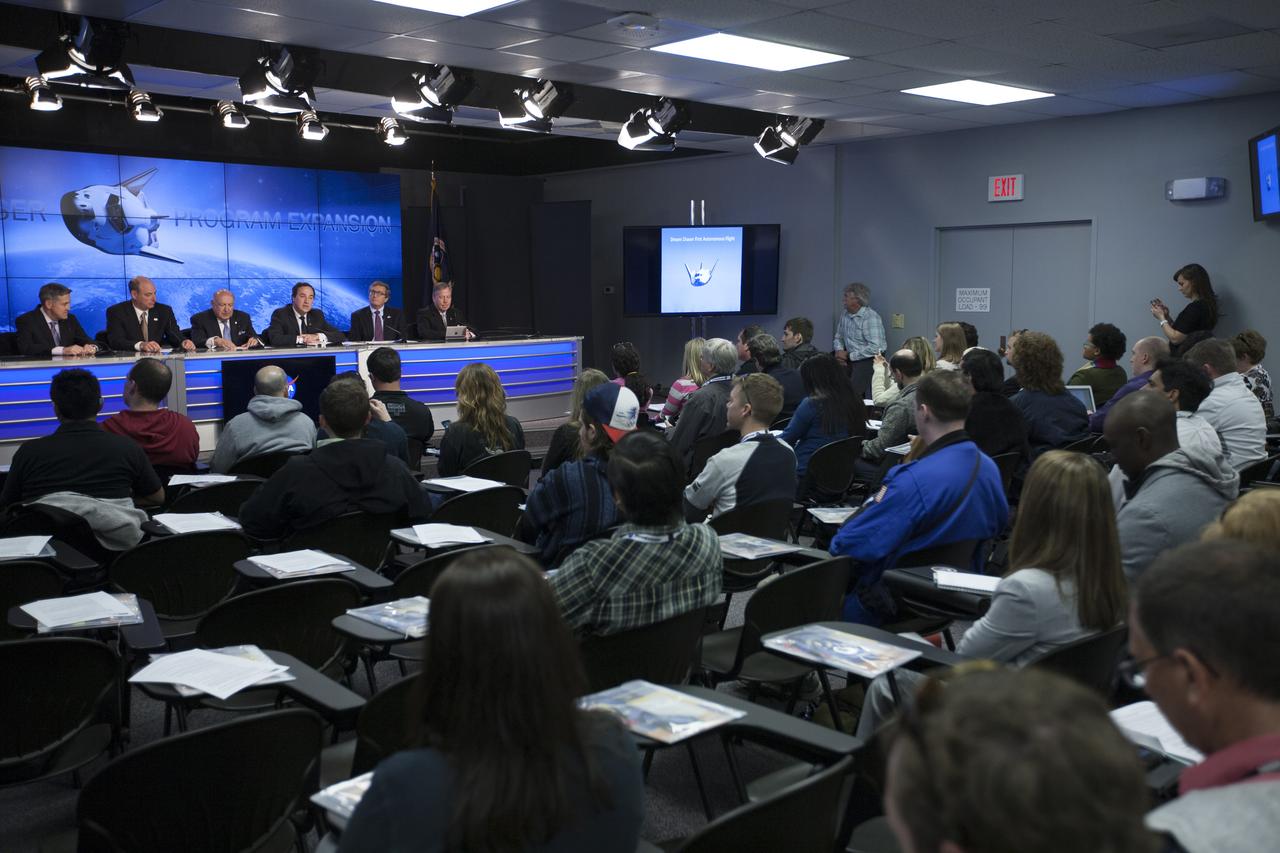
CAPE CANAVERAL, Fla. – Sierra Nevada Corporation, or SNC, Space Systems, announces the steps the company will take to prepare for a November 2016 orbital flight of its Dream Chaser spacecraft from Florida’s Space Coast during a news conference at NASA’s Kennedy Space Center in Florida. Participants, from left, are Bob Cabana, director of Kennedy Michael Gass, president and CEO of United Launch Alliance, or ULA Frank DiBello, president and CEO of Space Florida Mark Sirangelo, corporate vice president and head of SNC Space Systems Larry Price, Lockheed Martin Space Systems deputy program manager for NASA's Orion spacecraft and Steve Lindsey, Dream Chaser program manager for SNC Space Systems. The steps are considered substantial for SNC and important to plans by NASA and Space Florida for Kennedy’s transformation into a multi-user spaceport for both commercial and government customers. SNC said it plans to work with ULA to launch the Dream Chaser spacecraft into orbit atop an Atlas V rocket from Space Launch Complex 41 at Cape Canaveral Air Force Station intends to land the winged spacecraft at Kennedy’s 3.5-mile long runway at the Shuttle Landing Facility lease office space at Exploration Park, right outside Kennedy’s gates and process the spacecraft in the high bay of the Operations and Checkout Building at Kennedy, with Lockheed Martin performing the work. Photo credit: NASA/Kim Shiflett
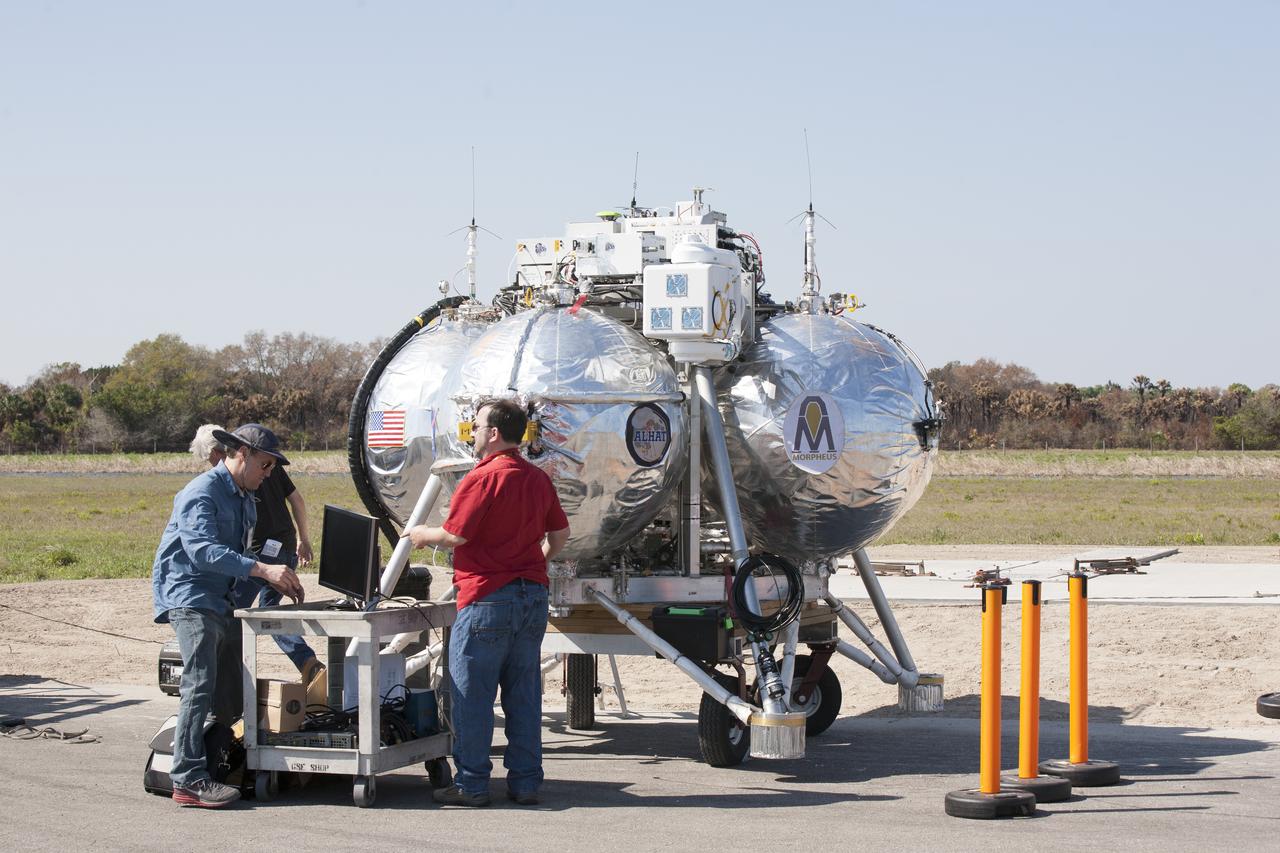
CAPE CANAVERAL, Fla. – Engineers run an automated landing and hazard avoidance technology, or ALHAT, and laser test on the Project Morpheus prototype lander at a new launch site at the north end of the Shuttle Landing Facility at NASA’s Kennedy Space Center in Florida. The launch pad was moved to a different location at the landing facility to support the next phase of flight testing. The seventh free flight test of Morpheus occurred on March 11. The 83-second test began at 3:41 p.m. EDT with the Morpheus lander launching from the ground over a flame trench and ascending to 580 feet. Morpheus then flew its fastest downrange trek at 30 mph, travelling farther than before, 837 feet. The lander performed a 42-foot divert to emulate a hazard avoidance maneuver before descending and touching down on Landing Site 2, at the northern landing pad inside the ALHAT hazard field. Morpheus landed within one foot of its intended target. Project Morpheus tests NASA’s ALHAT and an engine that runs on liquid oxygen and methane, or green propellants, into a fully-operational lander that could deliver cargo to other planetary surfaces. The landing facility provides the lander with the kind of field necessary for realistic testing, complete with rocks, craters and hazards to avoid. Morpheus’ ALHAT payload allows it to navigate to clear landing sites amidst rocks, craters and other hazards during its descent. Project Morpheus is being managed under the Advanced Exploration Systems, or AES, Division in NASA’s Human Exploration and Operations Mission Directorate. The efforts in AES pioneer new approaches for rapidly developing prototype systems, demonstrating key capabilities and validating operational concepts for future human missions beyond Earth orbit. For more information on Project Morpheus, visit http://morpheuslander.jsc.nasa.gov/. Photo credit: NASA/Kim Shiflett
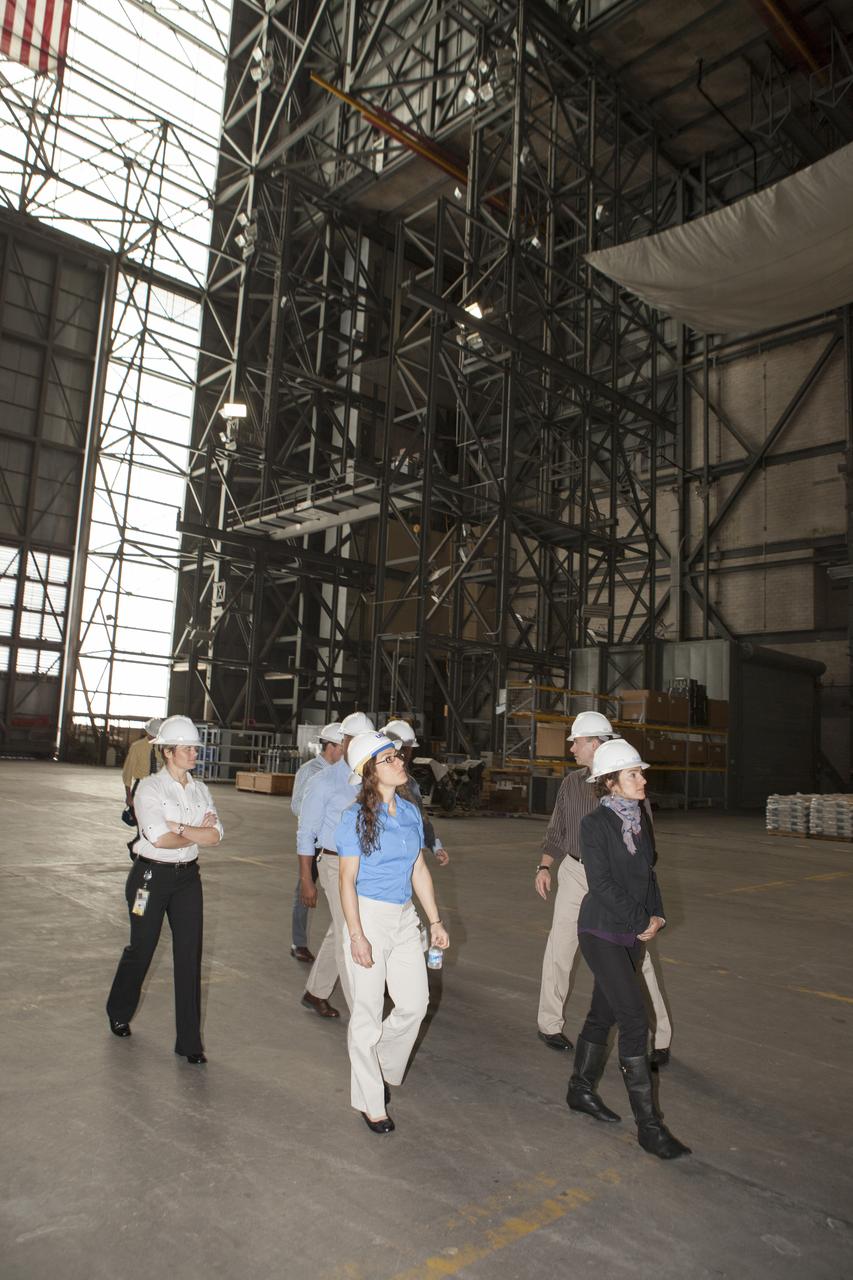
CAPE CANAVERAL, Fla. - NASA astronaut candidates Anne McClain, from left, Christina Hammock, Tyler "Nick" Hague and Jessica Meir walk through the transfer aisle of the Vehicle Assembly Building at NASA's Kennedy Space Center during a daylong set of briefings and tours of different facilities at NASA's primary launch center. The astronaut class of 2013 was selected by NASA after an extensive year-and-a-half search. The new group will help the agency push the boundaries of exploration and travel to new destinations in the solar system. To learn more about the astronaut class of 2013, visit: http://www.nasa.gov/astronauts/2013astroclass.html Photo credit: NASA/Kim Shiflett
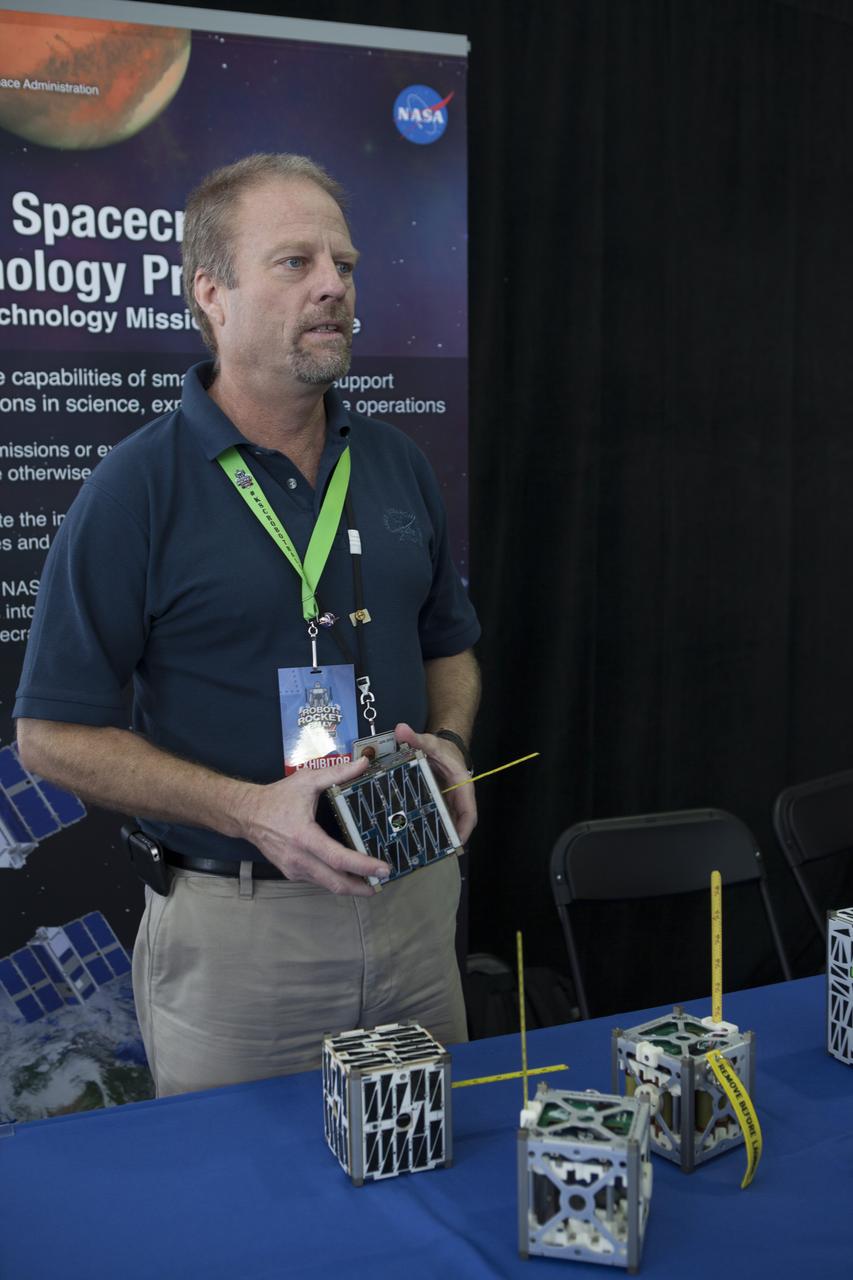
CAPE CANAVERAL, Fla. – Bruce Yost of NASA's Ames Research Center discusses a small satellite, known as PhoneSat, during the Robot Rocket Rally. The three-day event at Florida's Kennedy Space Center Visitor Complex is highlighted by exhibits, games and demonstrations of a variety of robots, with exhibitors ranging from school robotics clubs to veteran NASA scientists and engineers. Photo credit: NASA/Kim Shiflett
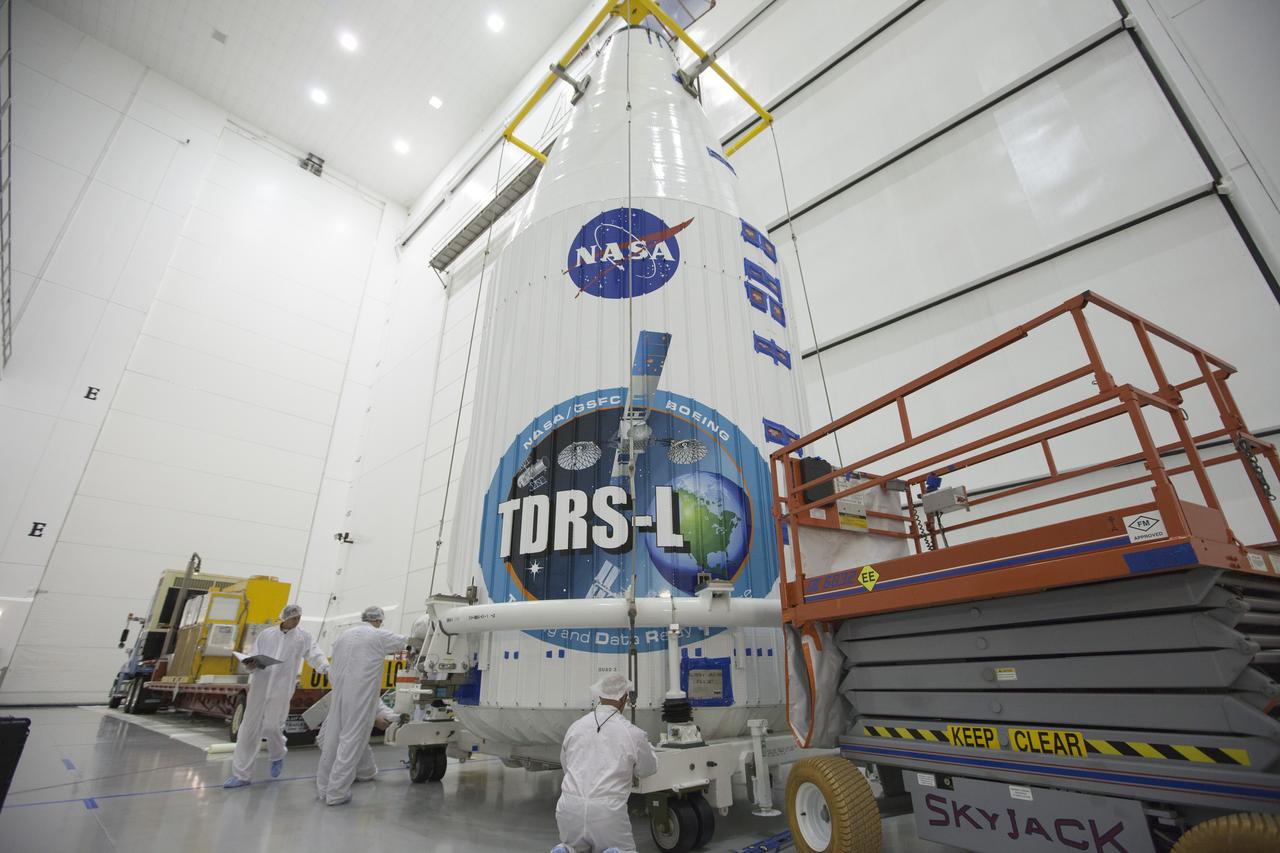
TITUSVILLE, Fla. – Under the watchful eyes of United launch Alliance engineers and technicians at the Astrotech payload processing facility in Titusville, the Tracking and Data Relay Satellite, or TDRS-L, spacecraft is being encapsulated in its payload fairing. It is about to be lifted by crane for mounting on a transporter for its trip to Launch Complex 41 at Cape Canaveral Air Force Station. The TDRS-L satellite will be a part of the second of three next-generation spacecraft designed to ensure vital operational continuity for the NASA Space Network. It is scheduled to launch from Cape Canaveral's Space Launch Complex 41 atop a United Launch Alliance Atlas V rocket on January 23, 2014. The current Tracking and Data Relay Satellite system consists of eight in-orbit satellites distributed to provide near continuous information relay contact with orbiting spacecraft ranging from the International Space Station and Hubble Space Telescope to the array of scientific observatories. For more information, visit: http://www.nasa.gov/mission_pages/tdrs/home/index.html Photo credit: NASA/Kim Shiflett
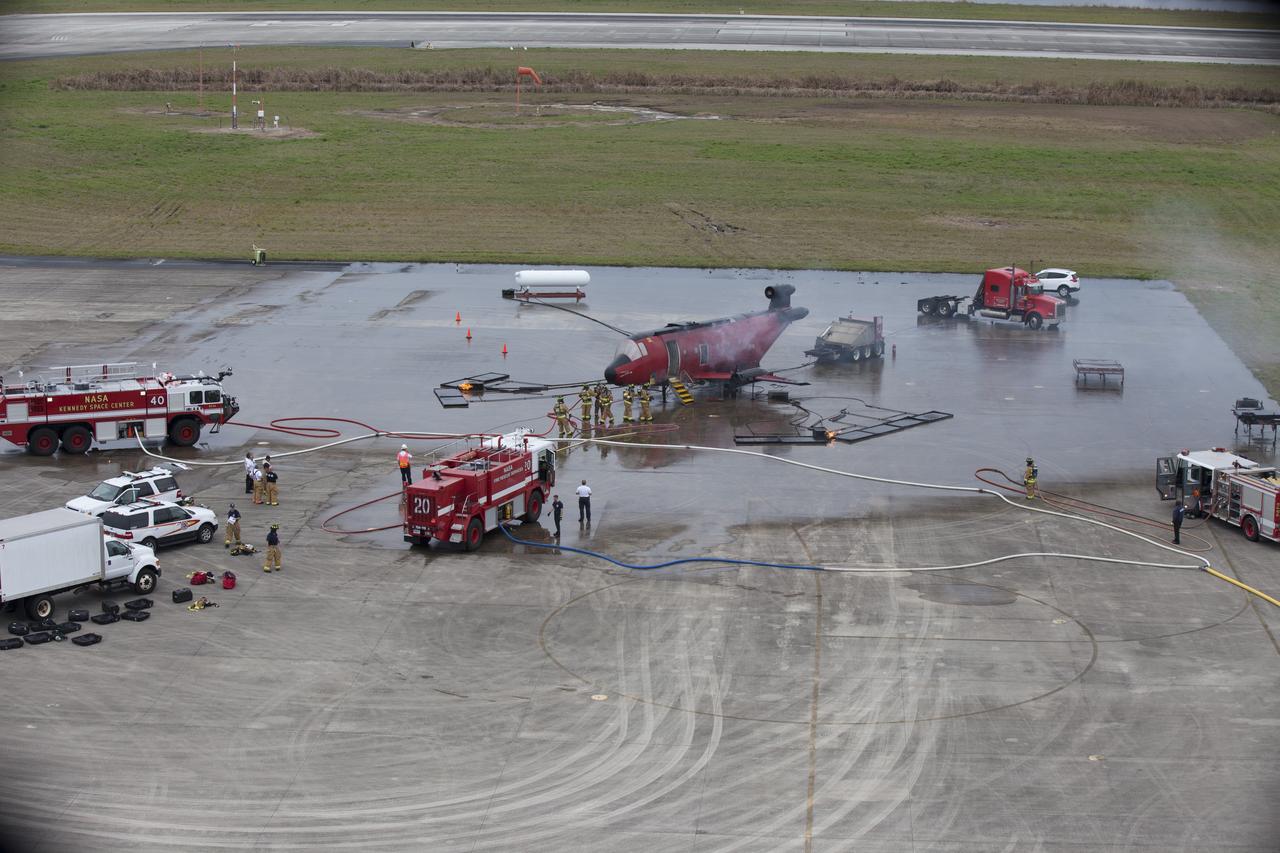
CAPE CANAVERAL, Fla. - Special Rescue Operations firefighters with NASA Fire Rescue Services in the Protective Services Office at NASA’s Kennedy Space Center in Florida participate in a training exercise at the Shuttle Landing Facility. Firefighters use fire trucks and hoses to extinguish flames burning on and around a mock-up of a small plane. Kennedy’s firefighters recently achieved Pro Board Certification in aerial fire truck operations and completed vehicle extrication training using the Jaws of Life. The Protective Services Office is one step closer to achieving certification in vehicle machinery extrication and other rescue skills. Kennedy’s firefighters are with G4S Government Solutions Inc., on the Kennedy Protective Services Contract. Photo credit: NASA/Kim Shiflett
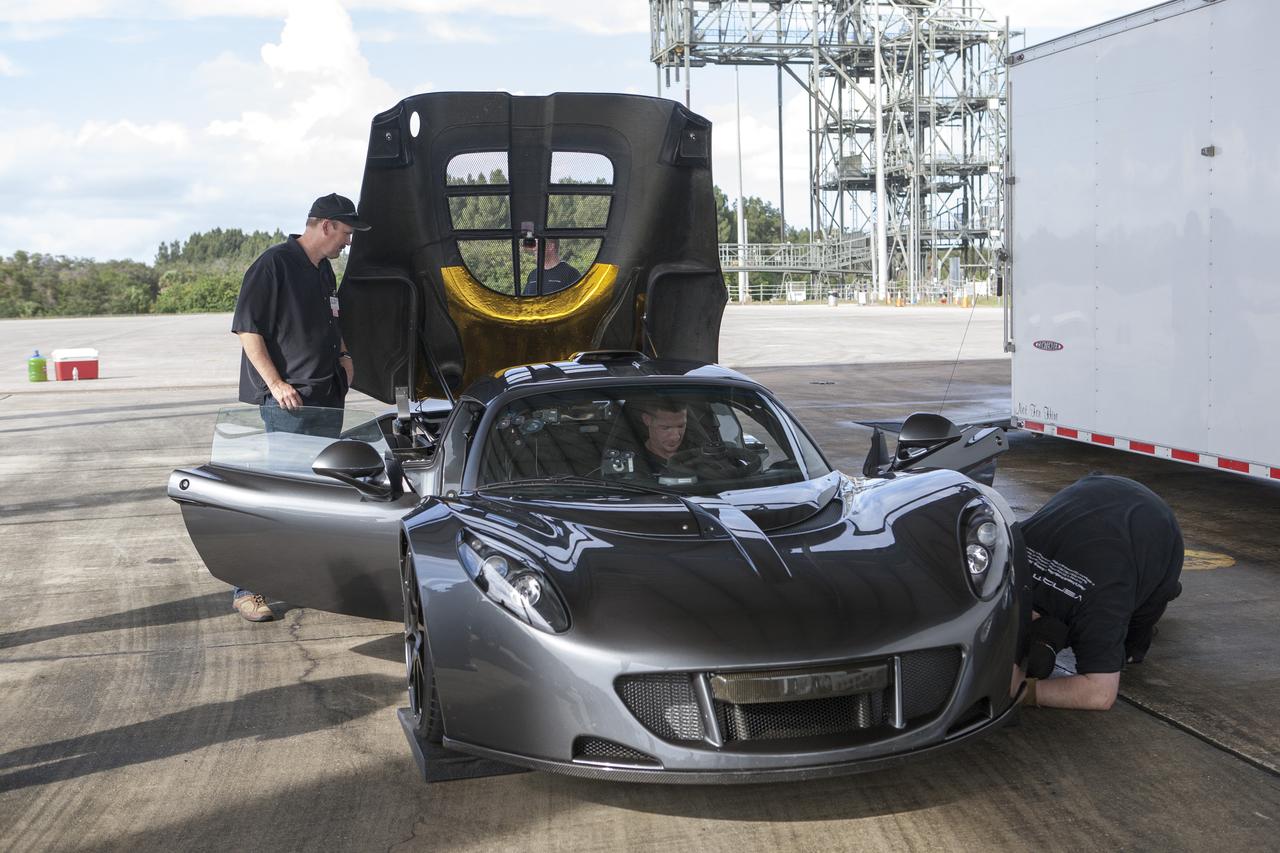
CAPE CANAVERAL, Fla. - Mechanics and engineers ready a Hennessey Venom GT for test runs on the 3.5-mile long runway at the Shuttle Landing Facility at NASA's Kennedy Space Center in Florida. The flat concrete runway is one of the few places in the world where high performance automobiles can be tested for aerodynamic and safety designs. Hennessey Performance of Sealy, Texas, worked with Performance Power Racing in West Palm Beach to arrange use of the NASA facility. Performance Power Racing has conducted numerous engineering tests on the runway with a variety of vehicles. Photo credit: NASA/Kim Shiflett
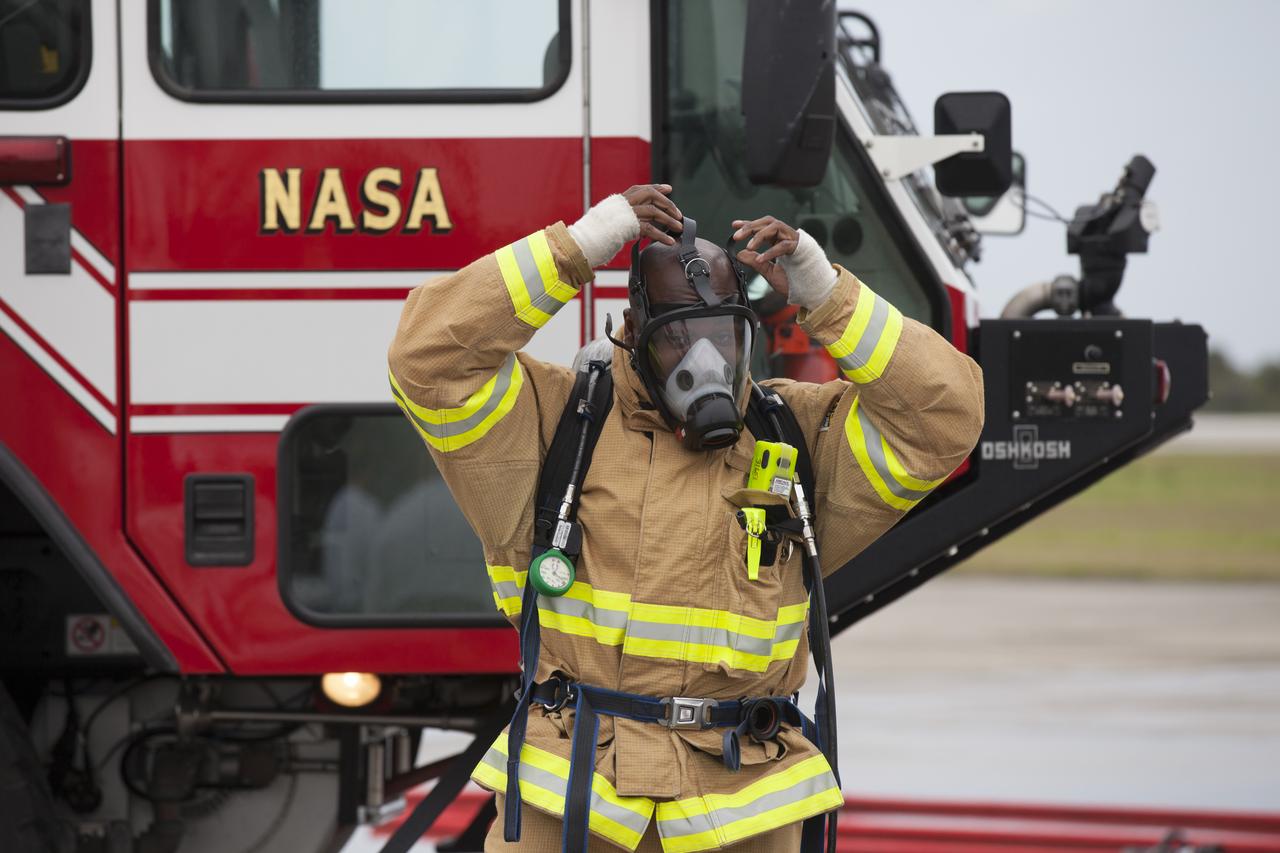
CAPE CANAVERAL, Fla. - Special Rescue Operations firefighters with NASA Fire Rescue Services in the Protective Services Office at NASA’s Kennedy Space Center in Florida practice firefighting skills at the Shuttle Landing Facility. A firefighter dons protective gear to prepare for the training simulation. Kennedy’s firefighters recently achieved Pro Board Certification in aerial fire truck operations and completed vehicle extrication training using the Jaws of Life. The Protective Services Office is one step closer to achieving certification in vehicle machinery extrication and other rescue skills. Kennedy’s firefighters are with G4S Government Solutions Inc., on the Kennedy Protective Services Contract. Photo credit: NASA/Kim Shiflett
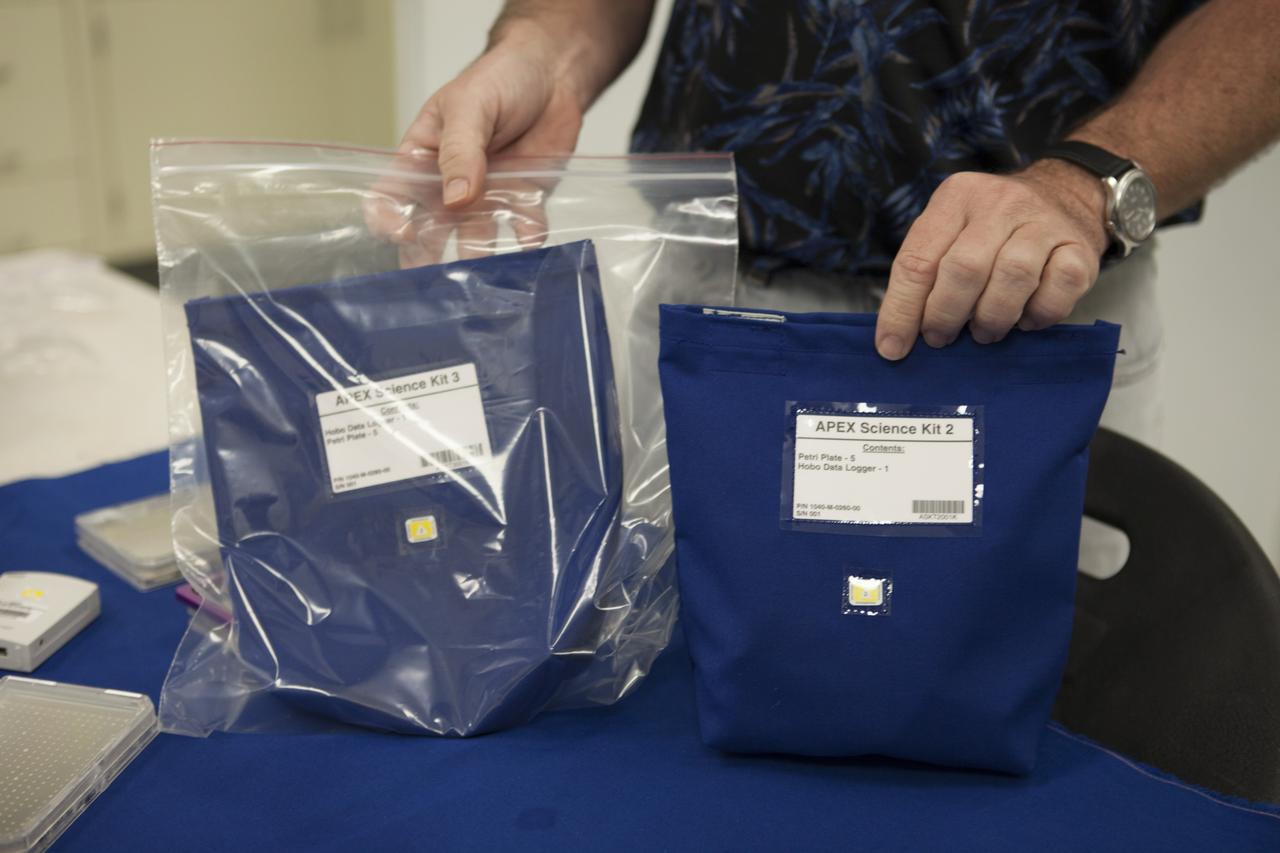
CAPE CANAVERAL, Fla. - In the Space Station Processing Facility at NASA's Kennedy Space Center in Florida, portions of the Advanced Plant Experiment, or APEX, experiment are checked out as it is prepared for launch to the International Space Station aboard a SpaceX Dragon spacecraft. Scheduled for launch on March 16 atop a Falcon 9 rocket, Dragon will be marking its fourth trip to the space station. The SpaceX-3 mission is the third of 12 flights contracted by NASA to resupply the orbiting laboratory. For more information, visit http://www.nasa.gov/mission_pages/station/structure/launch/index.html Photo credit: NASA/Kim Shiflett
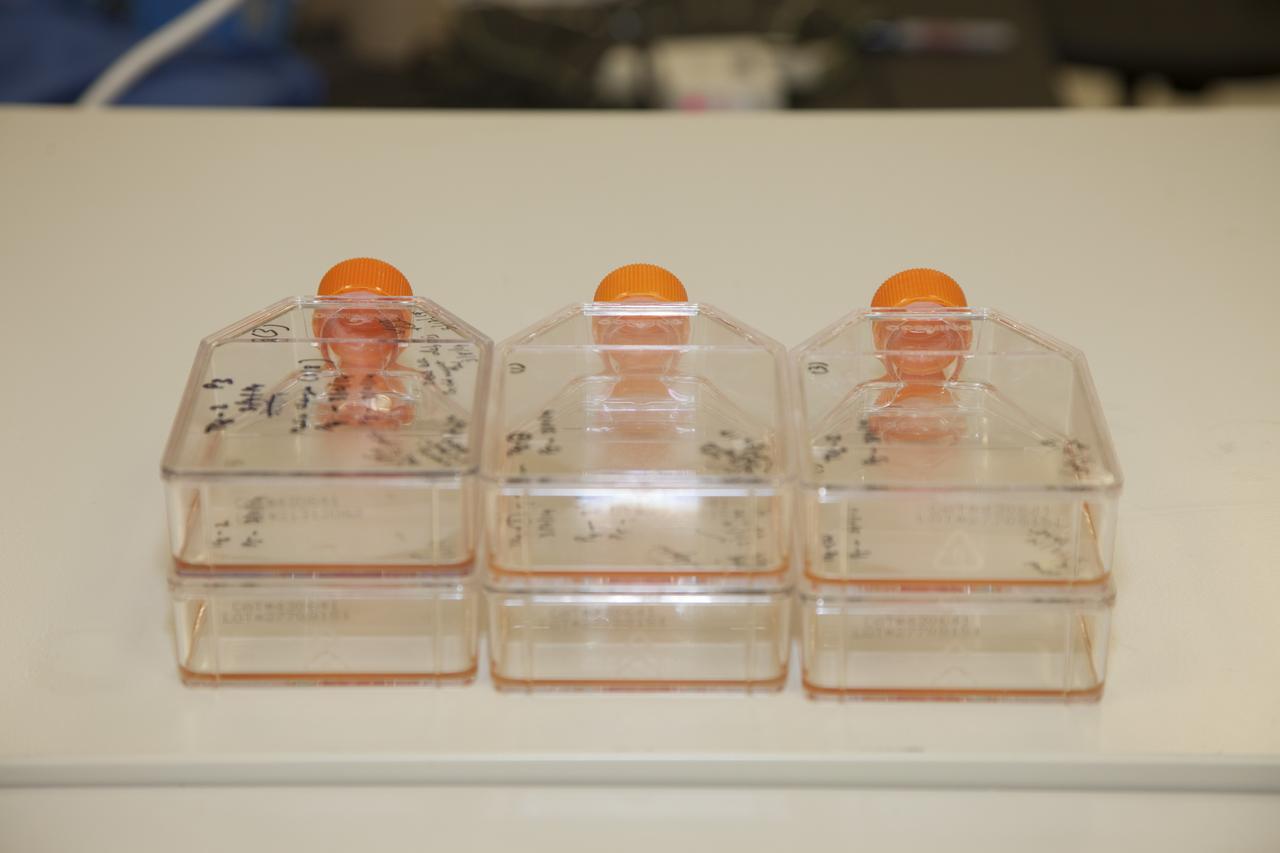
CAPE CANAVERAL, Fla. - In the Space Station Processing Facility at NASA's Kennedy Space Center in Florida, the University Research-1 payload developed by Texas Southern University in Houston is being prepared for loading aboard the SpaceX Dragon spacecraft for launch to the International Space Station. The experiment involves an investigation of countermeasures involving research into the efficacy of benzofuran-2-carboxylic acid derivatives as pharmacological countermeasures in mitigating the adverse effects of space flight and the International Space Station radiation environment on the immune system. Scheduled for launch on March 16 atop a Falcon 9 rocket, Dragon will be marking its fourth trip to the space station. The SpaceX-3 mission is the third of 12 flights contracted by NASA to resupply the orbiting laboratory. For more information, visit http://www.nasa.gov/mission_pages/station/structure/launch/index.html Photo credit: NASA/Kim Shiflett
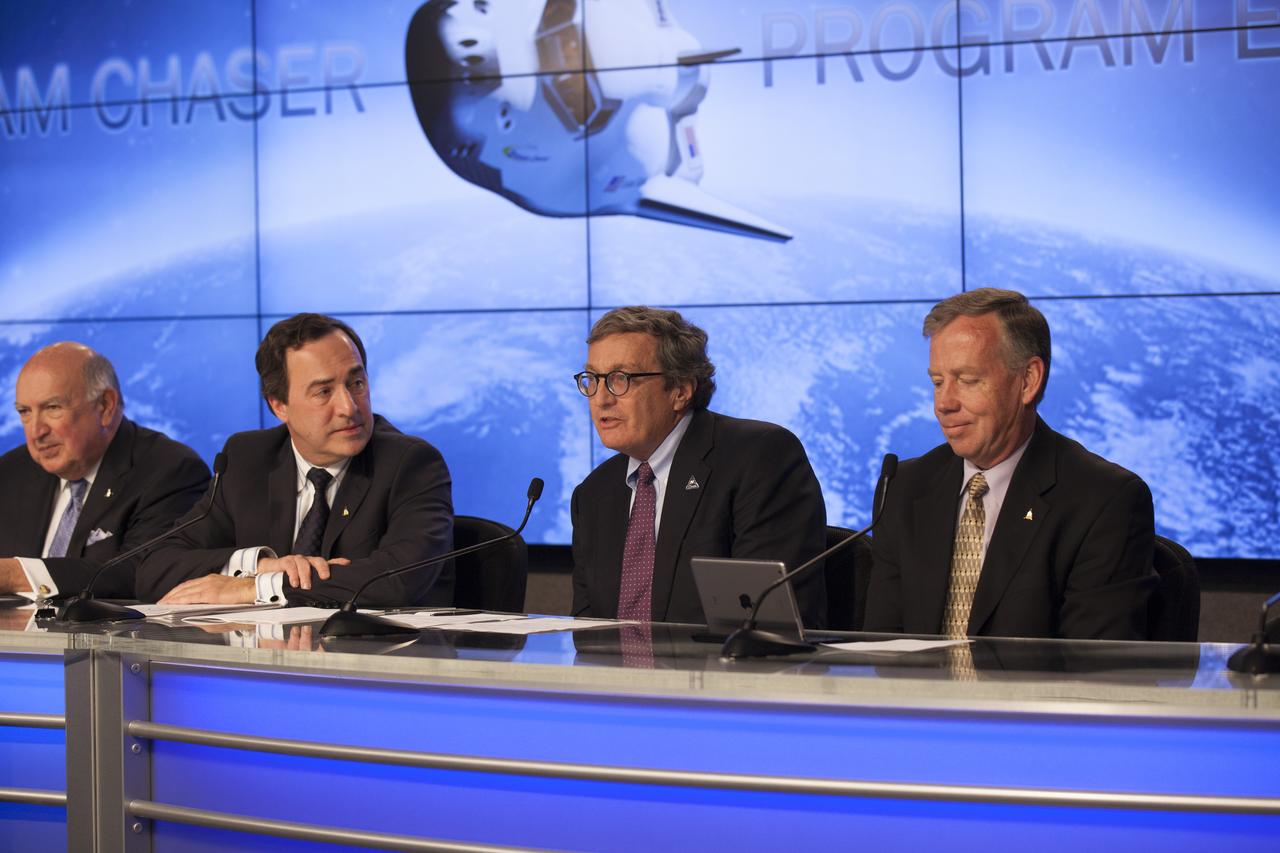
CAPE CANAVERAL, Fla. – Larry Price, Lockheed Martin Space Systems deputy program manager for NASA's Orion spacecraft, joins Sierra Nevada Corporation, or SNC, Space Systems, as the company announces the steps it will take to prepare for a November 2016 orbital flight of its Dream Chaser spacecraft from Florida’s Space Coast. The steps are considered substantial for SNC and important to plans by NASA and Space Florida for Kennedy Space Center’s transformation into a multi-user spaceport for both commercial and government customers. SNC said it plans to work with United Launch Alliance, or ULA, to launch the Dream Chaser spacecraft into orbit atop an Atlas V rocket from Space Launch Complex 41 at Cape Canaveral Air Force Station intends to land the winged spacecraft at Kennedy’s 3.5-mile long runway at the Shuttle Landing Facility lease office space at Exploration Park, right outside Kennedy’s gates and process the spacecraft in the high bay of the Operations and Checkout Building at Kennedy, with Lockheed Martin performing the work. Photo credit: NASA/Kim Shiflett
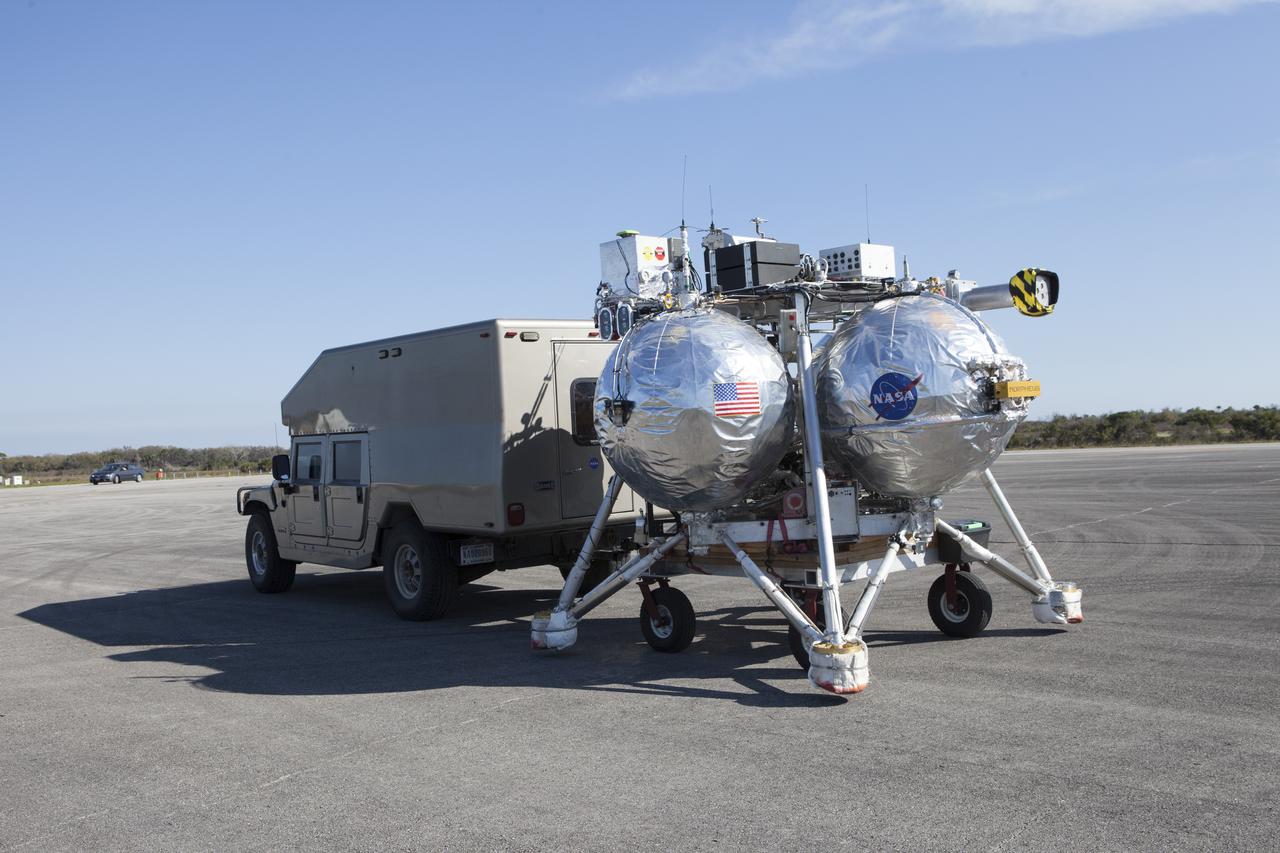
CAPE CANAVERAL, Fla. - The Project Morpheus prototype lander is transported to the north end of the Shuttle Landing Facility at NASA’s Kennedy Space Center in Florida for the seventh free flight test. The 83-second test began at 3:41 p.m. EDT with the Morpheus lander launching from the ground over a flame trench and ascending to 580 feet, its highest to date. Morpheus then flew its fastest downrange trek at 30 mph, travelling farther than before, 837 feet. The lander performed a 42-foot divert to emulate a hazard avoidance maneuver before descending and touching down on Landing Site 2, at the northern landing pad inside the automated landing and hazard avoidance technology ALHAT hazard field. Morpheus landed within one foot of its intended target. Project Morpheus tests NASA’s ALHAT and an engine that runs on liquid oxygen and methane, or green propellants, into a fully-operational lander that could deliver cargo to other planetary surfaces. The landing facility provides the lander with the kind of field necessary for realistic testing, complete with rocks, craters and hazards to avoid. Morpheus’ ALHAT payload allows it to navigate to clear landing sites amidst rocks, craters and other hazards during its descent. Project Morpheus is being managed under the Advanced Exploration Systems, or AES, Division in NASA’s Human Exploration and Operations Mission Directorate. The efforts in AES pioneer new approaches for rapidly developing prototype systems, demonstrating key capabilities and validating operational concepts for future human missions beyond Earth orbit. For more information on Project Morpheus, visit http://morpheuslander.jsc.nasa.gov/. Photo credit: NASA/Kim Shiflett
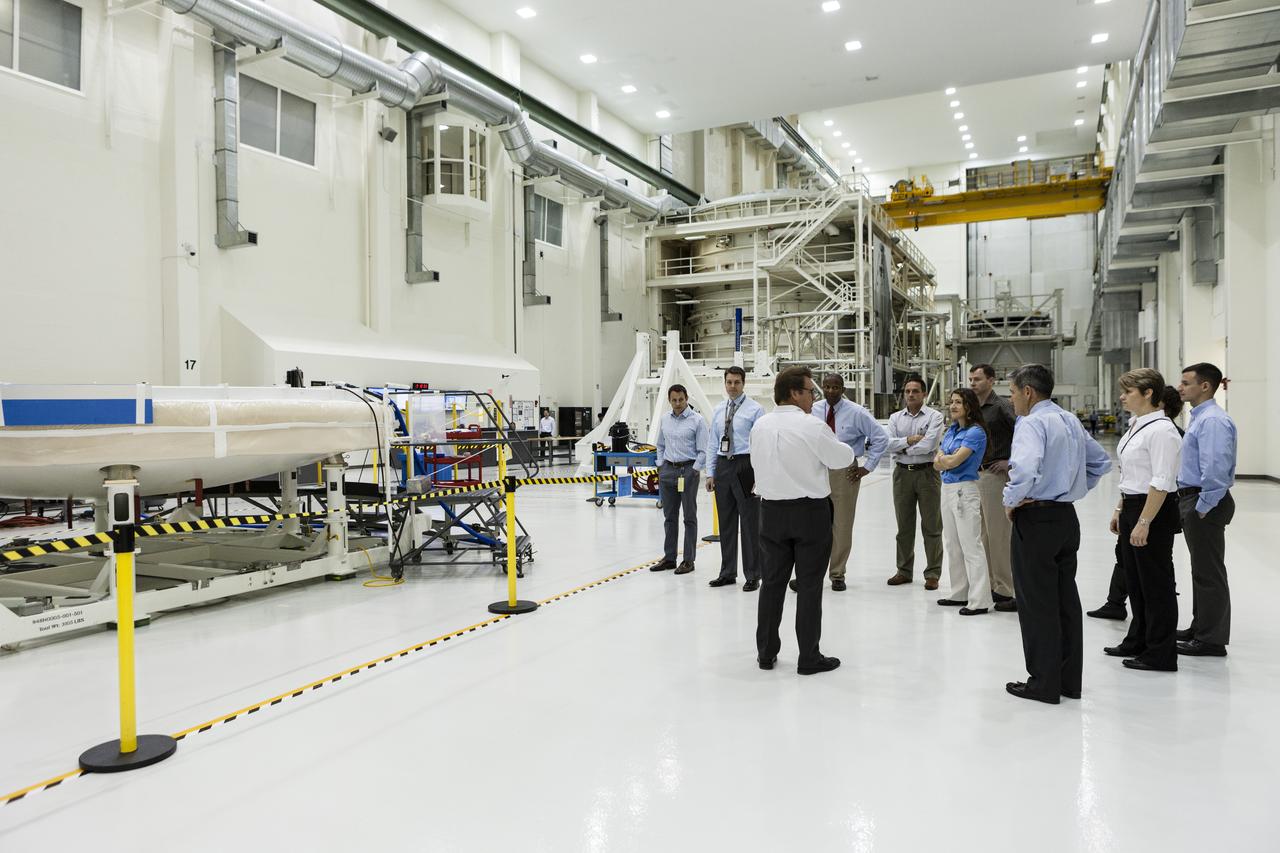
CAPE CANAVERAL, Fla. -- In the Operations and Checkout Building of NASA's Kennedy Space Center in Florida, agency astronaut candidates are briefed on preparations for the launch the Orion spacecraft on Exploration Flight Test EFT-1. Plans call for the Lockheed Martin-built Orion to launch atop a United Launch Alliance Delta IV Heavy rocket from Cape Canaveral Air Force Station. The astronaut class of 2013 was selected by NASA after an extensive year-and-a-half search. The new group will help the agency push the boundaries of exploration and travel to new destinations in the solar system. To learn more about the astronaut class of 2013, visit: http://www.nasa.gov/astronauts/2013astroclass.html Photo credit: NASA/Kim Shiflett
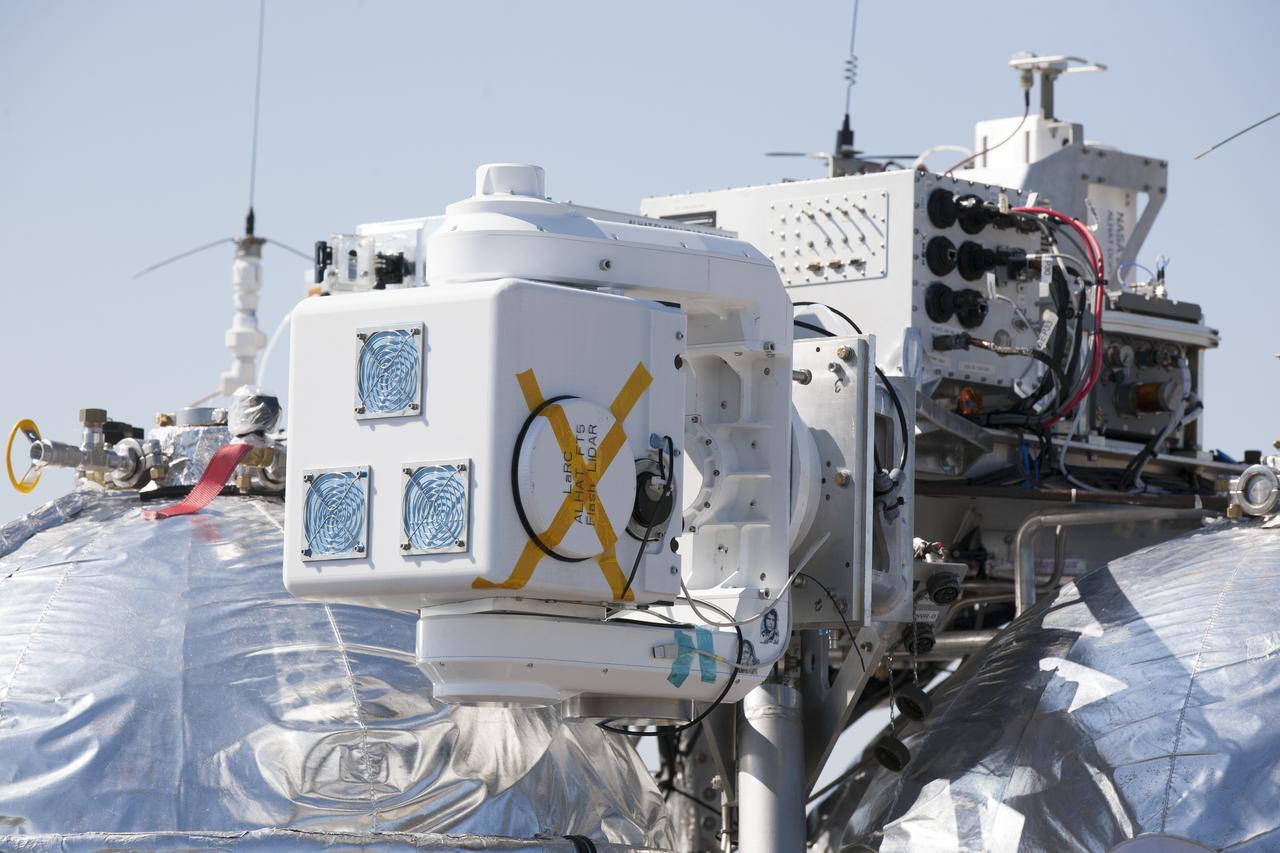
CAPE CANAVERAL, Fla. – Engineers run an automated landing and hazard avoidance technology, or ALHAT, and laser test on the Project Morpheus prototype lander at a new launch site at the north end of the Shuttle Landing Facility at NASA’s Kennedy Space Center in Florida. The launch pad was moved to a different location at the landing facility to support the next phase of flight testing. The seventh free flight test of Morpheus occurred on March 11. The 83-second test began at 3:41 p.m. EDT with the Morpheus lander launching from the ground over a flame trench and ascending to 580 feet. Morpheus then flew its fastest downrange trek at 30 mph, travelling farther than before, 837 feet. The lander performed a 42-foot divert to emulate a hazard avoidance maneuver before descending and touching down on Landing Site 2, at the northern landing pad inside the ALHAT hazard field. Morpheus landed within one foot of its intended target. Project Morpheus tests NASA’s ALHAT and an engine that runs on liquid oxygen and methane, or green propellants, into a fully-operational lander that could deliver cargo to other planetary surfaces. The landing facility provides the lander with the kind of field necessary for realistic testing, complete with rocks, craters and hazards to avoid. Morpheus’ ALHAT payload allows it to navigate to clear landing sites amidst rocks, craters and other hazards during its descent. Project Morpheus is being managed under the Advanced Exploration Systems, or AES, Division in NASA’s Human Exploration and Operations Mission Directorate. The efforts in AES pioneer new approaches for rapidly developing prototype systems, demonstrating key capabilities and validating operational concepts for future human missions beyond Earth orbit. For more information on Project Morpheus, visit http://morpheuslander.jsc.nasa.gov/. Photo credit: NASA/Kim Shiflett

CAPE CANAVERAL, Fla. - In the Space Station Processing Facility at NASA's Kennedy Space Center in Florida, a portion of the Advanced Plant Experiment, or APEX, experiment is checked out as it is prepared for launch to the International Space Station aboard a SpaceX Dragon spacecraft. Scheduled for launch on March 16 atop a Falcon 9 rocket, Dragon will be marking its fourth trip to the space station. The SpaceX-3 mission is the third of 12 flights contracted by NASA to resupply the orbiting laboratory. For more information, visit http://www.nasa.gov/mission_pages/station/structure/launch/index.html Photo credit: NASA/Kim Shiflett
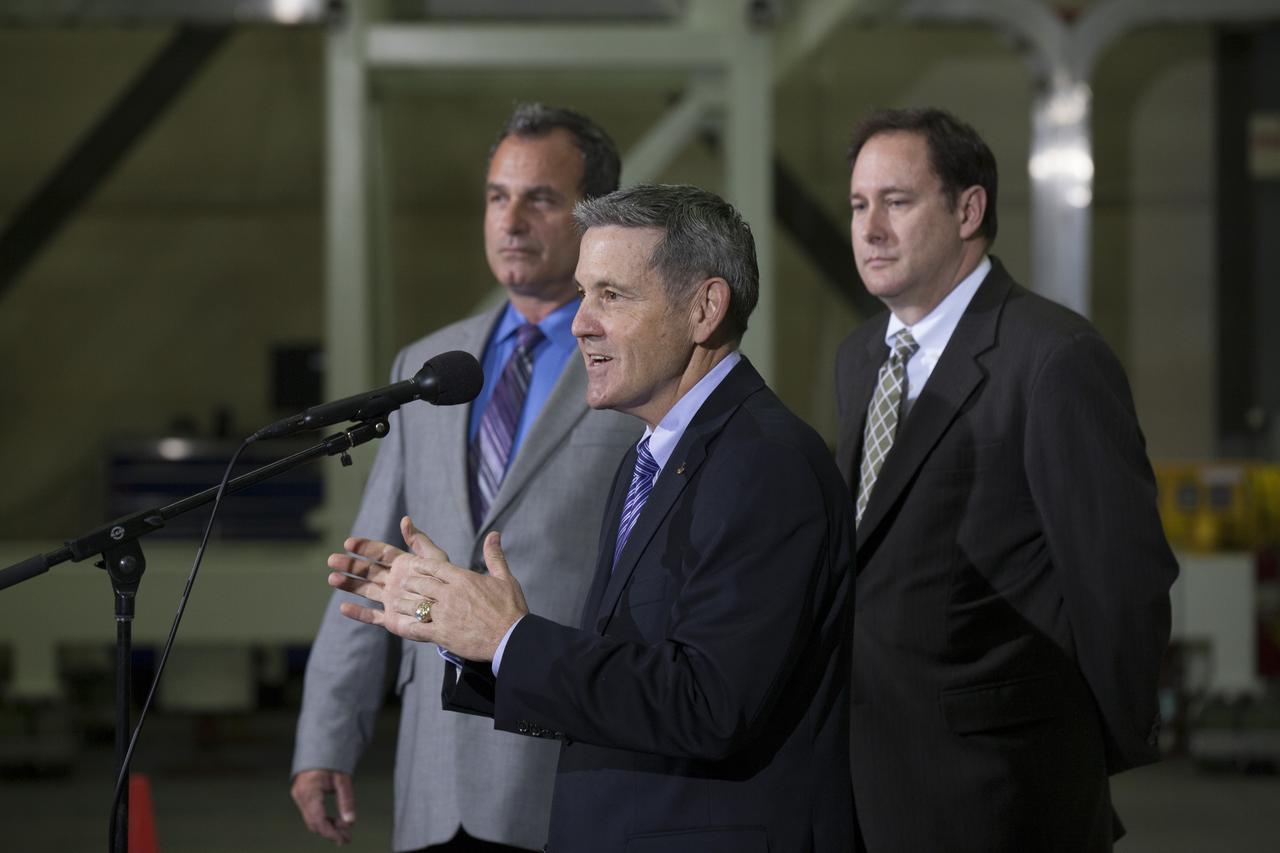
CAPE CANAVERAL, Fla. – During a media event inside the Horizontal Integration Facility at Launch Complex 37 at Cape Canaveral Air Force Station in Florida, Kennedy Space Center Director Bob Cabana speaks to members of the media. To his left is Tony Taliancich, director of East Coast Launch Operations with United Launch Alliance, or ULA. To the right is NASA Associate Administrator Robert Lightfoot. The event was held to showcase two of the ULA Delta IV boosters for the Orion Exploration Flight Test-1, or EFT-1, mission. Orion is the exploration spacecraft designed to carry astronauts to destinations not yet explored by humans, including an asteroid and Mars. It will have emergency abort capability, sustain the crew during space travel and provide safe re-entry from deep space return velocities. The first unpiloted test flight of Orion, EFT-1, is scheduled to launch in 2014 atop a Delta IV rocket and in 2017 on NASA’s Space Launch System rocket. For more information, visit http://www.nasa.gov/orion. Photo credit: NASA/Kim Shiflett

TITUSVILLE, Fla. – Under the watchful eyes of United Launch Alliance engineers and technicians at the Astrotech payload processing facility in Titusville, the Tracking and Data Relay Satellite, or TDRS-L, spacecraft is being encapsulated in its payload fairing. It is about to be lifted by crane for mounting on a transporter for its trip to Launch Complex 41 at Cape Canaveral Air Force Station. The TDRS-L satellite will be a part of the second of three next-generation spacecraft designed to ensure vital operational continuity for the NASA Space Network. It is scheduled to launch from Cape Canaveral's Space Launch Complex 41 atop a United Launch Alliance Atlas V rocket on January 23, 2014. The current Tracking and Data Relay Satellite system consists of eight in-orbit satellites distributed to provide near continuous information relay contact with orbiting spacecraft ranging from the International Space Station and Hubble Space Telescope to the array of scientific observatories. For more information, visit: http://www.nasa.gov/mission_pages/tdrs/home/index.html Photo credit: NASA/Kim Shiflett .
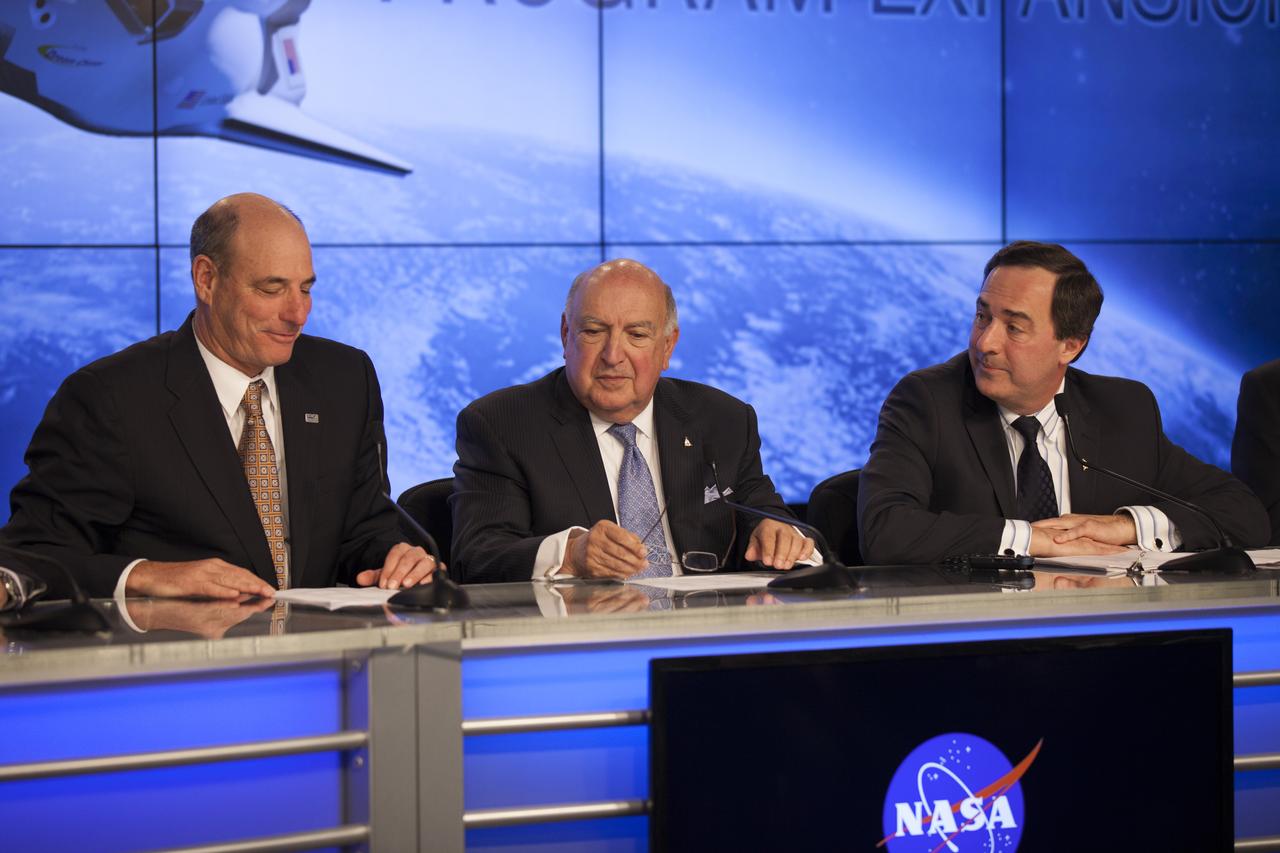
CAPE CANAVERAL, Fla. – Frank DiBello, president and CEO of Space Florida, joins Sierra Nevada Corporation, or SNC, Space Systems, as the company announces the steps it will take to prepare for a November 2016 orbital flight of its Dream Chaser spacecraft from Florida’s Space Coast. The steps are considered substantial for SNC and important to plans by NASA and Space Florida for Kennedy Space Center’s transformation into a multi-user spaceport for both commercial and government customers. SNC said it plans to work with United Launch Alliance, or ULA, to launch the Dream Chaser spacecraft into orbit atop an Atlas V rocket from Space Launch Complex 41 at Cape Canaveral Air Force Station intends to land the winged spacecraft at Kennedy’s 3.5-mile long runway at the Shuttle Landing Facility lease office space at Exploration Park, right outside Kennedy’s gates and process the spacecraft in the high bay of the Operations and Checkout Building at Kennedy, with Lockheed Martin performing the work. Photo credit: NASA/Kim Shiflett
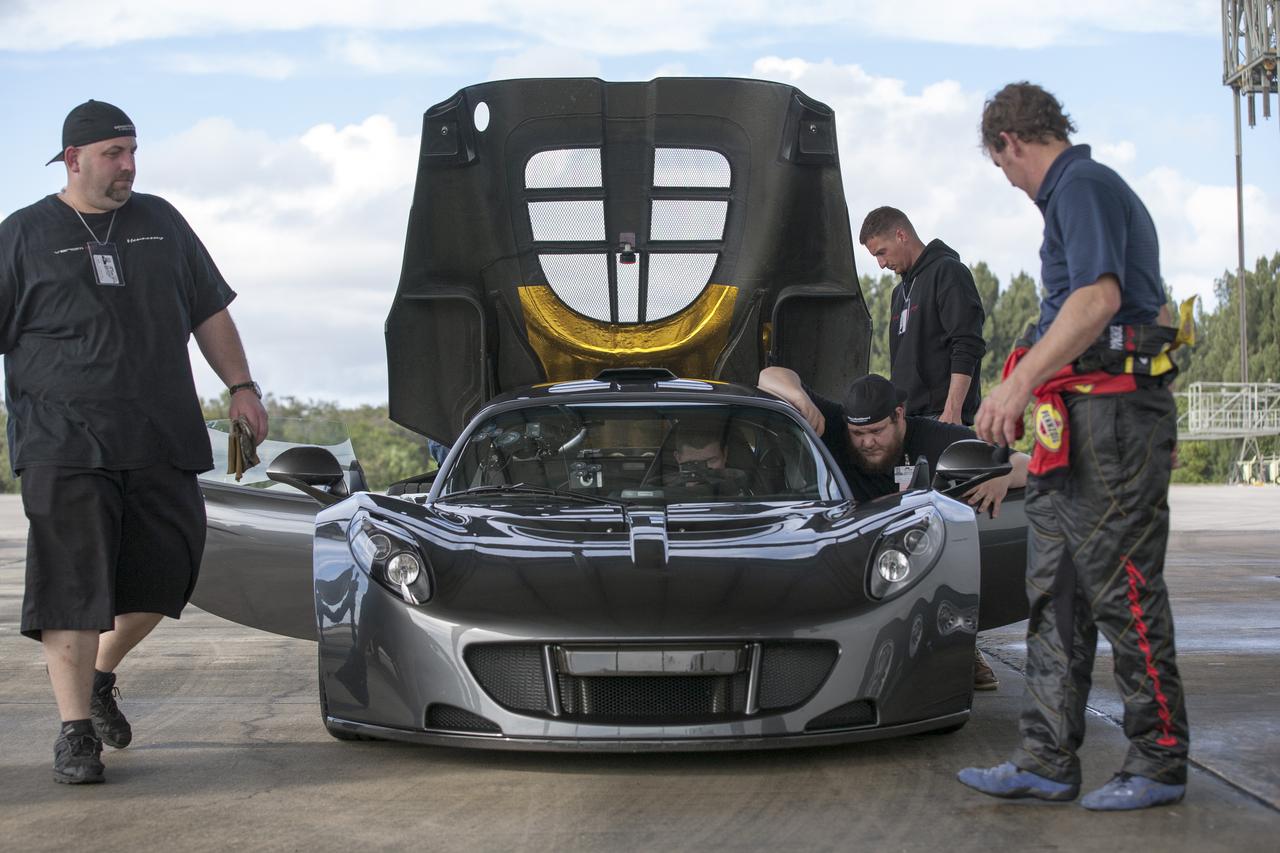
CAPE CANAVERAL, Fla. - Mechanics, engineers and Driver Brian Smith, in jumpsuit, ready a Hennessey Venom GT for test runs on the 3.5-mile long runway at the Shuttle Landing Facility at NASA's Kennedy Space Center in Florida. The flat concrete runway is one of the few places in the world where high performance automobiles can be tested for aerodynamic and safety designs. Hennessey Performance of Sealy, Texas, worked with Performance Power Racing in West Palm Beach to arrange use of the NASA facility. Performance Power Racing has conducted numerous engineering tests on the runway with a variety of vehicles. Photo credit: NASA/Kim Shiflett

CAPE CANAVERAL, Fla. - In the Space Station Processing Facility at NASA's Kennedy Space Center in Florida, QinetiQ North America Project Manager Carole Miller, left, works with Allison Caron, a QinetiQ mechanical engineer in preparing the Biotube experiment which will be launched to the International Space Station aboard a SpaceX Dragon spacecraft. Scheduled for launch on March 16 atop a Falcon 9 rocket, Dragon will be marking its fourth trip to the space station. The SpaceX-3 mission is the third of 12 flights contracted by NASA to resupply the orbiting laboratory. For more information, visit http://www.nasa.gov/mission_pages/station/structure/launch/index.html Photo credit: NASA/Kim Shiflett
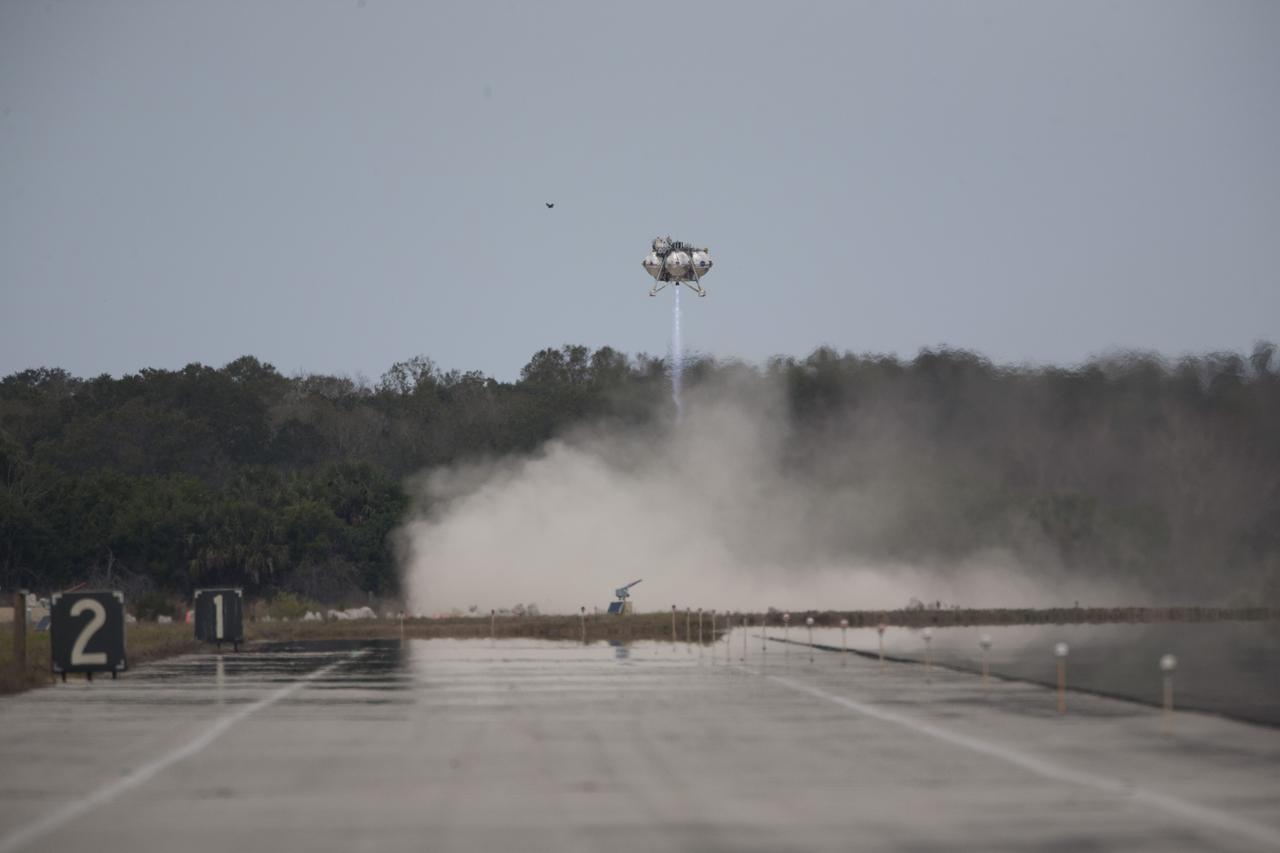
CAPE CANAVERAL, Fla. – The Project Morpheus prototype lander descends toward the autonomous landing and hazard avoidance technology, or ALHAT, hazard field after launching on its fourth free flight test at the north end of the Shuttle Landing Facility at NASA’s Kennedy Space Center in Florida. The 64-second test began at 1:15 p.m. EST with the Morpheus lander launching from the ground over a flame trench and ascending about 305 feet, significantly increasing the ascent velocity from the last test. The lander flew forward, covering about 358 feet in 25 seconds before descending and landing within 15 inches of its target on a dedicated pad inside the ALHAT hazard field. Project Morpheus tests NASA’s ALHAT and an engine that runs on liquid oxygen and methane, or green propellants, into a fully-operational lander that could deliver cargo to other planetary surfaces. The landing facility provides the lander with the kind of field necessary for realistic testing, complete with rocks, craters and hazards to avoid. Morpheus’ ALHAT payload allows it to navigate to clear landing sites amidst rocks, craters and other hazards during its descent. Project Morpheus is being managed under the Advanced Exploration Systems, or AES, Division in NASA’s Human Exploration and Operations Mission Directorate. The efforts in AES pioneer new approaches for rapidly developing prototype systems, demonstrating key capabilities and validating operational concepts for future human missions beyond Earth orbit. For more information on Project Morpheus, visit http://www.nasa.gov/centers/johnson/exploration/morpheus. Photo credit: NASA/Kim Shiflett
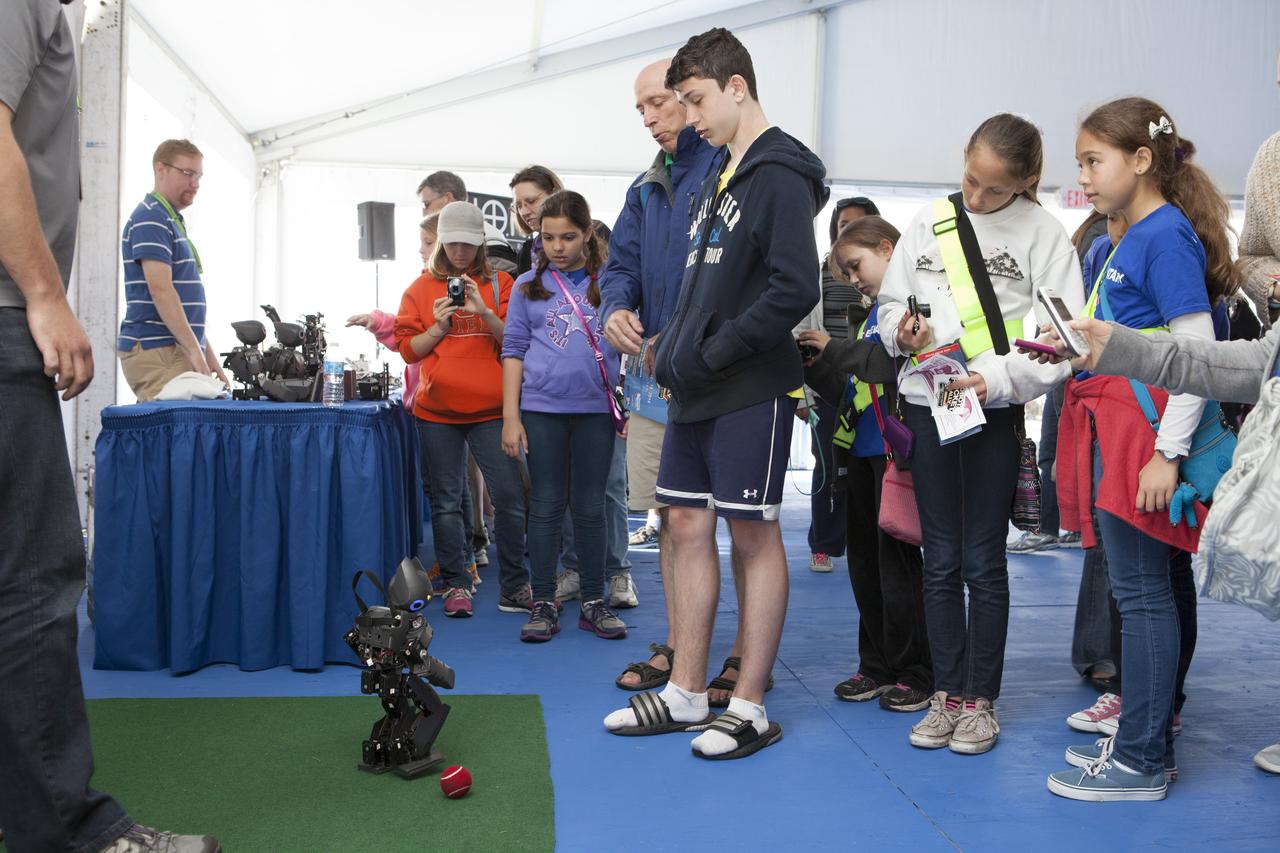
CAPE CANAVERAL, Fla. – Students gather to watch as a DARwin-OP miniature humanoid robot from Virginia Tech Robotics demonstrates its soccer abilities at the Robot Rocket Rally. The three-day event at Florida's Kennedy Space Center Visitor Complex is highlighted by exhibits, games and demonstrations of a variety of robots, with exhibitors ranging from school robotics clubs to veteran NASA scientists and engineers. Photo credit: NASA/Kim Shiflett

CAPE CANAVERAL, Fla. – Frank DiBello, right, president and CEO of Space Florida, joins Sierra Nevada Corporation, or SNC, Space Systems, as the company announces the steps it will take to prepare for a November 2016 orbital flight of its Dream Chaser spacecraft from Florida’s Space Coast. The steps are considered substantial for SNC and important to plans by NASA and Space Florida for Kennedy Space Center’s transformation into a multi-user spaceport for both commercial and government customers. SNC said it plans to work with United Launch Alliance, or ULA, to launch the Dream Chaser spacecraft into orbit atop an Atlas V rocket from Space Launch Complex 41 at Cape Canaveral Air Force Station intends to land the winged spacecraft at Kennedy’s 3.5-mile long runway at the Shuttle Landing Facility lease office space at Exploration Park, right outside Kennedy’s gates and process the spacecraft in the high bay of the Operations and Checkout Building at Kennedy, with Lockheed Martin performing the work. Photo credit: NASA/Kim Shiflett
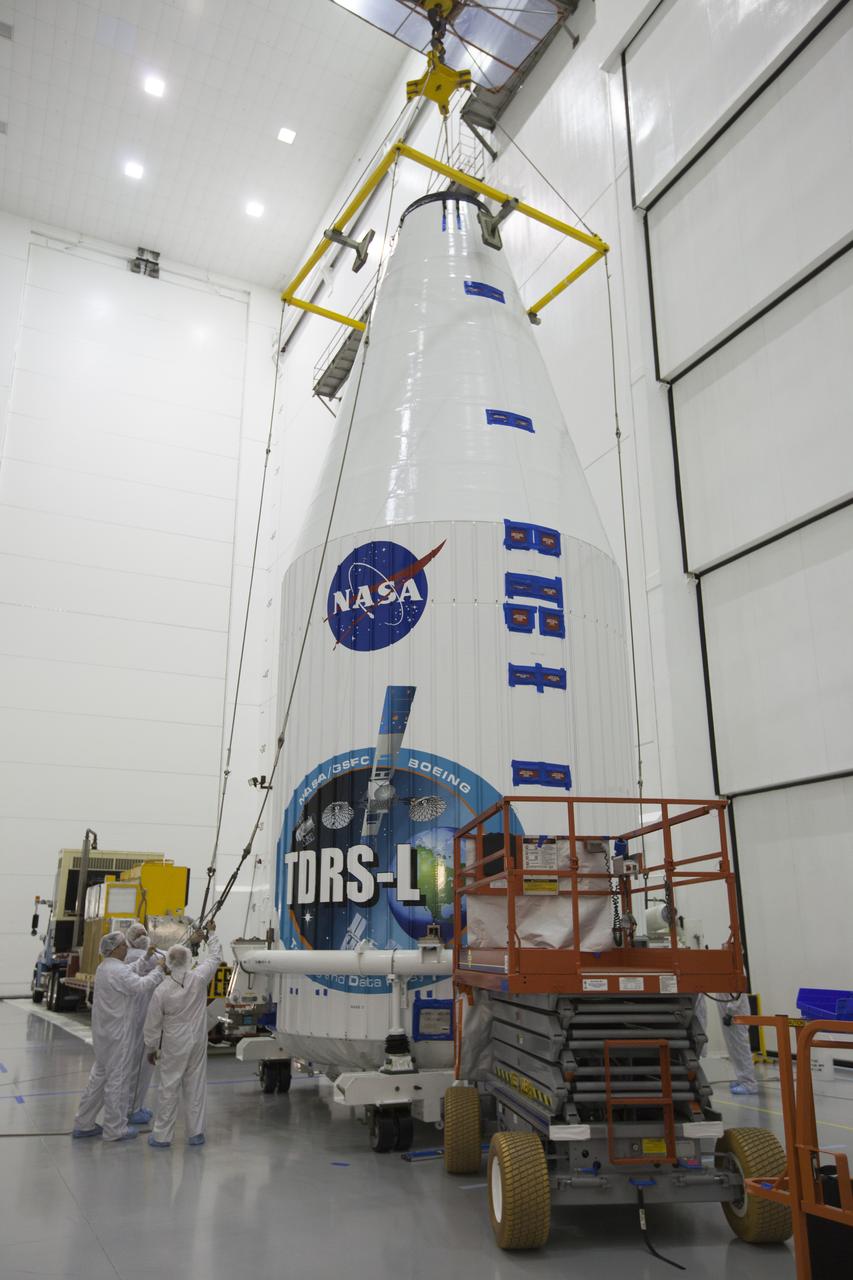
TITUSVILLE, Fla. – Inside the Astrotech payload processing facility in Titusville, NASA's Tracking and Data Relay Satellite, or TDRS-L, spacecraft has been encapsulated in its payload fairing in preparation for begin transported to Launch Complex 41 at Cape Canaveral Air Force Station. The TDRS-L satellite will be a part of the second of three next-generation spacecraft designed to ensure vital operational continuity for the NASA Space Network. It is scheduled to launch from Cape Canaveral's Space Launch Complex 41 atop a United Launch Alliance Atlas V rocket on January 23, 2014. The current Tracking and Data Relay Satellite system consists of eight in-orbit satellites distributed to provide near continuous information relay contact with orbiting spacecraft ranging from the International Space Station and Hubble Space Telescope to the array of scientific observatories. For more information, visit: http://www.nasa.gov/mission_pages/tdrs/home/index.html Photo credit: NASA/Kim Shiflett
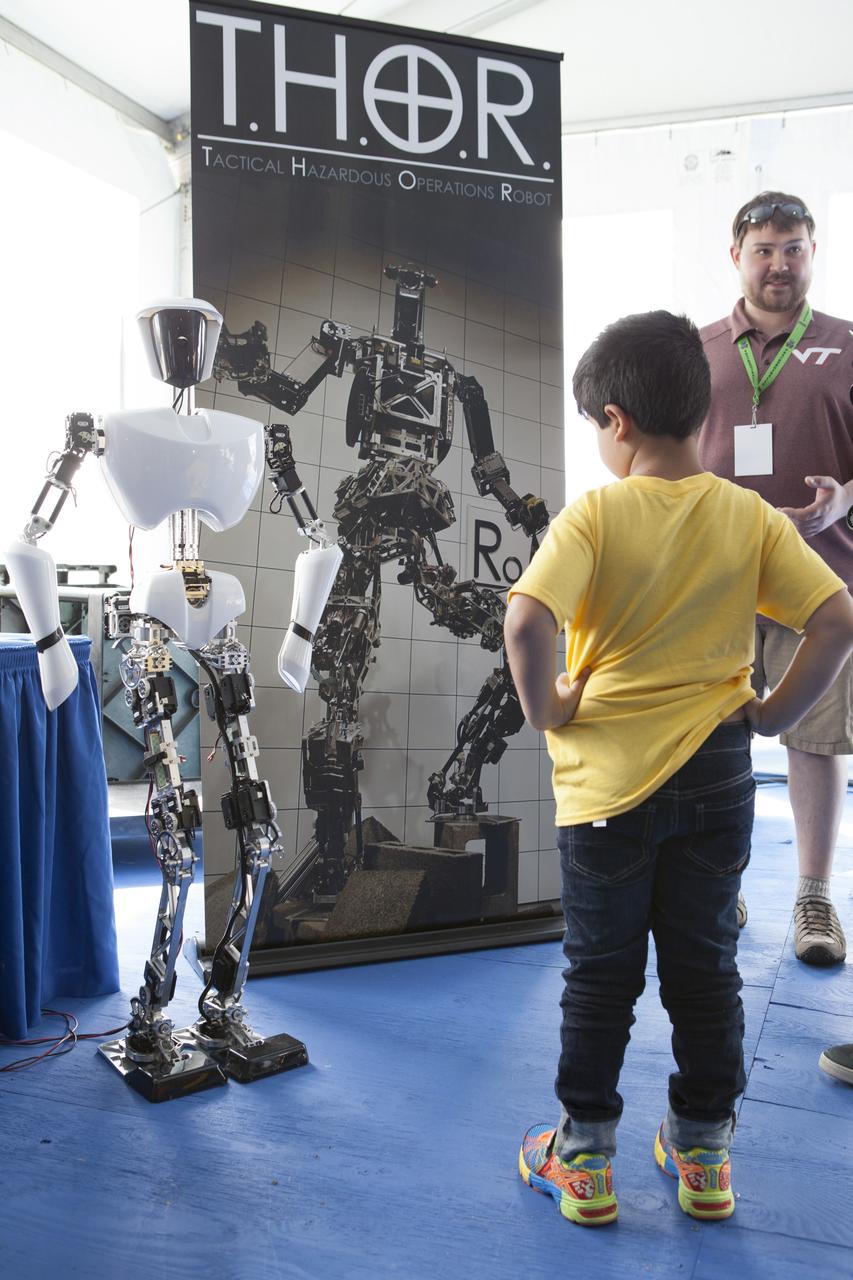
CAPE CANAVERAL, Fla. – A child gets an up-close look at Charli, an autonomous walking robot developed by Virginia Tech Robotics, during the Robot Rocket Rally. The three-day event at Florida's Kennedy Space Center Visitor Complex is highlighted by exhibits, games and demonstrations of a variety of robots, with exhibitors ranging from school robotics clubs to veteran NASA scientists and engineers. Photo credit: NASA/Kim Shiflett
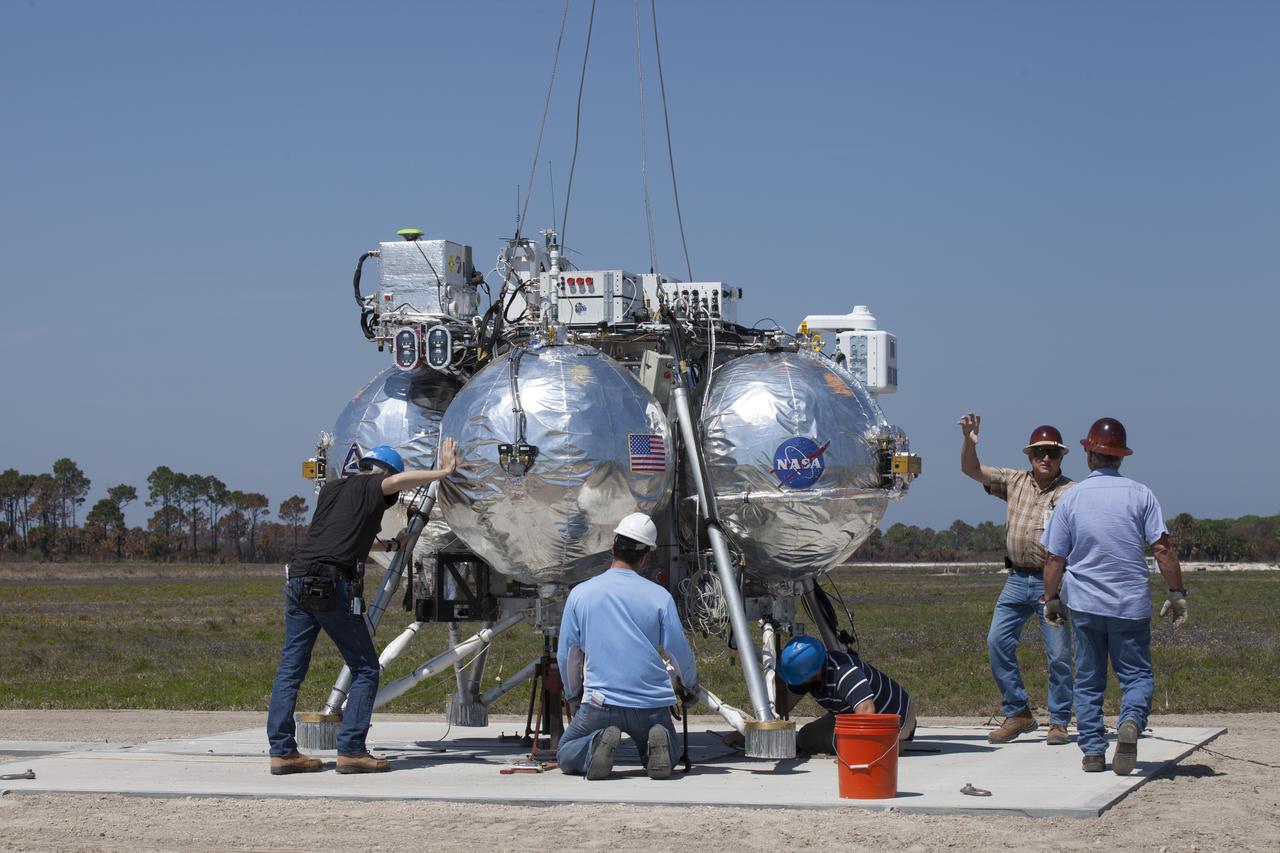
CAPE CANAVERAL, Fla. – Engineers and technicians prepare the Project Morpheus prototype lander for an automated landing and hazard avoidance technology, or ALHAT, and laser test at a new launch site at the north end of the Shuttle Landing Facility at NASA’s Kennedy Space Center in Florida. The launch pad was moved to a different location at the landing facility to support the next phase of flight testing. The seventh free flight test of Morpheus occurred on March 11. The 83-second test began at 3:41 p.m. EDT with the Morpheus lander launching from the ground over a flame trench and ascending to 580 feet. Morpheus then flew its fastest downrange trek at 30 mph, travelling farther than before, 837 feet. The lander performed a 42-foot divert to emulate a hazard avoidance maneuver before descending and touching down on Landing Site 2, at the northern landing pad inside the ALHAT hazard field. Morpheus landed within one foot of its intended target. Project Morpheus tests NASA’s ALHAT and an engine that runs on liquid oxygen and methane, or green propellants, into a fully-operational lander that could deliver cargo to other planetary surfaces. The landing facility provides the lander with the kind of field necessary for realistic testing, complete with rocks, craters and hazards to avoid. Morpheus’ ALHAT payload allows it to navigate to clear landing sites amidst rocks, craters and other hazards during its descent. Project Morpheus is being managed under the Advanced Exploration Systems, or AES, Division in NASA’s Human Exploration and Operations Mission Directorate. The efforts in AES pioneer new approaches for rapidly developing prototype systems, demonstrating key capabilities and validating operational concepts for future human missions beyond Earth orbit. For more information on Project Morpheus, visit http://morpheuslander.jsc.nasa.gov/. Photo credit: NASA/Kim Shiflett
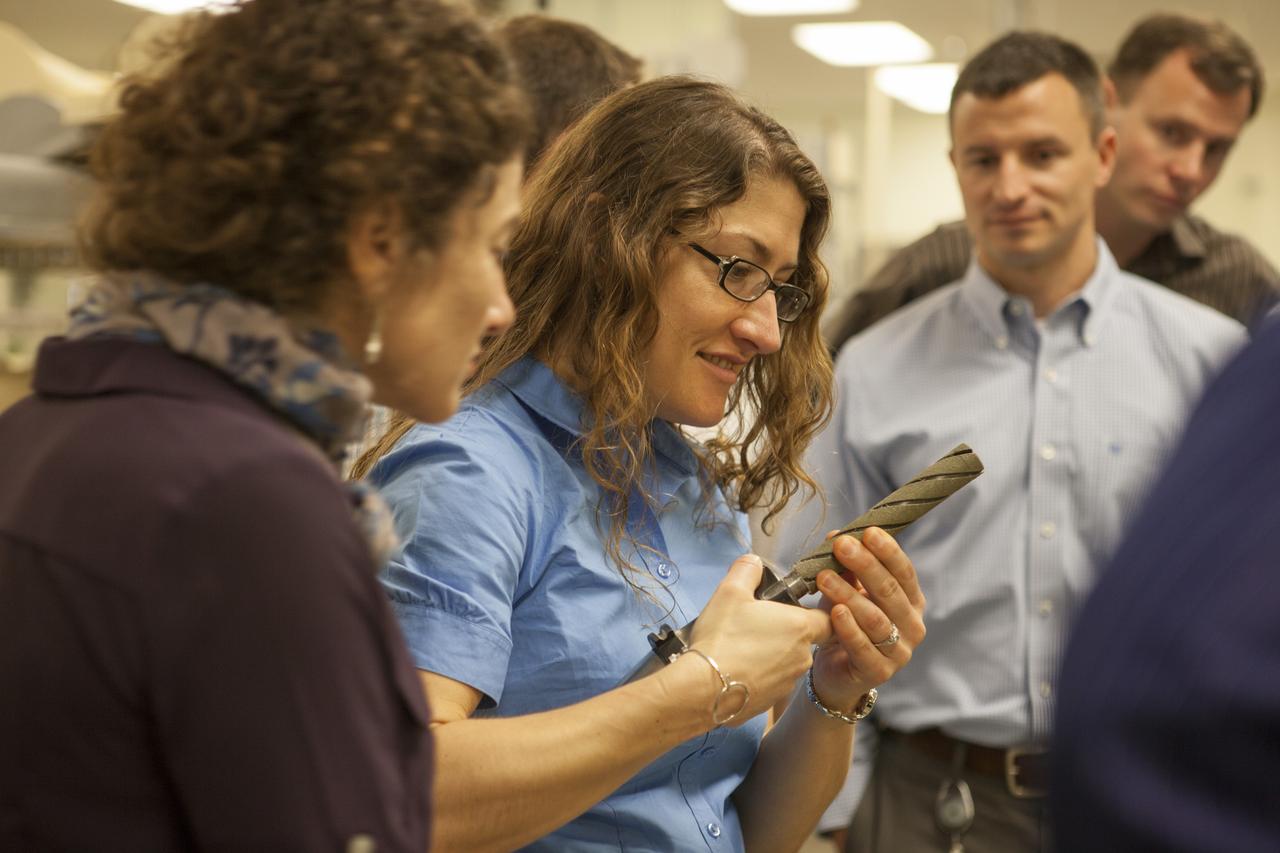
CAPE CANAVERAL, Fla. -- In the Thermal Protection System Facility NASA's Kennedy Space Center in Florida, agency astronaut candidates are briefed on tiles being manufactured for the agency's Orion spacecraft. Christina Hammock holds a tool used to mill tiles designed for use on the agency's Orion spacecraft. Also looking on are Jessica Meir, on the left, and Andrew Morgan and Tyler "Nick" Hague on the right. Plans call for the Lockheed Martin-built Orion to launch atop a United Launch Alliance Delta IV Heavy rocket from Cape Canaveral Air Force Station on Exploration Flight Test EFT-1 later this year. The astronaut class of 2013 was selected by NASA after an extensive year-and-a-half search. The new group will help the agency push the boundaries of exploration and travel to new destinations in the solar system. To learn more about the astronaut class of 2013, visit: http://www.nasa.gov/astronauts/2013astroclass.html Photo credit: NASA/Kim Shiflett
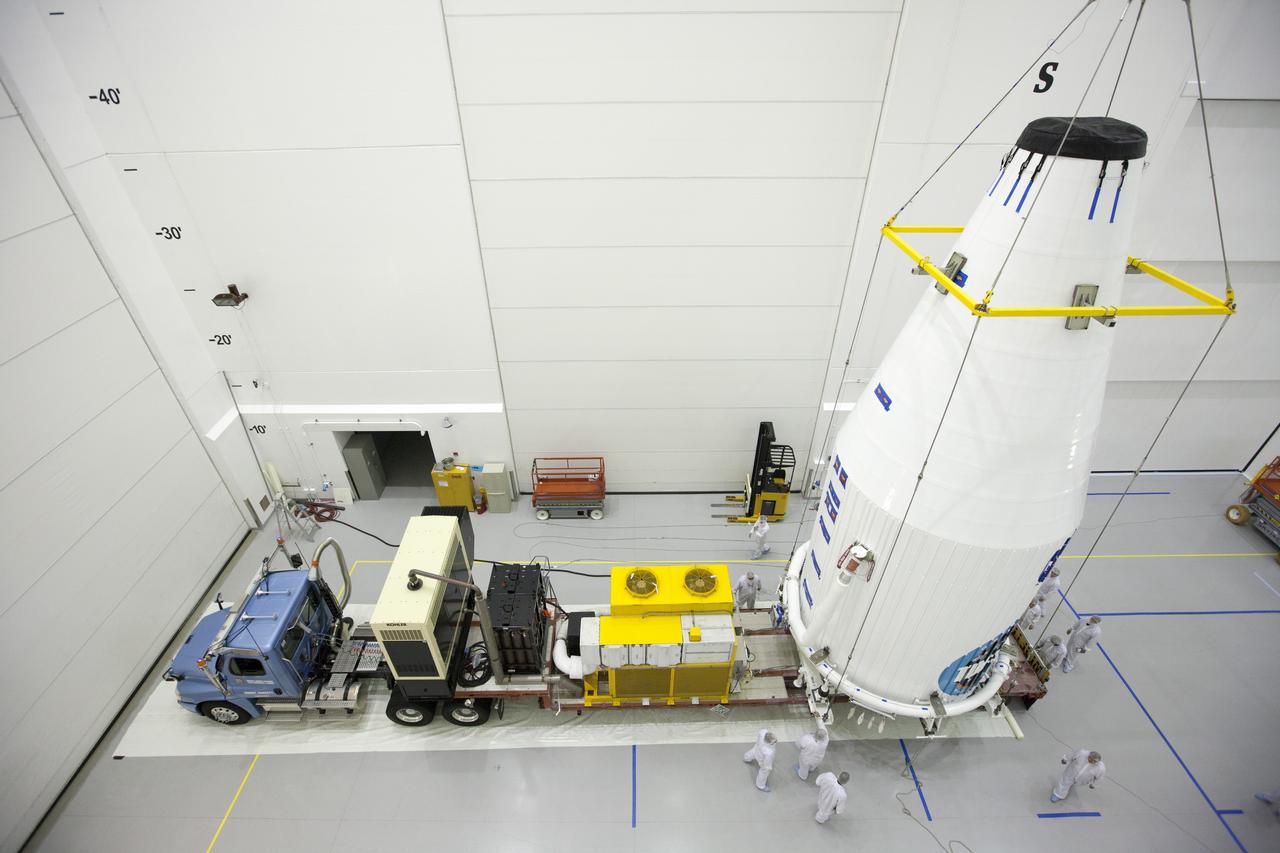
TITUSVILLE, Fla. – Encapsulated in its payload fairing, NASA's Tracking and Data Relay Satellite, or TDRS-L, spacecraft is being mounted on a transporter for its trip from the Astrotech payload processing facility in Titusville to Launch Complex 41 at Cape Canaveral Air Force Station. The TDRS-L satellite will be a part of the second of three next-generation spacecraft designed to ensure vital operational continuity for the NASA Space Network. It is scheduled to launch from Cape Canaveral's Space Launch Complex 41 atop a United Launch Alliance Atlas V rocket on January 23, 2014. The current Tracking and Data Relay Satellite system consists of eight in-orbit satellites distributed to provide near continuous information relay contact with orbiting spacecraft ranging from the International Space Station and Hubble Space Telescope to the array of scientific observatories. For more information, visit: http://www.nasa.gov/mission_pages/tdrs/home/index.html Photo credit: NASA/Kim Shiflett
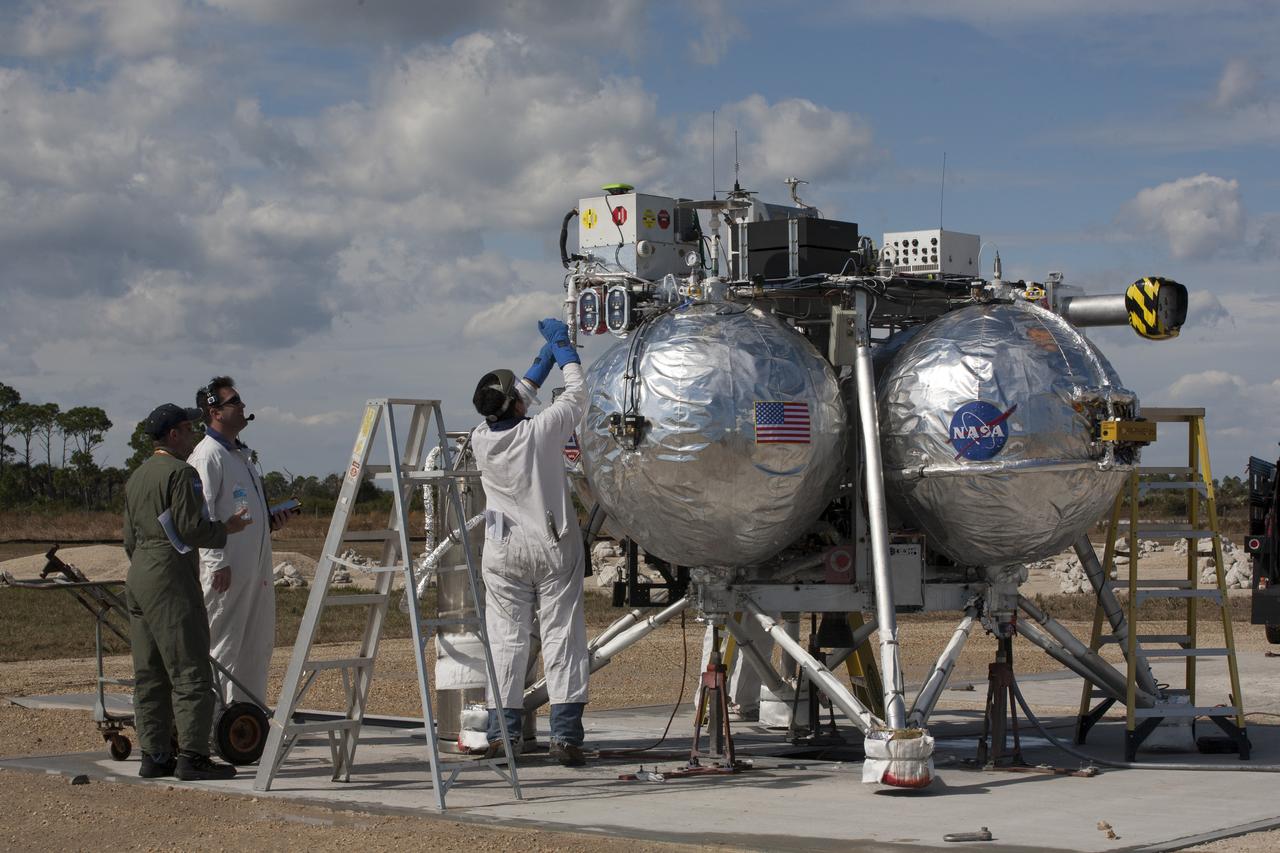
CAPE CANAVERAL, Fla. – The Project Morpheus prototype lander is positioned on a launch pad as engineers and technicians prepare it for the fourth free flight test at the north end of the Shuttle Landing Facility at NASA’s Kennedy Space Center in Florida. The 64-second test began at 1:15 p.m. EST with the Morpheus lander launching from the ground over a flame trench and ascending about 305 feet, significantly increasing the ascent velocity from the last test. The lander flew forward, covering about 358 feet in 25 seconds before descending and landing within 15 inches of its target on a dedicated pad inside the autonomous landing and hazard avoidance technology, or ALHAT, hazard field. Project Morpheus tests NASA’s ALHAT and an engine that runs on liquid oxygen and methane, or green propellants, into a fully-operational lander that could deliver cargo to other planetary surfaces. The landing facility provides the lander with the kind of field necessary for realistic testing, complete with rocks, craters and hazards to avoid. Morpheus’ ALHAT payload allows it to navigate to clear landing sites amidst rocks, craters and other hazards during its descent. Project Morpheus is being managed under the Advanced Exploration Systems, or AES, Division in NASA’s Human Exploration and Operations Mission Directorate. The efforts in AES pioneer new approaches for rapidly developing prototype systems, demonstrating key capabilities and validating operational concepts for future human missions beyond Earth orbit. For more information on Project Morpheus, visit http://www.nasa.gov/centers/johnson/exploration/morpheus. Photo credit: NASA/Kim Shiflett
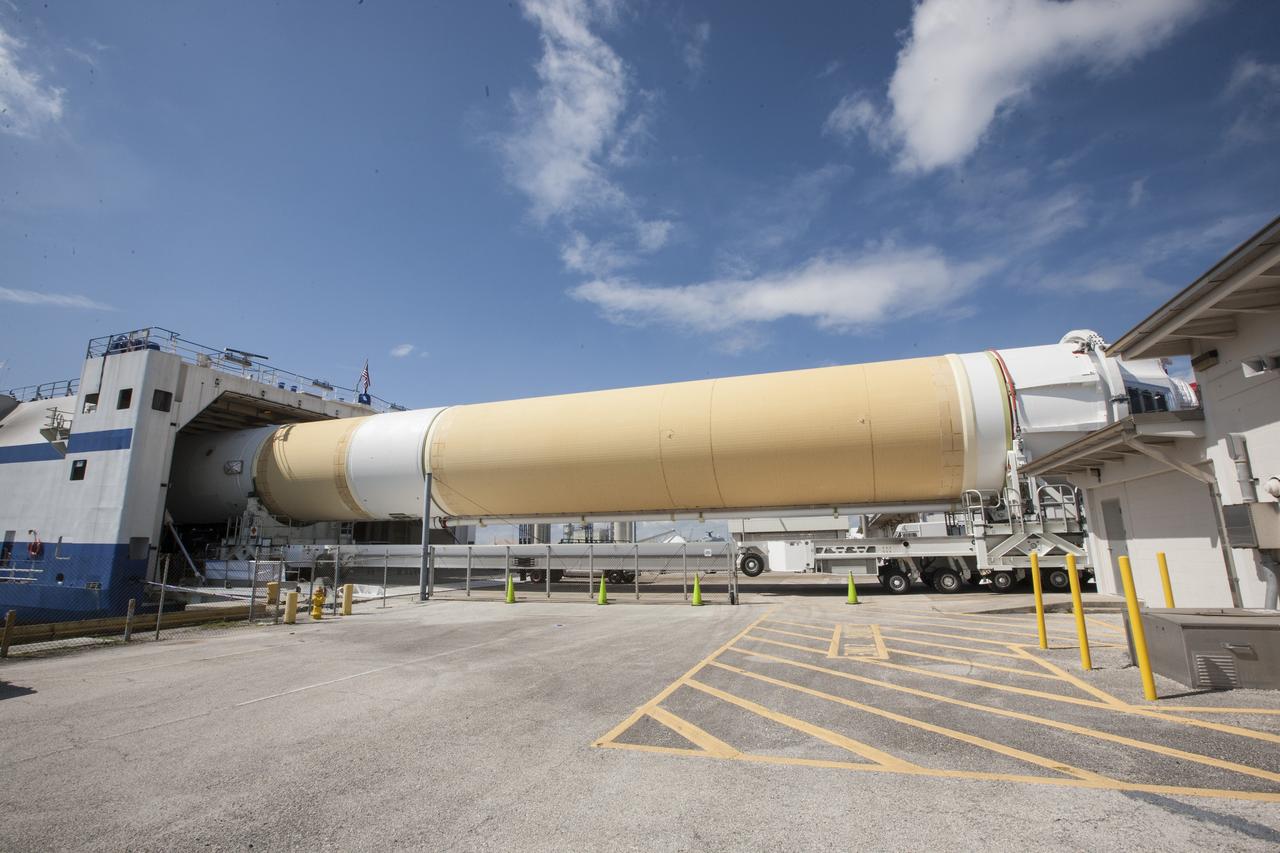
CAPE CANAVERAL, Fla. – Two of the three United Launch Alliance Delta IV heavy boosters for NASA’s upcoming Exploration Flight Test-1, or EFT-1, mission with the Orion spacecraft, have arrived by barge at the U.S. Army Outpost wharf at Port Canaveral in Florida. The core booster and starboard booster are being offloaded and will be transported to the Horizontal Integration Facility, or HIF, at Space Launch Complex 37 on Cape Canaveral Air Force Station. The port booster and the upper stage are planned to be shipped to Cape Canaveral in April. At the HIF, all three boosters will be processed and checked out before being moved to the nearby launch pad and hoisted into position. During the EFT-1 mission, Orion will travel farther into space than any human spacecraft has gone in more than 40 years. The data gathered during the flight will influence design decisions, validate existing computer models and innovative new approaches to space systems development, as well as reduce overall mission risks and costs for later Orion flights. Liftoff of Orion on EFT-1 is planned for fall 2014. Photo credit: NASA/Kim Shiflett
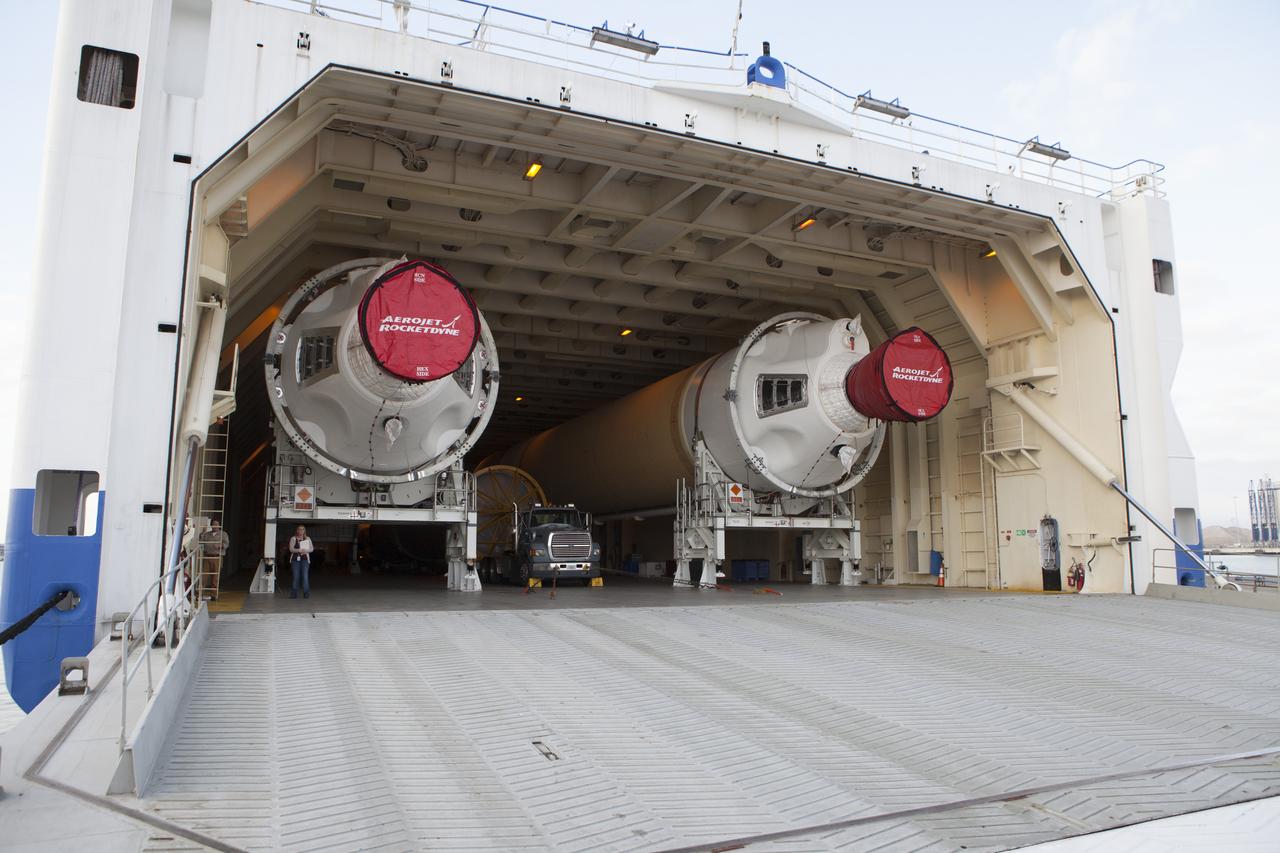
CAPE CANAVERAL, Fla. – A barge arrives at the U.S. Army Outpost wharf at Port Canaveral in Florida, carrying two of the three United Launch Alliance Delta IV heavy boosters for NASA’s upcoming Exploration Flight Test-1, or EFT-1, mission with the Orion spacecraft. The core booster and starboard booster will be offloaded and then transported to the Horizontal Integration Facility, or HIF, at Space Launch Complex 37 on Cape Canaveral Air Force Station. The port booster and the upper stage are planned to be shipped to Cape Canaveral in April. At the HIF, all three boosters will be processed and checked out before being moved to the nearby launch pad and hoisted into position. During the EFT-1 mission, Orion will travel farther into space than any human spacecraft has gone in more than 40 years. The data gathered during the flight will influence design decisions, validate existing computer models and innovative new approaches to space systems development, as well as reduce overall mission risks and costs for later Orion flights. Liftoff of Orion on EFT-1 is planned for fall 2014. Photo credit: NASA/Kim Shiflett
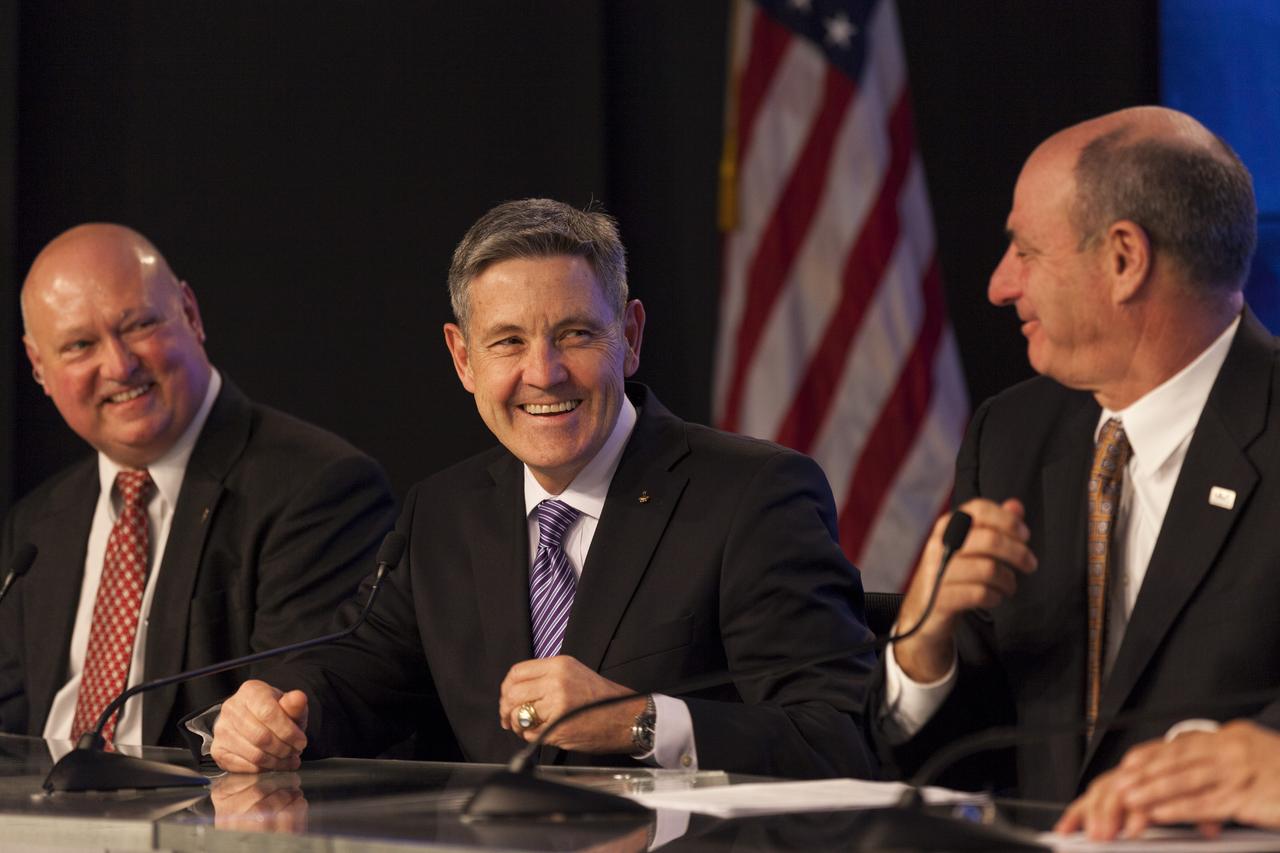
CAPE CANAVERAL, Fla. – Bob Cabana, center, director of Kennedy Space Center in Florida, joins Sierra Nevada Corporation, or SNC, Space Systems, as the company announces the steps it will take to prepare for a November 2016 orbital flight of its Dream Chaser spacecraft from Florida’s Space Coast. The steps are considered substantial for SNC and important to plans by NASA and Space Florida for Kennedy’s transformation into a multi-user spaceport for both commercial and government customers. SNC said it plans to work with United Launch Alliance, or ULA, to launch the Dream Chaser spacecraft into orbit atop an Atlas V rocket from Space Launch Complex 41 at Cape Canaveral Air Force Station intends to land the winged spacecraft at Kennedy’s 3.5-mile long runway at the Shuttle Landing Facility lease office space at Exploration Park, right outside Kennedy’s gates and process the spacecraft in the high bay of the Operations and Checkout Building at Kennedy, with Lockheed Martin performing the work. Photo credit: NASA/Kim Shiflett
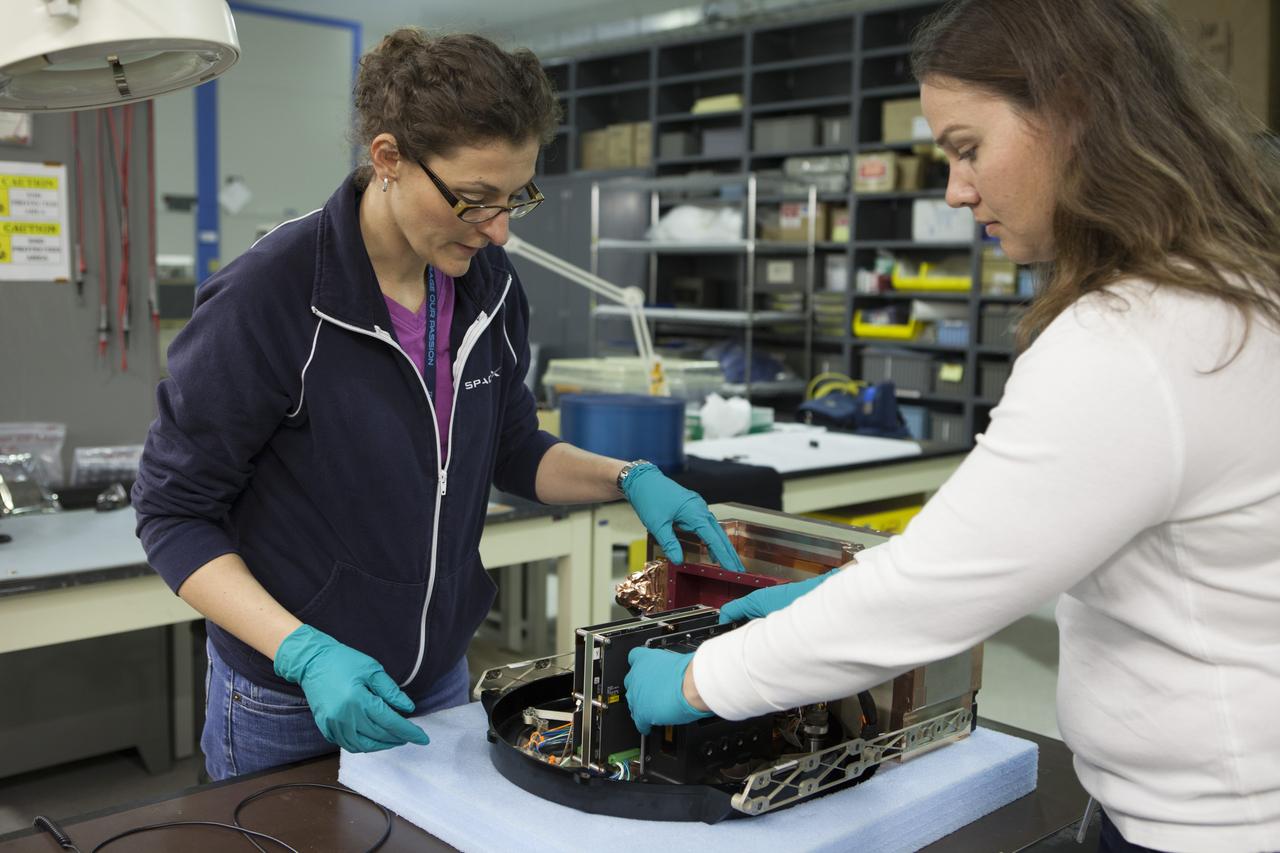
CAPE CANAVERAL, Fla. - In the Space Station Processing Facility at NASA's Kennedy Space Center in Florida, QinetiQ North America Project Manager Carole Miller, left, works with Allison Caron, a QinetiQ mechanical engineer in preparing the Biotube experiment which will be launched to the International Space Station aboard a SpaceX Dragon spacecraft. Scheduled for launch on March 16 atop a Falcon 9 rocket, Dragon will be marking its fourth trip to the space station. The SpaceX-3 mission is the third of 12 flights contracted by NASA to resupply the orbiting laboratory. For more information, visit http://www.nasa.gov/mission_pages/station/structure/launch/index.html Photo credit: NASA/Kim Shiflett

CAPE CANAVERAL, Fla. – Engineers and technicians prepare the Project Morpheus prototype lander for an automated landing and hazard avoidance technology, or ALHAT, and laser test at a new launch site at the north end of the Shuttle Landing Facility at NASA’s Kennedy Space Center in Florida. The launch pad was moved to a different location at the landing facility to support the next phase of flight testing. The seventh free flight test of Morpheus occurred on March 11. The 83-second test began at 3:41 p.m. EDT with the Morpheus lander launching from the ground over a flame trench and ascending to 580 feet. Morpheus then flew its fastest downrange trek at 30 mph, travelling farther than before, 837 feet. The lander performed a 42-foot divert to emulate a hazard avoidance maneuver before descending and touching down on Landing Site 2, at the northern landing pad inside the ALHAT hazard field. Morpheus landed within one foot of its intended target. Project Morpheus tests NASA’s ALHAT and an engine that runs on liquid oxygen and methane, or green propellants, into a fully-operational lander that could deliver cargo to other planetary surfaces. The landing facility provides the lander with the kind of field necessary for realistic testing, complete with rocks, craters and hazards to avoid. Morpheus’ ALHAT payload allows it to navigate to clear landing sites amidst rocks, craters and other hazards during its descent. Project Morpheus is being managed under the Advanced Exploration Systems, or AES, Division in NASA’s Human Exploration and Operations Mission Directorate. The efforts in AES pioneer new approaches for rapidly developing prototype systems, demonstrating key capabilities and validating operational concepts for future human missions beyond Earth orbit. For more information on Project Morpheus, visit http://morpheuslander.jsc.nasa.gov/. Photo credit: NASA/Kim Shiflett

CAPE CANAVERAL, Fla. - In the Space Station Processing Facility at NASA's Kennedy Space Center in Florida, the Biological Research In Canisters, or BRIC, 18-1 and 18-2 experiments are prepared for launch to the International Space Station aboard a SpaceX Dragon spacecraft. Scheduled for launch on March 16 atop a Falcon 9 rocket, Dragon will be marking its fourth trip to the space station. The SpaceX-3 mission is the third of 12 flights contracted by NASA to resupply the orbiting laboratory. For more information, visit http://www.nasa.gov/mission_pages/station/structure/launch/index.html Photo credit: NASA/Kim Shiflett
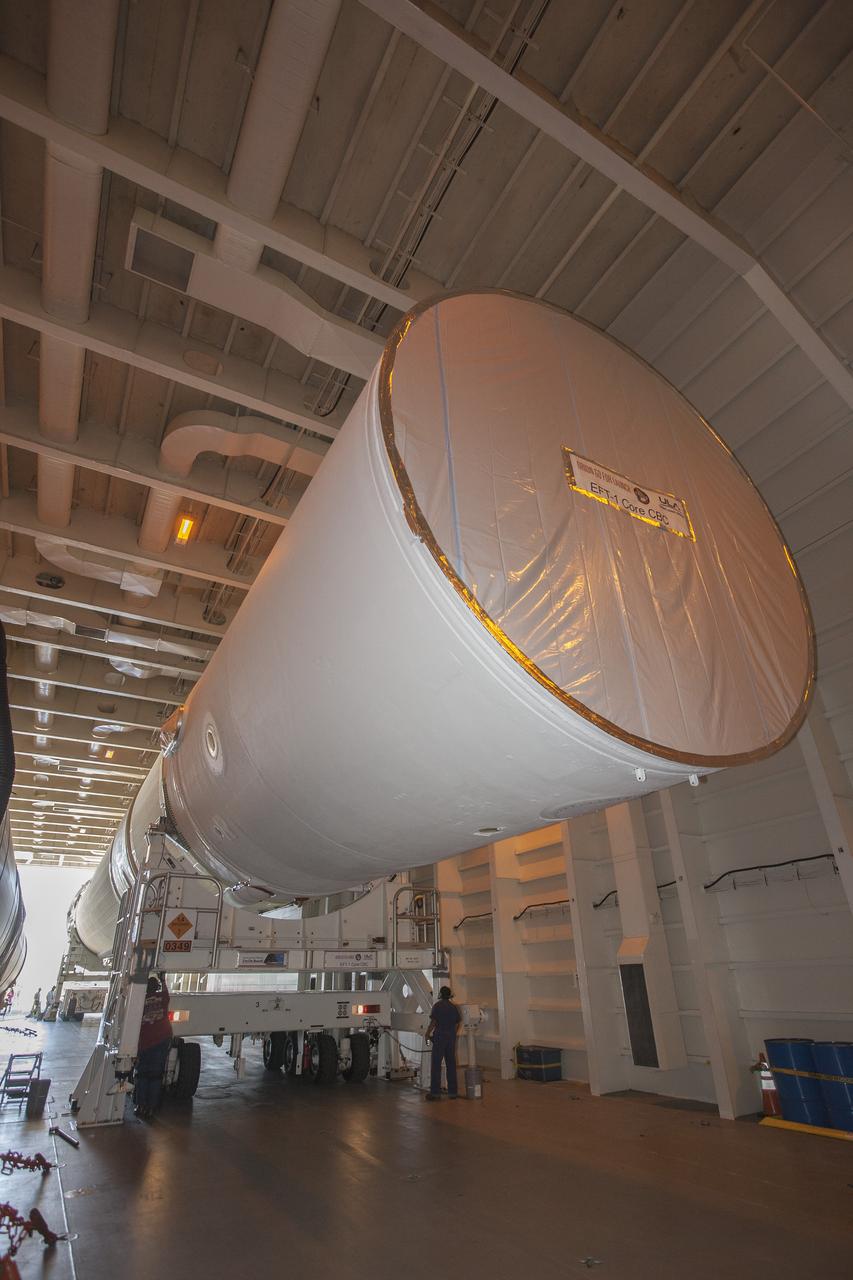
CAPE CANAVERAL, Fla. – Two of the three United Launch Alliance Delta IV heavy boosters for NASA’s upcoming Exploration Flight Test-1, or EFT-1, mission with the Orion spacecraft, have arrived by barge at the U.S. Army Outpost wharf at Port Canaveral in Florida. The core booster and starboard booster will be offloaded and then transported to the Horizontal Integration Facility, or HIF, at Space Launch Complex 37 on Cape Canaveral Air Force Station. The port booster and the upper stage are planned to be shipped to Cape Canaveral in April. At the HIF, all three boosters will be processed and checked out before being moved to the nearby launch pad and hoisted into position. During the EFT-1 mission, Orion will travel farther into space than any human spacecraft has gone in more than 40 years. The data gathered during the flight will influence design decisions, validate existing computer models and innovative new approaches to space systems development, as well as reduce overall mission risks and costs for later Orion flights. Liftoff of Orion on EFT-1 is planned for fall 2014. Photo credit: NASA/Kim Shiflett
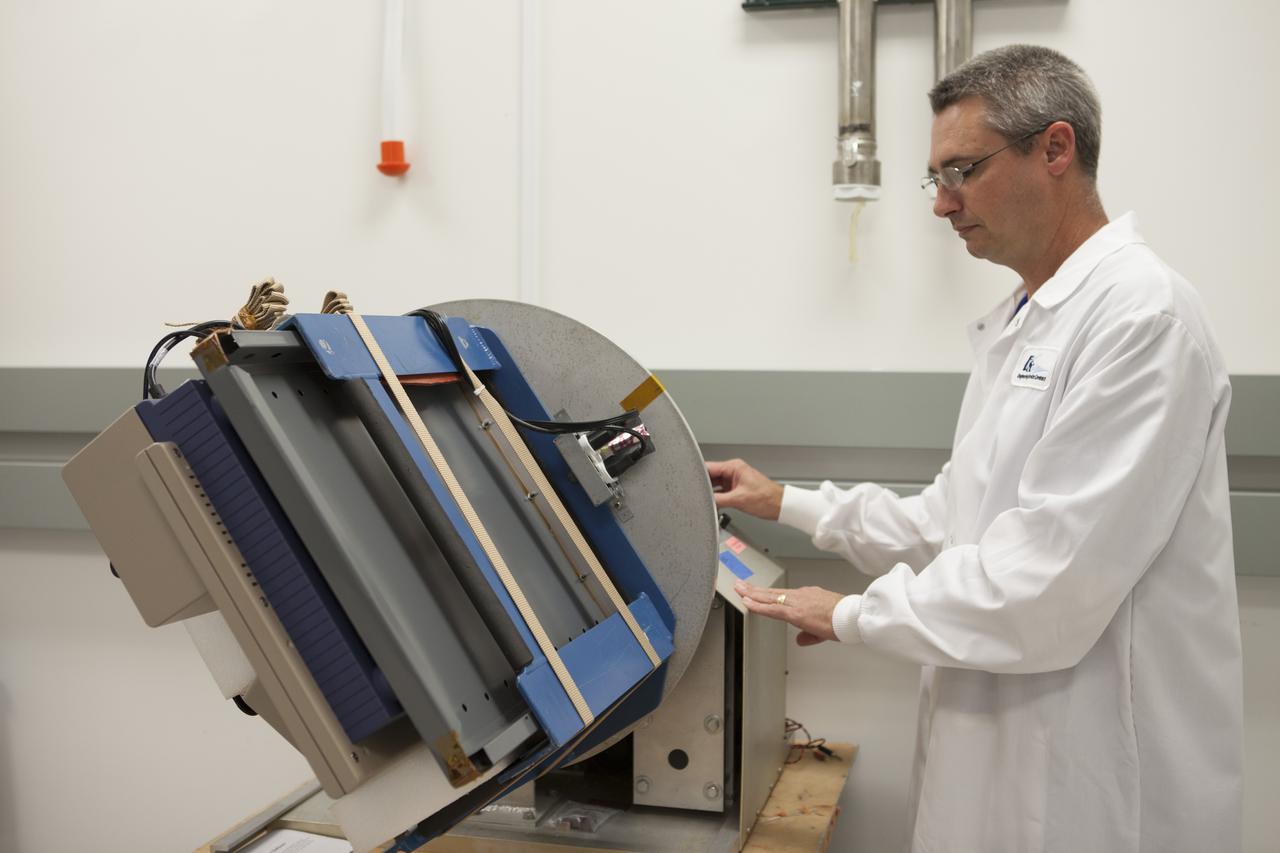
CAPE CANAVERAL, Fla. - In the Space Station Processing Facility at NASA's Kennedy Space Center in Florida, Donald Houzer, a QinetiQ North America mechanical technician checks out the Advanced Plant Experiment, or APEX, experiment as it is being prepared for launch to the International Space Station aboard a SpaceX Dragon spacecraft. Scheduled for launch on March 16 atop a Falcon 9 rocket, Dragon will be marking its fourth trip to the space station. The SpaceX-3 mission is the third of 12 flights contracted by NASA to resupply the orbiting laboratory. For more information, visit http://www.nasa.gov/mission_pages/station/structure/launch/index.html Photo credit: NASA/Kim Shiflett
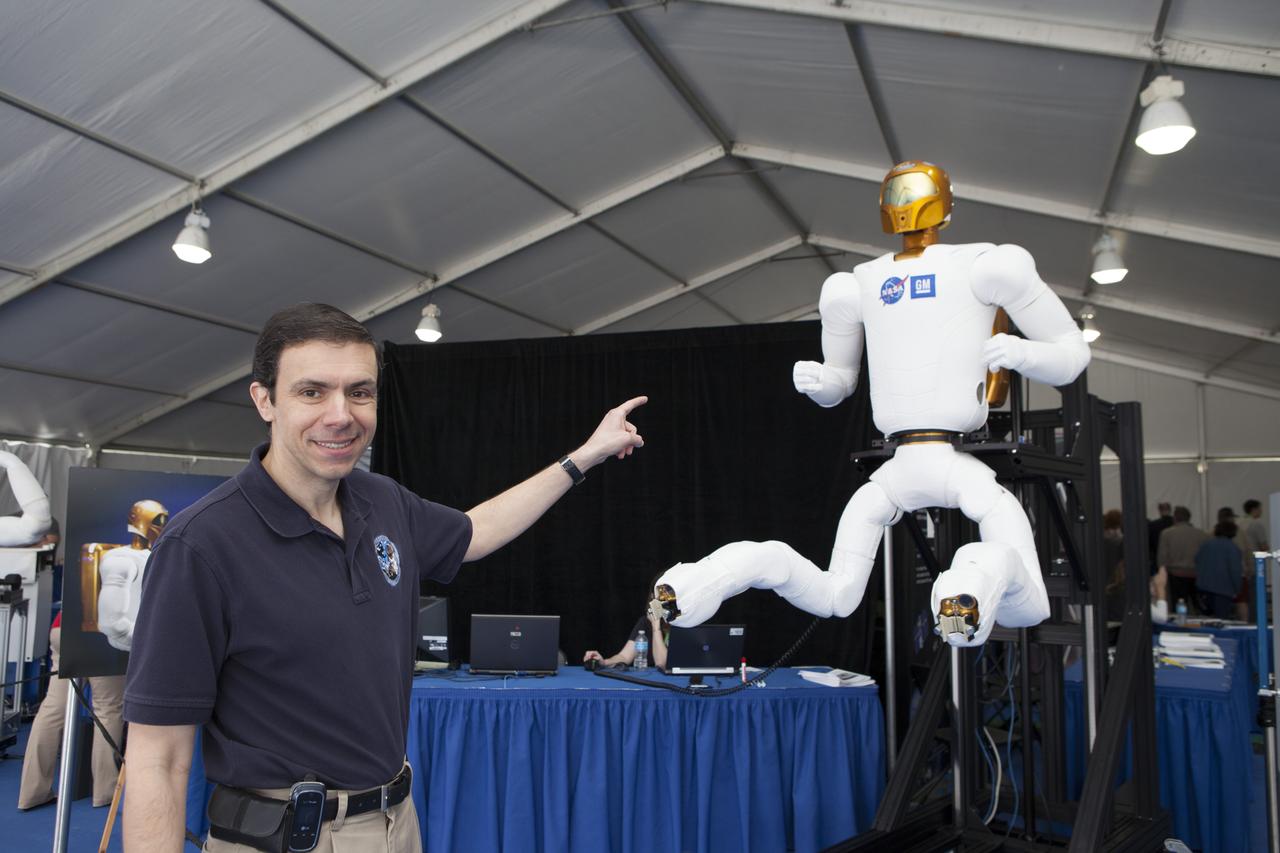
CAPE CANAVERAL, Fla. – Ron Diftler of NASA's Johnson Space Center in Houston demonstrates the leg movements of Robonaut 2 during the Robot Rocket Rally. The three-day event at Florida's Kennedy Space Center Visitor Complex is highlighted by exhibits, games and demonstrations of a variety of robots, with exhibitors ranging from school robotics clubs to veteran NASA scientists and engineers. Photo credit: NASA/Kim Shiflett
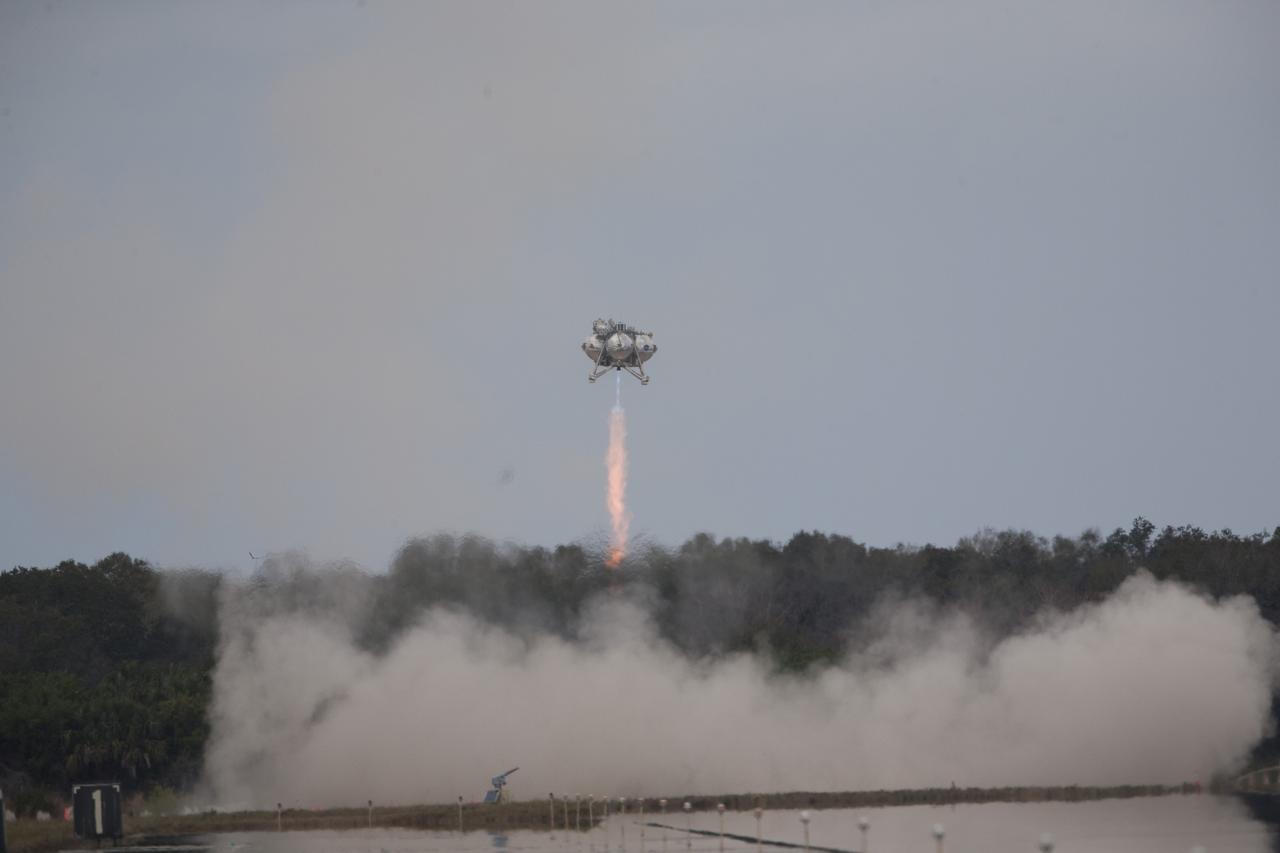
CAPE CANAVERAL, Fla. – The Project Morpheus prototype continues to ascend after launching on its fourth free flight test at the north end of the Shuttle Landing Facility at NASA’s Kennedy Space Center in Florida. The 64-second test began at 1:15 p.m. EST with the Morpheus lander launching from the ground over a flame trench and ascending about 305 feet, significantly increasing the ascent velocity from the last test. The lander flew forward, covering about 358 feet in 25 seconds before descending and landing within 15 inches of its target on a dedicated pad inside the autonomous landing and hazard avoidance technology, or ALHAT, hazard field. Project Morpheus tests NASA’s ALHAT and an engine that runs on liquid oxygen and methane, or green propellants, into a fully-operational lander that could deliver cargo to other planetary surfaces. The landing facility provides the lander with the kind of field necessary for realistic testing, complete with rocks, craters and hazards to avoid. Morpheus’ ALHAT payload allows it to navigate to clear landing sites amidst rocks, craters and other hazards during its descent. Project Morpheus is being managed under the Advanced Exploration Systems, or AES, Division in NASA’s Human Exploration and Operations Mission Directorate. The efforts in AES pioneer new approaches for rapidly developing prototype systems, demonstrating key capabilities and validating operational concepts for future human missions beyond Earth orbit. For more information on Project Morpheus, visit http://www.nasa.gov/centers/johnson/exploration/morpheus. Photo credit: NASA/Kim Shiflett
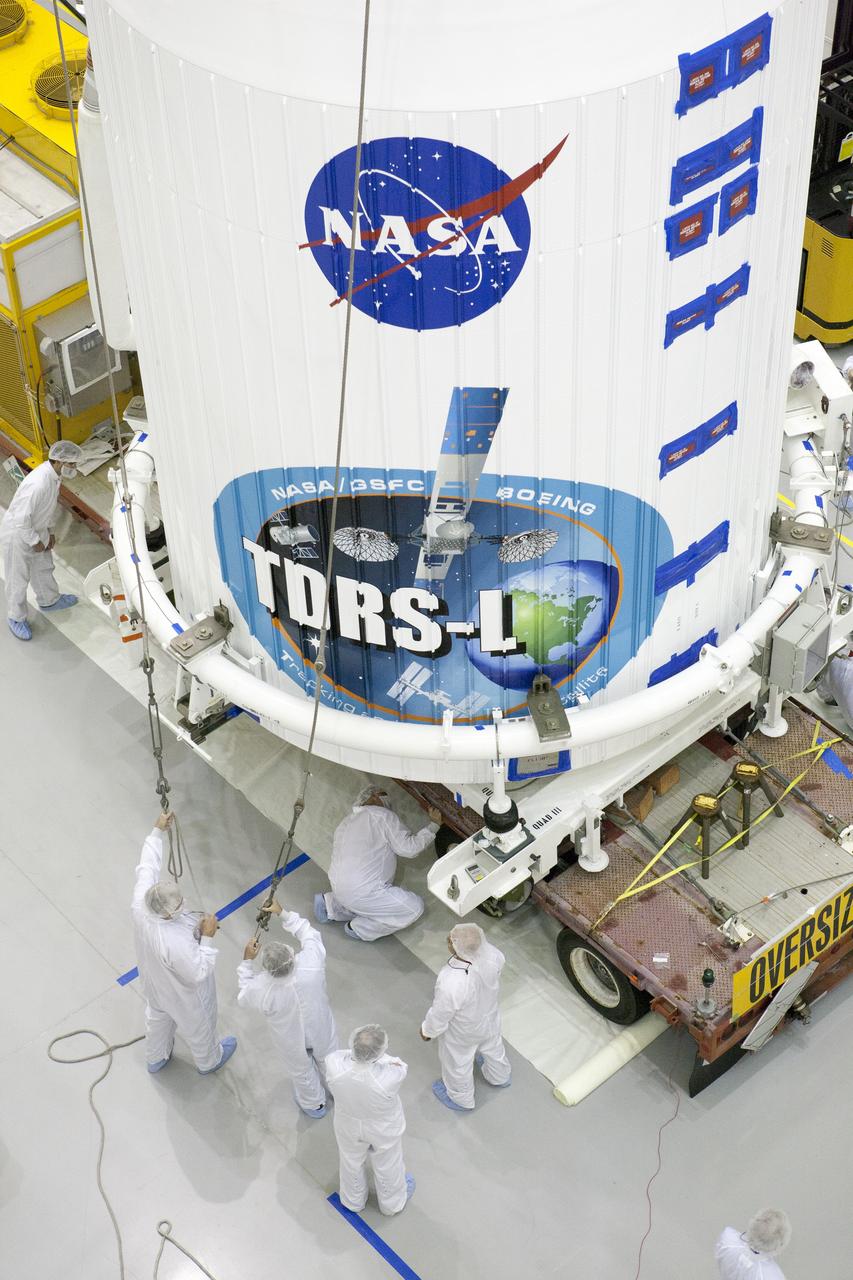
TITUSVILLE, Fla. – Encapsulated in its payload fairing, NASA's Tracking and Data Relay Satellite, or TDRS-L, spacecraft is being mounted on a transporter for its trip from the Astrotech payload processing facility in Titusville to Launch Complex 41 at Cape Canaveral Air Force Station. The TDRS-L satellite will be a part of the second of three next-generation spacecraft designed to ensure vital operational continuity for the NASA Space Network. It is scheduled to launch from Cape Canaveral's Space Launch Complex 41 atop a United Launch Alliance Atlas V rocket on January 23, 2014. The current Tracking and Data Relay Satellite system consists of eight in-orbit satellites distributed to provide near continuous information relay contact with orbiting spacecraft ranging from the International Space Station and Hubble Space Telescope to the array of scientific observatories. For more information, visit: http://www.nasa.gov/mission_pages/tdrs/home/index.html Photo credit: NASA/Kim Shiflett

CAPE CANAVERAL, Fla. - NASA astronaut candidates Andrew Morgan, from left Josh Cassada, Tyler "Nick" Hague, Christina Hammock and Victor Glover tour one of the high bays of the Vehicle Assembly Building at NASA's Kennedy Space Center during a daylong set of briefings and tours of different facilities at NASA's primary launch center. The astronaut class of 2013 was selected by NASA after an extensive year-and-a-half search. The new group will help the agency push the boundaries of exploration and travel to new destinations in the solar system. To learn more about the astronaut class of 2013, visit: http://www.nasa.gov/astronauts/2013astroclass.html Photo credit: NASA/Kim Shiflett
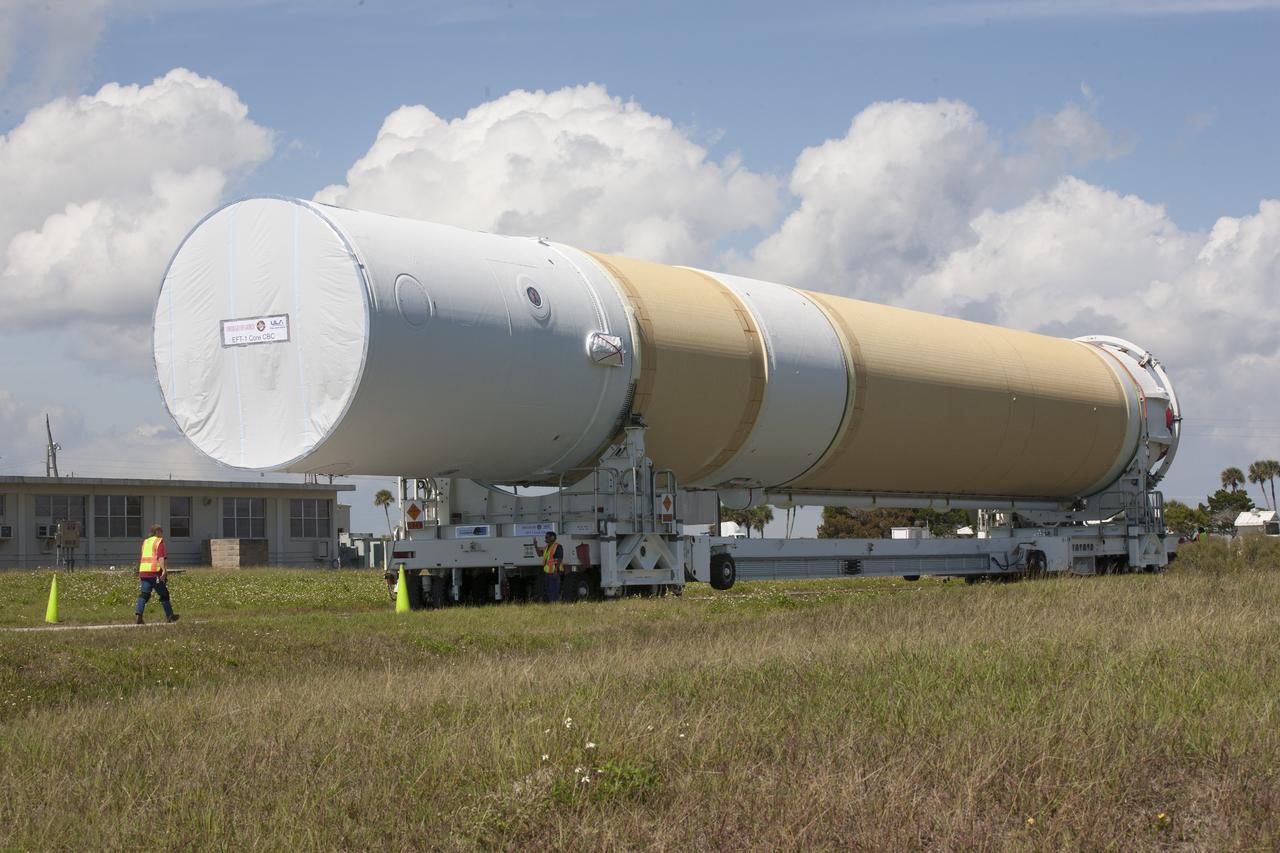
CAPE CANAVERAL, Fla. – Two of the three United Launch Alliance Delta IV heavy boosters for NASA’s upcoming Exploration Flight Test-1, or EFT-1, mission with the Orion spacecraft, arrived by barge at the U.S. Army Outpost wharf at Port Canaveral in Florida. The core booster, shown in this photo, and starboard booster were offloaded and will be transported to the Horizontal Integration Facility, or HIF, at Space Launch Complex 37 on Cape Canaveral Air Force Station. The port booster and the upper stage are planned to be shipped to Cape Canaveral in April. At the HIF, all three boosters will be processed and checked out before being moved to the nearby launch pad and hoisted into position. During the EFT-1 mission, Orion will travel farther into space than any human spacecraft has gone in more than 40 years. The data gathered during the flight will influence design decisions, validate existing computer models and innovative new approaches to space systems development, as well as reduce overall mission risks and costs for later Orion flights. Liftoff of Orion on EFT-1 is planned for fall 2014. Photo credit: NASA/Kim Shiflett
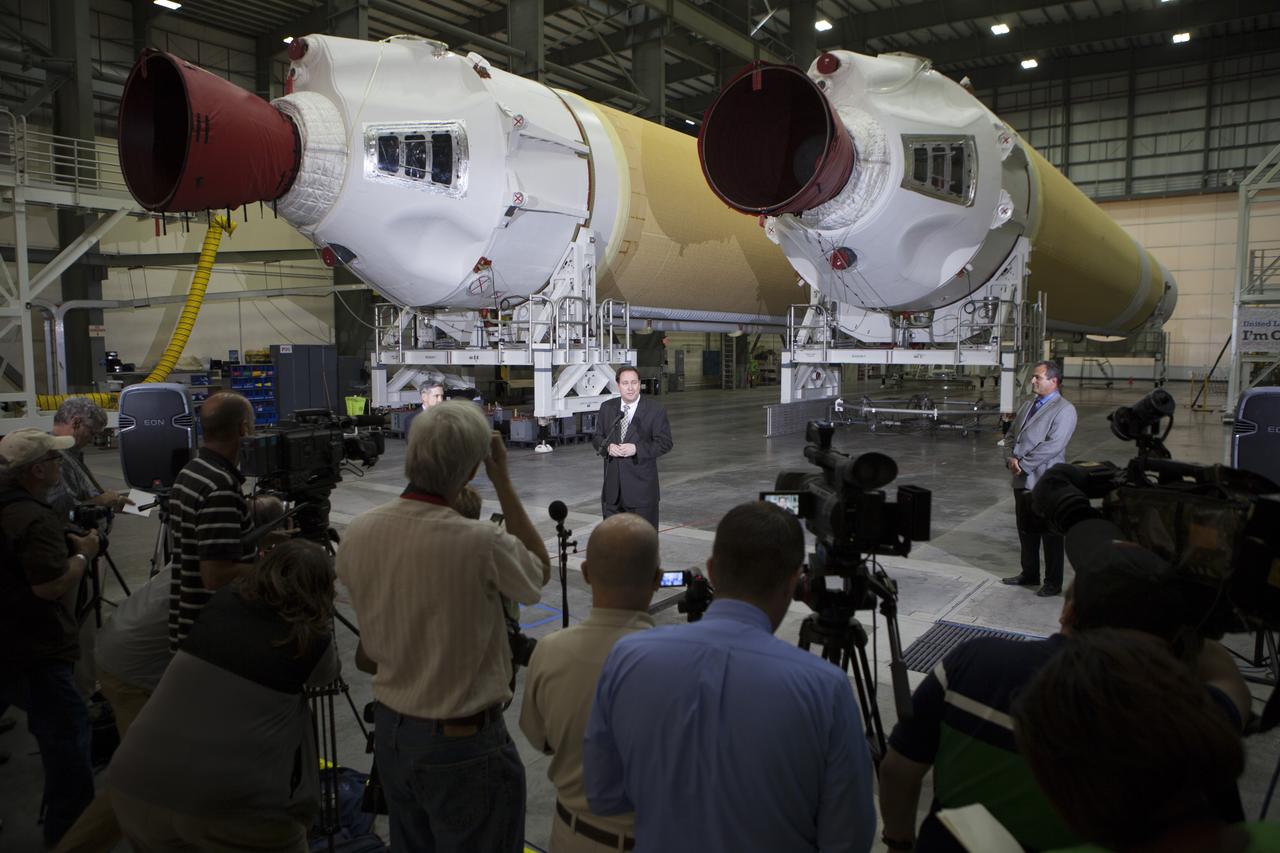
CAPE CANAVERAL, Fla. – During a media event inside the Horizontal Integration Facility at Launch Complex 37 at Cape Canaveral Air Force Station in Florida, NASA Associate Administrator Robert Lightfoot answers questions. To his right is Tony Taliancich, director of East Coast Launch Operations with United Launch Alliance, or ULA. Also participating in the event was Kennedy Space Center Director Bob Cabana. The event was held to showcase two of the ULA Delta IV boosters for the Orion Exploration Flight Test-1, or EFT-1, mission. Orion is the exploration spacecraft designed to carry astronauts to destinations not yet explored by humans, including an asteroid and Mars. It will have emergency abort capability, sustain the crew during space travel and provide safe re-entry from deep space return velocities. The first unpiloted test flight of Orion, EFT-1, is scheduled to launch in 2014 atop a Delta IV rocket and in 2017 on NASA’s Space Launch System rocket. For more information, visit http://www.nasa.gov/orion. Photo credit: NASA/Kim Shiflett
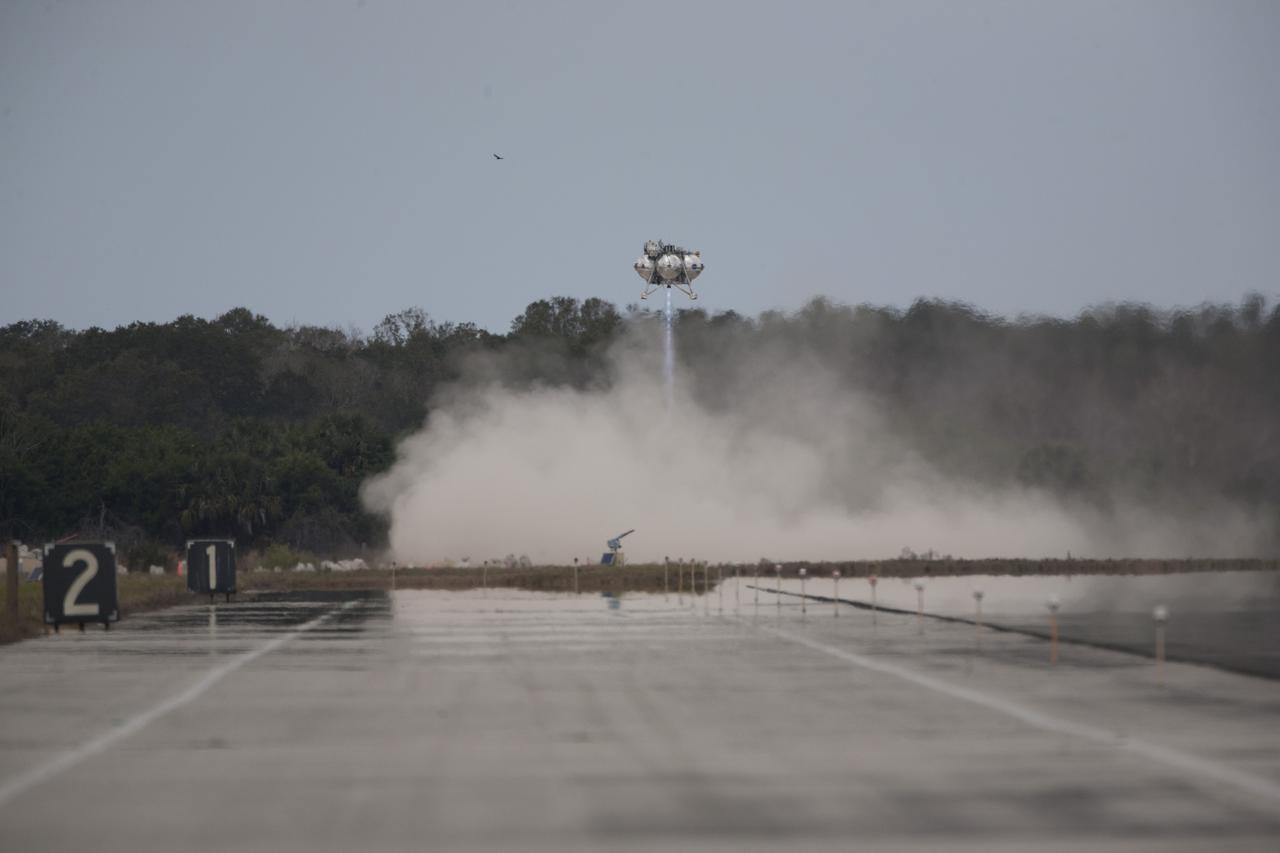
CAPE CANAVERAL, Fla. – The Project Morpheus prototype lander descends toward the autonomous landing and hazard avoidance technology, or ALHAT, hazard field after launching on its fourth free flight test at the north end of the Shuttle Landing Facility at NASA’s Kennedy Space Center in Florida. The 64-second test began at 1:15 p.m. EST with the Morpheus lander launching from the ground over a flame trench and ascending about 305 feet, significantly increasing the ascent velocity from the last test. The lander flew forward, covering about 358 feet in 25 seconds before descending and landing within 15 inches of its target on a dedicated pad inside the ALHAT hazard field. Project Morpheus tests NASA’s ALHAT and an engine that runs on liquid oxygen and methane, or green propellants, into a fully-operational lander that could deliver cargo to other planetary surfaces. The landing facility provides the lander with the kind of field necessary for realistic testing, complete with rocks, craters and hazards to avoid. Morpheus’ ALHAT payload allows it to navigate to clear landing sites amidst rocks, craters and other hazards during its descent. Project Morpheus is being managed under the Advanced Exploration Systems, or AES, Division in NASA’s Human Exploration and Operations Mission Directorate. The efforts in AES pioneer new approaches for rapidly developing prototype systems, demonstrating key capabilities and validating operational concepts for future human missions beyond Earth orbit. For more information on Project Morpheus, visit http://www.nasa.gov/centers/johnson/exploration/morpheus. Photo credit: NASA/Kim Shiflett
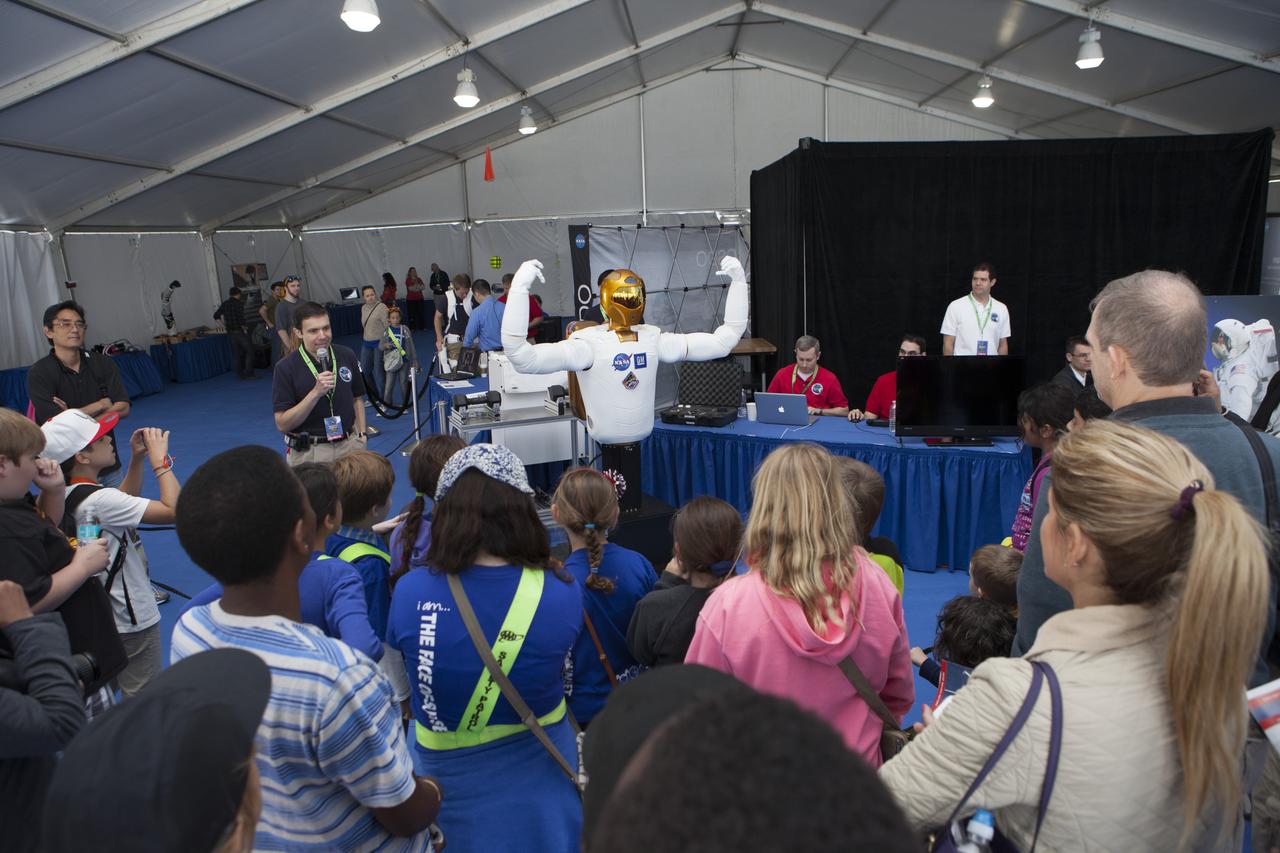
CAPE CANAVERAL, Fla. – A torso model of Robonaut 2, identical to R2 already on the International Space Station, is introduced to a crowd of onlookers by Ron Diftler of NASA's Johnson Space Center in Houston. The demonstration was one of several provided during the Robot Rocket Rally. The three-day event at Florida's Kennedy Space Center Visitor Complex is highlighted by exhibits, games and demonstrations of a variety of robots, with exhibitors ranging from school robotics clubs to veteran NASA scientists and engineers. Photo credit: NASA/Kim Shiflett
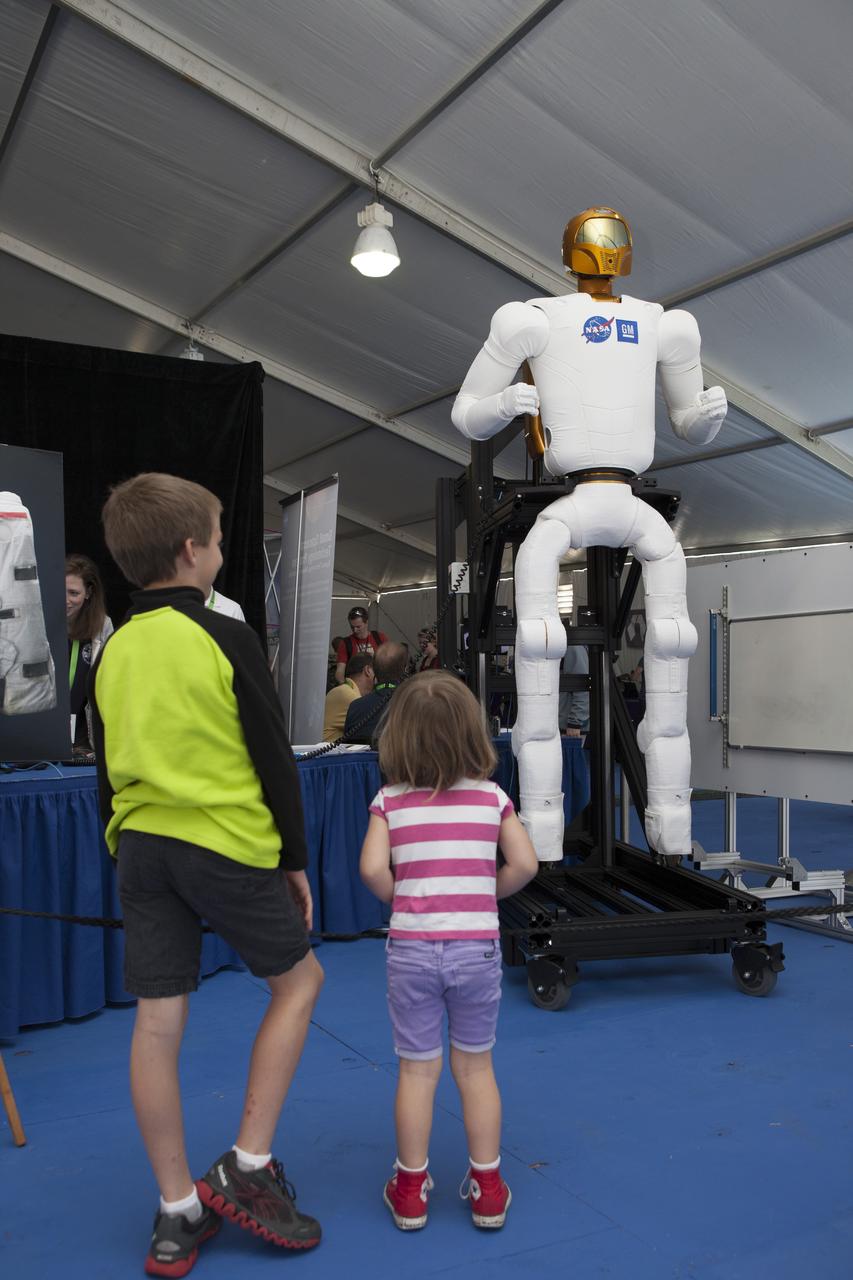
CAPE CANAVERAL, Fla. – Two young visitors get an up-close look at an engineering model of Robonaut 2, complete with a set of legs, during the Robot Rocket Rally. The three-day event at Florida's Kennedy Space Center Visitor Complex is highlighted by exhibits, games and demonstrations of a variety of robots, with exhibitors ranging from school robotics clubs to veteran NASA scientists and engineers. Photo credit: NASA/Kim Shiflett
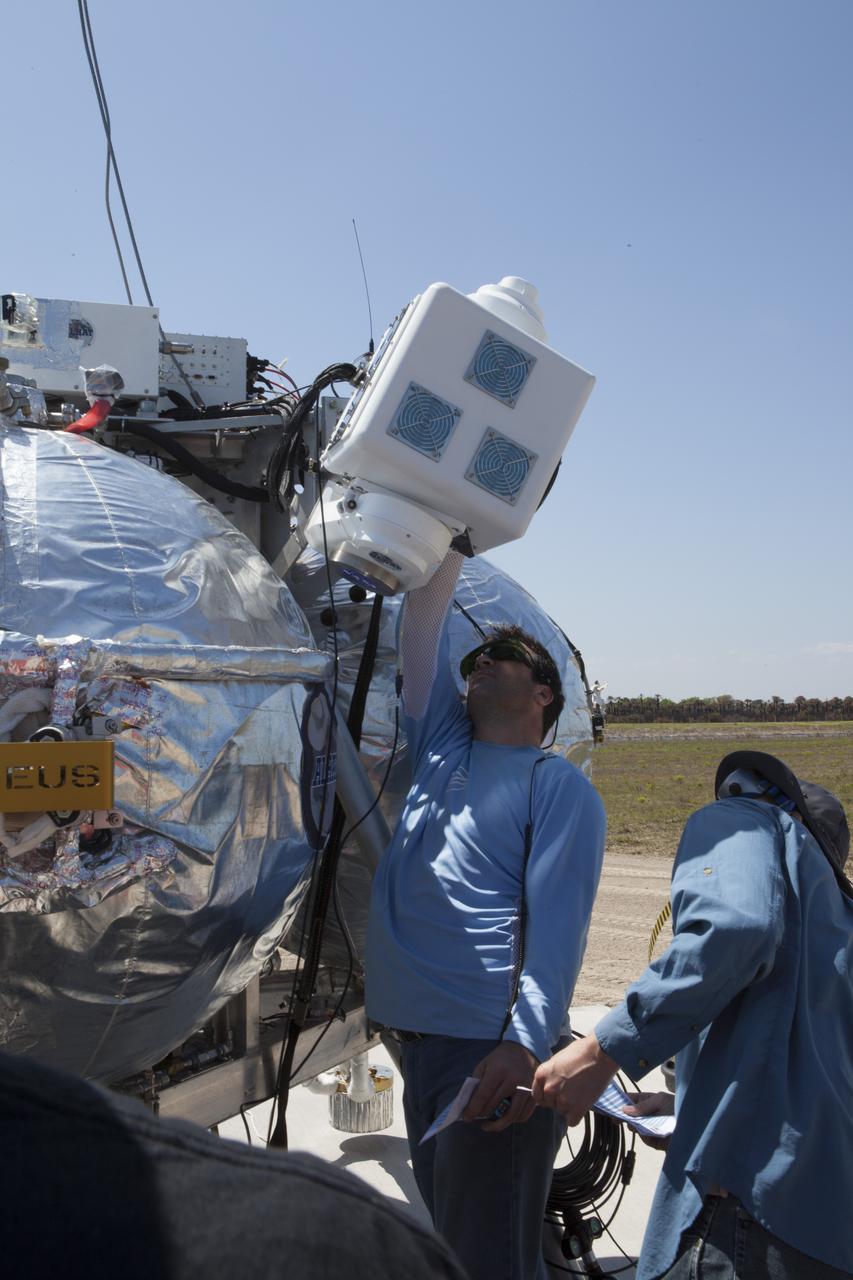
CAPE CANAVERAL, Fla. – Engineers and technicians wearing safety goggles, prepare the Project Morpheus prototype lander for an automated landing and hazard avoidance technology, or ALHAT, and laser test at a new launch site at the north end of the Shuttle Landing Facility at NASA’s Kennedy Space Center in Florida. The launch pad was moved to a different location at the landing facility to support the next phase of flight testing. The seventh free flight test of Morpheus occurred on March 11. The 83-second test began at 3:41 p.m. EDT with the Morpheus lander launching from the ground over a flame trench and ascending to 580 feet. Morpheus then flew its fastest downrange trek at 30 mph, travelling farther than before, 837 feet. The lander performed a 42-foot divert to emulate a hazard avoidance maneuver before descending and touching down on Landing Site 2, at the northern landing pad inside the ALHAT hazard field. Morpheus landed within one foot of its intended target. Project Morpheus tests NASA’s ALHAT and an engine that runs on liquid oxygen and methane, or green propellants, into a fully-operational lander that could deliver cargo to other planetary surfaces. The landing facility provides the lander with the kind of field necessary for realistic testing, complete with rocks, craters and hazards to avoid. Morpheus’ ALHAT payload allows it to navigate to clear landing sites amidst rocks, craters and other hazards during its descent. Project Morpheus is being managed under the Advanced Exploration Systems, or AES, Division in NASA’s Human Exploration and Operations Mission Directorate. The efforts in AES pioneer new approaches for rapidly developing prototype systems, demonstrating key capabilities and validating operational concepts for future human missions beyond Earth orbit. For more information on Project Morpheus, visit http://morpheuslander.jsc.nasa.gov/. Photo credit: NASA/Kim Shiflett
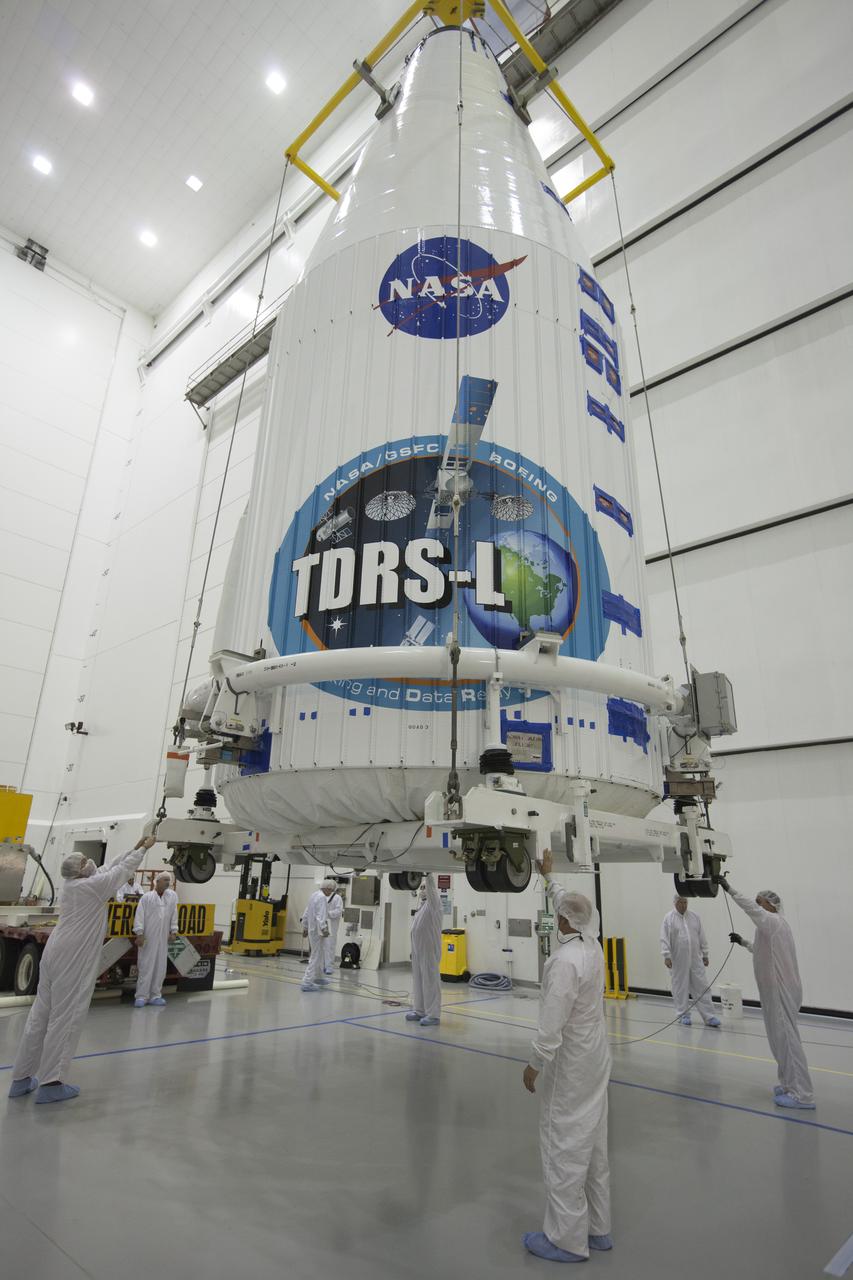
TITUSVILLE, Fla. – Inside the Astrotech payload processing facility in Titusville, NASA's Tracking and Data Relay Satellite, or TDRS-L, spacecraft has been encapsulated in its payload fairing. It is being lifted by crane for mounting on a transporter for its trip to Launch Complex 41 at Cape Canaveral Air Force Station. The TDRS-L satellite will be a part of the second of three next-generation spacecraft designed to ensure vital operational continuity for the NASA Space Network. It is scheduled to launch from Cape Canaveral's Space Launch Complex 41 atop a United Launch Alliance Atlas V rocket on January 23, 2014. The current Tracking and Data Relay Satellite system consists of eight in-orbit satellites distributed to provide near continuous information relay contact with orbiting spacecraft ranging from the International Space Station and Hubble Space Telescope to the array of scientific observatories. For more information, visit: http://www.nasa.gov/mission_pages/tdrs/home/index.html Photo credit: NASA/Kim Shiflett
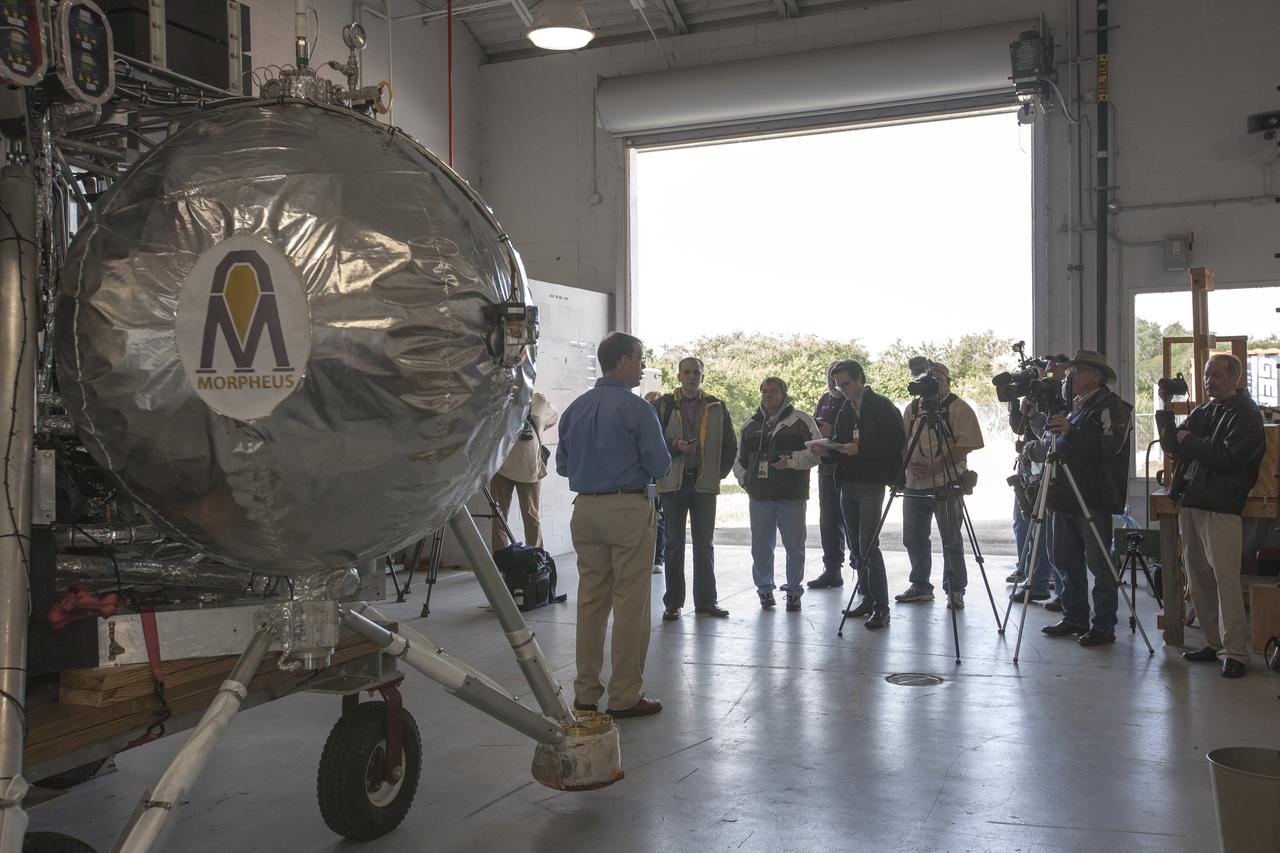
CAPE CANAVERAL, Fla. – Members of the news media view the Project Morpheus prototype lander inside a hangar near the Shuttle Landing Facility at NASA’s Kennedy Space Center in Florida. Speaking to the media is Greg Gaddis, the Kennedy Morpheus and ALHAT site manager. Morpheus successfully completed its third free flight test Jan. 16. The 57-second test began at 1:15 p.m. EST with the Morpheus lander launching from the ground over a flame trench and ascending about 187 feet, nearly doubling the target ascent velocity from the last test in December 2013. The lander flew forward, covering about 154 feet in 20 seconds before descending and landing within 11 inches of its target on a dedicated pad inside the autonomous landing and hazard avoidance technology, or ALHAT, hazard field. Project Morpheus tests NASA’s ALHAT and an engine that runs on liquid oxygen and methane, or green propellants, into a fully-operational lander that could deliver cargo to other planetary surfaces. The landing facility provides the lander with the kind of field necessary for realistic testing, complete with rocks, craters and hazards to avoid. Morpheus’ ALHAT payload allows it to navigate to clear landing sites amidst rocks, craters and other hazards during its descent. Project Morpheus is being managed under the Advanced Exploration Systems, or AES, Division in NASA’s Human Exploration and Operations Mission Directorate. The efforts in AES pioneer new approaches for rapidly developing prototype systems, demonstrating key capabilities and validating operational concepts for future human missions beyond Earth orbit. For more information on Project Morpheus, visit http://www.nasa.gov/centers/johnson/exploration/morpheus. Photo credit: NASA/Kim Shiflett
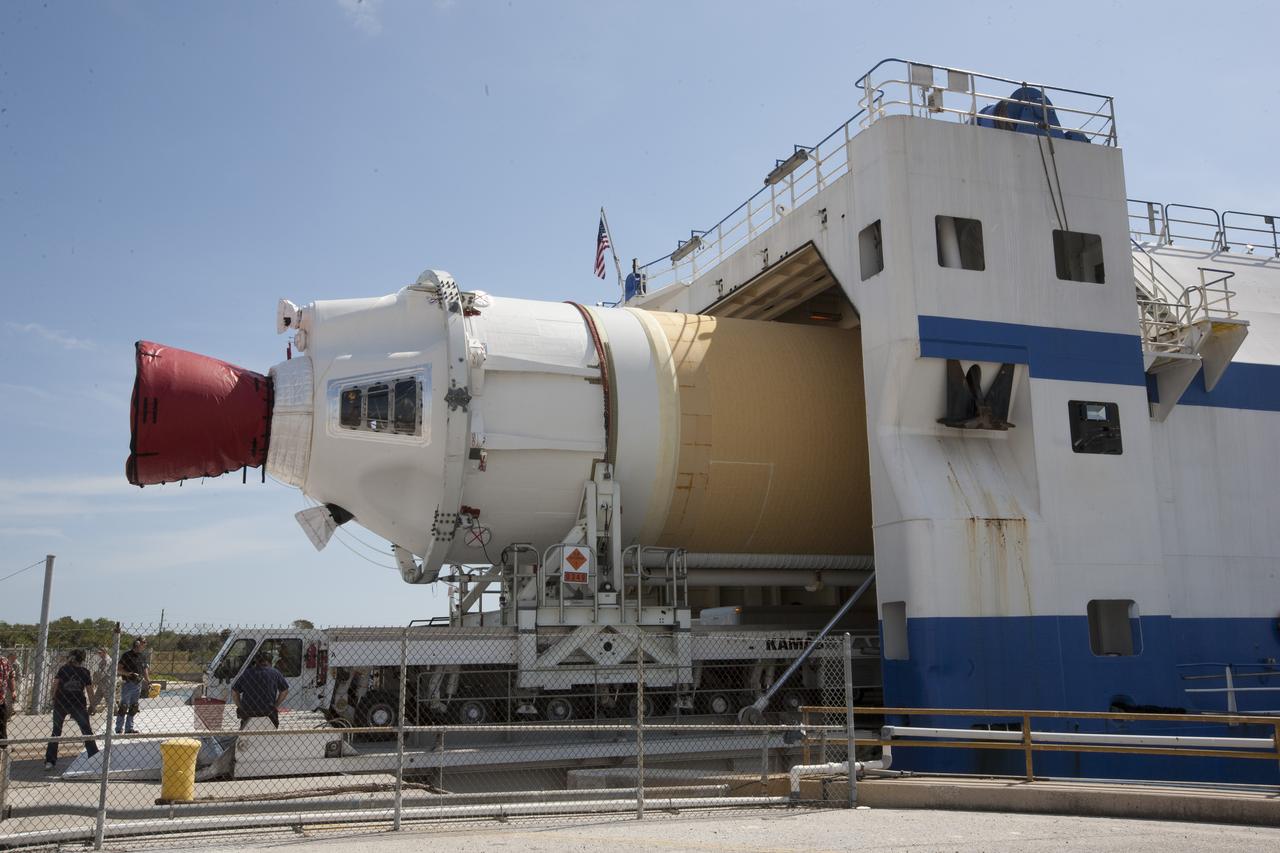
CAPE CANAVERAL, Fla. – Two of the three United Launch Alliance Delta IV heavy boosters for NASA’s upcoming Exploration Flight Test-1, or EFT-1, mission with the Orion spacecraft, have arrived by barge at the U.S. Army Outpost wharf at Port Canaveral in Florida. The core booster and starboard booster are being offloaded and will be transported to the Horizontal Integration Facility, or HIF, at Space Launch Complex 37 on Cape Canaveral Air Force Station. The port booster and the upper stage are planned to be shipped to Cape Canaveral in April. At the HIF, all three boosters will be processed and checked out before being moved to the nearby launch pad and hoisted into position. During the EFT-1 mission, Orion will travel farther into space than any human spacecraft has gone in more than 40 years. The data gathered during the flight will influence design decisions, validate existing computer models and innovative new approaches to space systems development, as well as reduce overall mission risks and costs for later Orion flights. Liftoff of Orion on EFT-1 is planned for fall 2014. Photo credit: NASA/Kim Shiflett
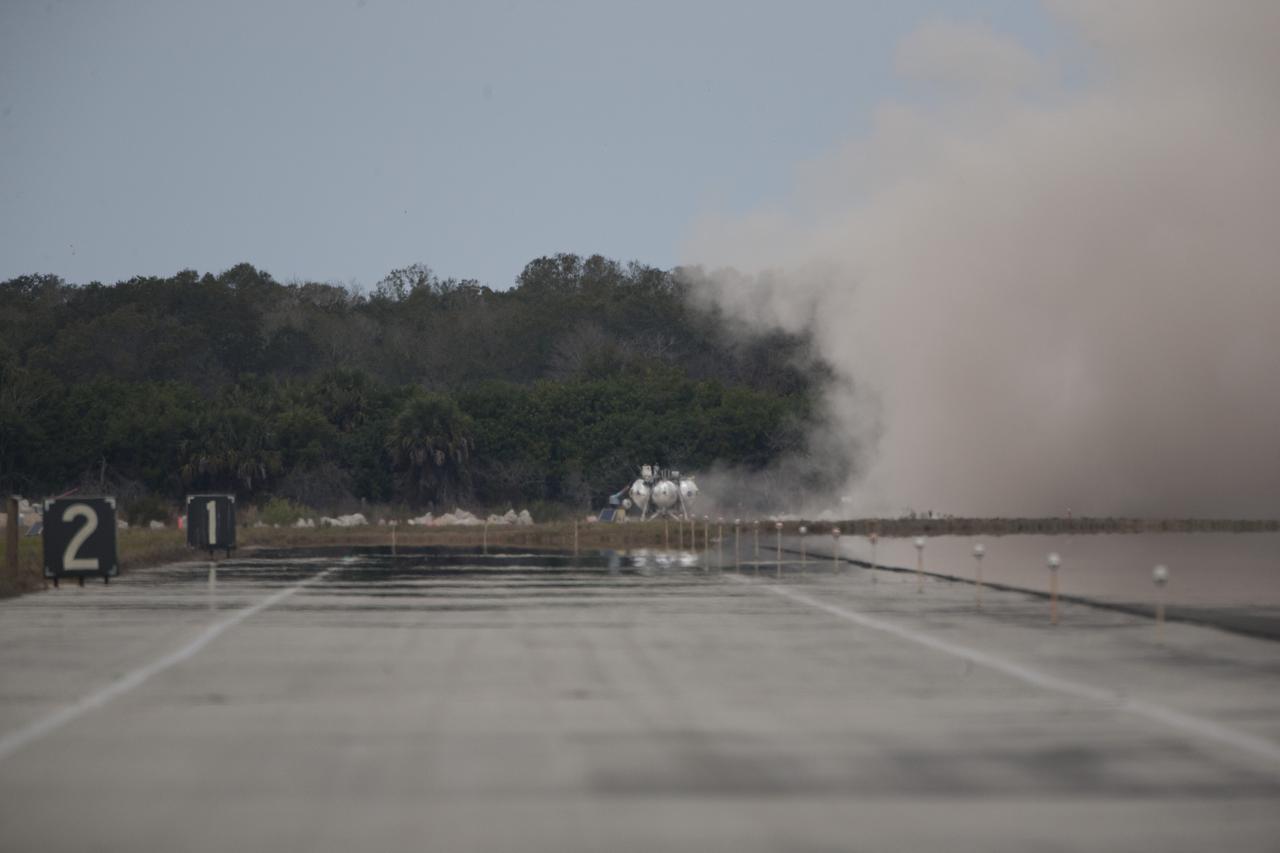
CAPE CANAVERAL, Fla. – The Project Morpheus prototype lander touches down in the autonomous landing and hazard avoidance technology, or ALHAT, hazard field after launching on its fourth free flight test at the north end of the Shuttle Landing Facility at NASA’s Kennedy Space Center in Florida. The 64-second test began at 1:15 p.m. EST with the Morpheus lander launching from the ground over a flame trench and ascending about 305 feet, significantly increasing the ascent velocity from the last test. The lander flew forward, covering about 358 feet in 25 seconds before descending and landing within 15 inches of its target on a dedicated pad inside the ALHAT hazard field. Project Morpheus tests NASA’s ALHAT and an engine that runs on liquid oxygen and methane, or green propellants, into a fully-operational lander that could deliver cargo to other planetary surfaces. The landing facility provides the lander with the kind of field necessary for realistic testing, complete with rocks, craters and hazards to avoid. Morpheus’ ALHAT payload allows it to navigate to clear landing sites amidst rocks, craters and other hazards during its descent. Project Morpheus is being managed under the Advanced Exploration Systems, or AES, Division in NASA’s Human Exploration and Operations Mission Directorate. The efforts in AES pioneer new approaches for rapidly developing prototype systems, demonstrating key capabilities and validating operational concepts for future human missions beyond Earth orbit. For more information on Project Morpheus, visit http://www.nasa.gov/centers/johnson/exploration/morpheus. Photo credit: NASA/Kim Shiflett
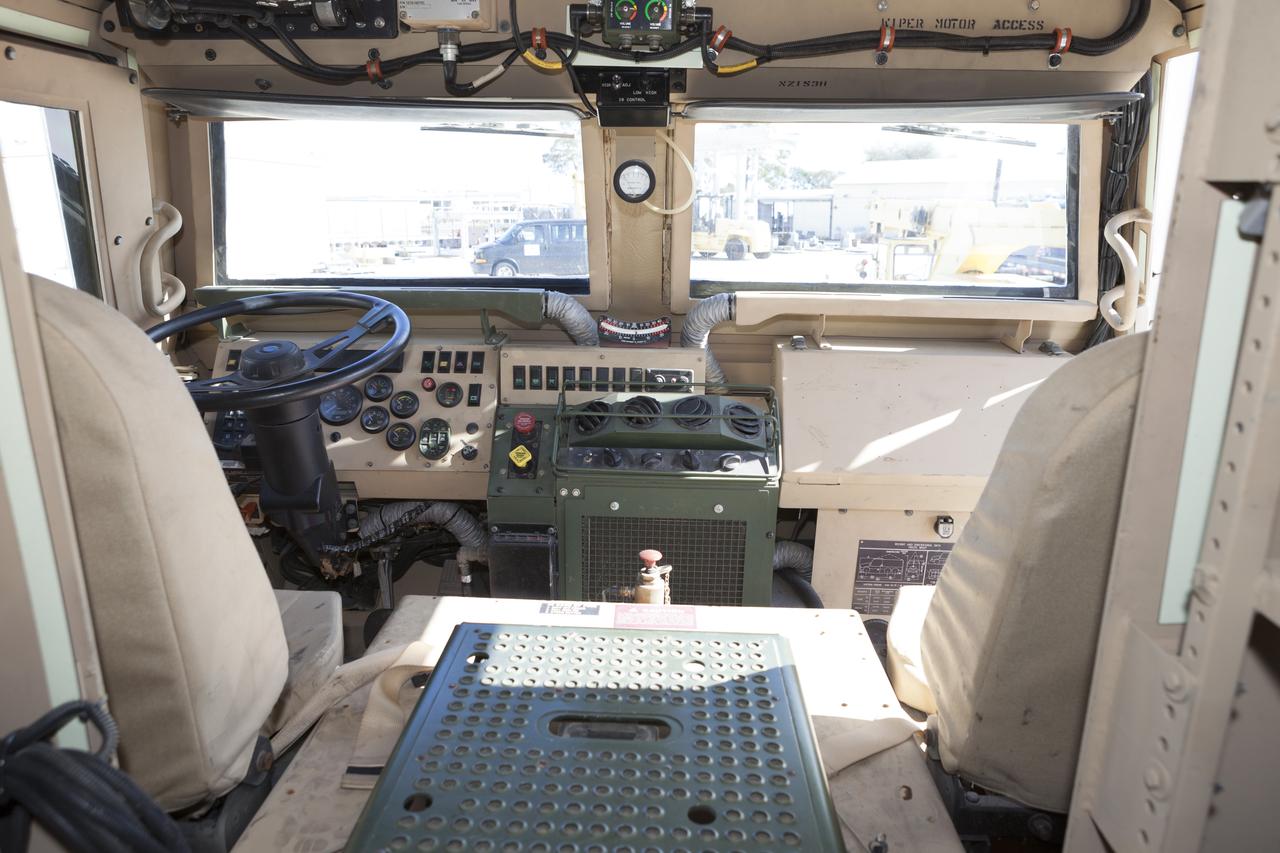
CAPE CANAVERAL, Fla. – A view of the interior of one of four new emergency egress vehicles, called Mine-Resistant Ambush-Protected, or MRAP, vehicles is shown. The MRAPs are at the Maintenance and Operations Facility at NASA’s Kennedy Space Center in Florida. The MRAPs arrived from the U.S. Army Red River Depot in Texarkana, Texas in December 2013. The vehicles were processed in and then transported to the Rotation, Processing and Surge Facility near the Vehicle Assembly Building for temporary storage. The Ground Systems Development and Operations Program at Kennedy led the efforts to an emergency egress vehicle that future astronauts could quickly use to leave the Launch Complex 39 area in case of an emergency. During crewed launches of NASA’s Space Launch System and Orion spacecraft, the MRAP will be stationed by the slidewire termination area at the pad. In case of an emergency, the crew will ride a slidewire to the ground and immediately board the MRAP for safe egress from the pad. The new vehicles replace the M-113 vehicles that were used during the Space Shuttle Program. Photo credit: NASA/Kim Shiflett
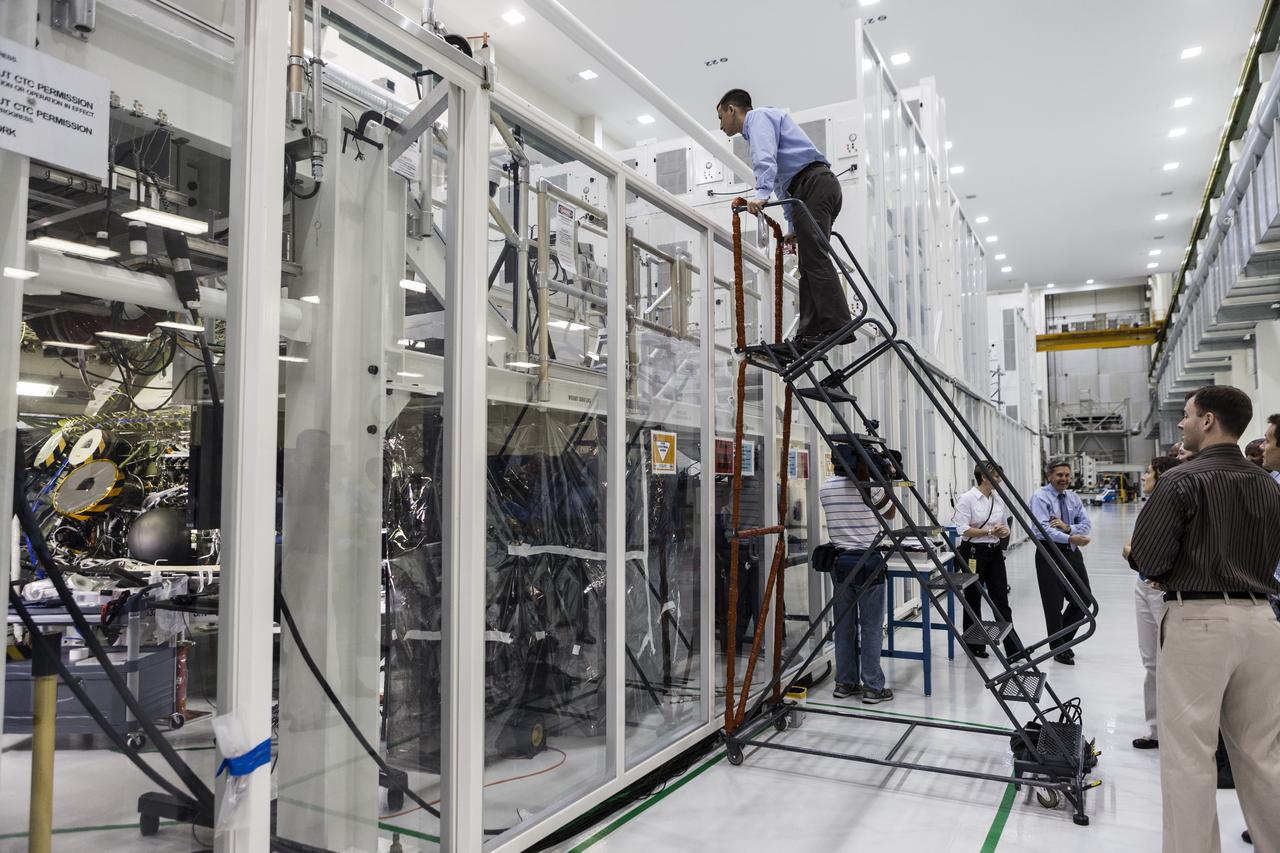
CAPE CANAVERAL, Fla. -- In the Operations and Checkout Building of NASA's Kennedy Space Center in Florida, astronaut candidate Andrew Morgan looks over work platforms to gain a look at the Orion spacecraft being prepared for Exploration Flight Test EFT-1. Plans call for the Lockheed Martin-built Orion to launch atop a United Launch Alliance Delta IV Heavy rocket from Cape Canaveral Air Force Station. The astronaut class of 2013 was selected by NASA after an extensive year-and-a-half search. The new group will help the agency push the boundaries of exploration and travel to new destinations in the solar system. To learn more about the astronaut class of 2013, visit: http://www.nasa.gov/astronauts/2013astroclass.html Photo credit: NASA/Kim Shiflett Selected image has been cropped
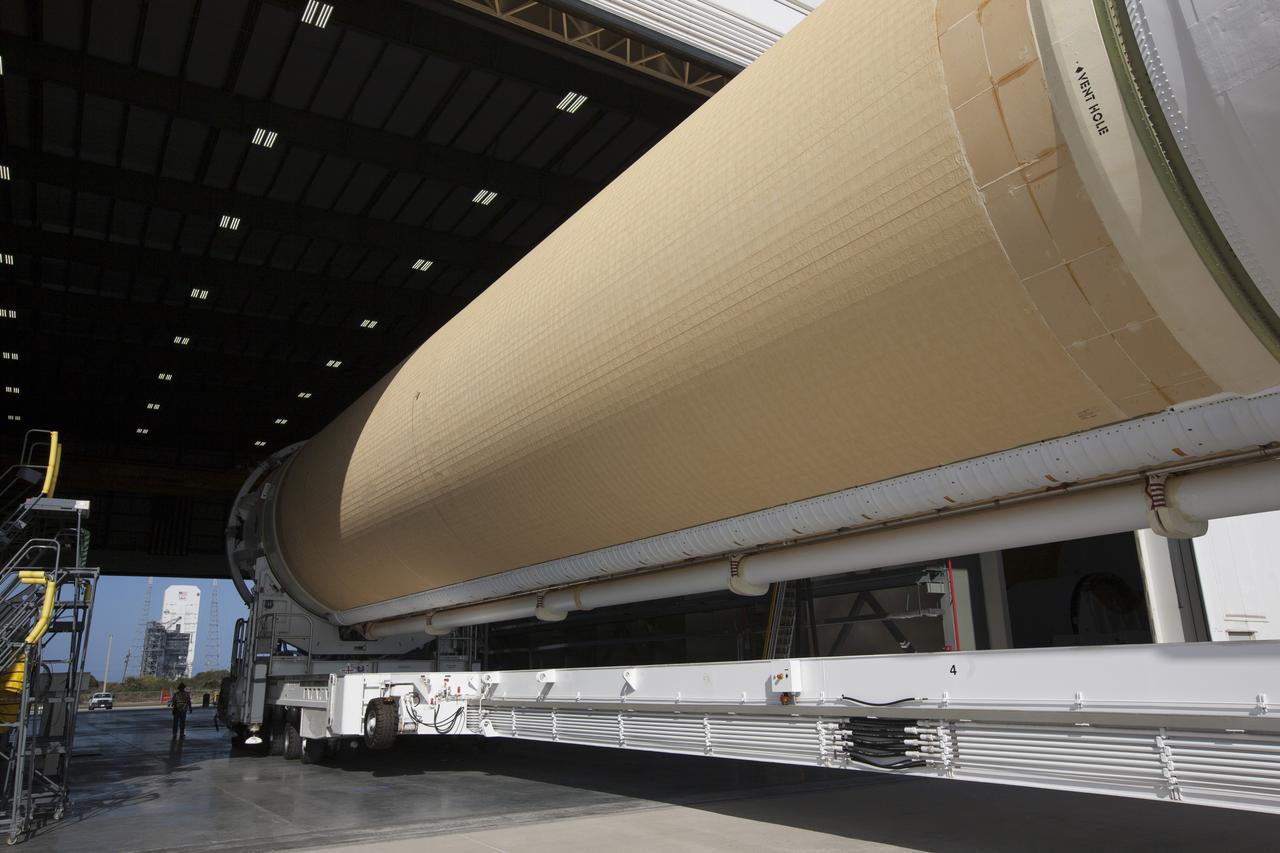
CAPE CANAVERAL, Fla. – The core booster for the United Launch Alliance Delta IV heavy for NASA’s upcoming Exploration Flight Test-1, or EFT-1, mission with the Orion spacecraft, was transported to the Horizontal Integration Facility, or HIF, at Space Launch Complex 37 on Cape Canaveral Air Force Station in Florida. The core booster and starboard booster arrived by barge at the U.S. Army Outpost wharf at Port Canaveral. The port booster and the upper stage are planned to be shipped to Cape Canaveral in April. At the HIF, all three boosters will be processed and checked out before being moved to the nearby launch pad and hoisted into position. During the EFT-1 mission, Orion will travel farther into space than any human spacecraft has gone in more than 40 years. The data gathered during the flight will influence design decisions, validate existing computer models and innovative new approaches to space systems development, as well as reduce overall mission risks and costs for later Orion flights. Liftoff of Orion on EFT-1 is planned for fall 2014. Photo credit: NASA/Kim Shiflett