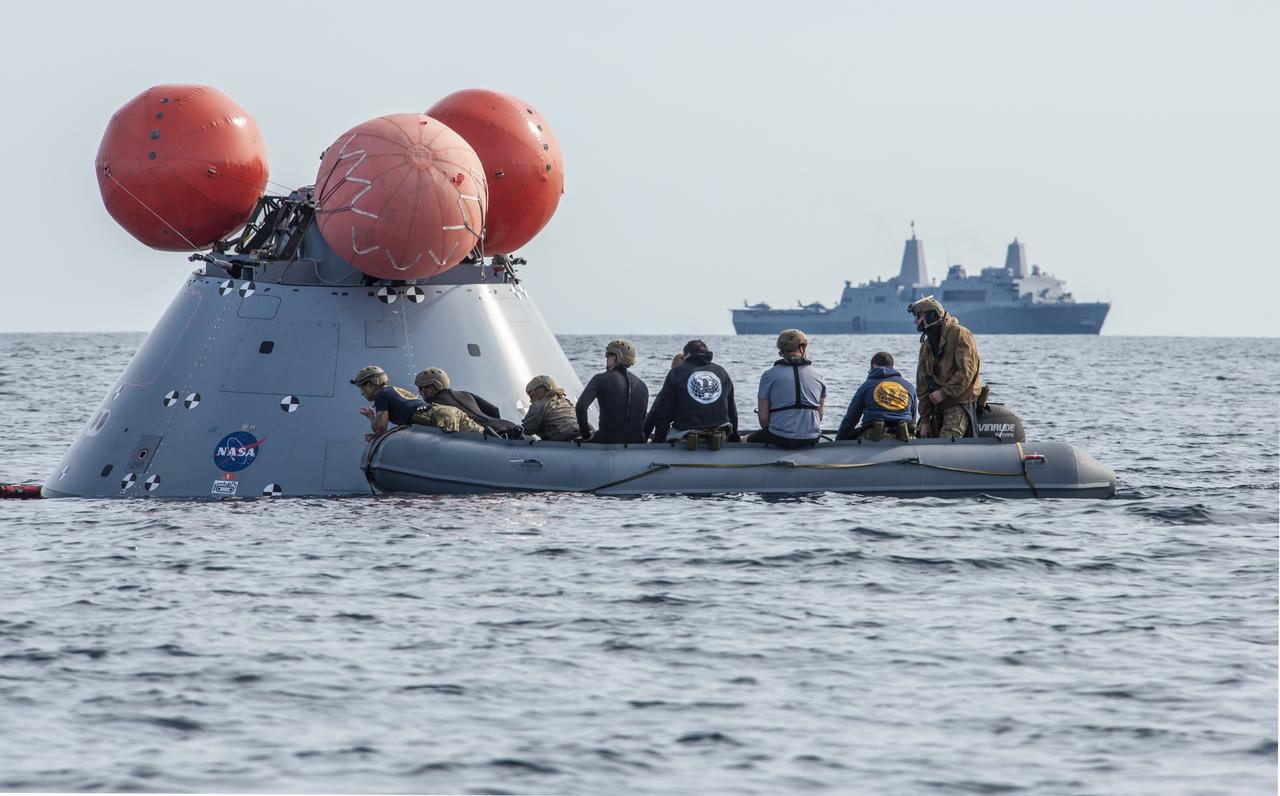
NASA's Landing and Recovery Team practices bringing a mock Orion capsule into the well deck of the USS Portland (LPD 27) ahead of the Artemis I Orion splashdown slated for Dec. 11.
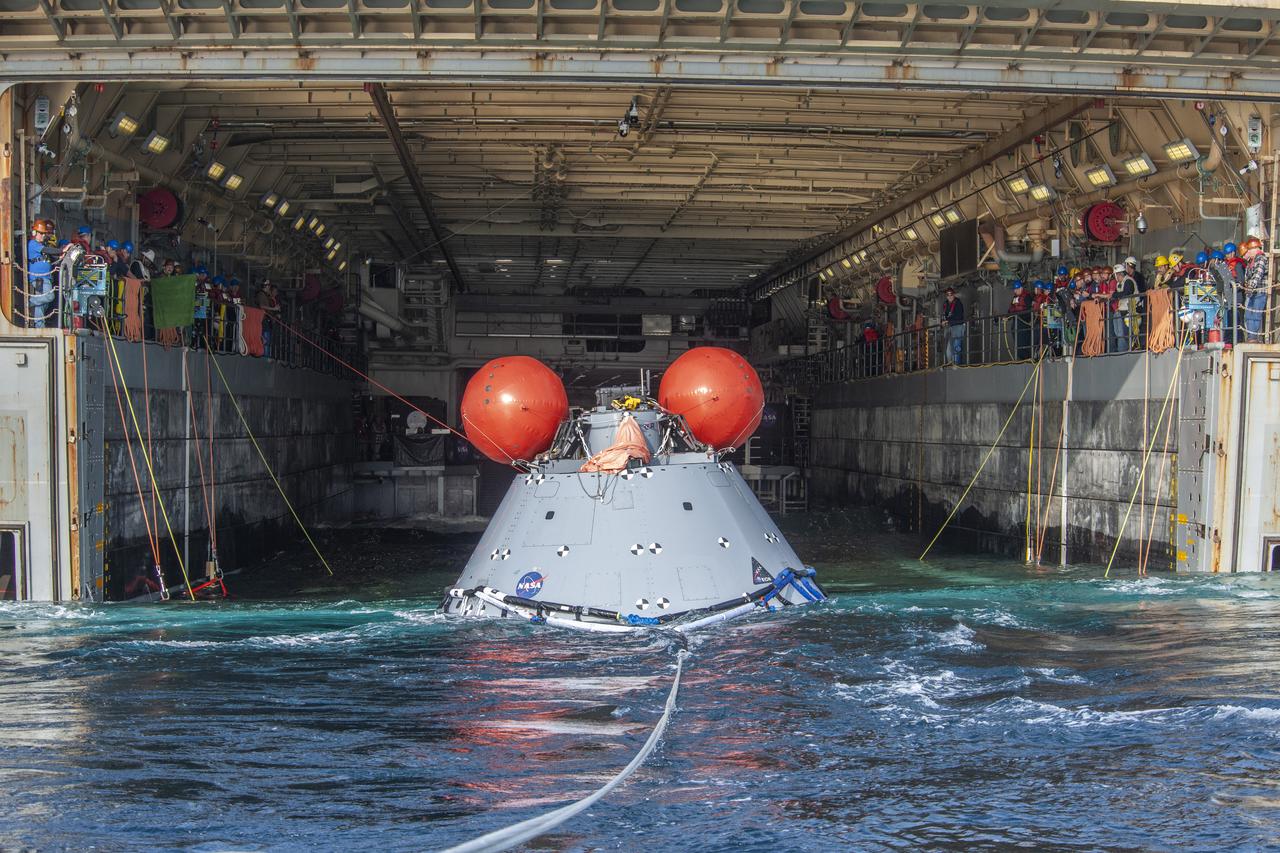
NASA's Landing and Recovery Team practices bringing a mock Orion capsule into the well deck of the USS Portland (LPD 27) ahead of the Artemis I Orion splashdown slated for Dec. 11.
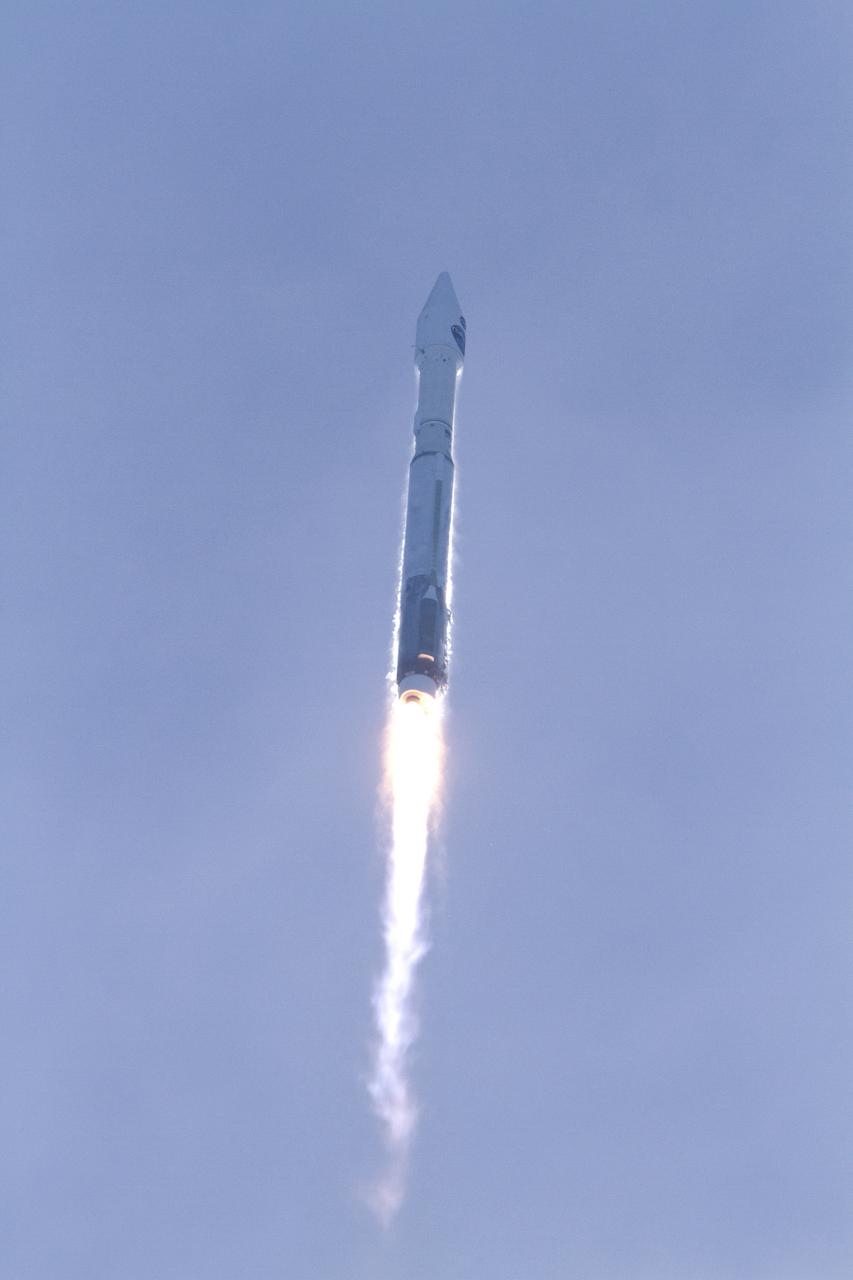
A United Launch Alliance Atlas V rocket lifts off from Space Launch Complex 41 at Cape Canaveral Air Force Station in Florida, with NASA's Tracking and Data Relay Satellite, TDRS-M. TDRS-M. Liftoff was at 8:29 a.m. EDT. TDRS-M is the latest spacecraft destined for the agency's constellation of communications satellites that allows nearly continuous contact with orbiting spacecraft ranging from the International Space Station and Hubble Space Telescope to the array of scientific observatories.
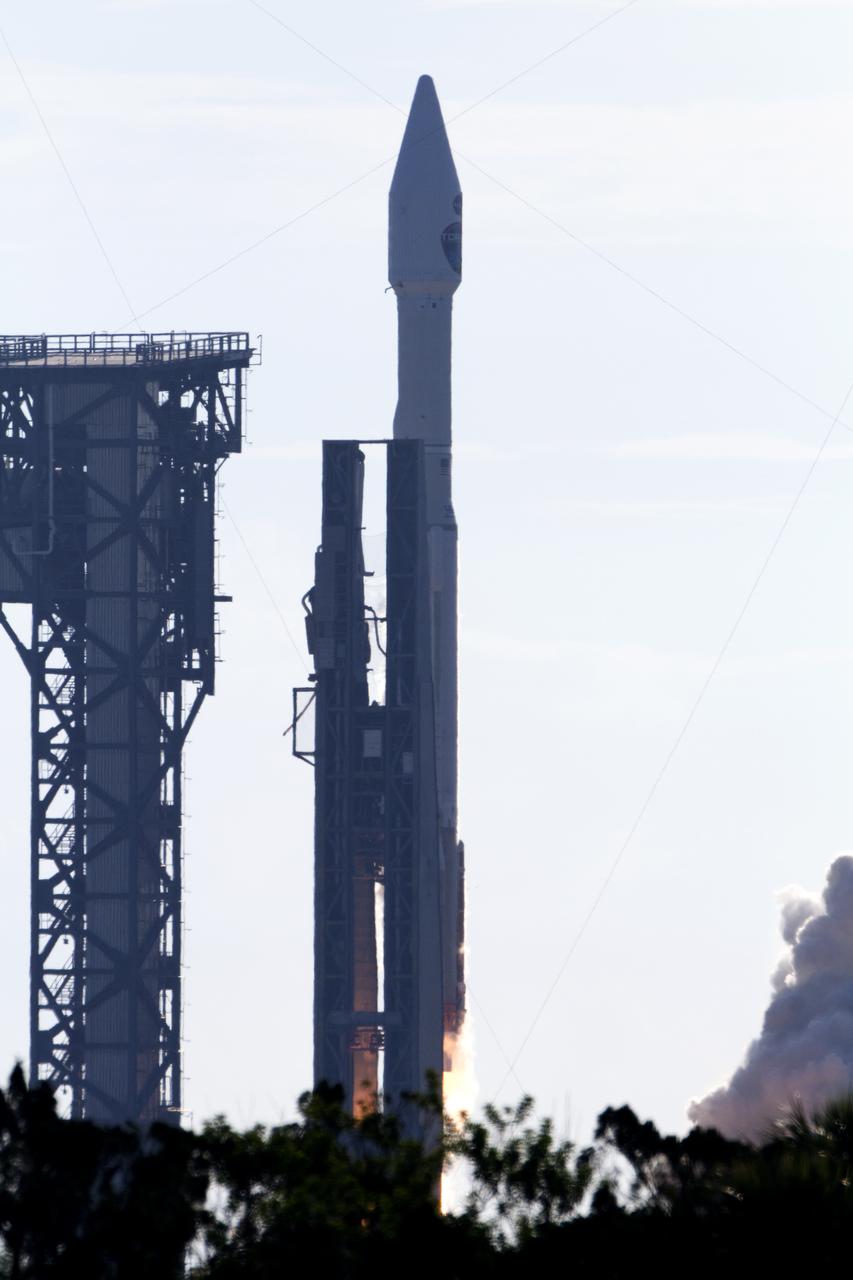
A United Launch Alliance Atlas V rocket lifts off from Space Launch Complex 41 at Cape Canaveral Air Force Station in Florida, with NASA's Tracking and Data Relay Satellite, TDRS-M. TDRS-M. Liftoff was at 8:29 a.m. EDT. TDRS-M is the latest spacecraft destined for the agency's constellation of communications satellites that allows nearly continuous contact with orbiting spacecraft ranging from the International Space Station and Hubble Space Telescope to the array of scientific observatories.
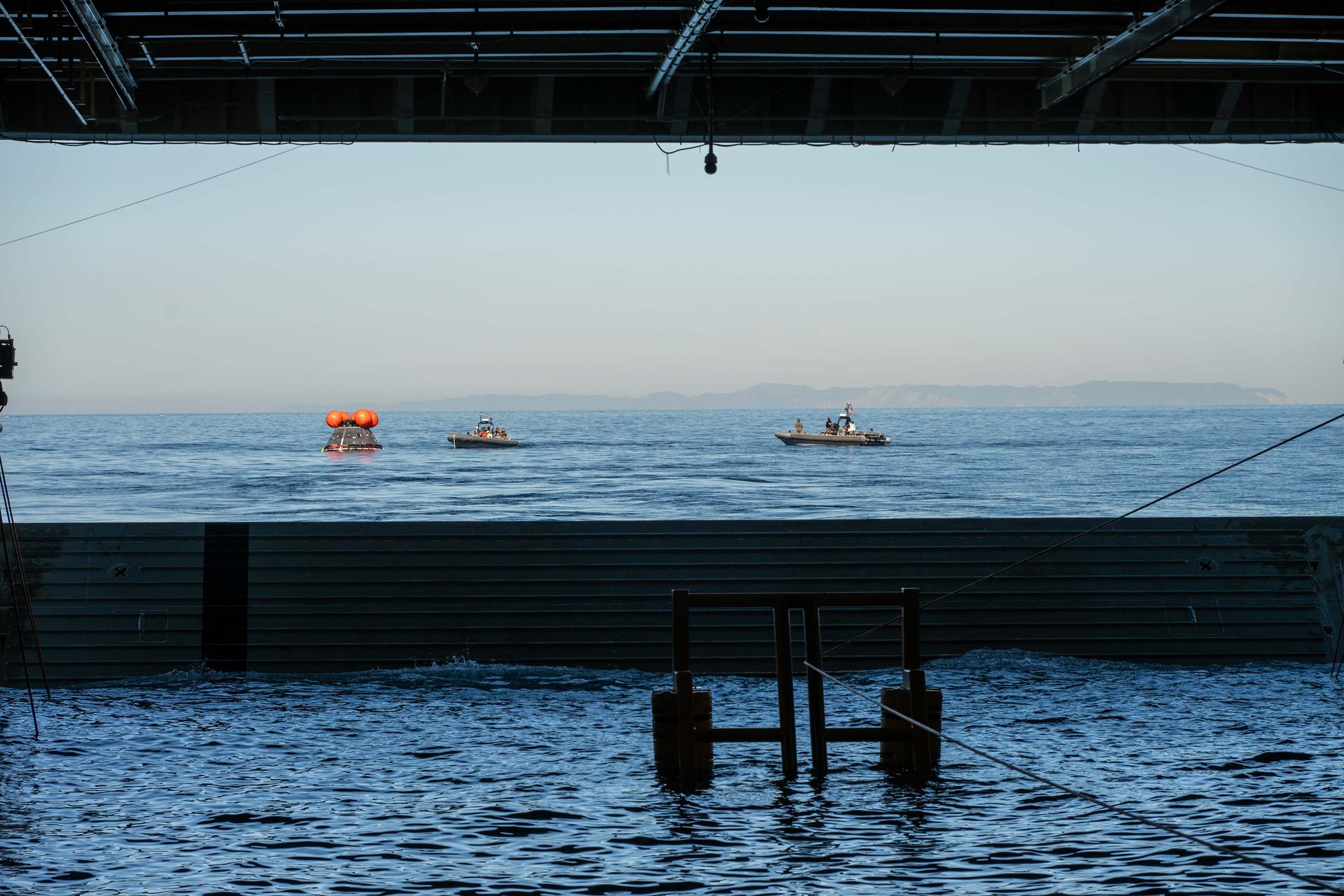
Off the coast of California, NASA’s Artemis Landing and Recovery team and the Department of War that will work together to retrieve the Artemis II crew and Orion spacecraft following their return to Earth and splashdown in the Pacific Ocean are performing a final simulation of their activities, called a just-in-time training, at sea on Tuesday, Jan. 27, 2026. During the training, teams use the Crew Module Test Article, a full-scale mockup of the Orion spacecraft, to simulate as close as possible the conditions they can expect to encounter during splashdown of the Artemis II mission. NASA’s first crewed test flight in the Artemis campaign, the approximately 10-day Artemis II mission will send NASA astronauts Reid Wiseman, Victor Glover, and Christina Koch, and CSA (Canadian Space Agency) astronaut Jeremy Hansen around the Moon and farther than any humans have ever been from Earth.
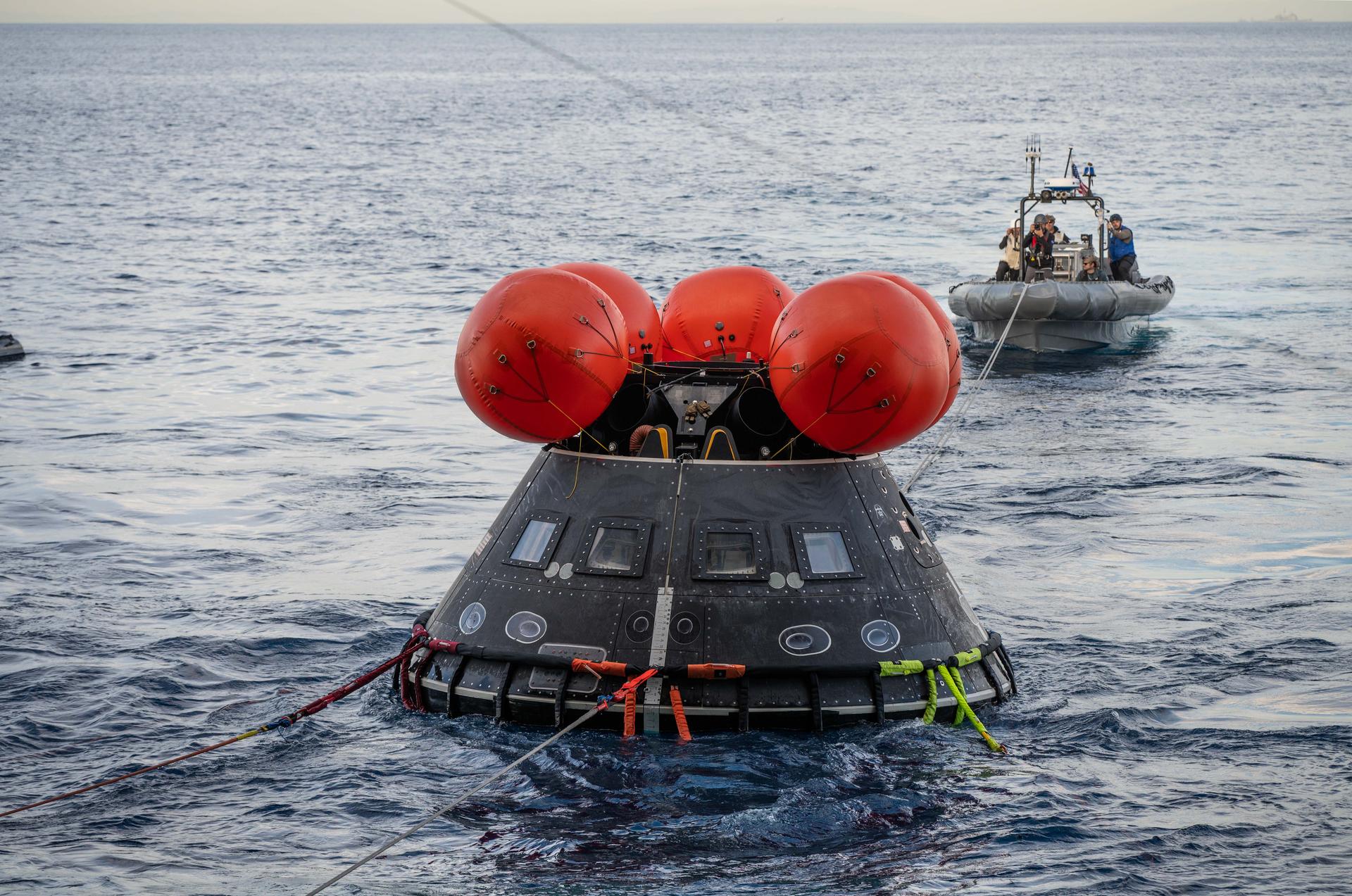
Off the coast of California, NASA’s Artemis Landing and Recovery team and the Department of War that will work together to retrieve the Artemis II crew and Orion spacecraft following their return to Earth and splashdown in the Pacific Ocean are performing a final simulation of their activities, called a just-in-time training, at sea on Wednesday, Jan. 28, 2026. During the training, teams use the Crew Module Test Article, a full-scale mockup of the Orion spacecraft, to simulate as close as possible the conditions they can expect to encounter during splashdown of the Artemis II mission. NASA’s first crewed test flight in the Artemis campaign, the approximately 10-day Artemis II mission will send NASA astronauts Reid Wiseman, Victor Glover, and Christina Koch, and CSA (Canadian Space Agency) astronaut Jeremy Hansen around the Moon and farther than any humans have ever been from Earth.
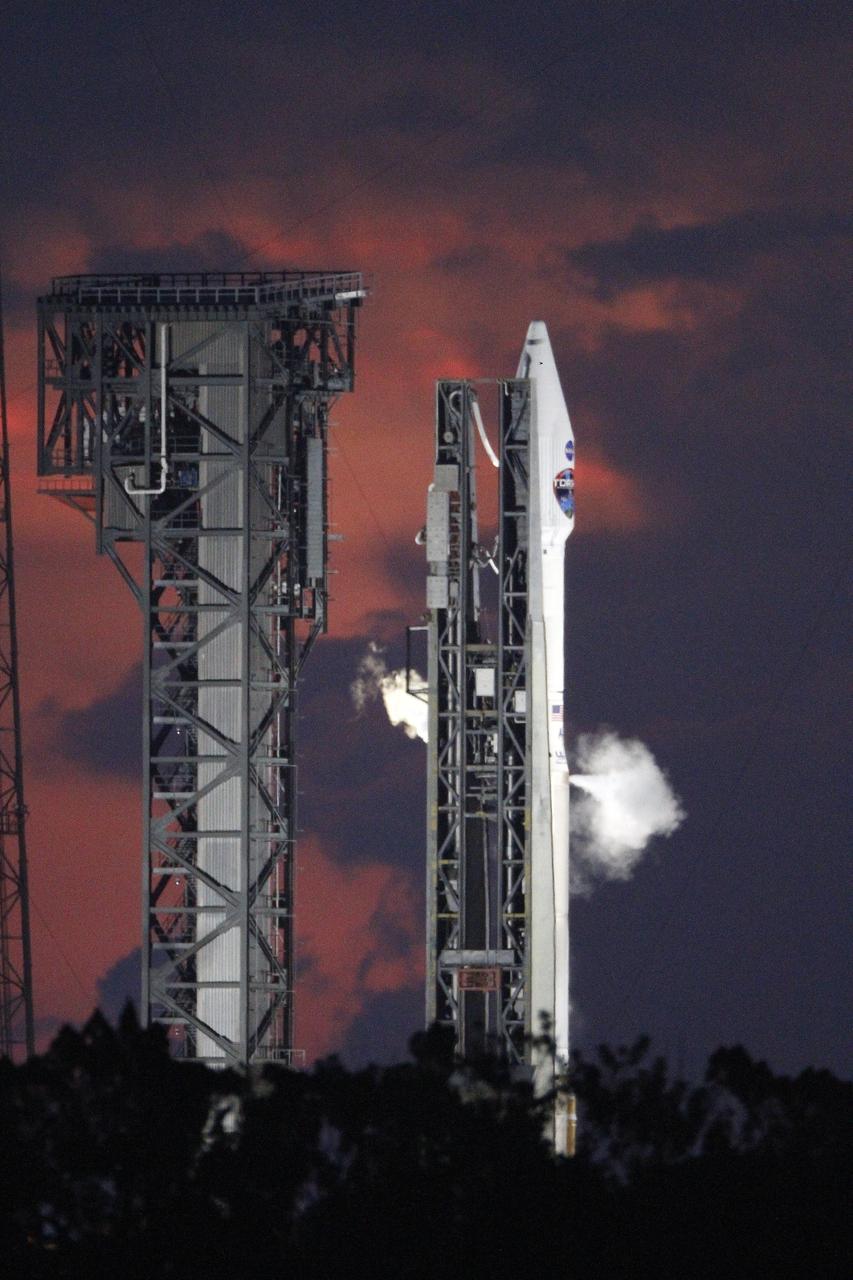
As the Sun rises at Space Launch Complex 41 at Cape Canaveral Air Force Station in Florida, a United Launch Alliance Atlas V rocket vents liquid oxygen propellant vapors during fueling for the lift off of NASA's Tracking and Data Relay Satellite, TDRS-M. The satellite is the latest spacecraft destined for the agency's constellation of communications satellites that allows nearly continuous contact with orbiting spacecraft ranging from the International Space Station and Hubble Space Telescope to the array of scientific observatories.
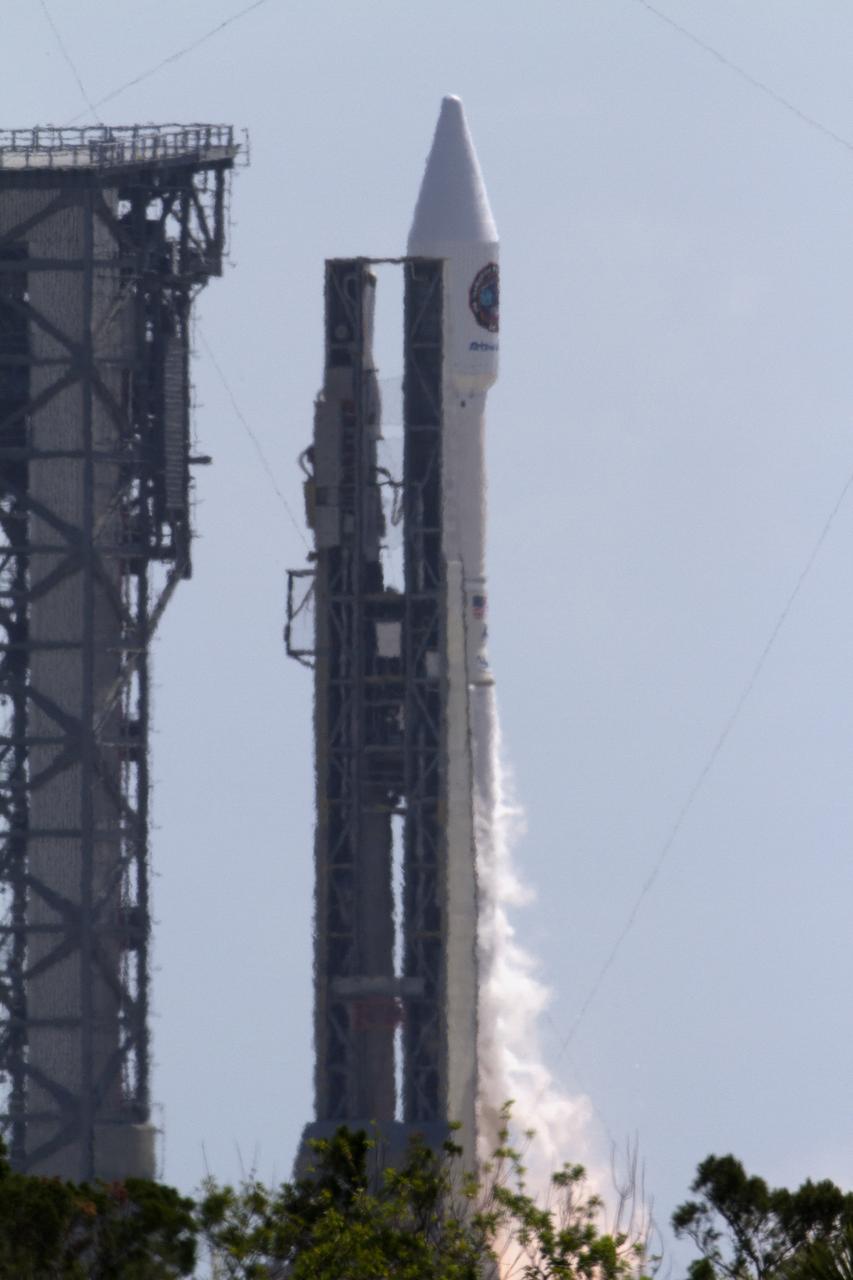
A United Launch Alliance Atlas V rocket lifts off at 11:11 a.m. EDT from Space Launch Complex 41 at Cape Canaveral Air Force Station in Florida, carrying the Orbital ATK Cygnus pressurized cargo module on the company's seventh commercial resupply services mission to the International Space Station. Cygnus will deliver 7,600 pounds of supplies, equipment and scientific research materials to the space station.
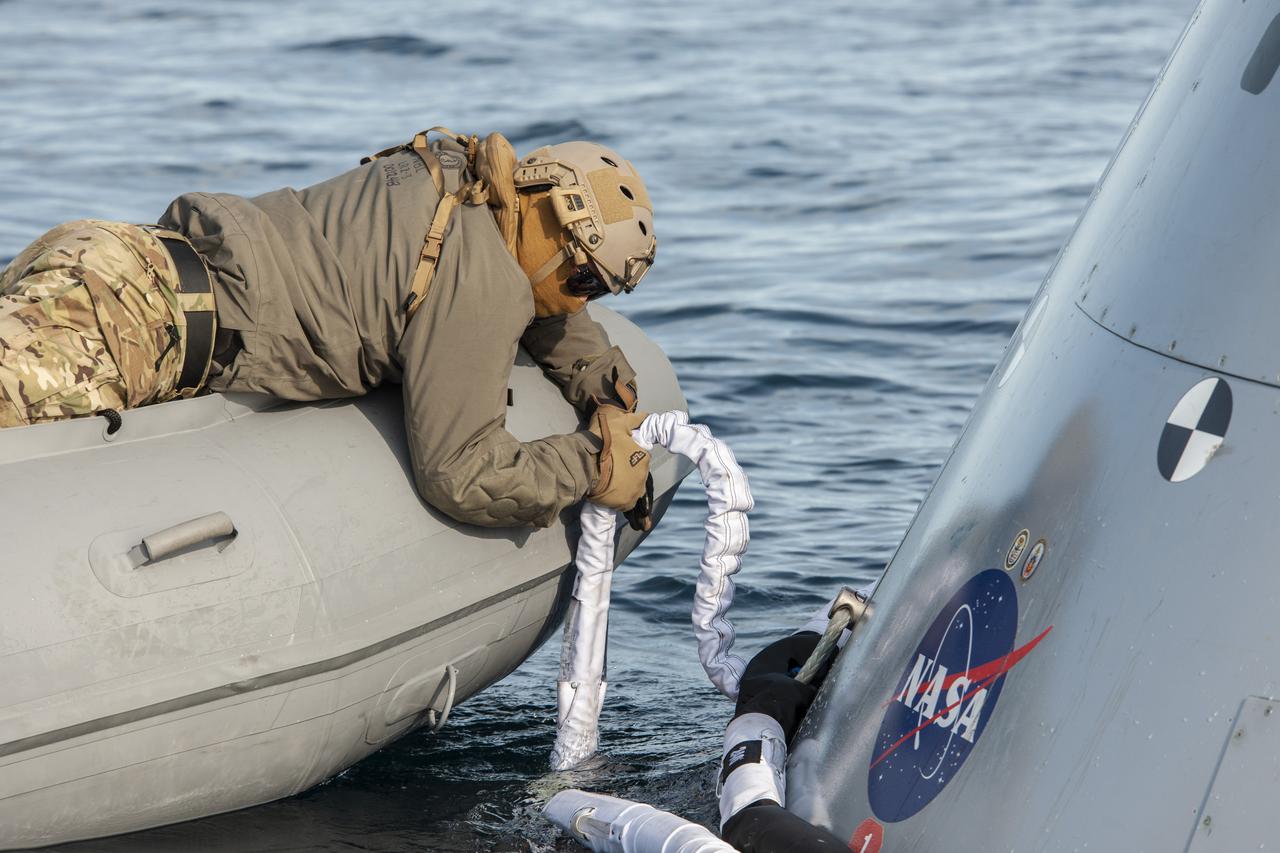
NASA's Landing and Recovery Team practices bringing a mock Orion capsule into the well deck of the USS Portland (LPD 27) ahead of the Artemis I Orion splashdown slated for Dec. 11.

Off the coast of California, NASA’s Artemis Landing and Recovery team and the Department of War that will work together to retrieve the Artemis II crew and Orion spacecraft following their return to Earth and splashdown in the Pacific Ocean are performing a final simulation of their activities, called a just-in-time training, at sea on Tuesday, Jan. 27, 2026. During the training, teams use the Crew Module Test Article, a full-scale mockup of the Orion spacecraft, to simulate as close as possible the conditions they can expect to encounter during splashdown of the Artemis II mission. NASA’s first crewed test flight in the Artemis campaign, the approximately 10-day Artemis II mission will send NASA astronauts Reid Wiseman, Victor Glover, and Christina Koch, and CSA (Canadian Space Agency) astronaut Jeremy Hansen around the Moon and farther than any humans have ever been from Earth.

A United Launch Alliance Atlas V rocket lifts off at 11:11 a.m. EDT from Space Launch Complex 41 at Cape Canaveral Air Force Station in Florida, carrying the Orbital ATK Cygnus pressurized cargo module on the company's seventh commercial resupply services mission to the International Space Station. Cygnus will deliver 7,600 pounds of supplies, equipment and scientific research materials to the space station.
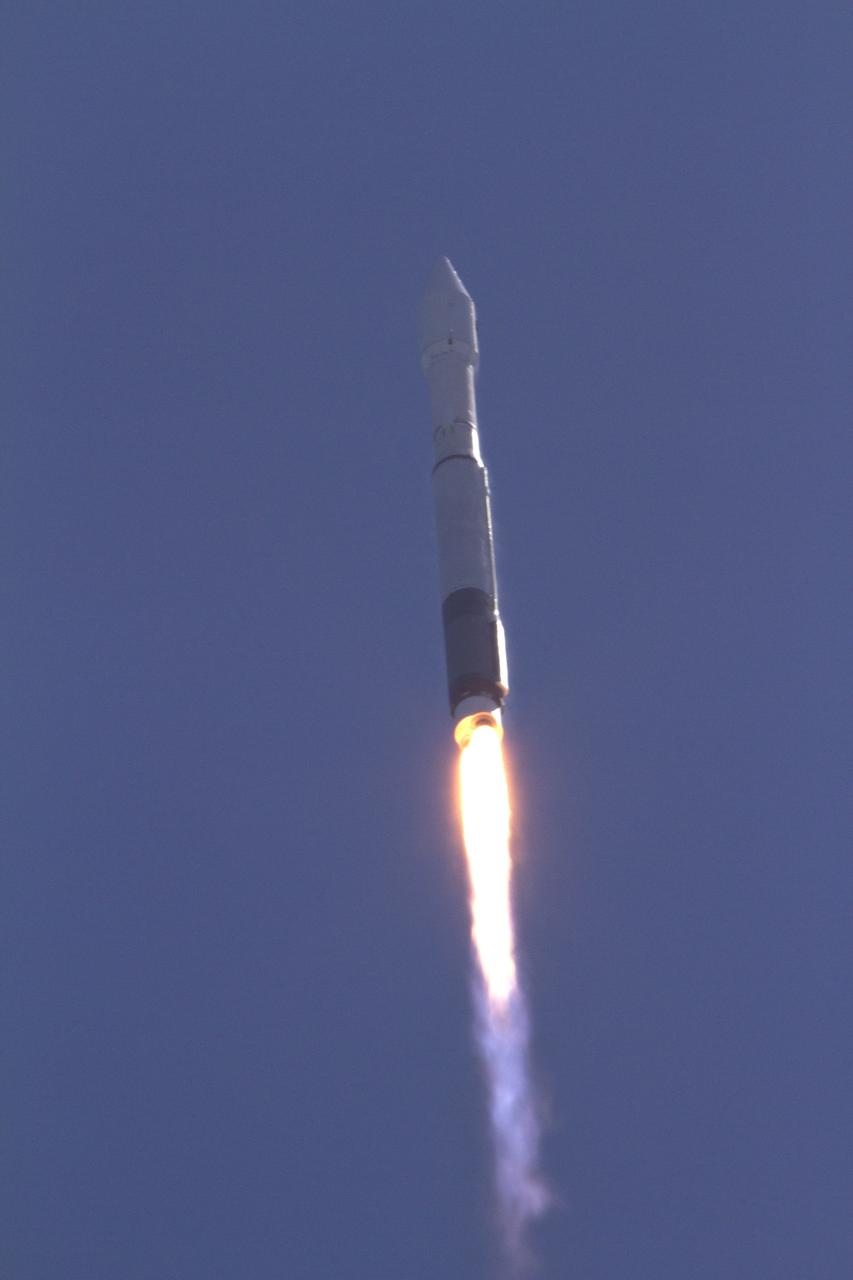
A United Launch Alliance Atlas V rocket soars upward after liftoff at 11:11 a.m. EDT from Space Launch Complex 41 at Cape Canaveral Air Force Station in Florida, carrying the Orbital ATK Cygnus pressurized cargo module on the company's seventh commercial resupply services mission to the International Space Station. Cygnus will deliver 7,600 pounds of supplies, equipment and scientific research materials to the space station.
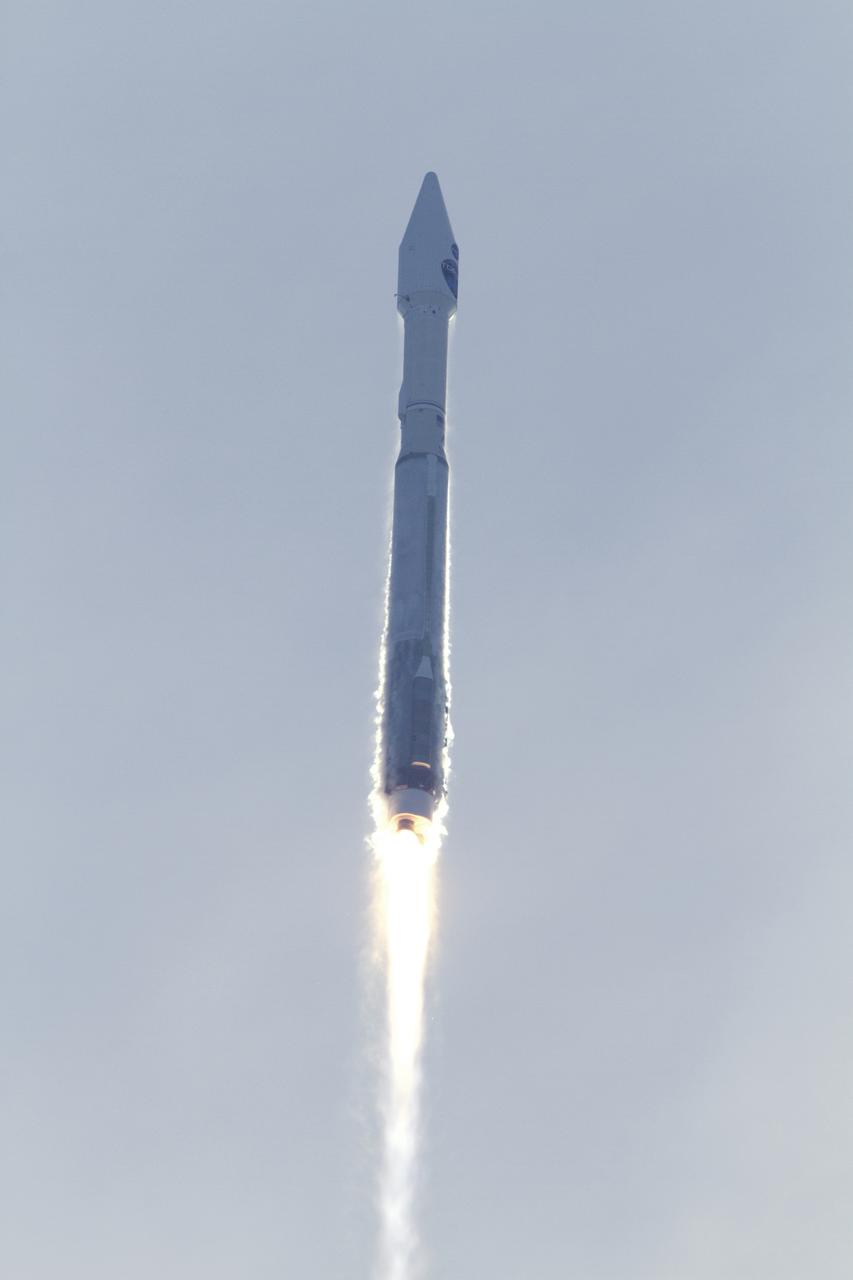
A United Launch Alliance Atlas V rocket lifts off from Space Launch Complex 41 at Cape Canaveral Air Force Station in Florida, with NASA's Tracking and Data Relay Satellite, TDRS-M. TDRS-M. Liftoff was at 8:29 a.m. EDT. TDRS-M is the latest spacecraft destined for the agency's constellation of communications satellites that allows nearly continuous contact with orbiting spacecraft ranging from the International Space Station and Hubble Space Telescope to the array of scientific observatories.
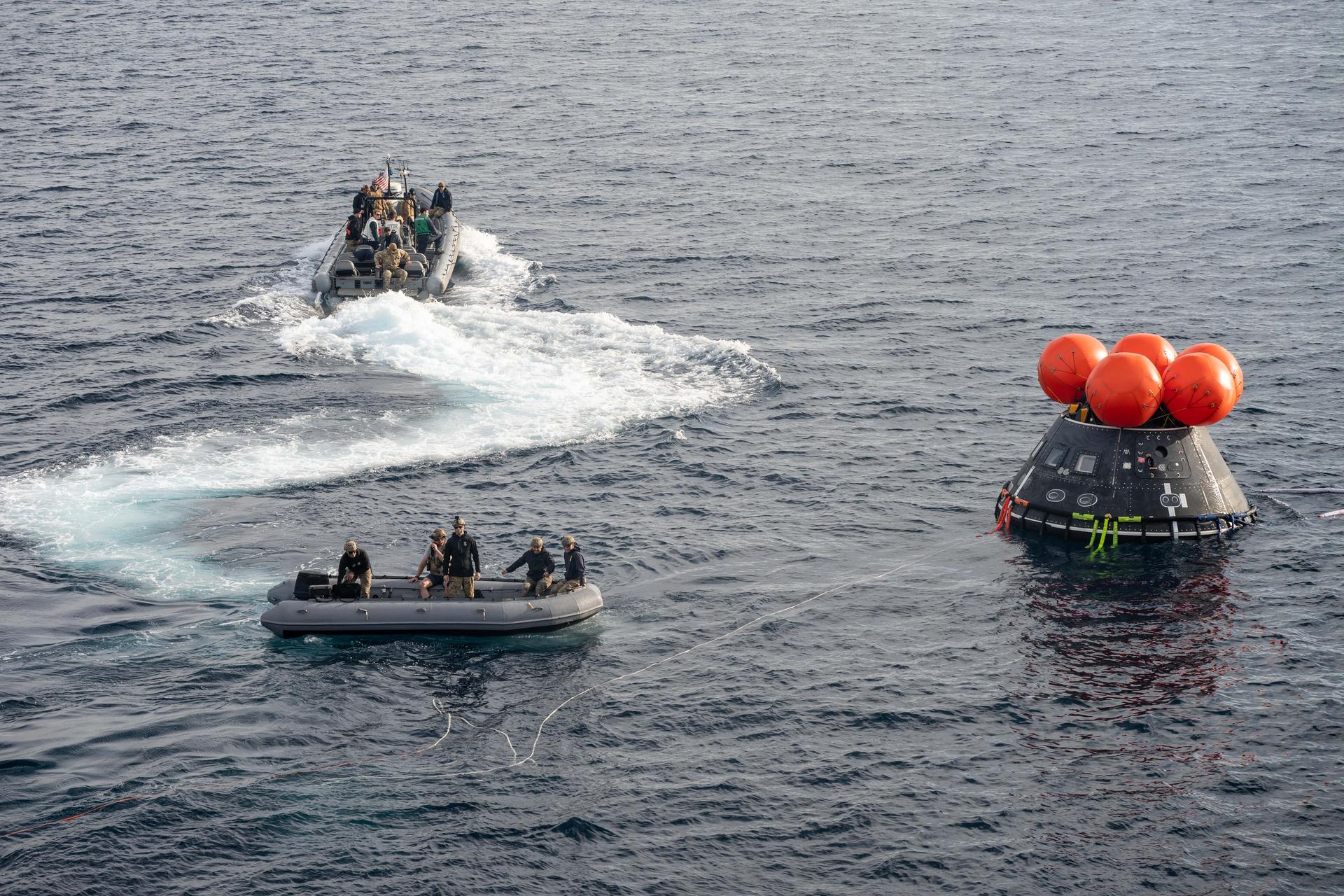
Off the coast of California, NASA’s Artemis Landing and Recovery team and the Department of War that will work together to retrieve the Artemis II crew and Orion spacecraft following their return to Earth and splashdown in the Pacific Ocean are performing a final simulation of their activities, called a just-in-time training, at sea on Tuesday, Jan. 27, 2026. During the training, teams use the Crew Module Test Article, a full-scale mockup of the Orion spacecraft, to simulate as close as possible the conditions they can expect to encounter during splashdown of the Artemis II mission. NASA’s first crewed test flight in the Artemis campaign, the approximately 10-day Artemis II mission will send NASA astronauts Reid Wiseman, Victor Glover, and Christina Koch, and CSA (Canadian Space Agency) astronaut Jeremy Hansen around the Moon and farther than any humans have ever been from Earth.
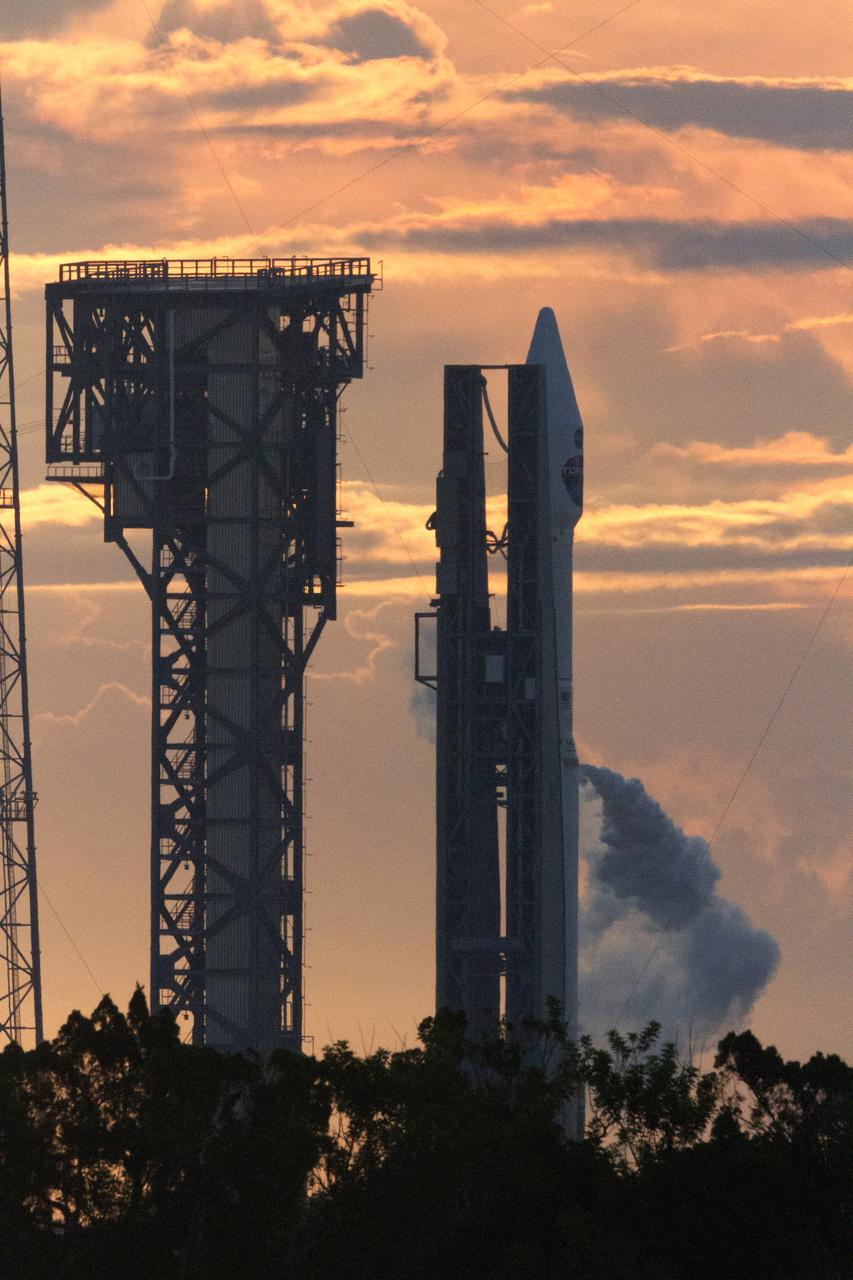
As the Sun rises at Space Launch Complex 41 at Cape Canaveral Air Force Station in Florida, a United Launch Alliance Atlas V rocket vents liquid oxygen propellant vapors during fueling for the lift off of NASA's Tracking and Data Relay Satellite, TDRS-M. The satellite is the latest spacecraft destined for the agency's constellation of communications satellites that allows nearly continuous contact with orbiting spacecraft ranging from the International Space Station and Hubble Space Telescope to the array of scientific observatories.
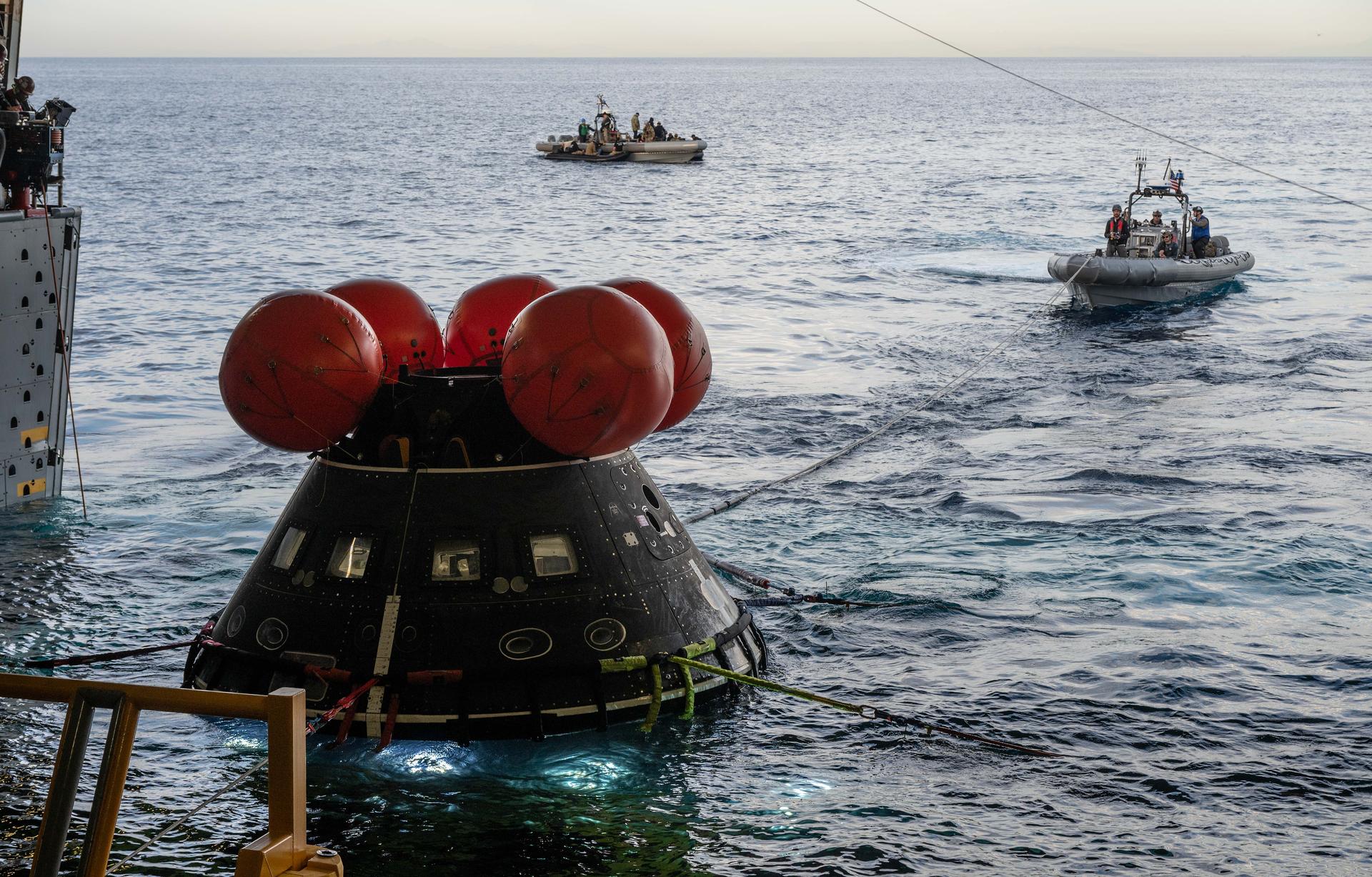
Off the coast of California, NASA’s Artemis Landing and Recovery team and the Department of War that will work together to retrieve the Artemis II crew and Orion spacecraft following their return to Earth and splashdown in the Pacific Ocean are performing a final simulation of their activities, called a just-in-time training, at sea on Wednesday, Jan. 28, 2026. During the training, teams use the Crew Module Test Article, a full-scale mockup of the Orion spacecraft, to simulate as close as possible the conditions they can expect to encounter during splashdown of the Artemis II mission. NASA’s first crewed test flight in the Artemis campaign, the approximately 10-day Artemis II mission will send NASA astronauts Reid Wiseman, Victor Glover, and Christina Koch, and CSA (Canadian Space Agency) astronaut Jeremy Hansen around the Moon and farther than any humans have ever been from Earth.
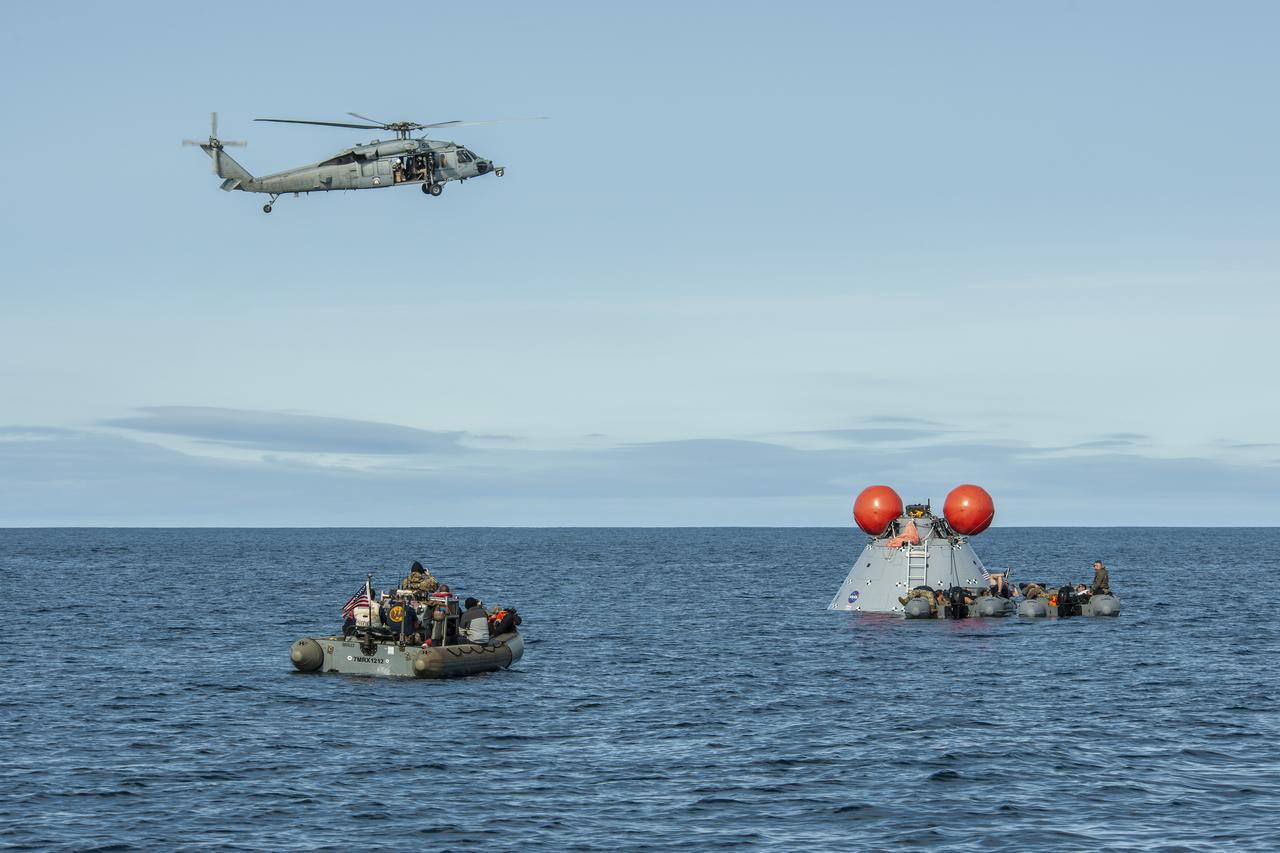
NASA's Landing and Recovery Team practices bringing a mock Orion capsule into the well deck of the USS Portland (LPD 27) ahead of the Artemis I Orion splashdown slated for Dec. 11.
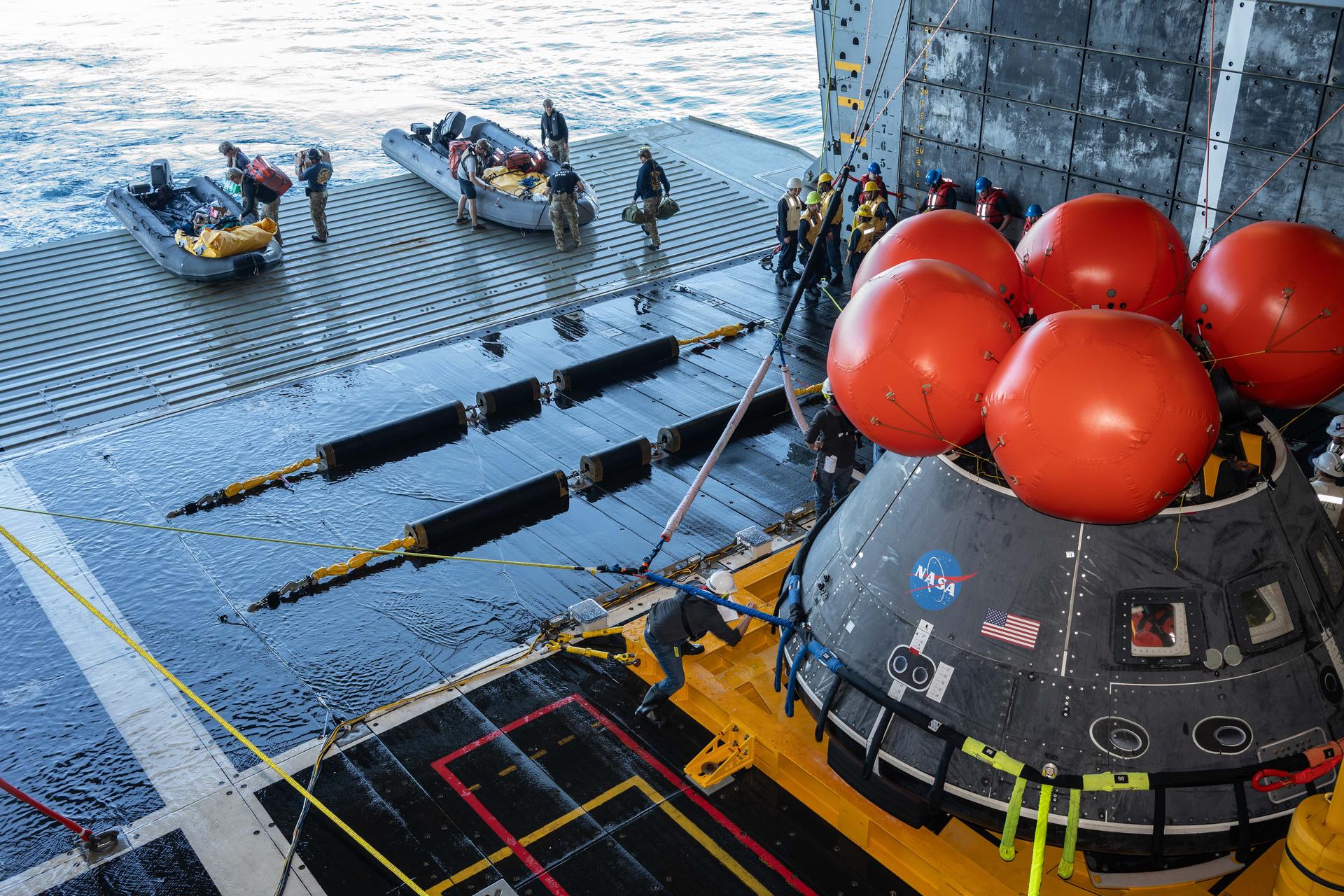
Off the coast of California, NASA’s Artemis Landing and Recovery team and the Department of War that will work together to retrieve the Artemis II crew and Orion spacecraft following their return to Earth and splashdown in the Pacific Ocean are performing a final simulation of their activities, called a just-in-time training, at sea on Tuesday, Jan. 27, 2026. During the training, teams use the Crew Module Test Article, a full-scale mockup of the Orion spacecraft, to simulate as close as possible the conditions they can expect to encounter during splashdown of the Artemis II mission. NASA’s first crewed test flight in the Artemis campaign, the approximately 10-day Artemis II mission will send NASA astronauts Reid Wiseman, Victor Glover, and Christina Koch, and CSA (Canadian Space Agency) astronaut Jeremy Hansen around the Moon and farther than any humans have ever been from Earth.
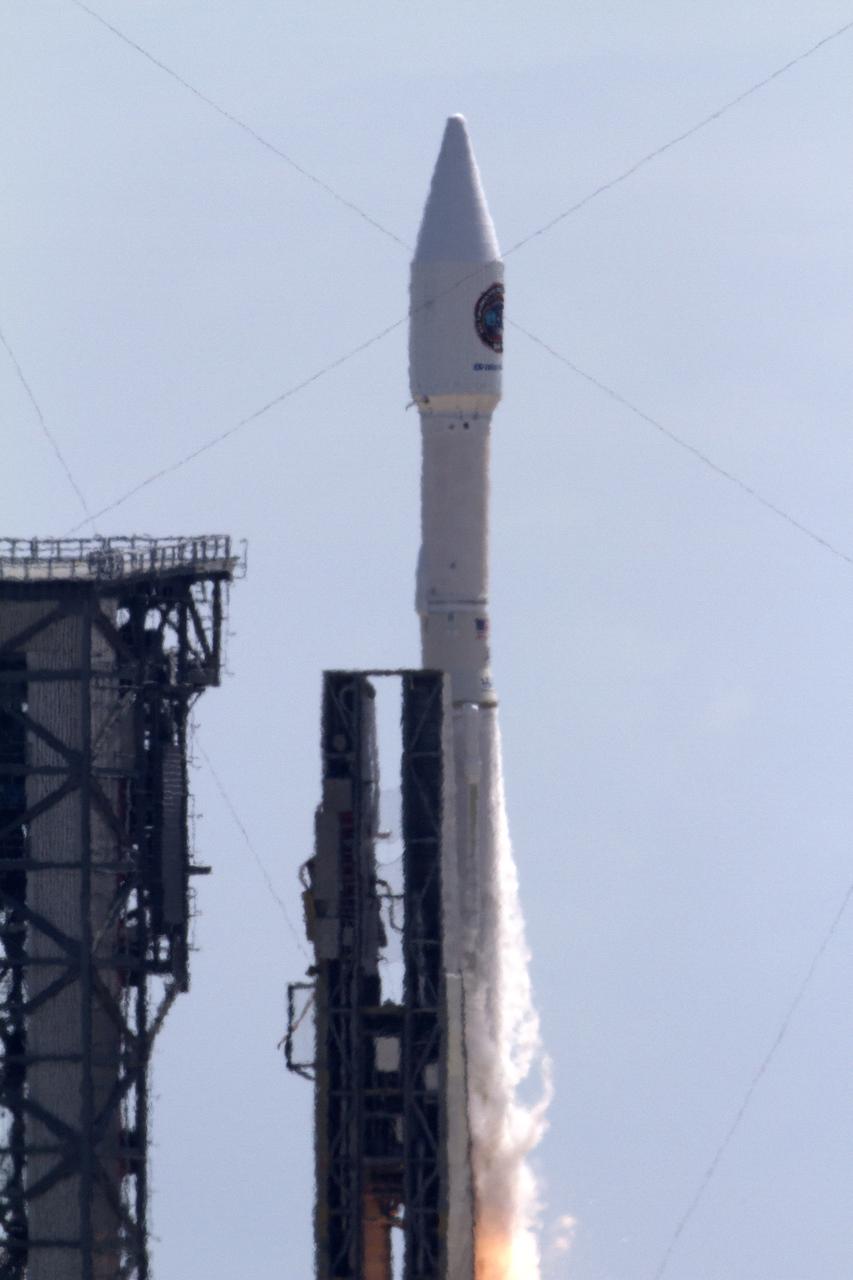
A United Launch Alliance Atlas V rocket lifts off at 11:11 a.m. EDT from Space Launch Complex 41 at Cape Canaveral Air Force Station in Florida, carrying the Orbital ATK Cygnus pressurized cargo module on the company's seventh commercial resupply services mission to the International Space Station. Cygnus will deliver 7,600 pounds of supplies, equipment and scientific research materials to the space station.