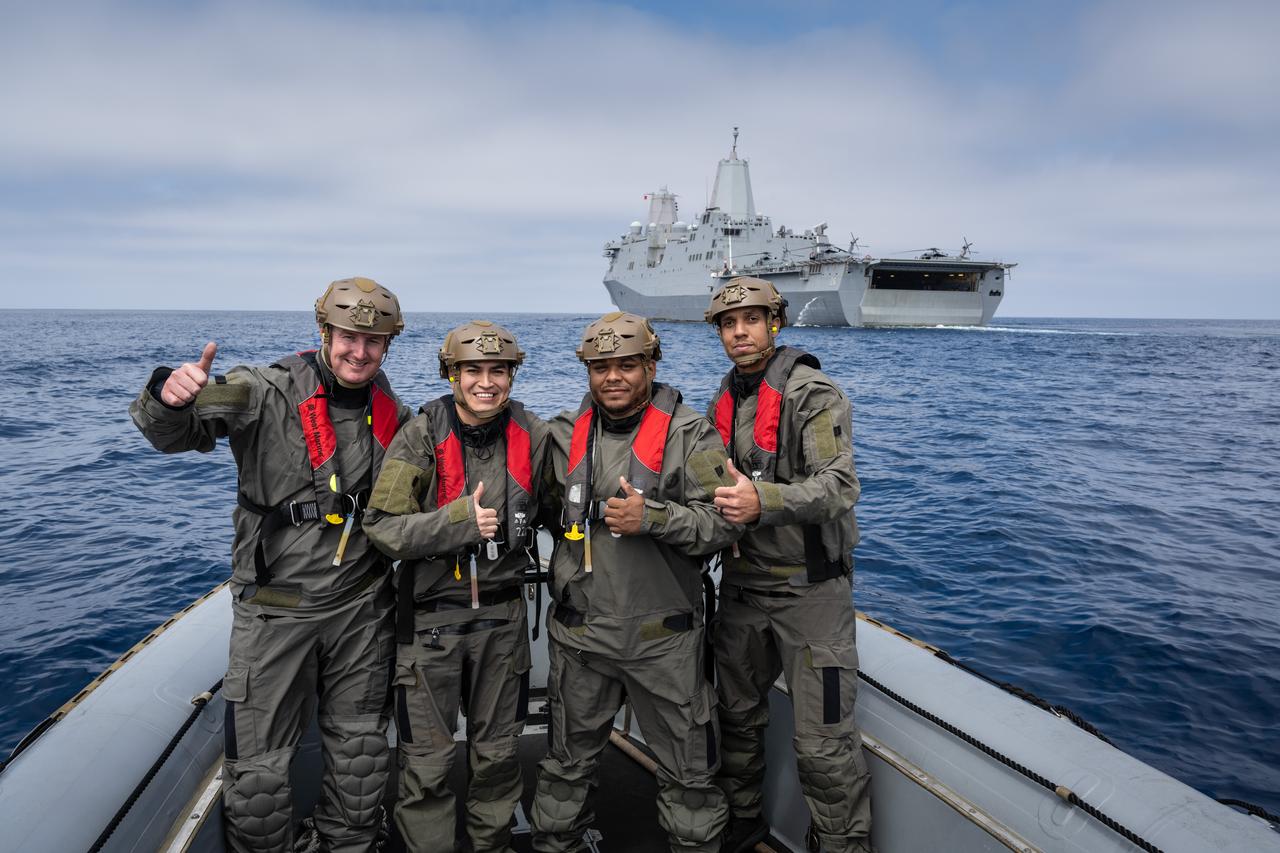
Four Naval helicopter pilots from Helicopter Sea Combat Squadron (HSC) 23 “Wildcards” pose for a photo in the Pacific Ocean as they prepare to participate in an Artemis II recovery test as part of NASA’s Underway Recovery Test 10. During recovery practice, these four pilots acted as Artemis II astronauts and were placed inside the Orion Crew Module Test Article, recovered from the capsule onto an inflatable “front porch” and then lifted via helicopter back to the flight deck of USS John P Murtha.
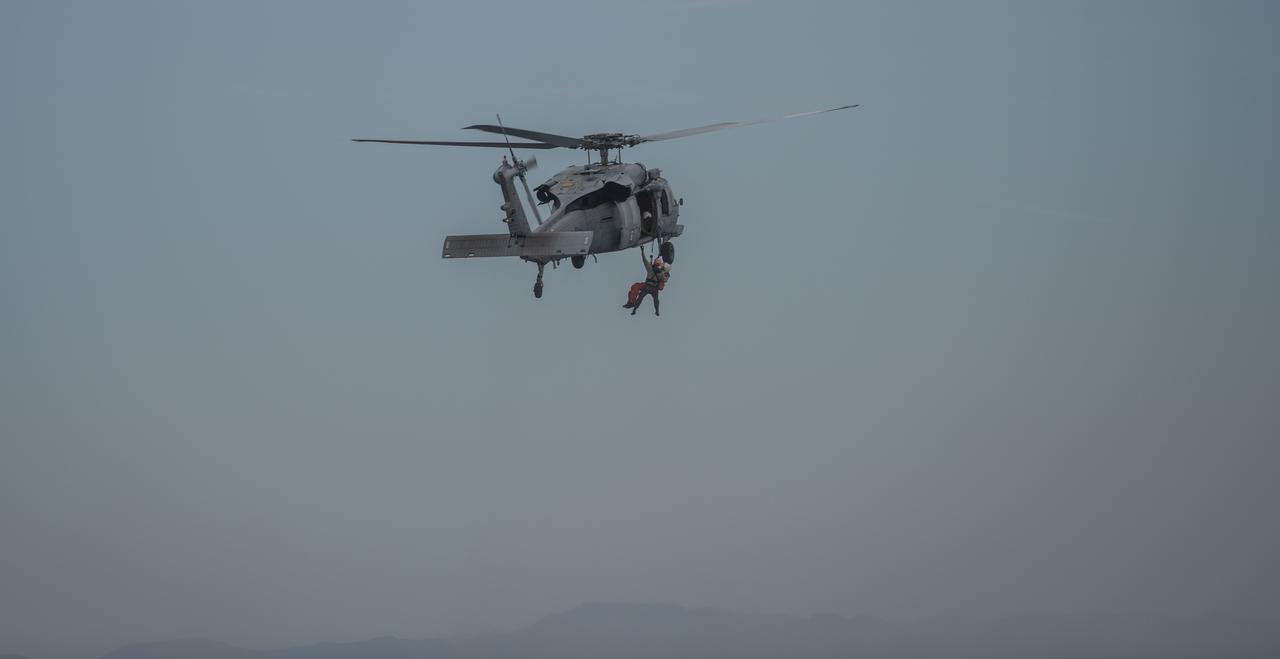
Members of the United States Navy Helicopter Sea Combat Squadron (HSC) 23 "Wildcards" practice recovery procedures from a mockup of the Orion spacecraft in the Pacific Ocean during Underway Recovery Test 11 (URT-11) with NASA’s Exploration Ground System’s Landing and Recovery team and partners from the Department of Defense aboard the USS San Diego off the coast of San Diego on Sunday, Feb. 25, 2024. URT-11 is the eleventh in a series of Artemis recovery tests, and the first time NASA and its partners put their Artemis II recovery procedures to the test with the astronauts.
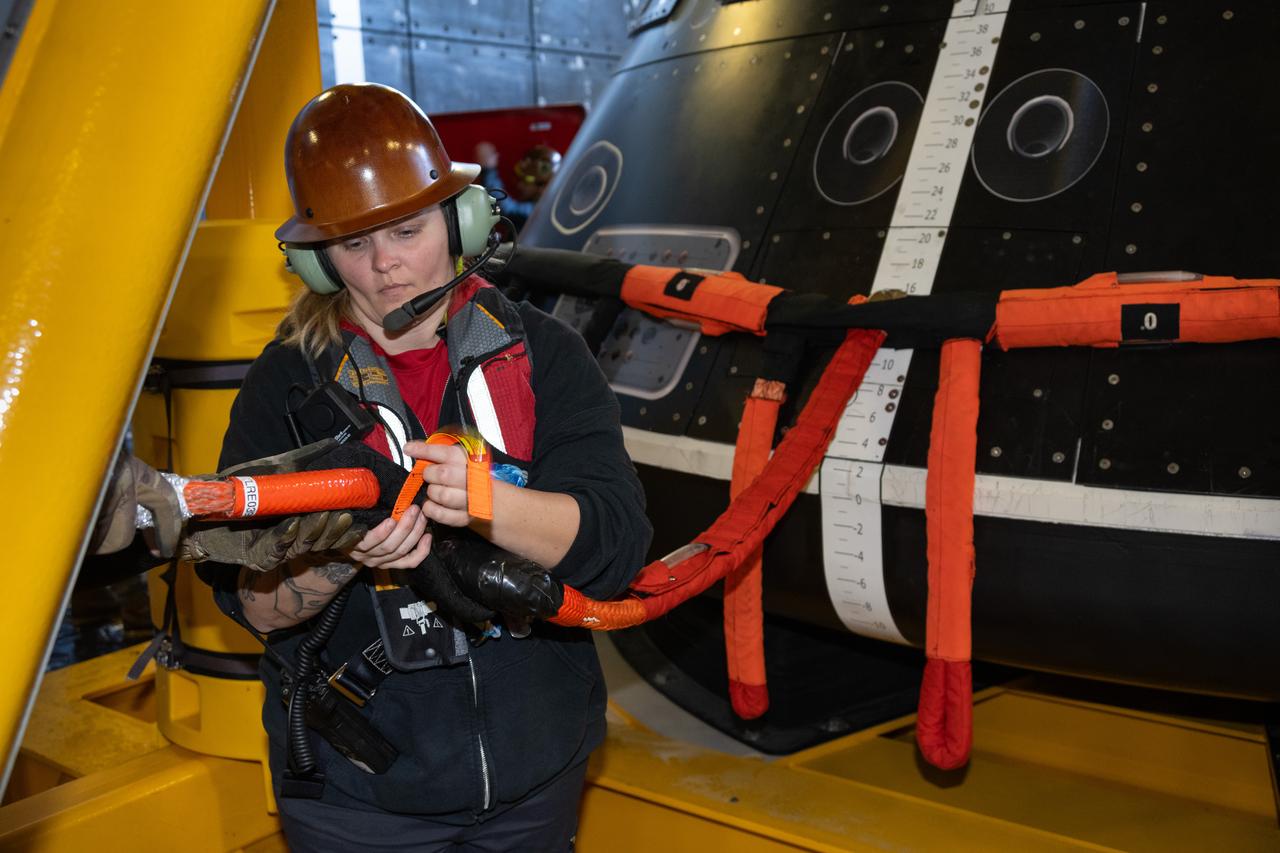
Members of NASA’s Exploration Ground System’s Landing and Recovery team and partners from the Department of Defense aboard the USS San Diego secure the Crew Module Test Article on its stand in the ship’s well deck while practicing recovery procedures during Underway Recovery Test 11 (URT-11) off the coast of San Diego on Thursday, Feb. 22, 2024. URT-11 is the eleventh in a series of Artemis recovery tests, and the first time NASA and its partners put their Artemis II recovery procedures to the test with the astronauts.
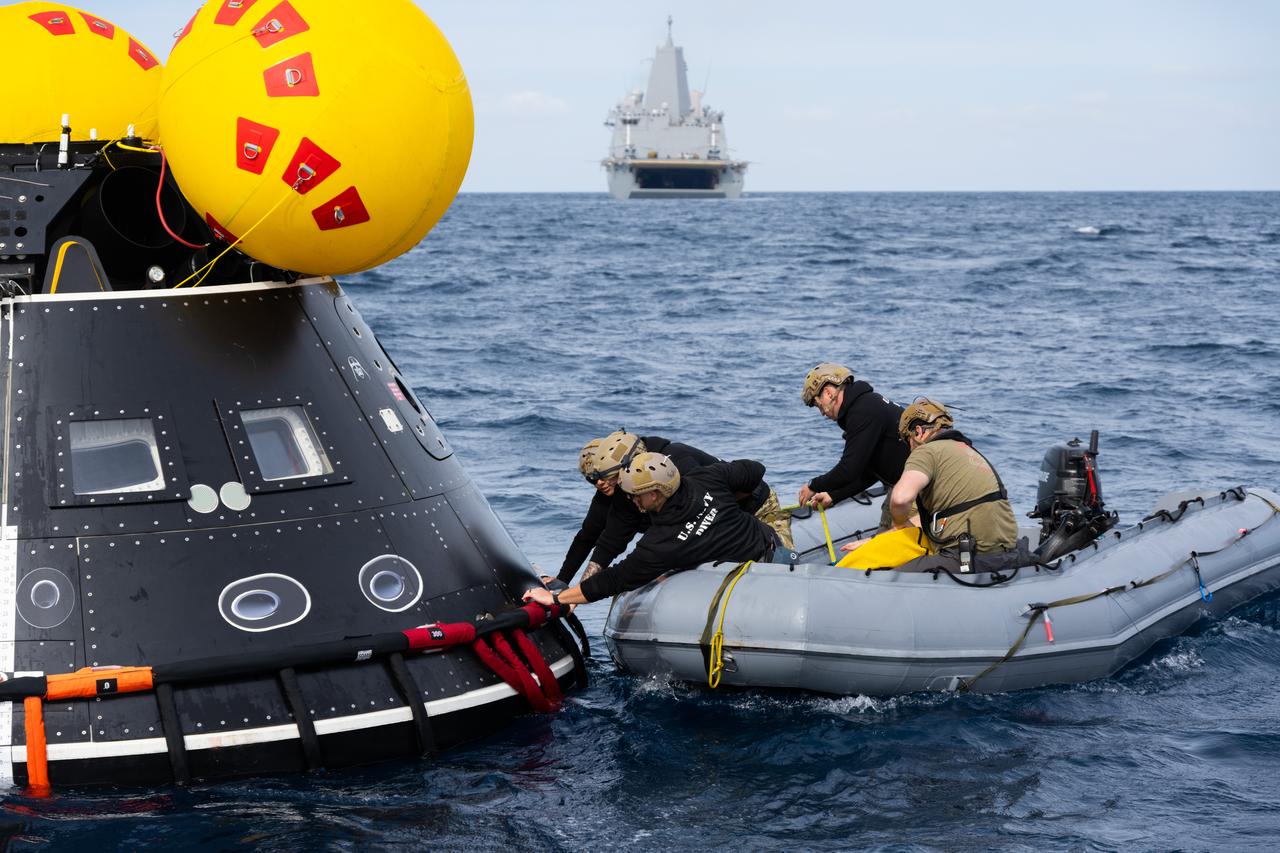
U.S. Navy personnel grab onto a mockup of the Orion spacecraft during a practice procedure of the Underway Recovery Test 11 (URT-11) off the coast of San Diego, California on Sunday, Feb. 25, 2024. URT-11 is the eleventh in a series of Artemis recovery tests, and the first time NASA and its partners put their Artemis II recovery procedures to the test with the astronauts.
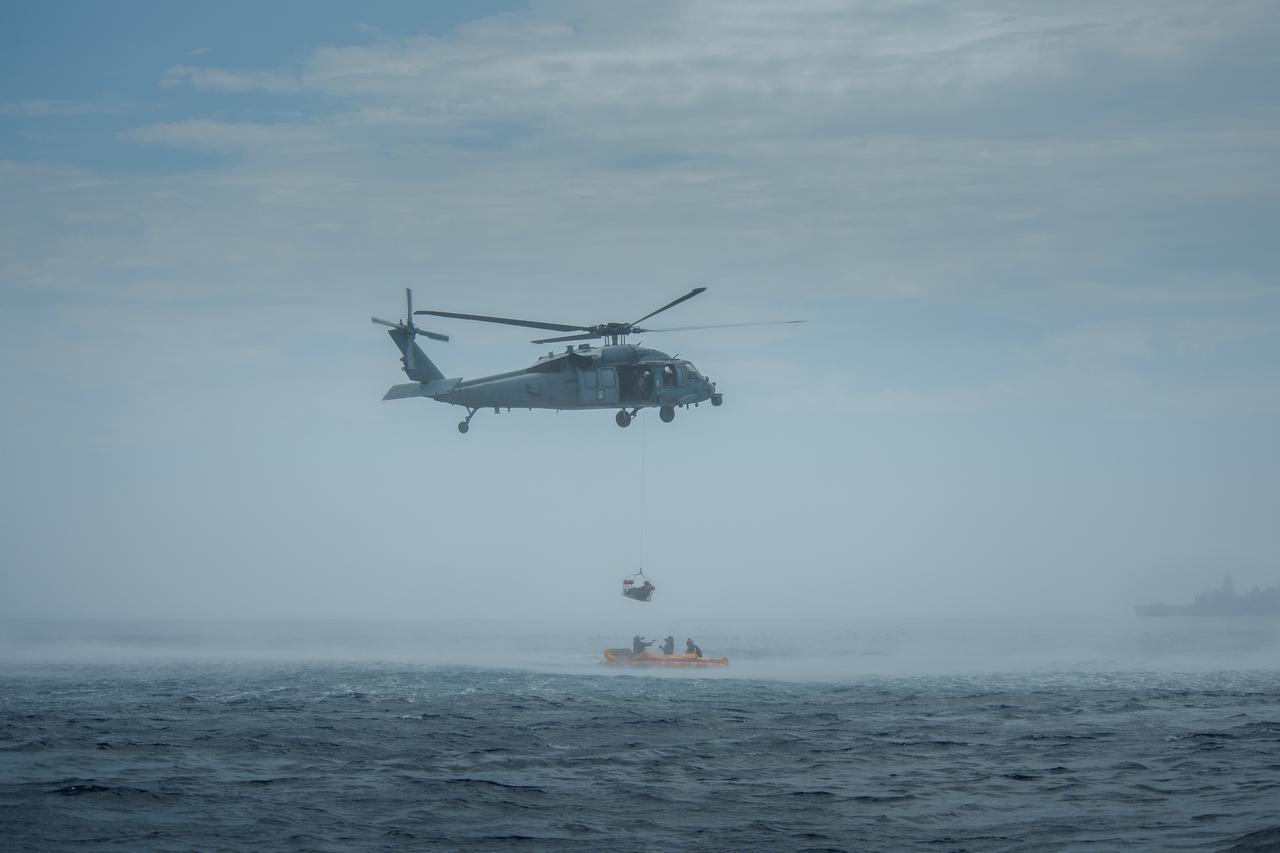
NASA, Navy, and Air Force personnel practice Artemis recovery procedures in the Pacific Ocean as part of Underway Recovery Test 10 (URT-10) off the coast of San Diego. In this photo, Naval helicopter pilots from Helicopter Sea Combat Squadron (HSC) 23 “Wildcards” lift a pilot in a basket from an inflatable “front porch” that allows astronauts to be recovered out of the Orion spacecraft. Navy divers from Explosive Ordnance Disposal (EOD) Expeditionary Support Unit 1 are the first to reach the spacecraft after splashdown and will assist the astronauts in getting inside the helicopter baskets prior to be flown back to the recovery ship.
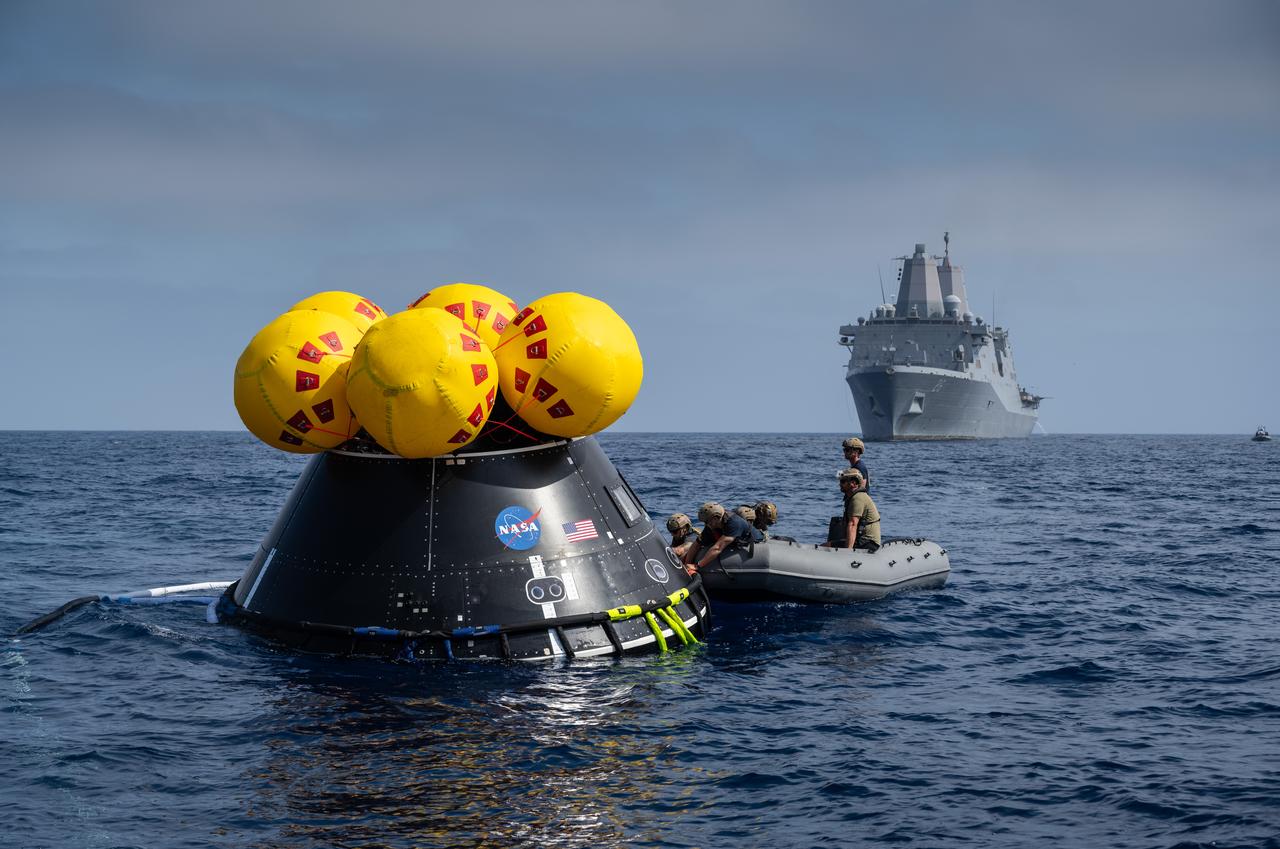
The Crew Module Test Article (CMTA) is seen in the waters of the Pacific Ocean during NASA’s Underway Recovery Test 10 (URT-10). The CMTA is a full-scale mockup of the Orion Spacecraft and is used by NASA and its Department of Defense partners to practice recovery procedures for crewed Artemis missions. URT-10 is the first test specifically in support of the Artemis II mission and allowed the team to practice what it will be like to recover astronauts and get them back to the recovery ship safely. In this photo Navy divers from Explosive Ordnance Disposal (EOD) Expeditionary Support Unit 1 secure the CMTA and prepare it to be recovered back inside USS John P Murtha.
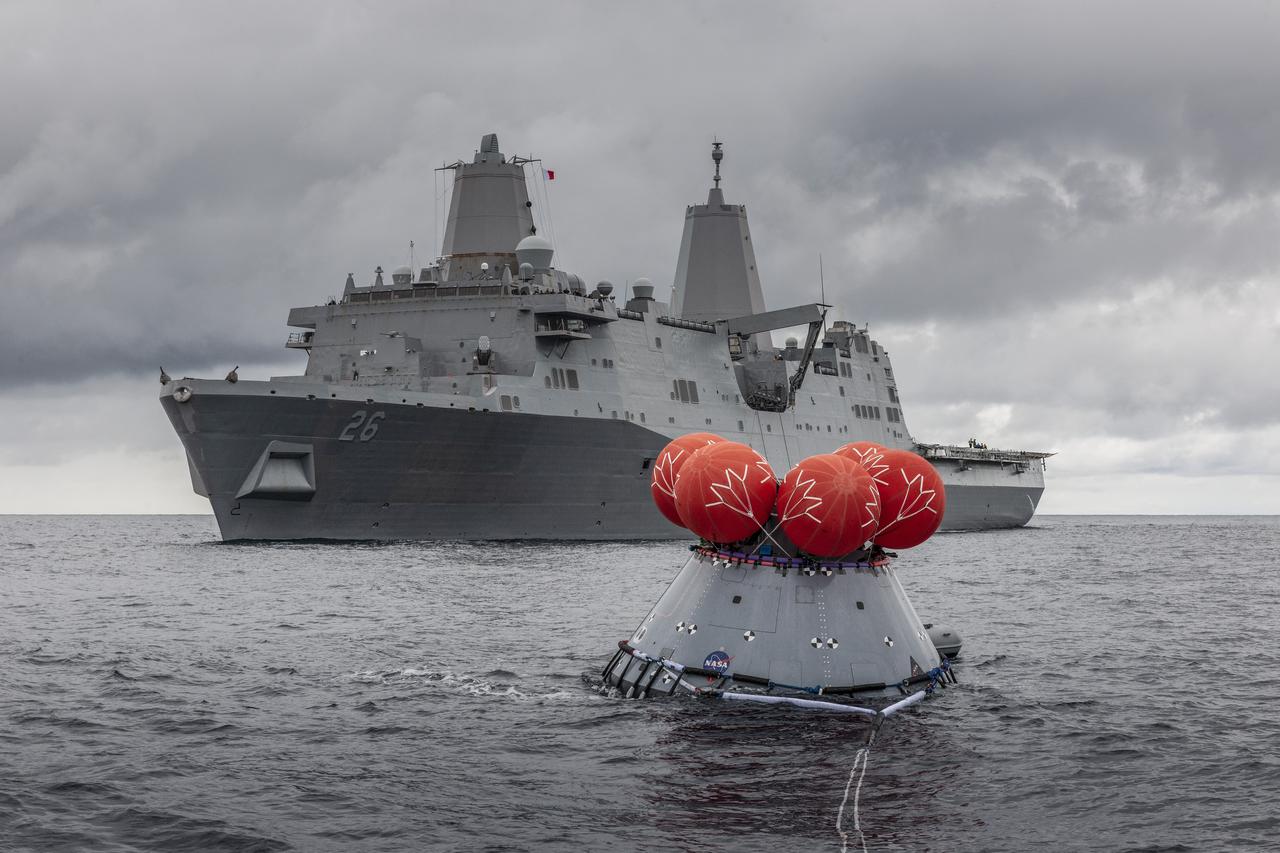
During Underway Recovery Test-8, NASA's Landing and Recovery team from Exploration Ground Systems at Kennedy Space Center performed their first full mission profile test of the recovery procedures for Artemis I aboard the USS John P. Murtha in the Pacific Ocean. Artemis I will be the first integrated flight test of NASA's Deep Space Exploration Systems: the Orion spacecraft, Space Launch System rocket, with the newly upgraded Exploration Ground Systems at Kennedy Space Center.
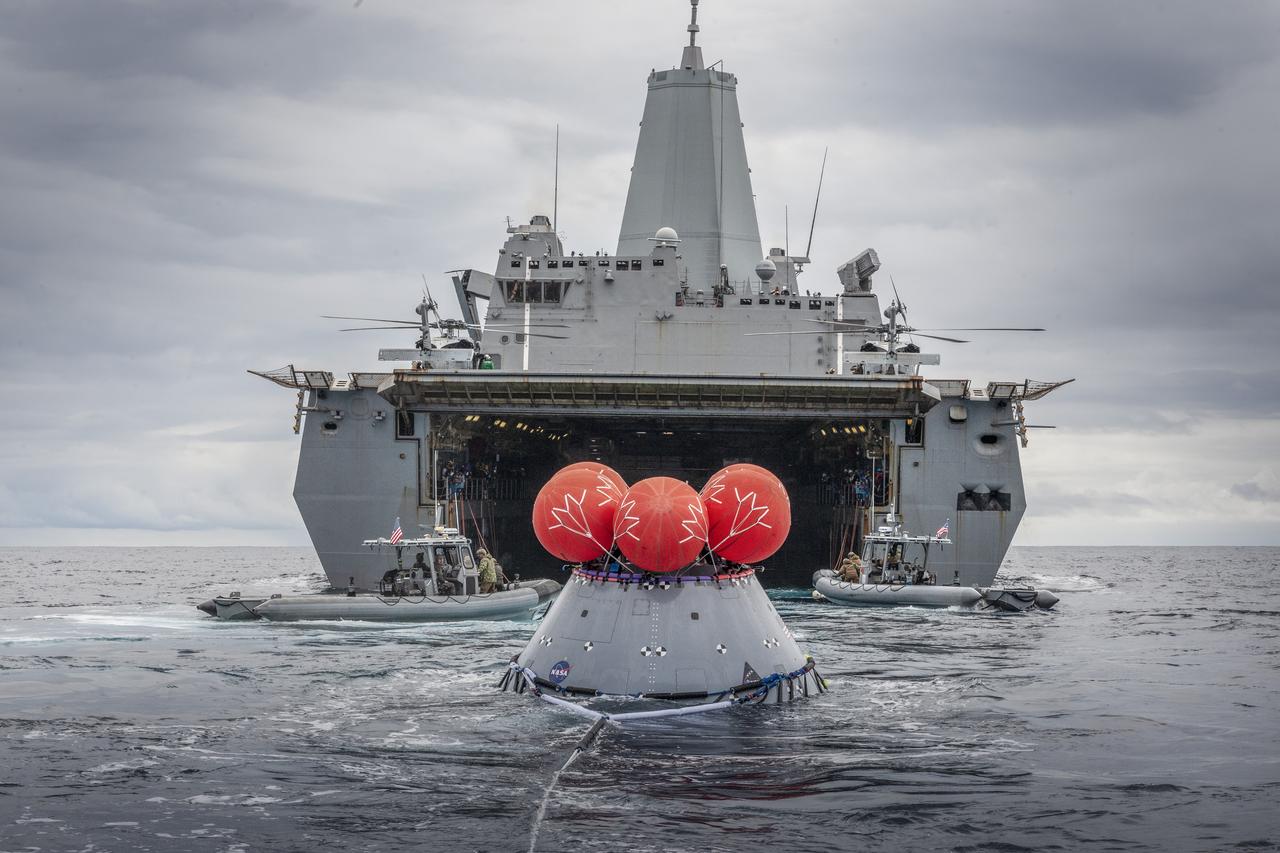
During Underway Recovery Test-8, NASA's Landing and Recovery team from Exploration Ground Systems at Kennedy Space Center performed their first full mission profile test of the recovery procedures for Artemis I aboard the USS John P. Murtha in the Pacific Ocean. Artemis I will be the first integrated flight test of NASA's Deep Space Exploration Systems: the Orion spacecraft, Space Launch System rocket, with the newly upgraded Exploration Ground Systems at Kennedy Space Center.
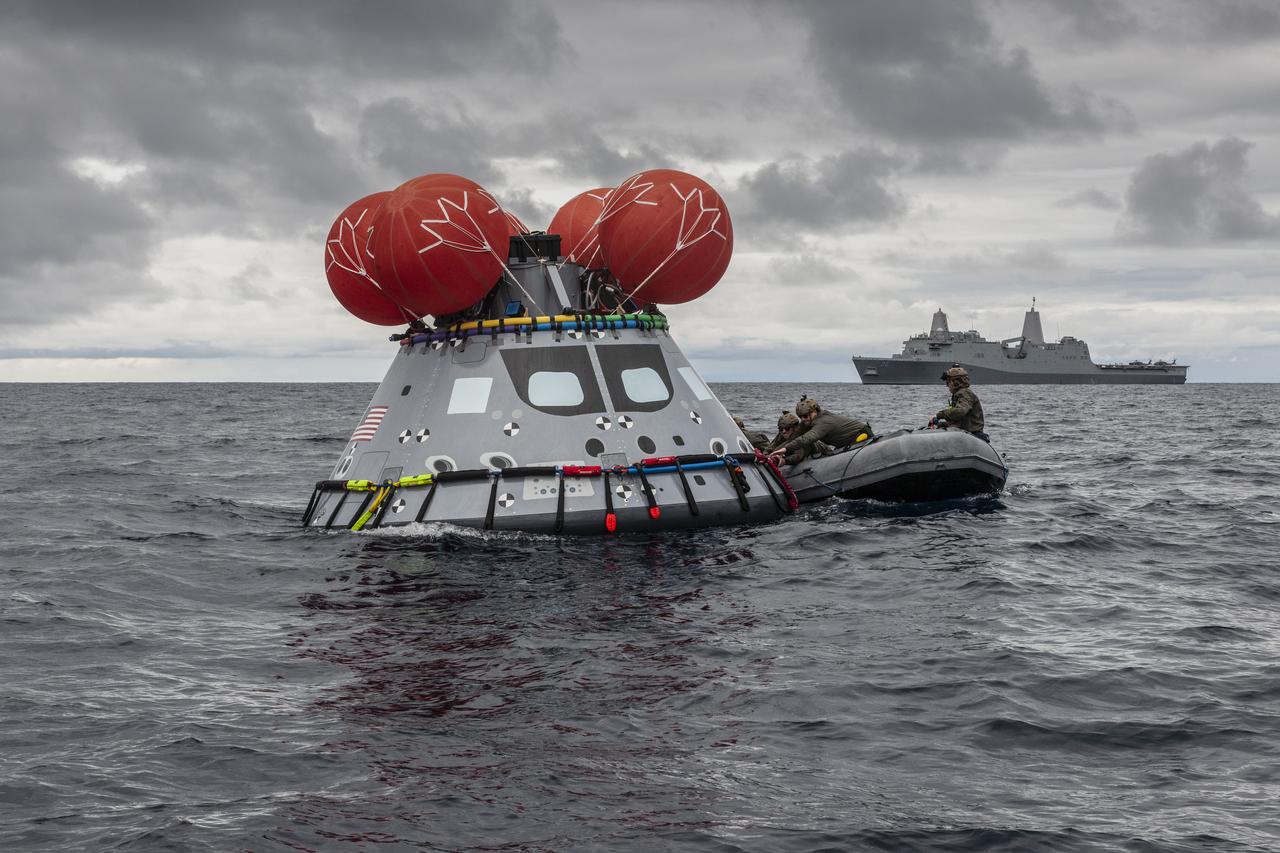
During Underway Recovery Test-8, NASA's Landing and Recovery team from Exploration Ground Systems at Kennedy Space Center performed their first full mission profile test of the recovery procedures for Artemis I aboard the USS John P. Murtha in the Pacific Ocean. Artemis I will be the first integrated flight test of NASA's Deep Space Exploration Systems: the Orion spacecraft, Space Launch System rocket, with the newly upgraded Exploration Ground Systems at Kennedy Space Center.
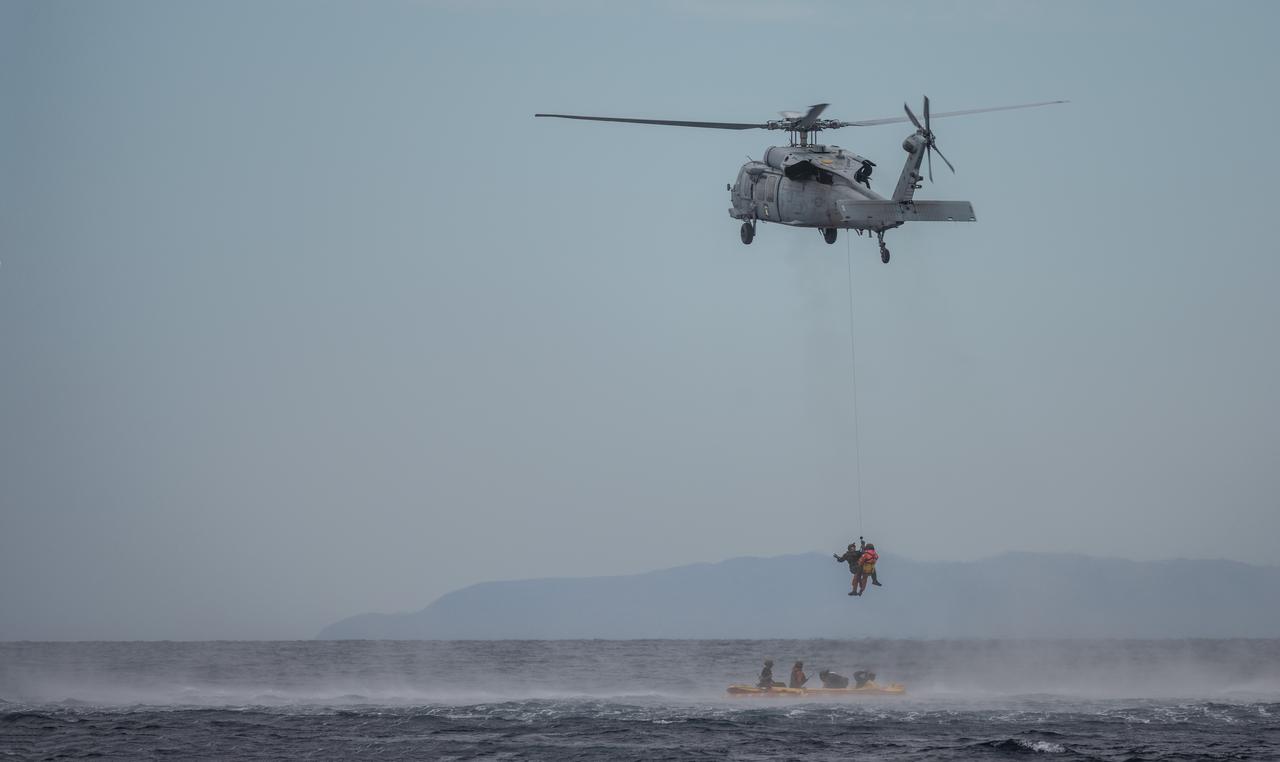
Members of the United States Navy Helicopter Sea Combat Squadron (HSC) 23 "Wildcards" practice recovery procedures from a mockup of the Orion spacecraft in the Pacific Ocean during Underway Recovery Test 11 (URT-11) with NASA’s Exploration Ground System’s Landing and Recovery team and partners from the Department of Defense aboard the USS San Diego off the coast of San Diego on Sunday, Feb. 25, 2024. URT-11 is the eleventh in a series of Artemis recovery tests, and the first time NASA and its partners put their Artemis II recovery procedures to the test with the astronauts.
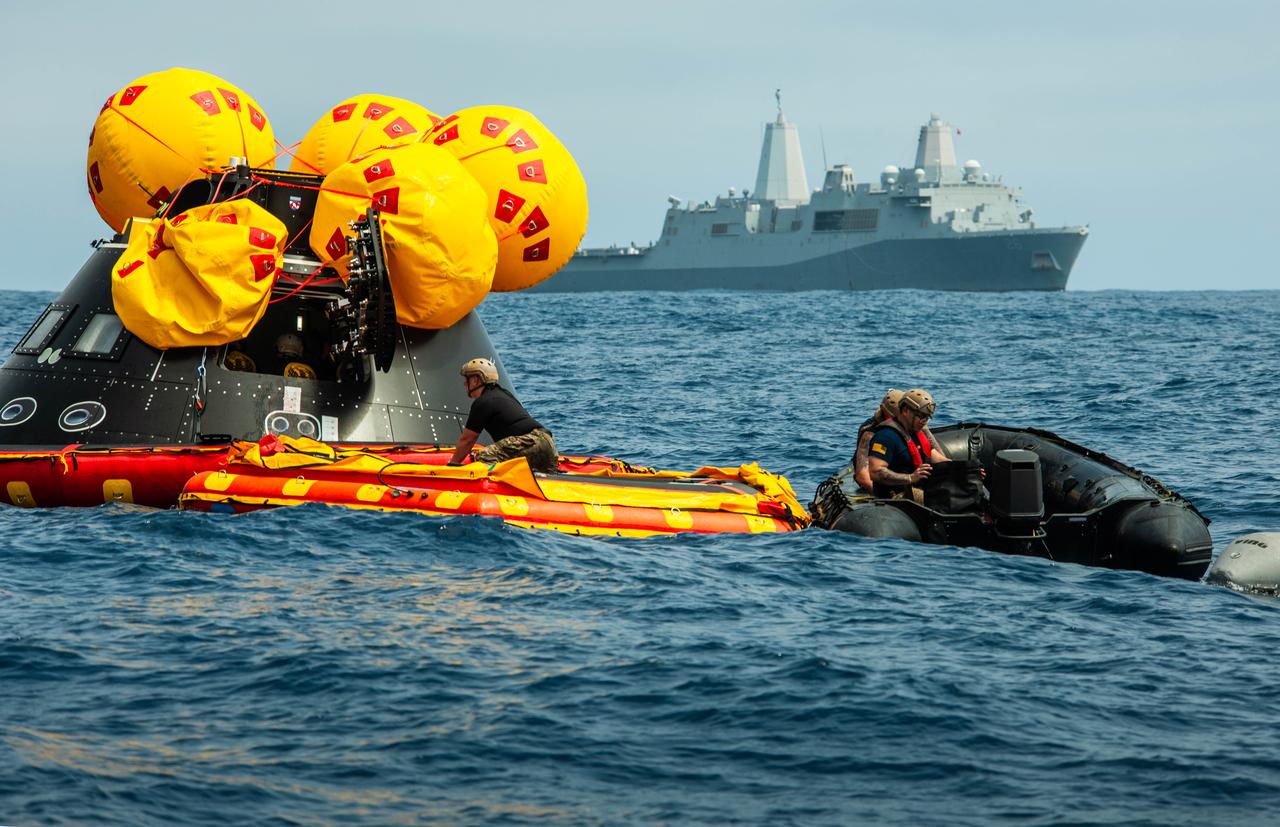
Navy divers from Explosive Ordnance Disposal (EOD) Expeditionary Support Unit 1 work to secure the Orion Crew Module Test Article (CMTA) in the Pacific Ocean as part of NASA’s Underway Recovery Test 10 (URT-10). The divers are trained in open water and small boat procedures and will be the team to help Artemis astronauts exit the Orion spacecraft and make it safely to the recovery ship after splashdown in addition to preparing the spacecraft to be transported back inside the recovery ship.
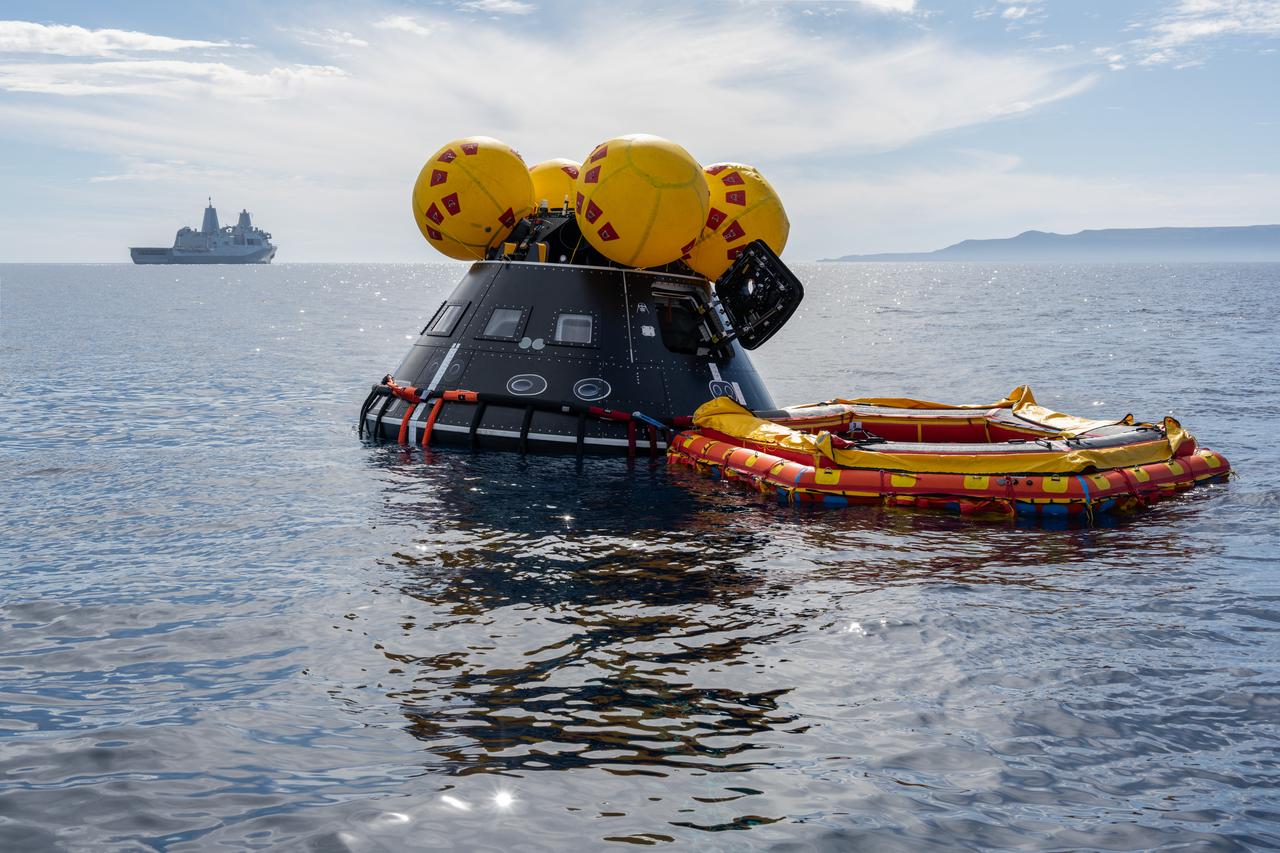
Members of NASA’s Exploration Ground System’s Landing and Recovery team and partners from the Department of Defense aboard the USS San Diego practice recovery procedures using the Crew Module Test Article with NASA Astronaut Candidate Chris Birch; Jenni Gibbons, CSA (Canadian Space Agency) astronaut; and two members of the United States Navy Helicopter Sea Combat Squadron 23, during Underway Recovery Test 11 (URT-11) off the coast of San Diego on Friday, Feb. 23, 2024. URT-11 is the eleventh in a series of Artemis recovery tests, and the first time NASA and its partners put their Artemis II recovery procedures to the test with the astronauts.
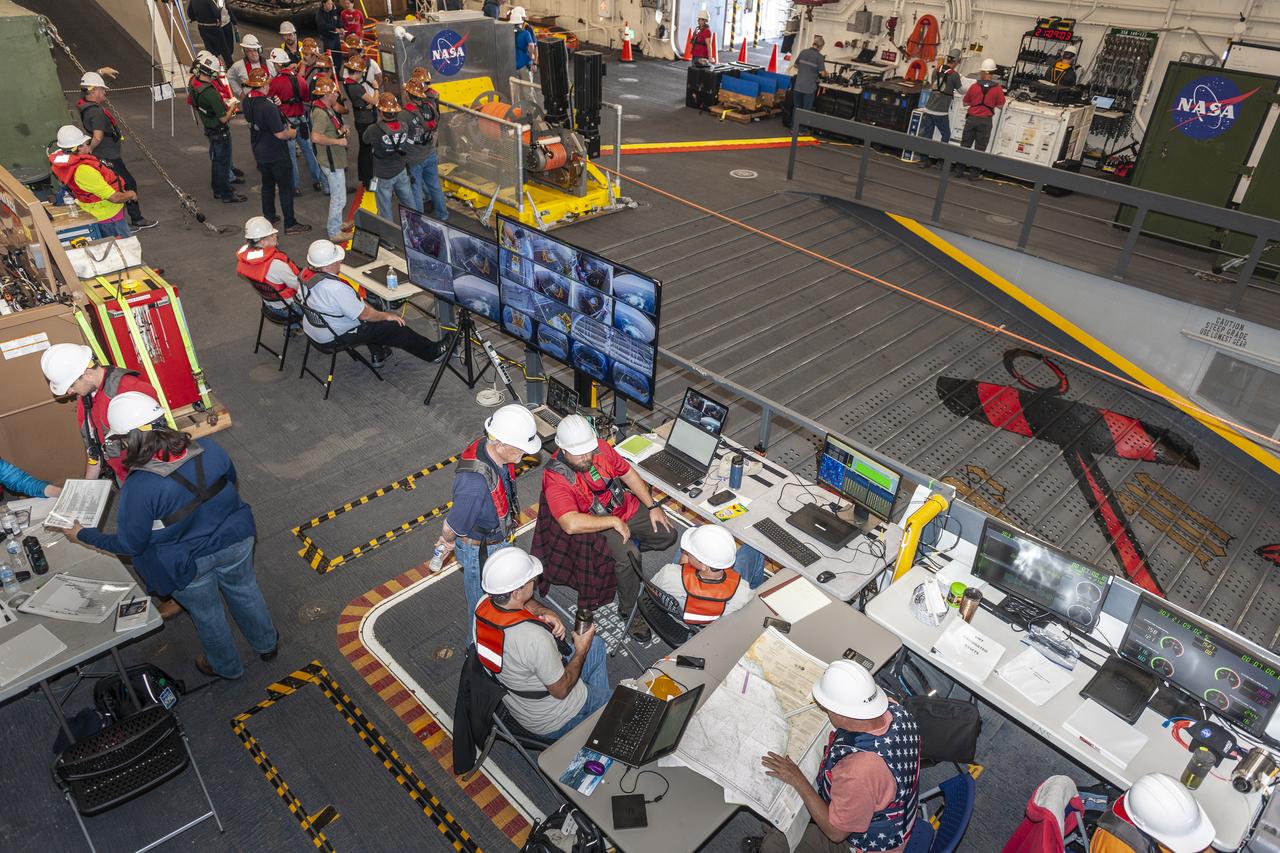
NASA Recovery Team members with Exploration Ground Systems (EGS) and the U.S. Navy prepare for Underway Recovery Test-7 (URT-7) on Oct. 30, 2018, in the well deck of the USS John P Murtha. URT-7 is one in a series of tests that the EGS Recovery Team, along with the U.S. Navy, are conducting to verify and validate procedures and hardware that will be used to recover the Orion spacecraft after it splashes down in the Pacific Ocean following deep space exploration missions. Orion will have emergency abort capability, sustain the crew during space travel and provide safe re-entry from deep space return velocities.
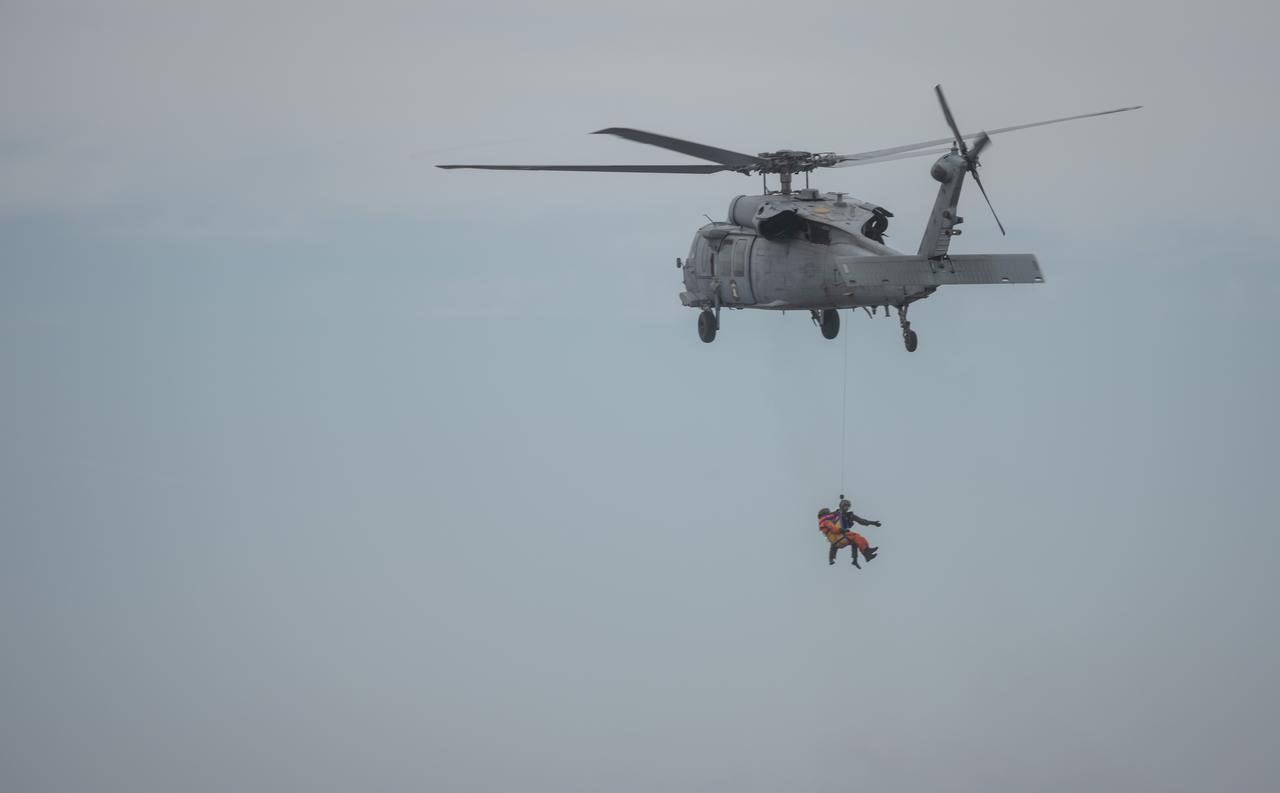
Members of the United States Navy Helicopter Sea Combat Squadron (HSC) 23 "Wildcards" practice recovery procedures from a mockup of the Orion spacecraft in the Pacific Ocean during Underway Recovery Test 11 (URT-11) with NASA’s Exploration Ground System’s Landing and Recovery team and partners from the Department of Defense aboard the USS San Diego off the coast of San Diego on Sunday, Feb. 25, 2024. URT-11 is the eleventh in a series of Artemis recovery tests, and the first time NASA and its partners put their Artemis II recovery procedures to the test with the astronauts.
Members of NASA’s Exploration Ground System’s Landing and Recovery team and partners from the Department of Defense aboard the USS San Diego practice recovery procedures using the Crew Module Test Article with NASA Astronaut Candidate Chris Birch; Jenni Gibbons, CSA (Canadian Space Agency) astronaut; and two members of the United States Navy Helicopter Sea Combat Squadron 23, during Underway Recovery Test 11 (URT-11) off the coast of San Diego on Friday, Feb. 23, 2024. URT-11 is the eleventh in a series of Artemis recovery tests, and the first time NASA and its partners put their Artemis II recovery procedures to the test with the astronauts.
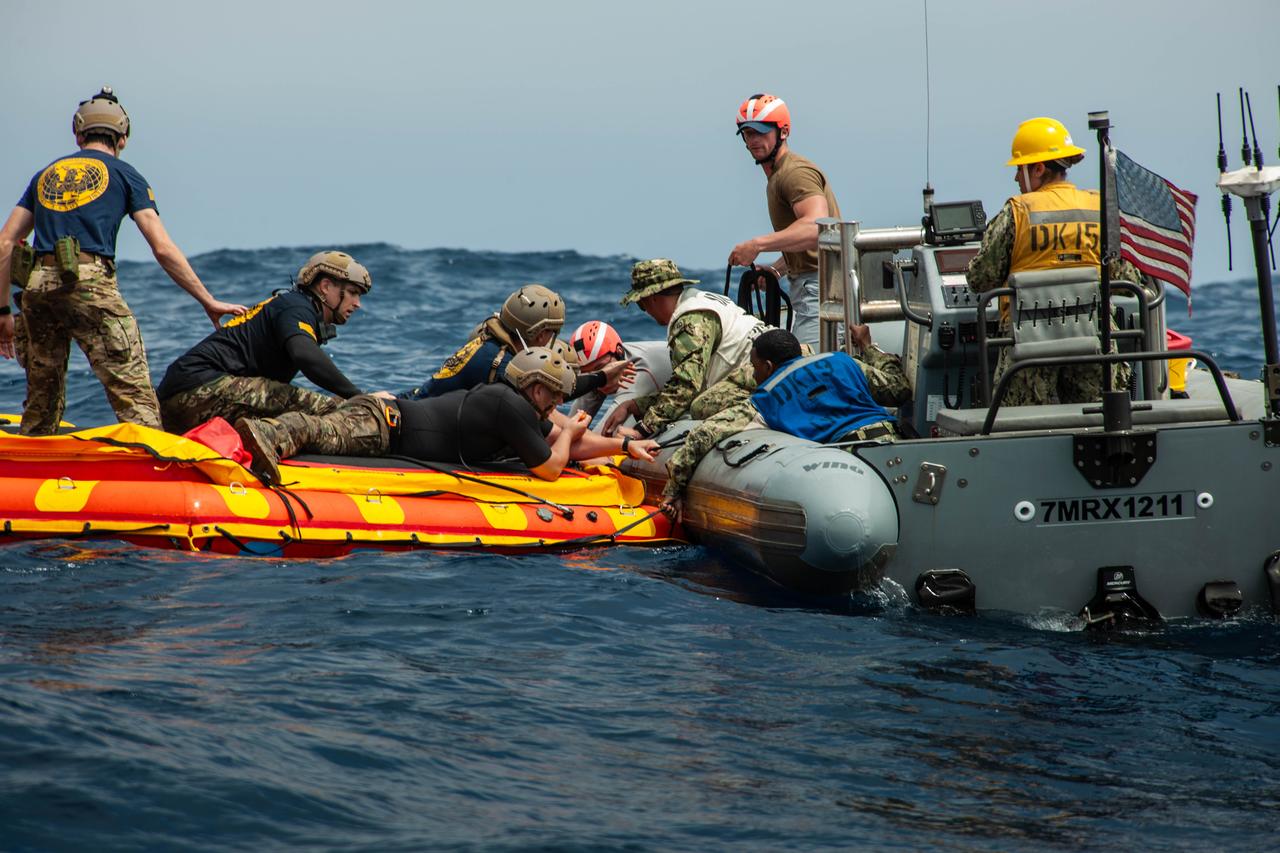
Navy divers from Explosive Ordnance Disposal (EOD) Expeditionary Support Unit 1 work to secure the Orion Crew Module Test Article (CMTA) in the Pacific Ocean as part of NASA’s Underway Recovery Test 10 (URT-10). The divers are trained in open water and small boat procedures and will be the team to help Artemis astronauts exit the Orion spacecraft and make it safely to the recovery ship after splashdown in addition to preparing the spacecraft to be transported back inside the recovery ship.
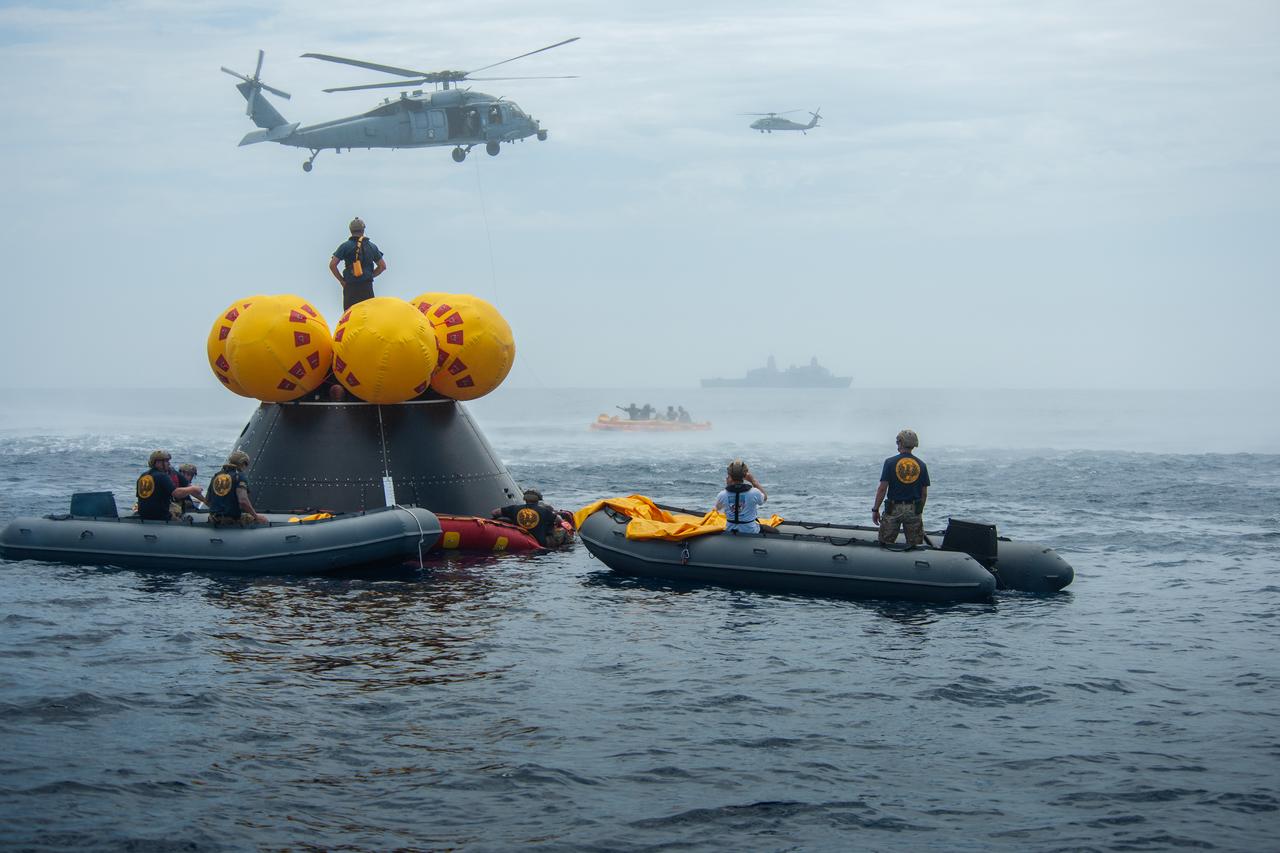
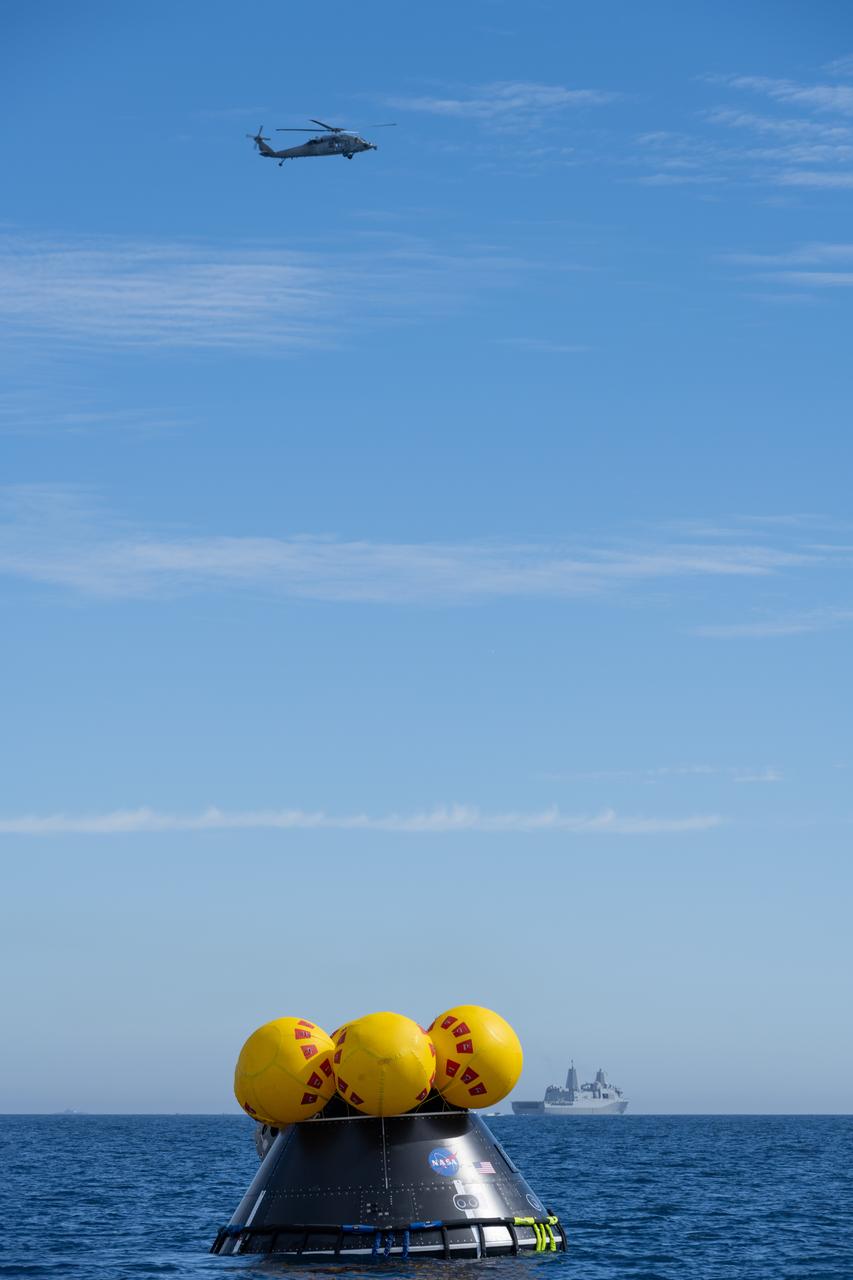
Naval helicopter pilots from Helicopter Sea Combat Squadron (HSC) 23 “Wildcards” fly over the Orion Crew Module Test Article (CMTA) with American flags after completing flight operations during an Artemis II mission simulation during NASA’s Underway Recovery Test 10 (URT-10) off the coast of San Diego.
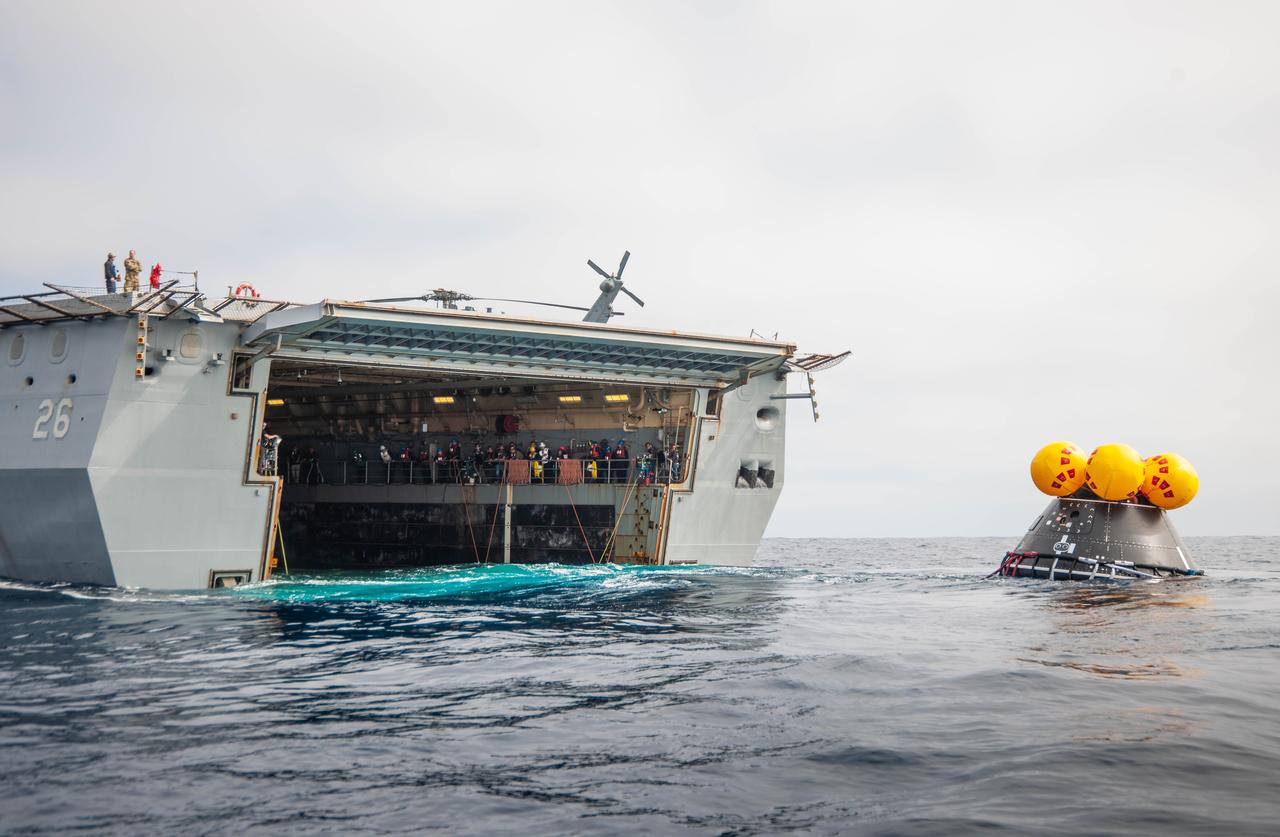
The Crew Module Test Article (CMTA) is seen in the waters of the Pacific Ocean during NASA’s Underway Recovery Test 10 (URT-10). The CMTA is a full-scale mockup of the Orion spacecraft and is used by NASA and its Department of Defense partners to practice recovery procedures for crewed Artemis missions. URT-10 is the first test specifically in support of the Artemis II mission and allowed the team to practice what it will be like to recover astronauts and get them back to the recovery ship safely.
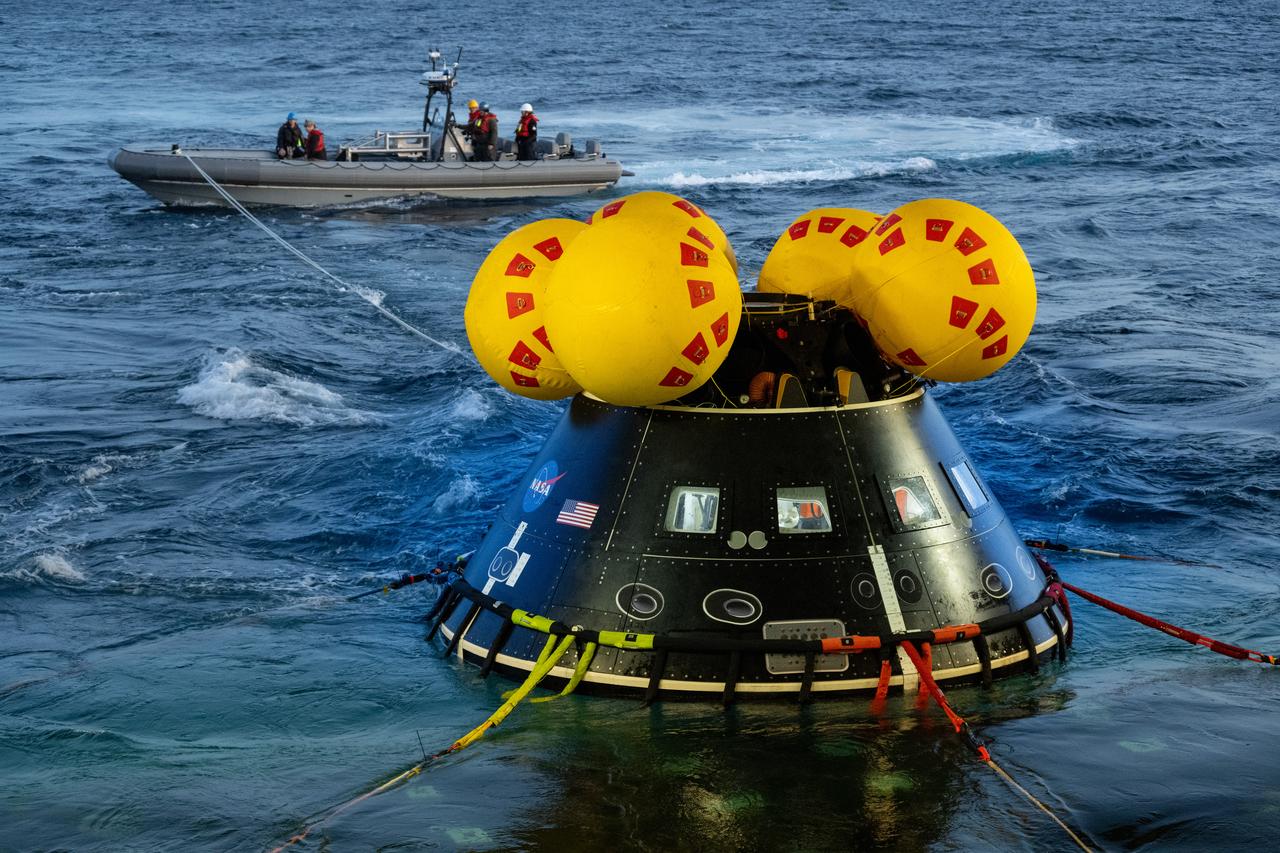
Members of NASA’s Exploration Ground System’s Landing and Recovery team and partners from the Department of Defense aboard the USS San Diego recover the Crew Module Test Article into the ship’s well deck while practicing recovery procedures during Underway Recovery Test 11 (URT-11) off the coast of San Diego on Thursday, Feb. 22, 2024. URT-11 is the eleventh in a series of Artemis recovery tests, and the first time NASA and its partners put their Artemis II recovery procedures to the test with the astronauts.
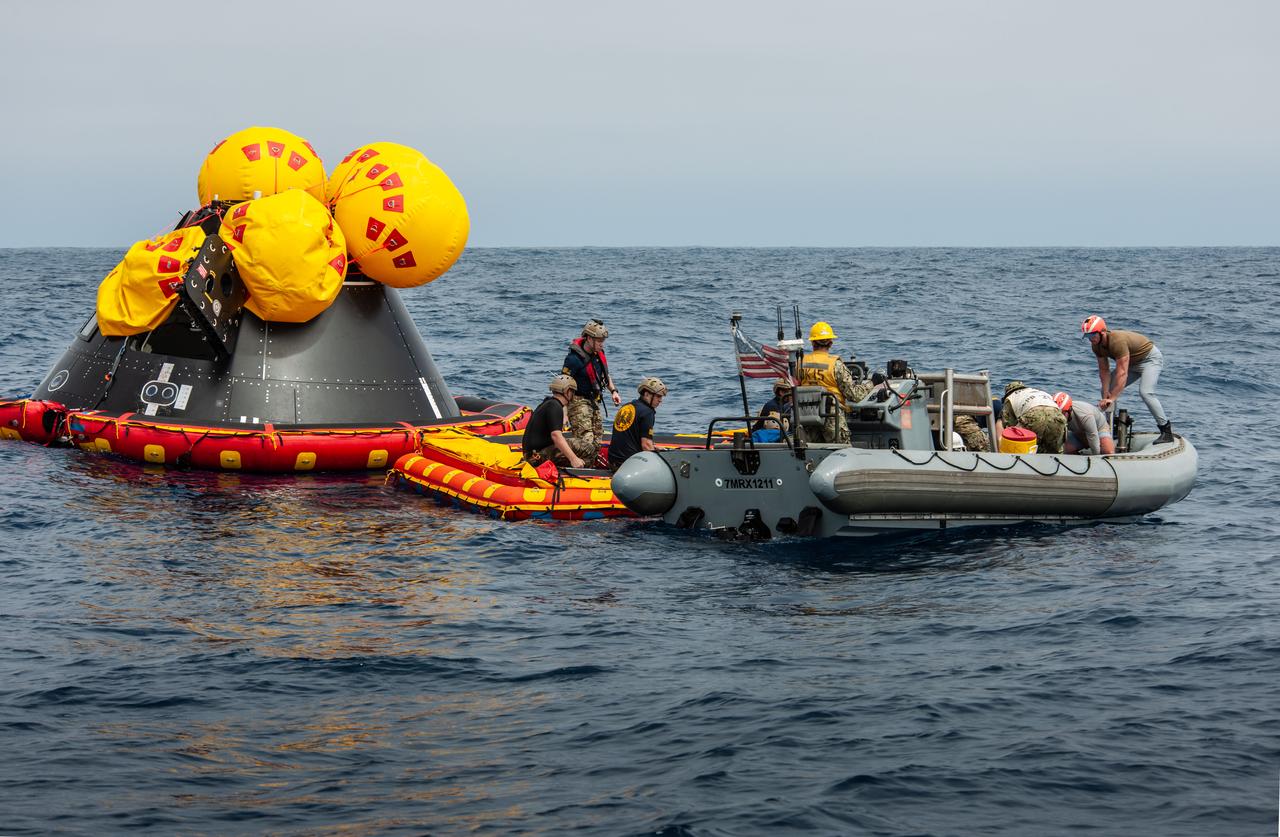
Navy divers from Explosive Ordnance Disposal (EOD) Expeditionary Support Unit 1 work to secure the Orion Crew Module Test Article (CMTA) in the Pacific Ocean as part of NASA’s Underway Recovery Test 10 (URT-10). The divers are trained in open water and small boat procedures and will be the team to help Artemis astronauts exit the Orion spacecraft and make it safely to the recovery ship after splashdown in addition to preparing the spacecraft to be transported back inside the recovery ship.
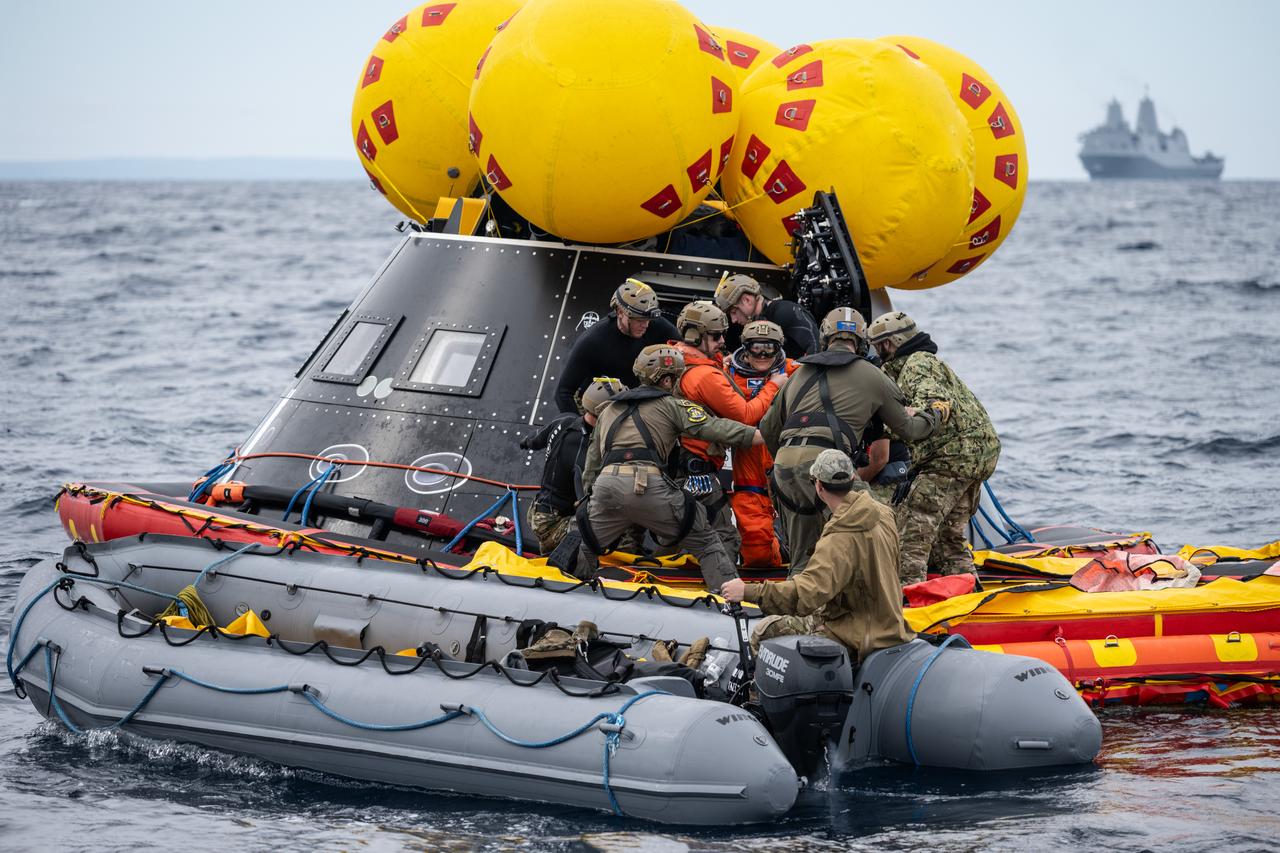
NASA Artemis II crew members are assisted by U.S. Navy personnel as they exit a mockup of the Orion spacecraft in the Pacific Ocean during Underway Recovery Test 11 (URT-11) on Feb. 25, 2024, while his crewmates look on. URT-11 is the eleventh in a series of Artemis recovery tests, and the first time NASA and its partners put their Artemis II recovery procedures to the test with the astronauts.
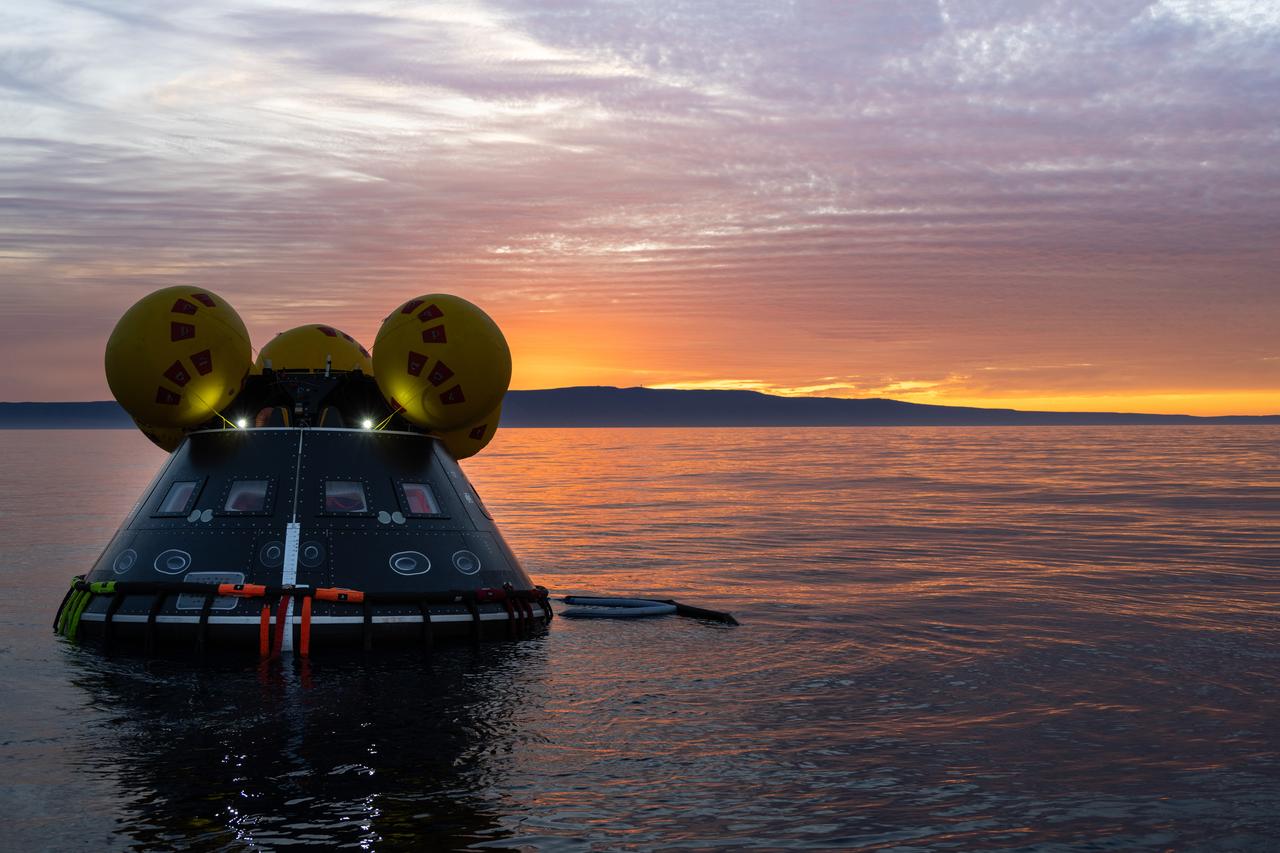
During sunrise over the Pacific Ocean, members of NASA’s Exploration Ground System’s Landing and Recovery team and partners from the Department of Defense aboard the USS San Diego practice recovery procedures using the Crew Module Test Article during Underway Recovery Test 11 (URT-11) off the coast of San Diego on Friday, Feb. 23, 2024. URT-11 is the eleventh in a series of Artemis recovery tests, and the first time NASA and its partners put their Artemis II recovery procedures to the test with the astronauts.
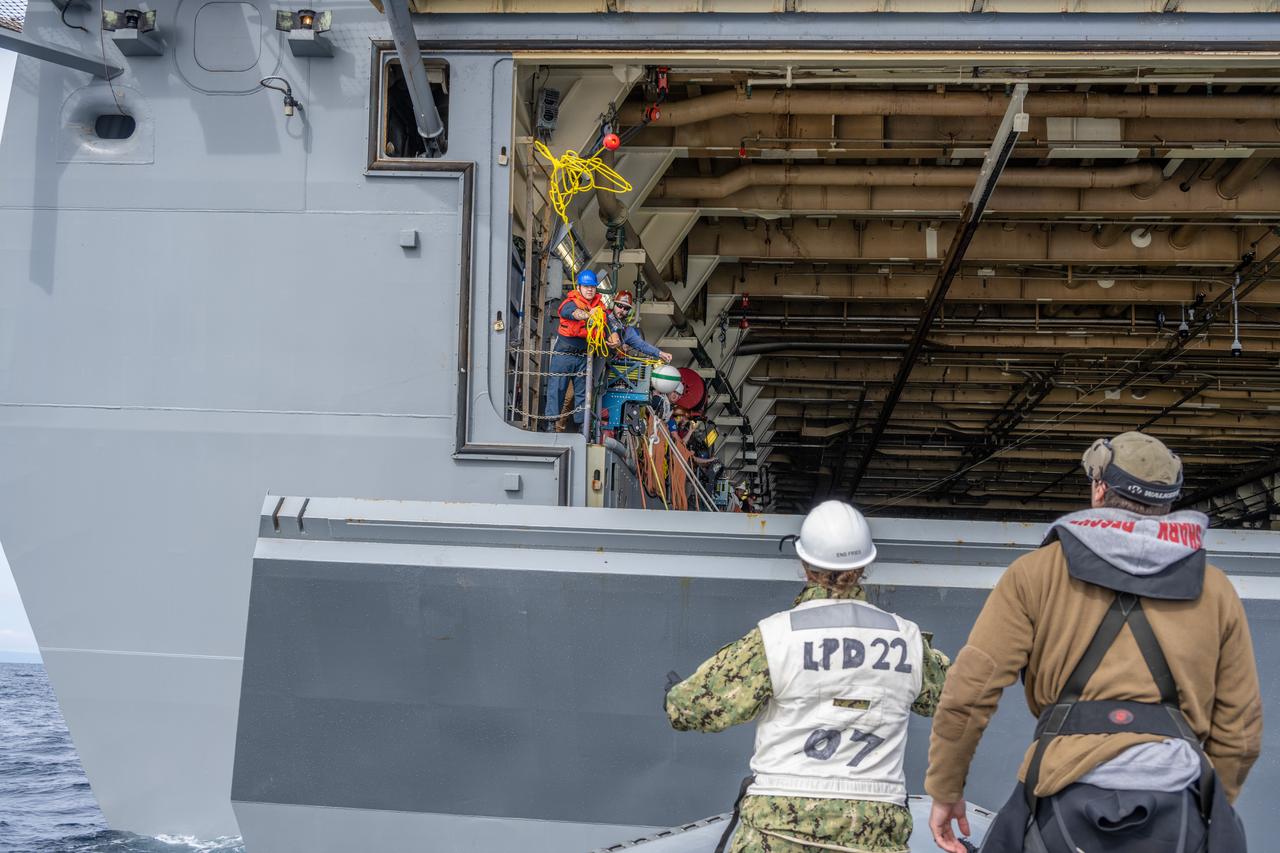
Members of NASA’s Exploration Ground System’s Landing and Recovery team and partners from the Department of Defense aboard the USS San Diego practice recovery procedures during Underway Recovery Test 11 (URT-11) off the coast of San Diego on Sunday, Feb. 25, 2024. URT-11 is the eleventh in a series of Artemis recovery tests, and the first time NASA and its partners put their Artemis II recovery procedures to the test with the astronauts.
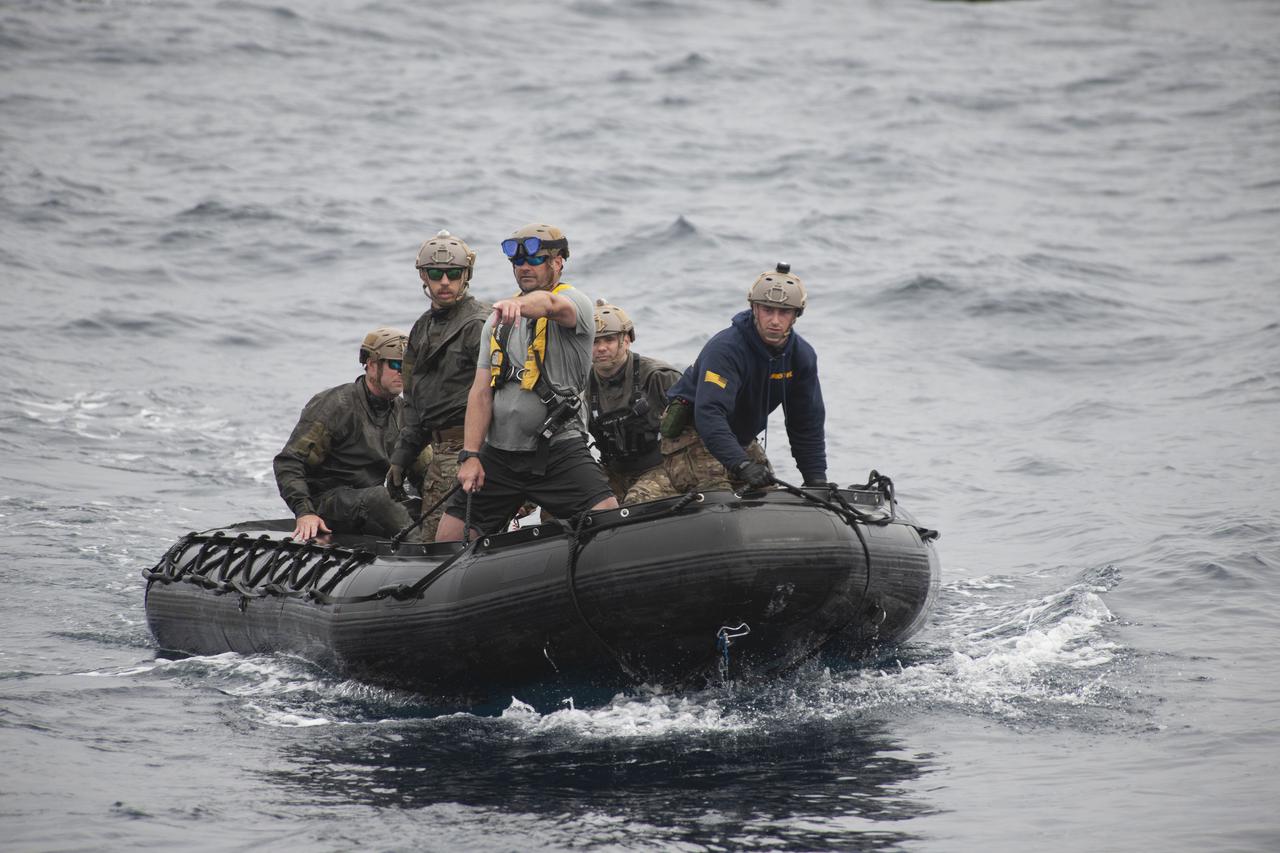
Open Water Lead Tim Goddard points the way to the smoke the helicopter dropped in the water, indicating the location of the mock Orion capsule during Underway Recovery Test 9 (URT-9). During the weeklong test, NASA’s Landing and Recovery team is performing their final mission certification ahead of Artemis I.
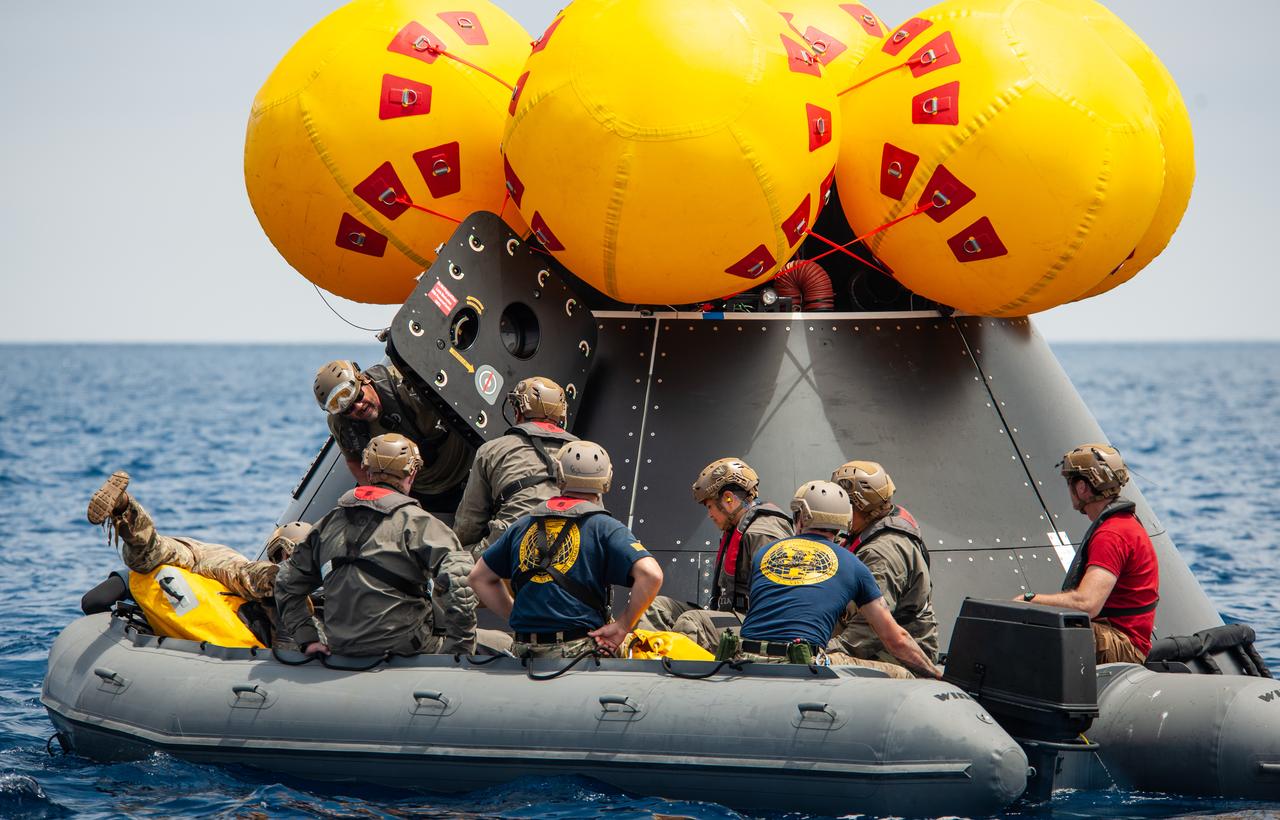
NASA, Navy, and Air Force personnel practice Artemis recovery procedures in the Pacific Ocean as part of Underway Recovery Test-10 off the coast of San Diego. In this photo Navy divers are seen entering the Orion Crew Module Test Article to prepare to practice recovering astronauts out of the spacecraft and onto an inflatable “front porch” where the crew will be picked up with helicopters and lifted up via helicopter back to the recovery vessel.
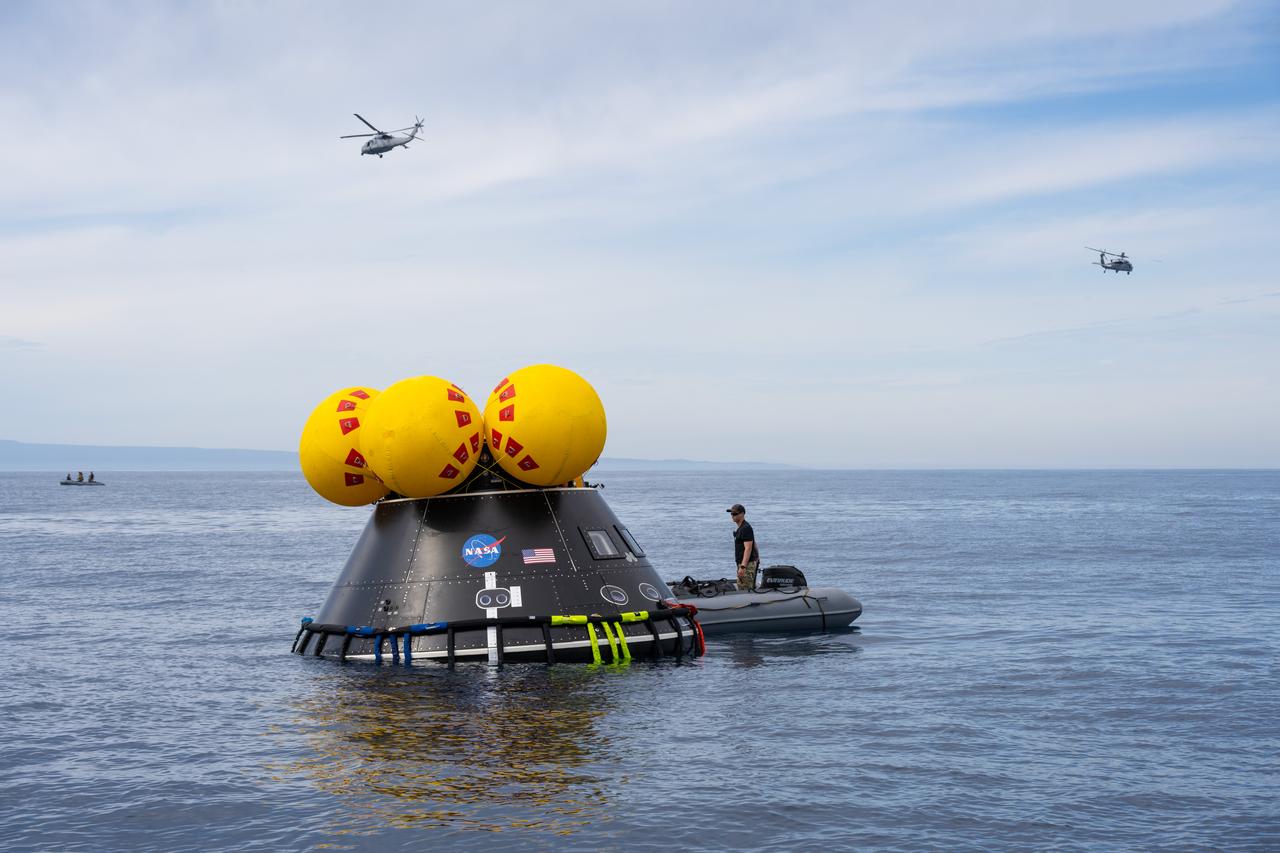
Members of NASA’s Exploration Ground System’s Landing and Recovery team and partners from the Department of Defense aboard the USS San Diego practice recovery procedures using the Crew Module Test Article with NASA Astronaut Candidate Chris Birch; Jenni Gibbons, CSA (Canadian Space Agency) astronaut; and two members of the United States Navy Helicopter Sea Combat Squadron 23, during Underway Recovery Test 11 (URT-11) off the coast of San Diego on Friday, Feb. 23, 2024. URT-11 is the eleventh in a series of Artemis recovery tests, and the first time NASA and its partners put their Artemis II recovery procedures to the test with the astronauts.
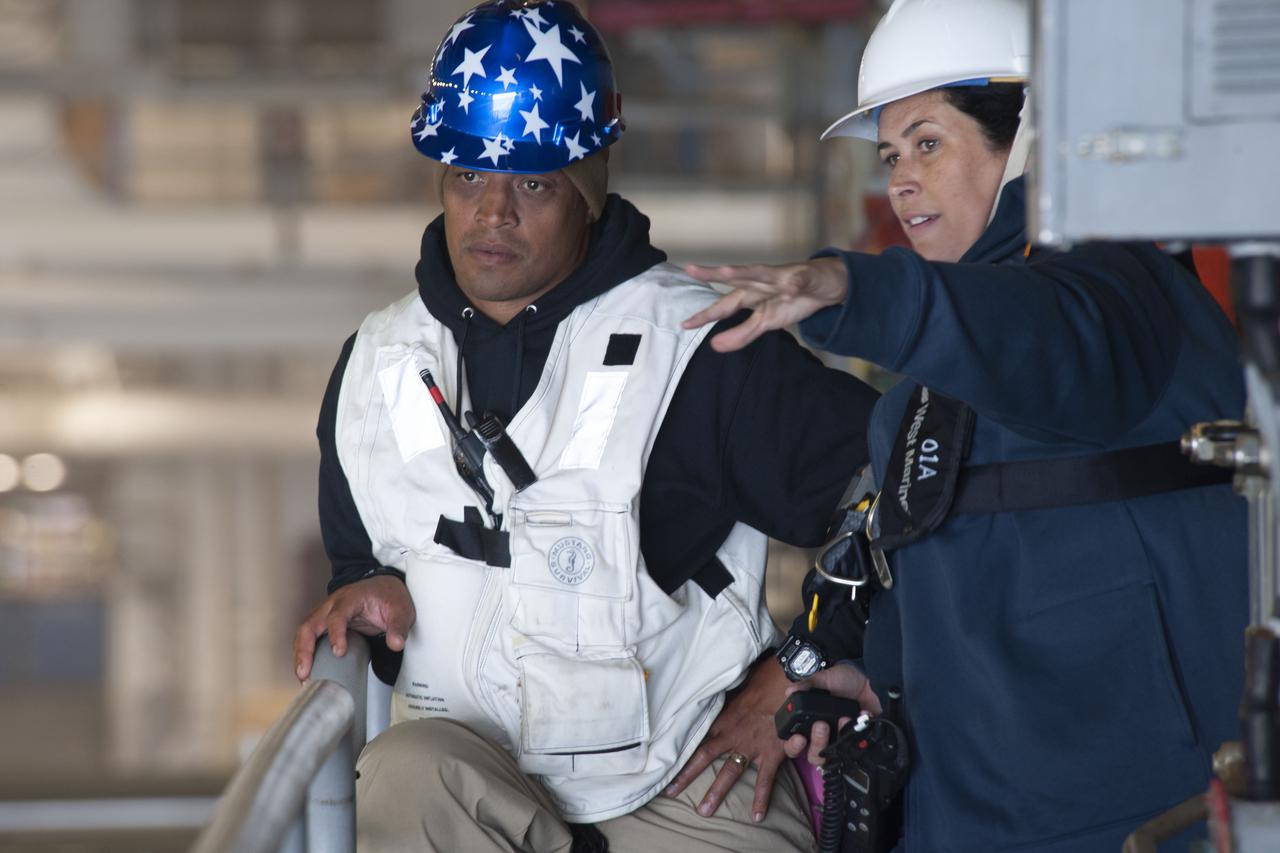
NASA Landing and Recovery Director Melissa Jones points out recovery operations to Capt. Gervy Alota, commanding officer, USS John P. Murtha (LPD 26), during Underway Recovery Test 9 (URT-9). During the weeklong test, NASA’s Landing and Recovery team is performing their final mission certification ahead of Artemis I.
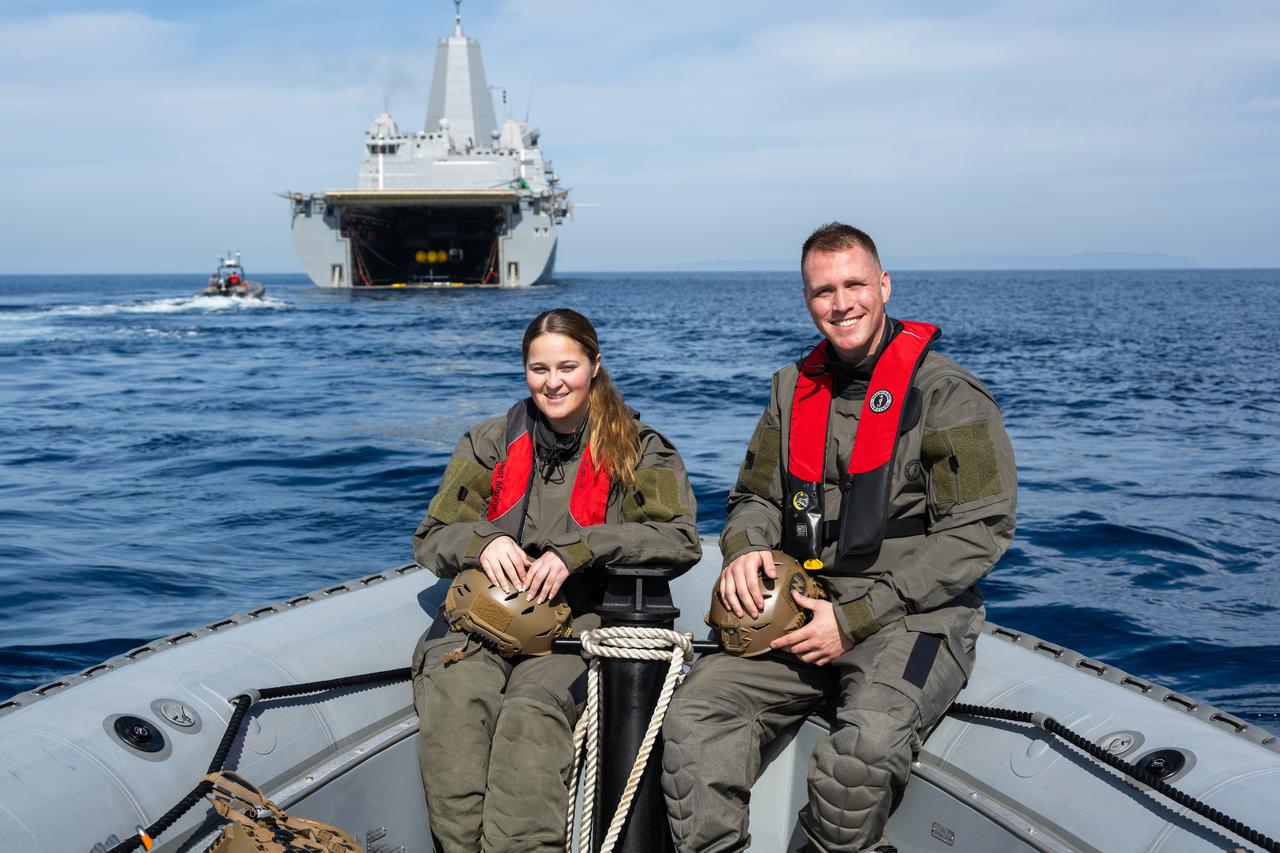
Members of the United States Navy Helicopter Sea Combat Squadron 23 participate in practicing recovery procedures of the Crew Module Test Article during Underway Recovery Test 11 (URT-11) with NASA’s Exploration Ground System’s Landing and Recovery team and partners from the Department of Defense aboard the USS San Diego off the coast of San Diego on Friday, Feb. 23, 2024. URT-11 is the eleventh in a series of Artemis recovery tests, and the first time NASA and its partners put their Artemis II recovery procedures to the test with the astronauts.
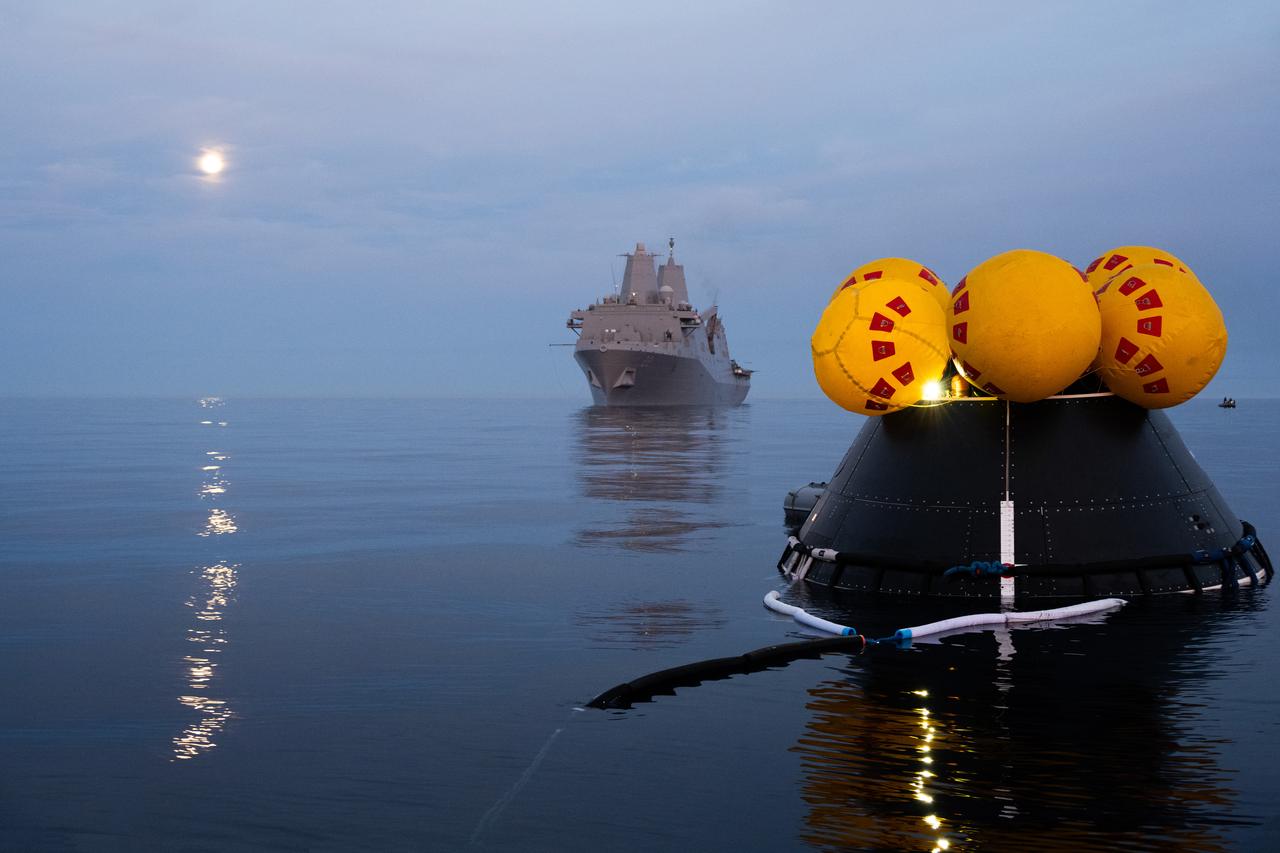
During sunrise over the Pacific Ocean, members of NASA’s Exploration Ground System’s Landing and Recovery team and partners from the Department of Defense aboard the USS San Diego practice recovery procedures using the Crew Module Test Article during Underway Recovery Test 11 (URT-11) off the coast of San Diego on Friday, Feb. 23, 2024. URT-11 is the eleventh in a series of Artemis recovery tests, and the first time NASA and its partners put their Artemis II recovery procedures to the test with the astronauts.
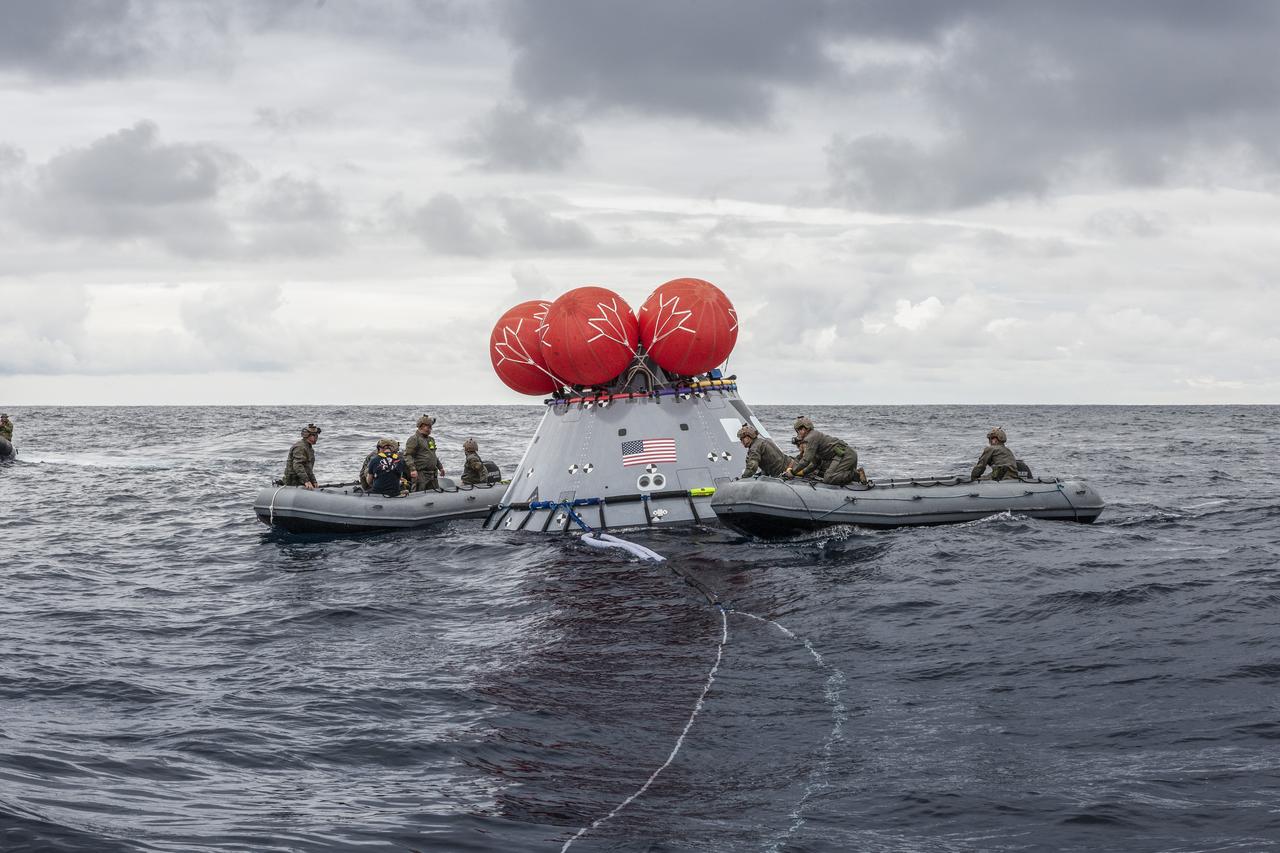
During Underway Recovery Test-8, NASA's Landing and Recovery team from Exploration Ground Systems at Kennedy Space Center performed their first full mission profile test of the recovery procedures for Artemis I aboard the USS John P. Murtha in the Pacific Ocean. Artemis I will be the first integrated flight test of NASA's Deep Space Exploration Systems: the Orion spacecraft, Space Launch System rocket, with the newly upgraded Exploration Ground Systems at Kennedy Space Center.
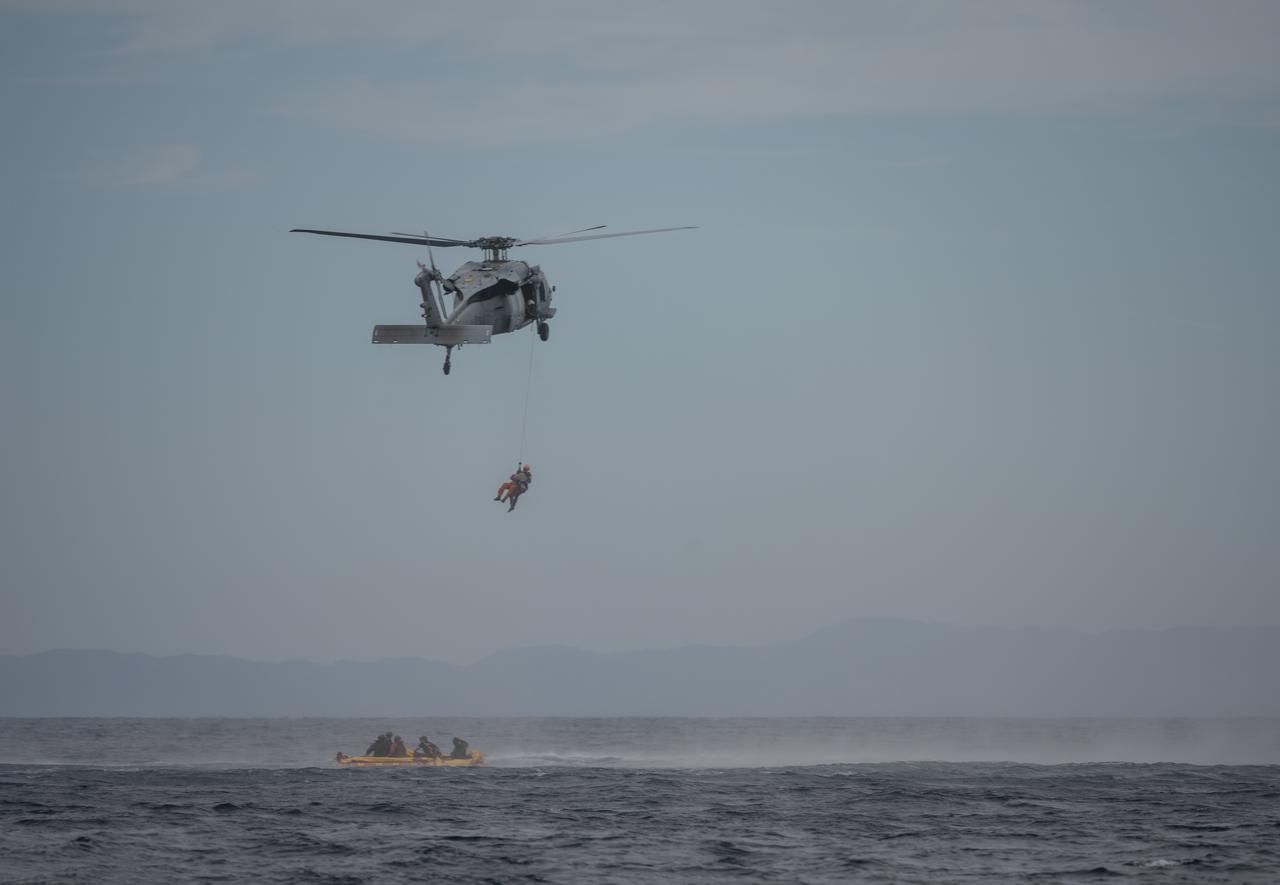
During Underway Recovery Test 11 (URT-11), conducted by NASA’s Exploration Ground System’s Landing and Recovery team and partners from the Department of Defense aboard the USS San Diego, Naval helicopter pilots from Helicopter Sea Combat Squadron (HSC) 23 “Wildcards” lift Artemis II crew members in a basket from an inflatable “front porch” that allows astronauts to be recovered out of a mockup of the Orion spacecraft off the coast of San Diego, California on Sunday, Feb. 25, 2024. URT-11 is the eleventh in a series of Artemis recovery tests, and the first time NASA and its partners put their Artemis II recovery procedures to the test with the astronauts.
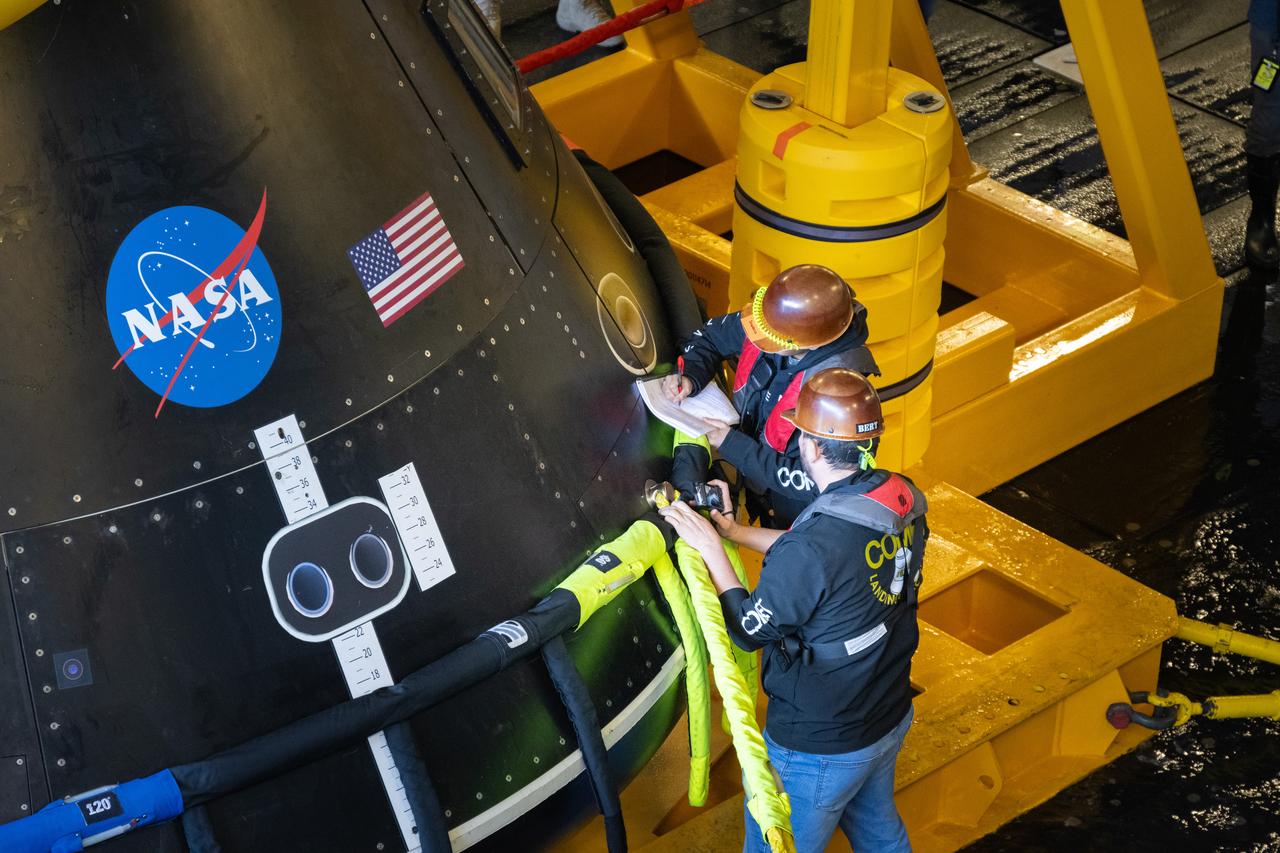
Members of NASA’s Exploration Ground System’s Landing and Recovery team and partners from the Department of Defense aboard the USS San Diego secure the Crew Module Test Article on its stand in the ship’s well deck while practicing recovery procedures during Underway Recovery Test 11 (URT-11) off the coast of San Diego on Thursday, Feb. 22, 2024. URT-11 is the eleventh in a series of Artemis recovery tests, and the first time NASA and its partners put their Artemis II recovery procedures to the test with the astronauts.
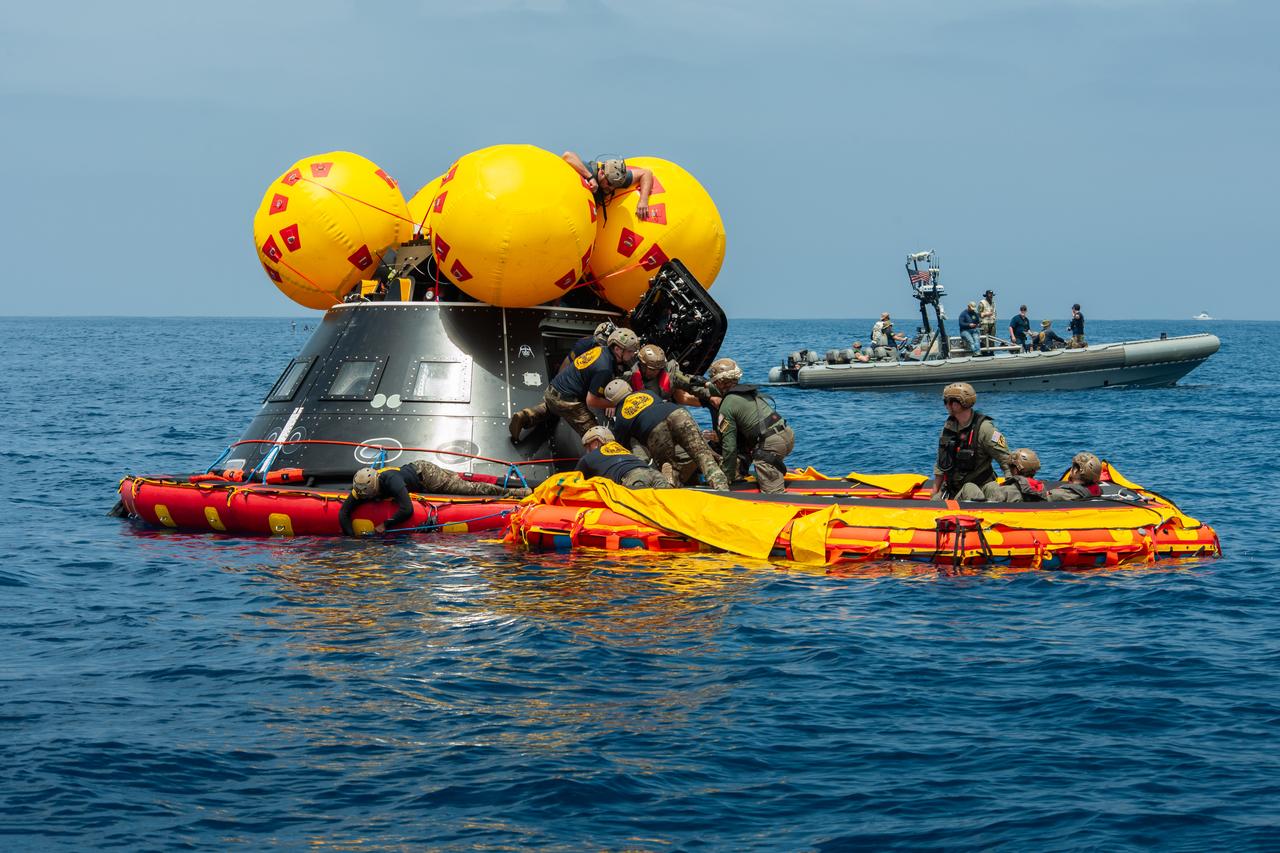
NASA, Navy, and Air Force personnel practice Artemis recovery procedures in the Pacific Ocean as part of Underway Recovery Test 10 (URT-10) off the coast of San Diego. In this photo, Navy divers are seen entering the Orion Crew Module Test Article (CMTA) and assisting a simulated crew member exiting the spacecraft to practice recovering astronauts out of the spacecraft and onto an inflatable “front porch” where the crew will be picked up with helicopters and lifted up via helicopter back to the recovery vessel.

NASA astronaut and Artemis II pilot Victor Glover is assisted by U.S. Navy personnel as he exits a mockup of the Orion spacecraft in the Pacific Ocean during Underway Recovery Test 11 (URT-11) on Sunday, Feb. 25, 2024, while his crewmates look on. URT-11 is the eleventh in a series of Artemis recovery tests, and the first time NASA and its partners put their Artemis II recovery procedures to the test with the astronauts.
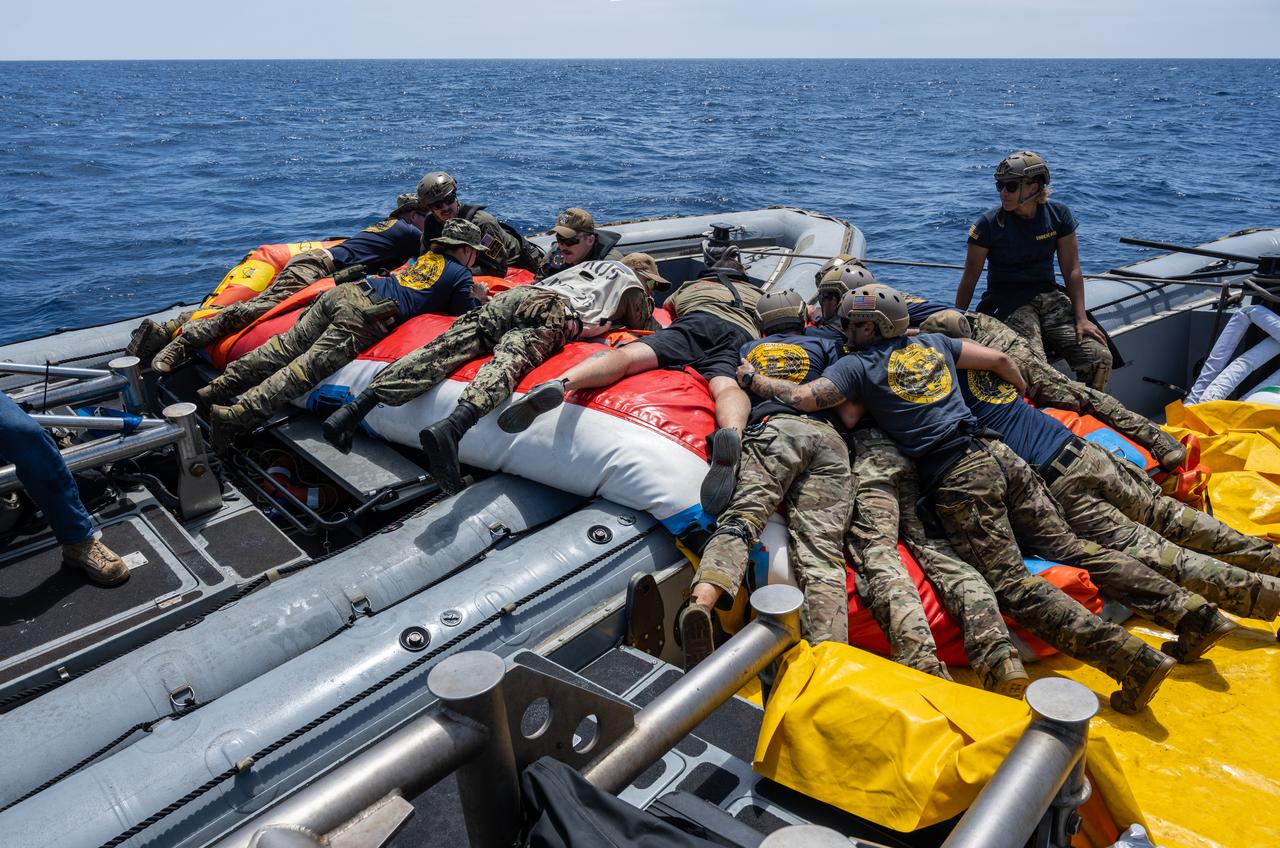
Navy Divers from Explosive Ordnance Disposal (EOD) Expeditionary Support Unit 1, sailors from USS John P Murtha and NASA Open Water Lead, Tim Goddard, work to deflate Artemis recovery equipment after a simulated Artemis recovery operation as part of NASA’s Underway Recovery Test 10. The team will use these inflatables as a platform for astronauts as they exit the Orion spacecraft after splashing down in the Pacific Ocean
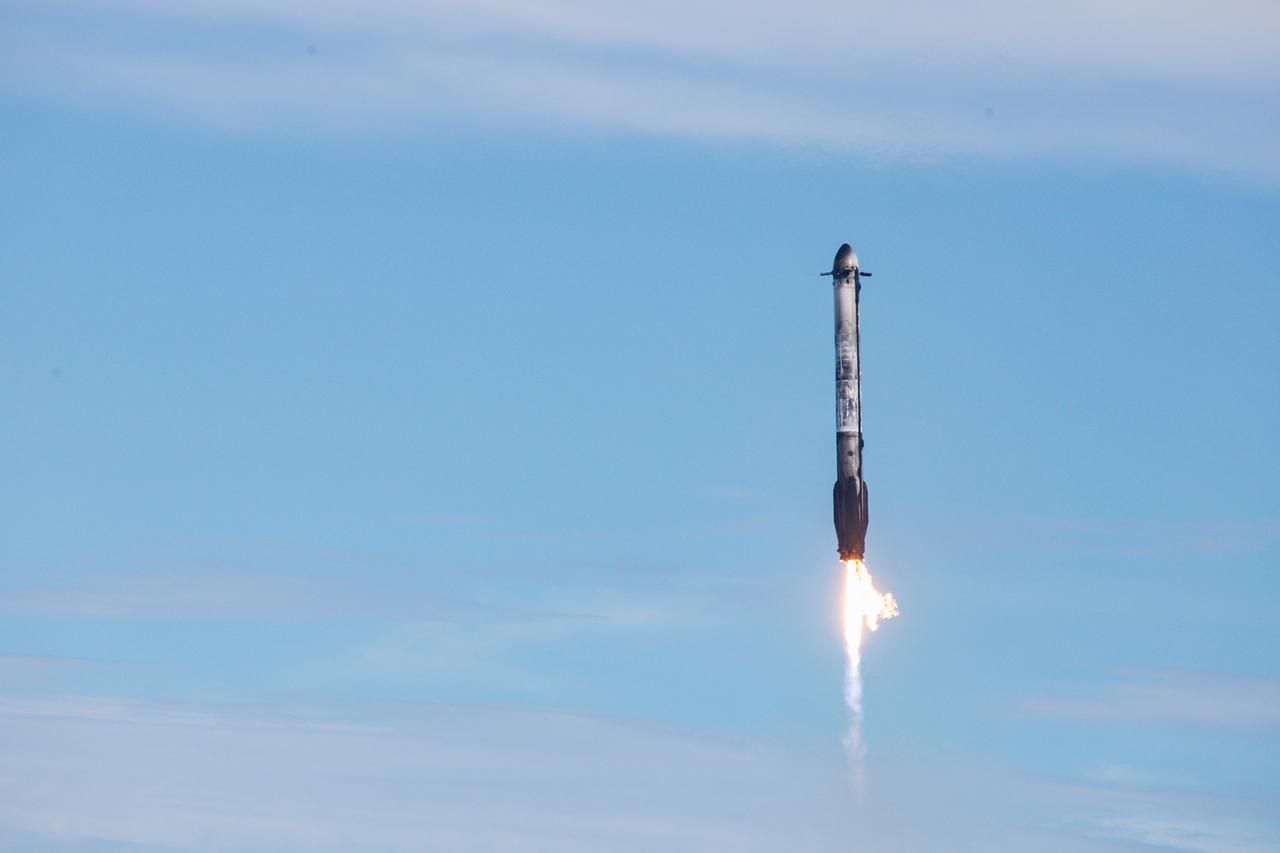
A SpaceX Falcon Heavy side booster lands at Cape Canaveral Space Force Station in Florida after the rocket launched NOAA’s (National Oceanic and Atmospheric Administration) Geostationary Operational Environmental Satellite (GOES-U) from NASA’s Kennedy Space Center in Florida on Tuesday, June 25, 2024.
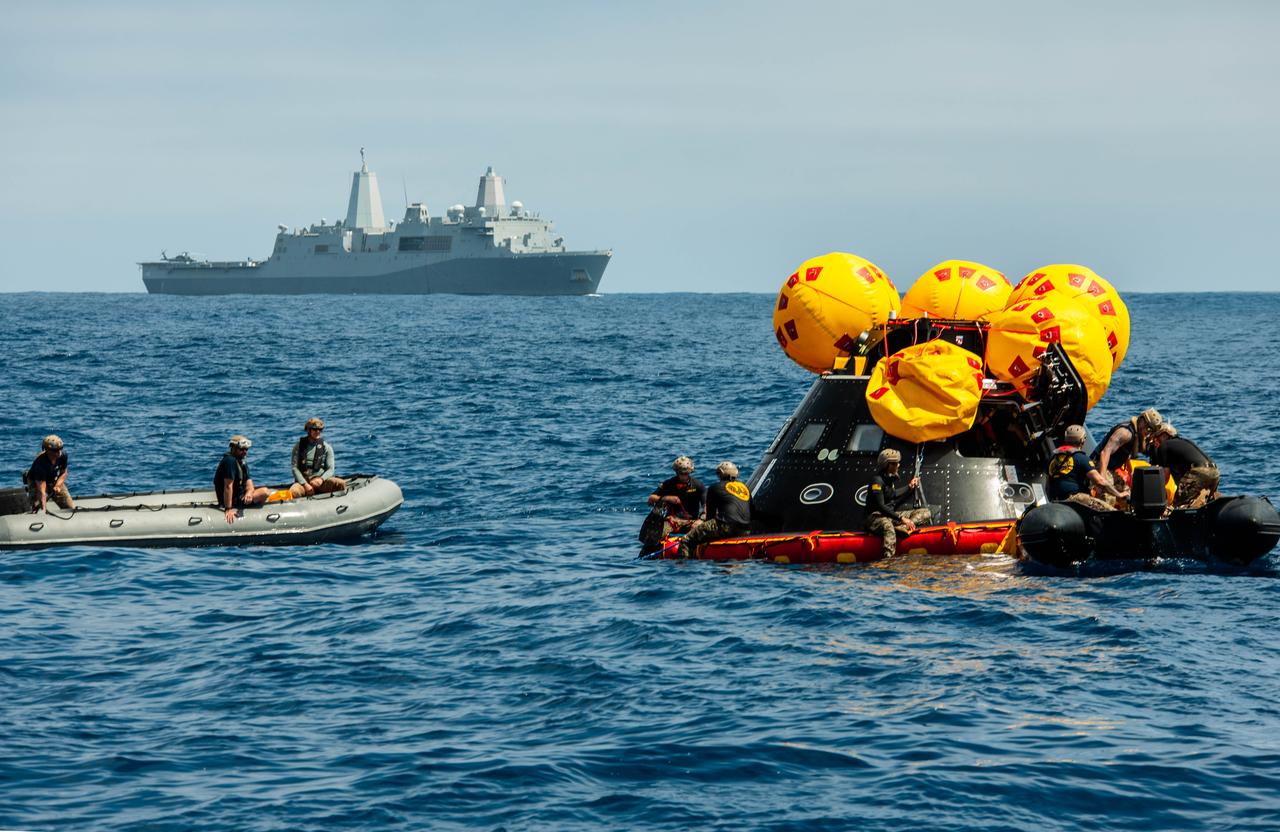
Navy divers from Explosive Ordnance Disposal (EOD) Expeditionary Support Unit 1 work to secure the Orion Crew Module Test Article (CMTA) in the Pacific Ocean as part of NASA’s Underway Recovery Test 10 (URT-10). The divers are trained in open water and small boat procedures and will be the team to help Artemis astronauts exit the Orion spacecraft and make it safely to the recovery ship after splashdown in addition to preparing the spacecraft to be transported back inside the recovery ship.
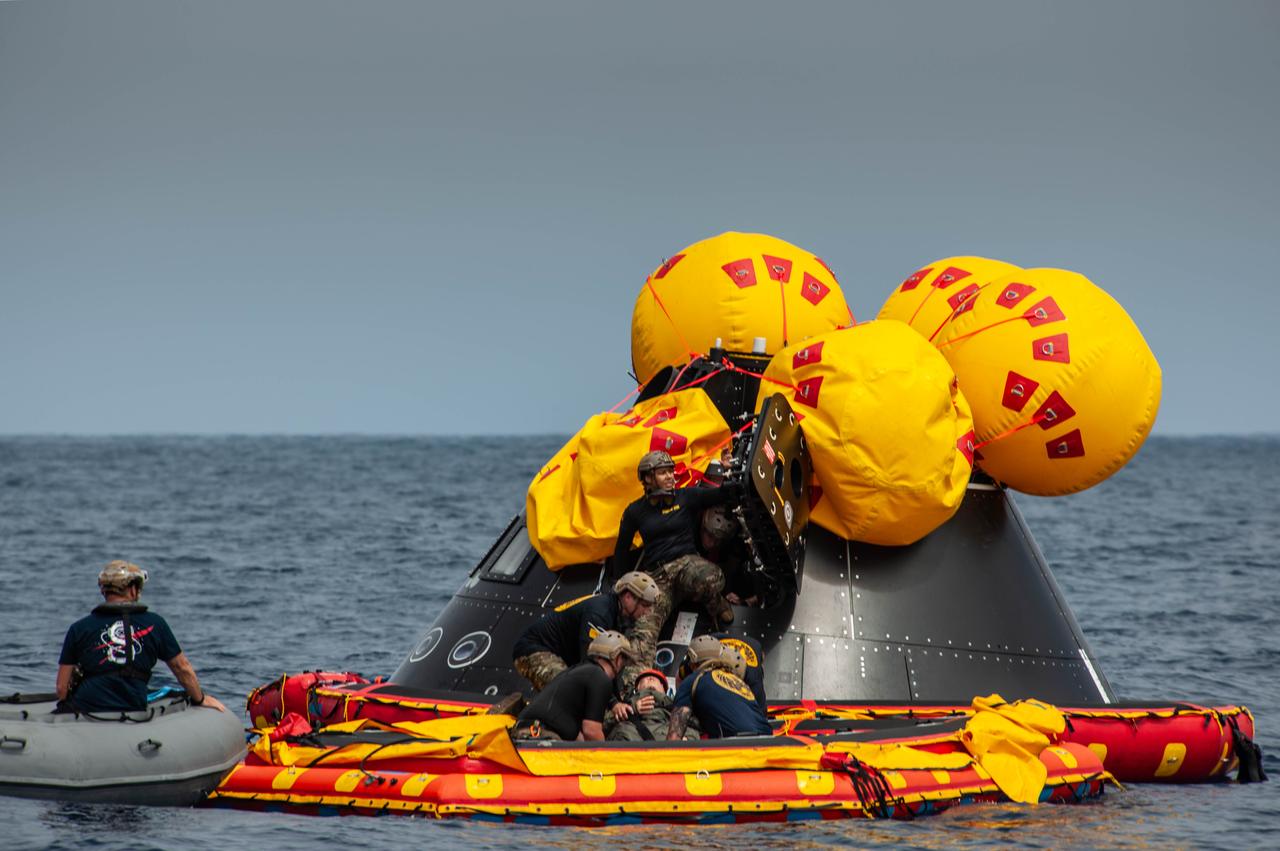
Navy divers from Explosive Ordnance Disposal (EOD) Expeditionary Support Unit 1 practice contingency recovery procedures with a manikin and the Orion Crew Module Test Article (CMTA) in the Pacific Ocean as part of NASA’s Underway Recovery Test 10 (URT-10). The divers are trained in open water and small boat procedures and will be the team to help Artemis astronauts exit the Orion spacecraft and make it safely to the recovery ship after splashdown in addition to preparing the spacecraft to be transported back inside the recovery ship.
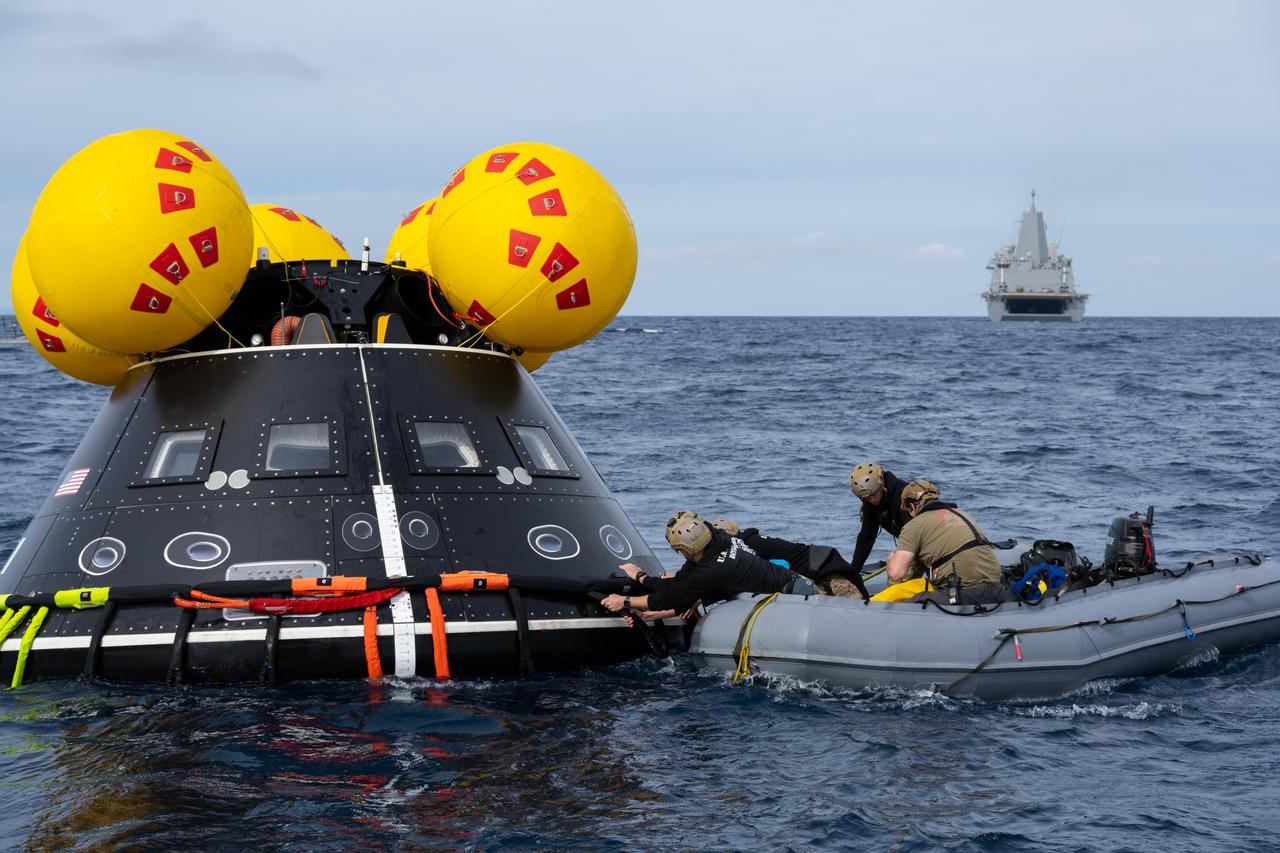
U.S. Navy personnel grab onto a mockup of the Orion spacecraft during a practice procedure of the Underway Recovery Test 11 (URT-11) off the coast of San Diego, California on Sunday, Feb. 25, 2024. URT-11 is the eleventh in a series of Artemis recovery tests, and the first time NASA and its partners put their Artemis II recovery procedures to the test with the astronauts
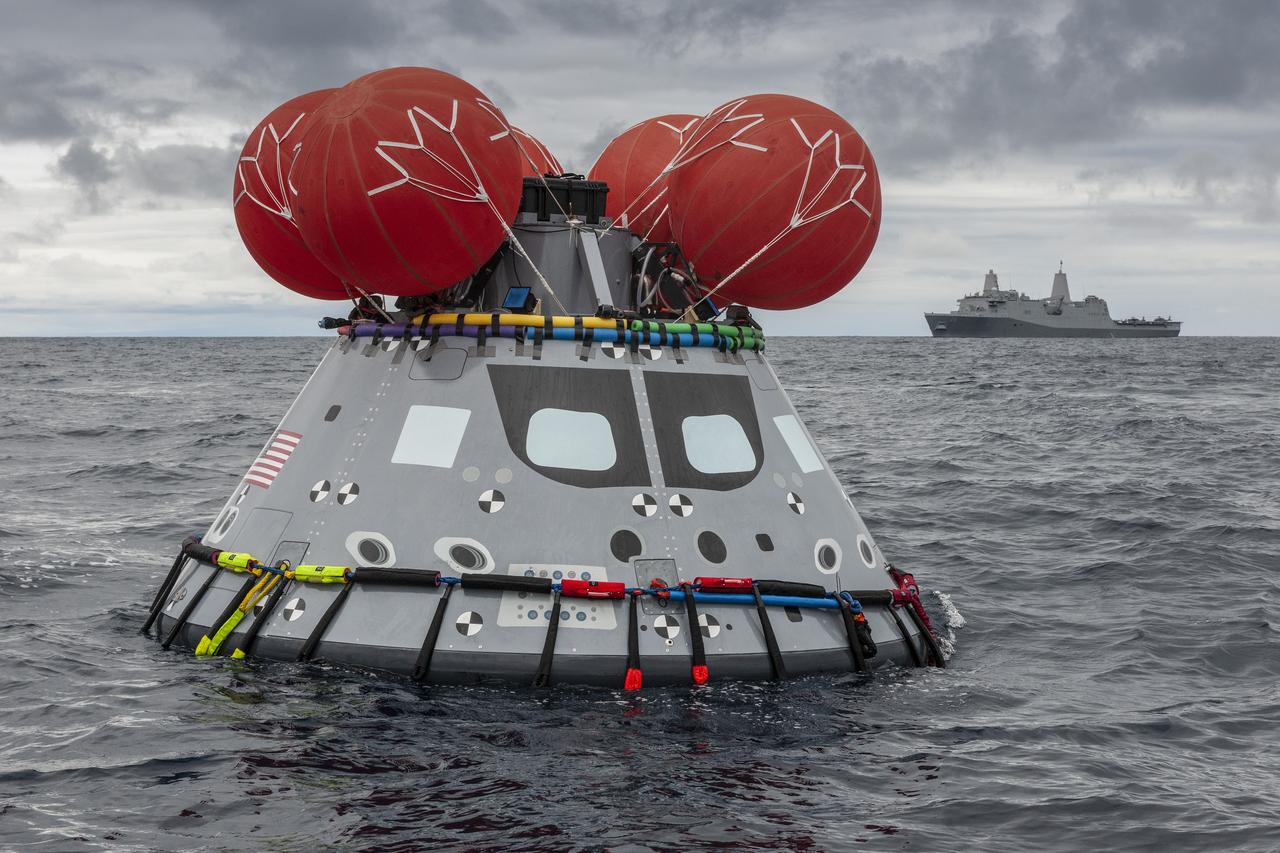
During Underway Recovery Test-8, NASA's Landing and Recovery team from Exploration Ground Systems at Kennedy Space Center performed their first full mission profile test of the recovery procedures for Artemis I aboard the USS John P. Murtha in the Pacific Ocean. Artemis I will be the first integrated flight test of NASA's Deep Space Exploration Systems: the Orion spacecraft, Space Launch System rocket, with the newly upgraded Exploration Ground Systems at Kennedy Space Center.
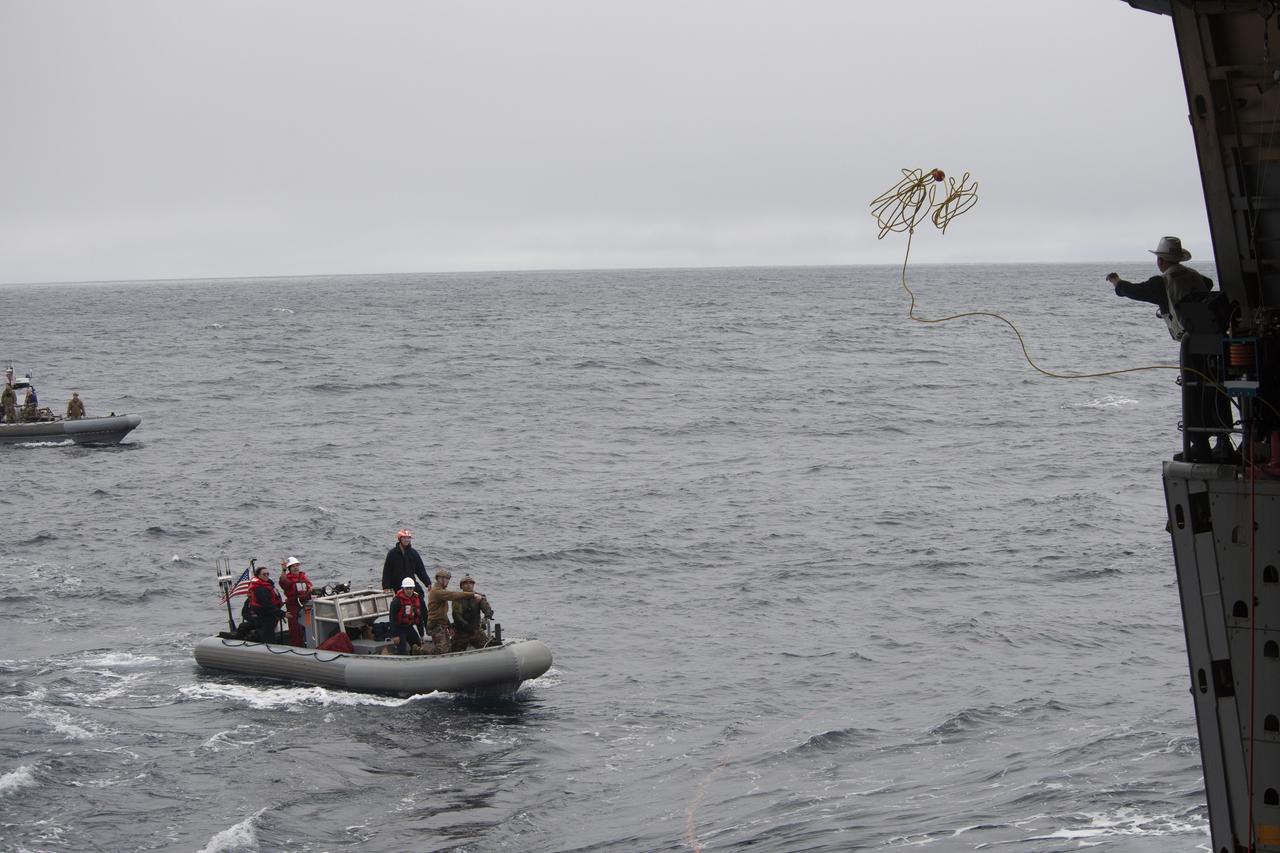
A sailor with the USS John P. Murtha (LPD 26) throws a tending line to a Navy diver assigned to Explosive Ordnance Disposal (EOD) Expeditionary Support Unit (ESU) One during Underway Recovery Test 9 (URT-9). The diver will attach the line to a mock Orion capsule so it can be brought into the well deck of the ship. During the weeklong test, NASA’s Landing and Recovery team is performing their final mission certification ahead of Artemis I.

Four Naval helicopter pilots from Helicopter Sea Combat Squadron (HSC) 23 “Wildcards” pose for a photo in the Pacific Ocean as they prepare to participate in an Artemis II recovery test as part of NASA’s Underway Recovery Test 10 (URT-10). During recovery practice, these four pilots acted as Artemis II astronauts and were placed inside the Orion Crew Module Test Article (CMTA) recovered from the capsule onto an inflatable “front porch” and then lifted via helicopter back to the flight deck of USS John P. Murtha.
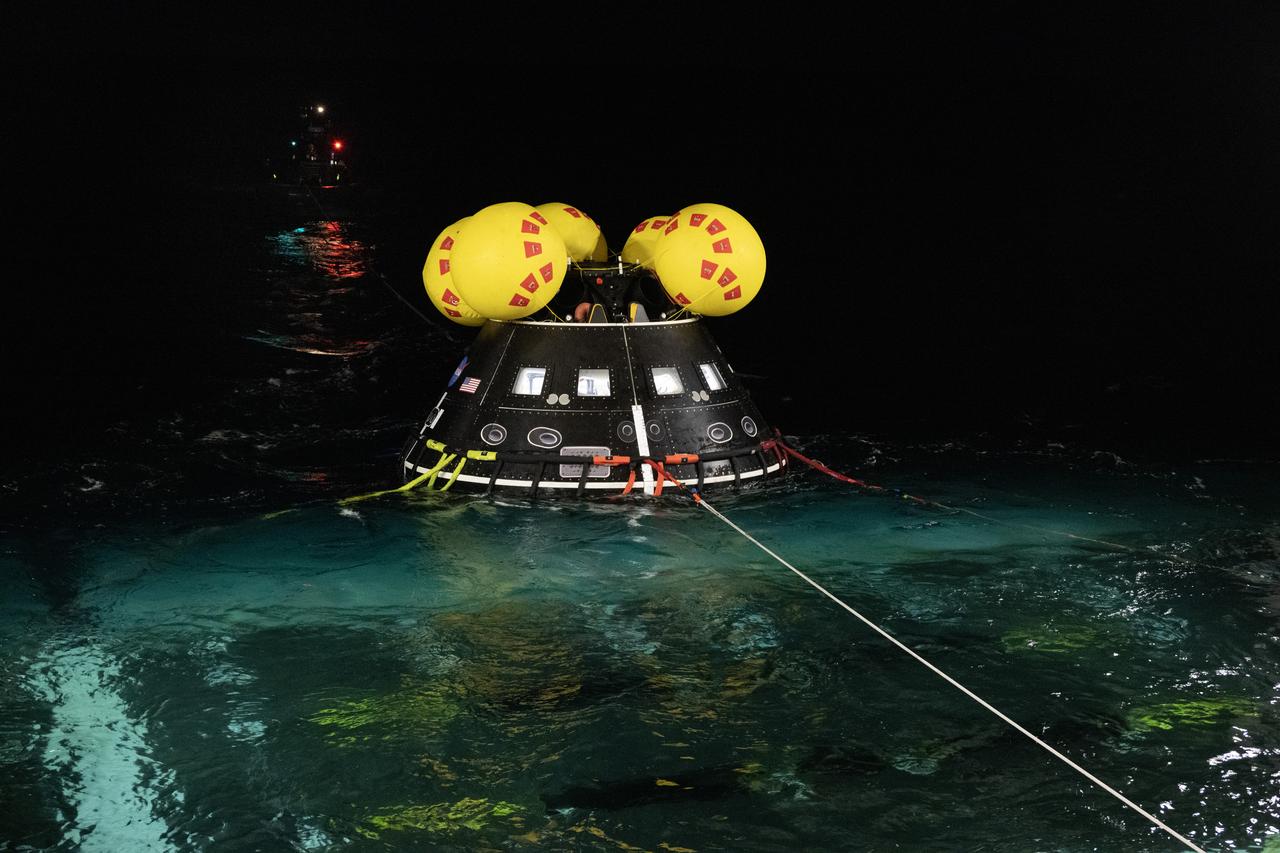
Members of NASA’s Exploration Ground System’s Landing and Recovery team and partners from the Department of Defense aboard the USS San Diego recover the Crew Module Test Article into the ship’s well deck while practicing recovery procedures during Underway Recovery Test 11 (URT-11) off the coast of San Diego on Thursday, Feb. 22, 2024. URT-11 is the eleventh in a series of Artemis recovery tests, and the first time NASA and its partners put their Artemis II recovery procedures to the test with the astronauts.
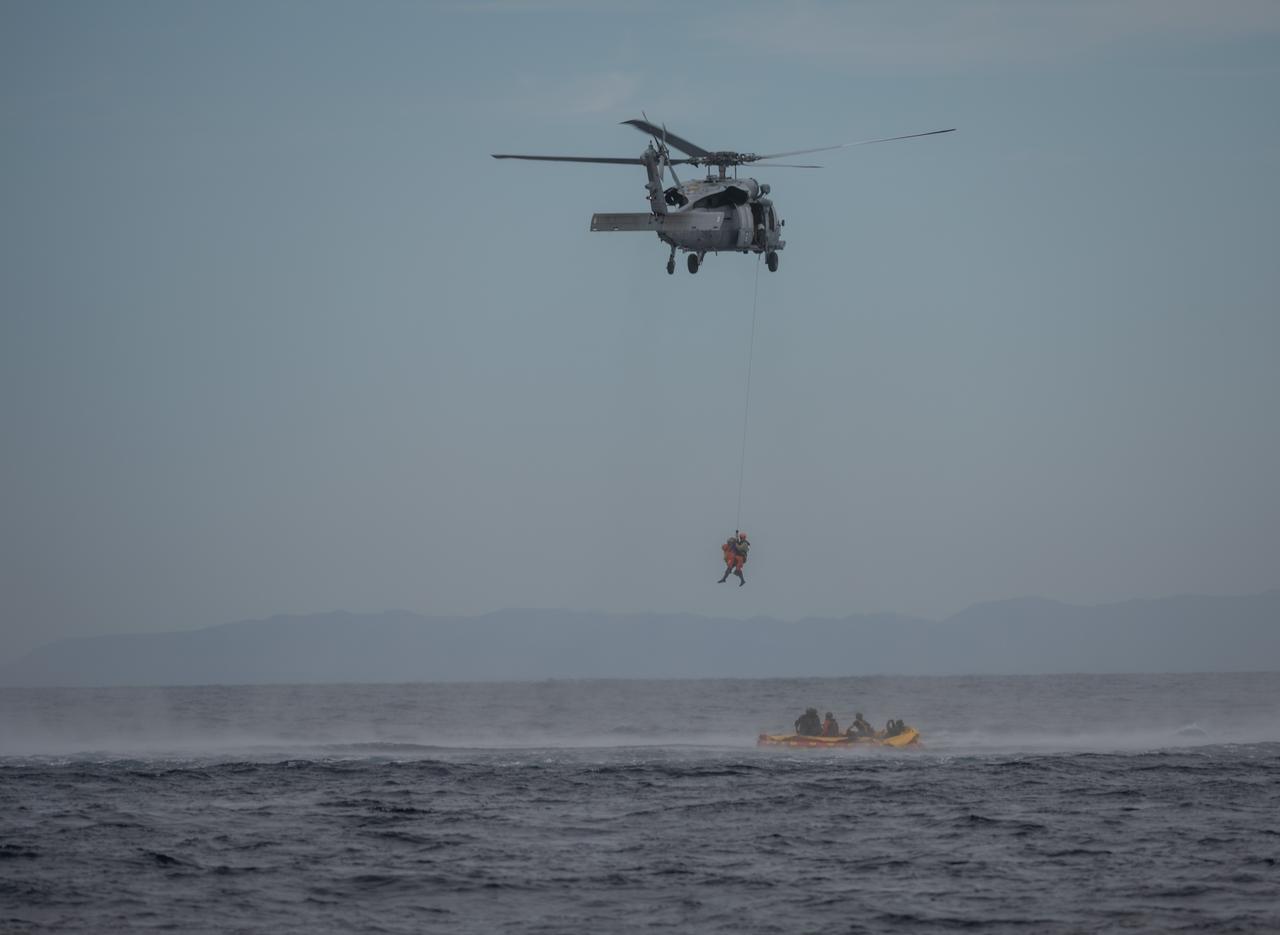
During Underway Recovery Test 11 (URT-11), conducted by NASA’s Exploration Ground System’s Landing and Recovery team and partners from the Department of Defense aboard the USS San Diego, Naval helicopter pilots from Helicopter Sea Combat Squadron (HSC) 23 “Wildcards” lift Artemis II crew members in a basket from an inflatable “front porch” that allows astronauts to be recovered out of a mockup of the Orion spacecraft off the coast of San Diego, California on Sunday, Feb. 25, 2024. URT-11 is the eleventh in a series of Artemis recovery tests, and the first time NASA and its partners put their Artemis II recovery procedures to the test with the astronauts.
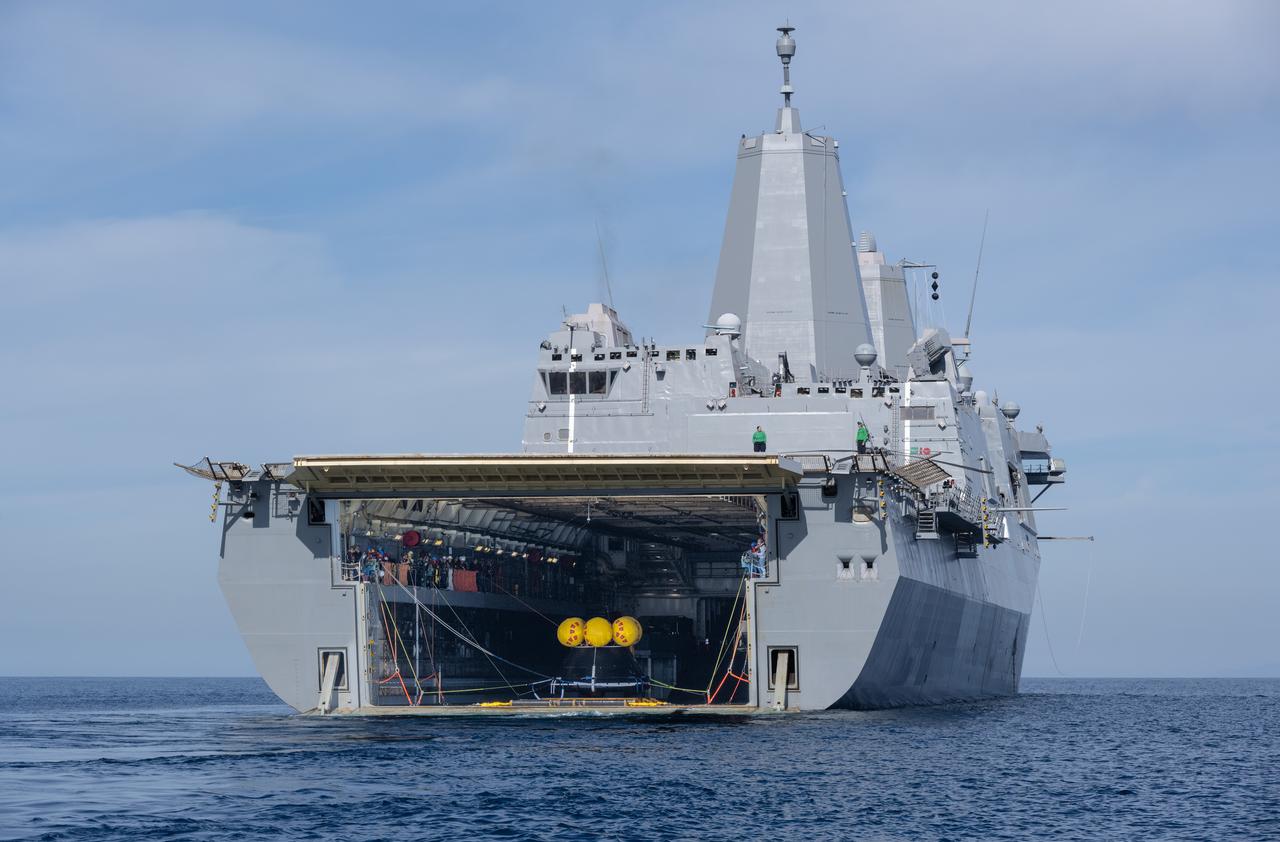
Members of NASA’s Exploration Ground System’s Landing and Recovery team and partners from the Department of Defense aboard the USS San Diego practice recovery procedures using the Crew Module Test Article with NASA Astronaut Candidate Chris Birch; Jenni Gibbons, CSA (Canadian Space Agency) astronaut; and two members of the United States Navy Helicopter Sea Combat Squadron 23, during Underway Recovery Test 11 (URT-11) off the coast of San Diego on Friday, Feb. 23, 2024. URT-11 is the eleventh in a series of Artemis recovery tests, and the first time NASA and its partners put their Artemis II recovery procedures to the test with the astronauts.
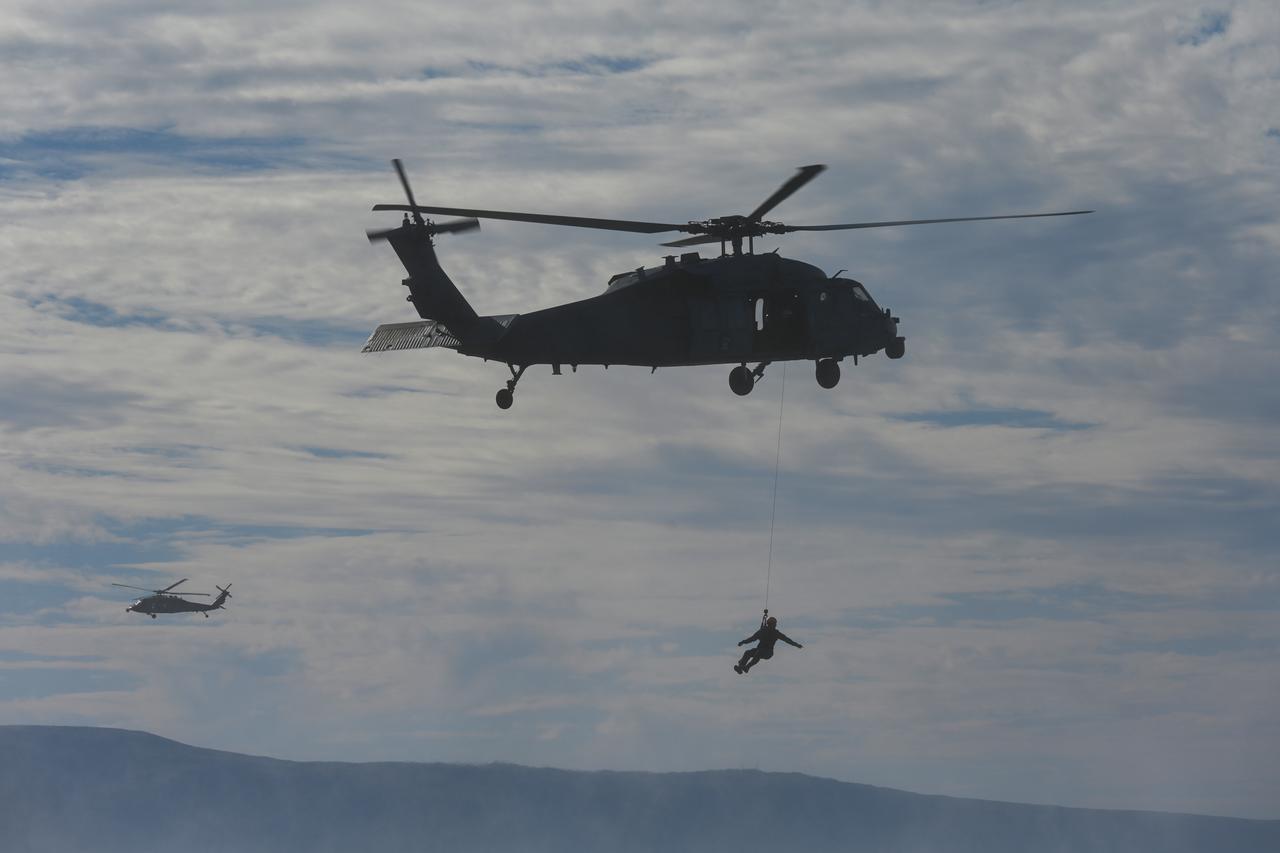
Members of the United States Navy Helicopter Sea Combat Squadron (HSC) 23 "Wildcards" practice recovery procedures of the Crew Module Test Article during Underway Recovery Test 11 (URT-11) with NASA’s Exploration Ground System’s Landing and Recovery team and partners from the Department of Defense aboard the USS San Diego off the coast of San Diego on Friday, Feb. 23, 2024. URT-11 is the eleventh in a series of Artemis recovery tests, and the first time NASA and its partners put their Artemis II recovery procedures to the test with the astronauts.
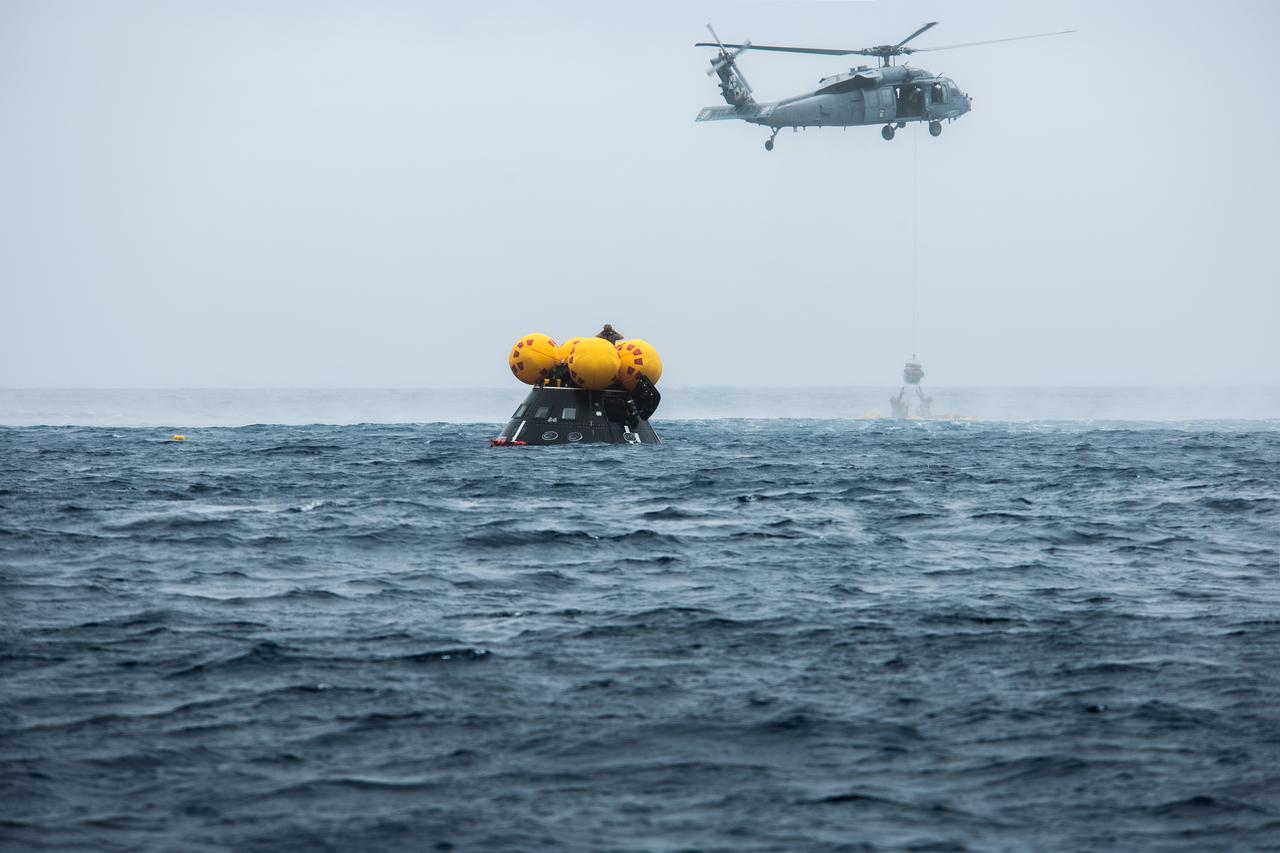
NASA, Navy, and Air Force personnel practice Artemis recovery procedures in the Pacific Ocean as part of Underway Recovery Test-10 off the coast of San Diego. In this photo Naval helicopter pilots from Helicopter Sea Combat Squadron (HSC) 23 “Wildcards” lift a pilot in a basket from an inflatable “front porch” that allows astronauts to be recovered out of the Orion spacecraft. Navy Divers from Explosive Ordnance Disposal (EOD) Expeditionary Support Unit 1 are the first to reach the spacecraft after splashdown and will assist the astronauts in getting inside the helicopter baskets prior to be flown back to the recovery ship.
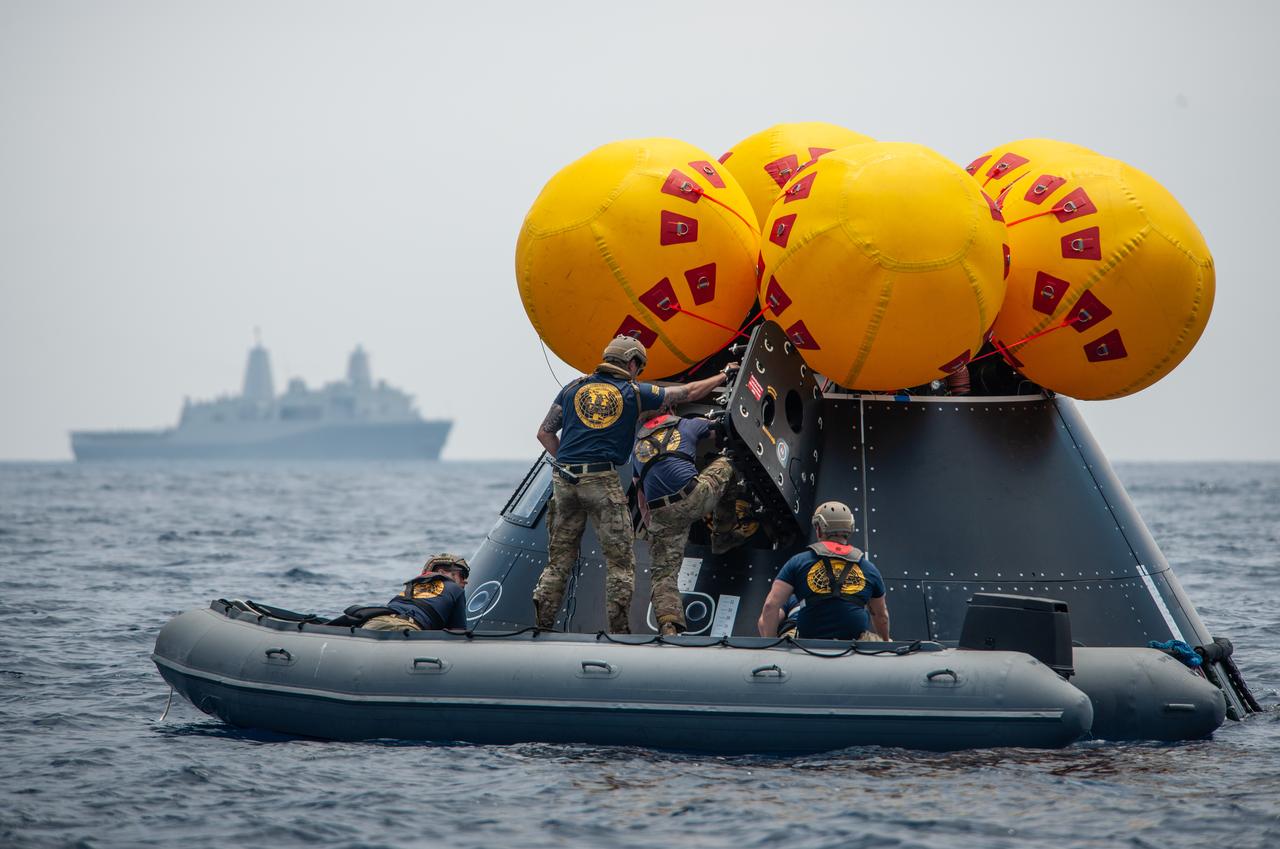
NASA, Navy, and Air Force personnel practice Artemis recovery procedures in the Pacific Ocean as part of Underway Recovery Test-10 off the coast of San Diego. In this photo Navy divers are seen entering the Orion Crew Module Test Article to prepare to practice recovering astronauts out of the spacecraft and onto an inflatable “front porch” where the crew will be picked up with helicopters and lifted up via helicopter back to the recovery vessel.
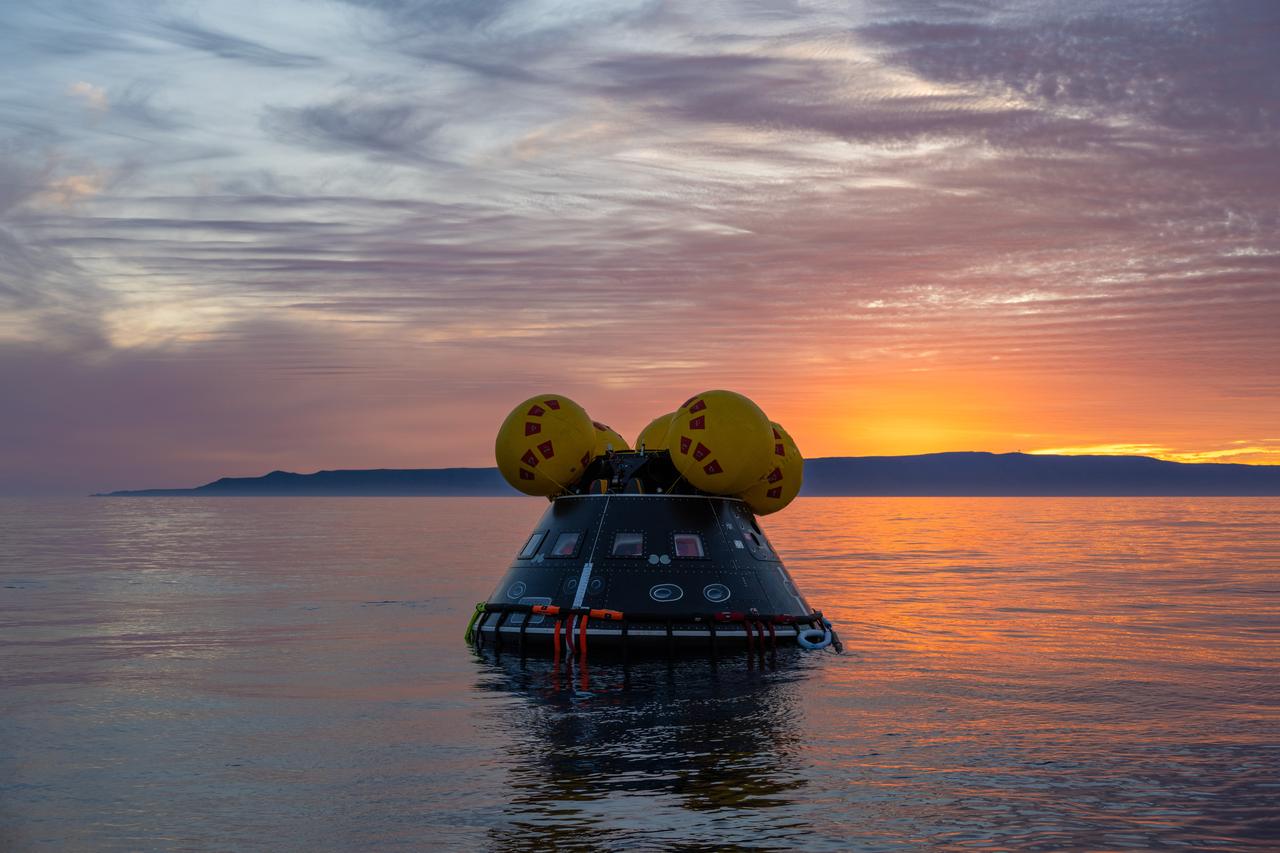
During sunrise over the Pacific Ocean, members of NASA’s Exploration Ground System’s Landing and Recovery team and partners from the Department of Defense aboard the USS San Diego practice recovery procedures using the Crew Module Test Article during Underway Recovery Test 11 (URT-11) off the coast of San Diego on Friday, Feb. 23, 2024. URT-11 is the eleventh in a series of Artemis recovery tests, and the first time NASA and its partners put their Artemis II recovery procedures to the test with the astronauts.
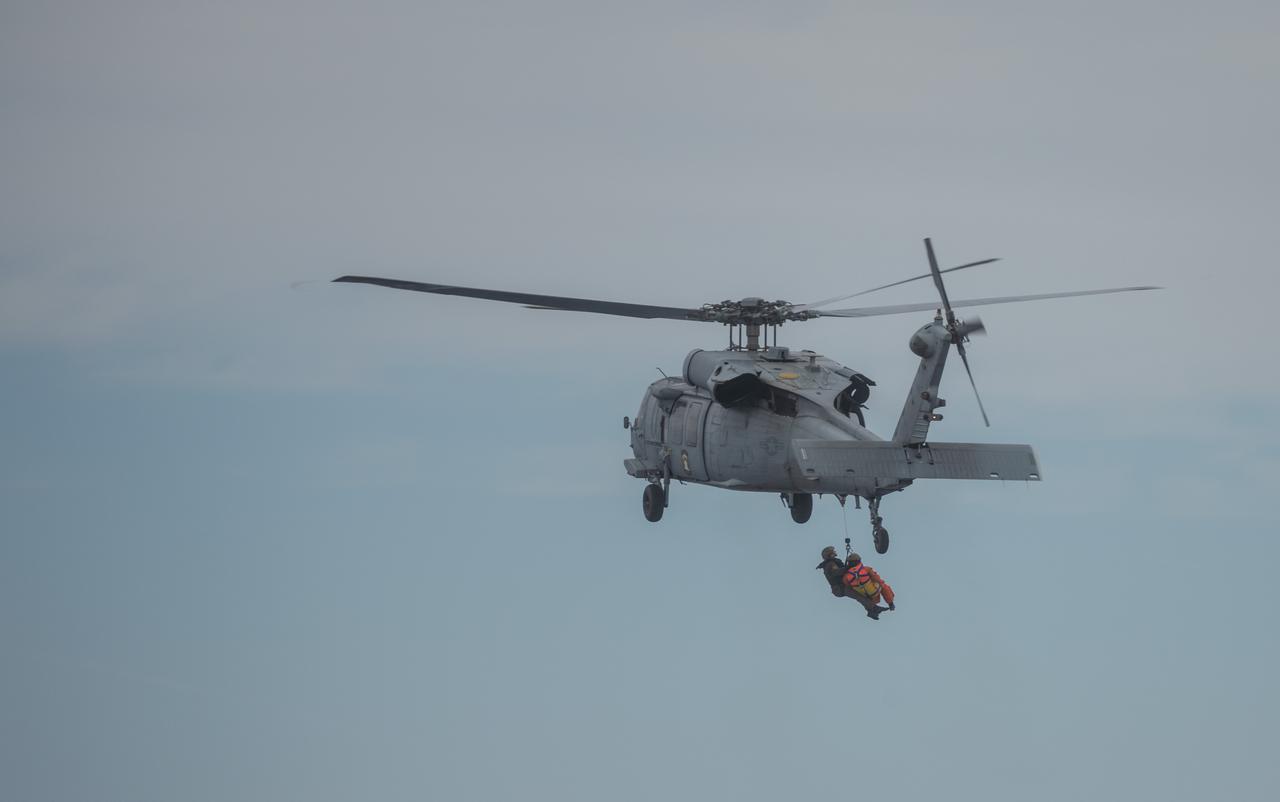
During Underway Recovery Test 11 (URT-11), conducted by NASA’s Exploration Ground System’s Landing and Recovery team and partners from the Department of Defense aboard the USS San Diego, Naval helicopter pilots from Helicopter Sea Combat Squadron (HSC) 23 “Wildcards” lift Artemis II crew members in a basket from an inflatable “front porch” that allows astronauts to be recovered out of a mockup of the Orion spacecraft off the coast of San Diego, California on Sunday, Feb. 25, 2024. URT-11 is the eleventh in a series of Artemis recovery tests, and the first time NASA and its partners put their Artemis II recovery procedures to the test with the astronauts.
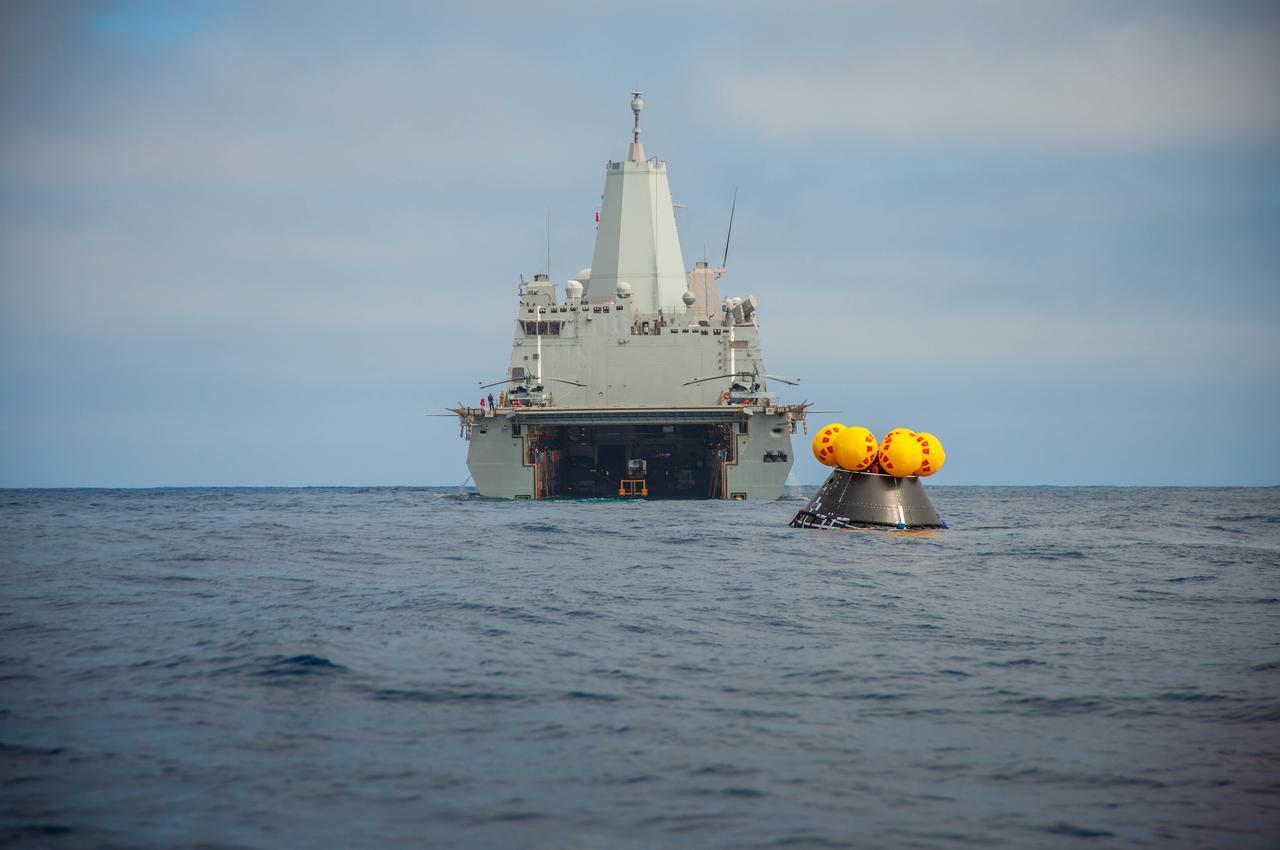
The Crew Module Test Article (CMTA) is seen in the waters of the Pacific Ocean during NASA’s Underway Recovery Test 10 (URT-10). The CMTA is a full-scale mockup of the Orion spacecraft and is used by NASA and its Department of Defense partners to practice recovery procedures for crewed Artemis missions. URT-10 is the first test specifically in support of the Artemis II mission and allowed the team to practice what it will be like to recover astronauts and get them back to the recovery ship safely.
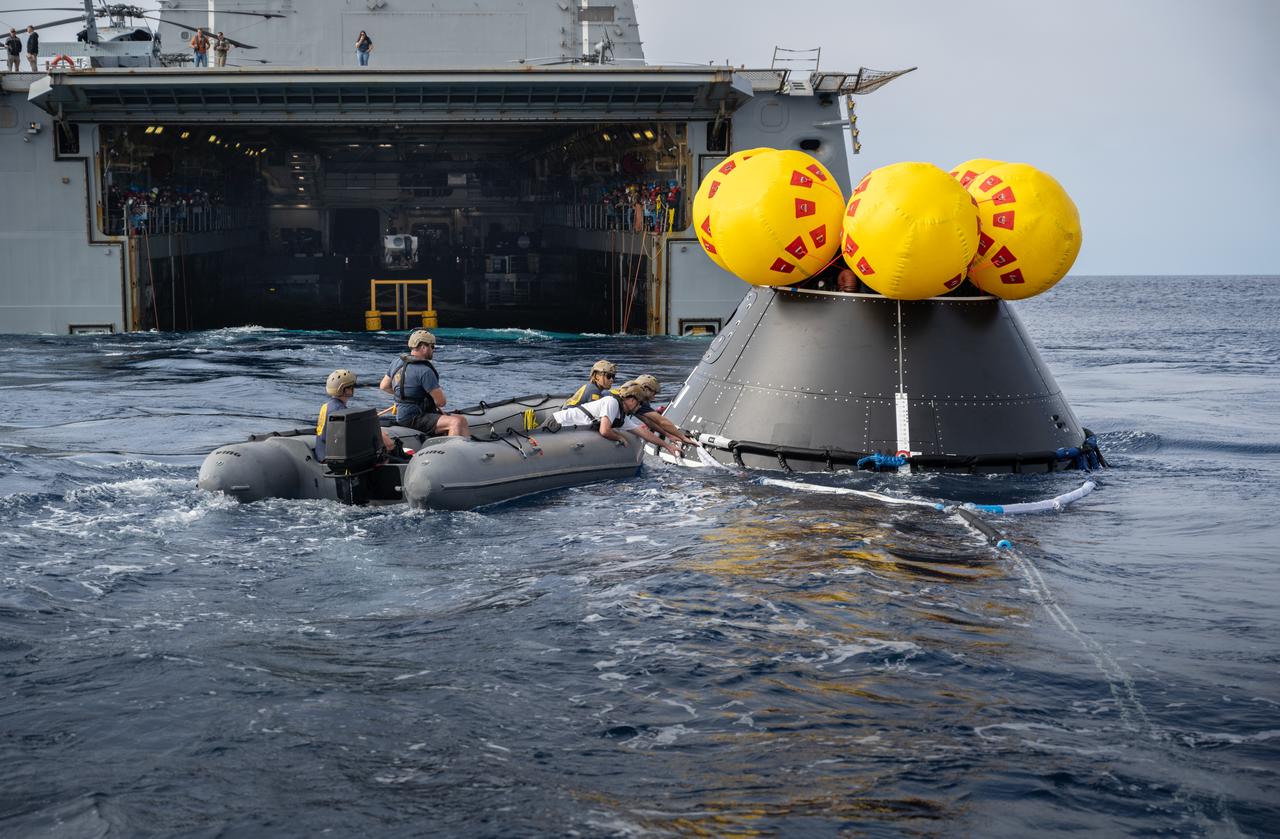
NASA, Navy, and Air Force personnel practice Artemis recovery procedures in the Pacific Ocean as part of Underway Recovery Test 10 (URT-10) off the coast of San Diego. In this photo, Navy divers are seen surrounding the Orion Crew Module Test Article (CMTA) and preparing to recover it inside the recovery ship while simulated astronauts are picked up on an inflatable “front porch” by Naval helicopter pilots from Helicopter Sea Combat Squadron (HSC) 23 “Wildcards” and flown back to the USS John P. Murtha.
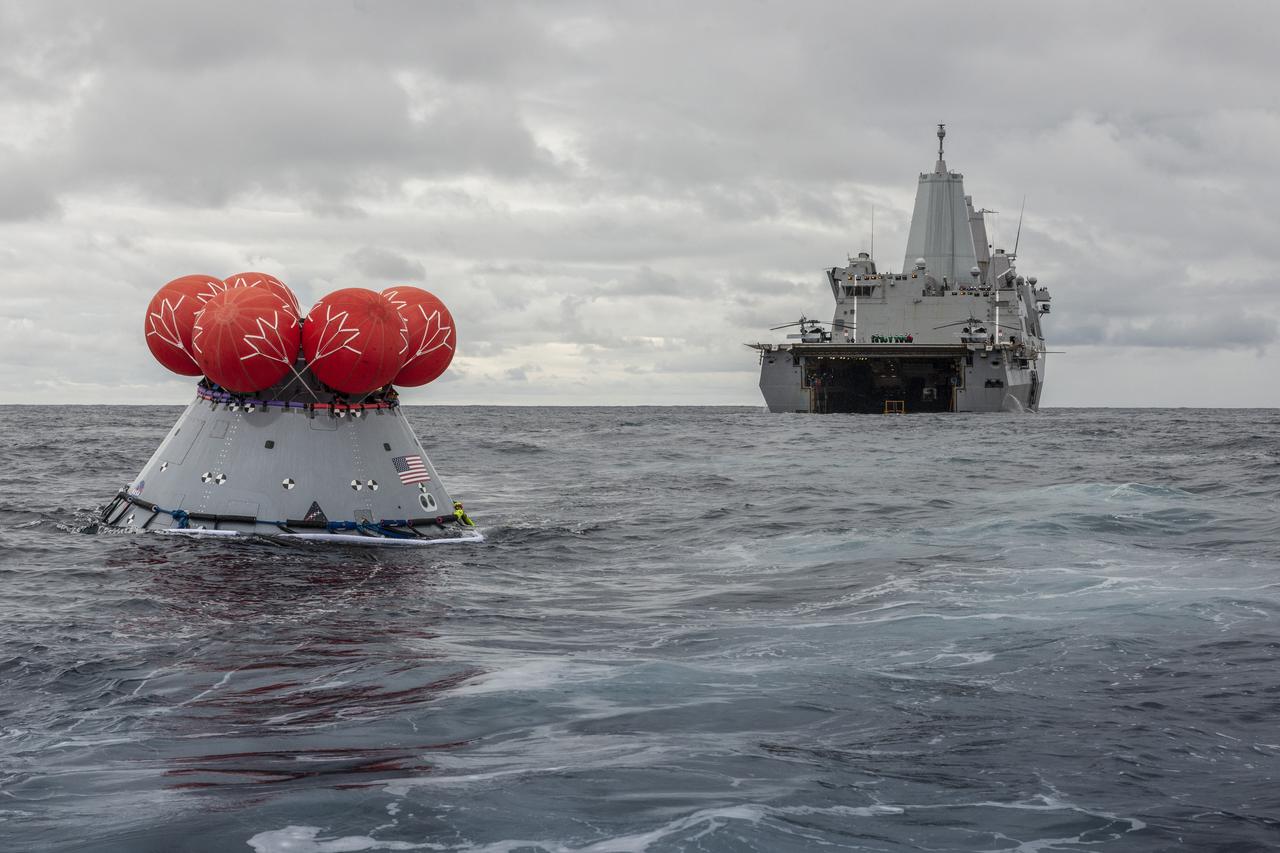
During Underway Recovery Test-8, NASA's Landing and Recovery team from Exploration Ground Systems at Kennedy Space Center performed their first full mission profile test of the recovery procedures for Artemis I aboard the USS John P. Murtha in the Pacific Ocean. Artemis I will be the first integrated flight test of NASA's Deep Space Exploration Systems: the Orion spacecraft, Space Launch System rocket, with the newly upgraded Exploration Ground Systems at Kennedy Space Center.
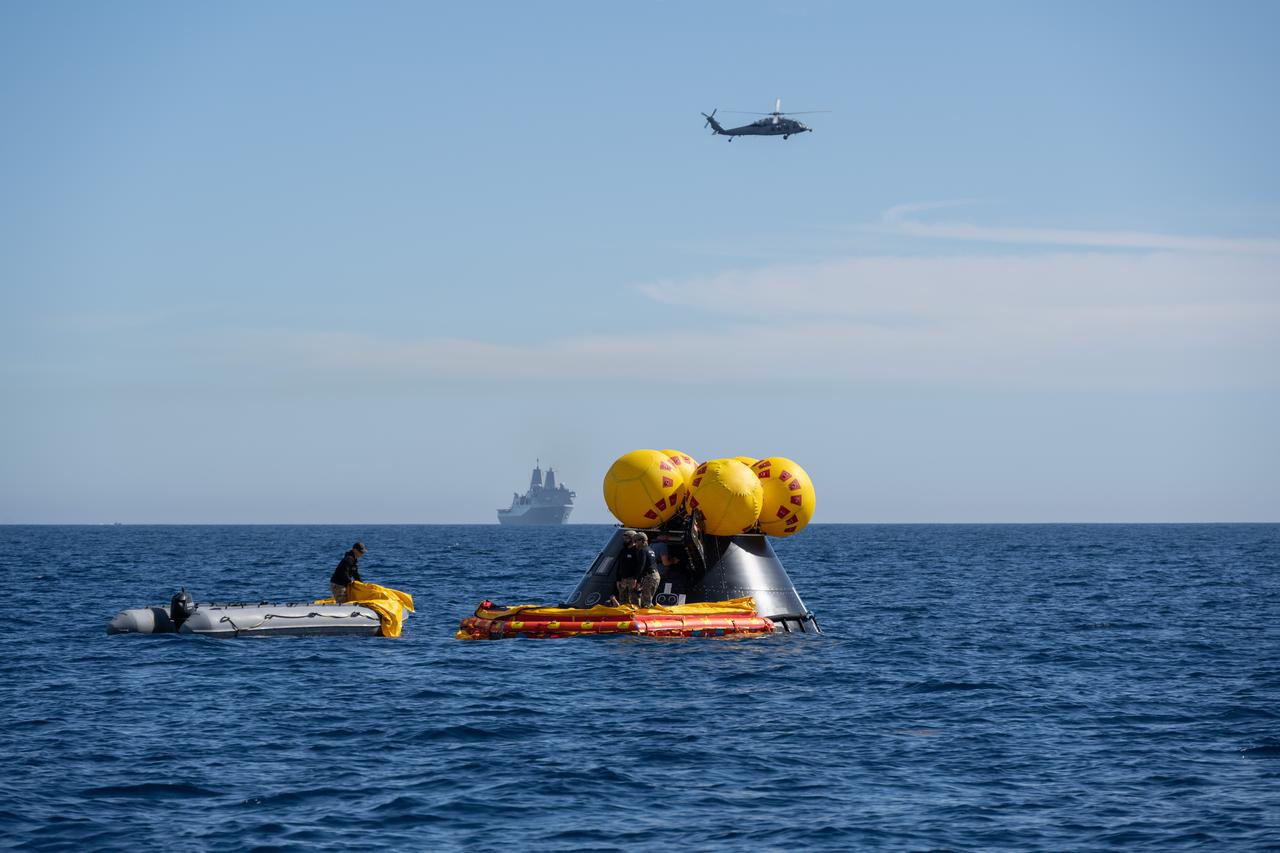
Members of NASA’s Exploration Ground System’s Landing and Recovery team and partners from the Department of Defense aboard the USS San Diego practice recovery procedures using the Crew Module Test Article with NASA Astronaut Candidate Chris Birch; Jenni Gibbons, CSA (Canadian Space Agency) astronaut; and two members of the United States Navy Helicopter Sea Combat Squadron 23, during Underway Recovery Test 11 (URT-11) off the coast of San Diego on Friday, Feb. 23, 2024. URT-11 is the eleventh in a series of Artemis recovery tests, and the first time NASA and its partners put their Artemis II recovery procedures to the test with the astronauts.
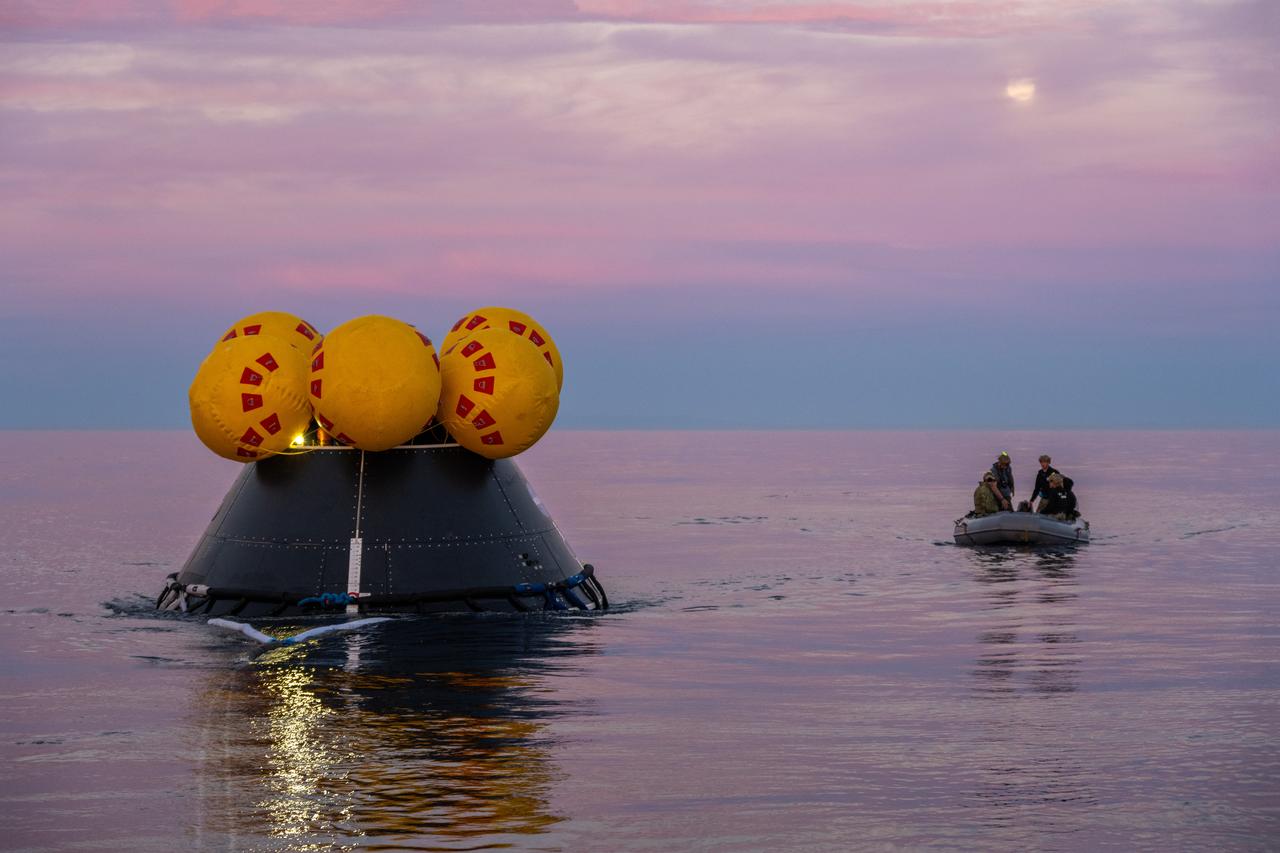
During sunrise over the Pacific Ocean, members of NASA’s Exploration Ground System’s Landing and Recovery team and partners from the Department of Defense aboard the USS San Diego practice recovery procedures using the Crew Module Test Article during Underway Recovery Test 11 (URT-11) off the coast of San Diego on Friday, Feb. 23, 2024. URT-11 is the eleventh in a series of Artemis recovery tests, and the first time NASA and its partners put their Artemis II recovery procedures to the test with the astronauts.
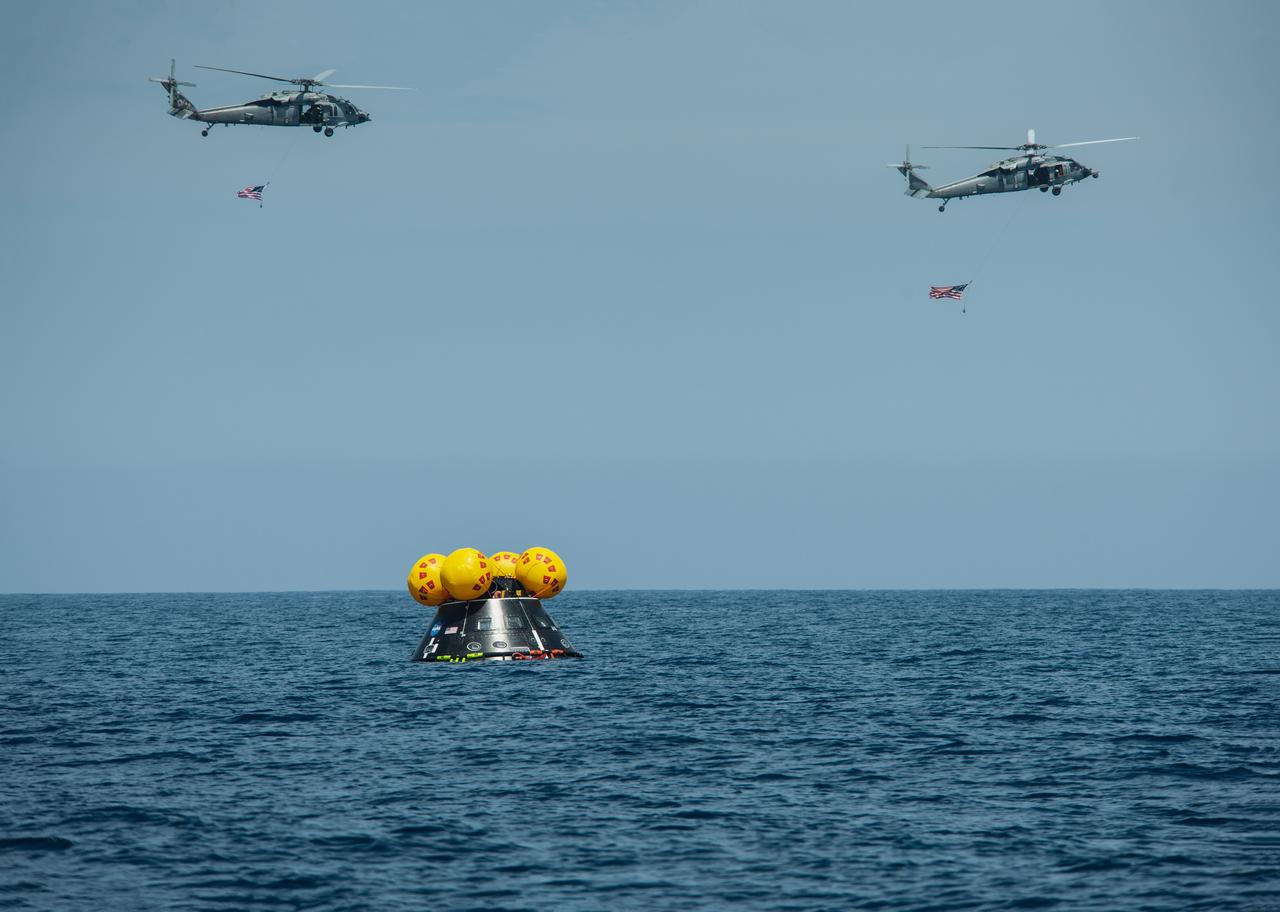
The Crew Module Test Article (CMTA) is seen in the waters of the Pacific Ocean during NASA’s Underway Recovery Test 10 (URT-10). The CMTA is a full-scale mockup of the Orion spacecraft and is used by NASA and its Department of Defense partners to practice recovery procedures for crewed Artemis missions. URT-10 is the first test specifically in support of the Artemis II mission and allowed the team to practice what it will be like to recover astronauts and get them back to the recovery ship safely. In this photo, Navy divers from Explosive Ordnance Disposal (EOD) Expeditionary Support Unit 1 secure the CMTA and prepare it to be recovered back inside USS John P. Murtha.
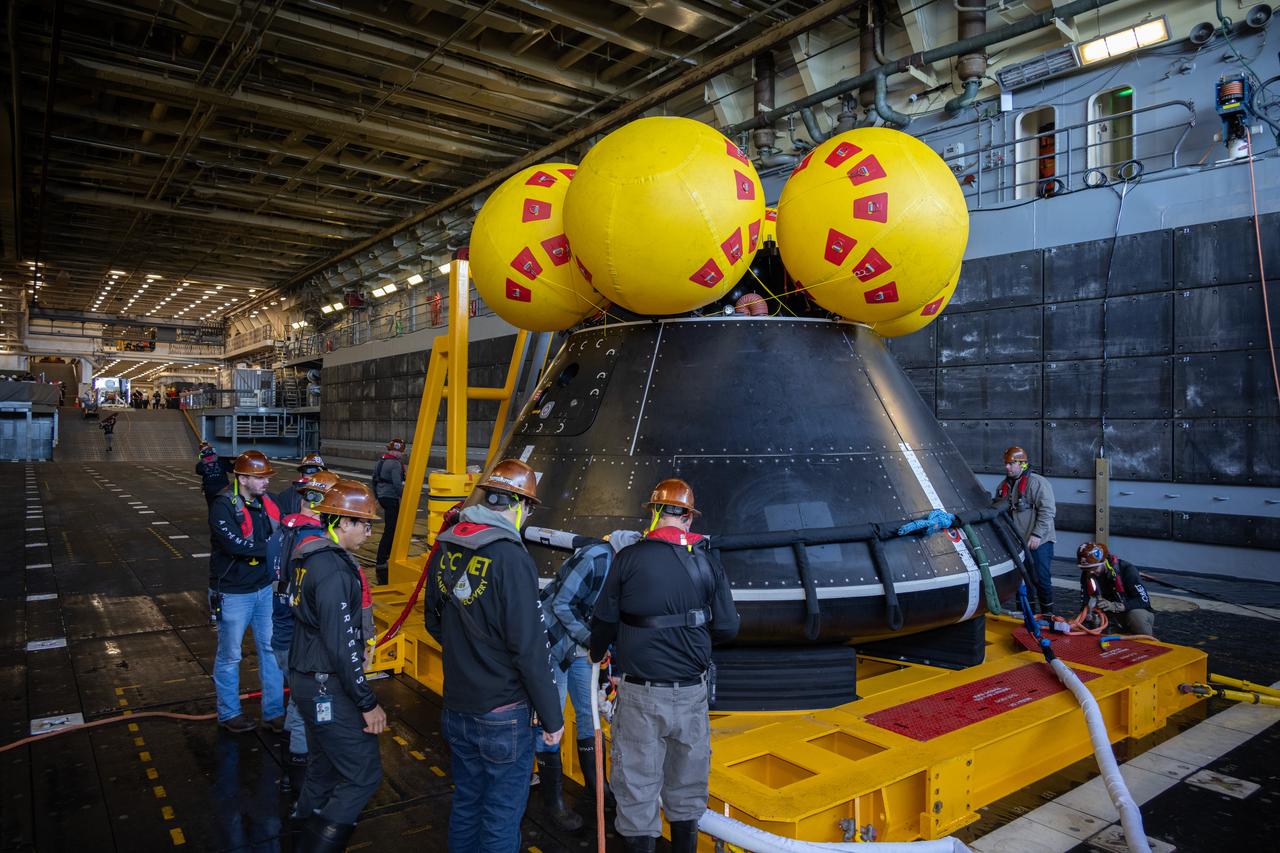
Members of NASA’s Exploration Ground System’s Landing and Recovery team and partners from the Department of Defense aboard the USS San Diego secure the Crew Module Test Article on its stand in the ship’s well deck while practicing recovery procedures during Underway Recovery Test 11 (URT-11) off the coast of San Diego on Thursday, Feb. 22, 2024. URT-11 is the eleventh in a series of Artemis recovery tests, and the first time NASA and its partners put their Artemis II recovery procedures to the test with the astronauts.
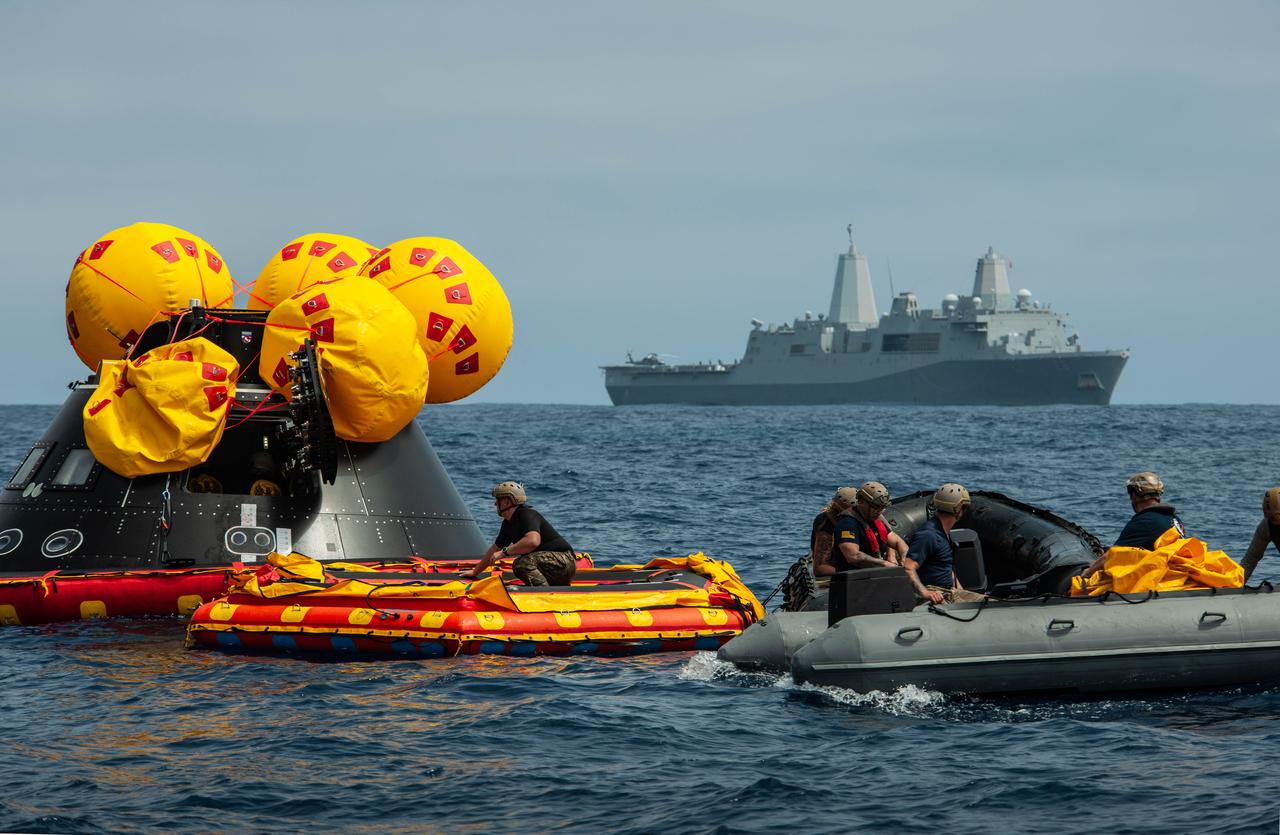
Navy divers from Explosive Ordnance Disposal (EOD) Expeditionary Support Unit 1 work to secure the Orion Crew Module Test Article (CMTA) in the Pacific Ocean as part of NASA’s Underway Recovery Test 10 (URT-10). The divers are trained in open water and small boat procedures and will be the team to help Artemis astronauts exit the Orion spacecraft and make it safely to the recovery ship after splashdown in addition to preparing the spacecraft to be transported back inside the recovery ship.
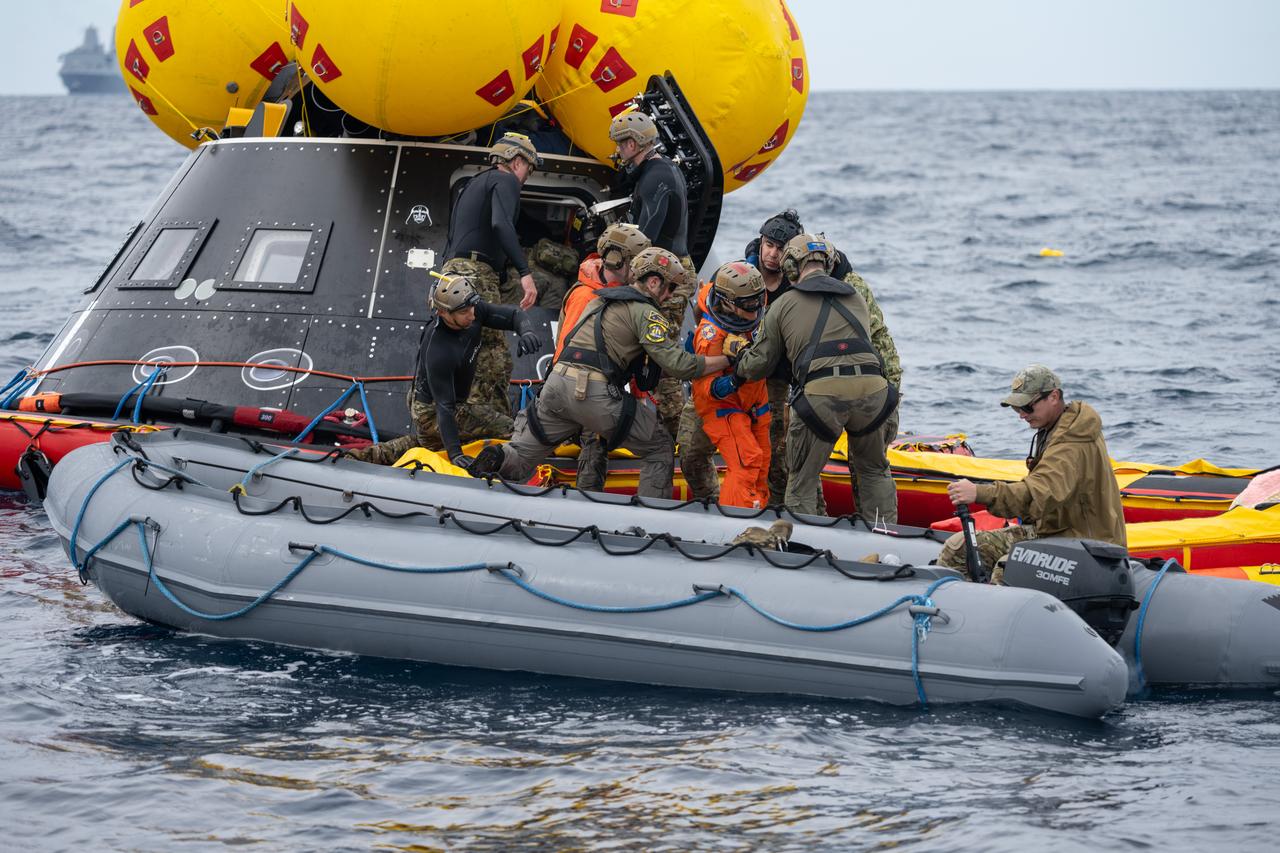
NASA Artemis II crew members are assisted by U.S. Navy personnel as they exit a mockup of the Orion spacecraft in the Pacific Ocean during Underway Recovery Test 11 (URT-11) on Sunday, Feb. 25, 2024. URT-11 is the eleventh in a series of Artemis recovery tests, and the first time NASA and its partners put their Artemis II recovery procedures to the test with the astronauts.
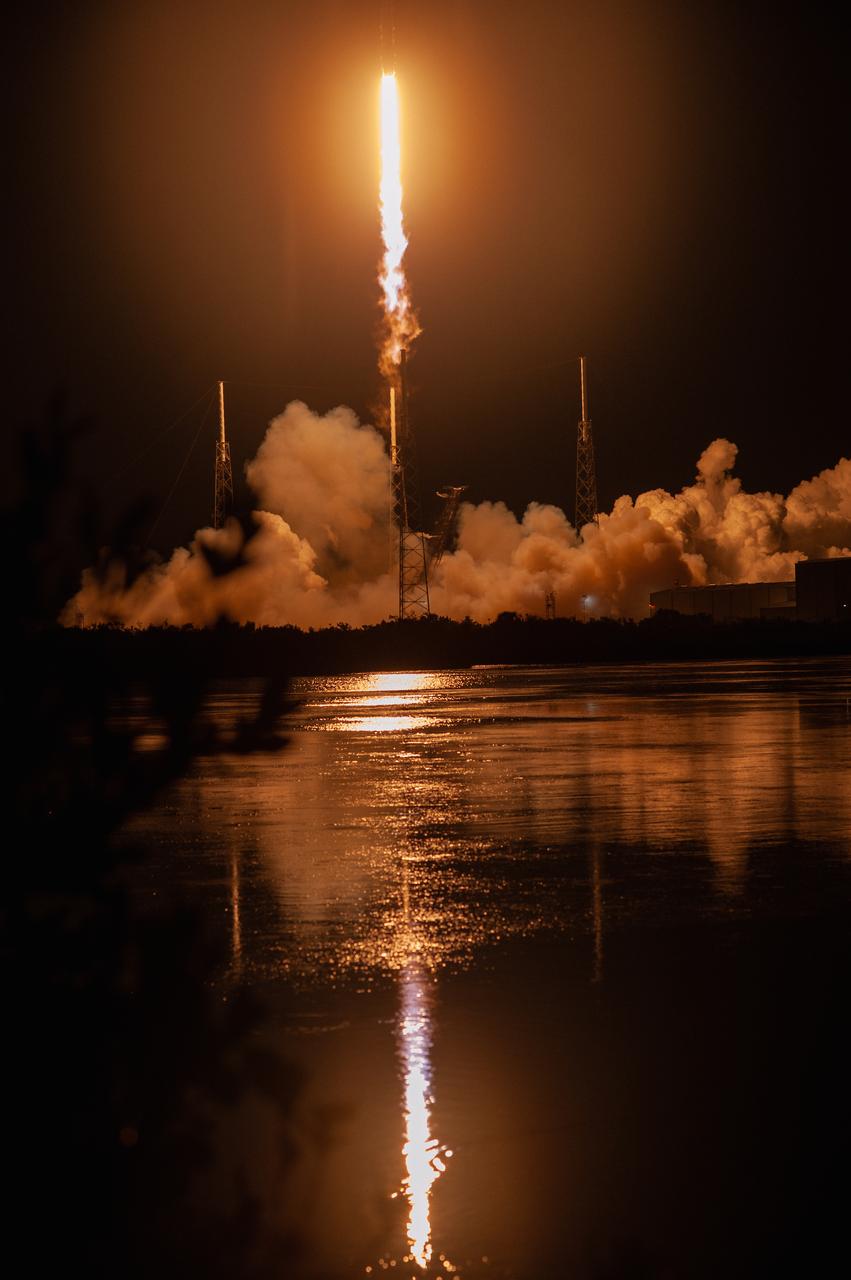
The SpaceX Falcon 9 rocket with the Dragon cargo module lifts off Space Launch Complex 40 on Cape Canaveral Air Force Station in Florida in the early morning May 4, 2019. Liftoff was at 2:48 a.m. EDT. This is SpaceX’s 17th Commercial Resupply Services (CRS-17) mission for NASA to the International Space Station. The Dragon cargo module will deliver about 5,500 pounds of science and research, crew supplies and vehicle hardware to the orbital laboratory and its crew.
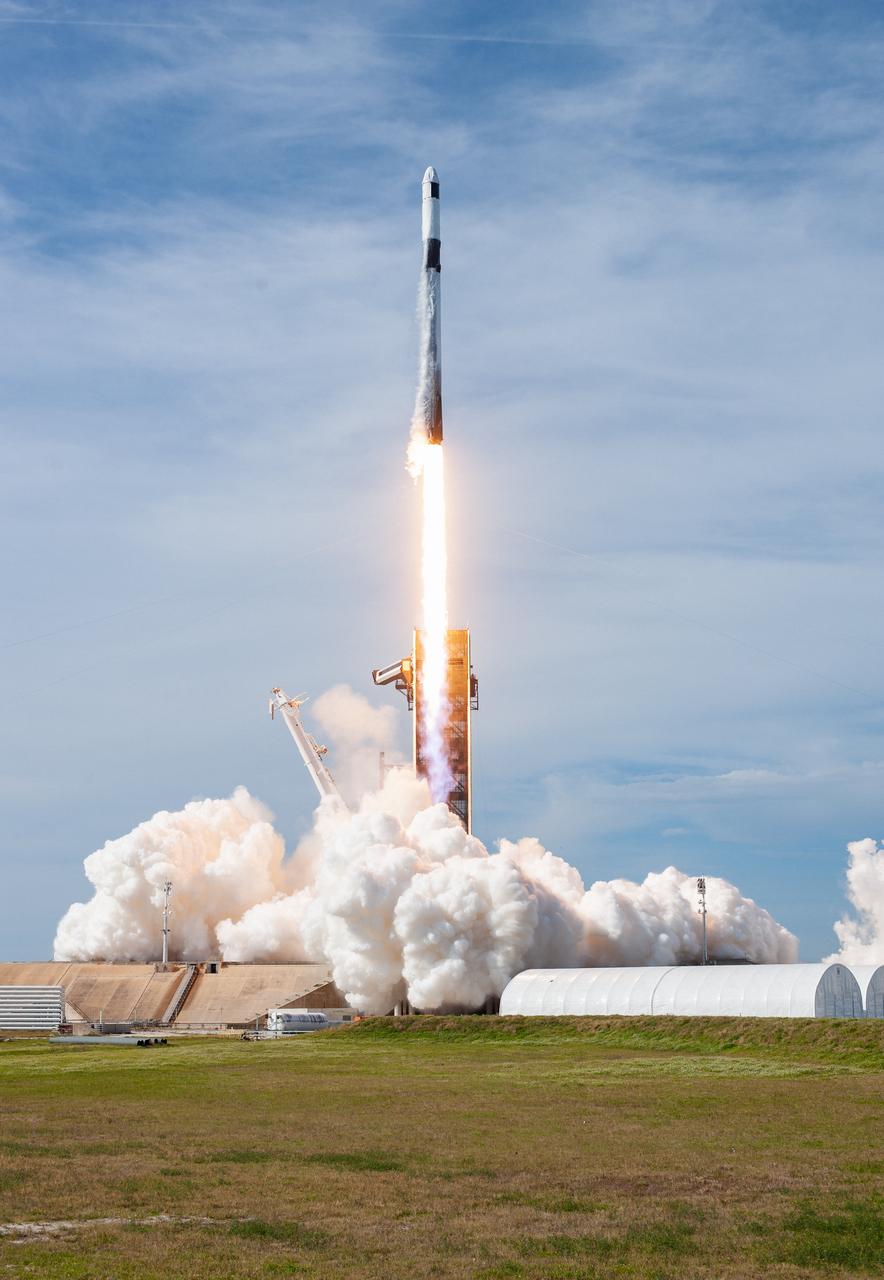
A SpaceX Falcon 9 rocket lifts off from Launch Complex 39A at Kennedy Space Center in Florida at 11:17 a.m. EST on Dec. 6, 2020, carrying the uncrewed cargo Dragon spacecraft on its journey to the International Space Station for NASA and SpaceX’s 21st Commercial Resupply Services (CRS-21) mission. Dragon will deliver more than 6,400 pounds of science investigations and cargo to the orbiting laboratory. The mission marks the first launch for SpaceX under NASA’s CRS-2 contract.
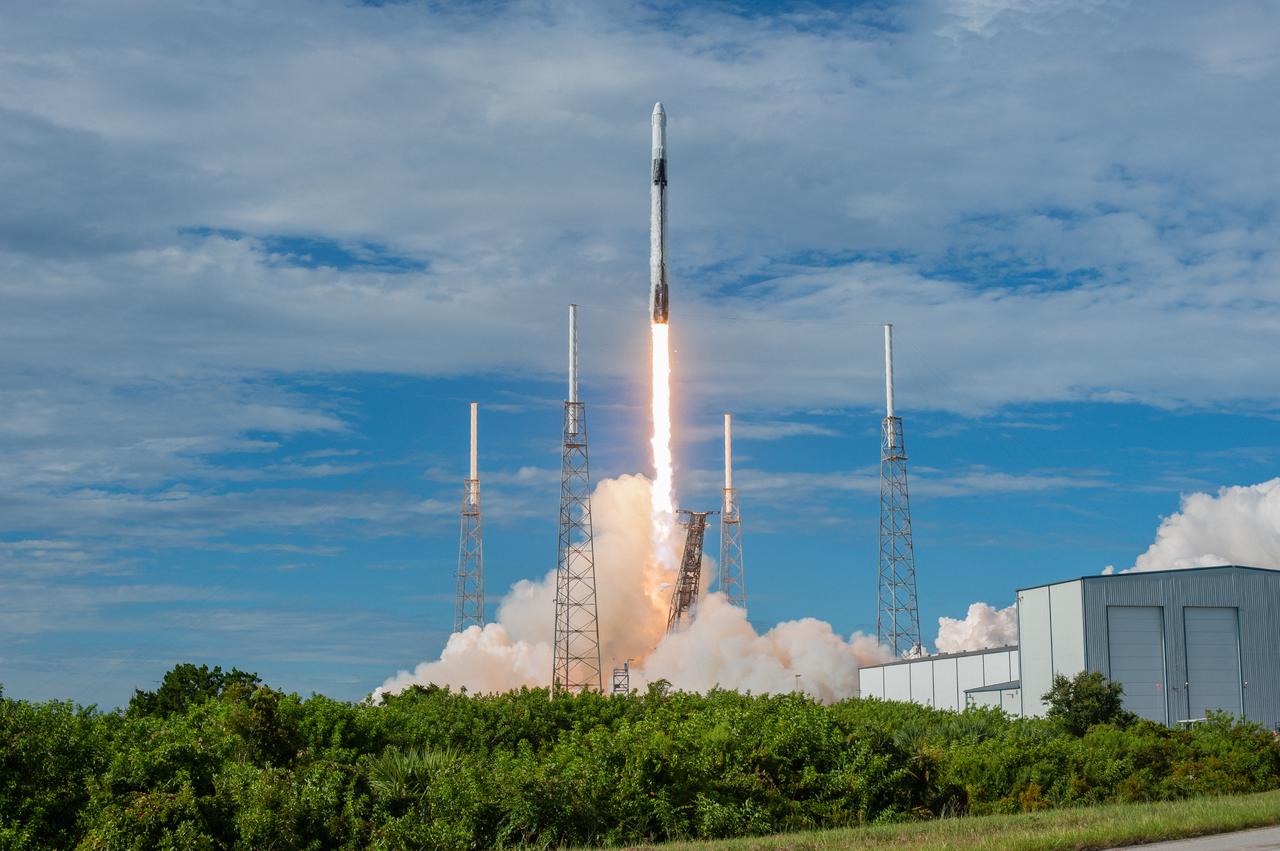
A SpaceX Falcon 9 rocket lifts off from Space Launch Complex 40 at Cape Canaveral Air Force Station in Florida at 6:01 p.m. EDT on July 25, 2019, carrying the Dragon spacecraft on the company's 18th Commercial Resupply Services (CRS-18) mission to the International Space Station. The uncrewed Dragon spacecraft will deliver about 5,000 pounds of science and research, crew supplies and vehicle hardware to the orbiting laboratory.
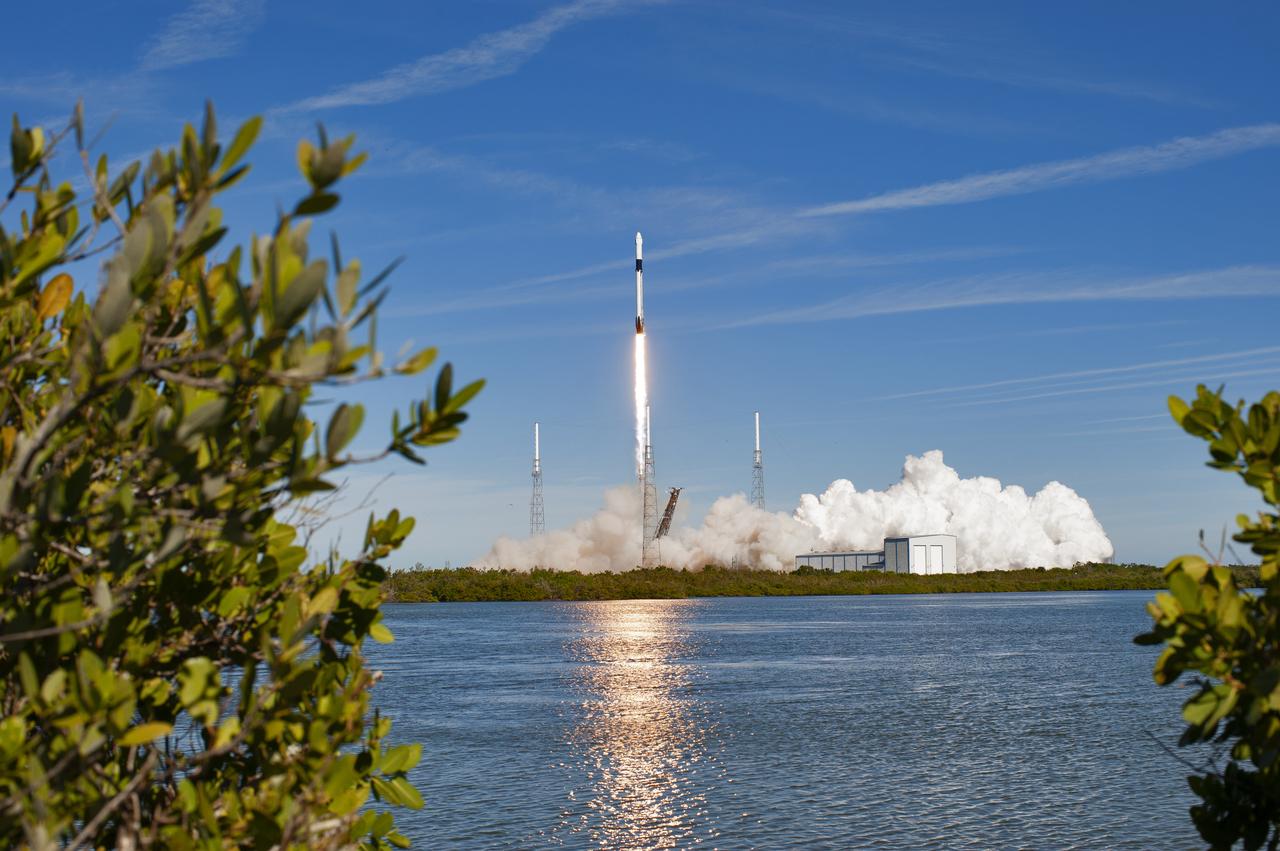
The two-stage Falcon 9 launch vehicle lifts off Space Launch Complex 40 at Cape Canaveral Air Force Station carrying the SpaceX’s Dragon resupply spacecraft to the International Space Station. Liftoff was at 1:16 p.m. EST, Dec. 5, 2018. On its 16th commercial resupply services mission to the space station, Dragon will deliver several science investigations to the space station, including the Global Ecosystem Dynamics Investigation lidar (GEDI). GEDI will provide high-quality laser ranging observations of the Earth’s forests and topography required to advance the understanding of important carbon and water cycling processes, biodiversity and habitat.
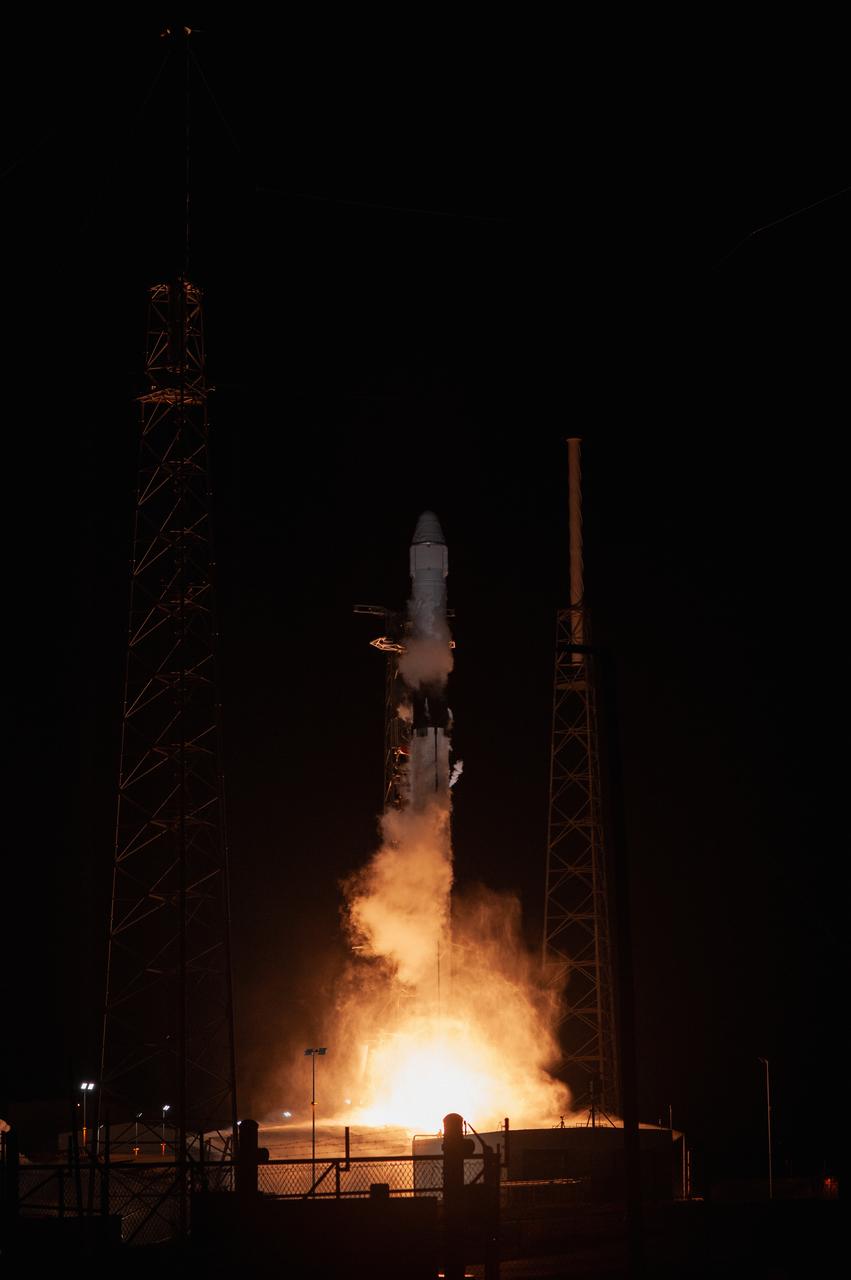
The SpaceX Falcon 9 rocket with the Dragon cargo module lifts off Space Launch Complex 40 on Cape Canaveral Air Force Station in Florida in the early morning May 4, 2019. Liftoff was at 2:48 a.m. EDT. This is SpaceX’s 17th Commercial Resupply Services (CRS-17) mission for NASA to the International Space Station. The Dragon cargo module will deliver about 5,500 pounds of science and research, crew supplies and vehicle hardware to the orbital laboratory and its crew.
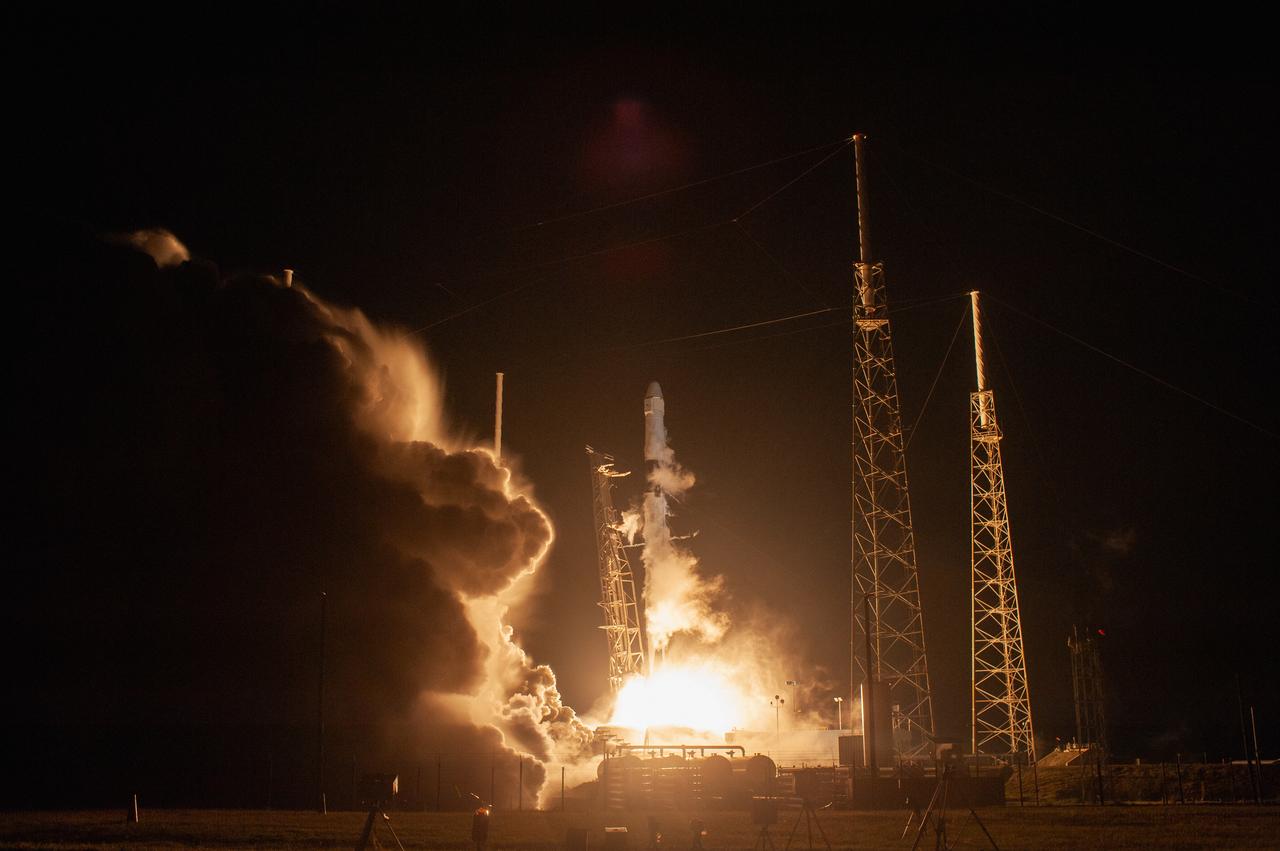
The SpaceX Falcon 9 rocket with the Dragon cargo module lifts off Space Launch Complex 40 on Cape Canaveral Air Force Station in Florida in the early morning May 4, 2019. Liftoff was at 2:48 a.m. EDT. This is SpaceX’s 17th Commercial Resupply Services (CRS-17) mission for NASA to the International Space Station. The Dragon cargo module will deliver about 5,500 pounds of science and research, crew supplies and vehicle hardware to the orbital laboratory and its crew.
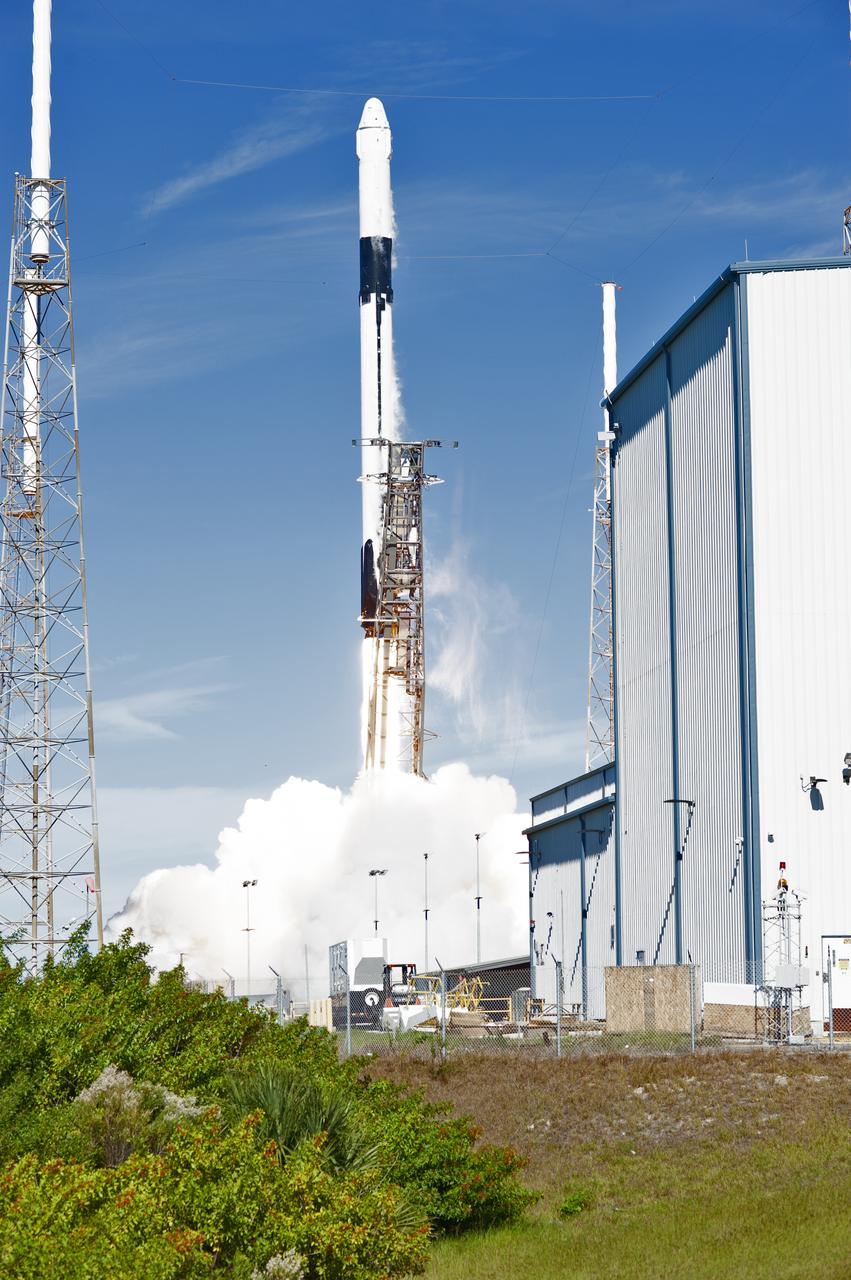
The two-stage Falcon 9 launch vehicle lifts off Space Launch Complex 40 at Cape Canaveral Air Force Station carrying the SpaceX’s Dragon resupply spacecraft to the International Space Station. Liftoff was at 1:16 p.m. EST, Dec. 5, 2018. On its 16th commercial resupply services mission to the space station, Dragon will deliver several science investigations to the space station, including the Global Ecosystem Dynamics Investigation lidar (GEDI). GEDI will provide high-quality laser ranging observations of the Earth’s forests and topography required to advance the understanding of important carbon and water cycling processes, biodiversity and habitat.
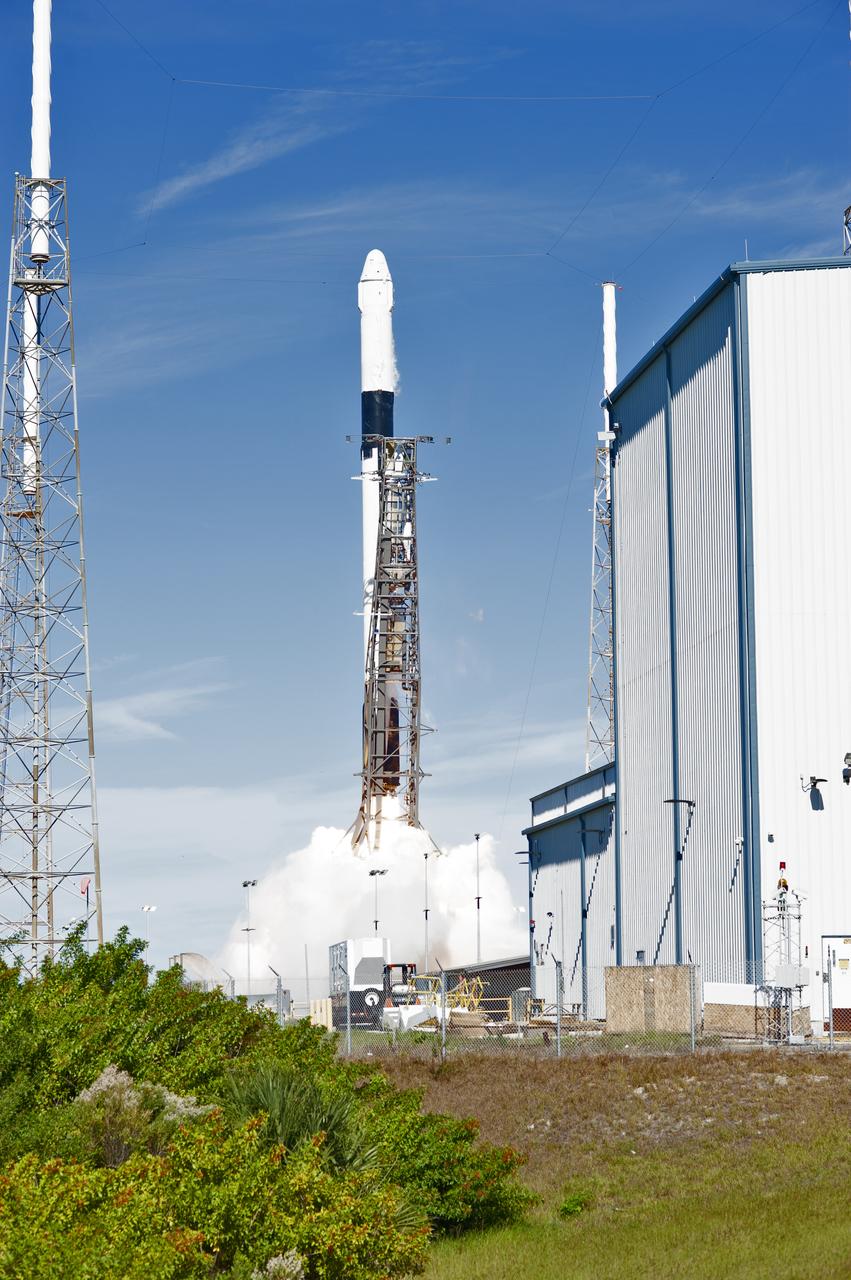
The two-stage Falcon 9 launch vehicle lifts off Space Launch Complex 40 at Cape Canaveral Air Force Station carrying the SpaceX’s Dragon resupply spacecraft to the International Space Station. Liftoff was at 1:16 p.m. EST, Dec. 5, 2018. On its 16th commercial resupply services mission to the space station, Dragon will deliver several science investigations to the space station, including the Global Ecosystem Dynamics Investigation lidar (GEDI). GEDI will provide high-quality laser ranging observations of the Earth’s forests and topography required to advance the understanding of important carbon and water cycling processes, biodiversity and habitat.
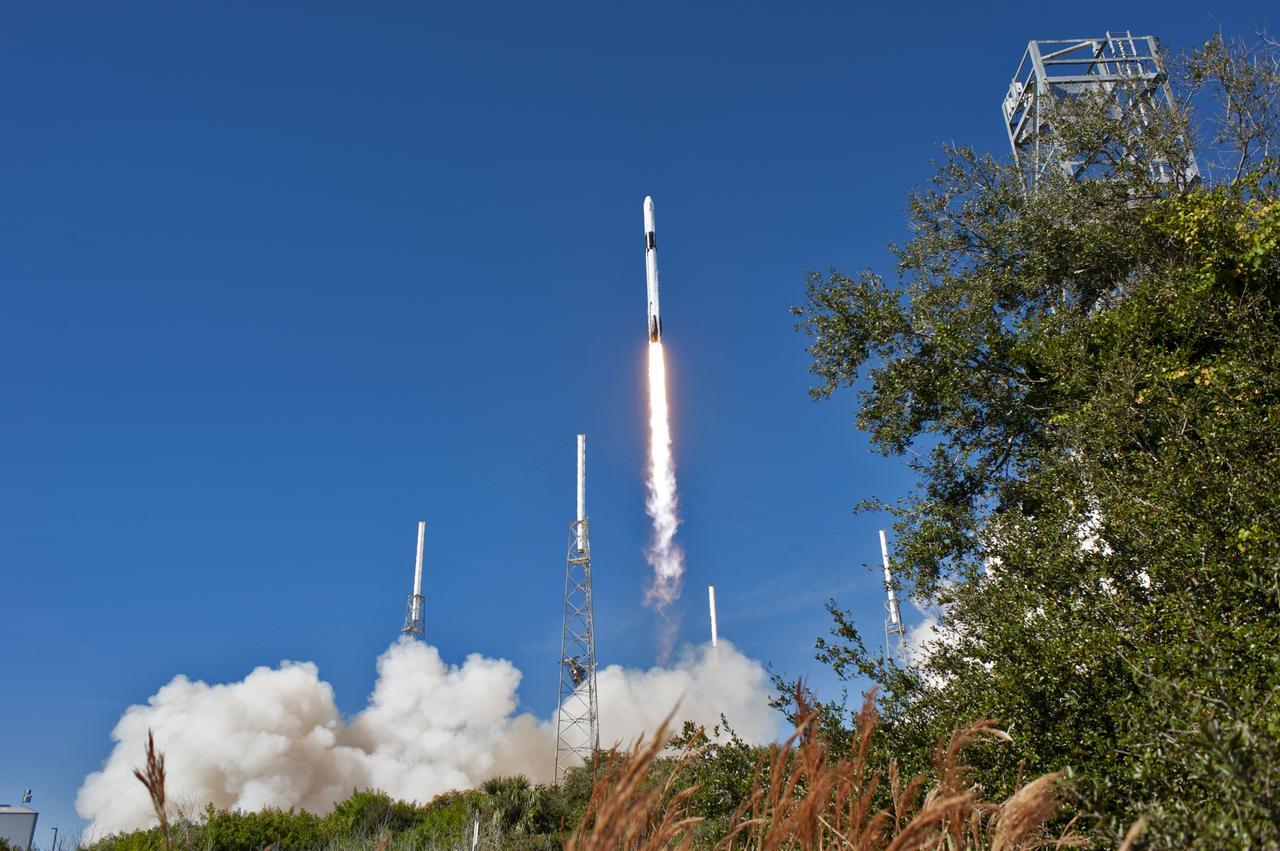
The two-stage Falcon 9 launch vehicle lifts off Space Launch Complex 40 at Cape Canaveral Air Force Station carrying the SpaceX’s Dragon resupply spacecraft to the International Space Station. Liftoff was at 1:16 p.m. EST, Dec. 5, 2018. On its 16th commercial resupply services mission to the space station, Dragon will deliver several science investigations to the space station, including the Global Ecosystem Dynamics Investigation lidar (GEDI). GEDI will provide high-quality laser ranging observations of the Earth’s forests and topography required to advance the understanding of important carbon and water cycling processes, biodiversity and habitat.
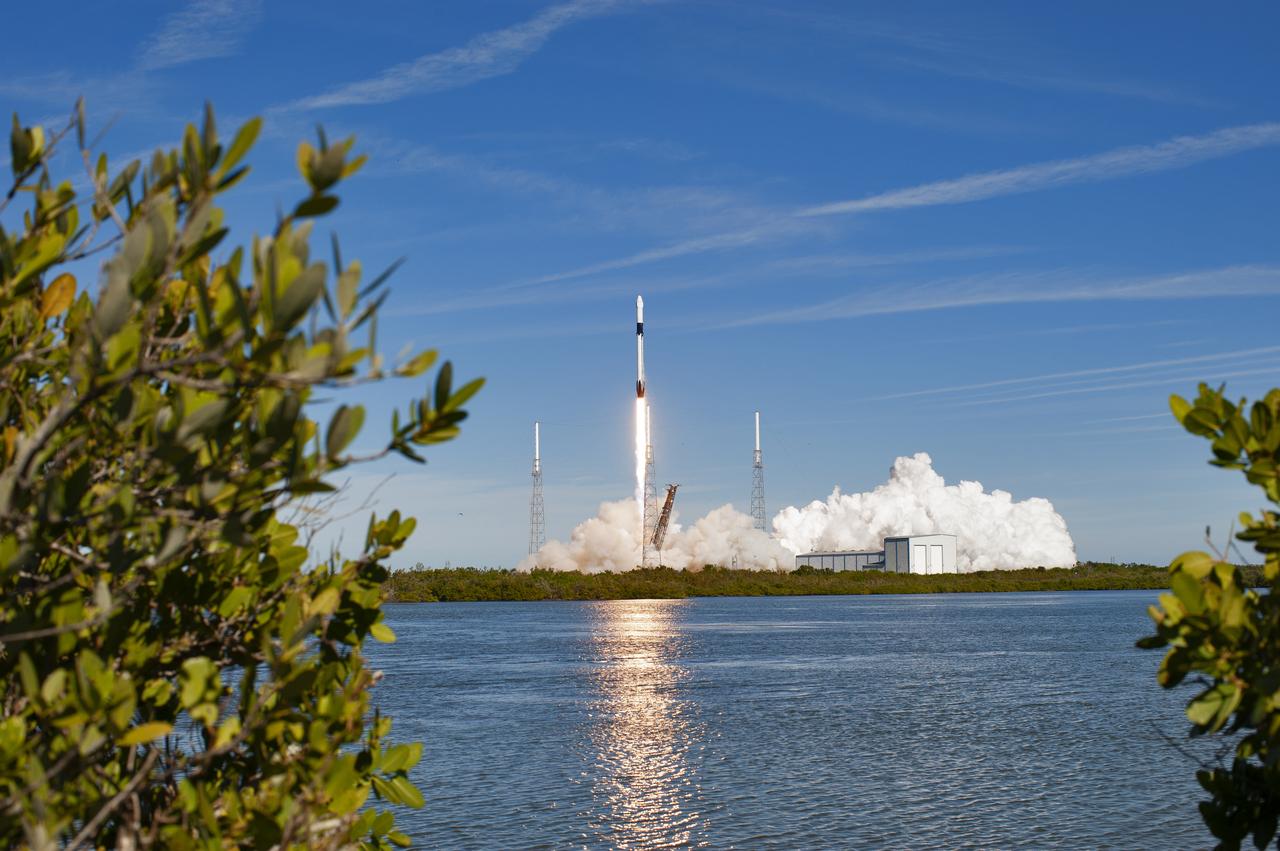
The two-stage Falcon 9 launch vehicle lifts off Space Launch Complex 40 at Cape Canaveral Air Force Station carrying the SpaceX’s Dragon resupply spacecraft to the International Space Station. Liftoff was at 1:16 p.m. EST, Dec. 5, 2018. On its 16th commercial resupply services mission to the space station, Dragon will deliver several science investigations to the space station, including the Global Ecosystem Dynamics Investigation lidar (GEDI). GEDI will provide high-quality laser ranging observations of the Earth’s forests and topography required to advance the understanding of important carbon and water cycling processes, biodiversity and habitat.
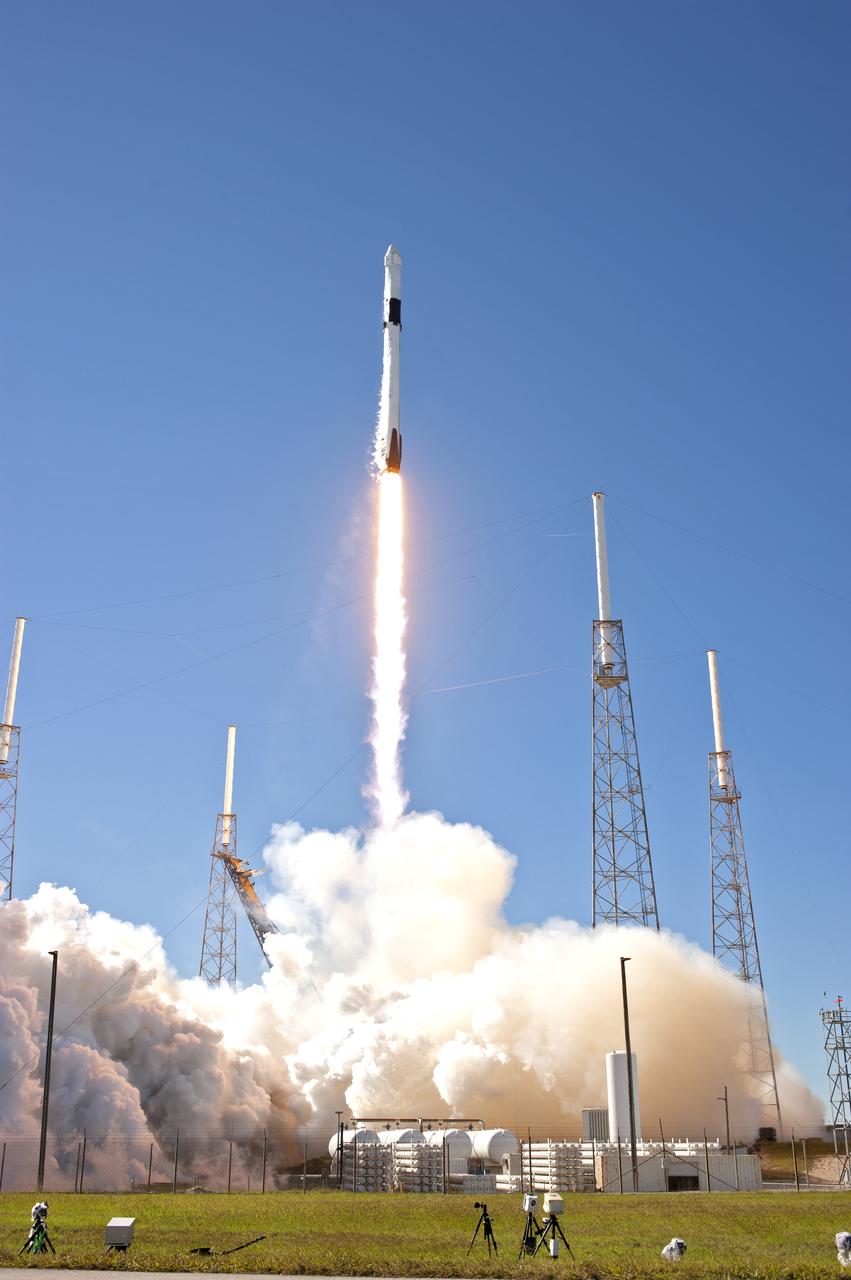
The two-stage Falcon 9 launch vehicle lifts off Space Launch Complex 40 at Cape Canaveral Air Force Station carrying the SpaceX’s Dragon resupply spacecraft to the International Space Station. Liftoff was at 1:16 p.m. EST, Dec. 5, 2018. On its 16th commercial resupply services mission to the space station, Dragon will deliver several science investigations to the space station, including the Global Ecosystem Dynamics Investigation lidar (GEDI). GEDI will provide high-quality laser ranging observations of the Earth’s forests and topography required to advance the understanding of important carbon and water cycling processes, biodiversity and habitat.

The SpaceX Falcon 9 rocket with the Dragon cargo module climbs upward after liftoff from Space Launch Complex 40 on Cape Canaveral Air Force Station in Florida in the early morning May 4, 2019. Liftoff was at 2:48 a.m. EDT. This is SpaceX’s 17th Commercial Resupply Services (CRS-17) mission for NASA to the International Space Station. The Dragon cargo module will deliver about 5,500 pounds of science and research, crew supplies and vehicle hardware to the orbital laboratory and its crew.
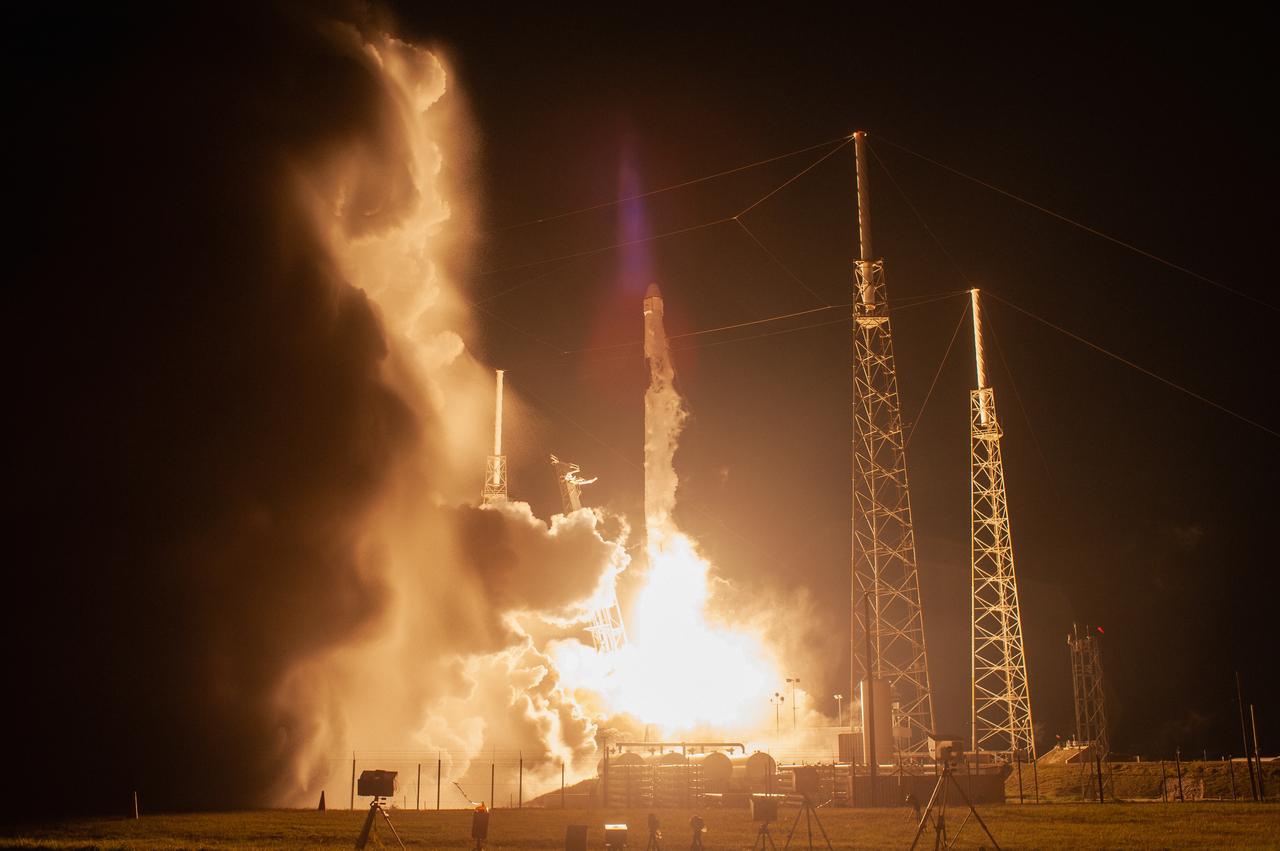
The SpaceX Falcon 9 rocket with the Dragon cargo module lifts off Space Launch Complex 40 on Cape Canaveral Air Force Station in Florida in the early morning May 4, 2019. Liftoff was at 2:48 a.m. EDT. This is SpaceX’s 17th Commercial Resupply Services (CRS-17) mission for NASA to the International Space Station. The Dragon cargo module will deliver about 5,500 pounds of science and research, crew supplies and vehicle hardware to the orbital laboratory and its crew.
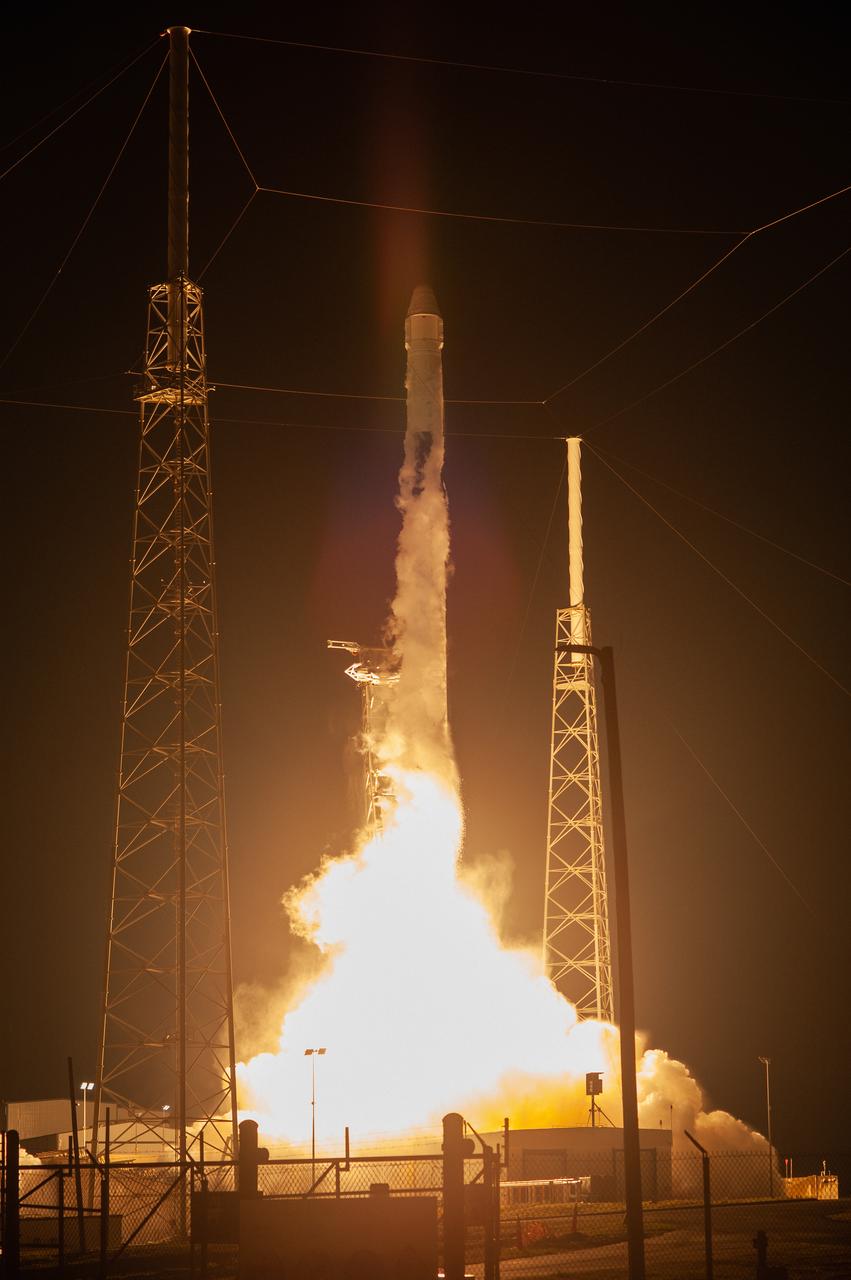
The SpaceX Falcon 9 rocket with the Dragon cargo module lifts off Space Launch Complex 40 on Cape Canaveral Air Force Station in Florida in the early morning May 4, 2019. Liftoff was at 2:48 a.m. EDT. This is SpaceX’s 17th Commercial Resupply Services (CRS-17) mission for NASA to the International Space Station. The Dragon cargo module will deliver about 5,500 pounds of science and research, crew supplies and vehicle hardware to the orbital laboratory and its crew.
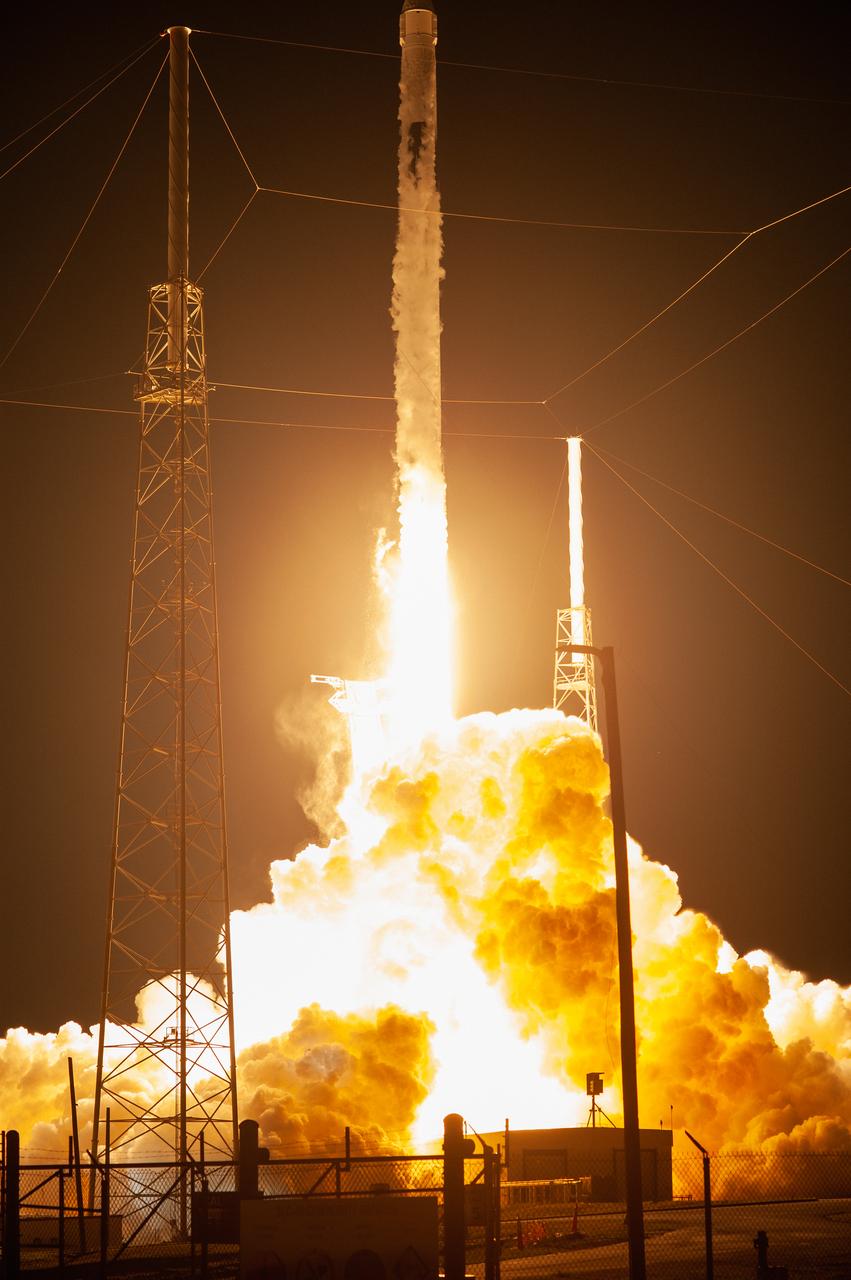
The SpaceX Falcon 9 rocket with the Dragon cargo module lifts off Space Launch Complex 40 on Cape Canaveral Air Force Station in Florida in the early morning May 4, 2019. Liftoff was at 2:48 a.m. EDT. This is SpaceX’s 17th Commercial Resupply Services (CRS-17) mission for NASA to the International Space Station. The Dragon cargo module will deliver about 5,500 pounds of science and research, crew supplies and vehicle hardware to the orbital laboratory and its crew.
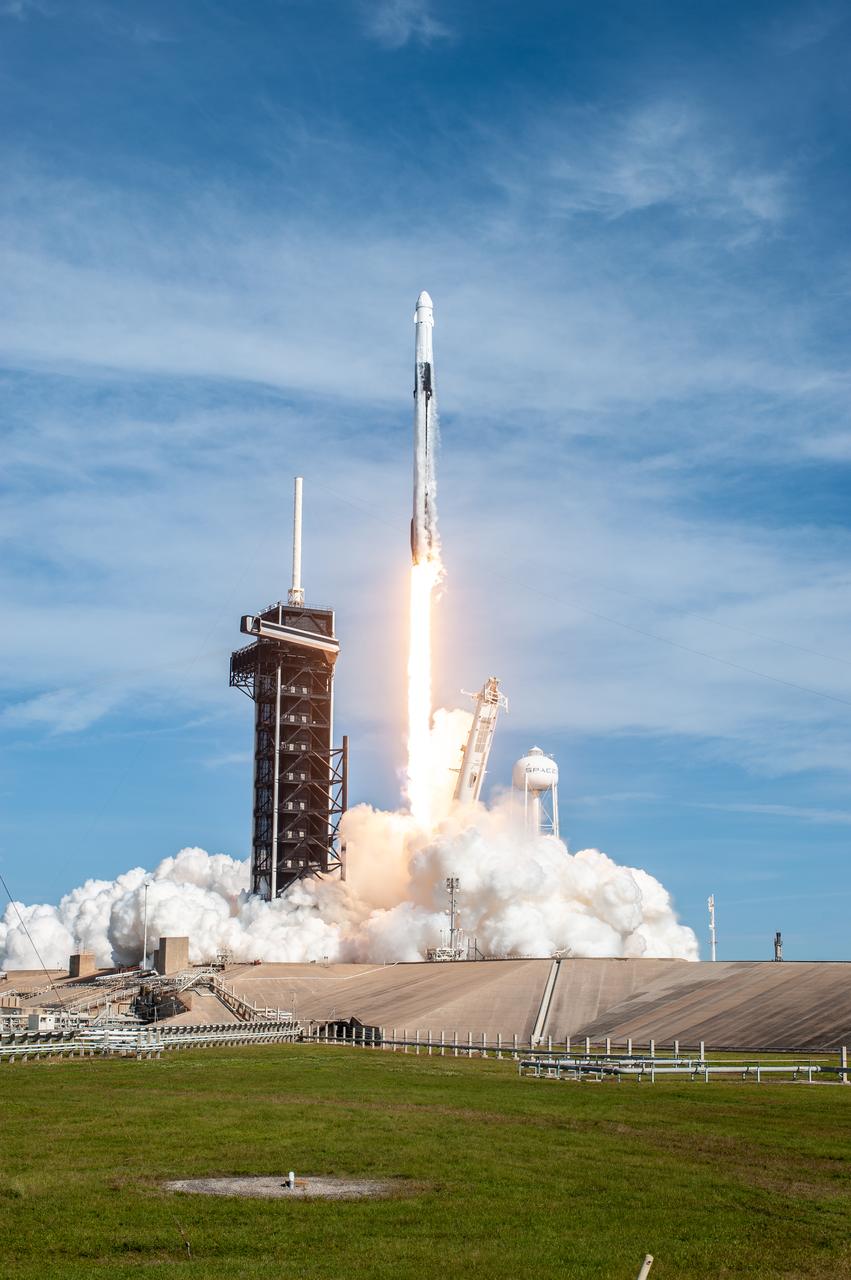
A SpaceX Falcon 9 rocket lifts off from Launch Complex 39A at Kennedy Space Center in Florida at 11:17 a.m. EST on Dec. 6, 2020, carrying the uncrewed cargo Dragon spacecraft on its journey to the International Space Station for NASA and SpaceX’s 21st Commercial Resupply Services (CRS-21) mission. Dragon will deliver more than 6,400 pounds of science investigations and cargo to the orbiting laboratory. The mission marks the first launch for SpaceX under NASA’s CRS-2 contract.
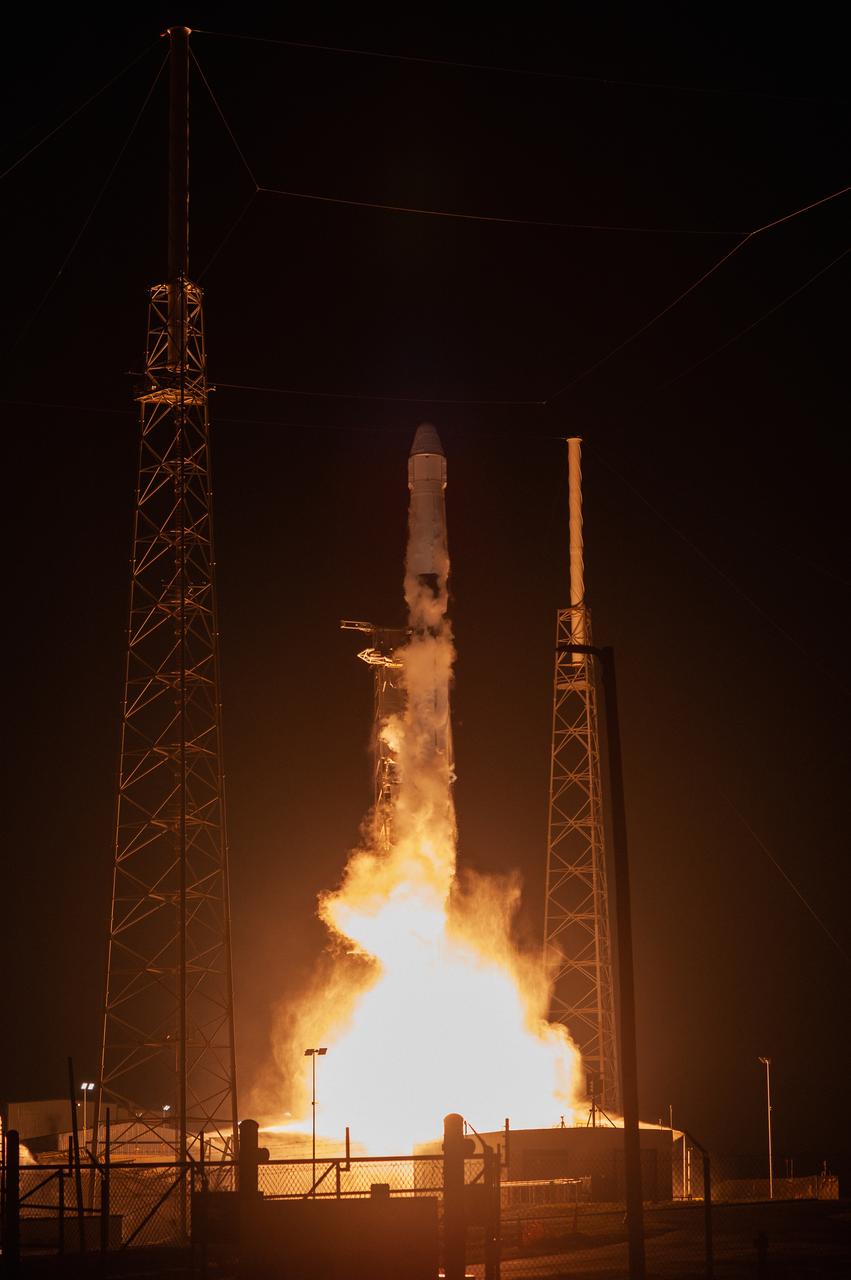
The SpaceX Falcon 9 rocket with the Dragon cargo module lifts off Space Launch Complex 40 on Cape Canaveral Air Force Station in Florida in the early morning May 4, 2019. Liftoff was at 2:48 a.m. EDT. This is SpaceX’s 17th Commercial Resupply Services (CRS-17) mission for NASA to the International Space Station. The Dragon cargo module will deliver about 5,500 pounds of science and research, crew supplies and vehicle hardware to the orbital laboratory and its crew.
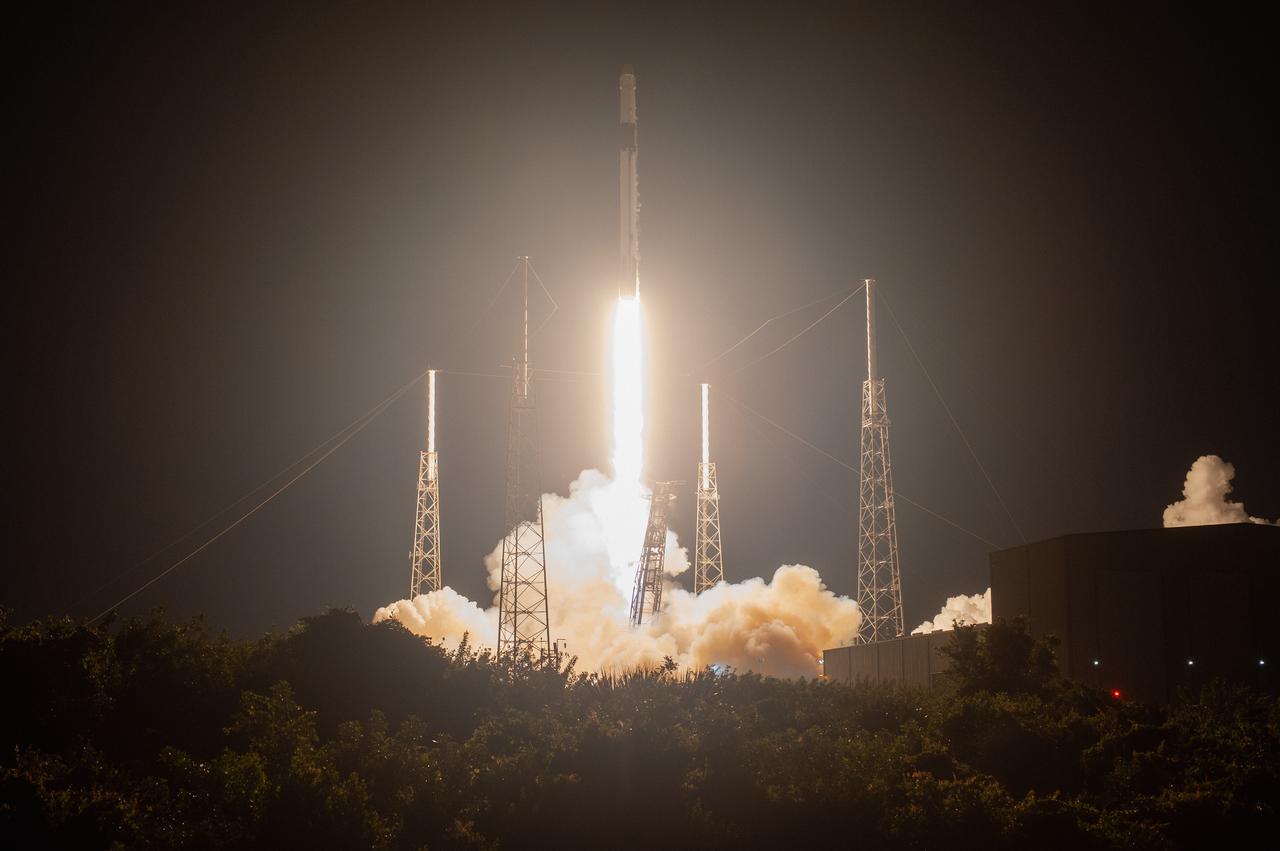
The SpaceX Falcon 9 rocket with the Dragon cargo module lifts off Space Launch Complex 40 on Cape Canaveral Air Force Station in Florida in the early morning May 4, 2019. Liftoff was at 2:48 a.m. EDT. This is SpaceX’s 17th Commercial Resupply Services (CRS-17) mission for NASA to the International Space Station. The Dragon cargo module will deliver about 5,500 pounds of science and research, crew supplies and vehicle hardware to the orbital laboratory and its crew.
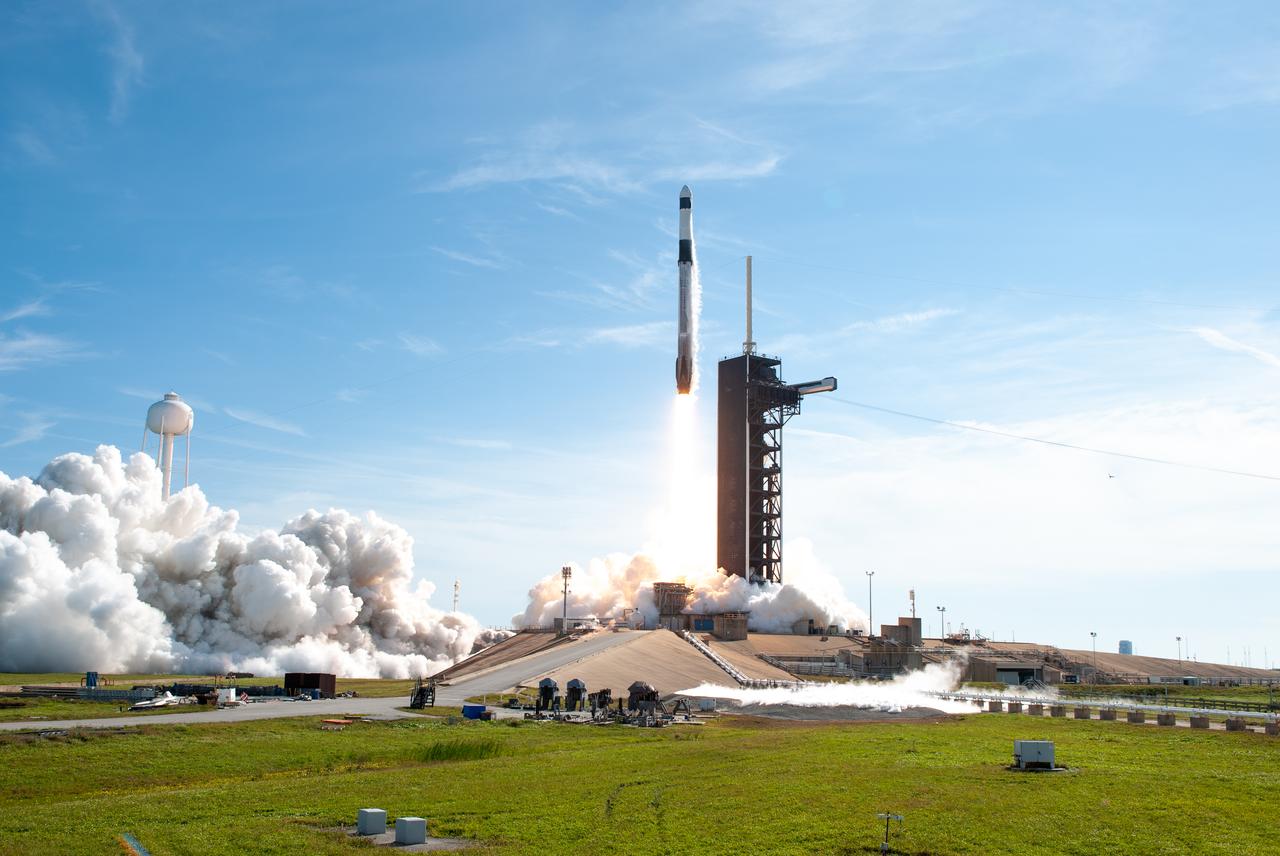
A SpaceX Falcon 9 rocket lifts off from Launch Complex 39A at Kennedy Space Center in Florida at 11:17 a.m. EST on Dec. 6, 2020, carrying the uncrewed cargo Dragon spacecraft on its journey to the International Space Station for NASA and SpaceX’s 21st Commercial Resupply Services (CRS-21) mission. Dragon will deliver more than 6,400 pounds of science investigations and cargo to the orbiting laboratory. The mission marks the first launch for SpaceX under NASA’s CRS-2 contract.
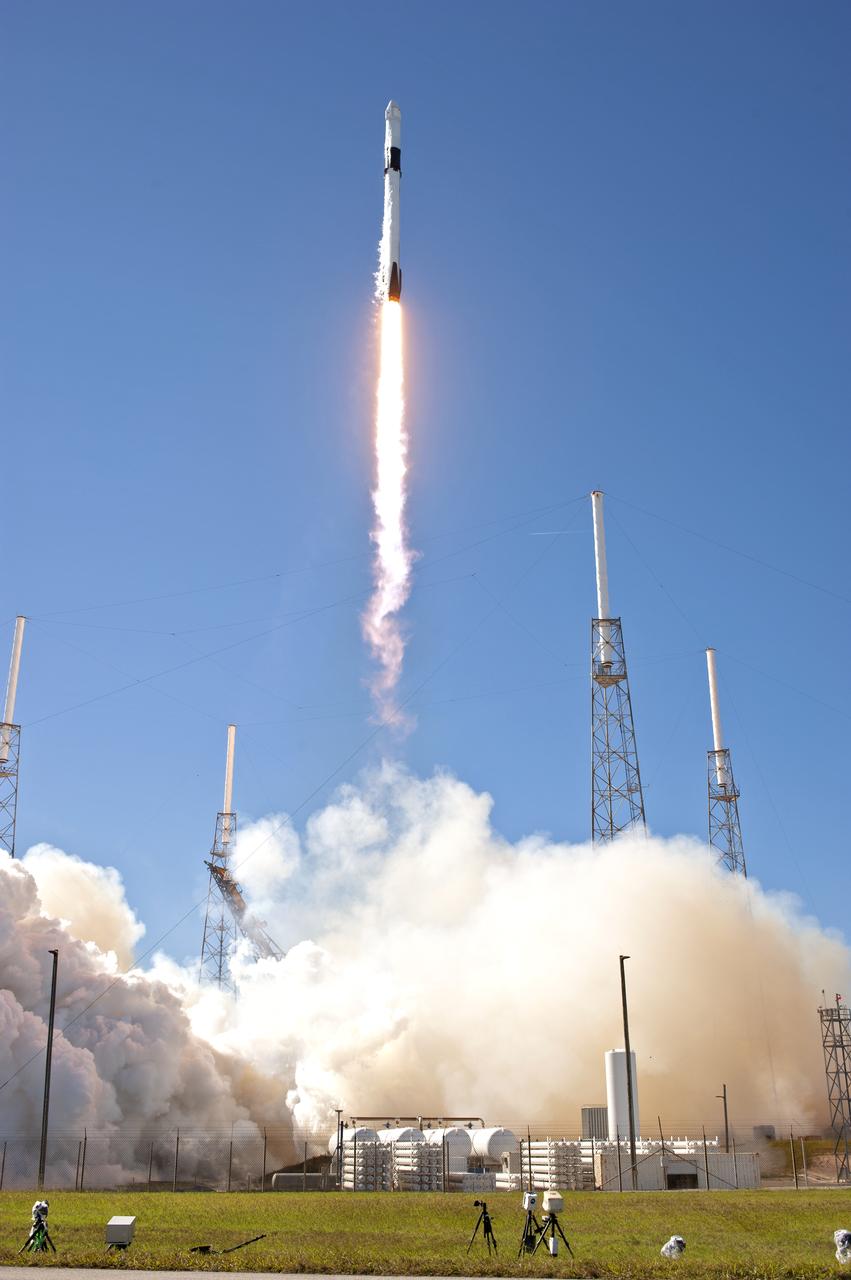
The two-stage Falcon 9 launch vehicle lifts off Space Launch Complex 40 at Cape Canaveral Air Force Station carrying the SpaceX’s Dragon resupply spacecraft to the International Space Station. Liftoff was at 1:16 p.m. EST, Dec. 5, 2018. On its 16th commercial resupply services mission to the space station, Dragon will deliver several science investigations to the space station, including the Global Ecosystem Dynamics Investigation lidar (GEDI). GEDI will provide high-quality laser ranging observations of the Earth’s forests and topography required to advance the understanding of important carbon and water cycling processes, biodiversity and habitat.
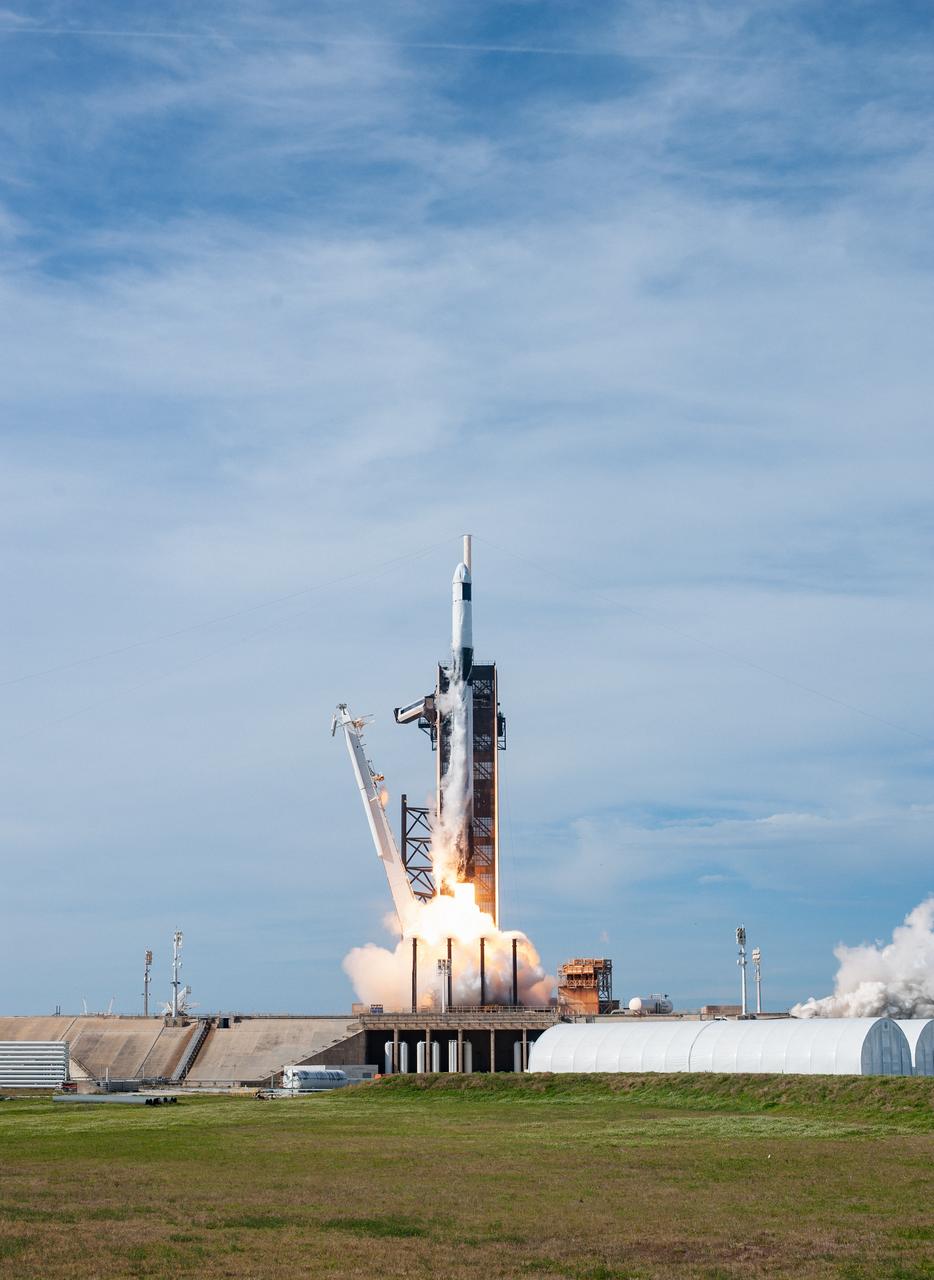
A SpaceX Falcon 9 rocket lifts off from Launch Complex 39A at Kennedy Space Center in Florida at 11:17 a.m. EST on Dec. 6, 2020, carrying the uncrewed cargo Dragon spacecraft on its journey to the International Space Station for NASA and SpaceX’s 21st Commercial Resupply Services (CRS-21) mission. Dragon will deliver more than 6,400 pounds of science investigations and cargo to the orbiting laboratory. The mission marks the first launch for SpaceX under NASA’s CRS-2 contract.
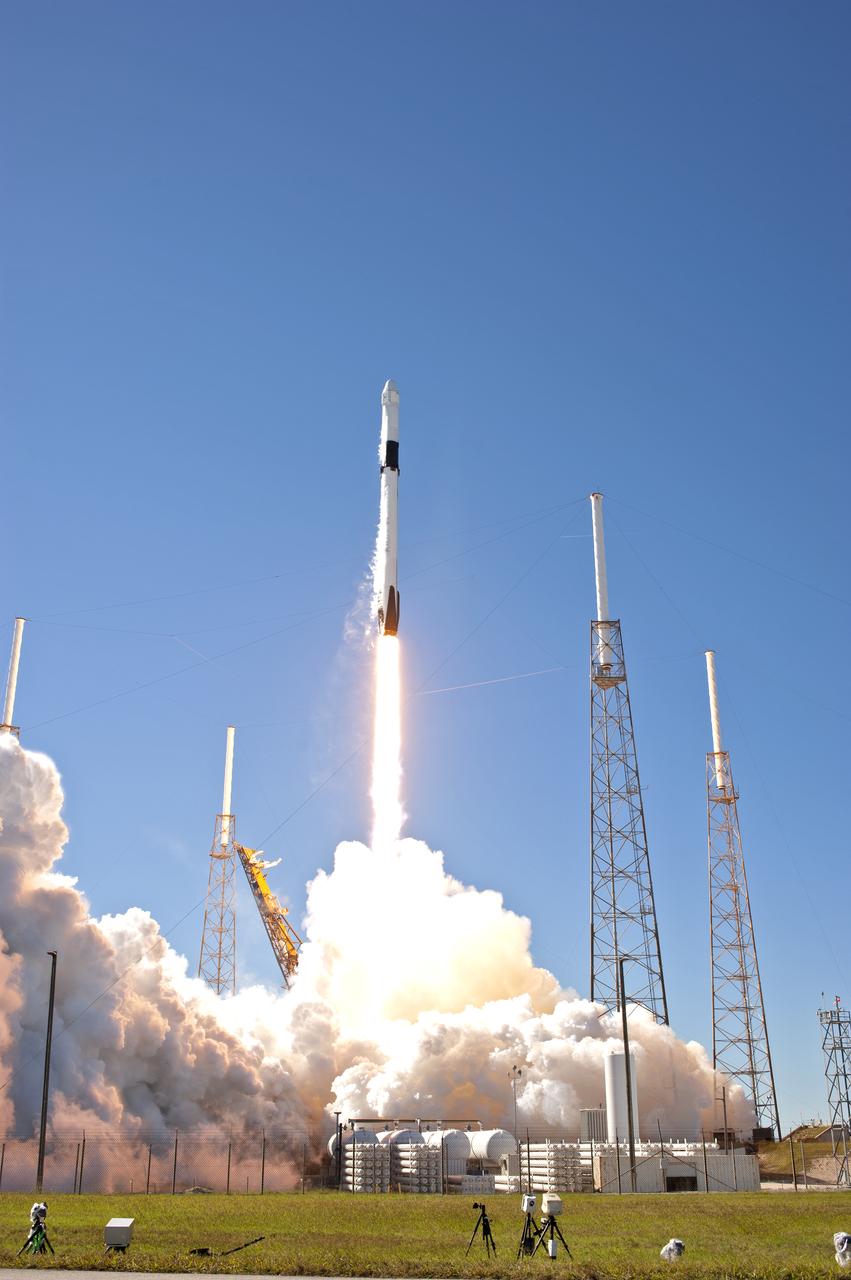
The two-stage Falcon 9 launch vehicle lifts off Space Launch Complex 40 at Cape Canaveral Air Force Station carrying the SpaceX’s Dragon resupply spacecraft to the International Space Station. Liftoff was at 1:16 p.m. EST, Dec. 5, 2018. On its 16th commercial resupply services mission to the space station, Dragon will deliver several science investigations to the space station, including the Global Ecosystem Dynamics Investigation lidar (GEDI). GEDI will provide high-quality laser ranging observations of the Earth’s forests and topography required to advance the understanding of important carbon and water cycling processes, biodiversity and habitat.

The SpaceX Falcon 9 rocket with the Dragon cargo module lifts off Space Launch Complex 40 on Cape Canaveral Air Force Station in Florida in the early morning May 4, 2019. Liftoff was at 2:48 a.m. EDT. This is SpaceX’s 17th Commercial Resupply Services (CRS-17) mission for NASA to the International Space Station. The Dragon cargo module will deliver about 5,500 pounds of science and research, crew supplies and vehicle hardware to the orbital laboratory and its crew.
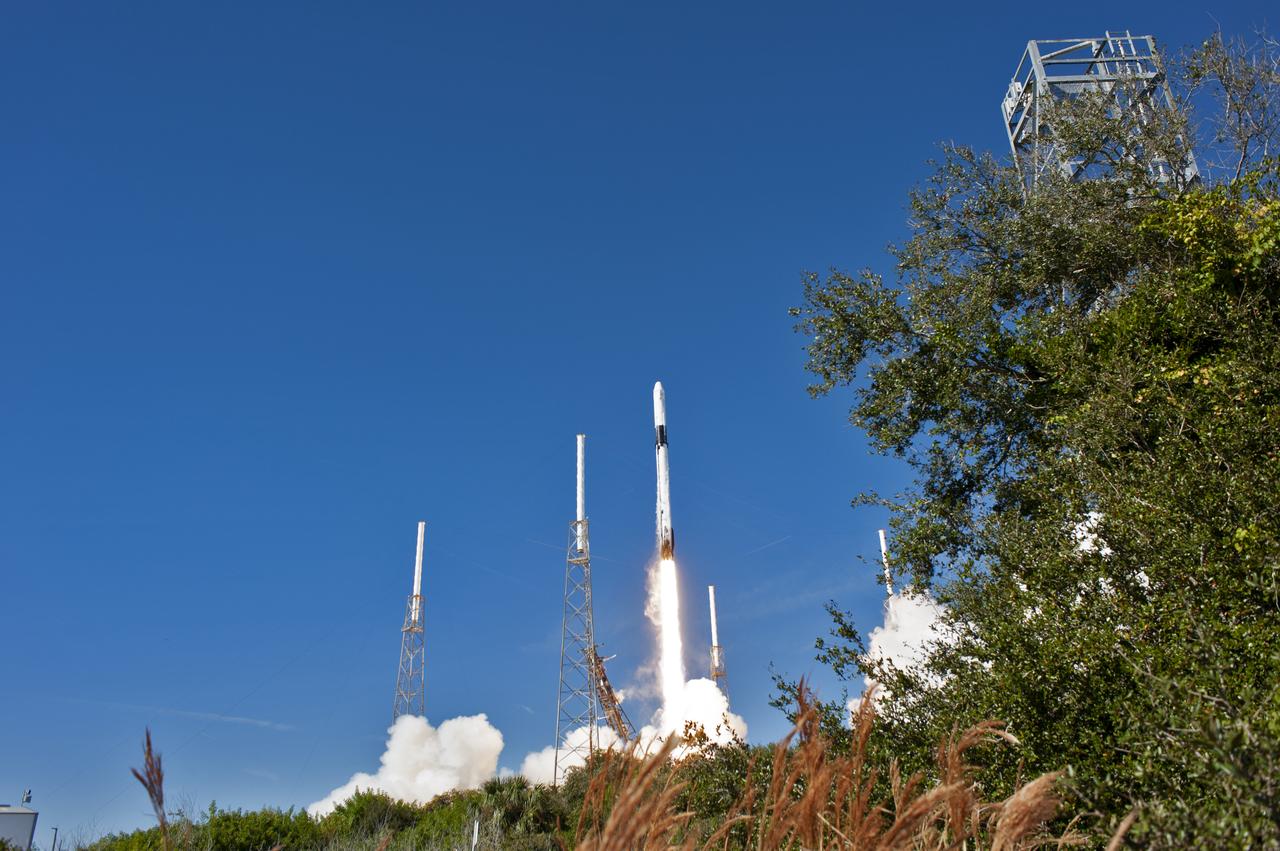
The two-stage Falcon 9 launch vehicle lifts off Space Launch Complex 40 at Cape Canaveral Air Force Station carrying the SpaceX’s Dragon resupply spacecraft to the International Space Station. Liftoff was at 1:16 p.m. EST, Dec. 5, 2018. On its 16th commercial resupply services mission to the space station, Dragon will deliver several science investigations to the space station, including the Global Ecosystem Dynamics Investigation lidar (GEDI). GEDI will provide high-quality laser ranging observations of the Earth’s forests and topography required to advance the understanding of important carbon and water cycling processes, biodiversity and habitat.
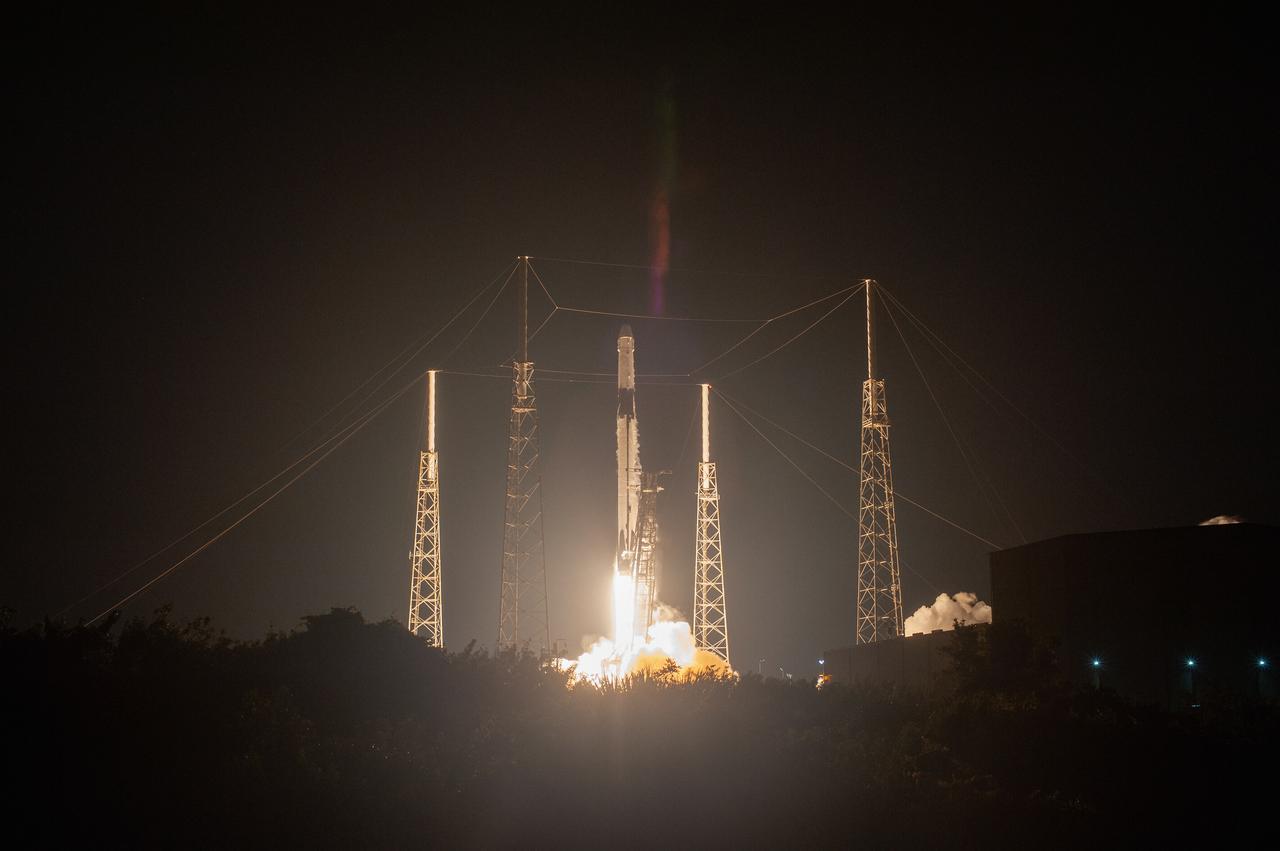
The SpaceX Falcon 9 rocket with the Dragon cargo module lifts off Space Launch Complex 40 on Cape Canaveral Air Force Station in Florida in the early morning May 4, 2019. Liftoff was at 2:48 a.m. EDT. This is SpaceX’s 17th Commercial Resupply Services (CRS-17) mission for NASA to the International Space Station. The Dragon cargo module will deliver about 5,500 pounds of science and research, crew supplies and vehicle hardware to the orbital laboratory and its crew.
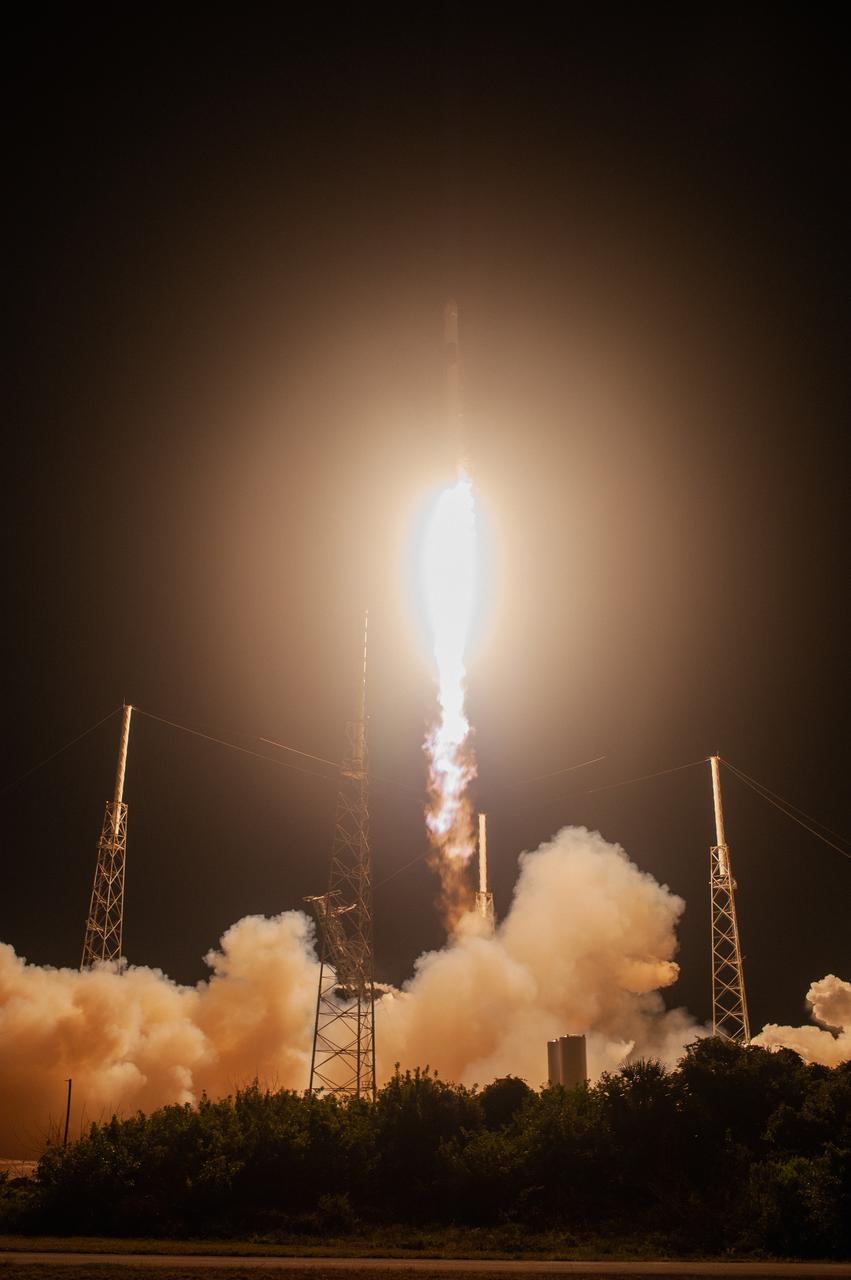
The SpaceX Falcon 9 rocket with the Dragon cargo module climbs upward after liftoff from Space Launch Complex 40 on Cape Canaveral Air Force Station in Florida in the early morning May 4, 2019. Liftoff was at 2:48 a.m. EDT. This is SpaceX’s 17th Commercial Resupply Services (CRS-17) mission for NASA to the International Space Station. The Dragon cargo module will deliver about 5,500 pounds of science and research, crew supplies and vehicle hardware to the orbital laboratory and its crew.
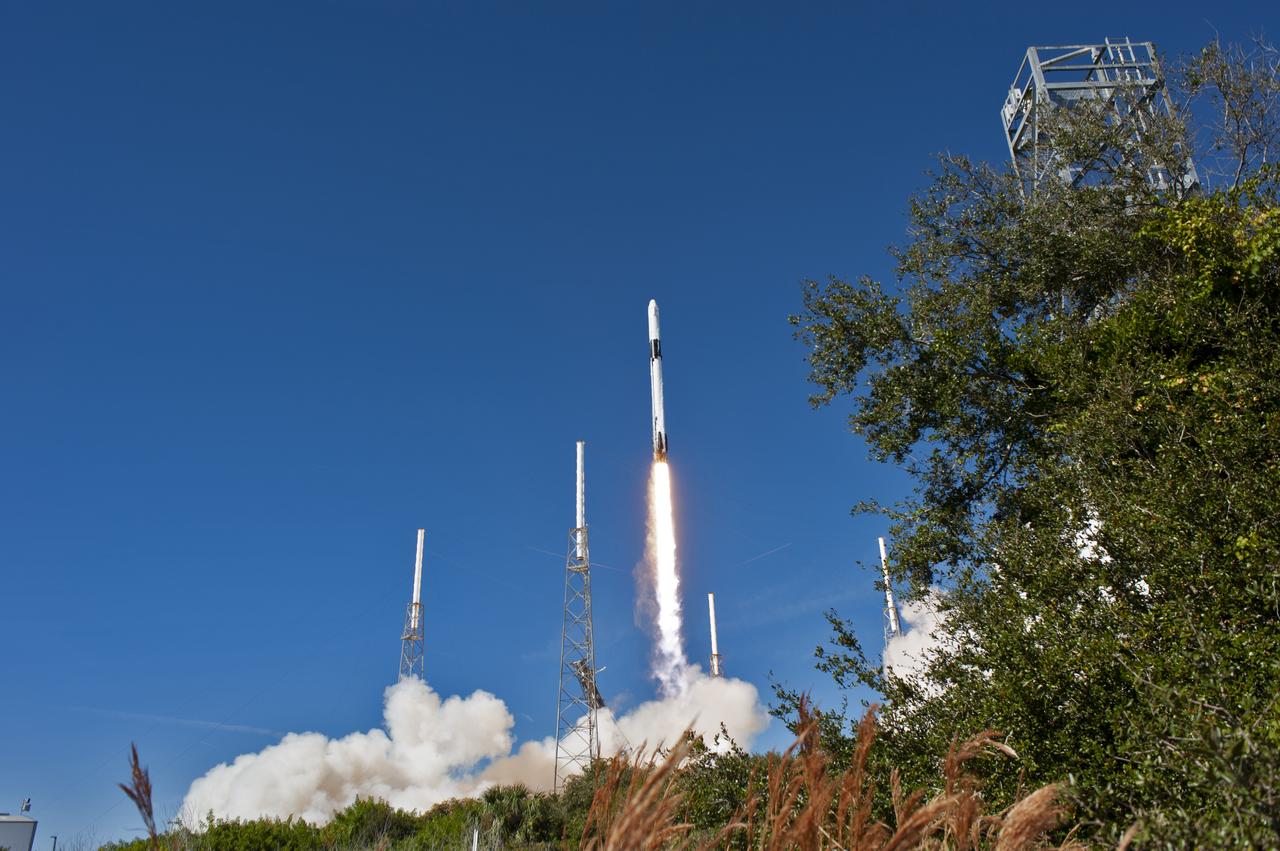
The two-stage Falcon 9 launch vehicle lifts off Space Launch Complex 40 at Cape Canaveral Air Force Station carrying the SpaceX’s Dragon resupply spacecraft to the International Space Station. Liftoff was at 1:16 p.m. EST, Dec. 5, 2018. On its 16th commercial resupply services mission to the space station, Dragon will deliver several science investigations to the space station, including the Global Ecosystem Dynamics Investigation lidar (GEDI). GEDI will provide high-quality laser ranging observations of the Earth’s forests and topography required to advance the understanding of important carbon and water cycling processes, biodiversity and habitat.
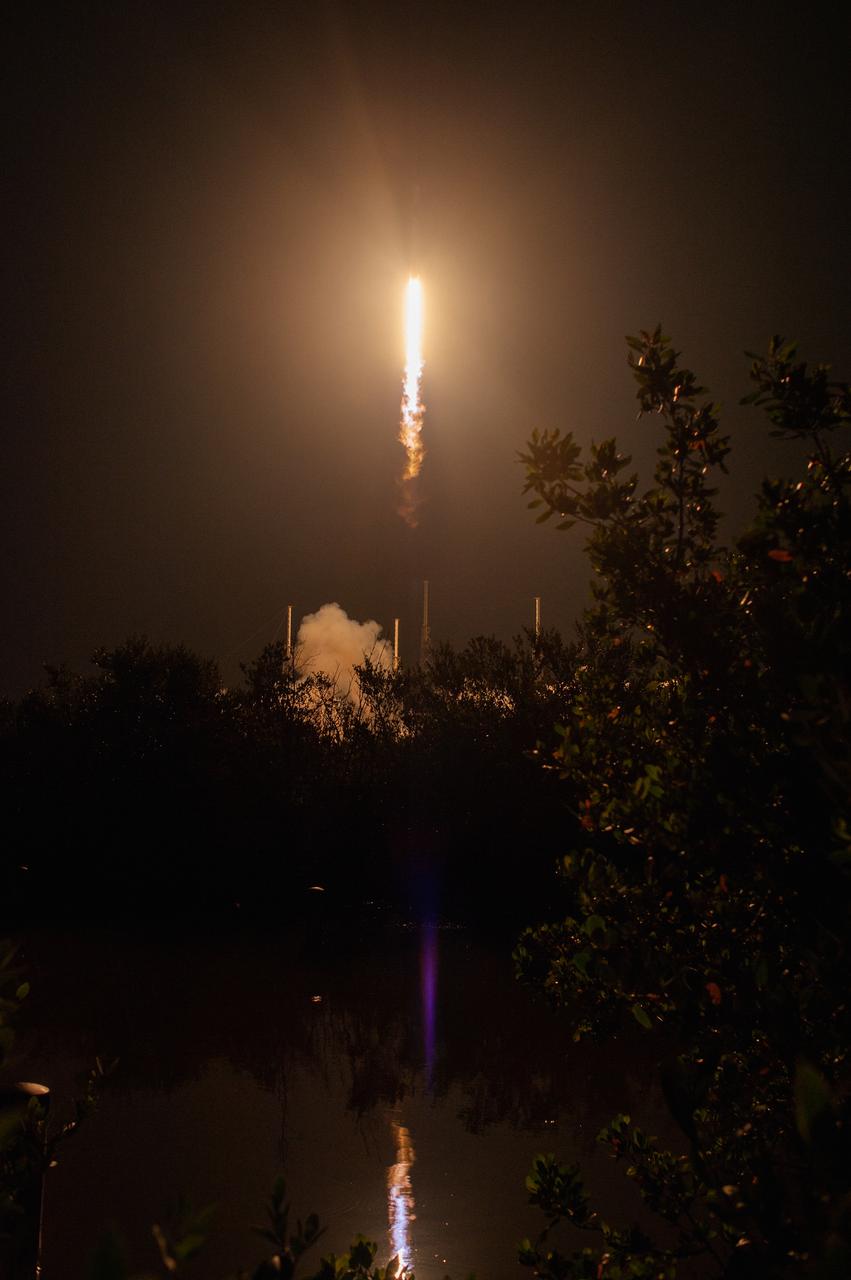
The SpaceX Falcon 9 rocket with the Dragon cargo module climbs upward after liftoff from Space Launch Complex 40 on Cape Canaveral Air Force Station in Florida in the early morning May 4, 2019. Liftoff was at 2:48 a.m. EDT. This is SpaceX’s 17th Commercial Resupply Services (CRS-17) mission for NASA to the International Space Station. The Dragon cargo module will deliver about 5,500 pounds of science and research, crew supplies and vehicle hardware to the orbital laboratory and its crew.
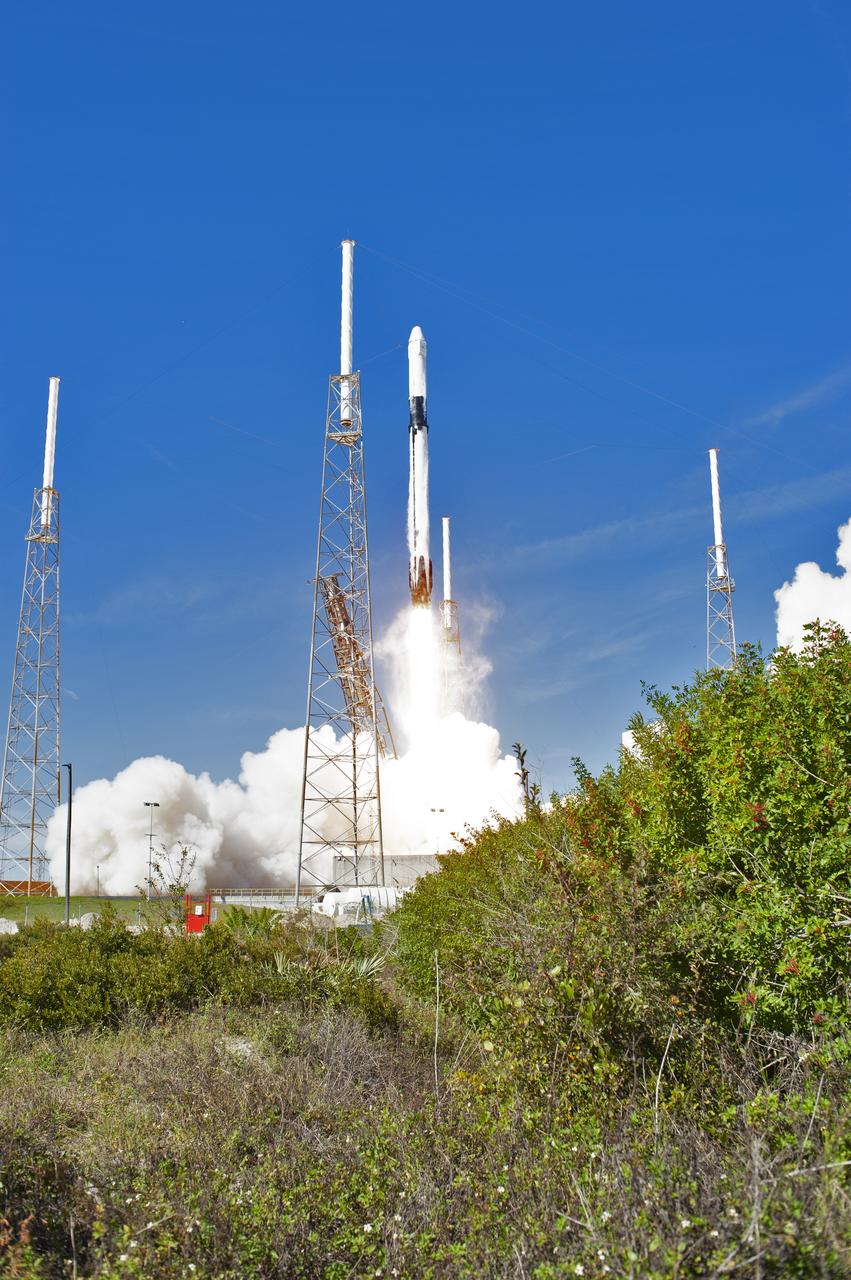
The two-stage Falcon 9 launch vehicle lifts off Space Launch Complex 40 at Cape Canaveral Air Force Station carrying the SpaceX’s Dragon resupply spacecraft to the International Space Station. Liftoff was at 1:16 p.m. EST, Dec. 5, 2018. On its 16th commercial resupply services mission to the space station, Dragon will deliver several science investigations to the space station, including the Global Ecosystem Dynamics Investigation lidar (GEDI). GEDI will provide high-quality laser ranging observations of the Earth’s forests and topography required to advance the understanding of important carbon and water cycling processes, biodiversity and habitat.
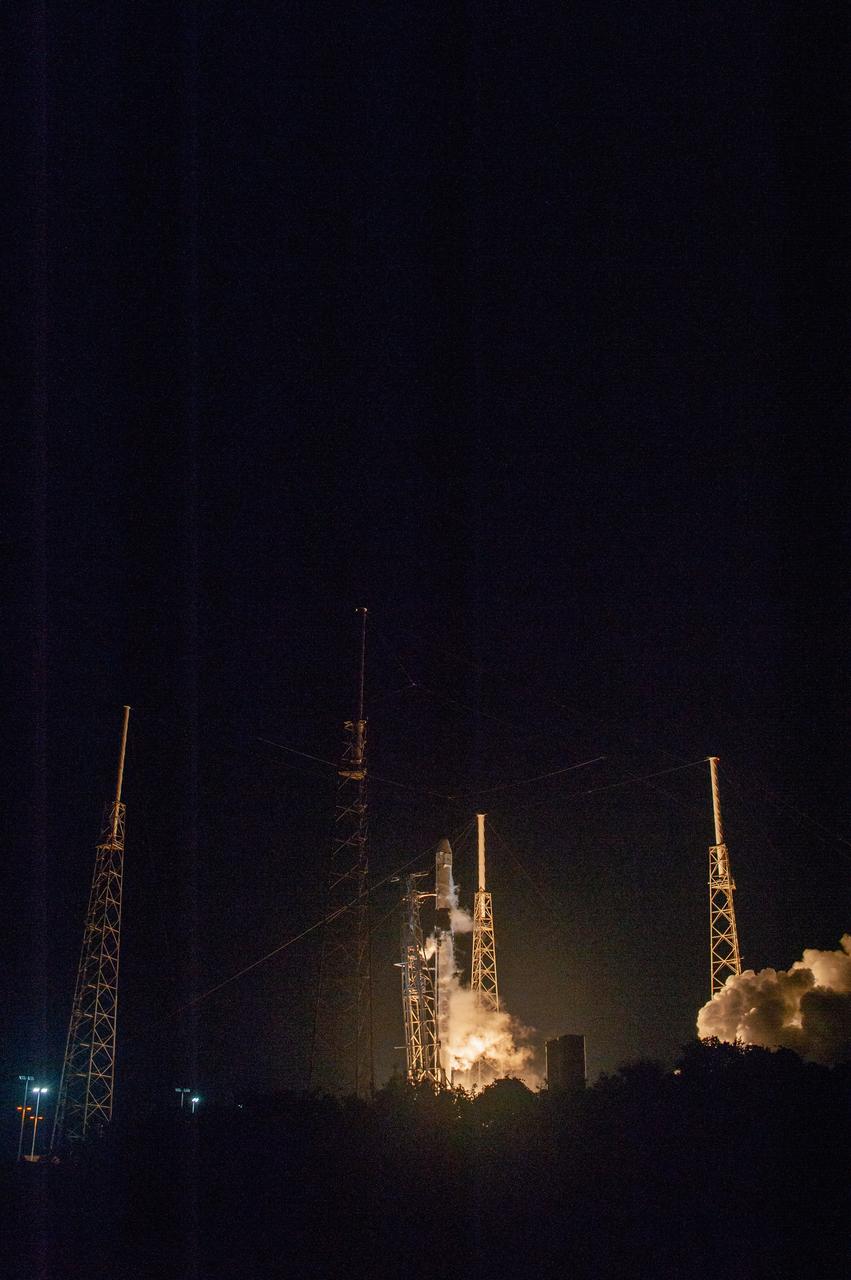
The SpaceX Falcon 9 rocket with the Dragon cargo module lifts off Space Launch Complex 40 on Cape Canaveral Air Force Station in Florida in the early morning May 4, 2019. Liftoff was at 2:48 a.m. EDT. This is SpaceX’s 17th Commercial Resupply Services (CRS-17) mission for NASA to the International Space Station. The Dragon cargo module will deliver about 5,500 pounds of science and research, crew supplies and vehicle hardware to the orbital laboratory and its crew.
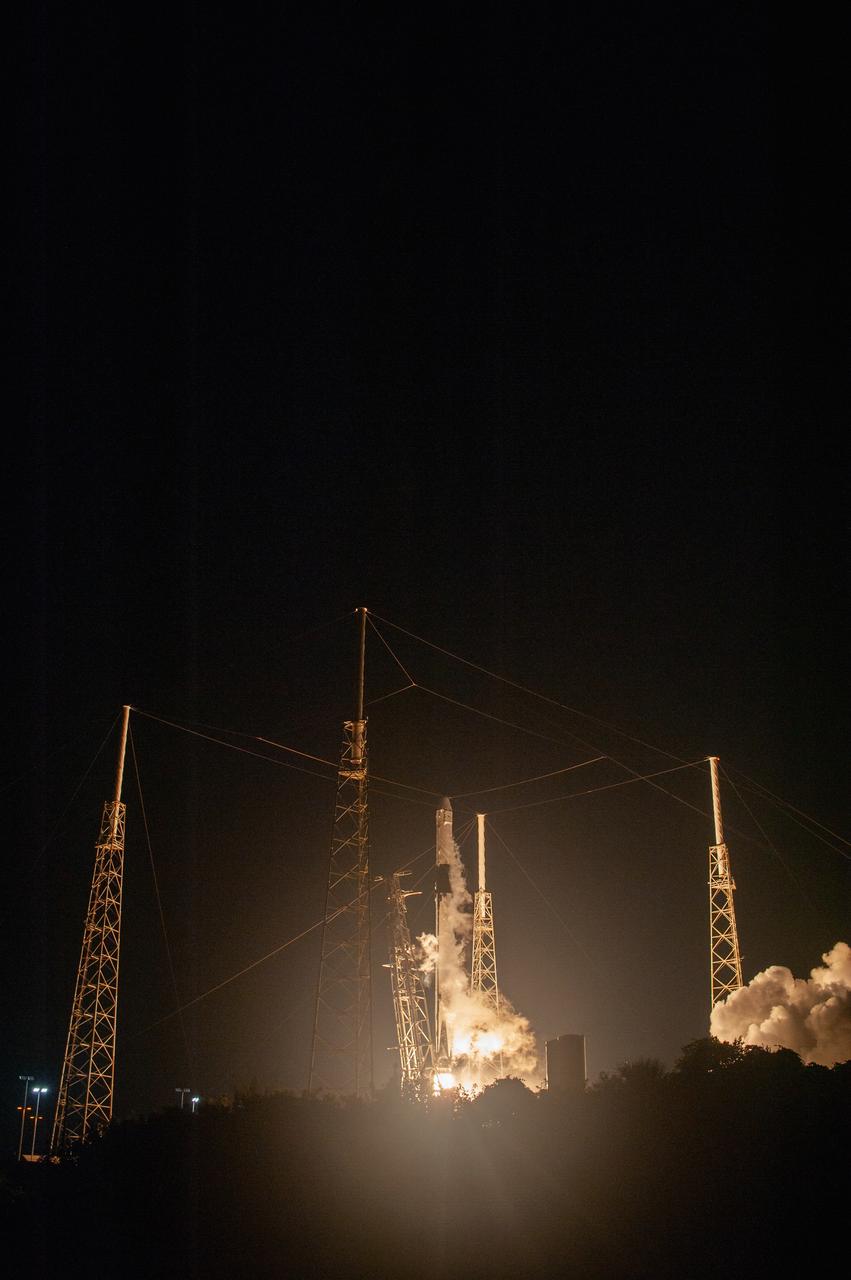
The SpaceX Falcon 9 rocket with the Dragon cargo module lifts off Space Launch Complex 40 on Cape Canaveral Air Force Station in Florida in the early morning May 4, 2019. Liftoff was at 2:48 a.m. EDT. This is SpaceX’s 17th Commercial Resupply Services (CRS-17) mission for NASA to the International Space Station. The Dragon cargo module will deliver about 5,500 pounds of science and research, crew supplies and vehicle hardware to the orbital laboratory and its crew.
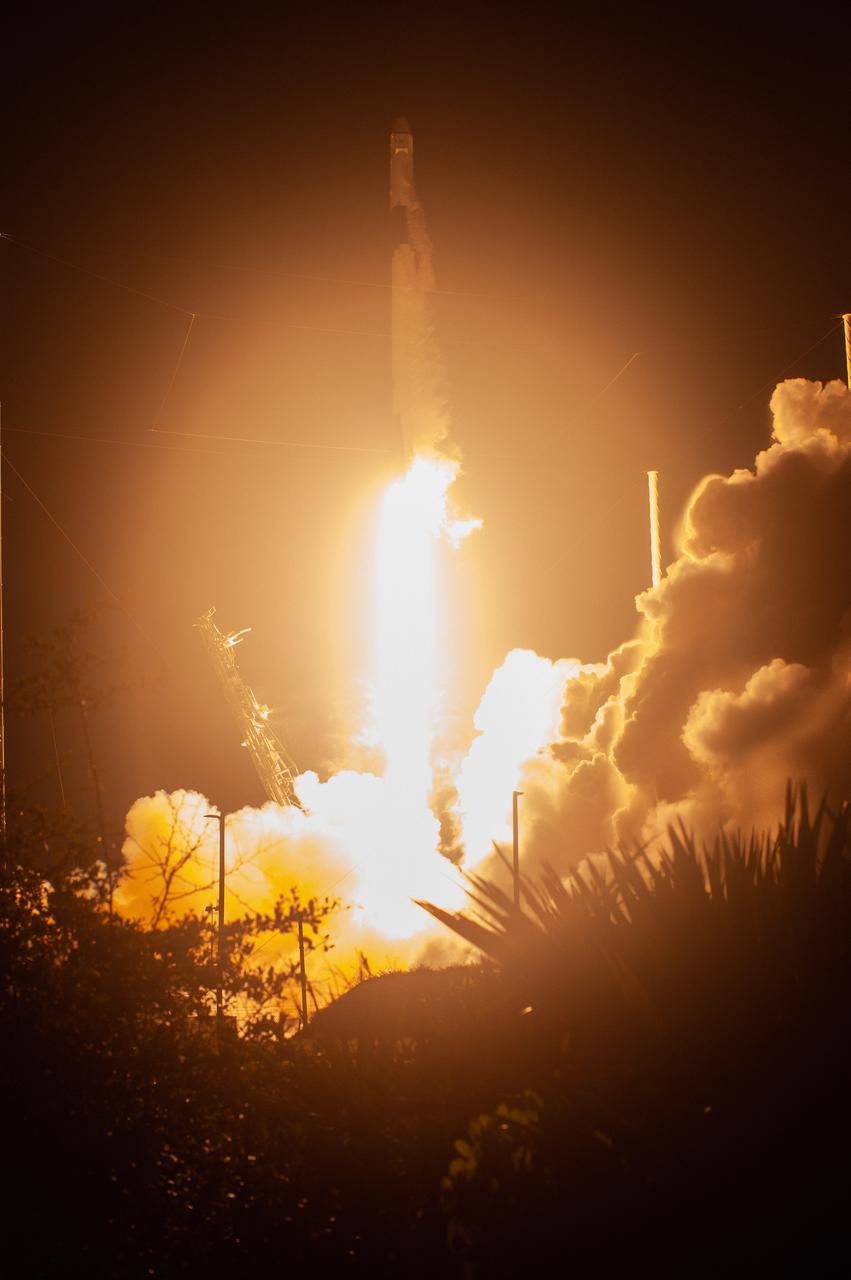
The SpaceX Falcon 9 rocket with the Dragon cargo module climbs upward after liftoff from Space Launch Complex 40 on Cape Canaveral Air Force Station in Florida in the early morning May 4, 2019. Liftoff was at 2:48 a.m. EDT. This is SpaceX’s 17th Commercial Resupply Services (CRS-17) mission for NASA to the International Space Station. The Dragon cargo module will deliver about 5,500 pounds of science and research, crew supplies and vehicle hardware to the orbital laboratory and its crew.
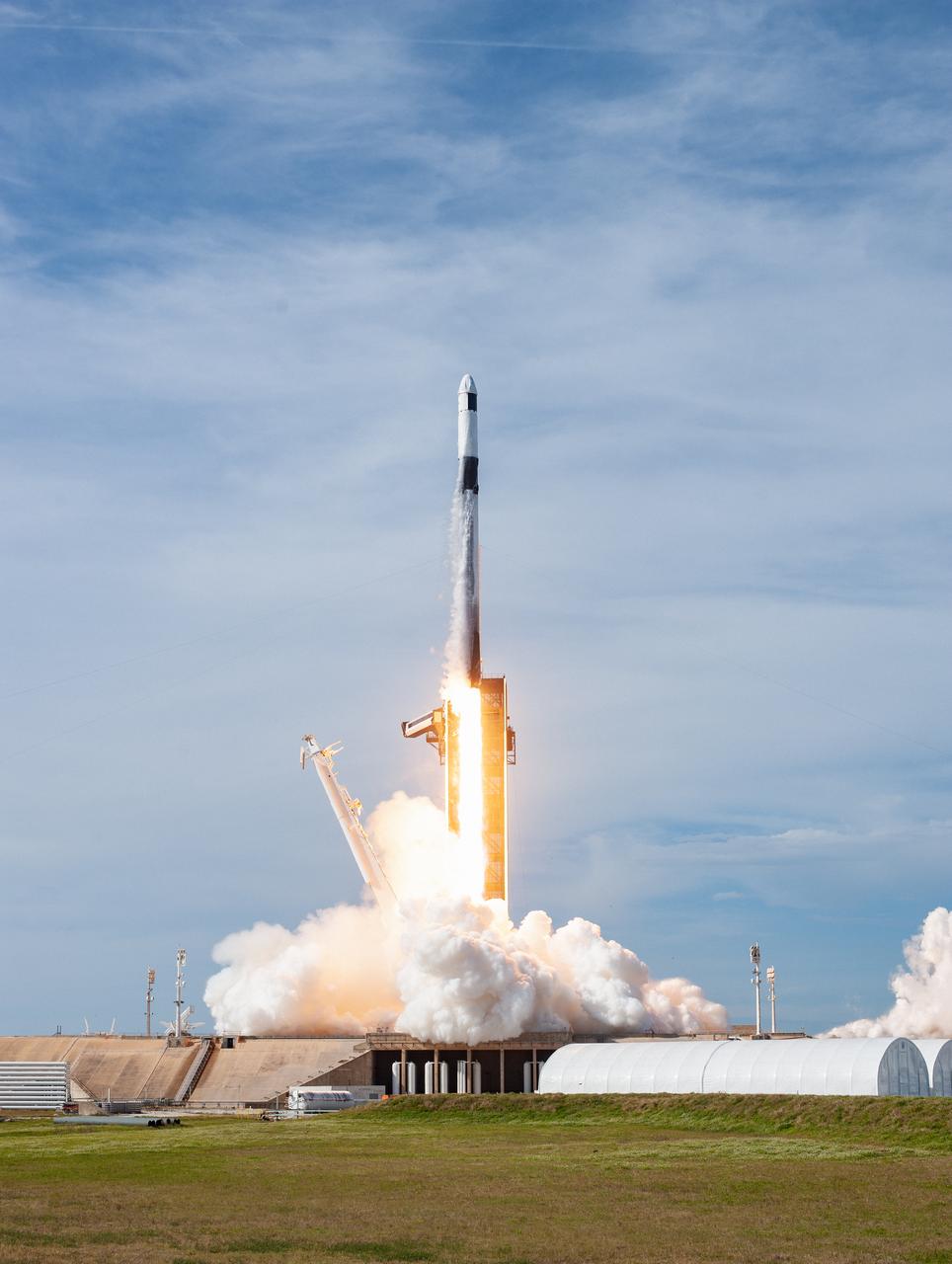
A SpaceX Falcon 9 rocket lifts off from Launch Complex 39A at Kennedy Space Center in Florida at 11:17 a.m. EST on Dec. 6, 2020, carrying the uncrewed cargo Dragon spacecraft on its journey to the International Space Station for NASA and SpaceX’s 21st Commercial Resupply Services (CRS-21) mission. Dragon will deliver more than 6,400 pounds of science investigations and cargo to the orbiting laboratory. The mission marks the first launch for SpaceX under NASA’s CRS-2 contract.
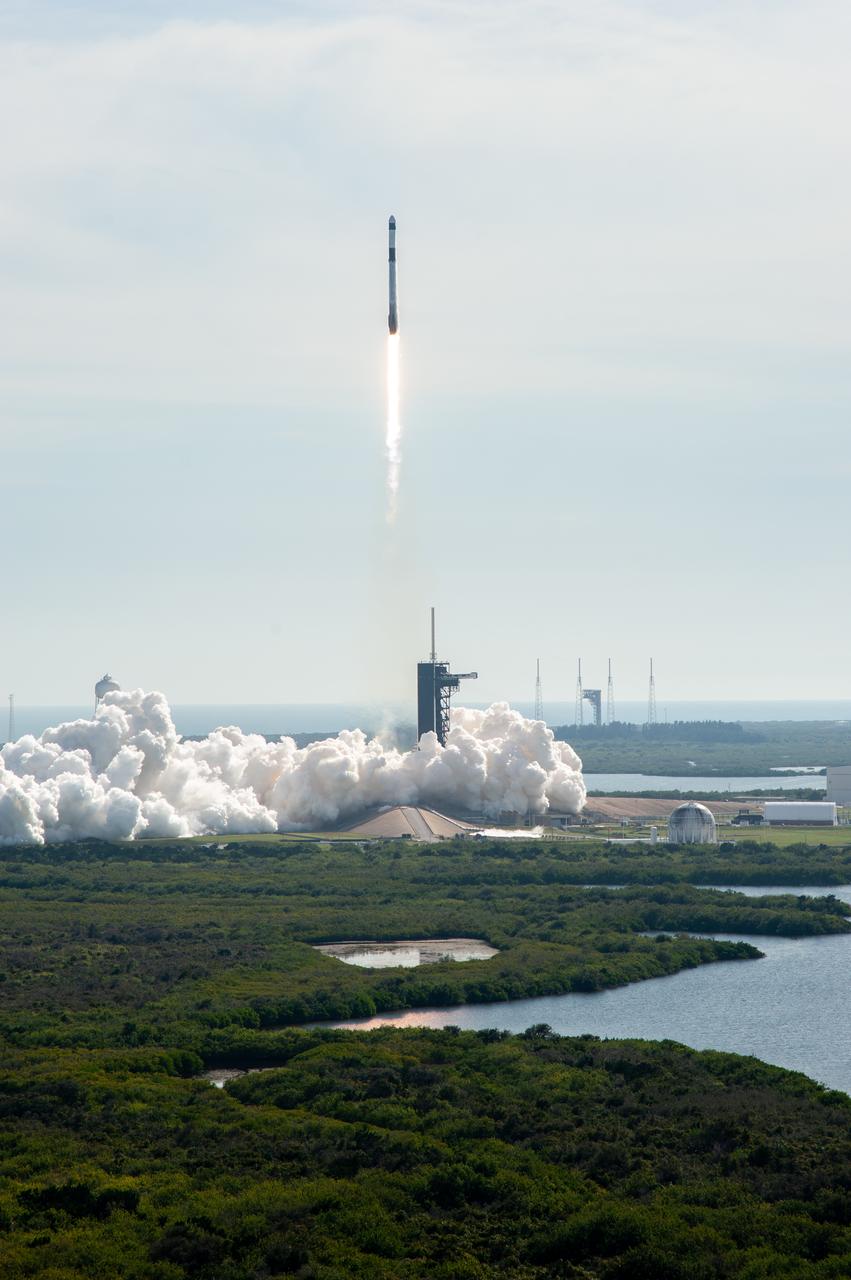
A SpaceX Falcon 9 rocket soars into the sky after lifting off from Launch Complex 39A at Kennedy Space Center in Florida at 11:17 a.m. EST on Dec. 6, 2020. The rocket is carrying the uncrewed cargo Dragon spacecraft on its journey to the International Space Station for NASA and SpaceX’s 21st Commercial Resupply Services (CRS-21) mission. Dragon will deliver more than 6,400 pounds of science investigations and cargo to the orbiting laboratory. The mission marks the first launch for SpaceX under NASA’s CRS-2 contract.
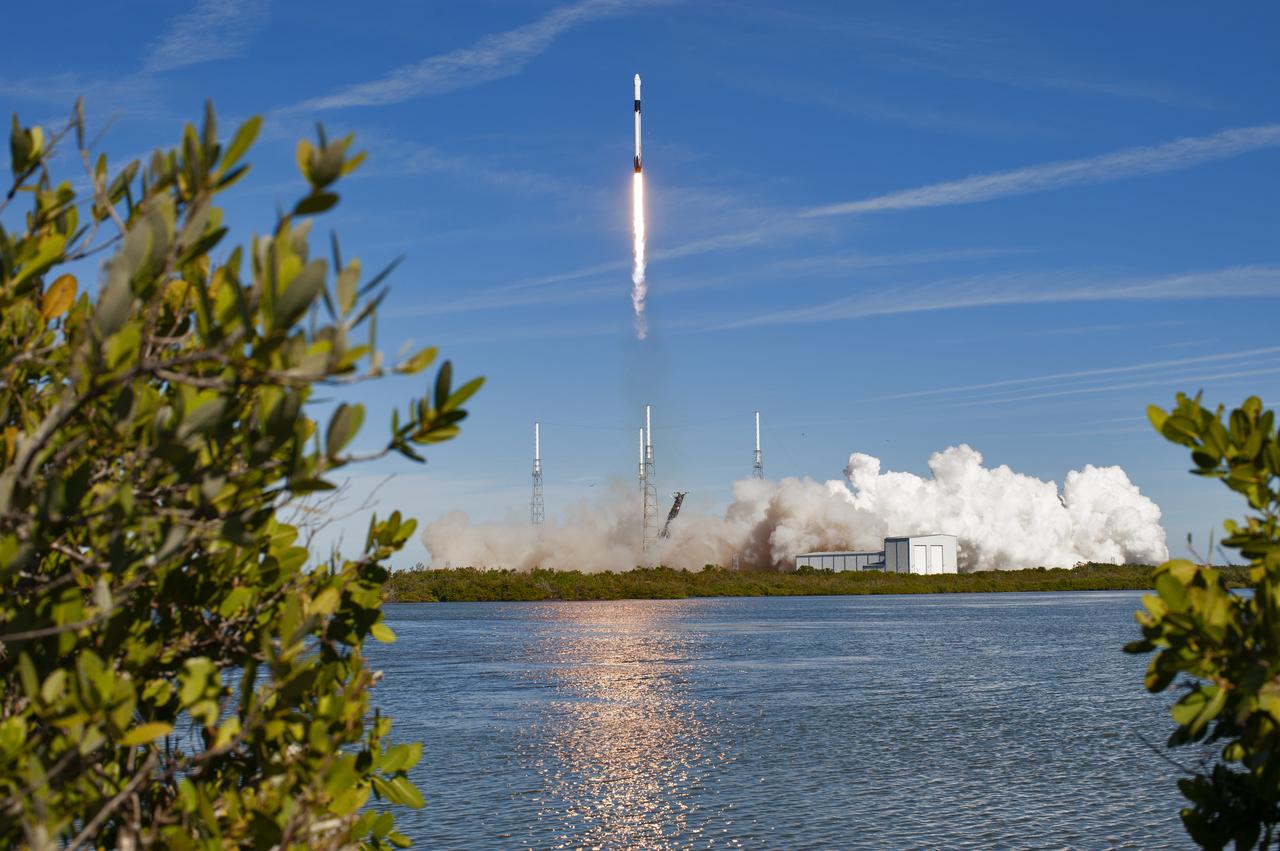
The two-stage Falcon 9 launch vehicle lifts off Space Launch Complex 40 at Cape Canaveral Air Force Station carrying the SpaceX’s Dragon resupply spacecraft to the International Space Station. Liftoff was at 1:16 p.m. EST, Dec. 5, 2018. On its 16th commercial resupply services mission to the space station, Dragon will deliver several science investigations to the space station, including the Global Ecosystem Dynamics Investigation lidar (GEDI). GEDI will provide high-quality laser ranging observations of the Earth’s forests and topography required to advance the understanding of important carbon and water cycling processes, biodiversity and habitat.
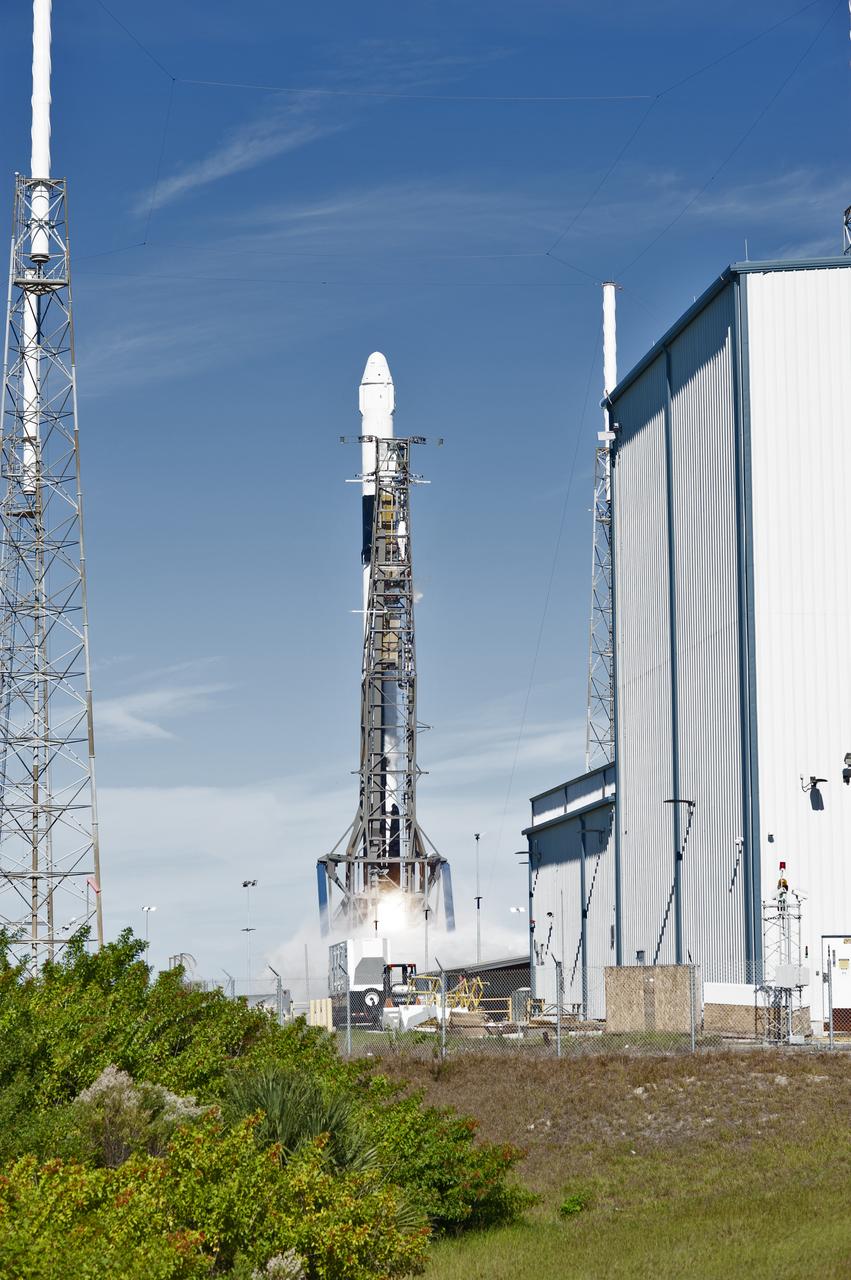
The two-stage Falcon 9 launch vehicle lifts off Space Launch Complex 40 at Cape Canaveral Air Force Station carrying the SpaceX’s Dragon resupply spacecraft to the International Space Station. Liftoff was at 1:16 p.m. EST, Dec. 5, 2018. On its 16th commercial resupply services mission to the space station, Dragon will deliver several science investigations to the space station, including the Global Ecosystem Dynamics Investigation lidar (GEDI). GEDI will provide high-quality laser ranging observations of the Earth’s forests and topography required to advance the understanding of important carbon and water cycling processes, biodiversity and habitat.
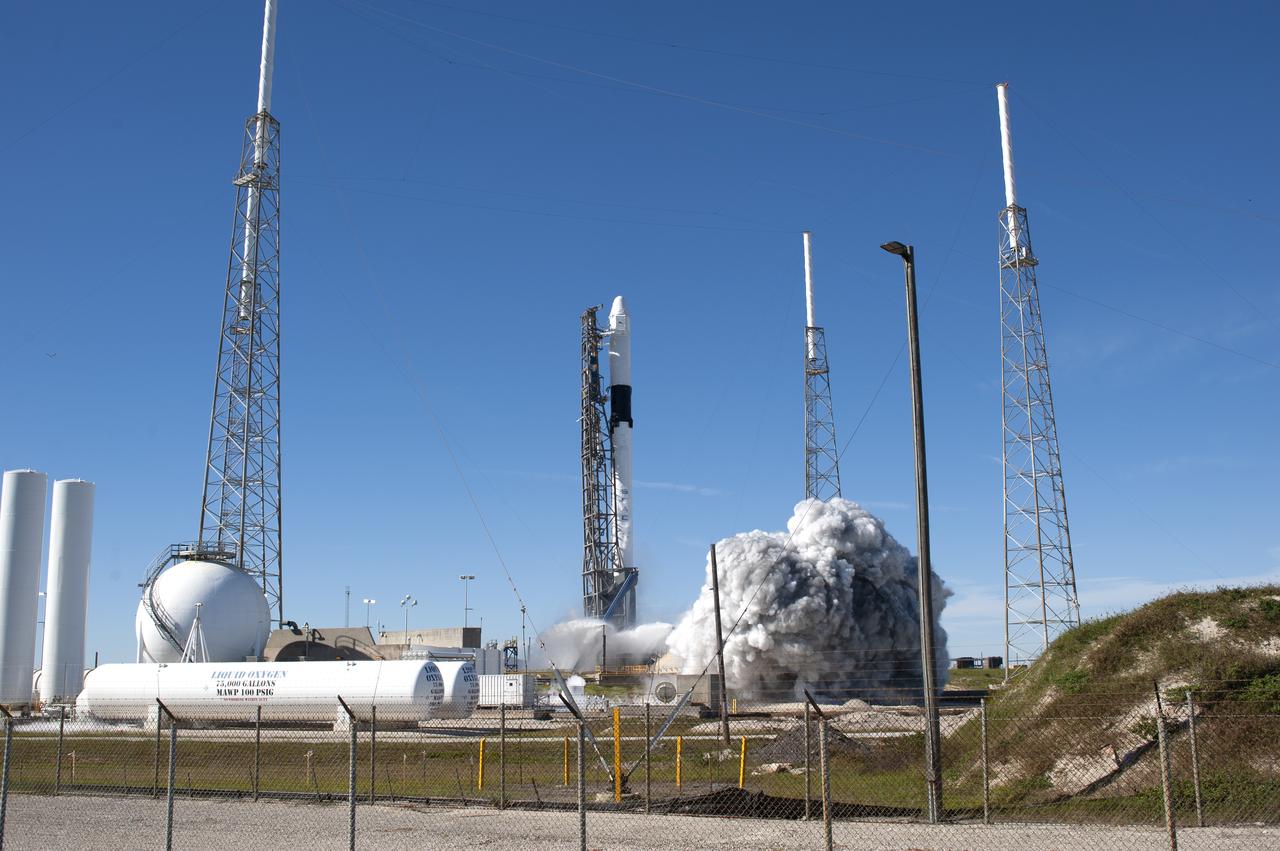
The two-stage Falcon 9 launch vehicle lifts off Space Launch Complex 40 at Cape Canaveral Air Force Station carrying the SpaceX’s Dragon resupply spacecraft to the International Space Station. Liftoff was at 1:16 p.m. EST, Dec. 5, 2018. On its 16th commercial resupply services mission to the space station, Dragon will deliver several science investigations to the space station, including the Global Ecosystem Dynamics Investigation lidar (GEDI). GEDI will provide high-quality laser ranging observations of the Earth’s forests and topography required to advance the understanding of important carbon and water cycling processes, biodiversity and habitat.
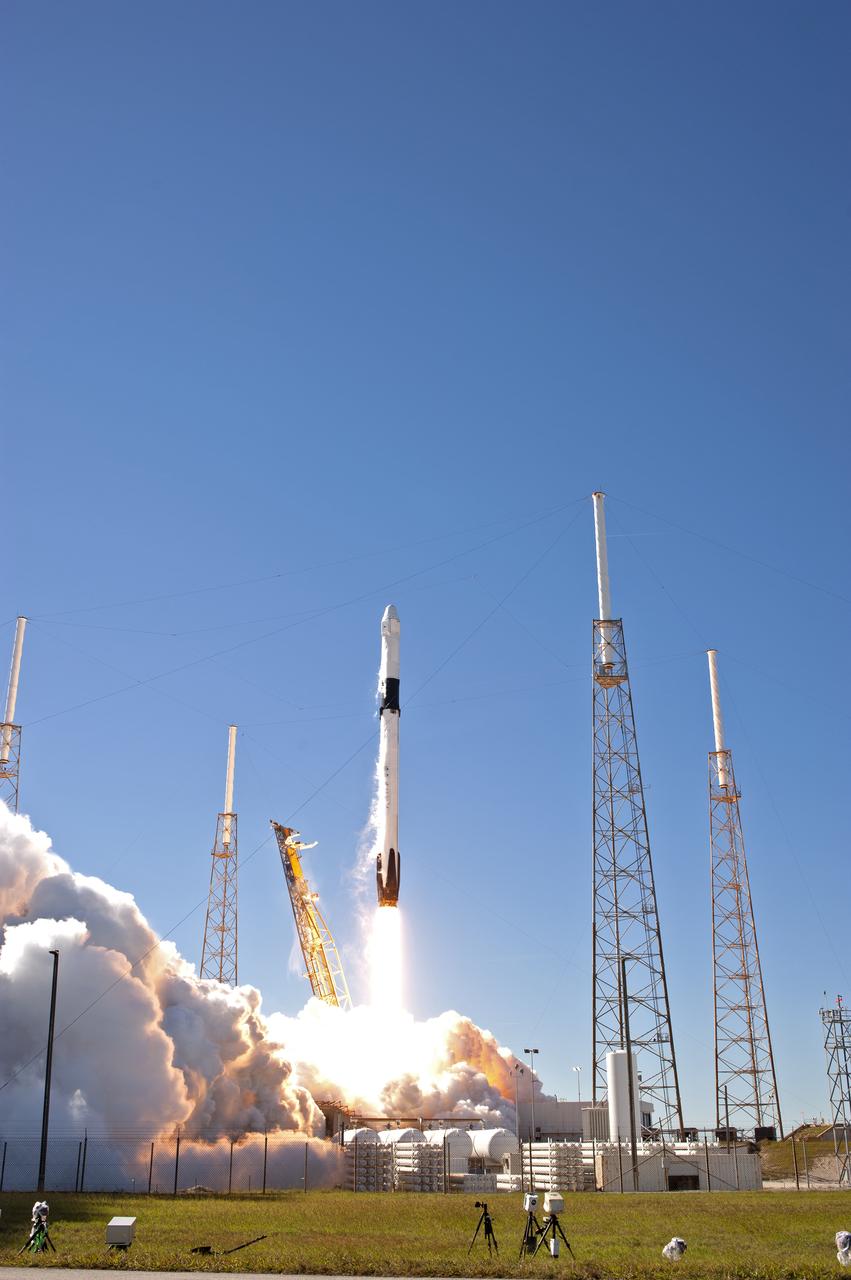
The two-stage Falcon 9 launch vehicle lifts off Space Launch Complex 40 at Cape Canaveral Air Force Station carrying the SpaceX’s Dragon resupply spacecraft to the International Space Station. Liftoff was at 1:16 p.m. EST, Dec. 5, 2018. On its 16th commercial resupply services mission to the space station, Dragon will deliver several science investigations to the space station, including the Global Ecosystem Dynamics Investigation lidar (GEDI). GEDI will provide high-quality laser ranging observations of the Earth’s forests and topography required to advance the understanding of important carbon and water cycling processes, biodiversity and habitat.
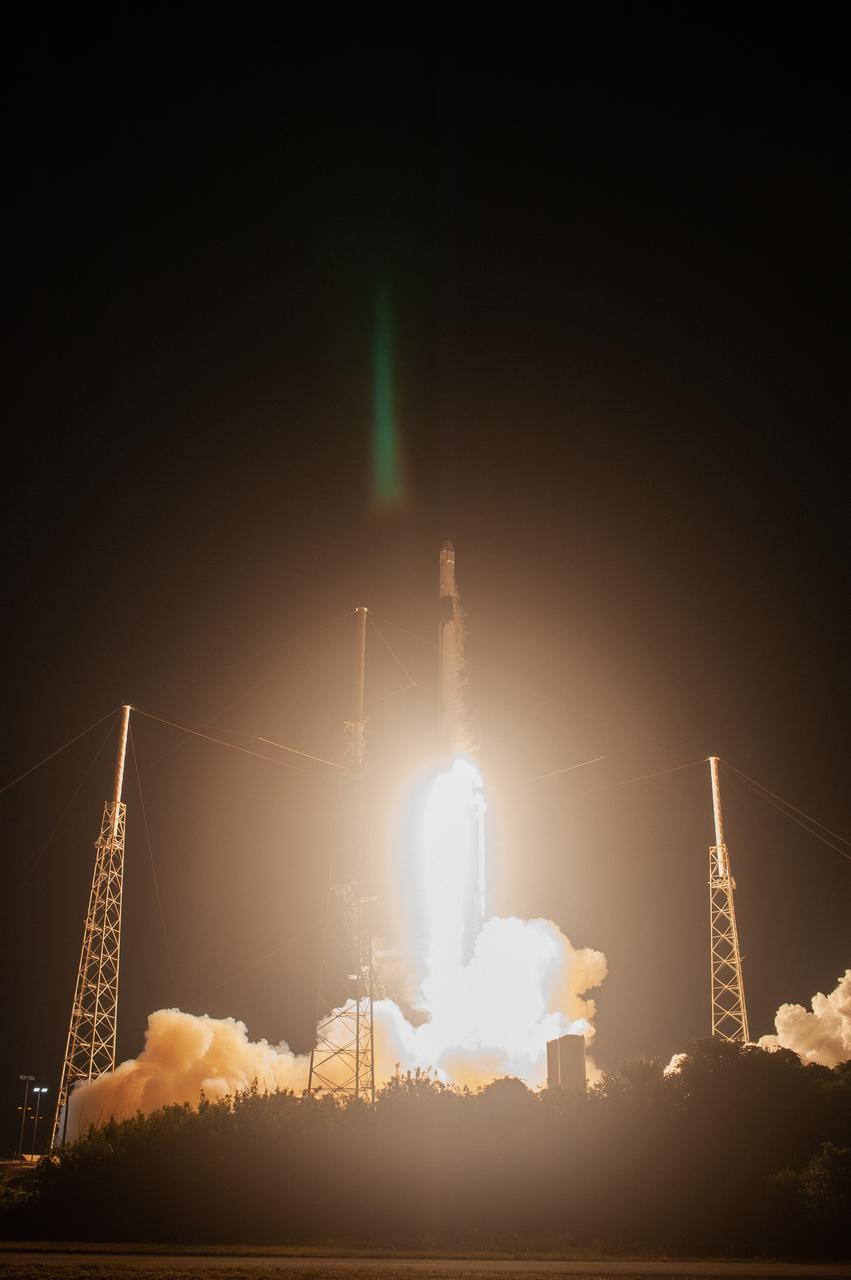
The SpaceX Falcon 9 rocket with the Dragon cargo module climbs upward after liftoff from Space Launch Complex 40 on Cape Canaveral Air Force Station in Florida in the early morning May 4, 2019. Liftoff was at 2:48 a.m. EDT. This is SpaceX’s 17th Commercial Resupply Services (CRS-17) mission for NASA to the International Space Station. The Dragon cargo module will deliver about 5,500 pounds of science and research, crew supplies and vehicle hardware to the orbital laboratory and its crew.
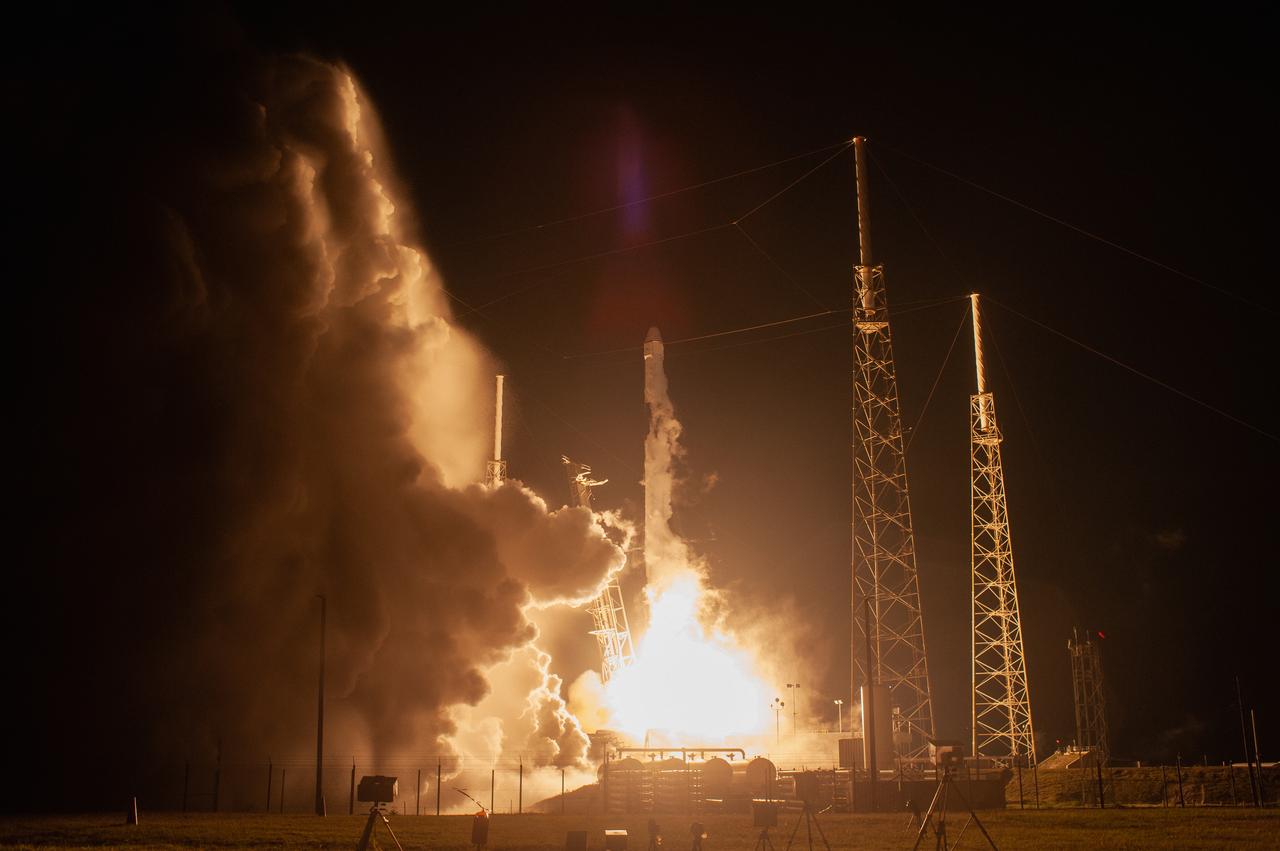
The SpaceX Falcon 9 rocket with the Dragon cargo module lifts off Space Launch Complex 40 on Cape Canaveral Air Force Station in Florida in the early morning May 4, 2019. Liftoff was at 2:48 a.m. EDT. This is SpaceX’s 17th Commercial Resupply Services (CRS-17) mission for NASA to the International Space Station. The Dragon cargo module will deliver about 5,500 pounds of science and research, crew supplies and vehicle hardware to the orbital laboratory and its crew.
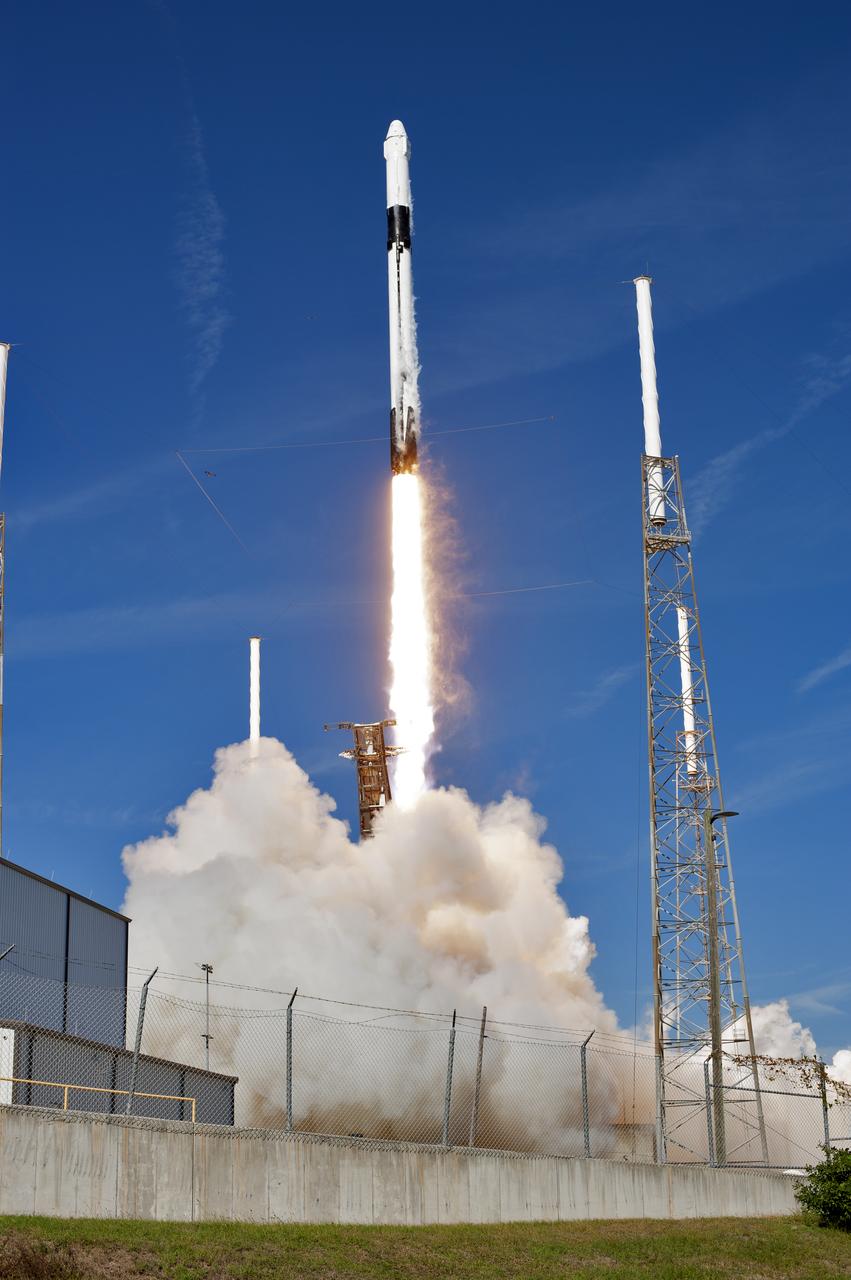
The two-stage Falcon 9 launch vehicle lifts off Space Launch Complex 40 at Cape Canaveral Air Force Station carrying the SpaceX’s Dragon resupply spacecraft to the International Space Station. Liftoff was at 1:16 p.m. EST, Dec. 5, 2018. On its 16th commercial resupply services mission to the space station, Dragon will deliver several science investigations to the space station, including the Global Ecosystem Dynamics Investigation lidar (GEDI). GEDI will provide high-quality laser ranging observations of the Earth’s forests and topography required to advance the understanding of important carbon and water cycling processes, biodiversity and habitat.