
A SpaceX Falcon 9 rocket powers the Dragon spacecraft toward the International Space Station on Friday, June 29, 2018. The two-stage launch vehicle lifted off from Space Launch Complex 40 at Cape Canaveral Air Force Station at 5:42 a.m. EDT. On the company’s 15th Commercial Resupply Services mission to the space station, Dragon is filled with supplies and payloads, including critical materials to support several science and research investigations that will occur during Expedition 56. The spacecraft’s unpressurized trunk is carrying a Canadian-built Latching End Effector, or LEE. This new LEE will replace a failed unit astronauts removed during a series of spacewalks in the fall of 2017. Each end of the Canadarm2 robotic arm has an identical LEE, and they are used as the “hands” that grapple payloads and visiting cargo spaceships.
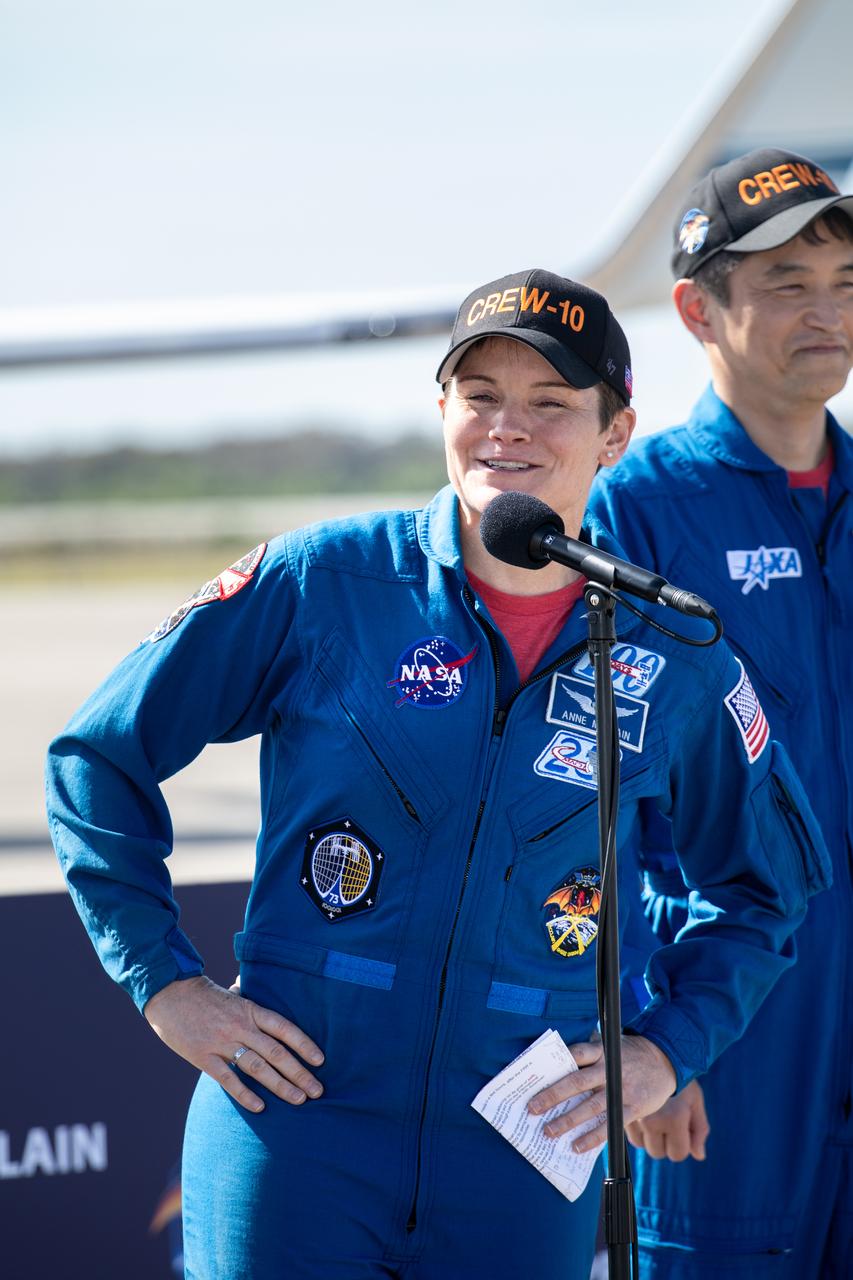
NASA astronaut Anne McClain, Crew-10 commander, delivers remarks to members of the news media during crew arrival for NASA’s SpaceX Crew-10 mission at the Launch and Landing Facility at the agency’s Kennedy Space Center in Florida on Friday, March 7, 2025. McClain and fellow NASA astronaut Nichole Ayers, along with JAXA (Japan Aerospace Exploration Agency) astronaut Takuya Onishi and Roscosmos cosmonaut Kirill Peskov will launch to the International Space Station aboard SpaceX’s Dragon spacecraft and Falcon 9 rocket. Launch is targeted for 7:48 p.m. EDT on Wednesday, March 12, 2025, from Launch Complex 39A at NASA Kennedy. Crew-10 is the 10th crew rotation mission with SpaceX to the space station as part of the agency’s Commercial Crew Program.
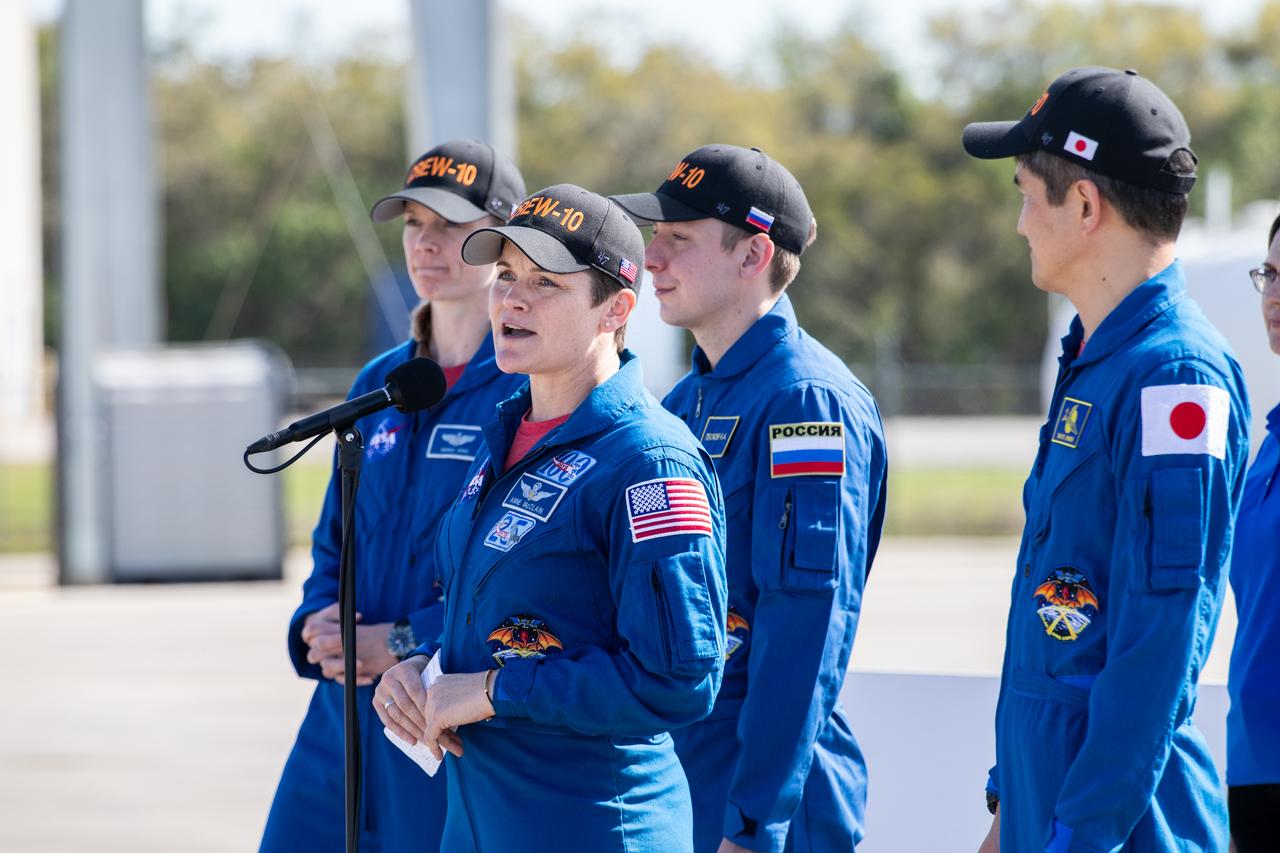
NASA astronaut Anne McClain, Crew-10 commander, delivers remarks to members of the news media during crew arrival for NASA’s SpaceX Crew-10 mission at the Launch and Landing Facility at the agency’s Kennedy Space Center in Florida on Friday, March 7, 2025. McClain and fellow NASA astronaut Nichole Ayers, along with JAXA (Japan Aerospace Exploration Agency) astronaut Takuya Onishi and Roscosmos cosmonaut Kirill Peskov will launch to the International Space Station aboard SpaceX’s Dragon spacecraft and Falcon 9 rocket. Launch is targeted for 7:48 p.m. EDT on Wednesday, March 12, 2025, from Launch Complex 39A at NASA Kennedy. Crew-10 is the 10th crew rotation mission with SpaceX to the space station as part of the agency’s Commercial Crew Program.
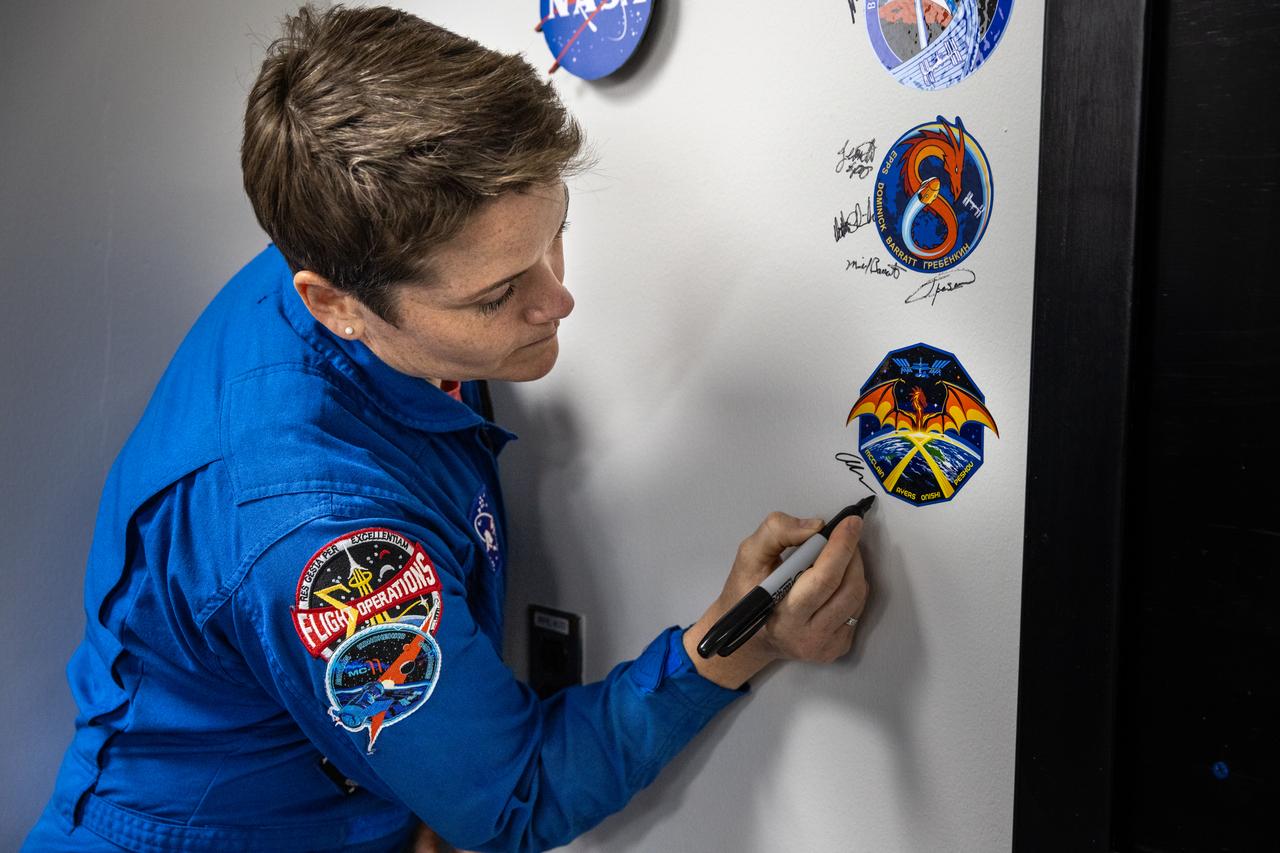
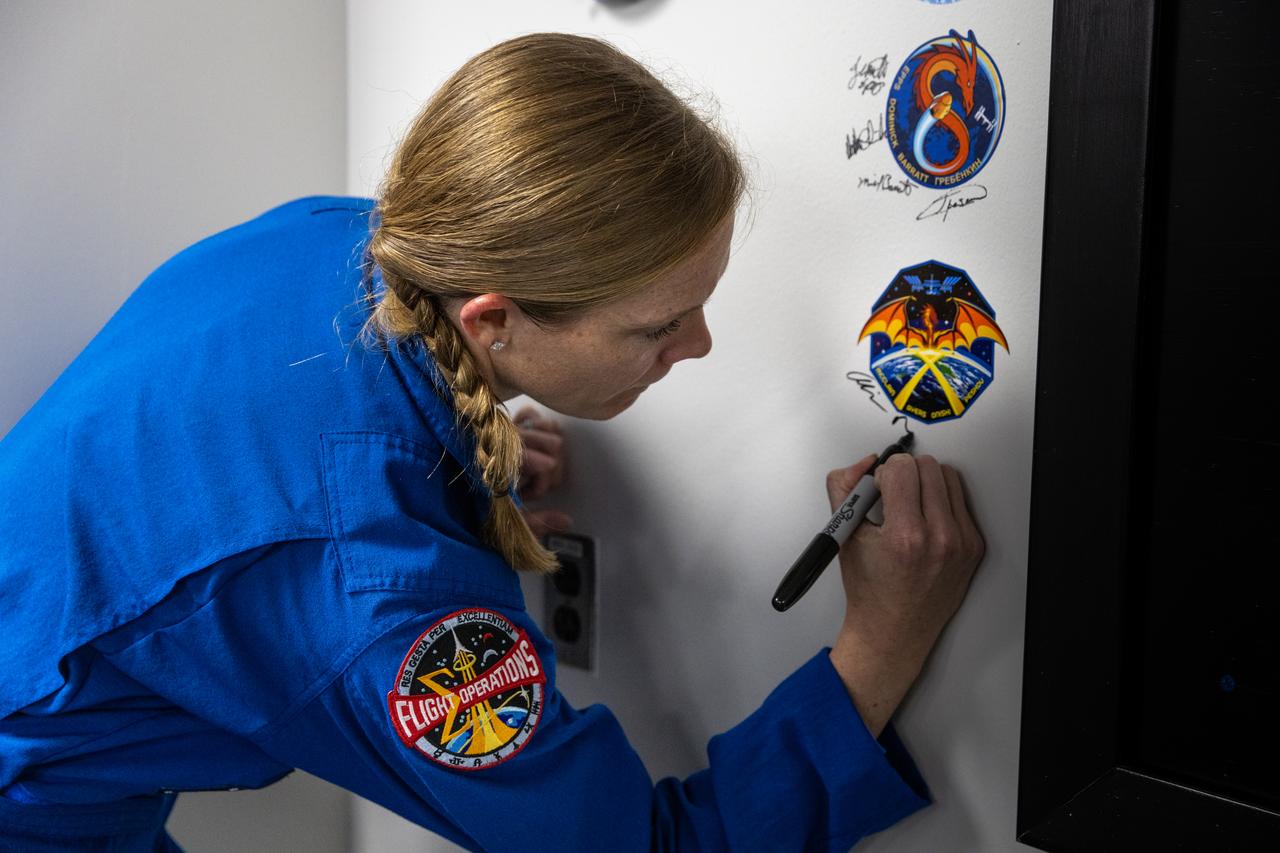
NASA astronaut Anne McClain signs her name inside the Astronaut Crew Quarters in the Neil A. Armstrong Operations and Checkout Building at NASA’s Kennedy Space Center in Florida on Friday, March 7, 2025, ahead of NASA’s SpaceX Crew-10 mission. Crew-10 is the 10th crew rotation mission of the SpaceX Dragon spacecraft and Falcon 9 rocket that will send McClain and fellow NASA astronaut Nichole Ayers, along with JAXA (Japan Aerospace Exploration Agency) astronaut Takuya Onishi and Roscosmos cosmonaut Kirill Peskov to the International Space Station as part of the agency’s Commercial Crew Program. The mission is scheduled to launch no earlier than 7:48 p.m. EDT on Wednesday, March 12, 2025, from NASA Kennedy’s Launch Complex 39A.
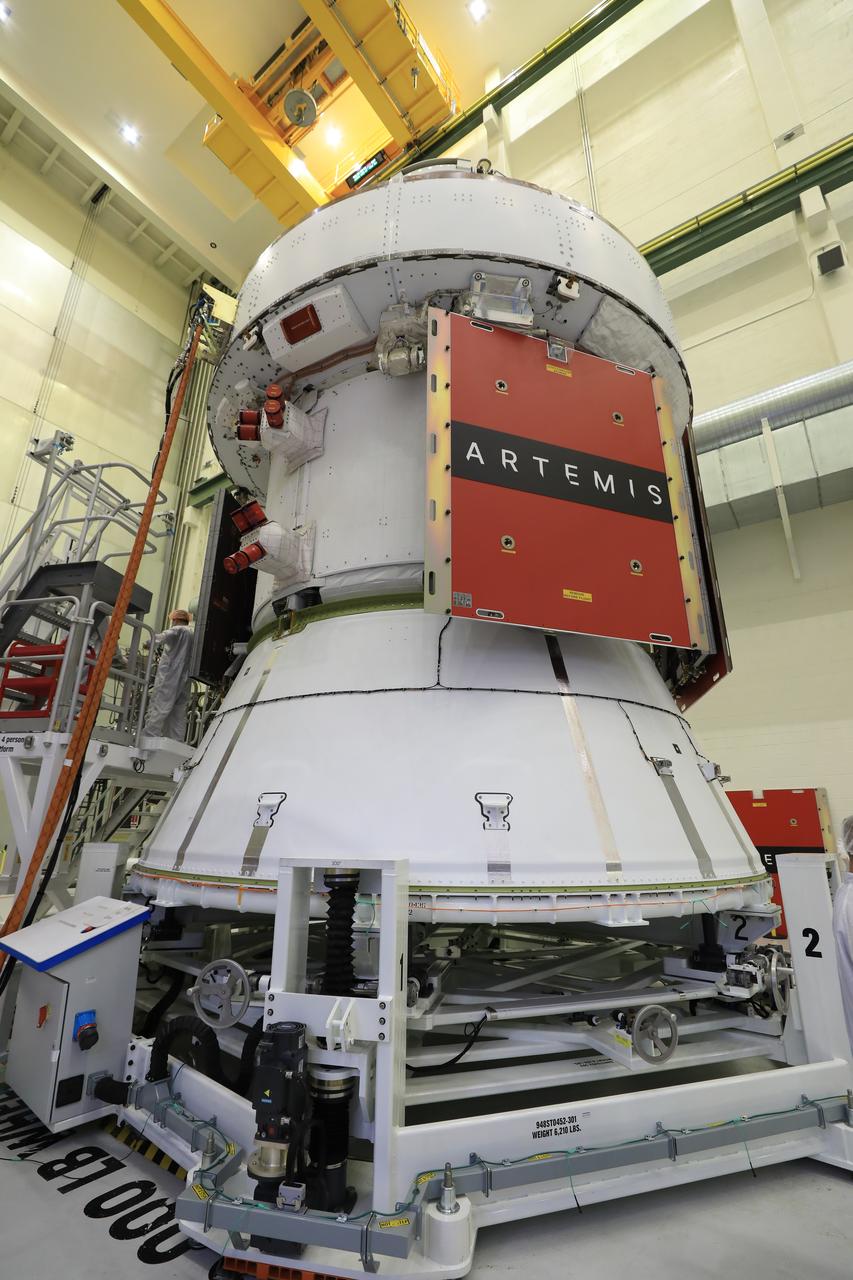
Technicians install four solar array wings on NASA’s Artemis II Orion spacecraft inside the Neil A. Armstrong Operations and Checkout Building at NASA’s Kennedy Space Center in Florida on Monday, March 3, 2025. Each solar array is nearly 23 feet long and can turn on two axes to remain aligned with the Sun for maximum power. Orion’s solar arrays, manufactured and installed by ESA (European Space Agency) and its contractor Airbus, will deliver power to the service module that provides propulsion, thermal control, and electrical power to the spacecraft, as well as air and water for the crew.
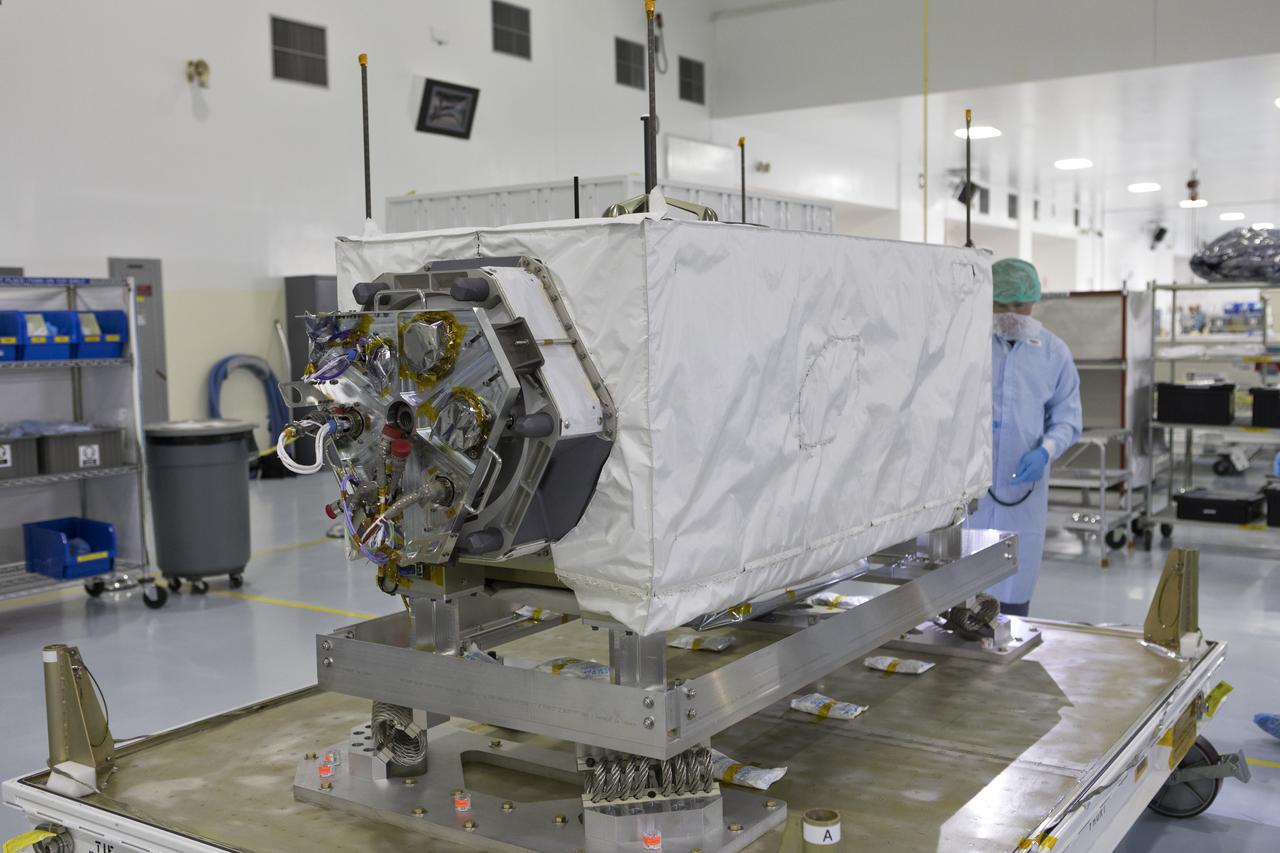
ECOSTRESS Unbagging
![From right to left to right, NASA astronauts Anne McClain and Nichole Ayers, along with JAXA (Japan Aerospace Exploration Agency) astronaut Takuya Onishi and Roscosmos cosmonaut Kirill Peskov, pose inside the Astronaut Crew Quarters in the Neil A. Armstrong Operations and Checkout Building at NASA’s Kennedy Space Center in Florida on [DAY, DATE, YEAR]. McClain, Ayers, Onishi, and Peskov will launch on NASA’s SpaceX Crew-10 mission – the 10th crew rotation mission of the SpaceX Dragon spacecraft and Falcon 9 rocket that will send the crew to the International Space Station as part of the agency’s Commercial Crew Program. The mission is scheduled to launch no earlier than 7:48 p.m. EDT on Wednesday, March 12, 2025, from NASA Kennedy’s Launch Complex 39A.](https://images-assets.nasa.gov/image/KSC-20250307-PH-KLS01-0031/KSC-20250307-PH-KLS01-0031~medium.jpg)
From right to left to right, NASA astronauts Anne McClain and Nichole Ayers, along with JAXA (Japan Aerospace Exploration Agency) astronaut Takuya Onishi and Roscosmos cosmonaut Kirill Peskov, pose inside the Astronaut Crew Quarters in the Neil A. Armstrong Operations and Checkout Building at NASA’s Kennedy Space Center in Florida on [DAY, DATE, YEAR]. McClain, Ayers, Onishi, and Peskov will launch on NASA’s SpaceX Crew-10 mission – the 10th crew rotation mission of the SpaceX Dragon spacecraft and Falcon 9 rocket that will send the crew to the International Space Station as part of the agency’s Commercial Crew Program. The mission is scheduled to launch no earlier than 7:48 p.m. EDT on Wednesday, March 12, 2025, from NASA Kennedy’s Launch Complex 39A.
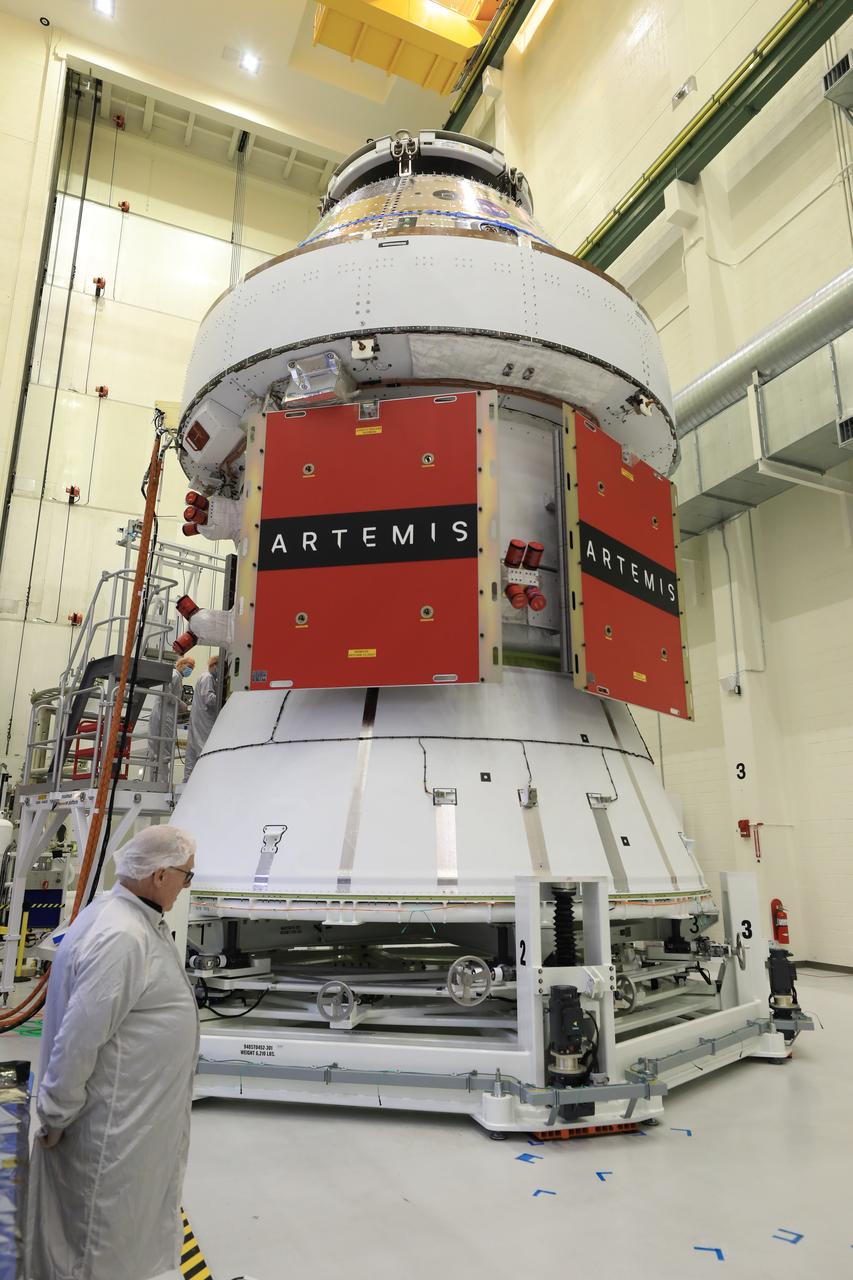
Technicians install four solar array wings on NASA’s Artemis II Orion spacecraft inside the Neil A. Armstrong Operations and Checkout Building at NASA’s Kennedy Space Center in Florida on Monday, March 3, 2025. Each solar array is nearly 23 feet long and can turn on two axes to remain aligned with the Sun for maximum power. Orion’s solar arrays, manufactured and installed by ESA (European Space Agency) and its contractor Airbus, will deliver power to the service module that provides propulsion, thermal control, and electrical power to the spacecraft, as well as air and water for the crew.
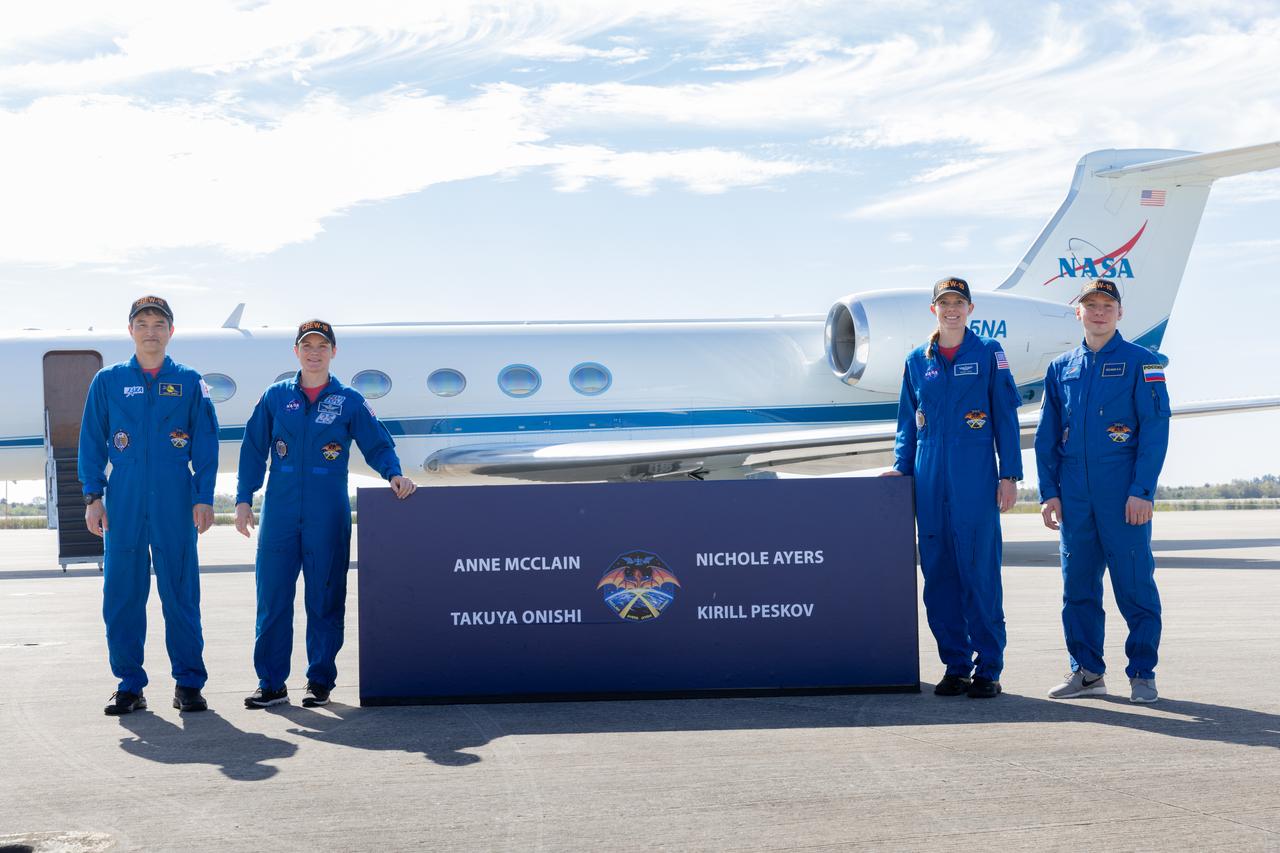
Crew members of NASA’s SpaceX Crew-10 mission to the International Space Station from left to right JAXA (Japan Aerospace Exploration Agency) astronaut Takuya Onishi, NASA astronaut Anne McClain, NASA astronaut Nichole Ayers, and Roscosmos cosmonaut Kirill Peskov stand before members of the news media after arrival to the Launch and Landing Facility at Kennedy Space Center in Florida on Friday, March 7, 2025. The Crew-10 mission is slated to launch aboard SpaceX’s Dragon spacecraft, powered by the company’s Falcon 9 rocket from NASA Kennedy’s Launch Complex 39A no earlier than 7:48 p.m. EDT on Wednesday, March 12, 2025.
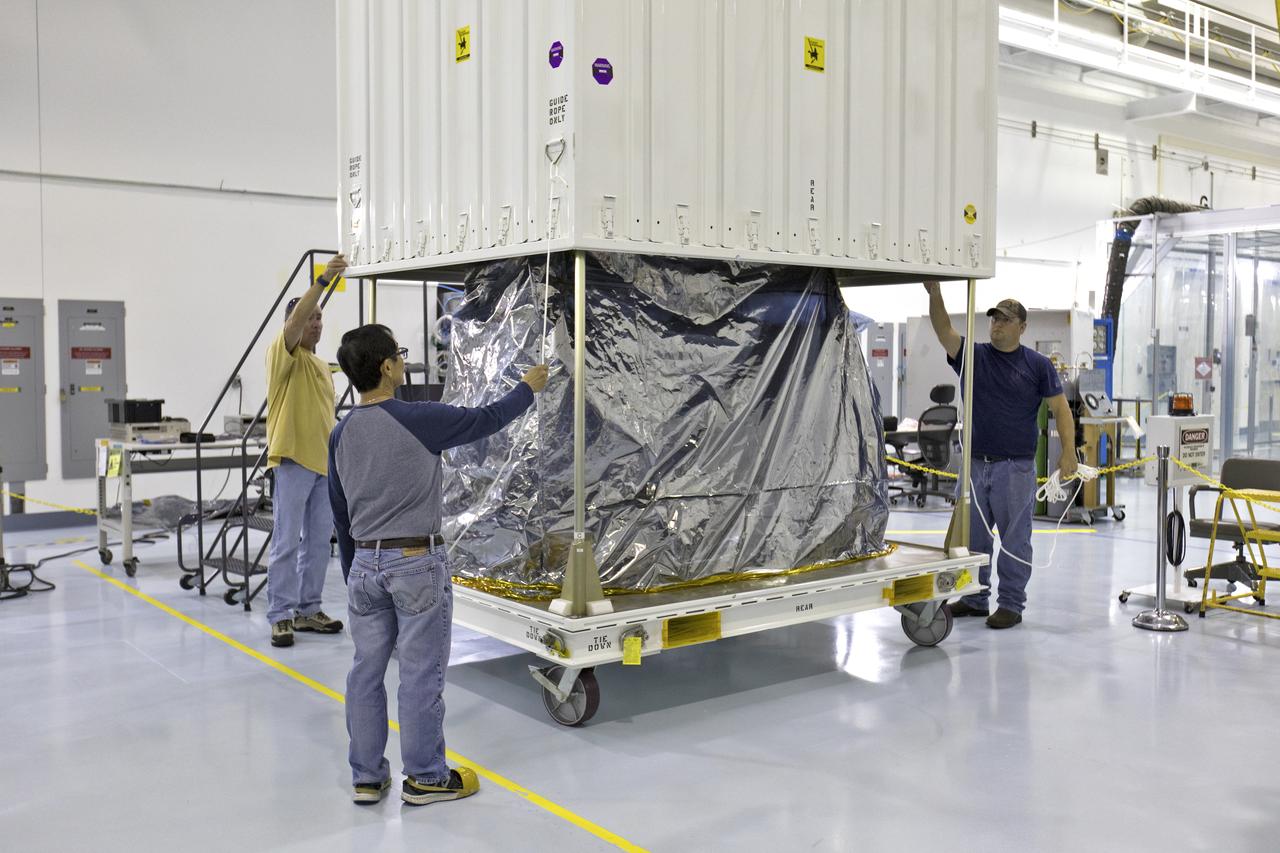
In the Space Station Processing Facility at NASA's Kennedy Space Center in Florida, the ECOsystem Spaceborne Thermal Radiometer Experiment on Space Station (ECOSTRESS) is removed from its shipping container. ECOSTRESS is designed to monitor one of the most basic processes in living plants: the loss of water through the tiny pores in leaves. ECOSTRESS will launch to the International Space Station aboard a Dragon spacecraft launched by a Falcon 9 rocket on the SpaceX CRS-15 mission in June 2018.
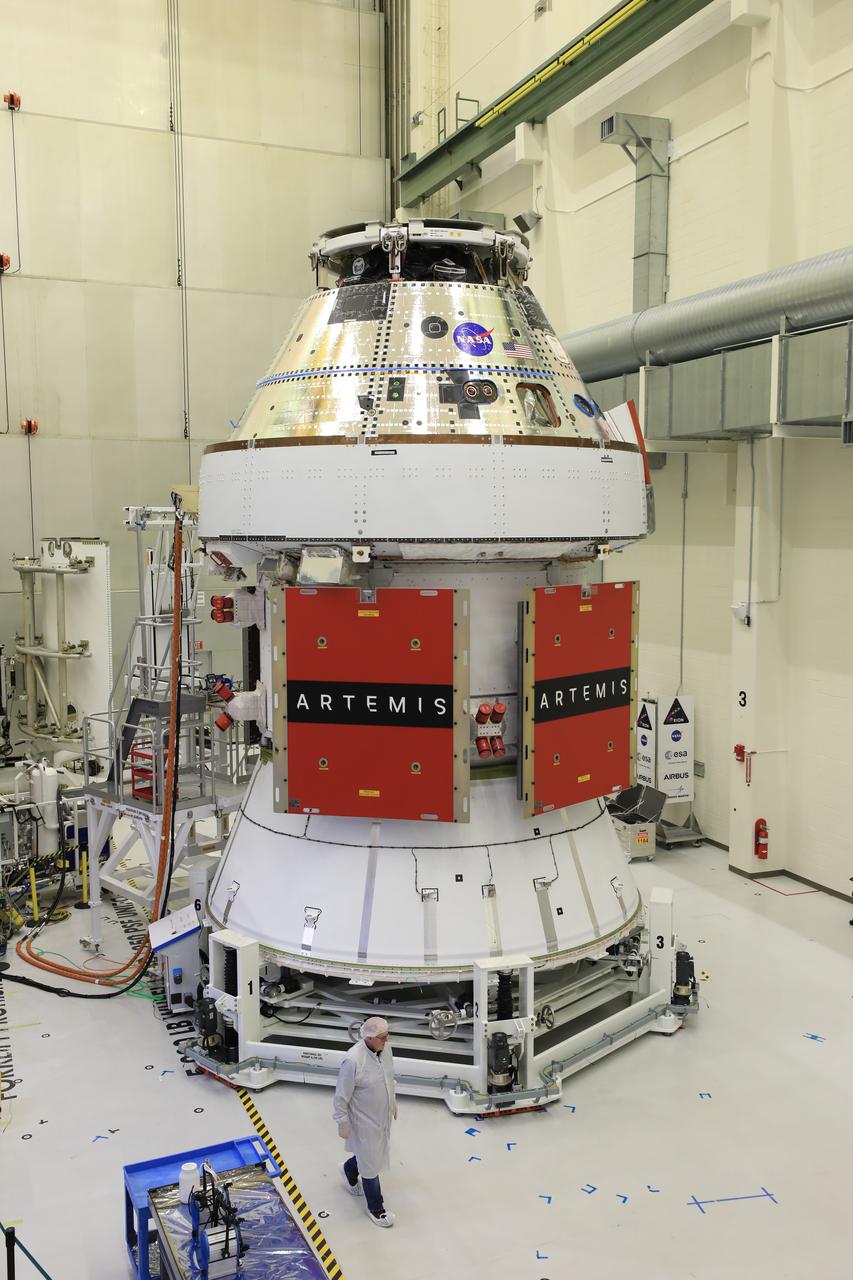
Technicians install four solar array wings on NASA’s Artemis II Orion spacecraft inside the Neil A. Armstrong Operations and Checkout Building at NASA’s Kennedy Space Center in Florida on Monday, March 3, 2025. Each solar array is nearly 23 feet long and can turn on two axes to remain aligned with the Sun for maximum power. Orion’s solar arrays, manufactured and installed by ESA (European Space Agency) and its contractor Airbus, will deliver power to the service module that provides propulsion, thermal control, and electrical power to the spacecraft, as well as air and water for the crew.
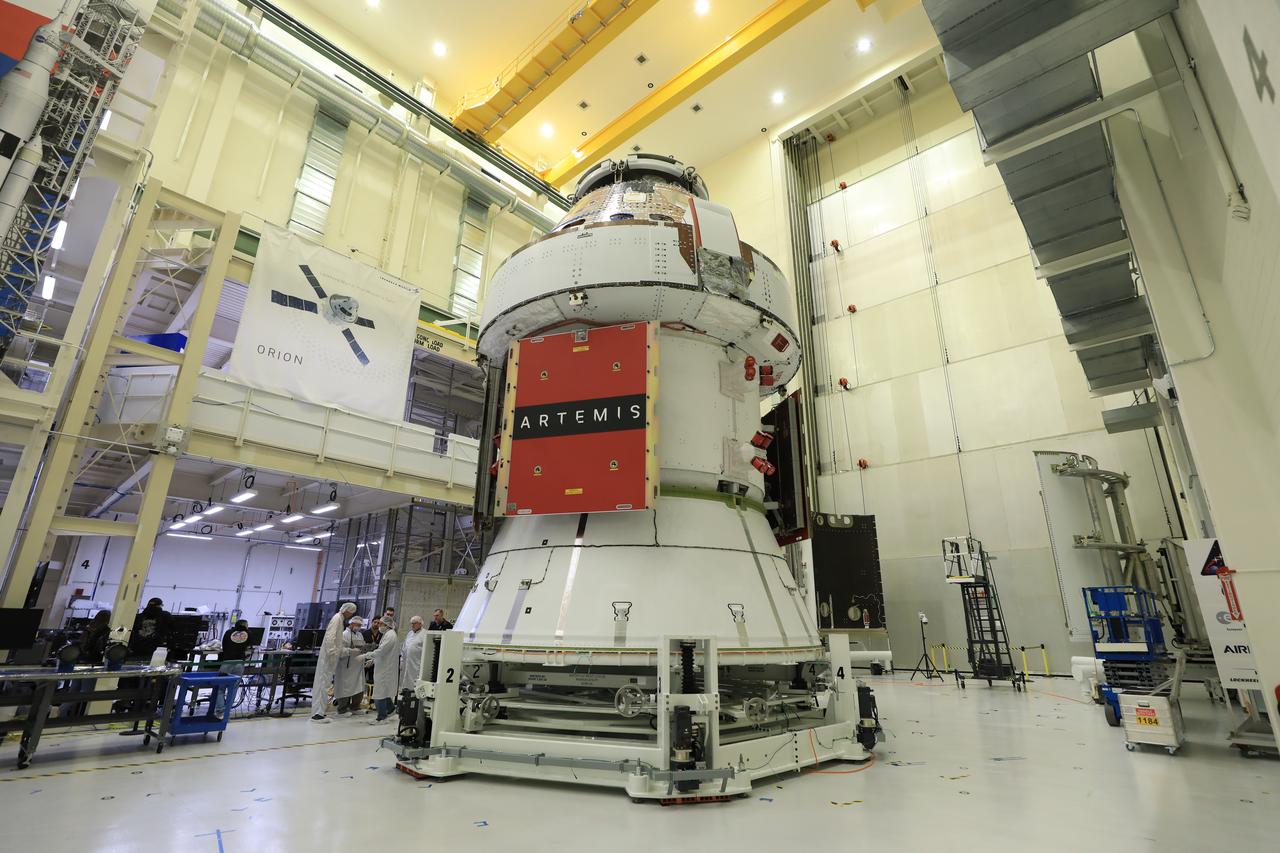
Technicians install four solar array wings on NASA’s Artemis II Orion spacecraft inside the Neil A. Armstrong Operations and Checkout Building at NASA’s Kennedy Space Center in Florida on Monday, March 3, 2025. Each solar array is nearly 23 feet long and can turn on two axes to remain aligned with the Sun for maximum power. Orion’s solar arrays, manufactured and installed by ESA (European Space Agency) and its contractor Airbus, will deliver power to the service module that provides propulsion, thermal control, and electrical power to the spacecraft, as well as air and water for the crew.
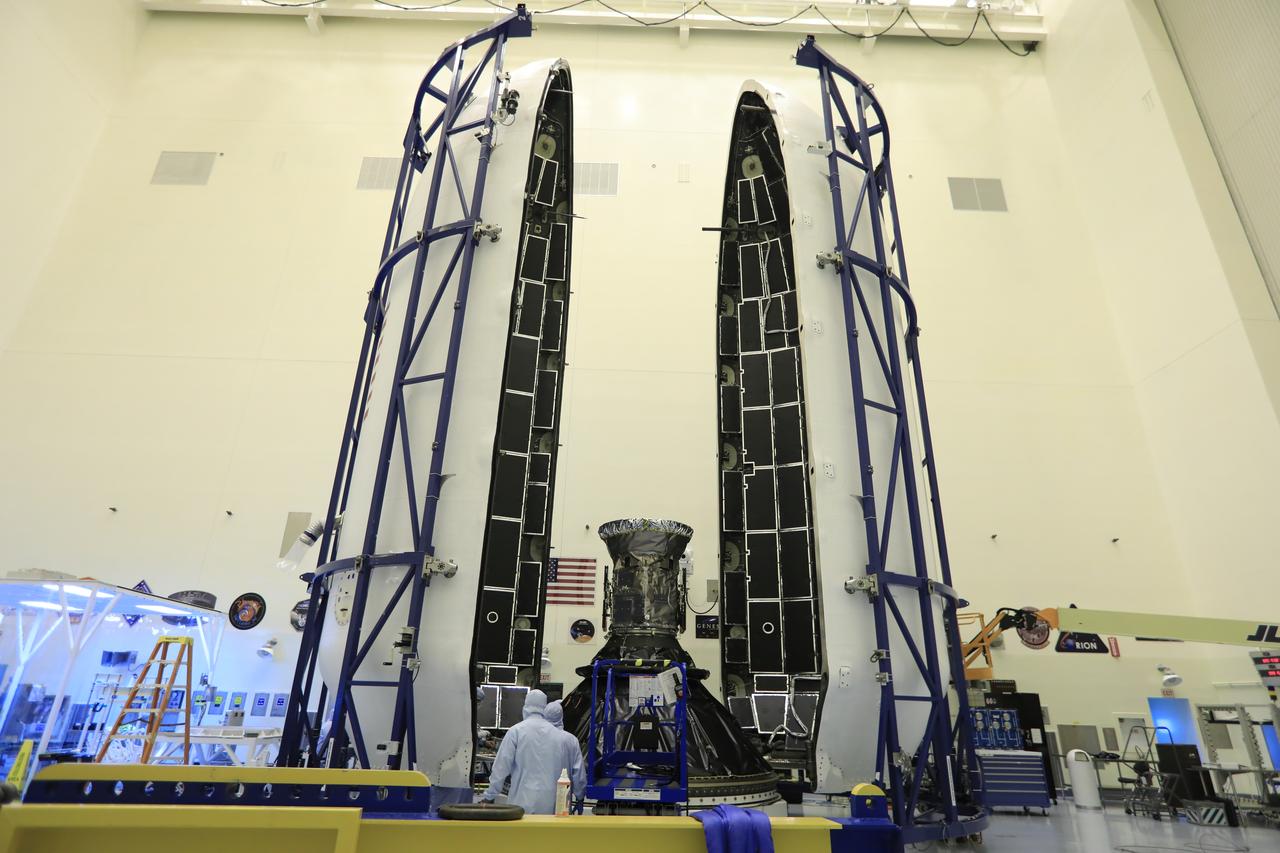
Technicians prepare NASA's Transiting Exoplanet Survey Satellite (TESS) for encapsulation in the SpaceX payload fairing inside the Payload Hazardous Servicing Facility at the agency's Kennedy Space Center in Florida. The satellite is scheduled to launch atop a SpaceX Falcon 9 rocket from Space Launch Complex 40 at Cape Canaveral Air Force Station on April 16. The satellite is the next step in NASA's search for planets outside our solar system, known as exoplanets. TESS is a NASA Astrophysics Explorer mission led and operated by MIT in Cambridge, Massachusetts, and managed by NASA’s Goddard Space Flight Center in Greenbelt, Maryland. Dr. George Ricker of MIT’s Kavli Institute for Astrophysics and Space Research serves as principal investigator for the mission. Additional partners include Orbital ATK, NASA’s Ames Research Center, the Harvard-Smithsonian Center for Astrophysics and the Space Telescope Science Institute. More than a dozen universities, research institutes and observatories worldwide are participants in the mission. NASA’s Launch Services Program is responsible for launch management.
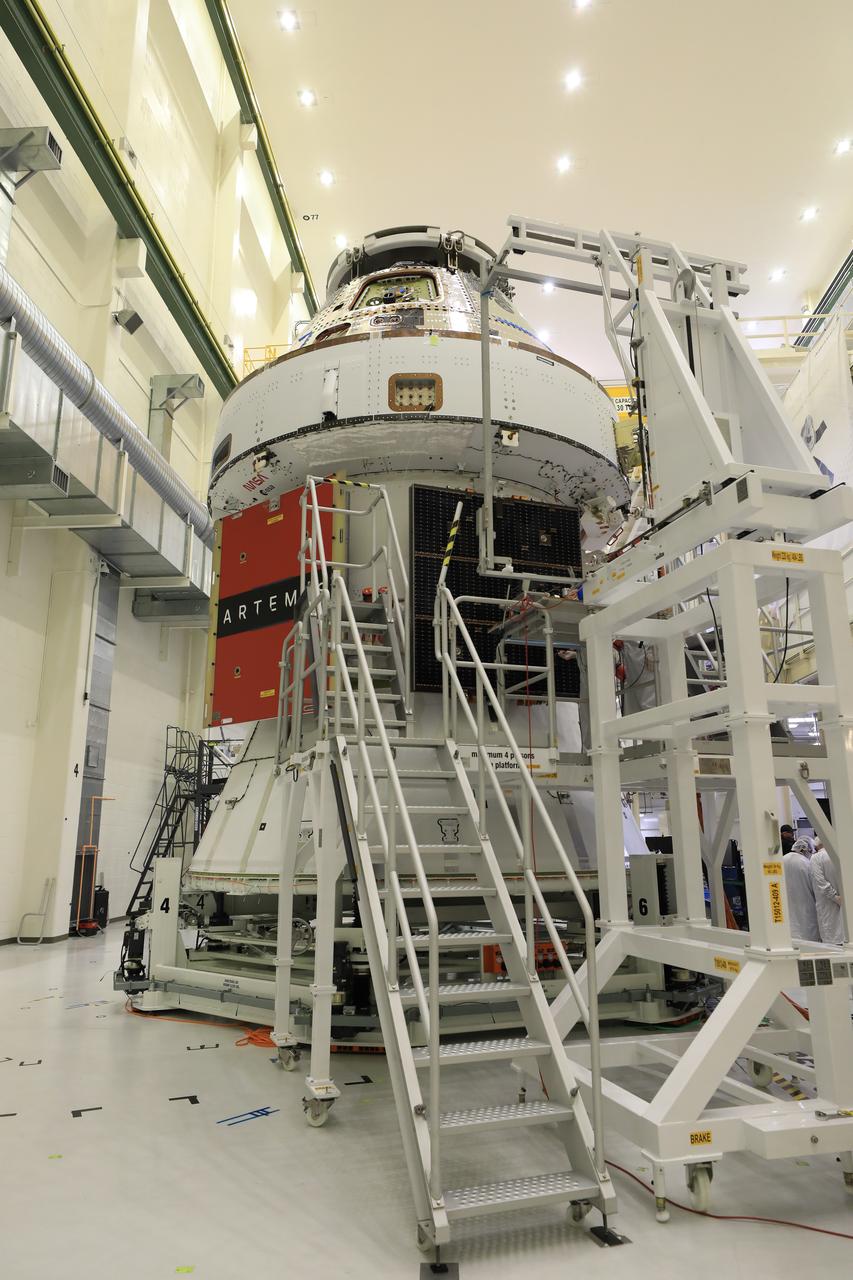
Technicians install four solar array wings on NASA’s Artemis II Orion spacecraft inside the Neil A. Armstrong Operations and Checkout Building at NASA’s Kennedy Space Center in Florida on Monday, March 3, 2025. Each solar array is nearly 23 feet long and can turn on two axes to remain aligned with the Sun for maximum power. Orion’s solar arrays, manufactured and installed by ESA (European Space Agency) and its contractor Airbus, will deliver power to the service module that provides propulsion, thermal control, and electrical power to the spacecraft, as well as air and water for the crew.
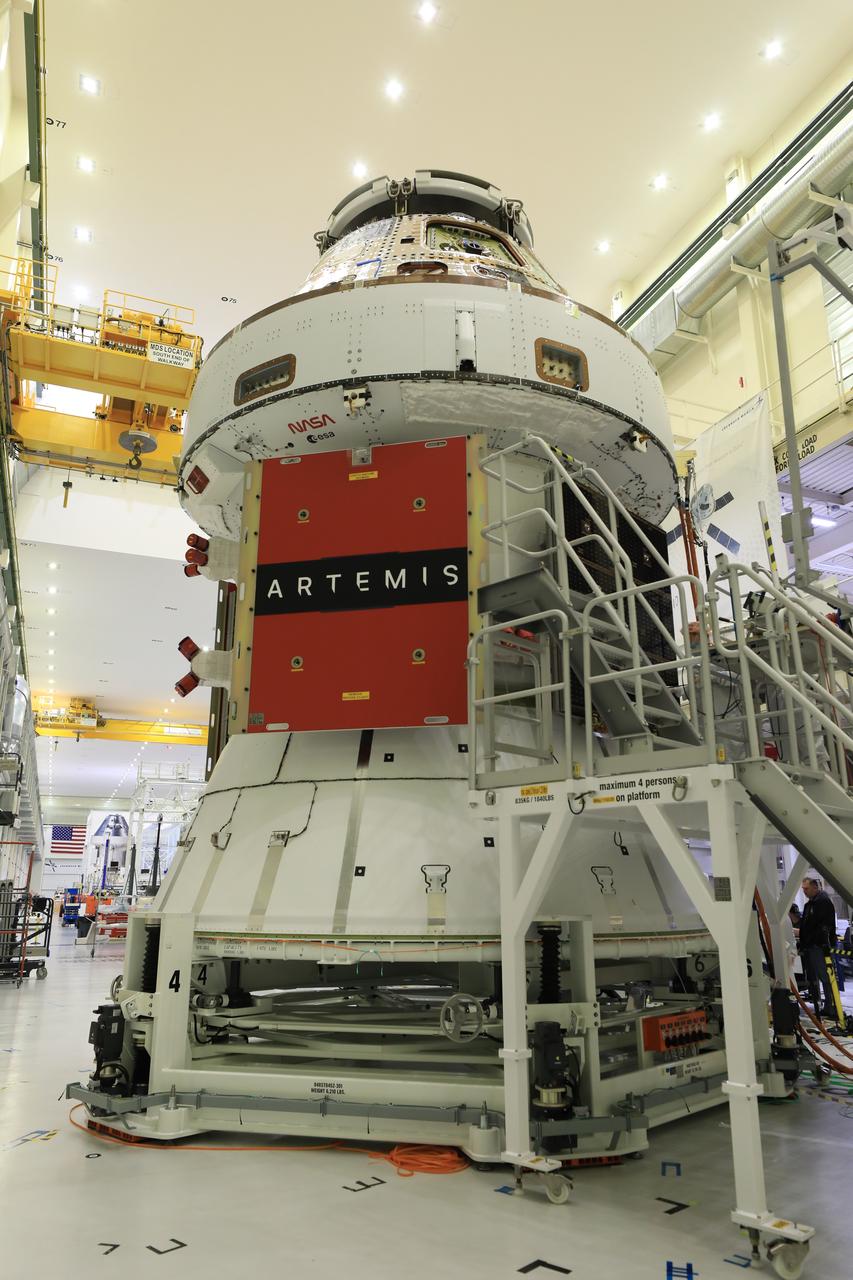
Technicians install four solar array wings on NASA’s Artemis II Orion spacecraft inside the Neil A. Armstrong Operations and Checkout Building at NASA’s Kennedy Space Center in Florida on Monday, March 3, 2025. Each solar array is nearly 23 feet long and can turn on two axes to remain aligned with the Sun for maximum power. Orion’s solar arrays, manufactured and installed by ESA (European Space Agency) and its contractor Airbus, will deliver power to the service module that provides propulsion, thermal control, and electrical power to the spacecraft, as well as air and water for the crew.
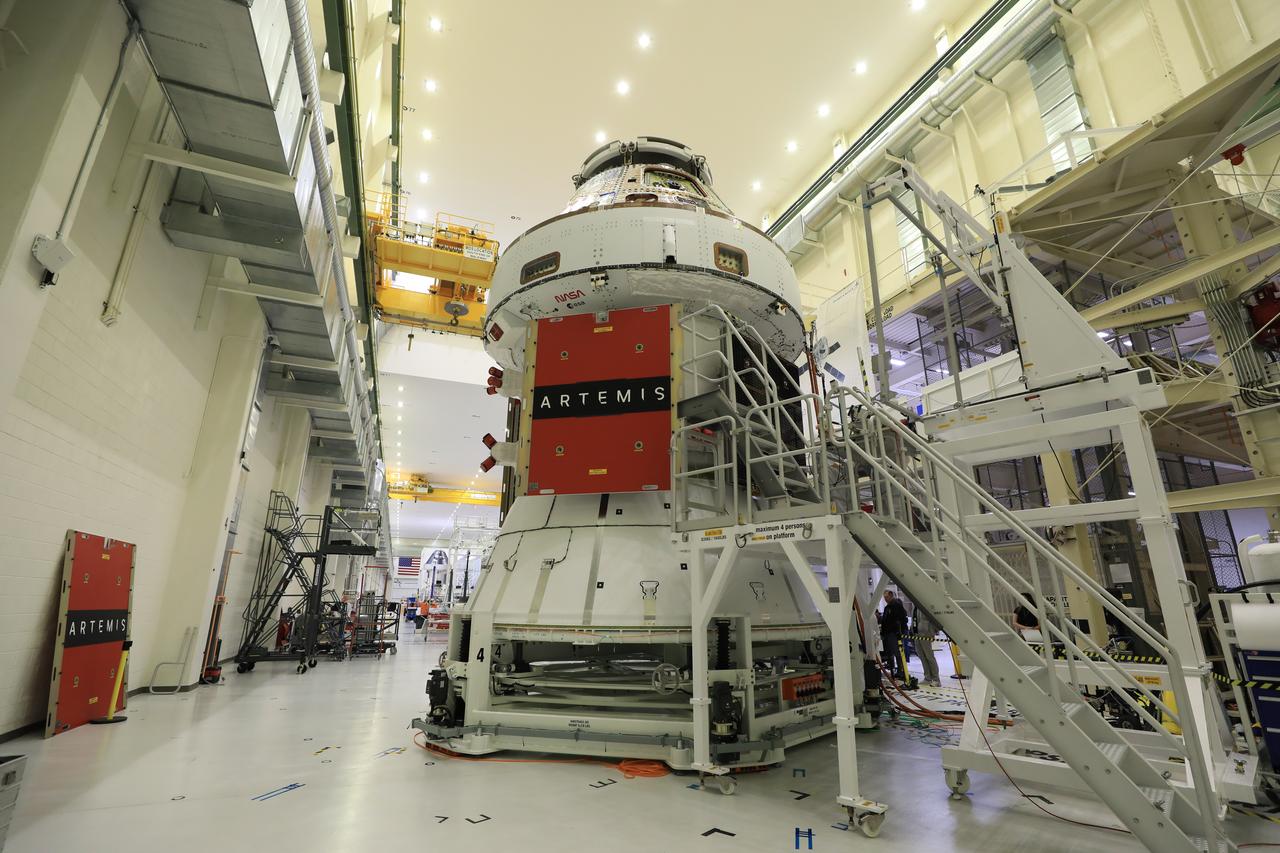
Technicians install four solar array wings on NASA’s Artemis II Orion spacecraft inside the Neil A. Armstrong Operations and Checkout Building at NASA’s Kennedy Space Center in Florida on Monday, March 3, 2025. Each solar array is nearly 23 feet long and can turn on two axes to remain aligned with the Sun for maximum power. Orion’s solar arrays, manufactured and installed by ESA (European Space Agency) and its contractor Airbus, will deliver power to the service module that provides propulsion, thermal control, and electrical power to the spacecraft, as well as air and water for the crew.
NASA astronaut Nichole Ayers signs her name inside the Astronaut Crew Quarters in the Neil A. Armstrong Operations and Checkout Building at NASA’s Kennedy Space Center in Florida on Friday, March 7, 2025, ahead of NASA’s SpaceX Crew-10 mission. Crew-10 is the 10th crew rotation mission of the SpaceX Dragon spacecraft and Falcon 9 rocket that will send Ayers and fellow NASA astronaut Anne McClain, along with JAXA (Japan Aerospace Exploration Agency) astronaut Takuya Onishi and Roscosmos cosmonaut Kirill Peskov to the International Space Station as part of the agency’s Commercial Crew Program. The mission is scheduled to launch no earlier than 7:48 p.m. EDT on Wednesday, March 12, 2025, from NASA Kennedy’s Launch Complex 39A.
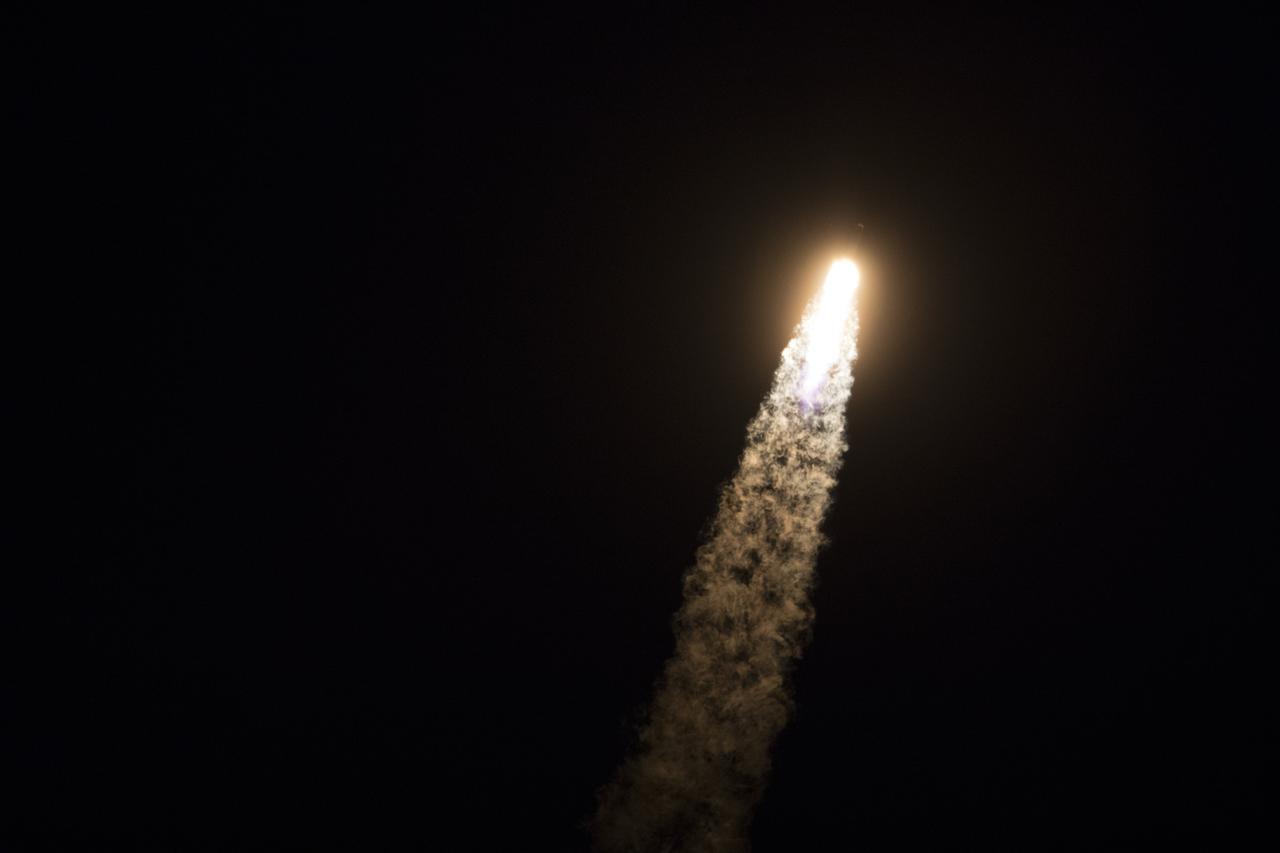
The two-stage SpaceX Falcon 9 launch vehicle soars into the sky from Space Launch Complex 40 at Cape Canaveral Air Force Station, carrying the SpaceX Dragon resupply spacecraft to the International Space Station. Liftoff was at 5:42 a.m. EDT on Friday, June 29, 2018. On the company’s 15th Commercial Resupply Services mission to the International Space Station, Dragon is filled with supplies and payloads, including critical materials to support several science and research investigations that will occur during Expedition 56. The spacecraft’s unpressurized trunk is carrying a Canadian-built Latching End Effector, or LEE. This new LEE will replace a failed unit astronauts removed during a series of spacewalks in the fall of 2017. Each end of the Canadarm2 robotic arm has an identical LEE, and they are used as the “hands” that grapple payloads and visiting cargo spaceships.

Crew members of NASA’s SpaceX Crew-10 mission to the International Space Station descend the ramp of a Gulfstream jet upon arrival to the Launch and Landing Facility at Kennedy Space Center in Florida on Friday, March 7, 2025. NASA astronauts Anne McClain and Nichole Ayers, along with JAXA (Japan Aerospace Exploration Agency) astronaut Takuya Onishi and Roscosmos cosmonaut Kirill Peskov, stand before members of the news media after are slated to launch aboard SpaceX’s Dragon spacecraft, powered by the company’s Falcon 9 rocket from NASA Kennedy’s Launch Complex 39A no earlier than 7:48 p.m. EDT on Wednesday, March 12, 2025.
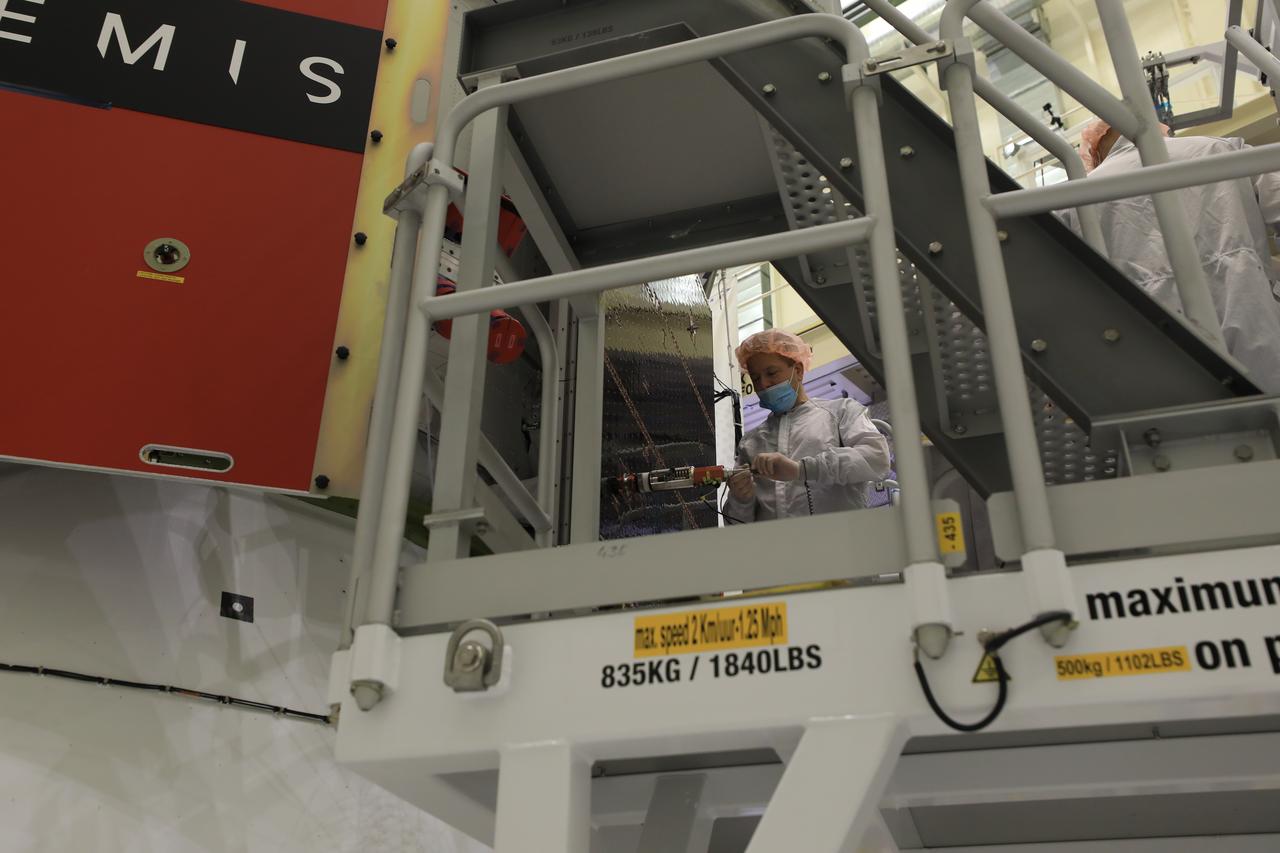
Technicians install four solar array wings on NASA’s Artemis II Orion spacecraft inside the Neil A. Armstrong Operations and Checkout Building at NASA’s Kennedy Space Center in Florida on Monday, March 3, 2025. Each solar array is nearly 23 feet long and can turn on two axes to remain aligned with the Sun for maximum power. Orion’s solar arrays, manufactured and installed by ESA (European Space Agency) and its contractor Airbus, will deliver power to the service module that provides propulsion, thermal control, and electrical power to the spacecraft, as well as air and water for the crew.
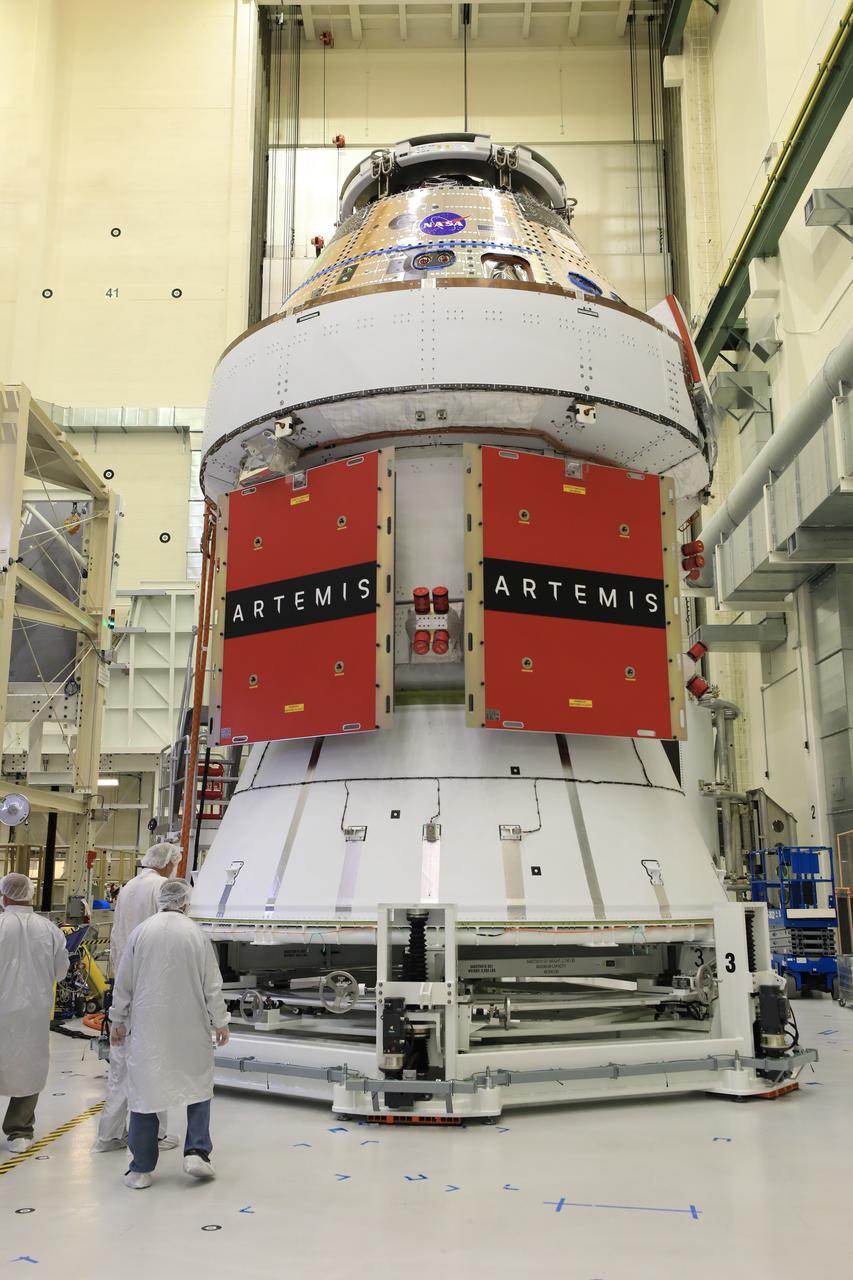
Technicians install four solar array wings on NASA’s Artemis II Orion spacecraft inside the Neil A. Armstrong Operations and Checkout Building at NASA’s Kennedy Space Center in Florida on Monday, March 3, 2025. Each solar array is nearly 23 feet long and can turn on two axes to remain aligned with the Sun for maximum power. Orion’s solar arrays, manufactured and installed by ESA (European Space Agency) and its contractor Airbus, will deliver power to the service module that provides propulsion, thermal control, and electrical power to the spacecraft, as well as air and water for the crew.

JAXA (Japan Aerospace Exploration Agency) astronaut Takuya Onishi signs his name inside the Astronaut Crew Quarters in the Neil A. Armstrong Operations and Checkout Building at NASA’s Kennedy Space Center in Florida on Friday, March 7, 2025, ahead of NASA’s SpaceX Crew-10 mission. Crew-10 is the 10th crew rotation mission of the SpaceX Dragon spacecraft and Falcon 9 rocket that will send NASA astronauts Anne McClain and Nichole Ayers, along with Onishi and Roscosmos cosmonaut Kirill Peskov to the International Space Station as part of the agency’s Commercial Crew Program. The mission is scheduled to launch no earlier than 7:48 p.m. EDT on Wednesday, March 12, 2025, from NASA Kennedy’s Launch Complex 39A.

JAXA (Japan Aerospace Exploration Agency) astronaut Takuya Onishi participates in a news media event during crew arrival for NASA’s SpaceX Crew-10 mission at the Launch and Landing Facility at the agency’s Kennedy Space Center in Florida on Friday, March 7, 2025. NASA astronauts Anne McClain and Nichole Ayers, along with Onishi and Roscosmos cosmonaut Kirill Peskov will launch to the International Space Station aboard SpaceX’s Dragon spacecraft and Falcon 9 rocket. Launch is targeted for 7:48 p.m. EDT on Wednesday, March 12, 2025, from Launch Complex 39A at NASA Kennedy. Crew-10 is the 10th crew rotation mission with SpaceX to the space station as part of the agency’s Commercial Crew Program
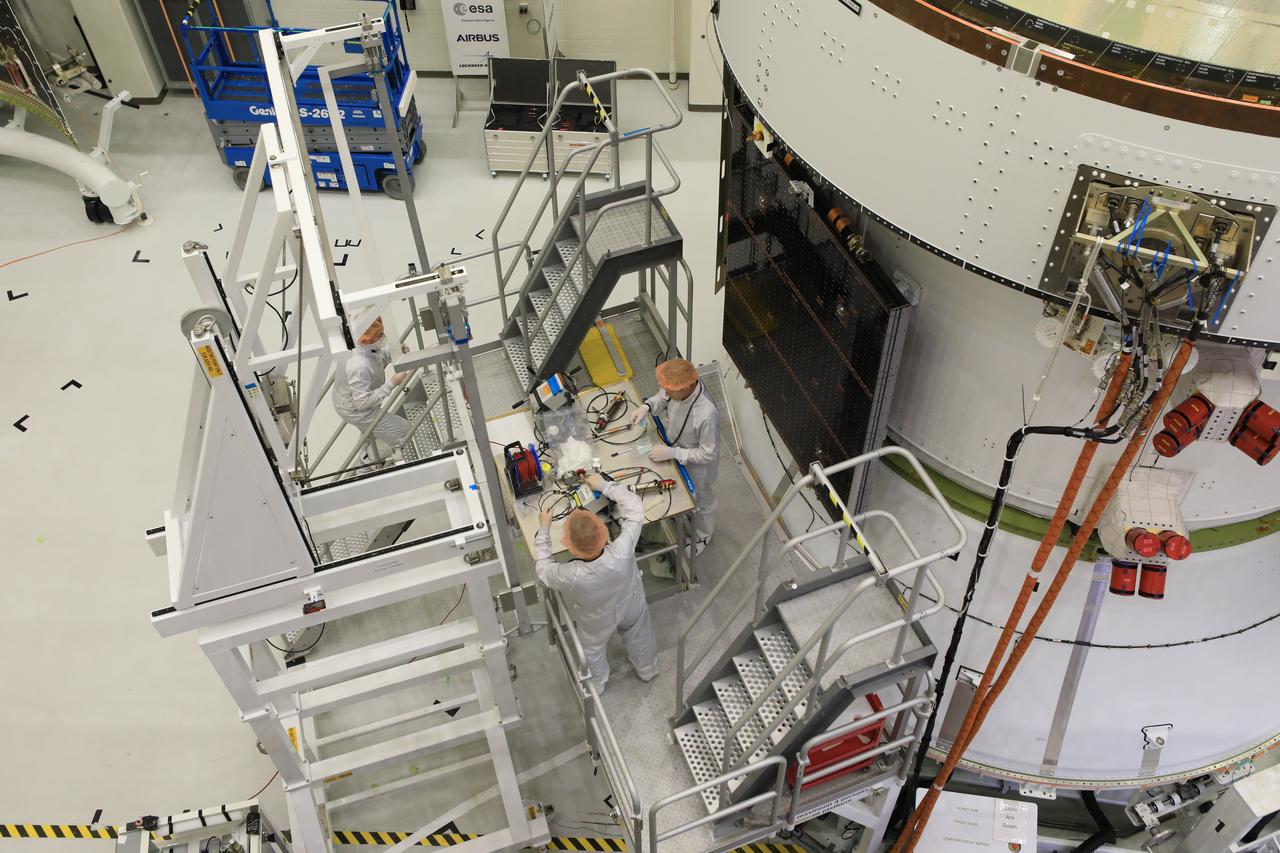
Technicians install four solar array wings on NASA’s Artemis II Orion spacecraft inside the Neil A. Armstrong Operations and Checkout Building at NASA’s Kennedy Space Center in Florida on Monday, March 3, 2025. Each solar array is nearly 23 feet long and can turn on two axes to remain aligned with the Sun for maximum power. Orion’s solar arrays, manufactured and installed by ESA (European Space Agency) and its contractor Airbus, will deliver power to the service module that provides propulsion, thermal control, and electrical power to the spacecraft, as well as air and water for the crew.
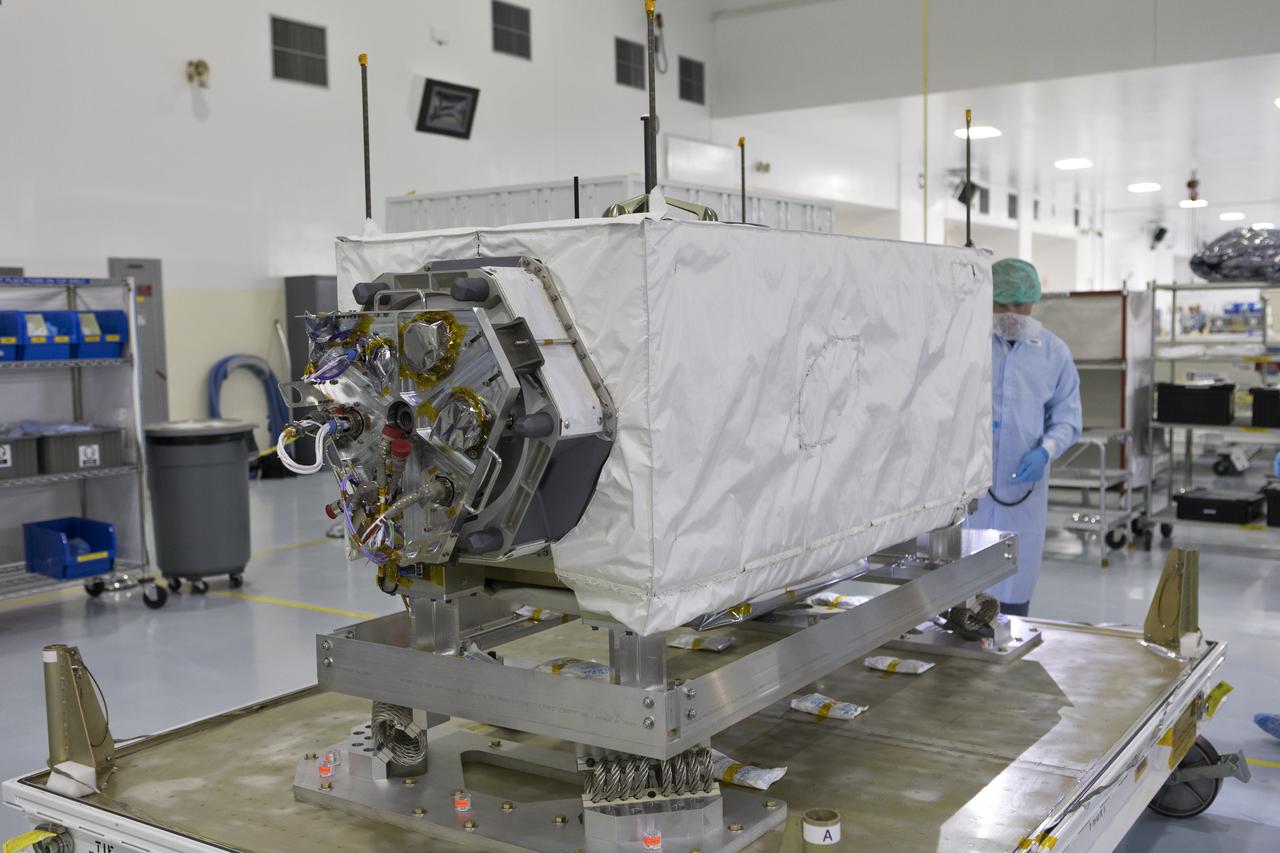
In the Space Station Processing Facility at NASA's Kennedy Space Center in Florida, the ECOsystem Spaceborne Thermal Radiometer Experiment on Space Station (ECOSTRESS) is inspected shortly after arrival. ECOSTRESS is designed to monitor one of the most basic processes in living plants: the loss of water through the tiny pores in leaves. ECOSTRESS will launch to the International Space Station aboard a Dragon spacecraft launched by a Falcon 9 rocket on the SpaceX CRS-15 mission in June 2018.

Roscosmos cosmonaut Kirill Peskov participates in a news media event during crew arrival for NASA’s SpaceX Crew-10 mission at the Launch and Landing Facility at the agency’s Kennedy Space Center in Florida on Friday, March 7, 2025. NASA astronauts Anne McClain and Nichole Ayers, along with JAXA (Japan Aerospace Exploration Agency) astronaut Takuya Onishi and Peskov will launch to the International Space Station aboard SpaceX’s Dragon spacecraft and Falcon 9 rocket. Launch is targeted for 7:48 p.m. EDT on Wednesday, March 12, 2025, from Launch Complex 39A at NASA Kennedy. Crew-10 is the 10th crew rotation mission with SpaceX to the space station as part of the agency’s Commercial Crew Program.
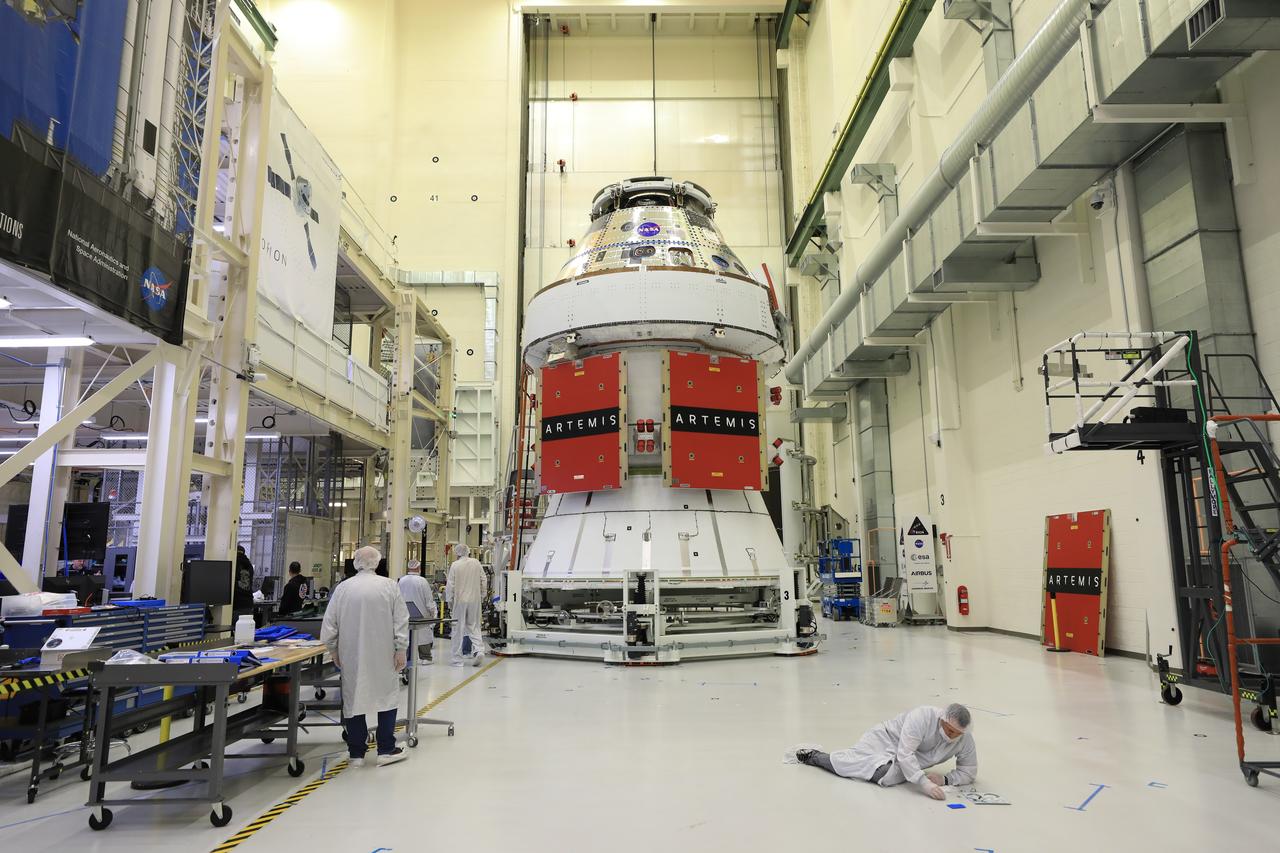
Technicians install four solar array wings on NASA’s Artemis II Orion spacecraft inside the Neil A. Armstrong Operations and Checkout Building at NASA’s Kennedy Space Center in Florida on Monday, March 3, 2025. Each solar array is nearly 23 feet long and can turn on two axes to remain aligned with the Sun for maximum power. Orion’s solar arrays, manufactured and installed by ESA (European Space Agency) and its contractor Airbus, will deliver power to the service module that provides propulsion, thermal control, and electrical power to the spacecraft, as well as air and water for the crew.
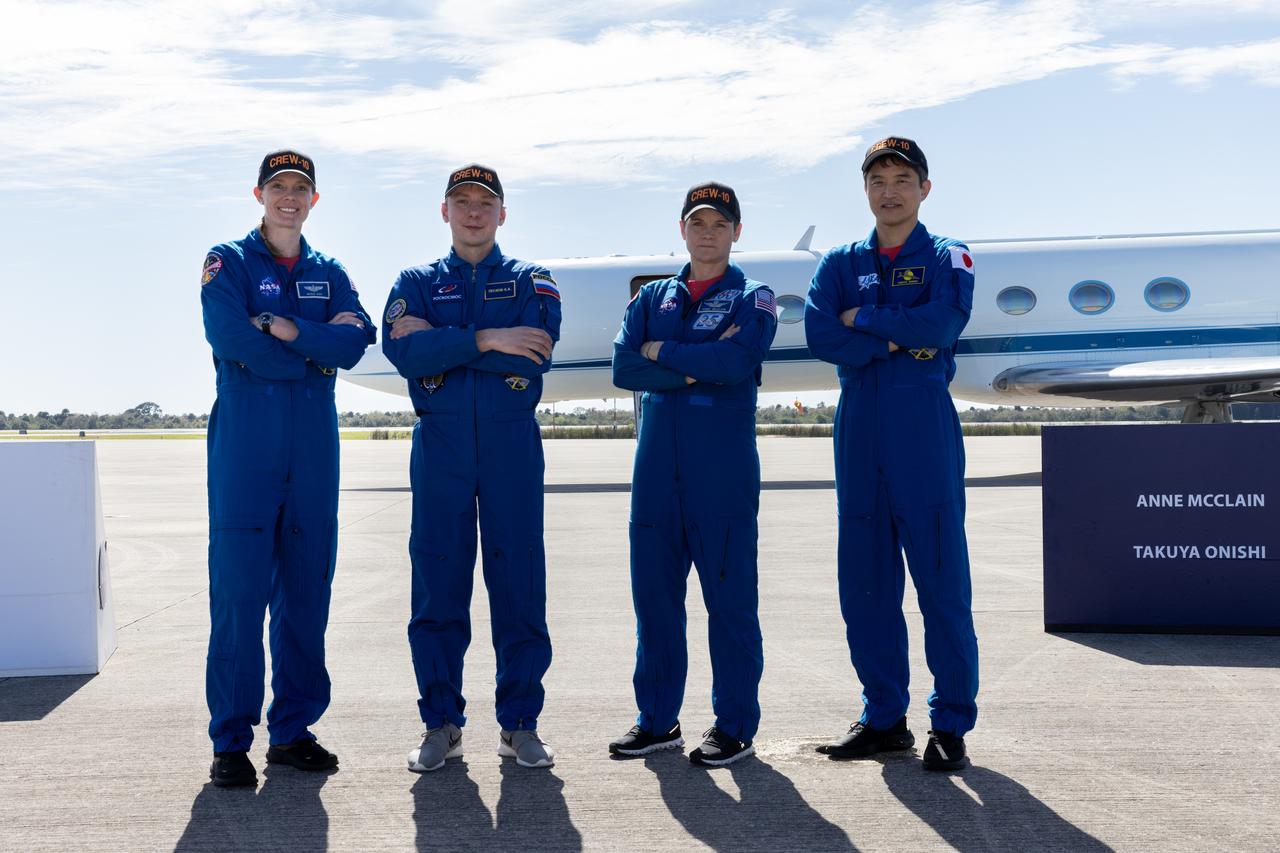
Crew members of NASA’s SpaceX Crew-10 mission to the International Space Station from left to right NASA astronaut Nichole Ayers, Roscosmos cosmonaut Kirill Peskov, NASA astronaut Anne McClain, and JAXA (Japan Aerospace Exploration Agency) astronaut Takuya Onishi stand before members of the news media after arrival to the Launch and Landing Facility at Kennedy Space Center in Florida on Friday, March 7, 2025. The Crew-10 mission is slated to launch aboard SpaceX’s Dragon spacecraft, powered by the company’s Falcon 9 rocket from NASA Kennedy’s Launch Complex 39A no earlier than 7:48 p.m. EDT on Wednesday, March 12, 2025.
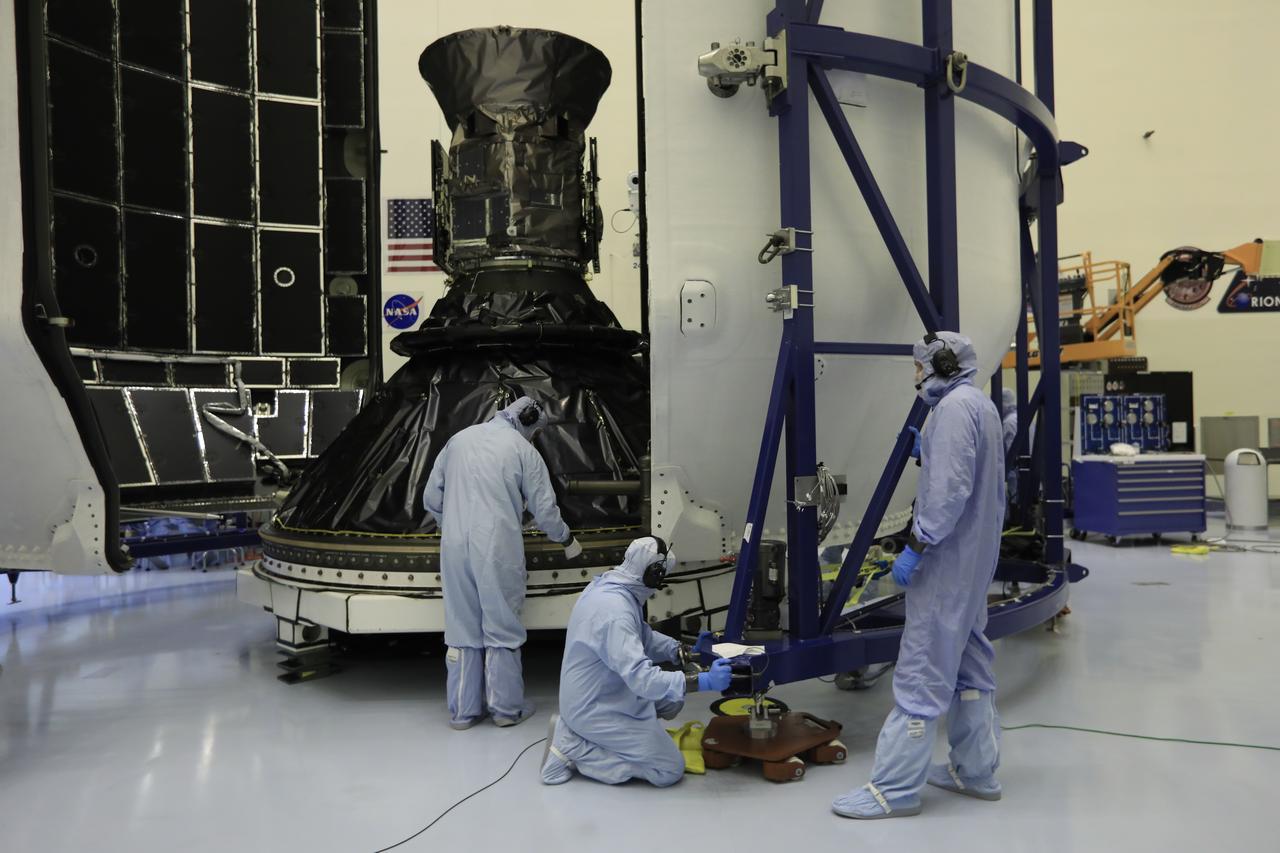
Technicians prepare NASA's Transiting Exoplanet Survey Satellite (TESS) for encapsulation in the SpaceX payload fairing inside the Payload Hazardous Servicing Facility at the agency's Kennedy Space Center in Florida. The satellite is scheduled to launch atop a SpaceX Falcon 9 rocket from Space Launch Complex 40 at Cape Canaveral Air Force Station on April 16. The satellite is the next step in NASA's search for planets outside our solar system, known as exoplanets. TESS is a NASA Astrophysics Explorer mission led and operated by MIT in Cambridge, Massachusetts, and managed by NASA’s Goddard Space Flight Center in Greenbelt, Maryland. Dr. George Ricker of MIT’s Kavli Institute for Astrophysics and Space Research serves as principal investigator for the mission. Additional partners include Orbital ATK, NASA’s Ames Research Center, the Harvard-Smithsonian Center for Astrophysics and the Space Telescope Science Institute. More than a dozen universities, research institutes and observatories worldwide are participants in the mission. NASA’s Launch Services Program is responsible for launch management.

Roscosmos cosmonaut Kirill Peskov signs his name inside the Astronaut Crew Quarters in the Neil A. Armstrong Operations and Checkout Building at NASA’s Kennedy Space Center in Florida on Friday, March 7, 2025, ahead of NASA’s SpaceX Crew-10 mission. Crew-10 is the 10th crew rotation mission of the SpaceX Dragon spacecraft and Falcon 9 rocket that will send NASA astronauts Anne McClain and Nichole Ayers, along with JAXA (Japan Aerospace Exploration Agency) astronaut Takuya Onishi and Peskov to the International Space Station as part of the agency’s Commercial Crew Program. The mission is scheduled to launch no earlier than 7:48 p.m. EDT on Wednesday, March 12, 2025, from NASA Kennedy’s Launch Complex 39A.
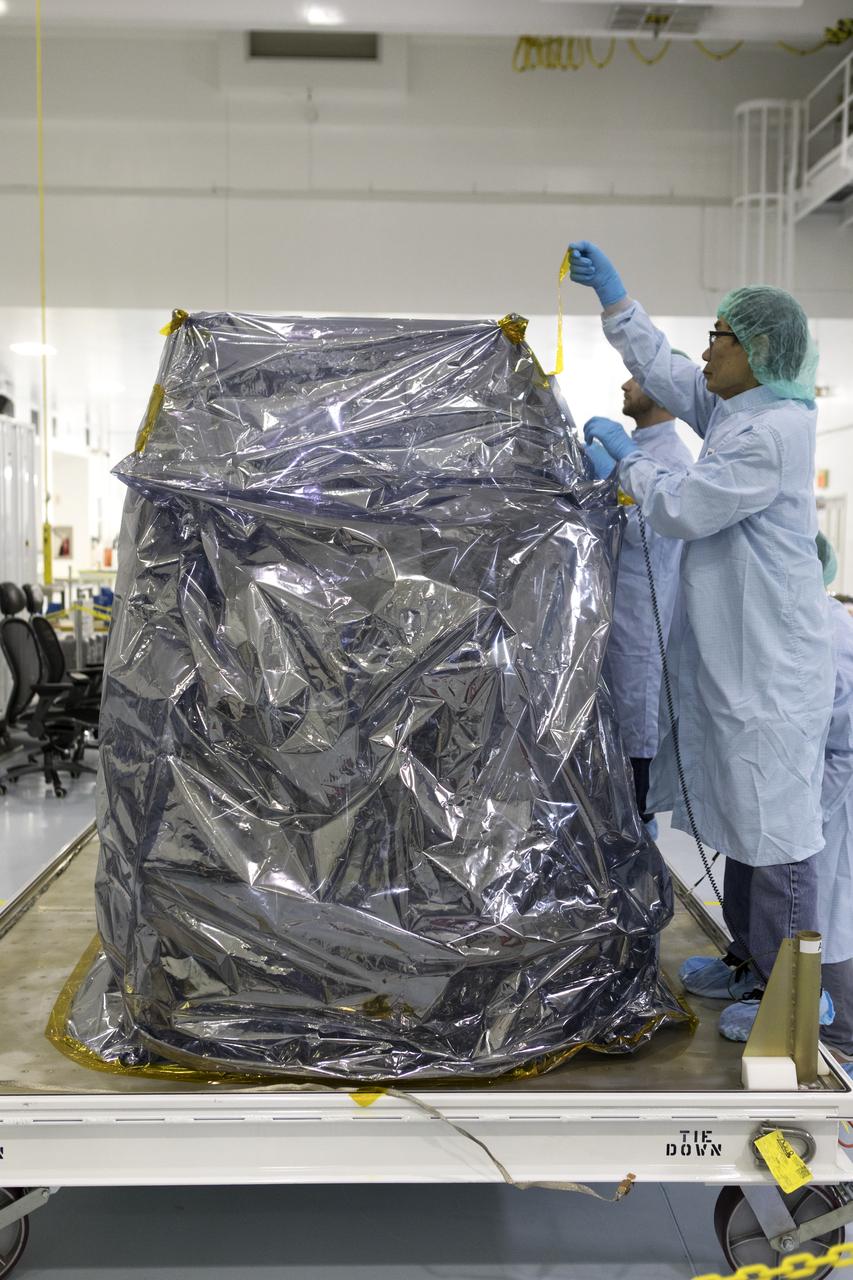
In the Space Station Processing Facility at NASA's Kennedy Space Center in Florida, the ECOsystem Spaceborne Thermal Radiometer Experiment on Space Station (ECOSTRESS) is removed from its shipping container. ECOSTRESS is designed to monitor one of the most basic processes in living plants: the loss of water through the tiny pores in leaves. ECOSTRESS will launch to the International Space Station aboard a Dragon spacecraft launched by a Falcon 9 rocket on the SpaceX CRS-15 mission in June 2018.
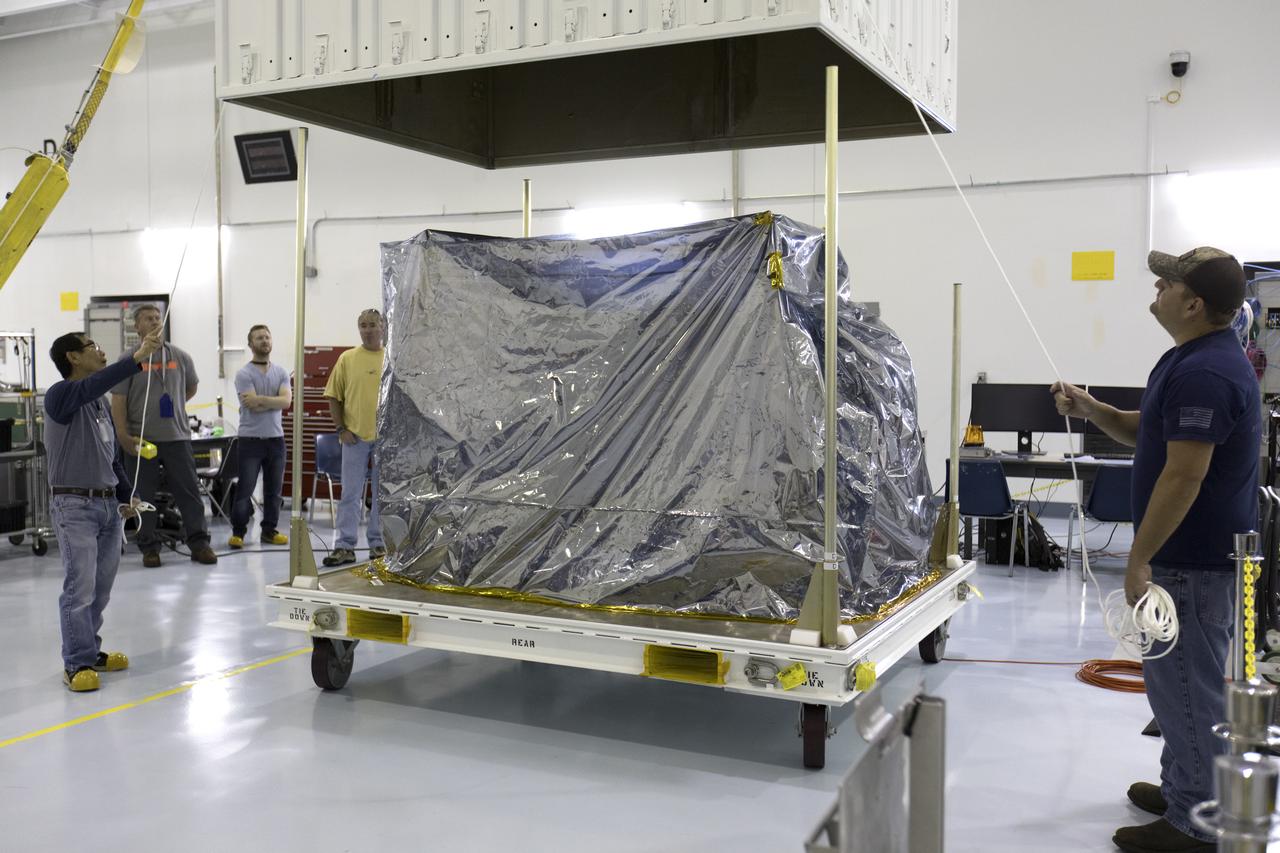
In the Space Station Processing Facility at NASA's Kennedy Space Center in Florida, the ECOsystem Spaceborne Thermal Radiometer Experiment on Space Station (ECOSTRESS) is removed from its shipping container. ECOSTRESS is designed to monitor one of the most basic processes in living plants: the loss of water through the tiny pores in leaves. ECOSTRESS will launch to the International Space Station aboard a Dragon spacecraft launched by a Falcon 9 rocket on the SpaceX CRS-15 mission in June 2018.
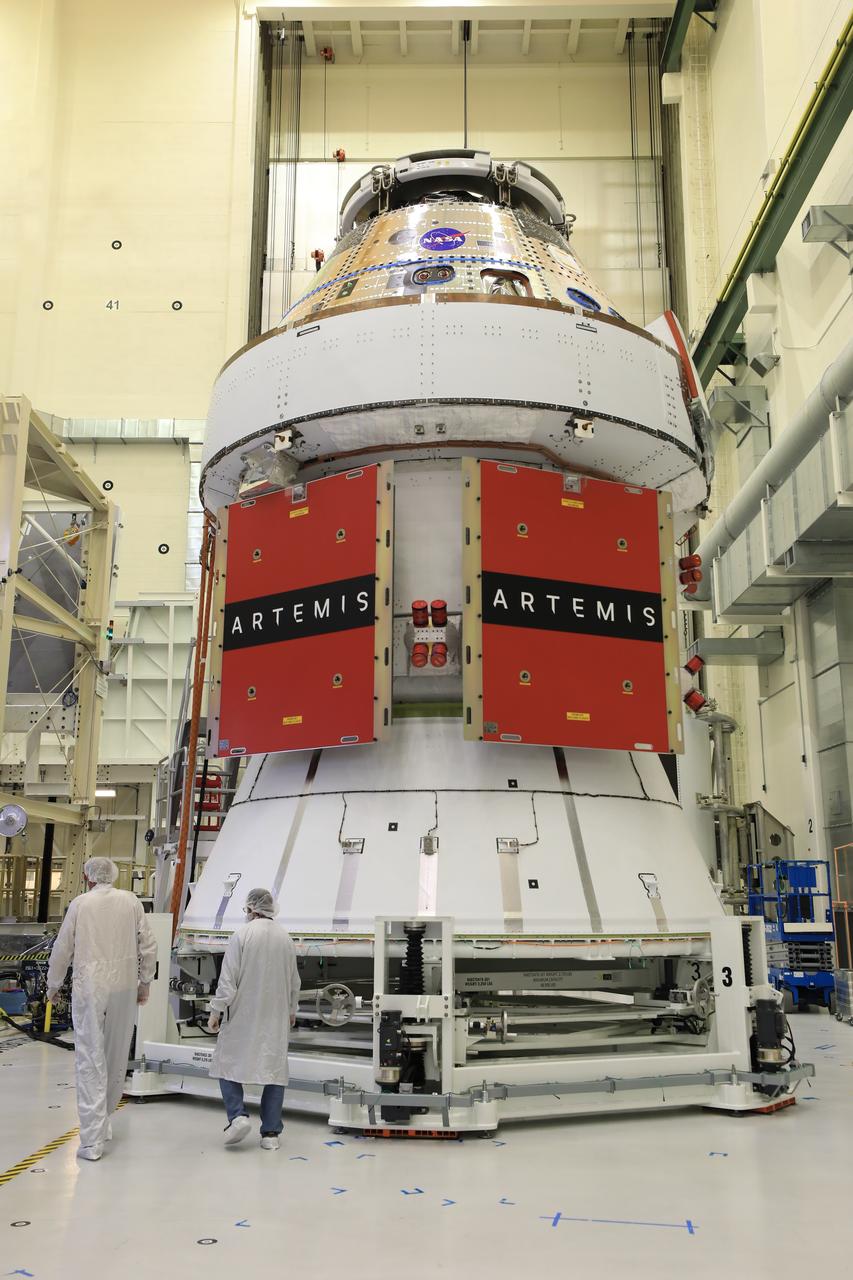
Technicians install four solar array wings on NASA’s Artemis II Orion spacecraft inside the Neil A. Armstrong Operations and Checkout Building at NASA’s Kennedy Space Center in Florida on Monday, March 3, 2025. Each solar array is nearly 23 feet long and can turn on two axes to remain aligned with the Sun for maximum power. Orion’s solar arrays, manufactured and installed by ESA (European Space Agency) and its contractor Airbus, will deliver power to the service module that provides propulsion, thermal control, and electrical power to the spacecraft, as well as air and water for the crew.

The two-stage SpaceX Falcon 9 launch vehicle lifts off from Space Launch Complex 40 at Cape Canaveral Air Force Station, carrying the SpaceX Dragon resupply spacecraft to the International Space Station. Liftoff was at 5:42 a.m. EDT on Friday, June 29, 2018. On the company’s 15th Commercial Resupply Services mission to the International Space Station, Dragon is filled with supplies and payloads, including critical materials to support several science and research investigations that will occur during Expedition 56. The spacecraft’s unpressurized trunk is carrying a Canadian-built Latching End Effector, or LEE. This new LEE will replace a failed unit astronauts removed during a series of spacewalks in the fall of 2017. Each end of the Canadarm2 robotic arm has an identical LEE, and they are used as the “hands” that grapple payloads and visiting cargo spaceships.
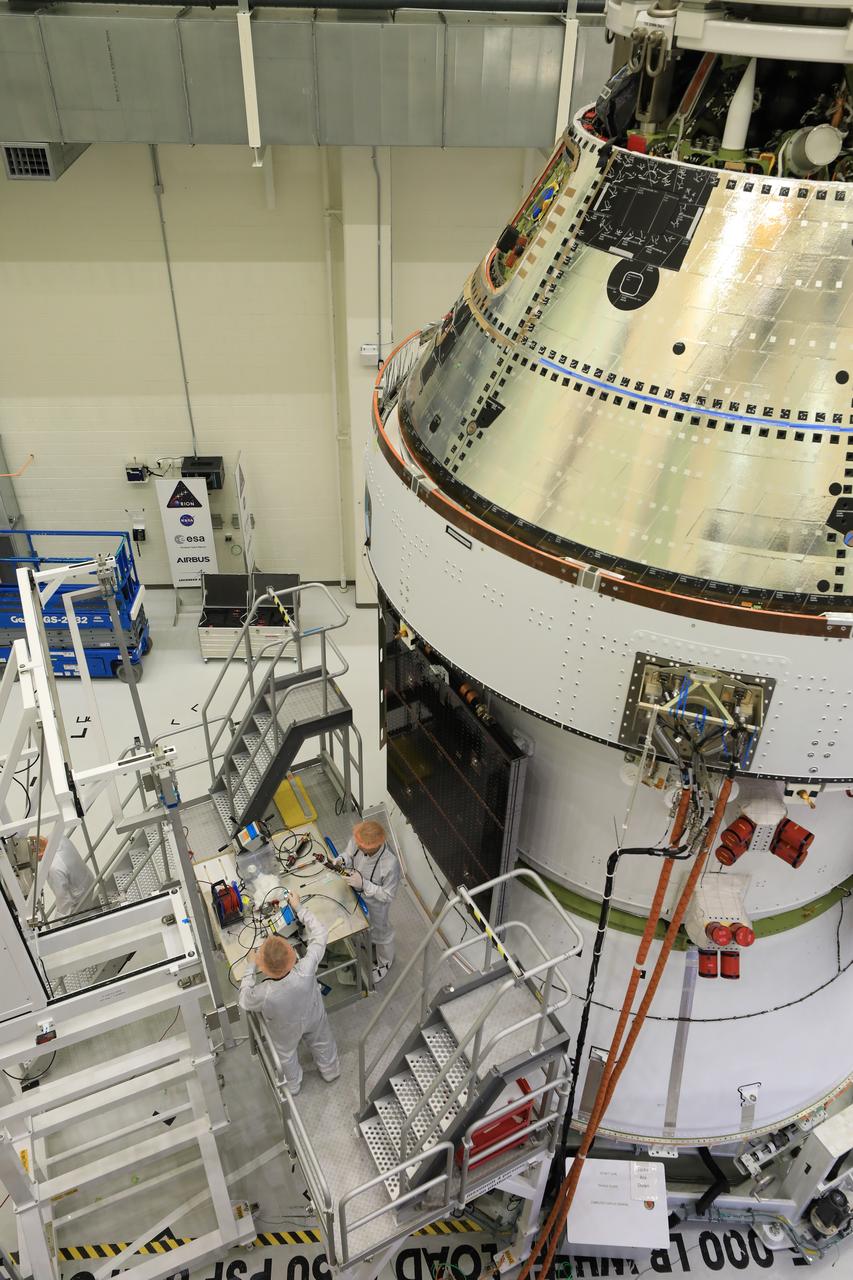
Technicians install four solar array wings on NASA’s Artemis II Orion spacecraft inside the Neil A. Armstrong Operations and Checkout Building at NASA’s Kennedy Space Center in Florida on Monday, March 3, 2025. Each solar array is nearly 23 feet long and can turn on two axes to remain aligned with the Sun for maximum power. Orion’s solar arrays, manufactured and installed by ESA (European Space Agency) and its contractor Airbus, will deliver power to the service module that provides propulsion, thermal control, and electrical power to the spacecraft, as well as air and water for the crew.
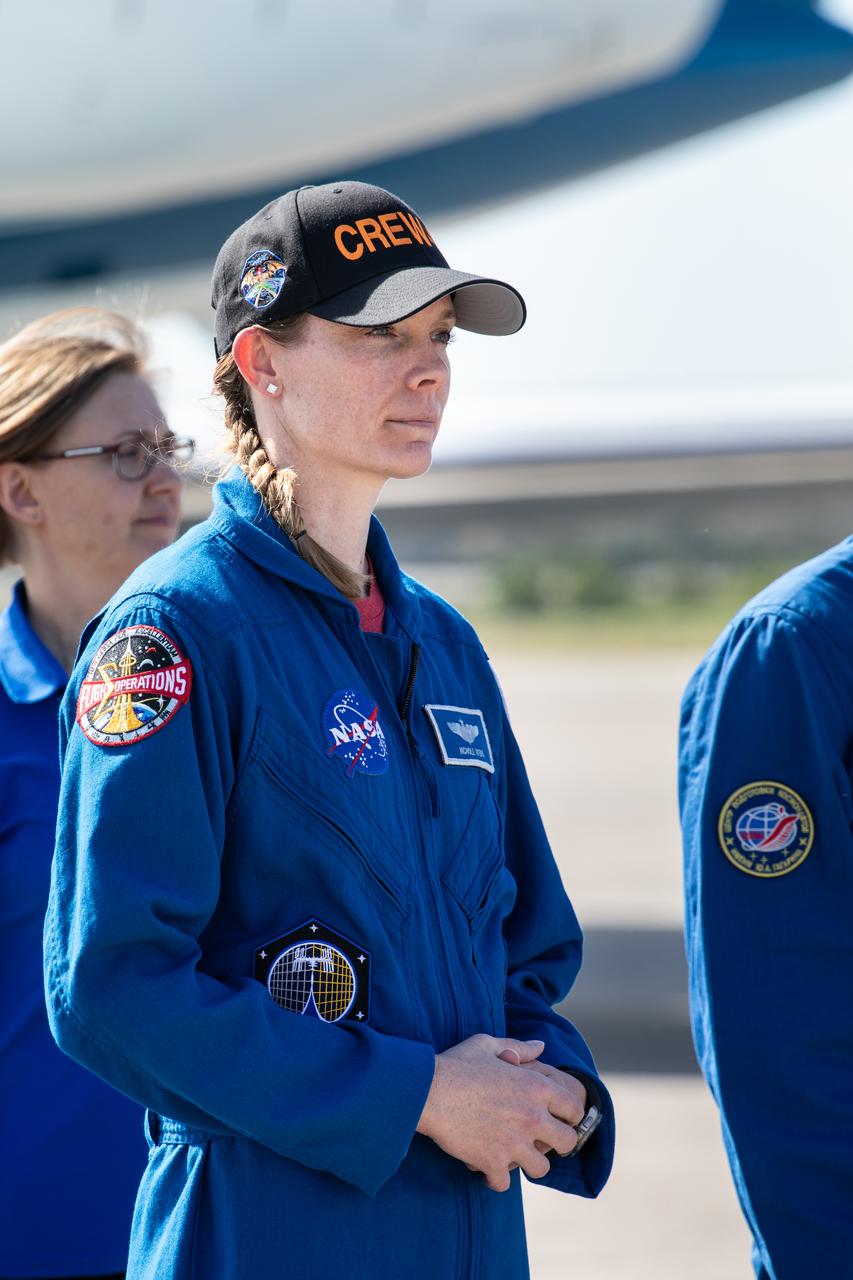
NASA astronaut Nichole Ayers participates in a news media event during crew arrival for NASA’s SpaceX Crew-10 mission at the Launch and Landing Facility at the agency’s Kennedy Space Center in Florida on Friday, March 7, 2025. JAXA (Japan Aerospace Exploration Agency) astronaut Takuya Onishi will launch to the International Space Station aboard SpaceX’s Dragon spacecraft and Falcon 9 rocket. Launch is targeted for 7:48 p.m. EDT on Wednesday, March 12, 2025, from Launch Complex 39A at NASA Kennedy. Crew-10 is the 10th crew rotation mission with SpaceX to the space station as part of the agency’s Commercial Crew Program
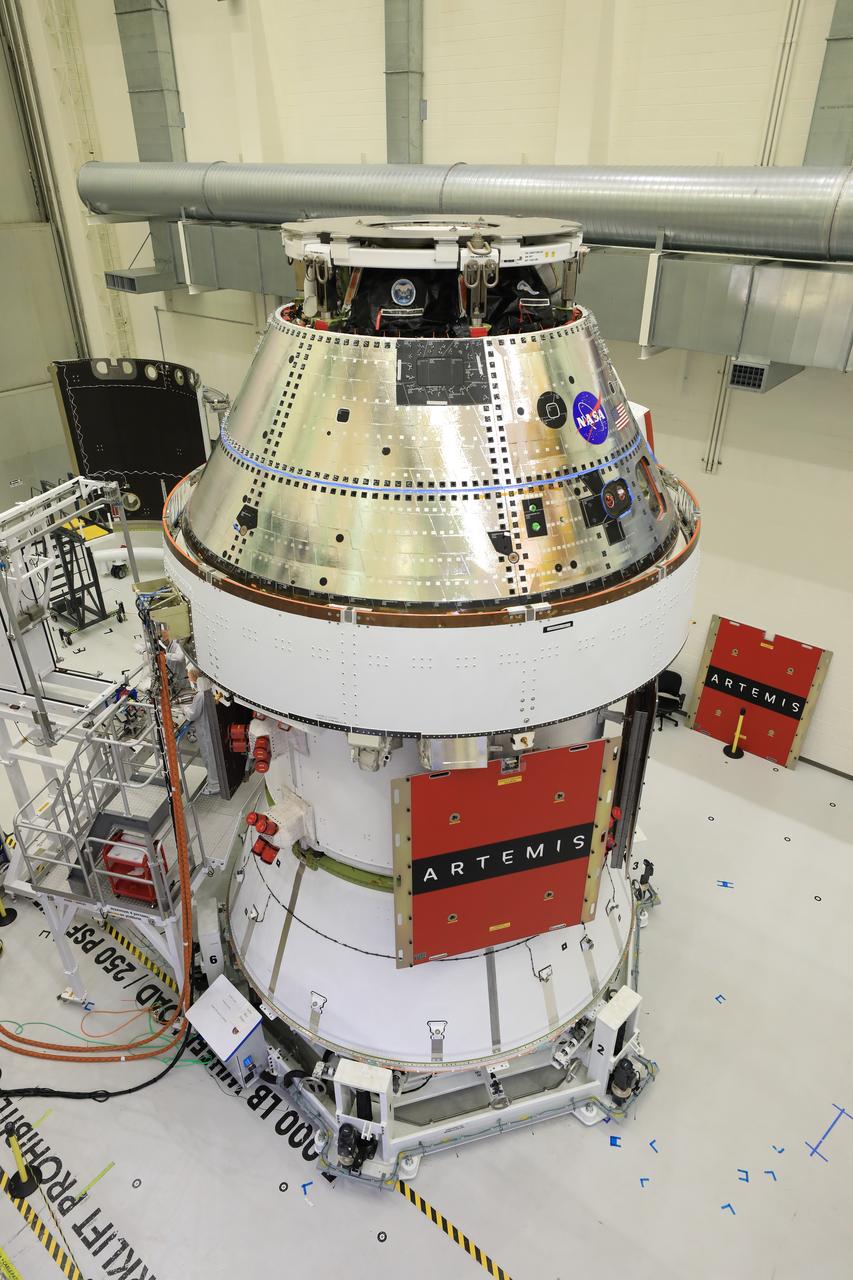
Technicians install four solar array wings on NASA’s Artemis II Orion spacecraft inside the Neil A. Armstrong Operations and Checkout Building at NASA’s Kennedy Space Center in Florida on Monday, March 3, 2025. Each solar array is nearly 23 feet long and can turn on two axes to remain aligned with the Sun for maximum power. Orion’s solar arrays, manufactured and installed by ESA (European Space Agency) and its contractor Airbus, will deliver power to the service module that provides propulsion, thermal control, and electrical power to the spacecraft, as well as air and water for the crew.
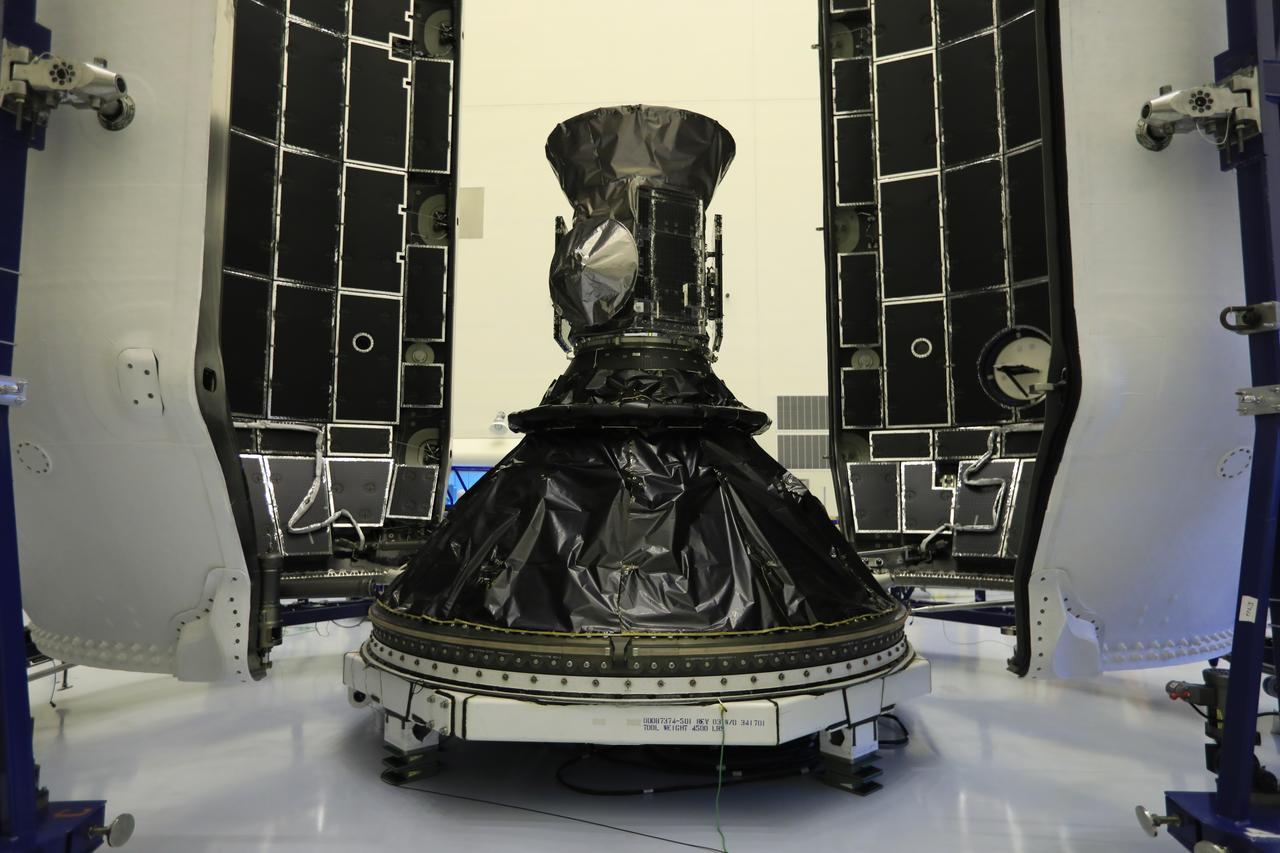
Inside the Payload Hazardous Servicing Facility at NASA's Kennedy Space Center in Florida, NASA's Transiting Exoplanet Survey Satellite (TESS) is being prepared for encapsulation in the SpaceX payload fairing. The satellite is scheduled to launch atop a SpaceX Falcon 9 rocket from Space Launch Complex 40 at Cape Canaveral Air Force Station on April 16. The satellite is the next step in NASA's search for planets outside our solar system, known as exoplanets. TESS is a NASA Astrophysics Explorer mission led and operated by MIT in Cambridge, Massachusetts, and managed by NASA’s Goddard Space Flight Center in Greenbelt, Maryland. Dr. George Ricker of MIT’s Kavli Institute for Astrophysics and Space Research serves as principal investigator for the mission. Additional partners include Orbital ATK, NASA’s Ames Research Center, the Harvard-Smithsonian Center for Astrophysics and the Space Telescope Science Institute. More than a dozen universities, research institutes and observatories worldwide are participants in the mission. NASA’s Launch Services Program is responsible for launch management.
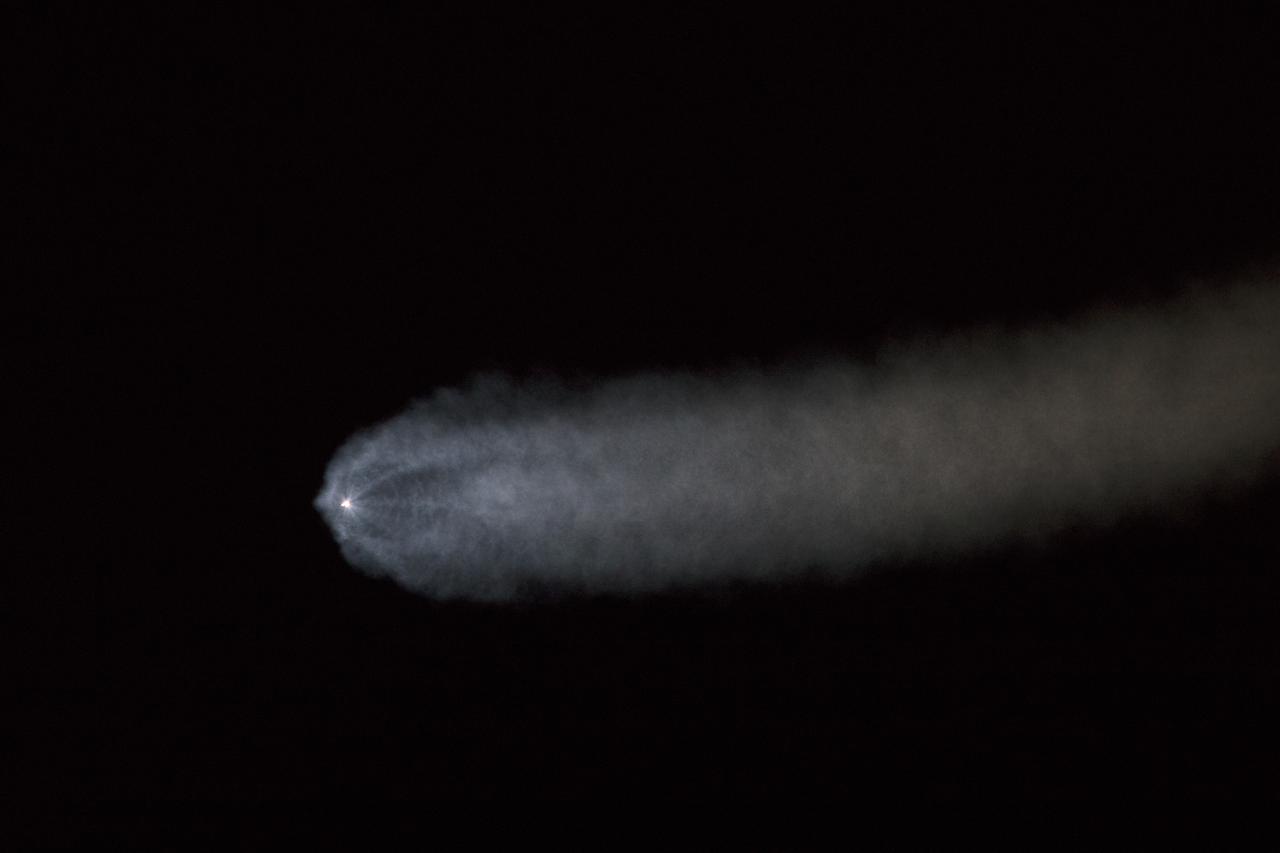
A SpaceX Falcon 9 rocket powers the Dragon spacecraft toward the International Space Station on Friday, June 29, 2018. The two-stage launch vehicle lifted off from Space Launch Complex 40 at Cape Canaveral Air Force Station at 5:42 a.m. EDT. On the company’s 15th Commercial Resupply Services mission to the space station, Dragon is filled with supplies and payloads, including critical materials to support several science and research investigations that will occur during Expedition 56. The spacecraft’s unpressurized trunk is carrying a Canadian-built Latching End Effector, or LEE. This new LEE will replace a failed unit astronauts removed during a series of spacewalks in the fall of 2017. Each end of the Canadarm2 robotic arm has an identical LEE, and they are used as the “hands” that grapple payloads and visiting cargo spaceships.
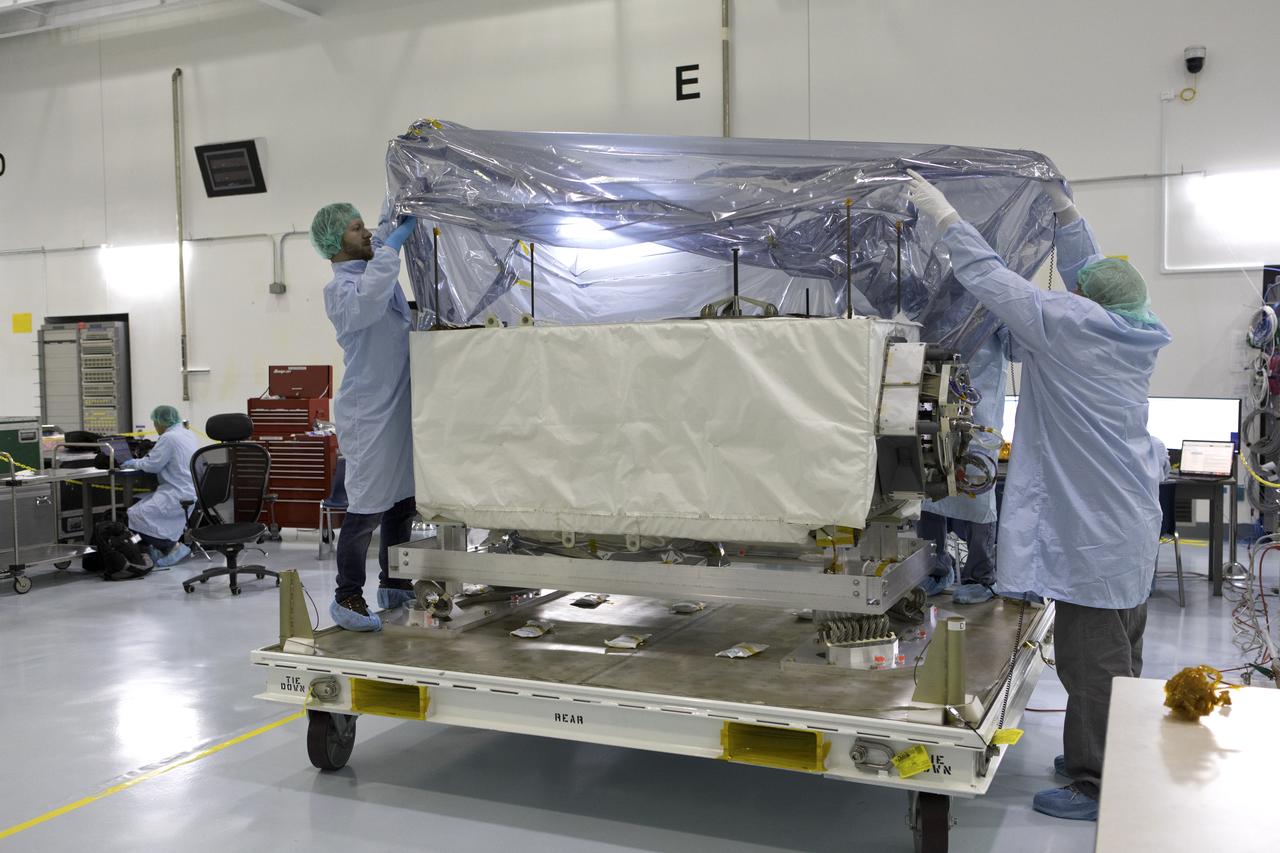
ECOSTRESS Unbagging
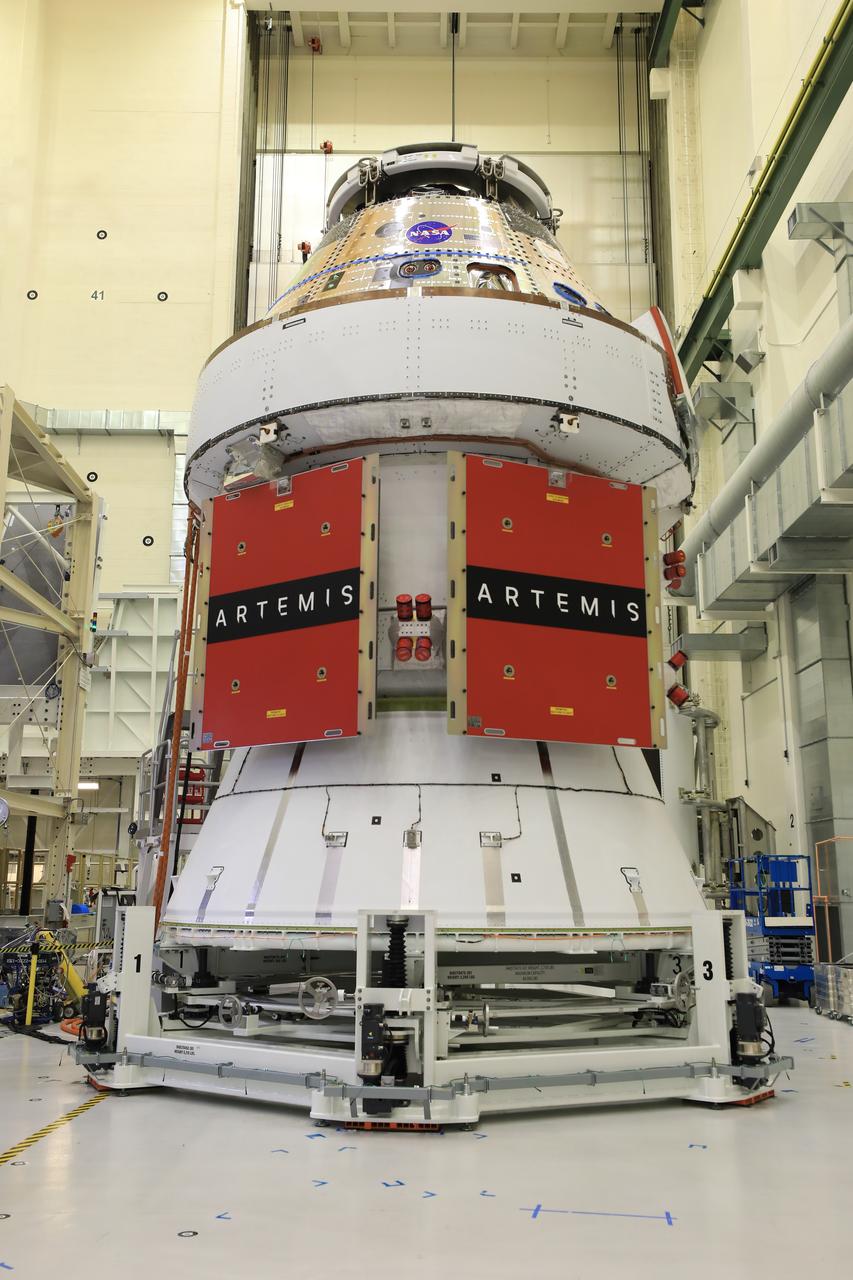
Technicians install four solar array wings on NASA’s Artemis II Orion spacecraft inside the Neil A. Armstrong Operations and Checkout Building at NASA’s Kennedy Space Center in Florida on Monday, March 3, 2025. Each solar array is nearly 23 feet long and can turn on two axes to remain aligned with the Sun for maximum power. Orion’s solar arrays, manufactured and installed by ESA (European Space Agency) and its contractor Airbus, will deliver power to the service module that provides propulsion, thermal control, and electrical power to the spacecraft, as well as air and water for the crew.
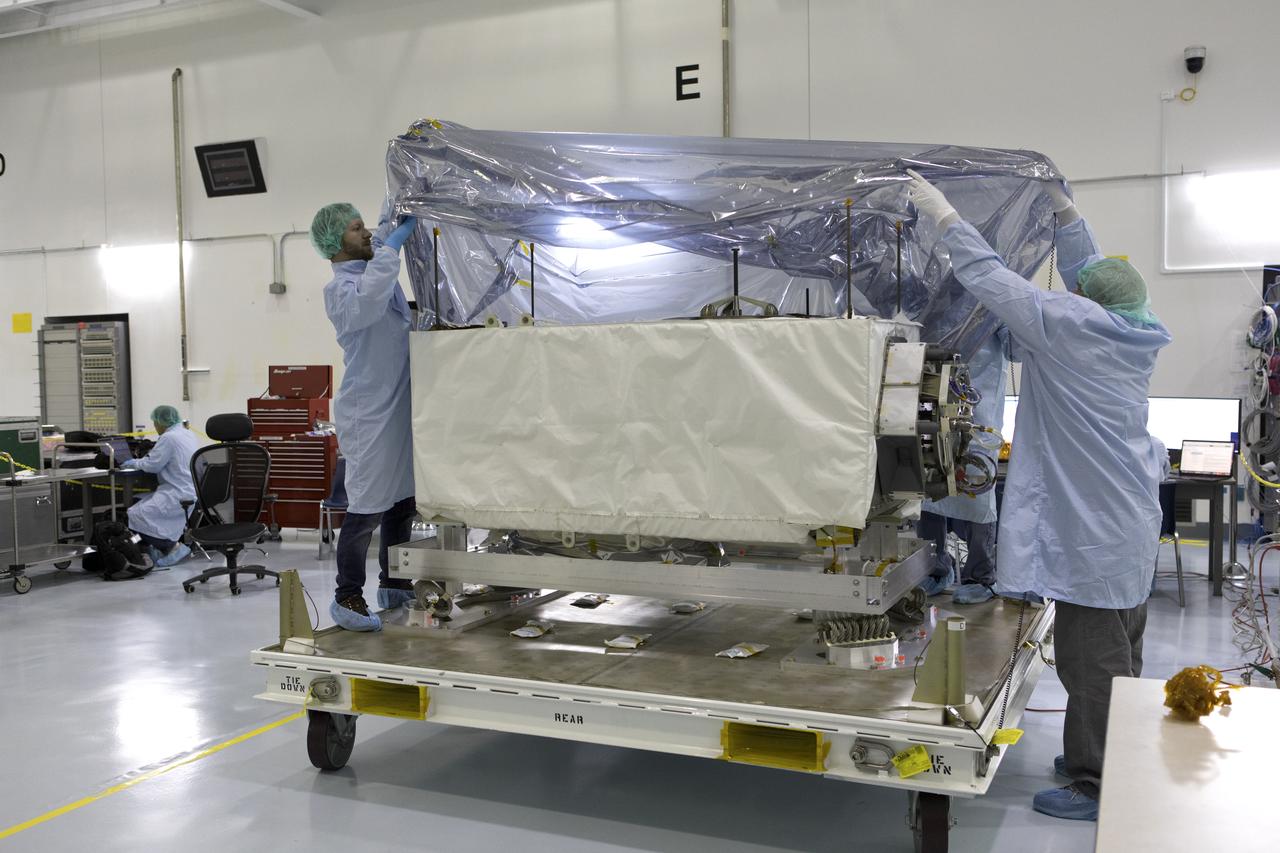
In the Space Station Processing Facility at NASA's Kennedy Space Center in Florida, technicians and engineers removed protective wrapping from the ECOsystem Spaceborne Thermal Radiometer Experiment on Space Station (ECOSTRESS). ECOSTRESS is designed to monitor one of the most basic processes in living plants: the loss of water through the tiny pores in leaves. ECOSTRESS will launch to the International Space Station aboard a Dragon spacecraft launched by a Falcon 9 rocket on the SpaceX CRS-15 mission in June 2018.
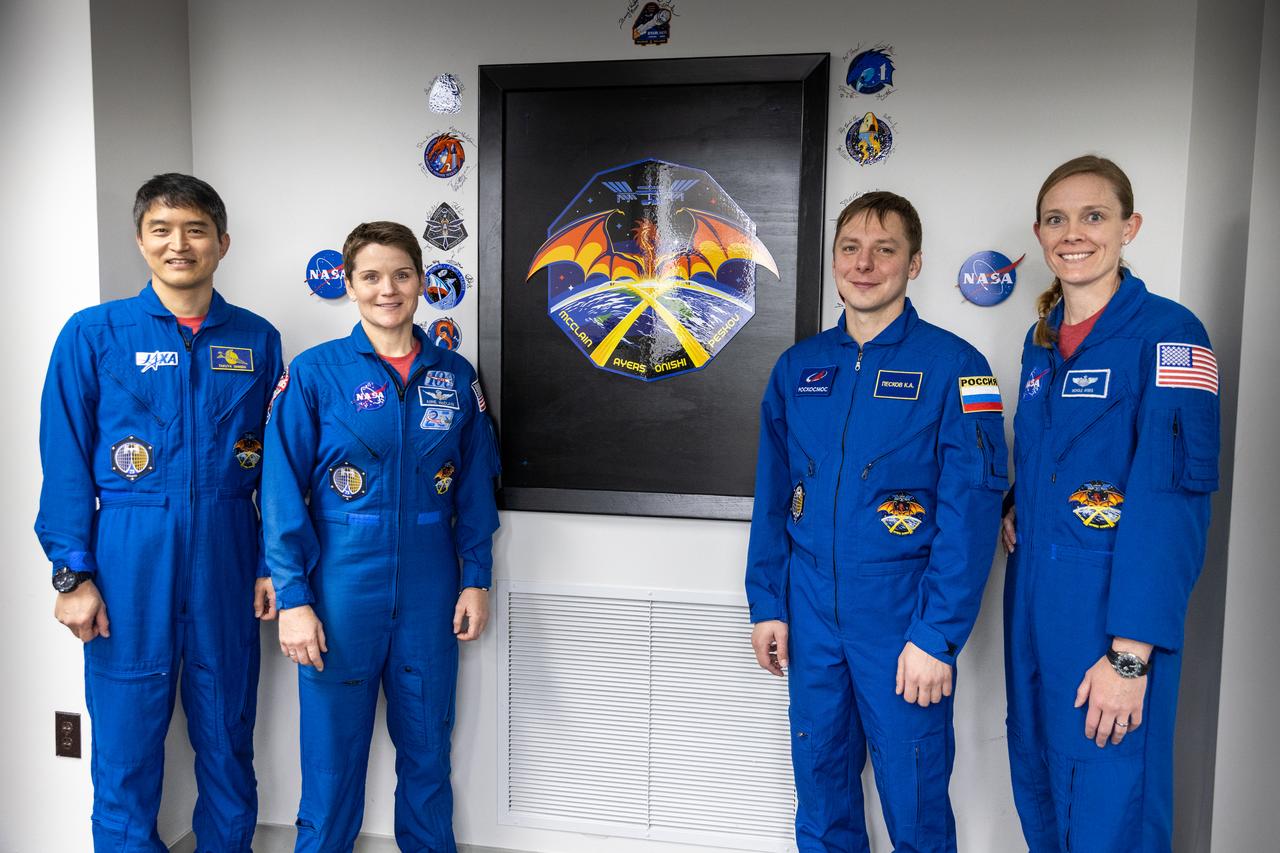
NASA astronauts Anne McClain and Nichole Ayers, along with JAXA (Japan Aerospace Exploration Agency) astronaut Takuya Onishi and Roscosmos cosmonaut Kirill Peskov, pose inside the Astronaut Crew Quarters in the Neil A. Armstrong Operations and Checkout Building at NASA’s Kennedy Space Center in Florida on March 7, 2025. McClain, Ayers, Onishi, and Peskov will launch on NASA’s SpaceX Crew-10 mission – the 10th crew rotation mission of the SpaceX Dragon spacecraft and Falcon 9 rocket that will send the crew to the International Space Station as part of the agency’s Commercial Crew Program. The mission is scheduled to launch no earlier than 7:48 p.m. EDT on Wednesday, March 12, 2025, from NASA Kennedy’s Launch Complex 39A.
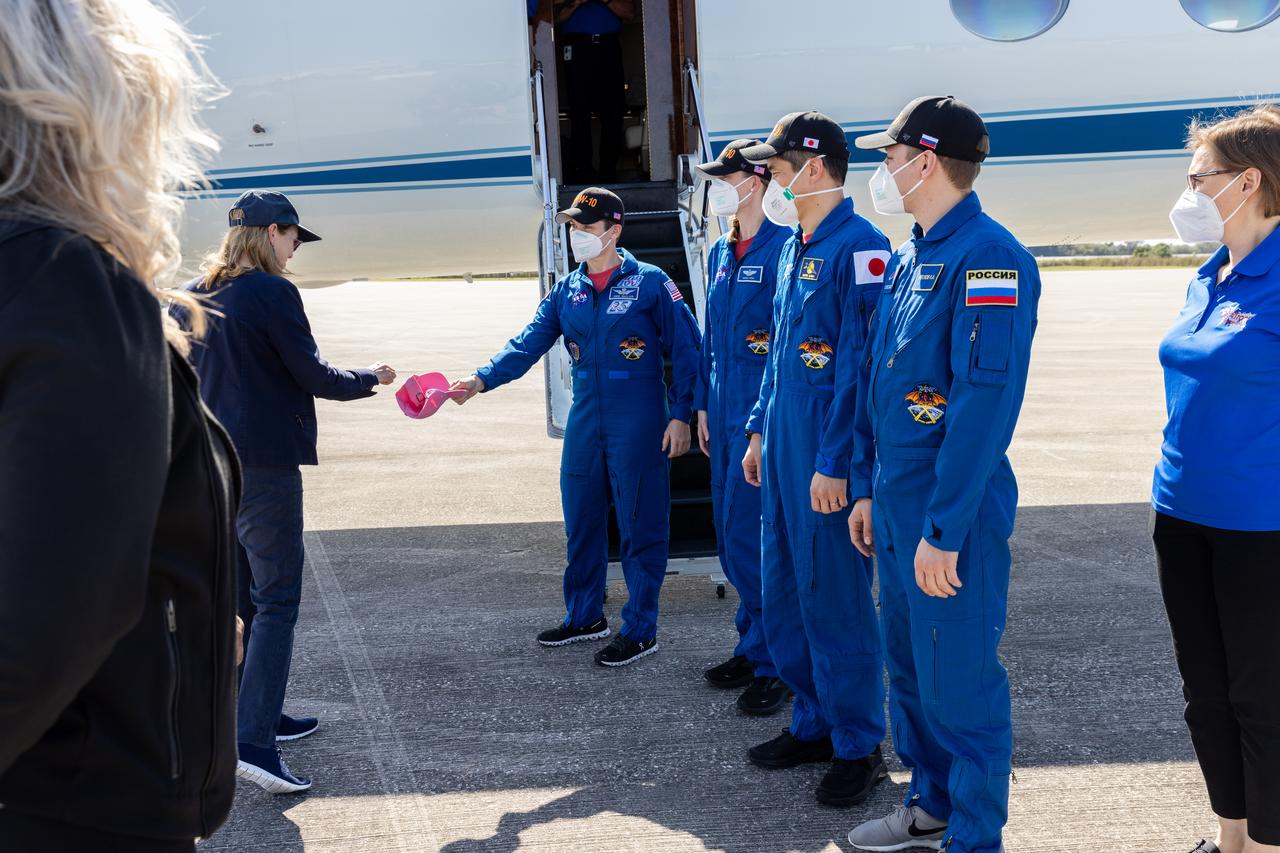
Acting NASA Administrator Janet Petro greets crew members of NASA’s SpaceX Crew-10 mission to the International Space Station after arrival to the Launch and Landing Facility at Kennedy Space Center in Florida on Friday, March 7, 2025. From left to right are Petro, NASA astronauts Anne McClain and Nichole Ayers, JAXA (Japan Aerospace Exploration Agency) astronaut Takuya Onishi, and Roscosmos cosmonaut Kirill Peskov. The Crew-10 mission is slated to launch aboard SpaceX’s Dragon spacecraft, powered by the company’s Falcon 9 rocket from NASA Kennedy’s Launch Complex 39A no earlier than 7:48 p.m. EDT on Wednesday, March 12, 2025.
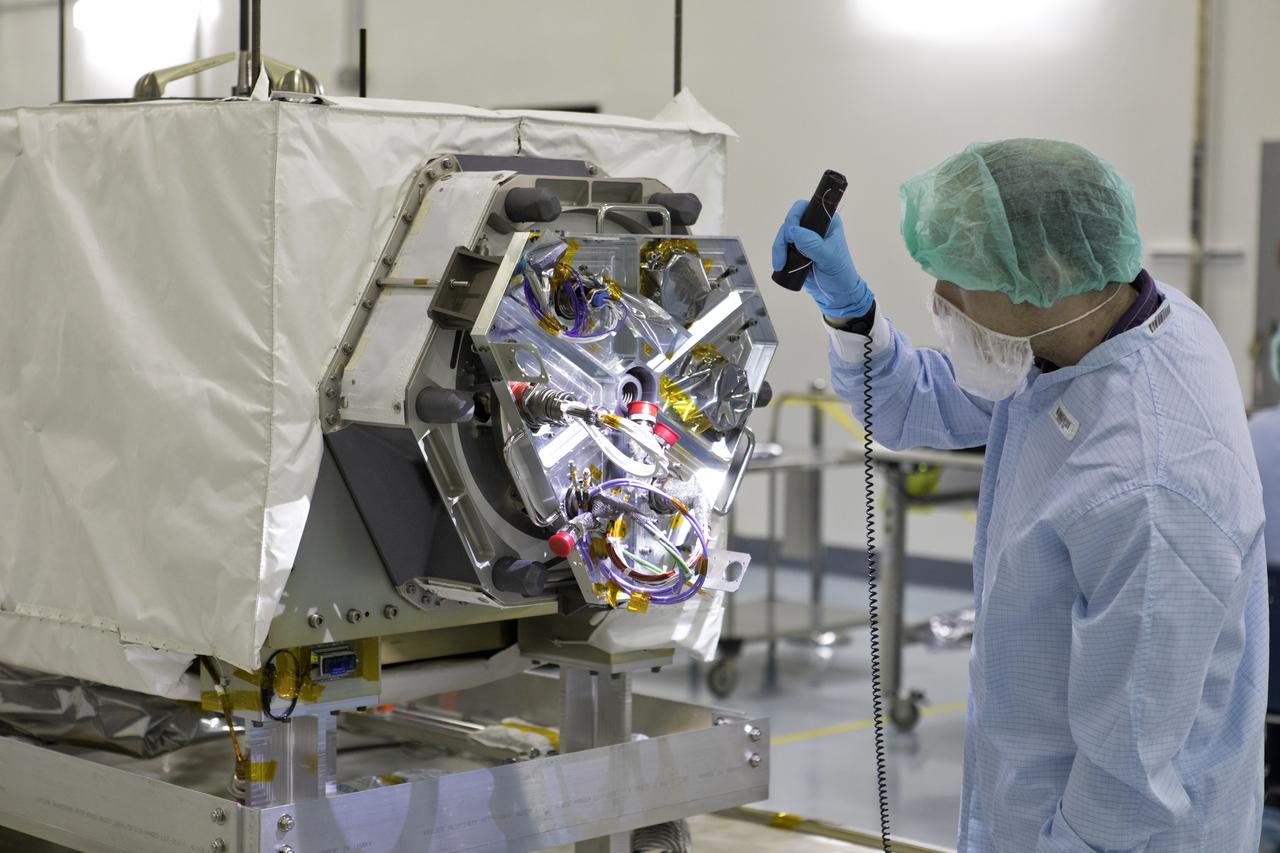
In the Space Station Processing Facility at NASA's Kennedy Space Center in Florida, the ECOsystem Spaceborne Thermal Radiometer Experiment on Space Station (ECOSTRESS) is inspected shortly after arrival. ECOSTRESS is designed to monitor one of the most basic processes in living plants: the loss of water through the tiny pores in leaves. ECOSTRESS will launch to the International Space Station aboard a Dragon spacecraft launched by a Falcon 9 rocket on the SpaceX CRS-15 mission in June 2018.