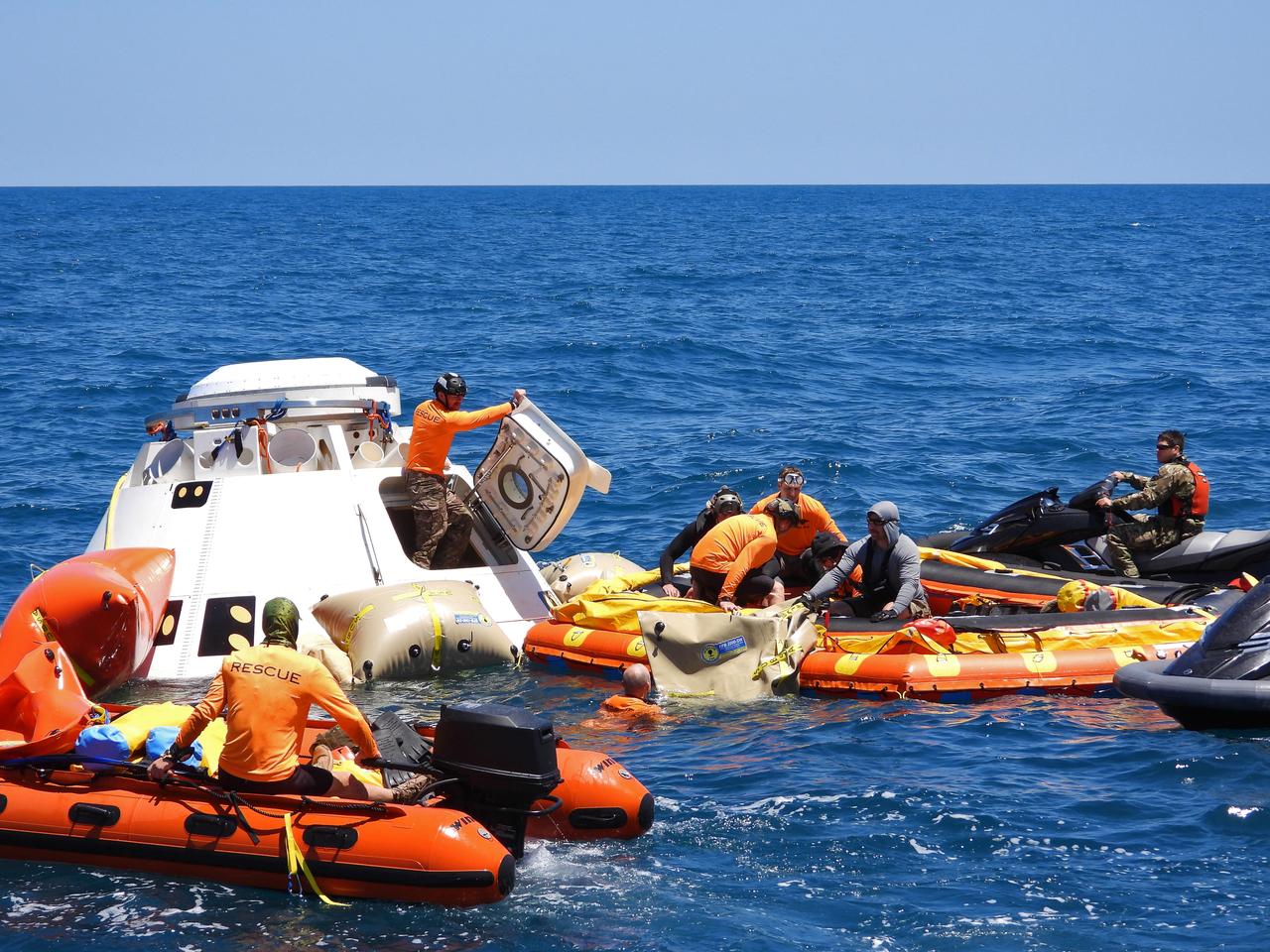
Rescue team members are using a Boeing CST-100 Starliner training capsule to rehearse a full mission profile training exercise in the unlikely event of an emergency resulting in a splashdown. NASA and the Department of Defense (DoD) Human Space Flight Support Office Rescue Division conducted the exercise, after a culmination of nearly two weeks of training, off the coast of Cape Canaveral near the agency’s Kennedy Space Center in Florida on April 27, 2019. The team rehearsed assisted egress, extracting DoD team members acting as astronauts, from the capsule and providing immediate medical treatment. This open-ocean exercise provides team members with the necessary training ahead of Boeing’s Crew Flight Test with astronauts targeted for later this year. During normal return scenarios, Boeing’s Starliner will land in a safe zone of about 15 square miles in the Western United States. Throughout the commercial crew development phases with NASA, Boeing has performed dozens of qualification tests on its parachute and airbag systems simulating conditions on land and in the water.
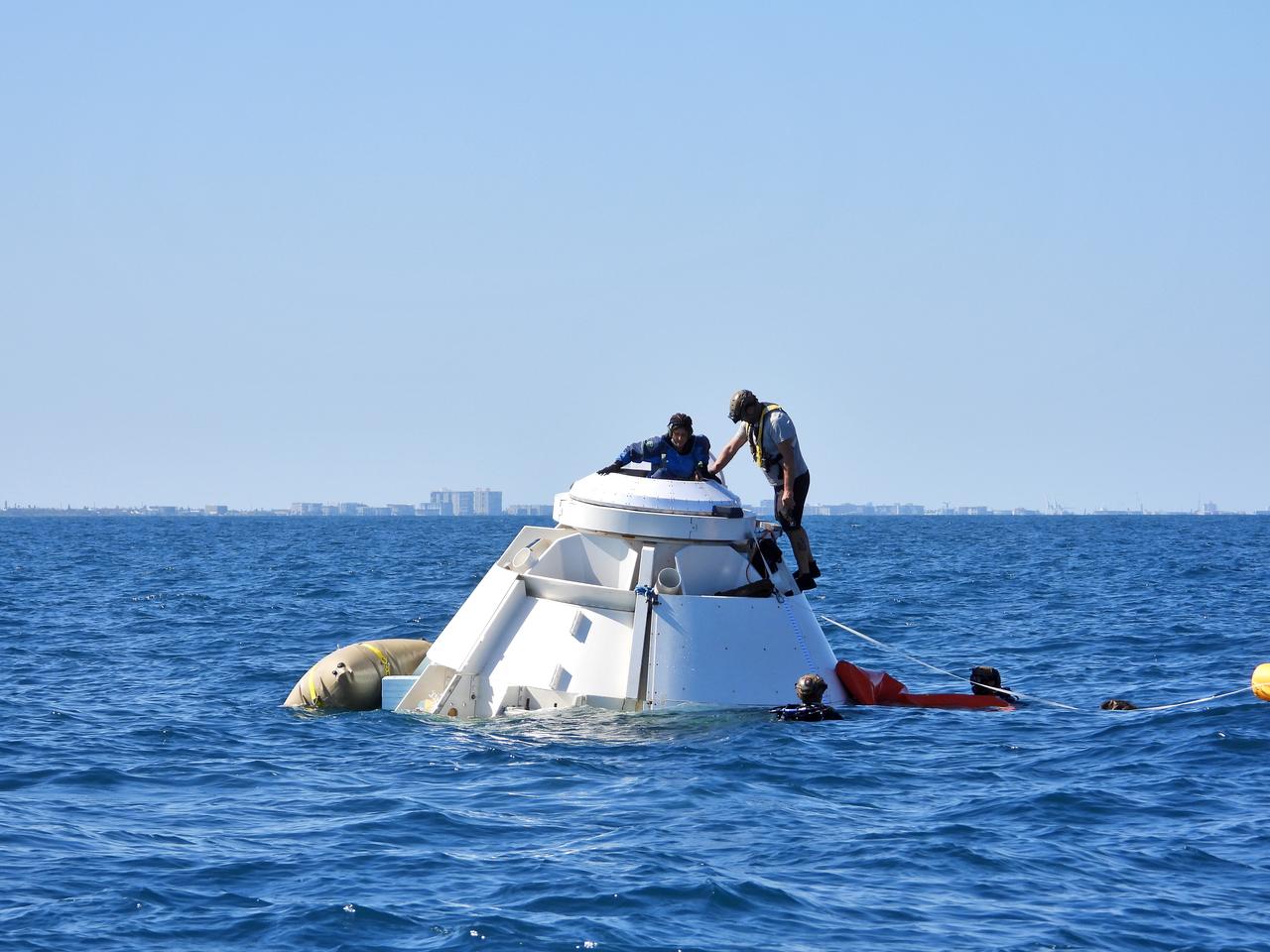
NASA astronauts Suni Williams and Barry “Butch” Wilmore rehearse the steps they would take to exit Boeing’s CST-100 Starliner spacecraft without assistance in the unlikely event of an emergency resulting in a splashdown. The training exercise, which occurred April 27, 2019, took place several miles off the coast of Cape Canaveral near NASA’s Kennedy Space Center in Florida. It included the astronauts unloading a rescue raft from inside the spacecraft, climbing out through a hatch at the top of the spacecraft, jumping into the Atlantic Ocean and boarding the raft. This open-ocean exercise provides the astronauts with the necessary training ahead of Boeing’s Crew Flight Test and subsequent missions. During normal return scenarios, Boeing’s Starliner will land in a safe zone of about 15 square miles in the Western United States. Throughout the commercial crew development phases with NASA, Boeing has performed dozens of qualification tests on its parachute and airbag systems simulating conditions on land and in the water.
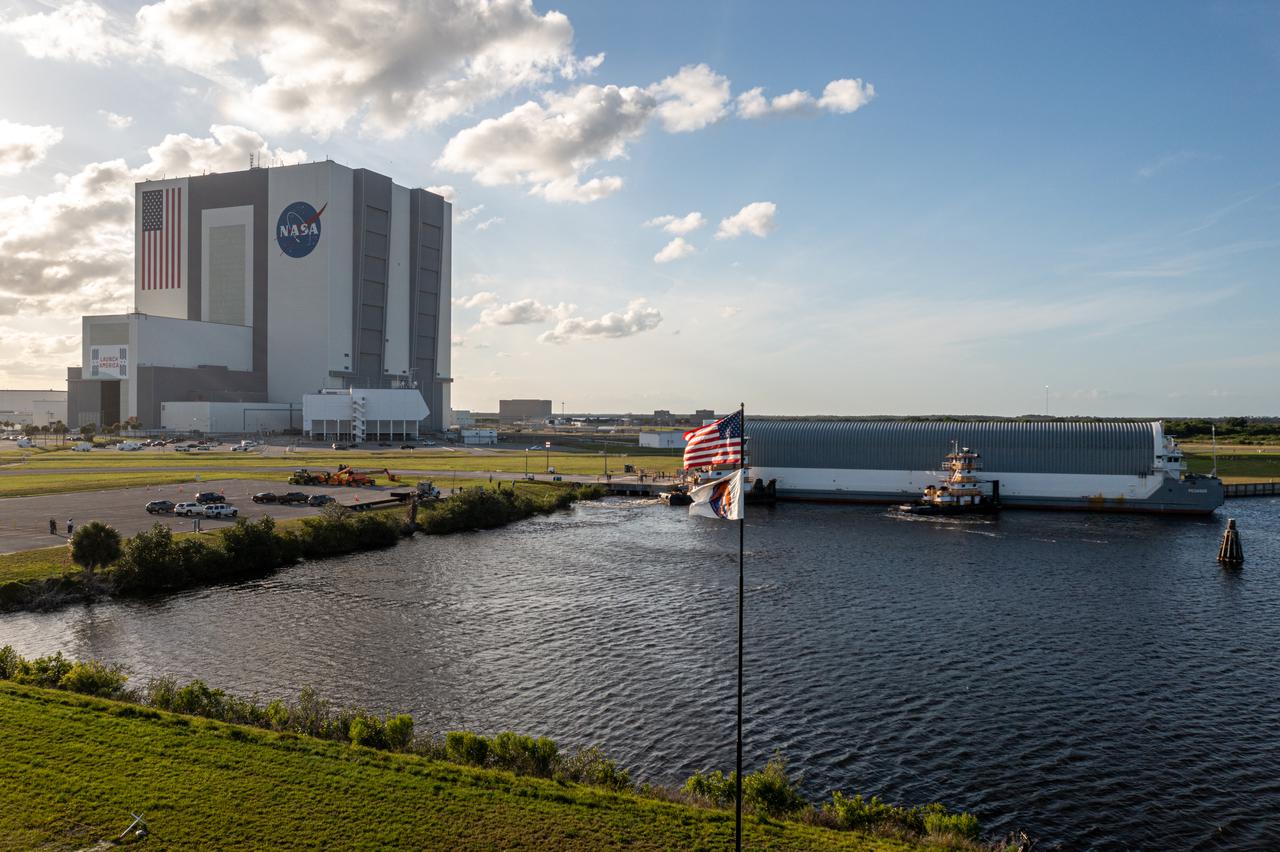
After its journey from NASA’s Stennis Space Center in Mississippi aboard the Pegasus barge, the mighty Space Launch System (SLS) core stage arrives at the agency’s Kennedy Space Center in Florida on April 27, 2021. The core stage is the final piece of Artemis hardware to arrive at the spaceport and will be offloaded and moved to Kennedy’s Vehicle Assembly Building, where it will be prepared for integration atop the mobile launcher with the completed stack of solid rocket boosters ahead of the Artemis I launch. The first in a series of increasingly complex missions, Artemis I will test SLS and Orion as an integrated system prior to crewed flights to the Moon.

U.S. Air Force “Guardian Angel” Pararescue forces are airdropped into the Atlantic Ocean off the coast of Cape Canaveral near Kennedy Space Center in Florida to rehearse a full mission profile training exercise on April 27, 2019. The exercise included using a Boeing CST-100 Starliner training capsule to run through the necessary steps in the unlikely event of an emergency resulting in a splashdown. NASA and the Department of Defense (DoD) Human Space Flight Support Office Rescue Division conducted the training, which included rehearsing assisted egress, extracting DoD team members acting as astronauts, from the capsule and providing immediate medical treatment. This open-ocean exercise provides team members with the necessary training ahead of Boeing’s Crew Flight Test with astronauts targeted for later this year. During normal return scenarios, Boeing’s Starliner will land in a safe zone of about 15 square miles in the Western United States. Throughout the commercial crew development phases with NASA, Boeing has performed dozens of qualification tests on its parachute and airbag systems simulating conditions on land and in the water.
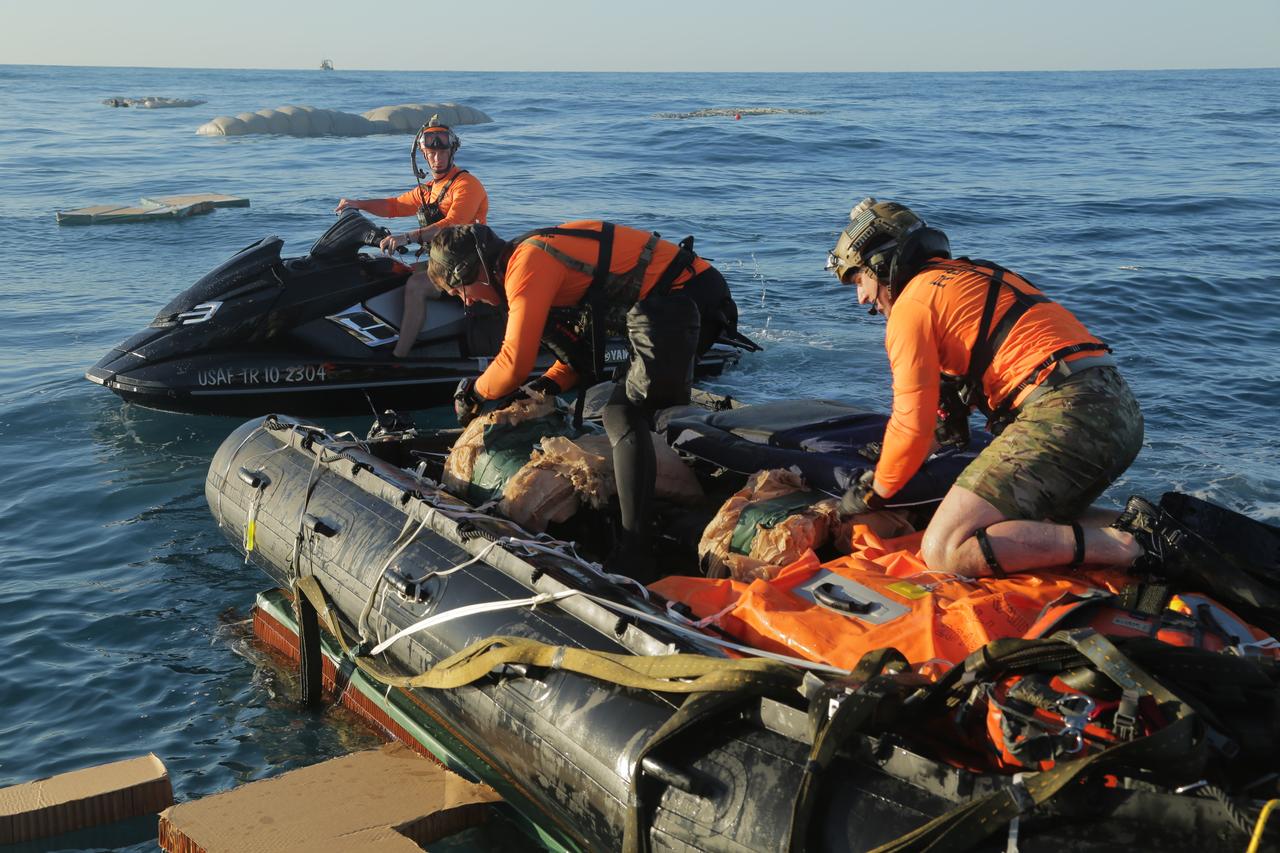
Pararescue specialists from the 304th Rescue Squadron, located in Portland, Oregon and supporting the 45th Operations Group’s Detachment 3, based out of Patrick Air Force Base, prepare equipment during an April astronaut rescue exercise with NASA’s Commercial Crew Program and SpaceX off of Florida’s eastern coast. The pararescue specialists, also known as “Guardian Angels,” jumped from military aircraft and simulated a rescue operation to demonstrate their ability to safely remove crew from the SpaceX Crew Dragon in the unlikely event of an emergency landing. The pararescue specialists are fully qualified paramedics able to perform field surgery, if necessary.
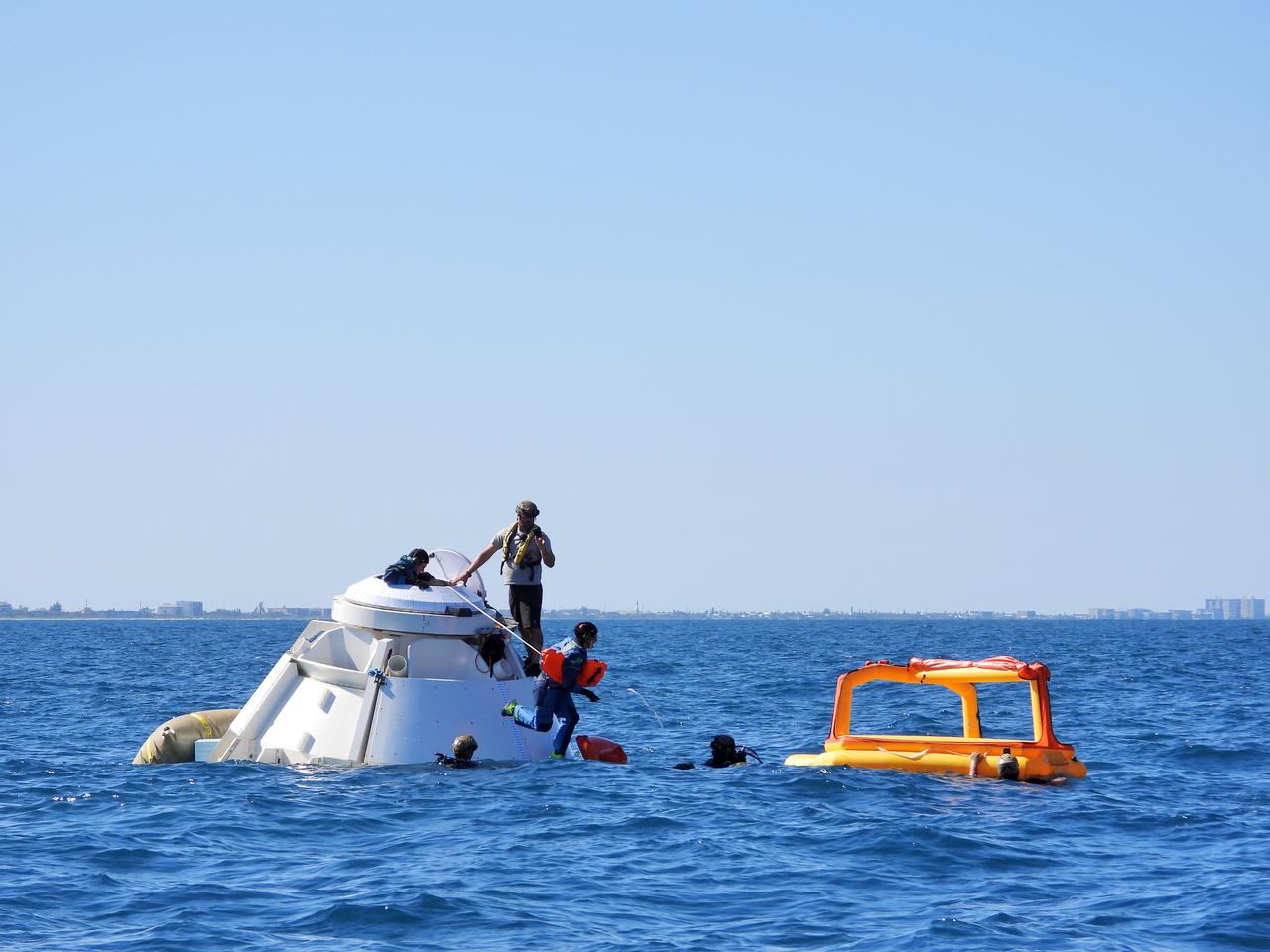
NASA astronauts Suni Williams and Barry “Butch” Wilmore rehearse the steps they would take to exit Boeing’s CST-100 Starliner spacecraft without assistance in the unlikely event of an emergency resulting in a splashdown. The training exercise, which occurred April 27, 2019, took place several miles off the coast of Cape Canaveral near NASA’s Kennedy Space Center in Florida. It included the astronauts unloading a rescue raft from inside the spacecraft, climbing out through a hatch at the top of the spacecraft, jumping into the Atlantic Ocean and boarding the raft. This open-ocean exercise provides the astronauts with the necessary training ahead of Boeing’s Crew Flight Test and subsequent missions. During normal return scenarios, Boeing’s Starliner will land in a safe zone of about 15 square miles in the Western United States. Throughout the commercial crew development phases with NASA, Boeing has performed dozens of qualification tests on its parachute and airbag systems simulating conditions on land and in the water.
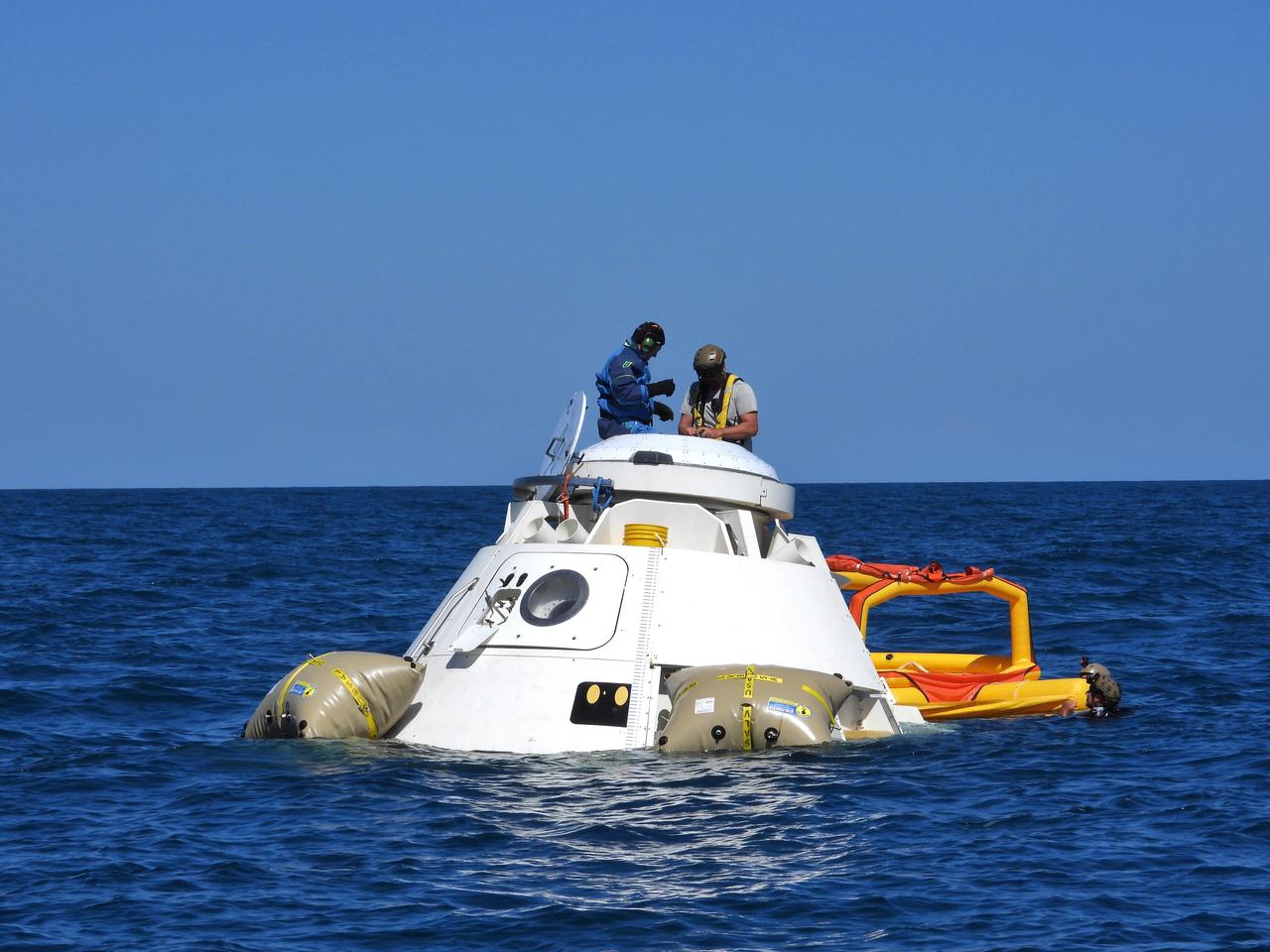
NASA astronauts Suni Williams and Barry “Butch” Wilmore rehearse the steps they would take to exit Boeing’s CST-100 Starliner spacecraft without assistance in the unlikely event of an emergency resulting in a splashdown. The training exercise, which occurred April 27, 2019, took place several miles off the coast of Cape Canaveral near NASA’s Kennedy Space Center in Florida. It included the astronauts unloading a rescue raft from inside the spacecraft, climbing out through a hatch at the top of the spacecraft, jumping into the Atlantic Ocean and boarding the raft. This open-ocean exercise provides the astronauts with the necessary training ahead of Boeing’s Crew Flight Test and subsequent missions. During normal return scenarios, Boeing’s Starliner will land in a safe zone of about 15 square miles in the Western United States. Throughout the commercial crew development phases with NASA, Boeing has performed dozens of qualification tests on its parachute and airbag systems simulating conditions on land and in the water.

A C-17 Globemaster aircraft from the Alaska Air National Guard’s 249th Airlift Squadron flies overhead as pararescue specialists from the 304th Rescue Squadron, located in Portland, Oregon complete an astronaut rescue training exercise inside a covered life raft on the Atlantic Ocean. The pararescue specialists, supporting the 45th Operations Group’s Detachment 3, based out of Patrick Air Force Base, conducted the exercise in April with NASA’s Commercial Crew Program and SpaceX off of Florida’s eastern coast. The specially designed 20-person life raft is equipped with enough food, water and medical supplies to sustain both rescuers and crew for up to three days, if necessary. In this situation, the Department of Defense (DOD) would complete the rescue by enlisting help from the US Coast Guard, a DOD ship, or a nearby commercial ship of opportunity to transport the crew to safety.
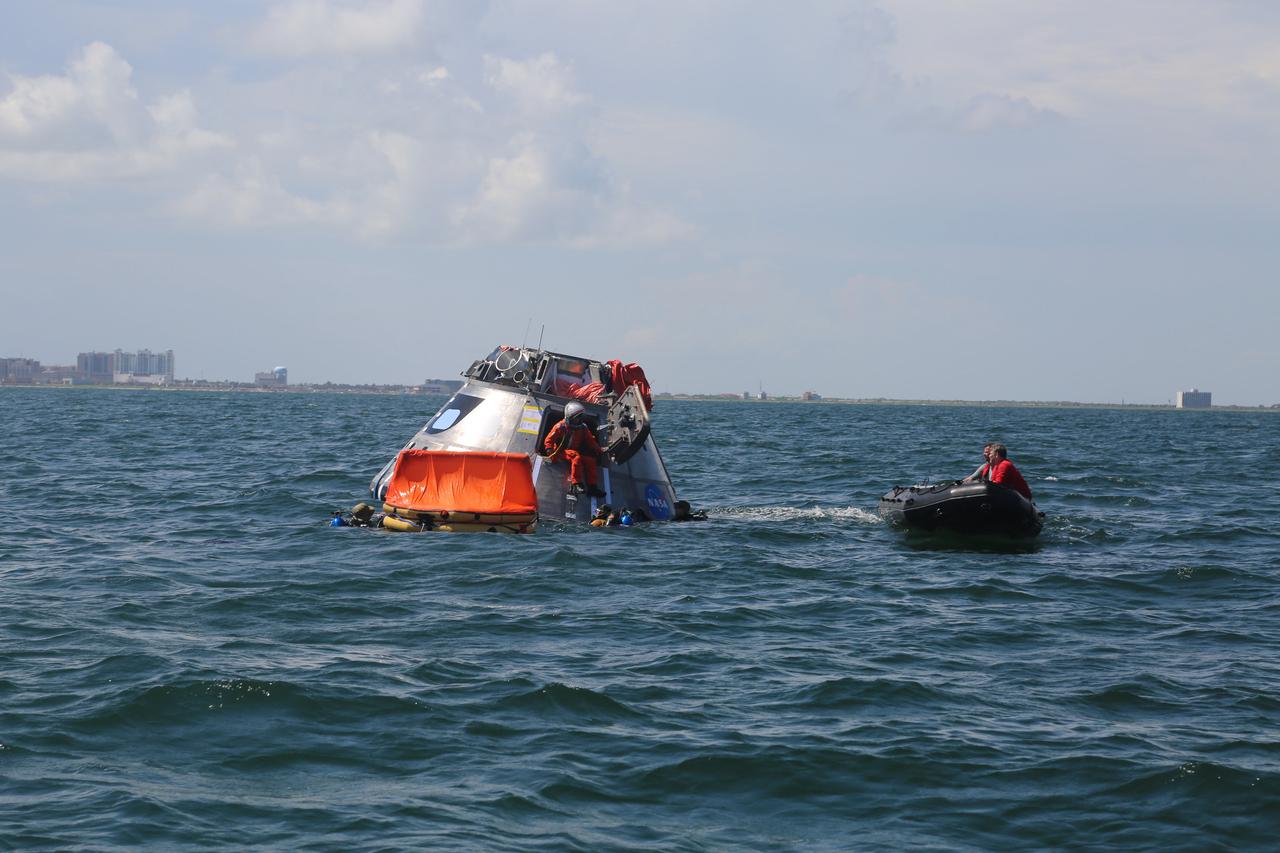
When astronauts return to Earth from destinations beyond the Moon in NASA’s Orion spacecraft and splashdown in the Pacific Ocean, they’ll still need to safely get out of the spacecraft and back on dry land. Using the waters off the coast of Galveston, Texas, a NASA and Department of Defense team test Orion exit procedures in a variety of scenarios on July 11, 2017. Part of Batch images transfer from Flickr.

Rescue team members are using a Boeing CST-100 Starliner training capsule to rehearse a full mission profile training exercise in the unlikely event of an emergency resulting in a splashdown. NASA and the Department of Defense (DoD) Human Space Flight Support Office Rescue Division conducted the exercise, after a culmination of nearly two weeks of training, off the coast of Cape Canaveral near the agency’s Kennedy Space Center in Florida on April 27, 2019. The team rehearsed assisted egress, extracting DoD team members acting as astronauts, from the capsule and providing immediate medical treatment. This open-ocean exercise provides team members with the necessary training ahead of Boeing’s Crew Flight Test with astronauts targeted for later this year. During normal return scenarios, Boeing’s Starliner will land in a safe zone of about 15 square miles in the Western United States. Throughout the commercial crew development phases with NASA, Boeing has performed dozens of qualification tests on its parachute and airbag systems simulating conditions on land and in the water.
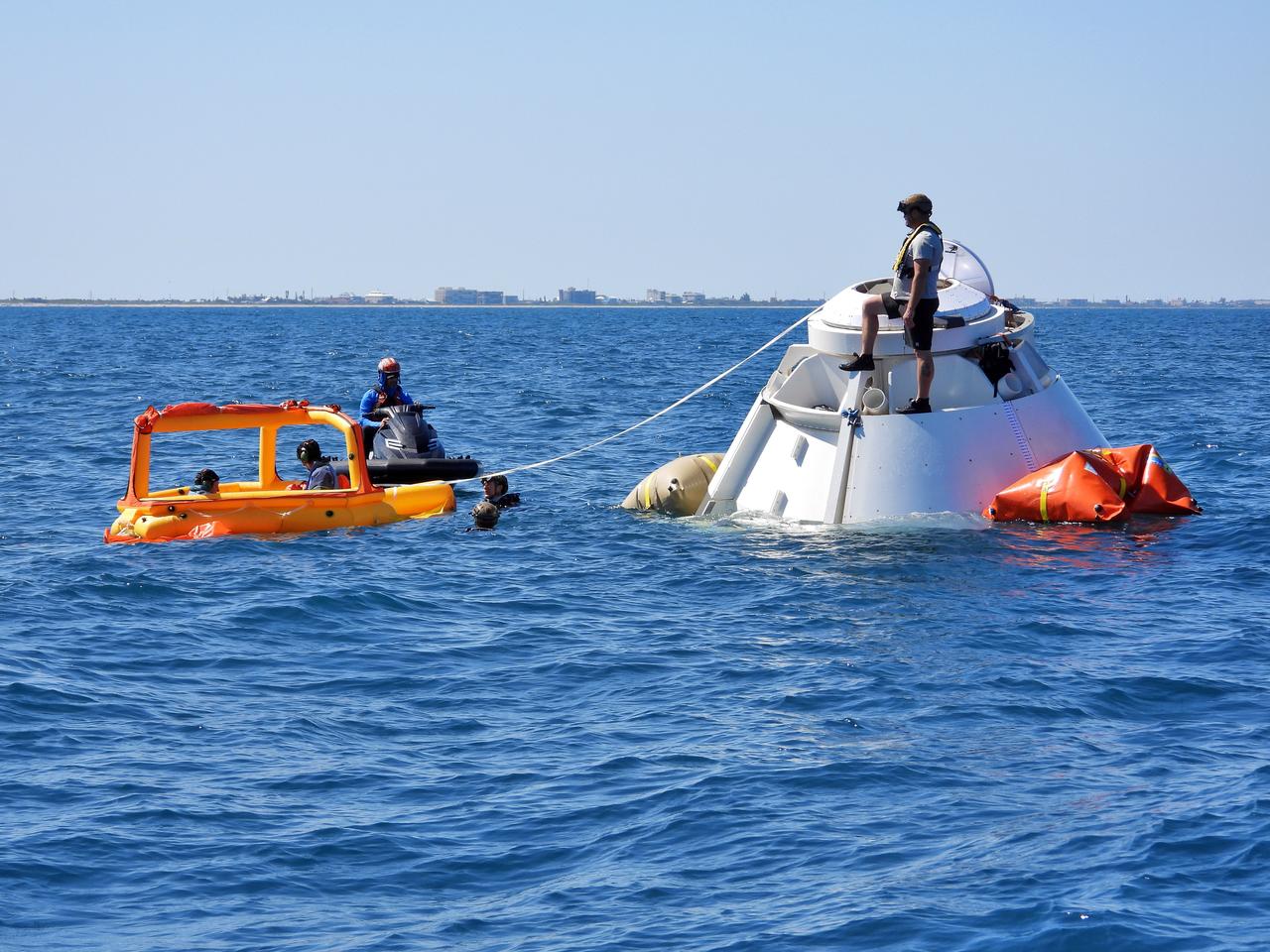
NASA astronauts Suni Williams and Barry “Butch” Wilmore rehearse the steps they would take to exit Boeing’s CST-100 Starliner spacecraft without assistance in the unlikely event of an emergency resulting in a splashdown. The training exercise, which occurred April 27, 2019, took place several miles off the coast of Cape Canaveral near NASA’s Kennedy Space Center in Florida. It included the astronauts unloading a rescue raft from inside the spacecraft, climbing out through a hatch at the top of the spacecraft, jumping into the Atlantic Ocean and boarding the raft. This open-ocean exercise provides the astronauts with the necessary training ahead of Boeing’s Crew Flight Test and subsequent missions. During normal return scenarios, Boeing’s Starliner will land in a safe zone of about 15 square miles in the Western United States. Throughout the commercial crew development phases with NASA, Boeing has performed dozens of qualification tests on its parachute and airbag systems simulating conditions on land and in the water.
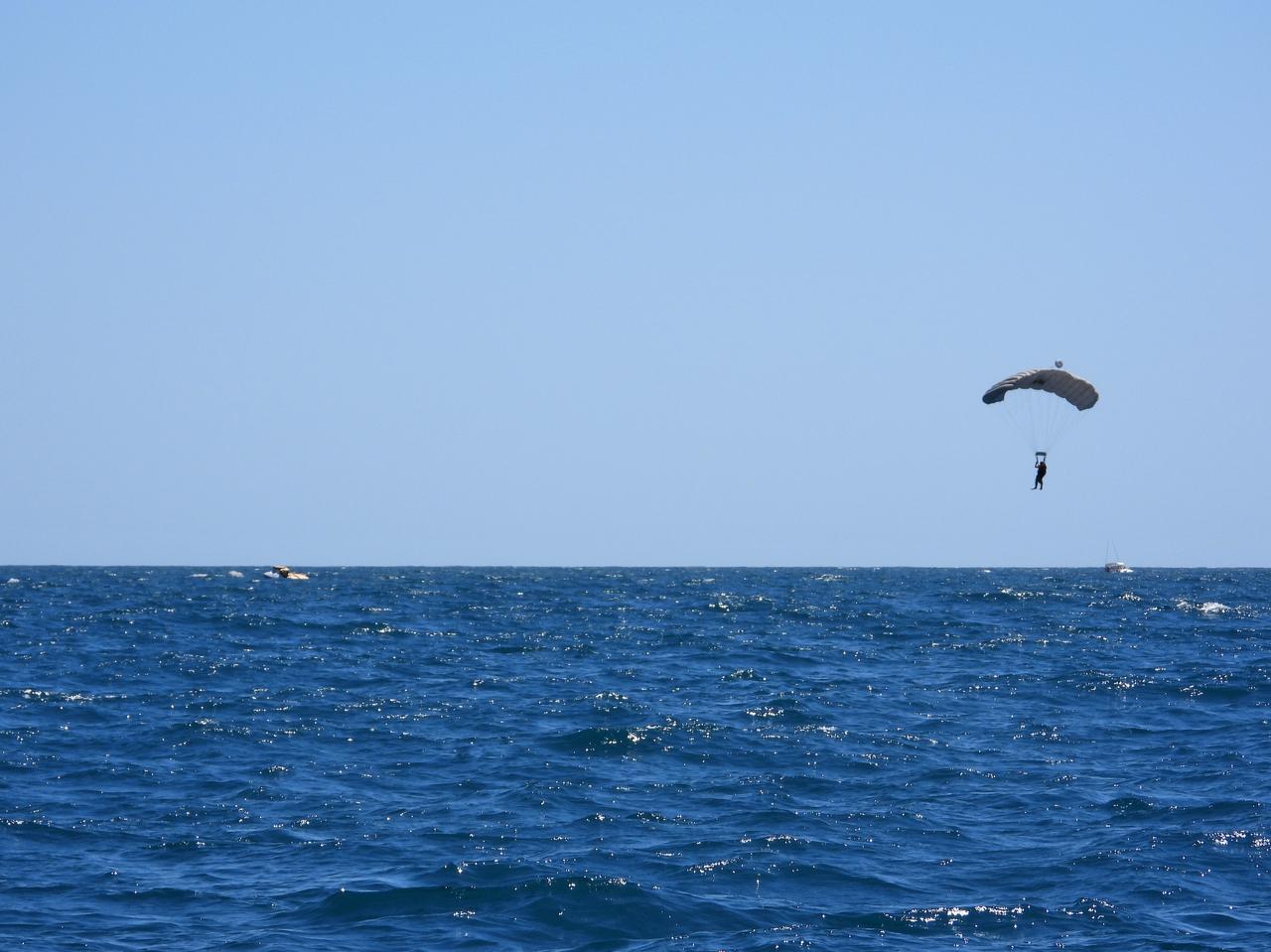
U.S. Air Force “Guardian Angel” Pararescue forces are airdropped into the Atlantic Ocean off the coast of Cape Canaveral near Kennedy Space Center in Florida to rehearse a full mission profile training exercise on April 27, 2019. The exercise included using a Boeing CST-100 Starliner training capsule to run through the necessary steps in the unlikely event of an emergency resulting in a splashdown. NASA and the Department of Defense (DoD) Human Space Flight Support Office Rescue Division conducted the training, which included rehearsing assisted egress, extracting DoD team members acting as astronauts, from the capsule and providing immediate medical treatment. This open-ocean exercise provides team members with the necessary training ahead of Boeing’s Crew Flight Test with astronauts targeted for later this year. During normal return scenarios, Boeing’s Starliner will land in a safe zone of about 15 square miles in the Western United States. Throughout the commercial crew development phases with NASA, Boeing has performed dozens of qualification tests on its parachute and airbag systems simulating conditions on land and in the water.
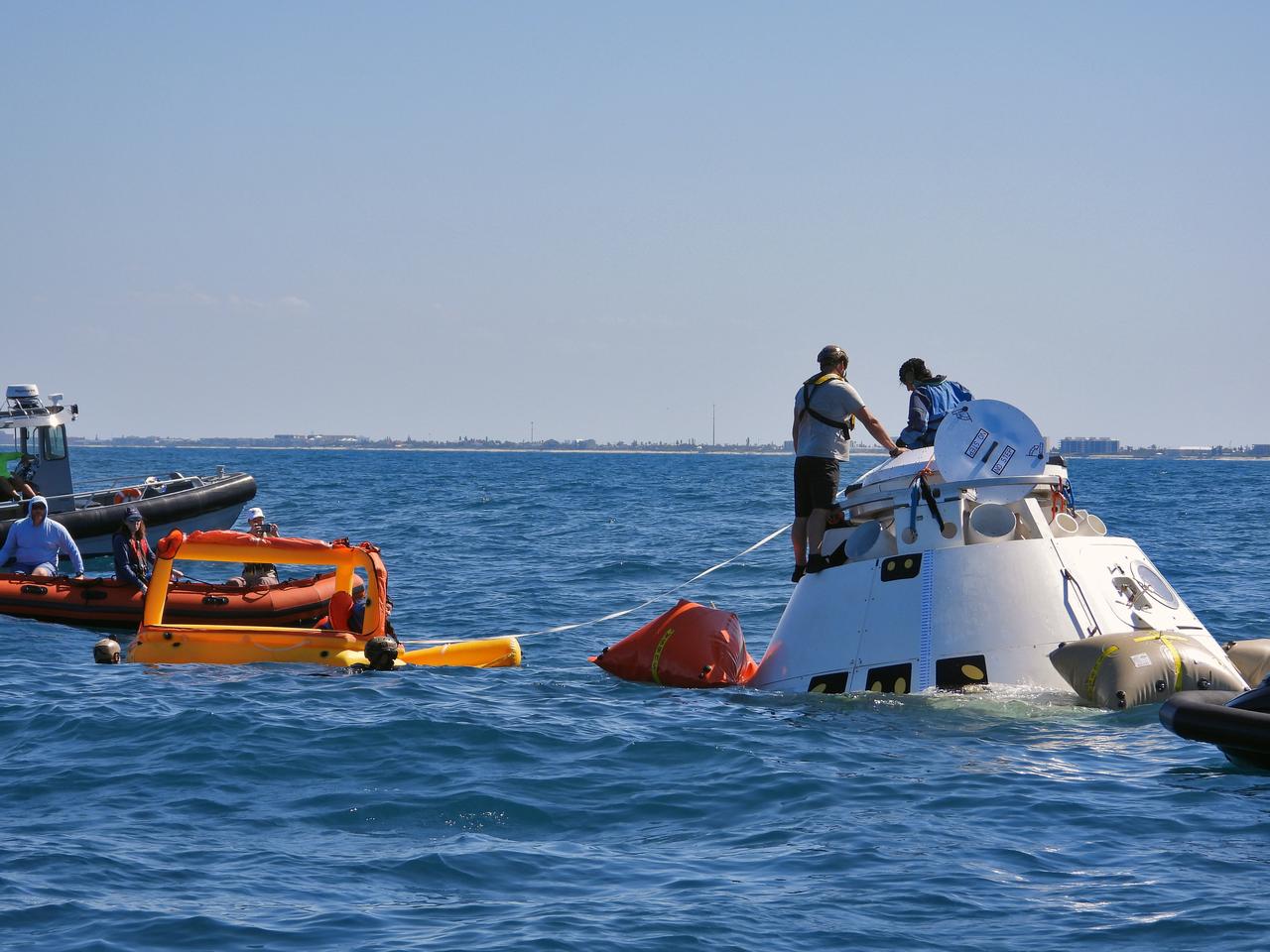
NASA astronauts Suni Williams and Barry “Butch” Wilmore rehearse the steps they would take to exit Boeing’s CST-100 Starliner spacecraft without assistance in the unlikely event of an emergency resulting in a splashdown. The training exercise, which occurred April 27, 2019, took place several miles off the coast of Cape Canaveral near NASA’s Kennedy Space Center in Florida. It included the astronauts unloading a rescue raft from inside the spacecraft, climbing out through a hatch at the top of the spacecraft, jumping into the Atlantic Ocean and boarding the raft. This open-ocean exercise provides the astronauts with the necessary training ahead of Boeing’s Crew Flight Test and subsequent missions. During normal return scenarios, Boeing’s Starliner will land in a safe zone of about 15 square miles in the Western United States. Throughout the commercial crew development phases with NASA, Boeing has performed dozens of qualification tests on its parachute and airbag systems simulating conditions on land and in the water.
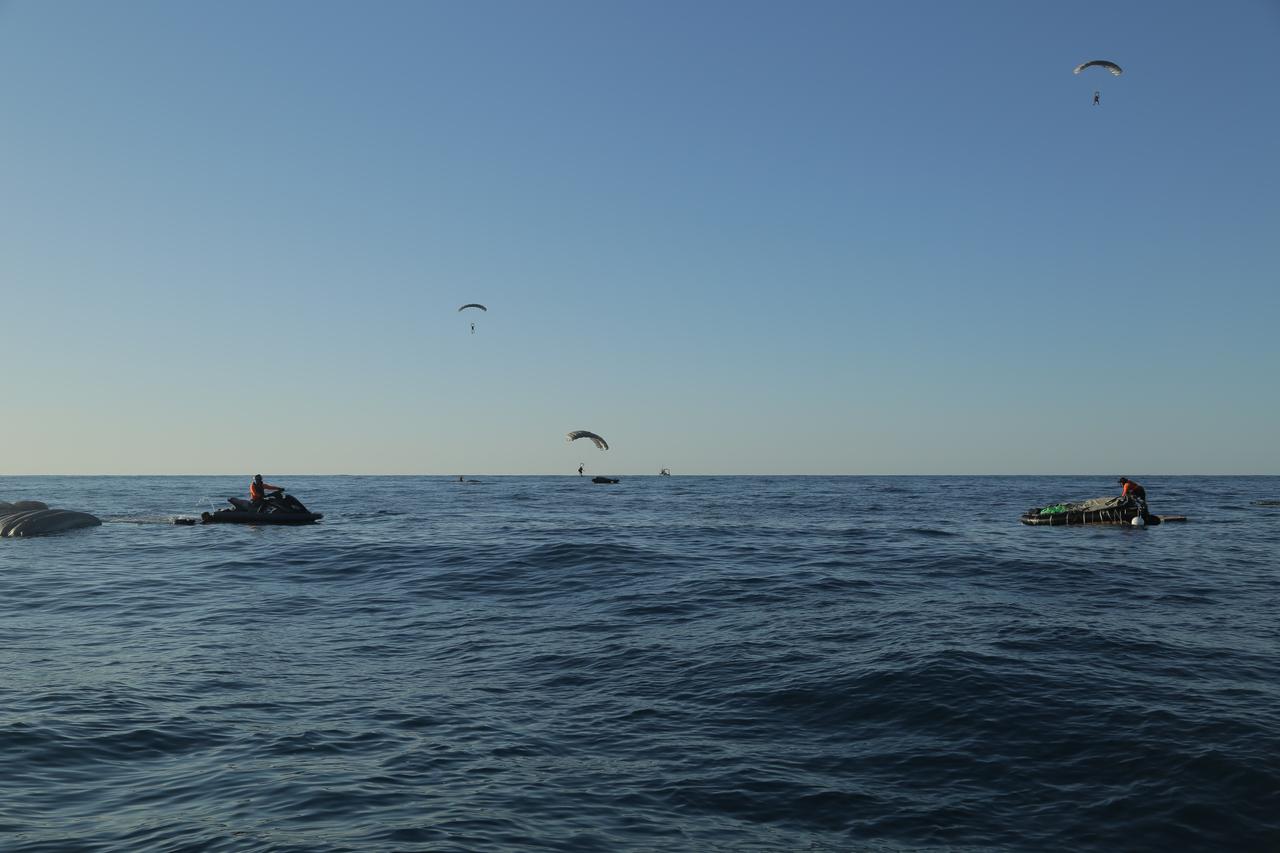
Pararescue specialists from the 304th Rescue Squadron, located in Portland, Oregon and supporting the 45th Operations Group’s Detachment 3, based out of Patrick Air Force Base, deploy their parachutes and prepare to touch down on the Atlantic Ocean surface during an April astronaut rescue exercise with NASA’s Commercial Crew Program and SpaceX off of Florida’s eastern coast. The pararescue specialists, also known as “Guardian Angels,” jumped from military aircraft and simulated a rescue operation to demonstrate their ability to safely remove crew from the SpaceX Crew Dragon in the unlikely event of an emergency landing.
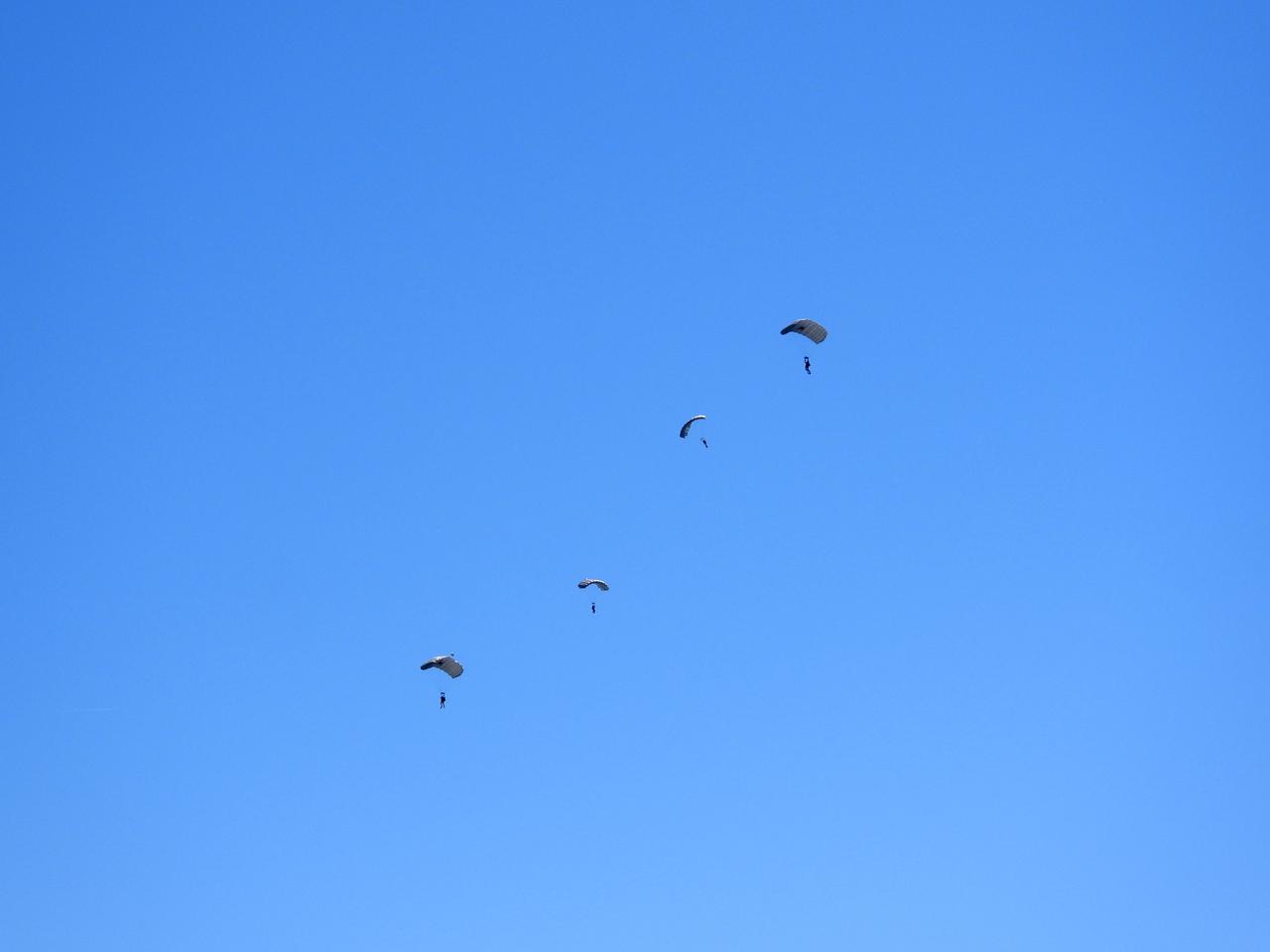
U.S. Air Force “Guardian Angel” Pararescue forces are airdropped into the Atlantic Ocean off the coast of Cape Canaveral near Kennedy Space Center in Florida to rehearse a full mission profile training exercise on April 27, 2019. The exercise included using a Boeing CST-100 Starliner training capsule to run through the necessary steps in the unlikely event of an emergency resulting in a splashdown. NASA and the Department of Defense (DoD) Human Space Flight Support Office Rescue Division conducted the training, which included rehearsing assisted egress, extracting DoD team members acting as astronauts, from the capsule and providing immediate medical treatment. This open-ocean exercise provides team members with the necessary training ahead of Boeing’s Crew Flight Test with astronauts targeted for later this year. During normal return scenarios, Boeing’s Starliner will land in a safe zone of about 15 square miles in the Western United States. Throughout the commercial crew development phases with NASA, Boeing has performed dozens of qualification tests on its parachute and airbag systems simulating conditions on land and in the water.

Pararescue specialists from the 304th Rescue Squadron, located in Portland, Oregon and supporting the 45th Operations Group’s Detachment 3, based out of Patrick Air Force Base, secure a covered life raft as the sun sets during an astronaut rescue training exercise with NASA’s Commercial Crew Program and SpaceX off of Florida’s eastern coast in April. The specially designed 20-person life raft is equipped with enough food, water and medical supplies to sustain both rescuers and crew for up to three days, if necessary. In this situation, the Department of Defense (DOD) would complete the rescue by enlisting help from the US Coast Guard, a DOD ship, or a nearby commercial ship of opportunity to transport the crew to safety.
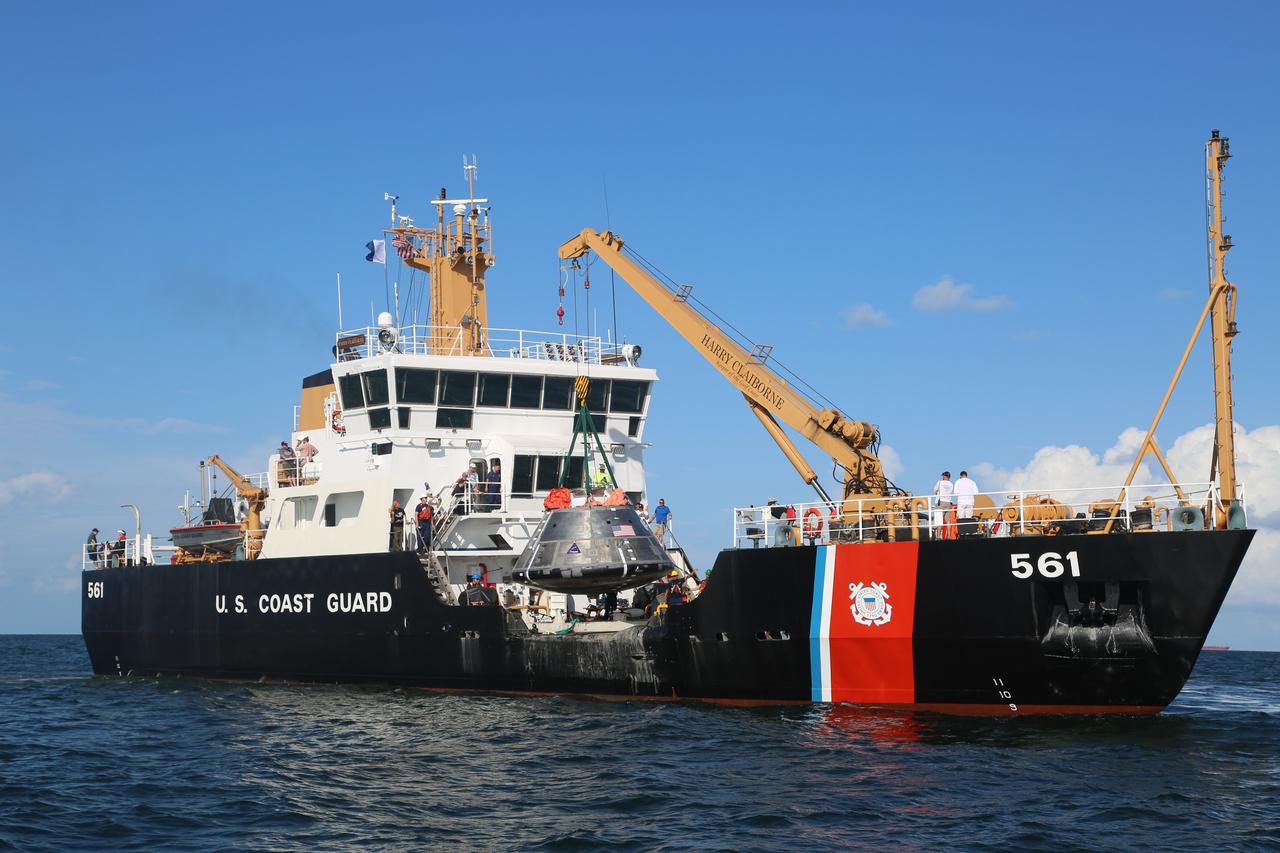
When astronauts return to Earth from destinations beyond the Moon in NASA’s Orion spacecraft and splashdown in the Pacific Ocean, they’ll still need to safely get out of the spacecraft and back on dry land. Using the waters off the coast of Galveston, Texas, a NASA and Department of Defense team test Orion exit procedures in a variety of scenarios on July 11, 2017. Part of Batch images transfer from Flickr.
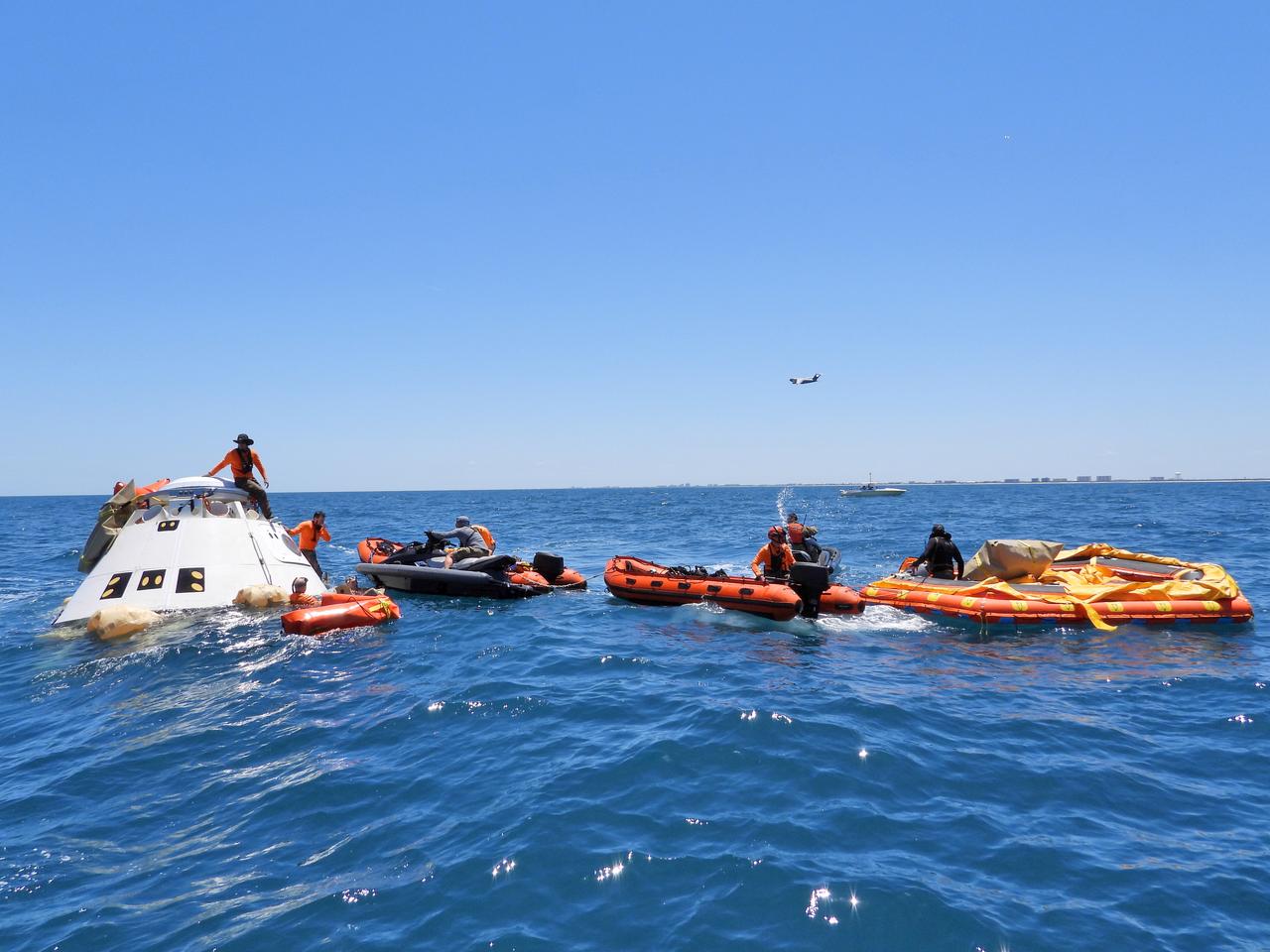
Rescue team members are using a Boeing CST-100 Starliner training capsule to rehearse a full mission profile training exercise in the unlikely event of an emergency resulting in a splashdown. NASA and the Department of Defense (DoD) Human Space Flight Support Office Rescue Division conducted the exercise, after a culmination of nearly two weeks of training, off the coast of Cape Canaveral near the agency’s Kennedy Space Center in Florida on April 27, 2019. The team rehearsed assisted egress, extracting DoD team members acting as astronauts, from the capsule and providing immediate medical treatment. This open-ocean exercise provides team members with the necessary training ahead of Boeing’s Crew Flight Test with astronauts targeted for later this year. During normal return scenarios, Boeing’s Starliner will land in a safe zone of about 15 square miles in the Western United States. Throughout the commercial crew development phases with NASA, Boeing has performed dozens of qualification tests on its parachute and airbag systems simulating conditions on land and in the water.

NASA astronauts Suni Williams and Barry “Butch” Wilmore rehearse the steps they would take to exit Boeing’s CST-100 Starliner spacecraft without assistance in the unlikely event of an emergency resulting in a splashdown. The training exercise, which occurred April 27, 2019, took place several miles off the coast of Cape Canaveral near NASA’s Kennedy Space Center in Florida. It included the astronauts unloading a rescue raft from inside the spacecraft, climbing out through a hatch at the top of the spacecraft, jumping into the Atlantic Ocean and boarding the raft. This open-ocean exercise provides the astronauts with the necessary training ahead of Boeing’s Crew Flight Test and subsequent missions. During normal return scenarios, Boeing’s Starliner will land in a safe zone of about 15 square miles in the Western United States. Throughout the commercial crew development phases with NASA, Boeing has performed dozens of qualification tests on its parachute and airbag systems simulating conditions on land and in the water.

Rescue team members are using a Boeing CST-100 Starliner training capsule to rehearse a full mission profile training exercise in the unlikely event of an emergency resulting in a splashdown. NASA and the Department of Defense (DoD) Human Space Flight Support Office Rescue Division conducted the exercise, after a culmination of nearly two weeks of training, off the coast of Cape Canaveral near the agency’s Kennedy Space Center in Florida on April 27, 2019. The team rehearsed assisted egress, extracting DoD team members acting as astronauts, from the capsule and providing immediate medical treatment. This open-ocean exercise provides team members with the necessary training ahead of Boeing’s Crew Flight Test with astronauts targeted for later this year. During normal return scenarios, Boeing’s Starliner will land in a safe zone of about 15 square miles in the Western United States. Throughout the commercial crew development phases with NASA, Boeing has performed dozens of qualification tests on its parachute and airbag systems simulating conditions on land and in the water.
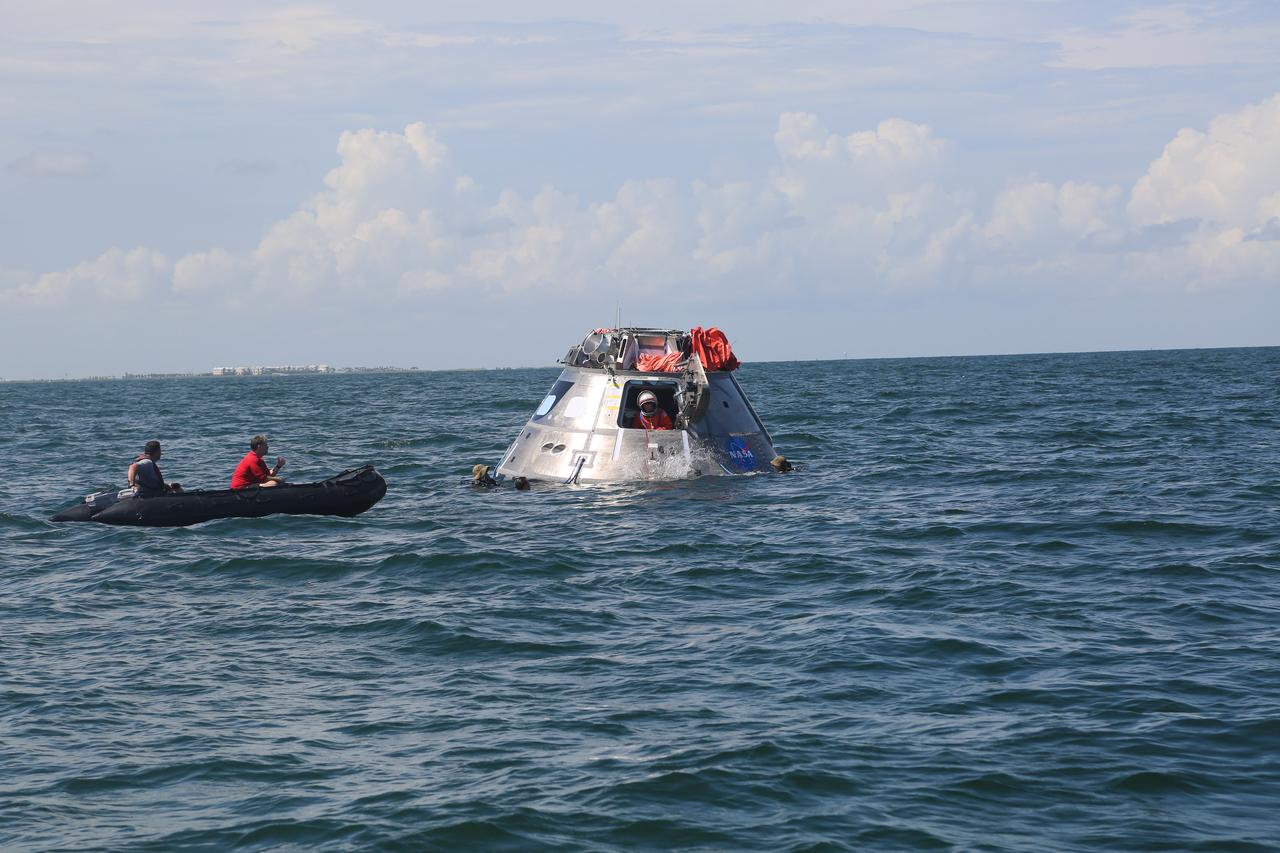
When astronauts return to Earth from destinations beyond the Moon in NASA’s Orion spacecraft and splashdown in the Pacific Ocean, they’ll still need to safely get out of the spacecraft and back on dry land. Using the waters off the coast of Galveston, Texas, a NASA and Department of Defense team test Orion exit procedures in a variety of scenarios on July 11, 2017. Part of Batch images transfer from Flickr.
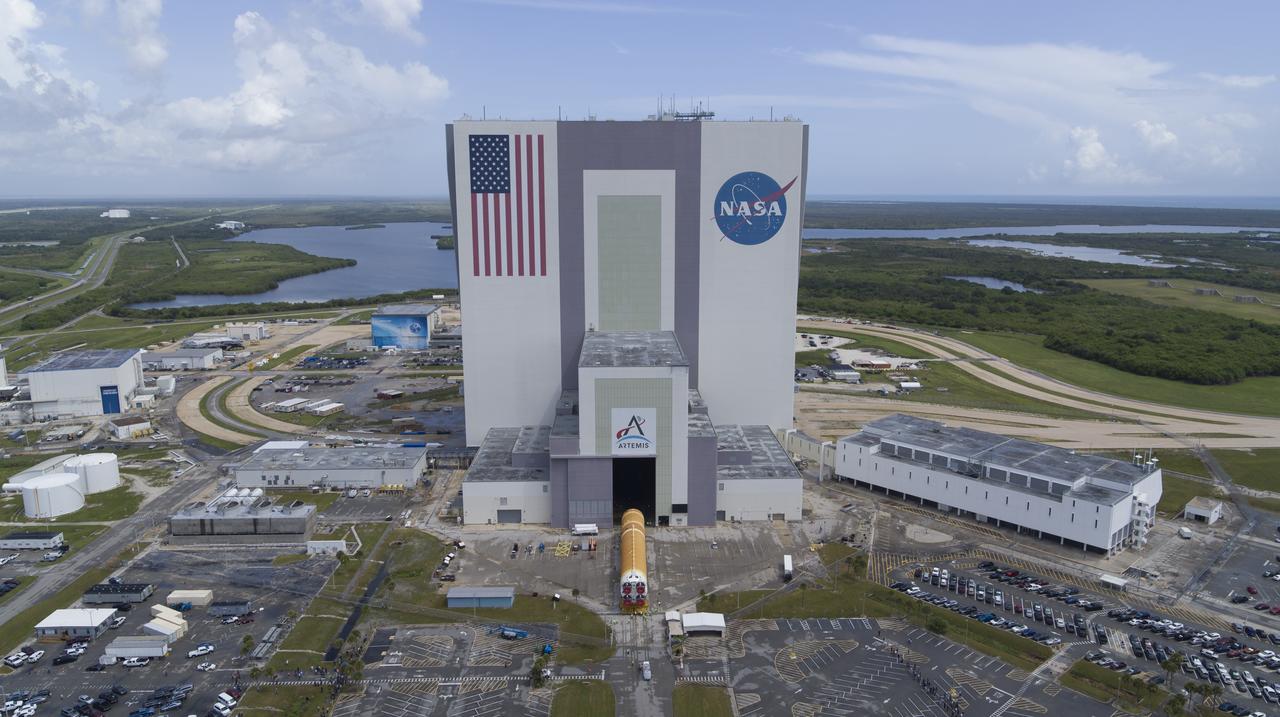
In this aerial view, teams with Exploration Ground Systems (EGS) transport the agency’s powerful SLS (Space Launch System) core stage to the Vehicle Assembly Building at NASA’s Kennedy Space Center in Florida on Wednesday, July 24, 2024, after it completed the journey from NASA’s Michoud Assembly Facility in New Orleans aboard the Pegasus barge. In the coming months, SLS will be prepared for integration atop the mobile launcher ahead of the Artemis II launch.
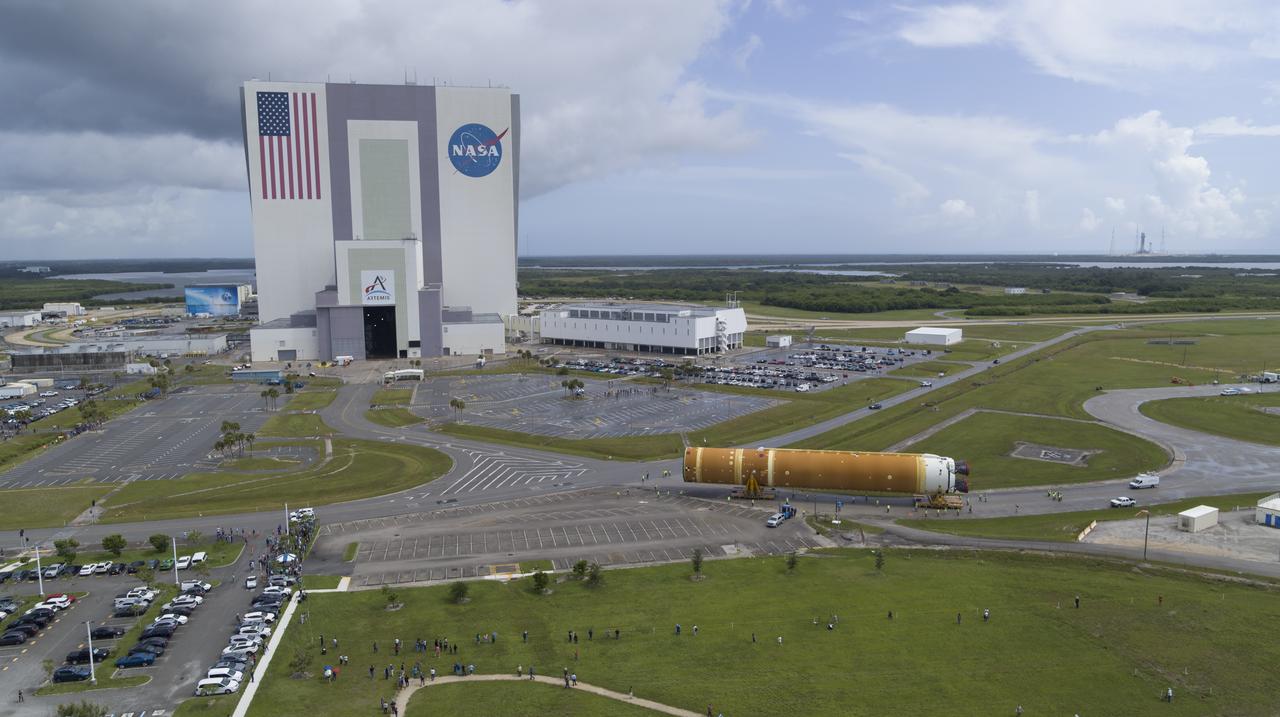
In this aerial view, teams with Exploration Ground Systems (EGS) transport the agency’s powerful SLS (Space Launch System) core stage to the Vehicle Assembly Building at NASA’s Kennedy Space Center in Florida on Wednesday, July 24, 2024, after it completed the journey from NASA’s Michoud Assembly Facility in New Orleans aboard the Pegasus barge. In the coming months, SLS will be prepared for integration atop the mobile launcher ahead of the Artemis II launch.
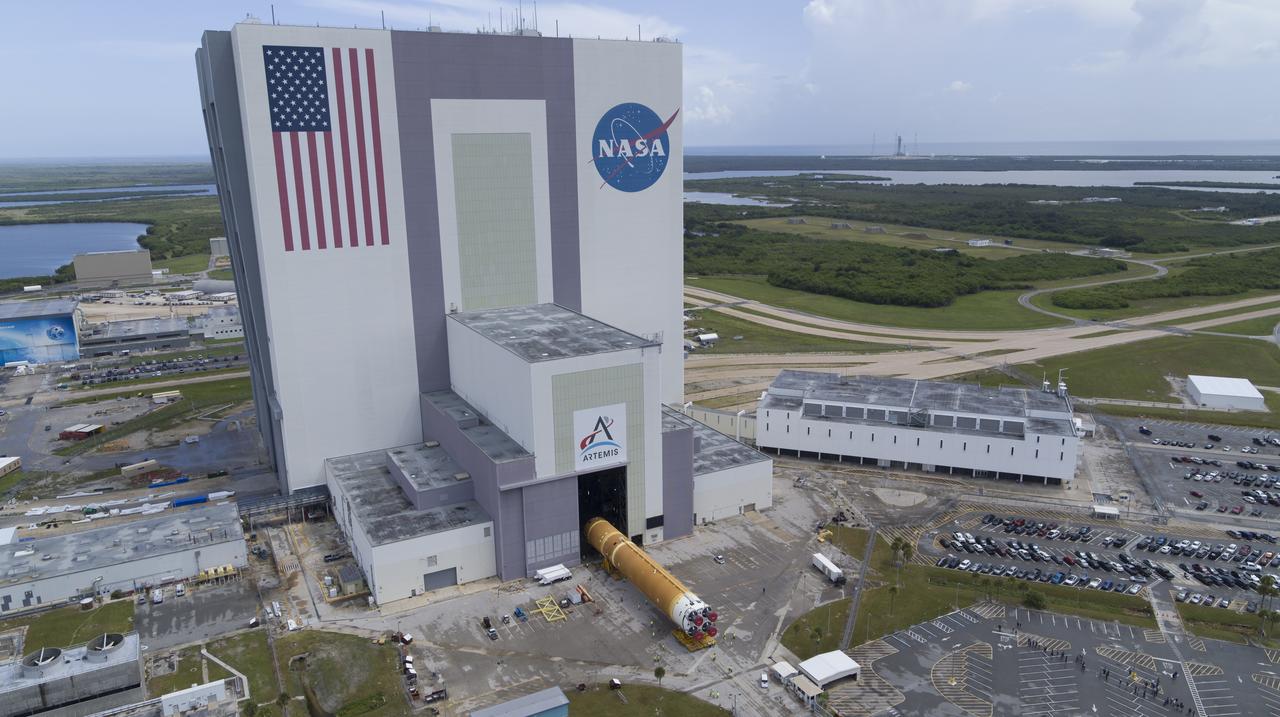
In this aerial view, teams with Exploration Ground Systems (EGS) transport the agency’s powerful SLS (Space Launch System) core stage to the Vehicle Assembly Building at NASA’s Kennedy Space Center in Florida on Wednesday, July 24, 2024, after it completed the journey from NASA’s Michoud Assembly Facility in New Orleans aboard the Pegasus barge. In the coming months, SLS will be prepared for integration atop the mobile launcher ahead of the Artemis II launch.
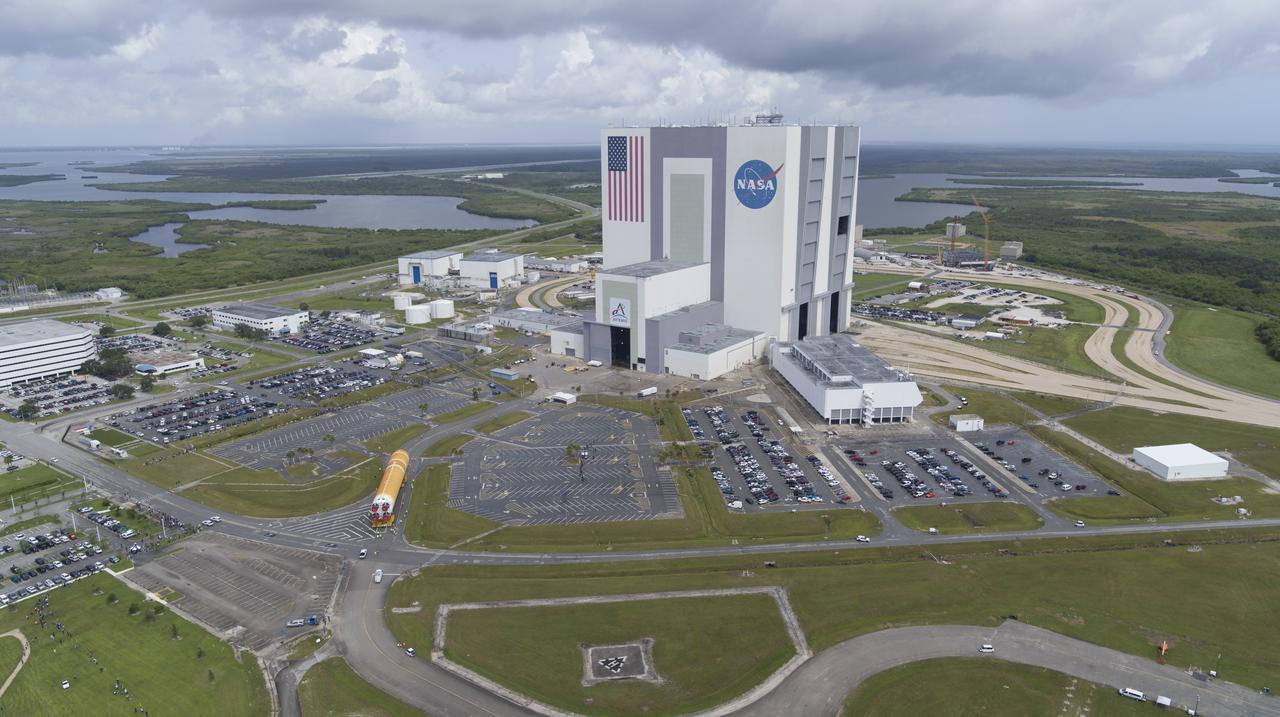
In this aerial view, teams with Exploration Ground Systems (EGS) transport the agency’s powerful SLS (Space Launch System) core stage to the Vehicle Assembly Building at NASA’s Kennedy Space Center in Florida on Wednesday, July 24, 2024, after it completed the journey from NASA’s Michoud Assembly Facility in New Orleans aboard the Pegasus barge. In the coming months, SLS will be prepared for integration atop the mobile launcher ahead of the Artemis II launch.
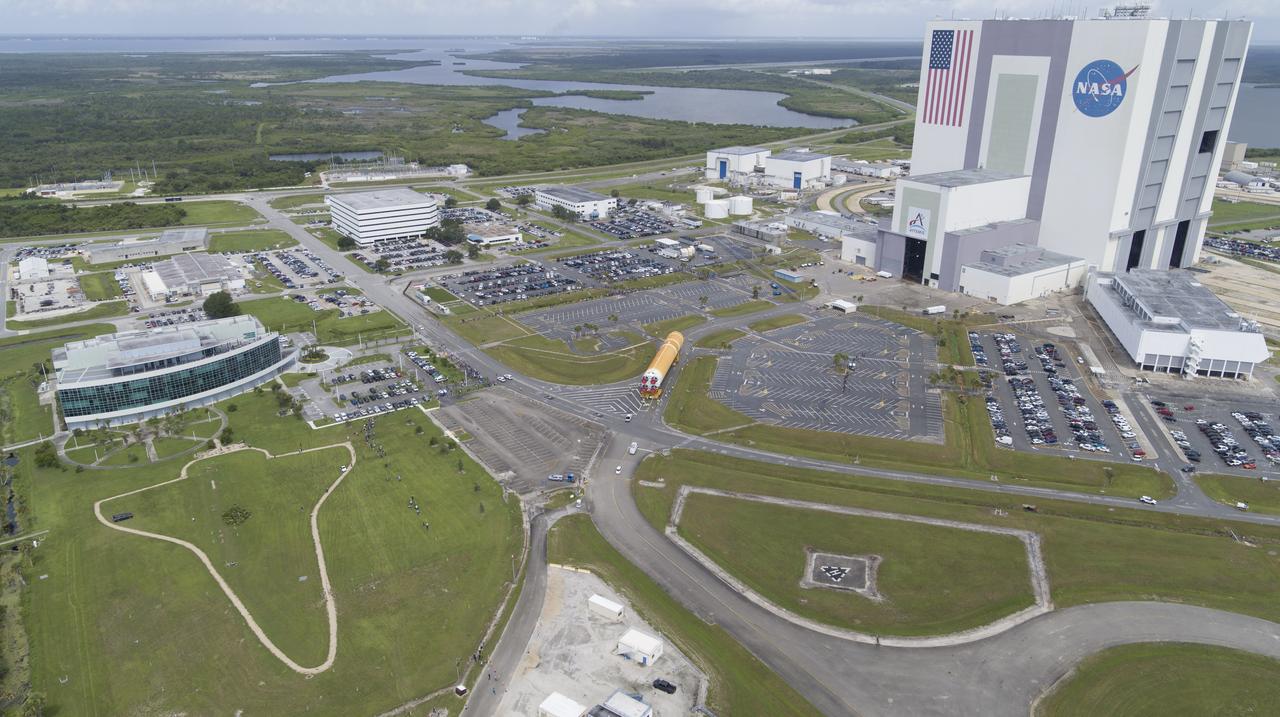
In this aerial view, teams with Exploration Ground Systems (EGS) transport the agency’s powerful SLS (Space Launch System) core stage to the Vehicle Assembly Building at NASA’s Kennedy Space Center in Florida on Wednesday, July 24, 2024, after it completed the journey from NASA’s Michoud Assembly Facility in New Orleans aboard the Pegasus barge. In the coming months, SLS will be prepared for integration atop the mobile launcher ahead of the Artemis II launch.
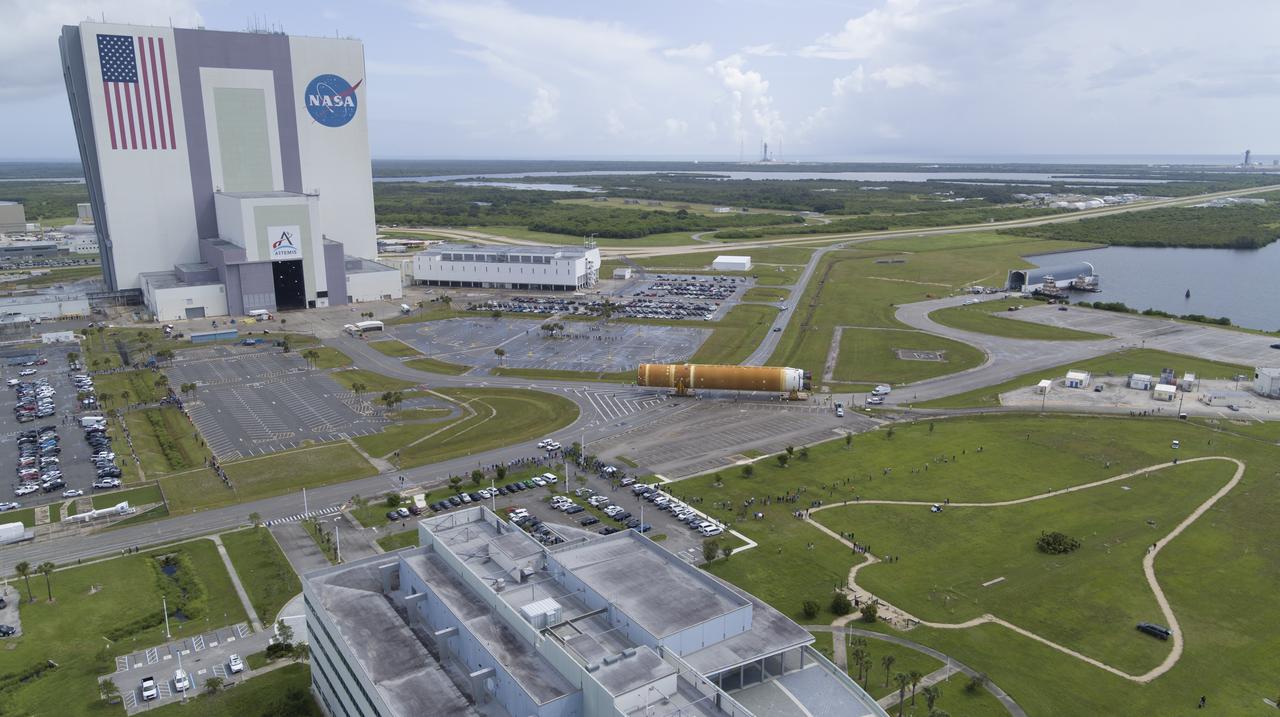
In this aerial view, teams with Exploration Ground Systems (EGS) transport the agency’s powerful SLS (Space Launch System) core stage to the Vehicle Assembly Building at NASA’s Kennedy Space Center in Florida on Wednesday, July 24, 2024, after it completed the journey from NASA’s Michoud Assembly Facility in New Orleans aboard the Pegasus barge. In the coming months, SLS will be prepared for integration atop the mobile launcher ahead of the Artemis II launch.
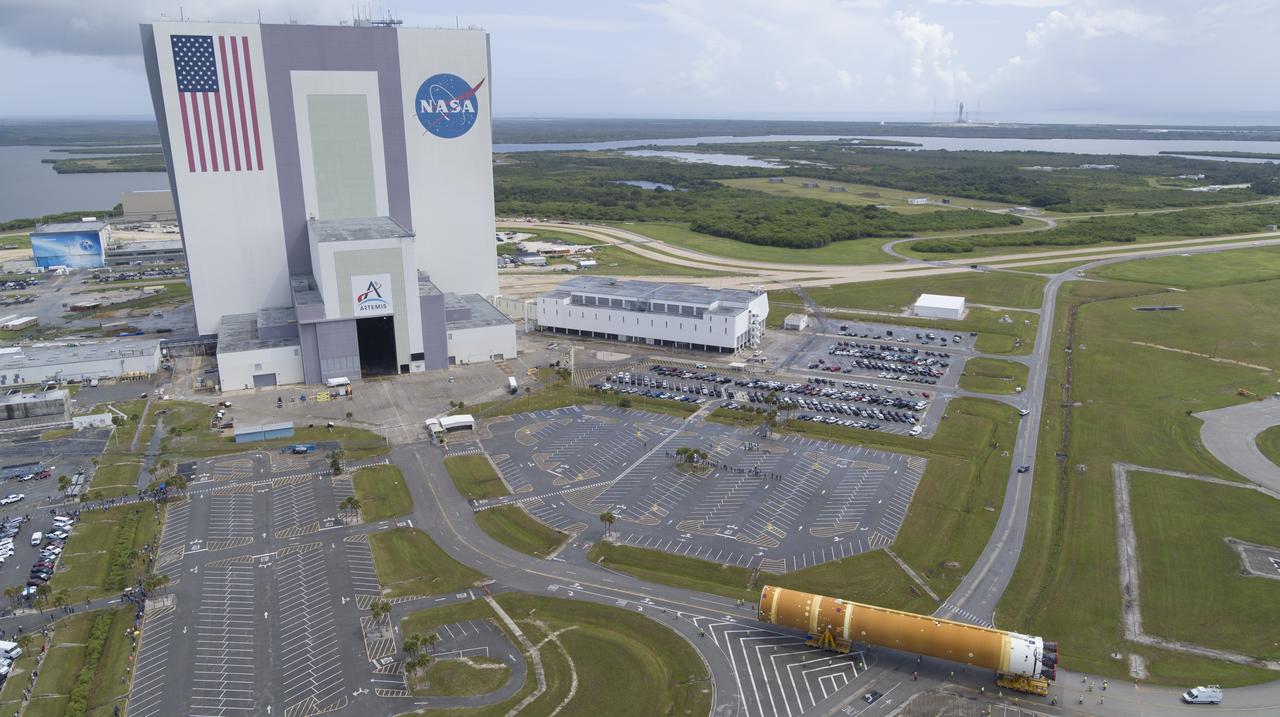
In this aerial view, teams with Exploration Ground Systems (EGS) transport the agency’s powerful SLS (Space Launch System) core stage to the Vehicle Assembly Building at NASA’s Kennedy Space Center in Florida on Wednesday, July 24, 2024, after it completed the journey from NASA’s Michoud Assembly Facility in New Orleans aboard the Pegasus barge. In the coming months, SLS will be prepared for integration atop the mobile launcher ahead of the Artemis II launch.
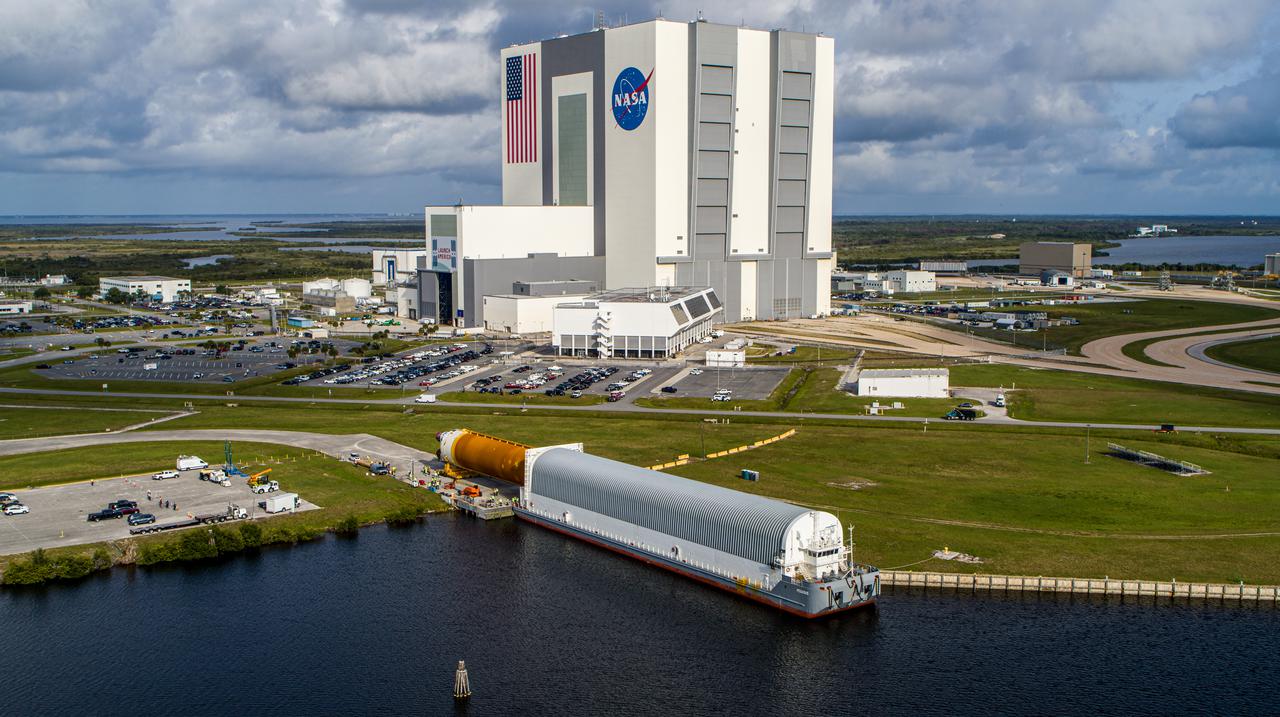
In this aerial view, the massive 212-foot long Space Launch System (SLS) core stage is shown being offloaded from the Pegasus Barge on April 29, 2021, after arriving at NASA’s Kennedy Space Center in Florida. Teams with Exploration Ground Systems (EGS) and lead contractor Jacobs will transfer the rocket stage to the center’s Vehicle Assembly Building to prepare it for integration with the completed stack of solid rocket boosters atop the mobile launcher ahead of the Artemis I launch. The first in a series of increasingly complex missions, Artemis I will test SLS and Orion as an integrated system prior to crewed flights to the Moon.
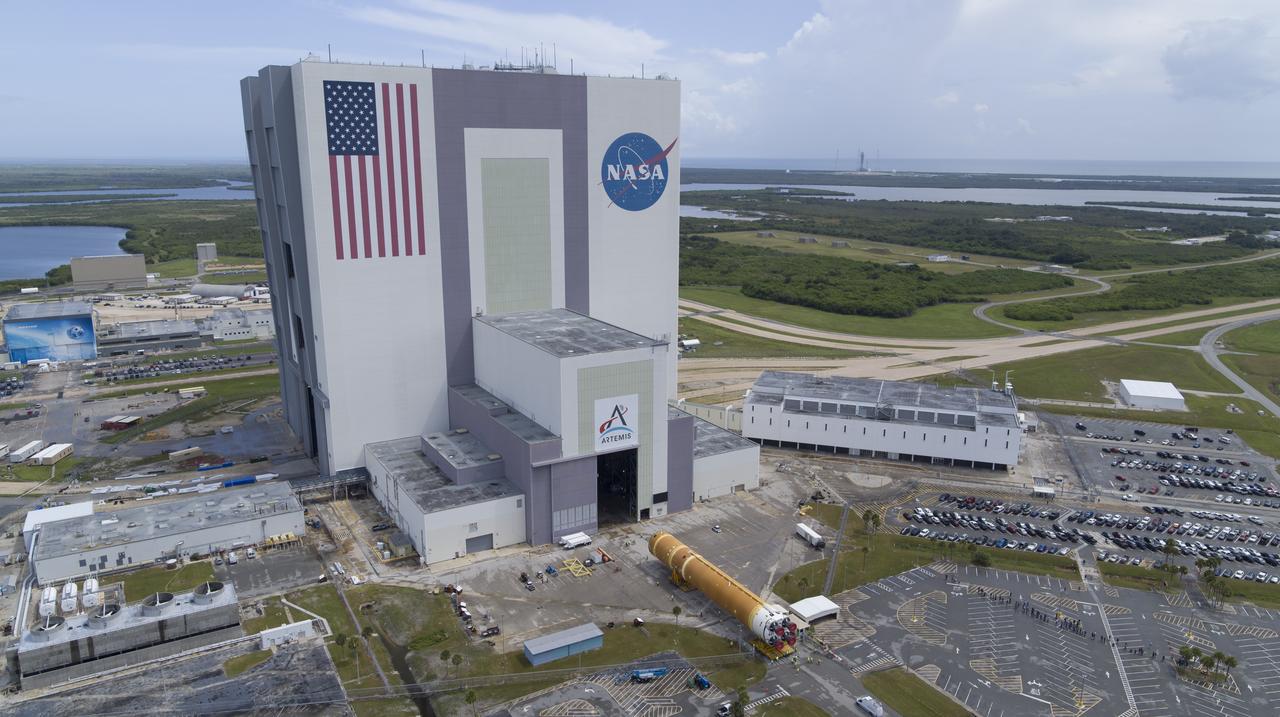
In this aerial view, teams with Exploration Ground Systems (EGS) transport the agency’s powerful SLS (Space Launch System) core stage to the Vehicle Assembly Building at NASA’s Kennedy Space Center in Florida on Wednesday, July 24, 2024, after it completed the journey from NASA’s Michoud Assembly Facility in New Orleans aboard the Pegasus barge. In the coming months, SLS will be prepared for integration atop the mobile launcher ahead of the Artemis II launch.
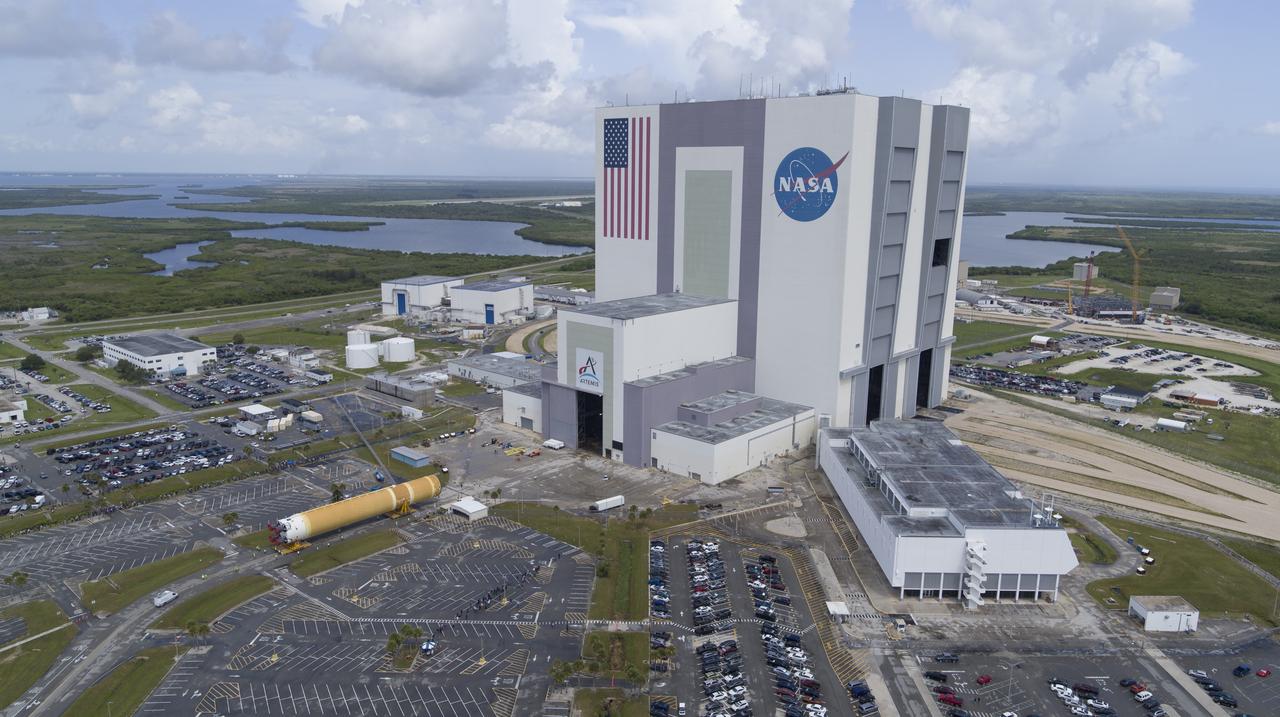
In this aerial view, teams with Exploration Ground Systems (EGS) transport the agency’s powerful SLS (Space Launch System) core stage to the Vehicle Assembly Building at NASA’s Kennedy Space Center in Florida on Wednesday, July 24, 2024, after it completed the journey from NASA’s Michoud Assembly Facility in New Orleans aboard the Pegasus barge. In the coming months, SLS will be prepared for integration atop the mobile launcher ahead of the Artemis II launch.
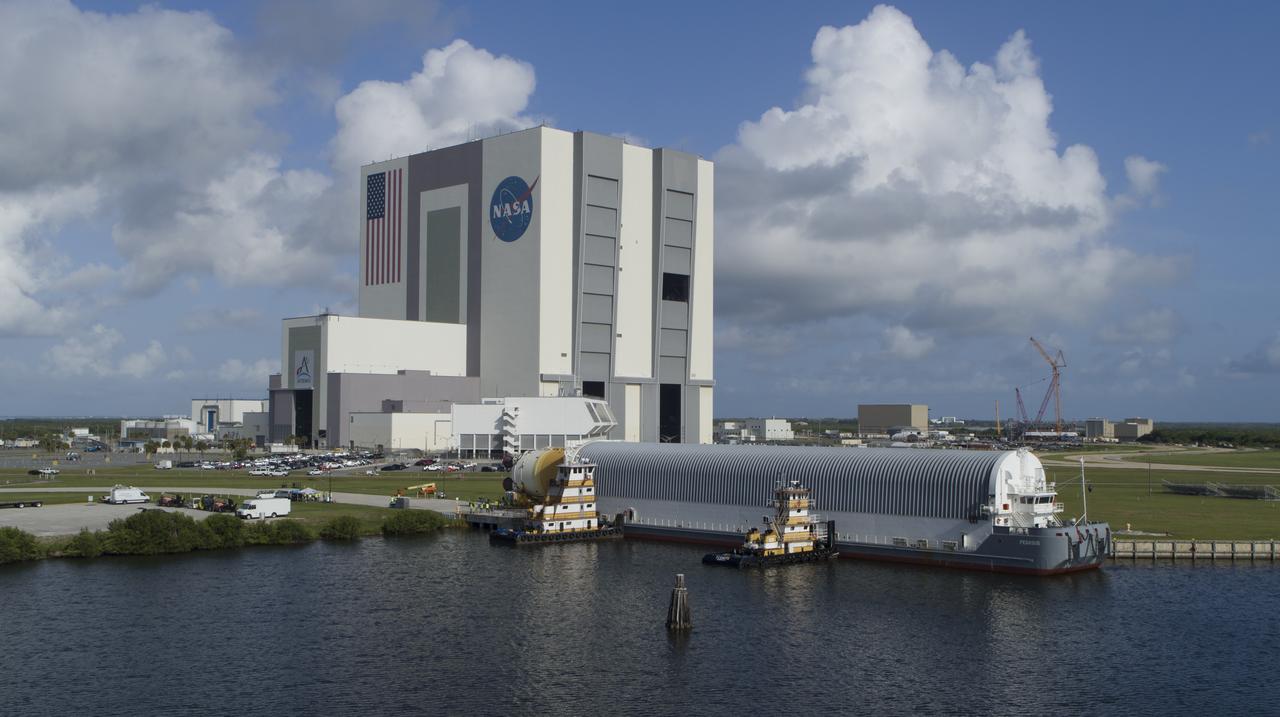
In this aerial view, NASA’s powerful 212-foot long SLS (Space Launch System) core stage is shown being offloaded from the agency’s Pegasus Barge on Wednesday, July 24, 2024, after arriving at NASA’s Kennedy Space Center in Florida. Teams with Exploration Ground Systems (EGS) will transfer the rocket stage to the spaceport’s Vehicle Assembly Building to prepare it for integration atop the mobile launcher ahead of the Artemis II launch.
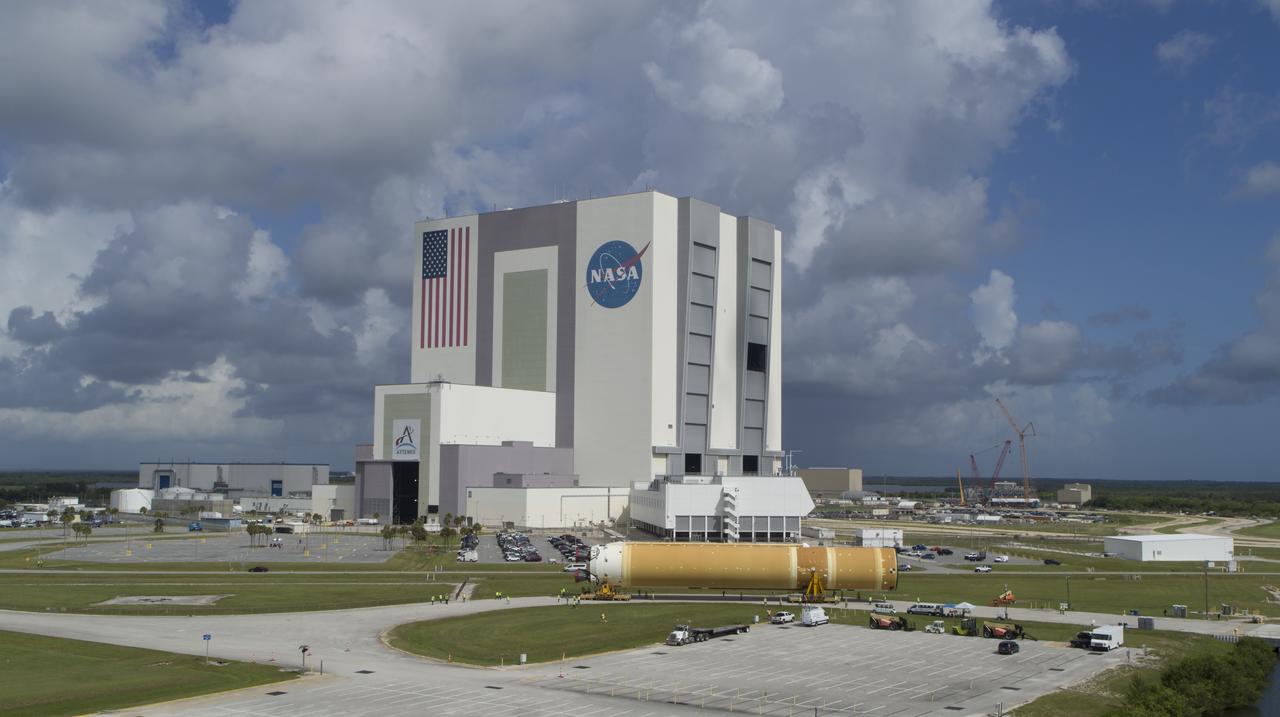
In this aerial view, teams with Exploration Ground Systems (EGS) transport the agency’s powerful SLS (Space Launch System) core stage to the Vehicle Assembly Building at NASA’s Kennedy Space Center in Florida on Wednesday, July 24, 2024, after it completed the journey from NASA’s Michoud Assembly Facility in New Orleans aboard the Pegasus barge. In the coming months, SLS will be prepared for integration atop the mobile launcher ahead of the Artemis II launch.
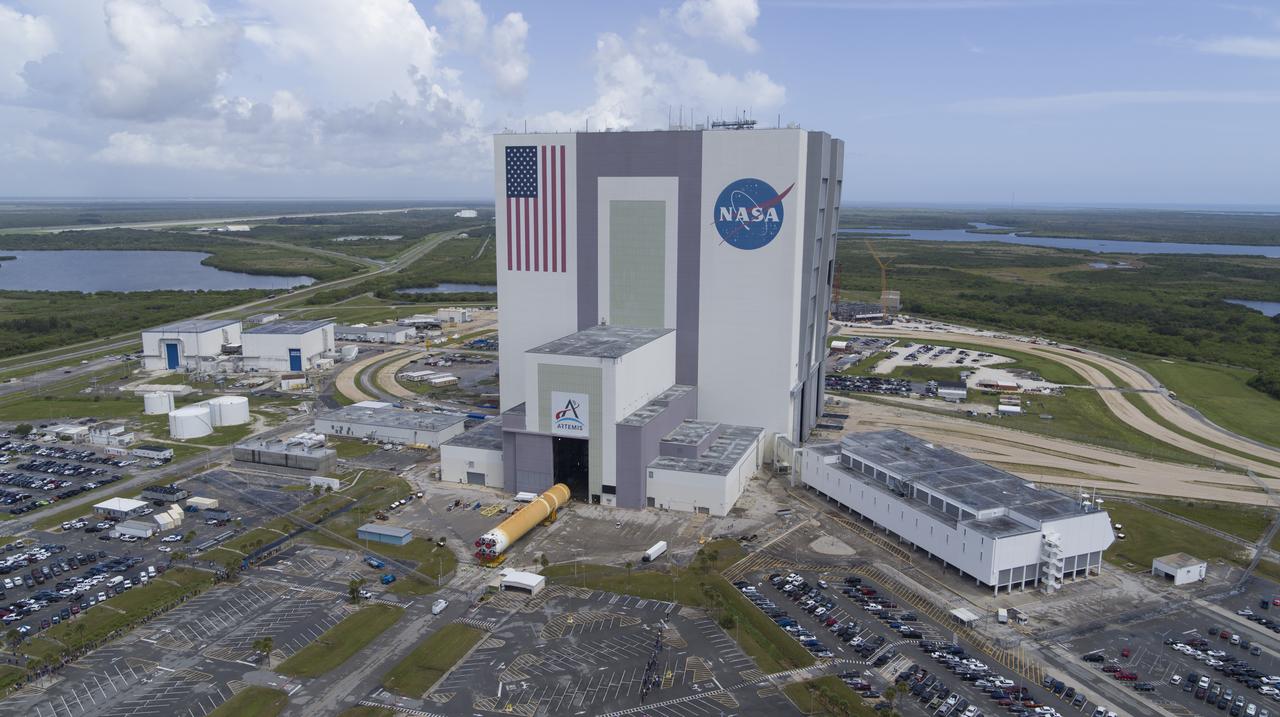
In this aerial view, teams with Exploration Ground Systems (EGS) transport the agency’s powerful SLS (Space Launch System) core stage to the Vehicle Assembly Building at NASA’s Kennedy Space Center in Florida on Wednesday, July 24, 2024, after it completed the journey from NASA’s Michoud Assembly Facility in New Orleans aboard the Pegasus barge. In the coming months, SLS will be prepared for integration atop the mobile launcher ahead of the Artemis II launch.
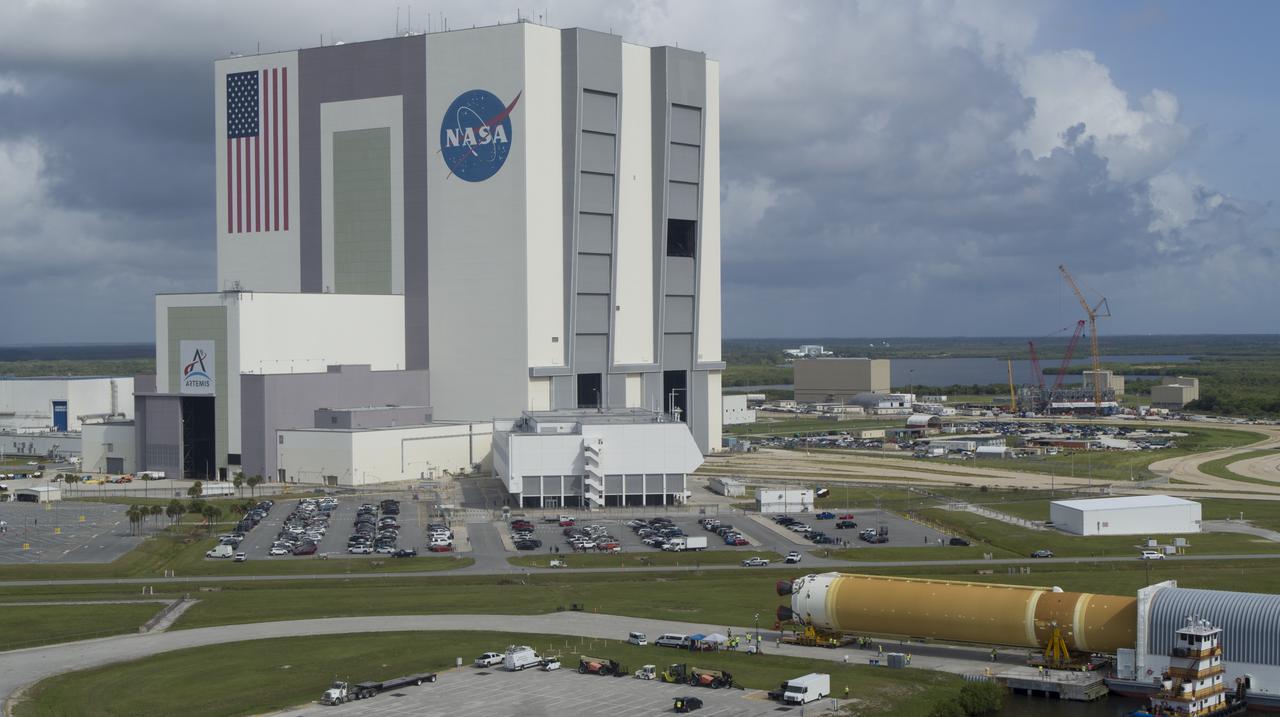
In this aerial view, NASA’s powerful 212-foot long SLS (Space Launch System) core stage is shown being offloaded from the agency’s Pegasus Barge on Wednesday, July 24, 2024, after arriving at NASA’s Kennedy Space Center in Florida. Teams with Exploration Ground Systems (EGS) will transfer the rocket stage to the spaceport’s Vehicle Assembly Building to prepare it for integration atop the mobile launcher ahead of the Artemis II launch.
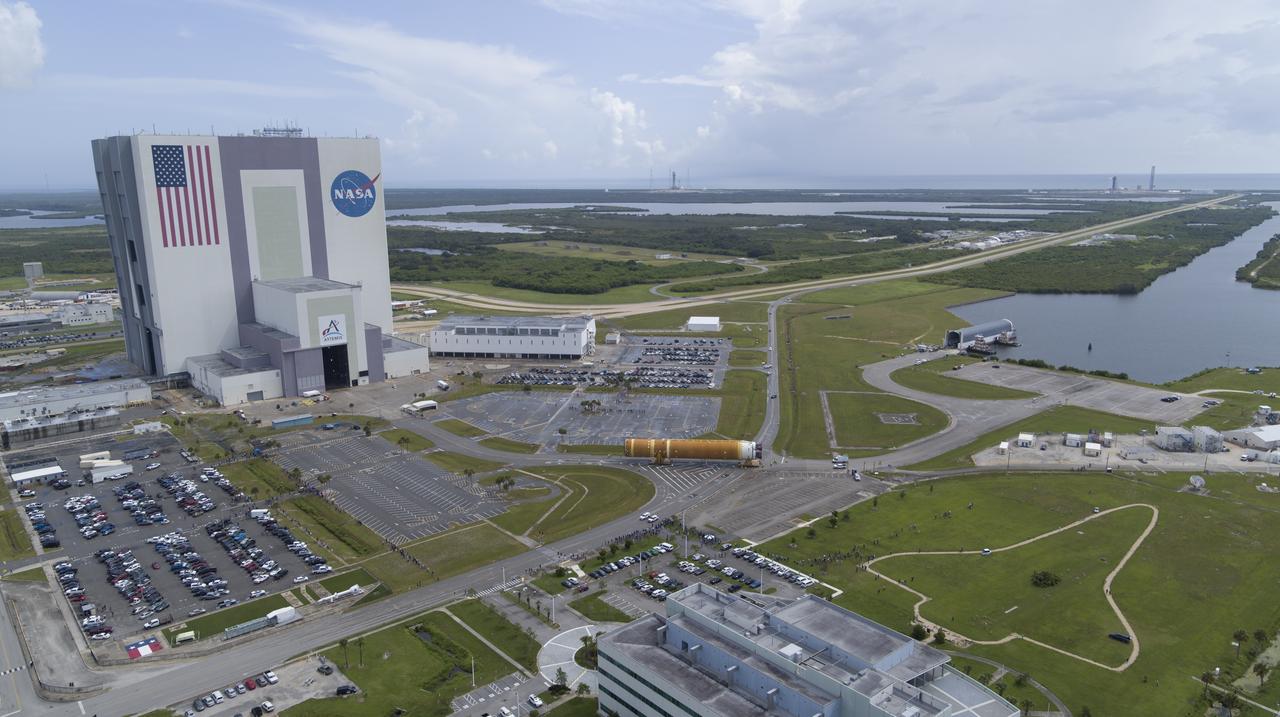
In this aerial view, teams with Exploration Ground Systems (EGS) transport the agency’s powerful SLS (Space Launch System) core stage to the Vehicle Assembly Building at NASA’s Kennedy Space Center in Florida on Wednesday, July 24, 2024, after it completed the journey from NASA’s Michoud Assembly Facility in New Orleans aboard the Pegasus barge. In the coming months, SLS will be prepared for integration atop the mobile launcher ahead of the Artemis II launch.
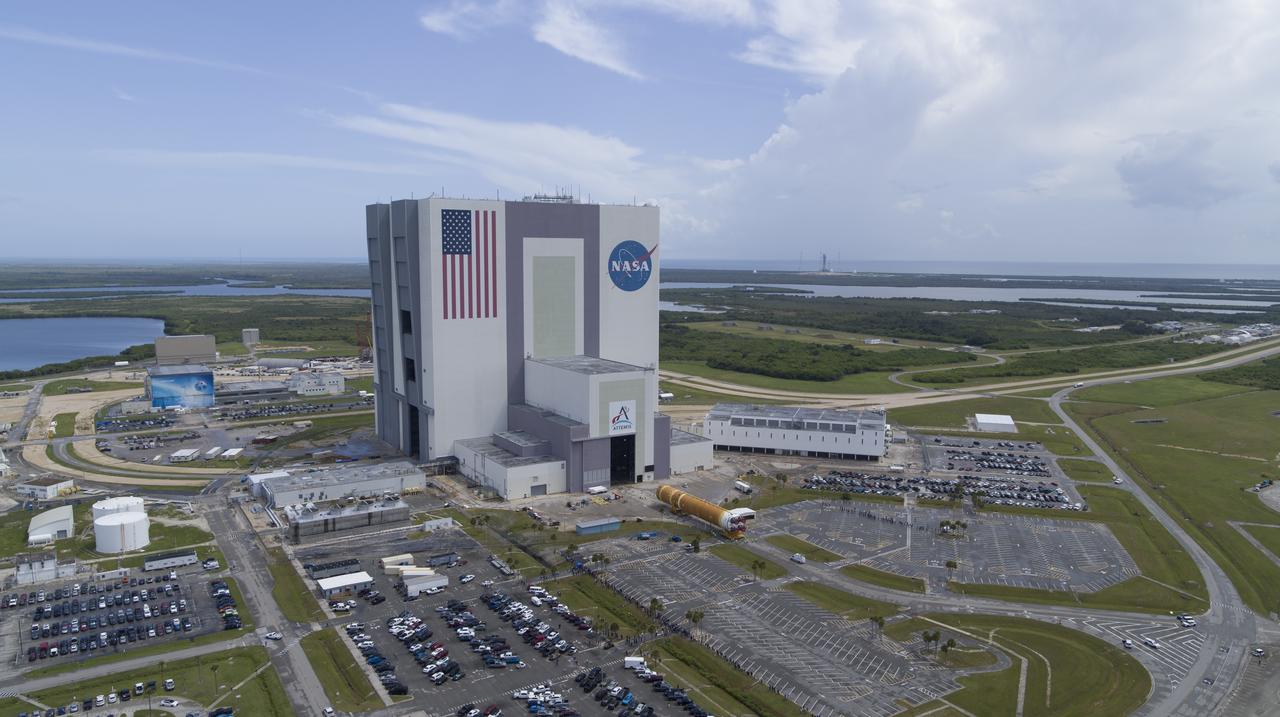
In this aerial view, teams with Exploration Ground Systems (EGS) transport the agency’s powerful SLS (Space Launch System) core stage to the Vehicle Assembly Building at NASA’s Kennedy Space Center in Florida on Wednesday, July 24, 2024, after it completed the journey from NASA’s Michoud Assembly Facility in New Orleans aboard the Pegasus barge. In the coming months, SLS will be prepared for integration atop the mobile launcher ahead of the Artemis II launch.