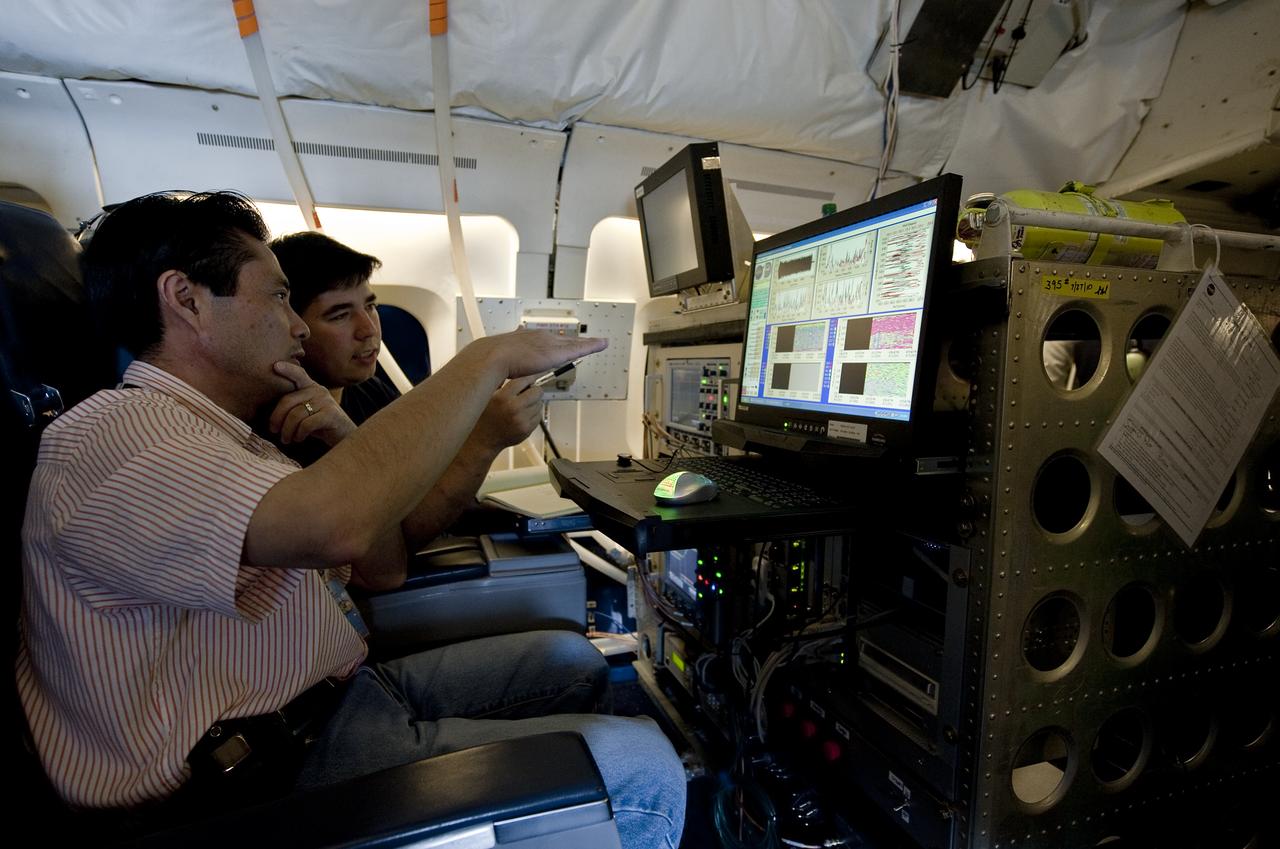
Jeffrey Beyon, left, and Paul Joseph Petzar, right, from NASA's Langley Research Center, work with DAWN Air Data Acquisition and Processing software aboard NASA's DC-8 research aircraft, Sunday, Aug. 15, 2010, in support of the GRIP experiment at Fort Lauderdale International Airport in Fort Lauderdale, Fla. The Genesis and Rapid Intensification Processes (GRIP) experiment is a NASA Earth science field experiment in 2010 that is being conducted to better understand how tropical storms form and develop into major hurricanes. Photo Credit: (NASA/Paul E. Alers)
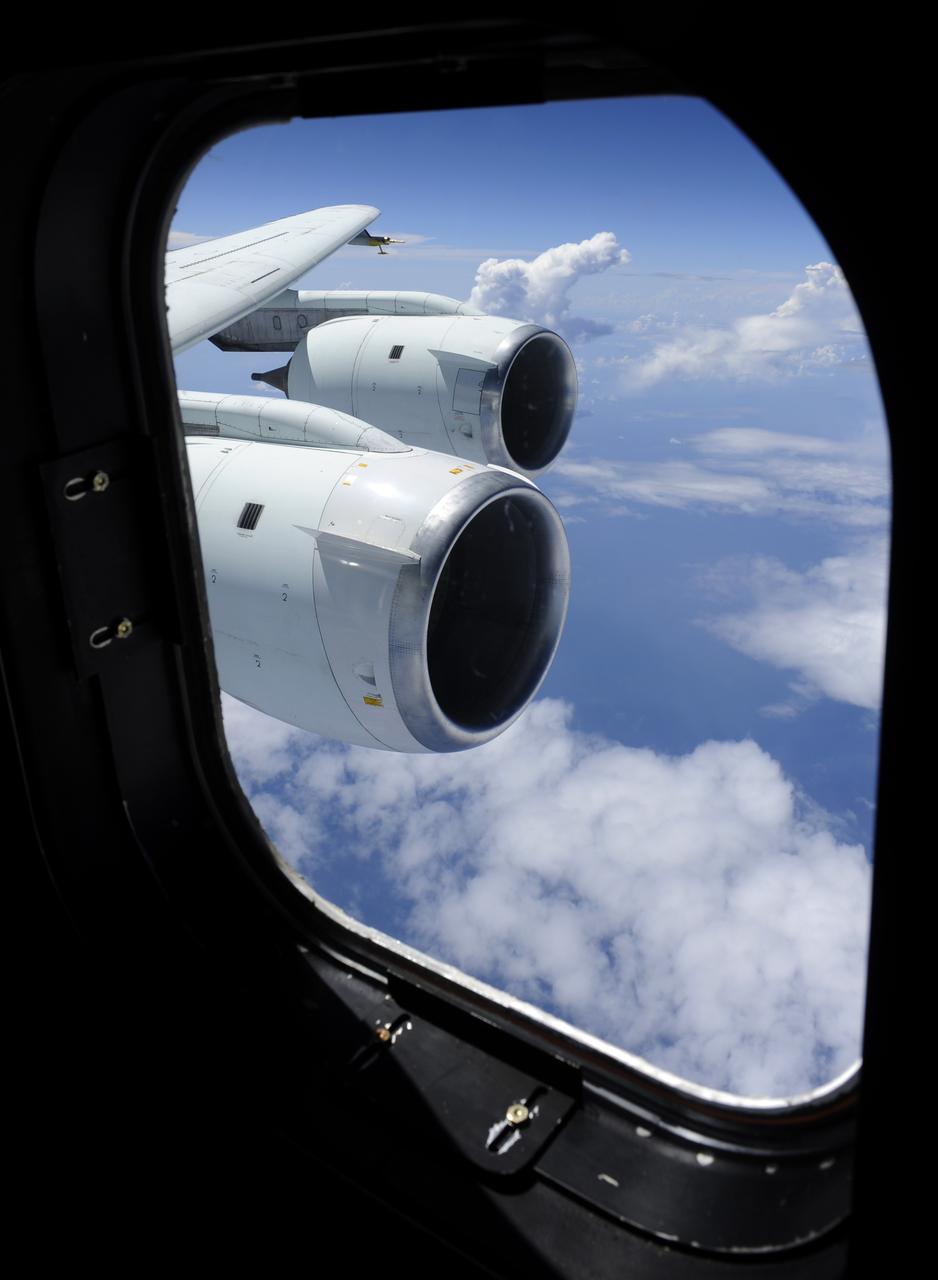
Cloud formations are seen through the window of NASA DC-8 aircraft during a flight, Tuesday, Aug. 17, 2010, over the Gulf of Mexico where researchers were studying weather patterns as part of trhe Genesis and Rapid Intensification Processes (GRIP) experiment, a NASA Earth science field experiment in 2010 that is being conducted to better understand how tropical storms form and develop into major hurricanes. Photo Credit: (NASA/Paul E. Alers)
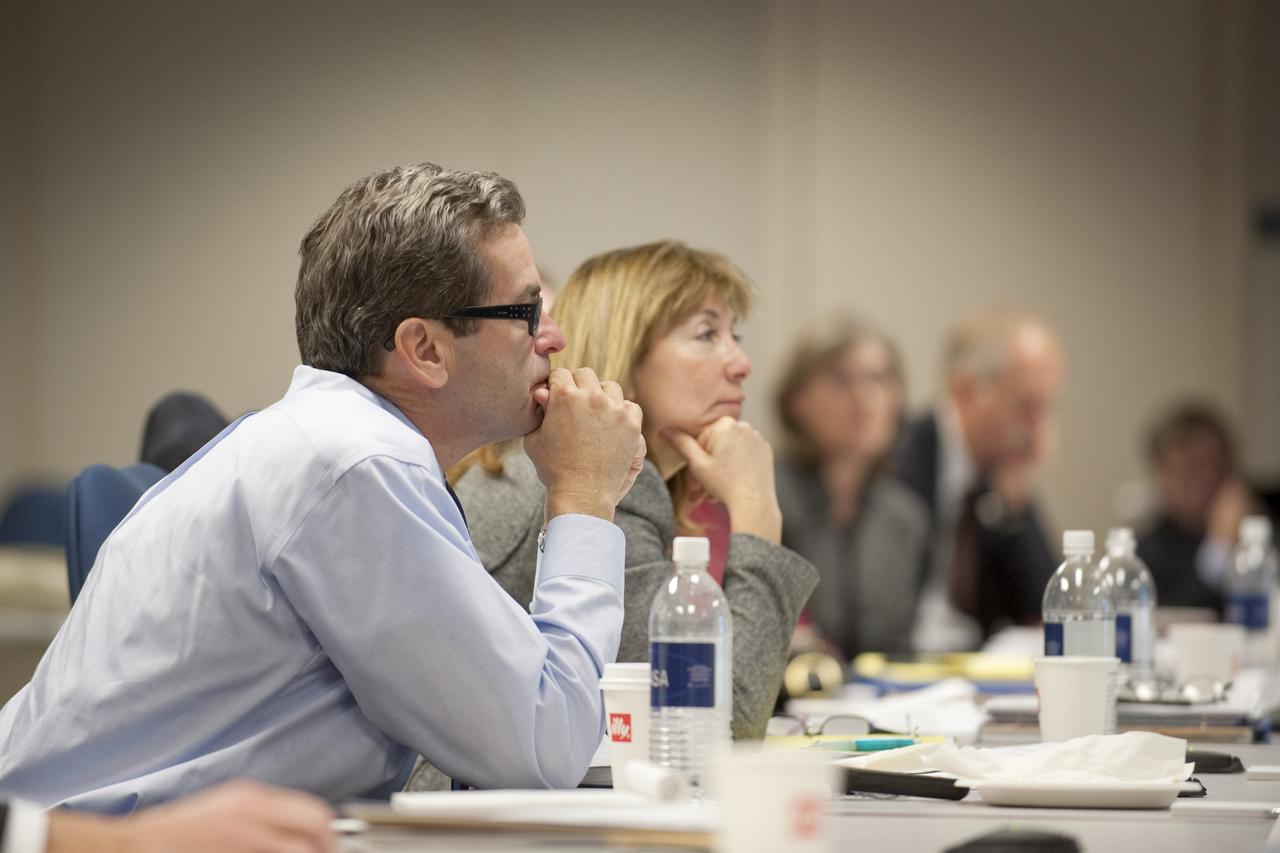
Miles O'Brien, a member of the NASA Advisory Council responible for Edcuation and Public Outreach, listens to discussion at an Education Summitt, Monday, Nov. 2, 2009, at NASA Headquarters in Washington. Photo Credit: (NASA/Paul E. Alers)
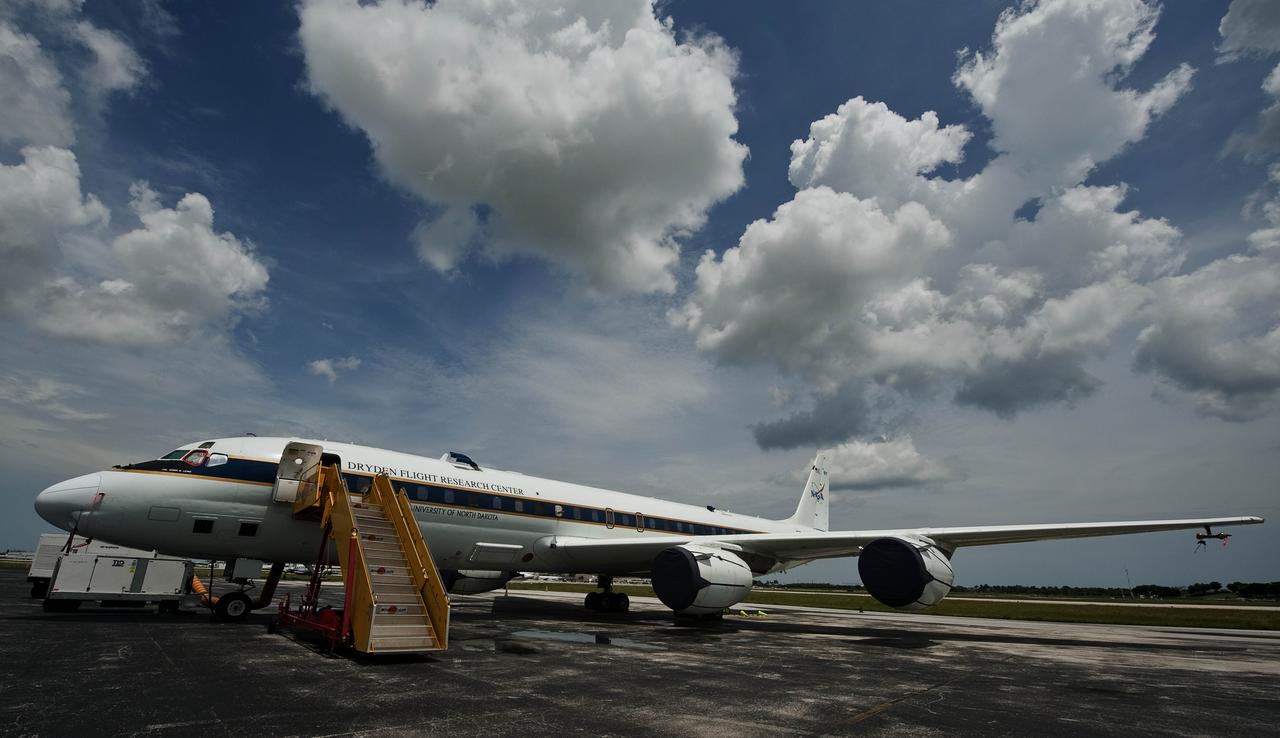
The NASA DC-8 airplane sits on the tarmac, Sunday, Aug. 15, 2010, at Fort Lauderdale International Airport in Fort Lauderdale, Fla. , as preparations continue for its part in the GRIP experiment. The Genesis and Rapid Intensification Processes (GRIP) experiment is a NASA Earth science field experiment in 2010 that is being conducted to better understand how tropical storms form and develop into major hurricanes. Photo Credit: (NASA/Paul E. Alers)
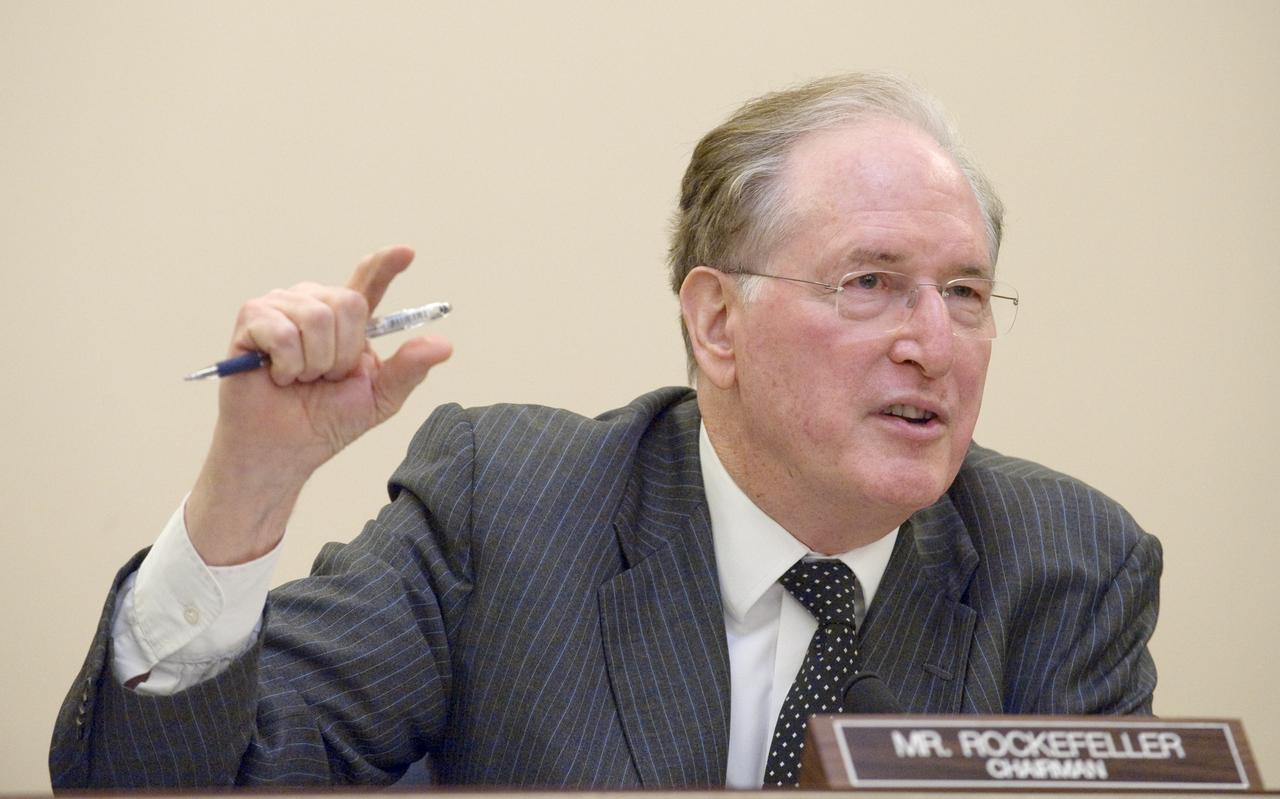
U.S. Sen. Jay Rockefeller, D-W.Va., Chairman of the of the Senate Committee on Commerce, Science and Transportation, makes a point during the nomination hearing for Dr. Elizabeth M. Robinson, nominee for Chief Financial Officer for NASA, Thursday, Oct. 15, 2009, on Capitol Hill in Washington. Photo Credit: (NASA/Paul E. Alers)
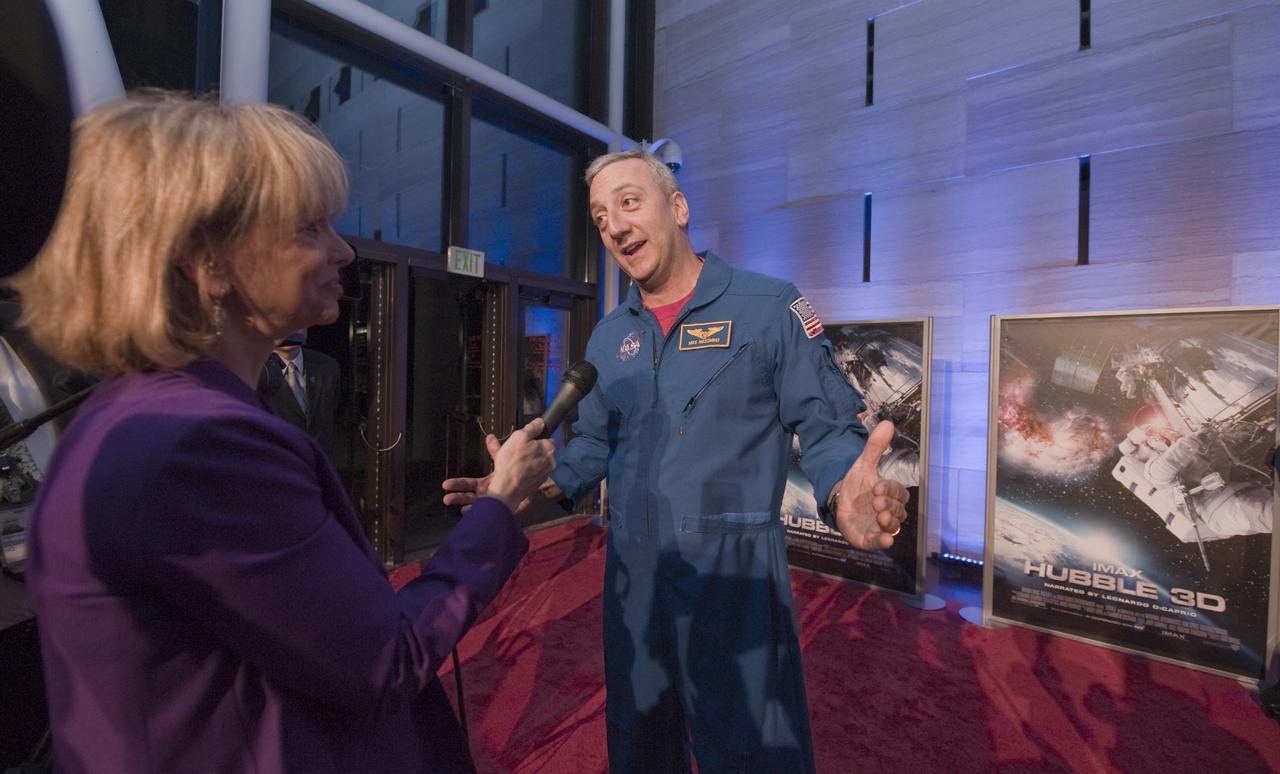
STS-125 astronaut Mike Massimino, speaks to a reporter on the red carpet prior to the World Premiere of "Hubble 3D", screened at the Smithsonian's Air and Space Museum Tuesday evening, March 9, 2010, in Washington. Photo Credit: (NASA/Paul E. Alers)
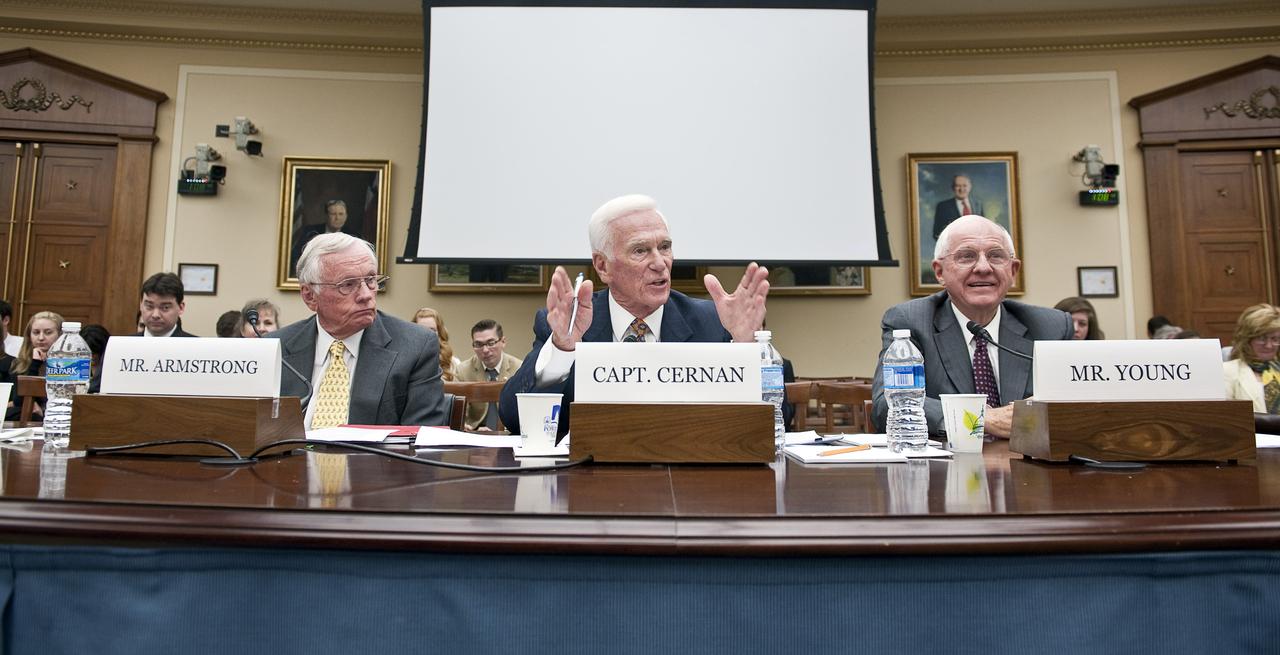
Retired Navy Captain and commander of Apollo 17 Eugene Cernan, center, is flanked by Apollo 11 Commander Neil Armstrong, left, and A. Thomas Young, as he testifies during a hearing before the House Science and Technology Committee, Tuesday, May 26, 2010, at the Rayburn House office building on Capitol Hill in Washington. The hearing was to review proposed human spaceflight plan by NASA. Photo Credit: (NASA/Paul E. Alers)
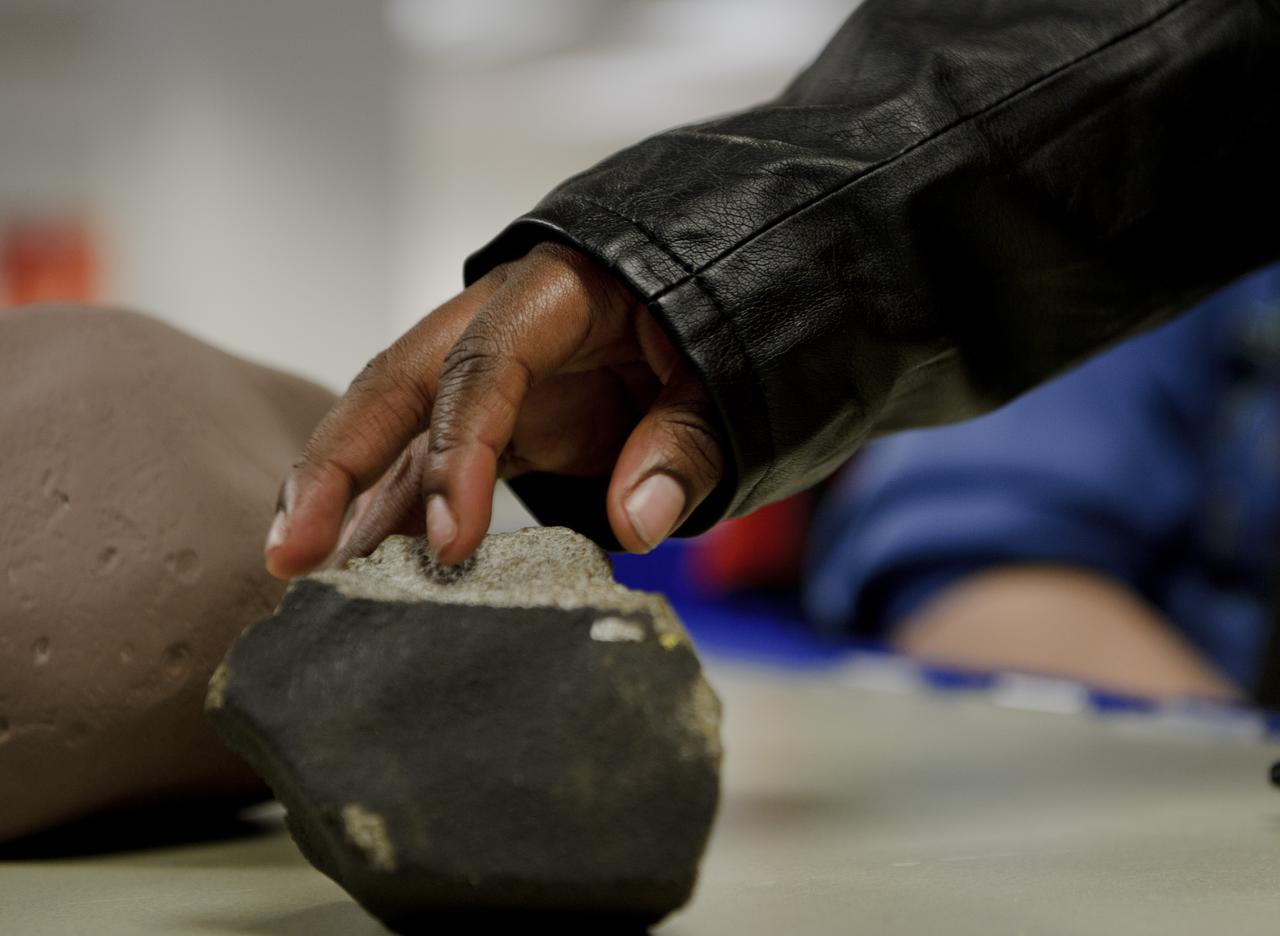
A student from the Maryland School For the Blind explores an object while learning about Meteorites, Asteroids and Comets during NASA's Disability Mentoring Day, Thursday, April 7, 2011, at NASA Headquarters in Washignton. Photo Credit: (NASA/Paul E. Alers)
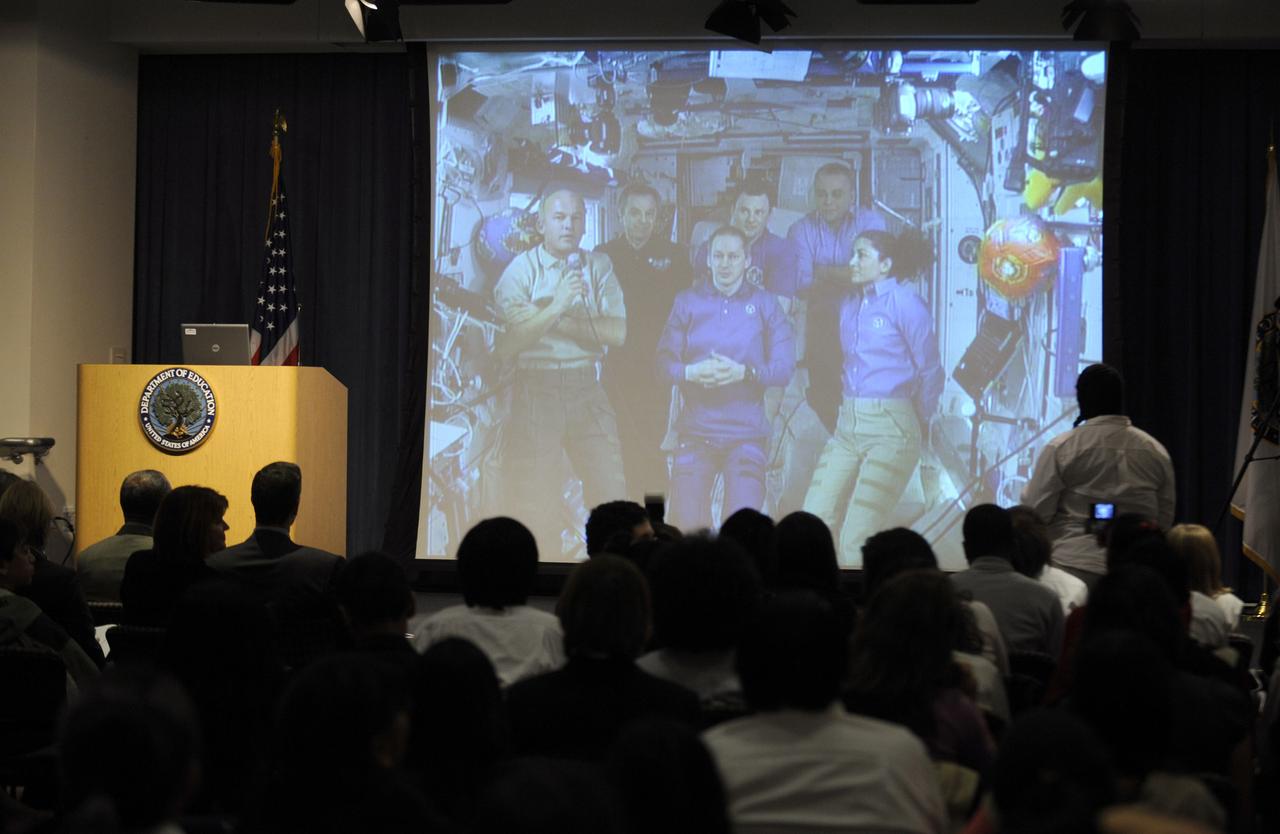
Students speak with astronauts aboard the International Space Station (ISS) via downlink during an event at the U.S. Department of Education, Thursday, Nov. 5, 2009, in Washington. NASA Administrator Charles Bolden and Secretary of Education Arne Duncan hosted Washington area middle and high school students Thursday for a live discussion with astronauts aboard the International Space Station. The event was part of the 10th annual celebration of International Education Week. Photo Credit: (NASA/Paul E. Alers)
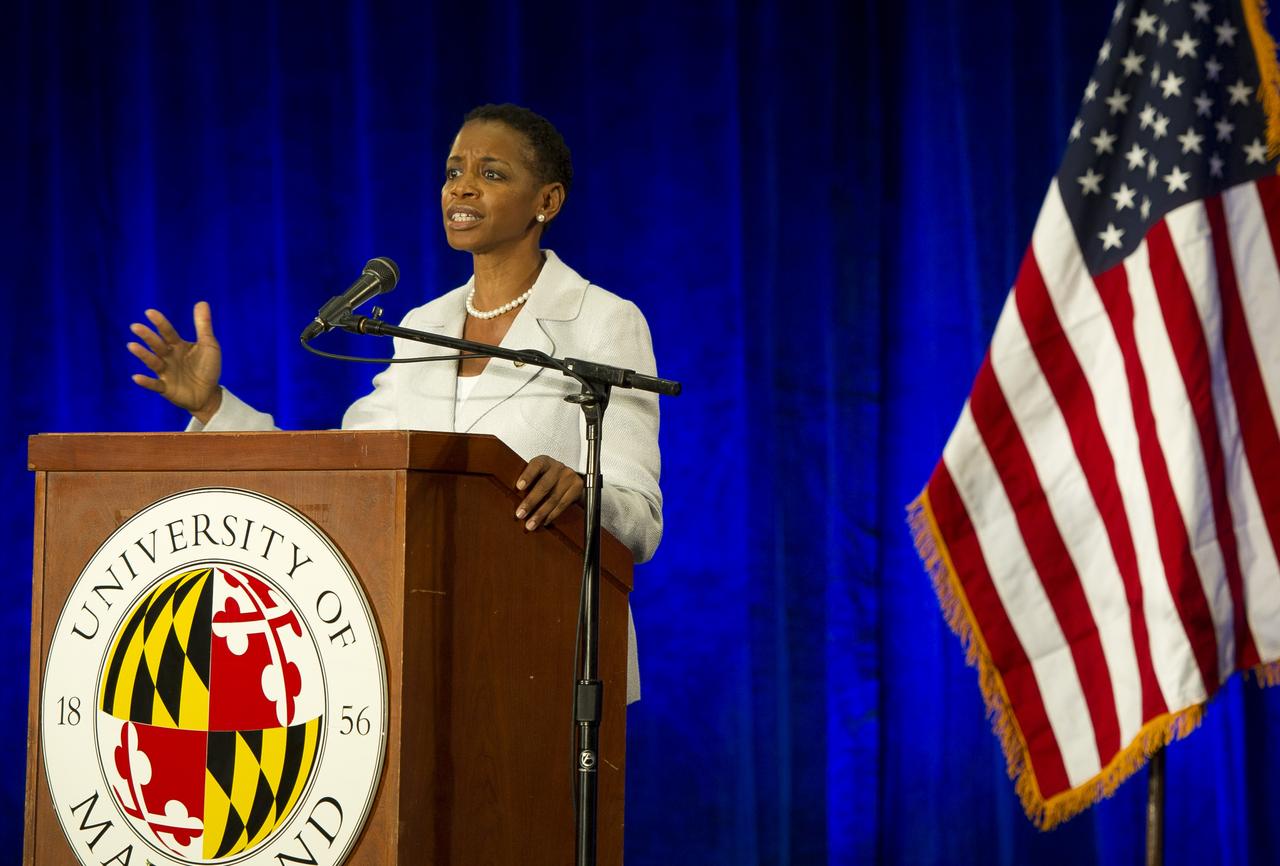
U.S. Rep. Donna Edwards, D-Md., addresses the audience at the 2011 NASA Future Forum, Thursday, Aug. 11, 2011, at the Riggs Alumni Center on the campus of the University of Maryland in College Park, Md. Photo Credit: (NASA/Paul E. Alers)
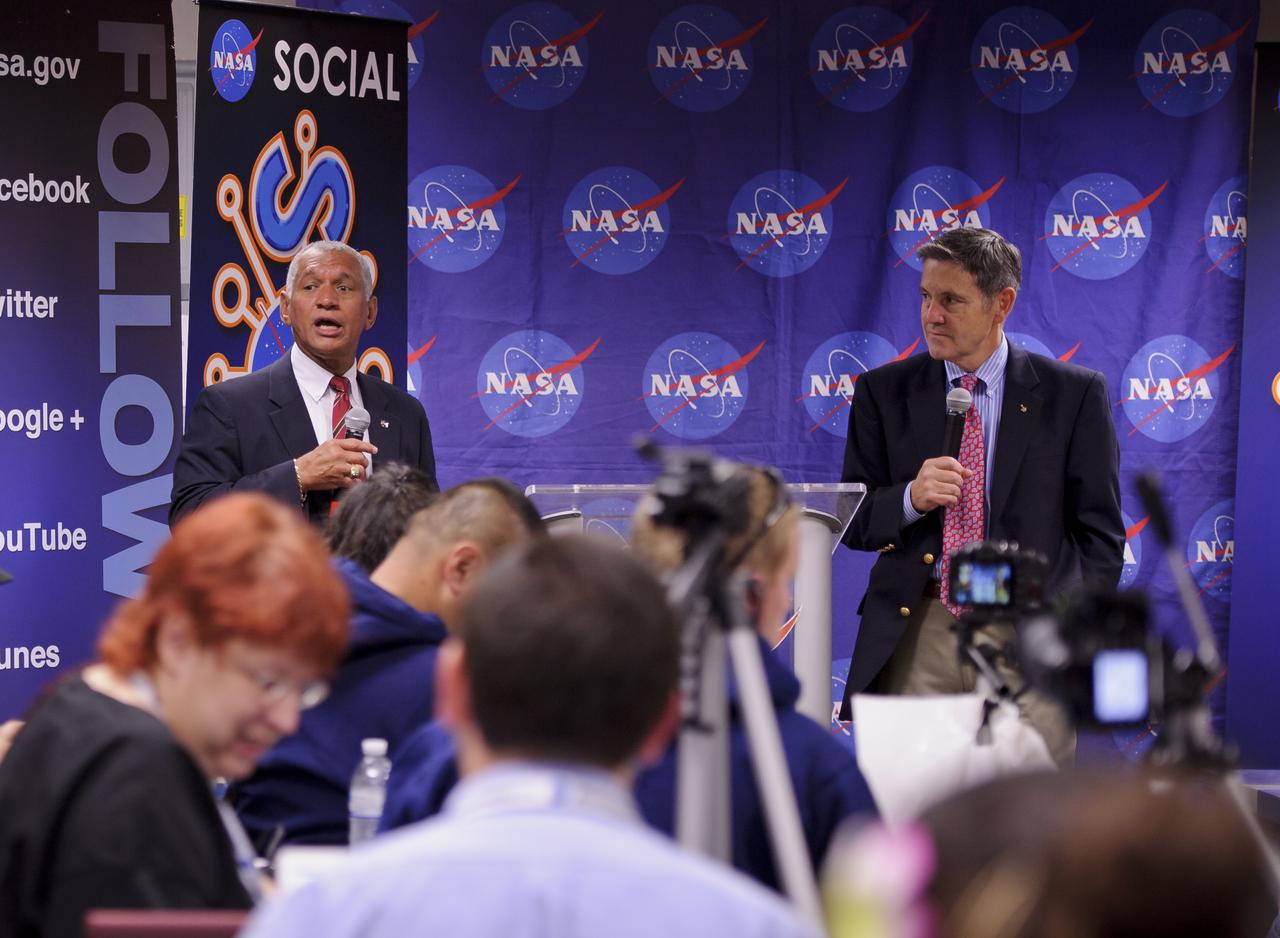
NASA Administrator Charles Bolden, left, and Kennedy Space Center director Robert Cabana appear at the NASA Social event, Friday morning, May 19, 2012, at Kennedy Space Center in Cape Canaveral, Fla. About 50 NASA Social followers attended an event as part of activities surrounding the launch of Space Exploration Technologies, or SpaceX, demonstration mission of the company's Falcon 9 rocket to the International Space Station. Photo Credit: (NASA/Paul E. Alers)
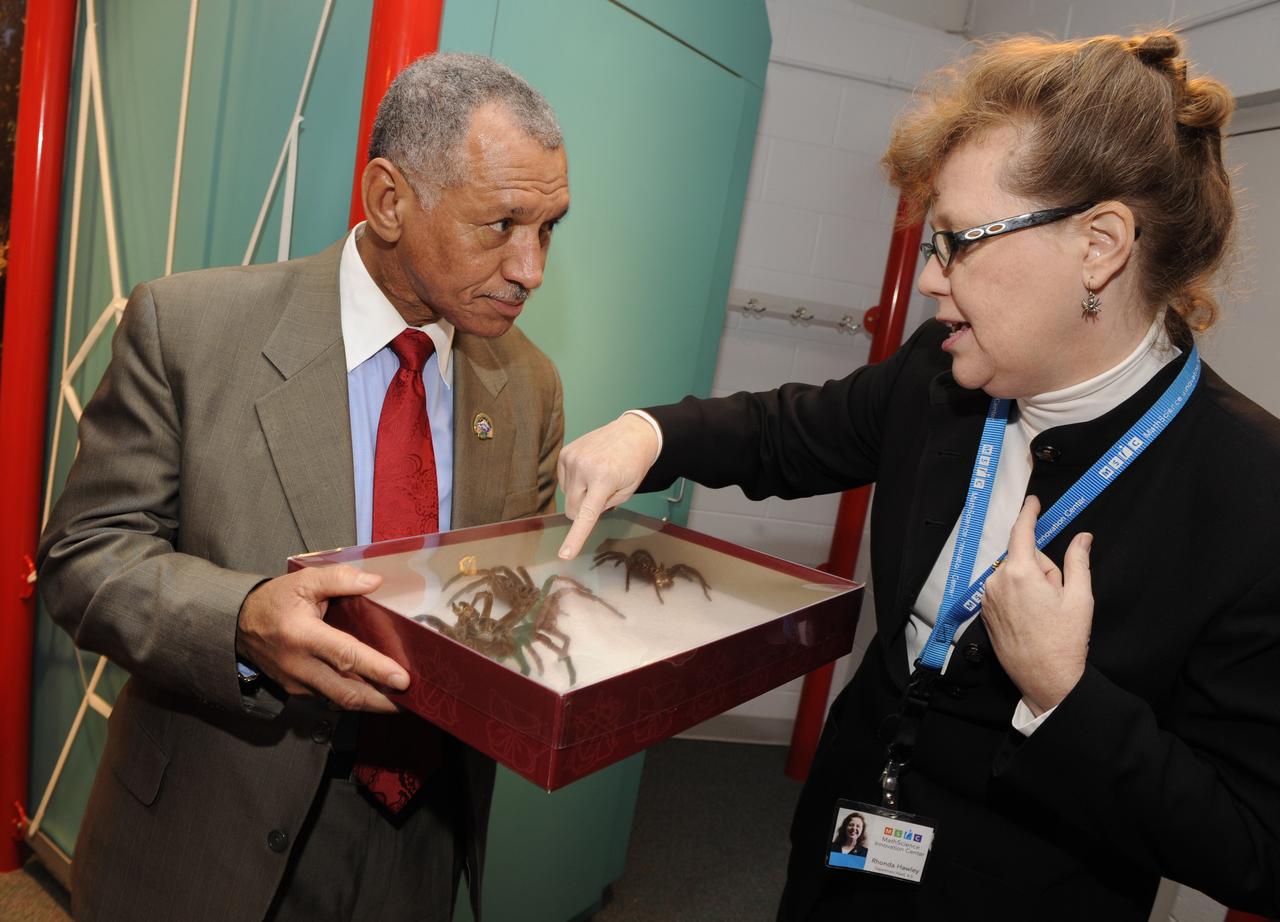
NASA Administrator Charles Bolden, left, holds a box of spiders as MathScience Innovation Center Instructor Rhonda Hawley describes them during a visit to the "Spider Room" at the center, Friday, Jan. 28. 2011, at the center in Richmond, Va. Earlier, Bolden spoke to students from Albert Hill Middle School, where he highlighted the importance of science, technology, engineering and math, or STEM, as he shared his life experiences with the students. (Photo Credit:NASA/Paul E. Alers)
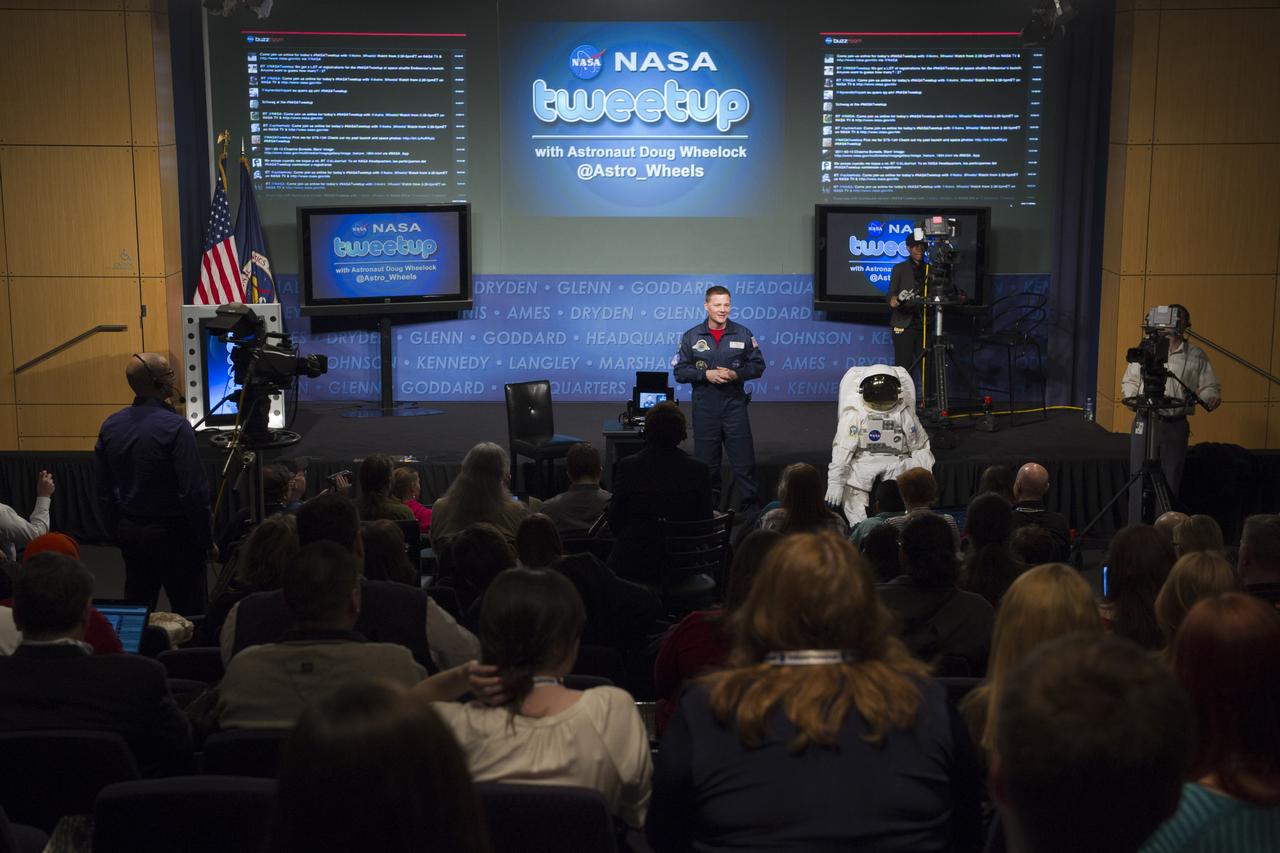
Astronaut Doug Wheelock discusses his experiences while living on the International Space Station during a tweetup at NASA Headquarters in Washington, Wednesday, March 16, 2011. Wheelock, who has accumulated a total of 178 days in space, assumed command of the International Space Station and the Expedition 25 crew. During Expedition 25, there were more than 120 microgravity experiments in human research; biology and biotechnology; physical and materials sciences; technology development; and Earth and space sciences. Wheelock also responded to an emergency shutdown of half of the station's external cooling system and supported three unplanned spacewalks to replace the faulty pump module that caused the shutdown. His efforts restored the station's critical cooling system to full function. The mission duration was 163 days. Photo Credit: (NASA/Paul E. Alers)
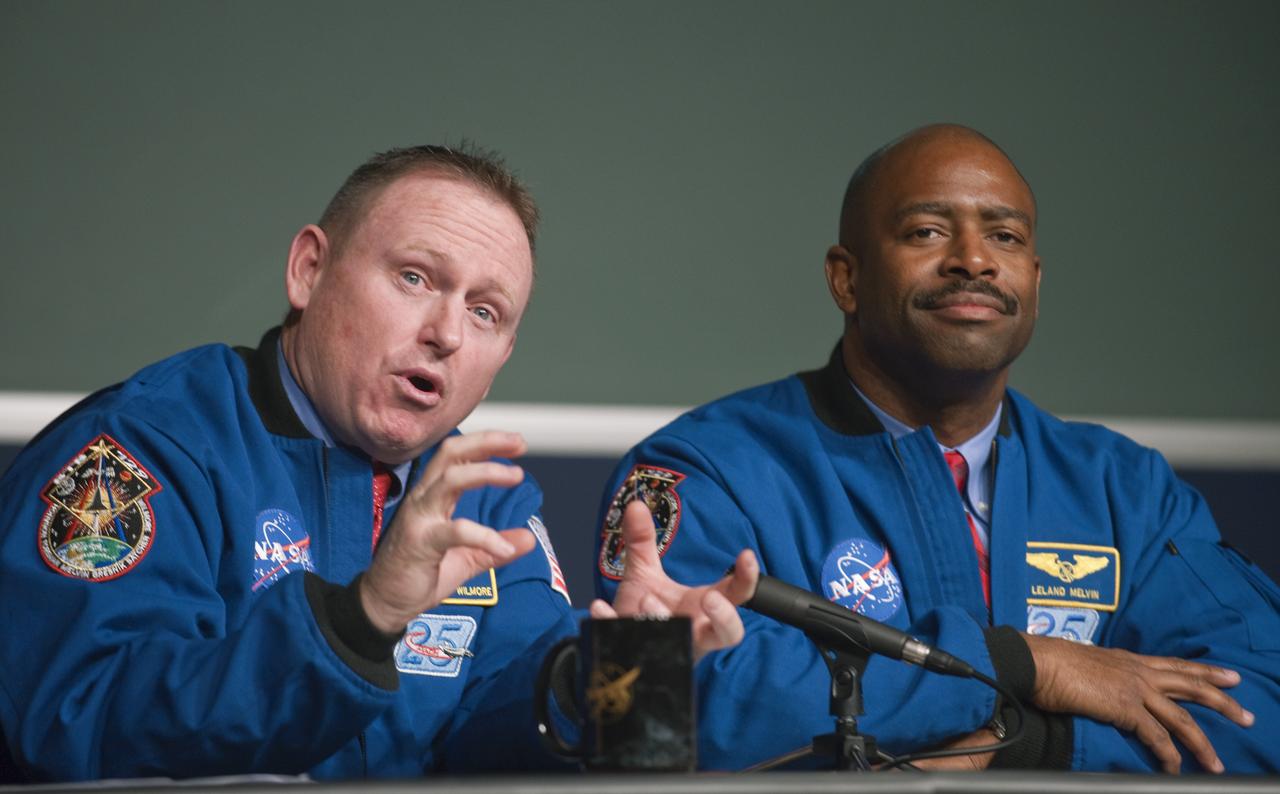
STS-129 Pilot Barry Wilmore, left, answers a question from the audience as Mission Specialist Leland Melvin, looks on, Monday, Jan. 11, 2010, during a presentation to staff and middle school students from the Congressional Schools of Virginia at NASA Headquarters in Washington. Photo Credit: (NASA/Paul E. Alers)
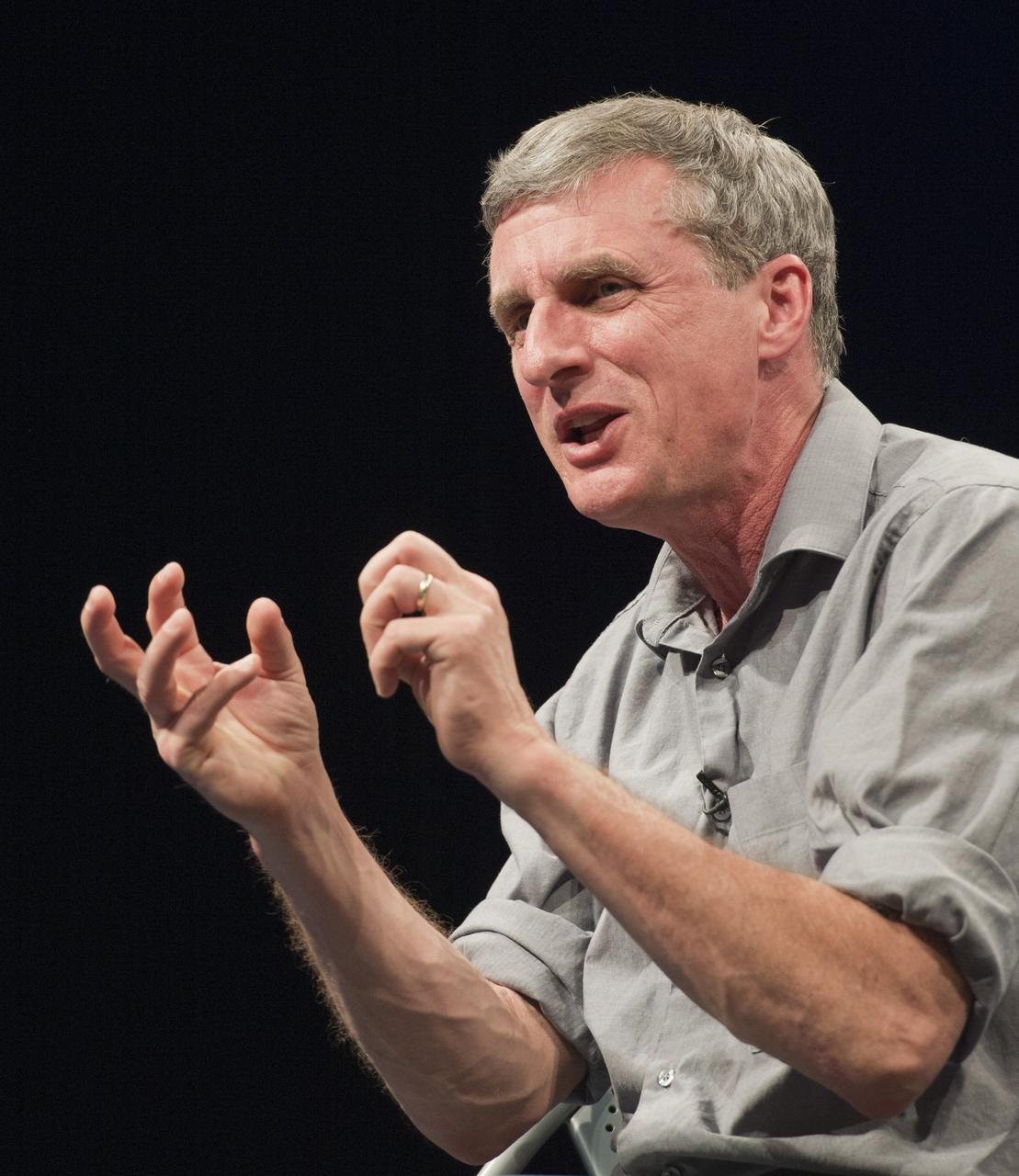
Dr. Steve Squyres, from Cornell University, talks during a Mars Program Update where prominent scientists discussed evidence of water on Mars, current Program status, including the 7th Anniversary of the Mars rovers and the upcoming Mars Science Laboratory mission and previewing exciting discoveries to come, Thursday, Jan. 13, 2011, at the Smithsonian National Air and Space Museum in Washington. Photo Credit: (NASA/Paul E. Alers)

Actress Nichelle Nichols, best known for her role as communications officer Lieutenant Uhura in the series "Star Trek", sings as Emil de Cou, right, conducts the Space Philharmonic, Wednesday, May 25, 2011, in the concert hall at the John F. Kennedy Center for the Performing Arts in Washington. The event marked the 50th Anniversary of President John F. Kennedy's Special Message to the Congress on Urgent National Needs in which he stated "landing a man on the moon and returning him safely to earth". Photo Credit: (NASA/Paul E. Alers)
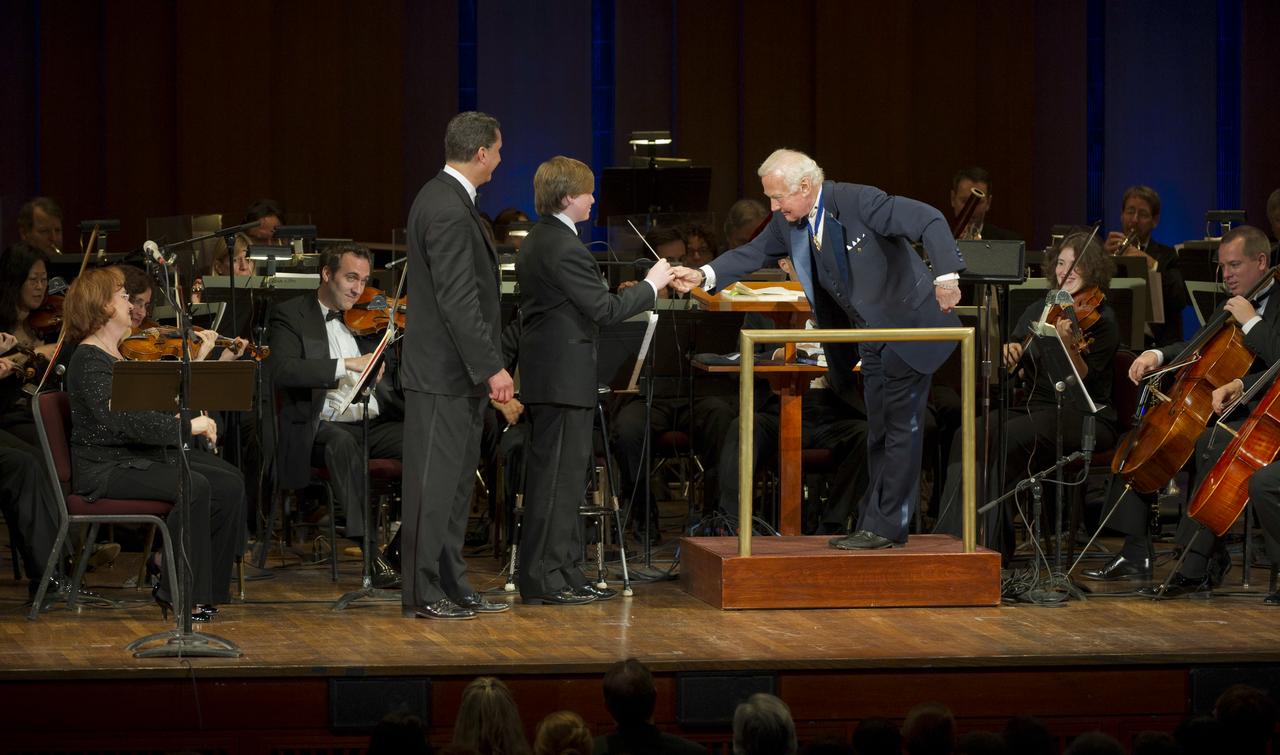
Former Apolo 11 astronaut Buzz Aldrin, right, passes the baton to second guest conductor Ted Kennedy III as conductor Emil de Cou looks on while the Space Philharmonic plays on during a program commemorating Human Spaceflight and the Kennedy Legacy, Wednesday, May 25, 2011, in the concert hall at the John F. Kennedy Center for the Performing Arts in Washington. The event marked the 50th Anniversary of President John F. Kennedy's Special Message to the Congress on Urgent National Needs in which he stated "landing a man on the moon and returning him safely to earth". Photo Credit: (NASA/Paul E. Alers)
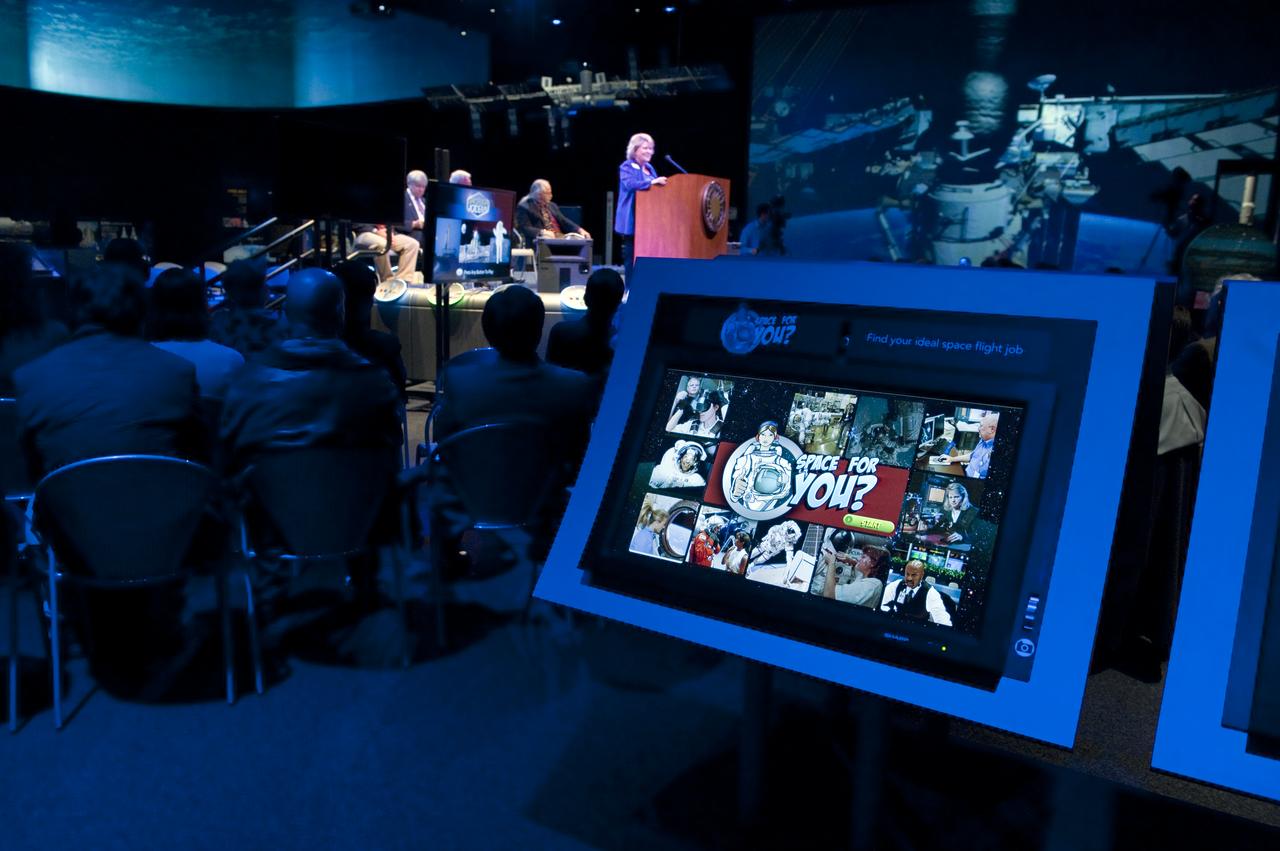
Dr. Valerie Neal, a curator at the Smithsonian's National Air and Space Museum, speaks during a press briefing at the new "Moving Beyond Earth," exhibition at the museum in Washingon, Wednesday, Nov. 18, 2009. Moving Beyond Earth is an immersive exhibition that places visitors “in orbit” in the shuttle and space-station era to explore recent human spaceflight and future possibilities. Photo Credit: (NASA/Paul E. Alers)
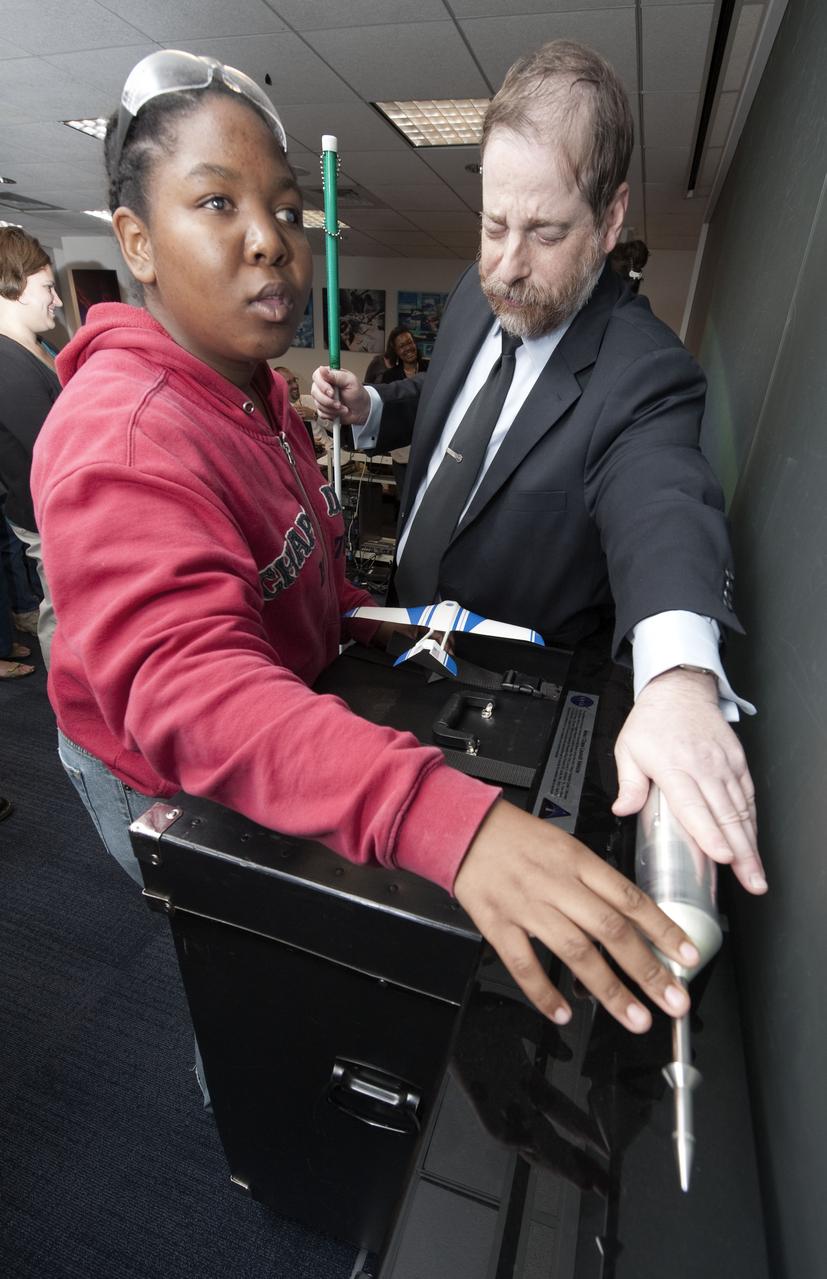
Maryland School for the Blind student Andrea Washington, left, and Kenneth Silberman, an engineer at NASA's Goddard Space Flight Center, use their sense of touch on a model of the Ares I-X rocket during a visit to NASA Headquarters in Washington, Thursday, Oct. 29, 2009. Seven students from the Maryland School for the Blind visited NASA and participated in activities to learn about NASA'smission, functions, and careers. Photo Credit: (NASA/Paul E. Alers)
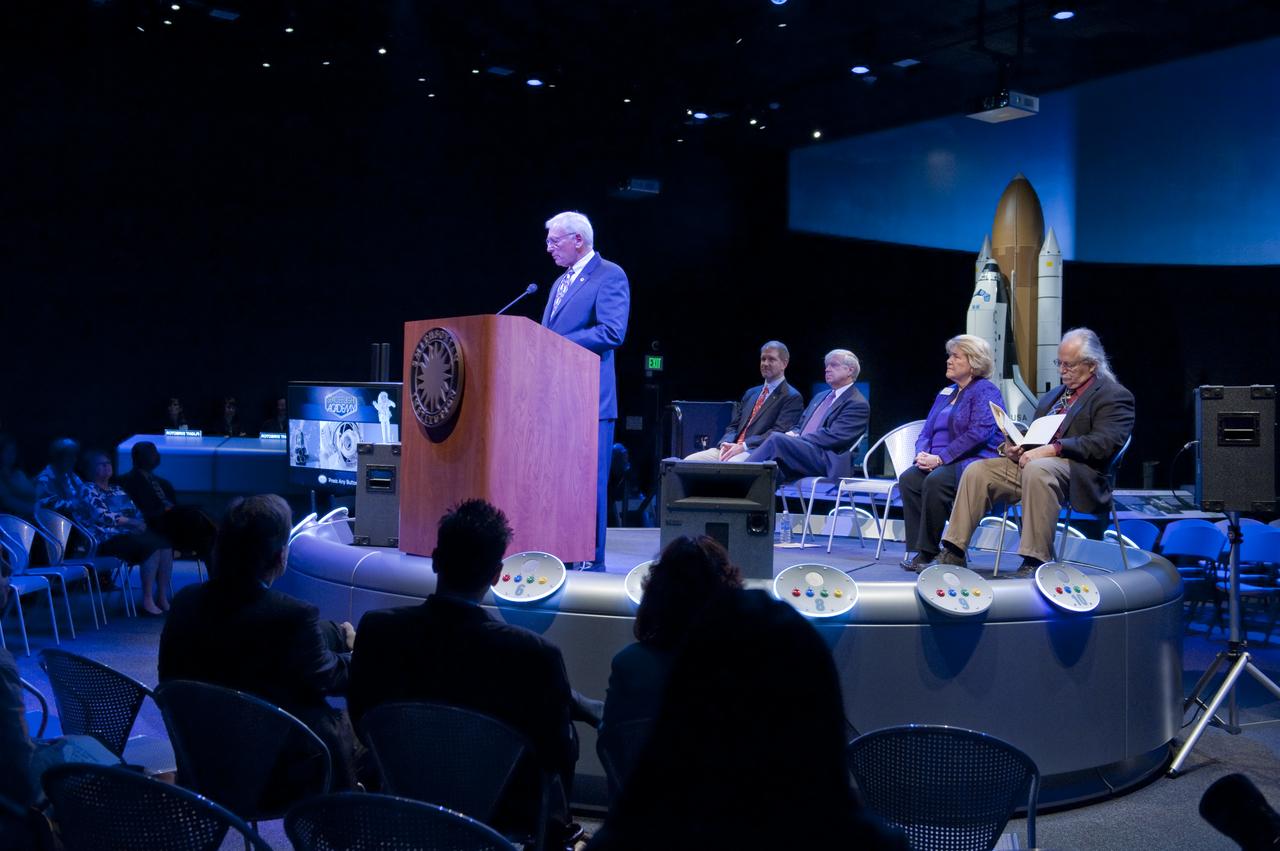
Jack Dailey, director of the Smithsonian's National Air and Space Museum, speaks during a press briefing at the new "Moving Beyond Earth," a new exhibition at the museum in Washingon, Wednesday, Nov. 18, 2009. Moving Beyond Earth is an immersive exhibition that places visitors “in orbit” in the shuttle and space-station era to explore recent human spaceflight and future possibilities. Photo Credit: (NASA/Paul E. Alers)
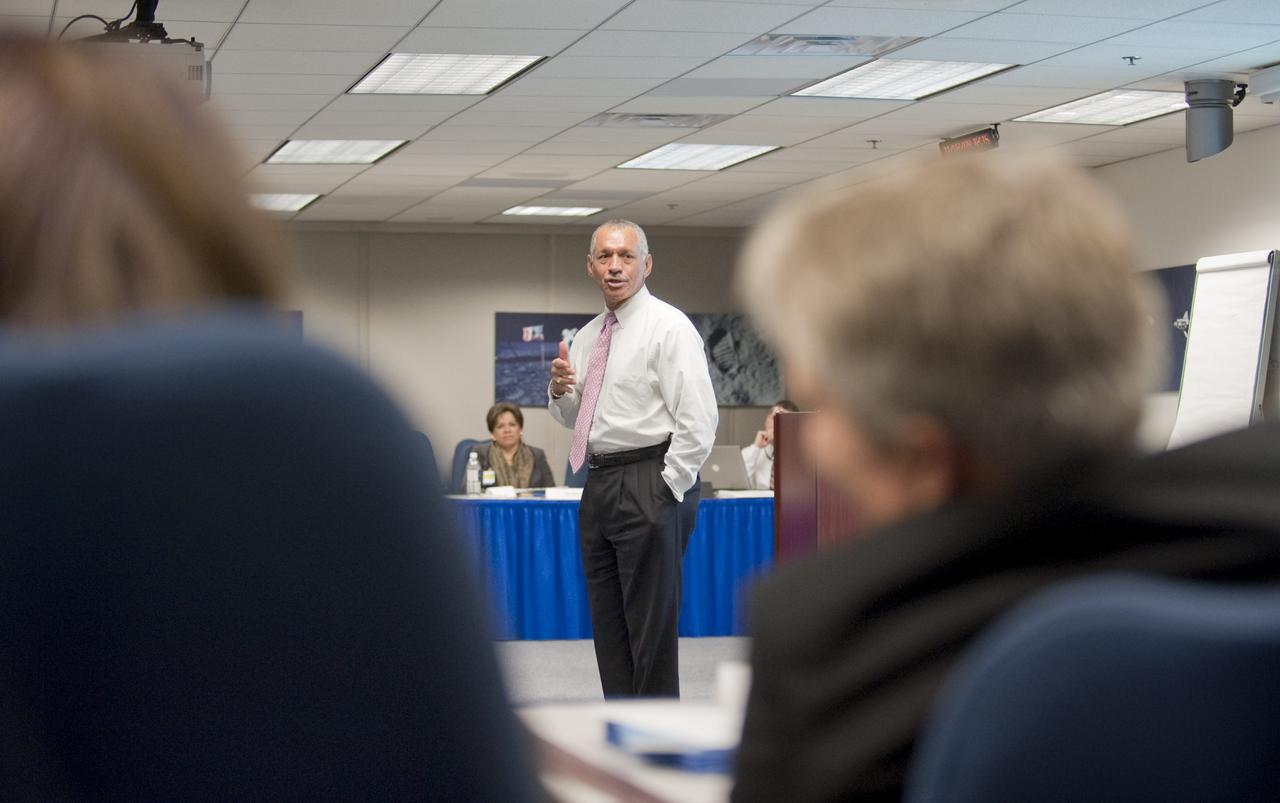
NASA Administrator Charles F. Bolden conducts a discussion at an Education Summitt, Monday, Nov. 2, 2009, at NASA Headquarters in Washington. Photo Credit: (NASA/Paul E. Alers)
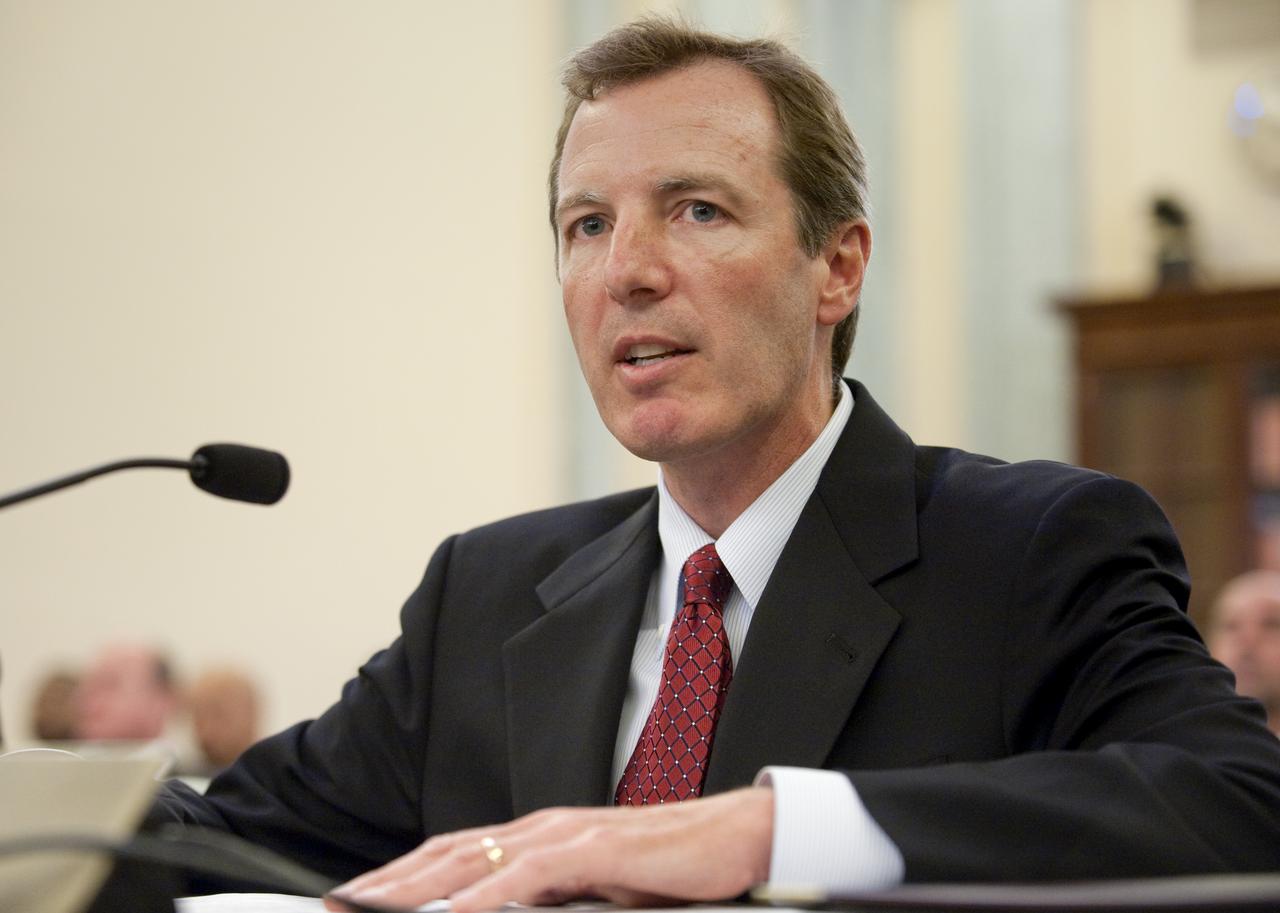
Paul K. Martin, nominee for Inspector General for NASA, answers questions during his confirmation hearing in front of the Senate Committee on Commerce, Science and Transportation, Thursday, Oct. 15, 2009, on Capitol Hill in Washington. Photo Credit: (NASA/Paul E. Alers)
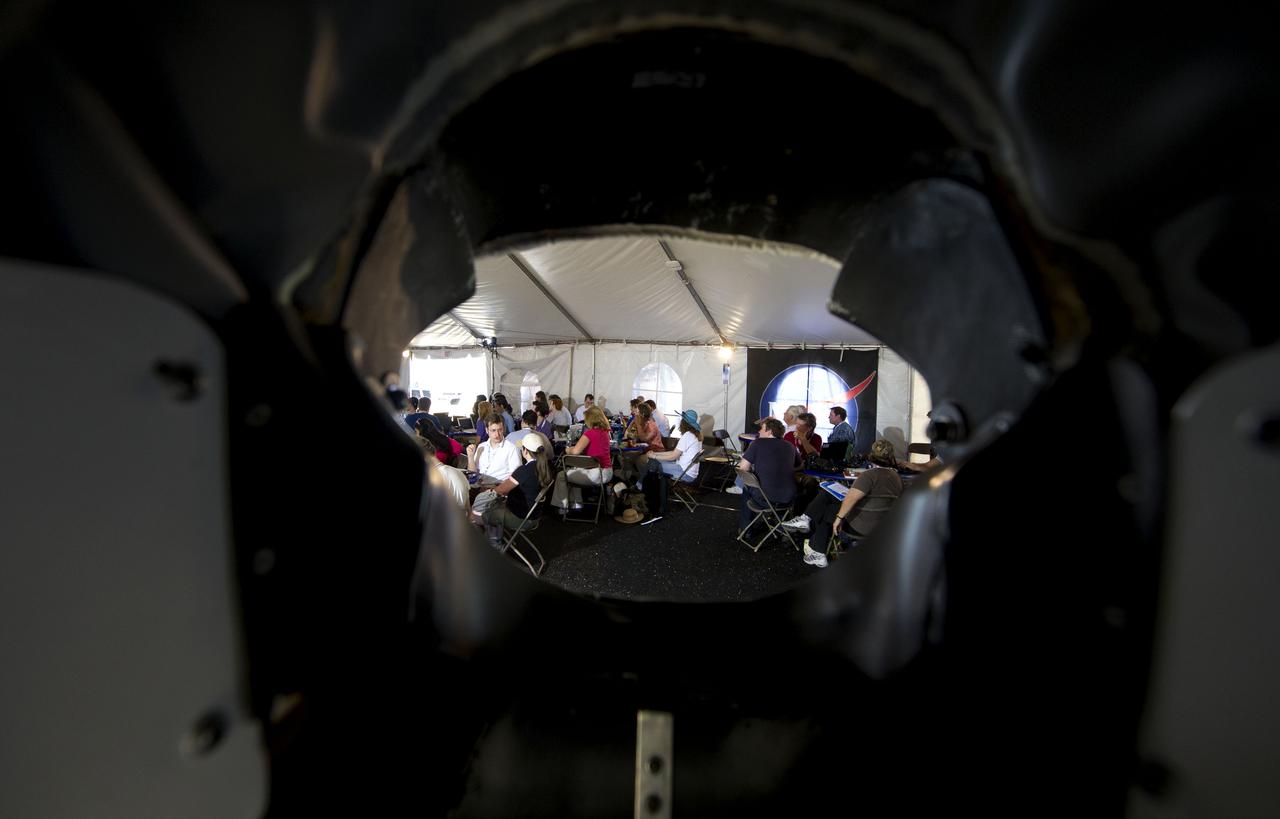
NASA Twitter followers are seen through a space suit helmet during the STS-134 Tweetup, Thursday, April 28, 2011, at Kennedy Space Center in Cape Canaveral, Fla. About 150 NASA Twitter followers attended the event. Photo Credit: (NASA/Paul E. Alers)

Cassie Barnes, Twitter handle @celticfeminist, tweets during the STS-135 Tweetup, Thursday, July 7, 2011, at Kennedy Space Center in Cape Canaveral, Fla. About 150 NASA Twitter followers attended the event. The STS-135 mission will be NASA's last space shuttle launch. Photo Credit: (NASA/Paul E. Alers)
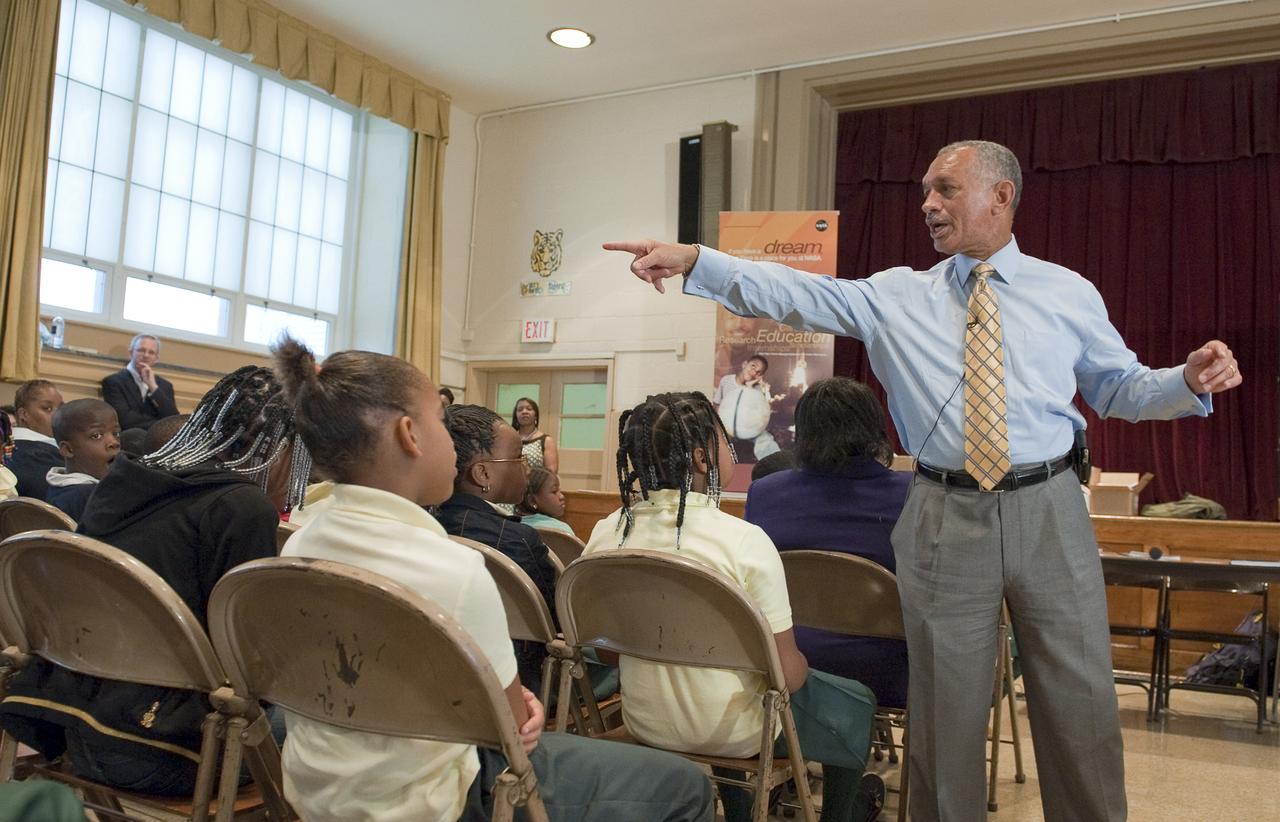
NASA Administrator Charles F. Bolden speaks to students during a visit to Davis Elementary School, Friday, Sept. 11, 2009, in Washington. Bolden spent time with approximately 120 students in third, fourth and fifth grade talking about science, technology, mathematics and engineering as part of the National Day of Service and Remembrance. Photo Credit: (NASA/Paul E. Alers)

Bohdan Bejmuk, chair, Constellation program Standing Review Board, and former manager of the Boeing Space Shuttle and Sea Launch programs, right, asks a question during the final meeting of the Human Space Flight Review Committee as Dr. Wanda Austin, president and CEO, The Aerospace Corp., looks on at left, Wednesday, Aug. 12, 2009, in Washington. Photo Credit: (NASA/Paul E. Alers)
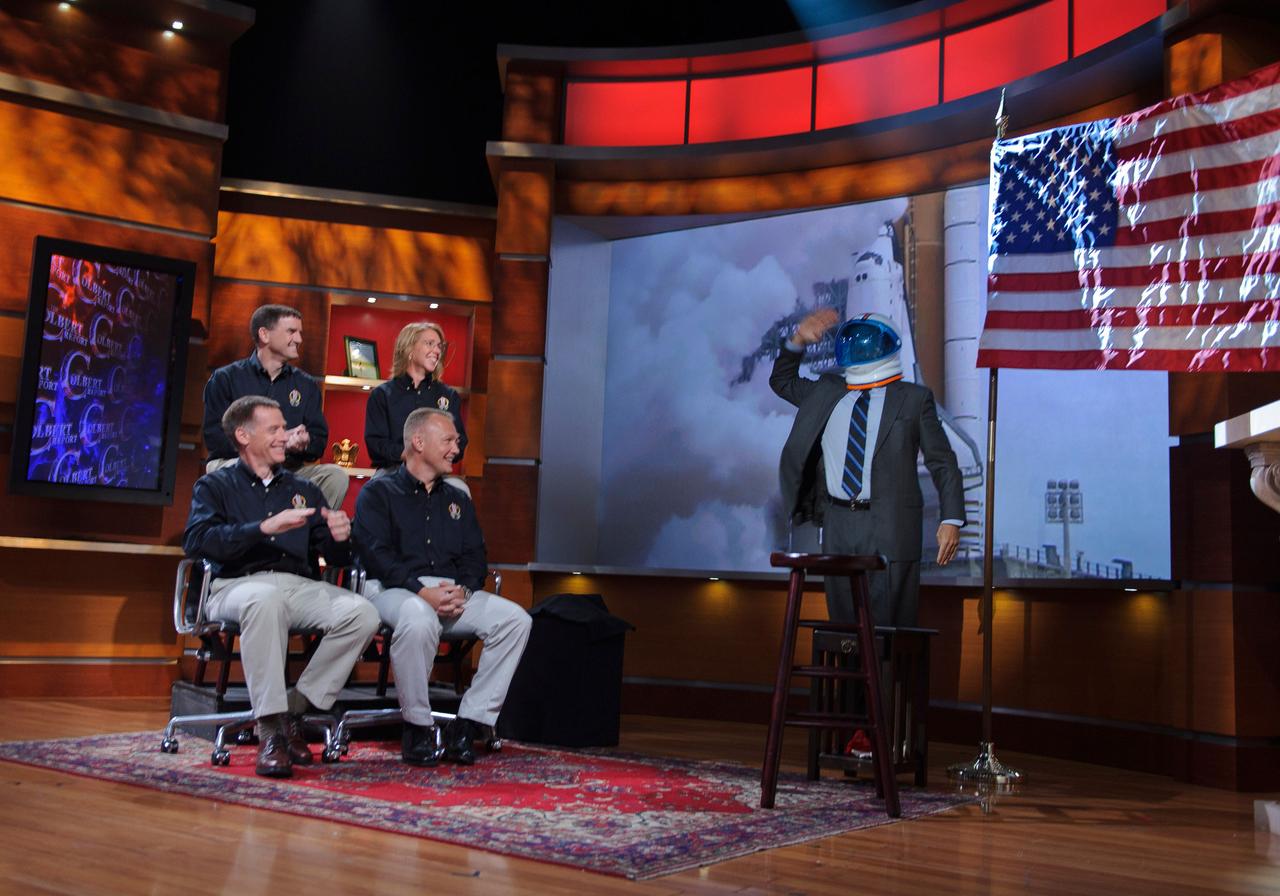
201108160008hq (16 Aug. 2011) --- Stephen Colbert, host of The Colbert Report, salutes the crew of STS-135, seated from lower left, NASA astronauts Chris Ferguson, commander; Doug Hurley, pilot; Sandy Magnus and Rex Walheim, both mission specialists, during their appearance for a taping of his television show, Aug. 16, 2011, in New York. The astronauts from STS-135 are in New York for a three-day visit. Photo credit: NASA/Paul E. Alers
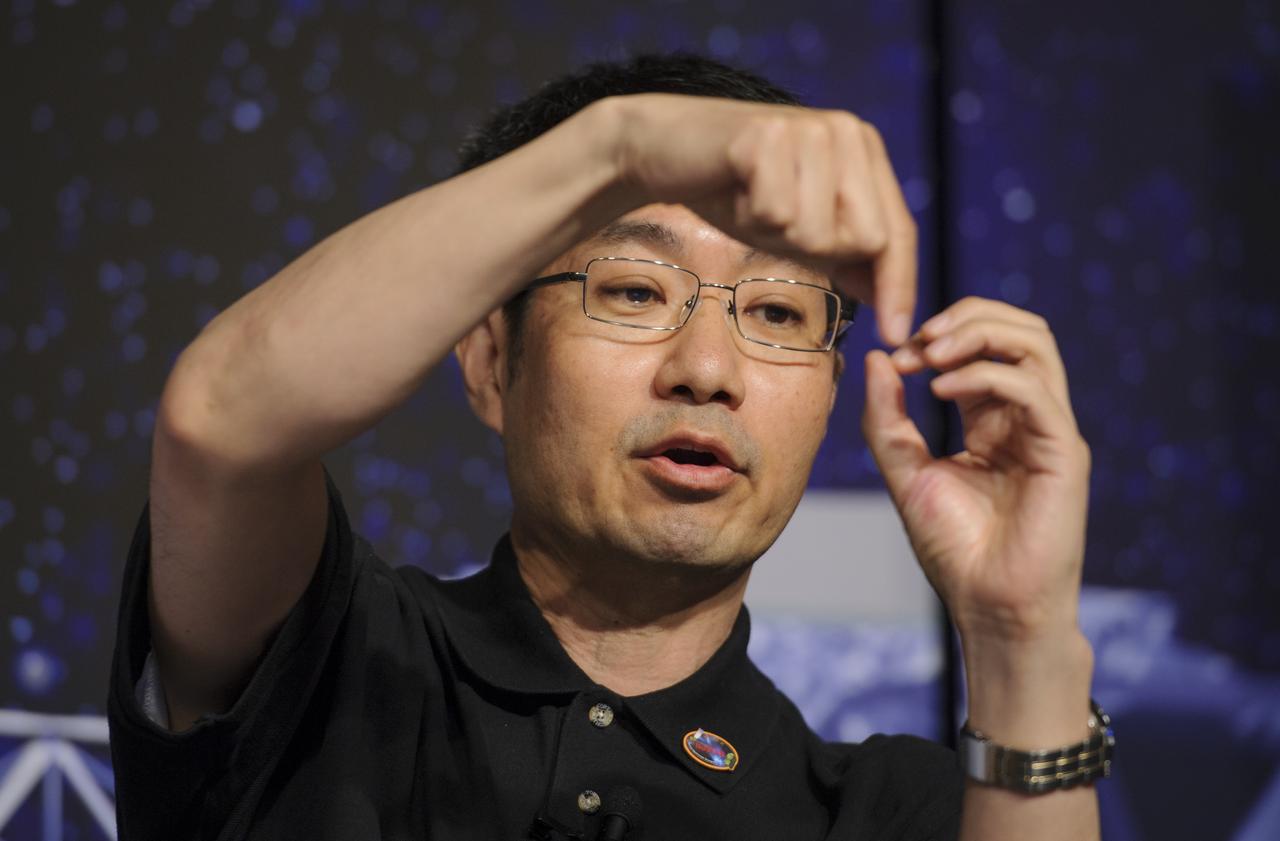
Yunjin Kim, NuSTAR project manager at the Jet Propulsion Laborartory (JPL), talks about NASA's Spectroscopic Telescope Array (NuStar) during a briefing, Wednesday, May 30, 2012, at NASA Headquarters in Washington. Imaging light in the high-energy, short-wavelength X-ray range, the telescope will aim to study how black holes form and evolve along with galaxies. The instrument, packed aboard an Orbital Sciences Pegasus XL rocket is set to launch from a plane in midair no earlier than June 13 from Kwajalein Atoll in the Marshall Islands. Photo Credit: (NASA/Paul E. Alers)
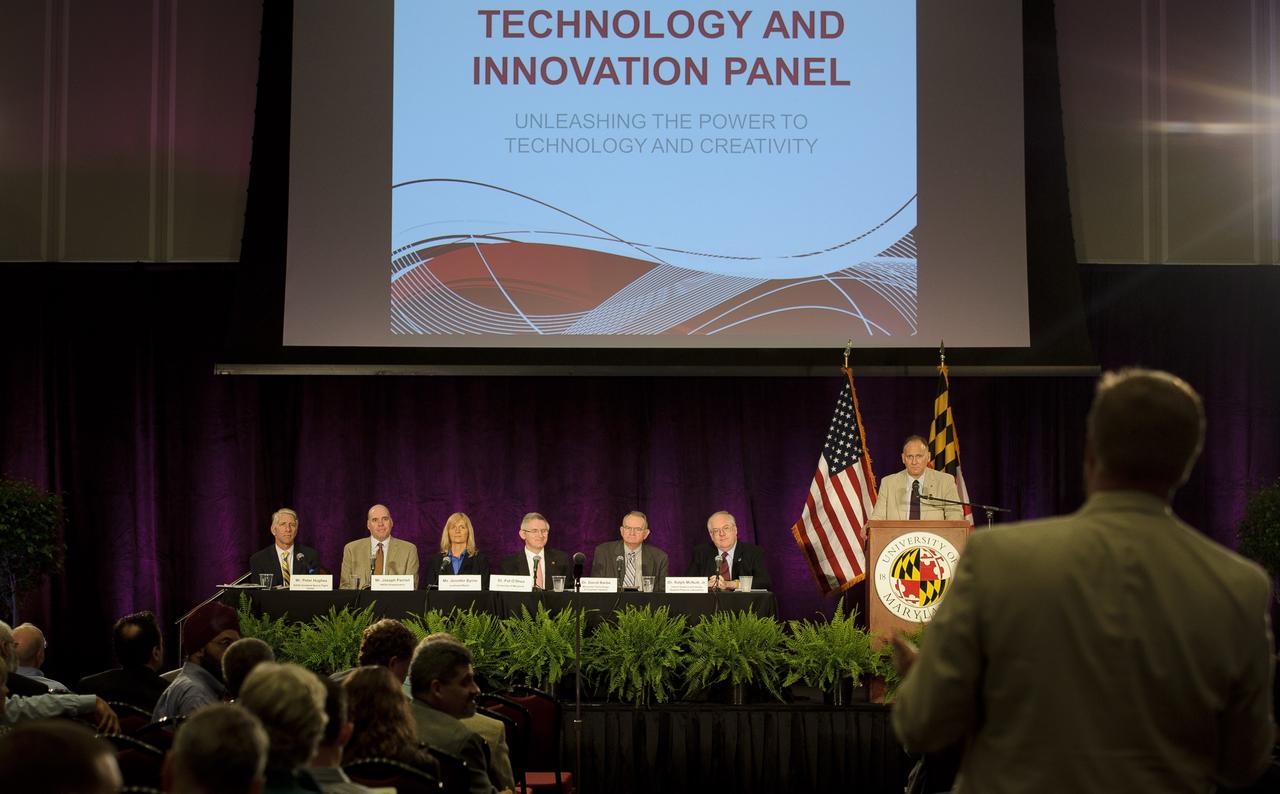
A member of the audience asks a question to the technology and innovation panel at the 2011 NASA Future Forum, Thursday, Aug. 11, 2011, at the Riggs Alumni Center on the campus of the University of Maryland in College Park, Md. Photo Credit: (NASA/Paul E. Alers)
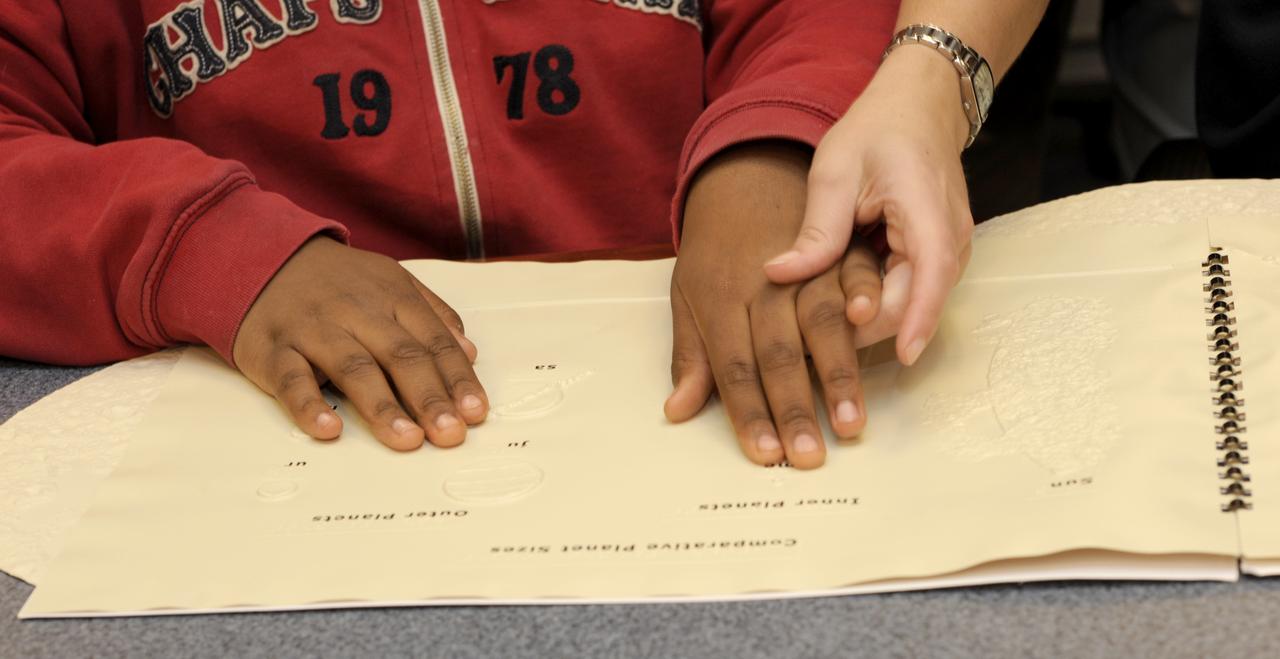
The hands of Maryland School for the Blind student Andrea Washington, are guided across a topographical map of the Solar System by science teacher Colleen Shovestull during a visit to NASA Headquarters in Washington, Thursday, Oct. 29, 2009. Seven students from the Maryland School for the Blind visited NASA and participated in activities to learn about NASA'smission, functions, and careers. Photo Credit: (NASA/Paul E. Alers)
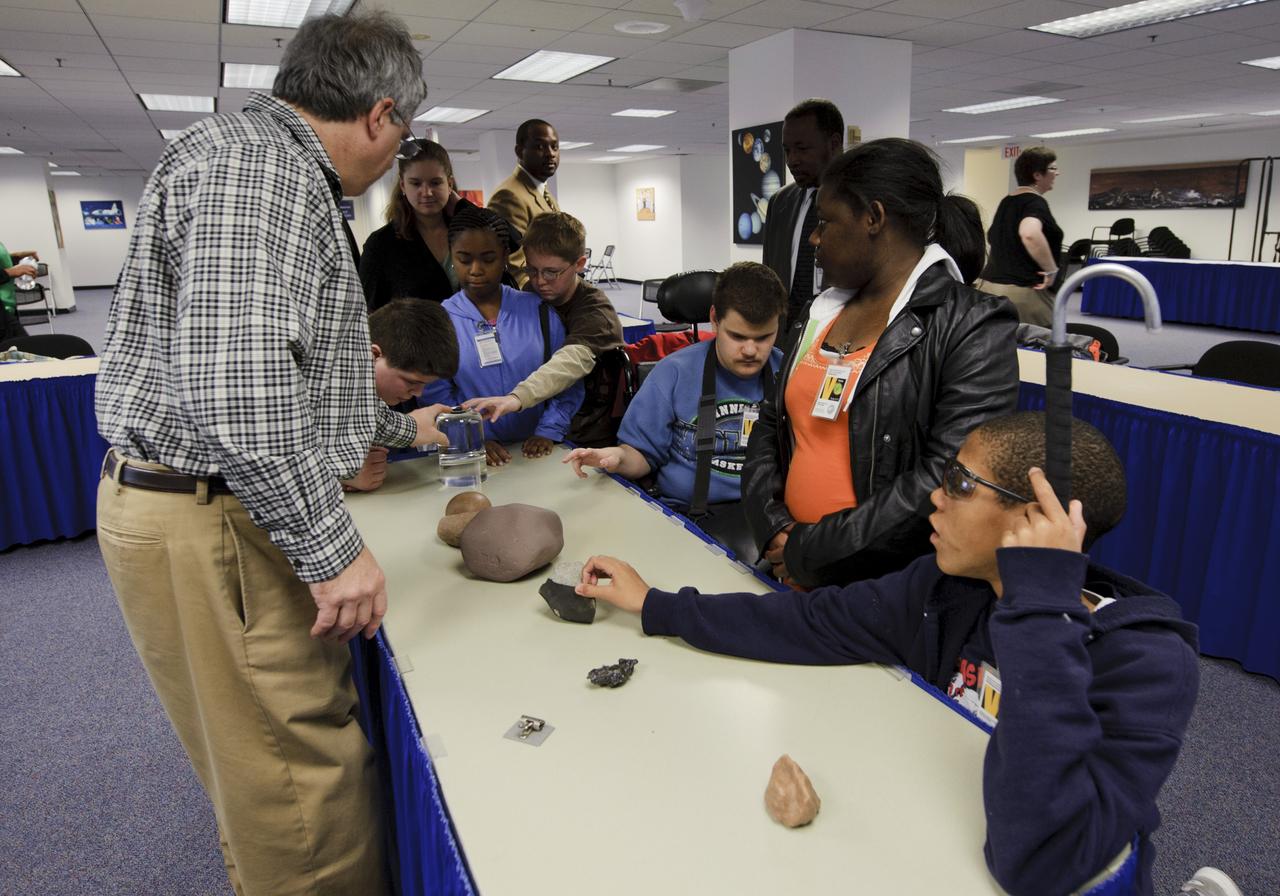
Students from the Maryland School for the Blind participate in Disability Mentoring Day, Thursday, April 7, 2011, at NASA Headquarters in Washington. Photo Credit (NASA/Paul E. Alers)
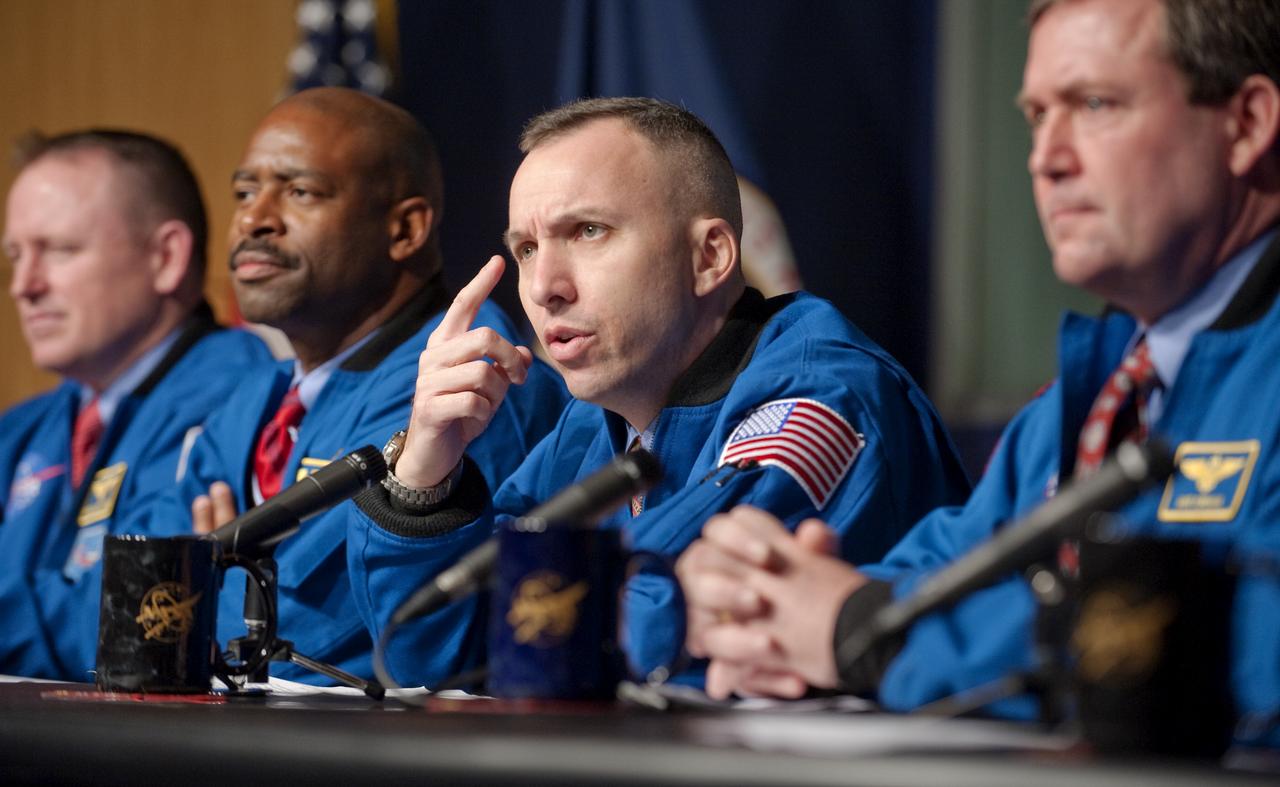
STS-129 Mission Specialist Randy Bresnick, second from right, answers a question from the audience as fellow crew members look on, Monday, Jan. 11, 2010, during a presentation to staff and middle school students from the Congressional Schools of Virginia at NASA Headquarters in Washington. Photo Credit: (NASA/Paul E. Alers)
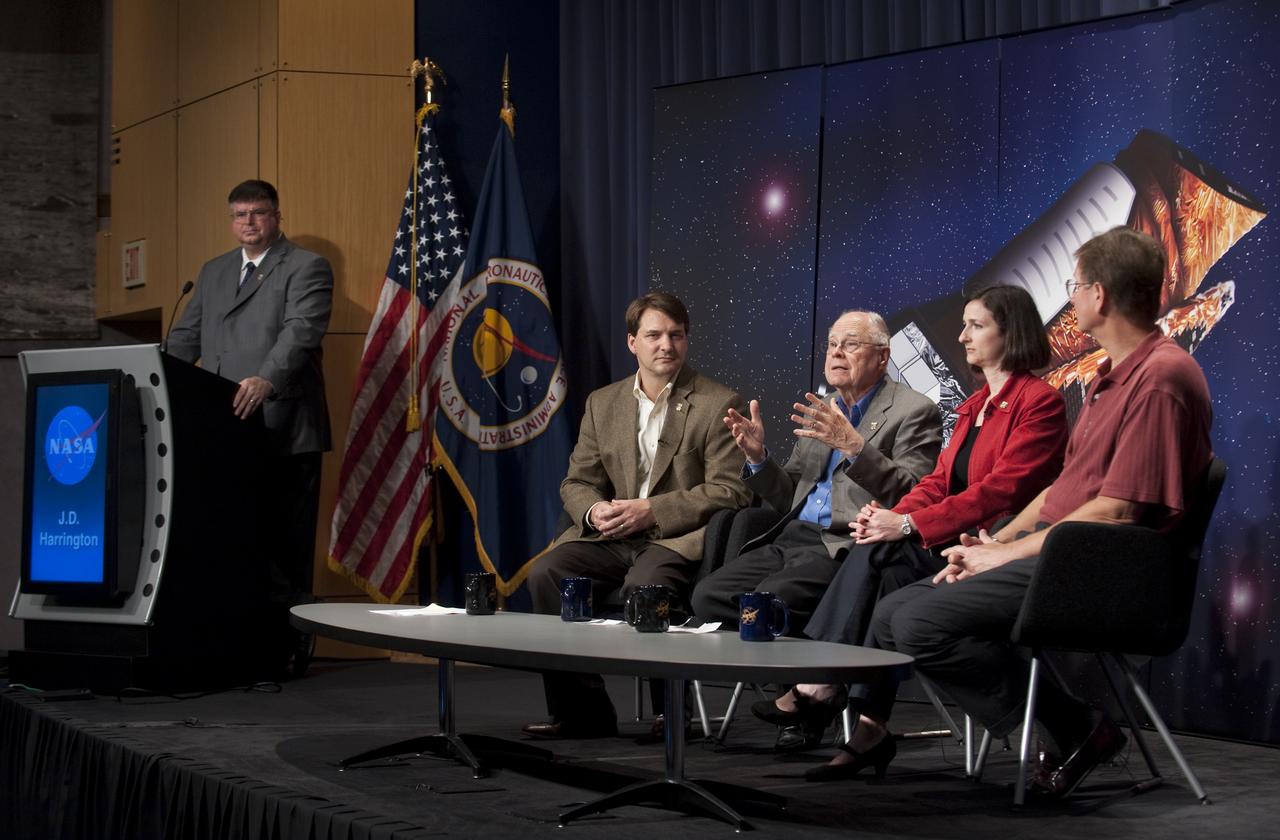
William Bo-Ricki, Kepler principal investigator at NASA's Ames Research Center, second from left, speaks during a press conference, Thursday, Aug. 6, 2009, at NASA Headquarters in Washington about the scientific observations coming from the Kepler spacecraft that was launched this past March. Others seated include Jon Morse, NASA's Astrophysics Director, Sara Seager, Professor of Planetary Science and Physics at MIT, and Alan Boss, an Astrophysicist at the Carnegie Institution at the Department of Terrestrial Magnetism in Washington, right. Kepler is NASA's first mission that is capable of discovering earth-sized planets in the habitable zones of stars like our Sun. Photo Credit: (NASA/Paul E. Alers)
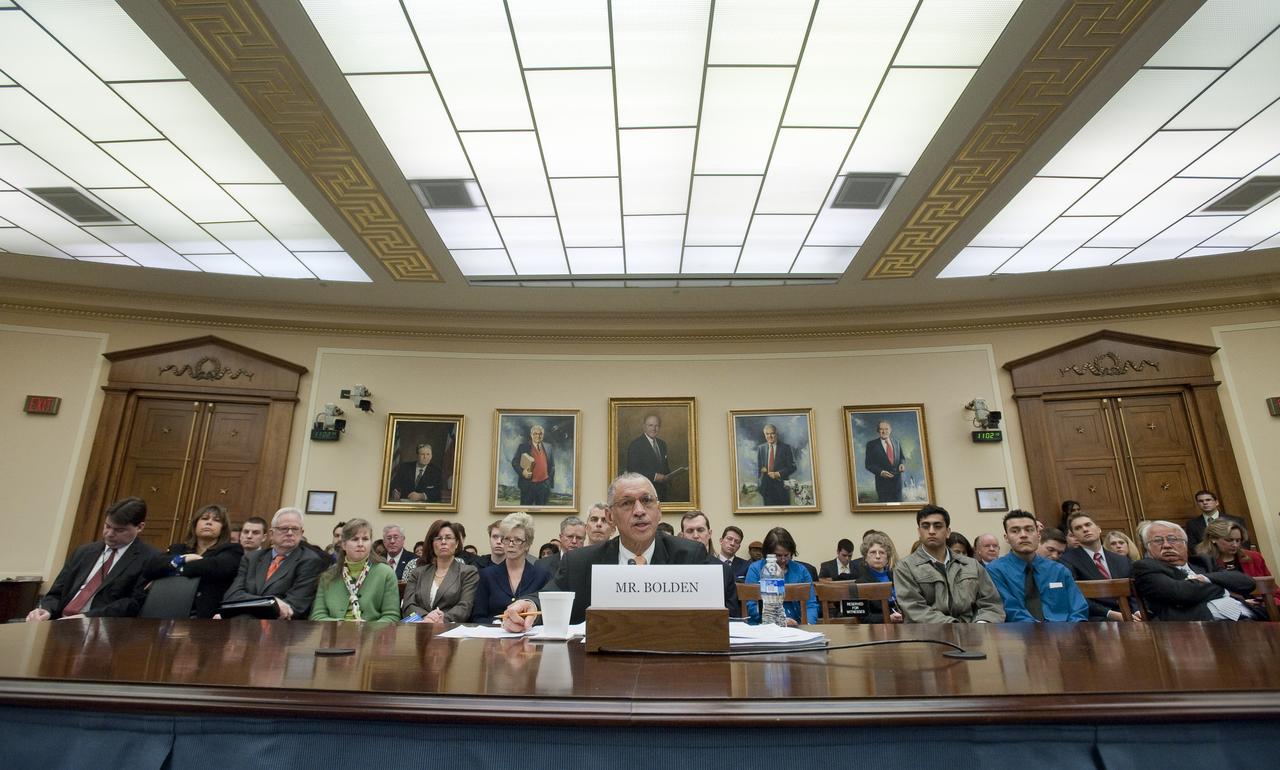
NASA Administrator Charles F. Bolden appears in front of the U.S. House of Representatives Committee on Science and Technology to discuss the President’s FY 2011 budget request, Thursday, Feb. 25, 2010, on Capitol Hill in Washington. Photo Credit: (NASA/Paul E. Alers)

Space Shuttle Discovery mounted atop a 747 Shuttle Carrier Aircraft (SCA) approaches the runway for landing at Washington Dulles International Airport, Tuesday April 17, 2012, in Sterling, Va. Discovery, the first orbiter retired from NASA’s shuttle fleet, completed 39 missions, spent 365 days in space, orbited the Earth 5,830 times, and traveled 148,221,675 miles. NASA will transfer Discovery to the National Air and Space Museum to begin its new mission to commemorate past achievements in space and to educate and inspire future generations of explorers. Photo Credit: (NASA/Paul E. Alers)
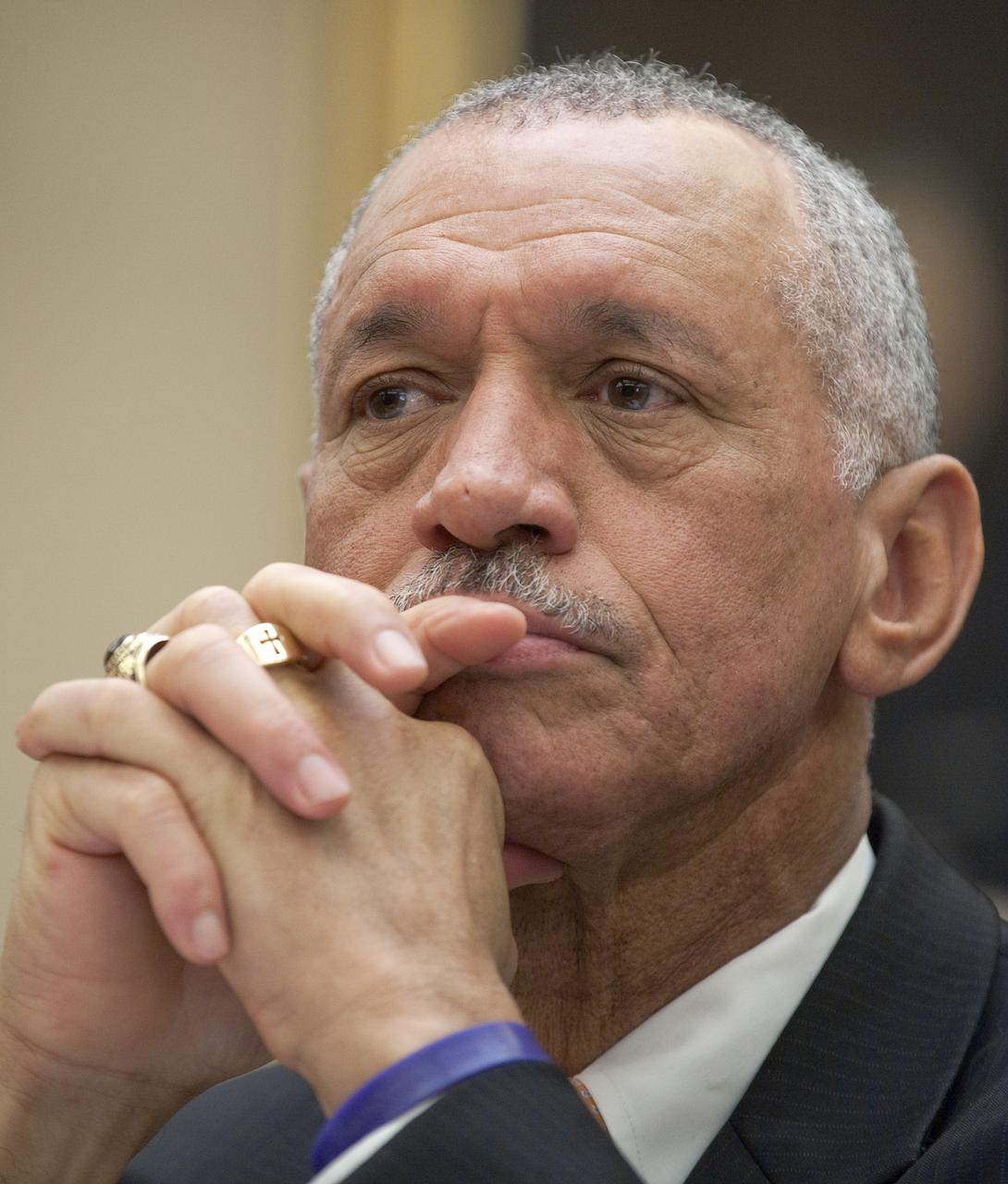
NASA Administrator Charles F. Bolden appears in front of the U.S. House of Representatives Committee on Science and Technology to discuss the President's FY 2011 budget request, Thursday, Feb. 25, 2010, on Capitol Hill in Washington. Photo Credit: (NASA/Paul E. Alers)
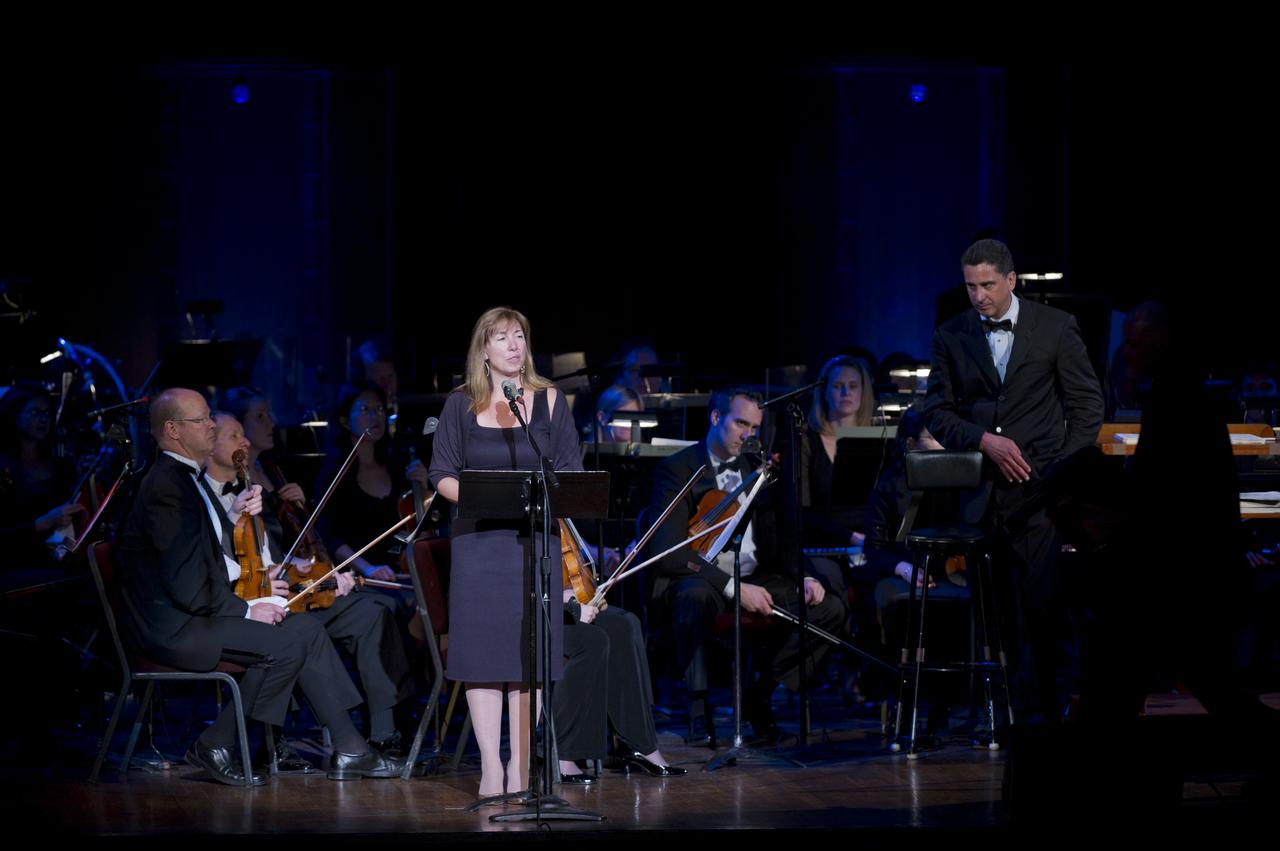
Deputy Administrator Lori Garver delivers remarks as Emil de Cou, right, looks on during a program commemorating Human Spaceflight and the Kennedy Legacy, Wednesday, May 25, 2011, in the concert hall at the John F. Kennedy Center for the Performing Arts in Washington. The event marked the 50th Anniversary of President John F. Kennedy's Special Message to the Congress on Urgent National Needs in which he stated "landing a man on the moon and returning him safely to earth". Photo Credit: (NASA/Paul E. Alers)
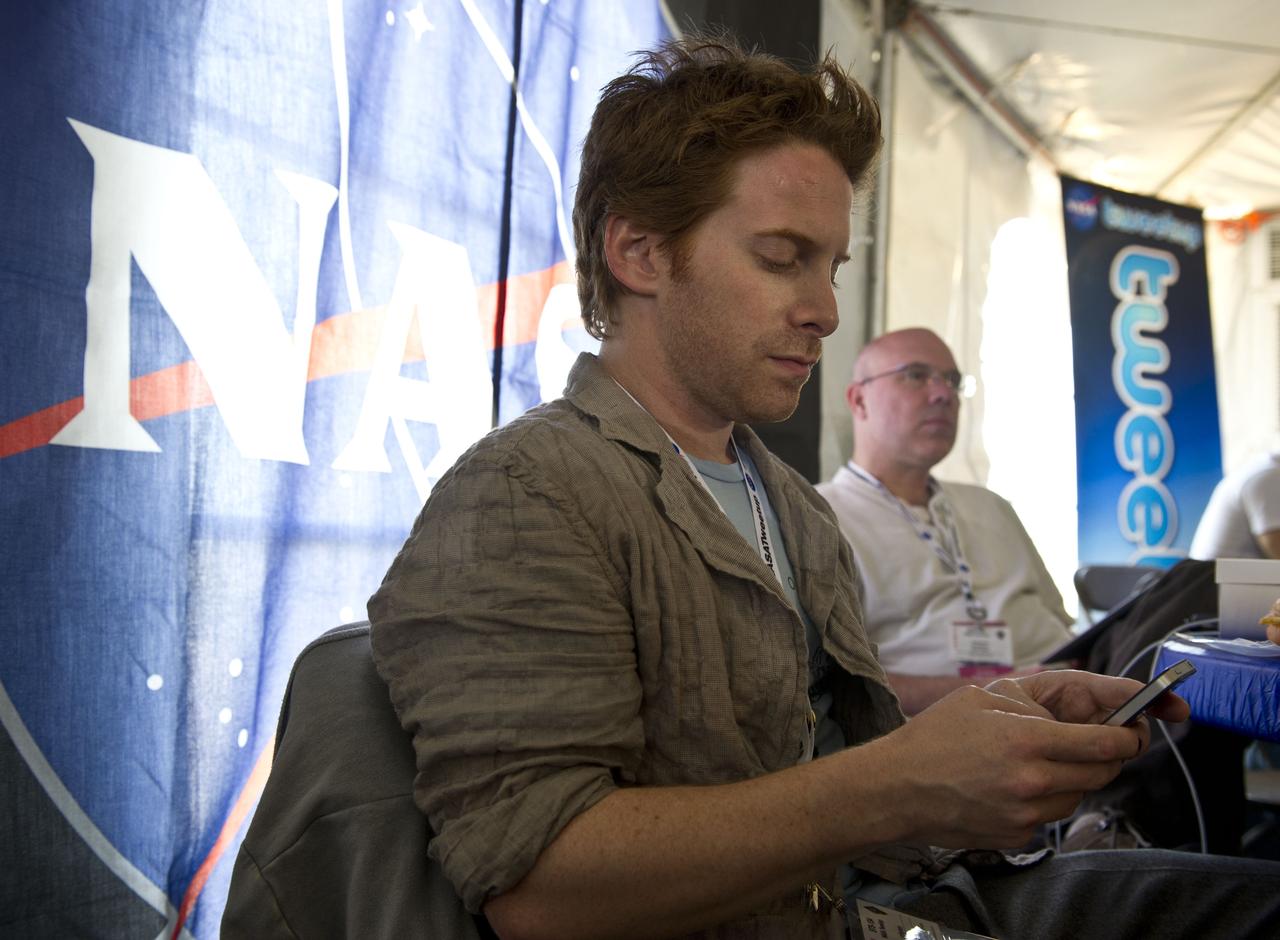
Actor Seth Green, a NASA Twitter follower, tweets from his device during the STS-134 Tweetup, Thursday, April 28, 2011, at Kennedy Space Center in Cape Canaveral, Fla. About 150 NASA Twitter followers attended the event. Photo Credit: (NASA/Paul E. Alers)
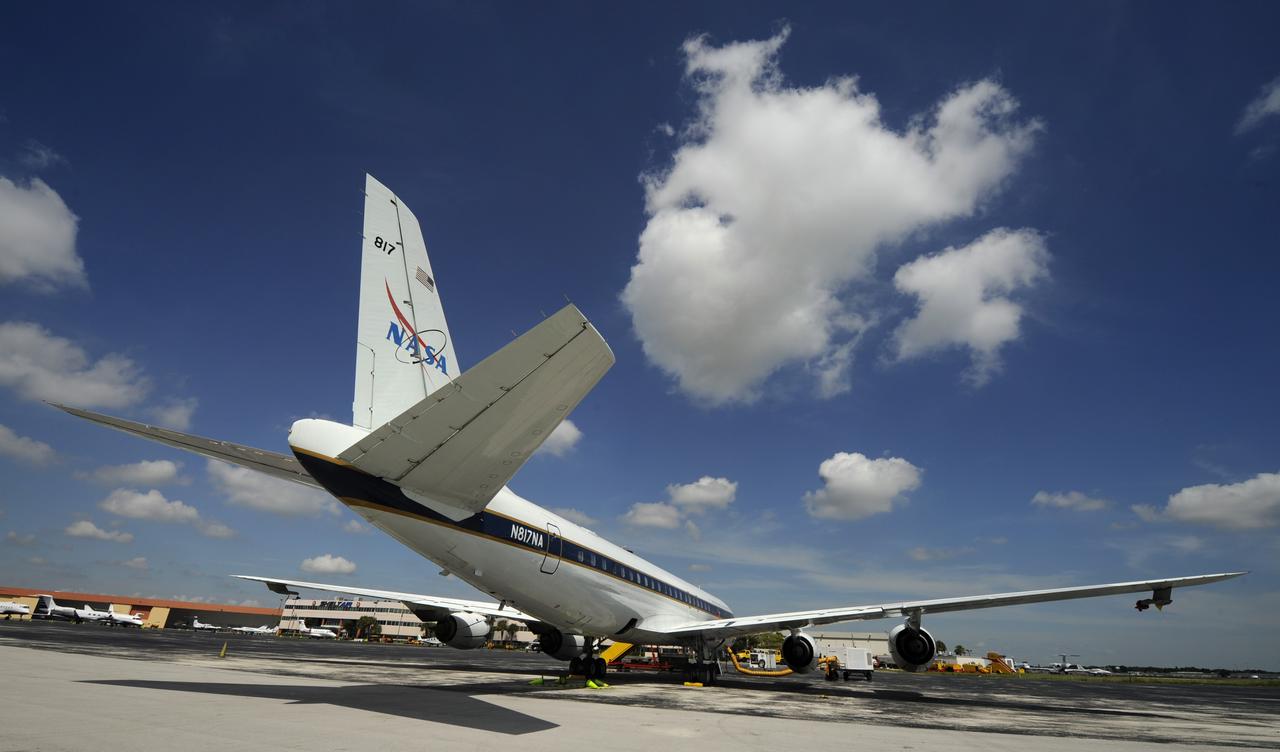
The NASA DC-8 airplane sits on the tarmac, Monday, Aug. 16, 2010, at Fort Lauderdale Hollywood International Airport in Fort Lauderdale, Fla. , as preparations continue for its part in the GRIP experiment. The Genesis and Rapid Intensification Processes (GRIP) experiment is a NASA Earth science field experiment in 2010 that is being conducted to better understand how tropical storms form and develop into major hurricanes. Photo Credit: (NASA/Paul E. Alers)
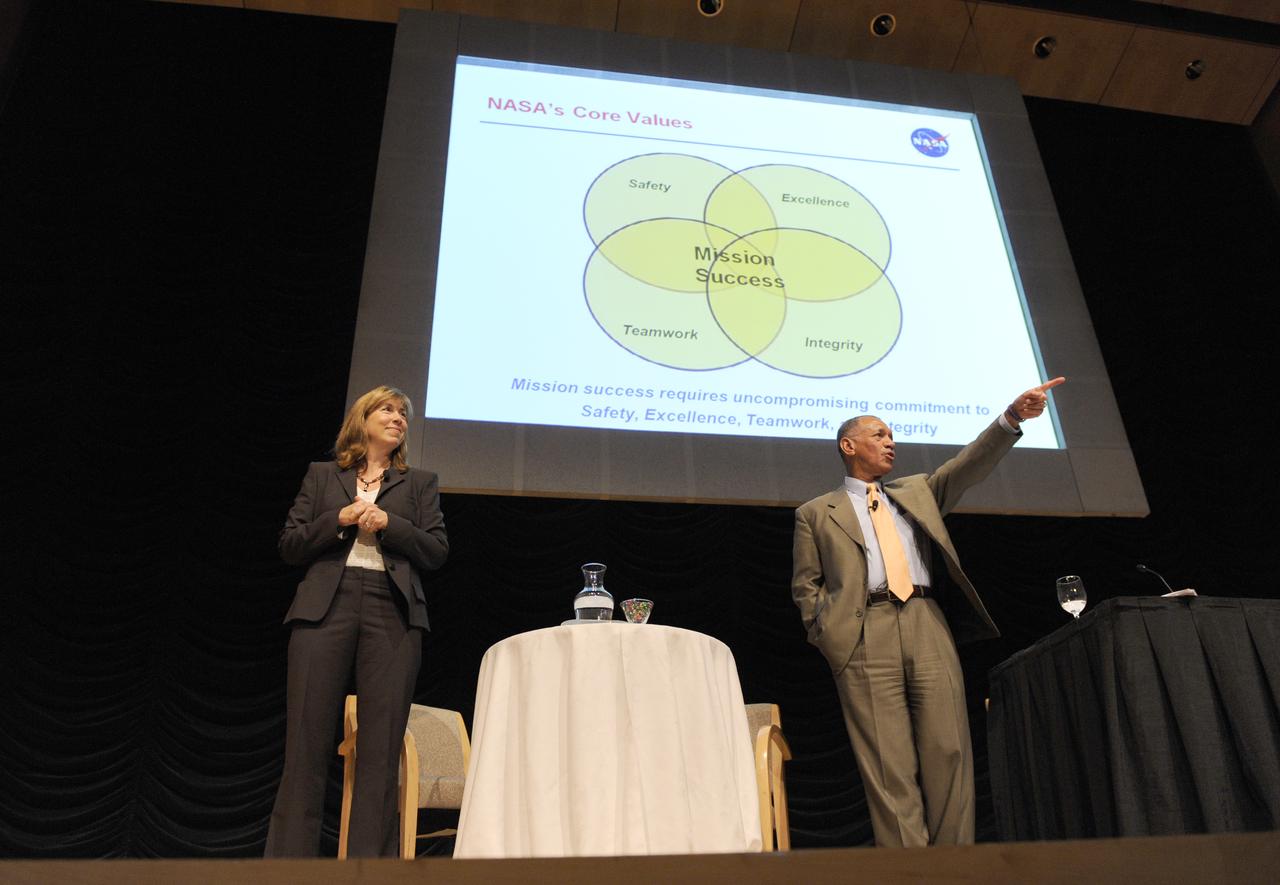
NASA Administrator Charles Bolden, right, and Deputy Administrator Lori Garver speak to those gathered at the 2009 NASA Executive Summit, Tuesday, Oct. 6, 2009, at the Ronald Reagan Building in Washington. (Photo Credit: (NASA/Paul E. Alers)
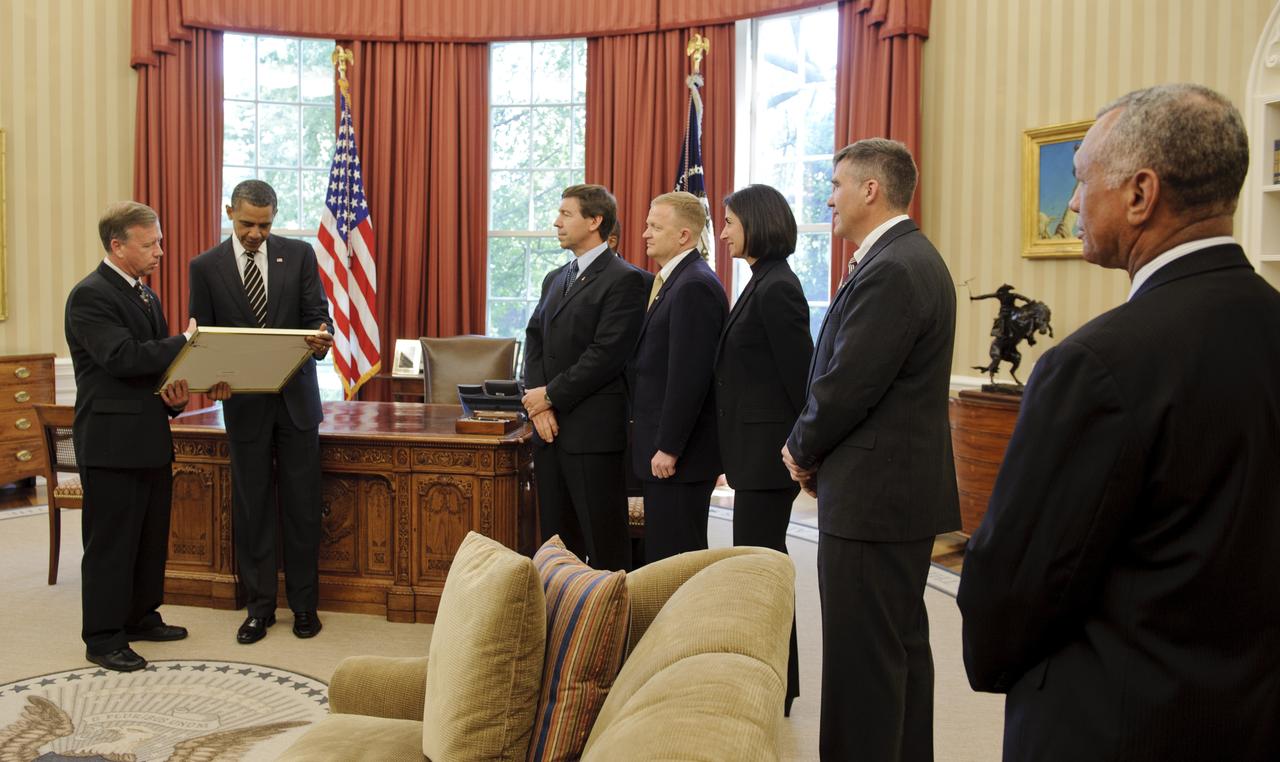
STS-133 Commander Steven Lindsey, far left, presents a montage to President Barack Obama as crew members Michael Barratt, Pilot Eric Boe, Nicole Stott, and Stephen Bowen along with NASA Administrator Charles Bolden, far right, look on during a visit to the Oval Office in the White House, Monday, May 9, 2011, in Washington. Also in attendance but not seen, was Mission Specialist Alvin Drew.Photo Credit: (NASA/Paul E. Alers)
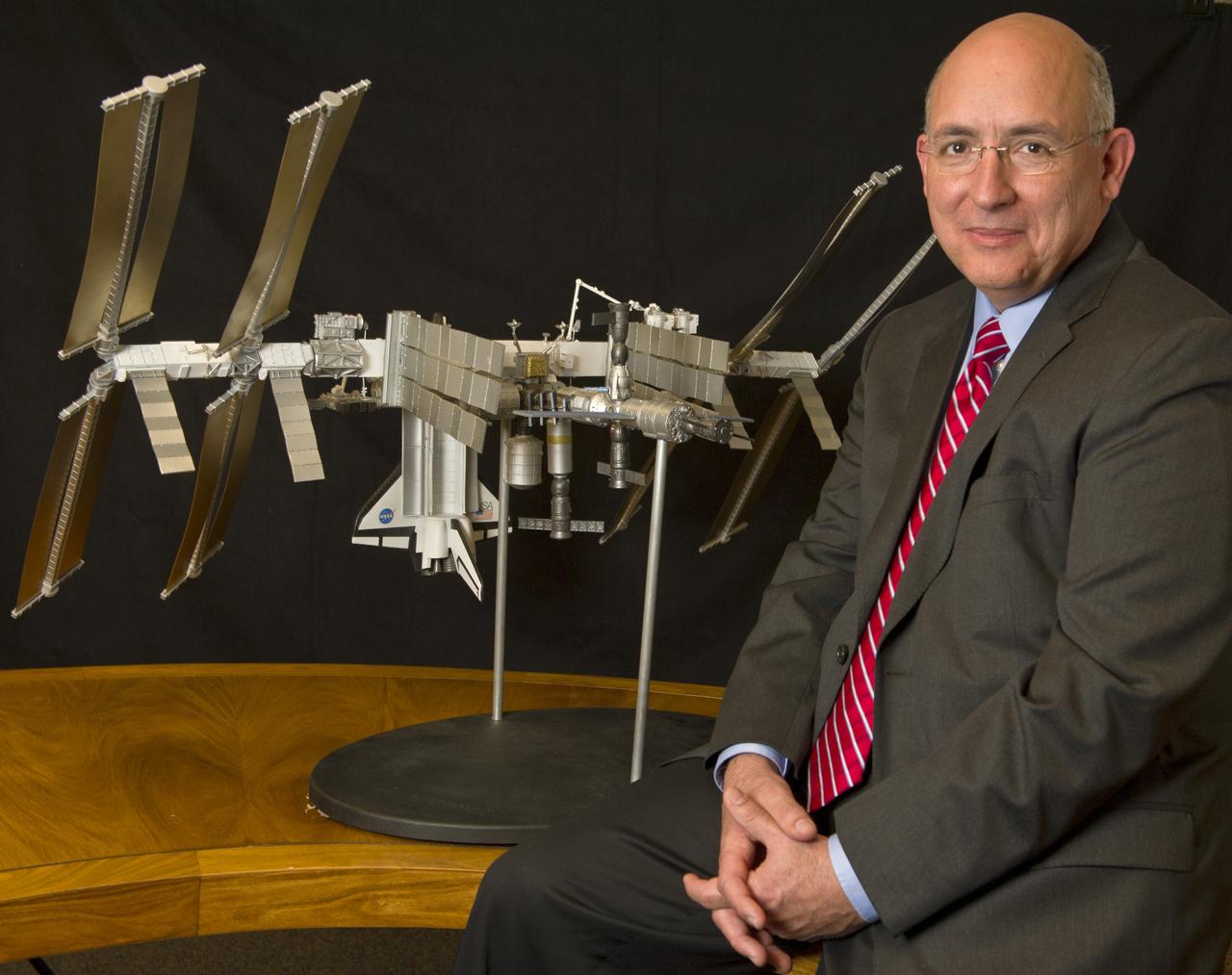
Michael Suffredini, Manager, International Space Station (ISS) Program, is seen with a scale model of the International Space Station at NASA Headquarters in Washington, Friday, Jan. 14, 2011, . Photo Credit: (NASA/Paul E. Alers)
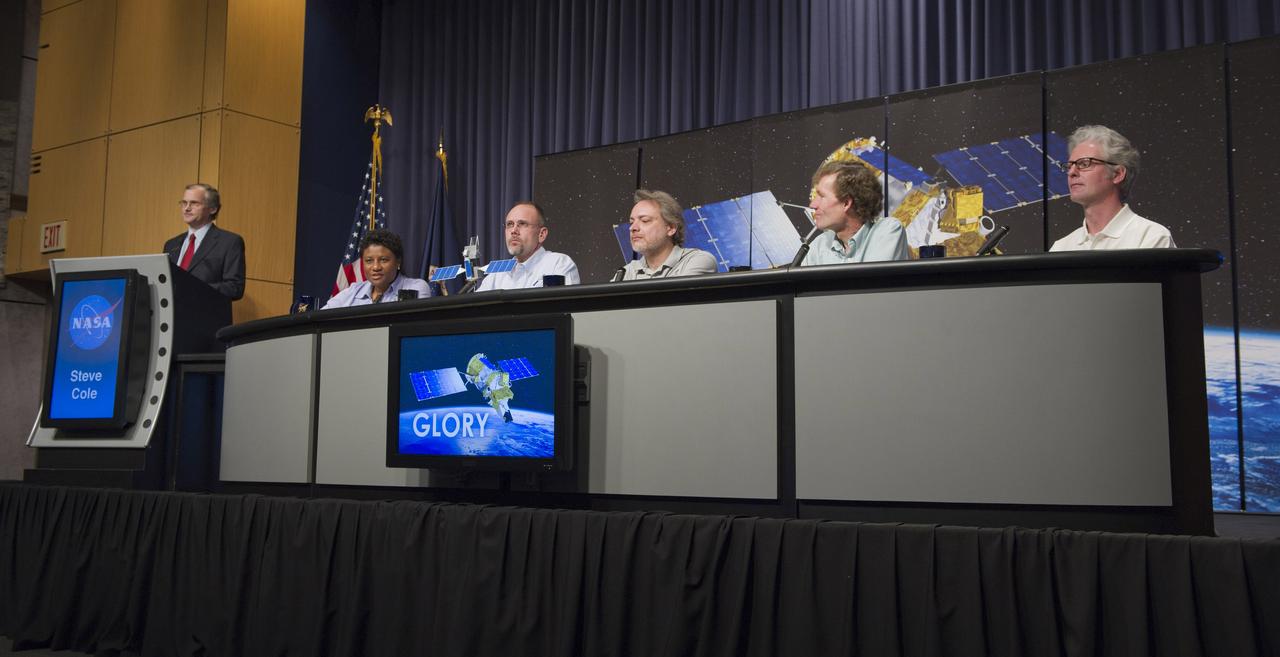
Joy Bretthauer, Glory Program Executive, seated left, Bryan Fafaul, Michael Mischenko, Greg Kopp and Brian Cairns, seated right, talk about the launch of the GLORY mission during a news conference at NASA Headquarters, Thursday, Jan. 20, 2011, in Washington. NASA's newest Earth-observing research mission is scheduled for launch form Vandenburg Air Force Base in California on Feb. 23. The mission will improve our understanding of how the sun and tiny atmosppheric particles called aerosols affect Earth's climate. Photo Credit: (NASA/Paul E. Alers)

A Shorty Award is seen Wednesday, March 30, 2011 at NASA Headquarters in Washington. The award was presented to NASA astronaut Doug Wheelock for an image of the moon he took and posted to his Twitter account, @Astro_Wheels, while living aboard the International Space Station last year. The awards ceremony was held at the TimesCenter in New York City on Monday, March 28. Photo Credit: (NASA/Paul E. Alers)
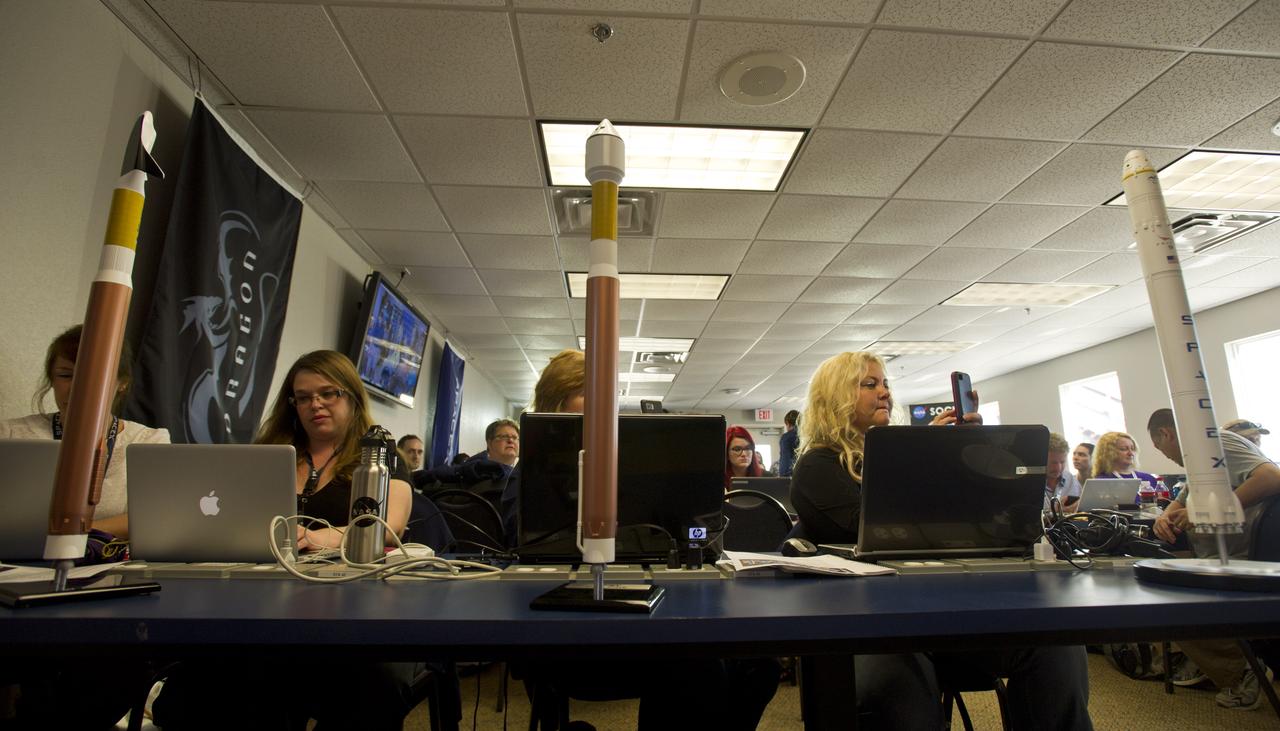
Models of various rockets line a table at a NASA Social, Friday, May 18, 2012, at Kennedy Space Center in Cape Canaveral, Fla. About 50 NASA Social followers attended an event as part of activities surrounding the launch of Space Exploration Technologies, or SpaceX, demonstration mission of the company's Falcon 9 rocket to the International Space Station. Photo Credit: (NASA/Paul E. Alers)
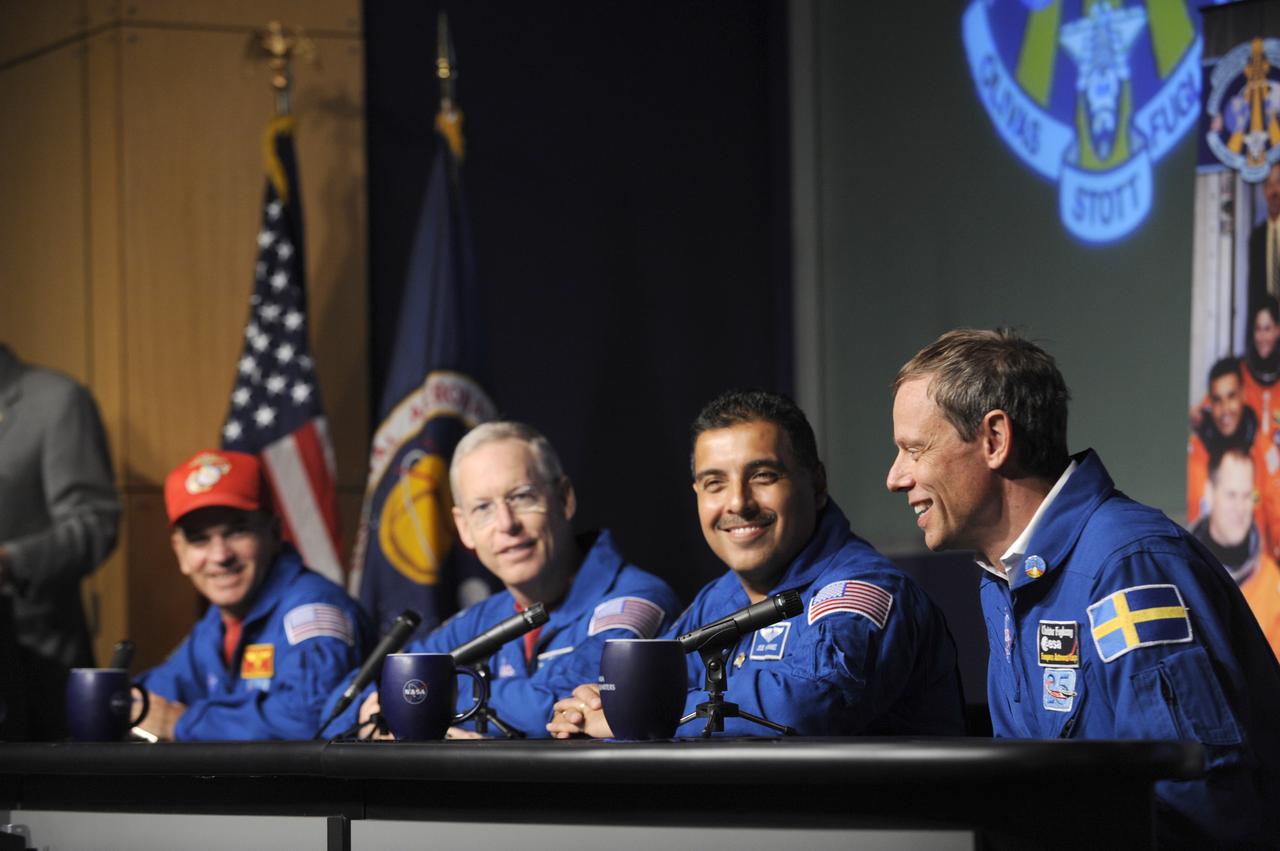
European Space Agency astronaut Christer Fuglesang, a mission specialist on STS-128, far right, smiles during a presentation in the auditorium at NASA Headquarters in Washington, Thursday, Nov. 5, 2009. Photo Credit: (NASA/Paul E. Alers)
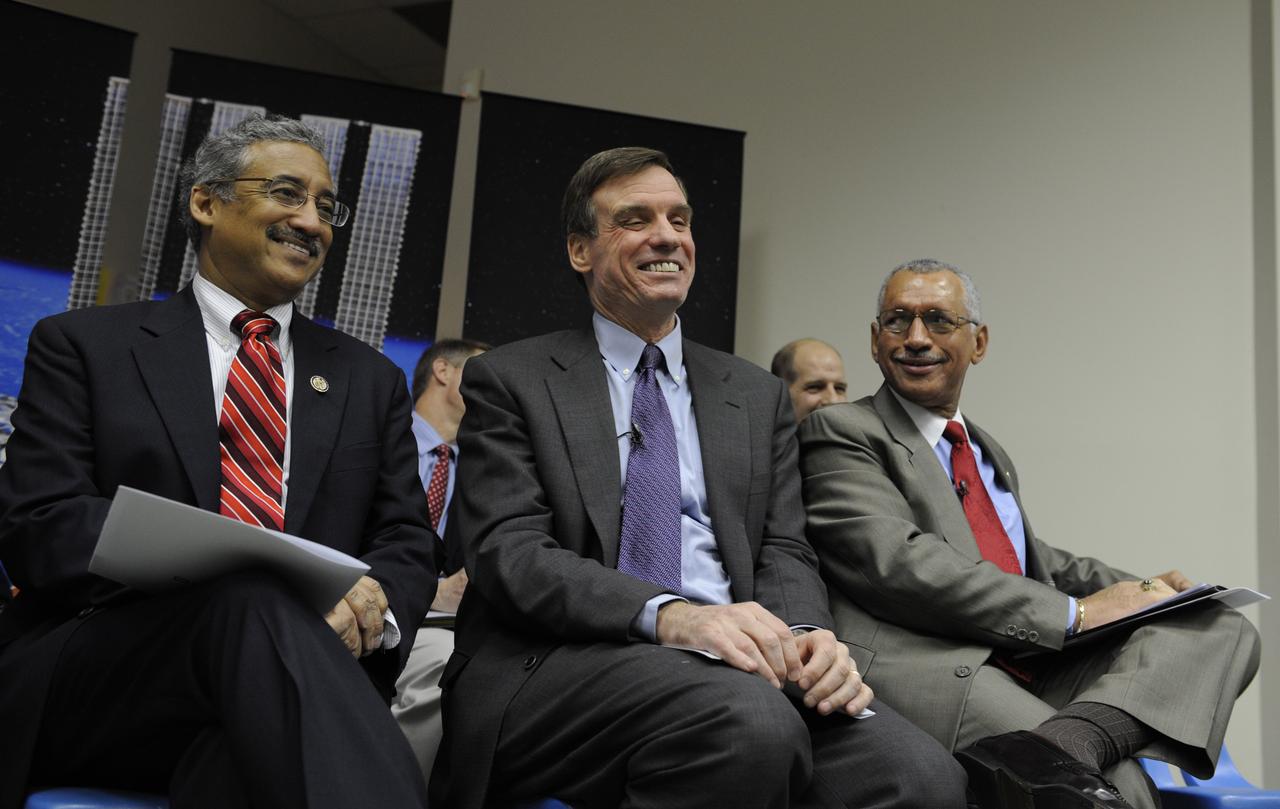
NASA Administrator Charles Bolden, right, shares a laugh with U.S. Sen. Mark Warner, D-Va., center and U.S. Rep. Bobby Scott, D-Va., prior to an event at the MathScience Innovation Center, Friday, Jan. 28, 2011, in Richmond, Va. Bolden later spoke to students from Albert Hill Middle School highlighting the importance of science, technology, engineering and math, or STEM, as he shared his life experiences with the students. (Photo Credit:NASA/Paul E. Alers)
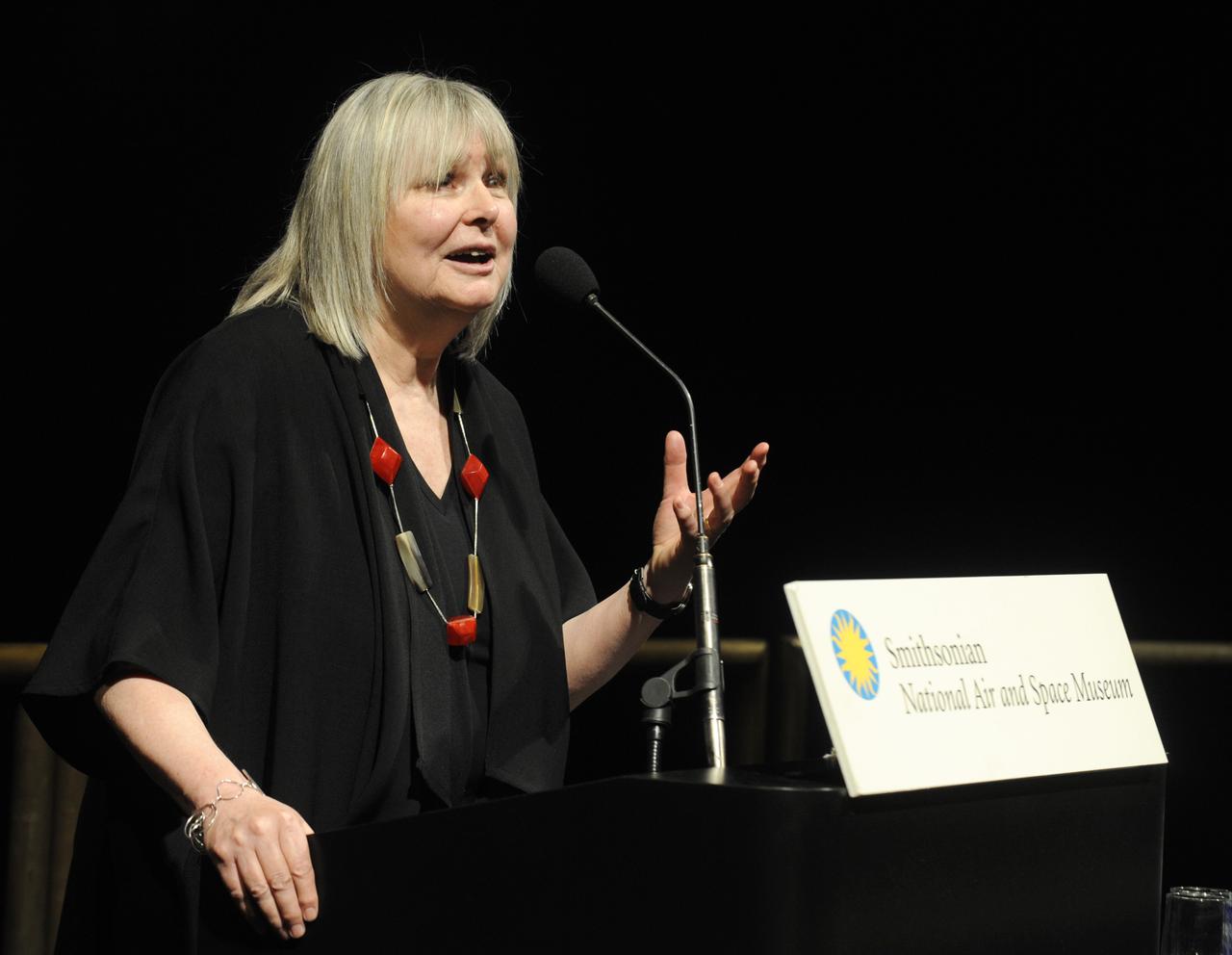
Producer/Director Toni Myers speaks to the audience prior to the World Premiere of "Hubble 3D", screened at the Smithsonian's Air and Space Museum Tuesday evening, March 9, 2010, in Washington. Photo Credit: (NASA/Paul E. Alers)
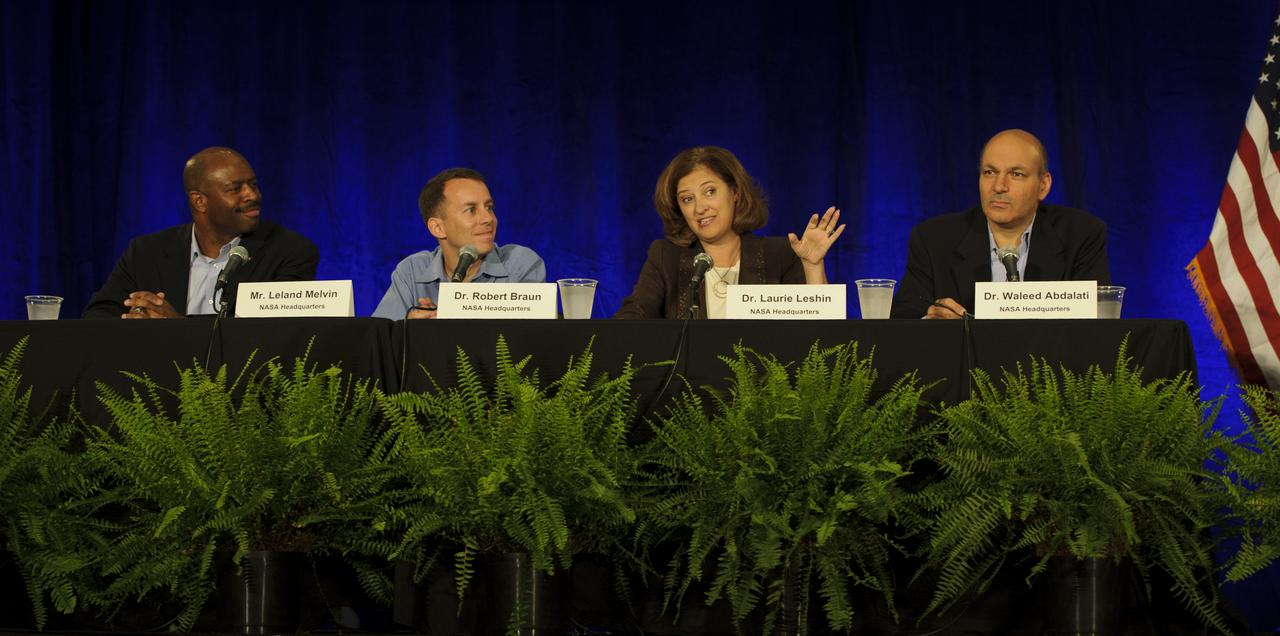
Dr. Laurie Leshin, NASA Deputy Associate Administrator Exploration Systems Mission Directortorate, second from right, speaks as Dr. Waleed Abdalati, NASA Chief Scientist, right, Dr. Robert Braun, NASA Chief Technologist, and Leland Melvin, Assoicate Administrator for NASA Education, far left, at the NASA Future Forum held at the Riggs Alumni Center on the campus of the University of Maryland, Thursday, Aug. 11, 2011 in College Park, Md. Photo Credit: (NASA/Paul E. Alers)
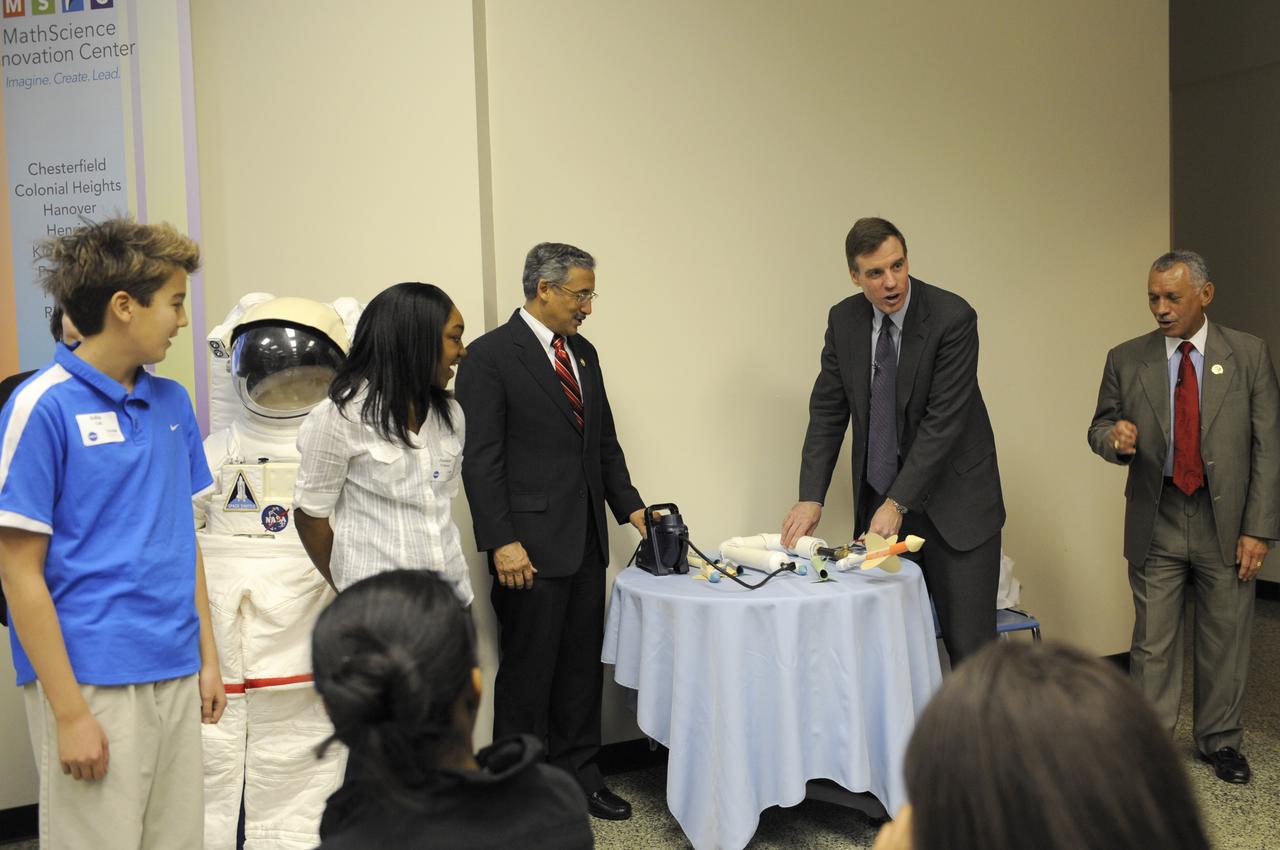
NASA Administrator Charles Bolden, right, counts down along with others as U.S. Sen. Mark Warner, D-Va., readies to launch a paper rocket as U.S. Rep. Bobby Scott, D-Va., third right, looks on, Friday, Jan. 28, 2011, at the MathScience Innovation Center in Richmond, Va. Earlier, Bolden, spoke to students from Albert Hill Middle School where he highlighted the importance of science, technology, engineering and math, or STEM, as he shared his life experiences with the students. (Photo Credit:NASA/Paul E. Alers)
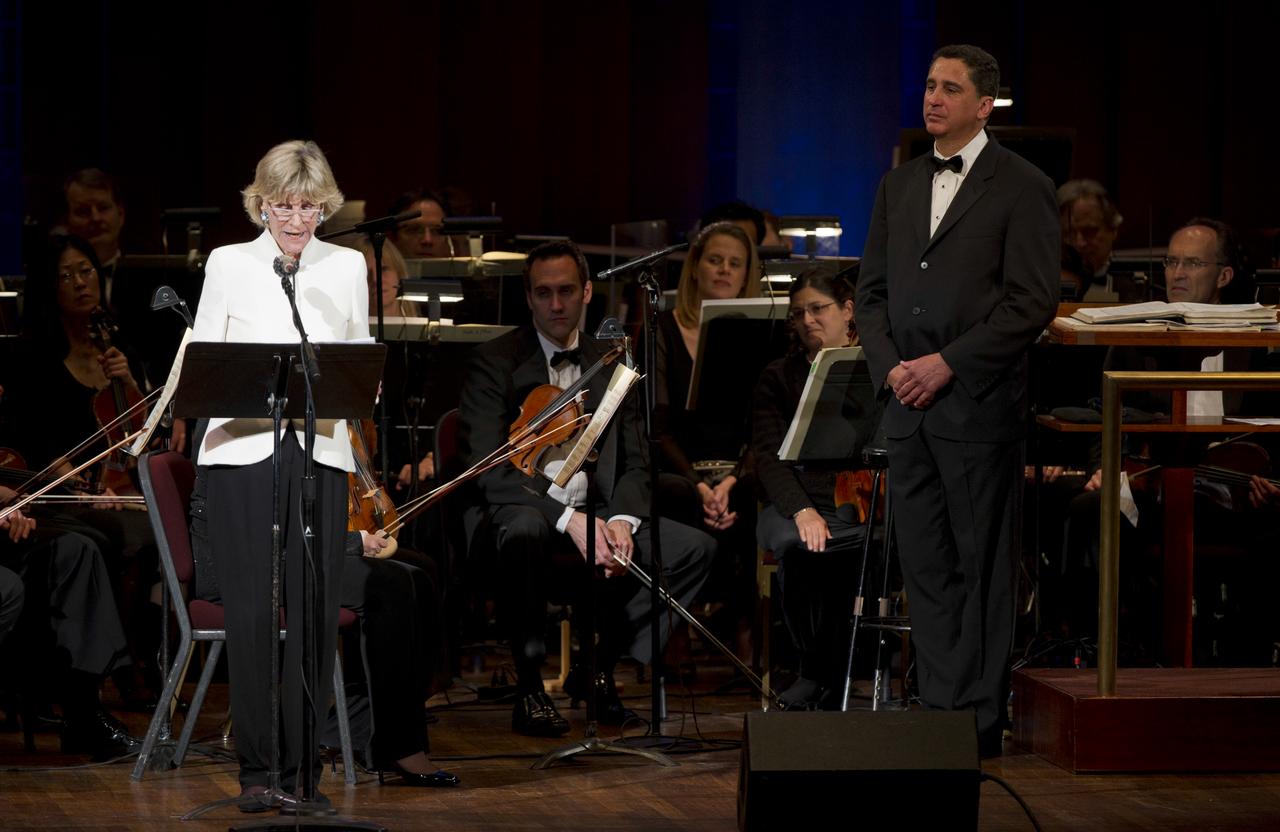
Jean Kennedy Smith, sister of John F. Kennedy, delivers remarks during a program entitled Human Spaceflight: The Kennedy Legacy as Emil de Cou, conductor of the Space Philharmonic, right, looks on, Wednesday, May 25, 2011, in the concert hall at the John F. Kennedy Center for the Performing Arts in Washington. The event marked the 50th Anniversary of President John F. Kennedy's Special Message to the Congress on Urgent National Needs in which he stated "landing a man on the moon and returning him safely to earth". Photo Credit: (NASA/Paul E. Alers)
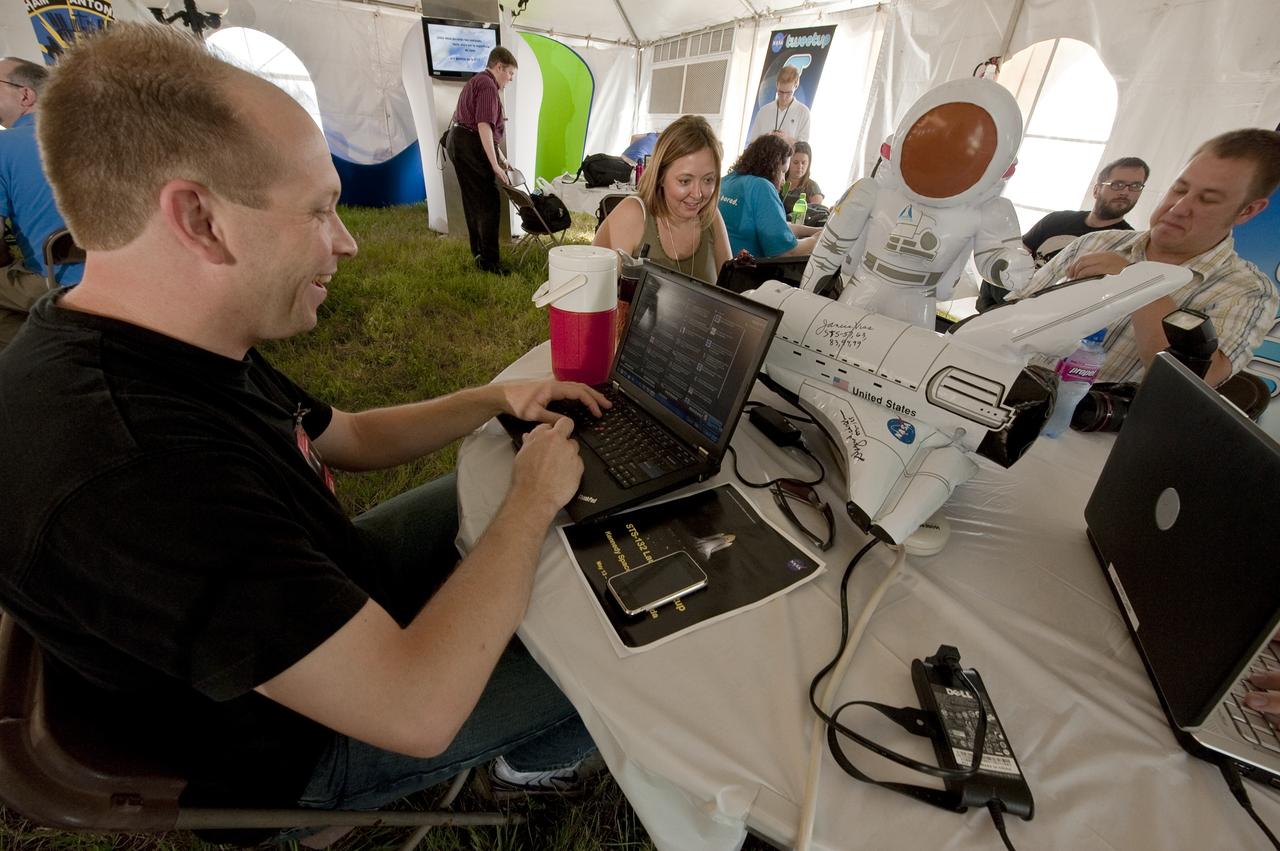
Kendal Van Dyke, a database professional that is followed on Twitter @twitter.com/sqldba, takes part in the two-day STS-132 Launch Tweetup at Kennedy Space Center, Thursday, May 13, 2010, in Cape Canaveral, Fla. NASA Twitter followers in attendance will have the opportunity to take a tour of NASA's Kennedy Space Center, view the space shuttle launch and speak with shuttle technicians, engineers, astronauts and managers. Photo Credit: (NASA/Paul E. Alers)
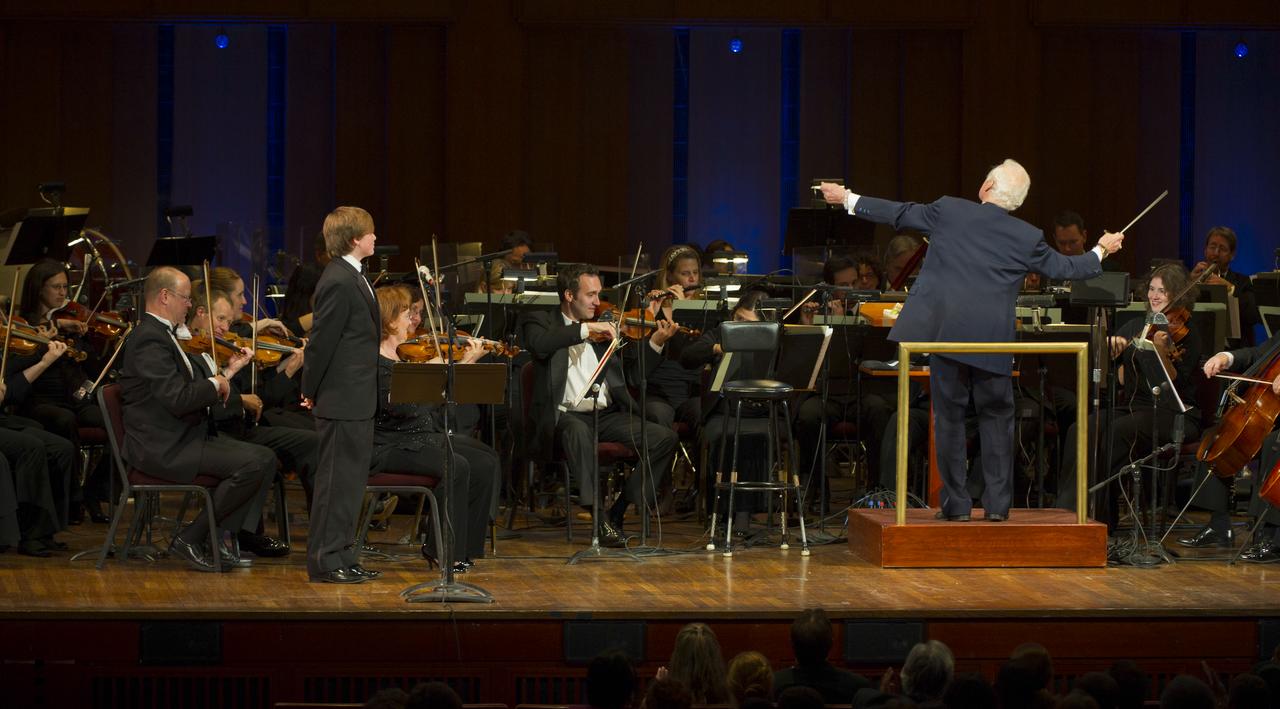
Former Apolo 11 astronaut Buzz Aldrin guest conducts the Space Philharmonic as Ted Kennedy III, left, looks on during a program commemorating Human Spaceflight and the Kennedy Legacy, Wednesday, May 25, 2011, in the concert hall at the John F. Kennedy Center for the Performing Arts in Washington. The event marked the 50th Anniversary of President John F. Kennedy's Special Message to the Congress on Urgent National Needs in which he stated "landing a man on the moon and returning him safely to earth". Photo Credit: (NASA/Paul E. Alers)
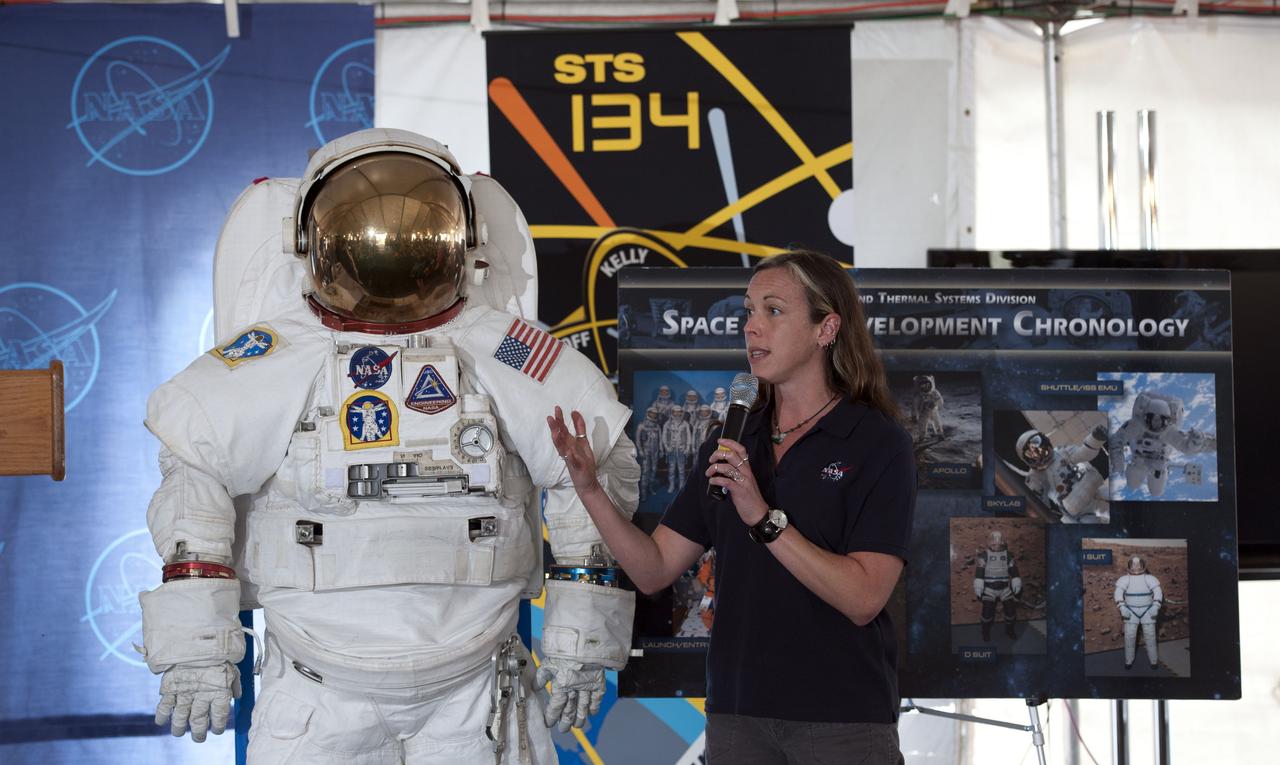
Heather Paul, a project engineer for Johnson Space Center, talks about space suit technology during the STS-134 Tweetup, Thursday, April 28, 2011, at Kennedy Space Center in Cape Canaveral, Fla. About 150 NASA Twitter followers attended the event. Photo Credit: (NASA/Paul E. Alers)

Musician Herbie Hancock plays a piece on the piano during a program commemorating Human Spaceflight and the Kennedy Legacy, Wednesday, May 25, 2011, in the concert hall at the John F. Kennedy Center for the Performing Arts in Washington. The event marked the 50th Anniversary of President John F. Kennedy's Special Message to the Congress on Urgent National Needs in which he stated "landing a man on the moon and returning him safely to earth". Photo Credit: (NASA/Paul E. Alers)
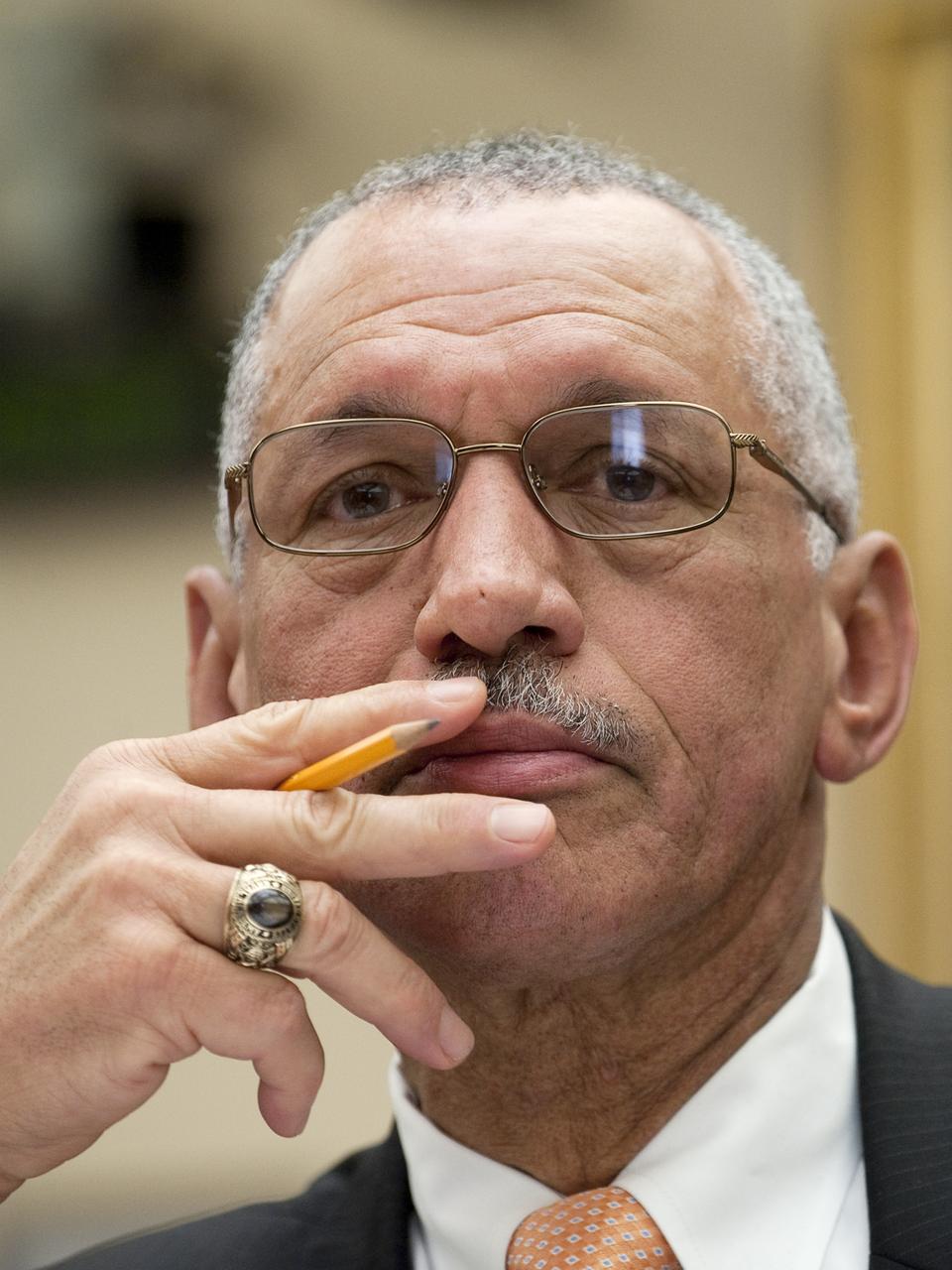
NASA Administrator Charles F. Bolden appears in front of the U.S. House of Representatives Committee on Science and Technology to discuss the President’s FY 2011 budget request, Thursday, Feb. 25, 2010, on Capitol Hill in Washington. Photo Credit: (NASA/Paul E. Alers)
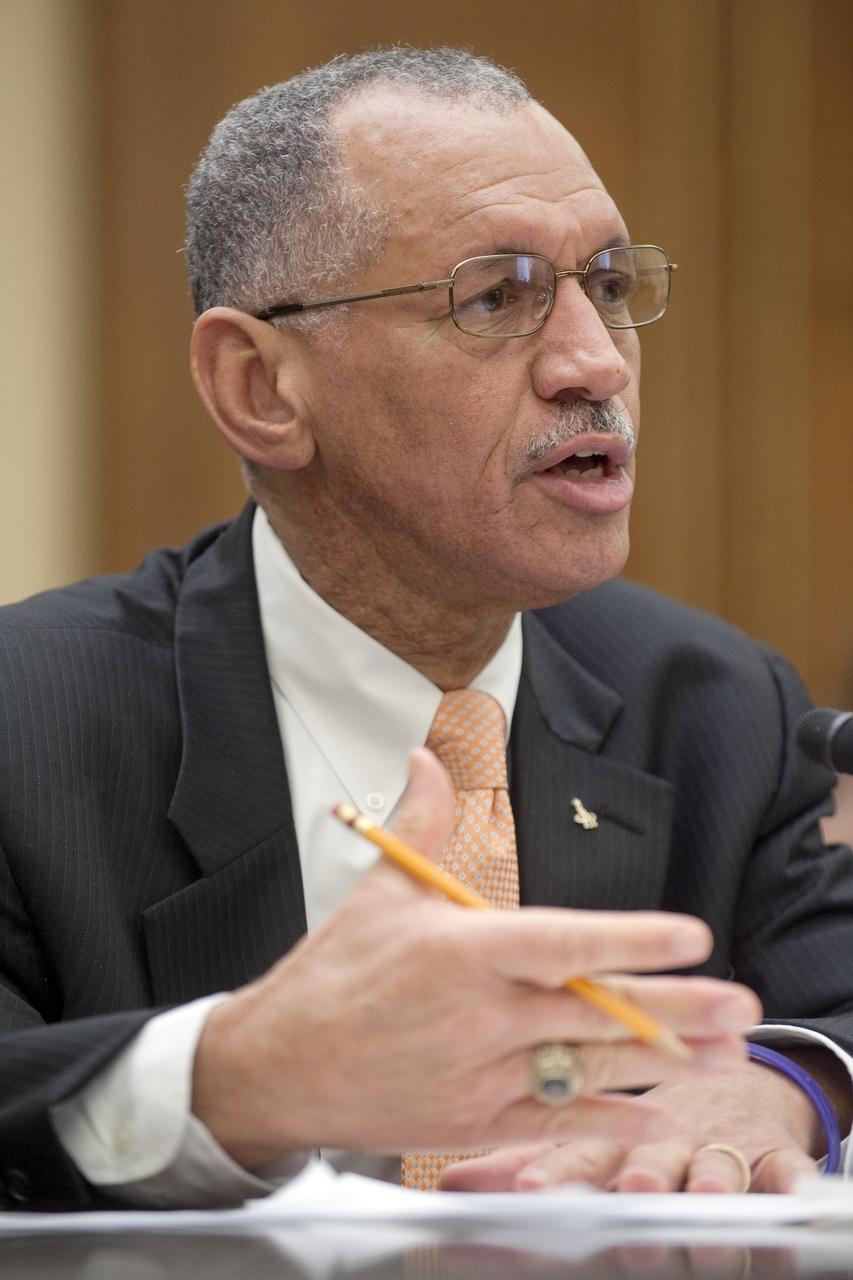
NASA Administrator Charles F. Bolden appears in front of the U.S. House of Representatives Committee on Science and Technology to discuss the President’s FY 2011 budget request, Thursday, Feb. 25, 2010, on Capitol Hill in Washington. Photo Credit: (NASA/Paul E. Alers)
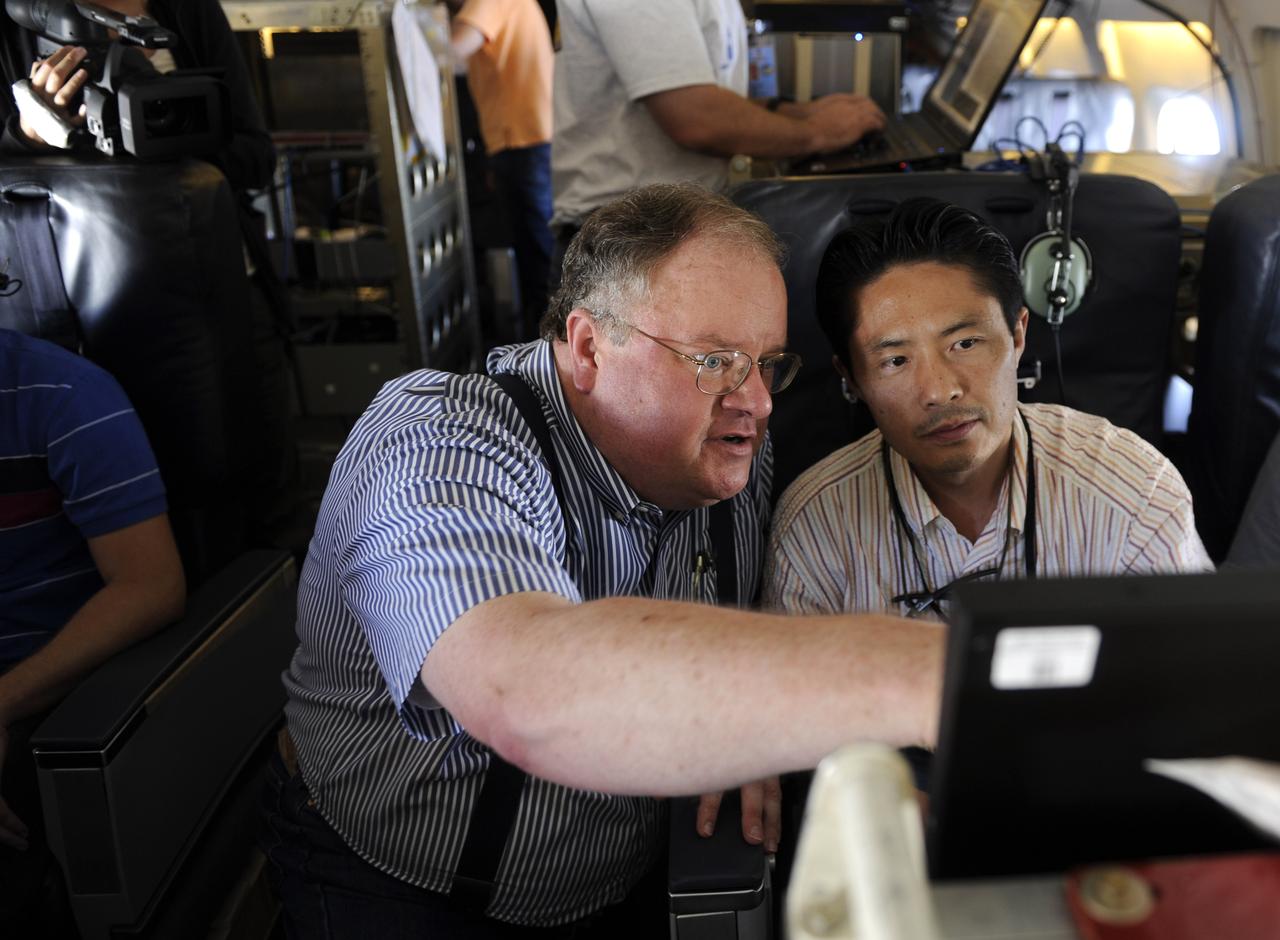
Michael Kavaya, of the NASA Langley Research Center, a Principal Investigator for the DAWN experiment, looks over data with Jeffrey Beyon during a flight of the NASA DC-8, Tuesday, Aug. 17, 2010, in the Gulf of Mexico. The DAWN experiment, also known as the Doppler Aerosol Wind Lidar, is one of many experiments supporting the Genesis and Rapid Intensification Processes (GRIP) experiment, a NASA Earth science field experiment in 2010 that is being conducted to better understand how tropical storms form and develop into major hurricanes. Photo Credit: (NASA/Paul E. Alers)
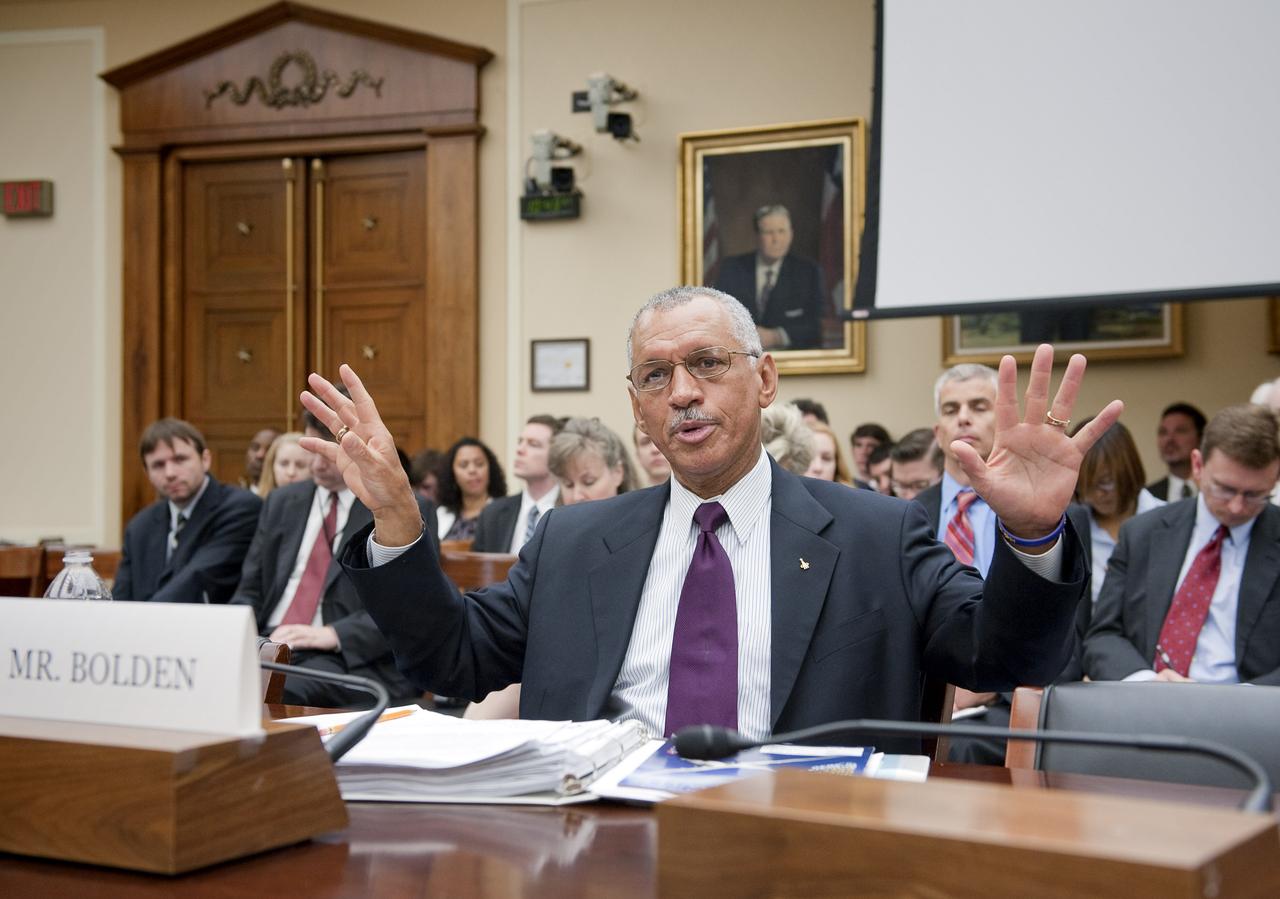
NASA Administrator Charles Bolden testifies during a hearing before the House Science and Technology Committee, Tuesday, May 26, 2010, at the Rayburn House office building on Capitol Hill in Washington. The hearing was to review proposed human spaceflight plan by NASA. Photo Credit: (NASA/Paul E. Alers)
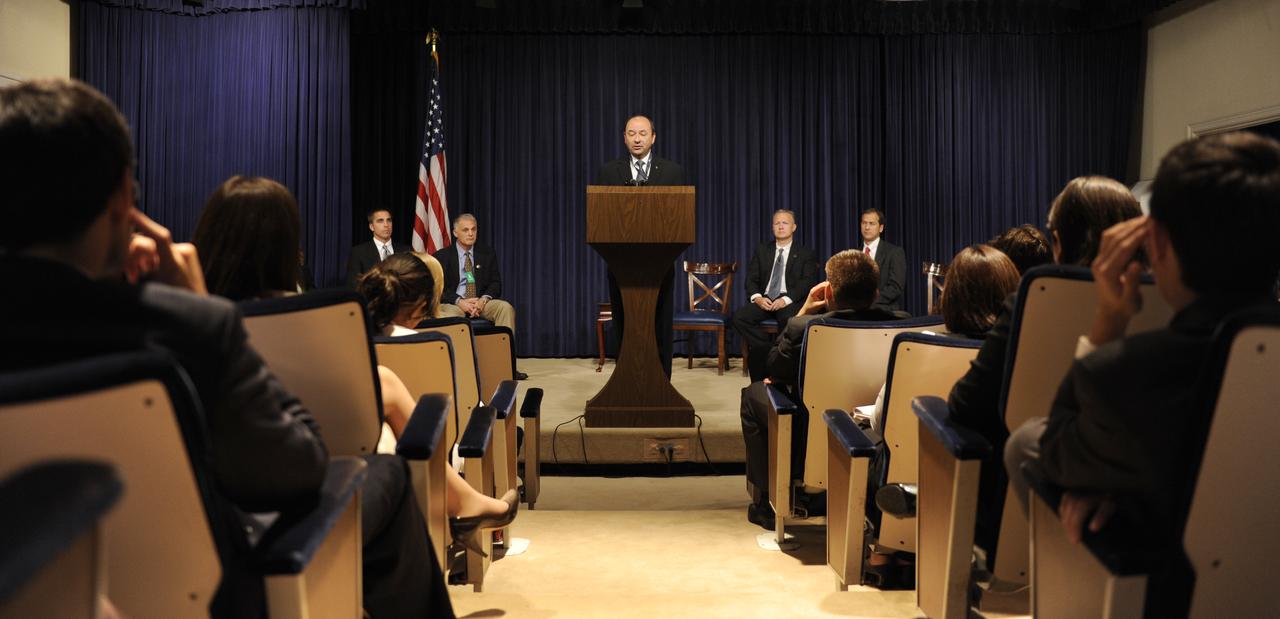
STS-127 Commander Mark Polansky, at podium, speaks to White House interns at the Eisenhower Executiive Office Building in Washington, Thursday, Sept. 24, 2009. Seated from left are crew members Christopher Cassidy, David Wolf, Douglas Hurley and Thomas Marshburn. Photo Credit: (NASA/Paul E. Alers)
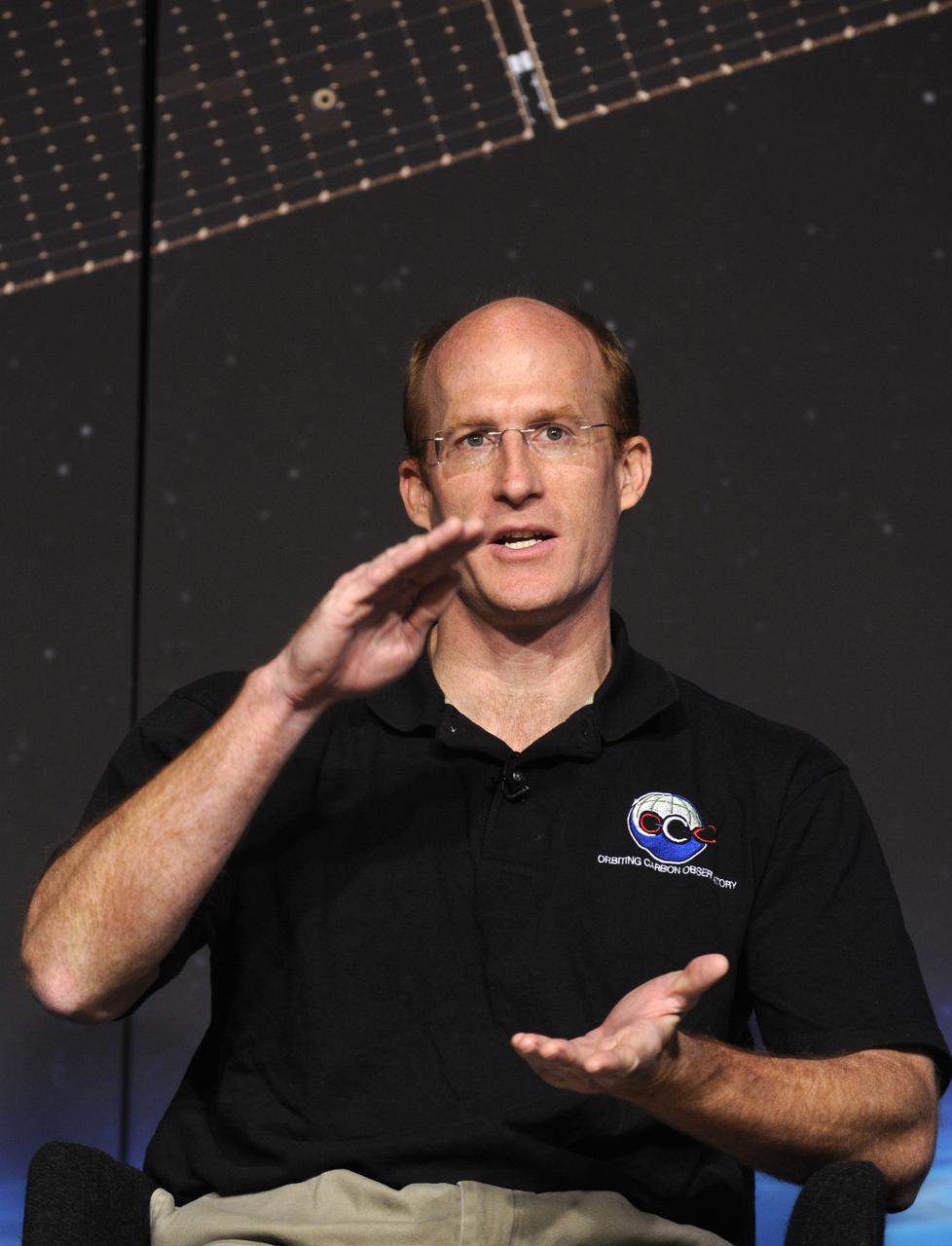
Charles Miller talks during a media briefing to discuss the upcoming Orbiting Carbon Observatory mission, the first NASA spacecraft dedicated to studying carbon dioxide, Thursday, Jan. 29, 2009, at NASA Headquarters in Washington. Photo Credit: (NASA/Paul E. Alers)
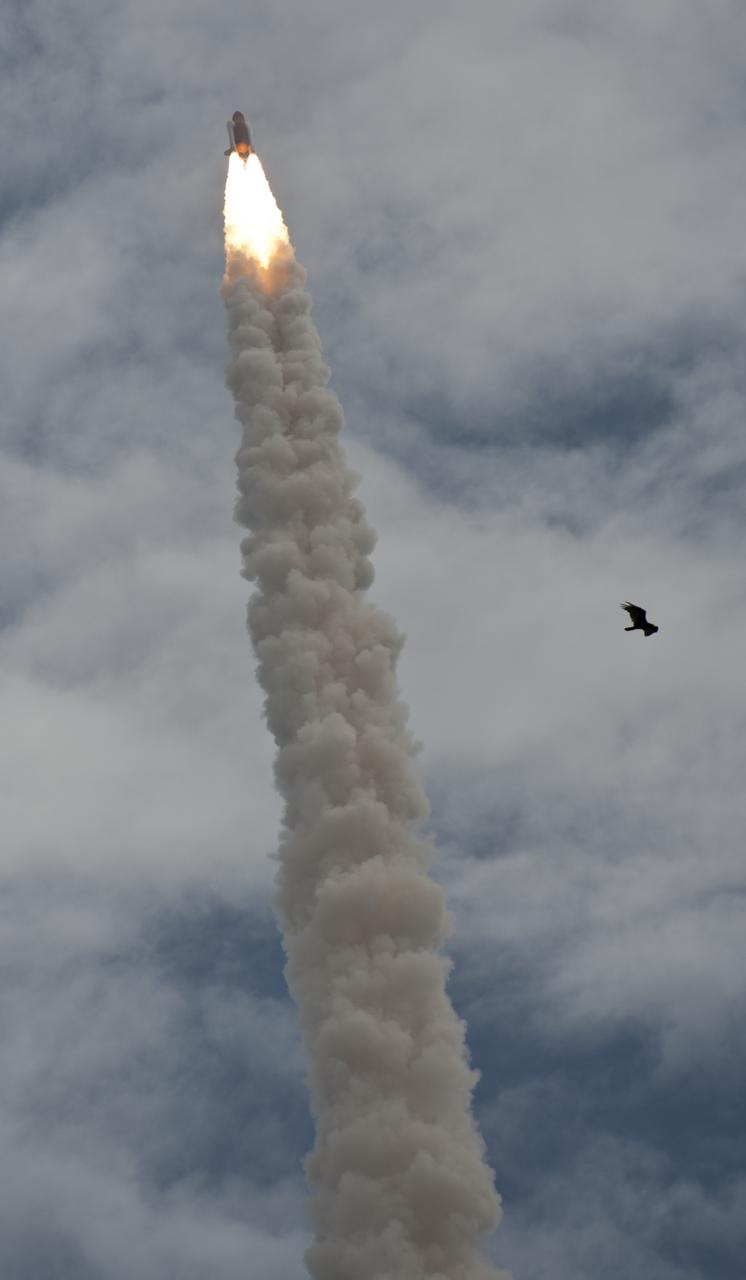
Space shuttle Atlantis, STS-135, launches skyward on a 12-day mission to the International Space Station (ISS), Friday, July 8, 2011, at NASA's Kennedy Space Center in Cape Canaveral, Fla. The launch of Atlantis is the final flight of the shuttle program and will carry the Raffaello multipurpose logistics module containing supplies and spare parts for the space station. Photo Credit: (NASA/Paul E. Alers)
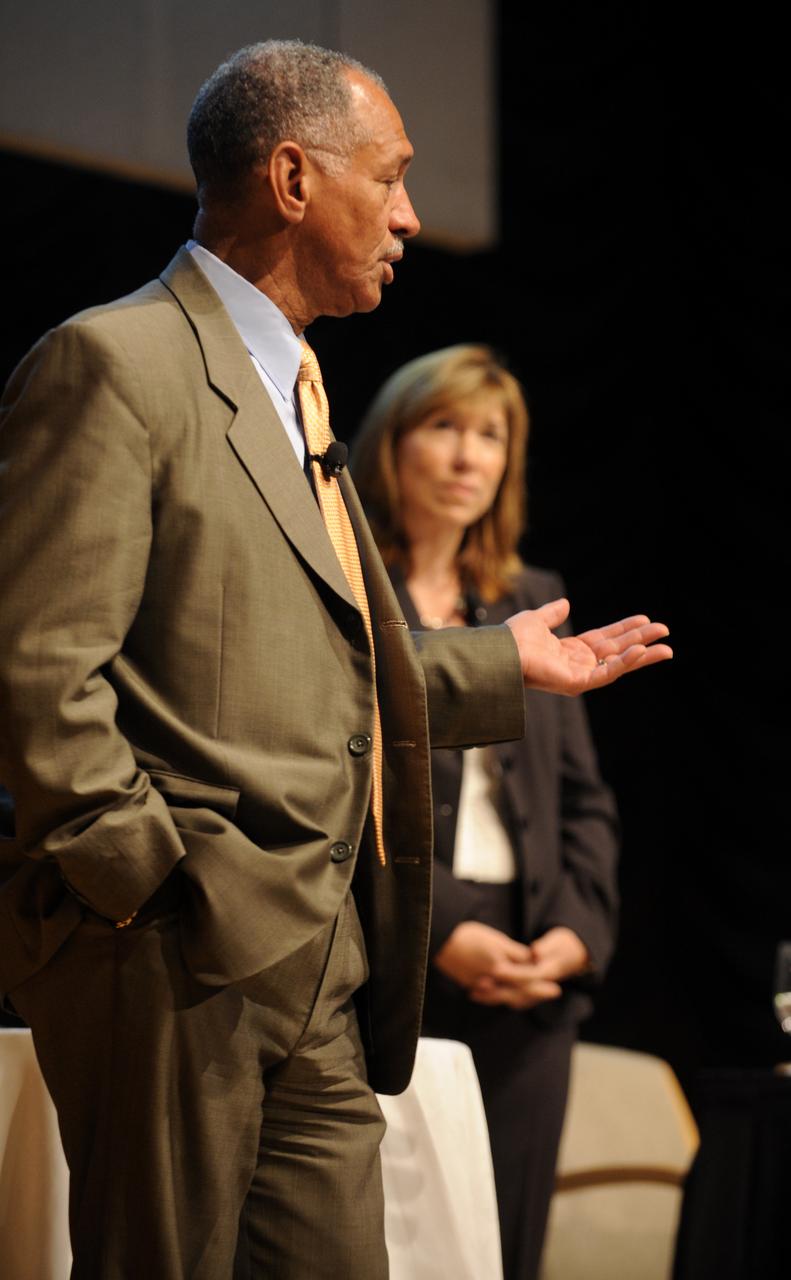
NASA Administrator Charles Boldenl left, speaks as Deputy Administrator Lori Garver looks on at the 2009 NASA Executive Summit, Tuesday, Oct. 6, 2009, at the Ronald Reagan Building in Washington. (Photo Credit: (NASA/Paul E. Alers)
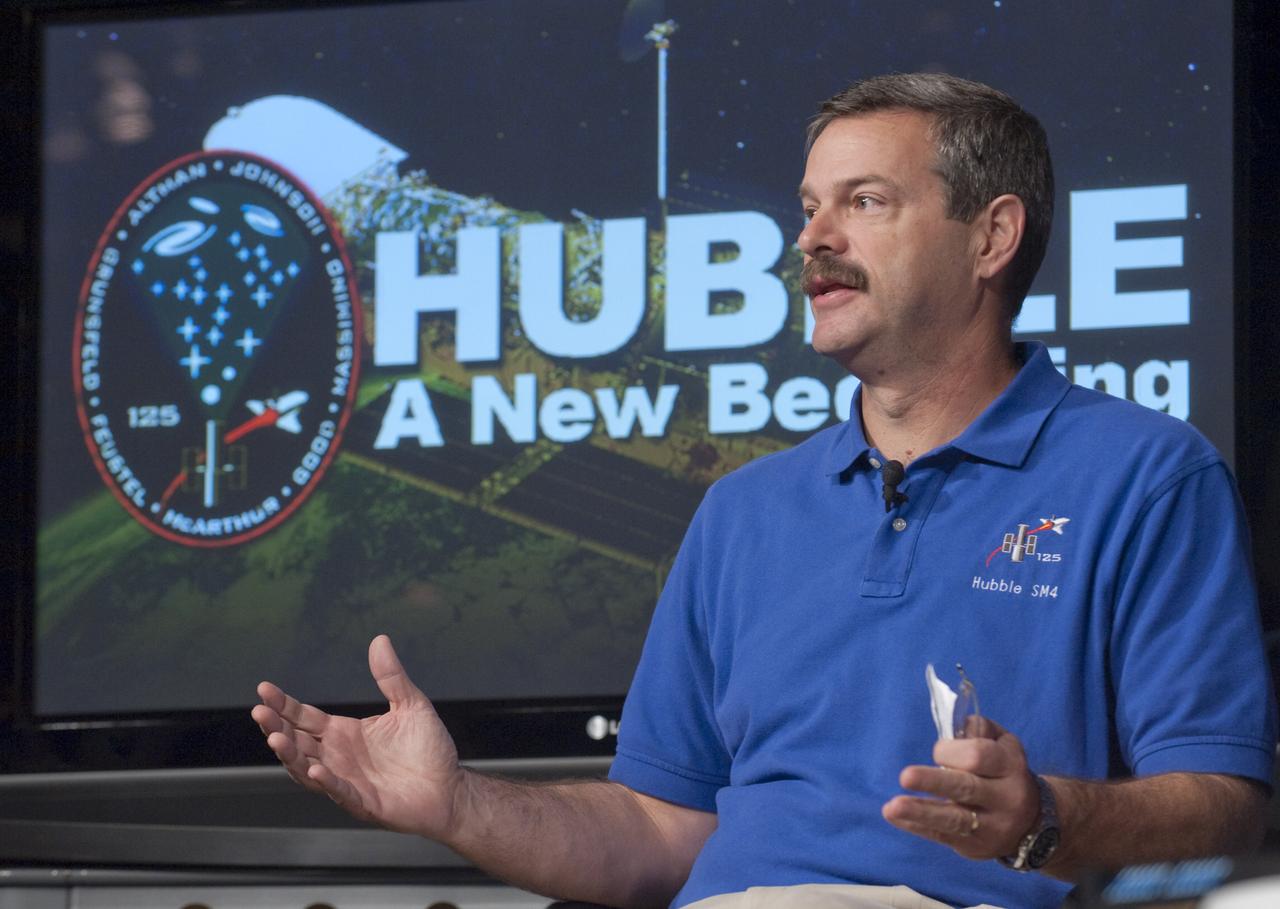
Scott Altman, who commanded the STS-125 mission to the Hubble Space Telescope, speaks during a press conference, Wednesday, Sept. 9, 2009, after astronomers declared the telescope a fully rejuvenated observatory with the release Wednesday of observations from four of its six operating science instruments at NASA Headquarters in Washington. Photo Credit: (NASA/Paul E. Alers)
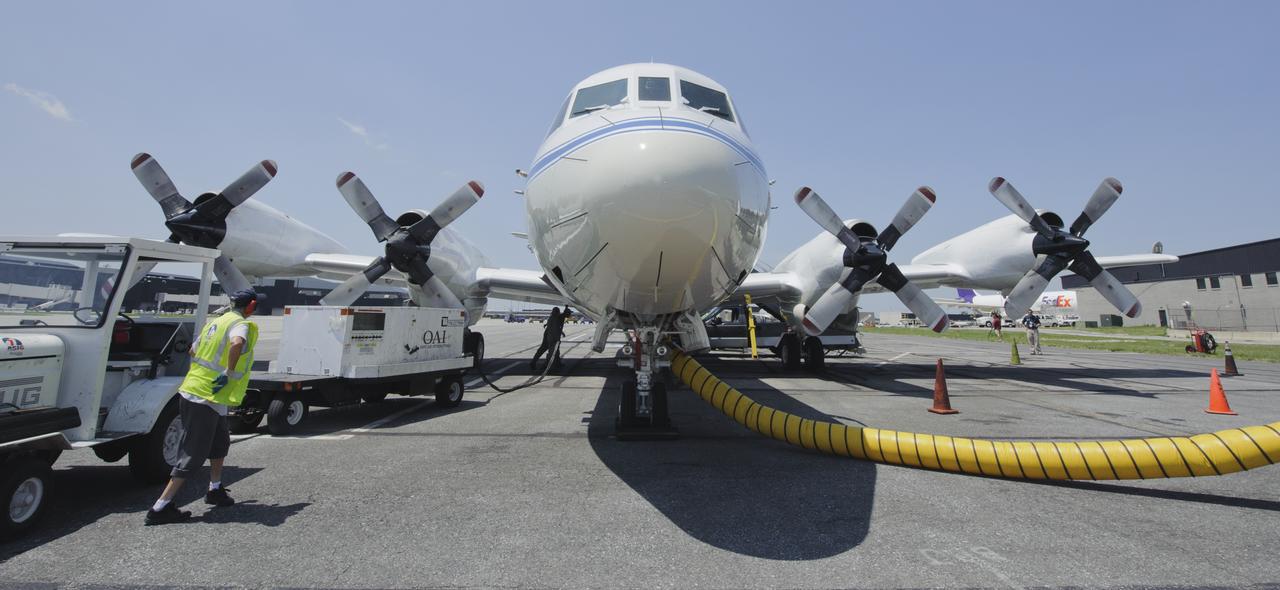
A 117-foot P-3B NASA research aircraft is seen on the tarmac at Baltimore/Washington International Thurgood Marshall Airport, Tuesday, June 28, 2011, in Baltimore, Md. The aircraft is part of a month-long field campaign designed to improve satellite measurements of air pollution. The name of the experiment -- Deriving Information on Surface conditions from Column and Vertically Resolved Observations Relevant to Air Quality (DISCOVER -- AQ) -- is a mouthful, but its purpose is simple. Come July, the aircraft will be flying spirals over six ground stations in Maryland. Photo Credit: (NASA/Paul E. Alers)
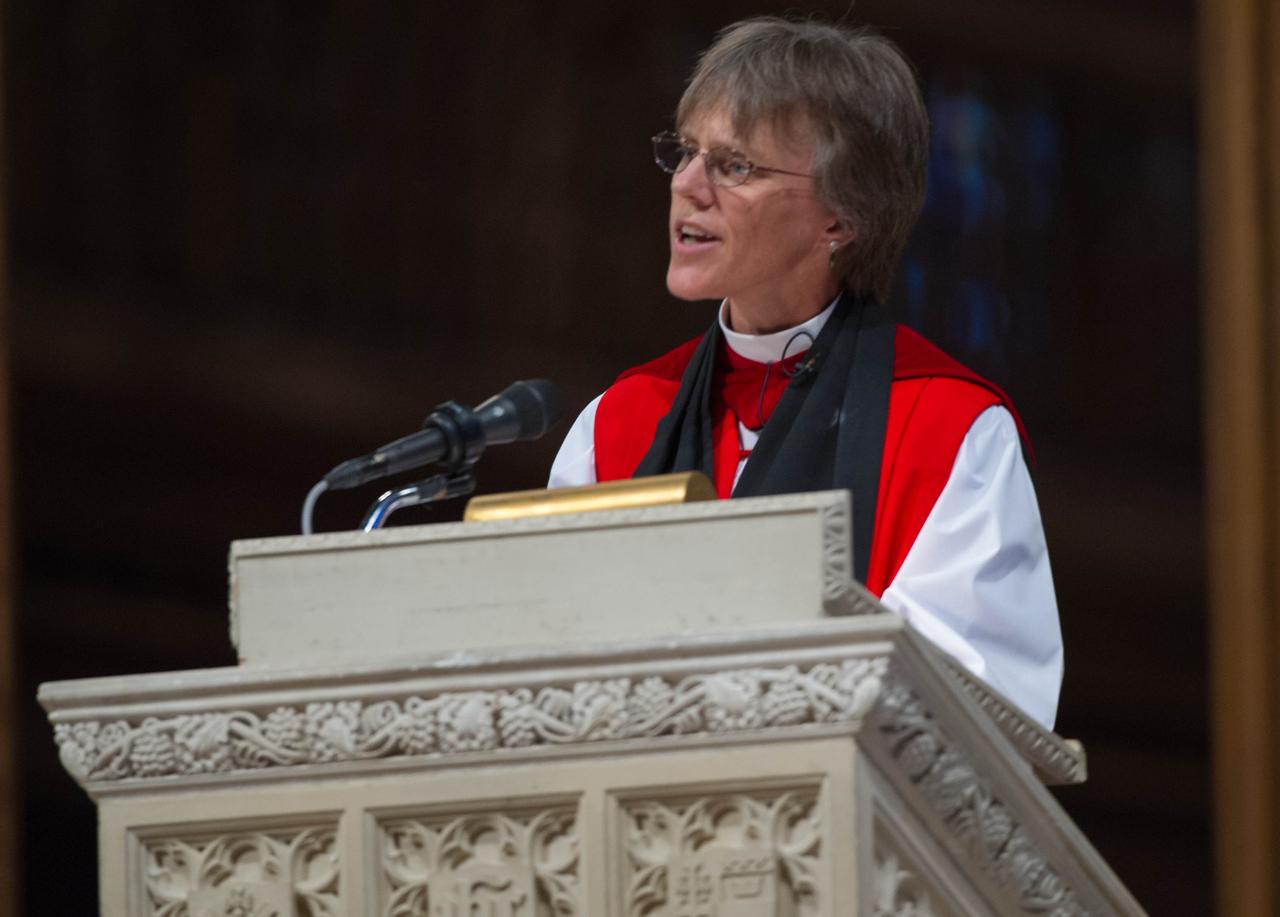
The Right Rev. Mariann Edgar Budde, bishop of Washington, delivers the Homily during a memorial service celebrating the life of Neil Armstrong at the Washington National Cathedral, Thursday, Sept. 13, 2012. Armstrong, the first man to walk on the moon during the 1969 Apollo 11 mission, died Saturday, Aug. 25. He was 82. Photo Credit:(NASA/Paul E. Alers)
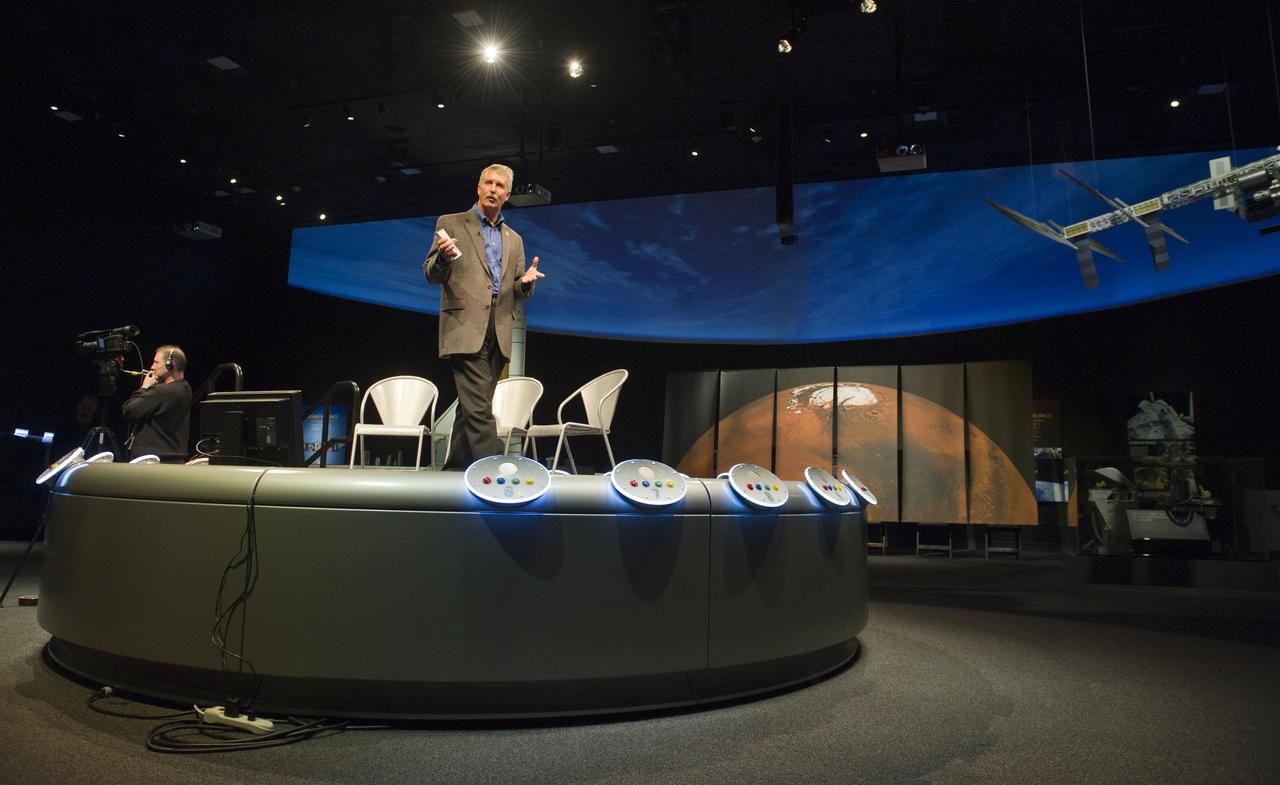
Doug McCuiston, Director, Mars Exploration Program, talks during a Mars Program Update where prominent scientists discussed evidence of water on Mars, current Program status, including the 7th Anniversary of the Mars rovers and the upcoming Mars Science Laboratory mission and previewing exciting discoveries to come, Thursday, Jan. 13, 2011, at the Smithsonian National Air and Space Museum in Washington. Photo Credit: (NASA/Paul E. Alers)
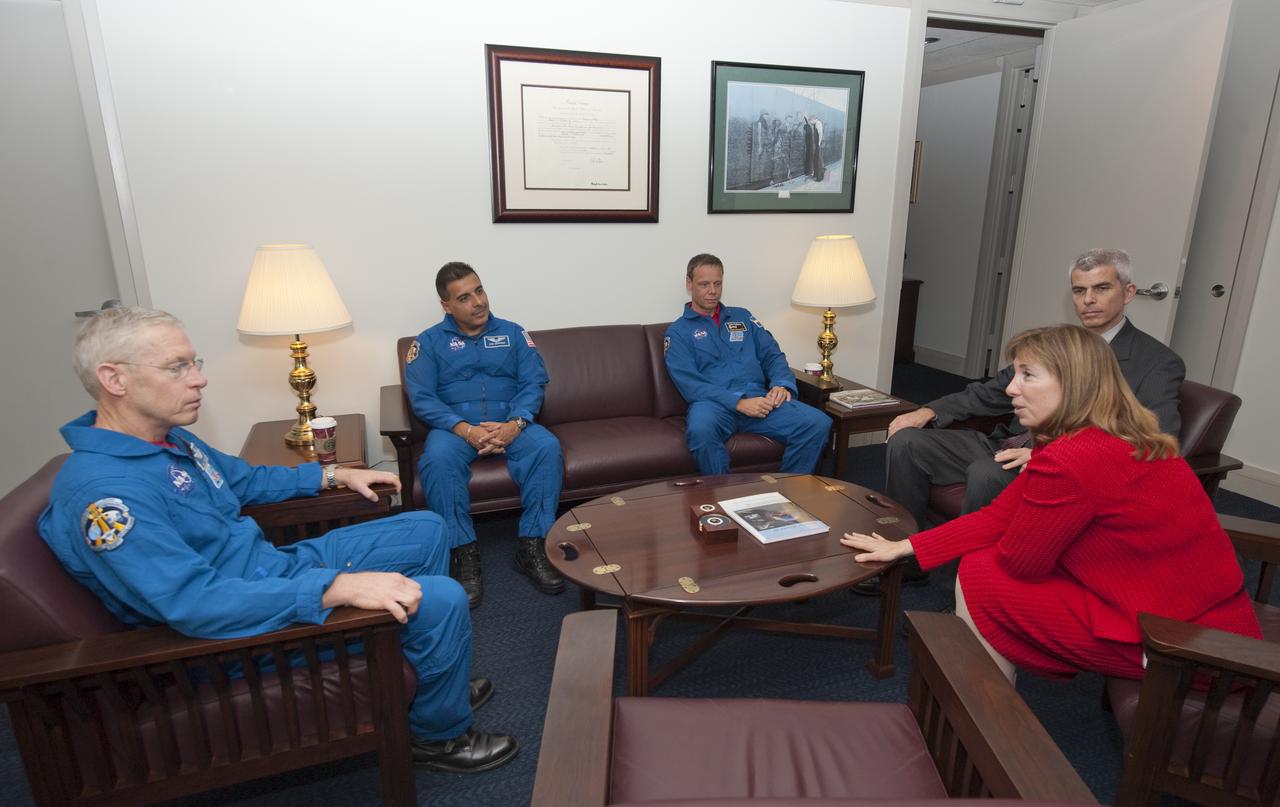
NASA Deputy Administrator Lori Garver, right, along with Assistant Administrator for Legislative and Intergovernmental Affairs L. Seth Statler, meets with STS-128 astronauts Patrick Forrester, left, Jose Hernandez and Christer Fugelsang, of the European Space Agency, at NASA Headquarters, Tuesday, Nov. 3, 2009, in Washington. Photo Credit: (NASA/Paul E. Alers)
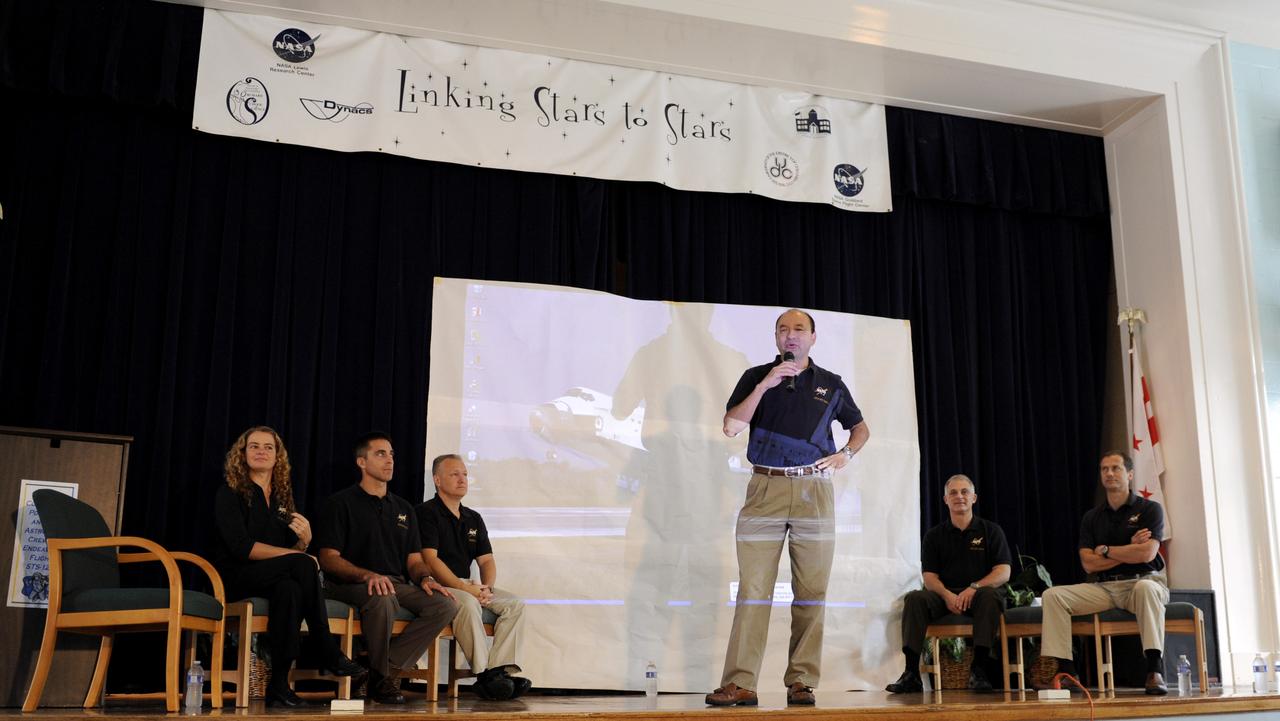
STS-127 Commander Mark Polansky, center, speaks to students during a visit to Anne Beers Elementary school, Thursday, Sept. 24, 2009, in Washington. Polansky, along with the rest of the crew from STS-127, visited with students at the school Thursday. Seated from left are Canadian Space Agency astronaut Julie Payette, Chris Cassidy, Doug Hurley, David Wolf and Tom Marshburn. Photo Credit: (NASA/Paul E. Alers)
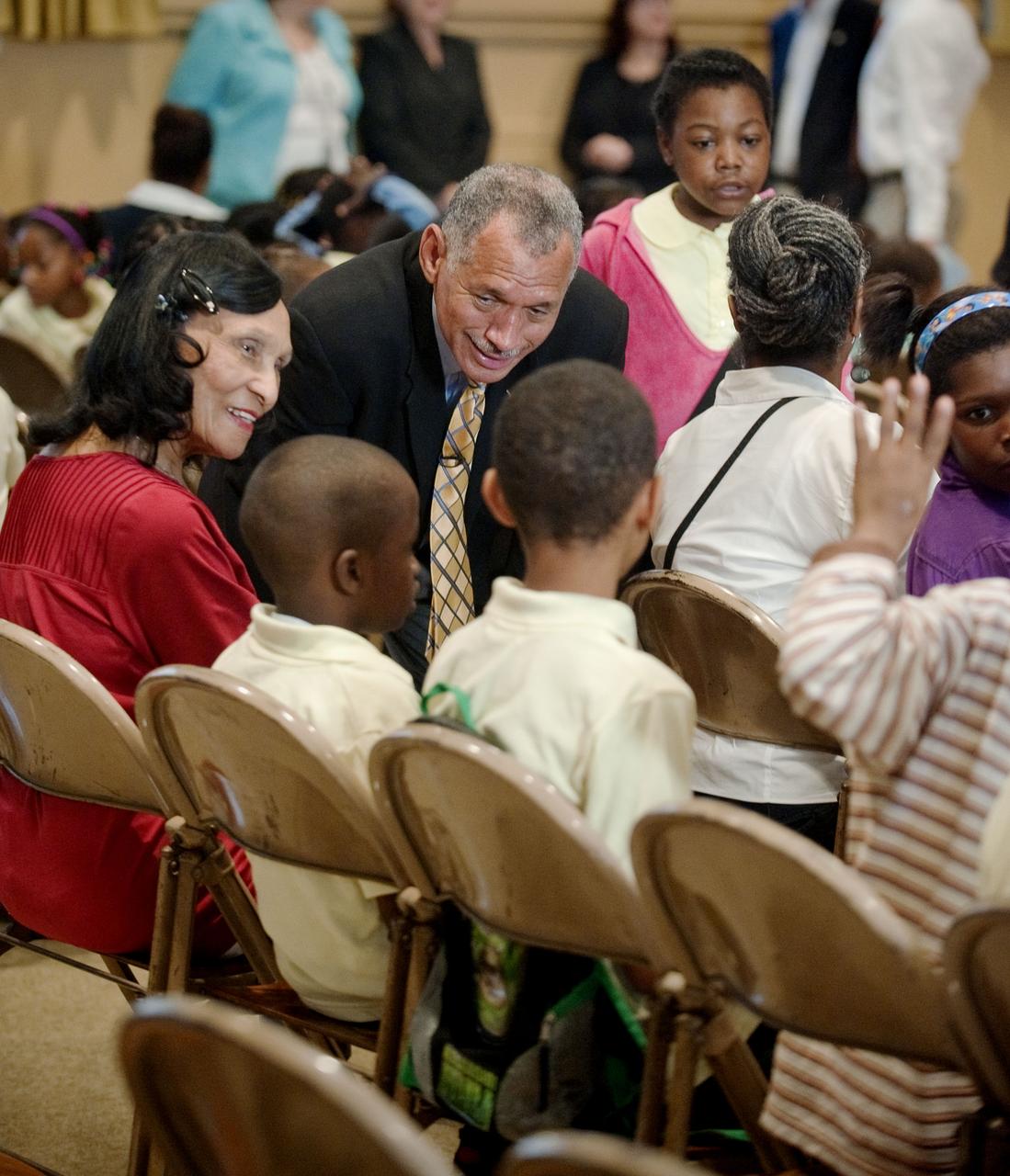
NASA Administrator Charles F. Bolden speaks to students during a visit to Davis Elementary School, Friday, Sept. 11, 2009, in Washington. Bolden spent time with approximately 120 students in third, fourth and fifth grade talking about science, technology, mathematics and engineering as part of the National Day of Service and Remembrance. Photo Credit: (NASA/Paul E. Alers)

Retired Marine Corps Gen. Anthony Zinni, Chairman of the Board at BAE Systems, speaks to those gathered at the 2009 NASA Executive Summit, Tuesday, Oct. 6, 2009, at the Ronald Reagan Building in Washington. (Photo Credit: (NASA/Paul E. Alers)
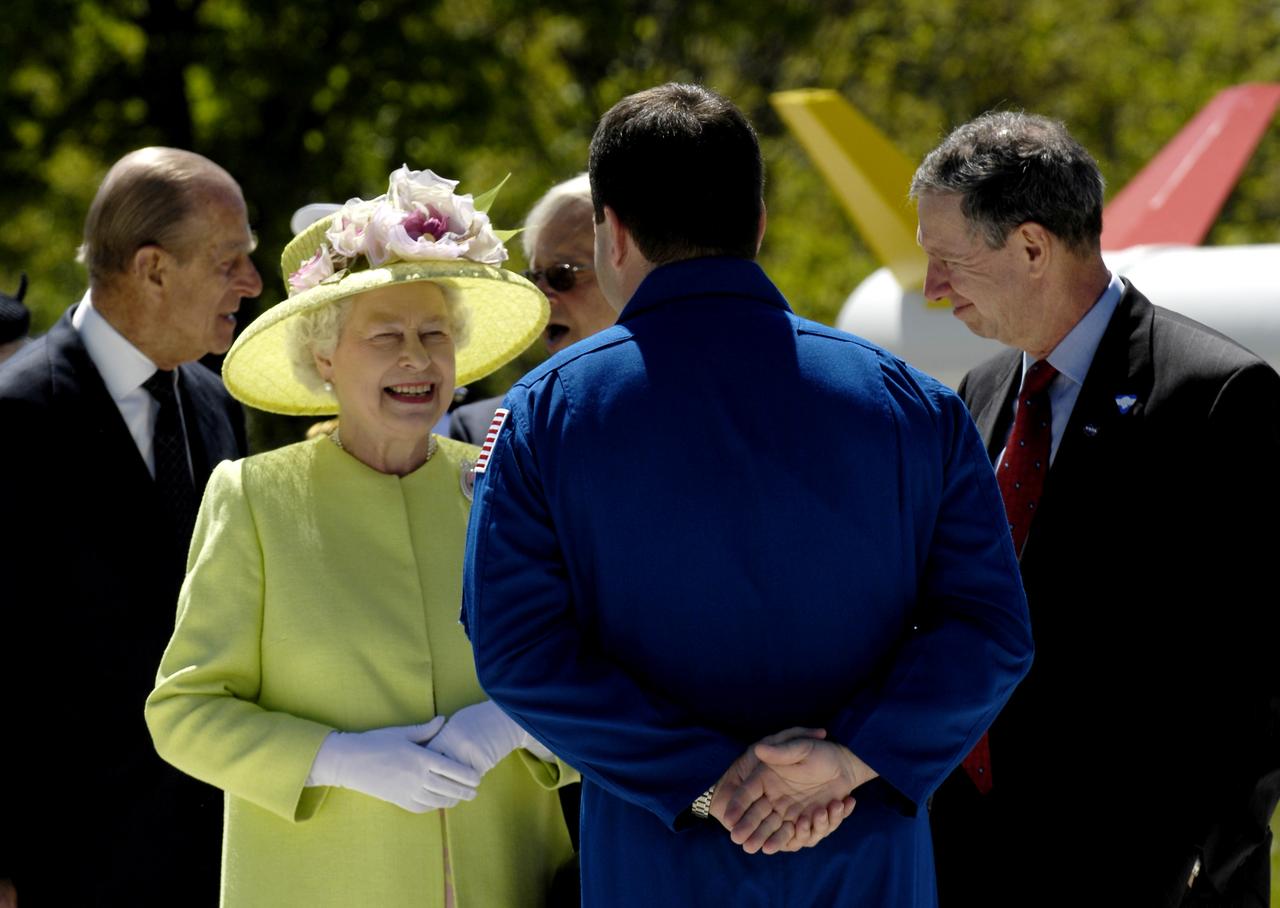
Queen Elizabeth II speaks with STS-116 astronaut Nicholas Patrick, back to camera, as NASA Administrator Michael Griffin, right, looks on at the NASA's Goddard Space Flight Center, Wednesday, May 8, 2007, in Greenbelt, Md. The Royal couple's appearance was one of the last stops on a six-day visit to the United States. Photo Credit (NASA/Paul E. Alers)

Steven Benner, a distinguished fellow at the Foundation for Applied Molecular Evolution, speaks during a press conference, Thursday, Dec. 2, 2010, at NASA Headquarters in Washington. NASA-funded astrobiology research has changed the fundamental knowledge about what comprises all known life on Earth. Researchers conducting tests in the harsh environment of Mono Lake in California have discovered the first known microorganism on Earth able to thrive and reproduce using the toxic chemical arsenic. Photo Credit: (NASA/Paul E. Alers)
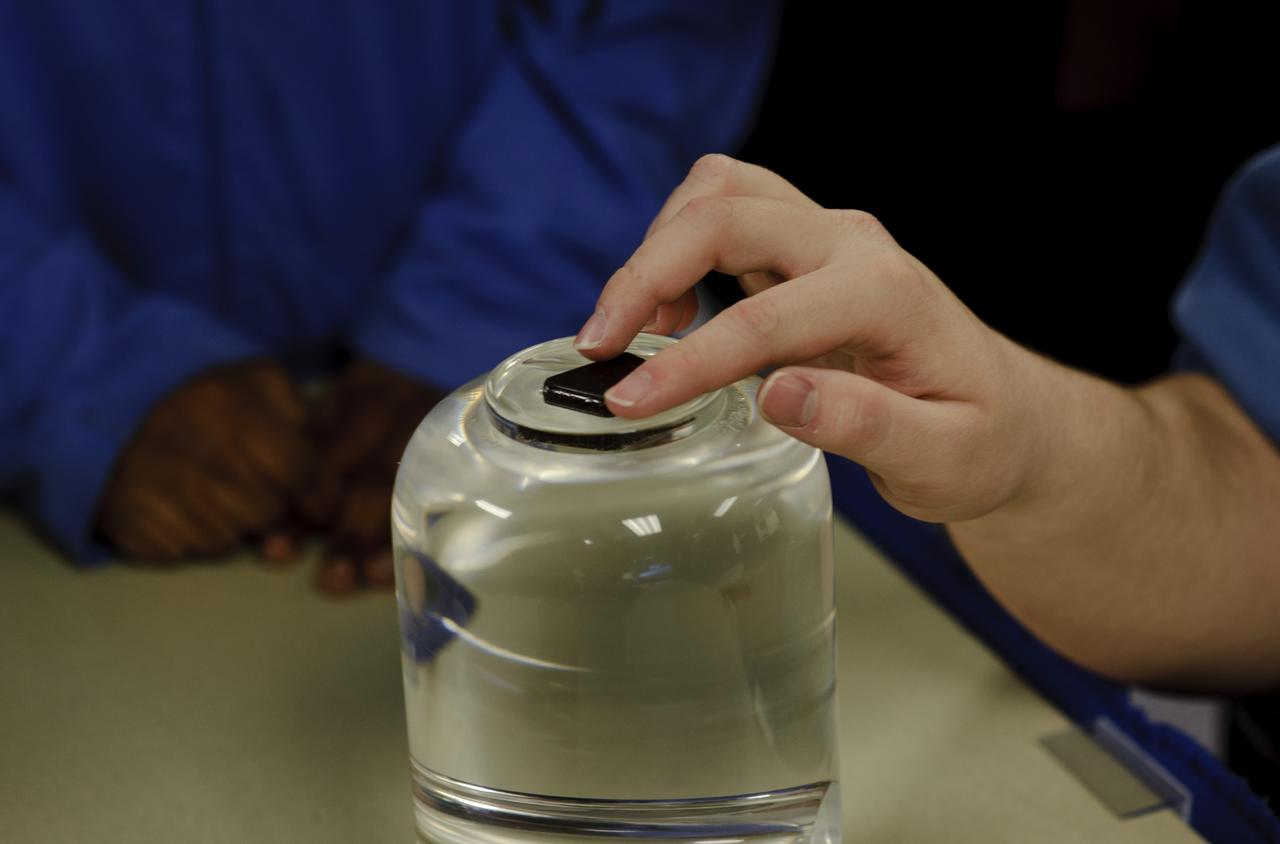
A student from the Maryland School For the Blind touches a piece of moon rock while learning about Meteorites, Asteroids and Comets during NASA's Disability Mentoring Day, Thursday, April 7, 2011, at NASA Headquarters in Washignton. Photo Credit: (NASA/Paul E. Alers)
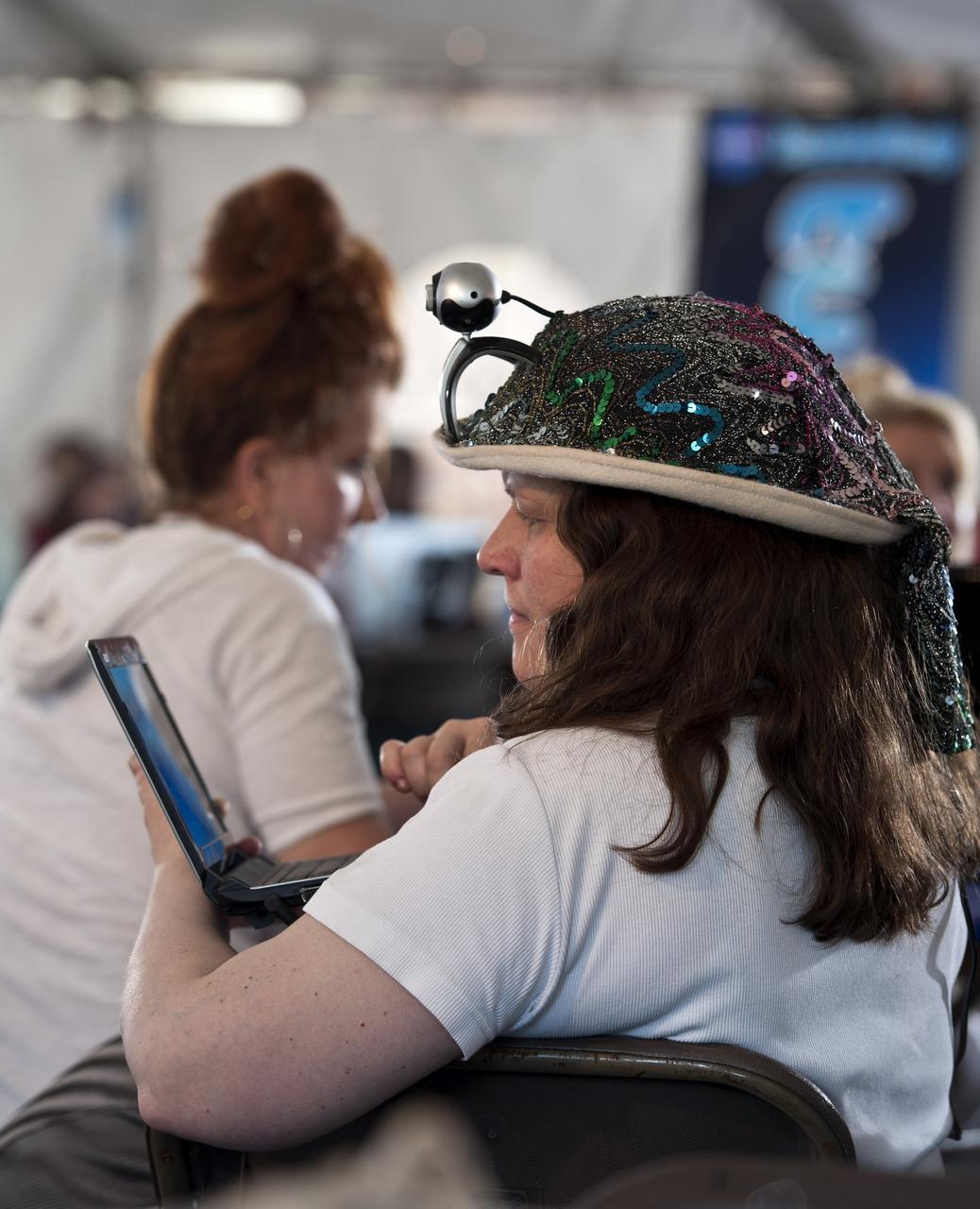
Heather Good, Twitter handle @foundonmars, tweets during the STS-134 Tweetup, Thursday, April 28, 2011, at Kennedy Space Center in Cape Canaveral, Fla. About 150 NASA Twitter followers attended the event. Photo Credit: (NASA/Paul E. Alers)
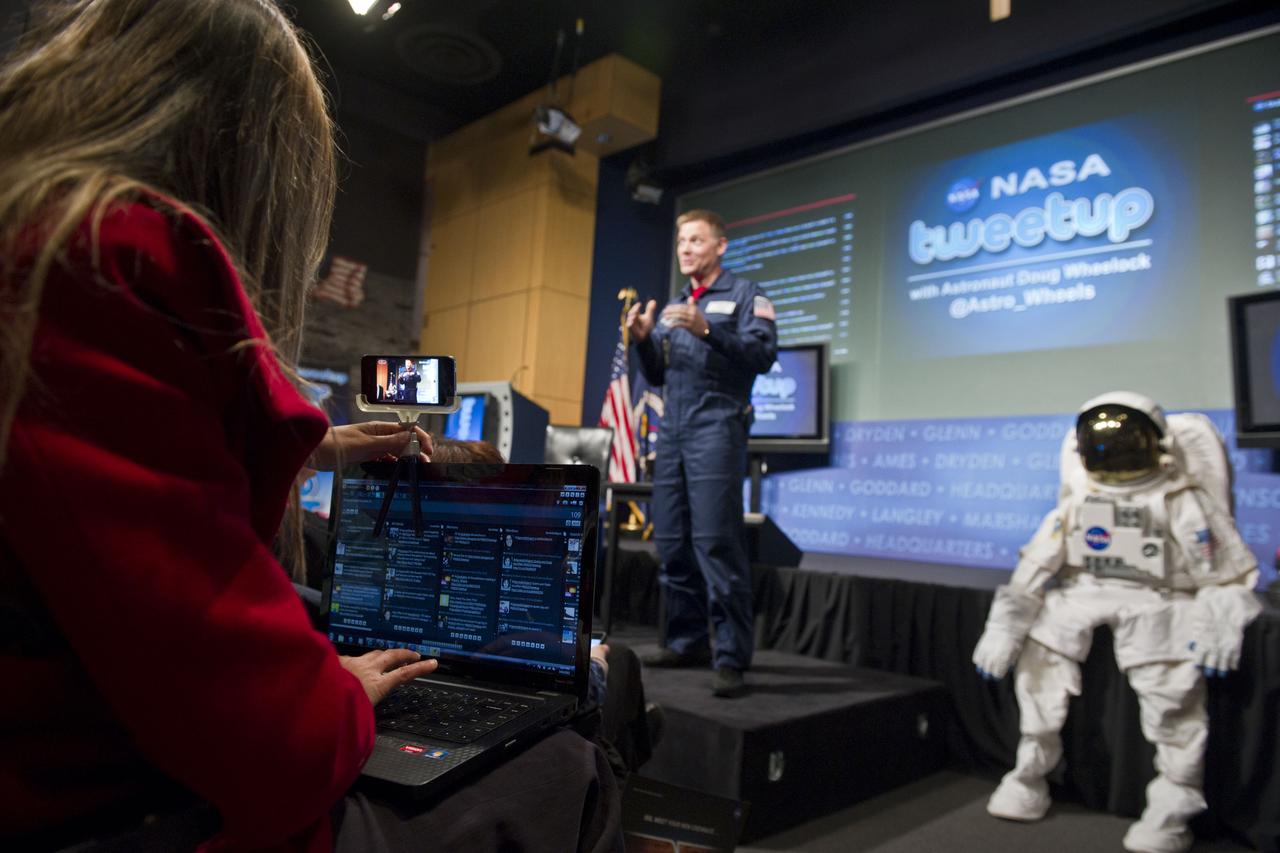
A tweetuup participant videotapes with her iPhone and tweets as astronaut Doug Wheelock discusses his experiences while living on the International Space Station during a tweetup at NASA Headquarters in Washington, Wednesday, March 16, 2011. Wheelock, who has accumulated a total of 178 days in space, assumed command of the International Space Station and the Expedition 25 crew. During Expedition 25, there were more than 120 microgravity experiments in human research; biology and biotechnology; physical and materials sciences; technology development; and Earth and space sciences. Wheelock also responded to an emergency shutdown of half of the station's external cooling system and supported three unplanned spacewalks to replace the faulty pump module that caused the shutdown. His efforts restored the station's critical cooling system to full function. The mission duration was 163 days. Photo Credit: (NASA/Paul E. Alers)
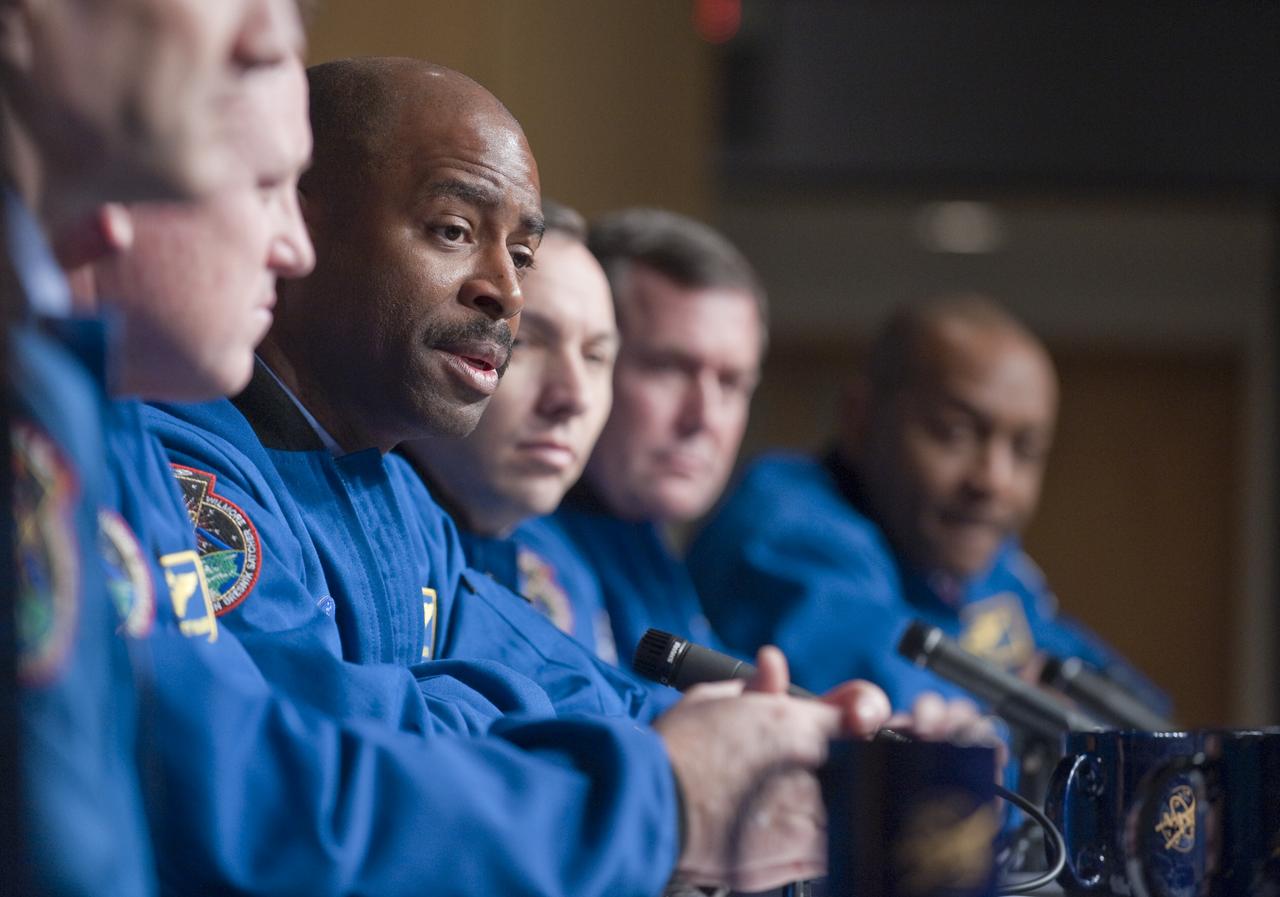
STS-129 Mission Specialist Leland Melvin, answers a question as fellow crew members look on, Monday, Jan. 11, 2010, during a presentation to staff and middle school students from the Congressional Schools of Virginia at NASA Headquarters in Washington. Photo Credit: (NASA/Paul E. Alers)
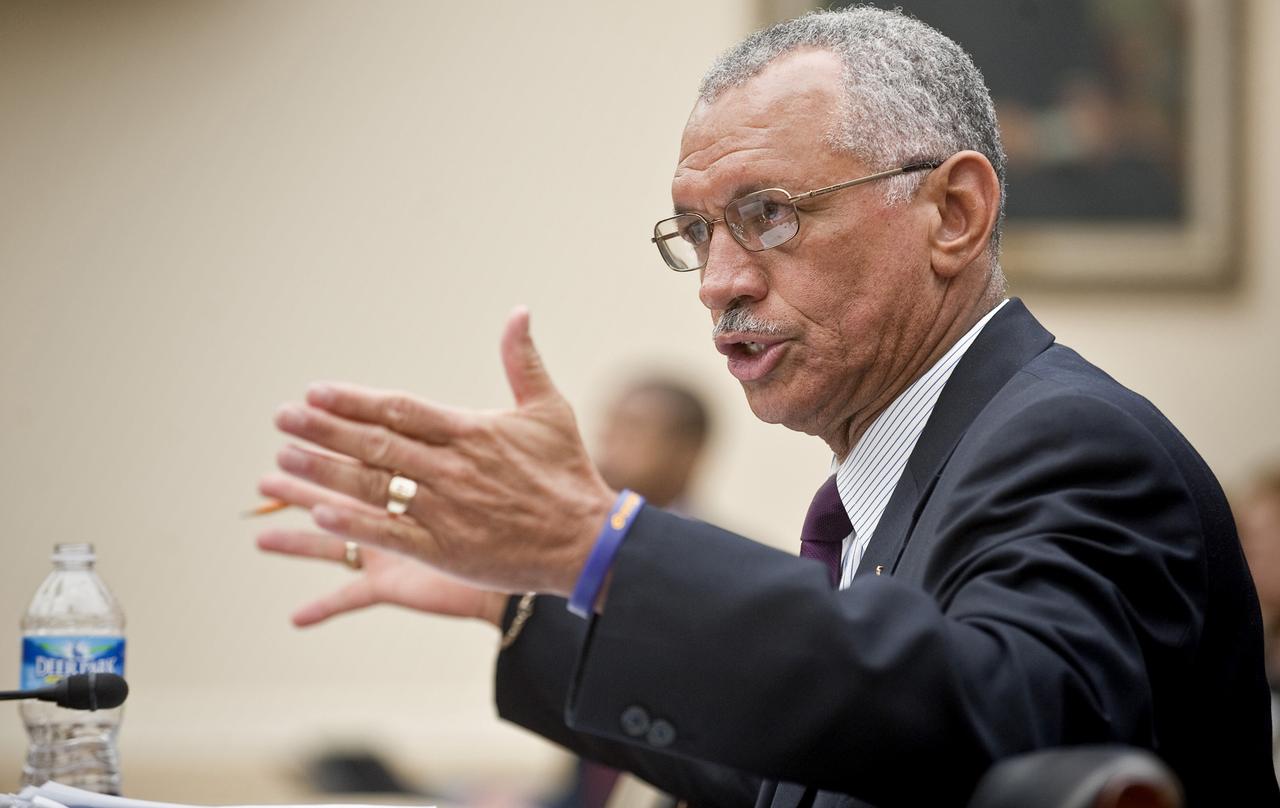
NASA Administrator Charles Bolden makes a point as he testifies during a hearing before the House Science and Technology Committee, Tuesday, May 26, 2010, at the Rayburn House office building on Capitol Hill in Washington. The hearing was to review proposed human spaceflight plan by NASA. Photo Credit: (NASA/Paul E. Alers)
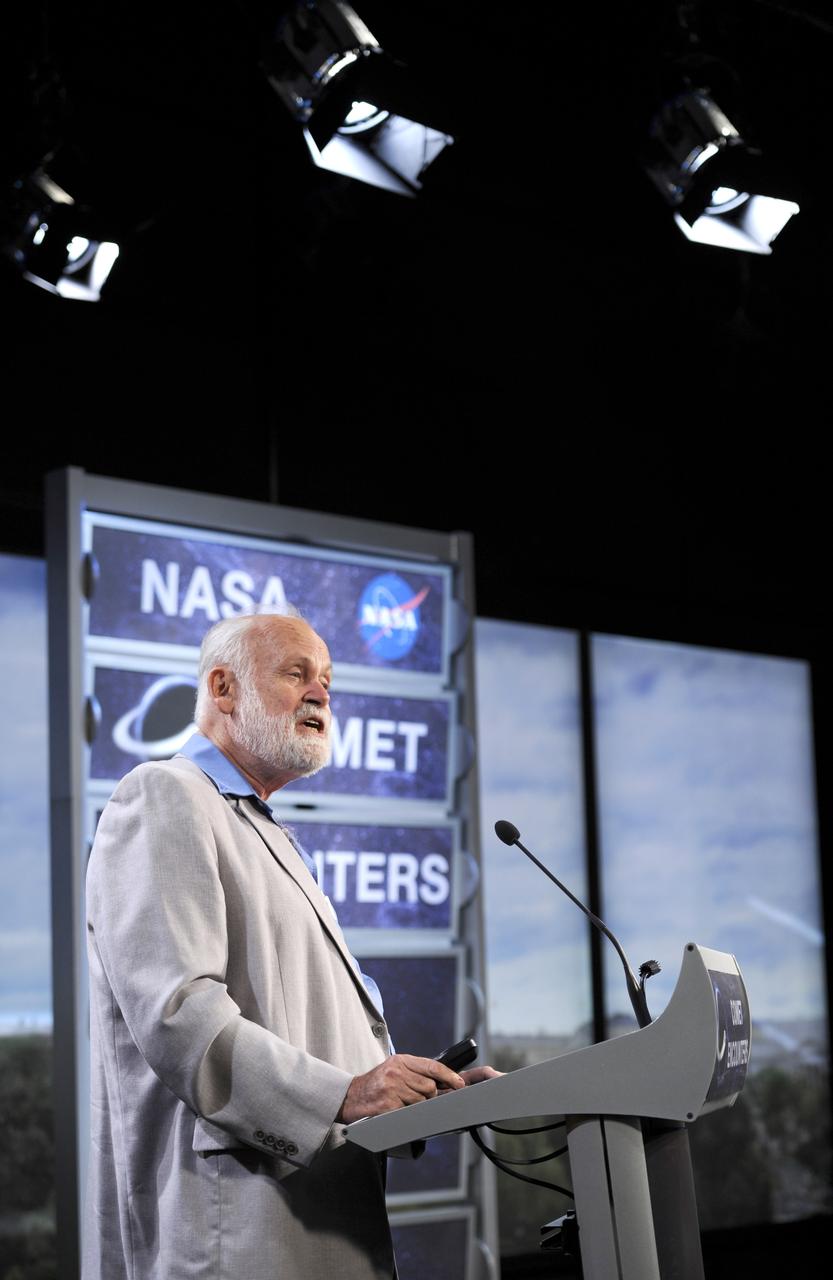
Dr. Michael A'Hearn, Principal Investigator, EPOXI Comet Encounter Mission, speaks during a symposium commemorating a quarter-century of comet discoveries, Friday, Sept. 10, 2010, in the Knight studio at the Newseum in Washington. The International Sun-Earth Explorer-3 (ISEE-3) spacecraft flew past the comet Giacobini-Zinner on Sept. 11, 1985 which established a foundation of discoveries that continue today. Photo Credit: (NASA/Paul E. Alers)
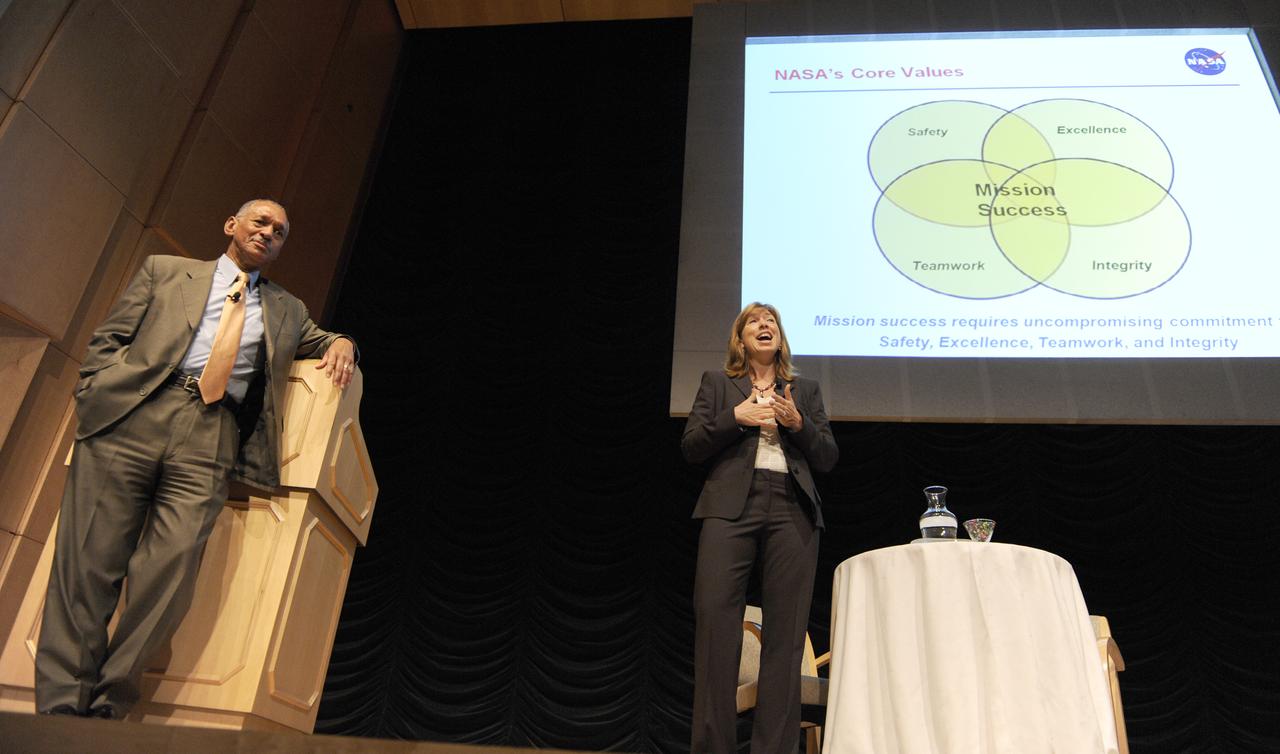
NASA Administrator Charles Bolden, left, listens as Deputy Administrator Lori Garver speaks to those gathered at the 2009 NASA Executive Summit, Tuesday, Oct. 6, 2009, at the Ronald Reagan Building in Washington. (Photo Credit: (NASA/Paul E. Alers)
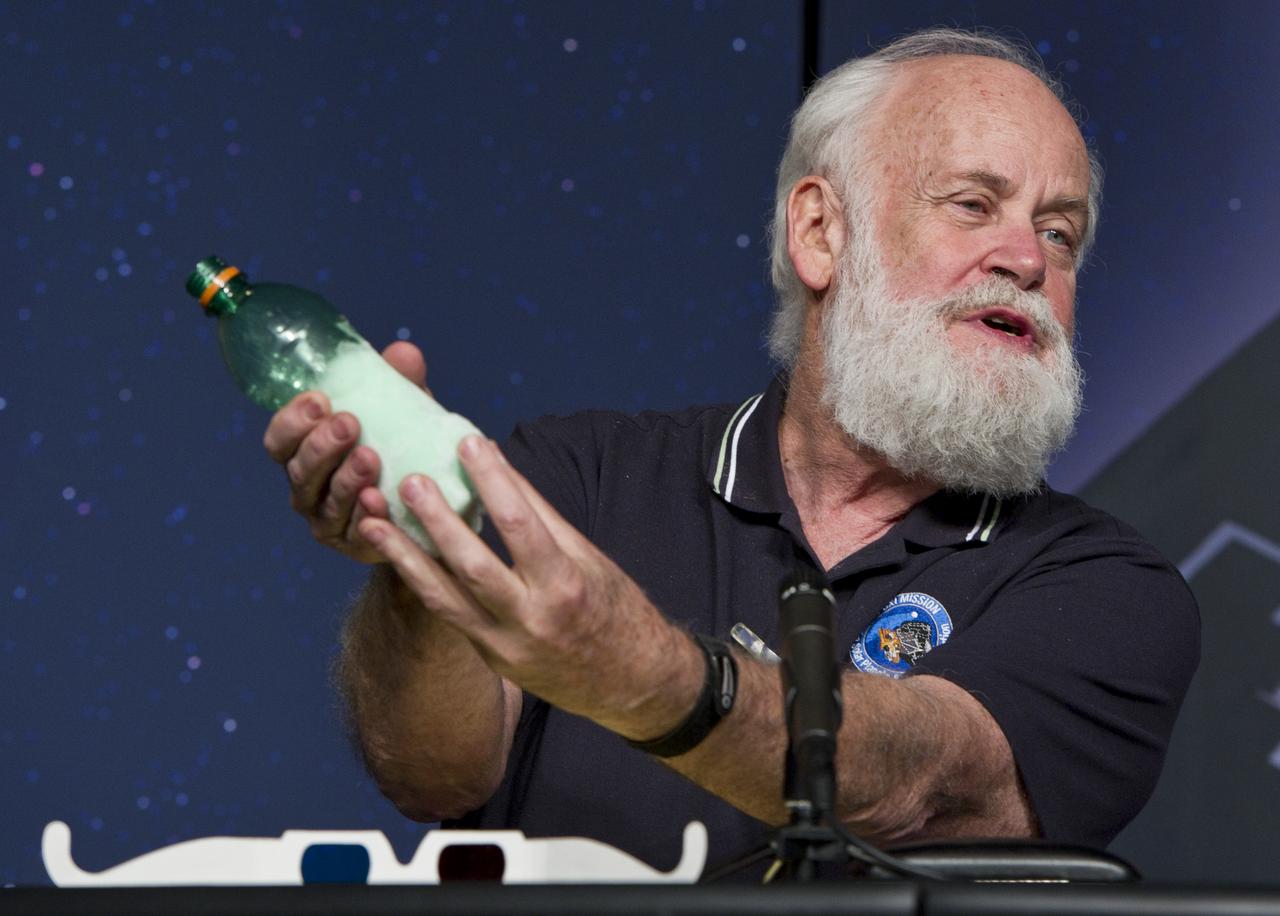
Michael A'Hearn, EPOXI Principal Investigator, University of Maryland, holds a plastic bottle containing ice to illustrate a point during a press conference, Thursday, Nov. 18, 2010, at NASA Headquarters in Washington. The press conference was held to discuss the Nov. 4 successful flyby of Comet Hartley 2 by NASA's EPOXI Mission Spacecraft. Images from the flyby provided scientists the most extensive observations of a comet in history. Photo Credit: (NASA/Paul E. Alers)
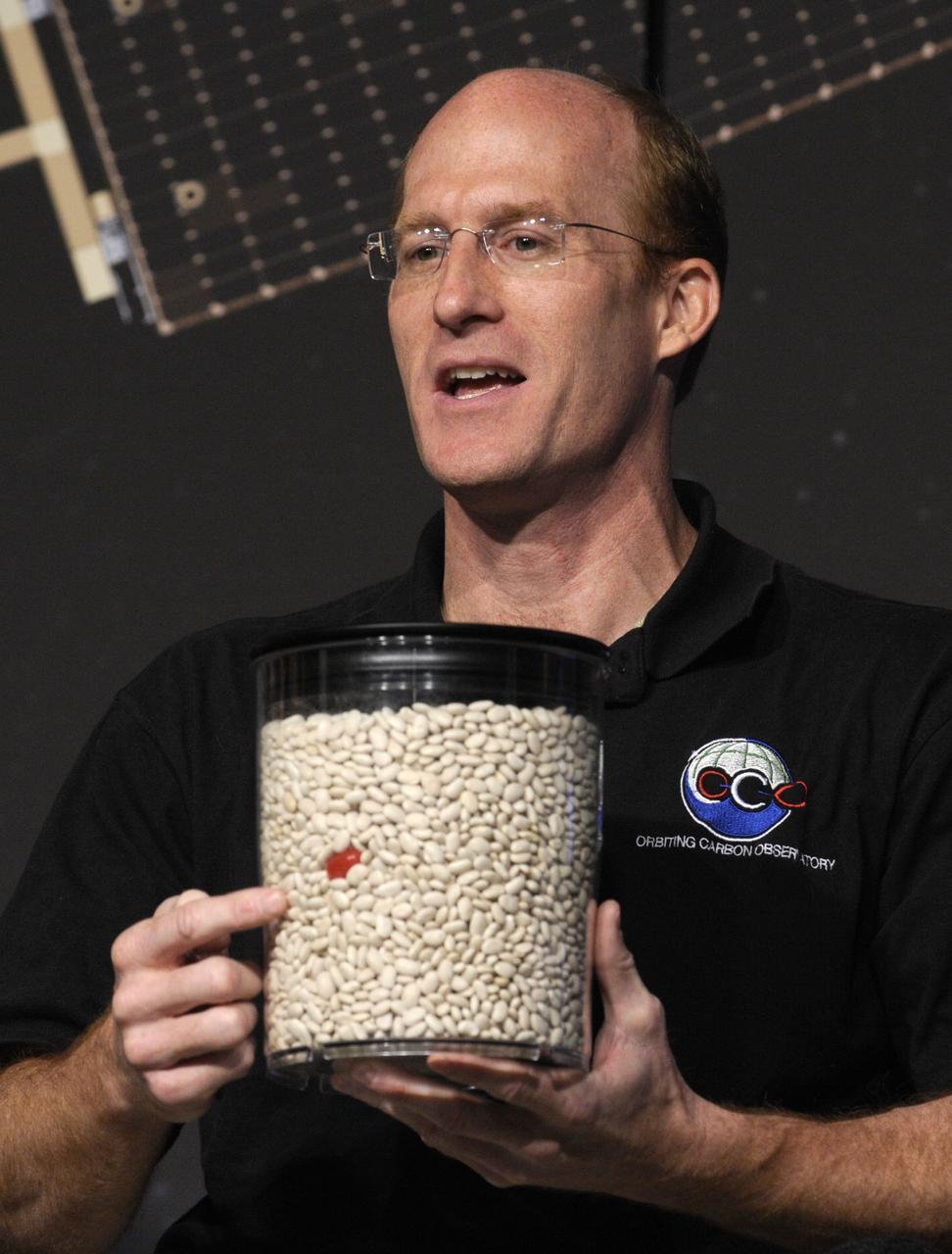
Charles Miller talks during a media briefing to discuss the upcoming Orbiting Carbon Observatory mission, the first NASA spacecraft dedicated to studying carbon dioxide, Thursday, Jan. 29, 2009, at NASA Headquarters in Washington. Photo Credit: (NASA/Paul E. Alers)
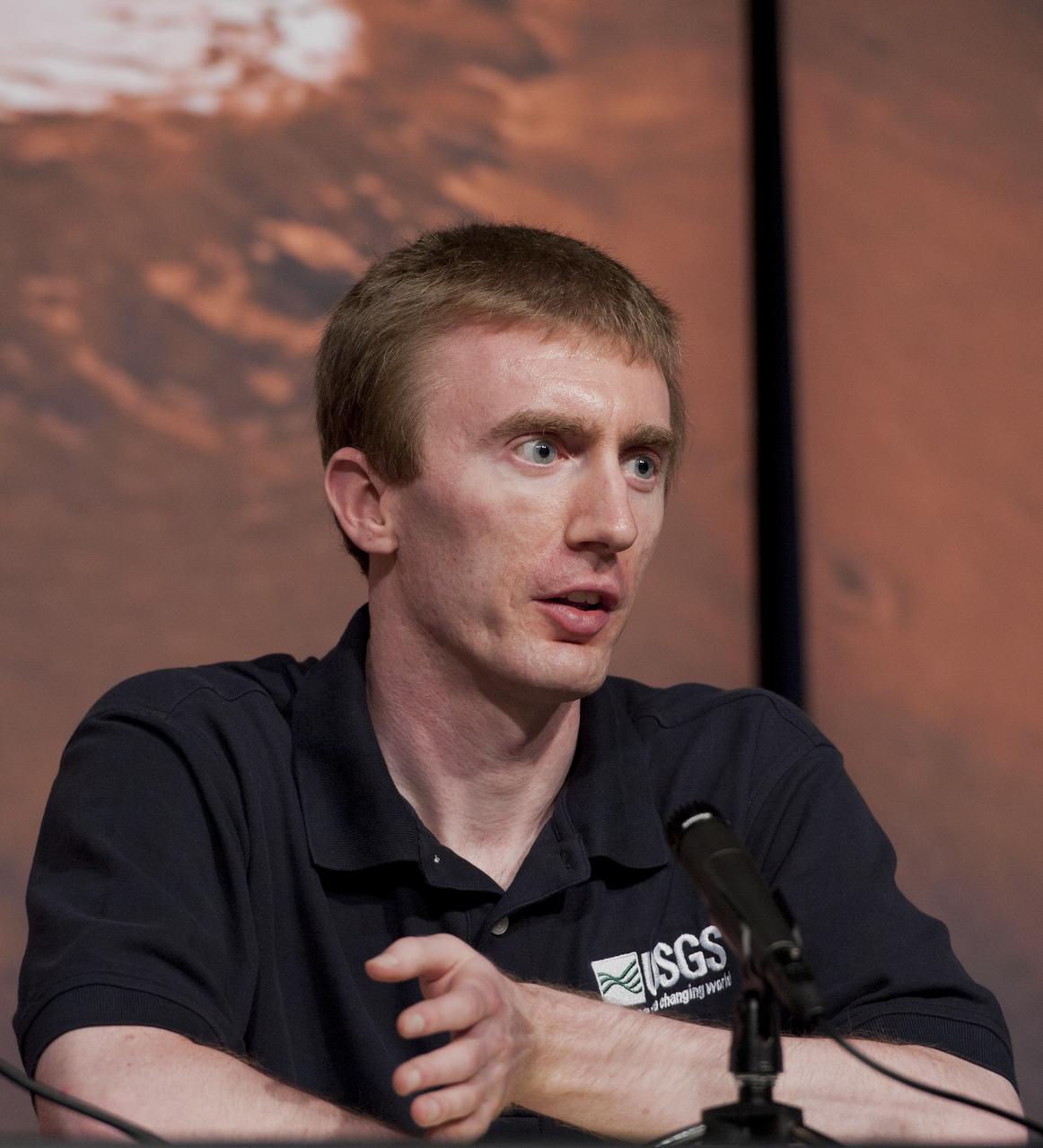
Colin Dundas, a research geologist with the U.S. Geological Survey, speaks during a briefing, Thursday, Aug. 4, 2011, at NASA Headquarters in Washington. Observations from NASA's Mars Reconnaissance Orbiter (MRO) have revealed possible flowing water during the warmest months on Mars. Dark, finger-like features appear and extend down some Martian slopes during late spring through summer, fade in winter, and return during the next spring. Repeated observations have tracked the seasonal changes in these recurring features on several steep slopes in the middle latitudes of Mars' southern hemisphere. Photo Credit: (NASA/Paul E. Alers)
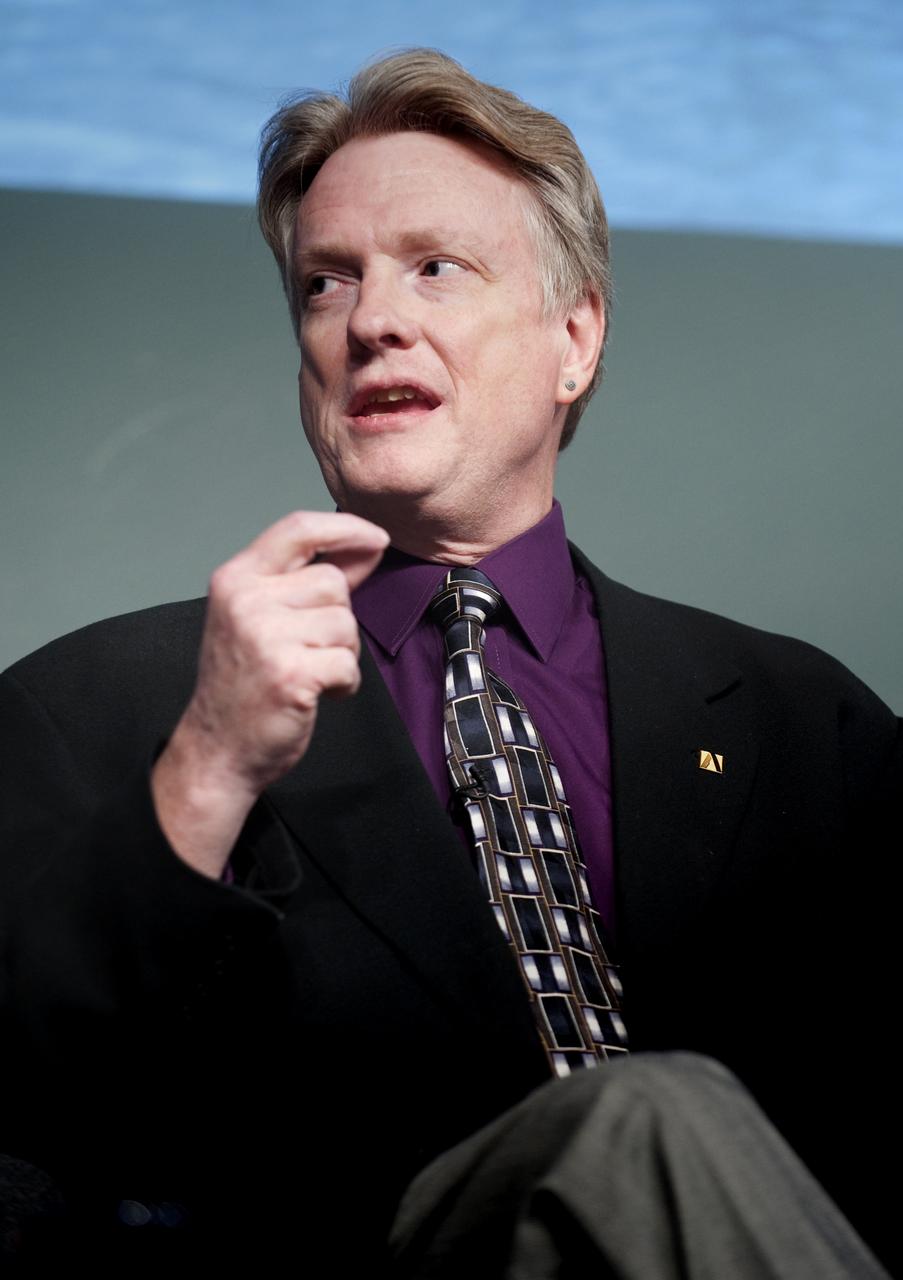
Roger Launius, senior curator in space history at the National Air and Space Museum makes a point during an Apollo History and Legacy roundtable discussion, Thursday, July 16, 2009, at NASA Headquarters in Washington. Photo Credit: (NASA/Paul E. Alers)
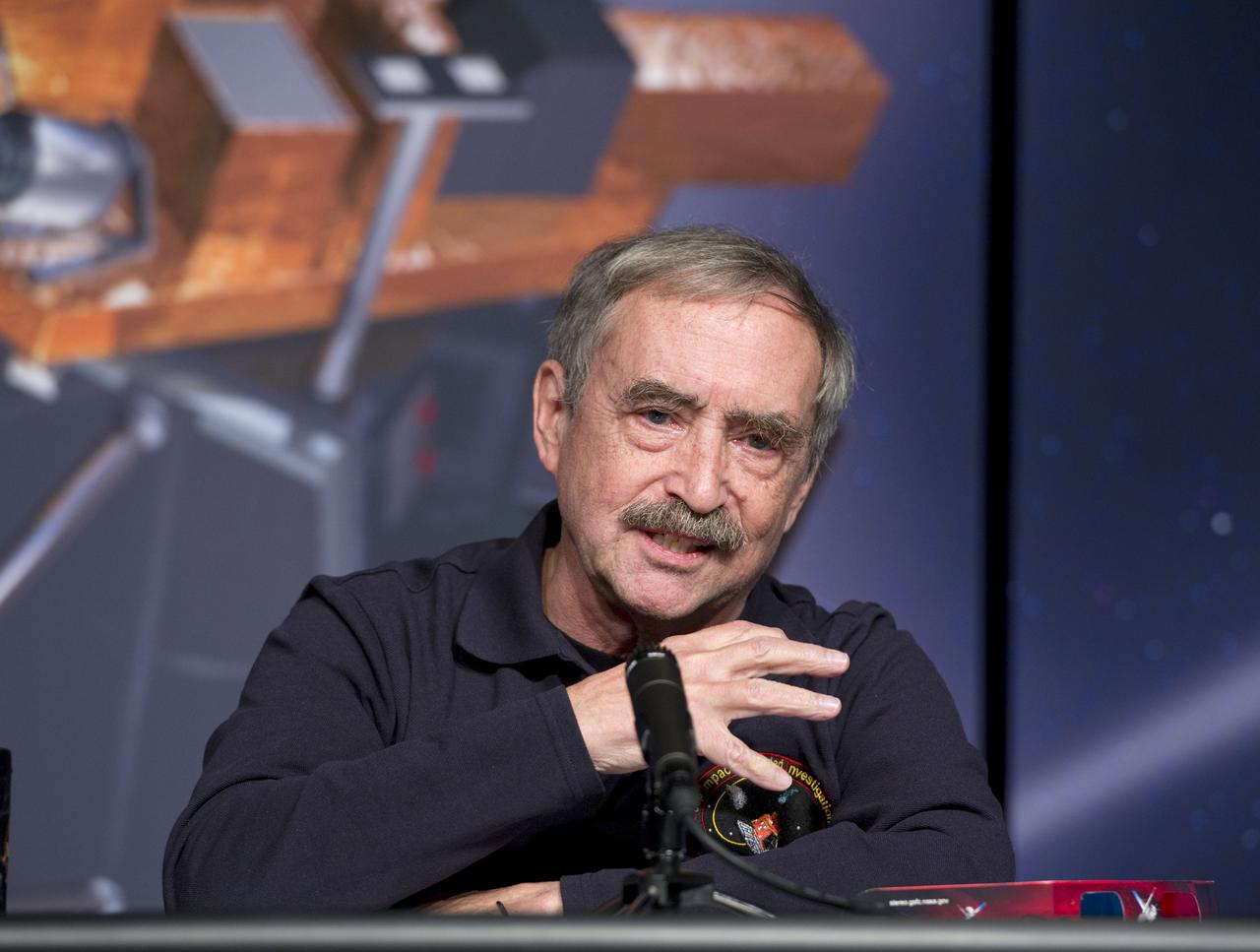
Pete Schultz, EPOXI scientist from Brown University, makes a point during a press conference, Thursday, Nov. 18, 2010, at NASA Headquarters in Washington. The press conference was held to discuss the Nov. 4 successful flyby of Comet Hartley 2 by NASA's EPOXI Mission Spacecraft. Images from the flyby provided scientists the most extensive observations of a comet in history. Photo Credit: (NASA/Paul E. Alers)
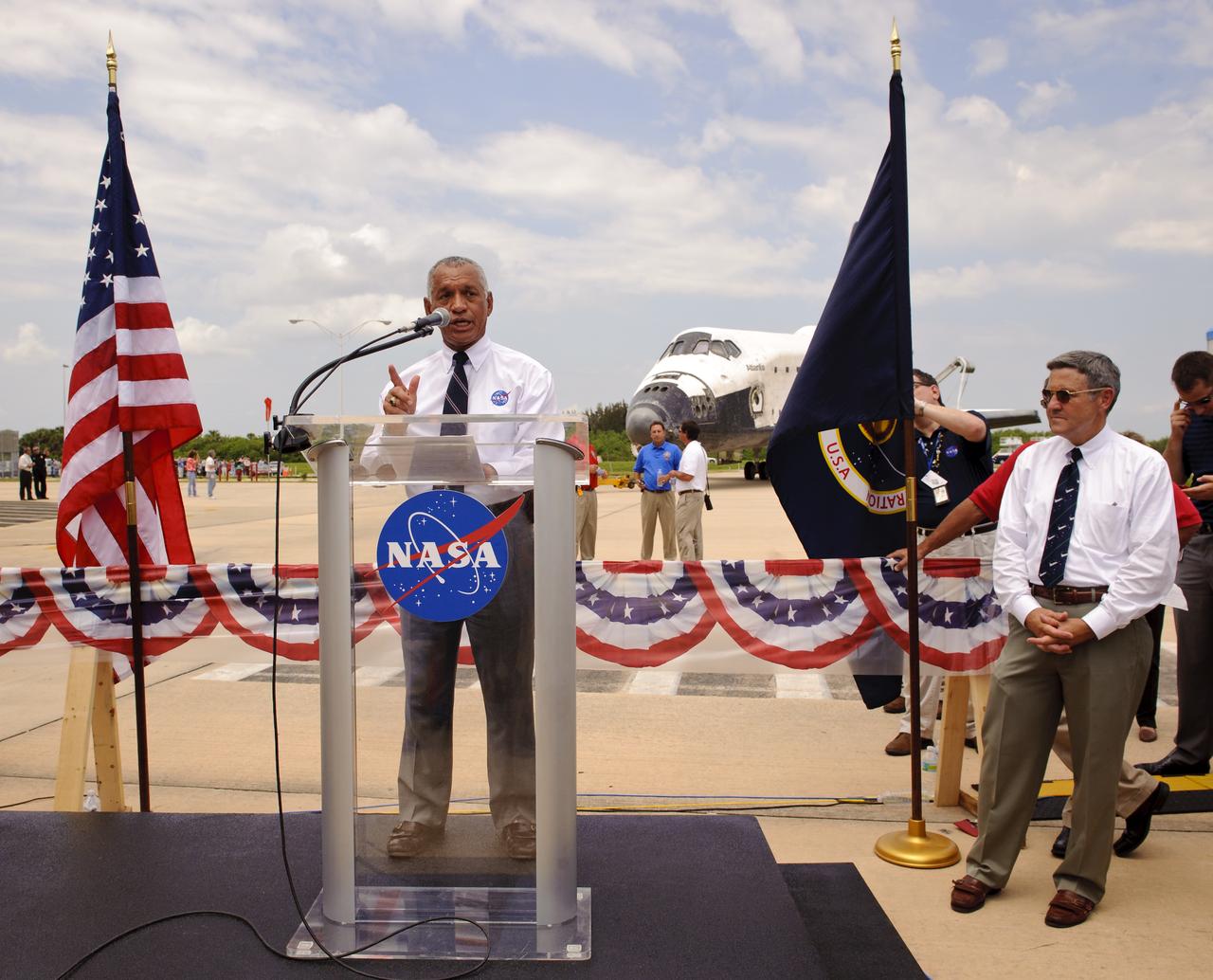
NASA administrator Charles Bolden addresses Kennedy Space Center employees and contractors as Kennedy Space Center director Robert Cabana, right, looks on as space shuttle Atlantis (STS-135) sits in the background near the Orbiter Processing Facility (OPF) at a wheels stop event, Thursday, July 21, 2011, in Cape Canaveral, Fla. Atlantis returned to Kennedy early Thursday following a 13-day mission to the International Space Station (ISS) and marking the end of the 30-year Space Shuttle Program. Overall, Atlantis spent 307 days in space and traveled nearly 126 million miles during its 33 flights. Atlantis, the fourth orbiter built, launched on its first mission on Oct. 3, 1985. Photo Credit: (NASA/Paul E. Alers)
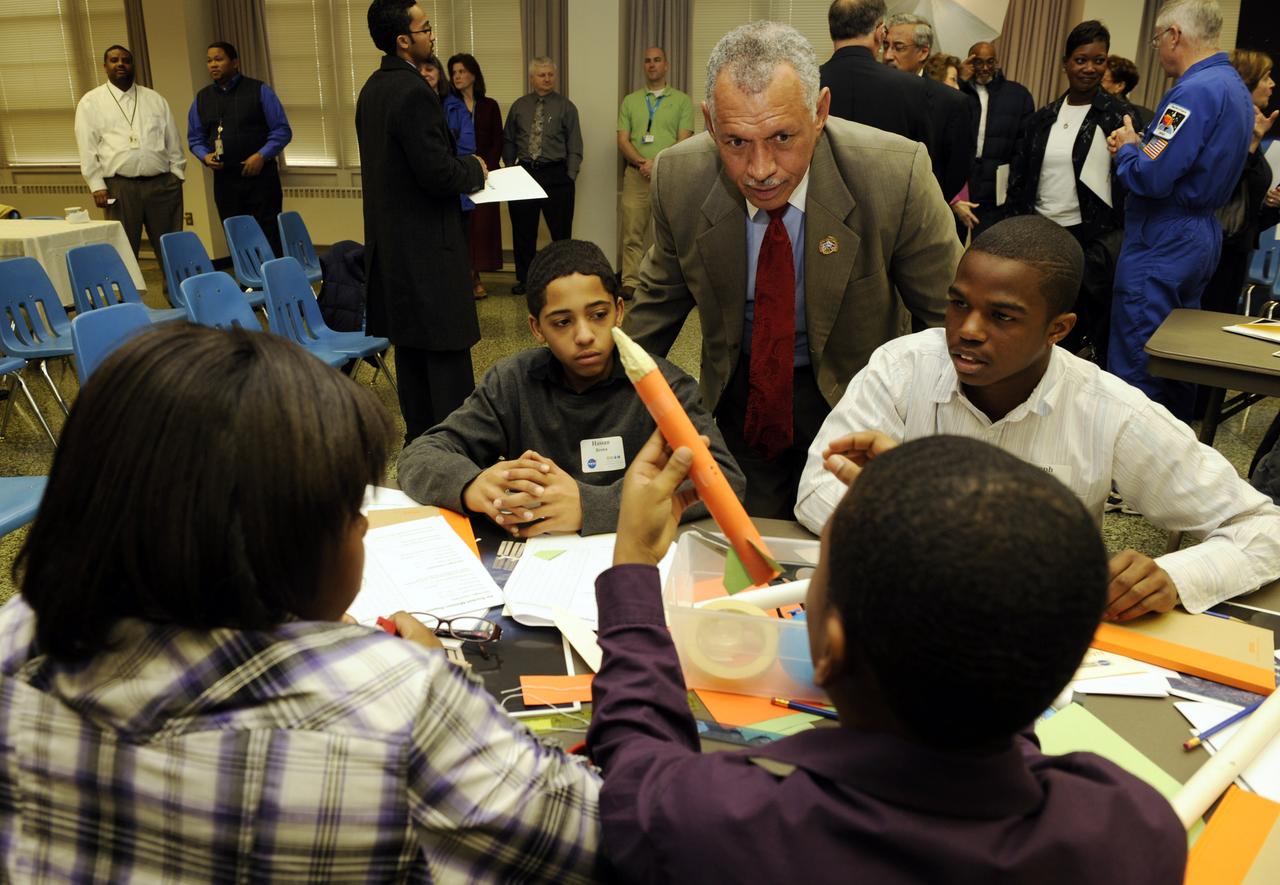
NASA Administrator Charles Bolden visits with students from Albert Hill Middle School during a visit to the MathScience Innovation Center, Friday, Jan. 28, 2011, in Richmond, Va. During his visit, Bolden highlighted the importance of science, technology, engineering and math, or STEM, as he shared his life experiences with the students. Photo Credit:(NASA/Paul E. Alers)
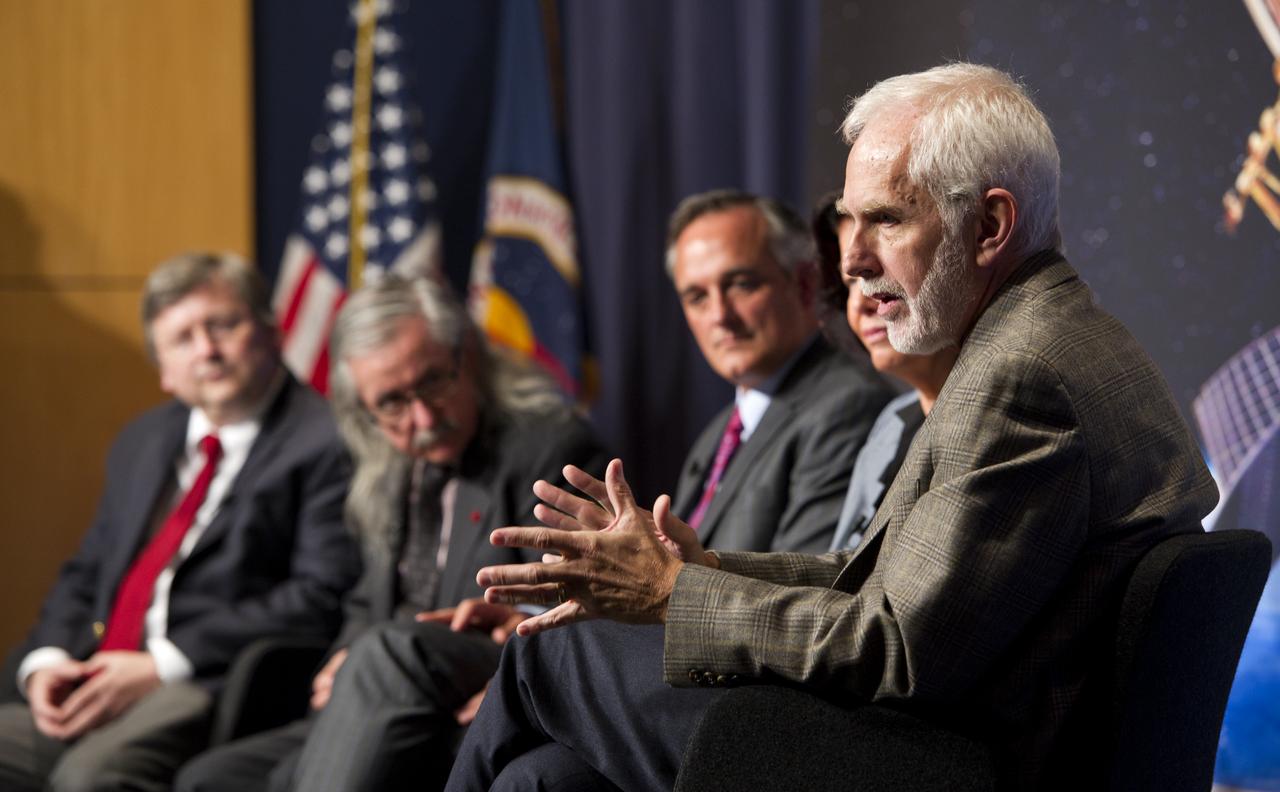
Clifford Will, Professor of Physics at Washington University in St. Louis, foreground, answers questions during a press conference, Wednesday, May 4, 2011, to discuss NASA's Gravity Probe B (GP-B) mission which has confirmed two key predictions derived from Albert Einstein's general theory of relativity, which the spacecraft was designed to test at NASA Headquarters in Washington. The experiment, launched in 2004, used four ultra-precise gyroscopes to measure the hypothesized geodetic effect, the warping of space and time around a gravitational body, and frame-dragging, the amount a spinning object pulls space and time with it as it rotates. Photo Credit: (NASA/Paul E. Alers)
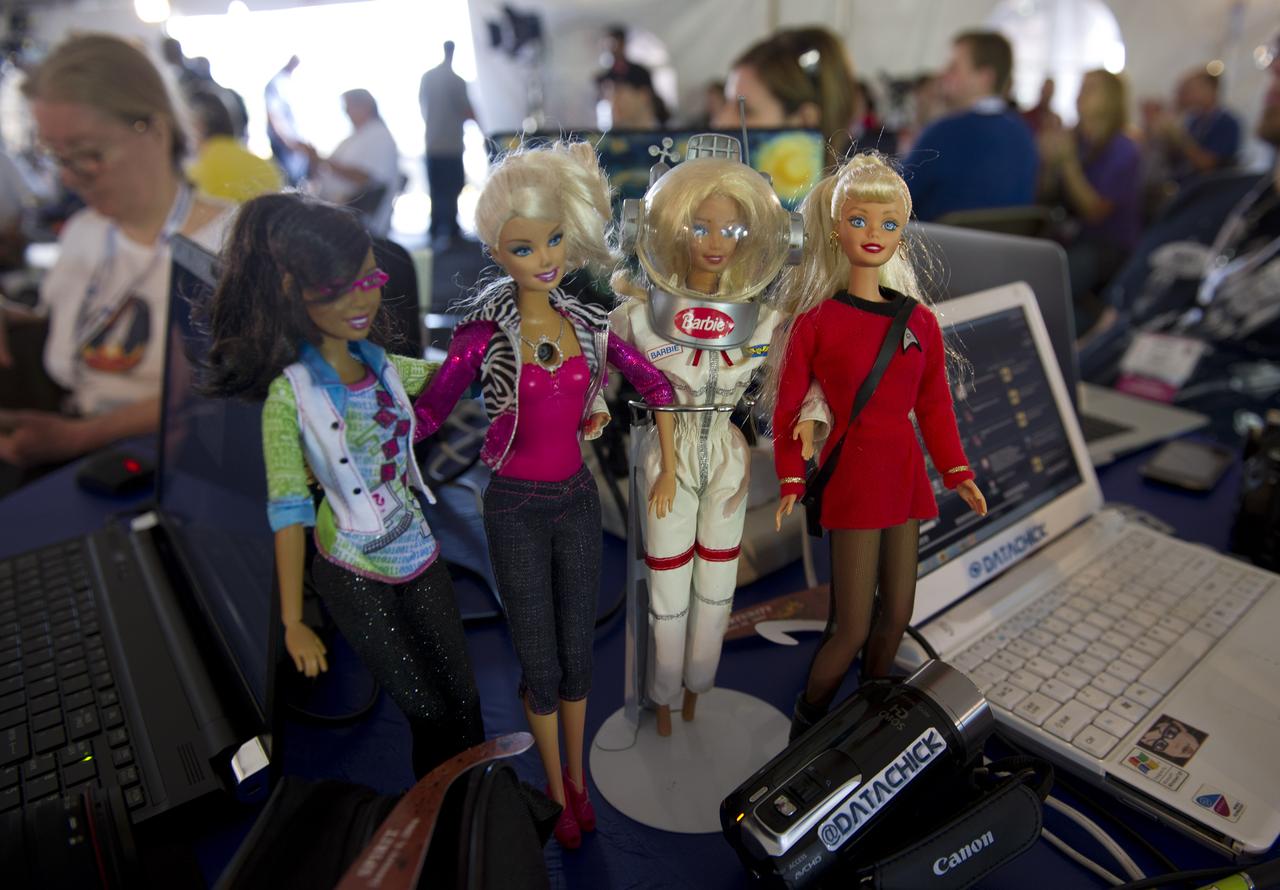
Barbie Dolls stand by during the STS-134 Tweetup, Thursday, April 28, 2011, at Kennedy Space Center in Cape Canaveral, Fla. About 150 NASA Twitter followers attended the event. Photo Credit: (NASA/Paul E. Alers)
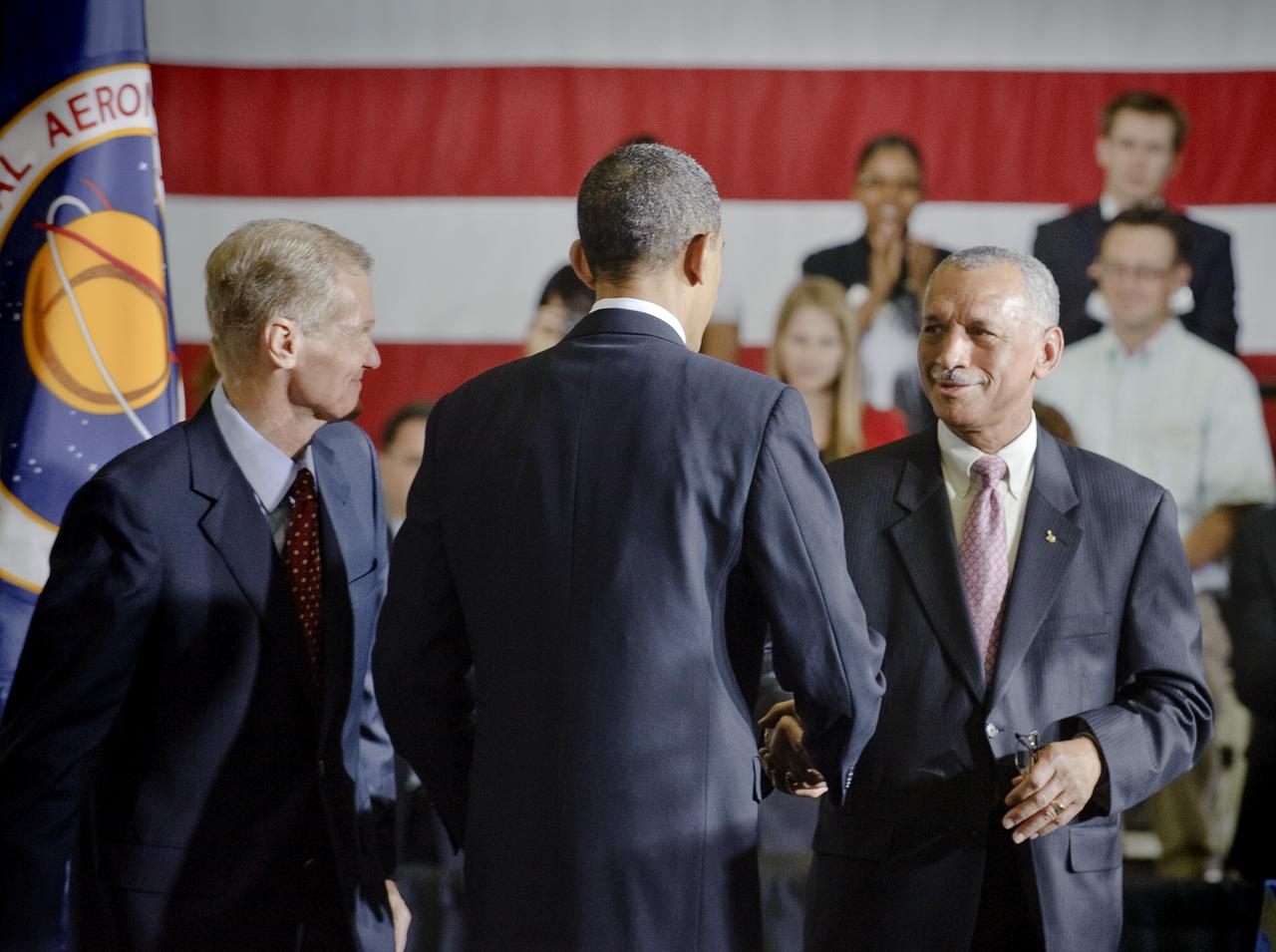
President Barack Obama, center, back to camera, shakes hands with NASA Administrator Charles Bolden, right, as U.S. Sen. Bill Nelson, D-Fla., looks on prior to Obama's speech outlining the bold new course the administration is charting to maintain U.S. leadership in human space flight at the NASA Kennedy Space Center in Cape Canaveral, Fla. on Thursday, April 15, 2010. Photo Credit: (NASA/Paul E. Alers)
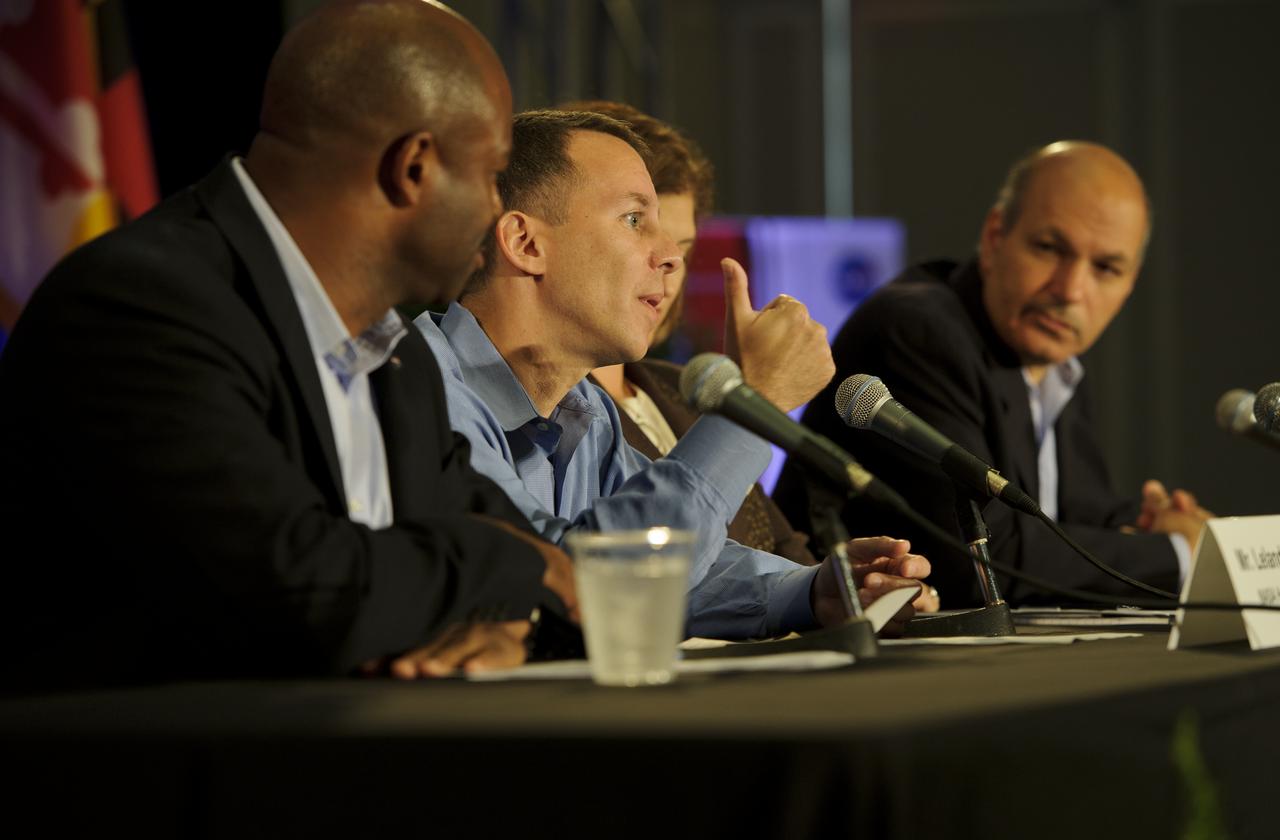
Dr. Robert Braun, NASA Chief Technologist, second from left, makes a point, as panelists Leland Melvin, Assoicate Administrator for NASA Education, left, Dr. Laurie Leshin, NASA Deputy Associate Administrator Exploration Systems Mission Directortorate, and Dr. Waleed Abdalati, NASA Chief Scientist, right, look on during a panel discussion at the NASA Future Forum held at the Riggs Alumni Center on the campus of the University of Maryland, Thursday, Aug. 11, 2011 in College Park, Md. Photo Credit: (NASA/Paul E. Alers)
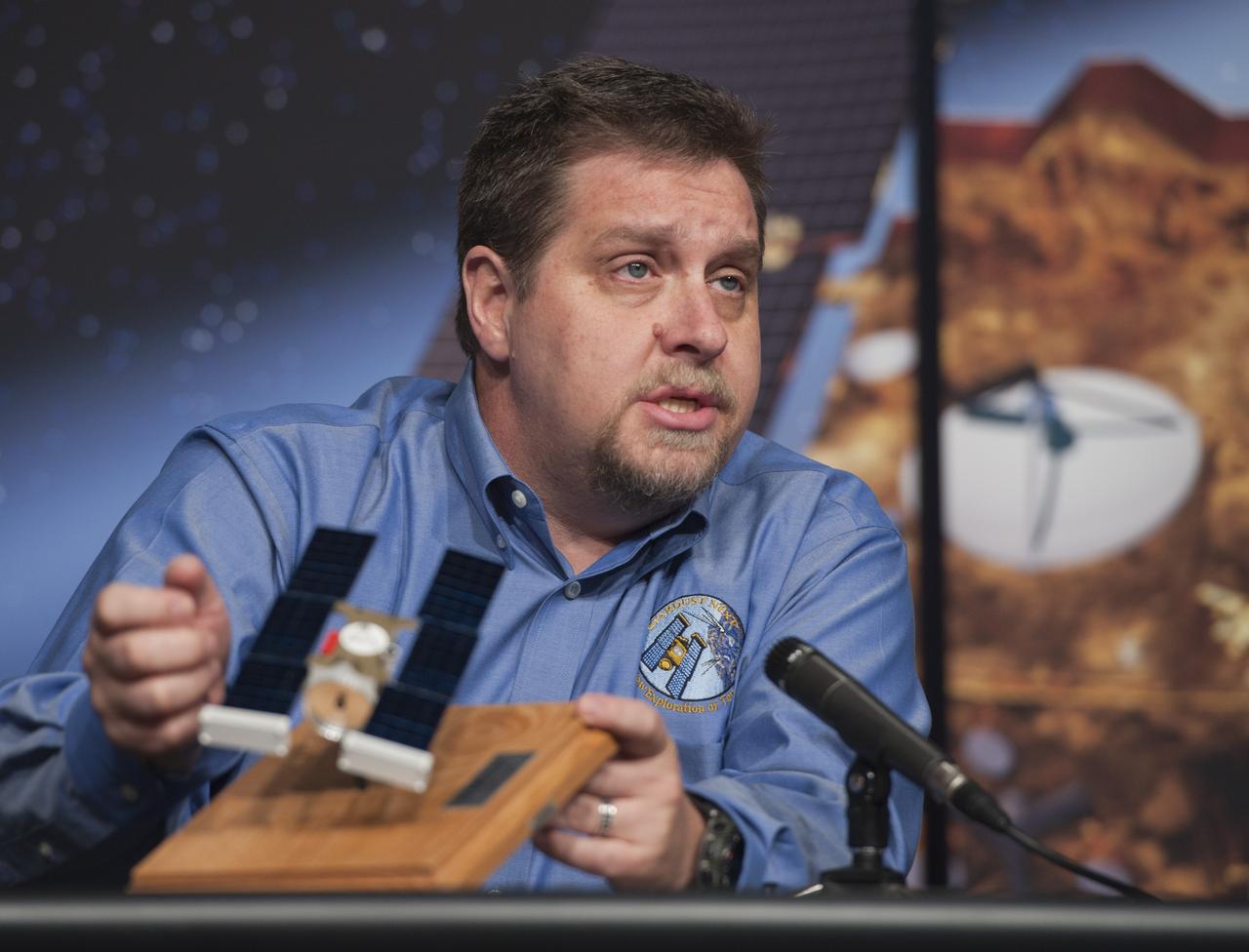
Tim Larson, Stardust NExT Project Manager, speaks during a news briefing, Wednesday, Jan. 19, 2011, at NASA Headquarters in Washington. On Feb. 14, 2011 NASA's Stardust-NExT (New Exploration of Tempel 1) mission will encounter Comet Tempel 1, providing a unique opportunity to measure the dust properties which will also provide a comparison between two observations of a single comet, Tempel 1, taken before and after a single orbital pass around the sun. Photo Credit: (NASA/Paul E. Alers)
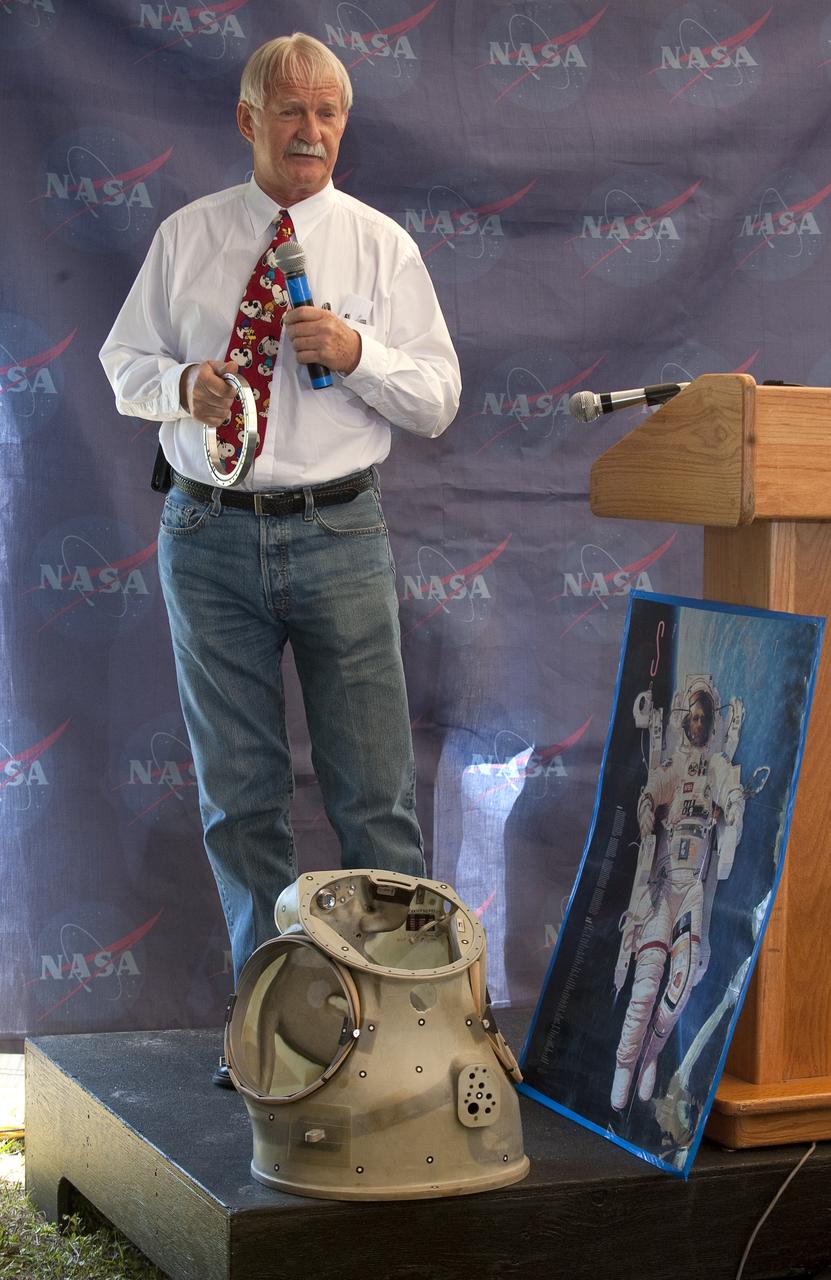
Ron Woods, an equipment specialist, who has been a space suit designer from Mercury to now speaks to participants at the two-day STS-132 Launch Tweetup at Kennedy Space Center, Thursday, May 13, 2010, in Cape Canaveral, Fla. NASA Twitter followers in attendance will have the opportunity to take a tour of NASA's Kennedy Space Center, view the space shuttle launch and speak with shuttle technicians, engineers, astronauts and managers. Photo Credit: (NASA/Paul E. Alers)
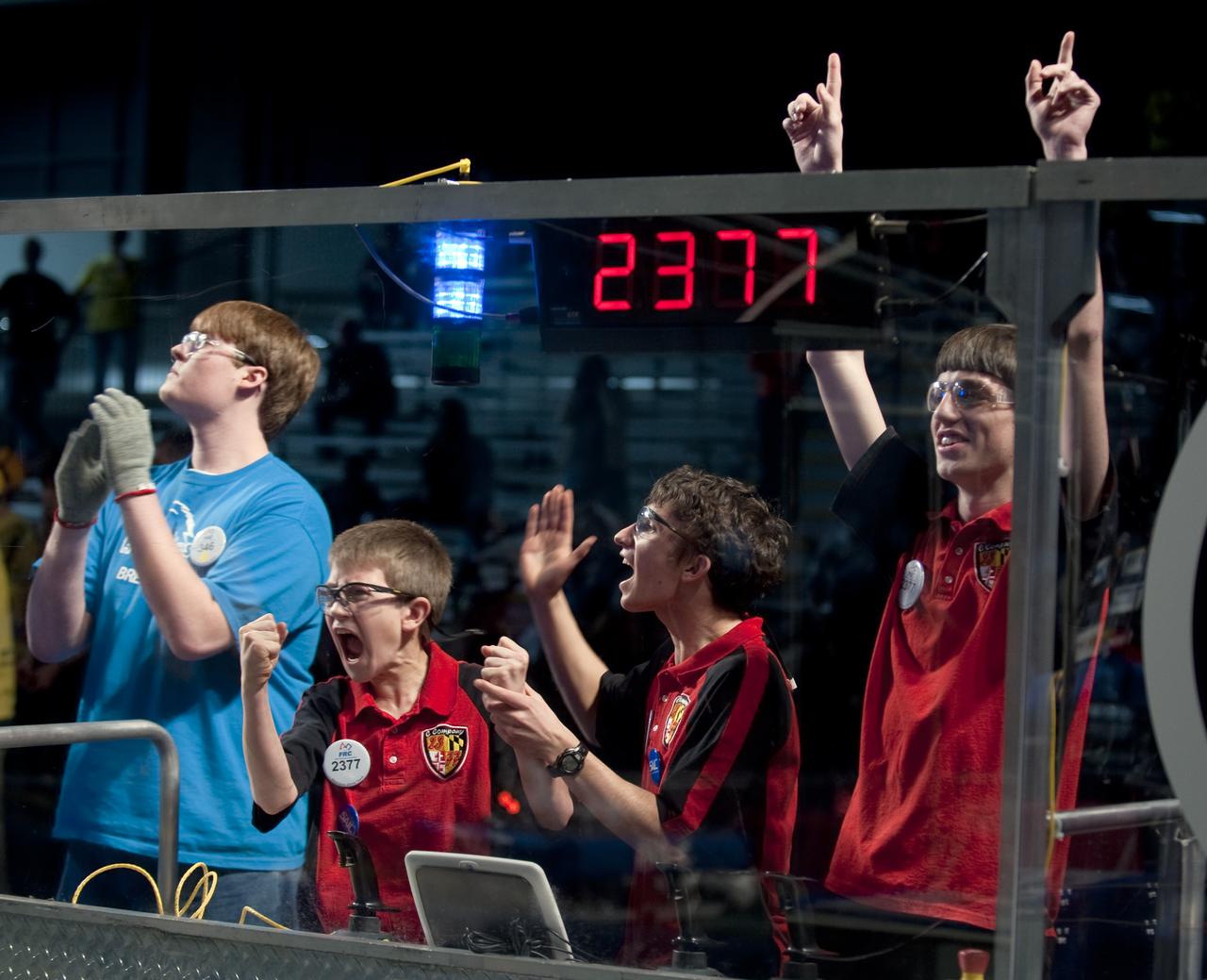
Members of team 2377, in red, from Chesapeake High School in Maryland, react following a match during the second day of competition at the First Robotics Competition, Saturday, March 6, 2010, in Washington. The student competition is called "For Inspiration and Recognition of Science and Technology", or FIRST. The program was founded in 1989 by Dean Kamen to inspire an appreciation of science and technology in young people, their schools and communities. Photo Credit: (NASA/Paul E. Alers)
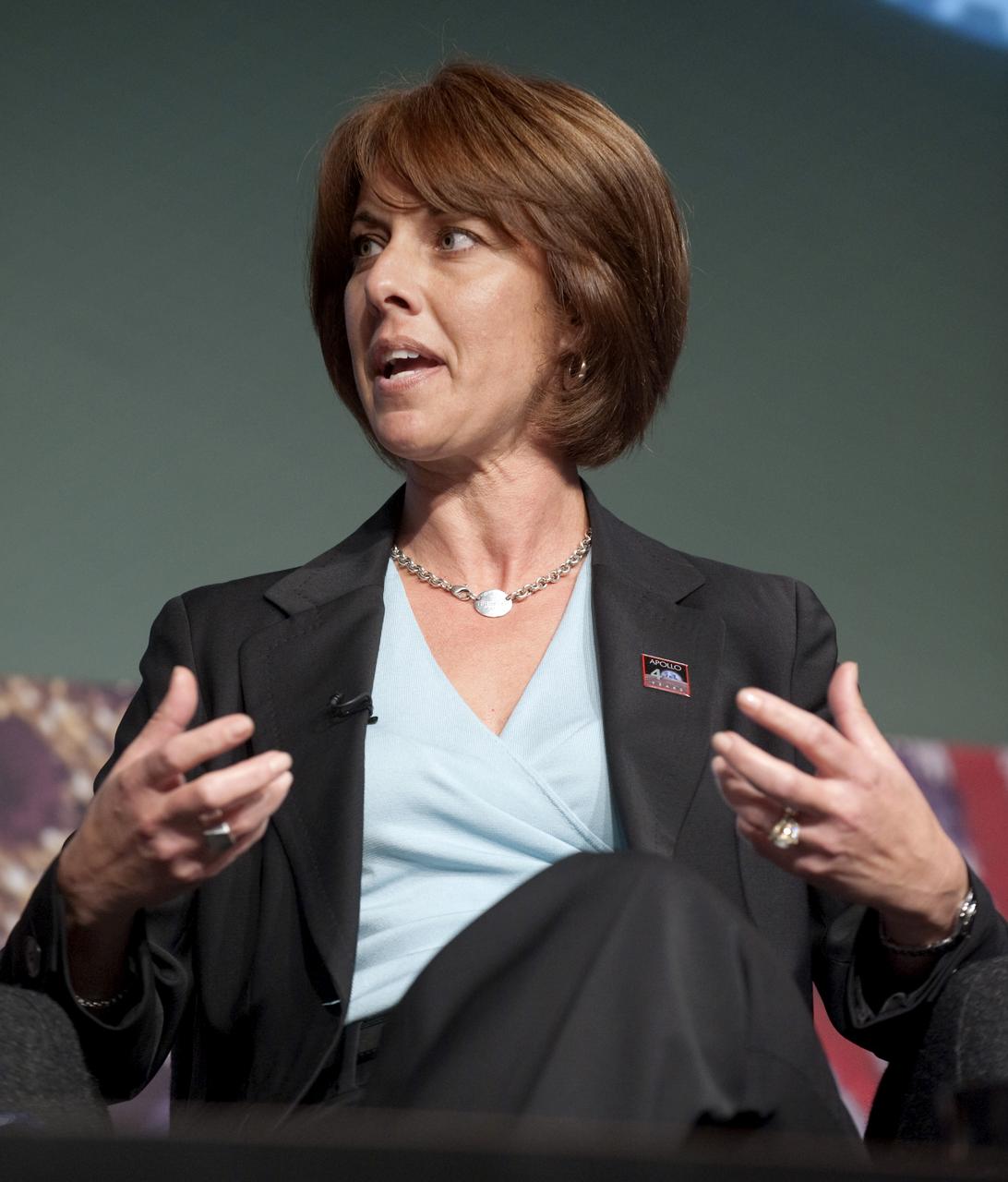
Cristina Guidi, deputy director, Constellation Systems Division, Exploration Systems Mission Directorate, NASA Headquarters, speaks during an Apollo History and Legacy roundtable discussion, Thursday, July 16, 2009, at NASA Headquarters in Washington. Photo Credit: (NASA/Paul E. Alers)
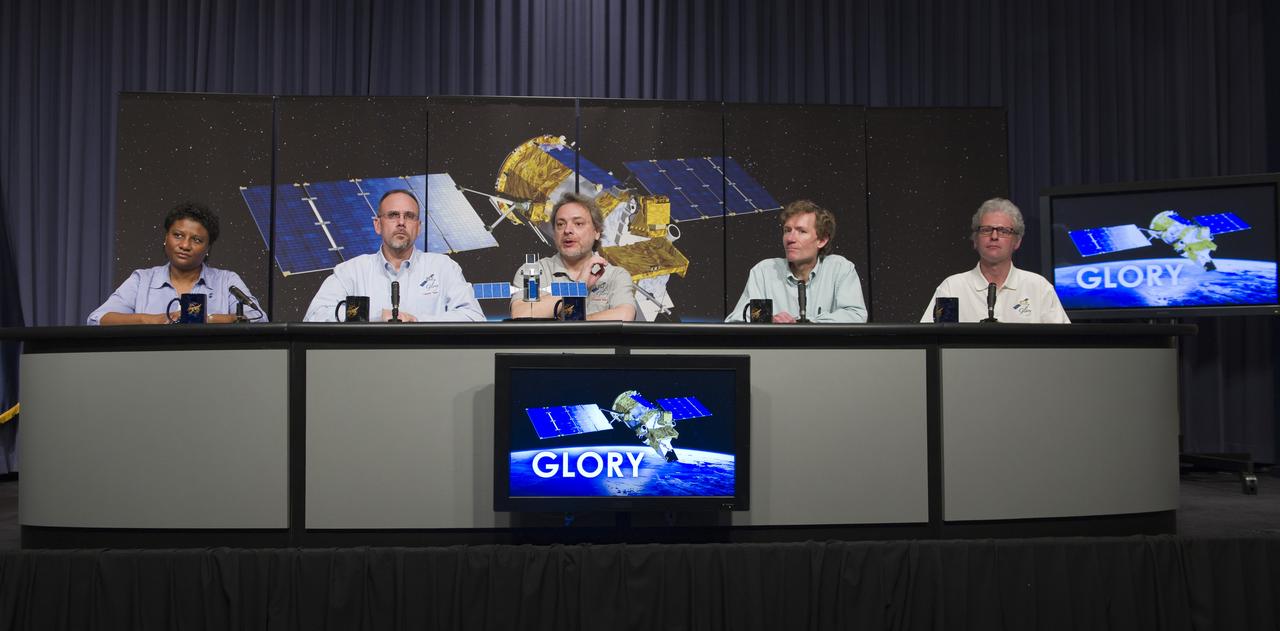
Joy Bretthauer, Glory Program Executive, left, Bryan Fafaul, Glory project manager, Michael Mischenko, Glory project scientist, center, Greg Kopp, University of Colorado, and Brian Cairns, instrument scientist, right, talk about the launch of the GLORY mission during a news conference at NASA Headquarters, Thursday, Jan. 20, 2011, in Washington. NASA's newest Earth-observing research mission is scheduled for launch form Vandenburg Air Force Base in California on Feb. 23. The mission will improve our understanding of how the sun and tiny atmosppheric particles called aerosols affect Earth's climate. Photo Credit: (NASA/Paul E. Alers)
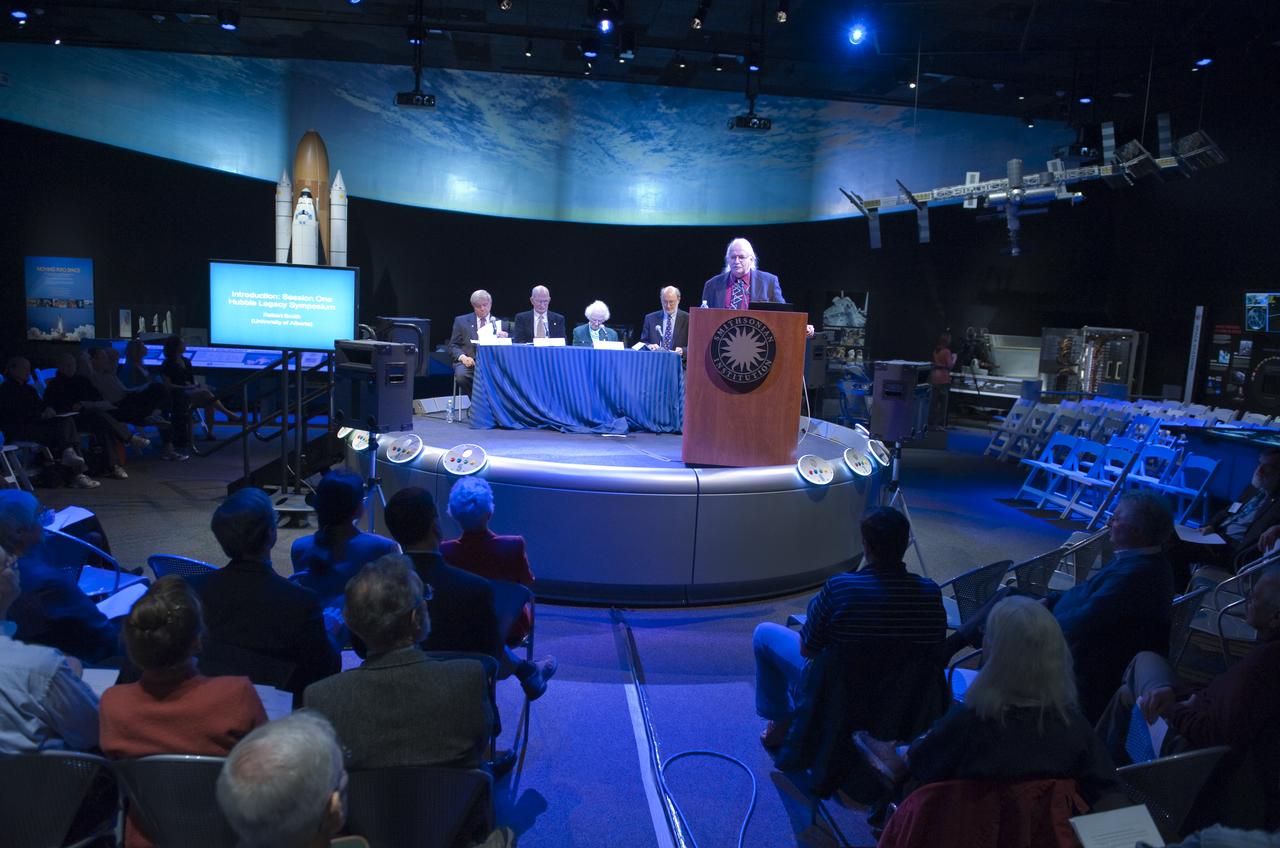
David DeVorkin, Senior Curator, Collection: Astronomy and space sciences speaks during a press briefing at the new "Moving Beyond Earth," exhibition at the National Air and Space Museum in Washingon, Wednesday, Nov. 18, 2009. Moving Beyond Earth is an immersive exhibition that places visitors “in orbit” in the shuttle and space-station era to explore recent human spaceflight and future possibilities. Photo Credit: (NASA/Paul E. Alers)
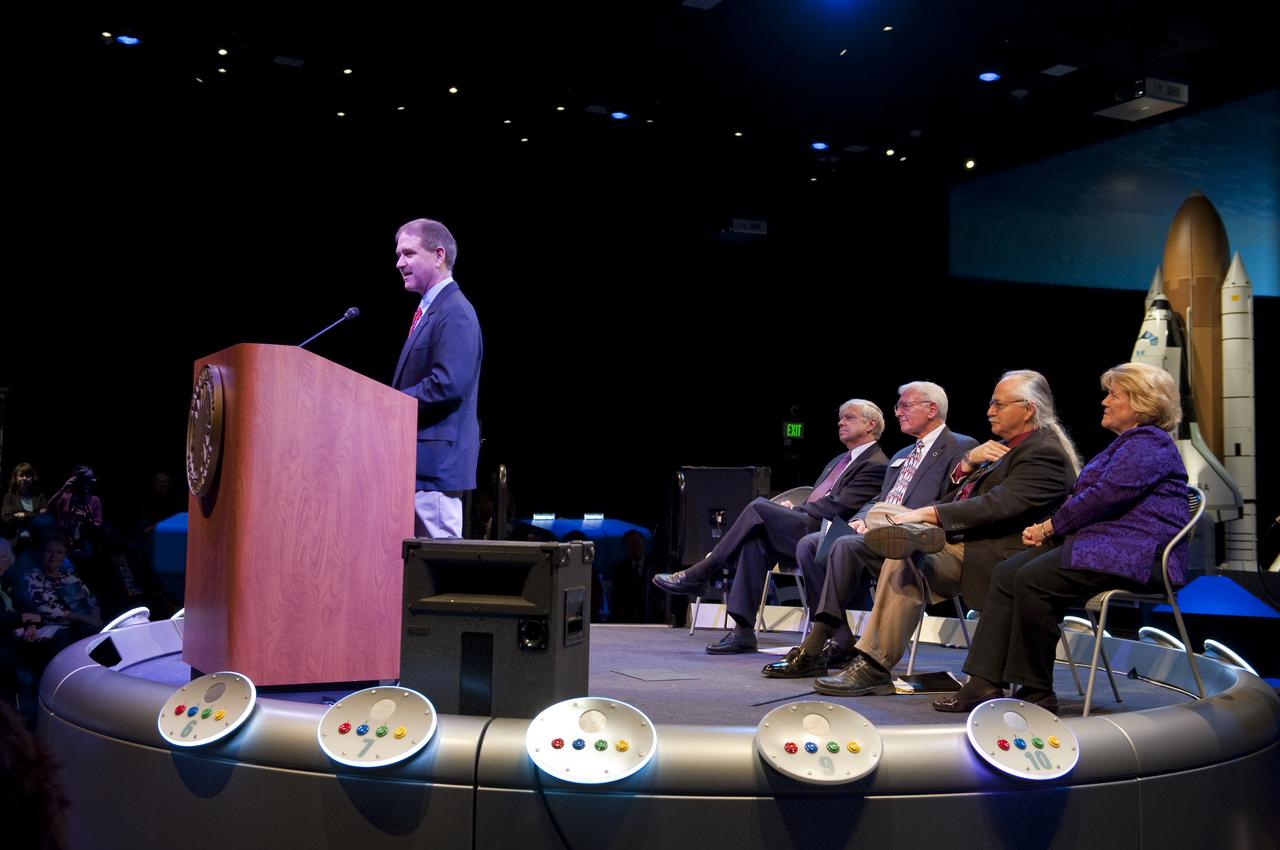
STS-125 astronaut John Grunsfeld speaks during a press briefing at the new "Moving Beyond Earth," a new exhibition at the National Air and Space Museum in Washingon, Wednesday, Nov. 18, 2009. Moving Beyond Earth is an immersive exhibition that places visitors “in orbit” in the shuttle and space-station era to explore recent human spaceflight and future possibilities. Photo Credit: (NASA/Paul E. Alers)

Ken Wheeler and his daughter Kayla listen intently to President Barack Obama's speech following his swearing in as they stand along Pennsylvania Avenue in Washington, Monday, Jan. 21, 2013. The Wheeler's traveled from Cincinnati, Ohio to attend the event. Photo Credit: (NASA/Paul E. Alers)
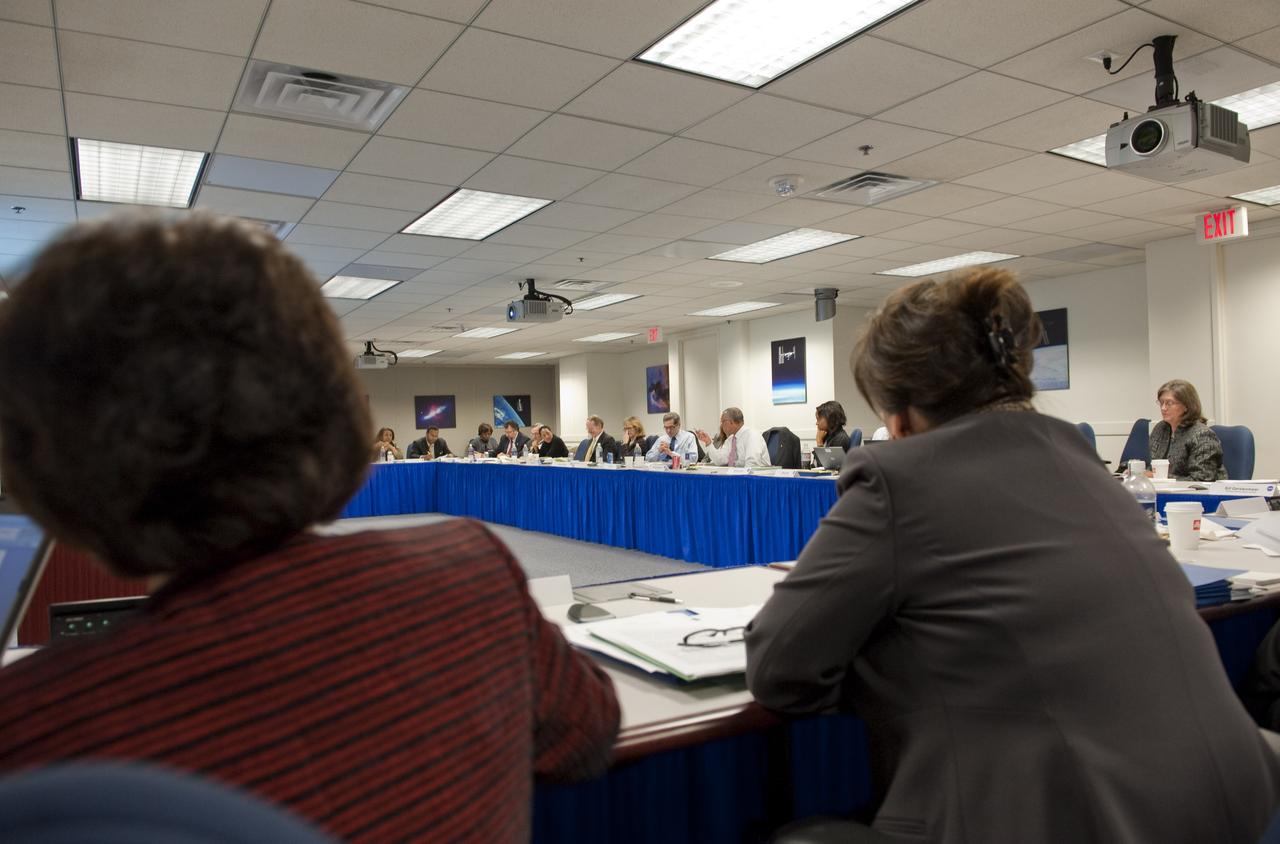
Participants take part in an Education Summitt with NASA Administrator Charles F. Bolden and Deputy Administrator Lori Garver, Monday, Nov. 2, 2009, at NASA Headquarters in Washington. Photo Credit: (NASA/Paul E. Alers)