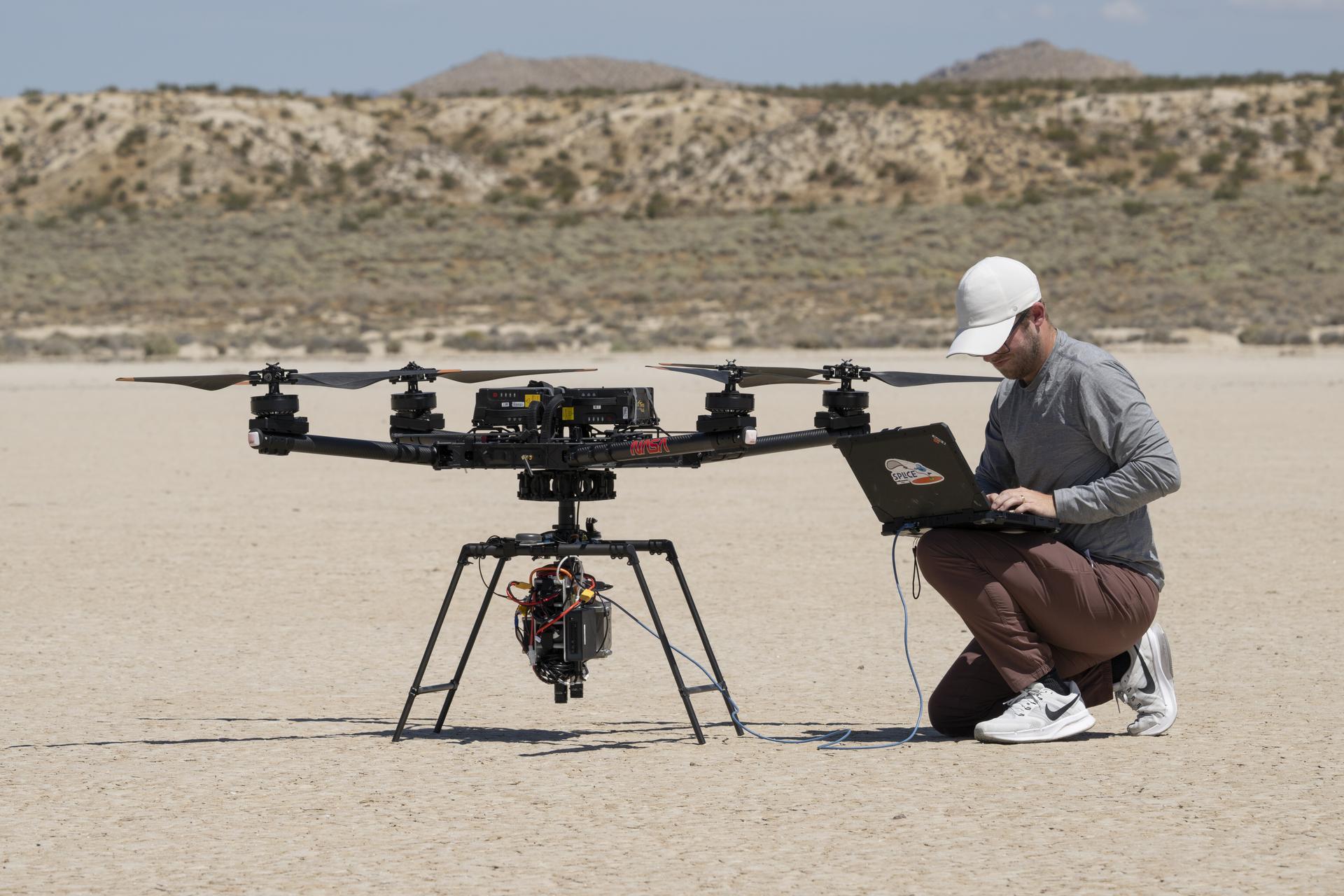
Davis Adams, project manager, confirms that an advanced guidance and navigation system known as the Safe and Precise Landing – Integrated Capabilities Evolution (SPLICE) experiment is communicating with an Alta-X drone near NASA’s Armstrong Flight Research Center in Edwards, California, on Wednesday, July 15, 2026. Researchers at NASA’s Johnson Space Center in Houston developed SPLICE, which successfully communicated with the remotely piloted aircraft during hover maneuvers in flight. SPLICE will help spacecraft land precisely and detect and avoid potential hazards, which is critical for NASA missions to the Moon and to Mars.
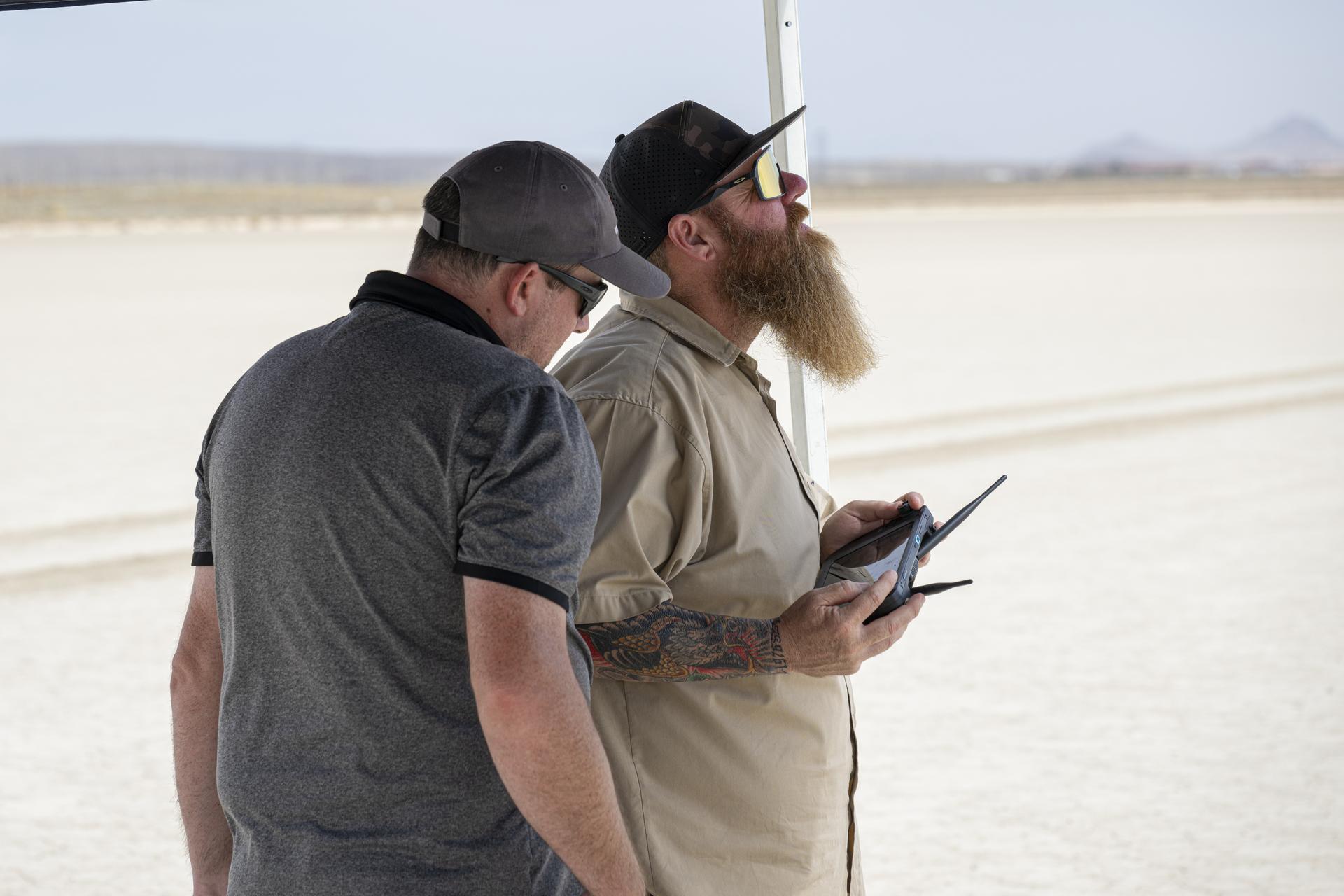
Justin Link, small uncrewed aircraft pilot, left, reads altitude data on a handheld display, as Justin Hall, Dale Reed Subscale Flight Research Laboratory chief pilot, flies NASA’s Alta-X drone near NASA’s Armstrong Flight Research Center in Edwards, California, on Thursday, Aug. 27, 2026. Researchers at NASA’s Johnson Space Center in Houston developed the advanced guidance and navigation system known as the Safe and Precise Landing – Integrated Capabilities Evolution (SPLICE) experiment, which is installed on the drone. SPLICE will help spacecraft land precisely and detect and avoid potential hazards, which is critical for NASA missions to the Moon and to Mars.
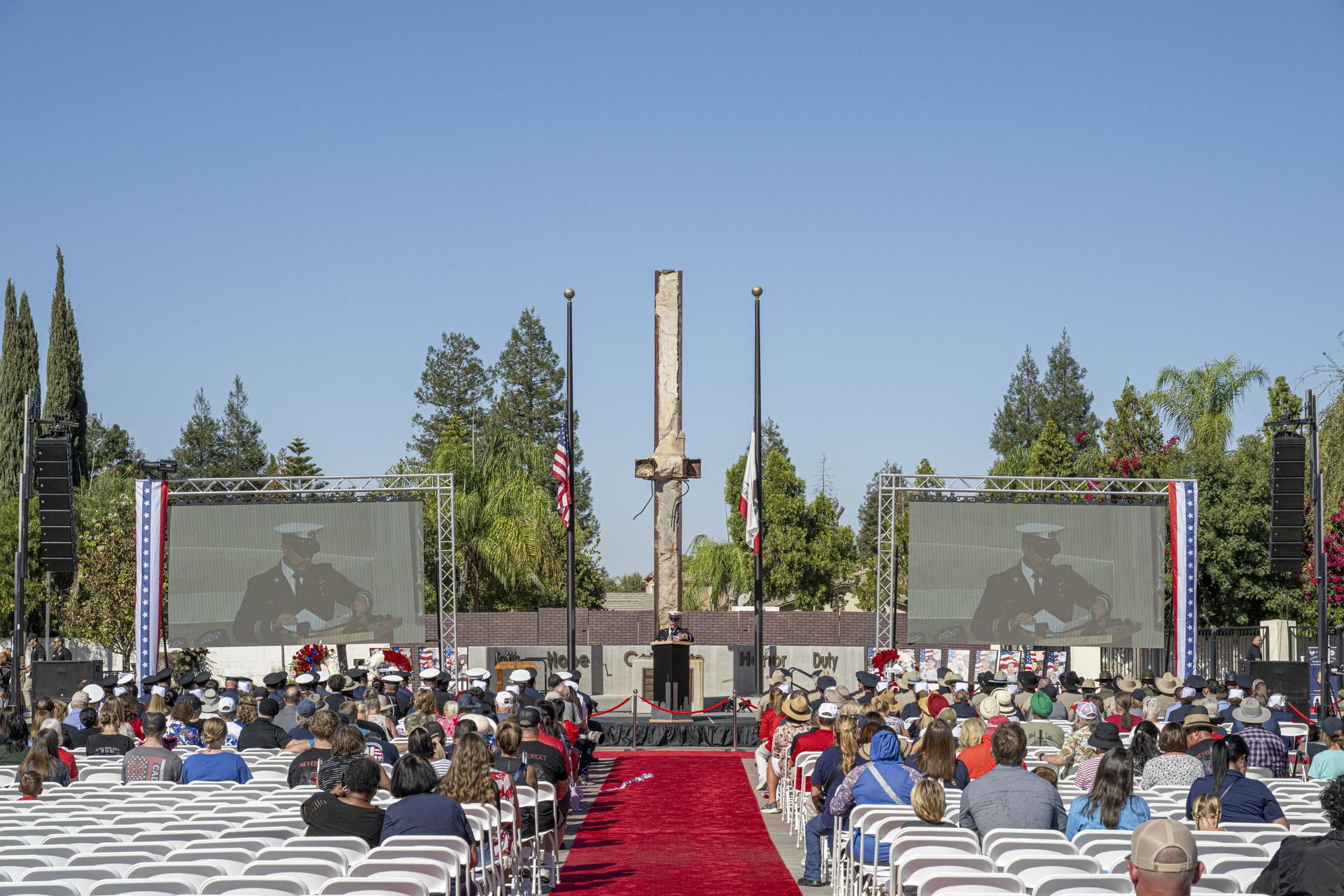
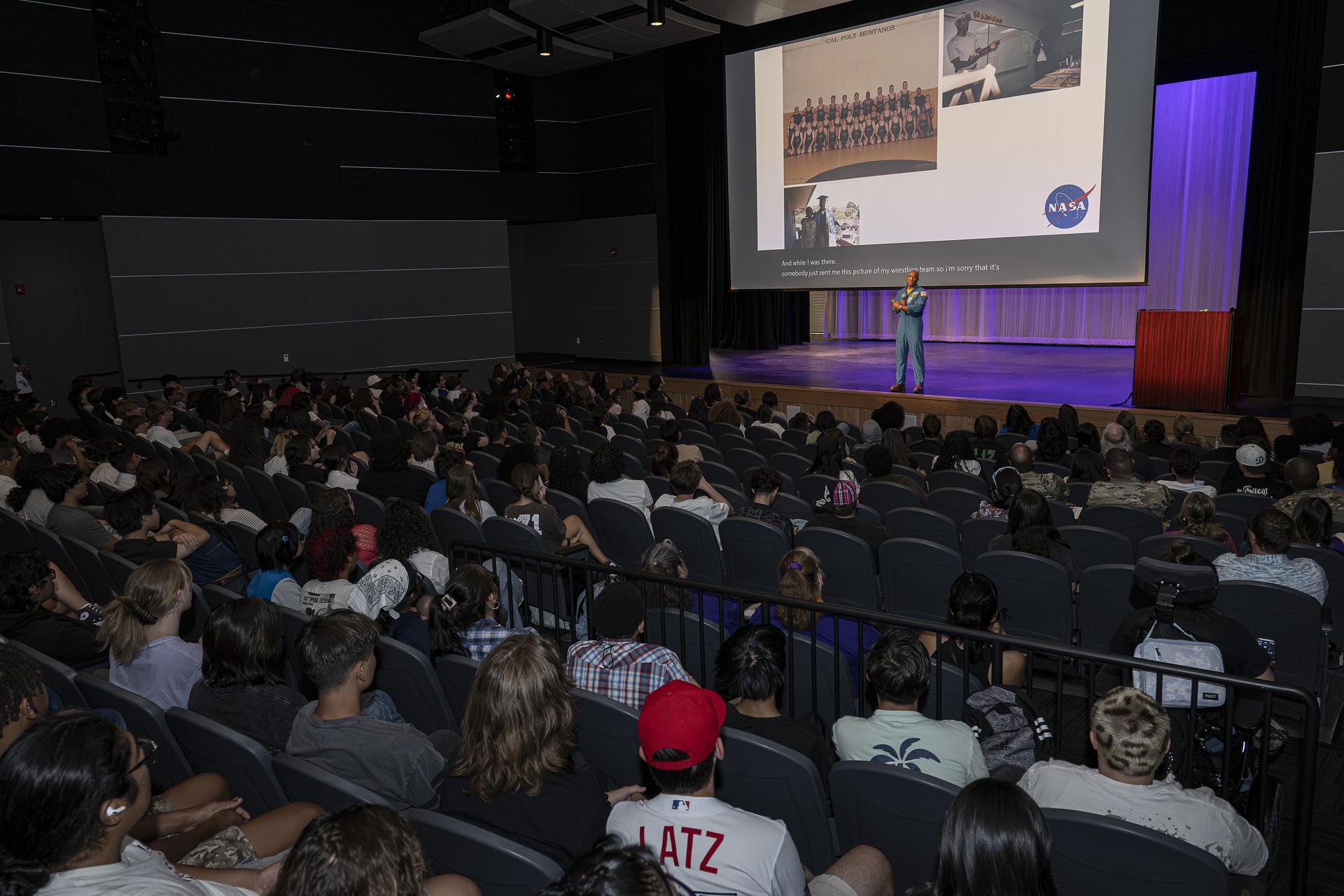
NASA Artemis II astronaut Victor Glover speaks with students from U.S. Air Force and civilian families during a presentation at Desert Junior-Senior High School on Tuesday, Aug. 25, 2026, at Edwards Air Force Base, California. Glover reflected on his experiences as a U.S. Navy captain, test pilot, and Artemis II astronaut, and shared the message he often gives students: stay resilient, keep learning, value the people around you, and remember that no one moves forward alone.
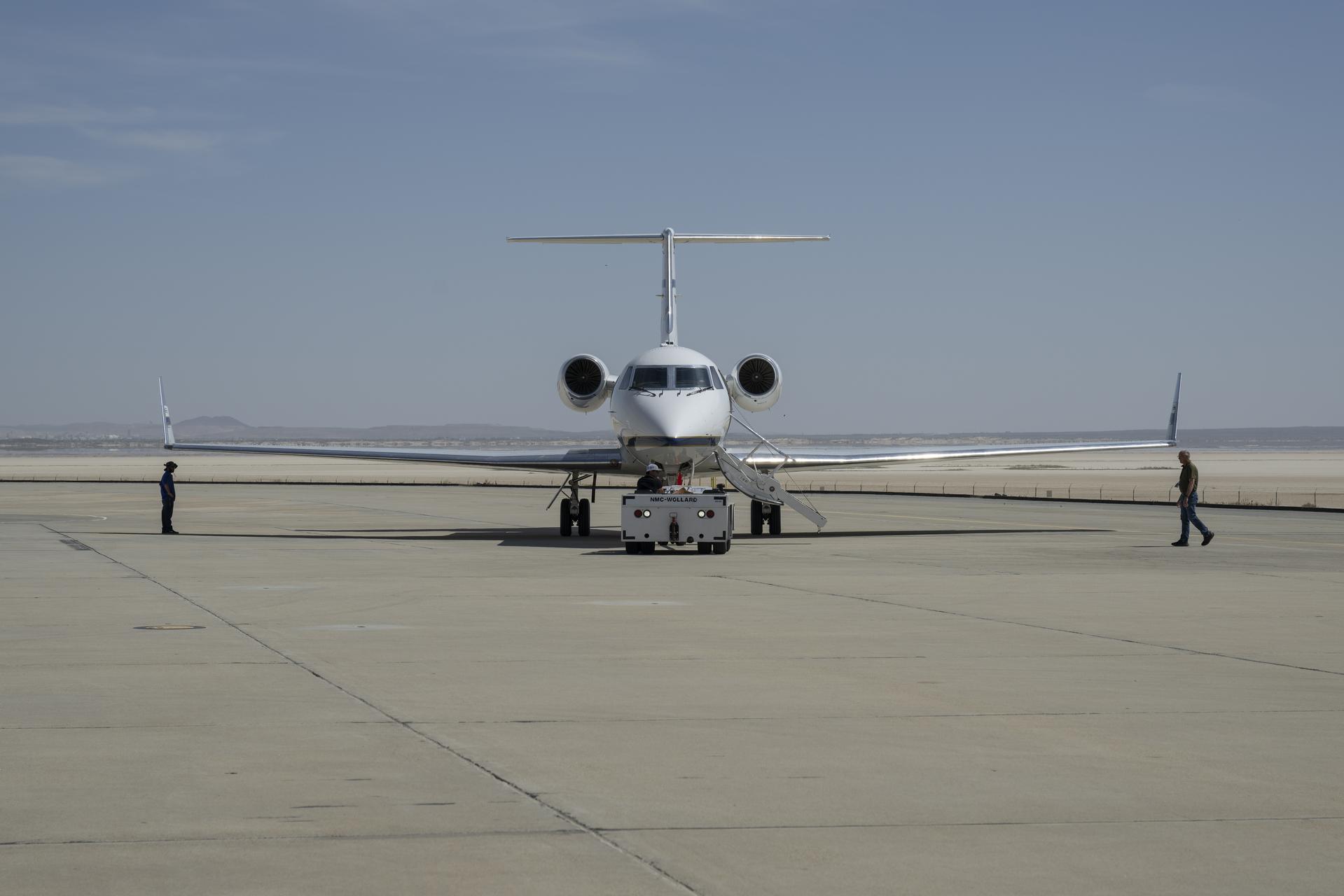
Manny Rodriguez, center, Gulfstream G-III aircraft crew chief, drives a tug while mechanic Marlon Espinoza, left, and Scott Erickson, a quality assurance inspector, prepare the aircraft for takeoff on Friday, March 27, 2026, at NASA’s Armstrong Flight Research Center in Edwards, California. The G-III will join other NASA aircraft to capture imagery of the Orion spacecraft’s heat shield during Artemis II reentry. The mission is part of NASA’s Scientifically Calibrated In-Flight Imagery (SCIFLI) project, based at NASA’s Langley Research Center in Hampton, Virginia.
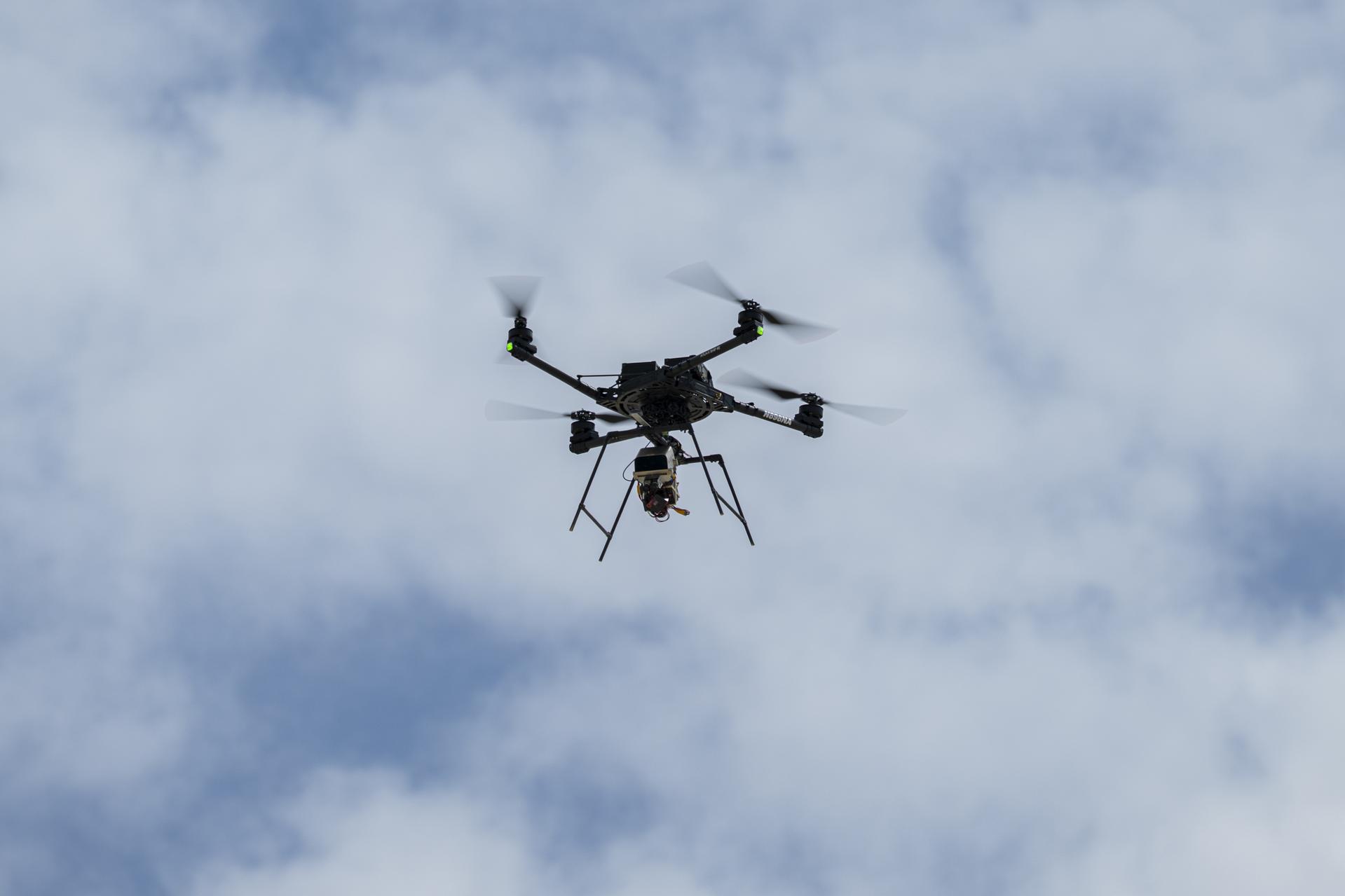
An Alta-X drone flies an advanced guidance and navigation system known as the Safe and Precise Landing – Integrated Capabilities Evolution (SPLICE) experiment near NASA’s Armstrong Flight Research Center in Edwards, California, on Thursday, Aug. 27, 2026. Researchers at NASA’s Johnson Space Center in Houston developed SPLICE, which successfully completed simulated lunar descent and landing maneuvers during recent testing. SPLICE will help spacecraft land precisely and detect and avoid potential hazards, which is critical for NASA missions to the Moon and to Mars.
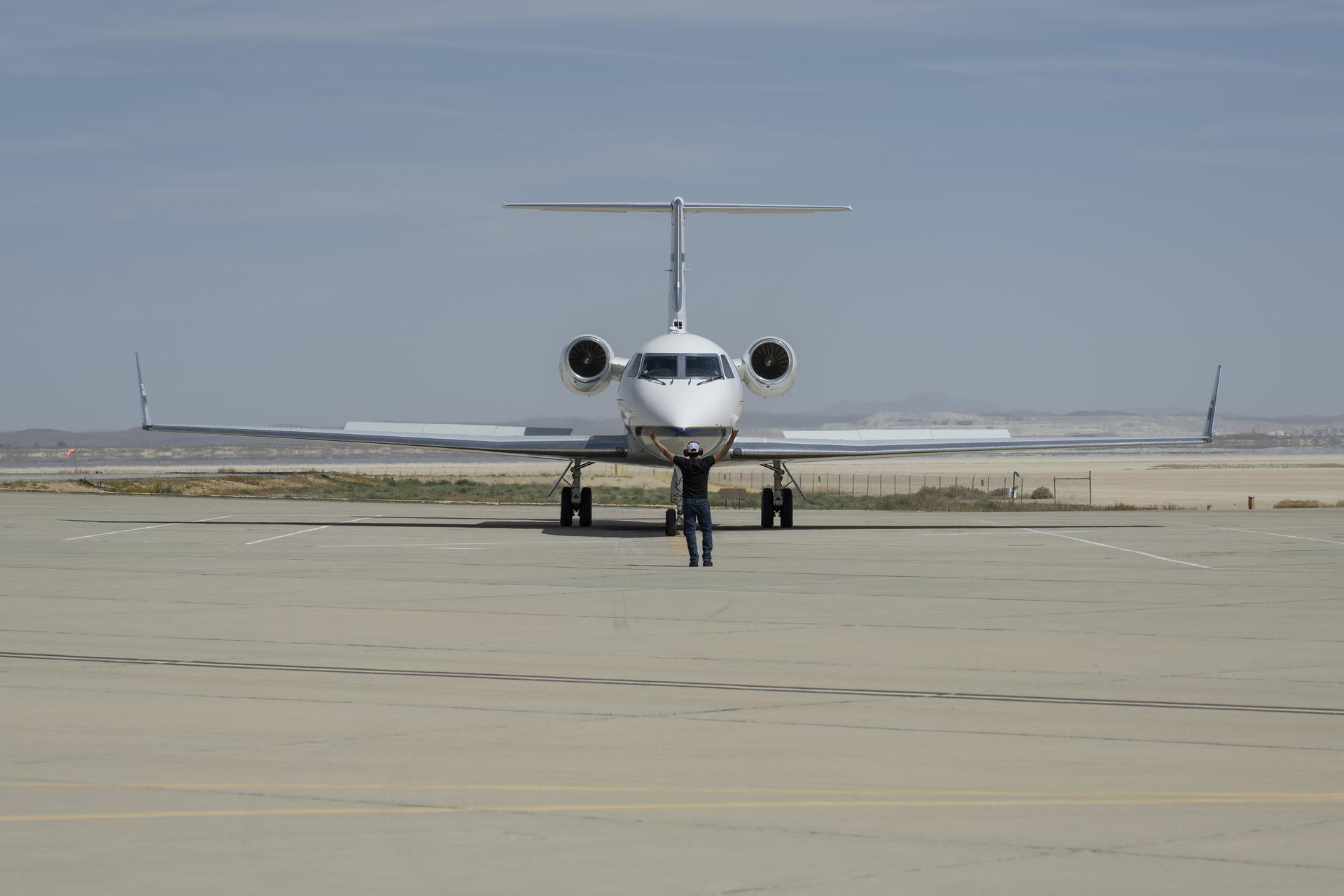
Manny Rodriguez, Gulfstream G-III crew chief, completes flight control checks with the pilots on Friday, March 27, 2026, at NASA’s Armstrong Flight Research Center in Edwards, California. The G-III will join other NASA aircraft to capture imagery of the Orion spacecraft’s heat shield during Artemis II reentry. The mission is part of NASA’s Scientifically Calibrated In-Flight Imagery (SCIFLI) project, based at NASA’s Langley Research Center in Hampton, Virginia.
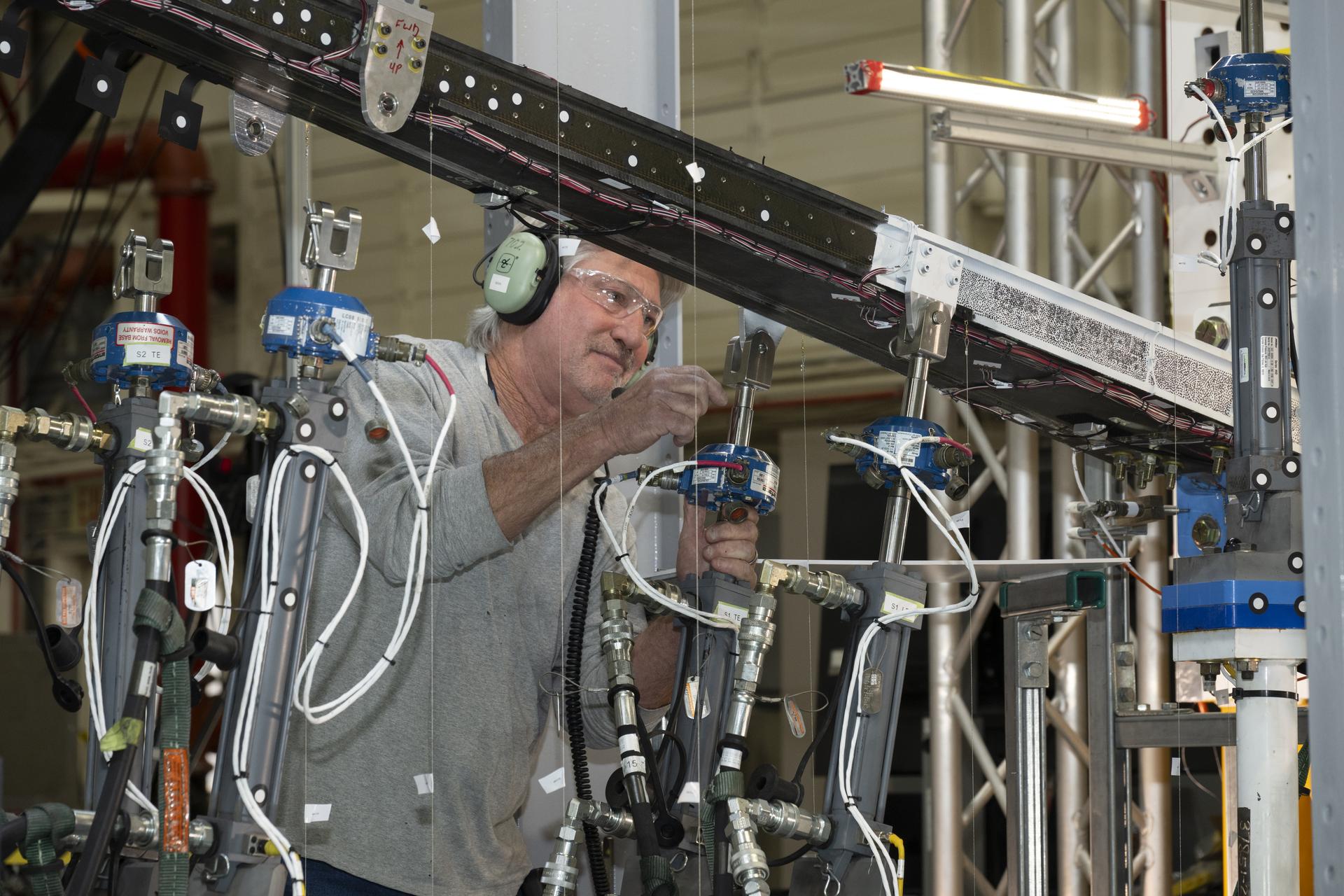
NASA research engineer Walter Hargis regulates the 15-foot Structural Wing Experiment Evaluating Truss-bracing model in the Flight Loads Laboratory at NASA’s Armstrong Flight Research Center in Edwards, California, on Tuesday, March 31, 2026. The model is part of NASA’s research to develop technologies for future ultra-efficient aircraft.

C-20A crew chief Isac Mata stows metal pins used to secure the landing gear, while Ian Elkin, operations engineer, boards the aircraft to prepare for takeoff from NASA’s Armstrong Flight Research Center in Edwards, California, on Wednesday, April 29, 2026. The aircraft conducted science flights over Central California carrying NASA’s UAVSAR (Uninhabited Aerial Vehicle Synthetic Aperture Radar), which collects detailed ground‑movement data to improve earthquake‑hazard models and support a new Earth‑observing satellite.

Alvin Mitchell, a NASA C-20A aircraft quality assurance inspector, completes preflight checks at NASA’s Armstrong Flight Research Center in Edwards, California, on Wednesday, April 29, 2026. The aircraft conducted science flights over Central California carrying NASA’s UAVSAR (Uninhabited Aerial Vehicle Synthetic Aperture Radar), which collects detailed ground‑movement data to improve earthquake‑hazard models and support a new Earth‑observing satellite.
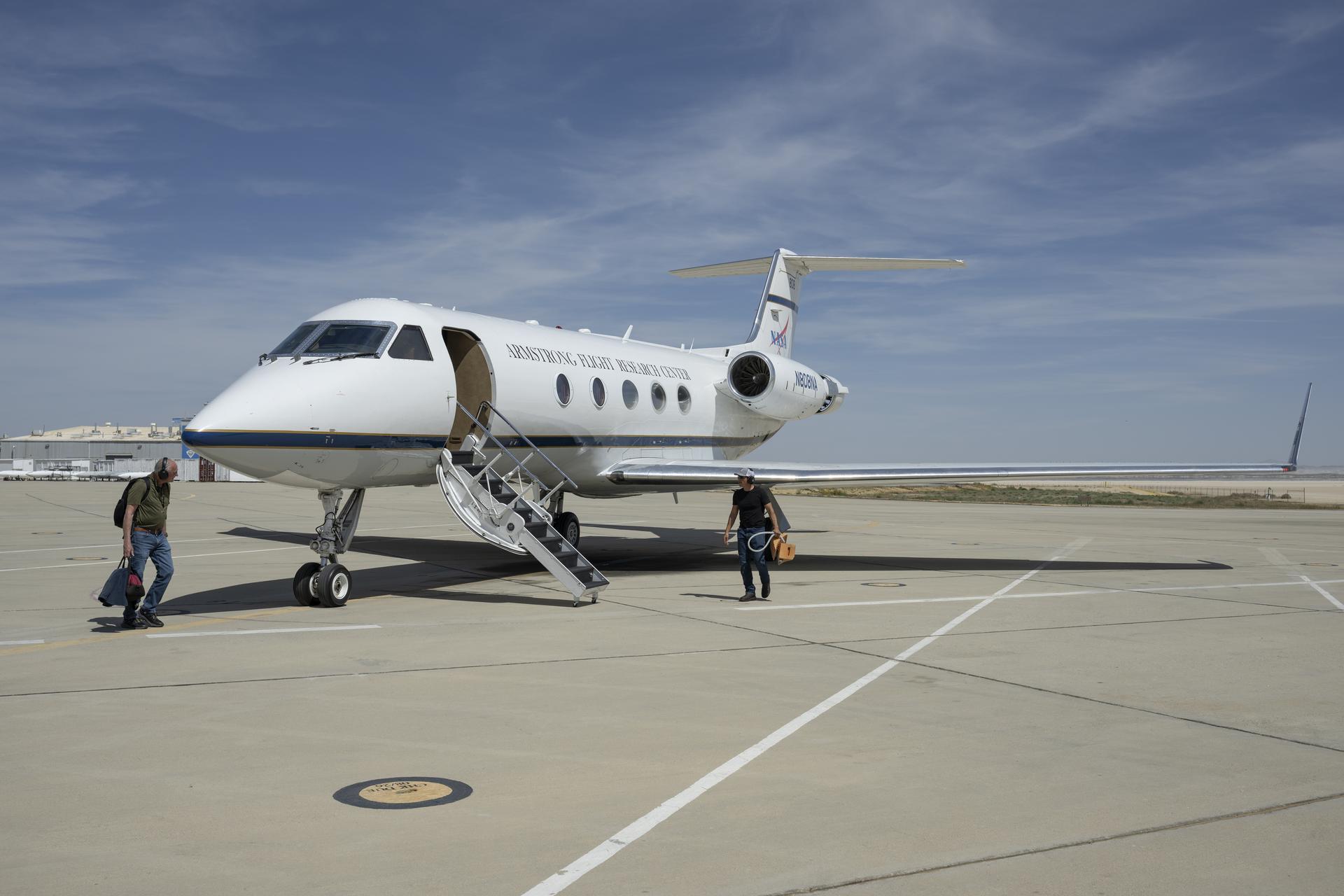
Scott Erickson, left, a quality assurance inspector, and Manny Rodriguez, Gulfstream G-III crew chief, prepare the aircraft for flight on Friday, March 27, 2026, at NASA’s Armstrong Flight Research Center in Edwards, California. The G-III will join other NASA aircraft to capture imagery of the Orion spacecraft’s heat shield during Artemis II reentry. The mission is part of NASA’s Scientifically Calibrated In-Flight Imagery (SCIFLI) project, based at NASA’s Langley Research Center in Hampton, Virginia.
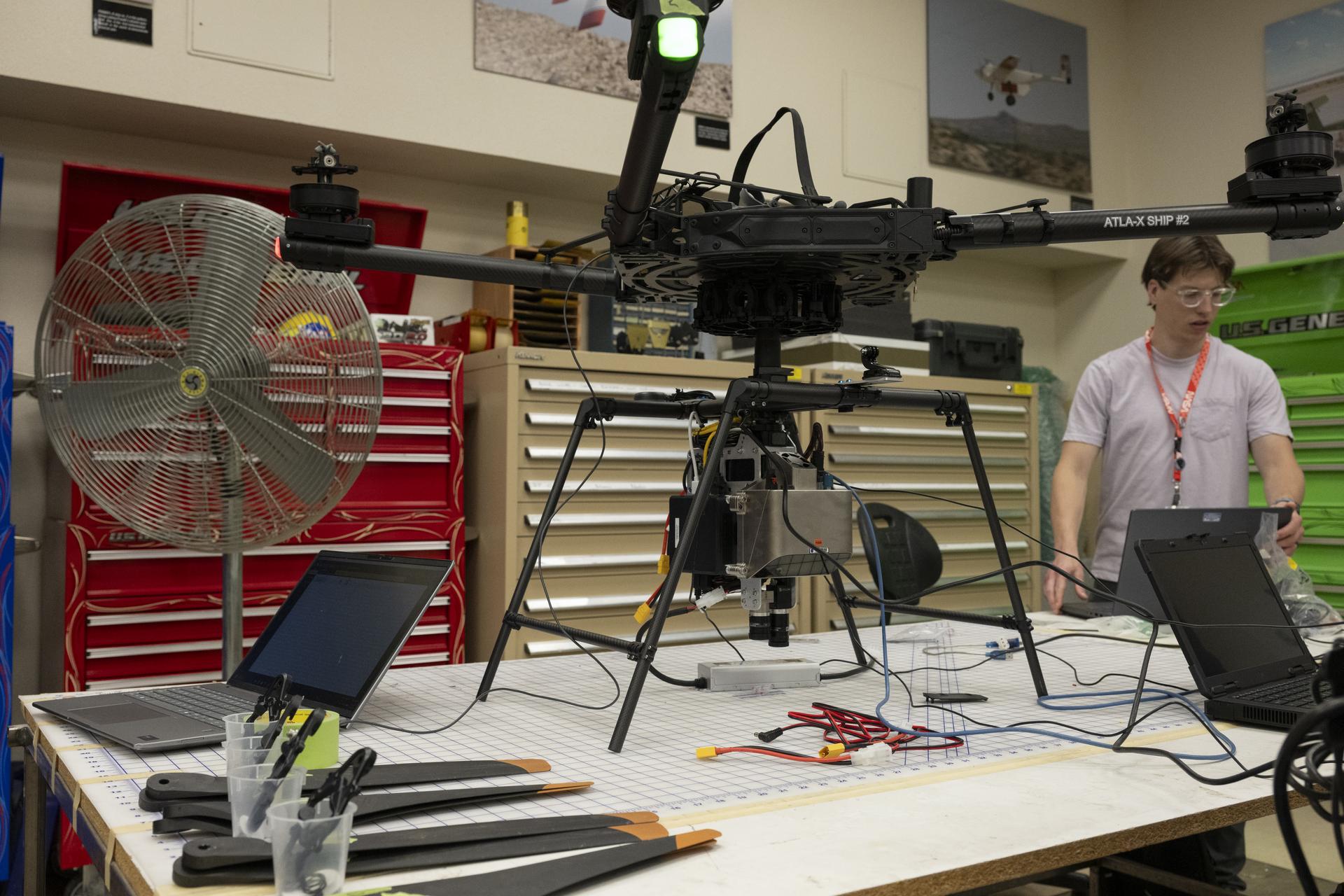
Isaac Rowe, flight software lead, tests how the advanced guidance and navigation system, known as the Safe and Precise Landing – Integrated Capabilities Evolution (SPLICE) experiment, communicates with the Alta-X drone at the Dale Reed Subscale Flight Research Laboratory at NASA’s Armstrong Flight Research Center in Edwards, California, on Monday, June 22, 2026. Rowe developed the system as part of a team at NASA’s Johnson Space Center in Houston. SPLICE will help spacecraft land precisely and detect and avoid potential hazards, which is critical for NASA missions to the Moon and to Mars.
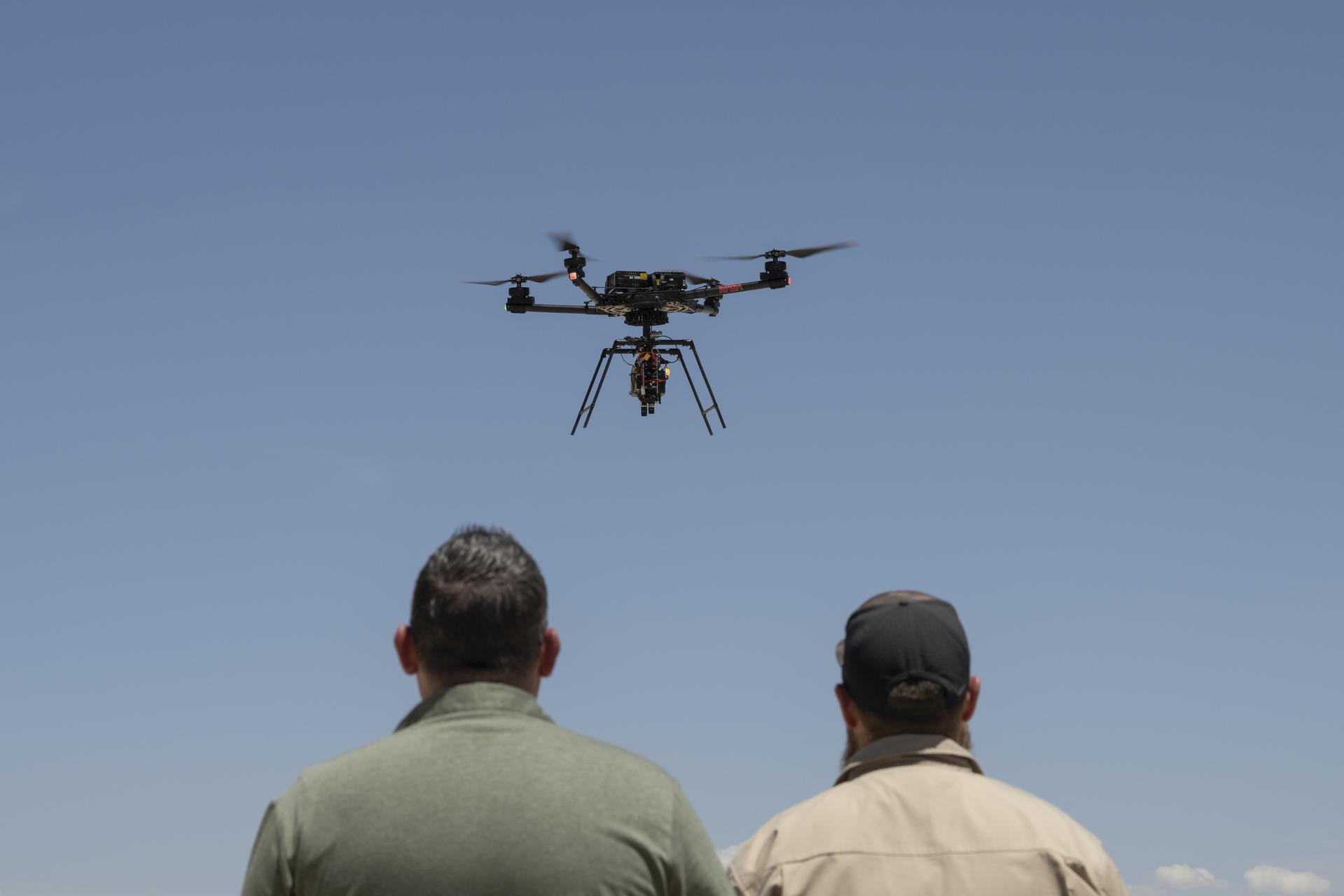
Justin Link, a small uncrewed aircraft pilot, left, and Justin Hall, chief pilot, fly a NASA Alta-X drone carrying an advanced guidance and navigation system known as the Safe and Precise Landing – Integrated Capabilities Evolution (SPLICE) experiment near NASA’s Armstrong Flight Research Center in Edwards, California, on Wednesday, July 15, 2026. Researchers at NASA’s Johnson Space Center in Houston developed SPLICE, which successfully communicated with the remotely piloted aircraft during hover maneuvers in flight. SPLICE will help spacecraft land precisely and detect and avoid potential hazards, which is critical for NASA missions to the Moon and to Mars.
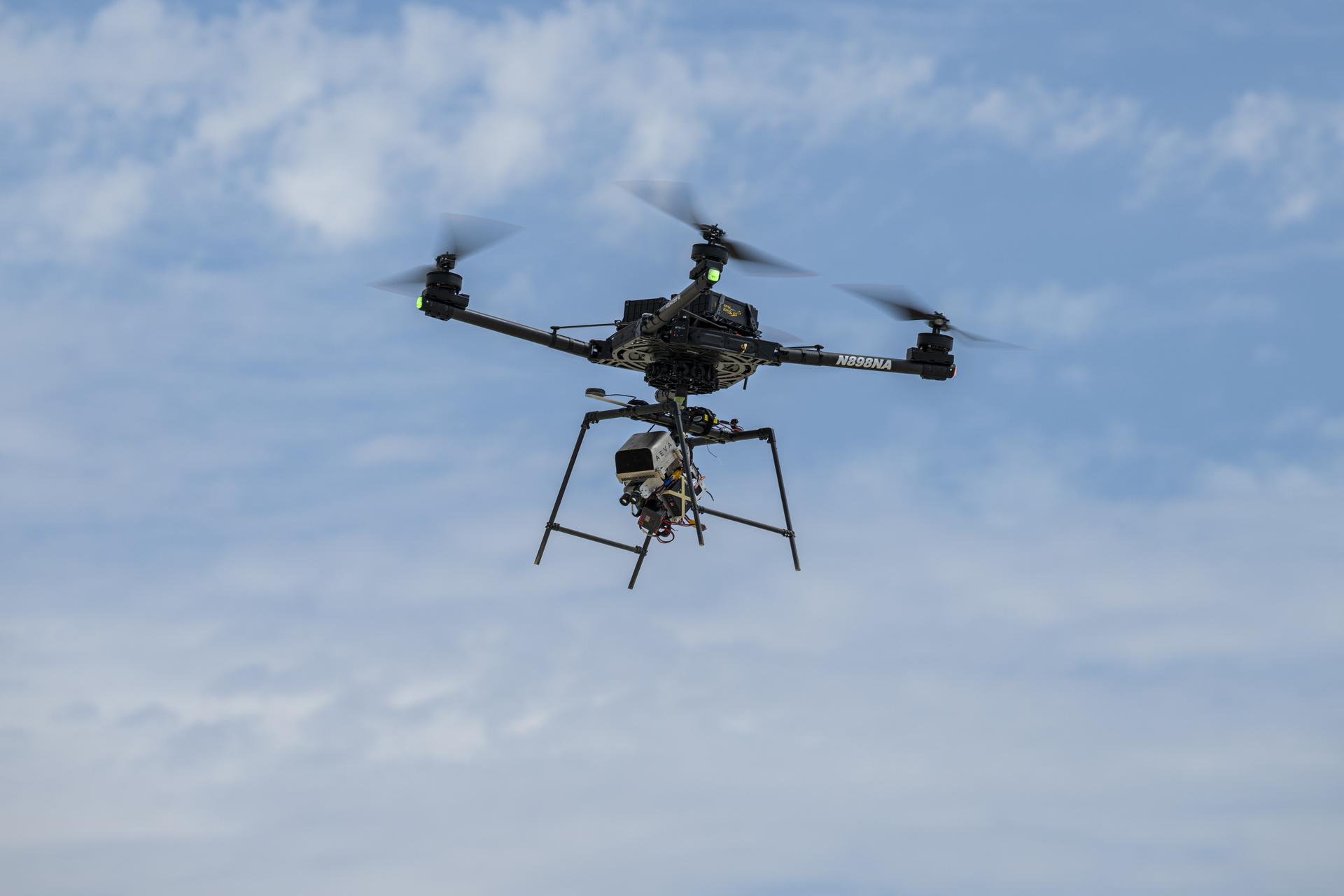
An Alta-X drone flies an advanced guidance and navigation system known as the Safe and Precise Landing – Integrated Capabilities Evolution (SPLICE) experiment near NASA’s Armstrong Flight Research Center in Edwards, California, on Thursday, Aug. 27, 2026. Researchers at NASA’s Johnson Space Center in Houston developed SPLICE, which successfully completed simulated lunar descent and landing maneuvers during recent testing. SPLICE will help spacecraft land precisely and detect and avoid potential hazards, which is critical for NASA missions to the Moon and to Mars.
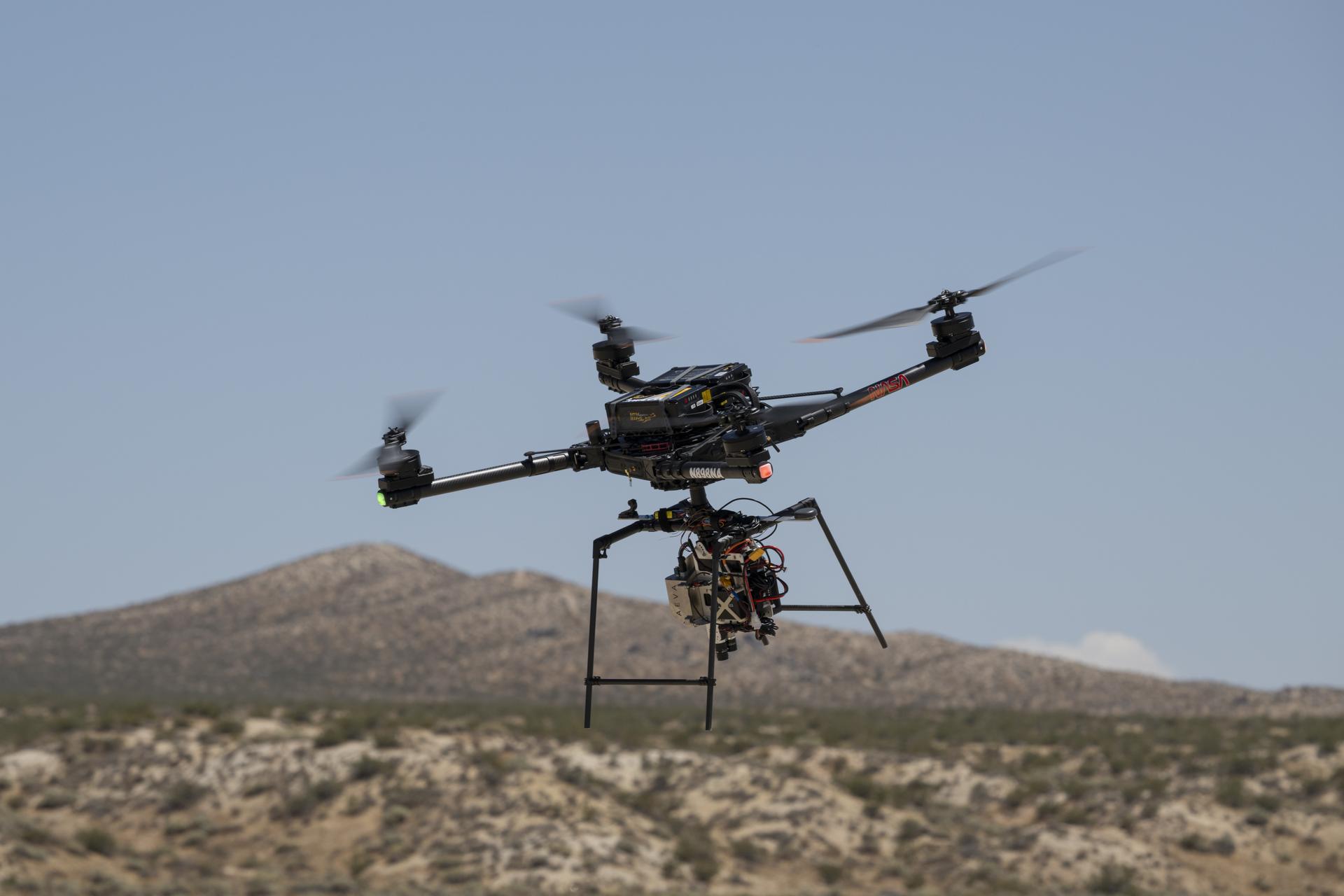
An Alta-X drone flies an advanced guidance and navigation system known as the Safe and Precise Landing – Integrated Capabilities Evolution (SPLICE) experiment near NASA’s Armstrong Flight Research Center in Edwards, California, on Wednesday, July 15, 2026. Researchers at NASA’s Johnson Space Center in Houston developed SPLICE, which successfully communicated with the remotely piloted aircraft during hover maneuvers in flight. SPLICE will help spacecraft land precisely and detect and avoid potential hazards, which is critical for NASA missions to the Moon and to Mars.
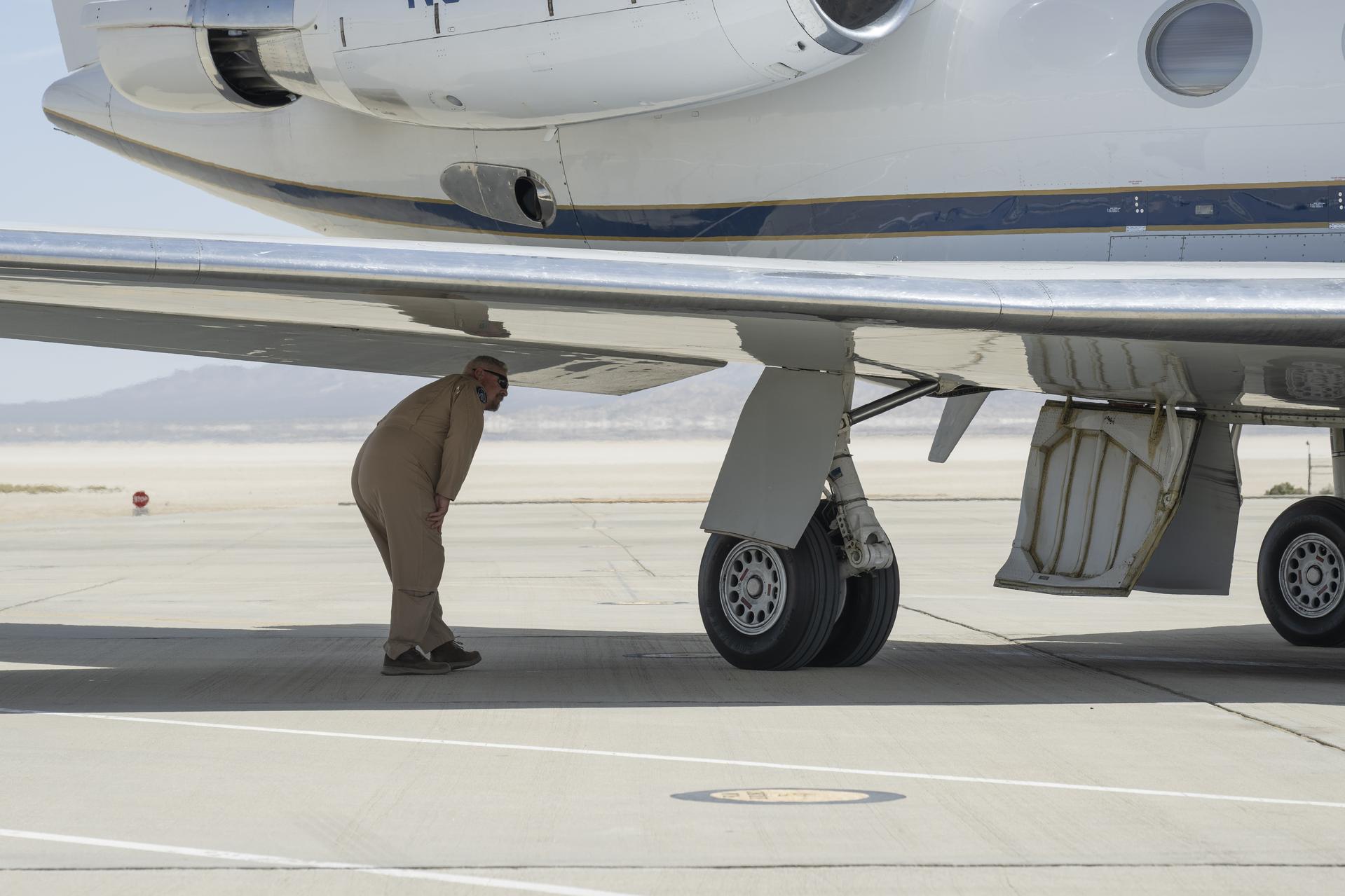
NASA pilot Tracy Phelps inspects the Gulfstream G-III aircraft on Friday, March 27, 2026, at NASA’s Armstrong Flight Research Center in Edwards, California. The G-III will join other NASA aircraft to capture imagery of the Orion spacecraft’s heat shield during Artemis II reentry. The mission is part of NASA’s Scientifically Calibrated In-Flight Imagery (SCIFLI) project, based at NASA’s Langley Research Center in Hampton, Virginia.
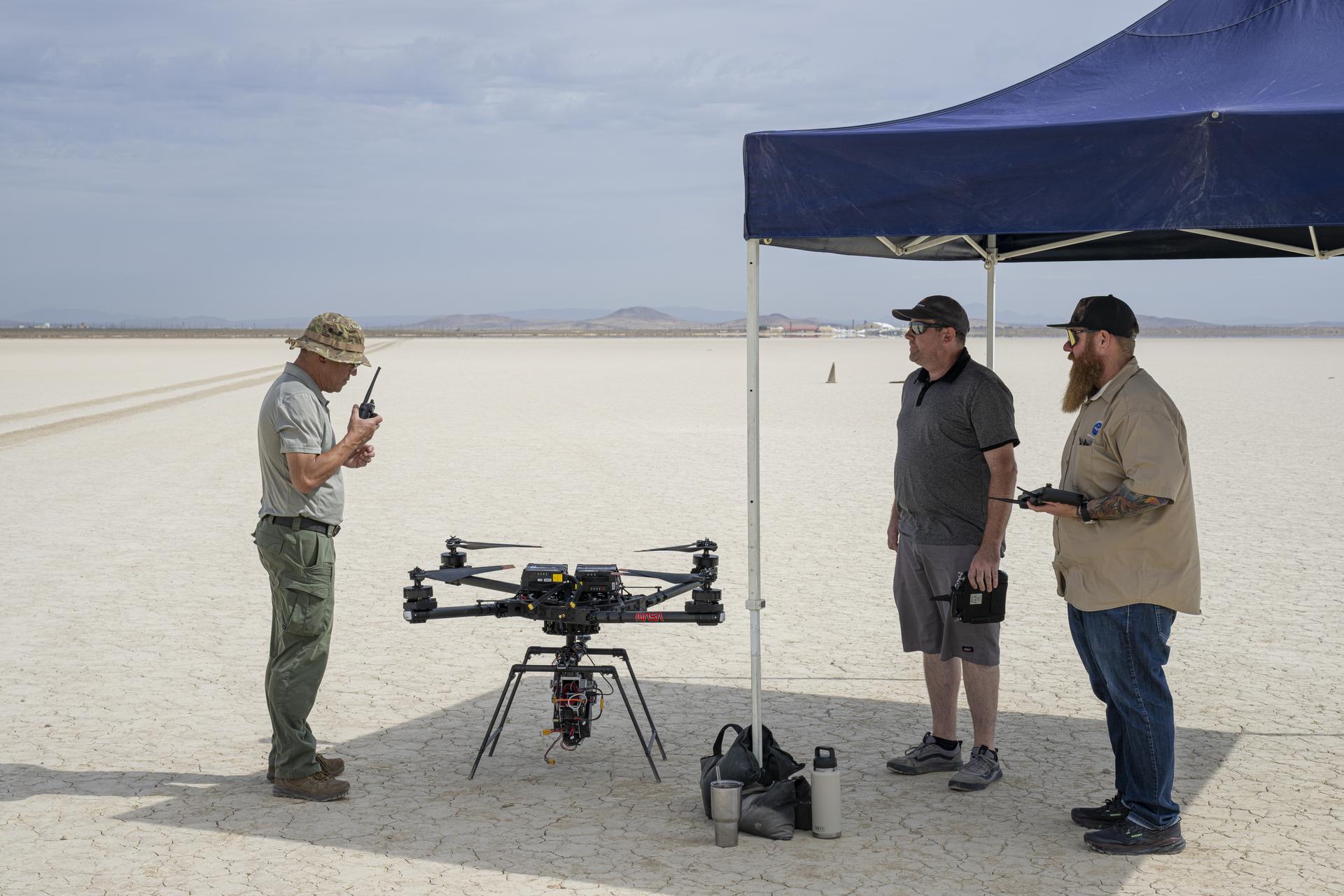
Derek Abramson, Dale Reed Subscale Flight Research Laboratory chief engineer, left, communicates with the Edwards Air Force Base air traffic control tower for approval to fly the Alta-X drone near NASA’s Armstrong Flight Research Center in Edwards, California, on Thursday, Aug. 27, 2026. Justin Link, small uncrewed aircraft pilot, second from left, and laboratory chief pilot Justin Hall await flight clearance. Researchers at NASA’s Johnson Space Center in Houston developed the advanced guidance and navigation system known as the Safe and Precise Landing – Integrated Capabilities Evolution (SPLICE) experiment, which is installed on the Alta-X. SPLICE will help spacecraft land precisely and detect and avoid potential hazards, which is critical for NASA missions to the Moon and to Mars.
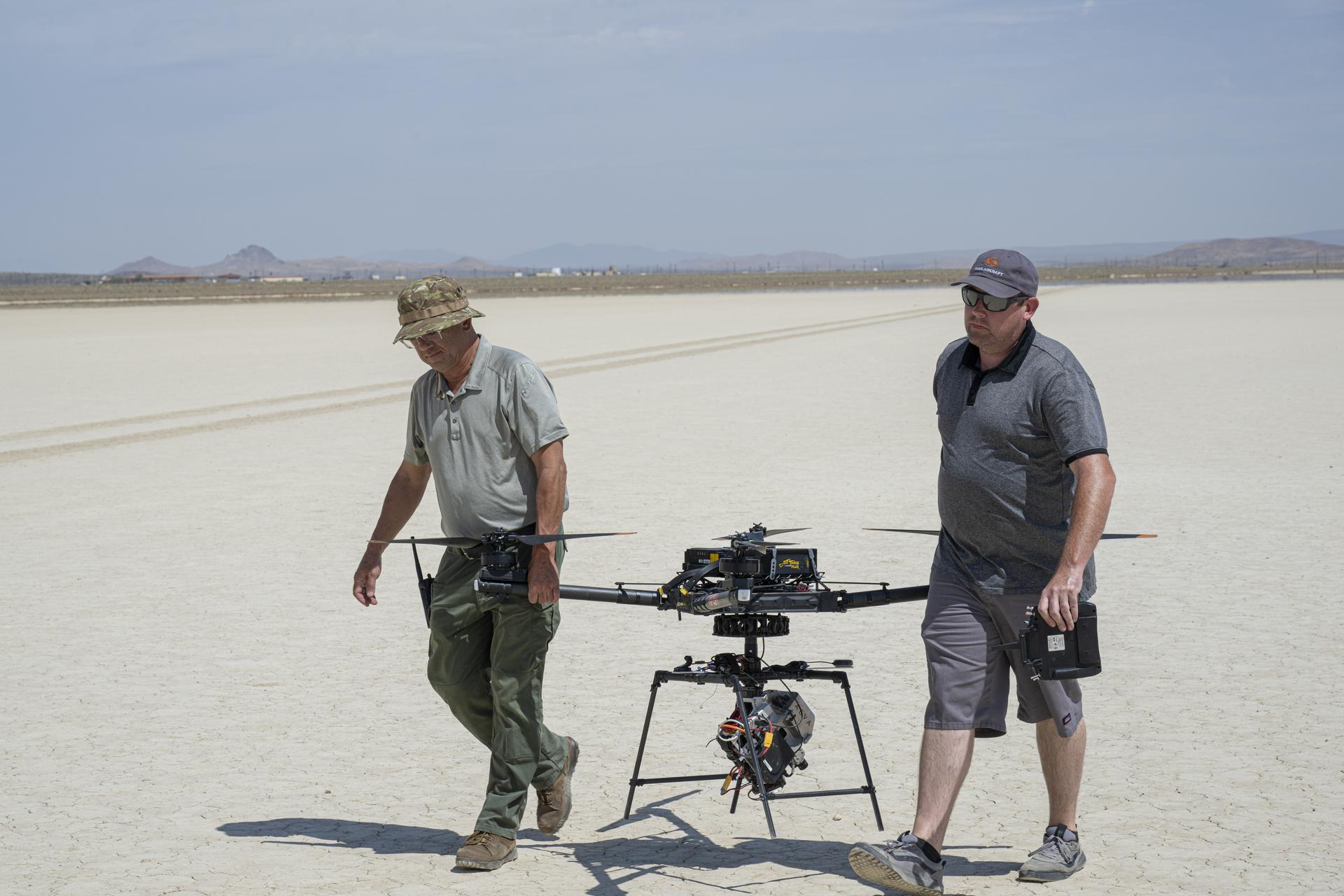
Derek Abramson, Dale Reed Subscale Flight Research Laboratory chief engineer, left, and Justin Link, small uncrewed aircraft pilot, carry NASA’s Alta-X drone near NASA’s Armstrong Flight Research Center in Edwards, California, on Thursday, Aug. 27, 2026. Researchers at NASA’s Johnson Space Center in Houston developed the advanced guidance and navigation system known as the Safe and Precise Landing – Integrated Capabilities Evolution (SPLICE) experiment, which is installed on this drone. SPLICE will help spacecraft land precisely and detect and avoid potential hazards, which is critical for NASA missions to the Moon and to Mars.
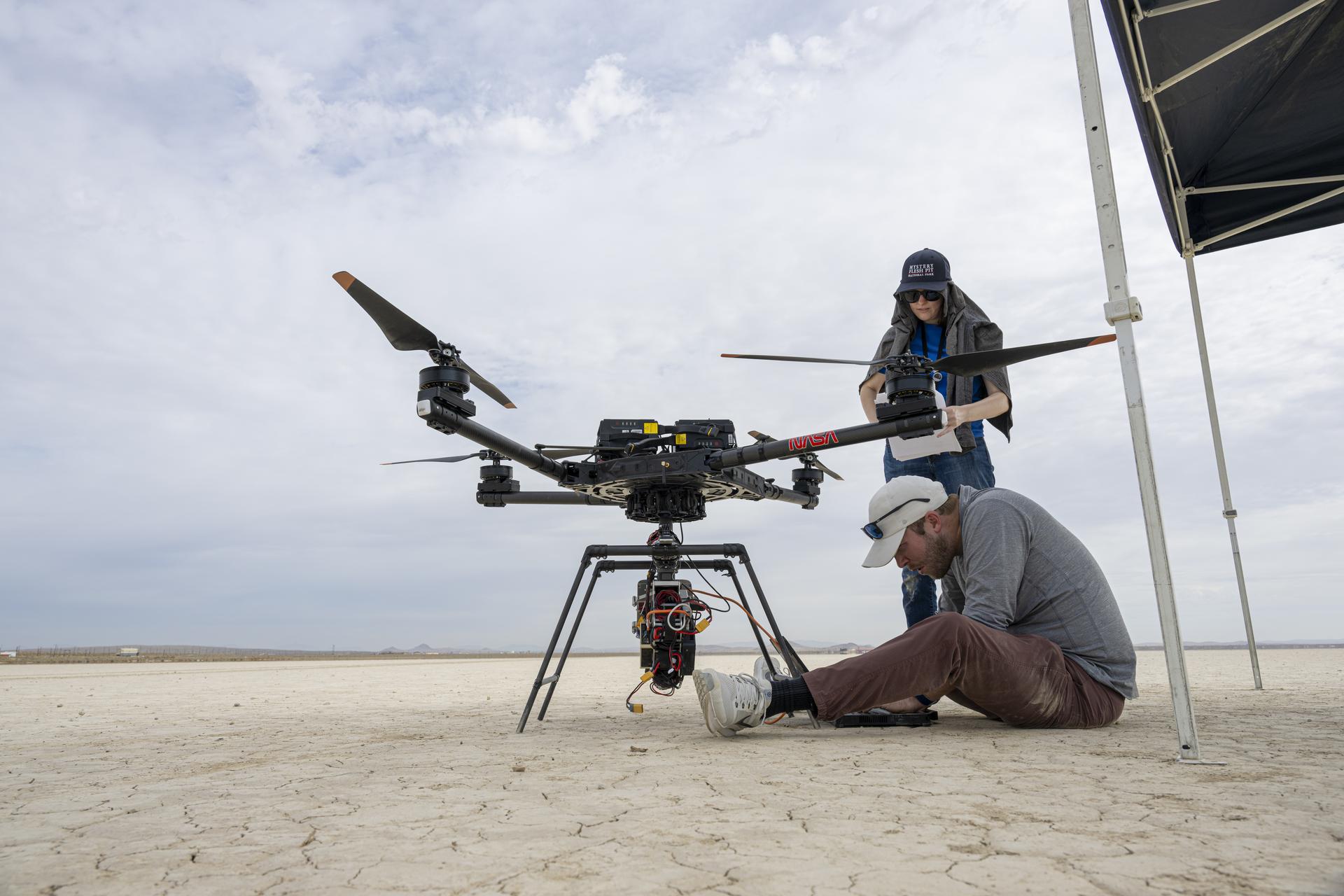
Davis Adams, project manager, sitting, and Jeanette Harper, flight software team member, check the guidance and navigation system known as the Safe and Precise Landing – Integrated Capabilities Evolution (SPLICE) experiment on an Alta-X drone near NASA’s Armstrong Flight Research Center in Edwards, California, on Thursday, Aug. 27, 2026. Researchers at NASA’s Johnson Space Center in Houston developed SPLICE, which recently completed simulated lunar descent and landing maneuvers. SPLICE will help spacecraft land precisely and detect and avoid potential hazards, which is critical for NASA missions to the Moon and to Mars.
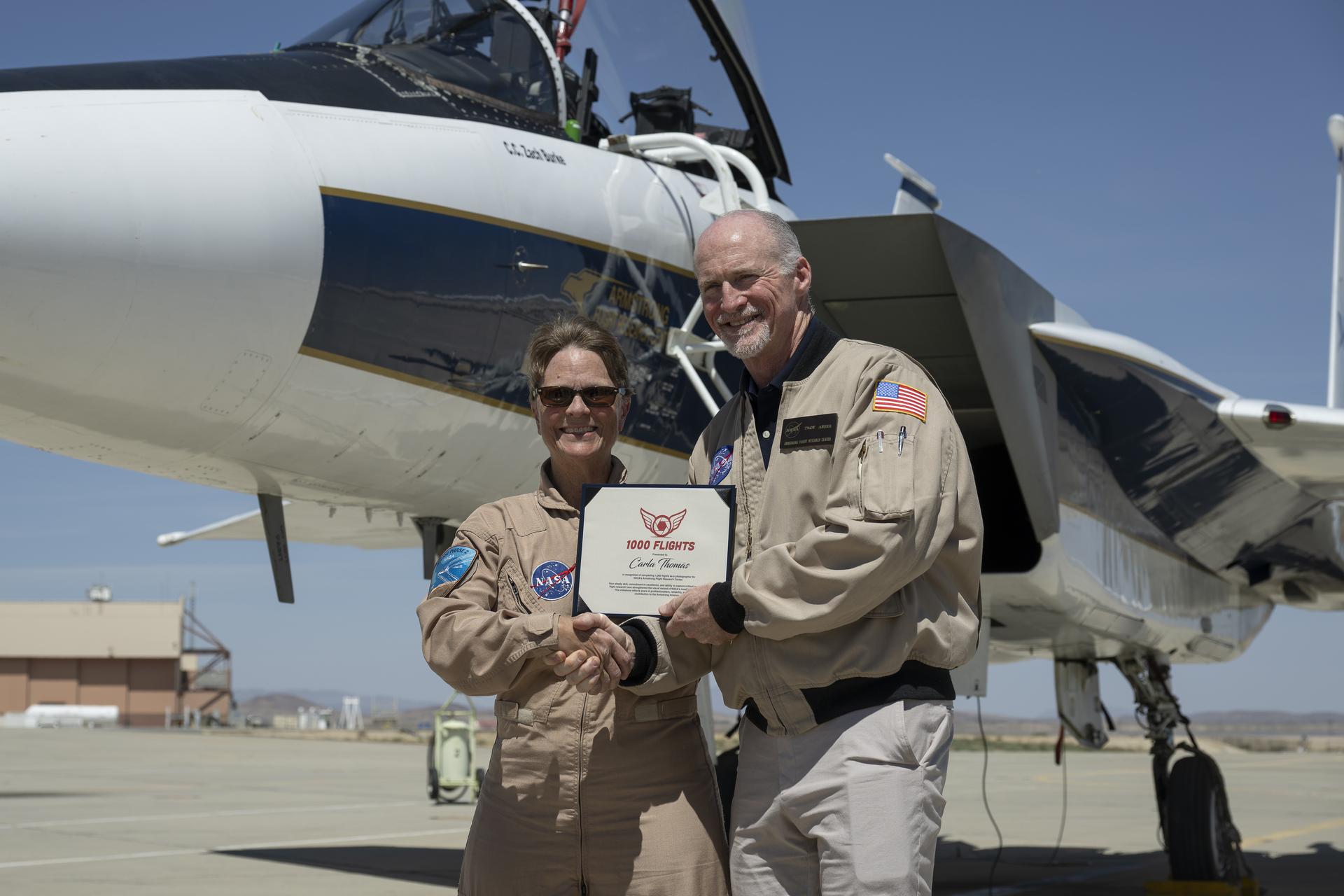
Troy Asher, acting center director, presents NASA aerial photographer Carla Thomas with an award commemorating her 1,000th flight at NASA’s Armstrong Flight Research Center in Edwards, California, on Monday, April 20, 2026. For 38 years, Thomas has captured aerial photographs of research and science flights. The milestone flight was completed in the backseat of a NASA F-15 aircraft piloted by NASA Armstrong chief pilot Wayne Ringelberg.
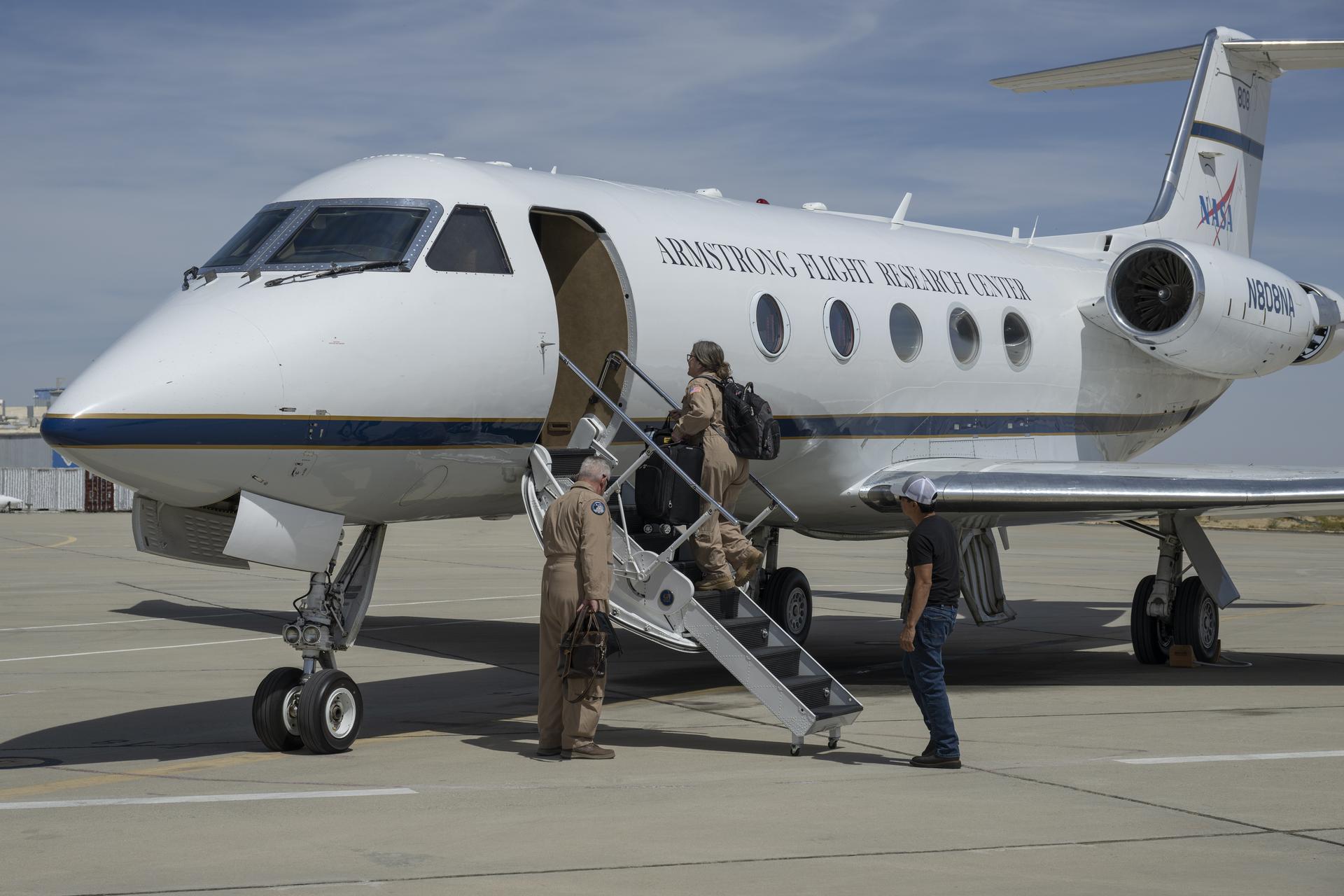
NASA pilot Carrie Worth, center, and Tracy Phelps, left, board the Gulfstream G-III aircraft on Friday, March 27, 2026, at NASA’s Armstrong Flight Research Center in Edwards, California. Manny Rodriguez, crew chief, prepares the aircraft for flight. The G-III will join other NASA aircraft to capture imagery of the Orion spacecraft’s heat shield during Artemis II reentry. The mission is part of NASA’s Scientifically Calibrated In-Flight Imagery (SCIFLI) project, based at NASA’s Langley Research Center in Hampton, Virginia.
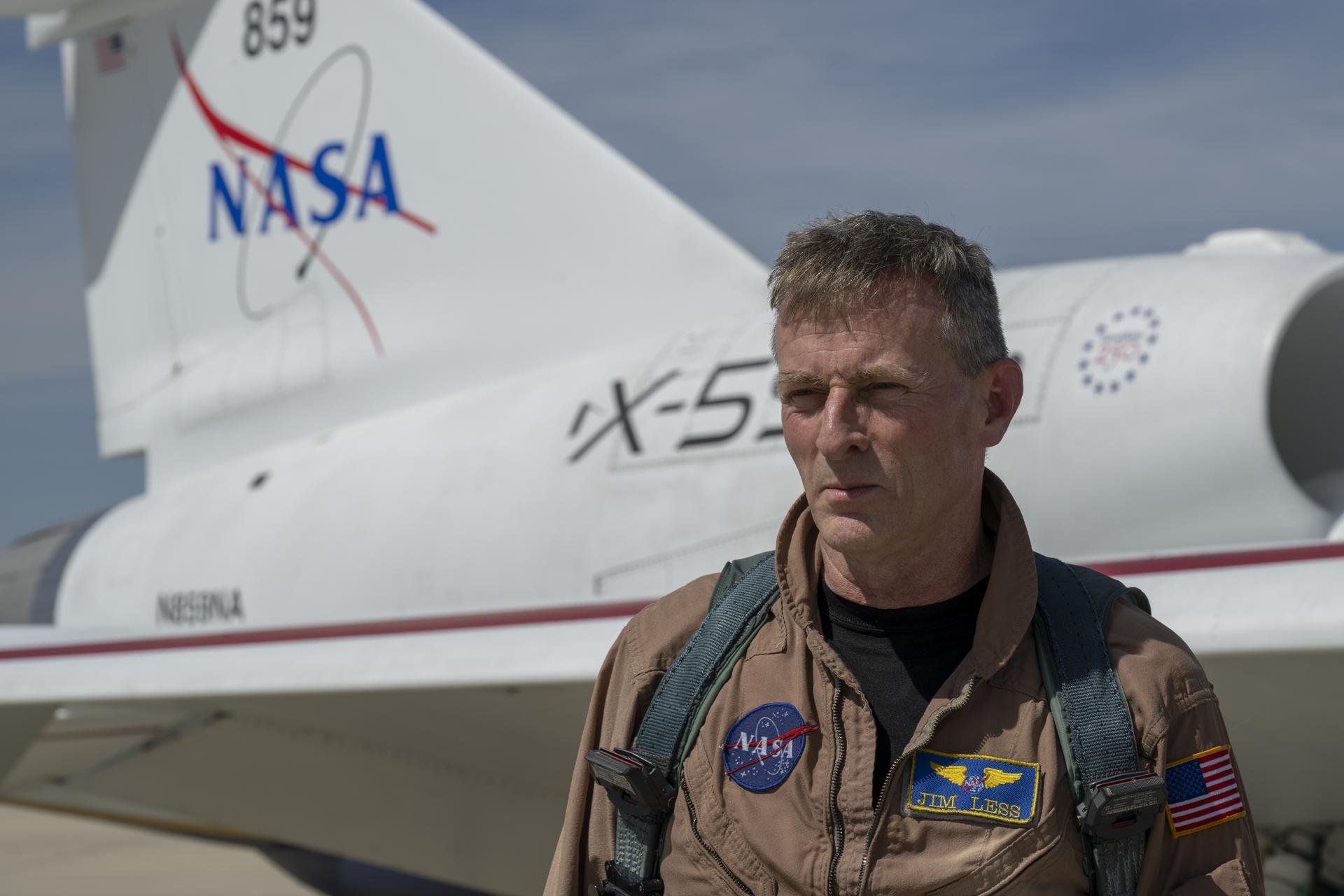
NASA test pilot Jim “Clue” Less is seen after completing his first flight of the X-59 and the aircraft’s second flight overall at Edwards Air Force Base in California on Thursday, March 26, 2026. The flight supports NASA’s Quesst mission to demonstrate supersonic flight that produces a quieter sonic “thump” instead of a loud sonic boom.
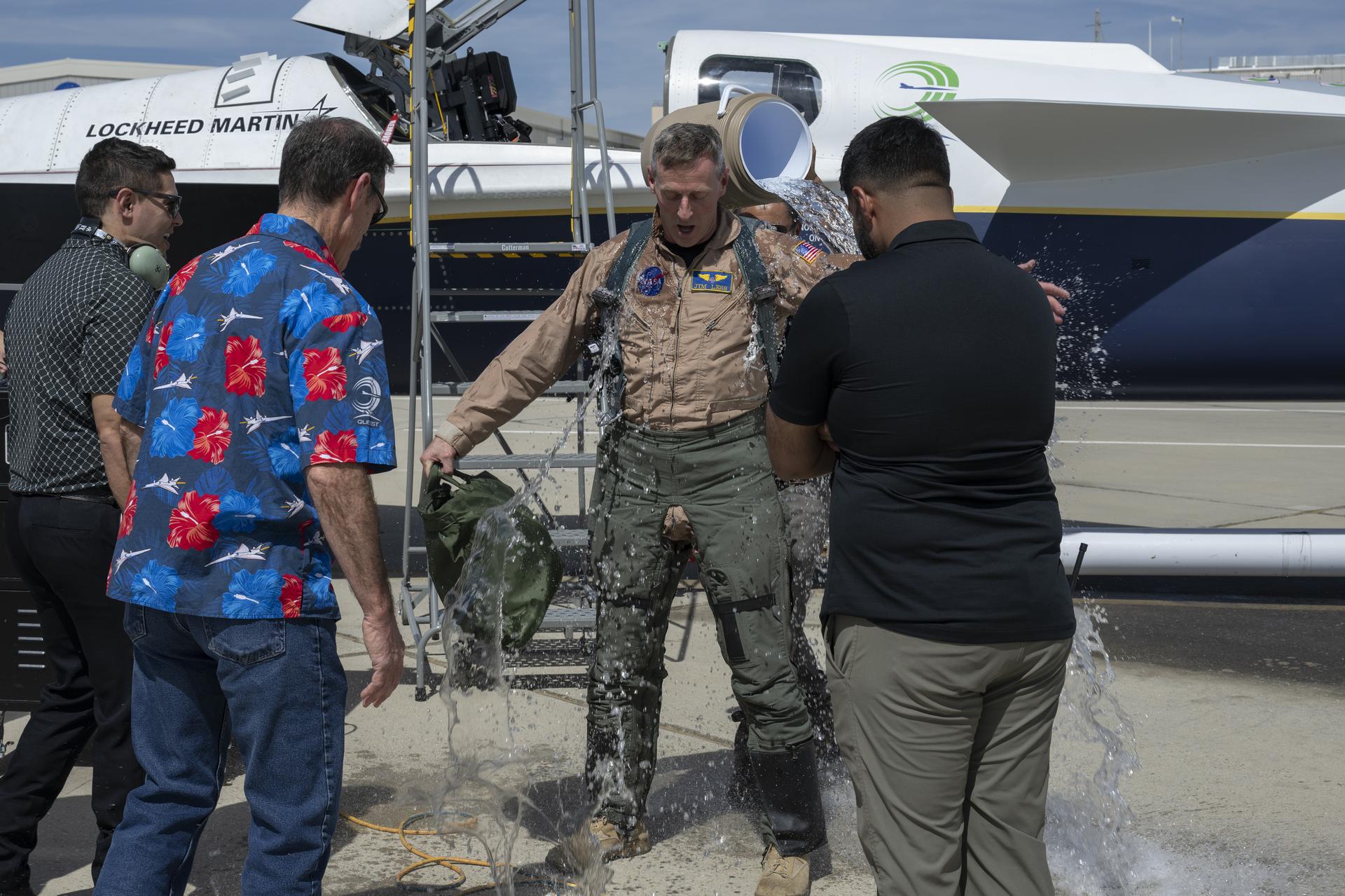
NASA test pilot Jim “Clue” Less is seen after completing his first flight of the X-59 and the aircraft’s second flight overall at Edwards Air Force Base in California on Thursday, March 26, 2026. The flight supports NASA’s Quesst mission to demonstrate supersonic flight that produces a quieter sonic “thump” instead of a loud sonic boom.
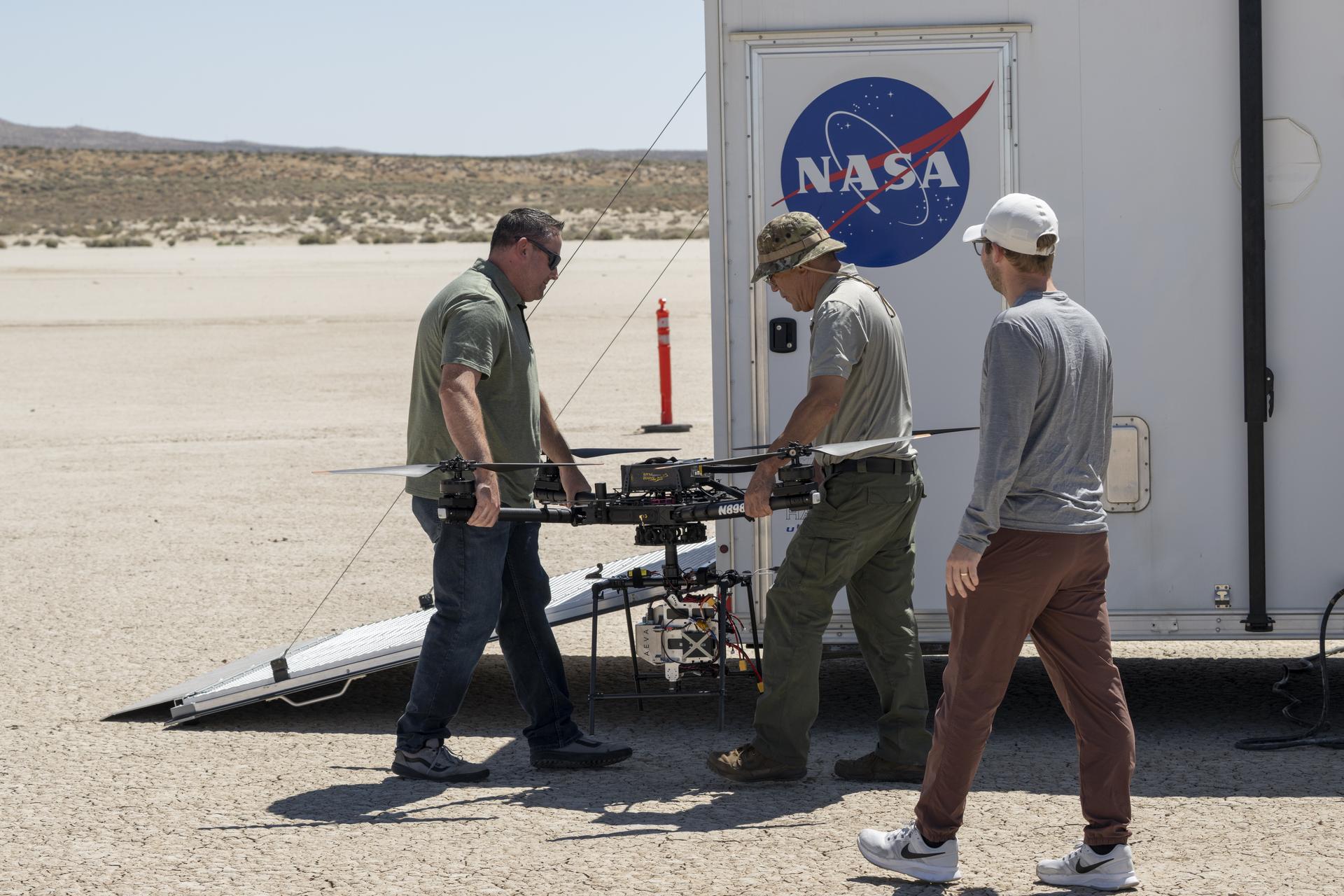
Justin Link, small uncrewed aircraft pilot, left, and Derek Abramson, chief engineer, carry NASA’s Alta-X drone as Davis Adams, project manager, observes test preparations near NASA’s Armstrong Flight Research Center in Edwards, California, on Wednesday, July 15, 2026. Researchers at NASA’s Johnson Space Center in Houston developed the advanced guidance and navigation system known as the Safe and Precise Landing – Integrated Capabilities Evolution (SPLICE) experiment, which was integrated with this drone. SPLICE will help spacecraft land precisely and detect and avoid potential hazards, which is critical for NASA missions to the Moon and to Mars.
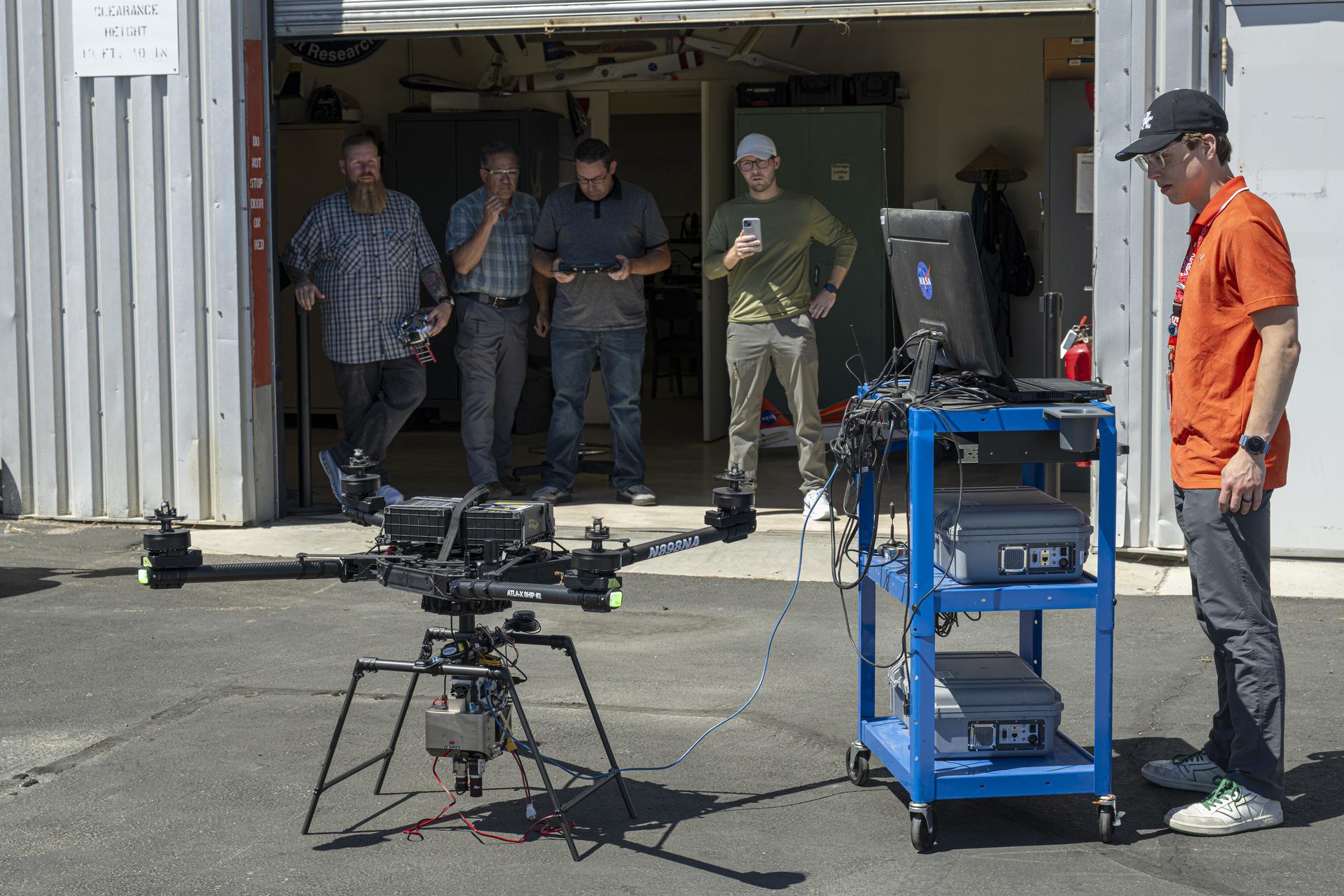
A team from NASA’s Johnson Space Center in Houston and NASA’s Armstrong Flight Research Center in Edwards, California, tests an advanced guidance and navigation system, known as the Safe and Precise Landing – Integrated Capabilities Evolution (SPLICE) experiment, with the Alta-X drone on Monday, June 22, 2026. From left are Dale Reed Subscale Flight Research Laboratory staff Justin Hall, chief pilot; Derek Abramson, chief engineer; Justin Link, a small uncrewed aircraft pilot; and, from Houston, Davis Adams, project manager, and Isaac Rowe, flight software lead. The system will help spacecraft land precisely and detect and avoid potential hazards, which is critical for NASA missions to the Moon and to Mars.
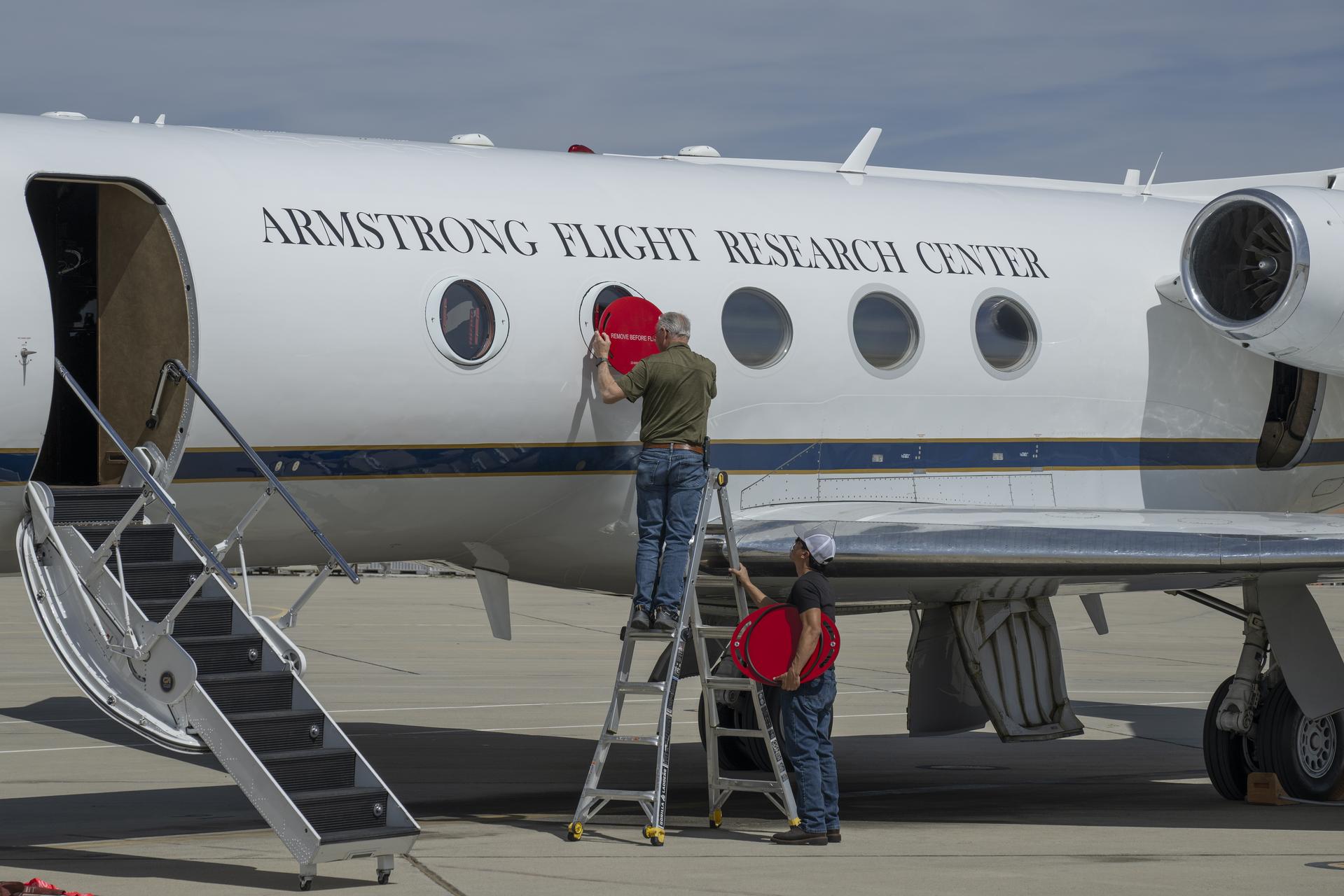
Scott Erickson, left, a quality assurance inspector, and Manny Rodriguez, Gulfstream G-III aircraft crew chief, remove window coverings from the aircraft on Friday, March 27, 2026, at NASA’s Armstrong Flight Research Center in Edwards, California. The G-III will join other NASA aircraft to capture imagery of the Orion spacecraft’s heat shield during Artemis II reentry. The mission is part of NASA’s Scientifically Calibrated In-Flight Imagery (SCIFLI) project, based at NASA’s Langley Research Center in Hampton, Virginia.
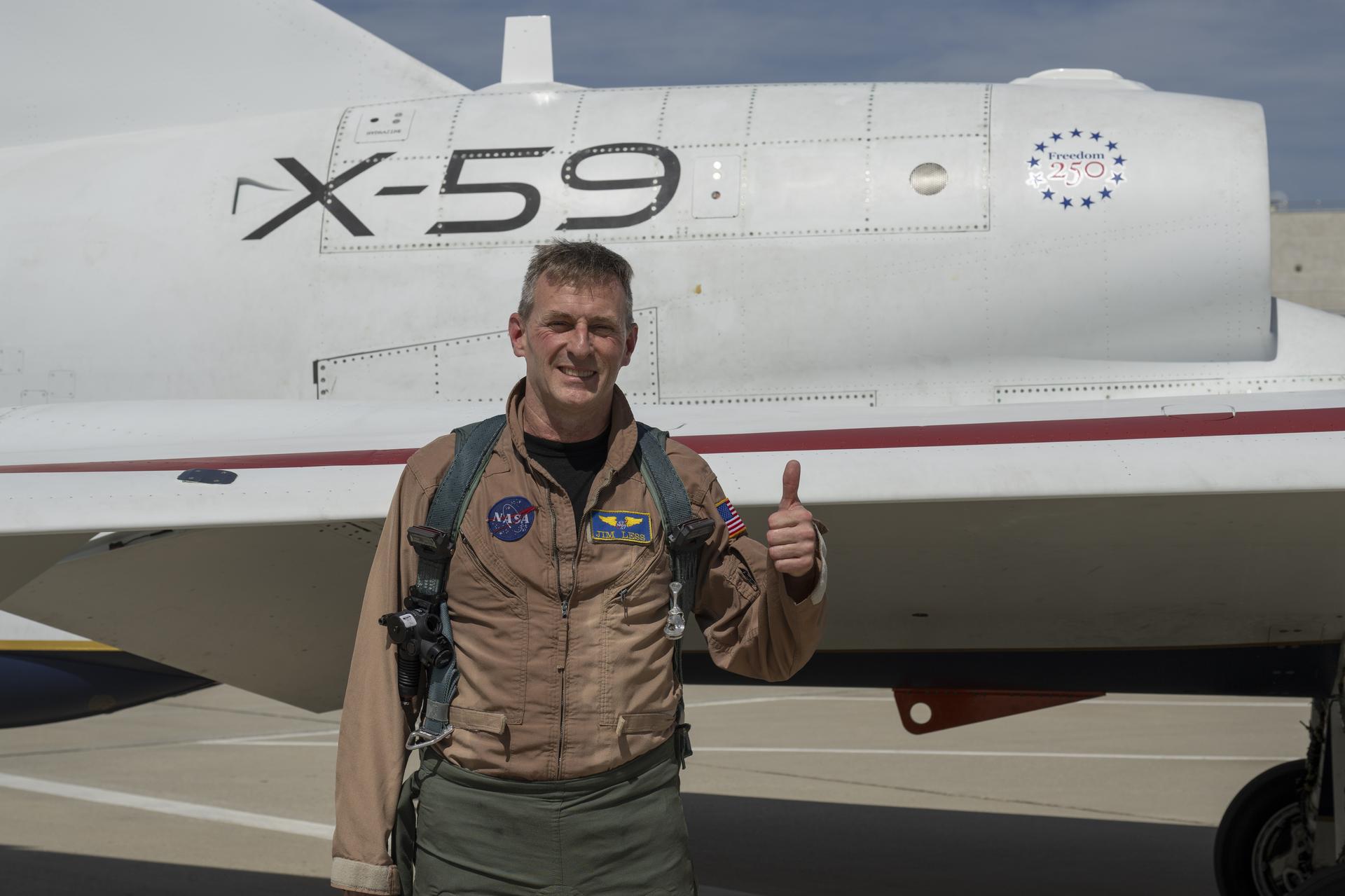
NASA test pilot Jim “Clue” Less is seen after completing his first flight of the X-59 and the aircraft’s second flight overall at Edwards Air Force Base in California on Thursday, March 26, 2026. The flight supports NASA’s Quesst mission to demonstrate supersonic flight that produces a quieter sonic “thump” instead of a loud sonic boom.
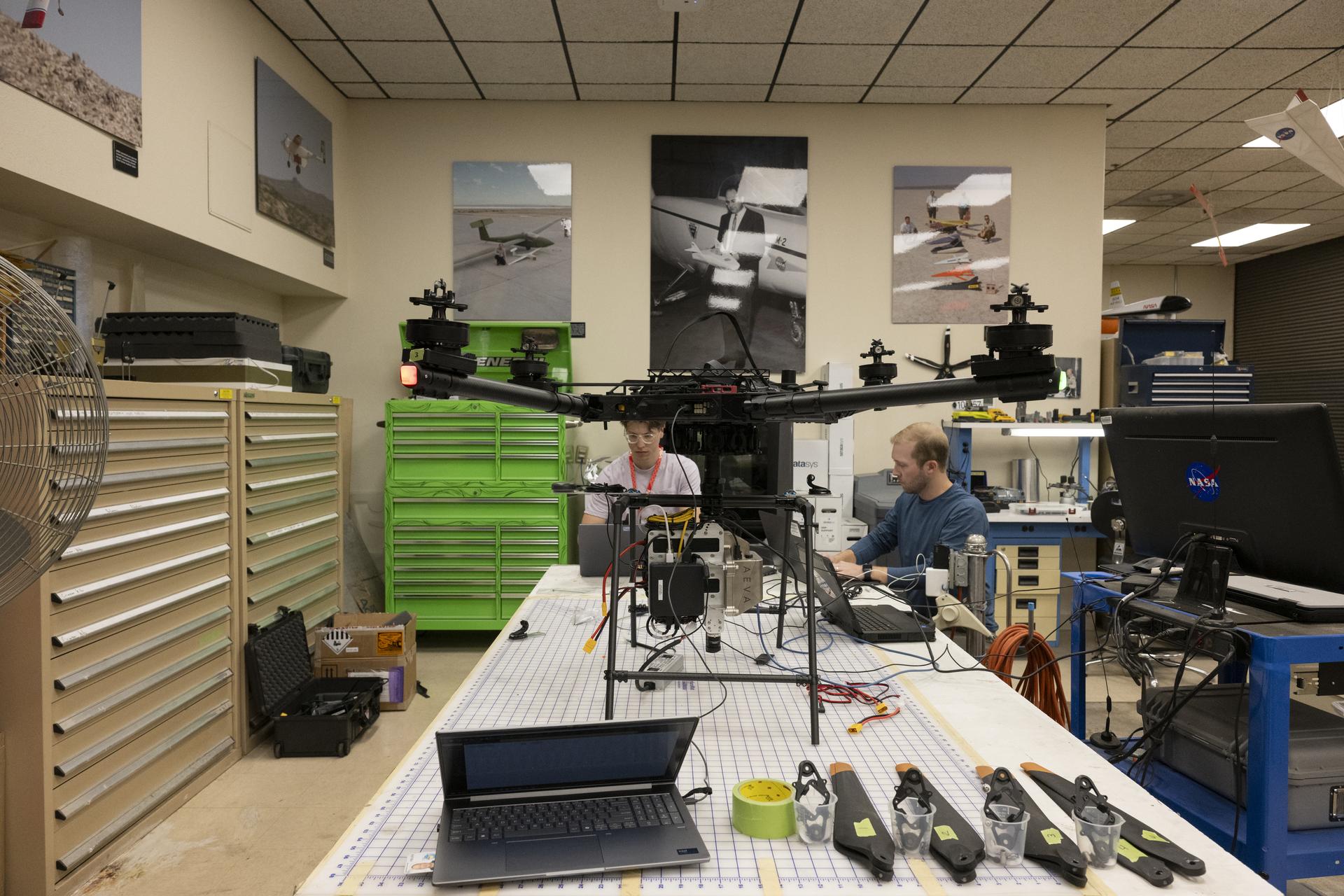
Isaac Rowe, left, flight software lead, and Davis Adams, project manager, work to integrate the advanced guidance and navigation system, known as the Safe and Precise Landing – Integrated Capabilities Evolution (SPLICE) experiment, with the Alta-X drone on Monday, June 22, 2026. Rowe and Adams developed the system at NASA’s Johnson Space Center in Houston. They worked with the Dale Reed Subscale Flight Research Laboratory team at NASA’s Armstrong Flight Research Center in Edwards, California, to test how the system and the drone communicated. The system will help spacecraft land precisely and detect and avoid potential hazards, which is critical for NASA missions to the Moon and to Mars.