
Kennedy Space Center Director Janet Petro and Representative Shontel Brown at the Read to the Final Four event In Cleveland, OH on April 5, 2024 where the NCAA, Women’s Final Four and the Cleveland Local Organizing Committee have teamed up to help third graders across the state develop their abilities as part of a nine-week program designed to leave a lasting impact on students throughout Ohio. From January to April 2024, local elementary students are encouraged to track their reading minutes leading up to the Women’s Final Four. Participating students and leading classrooms will receive awards at Tourney Town to celebrate their accomplishments. Photo Credit: (NASA/Sara Lowthian-Hanna)
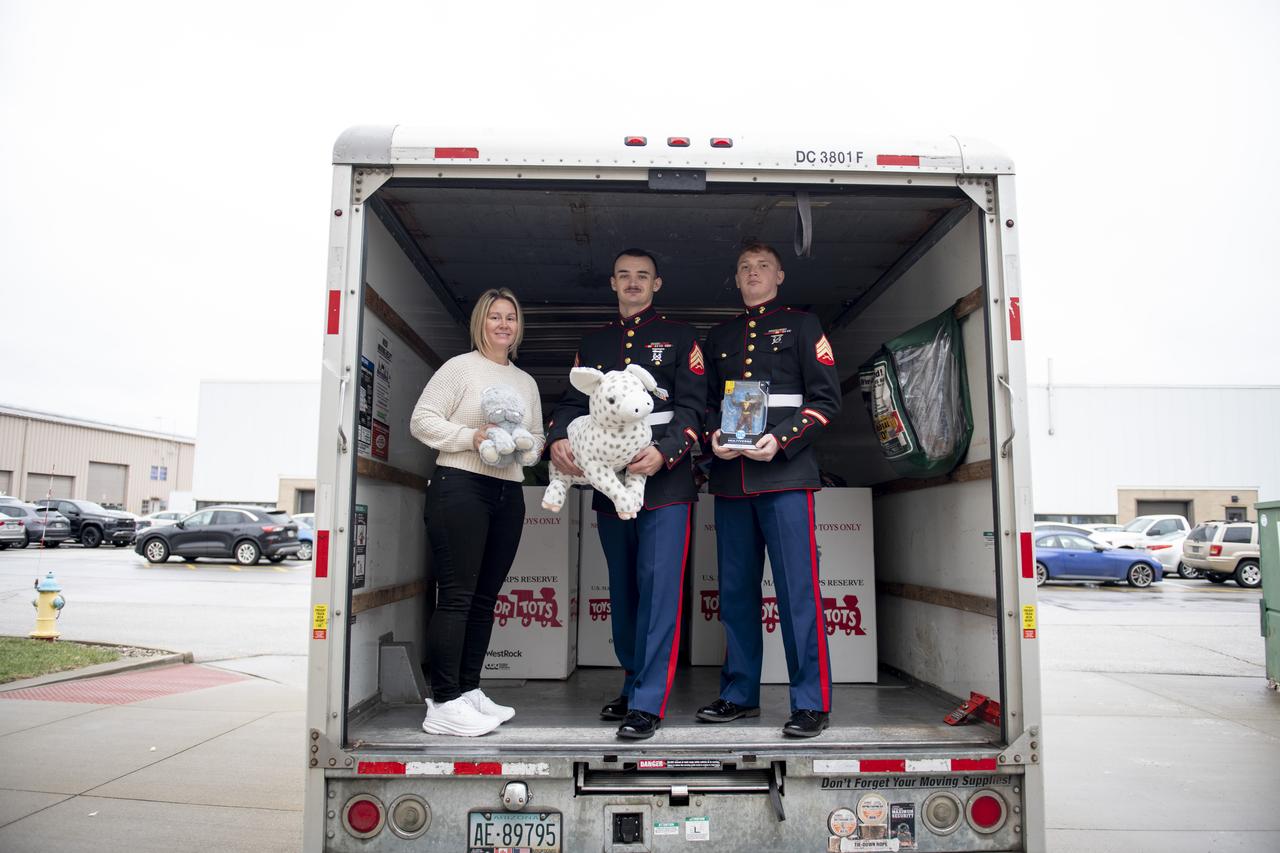
The US Marine Corps Reserve Collected Toy Donations for the 2024 Holiday Season. Samantha Yousef and two members of the Marines poses with the collections. Photo Credit: (NASA/Sara Lowthian-Hanna)
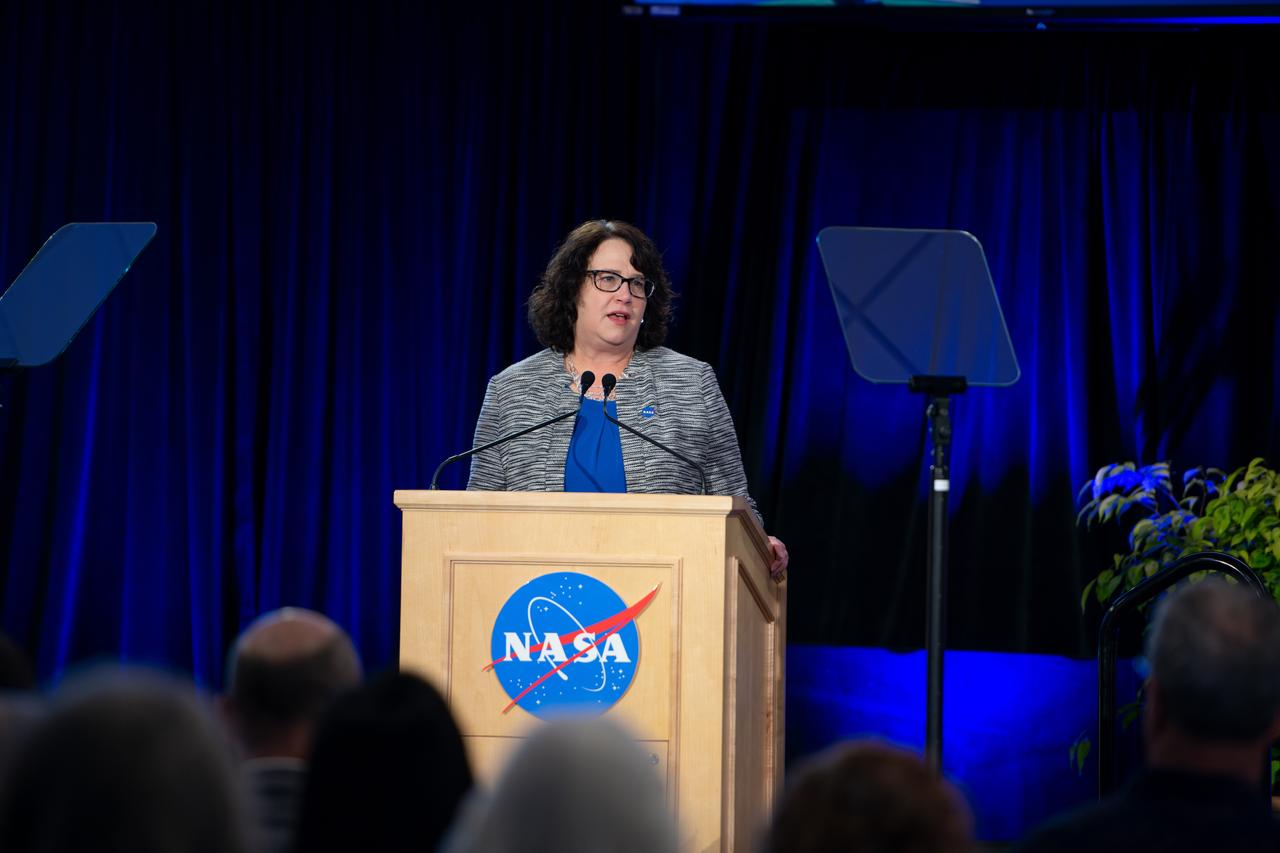
On March 28, 2024 NASA held its 2023 Administrator’s Agency Honor Awards at the Glenn Research Center in Cleveland, OH. Deputy Director, Dawn Schaible gives opening remarks to kick off the event. This celebratory event recognized the invaluable contributions of civil servants and contractors alike, each one instrumental in propelling humanity further into the realms of space exploration, understanding, and discoverThis is NASA's highest form of recognition that is awarded to any Government employee who, by distinguished service, ability, or vision has personally contributed to NASA's advancement of United States' interests. Photo Credit: (NASA/Sara Lowthian-Hanna)
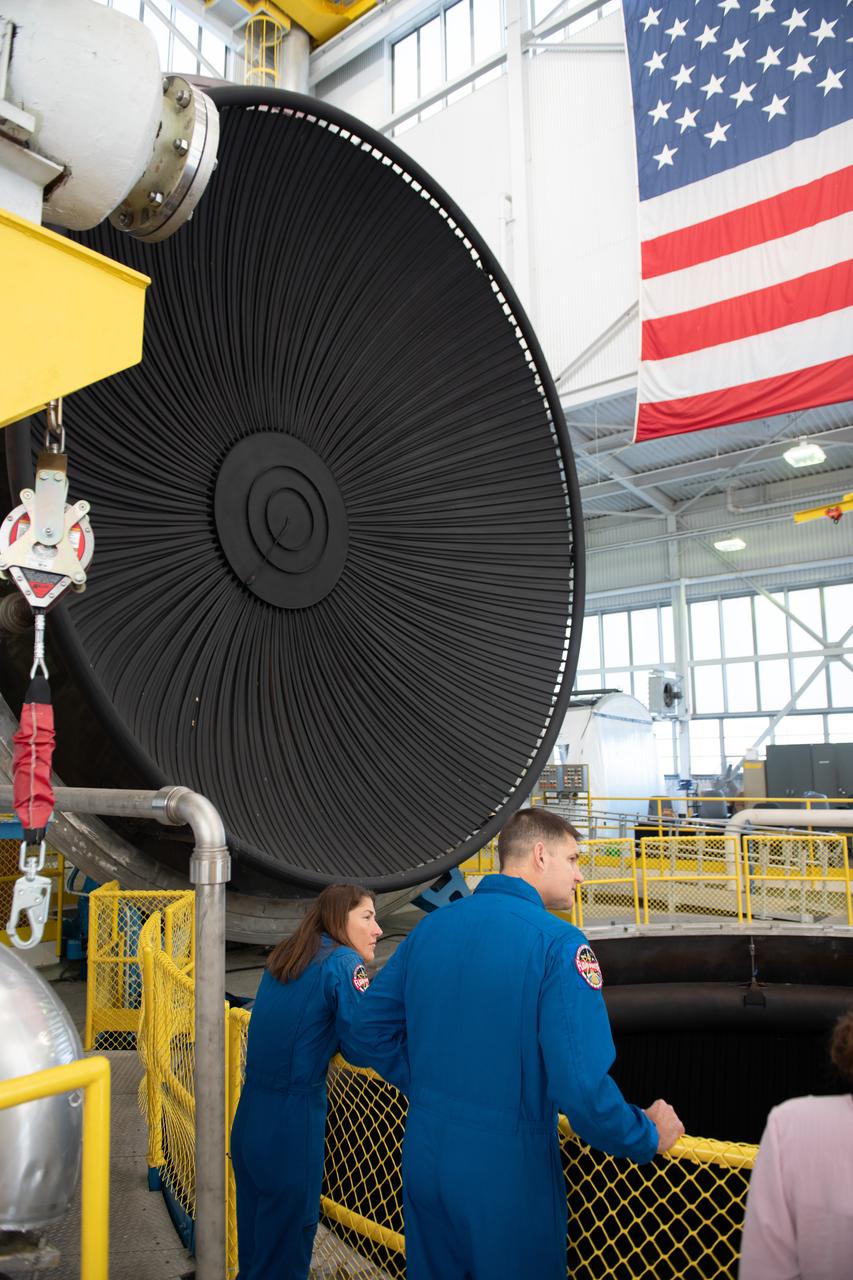
Tours were given of the In Space Propulsion Facility (ISP). NASA’s Facility is the world’s only high altitude test facility capable of full-scale rocket engine and launch vehicle system level tests. The facility supports mission profile thermal vacuum simulation and engine firing. Pictured are Mission Specialists Christina Koch and Jeremy Hansen. Employees meet three of the four astronauts who will venture around the Moon on Artemis II, the first crewed flight paving the way for future lunar surface missions. Commander Reid Wiseman and Mission Specialists Christina Koch and Jeremy Hansen will be on hand to discuss their upcoming mission and participate in a Question and Answer session with employees afterward. Hansen is an astronaut with the Canadian Space Agency. Victor Glover, the pilot and fourth crew member, was not present. Photo Credit: (NASA/Sara Lowthian-Hanna)

Jeremy Johnson leaving the hangar for a test flight in NASA Glenn Research Center’s PC-12 aircraft on Wednesday, April 16, 2025.

Guardians of Traffic Statue in Cleveland, OH watches over the Supermoon that was visible on September 17th, 2024. On this day, the full moon was a partial Lunar Eclipse; a Supermoon; and a Harvest Moon. Photo Credit: (NASA/Sara Lowthian-Hanna)

NASA’s Beaming Energy for Air Mobility team successfully completed a first-of-its-kind power beaming test at NASA Glenn on June 4, 2025. Later this year, the tested transmitter will be used in a demonstration to wirelessly transmit power using microwaves to a custom power receiver — a step toward gap-filling technology that could one day deliver power on the surface of the Moon or Mars. Seth Waldstein, Seth Schisler and Bryan Schoenholz are in the control room reviewing the results.
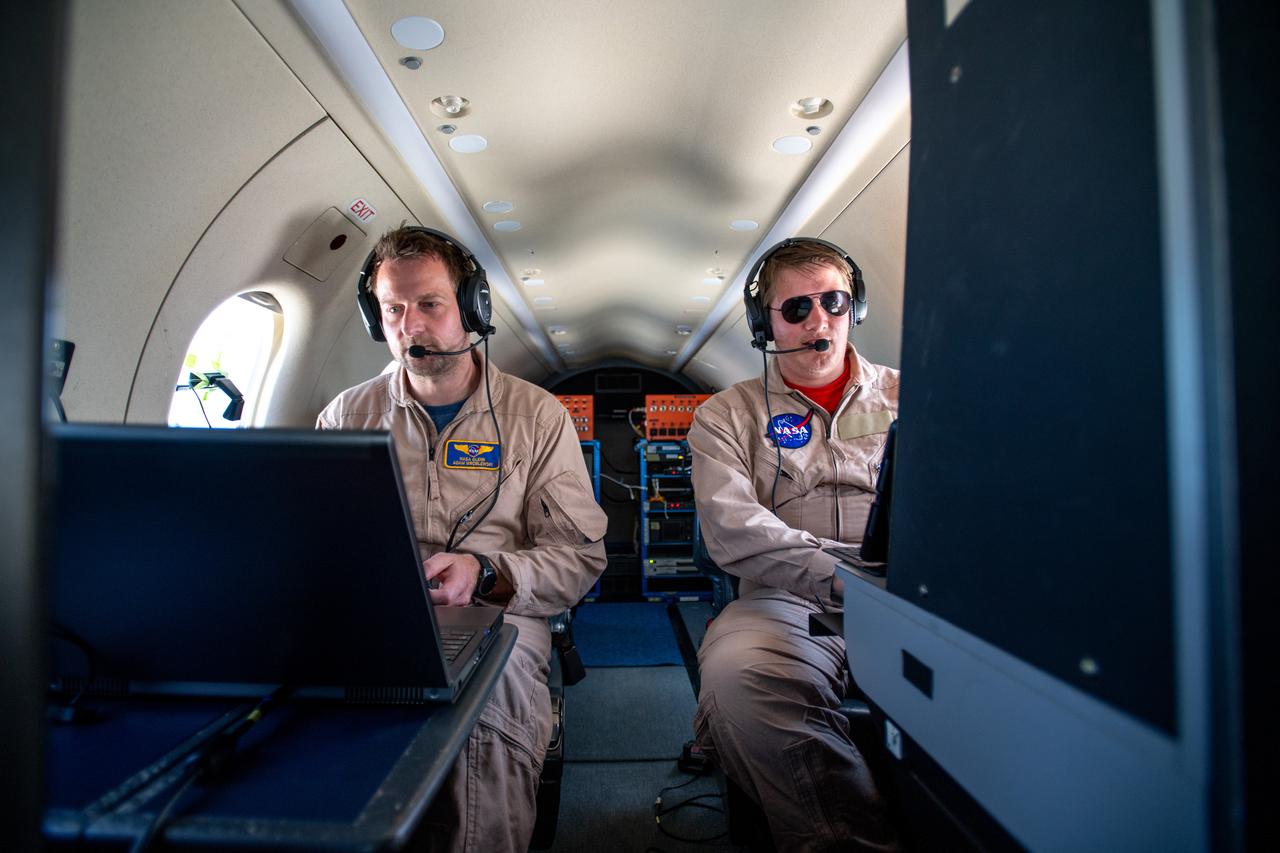
A team at NASA’s Glenn Research Center in Cleveland streamed 4K video footage from an aircraft to the International Space Station and back for the first time using optical, or laser, communications. The feat was part of a series of tests on new technology that could provide live video coverage of astronauts on the Moon during the Artemis missions. Working with the Air Force Research Laboratory and NASA’s Small Business Innovation Research program, Glenn engineers temporarily installed a portable laser terminal on the belly of a Pilatus PC-12 aircraft. They then flew over Lake Erie sending data from the aircraft to an optical ground station in Cleveland. From there, it was sent over an Earth-based network to NASA’s White Sands Test Facility in Las Cruces, New Mexico, where scientists used infrared light signals to send the data. Photo Credit: (NASA/Sara Lowthian-Hanna)
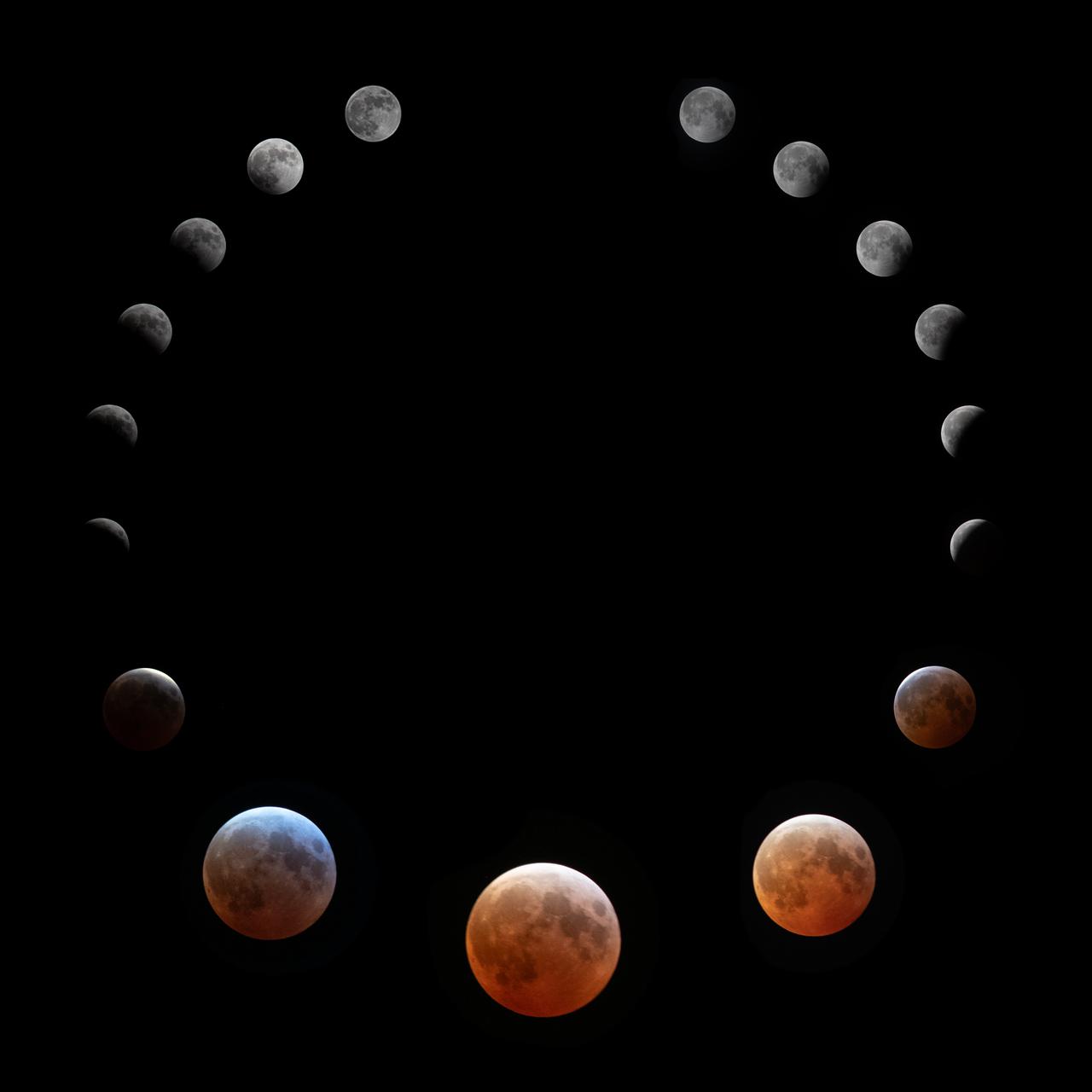
A composite photo made from 17 images of the lunar eclipse. These photographs were taken at NASA’s Glenn Research Center at Neil Armstrong Test Facility in Sandusky, Ohio, during the early hours of March 14, 2025. Photo Credit: (NASA/Sara Lowthian-Hanna)

Astro is a robot dog operated by staff via remote control, is fitted with an infrared camera with 40 times zoom, utilizes thermography and a microphone and can navigate all three levels of the facility. The beloved robot conducts inspections to spare the employees ears in extremely loud environments. When not used, Astro lives in his doghouse in the facility and recharges. Photo Credit: (NASA/Sara Lowthian-Hanna)
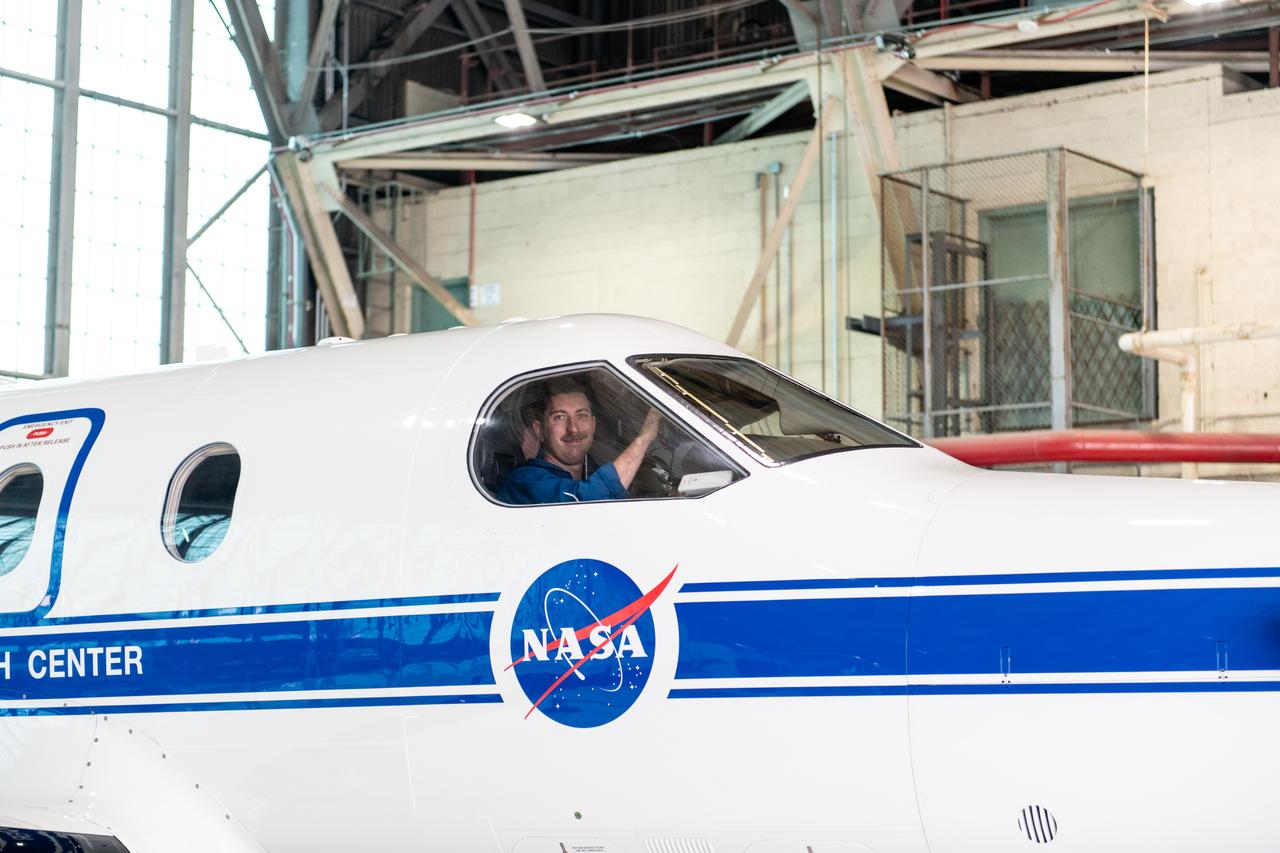
Jeremy Johnson leaving the hangar for a test flight in NASA Glenn Research Center’s PC-12 aircraft on Wednesday, April 16, 2025.
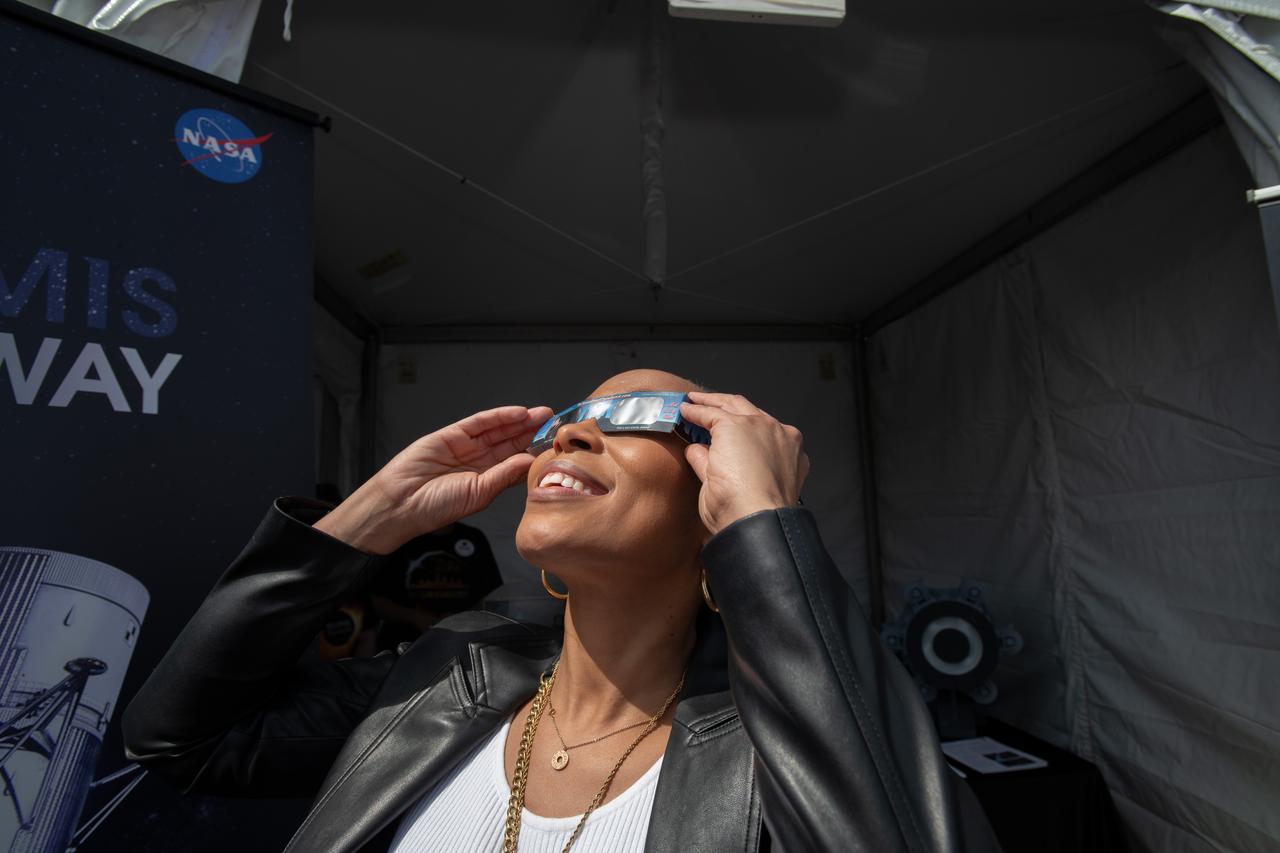
Representative Shontel Brown views the eclipse. NASA Glenn Research Center and the Great Lakes Science Center hosted a three-day celestial celebration in downtown Cleveland, OH. This free, outdoor, family-friendly science and arts festival will feature free concerts, performances, speakers, and hands-on science activities with community partners. A total solar eclipse swept across a narrow portion of the North American continent from Mexico’s Pacific coast to the Atlantic coast of Newfoundland, Canada. A partial solar eclipse was visible across the entire North American continent along with parts of Central America and Europe. Photo Credit: (NASA/Sara Lowthian-Hanna)
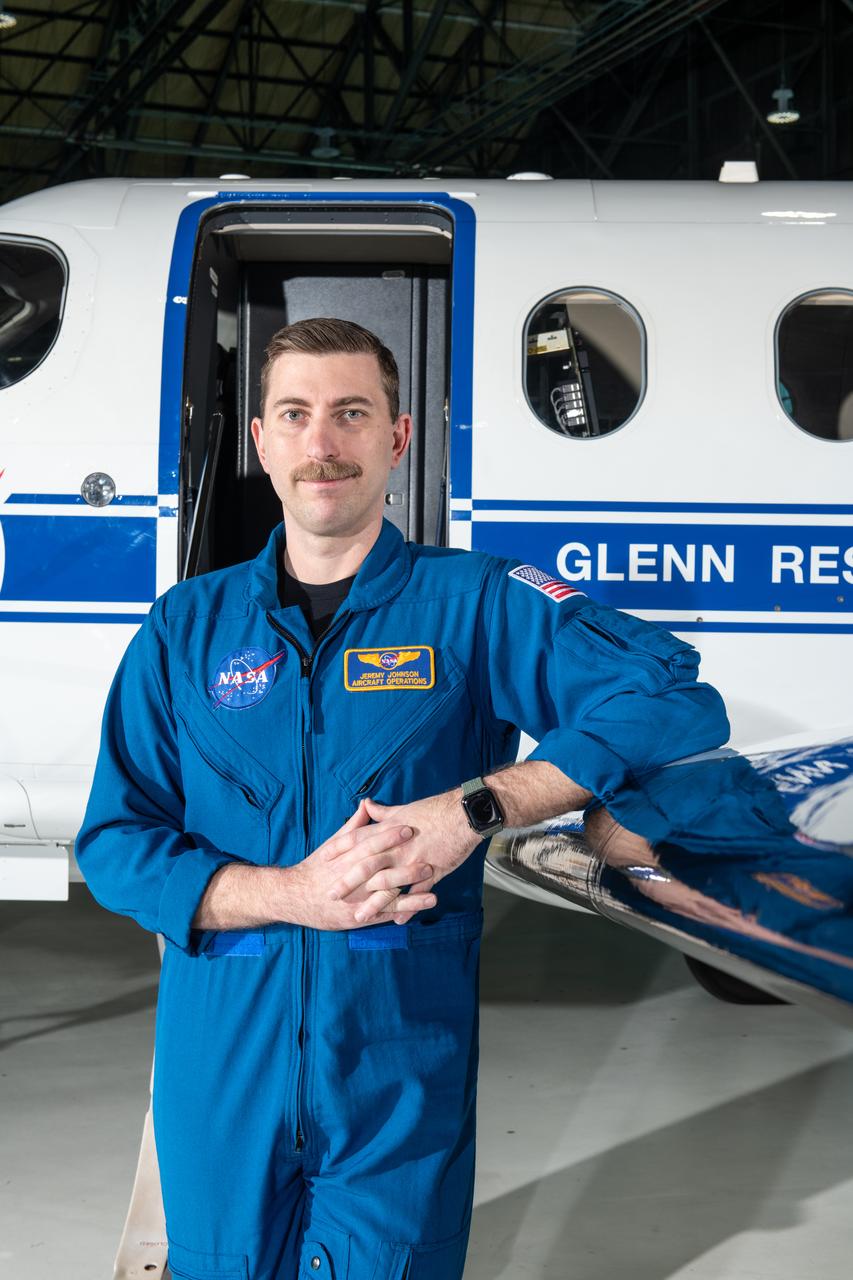
Jeremy Johnson, a research pilot and aviation safety officer, poses in front of a PC-12 aircraft inside the hangar at NASA’s Glenn Research Center in Cleveland on Thursday, April 17, 2025. Johnson flies NASA planes to support important scientific research and testing, working with researchers to plan and carry out flights that will get them the data they need while ensuring safety.
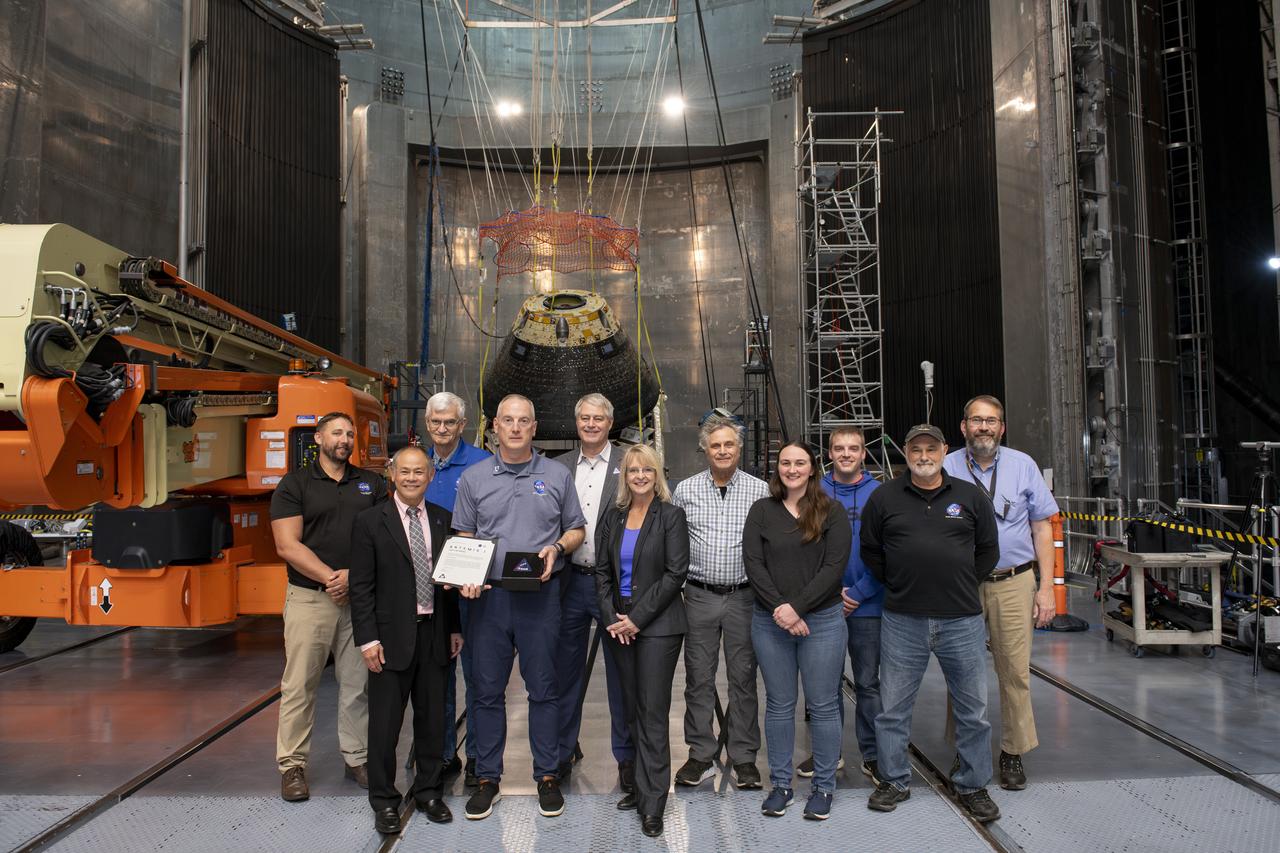
Employees supporting Artemis were invited to attend an appreciation event, “The Road to the Moon,” at Armstrong Test Facility in Sandusky, Ohio. Lockheed Martin presented an article flown on Artemis I to Robert Overy. Pictured from left to right: John Zang, Pho Nguyen, General David Stringer, Robert Overy, Paul Anderson, Debbie Korth, Aaron Horz, Emma Gaerke, Benjamin, Michael Henry and Mark Cmar. On Thursday, Nov. 21, please join NASA employees and support service contractors for Artemis Friends and Family Day. Employees had the opportunity to hear from center leadership and see the Orion module that flew around the Moon and back during 2022’s Artemis I mission. Experts have subjected the spacecraft to extreme conditions in Armstrong’s test facilities. This significant testing is slated to wrap up in December, and we want to give you a chance to see the capsule before the conclusion of the test campaign. Photo Credit: (NASA/Sara Lowthian-Hanna)
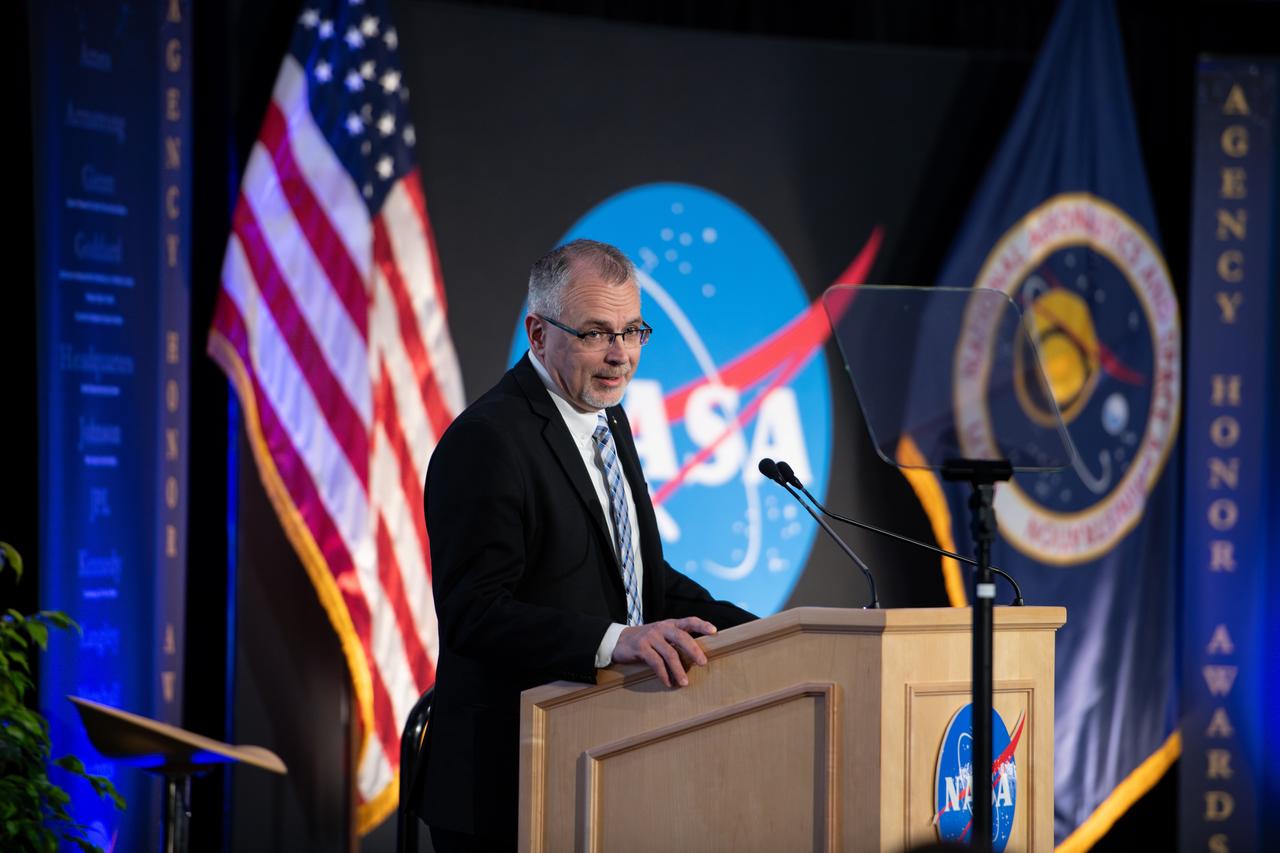
On March 28, 2024 NASA held its 2023 Administrator’s Agency Honor Awards at the Glenn Research Center in Cleveland, OH. This celebratory event recognized the invaluable contributions of civil servants and contractors alike, each one instrumental in propelling humanity further into the realms of space exploration, understanding, and discoverThis is NASA's highest form of recognition that is awarded to any Government employee who, by distinguished service, ability, or vision has personally contributed to NASA's advancement of United States' interests. Photo Credit: (NASA/Sara Lowthian-Hanna)
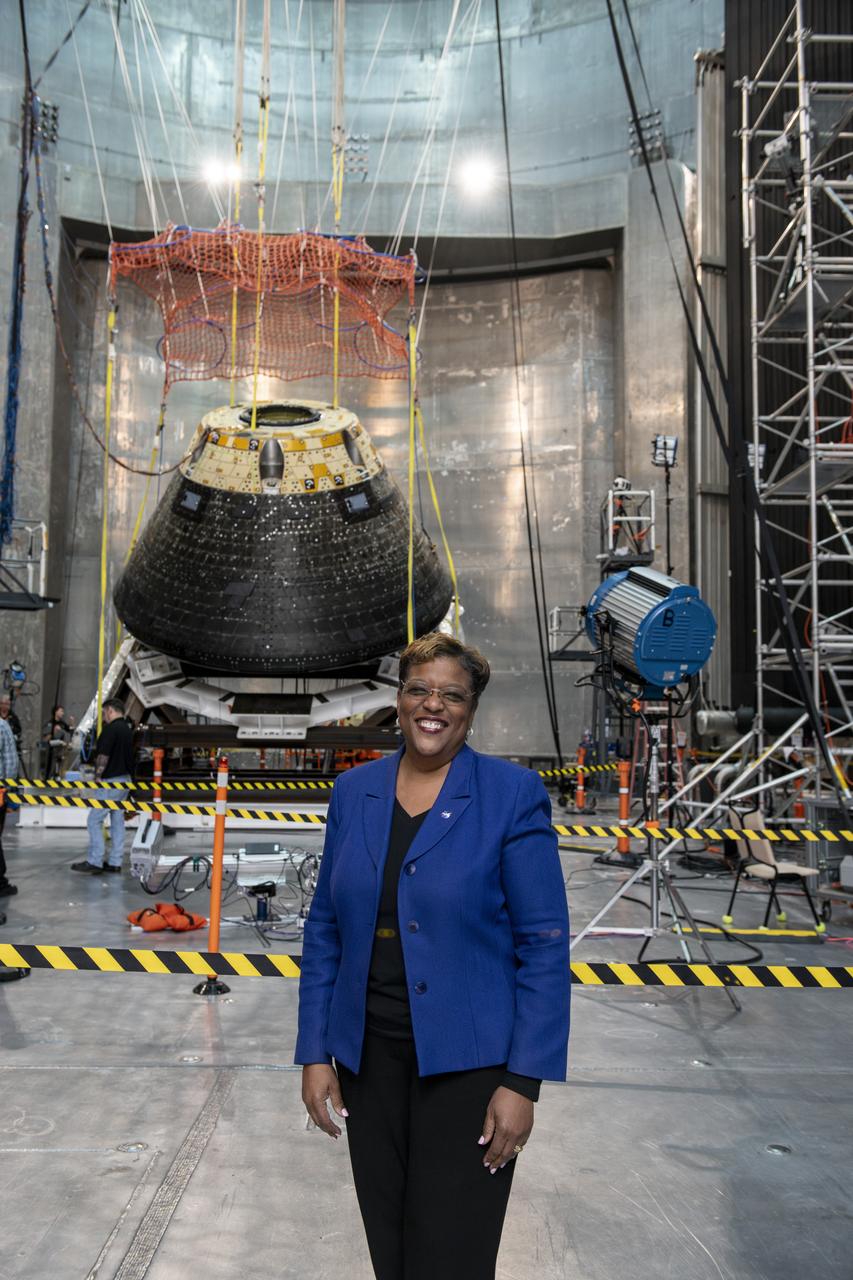
Acting Deputy Center Director Dr. Wanda Peters Poses in front of the Orion Capsule. Employees supporting Artemis were invited to attend an appreciation event, “The Road to the Moon,” at Armstrong Test Facility in Sandusky, Ohio. On Thursday, Nov. 21, please join NASA employees and support service contractors for Artemis Friends and Family Day. Employees had the opportunity to hear from center leadership and see the Orion module that flew around the Moon and back during 2022’s Artemis I mission. Lockheed Martin presented an article flown on Artemis I to Robert Overy. Experts have subjected the spacecraft to extreme conditions in Armstrong’s test facilities. This significant testing is slated to wrap up in December, and we want to give you a chance to see the capsule before the conclusion of the test campaign. Photo Credit: (NASA/Sara Lowthian-Hanna)

Jeremy Johnson leaving the hangar for a test flight in NASA Glenn Research Center’s PC-12 aircraft on Wednesday, April 16, 2025.
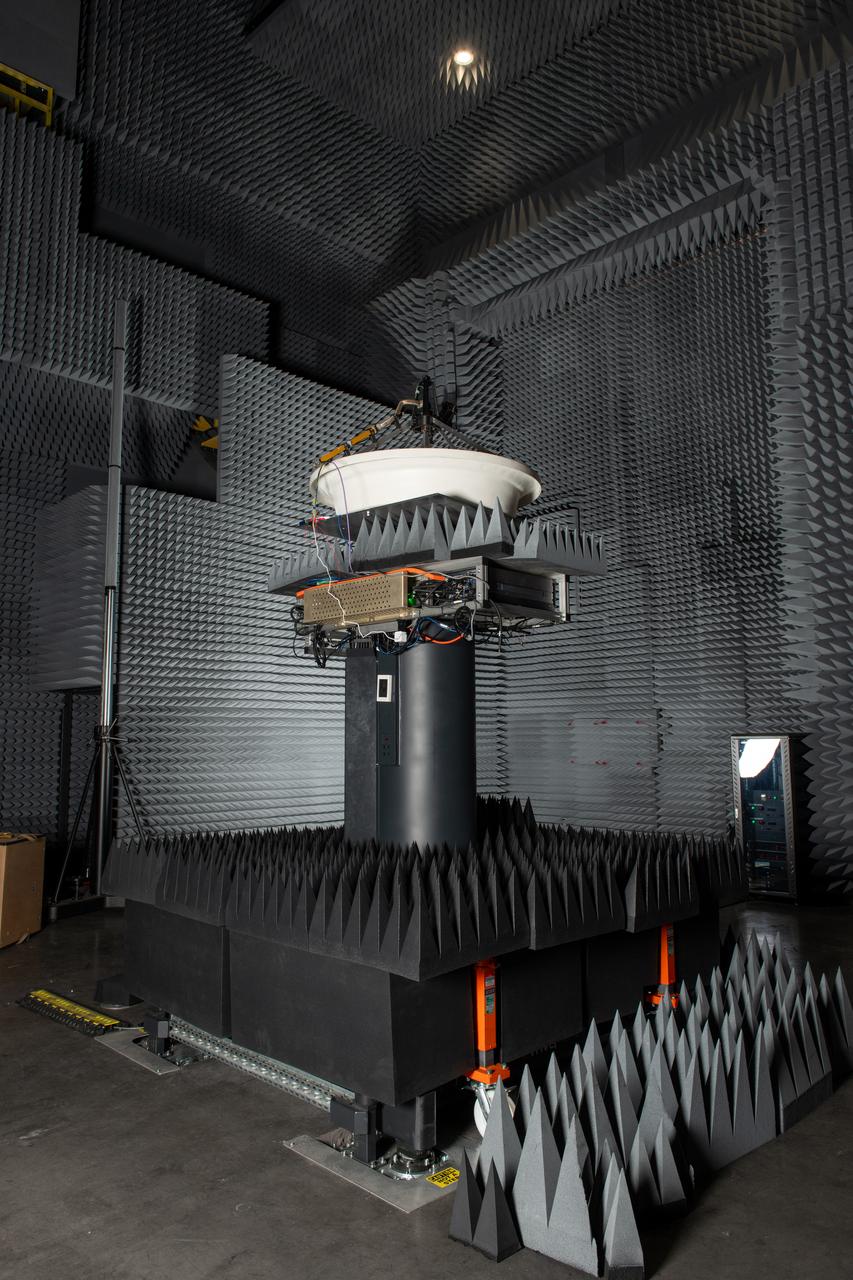
NASA’s Beaming Energy for Air Mobility team successfully completed a first-of-its-kind power beaming test at NASA Glenn on June 4, 2025. Later this year, the tested transmitter will be used in a demonstration to wirelessly transmit power using microwaves to a custom power receiver — a step toward gap-filling technology that could one day deliver power on the surface of the Moon or Mars.

Guardians of Traffic Statue in Cleveland, OH in front of the Supermoon that was visible on September 17th, 2024. On this day, the full moon was a partial lunar eclipse; a supermoon; and a harvest moon. Photo Credit: (NASA/Sara Lowthian-Hanna)
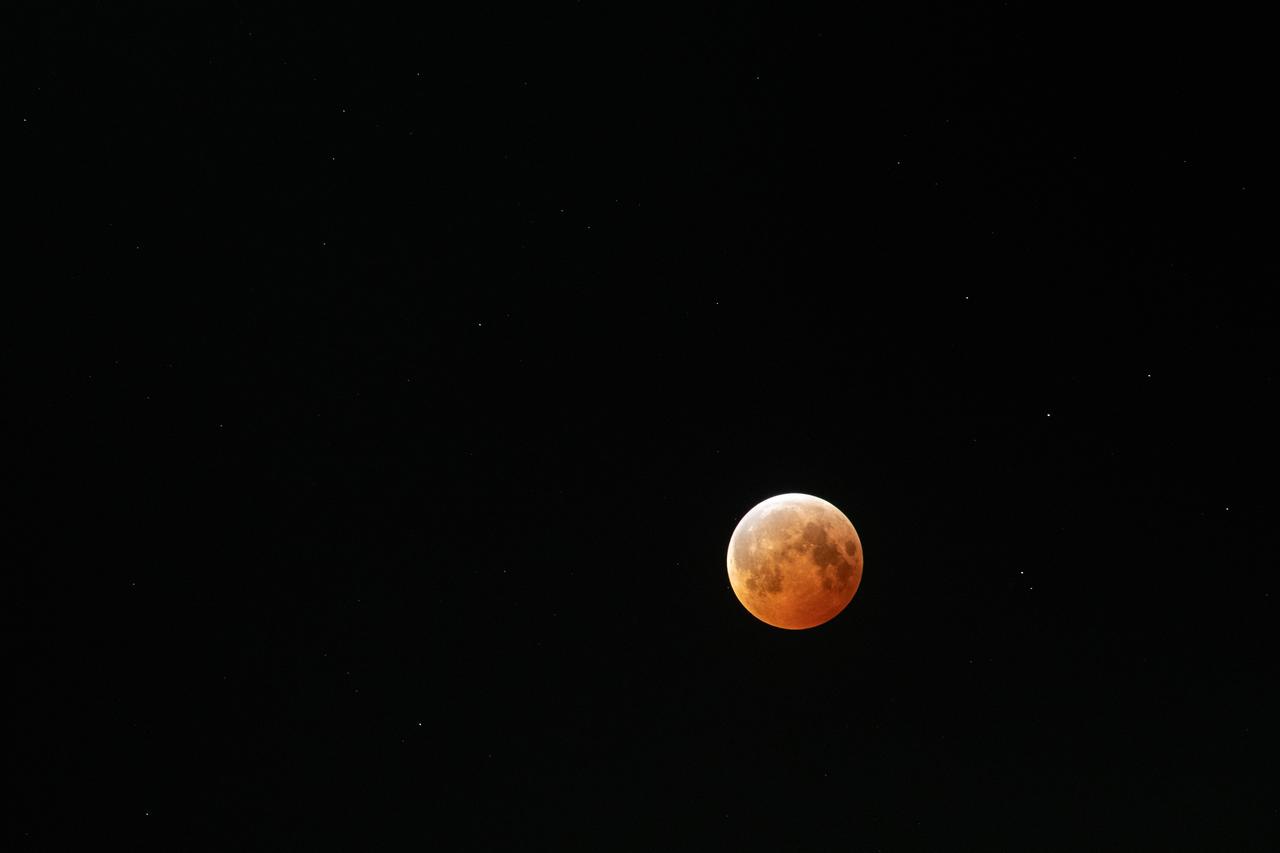
Blood Moon on March 14th, 2025 seen from Sandusky, OH. Photo Credit: (NASA/Sara Lowthian-Hanna)
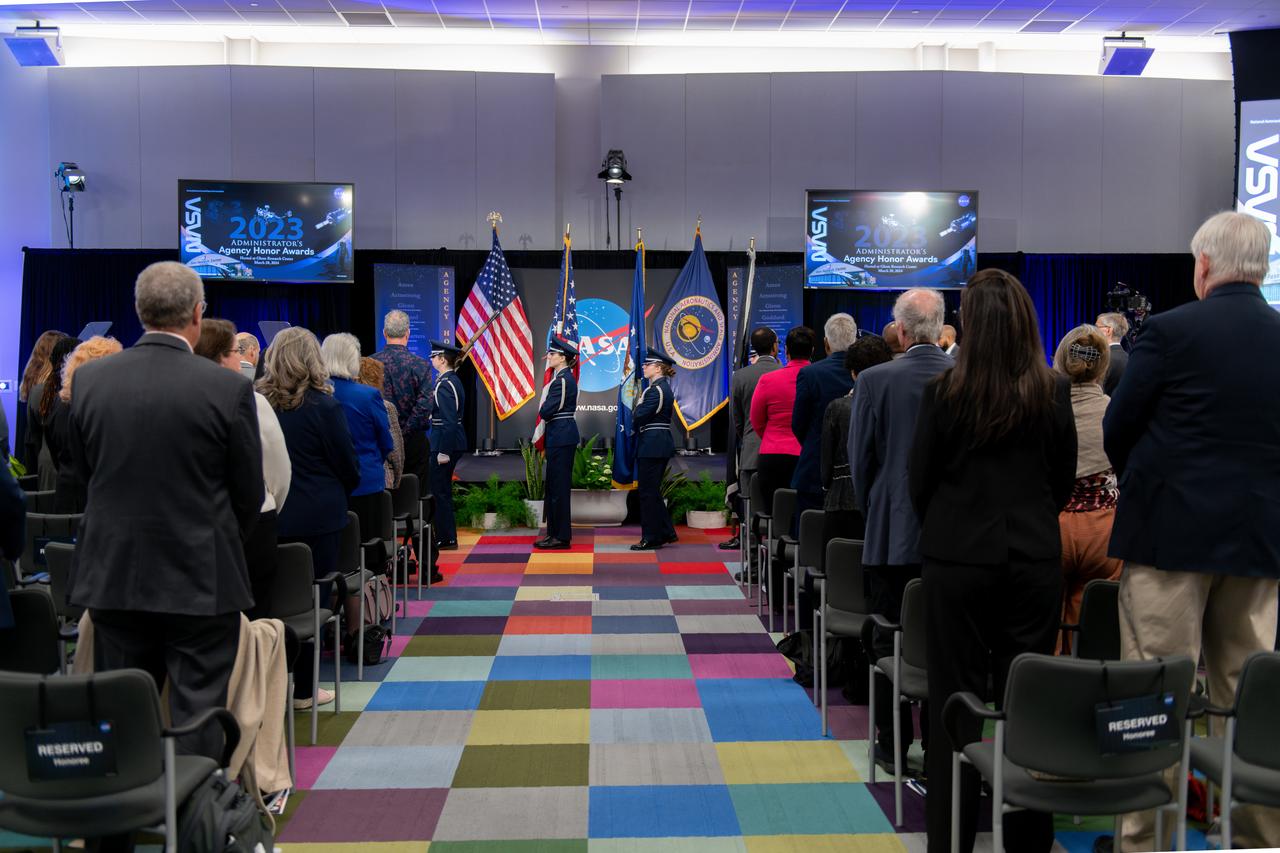
On March 28, 2024 NASA held its 2023 Administrator’s Agency Honor Awards at the Glenn Research Center in Cleveland, OH. The Air Force ROTC Detachment 630 Silver Eagles Drill Team performed the presentation of colors. This celebratory event recognized the invaluable contributions of civil servants and contractors alike, each one instrumental in propelling humanity further into the realms of space exploration, understanding, and discoverThis is NASA's highest form of recognition that is awarded to any Government employee who, by distinguished service, ability, or vision has personally contributed to NASA's advancement of United States' interests. Photo Credit: (NASA/Sara Lowthian-Hanna)
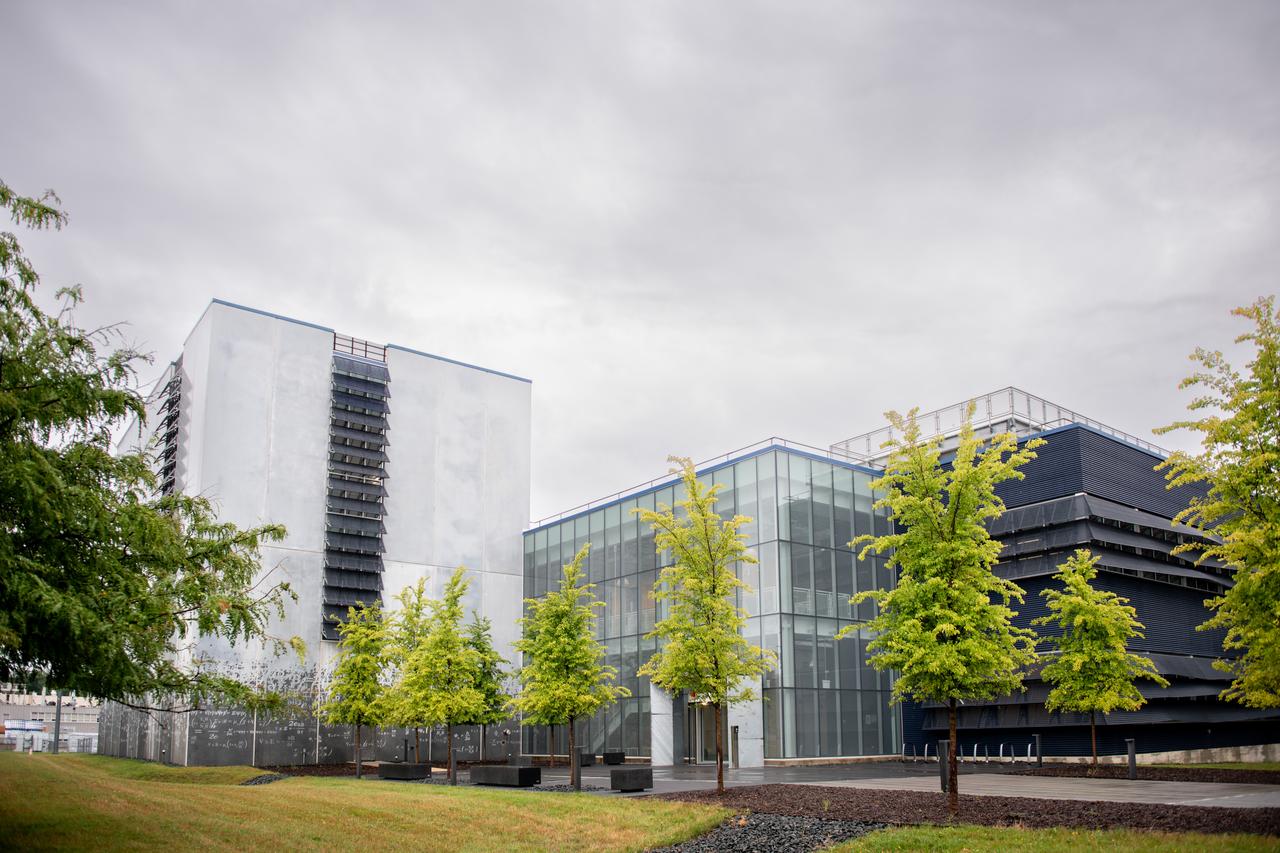
NASA’s Glenn Research Center opened the doors to a brand-new mission-focused facility that will support the agency’s Artemis and Advanced Air Mobility missions. On Aug. 30, NASA management and local officials cut the ribbon to the Aerospace Communications Facility (ACF), a new building designed for advanced radio frequency (RF) and optical communication technology research and development. Photo Credit: (NASA/Sara Lowthian-Hanna)
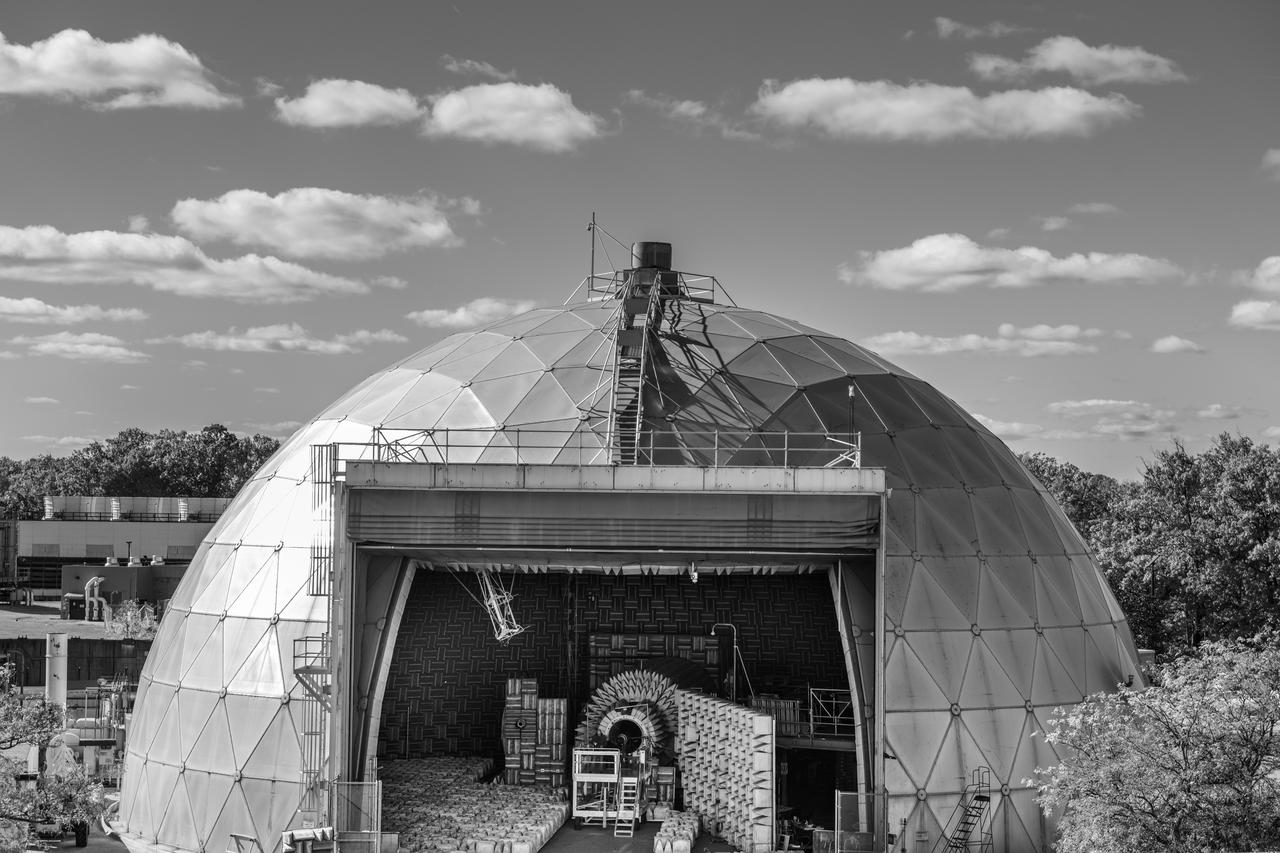
The Aero-Acoustic Propulsion Laboratory (AAPL) photographed on October 24, 2024 as seen from above. This facility provides world class testing for aircraft propulsion acoustic noise reduction and is 65 ft high by 130 ft in diameter. Photo Credit: (NASA/Sara Lowthian-Hanna)
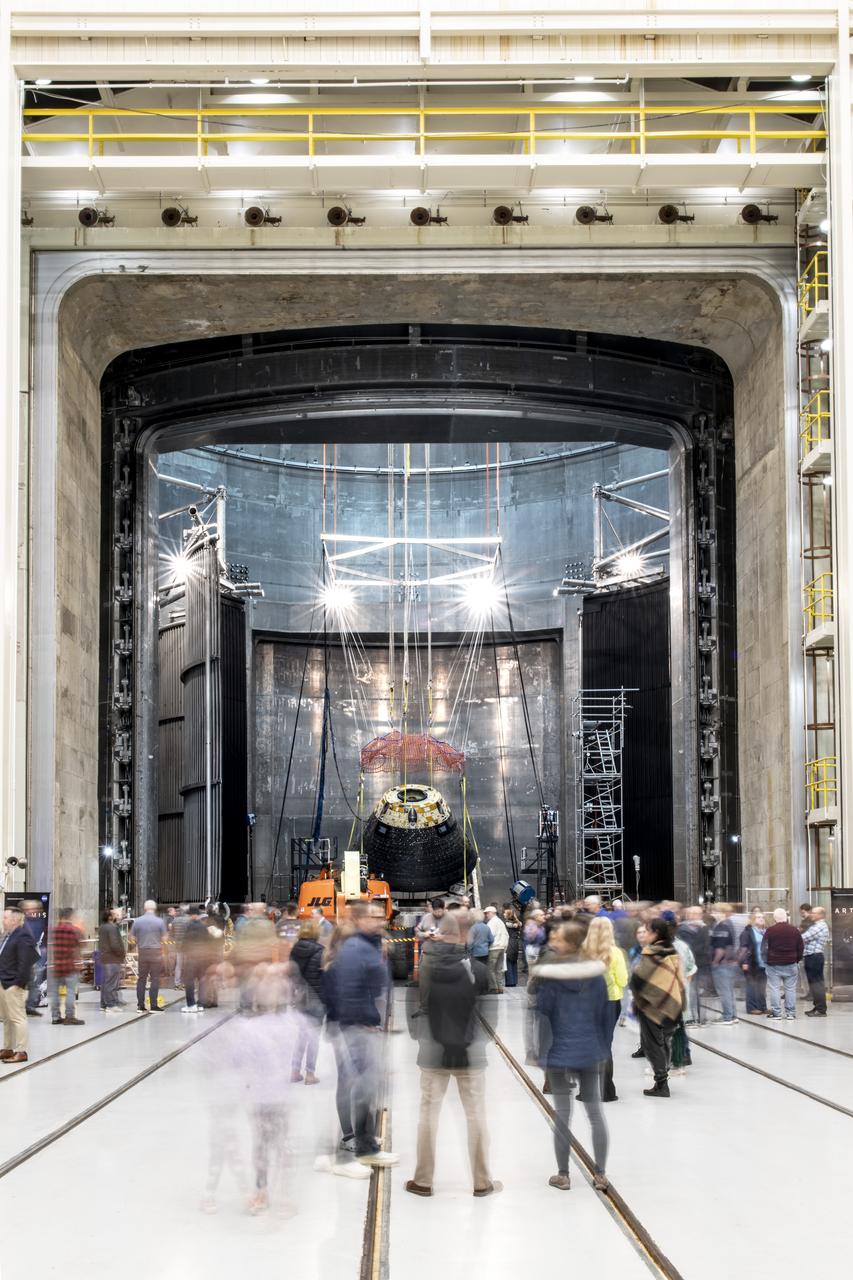
Employees supporting Artemis were invited to attend an appreciation event, “The Road to the Moon,” at Armstrong Test Facility in Sandusky, Ohio. On Thursday, Nov. 21, please join NASA employees and support service contractors for Artemis Friends and Family Day. Employees had the opportunity to hear from center leadership and see the Orion module that flew around the Moon and back during 2022’s Artemis I mission. Lockheed Martin presented an article flown on Artemis I to Robert Overy. Experts have subjected the spacecraft to extreme conditions in Armstrong’s test facilities. This significant testing is slated to wrap up in December, and we want to give you a chance to see the capsule before the conclusion of the test campaign. Photo Credit: (NASA/Sara Lowthian-Hanna)
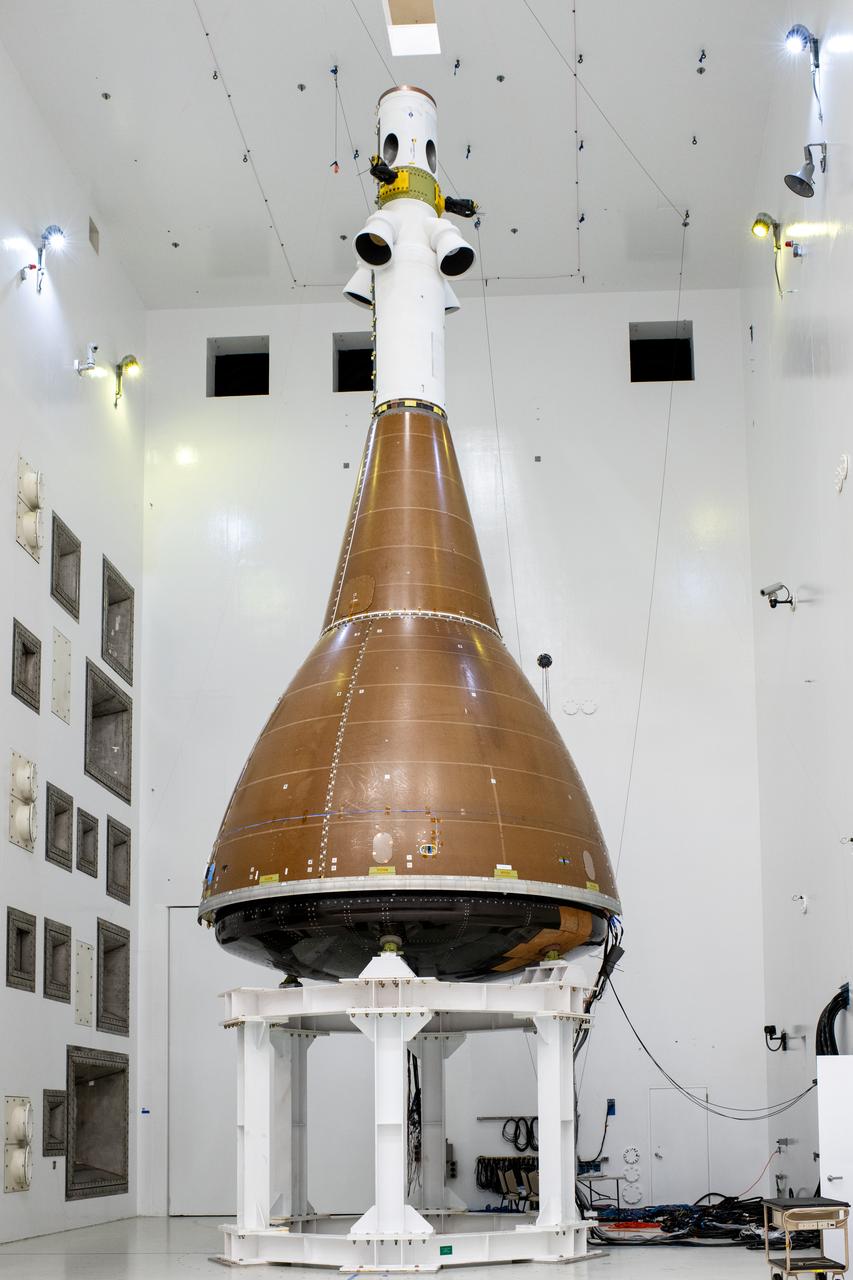
Vibro-acoustic testing on the Orion spacecraft that flew around the Moon on Artemis I, now known as the Environmental Test Article at Armstrong Test Facility in Sandusky, OH. The testing will help ensure the safety of future crews aboard Orion. Photo Credit: (NASA/Sara Lowthian-Hanna)
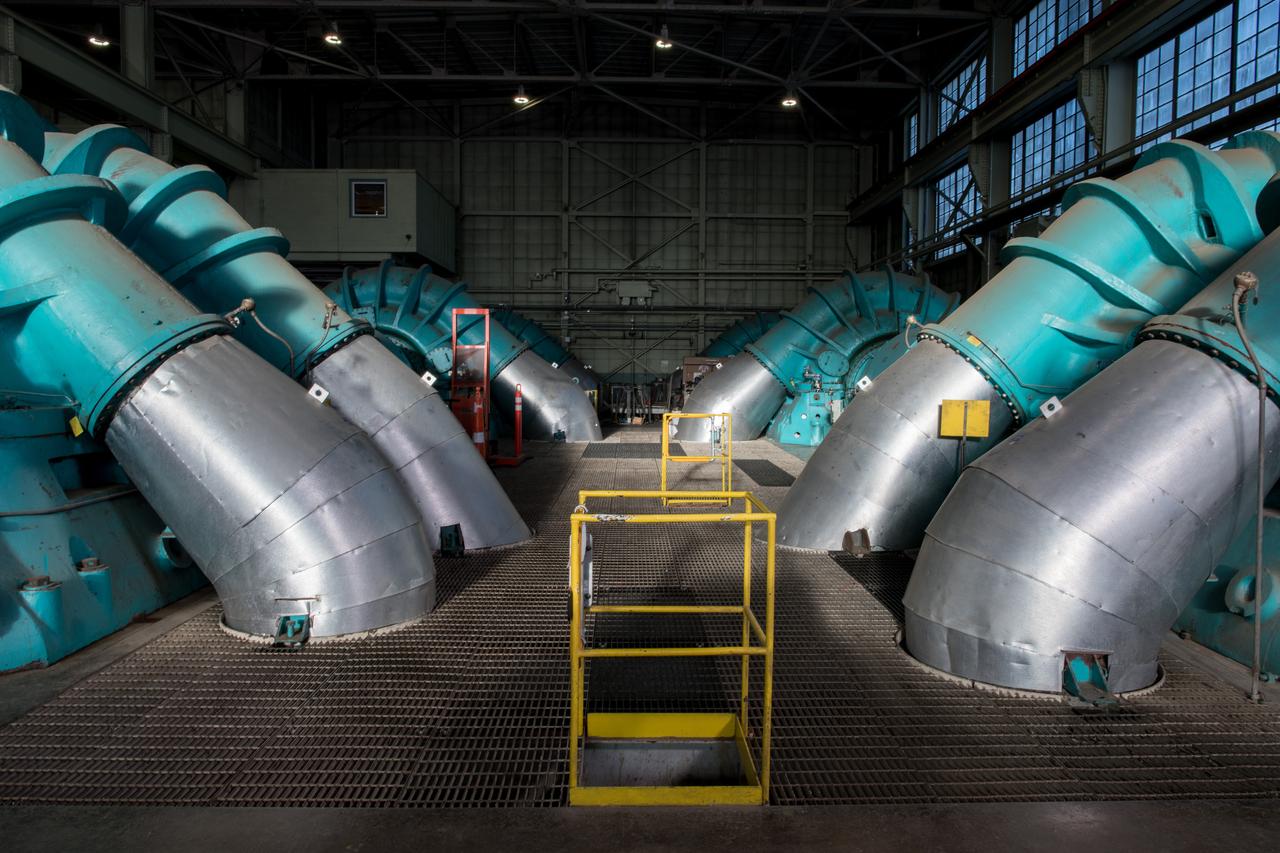
The Central Processing System at Glenn Research Center controls operations in the wind tunnels, propulsion systems lab, engine components research lab, and compressor, turbine and combustor test cells. Documentation photos of the facility were taken on December 19, 2023. Photo Credit: (NASA/Sara Lowthian-Hanna)
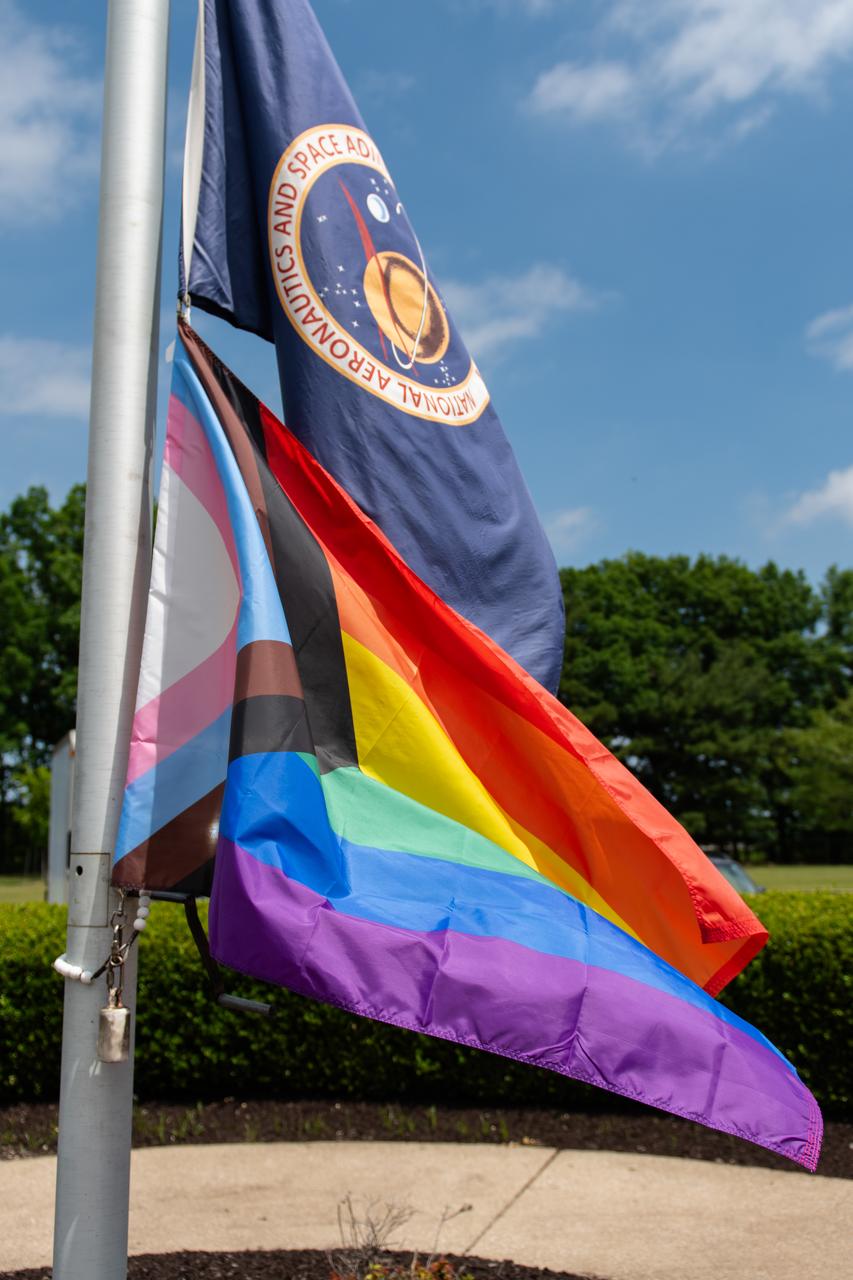
NASA Glenn’s Rainbow Alliance Advisory Group hosted an in-person and livestreamed Pride flag raising ceremony at the building 3 flagpole on June 3, 2024. The event included remarks from Deputy Director Dawn Schaible and NASA Safety Center Director Harmony Myers. Flag raising events such as this are times for LGBTQ+ employees and their allies to come together to celebrate the progress made in the quest for safety, tolerance, acceptance, rights, happiness, and freedom for the LGBTQ+ community on- and off-site of the center. Photo Credit: (NASA/Sara Lowthian-Hanna)

This Full Moon that occurred on September 17, 2024 in Cleveland, OH was a Partial Lunar Eclipse; a Supermoon; the Corn Moon; and a harvest moon. Photo Credit: (NASA/Sara Lowthian-Hanna)
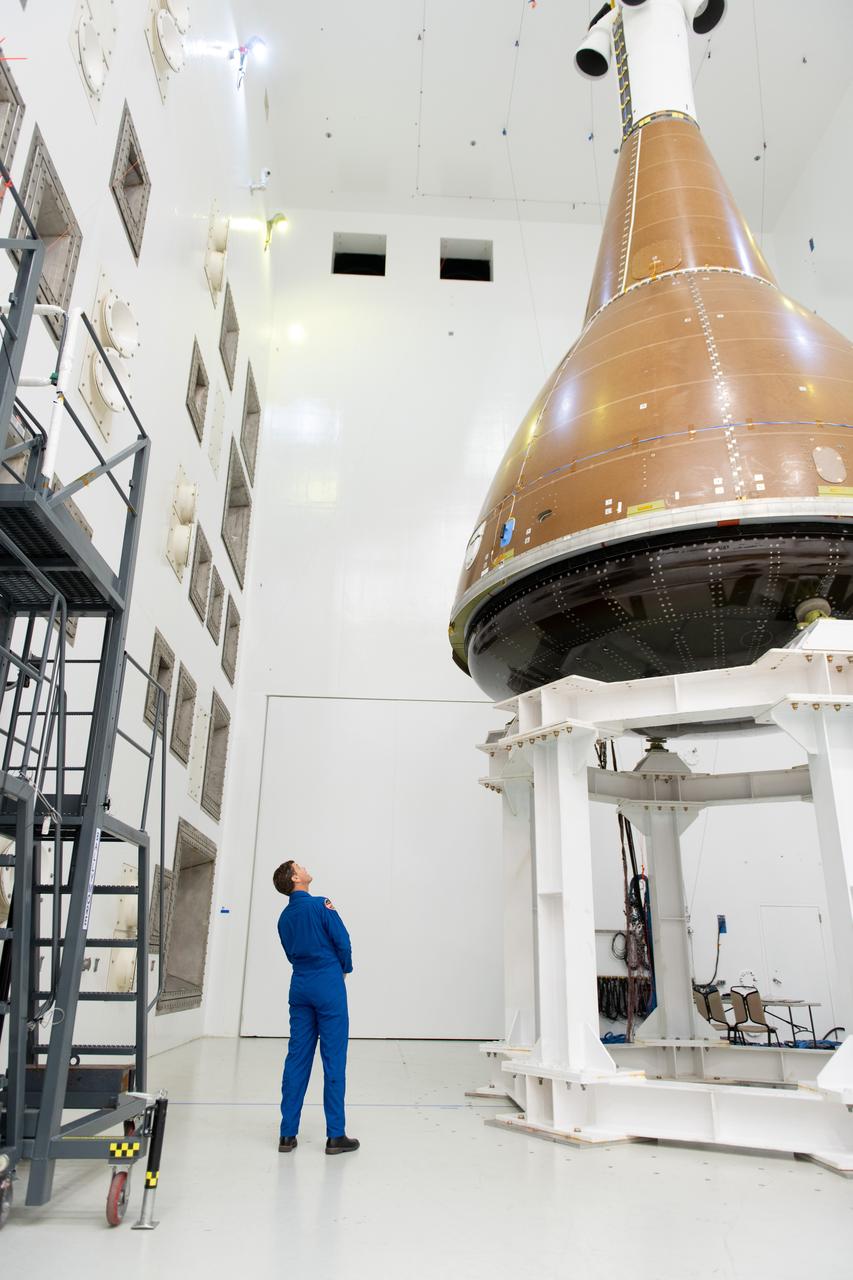
The team at NASA's Armstrong Test Facility in Sandusky, Ohio has begun vibro-acoustic testing on the Orion spacecraft that flew around the Moon on Artemis I, now known as the Environmental Test Article. The testing will help ensure the safety of future crews aboard Orion. Commander Reid Wiseman looks up at the Orion capsule during tours on September 11, 2024 of the acoustic lab. Photo Credit: (NASA/Sara Lowthian-Hanna)
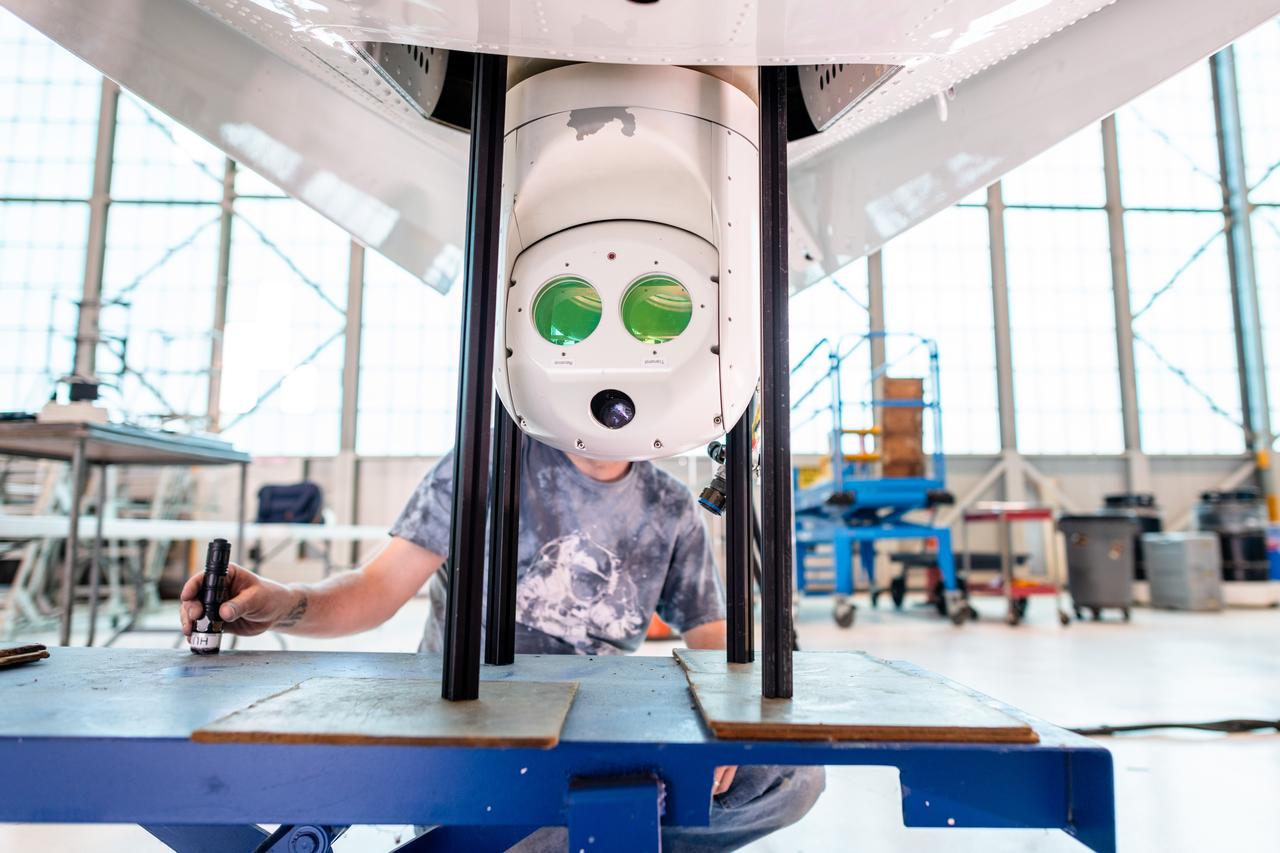
Dave Brennen, an electronics technician, installing the optical system under the belly of the PC-12 aircraft that streamed the first 4K video from aircraft to the International Space Station and back on May 20, 2024. Photo Credit: (NASA/Sara Lowthian-Hanna)
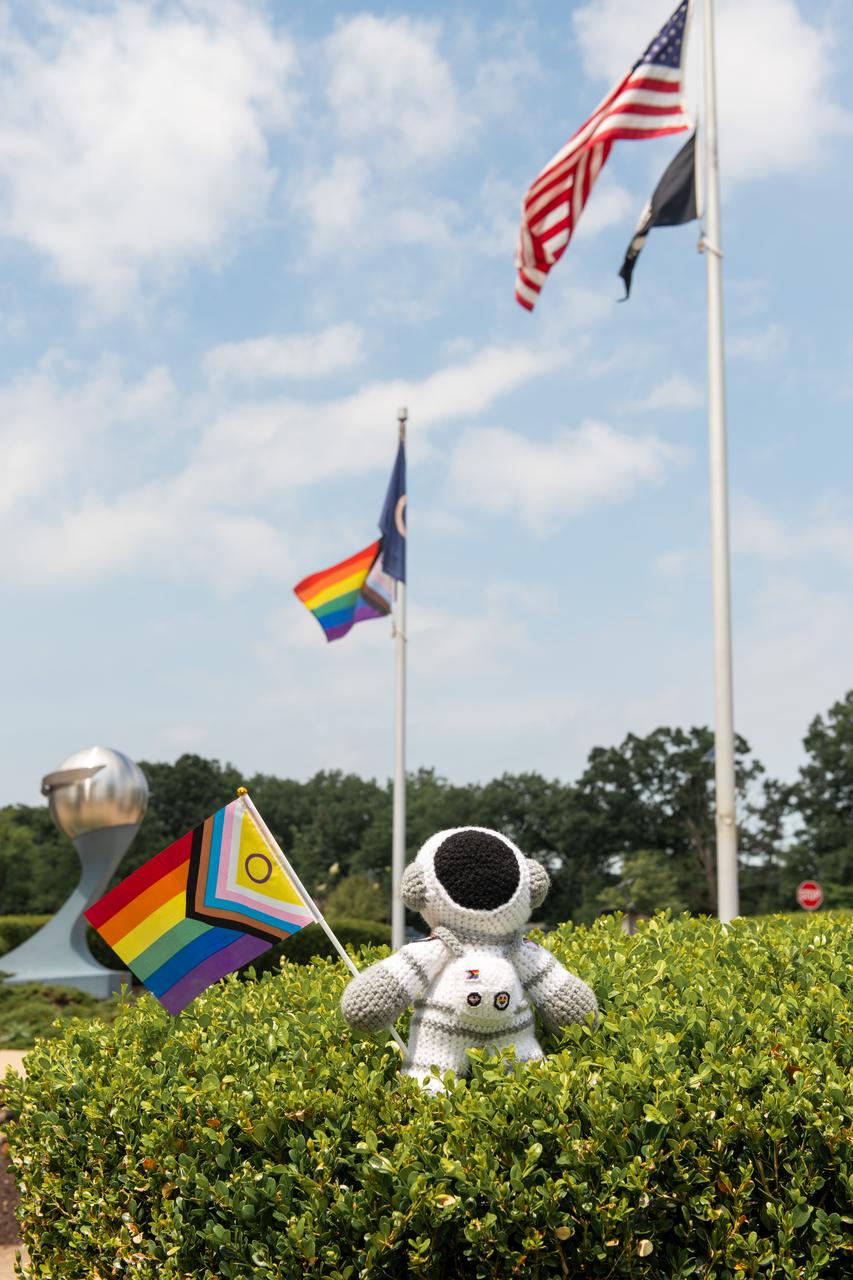
NASA Glenn’s Rainbow Alliance Advisory Group hosted an in-person and livestreamed Pride flag raising ceremony at the building 3 flagpole on June 3, 2024. The event included remarks from Deputy Director Dawn Schaible and NASA Safety Center Director Harmony Myers. Flag raising events such as this are times for LGBTQ+ employees and their allies to come together to celebrate the progress made in the quest for safety, tolerance, acceptance, rights, happiness, and freedom for the LGBTQ+ community on- and off-site of the center. Photo Credit: (NASA/Sara Lowthian-Hanna)
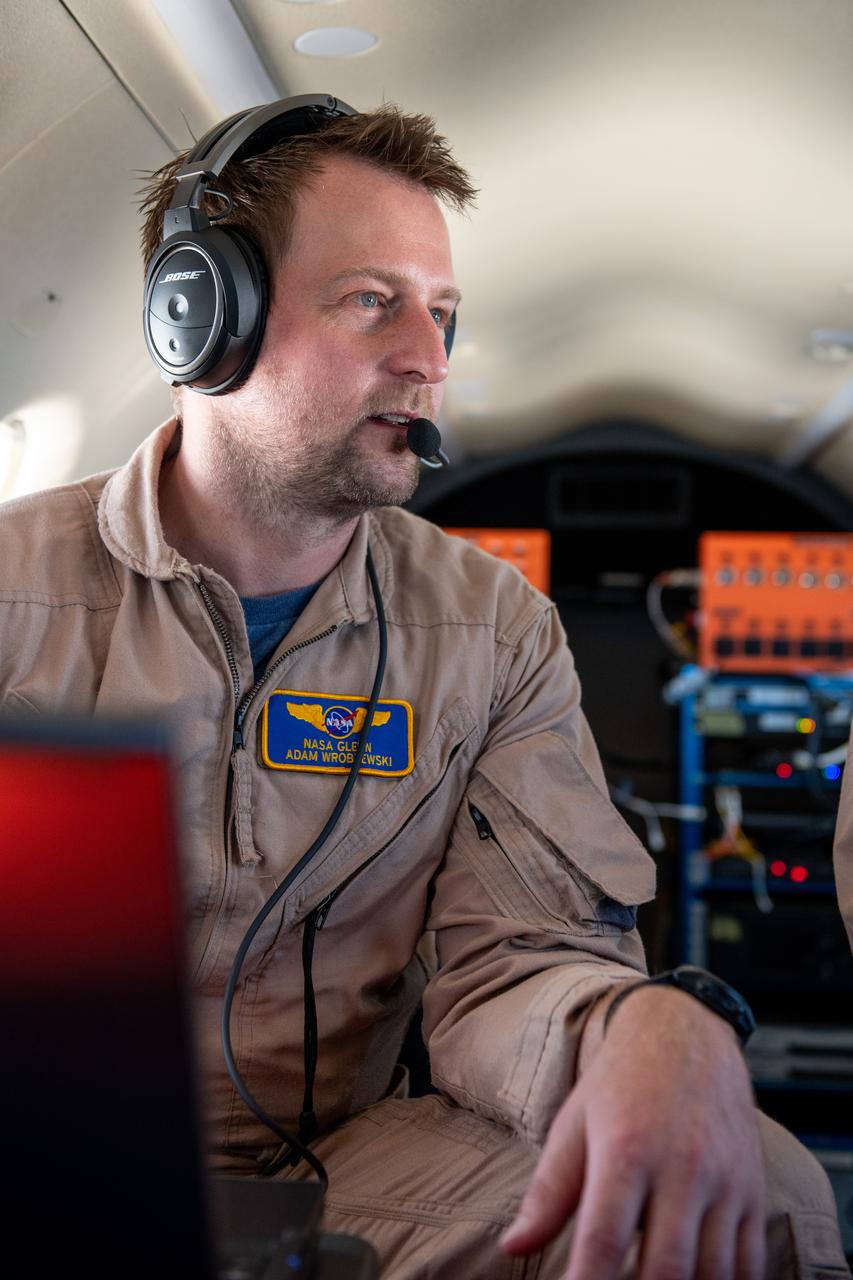
Adam Wroblewski p A team at NASA’s Glenn Research Center in Cleveland streamed 4K video footage from an aircraft to the International Space Station and back for the first time using optical, or laser, communications. The feat was part of a series of tests on new technology that could provide live video coverage of astronauts on the Moon during the Artemis missions. Working with the Air Force Research Laboratory and NASA’s Small Business Innovation Research program, Glenn engineers temporarily installed a portable laser terminal on the belly of a Pilatus PC-12 aircraft. Adam Wroblewski in the PC-12 over Lake Erie on June 13, 2024 sending data from the aircraft to an optical ground station in Cleveland. From there, it was sent over an Earth-based network to NASA’s White Sands Test Facility in Las Cruces, New Mexico, where scientists used infrared light signals to send the data. Photo Credit: (NASA/Sara Lowthian-Hanna)
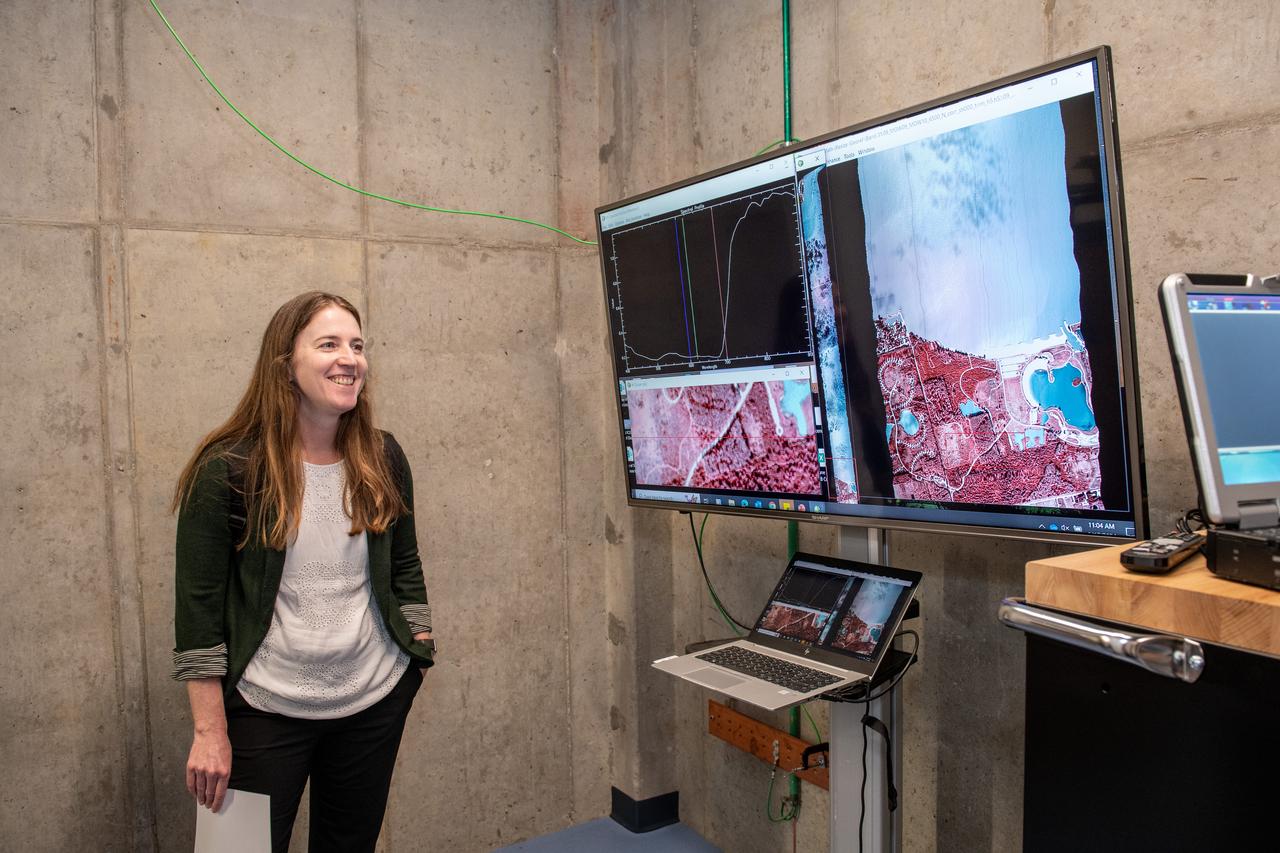
Dr. Katherine Calvin listens to a harmful algal bloom presentation on June 17, 2024. NASA Glenn Research Center conducts aerial remote sensing of harmful algal blooms to warn water filtration plants to enact more stringent filtering when harmful blooms are present. Aerial remote sensing is advantageous to satellite remote sensing that is limited by factors of resolution, on demand performance, cloud cover, and upgrades to instrumentation. Photo Credit: (NASA/Sara Lowthian-Hanna)
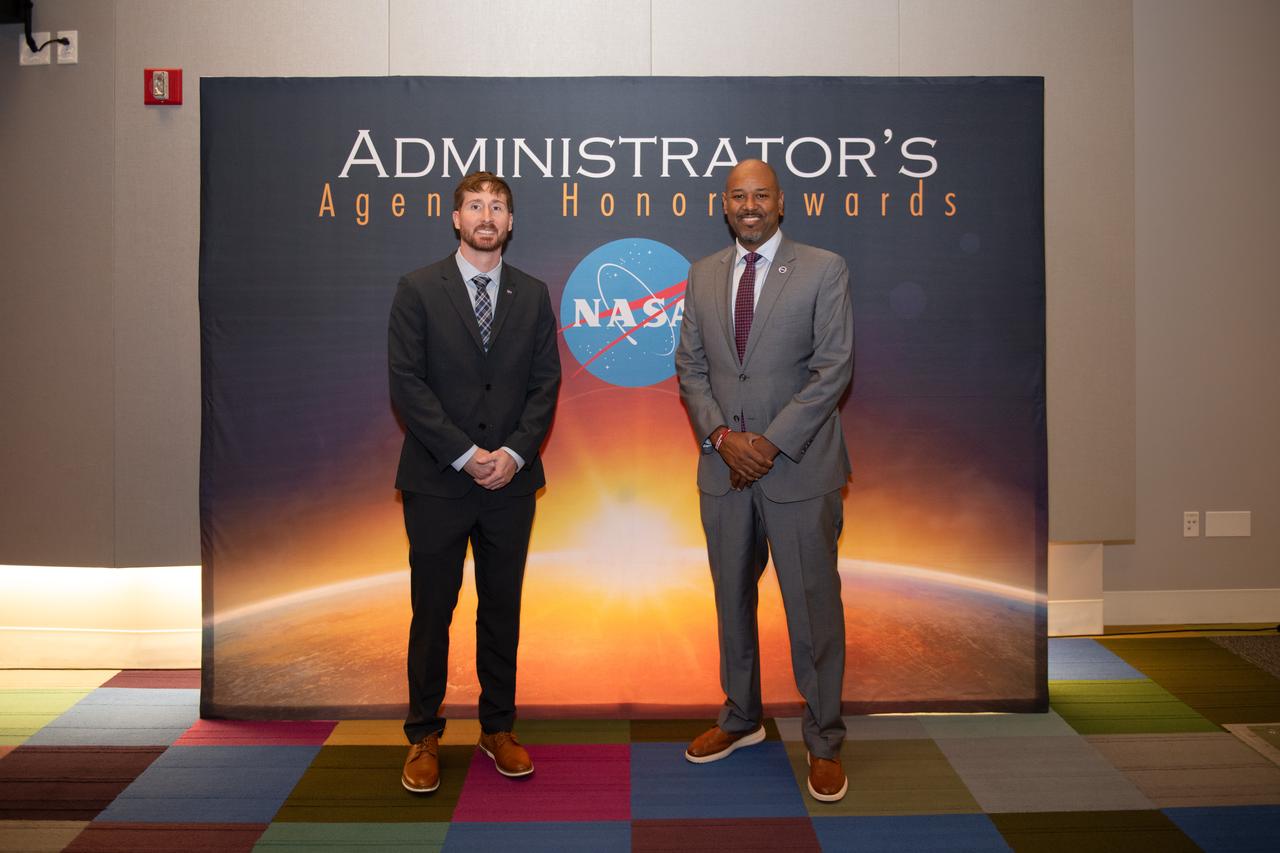
On March 28, 2024 NASA held its 2023 Administrator’s Agency Honor Awards at the Glenn Research Center in Cleveland, OH. Zachary Ball and Troy Shivers, staff who supported the event, pose for a photo. This celebratory event recognized the invaluable contributions of civil servants and contractors alike, each one instrumental in propelling humanity further into the realms of space exploration, understanding, and discoverThis is NASA's highest form of recognition that is awarded to any Government employee who, by distinguished service, ability, or vision has personally contributed to NASA's advancement of United States' interests. Photo Credit: (NASA/Sara Lowthian-Hanna)
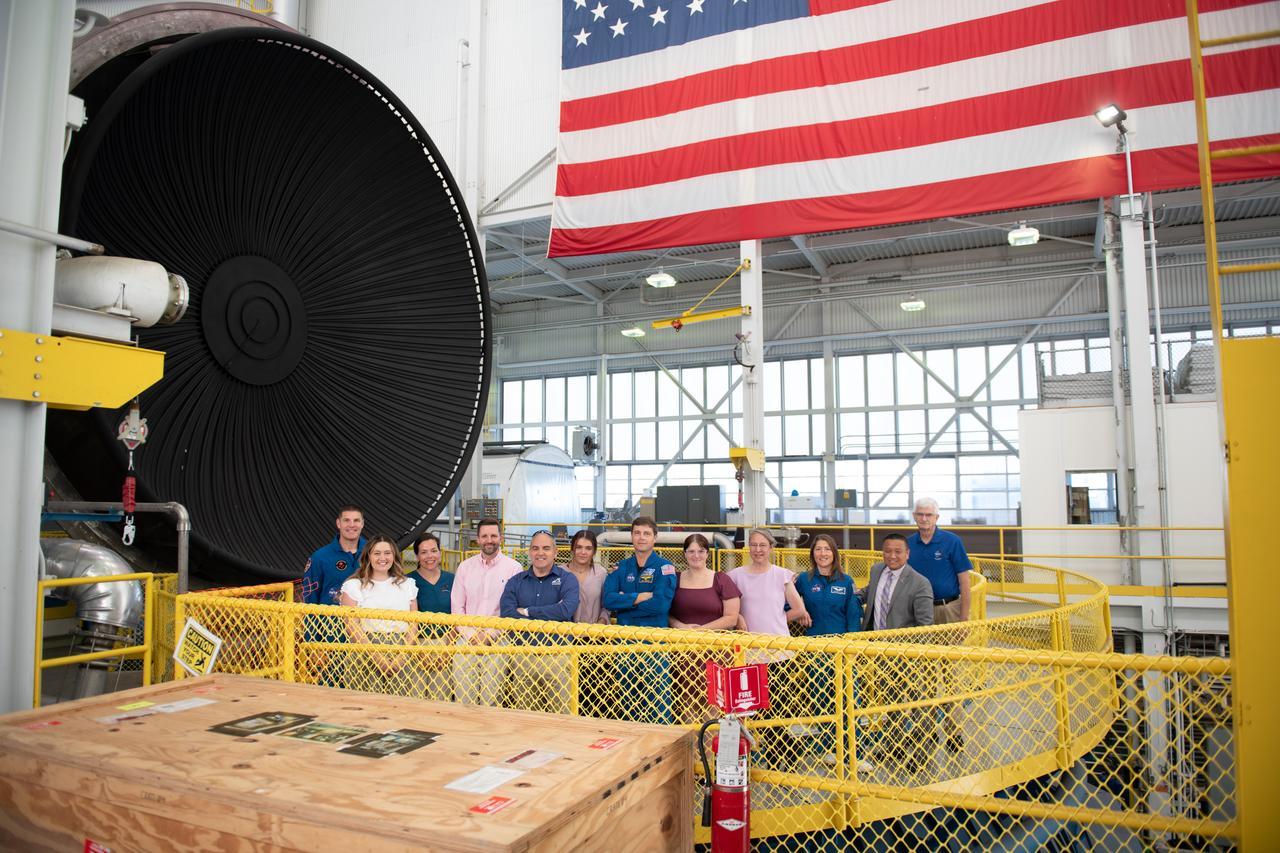
Tours were given of the In Space Propulsion Facility (ISP) in Sandusky, OH at Neil Armstrong Test Facility. NASA’s Facility is the world’s only high altitude test facility capable of full-scale rocket engine and launch vehicle system level tests. The facility supports mission profile thermal vacuum simulation and engine firing. From Left to Right: Jeremy Hansen, Allison Tankersley, Kathryn Oriti, Jan-Henrik Horstmann, Carlos Garcia-Galan, Penelope Garcia-Galan, Reid Wiseman, Jessica Isabell, Tiffany O'Rourke, Howard Hu, General David Stringer. Commander Reid Wiseman and Mission Specialists Christina Koch and Jeremy Hansen will be on hand to discuss their upcoming mission and participate in a Question and Answer session with employees afterward. Hansen is an astronaut with the Canadian Space Agency. Victor Glover, the pilot and fourth crew member, will not be present. Photo Credit: (NASA/Sara Lowthian-Hanna)
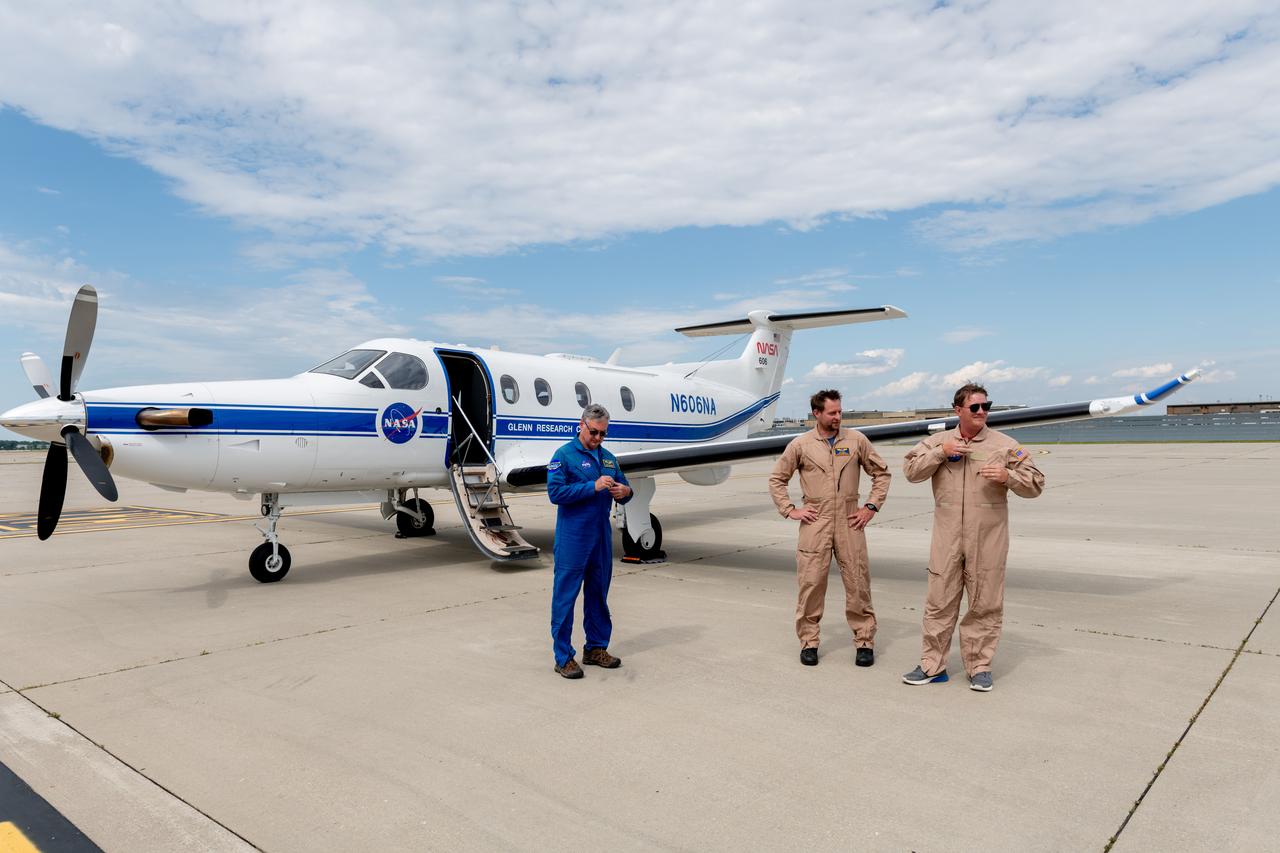
A team at NASA’s Glenn Research Center in Cleveland streamed 4K video footage from an aircraft to the International Space Station and back for the first time using optical, or laser, communications. The feat was part of a series of tests on new technology that could provide live video coverage of astronauts on the Moon during the Artemis missions. Pictured here on June 13, 2024 from Left to Right: Kurt Blakenship, Adam Wroblewski, Shaun McKeehan. Working with the Air Force Research Laboratory and NASA’s Small Business Innovation Research program, Glenn engineers temporarily installed a portable laser terminal on the belly of a Pilatus PC-12 aircraft. They then flew over Lake Erie sending data from the aircraft to an optical ground station in Cleveland. From there, it was sent over an Earth-based network to NASA’s White Sands Test Facility in Las Cruces, New Mexico, where scientists used infrared light signals to send the data. Photo Credit: (NASA/Sara Lowthian-Hanna)
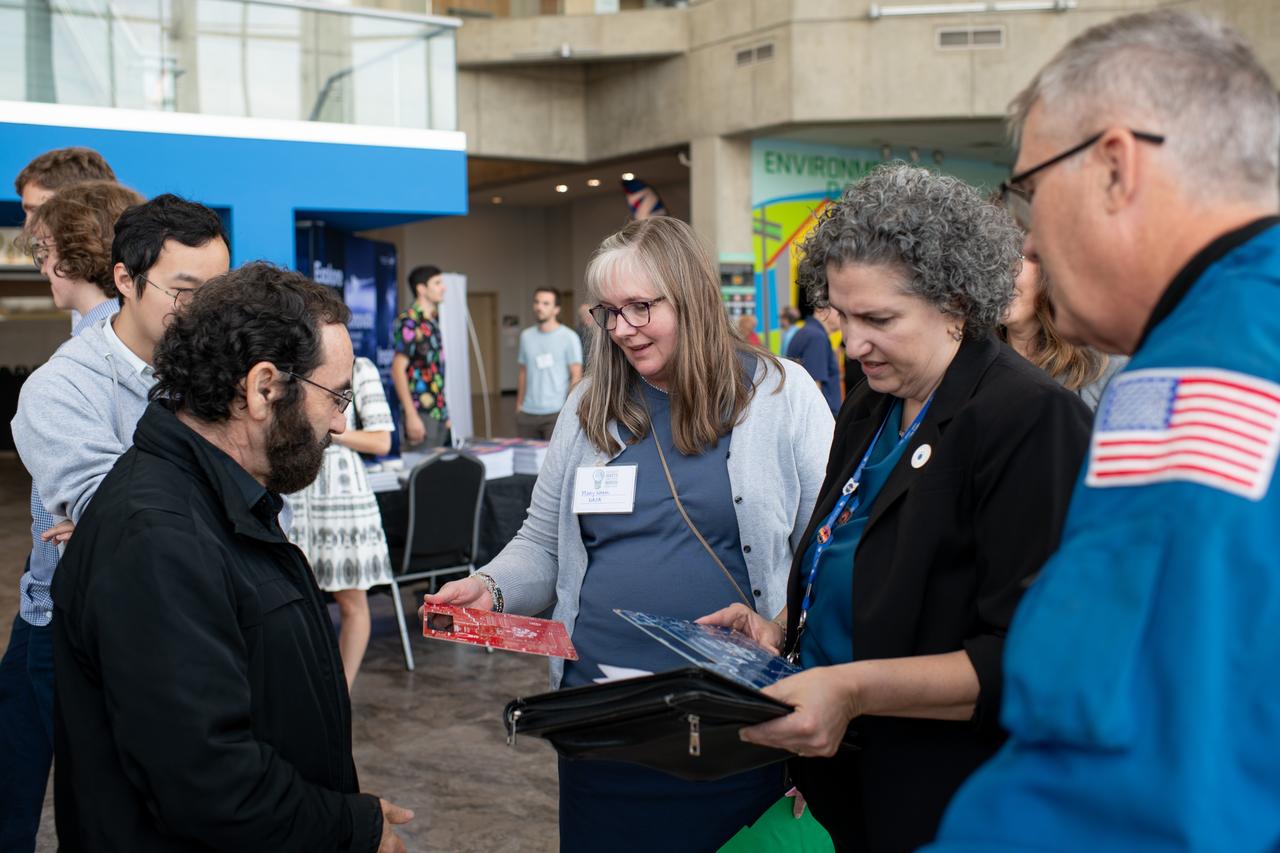
Philip Lubin from Team H.E.L.P.S. (High Efficiency Long-Range Power Solution) explains his project to Mary Wadel, Kirsten Ellenbogen and Stephen Bowen. NASA has awarded a total of $1.5 million to two U.S. teams for their novel technology solutions addressing energy distribution, management, and storage as part of the agency’s Watts on the Moon Challenge. The innovations from this challenge aim to support NASA’s Artemis missions, which will establish long-term human presence on the Moon. This two-phase competition has challenged U.S. innovators to develop breakthrough power transmission and energy storage technologies that could enable long-duration Moon missions to advance the nation’s lunar exploration goals. The final phase of the challenge concluded with a technology showcase and winners’ announcement ceremony Friday at Great Lakes Science Center, home of the visitor center for NASA’s Glenn Research Center in Cleveland. Team H.E.L.P.S. (High Efficiency Long-Range Power Solution) from The University of California, Santa Barbara won the $1 million grand prize in NASA’s Watts on the Moon Challenge. Their team developed a low-mass, high efficiency cable and featured energy storage batteries on both ends of their power transmission and energy storage system. Second prize ($500,000): Orbital Mining Corporation of Golden, Colorado Photo Credit: (NASA/Sara Lowthian-Hanna)
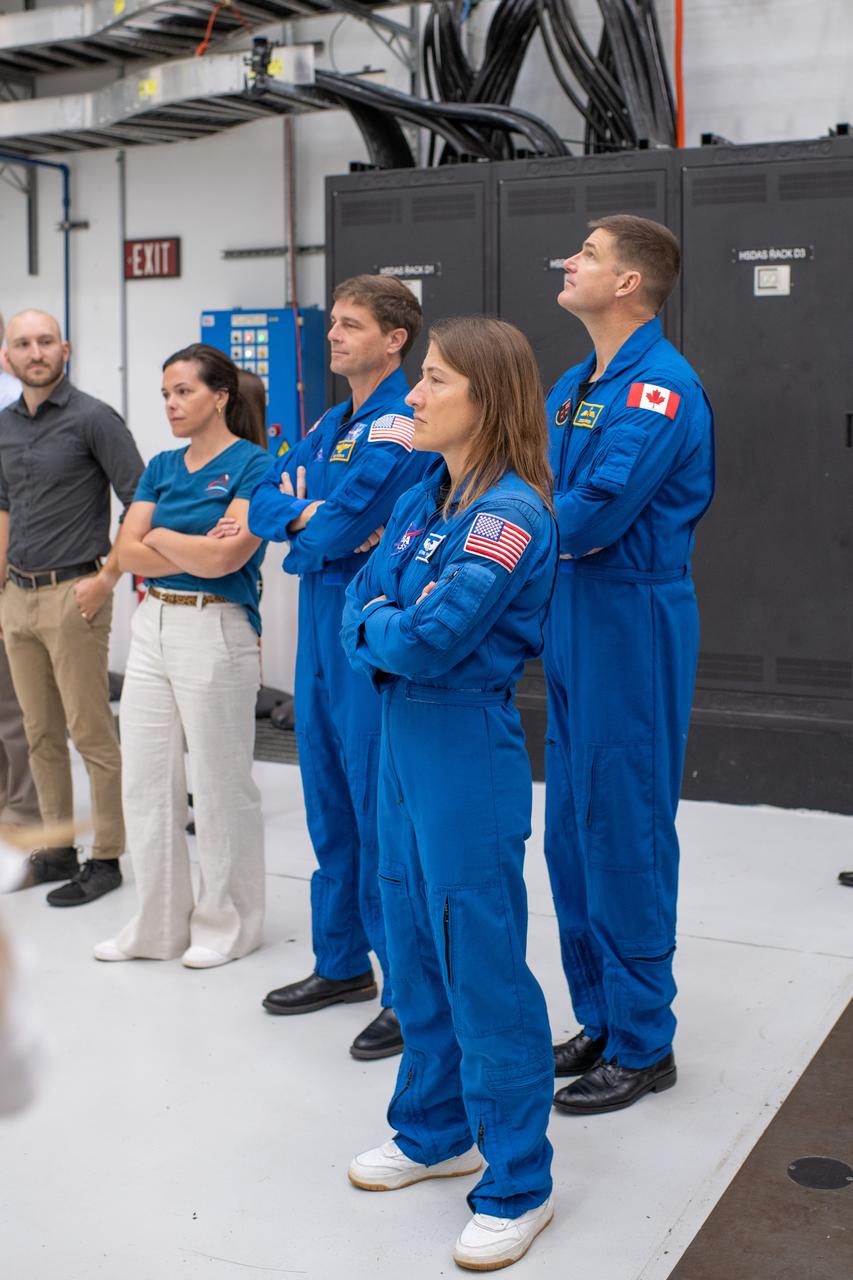
Tours were given in Sandusky, OH at Neil Armstrong Test Facility on September 11, 2024. Pictured is Josh Pawlak, Kathryn Oriti, Commander Reid Wiseman, Mission Specialist Christina Koch and Mission Specialist Jeremy Hansen. Employees meet three of the four astronauts who will venture around the Moon on Artemis II, the first crewed flight paving the way for future lunar surface missions. Commander Reid Wiseman and Mission Specialists Christina Koch and Jeremy Hansen will be on hand to discuss their upcoming mission and participate in a Question and Answer session with employees afterward. Hansen is an astronaut with the Canadian Space Agency. Victor Glover, the pilot and fourth crew member, will not be present. Awards were given to employees that participated in Orion for Artemis I. Photo Credit: (NASA/Sara Lowthian-Hanna)
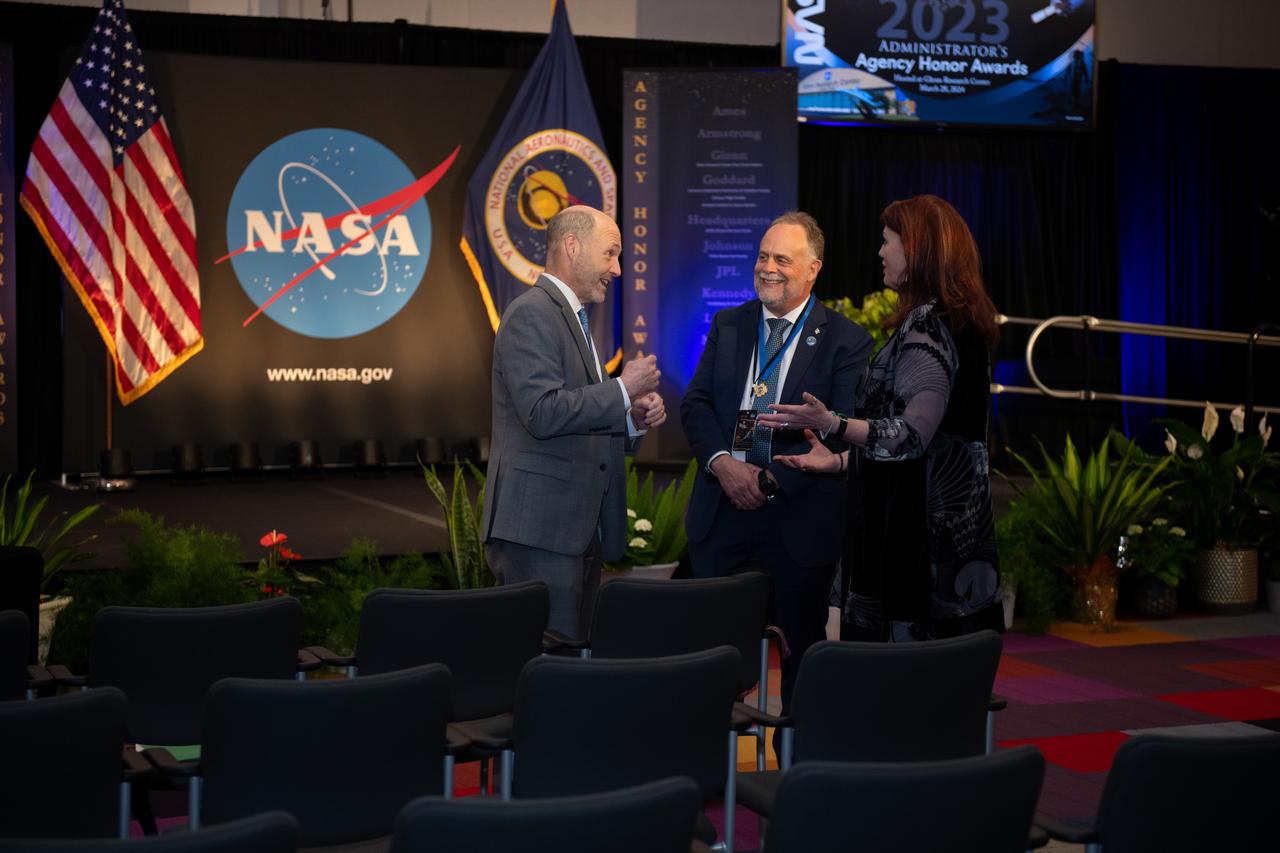
On March 28, 2024 NASA held its 2023 Administrator’s Agency Honor Awards at the Glenn Research Center in Cleveland, OH. This celebratory event recognized the invaluable contributions of civil servants and contractors alike, each one instrumental in propelling humanity further into the realms of space exploration, understanding, and discoverThis is NASA's highest form of recognition that is awarded to any Government employee who, by distinguished service, ability, or vision has personally contributed to NASA's advancement of United States' interests. Photo Credit: (NASA/Sara Lowthian-Hanna)
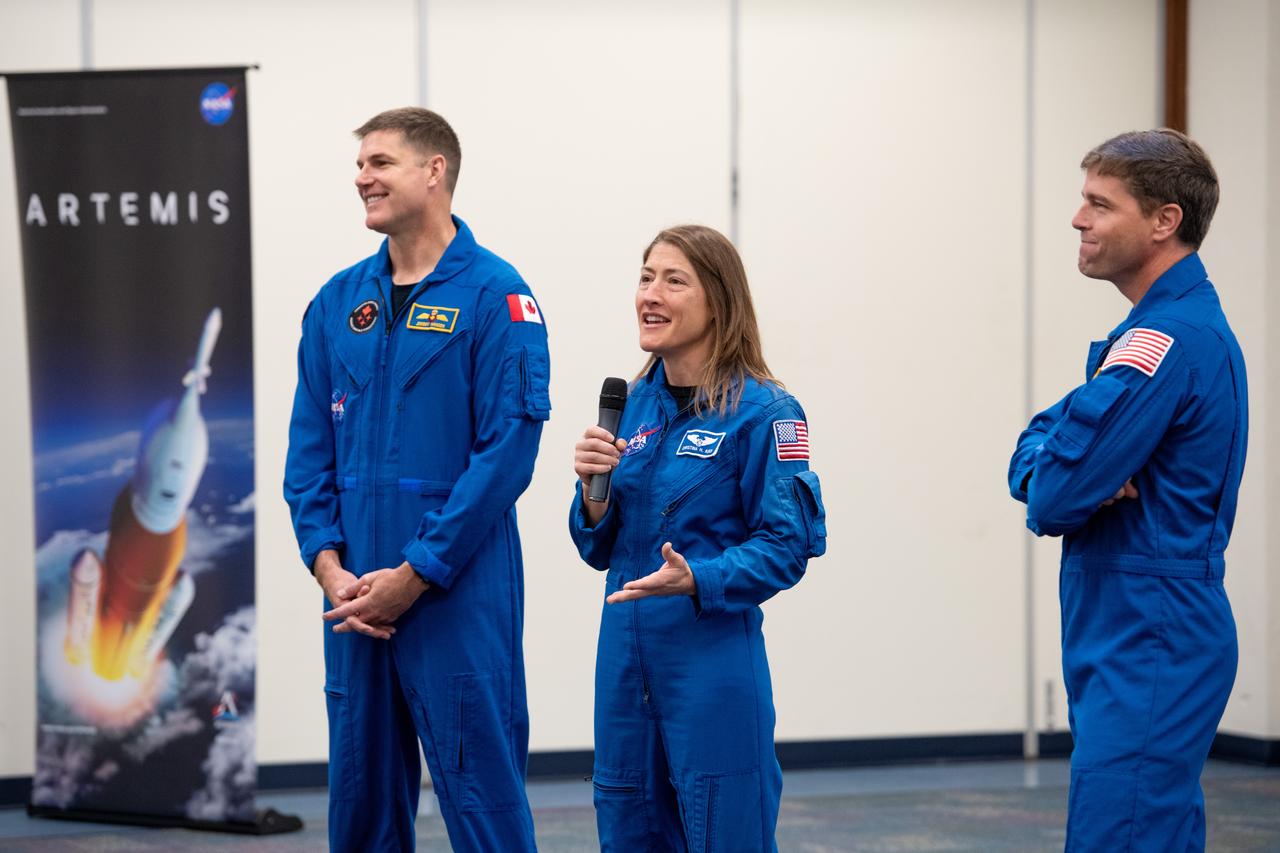
On September 11, 2024, employees meet three of the four astronauts who will venture around the Moon on Artemis II, the first crewed flight paving the way for future lunar surface missions. Commander Reid Wiseman and Mission Specialists Christina Koch and Jeremy Hansen will be on hand to discuss their upcoming mission and participate in a Question and Answer session with employees afterward. Hansen is an astronaut with the Canadian Space Agency. Victor Glover, the pilot and fourth crew member, will not be present. Awards were given to employees that participated in Orion for Artemis I. The crew of four astronauts will lift off on an approximately 10-day mission from Launch Complex 39B at NASA’s Kennedy Space Center in Florida, blazing beyond Earth’s grasp atop the agency’s mega Moon rocket. The crew will check out Orion’s systems and perform a targeting demonstration test relatively close to Earth before venturing around the Moon. Photo Credit: (NASA/Sara Lowthian-Hanna)
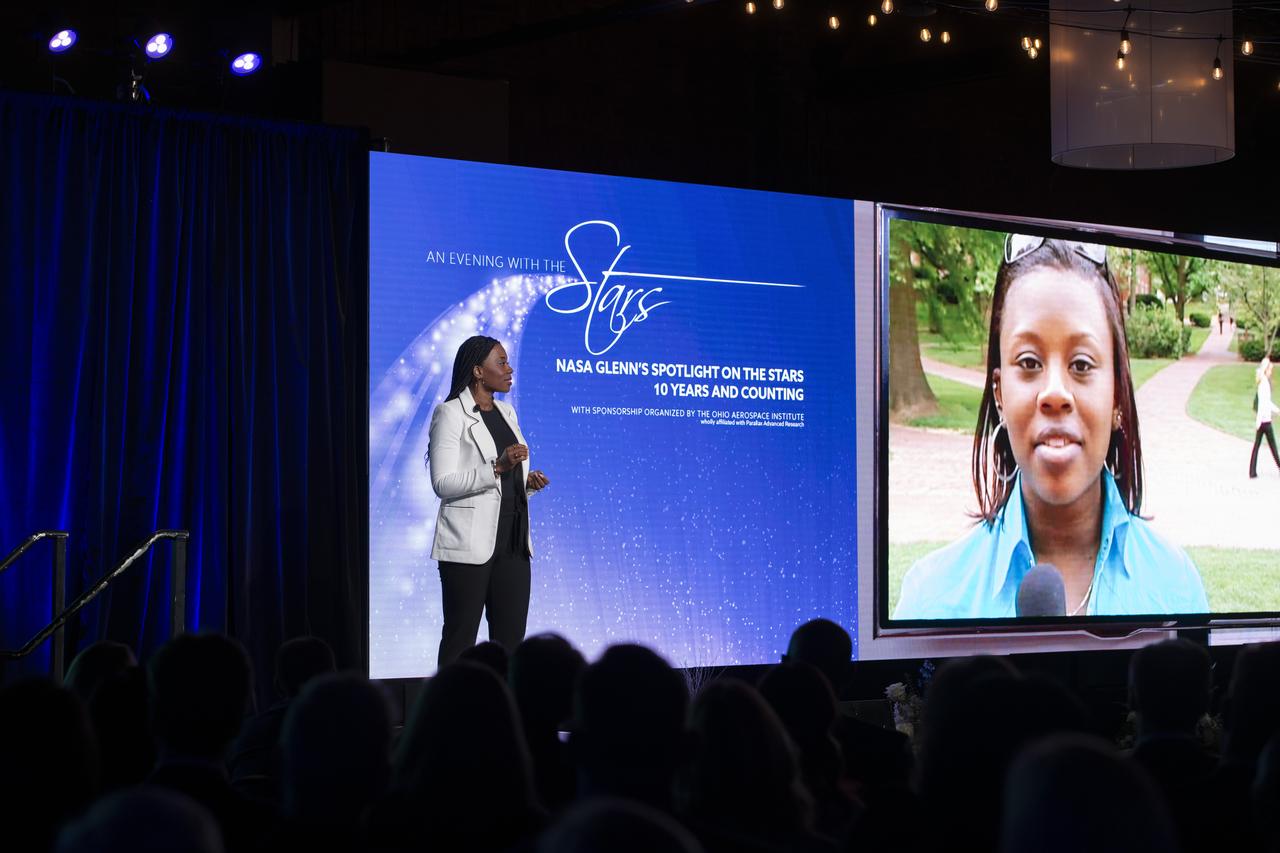
NASA Glenn's Spotlight on the Stars, 10 Years and Counting was held at Windows on the River in Cleveland, OH on November 20th, 2024. Sponsorship organized by the Ohio Aerospace Institute. Welcome by Dennis Andersh, CEO and President, Parallax Advanced Research, Ohio Aerospace Institute. Remarks by Terrence Slaybaugh, Vice President of Sites and Infrastructure, JobsOhio. Introduction of 10th Anniversary Video, Dr. Wanda Peters, Acting Deputy Director, NASA Glenn Research Center. Remarks/Introduction of Presenters, Dr. James Kenyon, Director, NASA Glenn Research Center. Keynote Speakers: Nikki Welch, NASA Glenn Communications, Connecting People to the Mission. Timothy Smith, NASA Glenn's Superalloy Achievements. Carlos Garcia-Galan, Dreaming of Going to the Moon. Photo Credit: (NASA/Sara Lowthian-Hanna)

Guests interact with the VIPER exhibit at the Total Solar Eclipse Fest at the Great Lakes Science Center in Cleveland, OH on April 6, 2024. A total solar eclipse swept across a narrow portion of the North American continent from Mexico’s Pacific coast to the Atlantic coast of Newfoundland, Canada. A partial solar eclipse was visible across the entire North American continent along with parts of Central America and Europe. Photo Credit: (NASA/Sara Lowthian-Hanna)

A team at NASA’s Glenn Research Center in Cleveland streamed 4K video footage from an aircraft to the International Space Station and back for the first time using optical, or laser, communications. The feat was part of a series of tests on new technology that could provide live video coverage of astronauts on the Moon during the Artemis missions. Working with the Air Force Research Laboratory and NASA’s Small Business Innovation Research program, Glenn engineers temporarily installed a portable laser terminal on the belly of a Pilatus PC-12 aircraft. They then flew over Lake Erie sending data from the aircraft to an optical ground station in Cleveland. From there, it was sent over an Earth-based network to NASA’s White Sands Test Facility in Las Cruces, New Mexico, where scientists used infrared light signals to send the data. Photo Credit: (NASA/Sara Lowthian-Hanna)
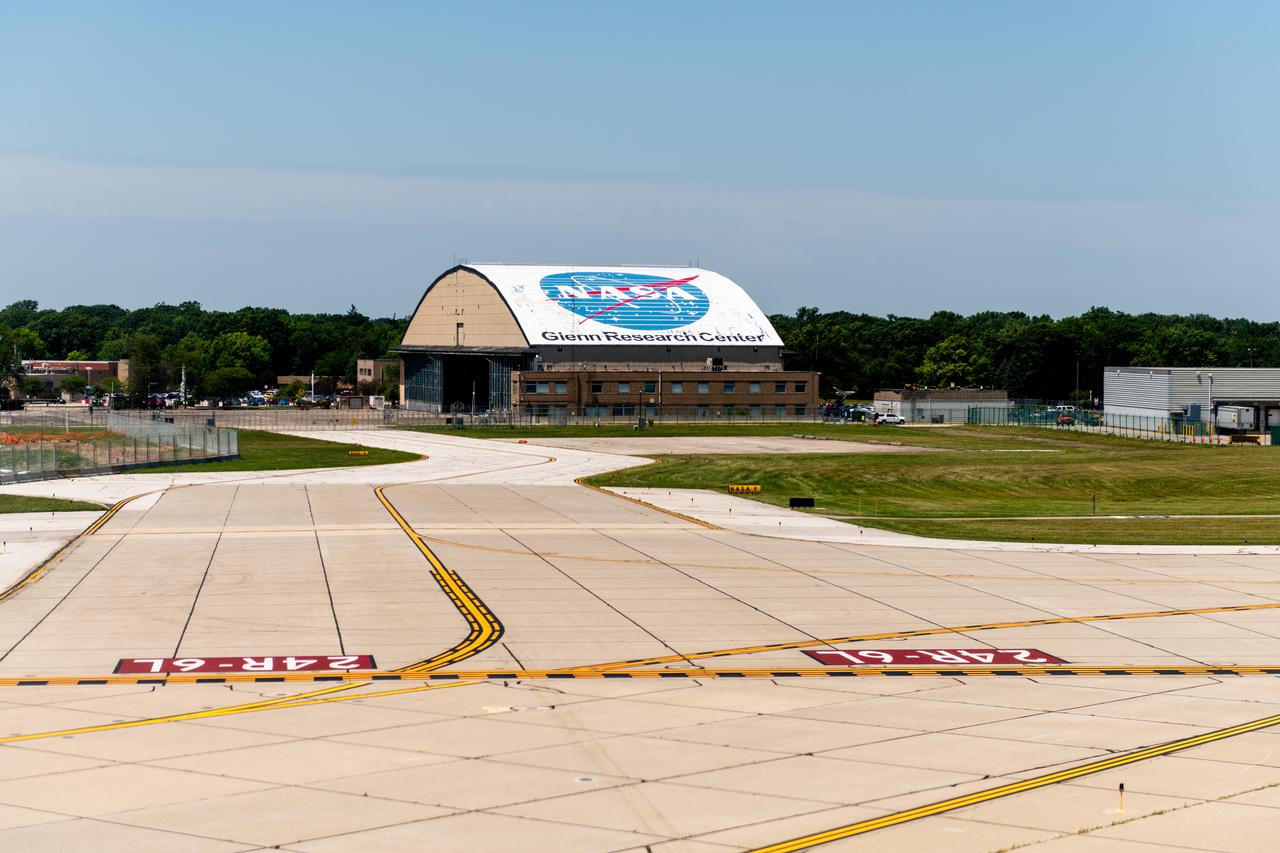
View of the Glenn Research Center Hangar from the Cleveland Hopkins Airport Runway during a testing flight on June 13, 2024. A team at NASA’s Glenn Research Center in Cleveland streamed 4K video footage from an aircraft to the International Space Station and back for the first time using optical, or laser, communications. The feat was part of a series of tests on new technology that could provide live video coverage of astronauts on the Moon during the Artemis missions. Working with the Air Force Research Laboratory and NASA’s Small Business Innovation Research program, Glenn engineers temporarily installed a portable laser terminal on the belly of a Pilatus PC-12 aircraft. They then flew over Lake Erie sending data from the aircraft to an optical ground station in Cleveland. From there, it was sent over an Earth-based network to NASA’s White Sands Test Facility in Las Cruces, New Mexico, where scientists used infrared light signals to send the data. Photo Credit: (NASA/Sara Lowthian-Hanna)
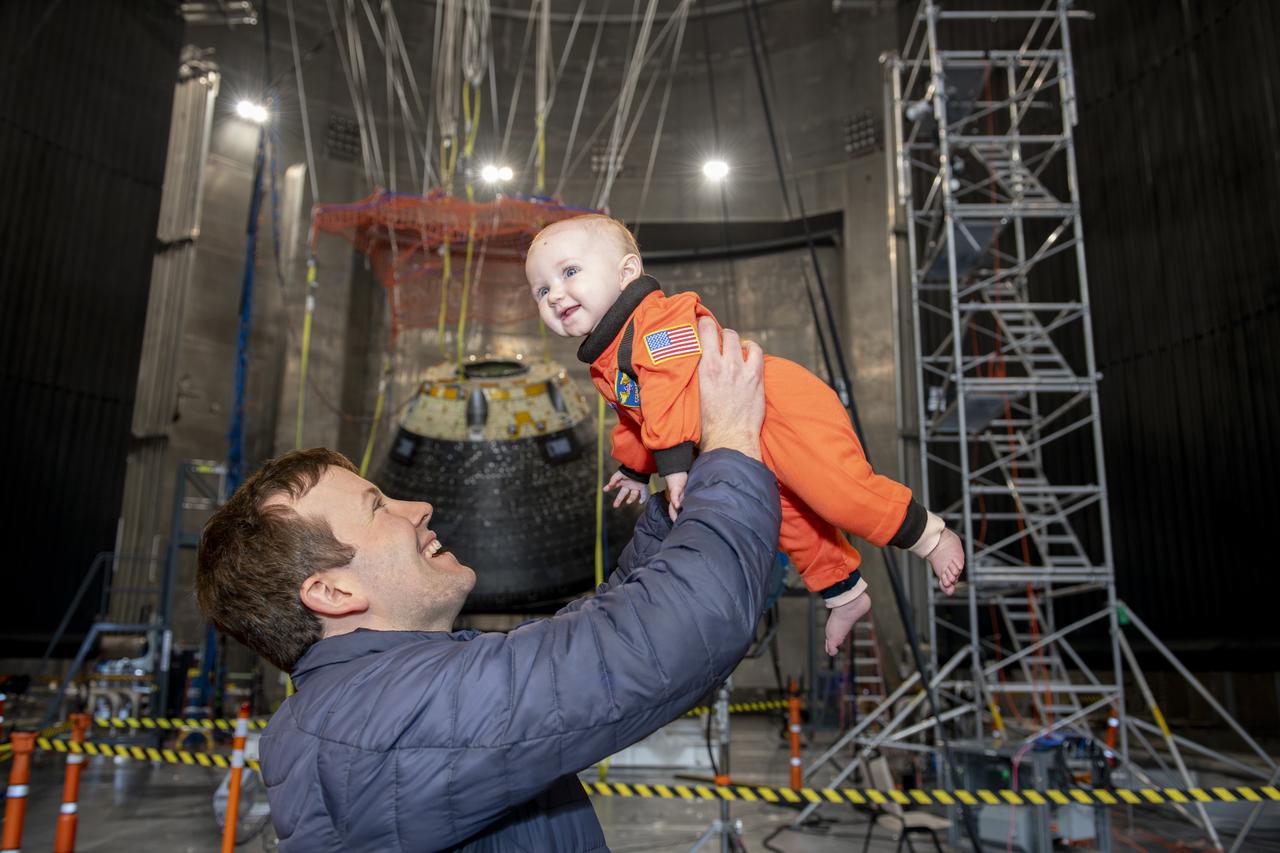
Michael Belair, European Service Module Propulsion Subsystem Manager, with his little astronaut in front of the Orion Crew Module on November 21, 2024. Employees supporting Artemis were invited to attend an appreciation event, “The Road to the Moon,” at Armstrong Test Facility in Sandusky, Ohio. Experts have subjected the spacecraft to extreme conditions in Armstrong’s test facilities. This significant testing is slated to wrap up in December, and we want to give you a chance to see the capsule before the conclusion of the test campaign. Photo Credit: (NASA/Sara Lowthian-Hanna)

The NASA Systems Engineering Workshop is an annual event that brings together systems engineers and stakeholders from across the Agency to discuss, develop, and improve the state of the discipline as a community. The fundamental goals of the SE Workshop is to better engage and develop Systems Engineers to improve NASA mission success and improve the SE community and knowledge sharing within the discipline through focused and pertinent interactive learning. The Systems Engineering Workshop prides itself on being a "workshop". This means that attendees will be highly engaged and encouraged to share their own experiences and points of view with their colleagues throughout the event. The theme of this year's workshop hosted by Glenn Research Center on May 7-10, 2024 is "Eye on the Future" and is being held at the Hilton Cleveland Downtown in Ohio. It will feature presentations and panels of experts from across NASA and beyond! A couple of featured presentations include: "How I Learned to Stop Worrying and Love ChatGPT" and "Is MBSE Right for Me?" Photo Credit: (NASA/Sara Lowthian-Hanna)

Jeremy Johnson, a research pilot and aviation safety officer, poses in front of a PC-12 aircraft inside the hangar at NASA’s Glenn Research Center in Cleveland on Thursday, April 17, 2025. Johnson flies NASA planes to support important scientific research and testing, working with researchers to plan and carry out flights that will get them the data they need while ensuring safety.
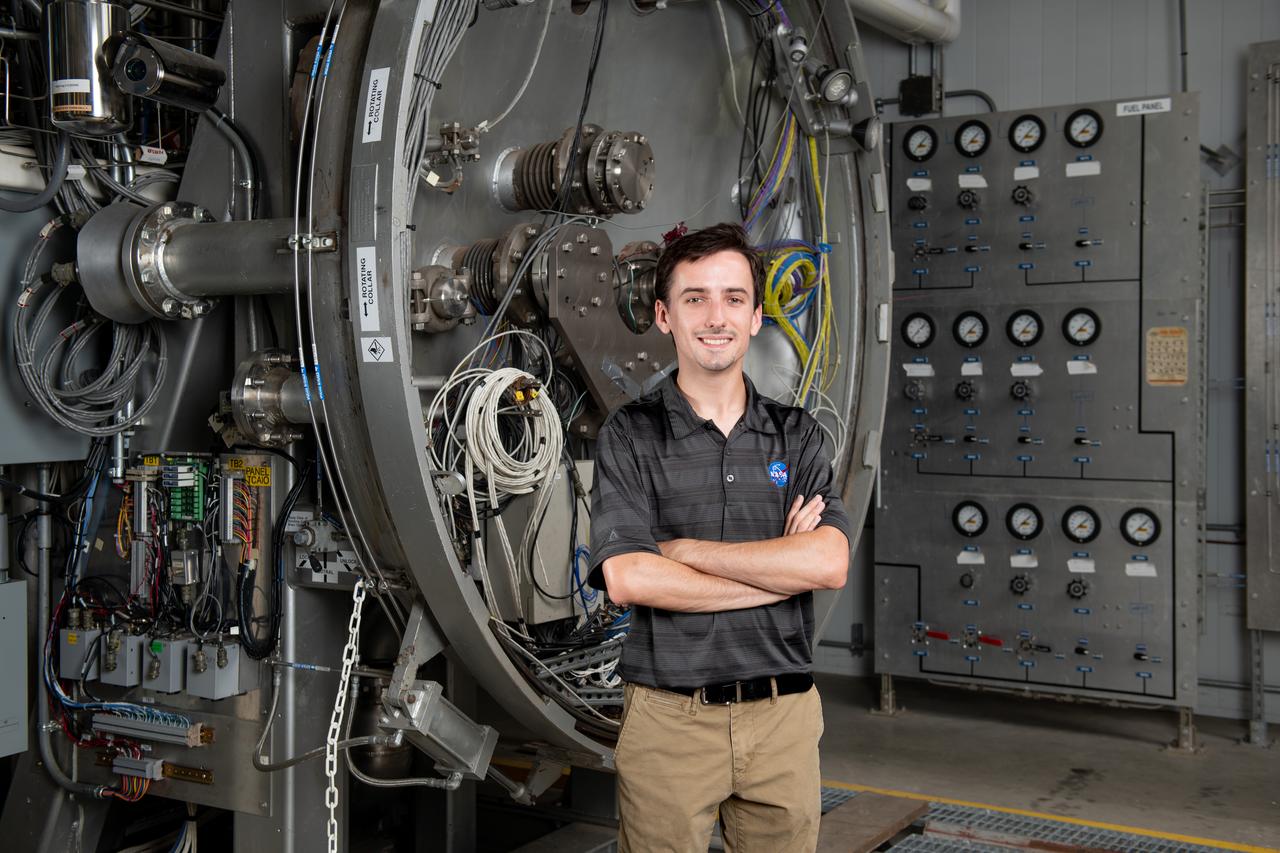
Each year, the NESC produces the NESC Technical Update, which highlights two or three individuals from each Center and includes assessments throughout the year. Because of the critical contributions to the NESC mission this year, Rob Jankovsky, NESC Chief Engineer at GRC, chose two individuals to be highlighted. This year, it is Andrew Ring and Michael Cooper. The Lead Analyst for GRC’s Chemical and Thermal Propulsion Systems branch, Mr. Michael Cooper, is supporting NESC test operations on reaction control system thrusters for Gateway’s Power & Propulsion Element. “These thrusters are small with few moving parts, but the heat and mass transfers involved are very complex,” he said. The test campaign is putting the thrusters through a rigorous profile to simulate the lifetime they will experience over decades in space. Mr. Cooper is analyzing test data gathered on chamber pressure, temperature, flow rates, and more to develop models on thruster performance. He also built the tool that read in that data from the test stand instrumentation. Photo Credit: (NASA/Sara Lowthian-Hanna)
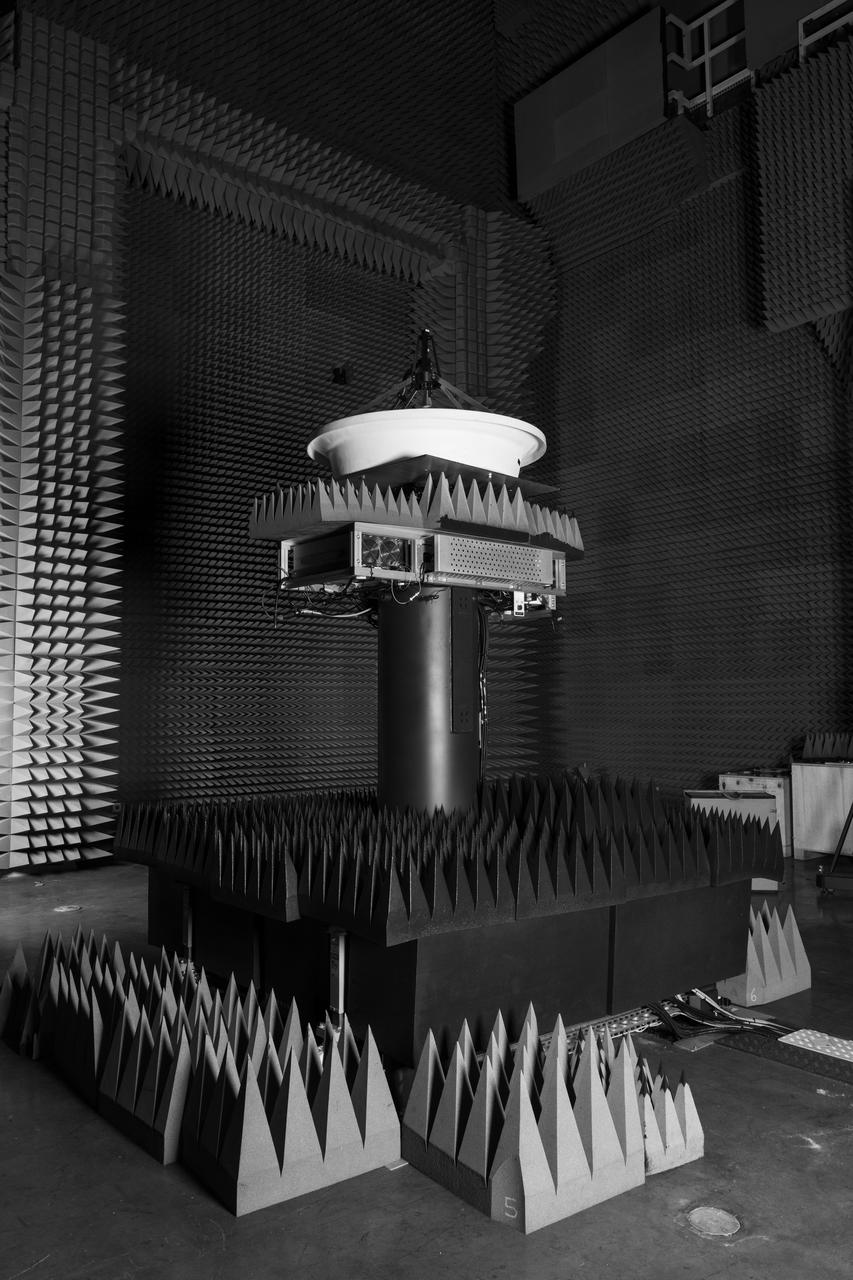
NASA’s Beaming Energy for Air Mobility team successfully completed a first-of-its-kind power beaming test at NASA Glenn on June 4, 2025. Later this year, the tested transmitter will be used in a demonstration to wirelessly transmit power using microwaves to a custom power receiver — a step toward gap-filling technology that could one day deliver power on the surface of the Moon or Mars.
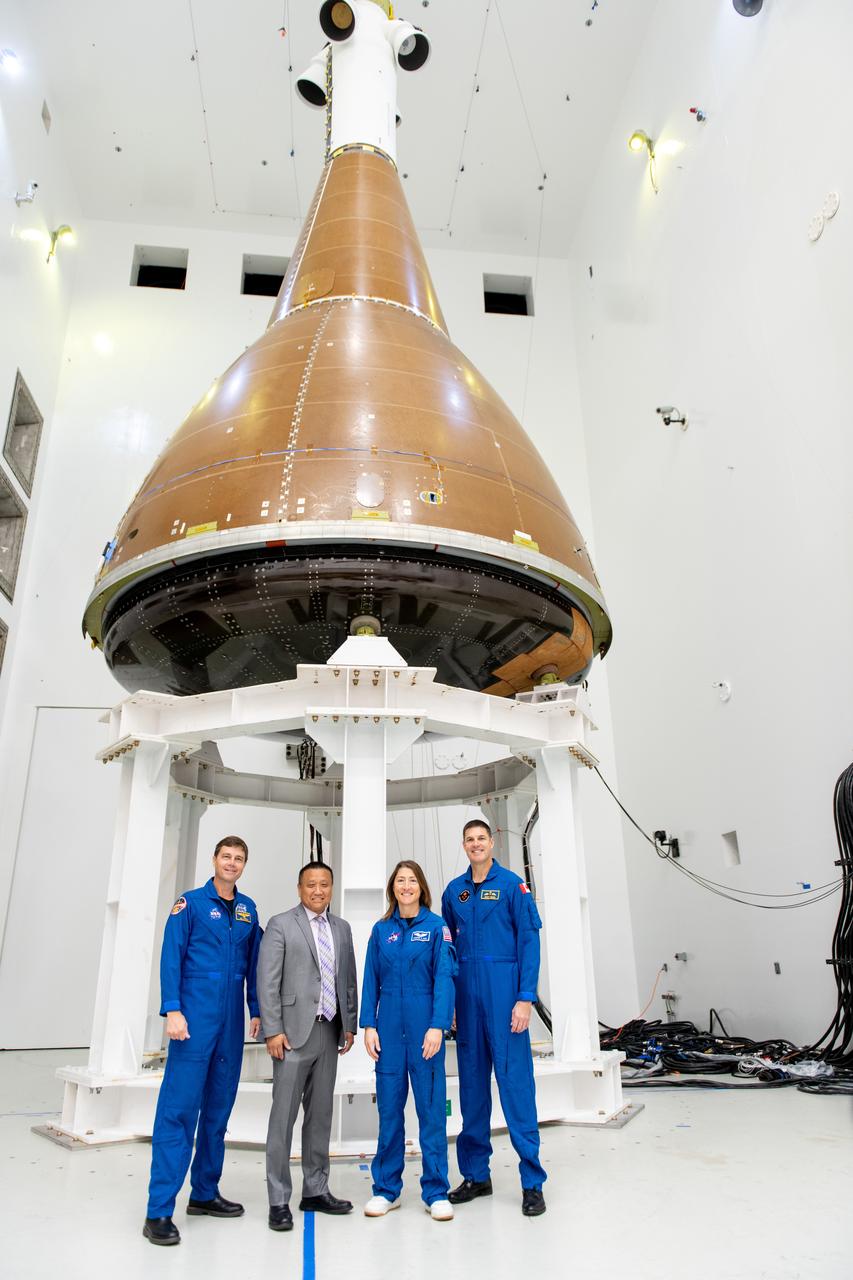
Commander Reid Wiseman, Howard Hu, Mission Specialist Christina Koch and Mission Specialist Jeremy Hansen pose in front of the Orion Environmental Test Article at Armstrong Test Facility in Sandusky, OH on September 11, 2024. The team has begun vibro-acoustic testing on the Orion spacecraft that flew around the Moon on Artemis I, now known as the Environmental Test Article. The testing will help ensure the safety of future crews aboard Orion. Employees meet three of the four astronauts who will venture around the Moon on Artemis II, the first crewed flight paving the way for future lunar surface missions. Commander Reid Wiseman and Mission Specialists Christina Koch and Jeremy Hansen will be on hand to discuss their upcoming mission and participate in a Question and Answer session with employees afterward. Hansen is an astronaut with the Canadian Space Agency. Victor Glover, the pilot and fourth crew member, will not be present. Awards were given to employees that participated in Orion for Artemis I. Photo Credit: (NASA/Sara Lowthian-Hanna)
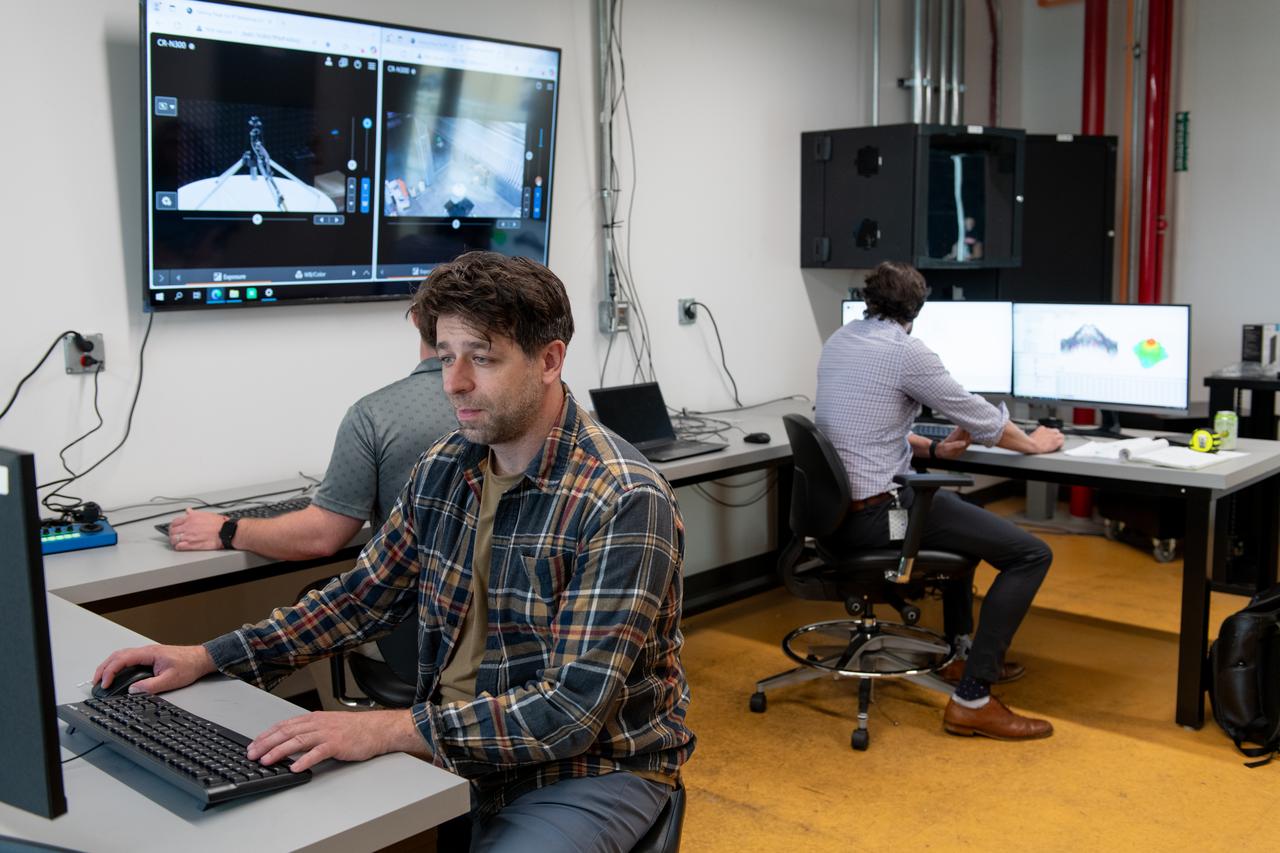
NASA’s Beaming Energy for Air Mobility team successfully completed a first-of-its-kind power beaming test at NASA Glenn. Later this year, the tested transmitter will be used in a demonstration to wirelessly transmit power using microwaves to a custom power receiver — a step toward gap-filling technology that could one day deliver power on the surface of the Moon or Mars. Seth Waldstein, Seth Schisler and Bryan Schoenholz are in the control room reviewing the data.
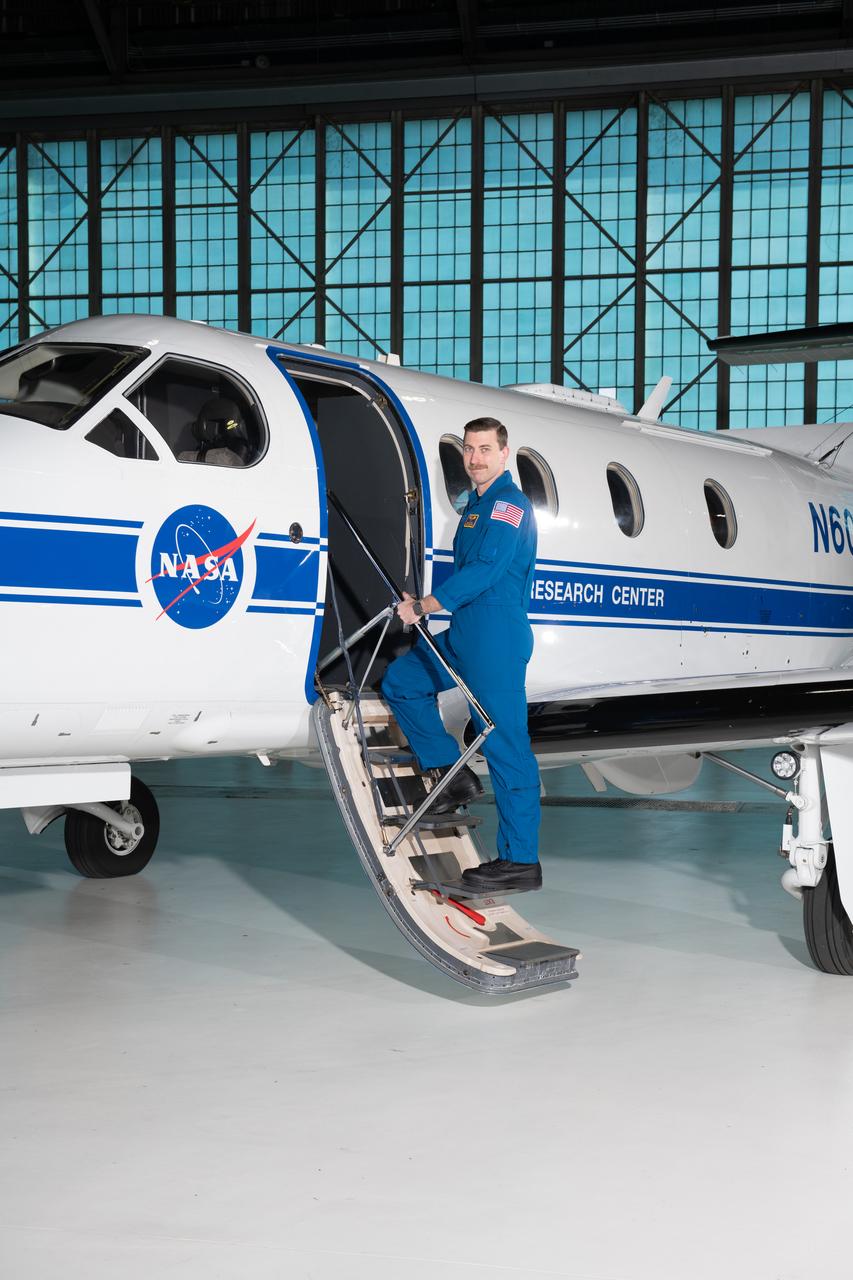
Jeremy Johnson, a research pilot and aviation safety officer, poses in front of a PC-12 aircraft inside the hangar at NASA’s Glenn Research Center in Cleveland on Thursday, April 17, 2025. Johnson flies NASA planes to support important scientific research and testing, working with researchers to plan and carry out flights that will get them the data they need while ensuring safety.
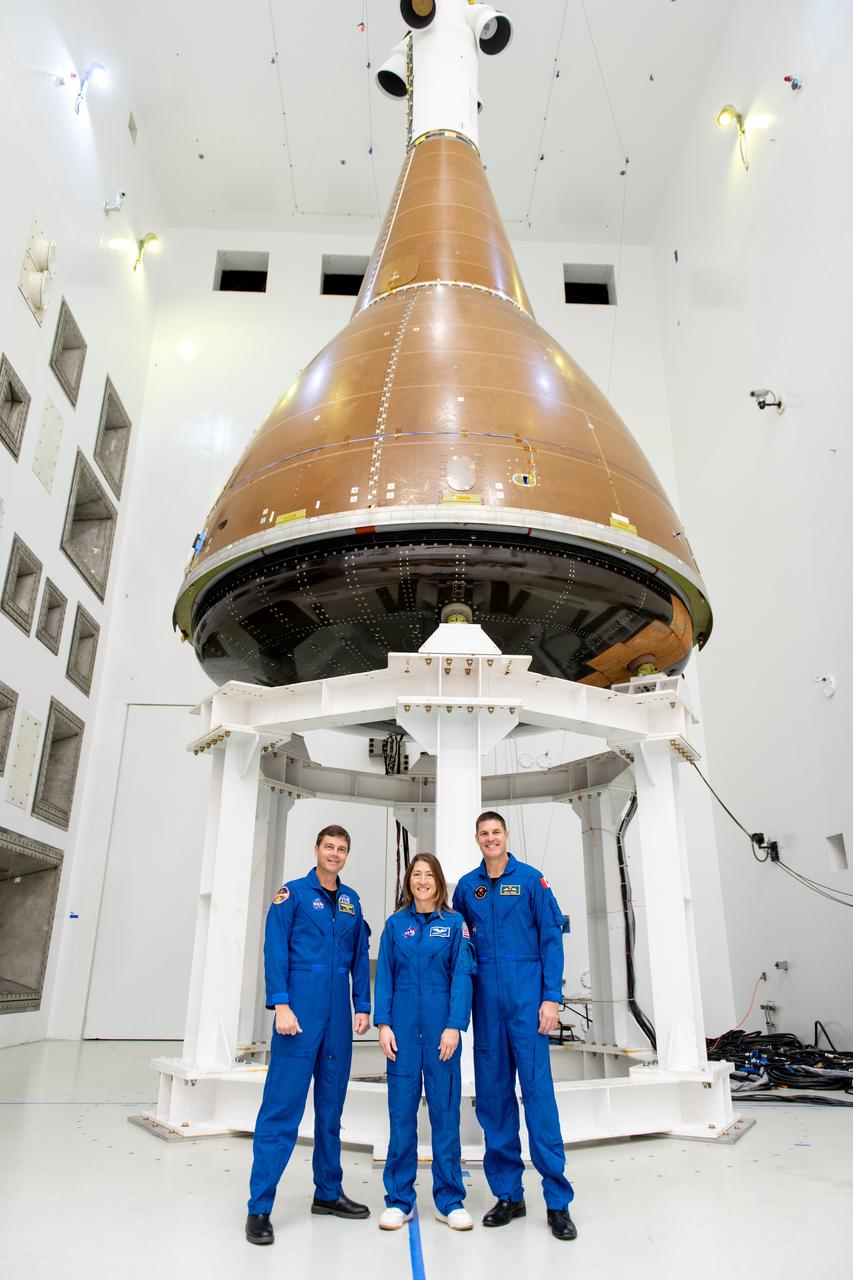
Commander Reid Wiseman, Mission Specialist Christina Koch and Mission Specialist Jeremy Hansen pose in front of the Orion Environmental Test Article at Armstrong Test Facility in Sandusky, OH on September 11, 2024. The team has begun vibro-acoustic testing on the Orion spacecraft that flew around the Moon on Artemis I, now known as the Environmental Test Article. The testing will help ensure the safety of future crews aboard Orion. Employees meet three of the four astronauts who will venture around the Moon on Artemis II, the first crewed flight paving the way for future lunar surface missions. Commander Reid Wiseman and Mission Specialists Christina Koch and Jeremy Hansen will be on hand to discuss their upcoming mission and participate in a Question and Answer session with employees afterward. Hansen is an astronaut with the Canadian Space Agency. Victor Glover, the pilot and fourth crew member, will not be present. Awards were given to employees that participated in Orion for Artemis I. Photo Credit: (NASA/Sara Lowthian-Hanna)
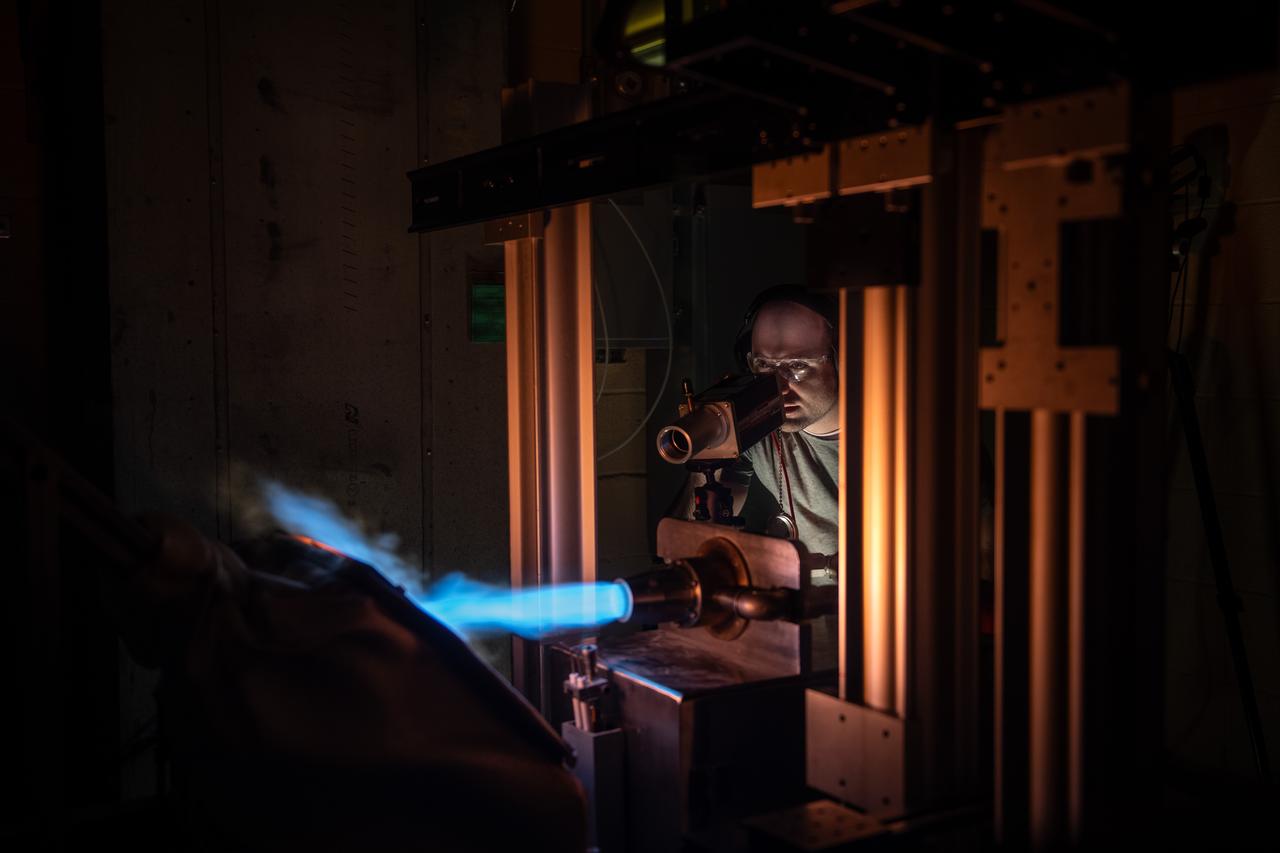
NASA Glenn’s Natural Gas/Oxygen Burner Rig is used to study the high temperature performance of various metal alloys, ceramics, and protective coatings for aero and space propulsion systems. The burner rig provides an easily accessible and economical method to simulate engine operating conditions to understand thermomechanical and thermochemical degradation of materials and structures. In the photo, Materials Research Engineer Michael Presby uses an infrared pyrometer to monitor the surface temperature of the material for a test on February 23, 2024. Photo Credit: (NASA/Sara Lowthian-Hanna)
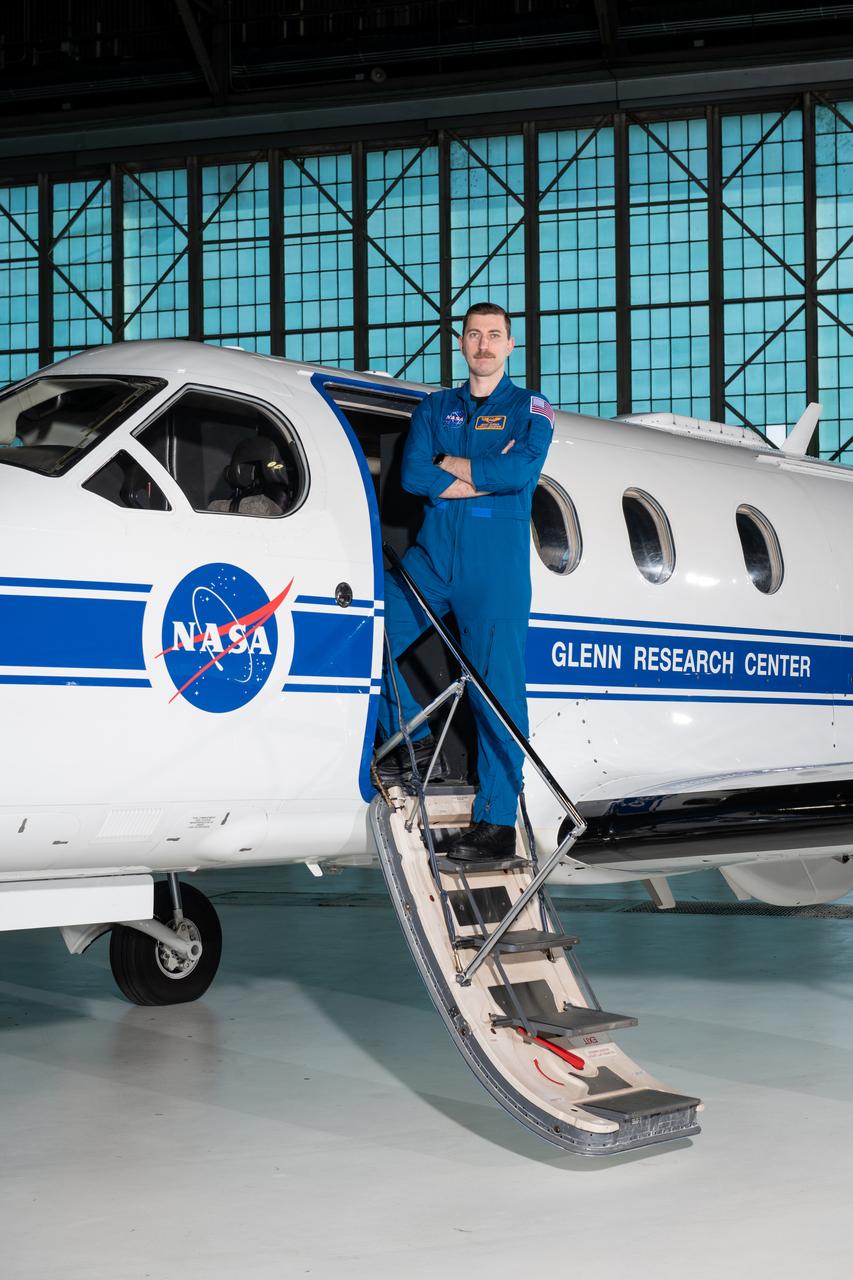
Jeremy Johnson, a research pilot and aviation safety officer, poses in front of a PC-12 aircraft inside the hangar at NASA’s Glenn Research Center in Cleveland on Thursday, April 17, 2025. Johnson flies NASA planes to support important scientific research and testing, working with researchers to plan and carry out flights that will get them the data they need while ensuring safety.
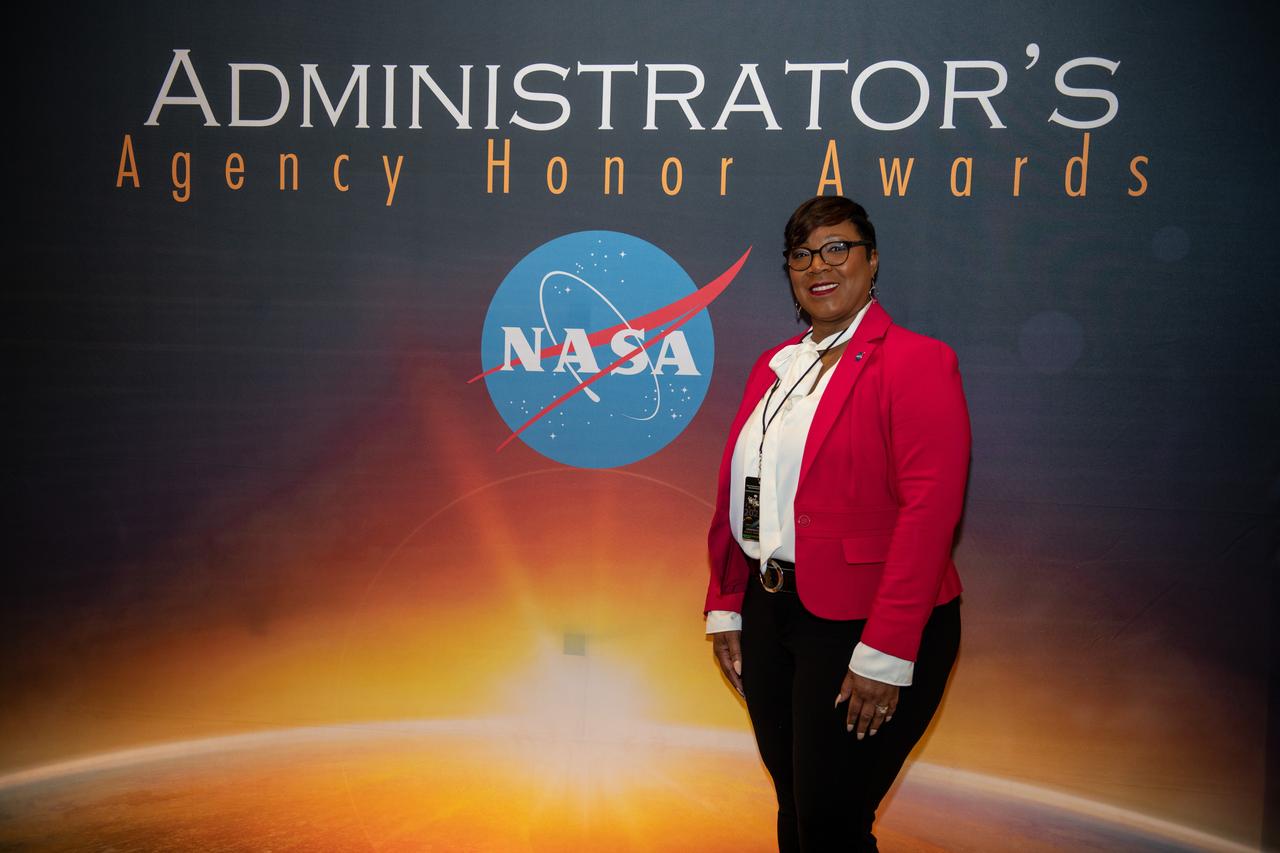
On March 28, 2024 NASA held its 2023 Administrator’s Agency Honor Awards at the Glenn Research Center in Cleveland, OH. Donya Douglas-Bradshaw from Goddard Space Flight Center was recognized for exceptional leadership, engineering and programmatic expertise, and project execution for several of NASA's highest profile missions and organizations. She received the Distinguished Service Medal. This celebratory event recognized the invaluable contributions of civil servants and contractors alike, each one instrumental in propelling humanity further into the realms of space exploration, understanding, and discoverThis is NASA's highest form of recognition that is awarded to any Government employee who, by distinguished service, ability, or vision has personally contributed to NASA's advancement of United States' interests. Photo Credit: (NASA/Sara Lowthian-Hanna)
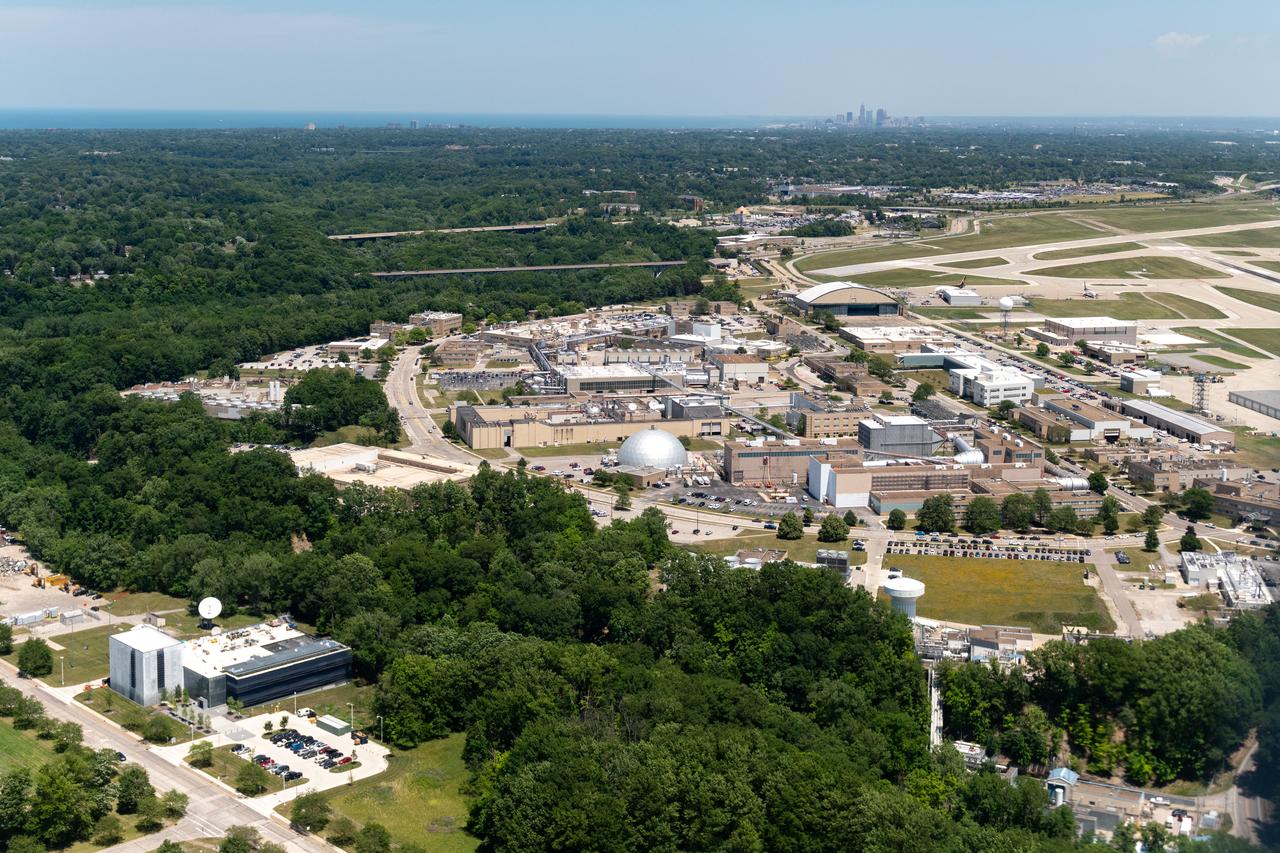
Aerial Photograph of Glenn Research Center With Downtown Cleveland in the Distance taken from the PC-12 on June 13, 2024. A team at NASA’s Glenn Research Center in Cleveland streamed 4K video footage from an aircraft to the International Space Station and back for the first time using optical, or laser, communications. The feat was part of a series of tests on new technology that could provide live video coverage of astronauts on the Moon during the Artemis missions. Working with the Air Force Research Laboratory and NASA’s Small Business Innovation Research program, Glenn engineers temporarily installed a portable laser terminal on the belly of a Pilatus PC-12 aircraft. They then flew over Lake Erie sending data from the aircraft to an optical ground station in Cleveland. From there, it was sent over an Earth-based network to NASA’s White Sands Test Facility in Las Cruces, New Mexico, where scientists used infrared light signals to send the data. Photo Credit: (NASA/Sara Lowthian-Hanna)
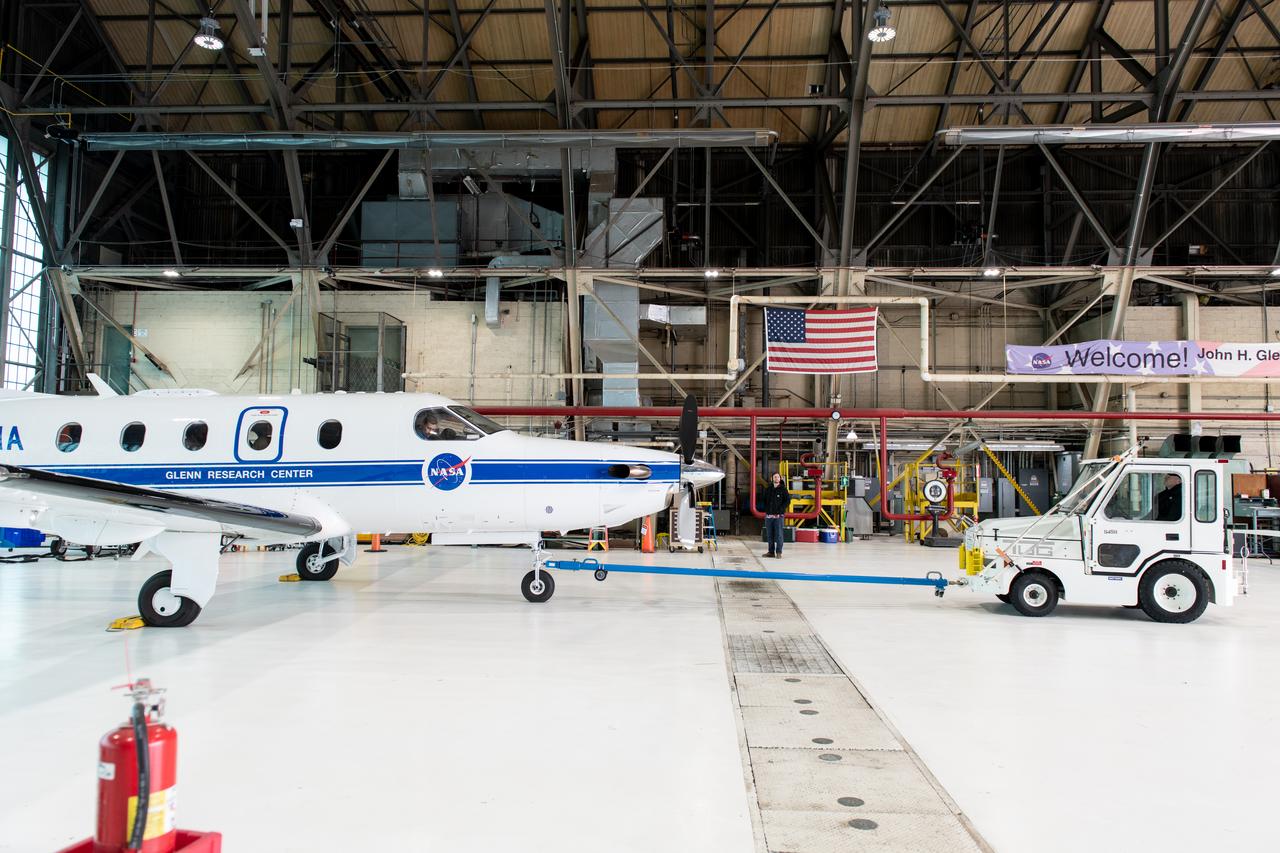
Jeremy Johnson leaving the hangar for a test flight in NASA Glenn Research Center’s PC-12 aircraft on Wednesday, April 16, 2025.

NASA Glenn's Spotlight on the Stars, 10 Years and Counting. Sponsorship organized by the Ohio Aerospace Institute was held at Windows on the River in Cleveland, OH on November 20th, 2024. Here, keynote speaker, Nikki Welch is on stage during Evening with the Stars 2024 Welcome by Dennis Andersh, CEO and President, Parallax Advanced Research, Ohio Aerospace Institute. Remarks by Terrence Slaybaugh, Vice President of Sites and Infrastructure, JobsOhio. Introduction of 10th Anniversary Video, Dr. Wanda Peters, Acting Deputy Director, NASA Glenn Research Center. Remarks/Introduction of Presenters, Dr. James Kenyon, Director, NASA Glenn Research Center. Keynote Speakers: Nikki Welch, NASA Glenn Communications, Connecting People to the Mission. Timothy Smith, NASA Glenn's Superalloy Achievements. Carlos Garcia-Galan, Dreaming of Going to the Moon. Photo Credit: (NASA/Sara Lowthian-Hanna)
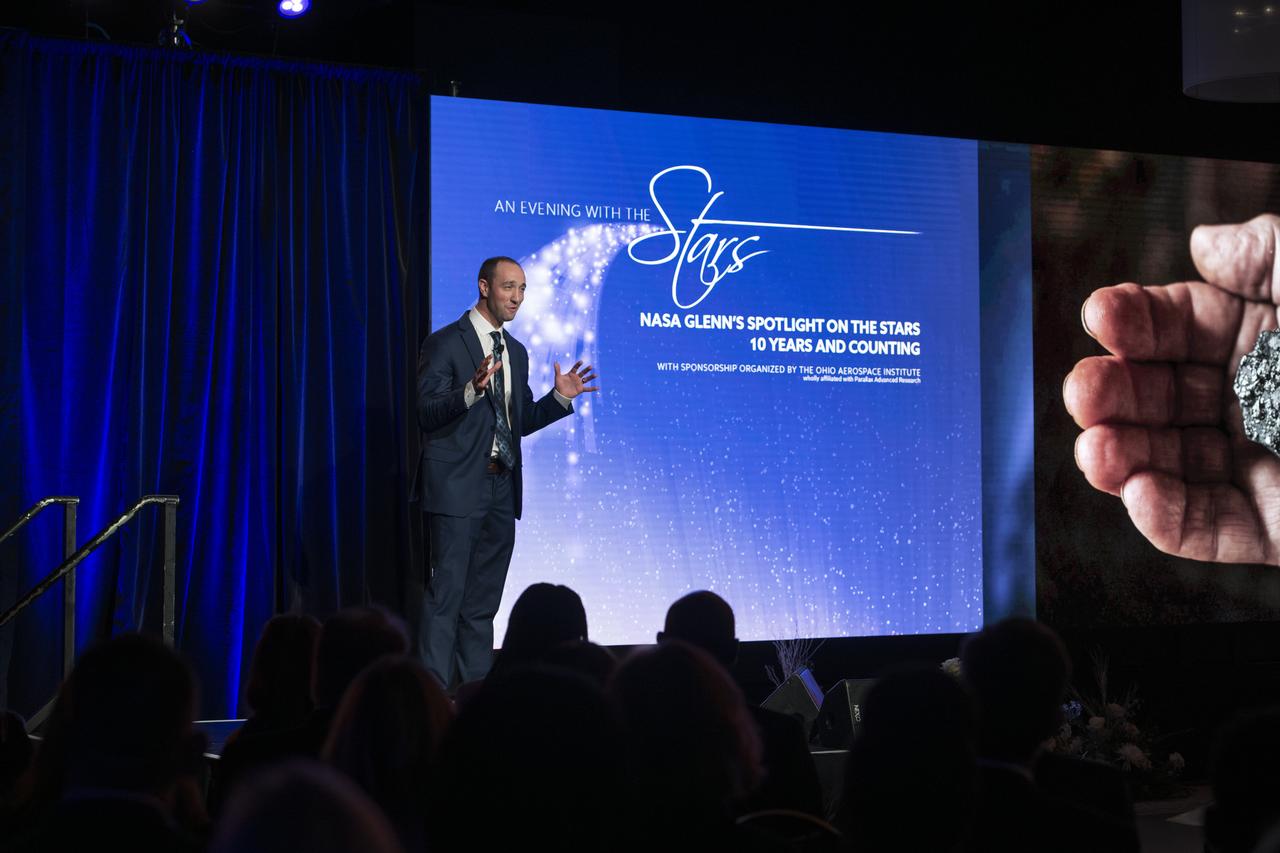
NASA Glenn's Spotlight on the Stars, 10 Years and Counting was held at Windows on the River in Cleveland, OH on November 20th, 2024. Sponsorship organized by the Ohio Aerospace Institute. Welcome by Dennis Andersh, CEO and President, Parallax Advanced Research, Ohio Aerospace Institute. Remarks by Terrence Slaybaugh, Vice President of Sites and Infrastructure, JobsOhio. Introduction of 10th Anniversary Video, Dr. Wanda Peters, Acting Deputy Director, NASA Glenn Research Center. Remarks/Introduction of Presenters, Dr. James Kenyon, Director, NASA Glenn Research Center. Keynote Speakers: Nikki Welch, NASA Glenn Communications, Connecting People to the Mission. Timothy Smith, NASA Glenn's Superalloy Achievements. Carlos Garcia-Galan, Dreaming of Going to the Moon. Photo Credit: (NASA/Sara Lowthian-Hanna)
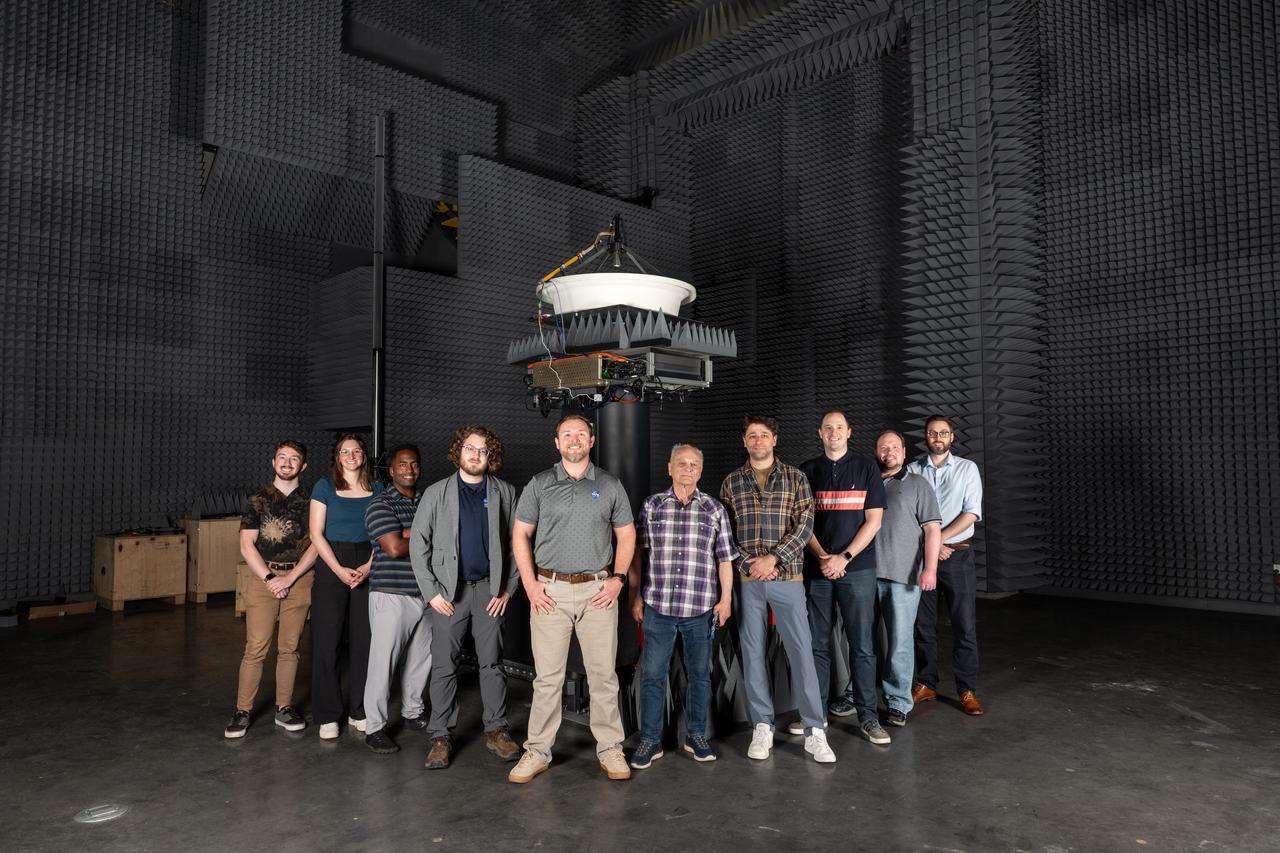
NASA’s Beaming Energy for Air Mobility team successfully completed a first-of-its-kind power beaming test at NASA Glenn on June 4, 2025. Later this year, the tested transmitter will be used in a demonstration to wirelessly transmit power using microwaves to a custom power receiver — a step toward gap-filling technology that could one day deliver power on the surface of the Moon or Mars. Pictured from left to right are Hayden Klopp, Rebecca Buehrle, Kerry Johnson, Avery Brock, Seth Schisler, Vladimir Volman, Seth Waldstein, David Rinehart, Rocco Viggiano, and Donald Dornbusch.
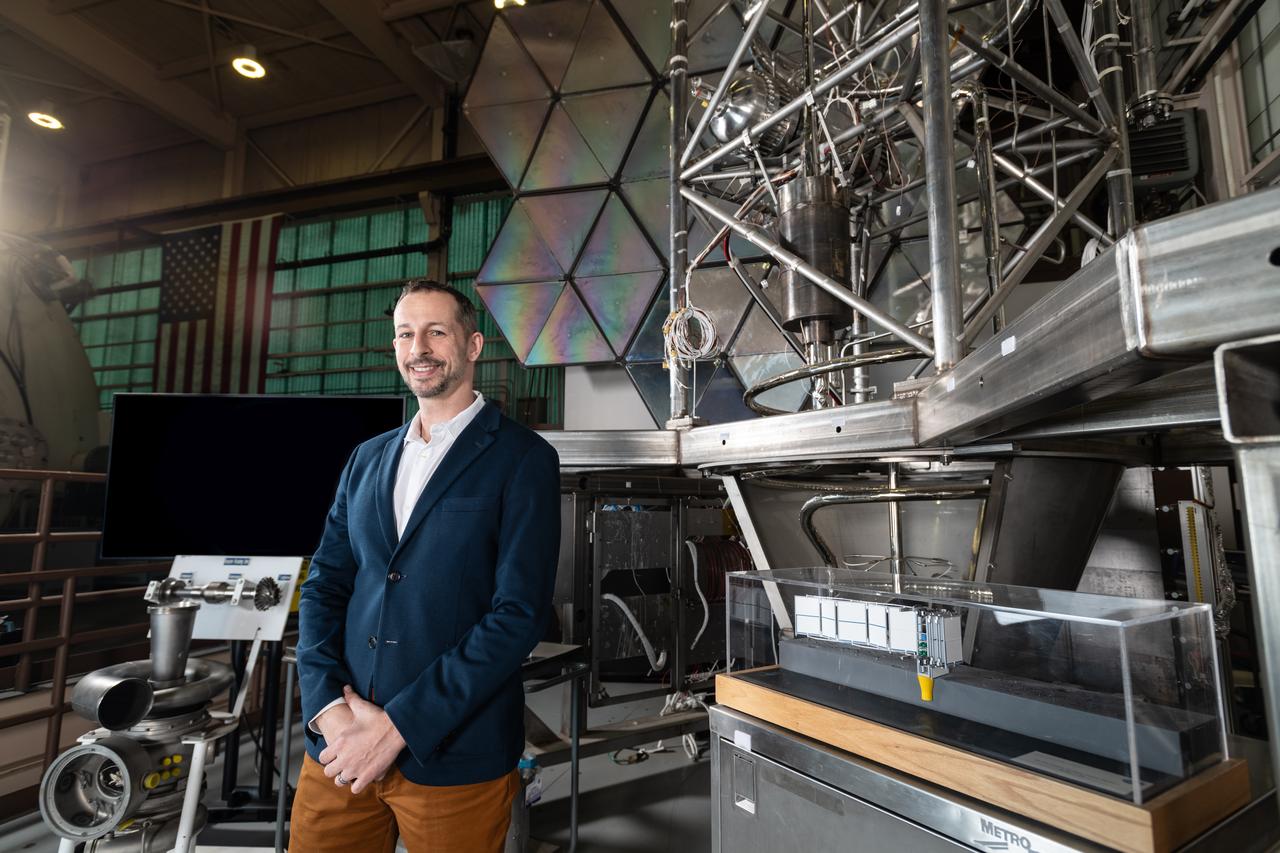
Chief Technologist Maxwell Briggs, who is responsible for early-stage innovations, poses in front of the Fission Surface Power System at NASA Glenn Research Center. Photo Credit: (NASA/Sara Lowthian-Hanna)
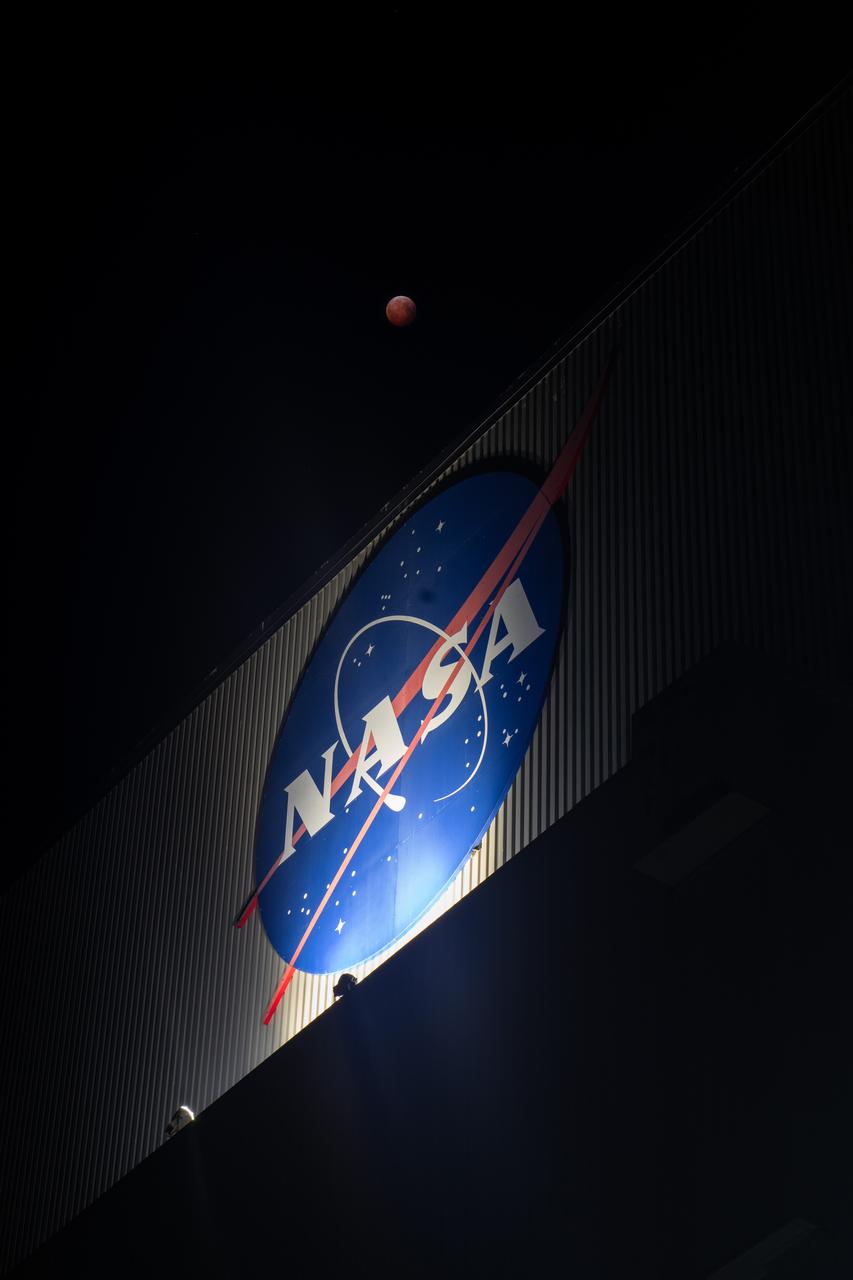
Blood Moon on March 14, 2025 at Armstrong Test Facility in Sandusky, OH. Photo Credit: (NASA/Sara Lowthian-Hanna)
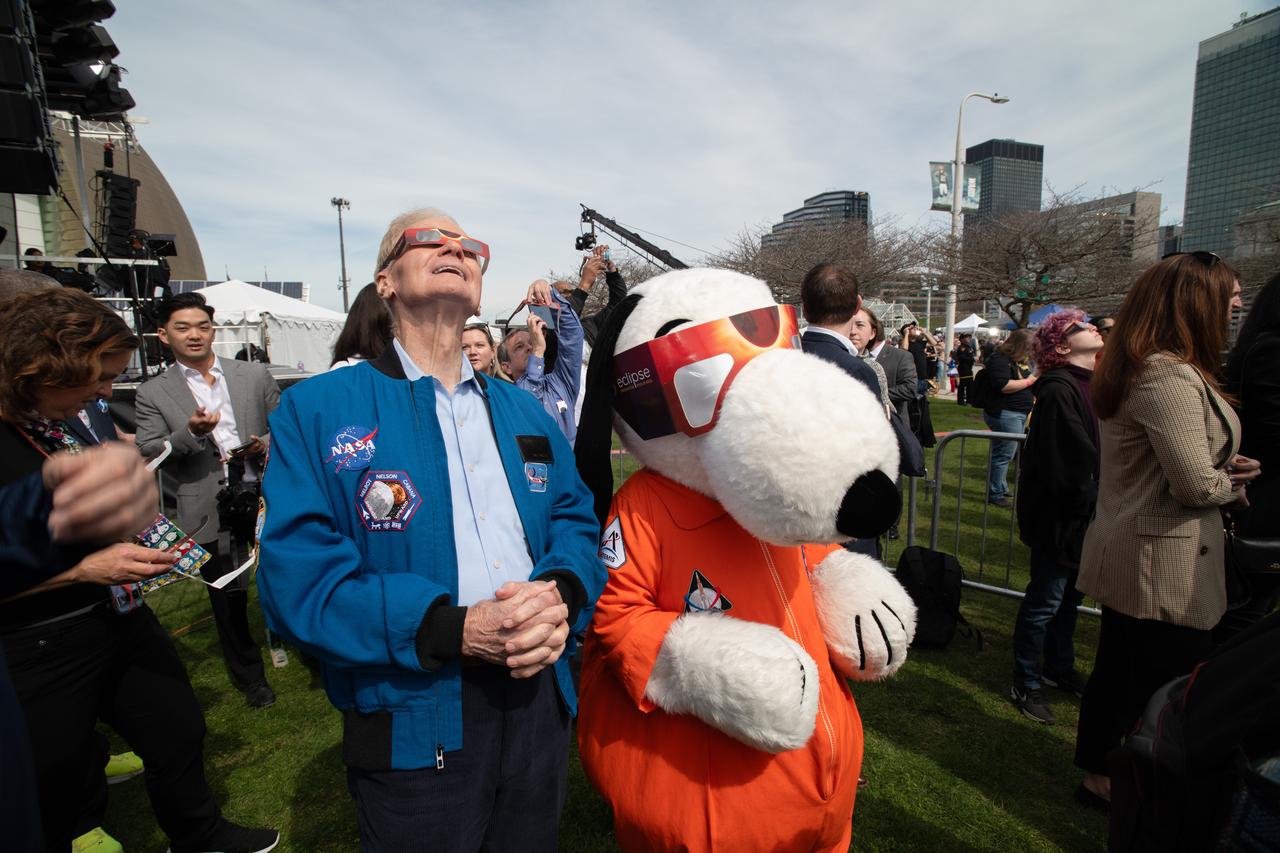
Administrator Bill Nelson and Snoopy view the eclipse just before totality on April 8,2024. NASA Glenn Research Center and the Great Lakes Science Center hosted a three-day celestial celebration in downtown Cleveland, OH. This free, outdoor, family-friendly science and arts festival will feature free concerts, performances, speakers, and hands-on science activities with community partners. A total solar eclipse swept across a narrow portion of the North American continent from Mexico’s Pacific coast to the Atlantic coast of Newfoundland, Canada. A partial solar eclipse was visible across the entire North American continent along with parts of Central America and Europe. Photo Credit: (NASA/Sara Lowthian-Hanna)
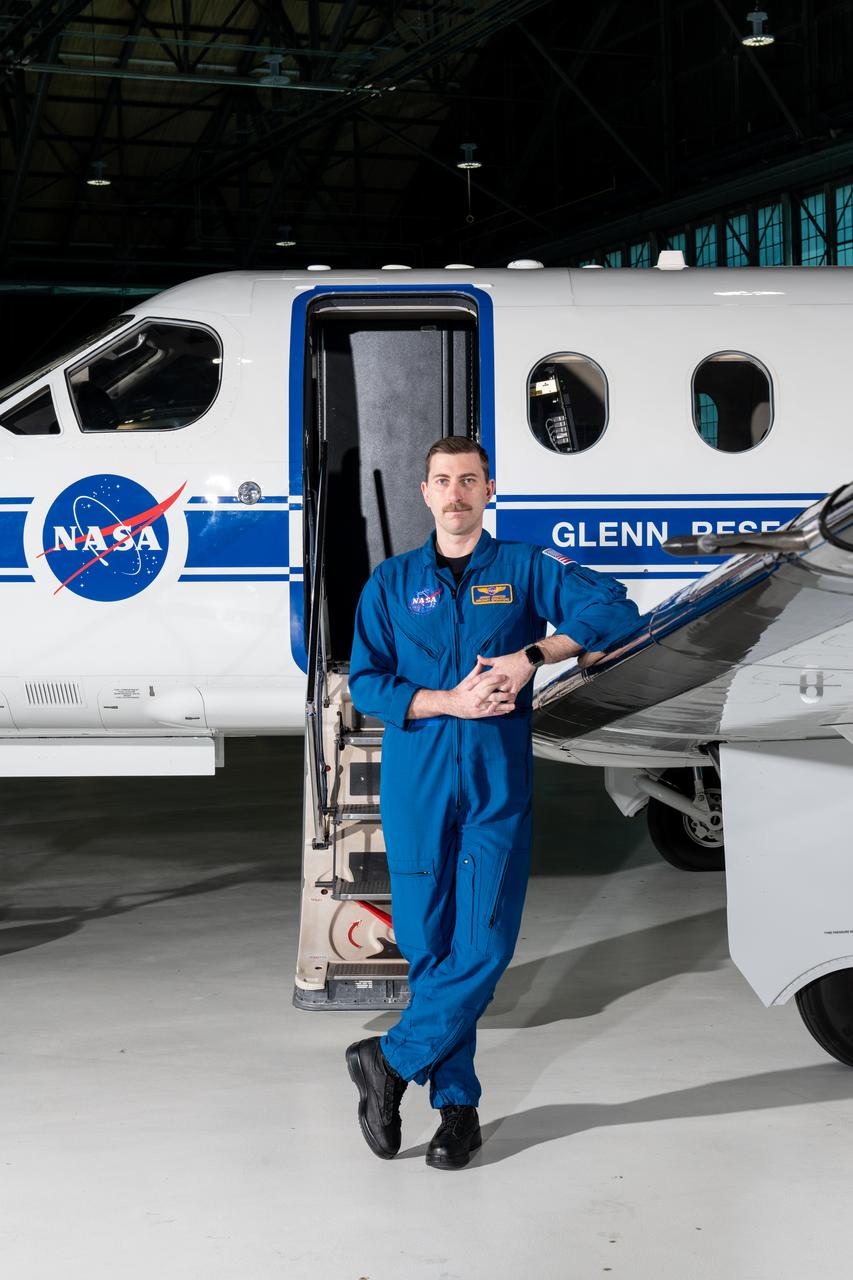
Jeremy Johnson, a research pilot and aviation safety officer, poses in front of a PC-12 aircraft inside the hangar at NASA’s Glenn Research Center in Cleveland on Thursday, April 17, 2025. Johnson flies NASA planes to support important scientific research and testing, working with researchers to plan and carry out flights that will get them the data they need while ensuring safety.
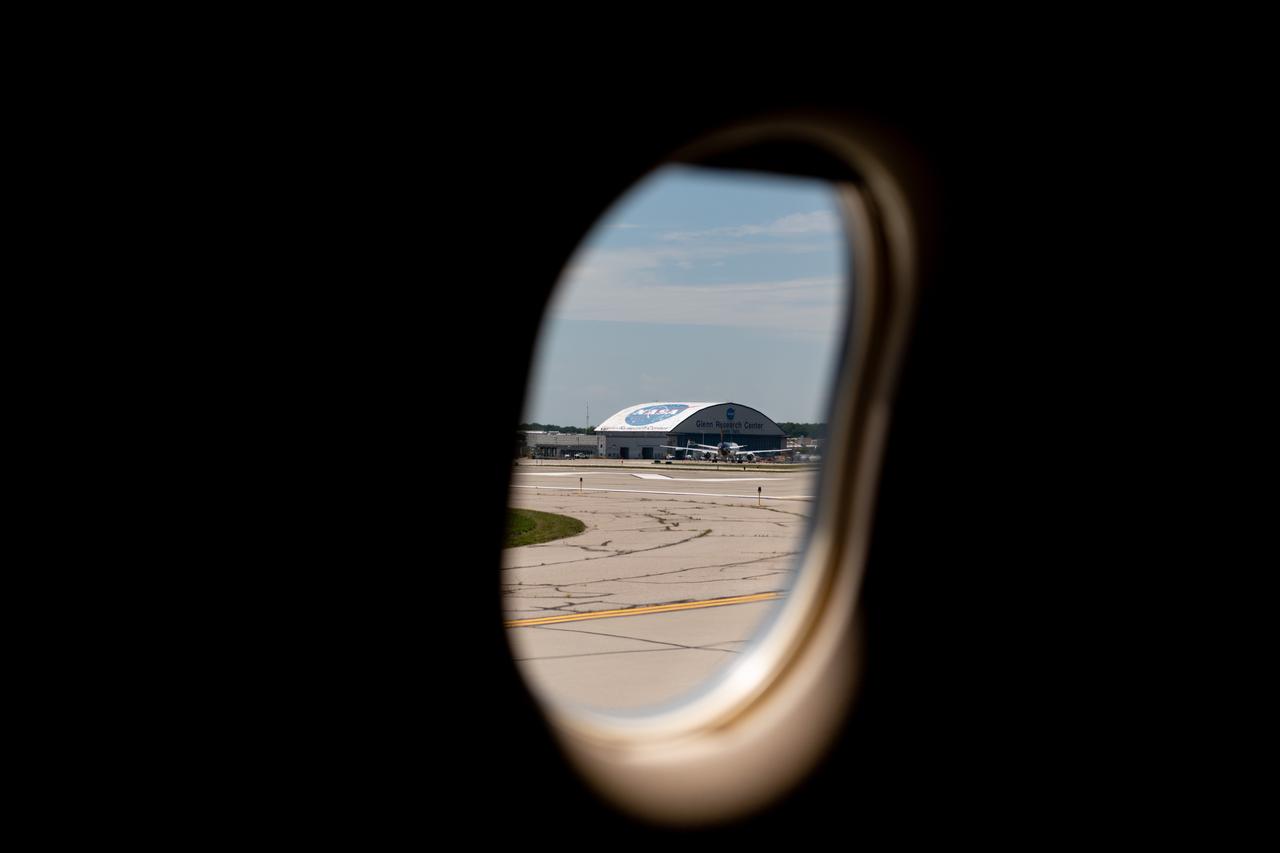
View of the historical Flight Research Center (Hangar) at NASA Glenn Research Center from the Pilatus PC-12NG NASA plane. Photo Credit: (NASA/Sara Lowthian-Hanna)

Guardians of Traffic Statue in Cleveland, OH in front of the Supermoon that was visible on September 17th, 2024. On this day, the full moon was a partial lunar eclipse; a supermoon; and a harvest moon. Photo Credit: (NASA/Sara Lowthian-Hanna)
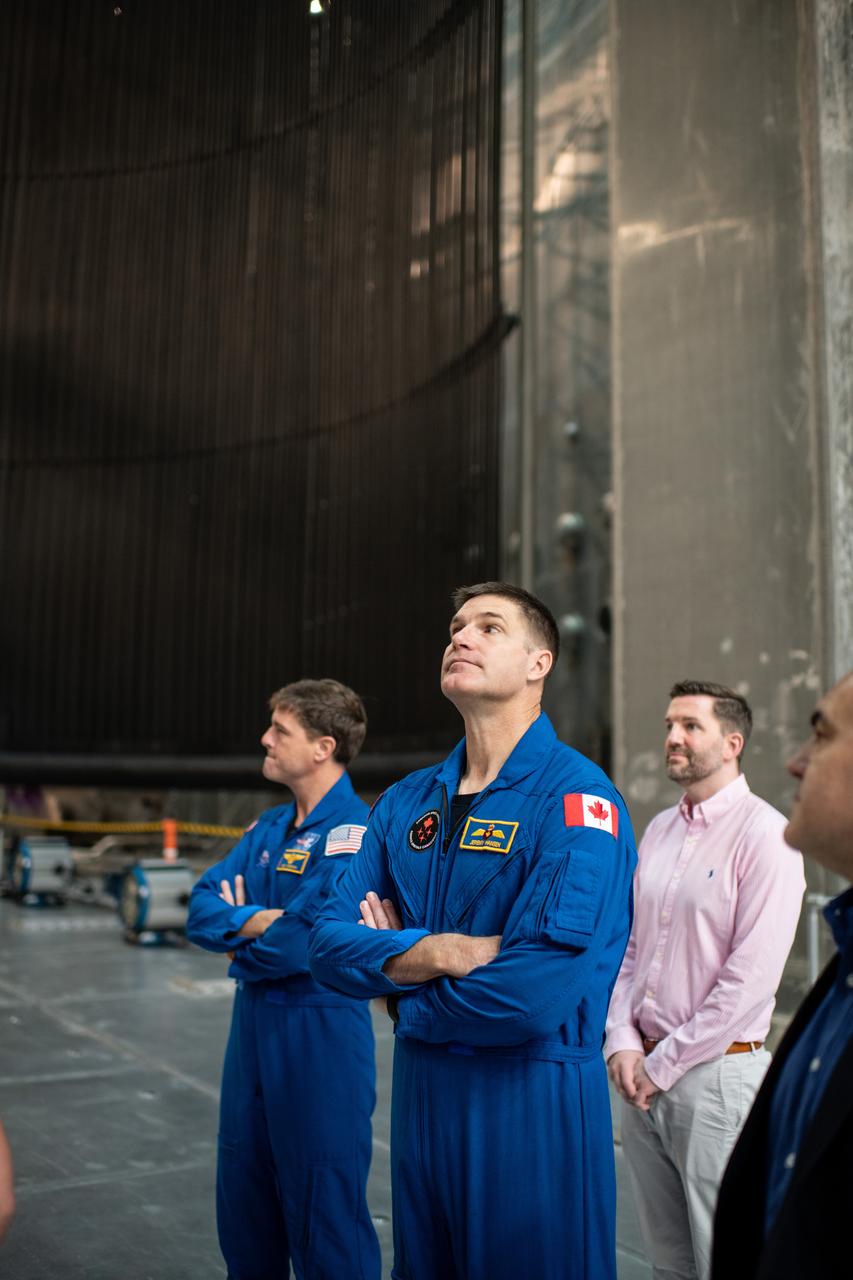
Pictured is Commander Reid Wiseman, Mission Specialist Jeremy Hansen, Jan-Henrik Horstmann and Carlos Garcia-Galan as they are given a tour of the Space Environment Complex (SEC) in Sandusky, OH at Neil Armstrong Test Facility on September 11, 2024. Employees meet three of the four astronauts who will venture around the Moon on Artemis II, the first crewed flight paving the way for future lunar surface missions. Commander Reid Wiseman and Mission Specialists Christina Koch and Jeremy Hansen will be on hand to discuss their upcoming mission and participate in a Question and Answer session with employees afterward. Hansen is an astronaut with the Canadian Space Agency. Victor Glover, the pilot and fourth crew member, will not be present. Photo Credit: (NASA/Sara Lowthian-Hanna)
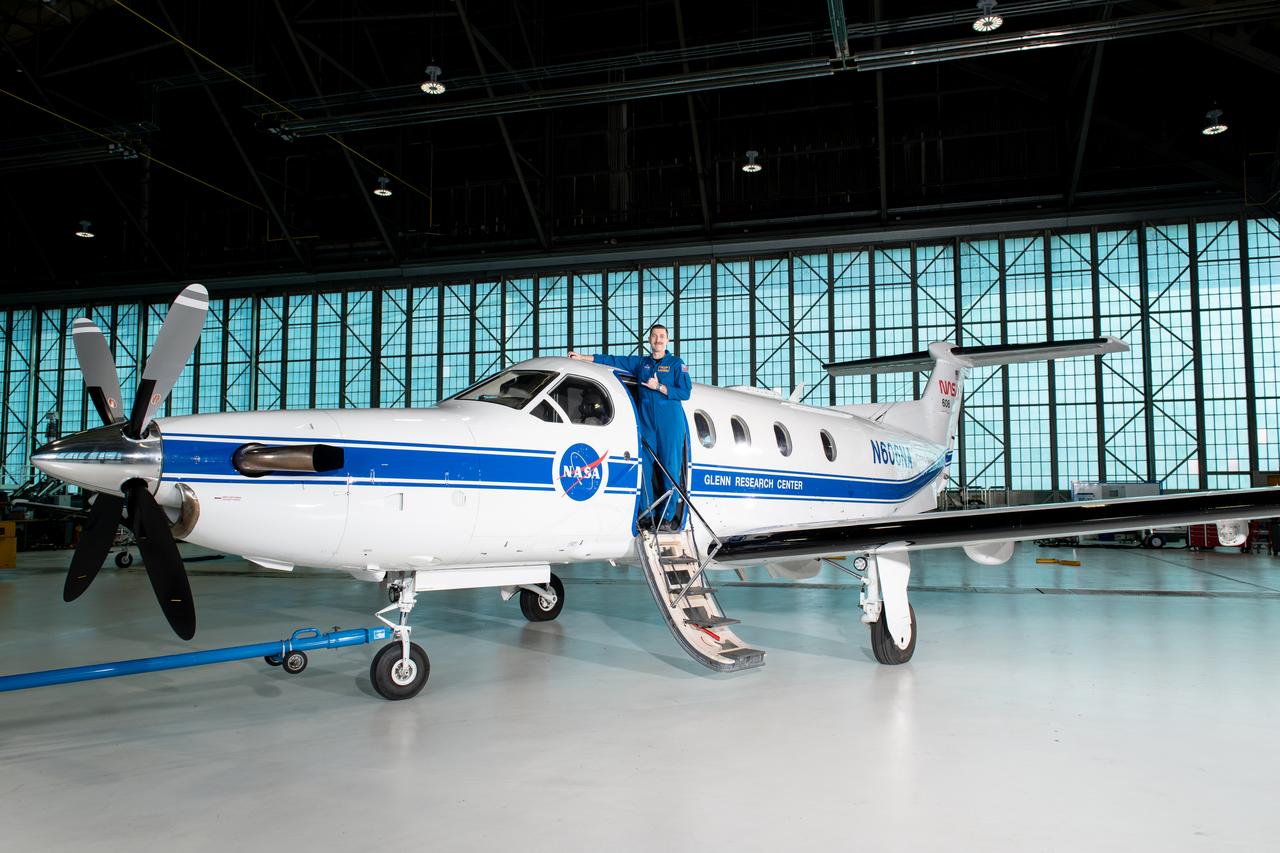
Jeremy Johnson, a research pilot and aviation safety officer, poses in front of a PC-12 aircraft inside the hangar at NASA’s Glenn Research Center in Cleveland on Thursday, April 17, 2025. Johnson flies NASA planes to support important scientific research and testing, working with researchers to plan and carry out flights that will get them the data they need while ensuring safety.
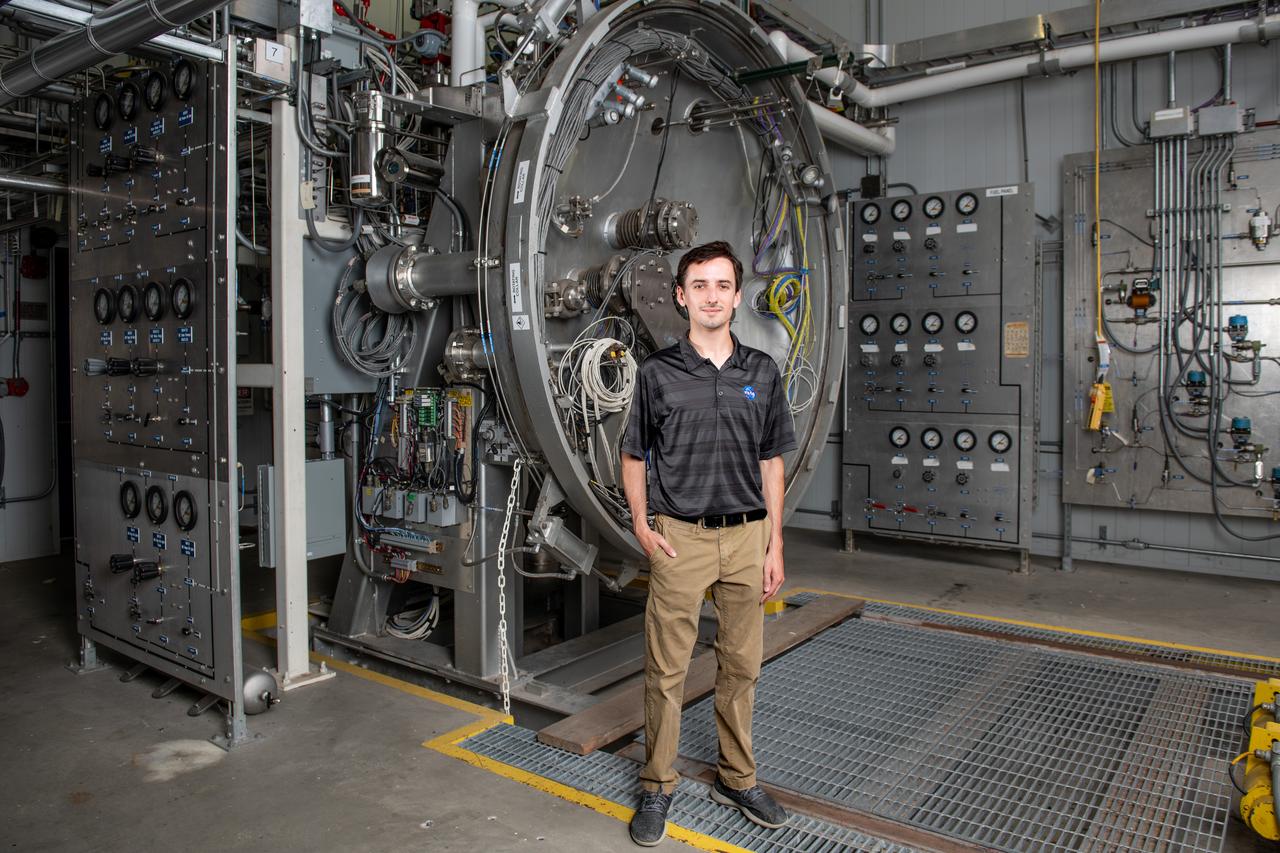
Each year, the NESC produces the NESC Technical Update, which highlights two or three individuals from each Center and includes assessments throughout the year. Because of the critical contributions to the NESC mission this year, Rob Jankovsky, NESC Chief Engineer at GRC, chose two individuals to be highlighted. This year, it is Andrew Ring and Michael Cooper. The Lead Analyst for GRC’s Chemical and Thermal Propulsion Systems branch, Mr. Michael Cooper pictured here in this environmental portrait on August 16, 2024. He is supporting NESC test operations on reaction control system thrusters for Gateway’s Power & Propulsion Element. “These thrusters are small with few moving parts, but the heat and mass transfers involved are very complex,” he said. The test campaign is putting the thrusters through a rigorous profile to simulate the lifetime they will experience over decades in space. Mr. Cooper is analyzing test data gathered on chamber pressure, temperature, flow rates, and more to develop models on thruster performance. He also built the tool that read in that data from the test stand instrumentation. Photo Credit: (NASA/Sara Lowthian-Hanna)
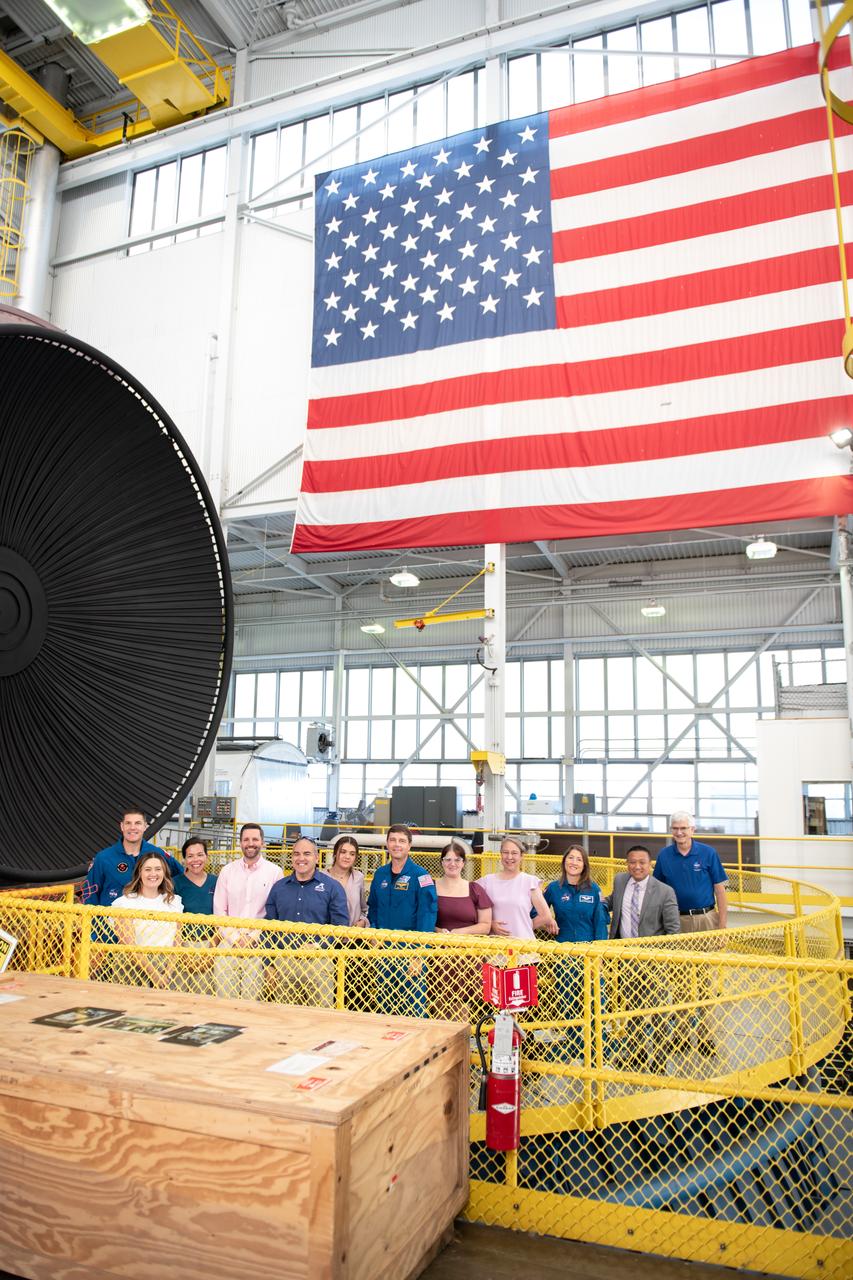
Tours were given of the In Space Propulsion Facility (ISP) in Sandusky, OH at Neil Armstrong Test Facility. NASA’s Facility is the world’s only high altitude test facility capable of full-scale rocket engine and launch vehicle system level tests. The facility supports mission profile thermal vacuum simulation and engine firing. From Left to Right: Jeremy Hansen, Allison Tankersley, Kathryn Oriti, Jan-Henrik Horstmann, Carlos Garcia-Galan, Penelope Garcia-Galan, Reid Wiseman, Jessica Isabell, Tiffany O'Rourke, Howard Hu, General David Stringer. Commander Reid Wiseman and Mission Specialists Christina Koch and Jeremy Hansen will be on hand to discuss their upcoming mission and participate in a Question and Answer session with employees afterward. Hansen is an astronaut with the Canadian Space Agency. Victor Glover, the pilot and fourth crew member, will not be present. Photo Credit: (NASA/Sara Lowthian-Hanna)
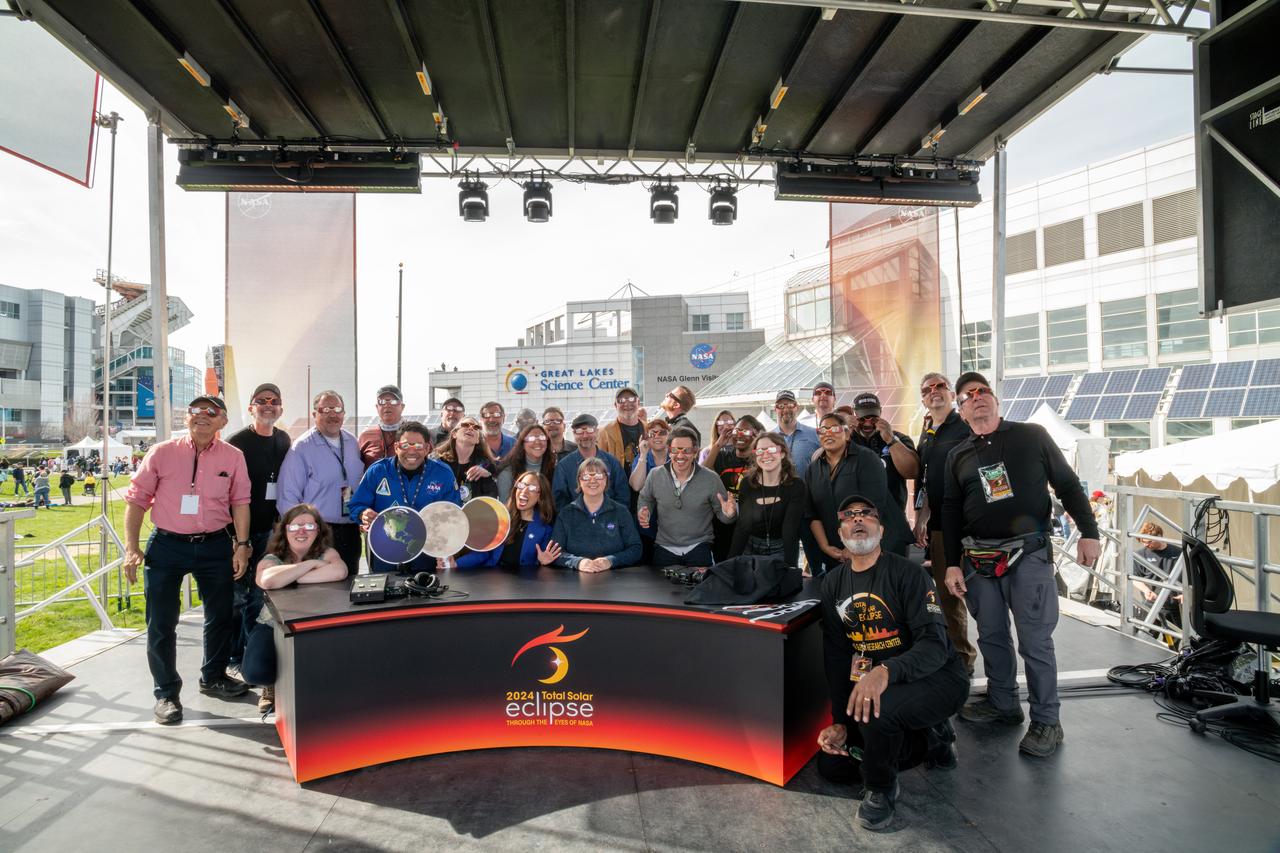
Team photo of those involved in NASA TV’s live coverage of the total solar eclipse on April 8, 2024. A total solar eclipse swept across a narrow portion of the North American continent from Mexico’s Pacific coast to the Atlantic coast of Newfoundland, Canada. A partial solar eclipse was visible across the entire North American continent along with parts of Central America and Europe. Photo Credit: (NASA/Sara Lowthian-Hanna)
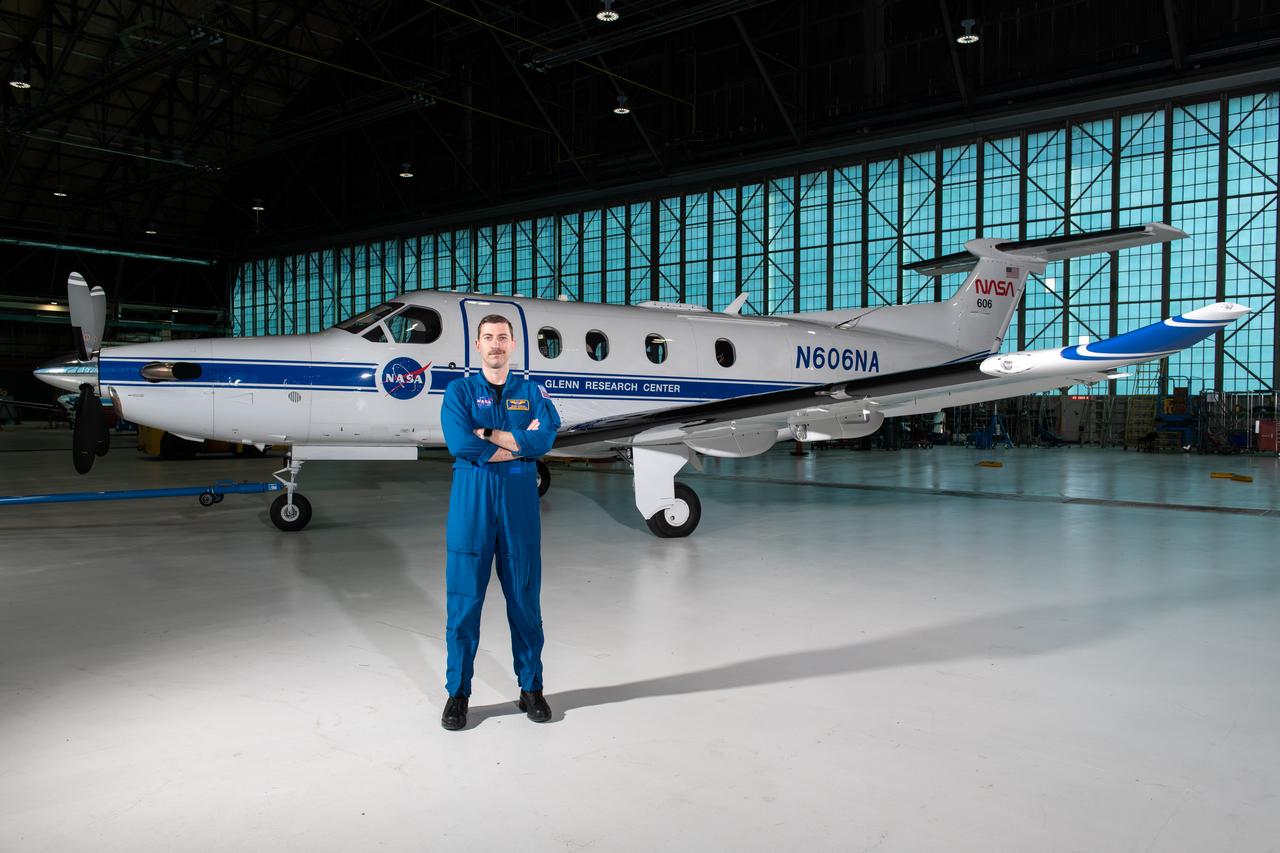
Jeremy Johnson, a research pilot and aviation safety officer, poses in front of a PC-12 aircraft inside the hangar at NASA’s Glenn Research Center in Cleveland on Thursday, April 17, 2025. Johnson flies NASA planes to support important scientific research and testing, working with researchers to plan and carry out flights that will get them the data they need while ensuring safety.

Portrait for the #showusyourspecs campaign to promote safety while viewing of the 2024 total eclipse. Photograph was shot on December 20, 2023, indoors to simulate an eclipse. Photo Credit: (NASA/Sara Lowthian-Hanna)
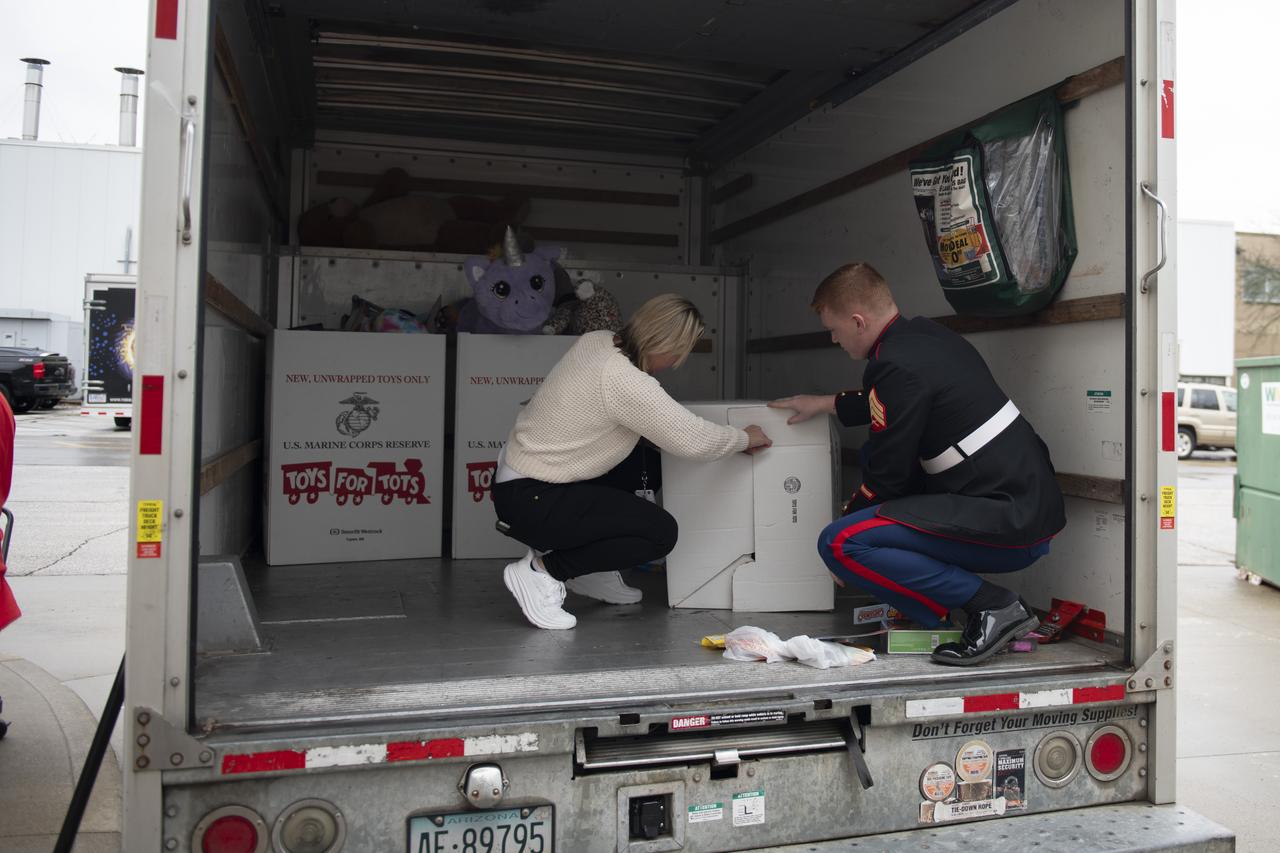
The US Marine Corps Reserve Collected Toy Donations for the 2024 Holiday Season during Winterfest on December 9, 2024.
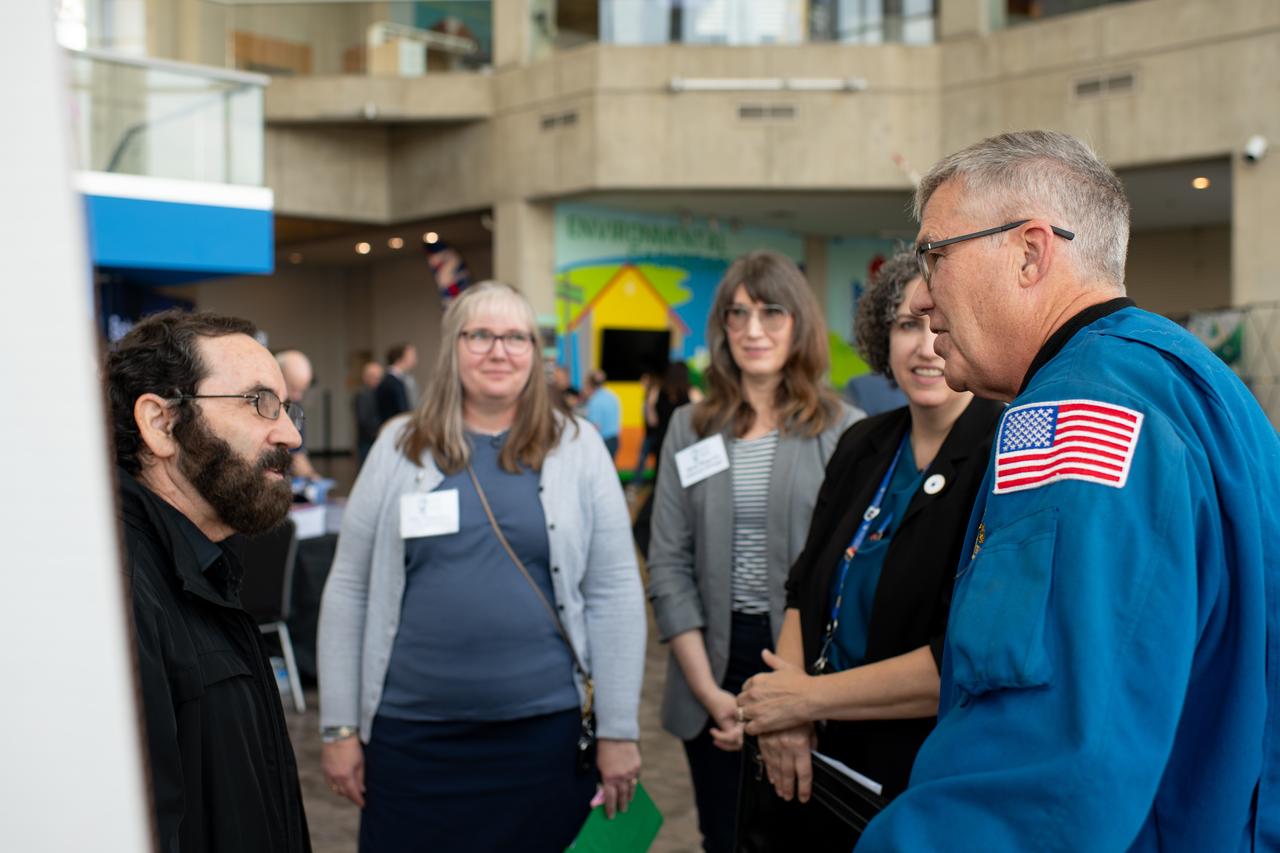
Philip Lubin from Team H.E.L.P.S. (High Efficiency Long-Range Power Solution) explains his project to Mary Wadel, Lisa Ferguson, Kirsten Ellenbogen and Stephen Bowen. NASA has awarded a total of $1.5 million to two U.S. teams for their novel technology solutions addressing energy distribution, management, and storage as part of the agency’s Watts on the Moon Challenge. The innovations from this challenge aim to support NASA’s Artemis missions, which will establish long-term human presence on the Moon. This two-phase competition has challenged U.S. innovators to develop breakthrough power transmission and energy storage technologies that could enable long-duration Moon missions to advance the nation’s lunar exploration goals. The final phase of the challenge concluded with a technology showcase and winners’ announcement ceremony on September 20, 2024 at Great Lakes Science Center, home of the visitor center for NASA’s Glenn Research Center in Cleveland. Team H.E.L.P.S. (High Efficiency Long-Range Power Solution) from The University of California, Santa Barbara won the $1 million grand prize in NASA’s Watts on the Moon Challenge. Their team developed a low-mass, high efficiency cable and featured energy storage batteries on both ends of their power transmission and energy storage system. Second prize ($500,000): Orbital Mining Corporation of Golden, Colorado. Photo Credit: (NASA/Sara Lowthian-Hanna)
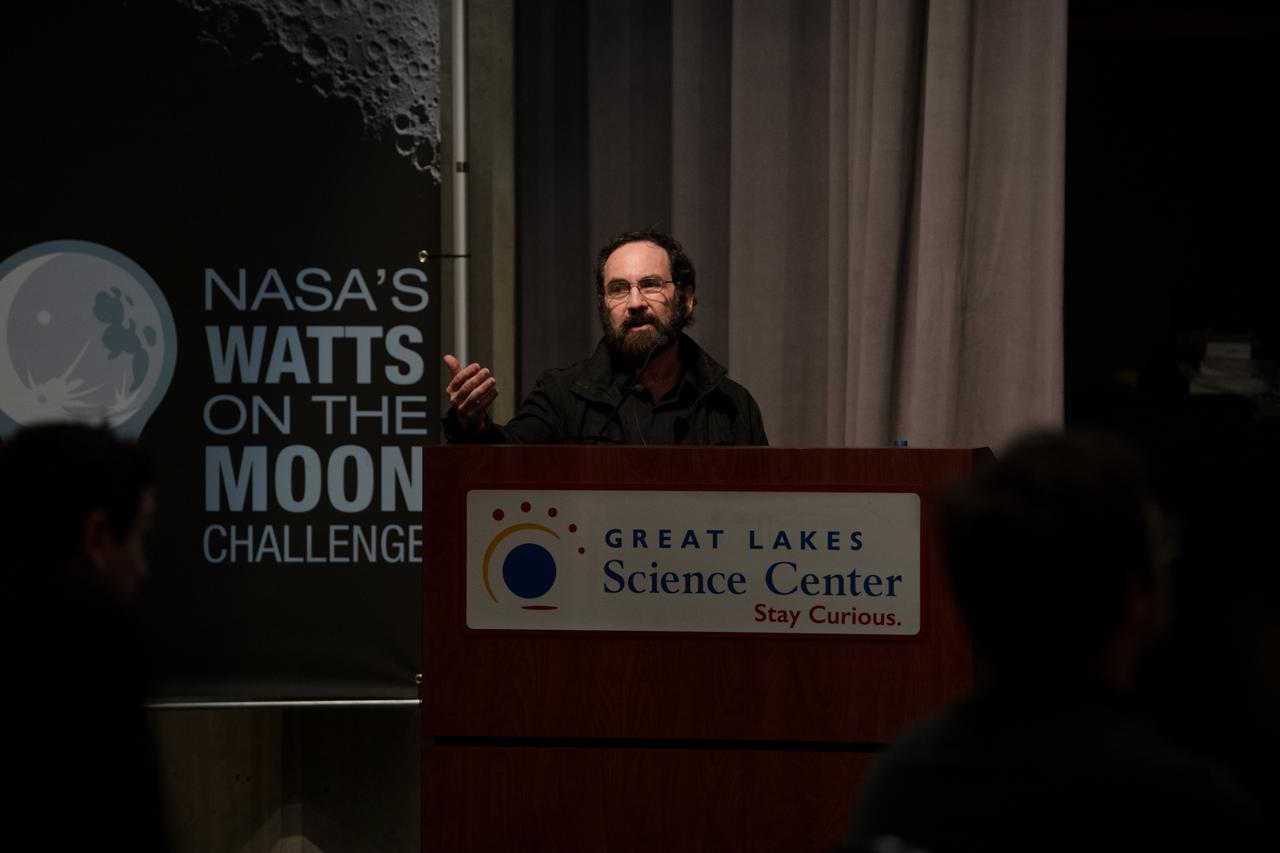
Philip Lubin from H.E.L.P.S. (High Efficiency Long-Range Power Solution) from The University of California gives their presentation. NASA has awarded a total of $1.5 million to two U.S. teams for their novel technology solutions addressing energy distribution, management, and storage as part of the agency’s Watts on the Moon Challenge. The innovations from this challenge aim to support NASA’s Artemis missions, which will establish long-term human presence on the Moon. This two-phase competition has challenged U.S. innovators to develop breakthrough power transmission and energy storage technologies that could enable long-duration Moon missions to advance the nation’s lunar exploration goals. The final phase of the challenge concluded with a technology showcase and winners’ announcement ceremony on September 11, 2024 at Great Lakes Science Center, home of the visitor center for NASA’s Glenn Research Center in Cleveland. Team H.E.L.P.S. (High Efficiency Long-Range Power Solution) from The University of California, Santa Barbara won the $1 million grand prize in NASA’s Watts on the Moon Challenge. Their team developed a low-mass, high efficiency cable and featured energy storage batteries on both ends of their power transmission and energy storage system. Second prize ($500,000): Orbital Mining Corporation of Golden, Colorado. Photo Credit: (NASA/Sara Lowthian-Hanna)

Pilatus PC-12 Aircraft Being Prepped for Takeoff on June 12, 2024. A team at NASA’s Glenn Research Center in Cleveland streamed 4K video footage from an aircraft to the International Space Station and back for the first time using optical, or laser, communications. The feat was part of a series of tests on new technology that could provide live video coverage of astronauts on the Moon during the Artemis missions. Working with the Air Force Research Laboratory and NASA’s Small Business Innovation Research program, Glenn engineers temporarily installed a portable laser terminal on the belly of a Pilatus PC-12 aircraft. They then flew over Lake Erie sending data from the aircraft to an optical ground station in Cleveland. From there, it was sent over an Earth-based network to NASA’s White Sands Test Facility in Las Cruces, New Mexico, where scientists used infrared light signals to send the data. Photo Credit: (NASA/Sara Lowthian-Hanna)

Vibro-acoustic testing on the Orion spacecraft that flew around the Moon on Artemis I, now known as the Environmental Test Article. The testing at Armstrong Test Facility will help ensure the safety of future crews aboard Orion. Photograph taken on September 11, 2024. Photo Credit: (NASA/Sara Lowthian-Hanna)
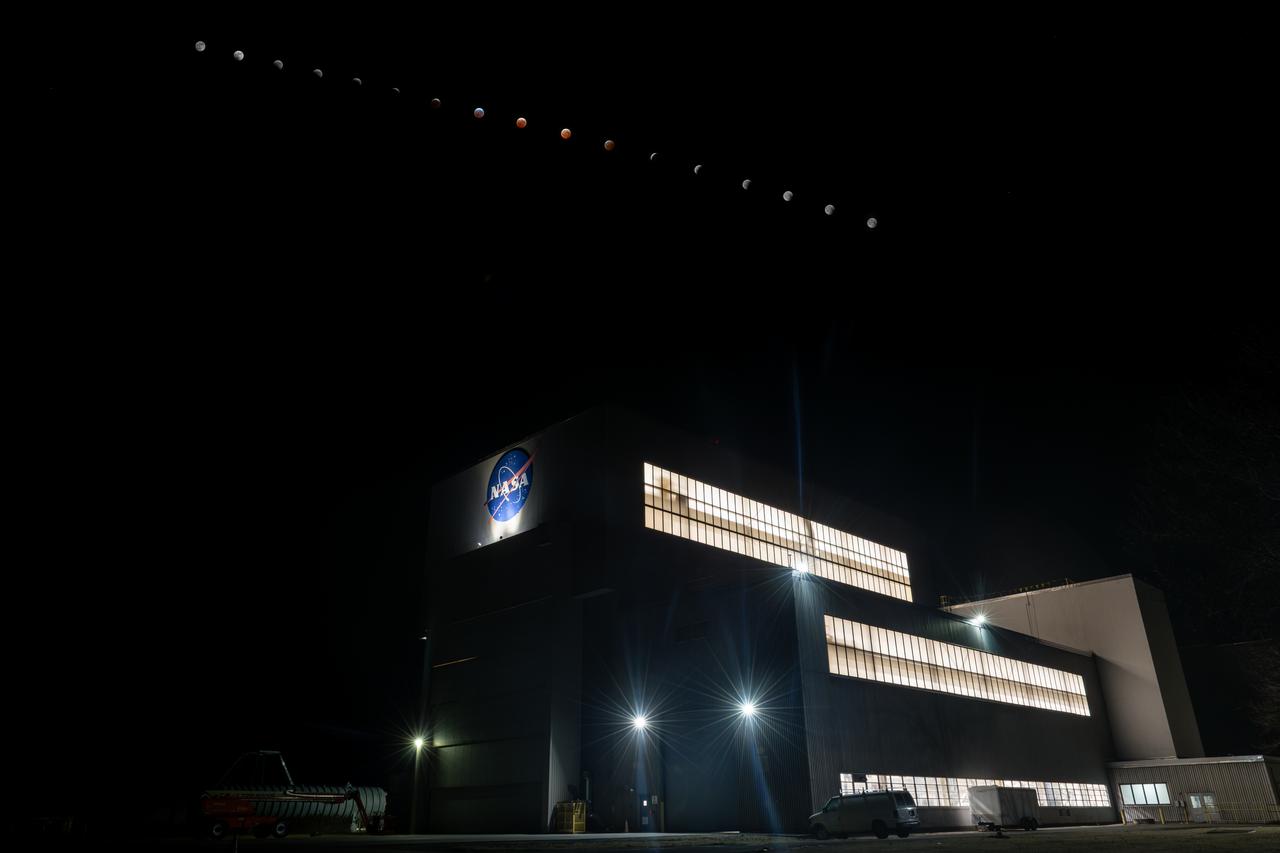
A composite photo made from 18 images of the lunar eclipse above the Space Environments Complex at NASA’s Glenn Research Center at Neil Armstrong Test Facility in Sandusky, Ohio, during the early hours of March 14, 2025. Photo Credit: (NASA/Sara Lowthian-Hanna)
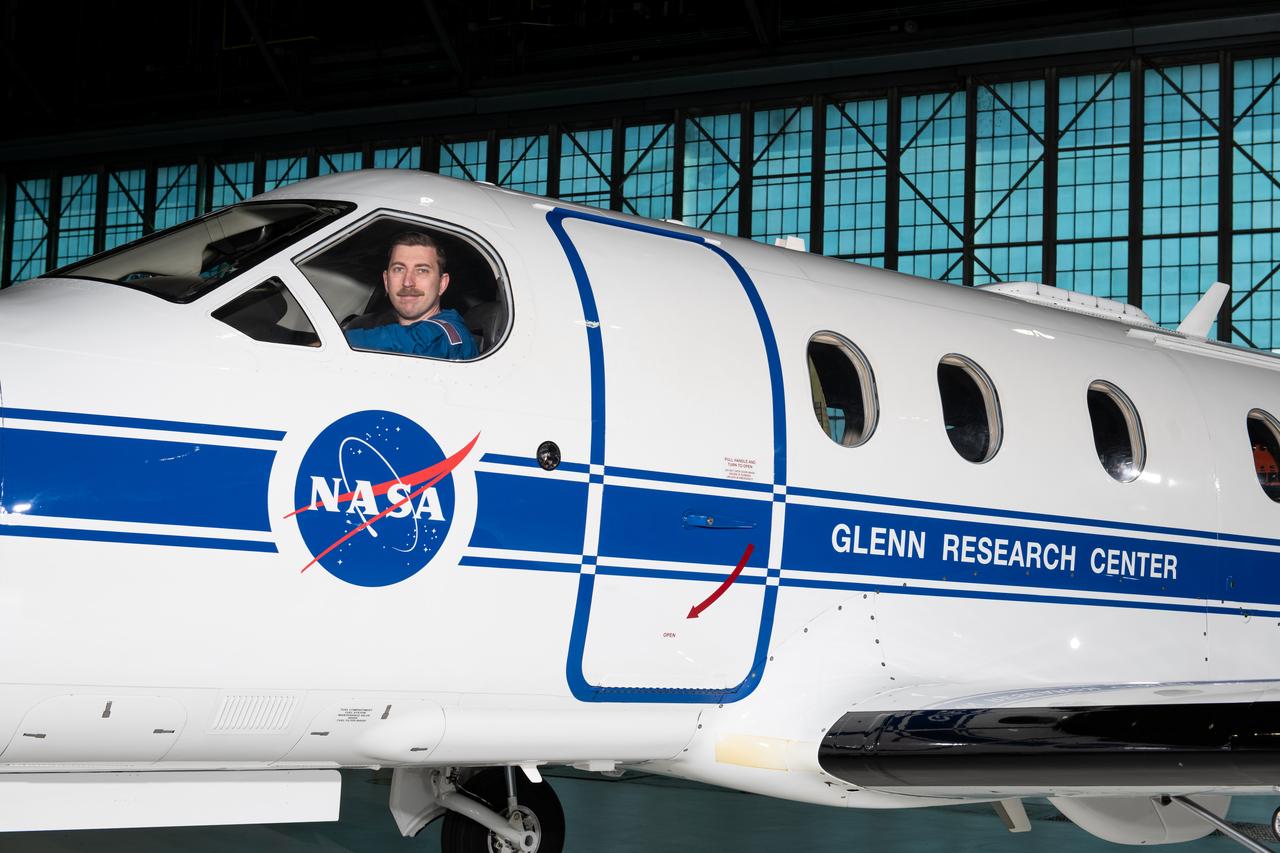
Jeremy Johnson, a research pilot and aviation safety officer, poses in the PC-12 aircraft inside the hangar at NASA’s Glenn Research Center in Cleveland on Thursday, April 17, 2025. Johnson flies NASA planes to support important scientific research and testing, working with researchers to plan and carry out flights that will get them the data they need while ensuring safety.
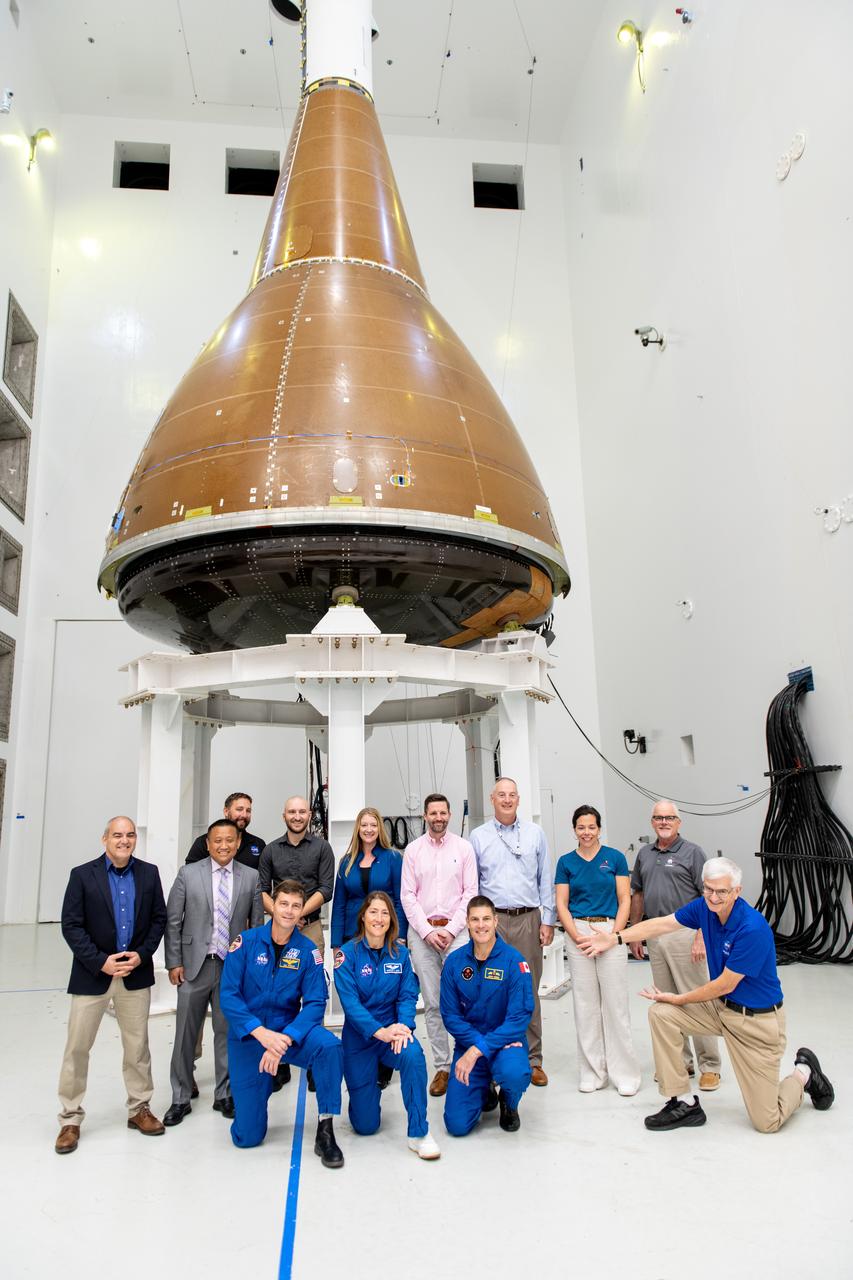
Front Row: Commander Reid Wiseman, Howard Hu, Mission Specialist Christina Koch, Mission Specialist Jeremy Hansen, General David Stringer, Back Row: Carlos Garcia Galan, Howard Hu, John Zang, Josh Pawlak, Nicole Smith, Jan-Henrik Horstmann, Robert Overy, Kathryn Oriti pose in front of the Orion Environmental Test Article at Armstrong Test Facility in Sandusky, OH. The team has begun vibro-acoustic testing on the Orion spacecraft that flew around the Moon on Artemis I, now known as the Environmental Test Article. The testing will help ensure the safety of future crews aboard Orion. Employees meet three of the four astronauts who will venture around the Moon on Artemis II, the first crewed flight paving the way for future lunar surface missions. Commander Reid Wiseman and Mission Specialists Christina Koch and Jeremy Hansen will be on hand to discuss their upcoming mission and participate in a Question and Answer session with employees afterward. Hansen is an astronaut with the Canadian Space Agency. Victor Glover, the pilot and fourth crew member, will not be present. Awards were given to employees that participated in Orion for Artemis I. Photo Credit: (NASA/Sara Lowthian-Hanna)
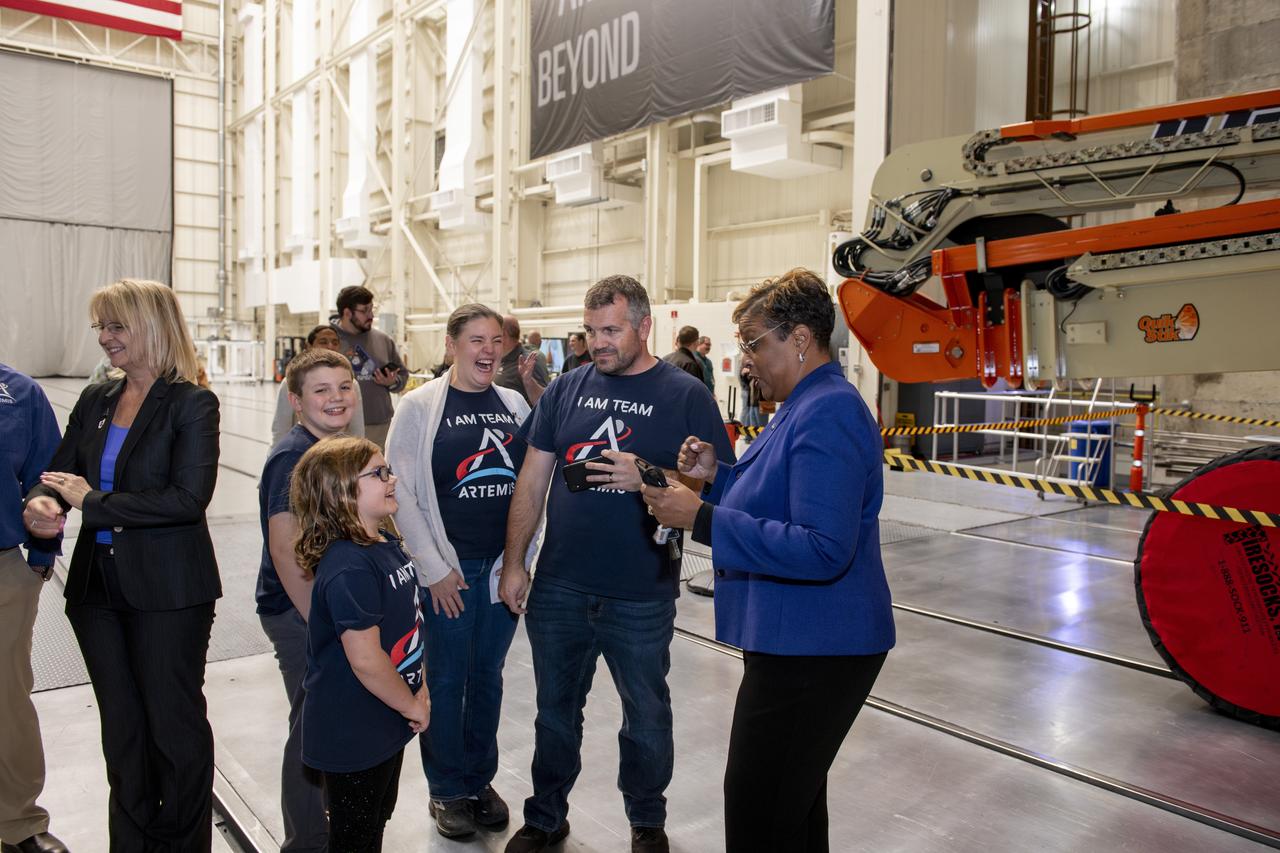
On Thursday, Nov. 21, employees supporting Artemis were invited to attend an appreciation event, “The Road to the Moon,” at Armstrong Test Facility in Sandusky, Ohio. Acting Deputy Director Dr. Wanda Peters interacts with the Hartenstine Family. NASA employees and support service contractors for Artemis Friends and Family Day had the opportunity to hear from center leadership and see the Orion module that flew around the Moon and back during 2022’s Artemis I mission. Photo Credit: (NASA/Sara Lowthian-Hanna)
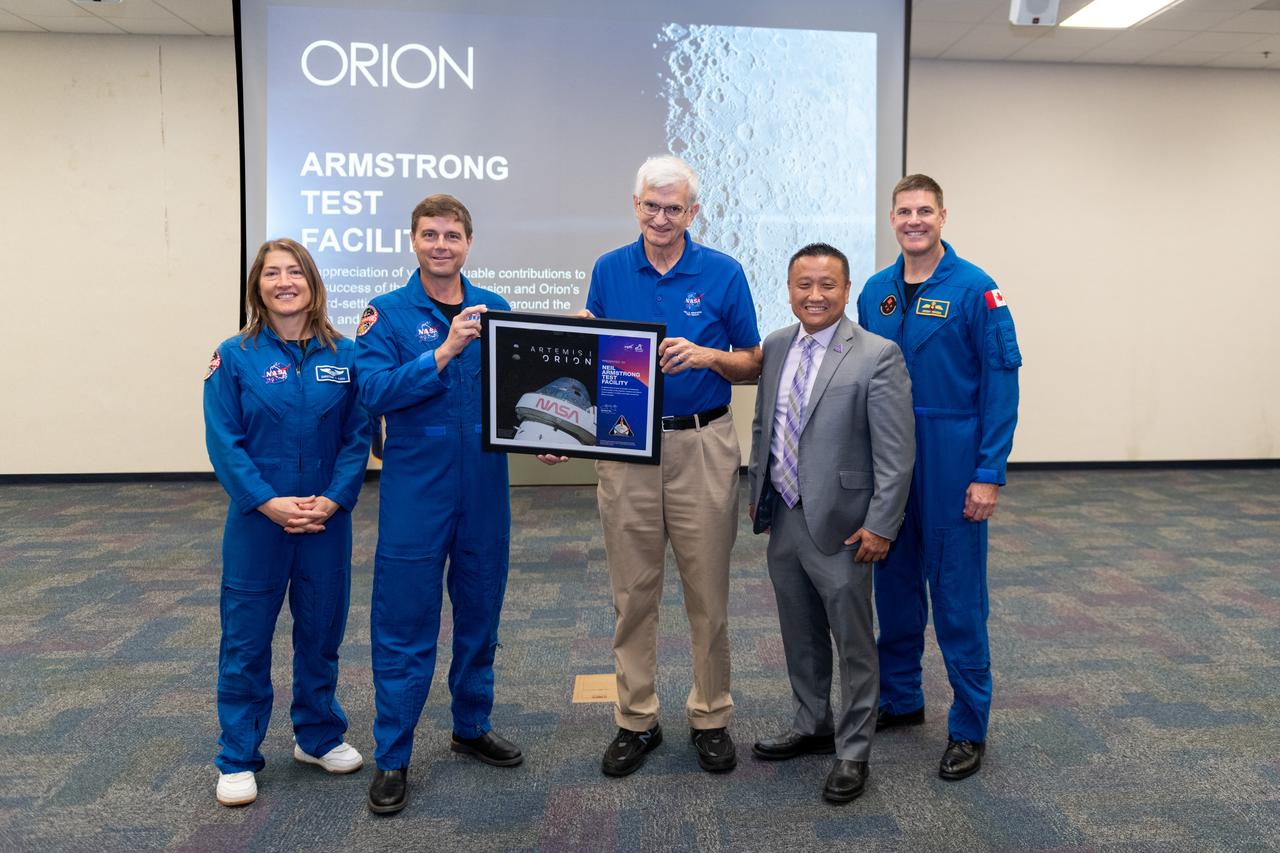
Employees meet three of the four astronauts who will venture around the Moon on Artemis II, the first crewed flight paving the way for future lunar surface missions. Commander Reid Wiseman and Mission Specialists Christina Koch and Jeremy Hansen will be on hand to discuss their upcoming mission and participate in a Question and Answer session with employees afterward. Hansen is an astronaut with the Canadian Space Agency. Victor Glover, the pilot and fourth crew member, will not be present. Awards were given to employees that participated in Orion for Artemis I on September 11, 2024. General David Stringer accepts an award. The crew of four astronauts will lift off on an approximately 10-day mission from Launch Complex 39B at NASA’s Kennedy Space Center in Florida, blazing beyond Earth’s grasp atop the agency’s mega Moon rocket. The crew will check out Orion’s systems and perform a targeting demonstration test relatively close to Earth before venturing around the Moon. Photo Credit: (NASA/Sara Lowthian-Hanna)
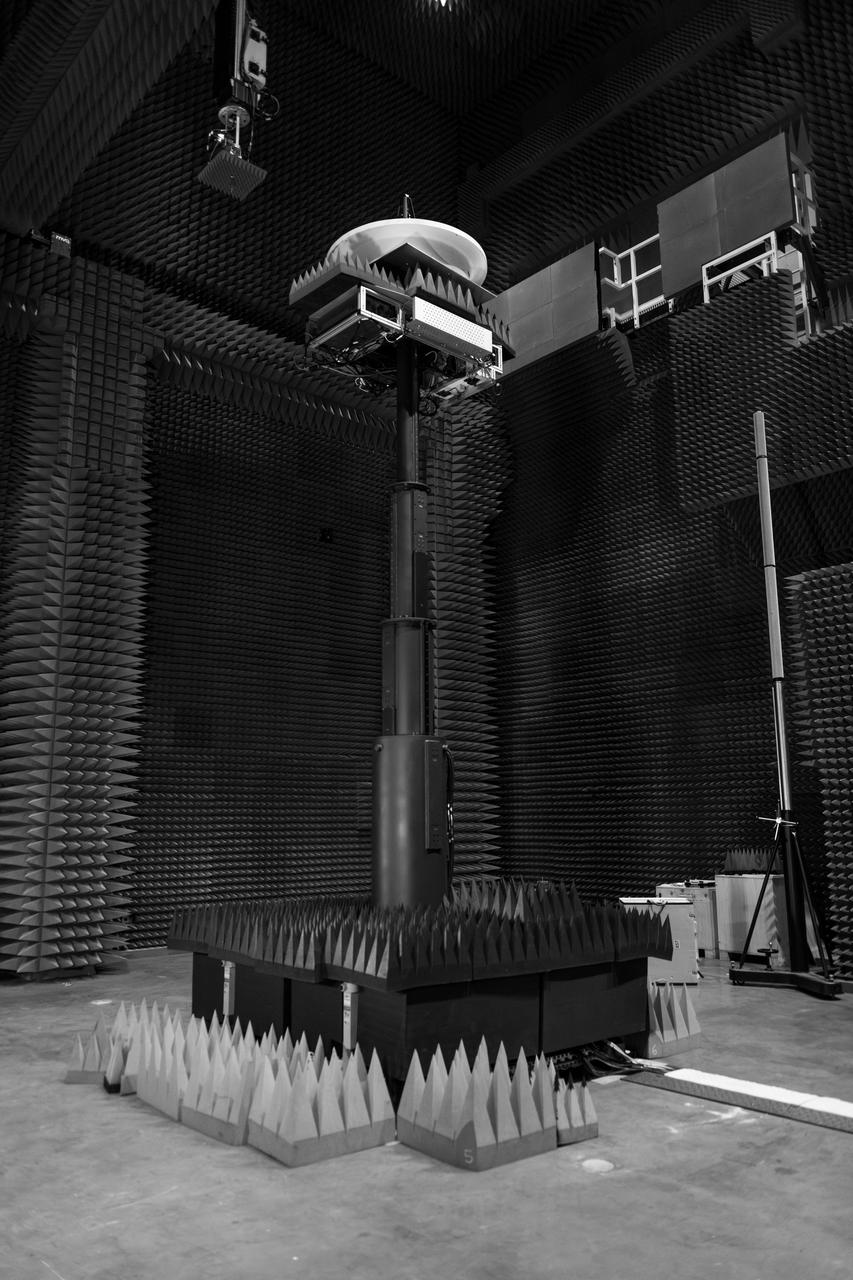
NASA’s Beaming Energy for Air Mobility team successfully completed a first-of-its-kind power beaming test at NASA Glenn on June 4, 2025. Later this year, the tested transmitter will be used in a demonstration to wirelessly transmit power using microwaves to a custom power receiver — a step toward gap-filling technology that could one day deliver power on the surface of the Moon or Mars.
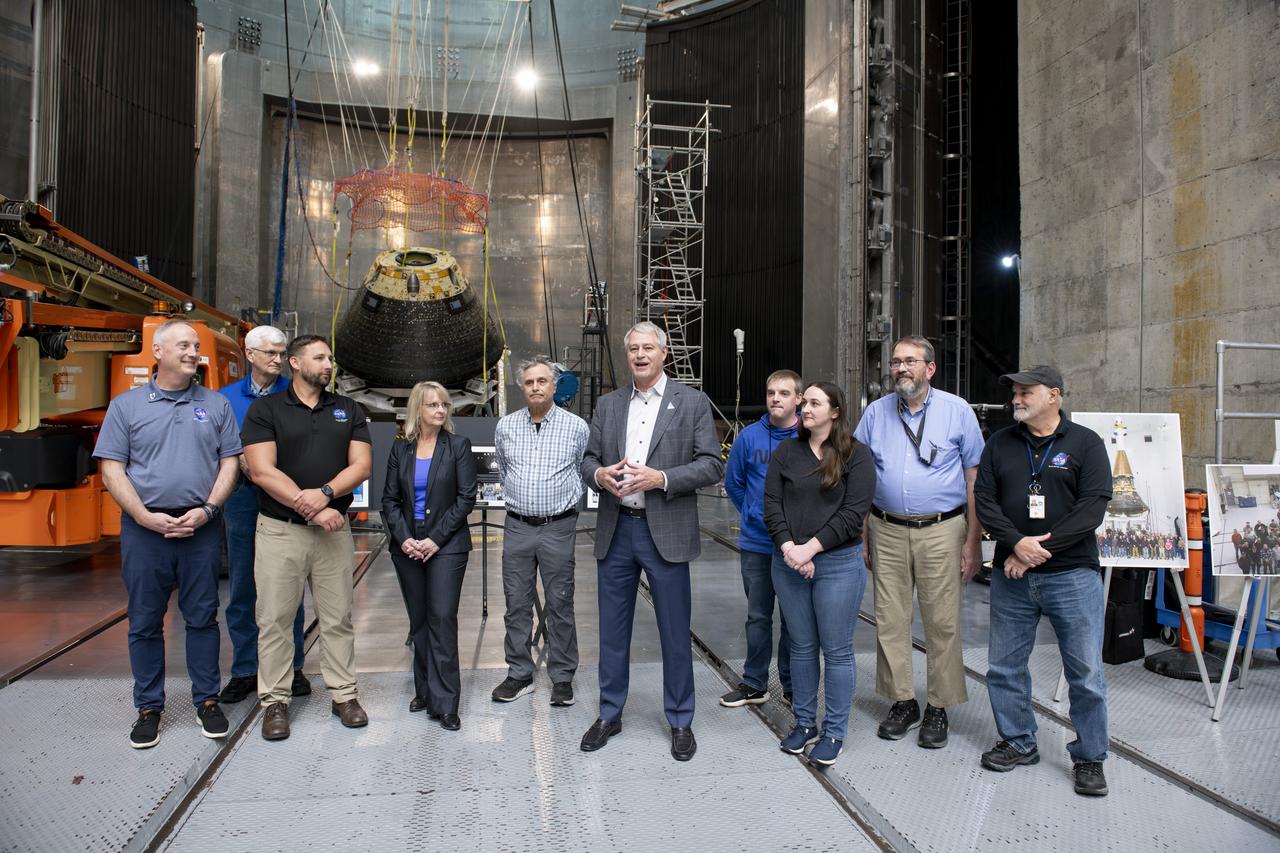
Employees supporting Artemis were invited to attend an appreciation event, “The Road to the Moon,” at Armstrong Test Facility in Sandusky, Ohio. Lockheed Martin presented an article flown on Artemis I to Robert Overy. Pictured from left to right: Robert Overy, General David Stringer, John Zang, Debbie Korth, Aaron Horz, Paul Anderson, Benjamin, Emma Gaerke, Mark Cmar and Michael Henry. On Thursday, Nov. 21, please join NASA employees and support service contractors for Artemis Friends and Family Day. Employees had the opportunity to hear from center leadership and see the Orion module that flew around the Moon and back during 2022’s Artemis I mission. Experts have subjected the spacecraft to extreme conditions in Armstrong’s test facilities. This significant testing is slated to wrap up in December, and we want to give you a chance to see the capsule before the conclusion of the test campaign. Photo Credit: (NASA/Sara Lowthian-Hanna)
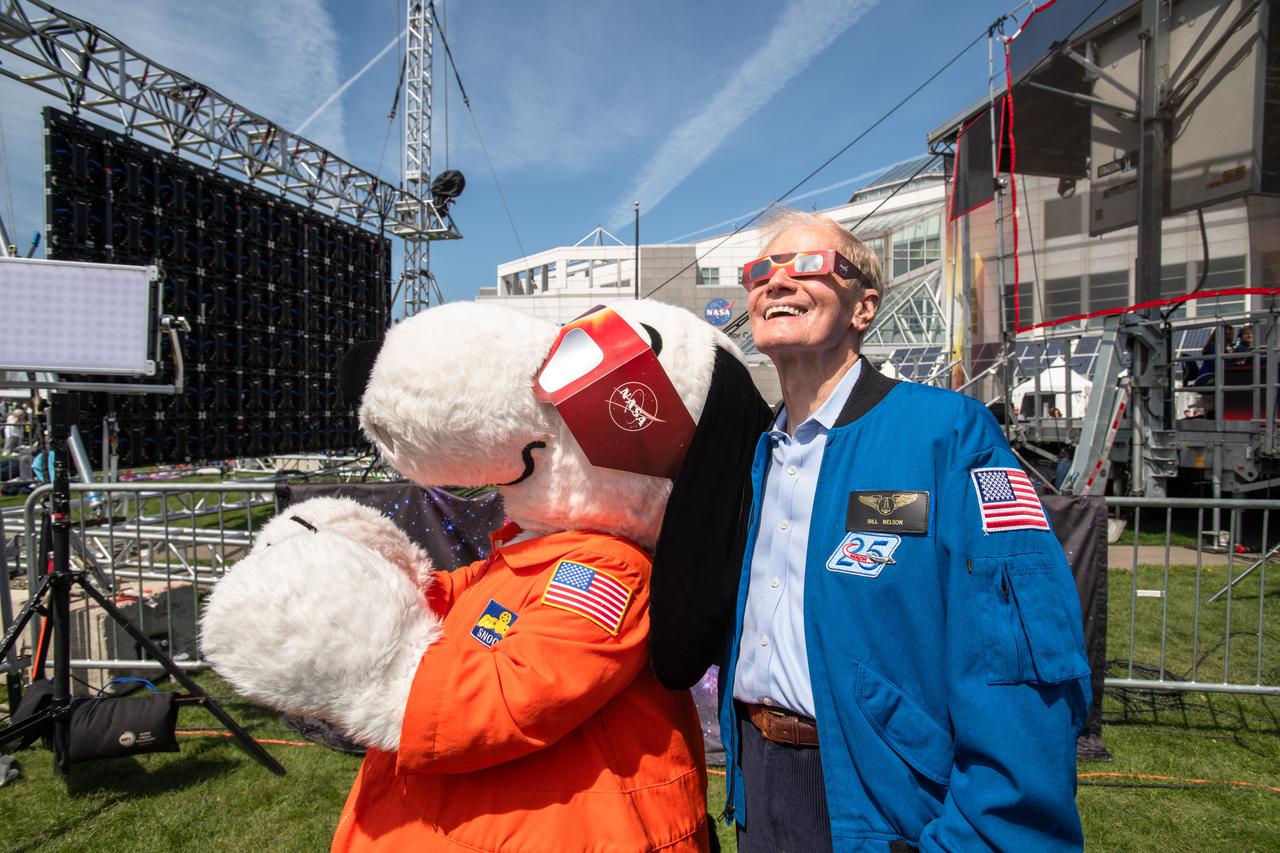
Administrator Bill Nelson and Snoopy view the eclipse together on April 8, 2024. NASA Glenn Research Center and the Great Lakes Science Center hosted a three-day celestial celebration in downtown Cleveland, OH. This free, outdoor, family-friendly science and arts festival will feature free concerts, performances, speakers, and hands-on science activities with community partners. A total solar eclipse swept across a narrow portion of the North American continent from Mexico’s Pacific coast to the Atlantic coast of Newfoundland, Canada. A partial solar eclipse was visible across the entire North American continent along with parts of Central America and Europe. Photo Credit: (NASA/Sara Lowthian-Hanna)
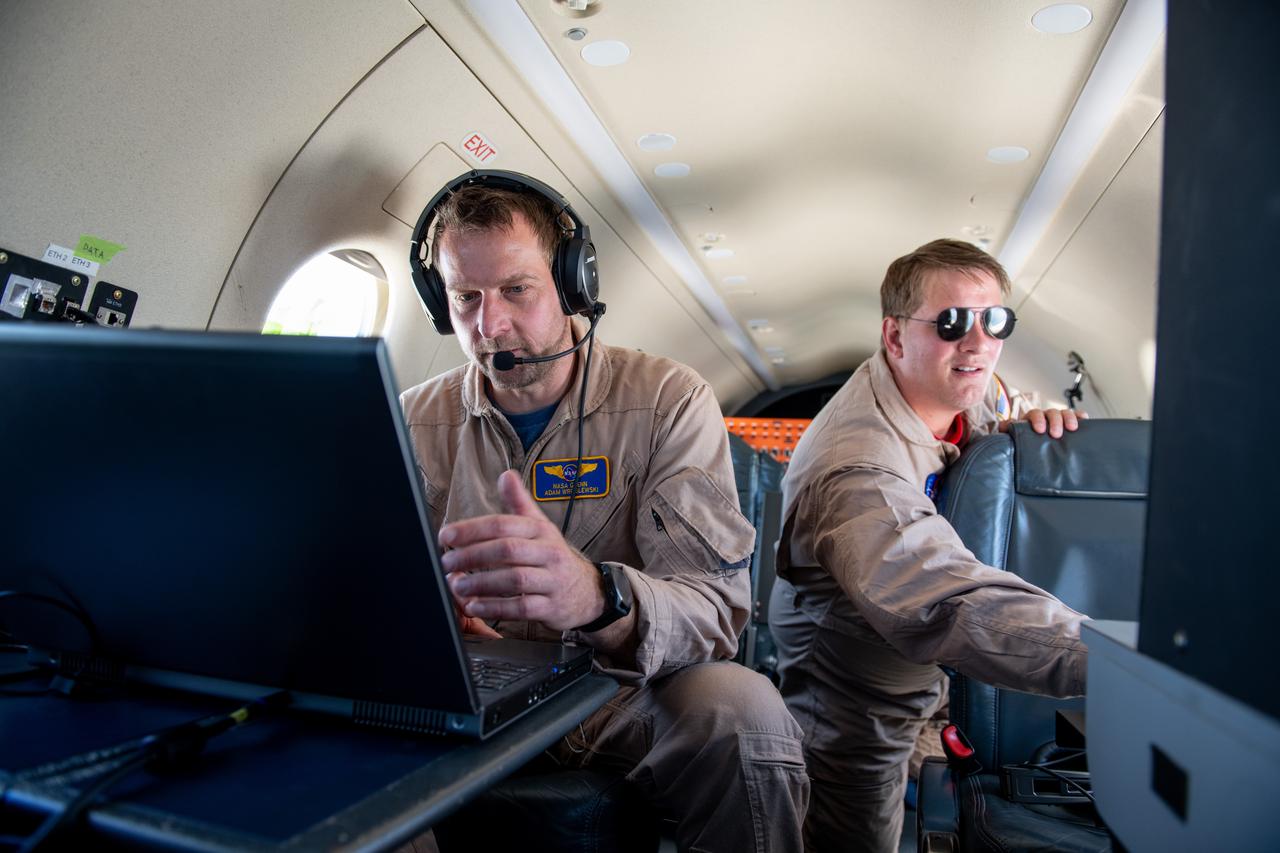
Adam Wroblewski and Shaun McKeehan Working In PC-12 Aircraft during in flight testing on June 13, 2024. A team at NASA’s Glenn Research Center in Cleveland streamed 4K video footage from an aircraft to the International Space Station and back for the first time using optical, or laser, communications. The feat was part of a series of tests on new technology that could provide live video coverage of astronauts on the Moon during the Artemis missions. Working with the Air Force Research Laboratory and NASA’s Small Business Innovation Research program, Glenn engineers temporarily installed a portable laser terminal on the belly of a Pilatus PC-12 aircraft. They then flew over Lake Erie sending data from the aircraft to an optical ground station in Cleveland. From there, it was sent over an Earth-based network to NASA’s White Sands Test Facility in Las Cruces, New Mexico, where scientists used infrared light signals to send the data. Photo Credit: (NASA/Sara Lowthian-Hanna)
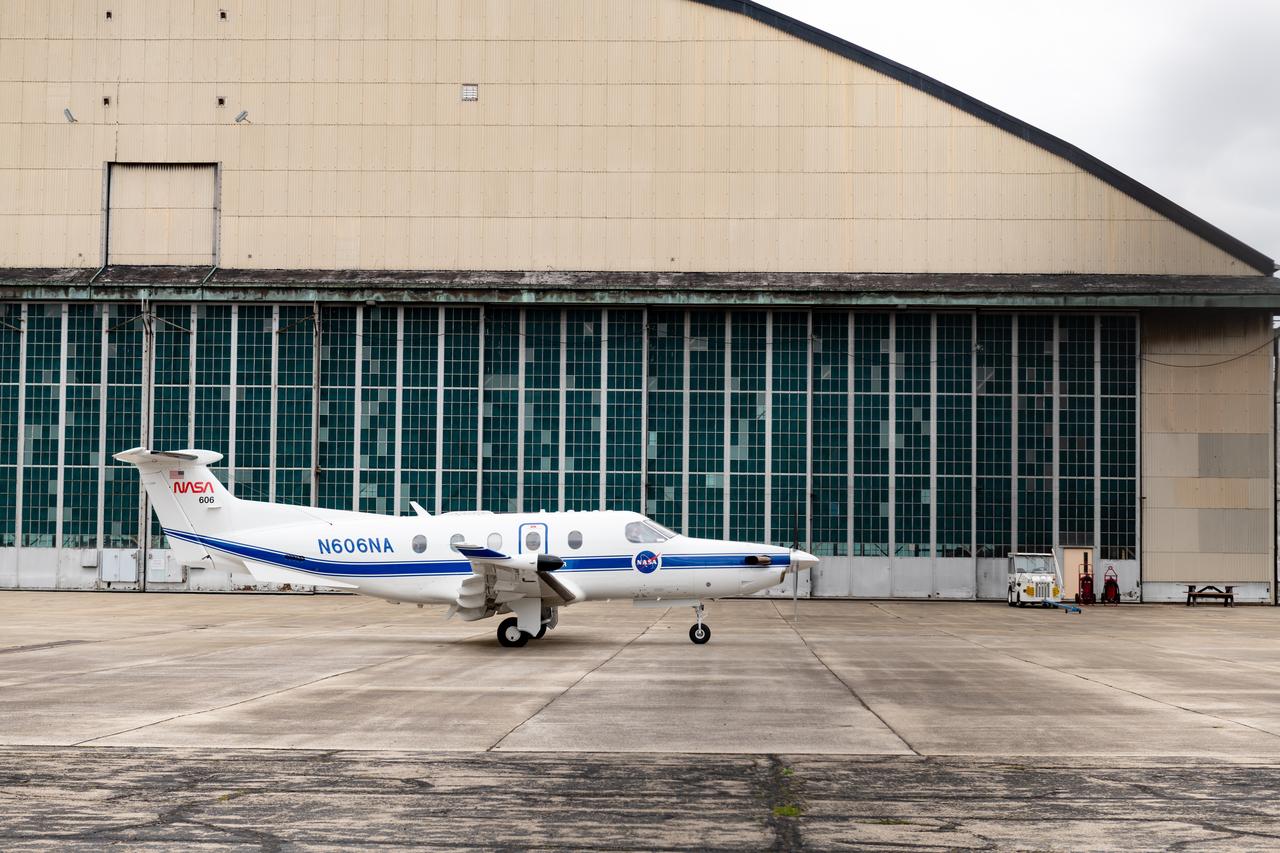
Jeremy Johnson leaving the hangar for a test flight in NASA Glenn Research Center’s PC-12 aircraft on Wednesday, April 16, 2025.

At Glenn Research Center, the PC-12 is Prepped for a flight and ready to takeoff on June 12, 2024. A team at NASA’s Glenn Research Center in Cleveland streamed 4K video footage from an aircraft to the International Space Station and back for the first time using optical, or laser, communications. The feat was part of a series of tests on new technology that could provide live video coverage of astronauts on the Moon during the Artemis missions. Working with the Air Force Research Laboratory and NASA’s Small Business Innovation Research program, Glenn engineers temporarily installed a portable laser terminal on the belly of a Pilatus PC-12 aircraft. They then flew over Lake Erie sending data from the aircraft to an optical ground station in Cleveland. From there, it was sent over an Earth-based network to NASA’s White Sands Test Facility in Las Cruces, New Mexico, where scientists used infrared light signals to send the data. Photo Credit: (NASA/Sara Lowthian-Hanna)

Tour of the Electrified Powertrain Flight Demonstration in the HyPER lab on June 17th, 2024 at Glenn Research Center. NASA’s Electrified Powertrain Flight Demonstration (EPFD) project focuses advancing the future of sustainable aviation by turning hybrid electric flight into a reality. HyPER is a hardware-in-the-loop laboratory that was designed specifically to investigate the dynamic interactions between turbomachinery, the electric power system, and the constantly varying loads of electrified aircraft. It is a small-scale lab capable of rapid reconfiguration through software. This allows the emulation of new engines using simulation models that are easily replaced and then appropriately scaled for power and inertia to the test hardware. Photo Credit: (NASA/Sara Lowthian-Hanna)

Jeremy Johnson leaving the hangar for a test flight in NASA Glenn Research Center’s PC-12 aircraft on Wednesday, April 16, 2025.
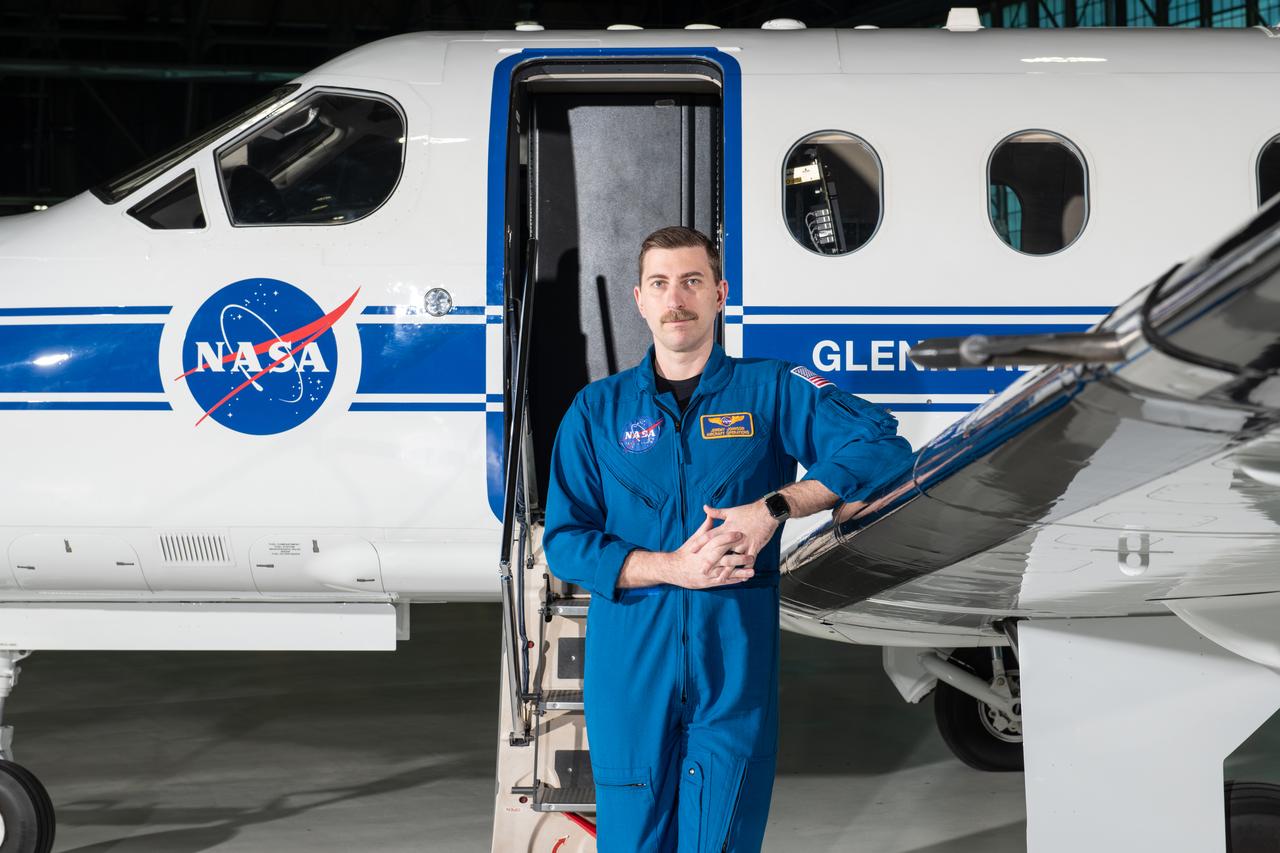
Jeremy Johnson, a research pilot and aviation safety officer, poses in front of a PC-12 aircraft inside the hangar at NASA’s Glenn Research Center in Cleveland on Thursday, April 17, 2025. Johnson flies NASA planes to support important scientific research and testing, working with researchers to plan and carry out flights that will get them the data they need while ensuring safety.
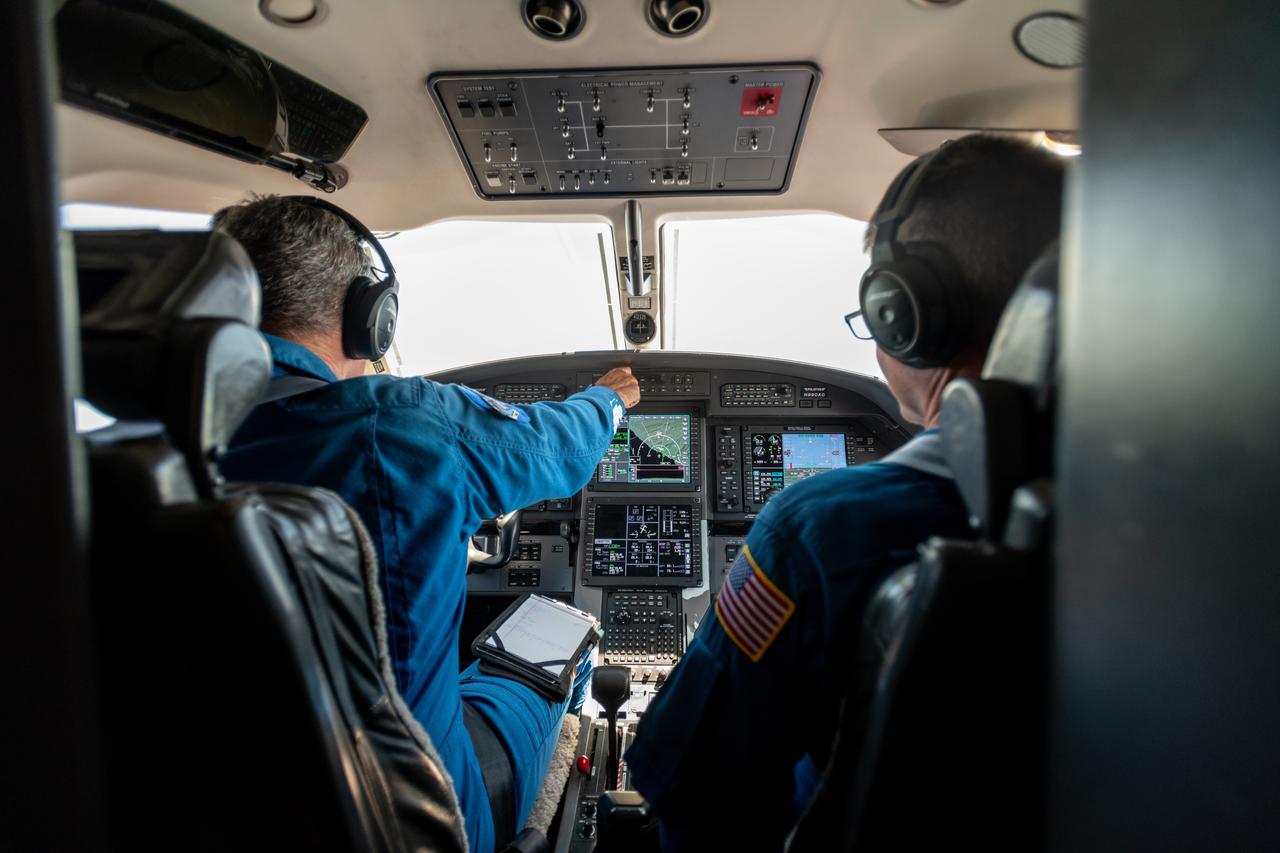
Kurt Blankenship and James Demers Fly PC-12 Aircraft During Testing on June 13, 2024. A team at NASA’s Glenn Research Center in Cleveland streamed 4K video footage from an aircraft to the International Space Station and back for the first time using optical, or laser, communications. The feat was part of a series of tests on new technology that could provide live video coverage of astronauts on the Moon during the Artemis missions. Working with the Air Force Research Laboratory and NASA’s Small Business Innovation Research program, Glenn engineers temporarily installed a portable laser terminal on the belly of a Pilatus PC-12 aircraft. They then flew over Lake Erie sending data from the aircraft to an optical ground station in Cleveland. From there, it was sent over an Earth-based network to NASA’s White Sands Test Facility in Las Cruces, New Mexico, where scientists used infrared light signals to send the data. Photo Credit: (NASA/Sara Lowthian-Hanna)
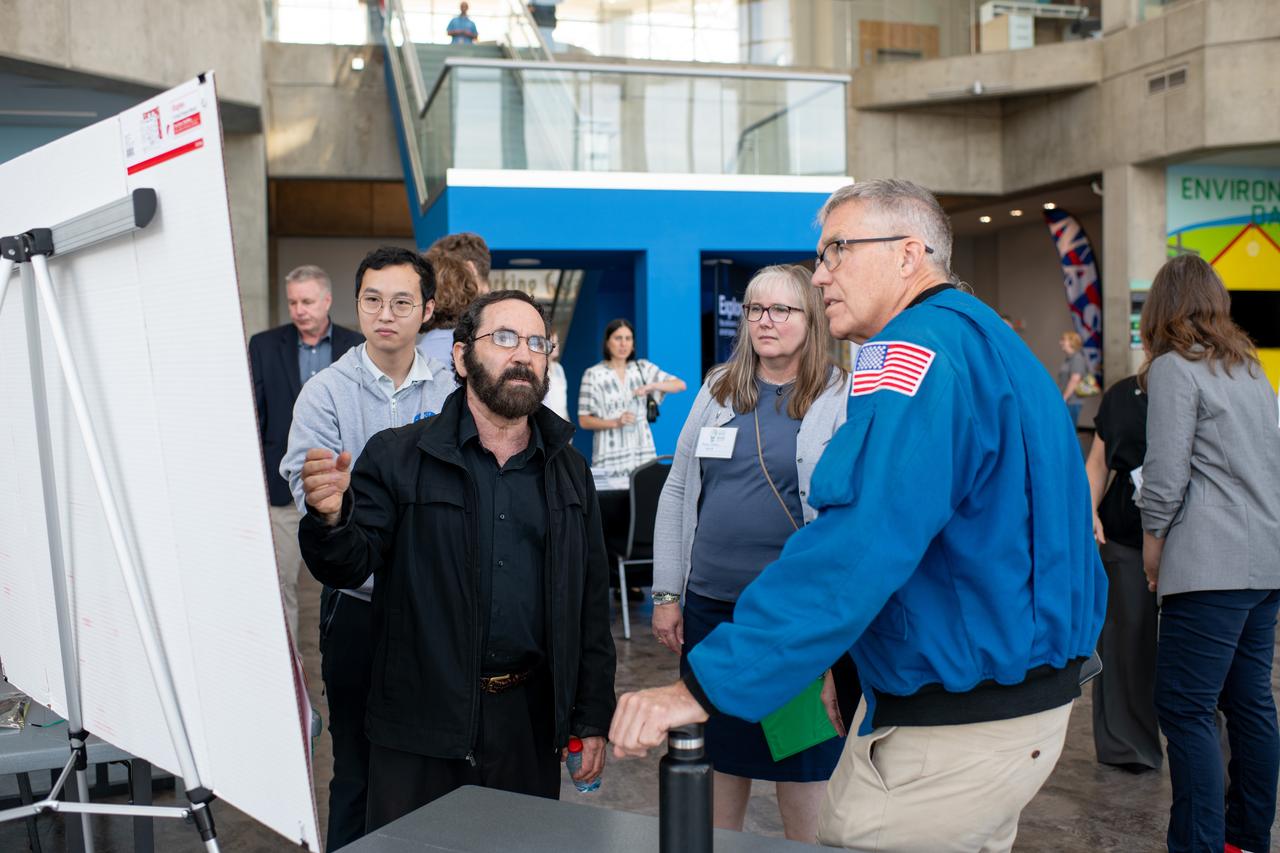
Philip Lubin from Team H.E.L.P.S. (High Efficiency Long-Range Power Solution) explains his project to Mary Wadel and Stephen Bowen. NASA has awarded a total of $1.5 million to two U.S. teams for their novel technology solutions addressing energy distribution, management, and storage as part of the agency’s Watts on the Moon Challenge. The innovations from this challenge aim to support NASA’s Artemis missions, which will establish long-term human presence on the Moon. This two-phase competition has challenged U.S. innovators to develop breakthrough power transmission and energy storage technologies that could enable long-duration Moon missions to advance the nation’s lunar exploration goals. The final phase of the challenge concluded with a technology showcase and winners’ announcement ceremony on September 20, 2024 at Great Lakes Science Center, home of the visitor center for NASA’s Glenn Research Center in Cleveland. Team H.E.L.P.S. (High Efficiency Long-Range Power Solution) from The University of California, Santa Barbara won the $1 million grand prize in NASA’s Watts on the Moon Challenge. Their team developed a low-mass, high efficiency cable and featured energy storage batteries on both ends of their power transmission and energy storage system. Second prize ($500,000): Orbital Mining Corporation of Golden, Colorado. Photo Credit: (NASA/Sara Lowthian-Hanna)
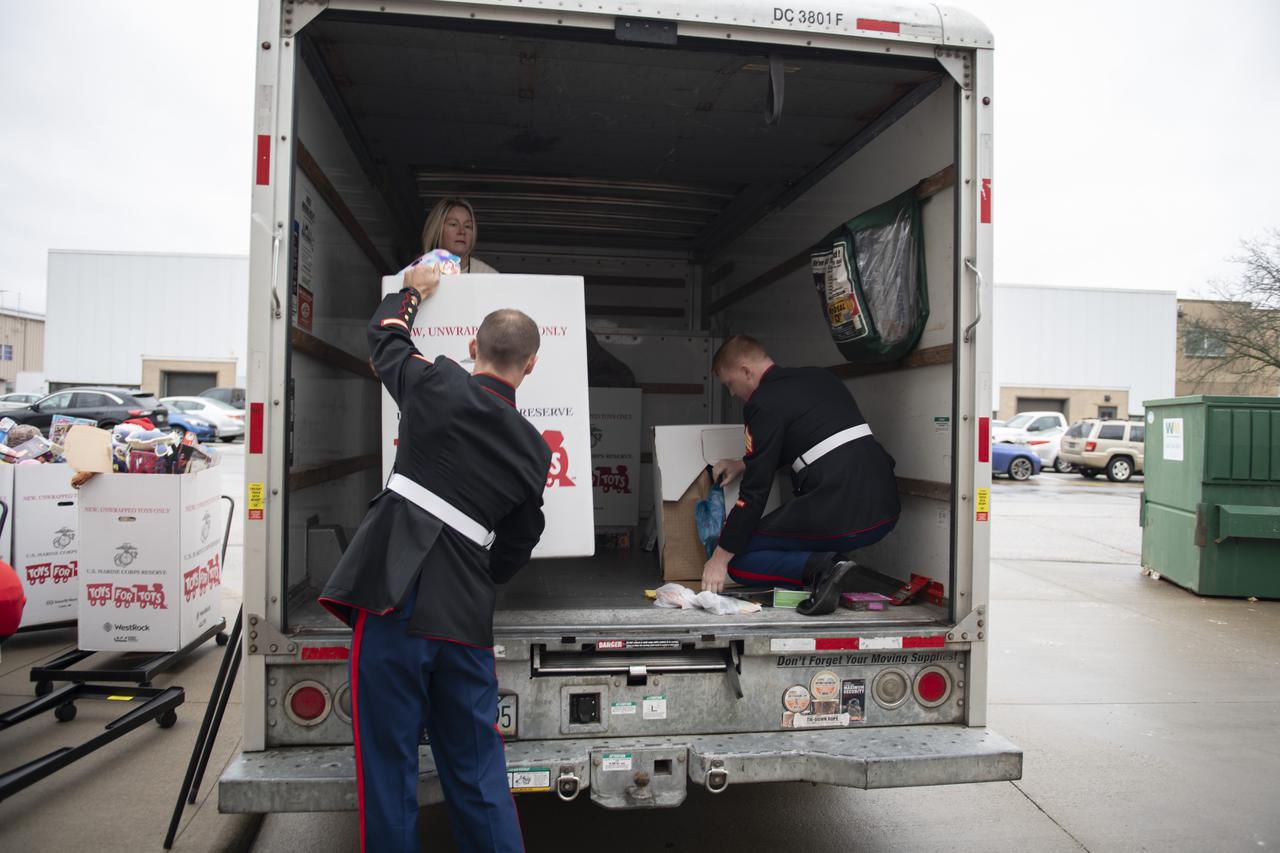
The US Marine Corps Reserve Collected Toy Donations for the 2024 Holiday Season on December 9, 2024 at Glenn Research Center. Photo Credit: (NASA/Sara Lowthian-Hanna)
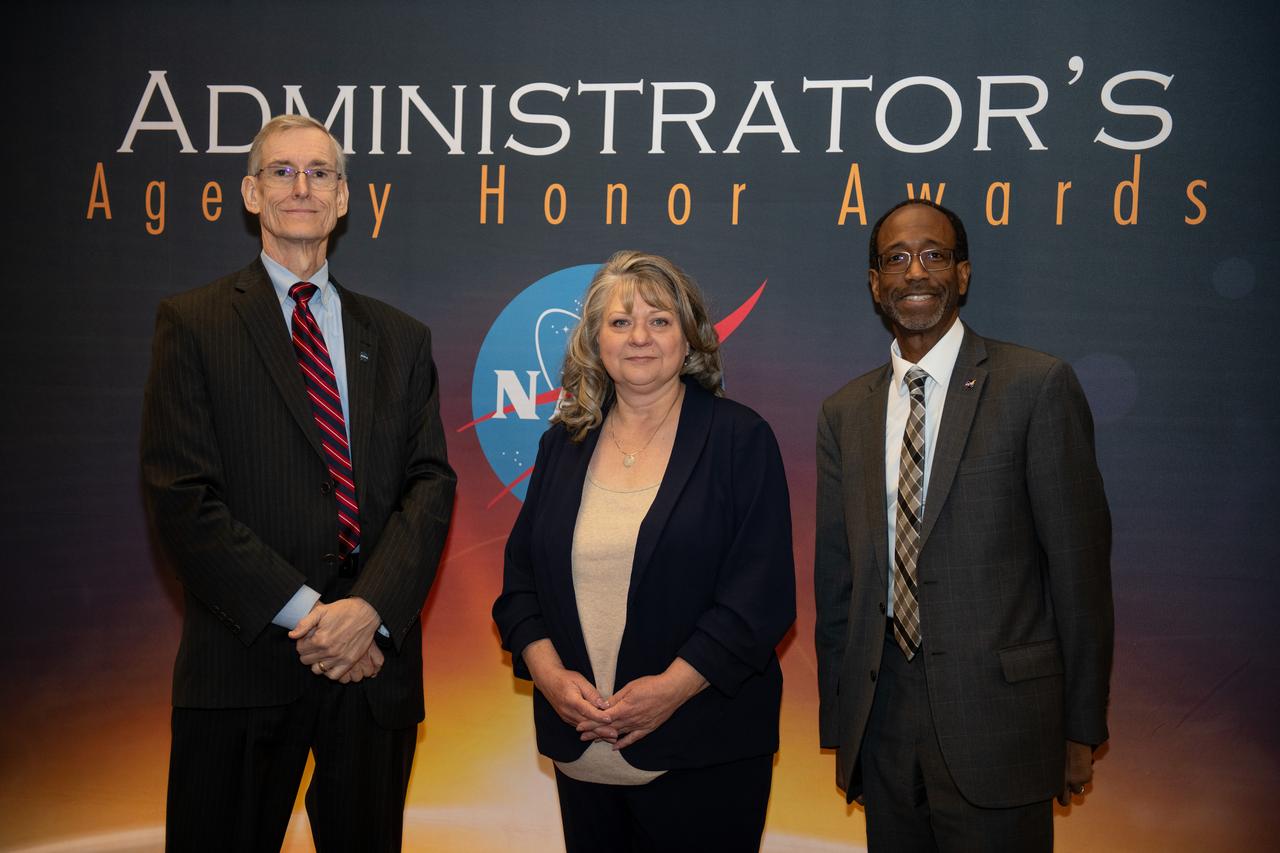
On March 28, 2024 NASA held its 2023 Administrator’s Agency Honor Awards at the Glenn Research Center in Cleveland, OH. This celebratory event recognized the invaluable contributions of civil servants and contractors alike, each one instrumental in propelling humanity further into the realms of space exploration, understanding, and discoverThis is NASA's highest form of recognition that is awarded to any Government employee who, by distinguished service, ability, or vision has personally contributed to NASA's advancement of United States' interests. Photo Credit: (NASA/Sara Lowthian-Hanna)

A team at NASA’s Glenn Research Center in Cleveland streamed 4K video footage from an aircraft to the International Space Station and back for the first time using optical, or laser, communications. The feat was part of a series of tests on new technology that could provide live video coverage of astronauts on the Moon during the Artemis missions. Working with the Air Force Research Laboratory and NASA’s Small Business Innovation Research program, Glenn engineers temporarily installed a portable laser terminal on the belly of a Pilatus PC-12 aircraft. They then flew over Lake Erie sending data from the aircraft to an optical ground station in Cleveland. From there, it was sent over an Earth-based network to NASA’s White Sands Test Facility in Las Cruces, New Mexico, where scientists used infrared light signals to send the data.
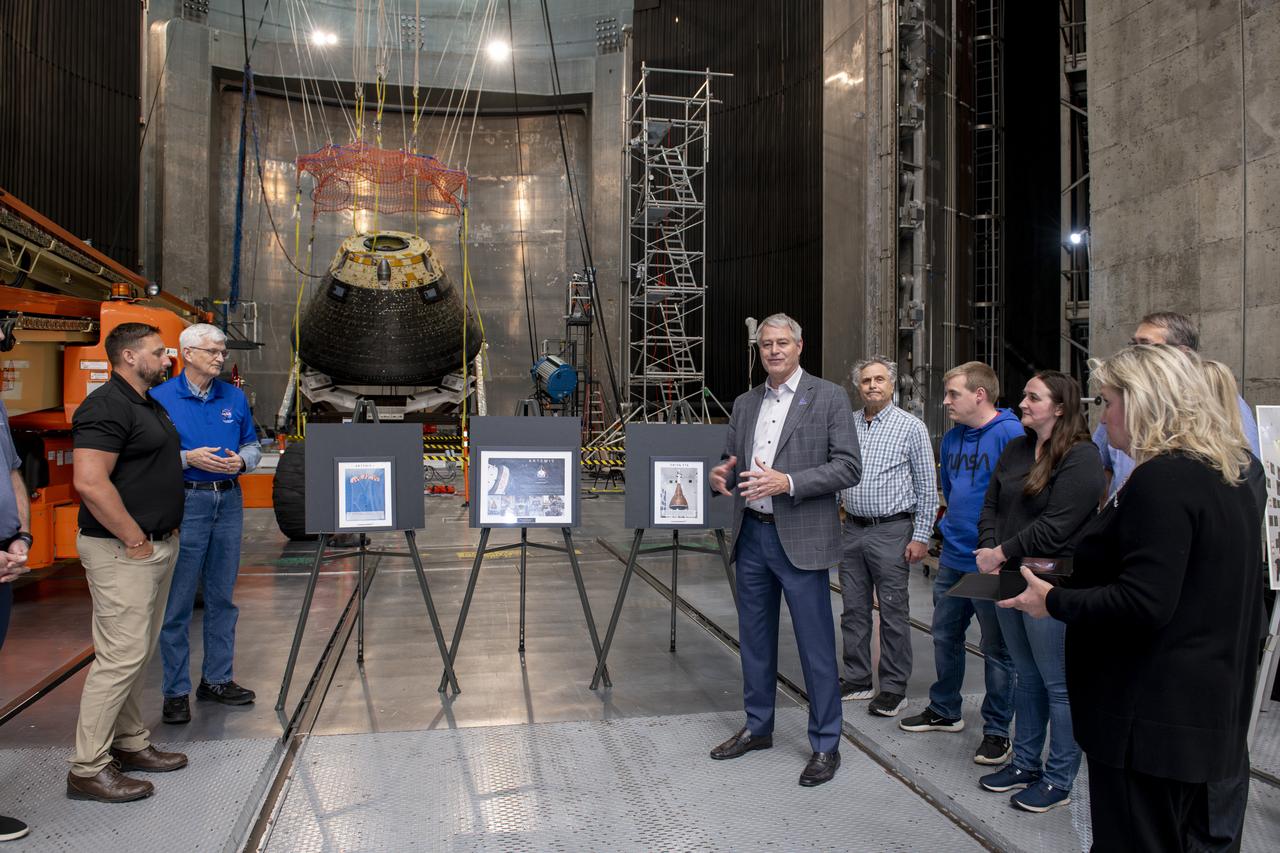
Employees supporting Artemis were invited to attend an appreciation event, “The Road to the Moon,” at Armstrong Test Facility in Sandusky, Ohio. On Thursday, Nov. 21, please join NASA employees and support service contractors for Artemis Friends and Family Day. Employees had the opportunity to hear from center leadership and see the Orion module that flew around the Moon and back during 2022’s Artemis I mission. Lockheed Martin presented an article flown on Artemis I to Robert Overy. Experts have subjected the spacecraft to extreme conditions in Armstrong’s test facilities. This significant testing is slated to wrap up in December, and we want to give you a chance to see the capsule before the conclusion of the test campaign. Photo Credit: (NASA/Sara Lowthian-Hanna)
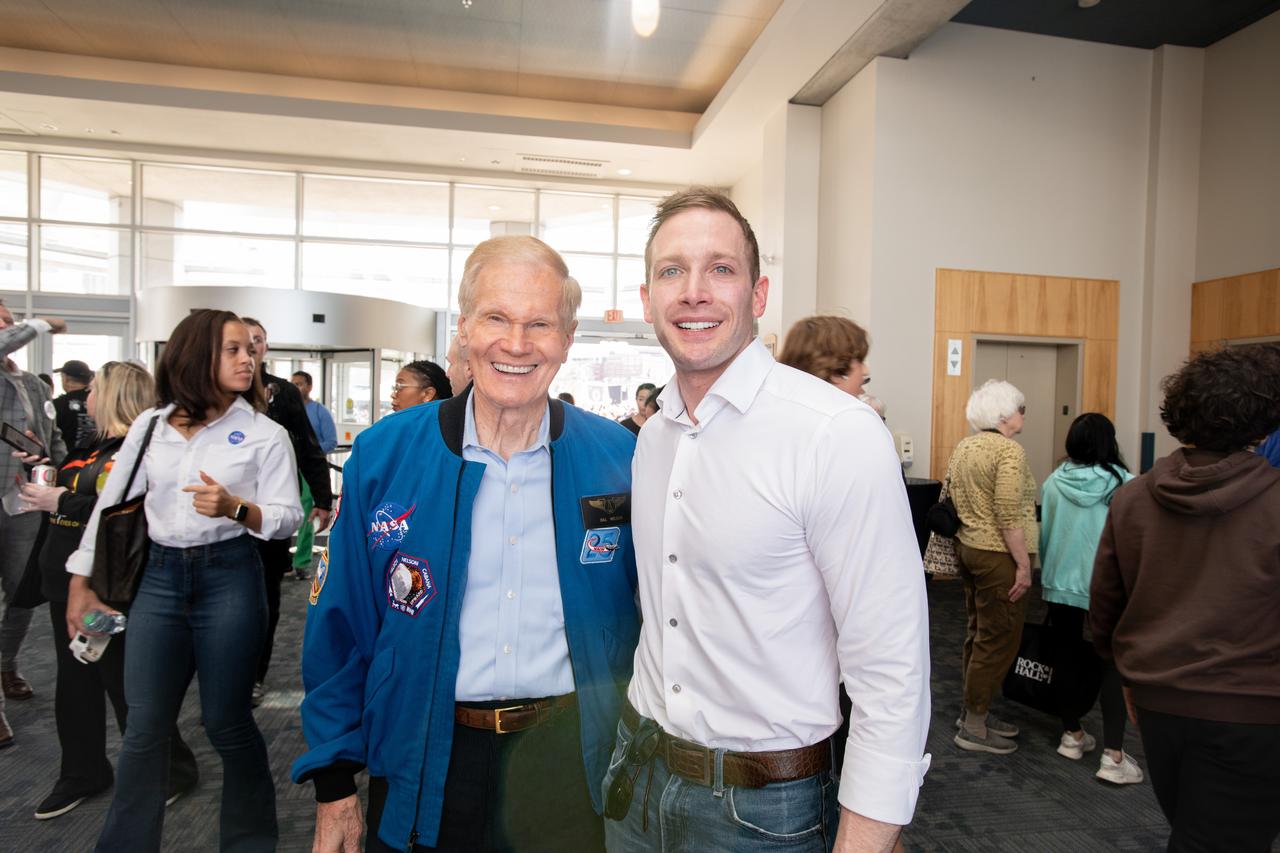
Administrator Bill Nelson and Represenative Max Miller pose for a photo together. NASA Glenn Research Center and the Great Lakes Science Center hosted a three-day celestial celebration in downtown Cleveland, OH. This free, outdoor, family-friendly science and arts festival will feature free concerts, performances, speakers, and hands-on science activities with community partners. A total solar eclipse swept across a narrow portion of the North American continent from Mexico’s Pacific coast to the Atlantic coast of Newfoundland, Canada. A partial solar eclipse was visible across the entire North American continent along with parts of Central America and Europe.