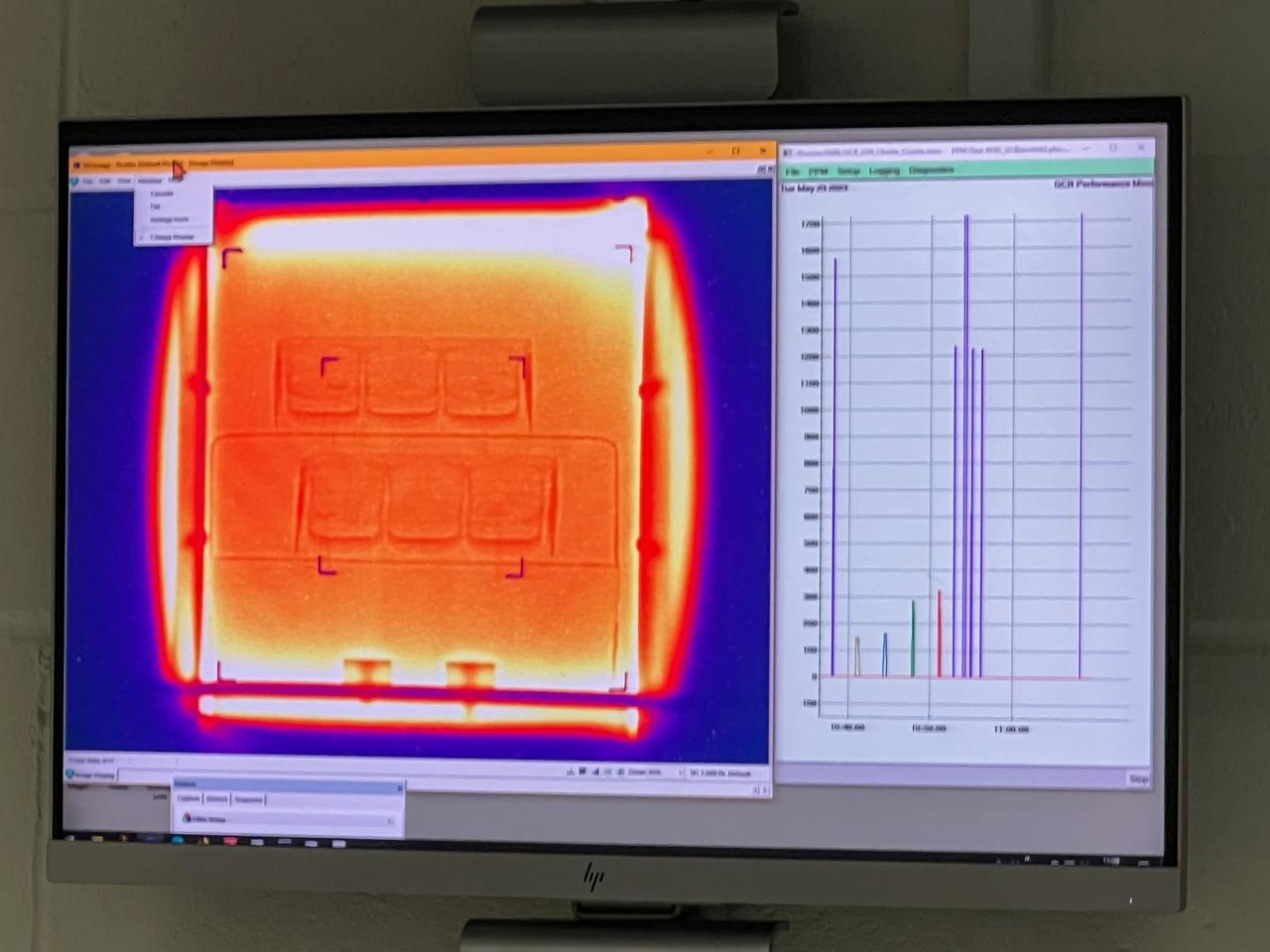
jsc2024e043734 (5/23/2023) --- Two plates of megakaryocyte cultures exposed to simulated galactic cosmic rays at NASA Space Radiation Laboratory. Megakaryocytes Orbiting in Outer Space and Near Earth: The MOON Study (Megakaryocyte Flying-One (MeF1)) investigates how environmental conditions affect development and function of platelets and megakaryocytes, cells found in bone marrow. Results could clarify the risks of changes in inflammation, immune responses, and clot formation in spaceflight and on the ground. Image courtesy of the NASA Space Radiation Laboratory.
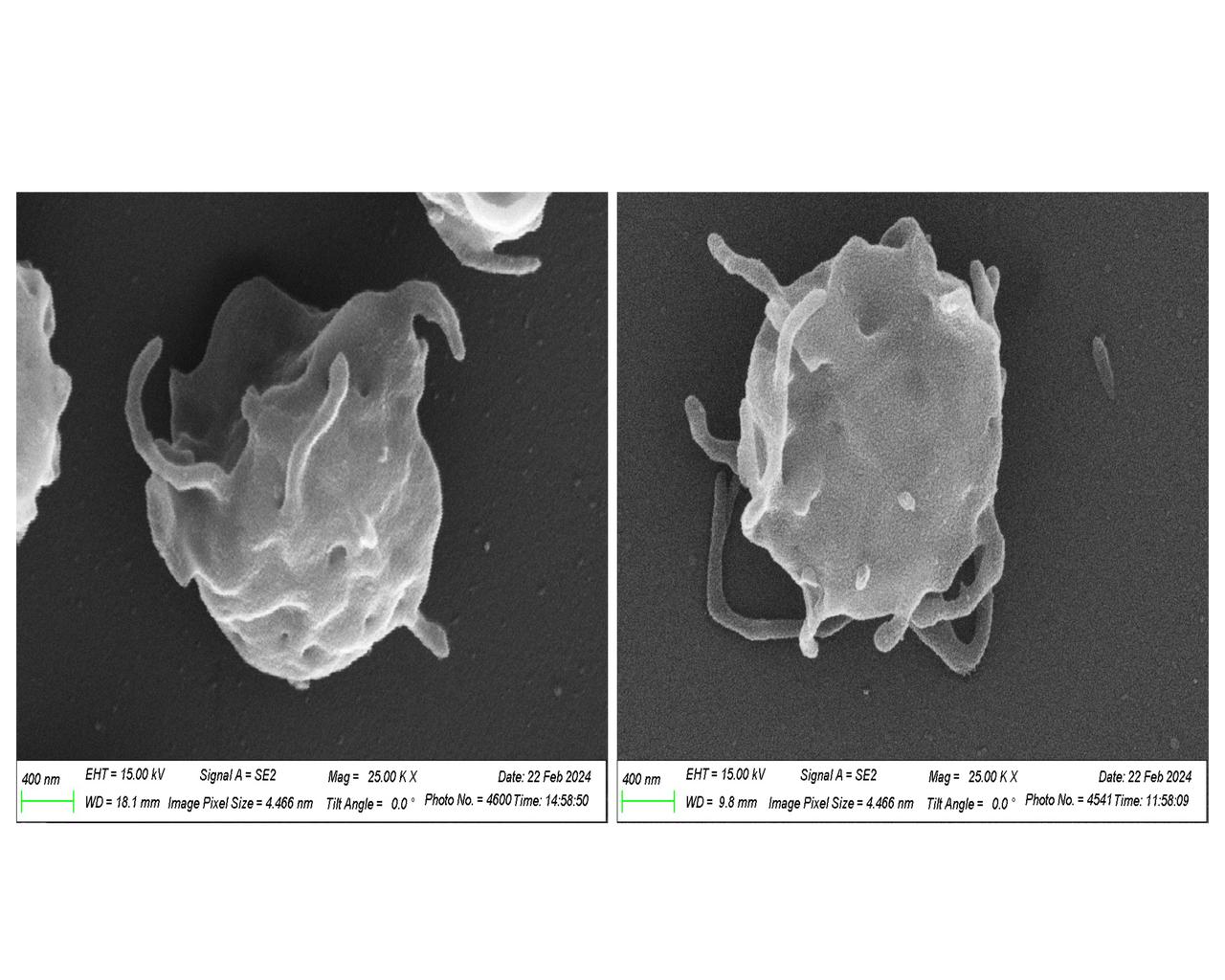
jsc2024e043737 (4/17/2024) --- A scanning electron-microscopy image of human platelets taken preflight at the NASA Space Radiation Laboratory. Megakaryocytes Orbiting in Outer Space and Near Earth: The MOON Study (Megakaryocyte Flying-One (MeF1)) investigates how environmental conditions affect development and function of platelets and megakaryocytes, cells found in bone marrow. Results could clarify the risks of changes in inflammation, immune responses, and clot formation in spaceflight and on the ground. Platelets are isolated from NASA crew members before they launch to the International Space Station, and after return to Earth. Image courtesy of the NASA Space Radiation Laboratory.
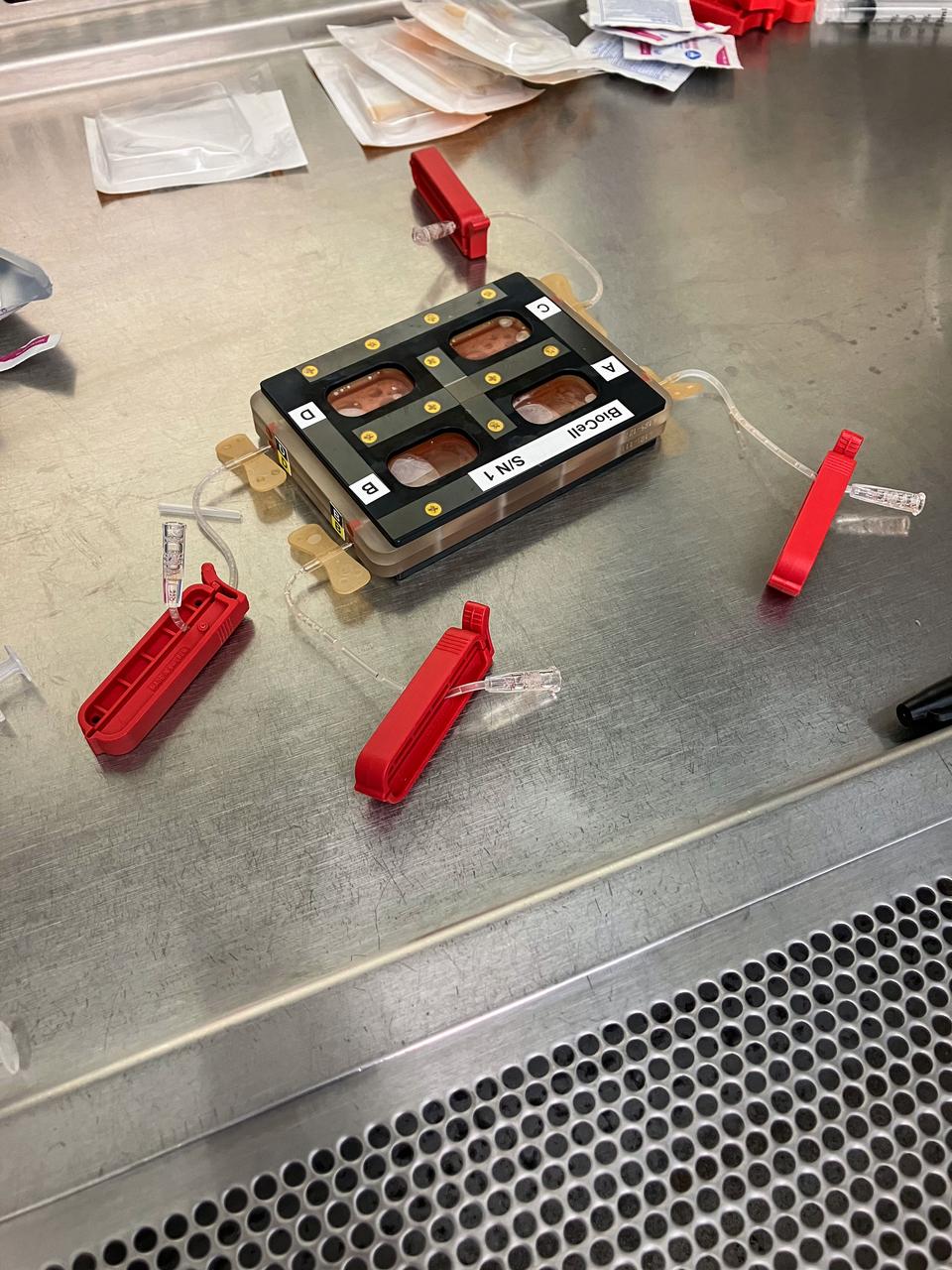
jsc2024e043735 (4/23/2024) --- A BioCell filled with cultures of megakaryocytes (precursor cells which produce platelets) on the last day of the Experiment Verification Test. The International Space Station crew will harvest the cell cultures for microscopy, fixation, and sequencing. Megakaryocytes Orbiting in Outer Space and Near Earth: The MOON Study (Megakaryocyte Flying-One (MeF1)) investigates how environmental conditions affect development and function of platelets and megakaryocytes, cells found in bone marrow. Results could clarify the risks of changes in inflammation, immune responses, and clot formation in spaceflight and on the ground. Image courtesy of the NASA Space Radiation Laboratory.
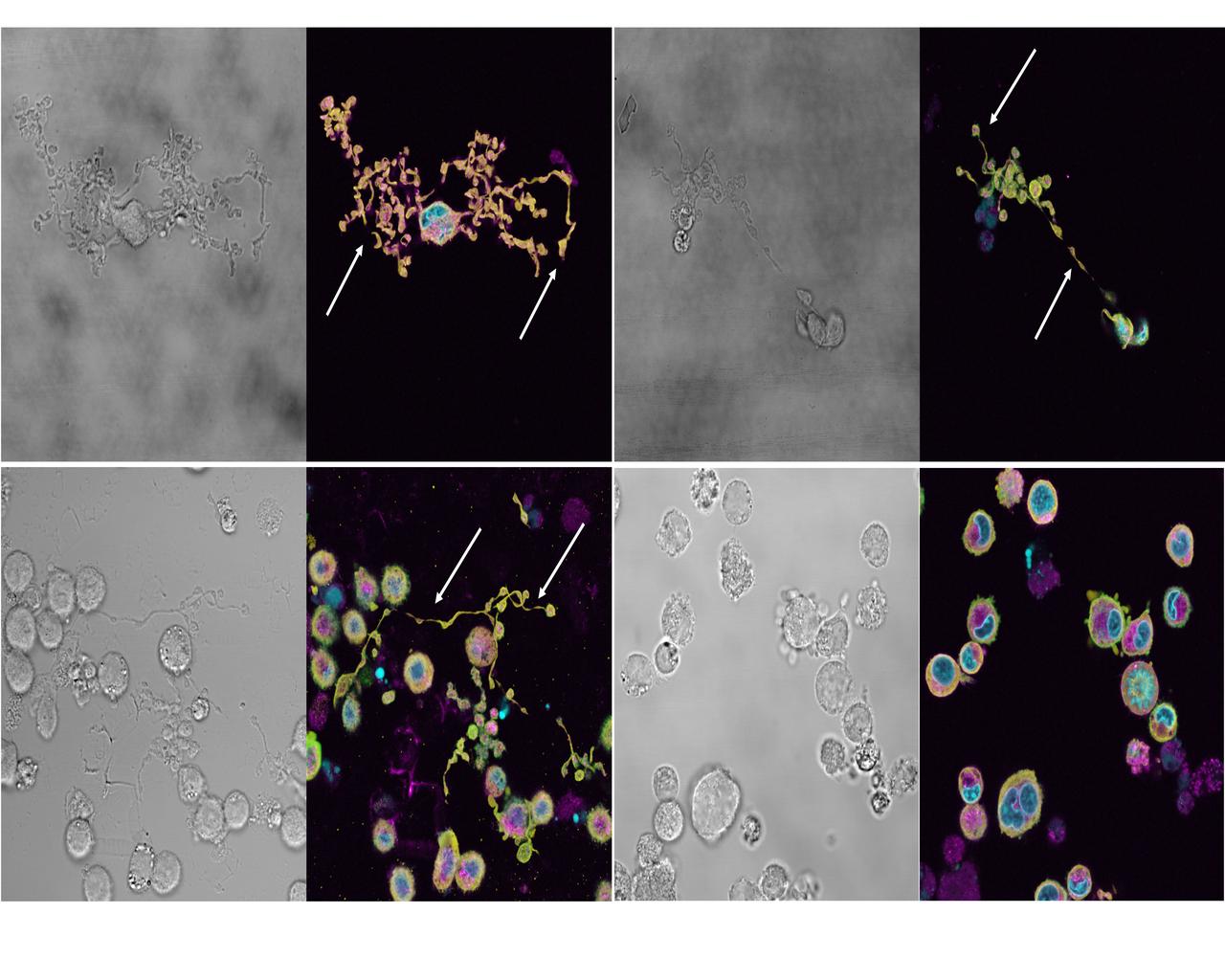
jsc2024e043736 (5/23/2024) --- Preflight ground image of cultured megakaryocytes (precursor cells which produce platelets). The fixed cells were stained using WGA (binding sialic acid, magenta), phalloidin (actin binding, green), beta-tubulin antibody (yellow), and nuclei (DAPI, light blue). Proplatelet extensions, which function as assembly lines for platelets, are highlighted by arrows. Megakaryocytes Orbiting in Outer Space and Near Earth: The MOON Study (Megakaryocyte Flying-One (MeF1)) investigates how environmental conditions affect development and function of platelets and megakaryocytes, cells found in bone marrow. Results could provide clarify the risks of changes in inflammation, immune responses, and clot formation in spaceflight and on the ground. Image courtesy of the NASA Space Radiation Laboratory.
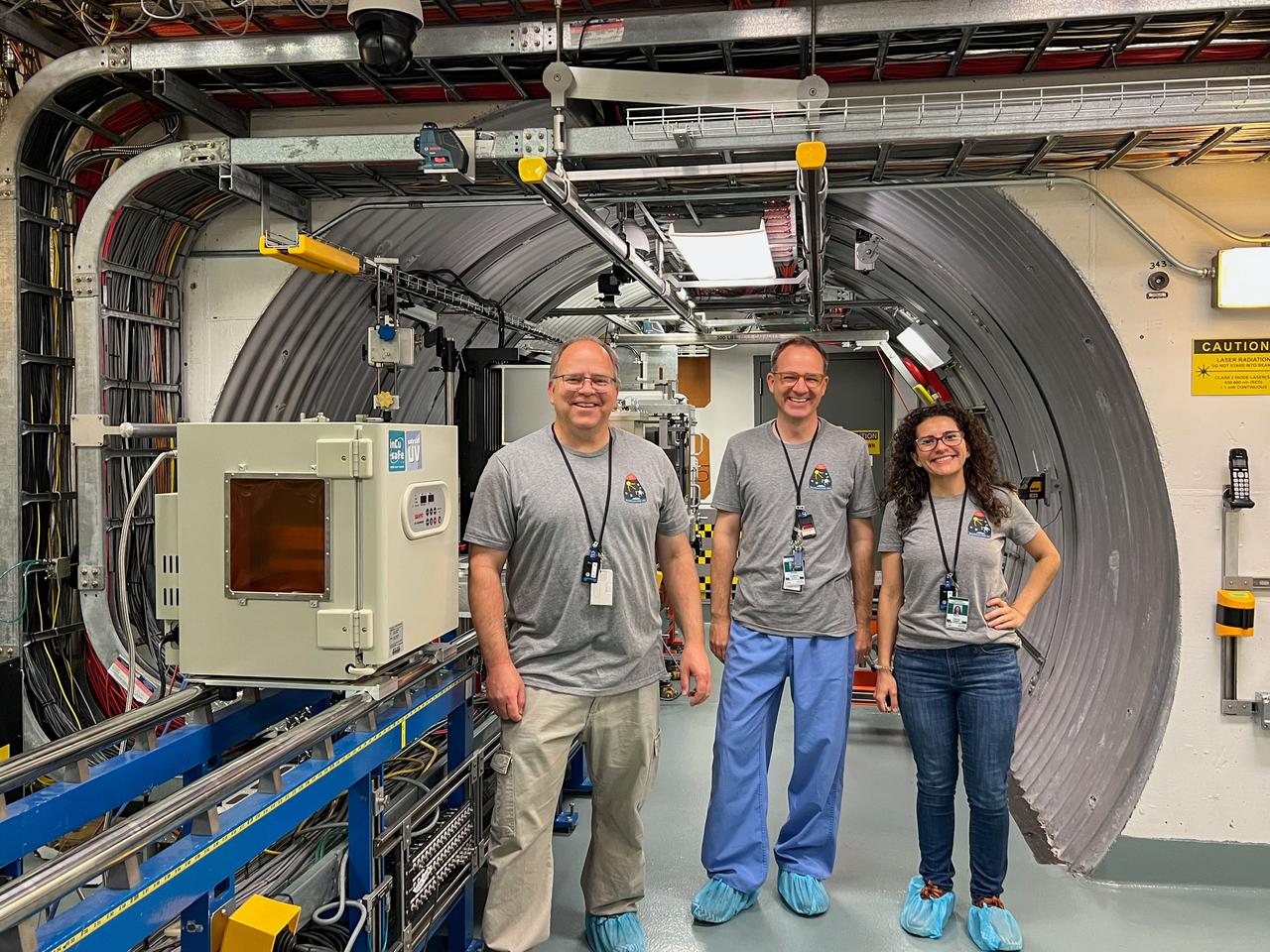
jsc2024e043733 (5/23/2023) --- Members of the Megakaryocyte Flying-One (MeF1) team at the NASA Space Radiation Laboratory at Brookhaven National Laboratory. From left to right: Neal Tolley, Hansjorg Schwertz, and Marina Tristao. This study investigates how environmental conditions affect development and function of platelets and megakaryocytes, cells found in bone marrow. Results could clarify the risks of changes in inflammation, immune responses, and clot formation in spaceflight and on the ground. Image courtesy of the NASA Space Radiation Laboratory.