![“Discipline is one of the things that they instill with you [in the military.] All the way starting in boot camp, [the goal] is doing the right thing when nobody's looking. Integrity. Whenever you're in boot camp, they always say, ‘it's too easy.’ It's just too easy to follow the rules, read the book, read the regulations, and that's probably why I enjoy contracting. I like reading the regulations and following the regulations. …[Now that I work for Safety and Mission Assurance,] it's really cool to read everything about the different types of the scenarios. I always get to see the task orders and the type of work that is going on to keep people safe on the ground and in the air.” NASA Contract Specialist at NASA’s Goddard Space Flight Center (GSFC), Miranda Meyer, poses for a portrait, Wednesday, Feb. 7, 2024 at GSFC in Greenbelt, Maryland. Photo Credit: (NASA/Thalia Patrinos)](https://images-assets.nasa.gov/image/NHQ202402070015/NHQ202402070015~medium.jpg)
“Discipline is one of the things that they instill with you [in the military.] All the way starting in boot camp, [the goal] is doing the right thing when nobody's looking. Integrity. Whenever you're in boot camp, they always say, ‘it's too easy.’ It's just too easy to follow the rules, read the book, read the regulations, and that's probably why I enjoy contracting. I like reading the regulations and following the regulations. …[Now that I work for Safety and Mission Assurance,] it's really cool to read everything about the different types of the scenarios. I always get to see the task orders and the type of work that is going on to keep people safe on the ground and in the air.” NASA Contract Specialist at NASA’s Goddard Space Flight Center (GSFC), Miranda Meyer, poses for a portrait, Wednesday, Feb. 7, 2024 at GSFC in Greenbelt, Maryland. Photo Credit: (NASA/Thalia Patrinos)
![“I found it amazing that this world was covered in ice and had an ocean underneath. I was mapping this area on Europa called Conamara Chaos, where we believe that the surface is locally heated. Because of this, there are ginormous icebergs that broke off and floated around in this slushy ice, so I learned to map [that part of the surface]. Having my physics and math background and thinking about a world with a subsurface ocean, I was like, 'OK, this is a good marriage of fluid mechanics and heat transfer. Europa is a nice world to study that will combine my background with this new planetary science thing that I love.’ “What happened with Europa Clipper was I decided to do my dissertation topic on [the moon]. We'd seen images of these beautiful south polar plumes on Enceladus, these geyser-like plumes, but Europa is much bigger. It has much more water and receives much more tidal heating. Why didn't the Galileo spacecraft see plumes on Europa? Why don't we see geysers? “My dissertation focused on what it would take to have this geyser activity on Europa and for spacecraft cameras to image it. I remember defending my dissertation well but sitting there thinking, ‘People will think I'm a quack because we've never seen geysers on Europa.’ That was in May, and by December, Lorenz Roth's paper came out that Hubble may have detected geysers on Europa. That's when I was like, 'Oh yes, I might actually have a career!' “Shortly after that, the call came out for instrument proposals. Zibi Turtle [Principal Investigator for the Europa Imaging System] met me at a conference and said, 'We're writing a proposal for a camera for the Europa mission. Would you want to be on it?' At that point, I was a year out of my Ph.D. and was like, ‘Are you kidding me?’ Because that usually never happens. Usually, the people on these instrument teams are more senior. They've been around longer, so it’s very rare to be just finishing up your Ph.D. and someone asks you. I](https://images-assets.nasa.gov/image/NHQ202402070010/NHQ202402070010~medium.jpg)
“I found it amazing that this world was covered in ice and had an ocean underneath. I was mapping this area on Europa called Conamara Chaos, where we believe that the surface is locally heated. Because of this, there are ginormous icebergs that broke off and floated around in this slushy ice, so I learned to map [that part of the surface]. Having my physics and math background and thinking about a world with a subsurface ocean, I was like, 'OK, this is a good marriage of fluid mechanics and heat transfer. Europa is a nice world to study that will combine my background with this new planetary science thing that I love.’ “What happened with Europa Clipper was I decided to do my dissertation topic on [the moon]. We'd seen images of these beautiful south polar plumes on Enceladus, these geyser-like plumes, but Europa is much bigger. It has much more water and receives much more tidal heating. Why didn't the Galileo spacecraft see plumes on Europa? Why don't we see geysers? “My dissertation focused on what it would take to have this geyser activity on Europa and for spacecraft cameras to image it. I remember defending my dissertation well but sitting there thinking, ‘People will think I'm a quack because we've never seen geysers on Europa.’ That was in May, and by December, Lorenz Roth's paper came out that Hubble may have detected geysers on Europa. That's when I was like, 'Oh yes, I might actually have a career!' “Shortly after that, the call came out for instrument proposals. Zibi Turtle [Principal Investigator for the Europa Imaging System] met me at a conference and said, 'We're writing a proposal for a camera for the Europa mission. Would you want to be on it?' At that point, I was a year out of my Ph.D. and was like, ‘Are you kidding me?’ Because that usually never happens. Usually, the people on these instrument teams are more senior. They've been around longer, so it’s very rare to be just finishing up your Ph.D. and someone asks you. I
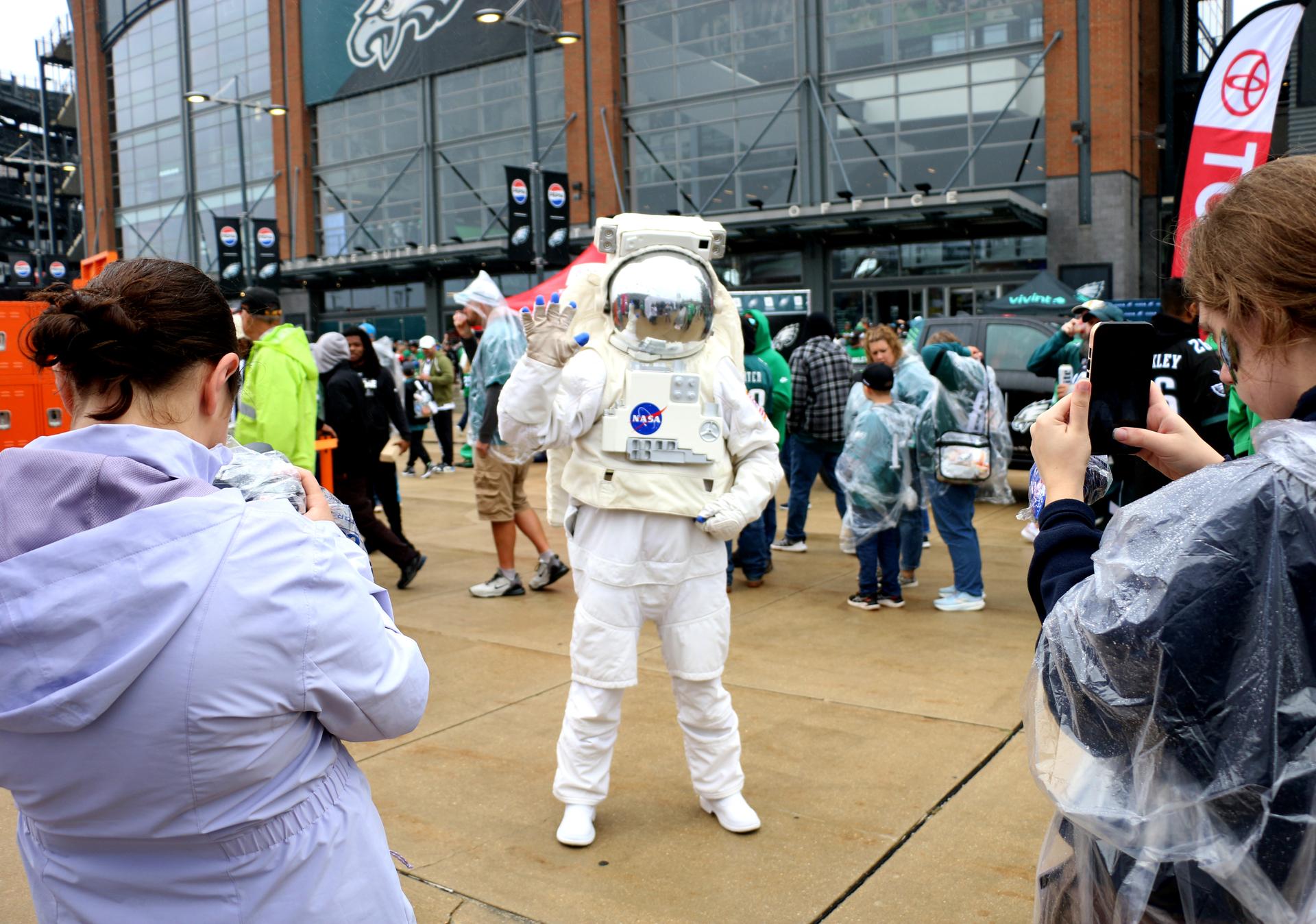
Fans take photos of the astronaut at the NASA activation at the NFL game between the Philadelphia Eagles and the Los Angeles Rams at Lincoln Financial Field on Sunday, Oct. 4, 2026, in Philadelphia. NASA’s engagement at NFL games is part of the agency's Inspiration Tour, aimed at strengthening connections between NASA and its partners and showcasing innovation in air and space in the lead up to the MAX POWER aerospace technology expo and airshow at the agency's Kennedy Space Center in early November. Photo Credit: (NASA/Thalia Patrinos)
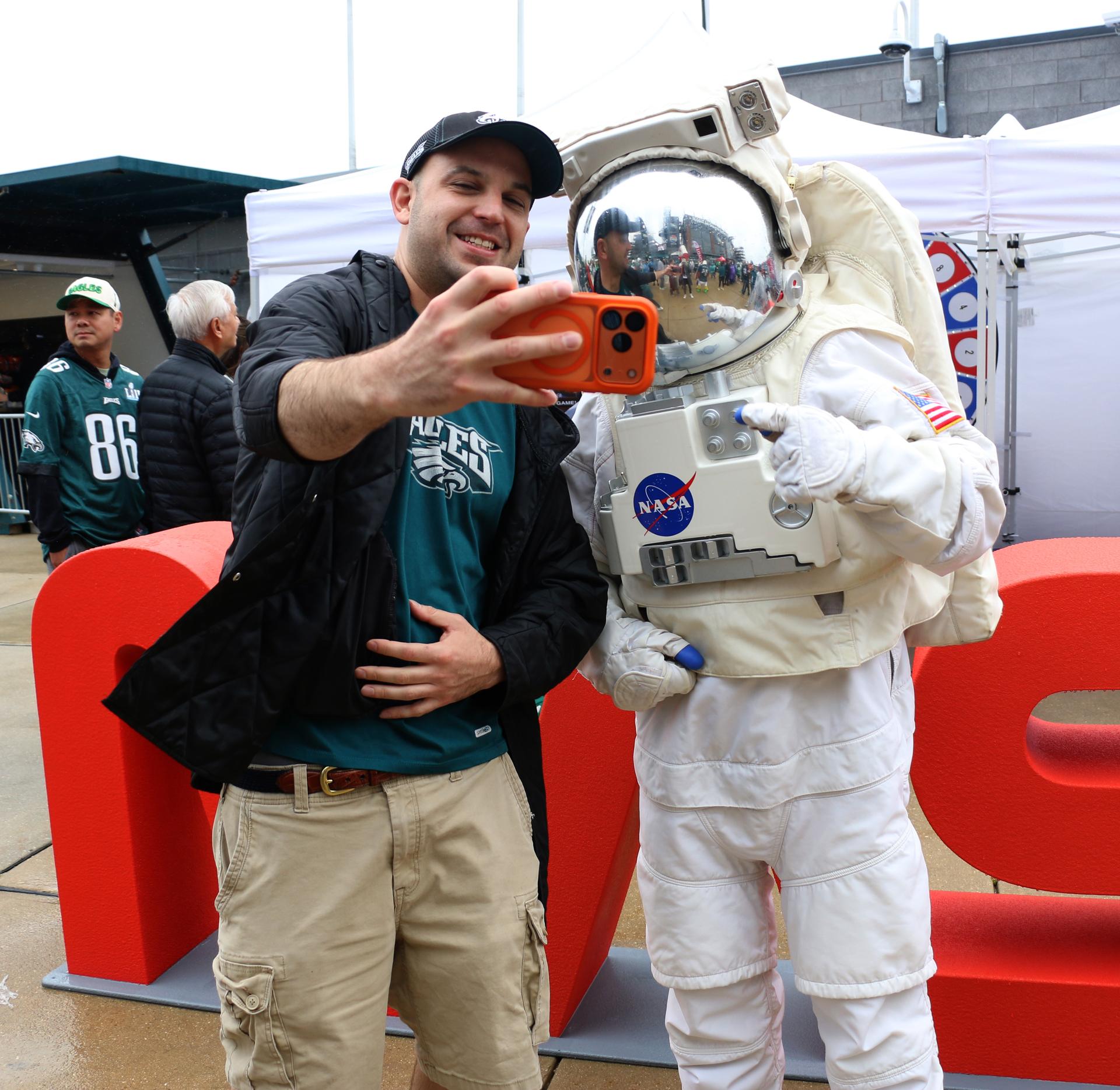
A fan takes a selfie with the astronaut at the NASA activation at the NFL game between the Philadelphia Eagles and the Los Angeles Rams at Lincoln Financial Field on Sunday, Oct. 4, 2026, in Philadelphia. NASA’s engagement at NFL games is part of the agency's Inspiration Tour, aimed at strengthening connections between NASA and its partners and showcasing innovation in air and space in the lead up to the MAX POWER aerospace technology expo and airshow at the agency's Kennedy Space Center in early November. Photo Credit: (NASA/Thalia Patrinos)
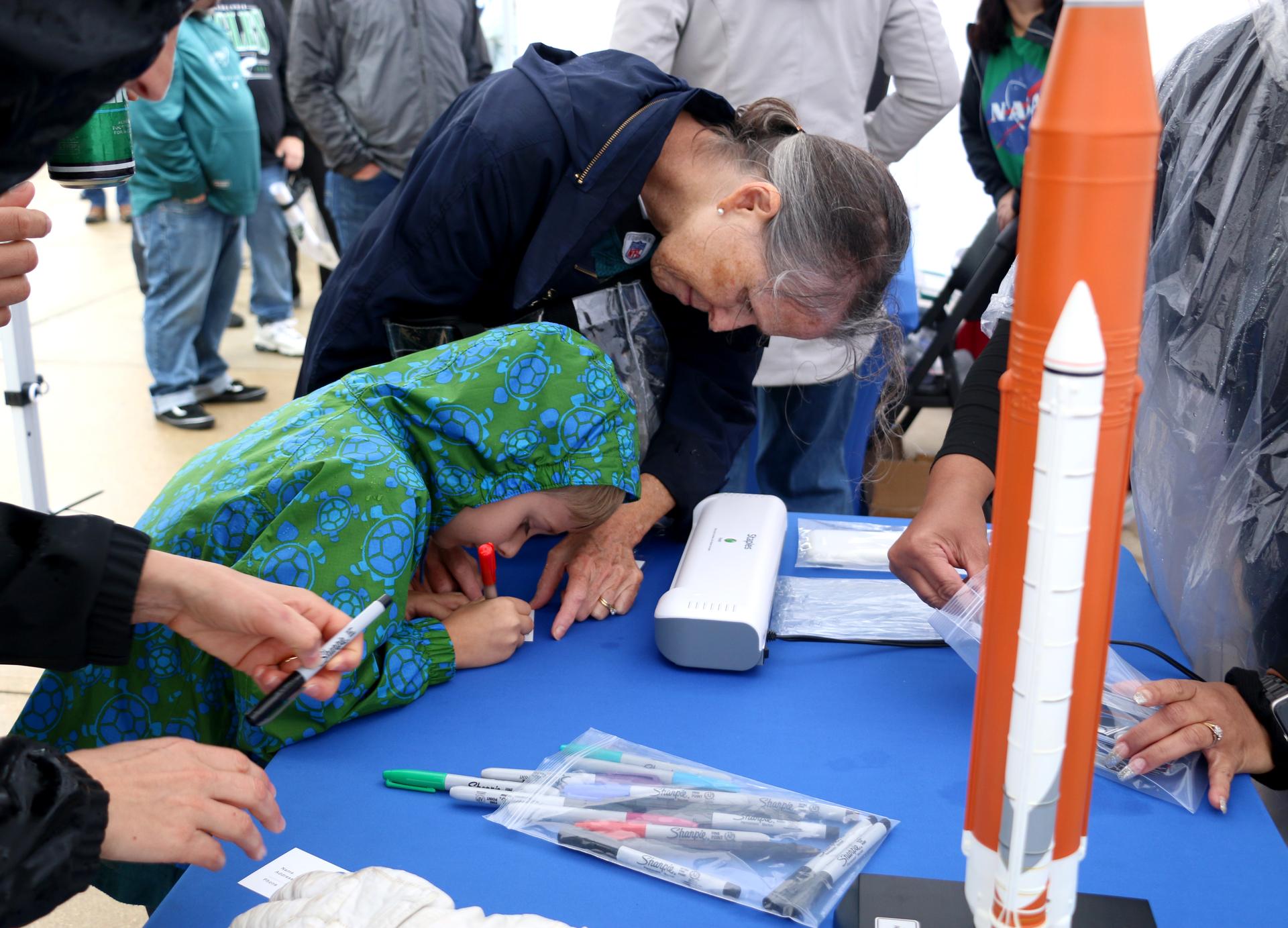
Two fans label their new luggage tag at the NASA activation at the NFL game between the Philadelphia Eagles and the Los Angeles Rams at Lincoln Financial Field on Sunday, Oct. 4, 2026, in Philadelphia. NASA’s engagement at NFL games is part of the agency's Inspiration Tour, aimed at strengthening connections between NASA and its partners and showcasing innovation in air and space in the lead up to the MAX POWER aerospace technology expo and airshow at the agency's Kennedy Space Center in early November. Photo Credit: (NASA/Thalia Patrinos)
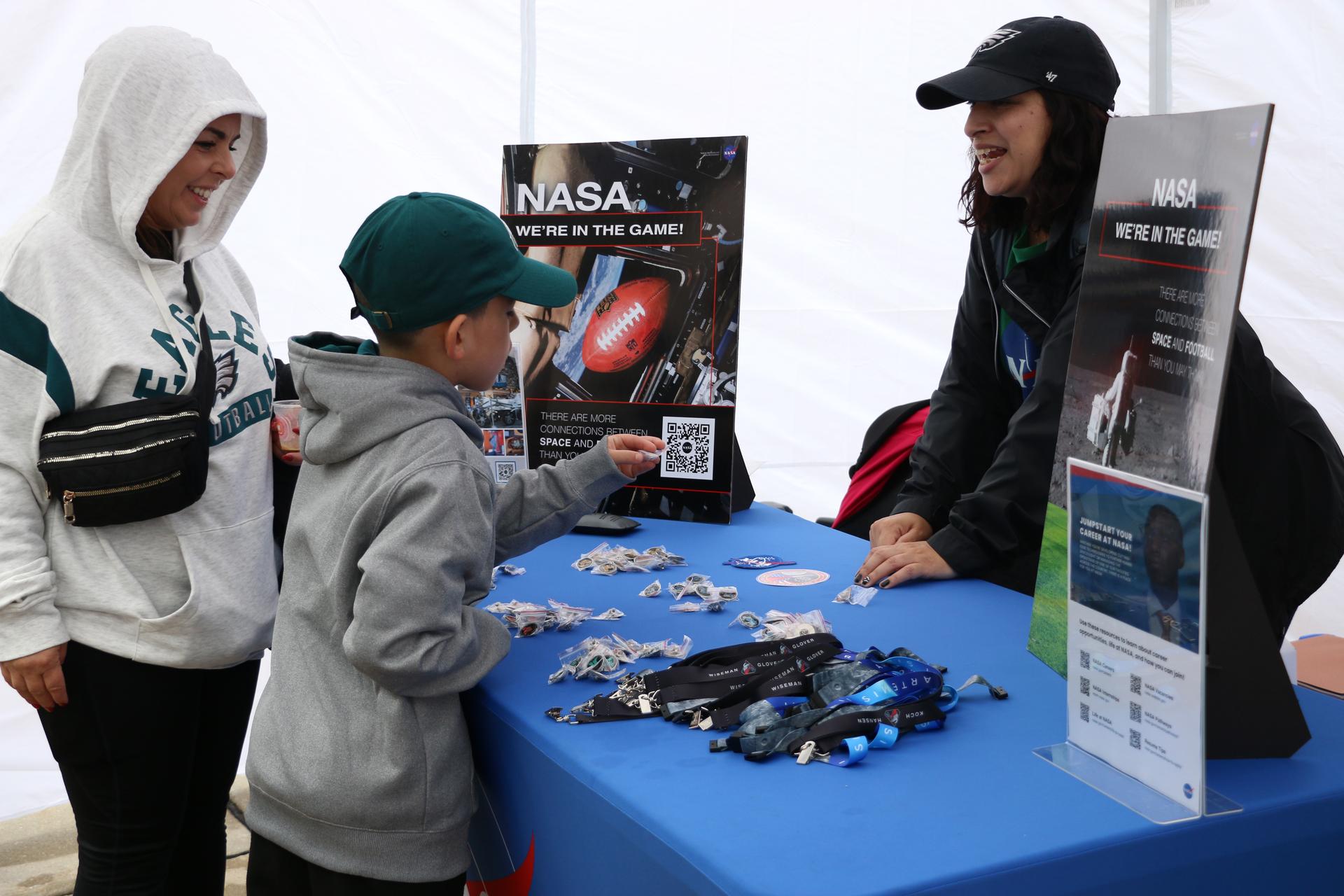
Astrophysicist Knicole Colón greets a young fan at the NASA activation as the NFL game between the Philadelphia Eagles and the Los Angeles Rams at Lincoln Financial Field on Sunday, Oct. 4, 2026, in Philadelphia. NASA’s engagement at NFL games is part of the agency's Inspiration Tour, aimed at strengthening connections between NASA and its partners and showcasing innovation in air and space in the lead up to the MAX POWER aerospace technology expo and airshow at the agency's Kennedy Space Center in early November. Photo Credit: (NASA/Thalia Patrinos)
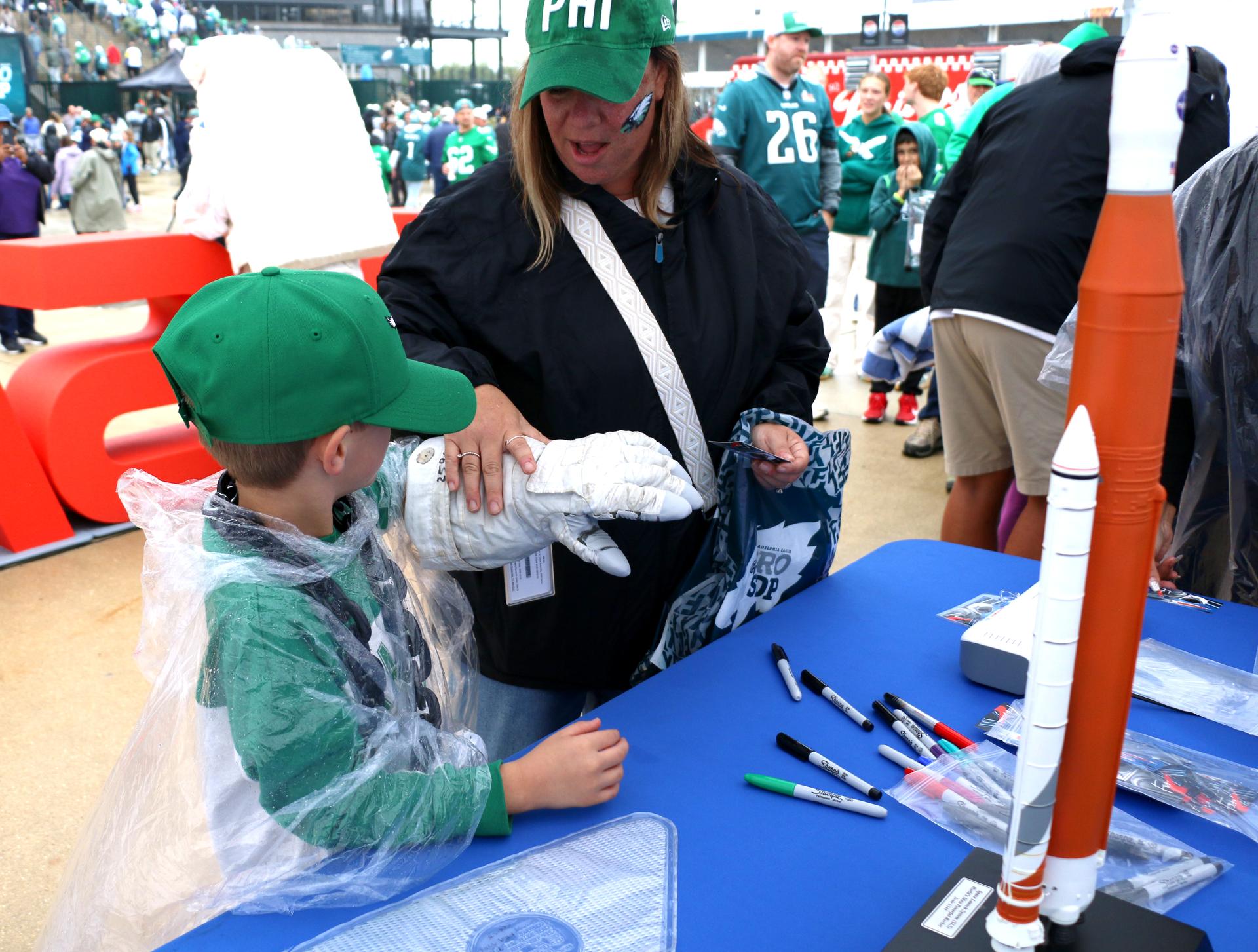
Two fans try on an astronaut glove at the NASA activation at the NFL game between the Philadelphia Eagles and the Los Angeles Rams at Lincoln Financial Field on Sunday, Oct. 4, 2026, in Philadelphia. NASA’s engagement at NFL games is part of the agency's Inspiration Tour, aimed at strengthening connections between NASA and its partners and showcasing innovation in air and space in the lead up to the MAX POWER aerospace technology expo and airshow at the agency's Kennedy Space Center in early November. Photo Credit: (NASA/Thalia Patrinos)
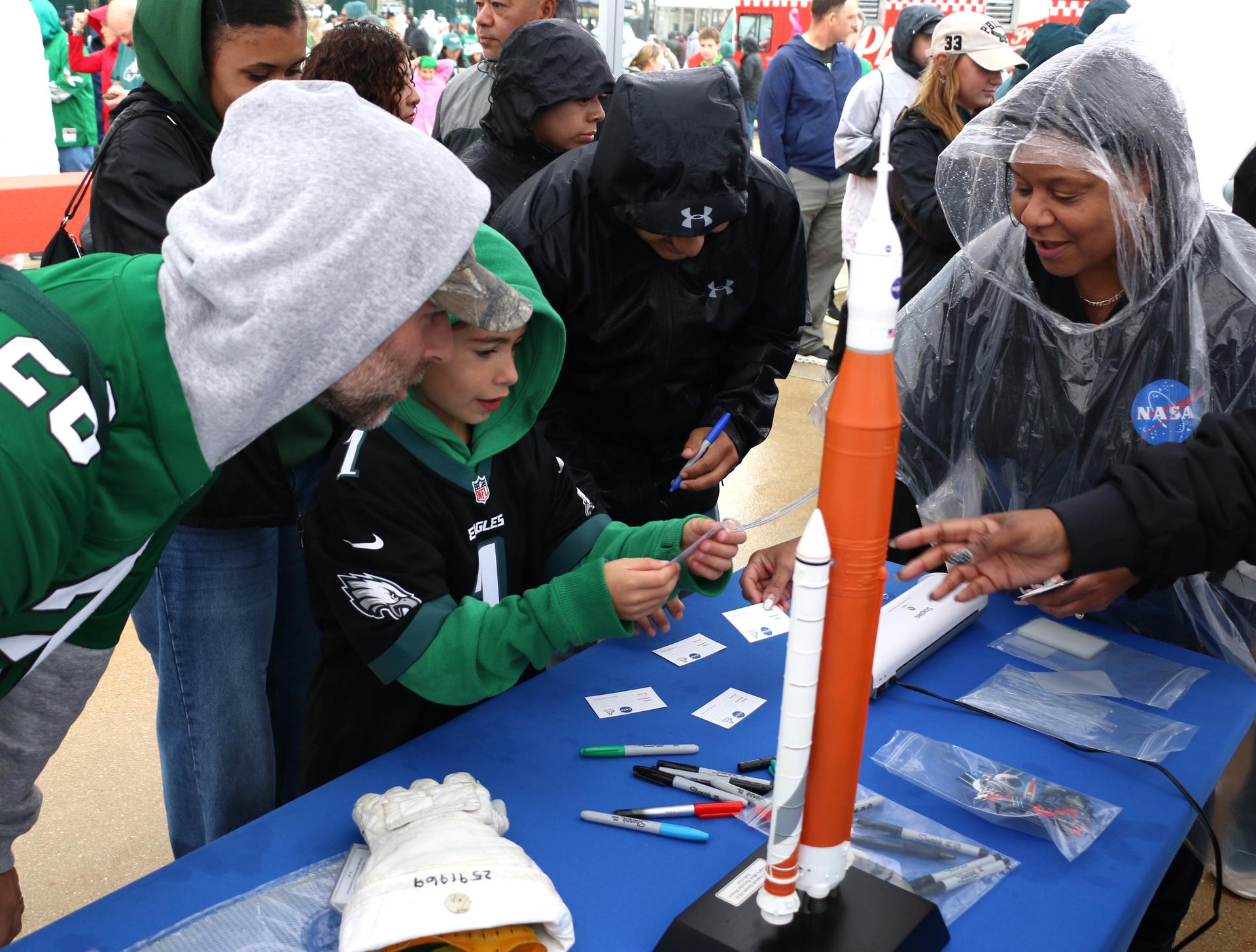
Fans participate at the NASA activation at the NFL game between the Philadelphia Eagles and the Los Angeles Rams at Lincoln Financial Field on Sunday, Oct. 4, 2026, in Philadelphia. NASA’s engagement at NFL games is part of the agency's Inspiration Tour, aimed at strengthening connections between NASA and its partners and showcasing innovation in air and space in the lead up to the MAX POWER aerospace technology expo and airshow at the agency's Kennedy Space Center in early November. Photo Credit: (NASA/Thalia Patrinos)
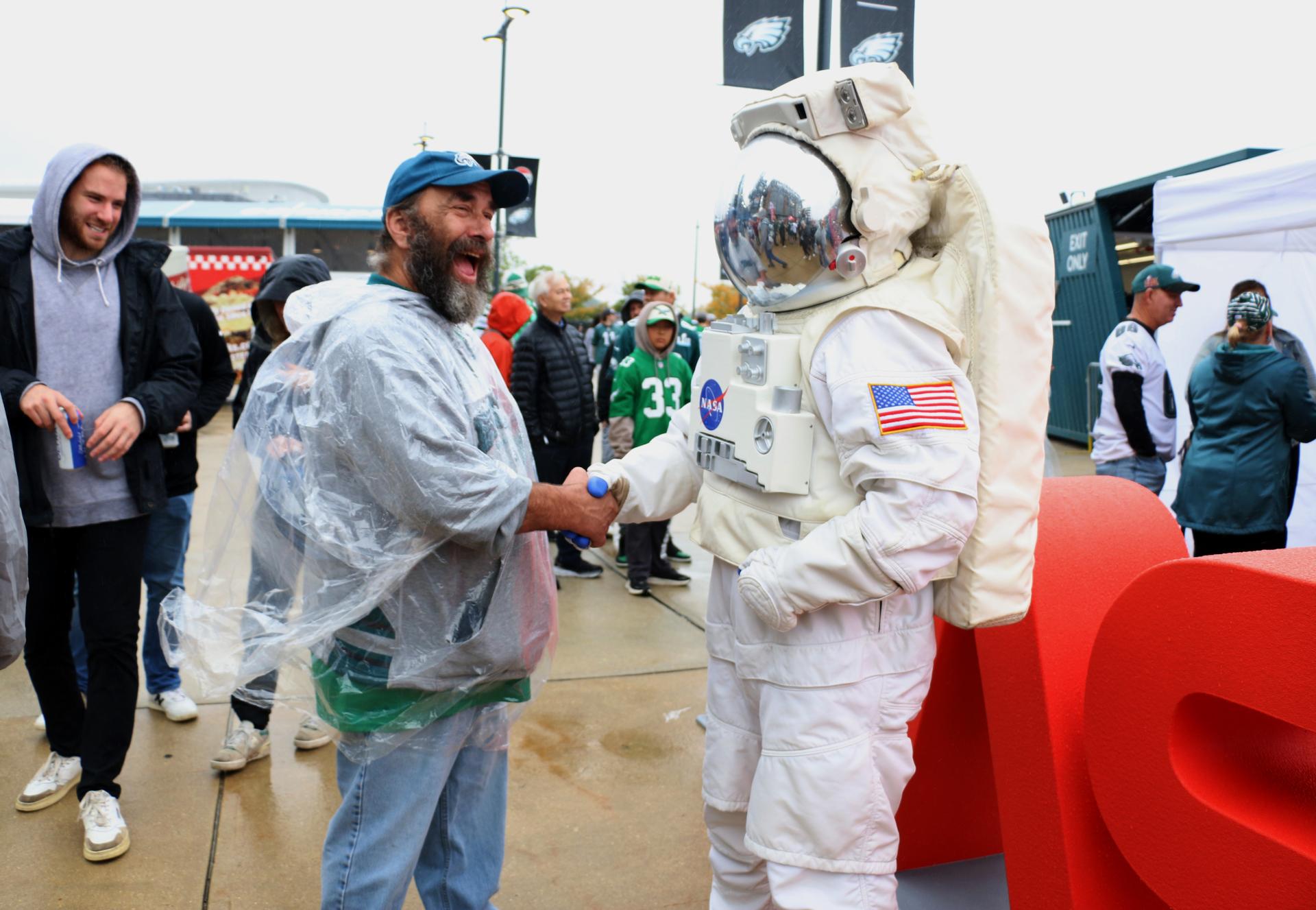
A fan greets the astronaut at the NASA activation at the NFL game between the Philadelphia Eagles and the Los Angeles Rams at Lincoln Financial Field on Sunday, Oct. 4, 2026, in Philadelphia. NASA’s engagement at NFL games is part of the agency's Inspiration Tour, aimed at strengthening connections between NASA and its partners and showcasing innovation in air and space in the lead up to the MAX POWER aerospace technology expo and airshow at the agency's Kennedy Space Center in early November. Photo Credit: (NASA/Thalia Patrinos)
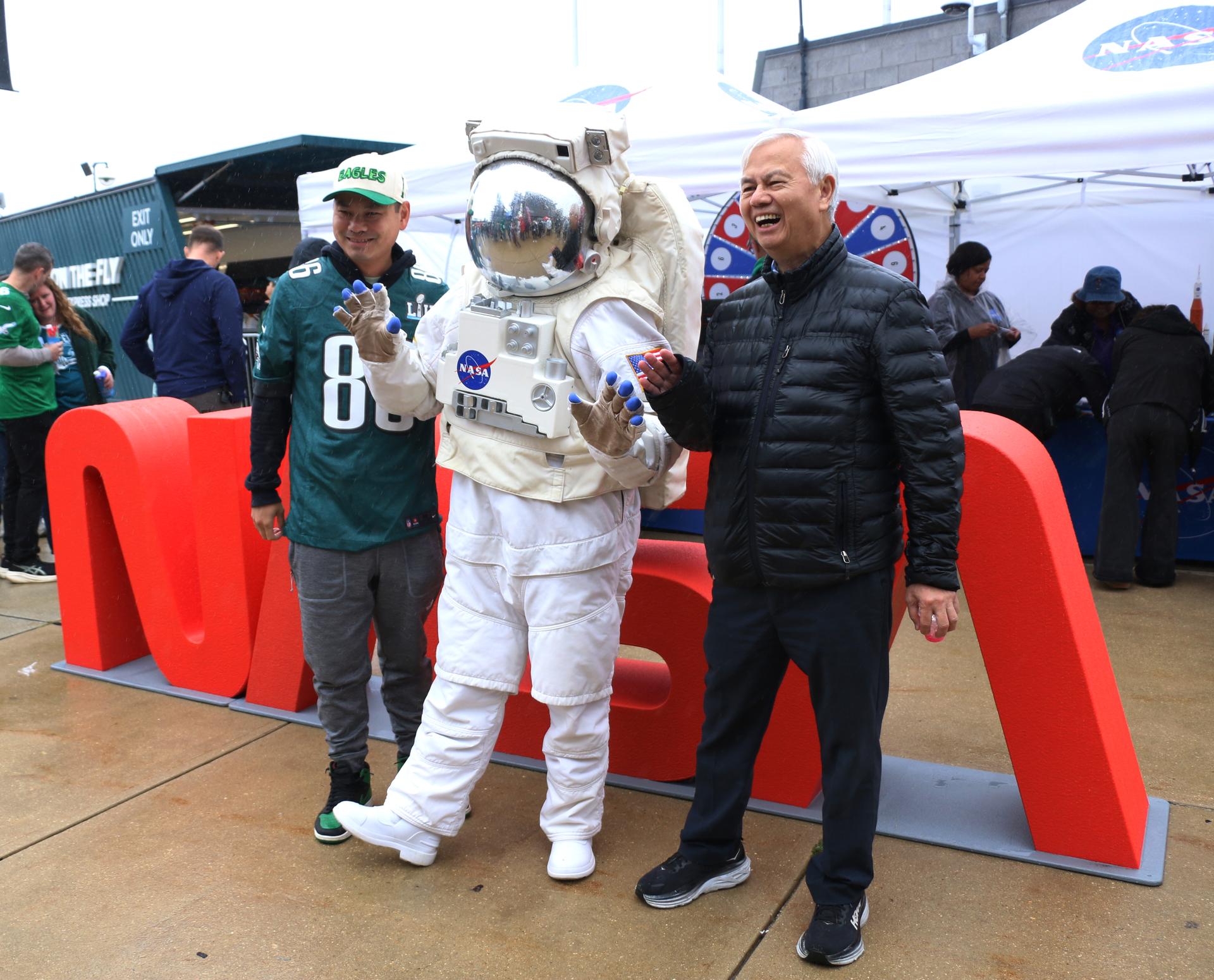
Fans pose with the astronaut at the NASA activation at the NFL game between the Philadelphia Eagles and the Los Angeles Rams at Lincoln Financial Field on Sunday, Oct. 4, 2026, in Philadelphia. NASA’s engagement at NFL games is part of the agency's Inspiration Tour, aimed at strengthening connections between NASA and its partners and showcasing innovation in air and space in the lead up to the MAX POWER aerospace technology expo and airshow at the agency's Kennedy Space Center in early November. Photo Credit: (NASA/Thalia Patrinos)
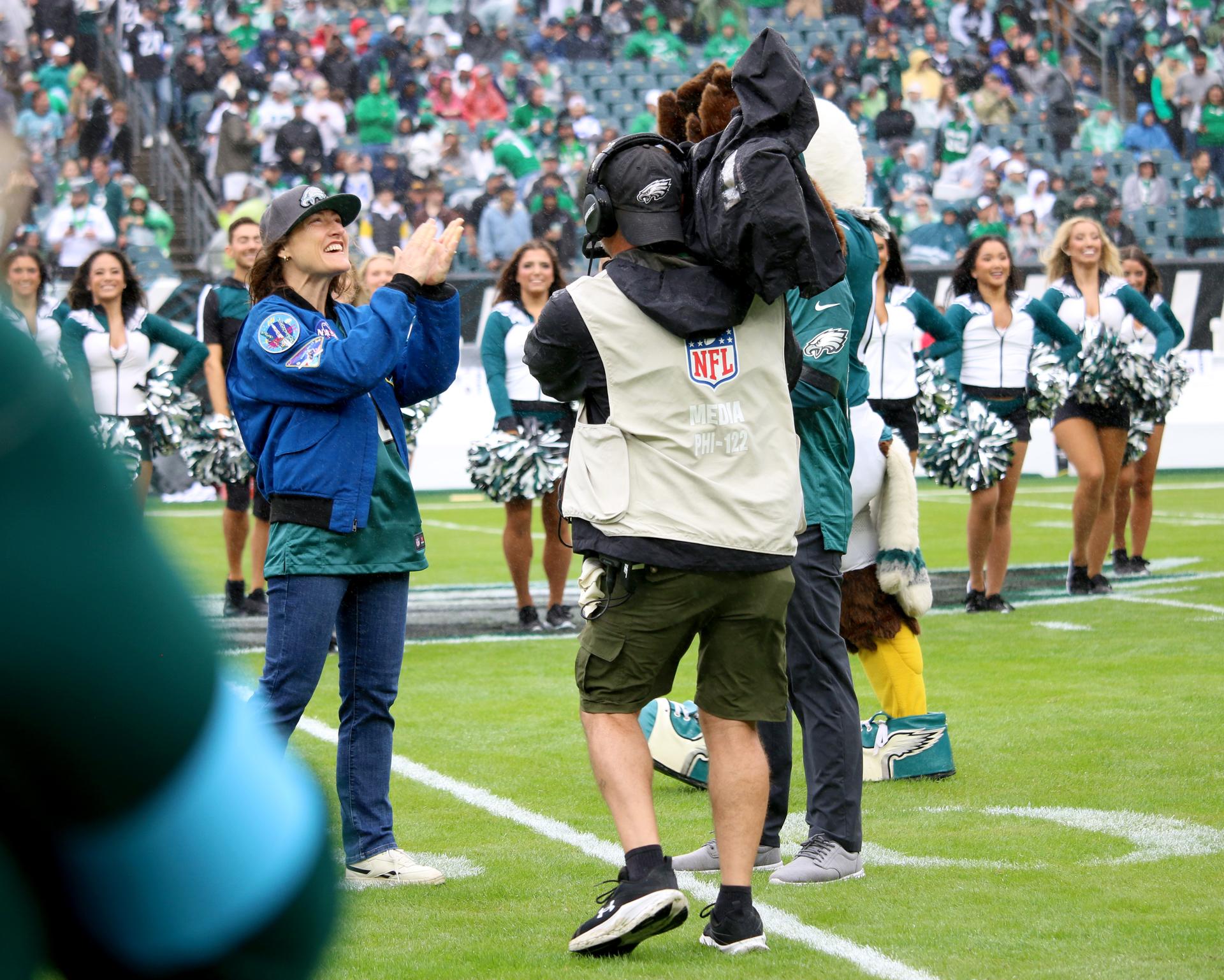
NASA astronaut and mission specialist of the agency's Artemis II mission, Christina Koch, lead the fans in singing the Eagles Fight Song from the field at an NFL game between the Philadelphia Eagles and the Los Angeles Rams at Lincoln Financial Field on Sunday, Oct. 4, 2026, in Philadelphia. NASA’s engagement at NFL games is part of the agency's Inspiration Tour, aimed at strengthening connections between NASA and its partners and showcasing innovation in air and space in the lead up to the MAX POWER aerospace technology expo and airshow at the agency's Kennedy Space Center in early November. Photo Credit: (NASA/Thalia Patrinos)
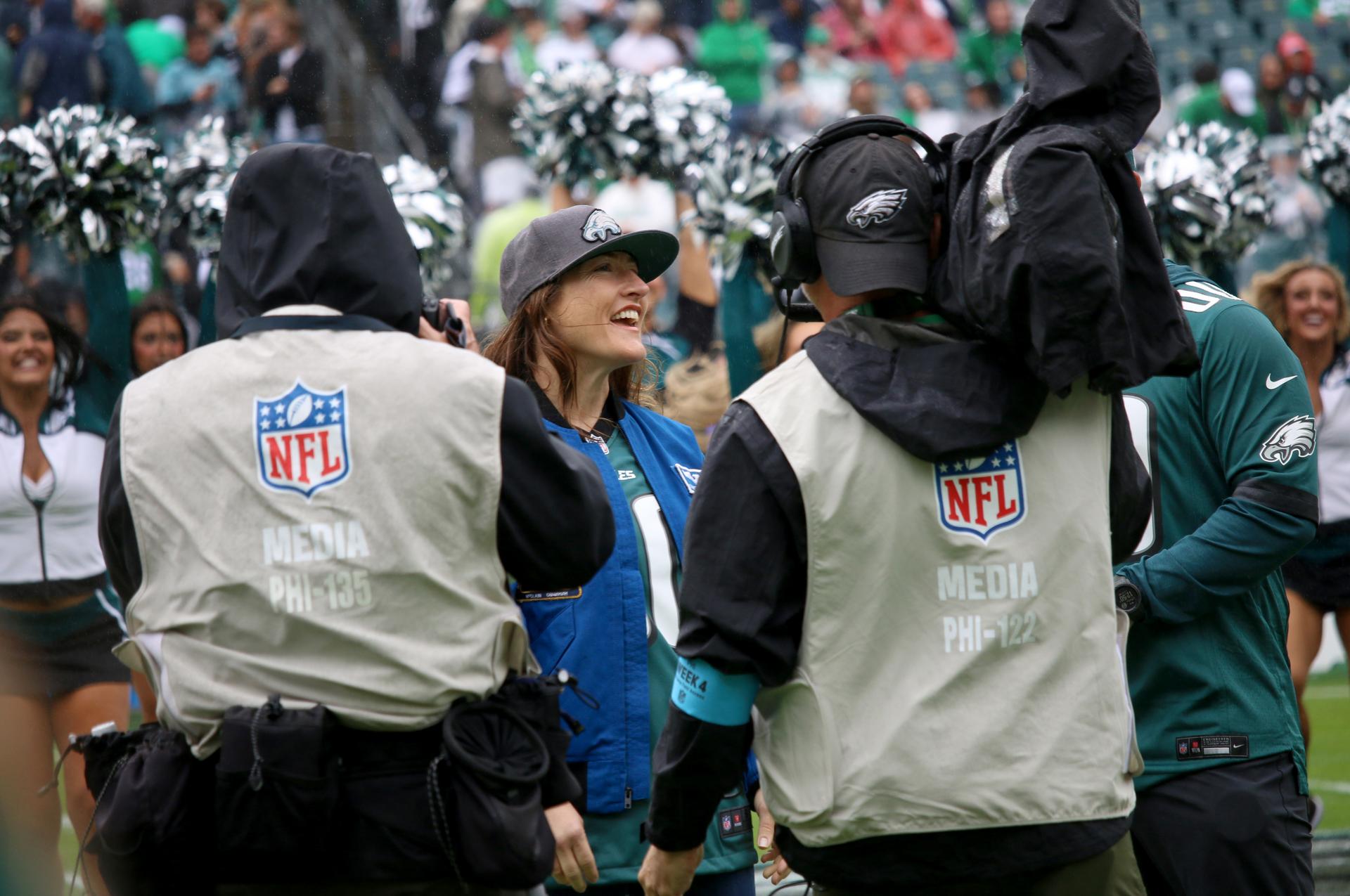
NASA astronaut and mission specialist of the agency's Artemis II mission, Christina Koch, lead the fans in singing the Eagles Fight Song from the field at an NFL game between the Philadelphia Eagles and the Los Angeles Rams at Lincoln Financial Field on Sunday, Oct. 4, 2026, in Philadelphia. NASA’s engagement at NFL games is part of the agency's Inspiration Tour, aimed at strengthening connections between NASA and its partners and showcasing innovation in air and space in the lead up to the MAX POWER aerospace technology expo and airshow at the agency's Kennedy Space Center in early November. Photo Credit: (NASA/Thalia Patrinos)
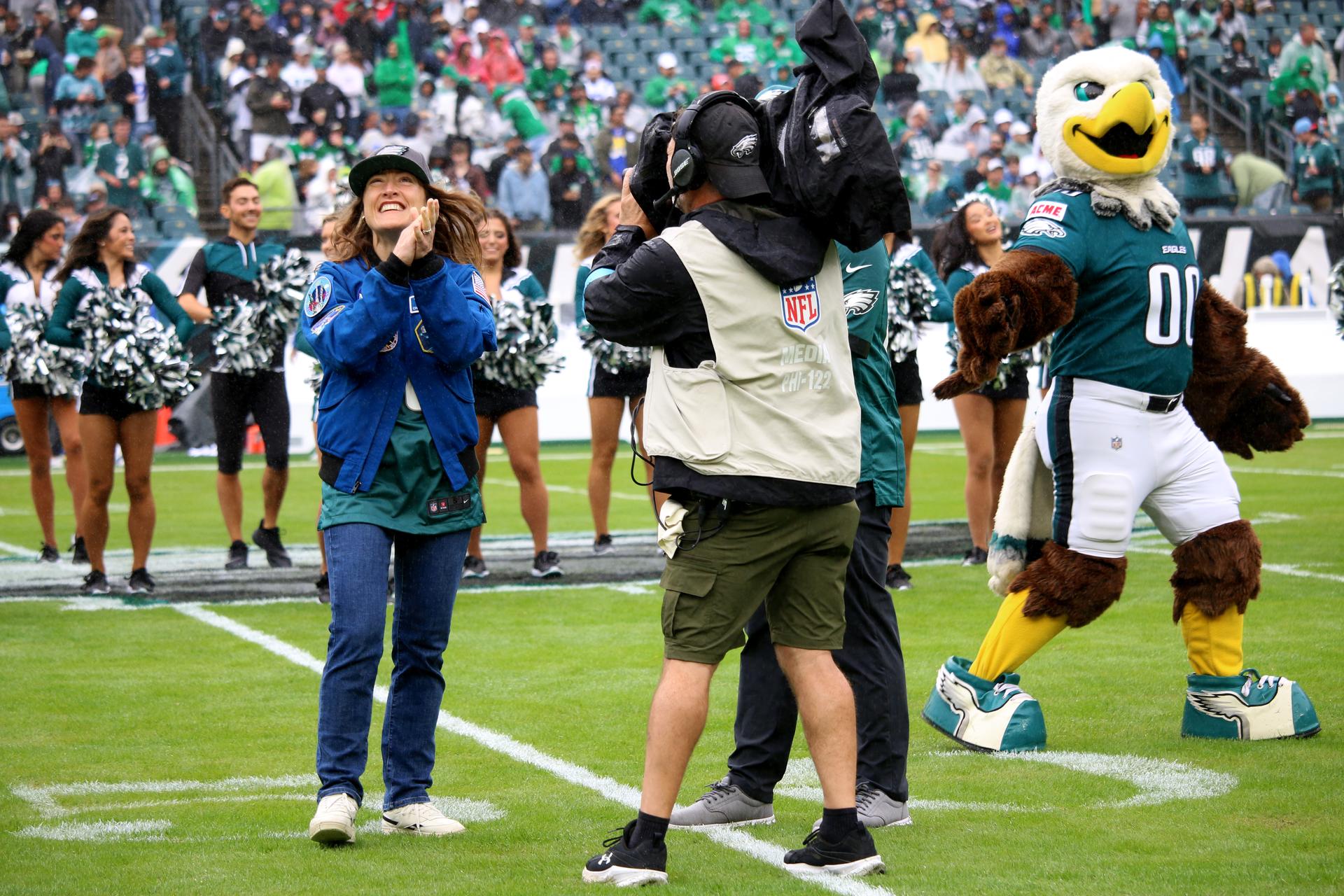
NASA astronaut and mission specialist of the agency's Artemis II mission, Christina Koch, lead the fans in singing the Eagles Fight Song from the field at an NFL game between the Philadelphia Eagles and the Los Angeles Rams at Lincoln Financial Field on Sunday, Oct. 4, 2026, in Philadelphia. NASA’s engagement at NFL games is part of the agency's Inspiration Tour, aimed at strengthening connections between NASA and its partners and showcasing innovation in air and space in the lead up to the MAX POWER aerospace technology expo and airshow at the agency's Kennedy Space Center in early November. Photo Credit: (NASA/Thalia Patrinos)
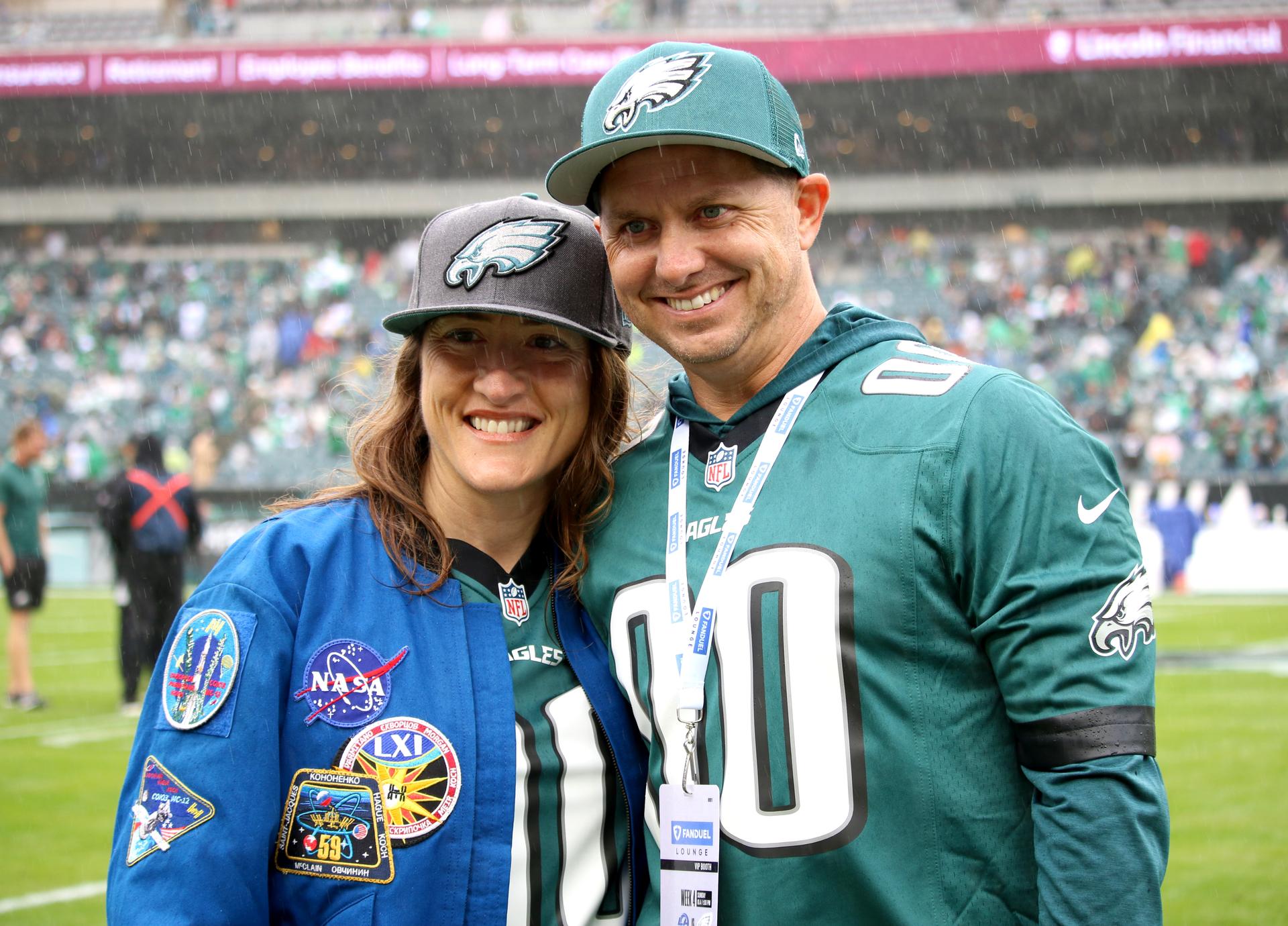
NASA astronaut and mission specialist of the agency's Artemis II mission, Christina Koch, and her husband, Robert Koch, pose at an NFL game between the Philadelphia Eagles and the Los Angeles Rams at Lincoln Financial Field on Sunday, Oct. 4, 2026, in Philadelphia. NASA’s engagement at NFL games is part of the agency's Inspiration Tour, aimed at strengthening connections between NASA and its partners and showcasing innovation in air and space in the lead up to the MAX POWER aerospace technology expo and airshow at the agency's Kennedy Space Center in early November. Photo Credit: (NASA/Thalia Patrinos)